DISCLAIMER: Support for People with Oral and Head and Neck Cancer, Inc. does not endorse any treatments or products mentioned in this newsletter. Please consult your physician.
Chapter News
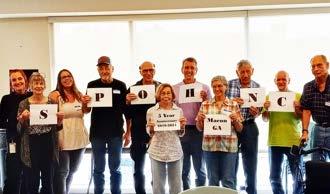
SPOHNC Macon, GA Celebrates 5 Years of Support!
Written By: SPOHNC
Congratulations to SPOHNC’s Macon, GA Chapter Support Group on their 5th Anniversary Celebration as a SPOHNC Chapter Support Group!
A heartfelt thank you to Facilitator, Tamatha Rutherford, Speech Pathologist, Co-Facilitator, Roger Powell, Survivor, and Ramona Foster, Secretary for all your hard work and dedication in supporting the Head and Neck Cancer community. As the Chapter Facilitators, your roles are truly impactful and valued.
For more information about joining this group, please call SPOHNC at 1-800-377-0928.
Sebastian PardoAn Inspiring Visitor!
Sebastian Pardo - An Inspiring Visitor!
SPOHNC recently had the privilege of spending time with Sebastian Pardo - a young man who visited the SPOHNC National office in Locust Valley, NY. You may have read about his fundraiser in a prior issue of “News from SPOHNC.”
Sebastian plans to expand his fundraiser this year and hopes to include not only his own fraternity, but many other Chapters of Tau Epsilon Phi on the east coast, in some way. Plans are still taking shape and he promised to keep in touch and let us know how things are going, and how we might be able to help him as well. Sebastian is one enterprising young man!
October 2024
Dear Friends and Supporters of SPOHNC,
This summer, the world witnessed the spirit of resilience at the XXXIII Summer Olympics in Paris, France. As we watched athletes from across the globe compete, I was reminded of the same perseverance and strength we see daily in the head and neck cancer community. Patients, survivors, and caregivers face unimaginable challenges but continue to rise with courage and determination. You, too, are champions—SPOHNC’s Champions of Hope.
For over 33 years, SPOHNC has been a beacon of hope for individuals affected by head and neck cancer. Cancer is more than just a diagnosis. It’s a journey filled with challenges, both physical and emotional, not only for the patients but also for their loved ones. SPOHNC has committed to supporting these individuals by ensuring no one faces their journey alone.
Why Your Support Matters
Your generosity is the heartbeat of SPOHNC. It empowers us to deliver the essential programs and services that make a profound difference in the lives of so many. Your support is invaluable and integral to our mission. Thanks to you, we have been able to achieve the following:
• Expanding Our Chapters: SPOHNC’s network of 100+ chapters continue to grow, providing critical community support to patients, survivors, and caregivers. Eighty-four percent of our members report feeling more connected thanks to this program. Chuck Bartlett, SPOHNC’s Minneapolis, MN Chapter Facilitator, shared, “Head and neck cancer patients especially need someone to talk to when we feel discouraged and alone. Support is vital to surviving the healing process and the days that follow.”
• National Survivor Volunteer Network: SPOHNC matched over 100 patients with survivor volunteers this year, fostering life-changing connections. Your contributions make these essential relationships possible. Survivor and volunteer John shared, “Now, I‘m blessed to be able to give back to a great organization like SPOHNC.”
• Enhancing Survivorship Programs: SPOHNC’s April Awareness #lifeAhead campaign empowered survivors like Katie Drablos and Frank Marcovitz to share their inspiring stories. Their words—and those of other survivors featured in our “You Are Not Alone” video series—have reached over 16,000 people, providing hope and strength to our community and inspiring us all.
• Advocating for Better Care: SPOHNC has partnered with leading researchers to understand patients’ challenges in advocating for improved clinical trials and treatment options. In this issue, you’ll learn about the potential of AI (artificial intelligence) to enhance head and neck cancer treatments.
• Pushing for Better Dental Care: Through collaborations with the MOPSS (MA Oncology Patients Survivors & Supporters) committee and the Center for Medicare Advocacy, we continue to advocate for improved dental coverage, aiming to pass legislation that helps patients manage uninsured dental expenses.
• Introducing INA: This month, we’re excited to announce INA, an AI-driven nutritional support app designed specifically for the cancer community. INA will assist patients, survivors, and caregivers with their unique nutritional needs. Survivor Thelma shared, “My speech sometimes isn’t flawless, and my swallowing isn’t always the best, but I’m maintaining my weight with some of the recipes from SPOHNC’s cookbook. I love the articles in the newsletter –it is an easy way to educate my family on what is going on with me. Thank you for all the work you do.”
Your gift, whether $35, $50, $100, or more, will directly impact the lives of people like John and Thelma. Your generosity is not just a gift; it’s a life-changing opportunity for cancer patients, survivors, and caregivers to move forward with confidence and hope.
With your generosity, SPOHNC will advance its advocacy efforts for better treatments and coverage and enhance diversity and inclusion initiatives within the head and neck cancer community.
Together, we can ensure that no one faces this journey alone. Together, we can create new beginnings…Together, WE Heal.
With much gratitude,
Mary Ann Caputo Executive Director
Advancing Treatment with AI
Written By: Alexander T. Pearson MD, PhD
The application of artificial intelligence (AI) in the treatment of head and neck cancer (HNC) has the potential to significantly improve treatment outcomes for patients. By taking advantage of the capabilities of AI to assist with diagnosis, interpretation of a patient’s imaging or cancer tissue, or predicting how a patient will respond to therapy, we will be able to adjust our management of a given patient and personalize their treatment plan to ensure they have the best chance of success.
Machine learning, which is a field of AI, is of great interest in healthcare. Machine learning focuses on using data and algorithms to enable AI to learn the way that humans do, eventually allowing a model to make decisions and predictions. To explain machine learning, consider this example. Can you tell which of these two animals below is a leopard?
To choose the leopard, you could iteratively compare the picture of a leopard and the first two images to see which one it looks most like. What might also help is if you were shown multiple pictures of leopards, allowing you to identify patterns between them. After looking through enough examples, you might notice that the cheetah on the left has round spots, whereas leopards have a distinctive “rosette” pattern. There are also fewer spots on a cheetah’s face and the eyes look a bit different. Over time, if you continued to examine pictures of both cheetahs and leopards, you would become much more confident in telling them apart.
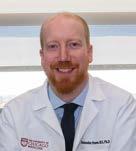
Dr. Alexander Pearson is an Associate Professor of Medicine in the section of Hematology and Oncology at the University of Chicago. Dr. Pearson serves as Director of the University of Chicago Center for Computational Medicine and Clinical Artificial Intelligence as well as the Director of the Head/Neck Cancer Program in Medical Oncology. He is a Chan-Zuckerberg Chicago Biohub Investigator and has a Joint Appointment at Argonne National Laboratory. Dr. Pearson trained as a PhD statistician and physician at the University of Rochester where he won the national American Statistical Association Student Paper Award. He then completed both subspecialty training in Hematology/Oncology and postdoctoral research in mathematical systems biology and head/neck cancer at the University of Michigan, where he was also Chief Fellow. Dr. Pearson currently practices medical oncology at the University of Chicago Comprehensive Cancer Center where he is an active clinical investigator and clinical trialist and runs multiple investigator-initiated interventional studies.
Dr. Pearson is nationally recognized in voice guiding applications of quantitative methods to cancer research, and his research lab studies clinical applications for machine learning, mathematical modeling, AI, quantum computing, and systems biology. He serves on AI-in-medicine advisory groups to the National Institutes of Health (NIH), American Society of Clinical Oncology (ASCO), and American Medical Association (AMA).
Alexander T. Pearson, MD, PhD
In a way, machine learning is similar. Using computers and special software, we can provide a model with large amounts of data and information and train it to learn a particular topic. Over time, that model will be able to recognize differences and make associations, including very subtle ones that even experts might not notice. Eventually, it will be able to make decisions all on its own. This has application in our world today: businesses give data to AI models to anticipate consumer habits, helping them stay one step ahead. Social media analyzes your history and uses AI to predict what your interests are and adjusts your newsfeed based on this. However, AI is not always accurate and predictions can be incorrect.
In the HNC field, one of the goals of AI is to be able to train a model with patient data, including imaging, histological data (features of a patient’s cancer tissue), clinical data, and other available records. The model would learn to identify traits, or combinations of traits, that differentiate patients who respond well to treatment versus those who respond poorly. Why do two patients with the same disease respond differently to the same treatment? It is almost as if the model is trying to identify the rosette pattern amongst all this data and classify patients accordingly. If trustworthy, this information would change how we manage patients. We could offer a more optimal treatment plan and increase treatment for those who may respond poorly or be less aggressive with patients who have characteristics of a good responder, which could decrease long-term side effects.
The treatment of HNC is complex and relies on many different factors. A patient’s age, genetic changes in the cancer, smoking history, or where the cancer originated from can all play a role in prognosis. Other factors such as a patient’s genetic profile, whether lymph nodes are involved, or whether the cancer is related to the human papillomavirus (HPV) all provide information that impacts treatment decisions.
In addition to this wide array of patient information, the team also weighs all of the different treatment options. We discuss whether a patient should receive surgery or if they are better suited for radiation, each of which has significant tradeoffs. We carefully assess which chemotherapy drug will benefit the patient the most, as well as the dose and duration of treatment. For patients whose cancer has spread to other organs or was previously treated and comes back, there are multiple
immunotherapy agents, targeted therapies, and novel clinical trials to consider. The team carefully evaluates all of these factors, and still, patients may not respond as predicted. We hope to use AI to help us analyze all of these factors and assist us in the decision-making process, which could improve results for patients.
Exciting new research
Extracapsular extension (ECE), which is when cancer cells break through the protective boundary of a lymph node and invade surrounding tissue, indicates a poor prognosis for HNC. The presence of ECE increases cancer stage and requires aggressive treatment, such as a more extensive surgery or higher doses of chemotherapy and radiation. However, ECE can only be identified by a pathologist after the lymph nodes have been surgically removed and cannot be determined beforehand on imaging. Some patients will not know that they have ECE if they never have surgery. The lab of Dr. Benjamin Kann at Dana-Farber Cancer Center is researching whether a model can be trained to analyze a patient’s CT scans to determine if ECE is present. They trained a model on pre-treatment imaging for 110 patients with or without ECE. Their algorithm and model was able to predict ECE on imaging with high accuracy.1 While the model may be refined further, the significance of this is clear. If we can predict whether a patient has ECE without having to undergo surgery, then we will be able to adjust our management of a patient sooner, which could include avoiding a risky cancer resection if other options are more favorable.
The lab of Dr. Anant Madabhushi at Emory University is exploring ways for AI to predict treatment outcomes by evaluating tumor histology slides of patients. In recent publications, the lab presented a new metric called the multinucleation index (MuNI). A model was trained to review histological images and determine key characteristics of the tumor, such as the amount of epithelial nuclei. They then calculated the MuNI score for each patient to see if it could predict patient outcomes, such as disease-free survival and distant metastasis-free survival. The MuNI was shown to have more accurate predictive ability than classically used variables such as smoking status, cancer stage, or lymph node involvement.2 The ability for AI to rapidly, and accurately, predict a patient’s outcome with a review of a single slide would be game-changing. This could alter a patient’s cancer treatment and would
impact how closely we monitor them after treatment. A recent clinical trial showed a benefit of using immunotherapy in disease-free patients who are at high risk of recurrence.3 If the MuNI could identify patients with low disease-free survival, perhaps we could start immunotherapy soon after completion of treatment.
HPV is another prognostic factor of how a patient may respond to treatment. Studies have shown that HPVrelated oropharyngeal HNC has a superior response to therapy and better survival outcomes compared to HPV-negative cancers. Additionally, HPV-driven HNC can be treated with lower intensity of chemotherapy and radiation, and can be more susceptible to immunotherapy. Determining HPV status can be done in a variety of ways. Some tests are highly sensitive, but are more expensive and time consuming. Some tests are faster, but are neither perfectly sensitive nor specific. One of the goals of our lab is to use machine learning to determine the presence of HPV in cancer tissue. In a study, we trained a model with tumor histology slides for over 400 patients with or without HPV. Our model was able to predict which slides had HPV 80% of the time.4 If our model can be improved, this would help clinicians quickly confirm HPV status rather than wait for results, which can take a couple of weeks, allowing us to confirm a treatment plan sooner and could also avoid costly testing.
The future of AI in head and neck cancer care is bright and we are seeing the first exciting implementations
into practice. However, while there has been incredible progress in the last several years, we do not rely on AI comprehensively for cancer care. To achieve the best implementation of AI for HNC patient care, we will need considerable quality control to ensure models are accurate, precise, and reliable, which takes time. Further, will AI be able to consider a patient’s support system, resources, and psychosocial needs, all of which can impact the treatment plan that we recommend? This is why even with the integration of AI, clinicians will still need to use their experience, expertise, and compassion when evaluating patients, but the potential for AI to improve patient outcomes and help the care team navigate challenging situations makes this a resource worth investing in.
Sources
1. Kann BH, et al. “Pretreatment Identification of Head and Neck Cancer Nodal Metastasis and Extranodal Extension Using Deep Learning Neural Networks.” Sci Rep. 19 Sep 2018.
2. Koyuncu CF, et al. “Computerized tumor multinucleation index (MuNI) is prognostic in p16+ oropharyngeal carcinoma.” J Clin Invest. 15 Apr 2021.
3. Pearson AT, et al. “A randomized, double-blind, placebocontrolled phase II study of adjuvant pembrolizumab versus placebo in patients with head and neck squamous cell cancers at high risk for recurrence: The PATHWay study.” JCO 42, 6008-6008(2024)
4. Kather, J, et al. “Deep learning detects virus presence in cancer histology.” bioRxiv. 05 July 2019. https://doi.org/10.1101/690206
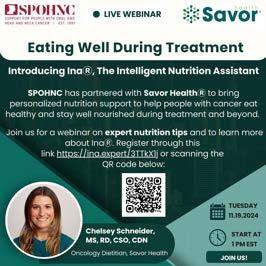
Introducing Ina®
The Intelligent Nutrition Assistant
SPOHNC has partnered with Savor Health® to bring personalized nutrition support to help people with cancer eat healthy and stay well nourished throughout treatment and beyond. Good nutrition can help people with cancer feel better and manage symptoms like diarrhea, nausea, tiredness, and decreased appetite.
• Simply text Ina® from your cell phone 24/7 and she’ll respond with personalized nutrition tips, recipes, and answers to your questions.
• Knowledge and advice from Ina® comes from registered dietitians, nurses, and doctors who are experts in treating and supporting cancer patients.
• Registration and unlimited 24/7 access to Ina® is free, safe, and secure.
How to Register with Savor Health®:
Registration is a simple 2-step process. Just visit this website and enter your phone number: https:// adspohnc.savorhealth.com/portal/ and you can start receiving support via SMS text right away.
“I bought this book this summer and it saved me from Starvation and boredom... and cravings!!” - Nancy, Survivor Check Out Our Cookbooks! Visit sponhc.org to order your copies today!
“The perfect food for a cold, winter’s day and especially those of us who have difficulty swallowing. Thank you SPOHNC!” - Patrice, Survivor
Eat Well Stay Nourished Vol 1 & 2 Cookbooks for Patients and Survivors with Swallowing Challenges
You Are Not Alone Survivor Videos
Written By: SPOHNC
SPOHNC and Sentrimed, an emerging biotech company, have partnered to bring you a heartfelt video series, entitled “You Are Not Alone”. The series features 8 head and neck cancer survivors and a caregiver, each sharing their cancer journey, from diagnosis through treatment, into survivorship.
All very special members of our SPOHNC family, these survivors wore their hearts on their sleeves, and deserve special thanks for sharing their deepest thoughts, concerns, triumphs and trials.
Thank you Sentrimed, for so generously bringing this project to life. We are grateful for your support. Each survivor has an important story to tell, and advice worth listening to, whether you are newly diagnosed, or on your survivorship journey.
Special thanks to SPOHNC’s amazing survivors…
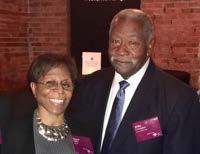
Sharon & Willie Taylor
Denise DeSimone, Katie Drablos, James Flynn, Scott and Kathi Wieskamp, Jeffery Shoop, Sharon Taylor, Laurie Traynor, and Melissa Vincent for telling your stories in such a poignant, and very personal way. SPOHNC is honored to share your journeys.
Visit spohnc.org to view these inspiring videos.
Watch Now:
Scan This QR Code
To view SPOHNC Survivor Videos sponsored by Sentrimed.
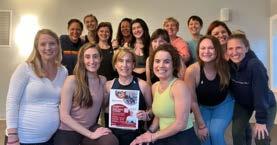
Celebrating a beautiful tribute to an inspiring legacy! LPY Yoga
Written By: SPOHNC
Doreen Mitchell, daughter of SPOHNC Founder, Nancy Leupold, recently reached a personal milestone by becoming a certified yoga instructor!
To support those who turn to yoga for peace, clarity and better fitness for mind, body and soul, and those who have been affected by oral, head and neck cancer, Doreen connected with SPOHNC, and shared her thoughts, bringing an idea to fruition.
During the weekend of June 17th, LPY Yoga in Woburn, Massachusetts held yoga classes and generously donated proceeds from class fees to SPOHNC. Head and neck cancer patients and survivors were welcome to attend classes, free of charge. The event was a great way to raise awareness of oral, head and neck cancer, and SPOHNC.
Thank you, Doreen, for raising awareness and supporting SPOHNC with such dedication and love. We are deeply grateful that you held this event in memory of your Mom, who was a shining beacon of hope for those who have been affected by oral, head and neck cancer.
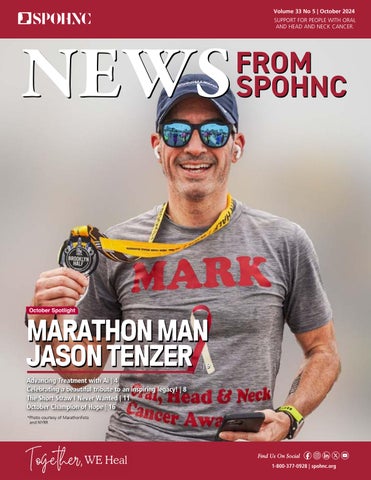
Marathon Man Jason Tenzer
Brooklyn Half Marathon
Written By: Jason Tenzer
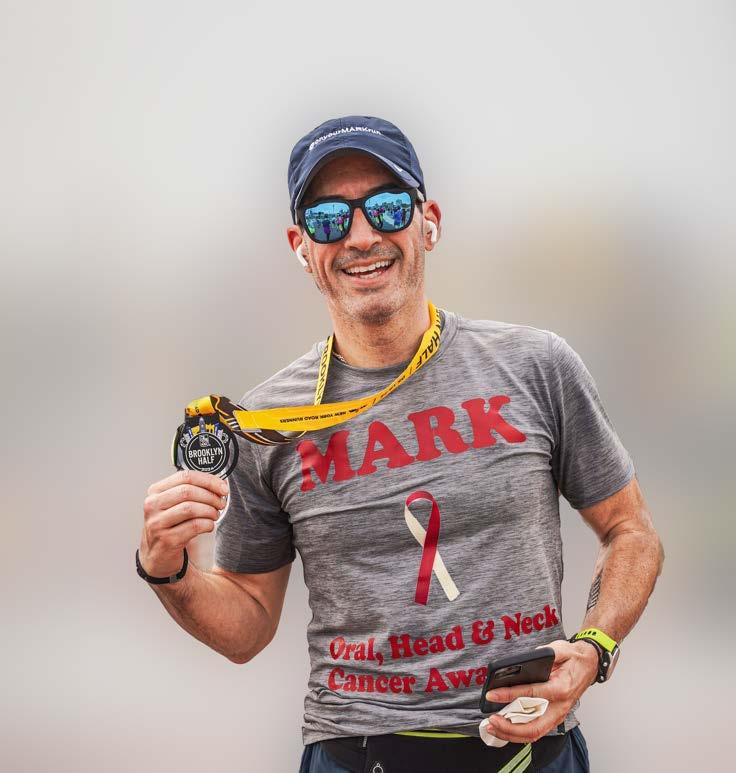
On a beautiful May 18th, the excitement in the air was palpable at sunup as the Brooklyn Half Marathon race prep began. This 13.1 mile race is a popular one, as evidenced by the number of runners who lace up to participate each year. It is also a qualifier for the New York City Marathon.
Barricades, street closures, water stops, setup – it takes a lot of volunteers buzzing around to get ready for the big day.
At 7am, with more than 28,500 runners ready to start, the race began.
Friends and family waited with anticipation to see their loved ones, who had worked so hard to get to this day. One such family was that of Jason Tenzer. Jason’s journey with running began a few years ago, though his commitment sometimes wavered. Recently, he decided to take on the 2024 Brooklyn Half Marathon, running in memory of his father, Mark Tenzer, who was a much beloved SPOHNC family member, and a devoted SPOHNC Chapter Facilitator in Westchester, NY, for several years. Joining Jason’s family this year was SPOHNC’s Executive Director, Mary Ann Caputo, along with her husband Larry. Larry’s driving skills and knowledge of Brooklyn helped them to get to Jason’s family spot just in time to see him go by! Cheered on with his energy sparked by everyone’s support and presence, and amazing signs, Jason pressed on excitedly toward the finish line!
More than ten years have gone by since the passing of Jason’s dad. Since then, he has sought ways to find meaning in his loss, as so many people do. Running has become his tribute to his father’s legacy and the impactful work he did with SPOHNC, supporting others along their cancer journey. He even started an Instagram page to document his journey and raise awareness; you can follow him @onyourMARKrun – we know he’d love to connect with SPOHNC members!
“Today I’m just reassured that he is with me and reminding me to fight through because it’s never going to be as hard as what he went through.
This run’s for you, Dad. Love you, buddy!” ~ Jason Tenzer
Through this half marathon, Jason has dedicated himself not just to personal fitness, but to honoring his father and continuing the mission to help others.
Jason finished the Brooklyn Half in 1:54:31 and was in the top 1,000 for his age group. This put him in great shape to qualify for other races including the NYC Marathon, in the future.
Mark Tenzer
Join Our Online Community
Together, WE Heal
Listening, Caring, Connecting
Find support with other patients, survivors and caregivers in our closed Facebook group.
@spohncusa on Facebook
Supporter Birthdays
SPOHNC Supporter’s Birthdays
Written By: SPOHNC
Without our SPOHNC family of volunteers, we would not be able to provide outstanding support and much needed connections for those who contact SPOHNC every day seeking hope. Our National Survivor Volunteer Network volunteers should be celebrated, every day!
We celebrate and acknowledge your compassion, understanding and your willingness to be there for others. We hope you celebrated your birthday in a very special way!
Happy Birthday to our September volunteers including Chuck Bartlett, Carol Humphries, Richard Stratton, Richard Schaffer, Jon Thibo, Kathy O’Keefe, David Glorioso and Patrick Smith.
Happy Birthday to our October volunteers including Carleen Harris, John Felci, Jean Callahan, Linda Clyne, Kristine Keeney, Prentice Phillips, John Valenzuela, Jamie Harry, Richard McElaney, Bernie Leif, Lisa Fox and Marcia Bissel.
We hope you all have a wonderful year, filled with the promise of good health, joy, peace and lots of laughter. Thank you, from SPOHNC, for all you do!
The Short Straw I Never Wanted Steven
Wohnoutka
Written By: Steven Wohnoutka
Sitting in the Dallas VA Hospital oncology waiting area, I could smell the popcorn 200 feet away, near the entrance. I knew I would be buying a bag once my visit was concluded. However, I took a moment to check my phone and noticed the recent SPOHNC email newsletter and decided to read a few of the survivor stories. Afterwards, I knew I needed to contact SPOHNC to inquire how I could share my experience.
My unique story started with what I thought was daily heartburn which I had never experienced. Tums helped initially, but I noticed it was happening with mild exertion, radiating to my left elbow. I knew this seemed odd and that heartburn can mimic some cardiac issues. So, I made an appointment with a cardiologist. Two of the four diagnostic tests were positive and a cardiac catheter procedure was requested, but denied by my insurance. I complained more a few weeks later, and it was approved. I was blocked 98% in two areas of the widow maker. Wow! But I had no time for it to sink in… Two days later, I was spitting up blood and was told to go to the ER. After an upper GI endoscopy, they found the bleed not in my stomach (ulcer), but in my nose. The blood thinners evidently contributed to this. I was hospitalized for five days and had to have a unit of blood, given the amount lost. However, over the next several days, my nose kept bleeding and my phenomenal ENT physician, cauterized it a few times before and after hours until one Saturday morning, he realized it wasn’t my nose, it was my left tonsil which was 2-3 times the size it should be and bleeding. He immediately scheduled surgery to cauterize and biopsy as he knew it would be malignant. Right there, I realized this is the straw I never wanted to pull. Yes, there are much more devasting cancers out there, but
I was aware what H&N therapy looked like and how challenging this could be.
You see, the unique piece to this story is I have been an oncology pharmaceutical sales representative for nearly 25 years. I have been around these terrible diagnosis’, but never had it affect me until earlier this year when a good friend and brother-in-law, both died of pancreatic cancer. The other interesting point, one of the many pharmaceuticals I sold over the years was Ethyol (Amifostine), which was used 20 years ago to help reduce xerostomia. It was a difficult drug to tolerate and therefore, many patients had modest results. Over my six years with this drug, I initiated three H&N cancer support groups and witnessed postsurgical and chemoradiation treated survivors. Back then, it was a tough and needy patient population with little support. Most had water bottles in hand and disfiguring surgical results.
The radiation oncologist across the street from the ENT’s office was a previous customer of mine and I knew him well, albeit 20 years ago. This doctor initially evaluated me and based on the pathology, he assured me this is a curable cancer if indeed the CT and PET CT were negative. Imaging proved to show two, local 2cm lymph nodes and the 4.8cm primary, .8cm above Stage 1. So, my diagnosis was Stage 2, HPV positive squamous cell carcinoma.
As you might imagine, my world had just changed. As long as I have been in the healthcare space, I wasn’t prepared to be diagnosed myself. Who is? I recall just saying to myself, “My prognosis could be worse and I am going to be their best, compliant patient.” I knew
chemoradiation would be a part of my therapy. I was not a surgical candidate given the necessary blood thinners for my stents. All that said, I did have issues with apprehension and anxiety. Anxiety is real and don’t wish it on anyone! The initial news of cancer without a plan, contributed naturally to my anxiety. This piece of my journey can’t be over emphasized. I was overly anxious of the therapy, mainly mucositis and how painful it might be. Could I work, sleep or function normally?
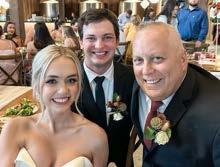
Once again, having the advantage of my field of work, I had several resources to lean on. One of my colleagues asked if I had determined who my medical oncologist would be? He recommended a name that I recalled from years past, but thought he treated lung primarily. Actually, he had treated H&N as well for two decades. My wife and I met with the doctor he recommended and we immediately knew, he was the right fit for me. He is smart, charming, funny and direct. He knew my background and would push me to have a good outcome. However, he was equivocal to pursuing Proton therapy as he stated it’s no more efficacious than IMRT and might provide little improvement of mucositis. Not untrue at all. He also was convinced I would have a feeding tube in week four and my last two weeks of therapy and three weeks post therapy would be hell. He wasn’t trying to be insensitive, but wanted to be honest about the possibility. Forty-five minutes into our consultation appointment, my wife mentioned our daughter gets married in seven weeks. SCREECH! The doctor exclaimed, ”Whoa!” The gears were turning in his mind, because he knew I wouldn’t be in any shape for a wedding. After a few moments, he stated he had an answer! He asked “How much do you want to attend this wedding?” I thought, “What?” Of course, I want to attend my only daughter’s wedding! He highly suggested immediate induction chemotherapy, three, 3 week cycles of Cisplatin (which I practically demanded, given the data), Taxotere and 5FU (which, ironically, produced grade 3 mucositis). I would then start weekly Cisplatin and daily radiation the Monday after the wedding. This plan included extra chemo that he ordinarily wouldn’t prescribe, but to an advanced patient, but given the circumstances, this was a good option to pursue. My chemo was set. Now I had time to research radiation.
I asked my doctor what his thoughts were about traditional IMRT versus Proton therapy.
He said, “I would be honored to treat you, but I would pursue Proton therapy if your insurance pays for it.” As it turned out, thankfully, my insurance covered the necessary 35 treatments.
I researched both and knew my chances with tolerability were better with proton therapy and fortunately, I lived 45 minutes from one of only two proton offices in Texas, Texas Center for Proton Therapy. I met with a highly renowned radiation oncology specialist. He was very calm, collected and M.D. Anderson trained. He provided confidence that proton therapy was a good choice for me.
Once my team and plan was set, I felt a little better. I continued to work from home or the chemo chair. I am very lucky to have a job where it allowed me to manage sales representatives remotely and never missed a day of work. Sure, there were times I didn’t feel good and the fatigue caught up with me later with radiation, but I never had any serious setbacks or complications that I heard from other survivors. Not only did I feel confident of my team of doctors, nurses and medical staff, but I leaned heavily on two oncology nurses. Lori is my
colleague who was once in the clinic, now in oncology pharmaceutical sales and the other, Julie, is a practicing infusion nurse. Both were instrumental in guiding me clinically and mentally. I can never repay them.
Week four of chemorads came and went. My mucositis was certainly present, but I was still able to eat, swallow, albeit aggravating at times. Admittedly, there were times I wanted to cry, but couldn’t due to the
Email Us: info@spohnc.org
pain it caused. The magic mouthwash helped a bit and I wanted to avoid narcotics. One day during my weekly appointment with my doctor, I asked, “What percentage of your H&N patients get feeding tubes?” He stated 5%. I knew then, I’m not getting one if I can help it. I’m very fortunate I didn’t require one and tolerated therapy so well that my medical oncologist was amazed and stated I am one of his “Pole position patients” as in the top 1% of his 2000 patients in terms of tolerability and compliance. If I had to sum up why I was able to get through therapy as best as I did, it simply comes down to three factors: astute medical team including proton therapy, a large prayer group and support of close friends and family. The compassion and support was there and continues today seven months out from treatment. I have several months to go to be considered “Cured”, but very hopeful.
My story is a strong success. Today, I have a few lingering side effects such as 80% taste, numbness in feet and lymphedema below my jaw. I realize I am very fortunate of my positive prognosis, availability of state of the art therapy, tolerability of treatment, friends and family support and God’s plan for me. Others are not so lucky. Whichever you find yourself, reach out to others for help, be your own healthcare advocate, research
your clinical and treatment team options. More people love you than you know and would like to help, but don’t know how to express it at times. Yes, I pulled the short straw I never wanted, but I’m confident God has a plan for me to give back, continue helping patients professionally and to be an inspiration to those recently diagnosed.
Keep the faith.
Head and Neck Cancer News
Researchers awarded $4 million NCI grant to investigate artificial intelligence and oral cancer
July 1, 2024 - Loma Linda University School of Dentistry has been awarded a $4 million National Cancer Institute (NCI) R01 grant to study oral pre-cancer and its progression to oral cancer. The research will focus on using artificial intelligence (AI) to develop a multiomic biomarker to identify patients with oral pre-cancer who are at the highest risk of developing cancer. Chi Viet, DDS, MD, PhD, FACS, associate professor and attending surgeon in the Department of Oral and Maxillofacial Surgery and the principal investigator for the grant, says one person dies of oral cancer every hour in the U.S. “There has not been any significant improvement in oral cancer treatment or survival in past decades,” Viet said. “Patients suffer through highly disfiguring surgery and chemoradiation but are faced
with terrible odds of beating their cancer.”
Viet and her team have created a research program that investigates treatment strategies for oral cancer. Viet has worked to obtain more than $9 million in research funding to Loma Linda University Health. The research is highly translational, enrolling oral cancer patients treated by her and her colleagues directly into clinical studies performed by the lab.
One way to increase survival rates is by diagnosing cancer at its earliest stages. Currently, about 10% of people have oral lesions that can appear as white or red lesions. A proportion of these lesions are pre-cancerous and often lead to a cancer diagnosis. Viet’s research uses a patient’s molecular signature — a combination of histologic and epigenetic marks — to identify cancer progression.
Viet’s goal is to improve outcomes by enrolling patients in her own surgical practice to understand the molecular mechanisms driving oral cancer. Nationally, only 0.7% of surgeons are funded by NIH, of which only a proportion are awarded R01 grants, Viet said.
This award of an R01 grant is one of multiple grants LLU has received to study oral cancer and another step toward the Loma Linda University Cancer Center’s goal of becoming designated as an NCI Comprehensive Cancer Center.
Pictured: Dr. Chi Viet is an attending surgeon in the Department of Oral and Maxillofacial Surgery and the principal investigator for the grant.
AI-based systems can help pathologists in diagnosing cancer more accurately and consistently, reducing the case error rates.
Source: NIH/NCBI/National Library of Medicine, Artificial Intelligence in Cancer Research: Trends, Challenges and Future Directions - PMCID: PMC9786074
AI’s potential was seen in the improvement of diagnostic accuracy by 72%
Source: Journal of Personalized Medicine, The Use of Artificial Intelligence in Head and Neck Cancers: A Multidisciplinary Survey. 2024 Apr; 14(4): 341 Visit our website at SPOHNC.org For the Latest News in Head and Neck Cancer Treatment.
There are some unsung heroes among our SPOHNC family who quietly go about their day supporting others, never seeking recognition, and dedicating their lives to helping those who come to them for inspiration, month after month, and year after year… Christine Hendrickson, MS, CCC-SLP – Scottsdale, AZ SPOHNC Chapter Facilitator has been caring for her support group since 2004! Christine makes sure everyone feels supported, and she arranges for speakers to educate her patients and survivors on important topics that are relevant to their survivorship. Christine is very much beloved by her group, as evidenced by the thoughts and sentiments we received from so many patients and survivors. In fact – there were so many that we couldn’t include them all here, but we will share them all in other ways and in other places too, so keep an eye out for them.
Sometimes Co-Facilitator, survivor, Les Norde, shared his thoughts with us…
“Chris Henderson has been a dedicated facilitator of the Scottsdale, AZ SPOHNC Chapter for the better part of two decades. She makes all members of the group feel cared for and welcome every month. One of Chris’ goals is to try to have a guest speaker at our fall, winter and spring meetings. She has managed to coax a wide variety of people from many disciplines to share their expertise with the meeting attendees from acupuncturists to oncology doctors to nutritionists to dentists and more. Her facilitation skills have enabled our meetings to be educational as well as participative, giving all the opportunity to share - patients, survivors
October Champion of Hope
Christine Hendrickson MS, CCC-SLP Scottsdale, AZ SPOHNC Chapter Facilitator
Written By: SPOHNC
and caregivers alike. It has been my privilege to serve as her Co-Facilitator these many years.” His wife, Jane, had these beautiful words to share…“Christine Henderson-Super Hero!! Christine is a champion of hope! She has been a facilitator for the Scottsdale SPOHNC group for close to 20 years never neglecting the members experiencing head and neck cancers, but more important, to me, the caregivers. She made it possible to educate ourselves about this disease, but also the affect it has on the individuals living with the survivors while supporting the person who has the challenges with the healing from the treatment of head and neck cancer. She is always comforting and optimistic no matter what issues anyone in the group faces. If she doesn’t know the answer needed, she will seek the answers and various professionals to support us all. Compassion, humor, love, insight and a brilliant light are not quite adequate in describing Chris. She is my hero and has become a dear friend.”
Chapter Co-Facilitator (and Co-Conspirator!) Shay Kerbey was kind enough to help us, in secret, by gathering additional thoughts and sentiments from her group, following Les’ lead. It’s clear to see that she has helped many people, and her kindness and compassionate nature are clearly appreciated. Shay shared with us…“Christine has been such a huge role model in my life! I am so thankful that I have had the opportunity to learn from her as a co-facilitator and to grow within our SPOHNC chapter together. She has a heart to help SO many individuals with this diagnosis and anyone that knows her is fortunate to be in her circle. Her kindness and authenticity are like no other.”
Christine’s compassion is noticed by her colleagues as well, some of whom shared their sentiments and respect for her professional demeanor and knowledge…
“I have observed Christine with the SPOHNC group and marvel at the depth of her relationships with every person in that room. She is genuine and intentional with the people she engages with. When you are with her, you feel heard and cared for. Chris is one of those speech pathologists that the rest of us aspire to be.” -Tamyra Ruzicka, Speech-Language Pathologist
Her group has a special level of love for Christine. She truly has been an angel to many. She has made a lasting impact on her group’s survivors and caregivers that will never be forgotten.
“We showed up to an appointment with Chris carrying the lingering emotional stress of medical visits with the surgeon, the prosthodontist & the radiation specialist. We were both close to tears. Chris’ initial question of: “How’s it going?” led to the release of pent-up baggage that she gave us permission to release. Chris’ attentive listening allowed healing to begin flowing. It was different from the medical healing of the other professionals, but equally necessary for recovery. She is a special angel who always projects a positive attitude.” - Christine and John Holmgren
“Chris is a very knowledgeable speech pathologist and is very supportive as she works with me during therapy sessions. She has a positive attitude and is generous with her compliments and advice.” -Dave Lex
Christine once shared these heartfelt sentiments in an email to SPOHNC…“SPOHNC MEANS SO MUCH TO US AT SCOTTSDALE SPOHNC. THANK YOU SO MUCH!!”
Christine, you mean so much to us at SPOHNC! It is our honor to call you our October Champion of Hope. We thank you for all that you continue to do in supporting those who come to SPOHNC, and to you, for information, inspiration and hope. You are truly loved!
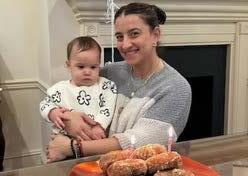
this week at headquarters, with a special guest joining the celebration—her little girl, Nova! It was a wonderful get-together for everyone.
SPOHNC celebrated Christina’s birthday
Christina Ermmarino
In Memoriam
Lynn Gormley
SPOHNC was deeply saddened to learn of the passing of one of our beloved SPOHNC family members. Lynn Gormley passed away on June 26th.
Lynn was a very active longtime member of our local SPOHNC family, supporting our events and programs, and attending many SPOHNC celebrations. She enjoyed her own events, hosting and entertaining numerous holiday gatherings, annual Christmas tree cutting events, Kentucky Derby parties, and various other special occasions. She was a wonderful hostess. We have very fond memories of spending time with Lynn, and her husband, Ed, in their home in Bayville, NY. They hosted a beautiful holiday party for many SPOHNC friends, and we all enjoyed gathering together in the spirit of the holidays, sharing stories, laughs, and food and drinks as well.
In more recent years, some of Lynn’s other passions included biking on her tricycle along the boardwalk on Long Beach’s oceanfront, golf, crocheting
Are you newly diagnosed and in need of guidance?
View a preview of our guidebook “We Have Walked in Your Shoes” for basics about the types of treatment and common side effects. It also offers a section to list your healthcare team, a personal calendar and journal, diet and nutrition information, and a list of resources. Visit our store on our website www.spohnc.org to view a preview, or purchase!
and donating hundreds of handmade blankets to children and parents in need, and a love of nature, and the color purple…vibrant like herself.
We know that her beloved family will cherish the memories they shared with Lynn, especially, her sons, Gregory and Paul, and their families and her grandchildren as well.
We will continue to keep Lynn’s family and friends in our thoughts and prayers, and we know that her vivacious spirit will live on in our hearts. Rest at peace now, dear Lynn…
Coming Soon!
Mealtime resources from head and neck cancer (HNC) and thyroid cancer (TC) survivors
Ingredients:
1 tablespoon olive oil
1 onion, diced
2 cloves garlic
1 pound butternut squash peeled, seeded, and cut into 1-inch pieces
5 cups vegetable broth
1 tablespoon brown sugar
1 teaspoon salt
½ teaspoon ground black pepper
½ teaspoon ground ginger
½ teaspoon curry powder (optional)
1 cup heavy whipping cream
Instant Pot Spicy Butternut Squash Soup
Recipe by: Jack Mitchell, Dallas TX SPOHNC Chapter Facilitator
Step 1: Turn on a multi-functional pressure cooker (such as Instant Pot) and select Saute function. Heat olive oil and add onion; cook until translucent, about 7 minutes. Add garlic and cook for 1 minute more.
Step 2: Combine butternut squash, vegetable broth, brown sugar, salt, ground black pepper, ginger, and curry powder in the pot. Close and lock the lid. Select high pressure according to manufacturer’s instructions; set timer for 10 minutes. Allow 10 to 15 minutes for pressure to build.
Step 3: Release pressure carefully using the quick-release method according to manufacturer’s instructions, about 5 minutes. Unlock and remove lid. Blend with an immersion blender until creamy.
Step 4: Stir in heavy whipping cream.
Nutritional Facts: Per serving: 235 calories; total fat 18g; saturated fat 10g; cholesterol 54mg; sodium 791mg; total carbohydrate 19g; dietary fiber 3g; total sugars 7g; protein 3g; vitamin c 18mg; calcium 89mg; iron 1mg; potassium 337mg
SUPPORT FOR PEOPLE WITH ORAL AND HEAD AND NECK CANCER
P.O BOX 53 LOCUST VALLEY, NY 11560-0053
CONTACT: 1-800-377-0928
Subscribe News From SPOHNC
Become a Member
A Newsletter for cancer survivors, family, friends and health professionals. Timely articles help to increase awareness of the many ongoing issues related to oral and head and neck cancer while offering information, support and encouragement.
SPOHNC Membership:
SPOHNC Yearly Subscription
- 8 issues of News From SPOHNC (Digital or Printed Copy) - FREE Product Directory featuring products that help with the side effects of treatment.
“My Dad was recently diagnosed with oral cancer, base of tongue. Have already ordered a couple of your books, one of which he refers to as “the bible”.