If the budget stays the same, do we need to vote on and approve the levies at the AGM?
Page 14 | B Strata
Does office bearer insurance give council members too much protection?
Page 20 | Strata Insurance Solutions
About Us
Welcome to the latest issue of The LookUpStrata Magazine!
For over a decade, LookUpStrata has been Australia’s premier resource for everything related to strata living. Our mission is to keep strata communities informed and connected, providing thousands of lot owners, strata managers, and professionals with reliable, unbiased, easy-to-understand information to help you solve your strata problems and make informed decisions.
The WA Strata Magazines, published monthly, are just one of the many ways we’re dedicated to supporting you. They’re packed with articles from industry experts and include our comprehensive printable strata directory.
Beyond these pages, we also offer:
• Q&A Service: Our team of leading strata specialists answer hundreds of your questions every month, which helps shape the magazine topics we cover.
• Newsletters: Our weekly newsletters deliver timely updates on legislative changes and the latest strata news straight to your inbox.
• Webinars: Join our founder, Nikki Jovicic, for weekly webinars where she hosts and partners with industry experts to discuss key topics.
• The LookUpStrata Directory: A free resource that showcases hundreds of trusted strata service professionals nationwide. You’ll find it at the end of every magazine and on our website.
• Website: Find all our resources, articles, and news in one convenient location, accessible 24/7.
Subscribe now at no cost. To enjoy unrestricted access and connect with our strata community simply click here
Stay Connected - follow us on LinkedIn, Facebook, and YouTube. Thank you for being a vital part of what makes our community so vibrant and trusted.
Nikki Jovicic Managing Director I Founder lookupstrata.com.au
If insurance rejects a window leak as maintenance, will strata cover
20 Does office bearer insurance give council members too much protection?
Tyrone Shandiman, Strata Insurance Solutions
Benefits of an EGM for discussion before making formal strata decisions
SVN | Strata, SVN Perth
Who does a tenant contact when common property facilities are not working?
Jamie Horner, Empire Estate Agents
strata management meets
Will all-inclusive strata management agreements replace fee-for-service models
Michael Teys, Michael Teys Strata Advisory 14 If the budget stays the same, do we need to vote on and approve the levies at the AGM?
Courtney Butters-Kerr, B Strata
Whether to treat or replace rusted rebar in concrete cancer repairs
Bruce McKenzie, Sedgwick
How should a tied vote for chairperson be resolved in a 4 lot strata?
Jamie Horner, Empire Estate Agents
Managing suspected prostitution activity in a strata building
Luke Downie, Realmark 28 Strata budgets should reflect past expenses, expected increases and owner priorities
Matthew Faulkner, Matthew Faulkner Accountancy
Key advocacy priorities shaping the future of strata communities
Chris Irons, Owners Corporation Network
Thanks to our sponsors
If insurance rejects a window leak as maintenance, will strata cover the damage?
If insurance rejects a window leak claim saying it’s maintenance, is the strata company responsible for repairing the damage caused by the leak?
I live in a five-storey strata building in Perth, WA. Recently, we had water ingress through a glass brick window, which caused the wooden internal window sill to swell. There is also mould, and the mortar between the glass bricks is crumbling.
We lodged a claim directly with the insurer, who told us that until a plumber carries out a leak test from the outside, they cannot confirm whether this is an insurable event or a maintenance issue. The leak appears to be clearly caused by water ingress through weathered seals and mortar around the glass bricks.
If the insurer ultimately says this is a maintenance issue and declines the claim, are we entitled to expect the strata company to pay for both the external repairs (regrouting and resealing the
glass bricks) and the internal damage (replacement of the swollen sill and affected grout)? Can you confirm that this is a common property issue, given that the glass brick window is on an external wall and is not something we, as lot owners, can practically maintain?
Wait for the results of the leak test, as this will provide clarity on both the cause and whether the insurer is likely to respond.
From what you’ve described, this does sound like an external building envelope issue. In most cases, it would be common property, particularly as the glass-brick window, mortar and external seals form part of the building’s external structure and cannot be accessed or maintained by an individual owner.
Insurers generally need confirmation of the cause of the water ingress before they can determine whether the event qualifies as an insurable “accidental damage” claim. Suppose the leak test identifies that water is
entering through deteriorated seals, mortar or other external components. In that case, the insurer will assess whether the failure was truly “sudden and accidental”, as required under the policy’s insuring clause. In this situation, the “sudden” element is typically the main hurdle. Insurers also apply a range of exclusions for maintenance, wear and tear, corrosion, gradual deterioration, developing flaws, building defects, and rectification of faulty work. Based on the details you’ve provided so far, it is likely there will be some challenges in having this claim accepted.
If the insurer declines the claim, it is outside my professional remit to advise definitively on responsibility for repairs outside of an insurance context, as this falls within the expertise of a strata manager or strata lawyer. However, I can share general insights from my experience in strata: external walls— including glass bricks, mortar, waterproofing and similar building elements—are typically considered common property, and the
maintenance and repair of common property is normally the responsibility of the strata company. That said, I would strongly recommend seeking formal guidance from your strata manager to confirm the precise responsibilities in your particular scheme.
Ultimately, the best next step is to wait for the results of the leak test, as this will provide clarity on both the cause and whether the insurer is likely to respond. If the insurers deny the claim, your strata manager will be the appropriate person to advise on ownership and maintenance obligations and to coordinate any necessary repairs.
Mention this offer when requesting a quote from us, and we will provide a discount off our standard fee for service of $250 (GST Inc) for buildings with 10-25 lots or $500 (GST Inc) for buildings with more than 25 lots for the first year you insure with Strata Insurance Solutions
To redeem this offer email a copy of your current policy schedule to Strata Insurance Solutions within 1 month of the publication of this magazine Your policy can expire any time in the next 12 months However we can only provide quotes 30 days prior to the expiry of your policyif your policy is not due now, we will schedule a quote at the appropriate time To ensure we apply this offer to our quotes, please specifically mention you would like to redeem the "LookUpStrata Special Offer".
Take the test todaysee how much you can save.
Balancing equity in common property improvements
If the strata company pays to upgrade balcony balustrades for upper-floor lots, should ground-floor owners receive an equivalent benefit?
In our building, there are 16 apartments. The 14 upper-floor apartments have balcony glass balustrades, but the two ground-floor apartments do not. There is a proposal, subject to owner approval, for the strata company to upgrade and modernise the balcony balustrades on the 14 upperfloor apartments. The new plain-glass design would remove the existing top rim, improve the building’s appearance, and provide better outlook and views for those apartments.
The quoted cost is about $18,000 per balcony, funded entirely by the strata company. In the interests of equity between all owners, should the ground-floor apartments receive a compensatory benefit, such as a modern glass sliding door or a cash equivalent to the cost of the new balustrade?
There is no reason to compensate the lower units for the cost of improvement of an asset they share ownership of.
Given that the strata company is carrying out the works, I will respond on the basis that the balustrades are common property.
Your strata company is an entity of its own, with a company being formed on registration of the strata plan. If you think of the unit entitlements each lot holds as shares in that company, it is easier to see that all owners have a share in the strata company. The strata company has a statutory obligation to maintain common property. A strata company can also improve common property.
Working on the assumption that there is no maintenance component of this project, the project would be considered an improvement to the common property.
Section 91(2) of the Strata Titles Act 1985 permits a strata company to improve the common property. Should the cost exceed $500 per lot, a special resolution would be required to approve the expenditure, except for sustainability infrastructure, which would be an ordinary resolution.
Provided the strata company has followed the correct approval process, they can carry out the improvement to common property.
To address your commentary surrounding compensation for the lower units, my opinion is that the works are to the common property, which all owners have shared ownership and responsibility of. Therefore, I do not believe there would be any reason to compensate the lower units for the cost of improvements for an asset they share ownership of.
Luke Downie | Realmark ldownie@realmark.com.au
Where strata management meets real estate insight
Strata management plays a larger role in property value than it is often recognised for. Across Western Australia, the quality of governance, maintenance planning and day-to-day decision-making within a strata scheme directly shapes buyer confidence, tenant experience and long-term asset performance.
Market insight
What sets Realmark Strata apart is where the function sits. Operating alongside residential and commercial sales and leasing, strata managers have direct visibility of how buildings are perceived in the market. Buyers consistently respond to clarity: well-maintained common areas, transparent records and evidence of forward planning. These are not abstract principles. They are the details that influence confidence, negotiations and outcomes.
That same perspective extends to leasing. Tenants are influenced by how spaces are presented, how issues are resolved and how clearly responsibilities are communicated.
When strata management is proactive and well-aligned with leasing activity, it
supports stronger tenant retention and more stable income outcomes. The result is not just smoother operations, but betterperforming assets.
Ever-evolving role
This integrated view has reshaped the role of the strata professional at Realmark. The position is no longer purely administrative. It is collaborative and informed by real market feedback.
Strata managers work closely with sales, leasing and property management teams, contributing to decisions that protect value today and position assets for future performance.
Realmark’s current strata professional opportunity reflects this approach. The role offers exposure to a diverse WA portfolio, strong operational support and the advantage of working within a business that sees property from every angle.
For professionals looking to build a career where their decisions have visible impact, Realmark Strata offers a different way forward.
To find out more about strata, contact:
Maizie Churstain Head of Strata Management
Realmark Strata.
Strata
Maizie Churstain Head of Strata
Will all-inclusive strata management agreements replace
fee-for-service models
With more businesses exploring fee-for-service models, will this model become standard across the industry, or are we still a long way from moving beyond all-inclusive agreements?
It will happen at different paces at different times, but we will get there.
The shift is on for different service models. The transformation of this is 2 to 3 years if we start now, and some people have. If laws are passed saying commissions are gone, it could happen faster because committees will demand that.
It’s interesting to study what happened when financial planning weaned itself off commissions and went fee-for-service. It took between one and three years. Some got there faster than others.
The members of SCA (ACT) have led the charge and said, “We’re just getting on with it. We want government to outlaw commissions, but we’re getting on with it”. Some of the bigger firms in Canberra are really well down the track of eliminating commissions.
It will happen at different paces at different times, but we will get there. The question referred to all-inclusive fees. That might not necessarily happen. We may still have fixed fees for commodities and hourly rates for other services, but we need to move away from conflicts of interest payments, commissions, and related-party transactions.
Michael Teys
| Michael Teys Strata Advisory admin@michaelteys.com
Conflict of Interest: Navigating Multiple “Bosses”
Strata managers often operate under competing expectations
balancing committee direction, owner concerns, regulatory obligations, and contractor relationships. Even when decisions are made appropriately, perceived conflicts of interest can arise if processes aren’t clearly documented or explained. Misunderstandings about impartiality or transparency can lead to unnecessar y disputes, increased scrutiny, and reputational ris k.
Establishing clear, consistent processes and seeking independent advice where appropriate helps demonstrate that decisions ar e objective, well-founded, and in the best interests of owners. This approach protects managers from potential complaints while fostering trust and confidence among committees, owners, and other stakeholders.
How QIA Group Can Help
QIA Group provides independent assessments that support manager recommendations and reduce perceived conflicts. Our reports give strata managers objective evidence to support decisions and demonstrate due diligence. Contact QIA Group to strengthen your position through independent reporting.
If the budget stays the same, do we need to vote on and approve the levies at the AGM?
Do levies need an AGM vote if the administrative and reserve fund amounts are not changing from last year?
We have been told that if the levies for the administrative fund and reserve fund will stay the same as the previous year, they do not need to be approved by resolution at the AGM. Is this correct?
Best practice is to include levy motions on the AGM agenda and pass them each year.
The Strata Titles Act 1985 (WA) requires that a budget for each financial year be prepared and approved at the AGM (section 102), even if levies remain unchanged. The Act does not expressly require a new levy resolution each year.
If a previous General Meeting passed levy motions that were worded to apply until changed by future resolution, the strata company may not need to vote on levies each year.
However, best practice is to include levy motions on the AGM agenda and pass them each year. This ensures transparency, gives current owners the opportunity to have their say on the levies, and reduces the risk of disputes.
Note: Individual scheme by-laws may impose additional requirements. Always check your by-laws and seek advice from a specialist strata lawyer if in doubt.
Courtney Butters-Kerr | B Strata operations@bstratawa.com.au
Whether to treat or replace rusted rebar in concrete cancer repairs
In a strata building with concrete cancer, how much rust on reinforcing steel is acceptable before it must be replaced?
Concrete cancer treatment has started on our strata building. The contractor advised that they will only remove and repair areas of concrete that have visibly spalled, even though it appears that all of the reinforcing steel has some level of rust. In several places, rusted rebar ends protrude from the concrete. What level of rust on the reinforcing steel is considered acceptable before it must be exposed, cleaned, and treated, and at what point should the rebar be replaced entirely?
Reinforcement bar is usually only replaced if the steel has degraded to a point where it has lost its structural integrity.
Reinforcement bar is usually only replaced if the steel has degraded to a point where it has lost its structural integrity. Otherwise, the steel is treated depending on the specific circumstances.
Only a qualified structural engineer should make these determinations when there are significant problems, as often there are multiple factors to
Helping the strata community navigate their building
concerns
BUILDING CONSULTANCY
• Defect reports and forensic engineering
• Scope of works
• Dilapidation and risk surveys
• Dispute mediation and expert witness
• Contrator procurement and cost validation
• Construction management
• Capital works funds / maintenance plans
• Digital capability
• Façade assessments
REPAIR SOLUTIONS
• Emergency make safe
• Fire water damage restoration
• Leak detection
• Contamination response
• Building repairs
• Cost validation services
• Digital capability
How should a tied vote for chairperson be resolved in a 4 lot strata?
In a 4-lot strata, how should a tied vote for chairperson be decided when all four owners are on the council?
We are a small strata of four units in WA, and all four lot owners are on the council of owners. All owners are financial. The current chairperson is also the treasurer and has held these positions for more than 10 years.
I would like to nominate for the chairperson role. In the past, when we have voted on office bearer positions, the chairperson/ treasurer has retained the role on their own vote plus the secretary’s vote. The other two owners did not support that outcome, so it was a 2–2 split.
For example, when electing the chairperson, there might be 2 votes for person X and 2 votes for person Y. As a 4-lot scheme, what should happen when there is a 50/50 vote for an office bearer position? How should a tied vote for chairperson be resolved, and does the current chairperson have any greater say than the rest of us in a deadlock?
In a 4 unit scheme, if there is a 50/50 vote in a council of owners meeting, a simple majority has not been reached.
When the council of owners meet, a vote is decided as per the Schedule 1 Governance bylaws noted below as a simple majority vote:
8. Meetings of council
At meetings of the council, all matters must be determined by a simple majority vote
For a motion to pass, it requires a simple majority voting in favour of the motion. This means that more than 50 per cent of eligible owners who are present in person or by proxy must cast their vote in favour of the motion. The chairperson cannot retain the position. The position must be filled after each Annual General Meeting at the first meeting of the council of owners, and they can only be elected if they have more than the majority (i.e., more than 50%). This means that unless 3 of the 4 owners agree, they cannot hold the position as they have not received a majority vote. In a 4 unit scheme, if there is a 50/50 vote in a council of owners meeting, a simple majority has not been reached.
Does office bearer insurance give council members too
much protection?
Does office bearer insurance give council members unfair protection compared to lot owners?
Most council members have office bearer insurance that the lot owners fund through their levies. It appears this cover protects council members if someone challenges their decisions or actions. As a result, it can feel like council members can say almost anything, while ordinary lot owners do not have the same legal protection. Is this imbalance fair, and does office bearer insurance allow council members to act with less accountability than other owners?
The goal of the insurance isn’t to favour council members but to ensure that people feel comfortable volunteering for these roles.
Office bearer insurance isn’t intended to give council members more rights than other owners or create any kind of imbalance. The cover exists because council members assume personal liability risks when they volunteer to make decisions on behalf of the scheme. Owners aren’t exposed to those same legal responsibilities, which is why the insurance is tied to the role rather than the individual.
It’s also worth noting that office bearers liability policies include exclusions — for example, some policies exclude defamation — so the protection isn’t unlimited. In addition, many owners may have some level of personal liability cover under their landlord’s contents or landlord’s insurance policy, and they should check with their insurer to see what protection they already have.
The goal of the insurance isn’t to favour council members but to ensure that people feel comfortable volunteering for these roles without facing unreasonable personal risk.
Looking for a Trusted and Professional Strata Manager?
Benefits of an EGM for discussion before making formal strata decisions
Can a 3-lot strata hold an EGM to discuss special business, without passing motions, and deal with any decisions at a later meeting?
In a 3-lot strata scheme, can the strata company call and hold an extraordinary general meeting (EGM) to deal with special business that requires discussion but does not yet include any formal motions? If so, can any decisions or resolutions that arise from that discussion be put as motions at a later EGM or general meeting?
An EGM can serve as a valuable forum for discussion, owner feedback, and information gathering.
Special business may be discussed at an Extraordinary General Meeting (EGM); however, no legally binding decisions can be made unless formal motions are included on the agenda and voted on in accordance with the Strata Titles Act 1985 (the Act).
An EGM may be convened under the Act to discuss any matter relevant to the duties or operations of the strata company. This includes raising concerns, exploring options, and seeking input from owners.
Where specific motions are not listed on the agenda, the strata company and owners are unable to make formal decisions on those matters. Nevertheless, an EGM can serve as a valuable forum for discussion, owner feedback, and information gathering. Outcomes from these discussions may then inform the preparation of formal motions to be presented and decided upon at a subsequent general meeting, whether an EGM or the Annual General Meeting (AGM).
SVN | Strata | SVN Perth info@svnperth.com.au
Who does a tenant contact when common property facilities are not working?
As a tenant in a WA strata complex, who is responsible for fixing a broken intercom and the security gate?
I rent an apartment in a small complex in WA. Since I moved in four years ago, the intercom has never worked. A few months ago, the security gate to the complex also stopped working, so anyone could walk in and access my car and apartment. I do not feel safe.
My real estate agent says that the owner has no obligations for anything outside the apartment itself and that I should contact the strata management company directly. Is this correct?
Who is responsible for arranging repairs to the intercom and security gate, and what steps can a tenant take to get these issues addressed?
There are no clear guidelines.
The DMIRS Mandatory Training for 2022 outlined the responsibility of property managers and strata managers. The training notes state that it remains the property manager’s role to manage the relationship with the tenant. In addition, it notes the following:
“Some property managers will expect or even encourage a tenant to deal directly with a strata manager in certain circumstances, whereas others will see themselves as the single point of contact for a tenant, regardless of the query or issue. Clearly the second option is a superior customer service offering from an agency, as having a single point of contact will assist in minimising miscommunication and will also assist the property manager to stay across all of the information relevant to the tenant and their tenancy. Often when a property manager is faced with a query in relation to a tenancy, it will be necessary for them to liaise with the strata manager.”
As you can see, there are no clear guidelines, and your property manager has asked you to contact the strata manager. Detail your concerns with the intercom and access gate, be specific about the issue, and note that you’ve been in touch with your property manager, who asked you to contact the strata manager directly. It is best to CC your property manager on the email, as the strata manager may only deal with the property manager/owner.
New strata education requirements are now in effect. Act now to stay compliant.
Meet Landgate’s requirements with flexible, role-specific strata training. Complete the full Cert IV qualification or only the four or six units required for your role.
“REIWA is the first RTO offering this certification in WA, and with the regulation changes now in effect, I’m glad to be ahead of the game.”
REIWA’s CPP40521 Certificate IV in Strata Community Management offers flexible, self-paced study with individual support from industry-leading trainers.
• Interest-free payment plans available
• Individual support sessions with experienced trainers
• Self-paced online learning — start anytime via REIWA’s world-class training portal
• Delivered by WA’s trusted real estate training provider Get started today
NIKKI D’AGOSTINO, REZZI STRATA REIWA Training graduate
Managing suspected prostitution activity in a strata building
What can residents do if they suspect a prostitution business is operating in their strata building?
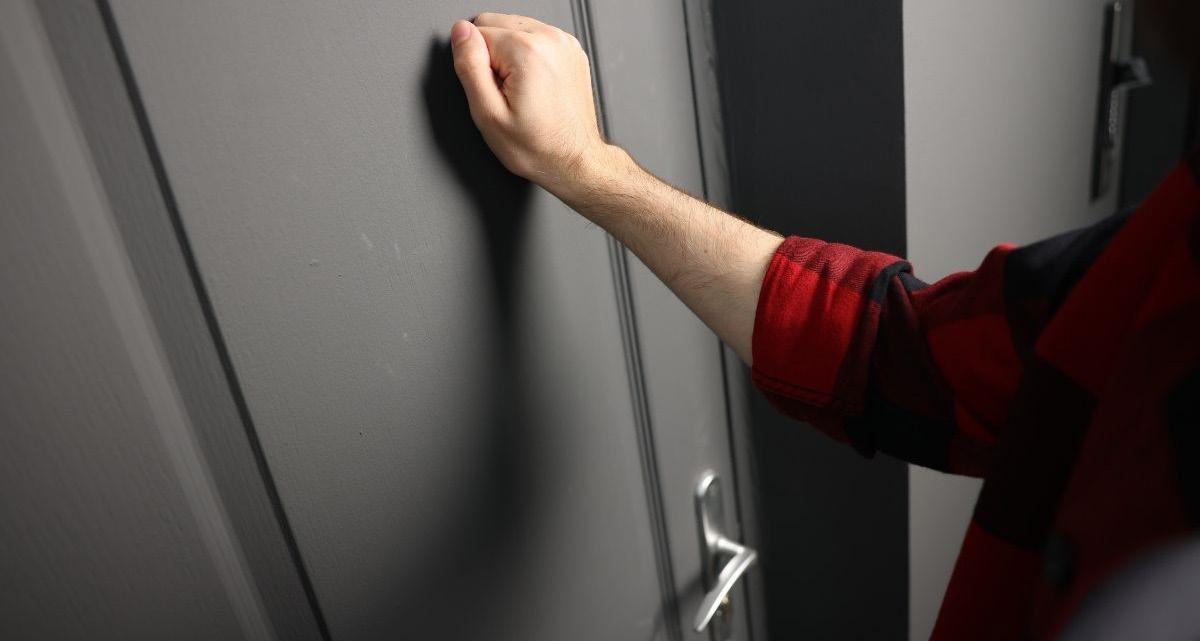
We’ve identified what appears to be a prostitution business operating in a rental unit on our floor. It’s been happening for about two to three months. Visitors are regularly buzzed in — sometimes up to seven men within three hours. One even knocked on my door by mistake before realising they were at the wrong unit.
I work from home and am feeling unsafe. I’ve reported the situation to both the strata manager and the police. What further steps can residents or the strata company take to address this kind of activity in a strata building?
Strata companies should first look to their by-laws to see if the activity presents any breach of a by-law that can be used to assist in resolving the matter.
In my experience, this is a complex and difficult situation for any strata company to resolve. Often, the concern comes more from guests coming and going than from the occupants themselves.
Under the Prostitution Act 2000, the act of prostitution is not against the law. It is illegal to carry out street work, and brothels are illegal under the West Australian Criminal Code. If there is any illegal activity, it should be reported to the police.
In my opinion, strata companies should first look to their by-laws to see if the activity presents any breach of a by-law that can be used to assist in resolving the matter. It may also be wise to consult a strata lawyer to assist with preparing a breach. If there is no by-law that can be used, the strata company may want to consider the introduction of a by-law that does provide an avenue for the strata company to act in future.
Given the ability to issue a breach, this could lead to resolving the issue, or after three consecutive breaches, the ability for the strata company to apply to the State Administration Tribunal for enforcement. One common problem with this process is that the strata company lacks the power to impose a penalty for a breach. In Western Australia, a breach is applied by order of the tribunal. If the strata company incurs costs in issuing a breach, it may be able to recover those costs if it has the right cost-recovery by-law in place. Usually, these costs are insufficient to deter in this situation, given the operator’s earnings.
If the apartment is rented, it would be wise for the strata manager to talk with the owner to see if they are aware of the activities and if there is any avenue for them to assist with resolving the matter. It may be that the activity presents a breach in the residential tenancy agreement that allows the owner to act via issuing a breach under the Residential Tenancies Act.
It is also worth discussing the matter with the local government to see if the activity poses any breach of local government by-laws and/ or any approved uses or property zoning of the development.
I would encourage the strata company to put measures in place to collect evidence to support any potential action that may take place. CCTV footage, advertisements, and attendance records would help.
Luke Downie | Realmark ldownie@realmark.com.au
Strata budgets should reflect past expenses, expected increases and owner priorities
What financial strategies can a strata company use to manage levy income and expenses effectively? Should councils seek professional tax advice when preparing budgets?
As the treasurer of our strata company, I’d like to explore whether there are more effective accounting and budgeting practices we could adopt to manage our levy income and expenses more efficiently. What financial considerations should councils take into account when deciding how to fund works?
Is it good practice to seek professional tax advice when preparing budgets, or do most councils rely on guidance from the strata manager alone?
Tax in strata is relatively simple.
It’s my understanding that many councils rely on their strata manager for budgeting advice. Of course, this is all relative to the manager, but generally speaking, this is ok.
Very often, a budget should be the prior year’s expenses rounded up. You may be aware that certain items, such as management fees, increase by 5% annually. Insurance premiums, being the exception lately, sometimes increase by 20%. Then, for new expenditure, budgeting is a best guess, or you may have quotes.
Then, levy income budgets are meant to either equal expenses, exceed expenses by any brought forward deficit (excluding loans), or exceed expenses to build up a surplus. All dependent on what the owners want to do. There is always a wide variety of owner’s income within a building that prevents a surplus from being realistic. A budget is an estimate/ plan that is ruined by anything unforeseen. Seeing the unforeseen is quite difficult.
Tax in strata is relatively simple, with the only real issue being the deductibility of levies to investor owners, which is the realm of your personal tax agent.
Matthew Faulkner | Matthew Faulkner Accountancy PTY LTD matt@mattfaulkner.accountants
Now Lending in WA
Finance without the Fights Real Choices. Real Support.
Hybrid Loans that give owners choice and committees control
Flexible funding and exceptional support every step of the way. As a fully digital end-to-end business, we make strata finance seamless, e icient, and tailored to you.
Key advocacy priorities shaping the future of strata communities
With so much change in strata, what are the next big advocacy priorities for owners and councils?
There is a lot of change happening in strata at the moment, from new technology and AI tools to reforms around insurance, building standards and compliance. It can feel overwhelming to keep up with everything.
What are the big advocacy battles on the horizon for strata communities? Where should owners and councils focus their energy next to have the most impact, whether that is on legislation, insurance, building safety, fairer governance, or something else?
Think about what you need to reasonably do to ensure your investment is protected and enhanced.
I always take the view that strata is about business-like relationships and business-like transactions. You’ve spent maybe upwards of a million dollars, perhaps a lot more in some cases, to be part of this strata scheme. Keep that in mind.
Ask yourself, “What is it that I need to reasonably do as an owner to ensure my investment is protected and, in an ideal world, is enhanced over a period of time?”
Chris Irons | Owners Corporation Network chris.irons@ocn.org.au
READ MORE HERE
Join WA’s Award Winning Strata Team
Cygnet West took home five major awards at the 2025 CHU SCA (WA) Strata Community Excellence Awards
Ready to build your future in Strata Management with an industry leading team?