How should bodies corporate classify short-term renters for by-law enforcement?
Page 10 | Strata Solve and Redchip Strata Law
Should caretaker hours cover weekends and peak letting periods?
Page 22 | Tower Body Corporate
Does office bearer insurance give committee members too much protection?
Page 26 | Strata Insurance Solutions
About Us
Welcome to the latest issue of The LookUpStrata Magazine!
For over a decade, LookUpStrata has been Australia’s premier resource for everything related to strata living. Our mission is to keep strata communities informed and connected, providing thousands of lot owners, strata managers, and professionals with reliable, unbiased, easy-to-understand information to help you solve your strata problems and make informed decisions.
The QLD Strata Magazines, published monthly, are just one of the many ways we’re dedicated to supporting you. They’re packed with articles from industry experts and include our comprehensive printable strata directory.
Beyond these pages, we also offer:
• Q&A Service: Our team of leading strata specialists answer hundreds of your questions every month, which helps shape the magazine topics we cover.
• Newsletters: Our weekly newsletters deliver timely updates on legislative changes and the latest strata news straight to your inbox.
• Webinars: Join our founder, Nikki Jovicic, for weekly webinars where she hosts and partners with industry experts to discuss key topics.
• The LookUpStrata Directory: A free resource that showcases hundreds of trusted strata service professionals nationwide. You’ll find it at the end of every magazine and on our website.
• Website: Find all our resources, articles, and news in one convenient location, accessible 24/7.
Subscribe now at no cost. To enjoy unrestricted access and connect with our strata community simply click here
Stay Connected - follow us on LinkedIn, Facebook, and YouTube. Thank you for being a vital part of what makes our community so vibrant and trusted.
Nikki Jovicic Managing Director I Founder lookupstrata.com.au
Chris
Todd
Do works over $3,000 need to be registered with the QBCC?
Does a body corporate need to register works over $3,000 with the QBCC?
Our committee is directly managing the maintenance and upgrade of our common property outdoor cabana. We’re using only licensed and insured tradespeople. If quotes exceeds $3,000, do we need to register the work with the Queensland Building and Construction Commission (QBCC)?
Works that cost over $3300 inc GST should be conducted by QBCC-licensed professionals, and you should ask any contractors you engage for their licence and insurance details.
The QBCC website explains that you need a written contract if you are carrying out domestic building work priced over $3300, including labour, materials and GST: QBBC: Domestic building contracts
Domestic building work includes:
• building a new detached dwelling (including a duplex)
• building a structure associated with a home, such as a shed, garage, carport, retaining structure, driveway, fence, workshop, swimming pool or spa
• removing or re-siting a dwelling intended to be used as a residence
• renovating, extending, altering, improving (including painting and installing services) or repairing a house, duplex or unit
• refitting a kitchen or bathroom, and
• landscaping, paving, site work, etc.
The QBCC provides a standard domestic contract that you can use in these circumstances: QBBC: Domestic building contracts
Your contractor should supply you with a contract, but in reality, this step is often missed or avoided by contractors as they don’t like the extra paperwork.
If you ask a contractor to provide you with a contract and they refuse, that is probably a red flag, and you might want to consider whether it is worth continuing with them.
If you don’t sign a contract, you may be giving up some of your legal protection as a consumer, and it may be harder to take action if there is any dispute with the work.
However, works that cost over $3300 inc GST should be conducted by QBCC-licensed professionals, and you should ask any contractors you engage for their licence and insurance details. You can cross-reference the documents on the QBCC’s license search page.
If they are registered and insured, you are probably safe to proceed. If not, you should probably look for someone else.
William Marquand | Tower Body Corporate willmarquand@towerbodycorporate.com.au READ MORE HERE
Can we shift garage door maintenance to owners via exclusive use?
Can our body corporate shift responsibility for maintaining electric garage doors to individual lot owners? If so, would an exclusive use by-law be the right way to achieve this?
I live in a small complex of townhouses in Queensland, regulated under a building format plan . At the moment, the body corporate is responsible for maintaining the electric garage doors for each lot.
Some lot owners think it would be more efficient and economical if each owner were responsible for their own garage door . Can the body corporate shift the maintenance responsibility to the relevant owner by making the garage doors part of each lot’s exclusive use area ? If so, what process does the body corporate need to follow?
This would require a resolution without dissent, with all affected lot owners consenting to the grant.
When common property is granted by way of exclusive use, the lot owner takes on some maintenance obligations over the area, along with any conditions of the grant.
Depending on how the lots were titled (i.e. the boundary of the lots in respect of the car park), there may be common property (such as the external face of the garage) that can be granted by exclusive use on the condition that the lot owner becomes responsible for the maintenance.
This would require a resolution without dissent, with all affected lot owners consenting to the grant.
Todd Garsden | Mahoneys tgarsden@mahoneys.com.au
Leading the way in strata funding
Lannock Strata Finance has been at the forefront of strata finance for twenty years, pioneering simple and flexible strata funding for strata communities.
As Australia’s leading strata lender, our flexible-use funding is designed exclusively to meet the needs of all strata communities, no matter how large or how small, including:
Building Remediation
Repairs and Maintenance
Upgrades to Common Property
Cladding Rectification
Experience the Lannock difference
Green and Sustainability Projects
Levies in Arrears
Litigation
Insurance Funding
Speak with your local Lannock expert about how we can tailor flexible funding to suit your specific needs.
1300 851 585 | lannock.com.au
Understanding insurance disclosure rules for AGM notices
How should our body corporate deal with insurance motions at the AGM when the policies in place at the time of notice expire before the meeting date?
Could you please clarify an aspect of the Regulations (Accommodation Module) concerning insurance? Section 186 refers to “each policy of insurance held by the body corporate under this part and in force when notice of an annual general meeting is given”.
Our AGM is held at the end of October each year, but the insurance policies that are in place when the AGM notice goes out in September all expire at the end of September, according to the certificates of currency.
The statutory insurance motion at the AGM says: “Insurance policies detailed below and attached be confirmed”, but the attached policies are always the ones that expired in September. Why are owners voting in October to confirm or approve policies that have already expired?
The motion also says: “and further that the Committee be authorised to obtain quotations and to renew the insurance policies for the following year to full replacement value”. I understand obtaining quotes before the AGM, but I would have thought owners should receive copies of the new policies they are being asked to approve. Am I misunderstanding how section 186 works in this situation, or should the insurance motion and documentation be handled differently?
The expiring policies must be disclosed at the AGM, but approval of the renewal is not required unless the owners have chosen to impose that restriction.
Section 186 of the Body Corporate Community Management (Accommodation Module) Regulations 2020 requires the body corporate to disclose at the AGM the insurance policies that are in force when the AGM notice is issued. This is why the policies attached to your AGM papers are the ones expiring in September. They are the policies that existed at the time the notice went out. Owners are not being asked to approve these policies –the motion simply confirms they have been properly disclosed as required by the Act.
Before the 2020 updates to the regulation modules, insurance that exceeded the committee spending limit did require approval at a general meeting. This created practical issues, particularly when policies expired at different times to the AGM. To fix this, the legislation was changed so that the committee can now renew insurance without needing owner approval, regardless of the cost, unless the owners have specifically restricted the committee’s authority by resolution.
Because of these changes, owners do not vote on the new or upcoming insurance policy at the AGM. The committee obtains quotes and renews the cover before expiry, which is what your current motion correctly authorises. While owners don’t need to approve the new policy, the committee can still circulate the updated Certificate of Currency once the renewal is completed for transparency.
In short, your current process aligns with the legislation: the expiring policies must be disclosed at the AGM, but approval of the renewal is not required unless the owners have chosen to impose that restriction.
Mention this offer when requesting a quote from us, and we will provide a discount off our standard fee for service of $250 (GST Inc) for buildings with 10-25 lots or $500 (GST Inc) for buildings with more than 25 lots for the first year you insure with Strata Insurance Solutions
To redeem this offer email a copy of your current policy schedule to Strata Insurance Solutions within 1 month of the publication of this magazine Your policy can expire any time in the next 12 months However we can only provide quotes 30 days prior to the expiry of your policyif your policy is not due now, we will schedule a quote at the appropriate time To ensure we apply this offer to our quotes, please specifically mention you would like to redeem the "LookUpStrata Special Offer"
Take the test todaysee how much you can save.
How should bodies corporate classify short-term renters for by-law enforcement?
In a Queensland body corporate, are short-term renters treated as “occupiers” or “guests” under the BCCM Act and our by-laws?
Our body corporate committee is divided about how our by-laws apply to short-term renters.
Some committee members say that shortterm renters are “occupiers” under the bylaws. They rely on the BCCM Act definition of an occupier as “a resident owner or resident lessee of the lot, or someone else who lives on the lot”, and argue that shortterm renters fall into the “someone else who lives on the lot” category.
Other committee members believe that short-term renters are “guests” instead. They say that, because short-term renters usually do not have a standard tenancy agreement, they should not be treated as occupiers. They also point out that platforms such as Airbnb describe their users as “guests”.
Can you please clarify whether short-term renters in a Queensland body corporate should be treated as occupiers or guests for the purposes of applying our by-laws?
They have to be occupiers.
Chris Irons, Strata Solve:
We’d love to clarify this for you! Alas, it’s not that simple…
Qld’s strata legislation does not define ‘guest’, ‘resident’, or any other related term. It’s a case-by-case situation, and there have certainly been different adjudicators’ orders that have considered who or what constitutes an ‘occupier’, within that meaning you have cited in your query.
There’s a tendency to view an ‘occupier’ as a ‘tenant’ or ‘lessee’, and we can see that logic. The trouble arises in trying to apply a blanket meaning to the term or apply a fixed definition because, as you’ve pointed out with your example, there are conflicting views. What about someone who stays in an Airbnb-listed property for just under three months, given that three months is usually considered the cut-off for short-term/long-term? What’s the difference between two months and 29 days, or three months, especially if they are creating some problems?
You may be better off stepping back from this debate for a second and instead focusing your efforts on what it is you’re trying to achieve. Are you experiencing issues with ‘guests’ who arrive after booking through Airbnb or a similar platform? Is the issue one of by-law enforcement? Is the issue that short-term letting is creating maintenance or amenity issues? Are there insurance implications? By reframing your thinking onto the objective you want, you might find some clearer paths forward.
This is general information only and not legal advice.
Frank Higginson, Redchip Strata Law:
I think that they have to be occupiers. To suggest otherwise is to say that anyone in a short-term rental arrangement is then not bound by the by-laws and can do whatever they want without the body corporate having any rights at all. I don’t think that is the position, but that does beg the next question: what can the body corporate practically do? That is another thing entirely, when it might not even have the occupier’s contact details.
Chris Irons | Strata Solve chris@stratasolve.com.au
Frank Higginson | Redchip Strata Law FrankH@redchip.com.au
Insurance & Risk Under the Microscope: Emerging Threats and How to Respond
Insurance is one of the fastest-moving challenges in strata today. Premiums are rising, underwriters are more cautious, and exclusions are widening. Building age, combustible cladding, lithium battery fire risks and climate -related weather damage are all driving insurers to demand more evidence of sound risk management.
For strata managers, this means moving from a reactive stance to a proactive one. Rather than waiting for issues to surface through claims or complaints, the priority should be prevention and preparedness. Routine inspections help identify hazards early, detailed documentation shows the scheme is meeting its duty of care, and independent reports safeguard owners’ assets while reducing the risk of claim delays
Where QIA Group helps: Our Safety Reports identify compliance and safety issues before they escalate into costly claims, while our Insurance Valuations ensure schemes maintain accurate cover and avoid the risks of underinsurance. Together, these reports give strata managers and committees the confidence to demonstrate due diligence and protect their communities.
Can extending levy due dates at the AGM make an unfinancial owner eligible for committee election?
Was a lot owner validly reelected to the committee if they were unfinancial on the AGM date, but the meeting later extended the levy due date?
At our December AGM, a lot owner nominated for re-election to the committee had overdue body corporate levies on the day of the meeting. During the AGM, the body corporate unanimously passed motions to extend the due dates for levies to the end of the levy period, effectively giving the owner extra time to pay. On that basis, the strata manager advised that the owner could be re-elected to the committee.
The lot owner still had a body corporate debt at the end of the new due date, but remained on the committee for the rest of the year. In these circumstances, was the lot owner eligible to be elected to the committee at the AGM?
The legislation restricts the election of a member who owes a body corporate debt ‘at the time voting members are chosen’.
The legislation restricts the election of a member who owes a body corporate debt ‘at the time voting members are chosen’.
Given the election of committee members would be considered as the last, or second last (if consideration is given to the engagement of a body corporate manager under a Part 5 arrangement), item of business at the AGM, then the passing of earlier resolutions extending the due date for payment of the overdue levies to a date beyond the AGM would most likely make the relevant member ‘financial’ again, and eligible to be elected to the committee. A contrary view may be that the debt is not extinguished until amended levy notices are reissued to the lot owners, but that would not be my preferred view.
Of course, if the relevant member self-nominated, and they (or whoever else nominated them) owed a body corporate debt at the time of nomination, then that would also invalidate the nomination and disqualify the relevant member from being validly elected to the committee.
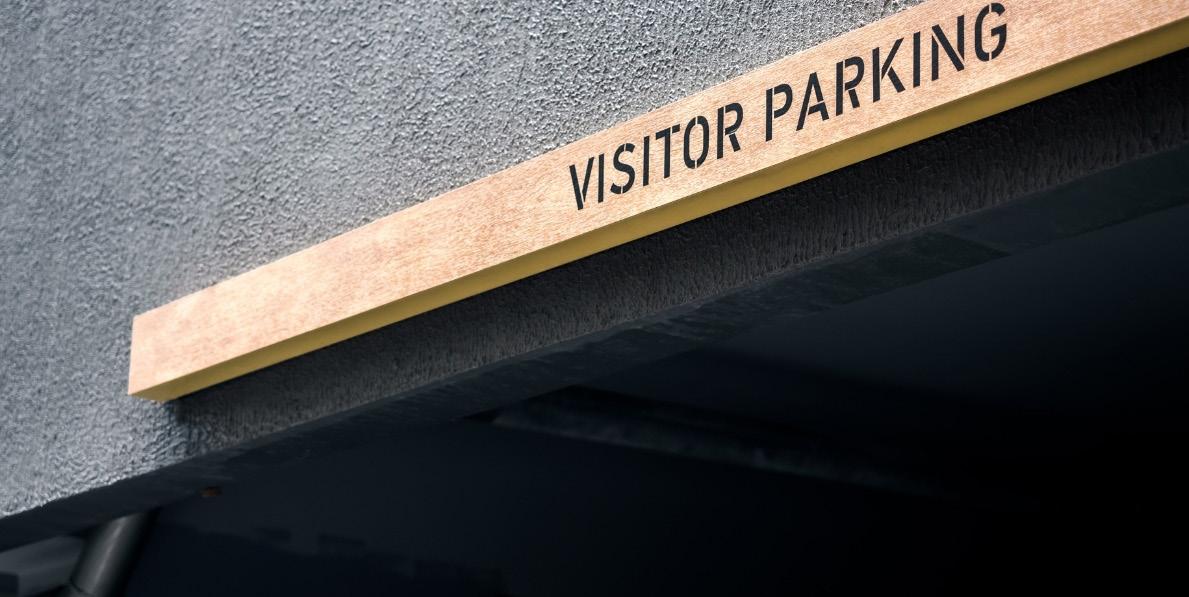
Are bollards an unreasonable restriction on visitor car parks?
Can the body corporate committee use bollards to “reserve” visitor car parks, or is this an unreasonable restriction on common spaces?
In our complex, the body corporate committee installed bollards on allocated visitor car park spaces as part of a manual “reserved visitor parking” scheme used during holiday periods. The committee installs the bollards at least two days before the reservation begins, which prevents genuine visitors from using spaces even when they are vacant.
The committee is also slow to remove the bollards when the visitor leaves, sometimes taking more than 12 hours to free up the space. The booked visitor can still access the reserved space until the committee removes the bollard.
The bollard scheme frustrates owners because empty visitor spaces can’t be accessed by our bona fide visitors. Can the body corporate committee lawfully manage visitor parking in this way, or is this an unreasonable restriction on common spaces?
I very much doubt that the body corporate committee can do that for two main reasons.
I very much doubt that the body corporate committee can do that for two main reasons:
1. The planning approval likely included the obligation to provide a certain number of visitor parks. If those are denied to genuine visitors, it is likely a breach of that approval.
2. Leaving aside the potential denial of the right to use common property for proper purposes, which I don’t think the committee can do on their own in these circumstances, the bollard is an improvement to common property and would likely need approval at the general meeting.
Frank Higginson | Redchip Strata Law FrankH@redchip.com.au
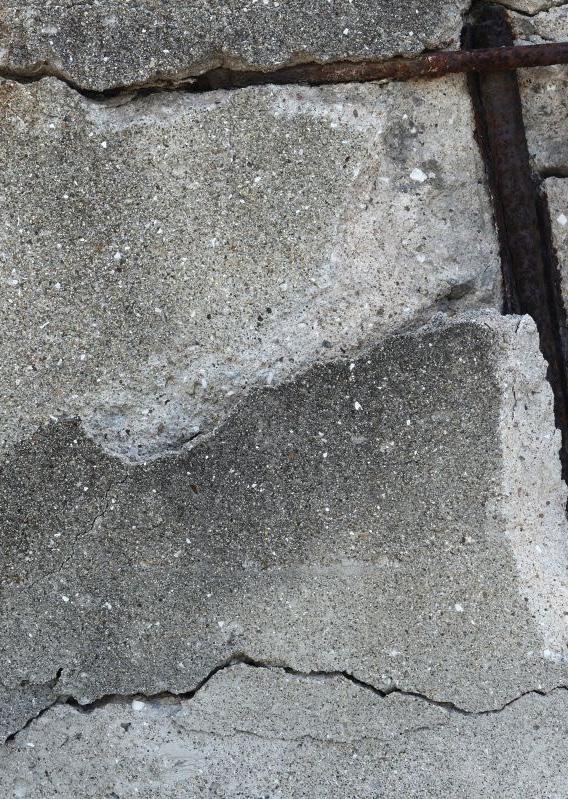
Whether to treat or replace rusted rebar in concrete cancer repairs
In a strata building with concrete cancer, how much rust on reinforcing steel is acceptable before it must be replaced?
Concrete cancer treatment has started on our strata building. The contractor advised that they will only remove and repair areas of concrete that have visibly spalled, even though it appears that all of the reinforcing steel has some level of rust. In several places, rusted rebar ends protrude from the concrete. What level of rust on the reinforcing steel is considered acceptable before it must be exposed, cleaned, and treated, and at what point should the rebar be replaced entirely?
Reinforcement bar is usually only replaced if the steel has degraded to a point where it has lost its structural integrity.
Reinforcement bar is usually only replaced if the steel has degraded to a point where it has lost its structural integrity. Otherwise, the steel is treated depending on the specific circumstances.
Only a qualified structural engineer should make these determinations when there are significant problems, as often there are multiple factors to
Helping the strata community navigate
their building concerns
BUILDING CONSULTANCY
• Defect reports and forensic engineering
• Scope of works
• Dilapidation and risk surveys
• Dispute mediation and expert witness
• Contrator procurement and cost validation
• Construction management
• Capital works funds / maintenance plans
• Digital capability
• Façade assessments
REPAIR SOLUTIONS
• Emergency make safe
• Fire water damage restoration
• Leak detection
• Contamination response
• Building repairs
• Cost validation services
• Digital capability
Can our committee prevent short term rentals with minimum rental term bylaws?
Can my body corporate enforce a new by-law that bans me from renting my unit for less than three months at a time?
I own a two-bedroom apartment in a 12-lot building on the Gold Coast, Queensland, and I have lived here for five years. I am not currently on the committee. About five months ago, the committee adopted a new CMS bylaw prohibiting owners from renting their units for less than three months. I was unaware of this change until recently.
This is my home. I plan to live here from time to time and holiday let intermittently to help offset my body corporate costs. Two owners have Airbnb units in the complex, and there are two permanently rented apartments.
Can the body corporate enforce this new bylaw against me? If I want to continue shortterm letting my unit, what options do I have?
Any by-law which seeks to limit the term of occupation of a lot is unlawful.
Any change to the by-laws requires a special resolution to be passed at a general meeting, such that all owners have the chance to vote on its inclusion or not.
However, there are limits on what a by-law can provide for. Relevantly, this was discussed in Admiralty Towers II [2019] QBCCMCmr 567 where the adjudicator relevantly provided (emphasis added):
[29] By-law 11(c) prohibits leases of shorter duration than three months without the written consent of the body corporate, “which may be given and withdrawn at its absolute discretion”. Mr Press points out that this is contrary to the Queensland Civil and Administrative Tribunal’s (QCAT) decision in Body Corporate for Hilton Park CTS 27490 v Robertson. It is also contrary to numerous adjudicators’ orders.
[30] As recognised in those decisions, by-laws of this nature offend sections 180(3) and (4) of the Act.
[31] As Member King-Scott recognised in Body Corporate for Hilton Park CTS 27490 v Robertson, short-term letting is a “type of residential use” protected by section 180(3). He also found leases to be a form of “other dealing with a lot” protected by section 180(4).
[32] One owner drew a distinction between the by-law consider by Member King-Scott and the present by-law on the basis that the former categorically prohibited short leases, while the latter only makes them subject to body corporate consent. She argued that this amounts to regulation rather than prohibition.
[33] While I accept that by-law 11(c) provides for the regulation of the use and enjoyment of a lot and therefore is consistent with section 169(1)(b)(i) of the Act, it is nevertheless invalid because it offends the sections cited above. Those sections are not only concerned with
prohibition, but also with “restriction”. The ordinary meaning of the word “restrict” is to place limits upon something. The limiting factor imposed by by-law 11(c) is body corporate consent. A short-term lease may not proceed without it, while longer leases may proceed without interference. Consent may not be granted at all or it may be withdrawn at any time at the body corporate’s “absolute discretion”. By-law 11(c) is contrary to the Act, invalid, and I will order the body corporate to remove it from the community management statement.
Free By-Law Review
How can owners protect themselves from bullying and defamation in a body corporate?
How can I protect myself from defamation and bullying by the committee and body corporate manager if I cannot afford legal action, and QCAT will not accept my complaint?
I am an individual lot owner in a Queensland body corporate, and I feel that some committee members are targeting me. Their behaviour includes defamation, aggressive verbal attacks, bullying and what I believe may amount to criminal conduct. The body corporate manager has ignored my concerns and failed to act on any of them.
QCAT has advised me that I cannot lodge a complaint or application against the body corporate manager as an individual owner unless the committee first approves and votes for that action. Given that the committee is part of the problem, I feel completely exposed and without any real avenue for help.
I also understand that committee members may be protected by office bearers insurance paid for out of body corporate funds. This means that I, as a victim, potentially pay for their legal protection through levies and then again if legal costs are covered by the body corporate. Is that correct, and if so, how can an owner in my position protect themselves from defamation and bullying when they are not in a financial position to start legal proceedings?
When an owner wants to assert their strata rights, they do indeed pay twice.
Unfortunately, you are correct. When an owner wants to assert their strata rights, they do indeed pay twice: their levies contribute funds that the body corporate committee can draw upon to defend themselves. At the same time, the owner also pays their own costs (e.g., legal fees) to initiate it.
Is that fair? Well, no, to put it bluntly. Then again, that’s the system we have to work with for now. We always suggest that people get absolute clarity on what is going on here, so they don’t waste money and can be clear about their objective. You use words like ‘defamation’, ‘bullying’ and ‘criminal’. Each of those is quite different. ‘Defamation’ requires legal action to pursue (and sometimes what we think is defamation is not really that at all). ‘Bullying’ is not a term which exists in strata legislation, so you need to be specific about what’s happening and what you want to do about it –strata legislation is not geared towards issuing punishments or penalties – while ‘criminal’ means you’ll need to speak to the Police QCAT is rarely going to be your port of call to resolve strata issues, and typically, you’d need to initiate an application in the Commissioner’s Office for a strata dispute.
Often, your solution won’t be legal action or proceedings, but other things, such as communications, lobbying and strategy. Again, you need to be clear about where the problem lies. Is it the committee? Is it the strata manager? Is it another owner? Is it because you were denied something you requested and believed you were entitled to? Each of those has its own outcome to pursue. Remember, for example, that the strata manager is not a decision-maker and typically acts on the committee’s instructions.
Our suggestion? Take a deep breath, pause, reflect and then start to narrow your focus on what you actually want. At the moment, you’re a little too general, and that accounts for why you haven’t had much joy so far. Feeling like you don’t have options is, in our experience, the worst feeling in strata.
This is general information only and not legal advice.
Chris
Irons
| Strata Solve chris@stratasolve.com.au
Strata Solve helps untangle and resolve strata issues, and in the process protect the value of your strata asset, without the need for time-consuming, expensive and stressful legal proceedings.
Director and Founder of Strata Solve Chris Irons (pictured with the late Ernest, Strata Solve mascot) has an unrivaled strata perspective. As Queensland’s former Commissioner for Body Corporate and Community Management, Chris has seen and heard virtually every strata situation and nuance. He knows that while legislation provides a framework, there are many ambiguities to navigate through and in which pragmatism, common-sense and effective communication are vital.
As an independent strata consultant, Chris provides services based of his experience as an accredited mediator and which are all about empowering owners, committees, managers, caretakers, tenants, not-for-profits and others, to protect their strata interests. Chris uses tailored solutions to help his clients: one size definitely does not fit all in strata. Book a f free, initial consultation now to find out how we can work with you to resolve your strata issue.
Should caretaker hours cover weekends and peak letting periods?
Who can deal with nuisance guests when the onsite manager is off duty? Should their attendance hours cover peak periods?
Like many older management agreements, ours only requires the onsite manager to “be available” for a short block on Saturday mornings. However, our peak guest periods are from Friday afternoon through to Sunday morning, as well as during school holidays. There is also a growing trend for onsite managers to live off site, which means they are often not around during busy times.
I understand that onsite managers are entitled to their own time, but it seems impractical that they are not present when issues are most likely to arise. If a nuisance situation occurs with a guest outside the onsite manager’s contracted hours, who actually has the authority (and responsibility) to step in on behalf of the body corporate and resident owners?
It feels ineffective only to contact the lot owner after the event, particularly when owners have limited control over guest behaviour beyond providing a copy of the by-laws, which many guests will not read. While some onsite managers go above and beyond and stay visible during peak periods, many avoid involvement outside their contracted hours.
Should bodies corporate be looking to update caretaking or management agreements so that attendance hours better align with peak occupancy periods, even if that impacts traditional weekend or public holiday expectations? How should we approach this in practice?
If you are having problems with guests onsite, it may be necessary to pay for this extra support, but you can also consider other methods of control.
The contract with the caretaker is the contract you have. If it doesn’t stipulate hours of attendance on the weekend, there is no reason to expect the caretaker to be onsite.
If the body corporate wants someone to be present for those busy periods, it would either have to negotiate that attendance with the caretaker – most likely at an extra cost – or engage an additional contractor to do the work. It may be beneficial for the caretaker to make a change so they can be present. If their letting pool is affected by poor behaviour onsite, they may be motivated to resolve the issue. Have you discussed the matter with them?
If you are having problems with guests onsite, it may be necessary to pay for this extra support, but you can also consider other methods of control. Yes, by-law breaches after the fact may not seem particularly relevant, but they can still have an impact. Maybe consider other means of changing behaviour, depending on the problems – additional signage, CCTV cameras, or greater access control around the site are common methods. Think through the practical solutions and run some trial-and-error tests to see what works.
William Marquand | Tower Body Corporate willmarquand@towerbodycorporate.com.au
FIRE SAFETY FOR BODY CORPORATE COMMITTEES
Under Queensland legislation, body corporates must ensure that:
Fire safety installations are properly maintained
Fire safety obligations are understood by occupants
Reasonable steps are taken to reduce fire risk
Records can be produced if requested by regulators or insurers.
We help body corporates meet their legal obligations without unnecessary cost or disruption
Fire Safety Audits
Independent compliance checks
S
Fire Safety Training
On-site or online
Want clarity before your next AGM?
We’re happy to provide:
S
A
W h y c h o o s e u s ?
Independent fire compliance specialists
Clear, defensible advice aligned with regulators
Focus on risk management and cost control
Can you be accused of defaming someone if the statement is true?
If you are accused of defaming someone, does it make any difference if your statement is true and correct?
It’s a complete defence if something is substantially true, however…
The person who considers they have been defamed must first satisfy the elements of a legal claim, being:
• Matter was published (i.e. communications to a third party)
• Matter reasonably identifies a person (i.e. by name, by position)
• Matter causes (or likely to cause) serious harm/serious financial loss (recent amendment)
It doesn’t mean though that you avoid potentially get dragged through the process of a claim. When relying on this defence, not every detail most be true. It is the core or “sting” of the defamatory matter that must be substantially true.
Does office bearer insurance give committee members too much protection?
Does office bearer insurance give committee members unfair protection compared to lot owners?
Most committee members have office bearer insurance that the lot owners fund through their levies. It appears this cover protects committee members if someone challenges their decisions or actions. As a result, it can feel like committee members can say almost anything, while ordinary lot owners do not have the same legal protection. Is this imbalance fair, and does office bearer insurance allow committee members to act with less accountability than other owners?
The goal of the insurance isn’t to favour committee members but to ensure that people feel comfortable volunteering for these roles.
Office bearer insurance isn’t intended to give committee members more rights than other owners or create any kind of imbalance. The cover exists because committee members assume personal liability risks when they volunteer to make decisions on behalf of the scheme. Owners aren’t exposed to those same legal responsibilities, which is why the insurance is tied to the role rather than the individual.
It’s also worth noting that office bearers liability policies include exclusions — for example, some policies exclude defamation — so the protection isn’t unlimited. In addition, many owners may have some level of personal liability cover under their contents or landlord’s insurance policy, and they should check with their insurer to see what protection they already have.
The goal of the insurance isn’t to favour committee members but to ensure that people feel comfortable volunteering for these roles without facing unreasonable personal risk.