
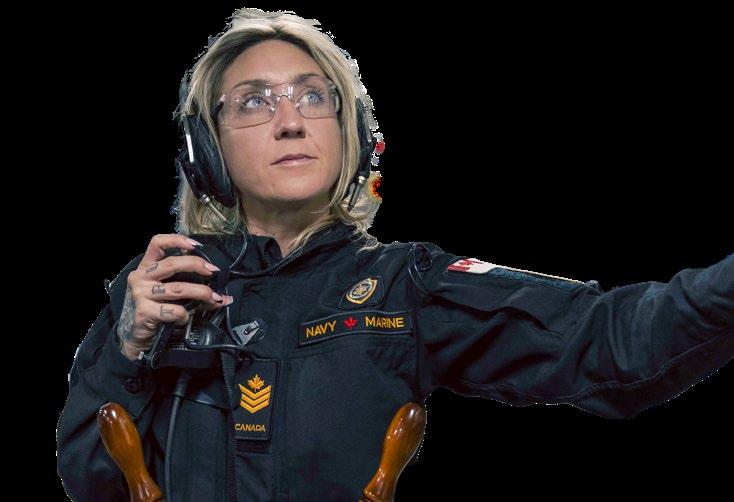
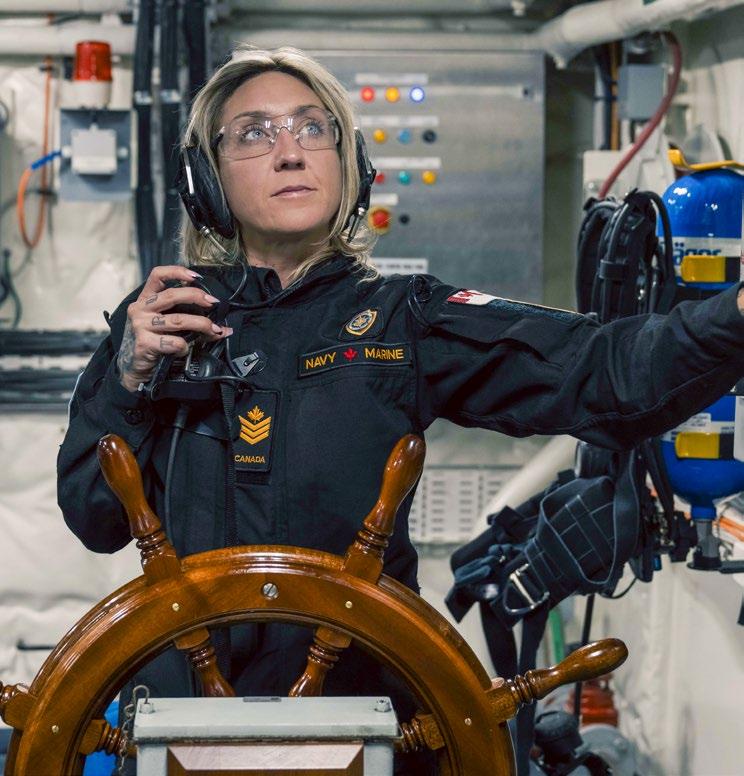





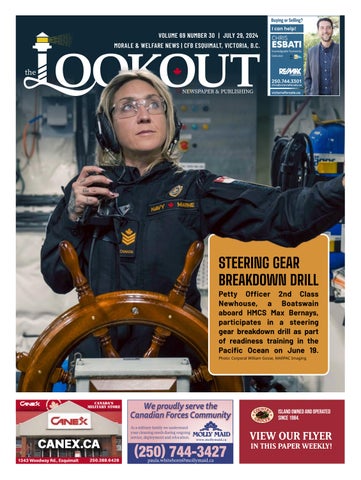
Photo: Corporal William Gosse, MARPAC Imaging
MANAGING EDITOR
Jazmin Holdway jazmin.holdway@forces.gc.ca
EDITOR
Kate Bandura
PRODUCTION
250-363-3130 kateryna.bandura@forces.gc.ca
Teresa Laird production @lookoutnewspaper.com
Leslie Eaton
250-363-3127
leslie.eaton @lookoutnewspaper.com
ADMINISTRATION AND ACCOUNTS
Andrea Modesto
ADVERTISING
Joshua Buck
250-363-3127
Andrea.Modesto@forces.gc.ca
778-977-5433
military.base.advertising@gmail.com
EDITORIAL ADVISORS
Lt(N) Wilson Ho
250-363-4006
Published each Monday, under the authority of Capt(N) K. Whiteside, Base Commander.
The editor reserves the right to edit, abridge or reject copy or advertising to adhere to policy as outlined in PSP Policy Manual. Views and opinions expressed are not necessarily those of the Department of National Defence.
Circulation: 4,000 plus online engagement per week
Follow us on Facebook and Instagram to join our growing social media community. A Division of Personnel Support Programs
Web: www.lookoutnewspaper.com
Fax: 250-363-3015
Canadian Mail Product Sales Agreement 40063331


Kateryna Bandura Lookout editor
As we mark 81 years of serving the CFB Esquimalt community, it’s a fitting time to reflect on the journey of our Base newspaper and the transformations we’ve weathered and embraced. The media landscape is once again shifting beneath our feet, and we find ourselves at a familiar crossroads of change and opportunity.
This August, we’re transitioning to a bi-weekly print schedule, a move that might seem like a step back. However, this change is part of a broader strategy to better serve our readers in the digital age. We’re developing a new website that will become a communications vehicle between the military and the civilian community we serve. We will also enhance our social media presence and explore new ways to engage our military members and their families.
It’s worth noting this isn’t the first time we’ve faced such a pivotal moment. Three decades ago, in 1993, the Lookout reflected on the advent of fax machines and cellular phones –technologies that seemed revolutionary at the time. As thenSub-Lieutenant Conor McKee wrote in his editorial comment from April 1993, “The consumption of news seems faster. People prefer bite size morsels of information. Television has served to reduce people’s attention span”. Today, we face a similar challenge with the ubiquity of smartphones and social media. Yet, here we stand, still committed to our mission of informing and connecting our community.
In an era of information overload, where news from around the globe is available at our fingertips, one might question the relevance of a local base newspaper. But our continued existence is a testament to the enduring value of community-focused journalism. We’ve survived and thrived
because we offer something that global news outlets cannot – a dedicated focus on the stories, events, and people that matter most to CFB Esquimalt.
One of our most valuable assets is our extensive archive of newspapers dating back to the 1940s. This collection is more than just a repository of old news; it’s a living history of CFB Esquimalt and the surrounding community. These archives offer a unique window into the past, chronicling the evolution of the base, the Canadian military, and the local area over nearly a century.
For researchers, historians, and curious community members alike, this archive is an invaluable resource, providing context to our present and insights into our shared heritage.
As we look to the future, we’re excited about the opportunities that lie ahead. Our commitment to hosting community events like the MARPAC Health and Wellness Expo and Ship-to-Shore Industrial Tradeshow remains unwaver-
ing. We’ll continue to provide graphic design services to Base units and publish the Activity Guide, adapting these offerings to meet the evolving needs of our community.
The truth is, as long as there are local stories to tell and a community eager to hear them, base newspapers such as ours will have a crucial role to play. We’re not just surviving; we’re evolving. By embracing new technologies and platforms while staying true to our core mission, we’re ensuring the voice of CFB Esquimalt remains strong and clear for years to come.
As we embark on this new chapter, we invite our readers to join us on this journey. Your stories, your feedback, and your continued support are what will shape the future of this publication. Here’s to more than 80 years of service, and to many more years of keeping our community informed, engaged, and connected.




Peter Mallett Contributor
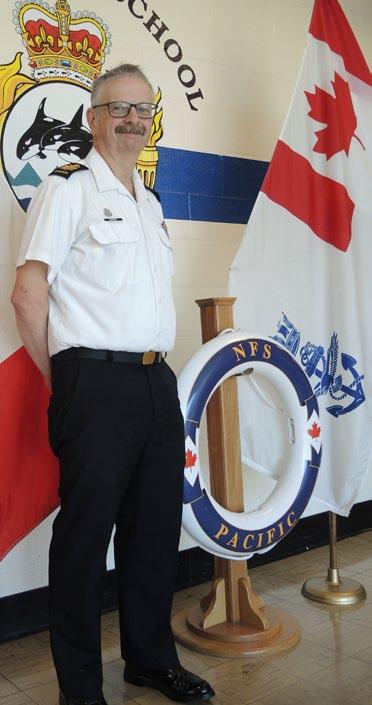
When Naval Fleet School (Pacific) Chief Petty Officer 1st Class (CPO1) Stan Budden reflects on his 31.5-year naval career, two great lessons learned come to mind.
“Firstly, a career in the Royal Canadian Navy (RCN) represents a lifetime of service to others so it’s not just a job but a lifestyle,” says CPO1 Budden. “Secondly, people are our greatest resource, and every leader’s first obligation is the care and development of the personnel they are responsible for.”
It’s a simple, to-the-point diagnostic of Navy life and the human condition coming from a man who spent many of his days working on a warship and fully focused on the workings of its engines, power generation and propulsion systems.
A Marine Engineer by trade, the 51-yearold married father of three from St. John’s, Nfld., says the final posting of his career with the teaching arm of the fleet was one of his favorites because it reinforced those lessons. Joining the Fleet School was where he could influence large numbers of tomorrow’s sailors in the classroom.
“Part of me loved being the person on ships doing the business and I thought I didn’t want to be at [Fleet] School,” said CPO1 Budden. “But now I’ve been here for some time and seen the incredible work they do and now my only wish is that I was exposed to it earlier.”
His last posting was also where CPO1 Budden fully realized the training system’s importance in sustaining a strong, vibrant, world class mari-
time force and generating the next generation of sailors.
“The best part of the job is the people and getting to meet them, from a new Sailor 3rd Class to a seasoned LieutenantCommander,” said CPO1 Budden.
The Navy is not where CPO1 Budden’s military career began. While attending Memorial University in 1993, he joined the Army as a reservist. He became a member of 1st Battalion, The Royal Newfoundland Regiment as an infantryman, participating in numerous exercises within Land Forces Atlantic Area before switching to a full-time career with the Navy upon graduation three years later.
“I enjoyed the military experience but did not see a full-time career in the Army as something I would want to do,” said CPO1 Budden. “The Navy gave me a chance to see the world while I was still young.”
Like most young sailors, his dream of travel took a few years to materialize but the Navy eventually delivered on that promise. Some of his most memorable deployments included one to the Persian Gulf aboard HMCS Ottawa in 2006-07 where he spent his first Christmas away from his family, to the Mediterranean Sea and off the coast of Africa aboard HMCS Regina in 2014, and then sailing through South East Asia with HMCS Ottawa in 2017.
During his career aboard multiple vessels CPO1 Budden worked as an Engineering Roundsman, Machinery Control Console Operator, Diving Tender Engineer, Flight Deck Engineer, Engineering Officer of the Watch and finally as a Chief Engineer.
On dry land, one of his favorite experiences was as Unit Chief Petty Officer of the Canadian Forces Recruiting Centre (Pacific) where he guided a tri-force team through its
mission of attracting and recruiting from the Canadian public. Another highlight was as a member of the Marine Technician Action Team where he helped identify issues with the Marine Technician Occupational Rollout and ways to improve training.
But it was his last posting as Fleet School Chief where he looked after teams of instructors and students and readied them for service in the fleet which he will treasure the most, says CPO1 Budden.
“What I have at Fleet School is influence, being able to use the knowledge of what I have gained in my years of service, showing empathy and compassion so that sailors feel listened to and making recommendations based on what I have seen over my career,” he said. “If I can share this aspect of the job with others then I can truly feel successful in my calling.”
‘The Running Man’
In 2019, CPO1 Budden also became widely known as an avid distance runner and physical fitness advocate. Over the next five years, he realized a radical transformation of his diet and level of physical fitness which saw him drop more than 100lbs while also uplifting his mental health.
He began taking long walks on his lunch break, which eventually morphed into running short distances and then half marathons, fitness classes and yoga. He stopped eating high fat foods and junk foods and says he began living by the adage that ‘you lose ounces in the gym but pounds in the kitchen’. He got involved with Maritime Forces Pacific’s Active Living Working Group and was named Ambassador for multiple Navy Runs acting as a liaison between Victoria’s running community military.
CPO1 Budden turned over his post at Fleet School to CPO1 Oliver Meyer on June 25, ahead of his July 14 release.





Kateryna Bandura
Editor
In the demanding world of military service, finding time for personal passions can be challenging. At CFB Esquimalt, the Auto Club’s motorcycle division is offering a unique solution for sailors who love to ride, providing a haven where the joy of motorcycling can thrive despite the rigors of naval life.
“It’s hard to explain unless you ride,” says Master Sailor (MS) Dave Elmer, Boatswain in HMCS Ottawa. MS Elmer is the division’s lead and a sailor who transitioned from reservist to full-time service in 2018.
“Keeping the joy in riding often varied at times, especially toward the end of my professional time in the motorcycle industry. The club has given me a space to work on my bikes, which in turn allows me to ride them,” MS Elmer says.
This sentiment echoes the experiences of many service members who struggle to maintain their hobbies while balancing military duties.
The Base Auto Club aims to address this challenge headon, offering a fully-equipped workshop, complete with three hoists and tire machine. The bike side of the workshop is still in initial stages of becoming a fully equipped space for members to keep their rides in top condition.
“It’s a good ice breaker to meeting new people or members within the club,” MS Elmer says. “When a bike rolls in, and there’s other riders there, conversation usually starts.”
Beyond just maintenance, the division organizes regular group rides, fostering a sense of community among military bikers. These outings offer a much-needed respite from the stresses of service life and a chance to share the open road with like-minded individuals.
MS Elmer, drawing from over a decade of professional experience in motorcycle mechanics, understands the therapeutic value of working on and riding motorcycles.
“It’s pretty simple,” he says, “when I cross the brow and leave work, that’s where work stays.”
This separation of work
and personal passion is crucial for many service members. The Auto Club provides a space where sailors can fully immerse themselves in their love for motorcycles, leaving the pressures of military life at the gate.
Plans are in motion to relocate and expand the container workshop, with the goal of creating a professional quality shop within the restraints of a sea can. This expansion promises even more opportunities for members to engage with their passion.
For those interested in joining, MS Elmer’s advice is straightforward: do it.
“Regardless of if you’re good with mechanics or not, there’s enough knowledge in the club to help you out,” he says.
The club is perfect for those living on the Base or in accommodations where working on vehicles isn’t feasible.
MS Elmer says it offers the perfect opportunity to ‘keep the wheels in good condition at a steal of a deal given costs these days.’
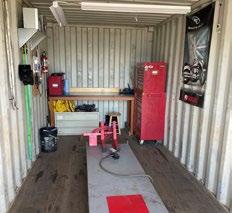
The Base Auto Club offers a fully-equipped workshop, complete with three hoists and a tire machine. The bike side is still in initial stages of becoming a fully equipped space for members to keep their rides in top condition. Photo: MS Dave Elmer
Prospective members can stop by the club located at Work Point, behind 410 Macauley St., or contact: CFBEsqAutoClub@gmail.com, or catch MS Elmer on his Aprilia RSV4 RR at the Dockyard bike parking.
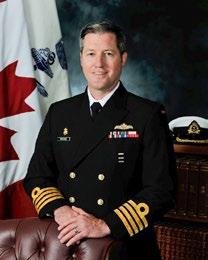
“August 9 marks the 33rd annual Peacekeepers’ Memorial Parade held in Esquimalt Memorial Park. In 2008, National Peacekeepers’ Day was established on Aug. 9 in Canada to recognize Canada’s greatest loss of life on a single Peacekeeping mission, and to provide Canadians an opportunity to express their gratitude and respect for all Peacekeepers. This Memorial Parade was organized by the British Columbia Chapter of the Canadian Peacekeeping Veterans Association and Canadian Forces Base Esquimalt. I am proud and humbled to be in attendance alongside members of the Defence Team and our local communities to commemorate and remember all those who served in peace support operations. We will remember them.”
Captain(N) Kevin Whiteside
Commander






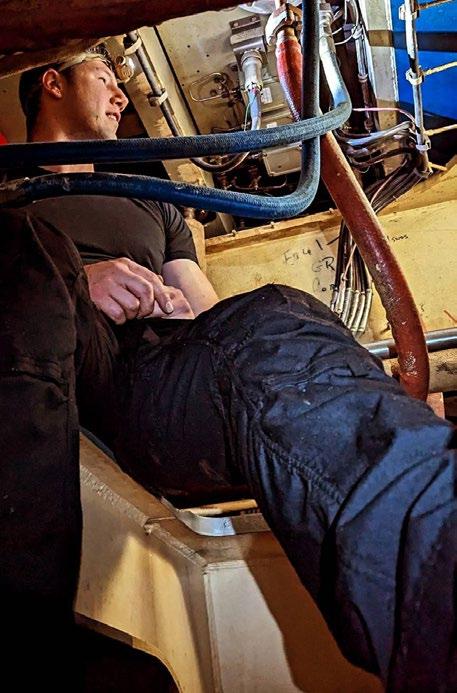
Kate Bandura Editor
As HMCS Vancouver slices through the Pacific waves en route to San Diego, Sailor 1st Class (S1) Danny Dubeau stands vigilant in the ship’s engine room. His mission: to ensure the warship’s powerful gas turbine engines continue to perform at peak efficiency.
“We depend on our Marine Technicians to keep the ship functioning, moving, and safe,” says S1 Dubeau.
The twin gas turbine engines are the core of HMCS Vancouver, capable of pushing the vessel to speeds over 30 knots. Alongside these behemoths sits a more fuel-efficient propulsion diesel engine, used for long-distance cruising and optimal fuel consumption.
S1 Dubeau’s work revolves around the ship’s Integrated Platform Management System (IPMS), a complex system monitoring every critical sensor onboard. The IPMS continuously monitors parameters such as temperature, pressure, and fluid levels across all ship systems, alerting technicians to any deviations from optimal ranges.
“Any time we have an indication a sensor is not functioning properly, we need to investigate and diagnose any potential problems,” he explains. “There is a range of temperatures optimal for operation. It’s crucial that we ensure the engines are running within those temperatures.”
Engine rooms are notoriously cramped and sweltering, with temperatures in the gas turbine enclosure reaching a scorching 500 degrees Celsius.
“You’re going to sweat when you’re a Marine Technician,” S1 Dubeau says.
Safety protocols are rigorous. The Machinery Control Room is always notified when engine room spaces are occupied. The crew has lockout, tag-out procedures so that engines cannot be started while someone is working on them. For work in confined spaces, a secondary person acts as a sentry, ready to call for rescue if needed. During critical periods, technicians may work up to 16-hour days to keep the ship operational. Maintenance levels on the ship are divided into three tiers based on complexity. Marine Technicians such as S1 Dubeau handle the first level, while higher levels are managed by specialists from General Electric, the manufacturer of the gas turbines.
“There are certain certifications attained by higher ranks such as Master Sailors and Petty Officers,” S1 Dubeau says, “but at the S1 level, most of our training is through on-the-job experience.”
When HMCS Vancouver is away visiting another port, Fleet Maintenance Facility personnel may fly out to help with maintenance and repairs to reduce maintenance at sea. Still, S1 Dubeau says maintenance is the best prevention.
“Never take shortcuts with your work – people are relying on you,” S1 Dubeau says.
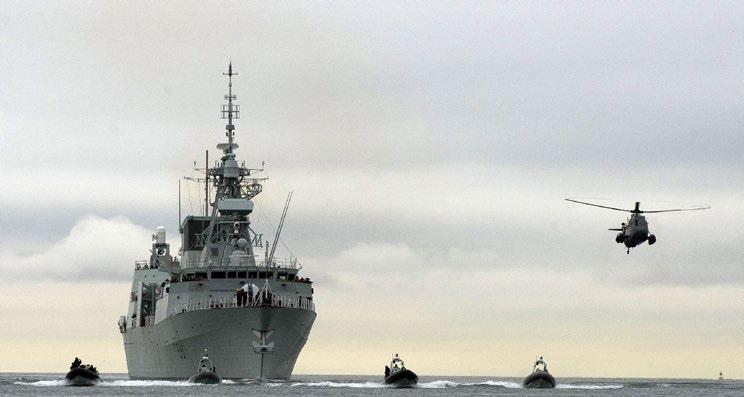
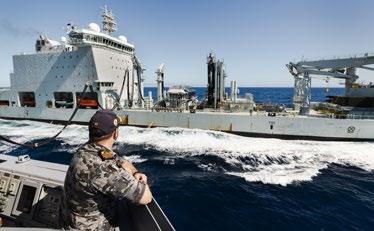
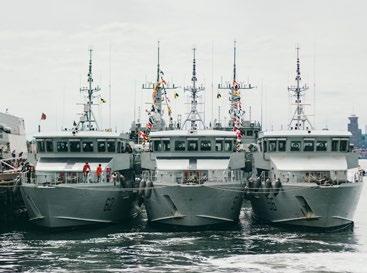
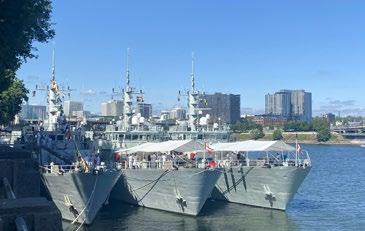
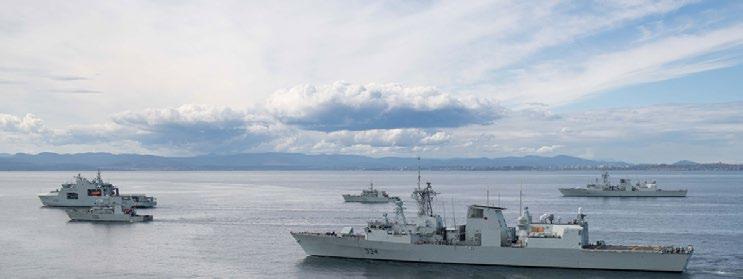
August 4 is FriendSHIP Day! Our members know life at sea isn’t always easy. Sailors make incredible sacrifices in service of this country. But one thing that keeps us going are the friendships — the camaraderie and the sense of community.
To all our shipmates around the world, happy FriendSHIP Day!
1. Defence Australia: His Majesty’s Australian Ship Sydney conducted a replenishment at sea with Canadian Tanker MV Asterix off the coast of Oahu, Hawaii, during a regional presence deployment in July.
2. Embassy of Canada U.S.: Every summer, Consulate General of Canada in Seattle and the Royal Canadian Navy participate in Fleet Week activities alongside the U.S. Navy and U.S. Coast Guard in Portland and Seattle to help celebrate the unique Canada-U.S. defence partnership and the traditional Canadian drink – Moose Milk.
3. Fleet Week: PCT Moose (62), Caribou (57) and Raven (56) participate in Fleet Week Vancouver 2024 at the Wallace Mews Shipyards in North Vancouver, May 3-5.
4. TGEX24: The Pacific Fleet carried out an impressive Task Group Exercise (TGEX24) off the coast of Vancouver Island in May. HMCS Vancouver led several units alongside the U.S. Navy’s United States Ship Gridley, enhancing the fleet’s combat skills.

Rory Theriualt Strategic Communication Officer FMF CB
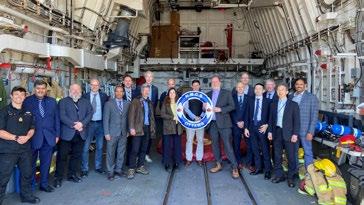
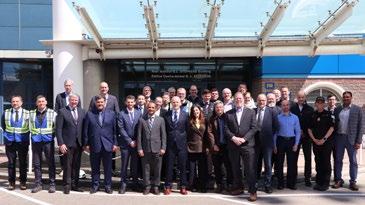
Another month brought another extraordinary opportunity for Fleet Maintenance Facility Cape Breton (FMFCB) to highlight our technical capabilities to a high-profile audience. Recently, we had the honour of hosting a North Atlantic Treaty Organization (NATO) delegation, a visit that underscored our strategic importance and the skilled workforce that keeps our Fleet operational and ready to meet our commitments.
The delegation, comprising members of the NATO Ship Design Capability Group, included naval architects, marine and electrical engineers, and scientists. This group of 30 professionals represented a blend of military and civilian backgrounds from 15 countries: Australia, Bahrain, Belgium, Canada, Denmark, Germany, Japan, Netherlands, Norway, Poland, Spain, Sweden, Turkey, the United Kingdom, and the United States. The visit was divided into two groups, ensuring an in-depth tour of our facility.
The significance of hosting this delegation cannot be overstated. It was an invaluable opportunity for FMFCB to showcase the technical ability that supports the Fleet and to further advance NATO commitments. Ryan Solomon, Group Manager 5, led the tours, guiding our visitors through various locations and workstations across our facility. The tour route was planned to demonstrate the depth of our capabilities.
In addition to touring FMFCB, the NATO delegation was welcomed onboard HMCS Ottawa. This segment of the tour provided a look at an operational vessel and the critical work involved in its maintenance. The delegation was welcomed on board with a visit to the ship’s bridge, before continuing to the engine room. Conversations in the engine room provided a platform to discuss the critical maintenance tasks that are integral to the ship’s performance, further emphasizing the skill and dedication of our workforce.
A key point of interest from this visit was the recognition of FMFCB as a ‘Strategic’ unit within the Canadian Armed Forces (CAF). Unlike many other navies that outsource their maintenance and repair work through In-Service Support Contract, our work is primarily carried out by our dedicated public servants. This distinction not only emphasizes our capability but also our critical role in supporting any element of the CAF, should the need arise. Another key aspect of the visit was the opportunity to place a spotlight on our highly-skilled workforce. The technical expertise and dedication of our team ensure that our aging Fleet remains operational and ready to meet any challenge.
The NATO delegation’s visit showcased FMFCB’s strategic importance, technical capabilities, and the exceptional skill of our workforce. Additionally, it served as a reminder of the critical role FMFCB plays in supporting the Fleet and advancing national and international defense objectives.


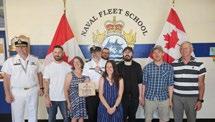
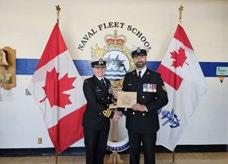
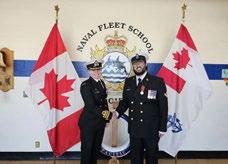
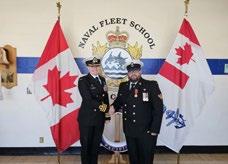




The following members were recognized for the completion of the course Qualification Level 6 Alpha on June 28
Presented by Lieutenant-Commander Greg Oickle
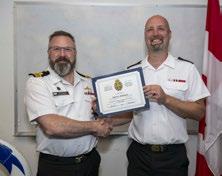
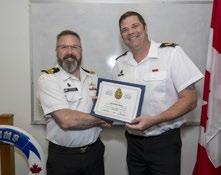
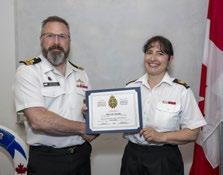
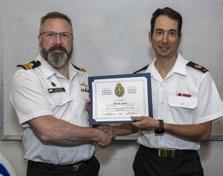
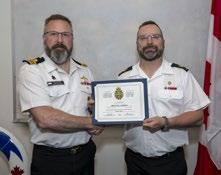
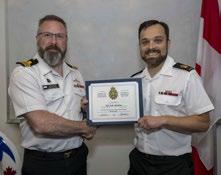
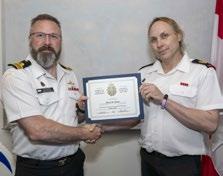
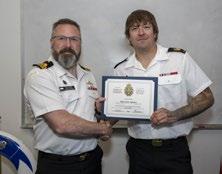
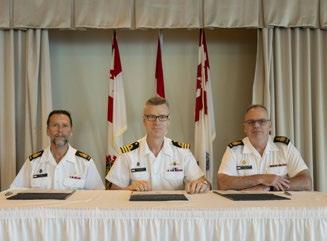
Personnel Coordination Center (Pacific) held at the Chief and Petty Officers’ Mess, CFB Esquimalt on July 18.
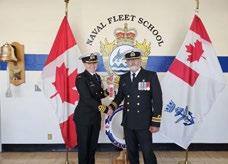
(L-R): Chief Petty Officer 1st Class Rene St-Pierre, Incoming Chief, Personnel Coordination Center (Pacific); Commander Christopher Holland, Reviewing Officer; and Chief Petty Officer 1st Class Paul Fenton, Outgoing Chief, Personnel Coordination Center (Pacific).
