Great dinner can confirm !
Sailor 2nd Class Trey Pennington, military cook in training, proudly displays the main course for his Confirmation Dinner at the Venture Galley. Read the story on page 3!
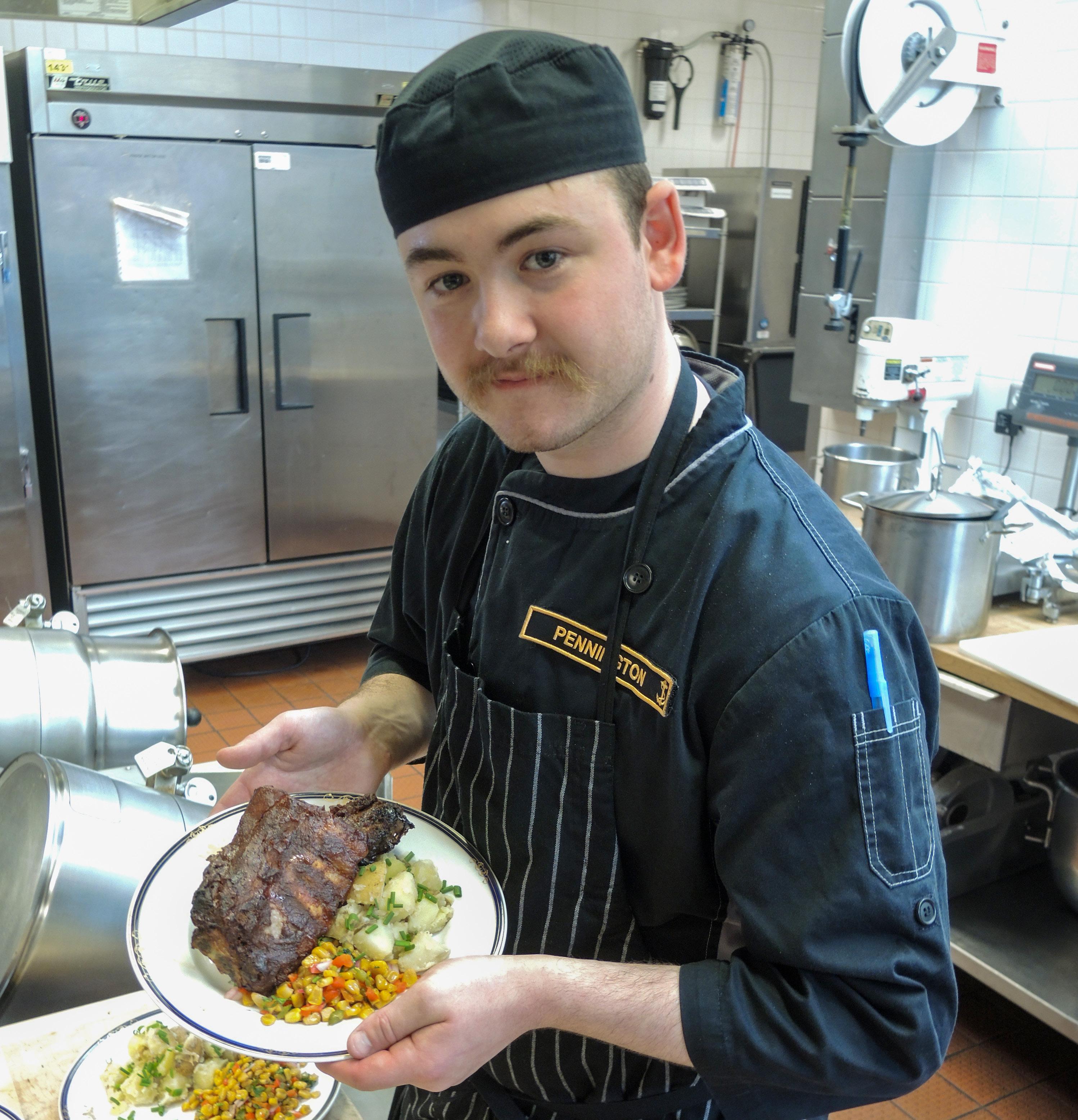


Photo: Peter Mallett/Lookout Newspaper



HMCS Yellowknife finds
Peter Mallett Staff Writer
With taste buds tantalized and the rave reviews almost unanimous, a Cook-in-training
After completing a key component of his on-the-job training, Sailor 2nd Class (S2) Trey Pennington of HMCS Yellowknife is happy about the prospects of soon becoming a certified, fullfledged Cook.
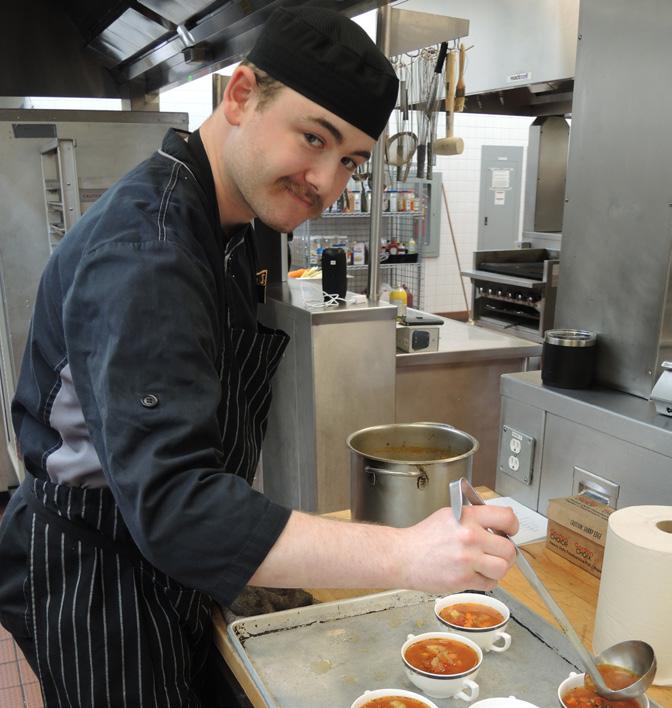
S2 Pennington was cool as a cucumber while working over a hot grill, serving up a fourcourse meal for eight hungry guests at the Venture Galley on the afternoon of June 27. The Confirmation Dinner was part of his Rank Qualification (RQ) testing with the Canadian Forces Logistics Training Centre (CFLTC).
“I wasn’t nervous at all while preparing this meal; the testing went fairly smoothly and it was great to get so many compliments afterwards,” said S2 Pennington.
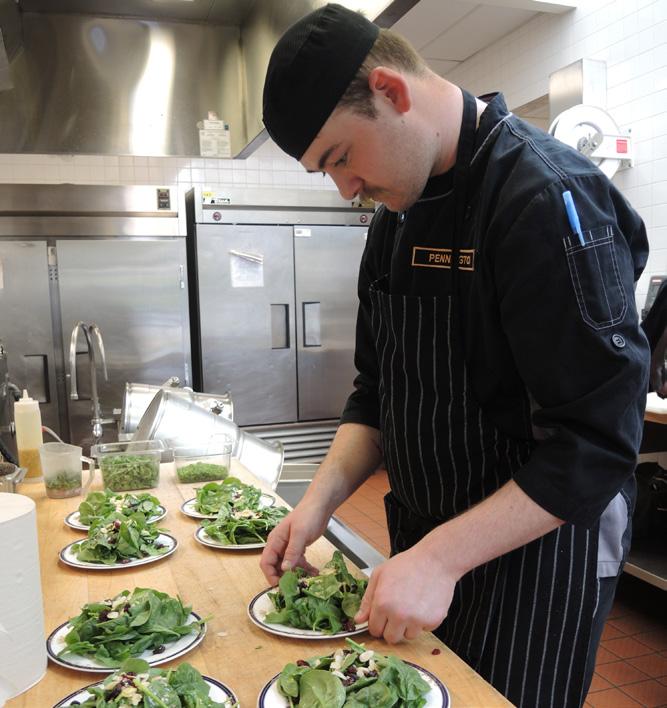
The dinner menu included corn bread, vegetable soup, spinach and cranberry, and almond salad in balsamic and shallot dressing, slow ovenbaked BBQ ribs, shaken garlic potatoes topped with chives, grilled corn medley, and chocolate chip banana bread.
“The trickiest part of preparing this meal was making sure the ribs had a good amount of flavour and weren’t too dry, so it was important to keep layering on the BBQ sauce and making sure there was some liquid in the bottom of the pan,” he said.
The invited dinner guests included three of his Yellowknife shipmates, three members of the Lookout Newspaper and his two assessors from Base Foods.
“It was an incredible meal from start to finish, with great portion sizes and the flavour of everything just was awesome,” said Petty Officer 1st Class Adrian Jack, Coxswain of
HMCS Yellowknife. “Now I can feel at ease knowing the ship’s company and I will be welltaken care of when we depart on Operation Caribbe later this year.”
“What really stood out for me was the sweet and savory salad dressing he prepared and the spices and flavors in the soup and the grilled corn medley,” said Sailor 1st Class Quinlan Smith, a Naval Combat Information Operator aboard Yellowknife
S2 Pennington, 21, is from Parksville, B.C., and a former member of the Royal Canadian Sea Cadets. He previously worked in the fast-food industry before joining the Navy in 2021 after discussing possible career paths in a heart-toheart discussion with his parents. Although he is just taking his first steps as a military cook, the vital importance of serving nutritious and goodtasting food in not lost on S2 Pennington.
“I believe a well-fed fleet is crucial to operational success and Cooks are responsible for serving delicious and uplifting meals on ships,” he said. “The cold reality is, if we aren’t outputting great food in the galley, morale on the ship takes a serious blow.”
Chief Petty Officer 2nd Class (CPO2) Troy McGregor currently oversees S2 Pennington and the 98 other Cooks posted to CFB Esquimalt and the Pacific Fleet. As the West Coast Occupational manager and advisor, CPO2 McGregor says Confirmation Dinners are an important culmination of a Cook’s training.
“The Cook prepares a menu with recipes, a shopping list based on it and prepares the entire meal on their own to be served to the assessors and dinner guests,” said CPO2 McGregor. “It’s a combination of hands-on experience, theoretical knowledge and culinary skills they’ve learned up to that point in their career.”
He says Confirmation Dinner testing criteria include presentation, taste, temperature, portion size with grading overseen in the galley’s kitchen by a Base Foods assessor and dinner guests.
CPO2 McGregor was happy to report that S2 Pennington passed his Confirmation Dinner test and in 12 months will be eligible to attend a CFLTC training course at CFB Borden.



On-the-Job Training for cooks takes between 12 and 24 months to complete. Cooks are required to serve and prepare meals that range from cafeteria-style menus to formal multi-course meals for military and civilian dignitaries. They assist in the handling of food and other kitchen supplies, providing religious and spiritual dietary accommodations, management of food safety including operating, cleaning and maintaining food services equipment and facilities.
The basic skills and knowledge of a Cook include cooking terminology, weights and measurements, conversions and equivalencies, introductory baking and meat preparation, small and large quantity cooking, food service standards and food cost controls, fire and safety precautions, and equipment and facility maintenance.
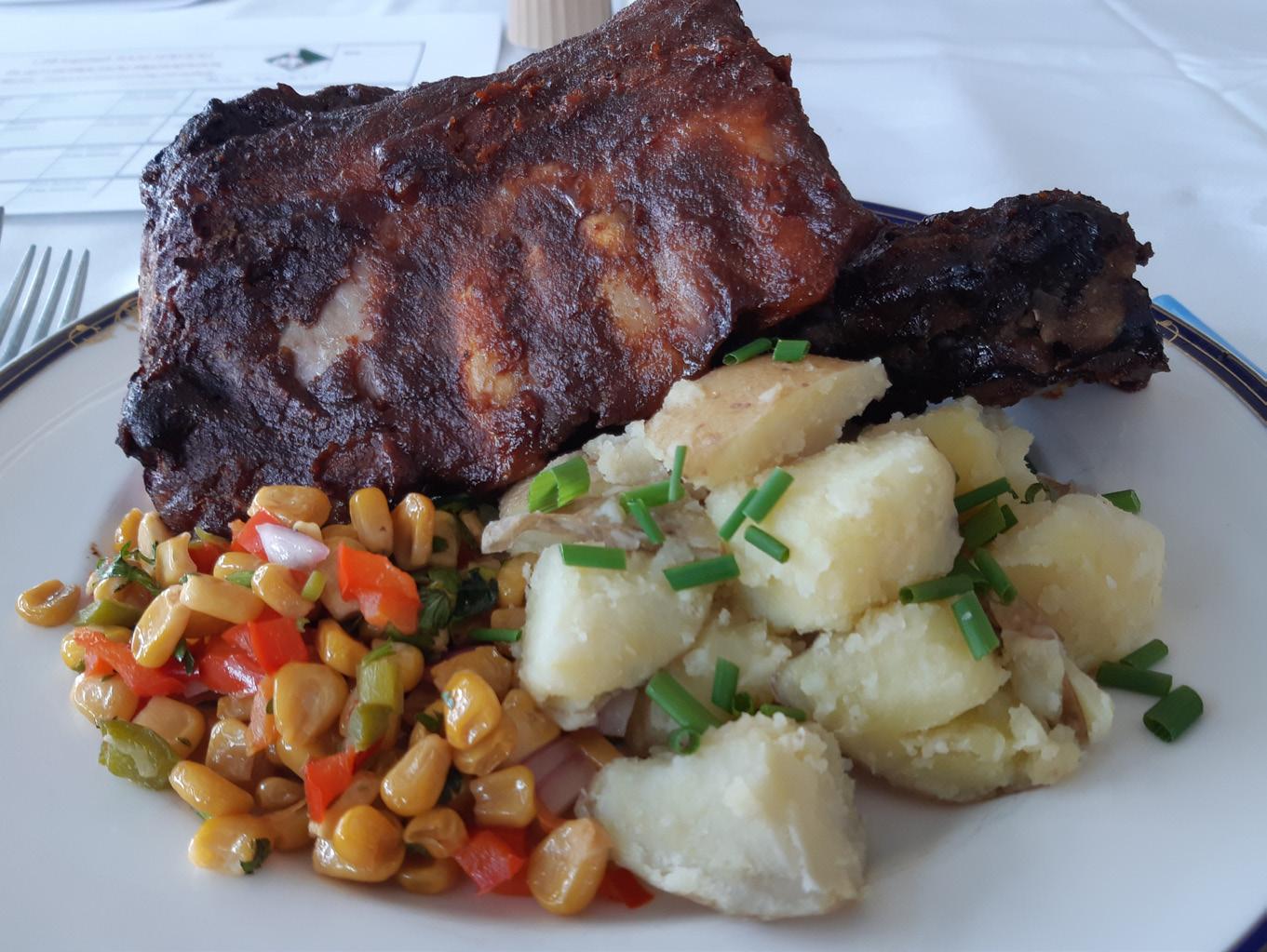

The main course of a Confirmation Dinner served by Sailor 2nd Class Trey Pennington at Venture Galley, which included slow oven-baked BBQ ribs, shaken garlic potatoes topped with chives, and a grilled corn medley. Photos: Peter Mallett/Lookout Newspaper
Sailor 2nd Class Trey Pennington, military cook-in-training, prepares dishes for his Confirmation Dinner.
Managing Editor
Jazmin Holdway jazmin.holdway@forces.gc.ca
Editor Kate Bandura
Writ E r
250-363-3130 kateryna.bandura@forces.gc.ca
Peter Mallett mallett.peter@cfmws.com
P rod UC tion
Teresa Laird production @lookoutnewspaper.com
Leslie Eaton
250-363-3127 leslie.eaton@lookoutnewspaper.com
a d M inistration and aCC o U nts
Andrea Modesto
adv E rtising
Joshua Buck
250-363-3127
Andrea.Modesto@forces.gc.ca
778-977-5433 military.base.advertising@gmail.com
E ditoria L advisors
Capt Christopher Dubé
Ashley Evans
250-363-4006
250-363-7060
Published each Monday, under the authority of Capt(N) K. Whiteside, Base Commander.
The editor reserves the right to edit, abridge or reject copy or advertising to adhere to policy as outlined in PSP Policy Manual. Views and opinions expressed are not necessarily those of the Department of National Defence.
Circulation: 4,000 plus online engagement per week
Follow us on Facebook and Instagram to join our growing social media community.
A Division of Personnel Support Programs
Web: www.lookoutnewspaper.com
Fax: 250-363-3015
Canadian Mail Product Sales Agreement 40063331
PTSD: Trauma Dreams for Self-Enquiry

Thomas Goenczi Lookout contributor
Being in a dream is one of the most ineffable experiences we have as human beings. It sometimes feels more real than waking life. In a dream, the emotions, images, and sensations find their power through the tension held between fantasy and reality. Fantasy because anything is possible in a dream, and reality because there is often a personal element that can tie us back to our waking life.
There is a broad spectrum of opinion on what dreams do for our psychology, ranging from having zero purpose to being a guide in our life. There are, however, specific types of dreams that can create psychological well-being.
One of these is trauma-based dreams. These dreams and/or nightmares are anchored in our unendurable trauma. The difficulty with dreams is that we very rarely have any lucidity in them, meaning the access to the will is denied. They more or less happen at us. Therefore, dreams require reflection in the psychic aftermath.
Nevertheless, dreams that are tethered to our trauma materialize often overtly and explicitly. There are images that we can directly associate with a traumatic incident.
But how do we identify if we’re dealing with a dream steeped in trauma?
A good place to start is the environment
and setting of the dream. Sometimes it’s obvious: the atmosphere is palpably similar to where the event happened, if not the actual place itself. However, it may also be completely different, and we may have to draw upon reflective associations that spotlight the trauma. This is where it becomes difficult to discern whether the dream is processing specific trauma or some other conflict.
Another good tactic that helps determine if we are dealing with a trauma dream is being aware of the characters that appear. Similar to the setting, the people who were involved in the incident are in the dream itself. However, this becomes a little more complex when we come across a character that imbues the essence of the trauma. For example, there could be some malevolent force we’re up against. These can appear as a formless mysterious evilness, dragon, monster, witch, etc.
It is crucial to remember that dreams often work on the personal and most importantly always on a symbolic level. Our unconscious mind does not speak our language but a collective one. Dreams are not literal representations of our waking life. For instance, there is another witness to the trauma and they more or less are a bystander in the event. This character does nothing and just watches what happened go down. It means absolutely nothing when we take this symbol literally.
However, if we were to look at this on a more symbolic level, we could draw upon a wide range of associations that bring us closer to processing the trauma-based dream. We can begin to ask ourselves questions like where in my life am I being an innocent bystander? What am I helpless to? How does it feel to be in this position? This undoubtedly takes a lot of time and effort, but it doesn’t have to be done all at once. Sometimes instead of ruminating on things that are out of our control, we can stop it by meditating on one of the characters in our dream. This ultimately propels the mind into self-inquiry rather than self-loathing. Becoming curious about ourselves leads us to know ourselves better, making us more comfortable with the who, what, where, why, and how we are. Insights begin to build, and it feels like the snapping into place of another puzzle piece. Trauma-based dreams are extremely difficult to confront, it takes time and a lot of effort, but don’t let that dissuade you from overcoming it.
Thomas Goenczi is an RCN Veteran and MA Clinical Counsellor with Private Practice: Well Then Therapy.
The content is not intended to substitute professional advice, diagnosis, or treatment. Always seek the advice of your mental health professional or other qualified health provider with any questions regarding your condition




The Lookou T Team
EOD operators lead successful ordnance disposal operation
A/SLt Alexandra Cortes Munoz MARPAC Public Affairs
Another successful operation for the Fleet Diving Unit (Pacific) (FDU(P)) was carried out as two Explosive Ordnance Disposal (EOD) teams concluded a complex multiple-day callout alongside the Royal Canadian Mounted Police (RCMP) in Mission, B.C., on June 19.
Responding to a report of unexploded ordnance discovered at a residential site, the highly trained teams swiftly mobilized to ensure the safety and security of the community.
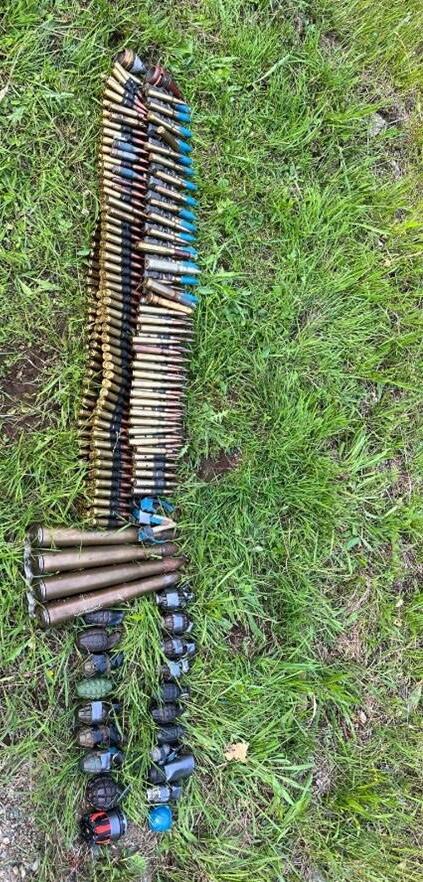
Initially prompted by a call regarding a single grenade, the EOD teams arrived at the scene prepared for routine disposal procedures. However, as further intelligence revealed the magnitude of the ordnance cache totaling 970 individual pieces, a rapid escalation in response was required and additional support was dispatched.
“This was by far the largest cache of munitions and ordnance I have responded to in recent memory,” said Master Sailor (MS) Charlie Chamberlain, Lead Operator of the call.
The collaboration between the EOD teams and the RCMP was essential
throughout the operation. Working in close coordination, they meticulously identified, secured, and safely disposed of each ordnance item, strictly adhering to established safety protocols to mitigate risks to both personnel and the surrounding community.
“Our EOD teams respond to about a hundred of these types of incidents each year across British Columbia. They do great work disposing of dangerous explosive ordnance found by the public,” said EOD Officer Lieutenant (Navy) Jesse Deason.
Operations such as these demonstrate the capability and professionalism of FDU(P) as well as the critical role of collaboration between military, federal and civilian agencies in emergency response scenarios.
MS Chamberlain advises the public not to keep munitions or explosives, as they pose a significant risk to personnel and public safety.
“If you discover any explosives, please do not handle or move them. Contact us immediately,” he says.
For more updates and insights into FDU(P) operations, follow Fleet Diving Unit (Pacific) on their social media channels on facebook @FDUP.UPF and instagram @cldvr_pldmr.
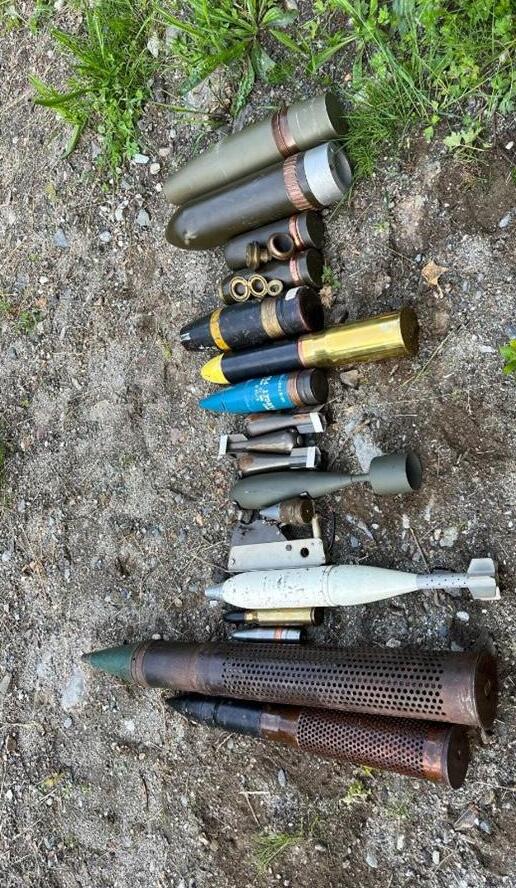


Some of the items the Explosive Ordnnce teams discovered while investigating a cache of munitions at a residential site in Mission, B.C. Photos supplied.
with the Formation Safety and Environment Indigenous Relations Officer.
Peter
Mallett
Staff Writer
Sandra Witt is the Maritime Forces Pacific (MARPAC) Formation Safety and Environment (FSE) Indigenous Relations Officer.
Her job is an entirely new position created in January within MARPAC’s FSE unit. The Indigenous Relations Officer acts as a liaison between Indigenous communities potentially affected by military operations on the water and senior leadership at the Base. As a member of Canada’s Public Service, her job involves understanding the impacts of Royal Canadian Navy (RCN) and Department of National Defence (DND) activities to Indigenous communities on the water including vessels, weaponry, sonar, and impacts on marine life.
There are several DND properties located in close proximity or adjacent to First Nations communities, many of which have traditional territories that extend into the marine waters where the navy operates and trains. As an official representative for FSE, Witt also advises members of the RCN on the implementation of policy involving Indigenous communities. With this in mind, the Lookout asked Witt five questions about her new job.
What is the key purpose of your new position with FSE?
Developing better relationships, standardized procedures for engagement and communication with First Nations communities.
Of great importance is to understand how the RCN affects these relationships through operations on the water including vessel operations and where we are sailing, conducting exercises or doing on-the-water training. This could also involve aircraft flights, explosives or weaponry testing and training, and engine activity. There is also a lot of focus on situations where marine mammals are involved, in particular, Orcas.
Coordinating communication and decision-making with all branches and departments of the RCN and DND is crucial so that we are all on the same page. Another key to the job is to identify potential job opportunities and programs of the Department of National Defence that could benefit people living in these communities.
What qualifications and experience do you bring to the job?
I have enjoyed a 30-year career working with Indigenous communities across a number of careers. My degree from Simon Fraser University is in the field of archeology. As an archaeologist I began working with Indigenous communities in the field and spending time in their communities learning about their daily life and challenges, and exploring the real day-to-day aspects of their culture.
As an independent consulting archaeologist, I worked on behalf of communities, developing traditional-use studies to better document their relationship with the land and support their land claims work. I subsequently worked at BC Hydro in Indigenous Relations building corporate policy and consulting with communities on the impacts of BC Hydro programs on communities. I subsequently worked in environmental consulting for a number of larger consulting firms. Key to working in this field was conducting environ-
mental assessments and consulting with several private firms involved with construction projects in Indigenous spaces and traditional territories.
One of the big parts of my previous jobs was to explain to private sector companies why they needed to do the consulting and environmental assessment work with Indigenous communities, and I found it very exciting and rewarding.
What is the biggest challenge you face in your role?
The biggest challenge of my job is balancing the needs of Indigenous communities and the operational needs of the military, and finding solutions that are acceptable and beneficial to both.
Many First Nations communities in this region are very oriented towards living life on coastal waters. These communities have a very close relationship with the sea, a strong interest in preserving their relationship with Orcas and other marine mammals and preserving their fishing activities on the water. All of this is crucial to the survival of their culture.
What is the most important thing you learned about building relations with Indigenous communities?
Engaging early is one of the most valuable lessons I learned early in my career. The earlier you engage Indigenous communities and talk to them about project planning or upcoming operations, the more likely to have a successful outcome. I learned this while working with Indigenous communities on the Fraser River, where vessel activity would affect their traditional fishing rights. As you develop the understanding of these intricate issues, you can better come up with mitigations and become much more effective at working out equitable solutions.
What is the most interesting thing you have learned about the military-Indigenous relations since you began your job?
One of the key things that has impressed me, compared to working in the private sector, is how senior leadership at CFB Esquimalt and Maritime Forces Pacific have a much better understanding of the importance of Indigenous relations. In the past, I have had jobs where I had to fight hard to get people to realize its importance, so seeing such great enthusiasm, support and encouragement for my efforts has been a positive development in my work.
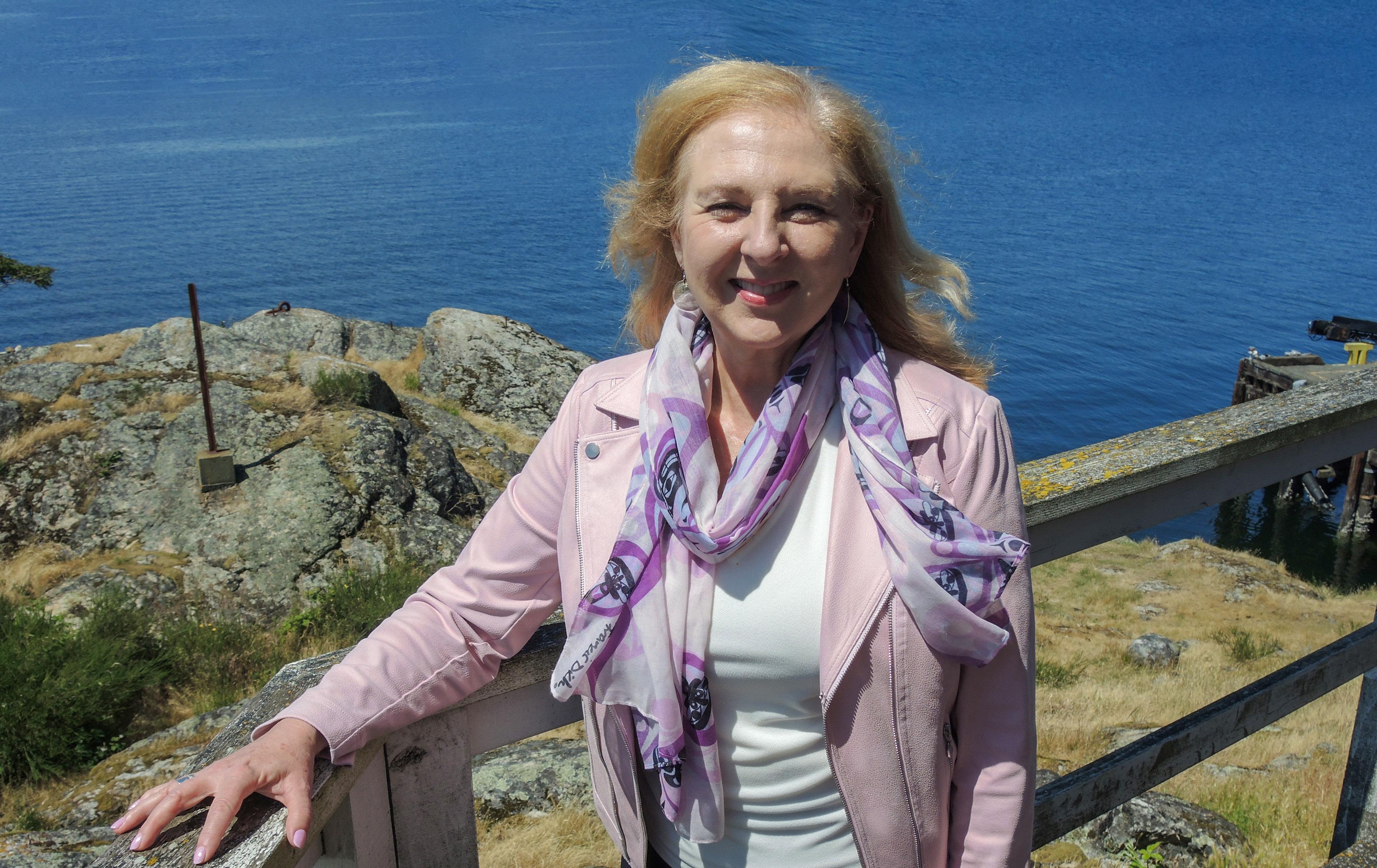
Sandra Witt, Formation Safety and Environment Indigenous Relations Officer.
Historic green jacket connects Navy’s past and present
Peter Mallett Staff Writer
More than 30 years may have passed since his days as a young sailor but Lieutenant (Navy) Richard Rowe and his faded Green Navy Flight Jacket are back at square one.
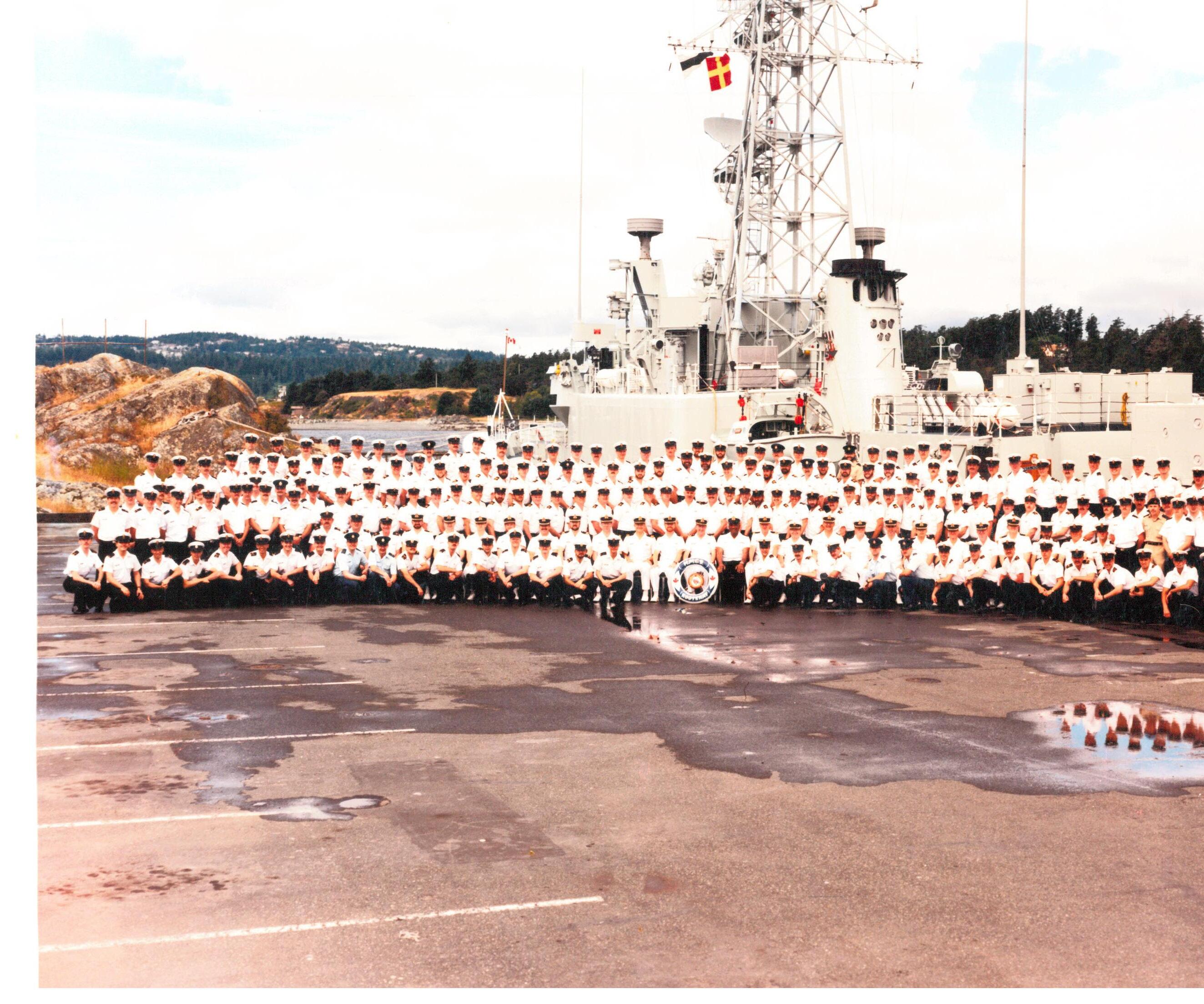
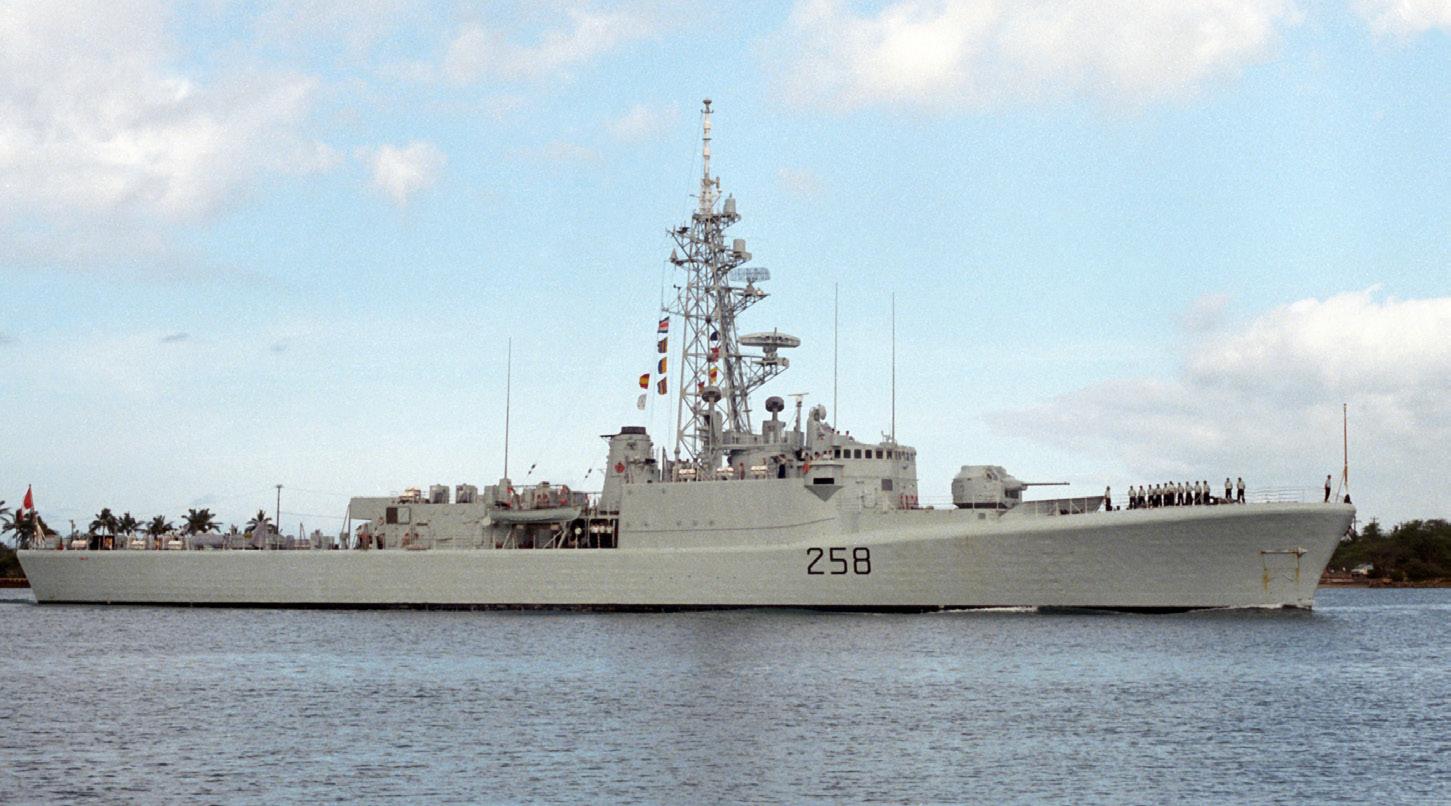
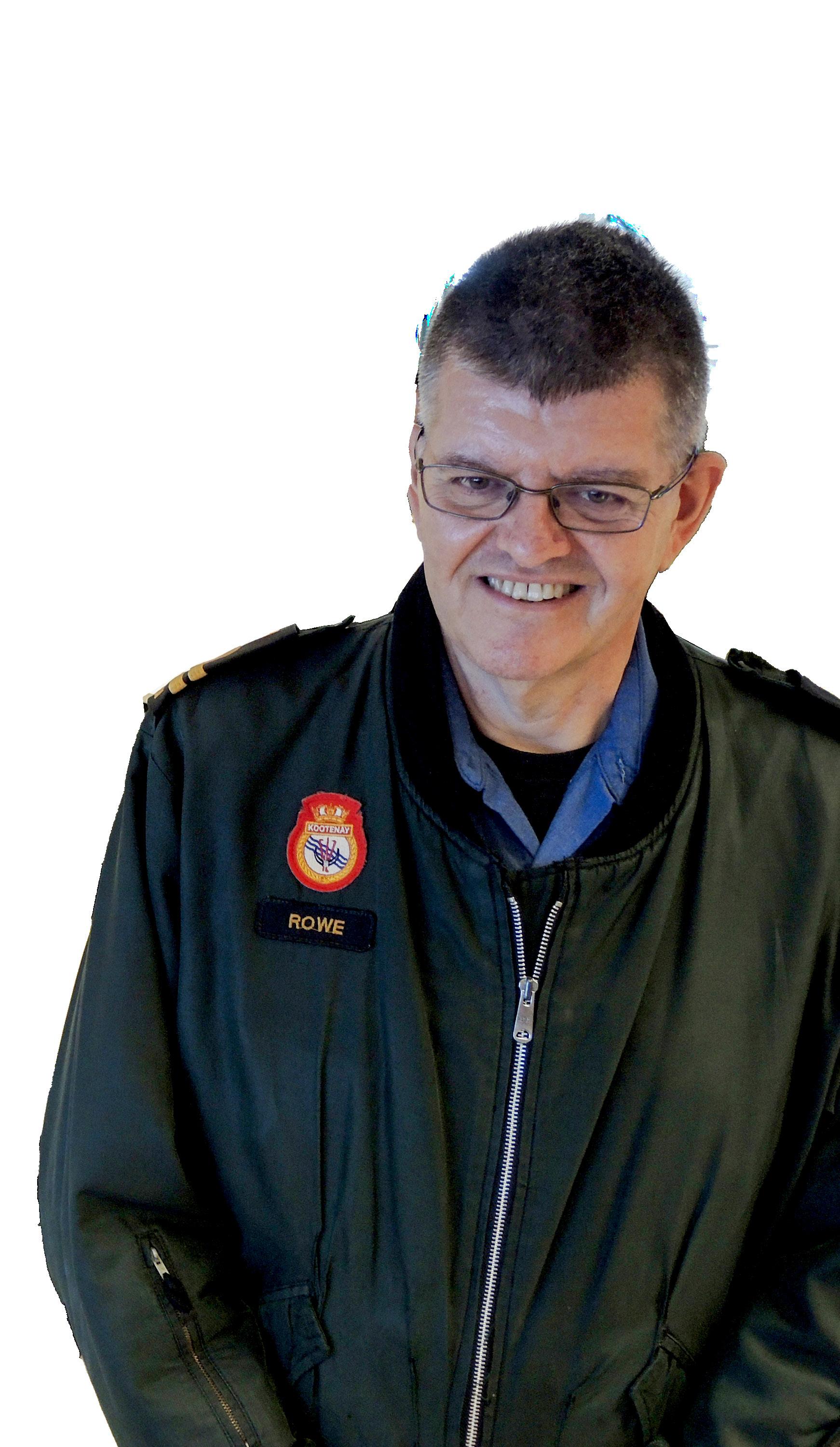
Lt(N) Rowe proudly wore his jacket in the early 1990s as a Bridge Watchkeeper aboard Restigoucheclass destroyer HMCS Kootenay. Today, the jacket is a cherished piece of Royal Canadian Navy (RCN) seldom-worn memorabilia for the 57-year-old Naval Warfare Officer-turned-instructor.
On July 8, Lt(N) Rowe, a Division Instructor at HMCS Venture, wore the jacket on the first day of the course he leads, titled Kootenay NWO III.
“This really brings things full circle for me, being able to wear this jacket in front of today’s students and reflect on my time aboard the vessel when I was also just starting out in the Navy,” said Lt(N) Rowe.
Lt(N) Rowe believes his job teaching the NWO III Kootenay program marks the first time that a course instructor taught a class named for a ship they sailed.
The NWO III coursing is the first chance students get to begin developing as officers and learn core skills of a Watchkeeping Officer. The 16 weeks of study include fundamentals of coastal navigation, rules of the road, tides, astronomic and meteorology, radar theory, navigation, marine engineering, collision regulations, naval history and Officer of the Watch maneuvers.
Part of the course also consists of five weeks in simulators and two weeks at sea in Orca-class vessels. Former members of Kootenay, Captain (ret’d) Murray ‘Sandy’ Bellows, who served as Lt(N) Rowe’s Executive Officer aboard Kootenay, and Commander (ret’d) Dave Kyle, his Commanding Officer, will be the students’ mentors during their studies on Venture’s bridge simulators.
Lt(N) Rowe admits he rarely brings the jacket out
of the back of his closet except for special occasions.
While the jacket’s green colours may seem strange to some, green was the official colour of the Navy following the reunification of the Canadian Armed Forces in 1968.
“These jackets were actually air force jackets but they got unofficially adopted as Bridge Watchkeeper jackets in post-unification years,” he said. “These jackets were not issued to RCN members and were hard to get unless you were a part of aircrew.”
Lt(N) Rowe purchased his from a reservist and then started wearing it on the bridge. The jacket’s many pockets and zippers on its sleeves and sides were perfect for keeping pens, notes, and personal belongings during long shifts.
He received special permission to wear the jacket in front of the class for the opening day. He wasn’t sure how his class would react to the old garment, pointing to the fact many of his students weren’t even born in the days when he sailed aboard Kootenay.
“It felt really cool wearing it and also discussing my naval career and the history of the ship,” said Lt(N) Rowe. “Giving the students something they can see and touch from the ship rather than an abstract file photo better captured their attention and most of the students seemed interested and thought it was impressive.”
Lt(N) Rowe has served 24 years of non-continuous service in the RCN. He served in Kootenay from 1991 to 1993 as a Maritime Surface and Subsurface Officer (now known as NWO) Under Training where he worked as Bridge Watchkeeper and Deck Divisional Officer.
He left the RCN in the late 1990s as part of the Force Reduction Plan to pursue a 22-year career with Corrections Canada. He then returned to the navy as a part-time reservist in 2004, and then again full-time regular force in 2019 as a deck officer with HMCS Margaret Brooke

Background, top: Lt(N) Richard Rowe of HMCS Venture is circled in red, in this HMCS Kootenay Change of Command Ceremony photo from June 1992. Credit: RCN File Photo
HMCS Venture Instructor Lt(N) Richard Rowe proudly shows off his Bridge Watchkeepers Jacket during his NWO III Kootenay class at Workpoint, July 8.
Photo: Peter Mallett/Lookout Newspaper
The Canadian escort destroyer HMCS Kootenay (DDE 258) underway at Pearl Harbor, Hawaii (USA), during exercise RIMPAC ‘86. Wikimedia Commons

















Summer is here and so is

Summer training is about challenging yourself and making lifelong memories!
Staff and instructors have been ramping up their preparations over the last few weeks to welcome this year’s Raven recruits.
Raven is one of a series of Indigenous summer programs offered across the country by the Canadian Armed Forces (CAF) and is the only program with a naval focus. It provides Indigenous peoples an opportunity to experience military life and explore career possibilities within the CAF.
Raven 2024 officially started on July 9 and wraps up on Aug. 19 with a graduation parade at Work Point. HMCS Venture is facilitating Raven on behalf of the Royal Canadian Navy (RCN). One of the highlights of the summer will be a day sail on HMCS Regina in August.
Captain Joel Unruh is the officer in charge of Raven and is supported by Sergeant (Sgt) Scott Hennessey along with instructors and staff from across the CAF
who come from a diverse set of backgrounds. Sgt Hennessey is an Army reservist whose family comes from the Songhees Nation and considers Victoria home.
“I want to ensure that people know it’s okay to be proud of who they are, and that they will be safe and accepted,” says Sgt Hennessey. “I wish I had known about the Raven program when I enrolled in the CAF. It would have been a great way to kick start my personal and professional journey.”
During the first few days of Raven, recruits participate in a cultural experience that takes place away from the Base and is lead by Elders of various First Nations, Inuit, and Métis backgrounds. Recruits then return to begin a full schedule of military training over the next six weeks.
A Basic Military Qualification is awarded upon successful completion of Raven and graduates are eligible for parttime or full-time employment with the Canadian Armed Forces, though there is no obligation to continue.

to learn,” advises Sailor 1st Class (S1) David Inglangasuk. He is Raven’s weapons instructor who grew up in Inuvik, N.W.T., and belongs to the Inuvialuit people of the northwest Arctic.
S1 Inglangasuk says Raven built his confidence and gave him more drive and discipline. Upon graduating from Raven in 2017, he is now a Boatswain in the RCN.
“Basic training is not a solo challenge,” says S1 Corwin Nemeth, who is spending the summer as part of the Raven general duties team and is a full-time Marine Technician with HMCS Ottawa
S1 Nemeth was born and raised in British Columbia and has mixed Cree and Métis heritage with the Métis members of his family coming from the Red River Settlement in Manitoba.


“Stay consistent, open-minded and ready






“Lean on your wingers, be patient when you can with people who are learning and take the time to help out someone who’s struggling because at some point you will be in their shoes,” says S1 Nemeth. “And remember to laugh, never give up, and have some fun.”

For rent





















SUITE IN LANGFORD near View Royal. Bright, modern, clean, private, and quiet 1 bedroom suite with patio, appliances. Incl. dishwasher, microwave, washer & dryer. Quiet neighbourhood. Beautiful view. Easy access to bike paths. Parking available. 1 yr lease, then month to month. No smoking/vaping, pets, or sub-letting. Renter’s insurance with proof of coverage, references and proof of employment mandatory. $2,200/month furnished or $2,000/ month unfurnished. Utilities and wi-fi included. Contact Max by text 613-449-2836 06/10
3 BEDS 1 BATh - $2850/mONTh - 1 year lease - Saxe Point border of Esquimalt. MUST SEE! Move In Ready! Technically a 3-bedroom but one room is quite small, could be used as an office. Family friendly walk-up offering 2 levels, newly updated. Bedrooms and bathroom located upstairs, kitchen, dining/living room and storage on main floor. Sunny & bright open main living with full private quiet deck. Shared laundry, secure bike and kayak storage, 1 parking space. NON SMOKING, NO DOGS. For details call 778-888-9927 9am-6pm. 7/8 For Sale



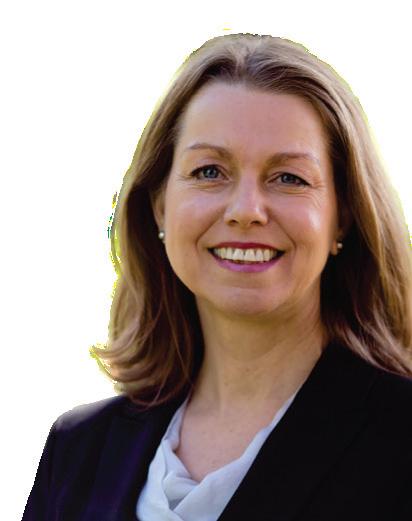
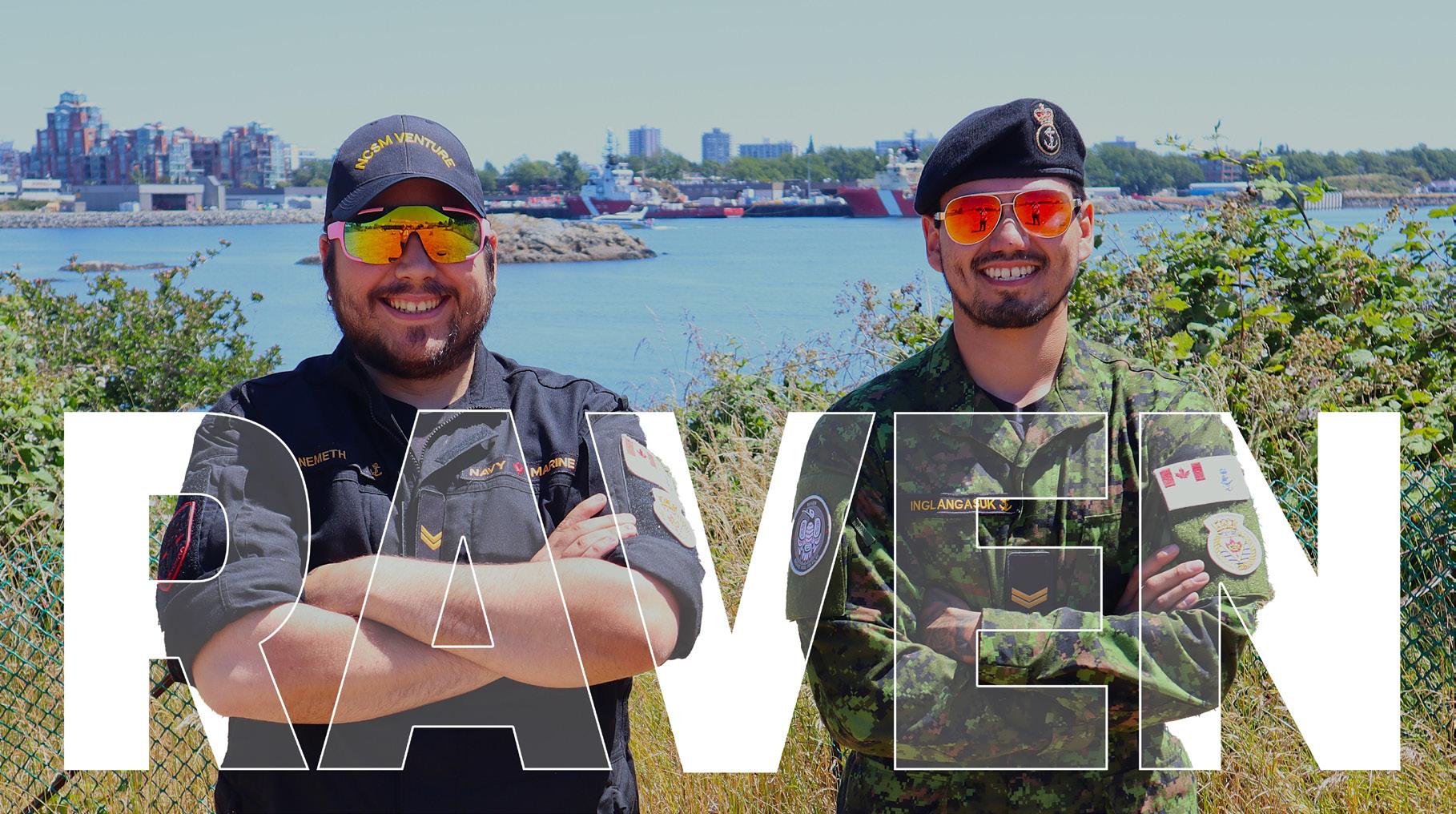
Sailor First Class (S1) Corwin Nemeth (left), a member of the Raven Indigenous Program’s general duties team, and S1 David Inglangasuk a weapons instructor with this year’s program. Photo: Anna Muselius, NTG Public Affairs
Canada launching process to acquire up to 12 conventionally-powered submarines
National Defence
Canadian Armed Forces
Canada is the country with the largest coastline in the world – an underwater surveillance capability is crucial to our security and sovereignty.
As outlined in our defence policy update, Our North, Strong and Free, released in April 2024, our Arctic is now warming at four times the global average, making a vast and sensitive region more accessible to foreign actors who have growing capabilities and regional military ambitions. By 2050, the Arctic Ocean could become the most efficient shipping route between Europe and East Asia.
Canada's Northwest Passage and the broader Arctic region are already more accessible, and competitors are seeking access, transportation routes, natural resources, critical minerals, and energy sources through more frequent and regular presence and activity. They are exploring Arctic waters and the sea floor, probing our infrastructure and collecting intelligence. In the maritime domain, Russian submarines are probing widely across the Atlantic, Arctic and Pacific Oceans and China is rapidly expanding its underwater fleet.
In response to these emerging security challenges, in Our North, Strong and Free, the Government of Canada committed to exploring options for renewing and expanding our
submarine fleet, in order to allow Canada to detect and deter threats and control our maritime approaches. We made this commitment because Canada’s current fleet of four Victoria-class submarines is becoming increasingly obsolete and expensive to maintain. Canada needs a new fleet of submarines to protect our sovereignty from emerging security threats.
On July 10, the Honourable Bill Blair, Minister of National Defence, announced that Canada is taking the first step towards the procurement of up to 12 conventionallypowered, under-ice capable submarines – and that Canada is launching the process to formally engage industry on this acquisition. This is an important step in implementing Canada’s renewed vision for defence, Our North, Strong and Free.
Through the Canadian Patrol Submarine Project (CPSP), Canada will acquire a larger, modernized submarine fleet to enable the Royal Canadian Navy to covertly detect and deter maritime threats, control our maritime approaches, project power and striking capability further from our shores, and project a persistent deterrent on all three coasts.
The Department of National Defence is currently in the process of meeting with manufacturers and potential partners, as part of the CPSP. A formal Request for Information will be posted in fall 2024 to gain further informa-

tion on the procurement, construction, delivery and operational capabilities of potential bidders who can build submarines for Canada. This RFI will also seek to gain information which will enable the establishment of a submarine sustainment capability in Canada. This procurement will enable Canada to develop closer ties with its allies and partners and establish a strategic partnership that not only delivers the submarines themselves, but creates a durable relationship between Canada and its strategic partner(s) to support personnel training and the sharing of information.
Canada’s key submarine capability requirements will be stealth, lethality, persistence and Arctic deployability – meaning that the submarine must have extended range and endurance. Canada’s new fleet will need to provide a unique combination of these requirements to ensure that Canada can detect, track, deter and, if necessary, defeat adversaries in all three of Canada’s oceans while contributing meaningfully alongside allies and enabling the Government of Canada to deploy this fleet abroad in support of our partners and allies.
The procurement of up to 12 submarines is necessary to ensure the defence of our three coasts, and the federal government is looking forward to working with industry to find a partner that will deliver world-class submarines for Canada.
Eye care for your family!
■ eye Health examinations
■ contact Lens specialists, Dry eyes, Allergies, eye i njuries
■ Designer eyewear Boutique
■ Aircrew cyclo exams
■ sunglasses: prescription & non-prescription


Quick Facts
In addition to the funded initiatives in Our North, Strong and Free, Canada also identified ten capabilities for which options will be explored, including:
• renewing and expanding submarine fleet;
• acquiring new vehicles adapted to ice, snow and tundra;
• enabling Arctic and Offshore Patrol Vessels to embark and operate maritime helicopters at sea;
• making further contributions to the integrated air and missile defence of Canada and North America;
• acquiring ground-based air defences to defend critical infrastructure;
• acquiring long-range air- and sea-launched missiles;
• modernizing artillery capabilities;
• upgrading or replacing tank and light armoured vehicle fleets;
• establishing a light armoured vehicle production program; and
• acquiring a suite of surveillance and strike drones and counter-drone capabilities.
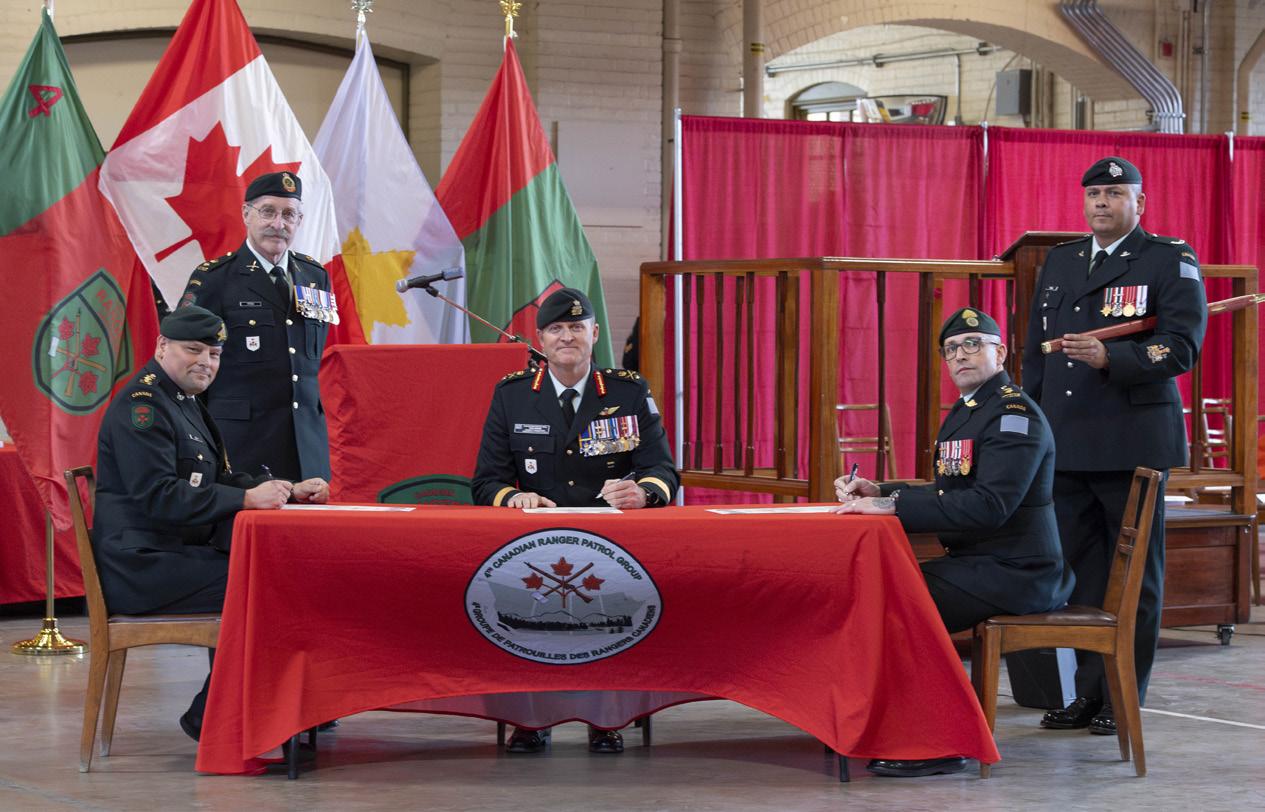

4th Canadian Rangers Patrol Group Change of Command Ceremony
Lieutenant-Colonel R.V. Couturier, incoming Commanding Officer, Brigadier-General S.G. Graham, Commander 3rd Canadian Division, Reviewing Officer, and LieutenantColonel J.P. Roy, outgoing Commanding Officer, sign certificates during 4th Canadian Rangers Patrol Group Change of Command Ceremony at Bay Street Armoury on June 21.
Master Sailor Valerie LeClair, MARPAC Imaging Services
Naval Fleet School (Pacific) Change of Appointment
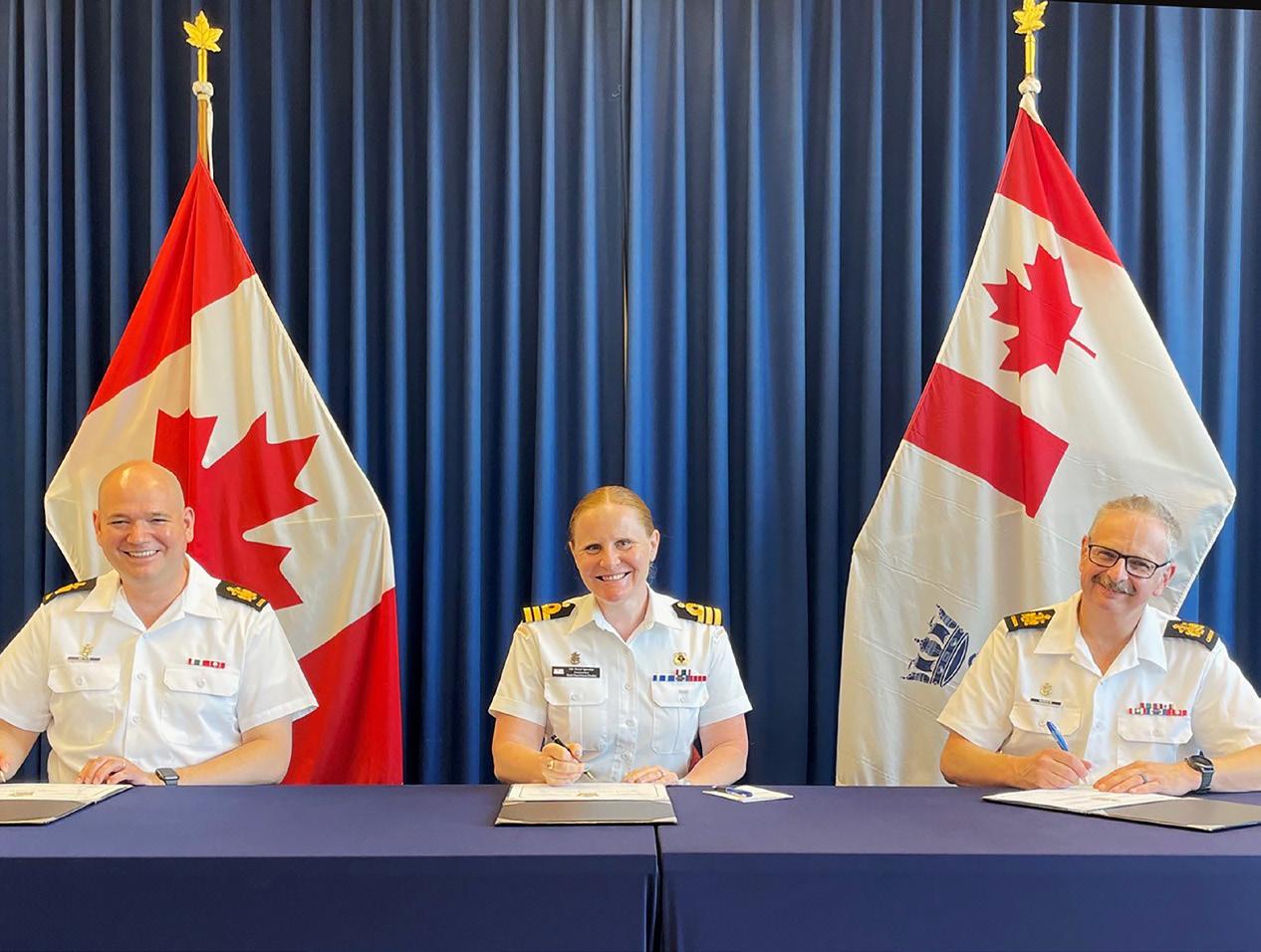
Naval Fleet School (Pacific) (NFS(P)) welcomed Chief Petty Officer First Class (CPO1) Oliver Meyer (left) as its Coxswain in a Change of Appointment ceremony held on June 25 at CFB Esquimalt. Commander Meryl Sponder, NFS(P) Commandant (centre), presided as CPO1 Stan Budden (right) handed over Naval Fleet School Chief Petty Officer duties to CPO1 Meyer.
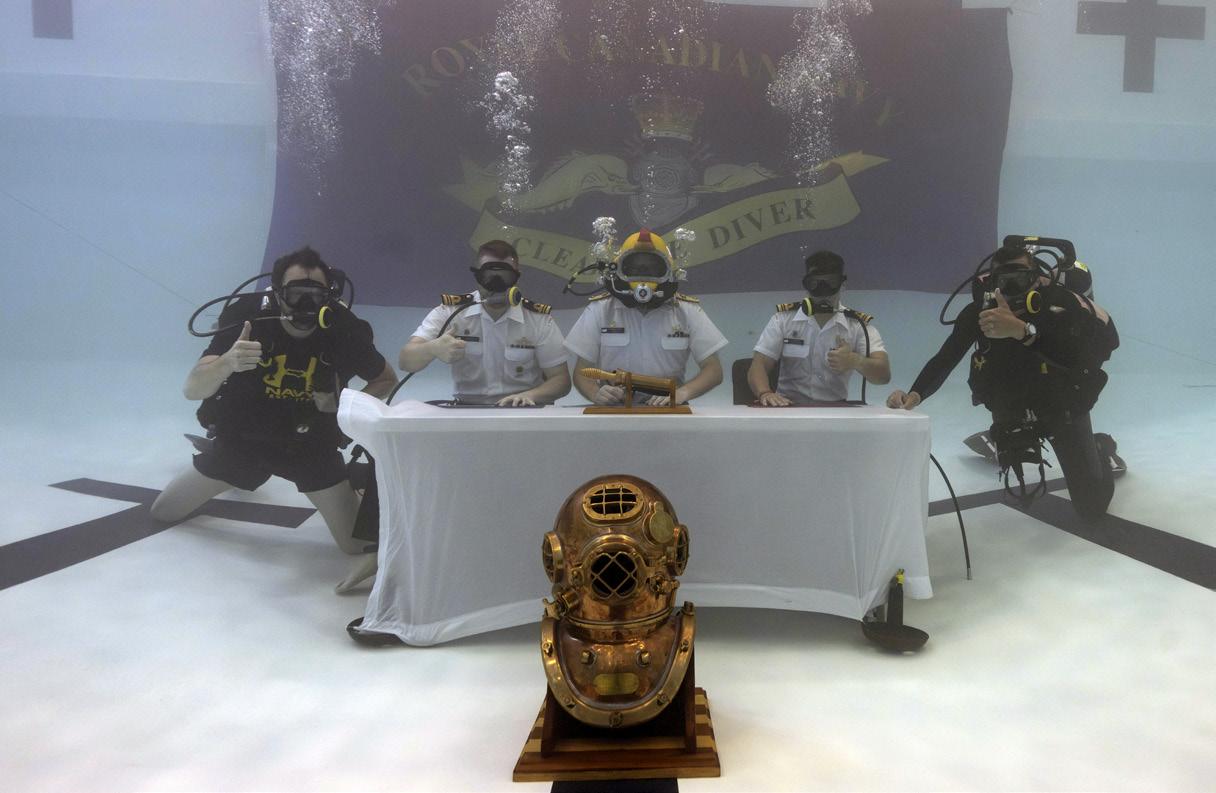
Underwater Change of Command
Lieutenant-Commander (LCdr) Erik Poirier, incoming Commanding Officer, Commodore David E. Mazur, Commander Canadian Fleet Pacific, Reviewing Officer, and LCdr Justin Wong, outgoing Commanding Officer, sign certificates underwater during the Fleet Diving Unit (Pacific) Change of Command Ceremony at Naden Athletic Centre on July 10.
Not Underwater Change of Appointment
L-R Chief Petty Officer 1st Class (CPO1) Rene St-Pierre, outgoing Coxswain, Lieutenant Commander Justin Wong, Reviewing Officer; and CPO1 Steven Giffin, incoming Coxswain, sign the Change of Appointment certificates on June 14.
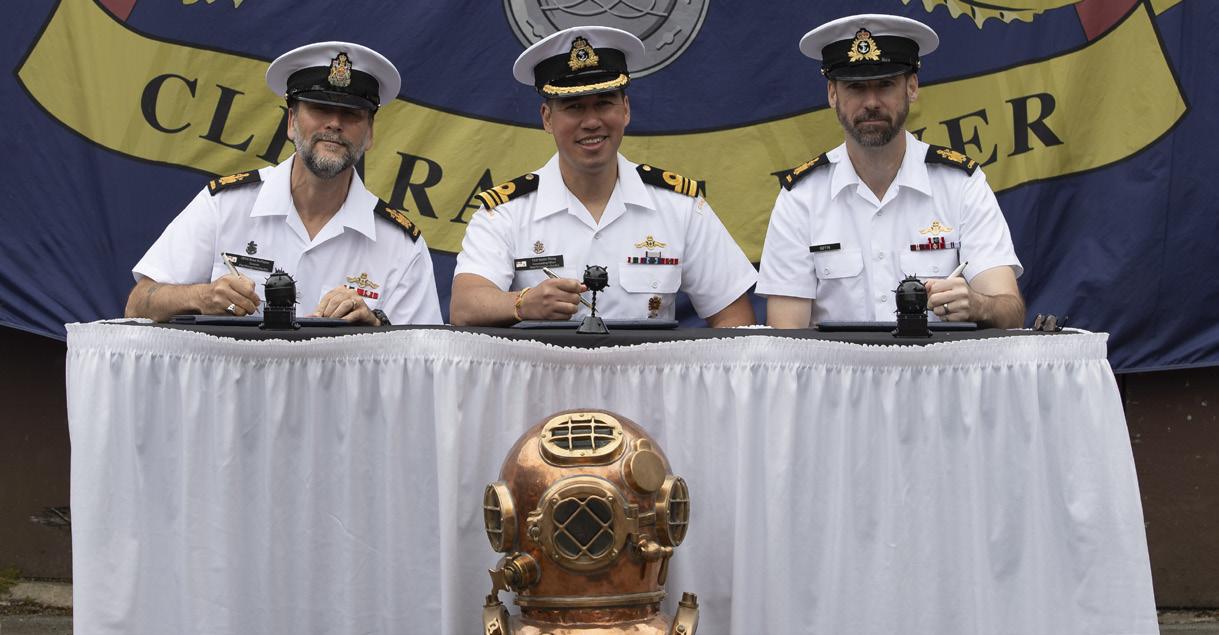
Photo:
Photos: Master Sailor Valerie LeClair, MARPAC Imaging Services
Treatment IS WITHIN REACH



Addiction, Mental Health & Trauma Treatment just a Ferry Ride Away
Help is at hand: Powell River-based Sunshine Coast Health Centre and Georgia Strait Women’s Clinic— Canada’s only trauma program exclusively serving women—provide highly personalized addiction, mental health and trauma treatment for male and female clients respectively. We’ll pick you up from the ferry for our daily inpatient treatment tailored to your unique needs.


Services include 24 hour-medical service, psychiatric assessment, EMDR, rTMS, psychotherapy, a dedicated group for military clients and much more.
Serving the Department of National Defence and Veterans A airs Canada since 2009.