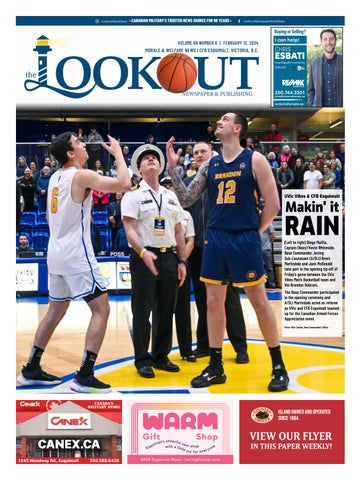
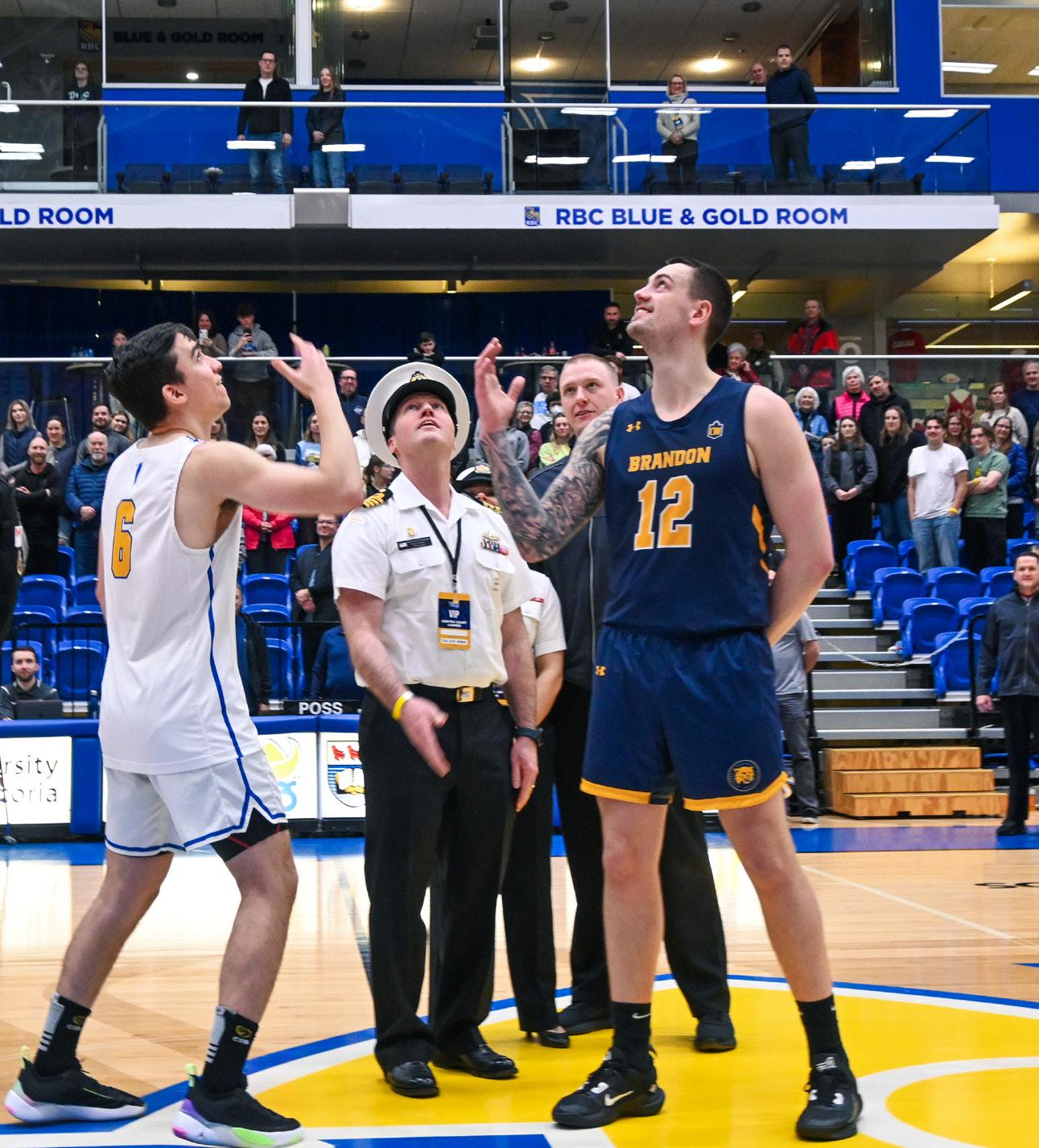
take part in the opening tip-off of Friday’s game between the UVic Vikes
and the Brandon
The Base Commander participated in the opening ceremony and A/SLt Martindale acted as referee as UVic and CFB Esquimalt teamed up for the Canadian Armed Forces Appreciation event.
(Left to right) Diego Maffia, Captain (Navy) Kevin Whiteside, Base Commander, Acting Sub-Lieutenant (A/SLt) Brent Martindale and Jack McDonald
Men’s Basketball team
Bobcats.
Photo: Matt Carlson, Base Commander's Office
UVic Vikes & CFB Esquimalt
Unsung Logisticians lauded at birthday bash
Peter Mallett Staff Writer
A rare opportunity to get all Logisticians from CFB Esquimalt under one roof arose on Feb. 1, when members celebrated the 56th birthday of the Royal Canadian Logistics Service (RCLS).
Approximately 250 members of Base Logistics (BLog) filled the Rainbow Room of the Chief and Petty Officers’ Mess to capacity. Heartfelt handshakes, hi-fives and congratulations were the order of the day, along with speeches, refreshments, awards and a large birthday cake.
The last time BLog held an anniversary party was in 2021.
In his address, Commander Dan Saunders, BLog Commanding Officer, said there is a growing realization in the Royal Canadian Navy (RCN) of the RCLS’s importance.
“The RCLS is critical to all RCN initiatives and nothing would get done without you; things in the Navy would grind to a halt,” Cdr Saunders said.
RCLS includes civilians and military members, spread out
between all three Canadian Armed Forces branches and CFB Esquimalt units. They perform various jobs, encompassing multiple trades such as Human Resources, Financial Service Administrators, Mobile Support Equipment Operators, Traffic Technicians, Material Management Technicians, Postal Technicians, Ammunition Technicians, Cooks from Base Foods and musicians.
“I’m glad we were able to come together again as a group because this event is about reuniting and seeing familiar face but also meeting people,” said Chief Petty Officer Second Class Troy McGregor, Base Foods West Coast Occupational Advisor.
The anniversary party is also an opportunity to educate the public and even those within the military about the RCLS, say event’s coorganizers Master Warrant Officer (MWO) Donald Quenneville of BLog Systems Control Division and Major (Maj) Weena Boutin
of Transport Electrical and Mechanical Engineering (TEME).
“We are often seen as the unsung heroes of the Canadian Armed Forces,” Maj Boutin said. “This gathering gave people of different ranks, professions and backgrounds a chance to discuss the challenges they face daily and do so in a more relaxing environment than in the workplace.”
MWO Quenneville says logisticians in Canada and those engaged in military operations worldwide celebrate each milestone, no matter what location they are working.
Logisticians who have gone above and beyond the call of duty were presented with Awards of Excellence and certificates by Captain (Navy) Kevin Whiteside, Base Commander. “Your incredible work is invaluable to the formation and our entire team, and without you, we simply could not do what we do,” said Capt(N) Whiteside.
The award categories and those recognized included:
• Civilian, Robert Senkpiel, BLog;
• Formation Logistics Award Junior NCM, Corporal Alison Tso, MARPAC/ JTF(P) HQ and Master Sailor April Davis;
• Base Orderly Room, Formation Logistics Award Senior NCM: Petty Officer Second Class, Chelsie Astles;
• Base Comptroller, Formation Logistics Award, Officer: Lieutenant Anabelle St-Martin, BLog. MWO Quenneville and Maj Boutin also received a certificate and special recognition for putting the anniversary party together.
Following the awards ceremony, Logisticians toasted their accomplishments by enjoying cupcakes and buttercream chocolate marble cake whipped up by Base Foods Cook and former Pastry Chef Corporal Kristel Campbell of HMCS Winnipeg
Supporting the Silent Service
Christian Jax, CANSUBFOR
Napolean famously said, 'The amateurs discuss tactics; the professionals discuss logistics'. While perhaps simplistic, the view that logistics are ignored only at one’s peril is widely accepted.
Small but mighty, submarines do not have the space for additional supplies. They rely on the Canadian Submarine Force (CANSUBFOR) Logistical Department and the Submarine Support Team to ensure they receive food, parts, mail and other necessities.
Unlike surface ships, submarine logistical teams do not sail with the ships but move ahead as a Forward Logistical Support (FLS) team instead. Moreover, the submarine communication windows are limited, and clear communications and detailed planning are required to support the submarines wherever they may be.
“We fly to support the submarines in foreign ports and liaise with
these port authorities,” said Lieutenant (Navy) Isabelle Bergeron, the Logistics officer for CANSUBFOR Detachment East. “That is not something you do on a frigate since the FLS team comes from another organization. That gives us the advantage of knowing the crew and making our work easier.”
The one-team approach allows for efficient support anywhere in the world.
“A diverse, capable and collaborative team on each coast allows our submarines to effectively operate on a global scale,” commented Lt(N) Jason Bates, the Logistics officer for CANSUBFOR Detachment West.
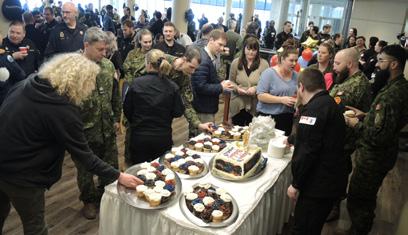
Members of the Base Logistics team gather for cake and refreshments at the Chief and Petty Officers' Rainbow Room during a 56th Anniversary party for the Royal Canadian Logistics Service on Feb. 1.
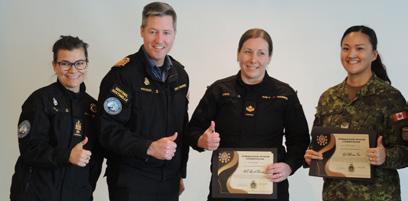
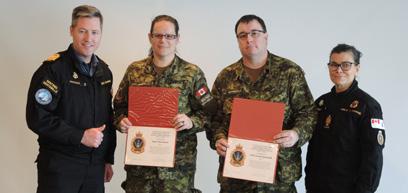
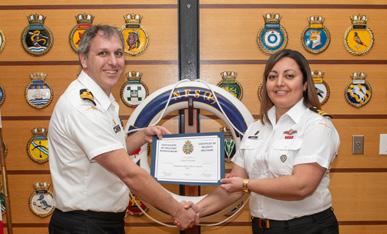
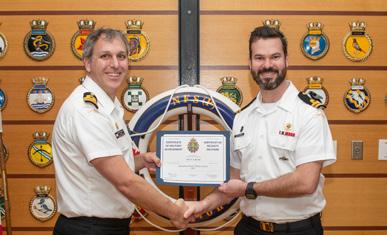
(Left) Captain (Navy) Kevin Whiteside, Base Commander, and (right) Chief Petty Officer First Class Susan Frisby, Base Chief, present Logisticians Major Weena Boutin, Transport and Electrical Mechanical Engineering Officer and Master Warrant Officer Donald Quenneville, Base Logistics Acting Systems Control Officer, with a certificate of recognition for organizing this year's 56th anniversary party.
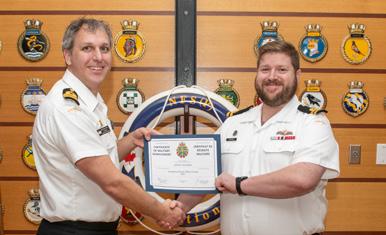
(Left) Chief Petty Officer First Class Susan Frisby, Base Chief, and Captain (Navy) Kevin Whiteside, Base Commander, present Master Sailor April Davis, Base Orderly Room, and Corporal Alison Tso, MARPAC/JTF(P) HQ, with the Formation Logistics Junior NonCommissioned Member Award. All photos: Peter Mallett, Lookout Newspaper
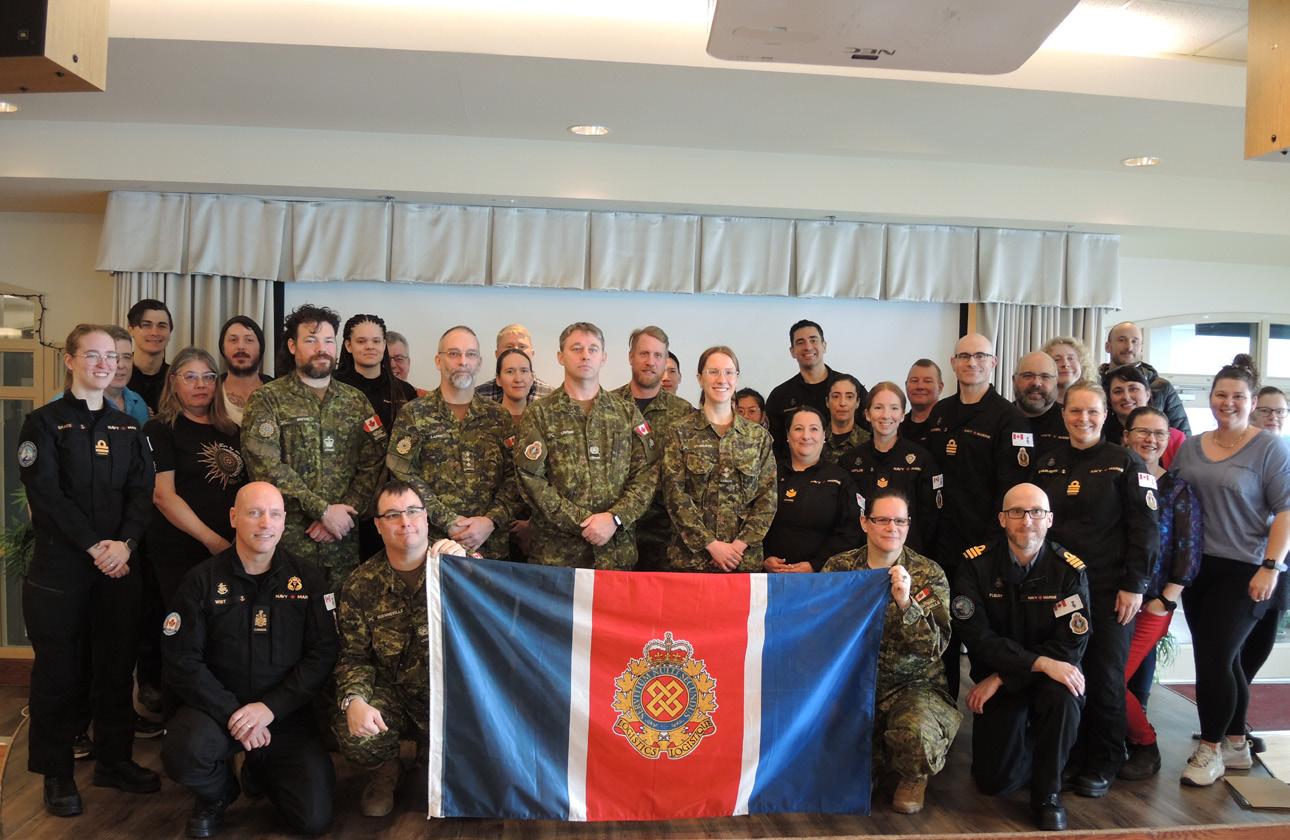
Members of the Base Logistics team gather for a group photograph.
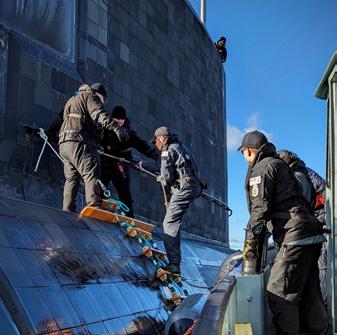
Members of CANSUBFOR HQ Det Halifax deliver mail, rations, and personnel to HMC Submarine Windsor in Halifax Harbour, with support from Canadian Forces Auxiliary Vessel Granville.
Published each Monday, under the authority of Capt(N) K. Whiteside, Base Commander.
Le LOOKOUT est publié tous les lundis, sous l’égide du Capv K. Whiteside, Commandant de la Base.
The editor reserves the right to edit, abridge or reject copy or advertising to adhere to policy as outlined in PSP Policy Manual. Views and opinions expressed are not necessarily those of the Department of National Defence.
Le Rédacteur se réserve le droit de modifier,de condenser ou de rejeter les articles, photographies, ou annonces publicitaires pour adhérer au Manuel des politiques des PSP. Les opinions et annonces exprimées dans le journal ne réflètent pas nécéssairement le point de vue du MDN.
Circulation: 2,000 plus online engagement per week
Follow us on Facebook, Twitter and Instagram to join our growing social media community.
A Division of Personnel Support Programs
CFB Esquimalt, PO Box 17000 Stn. Forces Victoria, BC V9A 7N2 Web: www.lookoutnewspaper.com Fax: 250-363-3015
Canadian Mail Product Sales Agreement 40063331
It is often challenging to bear the impact of a traumatic incident immediately after it happens. Last week, we discussed shock as one of two reactions to a traumatic event. The other reaction is denial, which may manifest as a result of an inner dialogue following the event.
After spitting out the other side of a traumatic event, we often wonder, ‘What just happened…?’ While the shock of the event still reverberates in our psyche, we try grounding ourselves by questioning and answering our thoughts. However, this inner dialogue often drops us at the crossroads of denial and acceptance.
Psychologically speaking, denial is the rejection of reality. Yet, denial can also help preserve our mental well-being and prevent us from ruminating on the event while we process what occurred. Denial can start at an infinitesimal level, with something as benign as an ‘I can’t believe that just happened’. This is often a reactive denial, usually equating to a sense of shock around an event. In the preliminary sense of denial, we often look for ways to accept what just occurred.
The early moments after a traumatic event are typically filled with utter disbelief and astonishment. When there is no outlet to express what occurred, it immediately can spark the flame of denial. If someone
PTSD: Denial
we knew was also part of the incident, we try to connect with them to start processing what happened. If that isn’t possible, we reach out to people closest to us to unpack the event.
The majority of people can logically and emotionally come to grips with the fact that a traumatic event did happen. On rare occasions, an individual will go into full-on denial mode, depending on how much the incident influenced their mental health.
Some of us tend to downplay the effect tragedy has on our lives. However, I don’t think this is due to some false sense of bravado, like believing nothing can harm us. Rather, it comes from a place where we don’t want to burden or hurt others with our struggles. Sharing a traumatic event is extremely vulnerable, and confronting it can shoot us back into the event, forcing us to confront our vulnerability, but who wants to go there, especially if the trauma just transpired?
Sometimes denial and avoidance go hand-in-hand in traumatic situations. We often deny to avoid and begin to build a pattern of detaching ourselves from the reality of the situation. Again, avoidance to some degree at the early stages is natural. However, avoidance becomes maladaptive when we don’t recognize the trauma’s effects.
The denial surrounding traumatic events is a challenge that must be overcome early on; if not attended to relatively after the
fact, it can evolve into evasion. However, there are some things you can do to process denial after a traumatic event transpired:
Externalize the traumatic event. This may look like telling someone whom you can confide in what just occurred. It can also be writing about it or expressing it in other forms. Externalizing a traumatic event gives you a cathartic release, and there is something to be said about traumatic moments no longer living in your mind.
Review the immediate impact. Try to be self-inquisitive by gleaning insights into where you stand and how to cope after the event. This doesn’t have to be an indepth analysis; sometimes, it can occur with externalization.
Check in with how you’re feeling in the present moment. See what your mood and clarity of mind are like. Checking in on these aspects can help build a pattern of internal review of the traumatic event, which can help with noticing the pervading impact of the trauma.
Thomas Goenczi is an RCN Veteran and MA Clinical Counsellor with Private Practice: Well Then Therapy.
The content is not intended to substitute professional advice, diagnosis, or treatment. Always seek the advice of your mental health professional or other qualified health provider with any questions regarding your condition.
The Lookout is seeking content creators and contributors! If you're interested in trying your hand at writing or in expanding your writing portfolio, we want to hear from you!
Everyone has a story to tell.
Please reach out to Kate: kateryna.bandura@forces.gc.ca
Thomas Goenczi
Lookout contributor
NDWCC EXCEEDS fundraising target and expectations
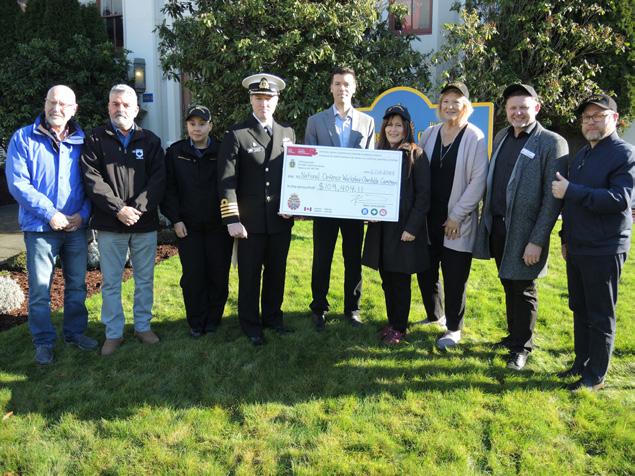
Members of the Defence team gather on the front lawn of the Base Commander's Office on Feb. 6 to present a cheque for $109,404.11 to representatives of the United Way of Southern Vancouver Island and Health Partners for monies raised during the National Defence Workplace Charitable Campaign (NDWCC).
(Left) Brad Klein, UNDE 21016 Local President; Marcelo Lazaro, Co-Chair of the NDWCC Campaign and Regional VP for BC UNDE and Labour Co-Champion; A/SLt Lyne Bonhomme, NDWCC Deputy Team Leader; Captain (Navy) Kevin Whiteside, Base Commander, CFB Esquimalt and United Way Southern Vancouver Island Board Member; Matt Carlson, Base Public Affairs and NDWCC Team Lead; Erika Stenson, Executive Director, United Way Southern Vancouver Island; Barbara Toller, HealthPartners Volunteer and former, Board Member; Mark Crocker, Director, Corporate Giving and Partnerships, United Way Southern Vancouver Island. Photo: Peter Mallett/Lookout.
Peter Mallett Staff Writer
Charitable organizations in our community have received another financial boost from the National Defence Workplace Charitable Campaign (NDWCC).
Members of CFB Esquimalt’s NDWCC fundraising team gathered on the front lawn of the Base Commander’s Office on the afternoon of Feb. 6 to present a cheque for $109,404.11 to representatives of the United Way Southern Vancouver Island and HealthPartners. Captain (Navy) Kevin Whiteside, CFB Esquimalt Base Commander, shared in the excitement while formally presenting the donation, acknowledging the challenges this year’s campaign faced.
“Some of those obstacles working against the campaign included an ongoing housing and financial crisis, and the Canadian military’s ongoing personnel shortage which led organizers to set a modest campaign target of $80,000 when fundraising efforts commenced in September,” said Capt(N) Whiteside. “I am so very proud that we blew that $80,000 out of the water, which is really just amazing.”
Capt(N) Whiteside is also a member of the Board of Directors for the United Way Southern Vancouver Island.
Matthew Carlson, NDWCC Team Leader at CFB Esquimalt, said this year’s campaign had many highlights including the kickoff pancake breakfast, Bring Your Dog to Work Days, pet portraits, unit BBQs, movie matinees, bake sales, silent auctions and many other creative and successful initiatives.
There to accept the donation was Barbara Toller, a gracious HealthPartners volunteer and former Board of Directors member, joined by Erika Stenson, Director at United Way of Vancouver Island. Both say the 17 health charities the organization represents are truly delighted with the supportive and admirable attitude of Esquimalt’s military community.
“We are so proud the Base and military members continue to support the NDWCC with that money flowing into charitable organizations here in Victoria and across the country,” Stenson told Capt(N) Whiteside.
“Your team does so much for Canadians already, but this fundraising effort shows their true commitment to the people they support, and we are so happy to partner with you every year.”
National Flag of Canada Day
On February 15, let’s celebrate our Canadian flag!
On Feb. 15, 1967, Canada’s red and white maple leaf flag was raised for the very first time on Parliament Hill. On that same day in 1996, National Flag Day was declared.
Peter Mallett Staff Writer
Our national flag is a symbol that unites Canadians and reflects the values we take pride in: democracy, inclusion and equity. With that in mind we asked military members and civilians at CFB Esquimalt what thoughts, feelings or memories come to mind when they see the Canadian flag.
Acting Sub-Lieutenant Lyne Bonhomme, HMCS Venture and NDWCC Deputy Team Leader Me and my family are from Iqaluit, Nunavut; our flag gives me sense of pride because I love what Canada represents in the world. We are not perfect, but our country is still a great place to be. There is a fair chance for everyone, we continue to strive for equality for everyone and serving makes me proud - the flag represents this pride.
First Class
I will always think of the Canadian flag as representing a country that took my family in and provided me with a really good life. My mom moved to Canada when she was 20 and my family had a hard time in Conway, Wales, with few job prospects and a depressed economy. My great uncle came to Canada to work in the logging and forestry industry and had always encouraged the rest of the family to move here too. The rest of my family always talks very enviously about us being here.
Bob Cosman, Commissionaires
My Dad had a flagpole in front of his home in Lower Millstream, N.B. When our new flag officially came into being, he eventually took down the Union Jack and switched to the maple leaf. All the neighbors were outside watching from their yards the day he declared he was finally going to put the new Canadian flag up. My dad had been mowing the lawn and because they were watching, he decided to take his t-shirt off and run it up the flagpole instead. The neighbors looked surprised and some shocked. He had his laugh for a moment and then put our new Canadian flag up and everybody cheered. He flew the Canadian flag every day while he had that home.
Sailor
Nathan Anderson, HMCS Regina
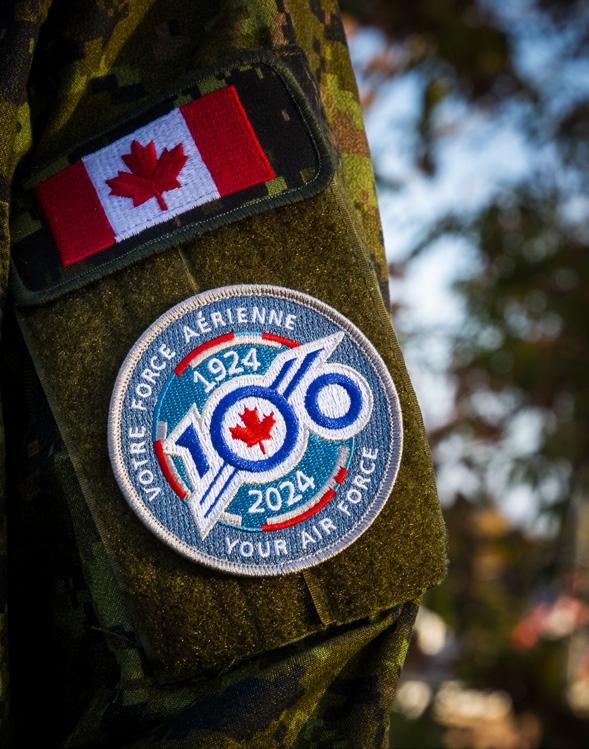
RCAF Centennial: soaring into the next century
RCAF Centennial Team
As the Royal Canadian Air Force (RCAF) celebrates its Centennial this year, prepare for an exciting journey through a century of aviation excellence. The year will be studded with outstanding national, international, and local celebrations by Squadrons and Wings. It’s not just a nostalgic look back; it’s a leap into the future as the RCAF enters its second century of service.
Celebrations began with the Winnipeg Jets special jersey launch for the 2023/2024 NHL season. Players in historic replica uniforms pay homage to the 1948 RCAF Flyers, the hockey team of RCAF members that won gold at the 1948 Winter Olympic Games in St Moritz, Switzerland. The Jets will wear the 1948style jerseys for three home games, including on April 1, the official 100th anniversary of the RCAF.
That same day, more than 250 locations in at least a dozen countries will light up in RCAF blue, kicking off the RCAF Centennial Illuminations. This global event invites participation worldwide, symbolizing a visual tribute to the RCAF Centennial and celebrating a century of aviation excellence. Guinness World Records has been contacted, and we look forward to breaking a world record with this initiative.
In the spring of 2024, a visual treat awaits with the release of the documentary Wings of Honour: A
Society. Premiering in select locations worldwide, this film tells the compelling story of Air Force aviation throughout the decades.
Fast forward to May 2024, the Canadian Tulip Festival takes centre stage in Ottawa. Festival organizers had four specially cultivated tulips produced for the Centennial. Named Wings, Ad Astra, Rescue and Flyers, these vividly coloured flowers commemorate the RCAF’s lasting impact on Canada and are a living testament to a century of aviation excellence.
The RCAF Centennial Ball is scheduled for June 1 in Ottawa. It will sell out and will be a historic night to remember. It’s not just a celebration; it’s a reflection on the journey from the Royal Flying Corps and Royal Navy Air Service to the creation of the RCAF in 1924 and beyond. It will be an evening when Canadian Armed Forces members, their families and community partners come together to recognize the contributions of the RCAF to Canada’s Defence Team.
As we embark on this remarkable journey to celebrate the RCAF Centennial, these events and initiatives weave a tapestry of history, innovation, and community spirit. This celebration is not just about the past; it’s an invitation to join hands in shaping a future where the sky’s no longer the limit. The RCAF Centennial is not just one event but a celebration of a legacy that has been soaring for the past hundred years and will continue to fly for the next hundred years.
MARPAC HEALTH AND WELLNESS STRATEGY
ANDREA HOLWEGNER, RD
“My time in Antarctica reminded me that, even in the harshest environments, a semblance of ‘home’ can be found through shared human connections ...”
~A/SLt Kayvan Aflaki, NWO
RCN sailor traverses the Antarctic waters with the Chilean Navy
A/SLt Kayvan Aflaki, NWO
As a Naval Warfare Officer with the Royal Canadian Navy, my career has involved sailing Canada’s territorial waters, but nothing could have prepared me for the extraordinary journey that unfolded in November 2023—an expedition to Antarctica as an attaché to the Chilean Navy.
This unique opportunity, through a program called Regulus designed to increase at-sea training opportunities, was not just about fulfilling my training obligations or supporting the Chilean Navy’s day-to-day operations; it was an immersive experience in the heart of a frozen world escorting dignitaries on a mission of global importance.
Our destination was the Chilean Antarctic Territory, which spans over 1.25 million square kilometres and comprises the area south of 60°S latitude and between longitudes 53°W and 90°W. My journey began by joining the crew of the Chilean offshore patrol vessel Marinero Fuentealba at the southern port city of Punta Arenas in Chile. Over the coming days, our vessel navigated through the Strait of Magellan and across the Drake Passage to Villa Las Estrellas—a small settlement nestled on the shores of King George Island. Here, we received our dignitaries: Gabriel Boric, the Chilean president, and António Guterres, the United Nations Secretary-General. Beyond escorting dignitaries, our mission fulfilled a deeper purpose—to shed light on the stark realities of climate change gripping the Antarctic region. The timing was poignant, aligning with the buildup to the 2023 United Nations Climate Change Conference (COP28) in Dubai.
Our secondary objectives involved replenishing multiple Antarctic research stations with vital supplies,
including rations, fuel, and scientific equipment. The logistical intricacies of this task were as formidable as the icy terrain itself. One standout operation was replenishing two Chilean Antarctic research facilities adjacent to Villa Las Estrellas, Base Presidente Eduardo Frei Montalva and Base Professor Julio Escudero, where the elements seemed to challenge our every move. A violent snowstorm prevented the use of local service roads. Consequently, the crew members and I unloaded our rigid-hull inflatable boat and carried the supply crates using a marked walkway through Villa Las Estrellas. As we trekked through the thick quilt of snow and 25-knot winds, Villa Las Estrellas invoked an unexpected feeling of familiarity. I marvelled at the sense of community that emanated from the shared spaces—a school, a chapel, and the comforting glow, of all things – streetlamps. We were warmly received by a cohort of Antarctic researchers, who welcomed us with hot coffee. The gratitude in their eyes underscored the humanitarian importance of our mission beyond the political spotlight. Without fail, their eyes eventually found their way to the red and white flag on my uniform sleeve. ‘Canadian!’ It carried gratitude and mutual respect.
I was the sole Canadian among the crew on this mission, and at no time was the significance of the flag patch I wore on my uniform lost to me. Nor did it seem to be overlooked by those I encountered. It reaffirmed to me the importance of Canada’s presence as a positive force on the international stage.
Before returning to mainland Chile, I volunteered to assist the crew of Marinero Fuentealba with a final task on our deployment to Antarctica—to locate and restore a monument of national significance to Chile and the Chilean Navy. This was the statue of Piloto Pardo,
who famously rescued the Endurance crew after their fateful stranding on Elephant Island in 1916. The ship became trapped in the ice of the Weddell Sea, eventually causing it to sink. Under Sir Ernest Shackleton’s leadership, the crew was left adrift on a floe before Shackleton and a small group embarked on a daring open-boat journey for help. All 28 of the crew survived the ten-month affair. Surrounded by the vastness of Elephant Island, the granite monument stands defiantly amid snowcapped peaks, chinstrap penguins waddling along the rocky shoreline, and the icy expanse of the Southern Ocean—a tribute to the indomitable spirit of exploration and human resiliency. Indeed, repairing the weathered monument was a fitting end to my journey to Antarctica. My time in Antarctica reminded me that, even in the harshest environments, a semblance of ‘home’ can be found through shared human connections – through the collective pursuit of a higher purpose. The shared endeavour of supporting COP28, replenishing research stations, and restoring Piloto Pardo created an intangible sense of home. In hindsight, I realize that my opportunity to sail with the Chilean Navy was not just about working with our Defence partners; it was about safeguarding our planet—our home—for generations to come. With its grandeur and vulnerability, Antarctica is a call to action, a reminder that the seas, no matter how vast, are within our care. As I reflect on this journey, I am reminded that in the face of environmental and security challenges, unity is not just an option but our lifeline. And Canada has an essential place in the bigger picture.
Kayvan Aflaki is a Naval Warfare Officer undergoing initial training with the Royal Canadian Navy at His Majesty’s Canadian Ship Venture.
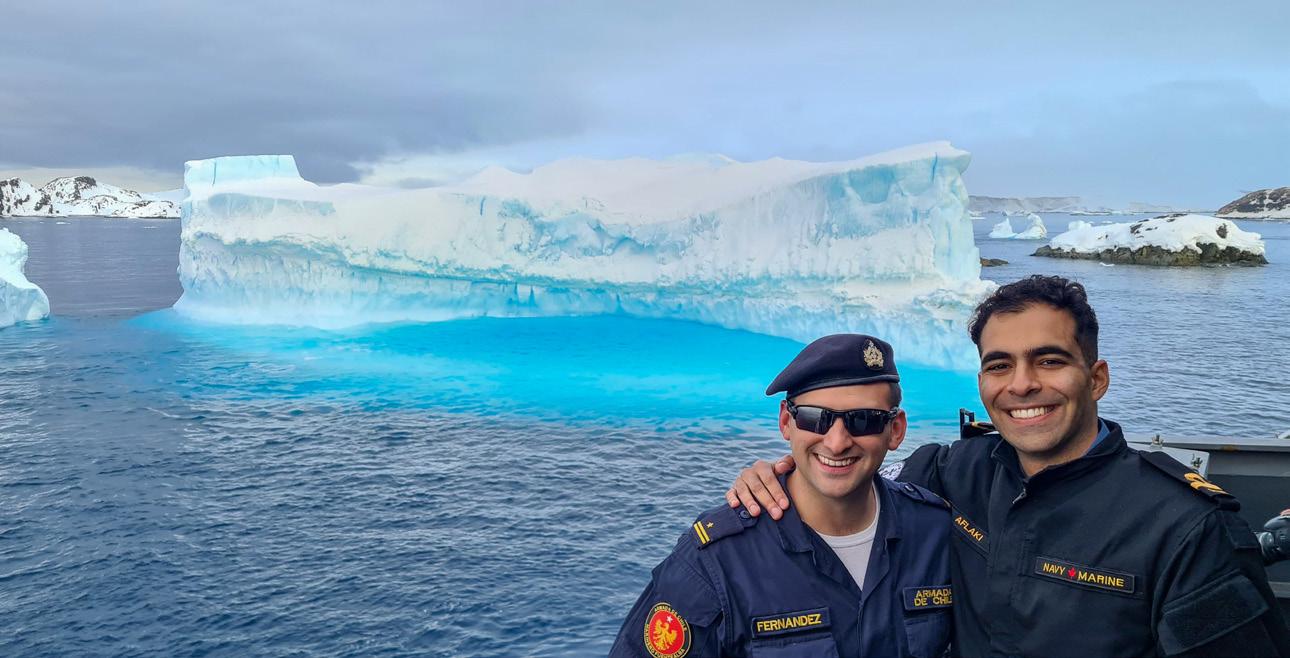
Acting Sub-Lieutenant Kayvan Aflaki and crew members of Chilean offshore patrol vessel Marinero Fuentealba traverse through Villa Las Estrellas on King George Island to deliver essential supplies to a research station. Photo: ST Martin Widow.
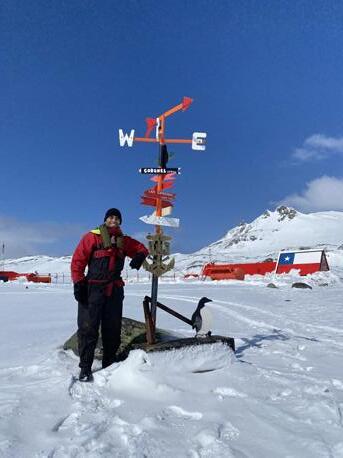
(inset) A/SLt Kayvan Aflaki stands with a landmark signpost at Captain Arturo Prat Base, a Chilean Antarctic research station located on Greenwich Island, after completing a replenishment with the crew members of Chilean offshore patrol vessel Marinero Fuentealba. Photo: ST Felipe Olea.
A/SLt Kayvan Aflaki (right) and T2 Francisco Fernandez of the Chilean Navy stand before a glacier as they transit across the Bransfield Strait aboard Marinero Fuentealba en route to complete a replenishment. Photo: ST Felipe Quijarro
Canadian Ranger Patrols Awarded Commander Canadian Army Commendation
Saskatchewan Canadian Ranger Patrols honoured for COVID-19 community relief operations
Captain Natasha Tersigni 4CRPG
In recognition of their dedication and contributions during Operation Laser, the Canadian Ranger Patrols (CRP) in Wollaston Lake and Fond Du Lac, Sask., were honoured with the Commander of Canadian Army (CCA) Commendation last year.
During the challenging times of the COVID-19 pandemic, the Canadian Rangers (CRs) of the 4th Canadian Ranger Patrol Group (4 CRPG) were activated in communities across western Canada as part of the Canadian Armed Forces’ COVID-19 relief effort, known as Operation Laser. The CRs diligently assisted Canadians in need, responding to community requests for aid through provincial authorities. This collaborative effort involved close coordination with other Canadian Army units and municipal, provincial, and federal officials to support COVID-19 relief efforts effectively.
As part of 4 CRPG’s engagement in Operation Laser, northern Saskatchewan witnessed the impactful efforts of the Wollaston Lake and Fond Du Lac CRPs. In Wollaston Lake, CRs supported local officials in COVID-19 relief efforts within the Hatchet Lake Denesuline First Nation. This support included producing and distributing essential resources such as food, firewood, and care packages. Additionally, the CRs played a vital role in disseminating information from community, provincial, and federal entities regarding personal protective health measures.
Similarly, in Fond Du Lac, local CRs collaborated with Fond Du Lac Denesuline First Nation officials in COVID-19 relief efforts. The CRP extended support to the local community by facilitating the production and distribution of life-support requirements and aiding in disseminating critical information related to health measures and risk mitigation strategies.
Lieutenant-Colonel J.P. Roy, Commanding Officer of 4 CRPG, expressed pride in the readiness and responsiveness of 4 CRPG members during the unprecedented pandemic. He emphasized the commendable efforts of the CRPs in Wollaston Lake and Fond Du Lac, highlighting their impact in showcasing the strength and unity within the Canadian Armed Forces.
In recognition of their continued contributions and diligent efforts, the Wollaston Lake and Fond Du Lac Canadian Ranger Patrol members were presented with the CCA Commendation in September 2023. The commendation ceremony took place during the closing parade for Exercise Canadian Ranger 1 in Cold Lake, Alta.
Lieutenant Colonel Roy added, “For the work that both our CRPs conducted in northern Saskatchewan, it’s a privilege to be recognized for our role in Operation Laser and to contribute to the well-being of those we serve.”
“ ... it’s a privilege to be recognized for our role in Operation Laser and to contribute to the well-being of those we serve.”
~Lieutenant Colonel J.P. Roy
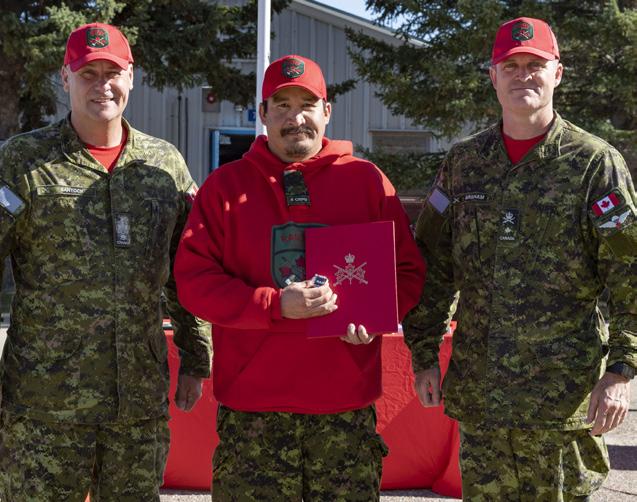
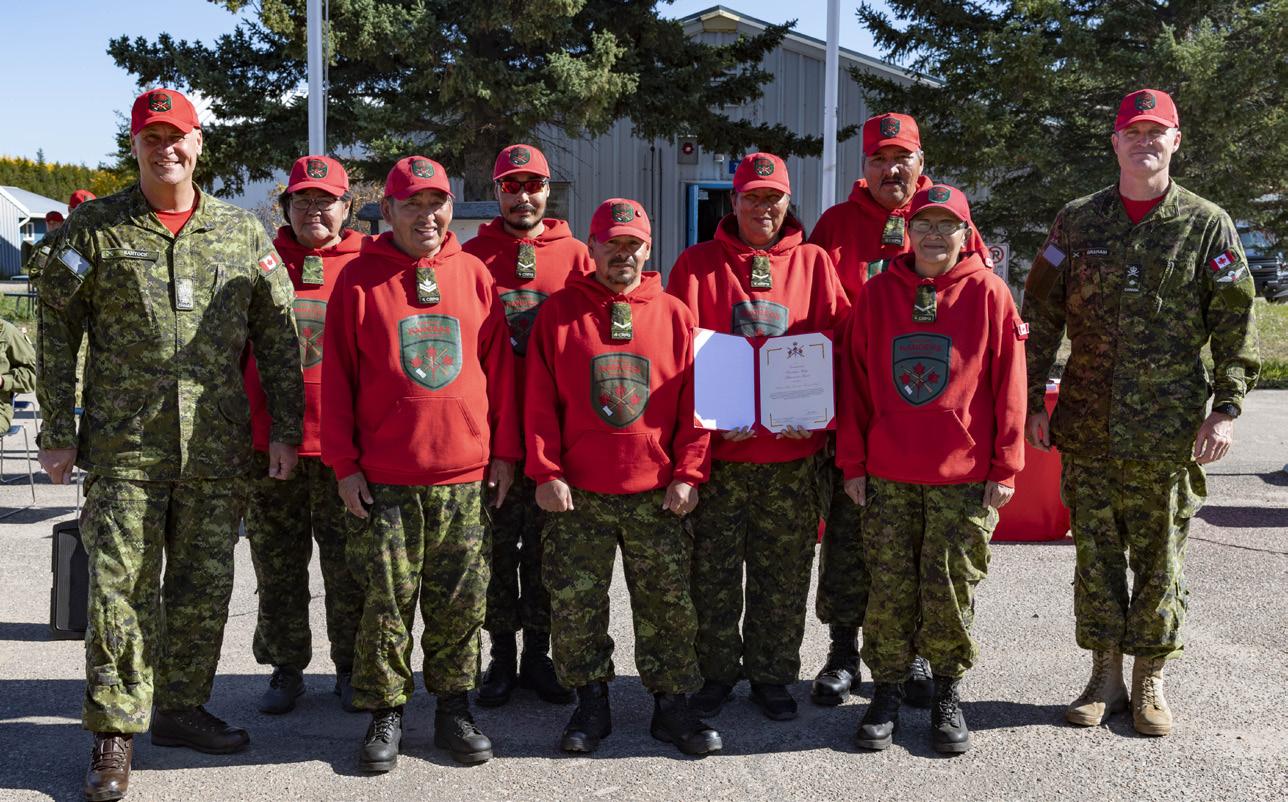
Chief Warrant Officer Wayne Bantock, Division Sergeant Major (left), and Brigadier General Steve Graham, Commander of the 3rd Canadian Division (right), present the Commander of the Canadian Army Commendation to the members of Wollaston Lake Canadian Ranger Patrol as part of the honours and awards parade during Exercise Canadian Ranger Ready 1 at the Cadet Camp, 4 Wing Cold Lake, Alta. on Sept. 25, 2023. Photo: Corporal Kastleen Strome, Royal Canadian Air Force Imagery Technician
Chief Warrant Officer Wayne Bantock, Division Sergeant Major (left), and Brigadier General Steve Graham, Commander of the 3rd Canadian Division (right), present the Commander of the Canadian Army Commendation to Canadian Ranger Jamie Pacquette representing the Fond Du Lac Canadian Ranger Patrol, as part of the honours and awards parade. Photo: Corporal Kastleen Strome, Royal Canadian Air Force Imagery Technician
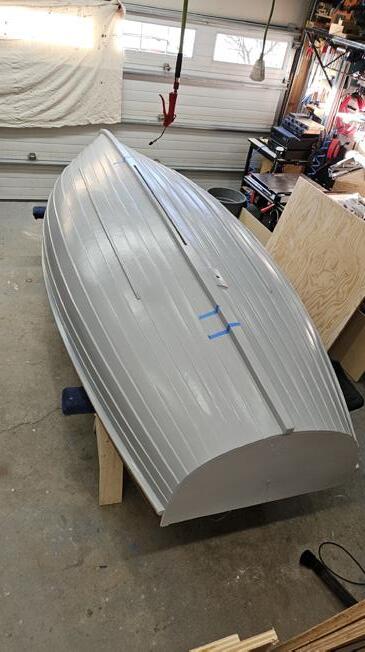
Dilapidated dinghy gets museum makeover
Peter Mallett Staff Writer
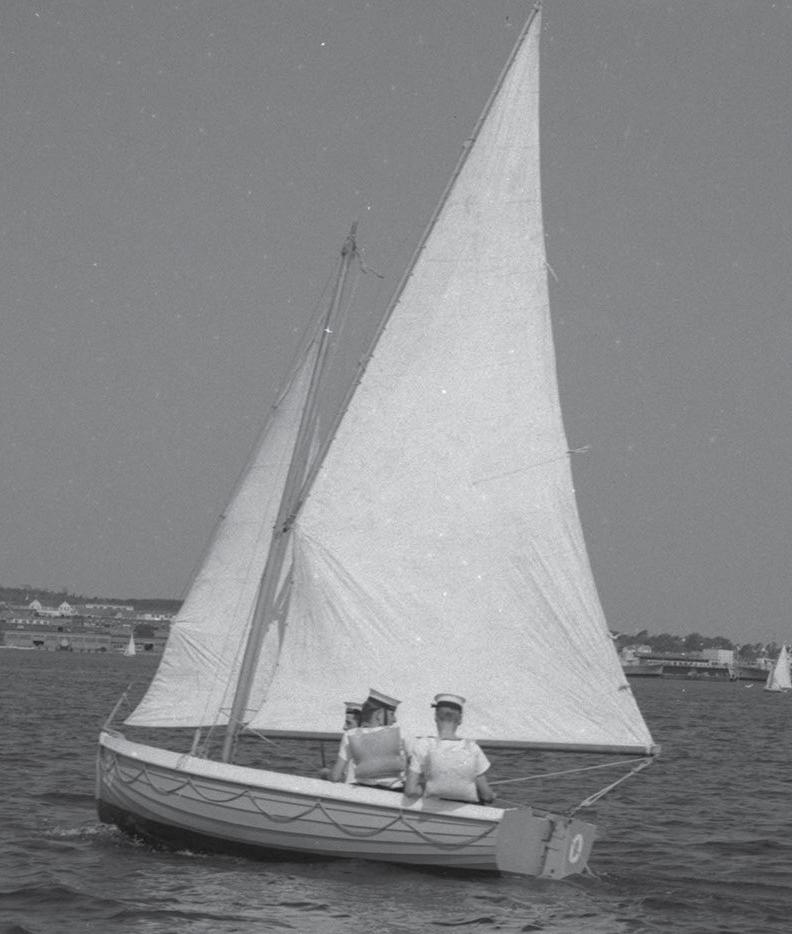
A historic navy sail-training dinghy completed an improbable journey from castaway at an Army surplus store to a prized addition to a naval museum’s collection.
“It still astounds me the stories behind how many of our naval artifacts turn up,” says Bradley Froggatt, Alberta Naval Museum curator. “Because of the builder’s date, this boat may have been carried aboard a Tribal-class destroyer or on one of Canada’s frigates but much of its past is still unknown.”
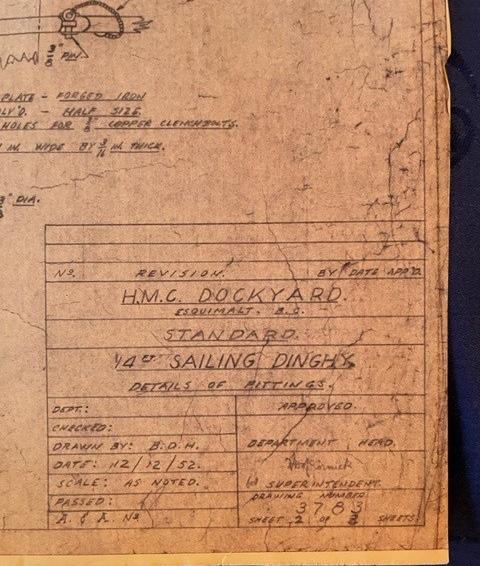
The recent donation of the Admiralty Patter 14-foot, Royal Canadian Navy (RCN) sail-training dinghy is a unique find for the museum. Admiralty Dinghies were used to train shipwrights in basic boatbuilding skills and basic sail-training instruction for junior RCN officers and crew. The craft bears an identifying mark on its transom (stern): ‘HQ 680 length 14 feet built in 1953’.
Froggatt served 28 years in the Royal Canadian Navy (RCN) before his retirement in 2015 and previously sailed on similar dinghies many decades ago when
he was a member of the Royal Canadian Sea Cadets. He says he and museum staff were amazed when they heard how the craft fell into the donor family’s possession.
Surplus treasure
According to Cecelia HundReid of Comox, B.C., her late husband, John Reid, discovered the dingy in 1976. It was dilapidated and languishing in the yard of a military surplus store in Bashaw, Alta.
“The boat had been outdoors for some time and looked quite worn, but John immediately recognized the ‘bones of the boat’ were solid, and there was real potential for it to be brought back to life,” Hund-Reid said.
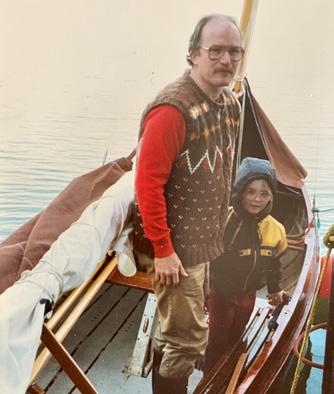
Reid was a former educator and sailboat and paddling enthusiast. He learned how to build and restore wooden boats in his spare time. Hund-Reid was at her husband’s side when he first saw the dinghy at the surplus store. Although she cannot remember how much he paid for it, she can recall his excitement about the dinghy.
“John had a passion for wooden boats, the history, design, construction, and the crafting of them, and especially the Admiralty Dinghy,” she said. “He saw and admired the craftsman-
ship and skill that must have gone into building the boat and transported it to our home in Edmonton, where it was cherished for many years.”
Reid consulted with the Naval Dockyard in Esquimalt and the Maritime Museum of the Atlantic during the restoration process. He received copies of the boat’s building plans and specifications to facilitate its restoration.
With the dinghy fully restored by Reid, it resided at the family’s property in Cold Lake, Alta., for many years.
His daughter Meaghen TaylorReid says she can clearly remember the attention the dinghy received from other boaters when they sailed in it.
“I’ll never forget the pride Dad took in having us out on the boat and teaching us to sail,” Meaghen said. “I’m so glad the preservation of this magical piece of history has been coordinated with the museum.”
The Hund-Reid family donated the dinghy to the museum in 2022. Reid's original intent was to present the dinghy to the HMCS Quadra Naval Cadet Training Centre in Comox, but Hund-Reid says he would be delighted to know naval cadets and many other people
from across the country will see his beloved dinghy at the Alberta Naval Museum.
Restoration underway
A conservation project is currently underway by Jason Edwards, a museum volunteer, under Froggatt's direction. The intention is to revert the dinghy to its original state when it was an RCN craft.
“When the dinghy was received, despite its previous restoration, it was evident age and years left unused in storage had taken a toll on the boat and its conservation was necessary in preparation for long-term exhibition at the museum,” said Froggatt.
Hund-Reid says she and the family are delighted with the outcome.
“We are honored and pleased the dinghy will reside in the museum where it will be protected and preserved for a long time for the public to view,” she said.
Froggatt says the museum expects to have the dinghy installed as part of its exhibit in the spring of 2024. It will include interpretive panels of its use by both the RCN and Royal Canadian Sea Cadets.
A taste of the sailor's life in cadets inspires many to make it their career. At 16 cadets are eligible for trade training in the regular navy. For cadets who wish to continue their education, several scholarships are offered.
What
Chaplain's
Corner
CFB Esquimalt Chaplains
During the time of the year called 'Lent' many Christians give up the eating of meat (or warm blooded-flesh) on Fridays as a reminder of the flesh of Jesus that bled on Good Friday. In response, in 1962, a McDonald’s franchise owner in Cincinnati dreamed up a fish sandwich (ie. COLD-blooded flesh) to prop up sales on these Fridays. Thus the Filet-O-Fish™ was born!
caused by humanity’s sins and open the gates of salvation to all. Lent zeroes in on that.
Lent kicks off with Ash Wednesday, where ashes are imposed on our heads with the words 'Remember, you are dust and to dust you shall return'. These were the same words God spoke to Adam in the garden. It’s memento mori, my friends; a stark reminder of the fleetingness of life and to keep our eyes on eternity. Anything that might derail us from that needs to be dealt with. That’s why doing penance, making up for our faults, and doing charitable works are emphasized.
So, what is it about Lent that caused the Golden Arches to re-think its menu? The word ‘Lent’ comes from a mix of Old English, Dutch and German that roughly means the lengthening of days that happens in spring. Lent is the 40 days preceding Easter where Christians meditate on the suffering and death of Jesus. The spirituality of it is sacrifice, self-denial and penance. You’ll often hear about people 'giving up' something for Lent - that is because we are trying to grow in self-discipline, strengthen our will against temptation, and come out of it a better person. After all, what’s the point of this if it doesn’t make us better? It’s one thing to give up the occasional chocolate bar, but quite another to give up [insert vice or bad habit here]. One makes you bulletproof against sweets. The other targets your character flaws.
Another thing you’ll see in churches on Fridays is the Stations of the Cross, a prayer where Christians meditate on key moments in Jesus’ final hours. It began a thousand years ago by pilgrims to the Holy Land, visiting the sites where it actually happened. The Franciscans formalized and brought this prayer to the West for those who couldn’t make the long pilgrimage. Passion plays are related. The most famous one happens in the Bavarian Alps every 10 years and has been going strong with sold-out crowds since 1632!
Forty days seem to figure a lot in the Scriptures: the flood lasted 40 days and nights; Moses fasted for the same length of time on Mt. Sinai; so did Elijah on another mountain; Ezekiel laid on his right side for 40 days to signify a coming siege; and Jesus wandered the desert fasting for 40 days. Forty days seems to be the spiritual period of trial and testing where the folks who do it come out stronger, wiser, and closer to the Divine. I’m sure you can think of a time of hard self-denial (BMQ anyone?) but looking back, it made you a tougher person. It’s good for the soul. And it’s why we do it.
Christians have been celebrating Lent, according to the documents, at least since the 2nd century. If we look at the current practice of some of the Orthodox and Eastern Catholics we get a glimpse of what Lenten fasting was traditionally like: no food until 1500 hrs (the time of Christ’s death), with only one meal a day permitted; abstinence from all animal products, oil and wine. This is why Mardi Gras or Shrove Tuesday exists. Pancakes are a quick way to get rid of all your eggs and milk products before Lent starts. No matter what discipline someone takes up for Lent, the point is to challenge ourselves and think of Jesus’ sacrifice. Christians believe Jesus, God Incarnate, died to pay the debt
Now if you think this all sounds difficult and dreary, I have two things to say. First, remember that iron is only usable after it is subjected to fire. The same goes for us; no skill, no virtue was ever gained easily. Secondly, you can fully appreciate the view only if you’ve toiled up the mountain. The joy of Easter hits that much sweeter after Lent.
Now go enjoy that Filet-O-Fish™!
BRAVO ZULU
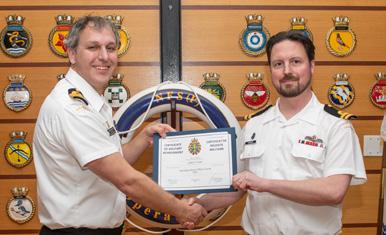
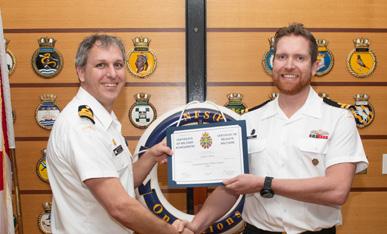
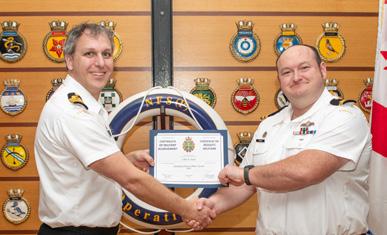
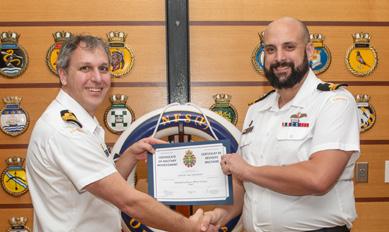
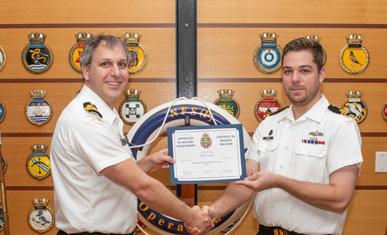
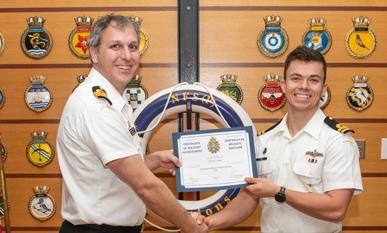
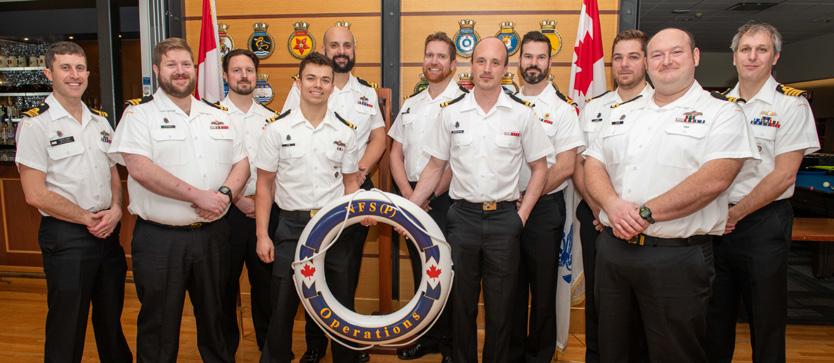
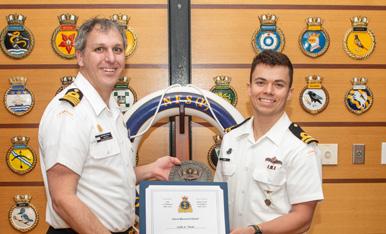
Operations Room Officer course 2301 Graduation
Held at the Naval Officer Training Centre Venture Gunroom, Work Point Barracks Canadian Forces Base Esquimalt on Feb. 2. Captain
presenting.
(Navy) Matthew Coates
Photos: Sailor First Class Brendan McLoughlin
Lieutenant (Navy) Ellie Aminaie receives a graduation certificate.
Lieutenant (Navy) Sean Catteral receives a graduation certificate.
Lieutenant (Navy) Matthew Fernandes receives a graduation certificate.
Lieutenant (Navy) Douglas Fraser receives a graduation certificate.
Lieutenant (Navy) Brian Grant receives a graduation certificate.
Lieutenant (Navy) Stewart Joyce receives a graduation certificate.
Lieutenant (Navy) Adrian Alan Thow receives a Top Candidate certificate.
Lieutenant (Navy) Adrian Alan Thow receives a graduation certificate.
Lieutenant (Navy) Etienne Laurier receives a graduation certificate.
Lieutenant (Navy) Michael Van Vlaenderen receives a graduation certificate.
Graduates of the Operations Room Officer Course 2301 from left to right: Lieutenant-Commander Alex Johnson, ORO Course Officer, Lieutenant (Navy) Matthew Fernandes, Lt(N) Douglas Fraser, Lt(N) Adrian Alan Thow, Lt(N) Michael Van Vlaenderen, Lt(N) Brian Grant, Lt(N) A. Greenwood, Lt(N) Sean Catteral, Lt(N) Etienne Laurier, Lt(N) Stewart Joyce and Captain (Navy) Matthew Coates.
in POWELL RIVER, BC, CANADA
Sunshine Coast Health Centre and Georgia Strait Womens Clinic are registered B Corp, licensed, and accredited mental health facilities that use an evidencebased, non-12-step, meaning-centred, strengths-based approach that interconnects all our services and therapies including medical withdrawal, anger management, rTMS, trauma therapy, and PTSD treatments.
Our gender-speci c* programs provide a safe space for clients to get help with underlying issues driving trauma, mental health su ering, or addictive behaviour that can be hard to address in co-ed environments. Moving beyond a focus on abstinence and symptom reduction allows clients to experience the full, transformative bene t of our treatment programs.
*Individuals a end the program with the gender they identify as or, for gender uid and non-binary individuals, the program they are most comfortable and safe in. Our admissions coordinators will work with prospective clients to determine which program is the best t.