






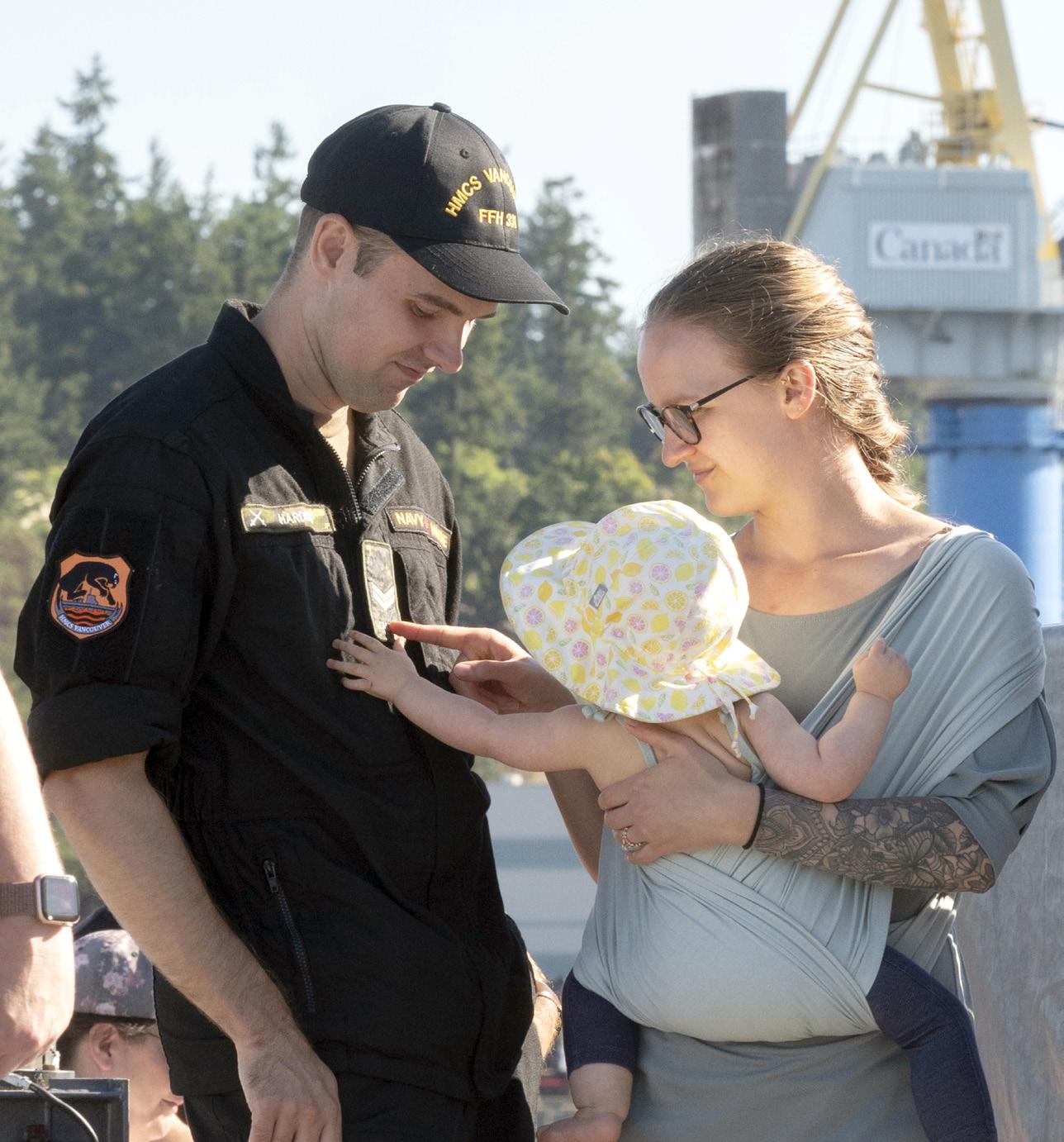




Photo: Corporal Alisa Strelley, Canadian Armed Forces Photo


Sunday / d imanche S ept 17 2023 10 am – 3 pm


la bfc esquimalt
s’invite chez vous bringing cfb esquimalt to you
Ship tourS & boat rideS exciting demoS & interactive experienceS military bandS activitieS & gameS barbecue and So much more!
viSiteS de navireS et promenadeS en bateau démonStrationS paSSionnanteS et expérienceS interactiveS muSiqueS militaireS activitéS et jeux barbecue et bien d’autreS choSeS encore !
Event information on Eventbrite

Pour en savoir plus sur cet événement, visitez Eventbrite
Come on down for a chance to enter our Base Commander for a Day contest!
Venez participer à notre concours
“Commandant de la base d’un jour”!


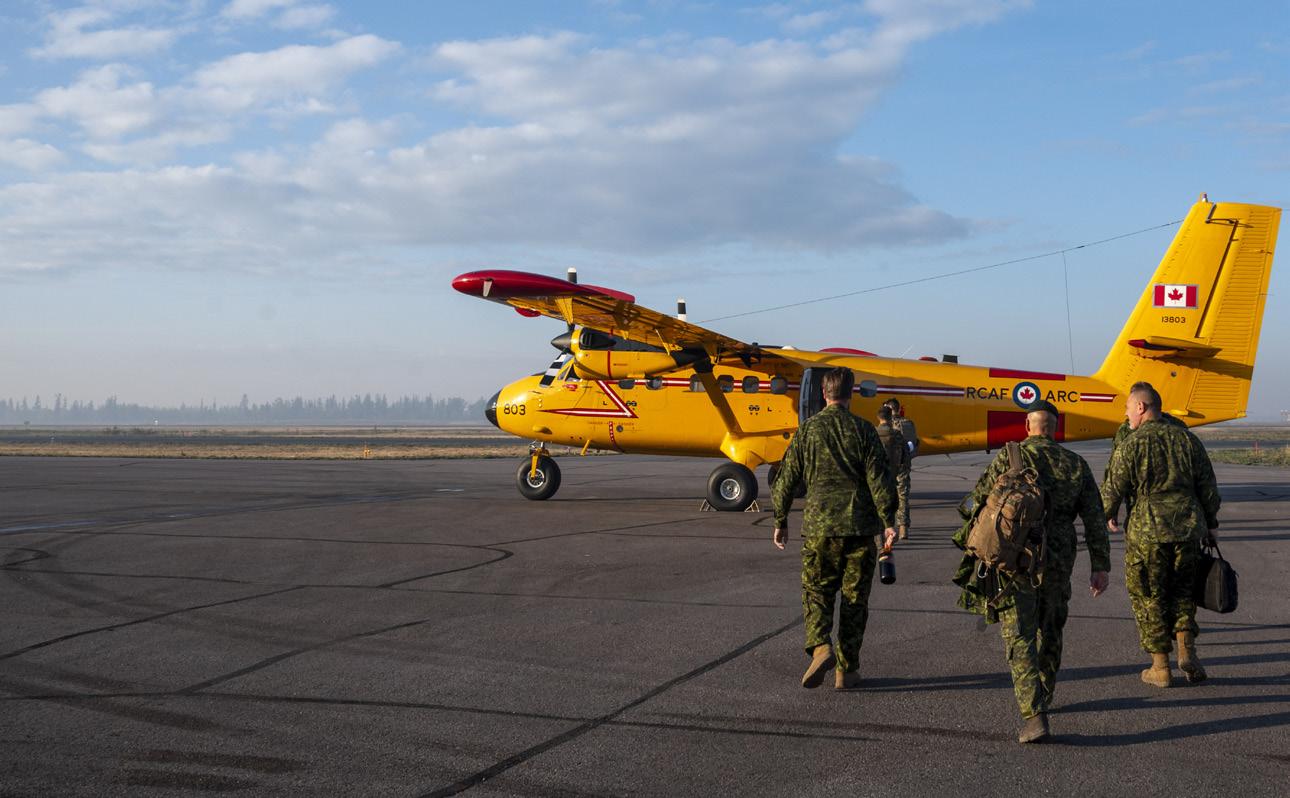
After four weeks of dedicated support to British Columbia Wildfire Service (BCWS), Joint Task Force Pacific (JTFP) stood down Operation (Op) Lentus on Aug. 14 with the conclusion of the Province of British Columbia’s Request for Federal Assistance (RFA).
Op Lentus is the Canadian Armed Force’s (CAF) response to natural disasters in Canada.
The operation saw the deployment of members from 3 Canadian Division (3 Cdn Div), 39 Canadian Brigade Group, and Royal Canadian Air Force (RCAF) assets and personnel to areas in B.C. heavily impacted by wildfires, including Vanderhoof, Burns Lake, and Kamloops.
Their mandate is to provide assistance and logistical support to partner agencies, including BCWS, Royal Canadian Mounted Police (RCMP), and the Ministry of Emergency Management and Climate Readiness in B.C., to ensure the safety and welfare of Canadians impacted by the wildfires.
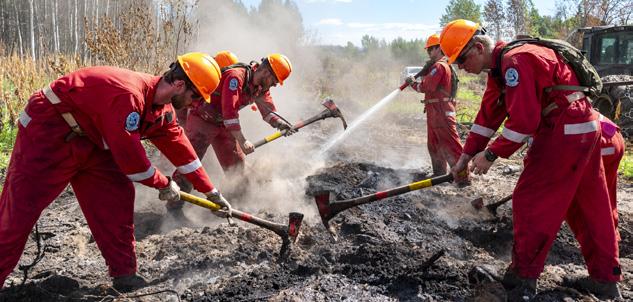
The land component, led by 3 Cdn Div, consisted of elements from the 3rd Battalion, Princess Patricia’s Light Infantry (3 PPCLI), 1st Battalion (1 PPCLI), and 1 Combat Engineer Regiment (1 CER). They undertook crucial roles, including firefighting, route reconnaissance, perimeter patrols, equipment recovery, and controlled burns.
On the aerial front, the RCAF provided airlift resources for mobility and logistical
tasks. Their fleet was comprised of one CC-130 Hercules, 2 CH-146 Griffons, and a CC-138 Twin Otter. The CC-130 Hercules was pivotal in transporting 185 international firefighters—105 from Brazil and 80 from Mexico—to the front lines. Meanwhile, the CH-146 Griffons facilitated reconnaissance and the insertion and extraction of firefighters in remote areas. The Twin Otter focused on personnel transport. The Air Task Force, a team of approximately 40 personnel, was backing the air operations. This group drew members from various wings and squadrons across Canada, including 408 Transport Helicopter Squadron in Edmonton and 440 Transport Squadron in Yellowknife, bolstered by support staff from 2 Wing Bagotville, 8 Wing Trenton, and 19 Wing Comox.
The collaborative effort with other agencies was key to the success of Op Lentus. The CAF worked closely with BCWS and the RCMP, harmonizing their operations to ensure maximum efficiency and effectiveness. The conclusion of the RFA follows the provincial determination that CAF resources were no longer required, marking a significant milestone in the containment of wildfires.
In concluding remarks on this mission, Rear-Admiral Christopher Robinson said, “I am immensely proud of all the CAF members who deployed in support of the British Columbia Wildfire Services and am inspired by the effects they achieved in containing the wildfires and restoring conditions on the ground. BZ!”




MANAGING EDITOR
Jazmin Holdway jazmin.holdway@forces.gc.ca
EDITOR
Kate Bandura
WRITER
250-363-3130 kateryna.bandura@forces.gc.ca
Peter Mallett mallett.peter@cfmws.com
PRODUCTION
Leslie Eaton
250-363-8033 workstation3@lookoutnewspaper.com
ACCOUNTS /RECEPTION
Trina Winters
ADVERTISING
Joshua Buck
250-363-3127
778-977-5433 NEW military.base.advertising@gmail.com
EDITORIAL ADVISORS
Lt(N) Michelle Scott
Rodney Venis
FRENCH EDITORIAL ADVISOR
250-363-4006
250-363-7060
A/Slt Alexandre Springer alexandre.springer@forces.gc.ca
Published each Monday, under the authority of Capt(N) K. Whiteside, Base Commander.
Le LOOKOUT est publié tous les lundis, sous l’égide du Capv K. Whiteside, Commandant de la Base.
The editor reserves the right to edit, abridge or reject copy or advertising to adhere to policy as outlined in PSP Policy Manual. Views and opinions expressed are not necessarily those of the Department of National Defence.
Le Rédacteur se réserve le droit de modifier,de condenser ou de rejeter les articles, photographies, ou annonces publicitaires pour adhérer au Manuel des politiques des PSP. Les opinions et annonces exprimées dans le journal ne réflètent pas nécéssairement le point de vue du MDN.
Circulation: 2,000 plus 300 pdf downloads per week Follow us on Facebook, Twitter and Instagram to join our growing social media community.
A Division of Personnel Support Programs
CFB Esquimalt, PO Box 17000 Stn. Forces, Victoria, BC V9A 7N2 Web: www.lookoutnewspaper.com Fax: 250-363-3015
Canadian Mail Product Sales Agreement 40063331

“When we are stuck living in the trifecta of rationalization, denial, and avoidance, we cannot step into authentic acceptance.”

Before starting therapy, some of us may find ourselves at our breaking point in what we can endure emotionally and mentally. We can no longer tolerate the anguish coming out of our psyche, and we must seek help. One of the benefits of counselling is that psychological pain can be offloaded to a trained mental health clinician, who can attempt to carry some of that burden for us for some time. This, in theory, allows us the space to heal, as the hurt is vocalized and is no longer internalized.
The confessional aspect of therapy can have a profound cathartic effect on us. However, we must be aware of the severity of the topic and pace ourselves so that we aren’t suffering more. Therefore, learning how much we can endure psychologically provides us with a higher level of empowerment over the therapeutic process. But, how can we tell what we can
endure in counselling? We can’t really know unless we try. Sometimes, we’ve had a build-up of psychological tar that has clogged our mental and emotional well-being which makes us attached to our maladaptive thoughts and patterns of behaviours.
For example, say a person comes into counselling after a break-up noticing their mood is down and wanting to get back to how they used to be. The person has taken on the brunt of the break-up and feels as though they are the sole reason for how it ended. However, throughout the sessions, they discover their affinity for peoplepleasing and that it has distorted their needs in romantic relationships. As a way not to confront their needs they often put themselves behind the needs of others, and in a way, they’ve become selfishly selfless. This is a tough pill to swallow for the people-pleasers as they often use distorted rationalizations such as ‘I could never put myself first because my mother was a narcissist’ or potent denials like ‘I don’t deserve to put myself first’ to not have to confront the deeper issues.
Understanding where disillusioned rationalizations, denial, or avoidance come from would help us understand where the most friction within us comes from. People-pleasers use these tactics with therapists to skirt around
topics they do not wish to confront. So, how do we push forward in these circumstances? An important step is acceptance. Acceptance is a process, the more insights and consciousness we have about something the more we can accept it because we have the appropriate information to do so. However, when we are stuck living in the trifecta of rationalization, denial, and avoidance, we cannot step into authentic acceptance.
Understanding what we can endure is unique to our experience.
Pushing ourselves in therapy is no small feat, and sometimes we need time to digest what we have experienced. This nourishing work must be done at a comfortable pace and isn’t rushed. Be cognizant of your emotions and thoughts, and if a topic becomes too much, be explicit and transparent with your therapist about it so they can support you.
Thomas Goenczi is an RCN Veteran and MA Clinical Counsellor with Private Practice: Well Then Therapy.
The content is not intended to substitute professional advice, diagnosis, or treatment. Always seek the advice of your mental health professional or other qualified health provider with any questions regarding your condition.

























Ashley Evans
CFB Esquimalt Communications Officer
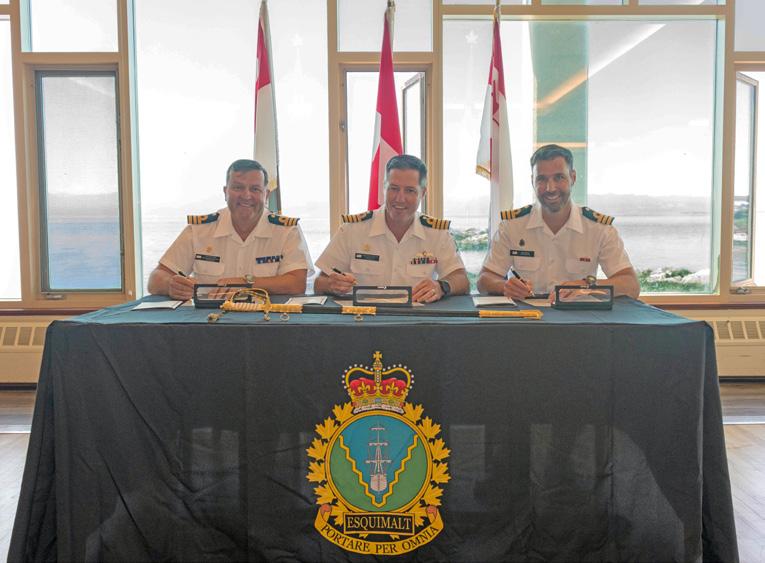
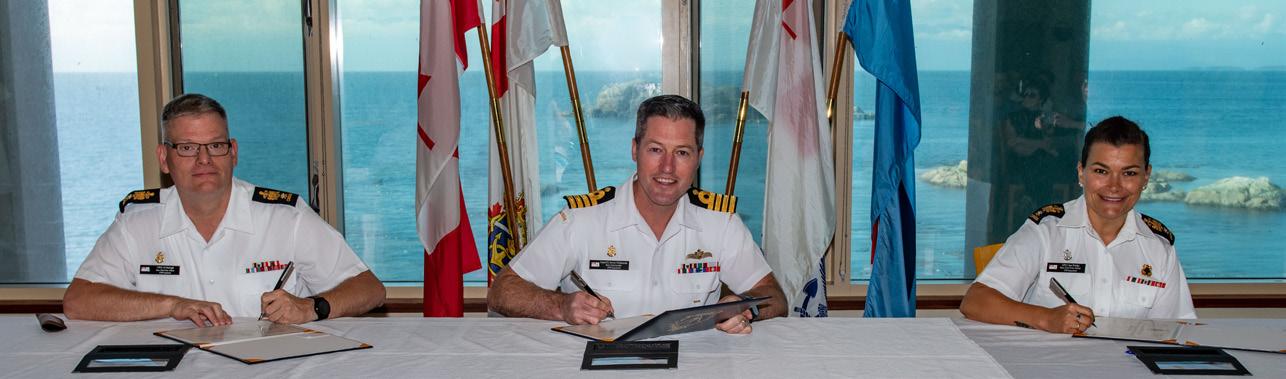
On Aug. 22, Canadian Forces Base (CFB) Esquimalt thanked Chief Petty Officer First Class (CPO1) Al Darragh, Base Chief Petty Officer, for the past three years of service he provided while warmly welcoming CPO1 Susan Frisby into the role.
During his time as Base Chief, CPO1 Darragh maintained a dedicated focus on the people that make up the Greater Defence community, military and civilian members alike, as making a difference – big or small – he said, made the most profound impact.
The role of the Base Chief Petty Officer is to assist in ensuring the effective and efficient operations of CFB Esquimalt, as directed by the Base Commander. CPO1 Darragh came into the role at a unique time, only four months into the COVID-19 pandemic. The three years that followed were undeniably challenging, though he never shied away from that challenge, focusing on what mattered most at the Base.
“This role presents many challenges, most of which are extremely complex, and it can
be slow to move towards solutions; making progress on many of the topics we face is a reward in itself,” said CPO1 Darragh.
“I received a phone call from the father of a junior sailor thanking me because we at CFB Esquimalt were trying to help our sailors find places to live. He expressed that his son had a roof over his head because of people like us who took the time and cared enough to help,” he continued. “Making a positive impact on my shipmates is very rewarding.”
CPO1 Darragh joined the Royal Canadian Navy (RCN) in June 1988 as a Marine Engineering Mechanic. Throughout his career, he was posted to numerous ships and lodger units, including HMCS Fraser, Kootenay, Restigouche, Huron, Athabaskan, and Algonquin, and Canadian Forces Fleet School Esquimalt – MSE Division, and Fleet Maintenance Facility Cape Breton. In 2012, CPO1 Darragh was promoted to his current rank and, in 2015, was appointed as Coxswain of HMCS Ottawa, where he was deployed to the Indo-Pacific.
A Chief, or CPO1, can often be referred to as the grandfather of the ship or unit they
are posted to, which makes clear why the involvement with members of the Greater Defence community at CFB Esquimalt was an aspect of his role that came quickly to CPO1 Darragh, and one he so greatly appreciated.
Sharing with CPO1 Frisby, CPO1 Darragh said, “You need to see and be seen. It is paramount that, as the Base Chief, you get out and see what people are doing, what the conditions are like, and not just the physical work environment but the morale and attitudes. Our people need to know that you are invested in them.”
A focus on the Defence Team and community is a sentiment CPO1 Frisby holds close and a message she has received from the outgoing Base Chief.
“As in my previous postings, for me, it still comes down to the people. I look forward to building new relationships and working with Captain (Navy) Kevin Whiteside, Base Commander, to continue the work of the previous Base Commander and CPO1 Darragh, in fostering collaborative relationships with the communities that host CFB Esquimalt, it’s sailors, soldiers, and aviators,
while doing what we as a team can do to improve the support provided to them.”
CPO1 Frisby comes to the Base Executive Branch from her previous posting as Coxswain of HMCS Winnipeg, where she most recently deployed to the Indo-Pacific.
“It is an amazing feeling to have been chosen for this position,” she said. “I am both humbled and excited for the opportunity to contribute to the RCN at this level and to continue to have the responsibility to do what I can for our members at this strategic level.”
In his parting words to the members of the Base, CPO1 Darragh said, “Ask others why they joined the Defence Team, then strive to receive what both you and they were looking for by advocating for, or influencing, the changes required to achieve those things. We are all a part of the team, and if we work together, great things can happen.”
We bid farewell while thanking CPO1 Darragh for his dedicated service as CFB Esquimalt Base Chief over the past three years. Fair Winds and Following Seas.


Michael McWhinnie Public Affairs Advisor, NTG
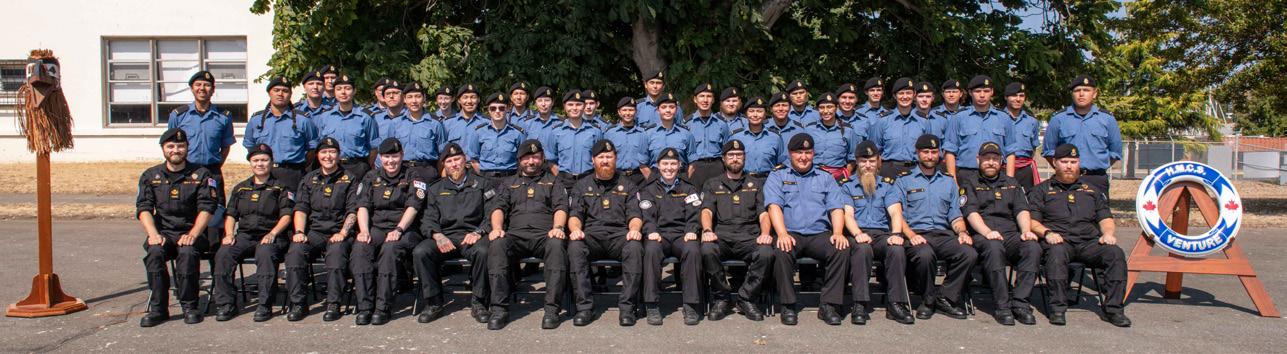
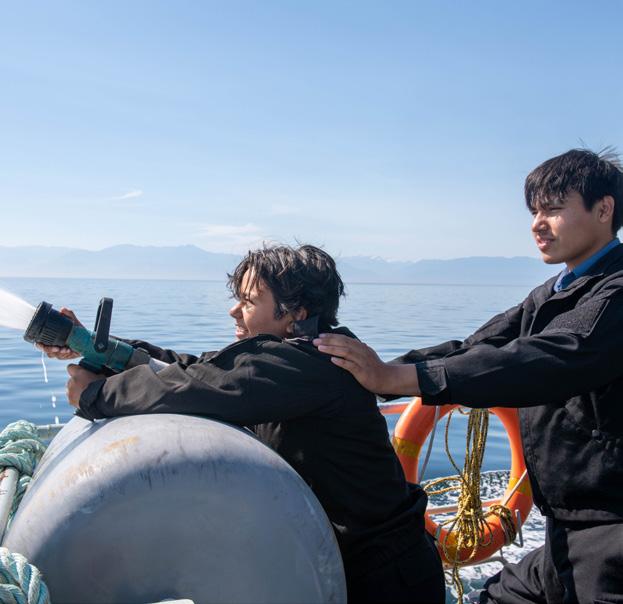
Of all the tasks performed by staff within the naval training establishments, conducting graduation ceremonies is amongst the most gratifying. Course directors and instructors are all smiles, knowing they have supported the growth and development of their students. But the pride and sense of accomplishment observable in the candidates themselves made the recent Raven graduation ceremony special.
With shoulders back and chins up, demonstrating their newly acquired mastery of military drill, 32 graduates aged 16 to 26 from various First Nations (FN), Inuit and Métis communities across Canada marched smartly onto the Work Point parade square on Aug. 21 to mark the successful completion of six weeks of academically, physically, and emotionally challenging training.
With Indigenous artifacts and regalia on display, musical accompaniment by the Naden Band of the Royal Canadian Navy and set against the backdrop of Victoria’s Inner Harbour, the ceremony began promptly at 1:00 p.m. with a sashing ceremony conducted by Métis Nation of British Columbia representatives and a concurrent culture performance by local ləkʷəŋən dancers, singers and drummers.
The Raven Program is in its 20th year and is one of five Indigenous Summer Programs offered by the Canadian Armed Forces (CAF). It is based on the Army Primary Reserve introductory military qualification course supplemented with Indigenous cultural teachings. Raven aims to foster positive connections with Indigenous communities nationwide while raising awareness among participants of career opportunities within the CAF.
Elder Rick Peter from Cowichan FN offered an inspiring Indigenous blessing before Awards and Presentations.
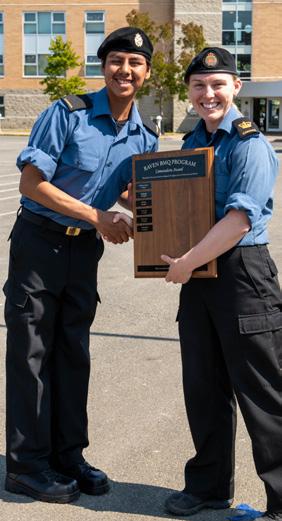
Sailor Third Class (S3) Kaylee Storms from Sudbury, Ont., and a member of the Cree FN, received the Top Candidate Award as the graduate with the highest overall achievement.
“I enrolled in Raven because I wanted to challenge myself, to push my limits and explore what I am capable of,” she said. “I am a bit shy and struggled with using my voice in certain circumstances, but things
got easier as the course progressed, and my confidence grew.”
She said she enjoyed the physical training, including rucksack marches, and discovered she could do much more than she gave herself credit for, growing in self-discipline and self-motivation.
S3 Jackson Blackbird, from Walpole Island, Ont., and a member of the Ojibway FN, was awarded the Spirit of Camaraderie Award, as the graduate who displayed the best espritde-corps as selected by his peers.
“From the beginning, the biggest challenge for me was the social aspect and learning how to accomplish goals in a group,” Blackbird said. “I have gained a much greater understanding of the importance of friendships and appreciation for what can be done with teamwork. I’ve also acquired a better ability to be punctual. Raven was the best summer I’ve ever had, and I will strongly recommend it to my friends.”
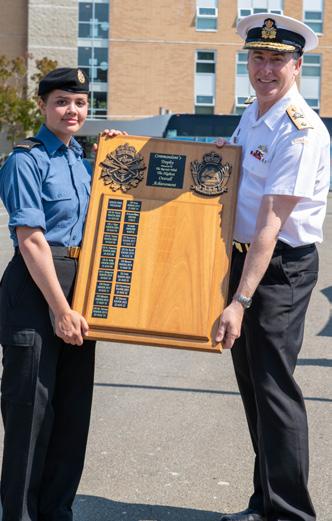
The parade ended with Commodore (Cmdre) Patrick Montgomery, Reviewing Officer and Commander of Naval Reserves, taking the salute and the playing of ‘God Save the King’. Just prior, Cmdre Montgomery offered concluding remarks. He stressed the value of the lifelong friendships created during experiences such as Raven and how the program exposed participants to CAF values such as loyalty, inclusivity, accountability and courage.
“For those of you who choose, the door is open to you in a trade of your choice, in either the Regular or Reserve Forces. And if you return completely to civilian life, I truly hope you carry the positive lessons from the Raven Program forward, in your communities, schools, or workplaces, and help others who may benefit from your new experience.”
TO LEARN MORE ABOUT CAF INDIGENOUS PROGRAMMES, VISIT:


To access the video of Raven Graduation 2023, visit: facebook.com/NTG.GIM
Kateryna Bandura Lookout Editor
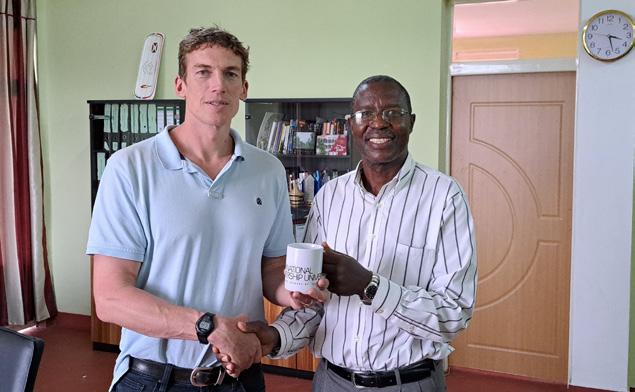
The Royal Canadian Navy (RCN) instills many valuable skills, but one Naval Warfare Officer is certain that helping people is the most important one.
When Lieutenant-Commander Carl Monk transferred from the Regular Force to the Reserves, he says the idea of service before self and making the world a better place for others stayed with him. He now puts those skills to work in developing countries with a Non-Governmental Organization (NGO) called Transform International.
“My deployments and interactions with people who are less fortunate have shaped my perspective, and I knew I wanted to give back with that philosophy,” he said.
Serving has garnered him a fair amount of international experience, including Sudanese hospitality while deploying on a United Nations military observer tour in Sudan in 2008 and managing small vessels with migrants while on the boarding team of HMCS Algonquin in the Gulf of Oman during Operation Apollo in 2002.
“[These] migrants had paid to be transported over water in tiny, horrible boats with outboard engines, hardly seaworthy and often lost at sea without even a functioning compass. They had risked everything for a chance at opportunity,” he said.
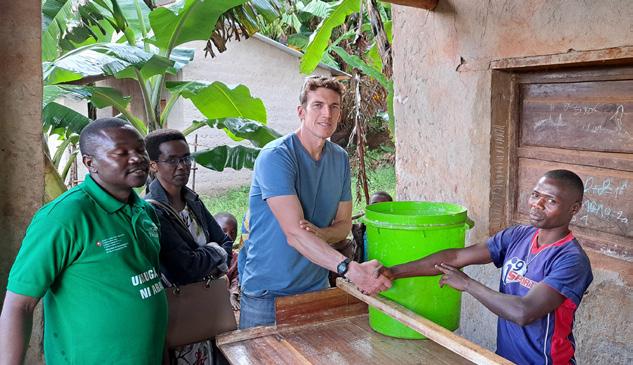
Last year he volunteered to assume the CEO role; nowadays, he leads a project in Burundi, the poorest country in the world. The project, he says, is changing people’s lives.
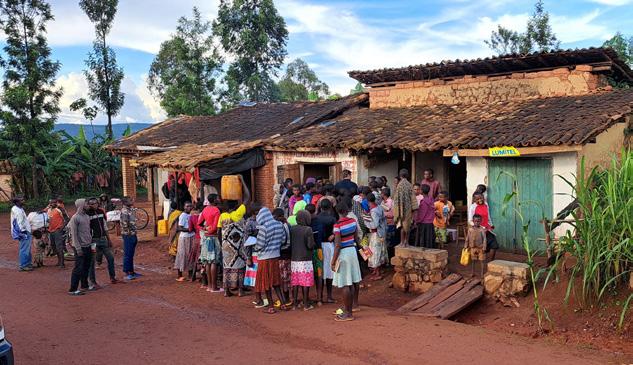
“It is an amazing project that teaches very basic ‘street business’ skills to would-be entrepreneurs who want to start a small business or who already run one,” he said.
So far, the six modules of weekend training have resulted in graduates doubling and tripling their incomes, going from $1.20/day in earnings to $4/day.
“We also recently built a commercial bread oven that uses 90 per cent less wood than a conventional oven, which makes a big difference in a country facing deforestation,” he said. “There is a lot of coordination that has to happen behind the scenes to drive these projects forward to fruition.”
The most challenging aspect of his role is constantly working across various time zones and cultural differences.
“My current project in Burundi has me working in the common language of French,
but this is not my first language nor the first language of the Trauma Healing and Reconciliation Services Center, the organization I work with in Burundi; their first language is Kirundi. It took me quite a while to understand the perspective and paradigms of the people I am working with in Burundi, and the challenges they face,” he said.
But Monk says he still has ‘lots of gas in the tank’ to improve the world.
“RCN members are some of Canada’s best and brightest who want to achieve positive results and do good things,” he said. “They can help make a difference because the Navy provides experience in leadership, tenacity, the ability to think on one’s feet, to adapt and overcome to achieve success, always keeping a positive and respectful attitude, and teamwork.”
He encourages anyone with interest in making a difference to visit the Transform International website, or contact carl. monk@transforminternational.ca

Transform International (TI) is a small Non-Government Organization founded several years ago. It aims to reduce poverty in developing countries by assisting communities in developing clean drinking water supplies, improving sanitation systems such as safe drinking water in hospitals, schools, and community wells, and developing access to education and electricity. Everybody is a volunteer, so there is no overhead or salaries to be paid. The organization has projects in Burundi, South Sudan, Niger, Malawi, Mexico, Bolivia, Kenya, and one soon in western Rwanda.




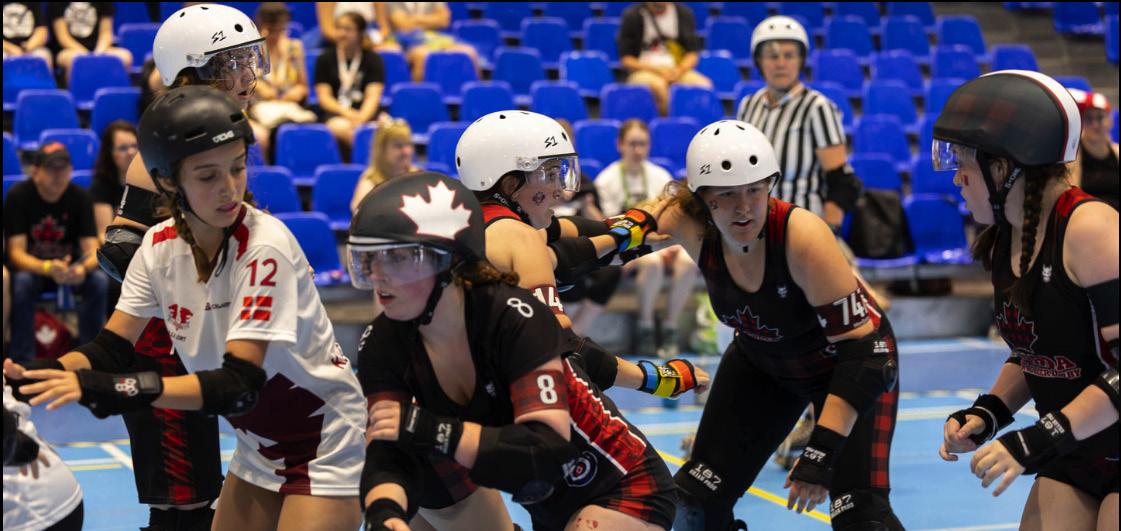
Suiting up for Team Canada at the 2023 Roller Derby Junior World Cup in France was already going to be a big deal for Naomi Morrell.
Being named Team Captain and guiding her team to a bronze medal was the icing on the cake for the 17-year-old, who goes by the roller derby alias ‘Scream Soda’.
“The overall environment at the World Cup was one of passion and excitement, and the athletes who I teamed up with on the rink and the memories we shared will be a part of my life forever,” said Morrell. “I had an incredible experience.”
Morrell and her teammates compiled an overall record of five wins during the tournament. That included Canada’s 340-67 win over Team World in the tournament’s third-place match on July 30.
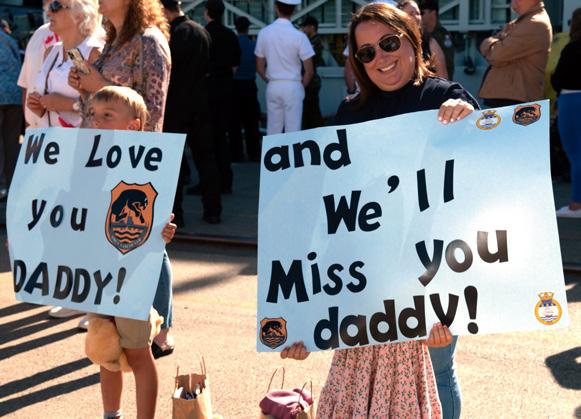
Morrell is the daughter of Master Sailor (MS) Clayton Morrell, an electrician currently posted to HMCS Vancouver. He was brimming with pride about Naomi and her team’s performance in France.
“I am very proud of my daughter for not only showing such excellent skill and presence of mind as a team member and captain, but as a competitor as well. She rallied her team when they were low and stepped back to let others shine instead of taking the limelight. She represented our country
well, as did the entire team and coaching staff,” he said. “I believe she was worthy to carry our flag into the opening ceremonies and I am a very lucky dad.”
Morrell took to Roller Derby five years ago. Today she is also a member of the Rotten Apples, the junior team for Victoria’s Eves of Destruction Roller Derby League.
The roller derby that Morrell plays is different from the more violent version made famous on television in the 1970s and 80s, which was played on an elevated track. Today, dangerous play is prohibited. The game consists of two teams of five skaters who compete on an oval, flat track wearing quad-style roller skates. One player on each team is designated as a jammer to lap opposing team members to score points. The other team members, pivots or blockers, work together to prevent the jammer from passing through.
A few days before Team Canada’s departure, Morrell’s coaches named her one of two Team Captains for Team Canada Female. She says she and her teammates focused on promoting the spirit of sportsmanship and kindness they brought to the floor for every game.
“We may not have been number one in the tournament, but we were number one in the hearts of every team that we played against and every referee who officiated our matches,” she said. “My coaches wanted us to show that graciousness, which is often prescribed to Canadians.”
Following the World Cup, Naomi and her family headed to Paris for six days of sightseeing, where they also celebrated her 17th birthday.

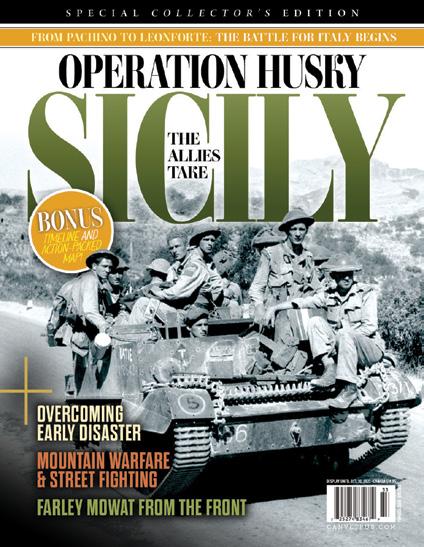
Operation Husky: The Allies take Sicily
For almost four years, the forces of Nazi Germany have occupied Europe while the Allies fought in Africa and the Pacific. Now, on July 10, 1943, Canadian, British and American forces invade Sicily, a hot, mountainous, enemy-occupied island off Italy’s south coast. The Allied liberation of the continent has begun.
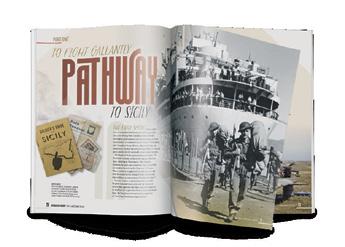
Canada!
Gabrielle Brunette Communications Coordinator Student, FMF CS
June 2 marked the first cohort of people from Fleet Maintenance Facility to graduate from the Project Leader Essential course since it was given an official course code and certificate in March.
The Project Leader Essential Course was developed in-house at Fleet Maintenance Facility Cape Breton (FMF CB) by Joseph Lobo, Waterfront Manager.
“The main reason for the development of the course was to ensure that FMF CB personnel were provided a career path into the Operations Department,” he said.
The course is part of FMF CB’s larger Succession Development Plan (SDP), which was designed to support the career growth and progression of employees while also ensuring proper guidelines are in place for career progression within the Service Delivery Department.
“The training aligns with the Government of Canada’s six Key Leadership Competencies and particularize for different roles within FMF CB,” Lobo said.
The SDP has provided FMF CB with the capability to train and hire from within the facility. It also allows employees and managers to create a personalized training plan that aligns with future career goals.
“For example, if a Production employee is interested in becoming part of the Operations Team, the SDP Guide will show which path the employee must take to achieve their goals,” Lobo explained.
From there, employees must meet all the required skills to progress along their career development plan.
Lobo has offered an informal version of the course since 2017, which has evolved and expanded over the last six years. As the Operations department grew, so did curiosity about the various roles and responsibilities within the department.
“I was inundated yearly requests to take the course,” he said.
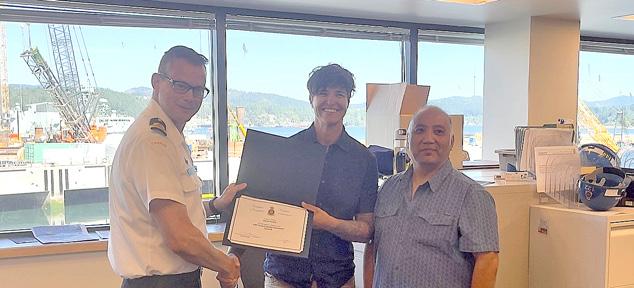
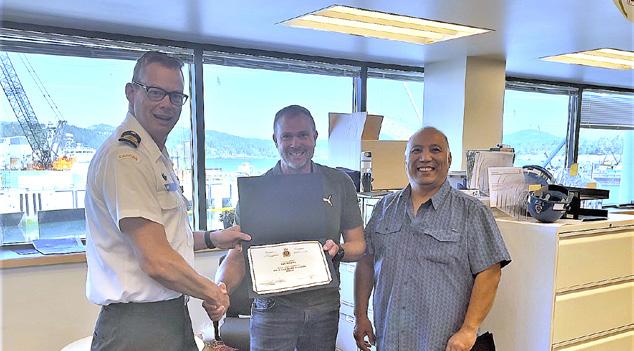
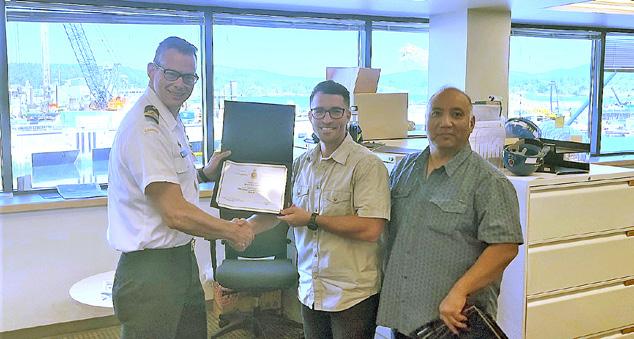
Shane McClymont, Dale Sklapsky, and Allison Verley were all part of the inaugural course and were presented with the course certificate by Commander (Cdr) Iain Meredith, FMF CB Operations Manager.
All employees who have completed the course in the past will also receive a course certificate.
For those interested in learning more about the Project Leader Essential course, it is now listed in the Executive Leadership Development Programs (LDP) training catalogue. The system is open to all FMF CB personnel meeting the minimum requirements per their development plan.
Peter Mallett Staff Writer
A gleaming red and white traveling memorial wall, emboldened with a Canadian flag, visited the HMCS Alberni Museum & Memorial (HAMM) on Aug. 18-19.
The memorial contains the names of 149 Canadians who were killed in Vietnam while serving with the United States Armed Forces (USAF), seven soldiers Missing In Action (MIA), two Canadian military personnel killed in action while serving with the International Commission for Supervision and Control (ICSC), and two Canadian soldiers who were reported MIA with the ICSC who were not volunteers fighting with the US military.
Rob Purvis, Canadian Vietnam Veterans Association President and founder, organized the travelling memorial’s visit to HAMM and said the names are unknown to most Canadians.
“Very few people in the United States or Canada know about Canada’s involvement in Vietnam,” says Purvis. “The purpose of the Memorial Wall is to honour Canadians who followed their conscience and fought for freedom in the Vietnam War and to educate and raise public awareness of Canadians who participated in the Vietnam War.”
Over 20,000 Canadians volunteered to fight or participate in the USAF operations in Vietnam.
Lewis Bartholomew, HAMM Director, says the museum has been trying to organize a visit for eight years because of its historical significance, and he and museum staff are delighted the memorial has stopped in Courtenay.
“If Korea is the forgotten war, the Canadian Vietnam soldiers are our forgotten veterans; Canada did not have an official military combat role and Canadians were and are still unaware that so many Canadians served the U.S. military in the war,” said Bartholomew.
“For years they have faced discrimination from various organizations in their efforts to be recognized and remembered.”
The Canadian Vietnam Veterans Association (CVVA) membership consists of veterans who served in the Canadian and American Armed Forces during the Vietnam War from February 1961 to May 1975. Purvis, also a 76-year-old United States Army veteran, has rallied the preservation of the Vietnam War soldiers’ legacy for over four decades.
“I will continue to educate and spread the word about the military service of thousands of Canadians in Vietnam because so many are unaware of our legacy,” said Purvis.
He signed up for service in Vietnam when he was 21, along with three other childhood friends from his neighbourhood in Winnipeg, one of whom made the ultimate sacrifice. Purvis served as an Airborne Ranger with the 4th Infantry Division from
1969 to 1970. During the war, he was a paratrooper who conducted reconnaissance patrols deep in the jungle to look for signs of the enemy.
In 1986 Purvis formed the CVVA to lobby for veterans’ rights and provide pertinent information concerning their benefits and combat-related injuries involving the chemical herbicide Agent Orange and PostTraumatic Stress Disorder. CVVA’s first step was to organize a reunion of Canadians who served in Vietnam at the Vietnam Veterans Memorial in Washington, D.C. In 1988, the CVVA lobbying efforts aimed at the Veterans Affairs Act paid off, with an amendment allowing for service-connected benefits to Vietnam Veterans in Canada.
In June 2005, the CVVA unveiled its travelling Memorial Wall, designed and built by Doug Anderson of the Fargo Air Museum. The memorial will also be displayed at The Military Museum in Calgary and the Royal Canadian Army Museum in Shilo.
Trident staff
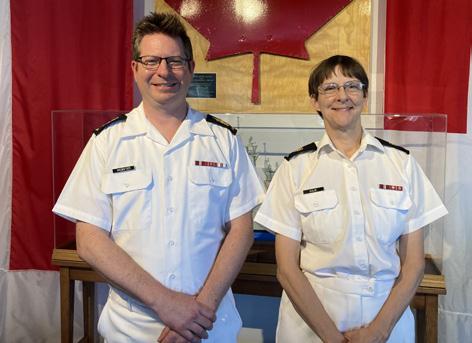
On Aug. 1, the Stadacona Band of the Royal Canadian Navy called a special promotion ceremony to celebrate Petty Officer First Class Susan Kulik’s promotion to acting Chief Petty Officer Second Class (CPO2), as well as her appointment as the new Unit Chief Petty Officer.
The band also recently marked outgoing Band Chief Chris Webster’s elevation to Chief Petty Officer First Class as he prepares to take on the new position of Chief of the Canadian Forces Music Branch.
CPO2 Kulik was raised near Montreal and said she knew she wanted to pursue a musical career by the age of ten. To fuel this dream, she studied recorder, flute, piano and violin privately before graduating from Vanier College in 1984 and McGill University in 1987.
While still a university student, CPO2 Kulik auditioned for and was accepted into the Regular Forces Music Branch in 1987. This would pave the path for a lengthy career in music, travel, and camaraderie. She was posted to the Stadacona Band in 1989 as an
Ordinary Seaman and was promoted to Petty Officer Second Class (PO2) in 1991.
She advanced to Petty Officer First Class (PO1) late in her career, which involved learning to conduct, and she was promoted to Acting While So Employed (AWSE) CPO2 in 2023.
CPO2 Kulik is married to George Kulik, a musician in the Stadacona Band, and together they have a son.
As Chief of the Music Branch, Chief Petty Officer First Class (CPO1) Chris Webster will now be the highest-ranking Non-
Commissioned Member (NCM) musician in the Regular Force. This job typically comes with a posting to Ottawa, but CPO1 Webster will work remotely from CFB Halifax.
The Stadacona Band of the Royal Canadian Navy is a fulltime professional military band headquartered in Halifax that has represented Canada’s Navy in the Atlantic region for over 75 years. Follow the band on Facebook for regular updates and upcoming performance dates at facebook.com/musique. stadacona.band.