
NEBRASKA MUNICIPAL REVIEW
Issue No. 1,211
The NEBRASKA MUNICIPAL REVIEW (ISSN 0028–1906) is published monthly and the official publication of the League of Nebraska Municipalities, an association of the cities and villages of Nebraska, published at 1335 L St., Lincoln, Nebraska 68508. Subscription rates are $5 per single copy — $50 plus tax for 12 issues. Periodicals postage paid at Lincoln, Nebraska. Views of contributors, solicited or unsolicited, are their own and not to be construed as having the endorsement of the League unless specifically and explicitly stated by the publisher
The NEBRASKA MUNICIPAL REVIEW is a nonprofit publication administered and supervised by the League of Nebraska Municipalities. All revenue derived from the publication is used by the association to defray publication costs.
League of NE Municipalities staff 402-476-2829 • www.lonm.org
L. Lynn Rex, Executive Director
Christy Abraham, Legal Counsel
Lash Chaffin, Utilities Section Director
Cherie DeFreece, Admin Assistant/ Membership Services Assistant
Brenda Henning, Membership Services Assistant/ LIGHT Admin Assistant
Ethan Nguyen, LNM/LARM Information Technology Manager
Shirley Riley, Membership Services Director
Jackson Sash, Utilities Field Representative/Training Coordinator
Ashley Wolfe, Marketing/Communications Director
LARM staff
Dave Bos, Executive Director
Tracy Juranek, Asst. Executive Director, Customer Service Specialist
Diane Becker, Communications/Marketing Director
Kyla Brockevelt, Executive Administrative Assistant
Drew Cook, Customer Service Specialist
John Hobbs, Loss Control Specialist
James Kelley, Loss Control Specialist
Fred Wiebelhaus, Loss Control/Claims Manager
POSTMASTER: SEND ADDRESS CHANGES TO NEBRASKA MUNICIPAL REVIEW, 1335 L STREET, LINCOLN, NEBRASKA 68508.
Have an idea, project or opinion to share? The League welcomes member articles, information, and op-eds.
Want to reach local decision makers? The League can help you get your message out to Nebraska’s 3,500+ municipal officials.To learn more, contact Ashley Wolfe at 402-476-2829 or ashleyw@lonm.org
President Marlin Seeman, Mayor, Aurora
President-Elect Bryan Bequette, Mayor, Nebraska City
Vice President David Black, Mayor, Papillion Past President Deb VanMatre, Former Mayor, Gibbon
Directors
Leirion Gaylor Baird Mayor, Lincoln
John W. Ewing, Jr. Mayor, Omaha
Sharon Powell Village Board President, Utica
Larry Evans Mayor, Minden
Rod Petersen Mayor, Louisville
Jim Bulkley Mayor, Columbus
Betsy Vidlak Mayor, Scottsbluff
Pat Heath City Administrator, Gering
Janine K. Schmidt

What's inside?
Midwinter recap 6 Features
Humboldt: Flowers and memories
Center for Rural Affairs: Introduction to grants
Minden: A vision for the diamond in the rough
Bridging the gaps: A municipal guide to infrastructure funding in a tight fiscal environment
NDED opens applications through the federal Opportunity Zones Program
Nebraska Recycling Council: Join Nebraska’s voluntary battery collection network
Central Nebraska Regional Airport and Grand Island Public Library launch “Flybrary” for travelers
Columbus: Decades of dedication lead Columbus Councilman to Nebraska Baseball Hall of Fame
Columns
The Director's Message - L. Lynn Rex, LNM Executive Director - House and Senate passed bipartisan landmark comprehensive housing legislation!
Guest Commentary - By U.S. Congressman Mike Flood - Congressman Flood celebrates House passage of landmark bipartisan housing affordability package
Guest Commentary - By U.S. Senator Pete Ricketts - Ricketts celebrates Senate passage of the 21st Century ROAD to Housing Act
LARM – Hiring youth for municipal jobs—what are the rules?
Guest Commentary - U.S. Representative Adrian Smith - Celebrating the Good Life
In each issue
CMC/Treasurer, Morrill
Kyle Svec City Admin./Utilities Supervisor, Geneva
Affiliated Sections
City Managers
Wes Blecke, Wayne Clerks
Munic. Accounting & Finance
Derek Bargmann, Seward
Becky Erdkamp, Exeter Fire Chiefs Corey Schmidt, Grand Island
Utilities Gary Thurlow, Atkinson
On the cover
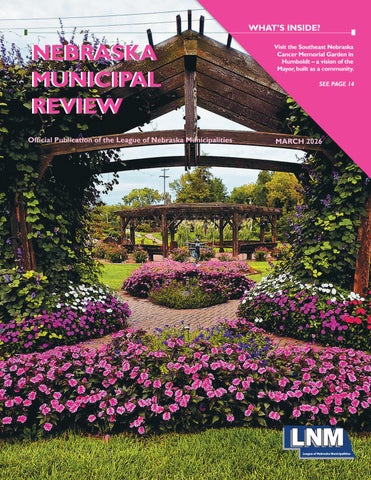
The Southeast Nebraska Cancer Memorial Garden in Humboldt. Photo provided by Humboldt Mayor and visionary for the project, Jan Wilhelm.
Larger Cities Legislative Committee
John McGhehey, Mayor, Alliance
Tobias Tempelmeyer, City Administrator, Beatrice
Rusty Hike, Mayor, Bellevue
Jim Ristow, City Administrator, Bellevue
Mindy Rump, Mayor, Blair
Phil Green, City Administrator, Blair
David Scott, Deputy City Administrator of Operations, Blair
Tom Menke, City Manager, Chadron
Jim Bulkley, Mayor, Columbus
Tara Vasicek, City Administrator, Columbus
Dave Bauer, Mayor Crete
Tom Ourada, City Administrator, Crete
Jody Sanders, City Administrator, Fremont
Kent Ewing, Mayor, Gering
Pat Heath, City Administrator, Gering
Roger Steele, Mayor, Grand Island
Patrick Brown, City Administrator, Grand Island
Mike Evans, Mayor, Gretna
Paula Dennison, City Administrator, Gretna
Mark Funkey, City Administrator, Hastings
James Liffrig, Mayor, Holdrege
Chris Rector, City Administrator, Holdrege
Brenda Jensen, City Manager, Kearney
Brad DeMers, Asst. City Manager, Kearney
Doug Kindig, Mayor, La Vista
Kevin Pokorny, Director of Administrative Services, La Vista
John Fagot, Mayor, Lexington
Joe Pepplitsch, City Manager, Lexington
Margaret Blatchford, Assistant City Attorney, Lincoln
Riley Slezak, Senior Advisor to the Mayor, Lincoln
Linda Taylor, Mayor, McCook
Nate Schneider City Manager, McCook
Bryan Bequette, Mayor, Nebraska City
Perry Mader, City Administrator, Nebraska City
Justin Webb, Council Member, Norfolk
Scott Cordes, City Administrator, Norfolk
Brandon Kelliher, Mayor, North Platte
Layne Groseth, City Administrator, North Platte
Steve Krajewski, Mayor, Ogallala
Kevin Wilkins, City Manager, Ogallala
Thomas Warren, Chief of Staff, Omaha
David Black, Mayor, Papillion
Amber Powers, City Administrator, Papillion
R. Paul Lambert, Mayor, Plattsmouth
Emily Bausch, City Administrator, Plattsmouth
Don Groesser, Mayor, Ralston
Brian Kavanaugh, Council President, Ralston
Jack Cheloha, City Administrator, Ralston
Art Lindberg, Mayor, Schuyler
Lora Johnson, City Administrator, Schuyler
Betsy Vidlak, Mayor, Scottsbluff
Kevin Spencer, City Manager, Scottsbluff
Joshua Eickmeier, Mayor, Seward
Greg Butcher, City Administrator, Seward
Brandon Bonregard, Mayor, Sidney
Brett Kerkman, Vice-Mayor, Sidney
Lance Hedquist, City Administrator, South Sioux City
Jill Brodersen, Mayor, Wayne
Wes Blecke, City Administrator, Wayne
Barry Redfern, Mayor, York
Dr. Sue Crawford, City Administrator, York
Smaller Cities Legislative Committee
Chaired by Tom Goulette, City Administrator of West Point
Lisa Schroedl, City Administrator/Clerk/Treasurer, Ainsworth
Jessica Quady, City Administrator, Ashland
Crystal Dunekacke City Administrator/Economic Developer, Auburn
Marlin Seeman, Mayor, Aurora
Adam Darbo, City Administrator, Aurora
Chris Anderson, City Administrator, Central City
Andrew Lee, Admin/Clerk/Treasurer, Curtis
Alan Michl Chairperson, Exeter
Becky Erdkamp, Clerk/Treasurer, Exeter
Kyle Svec, City Administrator, Geneva
Matt Smallcomb, City Administrator, Gibbon
Gary Greer, City Administrator, Gothenburg
Jana Tietjen, Clerk, Hebron
Barb Straub, Admin/Clerk/Treasurer, Hemingford
Kelly Oelke, City Administrator, Hickman
Janine K. Schmidt, CMC/Treasurer, Morrill
Sandra Schendt, Clerk/Treasurer, Nelson
David Russell, Director of Gov. Affairs, NMPP Energy
Sandy Kruml Clerk/Treasurer, Ord
Mike Feeken, Mayor, St. Paul
Sandra Foote, Council Member, Superior
Warren Myers, City Administrator, Sutton
Jessica Meyer, City Administrator, Syracuse
Kelly Adamson, City Council Member, Tekamah
Sharon Powell, Village Board President, Utica
Kyle Arganbright, Mayor, Valentine
Melissa Harrell, City Administrator, Wahoo
Desiree Soloman, City Attorney, Waterloo
Stephanie Fisher, City Administrator, Waverly
Tom Goulette, City Admin./Utility Superintendent, West Point
Randy Woldt, Utilities Superintendent, Wisner
Robert Costa, Community Planner, Yutan

Municipal Legal Calendar
(All statute citations to Revised Statutes of Nebraska)
MAY 2026
CITIES OF THE FIRST CLASS
• Within 10 days following meeting or before next meeting (whichever is sooner) Clerk to have minutes available for public inspection. (84-1413)
• Within 15 days of Passage Clerk publishes ordinances passed. (16-405)
• Within 30 days following Council meeting Clerk publishes official proceedings of meeting, including claims. (19-1102)
• First Day - Automatic renewal of beer and liquor licenses (except Class C). (53-124, 53-135)
• Within 20 days after end of month Treasurer files monthly financial report. (16-318)
• * * Clerk must prepare agenda prior to next Council meeting. (84-1411)
CITIES OF THE SECOND CLASS
• Within 10 days following meeting or before next meeting (whichever is sooner) Clerk to have minutes available for public inspection. (84-1413)
• Within 15 days of Passage Clerk publishes or posts ordinances passed. (17-613)
• Within 30 days following Council meeting Clerk publishes official proceedings of meeting, including claims. (19-1102)
• First Day - Automatic renewal of beer and liquor licenses (except Class C). (53-124,53-135)
• Within 20 days after end of month Treasurer files monthly financial report. (17-606)
• * * Clerk must prepare agenda prior to next Council meeting. (84-1411)
VILLAGES
• Within 10 days following meeting or before next meeting (whichever is sooner) Clerk to have minutes available for public inspection. (84-1413)
• Within 15 days of Passage Clerk publishes or posts ordinances passed. (17-613)
• Within 30 days following Board meeting Clerk publishes official proceedings of meeting, including claims (19-1102)
• First Day - Automatic renewal of beer and liquor licenses (except Class C). (53-124, 53-135)
• Within 20 days after end of month Treasurer files monthly financial report. (17-606)
• * * Clerk must prepare agenda prior to next Board meeting. (84-1411)
Chaired by Mayor Don Groesser of Ralston
House and Senate passed bipartisan landmark comprehensive housing legislation!
Special thanks to Congressman Mike Flood, Senator Pete Ricketts, and the National League of Cities (NLC)!
BY L. LYNN REX, EXECUTIVE DIRECTOR, LNM
On March 5, the House of Representatives passed the Housing for the 21st Century Act. Rep. Mike Flood played a critically important role in leading the bipartisan effort with the House Financial Services Committee to pass this historic legislation to improve housing affordability. As highlighted in Rep. Flood’s press release on page 5, the Housing for the 21st Century Act incorporates several of his bipartisan housing initiatives. Click here for Rep. Flood’s full press release.
On March 12, the Senate passed the 21st Century Renewing Opportunity in the American Dream (ROAD) to Housing Act which is a combination of two bills: the Housing for the 21st Century Act passed in the House and the Senate’s ROAD to Housing Act.
Thanks to U.S. Senator Pete Ricketts who led or cointroduced seven of the bills incorporated into the 21st Century ROAD to Housing Act; these seven bills are noted in his press release on page 12. Click here for Senator Ricketts’ full press release.
Irma Esparza Diggs, Senior Executive and Director of Federal Advocacy at NLC, and our outstanding NLC Team under the leadership of CEO and Executive Director Clarence Anthony, worked tirelessly and effectively with members of the House Financial Services Committee and the Senate Banking Committee on the individual bills in the House and Senate, as well as the legislation combining both bills into the 21st Century ROAD to Housing Act. Although this legislation passed the Senate, it is now back in the House of Representatives for further discussion and action.
Michael Wallace, Legislative Director for Community and Economic Development on NLC’s Federal Advocacy Team, continues his exceptional work on this historic legislation. He stated in a recent article: “The new comprehensive housing package is primarily a policy bill, not a new funding bill. It aims to boost housing supply through improving existing programs, unlocking private capital and reducing federal regulatory barriers. Just as important for local governments, the package does not preempt local land-use or zoning authority and avoids unfunded mandates.”
Michael Wallace’s article highlights some of the many key provisions of the 21st Century ROAD to Housing Act .
It reauthorizes and substantially overhauls the HOME Investment Partnerships Program for the first time in over 30 years; it is the primary federal block grant for affordable housing providing grants to local governments. The legislation allows HOME funds for affordable and/or workforce housing as well as establishes a pilot program to enable vacant buildings to be used for housing. It also allows grantees that are not eligible for Community Development Block Grant (CDBG) funds to be used for infrastructure improvements needed for new housing such as roads, sidewalks, water and sewer lines.
Among the many other important provisions in the 21st Century ROAD to Housing Act, the legislation will provide new flexibility in the CDBG program which is the largest federal grant for local governments. The legislation will broaden permissible uses of CDBG funds by allowing expenditures for NEW housing construction for low-to-moderate income residents. Pursuant to current law, CDBG funds can only be used for repairs, rehabilitation, or reconstruction of EXISTING affordable housing.
In addition to establishing several new grant programs, the 21st Century ROAD to Housing Act will address a NLC priority to permanently authorize the CDBG – Disaster Recovery Program. This legislation also will streamline federal oversight to limit regulatory costs by excluding small-scale and infill housing projects from certain National Environmental Policy Act (NEPA) environmental review requirements to speed up development.
NLC and the League will provide updates following action in the House of Representatives on the 21st Century ROAD to Housing Act Click here for the Myth vs. Fact: The 21st Century ROAD to Housing Act, published by the United States Senate Committee on Banking, Housing, & Urban Affairs. The following is an excerpt: “Since the beginning, Senate Banking Committee and House Financial Services Committee have been engaged in robust discussions, which has resulted in legislation that reflects 90% of the Senate’s housing legislation and 84% of the House’s housing provisions. Even more importantly, of the Senate provisions originally included in ROAD, 92% have House companion legislation.”
Excerpts from a press release dated Feb. 9, 2026
Congressman Flood celebrates House passage of landmark bipartisan housing affordability package
BY U.S. CONGRESSMAN MIKE FLOOD, DISTRICT 1
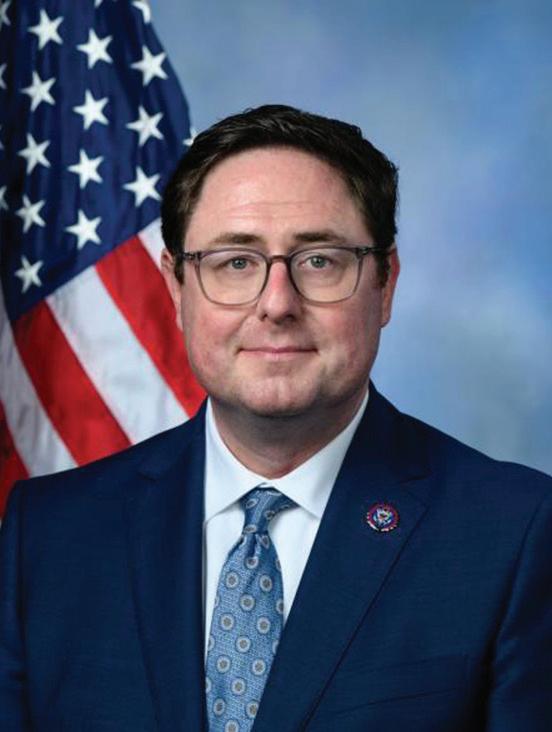
Today, U.S. Congressman Mike Flood released the following statement after the House of Representatives passed the bipartisan Housing for the 21st Century Act The legislation reflects a year-long, bipartisan effort led by Congressman Flood and the Financial Services Committee to address rising housing costs. The package was led by Flood along with FSC Chairman French Hill (R-AR), FSC Ranking Member Maxine Waters (D-CA), Housing & Insurance Subcommittee Ranking Member Emanuel Cleaver (D-MO).
“America's significant housing shortage is locking entire generations out of homeownership,” said Congressman Flood. “As the Chairman of the Housing & Insurance Subcommittee, I’m proud of the broad support this housing package received every step of the way. Today’s vote shows that bipartisanship is still alive in Washington and continues to be crucial to solving our shared challenges. Now that the legislation has passed the House floor, I look forward to working with our colleagues in the Senate to get housing affordability legislation to President Trump’s desk swiftly." The Housing for the 21st Century Act includes several bipartisan bills authored by Congressman Flood. Congressman Flood serves as Chairman of the Housing & Insurance Subcommittee and as Chair of the Republican Main Street Caucus.
Chairman Flood Initiatives Contained in the Housing for the 21st Century Act
The HOME Reform Act - The HOME Reform Act modernizes the HOME Investment Partnership Program by exempting projects from NEPA and Build America, Buy America requirements as well as establishing a “small project” exemption under Section 3 of the HUD Act of 1968. The bill raises income eligibility to 100% of area median income, extends the time communities have to commit funds, updates definitions of affordable single and multifamily housing, as well as allows funds to be used for infrastructure tied directly to new housing, such as sidewalks, sewers, and utility connections.The bill was co-introduced by Housing & Insurance Subcommittee Ranking Member Emanuel Cleaver (D-MO).
The Housing Supply Frameworks Act - (This Act was left out of the Senate bill.) - The House Supply Frameworks Act requires HUD to publish best practices and guidelines to assist communities in maintaining modern local and state zoning frameworks that support the production of adequate housing options at every income level. The bill was cointroduced by Congresswoman Brittany Pettersen (D-CO).
The Identifying Regulatory Barriers to Housing Supply Act - The Identifying Regulatory barriers to Housing Supply Act requires communities that receive Community Development Block Grant (CDBG) program funds to submit to HUD information regarding their implementation of certain land-
use policies, such as policies for expanding high-density singlefamily and multifamily zoning. The bill was co-introduced by Congresswoman Brittany Pettersen (D-CO).
The Streamlining Manufactured Housing Standards Act - The Streamlining Manufactured Housing Standards Act clarifies that the Department of Housing and Urban Development is the primary regulator as it relates to all manufactured housing building standards. The bill was co-introduced by Housing & Insurance Subcommittee Ranking Member Emanuel Cleaver (D-MO).
Unlocking Housing Supply Through Streamlined and Modernized Reviews Act - The Unlocking Housing Supply Through Streamlined and Modernized Reviews Act streamlines the environmental review process for a range of Department of Housing and Urban Development building activities. The bill was co-introduced by Congressman Sam Liccardo (D-CA).
Least Cost Exception Act - The Least Cost Exception Act amends the Federal Deposit Insurance act to modify the least cost resolution mandate and provide the FDIC with the discretion to approve a bid for a failed or failing bank other than the absolute least cost bid under certain conditions. By providing flexibility under the least cost mandate, this legislation would ensure small and mid-size institutions play on a level field with the largest financial institutions in the country

AND
CELEBRATING AMERICA LOCAL LEADERS
LEAGUE OF NEBRASKA MUNICIPALITIES WRAPS UP 2026 MIDWINTER CONFERENCE
CONFERENCE OFFERS MUNICIPAL OFFICIALS THE OPPORTUNITY TO GATHER, NETWORK, AND LEARN TOGETHER
Thank you to all the municipal officials who joined us in Lincoln for the League’s 2026 Midwinter Conference. The two-day event was a mix of cultural experiences, educational and hours of networking and learning from each other.
The conference opened with Shannon Harner, Executive Director of Nebraska Investment Finance Authority (NIFA), sharing information about opportunities for cities and villages to partner with
NIFA to address a lack of affordable housing in the state. As Harner pointed out, the lack of housing constricts community growth and vibrancy and can be a barrier to economic development and quality of life.
Harner explained the role NIFA plays in affordable homeownership by serving as Nebraska’s Housing Finance Agency. She provided information about the Low Income Housing Tax Credits and additional
Continued on page 8 / See MWC
PHOTOS AND STORY BY LEAGUE STAFF
Jewel Rodgers
Nebraska State Poet


Jenny Mason
Tim Mittan
Shannon Harner
Tom Bliss
Josie Schafer
Daryl Bohac
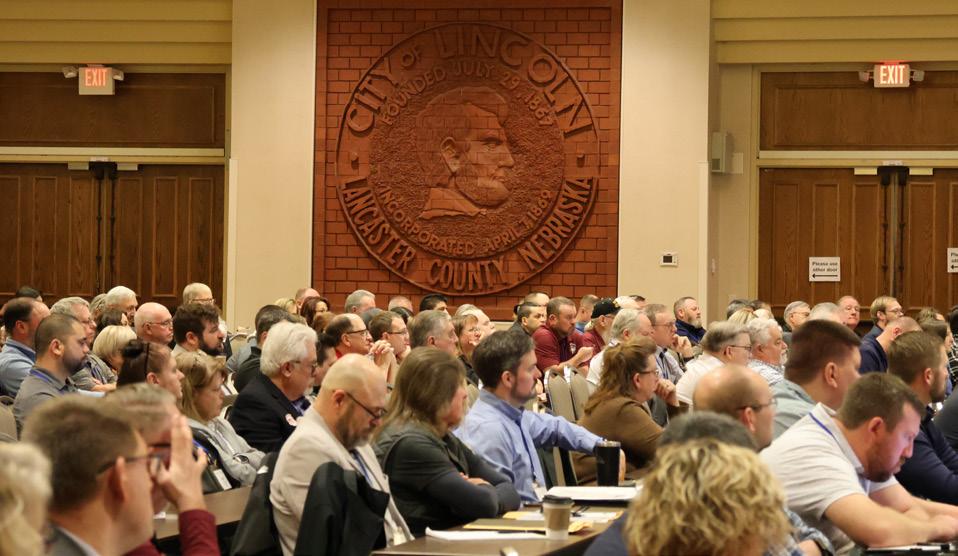
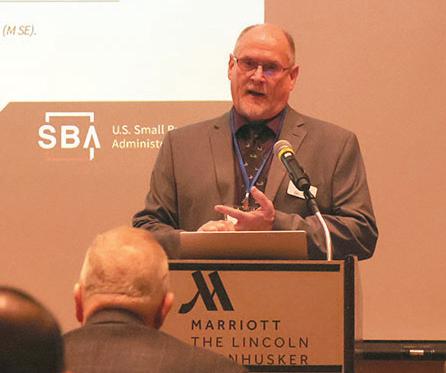
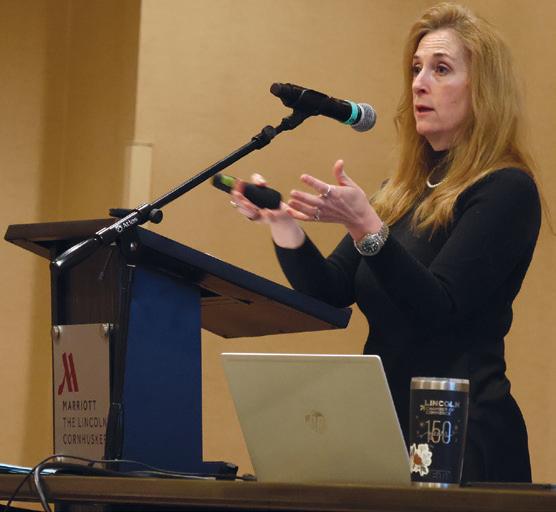
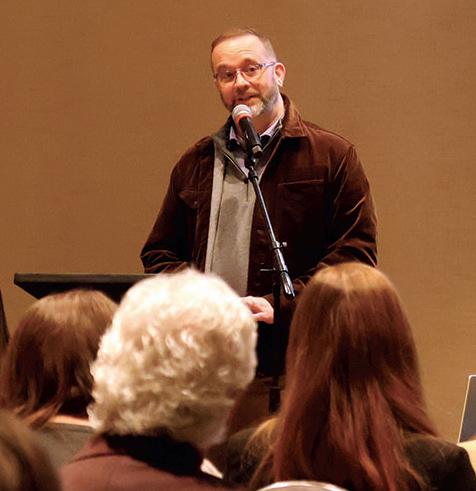
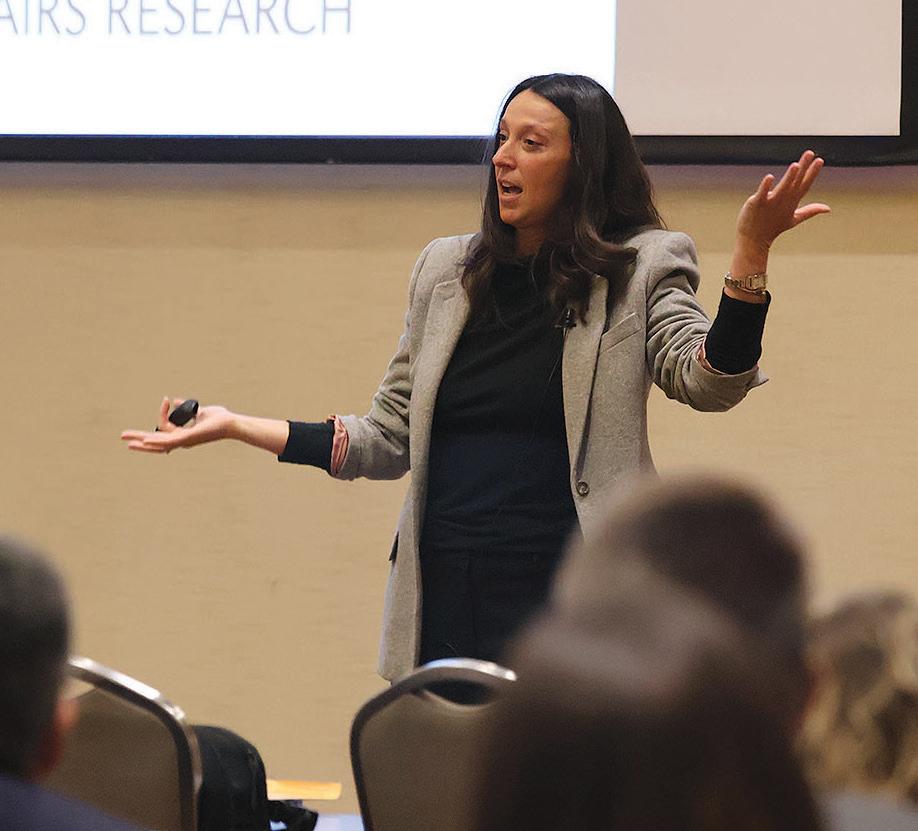
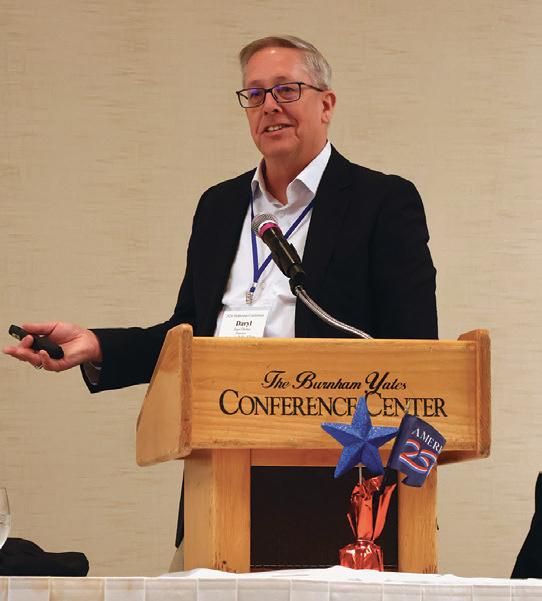
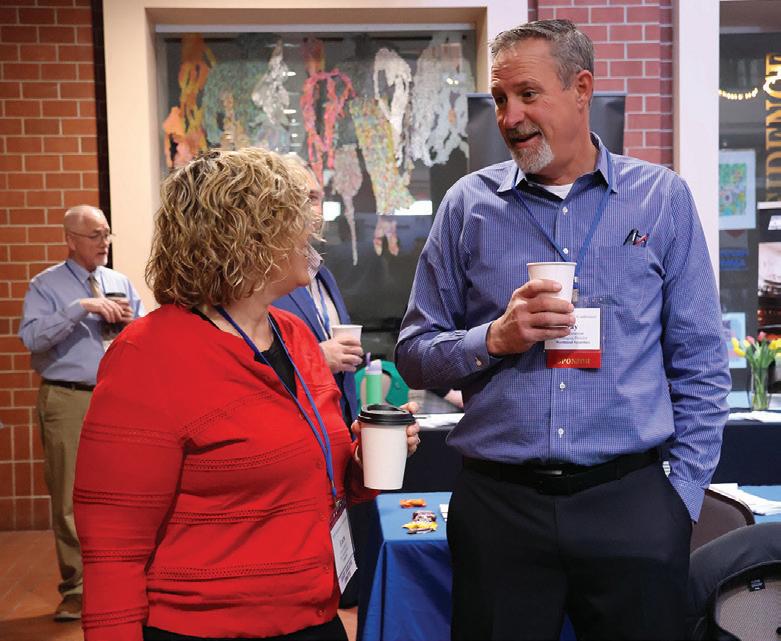
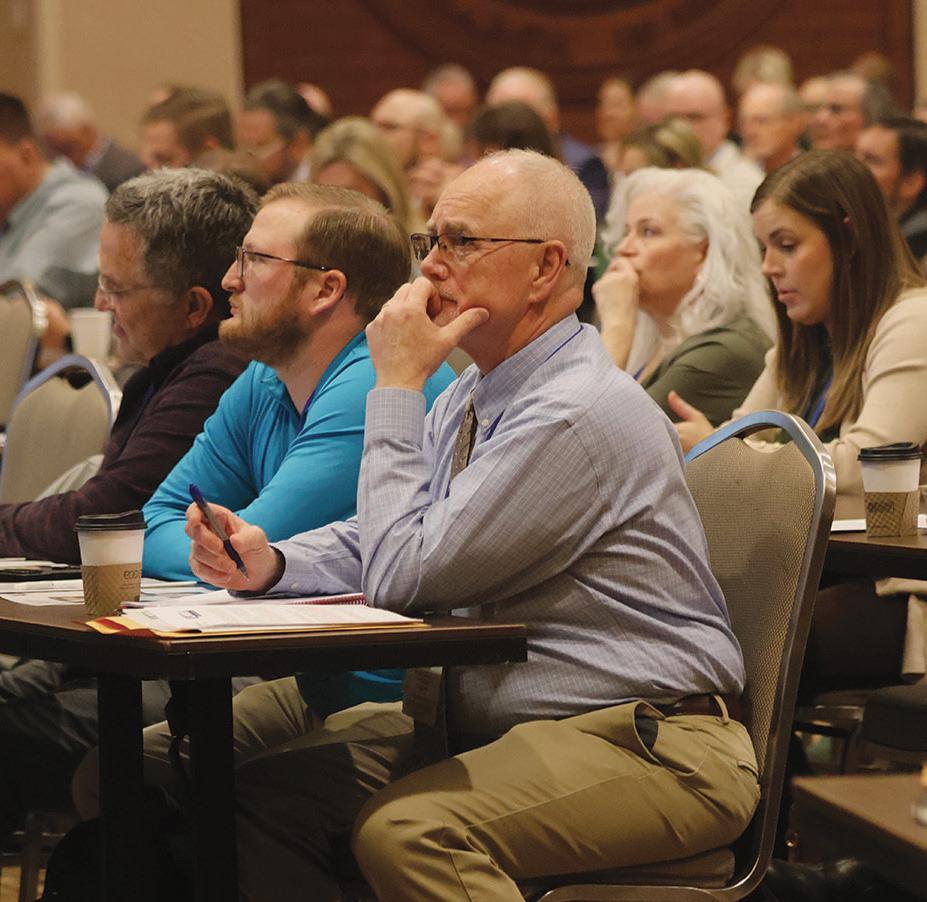
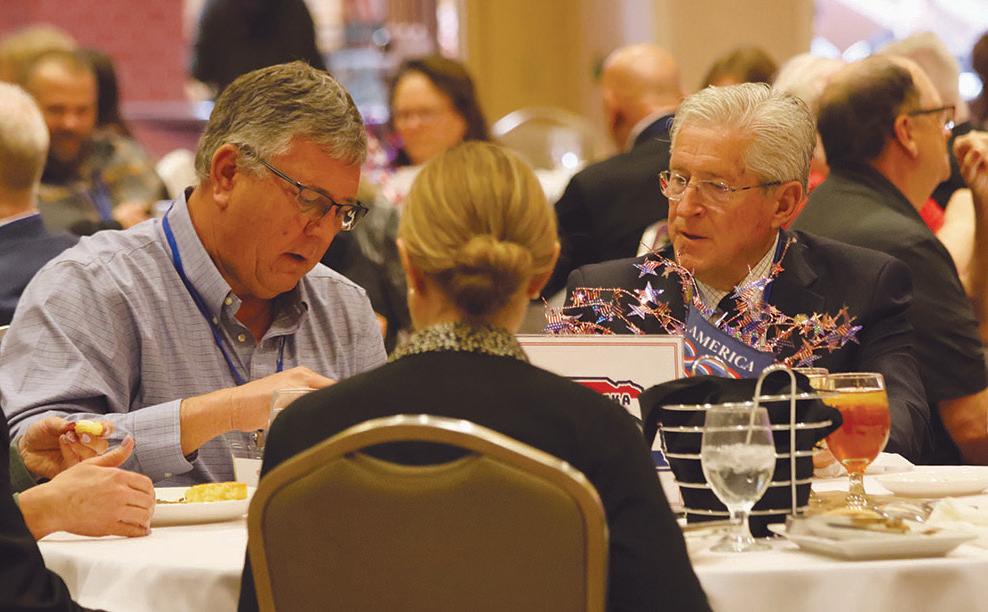
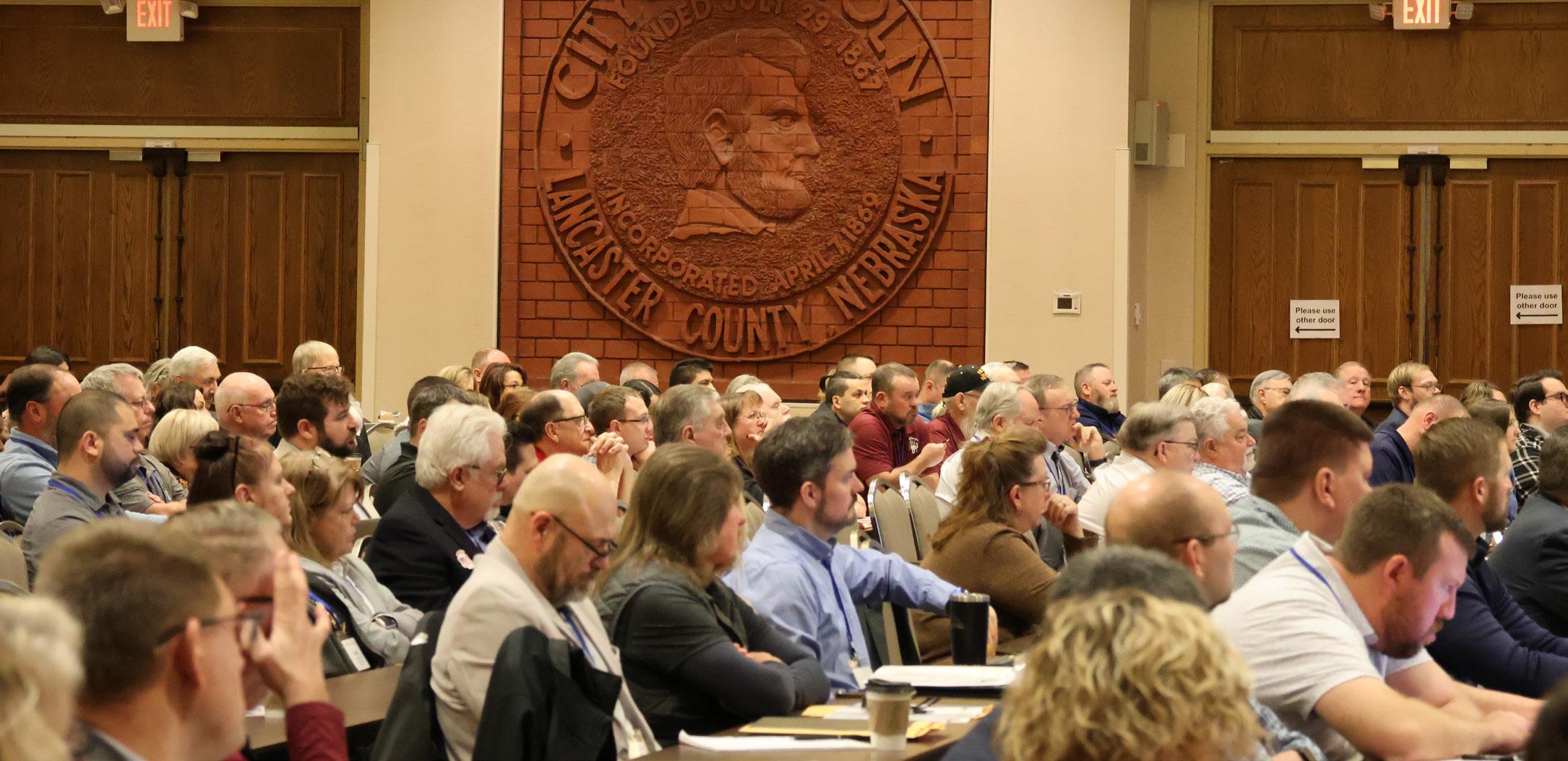
Above: The 2026 Midwinter Conference brought delegates, sponsors, and state legislators together for a couple days of relationship building and learning. Photos by Ashley Wolfe.
Nebraska Department of Economic Development
U.S. Small Business Administration NIFA
Southeast Nebraska Development District UNO Center for Public Affairs
Nebraska State Historical Society
MWC
Continued from page 6
programs being utilized across the state to boost housing options.
She also shared information about LB 768, a bill currently in the Legislature, which if passed, would make NIFA the administrator of housing programs for the Nebraska Department of Economic Development (NDED). This change would align NIFA with trends in other states and create further opportunities for both organizations.
Josie Shafer, Director of the Center for Public Affairs at the University of Nebraska-Omaha, was the next speaker and she broke down “brain drain” in our state and what the data really shows is happening. She highlighted data showing that opportunities for progressional growth and development ranks the highest in terms of what young professionals value most when deciding where to settle.
The morning wrapped up with L. Lynn Rex, Executive Director of the League, providing a Legislative Update for attendees. She highlighted some key bills the League is focused on and reinforced the importance of local municipal leaders having conversations with state lawmakers about the impact of certain bills in their community—because your voices are more effective than those of paid lobbyists in conveying that message.
At the luncheon, we were joined by Daryl Bohac, Director of the Nebraska State Historical Society and Chair of the Nebraska Semiquincentennial Commission at the direction of the Nebraska Legislature. Bohac shared resources for locating events celebrating America’s 250 th birthday in 2026. Educational opportunities and community celebrations, volunteer opportunities to national initiatives—there are ways for every Nebraskan to be a part of this historic milestone.
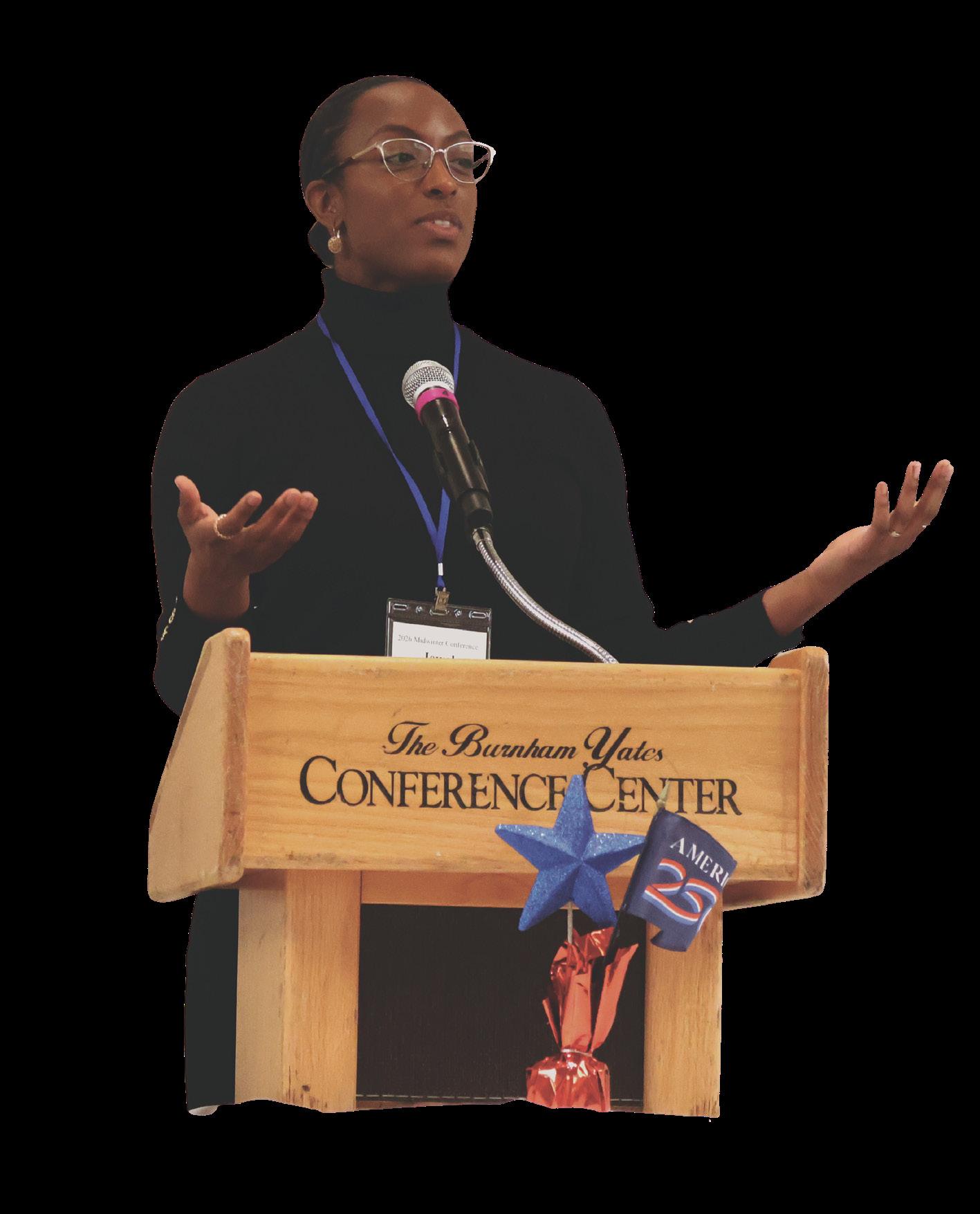
Nebraska State Poet, Jewel Rodgers closed out the
Continued on page 11 / See MWC
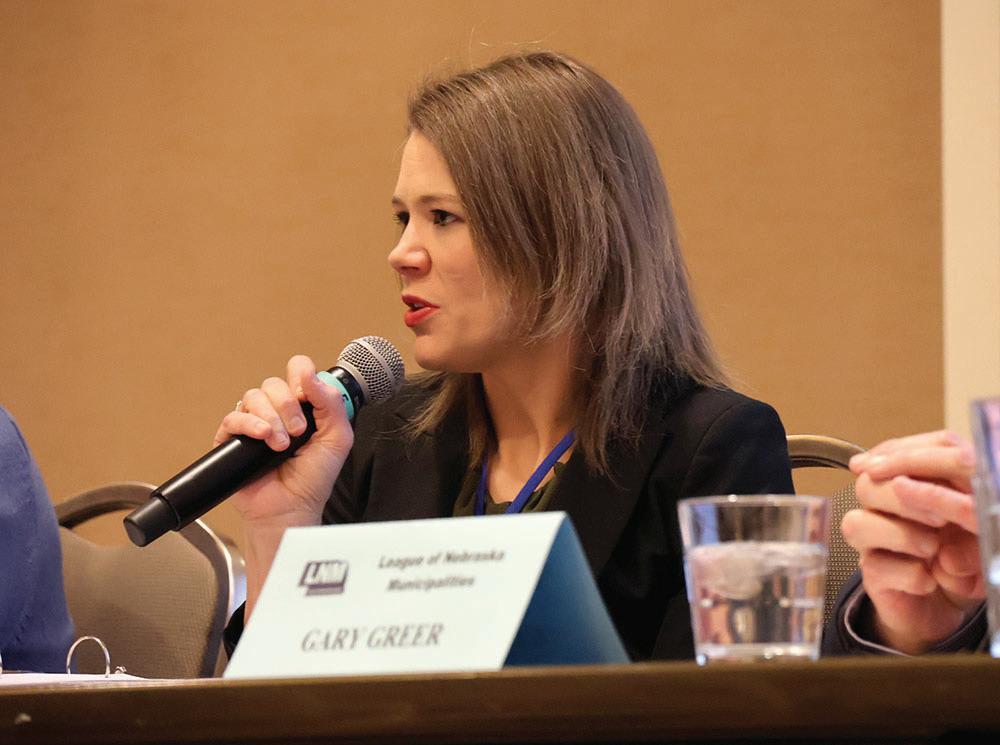
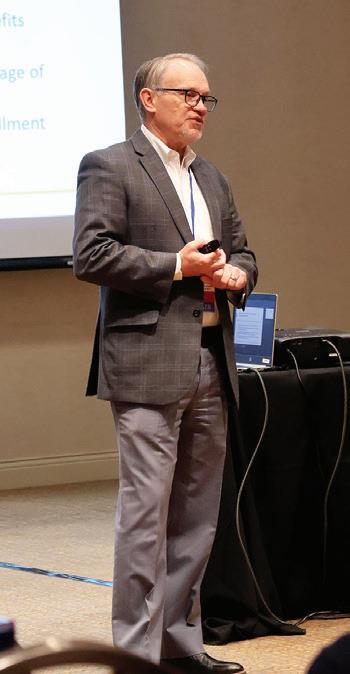
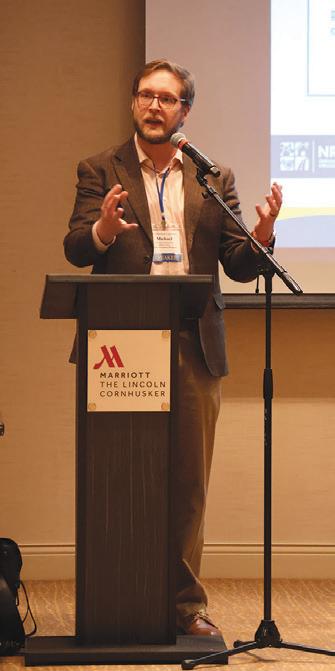
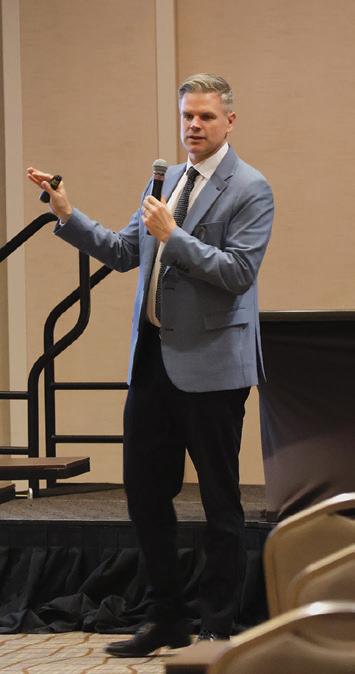
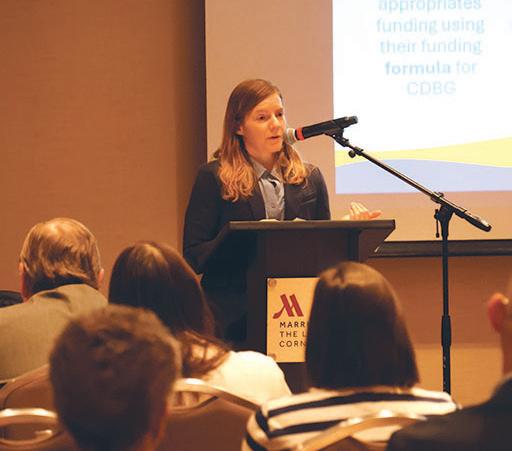
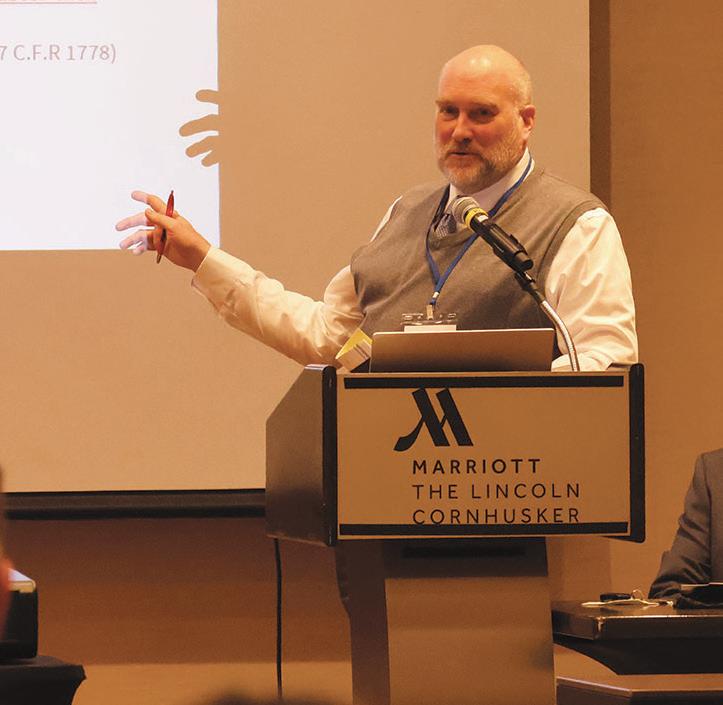
Top: Amber Powers, City Administrator of Papillion, participates in a panel at the 2026 Midwinter Conference. Middle: Dennis Maggart, President of McInnes Maggart Consulting Group, addressed trends in the healthcare market; Michael Helgerson, Executive Director of MAPA, particpates in a panel on Community Development Block Grants and the Civic and Community Center Finance Fund; and Justin Swarbrick, Senior Vice President of Alliant Insurance Services, provides an update on the state of the insurance market for attendees. Bottom: Sen. Fred Meyer of Saint Paul visits with attendees at the Senator Appreciation Luncheon.

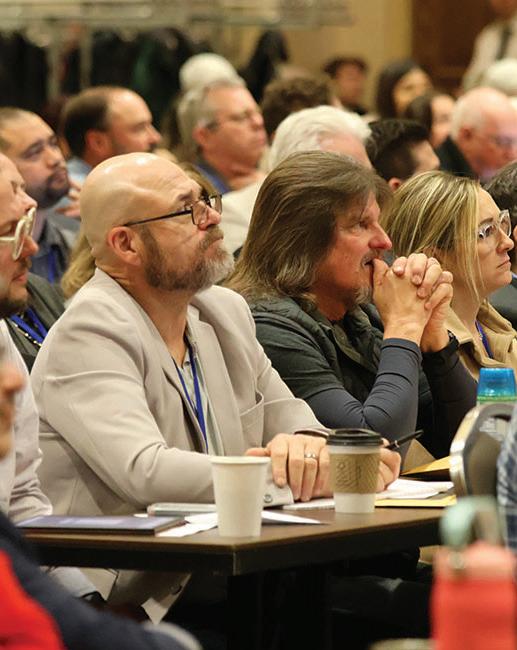
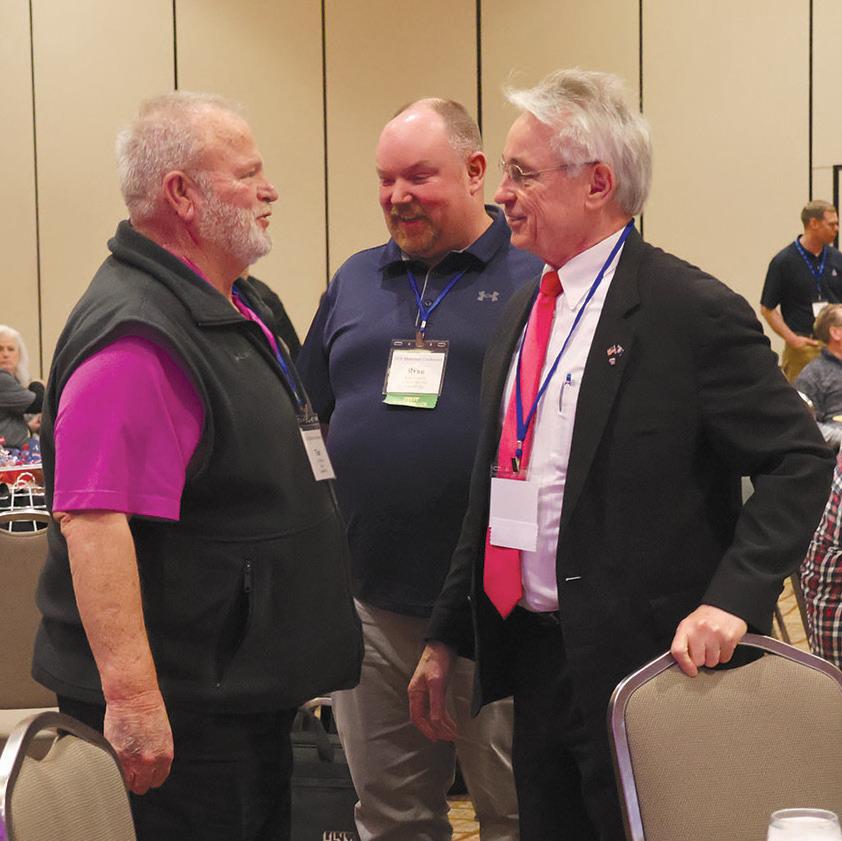
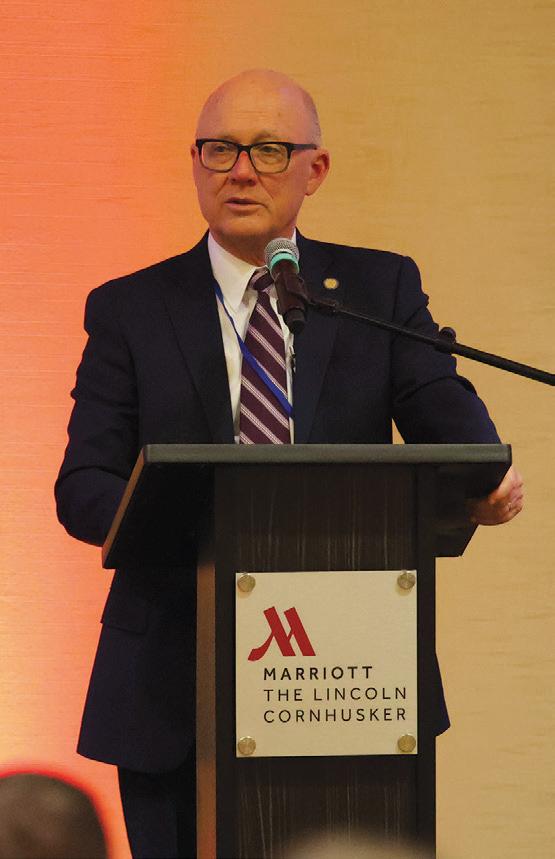
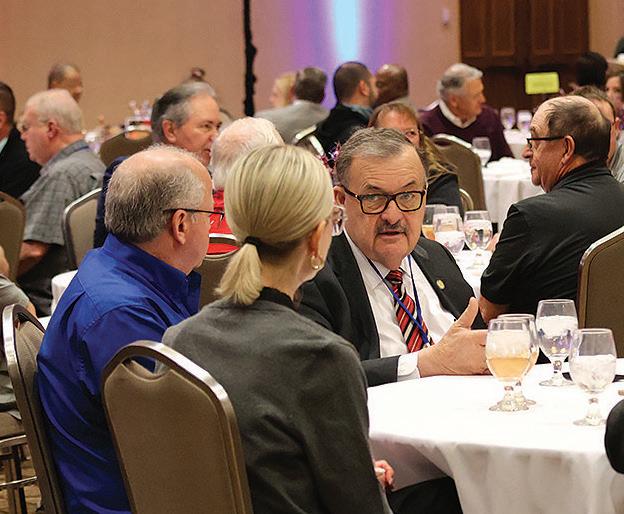
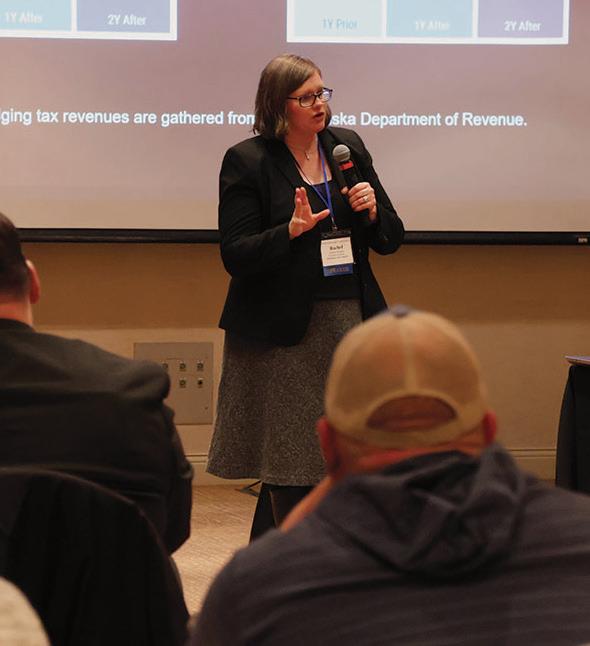

1.) Sessions were offered on a variety of topics at the 2026 Midwinter Conference, allowing attendees to choose sessions most pertinent to their interests. 2.) Sen. Loren Lippencott visits with attendees from Central City ahead of the Senator Appreciation Luncheon on Tuesday. 3.) Speaker John Arch offered a few remarks and introduced Senators in attendance.
4.) Sen. Mike Jacobson visits with municipal representatives from North Platte at the luncheon. 5.) Rachel Morgan from Nebraska Arts Council presented on Creative Districts in the state. 6.) Neil Moseman, Director of USDA Rural Development, presented as part of a panel on Tuesday.
7.) Tom Goulette from West Point visits with sponsors in between sessions at the conference. Photos by Ashley Wolfe.

SPONSORS
• ABCreative
• American Legal Publishing
• Benefit Management
• Black Hills Energy
• Burbach Aquatics
• Carrothers Construction
• Centrix Energy Partners
• Cline Williams
A huge thanks to the conference sponsors and supporters! You make all of this possible.

• Commercial Recreation Specialists
• Creative Sites
• Crouch Recreation
• Cunningham Recreation/GameTime
• D.A. Davidson & Co.
• Hamilton Business Technologies
• Hera Property Registry
• Hudl
• IMEG
• Interim Solutions
• JEO Consulting Group
• Johnson Service Company
• League Association of Risk Management (LARM)
• League Insurance Government Health Team (LIGHT)
• Miller & Associates Consulting Engineers
• Nebraska Liquid Asset Fund
• Nebraska Public Power District
• NFIT/Union Bank and Trust
• NMPP Energy
• Northland Securities, Inc.
• NPAIT
• Olsson
• PeopleService
• Piper Sandler & Co.
• Schemmer
• SEH, Inc.
• Snyder & Associates
• Sparq Data Solutions
• Twotrees Technologies
• Tyler Technologies
• USDA Rural Development - NE
• Vacanti Municipal Consulting Service, LLC
• Veenstra & Kimm, Inc.
• Viking Industrial Painting
Sponsor reps
Sessions Registrants
Senators 100 14 283 23
Continued from page 8
luncheon with a stunning spokenword poetry performance drawing focus to all of the history and the variety of experiences that comprise 250 years of history in our country.
The afternoon offered a variety of concurrent sessions, allowing attendees to learn more about topics most applicable to them.
Some topics offered included:
John Hobbs from LARM provided an overview on Social Media Guidelines for Municipalities and their Employees to Limit Liabilities.
Rachel Morgan from the Arts Council touched on Creative Districts and the transformational impact they are having across the state.
Lash Chaffin and Jackson Sash from the League offered a session on natural water contaminates in our state and what can be done to treat them.
Additionally, municipal leaders from Papillion and Gothenburg, joined Lynn to provide a panel discussion centered on the importance of staying in your own lane in municipal government.
The day closed out with section meetings—which provide the opportunity for elected and appointed officials to break into smaller groups and connect with those serving in similar roles.
Tuesday started early—with time for attendees to visit with some of the many event sponsors before breaking out into concurrent sessions. Topics included USDA grants, avoiding conflicts of interest, understanding the sometimes-confusing words and processes associated with the legislative session, and an overview of how to leverage USDA and Small Business Administration Disaster Programs when the need arises.
The conference closed out with the annual Senator Appreciation Luncheon. Thank you to all the delegates and representatives who attended the event.
SENATORS
Speaker John Arch, District 14
Sen. Beau Ballard, District 21
Sen. Carolyn Bosn, District 25
Sen. Tom Brandt, District 32
Sen. Stan Clouse, District 37
Sen. Barry DeKay, District 40
Sen. Myron Dorn, District 30
Sen. Bob Hallstrom, District 1
Sen. Rick Holdcroft, District 36
Sen. Teresa Ibach, District 44
Sen. Mike Jacobson, District 42
Sen. Margo Jaurez, District 5
Sen. Loren Lippincott, District 34
Sen. Fred Meyer, District 41
Sen. Dave Murman, District 38
Sen. Dan Quick, District 35
Sen. Jane Raybold, District 28
Sen. Merv Riepe, District 12
Sen. Victor Rountree, District 3
Sen. Jared Storm, District 23
Sen. Paul Strommen, District 47
Sen. Brad von Gillern, District 4
Sen. Dave Wordekemper, District 15
Ricketts celebrates Senate passage of the 21st Century ROAD to Housing Act
BY U.S. SENATOR PETE RICKETTS
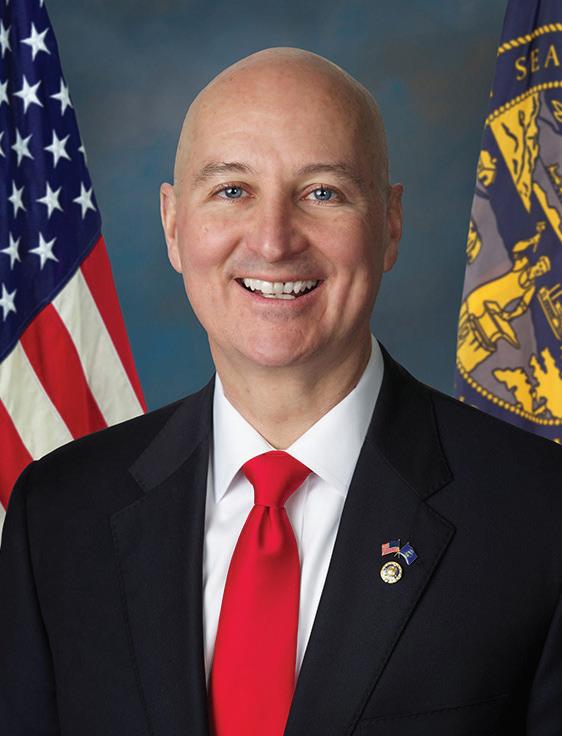
Today, U.S.Senator Pete Ricketts (R-NE) celebrated Senate passage of the 21st Century Renewing Opportunity in the American Dream (ROAD) to Housing Act, a landmark housing bill which makes home ownership a possibility for all Americans. “Nebraska is the best place in the world to live. But for so many potential first-time homebuyers, the market has become out of reach. The ROAD to Housing Act will help our country increase housing supply,” said Ricketts. “This legislation includes my Streamlining Rural Housing Act, which will specifically increase housing supply in rural parts of Nebraska. This legislation is commonsense and bipartisan. It should be signed into law.”
BACKGROUND
The 21st Century ROAD to Housing Act includes seven bills led or cosponsored by Senator Ricketts. Those include the Streamlining Rural Housing Act, Improving Housing Access Act, Housing for America’s Middle-Class Act, Housing Supply and Innovation Frameworks Act, Rural Housing Service Reform Act, VALID Act, and VA Home Lone Awareness Act.
Streamlining Rural Housing Act:
• Creates a Memorandum of Understanding (MOU) to evaluate categorical exclusion under the environmental review process for housing projects that use combined funding;
• Creates an MOU to develop a process for designating a lead agency.
- This process will streamline adoption of Environmental Impact Statements and Environment Assessments approved by the other Department to construct housing projects funded by both agencies.
• Creates an MOU to evaluate the feasibility of a joint inspection process for housing projects that use combined funding;
• Establishes an advisory working group to consult on the MOUs.
Improving Housing Access Act:
• Seeks opportunities to remove barriers and improve the quality of housing for seniors and to increase housing accessibility for Americans with disabilities.
• Directs the Government Accountability Office (GAO) to study the effects of capital advancement for supportive housing for the low-income, elderly, and disabled.
Housing for America’s Middle-Class Act:
• Directs the Government Accountability Office (GAO) to study income parameters for workforce housing and make recommendations to Congress on how federal housing policy can better serve middle-income earners.
• Requires GAO to analyze how changing the definition of “workforce housing” could expand homeownership opportunities for all middle-class individuals – as many first responders, policemen, firefighters, and other hardworking Americans do not qualify under the current inconsistent definition.
• Highlights existing issues with housing affordability for the middle class and identify existing tax credits, grants, and other programs that could alleviate these burdens.
Continued on page 27 / See Ricketts
A Better Way to Get Around
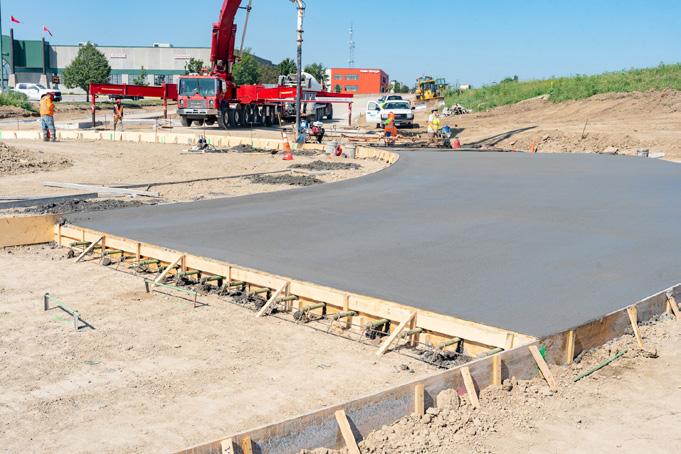
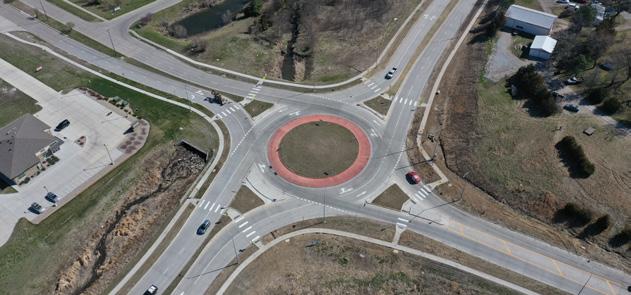
Helping communities move safer, smoother, and more efficiently—one intersection at a time.


GET A QUOTE AND JOIN TODAY!

The League Insurance Government Health Team (LIGHT) helps hundreds of its members throughout Nebraska obtain affordable health insurance coverage.
Plan and Network Choices
With seven plan options and three networks to choose from, you’re sure to find one that meets your group’s coverage and benefit needs.
Affordable Plan Options
Offering your employees much-needed protection against the high cost of medical care:
• Three PPO options
• Four HSA-eligible high deductible options
• Prescription drug coverage
Enrollment Options
Single: Covers the employee only
Employee and spouse: Covers the employee and their spouse
Employee and children: Covers the employee and their eligible dependent children, but does not provide coverage for the spouse
Family: Covers the employee and eligible dependents including a spouse
RECEIVE DEDUCTIBLE AND OUT-OF-POCKET CREDIT FROM YOUR CURRENT VALID GROUP PLAN WHEN YOU SWITCH!
Available Network Options
With several networks available, you have easy access to quality providers:
• NEtwork BLUE (Statewide)
• Premier Select BlueChoice (Regional)
• Blueprint Health (Regional)
• Out-of-state network availability
LET’S GET STARTED
Contact your current local Agent/Broker Or contact
Dennis Maggart
Executive Vice President P: 913-378-9841 or 816-718-0335
Dennis@McInnesGroup.com
Jane Limbach Account Man ager P: 913-378-9840
Jane@McInnesGroup.com


memories and Flowers -
INFORMATION PROVIDED BY THE CITY OF HUMBOLDT
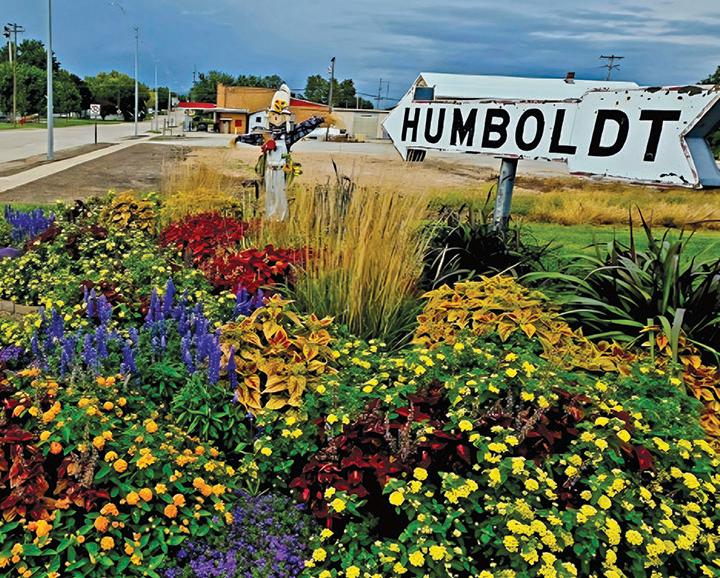
Many are familiar with the Southeast Nebraska Cancer Memorial Garden in Humboldt—perhaps you have seen a photo of the serene landscape during the summer months. But did you know the idea was the dream of Humbolt Mayor Jan Wilhelm?
The design was something Wilhelm sketched out in the fall of 2016, but on Jan. 14, 2017, Wilhelm was jolted awake with the realization that spring was three months away and if she did not start working on bringing her dream to fruition, she never would.
That was all it took--Wilhelm got started that day. She called up two friends and went before the City Council and was granted permission to start building the garden.
A group of volunteers formed, they called themselves the Humbolt Garden Club, appointed a club president, and got to work.
As excitement from the community grew, support took many forms— including grants, monetary donations—both from businesses and individuals, and volunteers wanting to help with the manual labor—all worked together to support the vision.
The garden is now complete. The space offers a sanctuary for those seeking to reflect on their own journey with cancer or a loved one’s journey. Some of the points of pride in the community include a beautiful wood arbor that is covered in Hyacinth blossoms in summer and a ribboning brick path that loops around a 34-foot octagon-shaped pergola.
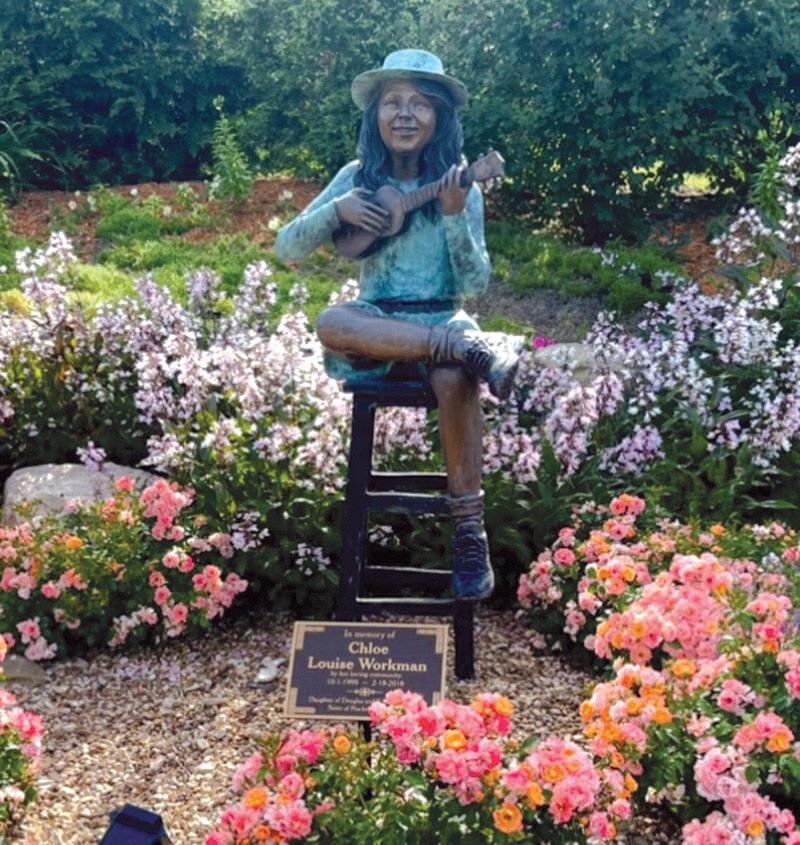


As the Mayor of Humboldt, I feel not only Humboldt, but all of southeast Nebraska is very proud to have the beautiful and enchanting Southeast Nebraska Cancer Memorial Garden located in our community. We are blessed to have a place to go feel the love, peace, and to reflect on their lives and memories of a loved one lost too soon to cancer.
” -Mayor Jan Wilhelm
Inside the pergola are engraved bricks paying tribute to cancer survivors—those living and those who have passed. At the center is a large bronze fountain with four fairies dancing around a tree stump as the water cascades down. The theme of fairies and enchantment can be found throughout the garden. Additionally, there are 34 unique bronze statues nestled in the flower beds in memory of someone who passed away from cancer. The color of flowers chosen for each of the beds surrounding a statue were chosen intentionally and align with the color of the ribbon that represents that form of cancer.
The garden continues to grow with new tributes. There is also a hobbit house wall allowing for additional space to memorialize their loved ones and a stone giving tree. And while the garden is most lush when the flowers are blooming during the warmer months, the community also puts up a Christmas display each year in the garden.


Photos by Jan Wilhelm, Mayor of Humboldt
Introduction to grants: a beginner’s guide
Grants can be a lifeline for nonprofits, community groups, and small organizations—helping fund projects that make a real difference. But getting grants can feel confusing, time-consuming, and full of red tape. If you’re new to grant writing, here’s a straightforward guide to understanding what grants are, where to find them, and how to get started.
What exactly is a grant?
A grant is funding awarded to support a specific project over a set period of time. You don’t have to repay it, but you do have to follow the rules. That means using the money exactly as outlined in your proposal and reporting to the funder on your progress and results. A grant is not a loan.
Myths and realities
Let’s clear up some misperceptions about grants.
• Grants are fast money. False. It often takes months after submitting a proposal to receive funding.
• Grants usually cover general expenses. False. Most grants support specific projects, not day-to-day operations.
• Great writing matters more than a strong project. False. Funders care more about a well-designed project than fancy wording.
• It’s OK to submit at the last second. False. Waiting until the deadline risks technical issues or mistakes that could sink your application.
• Missing a deadline means you missed your chance forever. Mostly false. Many grants run on annual cycles, so the opportunity often comes back around.
Types of grants Grants generally fall into three categories.
Federal grants
Funded by agencies like the U.S. departments of Agriculture, Education, or DHHS.
Where to find grants

State and local grants
Often focused on community development, agriculture, health, or education.
Private foundations
Community, corporate, and family foundations that fund causes aligned with their missions
Finding grants is often the hardest part. Here are some starting points.
• Government grants: Grants.gov is the central hub for federal opportunities. For state or local funding, check agency websites or sign up for newsletters.
• Private foundation grants: Tools like Candid’s Foundation Directory Online, Grant Gopher, or Grant Station can help. Some public libraries offer free access.
Eligibility and registration
• Who is eligible to apply
• Matching fund requirements
• Networking: Don’t overlook peer organizations, newsletters, or even social media, where grant announcements often pop up.
Before applying, always read the guidelines carefully. Look for:
• Award size and duration
• Proposal and budget instructions
If you’re applying for a federal grant, you’ll also need to:
• Register at login.gov: a secure login used by many agencies
• Complete registration at sam.gov: where you’ll get a Unique Entity Identifier (UEI). Processing can take six to eight weeks, so don’t delay.
You can make a difference
• Deadlines and required attachments
• Create an account on grants. gov: where you’ll build and submit proposals.
While grants aren’t a quick solution, they can provide critical support for meaningful projects. With the right preparation and persistence, they can help your organization grow and thrive.
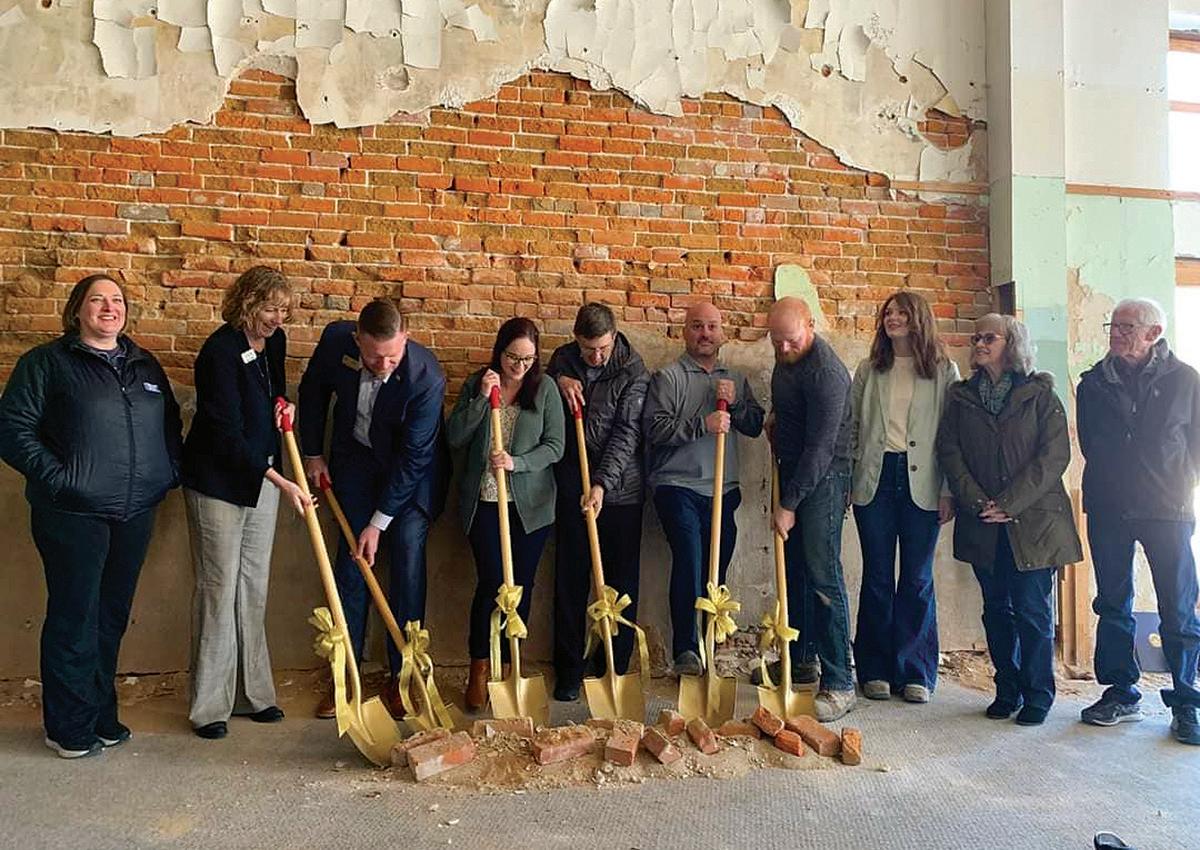
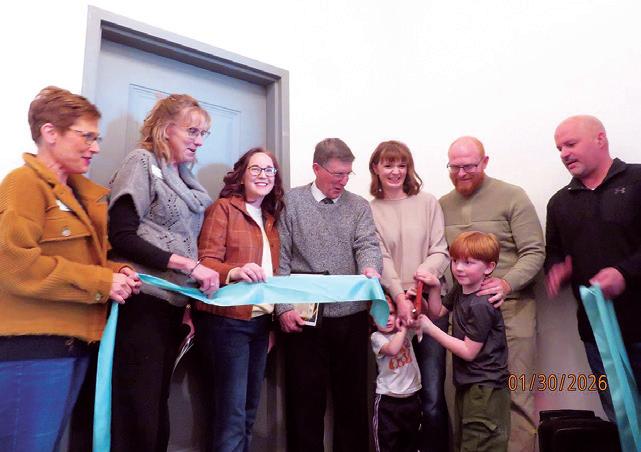
Clockwise from above: The groundbreaking for the renovation of the buildiung that would become Zu Haus Flats took place in 2024; This photo shows the outside of the building prior to any rehabilitation starting; the inside image shows some of the process in developing the space into five new apartments; the ribbon-cutting for the new space was a celebration and realization of a vision--taking a building built in 1883 and giving it a new life. Photos provided by the City of Minden.
A VISION FOR THE in the rough
diamond
TBY THE CITY OF MINDEN
he City of Minden recently hosted a ribbon cutting showcasing five new upper story apartments to address Minden’s workforce housing needs, while also commemorating the recent opening of 52 Taphouse in the new street level commercial space.
Our journey began three years ago, in 2023, when the City of Minden was awarded $802,500 from the Nebraska Department of Economic Development—Nebraska Affordable Housing Trust Fund following a highly competitive grant process. The City of Minden, along with South Central Economic Development District, brought Minden employers together in 2023 and the message was clear—the community needed more rentals, quality and affordable housing for the workforce.
“The Zu
Haus
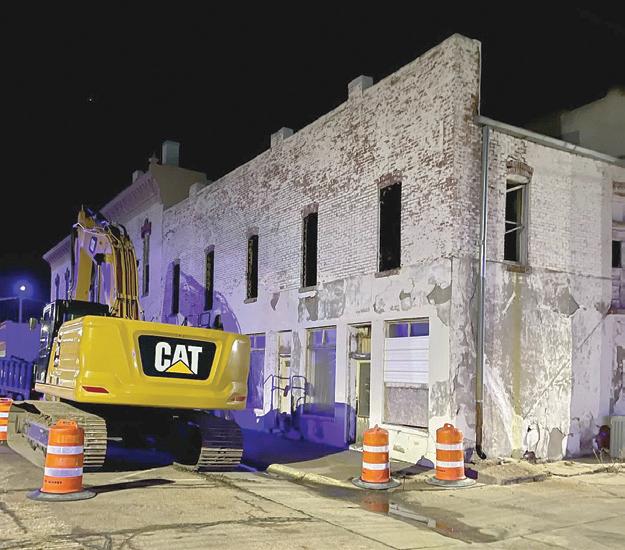
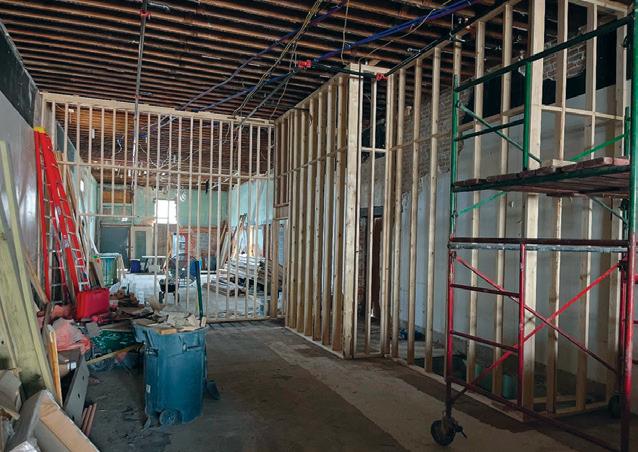
In March 2024, groundbreaking ceremonies took place for five new spacious and contemporary apartments featuring 12-foot ceilings, expansive 9-foot windows overlooking the beautiful courthouse square and surrounding community. This building was constructed in 1883 after sitting vacant for years and would be reborn into Zu Haus Flats.
This project was made possible with a collaborative and community approach with additional financing support from the Minden Investment Club, City of Minden’s Revolving Loan Fund, Center for Rural Affairs and York State Bank. Together, the owner’s investment of Longshot Property Development,
Continued on page 30 / See Minden
Flats project breathes new life into one of Minden’s oldest buildings, turning it into modern housing and commercial space that supports downtown vitality, preserves local history, and invests in the future of our community."
- Michael Krings Minden City Administrator
STORY
Editor's note: This piece was originally published by the New York Association of Towns in April 2025. Some of the context is dated, but the information is very applicable.
Bridging the gaps:
A municipal guide to infrastructure funding in a tight fiscal environment
BY DR. IAN COYLE, FOUNDER/PRESIDENT, PRACADEMIC PARTNERS
There are times when even the talk of infrastructure or environmental project funding makes the eyes glaze over faster than Congress going on recess. For some folks, the only thing more complicated than engineering a new stormwater system is finding the actual funding for the project.

BUT HERE’S THE TRUTH: While concrete, culverts, and resilience might not make the front page, these are the investments that quietly keep our communities safe, functioning—and yes, even thriving. This article is written with the intent to discuss practical strategies and leadership lessons on how to secure funding for engineering/environmental projects without breaking the budget.
Times are tight and tough. As I am writing this, the stock market is in a significant downturn due to the tariff situation. The largest dip in five years occurred just last week. The very projects I am speaking of likely have components (materials, items, etc) here and there that will be impacted by rising prices, let alone impacts to labor and staffing should those be applicable. Furthermore, federal funding is often an outlet for financing, and with DOGE and the big budget bill looming and other related expense-cutting activities, these options noted below could be less attractive moving forward. So, please kindly allow me a little grace if these methods, recommendations and examples seem Pollyannish at the time of your reading.
Regardless of the federal situation, at the local town level, the question remains - how do you fund critical infrastructure with limited resources? You sometimes have to get creative with your approach to funding. Here are some examples:
Leveraging state and federal grants
This sounds like a no-brainer, because it is, but you would be surprised at how many do not take advantage of these programs.
Excuses abound - “We don’t have a grant-writer”; “We do not have administrative staff to handle the grant compliance”; “The match money is too much for the budget to handle”; or “We can’t float that kind of burden up front.”
Having managed a small community myself, I can understand and empathize with these types of challenges, but I also note that they are not insurmountable. Small towns should know the name of their USDA local office grants administrator. Elected officials should be making direct contacts with state and federal reps for conversations on earmarked grants (Federal - Congressional Directed Spending) and member item grants (State - State Assistance to Municipalities and similar versions). For both of those programs, your Ttown should be submitting annually a series of projects of varying dollar amounts to give your local representatives a menu of options. EFC, revolving loan funds, Grants.gov (federal), county funding, foundation funding (especially for environmental projects), and other outlets should be vigorously pursued. Technical assistance is out there on the private sector side (many of whom are AOT vendors and sponsors) to help you with these applications. Aim for small wins. Example - take the Tree City USA and DEC tree grants. A town can somewhat easily secure tree-planting project grants for your municipality through a minimal investment of time and resources and have a tangible environmental win in short order.
Building public-private partnerships
Are there projects that are difficult to obtain funding for, that impact a business, your downtown, a major enterprise, or an economic corridor in your town? There are opportunities to engage the private sector on possible partnerships for funding. Recent examples in New York include: 1) an owner of a local food manufacturing operation, and the major user of the locality’s sewer system, paying a large share of an infrastructure upgrade of the sewer lines in need of repair, that otherwise would have been the sole burden of the municipality; 2) a CEO of a major company supplying the underwriting support for grant-related efforts aimed at infrastructure and
environmental resilience efforts for a municipality’s downtown district; 3) a local association of lakeside homeowners established as a 501c3, supporting through direct dollars, contributions to the local government for lake-level monitoring, aeration technology to mitigate algal blooms, and grantmatches for small storm-gauge readers at select spots around the lake.
Utilizing shared services across municipalities or governments
This recommendation could likely come up with any article on any subject and is especially relevant to New York, with its high number of local governments across the state. The simple one would be town to village for repairs to infrastructure, sharing of utility or public works staff, or joint grant-writing efforts. Other examples might be relationships between the local utility district and the town. Town to town examples are also quite common for refuse/solid waste and other initiatives. Lastly, think about non-local options as well. Successes have been obtained by town governments in New York in partnering with the federal government (Army Corp of Engineers on stormwater and other type mitigation efforts) and the state government (DEC on joint-impact concerns).
A SNAPSHOT CASE STUDY:
In a county in New York, the local towns and villages were struggling with lost water in their water departments. The local, regional authority was as well. Rates were rising and residents were growing frustrated. A smoke-testing program was rolled out and only seemed to add to the residents’ frustrations (“Is there a fire in here?” - despite the repeated and regular warnings, mailings, emails and calls). Through connections with the NYS Department of State, the leaders of the local governments involved were made aware of a shared-services funding opportunity through the State Local Government Efficiency program. Funding was sought, and obtained, for a countywide leak detection system purchase. The authority took the lead and the localities got on Continued on page 21 / See Funding
Hiring youth for municipal jobs—what are the rules?
Municipalities often hire juveniles (minors under 18) for seasonal or parttime roles in parks, recreation, maintenance, or lifeguarding. However, juvenile labor laws, governed by the federal Fair Labor Standards Act (FLSA) and Nebraska state regulations, can be complex due to varying rules by age, task, and season. Non-compliance can risk harm to young workers, investigations, or fines. Common errors arise from overlooking hazardous prohibitions or hour limits.
One frequent mistake involves assigning minors to prohibited hazardous tasks. For example, under federal law, no minor under 18 may operate power-driven hoisting equipment like forklifts, skid-steers, or backhoes, common in municipal parks or public works for landscaping or material handling. Municipal crews might mistakenly allow a 17-year-old to use a skid-steer loader for simple tasks, unaware that such work is banned. Similarly, operating power-driven saws (e.g., powered limb trimmers, chain saws, or woodchippers) for tree trimming or debris removal is prohibited for all under 18, yet such equipment is often used in municipal operations.
Another
common
issue
JOHN HOBBS LOSS CONTROL SPECIALIST, LARM
is violating age-specific restrictions for younger teens. For 14- and 15-year-olds, federal rules limit work to no more than 3 hours on a school day, 18 hours per week during school sessions, and prohibit work before 7 a.m. or after 7 p.m. (extending to 9 p.m. in summer). Municipal summer programs might unintentionally schedule these minors for longer shifts or later evenings, especially in recreation or event staffing. Additionally, these younger workers cannot perform most cooking or use ladders/scaffolds, restrictions that could apply to concessions or facility maintenance.
A final example of a common mistake is allowing 16- and 17-year-olds to drive vehicles as part of their municipal employment. 16-yearolds cannot for any reason and 17-year-olds are very restricted on what vehicles can be driven and how often it is done.
In Nebraska, municipalities must follow the stricter of federal or state rules, and all under 16-year-olds are barred from dangerous work that could injure life, limb, health, or morals (aligning with but sometimes exceeding federal hazardous orders). Another key oversight is failing to obtain required employment certificates for 14- and 15-yearolds. These certificates, issued by the school district and copied to the Nebraska Department of Labor and employer, must include work hours, with Form 110 posted at the worksite. Municipal HR or supervisors might hire without this paperwork, especially for short-term summer roles.
Special programs like Work Experience and Career Exploration Programs (WECEP) offer limited exceptions for 14and 15-year-olds or 16- and 17-year-olds in career/technical education, but employers must verify all requirements and permits first, another area where assumptions lead to errors.
It’s important to stay aware of the current and evolving restrictions on underage labor. Here are some resources:
U.S. Dept. of Labor’s Wage and Hour Division child labor page: https://www.dol.gov/agencies/whd/child-labor
Detailed prohibited jobs list: https://www.dol.gov/agencies/whd/child-labor/what-jobs-are-off-limits
Additional overviews are available at: https://www.oshaeducationcenter.com/articles/child-labor-laws/ Nebraska-specific guidance: https://www.education.ne.gov/workplace-experiences/child-labor-laws/
By reviewing these sources and training staff on age-based rules, municipalities can safely employ young workers while protecting them and avoiding violations.
Funding
Continued from page 19
board, via signed commitment letters and intermunicipal agreement drafts. A shared service/intermunicipal partnership success related to infrastructure that focused on environmental and engineering related improvements to an aging water system, with said project having a defined, tangible return-on-investment (ROI)? Yes! It can be done!
This local project example, one of hundreds across the state with towns of every size, almost didn’t happen. It was only able to get to the finish line through:
• Creative leadership;
• The establishment and curation of relationships with regional partners;
• Investments in grant-writing capacity; and
• Connections and relationships with state funding partners.
In conclusion, your municipality doesn’t need to have a big budget to make big moves—just strategy and persistence and sometimes going “back to the basics.”
Source – This article is written by Dr. Ian Coyle, ICMA-CM, Founder/President, Pracademic Partners. You can reach Dr. Coyle via email at ian@pracademicpartners.com or learn more at www. pracademicpartners.com.
CHECK BACK!

So many people within municipalities and municipal government have great ideas–but we often run into issues with funding and finding the resources to get the idea done. Over the next few months, we will highlight some organizations offering grants and funding opportunities, especially for municipalities.

Norfolk Public Library receives $10,000 gift from Carnegie Corporation of New York In brief
TheNorfolk Public Library received a $10,000 gift from Carnegie Corporation of New York, the foundation established by Andrew Carnegie.
The award is part of Carnegie Libraries 250, a special initiative celebrating the upcoming 250th anniversary of the signing of the Declaration of Independence and honoring the roughly 1,280 Carnegie Libraries still serving communities across the country.
Scottish immigrant Andrew Carnegie funded the construction of 1,681 free public libraries nationwide between 1886 and 1917. Approximately 750 of them continue to use their original buildings, while others, such as the Norfolk Public Library, have expanded to new locations to meet the needs of their communities. Opened in 1911, Norfolk’s library is one of 69 Carnegie Libraries in Nebraska.
Source – City of Norfolk

Nebraska Department of Economic Development opens applications through the federal Opportunity Zones Program
On March 2, the Nebraska Department of Economic Development (DED) opened applications through the Federal Opportunity Zones Program. The application can be accessed by clicking here (or using the QR code on the following page). DED will accept applications for eligible census tracts to be designated as Opportunity Zones through Friday, May 1, 2026.
“Opportunity Zones are powerful prosperity creators that invest in families and communities that need it,” said Gov. Jim Pillen. “When President Trump signed the One Big Beautiful Bill Act, Opportunity Zones became permanent and were updated to lift millions out of poverty, spur job creation, and help solve our housing crisis. In direct coordination with the White House and Secretary Turner, we’ll continue to look for way to invest in both rural and urban areas.”
Per federal rules, Nebraska is allowed to nominate 28 of the state’s 112 eligible census tracts for designation as Opportunity Zones. A map of Nebraska’s eligible census tracts is available here

Who can apply?
Each application proposing a census tract for nomination as an Opportunity Zone must be made by the Chief Elected Official of the submitting city or county, or by an official representative acting on his/her behalf. Letters of recommendation from business leaders, chambers of commerce, and other relevant bodies may be included in the application.
Competitive applications will demonstrate the investment readiness, community benefit, and economic need that make a census tract particularly favorable for nomination as an Opportunity Zone.
How will Opportunity Zones be designated?
Following a review of applications, DED will refer its recommendations to Governor Jim Pillen for review and approval.
The U.S. Treasury Department will begin accepting Opportunity Zone nominations from governors on July 1, 2026, and continue for 90 days. Census tracts that are approved by the Treasury Department will be designated as Opportunity Zones beginning January 1, 2027. Opportunity Zones will be redesignated every 10 years.
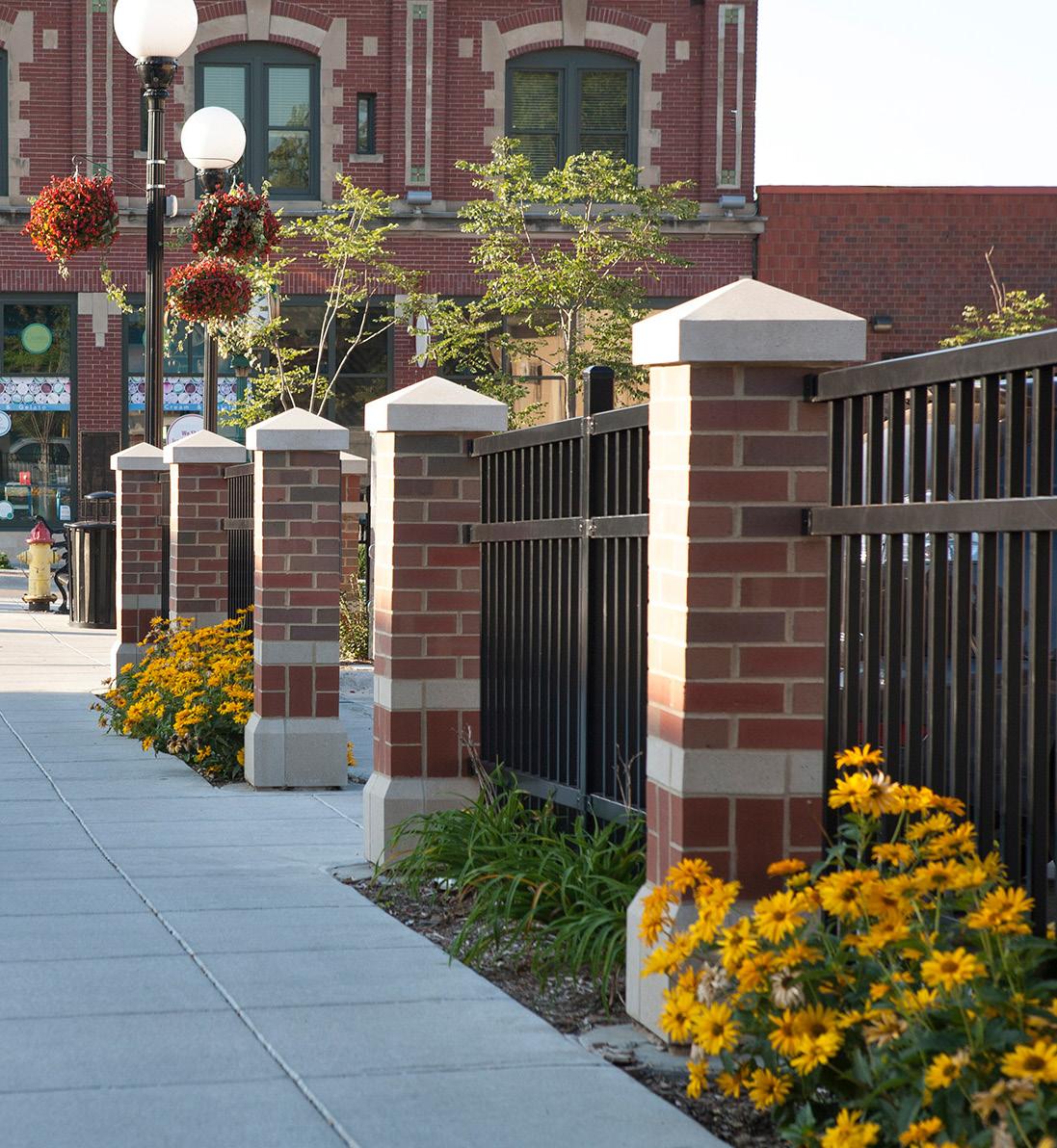
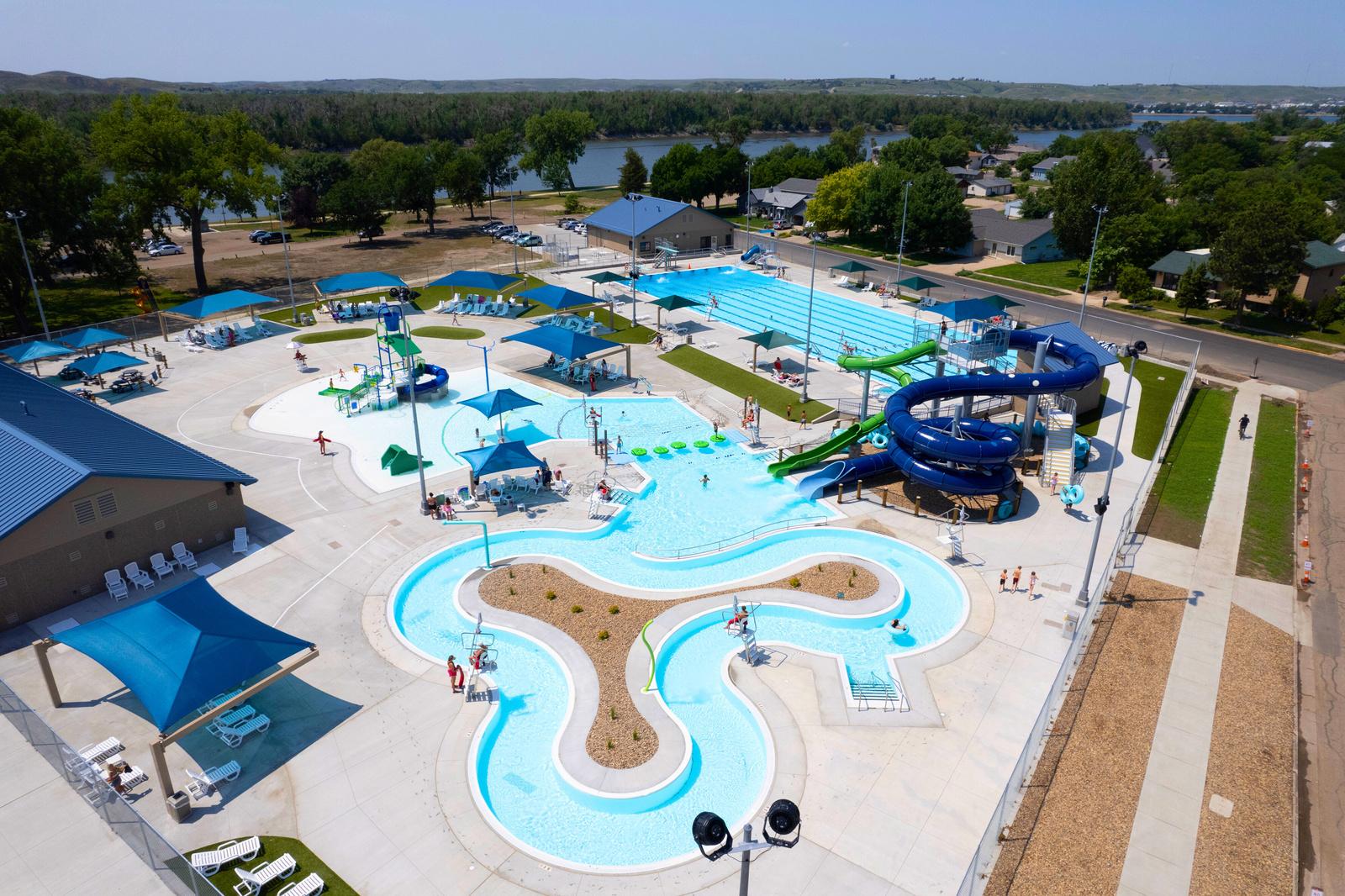
DUNDEE BUSINESS DISTRICT STREETSCAPE | OMAHA, NE
What are the benefits of becoming an Opportunity Zone?
Originally established by Congress through the Tax Cuts and Jobs Act of 2017, the Federal Opportunity Zones Program was made permanent with the passage of the One Big Beautiful Bill Act (OBBBA) of 2025. The purpose of the program is to promote investment and drive economic growth in low-income and/or economically disadvantaged communities. Investments made through certified investment vehicles created as “Opportunity Funds” are used to spur economic growth in designated Opportunity Zones—for example, by supporting new businesses or real estate development. Parties who invest in Opportunity Funds can benefit from tax incentives, such as deferrals on capital gains tax. An Opportunity Fund may be organized as a corporation or partnership whose assets comprise at least 90% qualified Opportunity Zone assets, representing an investment in Opportunity Zones. Distinct from the original provisions in the Tax Cuts and Jobs Act of 2017, the OBBBA provides higher tax incentives and lower investment hurdles for rural census tracts compared to non-rural tracts through Qualified Rural Opportunity Funds. This distinction encourages greater utilization of the Opportunity Zone program in rural areas of Nebraska and the country.
More about the Federal Opportunity Zones Program
For additional information about the Federal Opportunity Zones Program in Nebraska, visit https://opportunity.nebraska.gov/programs/business/ opportunity-zones/.
Please direct questions about the program to Ben Kresl at ben.kresl@nebraska. gov or 402-471-3063.
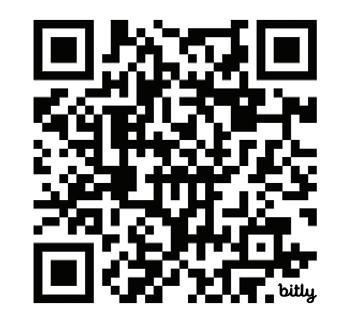
Access the application with this QR code:





Join Nebraska’s voluntary battery collection network
The Nebraska Recycling Council (NRC) is looking to build a network of official collection partners in our Voluntary Battery Collection Network, a statewide initiative designed to expand safe, accessible battery recycling opportunities across Nebraska.
As Nebraska prepares for implementation of the LB 36 battery stewardship program in 2028, this network will serve as a proactive step to strengthen collection infrastructure, increase public awareness, and ensure communities are ready for a smooth program launch.
Most importantly, battery fires are already occurring in waste and recycling facilities across the state due to improperly disposed lithiumion batteries. These fires pose serious safety risks to workers, damage equipment, and disrupt essential services. By expanding safe and accessible battery collection now, we are working to prevent as many battery-related fires as possible ahead of the 2028 program rollout. By joining this network, your organization will:
• Provide a safe and convenient drop-off location for your residents
• Help prevent battery-related fires in waste and recycling systems
• Demonstrate environmental leadership in your community
• Gain early experience and visibility ahead of the 2028 statewide program
• Be recognized by NRC and The Battery Network as a participating collection site
Sites will be provided guidance on best practices for storage, safety protocols, public communication materials, and coordination support. This voluntary network is designed to reduce barriers for participating sites while building a strong foundation for the future stewardship program.

We are currently seeking public locations, municipal

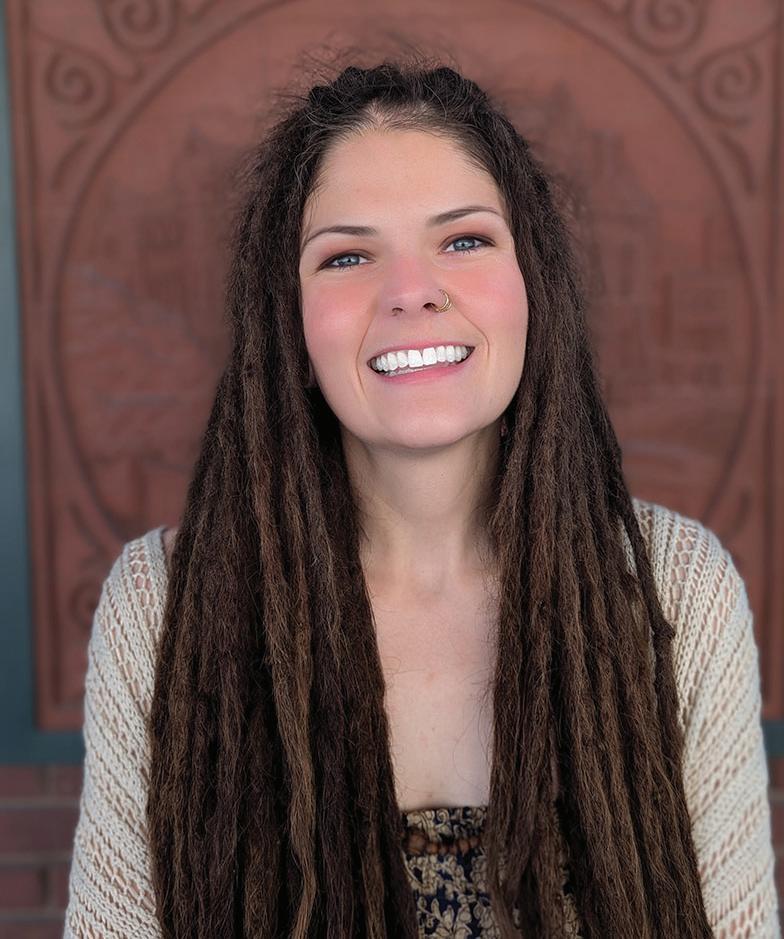
DIRECTOR, NEBRASKA RECYCLING COUNCIL
facilities, schools, libraries, solid waste facilities, and community partners interested in serving as collection points.
If your organization would like to participate or learn more, please complete this form to express your interest. Submission of information does not guarantee site selection. Submission will be accepted on a rolling basis and will end when funding is exhausted. Together, we can build a safer, more resilient battery recycling system for Nebraska.

KIMBERLY CARROLL STEWARD EXECUTIVE
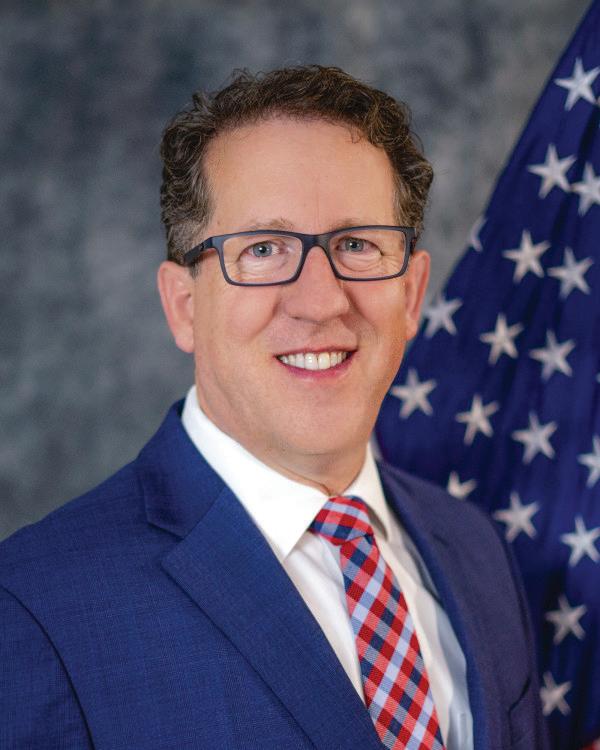
Celebrating the Good Life
BY U.S. REPRESENTATIVE ADRIAN SMITH, DISTRICT 3
On March 1, Nebraskans celebrated 159 years of statehood. It was a moment to reflect on the people and values that built our state and the pioneer spirit that continues to define us today.
From the earliest settlers who broke the prairie sod to the families who continue to farm and ranch the land today, Nebraska has always been shaped by people who believe in hard work, perseverance, and looking out for their neighbors. Over a century later, I am proud to say that same pioneer spirit has not faded with time and in many ways, is stronger than ever.
In Nebraska’s 3rd District, we know better than anyone that agriculture remains the backbone of our state and the driving force behind many of our rural communities. Generations of ag producers continue to rise before the sun and work long after it sets to feed and fuel our nation and the world. Their commitment to stewardship of the land, innovation in the field, and resilience through challenging seasons reflects the same determination that built this state nearly two centuries ago.
But perhaps what makes Nebraska truly special is not the products we produce, but the people who call it home. For so many, “The Good Life” is not just a phrase, but a reality. A reality rooted in strong communities, safe towns, great schools, and God’s creation in the wide-open spaces that remind us of the opportunities still ahead. It’s a life shaped by the values many of us were raised on—faith, family, hard work, and a commitment to caring for our neighbors. One where you can raise a family in a place where people know each other by name and where community matters.
Across our state, neighbors show up for one another in big and small ways, whether it’s helping a farmer harvest a field after an accident or illness, organizing a community fundraiser for a family in need, or volunteering in local churches, schools, and civic organizations. Service to others is part of our culture. That spirit of service extends far beyond our state’s borders. Nebraskans have long answered the call to serve our country in uniform, carrying with them the same values of duty, humility, and commitment to something greater than themselves.
Right now, our state mourns the loss of one of those heroes, Sergeant First Class Noah Tietjens. He represents the very best of Nebraska—courage, dedication, and a willingness to serve others. As we remember his sacrifice, we also keep his family, friends, and fellow servicemembers in our prayers.
Both now and for the last 159 years of statehood, we are reminded that Nebraska’s story has always been written by people who believe in hard work, strong communities, and service to others. That pioneer spirit lives on today, in our farms and ranches, in our small towns, and in the men and women who proudly call Nebraska home.
As your voice in Congress, I will continue fighting for policies that keep Nebraska strong so future generations can enjoy the Good Life we all know and love.
Central Nebraska Regional Airport and Grand Island Public Library launch “Flybrary” for travelers
The Central Nebraska Regional Airport and the Grand Island Public Library have partnered to introduce a new amenity for travelers: the Flybrary.
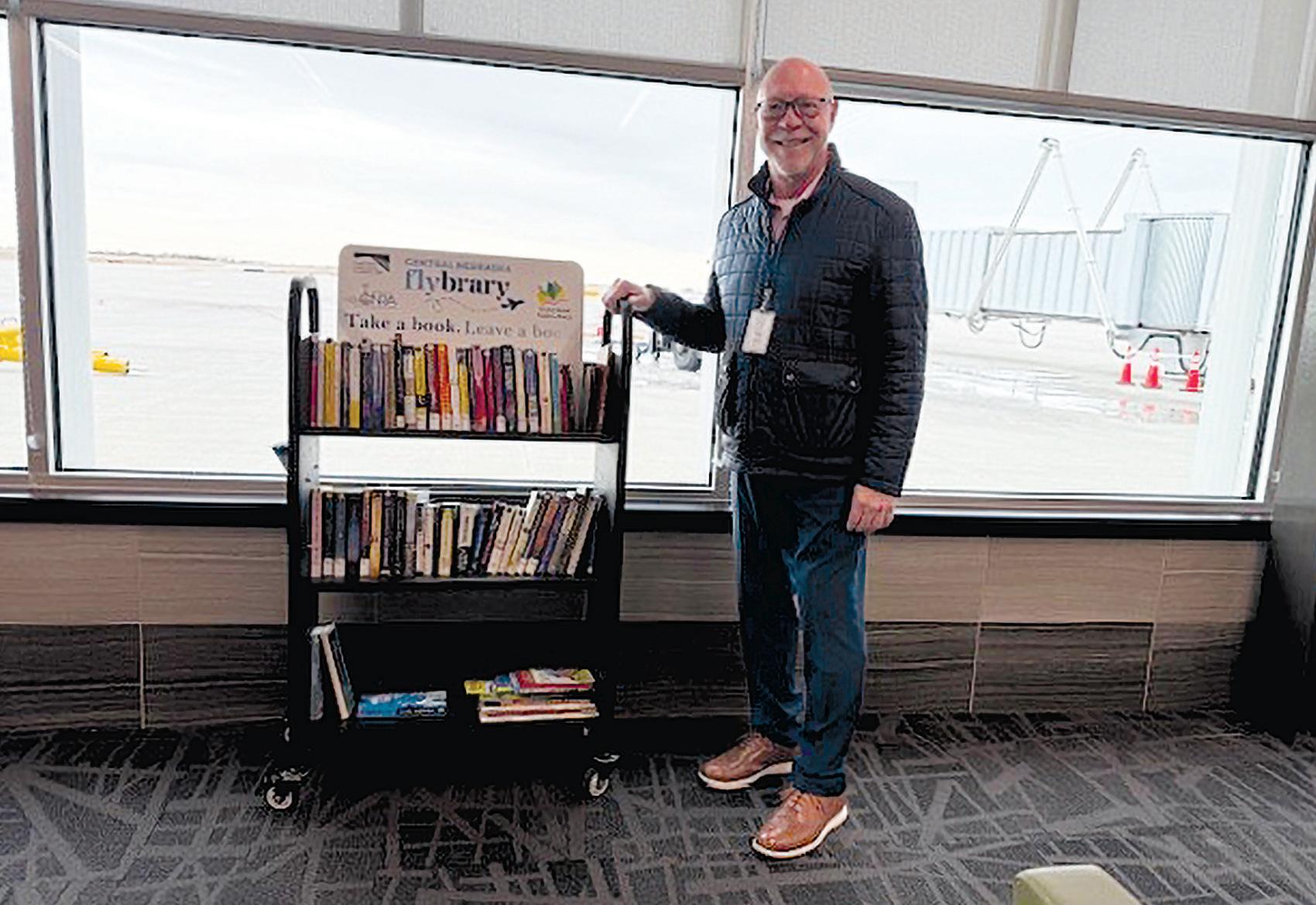
Designed to make reading more accessible while traveling, the Flybrary provides free books for passengers departing from or arriving at the Central Nebraska Regional Airport. Travelers of all ages are invited to pick up a book from the Flybrary cart located inside the airport terminal. The program follows a simple concept: take a book, leave a book.

The initiative is sponsored by the Grand Island Public Library Foundation and materials are supplied by the Foundation’s Friends of the Library group using donated books collected through its daily book sale program.
In addition to physical books, the Flybrary cart includes information about library services and resources. Travelers can learn how to obtain a library card and access free digital platforms such as Libby, Hoopla and NewsBank, along with the library’s mobile app and QR code for convenient access to e-books, audiobooks, magazines and other online resources while on the go.
The Flybrary reflects a shared commitment to literacy, lifelong learning and enhancing the traveler experience at the Central Nebraska Regional Airport by connecting passengers with free reading materials and library resources.

Books of all subjects and for readers of all ages can be found at the new "Flybrary" at Central Nebraska Regional Airport.
Mike Olson, Executive Director of the Hall County Airport Authority poses with the “Flybrary” at Central Nerbaska Regional Airport. The offering is the result of a partnership between the airport and Grand Island Public Library and offers free books for travelers. Photos provided by the City of Grand Island.
Source – City of Grand Island
Ricketts
Continued from page 12
Rural Housing Service Reform Act: Makes improvements to a number of USDA rural housing programs:
• Fixes a longstanding problem for properties, known as Sec. 515 properties, that were financed by the USDA decades ago and now have maturing mortgages, by making it easier for non-profits to acquire those properties and by decoupling rental assistance so that assistance doesn’t disappear when those mortgages mature;
• Makes permanent a USDA pilot program to make mortgage loans available in Native communities by partnering with local Community Development Fund Institutions (CDFIs);
• Brings the USDA’s outdated way of measuring incomes in line with the U.S. Department of Housing and Urban Development’s practices;
• Modernizes the USDA’s foreclosure process to cut red tape, better protect homeowners, and ensure USDA-owned properties stay affordable;
• Updates the rules for a home repair loan program to make it less burdensome to get smaller loans;
• Allows Sec. 502 guarantees for loans that include accessory dwellings and in-home daycares;
• Requires USDA to speed up their loan approval process;
• And makes much-needed investments in IT so that USDA can process loans more quickly and with less staff time wasted on paperwork or manual data entry.
VALID Act:
• Updates FHA mortgage disclosures to include VA Home Loans alongside FHA and conventional loan options.
• Ensures lenders are provided with important information regarding the applicant’s military service so they can provide information about VA loans early in the homebuying process.
VA Home Loan Awareness Act:
• Adds a disclosure to the Uniform Residential Loan Application (URLA) informing veterans they may be eligible for a VA Home Loan.
• Directs applicants to consult their lender for more information about the VA Home Loan program.
• Instructs the Government Accountability Office (GAO) to conduct a review and report to Congress on lenders’ adoption of these URLA updates.


Decades of dedication lead Columbus Council Member to Nebraska Baseball Hall of Fame
For Ron Schilling, baseball has never just been a sport. It’s been a lifelong companion, a teacher and a thread that has tied together seven decades of community, family, and faith.
BY
MATT
LINDBERG, PUBLIC COMMUNICATIONS MANAGER, COLUMBUS
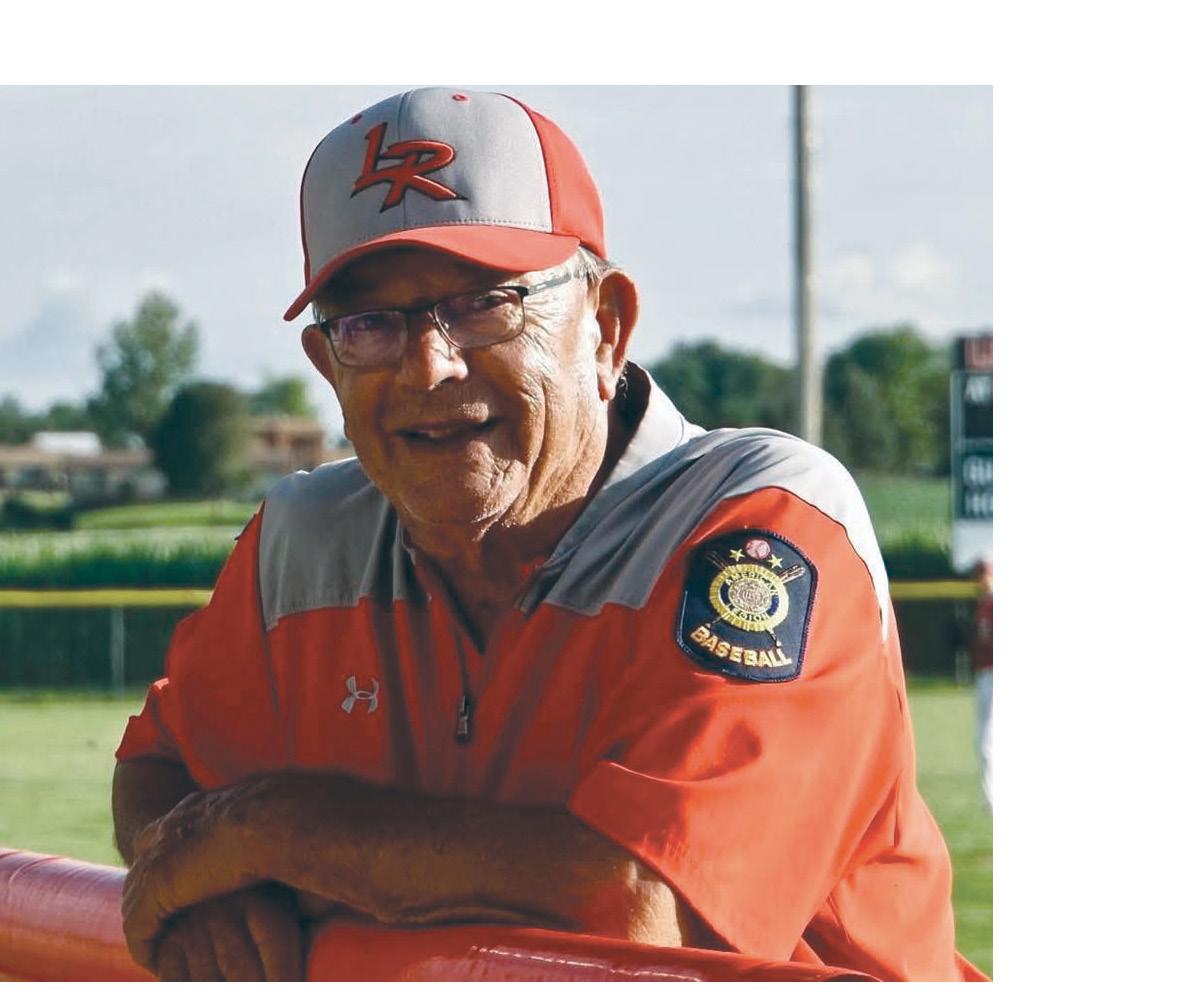
OnNov. 9, 2025, Schilling was officially inducted into the Nebraska Baseball Hall of Fame in Beatrice. Surrounded by hundreds of Nebraskans, he joined a select group of eight honorees recognized for their lasting impact on the game and the generations they’ve shaped along the way.
The nonprofit, which recognizes and celebrates the achievements of individuals who have made notable contributions to baseball in Nebraska, recognized Schilling as a manager.
“It was exciting. It took me 70 years to get to the Hall of Fame,” Schilling said, with a laugh. “I started in 1955. My lifestyle has always been God, family, and baseball.”
Schilling’s journey with the game began in his hometown of West Point, Nebraska, where he played American Legion baseball and learned the value of teamwork and discipline early on. After high school, he continued his education at Midland College (now Midland University) in Fremont, where he played multiple sports and initially set his sights on becoming a teacher.
But life took a different turn. When an opportunity arose with Valmont Industries, Schilling left college after two years to begin working full time - first in Valley, then in Dodge City, Kansas, and later in Columbus, where he moved with his family in the mid-1970s when Valmont opened a local irrigation store. Still, baseball never left his side.

His first coaching job came in 1959 at the local YMCA, where he discovered the joy of helping young players grow their skills. In Dodge City, he coached a Babe Ruth League team sponsored by his employer for eight years. And once in Columbus, he immersed himself even more deeply by coaching Little League, PONY League and American Legion teams while also umpiring at levels ranging from youth baseball to college.
For Schilling, it was never about trophies or titles.
“I love to teach the fundamentals of the game,” the Third Ward Councilman said. “I love to teach kids the right way of doing things.”
That simple philosophy shaped countless young athletes throughout the years. His influence has spanned generations, including the

It was exciting. It took “ ”
unforgettable moment when three of generations of his family shared the same field at the same time: Ron, his son Cody, and a grandson, all part of a local baseball game together.
Even after decades of coaching, Schilling still finds himself drawn back to the diamond.
“I started retiring in 2015 and have retired every year since then,” he said, with a laugh. “It seems when I retire, there’s something that fits me or needs to be done, so I step in and do it.”
Today, he assists Cody with coaching a local American Legion team, continuing the family legacy and commitment to the game that’s defined his life for 70 years.
Schilling’s Hall of Fame induction recognizes that unwavering commitment - not only to baseball itself but to the young people whose lives have been better because of it.
“It’s an honor to be recognized because you’re being recognized by a lot of very prominent people,” Schilling said.
“I have no idea who nominated me.”
In addition to his years of coaching and mentoring, Schilling remains an active member of both the American Legion Baseball Committee and the Columbus Baseball Association, helping to support and strengthen local baseball opportunities for future generations.
“Baseball itself hasn’t changed,” Schilling reflected. “You still use a bat, still use a ball. The bases are still 90 feet, the pitcher’s mound is still 60 feet by 6 inches.”
What has changed, though, are the thousands of young players who have crossed his path - players who learned from a man whose love of the game mirrors his love for his community.
After 70 years of teaching, coaching, and encouraging others to do their best, Ron Schilling’s Hall of Fame plaque stands as a symbol of what he’s been all along: A coach, a mentor, and a steady believer that life - like baseball - is meant to be played with heart.
Source – City of Columbus
Columbus City Council Member, Ron Schilling was officially inducted into the Nebraska Baseball Hall of Fame last November. Schilling has devoted 70 years of his life to baseball--by way of coaching and has had a lasting impact on many generations. Photos provided by City of Columbus.
Minden
Continued from page 17
Jacob and Emily Rafert provides needed additional rental housing while also energizing the downtown district for years to come.
Key project partners include: The Nebraska Department of Economic Development – Nebraska Affordable Housing Trust Fund program – Morgan Pearson, Central Housing Program Representative, City of Minden, South Central Economic Development District, Longshot Properties, and a long list of contracted partners that made this possible.
As Michael Krings, Minden City Administrator/ Economic Development Director stated, “The Zu Haus Flats project breathes new life into one of Minden’s oldest buildings, turning it into modern housing and commercial space that supports downtown vitality, preserves local history, and invests in the future of our community. This project adds much needed housing to Minden in a way that we have not seen before while simultaneously increasing traffic in our historic downtown square.”
Professional Directory



MUNICIPAL CODE SERVICES, INC.
MUNICIPAL CODE REVISION
BASIC CODE FOR SMALL VILLAGES
UPDATING FOR AMERICAN LEGAL AND OTHER CODES
UPDATING FOR ZONING REGULATIONS POLICY MANUALS
Personal Service / Nebraska Company
P.O. Box 164, Neligh, NE 68756 Phone 402.887.5022 leagle@mcnallylaw.net www.mcodeservices.com


The Minden housing project resulted in five spacious and contemporary apartments featuring 12-foot ceilings and 9-foot windows overlooking the iconic courthouse square and surrounding community. Photo provided by the City of Minden .