The NEBRASKA MUNICIPAL REVIEW (ISSN 0028–1906) is published monthly and the official publication of the League of Nebraska Municipalities, an association of the cities and villages of Nebraska, published at 1335 L St., Lincoln, Nebraska 68508. Subscription rates are $5 per single copy — $50 plus tax for 12 issues. Periodicals postage paid at Lincoln, Nebraska. Views of contributors, solicited or unsolicited, are their own and not to be construed as having the endorsement of the League unless specifically and explicitly stated by the publisher
The NEBRASKA MUNICIPAL REVIEW is a nonprofit publication administered and supervised by the League of Nebraska Municipalities. All revenue derived from the publication is used by the association to defray publication costs.
League of NE Municipalities staff 402-476-2829 • www.lonm.org
L. Lynn Rex, Executive Director
Christy Abraham, Legal Counsel
Lash Chaffin, Utilities Section Director
Cherie DeFreece, Admin Assistant/ Membership Services Assistant
Brenda Henning, Membership Services Assistant/ LIGHT Admin Assistant
Ethan Nguyen, LNM/LARM Information Technology Manager
Shirley Riley, Membership Services Director
Jackson Sash, Utilities Field Representative/Training Coordinator
Ashley Wolfe, Marketing/Communications Director
LARM staff
Dave Bos, Executive Director
Tracy Juranek, Asst. Executive Director, Customer Service Specialist
Diane Becker, Communications/Marketing Director
Kyla Brockevelt, Executive Administrative Assistant
Drew Cook, Customer Service Specialist
John Hobbs, Loss Control Specialist
James Kelley, Loss Control Specialist
Fred Wiebelhaus, Loss Control/Claims Manager
POSTMASTER: SEND ADDRESS CHANGES TO NEBRASKA MUNICIPAL REVIEW, 1335 L STREET, LINCOLN, NEBRASKA 68508.
Have an idea, project or opinion to share? The League welcomes member articles, information, and op-eds.
Want to reach local decision makers? The League can help you get your message out to Nebraska’s 3,500+ municipal officials.To learn more, contact Ashley Wolfe at 402-476-2829 or ashleyw@lonm.org
President Marlin Seeman, Mayor, Aurora
President-Elect
Bryan Bequette, Mayor, Nebraska City
Vice President David Black, Mayor, Papillion Past President Deb VanMatre, Former Mayor, Gibbon
Directors
Leirion Gaylor Baird
Mayor, Lincoln
John W. Ewing, Jr. Mayor, Omaha
Sharon Powell
Village Board President, Utica
Larry Evans Mayor, Minden
Rod Petersen Mayor, Louisville
Jim Bulkley Mayor, Columbus
Betsy Vidlak Mayor, Scottsbluff
Pat Heath City Administrator, Gering
Janine K. Schmidt
CMC/Treasurer, Morrill
Kyle Svec City Admin./Utilities Supervisor, Geneva
Affiliated Sections
City Managers

Utilities and Public Works Section Annual Conference 2026
AARP Community Challenge
Alliance: A new splash of color
CFRA - Small town, big steps: SEARCH grant helps Walthill plan for the future
NLC: Why cities must treat talent as infrastructure
Nebraska Arts Council - Bring art to your community!
Ask LNM - Topic: Legislative Advocacy
6
The Director's Message - L. Lynn Rex, LNM Executive Director - LB 1145: Thanks to Sen. Dan Lonowski for introducing this bill to amend the Open Meetings Act to make the notice provisions workable and understandable
LARM – Safeguarding taxpayer dollars
The Legal Corner by Tara A. Stingley and Nathan T. Heimes, Cline Williams Wright Johnson & Oldfather, L.L.P. - The importance of documenting employee performance issues against discrimination
Wes Blecke, Wayne Clerks
Munic. Accounting & Finance
Derek Bargmann, Seward
Becky Erdkamp, Exeter Fire Chiefs Dennis Thompson, North Platte
Utilities Pat Heath, Gering 20 24
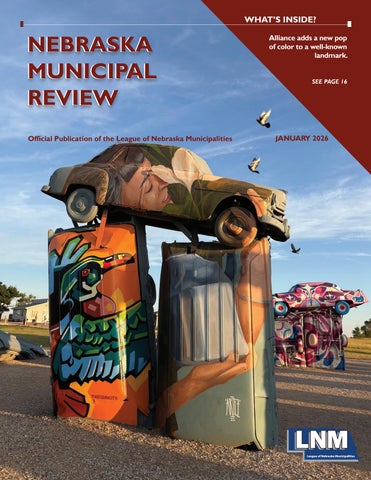
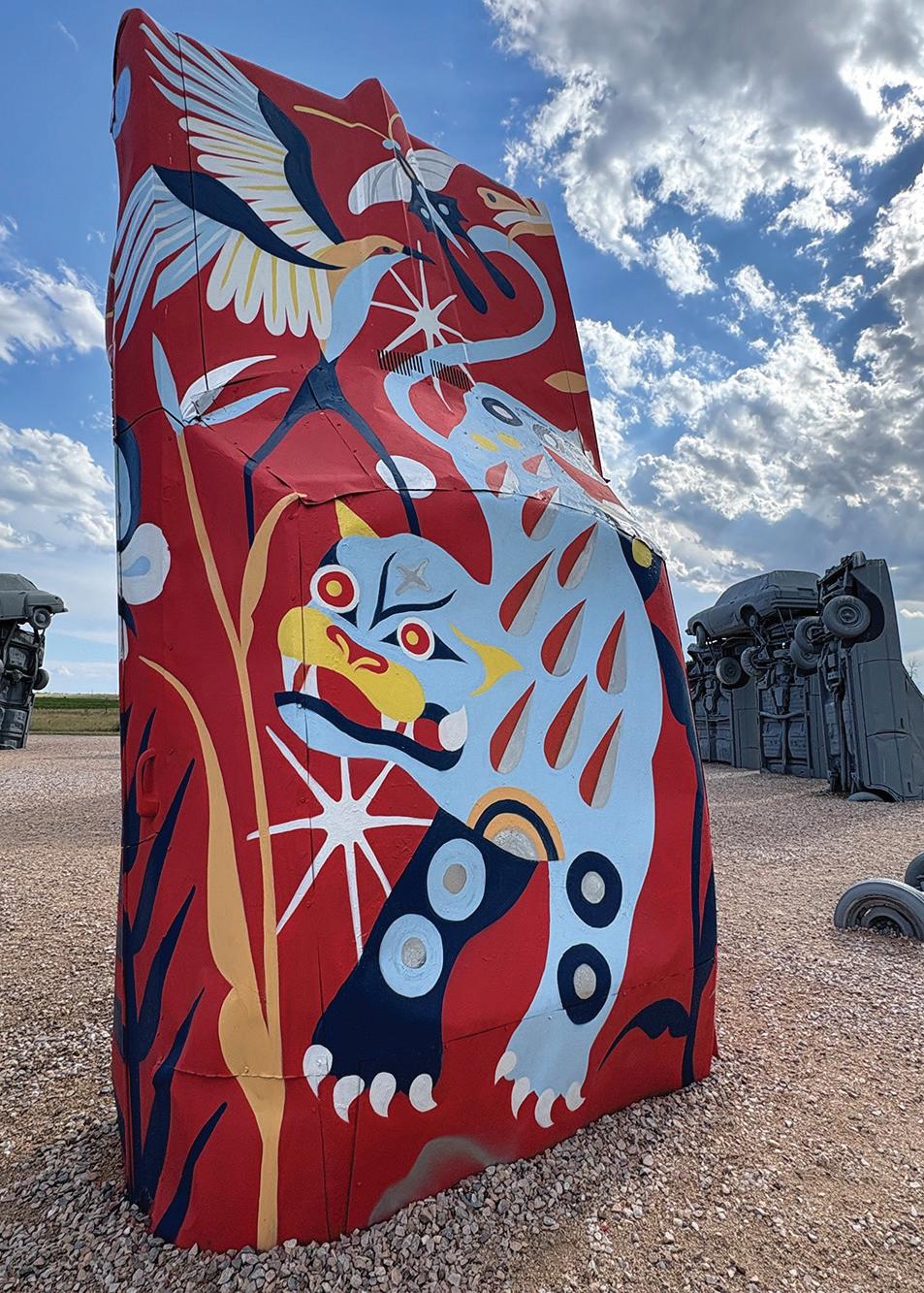
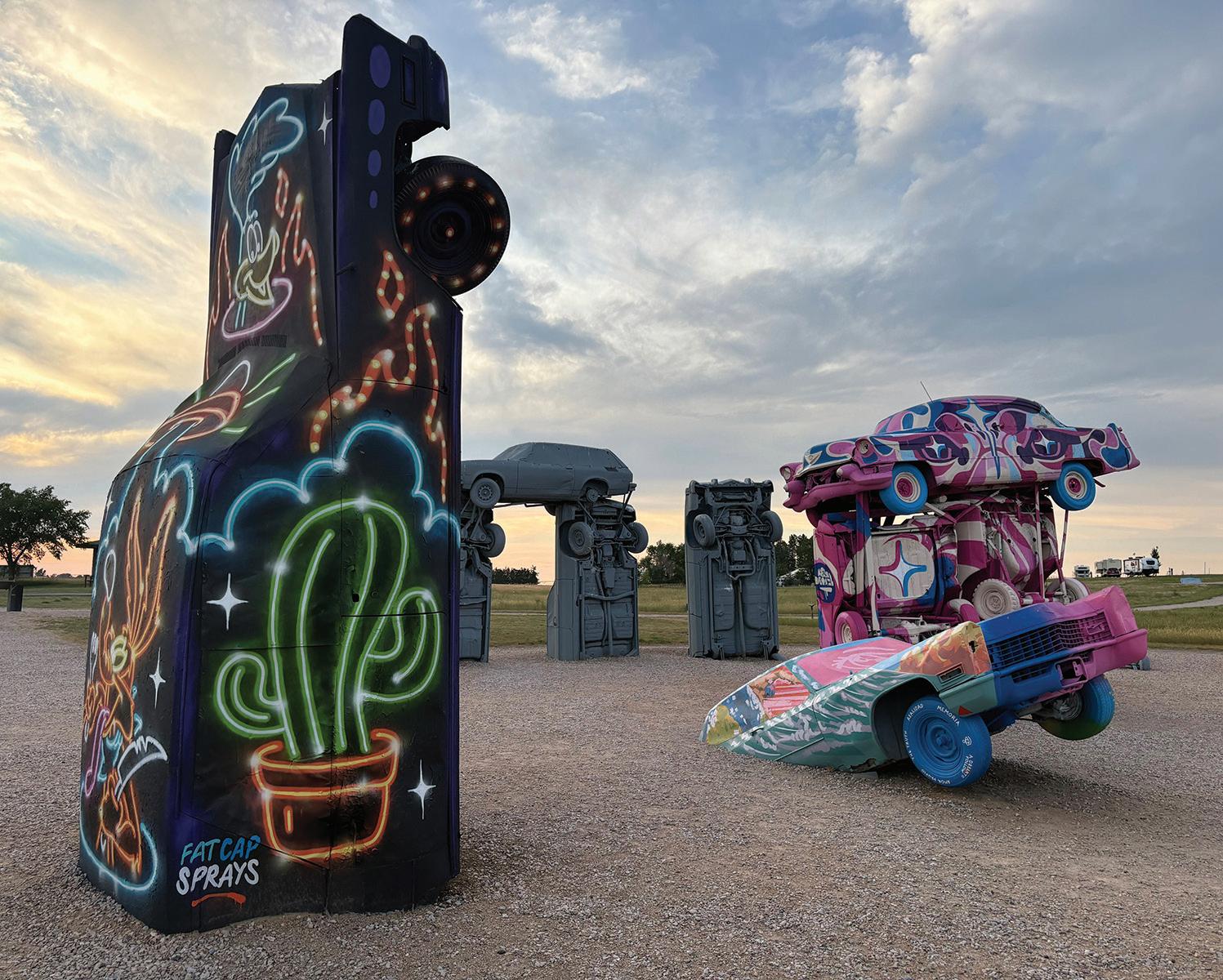
In June 2025, eight artists from around the world traveled to Alliance to paint murals directly on the cars of Carhenge. Will Suit, the Creative District Director and Director of Tourism for Alliance has been photographing the murals daily.
John McGhehey, Mayor, Alliance
Tobias Tempelmeyer, City Administrator, Beatrice
Rusty Hike, Mayor, Bellevue
Jim Ristow, City Administrator, Bellevue
Mindy Rump, Mayor, Blair
Phil Green, City Administrator, Blair
David Scott, Deputy City Administrator of Operations, Blair
Tom Menke, City Manager, Chadron
Jim Bulkley, Mayor, Columbus
Tara Vasicek, City Administrator, Columbus
Dave Bauer, Mayor Crete
Tom Ourada, City Administrator, Crete
Jody Sanders, City Administrator, Fremont
Kent Ewing, Mayor, Gering
Pat Heath, City Administrator, Gering
Roger Steele, Mayor, Grand Island
Patrick Brown, City Administrator, Grand Island
Mike Evans, Mayor, Gretna
Paula Dennison, City Administrator, Gretna
Mark Funkey, City Administrator, Hastings
James Liffrig Mayor, Holdrege
Chris Rector, City Administrator, Holdrege
Brenda Jensen, City Manager, Kearney
Brad DeMers, Asst. City Manager, Kearney
Doug Kindig, Mayor, La Vista
Kevin Pokorny, Director of Administrative Services, La Vista
John Fagot, Mayor, Lexington
Joe Pepplitsch, City Manager, Lexington
Margaret Blatchford, Assistant City Attorney, Lincoln
Riley Slezak, Senior Advisor to the Mayor, Lincoln
Linda Taylor, Mayor, McCook
Nate Schneider, City Manager, McCook
Bryan Bequette, Mayor, Nebraska City
Perry Mader, City Administrator, Nebraska City
Justin Webb, Council Member, Norfolk
Scott Cordes, City Administrator, Norfolk
Brandon Kelliher, Mayor, North Platte
Layne Groseth, City Administrator, North Platte
Steve Krajewski Mayor, Ogallala
Kevin Wilkins, City Manager, Ogallala
Thomas Warren, Chief of Staff, Omaha
David Black, Mayor, Papillion
Amber Powers, City Administrator, Papillion
R. Paul Lambert, Mayor, Plattsmouth
Emily Bausch, City Administrator, Plattsmouth
Don Groesser, Mayor, Ralston
Brian Kavanaugh, Council President, Ralston
Jack Cheloha, City Administrator, Ralston
Art Lindberg, Mayor, Schuyler
Lora Johnson, City Administrator, Schuyler
Betsy Vidlak, Mayor, Scottsbluff
Kevin Spencer, City Manager, Scottsbluff
Joshua Eickmeier, Mayor, Seward
Greg Butcher, City Administrator, Seward
Brandon Bonregard, Mayor, Sidney
Brett Kerkman, Vice-Mayor, Sidney
Lance Hedquist, City Administrator, South Sioux City
Jill Brodersen, Mayor, Wayne
Wes Blecke, City Administrator, Wayne
Barry Redfern, Mayor, York
Dr. Sue Crawford, City Administrator, York
Chaired by Tom Goulette, City Administrator of West Point
Lisa Schroedl, City Administrator/Clerk/Treasurer, Ainsworth
Jessica Quady, City Administrator, Ashland
Crystal Dunekacke, City Administrator/Economic Developer, Auburn
Marlin Seeman, Mayor, Aurora
Adam Darbo, City Administrator, Aurora
Chris Anderson, City Administrator, Central City
Andrew Lee, Admin/Clerk/Treasurer, Curtis
Alan Michl, Chairperson, Exeter
Becky Erdkamp, Clerk/Treasurer, Exeter
Kyle Svec, City Administrator, Geneva
Matt Smallcomb, City Administrator, Gibbon
Gary Greer, City Administrator, Gothenburg
Jana Tietjen, Clerk, Hebron
Barb Straub, Admin/Clerk/Treasurer, Hemingford
Kelly Oelke, City Administrator, Hickman
Janine K. Schmidt, CMC/Treasurer, Morrill
Sandra Schendt, Clerk/Treasurer, Nelson
David Russell, Director of Gov. Affairs, NMPP Energy
Sandy Kruml, Clerk/Treasurer, Ord
Mike Feeken, Mayor, St. Paul
Sandra Foote Council Member, Superior
Warren Myers, City Administrator, Sutton
Jessica Meyer, City Administrator, Syracuse
Kelly Adamson, City Council Member, Tekamah
Sharon Powell, Village Board President, Utica
Kyle Arganbright, Mayor, Valentine
Melissa Harrell, City Administrator, Wahoo
Desiree Soloman, City Attorney, Waterloo
Stephanie Fisher, City Administrator, Waverly
Tom Goulette, City Admin./Utility Superintendent, West Point
Randy Woldt, Utilities Superintendent, Wisner
Robert Costa, Community Planner, Yutan

(All statute citations to Revised Statutes of Nebraska)
CITIES OF THE FIRST CLASS
• Within 10 working days following meeting or before next meeting (whichever is sooner) Clerk to have minutes available for public inspection. (84-1413)
• Within 15 days of Passage Clerk publishes ordinances passed. (16-405)
• Within 30 days following Council meeting Clerk publishes official proceedings of meetings, including claims. (191102)
• Within 20 days after end of month Treasurer files monthly financial report. (16-318)
• Each Quarter - Report from Depository banks due. (16-714)
• * * Clerk must prepare agenda prior to next Council meeting. (84-1411)
CITIES OF THE SECOND CLASS
• Within 10 working days following meeting or before next meeting (whichever is sooner) Clerk to have minutes available for public inspection. (84-1413)
• Within 15 days of Passage Clerk publishes or posts ordinances passed. (17-613)
• Within 30 days following Council meeting Clerk publishes official proceedings of meeting including claims. (191102)
• Within 20 days after end of month Treasurer files monthly financial report. (17-606)
• * * Clerk must prepare agenda prior to next Council meeting. (84-1411)
• Within 10 working days following meeting or before next meeting (whichever is sooner) Clerk to have minutes available for public inspection. (84-1413)
• Within 15 days of Passage Clerk publishes or posts ordinances passed. (17-613)
• Within 30 days following Board meeting Clerk publishes official proceedings of meeting, including claims. (191102)
• Within 20 days after end of month Treasurer files monthly financial report. (17-606)
• * * Clerk must prepare agenda prior to next Board meeting. (84-1411)
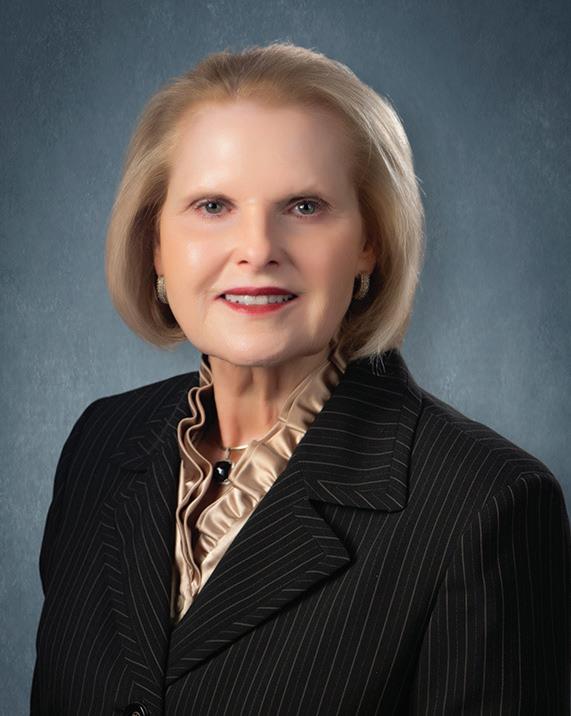
BY L. LYNN REX, EXECUTIVE DIRECTOR, LNM
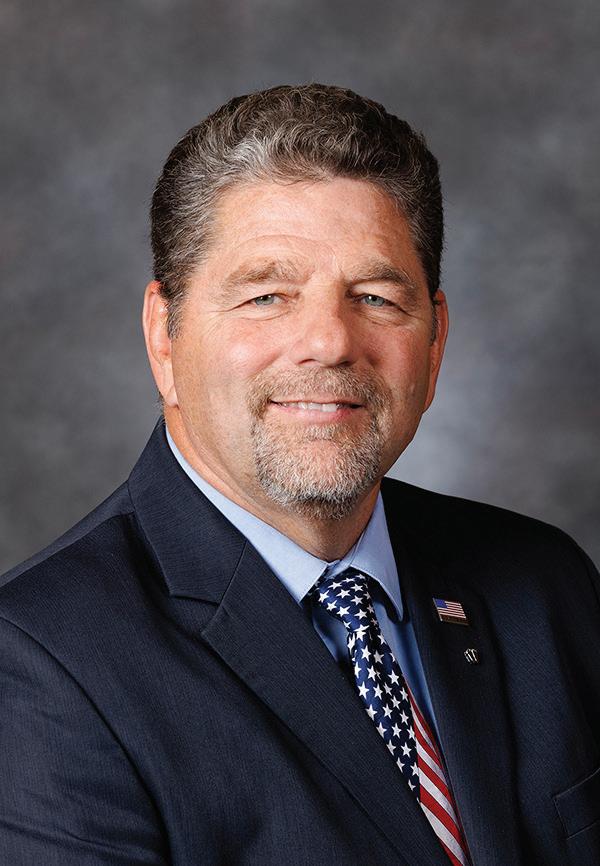
Thanksto Hastings Sen. Dan Lonowski for introducing LB 1145 on behalf of the League, the Nebraska Association of County Officials (NACO), and the Nebraska Association of School Boards (NASB). Although there are several other bills to amend the Open Meetings Act this session which the League will report on in our weekly Legislative Bulletin, LB 1145 is of utmost importance to political subdivisions!
LB 1145 would amend Section 84-1411 of the Open Meetings Act to require public bodies subject to the Act to provide “ reasonable advance publicized notice of the time and place of each meeting by a method designated by each public body and recorded in its minutes,” as political subdivisions did before passage of LB 148 in 2020. Before passage of LB 148 in 2020, some political subdivisions published notice in a newspaper of general circulation within their jurisdiction, but most posted notice in three public places. LB 148 in 2020 changed notice requirements for political subdivisions but did not change the requirements for providing reasonable advance publicized notice for other public bodies subject to the Act.
schools have experienced challenges with current law, especially when some newspapers neglected to publish notice in the print edition, post the notice on the newspaper’s website (if available), and/or post the notice on the statewide website as required in the Open Meetings Act; the NPA established and maintains the statewide website. Although the newspaper(s) did not intentionally fail to properly publish notice as requested by the public body, their neglect to do so resulted in the political subdivision being out of compliance with the Open Meetings Act.
LB 1145 also repeals provisions in Section 84-1411 that are confusing and have proven to be problematic for political subdivisions since passage of LB 148 in 2020. Representatives of the League, NACO, and NASB negotiated with representatives of the Nebraska Press Association (NPA) in the fall of 2025 to address ongoing issues and concerns. Several municipalities, counties, and
Section 84-1414 provides serious consequences for a public body that violates the Act: “Any motion, resolution, rule, regulation, ordinance, or formal action of a public body made or taken in violation of the Open Meetings Act shall be declared void by the district court if the suit is commenced within one hundred twenty days of the meeting of the public body at which the alleged violation occurred. Any motion, resolution, rule, regulation, ordinance, or formal action of a public body made or taken in substantial violation of the Open Meetings Act shall be voidable by the district court if the suit is commenced more than one hundred twenty days after but within one year of the meeting of the public body in which the alleged violation occurred. A suit to void any final action shall be commenced within one year of the action.” (There also are consequences for a member of a public body “who knowingly violates or conspires to violate or who attends or remains at a meeting knowing that the public body is in violation of any provision of the Open Meetings…”)
In addition, LB 1145 states that notice also shall be given “at least twice a year of the regular meeting schedule, location,
and the method designated by the public body to provide reasonable advance publicized notice. Such notice shall be given by publication in a legal newspaper of general circulation within the public body’s jurisdiction.” This publication requirement does not apply to cities of the second class, villages, and rural or suburban protection fire districts since they typically post notice of their meetings in three public places.
The bill also outlines procedures for a public body that decides to publish notice in a newspaper of general circulation within the public body’s jurisdiction to meet the notice requirement in case of refusal, neglect, or inability of the newspaper to publish notice: “the public body shall (i) post such notice on its website, if available, (ii) request the newspaper submit a post on a statewide
“LB 1145 also repeals provisions in Section 84-1411 that are confusing and have proven to be problematic for political subdivisions since passage of LB 148 in 2020.”
website, if available, established and maintained as a repository for such notices by a majority of Nebraska newspapers, and (iii) post such notice in a conspicuous public place in such public body’s jurisdiction. The public body shall keep a written record of such posting… and a written record of the request to the newspaper…. The record of such posting shall be evidence that such posting was done as required and shall be sufficient to fulfill the requirement of publication.”
The Government, Military and Veterans Affairs Committee has not yet scheduled a hearing on LB 1145. Thanks again to Sen. Lonowski for introducing this important bill!
During the 2026 legislative session, Senators are facing a wide range of challenges, including a $471.5 million budget deficit. Since the Legislature is required to have a balanced budget, the deficit must be addressed before the Legislature adjourns sine die on or about April 17.
The 2026 session is a “short,” 60-day session. The 494 bills, 15 Legislative Resolutions for Constitutional Amendments (LR CAs), and five other substantive resolutions that did not pass or were not indefinitely postponed during the 2025 session carried over to the 2026 session, for a total of 514 carryover measures.
As a reminder, in the 2025 90-day session, 715 bills were introduced (10 withdrawn), 18 LR CAs, and 41 “A” bills for appropriations. The Governor approved 202 bills which incorporated 113 other bills by amendment; there was not an override attempt on two bills vetoed by the Governor.
Pursuant to Speaker Arch’s calendar for the 2026 session, General File debate on carryover bills began Jan. 14.
Senators had until Jan. 21 to introduce new bills; there are 545 new bills (seven withdrawn as of Jan. 26) and 12 LR CAs. A number of these bills and proposed constitutional amendments would have a detrimental effect on the ability of municipal officials to govern effectively and provide necessary services for citizens.
Committee hearings on new bills and legislative resolutions began Jan. 20 and will continue until Feb. 27; hearings start each day at 1:30 p.m. CT and can be viewed on the Legislature’s website.
This is the last session for 12 State Senators. The following 10 Senators will be term-limited at the end of the year: John Arch of La Vista, Tom Brandt of Plymouth, Machaela Cavanaugh of Omaha, Rob Clements of Elmwood, Wendy DeBoer of Bennington, Myron Dorn of Adams, Ben Hansen of Blair, Megan Hunt of Omaha, Mike Moser of Columbus, and Dave Murman of Glenvil. Sens. Jane Raybould of Lincoln and Christy Armendariz of Omaha will

not be seeking re-election. THANK YOU for taking time to review weekly League Legislative Bulletins coupled with action alerts which will be emailed when necessary. All League staff members are involved in the League’s lobbying effort. However, Senators are most interested and influenced by information provided by elected and appointed municipal officials; your constituents are their constituents! We look forward to working with Senators, the Governor’s Office, and municipal officials across the state to effectively advocate for local decisionmaking to protect the interests of member cities and villages. Please do not hesitate to contact the League with any questions you may have throughout the session.

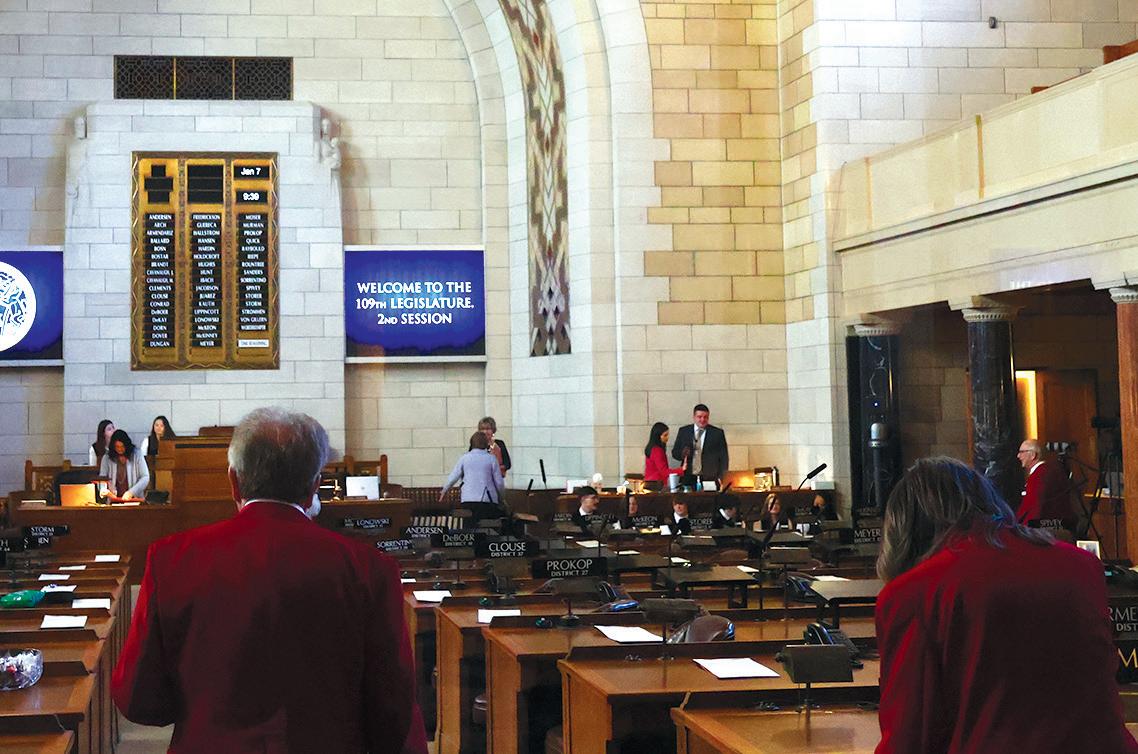
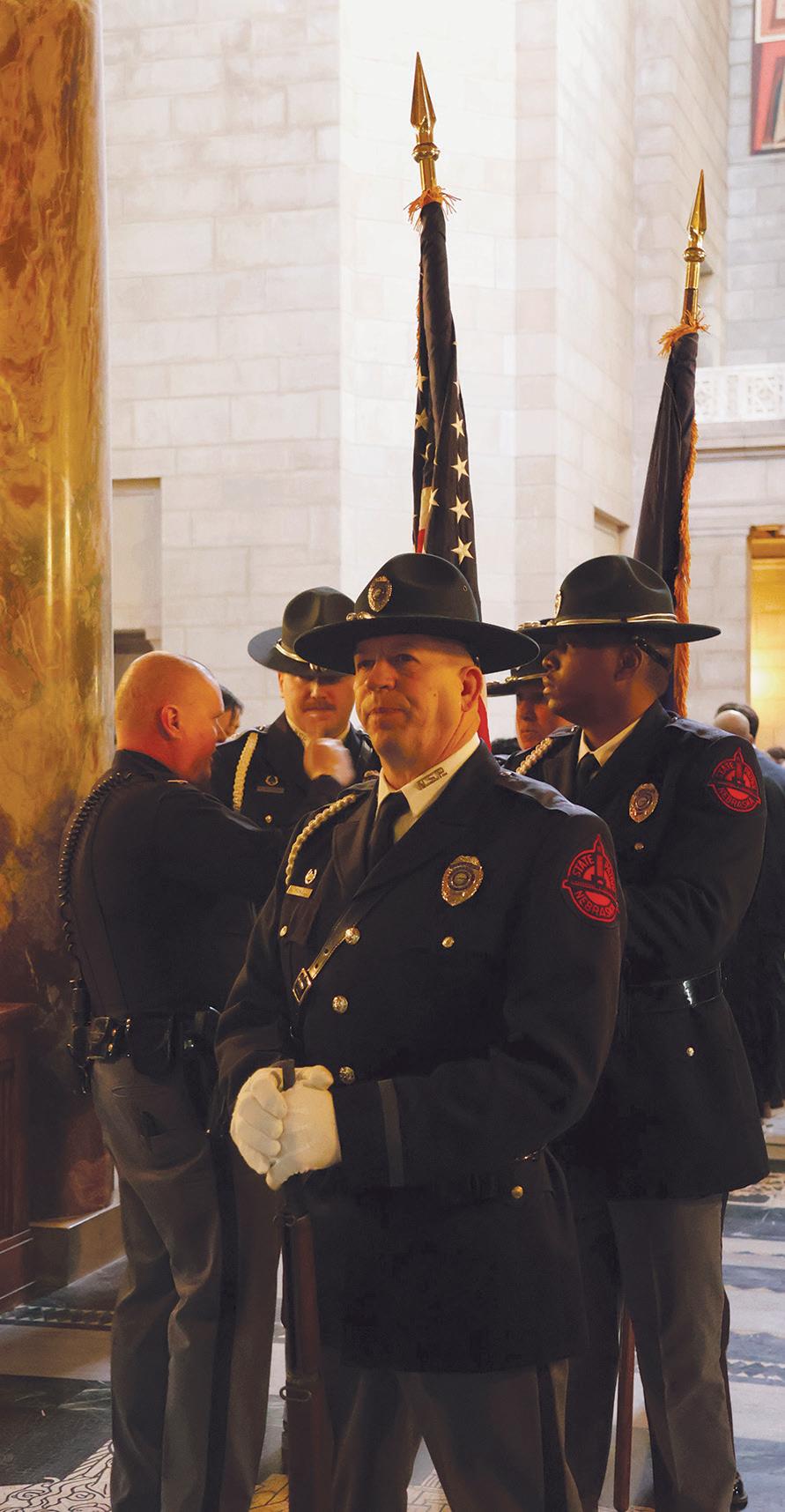
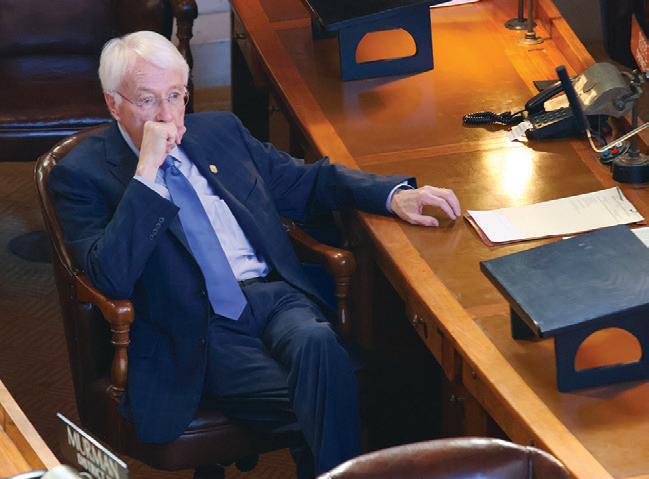
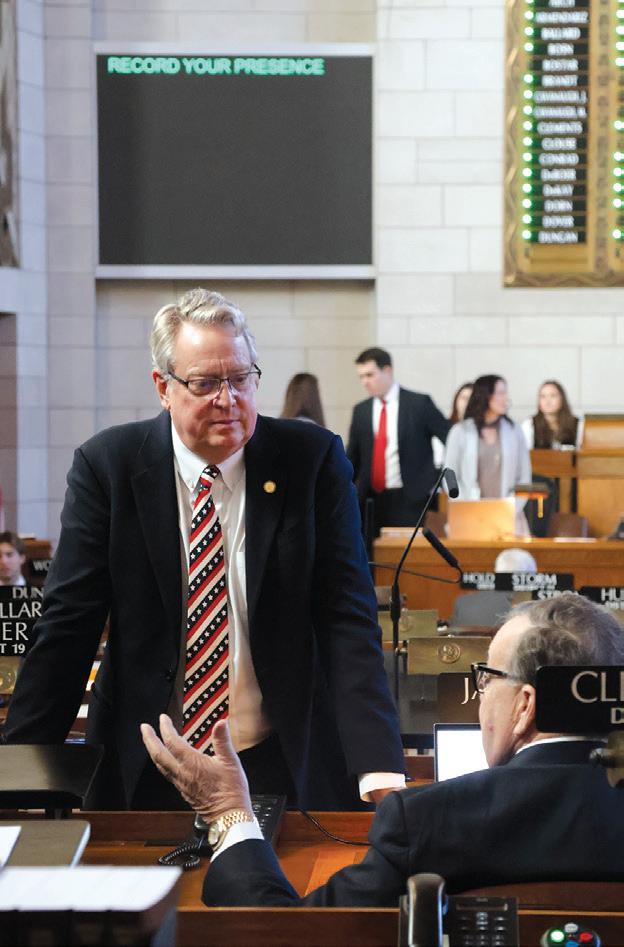
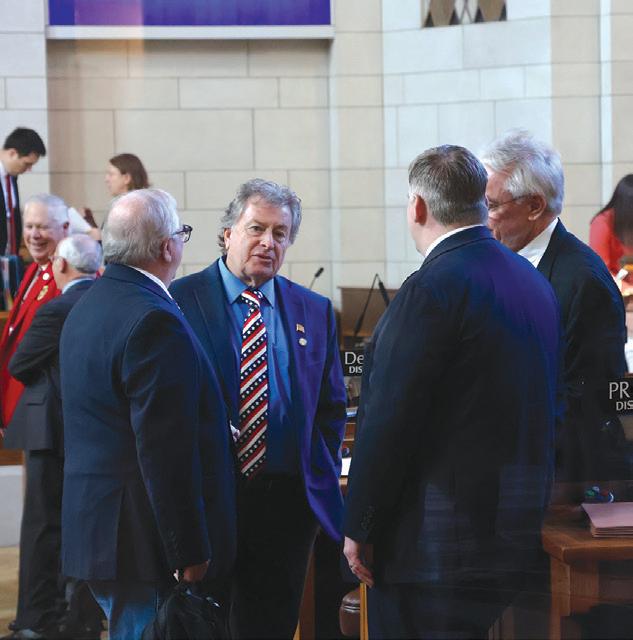
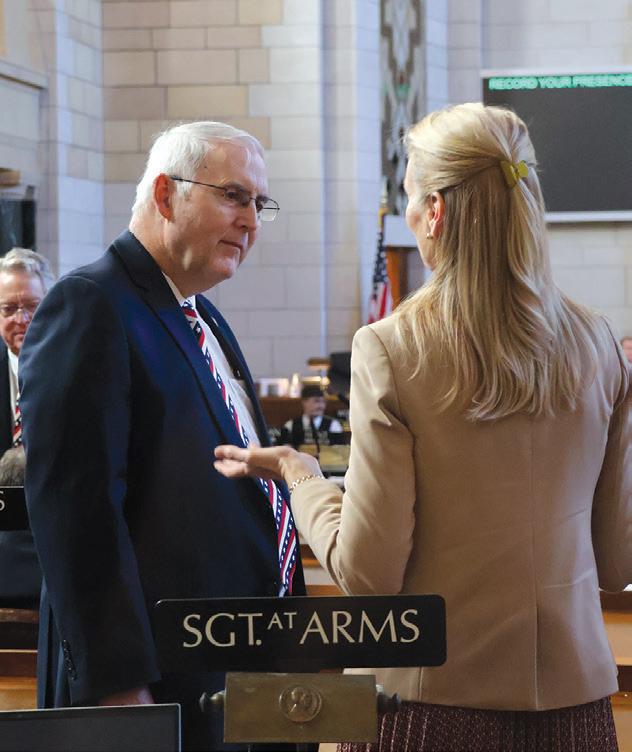
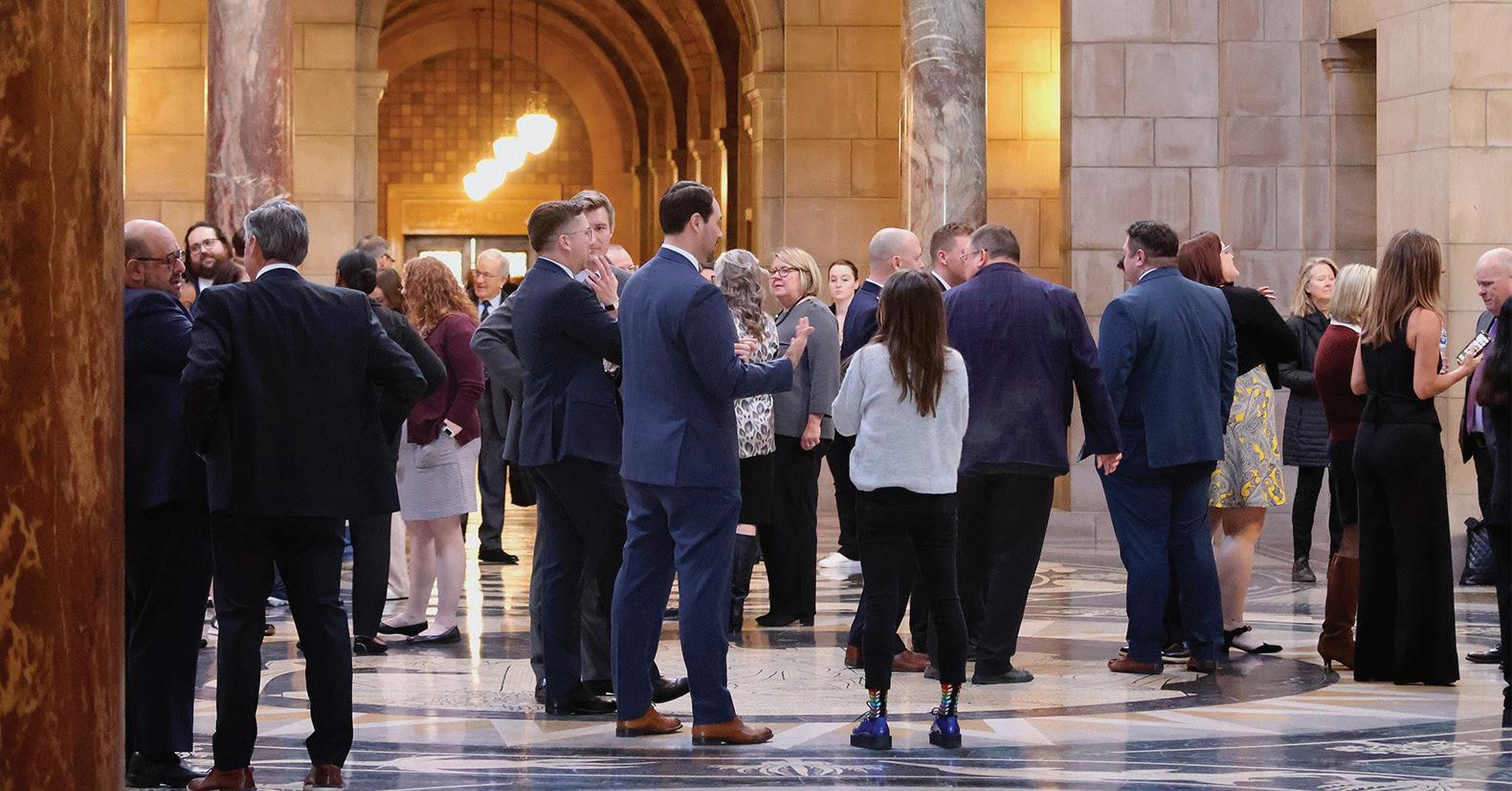
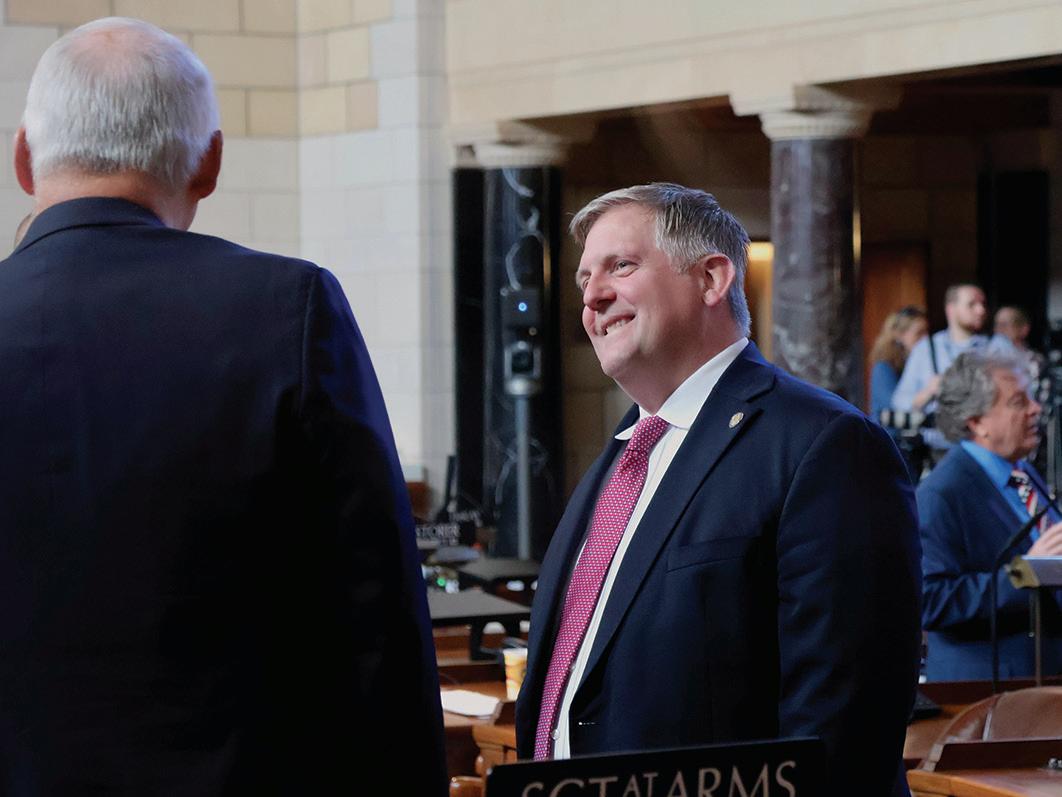
The George Norris Legislative Chamber - 9:39 a.m.on Jan. 7, 2026, was fairly quiet and calm--a noticable contrast to the hustle once 10 a.m rolled around and the 109th Legislature convened for the second session.

The 2026 Legislative Session kicks off and the Nebraska Unicameral is abuzz
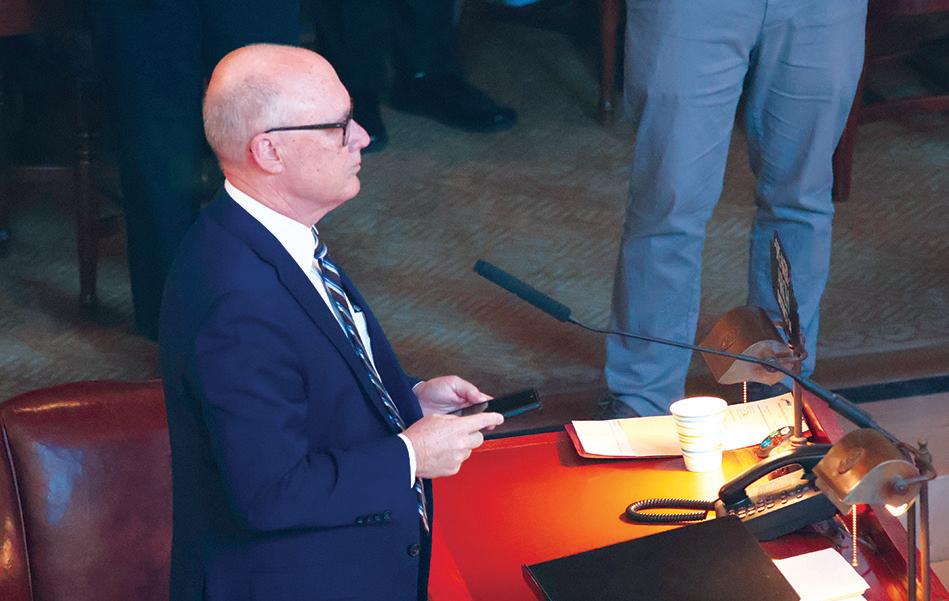
At 9:30 a.m. on January 7, the George W. Norris Legislative Chamber at the Nebraska State Capitol was mostly empty—and apart from some “Red Coats” and legislative staff mulling around, the atmosphere was relatively calm. Less than 1/2 hour later, the Chamber and Rotunda were filled with Senators, legislative staff, lobbyists, media, and members of the public—noise reverberating through the cavernous halls in the excitement of opening day.
The second session of the 109th Legislature convened and some anticipate it will be very busy as Senators search for ways to address an estimated $471 million budget deficit and pass meaningful legislation during a short, 60-day session.
New bills will be introduced for the first 10 days of the
Continued on page 19 / See Session
Agriculture
Members: Sen. Hansen
Sen. Holdcroft
Sen. Ibach
Sen. Kauth
Sen. F. Meyer
Sen. Raybould
Sen. Storm
Chair: Sen. Barry DeKay
Appropriations
Members: Sen. Armendariz
Sen. M. Cavanaugh
Sen. Dorn
Sen. Dover
Sen. Lippincott
Sen. Prokop
Sen. Spivey
Sen. Strommen
Chair: Sen. Robert Clements
General Affairs
Sen. Lonowski
Sen. G. Meyer
Sen. Sanders Chair: Sen. Dave Murman
Judiciary
Rm. 1525 – Wednesday, Thursday, & Friday
Members: Sen. DeBoer
Sen. Hallstrom
Sen. Holdcroft
Sen. McKinney
Sen. Rountree
Sen. Storer
Sen. Storm
Members:
Sen. Andersen
Sen. J. Cavanaugh
Sen. Clouse
Sen. DeKay
Sen. Quick
Sen. Rountree
Sen. Storm
Members: Sen. Bostar
Sen. Dungan
Sen. Hallstrom
Sen. Hardin
Sen. Riepe
Sen. von Gillern
Sen. Wordekemper
Chair: Sen. Mike Jacobson
Government, Military & Veterans Affairs

Chair: Sen. Mike Holdcroft
Natural Resources
Rm. 1023 – Wednesday, Thursday, & Friday
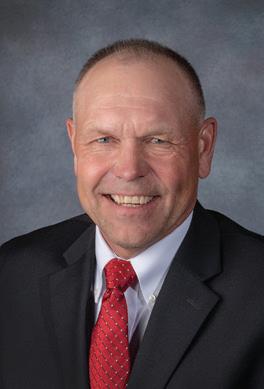
Members:
Sen. Clouse
Sen. Conrad
Sen. DeKay
Sen. Hughes
Sen. Jaurez
Sen. Moser
Sen. Raybould
Chair: Sen Carolyn Bosn Dist. 32
Chair: Sen. Tom Brandt
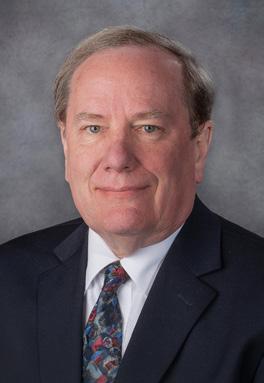
Transportation & Telecommunications
Rm. 1510 – Monday & Tuesday
Members: Sen. Ballard
Sen. Bosn
Sen. Brandt
Sen. DeBoer
Sen. Fredrickson
Sen. Guereca
Sen. Storer
Chair: Sen. Mike Moser, Dist. 25
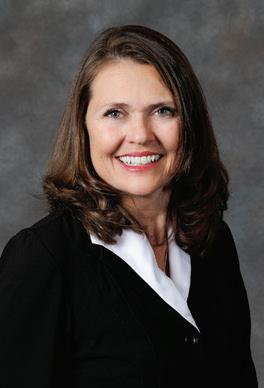
Members:
Sen. Hansen
Sen. Ibach
Sen. McKinney
Sen. F. Meyer
Sen. Raybould
Sen. Sorrentino
Sen. Kathleen Kauth
&
Members:
Sen. Andersen
Sen. J. Cavanaugh
Sen. Guereca
Sen. Hunt
Sen. Lonowski
Sen. F. Meyer
Sen. Wordekemper
Chair: Sen. Rita Sanders
45
Nebraska Retirement Systems
Rm. 1525 - at call of Chair
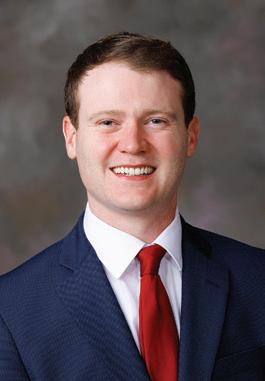
Members:
Sen. Clements
Sen. Conrad
Sen. Hardin
Sen. Jaurez
Sen. Sorrentino
Chair: Sen. Beau Ballard
Dist. 21
Members:
Sen. Ballard
Sen. Fredrickson
Sen. Hansen
Sen. G. Meyer
Sen. Quick
Sen. Riepe
Chair: Sen. Brian Hardin
Revenue
Rm. 1524 – Wednesday, Thursday, & Friday
Members:
Sen. Bostar
Sen. Dungan
Sen. Ibach
Sen. Jacobson
Sen. Kauth
Sen. Murman
Sen. Sorrentino
Chair: Sen. Brad von Gillern
Dist. 4
Urban Affairs
Rm. 2102 – Tuesday
Members:
Sen. Andersen
Sen. J. Cavanaugh
Sen. Clouse
Sen. Quick
Sen. Rountree
Sen. Sorrentino
Chair: Sen. Terrell McKinney, Dist. 11
*The Speaker reserves the right to revise the session calendar.
Annual event brings many opportunities for sharing ideas and gathering resources
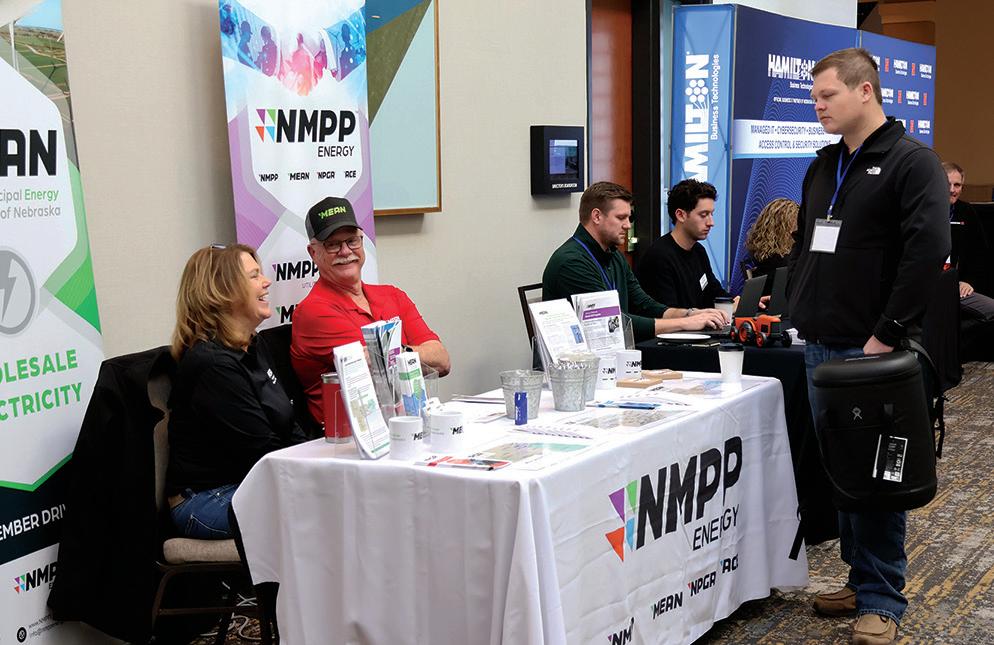
Municipal and public works officials from across Nebraska gathered in Lincoln for the 2026 Utilities/Public Works Section Annual Conference. There were 94 delegates, from 54 municipalities, and 46 sponsor representatives in attendance. The conference was held Jan. 7-9 at the Embassy Suites in downtown Lincoln.
The educational event was comprised of a series of general sessions and more specialized track sessions—offering topics for everyone to learn about the subjects most pertinent to their role. Some of the session subjects included lead line resplacements, the effects of rechargeable batteries on water and wastewater systems, preparing your utility system for a data center, bicycles and the impact of active transportation on your munipality and more!
Water, wastewater, and engineering contact hours were offered for many of the sessions.
Continued on page 12 / See Utilities
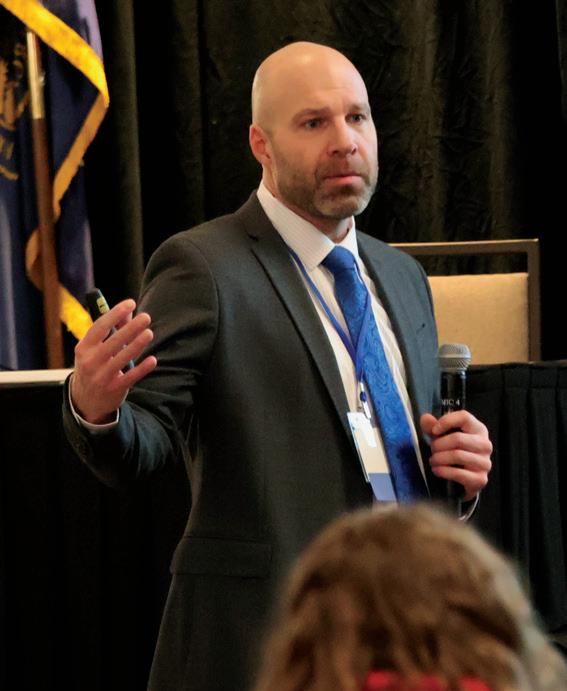
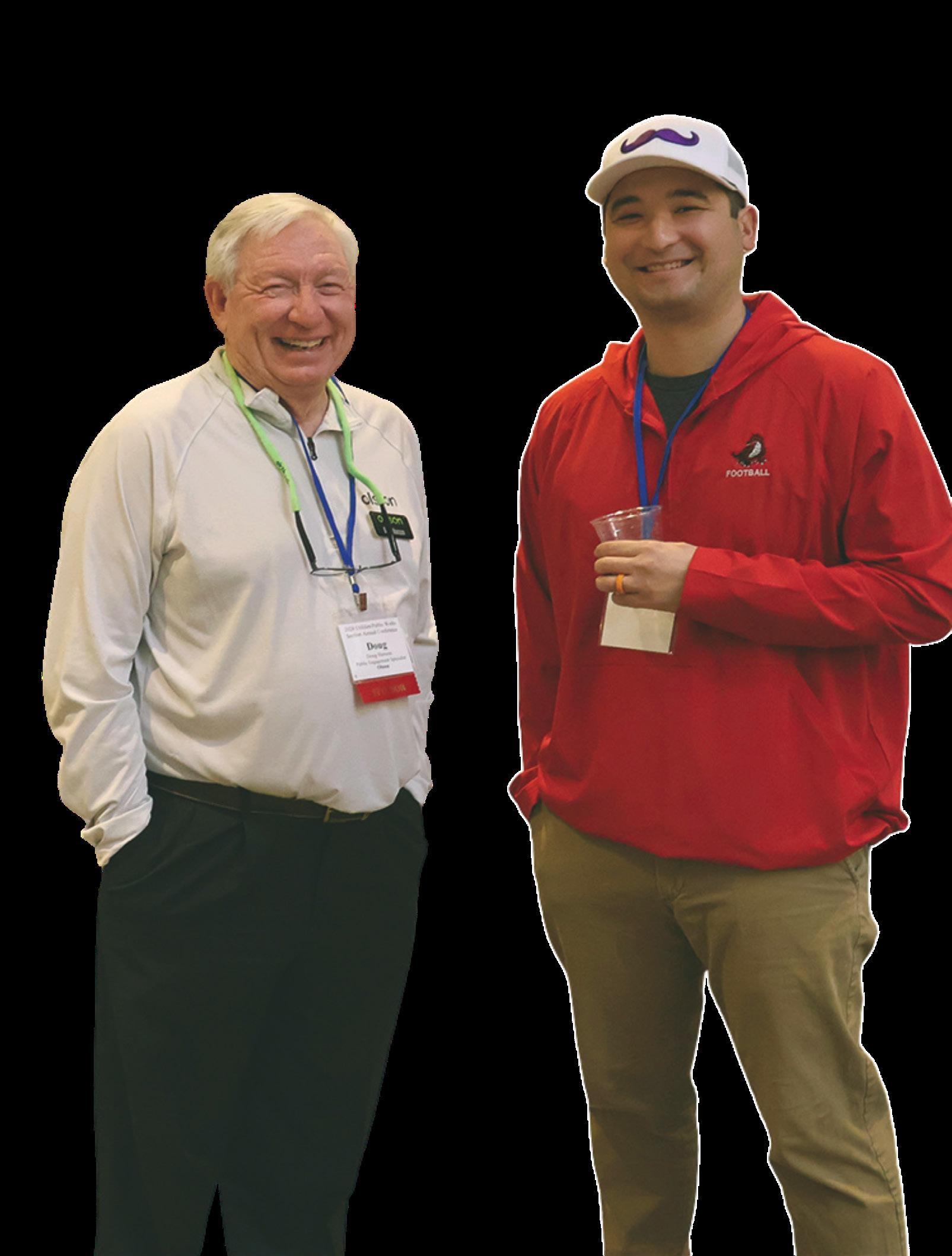

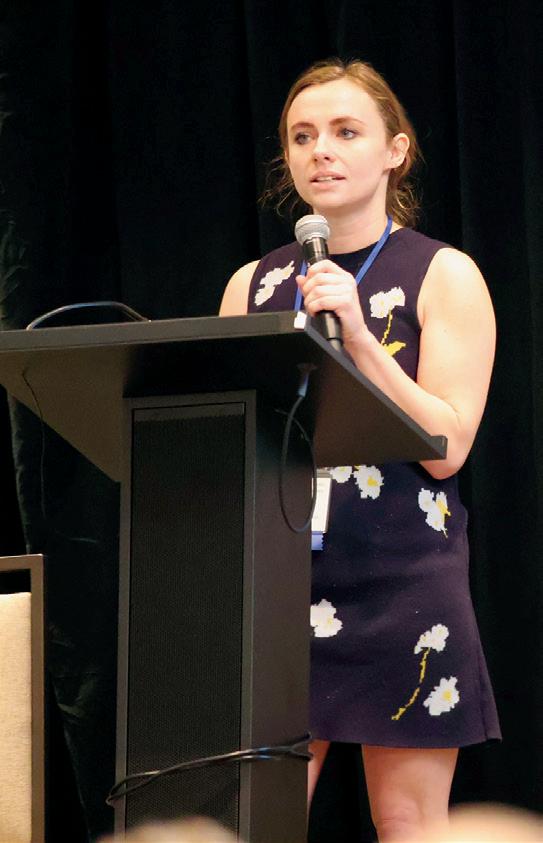
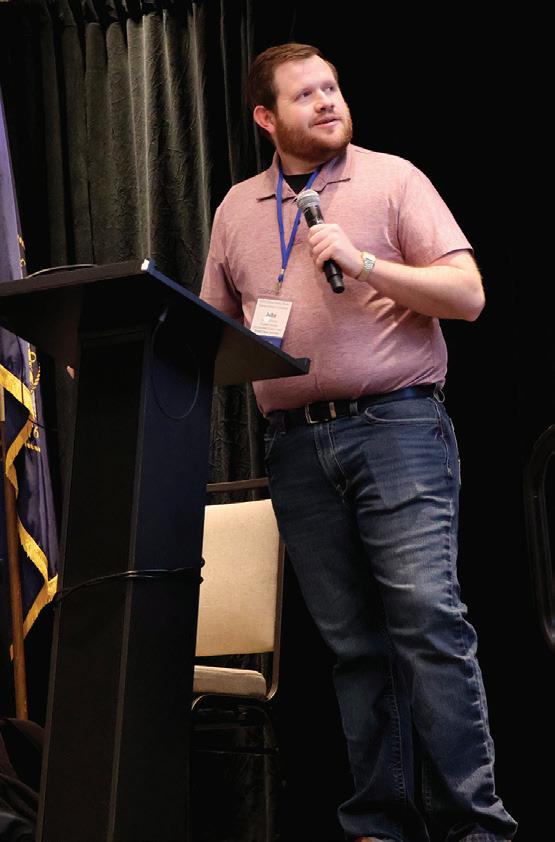

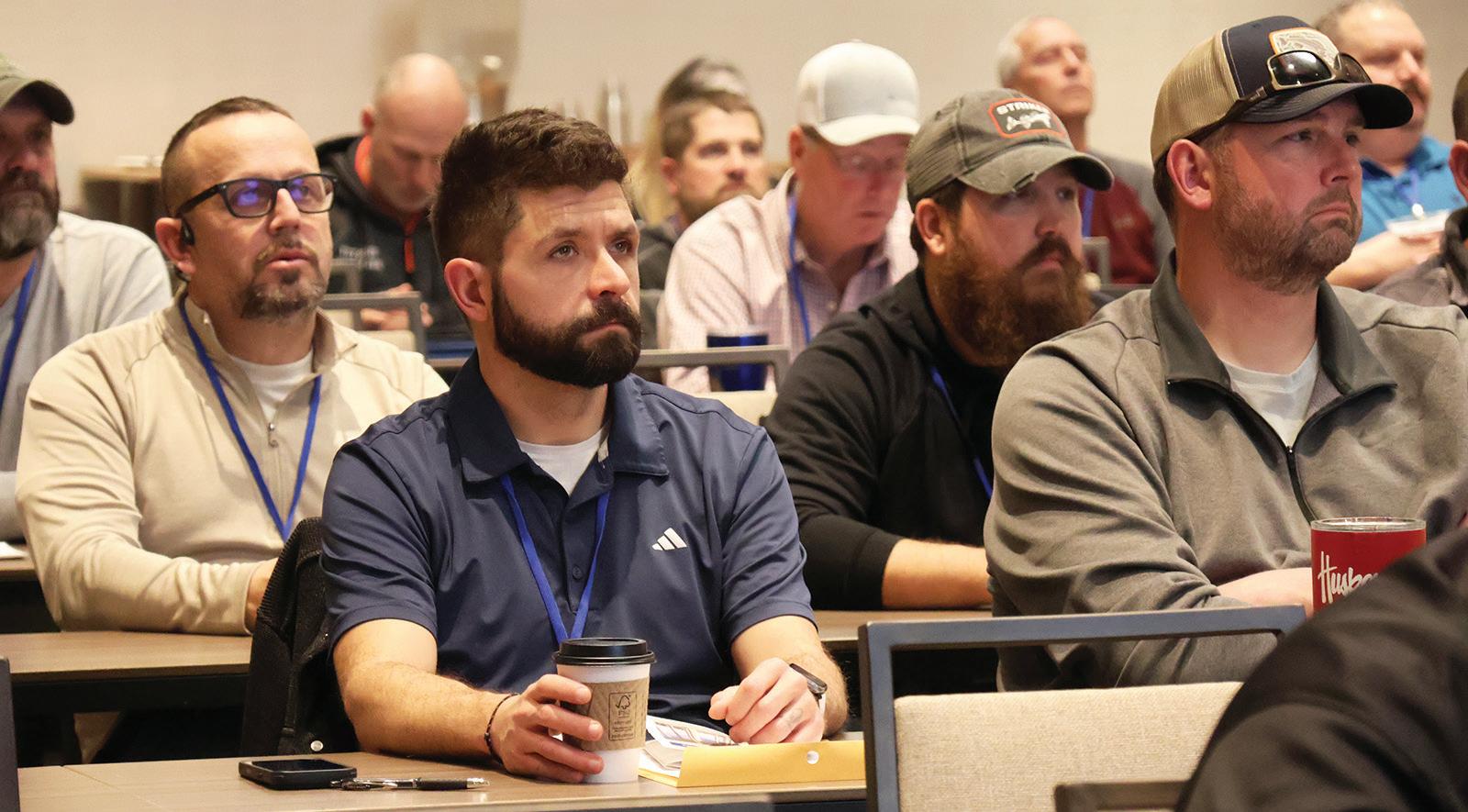
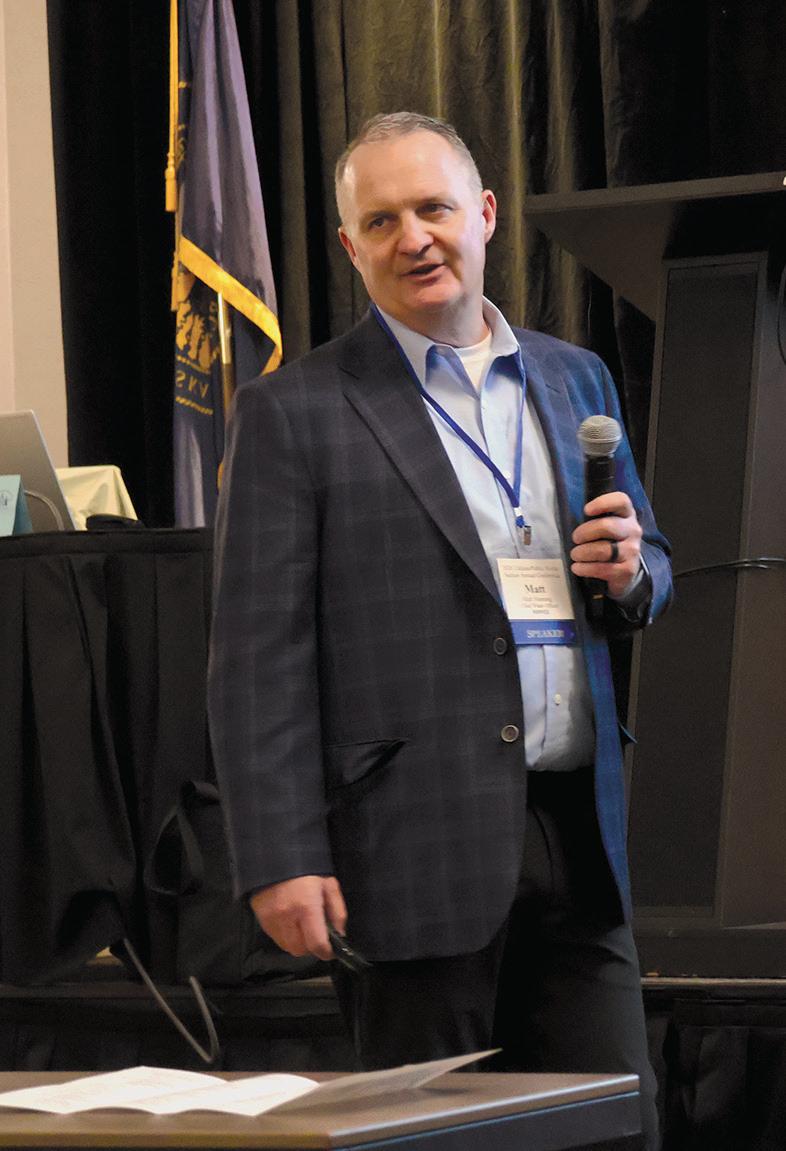
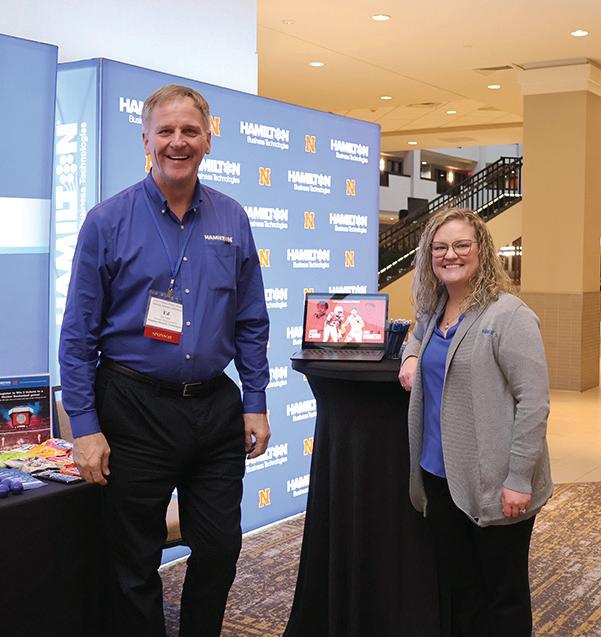
Above and below: Nearly 100 delegates from 54 municipalities gathered in Lincoln to attend the Utilities and Public Works Section Annual Conference Jan. 7-9, 2026. The event also brought a variety of sponsors, all with information and resources to share with municipal representatives.


Continued from page 10
One of the many highlights of the Utilities Annual Conference is the changing of leadership and election of a new board.
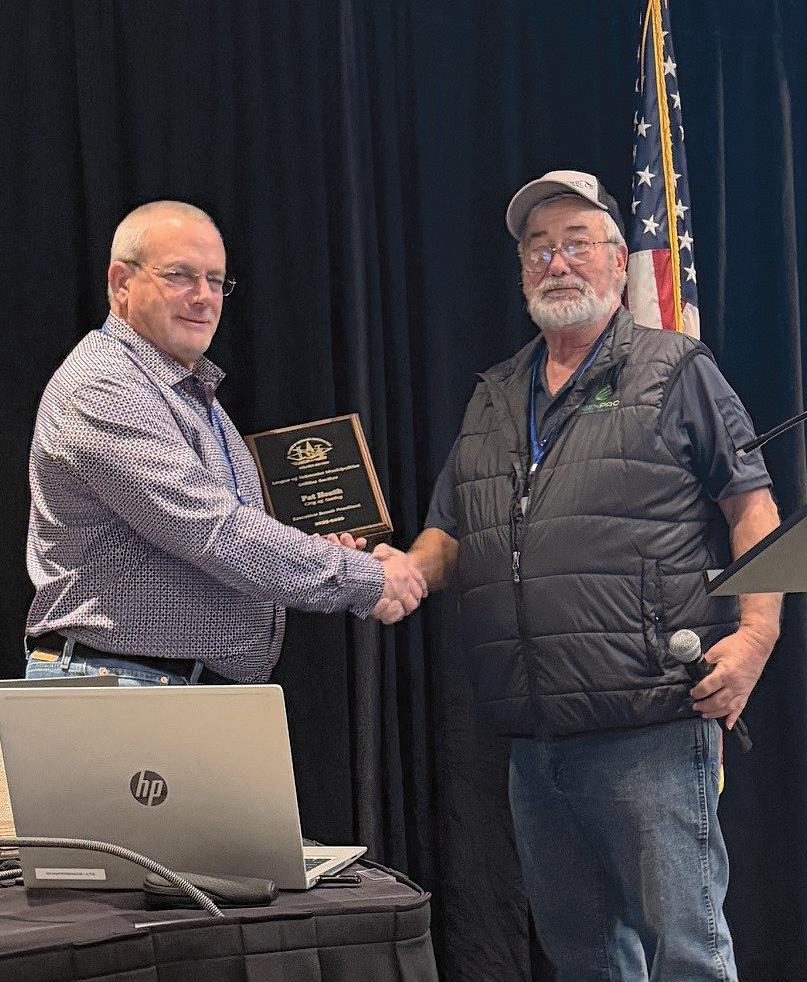
Incoming Utilities Section Executive Board President Gary Thurlow from Atkinson presented 2025-2026 Utilities Section President Pat Heath from Gering with a plaque in honor of his service. The full board elected at the conference is as follows:
• President Gary Thurlow, Utility Superintendent of Atkinson
• 1st Vice President Sarah Sawin, Director of Utilities of Kearney
• 2nd Vice President Matt Owens, Water & Wastewater Supervisor of Imperial
• Past President Pat Heath, City Administrator of Gering
• Board Member Jeramie Van Leer, Utility Superintendent of Ord
• Board Member Ryan Schmitz, Utilities Director of Grand Island
• New Board Member Joel Hansen, Street and Planning Director of Wayne
• Ex Officio Kyle Svec, City Administrator/Utilities Supervisor of Geneva
Thank you to all attendees, sponsors and exhibitors who attended the 2026 Utilities/Public Works Section Annual Conference! We look forward to seeing you all again next year.
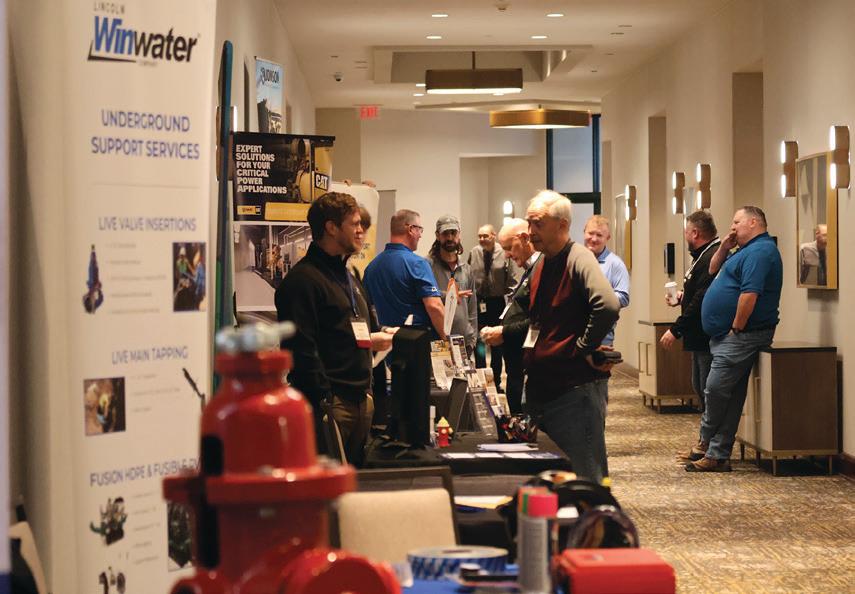
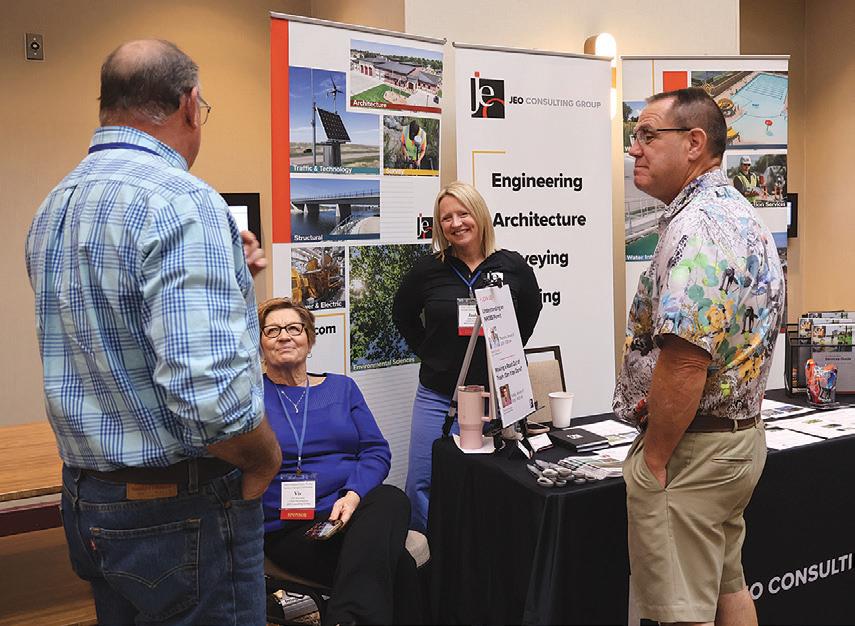
Lincoln Winwater and JEO Consulting Group were two of the 20 organizations sponsoring tables at the 2026 Utilities/ Public Works Section Annual Conference. Thank you to everyone who made the event a success!
A huge thank you to all of the event sponsors and supporters! You make all of this possible.
ACCO Unlimited Corporation*
Altec*
Core & Main*
Dutton-Lainson Company* gWorks*
Hamilton Business Technologies*
HOA Solutions*
IMEG
JEO Consulting Group, Inc.*
JJ Kane Auctions*
Johnson Service Company*
League Association of Risk Management (LARM)*
League Insurance Government Health Team (LIGHT)*
Lincoln Winwater*
Maguire Water
Miller & Associates Consulting Engineers, P.C.*
Nebraska Energy Federal Credit Union*
NMC Cat*
NMPP Energy/MEAN*
NPPD
Olsson*
Pro-Tech Power Sales*
Rose Equipment*
Short Elliott Hendrickson Inc.
Wildcat Blockchain
* connotes a display table


through the AARP Community Challenge Grant Program
through the AARP Community Challenge Grant Program
We understand that building great communities takes time, but we also believe that small, tangible improvements can spark lasting change.
We understand that building great communities takes time, but we also believe that small, tangible improvements can spark lasting change.
We understand that building great communities takes time, but we also believe that small, tangible improvements can spark lasting change.
AARP understands that building great communities takes time, but the organization also believes that small, tangible improvements can spark lasting change.
That’s why AARP launched the Community Challenge grant program in 2017-- to fund projects that build momentum toward greater livability in communities nationwide. These projects address a wide range of needs for people of all ages, across all types of communities.
That’s why AARP launched the Community Challenge grant program in 2017: to fund projects that build momentum toward greater livability in communities nationwide. These projects address a wide range of needs for people of all ages, across all types of communities. Since 2017, and organization types $ 4 3 6 , 8 0 9 communities of all sizes grant projects in through Community Challenge 3 4 AARP has invested
$ 4 3 6 , 8 0 9 communities of all sizes grant projects in through Community Challenge 3 4 AARP has invested
That’s why AARP launched the Community Challenge grant program in 2017: to fund projects that build momentum toward greater livability in communities nationwide. These projects address a wide range of needs for people of all ages, across all types of communities. Since 2017, and organization types
$ 4 3 6 , 8 0 9 communities of all sizes grant projects in through Community Challenge 3 4 AARP has invested
The AARP Community Challenge is accepting applications, now through March 4, 2026, at 4 p.m. CT across three different grant opportunities. All projects must be consistent with AARP’s mission to serve the needs of people 50 and older along with other eligibility criteria. Selected projects must be completed by December 15, 2026.
That’s why AARP launched the Community Challenge grant program in 2017: to fund projects that build momentum toward greater livability in communities nationwide These projects address a wide range of needs for people of all ages, across all types of communities. Since 2017, and organization types
In Nebraska, projects have improved: and Other Community Improvements! 4
• Flagship grants support projects that improve public places; transportation; housing; digital connections; and disaster resilience. Awards range from a few hundred dollars to $15,000.
• Capacity-building microgrants are paired with expert support, webinars, and cohort learning for projects to improve walkability and bikeability; implement safe, accessible home modifications; and disaster preparedness training. Awards are $2,500.



to make communities more livable for people of all ages
We understand that building great communities takes time, but we also believe that small, tangible improvements can spark lasting change


That’s why AARP launched the Community Challenge grant program in 2017: to fund projects that build momentum toward greater livability in communities nationwide These projects address a wide range of needs for people of all ages, across all types of communities
The AARP Community Challenge is accepting applications, now through March 4, 2026, at 4 p.m. Central, across three different grant opportunities. All projects must be consistent with AARP’s mission to serve the needs of people 50 and older along with other eligibility criteria. Selected projects must be completed by December 15, 2026.
The AARP Community Challenge is accepting applications, now through March 4, 2026, at 4 p.m. Central, across three different grant opportunities All projects must be consistent with AARP’s mission to serve the needs of people 50 and older along with other eligibility criteria. Selected projects must be completed by December 15, 2026.
• Demonstration grants fund projects that encourage replication of exemplary local efforts. This year’s focus is on improving pedestrian safety, with funding support from Toyota Motor North America; expanding high-speed internet access and adoption, with funding support from Microsoft; and housing choice design competitions. Awards typically range from $10,000-$20,000, not to exceed $25,000.


Flagship grants support projects that improve public places; transport housing; digi nnections; a disaster resilience. Awards range from a few hundred dollars to $15,000.

The AARP Community Challenge is accepting applications, now through March 4, 2026, at 4 p.m. Central, across three different grant opportunities. All projects must be consistent with AARP’s mission to serve the needs of people 50 and older along with other eligibility criteria. Selected projects must be completed by December 15, 2026.
Demonstration grants fund projects that encourage replication of exemplary local efforts. This year’s focus is on improving pedestrian safety, with funding support from Toyota Motor North America; expanding high-speed internet access and adoption, with funding support from Microsoft; and housing choice design competitions. Awards typically range from $10,000-$20,000, not to exceed $25,000 Transportation 9 Housing 6 Public Places 1 5 In Nebraska, projects have improved: and Other Community Improvements! 4
Flagship grants support projects that improve public places; transportation; housing; digital connections; and disaster resilience. Awards range from a few hundred dollars to $15,000. Capacity-building microgrants are paired with expert support, webinars, and cohort learning for projects to improve walkability and bikeability; implement safe, accessible home modifications; and disaster preparedness training Awards are $2,500
Capacity-building microgrants are paired with expert support, webinars, and cohort learning for projects to improve walkability and bikeability; implement safe, accessible home modifications; and disaster preparedness training. Awards are $2,500.

Flagship grants support projects that improve public places; transportation; housing; digital connections; and disaster resilience Awards range from a few hundred dollars to $15,000
Demonstration grants fund projects that encourage replication of exem y local efforts. This year’s focus is on improving pedestrian safety, with funding support from Toyota Motor North America; expanding high-speed internet access and adoption, with funding support from Microsoft; and housing choice design competitions. Awards typically range from $10,000-$20,000, not to exceed $25,000
Capacity-building microgrants are paired with expert support, webinars, and cohort learning for projects to improve walkability and bikeability; implement safe, accessible home modifications; and disaster preparedness training. Awards are $2,500.
Source – AARP Nebraska
aarp org/NE | neaarp@aarp org @AARPNE | youtube com/@aarpnebraska
Learn more and apply at AARP.org/CommunityChallenge
Demonstration grants fund projects that encourage replication of exemplary local efforts. This year’s focus is on improving pedestrian safety, with funding support from Toyota Motor North America; expanding high-speed internet access and adoption, with funding support from Microsoft; and housing choice design competitions. Awards typically range from $10,000-$20,000, not to exceed $25,000.

The League Insurance Government Health Team (LIGHT) helps hundreds of its members throughout Nebraska obtain affordable health insurance coverage.
With seven plan options and three networks to choose from, you’re sure to find one that meets your group’s coverage and benefit needs.
Offering your employees much-needed protection against the high cost of medical care:
• Three PPO options
• Four HSA-eligible high deductible options
• Prescription drug coverage
Single: Covers the employee only
Employee and spouse: Covers the employee and their spouse
Employee and children: Covers the employee and their eligible dependent children, but does not provide coverage for the spouse
Family: Covers the employee and eligible dependents including a spouse
RECEIVE DEDUCTIBLE AND OUT-OF-POCKET CREDIT FROM YOUR CURRENT VALID GROUP PLAN WHEN YOU SWITCH!
With several networks available, you have easy access to quality providers:
• NEtwork BLUE (Statewide)
• Premier Select BlueChoice (Regional)
• Blueprint Health (Regional)
• Out-of-state network availability
Contact your current local Agent/Broker Or contact
Dennis Maggart Executive Vice President P: 913-378-9841 or 816-718-0335
Dennis@McInnesGroup.com
Jane Limbach Account Man ager P: 913-378-9840
Jane@McInnesGroup.com
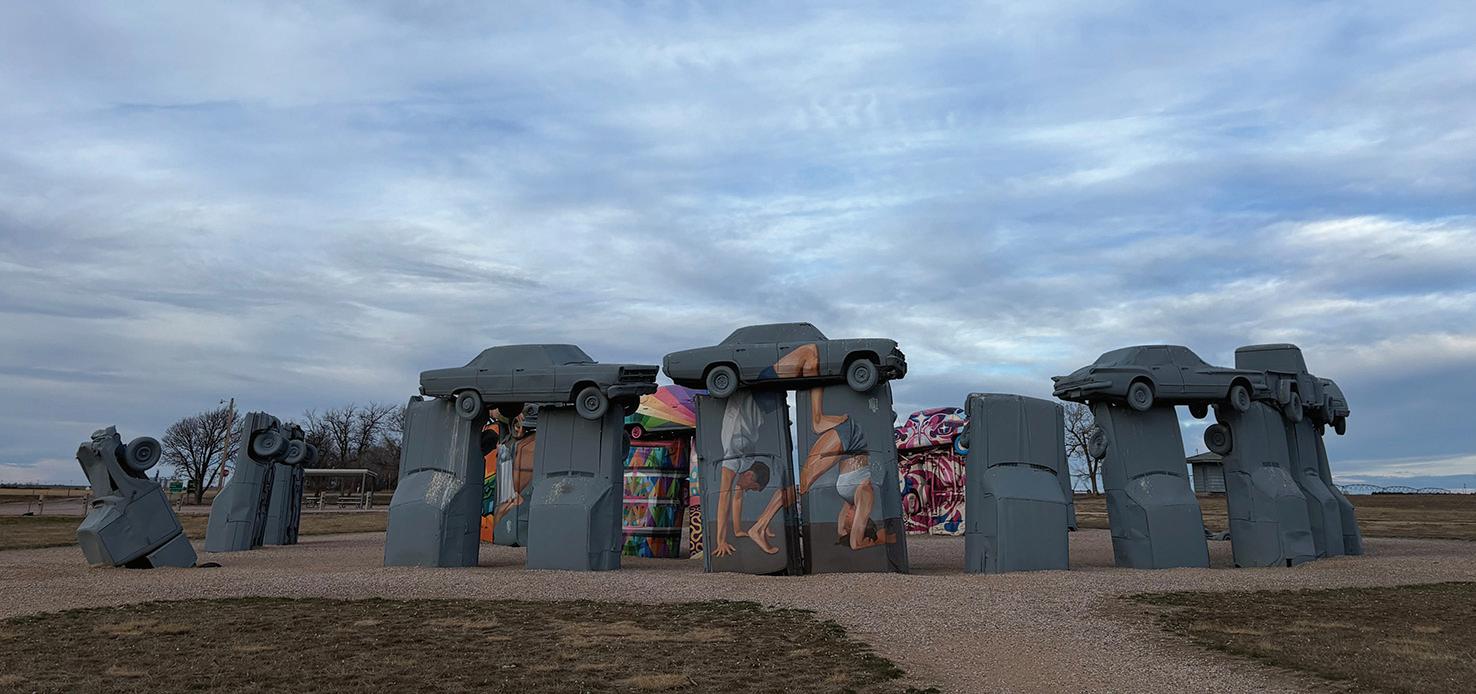
PHOTOS BY WILL SUIT, ALLIANCE CREATIVE DISTRICT DIRECTOR & DIRECTOR OF TOURISM
The first Carhenge Mural Fest was held in June 2025. Eight artists from around the world painted for a week to create eight different murals directly on the cars of Carhenge. Now visitors who stop to see the quirky roadside attraction will also experience an installation featuring some of the world’s most recognized street artists.
As part of the project, photos of each mural are taken every day to showcase each piece in different times and weather and to document the ongoing effect that nature has on each painting over time. Images will be featured at alliancecreativedistrict.com.



BY JOHN HOBBS, LOSS CONTROL SPECIALIST, LARM
Phishingattacks remain one of the most persistent cybersecurity threats to state and local governments. These scams impersonate trusted sources to steal data or money, exploiting human trust more than technical weaknesses. Attacks on public-sector organizations surged 360% between May 2023 and May 2024, driven by sophisticated social engineering targeting resourcestrapped municipal staff.
A particularly costly form of phishing is business email compromise (BEC), where attackers spoof executives or vendors to trick employees into sending unauthorized wire transfers or ACH payments. In 2024, the FBI reported $2.77 billion in nationwide losses from BEC alone. Local governments are frequent targets because a single successful scam can divert large sums of public money.
For municipalities, the impact goes beyond dollars lost. Funds meant for roads, public safety, schools, and parks disappear instantly and often irreversibly. In Nebraska, Broken Bow Public Schools fell victim in spring 2025, losing $1.8 million after staff followed fake payment instructions from what appeared to be a trusted construction vendor (this incident is still under investigation and some funds have been recovered).
General phishing also threatens resident privacy and operations.

Attackers use email, text messages (smishing), or QR codes (quishing) to harvest credentials for payroll, permitting, or utility systems. Over 92% of public sector organizations faced cyberattacks in 2024, up from 88% the previous year. Strong defenses start with people and processes, not just technology. For ACH and wire fraud prevention, adopt these non-negotiable steps:
1. Tag external emails with a clear “EXTERNAL” warning and train staff to pause on red flags like “immediate” or “updated payment details.”
2. Scrutinize sender domains closely; jimselectricalservice.com looks a lot like jimselectricallservice.com or jimselectricalservice.co.
3. Don’t act on email-only requests for ACH or banking updates. Verify by calling the sender using a pre-saved contact number, do not use the number(s) provided in the message.
4. Require dual approval for any new or modified vendor account. One employee confirms the change verbally; a second reviews the original invoice and co-signs the update.
5. For new accounts, send a small test deposit (such as $1) and wait for independent confirmation before releasing full payment.
Continued from page 6
session, or until Jan. 21.
Among the many issues the League tracks and monitors each year, the League is focused on bills relating to updating how municipalities provide notice for meetings, increasing the amount required when advertising for bids, new provisions for land banks, allowing three-member planning commissions for villages and cities of the second class, and deterring frivolous lawsuits against municipalities. The League will also be “playing defense” on issues such as any negative changes in sales and use taxes for municipalities, unnecessary restrictions on tax increment financing, and unfunded mandates.
Committee hearings began Jan. 20 and will continue through Feb. 27. The session is tentatively scheduled to adjourn April 17.
Live coverage of the session is available at www. NebraskaLegislature.gov; there is information on the bills and other valuable information about connecting with Senators and the legislative process.
Additionally, each Friday during session, the League publishes a digital Legislative Bulletin breaking down the events of the week for municipal partners. If you are not receiving the Bulletin, but are interested—reach out to Brenda Henning at brendah@lonm.org





BY VAL ANKENY, CENTER FOR RURAL AFFAIRS
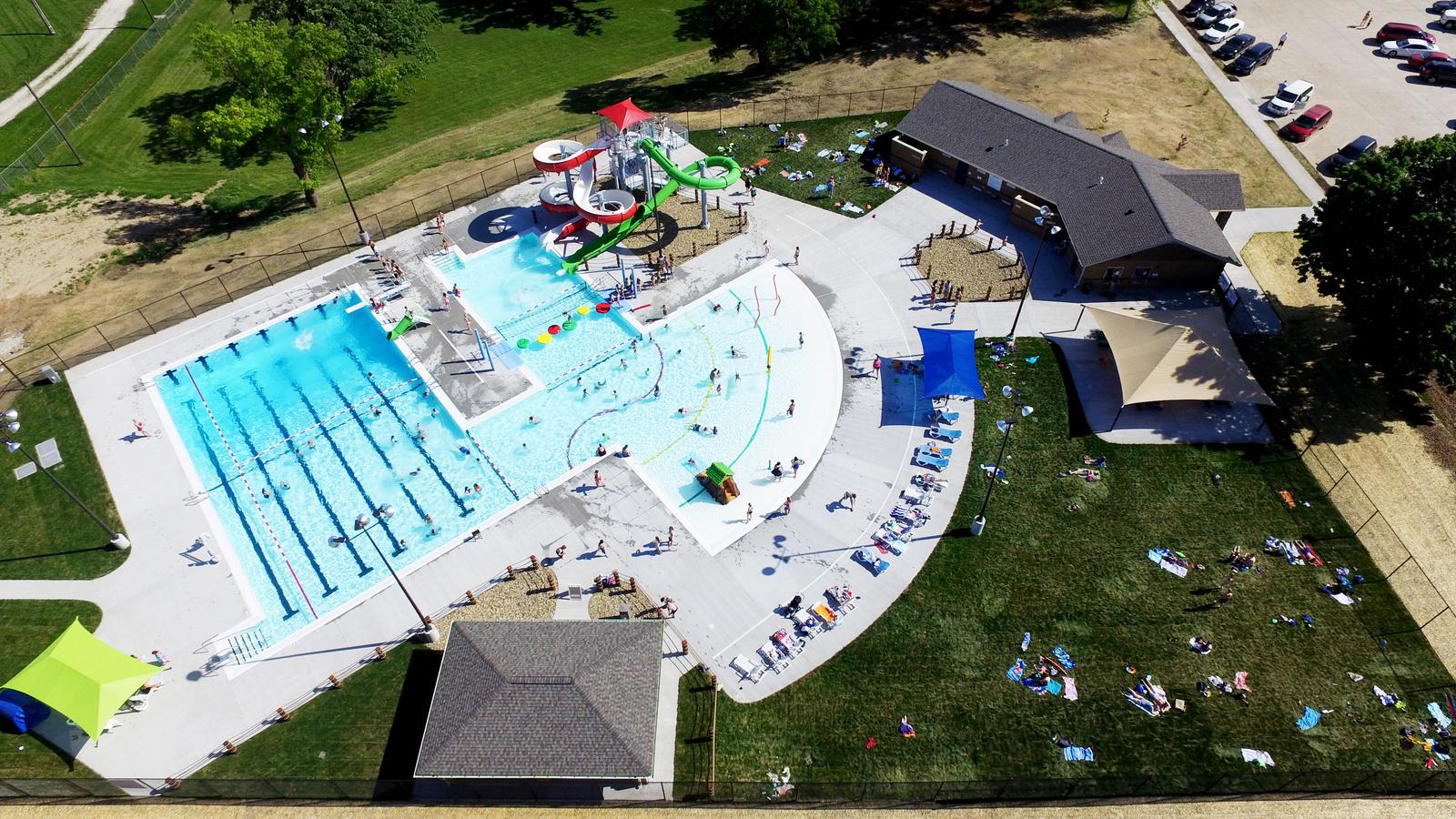
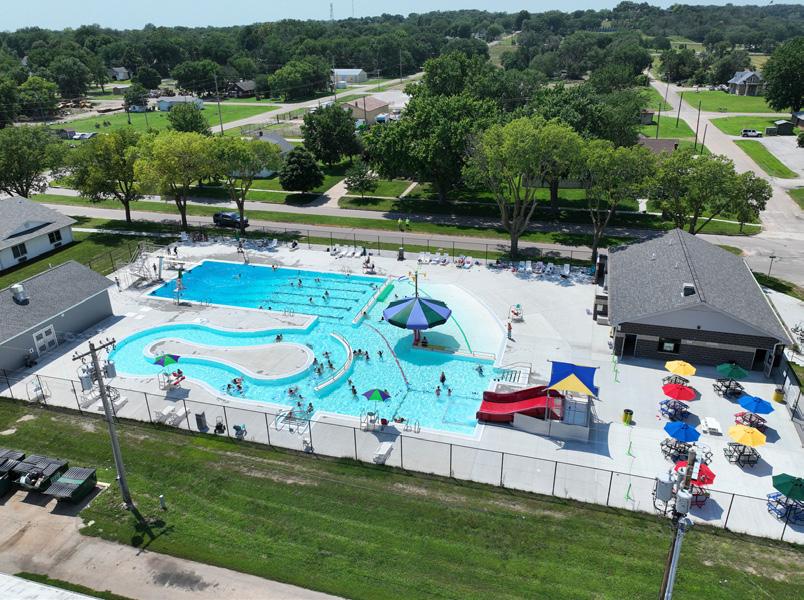
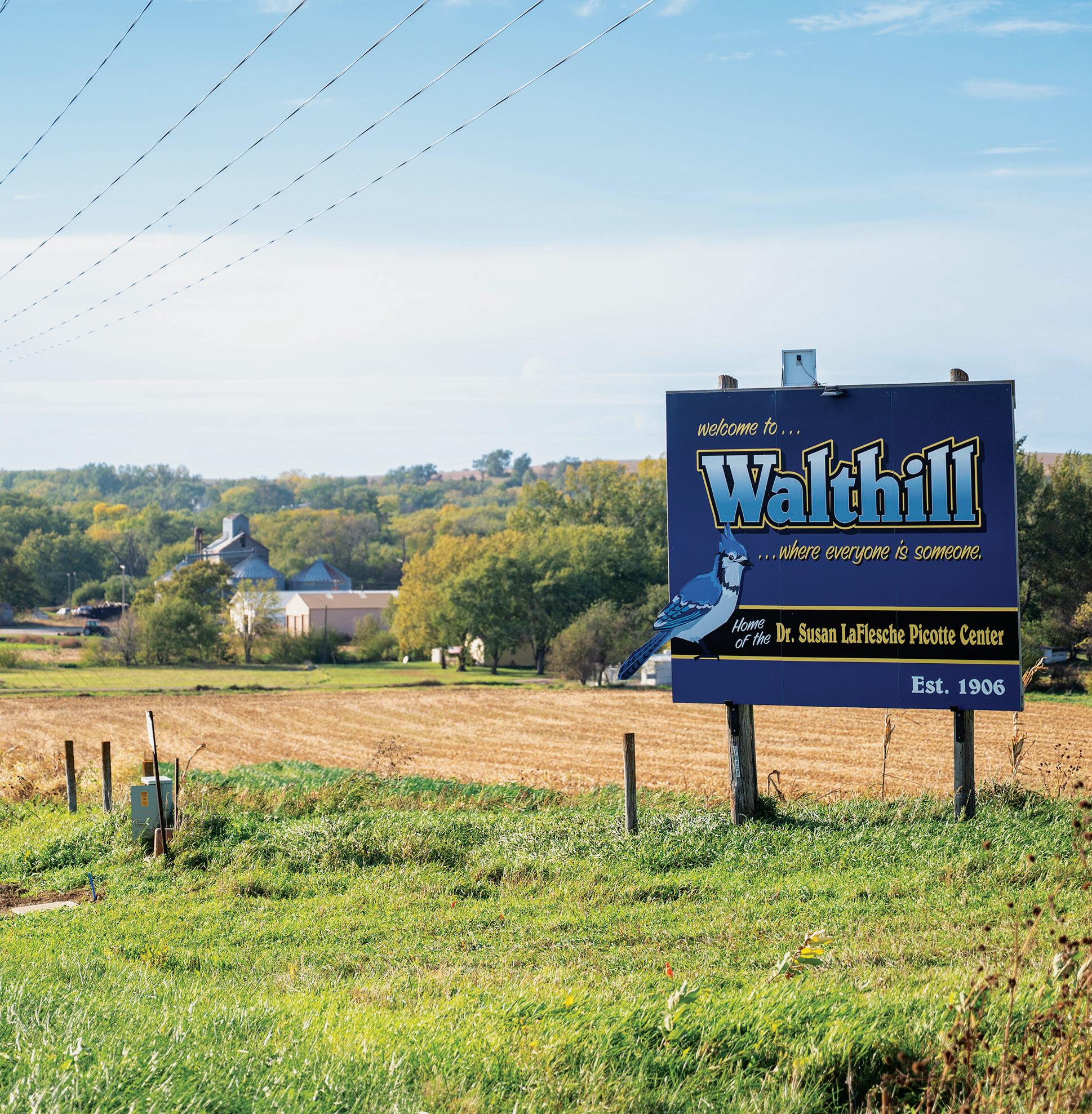
The Village of Walthill is taking important steps toward modernizing its water and wastewater systems thanks to support from the U.S. Department of Agriculture (USDA) Rural Development’s Special Evaluation Assistance for Rural Communities and Households (SEARCH) program.
For a village of just 700, the cost of planning and engineering improvements can feel out of reach. Fortunately, the SEARCH program provides very small communities with resources for feasibility studies, preliminary design, and technical assistance.
According to Kevin Connot, Walthill’s economic development specialist, the town’s water system is aging. Like many other rural communities, Walthill is facing the challenge of updating its old infrastructure. Issues such as leaks, faulty valves, and older water lines are prevalent.
“The SEARCH grant was substantial enough to cover the cost of an engineering planning study that identified the weakest parts of the system along with a cost estimate for repair and replacement,” he said.
An engineering planning study is crucial. Many state and federal funding opportunities require detailed preliminary engineering reports before a village can move forward with its application.
Kevin hopes this award will be a step in the process of creating a safer, more reliable, and more efficient water system.
“The study identified and quantified the needs along with prioritizing them into manageable phases,” he said.
The SEARCH program was designed with villages like Walthill in mind—rural areas of 2,500 people or less with limited financial resources. By covering predevelopment costs such as feasibility studies and preliminary engineering, the program ensures that communities aren’t left behind simply because they can’t afford the first steps.
Kevin acknowledged that SEARCH is a good program and working with USDA staff was a great experience.
“They are knowledgeable and willing to provide needed assistance during the application process and through project closeout,” he said.
Applications for SEARCH are accepted year round. For more information on SEARCH and related programs, visit rd.usda.gov/programsservices/water-environmental-programs.
Continued from page 18
Robust, documented procedures are not bureaucratic obstacles; they represent the most costeffective safeguard a municipality can implement. Requiring an independent telephone verification, mandating dual approval for any change in banking instructions, and conducting a small test deposit are simple disciplines that carry virtually no expense yet provide extraordinary protection.
Following these procedures will greatly reduce the chance of any error, however, if you discover that a payment has been made in error, contact law enforcement and your bank immediately! Time is of the essence when it comes to reversing fund transfers.
Other steps include enabling multifactor authentication everywhere possible and running simulated phishing tests monthly to sharpen awareness. These tests are available from a variety of vendors and possibly your insurance or IT providers.
Protecting taxpayer dollars demands vigilance, not speed. Verify every change, question every claim of urgency, and never allow an email alone to authorize the transfer of public money. Empowered, well-trained employees remain the strongest defense against phishing threats.


BY PRINCE OHILEBO GARUBA, EXECUTIVE DIRECTOR, OHIO ASSOCIATION OF GOODWILL INDUSTRIES
In my earlier article, I wrote that talent is the new infrastructure. The next question is: how do cities build it? When the interstate system was conceived, it did not happen overnight. Cities and states began with a master plan, mapping routes, setting standards, and coordinating designs so that local roads connected seamlessly to a national network. The same must be true for workforce systems. Cities need a talent master plan, a blueprint that aligns education, employers, and training systems so that local pathways connect to regional and national opportunities. If talent is infrastructure, then we must ask: how do we build it? Like the construction of highways, building “human infrastructure” begins with a clear and intentional blueprint.
When President Dwight D. Eisenhower signed the Federal-Aid Highway Act into law in 1956, one key provision required every state to submit a connected, standardized plan before receiving federal funding. This requirement ensured accountability, as the federal government wanted to see a clear return on investment. Economically, it also spurred competition among the states, since those that could demonstrate the greatest impact of federal investment on economic growth, commerce, and mobility were more likely to receive funding.
The process required states to plan strategically, collaborate regionally, and engage key stakeholders, from engineers and local governments to private contractors and community planners. The result was one of the most coordinated and transformative infrastructure projects in American history. Now, let’s frame this in the context of talent and workforce infrastructure. Cities today must develop a comprehensive workforce blueprint that cuts across industries and sectors. In the workforce development field, we often talk about the “workforce ecosystem,” but the true test of an ecosystem is how seamlessly its parts connect. If cities want to remain competitive, the public sector, education systems at both the K–12 and higher education levels, community-based organizations, and businesses must come together to create a shared and actionable blueprint.
This blueprint should outline the distinct yet interconnected roles of each stakeholder, clarifying who provides technical assistance, who drives innovation and who scales programs most effectively. A well-designed blueprint does not simply reflect collaboration, it demonstrates shared investment and strategy. When cities can show not just coordination, but
Continued on the following page
D.A. Davidson & Co. is committed to strengthening the infrastructure and enriching the lives of people in our communities throughout Nebraska and across the nation.
Our bankers specialize in:
• Bond Anticipation Notes
• Paving Bonds
• Water and Sewage Bonds
• General Obligation Bonds
• Utility System Revenue Bonds
• Lease-Purchase Financing
Call:
(402) 392-7986 | Paul Greiger (402) 392-7989 | Cody Wickham (402) 392-7988 | Andy Forney (402) 392-7933 | Jerry Spethman


genuine mutual investment in this new form of infrastructure, state and federal agencies are far more likely to invest in them. It signals readiness, vision and long-term impact, the same factors that once determined where highways were built.
One of the best real-world examples is Columbus, Ohio, known for its “Columbus Way.” A Harvard Business School case study coined that term to describe how public, private, nonprofit, and academic actors in Columbus collaborated around shared goals. This cross-sector partnership helped catalyze major initiatives in downtown development, mobility, and innovation. According to Brookings, Columbus transformed a $50 million U.S. Department of Transportation Smart City Challenge awarded over $500 million in coordinated investments, largely through alignment among civic and business leaders.
Programs cost money, but the return on investment is often far greater than the original expenditure. According to the Ray Marshall Center at the University of Texas (PDF), the fiveyear net return on investment for workforce programs is approximately 600 percent, meaning every public dollar invested yields about $6 in return. Over a 10-year period, that figure rises to roughly 800 percent, or $8 for every dollar spent. This evidence underscores why cities must rethink how they fund workforce
Continued on page 27 / See NLC
NLAF operates with the investment needs of Nebraska local government units in mind. It focuses on safety of principal, daily liquidity, and earning a competitive yield.
This information is for institutional investor use only, not for further distribution to retail investors, and does not represent an offer to sell or a solicitation of an offer to buy or sell any fund or other security. Investors should consider the Fund’s investment objectives, risks, charges and expenses before investing in the Fund. This and other information about the Fund is available in the Fund’s current Information Statement, which should be read carefully before investing. A copy of the Fund’s Information Statement may be obtained by calling 1-877-667-3523 or is available on the Fund’s website at www.nlafpool.org. While the Fund seeks to maintain a stable net asset value of $1.00 per share, it is possible to lose money investing in the Fund. An investment in local government investment pools, such as the Fund, are not insured or guaranteed by the Federal Deposit Insurance Corporation or any other government agency. Investments in a local government investment pool are subject to liquidity risk, which may impact the pool’s ability to sell investments in a timely fashion or at near face value in order to fulfill a participant’s redemption request. Such investments are also subject to market risk, issuer risk, and default risk. Participants may lose money by investing in a local government investment pool, such as the Fund. Shares of the Fund are distributed by U.S. Bancorp Investments, Inc., member FINRA (www.finra.org) and SIPC (www.sipc.org).
PFM Asset Management is a division of U.S. Bancorp Asset Management, Inc., which serves as administrator and investment adviser to the Fund. U.S. Bancorp Asset Management, Inc. is a direct subsidiary of U.S. Bank N.A. and an indirect subsidiary of U.S. Bancorp. U.S. Bancorp Investments, Inc. is a subsidiary of U.S. Bancorp and affiliate of U.S. Bank N.A.

Council
Many communities know the Nebraska Arts Council (NAC) through the Creative District program, which was created to utilize the arts as an economic driver to support communities in Nebraska. NAC has a multitude of grant programs that can be used to bring the arts to your community! In a series of quarterly highlights, we will showcase different grant programs and how they can be used in your community.
The Arts Project Grant (APG) category supports arts programming, productions, or events open to the general public. Examples of eligible projects include art exhibitions, performances, poetry readings, summer music festivals, community murals, and ethnic heritage projects such as powwows.

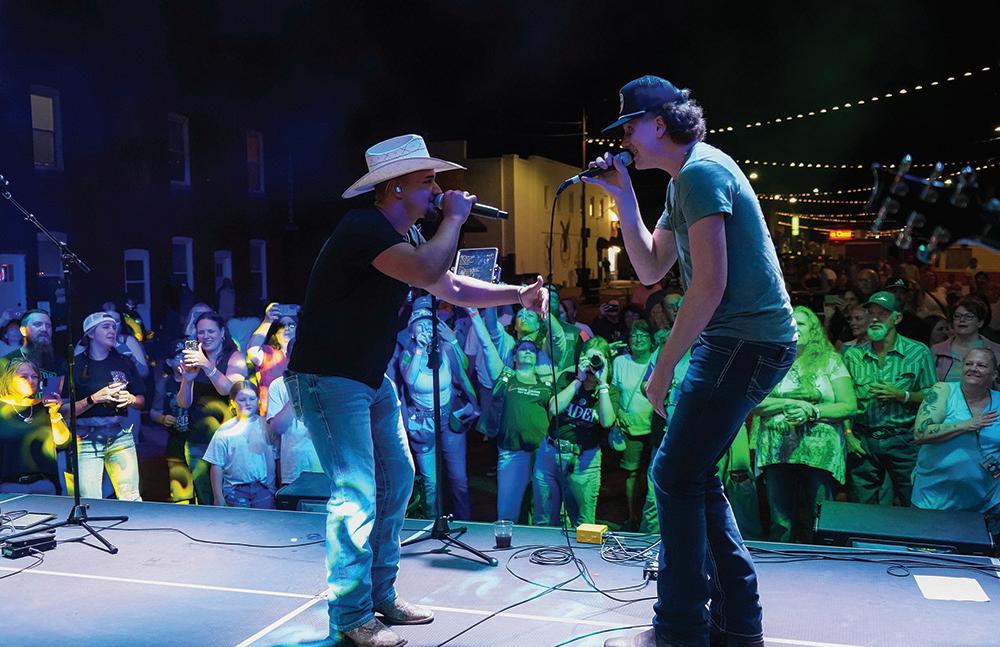
The Iron Horse Creative District in Holdrege utilized the Arts Project Grant category to start an outdoor Artisan Expo with an evening concert called the Iron Horse Festival. During the planning
process for the creative district, community members voiced that they wanted to have a designated signature event that highlighted the arts in all forms, which took the form of a festival.
The daytime Artisan Expo started in 2024 with 25 demonstrators, 30 vendors, and 5 food trucks. The goal was to showcase as many types of art as possible. There was participation from photographers, wood carvers, culinary artists, painters, a weaving demonstration from the Museum of Nebraska Art, and poetry from Nebraska’s state poet.
Over 500 people attended the country music concert in downtown Holdrege. Performers included Logan Mize, plus Luke Mills, Savanna Chestnutt, Kyle
Continued on the following page
Sayler Band, and Hockett. Due to the overwhelming response from the community, they decided to hold the event the following year.
They applied for an Arts Project Grant again and were able to talk about the changes for the next year in the application. Learning from the first year, and not scheduling during a home Husker football game, they saw an increase of 116% in attendance for the Artisan Expo.
Arts Project Grants are a great way to help fund arts activities in communities. They are not limited to creative districts, although districts can use them to help realize their programming goals.
The Arts Project Grant applications will open in early February and are due on Monday, March 16, 2026 Eligible projects must take place during the next fiscal year, which runs July 1, 2026 – June 30, 2027. For more information, or to see if a project is eligible, please contact the Nebraska Arts Council at 402-5952122 or info@nebraska.gov.
To learn more about this grant program, visit www.artscouncil. nebraska.gov/arts-project-grant/.
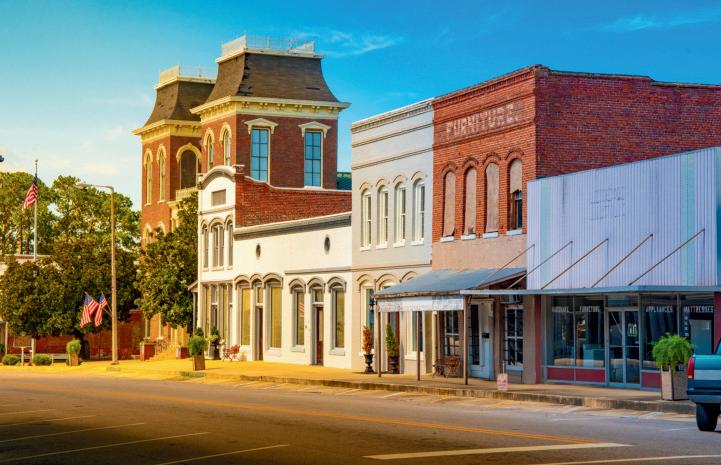

This is part two of a Comms 101 series highlighting effective ways to communicate with legislators regarding issues of importance for your municipality. As previously discussed, the best time to develop a relationship with your Senator is before the session begins–but nurturing that relationship needs to be ongoing.
As an elected local official, you understand the effectiveness of your work often depends on the quality of your relationships. This statement also is true with state lawmakers. Do not neglect the time and effort it takes to build these relationships early.
It is equally important to meet and be familiar with legislative staff. They can often be the key to prompt access to your Senator when an important bill is coming up, and their opinions on bills are important to your Senator. Polite and courteous communication goes a long way.
Make an effort to be personally helpful to your Senator and his or her staff. When they trust you as a resource for local municipal questions, you will be able to share how proposed legislation affects your community.
• Hometown visits: Invite your Senator to events, consider hosting a local dinner before session or simply meet for coffee.
• Visits to Lincoln: Visiting Lincoln during session shows your legislator you are engaged in the legislative process. It is also a great opportunity to meet legislative staff and establish relationships that can help you better access your Senator when needed.
• Phone: It is impactful to place a call to your senator’s office to provide your views on proposed legislation or to send a message on the day of the vote.
• Email: They really do read your email! However, make it an original note from you. Form letters are easily overlooked.
• Letters: Just like a phone call or email, your letters are reviewed by legislative staff. Be courteous and concise, and make your letter original.
Thank you for all you do. Local circumstances make a big impact on advocacy efforts during the legislative session. For communication questions, reach out to Ashley with the League at ashleyw@lonm.org. For all other advocacy questions, reach out to the legal team.
Don’t forget! Regardless of the form your communication takes, here are a few things to remember:
Be concise – Know what points you want to make and keep them brief.
Be accurate – Make sure your facts and information are correct.
Be original – Personalize your form letter with local data and letterhead.

Be courteous – Always be professional, even when unhappy with a vote.
Be clear – Make a specific ask, such as vote “no”/ vote “yes”.
Be persistent – Remind the Senator of your position – this also tells them that you are still interested in how he or she votes.
Be timely – Gauge when to communicate based on where the bill is in the process.
Be certain to follow up – Send a thank you or acknowledgment of their vote.
Be involved in the League – Our legislative staff will be glad to assist you and provide guidance on when and how to communicate, provide details and the status of legislation and assist with meetings, both in Lincoln and in your municipality.
Continued from page 23
development, not only to sustain training pipelines but also to remain competitive in an evolving labor market.
It is no secret that many states and cities rely heavily on the nation’s largest workforce funding source, the Workforce Innovation and Opportunity Act (WIOA), which has supported one-stop centers and job training programs for decades. While these programs have proven effective, sustaining them demands creative and sustainable funding strategies. Within every talent blueprint, there must be a well-structured, long-term funding plan that clearly defines how the public sector, businesses, and philanthropic organizations contribute to the system.
The U.S. Chamber of Commerce Foundation’s 2020 report, “Talent Finance: A New Consensus and Return-on-Investment,” highlights that private sector investment in workforce training has steadily declined over the years, even as employer demand for skilled labor has risen. The study calls for a new public–private “talent finance” model that engages employers as co-investors in talent development, shares financial risk between sectors, and rewards measurable outcomes rather than one-time program activities.
Recent data reinforce the urgency of this shift. A 2022 Urban Institute analysis found that while state spending on workforce development more than doubled between 2011 and 2020, federal investment in employment and training programs declined during the same period. This growing imbalance underscores the need for local innovation and diversification in funding strategies. When paired with foundational support from programs like WIOA, these public, private and philanthropic investments can stimulate not only workforce talent but also regional economic development by creating a consistent stream of well-trained workers ready to meet the demands of emerging industries.
A consistent critique of the nation’s education and workforce systems is that they make career shifts difficult and costly for workers. According to a McKinsey Global Institute analysis, as many as 12 million U.S. workers may need to transition to new occupations by 2030 due to automation and technological disruption. More recent research from McKinsey & Company found that up to 30 percent of hours worked in the United States could be automated by 2030, accelerating these labor shifts. Yet fewer than half of workers report access to affordable, flexible training that would enable such transitions. This gap reveals a fundamental weakness in how we prepare people to move fluidly across industries as the economy evolves.
“Building talent as infrastructure requires more than vision; it demands structure, alignment, and investment.”
The question cities must now answer is this: how can we, in collaboration with our local schools, create an education system that is primed for labor shifts at every stage of the economy? The emergence of artificial intelligence (AI) has brought this question to the forefront. AI is reshaping industries faster than traditional training and credentialing systems can adapt, exposing how rigid many local education-to-employment pathways have become. Cities must work closely with K–12 districts, community colleges, and universities to design systems that build both foundational and transferable skills so that workers are prepared not just for their first job but for their next one. This means embedding lifelong learning opportunities into the fabric of local education systems and aligning them with regional labor data. A city’s ability to attract and retain employers will increasingly depend on how quickly its residents can retrain and redeploy their skills as industries evolve.
Building talent as infrastructure requires more than vision; it demands structure, alignment, and investment. Just as the Federal-Aid Highway Act reshaped America’s economic landscape through coordinated planning, sustainable funding, and continuous maintenance, cities must now take the same disciplined approach to developing human capital. A clear blueprint, coupled with innovative financing and adaptable education systems, can transform local economies, strengthen regional competitiveness, and ensure that opportunity moves as freely as commerce once did along America’s highways.
Source - National League of Cities
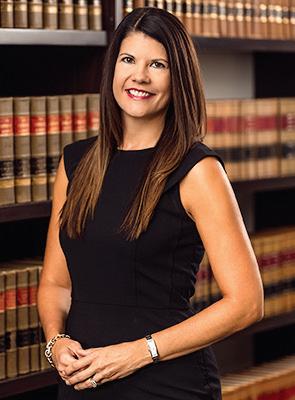
BY TARA A. STINGLEY AND NATHAN T. HEIMES, CLINE WILLIAMS WRIGHT JOHNSON & OLDFATHER, L.L.P.
November 2025, the Fourth Circuit Court of Appeals issued an important decision in Chapman v. Maryland Department of State Police, Office of the State Fire Marshal, No. 24-1766, 2025 WL 3124647 (4th Cir. Nov. 7, 2025), affirming summary judgment in favor of an employer on claims of racial discrimination and retaliation under Title VII of the Civil Rights Act. This case provides valuable guidance for employers on defending against discrimination and retaliation claims when legitimate performance issues are at the center of disciplinary actions, by highlighting the importance of maintaining clear performance standards, consistent documentation of performance-related issues, and uniform application of policies.
Title VII prohibits employment practices that discriminate against an employee based on race, color, religion, sex, or national origin, and forbids retaliation against employees who oppose adverse actions that the employee reasonably suspects to be unlawful under Title VII.i
If an employer violates these rights, an employee may assert a discrimination claim. To establish such a claim, an employee generally must show that the employer acted with discriminatory intent, as proved through direct or indirect evidence. In evaluating the employer’s intent, courts will consider whether the employer had legitimate, nondiscriminatory reasons for its treatment of the employee, and if so, whether the employer’s alleged non-discriminatory reasons were simply a pretext for discrimination. Employees may demonstrate pretext by showing the employer’s preferred reasons for the alleged discriminatory treatment or adverse action were inconsistent over time, false, based on mistakes of fact, or by otherwise offering circumstantial evidence of discrimination (i.e., conduct or circumstances probative of discriminatory intent).
In Chapman, the plaintiff, Derek Chapman (“Chapman”), began working for the Maryland Department of State Police’s Office of the State Fire Marshal (the “Office”) in 1998 as
a Deputy State Fire Marshal. In 2018, he was promoted to Deputy Chief State Fire Marshal and Commander of the Northeast Regional Office. In his new role, Chapman supervised eight investigators and conducted his own investigations. His primary responsibilities included reviewing each of these investigators’ reports and ensuring the reports were submitted timely.
However, Chapman consistently fell short of the established expectations for timely completing and submitting these reports. Before his 2018 promotion, Chapman had 20-30 overdue reports, and at the time of his promotion the Northeast Region had 261 overdue reports. After his promotion, Chapman was instructed to develop a plan for correcting the number of overdue reports, but he was not able to do so. An internal investigation found that Chapman’s region had 282 overdue reports as of June 2019, and 239 overdue reports as of June 2021, numbers that far exceeded those of any other region. Additionally, Chapman personally had 36 late reports as of June 2019, and 40 late reports as of March 2021.
In early 2021, Chief Deputy State Fire Marshal Gregory Der (“Chief Der”), Chapman’s supervisor, ordered Chapman to complete specific numbers of reports by set deadlines, but Chapman repeatedly failed to meet those requirements. Two other Deputy Chief State Fire Marshals were given similar orders, both of whom complied.
In March 2021, Chapman, who is Black, reported several complaints of racial discrimination based on inappropriate comments made by colleagues, including references to “black dogs,” requests for “Black drivers,” and comments about “colored, lazy black females,” among others. Then, on June 15, 2021, Chapman filed a formal “Fair Practice” complaint. The next day, Chapman was stripped of supervisory duties and transferred to headquarters. When he continued failing to meet report deadlines, the Office filed disciplinary charges against Chapman and placed him on emergency suspension with pay in October 2021. During Chapman’s suspension, an investigation concluded Chapman’s region had a far larger number of overdue reports than any other region and no other
deputy chief had overdue personal reports as of November 2021. Additionally, Chapman admitted that he had not completed his overdue reports, which constituted a violation of the Office’s policy manual.
Chapman eventually sued the Office alleging, in relevant part, that the Office discriminated against him based on his race and retaliated against him after he reported discriminatory comments.
The federal district court granted the Office’s motion for summary judgment and dismissed the case. The district court found Chapman failed to make out a prima facie case for either claim, and that even if Chapman could establish a prima facie case, he failed to establish the Office’s reasons for disciplining him were pretextual. Chapman appealed the dismissal of his case to the Fourth Circuit Court of Appeals.
On appeal, the Fourth Circuit affirmed the judgment of the district court. In doing so, the court focused on whether Chapman could demonstrate that the Office’s stated reason for disciplining him—his failure to complete required reports—was a pretext for discrimination or retaliation.ii
The court considered and rejected Chapman’s arguments on three key points.
First, Chapman argued the Office’s reference to overdue reports was pretextual because other deputy chiefs with overdue reports (both personal and regional) were not disciplined in a similar manner. The Fourth Circuit found this comparison invalid because the number of Chapman’s personal and regional overdue reports was far worse than any other region, or deputy chief, that Chapman attempted to use for a comparison. Two such deputy chiefs resolved their backlogs within two weeks, while Chapman did not respond until follow-up was required and otherwise failed to resolve the issue.
Second, Chapman contended the Office only became concerned about his overdue reports after he complained about racial discrimination. The Fourth Circuit found this contention lacked merit, noting that Chief Der had repeatedly ordered Chapman to address his backlog of personal and regional reports long before Chapman raised any complaints of discrimination.
Third, Chapman argued that the history of race-based, discriminatory comments by his colleagues in the Office show that the disciplinary actions taken against him were motivated by racial animus. While the Fourth Circuit acknowledged that the reported comments were “offensive and inappropriate,” the court found such comments insufficient to establish pretext. As the court noted, the comments were not specifically about Chapman’s qualifications or performance, were made by individuals who did not make the disciplinary decisions (except for
one comment made over a year before any adverse action), and constituted “generalized comments” about Chapman’s protected class rather than evidence of discriminatory animus toward him personally.
The Chapman case provides several important lessons for employers in defending against similar claims of discrimination or retaliation:
1. Establish performance standards clearly, document performance issues consistently, and address issues promptly. The Office’s success in the Chapman case largely stemmed from its clear documentation of Chapman’s history of performance issues and its practice of repeatedly giving Chapman opportunities to improve and correct those issues. Employers should: (a) ensure that performance standards are clearly established, well documented, and job-related; (b) maintain detailed records of performance issues (including specific deadlines, expectations, and failures to meet requirements); and (c) address issues with an employee’s performance promptly and consistently. Doing so can assist employers in demonstrating legitimate business reasons for discipline.
2. Apply performance standards uniformly. In affirming the dismissal of Chapman’s case, the Fourth Circuit noted that other employees with similar (but less severe) performance issues were treated differently, but this was justified by the significant disparity in the scope of their problems. Employers should apply performance standards uniformly, ensure that disciplinary actions are proportionate to the severity of performance issues, and treat similarly situated employees consistently.
3. Timing matters. Employers should maintain clear records of performance issues and their relation in timing to any disciplinary decision. As the court emphasized in Chapman, such a timeline can help establish that disciplinary actions were based on legitimate business concerns, rather than retaliation or discriminatory animus.
Editor’s Note: This article is not intended to provide legal advice to its readers. Rather, this article is intended to alert readers to new and developing issues. Readers are urged to consult their own legal counsel or the authors of this article if they wish to obtain a specific legal opinion regarding their particular circumstances. The authors of this article, Tara A. Stingley and Nathan T. Heimes, can be contacted at Cline Williams Wright Johnson & Oldfather, L.L.P., 12910 Pierce Street, Suite 200, Omaha, NE 68144, (402) 3971700, tstingley@clinewilliams.com, nheimes@clinewilliams.com, or www.clinewilliams.com.
ii Chapman v. Maryland Dep’t of State Police, Off. of the State Fire Marshal, No. 24-1766, 2025 WL 3124647 at *4–5 (4th Cir. Nov. 7, 2025). Endnotes
i 42 U.S.C. §§ 2000e – 2000e-17.

In this pivotal moment for local governance, it is important for municipal voices to be heard at the Nebraska Legislature. Municipal voices highlight the diverse challenges faced by municipalities, from infrastructure needs and public safety concerns to affordable and workforce housing. The decisions made at the state level have a profound impact on the daily lives of residents, making the voices of local leaders indispensable in the legislative process. Below are some common questions municipal officials may have about the legislative process.
During the first 10 days of the legislative session, new bills are introduced. Every bill is referred to a committee, and every bill has a public hearing. If the committee decides to advance the bill, it then goes through three stages of debate by the entire Legislature before being presented to the Governor for his signature or veto.
Typically, a municipal official will get involved during the public hearing before the legislative committee. Since every bill introduced has a public hearing in the State Capitol building, this is often the best time for municipal voices to be heard on an issue. At other times in the process, the League may ask municipal officials to contact their Senators via email or telephone to express their support or opposition to a bill that is being debated by the entire Legislature.
According to the Nebraska Accountability and Disclosure Commission, there are several exceptions to the general requirement to register as a lobbyist prior to engaging in lobbying activity. Many of these exceptions apply to municipal officials. The exceptions include:
1. An elected official of a political subdivision who is acting in the course or scope of his or her office or employment;
2. An employee of a political subdivision whose regular duties of employment do not ordinarily include lobbying activities as long as the employee is not additionally compensated for such lobbying activities, other than his or her regular salary, and is not reimbursed for any lobbying expenditures except his or her travel, lodging, and meals and the meal expenses for members of the Legislature; or
3. Any person who limits his or her activities (i) to appearances before legislative committees as long as he or she advises the committee at the time of the appearance whom he or she represents or that he or she appears at the invitation of a named member of the Legislature or at the direction of the Governor, or (ii) to writing letters or furnishing written material to individual members of the Legislature or to the committees thereof.
What are some of the most common terms used in the legislative process and what do they mean?
The Legislative process is filled with its own language and jargon. Below are a sample of some of the most commonly used terms:
• Appropriations Bill (A-Bill) – A bill to appropriate funds to finance another bill bearing the same number.
• Carry-Over Legislation – Bills and resolutions introduced during the regular session in an oddnumbered year and held over for consideration for the regular session in an even-numbered year.
• Cloture – An action to cease debate on a bill and vote immediately on its advancement. A motion for cloture may be made after full and fair debate on a bill at any stage of consideration. It requires 33 votes.
• Emergency Clause (E Clause) – A provision that allows a bill to take effect immediately after the Governor signs it.
• Final Reading – The third and last stage at which a bill is considered by the Legislature.
• General File – The first stage at which a bill is considered by the full Legislature.
• Priority Bill – A bill that has priority statue and generally considered ahead of other bills in debate.
• Select File – The second stage at which a bill is considered by the entire Legislature.
The 2026 Legislative session began on Jan. 7. The League thanks you in advance for all the important advocacy work you will do for municipalities in 2026. The successes in the Nebraska Legislature are a direct result of the advocacy and dedication demonstrated by our municipal officials.


UPDATING
Personal Service / Nebraska
P.O. Box 164, Neligh, NE 68756 Phone 402.887.5022 leagle@mcnallylaw.net www.mcodeservices.com