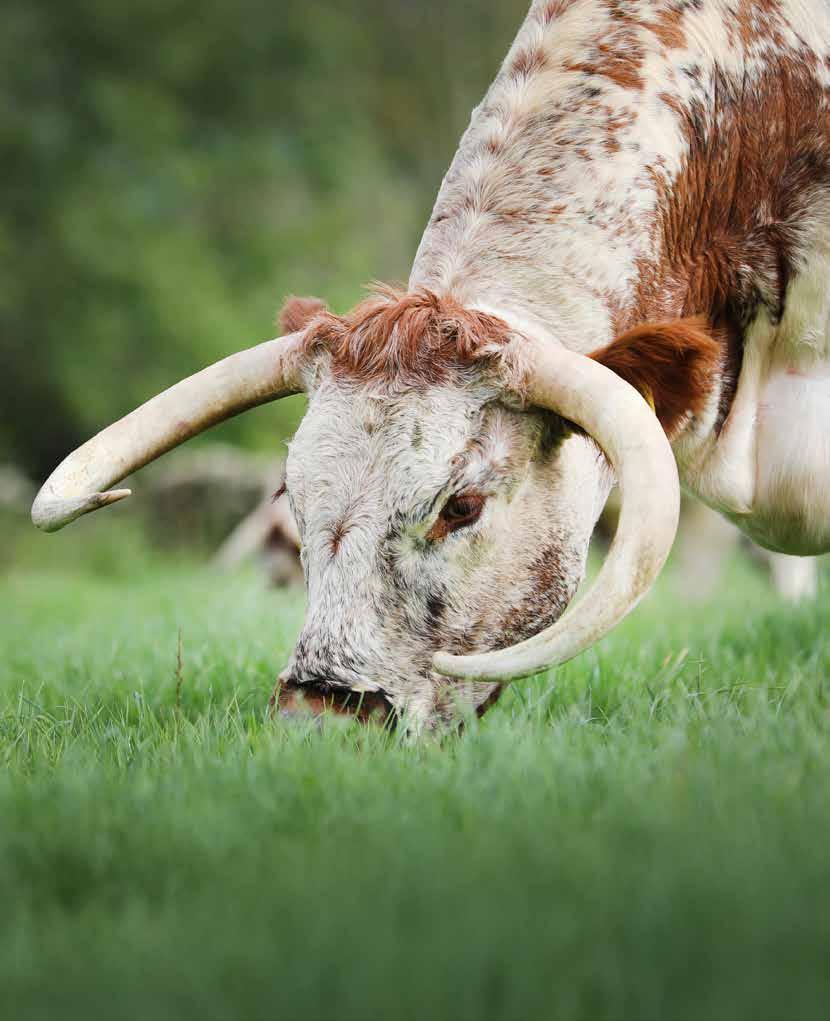
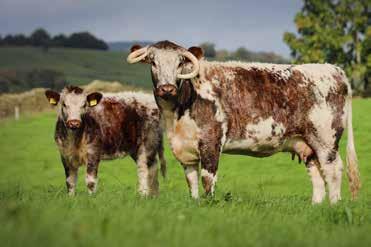
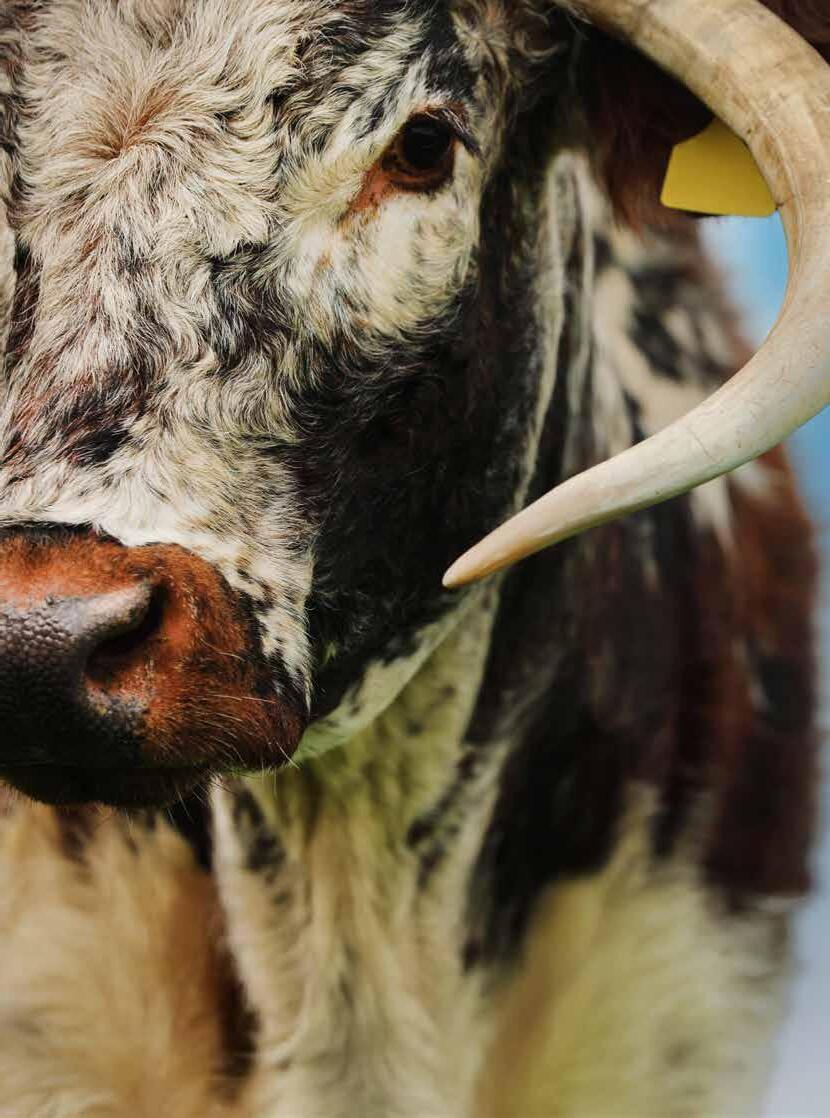
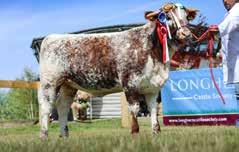
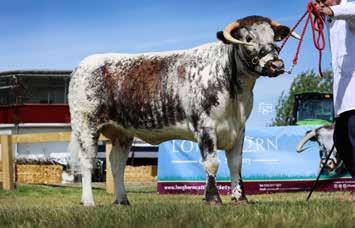
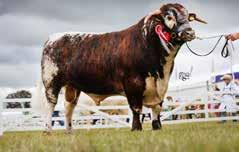
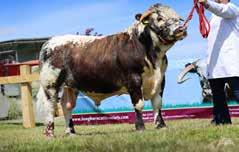
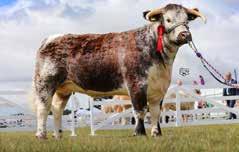
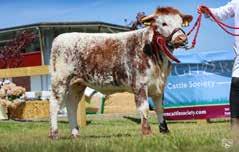
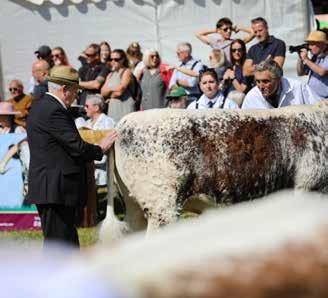
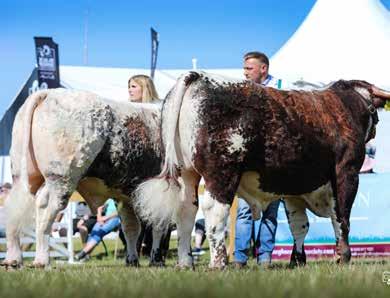
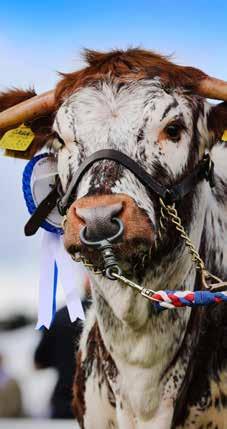
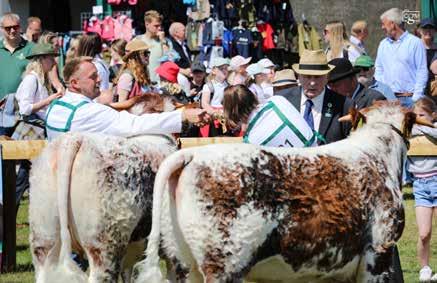
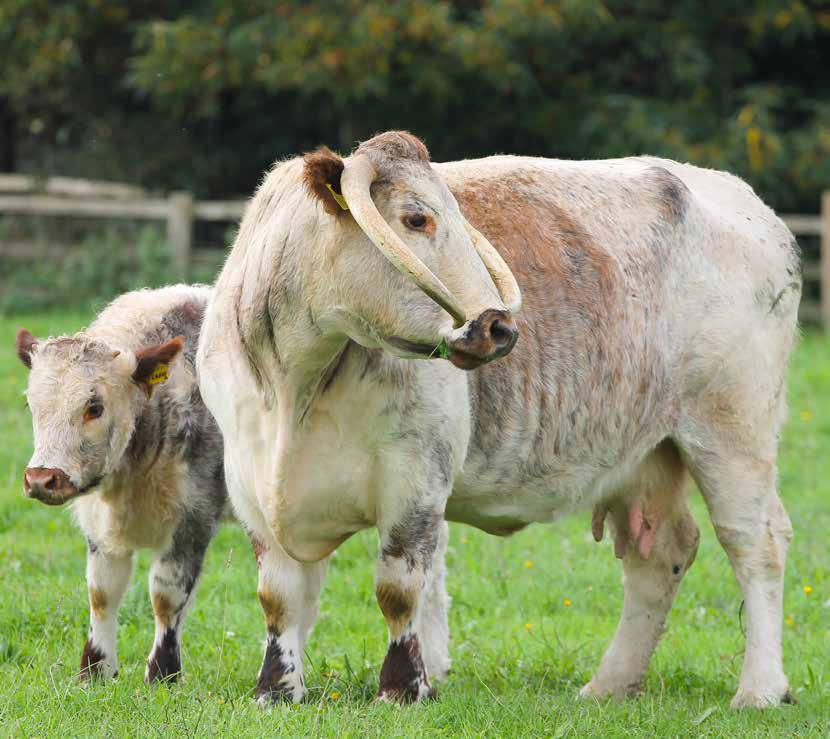
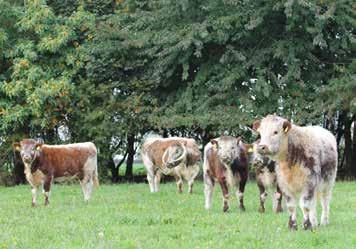
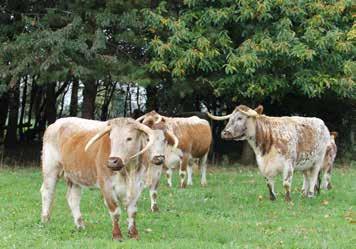
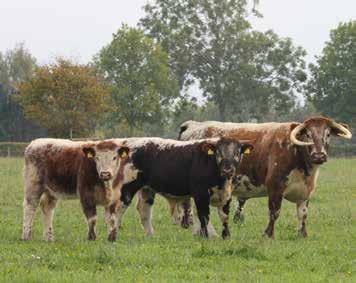
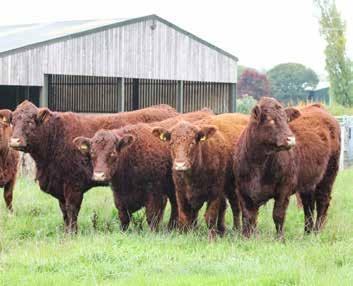
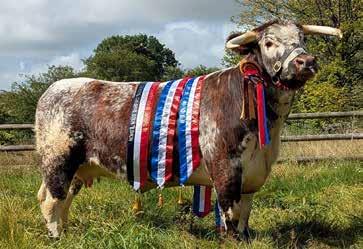
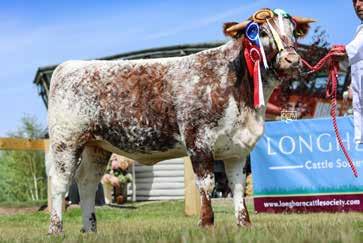
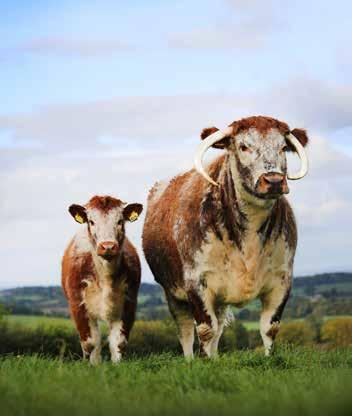
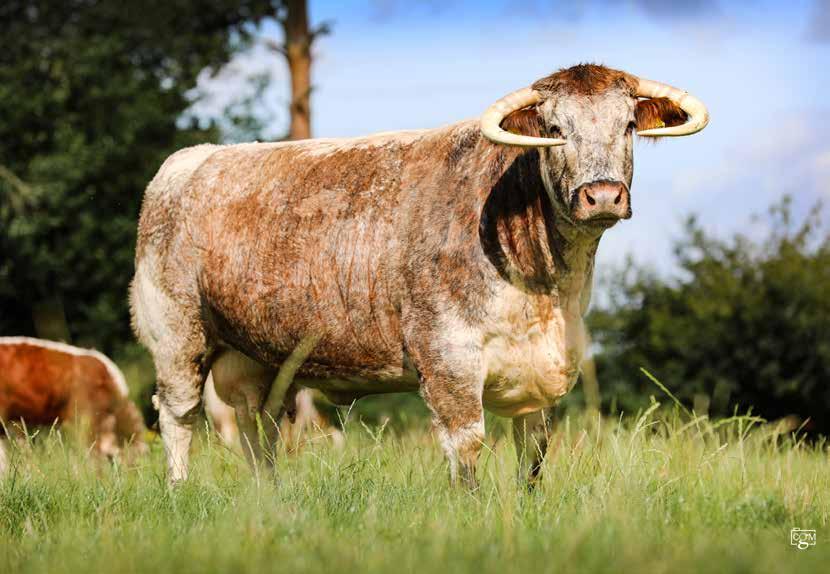
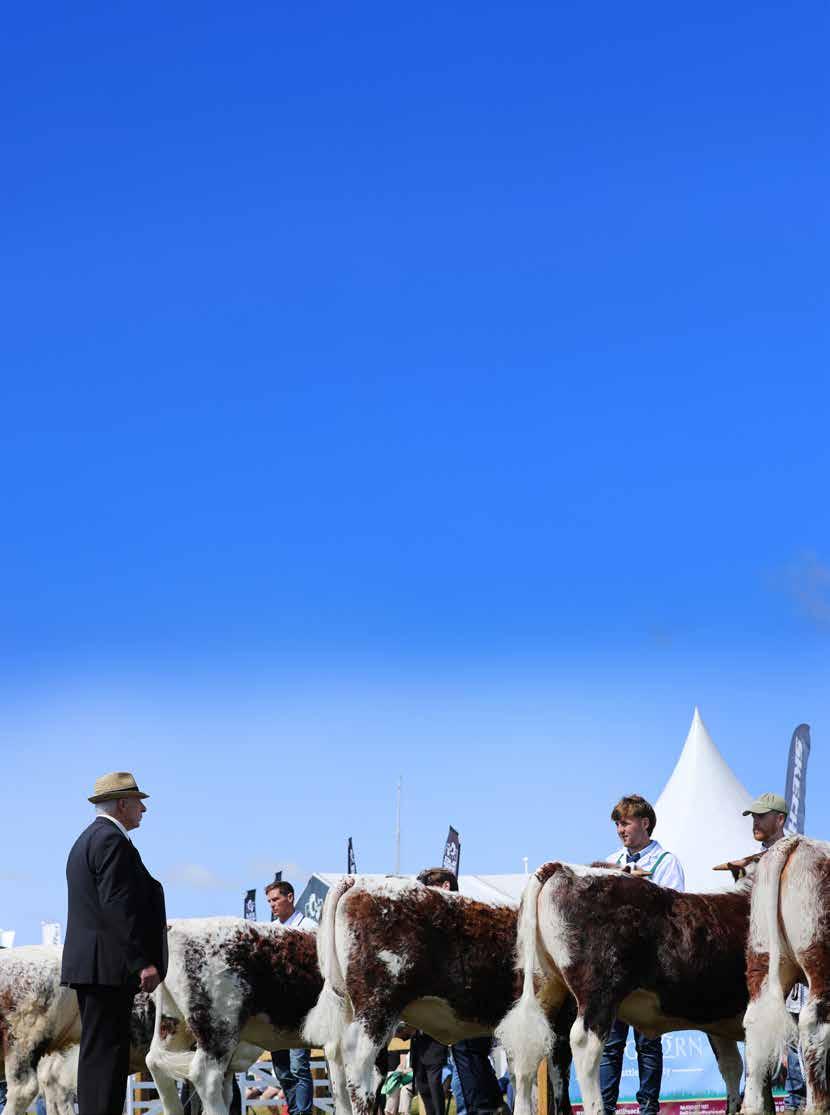
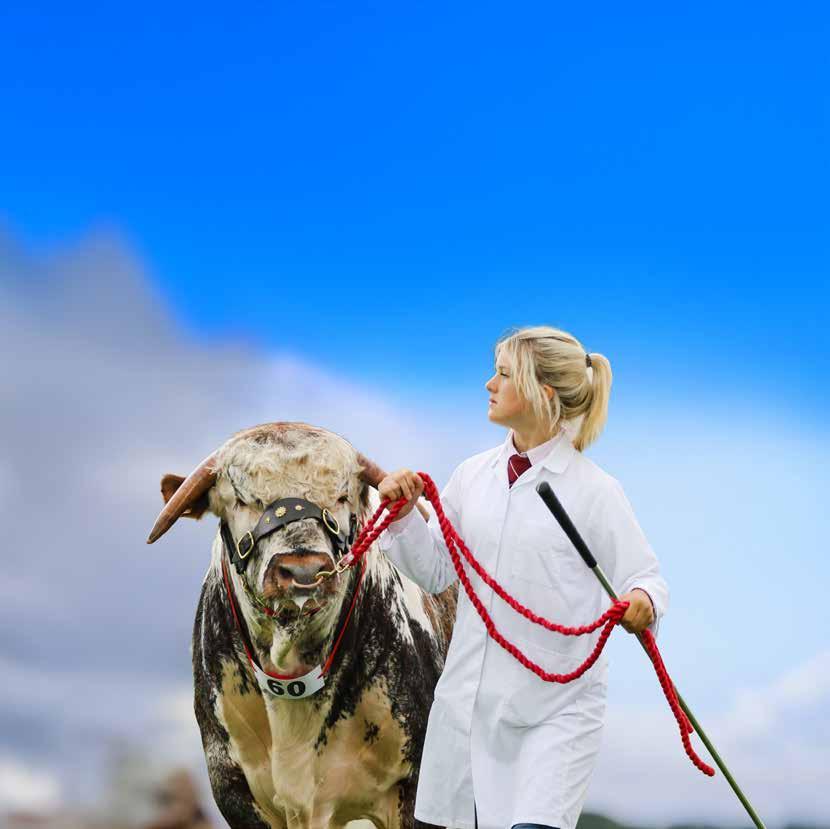
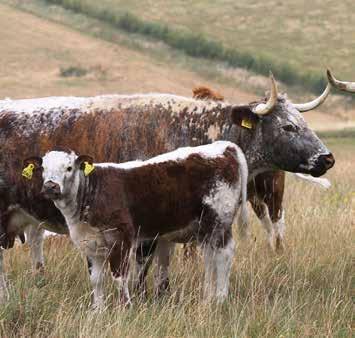
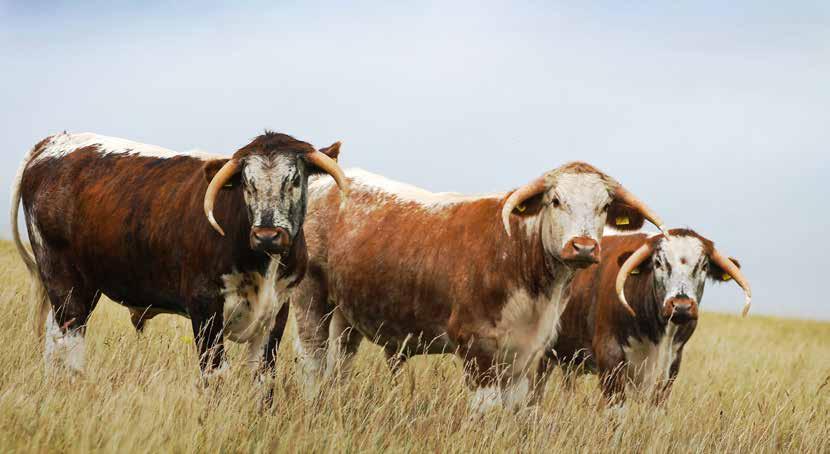
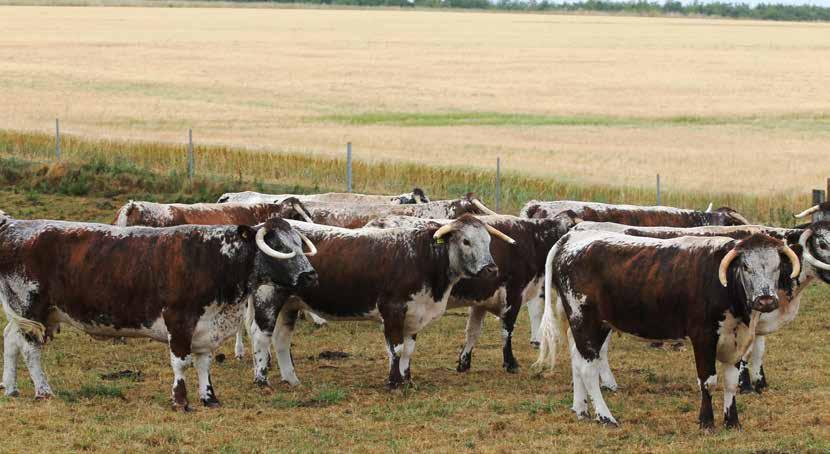
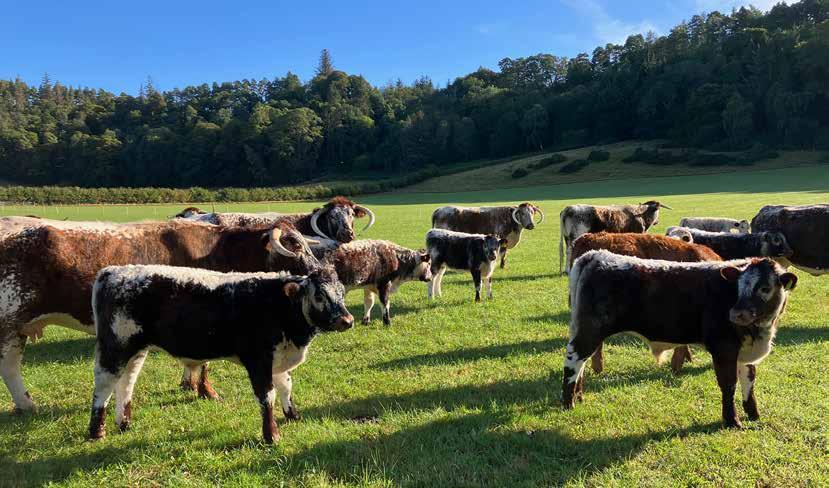
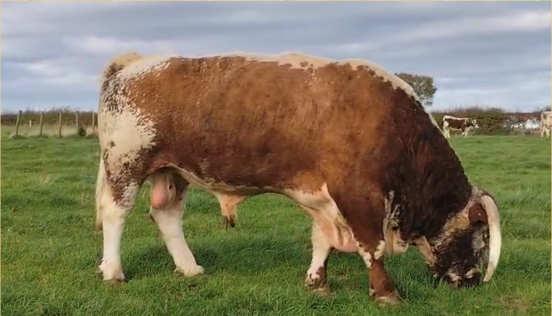
Boosted biodiversity with Longhorns at Lowther Estate
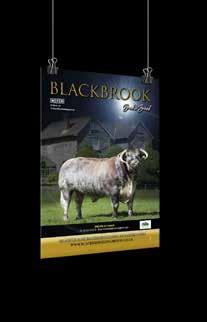
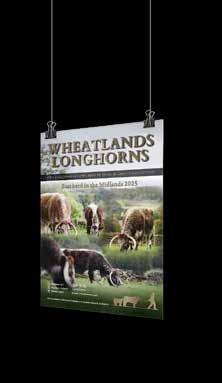
Welcome to the 2025 edition of The Longhorn, the Society’s magazine for members and all those with an interest in the breed, either pedigree or commercial.
Having survived what has been a tremendously hot summer for many breeders and their herds, we now prepare to go into the winter months and start looking forward to what will be another jam-packed year of events for the breed next year.
This year’s National Show was yet another success hosted by the Great Yorkshire Show, we even managed a little celebrity glitz and glamour in the Longhorn classes.
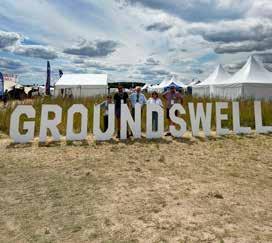
One of the highlights of the year was the interest and conversation surrounding the Longhorn breed at the Groundswell event in the summer, where farming practices were discussed in line with managing nature and biodiversity. Events like this highlight the breed in a fantastic manner, showcasing the low maintenance breed’s characteristic of being one of nature’s greatest foragers.
As highlighted in a couple of the main features in the magazine, members can read about the journeys of couples focussing on the breed for both meat retail purposes and how the breed can work in harmony with nature and different land types and management systems.
The magazine also sees us look back on key events throughout the year such as the summer visit to Wiltshire to view the Stoke herd, which was a resounding success and the AGM which saw members across the UK celebrated in the awards ceremony for continuing to fly the flag for the breed at various shows.
I’d like to thank all members that have worked hard this year to promote Longhorns at shows and events, your passion for this breed never goes unnoticed and I wish everyone a happy and healthy winter and look forward to seeing what the 2026 season brings us all.
The Society cannot accept responsibility for errors or omission arising from publication. Information and photographs contained within advertisements may also not be the views of the Longhorn Cattle Society and, therefore,cannotbeheldresponsibleforanyissuesarisingfromthem.
ADVERTISERS INDEX
10
NEW MEMBER INFO
For those new members to the Longhorn Cattle Society, here’s a guide to everything you need to know about being a breeder.
28 AWARD WINNING FOOT TRIMMER
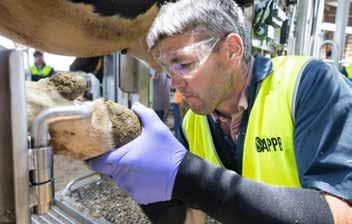
Breeder Dave Phillips recalls his success foot trimming on a world stage.
06
SOCIETY NEWS
A round up of Society news and action points for next year.
14
NATIONAL SHOW
All the action from this year’s National Show, which took place at the Great Yorkshire Show.
22
TYPE CLASSIFICATION
A refresher course in what Type Classification means for your herd.
30
BEHIND THE SCENES OF THE LOWTHER ESTATE
Read about how the Longhorn breed is being managed in line with maximising biodiversity.
38 BUDDING BUTCHERY BUSINESS BACKS LONGHORN BEEF
Martin and Emma Gilder share their thoughts on how their award-winning Longhorn beef is hitting the headlines.
34
YOUNG BREEDER PROFILE
James Langlands presents his views on showing from the mind of a young breed enthusiast.
44
TANNERY BUSINESS DREAMS DO COME TRUE
Read how one Longhorn breeder began building a tanning business from scratch thanks to Zoom lessons.
48
SUMMER VISIT TO STOKE HERD
The Society’s summer visit headed to Wiltshire to view the Stoke herd running in harmony with nature.
A note from the Chairman
Every year herald’s different events that define that particular year and last in everyone’s memory. Surely the over-riding event of 2025 (other than political decisions) was every Englishman’s favourite topic – the weather!
Those of us old enough to remember the extended dry spell of 1976 will have been making direct comparisons with the spring, summer and early autumn of this year. While 1976 was incredibly dry from memory, we didn’t experience the searing heat of this summer and the obvious knock on effect on silage and hay making, grazing and future winter feed stocks. That said it is remarkable how well cattle stood up to the conditions, lack of grazing and heat.
Traditional breeds and of course Longhorns showed the value of easy fleshing and the ability to cope with the extremes and still perform well. We are fortunate to be involved with such a versatile breed with all its attributes.
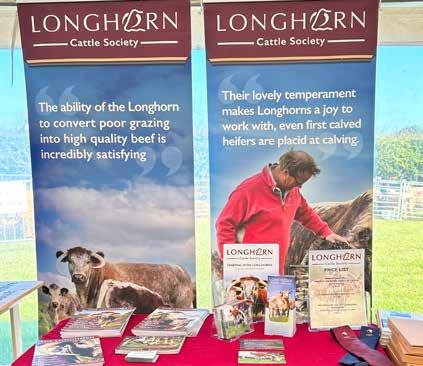
The Society took an impressive stand at Groundswell Festival, the annual regenerative farming event held in Hertfordshire over two days in July. The event focused on agri-environmental schemes, regeneration and SFI and proved to be an ideal portal for the breed with excellent attendance overall and a very busy stand over the two days. Huge thanks to the team for presenting excellent promotional banners and material and those who helped man the stand, in particular Debbie as secretary, Elise Sutton, Tom Mills and Dave Phillips.
Following Groundswell we all enjoyed a superb visit to the Stoke herd in Wiltshire by kind invitation of Natural England, and particularly Elise Sutton. A nothing short of a brilliant and memorable day organised by Elise, her colleagues and family included viewing the splendid herd, but also a chance to understand the management behind the organic herbal leys and permanent pasture and winter bale grazing techniques, as well as a look at some excellent steers finishing off pasture.
The day witnessed a keen and full attendance and the Society welcomed breeders and enthusiasts from across the country including Australian Longhorn breeders Graham Warwick and Greg Templeton.
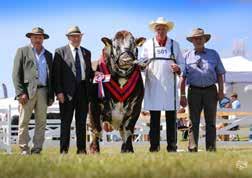
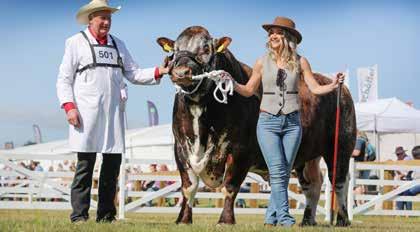
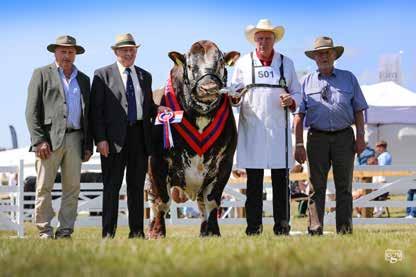
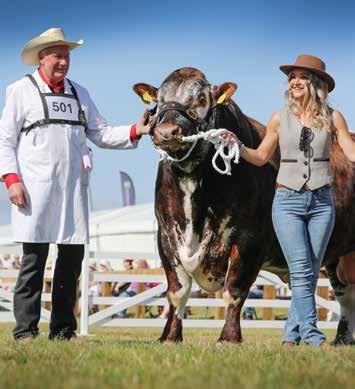
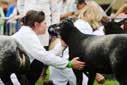
The National Show, a great shop window for the breed, travelled to the Great Yorkshire Show this year culminating in a fantastic turnout and excellent publicity. Classes were ably judged by the experienced and popular George Young with David Blockley’s Southfield Viper taking poll position leading to him being extensively photographed with national television personality Helen Skelton on the halter.
Society sales usually take the form of a Spring Show and Sale at Worcester and an online sale during the autumn. Sadly, this year’s lack of entries dictated that the Spring Show and Sale did not take place – a combination of strong commercial values, private sales and Bluetongue issues all combined to reduce a meaningful entry.
In contrast the online sale received strong support with good entries in all categories and results which favoured the effort put into preparation and photography.
On a sadder note, it was with great sadness that we reported the death of Peter Guest. Those of us who were privileged to have known Peter were thrilled to see him at the Midland Group Summer meeting at Rousham in June. We also lost Pat Quinn this year, another member who saw the breed through its darkest times in the 1970’s. Without breeders like Peter and Pat the breed may be in a different place now and we owe them a huge debt of gratitude.
No report would be complete without thanks and acknowledgement to office holders. Debbie handles the day to day running of Society matters with great knowledge and experience and our appreciation is recorded. The Society Trustees continue to show commitment and devotion by travelling literally hundreds of miles to attend meetings, discussing, debating and making informed decisions for the betterment of the Society. I see at first hand and admire their insight and futuristic thinking and tend my personal thanks to them all.
We have a great breed with an illustrious history and in my eyes an exciting future. Whether you have one or 100 Longhorns, be proud, be committed, be open minded but above all have enjoyment.
Clive
Roads -Societychairman
SOCIETY NEWS
NATIONAL SHOW HOSTED AUSTRALIAN BREEDERS
Society members were delighted to be joined by two breeders all the way from Australia for our summer visit to the Stoke herd and to the National Show at the Great Yorkshire Show.
Greg Templeton and Graham Warwick combined a holiday in the UK with visits to a number of Longhorn herds and were thrilled to have their picture taken with the breed champion Southfield Viper at the National Show.
Greg commented: “It was a special day to be able to be part of the Stoke herd summer visit. The National Show at Great Yorkshire will be one I remember for years to come. Graham and I had a fantastic time. We were incredibly appreciative of the breeders who opened their farms for us to visit. We would have loved to have visited more but there was only so much we could do in the time we had. That only makes me keen for a return visit!”
ON-LINE TIMED SALE TOPS AT £4300
The Society’s online time sale in September saw a top price of £4300 for two-year-old bull Etheridge Wrangler from David Phillips, Dorset. After some spirited bidding, this Etheridge Ultimate son went to Robert Tedbury, Sussex, for his Southdown herd.
Prior to sale, Wrangler had a successful show season prior to the sale, winning the Society’s Bull of the Year points cup.
Next in the bulls was yearling bull Gentons Xero from Bertie Facon, Oxfordshire. Selling for £4000 he went to the Pennant herd of Longhorns belonging to Craig Pugh, Powys.
In the females the Blackbrook herd of Pat and John Stanley saw a full clearance with the top priced Blackbrook Isabella selling to £2650 to Dan Derrig for his new herd in Derbyshire.
NOTE TO MEMBERS
You’ll all be relieved to know that the year letter for 2026 will be A
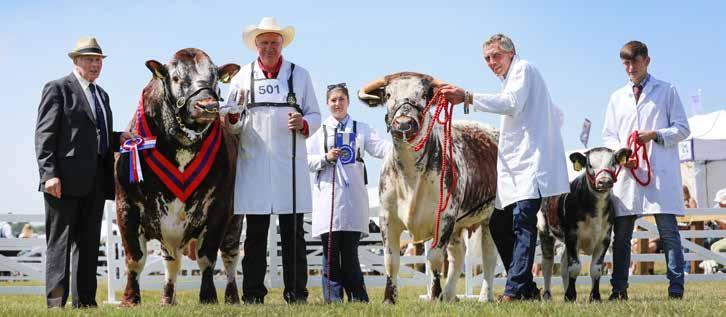
From left to right: Greg Templeton, George Young, David Blockley, and Graham Warwick.
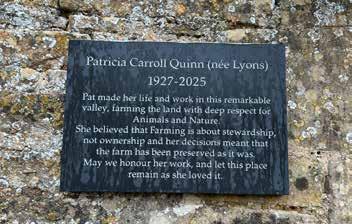
PAT QUINN MEMORIAL PLAQUE
Following the passing of beloved Longhorn breeder Pat Quinn, her family and many friends gathered at Lower Harford Farm to remember her in November. Many stories and anecdotes were shared by people who came from every facet of her life, but everyone agreed what a unique woman she was. A plaque to honour her memory was unveiled, a reminder to future generations of the legacy she leaves behind. To read Pat’s obituary, please turn to page 47.
NATIONAL SHOW 2026 JUDGE
The National Show returns to the Royal Three Counties Show at Malvern in June 2026 and our judge will be Graham Towers.
PASSING OF THE STICK
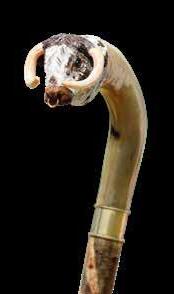
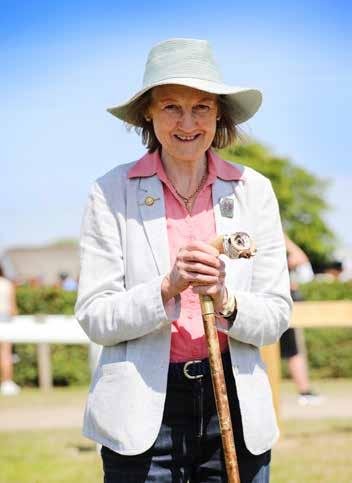
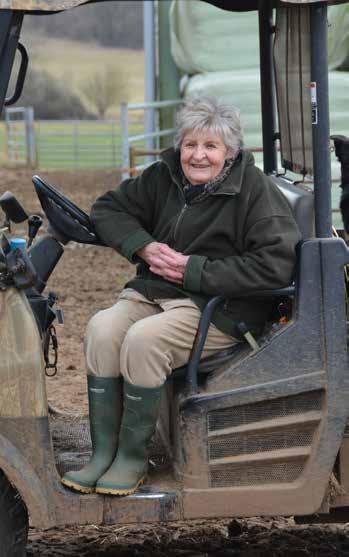
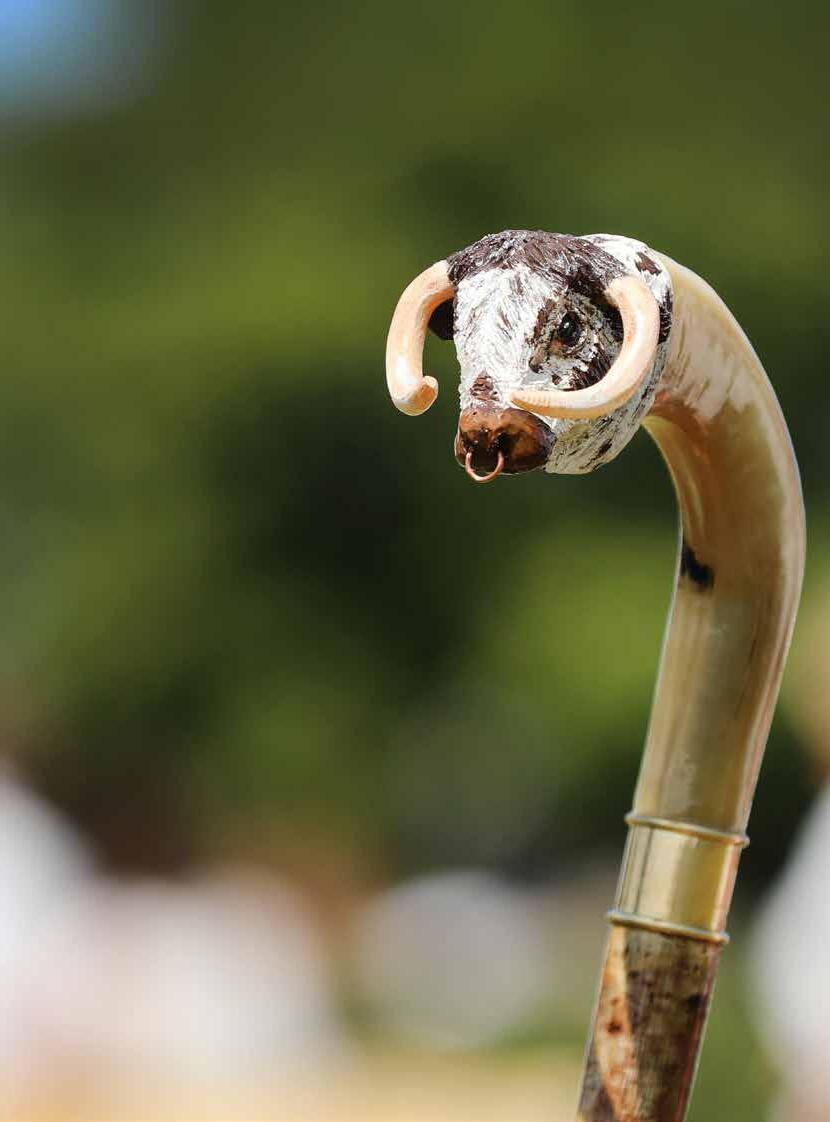
Panny Laing, the Society’s President for 2025 and 2026 has generously commissioned and donated a President’s stick to the Society.
A LEGACY TO THE SOCIETY
Leaving a gift or a legacy to a charity in a will should come after a lot of thought and after all other loved ones have been provided for.
The Longhorn Cattle Society is always deeply honoured when we are remembered by someone in this way; it is a deeply personal and considered decision. Any amount, no matter how large or small, makes a huge difference to a small organisation such as ours.
The Society cannot provide legal advice so we encourage anyone thinking of doing this to speak directly to a solicitor when making or updating a will. An individual can leave the Society a fixed amount, or a residuary legacy for the general purposes of the Society.
If you already have a will in place, you and your solicitor can create a Codicil. Your solicitor will advise you as to the correct wording, but the wording should include the full name, address and charity number of the Society which are below.
Should you wish to inform the Society of your decision to leave a gift then your privacy will be respected and all information will be handled in the strictest confidence.
Society postal address:
The stick is handmade with the head of a Longhorn and a brass collar, mounted on hazel. It will now be passed on each time a new president is appointed. The Society is indebted to Panny for such a thoughtful and generous gift.
The Longhorn Cattle Society CIO East Lodge
Stoneleigh Park
Stoneleigh Warwickshire
CV8 2LH
Registered charity number 1159780.
LONGHORN EVENTS
GROUNDSWELL
Now in its ninth year, the Groundswell Festival provides a forum for farmers, growers, or anyone interested in food production and the environment to learn about the theory and practical applications of regenerative farming systems and currently attracts some 10,000 visitors over the two days. It was felt by Trustees that the event would be a good fit for the breed, so a trade stand was duly booked and the event gave the Society a great spot on a prominent walkway between the two exhibition fields and one of the seminar marquees.
Having Elise Sutton, Dave Phillips and Tom Mills on the stand was a huge plus-point, as all of them were able to ‘talk the talk’ with visitors as they are practicing the messages the Society were portraying on the day, aided by new stand graphics and printed leaflets.
A variety of enthusiasts graced the stand through the day ranging from estate managers, first generation or tenant or landless farmers, as well as commercial, arable and dairy farmers.
The Society also held a prize draw offering Longhorn beef and free membership for visitors who put their contact details into a hat, which proved very popular!
ROBERT BAKEWELL TERCENTARY CELEBRATIONS
The Dishley Society and the Leicester Longwool Sheep Society really pulled out the stops to celebrate the 300th anniversary of the birth of Robert Bakewell, holding a series of events, tours and lectures related to Bakewell during a week in May 2025.
As well as improving the Leicester Longwool sheep and the Shire horse, Robert Bakewell revolutionised the breeding of Longhorn cattle through selective methods during the 18th century.
By carefully choosing animals with desirable traits, he improved the breed, focusing on qualities such as strength, size, temperament and suitability for agricultural purposes. This approach not only enhanced the productivity and functionality of Longhorn cattle but also established principles of selective breeding that influenced livestock improvement globally. Bakewell’s innovations laid the foundation for modern animal husbandry and solidified his legacy as a pioneer in agricultural science. His work remains a cornerstone in the history of livestock breeding and improvement.
The Society was honoured to be invited to the Rutland County Show with the display stand and we met many of the overseas visitors who had come from across the world to celebrate Robert Bakewell.
The day after the Rutland County Show, John and Pat Stanley of the Blackbrook herd hosted a farm tour and afternoon tea which concluded the week of celebrations.
TRUSTEE AND MEMBERSHIP NEWS
BENEFITS OF MEMBERSHIP
The Longhorn Cattle Society was founded in 1878 and its stated objects are ‘to encourage, promote and improve the breeding of Longhorn Cattle and to maintain the purity and to maintain a Herdbook of Longhorn Cattle’.
Membership of the Longhorn Cattle Society costs just £55 per year. This gives you:
Facilities to register cattle and maintain a pedigree registered herd
A regular email newsletter updating members on Society news and events
An annual Herdbook listing all current members, all registrations for that year, plus all show & sale results
An annual magazine showcasing the breed and its members
A full-time breed secretary
More than 30 shows across the country holding Longhorn classes
Dedicated Longhorn auction sales
Herd visits, workshops and social events including the Longhorn Cattle Society AGM weekend
An active website where members can advertise their Longhorn business and their cattle for sale
A strong social media presence on Facebook, Twitter, Instagram etc promoting the breed and Society members
Regional Groups around the country organising herd competitions and social events
Added to which, you get to know a lot of friendly people who will be happy to help you!
The Society would like to welcome these new members to the Longhorn family
Tracey Cater, Warwickshire
Tracy David, Somerset
Daniel Derrig, Derbyshire
Dewlish Estate, Dorset
Richard Gingell, Devon
Richard Harlow, Buckinghamshire
Holly Hills, Kent
Owen Inskip, Wiltshire
James Langlands, Dorset
Charli Lloyd, Cumbria
Olivia Mayor, Lancashire
David Mikhail, Gwynedd
Nigel Miller, Selkirkshire
James and Kate Reynolds, Kent
Elise Sutton and Tom Stinton, Wiltshire
David Unwin, Merseyside
Sam White, Warwickshire
Laura Williams, Cornwall Geraint and Joanne Jones, Cardiff
Wildlife Trust BCN, Cambridgeshire
ALL YOU NEED TO KNOW AS A NEW MEMBER
The Society has welcomed a significant amount of new members of late from all over the UK. The following guidance may be of help to you. If you’ve been a member for a while, then this might be a bit of a refresher for you.
The Society has a full-time breed secretary. If you can’t find the answer to your question on the website,ringoremailDebbieDann(seecontactdetailsonpage1).
REGISTRATIONS
The main function of the Society is to maintain an accurate Herdbook of pedigree registered Longhorn cattle. This can only be done using the information supplied by members, so providing timely, accurate information is vital. Any mistakes, such as realising that a heifer calf is actually a bull calf (it happens), or clicking on the wrong dam at the time of registration is easily corrected by dropping Society secretary Debbie Dann an email so don’t panic if you make a mistake.
REGISTERING YOUR CALVES
Registrations and birth notifications are sent to the Society via the online herdbook on the Society website or via the Grassroots app.
Registration fees and registration rules are listed on the Society website. Fees are scaled according to age so the longer you leave it the more expensive they get. Members should note that once females get to 12 months old and they haven’t got both the sire and dam declared on their passport, or they are not already birth notified, they must be parent verified via DNA testing before they can be registered.
Bulls must be birth notified and parent verified before they can be fully registered. The registration form with all the information you need to register a bull is in the ‘forms’ section of the website. It’s also good practice to birth notify your steer calves as it’s free of charge and it keeps the dam’s calving records up to date with the Society.
NAMING YOUR CALVES
When you joined the Society you would have selected a prefix, then for each calf you have the fun of choosing an individual name. The Society introduced a naming system in 2000, so in 2026 the year letter is ‘A’. The Society naming system is not compulsory so if you prefer to go with family names or themes that’s fine.
The Society allows disbudded calves to be entered at shows so you may disbud all your calves and still be able to enter them into shows, or sell them to other members who wish to show. Of course, if you wish to keep the horns on your Longhorns you can, but we do suggest that your steer calves and any heifers that won’t be used for breeding are disbudded as many abattoirs cannot take horned cattle, so your end-of-life choices for your cattle may be compromised.
SHOWS, SALES AND EVENTS
The Society organises official auction sales, both physical and online, to enable members to sell their cattle. Entry forms for these are published on the website and via the online newsletter well in advance. The Society will also let members know of auction venues holding collective native breed sales.
There’s an extensive calendar of local and county shows that hold Longhorn classes and a National Show is held every year at a different location. Members entering shows holding Longhorn classes and using a Longhorn Cattle Society panel judge are then eligible for the bull, cow and heifer of the year awards. Points are automatically calculated by the Society so you don’t need to do anything, but you might be surprisingly successful.
As well as the regional groups organising herd visits and social events, the Society holds a summer herd visit every couple of years. Alongside the AGM weekend in October, these events are a great way to meet members, see other Longhorn cattle and maybe pick up some useful tips.
OTHER AWARDS
The Society loves to recognise the efforts of its members and their cattle so along with the awards mentioned above, there is also an award for members showing their cattle for the first time in their own right, as well as an award for the Society’s unsung heroes. Members will see details of how to enter will be available via the website and member’s email newsletter.
COMMUNICATION
The Society sends out regular email newsletters to keep members up to date with Society news and events, rules and regulations and other topics that might be of interest. The website is updated regularly throughout the week, so keep an eye on that for fresh news items relating to the breed.
Longhorn cattle are of course incredibly photogenic, so please consider using social media to promote your cattle, and that in turn helps get the breed noticed.
OFFICIAL SOCIETY SALE HEALTH RULES
The Society encourages its members to determine the health status of their cattle when offering cattle for sale, be it via private sales or public auction.
For official Society auction sales, all cattle forward must be TB tested, irrespective of their TB testing interval and the following health rules apply:
Vendors do not have to be in a health scheme. Individual testing of animals is perfectly acceptable, and can easily be done when the cattle are being TB tested.
Vendors not accredited via a health scheme wishing to blood test should do so not more than 60 days prior to the sale.
Vendors who are active members of a CHeCS approved health scheme and holding current health scheme accreditation are exempted from blood testing for the specified diseases. Members must apply to their Health Scheme provider for an animal health declaration card prior to the sale.
Accredited and vaccinated (all cattle except calves at foot).
Vendors privately testing:
Negative blood test or ‘Tag & Test’ for Antigen and then vaccinated prior to sale. Calves at foot should either have a negative blood test for Antigen or been tag and tested negative for Antigen. There is no requirement to vaccinate calves at foot.
IBR:
CHeCS health scheme members
Accredited.
Vendors privately testing:
Negative blood test. When vaccinating a marker vaccine must be used. (Unless routinely vaccinating, vaccinations should be done post negative blood test)
Recommended
Leptospirosis:
CHeCS health scheme members
Accredited.
Vendors privately testing:
Negative blood test.
Neospora
Testing recommended for all females.
Johnes:
CHeCS health scheme members:
There are no further requirements for vendors in risk level R1 or R2. Those that are in risk level R3, R4 or R5 require a negative blood test (all cattle except calves at foot).
Vendors privately testing:
These vendors require a negative blood test (all cattle except calves at foot) or faecal test if blood test timing is not compatible with TB test timing. Johne’s test sensitivities are poor and, therefore, membership of a health scheme is preferred but not mandated.
TB
In all cases vendors must test all animals more than 42 days old on the day of the sale for TB, irrespective of home testing interval.
SOUTHFIELD VIPER TAKES NATIONAL SHOW TITLE AT GREAT YORKSHIRE SHOW
A fantastic turnout of Longhorn cattle graced the rings of the Harrogate-based showground for this year’s Great Yorkshire Show, which also hosted the 2025 National Show.
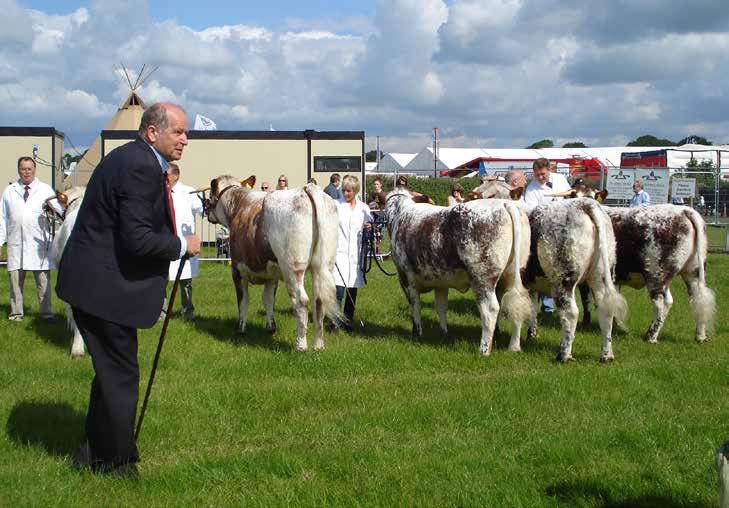
All the classes were full of quality from top to bottom and our judge George Young had his work cut out selecting his champion and reserve. But before doing that the exhibitors were treated to a visit from celebrity Helen Skelton who was doing some promotional filming at the event.
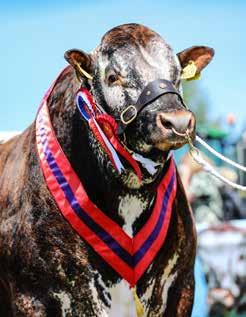
Judge Mr Young found his breed champion in the form of Southfield Viper, a four-year-old bull from David and the late Angela Blockley, Drighlington. Viper is by Southfield Panther and out of Southfield Razzle and continues his good form following up from the male championship at the Great Yorkshire Show the previous year, as well as being crowned the bull of the year in 2024.
In reserve was 2022-born first calver Briar Mead Walnut Whip from Vicki Hopkinson, Northallerton.
A daughter of Tetford Vaders Vortex and out of Briar Mead Quintessential, this cow also took the breed championship and reserve native interbreed honours at Lincolnshire Show earlier in the year.
Securing the reserve male championship was the second placed senior bull, Southfield Tomahawk from the same stable as the champion. By Llantrothy Kestrel, he is out of the homebred Southfield Lyric.
The intermediate bull class was won by Bakewell, Derbyshire-based Tom Mills with Wheatlands Xenolith. By Southfield Nitro and out of Wheatlands Thora, this one is again no stranger to winning ways having previously won the breed and reserve interbreed championship at Derbyshire County Show.
Briar Mead Yoda was the winner of the junior bull class from Vicki Hopkinsonand is a son of Tetford Vaders Vortex, out of Courthayes Molly, while first prize in senior heifer class went to Melbourne Park Lilly Gilly from Ben and Tori Stanley, Melbourne, Derby. She is by Southfield Nuke and out of Melbourne Park Gilly Girl.
Longbridge Young Joan was the winner of the junior heifer calf class and was also awarded best overall junior and the reserve female championship. The heifer exhibited by J M Grant and T McDonnell, Easingwold, York, is by Blackbrook Fireball and out of Longbridge Vixen. Young Joan had a successful show season including other wins at Lincolnshire, Royal Lancs and Westmorland County show.
The heifer calf class was won by J M Grant and T McDonnell with Longbridge Yves St Laurent, a daughter of Blackbrook Alchemist out of Hennisfield Lilian while the group of three class was won by the Blockley family with Bertie Stanley taking top place in the pairs class.
Class results
Senior bull born before 2023
1st Southfield Viper
2nd Southfield Tomahawk
Mr and Mrs D and A Blockley
Mr and Mrs D and A Blockley
Intermediate bull born in 2023
1st Wheatlands Xenolith
2nd Gentons Xploit
1st Briar Mead Yoda
Mr T Mills
Mr B Facon
Junior bull born in 2024
2nd Longbridge Young Gun
3rd Newton Indestruct-abull
1st Briar Mead Walnut Whip
2nd Melbourne Park Griselda
3rd Longbridge Velvet
4th Southfield Swift
5th Longbridge Uturn
Mrs V Hopkinson
Mrs J Grant and Ms T McDonnell
Mr D Walker
Cow
Mrs V Hopkinson
Mr and Mrs B and T Stanley
Mrs J Grant and Ms T McDonnell
Mr and Mrs D and A Blockley
Miss A Lack
Senior heifer, born in 2023
1st Melbourne Park Lilly Gilly
2nd Herbertsherd Laggan Ulva
3rd Litton X-ception
4th Herbertsherd Laggan Bay
5th Southfield Xara
Mr and Mrs B and T Stanley
Master Bertie Stanley
Mrs J Grant and Ms T McDonnell
Master Bertie Stanley
Mr and Mrs D and A Blockley
Junior heifer, born between 01.01.2024 and 30.04.25
1st Longbridge Young Joan
Mrs J Grant and Ms T McDonnell
2nd Melbourne Park Mayhill Oonagh VIII Mr and Mrs B and T Stanley
3rd Gentons Ysobel
4th Wheatlands Yvonne
5th Fieldhead Yola
Mr B Facon
Mr T Mills
Mr H Blockley
Junior heifer, born between 01.05.25 and 31.12.25
1st Longbridge Yves St Laurent
Mrs J Grant and Ms T McDonnell
Group of three
1st Mr and Mrs D and A Blockley
2nd Mr B Facon
3rd Mrs J Grant and Ms T McDonnell
Pairs
1st Master B Stanley
2nd Mrs V Hopkinson
3rd Mr and Mrs D and A Blockley
4th Mr B Facon
5th Mrs J Grant and Ms T McDonnell
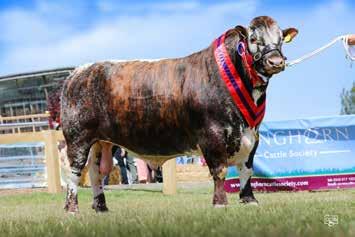
Reserve male champion, Southfield Tomahawk.
Intermediate bull class winner, Wheatlands Xenolith.
Junior bull class winner, Briar Mead Yoda.
Junior heifer and reserve female champion, Longbridge Young Joan.
Senior heifer class winner, Melbourne Park Lilly Gilly.
Baby heifer class winner, Longbridge Yves St Laurent.
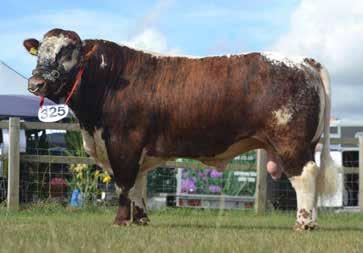
National Show champion, Southfield Viper.
Female and reserve overall champion, Briar Mead Walnut Whip.
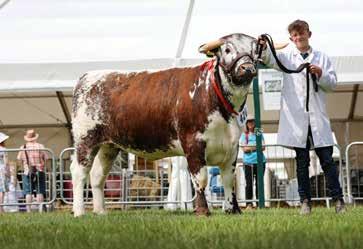
Judge George Young with his National Show champion and reserve champion.
GENTONS TEAM OFFERS WARM
WELCOME FOR AGM WEEKEND
For the 2025 AGM members headed to the centre of England to visit two exceptional herds, one Longhorn and one Aberdeen Angus.
The Gentons herd of Longhorns based at Lessor Farm just outside Banbury was established by Bertie Facon in 2006 with foundation cows bought at the Society’s sales. Over subsequent years the herd has been added to with a range of bloodlines to ensure a wide genetic base.
Bertie’s first homebred registered bull, Gentons 007 James Bond has had a significant influence on the herd and was extensively shown, winning Bull of the Year in 2015.
Showing is very much embedded in the DNA of the herd and Bertie, along with his stockman Ben Bellew are nearly always in the running for the Bull, Cow and Heifer of the Year awards each year.
Bertie is also a great supporter of all Society sales both as a buyer and a seller and he has achieved record prices for his cattle including bull Gentons Valegro selling to £3430 and heifer Gentons Whoopi to £4760.
From early on in his Longhorn journey Bertie has embraced innovation and technology and recently built a dedicated facility for flushing and implanting cows for embryo transfer. A number of embryos have been exported to the EU and the US and in particular Australia to allow breeders to rapidly increase their Longhorn herds.
Bertie’s contribution to the Society continues off farm as he is also a Society trustee.
In 2018 the Gentons herd of Salers was established with stock initially purchased from the UK and then imports from herds in France.
After a warm welcome to the farm from Bertie’s wife Zeinab we walked out into the fields next to the barn to see the majority of the breeding herd, with cows and their calves. Most calves were born between January and May so would soon be weaned.
In the next field were some two-year-old Longhorn and Salers heifers, all of whom were part of the farm’s flushing programme and were carrying embryos, to be born early in 2026.
Members then drove a few miles to another farm where the Salers herd is based to see the extensive herd of cattle that are native to the region of France where Bertie grew up.
Back at Lessor Farm Bertie’s son James and his colleagues had been busy cooking a barbeque lunch of Longhorn beef burger patties and steak which tasted as good as it looked! Everyone enjoyed a relaxed lunch and then we had the AGM and the much awaited announcement of the winners of the year’s points cups (results on page 27).
In the evening we had our Society dinner and were delighted that we could be joined by Clive Davies of the Westwood Hereford herd and Society panel judge as our after dinner speaker. He spoke around the theme of farming heroes which resonated with everyone present. Andrew Goodman of Goodman’s Geese and Turkeys had kindly donated a bird to be auctioned off which was bought by David Blockley for £310, put back in and then bought again by Joshua Brigg for £240. The raffle raised £360 so in total a fabulous £910 was raised for Young Handler prize money.
On Sunday we headed into Northamptonshire to visit the Aynho herd of Aberdeen-Angus owned by Alex McLaren.
Aynho is the home of the third oldest AberdeenAngus herd in the breed. Founded by Alex’s grandfather in 1903, the herd has a long and rich history spanning 122 years and four generations to date. The oldest herd, the McIntyre family’s Theakston herd based in Bedale, North Yorkshire, provided the foundation genetics in the form of the McLaren’s first stock bull, Proud Boy of Theakston.
Alex’s philosophy is simple – evolution, not revolution. The hallmarks of his success are built upon a sound reputation for quality cattle. He is focused upon breeding modern Aberdeen-Angus for the modern suckler farmer who wants to produce premium Angus cattle for the retail trade. He and his forebears have been loyal to the breed and during that time have seen it evolve and improve dramatically to meet the needs of the beef industry.
He is a stickler for functional correctness in the bulls he sells. “They need to do the job of getting cows in calf year after year. There is no place for those with bad legs or bad feet, because they are simply not viable,” he states. He cites how Australian herds pay significant attention to this because their cattle need to cover long distances when grazing.
Alex has capitalised in the best female breeding lines in the herd, focusing on the aspects of correctness and length, stating “the top is where the value is for the retail trade, not the rear end, so we are not trying to breed big back ends. Length equals weight, and weight pays.”
Members had a tour of three groups of cows with their calves at foot and back running with the bull and then a paddock of two-year-old bulls running together. Members enjoyed seeing a different breed and Alex was very generous with his time and knowledge of both the Aberdeen-Angus breed and cattle farming in general.
The Society’s thanks go to our hosts and to everyone who came along and make the weekend such a success.
2025 SOCIETY AWARDS
Bull of the Year – The Maydencroft Award
1st Etheridge
2nd
3rd
3rd = Southfield
3rd = Wheatlands
1st Holnest Isla
2nd Litton X-ception
1st
1st Longbridge Young Joan J
and T
2nd Gentons Ysabel Mr B Facon 3rd Longbridge Yitaliano J Grant and T McDonnell
2nd
3rd
4th
5th
Cow of the Year – The Leebarn Award
Senior Heifer of the Year – The Lesley Hutton Award
Junior Heifer of the Year – The Tetford Award
Grant
McDonnell
Best Young Handler – The Frank Sutton Award
Etheridge Wrangler
Bollin Wylma
Holnest Isla
Longbridge Young Joan
UNDERSTANDING TYPE CLASSIFICATION
Some members are already using Type Classification as an integral management tool for their breeding decisions, but for those members who are perhaps new to the merits of it, or are thinking about classifying their herd for the first time, here’s a run-down of what it involves.
Type Classification is a clear, understandable method for numerically scoring cattle using an independent system, run by trained assessors from the National Bovine Data Centre (NBDC).
Classification scoring allows a breeder to gain a better understanding of individual strengths and weaknesses in a herd with the option then of positively encouraging or discouraging characteristics through selective breeding. This in turn allows breeders to not only improve the quality of cattle in a herd, but also the national Longhorn herd.
Cattle are assessed on 14 different linear traits (describing the degree of a trait rather than an opinion) which comprise of four categories known as composite traits. These traits result in a final score from poor to excellent. Once an animal has been classified their score cannot be downgraded and can only remain or improve on future visits.
Procedure for Classification:
Members must notify the Society of their wish to classify. At this point, information on the herd will be passed to the NBDC in order to allow them to produce the type classification report at the end of their visit.
Bulls should be a minimum of 18 months old before being classified and females should be in milk.
All first calved heifers are put forward for classification with older animals being presented at the discretion of the owner, however the Society recommends that all eligible females are presented in the first instance. The age of an animal will be taken in to consideration by the classifier.
Animals can be re-presented on later visits, but scores can only go up, they cannot go down.
The final score of an animal appears on their pedigree with composite and linear scores available online.
Final scores points ranges
Maximum final scores across age ranges – animals can make the following maximum scores in age ranges, bearing in mind they can be re-presented on following inspections and scores cannot downgrade.
Females Males
Case study – Little Oakley Longhorns
Ewan Mackintosh of Little Oakley Longhorns made the decision to classify his own herd having worked within the dairy industry as a nutritionist where he saw classification as common practice among his client’s herds.
During the early years of herd establishment, Ewan retained the majority of his homebred females in order to grow numbers. “In more recent times we have culled harder and sold some heifers because we were able to be more Selective. So I saw the chance to classify as an opportunity to help confirm whether our breeding and culling policies had been successful,” explains Ewan.
“A call was made to Society secretary and an NBDC classifier met me on farm in Northamptonshire. Once on site I realised the process could potentially become difficult as my cows are not used to a high level of human contact, but the classifier was so relaxed and calm that within a few minutes we were able to get down to business,” he adds.
The process of that first scoring visit was finalised within an hour, ably assisted by the small handheld machine the classifier uses to record scores.
“I would strongly recommend breeders take advantage of the availability of the classifying service. The process focusses your eye on your herd and allows clear and concise breeding decisions to be made,” concludes Ewan.
The Society regularly updates a full list of cattle that have been classified. To keep up to date go to the Society’s website and head for “Knowledge Base” then “Type Classification”.
SHOW RESULTS 2025
ASHBY SHOW
Judge: Richard Bartle
Champion and native interbreed champion: Bollin
Wylma, J Mycock
Reserve: Sycamore Yale, J Mycock
ASHOVER SHOW
Judge: Lynda Burditt
Champion and interbreed champion: Wheatlands Yosemite, T Mills
Reserve: Bollin Wylma, J Mycock
BURWARTON SHOW
Judge: David Bevan
Champion: Dinedor Zara, E Greenow
Reserve: Arlebrook Valentino, B and M Wheeler
CARTMEL SHOW
Judge: Peter Close
Champion: Gale Farm Tonga, S Horrocks
Reserve: Gale Farm Iona, S Horrocks
DERBYSHIRE COUNTY SHOW
Judge: Bernard Llewellyn, MBE
Champion and reserve interbreed champion: Wheatlands Xenolith, T Mills
Reserve: Herbertsherd Laggan Bay, B&T Stanley
DORSET COUNTY SHOW
Judge: Richard Bartle
Champion: Holnest Isla, D Phillips
Reserve: Etheridge Wrangler, D Phillips
GARSTANG SHOW
Judge: Pat Stanley
Champion and reserve native interbreed champion: Litton X-ception, J Grant and T McDonnell
Reserve: Gale Farm Yell, S Horrocks
GILLINGHAM AND SHAFTESBURY SHOW
Judge: Sophie Gurton
Champion: Holnest Isla
GREAT YORKSHIRE SHOW
(National Show)
Judge: George Young
Champion: Southfield Viper, D and A Blockley
Reserve: Briar Mead Walnut Whip, V Hopkinson
HOPE SHOW
Judge: Pat Stanley
Champion: Briar Mead Walnut Whip, V Hopkinson
Reserve: Wheatlands Yvonne, T Mills
LINCOLNSHIRE SHOW
Judge: Ben Bellew
Champion and reserve native interbreed champion: Briar Mead Walnut Whip, V Hopkinson
Reserve: Litton X-ception, J Grant and T McDonnell
MELPLASH SHOW
Judge: George Woollatt
Champion and interbreed champion: Holnest Isla, D Phillips
Reserve: Etheridge Wrangler, D Phillips
MORETON IN MARSH SHOW
Judge: David Bevan
Champion: Gentons Ysobel, B Facon
Reserve: Arlebrook Zulu, B and M Wheeler
NORTHUMBERLAND COUNTY SHOW
Judge: Matt Gray
Champion and reserve interbreed champion: Fishwick Paloma, Peter Close
Northumberland County Show reserve interbreed champion, Fishwick Paloma.
PEMBROKESHIRE COUNTY SHOW
Judge: Richard Bartle
Champion: Carreg Xyris, B and M Llewellyn Reserve: Carreg Xena, B and M Llewellyn
POYTON SHOW
Judge: Brian Wragg
Champion: Bollin Wylma, J Mycock Reserve: Gale Farm Iona, S Horrocks
ROYAL BATH AND WEST SHOW
Judge: Ben Stanley
Champion: Gentons Xanadu, B Facon Reserve: Carreg Yvonne, B and M Llewellyn
Royal Bath and West champion, Gentons Xanadu from Bertie Facon.
ROYAL CHESHIRE SHOW
Judge: Ben Stanley Champion: Bollin Wylma, J Mycock Reserve: Aintree Xander, R Pilkington
ROYAL LANCASHIRE SHOW
Judge: Graham Towers
Champion: Longbridge Velvet, J Grant and T McDonnell Reserve: Longbridge Young Joan, J Grant and T McDonnell
ROYAL THREE COUNTIES SHOW
Judge: Steve Gray
Champion: Holnest Isla, D Phillips Reserve: Gentons Xero, B Facon
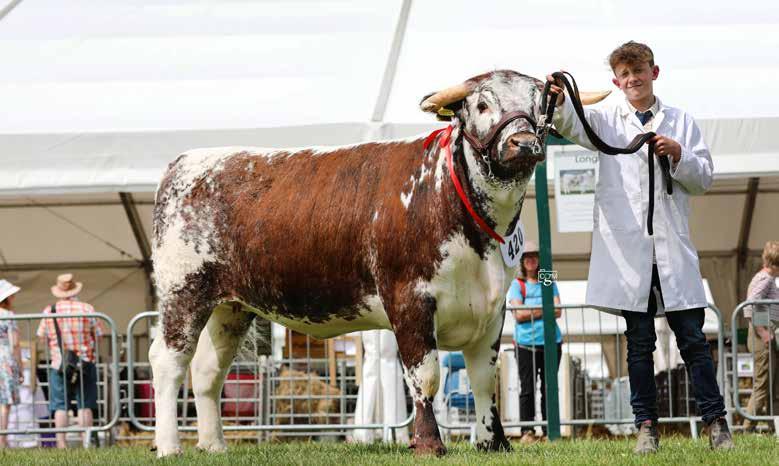
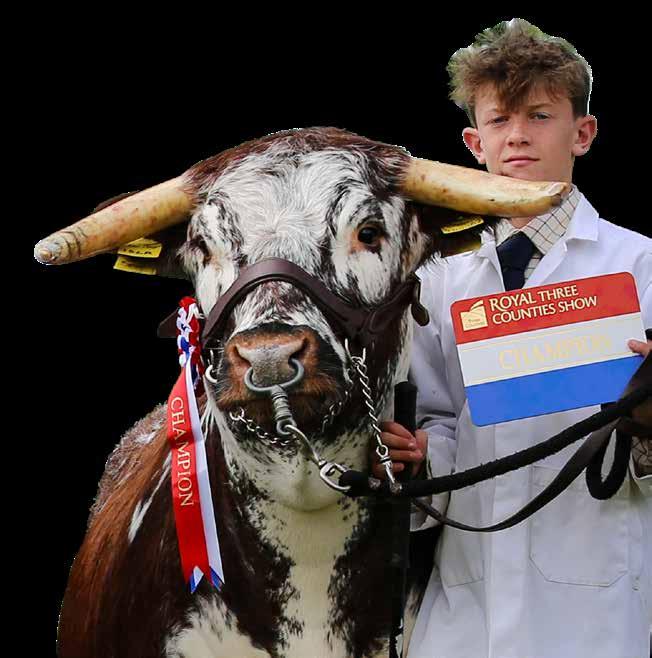
Royal Three Counties Show champion Holnest Isla from Dave Phillips.
SHROPSHIRE COUNTY SHOW
Judge: Joshua Brigg
Champion: Bollin Wylma, J Mycock
Reserve: Sycamore Yale, J Mycock
STOKESLEY SHOW
Judge: Pat Stanley
Champion: Briar Mead Walnut Whip, V Hopkinson Reserve: Briar Mead Yoda, V Hopkinson
ROYAL WELSH SHOW
Judge: Peter Close
Champion: Carreg Rhonda, B and M Llewellyn Reserve: Carreg Xyris, B and M Llewellyn
Royal Welsh Show champion, Carreg Rhonda from the Llewellyn family.
WELSH SPRING FESTIVAL
Judge: Clive Roads
Champion: Melbourne Park Kiggle, B and J Sutton Reserve: Carreg Waverley, B and M Llewellyn
WESTMORLAND SHOW
Judge: Graham Towers
Champion: Longbridge Velvet, J Grant and T McDonnell Reserve: Litton X-ception, J Grant and T McDonnell
Join the Premium Cattle Health Scheme
Disease control for BVD, Johne’s Disease, IBR, Leptospirosis and Neospora
Remove costly disease from your herd and safeguard health status
The Society photography competition will return for members next year. Keep an eye out on the Society’s social media pages to find more information next summer as to when to enter, but in the mean time here’s a few tips for when you’re out and about with your phone or camera:
Lighting
Ideally the sun should be behind you shining on your subject
Background
Try and avoid bulky objects in the background that might spoil your picture
Framing
Think about the subject of your shot, is one animal the main focus in which case centre it in your picture or if you are doing group shots think about equal amounts of grass and sky to centre frame your group
Filters
Avoid heavy filters on images taken on the phone, try playing with basic editing functions rather than a heavy, false looking filter
Follow on Facebook for more information about the competition.
FOOT TRIMMING SKILLS TAKE CENTRE STAGE AS TRUSTEE REPRESENTS
ENGLAND ON THE WORLD STAGE
By Dave Phillips, Etheridge Longhorns
Many members will know me through Society events and as one of your Trustees, but perhaps fewer know about my day-to-day life away from Longhorns.
When I’m not with my own Etheridge herd of pedigree Longhorns in Dorset, my “day job” sees me working as vet tech manager and a shareholder of Synergy Farm Health, one of the UK’s largest independently owned farm-animal veterinary practices.
Most days you’ll find me out on farm hoof trimming, pregnancy scanning, and supporting cattle health and welfare across the southwest of England.
This summer, that professional passion for hoof care took me a little further afield, all the way to Spain, where I had the honour of representing England at the World Hoof Trimming Cup 2025 and compete for the Golden Hoof Trophy.
The competition formed part of the Anka Summer Trimming School and International Hoof Health and Welfare Conference, held at the historic Mas Bes Farm. With more than five generations of dairy farming heritage and a herd of about 1200 FriesianHolsteins, it provided an inspiring backdrop for an event focused on cattle welfare and best practice.
A total of 28 skilled hoof trimmers from across the globe came together to compete, share knowledge and raise the bar for professional standards in bovine foot care. I qualified to represent England earlier this year after winning the UK heat at the National Association of Cattle Foot Trimmers (NACFT) AGM in Stoke-on-Trent.
The World Cup assessed hoof trimmers across key areas including:
◗ Correct hoof length
◗ Sole thickness
◗ Hoof balance
◗ Modelling and finish
Judging was undertaken by an international expert panel with a rigorous scoring system and strong emphasis on evidence-based trimming and animal
welfare. I was delighted to finish 6th overall, a result I’m incredibly proud of, and one which reflects the high standards of hoof care we strive for in the UK.
Beyond the competition the event offered handson workshops, technical sessions and invaluable networking opportunities with hoof care professionals from around the world. It truly was a celebration of a community dedicated to continual improvement, welfare-focused trimming, and professional development.
Sharing knowledge and championing high welfare standards internationally helps ensure that the techniques and understanding we bring home benefit every herd we work with. Representing England on the world stage was an unforgettable experience and I hope it also shines a light on the increasingly skilled, professional world of hoof care — something that plays such a key role in cattle comfort, longevity, and performance.
For anyone curious to see what the competition involved, the full event was streamed live — and the replay can be watched here:
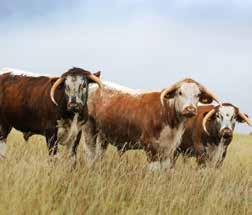
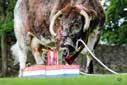
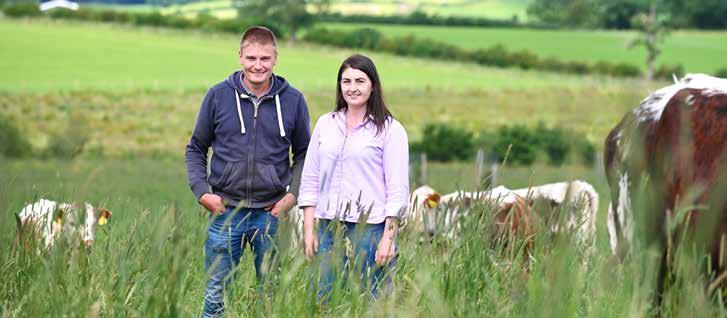
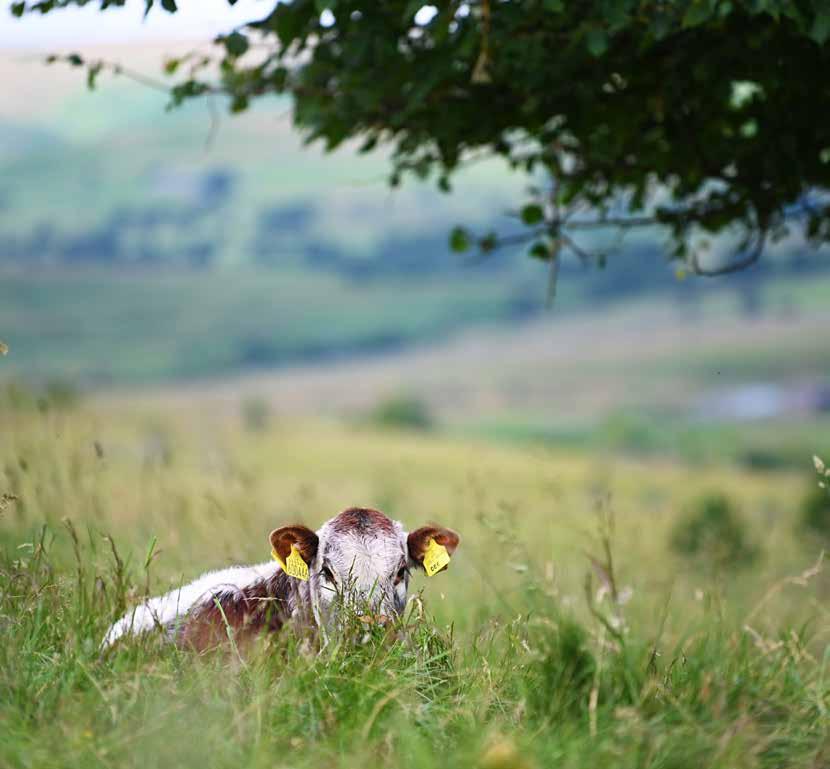
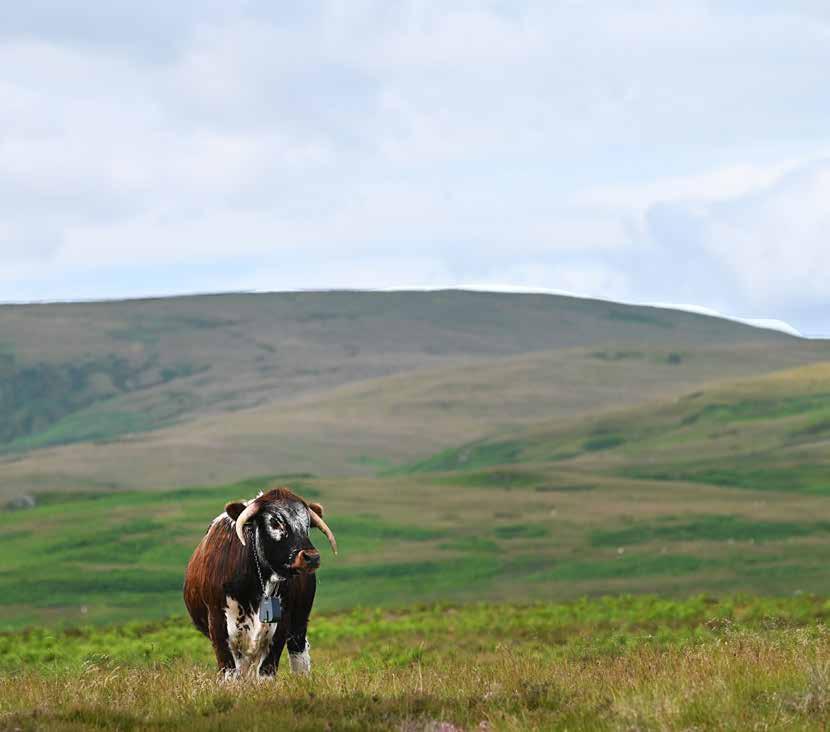
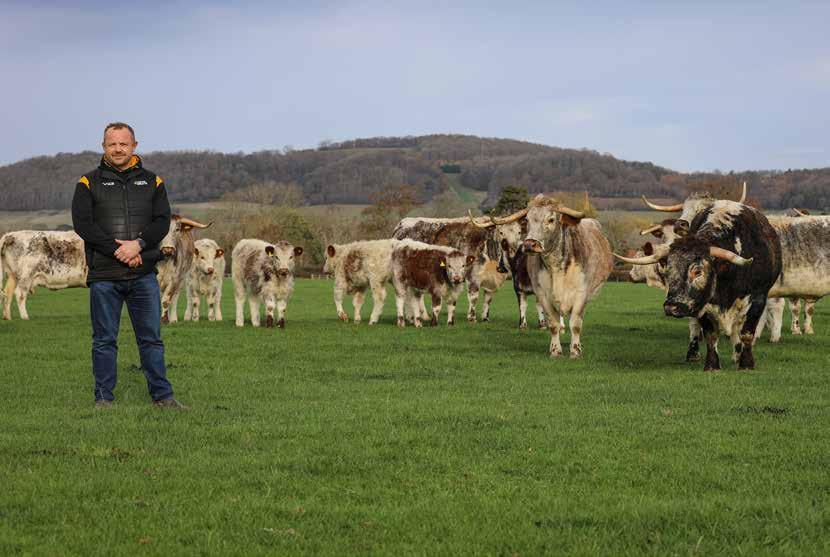
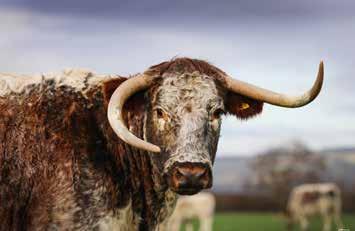
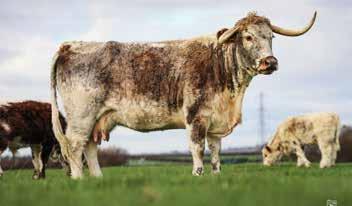
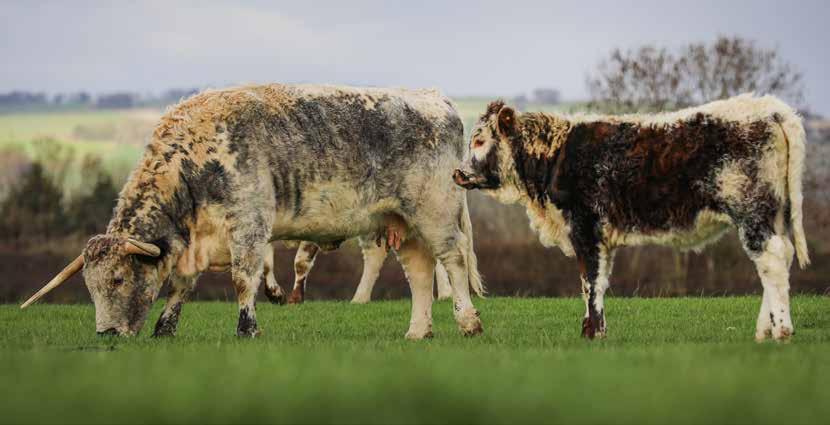
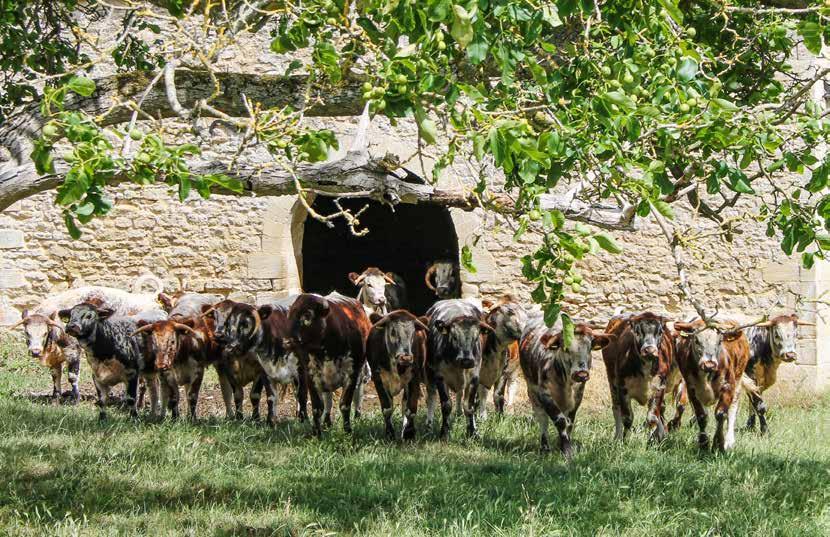
A RETURN TO THE LONGHORN BREED HAS BOOSTED BIODIVERSITY AT LOWTHER ESTATE
When it comes to restoring natural woodland habitats, the typical benefits include encouraging biodiversity, as well as an influx of wildlife
and for the team at Lowther
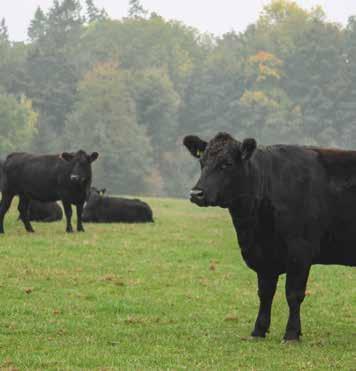
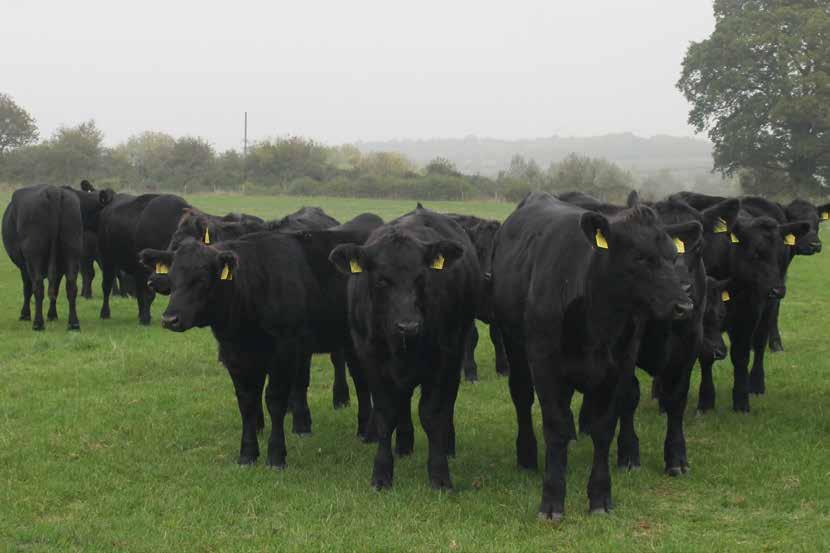
Castle on the outskirts of Penrith, there was no breed more suited to the job than Longhorn cattle.
In fact, Longhorns could be seen grazing on the estate in days gone by, but a focus on more intensive farming systems in the late 1970’s resulted in the dispersal of the herd and a new focus on sheep production as ewe numbers grew to 4500 Mule and Texel crosses, as well as Aberdeen-Angus cross cattle for fattening.
With a view of restoring natural grazing habitats across the estate, ewe numbers were halved in the 2010’s before the flock was fully dispersed in 2019 and the first Longhorn cattle arrived back on the estate to found the new Lowther Park herd.
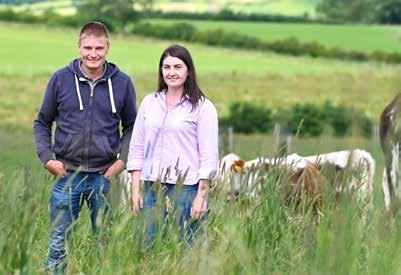
Now managed by Laura Mackey, who originally came to Lowther as farm secretary before taking on the farm manager roll in 2023, the herd has grown significantly over those six years with 95 females calving down in 2025, making the Lowther Park herd one the largest registered herds in the country.
In order to build numbers up to the current levels, the team at Lowther have invested in mixed age herds of cows, with a focus on selecting animals from high health status holdings, particularly those free from Johne’s Disease and Bovine Viral Diarrhoea.
In order to build numbers, the team have invested in mixed age herds of cows, with a focus on high health status
Females were bought from a number of herds as they became available, including Aberdeen, Barlings, Brittmors, Crake Valley, Ellwood, Garford, Harold, Leighton, St Osyth, Tanfield, Thoresby and Wheatlands.
“As an estate we made the move into woodland pasture management in quite a big way as it creates a more natural landscape rather than the bowling green pasture we had created for the sheep,” explains Laura, who is helped by Stephen Forrest, as well as herdsman Tom Hamilton, on behalf of owner, Jim Lowther, and CEO, David Bliss, who are both actively involved.
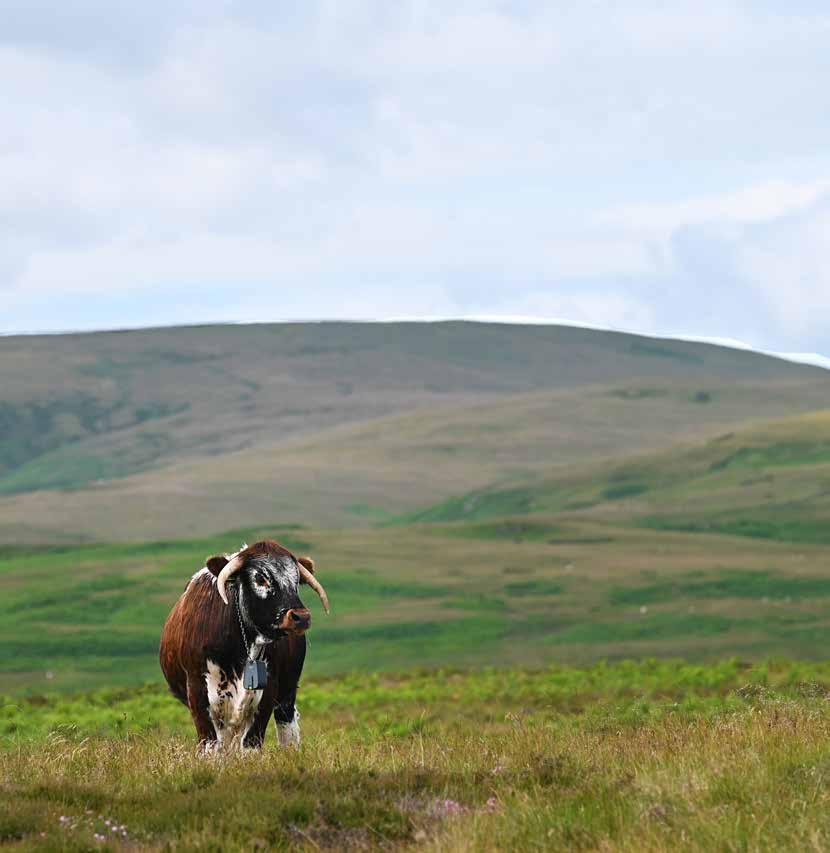
GPS cow collars enable us to run as one herd and move them easily around the estate.
“As for the Longhorns, we have quite a harsh, open environment here at Lowther and so even the Angus cattle have to come in during winter, but the Longhorns are able to stay out all year. They were the obvious choice really when we looked to bring a native breed and with them having been here in the 1970’s, it’s nice that they have returned,” says Laura.
The herd is run under the Lowther Park prefix since the Lowther herd was previously dispersed and, therefore, the team could not use the same name.
Cow numbers quickly rose to 50 breeding females and Laura initially thought they would remain at that number, but as estate land came back in hand, and more acreage became available and with Laura now managing some 4500 acres, some more purchases were made and virtually every heifer has been retained.
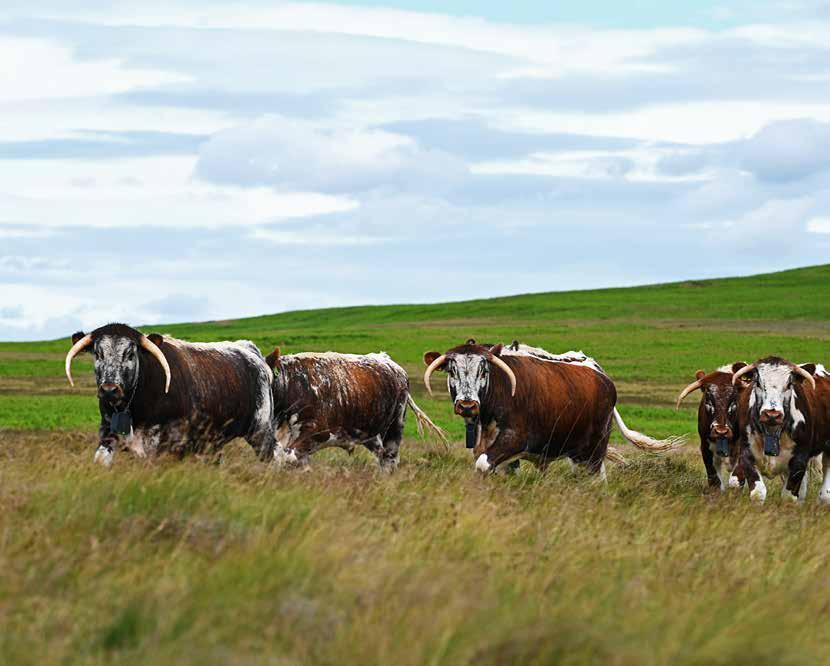
“Management wise we were running three groups of cows with three bulls, but this year we are running as one thanks to the GPS cow collars which enables us to move the herd round the estate as well as keep an eye on where they are at all times,” Laura points out.
This has resulted in up to 230 animals in the group at one time as the steer calves from the previous year are kept in the herd. Yearling heifers are kept separately in a group with older females or any not suitable for breeding and some graze the fell too as two-year-olds alongside similarly aged steers.
Running such a large group of cattle helps create a natural herd dynamic and Laura notes they do still tend to make their own little family groups within the herd. To avoid in-breeding every single female has been DNA profiled and calves are sire verified with DNA in order to keep their pedigree accurate and correct. While this comes at a cost – about £15 per animal – it not only means they can look for unrelated stock bulls, but also means the DNA profiles of the entire herd are on a database should any information be needed in the future.
With the majority of heifers retained for breeding in order to build up numbers, Laura is now more selective about what will join the herd in the future and any heifers deemed unsuitable for breeding will be fattened and sold to Dunbia abattoir.
“We were originally buying as many as we could and by securing whole herds it meant we truly did get the good, the bad and the ugly,” said Laura.
“Now we have the numbers we can afford to be a bit more selective with our retained females so we’re looking for cows that are easy calving and easy fleshed as they’re out all year so have got to be hardy.”
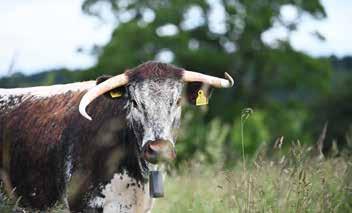
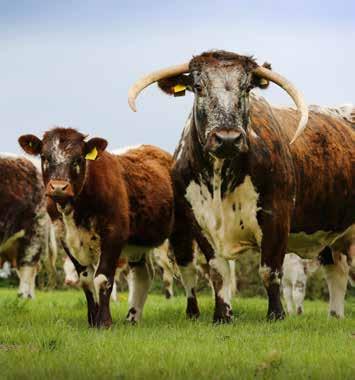
Although the herd is mixed in colour, Laura does prefer the darker sorts and likes it when a lighter cow produces a darker calf. “For management I prefer the bonnet horns as they go through our handling system easier, but you’ve got to watch for them growing into their faces.”
Bulls are carefully selected to click with the herd’s pedigrees and the first purchase, Riverlands Sauron, did just that, but had the added bonus of being exceptionally quiet, so much so he easily walked in to the trailer in the field.
Similarly another from the early days, Fishwick Phantom, did really well and was only just sold on at 11 years old. The majority of the home-bred females will go back to Sauron and Phantom.
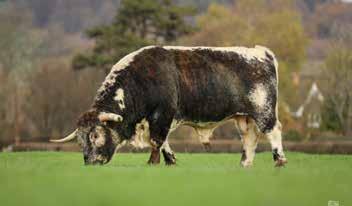
“We also tend to go for darker bulls and their horns must be even,” highlights Laura. “They’ve also got to be big framed, but with calving in mind need to have slimmer shoulders and they’ve got to be good on their feet as they have a lot of females and ground to cover.
“It can be hard to find an outcross, but I make good use of the Grassroots database and the CheckMate feature has been great. I get really into it and have an excel spreadsheet with all the possible crosses for each cow.”
Bulls have to be big framed, but with slim shoulders and good on their feet to be able to cover plenty of cows and ground.
Highlighting the need for cattle to be quiet and easily managed, Lowther Park sits in a TB1 area and so the whole herd – as well as the 10 water buffalo brought in to establish a wetland area by the river – is tested every six months. While it may seem like a handicap, it actually enables the team to cast a close eye over the herd twice a year, as well as pregnancy testing the breeding females.
A mixed sample of the herd is also blood tested for any deficiencies, with the decision taken this year to bolus the herd. It also allows for dung samples to be taken as Laura likes to operate a test and treat method for worming etc rather than blanket treatment.
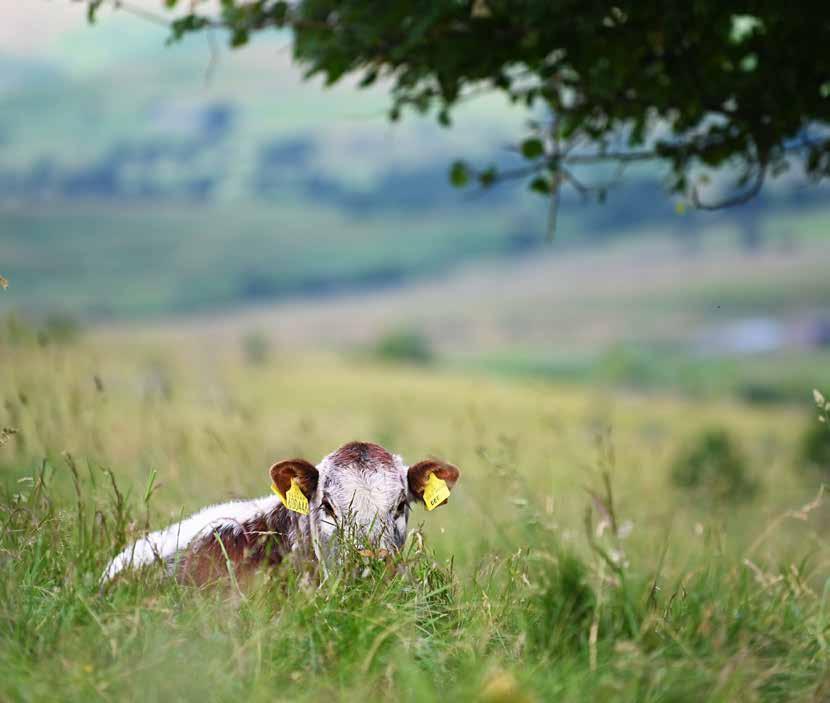
Calving typically takes place from March through to September. Calves are tagged within the first few days as the team try to do this twice a week and hair samples of every calf born are also taken at this stage.. All females are named and Laura tries to follow family themes.
Calves also have their navels dipped in iodine which Laura says is essential as the calves tend to spend a lot of time laying down in long grass. They also have samples taken for BVD testing.
Male calves are castrated at this time which means they can stay within the herd dynamic before some move to fell ground where they are typically finished and sold direct to Dunbia at 28 to 30 months of age.
“We always try to sell locally, but are always on the lookout for new leads. There’s currently no premium like the Aberdeen-Angus or Beef Shorthorns which is a real shame as Longhorn meat is fantastic,” said Laura, adding cattle typically grade R3 and O2, at around 320kg deadweight.
It’s not just the Longhorn herd that is utilised to help restore natural grazing habitats and biodiversity as the cattle work hand in hand with small herds of Konik and Fell ponies, as well as the Buffalo and six Tamworth pigs that work particularly well for woodland management.
“It has been amazing to see how much bird life and wildlife has returned to the estate in the relatively short while we’ve been managing it this way. We’ve had ecologists here compiling data, but we’ve seen for ourselves the increase and it was great to see our first pair of lapwings back,” points out Laura.
A return to a more natural grazing management system has been welcomed by the Lowther Estate and its wildlife and for the team there is no better breed suited to the job than the Longhorn.
IN THE HOT SEAT WITH YOUNG MEMBER JAMES LANGLANDS
Fourteen-year-old James Langlands of the newly established Kiddles herd in Dorset did the double this year by winning both the Frank Sutton young handlers award and the Paul Luckett Newcomers Award. James’s quiet determination and genuine passion for livestock shine through in everything he does. With a growing herd, a string of show successes, and ambitions that stretch beyond Dorset’s fields, he’s a fine example of the next generation keeping British agriculture thriving.
We spoke to James to find out how he got into showing and what makes him tick.
James, how old were you when you started showing cattle?
I started washing cattle at a show when I was 10 and helping prepare them, but I didn’t officially start showing cattle until the following year when I was 11.
Who introduced you to Longhorns?
David Phillips when he moved his herd of Longhorns to the farm in Piddletrenthide, where we lived in 2020. Before that, I hadn’t really heard of English Longhorns. I started helping on the farm and quickly saw why Dave was fond of them. They’re calm, striking in appearance and very versatile. They are great for breeding, meat, and conservation grazing, the perfect package really and I totally fell for them as a breed.
Do you show any other breeds?
I’ve helped a few other cattle owners at shows, but it’s mostly been Longhorns for me.
Do you have a favourite aspect of showing? Do you prefer halter training at home or the thrill of competition?
I like the thrill of show days, I enjoy preparing the animals and seeing them do well. Halter training the younger stock at home can be challenging at times, but it’s also really rewarding.
Do you have a favourite show?
The Royal Three Counties Show. It’s normally the start of the show season for us and we go every year. There is always a good turnout of cattle and winning prizes at the Royal Three Counties always feels like a great achievement.
When did you set up your own herd?
I started my herd at the end of 2024. I was given some money from the council due to missed education and I wanted to invest it in something for my future. I had a few ideas (like buying a tractor) but when Dave was looking to sell Etheridge Winterrose, the heifer I had been showing for him the previous year, I decided purchase her, and start of my own herd. Her calf Kiddles Zizzi was the first to carry the Kiddles name.
I later purchased two other yearling heifers from the Stoke herd and I hope to welcome some more healthy calves early next year.
What was your highlight of 2025?
There’s been quite a few! Showing my own cattle and seeing them place well has to be up there as showing is such a learning curve and you learn more about your cattle every time you show. Leading Holnest Isla to several breed championships and attending by first Longhorn AGM, where I won the Paul Luckett Newcomers Award and the Young Handlers Award were also memories that will stay close to me for many years.
What shows do you plan to enter in 2026?
As many as possible! I’m hoping to enter the Royal Three Counties, Gillingham and Shaftesbury, Melplash, Newbury, Frome, and our local Dorset County Show.
Do you have any advice for anyone wanting to try cattle showing?
Just give it a go as showing is great fun. You need to know facts about the animals you are showing such as their name, age and breeding. It’s good to practice leading them too so they are familiar with it and always make sure they look great before they enter the show ring.
What are your interests outside of Longhorns?
I’m a keen agricultural photographer. I take action shots and drone footage and create images and videos for multiple social media platforms. I also play rugby for Sherborne Rugby Club and enjoy mountain biking.
Would you like a career in agriculture?
Yes, my grandfather was a calf rearer and I’ve grown up on a farm, so it’s always been of interest to me. Once I get my tractor licence, I’d like to work for a contractor and travel to New Zealand to work. I also want to keep growing my herd and showing them.
LONGHORN BEEF INSPIRES THE BUTCHERY BUSINESS FOR MARTINS MEATS
Martin and Emma Gilder farm 230 acres in the Gloucestershire countryside where their Longhorn herd was established some 30 years ago when Martin and his father Gordon bought some Longhorn cattle from nearby farms.
“The cattle were bought to be good commercial cattle with traits such as their docility and ease of management being determining factors to their selection, alongside their natural beauty of course”, Martin explains.
They have since managed to build up to a herd of some 100 Longhorns and Longhorn crosses with 20 Belted Galloways also present on farm. However, it was in 2003 when Martin and Emma’s butchery business, Martins Meats, was established that a real drive to breeding the Longhorns for their meats was ignited. “We were looking to try and offer something different, something special to consumers and through a trial home slaughter of a Longhorn beast we knew after that eating experience that the Longhorns were the future”, Martin explains.
The eating experience proved that the Longhorns were the future with something special for consumers.
The herd is run on a grass-based system where Martin tries to manage cattle outdoors for as long as possible with only the ground conditions being the deciding factor as to when to house. “The cattle do great outdoors, they’re always content and look comfortable grazing the ground whatever the weather”, Martin adds. In a typical year the cattle will stay outdoors until December before being housed and they’ll be back out to pasture by March with only silage or hay being fed while indoors.
The Longhorn burger has reduced the pressure of finishing animals by age targets eliminating the need to feed any grain.
Grassland is managed as permanent pasture which is what the Longhorn breed is naturally suited to, feels Martin. “We like to see the cattle thrive, but not forced to grow. The cattle are on grain-free diets to allow them to finish naturally at about 30-36 months of age. Cattle are selected by their finish and not age or weights and we aim for a carcass finish of 4H”, he explains.
Inputs to the ground are kept to a minimum with the exception of manure as a by product of the family’s transport business, Gilders Transport Ltd, where they have a livestock haulage business with the washouts from the lorries offering the little boost needed to the grassland.
The cutting plant was OTM approved back in 2010, long before the recent change in rules, which has always allowed Martin the freedom to allow the beast to finish naturally and correctly. The plant has the ability to store 320 quarters of beef where the Longhorn beef is dry aged in Himalayan pink rock salt chambers.
“The carcasses need to be a 4H to get the best out of the dry aging process where the fat layer helps seal the meat so that it can be stored safely for anywhere from 55-100 days”, Martin highlights.
Providing the highest quality at an affordable price is our goal.
The Longhorn beef has won numerous awards for Martins Meats, including a golden fork winner for the Great Taste Awards in 2013 with the 28-day dry aged Longhorn Cote du Boeuf and also winner of the World’s Best grass-fed steak in 2017 with a Longhorn Ribeye that had been dry aged for more than 55 days. The business has won more than 100 awards since 2009 and the butchery shop is highly decorated with the awards won with not only the beef but also lamb and pork.
Initially the business was set up to sell the meat wholesale, but with a desire to allow anyone to buy the meat easily, Martin and Emma opened up the butchery counter at the rear of the plant to allow the walk-in customers to access what they had to offer alongside the online ordering and delivery system on their website.
The development of the Longhorn burger has been monumental to the business, providing Martin with an outlet for beef from his older cattle. “This has reduced the pressure of finishing any of the younger cattle before they’re ready and eliminating the need to introduce any grain to the farming system to finish animals by any age targets,” he adds.
A large number of pubs and restaurants are supplied all across the Cotswolds, the South West and further afield where Martin offers three ranges; the premium Longhorn, the native range and the West Country range allowing him to suit everyone’s needs. Many of the Country’s finest chefs buy from Martins Meats believing in their ethos to deliver the best-tasting, locally sourced meats time and time again.
Any livestock sourced to top up their own stock numbers are purchased locally in Gloucestershire and the Cotswolds. The number of suppliers are also kept to a minimum to allow Martin greater interaction with his suppliers. “We take great pride in offering premium products, so it’s very important to us to know where the animals come from and how they are reared to make sure they fit in with what we want to sell”, Martin explains.
“We like to buy locally and to know what we are buying, quite often buying on the hoof in fields so that we can make sure that what comes through the system is what we want to be cutting and packing”, he adds.
Adding value to the complete animal, the desirable Longhorn skins are exported to Italy to be processed into hides. “The colour and patterns on the hides are amazing and where we allow the animals to mature well then the hides have a deep skin and are of a superior quality”, Martin explains.
Deep within Martin there’s a desire to expand the herd further to be one of the largest in the country in future, but he constantly faces the demand for his beef being his biggest obstacle where he says that people simply can’t get enough of it.
We take great pride in offering premium products, so it’s very important to know where the animal has come from.
PRESIDENT’S PROFILE
By Panny Laing
I think it must have been in the early 1980’s when I started asking my husband, Alasdair and his father, Sandy, if we could have a small herd of a pedigree beef cattle – ideally a rare breed - to run alongside the well-established suckler herd. They humoured my request with the proviso that the breed must bring something useful to the commercial herd.
The first port of call was the RBST who suggested we should look at the Shetland cattle on the Department of Agriculture farm on the south side of Loch Ness. They also suggested Longhorns and suggested a conversation with Peter Close at Fishwick. Having seen Peter’s cattle reckoned that these were the cattle for Logie.
We purchased two Fishwick cows and calves in Perth mart and Bemborough Orchid (Joe Henson’s first Longhorn heifer calf), Honeywood Bettina and Linton Jane at the RBST sale at Stoneleigh and Peter kindly lent us Rousham Goliath to get us going.
Once we had our own bull, we used him on the commercial herd and produced some useful commercial heifers, particularly with Simmental cross cows. For many years you could spot cows with the distinctive white strip down the back and the white tip to the tail. The following year we bought Harford Delilah with a bull calf at foot who went on to win the breed and interbreed RBST championship in 1988. We discovered why he was such a well grown calf when we got him home – he tried to feed off all the other cows as well as his own mother!
Logie Campion was reserve breed champion in 1988 and was sold to a farmer on Orkney – a long way from Logie to Orkney via Warwickshire! We had some subsequent showing success at the Royal and at local shows. With a change in farming policy at Logie the suckler herd was dispersed and the main farm let to a tenant, but the Longhorns were retained on the home farm and the numbers have stayed at just shy of 20 cows ever since.
We now finish all steers – and buy in more - for our farm shop, averaging 13 or 14 through the shop each year, culminating in a loyal following. We are fortunate that there are a couple of abattoirs within 40 miles and a local butcher who has capacity for private cutting.
Apart from buying in bulls and steers to finish for the shop, we have operated a closed herd for the last 40 years. With careful selection of bulls much needed improvements have certainly been made resulting in better udders and feet. The cows are all individual characters with some marked family traits and good memories – I love seeing the friendship groups in the herd and how often a mother and daughter will be standing together despite having been apart for over a year.
The herd winters out on silage with cows coming in for a few days when they calve. Heifer calves come inside for a few weeks for basic halter training after they are weaned. It always impresses me that they never forget what they have learned, making it easier to tie a cow later in her life.
Since 2020 the fields have been divided with temporary electric fences from spring to autumn with the cows moving every few days. Using a regenerative system we have not only gained a few extra weeks of grazing each end of the year, but also find the grass is proving to be more resilient to the vagaries of the weather. Another advantage is the respect the cows have for the electric fence – we can put up a temporary wire to make moving them straight forward. We are looking forward to having more acres back in hand in 2027 which will allow us to be more self-sufficient with improved grass for both grazing and silage and to increase in the herd numbers.
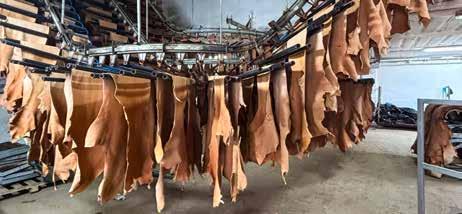
A TANNERY DREAM COMES TO LIFE FOR ONE LONGHORN BREEDER
By James Allen, Great Cotmarsh
Farm
My wife, Katie and I spent 10 years grazing for other landowners across The Cotswolds before we were fortunate enough to buy Great Cotmarsh Farm, a 170-acre farm at the foot of the North Wessex Downs, at the end of 2022.
Over that time Katie built up a knitwear business starting from learning to sew, to becoming an award-winning designer and maker with her collection being on sale in Liberty London as part of a collaboration with the Crafts Council.
The farm came with some 15 barns of various sizes and having never put an animal in a barn we weren’t quite sure what to do with them. Not long after we bought the farm, we were had a rare night out and over a beer I said I fancied turning a barn into a traditional tannery making leather from cattle hides to return to farmers. In typical fashion the response I got was “go on then”.
I spent the next couple of months lost in the depths of the internet researching when I stumbled across a tanner called Matt Richards (Traditional Tanners), in the US. Matt has a micro-tannery in Oregon and has been tanning hides for decades.
Following the broad adoption of Zoom during COVID, Matt decided to run an online Zoom tanning course and I signed up to the first one. The course included everything I needed to make a 30cm x 30cm piece of leather, he even send out a piece of deer skin to tan (I swapped in one of our sheepskins). Matt has an incredible breadth and depth of knowledge and he was happy to share it.
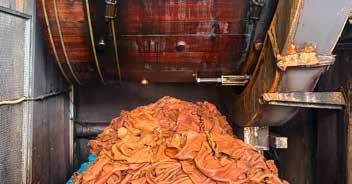
Tanning leather is a multi-step process with the most importnant being the actual tanning of the skin/hide. In traditional tanning this preservation step is done using extracts from tree barks and other natural materials, but in the last 100 years that has mostly been replaced by Chrome tanning. Halfway through Matt’s course I put the prepared skin into tannins for the first time and it quickly started to take on the look and texture of leather and then over the next couple of weeks it becomes the leather that we are more familiar with.
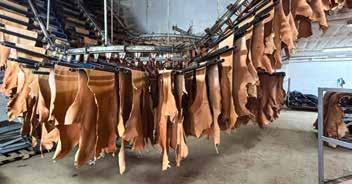
Walking away with a piece of leather after a month got me hooked and things started to evolve rapidly. The UK used to lead the world in producing leather and built a reputation for quality British shoes and saddlery. Since Chrome tanning became the standard and tanneries became bigger and more efficient, the UK’s standing in the leather industry quickly declined until only a few tanneries existed in the UK and traditional oak bark tanning is now classified as critically endangered on the Heritage Crafts red list.
In 2023 I applied for a Churchill Fellowship travel scholarship to support setting up a traditional veg tannery. The Fellowship gives out travel scholarships annually for people to gain knowledge abroad for UK use. The subjects that people research are humbling, so my “Developing a micro-tannery model to vegetable tan British cattle hides” seemed a bit out of place, but rather surprisingly I was awarded the scholarship.
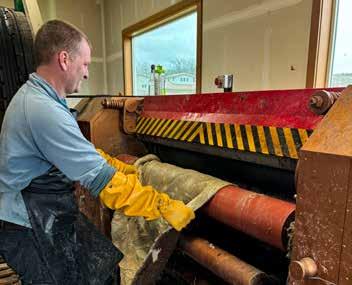
So, in 2024 I spent five weeks travelling to four different countries to visit 12 tanneries. My first trip was to spend three weeks as an intern at Matt’s tannery in the US. Matt was incredibly generous with his time and knowledge and I was soon running 10 cattle hides through his large fleshing machine and by the end of my time there we had produced my first leather from cattle hides. It was so helpful to see what our tannery might look like and the work that was involved to run a micro-tannery. Also, a life friend was made.
In September I visited the international leather fair in Milan. I had never thought about the scale of leather as a material in the world or thought about the technology and money involved in the footwear industry. The main purpose of my visit was to speak to traditional veg tanneries and line up visits for later in the year.
The last two trips were almost back-to-back in November where I spent a week visiting traditional tanneries in Switzerland and Germany. Then, fittingly, I spent my final week of travels in the tannery district of Italy visiting two tanneries a day. The knowledge I brought back from my travels cannot be understated. The three weeks with Matt took my knowledge of leather tanning from basic to the level where I am confident to start a tannery. Visiting so many different tanneries gave me insight into how to build my own, what things to think about, what mistakes to avoid and how to design one that would work for me.
In 2023 the UK leather industry generously gave me a grant to fund probably the best veg tanning expert in the country to be a mentor over three years. Barry Knight started on the tannery floor in his teens and now retired travels the world advising tanneries. With his involvement I now have the confidence to produce high quality leather.
The tannery project has certainly evolved and with Katie’s passion for wool and natural fibres and our joint passion for education about fibre we have started to have schools, colleges and universities visit the farm. Katie put in an 800-plant natural botanical dye garden last year and we have aspirations of building a small batch natural dye kitchen for farmers/makers to dye up to 30kg of wool at a time.
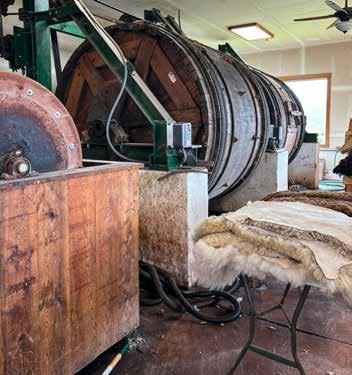
The tannery will not only be a key part in the education about the importance of natural fibre to the next generation, but it is also going to be a hub for other micro-tanneries or would be tanners to see how it is done, gain some experience and share equipment (some equipment costs more than £50,000 and is only used for a few hours a month at the scale I am tanning at).
The big news at the end of 2024 was that we were successful in applying for a FiPL grant to build the tannery building and a classroom on the farm. This was a pivotal moment as it meant the tannery has gone from an idea to a reality. Building work started in January 2025 and was completed this summer. I have some of the kit that is required to get the tannery up and running, but still have more equipment to find money for. I’m hoping the expensive machinery will be funded through a Heritage Lottery grant, but I’m also running a ‘Sponsor a tank’ fundraising drive to get the equipment I need to start tanning in the meantime.
The tannery is focused on producing high quality leather, although there is a lot of interest in getting hair-on-hides produced in the UK which isn’t currently possible. The problem is the machinery that is required to do full skins is bigger and more expensive. One of the key objectives of the tannery is to support the micro tannery industry, so to that end we are hosting the first UK Micro Tannery conference in June 2026 to help build a new generation of tanners; one of which hopefully will do hair-on-hides.
It has been an incredible journey that started with a beer and a throw away comment, but we are not the sort of people who don’t chase our dreams.
To learn more about my Churchill Fellowship travels read my blog on the Cotmarsh Tannery website and to keep current with the progress follow the tannery on social media @cotmarshtannery or subscribe to our newsletter
www.cotmarshtannery.co.uk/newsletter-signup
MIDLAND BREEDERS’ GROUP SUMMER
VISIT TO THE ROUSHAM HERD
By Jane Mycock, club secretary
In June 2025 the Midland Longhorn Breeder’s Group visited the Rousham herd of Longhorn cattle in Oxfordshire. Society members from outside the region were also invited and it was wonderful to see such a diverse crowd of Longhorn enthusiasts.
The herd tour was kindly hosted by the CottrellDormer family and guests were welcomed to the estate by farm managers Anne and Paul.
Rousham house has been in continuous ownership by the Dormer family since it was built in 1635. The estate represents the first phase of English landscape design from the pioneering architect William Kent and has been delighting visitors since the 18th century. The 1800-acre estate is comprised of 22 acres of gardens plus parkland, arable and woodland.
The Rousham herd of Longhorns is one of the oldest herds still in existence and the CottrellDormer family have been passionate about the breed for generations. The herd numbers about 40 pedigree Longhorn cows and a similar number of crossbred and Aberdeen-Angus cows.
Longhorns graze the parkland surrounding the manor house and gardens and guests toured the parkland on tractor and trailer. Everybody was impressed by the quality of cattle with the herd showing characteristics of large frames, milky udders, great feet and locomotion, all rearing their calves fantastically.
Both the Longhorn and commercial herds are spring calving in March through to May, with heifers served to calve at three years old. Longhorns are generally outwintered, dependant on the weather, whereas the crossbred cattle are wintered inside. The herd is closed except for a very occasional bought in bull.
The majority of male calves are steered and disbudded, with heifer calves retaining their horns. Calves aren’t normally creep fed due to TB risk but were this year due to the dry weather and consequently lack of grass growth. Cows are supplemented with high magnesium molasses licks to prevent staggers on raised wildlife-resistant stands. Youngstock are wintered inside, fed on silage and homegrown rolled barley. Longhorn steers are finished on farm at 30 months old and are sold deadweight through a collection centre at Thrapston market.
Members and friends alike ended the glorious summer’s day with a picnic in the fabulous Rousham gardens, described by Monty Don as his most favourite garden of all and one of the truly great gardens of the world. The Midland Club extend their thanks and gratitude to the CottrellDormers and to Paul and Anne for making the day one to remember.
STOKE HERD WELCOMED THE SUMMER VISIT
In the 1930’s environmentalist Robert Wales established the Stoke herd of pedigree Longhorns to complement the species rich chalk downland of Parsonage Down on the edge of the Salisbury Plains in Wiltshire, making the herd is the oldest registering herd in the breed (herd number 21).
In 1979 Robert bequeathed the Stoke herd and Cherry Lodge Farm to the Nature Conservancy Council which became Natural England. Over the years different farm managers had varying opinions on the type of Longhorn cattle farmed at Cherry Lodge, but current herd manager Elise Sutton feels that the smaller framed, stockier types are better suited for the rougher ground.
Currently some 50 Longhorns run on the 700-acre farm which ranges from protected land to paddocks. The running of the breed on this difficult terrain is a real testament to the breed. In some places it is so steep you wouldn’t contemplate taking a vehicle on it, Elise explains. “These are working cattle, they are here to do conservation grazing which is a hugely important role; without them we would lose many of our incredible species, but also importantly, the cattle thrive in this environment.”
The farm is fully organic and 100% pasture fed. The herd is a member of the Premium Cattle Health Scheme and tests for BVD, Lepto, Johne’s, Neospora and IBR. Other than the purchase of stock bulls, a closed herd is operated to minimise disease risk.
Cows are outwintered and calve between March and May with the current team of stock bulls comprising of two homebred bulls, Stoke Valiant and Stoke Wasabi and bought in bull Aberdeen Roy. Beef boxes are produced on a regular basis to supply an enthusiastic and loyal customer base. The herd recently won the Gold award in the Taste of the West Awards for their Longhorn brisket and sirloin steak with the brisket going on to win the beef and poultry championship.
On an unseasonally cold July day Elise took visitors on the farm for the summer visit on a tractor and trailer tour of the herd, seeing groups of cows and calves all coping really well with the dry conditions that were being experienced in the summer of 2025.
The chalk downland was in flower and the variety of birds and insects we saw and heard were testament to the protected landscape. Elise also explained how she has to be thinking ahead to plan where cattle graze and for how long to ensure the herd complies with the tight rules in place.
After an amazing lunch of Longhorn brisket we then went on to see the herbal leys and discuss how Elise and her team manage the bale grazing system over the winter. Everyone went away with plenty to think about and perhaps some tips to implement in their own herd and grazing management techniques.
The Society would like to thank Elise, Tom Stinton and Elise’s parents for looking after us all so well on the day, it was certainly a visit to tremember.
FRIENDS REMEMBERED
PAT QUINN
The Society was greatly saddened to learn of the passing of Pat Quinn of the Harford herd in October 2025. Pat was known to many members as a complete force of nature and she lived an amazingly full and varied life.
Pat was the daughter of Sir William Lyons, the founder of Jaguar cars and she and her first husband Ian Appleyard had a successful career rallying Jaguars in the 1960’s.
The Harford herd of Longhorns was founded in 1976 after a chance school gates conversation with Joe Henson of Cotswold Farm Park - Adam Henson and Pat’s son Michael were at the same school. Pat had bought Lower Harford Farm, which sits in a Cotswold valley, in 1974 to allow her children to have ponies and enjoy life in the countryside.
The farm was brought back in hand after the purchase of Watling Penelope, Watling Lucy, Toddington Ann, Toddington Bee, Essex Ernestine and Essex Flow at the Essex dispersal sale. Further land purchases increased the holding to 155 acres.
Pat immediately understood that there were some substantial gaps in her animal husbandry knowledge and set about taking training courses, learning from her vets, neighbours and of course the cows themselves. A few years in and homebred females were starting to come through and make their mark in the herd. On recommendation from Roger Carter of the Leebarn herd, Harford Diana was halter trained and taken to the Royal Show where she stood second in her class, an accolade never to be forgotten. Pat’s showing career continued and the 1990’s recorded highlights such as female champion at the Royal Show with Harford Imogen in 1994, breed champion in 1995 with Halloughton Soloman and breed champion in 1996 with the heifer Harford Twinkle. The Harford herd’s last year in the showring was 2003. In the mid 2000’s the Harford herd was badly affected by TB which Pat found profoundly upsetting and she became an active researcher and campaigner about raising the profile
of bovine TB to the general public, public officeholders, industry leaders and politicians and even had a short film commissioned which shows the consequences of having positive TB reactors on the farm and the devastating effect of years of pedigree breeding.
Pat was Society president in 2004-2005 and instigated the Presidents’ Award which is presented at the discretion of the president at the end of their term of office to the member they feel has made an outstanding contribution to the breed.
If you haven’t already seen it in the news section of the magazine, Pat’s family have commissioned a plaque in honour of Pat Quinn.
See more on page 6.
PETER GUEST
The Society and its members will be deeply saddened to hear of the passing of Peter Guest on Tuesday 26 August. He had been ill for a while, but we were delighted that he was able to come along to the Midland Group visit to the Rousham herd in June.
Peter set up the Colaba herd (no 97) in August 1978 with the purchase of Stoke Cathie with a heifer calf at foot in the form of Leebarn Sarah bred by Roger Carter. The herd grew from these humble beginnings and Colaba became one of the best known prefixes in the herd, particularly with the bull Colaba Krypton who was available via AI and proved to be a hugely popular sire.
Peter was an incredible advocate and supporter of the breed in so many ways. He was the ‘go to’ man for so many people new to the breed and always offered help, support and advice in his no-nonsense, but compassionate manner. He set many a new member up with their foundation cattle, represented the Society at shows and
events and single handedly ran the Midland Longhorn Breeders’ group for many years, organising herd visits and herd competitions that covered a huge swathe of the country from Shropshire down to Cornwall.
Peter also served for many years as a Society Trustee, bringing his experience and pragmatism to the table and was a much-valued contributor to many a discussion and decision. In 2007 Peter received the Presidents’ Award from Roger Carter.
After the Royal Show finished in 2009, Peter presented the Colaba trophy to the Society for the best Team of Three at the National Show so his herd’s name and legacy will continue to live on each year.
Peter’s work as a MAFF, then DEFRA inspector brought him into contact with the wider farming community and he always knew someone who could do something!
In recent years Peter’s health issues didn’t hold him back and he continued to come to Society events when he could, more recently with friends and neighbours who made sure he kept in touch with everything to do with the Longhorns. He will be missed and remembered by many.
2026 AGM HEADS TO DORSET
Members attending the 2026 AGM will be heading to Dorset to view Dave and Carla Phillips’ Etheridge herd and Sid and Anne Hollier’s Long Ash herd of Speckle Parks.
The Phillips family started their Etheridge herd in 2013 with foundation stock coming from Sid and Anne Hollier at the Long Ash herd. Until recently herd numbers were restricted by the amount of land available, but with the family taking on grazing agreements with Dorset Wildlife Trust and some private landowners they now have around 80 head and are looking to increase the herd further.
The herd is at the centre of a low input, high impact system that places biodiversity, soil health and animal welfare at its core. The cattle are used to manage challenging sites such as chalk grasslands, heathland, fen and rough pasture and the entire farm is currently under organic conversion
Cows outwinter with Dave and Carla taking advantage of the chalky, free draining soils. Buffer feeding, when required, is done with ring feeders in a Dutch barn to avoid poaching and the cattle can come and go as they please. Youngstock are housed on good quality forage.
A recent addition for the family to manage is a small herd of Konik ponies which are also used to manage rough grazing.
A number of animals are finished each year for local boxed beef sales via local community Facebook groups. A few good bull calves are kept entire each year and are disbudded and then registered when they reach 12-18 months old. Dave had a ready market for them, selling to dairy herds who appreciate the breed’s easy calving attributes.
Dave and Carla have had great success in the show-ring and this year took the senior heifer of the year award with Holnest Isla, bought as a calf at foot when Dave bought the Holnest herd from Mark and Jenny Barden in 2023.
Sid Hollier is well known to Society members for his Long Ash herd of Longhorns. Having seen Longhorns at the RBST show and sale at Stoneleigh, Sid bought his first cattle from Roger Carter’s Leebarn herd in 1985. Over the years Sid had much success in the showring and his bull Long Ash Lancelot stood at stud and was available via AI for a number of years.
In 2009 Sid set up a herd of Speckle Park cattle. Speckle Parks were created in Canada in the 1960’s by blending Shorthorn, Angus and White Park genetics and they have gained a considerable following in the UK. Sid has had numerous trips to Canada to source genetics and has been instrumental in bringing semen and embryos into the country.
The Longhorn herd was gradually reduced and now the farm is completely turned over to the Long Ash herd of Speckle Parks.
LOGIE AND BIELDSIDE HERDS TO HOST 2026 SUMMER VISIT
The Society’s summer visit in 2026 takes place on the 19-20 September and members will be visiting current Society president Panny and her husband’s Alasdair Laing’s Logie herd and with an added trip to Beverlie Welo’s Bieldside herd.
The Logie herd was established in 1982 with foundation purchases from the Bemborough, Fishwick, Harford and Honeywood herds. Over the years a number of stockbulls have been used, more recently Blackbrook Sting, Fishwick O So Long, Fishwick Rendezvous, Fishwick Rest and Be Thankful and Longbridge Valiant.
The herd is outwintered on silage and some extra concentrates in the run up to calving, while weaned youngstock graze on permanent pasture away from the main farm nearer to the coast. All male calves are steered and then they are finished on hay and a mixture of dark grains, beet nuts, wheat and barley nuts and are usually killed aged 20 -25 months, achieving a dead weight carcass of 250 – 300kg.
The meat is sold in the farm shop at The Steading, one of the Laing family’s other enterprises. Having gone out of milk production in the 1980’s the range of farm buildings were obsolete for traditional agricultural uses. A grant from the Highlands and Islands Development Council enabled the buildings to be restored and units are leased out to local businesses and a thriving visitor centre and café have now been running for over 30 years.
The estate runs down to the River Findhorn which provides superb fishing opportunities and the estate gardens are also open to view. A number of walks allow visitors to enjoy the estate. In recent years Panny and Alasdair’s son Alec set up Logie Timber, a sawmill and timber processing business and shop.
Alec and his wife Jo now manage the estate and live in Logie House, with Panny and Alasdair living nearby but still involved in the running of all the enterprises.
In 2012 Beverlie Welo bought a rather derelict Hillhead Farm near Aberdeen and spent a couple of years resurrecting it as a working farm together with Phil Killingback, (now the farm manager) and a team of contractors.
Bieldside Farm extends to some 135 acres and Beverlie quickly decided to start breeding Highland cattle for beef. Starting in 2014 with just four animals and there is now a fold of 32 cattle. Stockman Dave Killingback started in late 2014 and they dabbled with Belted Galloways for a few years, but they didn’t suit the grassfed environment wasn’t for them, so the herd was dispersed and in 2016 the collective decision was made to introduce Longhorns to Bieldside.
The first five foundation cows came from the Aberdeen herd and then Bev bought a few more from the same herd, but from a different bloodline. Aberdeen Quartz was bought as a calf at foot and he became the Bieldside herd’s stock bull and when the bloodlines were coming back on themselves Bev bought Gentons Umbro in 2022, having sold Quartz. Longbridge Valiant is the current stockbull.
The prize-winning Longhorn herd now stands at 36 head and are managed on a grass fed system, producing their own silage, haylage and hay. The best heifers are retained and the rest finished onsite. The better bull calves are retained, registered and sold to other Longhorn members and beef is sold from the farm within the framework of the QMS.
Name:
Address:
Telephone No:
Email Address:
MEMBERSHIP APPLICATION
(please use block capitals throughout)
DEFRA Herd Number (6 digit eartag number) UK
I/we wish to register the Herd Name:
Post Code:
Mobile No
(The herd name is the prefix name given to all pedigree Longhorn calves born on your farm)
✓ I/We wish to become a member/s of the Longhorn Cattle Society in the category
✓ Joining Fee (all categories, once only)
Corporate Life (25 years)
Life Membership
Full Membership (for members wishing to register cattle)
✓ New members who join after 1st October will be fully paid up until 31st December in the following year.
I enclose a cheque (made payable to the Longhorn Cattle Society) for the relevant membership and joining fee
I have paid the relevant membership and joining fee by BACS transfer to:
BANK: HSBC A/C NAME: The Longhorn Cattle Society SORT CODE: 40-27-06 A/C NO. 01090534
I agree to set up a Direct Debit and request a Direct Debit mandate
Membership information held on the Society database - consent
I/we understand that the information provided is held in the Society database, that it will be used to create the Herdbook, pedigree certificates, show catalogues, sale catalogues and to communicate by post, email and bulk mail. It may also be shared with other Society members or third parties with similar interests. The Society’s privacy policy is available on the website or on request.
I we agree to abide by the Society Rules and Regulations so long as I/we remain a member of the Society Signed Date
Follow on Facebook, Twitter and Instagram
SOCIETY EVENTS 2026
18 April
Society Spring Show & Sale, McCartneys, The Heath Meadow, Worcester, WR4 0SQ
The chance to secure fresh bloodlines for your herd.
12-14 June
Society National Show
Royal Three Counties Show, Malvern, Worcestershire, WR13 6NW
The Society’s flagship showing event, see the best of the best in the showring.
Panny Laing, the Society President for 2025 and 2026 has invited the Society to visit the Logie herd in Forres, Morayshire. We will also be visiting Bev Welo’s Bieldside herd in Aberdeenshire. A fabulous chance to have a long weekend in Scotland.
September
Online timed sale
The opportunity to market and purchase quality Longhorn cattle from home.
17-18 October
AGM weekend – Dorset
The perfect excuse for a weekend away. The chance to relax, meet up with other members, have your say at the AGM and visit some interesting herds.