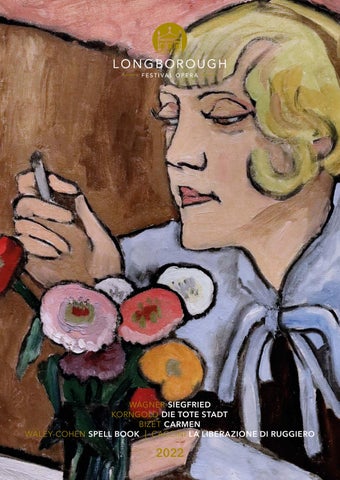
DIESIEGFRIEDTOTESTADTCARMENLALIBERAZIONE DI RUGGIEROSPELL BOOK KORNGOLDWAGNERBIZETCACCINIWALEY-COHEN | 2022
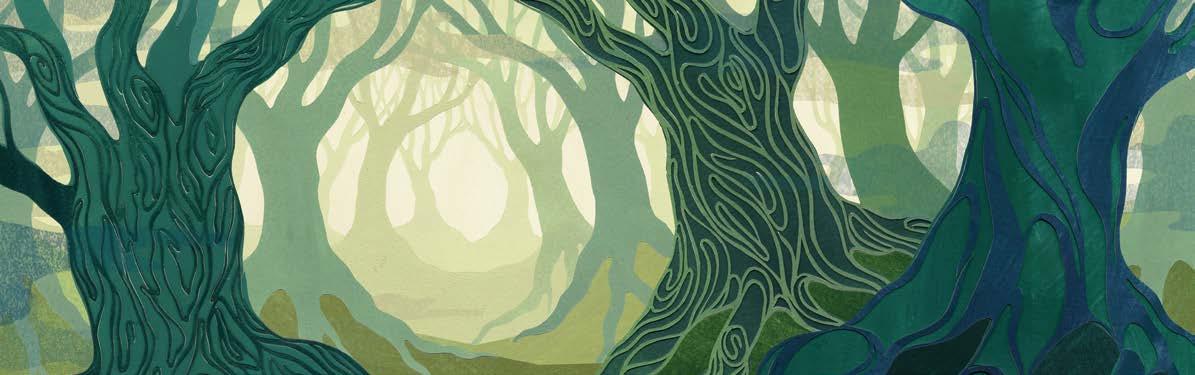
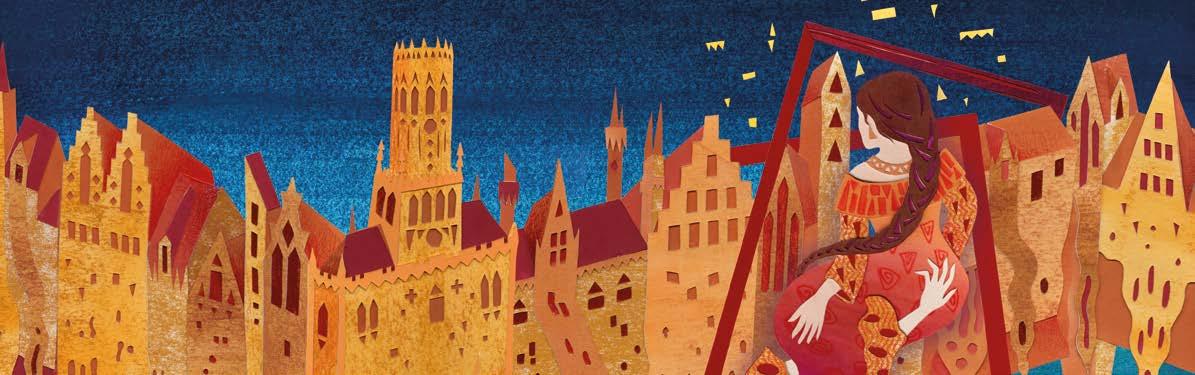
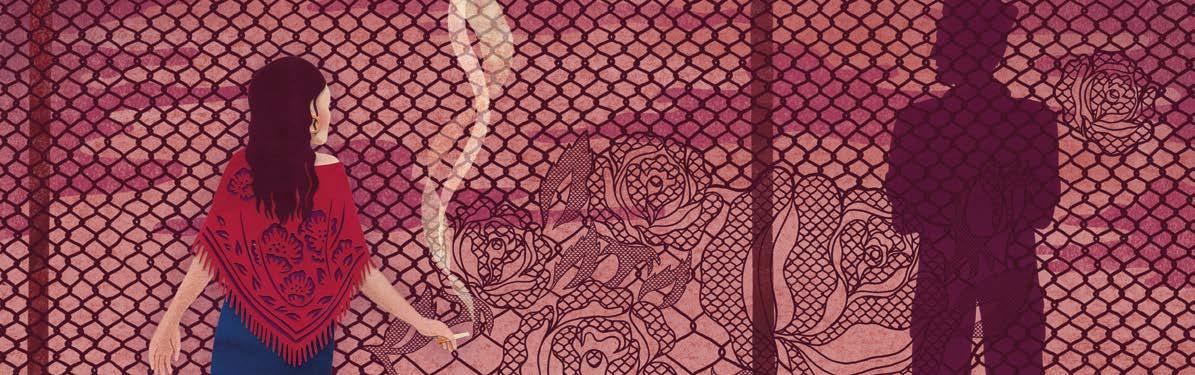
2022 opera illustrations by Amber Cooper-Davies
Amber Cooper-Davies is an illustrator and animator based in London. Her work is characterised by a love of physical materials, mixing colour and texture with intricate cutting and composition. Amber creates animation for clients across theatre, opera, social campaigns and arts organisations, and illustrates for children’s and adults’ publishing and editorial. ambercooperdavies.com


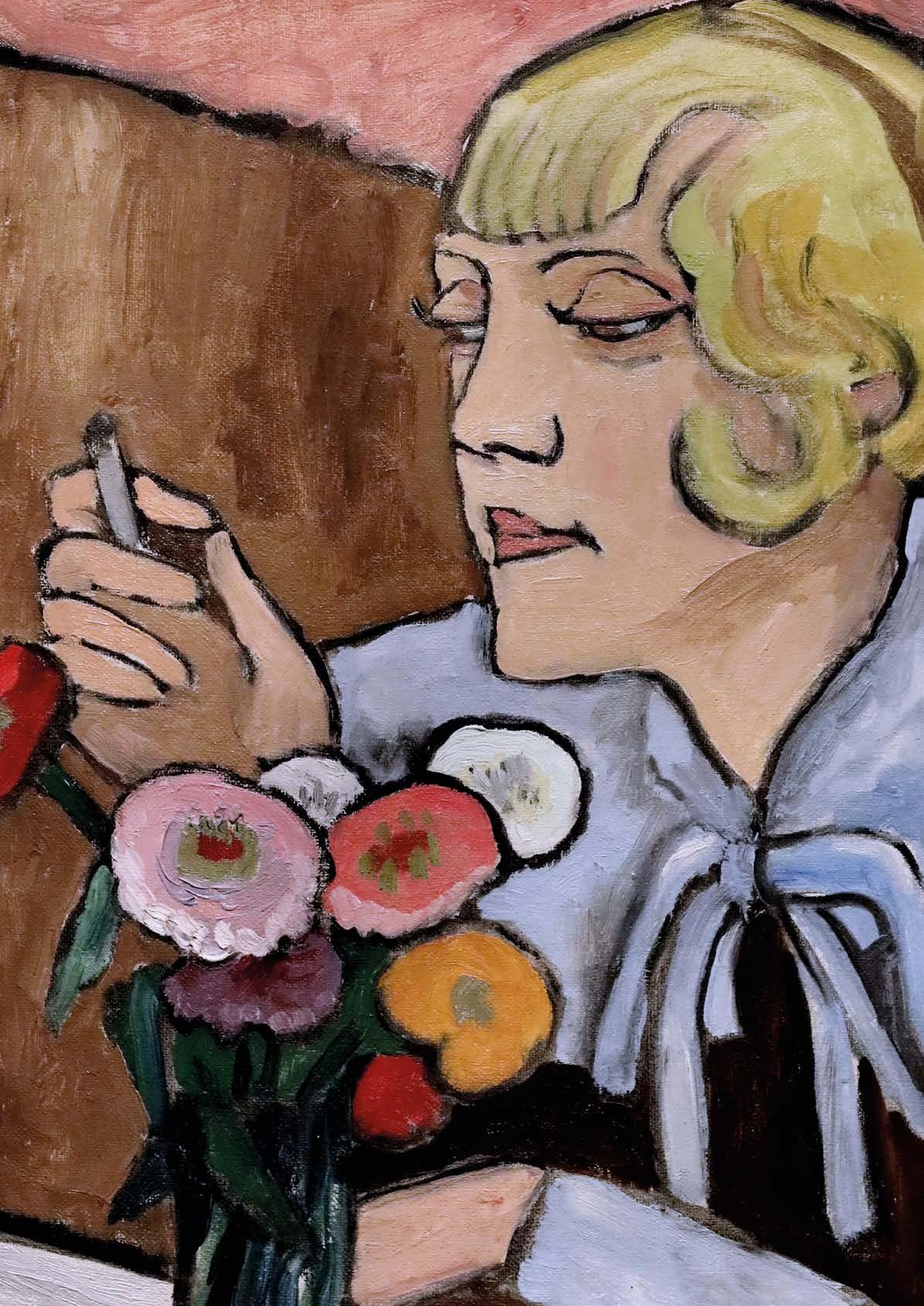
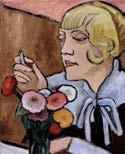
32022 SEASON PROGRAMME 2022 PROGRAMME SIEGFRIED pg22 Monday 30 May Wednesday 1 June Friday 3 June Sunday 5 June Tuesday 7 June DIE TOTE STADT pg40 Tuesday 21 June Thursday 23 June Saturday 25 June Monday 27 June CARMEN pg58 Saturday 9 July Sunday 10 July Tuesday 12 July Thursday 14 July Saturday 16 July Sunday 17 July Tuesday 19 July SPELL BOOK & LA LIBERAZIONE DI RUGGIERO pg72 Emerging Artist production Thursday 28 July Saturday 30 July Sunday 31 July Tuesday 2 August lfo.org.uk Welcome 6 | Thank you 8 | 2023 Festival 11 | Membership 12 Outreach 14 | Youth Chorus 16 | Playground Opera 18 The Longborough Orchestra 20 | Golden Ticket 21 | 2024 Ring Cycle 39 Emerging Artists 89 | Acknowledgements 92 | Past Productions 94 The Longborough book 114 | Gifts in Wills 115 | Site Map (back cover) Cover: Portrait of an artist (1932), Gabriele Münter (1877–1962) © DACS 2022
LONGBOROUGH FESTIVAL OPERA4 LizaldeJorge
52022 SEASON PROGRAMME LizaldeJorge JonesRachel

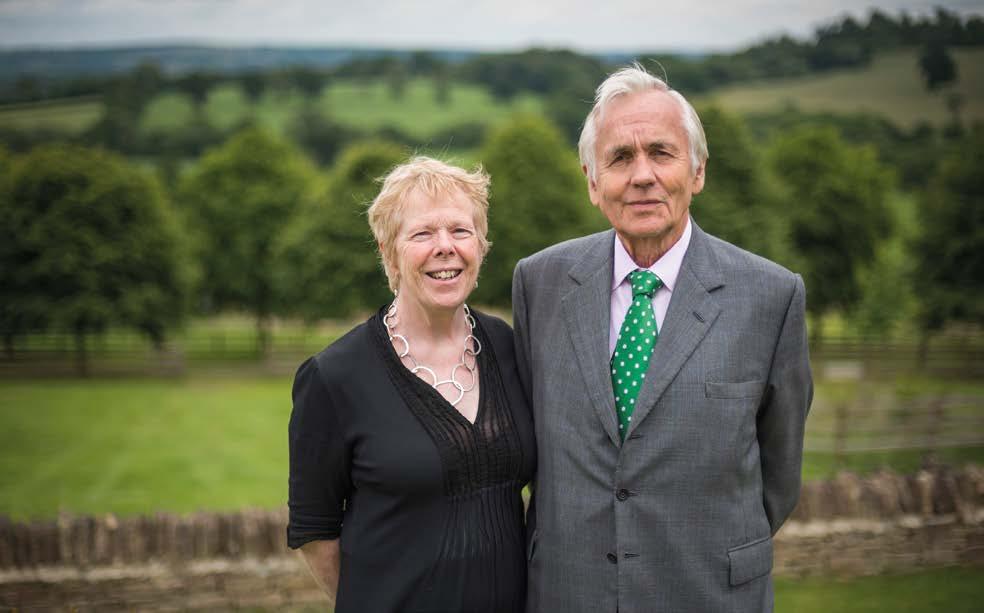
Martin and Lizzie Graham Longborough Founders
Martin Graham
Founder of Longborough Festival Opera
Martin Graham founded the festival here over 30 years ago and has been the driving force behind it ever since. It is absolutely certain that without him there would have been no opera here at Longborough, and most of the buildings you see here would simply not exist. After more than 20 years, he is stepping down as Chairman of the trustee board and Lizzie will be acting Chair until the board chooses a new Chair. Martin will continue in his capacity as founder to inspire us all. We all owe him a huge debt.
LONGBOROUGH FESTIVAL OPERA6
Welcome to Longborough 2022. This year we are back in the theatre and looking forward to a season a bit more like the ones we are all used to.
This year, believe it or not, Martin turns 80 and has decided to step down from the board of trustees as Chairman – but he will still be around as usual, retying his shoelaces, getting his bow tie fixed and chatting to one and all. We look forward so much to seeing you here again in 2022. None of this would be possible without your continued and generous support – thank you.
From Martin & Lizzie
Covid has continued to spread a shadow, making face to face meetings more of a challenge as well as rehearsals. But we have been delighted to resume some in-person member events including a session on Die tote Stadt with Jessica Duchen and Michael Haas in the beautiful music room at Court Farm, Broadway in January; and in March, Bob Boas kindly lent us his beautiful drawing room at his house in Mansfield St for an evening with Anthony Negus and Harry Sever, to discuss the first act of Siegfried – almost two years to the day since we last had a gathering there, just before Covid struck. Our team have pushed the boundaries this year to bring us an exciting production of Erich Korngold’s Die tote Stadt, and a double bill of works by women –Spell Book, a song cycle by our contemporary Freya Waley-Cohen, as well as Francesca Caccini’s opera La liberazione di Ruggiero from the 1600s. We continue our Ring with Siegfried, and Carmen is back here for the first time since 2009. Our staff have all worked incredibly hard as well as productively and we are so grateful to them, as well as to all of you for your continued support in these very difficult times. The harder it gets to find a space for opera to take place, the more it matters to find that space. With your help we plan to continue to present opera here and shine a light into the dark places which at times seem to overwhelm our lives.
Welcome to the 31st season of opera here at Longborough.
72022 SEASON PROGRAMME
Thank you so much for your generous support over the past two years. Your commitment and curiosity have sustained us as we have continued to adjust to the challenges of working with Covid. We’d also like to thank the incredible small team at Longborough, who each year create an action-packed festival.
Welcome back to Longborough and to our first full season in the theatre since the pandemic began.
Jennifer Smith Executive Director
Polly Graham Artistic DirectorJennifer Smith Executive Director
Next year we look forward to Götterdämmerung, as well as The Elixir of Love, Monteverdi’s L’Orfeo in collaboration with Venetian Baroque specialists La Serenissima, and finally, an Emerging Artist production of A Midsummer Night’s Dream featuring Purcell’s music from The Fairy-Queen It is a joy to share the culmination of our creativity and hard work with you. Let the opera commence!
The theme of obsessive desire continues in Mathilde López’s new production of Carmen, featuring sensational lead performers and our much-praised Longborough Youth Chorus who are becoming a firm feature of our summer programme following their runaway success in The Cunning Little Vixen in 2021. We conclude our season with a superb cast of Emerging Artists celebrating female creativity and power in a double bill that combines early opera and contemporary music featuring the acclaimed CHROMAWatchingensemble.anewgeneration of artists bloom through our Emerging Artist programme is always one of our proudest moments each season, and a great way to end the festival with hope for the future.
As well as the four exciting productions taking place in our theatre, our artist-development, community and education work evolves ever further across our local counties. From our touring Playground Opera The Downfall of Don José in primary schools and care homes, to our new Ring Cycle Conducting Fellow Harry Sever, and special cross-curricular projects delivered in schools – our varied work creates exciting collaborations with local musicians and community groups, opening opera up to more people, forging the audiences and artists of tomorrow. Following the powerful impact of our concert staging of Die Walküre, we are delighted to be presenting our much-awaited new production of Siegfried, led by Anthony Negus and Amy Lane as the next exciting step towards our Ring cycle in 2024. We have long hoped to share with audiences late-romantic works which were influenced by, or a reaction to Wagner’s oeuvre. We are thrilled therefore to be presenting a new production of Erich Wolfgang Korngold’s much-neglected and prodigious opera noir Die tote Stadt – a meditation on obsessive desire.
Polly Graham Artistic Director
A simply magical evening – terrific voices, costumes, simple set and lighting. A friend came with me who had only been to one opera before (Die Fledermaus) and really loved the whole evening. He, all things being well, will be at Carmen this summer.
LONGBOROUGH FESTIVAL OPERA8 THANK YOU RING CYCLE SPONSOR Denys & Victoria Firth PRODUCTION SPONSORS Ann ColinCopsey&Suzanne Doak Harry Hyman & Melanie Meads WAGNER FUTURE FUND Aubrey Adams OBE Mrs Richard Bernays Graham D Child Andrew Dakin & Malcolm Rogers CBE Mr & Mrs R. Fernyhough Colin & Karen French Anthony & Julia Glossop Dr & Mrs G R Harrison Ian & Caroline Laing Richard Lemon in memory of Sylvia Annmaree O’Keeffe & Chris Greene John MacGowan Sir Michael & Lady McWilliam Marian & Gordon Pell Lady Judith Swire WAGNER PRODUCTION CIRCLE Professor H M Brown Guy Burkill QC in loving memory of Lorely Peter Davies Guy & Lucy Davison Geoffrey & Inga Dunn Steve & Angela Dymoke Mr Tony Evans Dr Asher Giora Sir Anthony & Lady Greener Malcolm Herring The Lady Heseltine Dominic Houlder & Lukas Kroulik Catherine Johnson & Huw Williams David & Clare Kershaw Patrick King Paddy & Sue Linaker William & Felicity Mather Alan McLean Mrs Heleen Mendl-Schrama Brian & Claudine Muirhead Michael de Navarro Padders Ltd Hugh & Eleanor Paget Andrew & Elizabeth Ransom Christopher & Priscilla Rodrigues Mrs Sally Scott Shirley & Mike Seaton Ian & Paddy Strange Dr Helen Tayton-Martin Gerry VeronicaWakelinWarner & Viv Wylie Sir Robert Worcester WAGNER BENEFACTORS Sir John & Lady Aird Dr Charles Alessi & Dr Anu Jain Jennifer Antill Dr & Mrs Aris Mike InKevinJeffreyBatesBelkinBellmemoryof Dr W A Bliss Anthony Boswood QC Christopher & Lorna Bown Fiona & Andrew Brannon Lady Cadbury The Carrick ChristopherMichaelDrDrRichardDominicTimRosemarySueSirChristopherFamilyCarrierTimothyCasselQCClark&SimonCock&LizCoghlan&JanneneCollier&AnneCollierPeterCollinsDavidCostain&FeliciaCrystalDavies&Charlene Choi Abigail Day Ruth Dennis-Jones & Kathryn Jobber Leo & Barbara Doyle Tom MarkRobynDuncanDurie&Anne Everall Carlos & Alexandra Fernandez Giles & Morwenna Fletcher Tim & Rosie Forbes Hugh & Felicity Furber John Gilbert Sir David Gilmour Nairn & Marjory Glen Raymond Godson Charles LaurenceGraham&Elizabeth Gray Piers & Linda Gregson Loyd ProfessorNinaJamieAlisonHilaryNigelRayNerissaGrossmanGuest&PaulineHartmanHaunch&GeoffreyHerdmanJusthamJusthamKayeMRBKeighley& Dr D Margaret IanOwenHilaryJonathanKokElizaRupertAnneHelenNicholasBarryAnthonyProfessorRSueMrMalcolmJanRobertMartinStevenGrahamGeorgeKeighleyKingston&LornaLancasterLarcombe&DianaLee-Browne&PatLefeverLeigh&JanRynkiewiczLeith&AmandaWearing&MrsMadden&NigelMasters&JMilesNeil&DrJaneMortensen&JennyNewhouse&BaronessNoakesParkhouseEPearson&KenPelton&CinziaPennant-ReaPickeringSweeGan&MichaelPretty&CarolineRadfordReidEvansRhys&FredaRickword Longborough is the most amiable of the opera companies we visit, nearly always at least satisfying, usually a joy, especially its exceptional Wagner performances. Mike & Shirley Seaton, Wagner Production Circle All our work, whether in the opera house or out in the community, is thanks to the generous and loyal support of our members. We are extremely grateful to:
Christopher Carrier, Wagner Benefactor
92022 SEASON PROGRAMME Michael & Laura Robarts Tony Schendel The Lily & Marcus Sieff Charity Trust Nigel Silby Dr Anthony Smoker Anthony & Iris Spooner Lord & Lady Stirrup The Stockler Family John & Madeleine Tattersall Mr & Mrs Max Thorneycroft Mr & Mrs Peter Thorogood Mark & Jane Tufnell Richard & Maggie Turner Rijnhard & Elsbeth van Tets Michael Waring Mr Ian MichaelAntoniaWeirWest&Angela Winwood John & Susan Wood WAGNER PATRONS Mr & Mrs John Allan Elizabeth & Simon Allen Professor & Mrs Robert H Anderson Marilyn Anselm Joan MrTheMary-JanePiersStuartChristaJohnJohnSoniaAttewellBakerBalfour&KimBarrett&CharlesBeal&AmandaBell&EllenBencardBennettBevisFoundationRichard&MrsCatherine Black Sir Charles & Lady Blomefield Jacques & Terry Avery-Bouffier Juliet AdrianSarahPhilippaMrsGillKateDameCaptainBarbaraMichaelDrDrMartinMatthewFrankMrsMarkDavidMrHenryPennyMarkMichaelBourneBousfield&AngelaBridges&RobinBroadhurst&SheenaBrookmanDavidLovellBrownBuchlerBurchJeniCarter&MadelineClayton&AmandaCollings&JillCollisonNevilleConwayRobert&MrsJanetCook&AngelaCronkCumbers&JamesFrancis-PesterGarthdeCourcy-IrelandRN(Rtd)DioneDigbyDBE&MatthewDobbsDoranChristineDouseDrewDrury&LucretiaEeles Dr Julia P Ellis Max & Richarda Elvidge Dr & Mrs D A Evans Adam Fairhead Dr Graeme Feggetter Chris Few Ray & Mary Fitzpatrick James BrendanFlower&Jane Foat Richard ProfFabianJonathanFranceFranklin&PippaFrenchAngelaGallopCBE & Mr David Russell Howard Gatiss Roger Gollop & Elizabeth Smith Sarah & Dennis Gornall Ben Gough Mr & Mrs Christopher Handley Rev David Hargreaves Cherry & Jocelin Harris Tim & Geli Harris Philip RobertHarrisson&Judith Hart Philip & Helen Heims Charles & Rachel Henderson Mrs Ursula Higham Anthony & Barbara Hird Dr A DavidHoakseyHodges & Christian Kwek Jenny Hodgson David Hopkins Pam Horton Sir Christopher & Lady Howes Mr Robert Hughes FRCS Chris & Gabby Humphrey Lady Peter Anne Hunt & Mr David John Sue & Andrew Jenkins Richard JohnColinTomHowardDrVNickySirMerfynSuzanneSimonMarkPaulMartinChristopherMrsDavidWilliamMrMrRichardJanetRosemaryJenkynsJewel-ClarkJones&LaurieKaplanRogerKarn&MrsNicholasKeeganKerrKewley&JanMauldenLesleyKirbyKirker&DeborahKnightLay&LucyLeFanu&LydiaLebusLeonLloydOBETimothy&LadyLloyd&RupertLoweLowings&BCozensAndrewMackintosh&AnnMarshallMarshallSkellett&TheresaMcDermott&JuliaMelvin Dr LSid & Mrs Margaret Miller Mr A S Mitchell David & Alison Moore-Gwyn Andrew Moran QC Mr Andrew Morgan Mike DianaMorgan&Nigel Morris Andrew Moss & Estelle Morris David JamesMoss&Sally Nicholson Charlie & Camilla Park Pam & Roger Parkes Dr & Mrs R W Parrish Malcolm Paterson Sir David & Lady Pepper Mr & Mrs Roger Phillimore Matthew Pintus & Joanna Ward David & Jill Pittaway Di & Vincent Polastro Professor N A Postma PSW Metals Ltd Dr Graham Read John & Margaret Richards Robert & Riki Mr & Mrs John Roberts Mr & Mrs Matthew Roberts Sue & Richard Roberts John & Anne Robertson Peter & Tina ChristopherMichaelUnniDrColinIanZoeBernardSagaraghosaRuygrokSimpsonSimpsonSlater&BrendaSodenHowardSowerbySpiller&AnnStJohn&Philadelphia Stockwell Ian & Catherine Sutcliffe Mr & Mrs Stephen Taylor Professor Roger Taylor Virginia & Martin Taylor Michael & Pauline Theobald Sir Stephen & Lady Tomlinson Tony & Trish Trahar Andrew & Molly Twomlow Mr & Mrs K Vere Nicoll Earl & Countess of Verulam Nic JohnRupertHelenMrsLucillaWalshWardHWhitbread&PeterWilde&MandyWilliams-Ellis&GeorgiaWren Longborough is the most welcoming place I know, short of home! Erica Lopez
Robert & Pat Lefever
THANK YOU
Patricia Botting
LONGBOROUGH FESTIVAL OPERA10 To all of you, along with our Wagner Friends, Festival Friends, 18–35 members, donors to our Emerging Artist programme and Education work, along with all the anonymous support we have received, we are extremely grateful. Thank you. FESTIVAL BENEFACTORS Dr Catherine M S Alexander The Right Hon Sir Tony Baldry Dr Keith Bevis In memory of Geoff Bond Neil & Sarah Brener Roger & Lesley Cadbury The Gore-Randall Family Tony Hall & Shirley Livingstone Nicholas & Cherry Jones Richard & Veronica Lay Parallel Wealth Management Graham & Alison Pimlott J Rodney G Pitts Neil & Julie Record Lord Blyth of Rowington Mrs Anna Wheeler FESTIVAL PATRONS John ProfessorsMargaretAndrewsAustenCharles Baden-Fuller & Mary Morgan Michael Barnes-Taylor John Bartlett In memory of Jacqui Beecroft Andrew Bound & Karen Snow Peter & Auriol Byrne Robert Clinton & Annita Bennett Anne Cooper & Marcus Howe Lynette & Robert Craig Sylvia Crosthwaite Eyre Gareth & Barbara Davies Prof & Mrs John Dewar Liz & Simon Dingemans Peter & Ingrid Dixon The Dudley Family in memory of Ivor Robert Falster Sara & Mike Fish Sir Julian & Lady Flaux Andrea & Chris Gant Shan & Martin Graebe Maureen & Simon Gray Carolyn Lady Harford Angela & Ian Hurlstone Judith Iredale & family in memory of Peter William & Imogen Joss Neil Kaplan CBE QC & Su Kaplan Richard Law Philip & Caroline Leatham Gabriel Leung Clare Mackarness J J Macnamara Mr Nick Major & Mr Andre Martins Bruce & Gillian Mann The Lady May Mr & Mrs Rory McLeod Christine Melia Jeremy Meyrick Ian & Gillian Nussey Angela O’Farrell & Michael Lynes Rosemary & Anthony Preiskel Nicholas & Lesley Pryor Tim & Liz Richards Richard Roberts Robert & Sarah Salt Louise Stewart Patrick & Debra Stones Oriel & Mick Stump Mrs E Thompson Mr & Mrs G Thorley Ian DavidMarianLisaProfessorDianeDrVictoriaThorpeTremlett&MrsJamesTurtle&JeffVincent&MrsJohnWass&GeoffWenmouthWilliams&LexiYoung TRUSTS & FOUNDATIONS CHK ColwinstonFoundationCharitable Trust The D’Oyly Carte Charitable Trust The Elmley Foundation The Fidelio Charitable Trust Fidelity UK Foundation Foxley TheTheTheGamlenTrustTrustKilrootFoundationLarkTrustMissesBarrieCharitable Trust The Ofenheim Charitable Trust The Serth & Gates Charity W. E. Dunn Charitable Trust GIFTS IN WILLS We are extremely honoured to be remembered in the wills of: Catherine Alexander
Guy & Cynthia Haywood
Patrick King
DonaldAngelaGeoffreyRuthAndrewBurkillDakinDennis-JonesDunnDymokeHaywoodDL
The late Audrey Tinsley Angela Winwood
And those who choose to remain anonymous How uplifting to hear and see live music at Longborough again. I have been coming for over 15 years and my admiration grows each year. What a feat in these crazy times to erect a big top and fill it with music. Longborough is my favourite opera house. The productions are always intelligently pared back to expose the essence of the music.
Longborough represents the best and the future of opera in
Peter Warburton
surroundings.towellimaginativeEngland:productions,sunginallpartsandbeenjoyedinravishing
112022 SEASON PROGRAMME THEPURCELLL’ORFEOMONTEVERDITHEDONIZETTIGÖTTERDÄMMERUNGWAGNERELIXIROFLOVEFAIRY-QUEEN (A Midsummer Night’s Dream) Emerging Artist Production 2023 FESTIVAL JUNE – AUGUST LFO.org.uk | 01451 830292 Near Moreton-in-Marsh GL56 0QF Charity no. 1087303 A BAYREUTHCOTSWOLDSMINI Sunday Times
Jim Powell, Festival Patron
Jackie Emsley
LONGBOROUGH FESTIVAL OPERA12 Longborough Festival Opera is a registered charity (no. 1087303) and we rely on our members, whose generous support makes a real difference to our artistic programming and education work. Become a member today: book early for next season and, depending on your type of membership, enjoy exclusive events and opportunities to get behind the scenes, meeting cast, creative teams and with guest speakers such as Stephen Fry, Alex Ross, and Simon Callow. Whatever your membership level, you are contributing to the magic that happens at Longborough. Join online from £80 at lfo.org.uk/membership or for further information contact Membership & Legacy Manager Gill Powell: gill@lfo.org.uk | 01451 830292 Become part of our extended family and share your love of Longborough Festival Opera with like-minded people. MEMBERSHIPFESTIVAL
A wonderful evening. Great organisation and communication. Super food to enhance a really entertaining show. Enjoyed the adaptation, great cast and musicians. Will certainly look forward to returning next year
Having been an enthusiastic member of a local Amateur Operatic Society for many years, I fully appreciate the sheer hard work and skill of your wonderful singers. I love coming to have lovely food that my wife Jean prepares, and sit amongst people who appreciate the magnificent quality of all things Longborough. Keep up the good work. It is fantastic!
For
8 Valkyries
132022 SEASON PROGRAMME
The Wagner Production Circle starts at £3,500 per season; and the Festival Production Circle, for all productions except Wagner, at £2,000. Members of either Circle enjoy priority booking ahead of all other membership levels. further information Membership & Legacy Manager Powell: gill@lfo.org.uk
contact
THE PRODUCTION
There is so much more to Longborough than our superb Wagnerian reputation. Members of our Production Circle can look behind the scenes of our whole season through exclusive events, both digitally and in person. As a member of the Production Circle you are part of something truly special; you have an opportunity to move close to the creative process. Whether it’s an illustrated talk with a conductor and singer focusing on a role, or one of the Longborough Festival Orchestra players demonstrating their skill, the Production Circle provides the perfect opportunity to discover new aspects of our productions.
Die Walküre @lfotweet+ Brunnhilde, Hunding, Wotan. All FIRST CLASS and a 29 piece orchestra under the baton of the brilliant Anthony Negus: what wonderful sound. As ever sobbed like a baby. Mr Wagner…
Fricka and
a
I
Thanks,
LizaldeJorge
| 01451 830292
Gill
OUR AMBITIOUS
Siegmund, Sieglinde,
Stephen Fry What@stephenfryanexperience!
JOIN CIRCLE AND BE PART OF FUTURE

LONGBOROUGH FESTIVAL OPERA14
Our programme starts in nurseries and primary schools with the early years, where we work in small groups to teach them pitch and singing through the Kodály method. Older year groups enjoy Playground Opera, and teenagers experience behind-thescenes workshops and free tickets to our theatre in Longborough. Through our projects, we encourage students to join the Youth Chorus, to develop their voices, performance skills and have the unique opportunity to appear on stage and collaborate with professional artists.
OUTREACH
A BREADTH OF PROGRAMME
Longborough Festival Opera’s education and outreach work is based on two key drivers: Opera for all: breaking down barriers to opera to wider audiences. Believing in children as artists: raising standards, nurturing talent, encouraging creativity.
Longborough’s education team delivers a rich array of high-quality projects for young people in the north Cotswolds and beyond. Even through the challenges of recent years, we have ensured that children and our community have not missed out on the benefits live music can bring: learning new skills, growing in confidence and experiencing opera for the first time.
We visit local state schools with our Playground Opera tour and workshop programme; we train young local children throughout the year as part of our Youth Chorus, so that they can perform in our summer productions; and we seek out new and diverse audiences who are unfamiliar with opera. As an opera company based on the edges of four counties, our local schools are far away from cultural centres. For a child to take part in anything outside school means getting in a car. This is a significant impediment to many, so by taking our work into the community, we reach more people.
JonesRachelJonesRachelPhotographyBowlesLouise

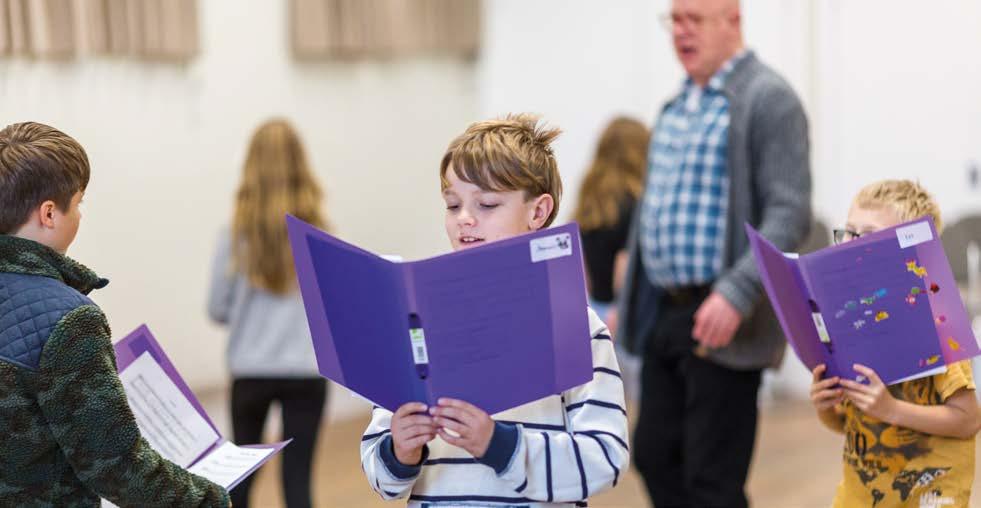
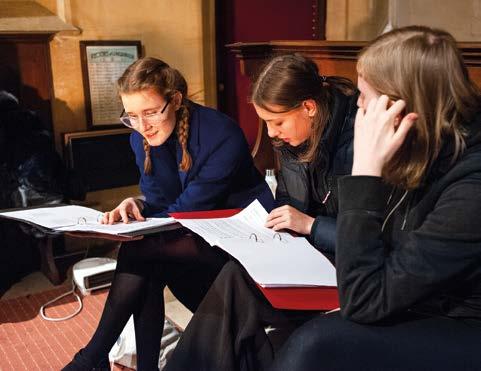
Experienced Kodály specialists were able to deliver weekly sessions at Longborough school and St David’s School in Moreton-in-Marsh, training 180 Reception to Year 2 pupils in this method since summer 2021. The aim of delivering Kodály singing lessons is to boost the musicality of children, encouraging them to join the Youth Chorus and develop a life-long love of music. We hope to roll out Kodály singing to more primary schools, though we need financial support to do so.
“We should be thanking you all for your energy and determination in giving our young the opportunity to sing. The sessions have given stability and great joy amidst great uncertainty and confusion”
To help, please contact Alexandra O’Donnell, Fundraising Manager: alex@lfo.org.uk
152022 SEASON PROGRAMME
To create pathways for local children into the Youth Chorus, we have embarked on a pilot scheme teaching the Kodály method, which trains children from a very young age to develop greater musical skills and build confidence. The method is tried and tested to develop a musical ear by simply using the voice; no expensive instruments are required.
“The children all really enjoyed the lessons and were all engaged...Some of the quieter members of the class became more confident during their music lessons.”
OUR WORK WITH SCHOOLS
We partner with local state primary, secondary and SEN schools where access to the arts is limited due to location and budget, bringing accessible and eye-opening projects to their classrooms and playgrounds.
COMMUNITY CAROLS
Hundreds of children will visit the Longborough theatre this year for the Carmen dress rehearsal, and our popular school workshops have continued to link in with Longborough’s summer season. Schools have benefited from workshops about Bizet’s Carmen, and chances to meet the creative team: building pupils’ confidence and encouraging future cultural exploration.
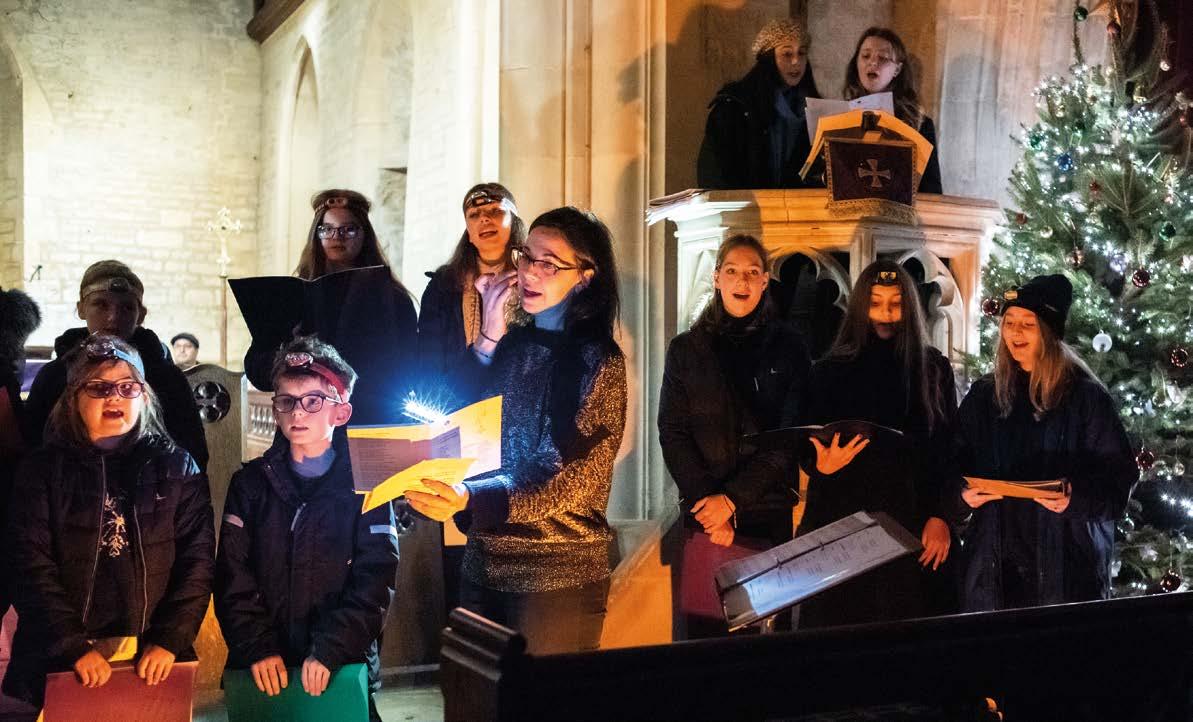
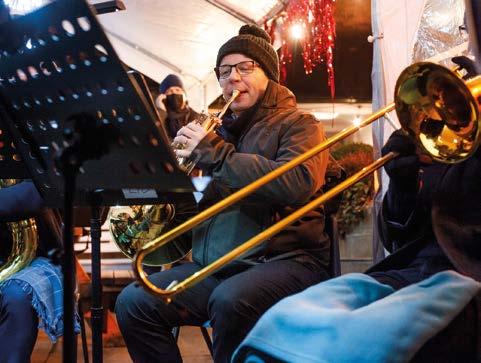
Community Carol Singing took place in Longborough village and involved villagers, the school, church, local parish, and the pub to ensure that it was a memorable evening full of Christmas cheer. Over 200 villagers turned out to join in with the Longborough Youth Chorus and the Longborough Festival Orchestra’s brass section. For the children it was particularly special –after a time with so little social contact, they were singing regularly, mastering multi-part harmonies, and working alongside professional musicians. The Community Carols brightened Longborough in 2021 too and we’re looking forward to it becoming an annual favourite.
JonesRachel
Longborough Festival Opera is a charity (no. 1087303). We need your support to deliver our ambitious year-round education programme.
TEACHING THE KODÁLY METHOD
What parents said: “I love the way that the Longborough Youth Chorus refuses to be thwarted!”
WE NEED YOUR HELP
PhotographyBowlesLouise
Our community carols initiative was created for Christmas in 2020, when there had been no live music making for months. Despite restrictions, our rehearsal plan through autumn was delivered; for many children it was the only social activity they had.

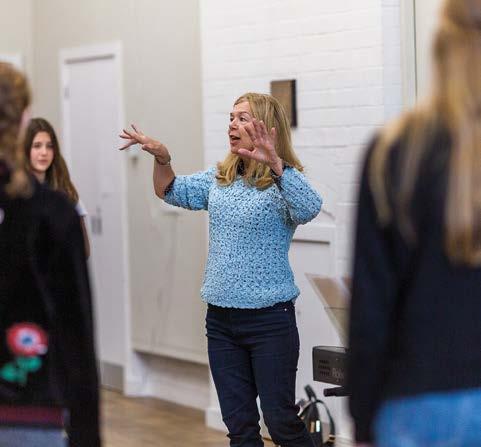

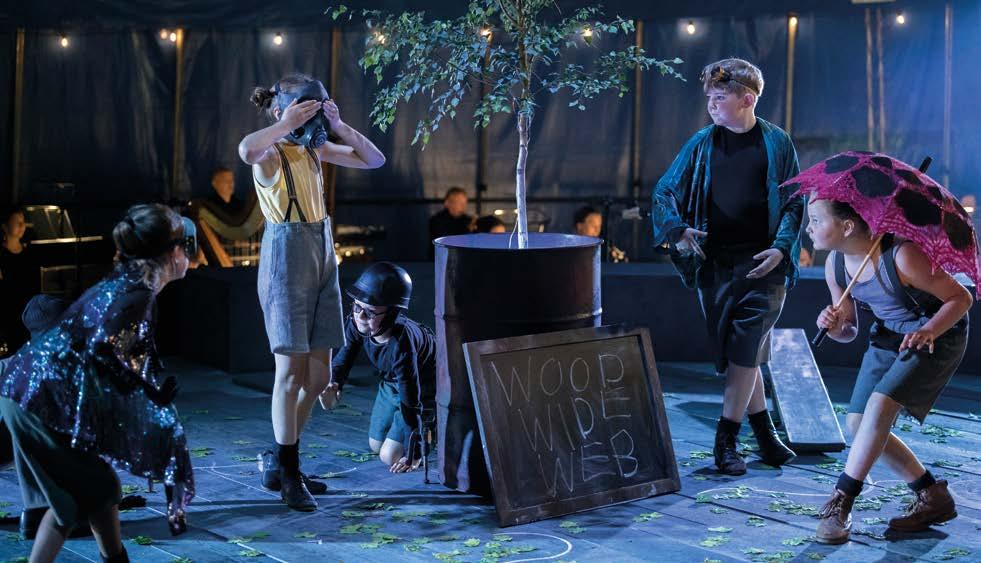
2021: THE CUNNING LITTLE VIXEN
Group singing helps young people to grow in confidence, encourages self-expression and increases sociability. Developing Longborough’s Youth Chorus and encouraging young people to sing is core to our outreach.
LONGBOROUGH FESTIVAL OPERA16
The Youth Chorus is a year-round project and is open to all children between 7-18. An everexpanding group, the Youth Chorus provides excellent singing, dancing, and acting training, plus performance opportunities within the community and on the stage at Longborough.
THE YOUTHLONGBOROUGHCHORUS
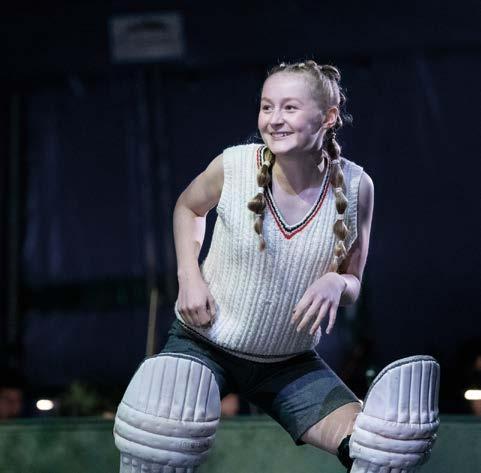
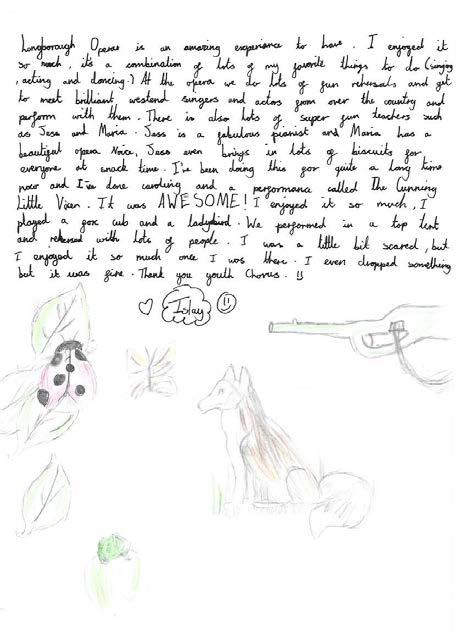
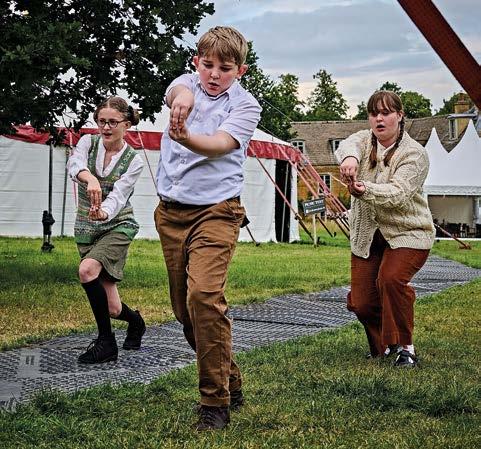
In 2021 Longborough’s Youth Chorus appeared alongside our Emerging Artists in our production of Janáček’s The Cunning Little Vixen To prepare for the production, children enjoyed monthly singing and choreography sessions, workshops on props and sets, and time with our Emerging Artists to help build their confidence. Pre-production work with the Vixen creative team helped to connect the main stage teams with the Youth Chorus, thoroughly integrating the children with the production. We worked hard to treat the children as artists, and they responded incredibly – mastering and memorising complex repertoire, performing alongside professional artists before large, fee-paying audiences, to critical acclaim. What parents said: “All of us will never forget what you and all your team gave us this summer”
“It has been lovely to read the positive reviews, a tribute to the whole team involved, working together to produce something magical after all of the uncertainty of Covid.”
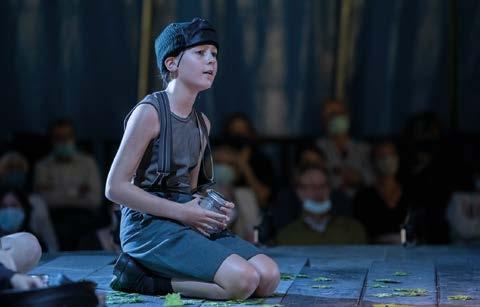
“When we did our first performance, I felt scared and excited together, which made me have this tingling feeling in my stomach. And when I first sang Brekeke! in front of the whole of Longborough, I just felt free. In the beginning of our training I just never really thought I would get to this point. After the last performance, I just felt in a way like… I did it!”
★★★★
LizaldeJorge THE YOUTH CHORUS IN 2022 AND BEYOND
Dominic Clements (the Frog) “A cunning charming success…this is Longborough’s Emerging Artists production and the singers, along with the Longborough Youth Chorus of local children, clearly relished working on an ensemble piece... Musically, it was very good indeed.” Bachtrack, 2021 “I had the pleasure of being part of the Youth Chorus, which was a splendid opportunity to get away from schoolwork and spend some time singing with Thefriends.music was fresh and exciting, the atmosphere buzzing before every performance. The chorus stood (socially distanced) outside the tent doors to join some of the numbers with harmony lines and Celtic-inspired dances. Our performance added an encircling and powerful sound for the audience to feel immersed in the opera and I enjoyed every performance thoroughly.”
For 2022 we have devised a programme that is ambitious, inclusive, and inspiring. This summer the Youth Chorus are involved in two of our festival productions: on stage in Bizet’s Carmen, and prerecorded in Korngold’s Die tote Stadt In 2023, the Youth Chorus will participate in Purcell’s The Fairy-Queen, based on Shakespeare’s A Midsummer Night’s Dream
Martha Davey, Youth Chorus member
172022 SEASON PROGRAMME
“Everyone is so supportive and lovely whilst also teaching us how to behave professionally in and around the theatre. For anyone interested in knowing more about music and theatre, I couldn’t recommend it more, I’ve made so many incredible friends and now have such a huge bank of memories.”
Bethany Allan Molland (the Cricket) Islay Milles, Youth Chorus member
LONGBOROUGH FESTIVAL OPERA18
Playground Opera is Longborough Festival Opera’s project bringing opera into schools and our community.
Launched in 2021, Playground Opera is part of our ongoing programme to make great opera accessible to a younger audience, fully immersing them into the plots and music with participation and preparation.
PLAYGROUND OPERA PhotographyFawbertDavidPhotographyFawbertDavid PhotographyFawbertDavid
Our emerging artists and musicians perform in the playgrounds of local state schools during the summer term. Last year we reached over 1,500 school children aged 4-18 across 14 schools.
Building on curriculum requirements, we also provide comprehensive resource packs, supporting teachers with ideas for project work, templates and lesson plans.

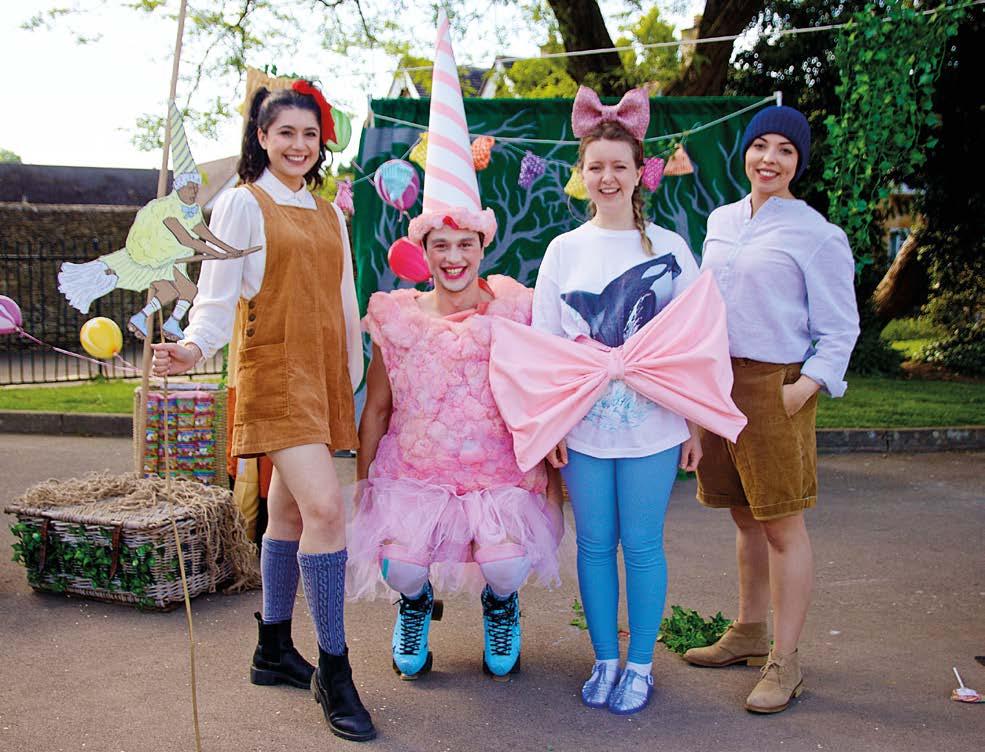
PizzeyHarrybyIllustration PhotographyFawbertDavid
Assistant Stage Manager Jude Bixley Plowright
George Robards
Choreographer
It smashed my preconceptions of opera Pupil at The Catholic School of St Gregory the Great, Cheltenham
Escamillo
Don José Daniel Jagusz Holley
Music: Accordion Milos Milivojevic Keyboard
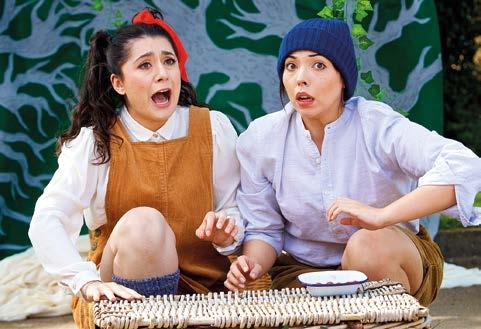
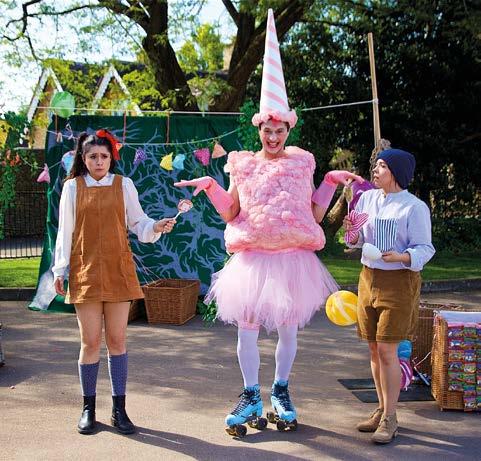
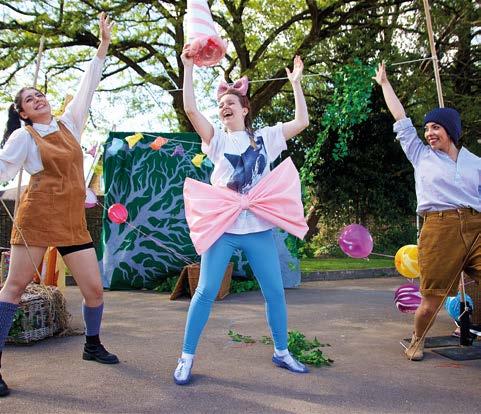
Involving 17 artists, creatives and crew, the tour introduced children to high-quality, accessible opera with a vibrant, interactive, funny and beautifully designed production.
Matthew Siveter Covers:
2021: HANSEL AND GRETEL
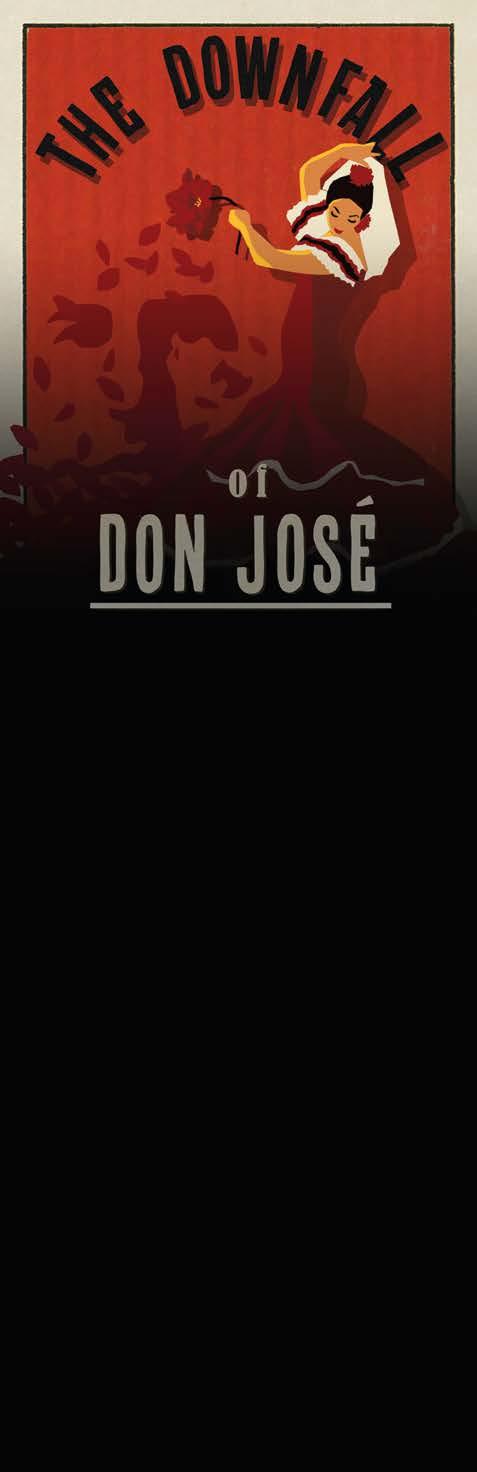
Initially designed as a response to Covid restrictions, Playground Opera was such a success in the schools that we visited that we plan to make it a firm fixture. In 2022, Playground Opera will visit two care homes and ten primary schools, each experiencing a fully immersive day involving writing, designing scenery, and performing alongside professional artists in a bespoke and interactive version of Carmen, entitled The Downfall of Don José
Director Maria Jagusz Designer Harry Pizzey
Cast: Don José Seumas Begg
Humperdinck’s masterpiece was abridged for outdoor playground performances, and schools felt confident that we were working within a safe environment – while bringing the music, the story and the characters to life in their playgrounds. Never before had they seen a witch dressed as pink candy floss on roller skates!
Alice Oakley-Jones
192022 SEASON PROGRAMME
Repetiteur Will Sharma
During 2021, we created a small-scale production of Humperdinck’s Hansel and Gretel to visit state schools across the surrounding counties. Designed in collaboration with local schools, this vibrant production was a way to bring back opera into schools and re-engage children in the social, cultural and health benefits of singing together.
2022: THE DOWNFALL OF DON JOSÉ
Carmen Marienella Phillips
Carmen Alice Nelson Escamillo
Jessica May
Stage Managers Sarah Plowright, Aaron Bixley
Assistant Director Marienella Phillips
PhotographyFawbertDavid
For
The Longborough Festival Opera orchestra proud to have our own orchestra. Some of our players have been with us since the very beginning of our operatic journey. Under the management of Philip Head and Stuart Essenhigh, and the direction of Anthony Negus, the ensemble has grown from a small group of 18 players in 1998 to a critically acclaimed full-scale orchestra.
Patricia Duncker, Chair Sponsor (Trombone)
SPONSOR830292 OUR PLAYERS
For
Consider sponsoring the Chairs of our players: a wonderful opportunity to meet the musicians of the Longborough Festival Opera orchestra. Through your sponsorship you will gain an insight into the creative process, and share the magic behind the Fromscenes.trumpets to timpani and strings of all shapes and sizes, any orchestral chair is available to support for our 2023 season. a minimum donation of £1,000 you receive: A unique opportunity to meet the player of your orchestra chair at a rehearsal Your name credited in the souvenir programme The possibility of the player joining you and your guests during your visit in the summer further information or to choose your chair, please contact Gill Powell: gill@lfo.org.uk | 01451
•
We are
LONGBOROUGH FESTIVAL OPERA20
•
•
Without the musicians it can’t happen. None of it!
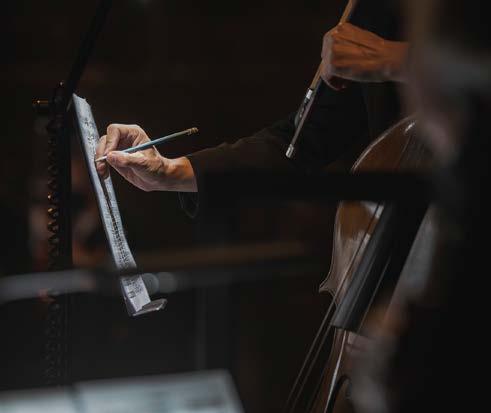

The Golden Ticket – win tickets to the 2024 Longborough Ring We can’t wait for 2024 – the culmination of so much hard work and artistic excellence, when our new cycle of Der Ring des Nibelungen will be seen in full for the first time.
Our Golden Ticket raffle is your chance to win a pair of tickets to the full cycle in 2024. Raffle tickets are £50, available through our website at lfo.org.uk/golden-ticket – or scan the QR code.
212022 SEASON PROGRAMME
WINNERS WILL HAVE THEIR CHOICE OF PERFORMANCE DATES, SUBJECT TO AVAILABILITY. PERFORMANCE DATES ARE TO BE CONFIRMED NEARER THE TIME. ENTRANTS MUST BE AGED 16 OR OVER.
Good luck!
The draw will take place on 22 May 2023 (Richard Wagner’s birthday).
LONGBOROUGH FESTIVAL OPERA’S GOLDEN TICKET
The more raffle tickets you buy, the more chances you will have to win this amazing prize, while supporting our work here at Longborough: all proceeds from the Golden Ticket will help us create this ambitious cycle.
Scan to buy a raffle ticket
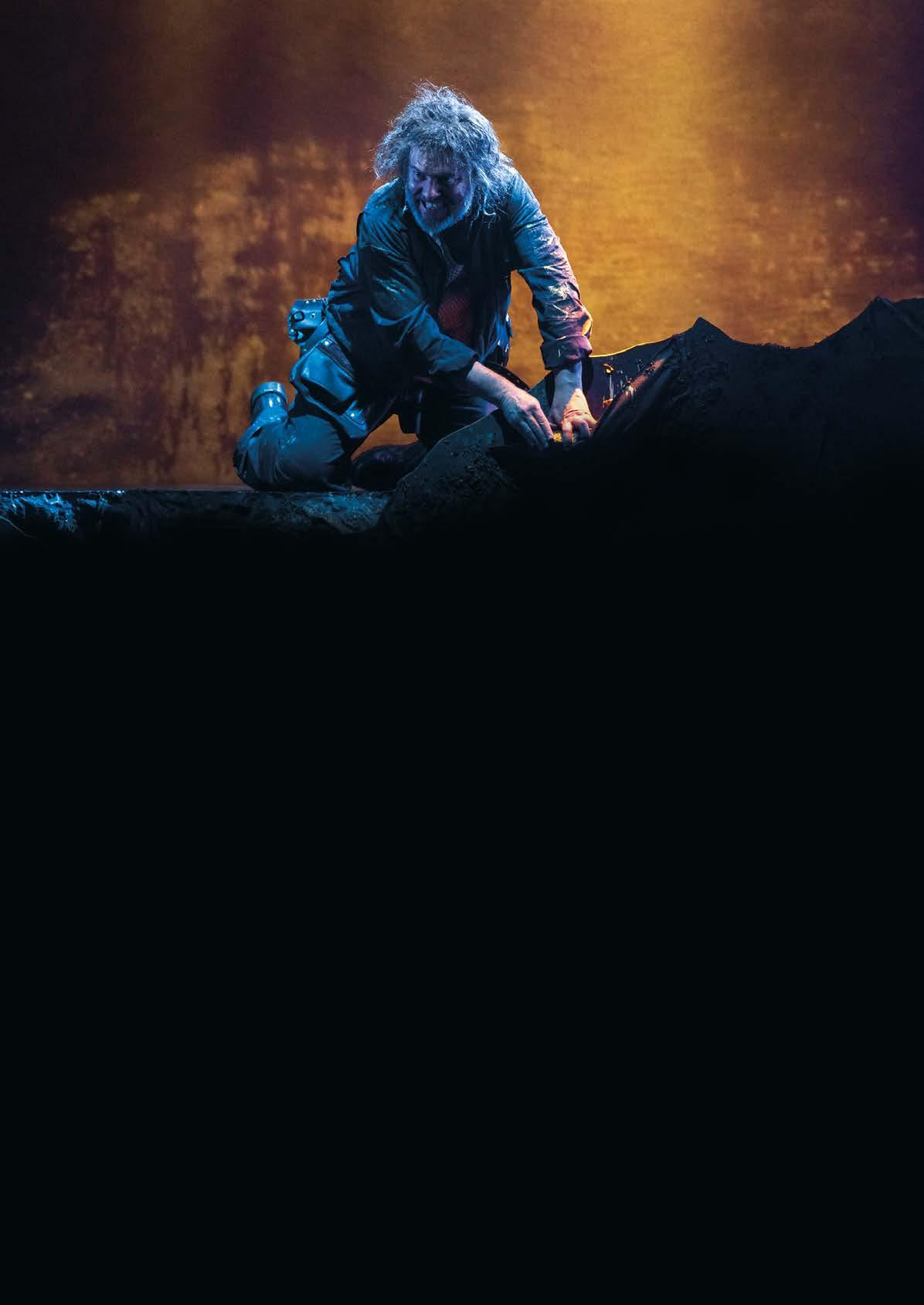

LONGBOROUGH FESTIVAL OPERA22 SIEGFRIED Sung in German with English surtitles. Intervals of 30 minutes and 90 minutes. MUSIC AND LIBRETTO Richard Wagner Alfons Abbass version provided by MDS Hire & Copyright FIRST PERFORMANCE OF SIEGFRIED Bayreuth Festspielhaus, 16 August 1876 FIRST PERFORMANCE OF THIS PRODUCTION Longborough Festival Opera, 30 May 2022
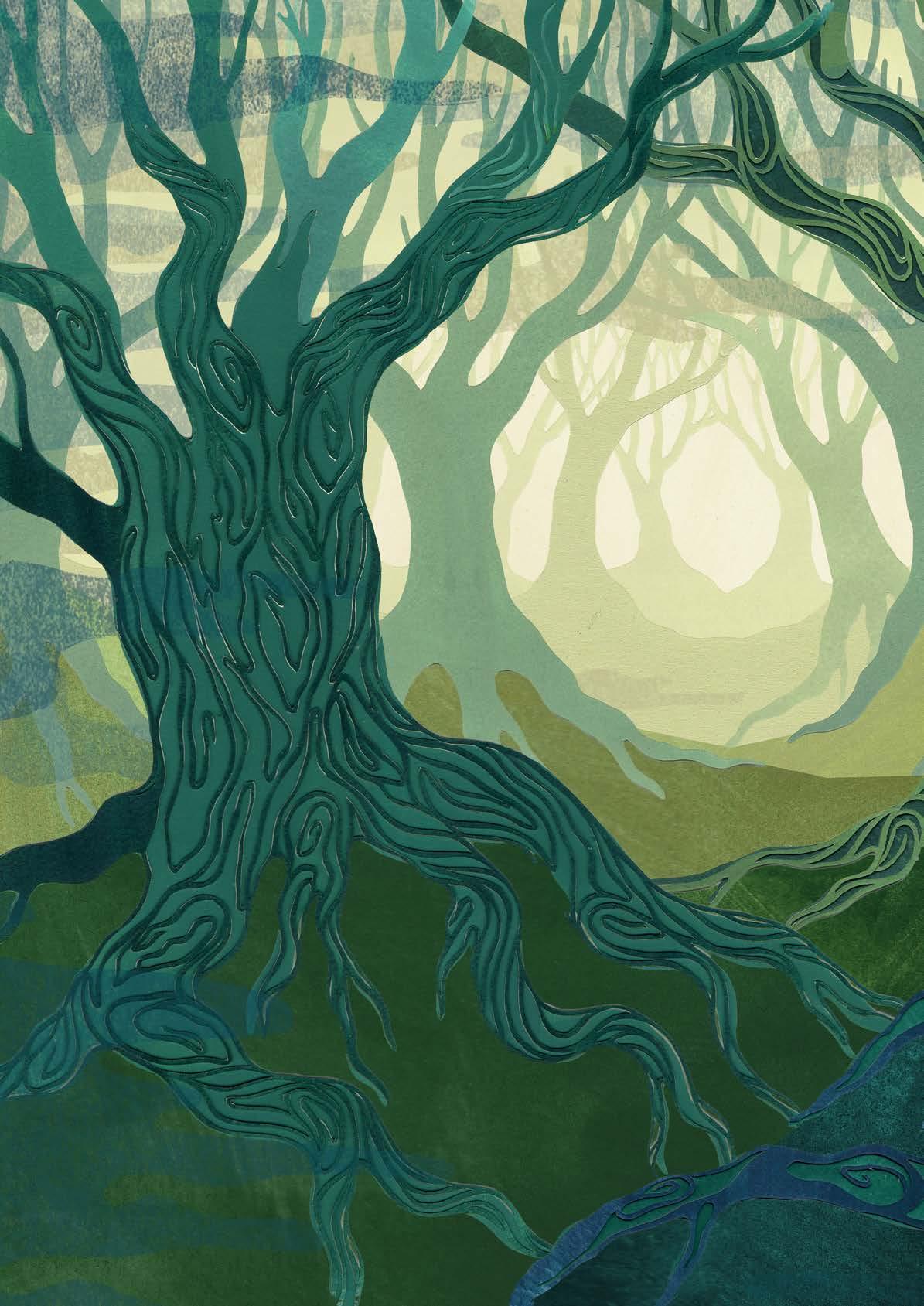
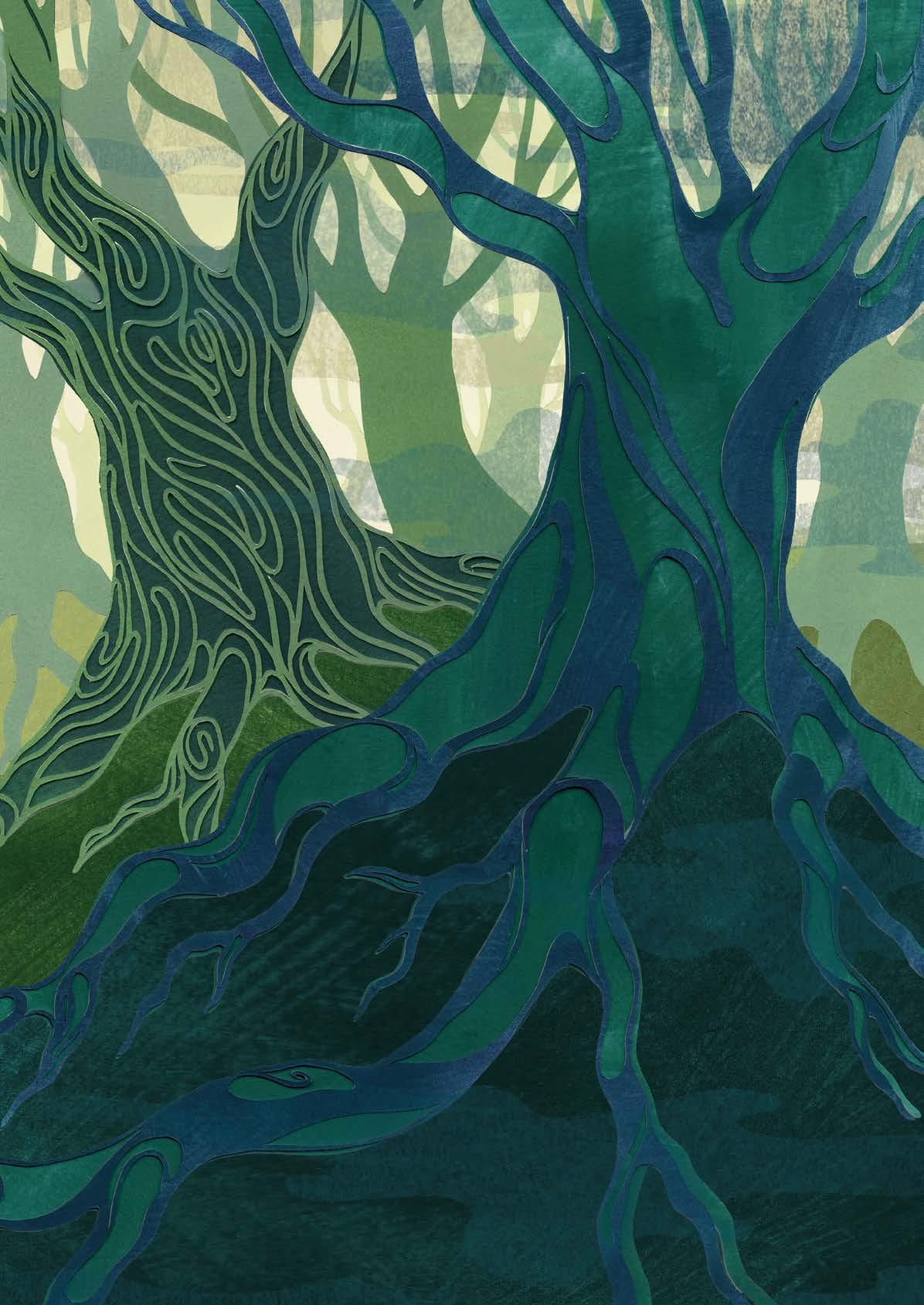
232022 SEASON PROGRAMME CONDUCTOR (EXC. 3 JUNE) Anthony Negus DIRECTOR Amy Lane SET AND PROPS DESIGNER Rhiannon Newman Brown LIGHTING DESIGNER Charlie Morgan Jones COSTUME DESIGNER Emma Ryott VIDEO DESIGNER Tim Baxter CHOREOGRAPHER Lorena Randi ASSISTANT CONDUCTOR (CONDUCTING 3 JUNE) Harry Sever ASSISTANT DIRECTOR Christopher Moon-Little REPETITEUR Kelvin Lim LANGUAGE COACH Dominik Dengler SURTITLES Lydia French, Cordelia Graham, Alan Privett HEAD OF CASTING Malcolm Rivers in partnership with The Mastersingers ARTISTIC ADVISOR Isabel Murphy THE CAST SIEGFRIED, SON OF SIEGLINDE AND SIEGMUND Bradley Daley MIME, ALBERICH’S BROTHER Adrian Dwyer THE WANDERER Paul Carey Jones ALBERICH, LORD OF THE NIBELUNGS Mark Stone FAFNER, GIANT Simon Wilding WALDVOGEL (THE WOODBIRD) Julieth Lozano ERDA, EARTH GODDESS Mae Heydorn BRÜNNHILDE, DAUGHTER OF WOTAN AND ERDA Lee Bisset Artwork by Amber Cooper-Davies
Siegfried, the son of Siegmund and Sieglinde, has been brought up by his foster-father Mime, brother of Alberich the Nibelung. For Mime, Siegfried is simply the means to kill the dragon Fafner, to gain the Ring for himself. The only weapon powerful enough to kill Fafner is the sword Nothung, shattered by Wotan on Siegmund’s death. And Mime is unable to re-forge the sword. Siegfried’s childhood has been wild, free and fearless, and there is no affection between him and Mime. Siegfried cannot believe that Mime is his true father, and Mime, under duress, is obliged to tell him the truth about his parentage, showing him the fragments of the sword. For Siegfried the sword will be his passport to freedom, and he demands that Mime repair it, and goes out.
really needs to know. Wotan, having answered his questions, turns the tables on him: Mime cannot say who will forge the sword Nothung on which his plans depend. The sword, says the Wanderer, will be forged only by one who knows no fear, and Mime’s life will be forfeit to him. Siegfried returns, and realising that Mime is incapable of forging the sword, he gets on with it himself. Mime, seeing the Wanderer’s prophecy coming true, realises that he is in deep trouble while Siegfried remains fearless. Mime plans to teach Siegfried fear by leading him to Fafner, the most fearful thing he can think of. But here lies another dilemma: if Siegfried is afraid of Fafner, he won’t be able to kill him – how then would Mime get the Ring, without Siegfried unwittingly doing so for him? While Siegfried forges the sword, Mime prepares a poisoned drink with which to tempt Siegfried, after the Ring is won.
LONGBOROUGH FESTIVAL OPERA24
An unexpected visitor to Mime’s cave arrives: it is the Wanderer (Wotan in his self-imposed exile from Valhalla). Mime refuses hospitality, and the Wanderer challenges him to a contest of wits: he will answer Mime’s questions, or forfeit his head. But Mime is more inspired by his own intended ingenuity, than with finding out what he ACT
SYNOPSISI

The Wanderer leaves Erda and meets Siegfried on his way up the mountain. Siegfried does not know who he is, and is impatient and aggressive with the old man barring his way. The Wanderer hopes for the young man’s understanding, but is finally coerced into challenging him. Siegfried shatters his spear, leaving the Wanderer broken andSiegfriedpowerless.continues through fire to find Brünnhilde. He is overwhelmed by her: the one who knows no fear finally discovering its meaning. Regaining his composure, he awakens her. Overjoyed to learn that it is Siegfried who has woken her, Brünnhilde soon realises that earthly love means an end to her immortality. She resists – but finally embraces her fate, her new life as a mortal, and a new dawn of hope. ACT II ACT III
The Wanderer’s next encounter is with his old adversary Alberich, who has kept an obsessive guard outside Fafner’s cave. Alberich’s desire for power, and his hatred of Wotan, are undiminished.
The Wanderer’s third encounter is with Erda, mother to his daughter Brünnhilde, whom he wakens from a deep sleep below the earth. He needs her reassurance as to the outcome of the rolling events.
The Woodbird now tells Siegfried of a beautiful woman, lying asleep, surrounded by fire. This is Brünnhilde, and he sets off after the bird to find her.
The Wanderer however, seeing that events are of their own accord going the way he desires them to go, is unperturbed. He goads Alberich by calling up Fafner to warn him of danger; Fafner is sleepy andMimeunimpressed.bringsSiegfried to Fafner’s lair, and leaves him there to await developments. With any luck they will kill each other – if not, then he has a plan in hand.Siegfried is relaxed – the woods are good to him, and a bird is singing. He imagines it has something to tell him, and tries to understand it; in the process he unwittingly wakes Fafner, who is hungry. Siegfried kills Fafner. As he withdraws the sword from Fafner’s heart the blood spurts over his hand, and he tastes it. Suddenly he can understand the Woodbird, who tells him of the treasure in the cave and then of Mime’s treachery. Siegfried enters the cave, returning later with the Ring and Tarnhelm. Mime returns to deal with Siegfried. For the first time in his life Siegfried understands his motives clearly and kills him with one deadly blow.
252022 SEASON PROGRAMME

Brenna
Daniel
LONGBOROUGH FESTIVAL OPERA26 FROM WILD CHILD TO HERO
Henrietta Bredin
SiegfriedLongborough’sas(2011)

Siegfried knows no other humans; he grows up in the depths of the forest and is therefore the embodiment of that peculiarly German concept of Waldeinsamkeit, the essence of being solitary in woodland, of drawing strength and pleasure from that state. He is more animal than human, essentially natural,
Siegfried the superstitionfromhero,ultimatefreeguilt, vaultinginnocencearesponsibility,andmanofpurity,andcourage
RichterBrünnhildeawakens-Ottovon(1892)
272022 SEASON PROGRAMME
W hen Wagner began writing the libretto for Siegfried in 1851 he found it a liberating change after what he referred to as ‘the terrible tragedy of The Valkyrie ’. He was certain that it would become his most popular work and thoroughly enjoyed the portrayal of a child-like character who strode happily through the world, chasing bears and splitting anvils. This child, born from the incestuous union of the brother and sister Siegmund and Sieglinde, was going to be the ultimate hero, free from guilt, superstition and responsibility, a man of purity, innocence and vaulting courage. Wagner’s imagination verged on the erotic as he described his vision of Siegfried, this ‘beautiful young man in the shapeliest freshness of his power… the real, naked man, in whom I was able to discern every throbbing of his pulse, every twitch of his powerful muscles’.
The problem, as Wagner discovered, was that Siegfried’s insouciant unknowingness as a boy is forgivable but as a man, it is a major drawback. His fatal flaw is stupidity. It is interesting that the point at which Wagner stopped work on composing the music for Siegfried, at the end of Act Two, leaving his hero in the depths of the forest outside Fafner’s cave, is the exact point at which he must change and grow in understanding if he is to fulfil his destiny and awaken Brünnhilde, asleep on her flame-surrounded rock. This is by no means a complete or instantaneous change. He is still an insolent, uncouth boy when he meets Wotan in his guise as the Wanderer, and he is a complete gaping innocent when he encounters the first woman he has ever seen. Siegfried, the boy who knew no fear, an asset when dealing with a surly dragon or an obstructive old man with a spear who is in fact your grandfather, must at least comprehend fear if he is to be a true hero rather than a cartoon action-man figure. If you consider Siegfried’s pre-history, his untold story, he emerges as a genuine child of nature. He never knew his mother, who died giving birth to him, and his only father figure is Mime, who cares for him and teaches him the skills of metalforging with the single intention of using him to mend the sword Nothung and kill the dragon Fafner, thus enabling Mime to take the ring which will give him the power to rule the world.



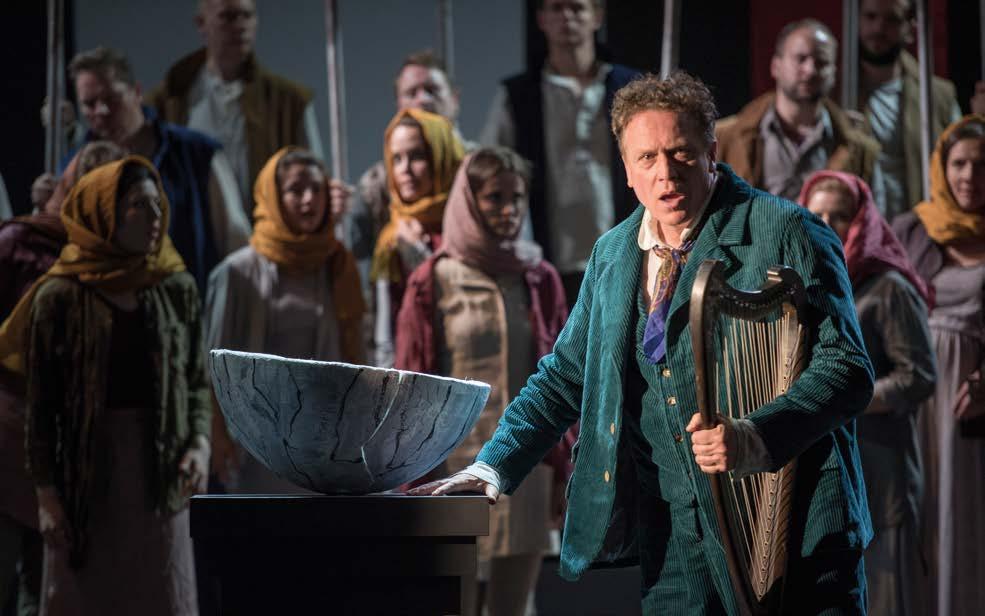
LONGBOROUGH FESTIVAL OPERA28 an example of what the Enlightenment philosopher Jean-Jacques Rousseau formulated in his Discourse on the Origin of Inequality (1755), that in their original state, humans were not social beings, but solitary, and that this was a healthy and happy way to be. He contended that the destructive vices of jealousy and envy did not exist until humans started to form societies – only then did they start to compare their abilities, achievements, possessions, and this led to an awareness of inequality, a demand for more respect. Each person wanted to be better than others; the solitary state of innocence was lost.What happened to Wagner, in the 12-year period before he returned to his abandoned opera and finished it, is that he became (a little) less of a brashly swingeing, dare-all, invulnerable character himself. His marriage to Minna Planer was under extreme strain, chiefly due to the fact that he had become infatuated with Mathilde Wesendonck, the wife of his patron and great admirer of his music, a man who had paid many of his debts, who had let him and Minna and their assorted pets move into a house on his estate outside Zürich, the wealthy silk merchant Otto Wesendonck. Wagner plunged into the heady swirling currents of writing Tristan und Isolde, an opera about a love triangle that reflected his own situation. When relations between him, his wife and the Wesendoncks reached crisis point he abandoned the lot of them and took himself off to Venice, a city to which he would return many times and in which he would eventually die. It proved the perfect place in which to work on Tristan but he was still not ready to return to Siegfried. In fact he thought that Tristan would prove a less overwhelming work for theatres to produce and that it might earn him enough to carry on with the Ring. His own radical musical experimentation put paid to that idea, as the opera was at first judged to be unperformable. Undeterred, Wagner carried on to compose a no less ambitious but more accessible work, Die Meistersinger von Nürnberg. Finally, in 1869, Wagner returned to Siegfried, taking his hero triumphantly through the flames and completing Act Three. A great deal happened during the years between 1857 and 1869 while Siegfried lay dormant. In 1859 Wagner moved to Paris, where he spent two years working on a revised version of Tannhäuser, which notoriously became a scandalous fiasco. Not long after this, the ban was lifted that had been placed on him going back to his native Germany after his participation in the Dresden uprising of 1849. Minna returned to live there but the marriage was irretrievable. She died in 1866. The stay in Venice had given Wagner, inspired by Titian’s painting of the Assumption of the Virgin in the church of the Frari, the germ of an Neal Cooper as Tannhäuser with chorus (2016) before returnedheto his abandoned opera and finished it, characterall,swingeing,lessbecame[Wagner](alittle)ofabrashlydare-invulnerable

Richard and Cosima Wagner, photographed in 1872 (Fritz Luckhardt)
Henrietta Bredin writes widely on opera and theatre and is deputy editor of Opera magazine. Her narrated song recitals – My Dearest Hedgehog and Gounod and Georgina – have been performed throughout the UK.
idea for Die Meistersinger von Nürnberg, which he began to develop. His financial problems worsened, not helped by the fact that rehearsals (a great many of them) for Tristan und Isolde in Vienna failed to result in performances. The dramatic and entirely unexpected change in Wagner’s fortunes came when the 18-year-old heir to the throne of Bavaria became King Ludwig II in 1864. He wrote a letter, a passionate outpouring of devotion to both Wagner and his music, and went on to pay Wagner’s considerable debts and to commit to paying for stagings of his operas both existing and planned, in particular the Ring cycle. Before that, despite continuing difficulties in rehearsal, Tristan und Isolde finally emerged onstage, at the National Theatre in Munich, in June 1865, conducted by Hans von Bülow. Earlier that same year, von Bülow’s wife Cosima had given birth to a daughter, Isolde – not his own child but Wagner’s. Cosima and Wagner’s affair gave an opportunity to members of Ludwig’s court who were concerned about the upstart composer’s influence over their young and impressionable King, to make waves and insist on the two of them leaving Munich. Ludwig reluctantly agreed but remained faithful, paying for Wagner to make a home on the shores of Lake Lucerne in Switzerland, where he completed Die Meistersinger After Minna’s death, Wagner tried to persuade Hans von Bülow to give Cosima a divorce but he refused until 1869, after Cosima had given birth to another daughter, Eva and a son, Siegfried. Cosima and Wagner were married in 1870 and remained so until his death in 1883. She was 24 years his junior and outlived him by many years, dying in 1930 in Bayreuth, where Wagner had finally realised his dream of building a theatre devoted to the performances of his own work.The baby Siegfried was celebrated by his father in the form of the Siegfried Idyll, a work for chamber orchestra composed as a present for Cosima, who awoke on Christmas morning 1870 to the sound of it being played by members of the Tonhalle Orchester Zürich gathered on the stairs of their villa at Tribschen. Siegfried the opera was finally finished in 1871, although it was not performed until it could form part of the complete Ring cycle, at Bayreuth, in AugustOnce1876.Act Three of Siegfried begins we are in a different world. There is a new fluidity in the music, a bold freedom in the use of dissonance and chromaticism, a sense of the vast arc of the work, its huge structures and inter-connecting themes. Siegfried is unstoppable – he shatters the Wanderer’s spear with a single blow, he breaks through the wall of flame, he finds a sleeping figure in armour on the mountaintop. Only when he removes that armour and discovers an entirely unfamiliar creature, no man but his first woman, does he pause. At last he feels fear, and conquers that fear by obeying his instinct, bending over to kiss her on the lips, bringing Brünnhilde back to full and glorious life.
Once Act Three of Siegfried begins we are in a different world
292022 SEASON PROGRAMME



ASIEGFRIED:NEWBEGINNING
A strange beginning, perhaps, but it sets the tone – of a subterranean, malevolent, and indeed, maledominated atmosphere – for much of the opera. If handled in the wrong way, this preponderance of murky musical material can make the opera a difficult listen, which brings us to the subject of Siegfried ’s dubious status as the least popular of the four Ring cycle operas.
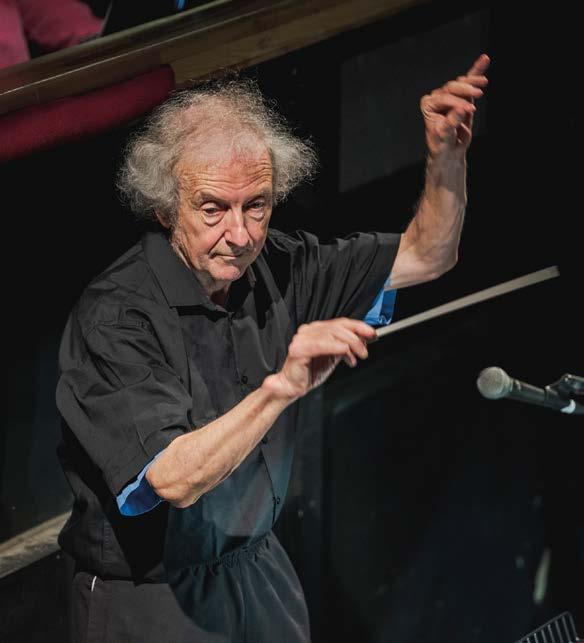
Sophie Rashbrook speaks to conductor Anthony Negus about humour, colour and willful apprentices in the so-called Scherzo of the Ring Anthony Negus in rehearsal “It’s much intention”theaccordingtheirablethesingerinterestingmoreiftheplayingroleistoinflectsingingtocharacter’s
LONGBOROUGH FESTIVAL OPERA30 D ie Walküre, the second opera in Richard Wagner’s Ring cycle, ends on top of a mountain, with Wotan, ruler of the gods, encircling his sleeping daughter Brünnhilde with a protective ring of fire, and the words: “Only the one who knows no fear may pass through the flames”. From those dizzying heights, Siegfried, the next instalment in the saga, picks up the story a generation later, plunging us immediately earthwards, into a new world, whilst simultaneously conjuring memories from the saga’s musical past. “In this opera,” says conductor Anthony Negus, “there’s always anticipating and looking back – that’s the score of Siegfried all over. The Prelude simply starts with a very low timpani roll, which seems like a throwback to the world of Das Rheingold ”. Those who know Das Rheingold, the first opera in Wagner’s four-part mythological saga, will recall its rumbling beginnings: a low E-flat in the double basses that feels as if it is emanating from the centre of the earth. And the Rheingold references don’t end there. “Then we hear a strange motif – a kind of reedy groan – in the bassoons, which we’ve heard before in Scene 3 of Das Rheingold. The whole Prelude feels like a recap of the Rheingold Nibelung music,” says Anthony, referring to the race of dwarves whose actions trigger the events of the entire saga. In its original context, that earthy, moody bassoon theme heralds Mime the dwarf’s description of the terrible crimes his brother, Alberich, committed in pursuit of the Ring’s power. Now, many years later in Siegfried, Mime is still dwelling on the Ring, and his thoughts are turning to the sword he needs to reforge, if he is to claim the stolen jewel. “It’s a very strange beginning,” says Anthony, “but that ‘brooding’ motif becomes all-important and all-pervasive in the opera”.
“This is an understandable thing,” says Anthony. “I’ve always thought the problem with Act I is that we have no female voices, and it can become very wearing if the singer playing Mime just sings it all in an ugly way, or as a caricature. I’m sure that’s not what Wagner wanted. It’s much more interesting if the singer playing the role is able to inflect their singing according to the character’s intention –which is, admittedly, mostly malevolent – but it is vital that we constantly hear a differentiation of mood, dynamic and style. This goes for all the singers – but particularly in the case of Mime”.

312022 SEASON PROGRAMME
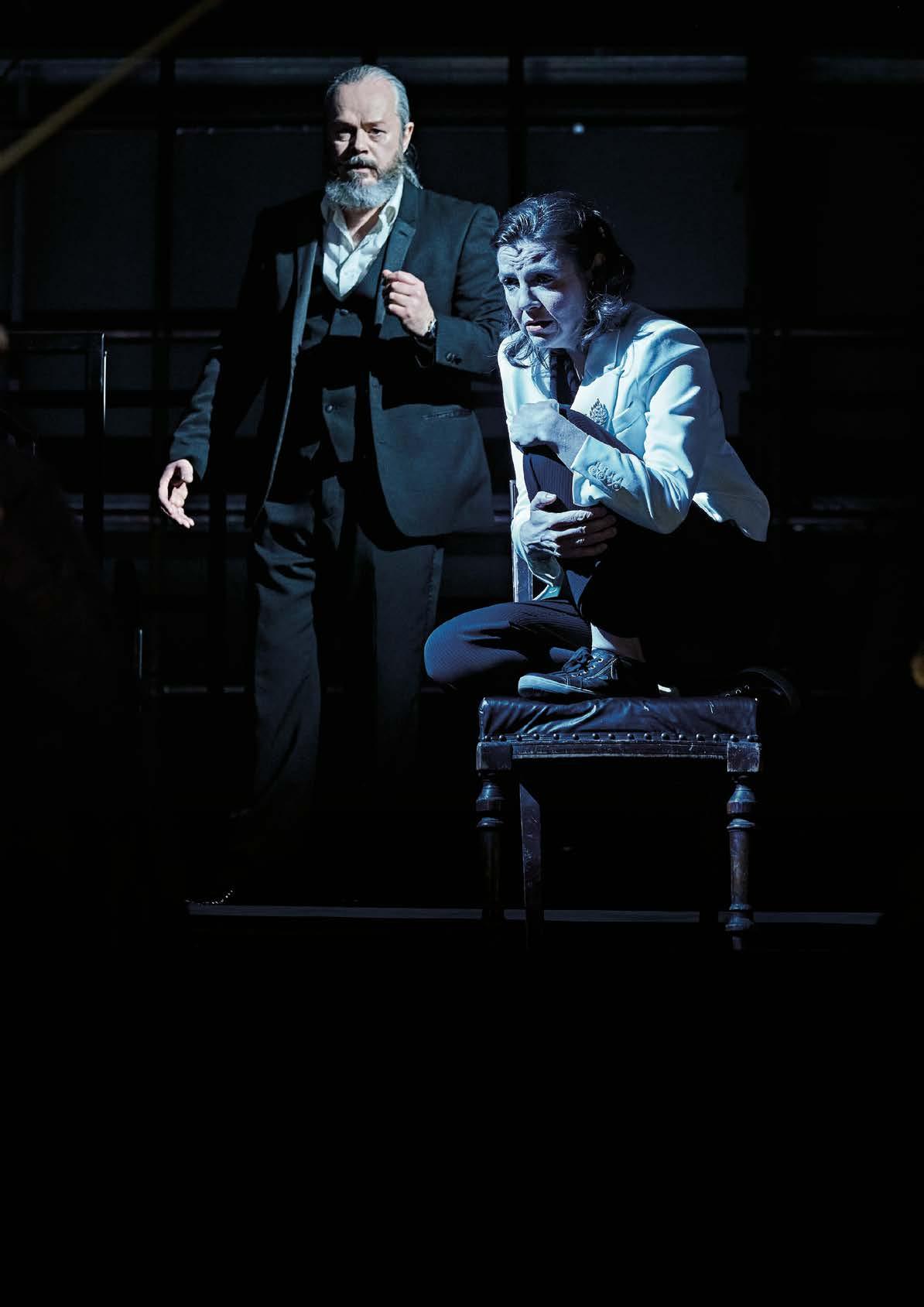
Another crucial aspect of interpreting Siegfried lies in the balance between the serious and the humorous. Comedy is not a quality typically associated with Wagner, but the opera’s lighter moments take many forms, from physical comedy (Mime’s reaction to Siegfried’s superhuman anvil-hammering), character flaws (Mime’s joy at riddle-solving, which almost tips into self-sabotage), and the hero’s revelation of Brünnhilde at the end of the opera (‘That is no man!’) which always gets a laugh from British audiences – although not, as Anthony points out, in Germany. But for Negus, there is a more sombre, over-arching process at work beneath the laughter – and here he cites the writing of Robert Donington: “The humour underlies the much more interesting process in the opera of the unconscious becoming conscious, and Donington is fascinating on this. Even Siegfried’s reforging of the sword is an important part of him becoming conscious; and becoming a man. But in this opera, all of the characters are on some sort of a journey”. Siegfried’s initial lack of consciousness is key to his success: as Mime learns, only a hero who knows no fear can reforge the blade, and thus slay Fafner the dragon, guardian of the gold. But when in Act II – following his successful forging of the blade and killing of the monster –Siegfried drinks the dragon’s blood, not only does he become able to understand the song of the Forest Bird, he also experiences a sexual awakening. “The end of that Act is so beautiful and so vital. Until the death of Fafner, there is so much bass in the orchestra – particularly in the contrabass tuba. With the song of the Brünnhilde (Lee Bisset) and Wotan (Paul Carey Jones) in Die Walküre, Longborough 2021.
LizaldeJorge

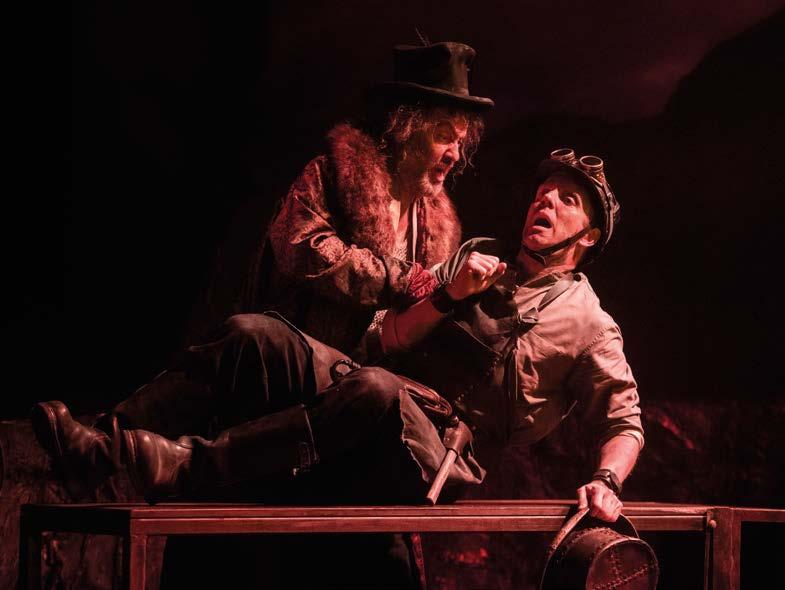
Alberich (Mark Stone) threatens Mime (Adrian Dwyer) in Das Rheingold, Longborough 2019 “[the mystery,solemnity,hasheardwhichnuminousmysterious,thisappearsWanderer]withwonderfullymotifwehaven’tbefore.Itnobility,andandallinone”
LONGBOROUGH FESTIVAL OPERA32
Sophie Rashbrook is a writer, librettist and opera dramaturg based in London. Her libretti include the song-cycle Six Songs of Melmoth, an Oxford Lieder Festival commission by Cheryl Frances-Hoad, and the song Nature is Returning by Joshua Borin, which has been performed on BBC Radio 3, the Wigmore Hall, and the Concertgebouw. She holds degrees in Russian and opera-making from Cambridge and Guildhall, and currently edits the opera programmes at the Royal Opera House. Forest Bird, we hear our first female voice in the opera, and the bass melts away. Suddenly it’s all brightness and light, and it’s such a Wotan’srelief.”evolution in the piece, as the thinly-disguised Wanderer, is equally fascinating. Compared to the impetuous God we encounter in Die Walküre, the Wanderer is more restrained, and more mature: “In the second scene, he appears with this wonderfully mysterious, numinous motif which we haven’t heard before. It has nobility, and solemnity, and mystery, all in one”. Likewise, Brünnhilde’s trajectory is far from simple. “The music that Siegfried and Brünnhilde sing together is far more complex than being a conventional ‘love duet’. When she wakes, she is not ready yet to succumb to the physical assault that Siegfried represents – and she looks back with regret on what she’s leaving behind. It’s very beautiful andThesad”.complexity of the couple’s emotional journey is reflected in the orchestral scoring of Act III, which incorporates an additional twelve years of experience on the composer’s part. Wagner finished Acts I and II in 1857, writing Tristan und Isolde and Die Meistersinger von Nürnberg before completing Act III of Siegfried in 1869. “In that act, a whole new atmosphere comes into being: vividly in the marvellous prelude, and we hear it, too, in the scene between the Wanderer and Erda”. Ultimately, Brünnhilde is carried away by Siegfried’s passion, and the piece ends in a blaze of musical glory, the young hero having defeated the dragon and his manipulative mentor, Mime. Aptly enough, Siegfried will be the first opera in the current Longborough Ring where Anthony is working closely with his own apprentice: Assistant Conductor Harry Sever, who will be given the opportunity to lead a performance from the podium as Longborough’s inaugural Ring Cycle Conducting Fellow. For Anthony, who first conducted Siegfried in 1985 in a performance for Welsh National Opera, the opera requires careful preparation, not least in terms of stamina. Recalling that 1985 performance, Anthony says: “It had all been going well, and in the Act III Interlude, I was riding the crest of the wave, when I suddenly realised –rather like Siegfried under the linden tree, that I was exhausted, and I had threequarters of an hour more to go! I got through it, but it taught me about pacing – and I will warn Harry!”. We can only hope that Harry is rather more receptive to advice than Siegfried…

Harry Sever conducts Siegfried at Longborough on 3 June.
– Polly Graham, Artistic Director Wotan (Paul Carey Jones) in the final moments of Longborough’s 2021 Die Walküre
“We are thrilled to be working with Harry Sever – an extraordinary young conductor. We are excited to be expanding our work with Emerging Artists into the field of conducting.
This year we were delighted to appoint Harry Sever as our first Ring Cycle Conducting Fellow. Harry will work alongside Longborough Music Director and eminent Wagnerian Anthony Negus for the next three seasons as we build towards our 2024 Ring cycle.
Longborough’s inaugural Ring Cycle Conducting Fellow
LizaldeJorge RoseJames
INTRODUCING HARRY SEVER
332022 SEASON PROGRAMME
Anthony’s knowledge and vast experience in this repertoire are things which must be passed on to the next generation, and we have created this new role to make sure this happens.”
Harry was chosen following an extensive audition process in which eight emerging conductors worked with Anthony Negus on the opening scene of Siegfried. An expert and experienced panel observed the process, including Anthony, Polly Graham (Longborough Artistic Director), Isabel Murphy (Longborough Artistic Advisor for the Ring) and Brenda Hurley (Royal Academy of Music’s Head of Opera, previously Director of the prestigious International Opera Studio in Zürich).


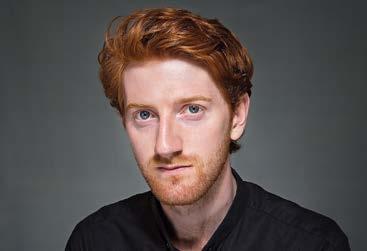
Amy is the Artistic Director of the Copenhagen Opera Festival.Awards: 2020 Best New Opera Production at Copenhagen Culture Awards for La bohème (Copenhagen Opera Festival); 2019 Reumert Award for Best New Production for Drot Og Marsk (Royal Danish Opera).Credits as Director include: The Ring cycle (Longborough Festival Opera, 2019-2024); Gianni Schicchi (Canadian Opera Company), La bohème (Copenhagen Festival Opera); La bohème (Den Norske Opera & Ballet); National Opera Studio at Cadogan Hall (NOS, ENO); A Midsummer Night’s Dream – Concert production (Royal Academy of Music); Noye’s Fludde for the ACT partnership (Amiens, Compiègne, Cambridge).
Credits as Stage and Video Director include: Tosca and Falstaff (RLPO, WNO, Abu Dhabi Festival all with Sir Bryn Terfel); War Horse in Concert with Michael Morpurgo, Simon Callow, Joanna Lumley and Juliet Stevenson (Royal Albert Hall, Usher Hall Edinburgh, Leeds Town Hall).Credits as co-Director (with Kasper Holten) include: Drot Og Marsk (Royal Danish Opera); Marco Polo (Guangzhou, Beijing, Quanzhou, Genova).Credits as Associate Director include: The Ring cycle (Royal Opera House); Brothers (Armel Opera Festival – Budapest, Den Jyske Opera, The Icelandic Opera); The Merchant of Venice (Bregenz Festival, Polish National Opera, Welsh National Opera).
LONGBOROUGH FESTIVAL OPERA34 THE CREATIVE TEAM
Rhiannon’sDESIGNERdesign experience is multidisciplinary, spanning theatre, opera, large scale community shows, music festivals, immersive theatre andRecentevents.Opera designs include: Future Visions and Like Unlike (The Grange Festival); Unseen (Streetwise Opera); Dare to Dream (Royal Albert Hall); Water in the Desert (NYU Abu Dhabi); Falstaff (Liverpool Philharmonic); Silver Birch and Road Rage (Garsington Opera); The Hogboon and Monster in the Maze (Barbican LSO); Così fan tutte (RNCM); The Freedom Game (Royal Albert Hall); ROH Youth Opera Company Triple Bill (ROH Gala).Rhiannon worked as a prop supervisor and buyer for The National Theatre, English National Opera and in the West End and was Props Production Manager for the London 2012 Olympic Ceremonies. Between 2012 and 2014 Rhiannon art directed 14 productions for Secret Cinema including Shawshank Redemption, Miller’s Crossing and Grand Budapest Hotel Rhiannon was Art Director for the first iteration of Alice Adventures Underground and has designed and art directed many large scale immersive corporate events for clients including Save the Children, Cancer Research, King, Spotify and RhiannonKlarna.hasalso produced large scale events and these credits include: Back to the Future (Secret Cinema); The Cyberscene Project and Cookies (Theatre Royal Haymarket) and Rooms by FKA Twigs (Veuve Clicquot Widow Series).
LIGHTING
CHARLIE MORGAN JONES
SIEGFRIED ANTHONY NEGUS CONDUCTOR (exc. 3 June)
DESIGNERWelshLighting Designer Charlie has lit theatre and opera in the UK and Internationally.Operaincludes: La bohème (Norwegian National Opera), Gianni Schicci (Canadian Opera Company), Das Rheingold, Die Walküre (Longborough Festival Opera), Tristan I Izolda (Polish National Opera), La bohème, Gianni Schicci (Copenhagen Opera Festival), Aida, Fidelio (Dorset Opera), Mansfield Park , The Magic Flute, The Marriage Of Figaro, The Beggar’s Opera, Savitri, Riders to the Sea, L’enfant et les sortilèges, Venus and Adonis, Actéon, Ava’s Wedding, Dialogues des Carmélites (Royal Birmingham Conservatoire), Street Scene (Royal Conservatoire of Scotland), Dubai – Rostov – New York (National Opera Studio).Theatre includes: Derren Brown –Underground, Cool Rider, The Blues Brothers, Dracula (West End), REDD (Barbican), Andrew Lloyd Webber’s Unmasked (The Other Palace), Avenue Q, Gobsmacked!, The Producers, Seussical, James and the Giant Peach (International Tour), Derren Brown – Showman, Little Shop Of Horrors, The Lady Vanishes, Posh (UK Tour), 71 Coltman Street (Hull Truck), 3am (Curve, Leicester), The Snow Queen (Rose, Kingston), Macbeth (Theatre Severn), A Little Night Music (Royal Birmingham Conservatoire), Bat Boy (Royal Conservatoire of Scotland), The Burnt Part Boys (Park Theatre), Love On Trial, And Crocodiles Are Hungry At Night (Bilimankwhe), Into The Woods (Lowry, Manchester).
RHIANNON NEWMAN BROWN SET AND PROPS
AMY LANE DIRECTOR
Die Walküre has dominated Anthony’s year: at Longborough in June, ENO December 7, 2021, for Melbourne Opera in February 2022, all critically acclaimed and enthusiastically received. The association with Melbourne Opera began in 2018 with Tristan und Isolde (Green Room Award for Best Conductor), followed by Der fliegende Holländer, Fidelio and Das Rheingold Over many years at Longborough, he has established himself as a highly perceptive and sensitive conductor of Wagner, exemplified by the highly acclaimed Ring cycles in 2013, Tannhäuser (2016), Tristan und Isolde, Der fliegende Holländer, also The Magic Flute, and Ariadne auf Naxos . In 2017 The London Wagner Society presented him with the Reginald Goodall Award for his devotion to the works of RichardGuestWagner.appearances: Lübeck for Parsifal and Holländer, Glyndebourne for a performance of Die Meistersinger, Wellington Festival Parsifal Particular highlights of his 35 years with Welsh National Opera were Tristan, The Valkyrie with Goodall, Pelleas with Pierre Boulez, and conducting Parsifal. He has conducted more than 150 performances of a wide repertoire for WNO, especially Mozart. He read music at Christ Church Oxford, and gained opera conducting experience at the Else Mayer-Lismann Opera Workshop and the London Opera Centre. He studied conducting with Franco Ferrara in Sienna, and with George Hurst in the UK, and made his conducting debut in Wuppertal with d’Albert’s Tiefland, and he worked at Bayreuth and Hamburg. Future Projects: Grange Park Opera, Der fliegende Holländer with Sir Bryn Terfel, Rachel Nicholls, July 2022. For Melbourne Opera: Siegfried September 2022, Ring cycle March –April 2023. For Longborough Festival Opera, Götterdämmerung June 2023, Ring cycle June 2024.
Amy was Head Staff Director at the Royal Opera, Covent Garden from 2015 to 2019 and also worked as revival director on Kasper Holten’s production of Don Giovanni at Houston Grand Opera, Opera Australia, Teatro Liceu Barcelona and on the 2015 ROH tour to Japan.

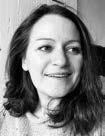
CHRISTOPHER MOON-LITTLE ASSISTANT DIRECTORChrisisan Anglo-Indian director and librettist (he/ him). He read Music at Royal Holloway where he started directing, having previously been training as a singer and actor. He has worked for the Opera de Baugé ( Aida, Figaro, Butterfly, Pagliacci ), The Grange Festival (Die Entführung), Longborough Festival Opera (Das Rheingold ), English Touring Opera (Cesare Dardanus The Silver Lake, Seraglio) and Welsh National Opera (Butterfly, Fledermaus, Forza, War and Peace, Ballo, Carmen). He was the founder and artistic director of Opera Holloway, directing and translating Figaro, Cendrillon, and Hansel and Gretel. For Brent Opera he directed Rigoletto, Flute and The Mikado. He directed Die Fledermaus at the Epsom Playhouse for ELOC and most recently with his own company Moon-Little Theatre directed Don Giovanni, The Turn of the Screw and workshopped scenes from Blood and Ink , a pasticcio opera about Adolf Eichmann and Raoul Wallenberg in Budapest. He has spent the pandemic working as a carer for the elderly but future plans include the rest of Longborough’s Ring cycle and creating operatic mischief wherever possible.
KuylerAdmill
352022 SEASON PROGRAMME EMMA RYOTT COSTUME DESIGNEREmmaRyott’s designs for opera include: The Ring cycle (Longborough Festival Opera, 2019-2024); La bohème (Copenhagen Opera Festival – Best New Opera Production at 2020 Copenhagen Culture Awards); Winterreise, Verdi Requiem (Zürich); The Flying Dutchman, The Damnation of Faust (Deutsche Oper); The Great Gatsby, La Damnation de Faust (Semper Oper); Falstaff (Wiesbaden); Orphée et Eurydice (Stuttgart); Otello (Salzburg Festival, Teatro dell’Opera di Roma); Mathis der Maler (Theater an der Wien); Manon Lescaut (ENO). Designs for ballet include: Cassiopeia’s Garden, Lulu eine Monstretragödie, Das Fräulein von S (Stuttgart Ballet); Monteverdi, Little Match Girl, Verdi Requiem, Romeo und Julia, Sonnett (Zürich Ballet); The Seagull, Orlando (Bolshoi Theatre); Anna Karenina (Zürich, Oslo, Munich, Moscow, Korea National Ballet); Wozzeck (Oslo, Zürich); Leonce and Lena (Montreal, Stuttgart); Der Sandmann (Stuttgart, Zürich); Poppea/Poppea film (Arte); Don Q (Theaterhaus Stuttgart); The Return of Ulysses (Royal Ballet Flanders, Edinburgh Festival); Cinderella (Finnish NationalDesignsBallet).fortheatre include: Young Chekhov: Platonov, Ivanov, The Seagull (National Theatre); The Heart of Robin Hood (RSC/Vesturport in Boston), Toronto (Elliot Norton Award for Outstanding Design); Tom Stoppard’s Rock ‘n’ Roll (West End, Broadway); Sunset Boulevard (Göteborg Opera). TV designs include: 2020 & 2016 New Year’s Concert (Vienna, for ORF). Film designs include: Death of Pentheus, Arhat, Taming the Dragon, Verdi Requiem (Zürich Opera & Ballet).
RoseJames
TIM BAXTER VIDEO DESIGNERTimbegan his working life at the Royal Shakespeare Company as an early practitioner of theatre video design. During this time he designed the video for countless productions, most notably the multi award-winning Matilda The Musical. After six successful years at the Royal Shakespeare Company, Tim decided to found his own business, Eight Engines. Under the banner of Eight Engines, Tim has video designed various high profile productions including Warhorse in Concert and Bryn Terfel at 50 (Royal Albert Hall); Tosca (Wales Millennium Centre); Falstaff (Royal Liverpool Philharmonic) and Ross at the Chichester Festival Theatre. Alongside his theatre work, Tim is an accomplished filmmaker having shot and produced several award-winning dramas for the BBC including Black Roses: The Killing of Sophie Lancaster and Men Who Sleep in Cars, as well as the BAFTA nominated Documentary Children of the Holocaust
British conductor and composer Harry Sever studied at Oxford University and trained at the Guildhall School of Music and Drama and Royal Academy of Music. Recent and upcoming engagements include concerts with the orchestra of Welsh National Opera, Carmen (Opera North), Fantasio (Garsington), La traviata (Opera Holland Park), Cendrillon (Bampton Classical Opera), The Nutcracker (Peter Schaufuss Ballet), as well as projects with The Royal Danish Opera, Royal Birmingham Conservatoire, and British Youth Opera. A finalist at both the LSO’s Donatella Flick Conducting Competition and Athens International Conducting Competition, he has worked on the music staff at ENO, Den Jyske Opera, and the Grange Festival, collaborating with orchestras including the Bournemouth Symphony Orchestra, Odense Symfoniorkester, and the Britten Sinfonia, and has performed at the Royal Albert Hall, Royal Festival Hall, and the Barbican. From the 2022/23 season, Harry takes up the position of Music Director of the Cambridge Philharmonic. Recent composition highlights include commissions for BBC Radio 4, the Wigmore Hall, Oxford Lieder Festival and Sell-A-Door productions. Passionate about outreach work, he is a regular collaborator with the Royal Opera House, ENO, and Streetwise Opera, bringing music to the wider community.
LORENA RANDI CHOREOGRAPHERLorena worked extensively as a dancer before establishing herself as a choreographer. After training at the Royal Ballet School, she graduated from London Contemporary Dance School in 1995. Her formative years were spent dancing with Michael Clark (1998-2006). Later with Mark Morris, Fabulous Beast Dance Theatre, Aletta Collins and Arthur Pita.Lorena’s theatre and opera choreography work includes: Oceane (Deutsch Opera, Berlin); Osud (Brno Opera, Czech Republic, Robert Carsen); Once In a Lifetime (Young Vic, Richard Jones); Sweeney Todd, Sunday in the Park with George, Into the Woods (Théâtre du Châtelet, Paris, Houston Grand Opera, San Francisco Opera, Lee Blakeley); Candide, The Importance of Being Earnest (Opéra National de Lorraine, Sam Brown); Queen of Spades (ENO, David Alden); Triumph/Triumph, Handel/Barry, Karlsruhe; Cotton Panic (Jane Horrocks, Manchester International Festival); Die Fledermaus (Sweden); Le nozze di Figaro (Nevill Holt).Collaborations for Art, Fashion and Music include: Martin Creed, ‘Work1020’, performed in museums and theatres in Edinburgh, London, Chicago, New York, Kyoto, Brussels and Utrecht; ‘Sink’, a piece for 24 synchronised swimmers with Artist Janice Kerbel, Glasgow; with photographer Nick Knight and Maison Margiela for a film for ‘SHOWstudio’; with Adele and Will Young; also Bulgari, Adidas and Nike.
HARRY SEVER ASSISTANT CONDUCTOR (conducting 3 June)

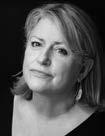
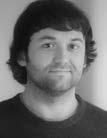

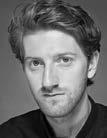
FowlerSimon
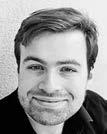
Having made his professional debut as Rodolfo in Baz Luhrmann’s Broadway production of La bohème in Los Angeles, BritishAustralian tenor Adrian Dwyer has since established himself as a versatile and striking interpreter of character roles as well as a sought after performer of contemporary music. He has performed at Teatro Real Madrid (Street Scene), Opernhaus Zürich (Sweeney Todd ), Dutch National Opera (Death in Venice), Teatro Massimo Palermo (Parsifal ), Israeli Opera (Salome) and Opera Queensland ( A Flowering Tree). Closer to home, recent highlights have included D’Esperaudieu in Gerald Barry’s The Intelligence Park at the Royal Opera House, Covent Garden, Andrei/ Khovanshchina and Anatole/ War and Peace for Welsh National Opera, Electrician/Powder Her Face for the inaugural production Irish National Opera, Inspector of Lunatics in the world premiere of Michael Gallen’s Elsewhere at Dublin’s Abbey Theatre, and the title role of Alexander Litvinenko in the world premiere of the eponymous opera at Grange Park Opera last summer. Following Siegfried at Longborough, he makes his house and role debut as the Astrologer/ The Golden Cockerel at Theater Magdeburg.
PREVIOUSLY FOR LONGBOROUGH: Mime/ Das Rheingold (2019), Florestan/Fidelio (2017) PAUL CAREY JONES
ADRIAN DWYER TENOR MIME
LONGBOROUGH FESTIVAL OPERA36 BRADLEY DALEY TENOR SIEGFRIED
Australian tenor Bradley Daley has won critical and popular praise for some of opera’s most expansive tenor roles –Siegfried, Der Kaiser, Otello, Florestan, Canio, Don José and Erik. Most notable, Mao Tse-tung (Nixon in China) and the tenor solos in The Dream of Gerontius In Australia Bradley has performed with OA – Curley/Of Mice and Men (Green Room Award), Don José/Carmen, Siegmund/Der Ring des Nibelungen and Pinkerton/Madama Butterfly For Opera Queensland – Florestan/Fidelio, Rodolfo/La bohème, Nick/La fanciulla del West ; for SOSA, Otello, Narraboth/Salome; Dick Johnson/L a fanciulla del West ; Canio/Pagliacci, Walther/Die Meistersinger von Nürnberg; for Victorian Opera, Erik/Der fliegende Holländer and for the Brisbane Festival, Bob Boles/Peter Grimes In 2018 Bradley debuted the role of Siegfried/Der Ring des Nibelungen and Götterdämmerung for Opera Kiel. In 2019 he debuted the role of Der Kaiser/Die Frau ohne Schatten; in 2020/21 Barney/Summer of the Seventeenth Doll for SOSA, Tito/La clemenza di Tito for National Opera and Don Basilio/The Marriage of Figaro for Opera Qld. Internationally he has sung with Opera North, Welsh National Opera, English National Opera, Opera Holland Park, Co-Opera Ireland, Muziektheatre Transparent in Belgium, Compagnia d’Opera Italiana di Milano and Opera Nomade in Paris.
PREVIOUSLY FOR LONGBOROUGH: Wotan/ Die Walküre (2021) MARK STONE BARITONE ALBERICH
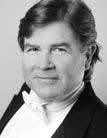
BASS-BARITONE THE WANDERERWinner of the 2013 Wagner Society Singing Competition, Welsh-Irish bass-baritone Paul Carey Jones has performed extensively in heldenbariton roles such as Wotan/Das Rheingold and Die Walküre, Kurwenal/Tristan und Isolde, Dr Schön/Lulu, and Father/ Hänsel und Gretel Recent house debuts include Ivan Ivanovich/ The Nose for the Royal Opera House, at Teatro Comunale Bolzano as Dr Schön, Jack the Ripper/ Lulu, Gothenburg Opera as Wotan/Die Walküre, Icelandic Opera as The Colonel in Daniel Bjarnason’s Brothers, and Opera Holland Park as Lescaut in Puccini’s Manon Lescaut Other recent highlights include the title role in the Chinese premiere of Britten’s Noye’s Fludde in Beijing and Shanghai, the Scottish premiere of Philip Glass’ The Trial, the world premieres of John Metcalf’s Under Milk Wood Stephen McNeff’s The Burning Boy, Conor Mitchell’s The Musician, and Stuart MacRae’s Prometheus Symphony, and covering the roles of Wotan / Der Wanderer in the 2018 Ring cycle at the Royal Opera House. His critically acclaimed first book Giving It Away – Classical Music in Lockdown and other fairytales was published in October 2020 and is on sale from online booksellers worldwide. His work during the recent pandemic has been generously supported by the Arts Council of Wales and the Royal Society of Musicians.
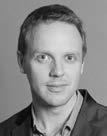
Baritone Mark Stone was born in London and studied Mathematics at King’s College, Cambridge, and singing at the Guildhall School of Music and Drama. In 1998 he was awarded the Decca Prize at the Kathleen Ferrier Awards. Recent operatic engagements include his first foray into Wagner roles with acclaimed role debuts as Wotan/Die Walküre for Grimeborn, for which he was nominated for an Offie Award for best performance in an opera, Gunther/ Götterdämmerung at the Grand Théâtre de Genève and Alberich/Das Rheingold at Longborough.Upcoming highlights include Sharpless/ Madama Butterfly for Welsh National Opera; Alberich/Siegfried for Longborough, the Count/ Figaro Gets a Divorce for Theater Magdeburg and Gallimard in the world premiere of M. Butterfly for Santa Fe Opera.
A distinguished concert artist, Mark gives further performances of Totentanz with Thomas Ades in Vienna and Budapest and The Kingdom with the Cracow Philharmonic. He has recently sung West Side Story with the Accademia Nazionale di Santa Cecilia and Sir Antonio Pappano; St Matthew Passion with the Orchestre National de Lyon, Thomas Ades’ Totentanz with Daniel Harding and the Swedish Radio Symphony and Orchestre de Paris, a piece with which he is synonymous, having sung it with Thomas Ades and the New York Philharmonic, Danish National Symphony and Finnish Radio Symphony Orchestras. Mark has a widespread discography. In November 2020, he was nominated for a Grammy Award for his recording of Thomas Ades’ Totentanz with the Boston Symphony Orchestra.
THE SIEGFRIEDCAST
PREVIOUSLY FOR LONGBOROUGH: Alberich/ Das Rheingold (2019), Giorgio Germont/La traviata (2018)
LONGBOROUGH DEBUT

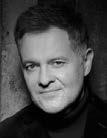
WILDING
PREVIOUSLY FOR LONGBOROUGH: Brünnhilde/Die Walküre (2021), Isolde/ Tristan und Isolde (2017), title role/Jenůfa 2016), Isolde/ Tristan und Isolde (2015), title role/ Tosca (2014), Freia/Das Rheingold (2013), Sieglinde/Die Walküre (2013), Gutrune/Götterdämmerung (2012), title role/Katya Kabanová (2012), Tatyana/ Eugene Onegin (2007)
372022 SEASON PROGRAMME
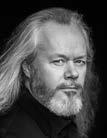
PREVIOUSLY FOR LONGBOROUGH: Fafner/ Das Rheingold (2019) JULIETH LOZANO SOPRANO WALDVOGEL Colombian soprano Julieth graduated with a Masters in Vocal Performance and an Artist Diploma in Opera from the RCM. An Irene Hanson and Independent Opera at Sadler’s Wells scholar, Julieth was a 2019/20 YA at the NOS in London. In the 2021/22 season, Julieth performed with WNO at the delayed Dubai Expo 2020 in Al Wasl as Zayed, Young Mary directed by Sir David Pountney. Later this season, she returns to Colombia as Susanna in Le nozze di Figaro conducted by Martin Haselböck. Previous engagements include Vixen/The Cunning Little Vixen for Longborough, Zerlina/ Don Giovanni at the Verbier Festival, Tytania/ Midsummer Night’s Dream for Opera al Parque, Colombia, Despina/Così fan tutte at Cartagena’s International Music Festival, Susanna/Le nozze di Figaro at RCM and Norina/Don Pasquale for Random Opera. A 2020 Kathleen Ferrier competition finalist, and 2018 recipient of the President’s award given by The Prince of Wales, Julieth appeared in the BBC documentary Queen Victoria: My Musical Britain recorded in 2019 at Buckingham and Kensington palaces. Julieth was a 2016 participant in Georg Solti’s Academy and Verbier Festival’s Project Opera, where she was awarded the Prix Thierry Mermod. She has performed at the RAH, V&A Museum among other venues.
English bass Simon Wilding made his ROH debut in 1997 as a Brabantian Noble/Lohengrin under Valery Gergiev, followed immediately by appearances as the Cappadocian/Salome, Foltz/Die Meistersinger von Nürnberg, Lane & Merriman in Gerald Barry’s The Importance of Being Earnest, Sciarrone/Tosca, Lackey/Ariadne auf Naxos, Pinellino/Gianni Schicchi, and Gessler/ Guillaume Tell He has appeared regularly with English National Opera, Opera Holland Park, and Mid Wales Opera. With the Opera Group he performed the role of the Athlete in Olga Neuwirth’s American Lulu which toured to the Young Vic, Glasgow, and the Edinburgh and Bregenz Festivals. A winner of the Wagner Bursary Award, he has sung Fasolt/Das Rheingold and Hagen/Götterdämmerung under the baton of Anthony Legge and made his debut at the Bayreuth Festival in 1989. Recent engagements include Hagen/ Götterdämmerung with COC Canada, Oroe/ Semiramide with the Royal Opera House, Senior Russell/ The Exterminating Angel for Royal Danish Opera and Angestellter, 1. Polizist, 4. Herr, 1. Bekannter Kowaljows, Diener/Die Nase with the Komische Oper, Berlin. Selected recorded work includes Salome and Die Meistersinger (Royal Opera House), Lt Ratcliffe/Billy Budd with the Hallé for the Erato label, and Policeman in Ethel Smyth’s The Boatswain’s Mate with Retrospect Opera.
WALDVOGEL Rosie Lomas
MIME
COVERS SIEGFRIED Charne Rochford Richard Roberts
PREVIOUSLY FOR LONGBOROUGH: Erda/Das Rheingold (2019)
PREVIOUSLY FOR LONGBOROUGH: Vixen Sharp-Ears/ The Cunning Little Vixen (2021) MAE HEYDORN CONTRALTO ERDA
An Anglo-Swedish Society scholar, Mae Heydorn studied at the Guildhall School of Music and Drama. Graduating with distinction she made her operatic debut with Glyndebourne Festival Opera in The Cunning Little Vixen and The Rape of Lucretia. Mae is the winner of the Swedish Wagner Society’s Award 2019. In 2022 she makes her role debut in Longborough Festival Opera’s Siegfried following her critically acclaimed house debut as Erda in Das Rheingold A Making Music Philip and Dorothy Green Award winner and recipient of 1st Prize at the Schubert Society’s Lied Duo Competition, Mae performs across the UK including the English Chamber Orchestra at Cadogan Hall, ROS at St John’s Smith Square, the Oxford Lieder Festival and Music at Oxford. She is one of the contralto/comic mezzo leads at the International Gilbert & Sullivan Festival at Harrogate and Buxton Opera House noted especially for her characterisations of Phoebe and Mad Margaret. Contemporary performances include Bryony Kimmings’ Opera Mums for BBC4 and Birtwistle’s The Mask of Orpheus at English National Opera. In 2021 the UK premier of Gounod’s La nonne sanglante earned her an Offie nomination for the title role and an Offie Award for best opera production. A former student with Helmut Rilling and the internationally renowned Bach Collegium, Mae recently collaborated with early music specialists including Nigel Short, Sarah Latto, Robert Howarth and the Echo Vocal Ensemble.
THE WANDERER Pauls Putnins
LEE BISSET SOPRANO BRÜNNHILDE
FAFNER
ERDA Katie Stevenson Laure Meloy
BRÜNNHILDE
Born in Scotland, which she represented at the BBC Cardiff Singer of the World Competition, Lee Bisset studied at the Royal Conservatoire of Scotland, the Royal Northern College of Music, the National Opera Studio and privately in Italy. Recent engagements have included her debut with the Royal Opera, London, as Liza/ The Queen of Spades, Isolde/Tristan und Isolde at the Konzert Theater Bern, and Sieglinde/ Die Walküre with The Orchestra of the Music Makers,FurtherSingapore.UKengagements have included the title role in Jenufa for Scottish Opera, Mimì/ La bohème for English National Opera, the title role in Tosca for Northern Ireland Opera and Gerhilde/Die Walküre at the Edinburgh International Festival; for Opera North she has sung Freia/Das Rheingold, Third Norn/ Götterdämmerung, Sieglinde/Die Walküre, Mahler’s Symphony No. 8 and Songs by Sibelius International engagements have included Tosca for Opera Memphis and Opera Omaha, Minnie/La fanciulla del West for Opera Omaha, Senta/Der fliegende Holländer for the Ópera de Bellas Artes, Mexico City, Sieglinde/Die Walküre at the Ópera São Paulo, Beethoven Symphony No.9 at the Teatro Real, Madrid, the premiere performances of Piet Swerts’ Symphony of Trees with the Flanders Symphony Orchestra and concerts at the Theatro São Pedro, Brazil.
ALBERICH Freddie Tong Simon Grange
SIMON BASS FAFNER

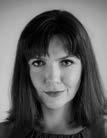
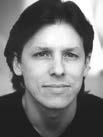
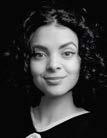
LONGBOROUGH FESTIVAL OPERA38 LONGBOROUGH FESTIVAL ORCHESTRA VIOLIN 1 Katharine Gittings Barbara O’Reilly George JeremyIvorZhivkoChristopherDavidRobertLaurenceEwartKemptonBilsonLewisHughesGeorgievMcGregorSampson VIOLIN 2 Kelly JakobVyvyanChloeJustineRachelCatherineMirandaMcCuskerWaltonScott-BurtBunnTomlinsonMillarLucasTorma VIOLA Isobel Adams Alice JanuaryEmmaRobynMatthewBillenJohnstoneLundWildJohnnsen CELLO Ben GriffCelinePeterClareJulietDaviesTomlinsonSpencer-SmithWilsonBarryWadkin DOUBLE BASS Marcus Willett David Burndrett Mark Doust Peter Smith FLUTE Diane Clark FLUTE / PICCOLO Alison Hardy James McDowall OBOE Victoria Brawn OBOE / COR ANGLAIS Jessica Mogridge CLARINET Alison Lambert CLARINET / BASS CLARINET Robert Shaw BASSOON Jonathan Price Philip Brookes OFFSTAGE / ASSISTANT HORN Mark Smith HORN Richard AndrewJonathanJonathanLewisBarehamEddieFletcher TRUMPET Timothy Hawes Steve Walton BASS TRUMPET Duncan Wilson We are grateful to the below for their support of the following Orchestra Chairs: Leader – Mike Bates Double Bass – Gornall & Wildes Clarinet – Elizabeth Allen Trombone – Patricia Duncker SIEGFRIED TROMBONE Simon AndrewChristopherBakerHickmanClennell TUBA Martin Knowles TIMPANI Clifford Pick PERCUSSION Jonathan Helm Victoria Lee HARP Catherine White Zita Silva ORCHESTRA MANAGER Philip Head ASSISTANT ORCHESTRA MANAGER Stuart Essenhigh

THE ROAD TO 2024 2019 DAS RHEINGOLD 2021 DIE WALKÜRE 2022 SIEGFRIED 2023 GÖTTERDÄMMERUNG 2024 DER RING NIBELUNGENDES
Operatic history happens here
,
392022 SEASON PROGRAMME
Join us. Contact Gill
Ian & Paddy Strange, Wagner Production Circle
Join our improbable and wonderful journey towards Valhalla You can help us to create exceptional, life affirming art. There are opportunities to support through our Wagner memberships, our Wagner Production Circle, the Wagner Future Fund and as a Production Sponsor As well as exclusive events, donations at our higher giving levels have advantageous tax benefits. Powell Membership & Legacy Manager: gill@lfo.org.uk
Back in 2013, the bicentenary of Richard Wagner’s birth, the UK’s only fully-staged Ring was here at Longborough. We have embarked on another compelling new cycle, with Das Rheingold in 2019, 150 years after its first performance; Die Walküre in 2021; and now continuing with Siegfried in 2022. Considered one of the most pre-eminent and ground-breaking works in opera history, the importance of the Ring cycle is indisputable. These four operas are a monumental exploration of love, power and betrayal – human against human, and human against nature. They provoke the most existential questions. Together, audience and artists will experience this epic drama in our intimate opera house.The pandemic delayed our original plans. 2021’s Die Walküre was a concert production. The fullystaged version will be experienced when we perform the full cycle of Der Ring des Nibelungen in 2024. We are making progress towards our fundraising goal of £1.8 million. Be part of our remarkable adventure.
.
Ring Cycle 2024:
LizaldeJorge
Christopher Thompson, Wagner Friend
“We started coming to Longborough in 2007 to see Das Rheingold , at the start of the lead up to the complete Ring cycle in 2013. We have been every year since then. We admire the small scale, but large ambition, the young and mostly unknown (to us) casts, the best surtitles around, the lovely setting, and the wonderful interval dining in the Coach House. We have been delighted with all productions – Wagner and non-Wagner – including operas we haven’t seen before, and probably wouldn’t have been to, had Longborough not put them on. We look forward to every year’s programme.”
Longborough
| 01451 830292 Die Walküre, LongboroughFestivalOpera2021
“1 June 2021 at Longborough was the greatest day of opera I have experienced in any opera house I have attended in four continents in my 78 years of life. Covid had compromised you all in your operations and set you huge artistic problems. The utmost effort you have all put into overcoming these problems was evident in every minute of our time at Longborough.”
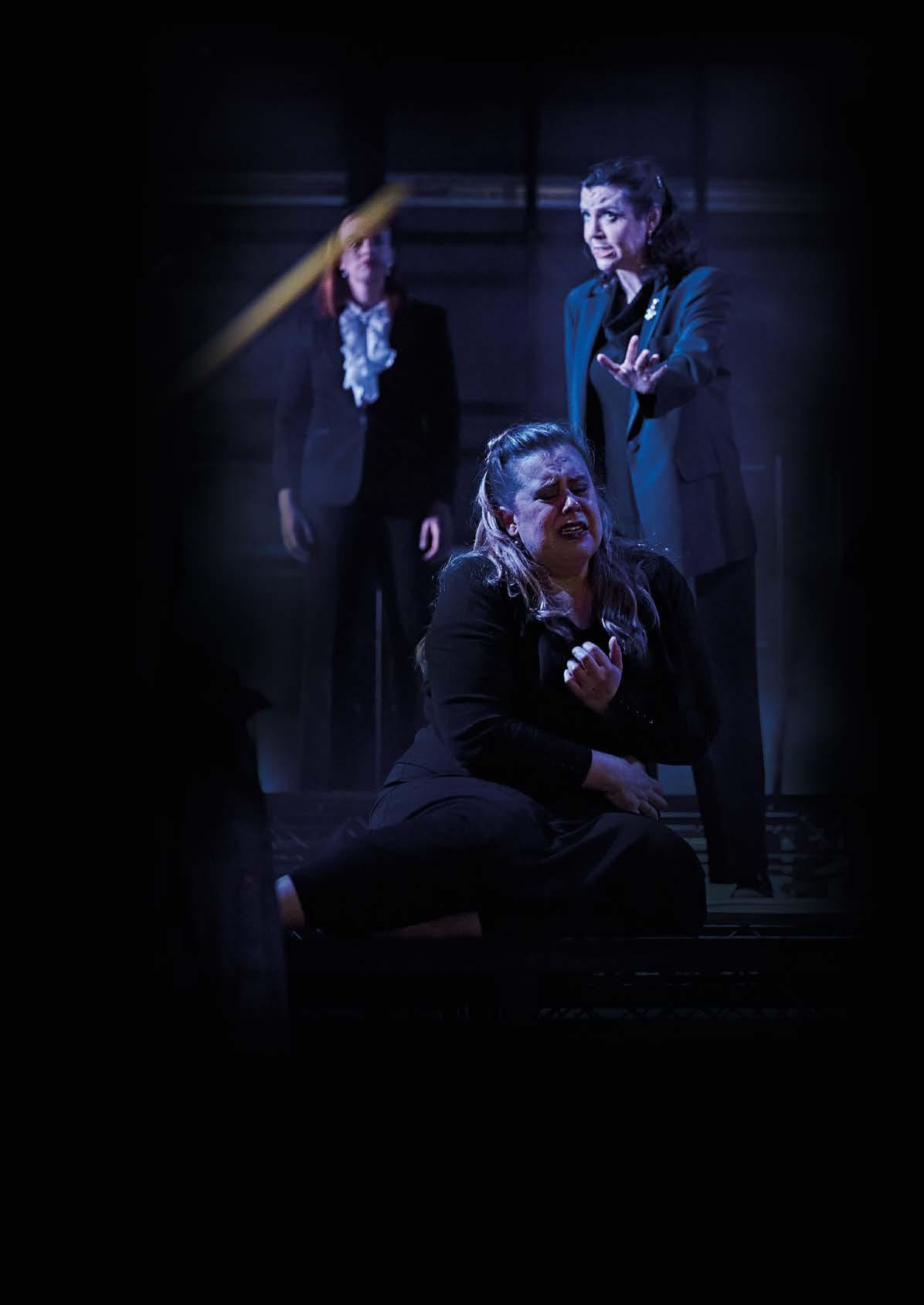
LONGBOROUGH FESTIVAL OPERA40 DIE STADTTOTE (THE DEAD CITY)
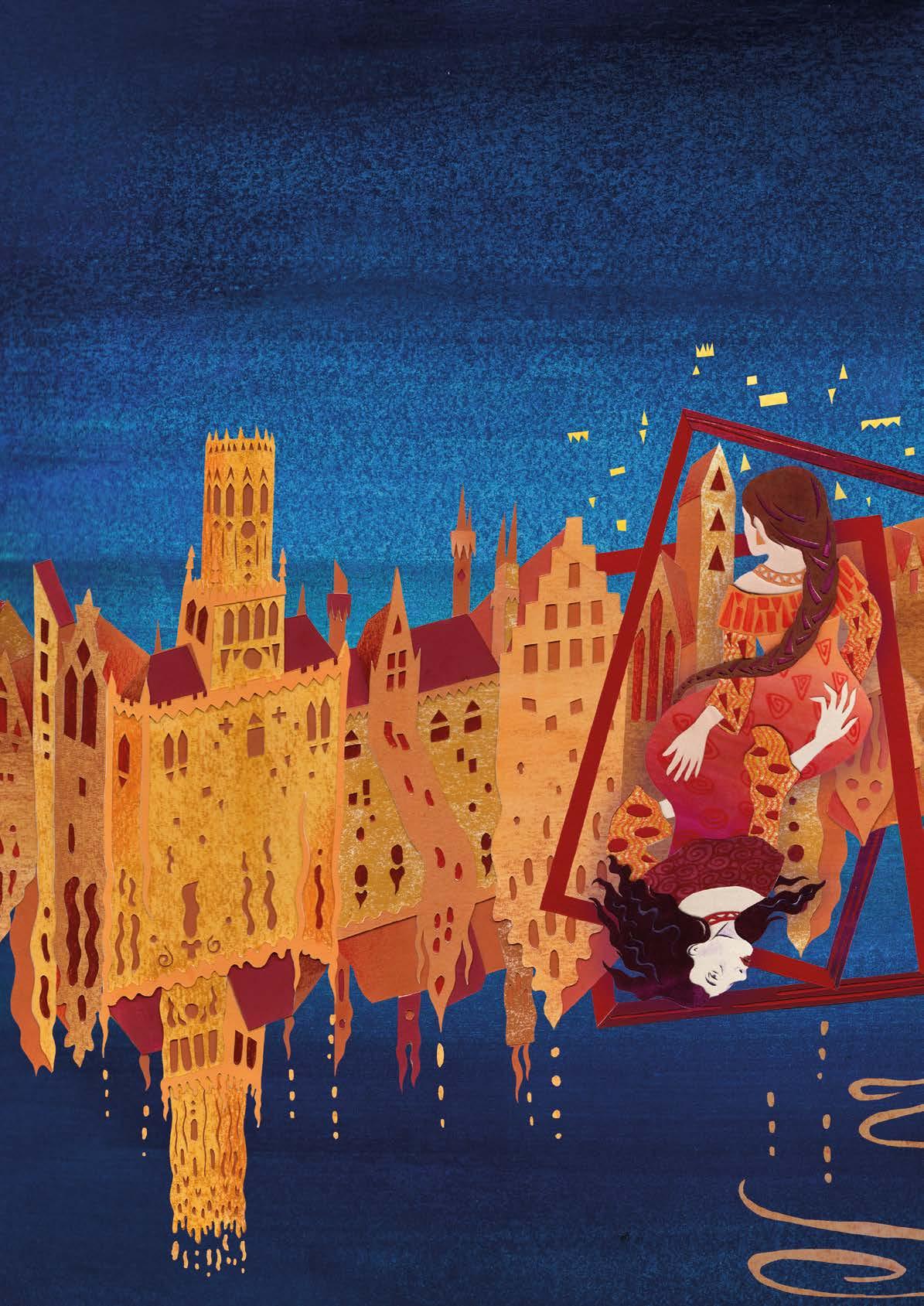
412022 SEASON PROGRAMME Semi-staged production, sung in German with English surtitles. Interval of 90 minutes. MUSIC Erich Wolfgang Korngold LIBRETTO Paul Schott (Julius and Erich Korngold), based on Rodenbach’s Bruges-la-Morte Orchestration by Leonard Eröd, commissioned by Kammeroper/Theater an der Wien and La Monnai FIRST PERFORMANCE OF DIE TOTE STADT Hamburg State Opera and Cologne Opera, 4 December 1920 FIRST PERFORMANCE OF THIS PRODUCTION Longborough Festival Opera, 21 June 2022 CONDUCTOR Justin Brown DIRECTOR Carmen Jakobi DESIGNER Nate Gibson LIGHTING DESIGNER Ben Ormerod MOVEMENT & INTIMACY DIRECTOR Elaine Brown ASSISTANT CONDUCTOR Olivia Clarke ASSISTANT DIRECTOR Nick Fowler REPETITEUR Ashok Gupta LANGUAGE COACH Dominik Dengler SURTITLES Kenneth Chalmers SOUND ENGINEER Andy Guthrie THE CAST PAUL Peter Auty MARIETTA, DANCER / MARIE, GHOST OF PAUL’S LATE WIFE Noa Danon JULIETTE, DANCER Luci Briginshaw BRIGITTA, PAUL’S HOUSEKEEPER / LUCIENNE, DANCER Stephane Windsor-Lewis FRANK, PAUL’S FRIEND / FRITZ, PIERROT IN MARIETTA’S TROUPE Benson Wilson VICTORIN, STAGE DIRECTOR / GASTON, DANCER Alexander Sprague GRAF (COUNT) ALBERT Lee David Bowen LONGBOROUGH YOUTH CHORUS (PRE-RECORDED) Bethany Allan, Ava Alston, Iris Apsion, Lily Apsion, Finley Burrard Lucas, Maite Capper, Becky Chilcott, Dominic Clements, Jess Clews, Toby Custard, Freya Gault, Leo Harrison, Stella Harrison, Toby Hawkins, Darcey Henderson, Tilly Hourihan, Kitty Hudspith, Kobi Nobes, Annabelle Solari Masson, Olivia Solari Masson, Annabella Merle, Islay Milles, Freddy Minett, Ellie Roe, Abi Routh, Verity Wharton, Ben Whitehouse, Isobel Whitehouse Artwork by Amber Cooper-Davies
In his house in Bruges, Paul’s housekeeper, Brigitta, shows his friend Frank the room where Paul keeps mementoes of his dead wife Marie. Brigitta tells Frank of Paul’s preoccupation with the past, and his devotion to Marie. Paul tells Frank that Marie is not dead; he believes he has seen her once more in Bruges, and that she is about to visit him. Frank warns him against his fantasy. The dancer Marietta arrives. Paul is struck by her resemblance to Marie. She tells Paul she is on her way to a rehearsal for the opera Robert le diable ShePaulleaves.sees Marie emerge from the portrait. She tells him that their love will always endure, but that he is tempted by the living woman. ACT
SYNOPSISI
LONGBOROUGH FESTIVAL OPERA42


ACT
In the morning Marietta talks to the portrait of Marie and declares that she has won Paul’s love. Paul watches a religious procession, which seems to pass through his house. Marietta resolves to confront the ghosts that fill his mind. She teases Paul – seizing a braid of Marie’s hair from his collection of mementoes, she dances. In a fit of rage, Paul strangles her with it. She is, at last, exactly like Marie: she is dead. Paul wakes, realising it was all a dream. Brigitta announces that Marietta has returned for her roses. Marietta offers to stay, but Paul is silent. Frank returns, announcing his intention to leave Bruges. Paul realises that Bruges truly is a dead city. He agrees to try and leave with Frank. Alone, Paul concludes that there can be no resurrection. II III
ACT
432022 SEASON PROGRAMME
In Paul’s vision he is standing outside Marietta’s house. He is conflicted between his desire for Marietta and his love for his dead wife. He feels as though the bells of Bruges are warning him. Brigitta passes by – she has joined a religious order. Paul sees Frank approach Marietta’s door. He now perceives his friend as his rival. The troupe arrives, followed by Marietta. She flirts with the troupe and their rich patron. Paul cannot bear it and accuses her of corruption. She realises his obsession and intends to break the dead Marie’s hold over Paul.


ERICH KORNGOLD:WOLFGANG A PRODIGY REDISCOVERED
Erich Wolfgang Korngold’s story was anything but normal. His was an extraordinary life, buffeted between three very different worlds: Mahler’s Vienna, Errol Flynn’s Hollywood, and the years of reckoning that followed World War II. He was born in 1897 in Brno, Moravia, the younger of two sons of Julius and Josephine Korngold. Trained as a lawyer, Julius became a professional critic after gaining the support of Johannes Brahms, whose Symphony No. 4 he had praised. When Erich was four years old, Julius was appointed to the influential newspaper Die neue freie Presse in Vienna, becoming second in command to Eduard Hanslick, whose sharp pen was often used to laud Brahms and tear Wagner to shreds. On Hanslick’s retirement, Julius was appointed in his place. His judgmental words over the city’s hot-house musical life were often splashed across the front page – and the next three pages too. He soon took as his enemy no. 1 the music of the Second Viennese School – Schoenberg, Webern and Berg –whose revolutionary atonal and serialist language he loathed as much as his predecessor had loathed Wagner.
Erich’s talent showed itself rapidly. At nine he played his own music to Mahler, who declared him a genius and advised that he take lessons with Alexander von Zemlinsky. Alma Mahler, the composer’s wife, was kind to the little boy and Erich never forgot this. Decades later, when both he and Alma were in exile in the US, he dedicated his Violin Concerto to her. At 13 his ballet-pantomime Der Schneemann was performed at the Vienna Hofoper in front of visiting Belgian royalty. At 15 he composed a colourful Sinfonietta overflowing with melodic inspiration; and his first operas, a double-bill of one-acters, Der Ring des Polykrates and Violanta, were premiered when he was 17.
Jessica Duchen
Erich Korngold with his parents Julius and Josefine in 1911
LONGBOROUGH FESTIVAL OPERA44
“T oday I received your son’s compositions and have read them with the greatest astonishment,” Richard Strauss wrote to the music critic Julius Korngold in 1910. “The first feeling one has when one realises that this was written by an 11-year-old boy is that of awe and concern that so precocious a genius should be able to follow its normal development.”Thechildprodigy


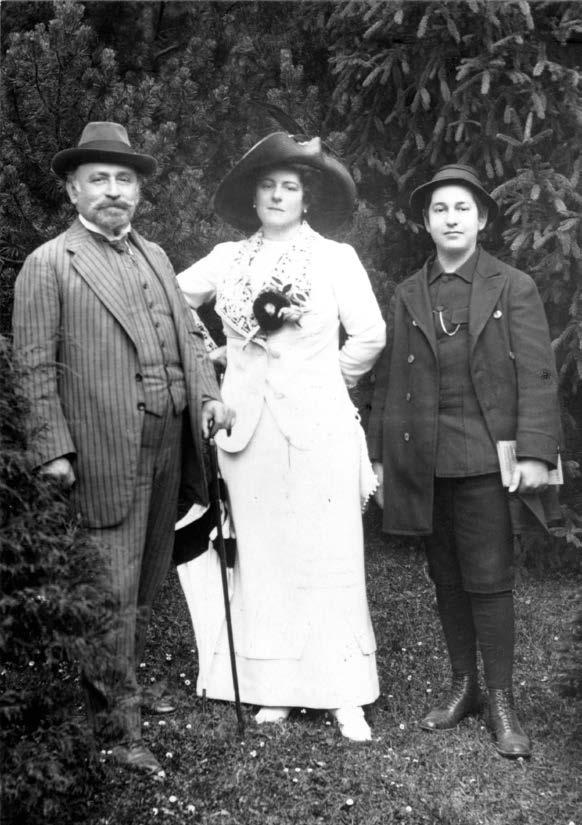
Erich Wolfgang Korngold, circa 1912 Max Reinhardt in 1911, photograph by Nicola Perscheid
WarfollowedreckoningtheHollywood,ErrolMahler’sworlds:verybetweenlife,annormal.wasKorngold’sWolfgangprodigychildErichstoryanythingbutHiswasextraordinarybuffetedthreedifferentVienna,Flynn’sandyearsofthatWorldII.
452022 SEASON PROGRAMME
The
Meanwhile, his father was keeping him well away from any potential influence from Berg and Schoenberg – who, for their part, were quite disappointed to be rebuffed.Korngold started work on his most celebrated opera, Die tote Stadt, when he was 19, with a libretto he co-wrote with his father (it is mostly Julius, however), under the joint pseudonym Paul Schott. It is based on Georges Rodenbach’s Symbolist novella Bruges-la-Morte and its theatrical adaptation by Siegfried Trebitsch. Its simultaneous double premiere took place in Hamburg and Cologne on 4 December 1920; soon afterwards it was staged in Vienna. Korngold, now 23, appeared to haveThe“arrived”.opera, in which Paul struggles to come to terms with the death of his wife, hit home in the aftermath of the First World War. It soon became standard repertoire across Europe, and the star of the Viennese production, the dramatic soprano Maria Jeritza, chose it for her New York debut in 1921. At the time he began the opera, Korngold had been serving as musical director of his army regiment, which saved him from active service in World War I. His commanding officer remarked that a march Korngold had composed was rather fast. Korngold – famous for his quick wit – quipped: “Yes, but it’s for the retreat.”Butanother joke had circulated when Erich was a child. One musician says to another, “I hear you are playing young Korngold’s sonata. Is it grateful?” “No,” comes the reply, “but his father is.”
Rumours flew that Julius Korngold would give good reviews only to musicians who played his son’s works; but as Michael Haas, director of Vienna’s exil.arte Centre points out, the reverse became true: Julius, aghast at being thought biased, over-compensated by giving terrible reviews to the musicians most supportive to his gifted son. This backfired unfairly against Erich. His toxic relationship with his cantankerous, over-possessive father continued to deteriorate. When Erich married Luzi von Sonnenthal, a young actress from a famous theatrical family, it was the happy resolution of a long courtship that had almost ended in disaster: Julius disapproved of Luzi’s profession and believed, furthermore, that romantic attachment would distract Erich from composing. The young couple held fast and the marriage took place in 1924. Far from distracting him, Luzi was the dedicatee of Erich’s most ambitious work: his opera Das Wunder der Heliane (1927). With this massive score, in which a passionate messiah-like figure comes to a dystopic realm where love has been outlawed, he hoped to make his break as independent artist at last. This time, however, Julius’s meddling placed him at the heart of a public controversy that pitted Heliane against Ernst Krenek’s down to earth, modernistic opera Jonny spielt auf. Audiences were attracted and the opera seemed successful, but a slew of problems ranging from an indisposed singer to vicious anti-Semitic protests conspired against its fortunes. Galloping inflation after the First World War had eaten up Korngold’s savings, he had a young family to support and he was desperate to escape his father’s sphere of influence. After the Heliane debacle, he accepted a post arranging and conducting operettas at the Theater an der Wien. Here he met the great stage director Max Reinhardt; the two became close friends.


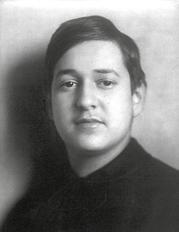
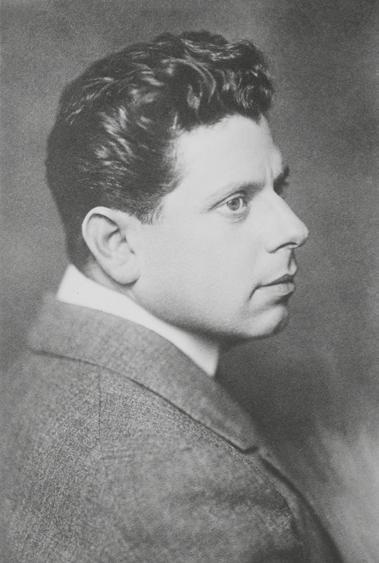
Max Reinhardt’s A Midsummer Night’s Dream, 1935 Poster for the original theatrical run of the 1938 American film The Adventures of Robin Hood
Jack Warner, head of the studio, soon spotted Korngold’s potential as a film composer; soon he was commuting between Vienna and Los Angeles, writing music for swashbucklers such as Captain Blood, which launched Erroll Flynn and Olivia de Havilland’s careers, and Anthony Adverse, for which his score won an Oscar (though it was presented to the studio’s head of music, rather than to its composer!).Hehadthe foresight to apply in 1936 for American citizenship; and fortuitously he was in the US, scoring The Adventures of Robin Hood (another Oscar winner), when the Anschluss took place: Hitler annexed Austria and turned at once upon its Jewish population. Julius and Josephine managed to escape to join Erich in California, along with his elder son, Ernst (the younger, George, was in Hollywood with Erich and Luzi).
LONGBOROUGH FESTIVAL OPERA46
Reinhardt hastened out of Germany to the US when Hitler came to power in 1933. There, at the Hollywood Bowl, he staged an extravaganza production of A Midsummer Night’s Dream. When Warner Brothers decided to film it, he invited Korngold to America to arrange Mendelssohn’s music for the movie.
The reality of permanent exile hit Korngold hard. Devastated, he vowed not to write any more concert music until Hitler had been defeated. Instead, he at first approached his film scores idealistically, viewing them as “operas without singing” and much enhancing, among others, The Constant Nymph, The Sea Hawk, The Prince and the Pauper, The Private Lives of Elizabeth and Essex and Deception, which included a miniature cello concerto to which he later gave a life of its own. “Music is music,” he said, “whether it is for the stage, rostrum or cinema. Form may change, the manner of writing may vary, but the composer needs to make no concessions whatever to what he conceives to be his own musical ideology.” In some cases his film music is based on ideas he had jotted down in a notebook years earlier; in others, he was later able to recycle themes from the scores, completely transformed, in concert works including the Violin Concerto and the Symphony in F sharp.
The Violin Concerto was premiered by Jascha Heifetz in 1947, when Korngold was cherishing hopes of making a comeback. Writing film music, in reality,

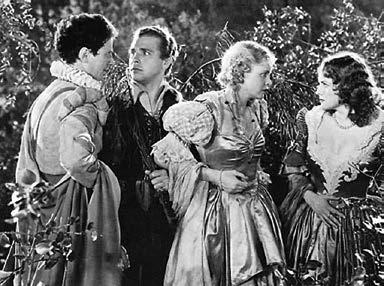

Jessica Duchen is a music critic, author and librettist. She contributes to The Sunday Times, The I and BBC Music Magazine, and is the author of nine books, including a biography of Erich Wolfgang Korngold (Phaidon Press). Her latest opera libretto is ‘Dalia’ for composer Roxanna Panufnik, premiered this summer at Garsington. had always been the thin end of the wedge, especially as when the movies disappeared from the cinemas, his music disappeared with them. Additionally, he had envisaged scripts on a somewhat more elevated level. Once, asked why he was leaving film work, he responded: “When I first came to Hollywood, I could not understand the dialogue. Now I can.” His attempt to return to Vienna in 1950 lasted only two years. It proved almost impossible to get performances off the ground, facing cancellations, misunderstandings and the fact that plenty of ex-Nazis still held positions of influence. As for the general zeitgeist in post-war attitudes towards music, this demanded first of all a complete break with the past, especially the lavish late romanticism in which Korngold had grown up; and secondly a purity of outlook untainted by commercial concerns. The fact that Korngold had escaped death at the hands of the Nazis only through luck, and was using what money he made in Hollywood to help fellow refugees, seemed to have escaped notice. After his struggles with his father and then the loss of his homeland, Korngold now had to contend with cultural expectations and prejudices that he could scarcely comprehend. “Don’t expect apples from an apricot tree,” he once remarked. But, as André Previn used to say, if Korngold sounds like film music, that is because film music sounds like Korngold. He was one of the most important influences in the genre’s development, bringing into the film studio the compositional techniques of Puccini, Wagner and Strauss. Here they have survived intact, despite being all but banished from contemporary music in concertKorngoldhalls.died of a brain haemorrhage in 1957 aged 60, believing himself forgotten. Yet in recent years, his music has experienced an extraordinary rehabilitation. Previously a hidden gem known only to old-movie buffs and a lucky coterie of obsessives, Korngold is now virtually a household name. His effective rediscovery shows just how thoroughly Hitler’s henchmen had obliterated some Jewish composers from Europe’s musical life. It also calls into question certain 20thcentury conceptual divisions between ‘serious’ contemporary music and the hunger for high-quality new works that could reach audiences’ hearts as well as their intellects. The high drama, generous spirit, vivid atmospheres and dazzling score of Die tote Stadt are gaining it recognition, finally, as an opera for the ages.
472022 SEASON PROGRAMME
Erich Wolfgang Korngold

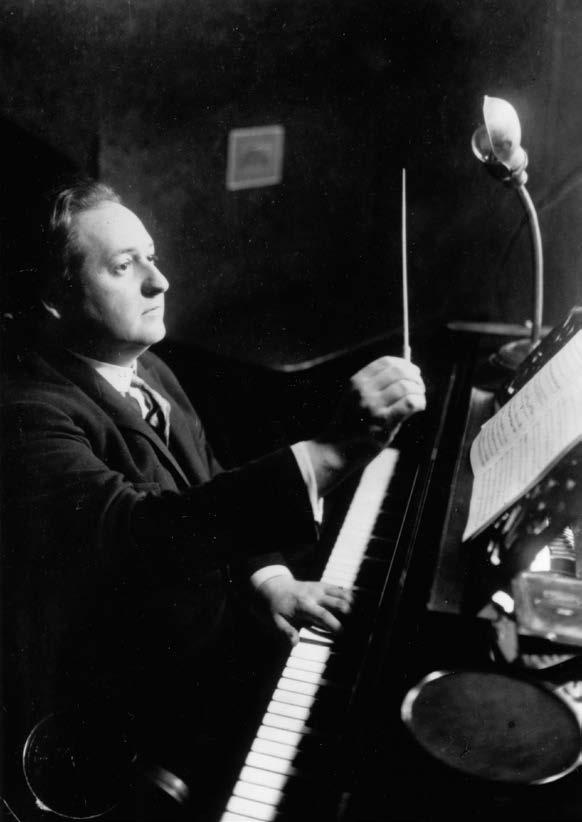
impulsesunconsciousrevealtheyanddreamsaboutconversationwithwhatmeant,whatcouldabout
THE CONNECTIONVIENNESE ART, PSYCHOLOGY AND THE DEAD CITY
LONGBOROUGH FESTIVAL OPERA48 T he ‘dead city’ depicted in Erich Wolfgang Korngold’s Die tote Stadt (1920) is the Belgian city of Bruges. The young composer had never been there, just as Puccini did not visit Paris before writing La bohème. Nevertheless, Korngold had formed an impression from second-hand accounts of foggy, atmospheric canals, dark Medieval streets, and sinister cloisters, all of which seemed to form the perfect backdrop for a work concerned with themes of psychological angst. In many respects, however, the work was intimately shaped by another city: Korngold’s own hometown of Vienna. During the 1910s, the Austrian capital underwent what we might characterise as a seismic shock. At the beginning of the decade, the city was confident, wealthy, and enjoying an astonishing cultural golden age. By the end, it was a city impoverished and reduced to its knees, the psychologically broken capital of an empire that had split apart in highly violent circumstances. In Die tote Stadt we can detect influences from the city as it had been and the city as it would, by the First World War, become. The very fact that Korngold was writing an opera at such a young age – he began work on it in 1916, aged 19 – was a result of the privileged Viennese upbringing that he had enjoyed. The city, at the turn of the twentieth century, had an incredibly rich musical culture. The thriving uppermiddle classes had an insatiable appetite for music and drama. New opera houses and concert halls were built alongside museums, universities, and civic buildings as part of the regeneration of the city that had taken place in the late nineteenth century with the construction of the Ringstrasse.
Alexandra Wilson Viennese society was abuzz
The newly from(1900),parliamentRingstrassecompletedwithbuildingphotographedtheBurgtheater

As the son of one of the most prominent music critics in the city, Julius Korngold, the young Erich Korngold was able to immerse himself in the city’s vibrant musical life. With his parents, he attended and, indeed, performed at regular musical salons organised by the city’s wealthy cultural patrons, where he met artistic figures such as Alma Mahler and Oskar Kokoschka. His father arranged for some of his music to be played to none other than Gustav Mahler, who hailed the boy as a genius. He had lessons with Alexander von Zemlinsky. Puccini, visiting the city for the premieres of some of his operas, became a family friend. Musically, Die tote Stadt bears traces of the influence of all these composers and more. The child prodigy was soon being discussed in all the city’s most fashionable coffee houses.
Die tote Stadt deals with themes that had been much discussed and explored by artists and thinkers in pre-War Vienna. Whereas in Rodenbach’s novel, the protagonist kills the unfortunate young woman who so resembles his dead wife, Korngold’s more sympathetic central character experiences the action merely in a dream sequence and is finally able to lay his obsession with his dead wife to rest. There had, of course, been much talk of dreams in early twentieth-century Vienna since the publication at the turn of the century of Freud’s Die Traumdeutung (The Interpretation of Dreams). Viennese society was abuzz with conversation about what dreams meant, and what they could reveal about unconscious impulses and the ways in which we are conditioned by feeling and instinct. During the 1900s, Freud invited physicians and other intellectuals who had expressed an interest in his work to attend a weekly discussion group at his apartment. The worlds of psychoanalysis and music overlapped via the figure of Max Graf, a critic colleague of Julius Korngold and professor of music at the Vienna Academy of Music, whose wife and son were undergoing treatment from Freud. Korngold senior is also likely to have encountered Freud’s ideas after the latter contributed to the Neue Freie Presse, the newspaper for which he worked as critic. The workings of the inner psyche soon found their way into contemporary artistic expression. Viennese Expressionist paintings dealt frequently with the theme of psychologically tormented masculinity, which had particular resonance for Die tote Stadt ’s Paul. Egon Schiele’s self-portraits depict the male body as Ball at Vienna city hall with mayor Karl Lueger (Wilhelm Gause 1904) Book cover design by Fernand Khnopff for Bruges-la-Morte by Georges Rodenbach
492022 SEASON PROGRAMME
The fact that Korngold came to write Die tote Stadt was also down to his father’s contacts. Julius had a chance encounter in the street with the playwright Siegfried Trebitsch. The latter was in the process of translating into German a play by the Belgian Symbolist writer, Georges Rodenbach, which was in turn based upon his novel Bruges-la-Morte. Father and son would work on the libretto for the opera together, though they concealed the fact, making up the pseudonym ‘Paul Schott’ for an imaginary librettist, so as to avoid any hostility or suggestions of nepotism from Julius’s fellow critics.
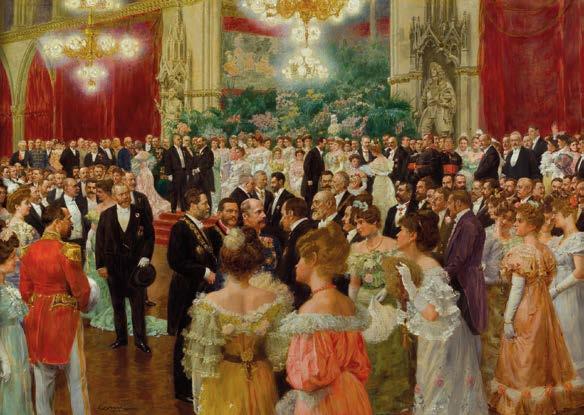
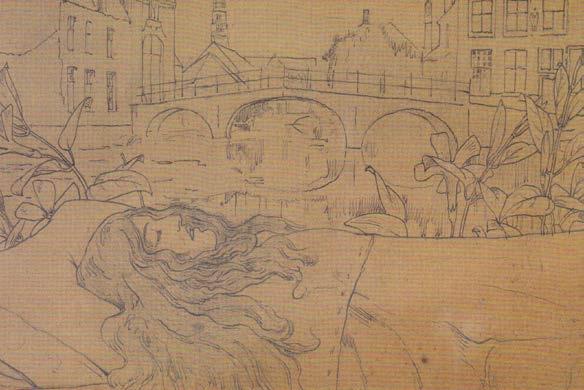
LONGBOROUGH FESTIVAL OPERA
50 elongated, distorted and tense, and in Oskar Kokoschka’s Die Windsbraut (The Bride of the Wind), expressive brushwork captures a sense of inner male angst. In addition to painting, Kokoschka was the author of a controversial play entitled Murderer, The Hope of Women, whose violent impulses towards women also find an echo in Korngold’s opera. Many Viennese artists and intellectuals were captivated by a misogynist tract by the Austrian philosopher Otto Weininger entitled Geschlecht und Charakter (Sex and Character), which had been published in 1903. Troubled by the threat of female emancipation, Weininger argued that men should liberate themselves from sexually predatory women, whom he saw as incapable of attaining moral, intellectual, or spiritual enlightenment. Love was the preserve of rational man – and experienced in its highest form in the absence of the beloved (an idea manifested in Korngold’s opera in Paul’s obsessive, idealised love for his dead wife, Marie). Woman, on the other hand, was entirely defined, according to Weininger, by a destructive sensuality (as represented in the opera by Marietta). Every angst-ridden teenager in 1910s Vienna was reading Weininger’s book – as well as leading cultural figures such as Wittgenstein and Schoenberg. Korngold certainly would have known of it, and might well have read it. But as musicologist Ben Winters argues, in waking from his dream, Korngold’s Paul liberates himself from the Weiningerian caricatures of womanhood that appear withinTheit.dichotomy between the femme fatale and the femme fragile – the Madonna / whore complex – had long, pan-European historical roots but was a subject of particular interest to Viennese authors and playwrights of this period. Hugo von Hofmannsthal, for example, best remembered today as Strauss’s librettist, worked during the 1900s and 1910s on a novel called Andreas, concerning a sexually anxious young man who can only see women in such polarised terms. The novel was not published until well after Die tote Stadt received its premiere in 1920 and Korngold could not have read it. But the The station, Bruges, Belgium, circa 1900 Women’s hair and its seductive power was a theme aRodenbachofmovementSymbolistFranco-Belgianexploredwidelybythewhichwasmember
Postcard of Bruges, Belgium showing the Cranenburg House c. 1905
By the time Korngold began work on Die tote Stadt in 1916, Austria was already at war; the young composer had been spared active service and remained in Vienna as a regimental director of music.
Alexandra Wilson is Professor of Music and Cultural History at Oxford Brookes University. She is the author of four books: The Puccini Problem: Opera Nationalism and Modernity ; Opera: A Beginner’s Guide; Opera in the Jazz Age: Cultural Politics in 1920s Britain; and Puccini’s La bohème fact that both men were dealing with such similar themes concurrently indicates their potency in the contemporary cultural ether.Women’s hair and its seductive power was a theme widely explored by the Franco-Belgian Symbolist movement of which Rodenbach was a member. (Think also of Maurice Maeterlinck’s Pelléas et Mélisande, which formed the basis for Debussy’s opera of the same name.) But long hair was also a preoccupation of Austrian artists and authors of this period, many taking inspiration from the legend of Lady Godiva subject or, indeed, the Brothers Grimm fairy tale Rapunzel. Most obviously one thinks of Gustav Klimt, in whose richly embellished paintings long flowing hair embodies the sensuality of the femme fatale. In an artistic culture obsessed with sexuality, death and hair, it is not insignificant that in Die tote Stadt the central protagonist not only becomes obsessed with his dead wife’s plait but uses it as the weapon with which to strangle her unwitting rival.
Over the course of the conflict, and in the immediate aftermath – precisely the period when Korngold was writing his opera – Vienna would become a shadow of its former self, plagued by high inflation and unemployment, political unrest, and for many members of the population, near-starvation. The end of the war would see the collapse and exile of the Habsburg monarchy and the dramatic break-up of the former Austro-Hungarian empire. The shock of all this was profound, and surely exacerbated by the contrast with Vienna’s halcyon pre-War days. In this context, the idea of a ‘dead city’ suddenly seemed highly fitting. The opera deals, too, with the idea of mourning – and, indeed, the perils of mourning to excess. Vienna was a city grieving not only for the citizens it had lost – in war, from the Spanish flu pandemic, and from destitution and starvation – but for its own sense of self, its pre-war identity, and its former power and confidence. The city, like Korngold’s Paul, had to find ways to move on from the past. The era of prosperity, of horsedrawn carriages, of women in white dresses with parasols, of artistic soirées had – like Paul’s happy, much-idealised marriage – decisively gone. Vienna must have found much that was resonant indeed in Die tote Stadt.
Vienna formershadowbecomewouldaofitsself
512022 SEASON PROGRAMME

CARMEN JAKOBI DIRECTOR
LONGBOROUGH FESTIVAL OPERA52 THE CREATIVE TEAM DIE TOTE STADT
Previously for Longborough Festival Opera: Tristan und Isolde 2015 and 2017, conductor Anthony Negus. Productions include: Farinelli and the King by Claire van Kampen (SouthWest Shakespeare Arizona); Il Trovatore, Un ballo in maschera, Don Giovanni (Winslow Hall Opera); John Harbison’s Full Moon in March; the world premiere of Nicola LeFanu’s Dream Hunter in Wales and London, conductor Odaline de la Martinez; Tristan und Isolde semi-staged for Stavanger European City of Culture; Nicola LeFanu’s Dawnpath, Cardiff; for RWCMD: Dimitris Maramis’s The Women of Troy – a chamber opera, Baroque opera projects, Shakespeare projects; for Birmingham Conservatoire Orfeo Theatre productions include Strindberg’s Miss Julie (Goethe Theater Frankfurt); many productions for Triangle trilingual Theatre Company Cardiff including Becket’s Waiting for Godot (in French) and Brecht’s Mother Courage and her children (in German). Associate Director on Alan Privett’s and Anthony Negus’s legendary Der Ring des Nibelungen, (Longborough Festival Opera 2013). Staff director for WNO; Revival director for Stephen Medcalf’s Seraglio in Thessalonica Greece. She worked extensively in Italy assisting Stephen Medcalf on Die Zauberflöte and Seraglio, also in Valencia,CarmenSpain.read Modern Languages at Freiburg University, Drama at the Sorbonne, Paris; trained at the Sherman Theatre Cardiff and Welsh NationalCarmenOpera.Jakobi would like to thank Jungian analyst Tia Kuchmy and Freudian psychoanalyst Hella Ehlers for sharing their insights on the psychology of obsessive mourning.
ELAINE BROWN MOVEMENT & INTIMACY DIRECTOR
GruenschlossFelix
NATE GIBSON DESIGNER Nate is a designer and maker whose work spans across opera, theatre, dance, and film. His design work for opera includes Don Giovanni with director Martin LloydEvans (Clonter Opera); The Emperor of Atlantis (a Loud Crowd production at Bold Tendencies); Simplicius Simplicissimus with Polly Graham and Independent Opera (Sadler’s Wells); A Christmas Carol (Welsh National Opera); and The Marriage of Figaro with Martin Constantine (Royal Welsh College of Music and Drama). In theatre, he has worked frequently at LAMDA, with productions including Clybourne Park with director Anthony Lau, A Bright New Boise with director Ros Philips, and Pomona with director Tess Seddon. Previous engagements with Longborough Festival Opera include L’incoronazione di Poppea 2018, Anna Bolena 2019, and The Cunning Little Vixen 2021.
Elaine Brown began her career as a ballet dancer in Glasgow under Peter Darrell, dancing many roles with Scottish Opera in productions by David Pountney, Peter Ebert and John Copley. She worked as assistant to Stuart Hopps and choreographed several productions for Scottish Opera. After taking a post-graduate degree in Philosophy at Glasgow University, followed by a spell as an assistant producer at the Royal Opera House Covent Garden, she worked extensively as a movement coach in London, developing her own method of alignment and balance, and working also with physically disabled people. At the Badische Staatstheater in Karlsruhe, Germany, she taught her method to singers and orchestral players, as well as being movement consultant on various productions. For Christopher Alden she has been movement director/choreographer for Peter Grimes, Tristan und Isolde (Karlsruhe) and Handel’s Partenope (ENO and Teatro Real Madrid). Since 2019 she teaches movement at the Vocal and Opera Department of the Royal College of Music in London. Die tote Stadt marks her first collaboration with Longborough.
BEN ORMEROD LIGHTING DESIGNERForLongborough: Ring cycle (2013), Tristan and Isolde, Tannhauser Der fliegende Holländer, Ariadne auf Naxos Opera credits include: La traviata (Danish National Opera); Jeanna D’arc au Bûcher (Academia Santa Cecilia, Rome); Falstaff, Il trovatore, (Scottish Opera); La traviata (English National Opera); The Elixir of Love (Norfolk Into OperaTheatreFestival).includes: Footfalls/Rockaby (Jermyn Street Theatre); A Christmas Carol, The Duchess of Malfi, A Long Day’s Journey Into Night, The Orestia, Hamlet, King Lear (Citizens Theatre, Glasgow); Don Juan (Perth Theatre); The Dresser, A Song At Twilight (Bath & UK Tour); The Model Apartment, Trouble In Mind (Ustinov Theatre Bath); Mrs Henderson Presents (Bath, West End and Toronto); The Sunset Limited (Boulevard Theatre); Assassins (Watermill Newbury and Nottingham Playhouse); Prism (Birmingham Rep, UK Tour); The Duchess of Malfi, A Number (Royal Lyceum Theatre, Edinburgh); Uncle Vanya, Prism, Loyalty (Hampstead Theatre); Broken Glass, The Dresser (Watford Palace Theatre); All’s Well That Ends Well (Sam Wanamaker Playhouse); A Midsummer Night’s Dream (Regents Park); Zorro (West End, Holland, Paris, US and Japan). Dance credits: The Shadow (Company Chameleon); @Home The Knot (Humanoove, UK Tour); Carmen (Bird and Carrot); Is to Be (Le Prix De Lausanne); The Nutcracker, Les Noces (Ballet Geneva); Frame Of View (Cedar Lake Contemporary Ballet, New York); See Blue Through/Toot! (Oper Leipzig); Tenderhooks (Skanes Dansteater/Ballet Gulbenkian); Essence (Walker Dance Park Music). Ben is also lighting consultant for the Calico Museum of Textiles in India and has directed Dimetos for the Gate in London and his own adaptation of Kieslovski’s Dekalog for E15.
JUSTIN BROWN CONDUCTOR
Justin Brown studied at Cambridge University and at Tanglewood, later becoming an assistant to both Leonard Bernstein and Luciano Berio. Internationally acclaimed in both the symphonic and operatic repertoire, Mr. Brown is Music Director Laureate of the Alabama Symphony Orchestra in the United States and served as Music Director of the Badisches Staatstheater in Karlsruhe from 2008 to 2020. He has been critically acclaimed for his performances of the Karlsruhe Ring cycle between 2015 and 2018, working with four different directors. He commissioned and gave the world premiere of Avner Dorman’s first opera Wahnfried, which was hailed as a masterpiece by the opera press worldwide and nominated for an International Opera Award in 2018. As guest conductor, he has worked with many of the world’s top orchestras and opera houses, including the London Symphony Orchestra, BBC Symphony, Royal Philharmonic, City of Birmingham Symphony, Oslo Philharmonic, Finnish Radio Symphony, St. Petersburg Philharmonic, Dresden Philharmonic, Cincinatti and Dallas Symphony Orchestras; the Bayerische Staatsoper Munich, Deutsche Oper Berlin, Oper Frankfurt, Grand Théâtre de Genève, La Monnaie, and Santa Fe Opera. Highlights in the current season include his debuts with Teatro Colón Buenos Aires and Teatr Wielki Poznań, as well as returns to Welsh National Opera and Longborough.

NOA DANON SOPRANO MARIETTA / MARIE Benefitting from dual Italian and Israeli citizenship, Noa Danon studied at the Buchman-Mehta School of Music at Tel Aviv University‚ and was a member of Israeli Opera’s Young Artist Programme. Amongst her many awards‚ in 2005 she won first prize at the Buchman–Mehta Voice Competition‚ a special prize for the best operatic performance awarded by Israeli Opera and 2nd Prize (Operetta) in the 2008 Belvedere Competition. Noa is a recipient of the AmericaIsrael Cultural Foundation and the International Vocal Arts Institute scholarships, Israeli Opera’s Besser Award and IVAI’s Silvermann prize. Recent engagements include Ariadne, Ellen Orford, Vitellia/La clemenza di Tito, Alice Ford, Countess/Figaro Gets a Divorce, Sieglinde/Die Walküre‚ Vanessa, Katya Kabanova and Saffi/ Der Zigeunerbaron (Magdeburg) and Fiordiligi (Israeli Opera). As a member of the Ensemble in Magdeburg roles included Marschallin/Der Rosenkavalier‚ Marguerite‚ Duchess/Powder Her Face‚ Lucille/ Danton’s Tod‚ Elisabetta/Maria Stuarda / Don Carlo‚ Madama Butterfly‚ Antonia/Hoffmann‚ Rosalinde‚ Agathe/Freischütz‚ Gertrud/Hänsel und Gretel‚ Governess/The Turn of the Screw‚ Elvira‚ Micaela and Venus/Orpheus in the Underworld. Roles with Israeli Opera include Mimi, Governess/The Turn of the Screw‚ Micaela and Tisbe/La Cenerentola LONGBOROUGH DEBUT WilsonPippa KaragedikKartal
532022 SEASON PROGRAMME
NICK FOWLER ASSISTANT DIRECTOROriginallyfrom New Zealand, Nick Fowler has lived in Britain since his early teens and has been involved with Longborough’s Wagner project since the very start, covering the role of Alberich in the very first Das Rheingold in 1998. Since then his involvement has grown, and in Longborough’s momentous 2013 first complete Ring cycle he was assistant director, cover for Alberich in Siegfried and Götterdämmerung, Nibelung in Das Rheingold and Vassal in Götterdämmerung At the same time he was Stage Manager for ‘Inside the Ring’ running alongside the Ring performances, including a production of the Oscar Straus operetta The Merry Nibelungs, based on the Nibelungenlied, which he translated, adapted, directed, and performed in. Since then Nick has been Assistant Director or Stage Manager for Longborough productions of Tristan und Isolde Tannhäuser Der fliegende Holländer, Anna Bolena and The Cunning Little Vixen Nick works as a freelance director, assistant director and stage manager for various companies throughout the country, among them the Philharmonia Orchestra and the Brighton and Edinburgh Festivals. He has recently directed La traviata, The Beggar’s Opera, Rita, The Bear, Acis and Galatea, L’elisir d’amore and The Magic Flute in his own translation and adaptation, involving children and community performers.
PETER AUTY TENOR PAUL Peter Auty is established as one of Britain’s leading tenors. Since his professional debut at Opera North, he has sung with all major UK companies including the Royal Opera House, Glyndebourne, English National Opera, Welsh National Opera, and Scottish Opera. Abroad he has worked with companies including Aalto-Musiktheater Essen, Oper Frankfurt, Nationale Reisopera, New Zealand Opera, and Malmö Opera. Recent highlights include Pinkerton/ Madama Butterfly and Laca Klemeň/Jenufa for Welsh National Opera, Paul/Die tote Stadt for Longborough Festival Opera, Roberto/Le Villi at Opera Holland Park, Canio/Pagliacci with Opera Ensemble at Iford Arts; Des Grieux/Manon Lescaut (The Grange Festival and Opera Holland Park); Don José/Carmen (Welsh National Opera); Johnson/ The Girl of the Golden West (RTÉ National Symphony Orchestra); the title role in Puccini’s Edgar (Scottish Opera and at Konzerthaus Berlin); Bill in Jonathan Dove’s Flight and Lensky/Eugene Onegin (Scottish Opera); and critically acclaimed performances of Canio/Pagliacci with Opera Ensemble in London and at The Grange Festival and Longborough Festival Opera. He sang the role of Pushkin in the stage premiere of Konstantin Boyarsky’s new opera by the same name with Novaya Opera at Grange Park Opera.
THE CAST DIE TOTE STADT OLIVIA CLARKE ASSISTANT CONDUCTORBritish/Irishconductor
Olivia Clarke is the current English National Opera Mackerras Fellow and is an Assistant Conductor for the City of Birmingham Symphony Orchestra. Clarke recently jumped in at Cadogan Hall to conduct ENO Orchestra in an opera gala concert with National Opera Studio. In 2021 Clarke conducted a performance of Glyndebourne’s new Fidelio production, whilst also assisting and has been invited back this autumn to conduct performances of La bohème whilstComingassisting.out of the British lockdown she conducted the Southbank Sinfonia in one of the first concerts with an audience at St John’s Smith Square. Next to her assistant work at the English National Opera she conducted a performance of ENO’s new production of The Cunning Little Vixen in their 21/22 season. This summer Clarke will be conducting Donizetti‘s Rita and Wolf-Ferrari‘s Il segreto di Susanna in IF opera’s inaugural season. A recipient of the Deutscher Akademischer Austauschdienst scholarship for her conducting studies, Olivia Clarke trained at the International Conducting Academy Berlin, Universität der Künste, graduating in 2020. Before moving to Berlin, Olivia Clarke completed her Masters in singing at the Royal Conservatoire of Scotland. Clarke is an Associate of the Royal College of Organists and completed her Bachelors in Music with an Organ Scholarship at the Queen’s College, University of Oxford.
MenearNeedRebecca
PREVIOUSLY FOR LONGBOROUGH: Canio/ Pagliacci (2020)


BENSON WILSON BARITONE FRANK / FRITZ
PREVIOUSLY FOR LONGBOROUGH: Mime & Froh (covers)/Das Rheingold (2019)
ALEXANDER SPRAGUE TENOR VICTORIN / GASTONAlexander
MARIE / MARIETTA Luci Briginshaw BRIGITTA / LUCIENNE Sían Cameron FRANK / FRITZ Will Pate GRAF ALBERT Laurence Panter MacBainNick
PREVIOUSLY FOR LONGBOROUGH: Meg Page/Falstaff (2011)
PREVIOUSLY FOR LONGBOROUGH: Eurimaco & Giove/Il ritorno d’Ulisse in patria (2021)
PAUL
Sprague’s current and future engagements include Janek/The Makropulos Case, Thibault/ Les vêpres siciliennes (Welsh National Opera), Scaramuccio/Ariadne auf Naxos (Opéra National de Montpellier), Don Ottavio/ Don Giovanni (Opéra National du Rhin Strasbourg), Kudryash/Katya Kabanová (Opera North), Edgar Linton/ Wuthering Heights and Scaramuccio/Ariadne auf Naxos (Opéra de Nancy), Acis/Acis and Galatea (English National Opera and Opéra de Massy), Eduardo/ Exterminating Angel (Royal Danish Opera Copenhagen), and Gonzalvez/L’heure espagnole (Angers Nantes Opera).
Benson joined English National Opera as a Harewood Artist, and this season has sung Schaunard and Guglielmo/Così fan tutte with the company. He will make his debut for Opera Holland Park in the role of Friedrich Baer/ Little Women In the UK he has given recitals at the Brighton, Oxford Lieder, Leeds Lieder, Kings Lynn and Ludlow Song festivals, at Wigmore Hall and St Martin in the Fields, with pianists Iain Burnside, Lucy Colquhoun, Ella O’Neill, James Baillieu and Joseph Middleton. He has appeared in concert with the Orchestra of Opera North, and for Auckland Opera Studio, and most recently performed Finzi In Terra Pax with the BBC Symphony Orchestra conducted by Sakari Oramo.Previous operatic roles include Marullo/ Rigoletto for Glyndebourne on Tour, John Shears/Paul Bunyan (ENO), Count Almaviva/ Le nozze di Figaro (Bloomsbury Opera) and Schabernack/Le Grand Macabre with the London Symphony Orchestra.
LONGBOROUGH FESTIVAL OPERA54 LUCI BRIGINSHAW SOPRANO JULIETTE
LONGBOROUGH DEBUT
LONGBOROUGH DEBUT
STEPHANIE WINDSOR-LEWIS MEZZO-SOPRANO BRIGITTA / LUCIENNEBritishmezzo-sopranoStephanieWindsor-Lewis’recentandfutureengagementsincludeSuzuki/ Madama Butterfly and Rosmira/Partenope, English National Opera for whom she also covers Maddalena/ Rigoletto Other operatic engagements have included Giovanna Seymour/Anna Bolena (Metropolitan Opera, understudy), Rosina/Il barbiere di Siviglia, Madama Rosa/Il campanello and Ciesca/ Gianni Schicchi (Teatro del Maggio Musicale Fiorentino), Suzuki/Madama Butterfly and Lucia/ La gazza ladra (Teatro Comunale di Bologna), La Macchina by Raffaele Grimaldi (Biennale di Venezia and Teatro Donizetti di Bergamo), and Meg Page/Falstaff (Longborough Festival Opera).Stephanie’s concert engagements include a gala concert with Josè Carreras in Singapore, where she was a featured soloist, Berio’s Sinfonia for the Lucerne Festival with Pierre Boulez, Handel Dixit Dominus, Haydn Nelson Mass, and de Falla’s El Sombreros des Picos all at St John’s, Smith Square, London and Handel’s Messiah, Mozart’s Requiem and Vivaldi’s Gloria at the Royal Albert Hall.
Stephanie won first prizes in the Benvenuto Franci competition and the Premio Crescendo Competition in Florence, and was a finalist in the Ernst Haefliger Competition in Switzerland. She studied at the Benjamin Britten International Opera School at the Royal College of Music with Ryland Davies and Tim Evans-Jones and was a young artist at the Teatro del Maggio Musicale Fiorentino, and at the Teatro Comunale di Bologna.
New Zealand-born Sāmoan baritone Benson Wilson is the winner of the prestigious 64th Kathleen Ferrier Award, the Most Outstanding Overseas Performer of the Royal Overseas League Competition, the Worshipful Company of Musicians Award, and the Joan Sutherland and Richard Bonynge Foundation Award and the People’s Choice Award.In2020/21
Alexander appeared in concert with Bournemouth Symphony Orchestra, City of Birmingham Symphony Orchestra, BBC Scottish Symphony Orchestra, Philharmonia Orchestra, London Handel Players at Wigmore Hall, London Festival Orchestra at The Royal Festival Hall, St Martin in the Fields, Northern Sinfonia and in recitals at Leeds Lieder Festival, London Handel Festival and Handel House. He has worked with conductors Sir Colin Davis, Sir John Eliot Gardiner, Sir Charles Mackerras, Ingo Metzmacher, Martyn Brabbins, John Wilson, Laurence Cummings, Christophe Rousset and directors Claus Guth, Richard Jones, John Copley and Alvis Hermanis. He studied at The National Opera Studio and The Royal Academy of Music, London and is the winner of the Michael Oliver Prize of the London Händel Singing Competition.
LEE DAVID BOWEN TENOR GRAF ALBERT
Born in Swansea, Lee studied at RWCMD.ForENO, he has sung Captain Nolan in John Adams’s Doctor Atomic, and the White Minister in Ligeti’s The Grand Macabre; with WNO, he created the role of Dolffin in Gwyneth Lewis and Julian Phillips’s opera for children; at Opera North, he has performed the First Armed Man/ the Priest in The Magic Flute; roles for ETO have included Remendado/Carmen, Dancaïro/ Carmen, Guillot/Manon, and Sellem/The Rake’s Progress ; for Opera Holland Park, he has sung Malcolm/Macbeth, L’Abate/Andrea Chenier and Trin/La fanciulla del West ; for Mid-Wales Opera, he has sung Remendado/Carmen and Mr Upfold/Albert Herring Lee maintains a busy concert career, with performances at leading venues including St Martin-in-the-Fields and St David’s Hall, Cardiff, and Bristol Cathedral; he has also sung the Welsh and British National Anthems at the Principality Stadium in Cardiff. Recently, Lee has been studying the Verdian and Charaktertenor repertoire, and especially the Jugendlicher Heldentenor Fach, preparing Wagner’s Parsifal, Mime and Loge with the eminent Australian tenor Anthony Roden and the renowned pianist and coach Michael Pollock.
COVERS Charne Rochford
Luci Briginshaw was Winner of the 2021 Fulham Opera Robert Presley Memorial Verdi Prize, also winning the Audience Prize. In 2019 she won Audience Prize and Second Prize at the inaugural Opera: By Voice Alone competition. For English Touring Opera, Luci has sung The Queen of Shemakha in Rimsky-Korsakov’s The Golden Cockerel, Fennimore in Weill’s Der Silbersee, title role in Gilbert and Sullivan’s Patience and covered Konstanze in Mozart’s The Seraglio and Mimi in Puccini’s La bohème. Luci has also covered The Queen of the Night in The Magic Flute for Glyndebourne and sung live on In Tune for BBC Radio 3. Other roles include Aithra/Die Ægyptische Helena, Violetta/La traviata, Adele/Die Fledermaus, Gilda/Rigoletto, Lucia/The Rape of Lucretia, Leila/Les pêcheurs de perles and Donna Anna/Don Giovanni. She has also created several opera roles in contemporary works by Martyn Harry, Alex Groves and Mario Ferraro. Luci’s debut album, Peter Warlock Songbook , with pianist Eleanor Meynell was released in November 2021 on the Convivium label.

552022 SEASON PROGRAMME LONGBOROUGH FESTIVAL ORCHESTRA VIOLIN 1 Darragh Morgan Suzanne Casey Martin JustineAlastairKirraIonaZhivkoGeorgeLaurenceOwenKemptonEwartGeorgievAllanThomasLeggTomlinson VIOLIN 2 Barbara O’Reilly Phillip Granell David RicardoEmmaEmilyChristopherMirandaLewisWaltonHughesAdamsCurtisBrownRoger VIOLA Philip MariaAnastasiaBeckyRobynJanuaryHeymanJohnnsenLundHopkinIvaschenkoAntunes CELLO Jane Salmon Peter GriffClareFelicityWilsonSmithSpencer-SmithWadkin DOUBLE BASS Marcus Willett David Burndrett Mark ChristopherDoust Xuereb MANDOLIN Nigel Woodhouse HARP Zita Silva PIANO / CELESTE Ashok Gupta FLUTE Diane Clark FLUTE / PICCOLO James McDowall OBOE Lydia Griffiths OBOE / COR ANGLAIS Jessica Mogridge CLARINET Alison WilliamLambertWhite BASS CLARINET Steve Morris BASSOON Jonathan Price BASSOON / CONTRA BASSOON Rosemary Cow HORN Richard AndrewFrancescaJonathanLewisBarehamMoore-BridgerFletcher TRUMPET Jon SteveHollandWalton TROMBONE Duncan Wilson Julian Turner DIE TOTE STADT BASS TROMBONE Andrew Lester TIMPANI Max Heaton PERCUSSION Jonathan Helm Kiyomi Seed Nick Cowling OFF STAGE ORGAN Olivia Clarke ORCHESTRA MANAGER Stuart Essenhigh Lute supplied by The Lute Society www.lutesociety.org We are grateful to the below for their support of the following Orchestra Chairs: Leader – Mike Bates Double Bass – Gornall & Wildes Clarinet – Elizabeth Allen Trombone – Patricia Duncker
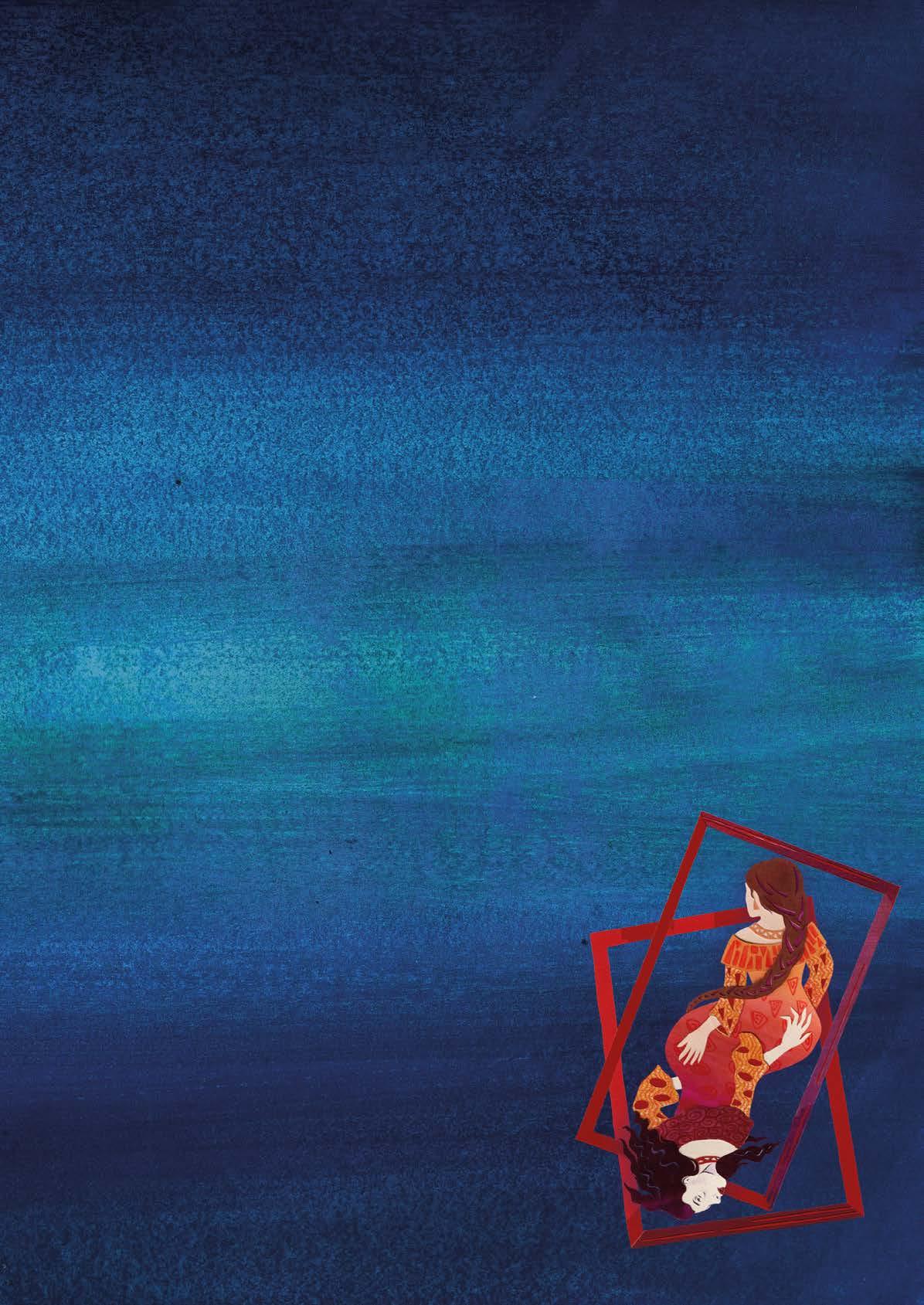
LONGBOROUGH FESTIVAL OPERA56 PhotographyFawbertDavid LizaldeJorgeLizaldeJorge
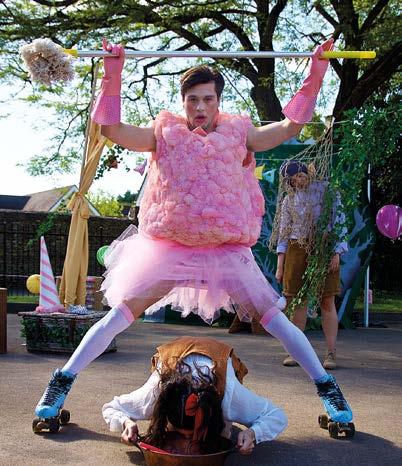

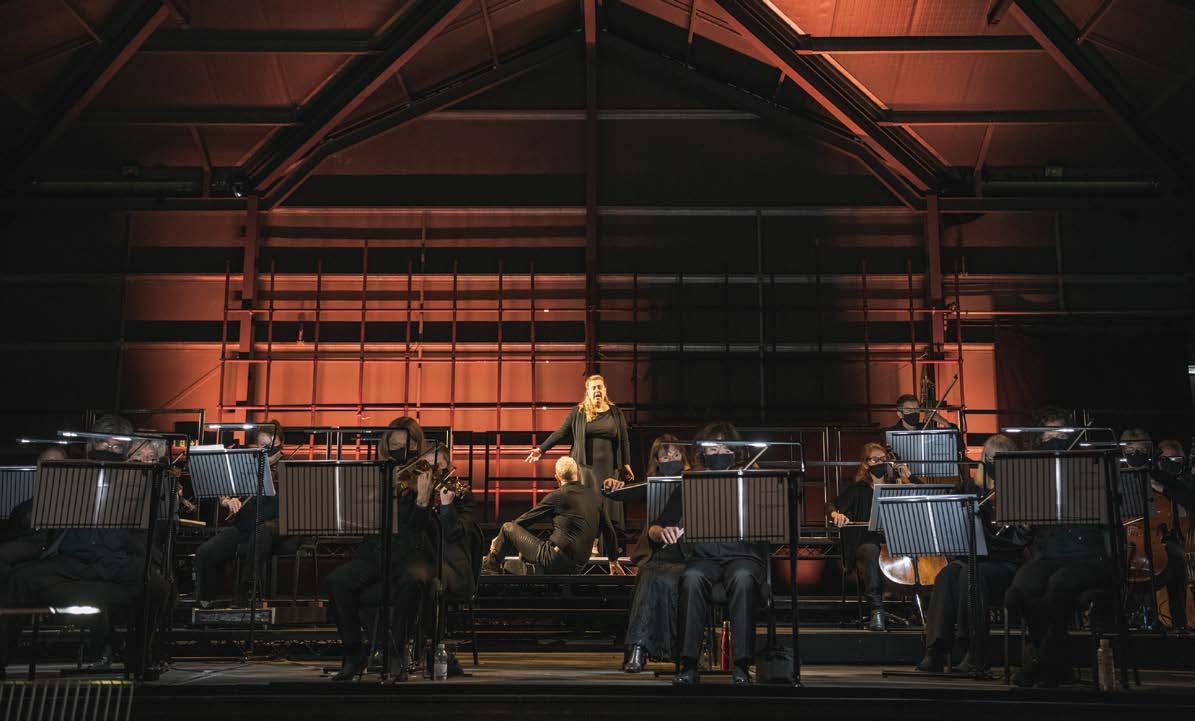
572022 SEASON PROGRAMME LizaldeJorge
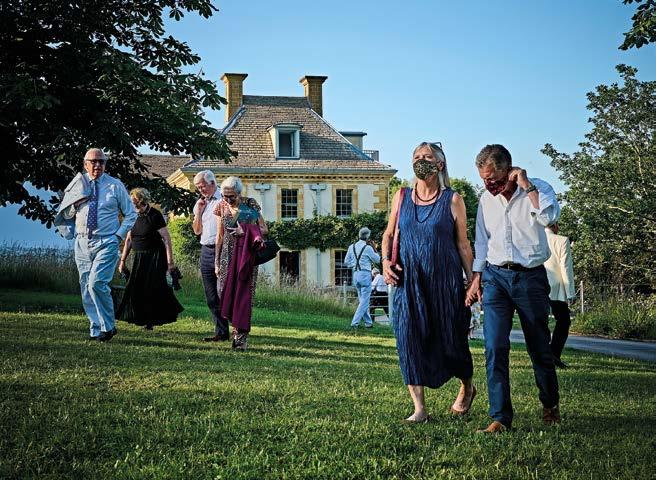
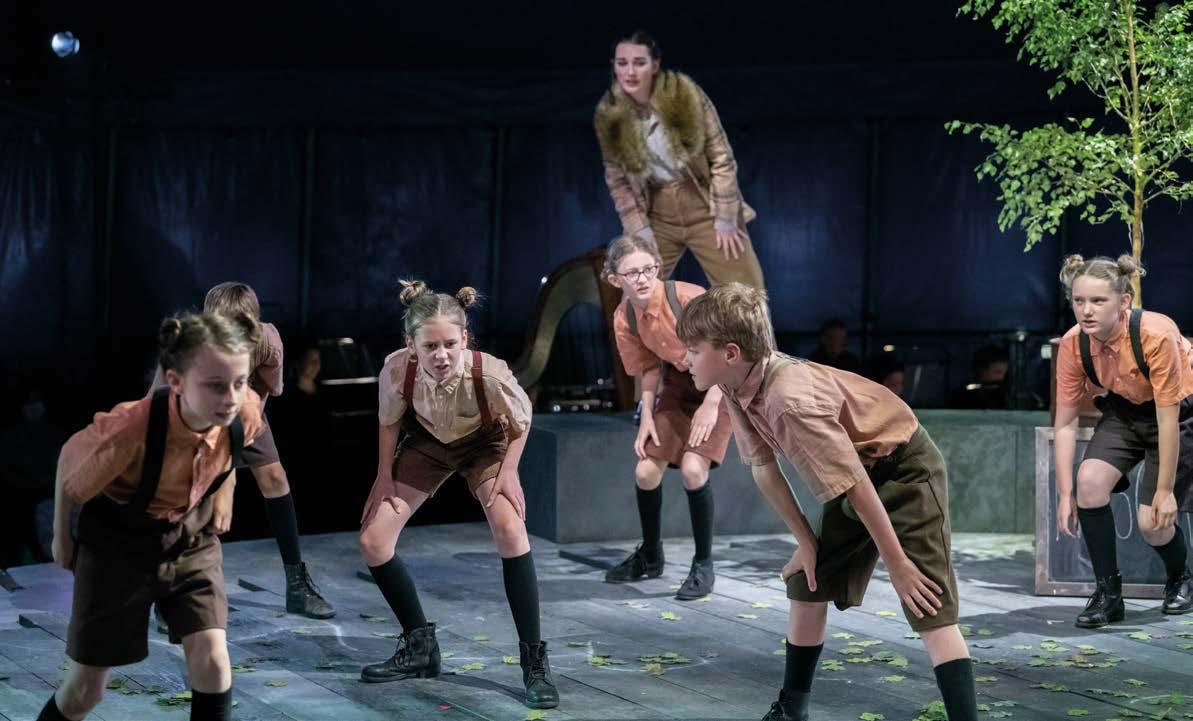
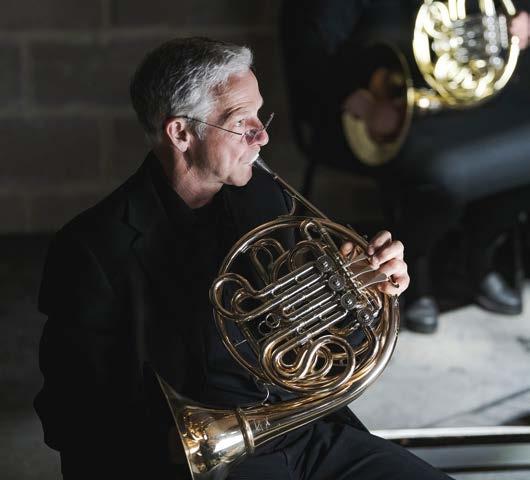
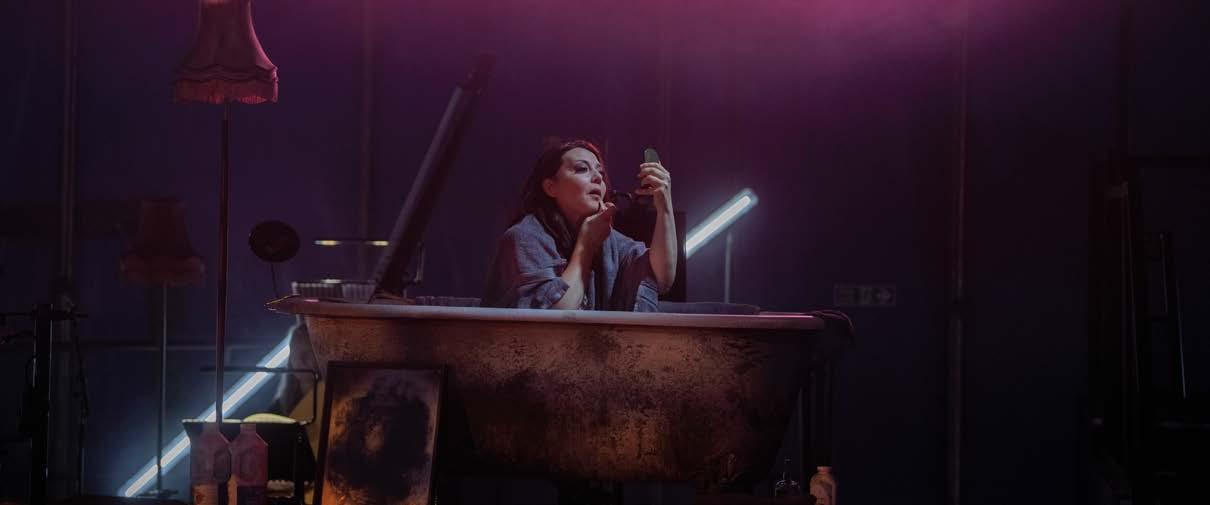
LONGBOROUGH FESTIVAL OPERA58 CARMEN

592022 SEASON PROGRAMME Sung in English with English surtitles. Interval of 90 minutes. MUSIC Georges Bizet LIBRETTO Henri Meilhac and Ludovic Halévy, based on Mérimée’s novella Carmen English translation of the sung text by Amanda Holden, with spoken dialogue devised by members of the company FIRST PERFORMANCE OF CARMEN Opéra-Comique, Paris, 3 March 1875 FIRST PERFORMANCE OF THIS PRODUCTION Longborough Festival Opera, 9 July 2022 CONDUCTOR Jeremy Silver DIRECTOR Mathilde López DESIGNER Constance Canavarro LIGHTING DESIGNER Ace McCarron ASSOCIATE CONDUCTOR / CHORUS MASTER Karin Hendrickson ASSISTANT DIRECTOR Andy Bewley MOVEMENT DIRECTOR Carmine di Amicis REPETITEUR Janet Haney SURTITLES Kenneth Chalmers YOUTH CHORUS TEAM Nicola Rose, Maria Jagusz THE CAST CARMEN Margaret Plummer DON JOSÉ, CORPORAL Peter Gijsbertsen ESCAMILLO, BULLFIGHTER Matthew Durkan MICAËLA, VILLAGER Jennifer Witton ZUNIGA, CAPTAIN Szymon Chojnacki MERCÉDÈS, FRIEND OF CARMEN Idunnu Münch MORALÈS, OFFICER Samuel Pantcheff FRASQUITA, FRIEND OF CARMEN Haegee Lee LE DANCAÏRE, SMUGGLER Kieran Rayner LE REMENDADO, SMUGGLER Alex Haigh DON JOSÉ’S MOTHER / OLD LADY Maria Jagusz additional spoken roles played by members of the company CHORUS OF SOLDIERS, SMUGGLERS, WORKERS: Sopranos Ana Beard Fernández, Susanna MacRae, Angharad Watkeys Mezzo-sopranos Arlene Belli, Clare Ghigo, Lara Rebecca Harvey Tenors Lars Fischer, Rhys Meilyr, Gabriel Seawright Baritones Edmund Caird, James Gribble, Peter Edge LONGBOROUGH YOUTH CHORUS Bethany Allan, Ava Alston, Iris Apsion, Lily Apsion, Amelia Balhatchet, Clara Beer, Hermione Buchanan, Finley Burrard Lucas, Flo Cain, Maite Capper, Becky Chilcott, Dominic Clements, Jess Clews, Toby Custard, Martha Davey, Alex Fox, Freya Gault, Leo Harrison, Stella Harrison, Toby Hawkins, Darcey Henderson, Tilly Hourihan, Kitty Hudspith, Hannah Hughes, Alina Jones, Kobi Nobes, Rafa MacDonald, Geordie Mackesy, Annabelle Solari Masson, Olivia Solari Masson, Annabella Merle, Islay Milles, Freddy Minett, Bethany Allan Molland, Charlie Phillips, Ellie Roe, Abi Routh, Verity Wharton, Ben Whitehouse, Isobel Whitehouse Artwork by Amber Cooper-Davies

ACT SYNOPSISI
LONGBOROUGH FESTIVAL OPERA60
A factory work bell rings, and soldiers leer at the women returning to work. Micaëla comes looking for Don José, a corporal; but his eye is drawn to Carmen. Micaëla gives José a message from his mother – she wants him to return home and marryJoséMicaëla.agrees to his mother’s wishes when a fight breaks out in the factory. Carmen is arrested by the officer Zuniga. José, falling for Carmen, sets her free. He is arrested.

The bullfighter Escamillo is invited in – he is attracted to Carmen but she brushes him off. She is waiting for José, who has been released. As the tavern closes, smugglers emerge. José is heard outside, and Carmen seduces him, trying to convince him to stay and not go back to the casern. Zuniga bursts in. Defending Carmen, José fights him, and has no choice but to escape with the smugglers. In the mountains, José is struggling to accept his desertion. Carmen is over their romance and tells him to return to his mother.
612022 SEASON PROGRAMME
In a tavern, soldiers, including Zuniga, try to flirt with the women.
José’s jealousy brings them to blows, but their fight is interrupted by the returning smugglers. Micaëla is discovered and convinces José to return to his dying mother.
Fortunes are told. Carmen foresees her own death again and again. José is set on watch duty. Micaëla comes looking for him, determined to rescue him from Carmen, but is alarmed at the sounds of gunshots fired by José at another intruder. This turns out to be Escamillo, who reveals his own desire for Carmen.
Outside the bullring in Seville, Escamillo prepares for a bullfight, embracing his new lover, Carmen. She is warned that José is jealously lurking in the crowd but she refuses to beCarmenintimidated.confronts José alone. His pleas soon turn to threats. Carmen throws away the ring which José gave her. He stabs her as Escamillo’s victory in the bullring is heralded. II ACT III ACT IV
ACT

CARMEN – THE FAILURE THAT WASN’T
Bizet photographed by Étienne Carjat (1875)
Henrietta Bredin
By all accounts – including his own, in letters home – he had a whale of a time, loving Rome and travelling to other parts of Italy, including Naples and Venice. What he did not manage to do was compose a great deal of music, and after three years he received news that his mother was gravely ill and hurried back to Paris. For two more years he had the remainder of his Prix de Rome grant to live on but Bizet found, along with other young composers, including his friend Camille Saint-Saëns, that there was little appetite in Paris for new work. They worked in a highly competitive environment, in which many gifted composers jostled one another to get their works performed in theatres run by old-fashioned, cautious managements. Jacques Offenbach ruled supreme in the field of operetta and the big beast of grand opera was Wagner, whose Tannhäuser had its Paris premiere in 1861, greeted by Bizet and others as a work of genius but by the general public with a storm of outraged booing. Bizet was obliged to teach piano and composition, to play for rehearsals of other people’s works and to make piano arrangements of operas, preparing vocal scores and transcriptions. All the while he was working on ideas for his own operas and eventually, in 1863, was commissioned to write Les pêcheurs de perles (The Pearl Fishers). It was staged in September of the same year but received a lukewarm reception.Allinall, Bizet composed more than a dozen operas and operettas but only five were performed in his lifetime, the most successful of which (at the time) was La jollie fille de Perth, based on a story by Walter Scott. He was popular, he was busy, he survived the occupation
From jealousyandentanglementstorybeginningsunremarkabletheseaoferoticviolentunfolds
LONGBOROUGH FESTIVAL OPERA62
Georges Bizet was something of a youthful prodigy, born in Paris in 1838, the only child of Adolphe, a selftaught singing teacher, and Aimée, an accomplished pianist. When he showed signs of having an excellent ear and a precocious understanding of complex chord structures his doting parents decided that he must be enrolled for musical studies at the Conservatoire de Paris immediately. He gave an impressive interview and was admitted at the tender age of nine, swiftly becoming an excellent pianist, making friends for life and finding a mentor in Pierre Zimmerman, who had been the Conservatoire’s professor of music and who gave him private lessons in counterpoint and fugue. Zimmerman had a number of daughters, one of whom married the composer Charles Gounod, who became a significant influence on Bizet’s musical style and development.
The great aim in those days for aspiring French composers was to win the Prix de Rome, which came with a generous financial grant for further study in Italy and Germany. Bizet accomplished this in 1857, after a failed attempt the previous year, and set off to join his fellow artists – painters, sculptors and writers were also eligible for prizes – at the Villa Medici in Rome. He was given a five-year grant (!), one year to be spent in Germany (he enjoyed his time in Italy too much and never got there) and two further years back in Paris.

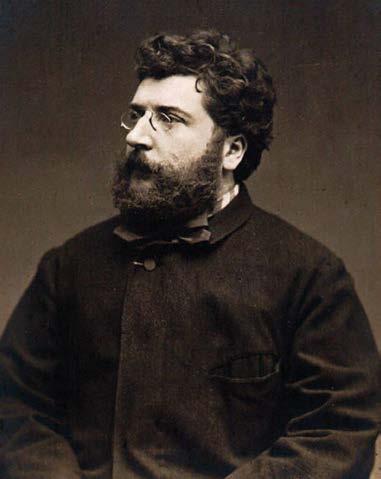
The writing – to which Bizet contributed a fair amount himself – and the composing went well, and the score was ready by the beginning of 1874. But there were problems. Du Locle’s fellow director, Adolphe de Leuven, objected to the violent subject matter and to the amoral nature of the character of Carmen. It Prosper Mérimée (photo by Charles Reutlinger) Act 1 of the original 1875 production of Bizet’s Carmen
632022 SEASON PROGRAMME of Paris by the Prussians between 1870 and 1871, he married Geneviève Halévy, the daughter of the composer Fromental Halévy, who had taught him at the Conservatoire, and they had one son, Jacques; but unequivocal success eluded him. His 1872 one-act opera, Djamileh, set in Cairo and replete with exotic detail, was given a lavish production at the OpéraComique and was much admired in later years by Gustav Mahler and Richard Strauss, but failed to stir the public interest.Eventually, Bizet came across a text that truly inspired him. This was Carmen, a story by the writer, historian and archaeologist Prosper Mérimée, which had appeared in the journal Revue des Deux Mondes in 1845. It had a sort of closely observed reportage style that, cleverly crafted into a libretto, could come to vivid life, and left plenty of room for music. The narrator of the story is, like Mérimée, a Frenchman and an archaeologist interested in languages who visits Spain in search of a lost battle site and comes across a sleeping man who turns out to be Don José, a bandit on the run from the authorities. A little later he is in Cordova, where he stops for a smoke and is joined by a young woman who he invites to join him at a café for an ice-cream. She is Carmen, a gypsy. From these unremarkable beginnings a story of erotic entanglement and violent jealousy unfolds.Theco-director of the OpéraComique, Camille du Locle, was a librettist himself and a supporter of Bizet. He liked the Carmen idea and proposed a team of librettists, Henri Meilhac and Ludovic Halévy (Geneviève’s cousin), who were both brilliant theatrical wordsmiths, having been responsible for a stream of operetta hits for Offenbach, including La belle Hélène and La Vie Parisienne

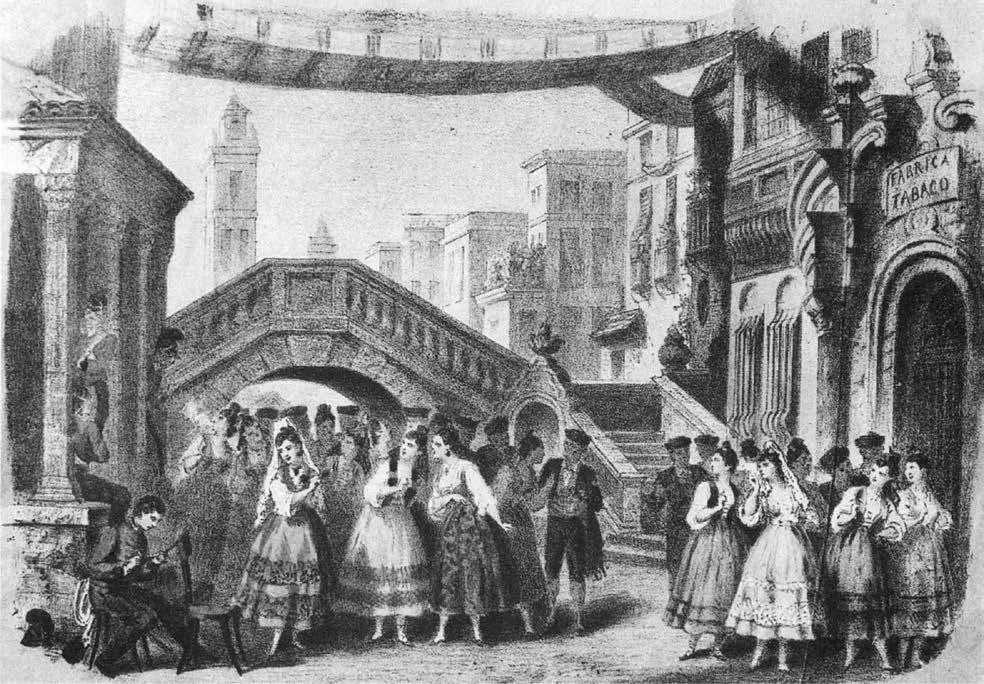

Poster for the premiere of Georges Bizet’s Carmen (Prudent-Louis Leray)

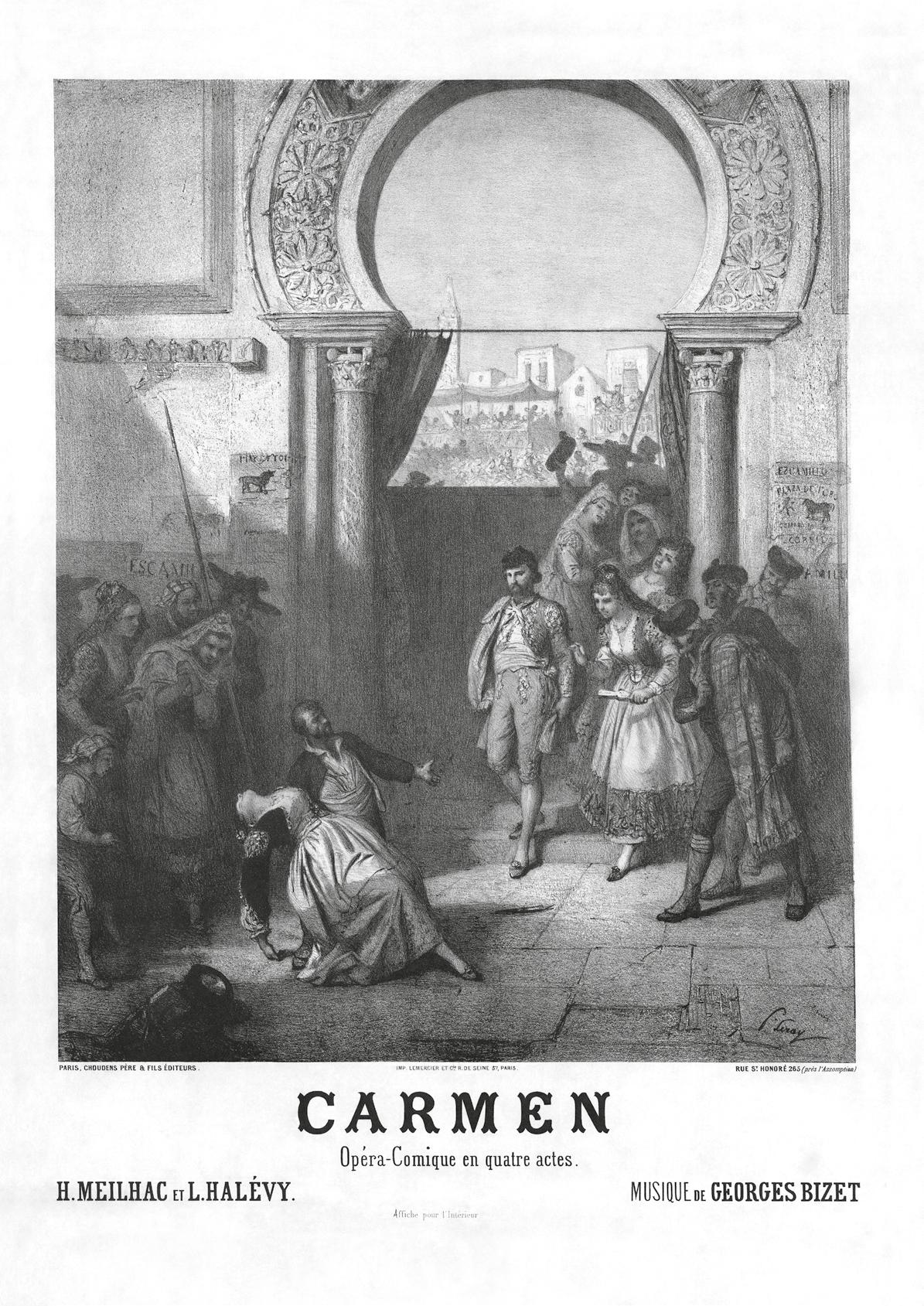
heroinevillainessbeappearedthetodisturbing,thoroughlywasandaudiencesofdayprobablytomoreofathana
652022 SEASON PROGRAMME
Bizet became obsessed with the character of Carmen, re-working sections over and again to get exactly what he wanted. He had unflinching support in his efforts from the singer cast in the title role, Célestine Galli-Marié, who worked tirelessly to convey Carmen’s complex nature. Chorus members and orchestral players complained about the difficulty of their music but finally, on 3 March 1875, Carmen opened at the Opéra-Comique to an audience crammed with figures from the Parisian artistic scene. Popular belief reports that the opera was a resounding failure but it was not as simple as that. The first act went well but after the interval something seemed to change, and not for the better. The audience’s interest waned and the end was greeted in puzzled silence before a smattering of applause. The critics were unkind at best, vicious at worst.Bizet stoically set to, made some changes and led more rehearsals with the performers to help with any difficulties they encountered. But he was devastated and his health – he already had an ongoing throat abscess and had suffered attacks of angina – took a turn for the worse. He and his wife and son went to their house at Bougival outside Paris so that he could rest. Galli-Marié was singing Carmen on 3 June 1875 and, during the card scene in Act Three, had a premonition that all was not well with Bizet. She fainted when she left the stage. In Bougival, Bizet went for a swim in the river, suffered two heart attacks and died later that same night. He was 36 years old. Over the next two seasons at the Opéra-Comique, Carmen received 48 performances. In October 1875 it was performed in Vienna and was a considerable success. Within a few years it was taken up by opera houses from Brussels, London and Naples to St Petersburg, Melbourne and New York. It has remained one of the most popular of all operas ever since – in a 2019 survey based on numbers of performances around the world it took second place, beaten to the top slot by La traviata and followed by Mozart’s Magic Flute
.
was he who insisted on the addition of Micaëla, the ‘good girl’ who loves Don José. Carmen was thoroughly disturbing, and to audiences of the day probably appeared to be more of a villainess than a heroine, seducing the hero, encouraging him to abandon his duty and his regiment, dropping him in favour of someone more glamorous, the toreador Escamillo. She also died on stage, not the first time this had happened to an operatic heroine, but they normally expired gracefully rather than as the result of a brutal stabbing.
Henrietta Bredin writes widely on opera and theatre and is deputy editor of Opera magazine. Her narrated song recitals – My Dearest Hedgehog and Gounod and Georgina – have been performed throughout the UK. Bullfighting scene by René Bull, circa 1910 Carmen

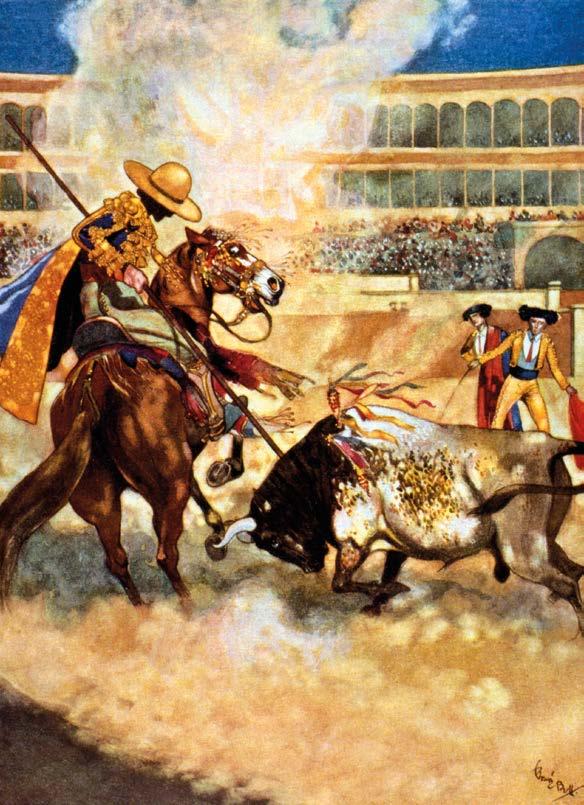
LONGBOROUGH FESTIVAL OPERA66 THE CREATIVE TEAM CARMEN
Originally from Portugal, Constance is a designer working collaboratively across theatre, installation, opera and film, currently based in the ConstanceUK. did a Foundation Diploma in Art and Design at UAL, and studied at Royal Welsh College of Music and Drama, graduating in 2021. Constance was awarded the Paul Kimpton Prize for Innovation in 2019, and The Lord Williams Memorial Prize for Design in 2021. Designs include: Powerful Interventions: Penyrenglyn (Weston Studio, WMC), Desert Boy (Carne Studio, LAMDA), Anna Karenina (The Bute Theatre, RWCMD). Associate Design include: Marvin’s Binoculars (Unicorn Theatre, London), Cat and Dog: A Children’s Opera, (The Anthony Hopkins Center, Cardiff). Design Assistant include: The Wolf, the Witch, Giant and Fairy (Linbury Studio, Royal Opera House), Forest Fables (Mottistone Manor, Isle of Wight). Assistant work include: The Merchant of Zong (Bristol Old Vic, Bristol), Swan Lake (the Bolshoi theatre, Russia).
Jeremy has conducted, amongst others, Pelléas et Mélisande (Glyndebourne Touring Opera); Madama Butterfly (English National Opera); Aida, Carmen (Royal Albert Hall); La Rondine, Lucia di Lammermoor, Le nozze di Figaro (Opera Holland Park); L’assedio di Calais, Il furioso all’isola di San Domingo, Ariadne auf Naxos, (English Touring Opera); Les Huguenots, Tosca (Opéra-Théâtre de Metz); Turandot (National Theatre, Malaysia); and Die Fledermaus (Yale Opera). In concert, he has worked with the Royal Philharmonic Orchestra, Royal Philharmonic Concert Orchestra, Sinfonia Varsovia, London Concert Orchestra and Orchestra of Scottish Opera.
Hendrickson is equally at home with opera and orchestra. Upcoming: Belgian National Symphony (Mozart Operas) and the London Symphony Orchestra. Previous: Orchestre national d’Ile de France, BBC Philharmonic, Pittsburgh Symphony Orchestra, Nashville Symphony Orchestra, Kammersymphonie Graz, Orchestra Sinfônica da USP (Brazil), Sao Paulo Symphony, London Mozart Players (UK) among others. Music Director credits: Fuel Opera’s tour of Opera for the Unknown Woman; Royal Conservatoire of Ghent Suor Angelica; Garsington Youth Opera at Garsington Opera and The Royal Opera House Out Loud Festival; UNCSA School of the Arts Bernstein’s MASS Chorus Master credits include the Royal Opera House, London; Longborough Festival Opera Chorus and Children’s Chorus; preparing choruses for Britten’s War Requiem for Marin Alsop. Karin maintains an international profile as an exceptional pedagogue, leading the National Youth Orchestra of Scotland; multiple appearances with the National Youth Orchestra of Great Britain; the Royal Welsh College of Music and Drama; the London Symphony Orchestra / Guildhall School Orchestra side-byside for Michael Tilson-Thomas; preparation of the London Symphony Orchestra and the Los Angeles Philharmonic youth orchestras sideby-side at the Barbican for Gustavo Dudamel. MMus/ ARAM Royal Academy of Music (London); DMA Peabody Conservatory (U.S.A).
JEREMY SILVER CONDUCTOR
KARIN HENDRICKSON ASSOCIATE CONDUCTOR / CHORUS MASTERKarin
Jeremy has also worked extensively in South Africa with all the country’s major symphony orchestras, as well as conducting La bohème and Le nozze di Figaro for Cape Town Opera and Lucia di Lammermoor with Gauteng Opera. As principal conductor of Opera Africa (20042007), he conducted productions of I Capuleti e i Montecchi, La traviata and Rigoletto, as well as a tour of the South African opera Princess Magogo to Het Muziektheater, Amsterdam. Jeremy was on the artistic leadership team at the National Opera Studio until 2018, and is currently Director of the Opera School at the University of Cape Town.
ACE MCCARRON LIGHTING DESIGNERAceMcCarron has been a lighting designer for many contemporary opera productions, having worked with Music Theatre Wales since their production of the Philip Glass opera The Fall of the House of Usher in 1988. In 2014, the company premiered his opera The Trial; an adaptation of the Kafka novel. He was also a member of Sir Peter Maxwell Davies’ company The Fires of London, working internationally on his music theatre pieces including The Martyrdom of St Magnus and The Lighthouse. This last opera was also produced by Muziektheater Transparant, and again, Ace was the lighting designer. Ace also lit many productions for the Operastudio in Gent and for Opera de la Monnaie/de Munt in Brussels, recently including Howard Moody’s opera Push, attended by the Royal Family. Ace has also lit a great variety of Baroque operas for companies such as The Scottish Early Music Consort, Opera Magdeburg, The Innsbrucker Festwochen, The New London Consort and The Purcell Quartet. Alongside his work in opera, for many years, Ace was the lighting designer for Howard Barker’s company The Wrestling School, notably lighting his seven-hour epic The Ecstatic Bible for the Adelaide Festival. Ace also works as a librettist, having won the ‘Flourish’ award in the UK with composer Guy Harries with an adaptation of Marina Lewycka’s novel Two Caravans
CONSTANCE CANAVARRO DESIGNER
MATHILDE LÓPEZ DIRECTOR Mathilde is associate director of National Theatre Wales and artistic director of August 012 theatre company. She started her professional career as a designer working for the BBC, Robert Lepage and Ex Machina in London and Madrid before becoming assistant director and literary manager at Theatre Royal Stratford East. She studied at Central Saint Martins and Ecole Philippe Gaulier, has a masters in theatre directing from Birkbeck College and was a founding member of National Theatre Wales. She is based in Cardiff. Directing credits include: Petula (National Theatre Wales / Theatr Genedlaethol / August012), Canur Pwnc (August 012); La Calisto (Longborough Festival Opera); Robinson: The Other Island (Give It A Name, Bristol Old Vic); La Voix Humaine associate director to David Pountney (Welsh National Opera) Les Miserables (August 012/Chapter); Highway One (August 012/ Festival of Voice); Of Mice and Men (August 012/Chapter); Yuri (August 012/Chapter/ Underbelly); City of the Unexpected, associate director to Nigel Jamieson (National Theatre Wales/Wales Millennium Centre); Roberto Zucco (August 012/Chapter); Tonypandemonium (National Theatre Wales); Caligula (August 012/Chapter); Pornography (Waking Exploits/ Chapter); Serious Money (Waking Exploits/ Chapter); Crosswired (East London Dance/ Barbican Centre).


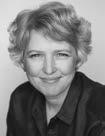
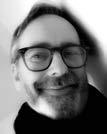
THE ANDY BEWLEY ASSISTANT DIRECTORAndyisadirector and writer based in London and Leicester.Heismost at home working in large-scale music theatre, enjoying the logistical dexterity of keeping a show moving forward on a day to day basis as much as the extraordinary creative gestures you can achieve through the form. He is particularly interested in using music-theatre as a way of reaching communities who do not have easy access to the performing arts, and has had the great fortune of doing this with companies such as Blackheath Halls Opera, Loud Crowd Opera Company and Vienna State Opera. Most recently, he has the great privilege of working on Olga Neuwirth’s Orlando at Vienna State Opera, and directing Mahogany Opera’s Leicester Snappy Opera Festival.Andy is currently the Associate Director at Giffords Circus and is developing a new musical with Kingdom Records.
Australian mezzo-soprano Margaret Plummer has been engaged as a principal artist at the Vienna State Opera for the past seven years. During this time Margaret has performed a vast range of repertoire for the company including Hansel/Hansel and Gretel, Mercedes/Carmen, Waltraute/Die Walküre and Götterdämmerung, Flosshilde/ Das Rheingold and Götterdämmerung, Dritte Norn/Götterdämmerung, Blumenmädchen/ Parsifal, Siebel/Faust, Varvara/Katya Kabanova, Tebaldo/Don Carlos, Page/Salome, Fenena/ Nabucco, Meg Page/Falstaff also for Hamburg State Opera, Tisbe/La Cenerentola, Hermia/A Midsummer Night’s Dream, Wood Sprite/ Rusalka and Fjodor/Boris Godunov Prior to her move to Austria in 2015, Margaret performed extensively with Opera Australia including performances in Handa Opera on Sydney Harbour as well as in regional touring productions. She has also been engaged as Charlotte/ Werther and Marguerite/La damnation du Faust for the Tiroler Landestheater, Innsbruck, in Beethoven’s Symphony No. 9 with the Vienna Philharmonic, Berg’s Seven Early Songs with the Tirol Symphony Orchestra, as Hexe/Hansel and Gretel with the Sydney Symphony Orchestra, as Phoebe/Castor et Pollux and Diane/Iphigenie en Tauride for Pinchgut Opera, and as Dorabella/ Così fan tutte for Pacific Opera.
MARGARET PLUMMER MEZZO-SOPRANO CARMEN
672022 SEASON PROGRAMME
CAST CARMEN
CARMINE DE AMICIS MOVEMENT DIRECTORCarmineDe Amicis works internationally as choreographer, stage director and performer in DanceTheatre, Opera and Film. He’s co-artistic director of EDIFICE Dance Theatre, producing stage, immersive, site-specific and film works. As Choreographer Carmine has worked for Opéra National du Rhin (Stiffelio), Welsh National Opera (Carmen, Le nozze di Figaro, Al Wasl – world premiere), Rossini Opera Festival (La cambiale di matrimonio), Hampstead Garden Opera and Gothic Opera for which he co-created a new production of Bluebeard’s Castle (Off West End Award Finalist). Carmine has received choreographic commissions for ReisOpera – Netherlands, Athens & Epidaurus – Greece, På-Tå-Hev – Norwegian Ballet and Opera.Heis associate lecturer in dance at the University of Chichester and has performed for award-winning choreographers Richard Alston and Shobana Jeyasingh and also for Jose Agudo, Tavaziva, Watkins Dance, Welsh National Opera and Grange Park Opera. Carmine directs and choreographs also for the camera and has collaborated with internationally acclaimed film directors Alfred Bailey, Rogerio Silva and Joseph Wilson. Carmine has a Masters in Opera Directing (Verona Accademia per l’Opera) and a Masters in Choreography (University of Chichester) and is certified Stage Fighter from the British Academy of Dramatic Combat.
LONGBOROUGH DEBUT
PREVIOUSLY FOR LONGBOROUGH: Alfredo Germont/La traviata (2018)
Recipient of Glyndebourne Festival Opera’s John Christie Award, and the 2018 Nederlandse Muziekprijs, Dutch tenor Peter Gijsbertsen has performed with leading companies internationally. Previous role highlights include Tamino/Die Zauberflöte (Opera Oviedo; Scottish Opera; Opera Vlaanderen; Op éra de Fribourg; Opera Zuid); Alfredo/La traviata (Scottish Opera & Longborough Festival Opera); Roméo/Roméo et Juliette and Gonzalve/L’heure Espagnole (Opera Zuid); The Novice/Billy Budd (The Bolshoi Theatre, Russia); Janicek/ The Diary of One Who Disappeared (Opera de Lyon; Opera Vlaanderen; Opera de Rennes; Muziektheater Transparant); Kaherdin and 3rd tenor/Le vin herbé (Staatsoper Berlin); The Novice and Maintop/Billy Budd, Der Junge Seemann/ Tristan and Isolde, and Lucano and Liberto/ L’incoronazione di Poppea (Glyndebourne Festival Opera & BAM New York); Eurimaco and Giove/Il ritorno d’Ulisse in patria (Oper Köln); Graf Albert/Die tote Stadt (ABAO Bilboa); Acis/ Acis and Galatea (Op éra de Fribourg; Dorset Opera Festival); Gernando/L’isola disabitata (Nederlandse Reisopera). Peter has worked with many leading international conductors and directors including Sir Mark Elder, Sir Andrew Davis, Sir David McVicar, Emmanuel Haïm, Katie Mitchell, Laurence Cummings, Jonathan Kent, Robert Carsen, Jonathan Cohen, David Parry, Vladimir Jurowski, and Edo de Waart.
PETER GIJSBERTSEN TENOR DON JOSÉ

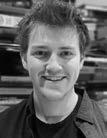
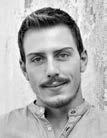
LONGBOROUGH DEBUT JENNIFER WITTON SOPRANO MICAËLA
LONGBOROUGH DEBUT
SZYMON CHOJNACKI BASS-BARITONE ZUNIGA
As a Harewood Artist at the English National Opera (2015-20), Matthew gave over 100 performances for the company, including Demetrius/A Midsummer Night’s Dream, Schaunard/La bohème, Fiorello/ The Barber of Seville, Dancairo/Carmen, Marullo/Rigoletto, Yamadori/Madama Butterfly, Hel Helson/Paul Bunyan, Polythemus/Acis and Galatea, Ormonte/Partenope, Counsel/ Trial by Jury and Malcolm Fleet in the world premiere of Nico Muhly’s Marnie Elsewhere he has sung Belcore/L’elisir d’amore for Glyndebourne on Tour and Iford Arts Festival; Masetto/Don Giovanni for the Opéra de Rouen Haute Normandie, in Versailles and for Longborough Festival Opera; Demetrius for L’Opéra Comédie de Montpellier; the role of Captain in Hartmann’s Simplicius Simplicissimus for Independent Opera at Sadler’s Wells, and Melisso/Alcina and Elviro/Serse for Longborough FestivalMatthew’sOpera.recent appearances have included Marcello/La bohème for English National Opera, Don Giovanni on tour with Diva Opera, and his debut with the Royal Opera as the Third Noblemen of Brabant in Lohengrin. He returns to the Royal Opera in 2023 as Flemish Deputy/ Don Carlo Matthew previously studied at the Wales International Academy of Voice, the Royal Birmingham Conservatoire and the National Opera Studio.
LONGBOROUGH FESTIVAL OPERA68
Winner of the GSMD Gold Medal, Jennifer Witton is a graduate of the Guildhall Opera School. In 2019 she won first prize at the inaugural ‘Opera: By Voice Alone’ competition and is the recipient of the ROSL Roderick Lakin Award. Following various roles and covers for Glyndebourne, she performed the title role in Massenet’s Cendrillon in performances for both the festival and the tour. She has also worked for the Royal Opera House, English National Opera, Opera North and Wexford Festival Opera. Role and cover highlights include Micaëla/Carmen, Gilda/Rigoletto, La Musica & Euridice/L’Orfeo, Lucia/Rape of Lucretia, Madame Herz/Der Schauspieldirektor, Aphrodite/Phaedra, Anna/ Die sieben Todsünden and Lauretta/Gianni Schicchi
MATTHEW DURKAN BARITONE ESCAMILLO
IDUNNU MÜNCH MEZZO-SOPRANO MERCÉDÈS
Idunnu Münch made her UK debut singing Dido in Purcell’s Dido and Aeneas in 2018. Since, she is a regular at English National Opera and was named a Harewood Artist with the 2019/2020 season. In May 2022, she will make her debut with The Royal Opera at Linbury Theatre. She worked with producers Tatjana Gürbaca, Richard Jones, Daniel Kramer, Harry Kupfer, Henry Mason, David Pountney, Emma Rice, James Robinson, Kirill Serebrenikov and Jossie Wieler. The German mezzo-soprano made her festival debuts at Salzburg in 2013 and Verbier in 2017. Idunnu Münch debuts at Opéra national du Rhin and Teatro alla Scala in Milan followed during the 2017/2018 season with Smaragdi in Zandonai’s Francesca da Rimini and at Komische Oper Berlin with Nimbavati in Handel’s Poros in 2019. A member of the Stuttgart’s Opera Studio from 2015 to 2017, she performed Cherubino in Mozart’s Le nozze di Figaro, Olga in Tchaikovsky’s Jewgeni Onegin and Mary in Wagner’s Der fliegende Holländer Idunnu Münch made her BBC Proms’ debut in 2019 and with Münchner Philharmoniker in 2021. She performed with BBC Scottish Symphony Orchestra, Camerata Salzburg, Mozarteumorchester Salzburg, Münchner Philharmoniker, Münchner Rundfunkorchester, Nürnberger Symphoniker, Orchestra del Teatro alla Scala di Milano and Vienna Philharmonic and under the baton of conductors including Ivor Bolton, Charles Dutoit, Sian Edwards, Antony Hermus, Lothar Koenigs, Fabio Luisi, Antonello Manacorda, Esa-Pekka Salonen and Franz Welser-Möst.
PREVIOUSLY FOR LONGBOROUGH: Masetto, title role (cover)/Don Giovanni (2019), Melisso/ Alcina (2016), Elviro/Xerxes (2015)
PREVIOUSLY FOR LONGBOROUGH: Dorabella/Così fan tutte (2021)
StrongPablo
Szymon Chojnacki graduated from the Vocal Department of the Polish Academy of Music in Poznań (prof. Andrzej inNational(prof.MusikhochschuleOgórkiewicz),LübeckGünterBinge)andtheUniversityofMusicStuttgart(prof.Dunja Vejzović).Hebegan his career in 2008 as the first bass accepted for the International Opera Studio in Lübeck. In 2010/11 Szymon Chojnacki was appointed to the Opera Studio of the National Opera in Stuttgart. The same year he became a member of the Lucerne Theater in Switzerland, with which he remained permanently until June 2016. Here he sang, among others: Zoroastro, Publio, Alidoro, Lord Sidney, Colline and Don Pasquale. Season 2016/2017 brought some significant debuts in Austria: participation in Thomas Ades’ The Tempest as Stefano (cover) in the Vienna State Opera and numerous performances of Mozart’s Magic Flute as Sarastro in Bühnen Baden near Vienna. Since summer 2018 he is performing regularly at Teatro La Fenice and Teatro Malibran in Venice (Richard III, Don Carlo, Prima la musica poi le parole and Der Schauspieldirektor). He appears regularly on the stages of European concert halls with cantata-oratorio repertoire, but also with songs, as a Lied Duo together with the pianist Lisa Wellisch.
A Britten-Pears Young Artist, Jennifer has performed at the Barbican Hall, Cadogan Hall, Royal Festival Hall, Queen Elizabeth Hall, Edinburgh Fringe Festival and the Oxford Lieder Festival. She has worked with conductors such as Marin Alsop, John Wilson and Martyn Brabbins and has given recitals alongside pianists Simon Lepper, Iain Burnside and Graham Johnson. Her discography includes ‘Voices of London’ alongside pianist Gavin Roberts and ‘Music and Speeches’ with the Royal Shakespeare Company.

SAMUEL
As an oratorio soloist performances include Purcell Ode to Saint Cecilia (Dunedin Consort); Bach Cantatas BWV74 and BWV106 (RAM/ Kohn Foundation Bach Cantata Series); Handel Messiah (Johannesburg Concert Orchestra); Bach St. Matthew Passion (Israel Camerata); and a European tour of Bach Cantatas as a soloist with the Monteverdi Choir.
KIERAN RAYNER BARITONE LE DANCAÏRE Kieran Rayner is a Londonbased New Zealand baritone. He is a Britten Pears Young Artist 2021-22, and has been a Young Artist with Garsington Opera (winning the Sandbach Prize), Independent Opera, Verbier Festival, Samling Arts, Internationale Meistersinger Akademie, and has been generously supported by the Kiri Te Kanawa Foundation. He was an International Handel Competition Finalist 2021, Wigmore Hall International Song Competition semifinalist 2019 and Royal Overseas League prize winner. Recent roles include Marcello/La bohème (Mid Wales Opera); Baron Pictordu/ Cendrillon (VIARDOT200); Forester/The Cunning Little Vixen (Longborough Festival Opera); Notar/Der Rosenkavalier, Prince of Mantua/Fantasio, cover Remo/The Skating Rink (Garsington); Pierre Lafitte/Cabildo (Wilton’s Music Hall); L’Horloge Comtoise/L’enfant et les sortilèges (VOPERA); Crespel/ Tales of Hoffmann, cover Anténor Dardanus & Albert/ Werther (English Touring Opera); Silvio/Pagliacci (NZ); Eisenstein/Die Fledermaus (Singapore); Pierre Lafitte/Cabildo; Sharpless/Madam Butterfly ; Figaro/Il barbiere di Siviglia; Figaro/Le nozze di Figaro; Mari, Directeur/Les Mamelles de Tirésias Concert highlights include Dare to Dream, Royal Albert Hall (Garsington, Hannah Conway); Serenade to Music, Buckingham Palace (John Wilson), and Stravinsky Pulcinella (Jurowski). He graduated from the Royal College of Music Opera School, with roles including The Forester, Eisenstein, Demetrius/Midsummer Night’s Dream, Nardo/La finta giardiniera, and Vicar Gedge/Albert Herring, plus two principal roles with British Youth www.kieranrayner.comOpera.
HAEGEE LEE SOPRANO FRASQUITA
PREVIOUSLY FOR LONGBOROUGH: Burylovka/Jenůfa (2016); Hansel/Hansel and Gretel (2005)
MARIA JAGUSZ MEZZO-SOPRANO DON JOSÉ’S MOTHER / OLD LADY Maria is an English born mezzo-soprano who trained at the Royal Northern College of Music and then at the National Opera Studio. She started her career at Opera North where her roles include Carmen, Orlofsky, Cherubino, Lazuli/L’etoile and Smeraldina/Love for Three Oranges a role she has also sung in Lisbon, ENO and recorded for the BBC. For Scottish Opera she has sung Carmen, Nicklaus and Puck/Oberon a role she has also performed at Opera De Lyon, and in Montpelier. She made her debut at the Royal Opera House as the Gypsy in Les Huguenots and then went on to sing Dimitri/Fedora Other roles include Rosina (Malta Festival, Singapore Opera and Travelling Opera); Cherubino (Opera Northern Ireland); Hansel (Bloomsbury Theatre); Dorabella (Travelling Opera). For Opera Project her roles include Madam Armfelt/Little Night Music, Filippyevna/ Eugene Onegin and Burylovka/Jenůfa Maria teaches and works with many young singers and is passionate about the education work that she undertakes at Longborough with Jessica May. Her directing credits for Longborough include Orfeo ed Euridice and Sweeney Todd. For Longborough’s Playground Opera project she has directed Hansel and Gretel, and The Downfall of Don José, a short version of Carmen written specifically for young children.
Operatic roles include Papageno/Die Zauberflöte, Scherazmin/Oberon, and Harlekin/ Ariadne auf Naxos, (Salzburger Landestheater); Pulcino/BambinO (Scottish Opera); Juan/Juliana (Nova Music Opera); Onegin/Eugene Onegin (OperaUpClose); Leporello/Don Giovanni (Head First Productions); Lumaca/La scuola de gelosi (Bampton Classical Opera); Sharpless/Madama Butterfly (King’s Head Theatre); The King/Eight Songs for a Mad King (Grimeborn Festival, Saint Petersburg Philharmonia); Guglielmo/Cosí fan tutte (Pop-Up Opera); The Younger Gentleman/ Exposition of a Picture (Buxton Festival); and L’horloge comtoise, Le chat/L’enfant et les sortileges (BBCSO).
PANTCHEFF BARITONE MORALÈS
Born in South Korea, Haegee Lee trained at Seoul National University and the Conservatoire National de Région Pierre Barbizet, Marseille. She now studies with Isabelle Vernet. Her awards include First Prize in the Concours de Bach, Marseilles, and Second Prize in the first Korean Classical Singers Association International Vocal Competition, Seoul. Between 2017 and 2019, Haegee Lee was a member of the the Jette Parker Young Artists Programme at the Royal Opera House, Covent Garden, where she sang the roles of Frasquita/Carmen, Sandman/Hänsel und Gretel, Papagena/Die Zauberflöte and Xenia/Boris Godunov, as well as appearing in the annual Summer Performances as Elvira/L’Italiana in Algeri, Zerbinetta/Ariadne auf Naxos and Gilda/ Rigoletto. She also covered roles including Micaëla/La tragédie de Carmen, Marie/La fille du régiment, Donna Anna/Don Giovanni and Azema/Semiramide On graduating from the JPYAP Frasquita/ Carmen and Gilda/Rigoletto for Welsh National Opera.Most recently, she has returned to the Royal Opera House, Covent Garden to repeat her performance as Papagena/Die Zauberflöte Future engagements include Queen Tye/ Akhnaten for English National Opera and Musetta/La bohème for Welsh National Opera.
PREVIOUSLY FOR LONGBOROUGH: Forester/ The Cunning Little Vixen (2021)
COVERS
CARMEN Bernadette Johns DON JOSÉ Satriya Krisna MICAËLA Haegee Lee MERCÉDÈS Clare Ghigo MORALÈS James Gribble FRASQUITA Angharad Watkeys LE DANCAÏRE Peter Edge LE REMENDADO Lars Fischer
692022 SEASON PROGRAMME
Samuel Pantcheff is a graduate of the Opera Course at the Royal Academy of Music where he studied with Glenville Hargreaves and Audrey Hyland, and won the Blythe-Buesst Opera Prize. Samuel is a former Britten-Pears Young Artist and currently studies with Katharine Goeldner. In recent seasons he has been a member of the solo ensemble at the Salzburger Landestheater.
ALEX HAIGH TENOR LE REMENDADOAlex started his musical education in Hull University reading Music and Drama. Following this, he has studied with Trinity Laban conservatoire (Masters in Vocal Performance), trained with the Associated Studios in Hammersmith, ENO’s ‘Opera Works’ and The Berlin Opera Academy. He performs regularly as an opera singer, oratorio artist, consort singer and coaches vocal groups as anAlexanimateur.isaPatron of The Chiltern Centre, an organisation dedicated to providing respite care for young adults with disabilities. He is a performer with Opera Prelude and also leads their outreach team; organising and delivering concerts in care homes. On stage, he has worked with Grange Park Opera, The Grange Festival, Merry Opera, Kentish Opera, Guildford Opera, Fulham Opera, Kings Head Theatre, Gothic Opera, Hampstead Garden Opera and is delighted to be returning to Longborough this season. Following Carmen in 2022, Alex will sing Gounod St Cecilia Mass, Mendelssohn Lauda Sion, Mozart Requiem and Caspar in Menotti’s Amahl and the Night Visitors as well as Albert Herring with New Palace Opera in the title role. He will finish the year with a Messiah performed at Dorchester Abbey with John Lubbock conducting the Orchestra of St John’s. Alex is a keen fan of permaculture, beekeeping and is currently learning how to distil gin. He has a dog called Barney, whose high notes Alex continues to be inspired by.
LONGBOROUGH DEBUT
PREVIOUSLY FOR LONGBOROUGH: Hervey/ Anna Bolena (2019)
LONGBOROUGH DEBUT


LONGBOROUGH FESTIVAL OPERA70 LONGBOROUGH FESTIVAL ORCHESTRA VIOLIN 1 Katharine Gittings Barbara O’Reilly George ImogenZhivkoLaurenceEwartKemptonGeorgievCox VIOLIN 2 Kelly McCusker Amy LaurenJustineMirandaLittlewoodWaltonTomlinsonAbbott VIOLA Helen Roberts Isobel Adams Alice JanuaryBillenJohnnsen CELLO Jane Salmon Clare Spencer-Smith Peter Wilson DOUBLE BASS Marcus Willett David Burndrett FLUTE Diane Clark Alison Hardy OBOE Victoria Brawn Maddy Aldis-Evans CLARINET Alison Lambert John Meadows BASSOON Jonathan RosemaryPriceCow HORN Richard JonathanLewisBareham TRUMPET Stuart Essenhigh Simon Jones TROMBONE Christopher Hickman TIMPANI Clifford Pick HARP Catherine White PERCUSSION Jonathan Helm CARMEN ORCHESTRA MANAGER Philip Head ASSISTANT ORCHESTRA MANAGER Stuart Essenhigh We are grateful to the below for their support of the following Orchestra Chairs: Leader – Mike Bates Double Bass – Gornall & Wildes Clarinet – Elizabeth Allen Trombone – Patricia Duncker

712022 SEASON PROGRAMME JonesRachel

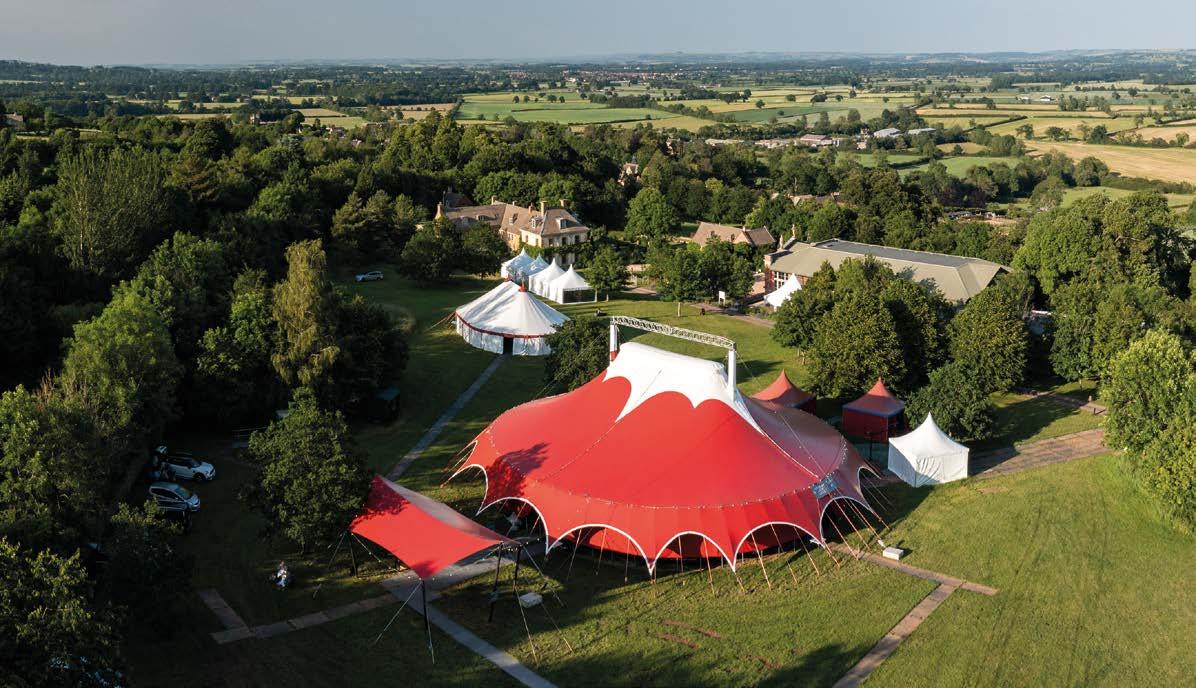
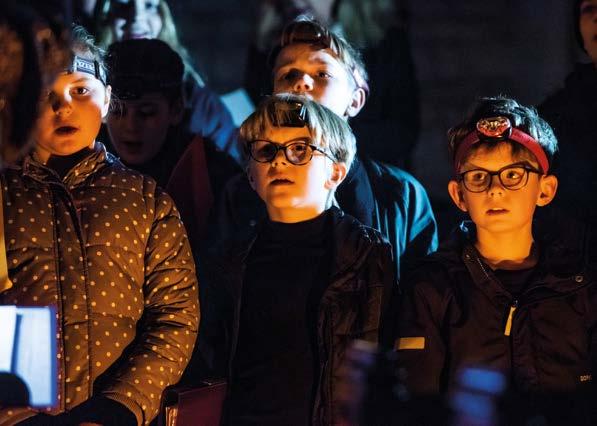
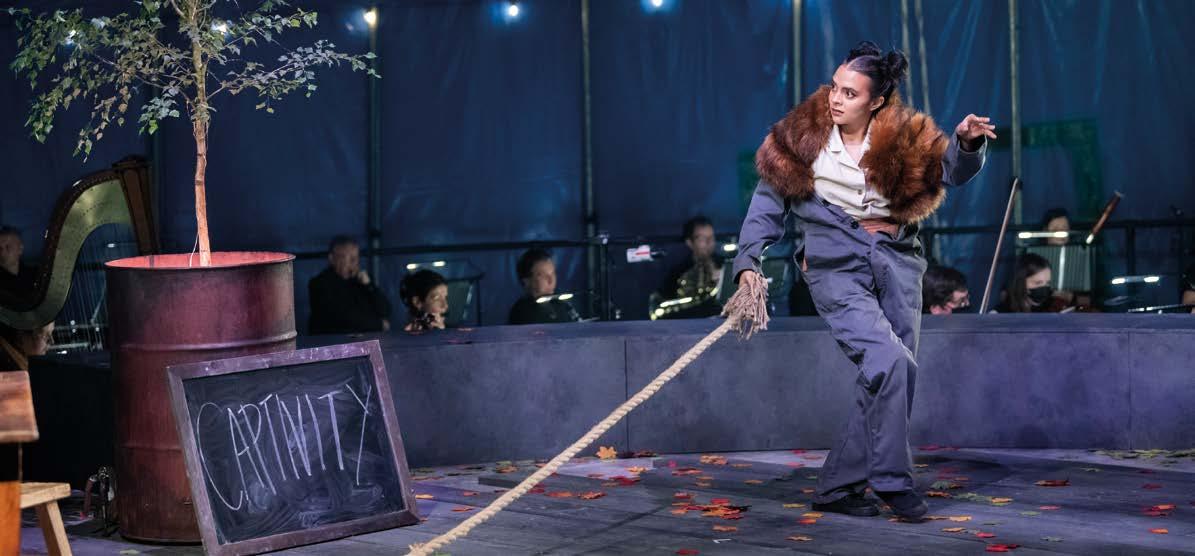
LONGBOROUGH FESTIVAL OPERA72 Emerging Artist double bill Interval of 90 minutes between Spell Book & La liberazione di Ruggiero CONDUCTOR / ARRANGER Yshani Perinpanayagam DIRECTOR Jenny Ogilvie DESIGNER April Dalton LIGHTING DESIGNER Jake Wiltshire ASSISTANT CONDUCTOR / REPETITEUR Clíodna Shanahan LANGUAGE COACH Alessandro Fasolo SURTITLES Kenneth Chalmers WITH CHROMA Ensemble SPELL BOOK LA LIBERAZIONE DI DALL’ISOLARUGGIEROD’ALCINA
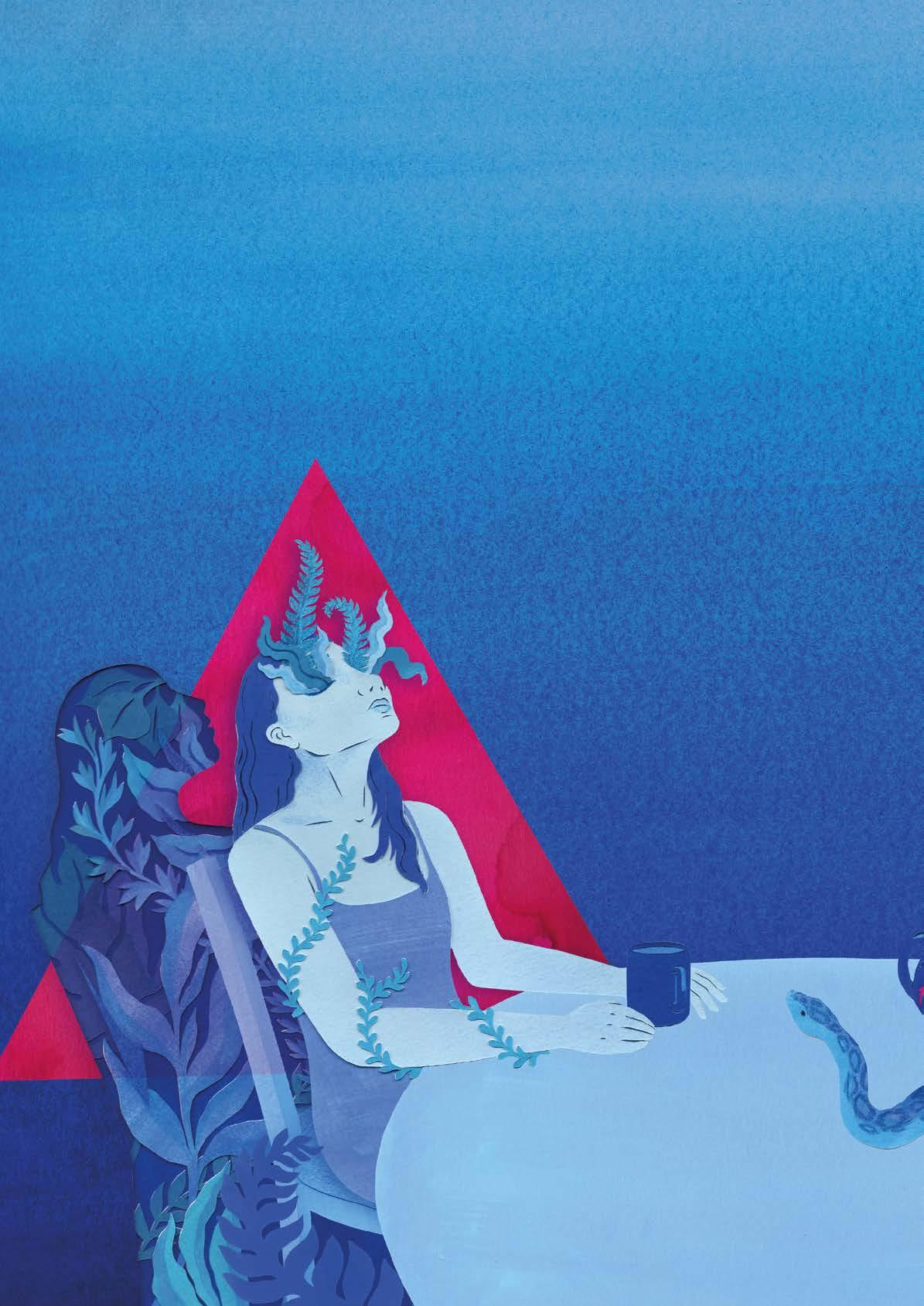
732022 SEASON PROGRAMME SPELL BOOK Sung in English with English surtitles. MUSIC Freya Waley-Cohen TEXT Rebecca PerformedTamásbyarrangement with Faber Music, London on behalf of Birdsong Music FIRST PERFORMANCE OF SPELL BOOK Volume 1: West Road Concert Hall, Cambridge, 21 January 2020 Volume 2: Conway Hall, London, 1 March 2020 FIRST COMPLETE PERFORMANCE Longborough Festival Opera, 28 July 2022 The Spells SPELL FOR LILITH Sung by Sarah Richmond SPELL FOR SEX Sung by Flora Macdonald SPELL FOR WOMEN’S BOOKS Sung by Nia Coleman SPELL FOR LOGIC Sung by Flora Macdonald SPELL FOR JOY Sung by Keith Pun SPELL FOR REALITY Sung by Jessica Robinson LA LIBERAZIONE DI RUGGIERO DALL’ISOLA D’ALCINA THE LIBERATION OF RUGGIERO FROM THE ISLAND OF ALCINA Sung in Italian with English surtitles. MUSIC Francesca Caccini In a new arrangement by Yshani Perinpanayagam LIBRETTO Ferdinando Saracinelli, based on Ariosto’s Orlando Furioso FIRST PERFORMANCE OF LA LIBERAZIONE DI RUGGIERO Villa di Poggio Imperiale, Florence, 3 February 1625 FIRST PERFORMANCE OF THIS PRODUCTION Longborough Festival Opera, 28 July 2022 CAST & ENSEMBLE ALCINA Lauren Joyanne Morris BRADAMANTE / MELISSA Simone Ibbett-Brown RUGGIERO Oskar McCarthy NEPTUNE Joe Chalmers RIVER Ruairi Bowen FIRST LADY Nia Coleman SECOND LADY Flora Macdonald THIRD LADY Sarah Richmond SHEPHERD Xavier Hetherington SIREN Jessica Robinson PLANT / MONSTER Aaron Holmes MESSENGER Keith Pun Artwork by Amber Cooper-Davies Longborough’s Emerging Artist production is supported by: Colwinston Charitable Trust Jenny Houghton Peter Cottingham The Fidelio Charitable Trust and those who wish to remain anonymous

“Folklore and history tangle together around the figure of the witch. A witch was someone who stood outside of the accepted norms of society, someone who rejected the role they were ascribed to play in that society, or someone who just didn’t fit that role. Fairy tales warn children against becoming this person. They present two options for female identity; be helpless but loved, or be powerful and desirous but hated and feared.
In the spring of 2019, I read WITCH by Rebecca Tamás. Tamás’ witch is full of desire and power and she doesn’t think about the same things that other people are thinking about, but she is neither bad nor good – she exists outside that framework. While reading it, I started to have strange and witchy dreams. A few months later, I was still thinking about it, and felt a strong impulse to engage creatively with what I found in it. In an article in The White Review, Tamás writes that her interest is ‘the witch as an explosively radical female figure, a site of resistance, a way out of silence and silencing.’ I got in contact with Tamás and we started to talk.
Freya Waley-Cohen Composer
The set opens with the spell for Lilith. In Jewish folklore, Lilith is the first woman, created at the same time, and from the same clay as Adam. She refused to be subservient to both Adam and God, and left the Garden of Eden. She was given the option to return or to become a demon, and she chose to become a demon. As with any story so old, there are myriad versions, each revised to suit the ideals of the time, the culture, and the storyteller. Lilith means ‘night creature’ or in some translations ‘owl screech’. The spell for sex starts with a tight focus on an object, an ingredient, and an action. The last line takes us out from the domestic setting and into the vast, dark openness of the night. At the opening of spell for women’s books a viola line coils around a list of three ‘vellums’. Each conjures a story that a reader might become trapped in, but as the spell continues, its subversive lines take us on paths that might lead us to escape theseWhilefates.spell for Lilith is in the first person, creating an immediate and intimate connection between the speaker and Lilith, spell for logic is in the second person. Spell for logic brings together layers of logic, from the shallow, binding logic we use to try and organise and control our time, to the deeper logic of the earth and sea and its inevitable tides. And it is you, the listener, who is receiving these directions, and it is for you to consider, ‘what you wanted from this’. spell for joy is a pure conjuring. Each sentence gives action, movement, and imagery, creating a collage of yesses that add up to a total and reckless joy. spell for reality speaks to the quiet domestic rituals of life, and their ability to conjure larger meaning and vivid images, as well as a quietly intensifying connection to the earth. This spell uses the earth’s rhythms to explore mystical experience.
SYNOPSISSPELLBOOK
Amongst other longer poems, WITCH contains 21 spells. In the book Spells: 21st Century Occult Poetry of which Tamás is co-editor, she writes that ‘Spell-poems take us into a realm where words can influence the universe’. A spell asks to be performed out loud in a ritual setting. It seemed fitting and almost natural for me to bring these incantations into the ritualistic setting of the concert hall, and the formalised performance of song. These songs are a sung Spell-book.”
LONGBOROUGH FESTIVAL OPERA74

“Since there is nothing ‘objective’ about beauty, the power elite can...strip ‘beauty’ away. To do that to a woman publicly from a witness stand is to invite all eyes to confirm her ugliness, which then becomes the reality that all can see” - The Beauty Myth, Naomi Woolf
LASYNOPSISLIBERAZIONEDIRUGGIERODALL’ISOLA
D’ALCINA
The plants of the island start to sing. They are revealed as the enchanted former lovers of Alcina, whom she has discarded and transformed. The plants beg Ruggiero not to leave without freeing them too and warn him not to anger the sorceress Alcina. Melissa promises to protect them. Alcina and her damsels return. A messenger describes Ruggiero’s companion – and how Ruggiero has decided to leave the island. Alcina pleads with Ruggiero, who will not relent, and leaves in Ruggieroanger.expresses his joy at his freedom. He reminds Melissa to free the others that are trapped on the island.
Scene 2
752022 SEASON PROGRAMME
Alcina’s island is a paradise dedicated to pleasure and to love. Ruggiero has abandoned his calling as a warrior and devoted himself to Alcina’s beauty. They sing of their love. Alcina leaves to attend to her realm, leaving Ruggiero to delight in his surroundings. Damsels sing of the island’s beauty; a shepherd tells of his love; a siren rises from the sea and sings Ruggiero to sleep.Ruggiero is soon wakened by Melissa, in disguise. She demands that he return to his calling as a warrior and shames him for loving an enchantress. He agrees to leave Alcina.
Scene 4
Neptune calls on other water deities to sing the praises of the visiting royal guest in the audience; and introduces the story of the knight Ruggiero who has abandoned his betrothed, Bradamante, and fallen in love with the sorceress Alcina.
The true ugliness of Alcina’s island has been revealed, and Melissa reminds mortals of the consequences of uncontrolled passion. The freed inhabitants of the island dance and sing with joy. She makes herself so young and beautiful That many, like Ruggiero, she has snared. But now the ring enables him to pull Away the mask which has so long impaired Men’s vision. It is, then, no miracle That brave Ruggiero, who this madness shared, Is sane again. No magic can avail her, And all her beauty’s remedies now fail her - Canto VII, 74, Orlando Furioso, Ludovico Ariosto
Scene 1 Bradamante reinvents herself as Melissa, another sorceress, and approaches Alcina’s island. She tells us that Ruggiero has been trapped there by Alcina and that he is enchanted by her beauty. She resolves to free him and reunite him with his betrothed, so they can found a dynasty together. She disguises herself as the sorcerer Atlante, and anticipates the pain which Alcina will feel when Ruggiero leaves.
Scene 3 Alcina and her monsters threaten Ruggiero with punishment if he does not stay. Melissa confronts Alcina, claiming hers is the stronger power. Alcina accepts her fate and flees.
Prologue

LONGBOROUGH FESTIVAL OPERA76 A WITCH’S-EYE VIEW Spell Book Composer Freya Waley-Cohen and Arranger and Music Director Yshani Perinpanayagam talk to Sophie Rashbrook about she-demons, creative freedom, and other-worldly perspectives. Witchcraft at Salem Village (William A. Crafts 1876) I’m looking at ways of highlighting these tropes, so that the audience can see Caccini’s witches through eyes that have been widened or opened by the song-cycle

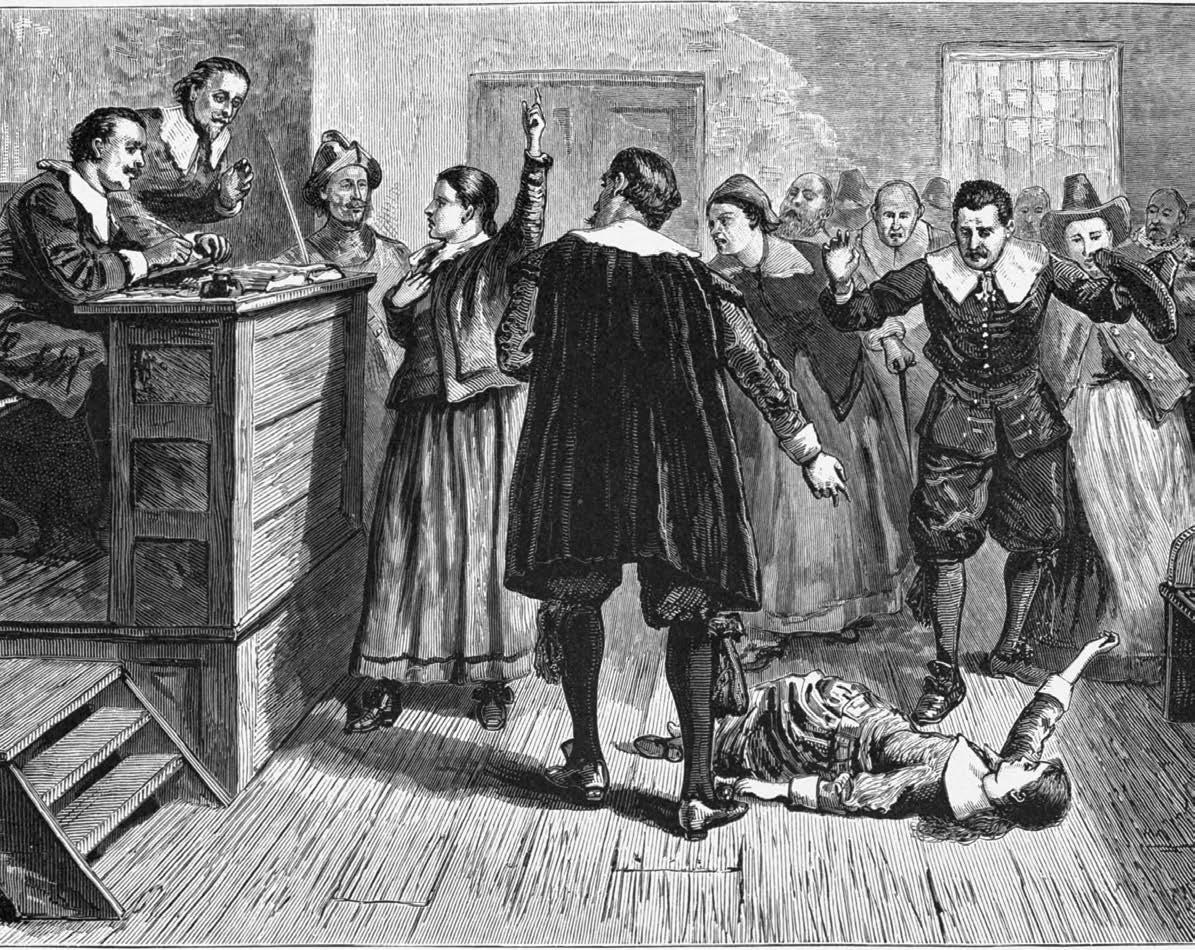
MarseyWilliam
W hat came first: the woman or the witch? It’s a close-run thing, says Freya Waley-Cohen, composer of Spell Book, the first instalment of a uniquely magical double-bill: “In early Jewish folklore and some Babylonian texts, Lilith was the first woman, not Eve. When Lilith refused to be subservient to Adam, she left the Garden of Eden, and God said: ‘You can either come back and submit to us, or you can be a demon forever.’ So, she chose to be a demon forever”. Lilith’s choice provided her with freedom, but it also ensured her immortalisation in Western culture as the first archetypal she-demon, held up as a cautionary tale to disobedient women everywhere – until now, perhaps. Song for Lilith is the opening number in Waley-Cohen’s song-cycle, Spell Book. Commissioned by a combination of ensembles over two years, the cycle sets poetry from WITCH; a collection of anarchic, feminist poems by British author Rebecca Tamás, published in 2019. The full collection comprises twenty-one self-professed ‘hexes’, each one a “small, bright, filthy song” that “clings to your body like sweat”. So, not your typical libretto.From its opening bars, Waley-Cohen embraces Tamás’s gleeful, subversive style, reframing the narrative around the infamous she-demon: “Lilith you look so nice with that snake”, intones the singer, “your hair curled the way a serpent might”. The poem goes on to suggest that by exiling herself from Eden, Lilith was able to go and create her own world of magic – “a whole universe of your own making / entirely pleasure” – a sensual world to which Waley-Cohen’s vocalist longs to return. “Take us back with you,” she implores, before launching into five further spells (for Sex, Logic, Women’s Books, Joy and Reality), all variously profane, earthy and mysterious. “In the poems,” says Waley-Cohen, “there’s this idea that Lilith’s world is out there, still existing. Perhaps,” she adds, smiling, “Caccini’s opera is in Lilith’s world, too”.
Lady Lilith (Dante Gabriel Rossetti 1866)
Freya Waley-Cohen
772022 SEASON PROGRAMME
La liberazione di Ruggiero dall’isola d’Alcina, composed by Francesca Caccini in 1625, will unfold in the same space as Freya’s song cycle. The decision to programme the Caccini after the WaleyCohen is a deliberate one, as Music Director Yshani Perinpanayagam explains: “We’re thinking very much in terms of the whole evening, and how one piece will colour and shade the other, or leave some kind of resonance in the space for the next. In the Caccini, there’s a danger that the two witch-women in the story – Melissa and Alcina – are only seen as ‘good witch’ and ‘bad witch’. I’m looking at ways of highlighting these tropes, so that the audience can see Caccini’s witches through eyes that have been widened or opened by the song-cycle”.

La liberazione is a work of its time, but despite being nearly four centuries old, Caccini’s opera is progressive in so many ways. Reputedly the first opera ever composed by a woman, it was commissioned by Maria Maddalena, the wife of Cosimo II de’ Medici in Florence, and is based on the epic Italian poem, Orlando Furioso (the same source as Handel’s opera, Alcina). It tells the tale of the enchantress Alcina, who has seduced the otherwise dutiful husband
While an ensemble of modern instruments invites innovation, Perinpanayagam feels a strong sense of duty to honour the past: “I’m trying to balance finding my own freedom Yshani Perinpanayagam [Ruggiero] is absolutely a pawn in the battle of witch versus witch It is awesome that Francesca Caccini has given both of these women such power
LONGBOROUGH FESTIVAL OPERA78
The ensuing showdown has dramatic consequences for both Alcina and Ruggiero, who, as Perinpanayagam points out, “is absolutely a pawn in the battle of witch versus witch. It is awesome that Francesca Caccini has given both of these women such power”. Much of the characterisation of the two witches will emerge through rehearsal with the singers and the Director Jenny Ogilvie – but some of it will also derive from Perinpanayagam’s new orchestration. Faced with the typically sparse manuscript of a rarelyperformed Baroque opera, she has the added challenge of scoring it anew for a contemporary ensemble of strings, woodwind and piano (the same forces that are used in Freya’s song-cycle) – with the addition of a harpsichord.
Ruggiero away from his wife. He seems largely content to be under Alcina’s spell, living on her enchanted island until the virtuous sorceress, Melissa, intervenes.
A horse ballet in the courtyard, believed to be from La liberazione di Ruggiero (Alfonso Parigi)
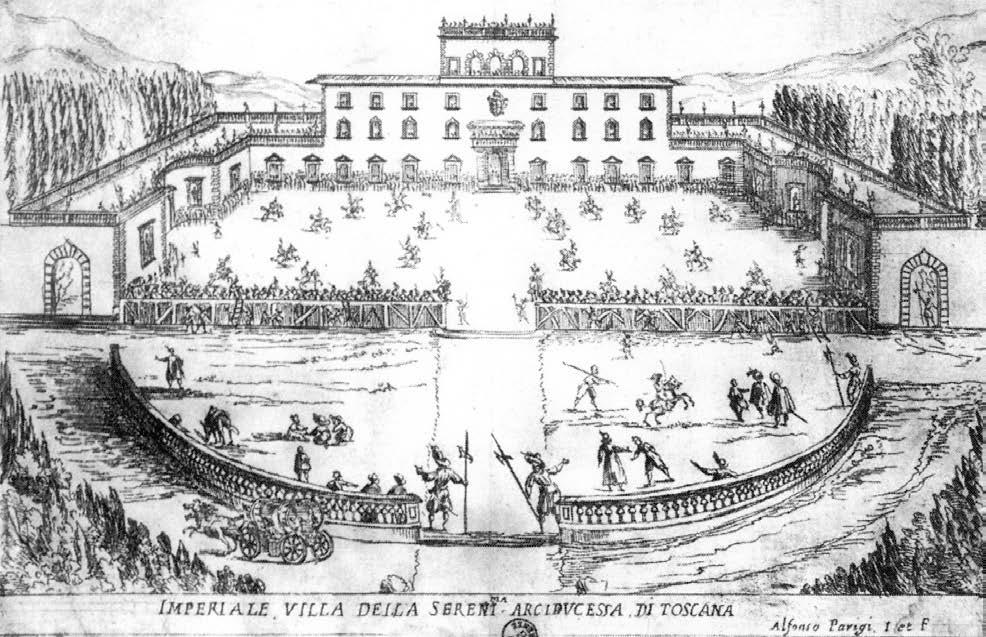
But it was Tamás’s poetry, rather than that historical connection, which struck a chord with Freya: “I instantly identified with Rebecca’s way of wanting to look at the world through a witch’s eye. I’ve always been interested in the space between what we know and what we feel and believe; between rationality and something else. It’s obviously the place magic might sit, but it also represents the playground between poetry and music in their own way”.
Sophie Rashbrook is a writer, librettist and opera dramaturg based in London. Her libretti include the song-cycle Six Songs of Melmoth, an Oxford Lieder Festival commission by Cheryl Frances-Hoad, and the song Nature is Returning by Joshua Borin, which has been performed on BBC Radio 3, the Wigmore Hall, and the Concertgebouw. She holds degrees in Russian and opera-making from Cambridge and Guildhall, and currently edits the opera programmes at the Royal Opera House. as an arranger with my responsibility to get Caccini’s voice across”. But any historically-informed performance is an act of imaginative reconstruction, and it’s in that spirit that Yshani is starting to find her own way into the music: partly through drawing on her own experience as an improviser and performer; partly from listening to the few recordings that exist (“Seeing how free other arrangers have been with the score has been really liberating”); and partly from knowing the ensemble: “It would seem almost criminal not to explore the range of what each player can do. Especially,” she adds with a grin, “when we’re in magic land ”. “Magic land ” is a place that has long inspired Freya’s imagination. “I was quite quiet as a child, and so I always identified with this sense of other-worldliness,” she says, recalling how various adults approached her parents and suggested she was a changeling (that she had been swapped with a fairy child). She even has an ancestral connection with the Salem Witch trials on her mother’s side, with multiple family members, both male and female, recorded as having been killed –and involved as accusers – in those events of 1692-93 (a mere sixty-seven years after Caccini’s opera was composed).
792022 SEASON PROGRAMME
Two visions of witchcraft, four centuries apart, summoned on stage this summer. With Yshani bridging a musical divide spanning four centuries, and Freya conjuring spell-songs for the modern day, it is clear that even in an age of reason, Lilith’s realm of magic and witchcraft is here to stay.
I identifiedinstantly with Rebecca’s way of wanting to look at the world through a witch’s eye Scene three of La liberazione di Ruggiero (Alfonso Parigi)
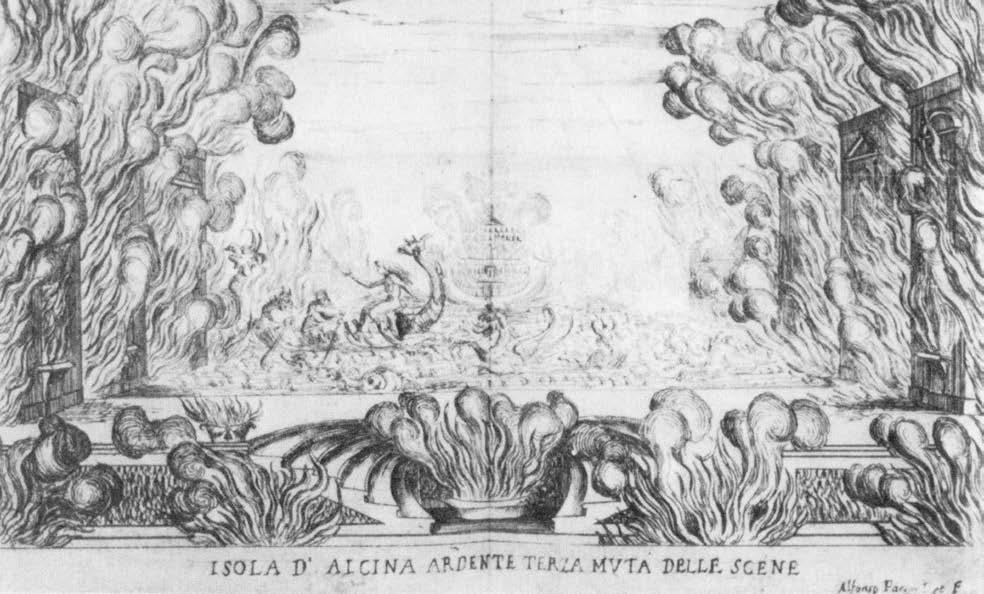
LONGBOROUGH FESTIVAL OPERA80 POWER CENTURYINPERFORMANCEANDSEVENTEENTHITALY Leah Broad Image of Ruggiero and the hippogriff after a battle from Ariosto’s Orlando Furioso (1879) Gustave Doré

812022 SEASON PROGRAMME
I n Francesca Caccini’s world, opera was about power. The very earliest operas were lavish spectacles designed to showcase and reinforce the ruler’s authority – not just through their expensive opulence, but through allegorical plots that merged the personal and political. And what happened offstage was equally important. Opera seating was a way of clearly laying out hierarchies, indicating favour or disapproval by proximity to the one central seat, the primo luogo, which was always occupied by the ruler. At the 1624 performance of La regina Sant’Orsola, co-composed by Caccini and Marco da Gagliano, the ambassador of Modena complained bitterly to his prince that he had been snubbed by the Medici, Tuscany’s ruling family – and he submitted the opera’s seating plan as his evidence. Affronts aside, what made this performance particularly unusual was that the primo luogo was occupied by a woman. From 1621 to 1628, Archduchess Maria Magdalena ruled Tuscany as joint regent with her mother-in-law, Christine of Lorraine. This was the only period during the Medici’s 200-year principality that the family was ruled by women, and it happily coincided with Caccini’s years of professional maturity, complicating her otherwise overwhelmingly patriarchal society. Noble women were supposed to aspire to the ideals of faithfulness, chastity, and self-containment, deferring to men in all things. But like most ideals, this was not necessarily reflected in the reality of women’s lives. Women like Francesca, Christine, and Maria Magdalena constantly negotiated between limitations, opportunities, expectations and possibilities to build positions of power in the notoriously cutthroat and ambitious Medici dynasty. When Francesca was born in 1587, her family were employed as musicians in the household of Francesco I, grand duke of Tuscany. Both of her parents were celebrated singers, and additionally her father, Giulio, was a teacher and composer. Being employed by the Medici family was a precarious business. As household staff the Caccinis were subject to the Medici’s whims, and before Francesca was one her mother was fired by Ferdinando I, who succeeded as grand duke after both Francesco and his wife died in suspicious circumstances. But at other times the Caccinis benefitted enormously from the Medici’s favours and protections. Lucia was eventually rehired, Giulio became the second best-paid musician on Ferdinando’s staff, and Francesca’s first recorded public performance as a singer was at no less a venue than the wedding of Marie de’ Medici and Henri IV of France in 1600. By all accounts, Francesca was a formidably talented singer, having been taught music from a very young age by her father. After hearing Francesca sing in 1605, the French king reportedly declared that ‘there was no one in France who sang better than she, and that this was the best music in France’. Accordingly Marie tried to hire Francesca to the French court, but Ferdinando was reluctant to release Francesca from his household. Other offers followed, but through Giulio’s either incompetent negotiation or savvy manoeuvring – it’s unclear whether he desired Francesca to leave Tuscany or not – Francesca returned to Ferdinando’s court with her family. The timing could not have been more opportune. By 1607 Ferdinando was extremely ill, and Christine was consolidating her authority within the This was the only period during the
Wedding of Maria de Medici and Henry IV of France (Jacopo da Empoli, 1600)
maturityofCaccini’scoincidedandruledtheprincipality200-yearMedici’sthatfamilywasbywomen,ithappilywithyearsprofessional
La liberazione di Ruggiero was written for one such entertainment, commissioned for the 1625 Carnival to celebrate the visit of Crown Prince Władysław of Poland. Like her earlier ballet La stiava, Caccini’s only surviving opera cleverly centers female power and voices without explicitly challenging an overarching patriarchal worldview. Maria Magdalena of Austria and her son (Justus Sustermans, 1623) Sadly much of Caccini’s music is now lost, but what survives gives some idea of powercompositionalextraordinaryher
LONGBOROUGH FESTIVAL OPERA82 court, acutely aware of the fact that their eldest son was still a teenager, often in poor health, and more interested in scholarship than in governance. Christine was described by a contemporary as a woman ‘born to reign and command’, and she wielded power with an assertiveness that led one (possibly affronted) ambassador to complain that she wished ‘to govern everything absolutely, without any thoughts to the reputation and the benefit of her son.’
As part of her negotiations, Christine commissioned a stage work from the nineteen-year-old Caccini for the 1607 Carnival. Women’s power was central to the plot, in which a group of knights help a Persian slave woman after she is revealed to be a future queen – a Persian princess captured before her intended marriage to the king of India. Christine was delighted with the result, and shortly afterwards hired Francesca into the household independent of her family, providing her with a salary, a dowry, and a husband – fellow court singer Giovanni BattistaSignoriniSignorini.seems to have been an excellent match. What little is known about him is that he was both generous and kind, and Caccini seems to have been happy with him. Certainly she was productive; her duties involved singing, teaching, and composing, and she wrote prolifically. Sadly much of Caccini’s music is now lost, but what survives gives some idea of her extraordinary compositional power. In 1618 she published Il primo libro delle musiche, a collection of both sacred and secular songs and duets. They reveal a composer with a real gift for melody, just as compelling when writing lighthearted, sprightly songs as pathos-laden laments. And they give us some idea of Caccini’s priorities and strengths as a singer. She would surely have sung these herself, and the overwhelming emphasis in the songs is allowing for expression of emotion. She does not shy away from virtuosity, but technique is always used as the vehicle for articulation of sentiment rather than an end in itself. Most of all, though, Caccini wrote for the stage. After Christine’s husband died in 1609 his successor, Cosimo, often absented himself from governing decisions. Christine effectively ruled Tuscany unofficially until Cosimo’s death in 1621, resulting in her joint regency with Maria Magdalena. They used the arts to support their reign, commissioning numerous artworks that foregrounded powerful women and explored women’s perspectives. Maria Magdalena filled her audience room with paintings of female sovereigns, and the rest of her villa with frescoes showing historical and Biblical women. But most important were the entertainments for court events that that would dazzle visiting dignitaries from allied and enemy states alike, staging the womens’ power. For at least fourteen of these entertainments, Christine and Maria Magdalena turned to Caccini, and from 1621 to 1627 she was the highest paid musician in the household.

BaldwinPatrick Caccini’s final years – what she did, where she lived, when she died – are a mystery. But she left musiclegacyextraordinaryaninher
Lucy Hall (Morgana), Matthew Durkan (Melisso), Anna Harvey productionLongborough’s(Bradamante)2016ofHandel’s Alcina
832022 SEASON PROGRAMME
Based on the famous Italian epic poem Orlando Furioso, the opera’s central character is ostensibly the titular Ruggiero, trapped by the sorceress Alcina. But it is ultimately three women who determine the dramatic action. Alcina captures Ruggiero; Ruggiero’s beloved, Bradamante, determines to free him; and the sorceress Melissa ultimately contrives a way to rescue him. Ultimately the main dramatic tension is the rivalry between Alcina and Melissa. And yet, despite this, they compete over a man. It is Ruggiero’s choice that determines the opera’s outcome, giving him an almost god-like status that ensures that Caccini – and, by implication, her patrons – never step outside of the bounds of feminine propriety.Caccini was widowed in 1626, and with the regency coming to an end she decided to remarry and move away from Florence. She continued to compose, writing intermedii (musical dramas performed between play acts) for a new employer, but found herself widowed again within just three years. Feeling ‘alone, without company, abandoned’, Caccini and her two children returned to Florence and to the Medicis. Without Christine and Maria Magdalena, however, Francesca and her two children held a less prominent position within the household. She finally left the Medici’s service in 1641, aged fifty-four. Apart from two letters about accommodation, her letters of protection from the Medici are the last historical traces that survive of Caccini’s life, commending her for having worked ‘to our extraordinary satisfaction and with particular fame for her singular value’. Caccini’s final years – what she did, where she lived, when she died – are a mystery. But she left an extraordinary legacy in her music, a powerful testimony to historical women’s determination to be heard, to reject the limitations placed upon them, and to thrive even in worlds that are built to diminish them. Dr. Leah Broad is a music historian and Junior Research Fellow at Christ Church, University of Oxford. Her book on women composers will be published by Faber & Faber next year. You can find more of her writing at leahbroad.wordpress.com, or follow her on Twitter @LeahBroad.

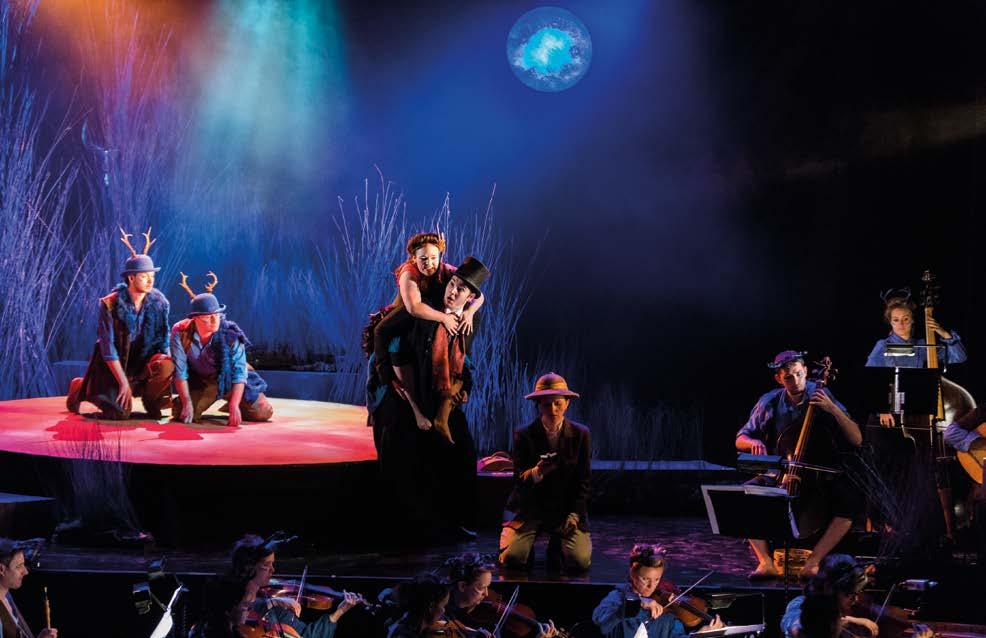
JAKE WILTSHIRE LIGHTING DESIGNERSelected credits include: Amadigi and Le Comte Ory for Garsington Opera; Don Pasquale for Welsh National Opera; The Cunning Little Vixen and La traviata for Longborough Festival Opera; Pirates of Penzance for Opera Holland Park; Bluebeard’s Castle for Theatre of Sound; Sounds and Sorcery – Celebrating Disney’s Fantasia, for The Vaults; Vixen for Silent Opera in association with ENO, (London, Helsinki and Beijing); King Arthur and The Fairy Queen for the Academy of Ancient Music at the Barbican Centre; Die Zauberflöte and Le nozze di Figaro for Turku Opera at Åbo Svenska Teater, Finland; Così fan tutte for Bury Court Opera; Bluebeard’s Castle for NYO; Rigoletto for Iford Arts; The Castle for Silent Opera in association with ENO at Wiltons Music Hall; Don Giovanni for Opera Faber, Portugal. Jake has lit productions for nearly all the UK’s major music colleges including multiple productions for The Guildhall School of Music and Drama, The Royal College of Music, Trinity Laban, The Royal Northern College of Music and over 25 productions for Royal Academy Opera. As an Associate lighting designer Jake lit the US premiere of Peter Maxwell Davis and David Pountney’s Kommilitonen! at the Lincoln Centre New York. Jake has also lit for theatre, independent films and Perrier Award winning comedy productions. In 2009 he was made an Honorary Associate of the Royal Academy of Music. Engagements this summer include Buxton Opera Festival, Opera Holland Park and a new production of Don Giovanni for Kilden Opera, jakewiltshire.comNorway.
WharleyMichael
April Dalton is a Set and Costume Designer for theatre, opera and dance. She was brought up in Wolverhampton and trained at Birmingham Royal Ballet’s studios on the Royal Ballet Junior and Mid-Associates programme. She graduated from the Royal Welsh College of Music and Drama in Theatre Design, 2014, winning the ‘Costume Design Award’.After graduating, April’s work was shortlisted for the Linbury Prize for Stage Design, 2015. Most notable design credits include Konzert und Theater St. Gallen and Welsh National Opera, for which Le Vin Herbe was nominated for ‘Best Opera Production’ at the International Opera Awards.April was chosen by Fortnum and Mason to design one of their Piccadilly Windows to showcase the Theatre industry during the pandemic, “created by some of the finest designers, artists and freelancers from the World of London Theatre” (Fortnum and Mason). Current design work includes set and costume designs for Birmingham Royal Ballet and costume designs for a new work with Welsh NationalDesignOpera.fordance highlights include a range of ballets for New English Ballet Theatre and So Long As We Remember for National Dance Company Wales.
The Improvised Musical Yshani was music director for triple-Oliver winner Emilia at the Vaudeville Theatre, Olivier nominated Goat by Ben Duke for Rambert Dance Company, King John for the Royal Shakespeare Company, As You Like It for National Theatre Public Acts, and for circus troupe Circa at the Barbican. Most recently, she was Consultant MD for Olivier-winning Wolf, Witch, Giant Fairy at the Royal Opera House Linbury Theatre. Yshani’s commitment to contemporary music has seen her premiere works including by Charlotte Bray, Joe Cutler, Cheryl Frances-Hoad, Gavin Higgins, Hannah Kendall and Benjamin Oliver. As a composer herself, commissions include works for the London Sinfonietta, Onyx Brass, and music for a play about Fanny Mendelssohn.Yshaniwas winner of the 10th Yamaha Birmingham Accompanist of the Year Award, and a scholar at the Royal College of Music and the Guildhall School of Music and Drama. Yshani is as a guest broadcaster on BBC Radio 3.
LONGBOROUGH FESTIVAL OPERA84 THE CREATIVE TEAM SPELL BOOK LA LIBERAZIONE DI RUGGIERO DALL’ISOLA D’ALCINA
APRIL DALTON DESIGNER
JENNY OGILVIE DIRECTOR Work as director includes: The Burning Fiery Furnace (Scottish Opera); Dr Angelus (Finborough Theatre). Movement direction in opera includes: The Cunning Little Vixen (ENO); The Return of Ulysses (as Associate Director), La traviata (Longborough Festival Opera); Greek (Hannover State Opera, Opera Ventures at Edinburgh International Festival, Scottish Opera and BAM, New York); The Marriage of Figaro (Wuppertal Opera House, ENO); Orlando (world premiere, Vienna State Opera); Don Giovanni (Nevill Holt Opera); The Turn of the Screw (ENO, Regent’s Park Open Air Theatre); A Midsummer Night’s Dream (Aldeburgh Festival); Lucia di Lammermoor (Buxton International Festival). Movement direction in theatre includes: Crave, Plenty (Chichester Festival Theatre); Vassa (Almeida Theatre); Hobson’s Choice (Royal Exchange, Manchester); hang, Rutherford and Son, Love and Information (Sheffield Crucible); Midsummer (National Theatre of Scotland); Absolute Hell (as Associate Director, National Theatre); B (Royal Court); A Midsummer Night’s Dream (Young Vic).
YSHANI PERINPANAYAGAM CONDUCTOR / Theatre,WigmoreperformedmusicorchestralAsARRANGERachambermusician,pianistanddirector,YshanihasatvenuesfromHalltotheNationalateventsfrom Huddersfield Contemporary Music Festival to the Barbican Mime Festival, and with artists from the Philharmonia to Showstopper!

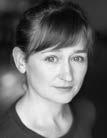

CLÍODNA SHANAHAN ASSISTANT CONDUCTOR / REPETITEUR Irish pianist Clíodna Shanahan is much in demand internationally as a soloist, chamber and orchestral musician. She performs regularly with London Sinfonietta, London Philharmonic Orchestra, Britten Sinfonia, and the Orchestra of the Royal Opera House, Covent Garden. Her great passion for 20th century and contemporary music has led to many composer-collaborations, world premieres and first recordings. As a chamber musician and soloist, she has recorded for SOMM, Lyrita, and Nonesuch.Herformal musical training began at the School of Music in her native Limerick, followed by the Yehudi Menuhin School and Royal College of Music, London. Her unique musicianship cannot be confined to a single artform and is regularly heard beyond the concert platform and recording studio. She particularly enjoys collaborating with dancers and choreographers, including numerous projects with Rambert, the Royal Ballet, and English National Ballet. In addition to her performing career, Clíodna is committed to music education. She holds the position of Lecturer in Piano at the Royal Conservatoire of Scotland and is regularly involved in educational and outreach programmes across the wider community. Twitter/Instagram: @cliodnashanahan
852022 SEASON PROGRAMME THE CAST SPELL BOOK LA LIBERAZIONE DI RUGGIERO DALL’ISOLA D’ALCINA
LAUREN JOYANNE MORRIS MEZZO-SOPRANO ALCINA
Mezzo-Soprano Lauren Joyanne Morris is a graduate of the Royal College of Music International Opera Studio, having completed her Master of Vocal Performance (Distinction) at the RCM. She was the only UK Semi-Finalist at the International Lotte Lenya Competition 2021. Performance highlights include covering the roles of Handmaid 2 and Econowife/The Handmaid’s Tale for English National Opera, singing Prosperina/Orfeo for Garsington Opera, and covering Isolier/Le comte Ory and Zerlina/Don Giovanni there. Lauren Joyanne also covered Hänsel/Hänsel und Gretel for Waterperry Opera, performed Zerlina/Don Giovanni for British Youth Opera, and covered the role of Johanna/Sweeney Todd for Welsh National Opera. At the RCM International Opera Studio Lauren Joyanne performed the roles of Man Friday/Robinson Crusoe, Cherubino/Le nozze di Figaro (directed by Sir Thomas Allen), Susan Wheeler/In the Locked Room, Hermia/A Midsummer Night’s Dream, Grasshopper, Dog and Woodpecker/ The Cunning Little Vixen and Childerico/Faramondo (with The London Handel Festival).Concert experience includes selections of music by Sondheim at Cadogan Hall, Johanna/ Sweeney Todd alongside Bryn Terfel at the Llangollen International Musical Eisteddfod and singing in a performance of Serenade to Music at Buckingham Palace, conducted by John Wilson.
LONGBOROUGH DEBUT
SIMONE IBBETT-BROWN MEZZO-SOPRANO BRADAMANTE / excitedandSimoneMELISSAisamezzo-sopranomusictheatremaker,aboutworkthat brings joy, and reflects and affects the world we live in. She’s honoured to be a BBC Radio 3 Next Generation Voice 2019, a Women of the Future Award-winner 2020, and a Longborough Festival Opera Emerging ArtistRecent2022.performance highlights include Grace/Opera Mums (BBC Four); Mami Wata (Royal Opera House, Pegasus Opera); Jo/Dead Equal (Summerhall); Passepartout/Around the World in 80 Days (West Green House Opera); workshop Esther/Mamzer Bastard (Royal Opera House); and small roles/covers in Porgy and Bess (English National Opera, Dutch National Opera, Theater an der Wien). This year, she looks forward to performances including: Amneris/Aida (Opera Festival Scotland), The Revolution Will Not Be Televised (Bishopsgate Institute), Earth Song Cycle (Orchestra of the Age of Enlightenment), and Four AfroCuban Songs (Manitoba Chamber Orchestra, Royal Philharmonic Orchestra); as well as CDs with Métier and Lontano. Simone is also an opera-maker and published playwright, and co-founded Hera, celebrating and sharing music and stories by equity-seeking artists. She trained at the University of York and the Guildhall School of Music and Drama, recently completing a fellowship on artistsimoneibbettbrown.comactivism. | wearehera.co.uk
LONGBOROUGH DEBUT

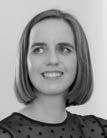
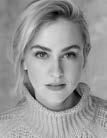
LONGBOROUGH DEBUT JOE CHALMERS BARITONE NEPTUNE
Bass-Baritone Joe Chalmers is a recent graduate of Guildhall School of Music and Drama with a Masters of Performance, where he will continue his studies on the Opera course in September 2022. Notable roles include performing the role of Captain Corcoran in the final show as a cover in HMS Pinafore with English National Opera, Bass Shepherd and cover Plutone and Caronte (L’Orfeo, Garsington Opera), Martino (L’occasione fa il Ladro, British Youth Opera). Joe has also performed as Chorus and Waiter in Der Rosenkavalier with Garsington opera. During his studies at the Guildhall School of Music and Drama, Joe performed the roles of Count Almaviva (Le nozze di Figaro, Guildhall), Sid ( Albert Herring, Guildhall Scenes), Escamillo (Carmen, Guildhall Scenes), and Belcore (L’elisir d’amore, Guildhall Scenes).
Baritone Oskar McCarthy’s operatic roles include Giorgio/The Gondoliers and Quince (cover)/A Midsummer Night’s Dream (Scottish Opera); Leporello/Don Giovanni, Don Alfonso/Così fan tutte and Dulcamara/ L’elisir d’amore (Waterperry Opera Festival); Kromow/ The Merry Widow (Opera Bohemia); and The Captain/Siren Song (Shadwell Opera). He has performed Edmund in Shakespeare’s King Lear at The Grange Festival (a ‘standout performance’, The Times ), Robert Schumann in Re: Sound Music Theatre’s acclaimed play-with-music Duet at the Oxford Lieder Festival and Peter Maxwell Davies’ Eight Songs for a Mad King with Red Note Ensemble. Oskar curates experimental collaborative performances in non-traditional spaces. He recently performed six improvised ten-minute operatic monologues with composer Zeo Fawcett, streamed live from a converted shipping container in Glasgow to equivalent sites in Gaza, Mali and Uganda, as part of the RCS’ tie-in with COP26. Previously he worked with composer Rufus Elliot to create ‘the case against...’, a pair of six-hour durational installations for voice and electronics which ran non-stop 12-6pm on consecutive days. Oskar is a graduate of the Royal Conservatoire of Scotland Opera School and Cambridge University. He has studied Lecoq technique, fooling, improvisation, and mime at the International School of Dramatic Corporeal Mime in Paris.
Flora’s previous roles include Fanny Price in Dove’s Mansfield Park (Waterperry Opera Festival), Stewardess in Dove’s Flight (Royal Academy Opera), Dido (Wigmore Hall) and Sorceress (Grange Festival) in Purcell’s Dido and Aeneas, Flora in Dove’s The Enchanted Pig (Hampstead Garden Opera), Wu in Maxwell Davies’ Kommilitonen! (Welsh National Youth Opera), and Sarcastic Halli in Alex Paxton’s For the Love of Thorstein Shiver (Helios Collective at ENO).Shehas also performed with Opera Holland Park, Welsh National Opera, and Spitalfields MusicFloraFestival.graduated from the Royal Academy of Music with Distinction in her Masters, a DipRAM for outstanding performance, and first place in the Isabel Jay Operatic Prize. She looks forward to returning to Waterperry Opera Festival this summer to play the role of Nada in Ana Sokolović’s Serbian a cappella opera, Svadba LONGBOROUGH DEBUT
LONGBOROUGH DEBUT
RUAIRI BOWEN TENOR RIVER
Finalist in the International Handel Singing Competition in 2020, Ruairi is much in demand as an interpreter of Early music in the UK and abroad, collaborating with some of the leading conductors in the field including Stephen Layton, Emmanuelle Haïm and Sir John Eliot Gardiner.
An experienced evangelist of Bach’s Passions, Ruairi made his debuts at Wigmore Hall, Bachfest Leipzig and Snape Maltings with Solomon’s Knot, with whom he joined for Bach’s Weihnachts Oratorium last winter. On the operatic stage, he debuted Prologue/ Quint in Britten’s Turn of the Screw at Barnes Music Festival and took on multiple roles in Purcell’s The Indian Queen with Le Concert d’Astrée at l’Opera de Lille in 2019, to be revived in Caen, Antwerp and Luxembourg next year. He returned to Barnes for the role of Satvayān in Holst’s Sāvitri last Spring, and will feature as Forêt in Sivan Eldar’s Like Flesh at Opéra national de Montpellier in 2022. Recent highlights in Song include a recital on Innocence & Experience with Anna Tilbrook, performing Tippett’s Cantata Boyhood’s End and Finzi’s A Young Man’s Exhortation for Finzi Friends at Ashmansworth. He also performed on themes of The Games & Battles of Love for Recitals at Raynham and The Grange Festival, featuring Monteverdi Songs of Court directed by Michael Chance. He continues his studies with Nicky Spence and Caroline Dowdle.
LONGBOROUGH DEBUT NIA COLEMAN SOPRANO FIRST LADY / SPELL FOR WOMEN’S BOOKS
Nia trained in the Alexander Gibson Opera School at the Royal Conservatoire of Scotland, she also holds an MA in Vocal Studies from the Royal Academy of Music and a First Class Honours in Music & Drama from the University of Manchester (UoM). Performance highlights include singing for The Royal Opera House main stage double bill: Hannah Kendall’s The Knife of Dawn and New Dark Age, in the solo soprano role and ensemble soprano respectively. Operatic roles performed to date include Kitty Hart/Dead Man Walking (Jake Heggie), Musetta/La bohème, Nella/Gianni Schicchi and Bubikopf/Der Kaiser von Atlantis Nia is currently performing for English Touring Opera in their Spring Tour 2022. This includes the principal role in new show for children and families Paper & Tin (Attridge & Murphy) and covering the role of the Golden Cockerel in Rimsky Korsakov’s opera of the same name. Nia recently joined ETO for the first time in Autumn 2021 performing the principal role in new show Back Into the World (Hanbury & Groves). Nia is due to perform for Waterperry Opera Festival 2022 in the UK premiere of the contemporary folk opera Svadba by Ana Sokolović singing the role of Danica.
LONGBOROUGH DEBUT
FLORA MACDONALD MEZZO-SOPRANO SECOND LADY / SPELL FOR SEX, LOGIC
Last year, mezzo-soprano Flora Macdonald played the roles of Vittoria in Gilbert & Sullivan’s The Gondoliers with Scottish Opera, Armelinde in Viardot’s Cendrillon at the Buxton International Festival, Noble Orphan in Strauss’ Der Rosenkavalier with Garsington Opera, and The Emperor in Charlotte Marlow’s new opera The Language of Flowers at the Tête à Tête Opera Festival.
LONGBOROUGH FESTIVAL OPERA86 OSKAR MCCARTHY BARITONE RUGGIERO


LONGBOROUGH DEBUT
PREVIOUSLY FOR LONGBOROUGH: Ferrando (cover)/Così fan tutte (2021)
JESSICA ROBINSON SOPRANO SIREN / SPELL FOR REALITY Born and bred in the heart of Pembrokeshire in West Wales, Soprano Jessica Robinson started her singing career at a young age as a competitor in eisteddfodau. Jessica graduated from the Royal Welsh College of Music and Drama gaining a distinction in MA Opera Performance. During her time at the RWCMD, Jessica also gained a first-class honours undergraduate degree along with the Aneurin Davies award, Mansel Thomas prize, Margaret Tann Award, Elias Soprano award and was the 2016 Prince of WalesSheScholar.regularly appears in concerts all over the UK as a guest artist and internationally, has performed in New York, China, Switzerland and Italy. Concert highlights include a Radio 3 broadcast of Vaughan Williams’ Serenade to Music with the CBSO, Soloist at the Royal Albert Hall for the 1000 Male Voice choir Gala, Handel’s Messiah at the Wales Millennium Centre and performing for HRH The Prince of Wales and guests at Buckingham Palace. Recent concerts include performing with Michael Ball. Operatic engagements include Countess/ Marriage of Figaro, Lady Billows/Albert Herring and Fox/Cunning Little Vixen (RWCMD) Nora/ Riders to the Sea (Bute Park Opera) Worker, Semi Chorus/Gair ar Gnawd (Welsh National Opera/S4C), Rose, Lakmé, Rosina, The Barber of Seville and Despina, Cosi fan Tutte (Swansea City Opera) Heavenly voice, Don Carlo and Tetska, Jenufa (Grange Park Opera).
AARON HOLMES BARITONE PLANT / MONSTERAaronHolmes studied for six years at the Royal Welsh College of Music and Drama where he completed both a BMus in voice and an MA in advanced opera performance. During his studies at RWCMD, Aaron had the pleasure of learning under the tutelage of the late Eric Roberts. Some notable roles are Guiseppe/Gondoliers and Sid/Albert Herring; both performed during his last year on the MA opera course. Other roles include Willi Graf in the Welsh National Youth Opera production of Kommilitonen!, Achilla/Giulio Cesare in Egitto with Cardiff Opera and Motor Cop in the WNO production of Dead Man Walking. Aaron also covered the role of Joseph de Rocher in the same opera with WNO. Last year, Aaron debuted with Longborough Festival Opera in their production of The Cunning Little Vixen Aaron played the role of Haraŝta and covered the roles of Forester and Pásek.
BorrelliMarco
XAVIER HETHERINGTON TENOR SHEPHERD After reading Classics at St John’s RoyalhisXavierCambridge,College,BritishtenorHetheringtontookmastersdegreeattheCollegeofMusicas a Their Serene Highnesses Dr Prince Donatus and Princess Heidi Von Hohenzollern scholar. He graduated in 2020 with distinction and moved on to the Mascarade Opera Studio (MOS) in Florence and then the Centre de Perfeccionament at the Palau de les Arts Reina Sofia in Valencia. Xavier has benefited from the generous support of the King-Farlow Trust, Mr Simon Groves, Mr and Mrs Anthony Bolton and Mr John RecentRae.engagements include an opera gala at the 20th anniversary of the Encuentro de la Música in the Palacio de Festivales, Santander; Lensky/Eugene Onegin, Tebaldo/I Capuleti e i Montecchi and Ramiro/La Cenerentola in a showcase at La Fenice in Venice with MOS; covering Ferrando/Cosí fan tutte (Longborough), and the tenor in the trio from Bernstein’s Trouble in Tahiti Valencia. Xavier has an extensive Concert repertoire, singing in halls such as St John Smith Square and Wigmore Hall and with conductors such as Dame Jane Glover, Robin Ticciati, John Lubbock and Rafael Payare.
PREVIOUSLY FOR LONGBOROUGH: Harašta, cover Forester/The Cunning Little Vixen (2021)
LONGBOROUGH DEBUT SARAH RICHMOND MEZZO-SOPRANO
LONGBOROUGH DEBUT
872022 SEASON PROGRAMME
KEITH PUN COUNTERTENOR MESSENGER / SPELL FOR JOY Born and raised in Hong Kong, Keith Pun is a versatile countertenor whose repertoire ranges from baroque to contemporary. He performed the role Chai Ping in The Original Chinese Conjuror by Raymond Yiu for Leeds Opera Festival in 2018. He also performed as a soloist for the Pulitzer prize-winning opera Angel’s Bone by Duyun in Hong Kong New Vision Arts Festival and Beijing Music Festival. He participated in the world premiere production of Beauty and Sadness by Elena Langer conducted by Gergely Madaras. He created the roles of Fish and King in the chamber opera Untold by Alex Ho. Next season Keith will work with Barber Opera and English TouringUnderOpera.thebatons of John Butt, Jonathan Cohen and Matthew Halls, he performed as a soloist in works such as Bach’s St John Passion, St Mark Passion, Handel’s Israel in Egypt and Messiah.Previously he was a Nieuwe Stemmen Artist at Operadagen Rotterdam and New Generation Artist at Iford Arts Festival. Upon graduation from the Royal College of Music, he joined Opera Works at the English National Opera. Last June he completed opera training in Belgium in productions with Flanders Opera and Music Theatre Transparant.
THIRD LADY / SPELL FOR LILITH Winner of the 2021 Toronto Mozart Vocal Competition and 2022 NYIOP Anon Competition, mezzo-soprano Sarah Richmond hails from Northern includeOperaticIreland.performancesWillie/ Guglielmo Ratcliff, Yelena Popova/ The Bear, Lucrece/ What Happened to Lucrece, Meg/Falstaff, Véronique/Le docteur Miracle, (Wexford Festival Opera), Zweite Dame/Die Zauberflöte, Conscience/Rupture, cover Rosina/ Il barbiere di Sivilgia (Irish National Opera), The Boy/The Musician, DUP Voices/Abomination: a DUP Opera (The Belfast Ensemble), La Zia Principessa/Suor Angelica (Random Opera), Bianca and Gabriella/La rondine (Iford Arts), Suzuki/Madama Butterfly (Lyric Opera), Dritte Dame/Die Zauberflöte (Pavilion Opera) and Cherubino (Opera in the Open). Recital appearances incorporate Oxford Lieder Festival, UK Strauss Society and Chester Music Festival. Prominent conductors of solo engagements include Vasily Petrenko with the Royal Liverpool Philharmonic Orchestra, Gergely Madaras and Sir Mark Elder. Extensive UK and Ireland concert performances include Elgar Sea Pictures, Brahms Alto Rhapsody and Rossini Petite messe solennelle. International concert credits include Monte Carlo and Soriano nel Cimino.Recent and future highlights include Resphigi’s Il tramonto and Mahler’s Kindertotenlieder with The Ulster Orchestra, world premiere of Iris The Heavenly Ledger with Random Opera and in recital with Dearbhla Collins at The National Concert Hall Dublin.


LONGBOROUGH FESTIVAL OPERA88 CHROMA FLUTE Sarah O’Flynn CLARINET Stuart King VIOLIN 1 Caroline Balding VIOLIN 2 Anna Biggin VIOLA Vanessa McNaught CELLO Chris Allan DOUBLE BASS Chris Kelly PRODUCER FOR CHROMA
Claire Shovelton
CHROMA collaborates with Polly Graham’s Loud Crowd at Bold Tendencies Peckham; Max Hoehn’s Opera21; and has long associations with Tête à Tête – premiering operas by Kerry Andrew (Dart’s Love – Best Stage Work British Composer Awards), Laurence Osborn and Na’ama Zisser among many others – and Bampton Opera, which breathes new life into little-known late 18th-century works.
2021 also saw CHROMA’s residency in Fair Isle, Shetland with Towards Light, it’s lepidoptery-inspired music and textiles project – a creative response to climate change.
Founded by Artistic Director Stuart King in 1997, CHROMA is a flexible chamber ensemble engaged in new music and revisiting classic repertoire in fresh and exciting contexts; mentoring the next generation of composers, and involving people in compelling, inspirational experiences, both as audiences and creators.
CHROMA performs chamber concerts throughout the UK, from Devon to the Shetland Islands. Championing the imaginative and sympathetic programming of contemporary works, its own commissioning programme has included Freya Waley-Cohen, Rubens Askenar, David Bruce, Deborah Pritchard, Luke Bedford, David Gorton, Philip Cashian, Claudia Molitor, Raymond Yiu and Michael Zev Gordon. The ensemble has collaborated on many contemporary works for the Royal Opera House, including the world premieres of Tell-Tale Heart & The Doctor’s Tale (2011); Heart of Darkness (2011); The Commission/Café Kafka (2014); Through His Teeth (2014); Glare (2014) and 4.48 Psychosis (2016, revived 2018, Best Large Scale Composition Royal Philharmonic Society; Best Stage Work British Composer Awards; Best Opera UK Theatre Awards); The Firework-Maker’s Daughter (premiered with The Opera Group 2013 and revived by ROH in 2015); and the award-winning revival of Wind in the Willows (2012 ROH, 2013 Duchess Theatre, 2014 Vaudeville Theatre – Best Entertainment Olivier Awards).
SPELL BOOK LA LIBERAZIONE DI RUGGIERO DALL’ISOLA D’ALCINA
Between lockdowns in 2020 CHROMA recorded the score for Current, Rising by Samantha Fernando – a hyper-reality opera experience, which opened in ROH Linbury in May 2021.
chromaensemble.co.uk
CHROMA works with the Royal Philharmonic Society on workshops for women conductors and has ongoing programmes of work with student composers at Royal Holloway University of London, Royal Academy of Music and Oxford University. It also runs an annual programme in seven primary schools in Norwich.
ShoveltonClaire


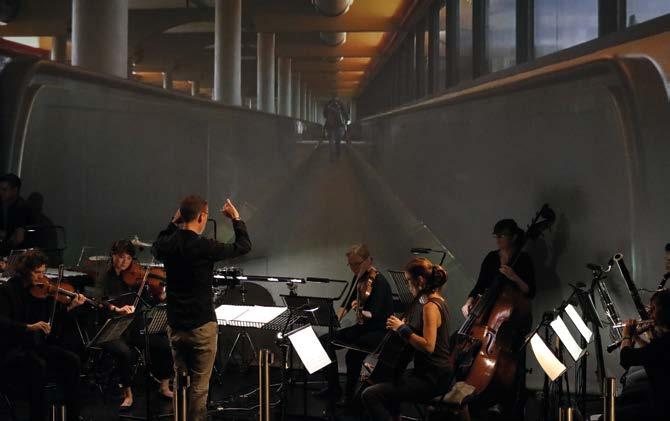
Festival Opera 2021 THEY
“The team has created a safe space, I felt very supported, and it has enabled me to stretch my voice further.”
892022 SEASON PROGRAMME
Each year we provide supportive coaching and mentoring from professional creative and technical teams. This provides an outstanding experience for the artists and a superb opera to be enjoyed by audiences and critics alike. Our programme is in high demand, and numbers of applicants continue to grow: in 2021, 480 singers applied for 12 roles, with 70 invited to audition.
“This opportunity is genuinely valuable for artists.” Little Vixen, Longborough NEED YOUR SUPPORT
Hundreds of singers apply to our programme each year. We are ambitious, involving as many people as we can. Ticket sales alone do not cover the cost of this programme; your support makes a real difference to these performers as they begin their careers. To help nurture the talent of the future, please contact Alexandra O’Donnell, Fundraising Manager: alex@lfo.org.uk
What our Emerging Artists said: “We’ve been guided but also had the freedom to share ideas without scrutiny.”
The Cunning Little Vixen, Longborough Festival Opera 2021 The Cunning
“This has been my first role since lockdown. It’s felt very collaborative and supportive...It has been a very ‘healing’ experience.”
SUPPORTING EMERGING ARTISTS
Longborough Festival Opera is dedicated to helping emerging artists launch their careers in a supportive, professional and meaningful way. Our Emerging Artist programme provides worldclass opportunities to singers at the beginning of their careers: some still studying, and some at the early stages of their path into the profession.
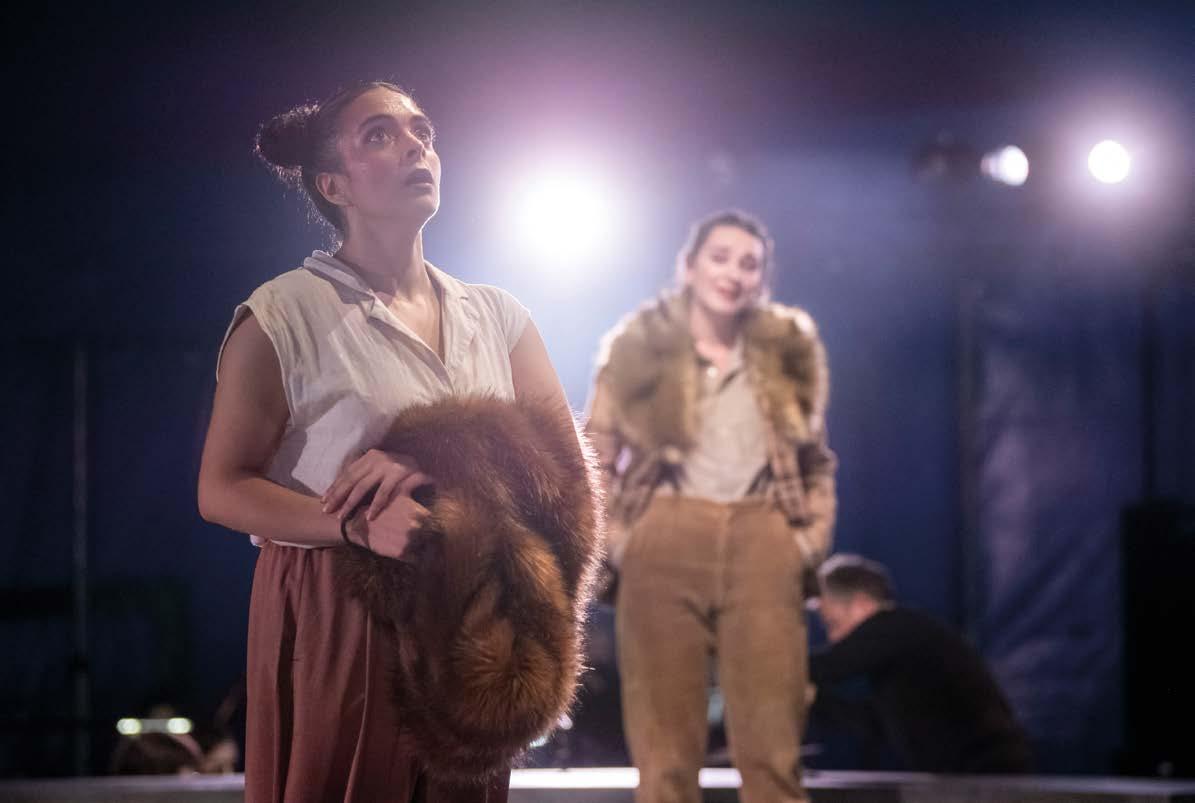
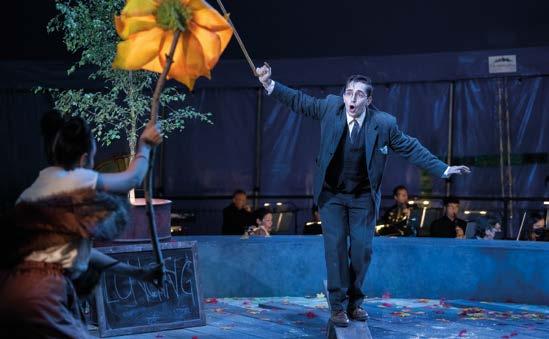
LONGBOROUGH FESTIVAL OPERA90 JonesRachel
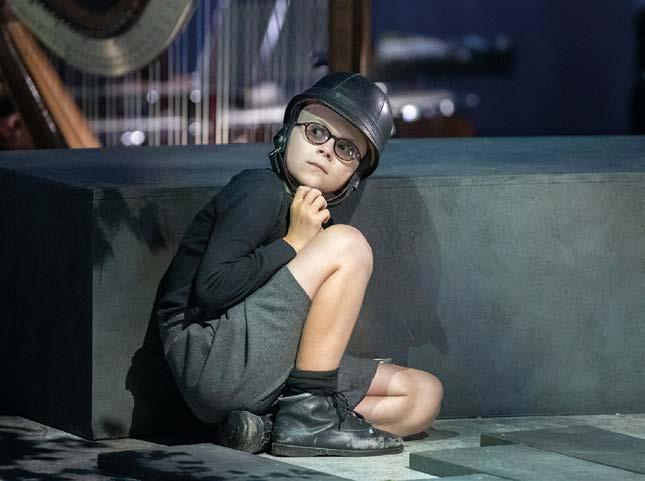
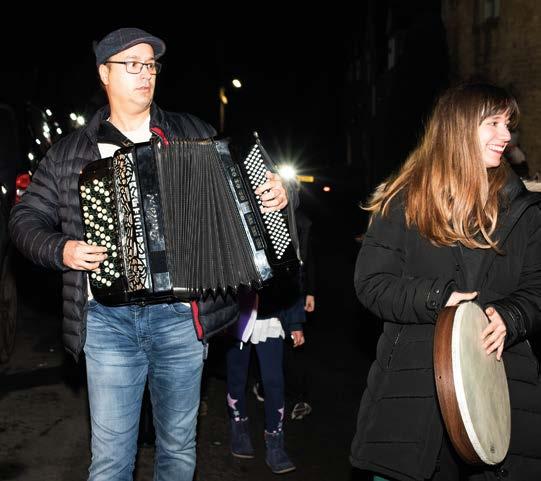

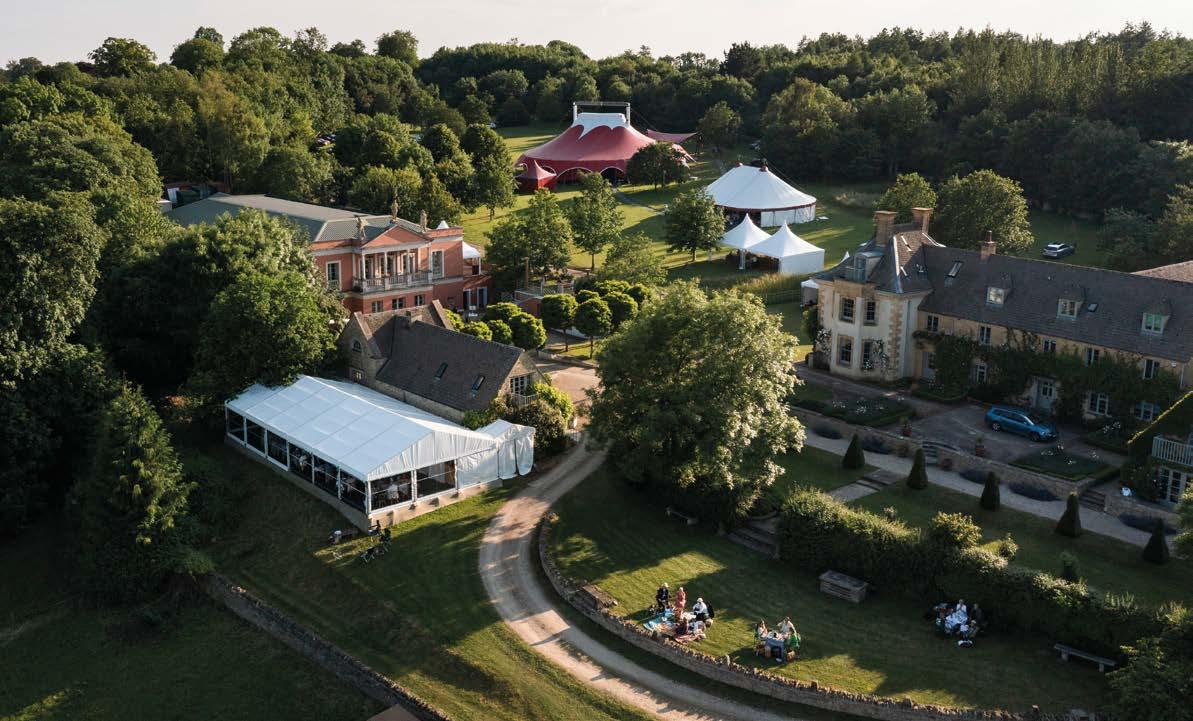
912022 SEASON PROGRAMME LizaldeJorge
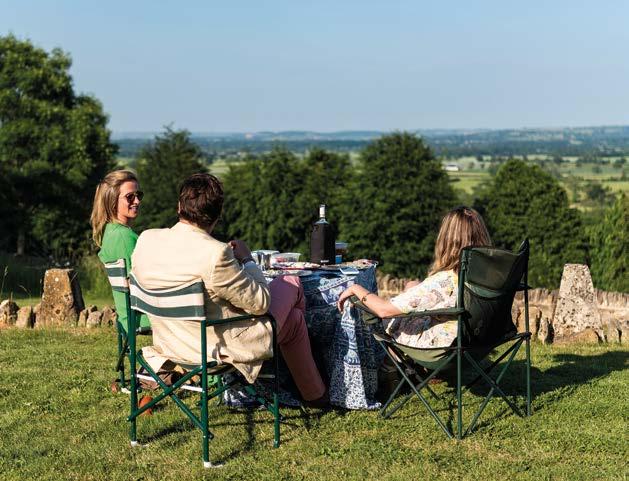
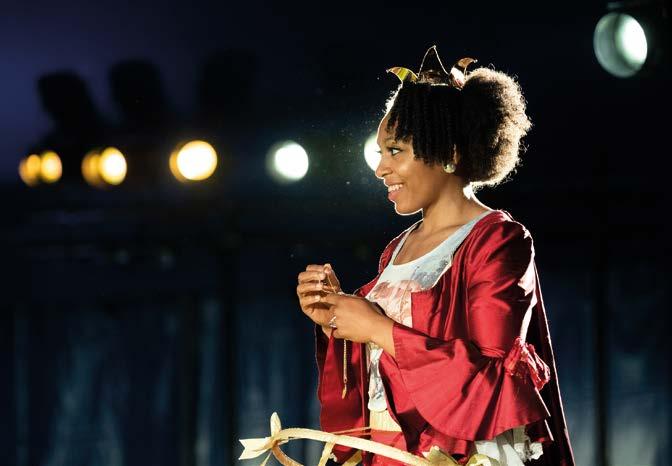

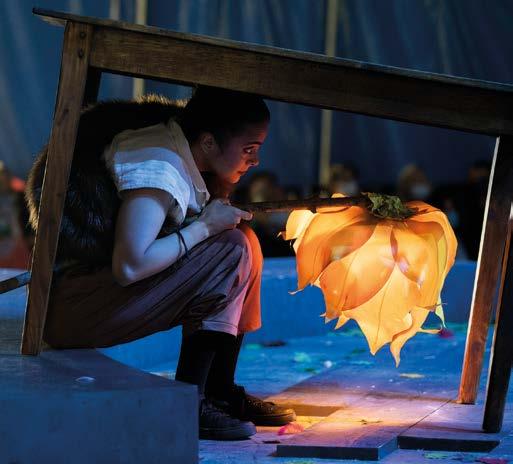
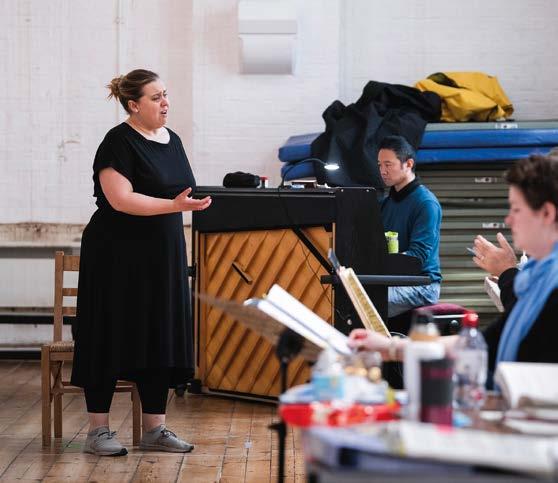
LONGBOROUGH FESTIVAL OPERA92 ACKNOWLEDGEMENTS Founder Martin Graham Chair Lizzie Graham Trustees Annita Bennett Denys RosamundAlexandraJosephLeoElizabethFirthGrahamGrahamGreenMackesyHorwood-Smart QC Music Director Anthony Negus Artistic Director Polly Graham Executive Director Jennifer Smith Associate Artists Carmen RichardJeremyAlanJennyJonathanJakobiLynessMillerPrivettStuderStuder ADMINISTRATIVE STAFF Membership & Legacy Manager Gill Powell Fundraising Manager Alexandra O’Donnell Head of Marketing & Box Office Fenner Curtis Box Office Manager Lauren Brice Artistic Administration Remi Bruno Smith Finance Manager Andrea Walters Front of House & Operations Sarah Brooks Education & Outreach Jessica May Kodály in Schools Julian Harris Office & Finance Assistant Encarna Soper PR Damaris Brown, Artium Media Relations Emma Brown, Virtual Assistant emmabrownva.com PRODUCTION TEAM Senior Production Manager Andreas Ayling Company Manager Remi Bruno Smith Deputy Production Manager Glyn Dodd Deputy Company Manger Suzanne Bourke Head of Wardrobe Juliette Craft Props Supervisor Taylor and Foley Props Production Carpenter Gruff Carro Production Electrician AB Lighting Production Sound Engineer Joe Cusack Production Rigger Drew Lane Costume Supervisors Ellie Taylor (Die tote Stadt) Amy Boulton, Ellie Taylor (Carmen) Wardrobe Manager Aimee Allison Wigs and Makeup Manger Abi Morris Wardrobe Assistant Lucie Smith Dresser (Carmen) Liv Koplic Senior Technician (Stage & Rigging) Charlie Earl
932022 SEASON PROGRAMME Longborough01451boxoffice@lfo.org.uklfo.org.uk830292Festival Opera, New Banks Fee, VATCompanyRegisteredMoreton-in-Marsh,Longborough,GL560QFCharityno1087303no4119186no840295433 Deputy Senior Technician (Lighting, Sound & Video) Sam Wright Technician Harry Bartlett Lighting Programmers Clancy Flynn (Siegfried ) Sam Ohlsson (Die tote Stadt / Carmen / Double Bill ) Video Programmer Andrew Croft Stage Management Siegfried Stage Manager on the Book: Julian Johnson Assistant Stage Managers: Octavia Penes, Rachel Hancock Die tote Stadt Stage Manager: Jo Alexander Deputy Stage Manager: Rosie Bannister Assistant Stage Manager: Fiona Davis Carmen Stage Manager: Suzanne Bourke Deputy Stage Manager: Anna Mathieson Assistant Stage Managers: Lauren Burns, Octavia Penes Emerging Artist double bill Stage Manager: Sophie Johnson Deputy Stage Manager: Hannah Williams Assistant Stage Manager: Rachel Hancock Surtitles operated by Alistair KennethBaumannChalmers SUPPLIERS Sets built by RSC Workshops Mi BowerWorkshopsWoodProduction Services Lighting and rigging Encore Sound and AV Stage Sound Services Additional Crew Crew Call Transport Stage Freight Marquees Good Intents Catering Ross & Ross Events SITE Chief Usher David Wilmot Ushers Supporters of Longborough Festival Opera Grounds and Maintenance Peter Coughlan Pip DaveAndrewGreenGunsonHirst,Nuthatch Design & Build Tracey Howse Elaine Oakey John MichaelOakeyPritchard Front of House Emily Barber Zoe BreeannaTanisAnnaTobyLucianTomBrooksDaviesDevasEllisGoltonHillQuine Taylor Josephine Mutsaars Isobel JessRachelAnnabelleSeawardSilcockSilcockWright Fire Protection Cleeve Fire First Aid Cotswold First Aid With special thanks to Sue BobCharlieAnstrutherBennett&Elisabeth Boas Bordon Hill Nurseries Ltd Christine Cluley Robert TheJennyStephenDeanFryHitchmanCoachandHorses, Longborough Richard DrSerenaDavidWayneRichardMichaelPaulJanKatharineLemonLoydMarleyMasondeNavarroNorrisParryPollardPrestFranReganandthe Staff and Children of Longborough School St David’s School, Moreton in Marsh and all those who kindly host artists during the season Photography Matthew Williams-Ellis (unless otherwise credited)

LONGBOROUGH FESTIVAL OPERA94 PAST PRODUCTIONS AT LONGBOROUGH FESTIVAL OPERA 2021 Die IlCosìWalkürefantutteritornod’Ulisse in patria The Cunning Little Vixen Emerging Artist production 2020 Pagliacci Opera Ensemble 2019 Das LaDonAnnaRheingoldBolenaGiovanniCalistoEmerging Artist production 2018 Der fliegende Holländer La Ariadnetraviataauf L’incoronazioneNaxosdi Poppea Young Artist production 2017 Tristan und Isolde (revival) TheFidelioMagic Flute Orfeo ed Euridice Young Artist production 2016 LeTannhäusernozzedi Figaro AlcinaJenůfaYoung Artist production 2015 Tristan und Isolde XerxesDonRigolettoPasquale Young Artist production 2014 TheToscaBarber of Seville Romantic Concert Rinaldo Young Artist production 2013 Der Ring des Nibelungen La bohème 2012 The Magic Flute Katya SweeneyGötterdämmerungKabanovaToddYoung Artist production 2011 Così fan tutte SiegfriedFalstaff 2010 Don YoungDieMadamaGiovanniButterflyWalküreArtistConcert 2009 Carmen (revival) Le nozze di Figaro A Midsummer Night’s Dream La bohème Young Artist production 2008 La ThetraviataCunning Little Vixen Das Rheingold (revival) L’incoronazione di Poppea Young Artist production (Complete Singer) 2007 Das CosìEugeneRheingoldOneginfantutte(revival) Les Misérables Young Artist production 2006 Don Giovanni The Opera Project TheCarmenRigolettoLittle Sweep Young Artist production 2005 La bohème The Opera Project Hansel and Gretel The Magic Flute (revival) 2004 Der Ring des Nibelungen (revival) Figaro’s Wedding The Opera Project Madama Butterfly Commissioned by LFO 2003 Albert Herring The Opera Project CosìToscafan tutte LFO with Visible Music Productions 2002 La traviata The Opera Project Der Ring des Nibelungen (revival) The Magic Flute 2001 Siegfried (revival) TheGötterdämmerungBarberofSeville English Pocket Opera in association with LFO Don Giovanni LFO with Visible Music Productions 2000 La bohème Echo production The Marriage of Figaro LFO with Visible Music Productions Die Walküre (revival) Siegfried 1999 Das Rheingold (revival) Die CosìWalkürefantutte LFO with Opera 2000 Die Fledermaus European Chamber Opera 1998 Das Rheingold The Barber of Seville Peter Knapp production The Magic Flute Peter Knapp production All operas listed are new Longborough Festival Opera productions, unless otherwise stated.
SaffronOperaGroup Tannhäuser Wagner Concert performance Tannhäuser Peter Auty Elisabeth Samantha Crawford Landgraf Hermann Andrew Greenan Venus Elaine McKrill Wolfram Richard Burkhard Biterolf Paul Carey Jones Saffron Opera Group Orchestra Saffron Opera Group Chorus Conductor: Michael Thorne 2.30pm Sunday 11 September 2022 Saffron Hall, Saffron WaldenTickets Online at www.saffronhall.com By telephone on 0845 548 7650 Saffron Walden Tourist Information Centre On the door, subject to availability £20 to £50London Wagner Tannhauser Advert Rev 2022.qxp_Wagner: Tannhauser Advert 2022 20/04/2022 10:59 Page 1 London concerts from September 2022 – January 2023 on sale now at philharmonia.co.uk Highlights Santtu-Matias Rouvali Sheku Kanneh-Mason Anna Clyne Lisa YujaVikingurBatiashviliÓlafssonWang
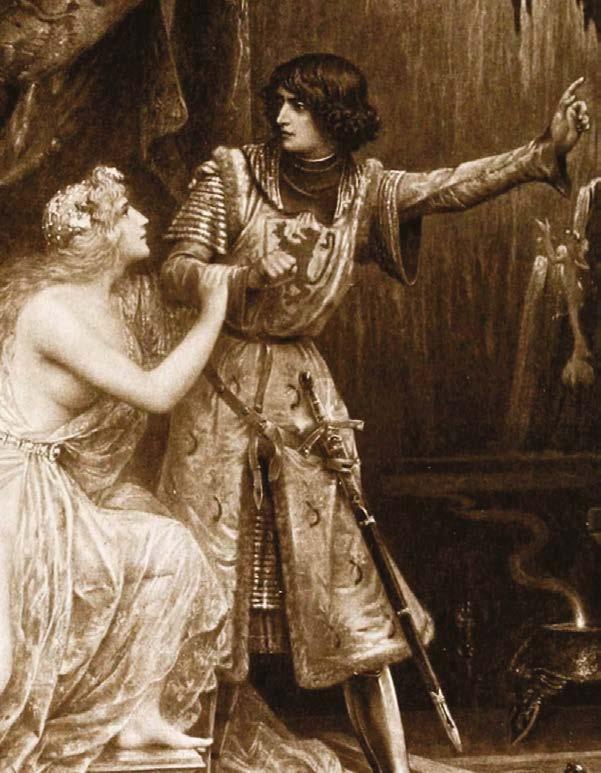










Full programme available from September 2022 See website for priority booking CAMPDENMAYFESTIVALS.CO.UK Artists Will Include Andras Schiff Takács Quartet Paul Lewis Piotr TallisWigmoreRoderickAnderszewskiWilliamsSoloistsScholars 8 to 20 MAY 2023 Our mission is to develop and promote the next generation of British Wagner singers – some of whom are singing for you tonight. Mastersingers provides coaching with top international artists, runs an annual competition for aspiring Wagner voices and offers performance opportunities to young singers. With your support, they will be thrilling us with their achievements in future years. We invite you to join us as Friends of Mastersingers and watch our singers flourish in this glorious and demanding repertoire. Full details at: Promotingwww.mastersingers.org.uksingerswithpassion
Sort
CBE Advisor Dame Anne Evans DBE Artistic Director Malcolm Rivers
During the pandemic, Mastersingers continued to support singers who were unable to perform on stage. We receive no public funding and urgently need your help to carry on our work. donate what you can to become a Friend and play your part in the future of British Wagnerian singing. Contact us for more information and to subscribe to our regular Newsletter via mastersingersuk@gmail.com or donate directly to: The Mastersingers Ltd. Royal Bank of Scotland Code 16-23-21 no. 10148966 Tomlinson
Registered Charity No. 1076508 Pictured: Mastersingers artist Lee Bisset as Brünnhilde, Longborough 2021 (c. Jorge Lizalde) Patron Sir John
Please
Account
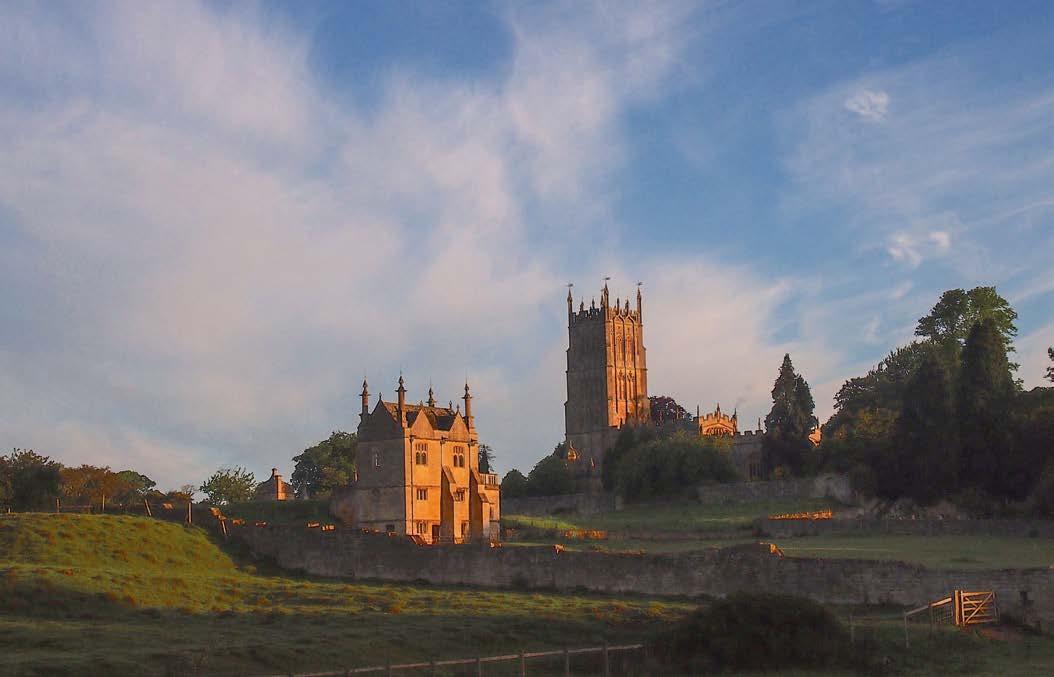

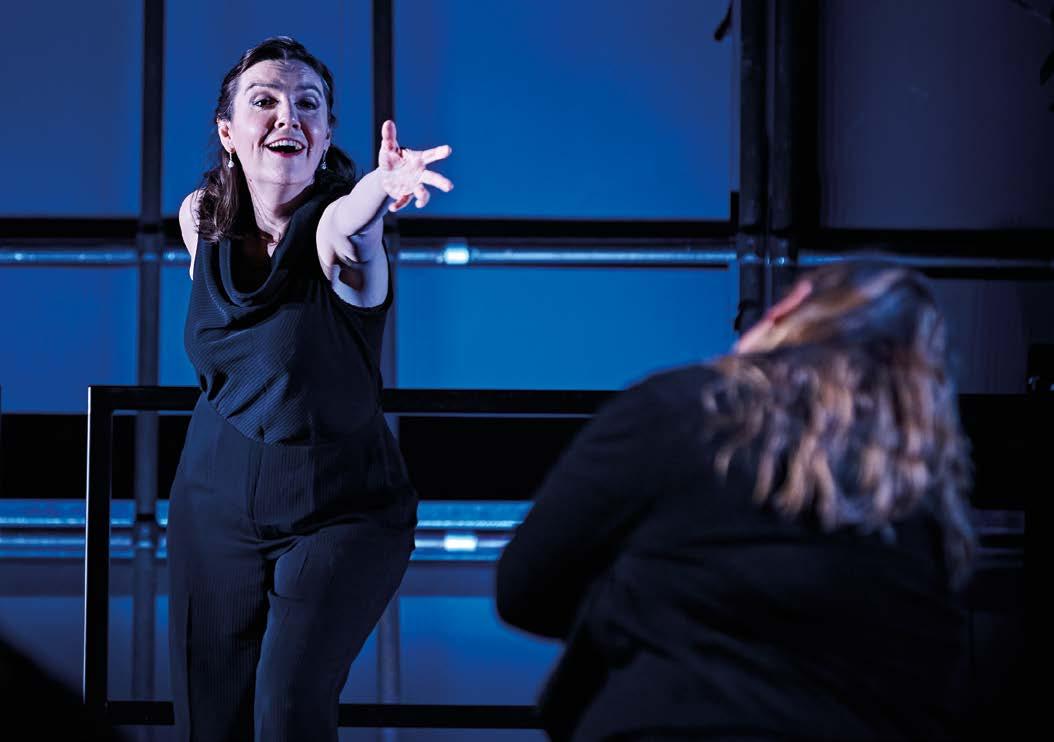

REGENTSOPERA.COM Das Rheingold At the Grand Temple, Freemasons’ Hall 13th – 19th November 2022 Director Caroline Staunton, Conductor Ben Woodward Keel IngeborgOliverJamesWatsonSchoutenGibbsBørch Der DesRingNibelungen

Weddings, Celebrations and Private Events Proud supplier of Longborough Festival Opera goodintents.co.uk 01531 636505
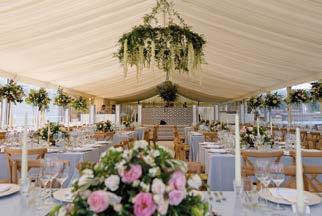
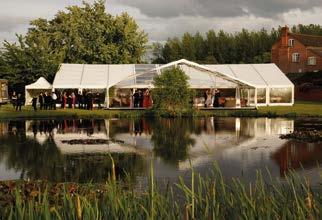




THE DORSET OPER A MMXXI I 25, 28, 30 July at 19:00 | Matinée 27 July at 14:00 Sung in Italian with English surtitles Giacomo Puccini MANON LESCAUT 26, 27, 29 July at 19:00 | Matinée 30 July at 14:00 Sung in English with surtitles Wolfgang Amadeus Mozart THE MAGIC FLUTE Coade Theatre, Bryanston, Blandford Forum The home of Country House opera in South West England featuring renowned soloists and full orchestra Marquee bar | Picnics | Formal Dining Box dorsetopera.comOffice:07570366186

7 –¬uly242022 HIGHLIGHTS: BOX OFFICE 01298 72190 BUXTONFESTIVAL.CO.UK LA DONNA DEL LAGO ROSINNI VIVA LA DIVA DONIZETTI ANTONIO E CLEOPATRA HASSE MANSFIELD PARK DOVE VIOLET COULT AGYPSY:MUSICAL FABLE STYNE OUR FUTURE IN YOUR HANDS WHITLEY buxtonfestival @BuxtonFestival @buxtonfestival

Sat 12 Nov Sat 19 Nov Sat 10 Dec Tue 7 Sat 11 Feb 2023 Unforgettable performance, powered by you 0844 338 5000 birminghamhippodrome.com Calls cost 4 5p per min plus access charge Tue 9 Sat 27 Aug Tue 13 Sat 17 Sep Tue 27 Sep Sun 2 Oct Tue 18 Sat 22 Apr 2023 Wed 3 Fri 5 May 2023 Sat 6 May 2023 Wed 26 Sat 29 Oct Wed 9 Fri 11 Nov Tue 8 Nov Sir Peter Wright’s The Nutcracker


Join us this summer 31 May – 13 August Surrounded by the beautiful formal gardens and wilded woodlands of Holland Park, Opera Holland Park’s canopied open air auditorium is the perfect place to enjoy critically acclaimed opera in the hear t of London. Bringing together world class singers and resident orchestra City of London Sinfonia in the pit, this extraordinary summer festival is not to be missed. “This is world class opera ” The Stage (on La traviata, 2021) Book now Tickets £10–£128 www.operahollandpark.com Kezia Bienek (who plays the title role in Carmen this summer) as Beppe in L’amico Fritz at Opera Holland Park, 2021 © Ali Wright 2022 Season
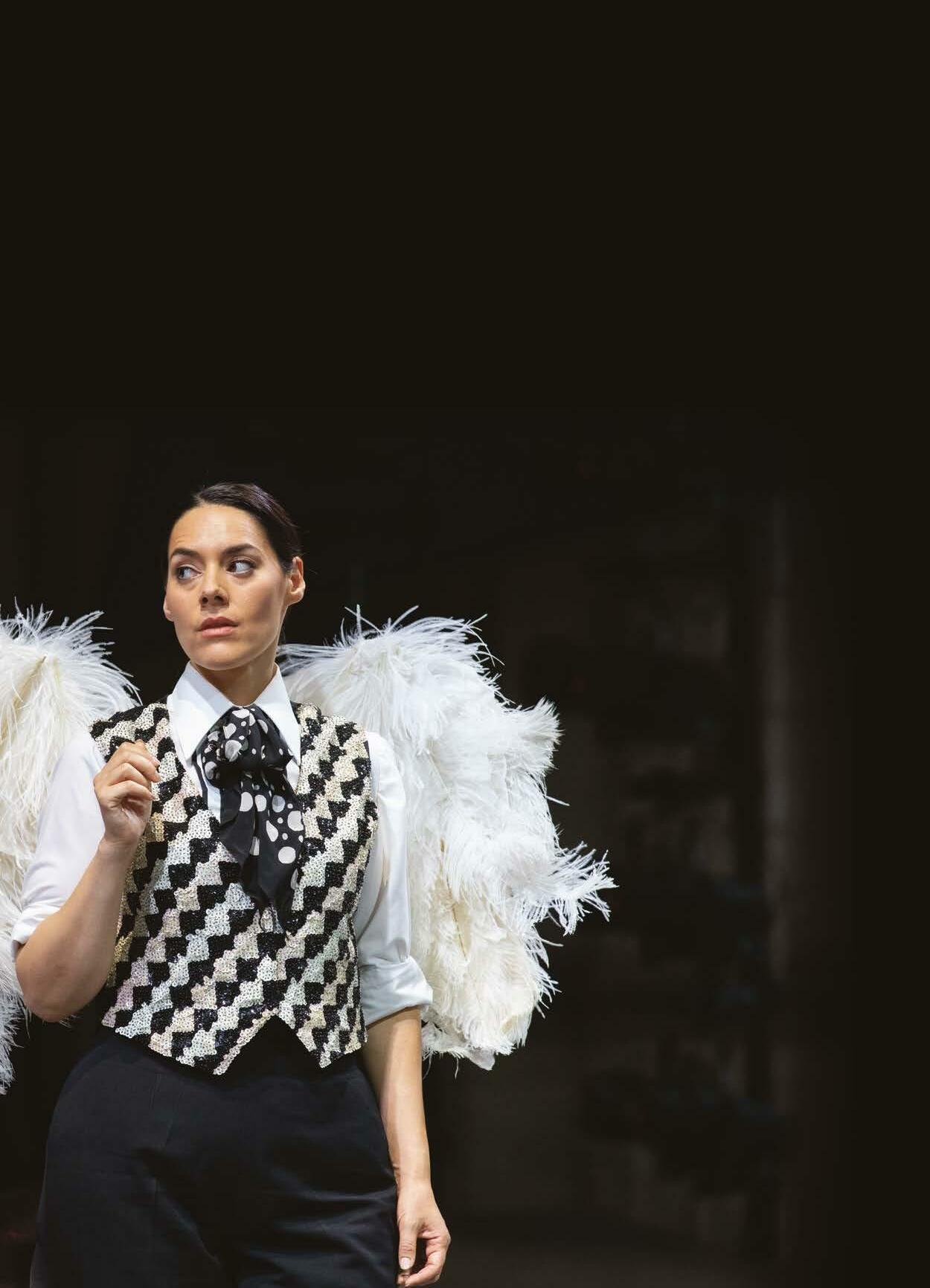

Die Fledermaus RNCM OPERA Tickets available soon DECEMBER 2022
2023 +44 (0) 1962 791020 thegrangefestival.co.uk THE QUEEN OF TCHAIKOVSKYSPADES THE LOOK OF LOVE MARK MORRIS DANCE COMPANY ELLINGTON: FROM STRIDE TO STRINGS JAZZ@THEGRANGE COSÌ FAN MOZARTTUTTE ORFEO ED EURIDICE/ DIDO AND AENEAS GLUCK/PURCELLJUNE&JULY 2023
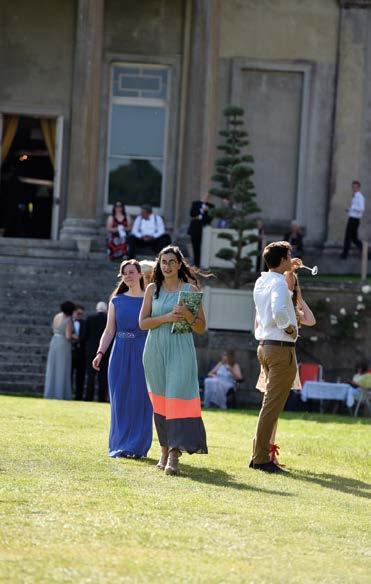
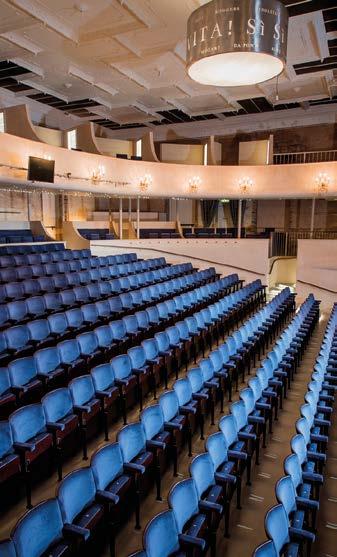
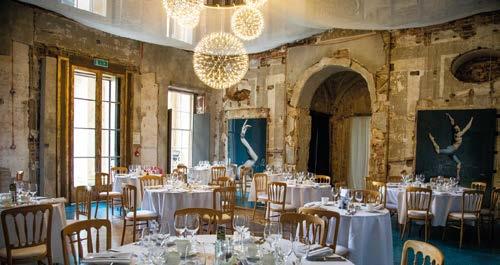
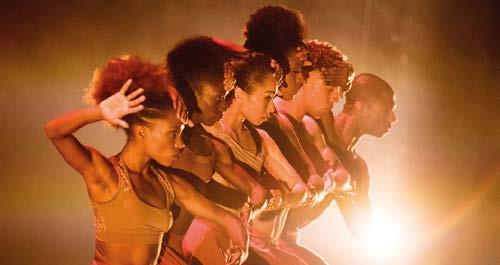
01451Savillssavills.co.ukStow-on-the-Wold832832 don’t rely on luck, rely on











THREE 23–302022HEREFORDFESTIVALCHOIRSJULY For further information and to book tickets 01452 768 3choirs.org928 @3choirsfestival@3choirs3ChoirsFestival3ChoirsFestival OXFORD LIEDER FESTIVAL FRIENDSHIP IN SONG: AN INTIMATE ART 14-29 October 2022 The Oxford Lieder Festival, the UK’s biggest festival of classical song, celebrates themes of friendship and conviviality in its 21st edition. We bring a stellar roster of international singers and pianists to Oxford to fill the historic city with song over sixteen days. Song is an art form that grew up around the piano, at social gatherings and salons, among friends. Composers wrote many of their finest songs for these settings, and they were often inspired by their friendships with other composers, poets and painters. Oxford Lieder is a Registered Charity, no.1111458 «««« The Observer ««««« The Times «««« Financial Times Best Classical Music & Opera of the Year The Times Best Classical Music & Opera of 2021 The Guardian Artists include: Dame Sarah Connolly, Mark Padmore, Roderick Williams, Carolyn Sampson, Christoph Prégardien, Julian Prégardien, Benjamin Appl, Iestyn Davies, Thomas Oliemans, Dorothea Röschmann, James Gilchrist & Camilla Tilling. Further details at oxfordlieder.co.uk
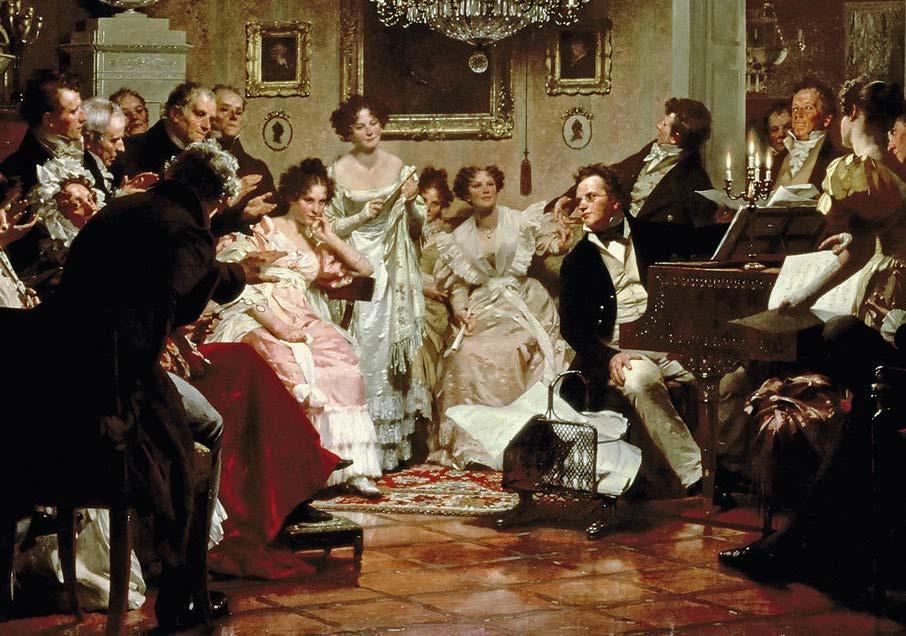
House and Gardens open Wednesdays, Thursdays and Fridays. Opening times 11am till 4.30pm. Book online at www.sezincote.co.uk
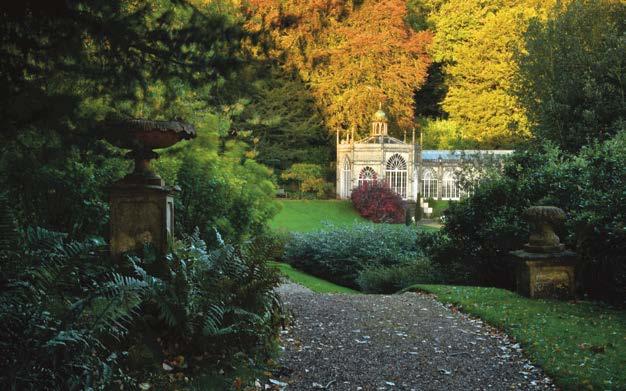
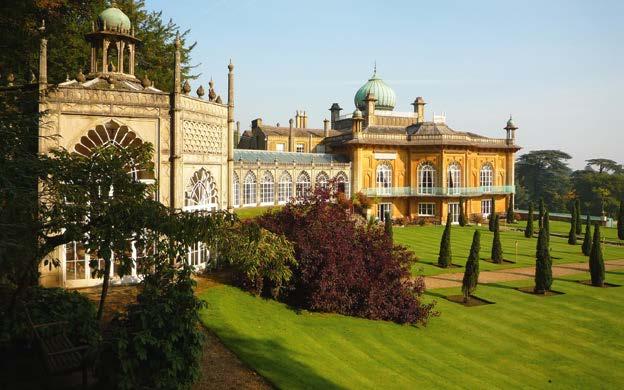
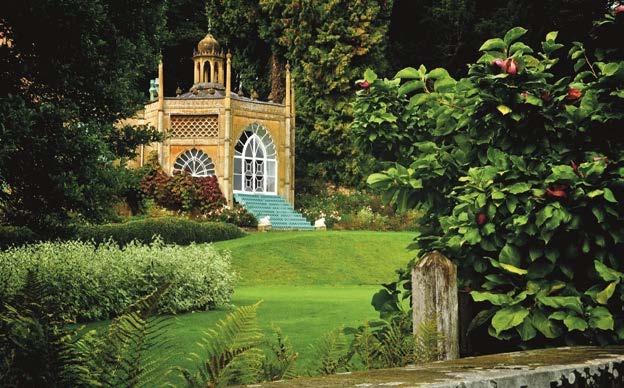

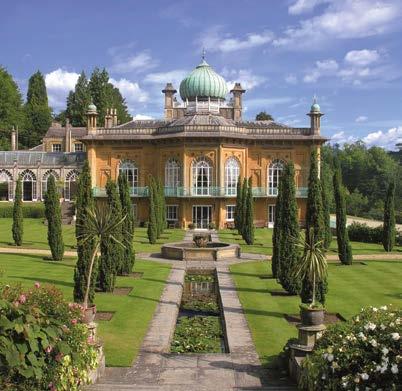
Performances take place in the stunning grounds of Belcombe Court, and Holy Trinity, in the historic town of Bradford on Avon Picnicking available at opera and prom events. Ticket prices from £19. Opera | Proms | Concerts 19 August - 17 September 2022 Celebrating great music in extraordinary places | Book online at ifopera.com La rondine Puccini Rita & Il segreto di Susanna Donizetti | Wolf-Ferrari Dido and Aeneas Purcell Picnic Prom with The Clare Teal Seven The Man in the Moon Family show Cultura l breaks & escapes Verona Opera Festival Verdi Festival in Parma Wexford Festival Donizetti Festival in WNOOperaBergamoinParisinCardiff The Ring in Dresden Call us or visit our website for details Escorted tours Small ComfortablegroupshotelsFirstclassseatsRelaxedpace “An absolute revelation a wonderfulholiday”musical Mr & Mrs P, Hertfordshire www.heraldictours.co.uk 01757 606466

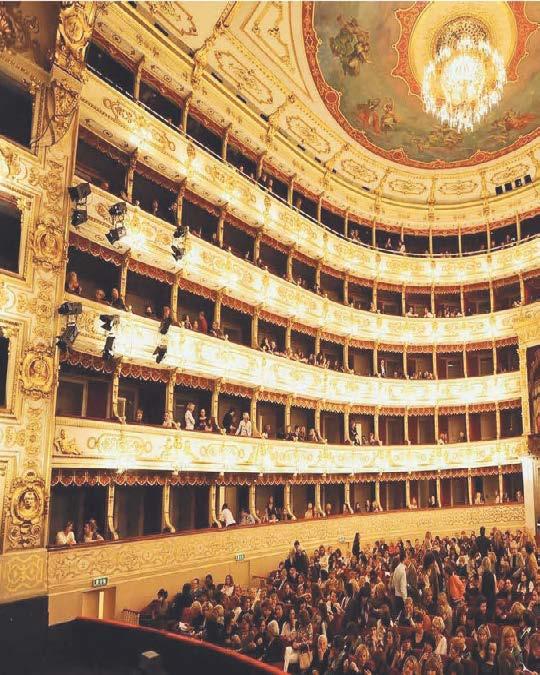

THESOCWAGNERIETY@wagnersocietyuk@wagnersocietyukThe Wagner Society would like to invite patrons of Longborough Festival Opera to join the world’s largest Wagner Society. Benefits include: Entry into the Annual Ballot for Bayreuth Festival tickets Regular Live and Zoom Events, including the Society Singing Competition Copies of the quarterly Wagner News magazine Free access to recordings of event webinars with Grace Bumbry, Nina Stemme, Anna Tomowa -Sintow, Sir Graham Vick, Sir Mark Elder, Stephen Gould, Petra Lang, Simon Callow , Alex Ross and many others Membership costs £30 per year for single and £40 for joint membership. Students and under 30s can join FREE . Join online at wagnersociety.org or email: membership@wagnersociety.org @TheWagnerSocietywagnersociety.org Whichford Pottery, Whichford, Nr. Shipston-on-Stour, Warks, CV36 5PG Tel: 01608 684416 www.whichfordpottery.com ClassicPOTTERYHand-madeEnglishFlowerpots A Visit to Whichford Pottery is a Real Treat... Choose from our full range of flowerpots, be inspired by our courtyard garden, browse an array of handmade goodies in The Octagon and enjoy a seasonal feast at The Straw Kitchen. Please see website for Pottery and Café opening times.



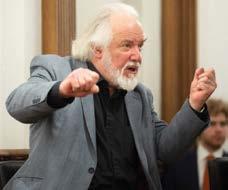
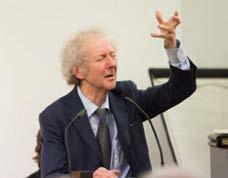
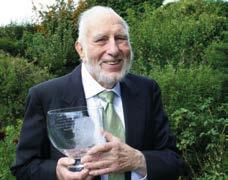
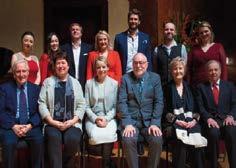
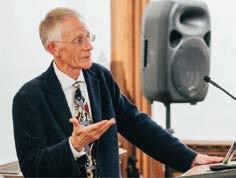

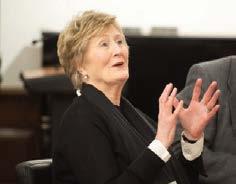
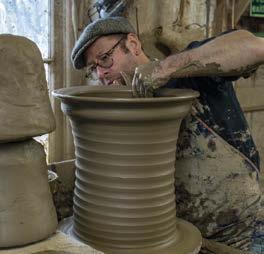

HANDEL TAMERLANOAGRIPPINAOTTONEAUTUMN2022 Book now: englishtouringopera.org.uk LONDON | POOLE | MALVERN | SAFFRON WALDEN | BUXTON| EXETER | TRURO
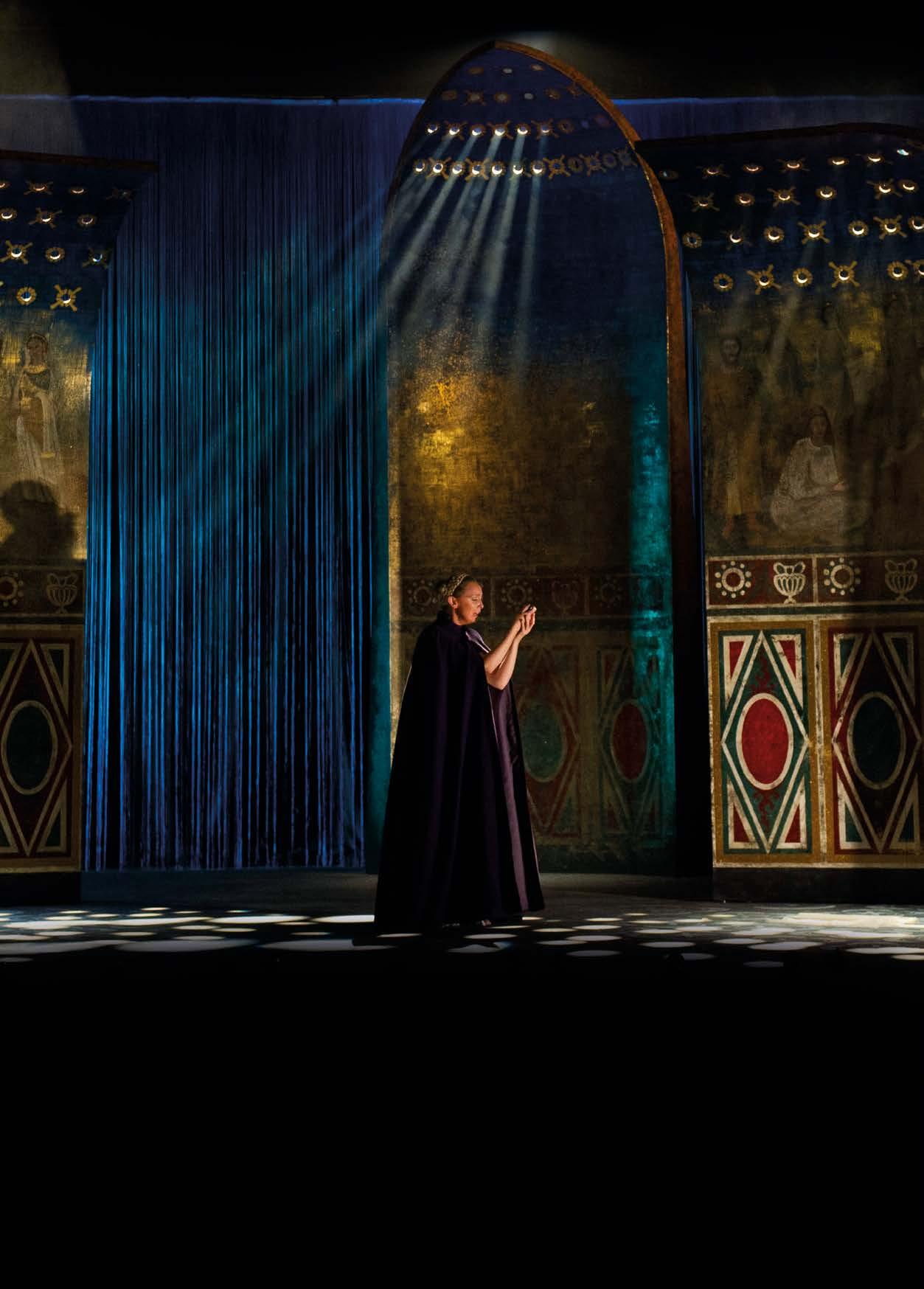
derwenthouseliving.co.uk Oxfordshire’s inspirational store for handcrafted furniture, fabrics and homewares 3 Bridge Street Witney OX28 1BY T: 01993 212678 DERWENT HOUSE Home of British Craft and Makers Explore 56 acres of wild gardens and enjoy fabulous food and a wonderful selection of gifts and plants in our newly extended Garden Centre. Batsford is a perfect day out for all the family – including the dog! www.batsarb.co.uk Batsford Arboretum & Garden Centre, nr. Moreton-in-Marsh, Glos, GL56 9AT T: 01386 701441
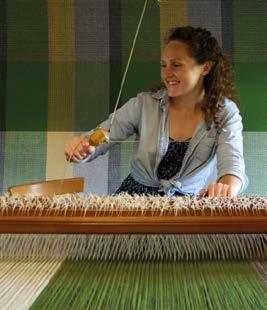






dGHugomage:eninning BOOK rsc.org.ukNOW The work of the RSC is supported by the Culture Recovery Fund Richard III is supported by Season Supporter Charles Holloway ROYAL SHAKESPEARE STRATFORD–UPON–AVONTHEATRE23JUNE–8OCTOBER
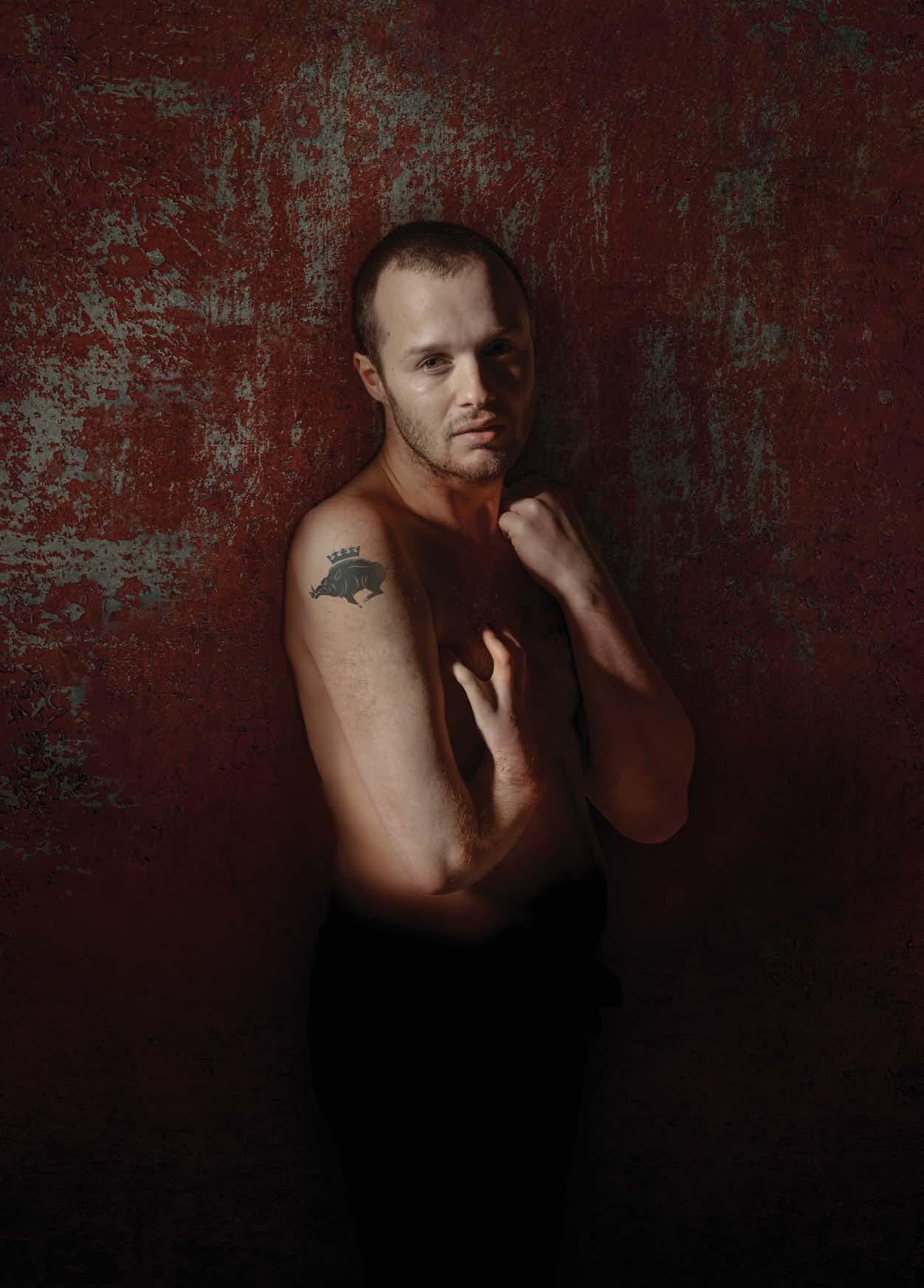









LONGBOROUGH FESTIVAL OPERA114 Celebrating three decades, Longborough Festival Opera has commissioned a new book to chronicle Martin and Lizzie’s achievements over the years. This will be the story of how one couple, working without public subsidy, battling planners and sceptics, took an empty field and a dream of an idea and turned it into bricks, mortar and sublime music. The book will be written by writer and music critic (and Longborough attender) Richard Bratby, author of Forward: 100 Years of the City of Birmingham Symphony Orchestra and Classical Music: An Illustrated History In the coming months we will be launching a crowdfunding campaign to help fund the project, with various exciting benefits available. In the meantime, if you would like to help us get this project off the ground, you can donate at lfo.org.uk/longborough-book Thank you. New book commissioned on Longborough Festival Opera’s history
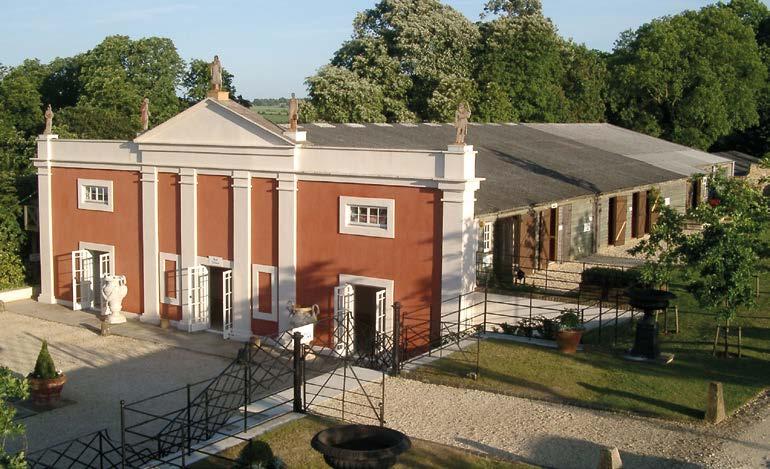
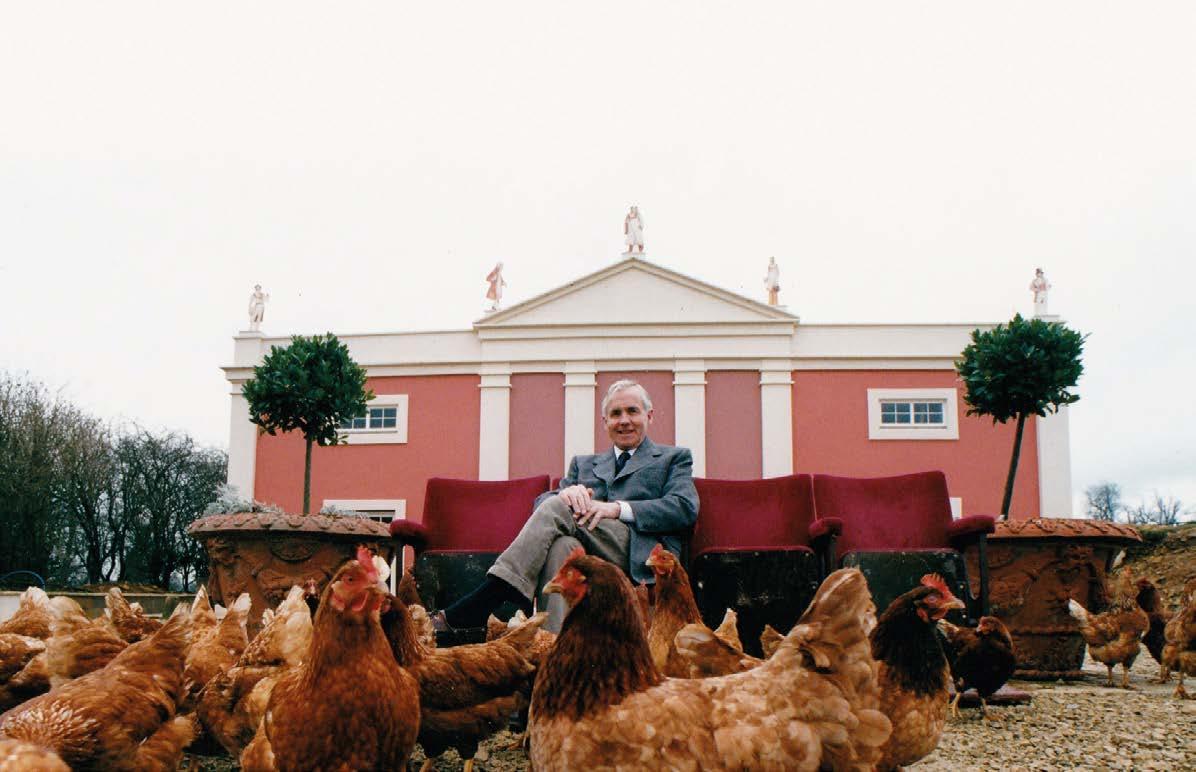
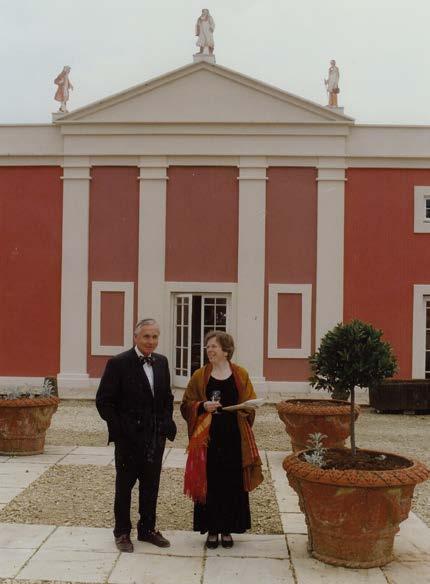

Our Charity No. Membership & Legacy Manager :
1087303 If you would like to share your wishes with us so that we can thank you, please contact
gill@lfo.org.uk | 01451 830292 ext. 205
Any gifts will be used wisely. A flavour of how your generosity could help Longborough Festival Opera: £1,250 pays for all the costumes and props for our Playground Opera that tours schools. The set for our Emerging Artists production costs £10,000. For £50,000 a performance could be dedicated in your
“When I wrote my will family and friends came first but I wanted to acknowledge the importance that arts, particularly opera, have played in my life. Longborough Festival Opera seemed the best choice; I have always admired its musical excellence, innovation and educational work. Above all I have valued its warmth and friendliness. I am confident that it will use my bequest wisely and efficiently and while considering one’s death is not pleasant, it is a comfort to know that the greatest little opera house will benefit from it.”
Registered
PLANNINGmemory. FOR THE FUTURE 1152022 SEASON PROGRAMME
Gill Powell
We are honoured that you might consider leaving us a gift in your will. One of our members, Catherine Alexander, writes:
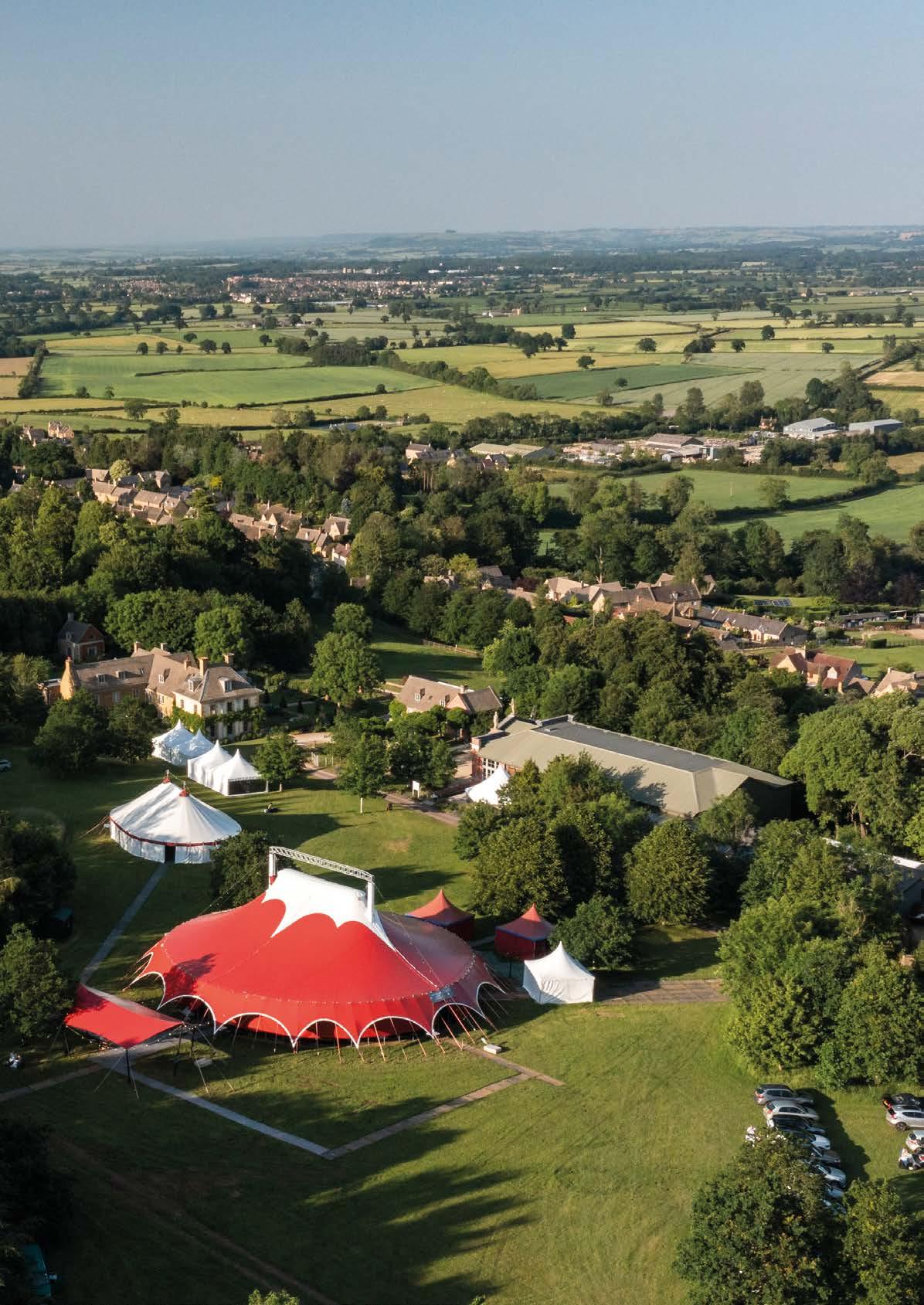
Main Entrance Parking MarPicnicquee Patron Marquee & House Tower Benefac tor Marquee MarCirclequee Coach HouseValley MarqueeFestival Restaurant Picnic Lawn Theatre Main Foyer, Bar & Box Office GrTheatreeenDoor (Meadow side) Bar Upper& FoyerProgrammeSalesDisabledToilet BlueTheatreDoor (Valley side) PaDisabledrking lfo.org.uk | boxoffice@lfo.org.uk | 01451 830292 Longborough Festival Opera, New Banks Fee, Longborough, Moreton-in-Marsh, GL56 0QF Registered Charity no. 1087303