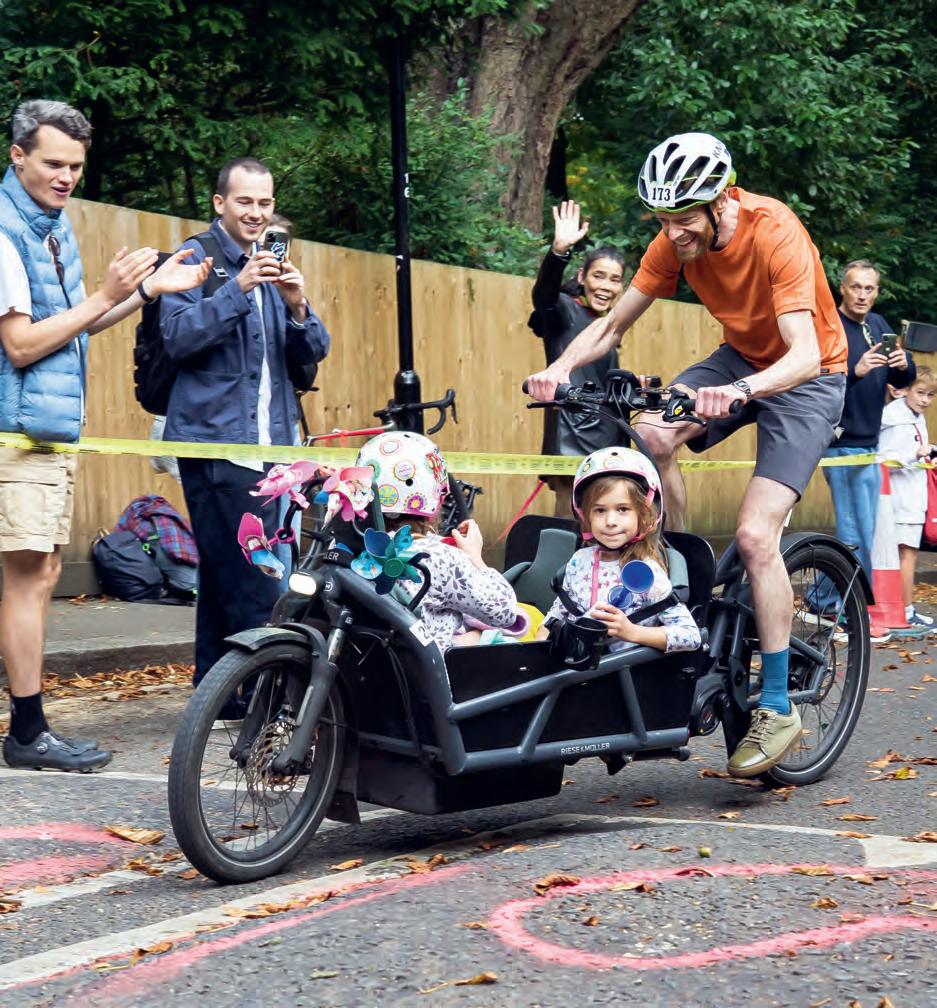
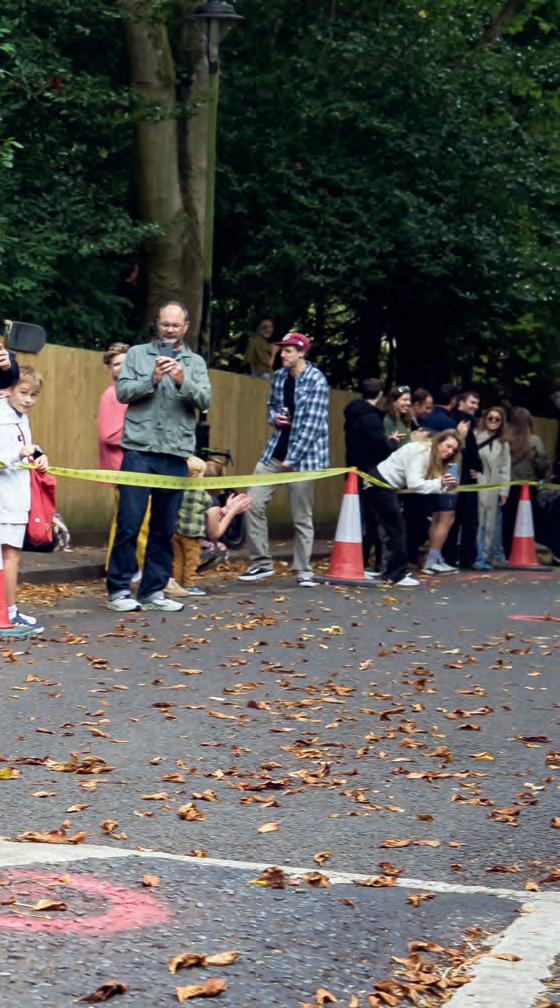
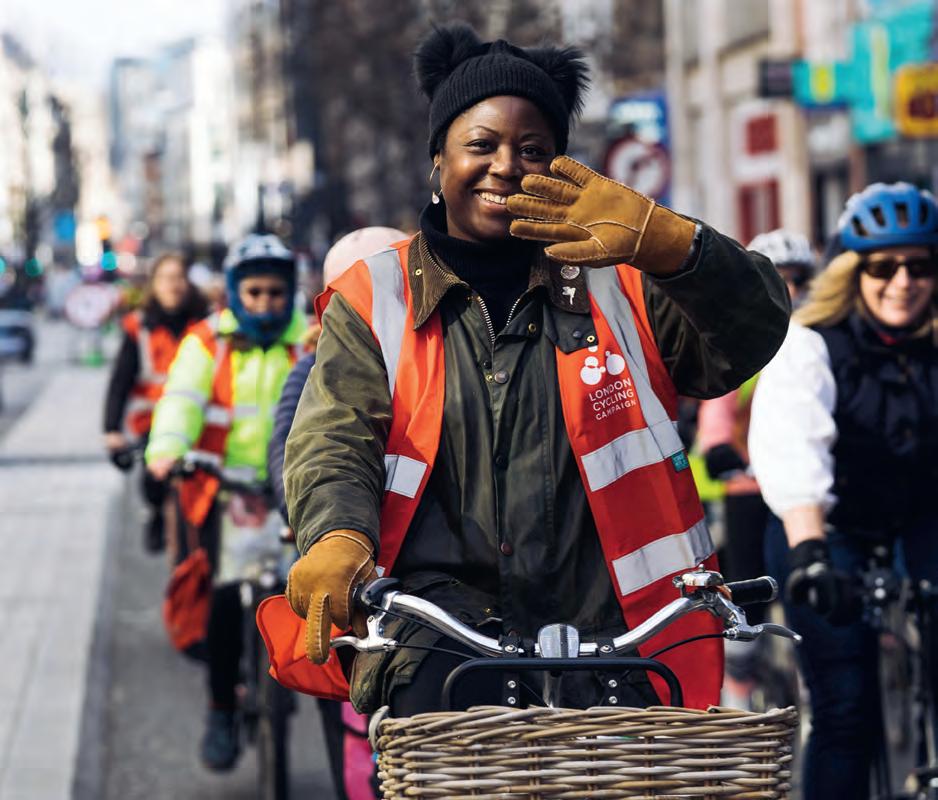
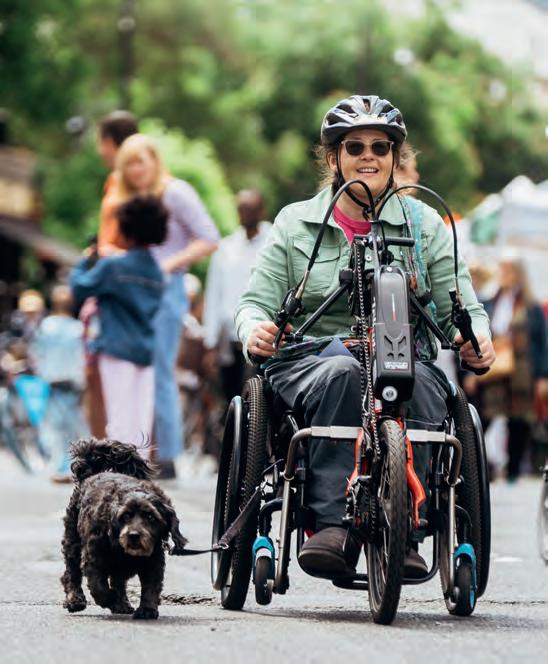
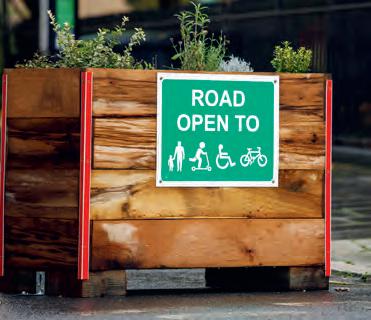
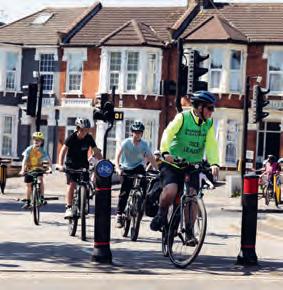
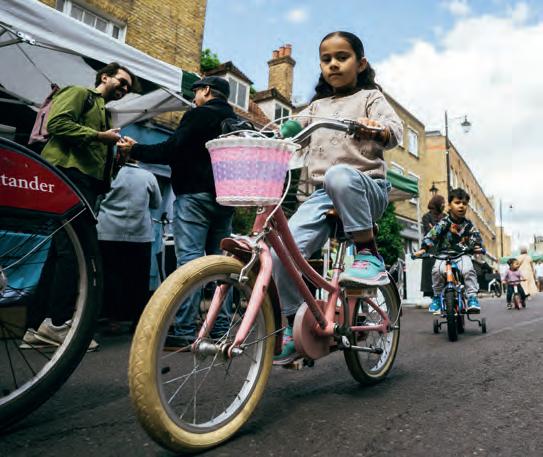
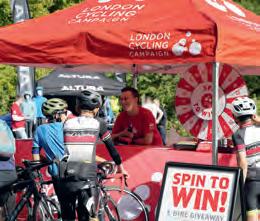
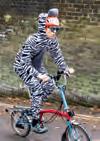
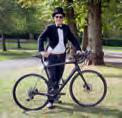
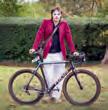
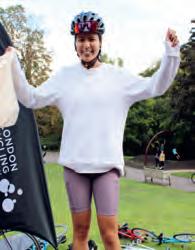
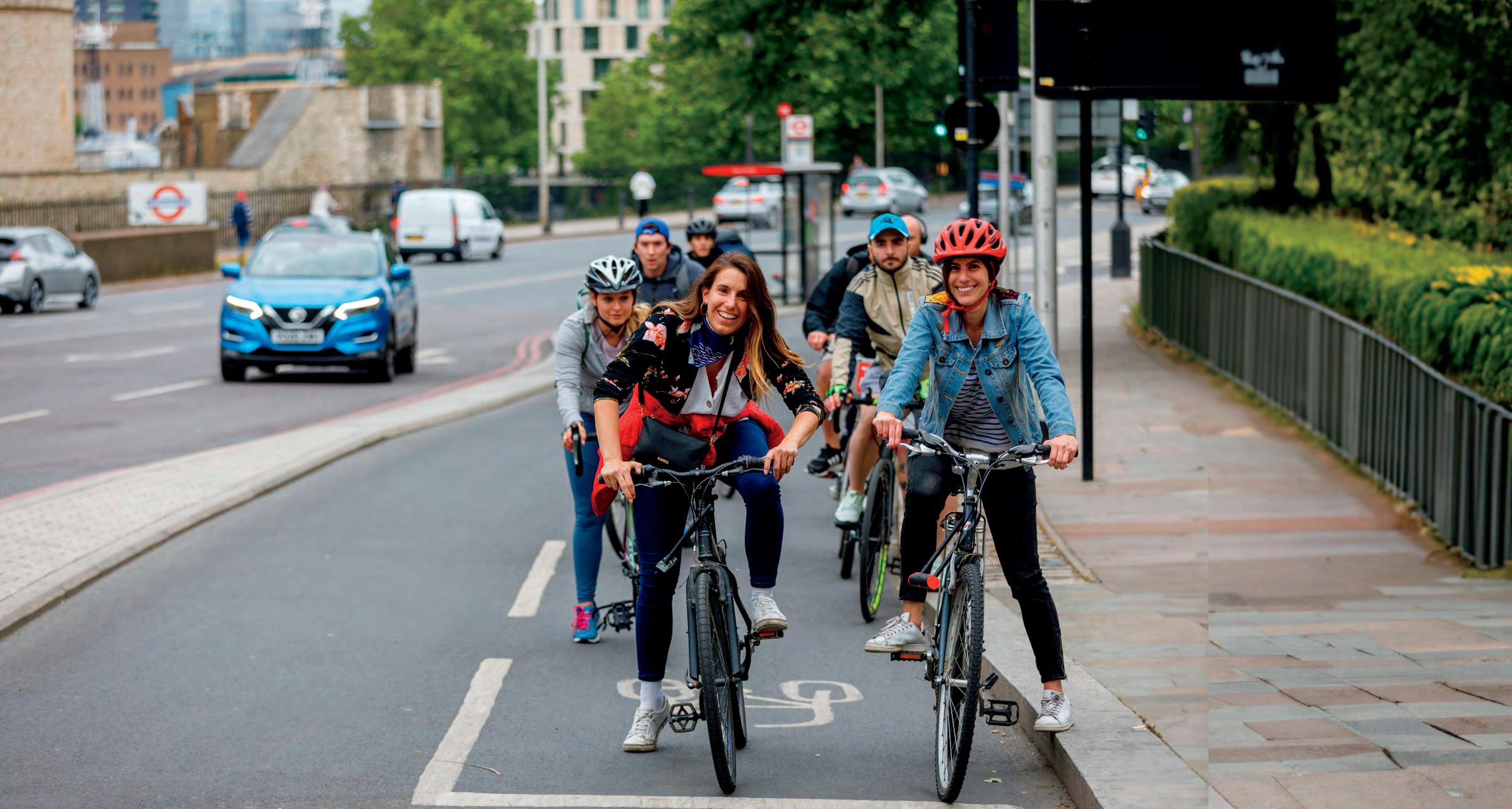
Highlight of the cycling calendar: LCC’s annual Urban Hill Climb up Swain’s Lane offers fun for all the family, with categories for serious racers, cargobikes, ‘Best Dressed’ and more (see p42).
FEATURES
16 2026 Local Elections
A proper cycle network in every borough set to be the central campaign focus
22 Interview
We meet the cycling filmmaker whose history series has become an Insta hit
28 London’s Framebuilders
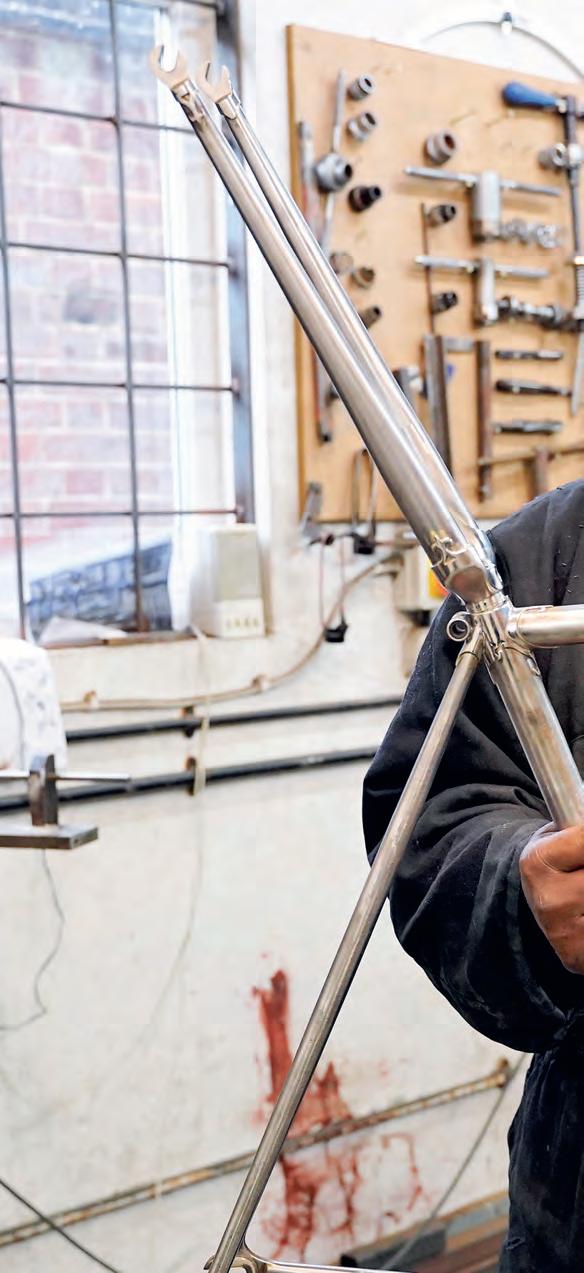
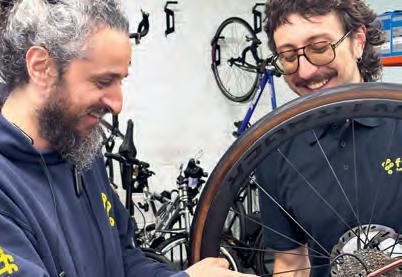
The stories behind the capital’s last few remaining artisan bike makers
42 Urban Hill Climb
See how the riders enjoyed themselves at this year’s fun-filled festival
44 A Two-City Tour of Belgium
Are there lessons London can learn from the cycling growth in Bruges and Ghent?
REGULARS
08 News
Tube strike findings; LCC awards; work starts in Westminster; and theft survey
11 Opinion
Glimpsing London’s future; a guide to inclusive cycling; teaming up on tandems
66 Iconic Bikes
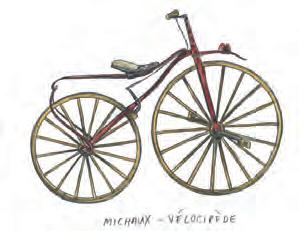
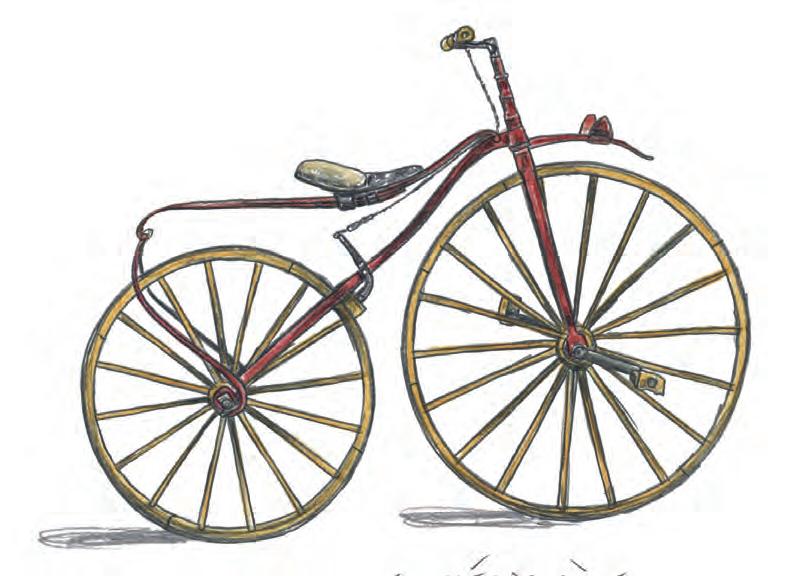
A brief history of the world’s first widely produced bicycle, the Michaux Velocipede
RIDE GUIDE
52 Ride
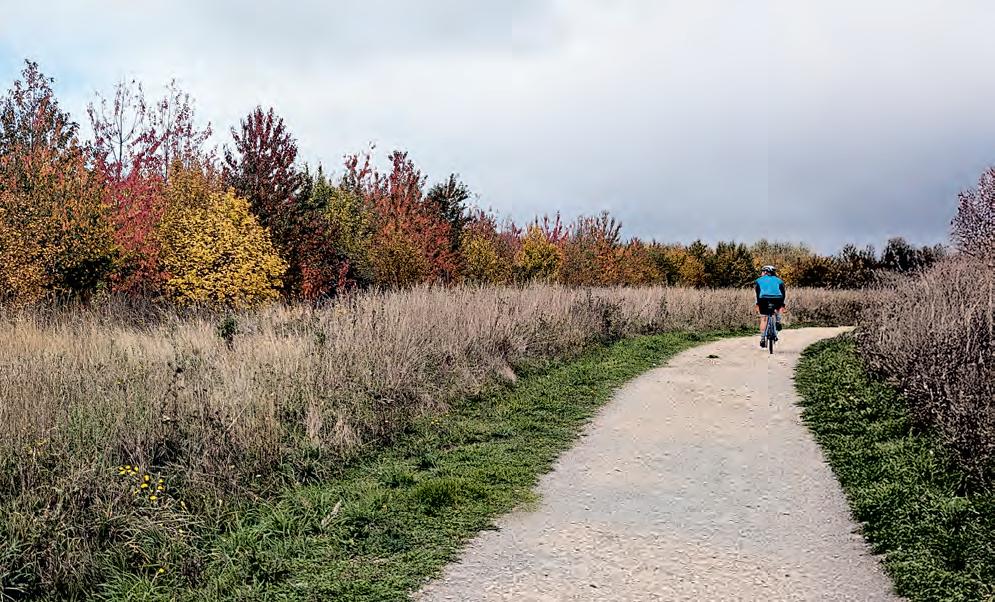
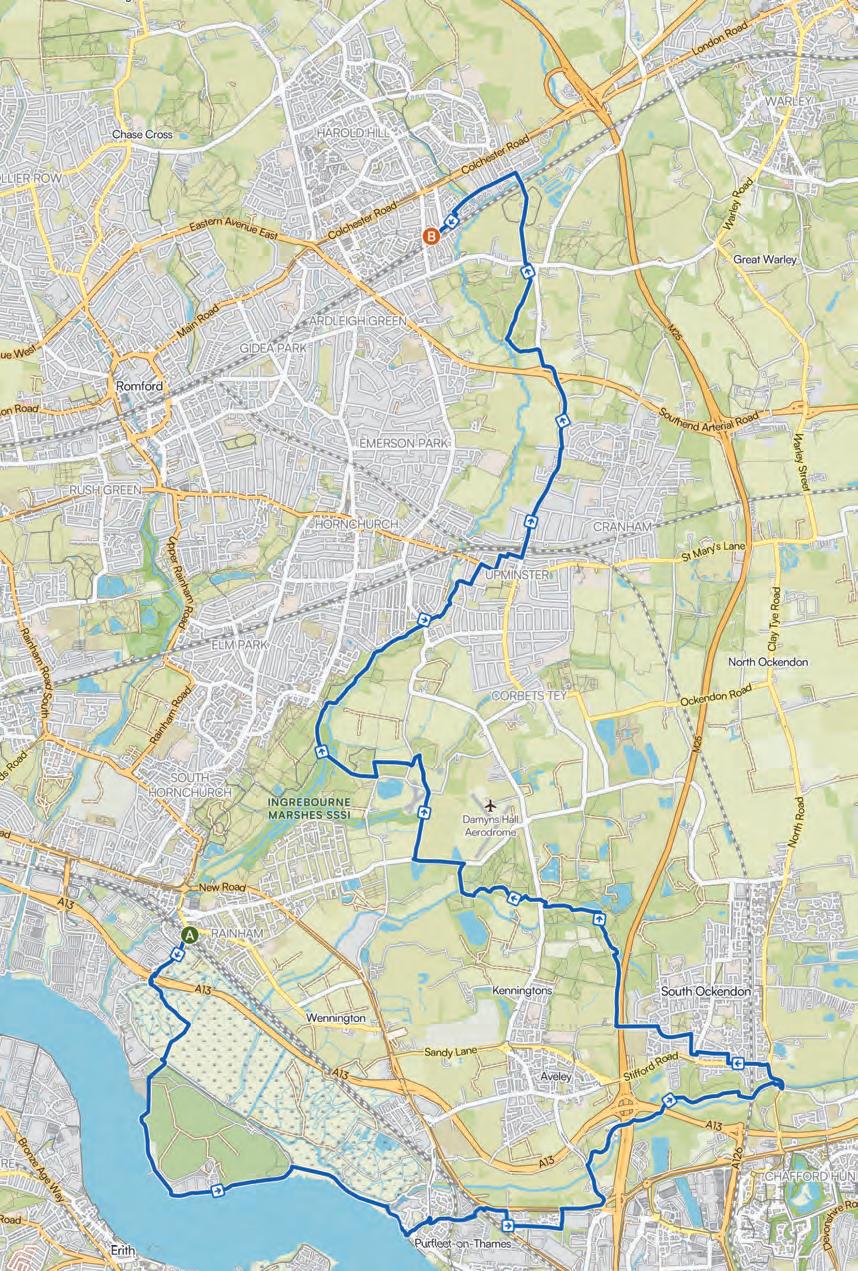
The first in a new series of ‘Boundary Rides’ kicks off from Rainham
56 Advice
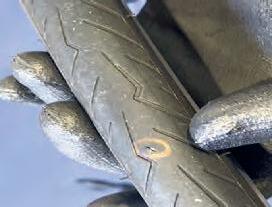
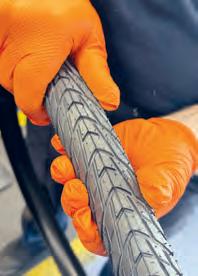
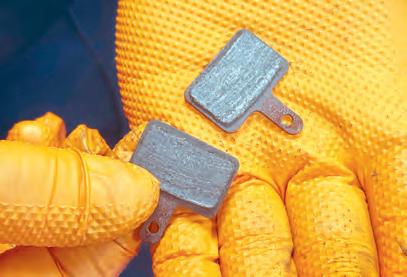
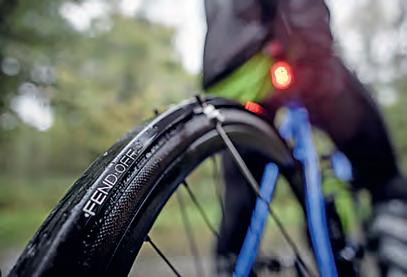
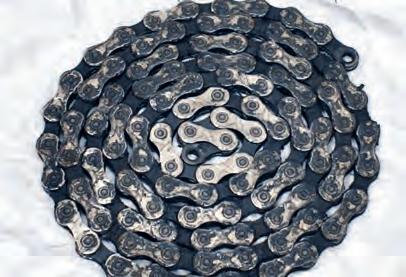
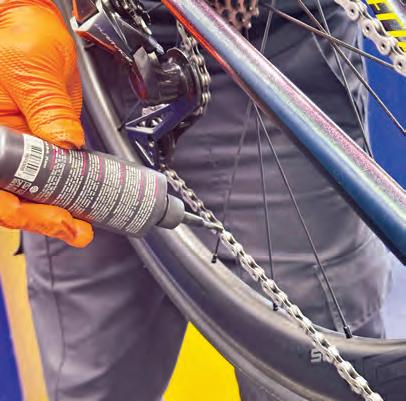
How to best prepare your bike and components for the winter months
58 Reviews
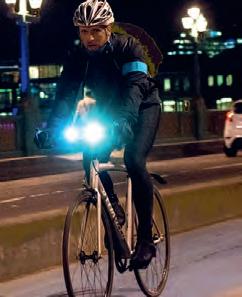
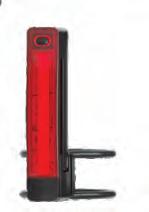
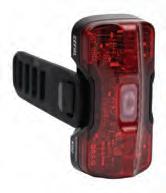
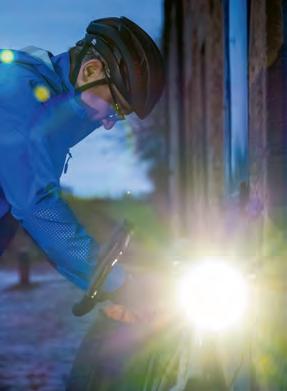
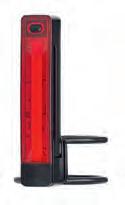
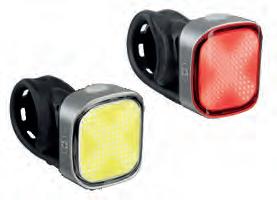
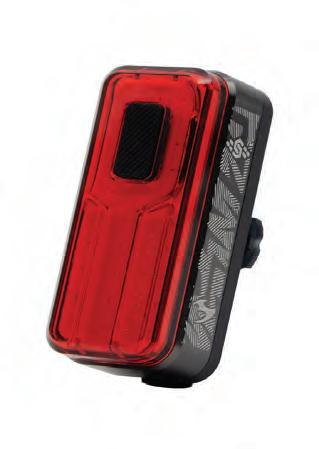
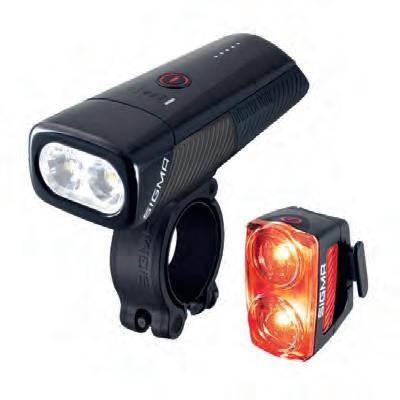
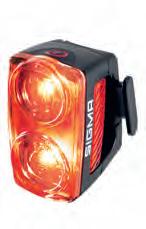
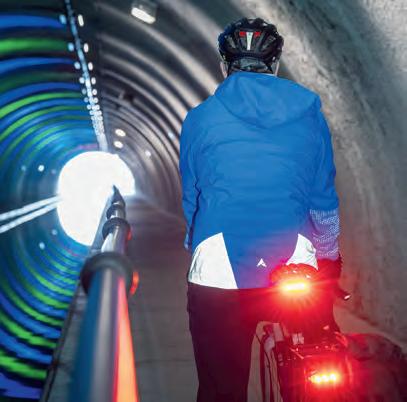
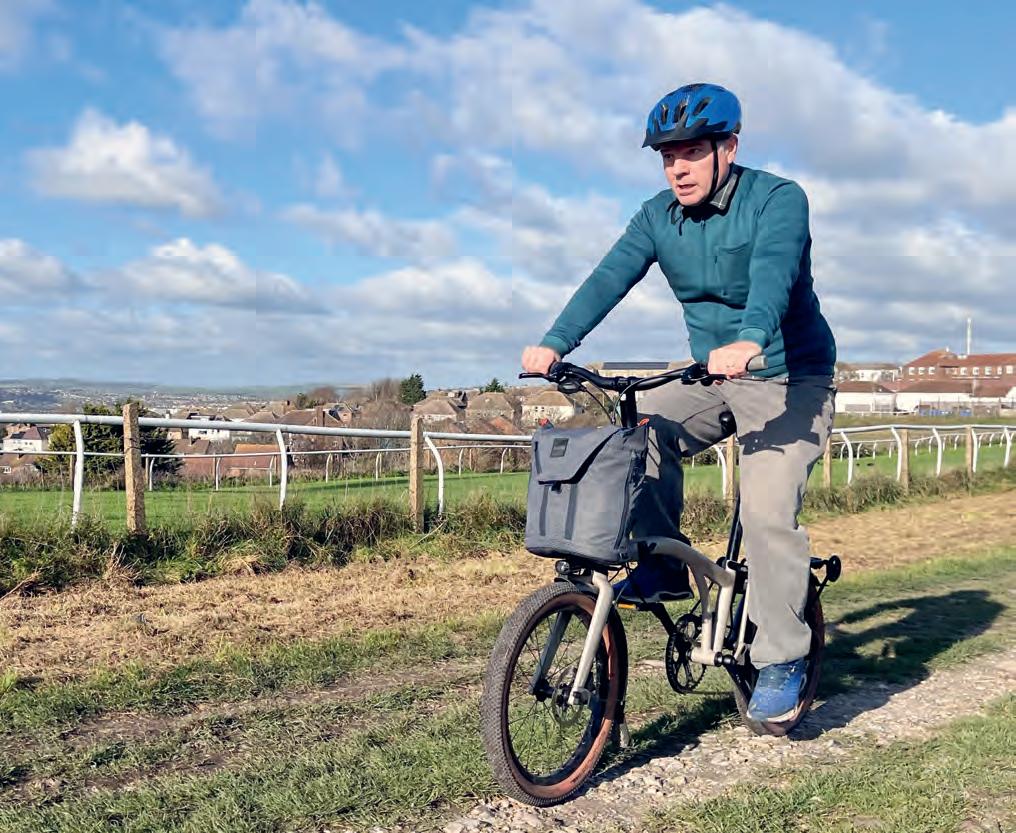
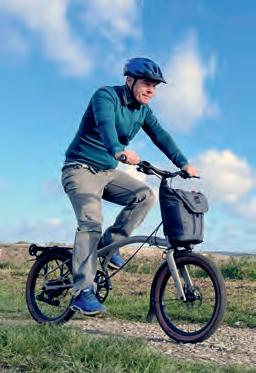
Brompton G-line folder tested, winter product reviews, and the latest lights
EDITORIAL
Build it and they will come
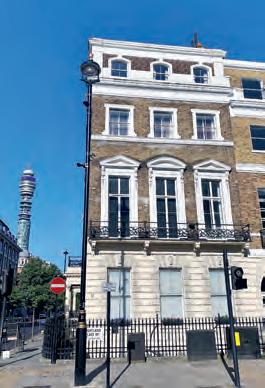
Location: Central London
LONDON CYCLIST
Unit 206, The Record Hall, 16-16A Baldwin’s Gardens, London EC1N 7RJ
n 020 7234 9310
n lcc.org.uk
EDITORIAL
IITT’S LONG BEEN a frustration for cycling and active travel campaigners when decision-makers claim that the cost of trial schemes is too great or too disruptive. But in the last five years alone we’ve seen two distinct learning periods, albeit created in unusual circumstances, that no amount of hand-wringing urban planning or next-gen computer modelling seems capable of simulating.
The first was, of course, the Covid-19 pandemic, where public and private transport was temporarily shuttered and cycling and walking became the only safe ways to get around. By necessity, local authorities had to rapidly introduce a variety of cycle schemes onto empty roads, including thousands of protected lanes across the country. Cycling, unsurprisingly, boomed in those difficult months. Fewer vehicles, more safe tracks, quick implementation — big changes shown to not only be possible but realistic.
Then, just this autumn, with tube strikes derailing travel options, hundreds of thousands of Londoners again jumped on their bikes — more than two million cycle journeys were recorded daily. A phenomenal number and a true sight to behold, proving yet again that the demand is there if only there was the infrastructure to support it.
Need and speed (of delivery) perfectly illustrated with unrivalled mass-scale examples. Read more inside on what we can do next...
John Kitchiner Editor
LCC MEMBERS’ LEGAL HELPLINE
Osbornes Law is the official legal partner of LCC, providing members with exclusive access to a legal helpline. If you’re involved in a collision or have a cycling-related legal issue, phone the cycling team at Osbornes for advice on 020 7681 8672.
Editor: John Kitchiner (london.cyclist@lcc.org.uk)
Design: Anita Razak
Contributors: Simon Munk, Clare Hinchcliffe, Tom Bogdanowicz, Sam Stephenson, Rob Eves, Tom Fyans, Charlie Codrington, Christian Wolmar
ADVERTISING
Allie Gill (allie.gill@lcc.org.uk)
SOCIAL MEDIA
TWITTER: @london_cycling
FACEBOOK: @LondonCyclingCampaign
INSTAGRAM: @london_cycling_campaign
Editorial, copyright, membership
LCC is not aligned with any political party. All views expressed in London Cyclist are those of the authors and are not necessarily endorsed by the editor, nor do they necessarily reflect LCC policy. All material is copyrighted and may not be reproduced without the written permission of the editor. Editorial content is independent of advertising. All LCC membership offers and discounts are presented entirely at the discretion of the provider.
London Cyclist is published by LCC.
MORE INFO: lcc.org.uk
MEMBERSHIP: lcc.org.uk/membership TO DONATE: lcc.org.uk/donate
LCC is a charitable limited company, reg no 1766411; charity no 1115789
London Cyclist is printed by Buxton Press on FSC certified carbon-balanced paper from responsible sources.
Cover photo: Andy Donohoe
CYCLING LONDON
Industrial action created perfect illustration of city’s cycling needs
T TUBE STRIKES SHOWCASE FUTURE
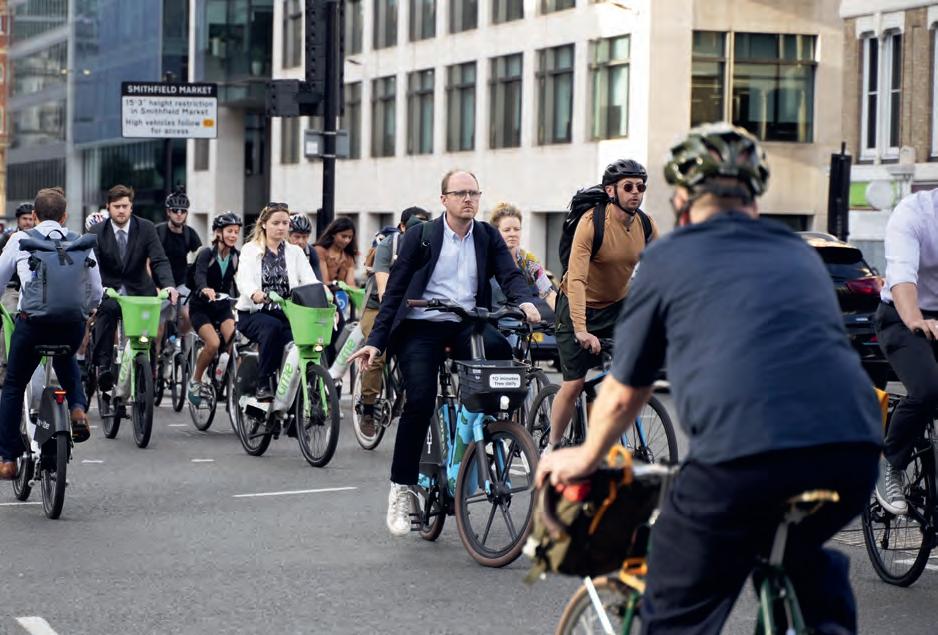
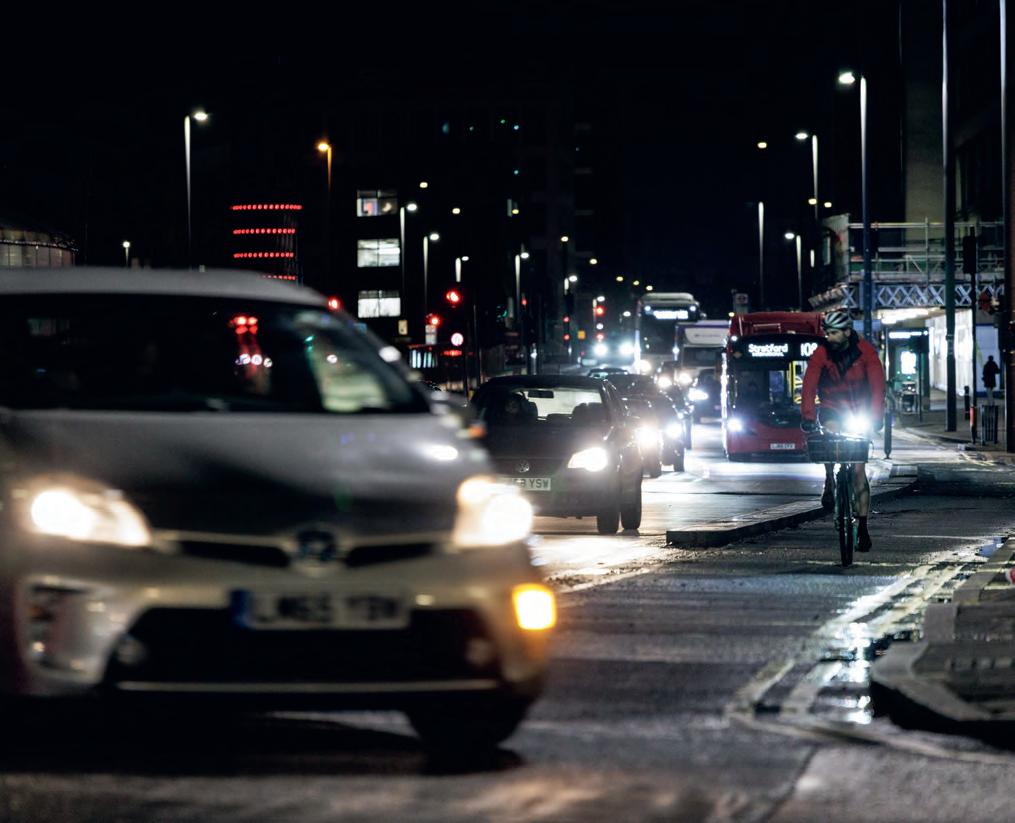
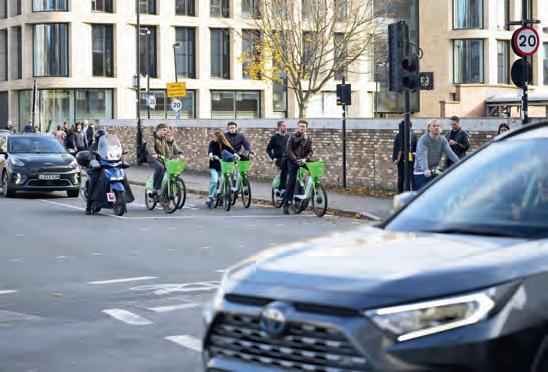
HE STRIKES, which heavily impacted TfL’s tube network for a week in early September, served to showcase both the joys and potential pain of a future cycling London. The strikes ran from 5 to 12 September, affecting all Underground lines except the Elizabeth line and, as a result, buses were also overcrowded and often stalled in traffic as many roads ground to a halt. But cycling? Cycling kept the city moving.
On the first day of industrial action, walking and cycling commissioner Will Norman suggested that bike journeys were running at around 2 million, up from the current average of 1.33 million. In other words, across London, cycling rose by more than 65% on day one, and the numbers continually grew over that week. Lime bike usage was up 50% in the first two days and 70% by the end of the strike. A YouGov survey found that 21% of Londoners cycled
during the strike and, very importantly, 28% were more likely to cycle following it.
However, the strikes also revealed two major and potentially interlinked issues: rider behaviour and cycle infrastructure capacity. Some media reported London Ambulance Service figures showing a rise in collisions (albeit at a far lower rate than the percentage rise in numbers overall) and many reported poor cycling behaviour. Much of this, however, could simply be down to a lot more new cyclists on the roads at one time, plus all the usual safe routes being way over capacity.
It’s certainly clear that many of central London’s key routes — such as the Embankment and over Blackfriars — were already far beyond capacity before the strikes hit. In fact that week clearly showed TfL and the Mayor that we’re going to need an awful lot more cycle routes if their promises and targets are to be met.
Keeping
the city moving: cycles of every type filled roads during the tube strike
MONTH in NUMBERS
JOIN
US IN DECEMBER FOR THE 2025 LCC
AWARDS
million cycle trips per day were recorded by TfL on the first day of tube strikes. Up from 1.33 million.
JOIN US at St Anne’s Church on Dean Street, on Tuesday 16 December from 6.30pm, for the 2025 LCC Awards and Winter Social.
WESTMINSTER REDEVELOPMENT FINALLY UNDERWAY
DESPITE BEING so central and strategic for many daily cycle trips from all over London, the City of Westminster has been something of a black hole for safe cycleways. For decades, the council refused to build, or actively blocked, cycle schemes. But the current council leadership has listened to our local LCC group, rustled up some political will, and finally we’re seeing spades in the ground.
Crucially for future TfL active travel policy, 28% said they’d cycle more after the strikes ended.
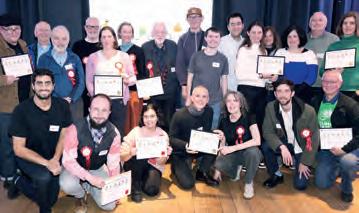
We’ll be celebrating the brilliant work being done inside and outside of LCC to make cycling in London safe and fun; recognising the people transforming the cycling experience in our city; and the work of LCC campaigners and local groups. There will be awards to community initiatives, campaigns and councils that have improved London.
Once the awards have been handed out and the winners have had their moment in the limelight, we’ll commence with a festive season social to connect with one another and revel in the year’s successes. We’ll be providing sandwiches and festive treats along with teas, mulled wine and hot chocolate — and you’re welcome to BYOB.
Space is limited so please RSVP online at: lcc.org.uk/events.
Work has begun on Cycleway 43, including cycle tracks on George Street in Marylebone — despite minority local opposition — and Cycleway 51 running north-south to the east of the Edgware Road. In the New Year we’ll start to see protected cycle tracks on Portland Place (between Regent Street and Regents Park), on Westbourne Terrace, and on Abingdon Street alongside the Houses of Parliament.
We’re grateful to council leader Adam Hug and cabinet member for streets Max Sullivan for this new, bold and progressive approach. Long may it continue!
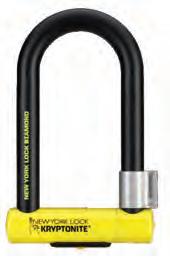
NEXT YEAR LCC will call for firmer action to combat cycle theft in London. With this in mind, we’re asking all our members and supporters to spare five minutes to respond to our new cycle theft survey. Please tell us how you have been affected by cycle theft in the city — your responses will help us build a better picture of how such theft is impacting Londoners, which will help make our campaigning more effective. We appreciate you taking the time to respond and when you complete the survey, you’ll have the option to enter a draw to win a Kryptonite Diamond Standard D-Lock (worth £269.99).
n tinyurl.com/LCCtheft2005
Striking it lucky
September’s bumper cycling numbers clearly illustrate what the future could look like, says Tom Fyans
DURING THE tube strikes in September, it was inspiring to see the huge numbers of Londoners, faced with the loss of virtually all of the Underground network for the better part of a week, choosing to cycle. Will Norman, London’s walking and cycling commissioner, suggested two million journeys daily were made by cycling, a massive ‘strike surge’ of around 50% above average rates. A YouGov survey also found 21% of Londoners had cycled during the strike and, most importantly, 28% were more likely to cycle following it.
Behind this surge could be the fact that this was the first major tube strike since Mayor Sadiq Khan made good on pledges to LCC to massively expand the network of safe cycle routes. It may also have something to do with the introduction of dockless hire schemes as a mass mode of transport across large areas of the city now. For shared micromobility operators, the disruption caused by the strikes saw large uplifts in ridership figures, with Lime, Forest, Voi and Santander all reporting record numbers.
If this is what London will look like when we hit two million cycle journeys daily, then we’re going to need a bigger cycle track! And
we are going to need to close the gaps in the cycle network where safer streets are much needed but simply haven’t been delivered. Where that network is becoming more visible each year — in central and east London mostly — you can see the diversity of people cycling increasing, and this was starkly apparent during the strikes.
We are going to need far wider cycle tracks and a whole lot more of them, as well as safer junctions, more Low Traffic Neighbourhoods, and better cycle parking across all of London. So, while the campaigning will continue, we can draw inspiration from what we saw during September, which in cycling terms, was both a glimpse of the future and a reminder of what we still need to do to get there. Let’s not leave anyone behind and together ensure that the one in four Londoners who said they wanted to cycle more can keep pedalling.
But let’s also enjoy the moment and reflect that the unprecedented number of cyclists on the streets of
“21% of Londoners cycled during the strike, with 28% likely to cycle following it”
Tom Fyans Chief Executive of the London Cycling Campaign
London was only possible because of the tireless campaigning from LCC over the last 50 years, which in turn was only possible thanks to your loyal support as members.
Democracy thriving
As the emergence of ‘strikelists’ has been capturing the headlines, behind the scenes a lot of unseen work goes on by volunteers to keep LCC in good democratic health as a charity.
I’d particularly like to thank the five trustees who are standing down this year after serving their terms — Christian Wolmar, Jon Klaff, Izzy Romilly, Toby Hopkins and Colin Crookes. Together they have made a considerable contribution to the smooth running of LCC. And the good news is that we’ve had an incredible 14 candidates standing for the vacant positions.
Trustees play a key role in LCC’s governance and help set our strategic direction, and it’s fantastic to see such a diverse range of people wanting to contribute to LCC in this way. As we look forward to our AGM on 25 November, we’ve also had four motions submitted — on a wide range of topics including women’s safety, shared e-bike rental schemes, and delivery riders. We’re proud to say people power is alive and well in LCC.
Guiding principles
Kate Ball explains why a new publication aims to improve cycling
and active travel provision for Disabled people
FOUNDED IN 2007, Wheels for Wellbeing is a Disabled people’s organisation. That means we’re led by, and work with and for, Disabled people. Our goal is to improve accessibility of cycling and active travel for all Disabled people.
In 2017 we released the first edition of our flagship publication, the Guide to Inclusive Cycling, to provide an overview of accessible cycling requirements and begin to fill the information gap we’d identified. And this September saw the launch of the guide’s fifth edition, with funding from Rees Jeffreys Road Fund.
Inclusive provision matters because, just like non-disabled people, Disabled people want to make journeys from home to work, school, shops and healthcare, and to explore our neighbourhoods, wild spaces and everywhere in between, going where we want, when we want, with whoever we want, using active and sustainable modes.
That means we need inclusive, accessible active travel routes and public transport, access to mobility aids that work for us, training to use our aids, places to store them, and equitable rules and regulations that allow us to make trips with the flexibility and convenience that non-disabled people already enjoy.
To achieve this mobility equity for Disabled people, we need national understanding of both how good accessibility can be achieved and why it is essential to ensure Disabled people have equitable access. That’s where the guide comes in, integrating our professional expertise with our lived experience as Disabled people, to provide key principles and detailed insight on accessible cycling and active travel provision.
Thought leaders
As national conversations have developed, our work with Disabled people’s organisations and individuals, active travel groups, research bodies, local, regional and national government has seen Wheels for Wellbeing recognised as a thought leader in cycling and active travel provision. We have progressively developed and extended the resources we provide with successive editions of the guide and associated materials.
The Guide to Inclusive Cycling
“Wheels for Wellbeing is now recognised as a thought leader in cycling/active travel”
provides details on how different Disabled people use cycling, and an introduction to how infrastructure, cycles, training, policy and practices can be improved so everyone has the option to cycle or make powered cycling-equivalent journeys. Topics covered include principles of co-production and consultation, legal frameworks that support (or sometimes hinder) development of accessibility in the UK, information on assessing route accessibility and the effects of infrastructure features on different people. The guide even covers often-forgotten wider accessibility elements — from accessible information provision and wayfinding in different contexts, to indoor and outdoor acoustic and lighting design, seating, toilets and shelter.
Importantly, the whole guide is thoroughly referenced with current research, guidance and standards from the UK and beyond, with further detail available in our linked resources page.
The guide’s launch webinar is on YouTube and linked via our website, featuring Dame Sarah Storey and Phil Jones, PJA founder and accessible infrastructure expert. It has captions and BSL interpretation, and gives an overview of inclusive cycling and active travel provision. n wheelsforwellbeing.org.uk.
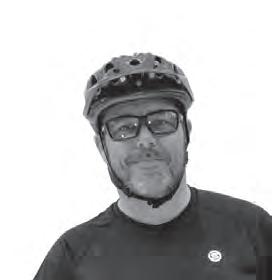
Kate Ball is the campaigns and policy lead at Wheels for Wellbeing
Two’s company
Outgoing trustee Toby Hopkins visits a unique local cycling club where everyone rides a tandem
ON A SUNNY autumnal morning, members of Merton Sports and Social Club gather in a car park in the south-west of the capital for a regular group ride. The scene is the same as for hundreds of other cycle clubs across London, except here all the bikes are tandems, and the riders are a mix of sighted people who ride on the front as ‘pilots’, and visually-impaired people who ride as ‘stokers’ on the rear.
There is happy chatter as friends reconnect and new riders are welcomed. Pairs find each other and adjust the saddles on the bikes, all of which are beautifully maintained by the club’s volunteer mechanics. It’s not long before more than a dozen tandems set off in small groups. The three tandems in our group have opted to tackle one of today’s longer rides, more than 30 miles and with a couple of steep hills. The ride leader gives us plenty of warning of approaching turn and gathers us together for tricky junctions. On the long drag up to the Downs, the group splits up, but at the top the first arrivals wait for the others to rejoin, sipping from their waterbottles.
I’m piloting and my stoker today is club chair, Terry James, both of us wearing the club’s 40th anniversary tops. “We have
people from all walks of life and run rides at different levels so people can experience the joy of cycling whatever their fitness and ability,” Terry tells me. Her smooth pedalling puts mine and my clunky gear-changing to shame, but she doesn’t mind. She is happy to carry on talking while the hill makes me breathe hard.
“It is great to see riders start out on the shorter rides — maybe they are less fit or not confident on the bike — and then, over time, work up to the intermediate or even advanced levels.”
Essential café stops
Soon it is time for the café stop — an important feature of every ride. And, as always, our tandems attract interest from other cyclists as we gather at a table where the ride leader reads out the menu and we make our choices. One of our new pilots is getting her first taste of guiding, her experienced stoker introducing her to it in a gentle and unfussy way.
“There’s something about riding a tandem; people just relax and it’s really easy to chat”
Toby Hopkins steps down this November after a term as one of LCC’s trustees
As we turn toward home for the return leg, the long conversations on each tandem break into brief catch-ups with the other pairs as we pass on the road. “There is no other club quite like it in London,” Terry explains. “There’s something about riding on a tandem — people just relax and it’s really easy to chat. We’re about combatting social isolation — for pilots as much as stokers.”
The club has more than 100 pilots signed up, some riding occasionally, some twice a month. “Pilots like it for the exercise,” says Terry, “and for the warm glow that comes from enabling someone else to experience the joy of cycling. And because it’s a good excuse to eat cake, of course.”
It feels a little too soon when we arrive back at the car park where we started. We have a short debrief, going over the highlights of the route, rating the café and all of us thanking the main ride leader. We put away the tandems and people go their own ways. Some ride home, some use their canes to walk to the tube, others take a taxi or ask for a guide to the bus stop.
“You are coming out next time, aren’t you?” Terry calls after me.
“Of course,” I reply.
n For info: cycling@mssc.org.uk.
VOTE FOR
IT’S A CHALLENGE campaigning for safe cycle infrastructure in London, where our roads are managed by 33 different councils with 33 different attitudes to cycling. But once every four years, a magical opportunity comes along, when all local politicians are suddenly open to hearing from us. It’s called the local elections and they’re happening in May 2026.
We saw considerable successes in the 2022 elections with our Climate Safe Streets campaign. Sixteen council leaders either committed to or supported our local groups’ asks in the run-up to election day. That translated into actual change and significant shifts in delivery in most of the boroughs who pledged — such as an LTN in Greenwich, major schemes in Newham, and cycle tracks in
Lewisham, Wandsworth and Waltham Forest. In Westminster it led to designs being approved for the borough’s first protected cycleways on its own streets, which at the time of writing are about to go into construction. But could the 2026 elections be the most crucial yet? We believe so. Now is the time to think big and win a whole new cycle network for our city.
ballot box
With London’s local elections looming next May, Clare Hinchcliffe outlines the key threads to LCC’s major 2026 campaign and its one simple ask: a safe cycle network in every borough
CYCLING
One ask to rule them all: a local cycle network
In spring next year we’ll be asking party leaders across London to commit to one thing if they’re elected. Usually our local activists have three or more cycling-related asks, but less willing councils tend to only act on the ‘easy’ ones, like installing more cycle parking. So this time we’re doing things differently and have one ask and
one ask only: a safe cycle network in every borough.
The fine print of the ask will, of course, look different in different boroughs. In top-of-the-class Waltham Forest it could be to complete the cycle network by filling in the gaps. In not-evenstarted Harrow, we’d like the first couple of safe cycleways to get built. And there will be variations in between. But with
funding available from Transport for London (TfL) for the strategic routes it has already identified, there is no excuse not to build some kind of cycle network in every borough by 2030.
Just imagine…
Stop for a moment and think — what if there was a proper cycle network in your borough? What if anyone, however young, old or
wobbly, had a safe cycle route to go anywhere they wanted, whether on cycle tracks physically separated from cars, or on very low traffic streets? What would that look like?
Imagine seeing flocks of kids biking to school every morning — cargobikes outnumbering SUVs on the school run — shoppers pedalling up and down the high street, full bike racks outside the GP surgery. Imagine there are no more ‘cyclists’, just loads of ordinary people getting around by cycle, of every age, ability, ethnicity and gender. Isn’t that what a safe cycle network would deliver, wherever you live?
Now our task is to persuade you that this is actually within reach, if we push hard before the elections.
The bigger picture
While we’re asking our dedicated volunteers and activists to focus on their own manors, the beauty of
building borough cycle networks is the way they could join the dots across London. As a self-centred example, I live in Enfield and work in Camden, and my commute includes the Haringey section of the A105 (Green Lanes), a long, hostile traffic jam. If Haringey built cycle tracks there, the journeys of Enfield commuters would be transformed. The same applies to other outer London boroughs — residents would benefit massively from having their own local cycle network, but also from networks in neighbouring boroughs. We think the whole of west London would rejoice if Kensington & Chelsea finally provided cycle tracks across its terrifying roads into the heart of the city.
So while London’s roads are indeed a patchwork of 33 different local authorities, all at varying levels of commitment to active travel, LCC’s campaign can pull
together the bigger picture for the benefit of London as a whole. As areas complete their first couple of cycle schemes, the network begins to connect up all those A to B and C to D journeys, to finally make a full A to Z trip possible.
Underpinning our ask — and what makes it feasible — is TfL’s ‘strategic cycling analysis’, or SCA. This is a form of big data which identifies in each borough where the highest potential is to switch from car journeys to cycle journeys. Routes appear on the SCA map as broad lines which don’t identify specific roads so much as corridors.
So if every borough builds cycleways on their own strategic cycling analysis corridors, then you’ve got the skeleton of a cycle network across London. And there’s TfL funding for it. Building a network would fulfil each borough’s Local Implementation Plan commitment and achieve the Mayor’s Transport Strategy target of 70% of Londoners living 400m from the cycle network.
Why would politicians take our pledge?
That’s the vision, but what leverage do we have to get party leaders to commit to it in each borough? We think we can see an opportunity in the political landscape.
There is a high level of upheaval in London’s politics at the moment. For a few boroughs that might be a real cause for worry — will you end up with politicians who dislike cycling and don’t want to do anything for active travel?
That’s a risk, but at the same time any politician who wants to
appear to be a bit more progressive wants to distance themselves from regressive forces. They’ll want to show their difference, show their leadership. And so in every borough there is an opportunity to push some of the parties to get behind cycling — even those boroughs who are actually delivering already will face pressure from parties and candidates who will commit to doing even more again. So in every borough there’s likely to be some real scope to get politicians to commit to doing more for cycling, even if in some boroughs a few candidates are likely to spend a lot of time rubbishing such ideas. And let’s not write off any part of the political spectrum either.
While cycling and active travel delivery does tend to slightly adhere to a left-right kind of divide, let’s not forget that Boris Johnson, a Conservative mayor, was an ardent supporter of cycling. There are myriad reasons why politicians on the right can and should embrace active travel — the economic and productivity benefits alone make a compelling case.
You have the power!
The real potential for success comes from LCC’s secret powerhouse — its supporters and activists. If the 2026 campaign wins anything for cycling, it won’t be because head office made a slick video or report, or got a spokesperson on the 6pm news. It will be because individual LCC supporters across London boroughs made individual contact with party leaders, face to face, human to human, and talked about making cycling safe everywhere and fun for all in the community.
If you’re an LCC member, supporter or local activist, you’re a powerful person in this campaign. And you have two secret weapons…
The first is ‘relationship’
Never underestimate the power of a face-to-face conversation. Building cycle infrastructure might be a theoretical, controversial concept for a politician, but
meeting you for a chat over coffee, or a walk or ride around neighbourhood streets, is not. It’s building a relationship that turns concepts like ‘active travel’ into real people and real lives — the kids riding to school, the mums on cargobikes, the local residents getting healthier.
We find that local activists can be unenthusiastic about contacting local political leaders. If that’s you, I can relate to the feeling of ‘why would they want to talk to little old me?’. I have to admit I still feel nervous about talking to a council cabinet member, and I’ve been working for LCC for six years. But I never regret it afterwards. Politicians are human. Meeting you, hearing your stories and your perspective as a resident who wants cycling to be safe, can only be a good thing.
For this reason, one of the things we’re encouraging local activists
to do — and one of our metrics for success — is try to get at least one direct contact with local party leaders during the campaign. It could be as little as an exchange of emails, or a phone call. Even better if it’s meeting you for coffee or turning up for a bike-related photo opportunity in your area.
We’d love you all to help us get at least one encounter with each main party leader, because even if they do not end up taking your campaign pledge you have begun to build relationship and, therefore, future influence.
The second factor is ‘quality of life’
Remember you’re not selling double glazing or snake oil. You are showing leaders how to make residents’ lives better. Councils that act on cycling and healthy streets actually extend their residents’ life expectancy, as one study in
Waltham Forest showed, by reducing air pollution and by increasing physical activity. These councils boost local businesses and save residents money, by making it less necessary to own a vehicle. And most importantly for politicians to hear, the parties in control of these councils tend to increase their vote share.
To get this message across during the pre-election campaign, local activists and supporters can invite the public to write to party leaders asking them to take the pledge for a safe cycle network. The more people that personalise these emails, the more powerful they will be.
We want candidate leaders to hear from women who want safe routes all year round, so they don’t have to stop cycling on darker nights for fear of personal safety. Or from parents who want their secondary school children to be able to ride safely to school. Or from
people whose cycles are mobility aids, and for whom a safe network means independence and freedom.
LCC local activists can find these email-writers via flyering, social media, word of mouth, or simply sending out monthly newsletters, asking other members and supporters to write some thoughtful words.
Get involved
There is every chance of success, and everything to play for, at these crucial elections. It’s worth us all investing some time in helping local LCC activists for a few weeks in the run-up to May, whether you’ve been campaigning for decades, or never been involved before. This opportunity to talk to politicians in ‘listening mode’ and get them to commit to concrete change for cycling in your borough only comes once every four years. Let’s make the most of it.
Photos: Johno
JOHNO VERITY
John Kitchiner meets the Hackney-based adventure filmmaker whose early morning history rides (and pink beanie) have become a social media smash
First up, congrats on your socials success over the last few months. For those who haven’t seen your content yet, how would you describe what you do?
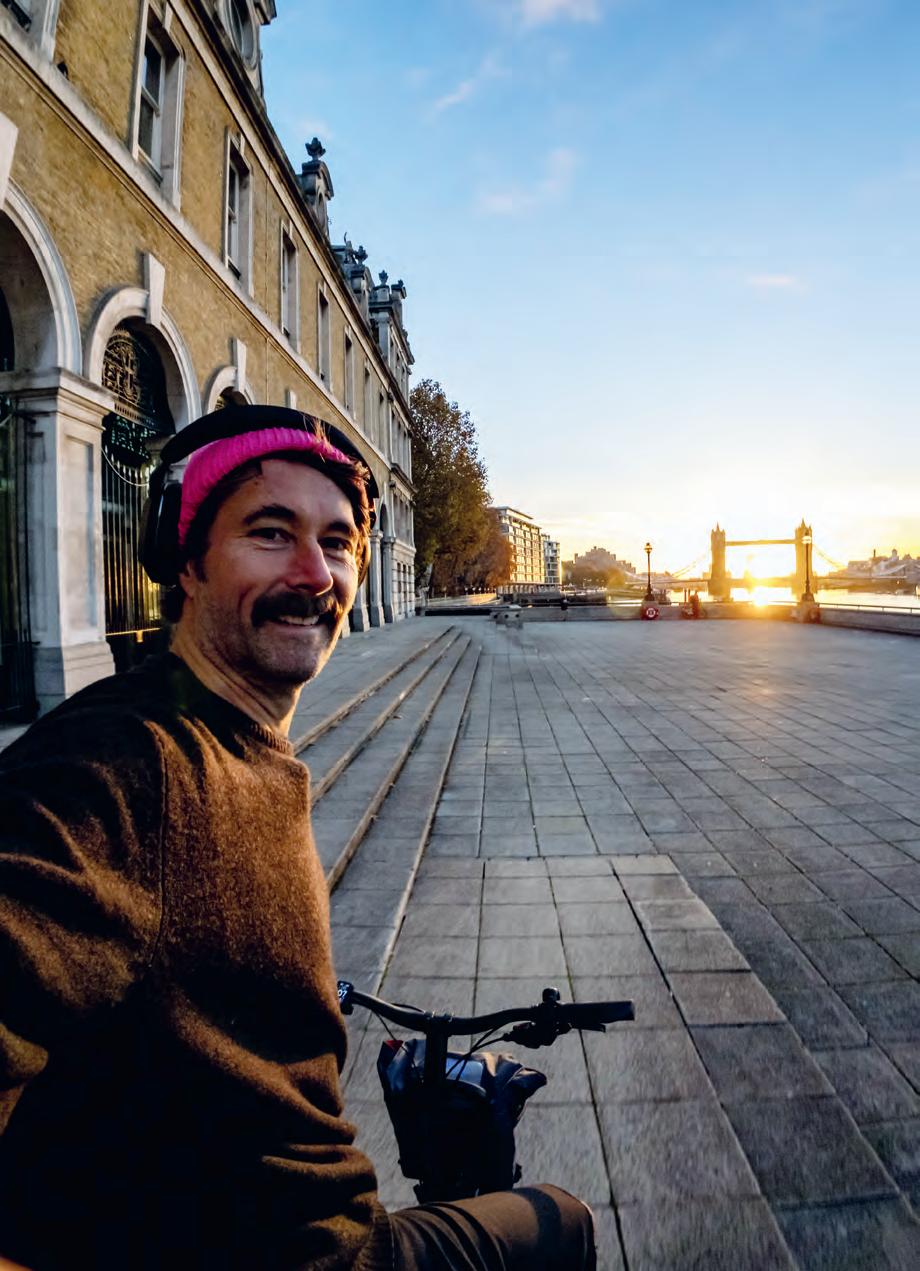
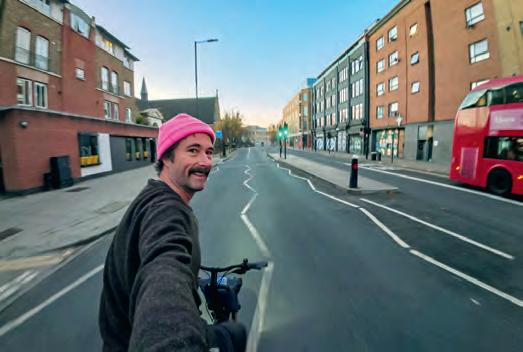
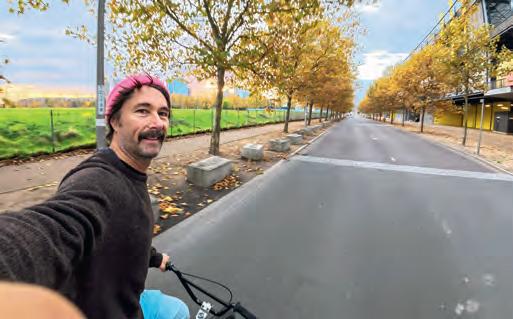
I cycle around exploring the city, generally at dawn when the light is the best and when there are very few people around, and try to find out the history and stories of the things that I discover.
The quiet early mornings are key to your rides and we’d certainly agree it’s the best time to see the city, which begs the question: are you an insomniac or is your body clock just wired differently? And is this something you’ve been doing for a while before sharing?
I’ve always been an early riser, though as I’ve got older this is something that’s got even worse. Now it can be very normal for me to wake up at 3am, then once I’m awake I just find it really difficult to get back to sleep. Near the solstice this is no bad thing as by 4am it’s almost complete daylight, though as we move into winter then it’s not so good. I’m a BMXer and have a set of dirt jumps not too far from where I live, so for the past four years before I started this project I’ve been in the woods early with a pick axe and shovel digging jumps.
For a long while we used to enjoy our own early starts when the goal was to
cycle through the Greenwich foot tunnel before the lift operators started work (they’re automated now), though this was part of a regular commute. Do you plan where you’ll ride the night before or see where the bike takes you on the day?
I’ve been through this tunnel many times, it’s a great way to cross the river out on the east side of the city. Sometimes I make a plan, when I have a particular piece of history that I want to go and learn about, other times I just head out and just see where my bike takes me; these are often amazing journeys as they end up in places I’ve not been to before.
A lot of the posts have looked at various aspects of London history, some that may not even be familiar to long-time residents — how and for how long do you research the places you end up talking about? And what periods/eras are you particularly interested in?
I’m particularly interested in the few hundred years after the Romans left in 400AD — they left behind an incredible walled city with architecture and technology that would not be matched for another 1,000 years. The Anglo Saxons came into the city after they’d left and completely ignored this and instead built a small market town further down the river where Covent Garden now sits. I’m also quite fascinated by the 1700s, an era of huge prosperity (as well as terrible poverty) due to our colonialisation and shipping exploits. This is when areas like Mayfair were built with their wide streets and grand buildings in order that the rich people didn’t have to live around the poor people and their stench.
Winter sports fans may recognise your name from snowboarding films and adventure projects from the 90s onwards — is that when your creative spark was fired?
Can you tell us about a few of the places this work took you and when you decided filming was the career for you?
I managed to make a living from snowboarding for 12 years and it was an incredible time in my life. I got to travel the world doing pretty much exactly what I wanted to do for so many years, and I’d surf in the summers, often in places like Indonesia and Sri Lanka, it was incredible. Then when the money started to dwindle, I started doing more of my other passion which was filming. By 2010 I’d set up a production company, so by 2012 when my last snowboarding contract ended I had a new way of earning a living. Starting this Instagram channel has been a direct response to there being a bit of a slump in this industry recently.
During this time you were also avalanched in New Zealand and somehow managed to walk away in one piece...
I was ironically shooting for a Sky show called Gethin Jones Danger Hunters and it was about people that get caught in avalanches. We definitely did not mean to get caught in one, but in those 45 seconds I managed to get a good bit of footage for them as I was holding the camera when I was in it. I was there as the on-snow camera op and on that particular run I was filming another rider as he rode down the mountain. It swept me about 800m down the slope and at one
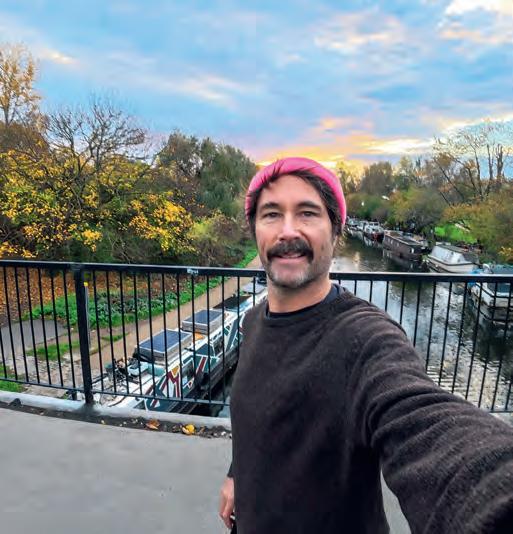
Home and away, with a camera to hand: after surviving an avalanche in New Zealand and canalside in London
point it fully buried me, though it luckily spat me out at the bottom where I was left unscathed though shaken.
It was interesting seeing you revisit Greenland earlier this year and catching up with old guide friends, but some of the nicest moments were the interactions with locals, especially the kids. Did this convince you that there might be something more in this social media malarkey?
It was the Greenland trip that made me decide to start the Insta channel and really give it a go. I geeked out on the algorithms and what made content pop, so knowing where I was heading, being surrounded by such extraordinary scenery, I decided I’d put myself in front of the camera and I uploaded a film everyday. This definitely improved my numbers, so I thought I’d just continue after the trip was over.
The ‘pink beanie and Lime bike’ series didn’t actually start until June and that first post has now had 135,000 likes — was that when you thought perhaps you could
do more with this? What were you thinking about the posting at this point, was it just a ‘bonus’ on top of your other work, or did you already feel it had potential to reach a wider audience?
Yep, beyond the Greenland trip my numbers were going up but slowly, though I continued to post. Then one time I had a trip out to France on a really early flight from Gatwick; I needed to get down to Blackfriars by 5am before the trains started so I decided just to Lime bike it over there and while en route I rattled off a bunch of chat about St Paul’s Cathedral and that vid did quite well. So it gave me the idea of going out on some rides specifically to see London and talk about its history before everyone was up.
I’m frankly flabbergasted when I do live social media feeds about who joins to watch
where I could make it my full-time living. I’ve been travelling the world for the last 30 years, always with a ton of heavy kit in tow, so much camera equipment. I love the idea that I could do the same with my content creation kit which is basically a laptop, some little mics and an action cam.
You’ve even met people on your morning rides now who’ve been inspired to get out and explore in the wee hours having seen your posts — that must be very exciting?
It’s pretty amazing. Almost every time I head out into the city at dawn I bump into someone that comes up to me and tells me that they’re there because of my videos. The last time it happened I remember thinking I was totally surprised that they had seen my vids, they certainly weren’t my usual demographic. It never fails to get me stoked when this happens.
That next vid is the one that you mentioned — it just went super viral on both TikTok and Insta, so then I decided that it really was worth putting some proper time into it. Although, actually I’m pretty tenacious and I don’t think I was going to give up too easily.
Back then in June/July you had something like 5,000 followers on Instagram and that’s now up to 160k, with a further 35k on TikTok, and while it’s been rapid, it’s also seemed pretty organic? Can you believe that you’re now an ‘influencer’? And what does your family think?
Family and friends are fairly bemused by it. My 16-year-old daughter, Ace, gives me the occasional eye roll about it, though I think she’s actually fairly into what I’m doing and often gives me incredibly on-point advice about the edits of my videos. The ones that she’s helped me out with have always done well. Personally I’m very excited about the prospect of pushing it to a position
Seeing the city in its best light: and having the streets to himself
Plus you do regular live feeds/chats that have reached viewers far and wide. Where’s the most surprising place you’ve had people logging in from?
I’m frankly flabbergasted when I do live feeds about who joins to watch. I love testing myself on my capital cities, it’s just a nerdy thing that I really enjoy; I’m stoked to say that I’ve had viewers from the Cape Verde, from Mongolia, Colombia, plus for some reason it seems like tons of New Zealanders.
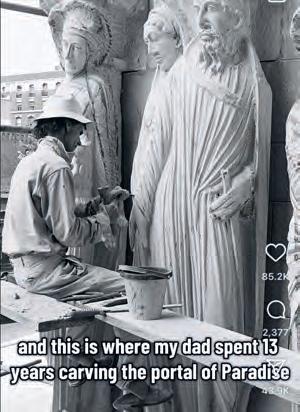
Among our favourite posts have been when you’ve visited buildings where your dad — a well-known sculptor and stone carver — worked. It must be lovely to not only see those things for yourself, but to share them with your audience?
I’ve been astounded by the reaction on these films, it’s heartwarming to read the response to them. They’ve also been really useful on occasions for making contacts, including someone that shot a load of footage of my dad carving.
You even took the series on the road to New York this summer, sharing some more of your dad’s work and a few old BMX stories...
New York was an amazing time for me. I lived there in the 90s and it’s where I got really into snowboarding, which was something that changed the course of my life. Heading back there was a pilgrimage for me; since my dad died of dementia last year I’ve not had a chance to reflect on him in the way that I once knew him. I found it really difficult to be with him the two years before he died because I feared that this was the only way that I’d remember him.
To crown an epic few months you even got interviewed by London legend Riz Lateef for BBC News recently?
Exploring local history: including a few locations where his dad worked in New York (above left)
The entire studio is manned by robots. It’s so bizarre, it’s a huge studio — and I’d been there before when it was full of camera crew and producers — but now it’s all remote. I couldn’t help feeling a little saddened by this. I feel that AI and robots should really be doing the boring jobs, though what seems to be happening is that they’re taking the interesting jobs and leaving us to unblock drains and fix lavatories. Riz was real though and it was lovely talking to her. I ended up looking like a lost child in the background of the shot once the interview was over, though I just found this incredibly funny, so fully approve of the slightly wayward direction.
What’s next for the cycling/history series? Any particular focus? And how are you planning for the next few months of darker mornings?
There’s so much that I have in mind. I’m interested in odd things like the how international banking worked back in the Middle Ages, how they managed to sign off large amounts of money based on handwriting and signatures. I’m interested in how people communicated, how they actually knew what the kings or queens looked like. There’s the story of Alfred the Great turning up at some random people’s house after having been on the run for three days and nights, he’d have been bedraggled and covered in muck, so I wonder how would they have known it was him back in the 9th century when there were no photographs or any real likenesses. I’m keen to do rides with people that can answer these questions too. I’m up for learning as much as I can about this stuff and the best way for me to retain this information is to make short films about it.
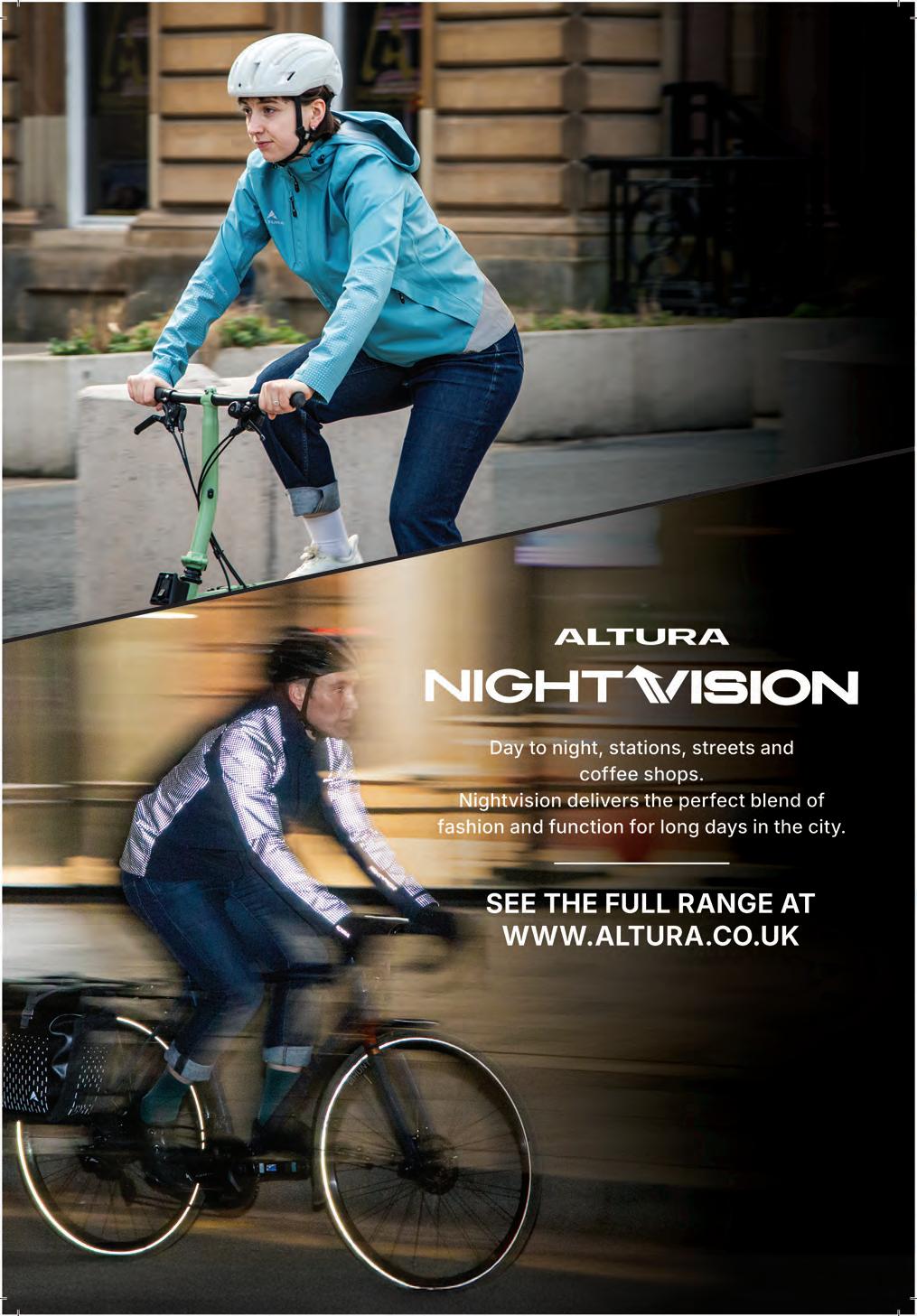
SPOTLIGHT ON NIGHT VISION
FOR MORE than 20 years
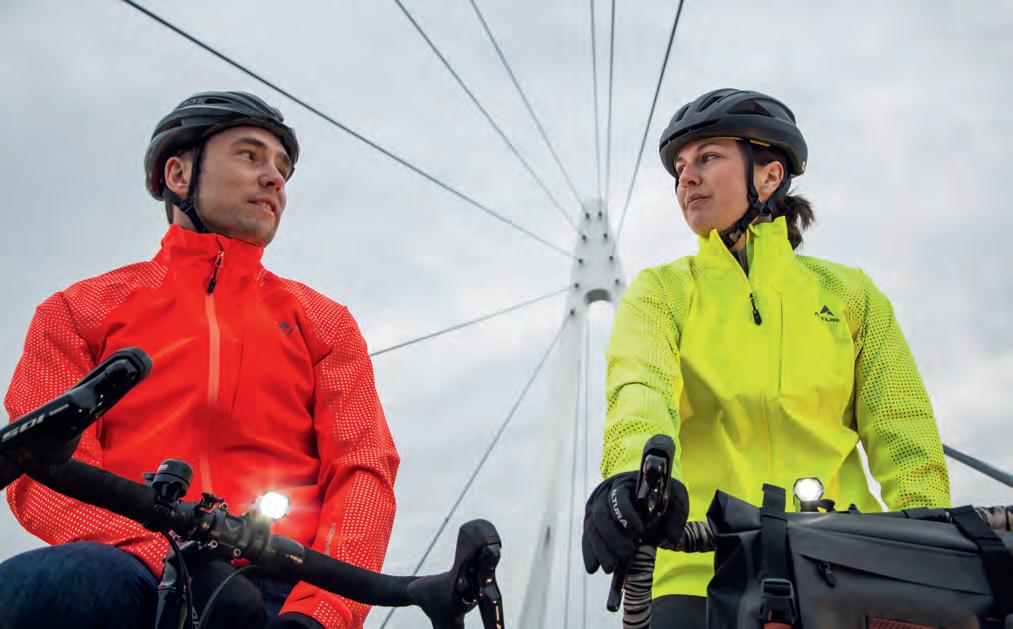
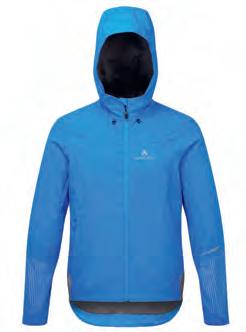
Altura’s legendary and best-selling Night Vision waterproof jacket range has become synonymous with hi-vis weather protection for cyclists, night and day. Now major updates for AW25 emphasise the brand’s commitment to delivering value for money, durability and comfort, while minimising environmental impact.
All new models use a waterproof, breathable fabric with a fully recycled outer face and an eco-friendly, PFCfree DWR coating.
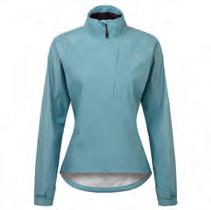
The Night Vision Storm maintains its critical £100 price point, with dark navy and orange options for men and Adriatic blue for women, offering stylish alternatives to the traditional hi-vis yellow — which is still available in all jacket models.
As with all Altura products the ‘function first’ approach means there’s large areas of reflective fabric and key cyclespecific features, including zipped vents, rear
Comfort and visibility for miles remain at the heart of Altura’s reflective range
pockets, a drop tail and ergonomicshaped sleeves.
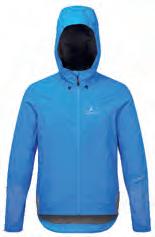
Sitting above the Storm, the Typhoon (£130) gets the addition of a helmet-compatible hood and front hand pockets, while the Typhoon Insulated jacket (£150) is the line-up’s premium offering. Both versions of the Typhon come in a striking electric blue for men and Adriatic blue for women.
While designed with cycling as the first priority, the relaxed fit, thoughtful design and multiple colour options make all Night Vision jackets ideal for crossover use, from walking the dog to a winter run in the city.
Women’s Storm Jacket
Men’s Typhoon Insulated Jacket
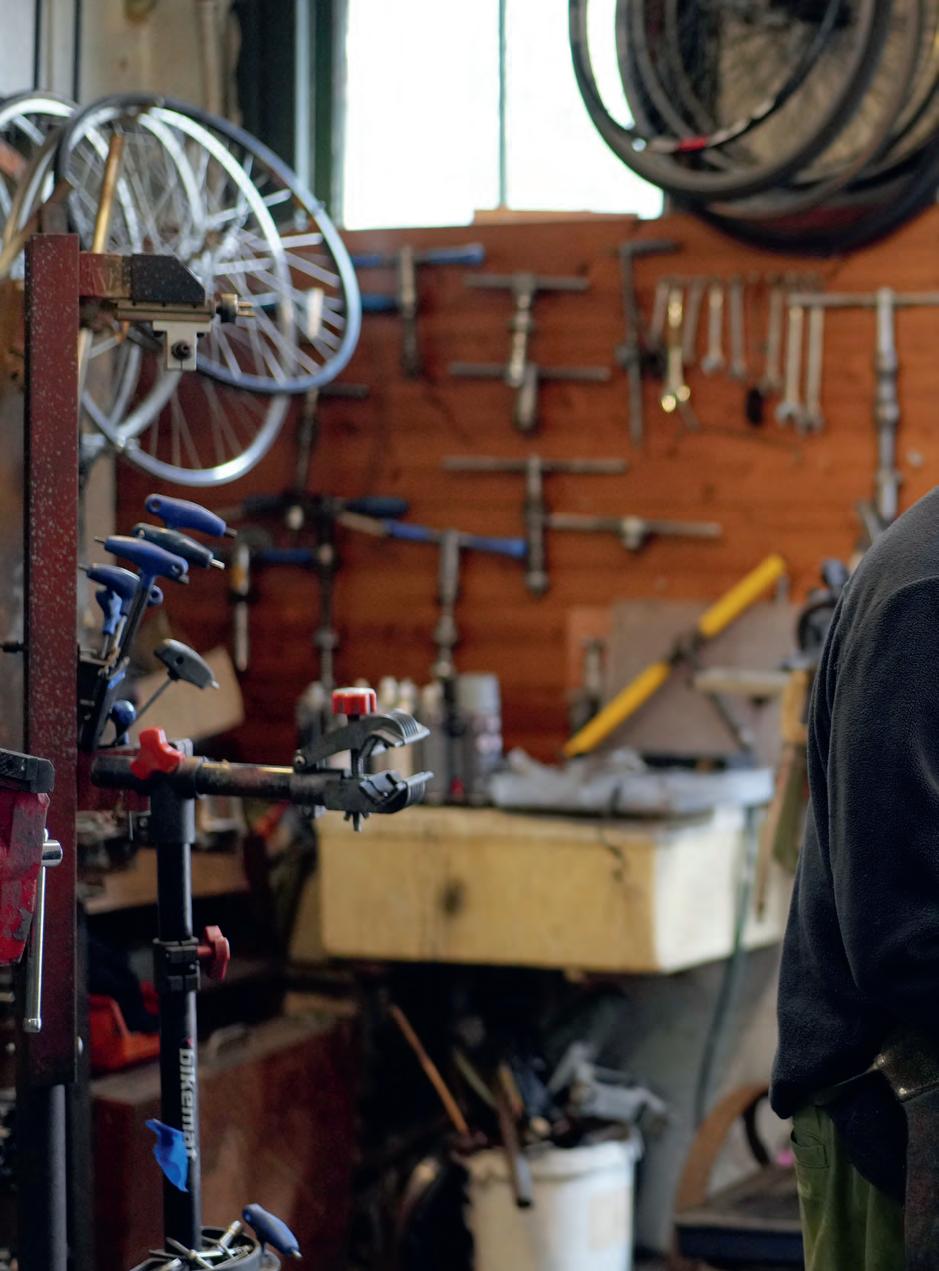
BUILDERS LON FRAME DON
Tom Bogdanowicz visits the creative workshops of the capital’s few remaining artisan bike builders
WHILE YOU CAN buy any one of a thousand bikes online for delivery next week, there is a mysterious attraction in ordering, or building, a custom cycle frame from scratch and adding your choice of components.
Despite the ready availability of low-cost performance cycles, a handful of framebuilders (and bike-building tutors) survive in London and they have a loyal following among fans of locally-built exotica. It’s the ability to determine exact design and fit, choose the exact finish and hardware, and ride something with a unique character that draws people to the ‘bike for life’ concept.
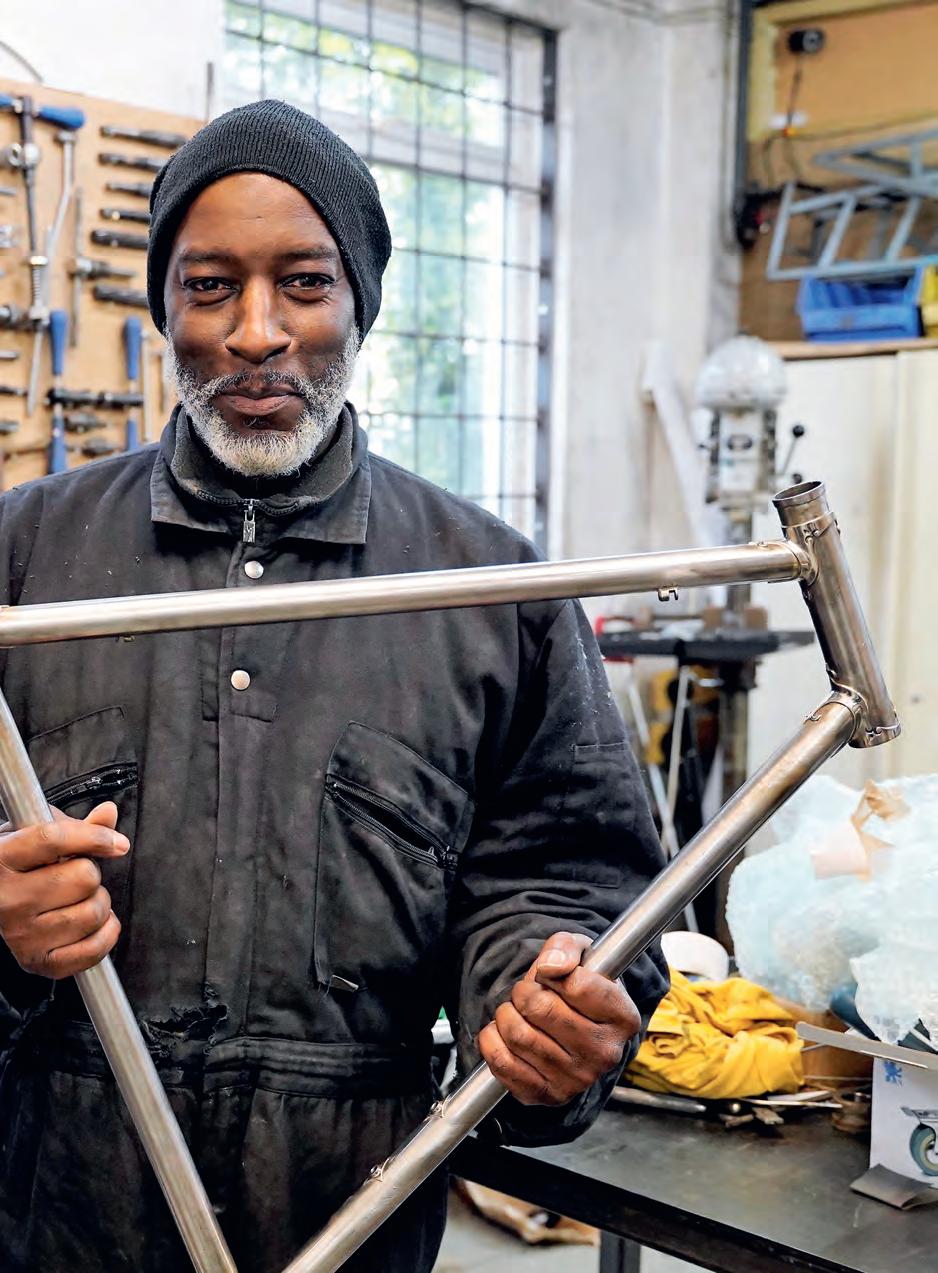
Since we last looked at framebuilders, several have moved out of London, mostly in search of cheaper accommodation, or closed up shop. Multiple award winner Saffron is in liquidation. Tom Donhou, once in Hackney, collaborated with Brooks (the saddle maker), but was last reported to be in Greece. Yet others, like Stayer and Quirk, have arrived and are featured here. Of the earlier generation, we’ve included Winston Vaz who is still brazing in Hither Green. And also Adrian Parry, who sadly passed away as we were preparing this article, so we’ve included a tribute to his exceptional work.
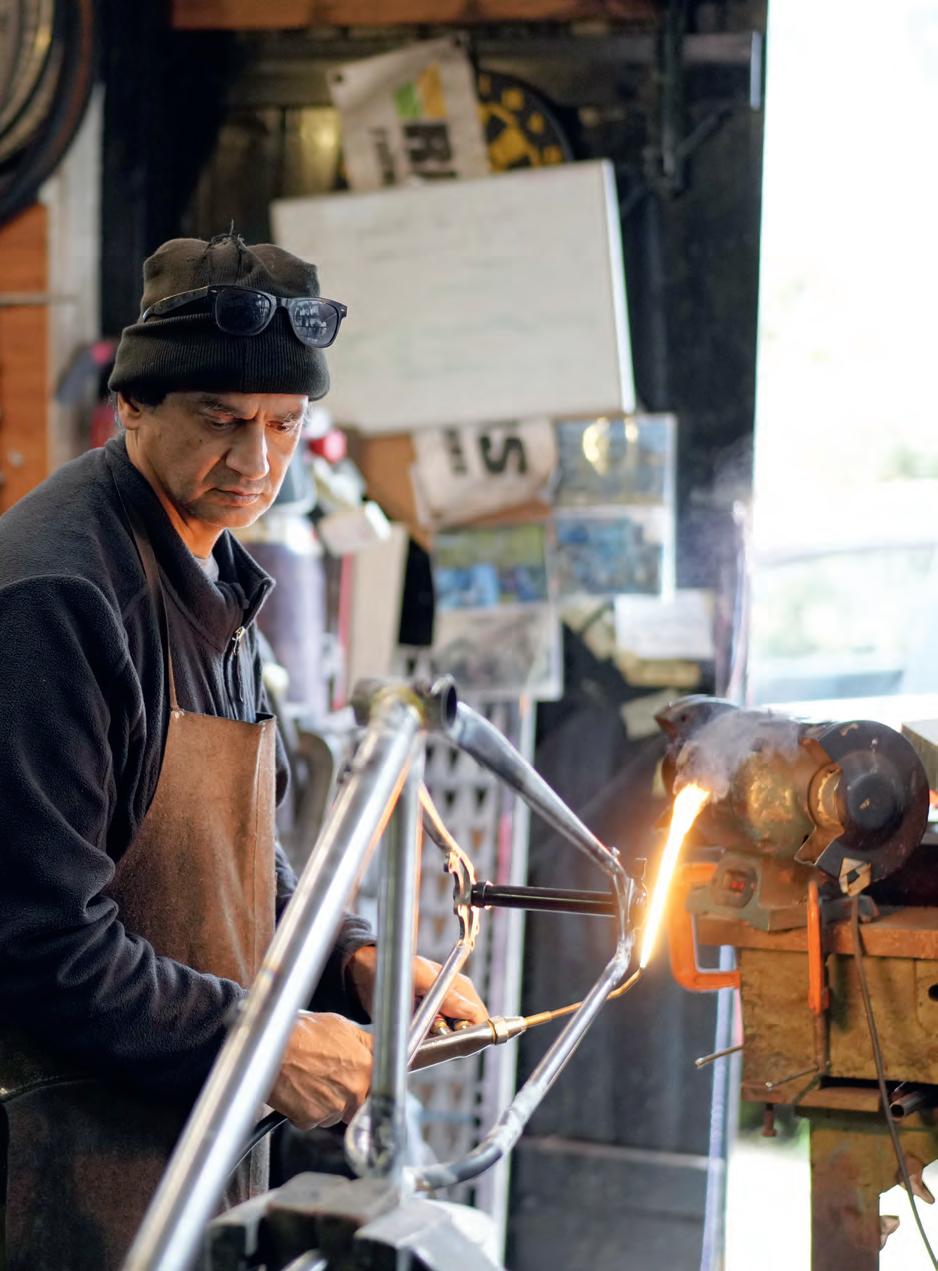
VARONHA — WINSTON VAZ
Winston Vaz can trace his framebuilding heritage back to the golden age of cycling in London. His first employer was Holdsworth(y), founded in the 1920s and a leading UK bike maker (it bought up the Claud Butler, Freddie Grubb and Maclean brands) based in South London, before it was sold in the late 1980s. While still a teenager, Winston joined his older brother Mario, then foreman in the spray-painting shop, at Holdsworth. He rapidly learned high-speed brazing on Holdsworth’s ‘carousels’ which carried multiple elements of cycle frames and were worked on simultaneously by small teams: “It was typical to braze 40 bottom brackets in a day,” he recalls. The workshop produced some 80 frames daily.
Following Holdsworth’s closure, a fellow employee, Dorothy, helped Winston get a job with Roberts Cycles, where Winston’s skill and determination outstripped the firm’s ability to pay him: “Chas (Roberts) once put me on piece work and I made six frames in one week — I got up at seven and I kept going until eight o’clock, and I’d work Saturday and Sunday just to finish those frames. That was when Chas decided he couldn’t pay me at that rate of production!” Winston graduated from building lugged frames to the then popular Roberts mountain bikes, like the White Spider, that was ridden to national and international victories (badged with the sponsor’s name). His ‘scalloped’ three-pointed seat-tube sleeve on Roberts’ frames became a trademark and featured on award-winning bikes. Winston moved on from Roberts, where business was slowing down, in the mid 2010s to set up in space at his brother’s workshop in Hither Green. It gave him the opportunity to create his own logo — “the name Varonha combines the surnames of my Goan parents, Vaz and Naronha” — and a smart head badge. Acquiring a range of historic tools once owned by framebuilding masters like Bill Hurlow, Winston continues to build exquisite framesets in the traditional way. He briefly worked for Saffron and recalls that “Matthew (Sowter, owner of Saffron) picked up some tips on brazing, while I learned a bit about marketing.”
Photos: Tom Bogdanowicz
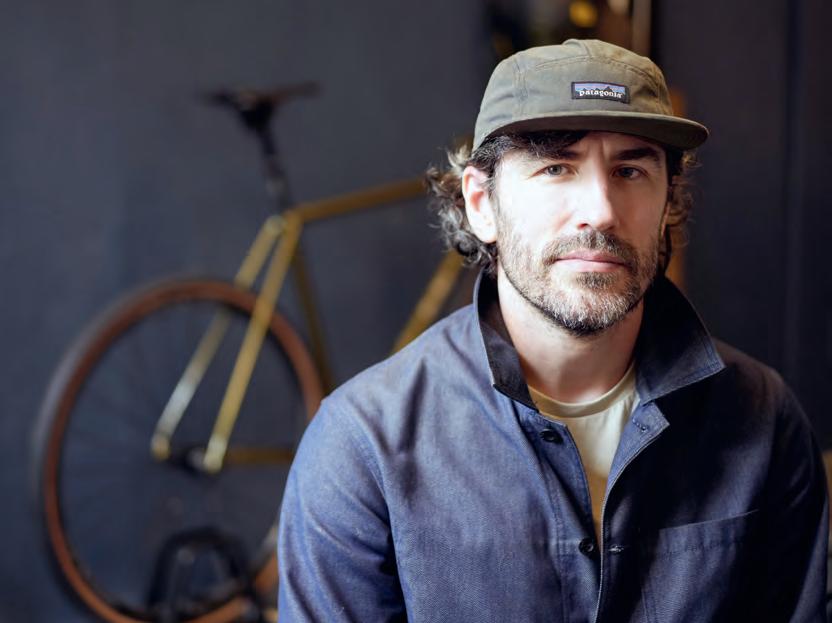
QUIRK CYCLES
It was as an artist in residence in Berlin that Rob Quirk’s passion for cycling was inflamed: “We decided bikes were the best way to get around and it was revelatory. It wasn’t like the metro or underground where you disappear down a hole and pop up in another hole somewhere else in the city. All of a sudden you had this means of getting around which really interacted with space in such a positive way.”
Returning to London, where he’d been a postgrad student of architecture at Goldsmiths College, Rob’s cycling obsession encouraged him to set up as a restorer of 1940s and 1950s bikes like the Sun Manxman TT (“Japanese buyers predominated,” he recalls). But restoration wasn’t enough to satisfy him.
Rob decided that what he really wanted was to make bikes and initially he planned to set up a business making carbon-fibre ones. But talks with UK manufacturers did not pan out, so
instead he signed up with the (late) Bicycle Academy in Frome to make a steel frame. New wave builders like Robin Mather (Bristol) and Ted James (ex-Brick Lane) were among the teachers. Rob admires their educational approach — “A morning to learn the theory of brazing and an afternoon to deliver” — and still displays that first frame on a wall in his current workshop.
Freshly skilled-up, Rob set up Quirk Cycles in a shared Enfield workshop with several non-cycle fabricators. When the opportunity arose, he joined awardwinning framebuilder Tom Donhou in fashionable Hackney Wick, and later stayed on after Tom headed for Greece.
Unusually for a builder, Rob’s signature designs have been shaped by his personal travels. Entry into a European transcontinental race (4,000km with 14,000m of climbing) led to the Durmitor endurance bike (named after a Montenegrin park). The gravel-oriented
Kegety (a gorge in Kyrgyzstan) multiterrain model was first designed for Rob’s ultra race in that country, long before major manufacturers dived into this expanding off-road market.
A distinctive feature of current Quirk bikes are the clever 3D-printed stainless steel lugs — these eliminate complex tube cutting and brazing by providing perfectly-aligned structures where strength is needed without adding excess weight. The unusual 3D Quirk bottom bracket cluster not only joins several tubes, but allows the wider tyres used on gravel/endurance bikes to be accommodated. The headtube lugs and dropouts are 3D-printed as well.
So confident is Rob in his construction methods and design acumen that he now plans to increase production and employ other builders. At a time when several others have closed, or moved out of town, this is welcome news for the capital.
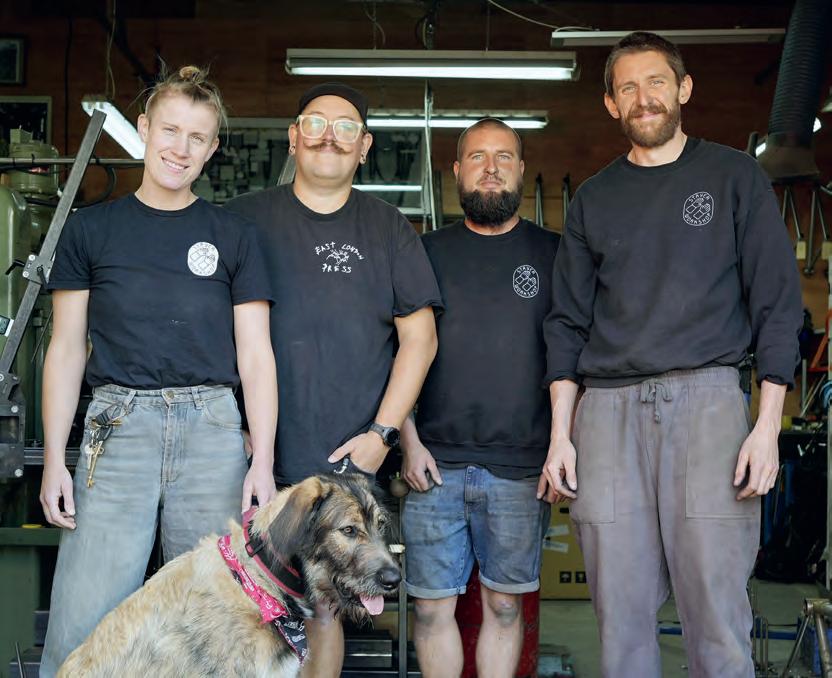
STAYER CYCLES
“I’m Belgian,” says Judith Rooze, the joint partner, with Sam Taylor, in the Stayer Cycles operation in Leytonstone. And that Belgian connection explains both the name of the firm — motor-paced cycle racing, called Stayer, was once a Belgian favourite — and their step from being post-graduate art students at the Slade school, to creating a cycling business by buying vintage cycles from Belgium and selling them in Hackney.
“We bought a load of old racers and learned how to do them up, and luckily there was a shop in Bethnal Green Road awaiting planning permission that we were allowed to use.” Which was how Isambard Cycles was born in 2013 (now run by others in Wales).
Sam used his metalworking skills to repair some of the damaged vintage frames, while Judith mastered wheelbuilding. For Sam his frame
restoration work led in turn to framebuilding which, at first, was financially supported by the income from Judith’s wheelbuilding but has since become a major part of the business.
The move to a large workshop in Leytonstone a decade ago enabled the pair to install a range of framebuilding equipment as well as a wheelbuilding room, and also to employ a small staff team including Craig and Willow (also pictured below), plus the odd canine.
The bikes they typically build are shaped by their own off- and on-road riding in nearby Epping Forest. The Groadinger was an early entry in the gravel bike category, while the Criterium is designed for speed — both are made in high-grade steel with all-but-invisible TIG welds.
And while Stayer continues to build custom frames for individuals who
can afford them, they also want their range to reach more people: “In the last couple of years we’ve been trying to do (stock) models. We want our bikes to be accessible, so we’re doing standard sizes of the Groadinger and the Criterium, but people can still choose their own colours and the braze-ons.”
The stock-sized frames cost around around a third less than those fully made-to-measure.
Another development at Stayer is the ‘Framebuilding 101’ course which allows aspiring builders to learn, in five days, to fillet-braze a frame of an agreed design. Riders can also learn how to build wheels. And the brand is planning expansion, though on a small scale, by supplying bikes to a few shops including the London Bike Studio in Stoke Newington and Woods Cyclery in the New Forest.
SIX FOUR FRAMEWORKS — ADRIAN PARRY
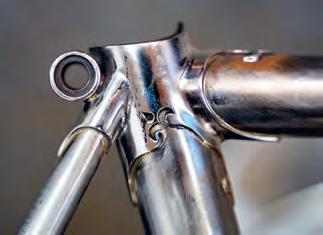
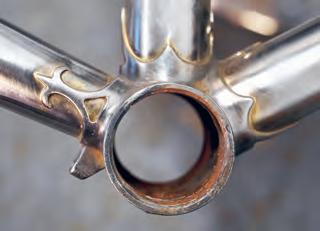
When we embarked on this review of London framebuilders we had every intention of including one of Britain’s little-heralded masters of the art: Adrian Parry. Very sadly, Adrian passed away as we were gathering material for the article. This, then, is a tribute to a craftsman with an enviable reputation among fellow framebuilders, who built more than 2,000 beautiful bikes that are still being ridden with joy, day in and day out.
Brought up in Birmingham, Adrian was first on the block to own a Raleigh Chopper. He discovered he had a passion for engineering and wanted to enter it in a practical field — he joined local bike maker Autostrada as an apprentice and built frames that were supplied to leading UK brands including Madison, Harry Hall and Dolan. He also spent time at the Reynolds factory (which makes steel tubing for up-market frames) next door where he knew the manager from his work with local Boys’ Brigade.
Moving to London he was swiftly hired by Chas Roberts of Roberts Cycles and mastered the exacting standards demanded by an award-winning custom framebuilder, under the watchful eye of Phil Maynard, another legend of the business. Adrian’s work progressed from road frames and mountain bikes to difficult-to-build recumbents and tandem tricycles. Collectors recognise Adrianbuilt Roberts frames by the precise sharply-cut seatstay eyes and the neatly-angled cableguides on the chainstays.
Adrian considered taking over at Roberts before the Croydon firm closed, but opted for more secure employment at Reilly Cycleworks in Brighton, then run by the late Mark Reilly, where he specialised in creating stainless steel-tubed frames that require the very highest level technique. He also taught framebuilding — one of his students secured an award for his frame at the prestigious Bespoked show; another was a talented AfricanAmerican who Adrian took under his wing in a field where diversity is rare.
After two years at Reilly, Adrian opted to set up his own workshop nearer his home in Croydon. Six Four Frameworks, first established in Warlingham and then Bletchingley, produced immaculate gravel and other bikes, featuring Adrian’s trademark lugless brazing and his technically challenging detailing (a few examples are shown in the adjacent photos).
We trust that Adrian’s legacy will live on through both his students and the many owners of the outstanding bikes that he built.
Introduce a friend to LCC membership – they’ll support our work campaigning for safer cycling in London and you’ll both receive a free gift. Choose from a Kryptonite lock, Lezyne pump, or CatEye lights set.
New-member benefits
• Third-party insurance cover
• Discounted cycle insurance
• Free cycling legal advice
• Discounts with 100+ bike shops and top cycling retailers
• Subscription to London Cyclist magazine
• Free gift for you and a friend
HOW TO CLAIM
Scan the QR code below, or visit: lcc.org.uk/ membership
THE REAL COST OF DANGEROUS JUNCTIONS
As LCC launches its annual update to our dangerous junctions mapping, Simon Munk follows what happens after the fatalities…
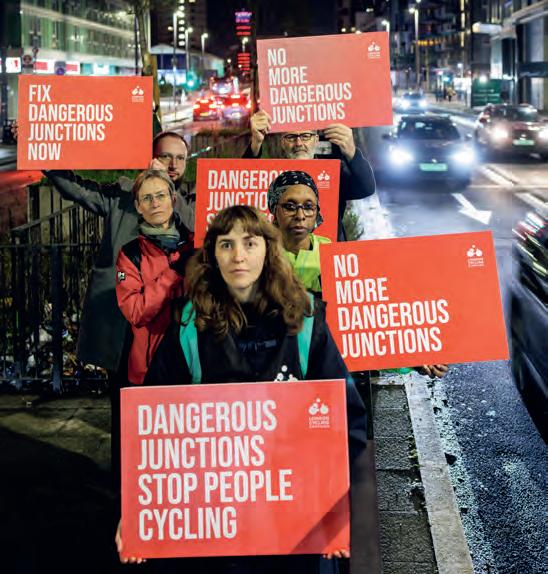
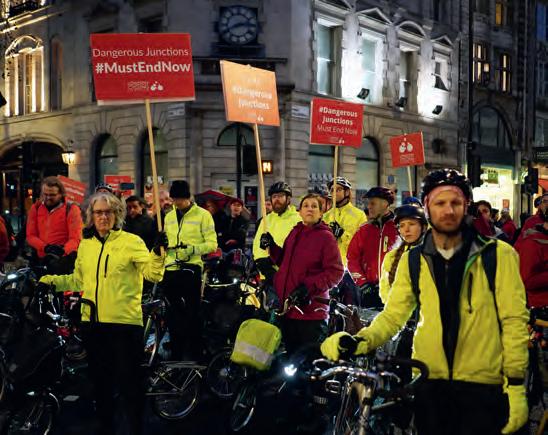
RECENTLY LCC updated its map of London’s most dangerous junctions to include the latest 2024 emergency services data, highlighting the most dangerous locations for cycling and for pedestrians. [To see it in detail: lcc.org.uk/junctions].
The mapping this year shows two disturbing patterns. There are now multiple unsignalised side street junctions in the most dangerous list. One of many reasons why LCC has been a strong proponent of Low Traffic Neighbourhoods (LTNs) is that not only do they provide cycle routes through quiet areas, they also
reduce risky turning movements onto and off main roads.
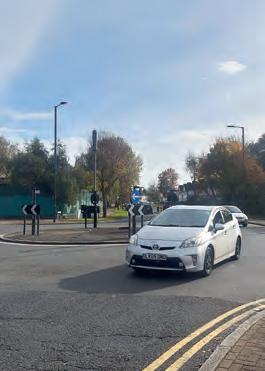
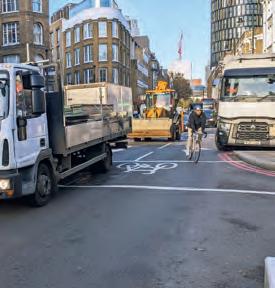
In addition, an increasing number of the worst junctions are found on TfL Cycleways. The evidence is that cycle tracks make cycling a lot safer, enable more people to cycle and diversify cycling. But both on upgraded old ‘blue paint’ schemes and with new Cycleways, TfL has been skimping on junction quality — those cycling straight ahead often have no separation from drivers turning.
Of course, this isn’t just about maps and data, it’s about lives lost and ruined, and the shameful inaction of too many of London’s leaders. So this year we’ve also followed up on what happened after the collisions, what the Mayor, TfL, police and councils did or, in most cases, didn’t do next.
THE LIVES LOST
“Shatha’s passing has left an immeasurable void in our lives, and we continue to grieve for the light that was taken away from us too soon. Shatha was full of kindness, laughter and compassion. She brought joy wherever she went, and her presence had a way of brightening the darkest of days. Whether it was through her infectious laugh, her generosity of spirit, or her quiet acts of care, she touched the lives of everyone who knew her. Shatha was the ninth cyclist to die at the Holborn gyratory since 2008, and we are passionate to ensure that she is the last. We need our city to be safe for all cyclists, so that no friends or family experience the same heartbreak that we live with daily,” said Noor Ali, Shatha’s sister.
Each fatal collision sees families and friendship groups suffer terrible loss and each of those killed that we detail below were simply trying to get around London by a largely very safe, healthy mode of transport. In nearly every case of a fatal collision at a notorious and known dangerous junction, those with most power to take action on these issues have failed to do much of anything.
UNNAMED MAN, 20s
n 13 January 2025
n Stratford High Street/ Carpenters Road, Newham Summary: A young business student in London for only a month was killed by a lorry driver, but the inquest won’t happen until at least a year from the collision and TfL and Newham are years away from changes to any of the dangerous junctions on Stratford High Street.
We understand that the young man killed at the notorious junction of Cycleway 2 on Stratford High Street with Carpenters Road had only been in London a short time, starting a business course. His body was returned to his devastated family following a fatal
collision with a lorry. The coroner’s office is still “awaiting the final police report”, with the inquest not to be held until at least a year later. Carpenters Road is just one of several junctions on Stratford High Street’s section of Cycleway 2 that are dangerous. As well as Carpenters (fourth most dangerous in Newham), the stretch also includes the second most dangerous cluster (Cook’s Road and Bow Roundabout approach), third (Warton Road), and ninth (Pudding Mill Lane). Yet following our protest with our Newham borough group after the fatality, Newham officers, and walking and cycling commissioner Will Norman, wrote confirming that changes to the junction are years away yet and may primarily be for buses not cycle safety.
JAMAL YAHYA PRATLEY, 24
n 12 April 2025
n New Oxford Street/ Bloomsbury Street, Camden Summary: A much loved London cyclist killed by a van at a hostile junction that’s part of a notorious east-west corridor where, despite very high cycling volumes and high
Stratford High Street: several junctions on Cycleway 2 here remain dangerous for cycling
rates of collisions, little has been done for too long. At least partly it appears because TfL balances bus journey times against lives lost.
Jamal “loved cycling in London” his father told Critical Mass riders when they left a ‘ghost bike’ at the notorious junction where his son was killed. Jamal was cycling to his work when he was hit and killed by a van driver; this driver was initially arrested on suspicion of causing serious injury by dangerous driving, then released on bail. As far as LCC can tell investigations are still ongoing.
The junction is inside Camden’s ‘West End Project’ area, with cycle tracks on Bloomsbury Street both sides of the junction — but there’s no protection at the junction itself. The council has also announced further longterm plans for the area, but for now the junction remains hostile for cycling despite high cycle flows (DfT counts suggest over 5,400 cycle journeys daily east-west alone).
It appears likely TfL has avoided or delayed years of overdue changes to the junction to avoid impacts to bus journey times — this is what council officers across London, and
even inside TfL, tell us repeatedly is the primary cause of inaction. A calculation on what is acceptable in collision numbers versus impacts to bus journey times. LCC’s view is ‘balancing’ such ideas is ludicrous given the real problem for bus journey times (too many cars) remains largely ignored and people keep dying.
DEAN JONES, 27
n 2 November 2024
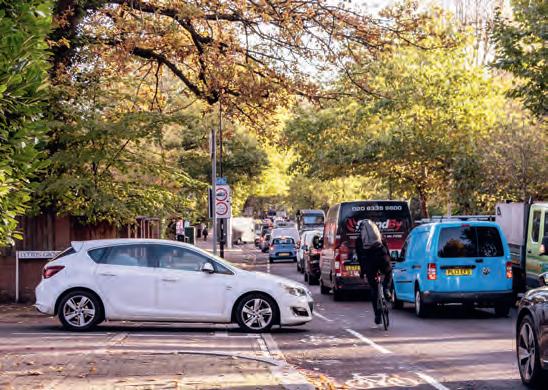
n West Hill (A3)/ Lytton Grove, Wandsworth
Summary: Despite pressure from the local MP Fleur Anderson and campaigners, Wandsworth council leader Cllr Simon Hogg has failed to engage over Dean’s death, while officers have defended the council’s safety reputation instead of pushing for changes to the junction.
Dean Jones was a “high-flying” accountant “living his best life” according to his father, when he was killed by a turning lorry, while riding a hire e-bike past this ‘ratrun’ junction.
Speaking at a vigil following the fatality, Wandsworth Cyclists’ coordinator asked of the missing Wandsworth leader: “Why does he [Cllr Hogg] refuse all invitations to get on a bike and see what it’s like to cycle in his area? And why is he absolutely silent when Dean Jones is killed cycling to meet friends?”
Despite being a notorious local ratrun, the only thing the council and TfL have done is a 7.5-tonne weight restriction, which campaigners say is poorly signed and unenforced. West Hill and nearby Putney Hill, which Lytton Grove connects, are both highlighted by TfL’s ‘Strategic Cycling Analysis’ as priorities for safe, comfortable cycling.
At a meeting with TfL, council officers and local MP Fleur Anderson, the only action agreed was more signage for the weight restriction. Wandsworth officers dismissed suggestions of closing Lytton Grove to cut-through motor traffic and signage is, at time of writing, yet to be installed.
Wandsworth ratruns: where lorry weight signage seems to be the council’s only plan
New Oxford Street: part of a key corridor
MATHEUS
PIOVESAN, 36
n 6 July 2024
n Cable Street/ Cannon Street Road, Tower Hamlets
Summary: Over a year on from an apparent hit-and-run at one of Cable Street’s poorly-designed Cycleway 3 junctions in Tower Hamlets, the police have gone quiet and all the council has done is remove the white ghost bike marking the spot where Matheus was killed.
Matheus Piovesan moved to London in 2019 from Rio Grande do Sul, Brazil, to launch an emerging music artists platform. His friends and flatmates said he was “full of life… a lovely person to be around”. Matheus was a regular cyclist, riding home after work, when he was killed by a hit-and-run car driver at a notoriously dangerous junction on Cycleway 3.
The police arrested three people (later bailed) for dangerous driving and failing to stop at the scene. Over a year later, no-one appears to have been in court and the police have been silent for some time.
Sadly Tower Hamlets council is now known for its anti-cycling stance; under the previous administration plans had been
consulted on to improve Cycleway C3 on Cable Street. But since the 2022 elections those plans appear to have been shelved.
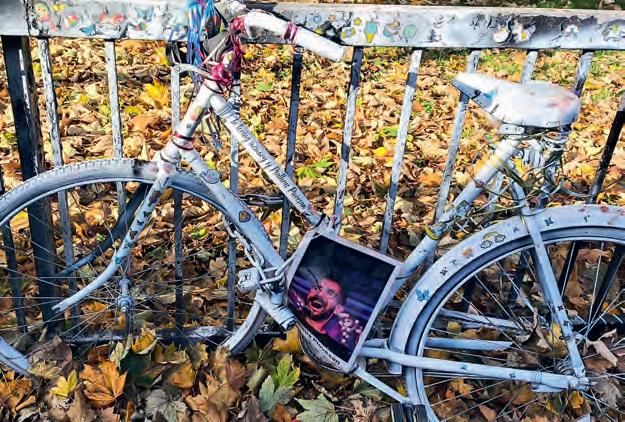
Tower Hamlets’ current council even went so far as to remove a white-painted ‘ghost bike’ Critical Mass riders leave where there has been a fatality. Critical Mass and friends of Matheus recently replaced the bike, with campaigners dubbing the council “grossly insensitive”. C3 is increasingly overcrowded for cycling, with dangerous junctions along the stretch in Tower Hamlets.
“Matheus’s presence is deeply missed by everyone whose life he touched,” said close friend Carol Sebben. “Now, we need action from the police.”
UNNAMED WOMAN,
33
n 19 March 2024
n Farringdon Road/ Clerkenwell Road, Camden/ Islington Summary: TfL’s decision to route Cycleway 6 away from main roads and onto back streets, while most people have just kept cycling north up Farringdon Road, had disastrous consequences for this PhD student. In 2017, TfL extended Cycleway 6 from Farringdon north towards King’s Cross. The newer section, however, is weaker than C6 south of Farringdon and expects those cycling to abandon main road cycle tracks for narrow side streets. As a result many cyclists continue to ride north of Greville Street in a patchy bus lane with loading bays in it, and through this junction.
The mature student was cycling with her husband just in front of her when a bin lorry driver killed
‘Ghost bike’ in tribute to Matheus Piovesan: removed by Tower Hamlets’ council officers
Farringdon Road/Clerkenwell Road: where C6 is far less safe than on its southern end
her. The junction is the most dangerous for cycling on LCC’s list for Camden and Islington junctions combined (the borough boundary runs through the junction), yet TfL seems to believe that a barely used backstreet route will suffice here.
As well as north-south issues, the junction lies on a notorious east-west corridor with incredibly high cycling flows — but also high collision rates that includes Holborn gyratory. Camden council has longterm plans for this corridor. But once more, TfL’s concerns over bus journey times appear to have stymied progress.
The academic institutions where the student studied have announced awards and a lecture series in her name, while family and friends write of her “genuine kindness and compassion”, and her “intelligence, boundless energy, and infectious spirit”.
UNNAMED MAN, 53
n 5 December 2023
n Old Kent Road/ St James’s Road, Southwark
Summary: Two years on from this fatality at one of the most dangerous junctions for cycling in Southwark, the police, Southwark council and TfL are silent, while an Old Kent Road overhaul is possibly decades away and simple changes appear not to have been considered for this seven-lane monster.
Nearly two years after a man was killed at what is currently Southwark’s second most dangerous junction for cycling, there is no sign of any ongoing police investigation, nor of changes being made by Southwark Council or TfL.
Old Kent Road remains a highly popular cycle corridor with thousands of cycle journeys daily. And it’s highlighted by TfL as a corridor of ‘top potential’ for cycling growth, yet makes little provision for cyclists. Plans to revitalise the road have been in the planning stage for more than a decade and shift constantly as to what cycling provision ‘can’ actually be delivered.
The junction at Old Kent Road has seven motor traffic lanes with a further four lanes for traffic at the St James’s Road intersection, yet there’s no cycle signals or even Advanced Stop Lines (ASLs).
UNNAMED WOMAN, 20s
n 15 September2023
n The Duck In Pond roundabout, Harrow
Summary: A Range Rover driver gets a slap on the wrist for killing female cyclist in her 20s who’d recently moved to London. Harrow council goes on to do next to nothing at the junction.
The most dangerous junction for cycling in Harrow by our mapping was the scene of a fatality in 2023 where an SUV driver failed to
give way to a woman cycling. We understand the woman killed had only recently moved to the UK with her husband, having always dreamed of living in London.
Following the police investigation, the driver was given a suspended sentence of six months and two-year ban. The police also made recommendations regarding the junction to the council, including redoing markings and monitoring speeds. The recommendations appear to have been largely ignored and the junction retains a 30mph limit.
The
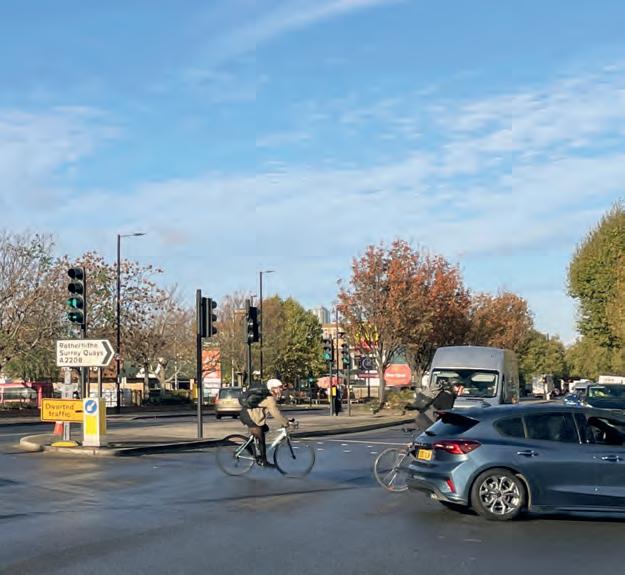
Old Kent Road: where seven traffic lanes meet four more at busy St James’s Road
Duck In Pond: Harrow’s worst junction
UNNAMED MAN, 40s
n 14 August 2023
n Great Eastern Street/ Curtain Road
Summary: Two years on, TfL barely acknowledges the cycling fatality here, the scheme that it has for the junction means it will remain dangerous for cycling, and the police have gone silent.
In August 2023, a man was killed by a Tesla driver, with a taxi and second cyclist also involved according to police appeals. Two years later, TfL’s consultation on the second most dangerous junction in London revealed a scheme that did little for cycling. TfL officers repeatedly talked about a pedestrian fatality prompting their designs (it is the sixth most dangerous junction in London for pedestrians), while failing to acknowledge the cycling fatality.
The good news for cyclists is the plan removes a dangerous left turn into Curtain Road. The bad news? It’s mostly just ASLs for cycling that were largely out of favour 20 years ago. It’s hardly surprising then that of eight previous ‘zero’ scores (the worst safety fails) on TfL’s Healthy Streets check for this junction, four will remain after works complete.
MARTA KRAWIEC, 41
n 28 May 2021
SHATHA ALI, 39
n 1 March 2022
n Both at Holborn gyratory Summary: Since fatal collisions with an eminent paediatrician and a rising lawyer, plus LCC protests, Camden Council and TfL have tackled the key points at Holborn junctions to improve them, with Camden also announcing further plans to transform the remaining junctions and area. Political will, at least here, has resulted in life-saving changes — showing it can be done.
A left-turning lorry killed paediatrician Dr Marta Krawiec at the Holborn junction of Theobalds Road and Southampton Row in 2021. She had taken up cycling to reach patients during the pandemic and her partner Ralph told The Guardian: “Hundreds of children across London lead better lives because of Marta. But the city that she served and loved could not keep her safe.”
Within six weeks, the council had worked with TfL and walking and cycling commissioner Will Norman to introduce a temporary scheme to separate those cycling ahead from left-turning motor vehicles. Following that, the council designed permanent changes that have seen this junction drop down our list.
Less than a year later, Shatha
Ali, a young lawyer, was killed by a lorry near the Proctor Street junction on High Holborn, less than 200m from where Dr Krawiec was killed. Again, Camden and TfL worked together so that a year later, plans were revealed and are now delivered. Cycling along High Holborn and Proctor Street now is far safer.
As you read earlier, Shatha’s sister has spoken eloquently on not just Shatha’s life, but the junction she died at: “Shatha was the ninth cyclist to die at the Holborn gyratory since 2008, and we are passionate to ensure that she is the last. We need our city to be safe for all cyclists”.
As well as fixing the points where Shatha and Dr Krawiec were killed, in 2024 the council consulted on its ‘Holborn Vision’ to change all remaining junctions. Until that is a reality, Holborn remains in parts a hostile and even dangerous junction cluster, though is far safer than it was.
Claims we need to ‘balance’ motor traffic, public transport, cycling, walking and wheeling are bogus. If the choice is another life cut short or many thousands moving through an area safely daily, the Mayor, TfL and London’s councils can choose the latter. The compromises, delays and inaction around too many junctions are killing Londoners.
DR
Holborn gyratory: scene of multiple unnecessary cyclist deaths and mass LCC protests
Curtain Road: fixes don’t go far enough
BRIGHTEN UP YOUR RIDES
Mixing
safety and style, Cateye’s
latest lights bring a touch of colour to the most essential of accessories
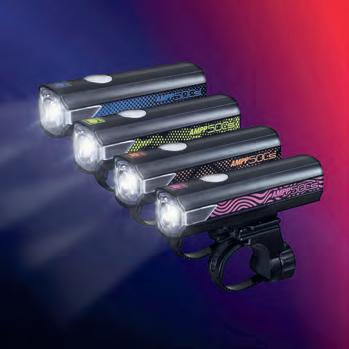
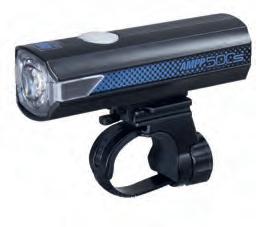
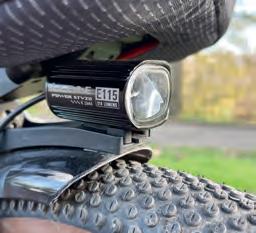
TO MAKE THE most of your winter cycling, good visibility — both seeing and being seen — is critical. Enter Cateye’s AMPP500S Colour Edition, a vibrant new take on the brand’s most popular front light. Packed with all the trusted features cyclists know and love, this latest iteration — available in
SAVE 25% ON CATEYE LIGHTS!
LCC members can use the QR code here to access big discounts from cycling brands.
blue, green, orange and pink versions — adds a splash of sparkle to your ride without compromising on performance.
The AMPP500S Colour Edition retains the powerful specs that have made it a staple for riders everywhere, including a 500-lumen OptiCube lens and five light modes (including a mode memory) that won’t let you down in even the worst conditions.
A double-click of the glovefriendly function button instantly activates the high mode for brightness when you need it most, and excellent side visibility and daytime constant/flashing beam options add key urban appeal. This versatile light can be adjusted
to fit any handlebar with its FlexTight™ bracket, and allows for easy installation and removal. The AMPP500S also has a USB-C port for fast charging, with a battery run time of up to 60 hours.
Whether you’re commuting, training or exploring the city for fun, it delivers reliability and reassurance in a sleek, colourful design. Backed with a five-year warranty you’ve got total piece of mind, mile after mile.
Brighten your ride with the AMPP500S Colour Edition — where performance meets personality.
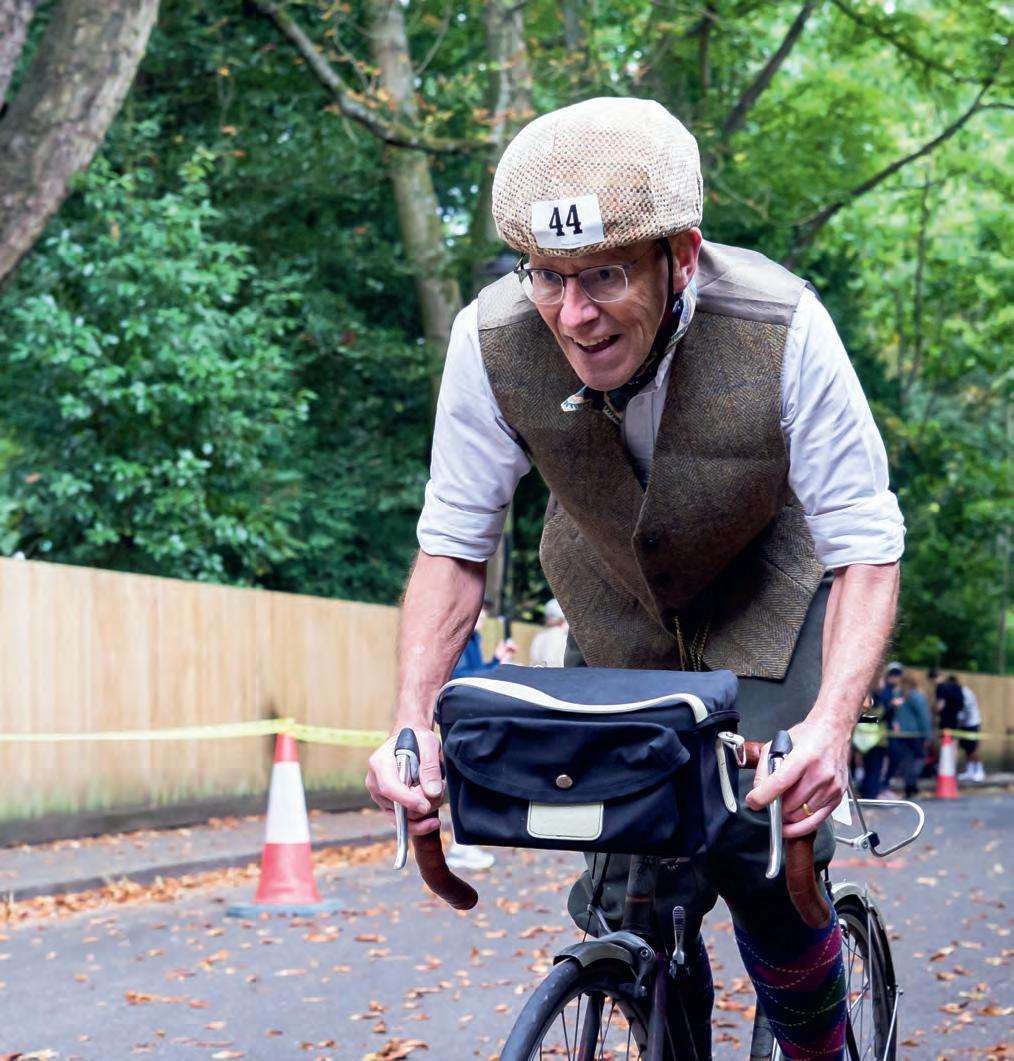
Name: Anthony Wynn-Ruffhead Borough: Lewisham
“I’m a regular on the Tweed Run, which takes place in London every April, so I already had the outfit, and in the spirit of taking part I thought I’d dress nicely. It’s been a great event and my first time taking on Swain’s — a really enjoyable day!”
Name: Cree Rayner
From: Colchester
“Breaking Bad is one of my favourite tv shows, so I thought for two minutes effort it’d be a bit of fun. It was tough going up the hill though; this is quite a stuffy outfit, so it was a hot one. Next year you’ll definitely be seeing me in something more breathable.”
Name: Richard Atkins
Borough: Camden
“Originally the plan was to be a wizard, but in the end I settled on Viking, as the beard could still be incorporated; there was a lot of talk with the kids about whether I should have a sword or an axe. It was a great event, with everyone just enjoying the silliness of it all.”
Name: Ben Kilkelly
Borough: Ealing
“I turned 30 this year and wanted to do something silly. After hearing about the race, and knowing I wouldn’t be competitive in the 18-35s, I thought I might try my luck in the folders category. I came 10th, which I’m happy about, despite being dressed as a zebra.”
CLIMBING SWAIN’S IN STYLE
SEPTEMBER ONCE
again saw Swain’s Lane tackled by hundreds of cyclists, who fancied testing themselves against one of the toughest climbs in the capital.
With an incline averaging 8% and maxing out at 20% over 900m, there’s good reason why the event is often spoken of in hushed tones on the hillclimbing circuit.
Of course, those who climbed fastest had their moment of recognition on the podium, but this year we also wanted to salute those who rode with style, not just speed, in mind. The inaugural ‘Best Dressed’ category, sponsored by Altura, rewarded those riders who
Name: Gary Colet
Borough: Barnet
“I’ve ridden up Swain’s a few times, but never quite like this! The event is always a great day out and I thought, rather than wearing Lycra like everyone else, I’d try to stand out a little bit. The crowd was really fantastic, with the shouts and the cowbells all helping push me on to the top.”
abandoned the aerodynamic Lycra and went for, say, a top hat and tails, or a zebra onesie.
From Rob, who’d come all the way from Devon to ride as a clown, to Richard, who took his children’s advice and went full Viking, there were many brilliant and memorable looks on display, so a big thanks to everyone who went the extra mile on the day.
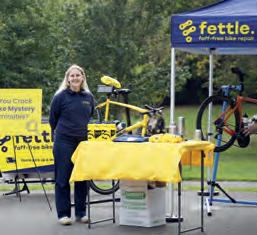
We’d also like to take a quick moment to thank our sponsors for making the event possible: Osbornes Law, Yellow Jersey, Altura, Fettle, and Riese & Müller.
Below you’ll find just a few of the entries and winners in Urban Hill Climb’s Best Dressed category — which one’s your favourite?
Name: Rob Evans From: Devon
“I’m an endlessly competitive person, but not so good at cycling anymore, so I figured my best way of getting on the podium would be through channelling my theatrical side! I think the last time I wore this jacket was for my graduation — it was good to give it an unexpected second life.”
Urban Hill Climb is always a highlight on the London cycling calendar. Sam Stephenson meets a few who dressed to impress this year
WINNERS FROM URBAN HILL CLIMB 2025
Cargobikes: Lawrie Barton E-cargobikes: Harry Asher Walton
Junior Boys 16-17: Thomas Heap
Men 18-39: Harvey Weinberger
Men 40-49: Robin Taylor
Men 50-59: Charlie Openshaw
Men 60+: Gordon Stuart Simpson
Men Folding Bikes: Ed Moesli
Men’s E-Bikes: Harry Walton
Women 18-39: Cat Macintosh
Women 40-49: Wendy Mathie
Women 50-59: Alex Marzec
Women 60+: Julia Moye
Women Folding
Bikes: Dana Le
Youth Boys U16: Finlay Burns
Youth Girls U16: Eloise Ward
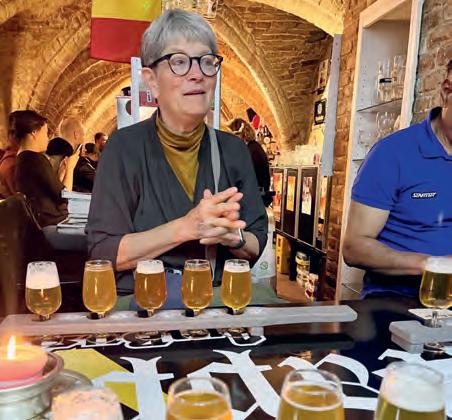
HEEL TO THE BIKES & BEERS & BELGIAN CHEERS
Christian Wolmar joins a study tour to two popular Belgian cities to see how their respective cycling cultures are developing
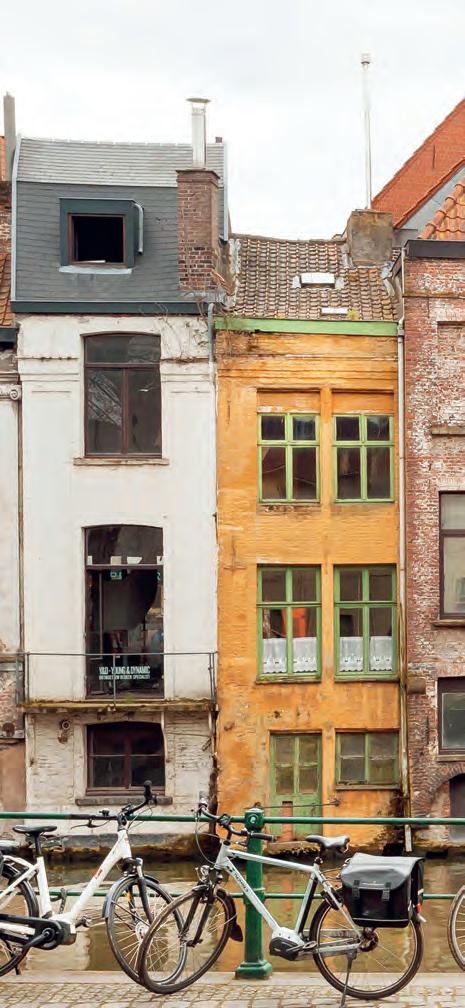
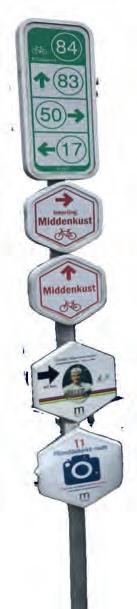
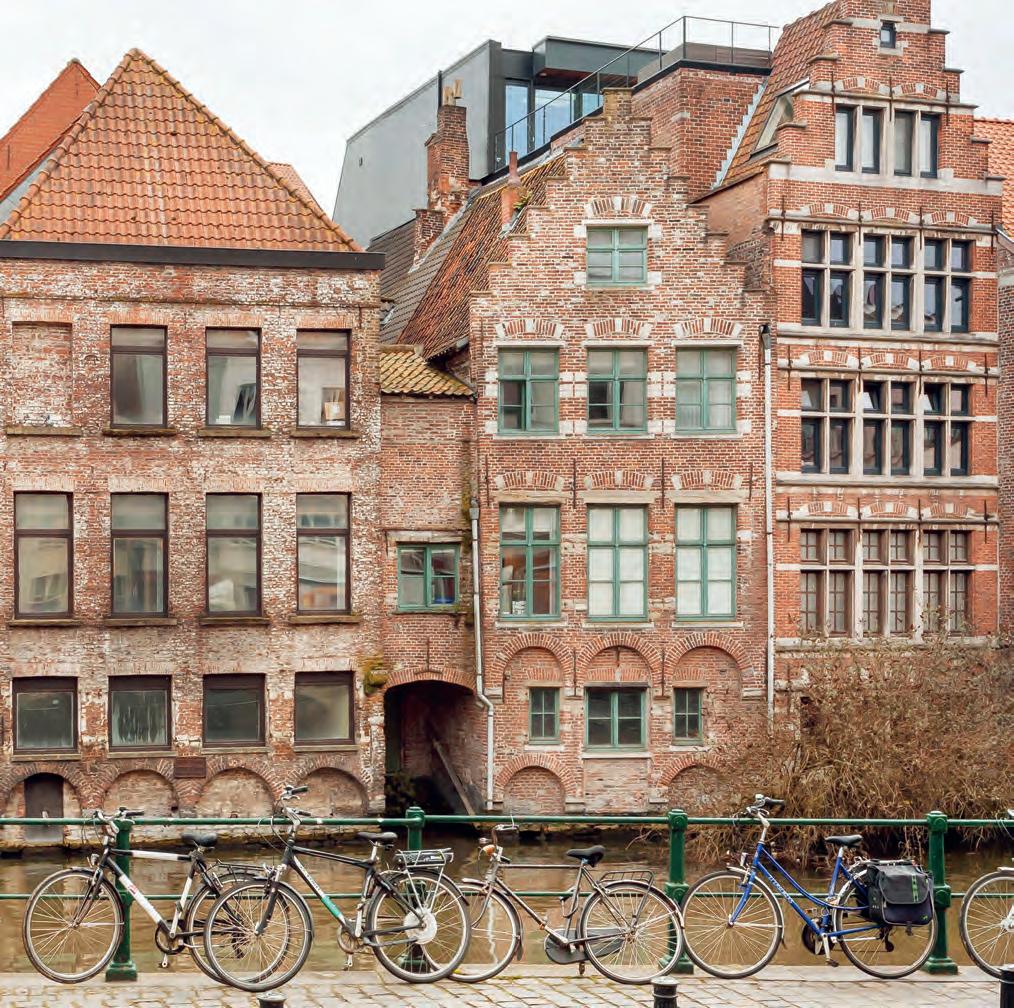
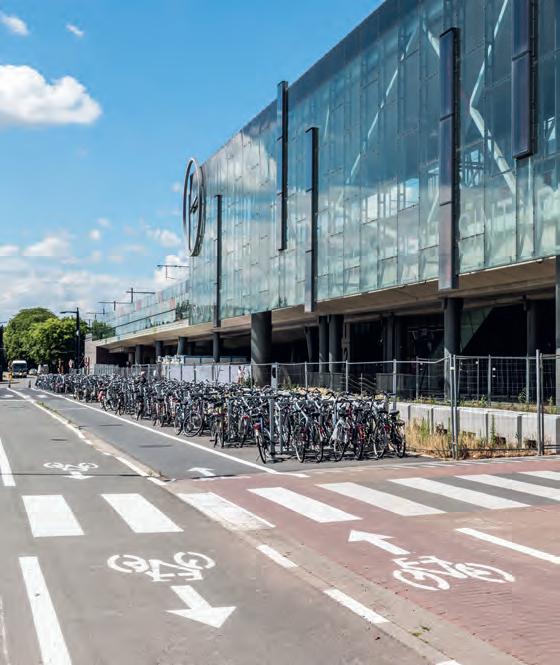
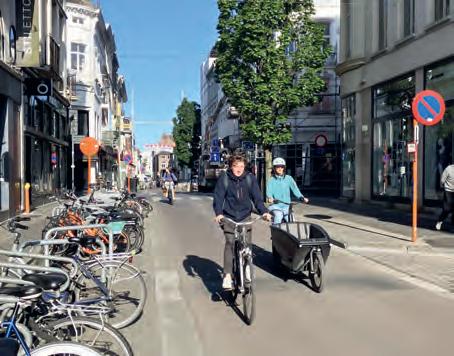
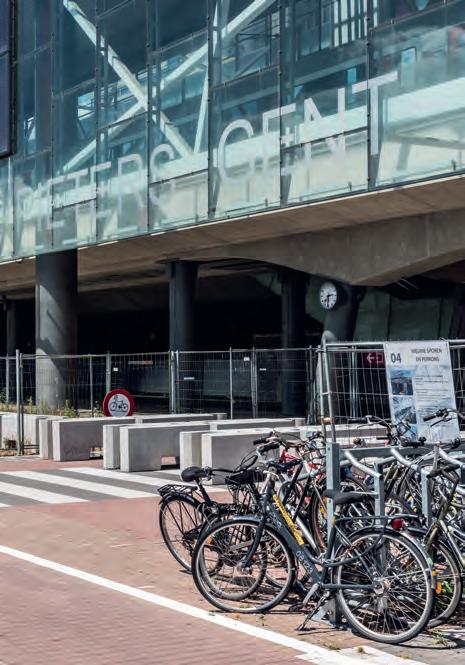
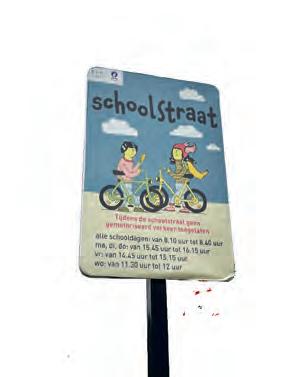
FIRST THINGS first: Belgium is not quite Holland when it comes to cycling. There’s certainly some very good infrastructure, but at times cyclists seem to have been forgotten, and there is not the coherent, all-embracing culture of its neighbour. Nevertheless, there has been amazing progress in several cities, which is why a group of cycling activists from LCC, JoyRiders and other bodies from outside London spent a few days earlier this year visiting Bruges and Ghent, where change has been particularly noteworthy.
Braving typical headwinds, the outward journey from the Dunkirk ferry to Ghent, via Ostend, on dedicated cycle tracks, converted railway lines and canal paths immediately set a positive tone; the only quibble being a dash of confusing signposting. But it was the cities we’d come to visit, to assess what lessons could potentially be applied back home. And what made the visit especially instructive was the distinct experience of these two historic towns,
which have adopted different approaches due to their contrasting demographics and geography. Ghent is a university town with a huge student population and a fair number of tourists; Bruges is a UNESCO world heritage site, with millions of visitors annually, who all congregate in the relatively small central area within the old medieval walls and the parallel ring road.
At the heart of Ghent’s cycling community is the Fietsambassade (cycling embassy), which is a combination of campaign group, service provider and repair shop. There is a clear mission to ‘embed cycling in the culture of the city’, but also to be a good citizen, avoiding, for example, competing with existing bike shops.
The staff kindly showed our group around the facilities, including a huge secure cycle parking area under the municipal offices. This doubles as a workshop, manned by young offenders being rehabilitated through learning mechanics’ skills. There was also what may qualify as a world first: a vending machine solely for bike accessories such as lights, locks and mini-tools.
Around 100 people work for the embassy — established in 2017, with cross-party support — and it is involved in every aspect of cycling in the city. Some 60% of its income comes from the local authority, with the rest raised commercially through its services. The structure involves very close working between the public
and not-for-profit sectors, something that would be difficult, but maybe not impossible, to envisage in the UK. The management board includes politicians of all parties and is chaired by the mobility lead for the city. Consequently there are no culture wars over the provision of facilities and little dispute when, for example, an area is redesigned to better serve the majority of users, who are cyclists rather than drivers.
How Ghent evolved
This consensus, however, did not happen overnight. Nor was it inevitable because Ghent is relatively flat and suitable for cycling. Battles had to be fought when it was realised that a car-
Canals and cobbles: and cycles of every kind in Ghent
oriented transport strategy was never going to be appropriate for a city like this. As with cities globally, vehicle traffic grew massively in the final quarter of the 20th century and decisions had to be made on how to ensure that congestion did not destroy the city. In 1993 a bicycle plan was drawn up which created a policy framework to boost cycling and reduce the number of cars going through the city — particularly the 40% which were found to be simply taking a short cut from one side of it to the other.
The most significant and controversial change took place four years later with the pedestrianisation of a major part of the city centre, creating what was, at the time, Belgium’s largest car-restricted central zone. Around 900 parking spaces were removed, a 30kmph speed limit imposed, and massive new cycle parking spaces were installed — these days there are 25,000 bike spaces in the city centre.
This shift in transport policy did provoke considerable opposition due to familiar concerns that commerce would be constrained and the city would be in permanent traffic gridlock. But these doubts all proved to be without foundation. As one of the Fietsambassade staff wryly put it: “We are still waiting for the disaster.” And the mayor who had pushed through the reorientation of the city’s whole transport infrastructure was re-elected.
One key aspect of these infrastructure changes was that they were mostly inexpensive as they involved no huge roadworks or lengthy
Cycle parking: taken to another level in Ghent consultations. Much of the cost was simply for signage as, obviously, once cars are largely removed from an area there is less need for expensive cycle lanes as the roads become safe. A further mobility plan in 2003 extended many of the measures into the suburbs, providing an important boost to cycling numbers. And to back up these ‘soft’ measures, greater but not enormous sums were made available for largerscale improvements, such as traffic calming, dedicated cycle bridges and underpasses, plus the provision of bike parking in residential areas. Cycling mode share, which reached 22% in 2012, increased to 35% in 2018 — which had actually been the city’s target for 2030.
However, one major problem for a city with 90,000 students adding to a population of just 300,000 (similar to mid-sized London boroughs like Lewisham or Hounslow) was that thousands of bikes were abandoned once college terms were over. The 7,200 bikes abandoned annually became a real problem, so the embassy launched a scheme for students to hire a bike for just 80 euros a year, subsidised by the university. Many of these get refurbished and reused.
Same but different in Bruges
Next we headed to Bruges, which had the same ambitions as Ghent, but presented different problems. It has no ‘embassy’, but rather it’s the city council that is in the forefront of developing policy changes. For tens of thousands of
students in Ghent read instead millions of tourists for Bruges — about eight million a year — and a much more constrained central space with cobbled medieval streets alongside canals.
The population of Bruges (125,000) is less than half that of Ghent, with only 20,000 within the ancient walls and the ring road — which at around 8km is also smaller than Ghent’s. There is a danger, of which the city administration is well aware, that the centre will become simply a museum as residents flee, as has happened in Venice, and the city authorities were therefore wary of implementing measures which were too radical too fast. Nevertheless, they have been successful with cycling mode share being even greater than in Ghent at 42%.
The crucial and most radical measure was to make it impossible to drive through the city, which has been divided into four quadrants that can only be accessed from one to the other via the ring road. That has effectively deterred through-traffic and consequently made the roads far safer.
Another change was to convert small areas previously used for car parking into little parklets, with benches, a couple of cycle stands and sometimes a tree or two. Some of these spaces have been established on roads that were previously heavily used by traffic, but once they are calmed and converted, they attract pedestrians and cyclists. It is part of a comprehensive
Beer and waffles: must-try staples for every Belgian visitor pattern that is slowly but surely being implemented throughout the city.
One notable innovation that does not have any UK equivalent is the fietsstraat (bicycle boulevard). These are not exclusively for cycles but they do have priority over cars and the speed is limited to 20kmph. Like the UK’s Highway Code hierarchy, the most vulnerable road users come first, so pedestrians and cyclists get priority over cars who are there by consent rather than right. These streets are very effective and we saw them widely used by schoolchildren, and the hope is that eventually they will become the dominant type of road in the city centre.
We also noted barriers used near schools to control the traffic while the pupils arrive and leave — not dissimilar to those used on ‘school streets’ in various parts of the UK, but automated. The group were all likewise impressed with the well-signposted routes in local neighbourhoods, showing the best ways to schools, libraries, parks and clearly aimed at children starting to travel independently.
IN SUMMARY
The dominant message from both cities we toured is the transformational nature of what they are doing. On the last ride around Ghent, we came across a couple of classes of primary schoolchildren doing a dance routine in the street. Formerly it had been a busy road, but now it was the site of dozens of 10-year-olds jumping up and down in rhythm to the music and their teachers clapping.
Nothing could have better expressed what should be the main goal of modern cities as they undertake their own transformations — that policies should focus on the way we want to live.
Photos: Danny Yee, Eilidh Murray, Bigstock/Werner Lerooy
CHAMPIONING CYCLISTS’ RIGHTS
OSBORNES LAW has built a strong reputation for representing cyclists injured on London’s streets. The firm’s specialist team — led by experienced cycling lawyers such as Eloise Mears — combines legal expertise with a deep understanding of the physical and emotional challenges riders face after serious accidents. Such guidance can make a lasting difference to a cyclist’s recovery and financial security, as one commuter found recently after being struck by a van driver at a busy junction on their way to work
The impact left them with a traumatic brain injury and an uncertain future. Despite being an experienced cyclist who always wore a helmet and hi-vis clothing, the collision — a T-bone impact from a van that failed to give way — threw them from their bike and caused major injuries.
In the event of a collision while cycling, expert advice ensures the best outcomes
Unsure how to move forward, the cyclist turned to Osbornes Law, where the case was handled by Eloise, who from the outset recognised that early rehab would be essential to recovery and longterm wellbeing.
Although the driver’s insurer refused to admit liability, Eloise successfully negotiated funding for a rehabilitation case manager, a vital early step that allowed the cyclist to begin treatment immediately. The case manager coordinated physiotherapy, neurorehabilitation, and practical home adaptations, helping them regain independence while focusing on recovery.
The case concluded with a £75,000 settlement, achieved swiftly and without the need for lengthy court proceedings. The award recognised both the severity of the injury and its lasting impact on the cyclist’s ability to work.
Reflecting on the experience, the cyclist said: “After the crash, I felt completely lost. Eloise and the team at Osbornes took the pressure off straight away — I’m so grateful for the support they gave me and the positive outcome they achieved.”
Ride Guide
TO HAROLD WOOD FROM RAINHAM
In the first of a new series specifically exploring the lesser-known parts of outer London, Charlie Codrington heads east to the border with Essex
HILE WE'VE always been committed to bringing you the best rides from right across the city, from the central areas to the fringes and beyond, our new series — Boundary Rides — will focus on the edge of London, exploring one hidden corner at a time. Each route will cover 20–30km, starting and finishing at railway stations within TfL’s Zone 6, and linking together historic gems, green spaces and the unexpected stories that make these areas so fascinating.
This particular ride runs from Rainham to Harold Wood, tracing a surprisingly wild corridor through east London and into rural Essex. Expect wide marshland skies, crumbling wartime relics, curious sculptures and the constant echo of London’s changing periphery. It’s a route where cyclists share space with herons and horses, where concrete meets countryside, and ancient tales are written in the mud and the meadows.
START: RAINHAM STATION
Once a small Saxon settlement beside the Thames, Rainham grew around farming and river trade long before London’s sprawl arrived. Its 12th-century church still stands proudly, and a few timber-framed cottages linger between the newer terraces. Leaving town, the route drops down, following gravel and compact dirt tracks across Rainham Marshes, a landscape that feels timeless and untamed; the nearby motorway provides only a distant hum.
FACTFILE
START: Rainham station
FINISH: Harold Wood station
DISTANCE: 36km (22 miles)
ASCENT: 160m (524ft)
TERRAIN: gravel, tarmac paths, quiet lanes
SUITABLE FOR: gravel/mountain bikes
HIGHLIGHTS: Rainham Marshes, The Diver sculpture, concrete barges, quirky gravestones, Purfleet Magazine, Mardyke Valley, Upminster windmill, Pages Wood.
2 THE DIVER
Along the path stands a curious landmark in the mud: The Diver, a sculpture by John Kaufman, built from 300m of galvanised steel banding, held together by 3,000 bolts; the 15-foot figure is anchored nearly 8m deep into the riverbed and disappears completely at high tide, re-emerging, ghost-like, as the water recedes.
BEELINE VELO 2
For hassle-free navigation, let Beeline show you the way. Plan quiet routes, follow them with ease, and record all the fun — Beeline is a cycling device that will change how you ride your city.
Visit beeline.co for more info.
inscriptions that blend art, humour, and a touch of local eccentricity. One, painted simply with a cross, reads 'I told you I was sick'.
Just downstream lie the half-sunken concrete barges built during World War II for use in the D-Day landings but never deployed; they now serve as nesting grounds for gulls and cormorants.
Near here, keep an eye out for something more whimsical: a collection of humorous gravestones tucked beside the path, each with cheeky
From the riverbank, the trail turns toward the Rainham Marsh Bird Sanctuary, a beautifully-restored expanse managed by the RSPB. Once an army firing range, it’s now alive with lapwings, marsh harriers and, in winter, short-eared owls in search of prey. The Marshland Café, makes a welcoming stop: good coffee, homemade cake, and wide windows overlooking the wetlands.
Further along, the Thames broadens, and the Dartford Crossing dominates the skyline. Seen from the stillness of the marsh, it’s oddly majestic: a feat of modern engineering spanning the same waters that once carried Roman galleys.
3 WARTIME PURFLEET
Turning inland, the path skirts the old Purfleet Gunpowder Magazine, built in the 18th century when this area was used to safely store the Crown’s explosive supplies. The vaulted brick buildings, with their copper fittings (to avoid sparks), stand as monuments to Britain’s industrial and imperial past. Not far ahead, a small and understated memorial to the Gurkhas adds another layer to the area’s military heritage. From here, the trail meets the Mardyke, a small river threading through farmland and under the mighty M25. Horses graze beneath the motorway’s concrete pillars, the strange blend of pastoral peace and modern noise capturing the spirit of the Boundary Rides perfectly.
4
BRICKKILN WOOD
The next section leads into Brickkiln Wood, an ancient patch of broadleaf woodland once used for charcoal and
brickmaking. It’s now a sanctuary for wildlife; six species of bats make it their home. Smooth trails then lead into Cely Woods, part of the Thames Chase Community Forest. This is easy, open riding, gentle climbs and long views across the Ingrebourne Valley.
The valley holds its own wartime ghosts. During World War II, it was home to anti-aircraft gun emplacements guarding London from aerial attack. The overgrown remains of these defences still lie hidden among the brambles, and nearby once stood Hornchurch Aerodrome, a key RAF base during the Battle of Britain.
Following the Ingrebourne’s winding path north, the route passes Upminster windmill. Built in 1803 and beautifully restored, the mill occasionally opens for visitors.
5 PAGES WOOD
The final stretch rolls through Pages Wood, the largest woodland in the
Thames Chase network. Its sweeping trails weave through young oak plantations and open glades, perfect for one last stretch of freewheeling before reaching Harold Wood station. Planted barely two decades ago, Pages Wood is a living symbol of renewal, proof that even on London’s outer edge, the landscape is still evolving.
BOUNDARY RIDES
The full series, complete with illustrated maps, stories, and local lore, will be available later this year at hiddentrackscycling.co.uk.
Scan the QR code on your smartphone to download all London Cyclist rides for free.
FROM RAINHAM TO HAROLD WOOD
FROM RAINHAM TO HAROLD WOOD
2 5 F 3 4 S
Simply scan the QR code here to access the relevant ride guide and map on a smartphone or tablet.
“Osbornes Law took on my case after I was hit by van on my cycle to work. I learnt about them as a member of the London Cycling Campaign. I would recommend Osbornes Law to anyone who is unsure how to proceed following a traumatic cycling accident.”
Felicia D
NEW CYCLE LIGHTS
A front and rear light combination is a night-riding essential for cyclists, ensuring you can both see the road ahead and be seen yourself
EVERY CYCLIST’S winter kit list needs to include two things: a warm and waterproof jacket (plus trousers on standby) and a quality set of lights. And there’s no shortage of front/rear combos to suit any budget or riding preference. Look for lights that are easy to fit/remove (to avoid theft), USB recharging, with runtimes that work for your commutes.
#1 KNOG BLINDER PRO 400 PLUS SET
Brand new from Knog, the Blinder 400 is your gateway to high-powered night-riding. With 400 lumens, rugged nylon body, 1850mAh battery and focused 18-degree beam, it delivers clear daylight-coloured visibility for every ride. Plus rear light attaches almost anywhere, with 40hr runtime. n freewheel.co.uk; £44.95.
#2 CATEYE AMPP 500S COLOUR EDITION
The new AMPP500S offers a balance of safety and performance with its 500 lumen OptiCube™ lens and five light modes. It’s tough, weatherresistant, and now available in a bold new range of colours — orange, green, blue, and pink. n cateyecycling.co.uk; £42.99.
#3 ZEFAL SUPERVISION
F200 & R150 SET
This versatile set combines a 200-lumen front light with a 150-lumen rear. Water resistant, quick to mount, and with up to a 16hr battery life, they have been designed specifically for cyclists looking for maximum visibility in the city or when out touring.
n chickencyclekit.co.uk; £59.99.
#4 MOON TITAN MAX
The Titan Max is Moon’s latest highperformance front light, featuring adjustable beam modes for optimal visibility in any urban and open-road riding environment. Wireless charging, a remote control, and two-way USB-C charging ensure seamless operation and convenience. It can be mounted above or below the handlebar for neater integration with computers and cameras. Available in black, army green or orchid purple.
n extrauk.co.uk; £89.99.
#5
OXFORD ULTRATORCH
CUBE-X LED SET
Perfect for the urban environment, the USB-rechargeable Ultratorch
Cube-X set shines out in the crowd. The compact COB (chip-on-board) LED design takes up the smallest space on your bike, but provides impressive illumination at a wallet-friendly price. n oxfordproducts.com; £27.99.
#6 KNOG BLINDER 600 SET
A standout new pairing that’s bright, dependable and the perfect partner for commuters on urban streets. With more than enough power to be seen night and day, long runtimes (up to 120hr front, 40hr rear) and easy mounting/removal, this combo will greatly improve your safety while being a delight to use. n freewheel.co.uk; £74.99.
#7 MOON SENSE 150
Delivering 150 lumens in a lighter, compact unit, the Sense retains the advanced features found in larger models within the range. Key functions include ‘sense mode’ with brake light, automatic brightness adjustment, parking mode, and group ride mode for controlled visibility that doesn’t blind your fellow riders. n extrauk.co.uk; £39.99.
#8 SIGMA BUSTER 1100 & RL 150 SET
USB-C recharging, simple tool-free fitting/removal, long runtimes and easy-to-change modes make this set perfect for every environment. The Buster 1100 headlight has six modes and a beam range up to 165m, while the RL 150 has five modes and a runtime of up to 20hr. n oxfordproducts.com; £99.99.
#2
#3
#4
#6
#5
#8
#7
#1
HOW TO... PREP FOR WINTER
Keeping a watchful eye on your bike and components should be second nature to most cyclists, but when winter rolls around the checks need to become more frequent and thorough — with regular deep cleaning always the best way to maintain peak performance! The team from Fettle (fettle.cc) shares more top tips here, plus you can get discounts on bike servicing at tinyurl.com/LCCfettle.
1. WINTERPROOF YOUR TYRES
Winter roads are often wet and debris-filled, so check existing tyres for tread wear or holes. Switch to wider, puncture-resistant tyres if possible, and run slightly
lower pressures for extra grip. For tubeless tyres look to refresh the sealant. The right tyre set-up minimises punctures, improves control, and makes rides smoother.
2. BRAKE CHECKS ARE VITAL
Wet weather quickly wears brake pads and reduces their power. Check pad thickness, clean disc rotors or rims, and replace worn components before they compromise
safety. If brake levers feel spongy, then bleed the hydraulics or replace cables. Reliable brakes are critical on slippery roads when average stopping distances increase.
3. FIT MUDGUARDS
Mudguards aren’t just for comfort, they protect you and your bike from road spray, grit and salt that causes corrosion. Fitting full-length guards with good coverage
keeps your drivetrain cleaner and your clothing drier. After a few rides, check mounting bolts to ensure everything stays tightened and rattlefree throughout winter.
4. CLEAN LITTLE, CLEAN OFTEN
This should be a mantra for every cyclist and it’s even more important over winter. A clean bike runs better, lasts longer and helps prevent rust, seized parts and costly wear
from road grime. A quick clean after wet rides saves hours (and expense) later. Rinse off salt and grit with an eco-friendly cleaner, then dry your bike thoroughly.
5. CHOOSE THE RIGHT LUBE
Wet, gritty roads demand a heavier-duty chain lube. Apply a ‘wet lube’ sparingly to each link, wipe off excess, and reapply after heavy rain. Regular lubrication prevents
rust, reduces friction, and extends your drivetrain’s life. Check chain wear frequently; replacing it early saves money by protecting your cassette and chainrings from damage.
6. LIGHTS & VISIBILITY
Fewer daylight hours mean more riding takes place in darkness, so quality lights are essential. Use bright front and rear lights with good side visibility and ensure batteries
are always charged and lenses kept clean. Adding reflectors or reflective patches to clothing or bags/gear also works well. ‘See and be seen’ is the key message here.
7. DRESS SMART, PREP SMART
Layering up with breathable, waterproof clothing keeps you warm and comfortable in changing conditions. Gloves, waterproof socks/overshoes, and thermal baselayers make
chilly rides bearable. Carry a small repair kit, pump and spare inner tube. If possible store your bike indoors in the dry to help stop components and batteries from freezing.
8. GET EXPERT EYES ON
Even with regular cleaning and checks, some issues can be easy to miss. A quick winter inspection from a qualified mechanic helps spot wear before it becomes
a problem and ensures your bike is ready for whatever the season brings. Most shops offer different tiers of servicing. Think of it as peace of mind for every ride ahead.
NEW E-BIKES HOT TECH
Merging gravel spec and electric tech, how does Brompton’s latest model shape up?
IT’S HARD TO believe that it’s 50 years exactly since young engineer Andrew Ritchie first developed his prototype bike with an ingenious three-part fold. Since then the Brompton has gone through dozens of iterations and achieved deserved acclaim across the globe, becoming a true British (and London) manufacturing success story. An electric version arrived in 2017 and even that cleverly maintained the original’s classic silhouette. It wasn’t until the recent G-line series that subtle differences were apparent — the world’s favourite folder had just got a little ‘bigger’.
The ‘G’ is for gravel and our test rig combines some interesting,
well-considered spec choices and the brand’s latest e-bike tech. Larger 20in wheels — compared to the standard 16in — are the first thing you notice. Shod with Schwalbe’s excellent G-One tyres in chunky (54c) width, the added comfort they brought to mid/long rides was immediate, likewise the improved grip — and we really pushed them on rough bridleways and parkland trails. Equally importantly, the bigger hoops are still compact enough to fit neatly within the fold design.
The wider handlebar and saddle are welcome G-line upgrades, the former offering much better control on mixed terrain; special mention also to the Tektro hydraulic disc
Schwalbe G-Ones: comfort and traction
Disc brakes: an upgrade on the classic
brakes for weathering our damp autumn so reliably.
Like the majority of Brommies our frame is steel, with self-aligning hinge clamps, though the fork is aluminium and has mounting points for bikepacking/touring bags; a waterbottle cage can be added to the stem, but we simply stashed drinks in the front carrier. Full mudguards are fitted and the unique ‘roller rack’ makes folded wheeling a doddle, as well as adding extra storage space for luggage. We did briefly lose one of the plastic rollers, but it clipped back on easily.
What about the tech? Well the e-Motiq system combines a new rear hub motor (250W) with a 345Wh battery tucked away in the front bag.
With only four regular gears, we think the three pedal assist modes are well graded to suit most riders; our longest single trip was 45km, but the potential range is up to 15km further. One thing our bike lacked was the bar controller found on the other G-line model, so we had to reach down to the battery itself to switch modes, turn on the lights or check remaining battery life — that
FACTFILE
n 2 or 3 size options, depending on model.
n Battery takes 5hr to charge from empty to 100%, or 4hr to 80%.
n 7-year frame warranty, 3-year electric system warranty.
n Non-electric G-line bikes from £2,599.
won’t work for everyone. One major bonus, however, is that the battery pack can be lifted off and taken indoors for charging.
We’ve tested an awful lot of folders in our time, ridden several into the ground, and in our eyes we believe this is the best Brompton yet: it’s easily the most versatile and it’s just plain fun. And we like our bikes to be fun.
VERDICT
+ Fold still as quick and simple as ever; SuperRoller a big plus.
+ Integrated front and rear lights save loads of faffing.
+ It’s the Brompton to buy to mix commuting and exploring.
Lights on, let’s ride: LEDs show battery charge level and pedal assist mode
Rear hub motor: small but powerful
Integrated lights: no need to carry extras
BIKE CLOTHING & KIT
Enjoy our pick of the latest cycling products with a slight winter theme...
ALTURA NIGHTVISION TYPHOON INSULATED MEN'S JACKET
Among a raft of new additions to Altura's best-selling NightVision range for this winter, the Typhoon Insulated ranks as the toastiest pick for those damp commutes in single-digit temperatures. The outer shell is softer to the touch and less rustly than many rival products and offers really good waterproof protection, plus a PFC-free DWR coating that beads rain off the surface rather than letting it soak in. Importantly for a heavierweight cycling jacket, breathability is also impressive and when you feel like you might be overheating a pair of zipped underarm vents allow you to quickly improve airflow — these are a very underrated detail, but one we reach for regularly, especially when upping our tempo or hitting a few hills.
ORTLIEB VELOCITY HIGH-VIS BACKPACK
The recycled polyester insulation doesn't feel too bulky or restrictive, far better than a typical puffer jacket, and a drop tail nicely covers your backside when in the riding position. Of course being a NightVision garment, there's huge patches of reflective detailing on the sleeves, side and rear. The women's version is the same price (in hi-vis yellow and Adriatic blue, sizes 8-16), while a non-insulated Typhoon costs £20 less. n £150; altura.co.uk
GREEN OIL MASSIVE-BRUSH 1.0
Yes, it looks like the Jolly Green Giant's toothbrush and, in real life, the beech wood handle (from FSC-certified suppliers) measures from the tip of our fingers to beyond the elbow (we included a standard bottle of chain lube in the image to give an idea of scale). It might look odd but for those of us who clean a LOT of bikes yearround, it's actually ingenious and has already saved us an incredible amount of unnecessary bending when scrubbing dirty frames, wheels and drivetrains.
The bristles are derived from the Mexican tampico plant and we've found them to be tough and durable. Zero plastic, less 'cloggy' in use and fully recyclable — hats off Green Oil! n £47.99; green-oil.net
Longtime readers of London Cyclist will know that we've been committed fans and hardcore users of the brand's waterproof and nigh-on bombproof panniers and bikepacking bags for decades — we love them, it's that simple. It's been making durable backpacks for some time now — a few models that double as panniers, others large enough for cycle couriers, a couple for travel — but the Velocity range, of which there's three distinct models, is aimed squarely at urban users and commuters. All share the same waterproof, fully seam-sealed construction, but the High-Vis version we've been using incorporates a unique fabric that offers maximum visibility in the dark. A reflective yarn is actually woven into the polyurethane-coated, tarp-like material and is evenly distributed across the whole pack, sides included, meaning you're more visible from more angles under vehicle headlights. We found the shoulder straps comfy, but removed the waistbelt, and full 23-litre loads remained stable. Even though padding is minimal, we never felt items digging into our back, or got overly sweaty, and there's an internal pocket for a tablet or smaller laptop. Velcro-style roll closure is quick and easy, but needs careful attention to avoid flapping open in the wind. Fluoro yellow option also available. n £155; ortlieb.com
RESTRAP RACE MUSETTE
During the big televised road races you might have seen teams distributing bags of food and drink among their riders — these simple carriers are called musettes, and at LCC Towers we have long considered them one of the most useful and versatile accessories around. Most commonly made from cheap nylon or cotton canvas that doesn't last, it's great to see Restrap upping the game with its waterproof version, with adjustable Hypalon strap and reflective touches. For mini shops, or carrying a jacket and book, it's perfect and we take ours everywhere. n £29.99; restrap.com
VISTELLA FIREFLY PLUS GLOVES
Look after your extremities and the world of winter cycling becomes a whole lot more wonderful. But it's not just rain that's the enemy — most Brits are well versed in the necessary head/core/leg protection needed when showers are forecast — it's the wind that can really bite, and even affect your braking and bike control. The Firefly Plus gloves stand out for several reasons: the windstopper fabric defeats chills, a Thinsulate lining keeps mitts warm, and reflective 3M arrows on the back ensure hand signals are clear and visible. Five sizes (S-XXL), plus touchscreen compatible. n £39.99; vistellacycling.com
KÄRCHER OC3
FOLDABLE MOBILE CLEANER
There's no doubt that a power washer makes bike cleaning that much quicker and easier, but not all of us have access to an outdoor water source at home, plus a lengthy garden hose and convenient electrical outlet. Unless you have a garden or well-draining yard, it's always been simpler to head to the nearest petrol station and spend a quid on a five-minute jetwash. So we were delighted to be able to trial Kärcher's new mobile cleaner.
The magic is two-fold. First the 'bucket' can collapse down like one of those posh camping pots and when extended holds 8-litres of water. Secondly, the integrated battery means you don't need to plug into the mains and can get about 15 minutes of cleaning time, enough for one or two bikes; charging took us between 2-2.5hr from fully depleted. The hose is 1.8m long and the nozzle provides a concentrated stream — enough to see off semi-baked mud, but not powerful enough for mossy driveways. It's genuinely brilliant and one to pack for weekend excursions by car. Also works on hiking boots and dogs.
n £129.99; kaercher.com
TOPEAK E-BOOSTER DIGITAL INFLATOR
The main drawback we've found with USB-charged pumps is that they're often one-trick ponies: they've been able to inflate a single chunky gravel tyre, or two super skinny old road tyres, before they're spent. For some, that one-shot, non-manual pumping convenience may trump all, but we want more puff for our buck, and this mini Topeak unit (just 8.5x6cm) is the best we've found so far. We've been able to fill 3-4 mid-width (40c) Panaracer Gravelkings to normal riding pressure from scratch — the digital gauge is accurate to about 2psi — and happily been designated 'pump w*nker' for being able to top up six mates' tyres before a Sunday social spin.
The E-Booster comes with its own silicone case to protect it from drops and a handy pouch for pocket stashing. We appreciated the addition of a removable flexible hose too, super useful for awkward valves, just make sure it's kept safe. n £99.99; extrauk.co.uk
1857-1871
Michaux Velocipede
We’ve got these wonderfully quirky machines to thank for the joyous bikes we enjoy today, says John Kitchiner. Here’s their origin story...
DERIVED FROM the Latin velox and pes, velocipede loosely translates as ‘swift foot’ and has come to mean a human-powered land vehicle with one or more wheels — the most common of which is the bicycle. First use of the word dates back to 1817 and is generally attributed to Karl von Drais from an advertisement for his ‘dandy horse’ or laufmaschine. The German’s invention was effectively the world’s first balance bike, where users propelled themselves by manually reaching their legs to the ground and walking or running forward.
The next 40 years saw little in the way of major concept development — though records exist of designs with one, two, three, four, and even five wheels — apart from a subtle but welcome comfort aid courtesy of Nicéphore Niépce, who also happened to be one of the pioneers of photography. His self-built contraption included an adjustable saddle to provide relief on long countryside rides, and an example remains on display at the museum named after him in Chalon-sur-Saône.
It was the Michaux Company who added pedals to the equation, going on to become the leading mass-producer of
velocipedes in the second half of the 19th century. At that point models were made entirely of wood, with iron ‘tyres’ (like flattened hoops) added sometime later to prevent wear; this rigid, unforgiving combination led to the widespread moniker ‘boneshaker’.
By the 1870s velocipedes had become hugely popular and manufacturers sought to address both ride quality and practicality. Advances in metallurgy gave rise to lighter, allmetal machines, and larger front wheels became derigueur as their benefits were realised — one rotation of a big wheel taking you further than with a smaller one, and faster speeds on the flat being easier to maintain. And with rubber more easily available, sourced initially from the Amazon region, that was soon being moulded into solid tyres, instantly improving road holding and fatigue on mixed terrain. This was how the ‘ordinary’ or penny farthing was born (see LondonCyclist, winter 2019) and when the word ‘bicycle’ was adopted.
These formative cycles continued to be refined into the late Victorian era, eventually leading to the creation of the safety bicycle and, in turn, the great rides we love now.
Illustration David Sparshott
Essential Benefits:
• Third-party liability insurance
• Free cycling legal advice from Osbornes Law
• Quarterly London Cyclist magazine
• Discounts with 100+ bike shops and top cycling brands
• Welcome gift worth £50. Choose from: Kryptonite lock, CatEye lights or Lezyne pump
Bonus gift: A personalised Christmas card
Deadline for orders in time for Christmas is Friday 19 December at noon.