ROBOTAXIS HIT LONDON STREETS
INSPIRATIONAL CYCLING WOMEN
WESTMINSTER ON THE MOVE
STARTING A SUCCESSFUL BIKE BUS
HOW TO MAINTAIN YOUR BRAKES
Summer in the city means only one thing: longer days to explore the areas you’ve been meaning to visit for ages. The quieter districts, hidden parks, cycle-friendly cafés, a bit like our latest ‘Boundary Ride’ (page 54).
16 Megacities & Cycling
How does London compare to other major cities with similar demographics?
22 Interview
We catch up with ‘Coach Balto’, founder of Bike Bus World, on a visit to Camden
28 Inspirational Women
Meet the ‘cycling for all’ champions with Santander bikes named after them
37 Beating Heart
How new cycle lanes and infrastructure are shaping parts of Westminster
42 Driverless Taxis
As they hit our streets, we ask how safe robotaxis will be for other road users
08 News
Streets for Cycling update; London Cycling Festival; Oval fatality; Share the Joy fund
11 Opinion
In praise of LCC’s activists; learning from Bogotá’s Ciclovia; effects of an oil crisis
66 Iconic Bikes
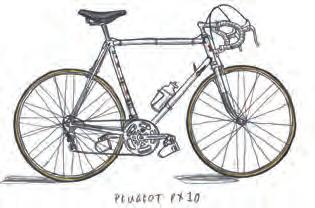
Inextricably linked to a legendary rider’s tragic story: the Peugeot PX10
54 Ride
Our third ‘Boundary Ride’ explores trails from Upper Warlingham to Knockholt
58 Advice
Pro mechanic’s tips on how to check and maintain your rim and disc brakes
62 Reviews
Brooks saddle, Oxford’s Alarm-D lock, track pump, glasses, books and more
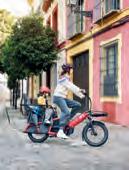
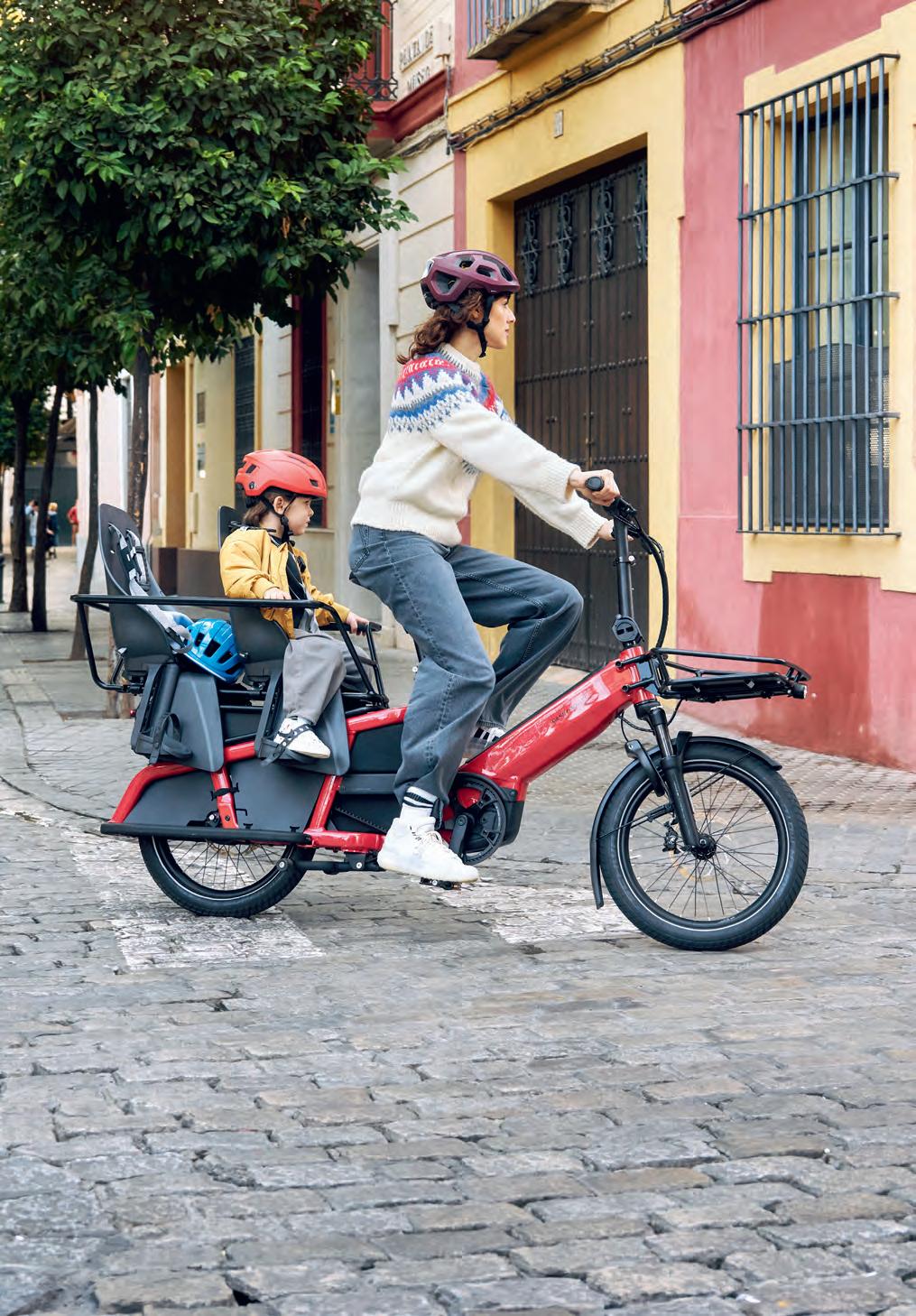
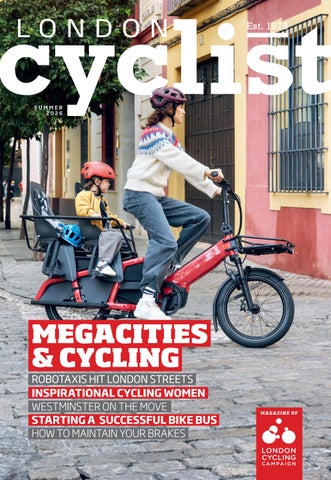
Cover photo: R&M Bikes
Location: Spain
Unit 206, The Record Hall, 16-16A Baldwin’s Gardens, London EC1N 7RJ n 020 7234 9310 n lcc.org.uk
EDITORIAL
ISTO THAT’S ANOTHER local election run As many commentators have said, it might have seemed like a referendum on national politics, but the end result is a map of London’s boroughs that’s decidedly more colourful. There’s a lot less Labour red, the same amount of LibDem orange, and a fraction more Conservative blue (Westminster) — joined now, for the first time, by Green in Hackney, Lewisham and Waltham Forest, and Reform’s turquoise outpost in Havering. With Aspire holding Tower Hamlets and nine councils with no overall control, John Curtice would doubtless call the picture ‘mixed’.
Where does that leave the future of cycling and active travel, for the next four years at least? Well it’s not possible to tell just yet. Complicated further by some councillors stating pre-vote that they didn’t necessarily align with their party’s traditional stance on the subject. What we do know is that leadership candidates in 28 boroughs supported LCC’s ‘Streets for Cycling’ campaign asks — committing to complete the network of cycle routes TfL has identified as a priority by 2030. Which is an impressive number and hopefully means we’ll see more, and better, infrastructure on our roads before long.
Huge credit as always goes to our local groups, members and supporters for so much tireless, often unseen work — we salute you! Time to enjoy a busy summer of cycling before the next push...
John Kitchiner Editor
Osbornes Law is the official legal partner of LCC, providing members with exclusive access to a legal helpline. If you’re involved in a collision or have a cycling-related legal issue, phone the cycling team at Osbornes for advice on 020 7681 8672.
Editor: John Kitchiner (london.cyclist@lcc.org.uk)
Design: Anita Razak
Contributors: Simon Munk, Tom Bogdanowicz, Sam Stephenson, Clare Hinchcliffe, Tom Fyans, Rob Eves, Charlie Codrington, Carlton Reid
ADVERTISING
Sean Igoe (sean.igoe@lcc.org.uk)
SOCIAL MEDIA
TWITTER: @london_cycling
FACEBOOK: @LondonCyclingCampaign
INSTAGRAM: @london_cycling_campaign
Editorial, copyright, membership
LCC is not aligned with any political party. All views expressed in London Cyclist are those of the authors and are not necessarily endorsed by the editor, nor do they necessarily reflect LCC policy. All material is copyrighted and may not be reproduced without the written permission of the editor. Editorial content is independent of advertising. All LCC membership offers and discounts are presented entirely at the discretion of the provider.
London Cyclist is published by LCC.
MORE INFO: lcc.org.uk
MEMBERSHIP: lcc.org.uk/membership TO DONATE: lcc.org.uk/donate
LCC is a charitable limited company, reg no 1766411; charity no 1115789
London Cyclist is printed by Buxton Press on FSC certified carbon-balanced paper from responsible sources.

change
AT TIME OF WRITING, LCC’s Streets for Cycling local election campaign had chalked up more than 1,400 actions taken across London, resulting in pledges in 28 boroughs from leadership candidates, and 15 boroughs or more where all of the most likely candidates and parties to run the council have committed to the campaign ask.
The campaign broadly asked each of the candidates vying to be leader of the council in the 32 boroughs facing local elections (the City does things its own way) a simple, single thing: to commit to completing the network of cycle routes TfL has identified as a priority for the borough by 2030. Many borough leaders highlighted the need for TfL funding to realistically achieve this, but that caveat aside, leaders were signing up to move fast, be bold and deliver at least the beginnings of a coherent cycle network.
The only boroughs where no party or
leader committed were Barking & Dagenham, Bexley, Bromley and Harrow. The boroughs where all likely leaders committed were Brent, Camden, Greenwich, Hackney, Hammersmith & Fulham, Haringey, Hounslow, Islington, Lambeth, Lewisham, Redbridge, Richmond, Southwark, Sutton and Waltham Forest.
One thing already seems clear from these elections, however: that London, like much of the country, has seen a significant shift in borough control and political composition, with hundreds of new councillors stepping into new roles. This obviously reflected a move away from Labour — and to a lesser extent Conservatives — to Green, Liberal Democrats and Reform parties.
But regardless of final results, it looks likely that London’s commitment to deliver on cycling is likely to be stronger post elections, in no small part thanks to our borough groups and LCC supporters for taking action.

London boroughs where leadership candidates pledged support for LCC’s ‘Streets for Cycling’ asks London boroughs where no leader or party pledged any support for LCC’s ‘Streets for Cycling’ campaign MONTH in
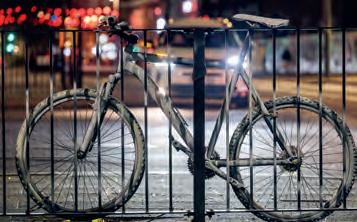
WE’RE SAD TO report that on 29 April a leftturning lorry driver killed an unnamed female cyclist in her 20s at the notorious Oval station junction. We believe this is the fifth rider killed on London’s roads in 2026.
The junction is the 100th most dangerous for cycling in the city according to our own mapping (lcc.org.uk/junctions). Harleyford Road, where we believe both cyclist and lorry were coming from, is where C5 cycle tracks peter out just before the junction, while the north-south CS7 along the A3 here is likewise outdated and unsafe. This is one of London’s most important cycling junctions, used by thousands in every direction daily, but still has major design flaws. The entire junction is a TfL-controlled ‘red route’.
LCC will hold a vigil for the cyclist in June and ask Londoners to write to the Mayor and TfL to demand urgent action at all the dangerous junctions under their control.
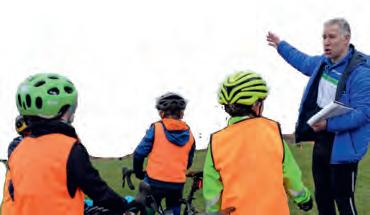
LCC, together with Lime and Loud Mobility, have announced the 31 new groups funded in the sixth round of their Share The Joy community fund grant scheme. £70,000 has just been awarded to groups across the capital, bringing the total amount awarded through so far to £281,000. The next funding round will open in October 2026.
Recipients of funding include community groups from across the capital, who each play a vital role in their local areas. “This funding will ensure that children in Camden living on council estates have access to free services, including bike repair and even a free bike if they cannot afford one,” said Raqhib Islam of Your Bike Project CIC, one of the latest fund winners.
n Find the full list of organisations funded online at lcc.org.uk.
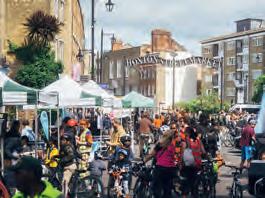
THE 2026 EDITION of the London Cycling Festival — on Sunday 20 September — is shaping up to be bigger and better than ever. With 15 boroughs taking part, 40 led rides, and four festival hubs, there’s something for everyone.
In west London we will have Richmond Cargobike Fair in the town centre, where local suppliers will be showcasing all the latest cargobikes that you can try, plus rides to join, talks to engage with and live music.
The Westminster hub will be the main one, with music, food, drink, and games stalls, a closed riding area and a festival atmosphere in the heart of London. At the City of London hub there will be an added focus on accessible cycling, with Wheels for Wellbeing attending, and more led rides.
Finally, in the east, there’ll be the Victoria Park hub, with more of a ‘farmers market’ vibe, with cycling-themed fun and games. And in the north-east, the famous Tour De Waltham Forest will again take place, where you can join gold, silver or bronze guided rides around the marshland, wildlife reserves and historic buildings of the borough. On top of all this, feeder rides will be coming from all corners of the capital.
n To get your community, business, shop or group involved, register your interest here: lcc.civiplus.net/ssp/london-cyclingfestival-2026-pre-registration.

As another successful campaign wraps up, Tom Fyans looks ahead to the next mayoral election in 2028
AFEW WEEKS before the May local elections, I was catching up with Will Norman, London’s walking and cycling commissioner, and the only thing that seemed certain afterwards was that things were about to get ‘messy’ for active travel and cycling in London.
Post elections, things are certainly more complex, and 2026 will be remembered as the moment the traditional two-party system that has dominated London ended. Of course, a lot of boroughs will need time to work out how to deliver all sorts of policies when their constituent members might be from across the political spectrum. But as our news story (page 8) suggests, the results could potentially mean big wins for active travel, and cycling specifically.
Whatever happens next, I’m very proud of our Streets for Cycling campaign, that has seen parties and leaders elected in 15 boroughs that committed to completing TfL’s identified network of cycling routes by 2030. One outer London candidate to be leader said: “Congratulations to LCC —theirs was the only campaign of any note that was regularly emailing candidates.”
Thanks to all the local groups, supporters and members that took part in the campaign, which
saw nearly 1,500 actions taken at the local level. That work now continues, with the campaigns team at LCC busy briefing groups in just about every London borough on the results of the Streets for Cycling campaign, and next steps as cabinets and councils start forming.
At a time of change and political transitions in most parts of London, one thing we can be sure of is that LCC’s message that London loves cycling will remain constant. And thanks to the future efforts of our local groups, I’m also certain we will keep up the pressure to guide new councillors to push for more and better streets for cycling over the next four years, no matter which party or parties are in control.
Two years from now London will elect its next mayor, and the announcement of the local election results almost felt like a starting gun. It was striking that before the dust had even settled, Sadiq Khan was already talking in an article
“The big challenge now for LCC is to build a political consensus around policies”

Tom Fyans Chief Executive of the London Cycling Campaign
in The Guardian about “building a coalition of the willing” and the merits of collaboration, as well as talking up his environmental record, including on cycling. He was also keen to point to his own record of working successfully with the Green party in London on issues including air pollution and youth clubs.
The big challenge now for LCC is to work with others in building a political consensus around policies, to ensure London becomes a greener, safer and more inclusive city for all. So that whoever steps into the hotseat at City Hall has the space to build on the success of schemes such as ULEZ, the wide introduction of 20mph speed limits, LTNs and the quadrupling of the Strategic Cycle Network in London.
Our campaigning to ensure we get a full house of positive pledges on active travel and cycling from all the mayoral candidates for 2028 starts now!

We look forward to working with Mayor Khan and all political parties across the spectrum to improve cycling infrastructure and ensure the current record numbers of people cycling continues to grow. Cycling across the whole of London needs to be safe everywhere, and fun for everyone.
As Juanita Barreto-Monje found out at an early age, car-free streets allow you to see your city in a new light
ILEARNED TO RIDE a bike in Bogotá, the crowded capital of Colombia, situated over 2,000m up in the Andes mountains. Like many children, I started in the park, wobbling along short paths with my parents shouting encouragement behind me. But once I’d learnt the basics, riding in circles quickly became frustrating. I wanted to go further. I wanted to see the city.
My parents, understandably, were less enthusiastic about their child cycling among the city’s notorious traffic jams, rogue buses and motorbikes. Then one Sunday, they introduced me to something that changed how I saw both cycling and my city: Ciclovía
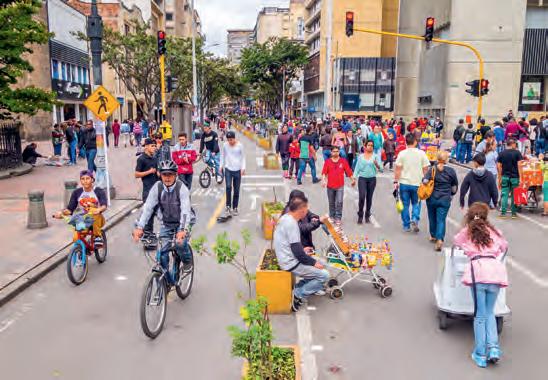
Every Sunday from 7am to 2pm, major roads across Bogotá are closed to cars and opened for cycling, walking, running and skating. Families come out together, friends meet, music plays, juice stalls appear. The city feels transformed. For me, it felt like freedom.
I could cycle for miles without fear, surrounded by thousands doing the same. It was joyful, safe and empowering. Ciclovía gave me confidence as a young cyclist, but also something bigger: a different idea of what streets are for. They didn’t have to belong solely to cars.
That matters because once people
experience streets differently, they begin to expect more from them. A road stops being somewhere to sit in traffic, it becomes public space: somewhere children gain independence, older people stay active, neighbours meet, and people who never thought cycling was ‘for them’ can give it a try.
That is why Ciclovía — which began in 1974 as a protest against car dominance — has endured in Colombia and spread worldwide, from Santiago to LA and Cape Town. For many women and new riders, traffic-free space can be the difference between cycling and deciding it is not worth the risk.
Just as importantly, it changes how people think about their city. Streets previously seen through windscreens become human spaces again. You breathe more deeply. You slow down. You notice the quirky details you previously rushed past. That cultural shift also creates pressure for political action.
“London could use Cicloviáto improve health, community and cycling uptake”

Juanita Barreto-Monje is an anthropologist and one of LCC’s new trustees
It is no coincidence that Bogotá now has the most bike lanes in Latin America and most popular Strava segment in the world.
So, what about London? This is not just a lovely Colombian tradition. It is a practical model London could use to improve health, community, confidence and cycling uptake.
London has come a long way. Safer cycle routes, low-traffic neighbourhoods and redesigned junctions have encouraged many more people to ride. Yet many residents and visitors still feel cycling is only for the brave, the fit, or those lucky enough to live near the best infrastructure. Too many children still grow up with parks as the only truly safe place to cycle.
A London Ciclovía would not solve everything overnight. But it could do something powerful: invite people in. It could connect neighbourhoods, support local high streets and let Londoners experience their city at human speed.
We know people want this. You can see it whenever streets close for RideLondon or are commandeered during Critical Mass. The appetite is there.
The question is not whether Ciclovía could work in London. The question is why we have waited so long to try?
Could the global oil crisis push more people towards active travel, asks Carlton Reid? History suggests it might...
BY THE TIME you read this, America’s war against Iran could be off, or on again. Even with peace, it will still take many months, perhaps years, before oil supplies from the Gulf get back to what they were before President Trump’s latest overseas conflict.
When a peace deal looked likely in May, the chief of the UAE’s state oil firm warned that, even with an immediate end to the hostilities, full oil flows through the Strait of Hormuz wouldn’t resume before the first or second quarter of 2027. Hence the suggestion that Trump could be more of a catalyst for greening the planet than a thousand Greta Thunbergs, because it’s now screamingly obvious to almost all that we need to wean ourselves off the black stuff.
During the major oil crisis of the 1970s there was a cycling renaissance, with bike booms in America and parts of Europe. There was even an uplift in the UK. However, the OPEC oil embargo of 1973 affected the Netherlands far more than any other European country; it was targeted as it was home to the Royal Dutch Shell company. Faced with dwindling oil supplies, the Dutch government reduced national speed limits and limited Sunday driving. All of the
country’s three million motorists were instructed to stay at home on Sundays, with few exceptions.
To promote a travel mode that didn’t require oil, the Dutch Prime Minister rode his bicycle through the grounds of his official residence in front of news cameras. The first no-drive Sunday was held on 4 November 1973. Cities went quiet; people held picnics on motorways. The no-drive days were later halted, but people had magically managed to go whole days without their cars without ill effect, and they had enjoyed riding their bicycles. During the oil crisis, bicycle sales in the Netherlands doubled.
The country was already the world’s top cycling nation — it had been laced with bike paths since the 1920s — but the uplift was significant. And that oil shock 50-odd years ago was small beer compared to today’s throttling of supplies — Trump’s ‘Operation Epic Fury’ is widely considered to have caused the largest oil supply disruption in history.
“What economists call ‘demand destruction’ will far outlast the current crisis”

and leading
journalist
Households and industries have had to find ways to use less oil, leading to what economists call ‘demand destruction’ that will far outlast the current crisis. Even in the short term cities around the world have seen a rise in people getting out of cars and riding public transport. Sales of new and used electric vehicles have grown substantially. Railways have reported more passengers than they’d usually have. And, yes, it appears that more people are already cycling, with more set to join us.
According to a survey commissioned by e-bike rental company Lime, almost a third of London’s drivers say they are now either cycling more or seriously considering it because of rising fuel prices. A further 15% of respondents say they intend to switch to cycling if pump prices continue to increase.
Alice Pleasant, senior public affairs manager at Lime, said: “Rising petrol prices are the latest in a number of factors prompting a shift in how Londoners travel, with many drivers actively rethinking their reliance on cars. More people are starting to look for alternatives that are affordable and flexible — cycling being the obvious choice.”
Silver linings and all that.
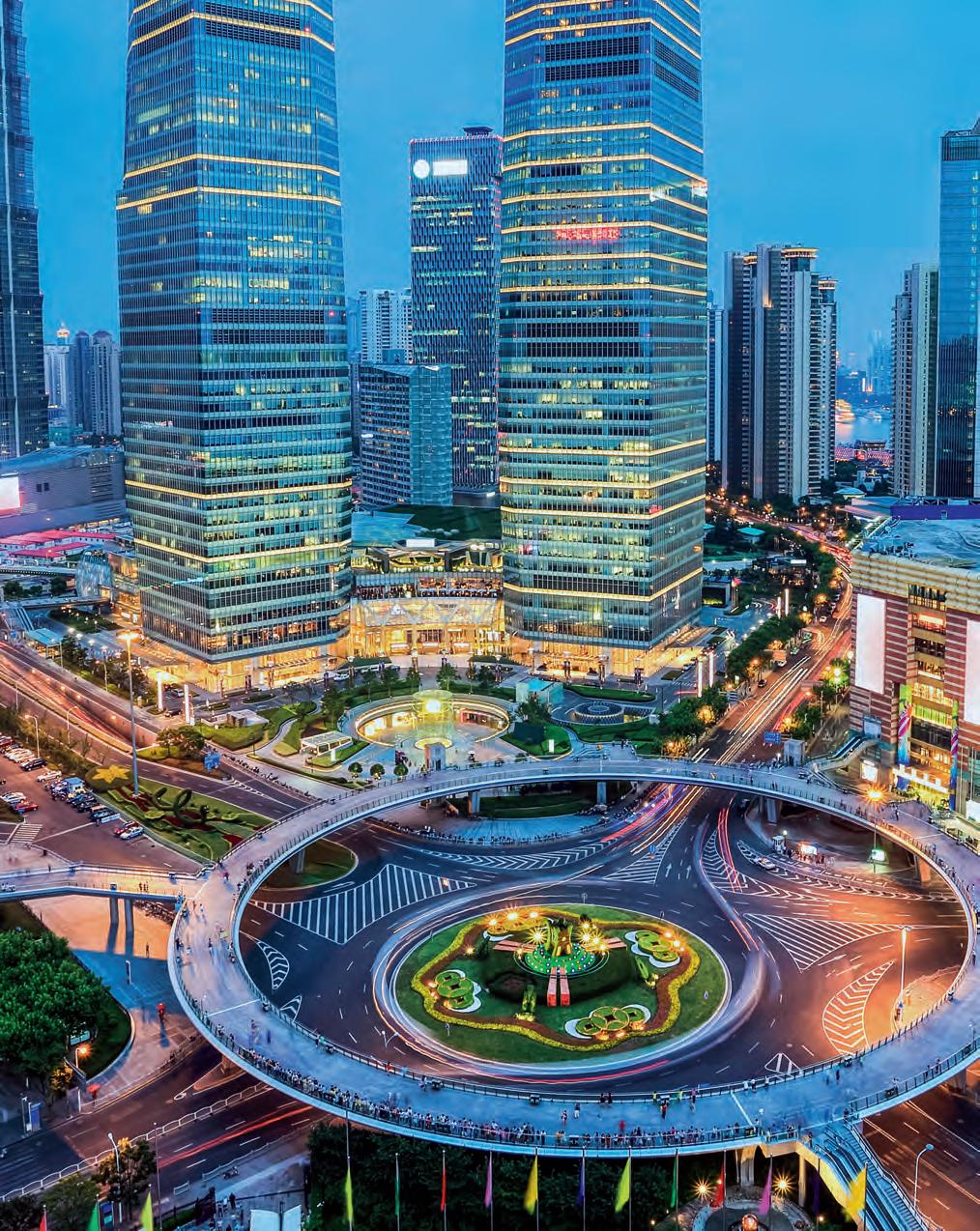
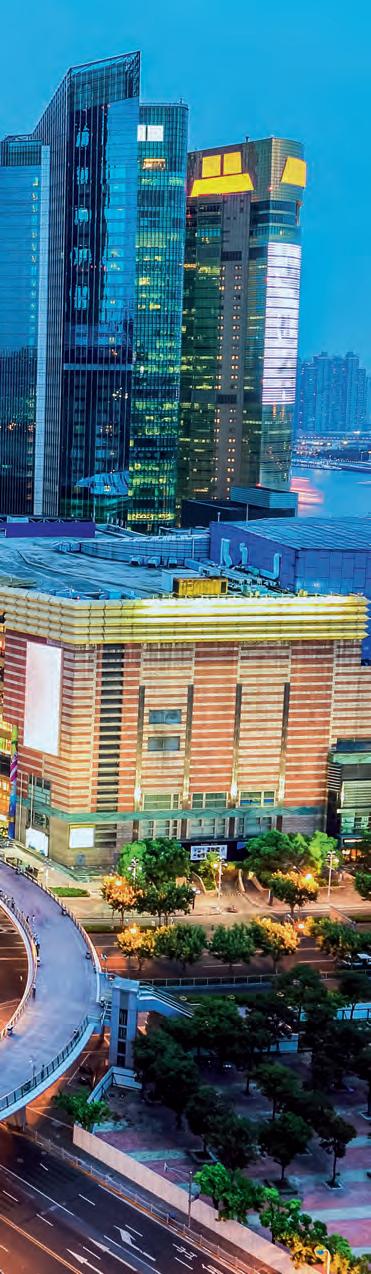
Our longtime yardstick for cycling progress has been Dutch cities, but they’re tiny. A better comparison is global megacities, so Simon Munk compares six major centres making big moves
THE STANDARD for every country, or city, to compare itself to when it comes to cycling has long been Dutch. LCC’s legendary 2012 campaign, ‘Love London, Go Dutch’ directly led to the creation of the capital’s busiest cycleway (C3) along the Embankment and C6 across Blackfriars Bridge, making the first route pairing protected along pretty much their entire length.
On top, then Mayor Boris Johnson committed to the campaign to deliver three Dutchstyle town centres, which ended up being the ‘mini-Holland’ programmes in Enfield, Kingston and Waltham Forest. Indeed the southern half of the latter borough now more closely resembles a Dutch city in quantity, quality and coherence of cycling infrastructure than just about anywhere else in the UK.
The Netherlands, then, has been the touchstone for UK and international cycle campaigning and culture for decades — but have we all been right on that? Most Dutch cities have more in common with England’s university towns than London itself. Amsterdam, the largest city, has less than a million inhabitants, while Utrecht has a population of about 375,000. Croydon, Barnet, Ealing
and Newham all have larger populations than the fourth largest Dutch city.
If we look at the Randstad conurbation — which takes in all four of the largest cities in the Netherlands (Amsterdam, Rotterdam, The Hague and Utrecht) — this gets us to 8.4 million residents, which is more comparable to London’s near 10 million residents. But it’s at a massively different density — Greater London spans roughly 1,500km2, Randstad is about 11,400km2. So, instead of ‘Love London, Go Dutch’, what should we be modelling our future on?
In the last few decades, a new category of ‘megacity’ has appeared. London may not technically qualify to join this elite circle of some 50 global cities based on its most common definition: more than 10 million inhabitants. But taking into account London’s iconic status and the more nuanced megacity definition of ‘over 5 million inhabitants and a population density of 2,000 residents per km2’, then London’s in.
Jakarta is the world’s most populous megacity (over 40 million residents), though cycling mode share is under 1%. So here we’ve picked a few megacities worth comparing to London to see what they’re doing about active travel, and what works and doesn’t.
Population: estimates range from 30-40 million for the metropolitan area
Size: 6,340km²
Population density: just under 4,000 people per km² (metropolitan area)
Cycling mode share: 2% in 2022. (40% public transport; 21% walking; 36% private motor vehicles). Women cycle less than 30% of all trips made.
What has Shanghai been doing to make cycling better?
In Shanghai and many Chinese cities, the pre-pandemic story was one of gradually declining cycling numbers and mode share, as more and more people could afford to run cars instead. The pandemic, however, brought both a political shift recognising the need to ensure more people cycled and fewer people drove in China’s megacities and, at the same time, the arrival of dockless
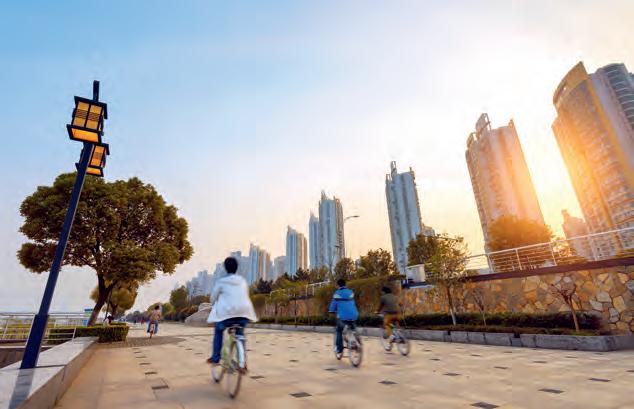
hire bikes as a mass mode of transport.
Dockless hire in China’s megacities has proven staggeringly successful — possibly because it’s far cheaper than it is in the EU, UK and US. In 2025, hires were the equivalent of about 25p, regardless of distance.
As a result, China has even witnessed gigantic ‘critical mass’ organised bike rides using hire bikes from city to city. The 2024 night rides from Zhengzhou to Kaifeng rapidly grew to over 100,000 participants — apparently partly to get
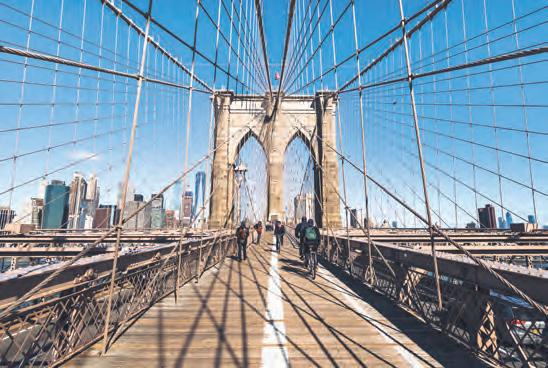
Population: approx. 8.6 million
Size: 778km²
Population density: approx. 11,300 people per km²
Cycling mode share: 3% in 2023 (41% public transport; 28% walking; 28% private motor vehicles). Women cycle roughly 25% of all trips made.
What has NYC been doing to make cycling better?
New York’s love affair with cycling has been a matter of fits and starts, largely dictated by mayoralty. Under Mayor Mike Bloomberg (2002-2013) and his transport commissioner Janette SadikKhan (2007-2013), NYC not only delivered major transformations of iconic locations — such as pedestrianising
famed breakfast dumplings — before authorities stopped the rides.
In Shanghai specifically, there are currently believed to be around 300,000 hire bikes available from multiple providers (London is estimated to have under 100,000 docked or dockless cycles). The city has also seen a rapid proliferation of ‘bike lanes’, though these are shared between traditional cycles, e-bikes and delivery e-scooters (there appears to be a significant shift away from mopeds towards e-bikes).
Times Square — but also 400 miles of bike lanes (only some protected) and America’s most popular hire bike scheme, with 6,000 Citibikes available. However, nearly all that progress stalled under Mayor Bill de Blasio, with some cycle routes mired in legal actions and several initiatives aimed at penalising cycling or increasing amenity for drivers.
It’s early days yet for Mayor Zohran Mamdani, but he’s already started unlocking stalled cycling schemes and is regularly filmed riding around on a Citibike. He also arrived just as New York’s long-delayed congestion charging scheme did. A first for an American city, and hugely controversial, the charge has so far been evidenced to cut driven journey times far outside the Manhattan area it runs, cut collisions and cut pollution.
New York’s streets are largely designed in grids, often one-way, and perfect for protected bike lanes — where these have gone in, New Yorkers are using them, but they are often narrow, potholed, often disappear and aren’t in anywhere near enough locations yet.
Population: approx. 38 million for urban area
Size: 8,547 km²
Population density: approx. 4,500 people per km²
Cycling mode share: 14% in metropolitan area (51% public transport; 23% walking; 12% private motor vehicles). Women cycle 57% of all trips made.
How has Tokyo been making cycling better?
Tokyo’s an incredibly dense megacity, with a very restrictive approach to driving — you can’t even buy a car until you have access to a car parking space, which can be hard to gain and very expensive too (upwards of £350 per month for more central spaces). And while car use is very tightly restricted, cycling is fairly commonly allowed on pavements at slower speeds (although there are increasingly calls for ‘shared space’ provision to be more tightly controlled).
Population: over 11 million
Size: 1,587km²
Population density: approx. 5,000 people per km²
Cycling mode share: approx. 8% (39% public transport; 32% walking; 21% private motor vehicles). Women cycle 24% of all trips made.
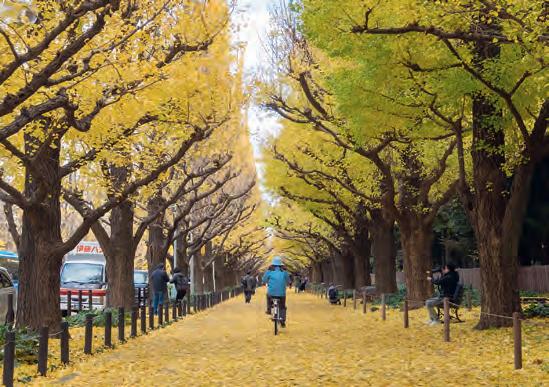
As well as reducing motor traffic, particularly in its dense core, Tokyo’s public transport system and its popularity is legendary — which in turn might well explain why so many women choose to cycle in Tokyo. Not only is cycling very safe and often protected from motor vehicles (primarily by being on the pavement), but cycling also works in concert with public transport often
to provide the ‘right tool for the job’ and this dovetails neatly with Japan’s culture of mamachari (‘mum’s bike’). Most cycling in Tokyo is done for journey distances of 2km or even less.
Mostly bike trips are for local, often suburban, journeys — to the shops, school and to meet friends. Whereas, like the Dutch, Tokyo residents use trains to get to work in the centre, then walk.
What has Bogotá been doing to make cycling better?
Since 1974, Bogotá has been closing a significant and growing amount of the city’s streets every Sunday. In 1974 that was 5km, now 50 years on it’s over 100km of streets. Those streets see an average of two million residents out cycling, skating, wheeling and ambling each week, out of a population of over 11 million.
The Covid pandemic, like in London, enabled the city to rapidly roll out more cycling infrastructure — with nearly 100km of protected cycle lanes being delivered during the first year alone, alongside plans for a much larger network. However, many of those trial lanes (unlike London) have subsequently been removed, although the network does now total at, or over, 600km.
Bogotá also boasts one of the most developed electric bus fleets outside of China (and London) and a 3,000+ hire bike fleet, with the city providing handcycles, cargobikes and cycles with childseats as part of the fleet, as well as discounts for lower income residents.
Population: approx. 11 million (central urban area)
Size: approx. 2,800 km²
Population density: approx. 4,000 people per km²
Cycling mode share: 2% overall, but 11% in the centre. (36% public transport; 16% walking; 46% private motor vehicles). Women cycle 40% of all trips made (2020).
What has Paris been doing to make cycling better?
Mayor Anne Hidalgo brought with her an incredibly bold plan on pollution and moving away from private motor vehicle use, then during the pandemic that morphed into an incredibly bold plan for pedestrianisation, low-traffic zones and cycle tracks too — many delivered in the centre at a very rapid pace. Now Hidalgo’s successor has promised to go further, following a
Population: approx. 9 million
Size: approx. 1,500km²
Population density: approx. 5,800 people per km²
Cycling mode share: 5% estimated (40% public transport; 23% walking; 33% private motor vehicles).
What has London been doing to make cycling better?
Last, but decidedly not least, London may feel like it’s been resting on its laurels because it’s home — and we can all see the frustratingly slow pace of progress up close and on streets we know only too well. But if compiling this article has taught us anything, it’s that actually London is doing an awful lot of things right, all at once and moving things forward. Despite the hype for Paris currently, London arguably has pushed further out of the city centre, and is doing more across a multiplicity of approaches than its key rivals. Yes, London really could do with
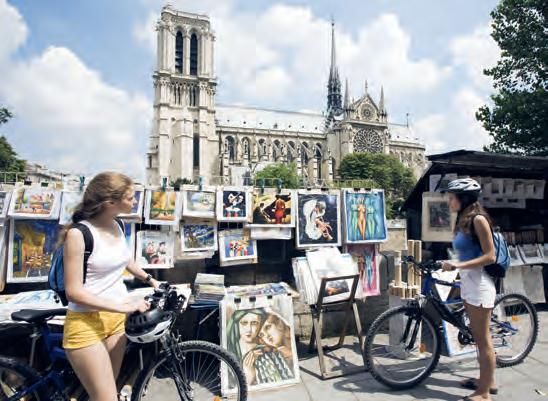
knife-edge election that ultimately saw pro-cycling progressives win control of the city again.
To understand the scale and pace of Hidalgo’s cycling revolution, cycling journeys doubled in one year (2022-2023) and those cycling now (as they do in central London) outnumber those driving on core routes. Central Paris has not only a low-traffic zone that encompasses an area larger than our West End, but also copious examples of iconic traffic-free or cycle track routes through the central area. London and
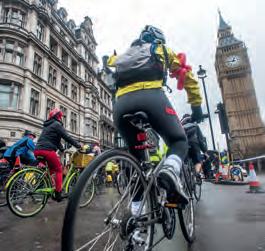
emulating Bogota’s ciclovia movement — LCC’s London Cycling Festival, coming 20 September this year, is a small nod to it — but really, our inability as a city to banish motor traffic for anything other than the marathon is shameful. And London could do with learning a ‘Low Traffic West End’ lesson from Paris, whose central low-traffic zone is already much larger. Indeed, Tokyo’s (and Dutch cities’) embracing of suburban 2km cycle rides to stations and shops has only ever been partly implemented in Waltham Forest’s mini-Holland schemes around Walthamstow. And, sure, while
New York have well and truly been eclipsed on active travel by this Parisian showstopping change.
Like London, however, Paris is a far bigger megacity region than its buzzing urban core — and its cycle routes, like London, have failed thus far to really reach coherently and connectedly beyond the Boulevard Périphérique (its equivalent of the North and South Circulars). This area is about 10km from north to south and 11km east to west, in comparison to the rough ‘inner’ London size of 24km by 19km.
we do have bike share, we’re left waiting for a London-wide dockless contract that works for everyone, while half of Shanghai goes on dockless nightrides for fun.
However, the congestion charge and ULEZ, the rise of dockless hire, cycle parking on residential streets, the innovation and spread of both School Streets and Low Traffic Neighbourhoods and, of course, the quintupling of cycle tracks on main roads shouldn’t be forgotten. TfL’s Cycleway map shows routes that reach the very northern tip of the capital at the M25 in Enfield, eastwards to Barking Riverside on one side of the Thames and to Erith on the other, and westwards out towards West Drayton (although the quality of that is very questionable) and certainly to Brentford. South London remains ‘patchy’ sadly.
Going forward we’ll need a lot more of all those positive things for London to continue to lead and inspire. But it’s also important to remember just how far we’ve come in a few short years.

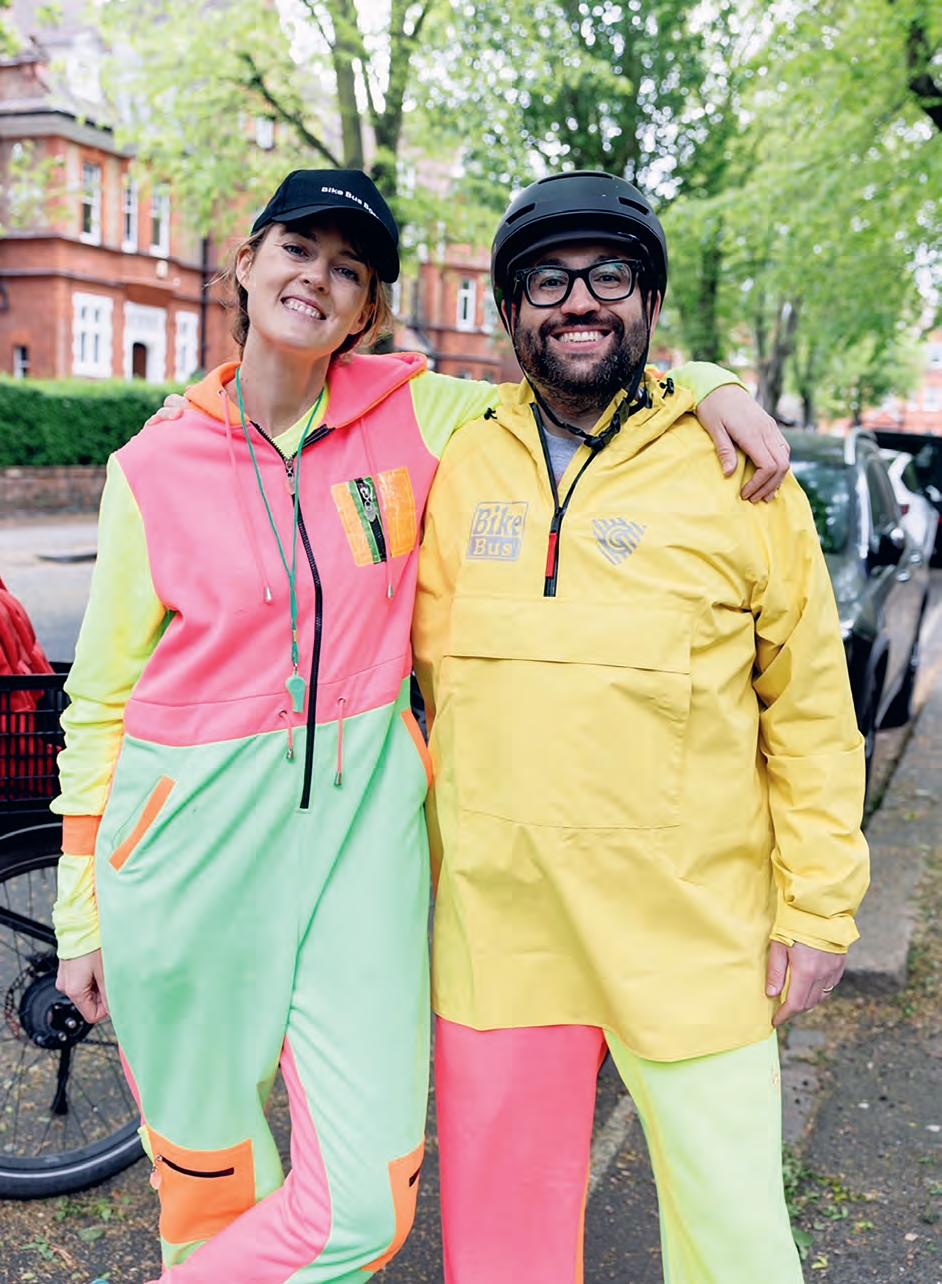
We speak to the Portland-based founder of Bike Bus World about the importance of embedding active travel habits in young people
Many LondonCyclist readers will be familiar with the idea of bike buses, but for the uninitiated can you explain what they are?
A bike bus is a group of kids and adults riding to school together, on a set route with planned stops, just like a traditional school bus, except on bikes. It usually runs regularly, not just as a one-time event.
When and where did you start your original bus and how many kids joined in?
I started my first bike bus in 2022 in Portland, Oregon with just a handful of students, around five to 10 kids. It grew quickly from there.
The kids loved it and they wanted to do it weekly. So within three months of doing it consistently it grew to one-third of the school pupils riding together — it shows the power that consistency and showing up has.
And what was the reason or inspiration for starting one?
I saw how many kids were missing out on movement, independence and connection before school. I wanted to create a way for them to start their day feeling energised and part of something.
As a PE teacher it’s always been important to get my students moving, but I only saw them once a week and recess was just 15 minutes a day. Bike
Fluoro
bus is a great way to build physical activity into their schedule and give them lifelong active transportation skills. Since starting the first bike bus we see more students riding on non-bus days than before.
What do you consider the principal benefits of a bike bus?
Kids arrive happier and more focused, they get daily physical activity, families build community and it makes streets safer through visibility and numbers.
I call bike bus the Swiss army knife to school and community issues. The benefits are so many, but the one I personally love the most is how it builds students’ confidence and helps them gain independence which they so desperately need.
Did you encounter much resistance from schools or parents when you started running your early bike buses? And if so, how did you counter that?
Yes, mainly around safety concerns. The best way to address that was to start small, show it working and invite people to come see it for themselves.
The picture across London (and the UK) is mixed when it comes to such rides, with some schools and parent groups embracing them, while others are wholly opposed. And sadly there’s plenty of schools that just don’t allow any children to cycle at all. What have you found are the best ways to promote the benefits to ‘unsympathetic’ parties?
Show, don’t tell. When people see a bike bus in action, kids smiling, riding safely together, it changes how they think about it.
I have heard multiple stories of school administrators initially not wanting to support the bike bus efforts by parents, but then the bus has become such a massive success that the administrators
have no choice but to support this genuinely positive community initiative.
How many children are needed for a bike bus?
You can start with just one or two kids. Consistency matters more than size.
Are the ride leaders always parents or do they come from outside (town/city authority)? Do they need to be trained or have a qualification in cycle proficiency/ leadership?
Most rides are led by parents, teachers or community members. Formal training helps, but it’s not required. Clear roles, communication, and planning skills go a long way.
And what about insurance? Does everyone need to sign a waiver before joining a ride or is it all much less formal?
It varies. Some groups use waivers, others keep it informal. It depends on local laws and school involvement.
We’ve had guests like Benson Boone and Justin Timberlake join us, which brings a lot of excitement...
In your part of the States (Portland, Oregon) how many bike buses now exist and how many are now involved? And how many children on average join each bus? What about across the US as a whole?
Portland has dozens of active routes across the city now. And across the US there are hundreds of communities running bike buses, with participation ranging from a few kids to more than 100 on a single ride. It has been amazing to see the bike bus movement grow locally in Portland. What started with my route has grown to over 30 bike buses around the city. We have come together to create BikeBusPDX, which is the leaders working together to advocate for better policy and funding, and to support more people starting bike buses.
While there’s been a few bike buses running for 15-20 years in dotted locations across the UK, there seems to have been a large spike in interest and participation after the Covid pandemic — did you see the same pattern in the US?
Yes, significantly. Families were looking for ways to be outside, connect and rethink their daily routines. Bike
buses fitted that moment perfectly on multiple levels.
Is there a ‘good’ length for a bike bus ride, or does it really depend on the age and ability of the children?
It depends on the kids, but most bike buses tend to be between one to three miles, though I have done some that are half-a-mile and some that are four miles — and they are all amazing. Shorter routes are often the most sustainable. Aim for a distance that will allow you to show up consistently.
Clearly safety is a key concern for anyone wanting to cycle with kids generally, with the places having the best quality, most joined-up local cycling infrastructure unsurprisingly seeing the highest young cyclist numbers. But in areas where cycle lanes are patchy at best, how can organisers ensure the rides are safe enough for everyone?
Group riding creates visibility and safety in numbers. Routes are chosen carefully, speeds are slow and adults manage intersections (junctions). It’s not perfect, but it works and often highlights where better infrastructure is needed.
You’ve developed a strong presence on social media — where the kids call you ‘Coach Balto’ — and your videos do a great job of showing how fun bike buses can be.
Keep them interested: with themed rides, music and more
Tell us about some of the themed rides you’ve run and a few of the famous faces who have joined you?
We’ve done everything from music-themed rides to holiday rides. We’ve even had guests like Benson Boone and Justin Timberlake join us, which brings a lot of excitement and attention to the movement.
How did you manage to get music stars like Benson Boone and Justin Timberlake to ride along? Who else is on your celebrity wish list?
We reached out and showed them what we were building — and when people see the impact and energy, they want to be part of it. There’s a long list of people I’d love to ride with.
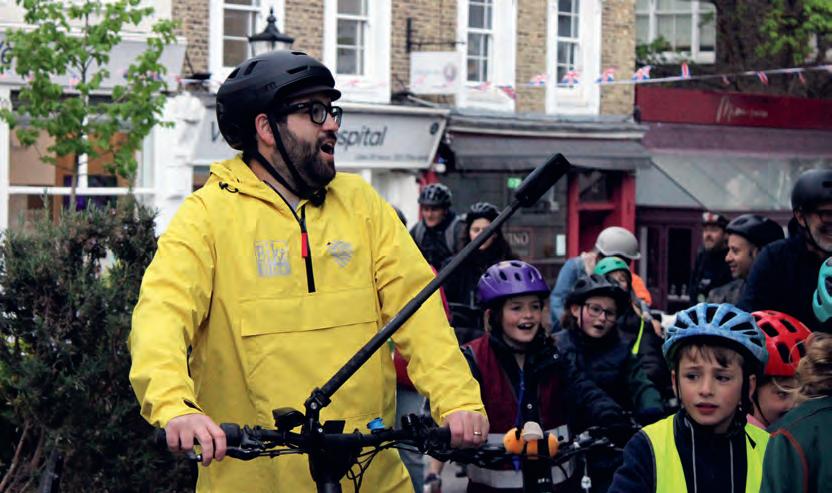
On the way to this year’s Bike Bus Summit in Lisbon, you stopped off in London to join a bike bus in Camden — how much fun was that?
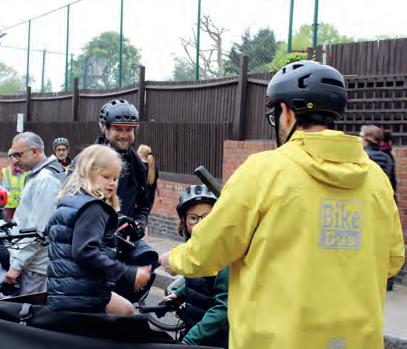
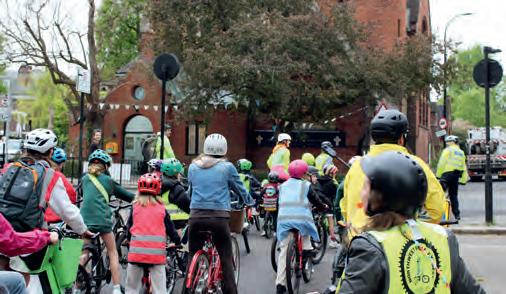
I was excited to join a local ride in London, meet leaders and help amplify what’s already happening. Every city does things a little differently, and that’s part of the magic. But the Camden Bike Bus was absolutely incredible to experience. I was most blown away by the community effort to have the bike bus drop off at multiple schools, which I have not really experienced before. I was also amazed by how engaged the local police were to support the bike bus.
Finally, what is your ultimate goal with Bike Bus World?
To make it normal for kids to walk and bike to school again. Bike buses are a simple way to rebuild that culture, creating communities that work better for kids.

Smart, beautifully-crafted and versatile, this is the perfect solution for modern households
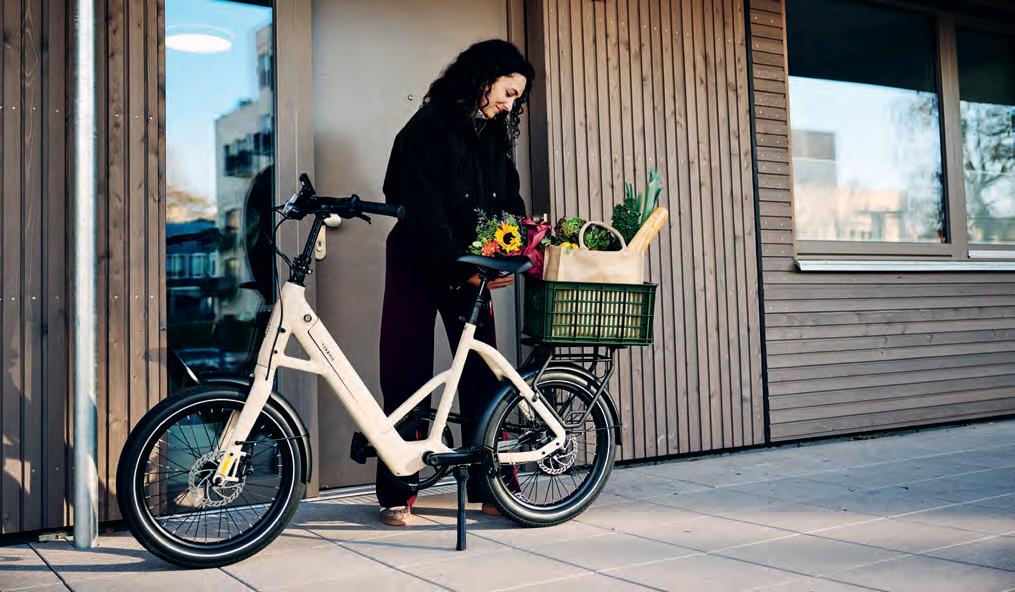
MEET THE Tenways CGO
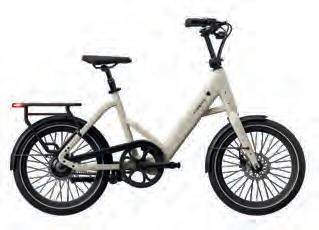
Compact — a sleek, spacesaving e-bike designed for modern urban living. Built with a minimalist aesthetic and intelligent engineering, it effortlessly blends style, comfort and practicality into one mini masterpiece.
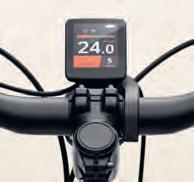
Powered by a responsive 250W rear hub motor and advanced torque sensor, the CGO Compact delivers a smooth, natural riding experience with every pedal stroke. Combined with a high-capacity 500Wh removable battery, it provides up to 100km of range, giving you the freedom to commute, explore and run daily errands without worry.
The Gates carbon belt drive replaces a traditional chain to ensure a clean,
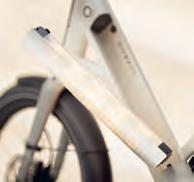

quiet and maintenance-free ride — no grease, no hassle, just pure performance. While integrated front and rear lights illuminate your route without blinding other road users.
From daily commuting to weekend adventures, the CGO Compact adapts seamlessly to your lifestyle. Super easy to store and with myriad smart features (accessed via the Tenways app), durable components, and that versatile rear carrier for cargo or childseats, it’s more than just an e-bike — it’s your reliable do-it-all companion for every journey.
Sam Stephenson meets six inspirational cycling women who can now say that there’s one of London’s iconic hire bikes out there with their name on it...
TO MARK THIS year’s International Women’s Day, TfL asked Santander hire bike users to nominate those women who they felt had done the most to inspire and help others access cycling.
Of the more than 150 nominations received, eight women currently cycling in London were chosen to have a Santander bike named after them. They are:
n Anna Benbow: Founder of Northwest Pedal Express in Brent, recognised for leading weekly bike buses that help children travel to school safely and confidently.
n Emily Chappell: Ultracyclist, courier and author, celebrated for inspiring women and girls to see cycling as a route to adventure and confidence.
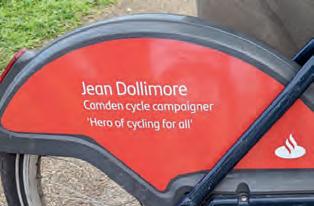
n Jean Dollimore: Camden cycling campaigner for more than two decades. Drawing on her data expertise, she has shaped local decisions on safer cycling infrastructure.
n Dr Jenny Drife: Consultant Psychiatrist leading the START homeless mental

health outreach team. She cycles daily across Lambeth and Southwark to reach rough sleepers in parks, tents and hostels, providing care where it’s needed most.
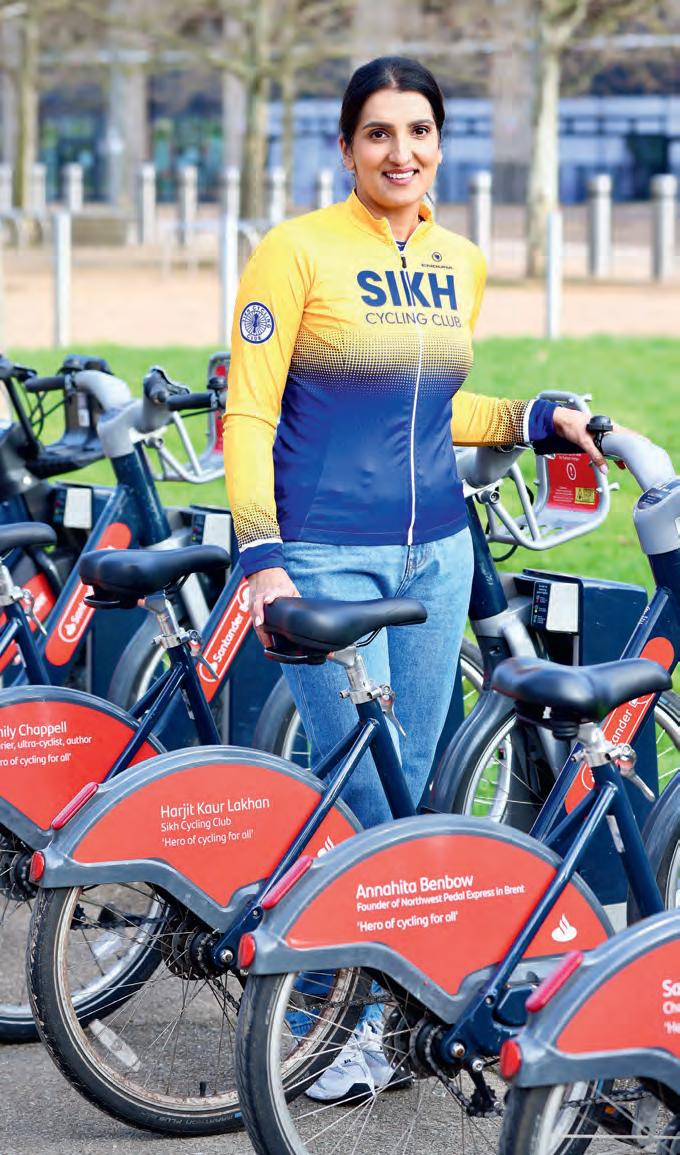
n Harjit Kaur Lakhan: Sikh Cycling Club leader, honoured for helping women (particularly those from disadvantaged backgrounds) to access cycling.
n Naomi Rumble: Director of Together We Ride (TWR), recognised for empowering women (especially Black women) to embrace cycling joyfully and confidently.
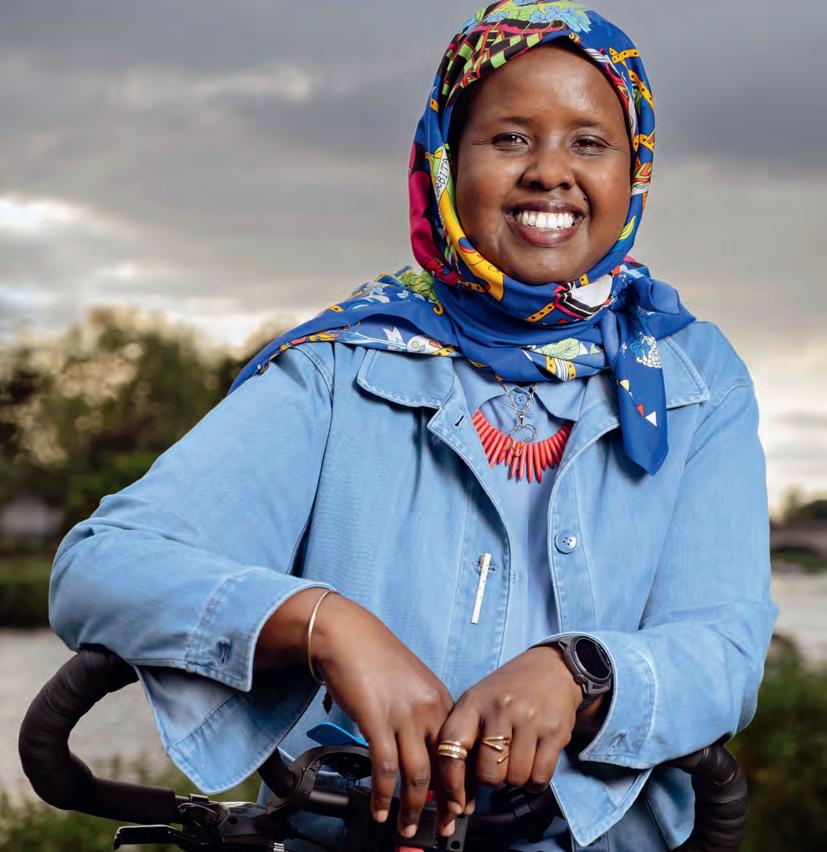
n Samra Said: Chair and ride leader of Cycle Sisters. Under her leadership, Samra has transformed access to cycling for Muslim and ethnically diverse women, growing the network to more than 2,200 riders.
n Carol Summers: London Ambulance Service paramedic of more than 20 years and Cycle Response Unit leader, honoured for inspiring confidence in female paramedics to cycle.
To celebrate this, we caught up with six of the eight, to find out more about their work and how it feels to have a bike, literally, with their name on it…
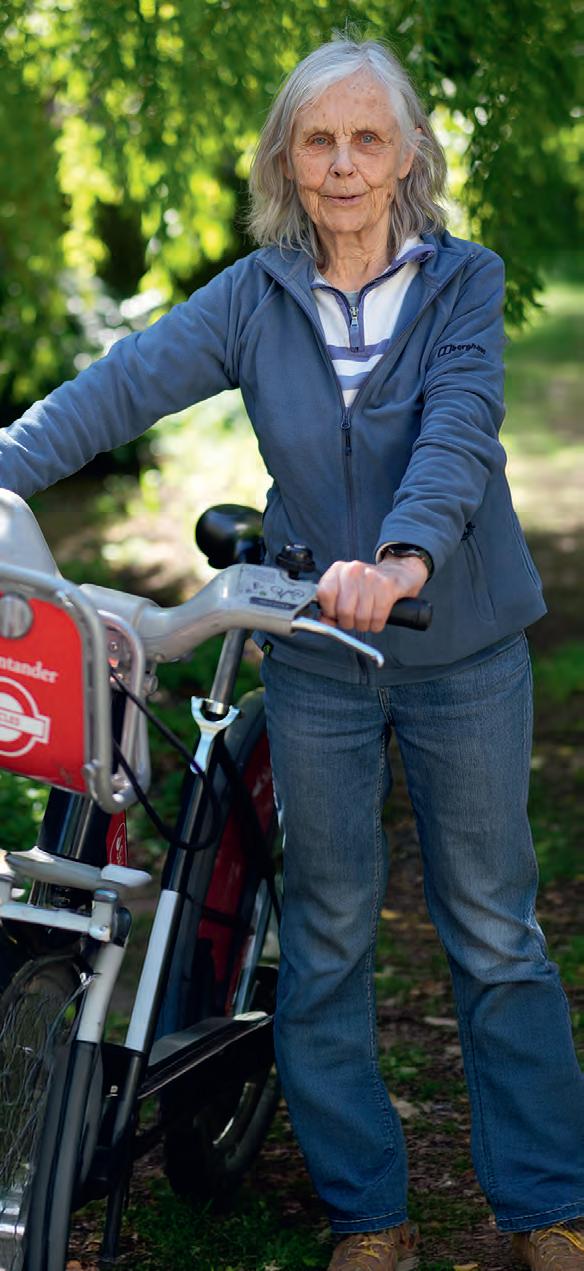
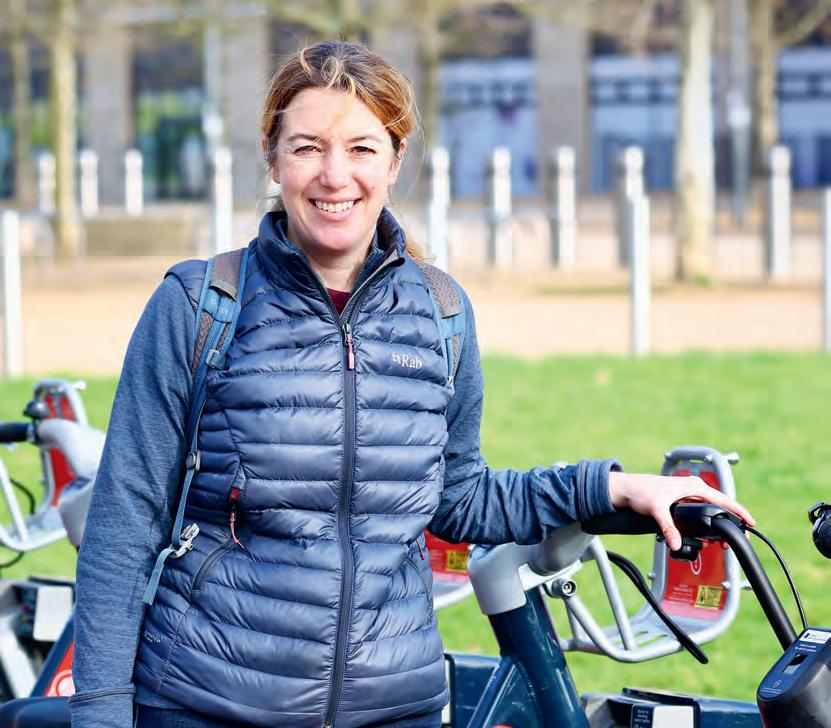
Borough: Camden
Role: Longtime LCC group coordinator
How has London changed, particularly from the perspective of transport and cycling?
I didn’t get my bike until I was 11, which was in 1945, and, of course, there was very little traffic. I did cycle to school using main roads, but nobody minded. But then I went to university in London, and I forgot about the bicycle until I moved in with my partner, who thought cycling was important, and he even produced a bike for me.
We were both working at St Mary’s College (both were computing pioneers – Ed) and we cycled to work, but the roads were very, very hostile in those days. And I was a bit of a coward, so we usually went along the canal towpath.
I initially joined LCC as a supporter. And it wasn’t until I retired in about 2000 that I got interested in campaigning. Our local coordinator was desperate for help, so I got in touch and did the newsletter and all sorts of things, and it all became very interesting. Then I said I think I could answer a consultation and they looked at me and said: “Are you sure?” I think they had the idea that the women would run the stalls and that men would do engineering stuff. But I found doing consultations interesting. After that I became joint coordinator of the group and a lot went on in those years: Royal College Street, Tavistock Place, and later Midland Road, Judd Street.
What keeps you campaigning?
It’s because things keep happening. It’s interesting too, particularly since we’ve had good council officers running the planning. Camden wrote a full transport strategy and every year they’ve done updates on it. And if someone tells them they can’t put a cycle lane up Haverstock Hill, they say ‘it’s in our plan’. It is such a brilliant idea. It doesn’t mean things always get through the consultations easily. But it’s always good to see this (cycle) network growing. And where it’s going to go next?
I also write a newsletter (on new cycle infrastructure) four times a year and we are tough on the council team at times, but then they do good things and we praise them — it helps them to get on with what they are doing.
Borough: Lambeth & Southwark
Role: Consultant Psychiatrist, START homeless mental health outreach team
According to the latest figures, in London alone there are 1,277 people sleeping rough. Reaching many of those individuals can be a challenge, but for Jenny and the team at START, it’s one they’re more than willing to rise to.
Every day, Jenny and others in her team, cycle around south London, speaking to homeless people who’ve been referred to them as possibly suffering from a mental illness.
What are some of the challenges that come with the job, that readers might not be aware of?
A lot of the challenges are linked to the systems we have in place. The number of homeless people across England is the highest it’s ever been. This makes the problem of housing more difficult. There is also increasing demand for mental health services.
But on the flip side, what makes this job a real privilege is being able to build these relationships with people, hear their stories, and try to help in any way we can.
How helpful has cycling been in reaching the people you need to see?
I cycle everywhere. It’s the same for many of my team, because it’s the best way to get around to see people. In a typical day I might cycle 30km.
We often cycle around parks, which you can cover very quickly on a bike. You’re also above ground, so you might see people that you’re not expecting to when you’re cycling from one to the other. Plus, it’s much quicker and nicer than the tube or the bus.
What was your reaction to having a Santander bike named after you?
I was honoured and delighted. One of the nurses in my team, Rosa, who also cycles everywhere, nominated me. It was humbling to meet all the other women who’d been recognised for their work too, because so many do so much to bring cycling to more people, which is something I feel passionate about.
Borough: Brent
Role: Northwest Pedal Express founder
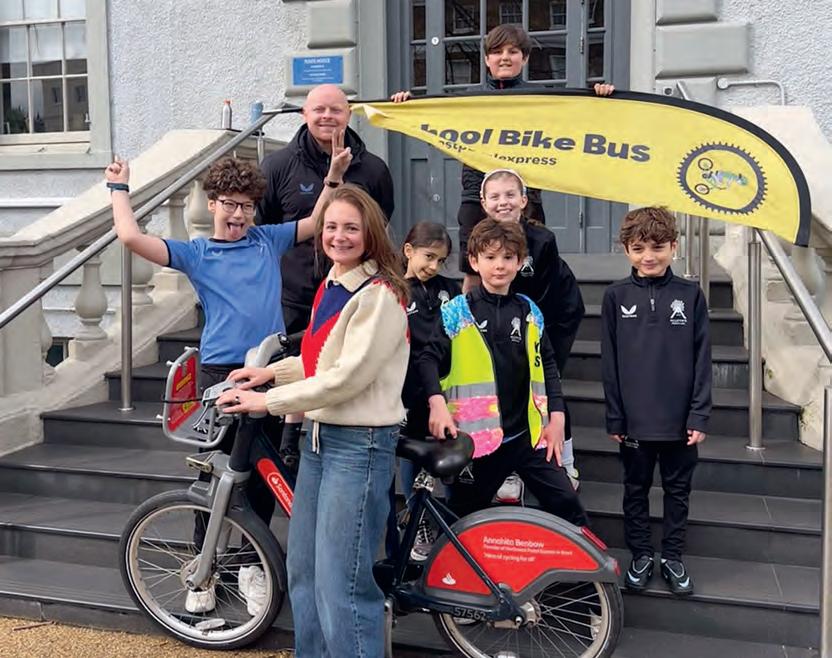
When Anna’s son’s school suddenly closed, the journey to the school gates jumped from a one-mile cycle/walk through a conservation area to a fivemile route on busy London roads. But while some parents might have bitten the bullet and loaded up the car, Anna took a different approach.
Having been inspired by bike buses around London, as a way for a whole group of children to cycle to school safely, she decided to start her own one: Northwest Pedal Express. Local families jumped on board and now nearly 50 children join each ride.
What kind of impact have you seen
since starting your local bike bus?
We have received very positive feedback from families who never considered cycling to school as a possibility. One single parent said: “I never thought I’d be confident enough to cycle from Willesden to Camden with my daughter, but now I’m converted! You’ve made it possible for us to get out regularly and grow in confidence. It’s such a wonderful and joyful way to start the day.”
It’s great to be told that, but it’s also wonderful to see the positivity from pedestrians and people walking to work and getting high-fives from bus drivers.
What’s been the most rewarding part of seeing it grow?
Getting to know other families in
our community and across different schools has been wonderful for us and our son — we’ve all made new friends.
It’s also been great seeing how other parents have followed our journey and started their own bike buses, locally and further afield, creating a ripple effect that extends our impact far beyond our immediate community.
Any advice to parents reading this who might be inspired to set up their own bike bus?
Start small — really all it takes is just one other family to build a bus! Same time, same day each week. The biggest challenge is keeping momentum through darker, wetter months, so make it fun and try to keep the atmosphere electric.
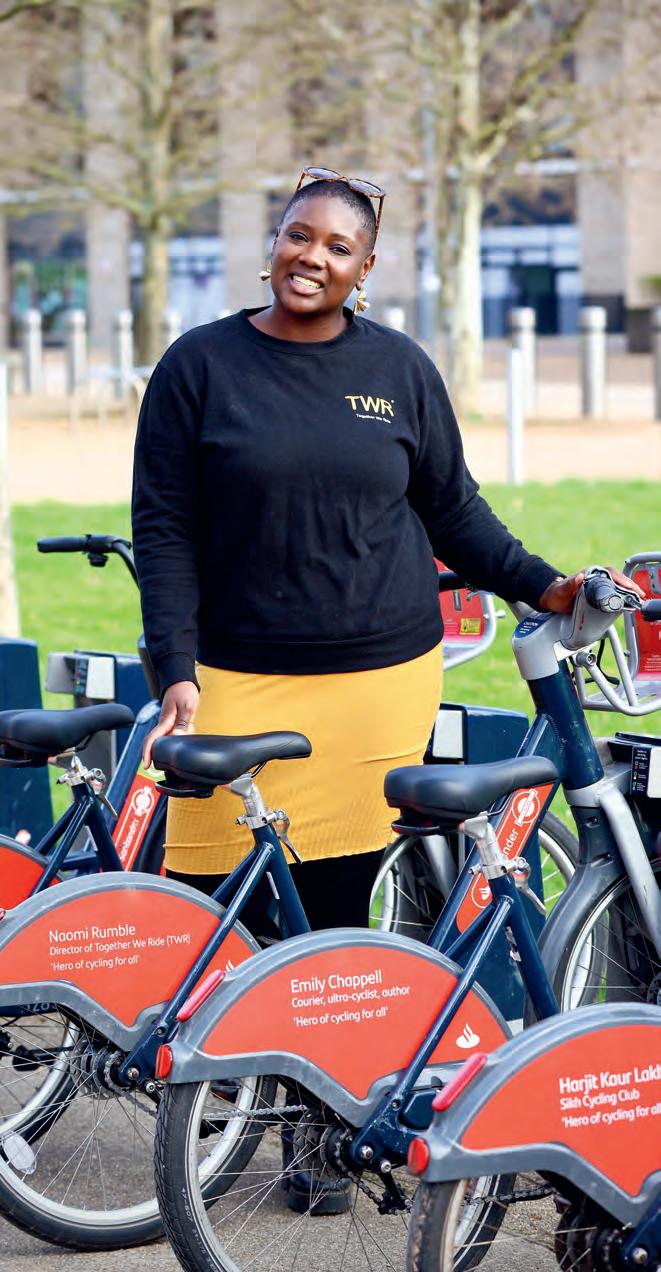
Borough: Croydon
Role: Director of Together We Ride
For Naomi, ironically, it was only going on her first ride with Together We Ride (TWR) that she realised she wasn’t a cyclist (or at least not yet). After a London to Brighton challenge with her dad in 2019, her bike was left untouched for a year, until in 2020 she responded to a Facebook post from TWR founder, Wayne Francis, seeing if people fancied a ride.
His message of looking for people to be part of a new inclusive cycling group resonated with her — so much so that she’s now the group’s director, overseeing the dayto-day running of TWR.
How do you balance being a cycling group and a social group?
When the group first started out, during the Covid pandemic, people were craving that social connection. As a result, that side of things developed naturally.
Speaking personally, the main reason I cycle is the social aspect. It’s the chats you have out on a ride that truly helps build that community element.
What aspect of the work you do with TWR are you most proud of?
To see people develop and see how that in turn inspires someone else in the group — that’s really special to see. It also makes all the stuff that goes on behind the scenes, the hidden work that everyone who helps run a group like ours does, worthwhile.
What is one aspect of TWR that you’d like readers to know about?
That we are, above all else, a community cycling family. We’ve started to put on more events off the bike, to help foster a bit more of that connection. So, for every ride to Southend or lap around Regent’s Park, there’ll be a meal at a Vietnamese restaurant, or online chat. It all adds up to what Together We Ride is all about.
Borough: Redbridge
Role: Sikh Cycling Club leader
Having first been introduced to the Sikh Cycling Club through her husband, it took a little while for Harjit to find herself at home in a group where the confidence and ability of the other riders was somewhat above her own. However, fast forward to today and Harjit is now one of the club’s most active leaders. This is thanks to the way that group rides with the club helped her improve her skills and showed her just what a positive role cycling could play in her community.
What does your role at the Sikh Cycling Club involve?
Mostly supporting the organisation and development of the club, as well as contributing to its continued growth. This includes planning routes, ensuring that all members feel safe and included, mentoring newer cyclists and assisting with events and community outreach initiatives. I have also had the honour of serving as chairperson for two consecutive years.
What do you find to be the most rewarding part of your role?
I think it is witnessing the positive impact the club has on its members; seeing individuals grow in confidence, improve their fitness, or develop that sense of belonging. Being part of an initiative that fosters connection and contributes positively to people’s wellbeing is immensely rewarding.
What would you say to anyone thinking of getting involved with a similar cycling group?
I would strongly encourage it. You do not need to be an experienced cyclist, as these groups prioritise inclusivity and mutual support as much as participation in the sport itself.
It is an excellent opportunity to stay active, meet new people and become part of a supportive community.
Borough: Hounslow
Role: Chair & ride leader of Cycle Sisters
Founded back in 2016, Cycle Sisters is a charity that creates accessible and empowering spaces for Muslim and ethnically diverse women to cycle and become more healthy, confident and connected. The woman who received the most nominations for the Santander bike is the chair of its board of trustees, Samra Said. Her journey into the world of Cycle Sisters began back in 2020 with a WhatsApp from the founder, Sarah Javid, inviting her to apply for a role as a trustee. Despite the Covid pandemic lockdown coming just days after getting the gig, that didn’t stop Samra
becoming involved and assisting in the great work the group does.
What makes Cycle Sisters so special to you?
The fact that, at its heart, it’s all designed with Muslim women, and the needs of Muslim women, in mind. I don’t take that lightly and neither does the team I work with.
It takes a lot of hard work to keep it a supportive and welcoming place, but the fact that so many women say “most of my friends have come from Cycle Sisters,” shows the impact.
Where have you seen the greatest impact from Cycle Sisters’ work? With the sisters who’ve come to
us through their GP, to see their transformation is remarkable. When they arrive they can be quite daunted by the space, but through coming each week they’re able to find joy and build those connections with other women.
What was your reaction to finding out about your Santander bike nomination?
It was so surreal because it came during Ramadan, so I was fasting and trying to process the news! But it did feel difficult for me to accept at first, because there are so many amazing women who work behind the scenes with me. So I was mindful to dedicate that to them, because to be trusted in this way was a real honour.

Things have been changing fast in Westminster. Carla Francome explores how a borough once so opposed to cycle infrastructure has been delivering so much lately
AS THE HEART of the capital, Westminster is hugely strategic for cycling. “Westminster needs to be the engine room for growth because if you can’t get through the centre safely, the whole network fails,” as the borough’s LCC group put it.
So the lack of action on cycling in Westminster for decades, while infrastructure was rolling out elsewhere in London, had been very frustrating. Until recently the only safe
cycle routes in Westminster were installed by Transport for London (TfL) rather than the council, and even that proved a battle. In 2018 the council took TfL to court to block Cycle Superhighway 11 — which would have included Portland Place — and succeeded.
And yet, as soon as a protected cycle lane did arrive, bikes flocked to it from every angle. Famously, the CS3 Embankment scheme put in when Boris Johnson was mayor now sees thousands of riders every day.
It’s not just commuters who want good
routes — consultations have repeatedly shown that local residents want less traffic on their streets and support safe routes for cycling. Yet councillors under the previous Conservative administration did something like the hokey cokey when it came to any change at all.
Blomfield Road is a great example. It’s a long, narrow street that runs parallel to Regent’s Canal, so it’s a natural route for cycling that avoids the towpath. But a section of it was one-way for vehicles and cycles, which was enough to scupper it as a suitable route in the other direction. This was a glaring hole in the cycle network and council officers for years had been proposing a contraflow (allowing two-way cycling). However, the cabinet member of the time refused to sign this off due to a handful of objections from residents. It had even got to the point where TfL had installed a cycle signal at the junction of Blomfield Road and Warwick Avenue — that was later removed.
In 2022 during the local elections campaign, Westminster’s Labour leader Adam Hug supported LCC’s local Climate Safe Streets asks, including a high-quality cycle network within reach of most residents. Then Labour won control of the council for the first time and there was much excitement that change might finally be close when it came to active travel.
Time passed, nothing materialised. In Spring 2023, councillors in Hyde Park ward consulted on a brand new £1.4 million plan for
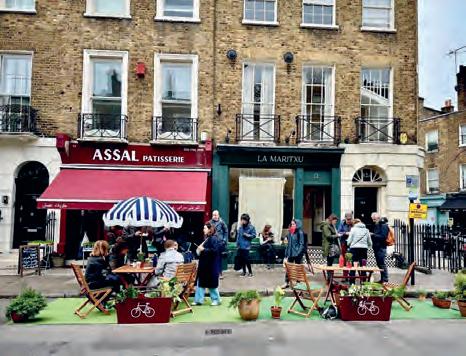
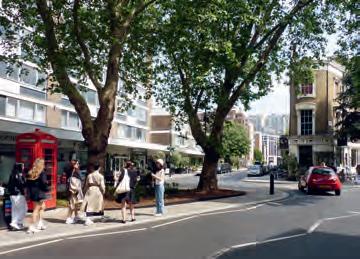
Connaught Village. This beautiful high street just five minutes’ walk from Hyde Park, famed for its eclectic shops, nice cafés, and queues around the block for Basque cheesecake, is blighted by heavy through traffic. Both businesses and residents alike acknowledged it as a huge problem. A solution suggested by local resident’s association, HyPER, called for a village square where Connaught Street meets with Kendal Street, giving space for community events, and halting through traffic. Another suggestion was inspired by St John’s Wood High Street, also in Westminster, transformed by making it one-way for motor traffic with only one lane. Some parking was removed and the pavements widened, and extra seating was installed. Shop owners we spoke to on Connaught Street told us they supported this idea.
Unfortunately, neither of these ideas was taken up by the council. Instead, councillors
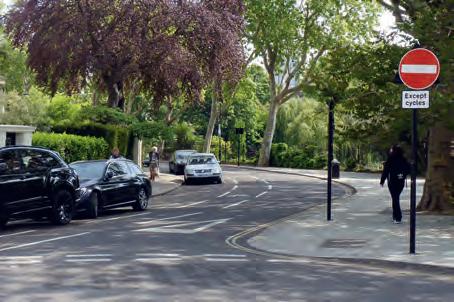
consulted on a plan that reduced nearby Kendal Street from two lanes of traffic to one. This plan got majority support at consultation. It wasn’t as ambitious as some people wanted, but it was certainly better than nothing.
Again, hopes of change were dashed. Ward councillors told residents after a sole drop-in session: “As a result of the very strong views expressed, we have asked the Highways team to… (maintain) two-way traffic along Kendal Street.” A few angry locals were enough to derail the Labour administration.
For cycling, the new administration had consulted on three cycle routes, including Cycleway 43, which envisaged protected cycle tracks on George Street in Fitzrovia. This scheme had majority support at consultation in 2022, but because a few residents complained about loss of parking, councillors paused it to investigate “an alternative route”. Officers later found that this alternative was a longer way round, and less safe, which campaigners had explained from the offset. The other schemes — Cleveland Street and Cycleway 51 — were not due to start construction until over two years after their consultations ended. By autumn 2024, campaigners and residents were tearing their hair out with the Labour group.
Both a local residents’ association and Westminster Cycling Campaign continued the pressure, calling out the council publicly for reneging on its promises, before LCC staff and local group members initiated a meeting with the council leadership, which they accepted, and held a constructive discussion. A combination of charm in those official meetings, and dogged campaigning from our local LCC group and residents, finally had some real impact.
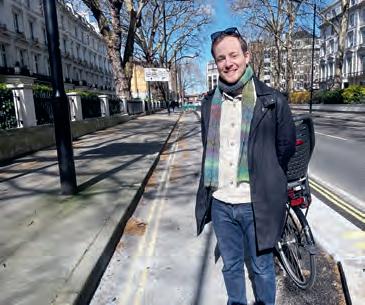
In January 2025 Max Sullivan, a bright star in the local council, was given the newly-created role of cabinet member for streets. Max cares passionately about safer streets for walking and
cycling, and can be spotted pedalling around the borough regularly with a childseat on the back of his bike. Once in post, Max gave us a tour of the main new developments and plans.
First, he showed us the new contraflows — including on the infamous Blomfield Road — part of a comprehensive rolling programme of around 20 new ones in the last 18 months. It’s taken more than a decade to get some of these simple but effective changes in place, and cycling around with Max, it’s clear that he understands the routes people take and why safer streets are important.
Max explained that his team has taken in-progress or recently shelved plans for cycle routes and brought them up to modern standards, with either protected cycle tracks or low-traffic streets. Riding the new contraflow streets confirms the effect on lower traffic volume and safety improvements.
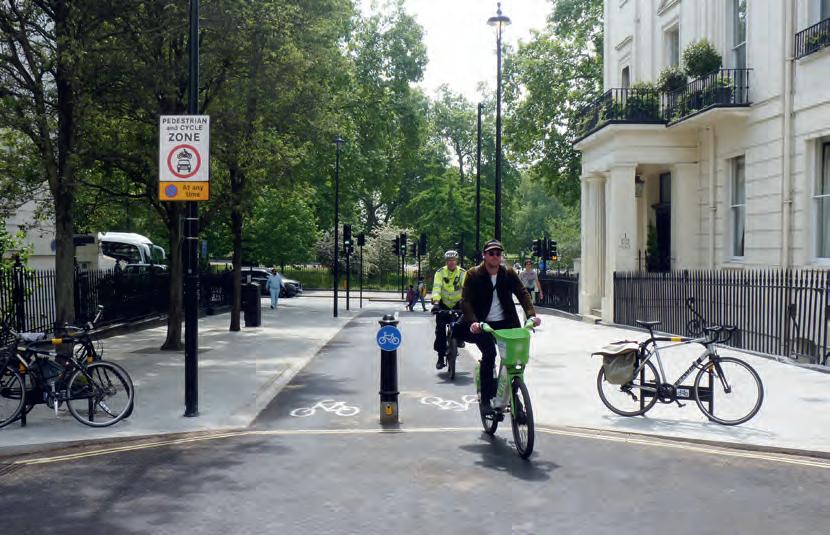
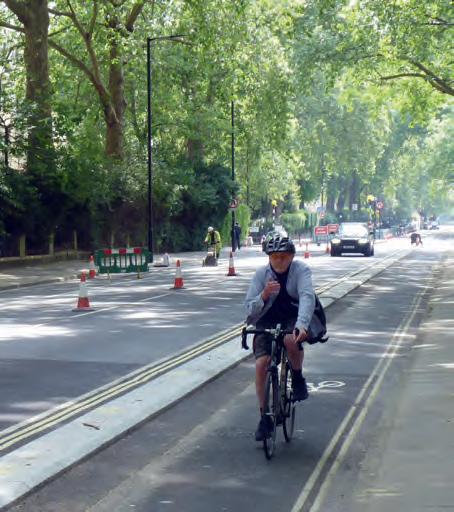
Take a trip along Westbourne Terrace on a bicycle, and you can see that now we’re really in business. There’s a brand new cycle track, with a proper kerb separating it from the road — bike lanes as they should be buit.
There’s also a brand new filter and cycle lane on Stanhope Place, part of the new Cycleway 43, where it meets Bayswater Road across from Hyde Park. This used to be a really hairy
spot with drivers turning left across people on cycles mostly going straight on into the park. Now, the ideal outcome has occurred. It’s no-way at all for drivers, and two-way for those cycling. Stanhope Place has got popular quickly and it’s buzzing with people on bikes.
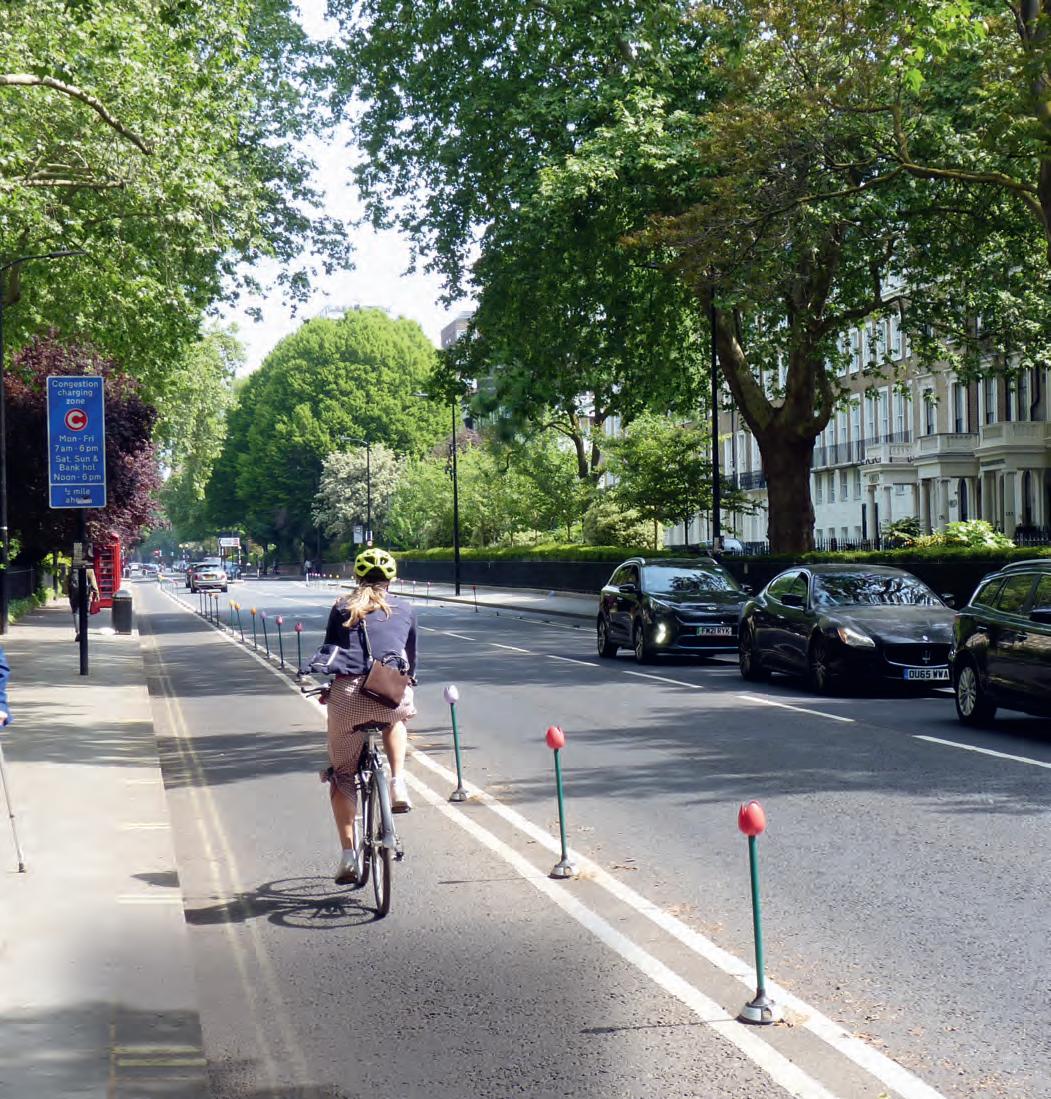
In 2025, tulip-shaped wands were installed along Sussex Gardens. While a kerb is clearly the ultimate in cyclist/vehicle separation, these tulips now prevent drivers crossing into the cycle lane as they did with alarming regularity when it was just a painted line.
On the tour with Max, he showed us George Street, where they are putting in that muchdelayed stepped cycle track for C43. A stepped track is raised up from the level of the carriageway, but separated from the pavement, in this case by ‘kerb delineators’ with an interesting ripple design. Parking spaces will be removed on both sides of the road to make way for the cycle tracks and to widen the pavements.
Bayswater Road runs east-west along the top of Hyde Park and has had a paint-only ‘Covid lane’ for cycling since the pandemic. At the start of 2026 Westminster consulted on a scheme to put in high-quality protected cycle tracks, attracting 2,500 responses. Writing in a recent edition of SEBRA magazine, Max reported that “most of the responses to the consultation were supportive — a majority of
all respondents, a majority of those providing a Westminster postcode, and a majority of those providing a postcode in the wards of Bayswater, Lancaster Gate and Hyde Park”.
Max has delivered all this and more in less than a year, demonstrating clearly how often change can come down to just one person caring more. His rush to deliver in part because of and despite his young family — this is a politician who loves seeing more kids on bikes, more people walking around enjoying the streets they live in.
The Conservatives regained control of the council in the May local elections, taking 32 of 54 seats, including Max’s, so he’s currently not a councillor. What this means for cycling and active travel remains to be seen. The last few years have confirmed Westminster residents really do want streets with less traffic and safe routes for cycling, and that Westminster politicians can choose a different path from just more cars everywhere. The local group is already talking to the new council — hopefully there’ll be more good news for us all soon.
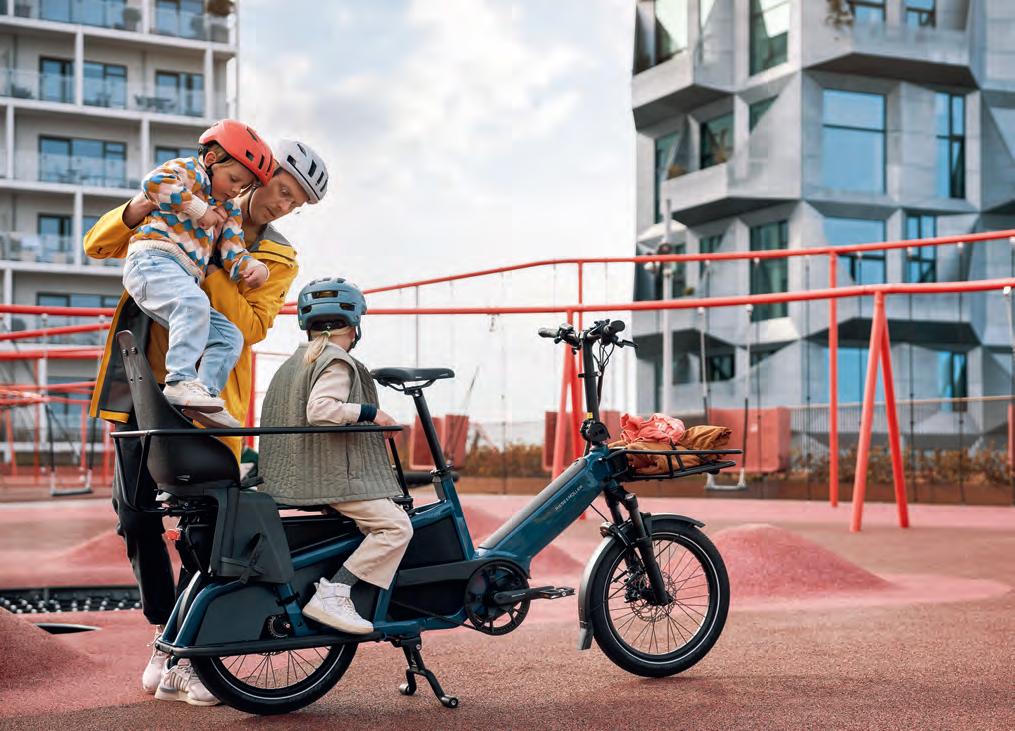
WHETHER YOU’RE wanting to transport a child or two, the big weekly shop, your business tools, or the family’s summer camping equipment, Riese & Müller’s Multitinker models can be configured in any way you like. That versatility means that, for many people, they’re the ideal car replacement for short journeys.
The clever ‘longtail’ design allows childseats (including a raincover option) to be used for the school run, with bags and
With so many options available, you can have your cake and eat it with one of R&M’s
panniers swapped on for other household duties. The front rack and side-loaders add a further 20kg potential luggage capacity.
At the heart of each bike is a reliable Bosch motor, connected to a 625Wh battery, to give you pedal assistance when needed — modes are controlled by a simple-to-use handlebar unit that links to the RX Connect app. As well as the usual ride metrics, this app tracks location and offers a digital motion alarm for extra security.

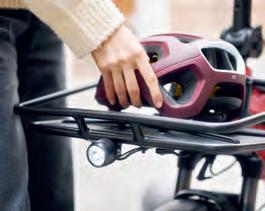
A suspension fork, suspension seatpost and chunky 20in tyres bring comfort to the fore, ironing out any bumps in the road, while integrated front and rear lights mean you’ll be visible in all conditions. And to ensure a perfect fit for all members of the family, the bars and saddle can be adjusted in just seconds.
Small wheels, a low centre of gravity, multiple build options, it’s the cargobike you’ve been waiting for — nothing and nobody is left behind with the Multitinker.
Robotaxis aren’t just coming, they’re already here. Tom Bogdanowicz explores the safety implications and how they aim to fit into the city’s transport mix
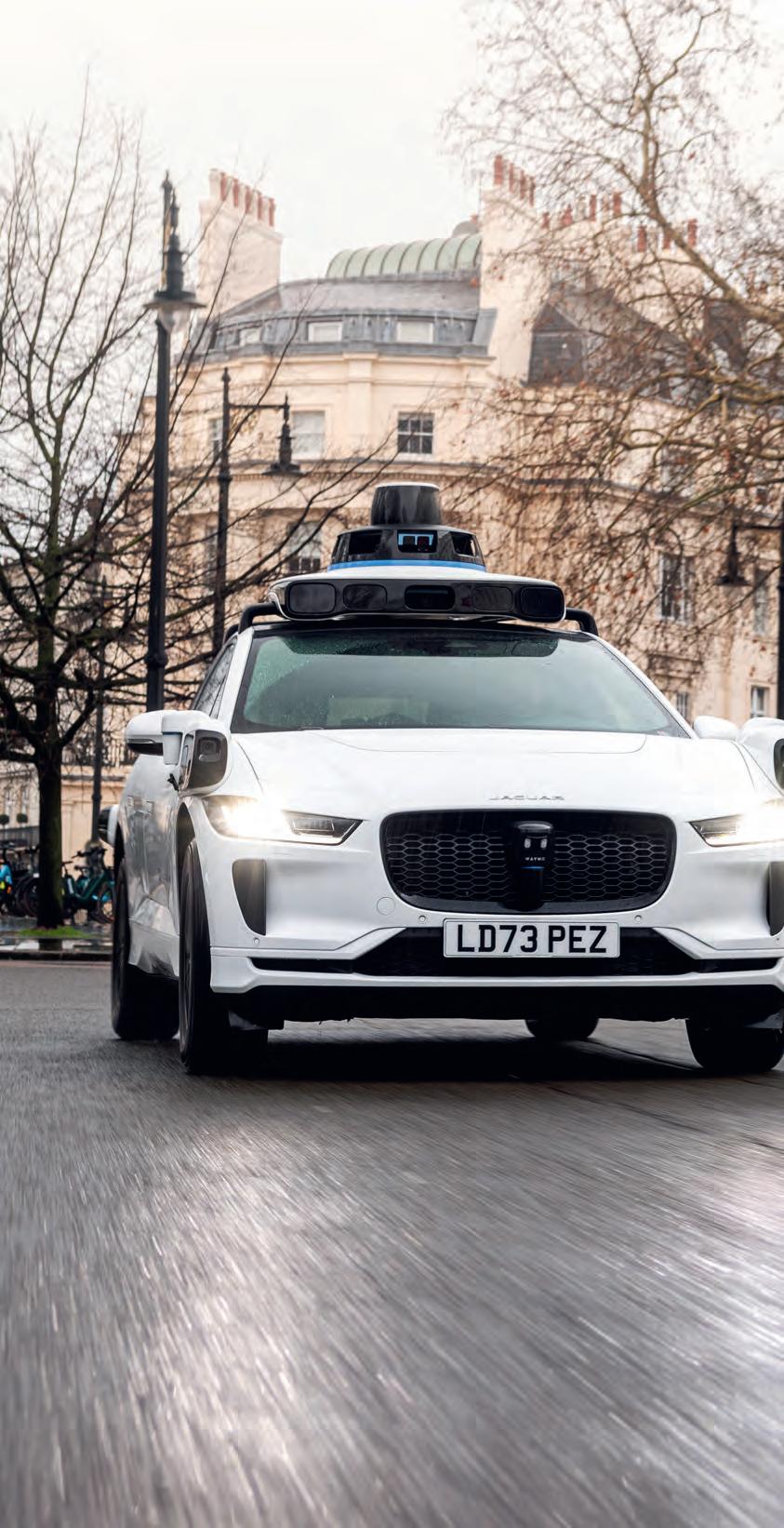
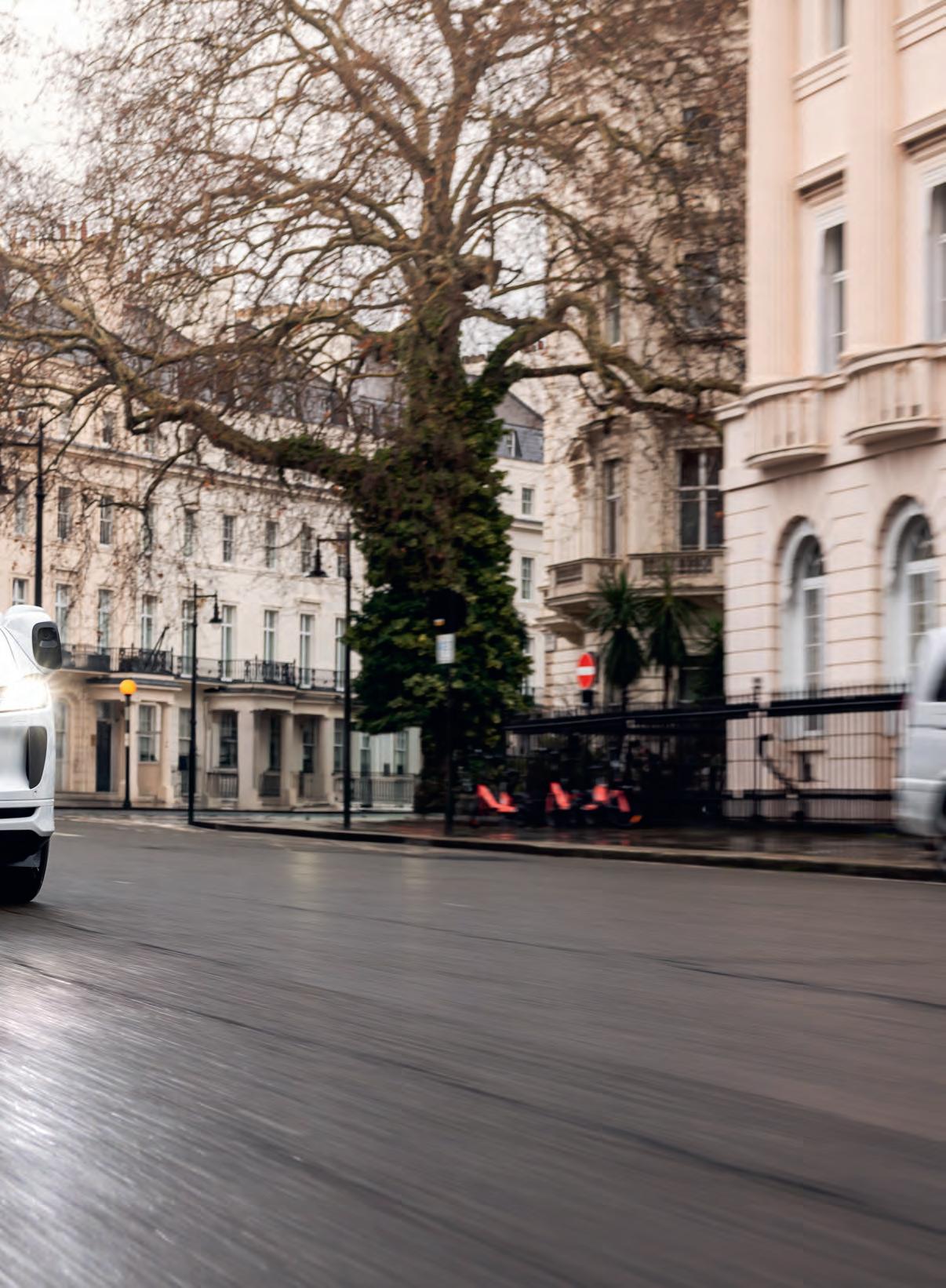
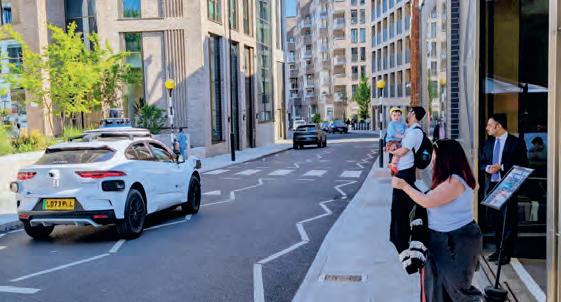
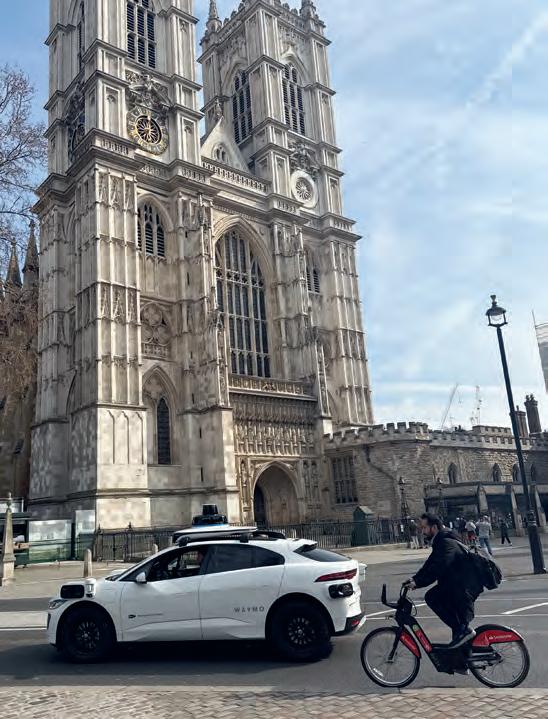
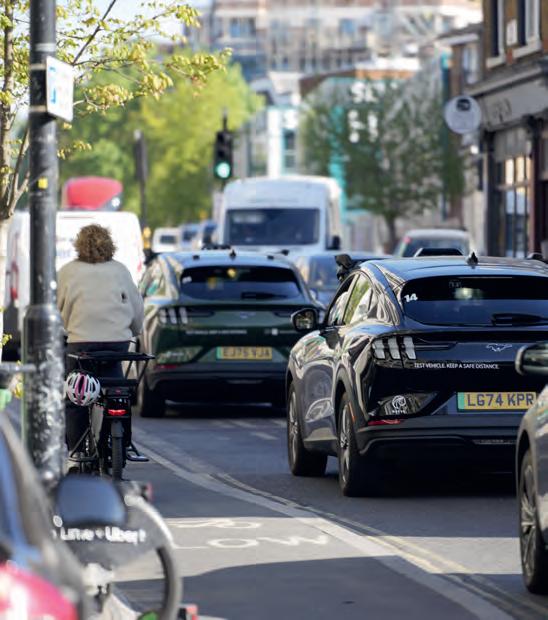
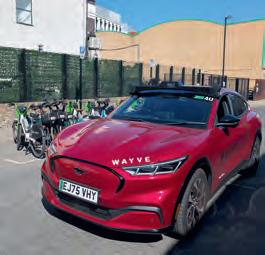
IF YOU RIDE a bike in inner or central London you may well have seen a Waymo autonomous vehicle (AV) bristling with technology externally, or a slightly less conspicuous robotaxi from Wayve, its UK-based rival. Other models from Lyft (in partnership with China’s Baidu), and Elon Musk’s Tesla, are expected to join the fray when fully driverless operations are expected to move from trial to licensing in London this autumn.
Quite reasonably, the first thing most people worry about with robotaxis is safety and the operators are eager to focus on their low AV collision rates. But the longer-term impact of robotaxis, and AVs in general, on transport choice, road design and active travel could be much more farreaching. At one extreme AVs could multiply car use by ousting public transport, at the other they could significantly reduce dependence on private cars.
The British government is clearly in favour of such vehicles, attending Waymo’s PR launch in London and stating “bringing forward the pilots of self-driving
vehicles will help the government deliver the Plan for Change, by creating 38,000 jobs to put money in the pockets of hardworking people, driving investment to back British engineering excellence and creating an industry worth £42 billion by 2035”. The Automatic Vehicles Act 2024 (AVA), facilitating and governing AV use, is due for approval in 2027.
What the robotaxi firms all promote is stress-free convenience for passengers and reduced road danger to other road users. Waymo — owned by Alphabet, Google’s parent company — points to its estimated 3,000 robotaxis operating in full driverless mode in ten US cities and says that injury causing crashes are 82% lower when compared to the human driver benchmark.
While Waymo self-driving technology is based on detailed mapping and LIDAR sensors, Wayve — based at King’s Cross and backed by the likes of Uber and Microsoft — essentially makes self-learning (as the car is driven) software that can be installed in a range of vehicles. Like Waymo it argues the technology is safe and it has released a one-hour ‘London landmarks’ AV trip recording on its website which starts and ends at Kings Cross (spoiler alert: no collisions involved).
That is not to say that AV collisions don’t happen. Incidents do occur because of what City AM calls “real world unpredictability”. Operating in London may yet prove to crank-up that unpredictability — thousands of narrow, winding
streets instead of US-style grids and no jaywalking laws (in many US states, it’s illegal to cross the road against a signal or where there isn’t a formal crossing point). Some even suspect AV firms would lobby for street redesigns and jaywalking legal changes in the UK in the future, if robotaxis prove unable to cope with our convoluted streets and/or ‘unpredictable’ road users.
Then there’s risks arising from computer hacking, power failures, cyber threats, vandalism and plain confusion. Robotaxis typically have remote oversight back at HQ, but that’s not the same as a driver on-site. Confused robotaxis have, in the US, blocked traffic, driven
in circles and caused jams. While it is yet to be formally approved, the government’s AV Act places responsibility for collisions or offences on an AV first with the vehicle insurer(s) and ultimately with the Authorised Self-Driving Entity (ASDE) — meaning the manufacturer or software developer of the vehicle. As far as can be deduced from lawyers’ interpretation of the AVA, strict liability will apply to AV collisions. This means insurers will pay out
without any victims being required to show the vehicle was ‘at fault’.
The popular vision of robotaxis is that without the cost of drivers, or working hours limits, they will be more profitable, and potentially more affordable, than private hire vehicles with drivers. The reality is that, at present, no robotaxi firm is profitable and fares in the US are generally comparable to Uber trips of the same distance.
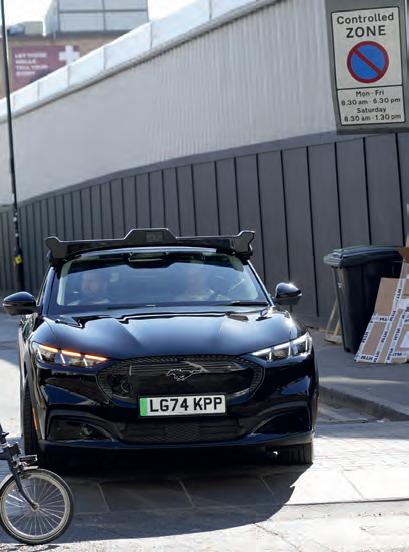
The exception is Tesla which, in its limited (with safety monitor) robotaxi trial in San Francisco, is undercutting Uber and estimates that the retail cost of a dedicated, but basic, two-person robotaxi will be £23k (less than a quarter of the price of a Waymo Jaguar). New generation Baidu vehicles are estimated to cost £22.2k. Wayve doesn’t sell AVs, but its kits for EV cars are currently costed at £8k on top of the vehicle price.
Of course, to the cost of the vehicle, you have to add maintenance, parking, cleaning, insurance, admin, charging and remote operators, which could add another 75% to the ongoing outlay according to some estimates. Were robotaxis to avoid parking costs by simply driving in circles you would add to congestion and its costs to the economy.
The key figure, in terms of the growth of robotaxis, will be end cost to the user. Blogger Brad
Templeton compares the average US ride/hail cost of $2.50 per mile to the current cost of running a private car in the US at $1 per mile. However, in conversation with LCC, consultancy McKinsey did not rule out robotaxi prices falling below $1 per kilometre in time. Were such a level of pricing to be reached, some private car owners may opt to go ‘car-free’.
A McKinsey survey found 18% of Britons willing to give-up personal car ownership over the next 10 years. Though, as we know, near half of London households already don’t own a car.
Not surprisingly, robotaxi forecasts show wide variation ranging from ‘won’t be break-even on a cash flow basis until 7-8 years after launch’, to ‘revenue from robotaxi software could grow more than 1,000-fold over two decades, potentially reaching $136bn by 2046’. Basically it’s a typical new tech guessing game for now.
Blogger Jason Slaughter on his Not Just Bikes YouTube channel paints a bleak world when AVs dominate most surface travel, dislodging public transport and active modes. Motoring will only increase, he argues, as people will be able to work inside AVs and will therefore choose to live further from workplaces in cheaper homes. Slaughter suggests AV producers will lobby successfully for AVonly lanes and roads just as car makers pressed for ever-extended motorway construction.
A more optimistic view is that affordable and readily accessible robotaxis will supplant private car ownership, liberating roadspace for public areas and sustainable transport modes. Londoners who were subscribers to the Zipcar shared vehicles will know that the now defunct service facilitated carfree living — with users reporting that they only used a motor vehicle
when alternative transport modes wouldn’t have worked for their specific journey.
What’s unknown is the future status-value of robotaxis and AVs in general. Arriving in an antennae-bristling Waymo Jaguar may score points when they first appear on our streets, but will non-descript Tesla taxis carry the same cachet? And if the image of driving at high speeds on open roads portrayed in ads is already far from reality, the attraction of a vehicle that follows the road rules to the letter may likewise be lost on dedicated petrolheads.
Robotaxis could well impact not just private hire, and privatelyowned motor vehicles, but also cycling and specifically ‘dockless’ shared e-bike services — which in London currently cost around £1.50 per mile plus unlocking costs of £1 — against current private hire vehicle costs of £1.25 per mile plus start cost of £2.50. If robotaxis can undercut both modes, demand could switch in their favour.
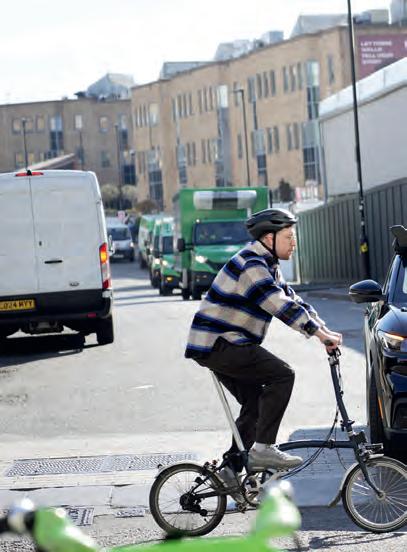
For active travel the other question will be whether the convenience and speed of cycling in urban areas outperforms the convenience and speed of robotaxis, given their far larger form-factor and inability to access cycle tracks and some residential no-through routes for cars. Cycles currently have a significant advantage in London over private hire vehicles on cost and journey times, though a disadvantage on weather-proofing, luggage carrying and perceptions of safety.
Naturally, TfL and government have the power to influence robotaxi take-up through road pricing, congestion charging and, presumably, licensing. If robotaxis do show far lower collision levels, then TfL’s Vision Zero targets could be supported by more widespread uptake. If TfL were to influence motor vehicle travel though a smart and fair road pricing system, instead of a plain congestion charge, it could presumably favour robotaxi trips at less busy times and trips by multiple, rather than solo, passengers. AV minibuses
could provide better connectivity in outer London in particular.
LCC aims to work constructively to ensure robotaxi trials and their potential subsequent rollout deliver an improved and safer city, particularly for cycling and active travel, and our red line is conditions worsening for those cycling, or for Londoners in general.
For this, public transparency and data-sharing, specifically around collisions and near misses will be vital to reinforce public acceptance of these vehicles and their safety benefits.
Robotaxis have the potential to reduce road danger and loosen Londoners’ attachment to owning private motor vehicles, but could also undermine the rising trend of people cycling if safety decreases or if operators seek to push out other transport modes. Streets getting more dangerous or congestion unchanged won’t suit anyone.


We’ve partnered with Farewill to offer LCC members the opportunity to write their will with them, free of charge.
There’s no obligation to leave a gift to LCC. However, once you’ve taken care of those closest to you, a small donation could make a huge difference to London’s cycling future.
You can choose to write your will either online, or over the phone with one of Farewill’s friendly team of experts.
Write your will in 30 minutes. Get started at farewill.com/london-cycling-campaign

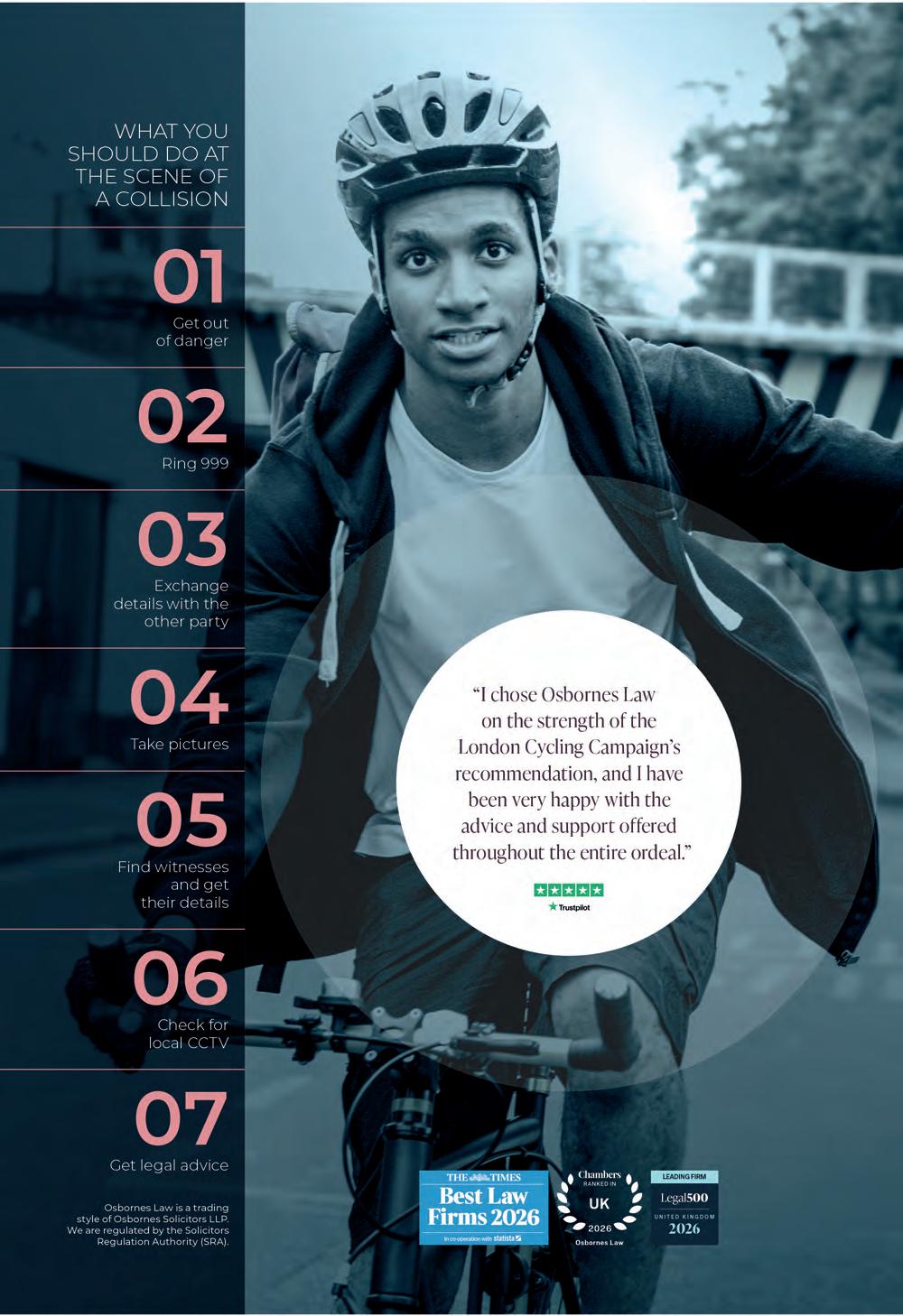
ALONDON CYCLIST has secured justice after insurers tried to argue he was partly to blame for a collision caused by a driver turning across his path. He had been riding downhill in a bus lane when a driver travelling in the opposite direction turned right across him, leaving him with no time to brake or take evasive action, with the impact throwing him over the bonnet of the car and onto the road.
Despite the circumstances of the crash, the defendant’s insurers alleged that the cyclist was 50% responsible for the collision. Megan Lambert, a personal injury solicitor at Osbornes Law and working for the cyclist, immediately challenged that attempt to shift blame onto the cyclist. He had been riding lawfully and had no realistic opportunity to avoid the collision. And had the cyclist accepted the insurer’s position, the value of his claim would have been significantly reduced.
As it was the collision left the cyclist with a number of injuries: soft tissue injuries to his arm, shoulder and ankle; neck sprain and chronic wrist sprain; lacerations to his shin and ankle, resulting in permanent scarring; an aggravation of a pre-existing back condition;
The cycling team at Osbornes Law explains why proper advice is key in collision claims
and a partial tear to his groin.
To ensure the full impact of the collision was properly evidenced, Megan obtained expert reports from four medical specialists. This showed that the cyclist would benefit from ultrasound-guided injections to his wrist and groin, alongside physiotherapy. The cost of this treatment was included as part of the claim.
Not only was the driver’s insurers initial attempt to settle the claim rejected, but also a second as it did not properly reflect the cyclist’s injuries, treatment needs and financial losses. Court proceedings were issued and, through further negotiation, Megan secured a settlement worth three times the insurer’s later offer.
She said: “This case is a reminder that cyclists should not feel pressured into accepting blame simply because an insurer alleges they were partly responsible. Insurers often try to reduce
the value of a claim by alleging contributory negligence. In this case, we were able to challenge that position, obtain the right medical evidence and secure a settlement that properly reflected the impact of the collision.”
For cyclists, the case highlights the importance of getting specialist advice before accepting any offer from an insurer, particularly where there is an allegation of shared blame. Even where the circumstances appear clear, insurers may still seek to reduce compensation by arguing that a cyclist could have done more to avoid a crash. Luckily here that argument was challenged and a much better outcome resulted.

Our Boundary Rides series continues, with Charlie Codrington leading us on a quiet and little-known wooded
LONDON DOESN’T really end. It thins, loosens, frays at the edges. Our Boundary Rides follow that seam. They’re a series of nine short routes tracing the outer edge of the city, loosely around Zone 6. Not a neat loop, not a formal boundary, but the shifting line where London gives way to something quieter: back lanes, woodland scraps, bridleways that don’t quite join up but somehow do.
Individually, they’re manageable rides. Together, they form a full orbit of London. The full set is now complete, linking Rainham through Erith and all the way round again. Each one stands alone, but ridden as a series they build a picture of the city most people never really see.
Boundary Ride 8, from Upper Warlingham to Knockholt, is one of the most convincing sections of that idea. A ride that feels far further away than it is; one that quietly challenges what 'London riding' actually means.
This is about as close as you get to riding through proper countryside without ever really leaving London; 30 mins from Victoria, still inside the M25, yet soon after setting off it feels like you’ve stepped well outside it.
You leave Upper Warlingham and there’s no easing in. A steady climb straight out of the station does the job quickly, putting distance between you and where you’ve just come from; the edges soften and the space opens up.
From that point on, the ride becomes almost continuously rural. Outside of just two small villages, Downe and Pratt's Bottom, there’s little to interrupt it. Open farmland, woodland and rolling chalk downland stitched
together by old rights of way. For a route entirely within Greater London, that continuity makes it stand out.
2 CHELSHAM COMMON
The riding settles into a steady rhythm. Woodland tracks, bridleways, quiet lanes. Surfaces shift just enough to keep you honest. Fast and firm in the dry, greasy when it’s wet, always just unpredictable enough that you stay engaged. This part of the North Downs hasn’t taken itself too seriously when it comes to naming things. Bull Green. Halliloo Valley.
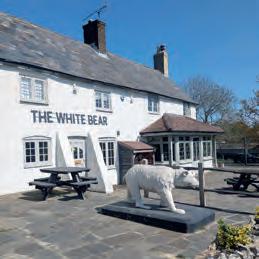
Fickleshole — names that sound faintly ridiculous but feel entirely right once you’re in them. Passed down, misheard, reshaped, and kept anyway.
FACTFILE
START: Upper Warlingham station
FINISH: Knockholt station
RIDE LEVEL: Easy
DISTANCE: 22km (14 miles)
TERRAIN: gravel, singletrack, cycle paths and quiet roads
BIKE CHOICE: in dry periods during the summer any bike fitted with all-terrain tyres will work fine. In winter it can get boggy and muddy in places, so a gravel or mountain bike will likely be more suitable.
3
At Fickleshole, there’s a brief nod to civilisation. The White Bear pub sits neatly in the dip, exactly where you’d put it if you were designing the route yourself. From here, the ride starts to pull toward its central thread.
You pass through Jewels Wood, and across the valley sits an area of chalk grassland that still supports rare butterfly species, the kind that only survive in very specific conditions. It’s easy to miss if you’re not looking, but that’s part of the point. This landscape isn’t dramatic, it’s subtle, it reveals itself slowly. That thread leads into Downe.
It’s a small village, understated and slightly removed. Timber-clad houses, old brick cottages, nothing polished. It feels intact rather than restored. And just beyond it sits Down House. And it’s well worth stopping.
This wasn’t just where Charles
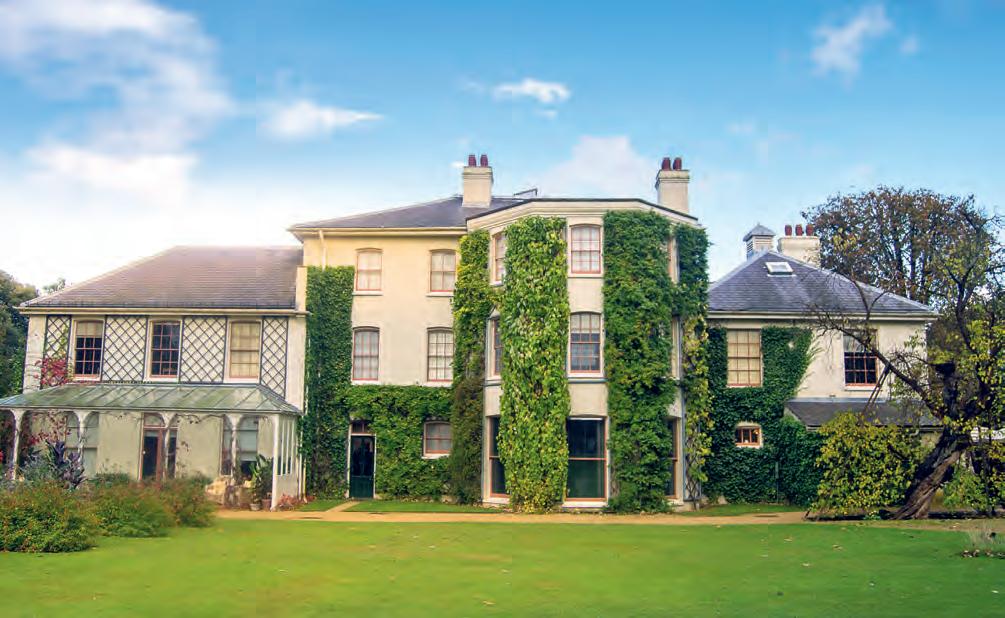
Darwin lived, it was where he worked, walked and observed. The surrounding fields, hedgerows and chalk grassland formed part of the thinking behind On the Origin of Species. He walked here daily along the Sandwalk.
Darwin was building on earlier systems that tried to fix nature into rigid categories. But here, in landscapes like this, he began to see something else: change over time, adaptation, movement rather than permanence. Riding through it, that idea doesn’t feel abstract. The landscape changes subtly from field to wood to chalk.
5 PRATT'S BOTTOM
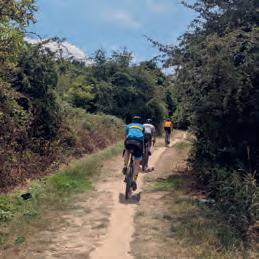
Leaving Downe, the ride slips back into rhythm. Woodland, open track,
short climbs that don’t look like much but add up. You pass through Pratt's Bottom, then out again into open countryside. The final stretch doesn’t build toward anything, it just carries on. Edging back toward more familiar ground. A bit of footpath, a tired cycleway, an old fragment of bypass. Proper Boundary Ride territory again. And then you arrive at Knockholt station. It feels like the right kind of ending. One of those slightly optimistic Victorian stations built in the middle of nowhere, on the assumption something might grow around it. In this case, it never really did. It still sits slightly apart, surrounded more by land than development. Which suits both us and the ride fine.
If you enjoyed this…
Join the Hidden Tracks’ River and Palaces ride (12 September), linking together a chain of west London estates and green spaces, riding between places like Chiswick House, the open parkland of Syon Park, and the long approach to Hampton Court Palace. There will be towpaths, park tracks and bits of gravel that most people ride straight past.
LCC members get 10% off by using code LCC10 at checkout. You can find out more at: hiddentrackscycling.co.uk/ products/river-and-palaces.
Scan the QR code on your smartphone to download London Cyclist rides for free.
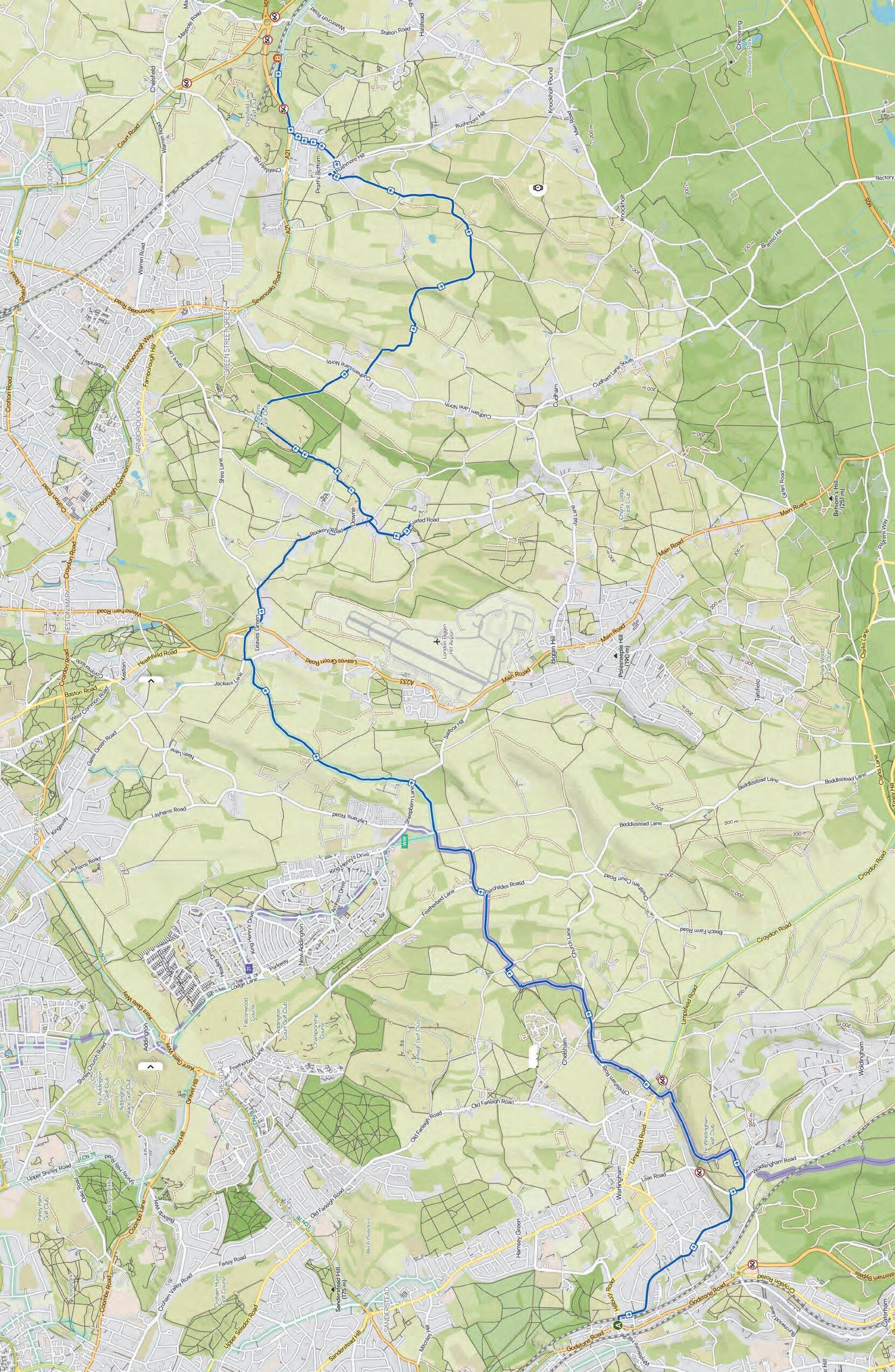
3 2
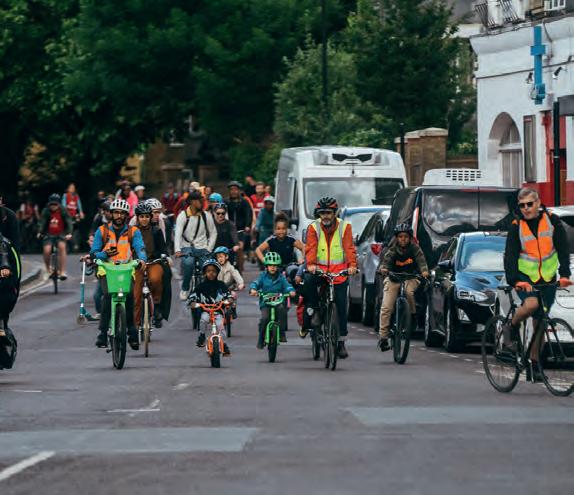
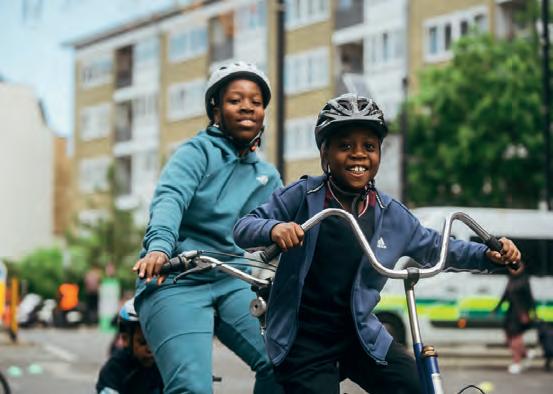
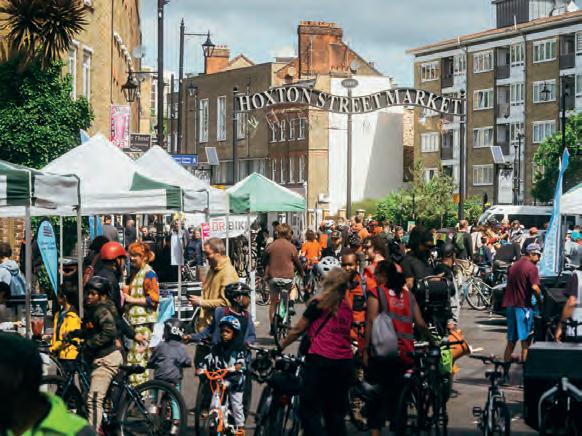
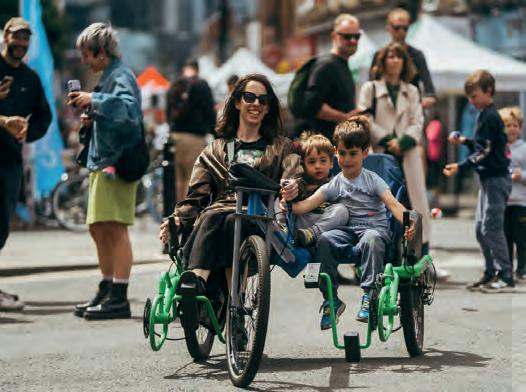
Alongside drivetrain issues, brakes probably throw up the most headaches for home mechanics. But most of them are completely avoidable and easy to fix, you just need to know what to look for. The teams at fettle — the UK’s fastest-growing bike repair network — see the same brake problems week in, week out, so here’s the eight things they suggest you keep an eye on regularly...
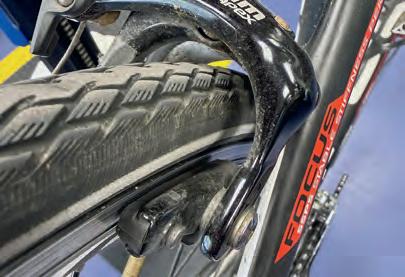
1. TAKE A PROPER LOOK
Most cyclists never look at their brakes until something goes wrong. So get into the habit of a quick visual check every couple of weeks. Spin each wheel and watch how it passes through the caliper. Look for anything worn, rubbing or out of place. You do not need technical knowledge for this — you just need to look.
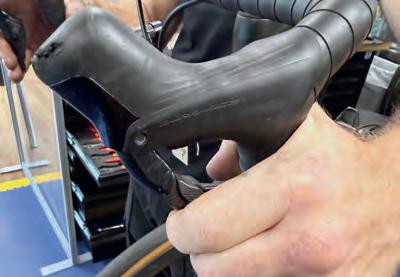
2. SQUEEZE THE LEVERS
Your brake lever tells you a lot. It should feel firm and engage well before it reaches the handlebar. If it feels spongy, pulls too far inwards, or the bike does not
stop as sharply as it used to, something needs attention. This is the simplest test you can do and it takes just seconds — if something feels off, trust that feeling.
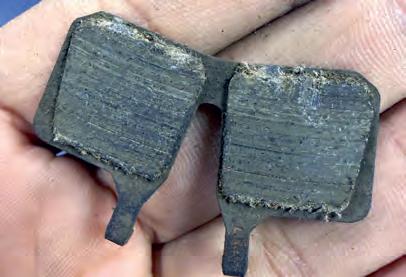
3. CHECK YOUR BRAKE PADS
Brake pads are consumable items and wear down every time you stop until there’s nothing left to do the job. On disc brakes, if the pad looks thin (under about 1.5mm of
material) it’s time to replace them. On rim brakes, most pads have a wear line mark; when you reach it, replace them. New pads are cheap. Ignoring worn ones isn’t.
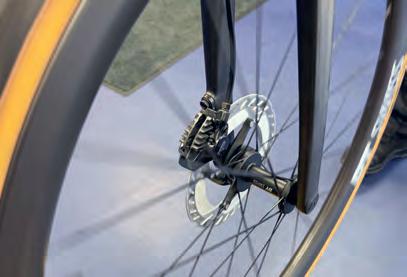
4. LISTEN FOR SQUEALING
Brake squeal is one of the most common things cyclists put up with unnecessarily. It is almost always caused by contamination or misalignment, both easily fixable. Contamination from oil, chain lube or even wet roads can affect pad performance significantly. A quick rotor or rim clean is often all that’s needed.

5. KEEP LUBES AWAY FROM BRAKES
This one catches a lot of riders out. When you lube your chain, keep that lube well away from the rotor or rim braking surface. One stray drop seriously reduces
your stopping power; spray lubricants are particularly bad here. So apply chain lube carefully, wipe off any excess, and keep a rag between the rotor and chain if needed.
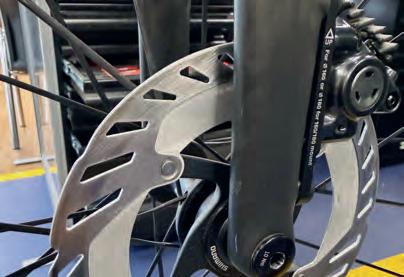
6. WIPE ROTORS & RIMS REGULARLY
A quick wipe with isopropyl alcohol on a clean cloth removes road grime, light contamination and brake dust that builds up over time. For disc brakes, wipe the
rotor in outward strokes from the centre. For rim brakes, wipe the braking surface on the wheel. Do this every few weeks, or after a particularly wet or muddy ride.

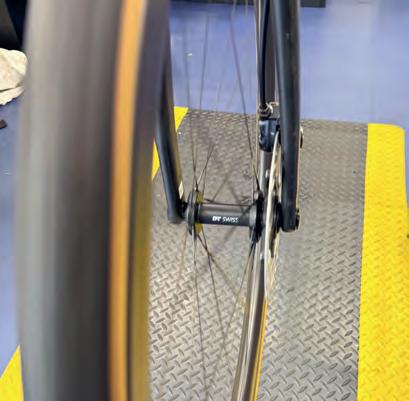
7. CHECK FOR RUBBING
Lift your bike and spin each wheel. It should spin freely and slow down gradually on its own. If you can hear or feel the brake dragging, something is misaligned. A
little bit of rub might not seem like a big deal, but it adds rolling resistance, wears your pads faster and in some cases indicates a bigger alignment issue.
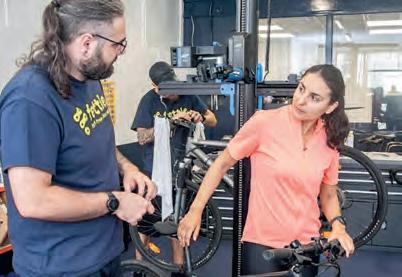
8. KNOW WHEN TO HAND IT OVER
There’s no shame in knowing your limits. Hydraulic brake bleeding, cable replacement and caliper alignment are all jobs best left to a mechanic if you’re not confident doing them yourself. If your brakes do not feel right after the checks above, that’s the sign to book a service. Brakes are the most important safety system on your bike after all!
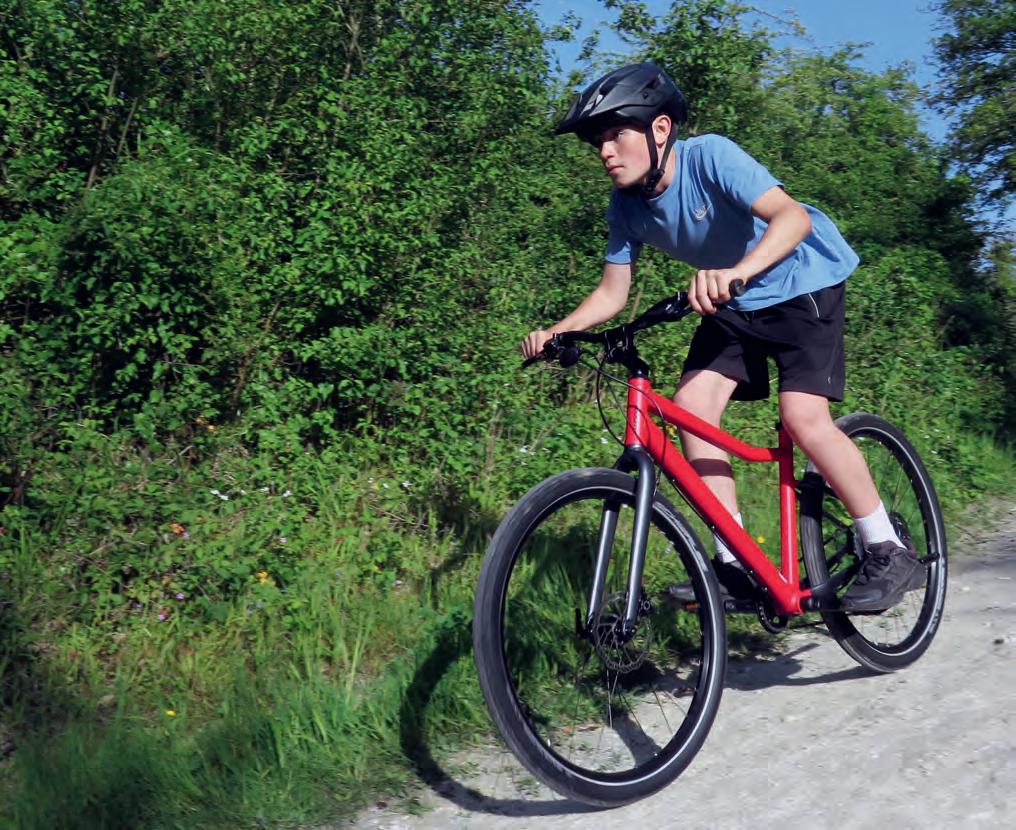
A new range from an Austrian brand proves that children’s bikes needn’t be dull or uninspiring
NO OTHER PART of the cycle industry operates quite the same way as the children’s sector, where reliability and durability have always been more important than innovation and weight. Alongside the obvious fact that growing kids really only fit a particular bike for a limited time period, it’s easy to see why hand-me-downs or secondhanders remain the main entry point for the majority of youngsters. But that doesn’t mean new models and interesting ideas are altogether absent — they’re just rare.
Woom might not be a familiar name in the UK yet, but it was formed over a decade ago by two Austrian dads who wanted to create
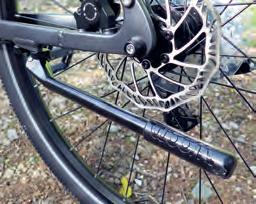
fun bikes for their own kids, ones that better suited their proportions and riding behaviour. The brand now offers half-a-dozen options from balance bikes to urban, adventure and mountain bikes (with or without front suspension); a cool mini cargobike is currently unavailable. Within each range there’s a choice of sizes to suit three to four-year age groups.
Our test sample is aimed at 10-14 year-olds and features 26in wheels, but for smaller pilots there’s the Explore 4 (6-8, 20in wheels) and Explore 5 (7-11, 24in wheels). So how do you tweak the fit for growth spurts or changing preference? That’s thanks to a nifty adjustable stem (see image, top right) that

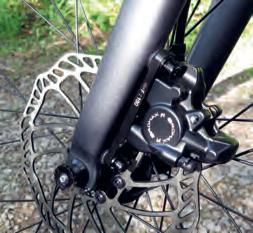
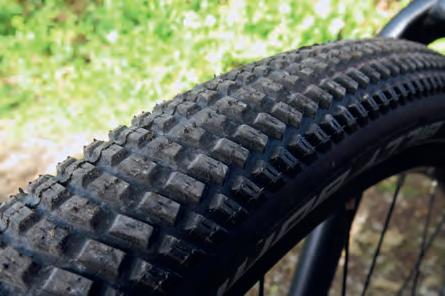
effectively moves the handlebar closer to or further from the body; ‘ABC’ markers here match similar ones on the seatpost, so that can be likewise tailored to suit. You also need to roll the handlebars so they’re level, but again there’s a clear ‘top’ mark to help. These changes take just seconds and only require an allen key. Our young reviewer preferred the bars set right at the upper limit to best mimic the position from his own mtb.
Kids and adults alike loved the clean and unfussy frame, and couldn’t believe how light it was; overall bike weight is just 9.5kg, which certainly helped the fast, nimble feel when riding. Credit to Woom for the thoughtful overall
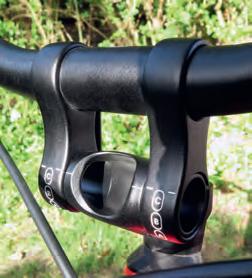
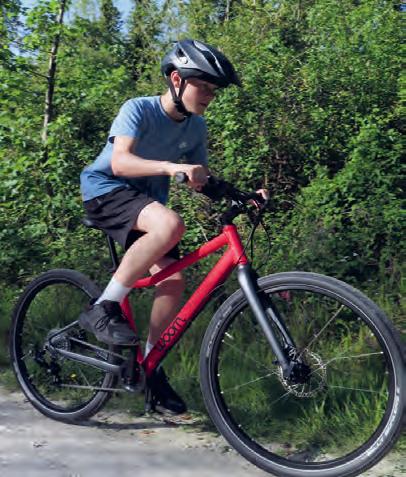
spec elsewhere too: dependable disc brakes with child-specific levers; easy-to-use trigger shifter for gears; water-resistant and hard-wearing saddle, developed with Selle Royal; and thin ergonomic grips for little hands. All in, there’s not much you’d want to change until worn.
n Explore models available in four colours: Woom red, jungle green, neon coral and magnetic blue.
n Suggested height range for the Explore 6 aimed at riders from about 10-14 years is 140-165cm (55-65in).
n Helmets in matching colours (£45).
n Woom also make a range of accessories to suit its bikes, from racks, mudguards, bottles and bells.
Feedback from our savvy tester included (his words), the brakes needed “a while to bed in” and the tyres “weren’t great on loose, dusty trails”. Can’t argue with that.
One final note, Woom’s created sticker sheets (sold separately) for creative covering of the frame.
+ Two-year warranty as standard, but Woom Riders Club members can increase this to 10 years for free.
+ Top marks for superb frame and attention to detail.
+ Great option for both road and light trail use.
Reading, riding, tinkering or upgrading — here's a selection of the latest cycle products we've been reviewing over the spring months
Every year around 40,000 cycles are stolen in London, which is a shocking stat in its own right — and excludes the many thousands not reported to the Met. But to make things worse, only 2% of those are ever recovered and less than 1% ever lead to a thief being prosecuted or convicted. So while LCC and others campaign for better security and extra support from the authorities, it's worth ensuring that your bike isn't just locked correctly — following the 'two good lock' mantra (lcc.org.uk/bike-security) — but that the locks you use are up to the job.
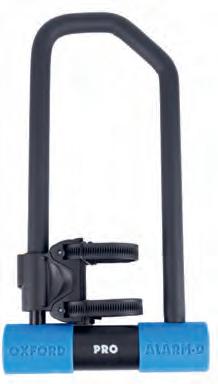
Oxford's latest D-lock offers peace of mind on two fronts. First there's a Sold Secure gold-rated 14mm hardened steel shackle that's available in two lengths (260mm and 320mm), plus an anti-pick lock mechanism. And if that doesn't defeat the angle grinders, then a 120-decibel alarm should deafen any thieves and attract attention — take it from us, it's as loud as an ambulance siren and you won't want to be next to it. The battery is replaceable too. Also includes a simple-to-fit carry bracket.
n £59.99; oxfordproducts.com
We've been big fans of Simon Warren's mini guide series ever since the first one emerged more than a decade ago, and this second edition is updated with yet more atmospheric photography, stats and info. As always each climb gets a spread to itself: a full page image and rating on one side, with brief intro copy, gradient profile and factfile facing it. And that's all you really need to fire you up.
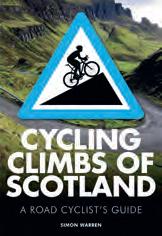
Divided up into four regions, there's enough scenic passes and killer ascents to fill a couple of summers. The legendary Bealach na Bà warrants a special 11/10 rating — don't miss it! n £16.95; adventurebooks.com
Oscar Wilde once commented that "fashion is merely a form of ugliness so absolutely unbearable that we have to alter it every six months". He could've been referencing all manner of modern ills, that something is lost in the constant pursuit of the 'next big thing'; the cycling industry has been far from immune itself, often seeming keen on eating itself. It's reassuring then, to us at least, that handmade leather saddles are still being produced in Smethwick, West Midlands, keeping a long tradition alive.
The B17 Utmost takes the classic, ever-popular shape and, for the first time, incorporates tubular stainless steel rails (they’re usually solid); these have also been extended to allow for greater riding position adjustment. Elsewhere, the tension shackle has been updated for improved longevity and special vegetable-tanned leather used — the latter meaning only 1,000 units will be produced each year. Each saddle gets individually numbered to reflect this and, in a typical Brooks' flourish, the 'certifcate of authenticity' tag is even initialled by the riveter. A redesigned backplate and 'Utmost' side stamp complete the additions. We're only in the first few weeks of riding ours and the patina is slowly developing and long experience tells us it will only get better. You can keep your 3D-printed carbon perches, thanks.
A stylish tote bag, leather softener and mini wrench are included in the package. n £280; extrauk.co.uk

You'll have noticed on the streets that e-bikes have been a growing presence over the last decade, now accounting for almost a third of all bicycle production. Which begs the question: what happens to all the old batteries when the bikes break or get discarded? This is where Brighton-based Gomi comes in. It handcrafts powerbanks — to charge phones and other USB gadgets — from waste plastics and second-life lithium batteries sourced from retired e-bikes. These batteries are checked, repurposed, and thankfully saved from landfill. A 10,000mAh capacity is enough to charge most smartphones twice. n From £79; gomi.design

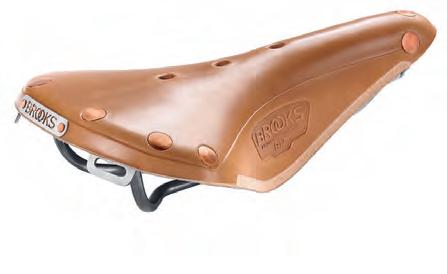
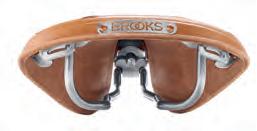
If the author's name is familiar to longtime London Cyclist readers that's because Rob's been an LCC member for four decades, even sitting as an early trustee for a spell, and contributed several travel articles to these very pages. He's also served as a director of Audax UK, the governing body for endurance riding in the UK. So setting this novel in the world of cycling is treading familiar ground to some extent; while climbs, locations and names of events will be known to aficionados, all the races depicted are fictional. Which is just as well as the story dives into dark waters as the younger protagonist uncovers secrets about his dad's unknown past.
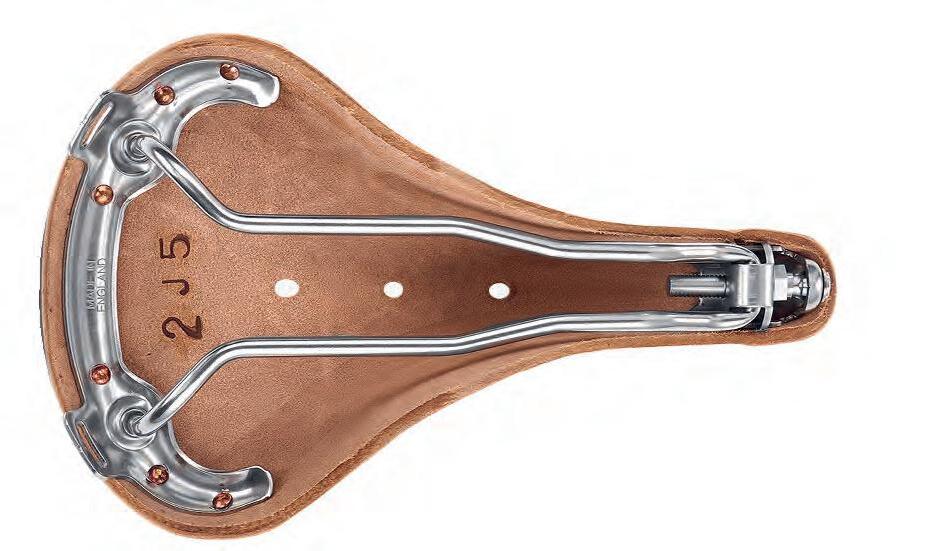
Watch YouTube clips of old road or mountain bike races, even from a decade ago, and you'll quickly notice that the bikes have undergone radical redesign compared to today. But every aspect of a rider's attire, from helmet to shoe, has also undergone a tech overhaul. Glasses — once a simple, wraparound affair — have got bigger, lighter and better vented, with skistyle goggles now de rigueur at the gravity end of the market. Smith's new Syncline straddles the two with the widest of widescreen lenses we've tested to date. Our photochromic sample has been ideal for mixed UK riding, with zero fogging, and you get a bonus clear lens for winter use. Super comfort for big heads at last. n £189; smithoptics.com
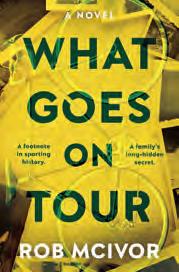
Do you need to be a racing fan to get it? Not at all. There's a nod to Tom Simpson's story, but the canvas is colourfully painted and the themes hold broad appeal. Pace is maintained by jumping from past to present, and you're quickly pulled to an exciting conclusion. One to add to summer reading lists. n £10.99; bookguild.co.uk
While most bike shops tend to use compressors for the most common and menial of workshop tasks — tyre inflation — the rest of us home or office mechanics tend to rely on a good old-fashioned track pump (also called a floor pump). Here at LCC Towers we do an inordinate amount of pumping, we just can't get enough of it, and it means that there's inevitably casualties from over-zealous or cack-handed use: at any one time there's an abandonment of broken pumps in the corner, sporting faulty heads, wobbly stands, detached hoses, or pressure gauges that no longer gauge. In other words, we know what works and doesn't, what lasts and what doesn't, in the world of high pressure tooling.
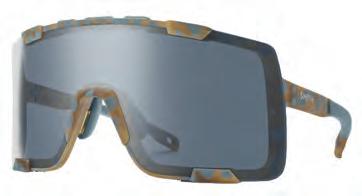
Manufactured at Zéfal's factory in France, the FP60 is made with us in mind. An anodised aluminium shaft, classy wooden handle, large reinforced base, long 1.1m hose, and 'Z switch' head that allows you to swap from Presta to Schrader valves in an instant. The gauge shows clear increments up to 170psi and a magnifier sits over the key range. No quibbles on durability so far...
n £51.99; zefal.com
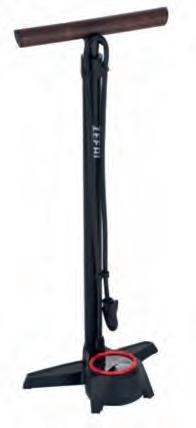
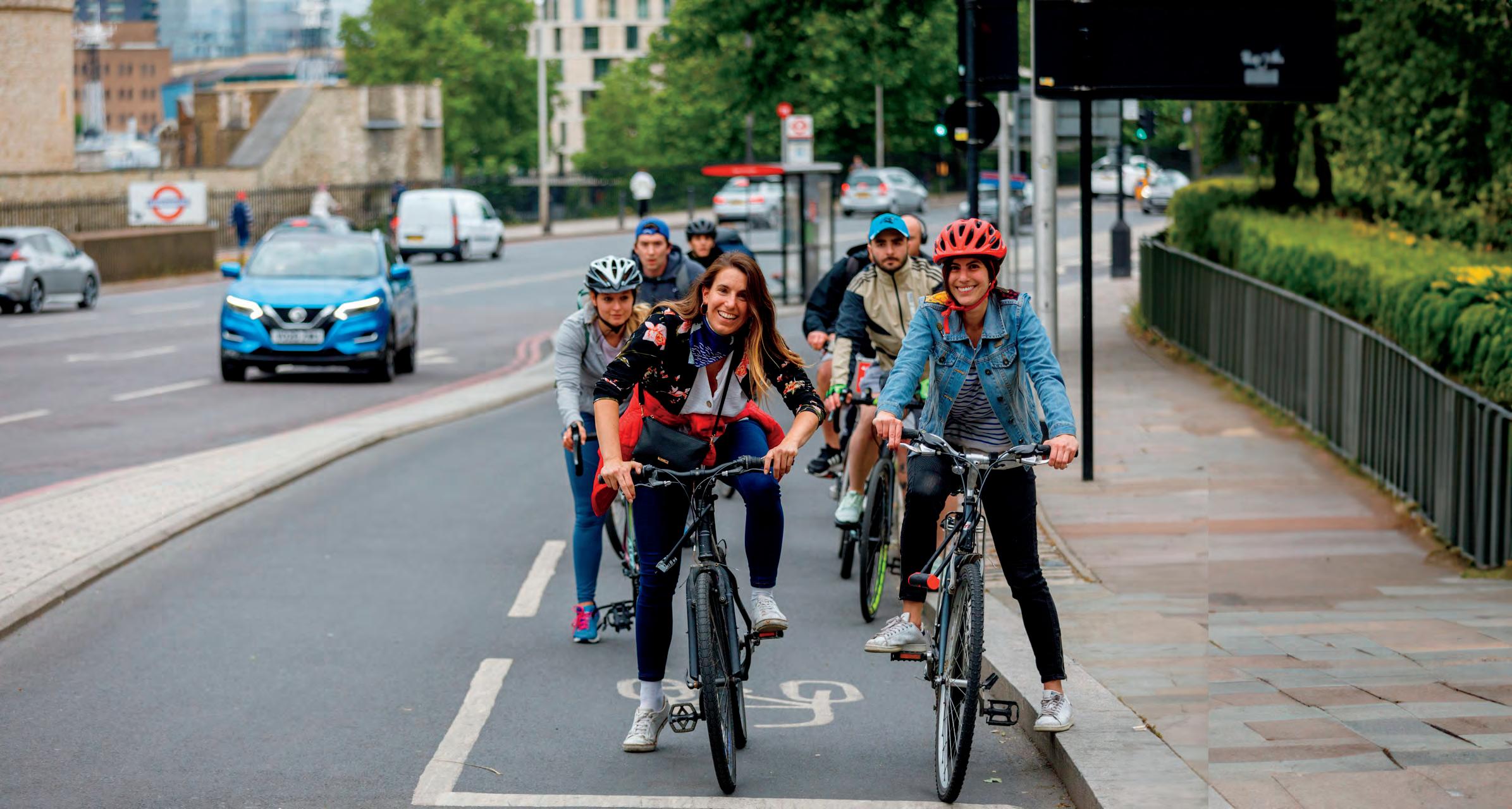

1960s-1970s
Not many bikes evoke such mixed emotions as this French fancy, says John Kitchiner. Thanks mainly to one British racer’s enduring legend...
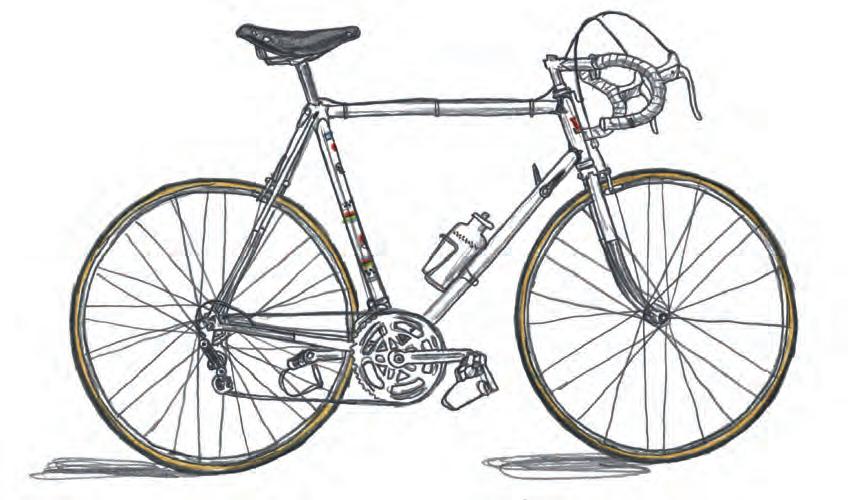
DECADES BEFORE Bradley Wiggins, Chris Froome and Geraint Thomas were spinning their way to victory in cycling’s biggest race — bagging six yellow jerseys between them — another British rider had already left his own indelible mark on the Tour de France, for a variety of reasons. That young man was Tom Simpson and the bike he rode during his most prolific period was the iconic Peugeot PX10, and so tightly interwoven are their stories that it’s impossible to separate talk about one without discussing the other.
Sadly it’s Simpson’s tragic death almost 60 years ago, and the circumstances around it, that are far better known than his myriad titles and achievements, so a quick reminder of those early successes bears mention. A coalminer’s son from County Durham, Simpson moved from road racing to the track as a teen, going on to win a bronze medal at the 1956 Olympics. At 21 he joined the first of a handful of French professional road teams, picking up a Tour of Flanders win, before becoming the first Brit to ever wear the maillot jaune at Le Tour in 1962 (he finished sixth overall). In 1965 Simpson
even bagged the BBC’s Sports Personality of the Year award after claiming Britain’s first professional world road race title.
The trajectory continued until one scorching afternoon on the 1967 Tour, when a 29-year-old Simpson collapsed and died during the ascent of Mont Ventoux; the post-mortem discovered a fatal cocktail of amphetamines and alcohol in his stomach. A memorial now sits at the roadside where he fell, a sombre stop-off for cyclists from across the world.
The PX10 likewise shares an affection similar to its most famed rider. Peugeot had been making bikes since 1882, mainly in Beaulieu, and built a racing reputation rapidly, taking ten Tour de France victories between 1903 and 1983. The PX10 was one of the most affordable racing bikes in the 60s and 70s, selling in huge quantities. With its Reynolds steel frame and Nervex lugs, half-chromed rear stays and fork, those black-and-white chequered decals, and a mix of Simplex, Mafac and Compagnolo components, this was the must-have bike of its day. Svelte too, at around 22lb (10kg).
To find out more about ‘Major Tom’, we recommend Will Fotheringham’s excellent biography, PutMeBackOnMyBike.
: David
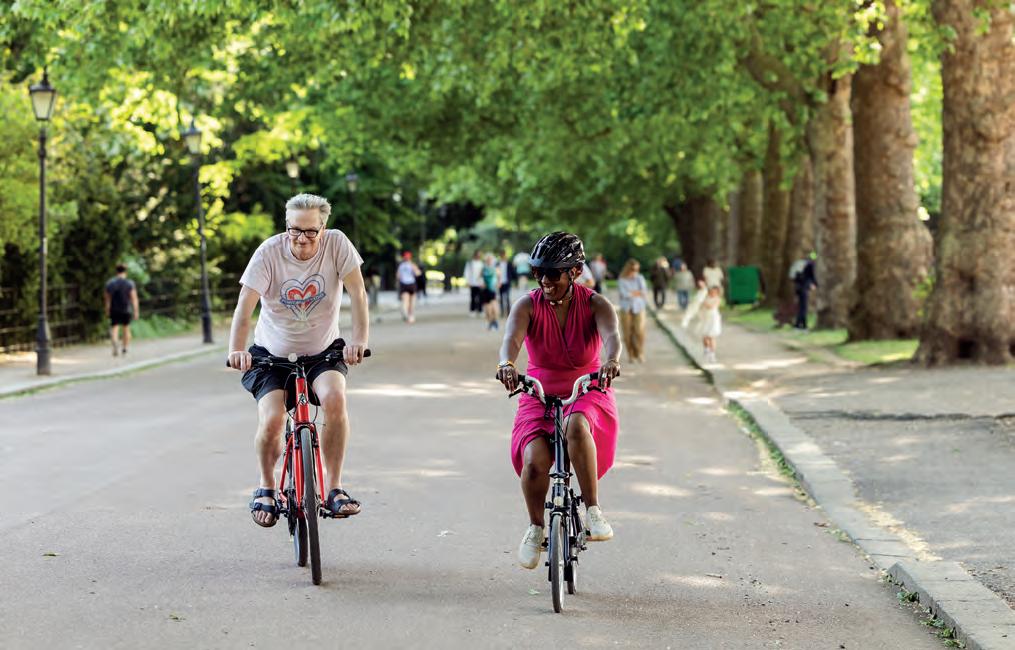
When you introduce a friend to LCC membership, they’ll support our work campaigning for safer cycling in London and you’ll both receive a free gift.
Choose from a Kryptonite lock, Lezyne pump, or CatEye lights set.
New-member benefits
• Third-party insurance cover
• Discounted cycle insurance
• Free cycling legal advice
• Discounts with 160+ bike shops and top cycling retailers
• Subscription to London Cyclist magazine
• Free gift for you and a friend