Portfolio
Interior Architecture student at The University of Tennessee’s College of Architecture and Design, graduating Summer 2026 following a summer study abroad program in Mexico City.
Interior Architecture student at The University of Tennessee’s College of Architecture and Design, graduating Summer 2026 following a summer study abroad program in Mexico City.
Contact: 470-505-8896
Email: logansmith2255@gmail.com
Website: www.logansmithdesigns.com
Third-year Interior Architecture student at the University of Tennessee, on an accelerated path to graduate early in August 2026 following a summer of study abroad in Mexico City. I bring a concept-driven design approach grounded in research, material exploration, and spatial strategy, shaped by international studio experience in Japan. I am seeking internship and early professional opportunities where I can apply strong communication skills, user-centered design thinking, and a thoughtful approach to spatial organization within collaborative design environments.
Rhino Revit Illustrator
Photoshop Vray Enscape
Handrawing
Indesign
• Design Software: Revit, Enscape, Rhino, V-ray, Adobe Creative Suite
• Consultative sales and relationship-building skills from high-end hospitality experience
• Knowledge of spatial flow, ergonomic storage solutions, and lighting
• Organized, self-motivated, and responsive to feedback
• Comfortable and confident working independently or in a team setting
UNIVERSITY OF TENNESSEE
Bachelor of Science in Interior Architecture
• Expected August 2026
• Relevant Coursework: Hospitality Design Studio, Materials Course, Digital Fabrication, Color Theory, Lighting Design
• Study Abroad:
• Kyoto, Japan — focused on spatial restraint, material honesty, and minimalism in hospitality and retail spaces
• Mexico City (Upcoming) — study abroad exploring adaptive reuse, urban density, cultural layering, and sustainable design practices






/Project Description
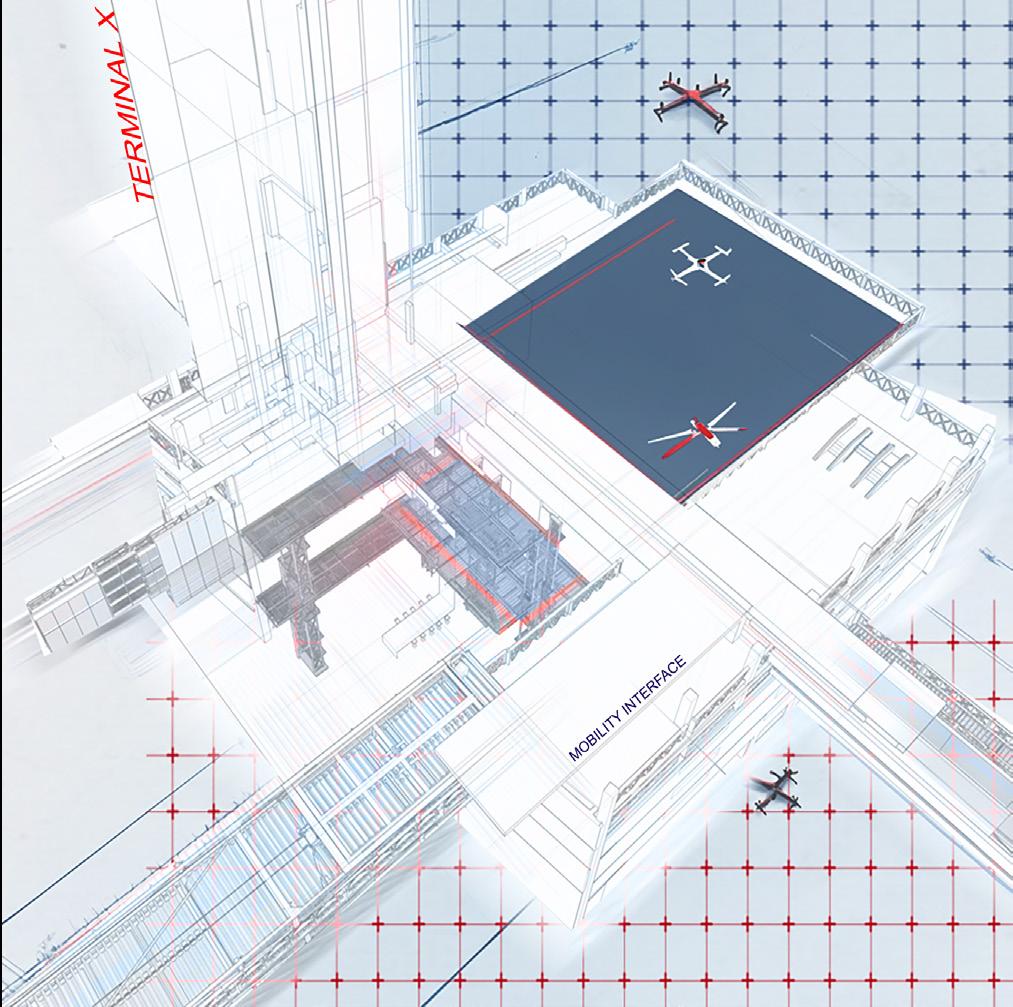
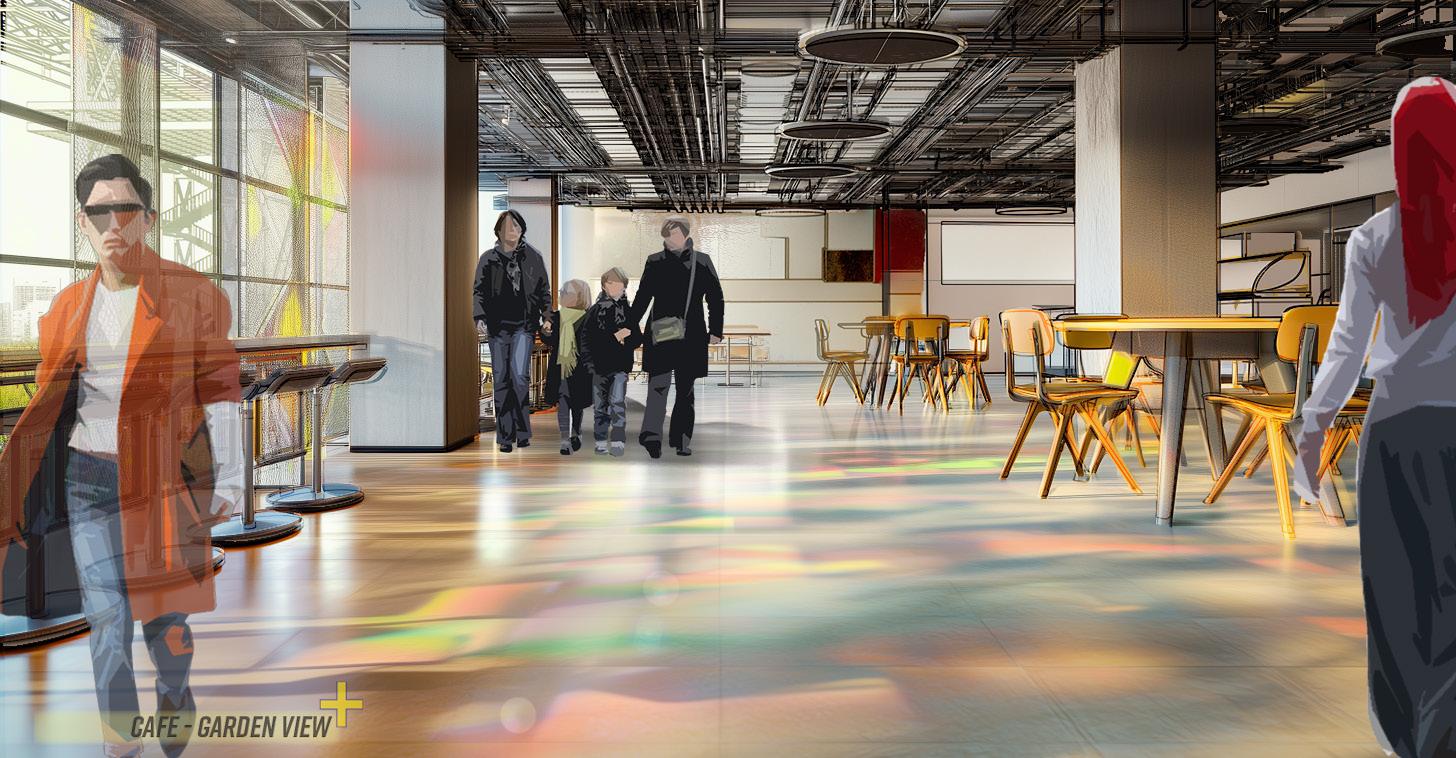
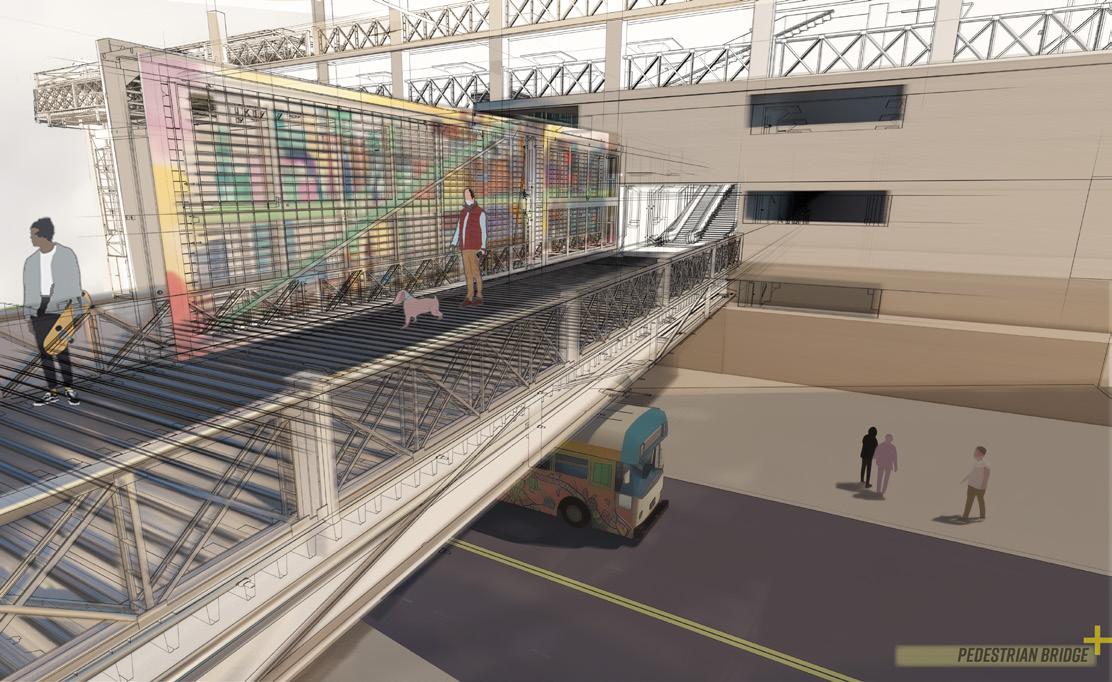
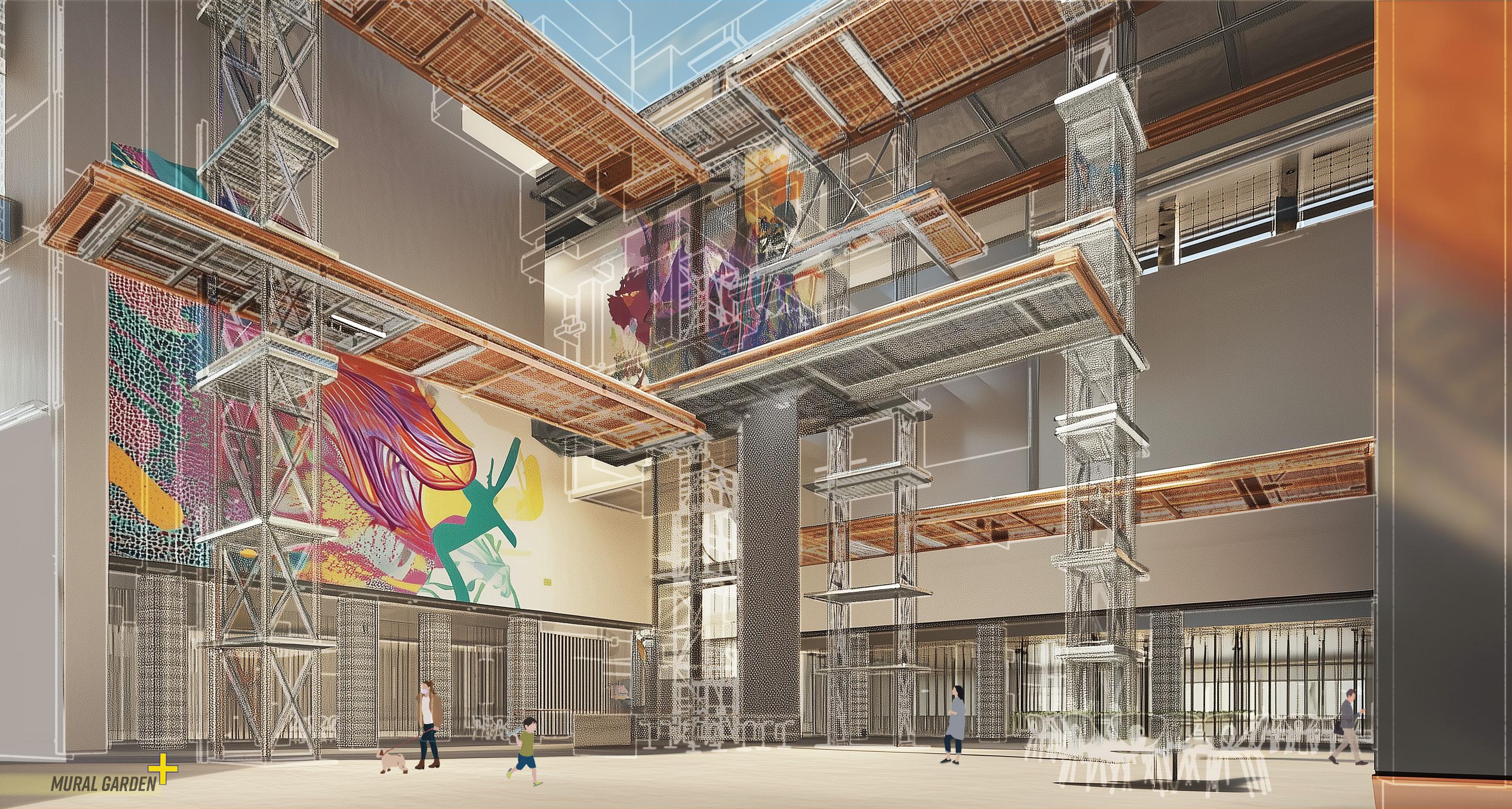
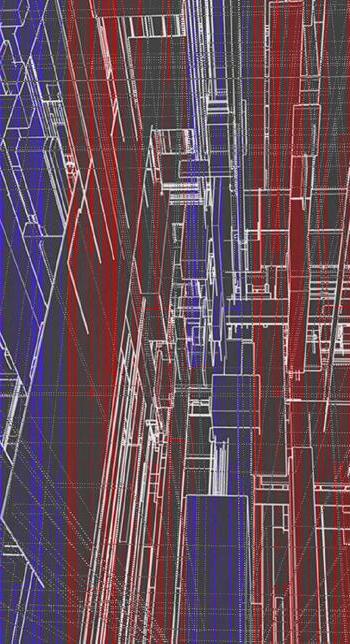
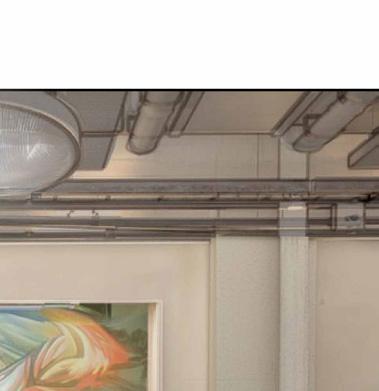
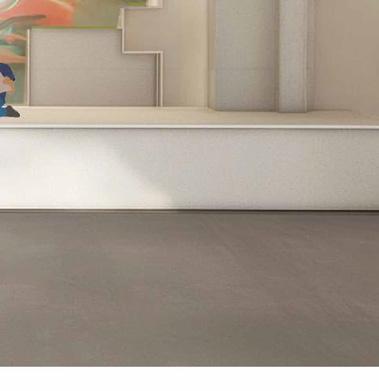
Mobility Interface is not just a place to pass through, but a layered landscape of memory and movement—where circulation becomes experience, infrastructure becomes community, and the rhythm of the city finds a new home. At the heart of it, the mural garden turns the building itself into a canvas, grounding the project in culture and giving every traveler a moment of pause, reflection, and connection as they move through the space.
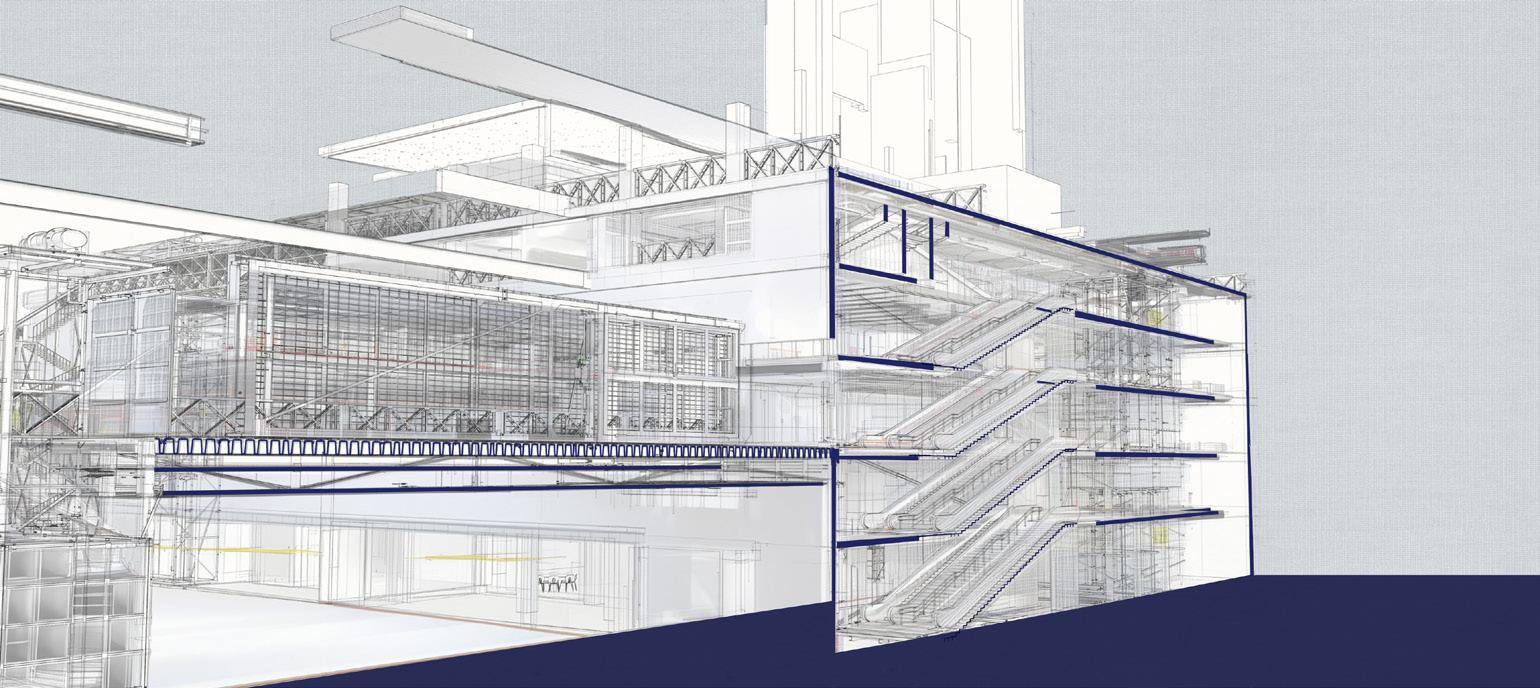
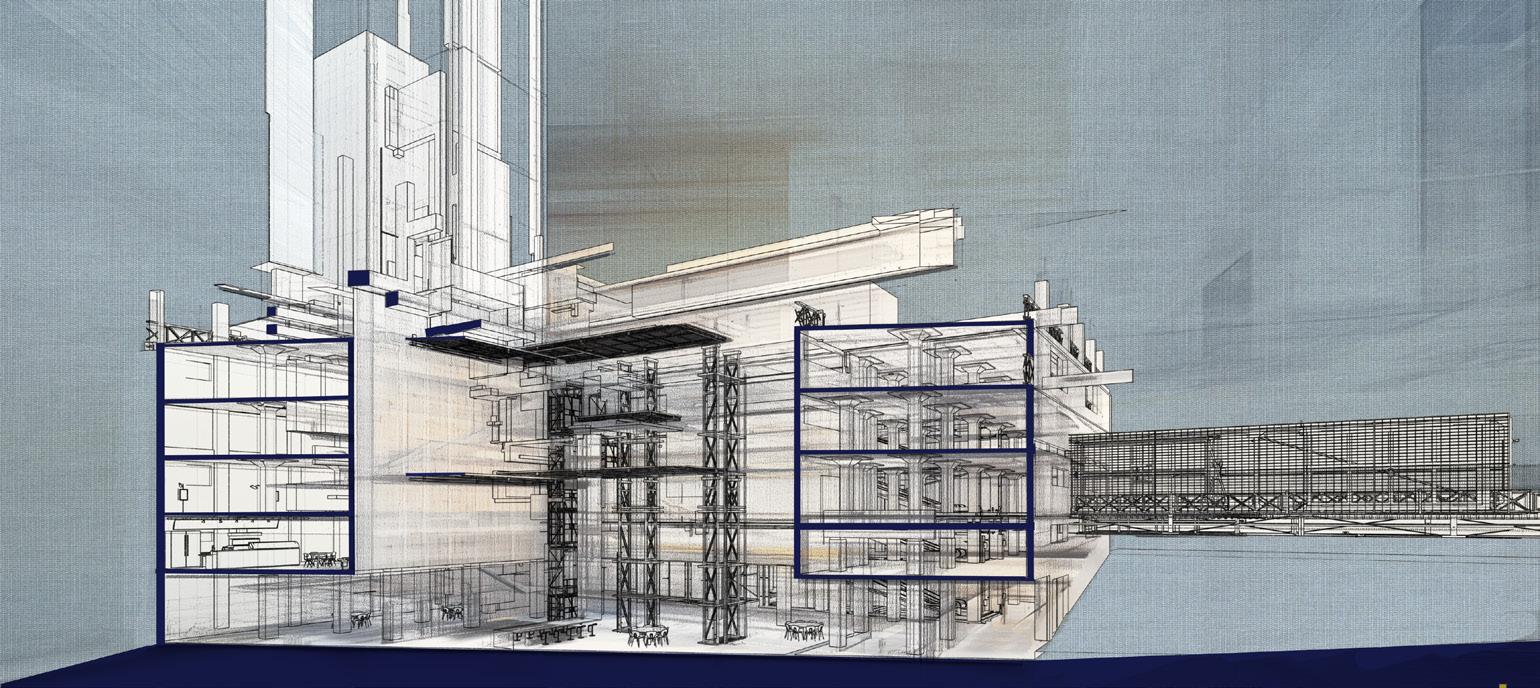
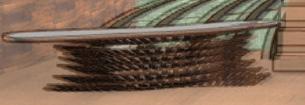
Inspired by the stepped logic of rice terrace fields, the building is organized as a series of layered planes that slow, collect, and redistribute movement, allowing users to occupy space at multiple levels and rhythms rather than simply moving through it. This spatial layering parallels the logic of RAM-stick memory, where information is stored, accessed, and transferred in fragments—transforming transit into a system of accumulated experiences rather than a single moment in time.
At the uppermost level, the Mobility Interface accommodates emerging modes of transportation, including rideshare and future aerial mobility such as Uber Air–style drone transport. This level is designed not only as a point of arrival and departure, but as a flexible civic platform. Anchored by the mural garden, the space extends beyond transportation infrastructure to support public events, exhibitions, and informal gatherings, allowing the building to function as a shared urban destination rather than a single-purpose transit hub.
/Key Project Information
Site: Knoxville, Tennessee
Program: Mobility Terminal
Software: Rhino, Enscape, Adobe Suite
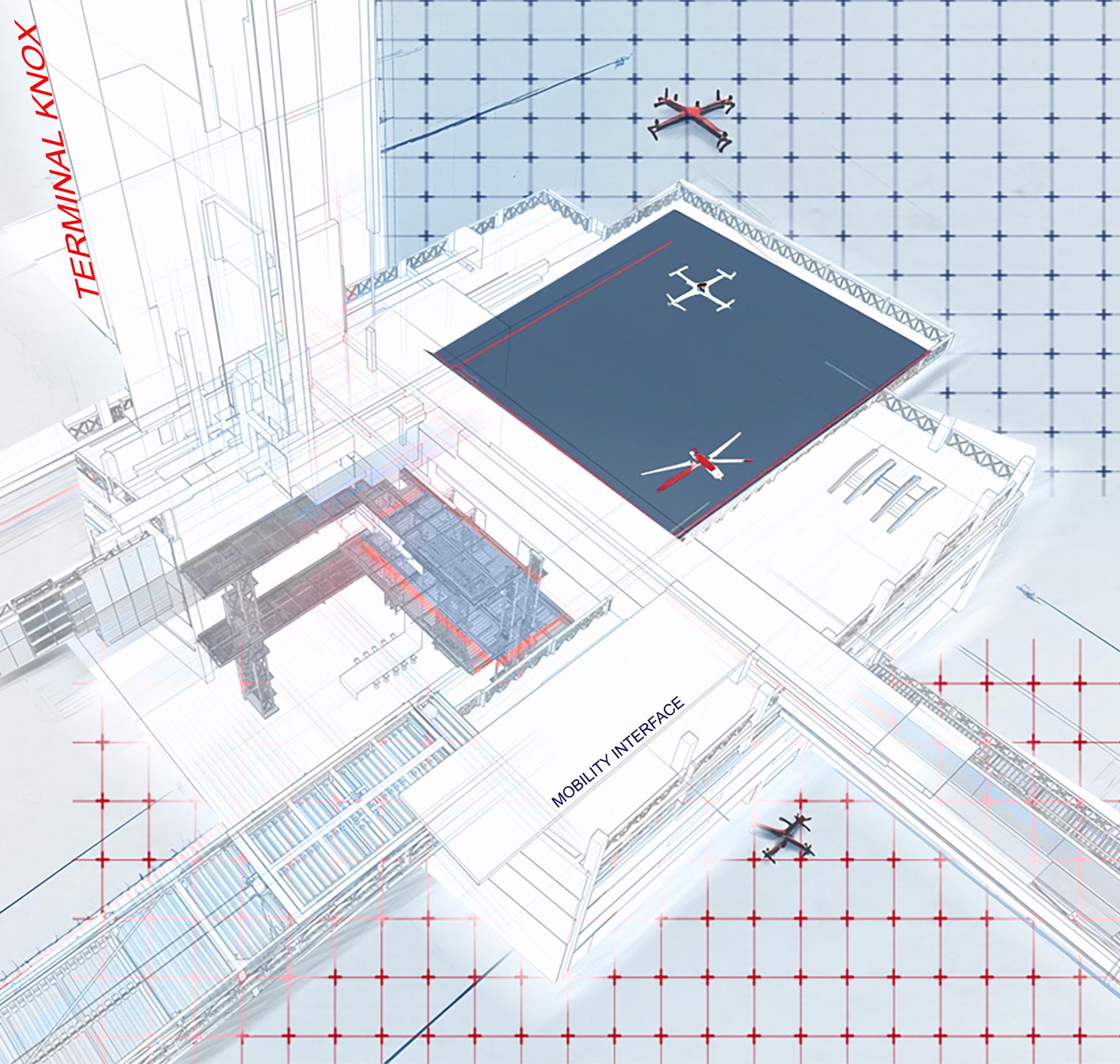
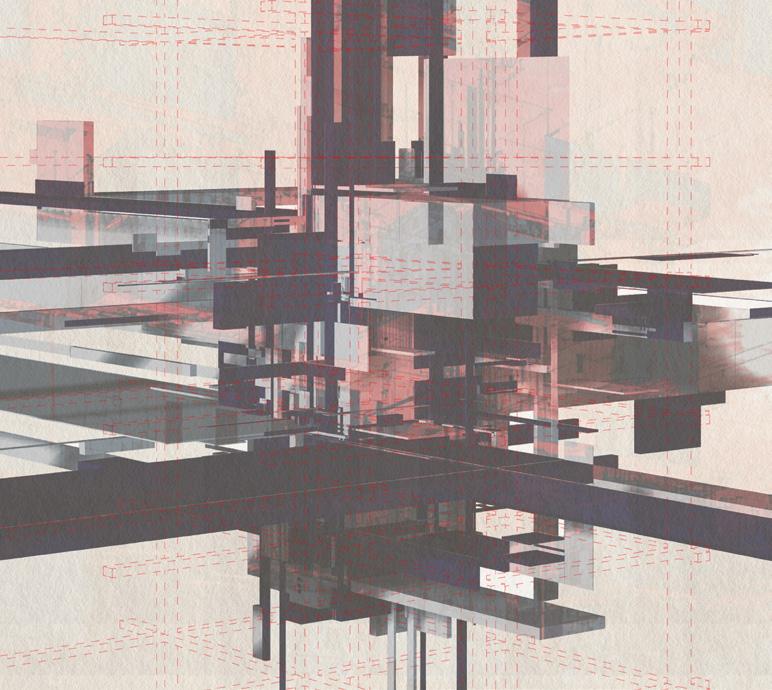
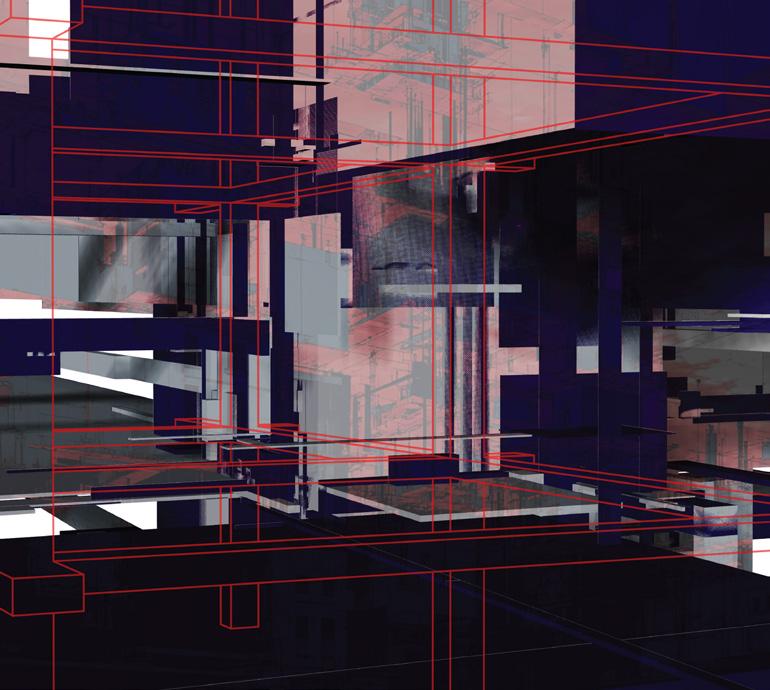
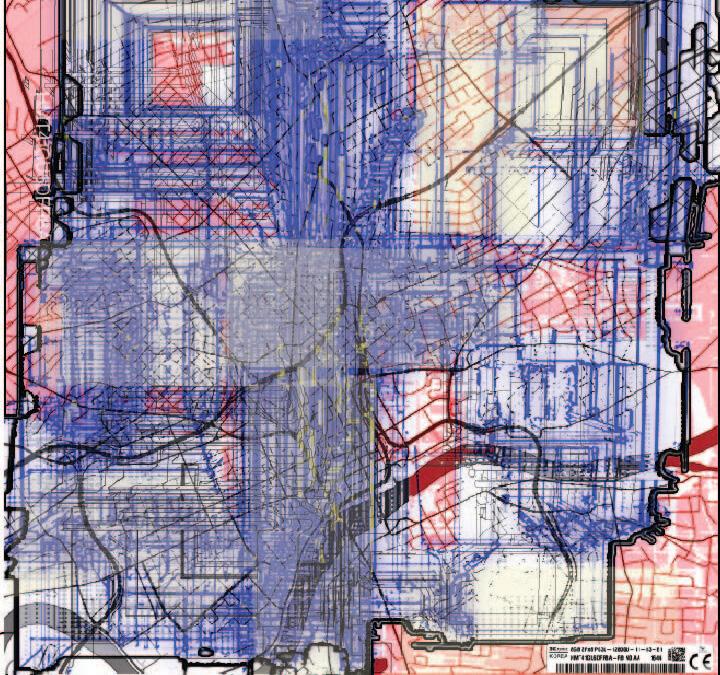
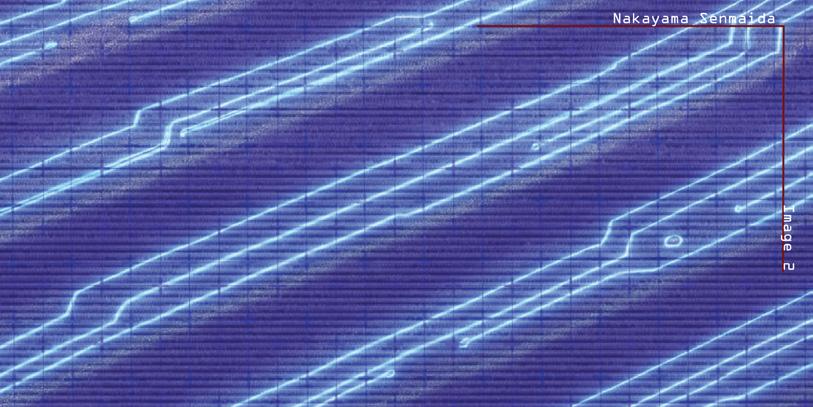
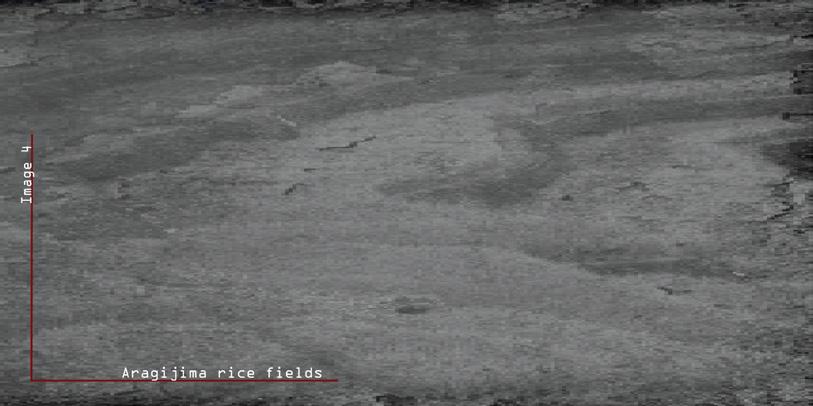
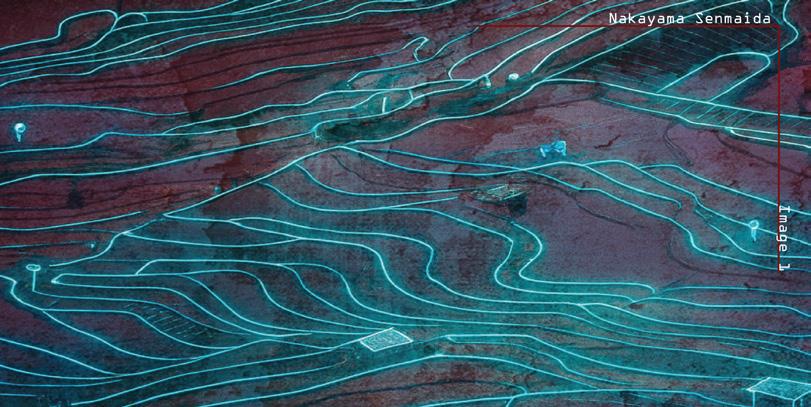
The initial research for this project began with pulling a RAM stick from a computer. This moment revealed a physical expression of memory, layered, modular, and accessible in fragments, which became a framework for thinking about how movement and information are stored, retrieved, and experienced over time.
This abstract concept was later grounded through my study abroad experience in Japan, where visiting rice terrace fields demonstrated how layered landscapes slow movement, collect resources, and create moments of pause within systems of flow. Together, these influences shaped the Mobility Interface as an architectural system that organizes circulation as memory—stacked, shared, and experiential rather than purely efficient.around which circulation and program are organized.


/Project Description
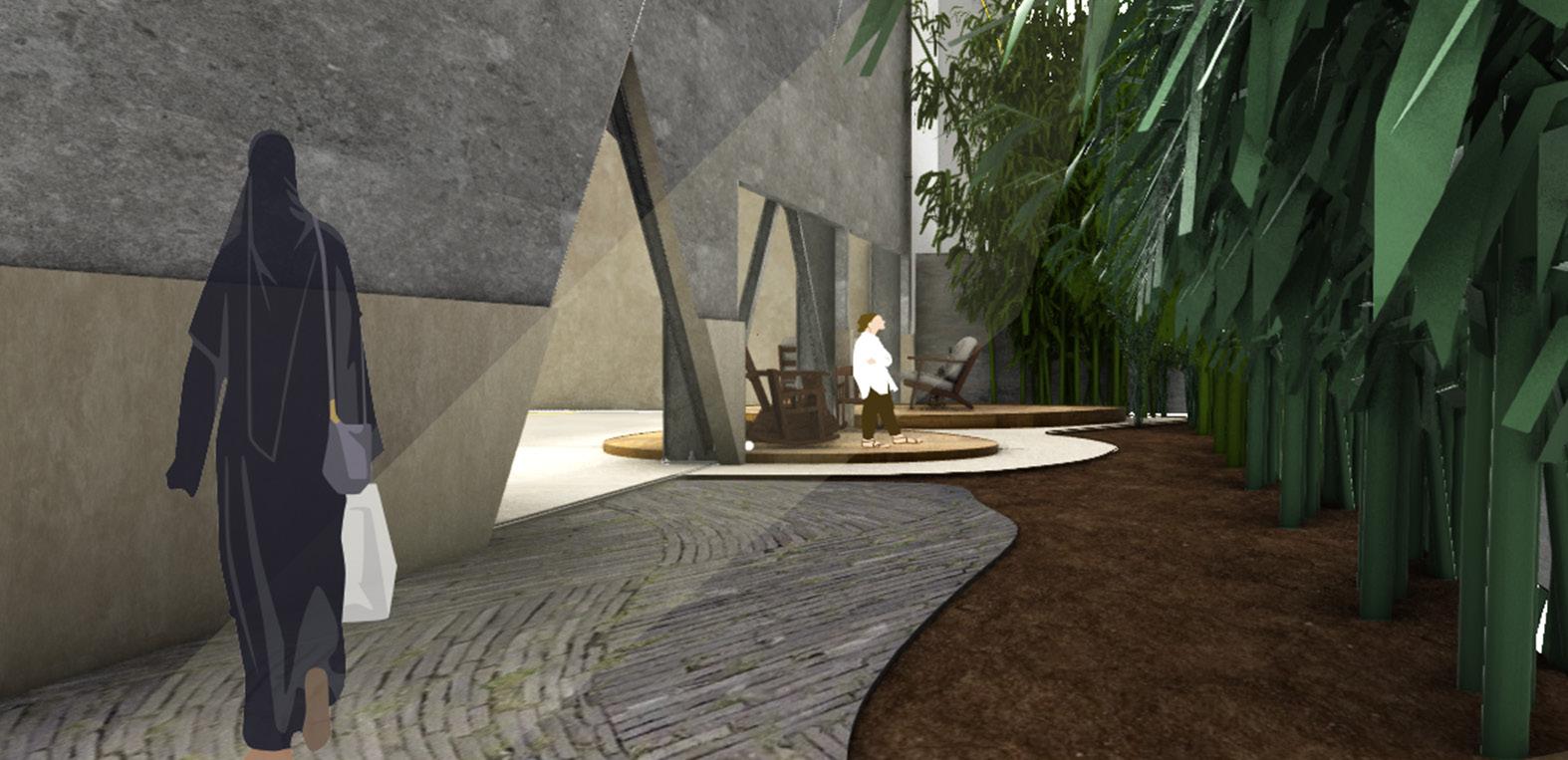
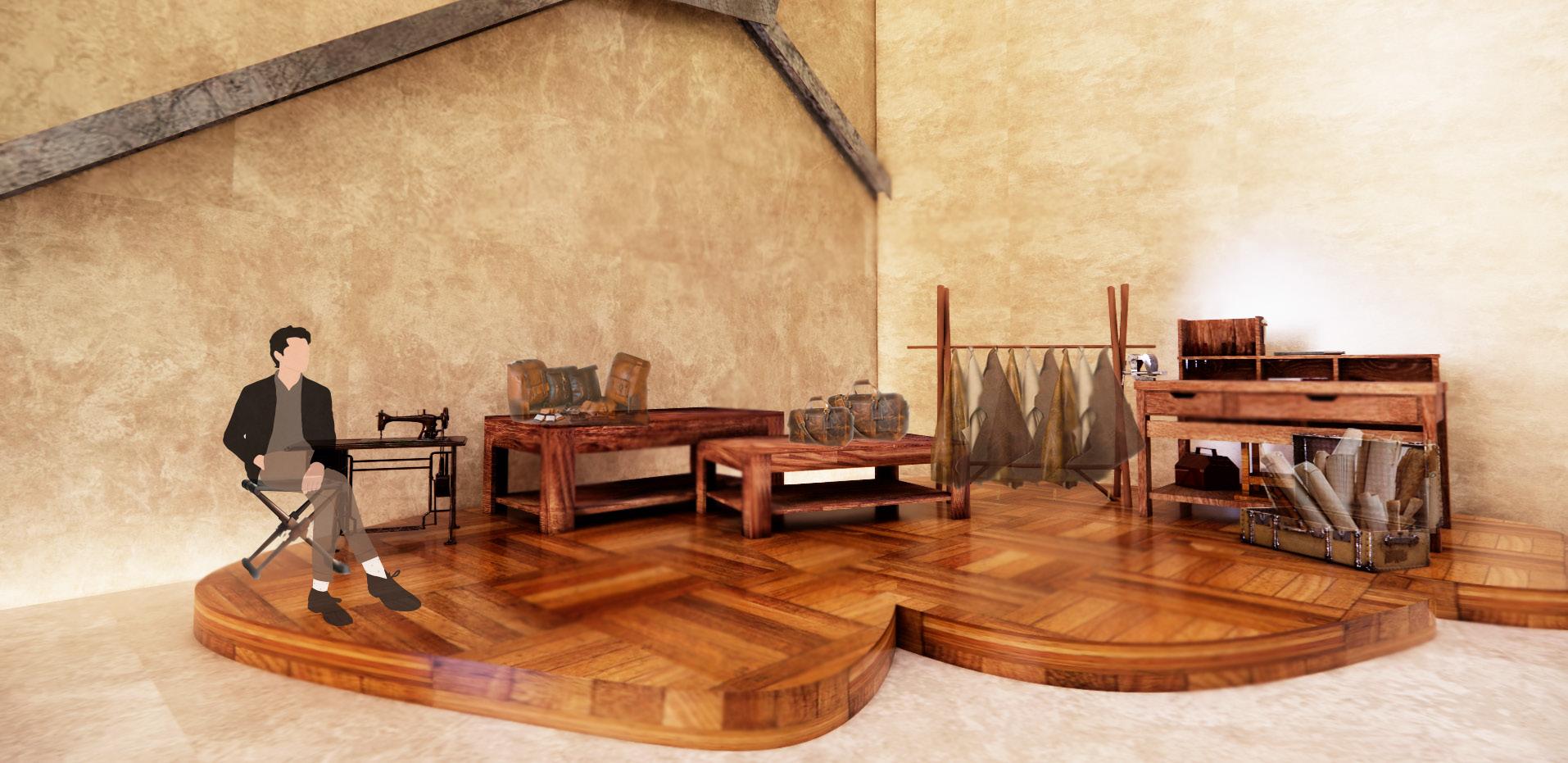
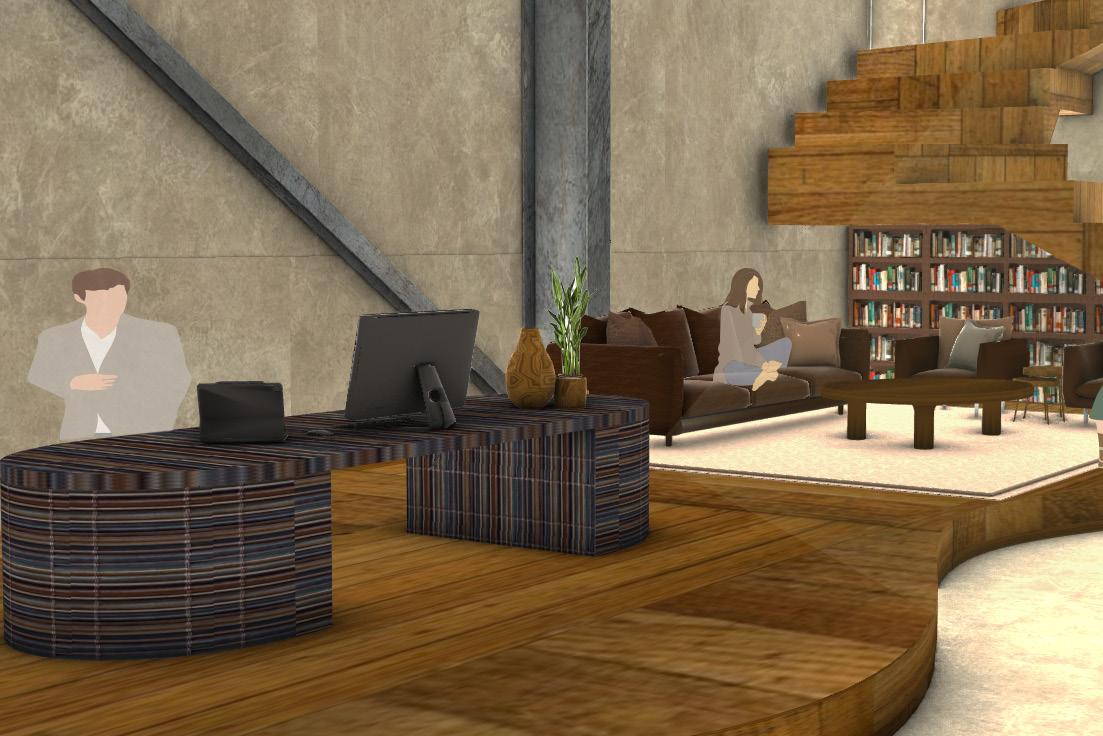
Pause—a soft landing between motion and rest. It resists spectacle, choosing simplicity and space that listens. Memory lingers, time drifts, and silence holds. Hospitality lives in restraint, in the quiet dignity of what’s left unsaid. Not a destination, but an in-between—a place to shed, to slow, to be.
This is a space that holds, not hurries. Nothing demands attention; instead, everything invites presence. What’s worn is not discarded—it’s remembered. Time is felt in the uneven, the softened, the sincere. Each imperfection becomes a gesture of trust, each trace a quiet offering. Here, value is found not in what is added, but in what remains. It is a rhythm of return—a space shaped not by display, but by what quietly endures.
/Key Project Information
Site: Kyoto, Japan
Program: Hospitality
Program: Rhino, Enscape, Adobe Suite
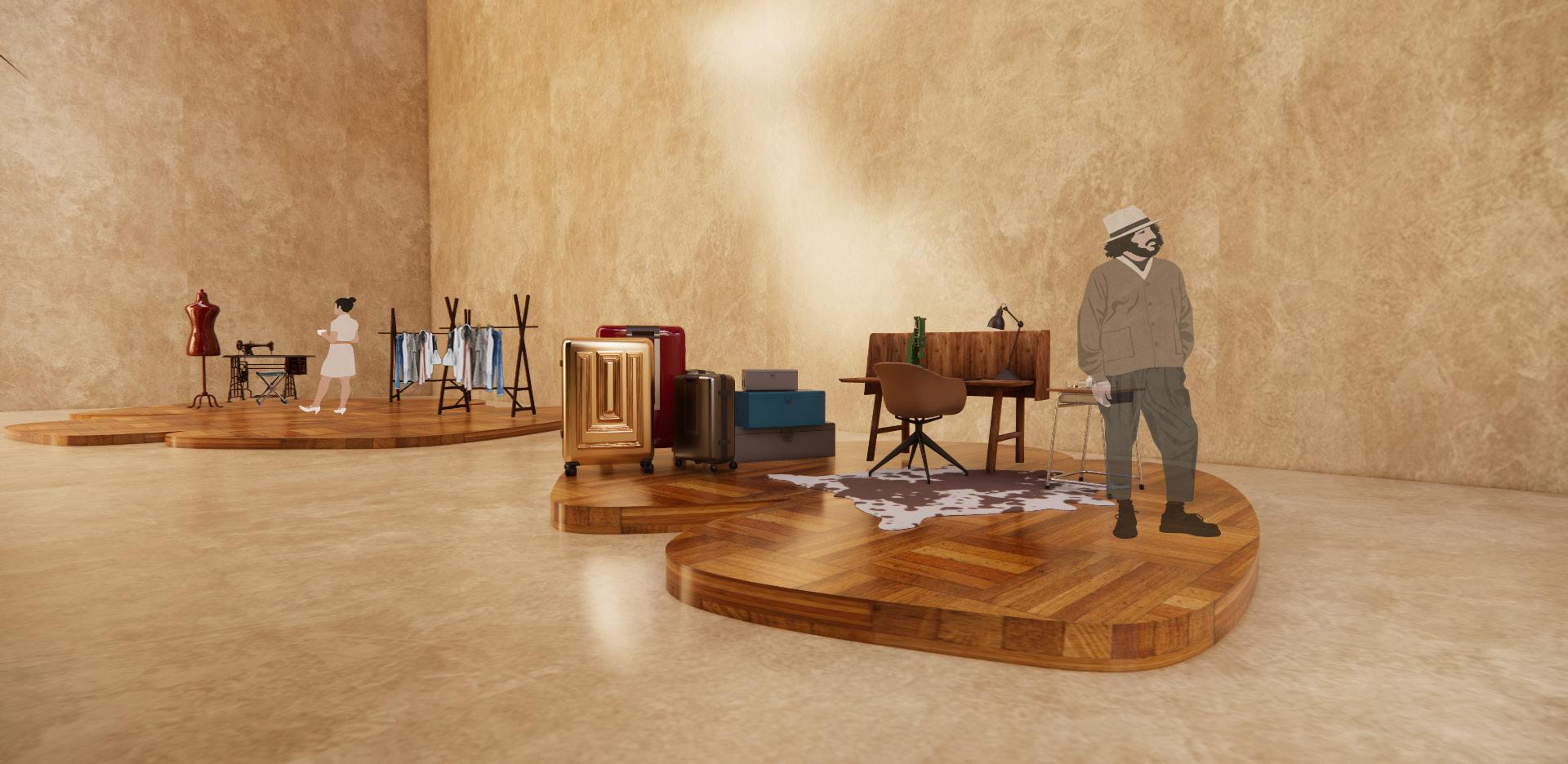
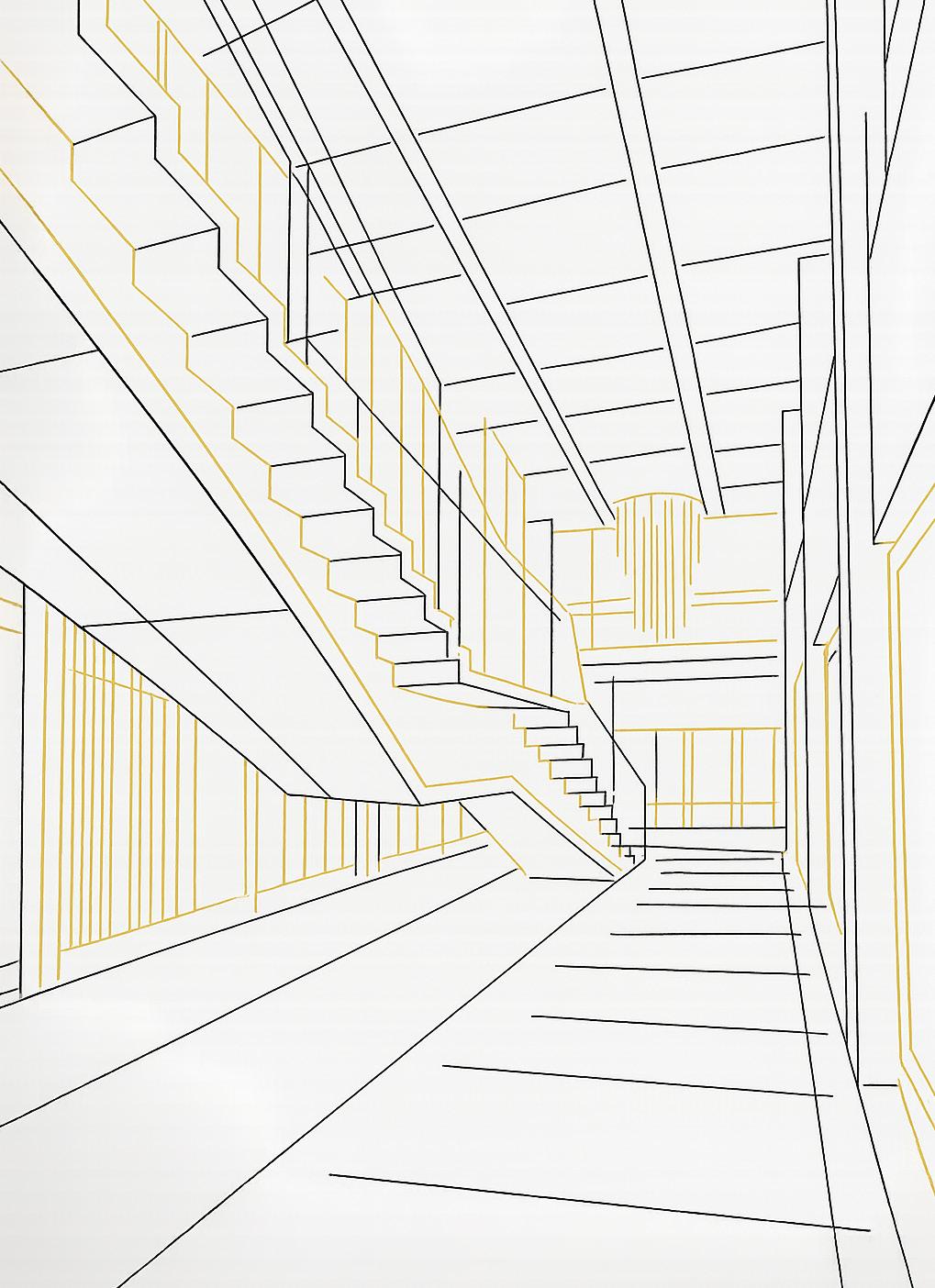
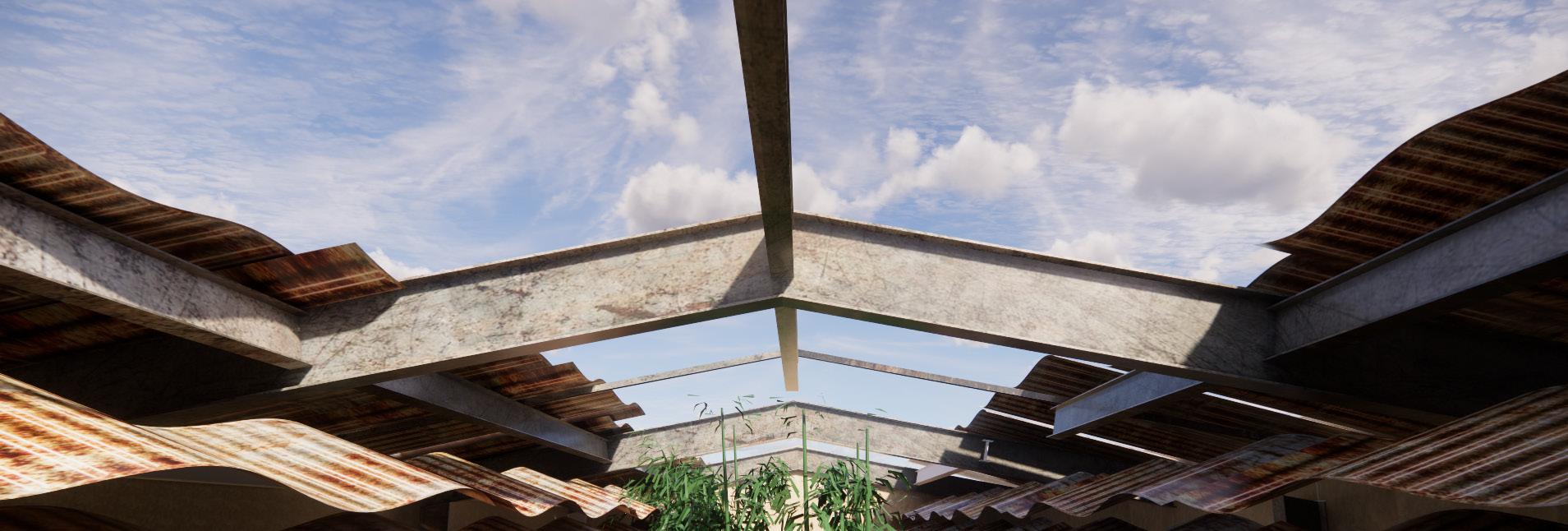
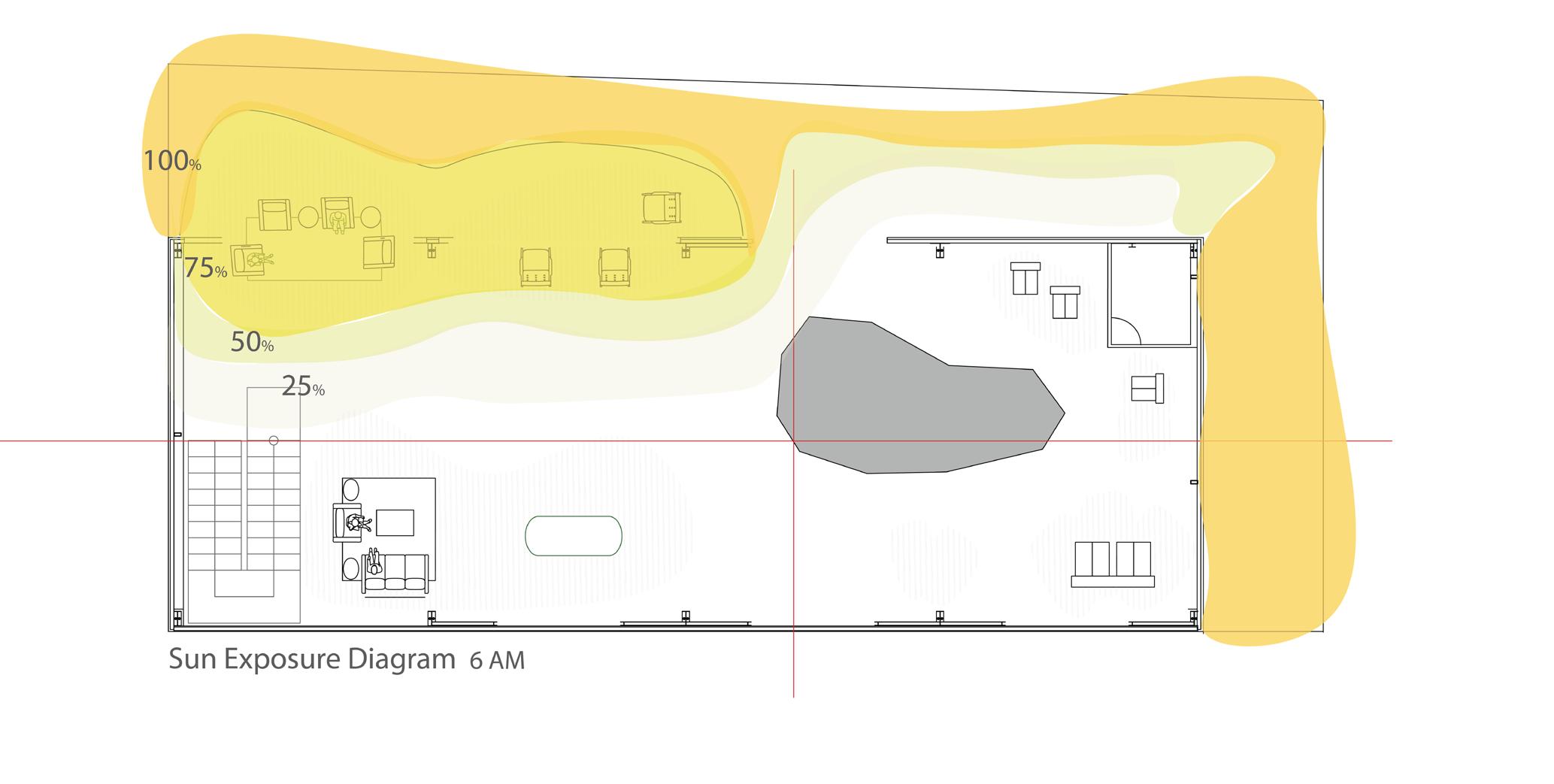
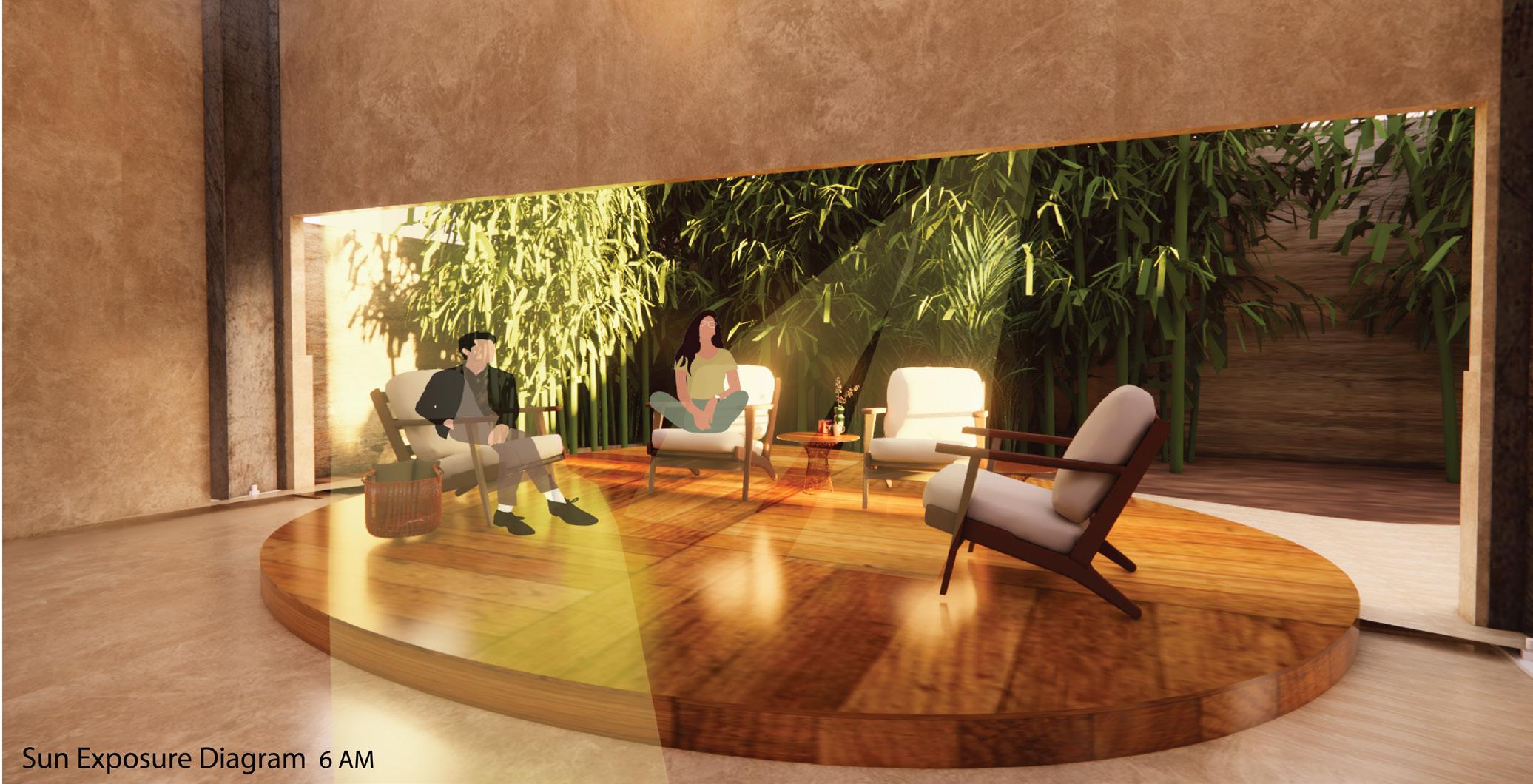
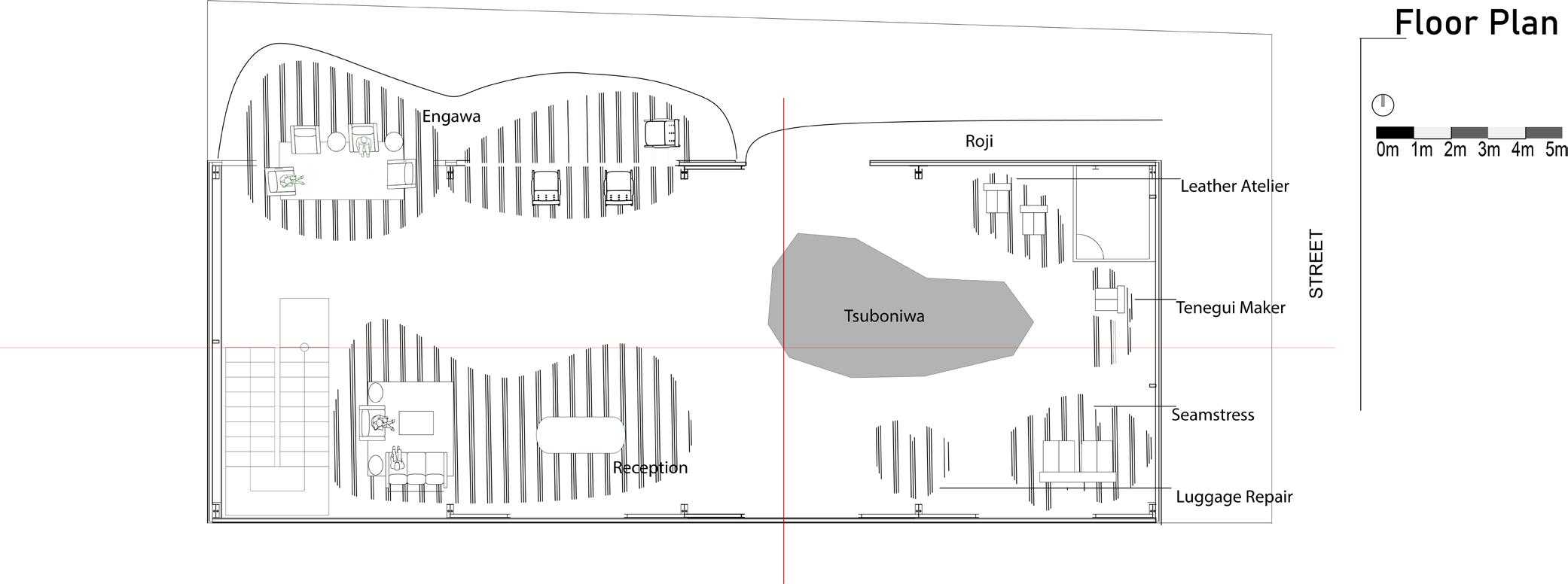
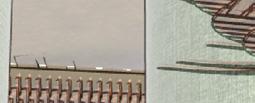
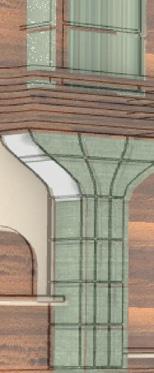
A key design element was a dual-panel sun-shading system constructed from corrugated metal, chosen to both modulate daylight and visually ground the building within its surrounding neighborhood. This system emerged as the project’s initial concept, developed during my study abroad in Japan while conducting a focused study on light and atmosphere. Observing how light is carefully filtered, layered, and choreographed across Japanese architecture informed the design of panels that diffused daylight differently throughout the day across public, transitional, and private spaces. As light moved through the building, shifting interior conditions reinforced the rhythms of daily life within the ryokan, subtly highlighting moments of craft and restoration within the workshop spaces. This balance between hospitality and making draws from Japanese notions of material respect, time, reuse, and contextual continuity.
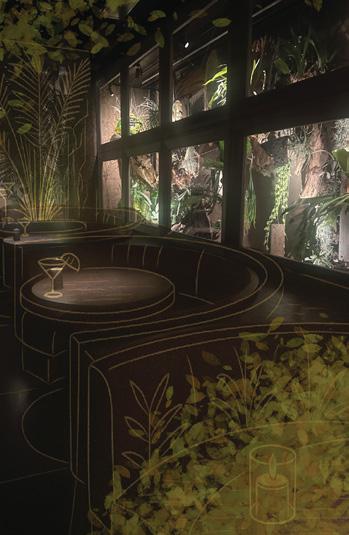
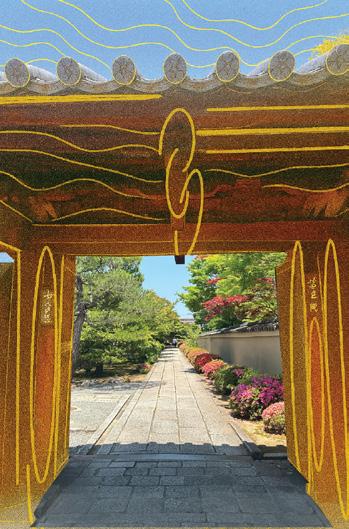
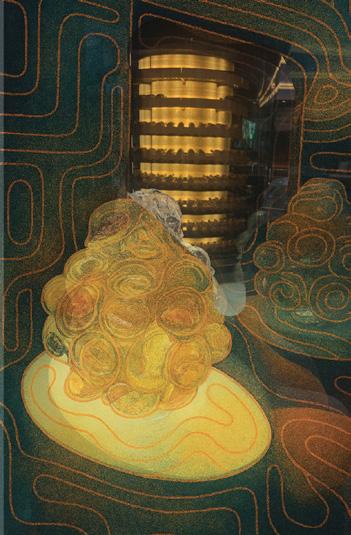
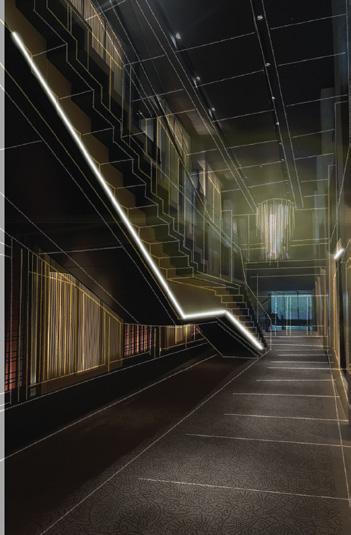
/ “Illuminating the Invisible: Artificial Light in Japanese Design”
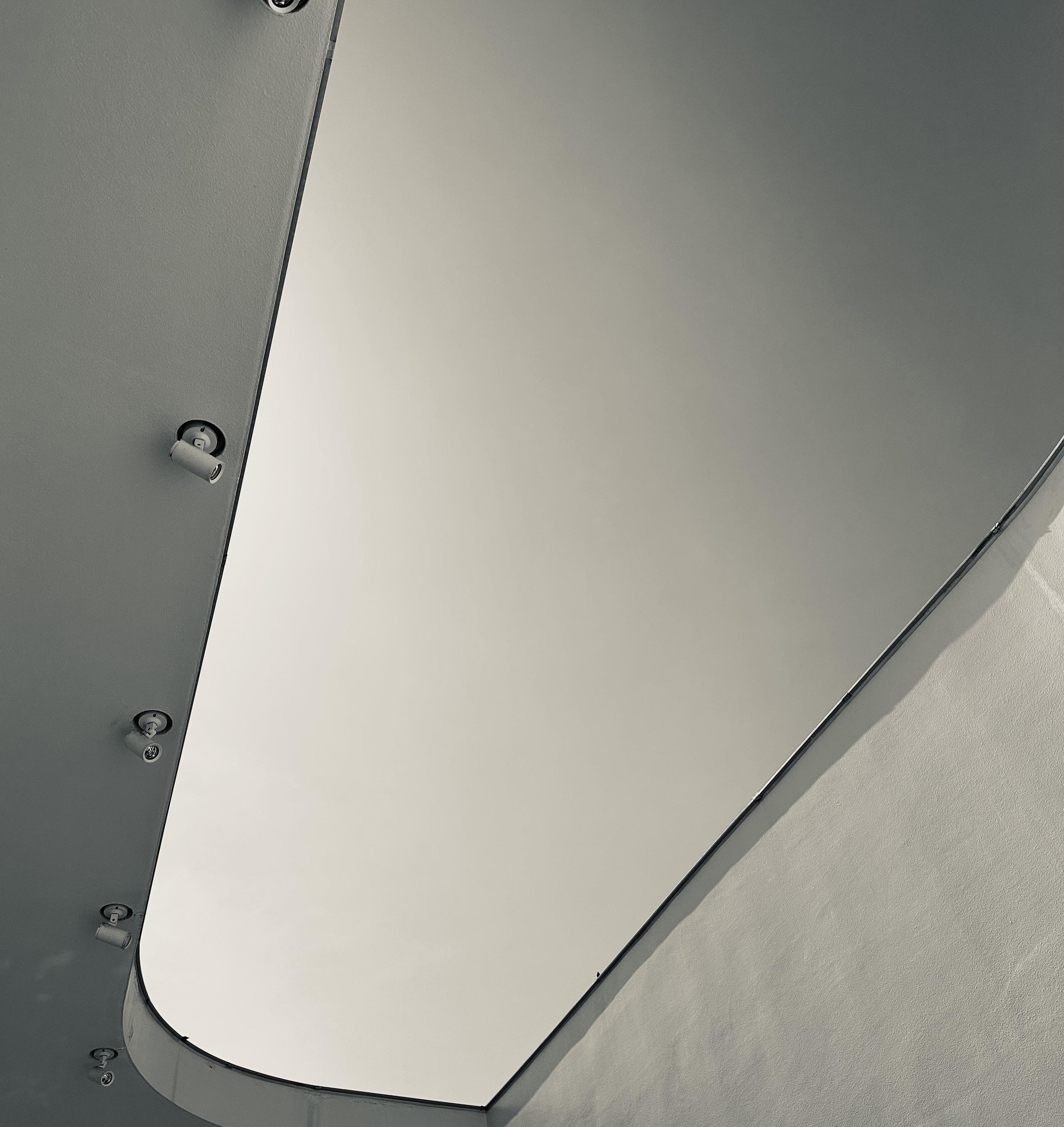
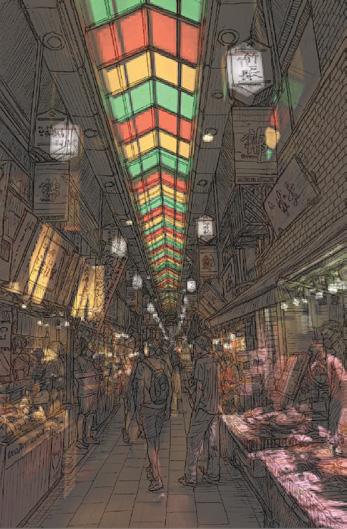
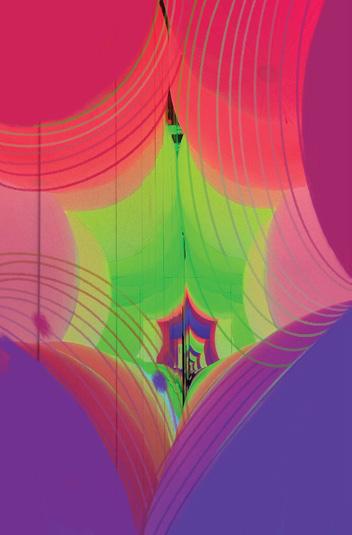
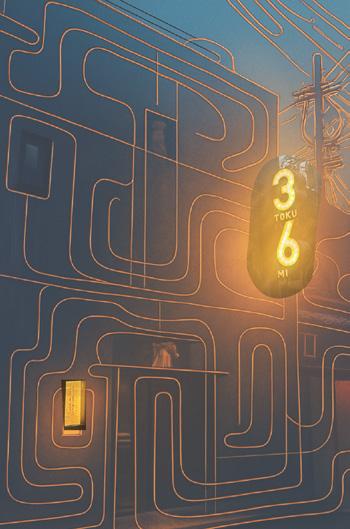
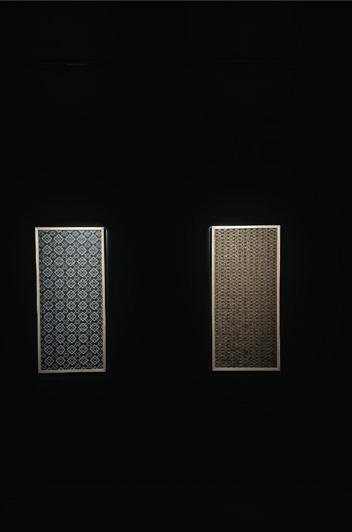
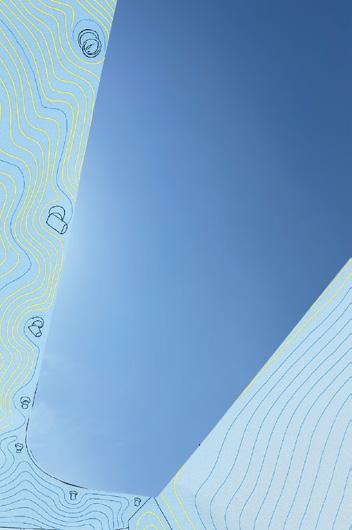
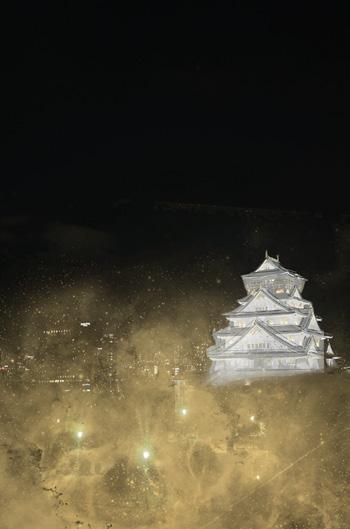
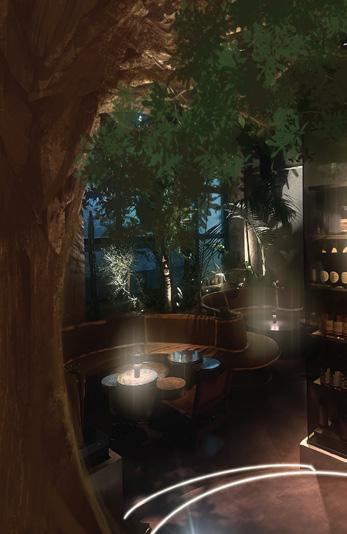
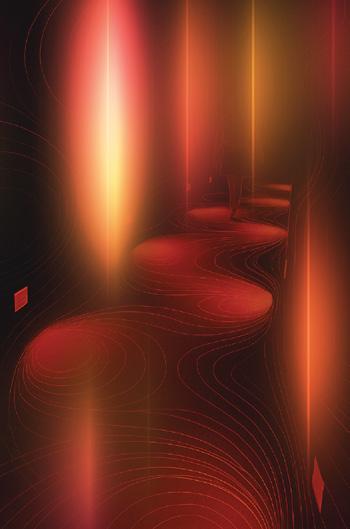
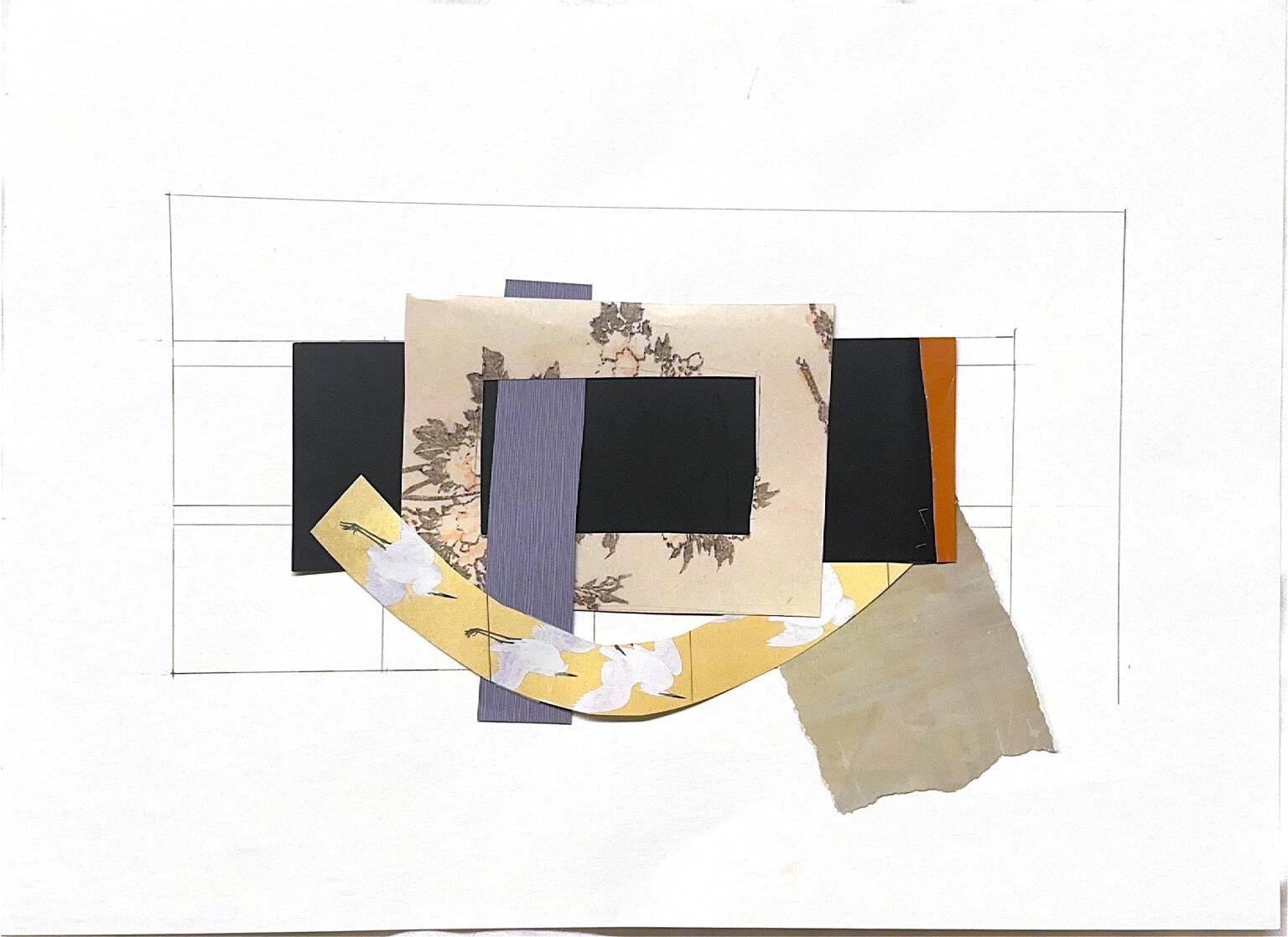
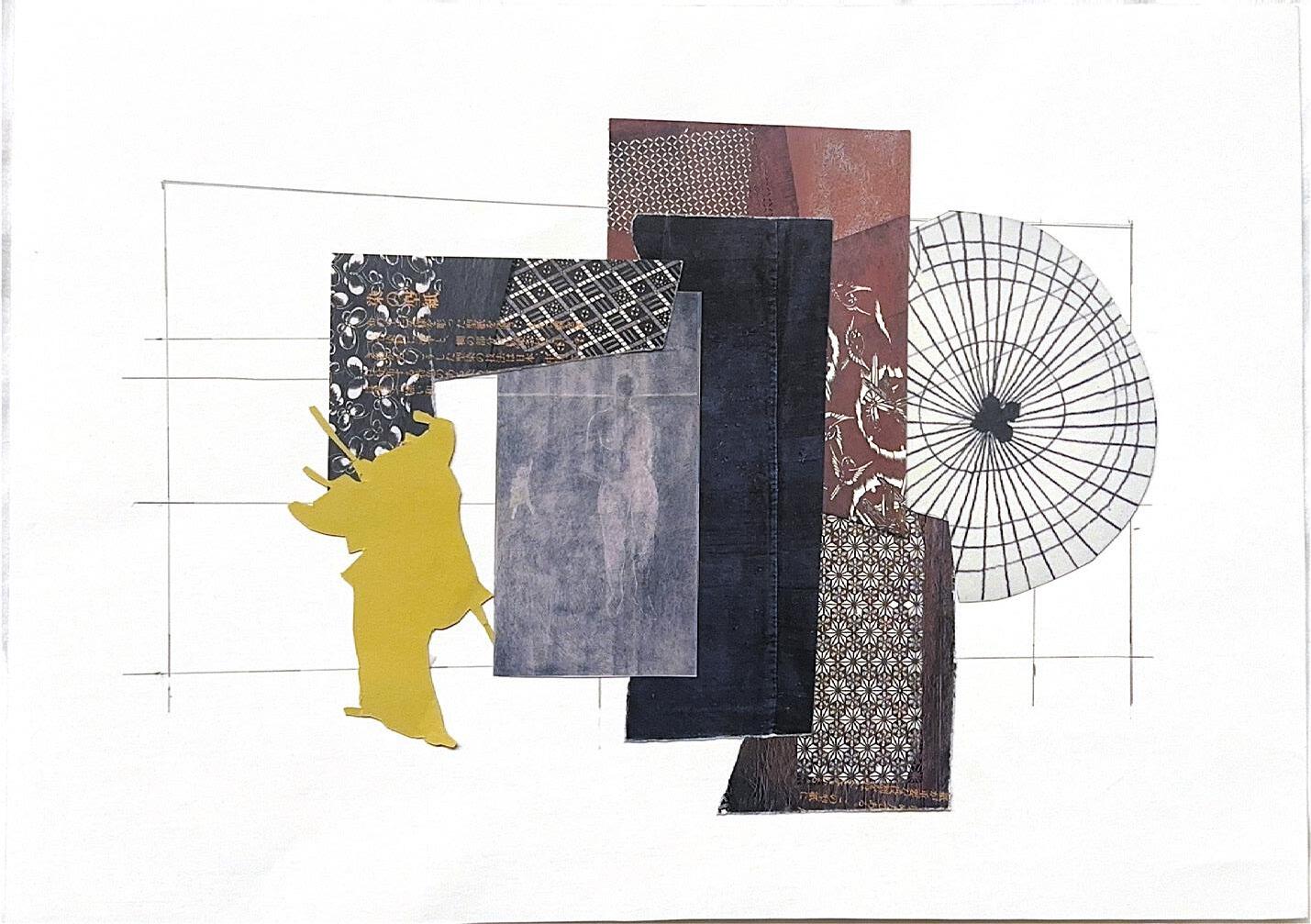
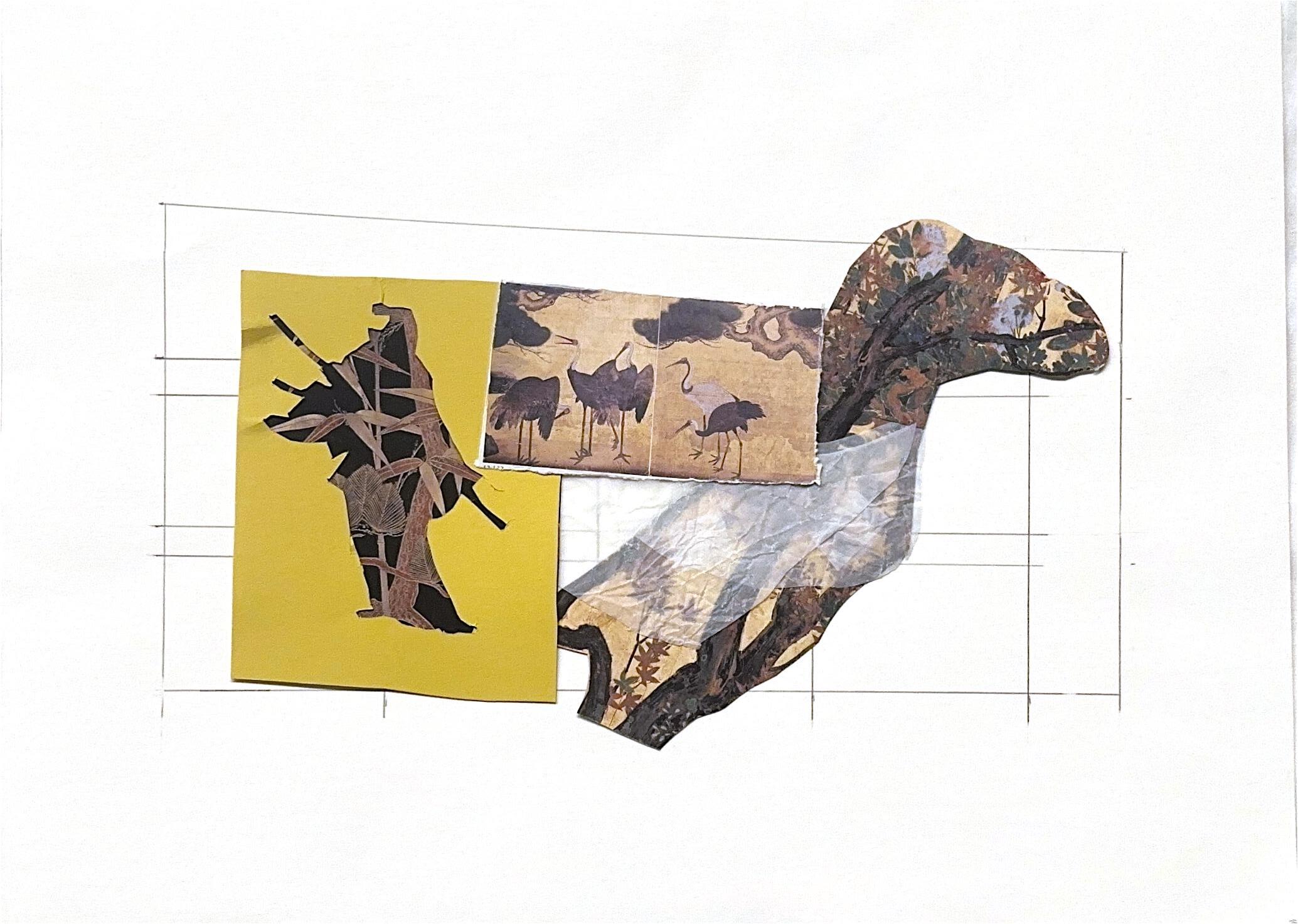
In Japan, artificial lighting is more than a practical tool—it is a choreographed element in spatial storytelling. While studying abroad, I conducted a photography-based study focused on light, documenting how illumination is subtly engineered to create atmosphere, support wayfinding, and shape spatial experience. This series of postcards captures lighting strategies across hospitality, public spaces, and historic sites, revealing how the interplay between light and shadow is deliberate and intentional. Contrast is used not only to reveal form and movement, but also to conceal, inviting moments of pause, reflection, and quiet discovery.
/Project Description
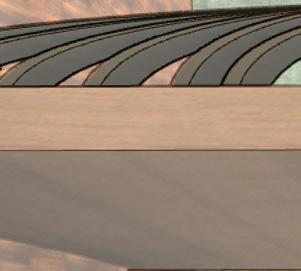
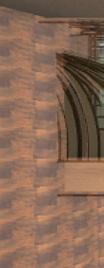
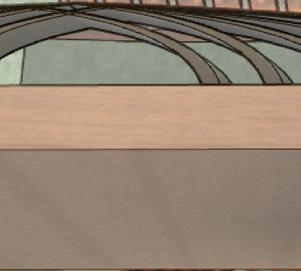
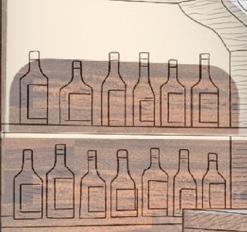
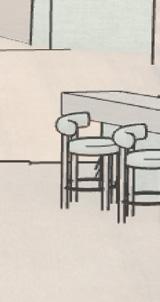
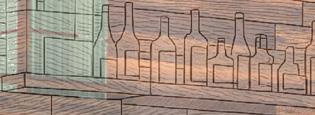
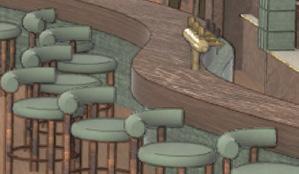
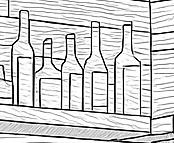
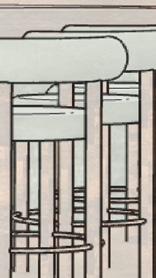
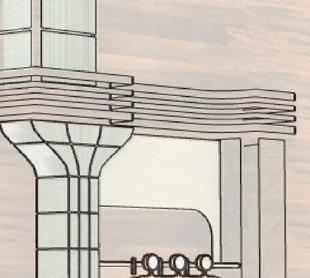
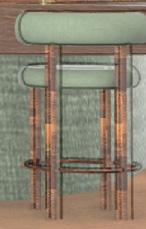
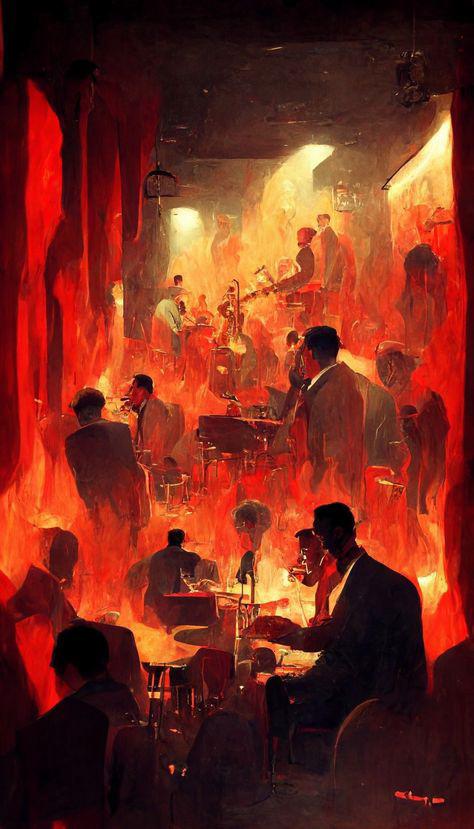
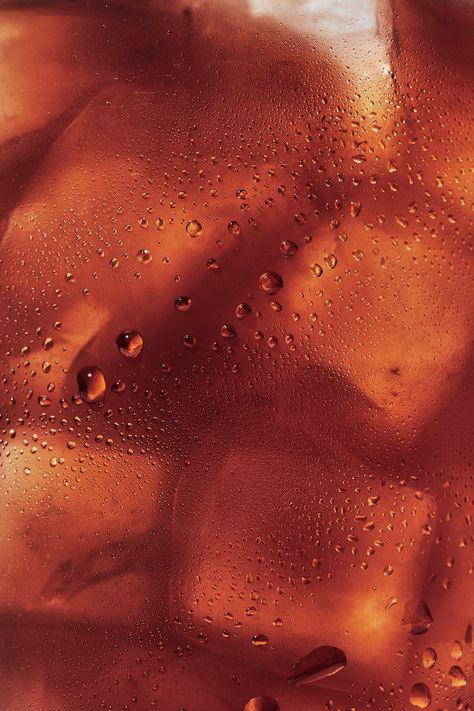
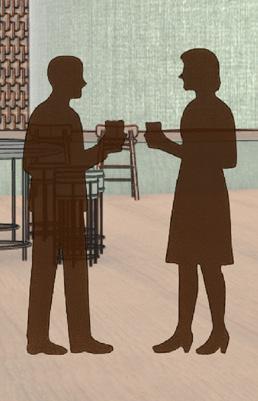
In the heart of Hanoi, bourbon bar “Stave”, rises as a sanctuary of craftsmanship and transformation—a spatial distillation of the age-old art of barrel-making and the forgotten language of alchemy. The soul of the architecture draws itself from the antique barrel staves repurposed into furniture and design elements, their natural curvature echoed throughout the architecture with precision and intention. Every element within the space is a reverent nod to this ritual that turns flame and wood into vessels of spirit.
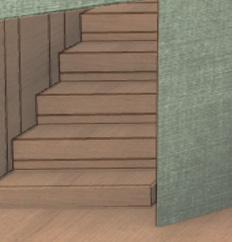
As alchemists once sought to turn base metals into gold, this space embraces that same spirit of transformation. The charred timber walls are rich with years of aging and memory. The sage-toned velvet panels seamlessly fuse the refined elegance of the spirit with the mystique of the alchemy that brings it to life. Spaces unfold like stages in a distillation. Guests pass through a dark, compressed threshold before emerging into an expansive bar filled with the hum of laughter and the rich aroma of charred barrels. From there, the space gently ascends into a warm, intimate lounge—inviting conversation, connection, and the enjoyment of company. This bar is not just a place to drink—it is a place to witness transformation. To sit with time. To taste the magic born of craft and element. Here, architecture becomes alchemy. And bourbon, its golden result.
/Key Project Information
Site: Hanoi, Vietnam
Program: Bourbon Bar
Software: Rhino, V-Ray, Adobe Suite

























































/Project Description
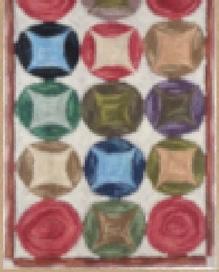
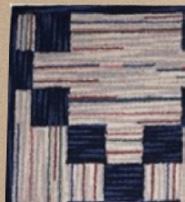
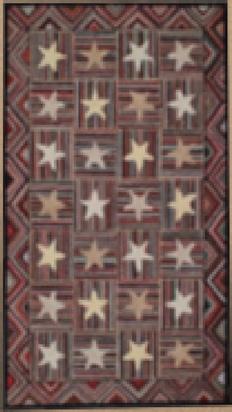
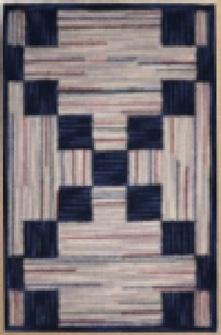
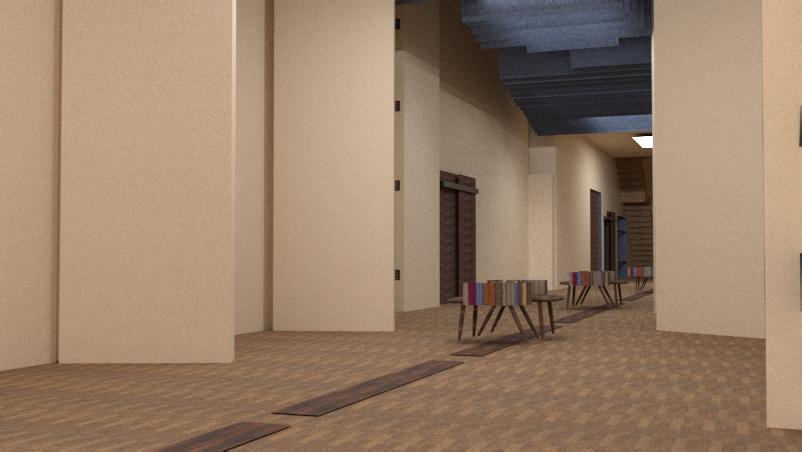
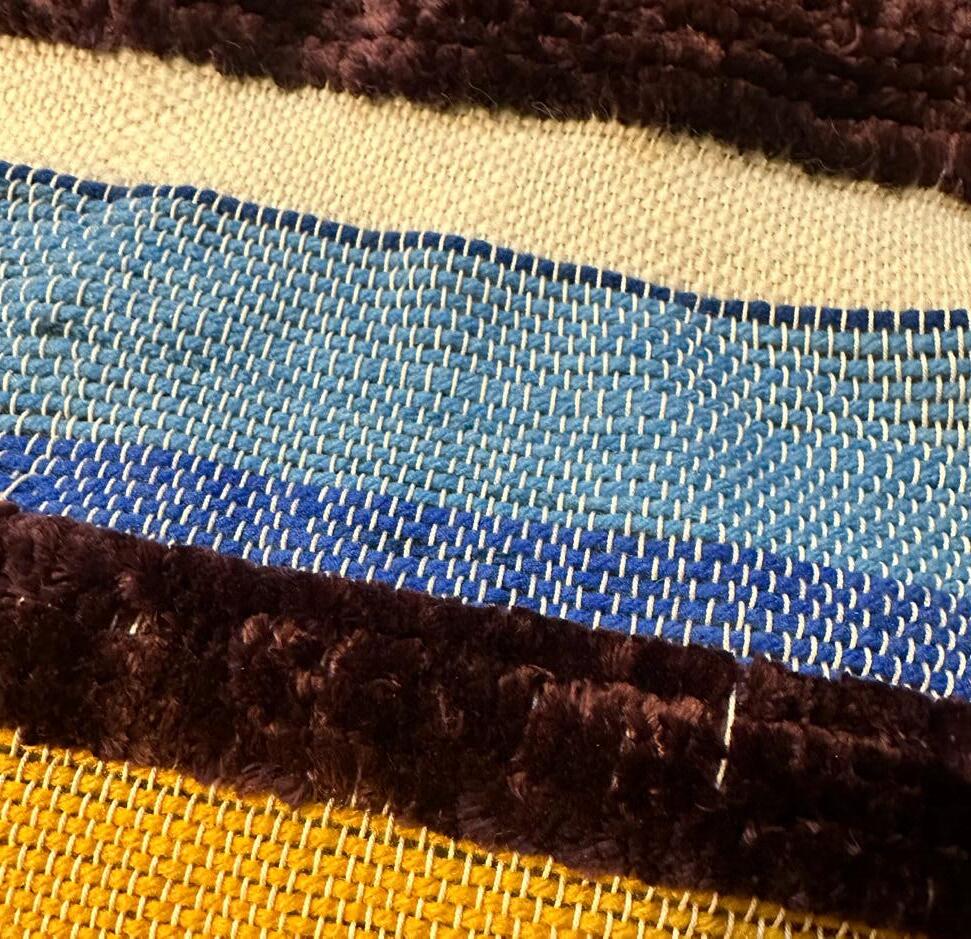
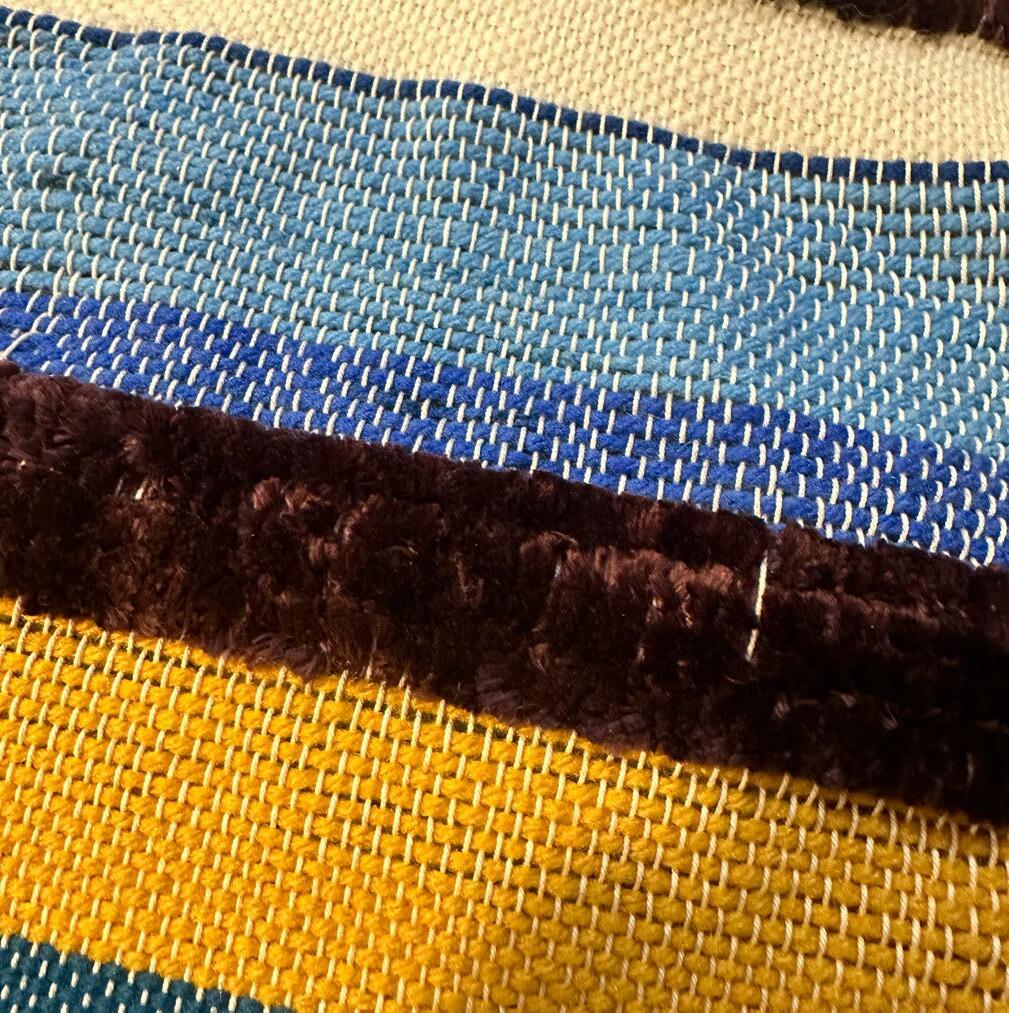
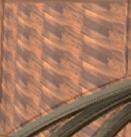
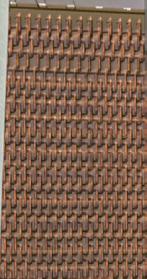
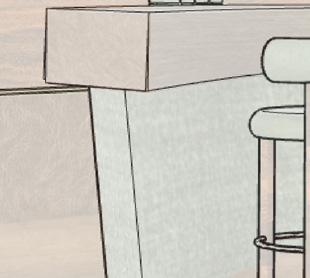
Isolation once fabricated waves of fear that engulfed both Japanese and Appalachian cultures. In response, each community cultivated independence through patchwork methods of repair—using weaving as a means of survival, continuity, and cultural reinforcement. These practices embedded resilience into everyday acts of making, unraveling collective melancholy and weaving strength through material, labor, and tradition into the soul of each region.
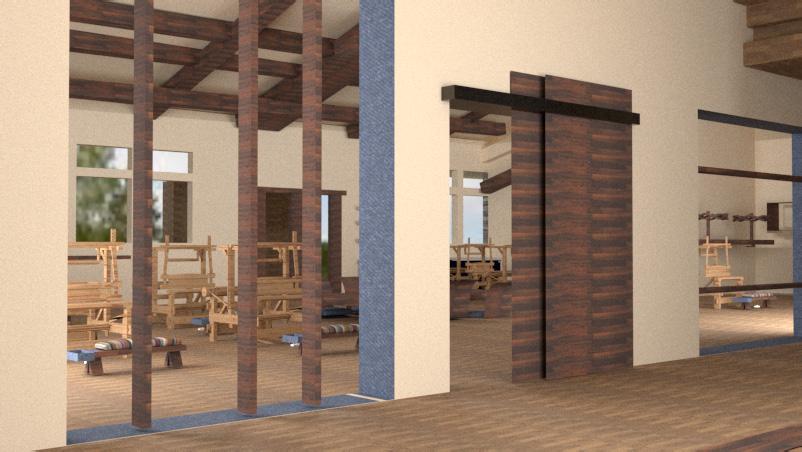
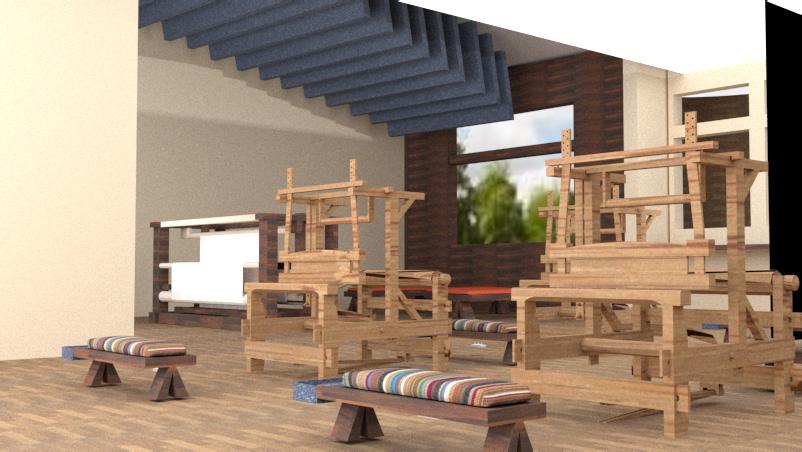
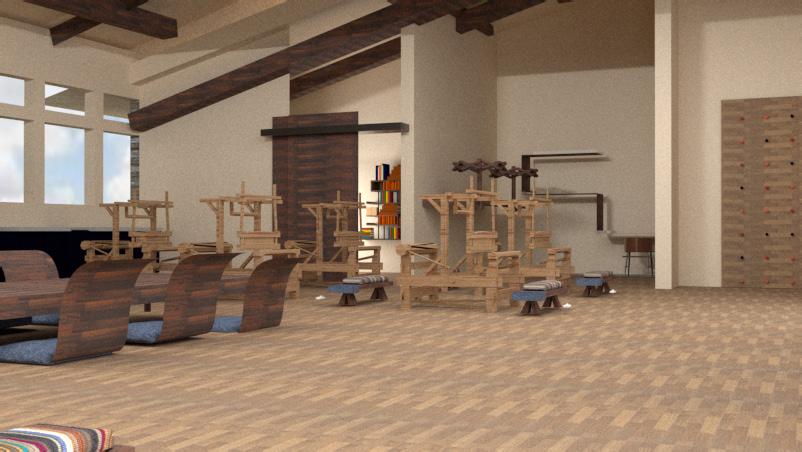
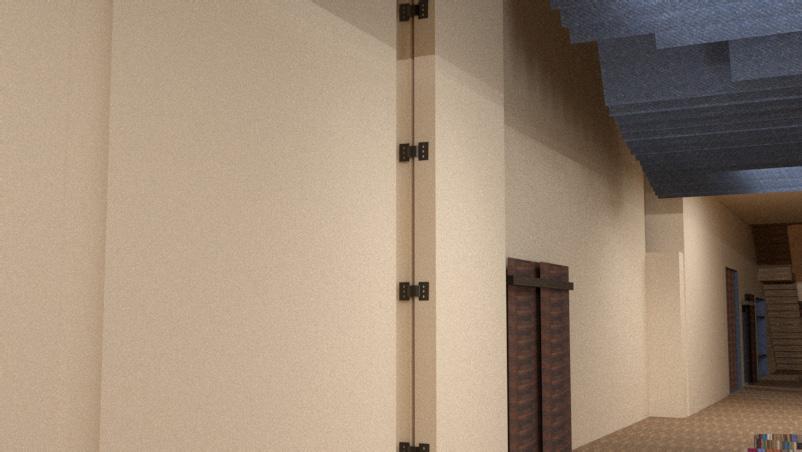
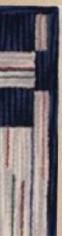
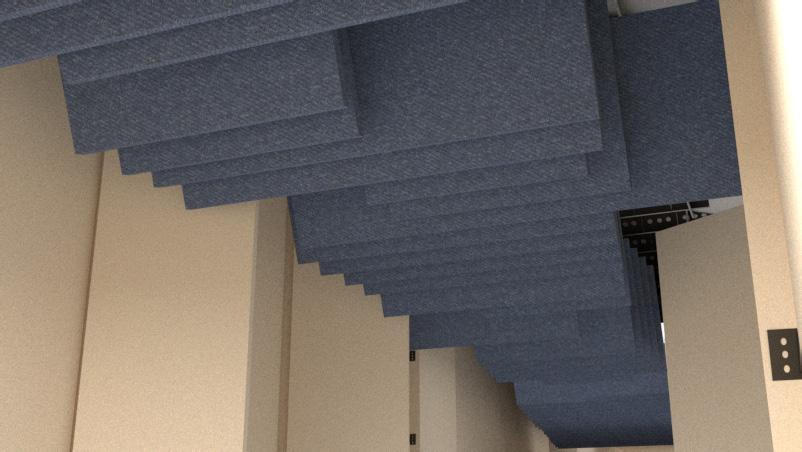
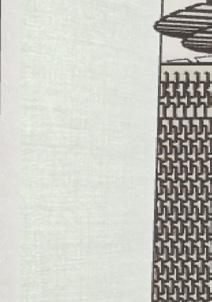
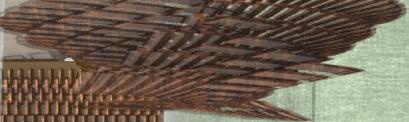
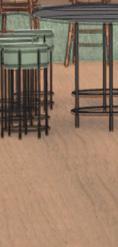
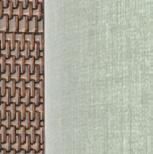
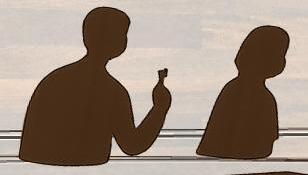
This project reimagines the Arrowmont Weaving Studio in Gatlinburg by bringing together Japanese Sakiori weaving and Appalachian rag rug weaving, positioning textiles as both artifact and active process. A gallery space anchors the project, where woven works are displayed on a hinged wall panel system that allows textiles to shift, layer, and reconfigure— mirroring the adaptive nature of patchwork itself. Overhead, a draped fabric ceiling condition responds to the panel system below, moving and folding in dialogue with the exhibition, reinforcing the relationship between structure, softness, and motion.
Adjacent to the gallery, the weaving studio functions as a space of learning and participation. Visitors are invited to engage directly with looms and materials, transforming observation into embodied experience. Guided by the core principles of research, application, and reflection, the project allows visitors to move fluidly between making and viewing. Through this spatial narrative, repair is celebrated not as a final act, but as an ongoing process of resilience, connection, and renewal—radiating through every seam.










/Key Project Information
Site: Gatlinburg, Tennessee
Program: Education