Aloha, Alexis
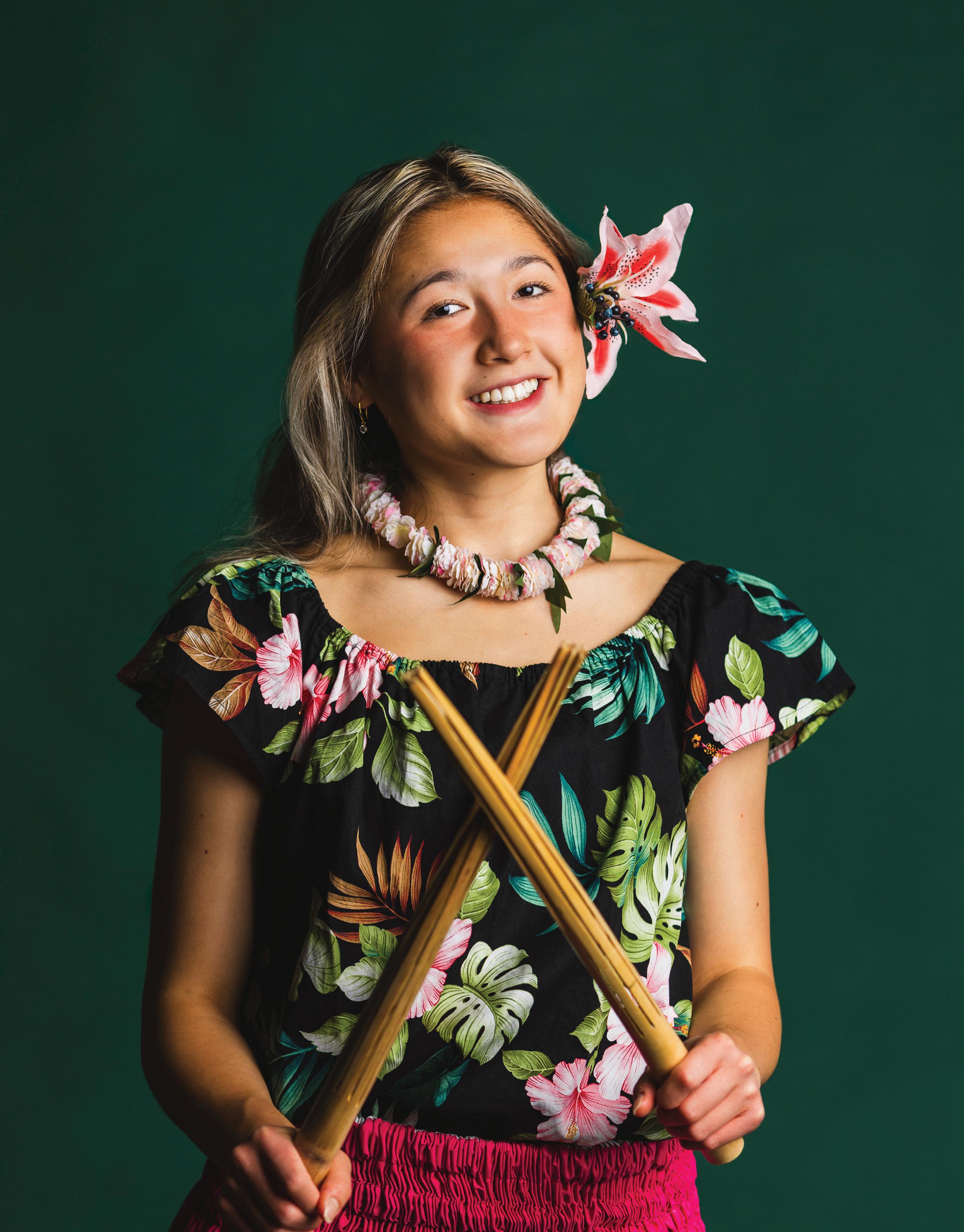
Mahtomedi High School senior Alexis Lum shares her culture with her community


Aloha

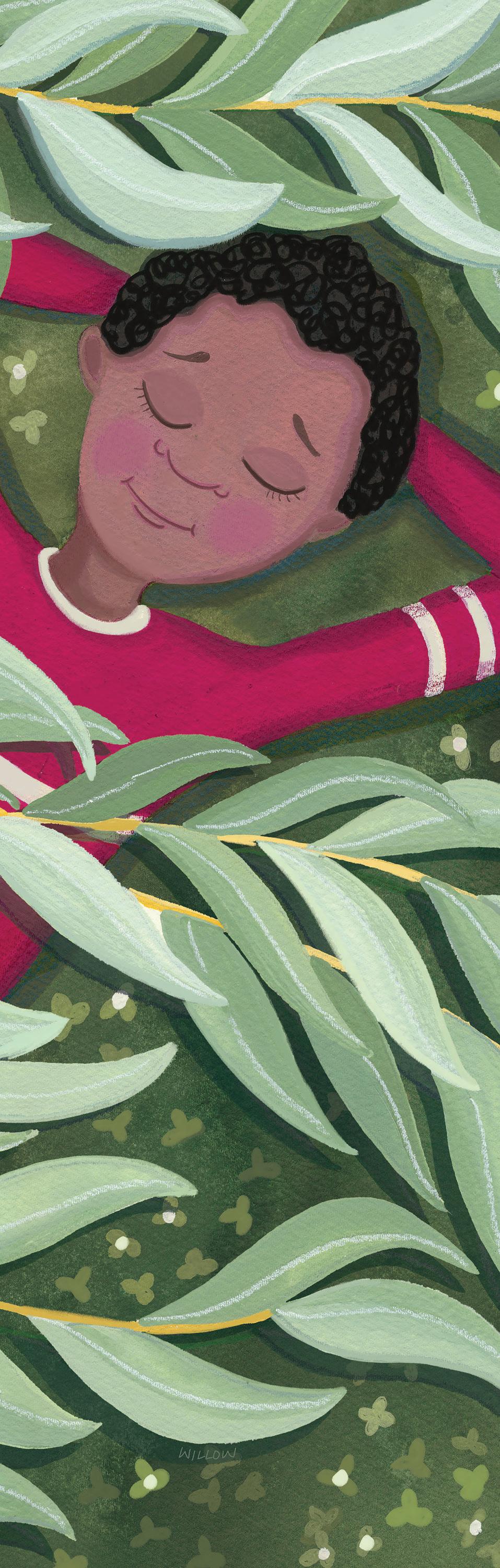
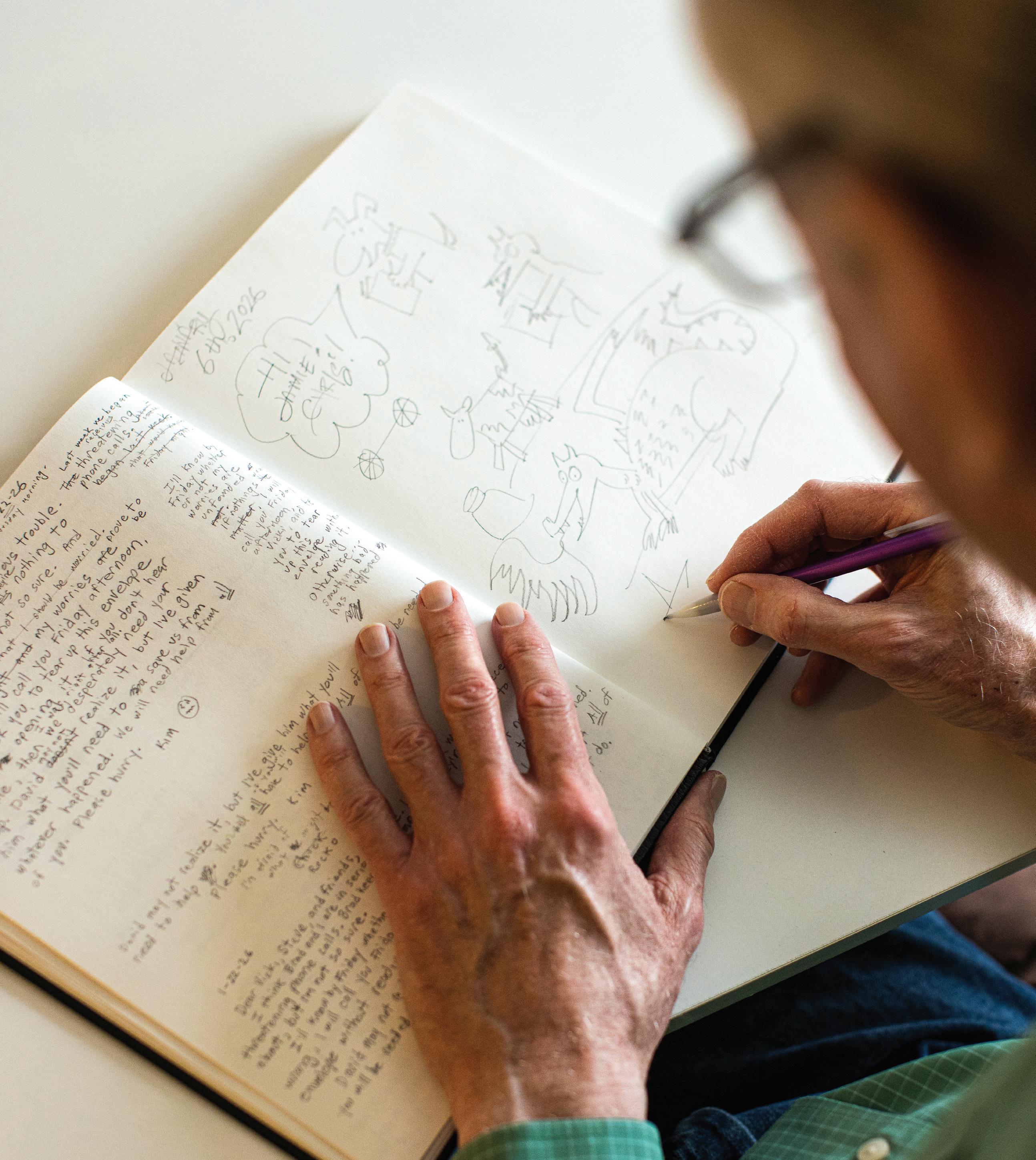
Artwork: How to Draw a Tree written by David LaRochelle, illustrated by Colleen Muske (MNHS Press, 2025)
Magic of Storytelling, page

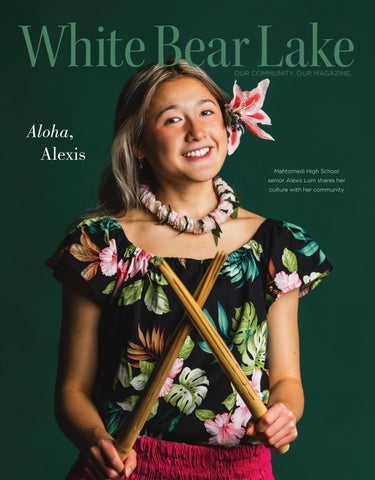
Mahtomedi High School senior Alexis Lum shares her culture with her community
Aloha
As a child, I fell deeply in love with reading. On bike trips to the library as a preteen, I would often tow an empty children’s bike trailer to fill with that day’s finds. A backpack just wasn’t enough room for the stacks of books that lined my childhood bedroom and sparked my imagination.
Now, I can attribute my career, empathy and outlook on life to the stories—both true and fantastical—that continue to bring joy to my life. So, I was overjoyed to read writer Emily Gedde’s interview with children’s book author David LaRochelle, who has worked with area illustrators Colleen Muske and Mike Wohnoutka to create immersive worlds for young minds. On page 12, he shares insight into his process, inspiration and the storytelling journey that has defined more than three decades of his life.
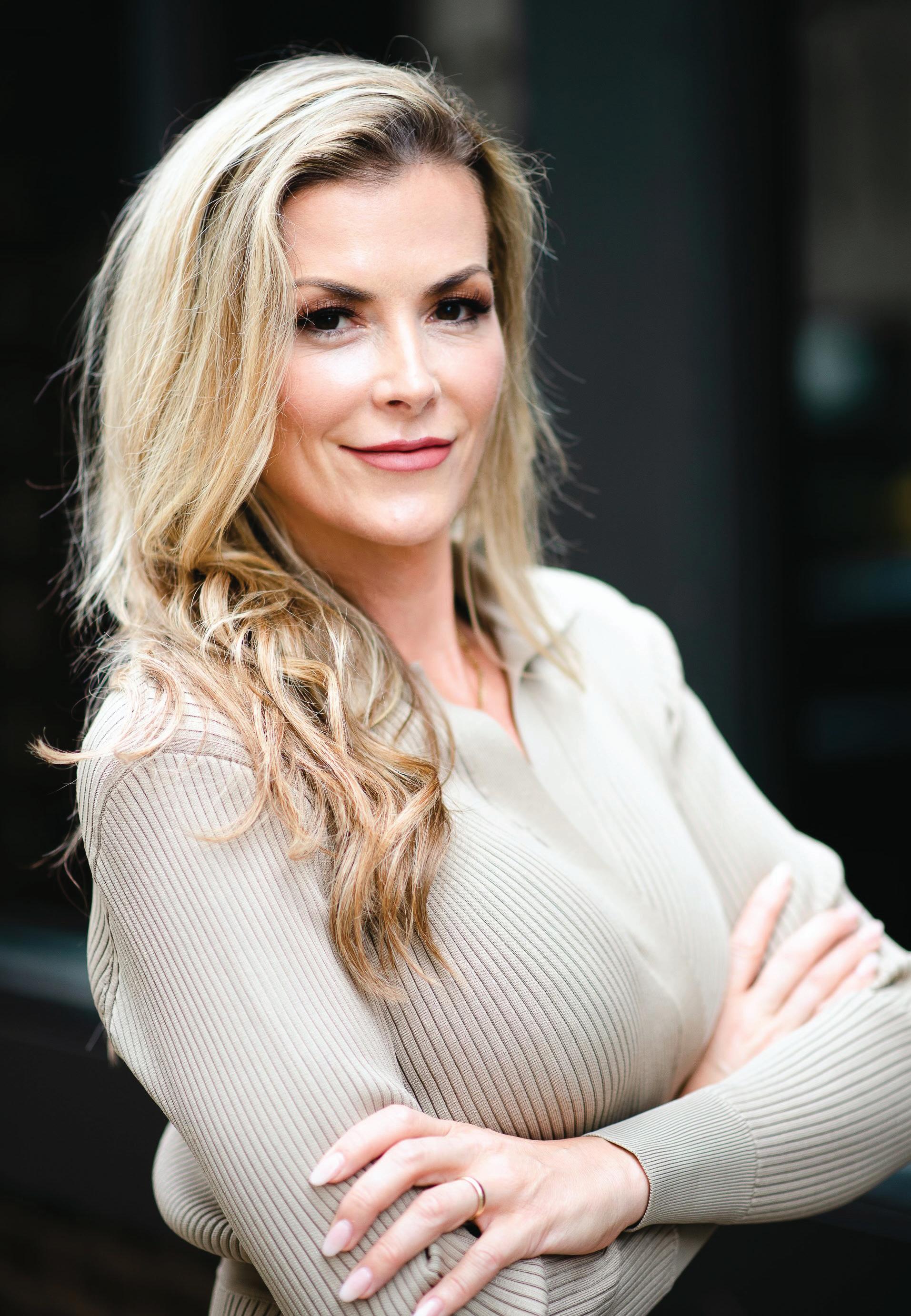
Speaking of young people, head to page 20 to meet Alexis Lum, the Mahtomedi High School (MHS) senior behind the school’s Hawaiian Culture Club. Alexis has created a space to share her culture with friends and classmates. She’s also been a part of a local hula hālau (dance school) since she was 9 years old.
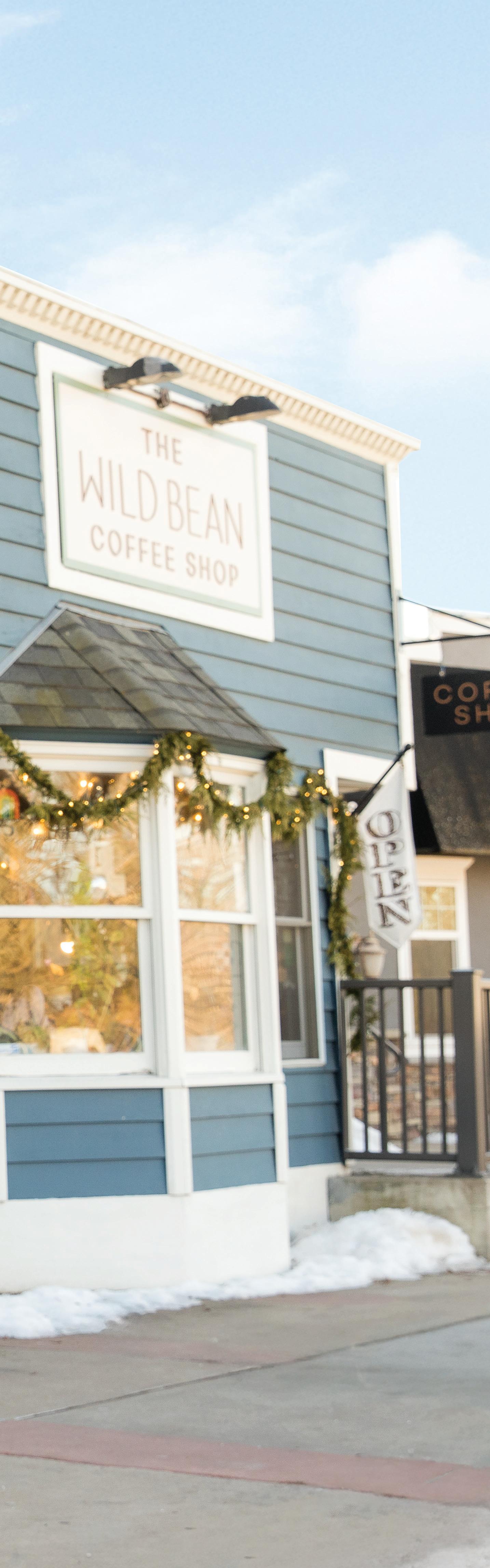
And on page 26, catch up with MHS alums Maddie McMahon and Elouise Souja, whose businesses are bringing life to Mahtomedi’s main street in the form of sweet treats, delicious beverages and community gathering spaces. With their adjoining businesses—The Wild Bean and 350 Degrees Bakery— the dynamic duo has fostered a vibrant destination in their hometown.
Whether you’re a lawyer or a baker, a student or a teacher, every person has a story to tell. It’s our pleasure to uplift just a few of those stories in each issue of White Bear Lake Magazine
Have one to share, or know someone who does? My inbox is always open at zoe@localmedia.co. Until next time,


Zoe Yates zoe@localmedia.co CELEBRATING THE WHITE BEAR LAKE AREA SINCE 2012.
On the Cover: Alexis Lum, page 18
by: Chris Emeott
Find us online: White Bear Lake Magazine @whitebearlakemag @whitebearlakemag
VOL. 13 NO. 4
March/April 2026
PUBLISHER
Susan Isay
EDITOR Zoe Yates
MANAGING CREATIVE DIRECTOR
Renée Stewart-Hester
MANAGING EDITOR
Hailey Almsted
DIGITAL EDITOR
Madeline Kopiecki
COPY EDITORS
Kellie Doherty and Sherri Hildebrandt
STAFF WRITERS
Mollee Francisco, Emily Gedde, Jennifer Pitterle, Alexandra Tostrud and Paige Udermann
CONTRIBUTING WRITERS
Angie Hong, Cynthia Maya, Rachael Perron, Amelia Reigstad, Katie Tomsche and Kia White
DIGITAL INTERN Claire Krieger
EDITORIAL INTERNS
Diane Meyer and Avery Vrieze
EDITORIAL ADVISORY BOARD
Staci Andro, Hazel & Goose ; Greg Bartz, White Bear Rotary ; Gloria Drake, White Bear Rotary ; and Alice Seuffert, Mahtomedi Public Schools
SENIOR MANAGING ART DIRECTOR Sarah Dovolos
ART DIRECTOR Allison Nolden
ASSOCIATE ART DIRECTOR Jamie Klang
GRAPHIC DESIGNER Yaz Lo
LEAD STAFF PHOTOGRAPHER Chris Emeott
PRODUCTION DIRECTOR Brittni Dye
PRODUCTION MANAGER Lisa Stone
PRODUCTION COORDINATOR Mimi Coz
SENIOR ACCOUNT EXECUTIVES
Laura Bjorgo, Cynthia Hamre and Sara Johnson
ACCOUNT EXECUTIVES
Rochita Chatterjee and Gina Neumann
PRESIDENT Pete Burgeson
To subscribe to White Bear Lake Magazine , please visit localmedia.co. For customer service inquiries, please contact hello@localmedia.co, or call 612.208.6248. ©Local LLC 2026. All rights reserved.
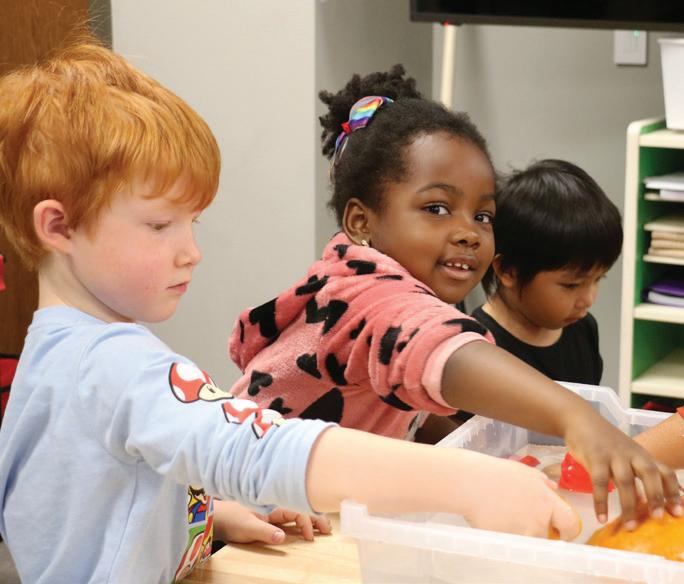
Elementary Spanish Dual Immersion
•Student-centered instruction. We believe all students grow and learn in different ways and at different rates — that all can achieve.
•Expanded academic opportunities. Our students explore their interests, excel and design their futures.
•Empowered, supported learning. Students are agents and owners of their learning in an environment that is safe, supportive and challenging — with high expectations for student success.
•Inspiring, nurturing educators. Our educators facilitate learning and challenge students — fostering curiosity and confidence.
•Transformative learning. Our flexible learning spaces and learning studios ignite opportunities for communication, collaboration, creativity and critical thinking.

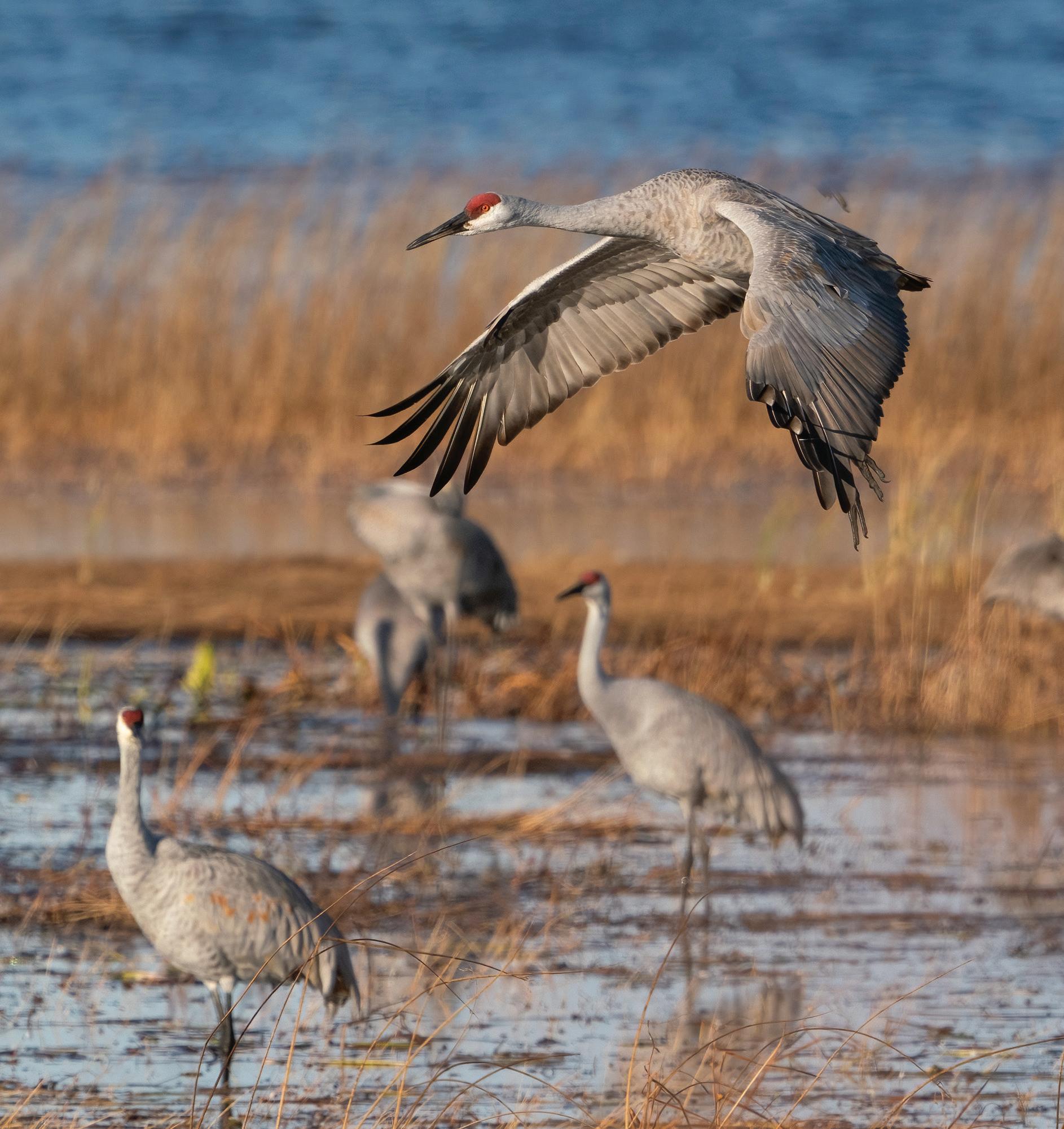
Like prehistoric travelers, sandhill cranes fly overhead each spring, calling out to feathered friends ahead and down below. After spending their winter in Florida (They are literal snow birds!), these giant birds return to spend the warm months in fields and wetlands throughout Minnesota and Wisconsin. The cranes are not only large—5 feet tall, with wingspans nearly 7 feet—but also ancient, with fossils dating back at least 2 million years. In Anishinaabe culture, the crane clan represents wisdom and equal communication. Ready to watch the birds return? Visit Crex Meadows State Wildlife Area in Grantsburg, Wisconsin, or Carlos Avery Wildlife Management Area near Forest Lake to see sandhill cranes by the thousands, as well as ducks and waterfowl. Find trumpeter swans year-round at the St. Croix Boom Site near Stillwater or Sucker Lake in Vadnais Heights. Or, look for bald eagles, great blue herons and osprey along the St. Croix River in late spring.
Angie Hong coordinates the East Metro Water Education Program. Find her on social media @mnnature_awesomeness.

What Art Does: An Unfinished Theory by Bette Adriaanse and Brian Eno is a fun and inspiring read. With charming illustrations throughout, the little book explores the question “Why do we need art?” It encouraged me to think more deeply about the creative process and why it is so important for communities to embrace the creation and appreciation of art. (We are so lucky in White Bear Lake to have access to many organizations that do this!) The authors remind readers of the wonder of a creative, playful mindset and invite us to imagine how that could become a part of everyday life, even in small ways.
Kia White is part of the team at Lake Country Booksellers. For more recommendations, visit whitebearlakemag.com or call the shop at 651.426.0918.


The Egg-Citing Easter Egg Hunt will return to Podvin Park on March 28. Hosted by the White Bear Lake Police Department’s Community Emergency Response Team (CERT), the event brings a lively way to celebrate Easter. The event is open to children ages 2–10, with sessions at 1 p.m. and 2:30 p.m. Registration is required (whitebearlakemn.gov), and the 100 spots fill up fast. “It’s something that [CERT] looks forward to doing every year,” says Megan Christensen, community events coordinator. “It’s a good way for them to give back to the community and not be involved in an emergency response. It’s a different side.” —Zoe Yates



That leaky faucet. The outlet that never quite worked. The project you meant to get to last year. Bonfe helps homeowners finally cross it off—with expert plumbing, HVAC, electrical, and sewer service done right the first time.

Charlene Brodie brings lessons from the yoga mat to her law practice.
By Jennifer Pitterle
For Charlene Brodie, the path to becoming an attorney in a later phase of her life was a winding one, shaped by resilience and self-advocacy.
After Brodie’s family moved to White Bear Lake when she was 5, “[My mom’s] job here was with a local attorney, working as a legal secretary at Fleming Law,” she says. Hours spent at the office, watching her mom and the attorneys at work, piqued her interest almost from the start. Still, a legal career felt out of reach. “Growing up, we didn’t have a lot of resources for education, so I worked really hard in school,” Brodie says. “Even the consideration for law school was just a dream. I didn’t really actually think I would do it.”
That dream stayed in the background for years. Brodie studied Spanish and international business at the University of St. Thomas and dabbled in various jobs. Then, an unexpected discovery changed everything. One day, walking down a Minneapolis street, she saw a “free yoga” sign. “I just walked in,” she remembers. “It opened up so much emotion for me and so much sense of freedom. I went back every single day … and immediately decided I [wanted] to teach yoga.”
Getting her yoga teaching certificate and eventually opening her own studio—which she ran for 20 years—built something Brodie

hadn’t always felt: confidence. “There is something about getting in front of a group of people and being vulnerable and guiding them that creates, first, a sense of fear,” she says. “But once you see the impact that you’re making on other people … that experience is life changing.”
Yoga became her foundation for self-belief. “I needed that fear. I needed that yoga community,” Brodie says. She says her personal narrative changed from “I’m small and insignificant” to “I can find a connection with someone and improve their lives.”
“Through yoga, I finally got to a place where I believed I could go to law school,” she says. She was 40, and she knew the time was now or never. Twenty years after she’d first graduated from college, Brodie passed the LSAT and enrolled at Mitchell Hamline School of Law in St. Paul. In 2022, she opened Brodie Law Office in White Bear Lake, where she specializes in estate planning and trusts. “I’m not an argumentative person,” Brodie says. “I like to get to know people. I like to meet them where they’re at and put them in a position that they feel comfortable.”
She still teaches yoga several times a week at CorePower Yoga. “It’s what brings me back to balance,” Brodie says. She encourages others to slow down and find a practice—whether it’s yoga, reading, running or something else—that brings them in touch with themselves. “Taking time for movement, whether it’s rigorous or soft, is so important in resetting your energy … You can show up in the other areas of your life with more grace and more focus,” she says.
Brodie Law Office brodielawoffice.com
CorePower Yoga corepoweryoga.com









Whether through corrective lenses that sharpen our vision or figurative lenses that broaden our horizons, glasses remind us that change often begins with how we choose to view the world.
Whatever your needs, White Bear Eye Clinic & Optical has you covered from comprehensive eye exams to the latest frame styles! Call us today for an appointment!
651-429-3379
4750 Washington Square, White Bear Lake, MN 55110





By Jennifer Pitterle
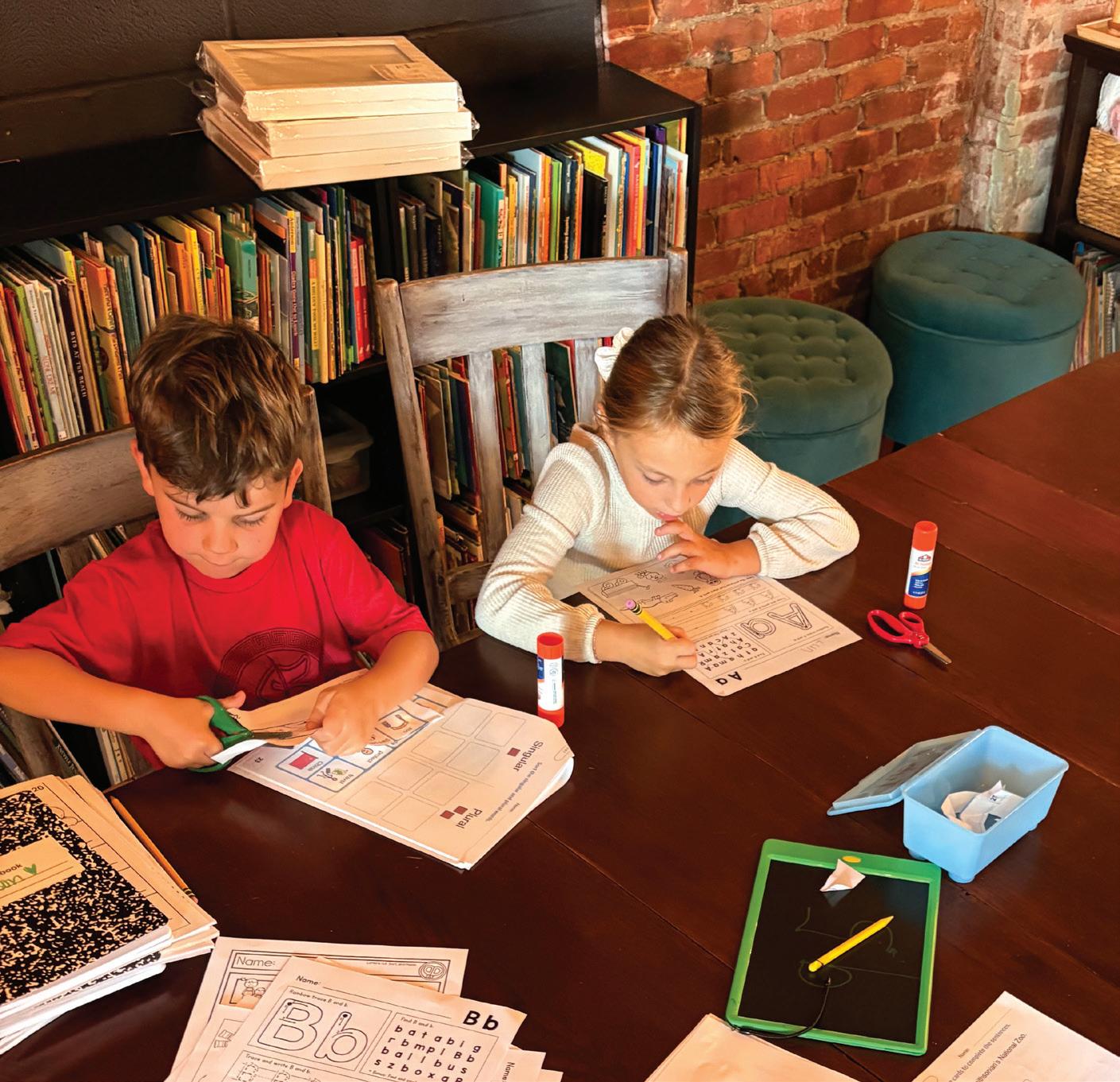
On the corner of Third Street and Clark Avenue in downtown White Bear Lake, sunlight pours through the tall windows of an old red-brick building. The space has held various businesses over the years, and today, it’s home to something entirely unique: Heart Learning Collective, a microschool created by longtime educators (and colleagues and neighbors) Kathleen Amstutz and Tammy Morett.
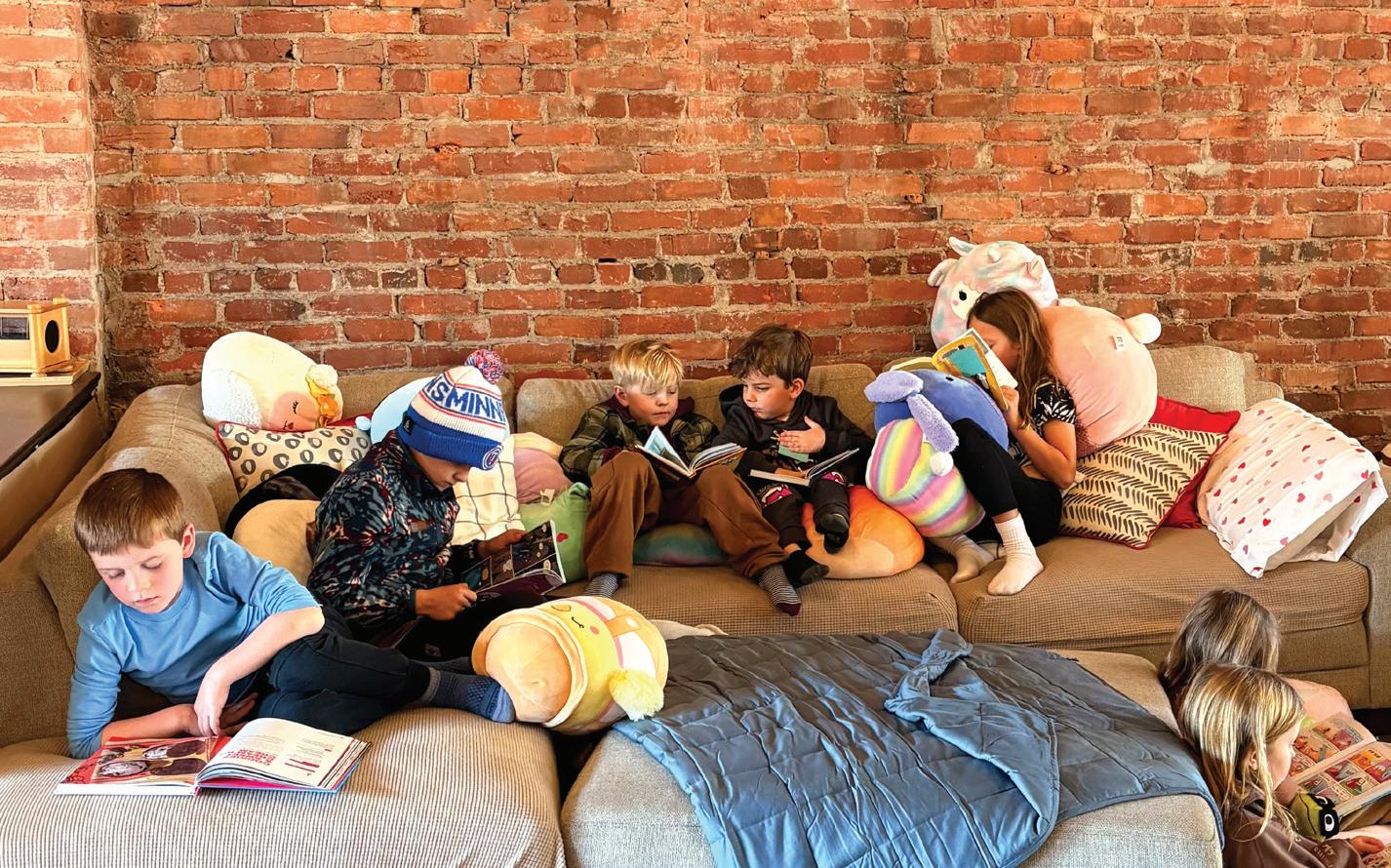
“We offer a nontraditional learning environment for families who are just looking for something new and different for their students,” Amstutz says. She and Morett spent their entire careers in special education—17 years for Amstutz and 28 for Morett—and it was during their years co-teaching in the South Metro in ISD 196 that the idea for a different kind of school began to take shape. Over the years, they’d connected with many families who found traditional school environments challenging for their kids and wondered if they could help. Last year, Amstutz and Morett decided to take the plunge and leave their public school jobs to launch their passion project at home in White Bear Lake. Their vision looks a little like a modern twist on a one-room schoolhouse. “We have students of all ages, kindergarten through fifth grade, in a shared space. Our older kids get to help our younger kids, and our younger kids learn from our older kids. It’s just a really
Top: Each day at Heart Learning Collective involves art, choice time, outdoor play and science.
Bottom: Students from kindergarten through fifth grade are able to learn with and from each other in an encouraging environment.
fun environment to be in,” Amstutz says. Heart Learning Collective began the 2025–26 school year with four students and has since grown to eight. As of this writing, enrollment remains open, and the school accepts students throughout the year.
At Heart Learning Collective, there are no desks and very little technology. “There’s a lot of movement and a lot of flexibility in how the students want to learn,” Morett says. That flexibility allows her and Amstutz to meet the needs of each student; neurodivergent kids and others with special needs are supported seamlessly in the integrated classroom.
School days begin slowly, with time to settle in, socialize or finish projects. A morning meeting follows, then smallgroup instruction based on ability, rather than age. “They’re getting one-on-one time with teachers throughout their entire work time,” Amstutz says. Afternoons are filled with art, choice time, outdoor play and science—including daily scooter rides or walks to the park. “Our students are so incredibly happy here,” Morett says. “They run to the doors every single morning.”
That feeling carries over to students’ families. “The parents have been so amazing and supportive. They understand and appreciate our vision,” Morett says. Word continues to spread from the small group of original families, and Amstutz and Morett anticipate gradually expanding Heart Learning Collective to include upper grades as current students grow, and additional teachers to accommodate a higher volume of kids.
For Amstutz and Morett, it all comes back to kids being allowed to be kids—something they say can get lost in a traditional school environment. “Here, students get to touch the materials, get dirty, be outside and do things that children should be able to do,” Amstutz says.






























Written by Emily Gedde — Photos by Chris Emeott
Children’s author David LaRochelle found his niche nearly 40 years ago.
David LaRochelle has spent much of the last four decades bringing stories to life for children—a job he couldn’t love more. We caught up with the White Bear Lake resident to discuss his creative process, his love of children’s literature and his latest book, How to Draw a Tree
When you published your first book in 1988, did you foresee writing children’s books for the next 38 years? I would have been very happy [if] I knew
that was going to be the case. I wish I could go back and tell myself, “Things are going to go well, Dave.” I look at my shelf and think, “Wow, I’ve put together a lot of books.”
When you look at that shelf of books, do you have a favorite?
It’s a hard question to answer, but kids ask that a lot. One of my favorites is a book called Moo! It’s a story of a cow that takes the farmer’s car and goes off on an adventure. The book means a lot to me for a couple of

reasons: It was the first book that I did with illustrator Mike Wohnoutka, who is also a friend of mine. The other reason is that I’ve heard from so many teachers and parents that this was the first book a child could read on their own. It’s been especially powerful for kids just learning the English language. A kindergarten teacher told me the kids wanted her to read the book every day. When she moved to a new book, a boy from China who had never spoken any English asked, “Where is Moo! book?”
What draws you to this type of storytelling?
I was a fourth-grade teacher, and my mother always said I never got past fourth grade, which is kind of true. I’m veryimaginative and playful, and I’m still
that way with imaginary worlds and friends I create. It always felt very natural and is a mindset I’ve always been comfortable with.
Where do you find inspiration for your stories?
Inspiration can come from all sorts of places. But I don’t wait for inspiration to sit down and write. The story comes when you sit down every day and open your notebook and start moving the pencil.
You’ve received many accolades, including a Minnesota Book Award, Sid Fleischman Humor Award and Theodor Seuss Geisel Award. What do these awards mean to you?
We have a very strong literary community in Minnesota. There are so many powerful children’s authors here. These awards are

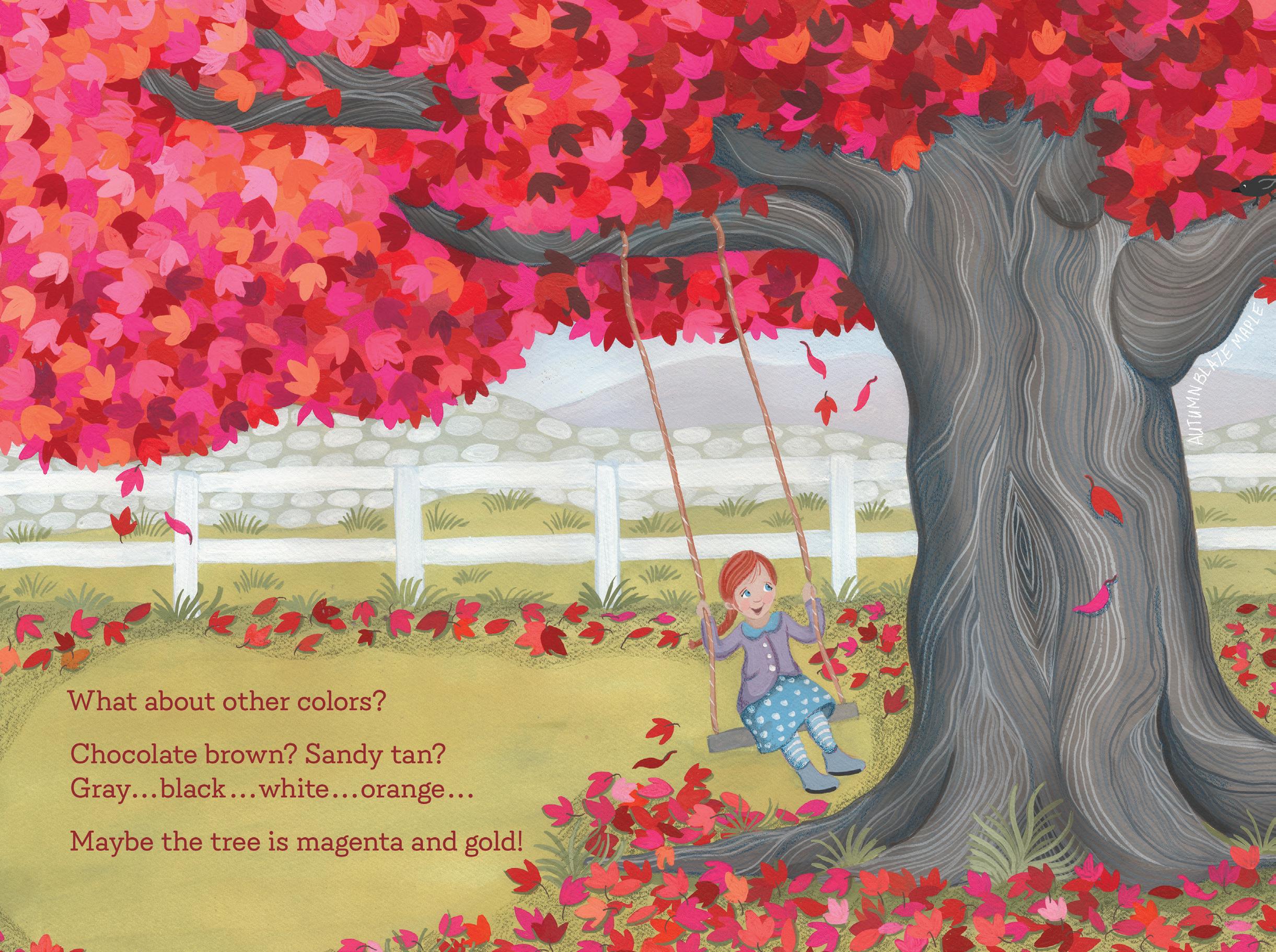
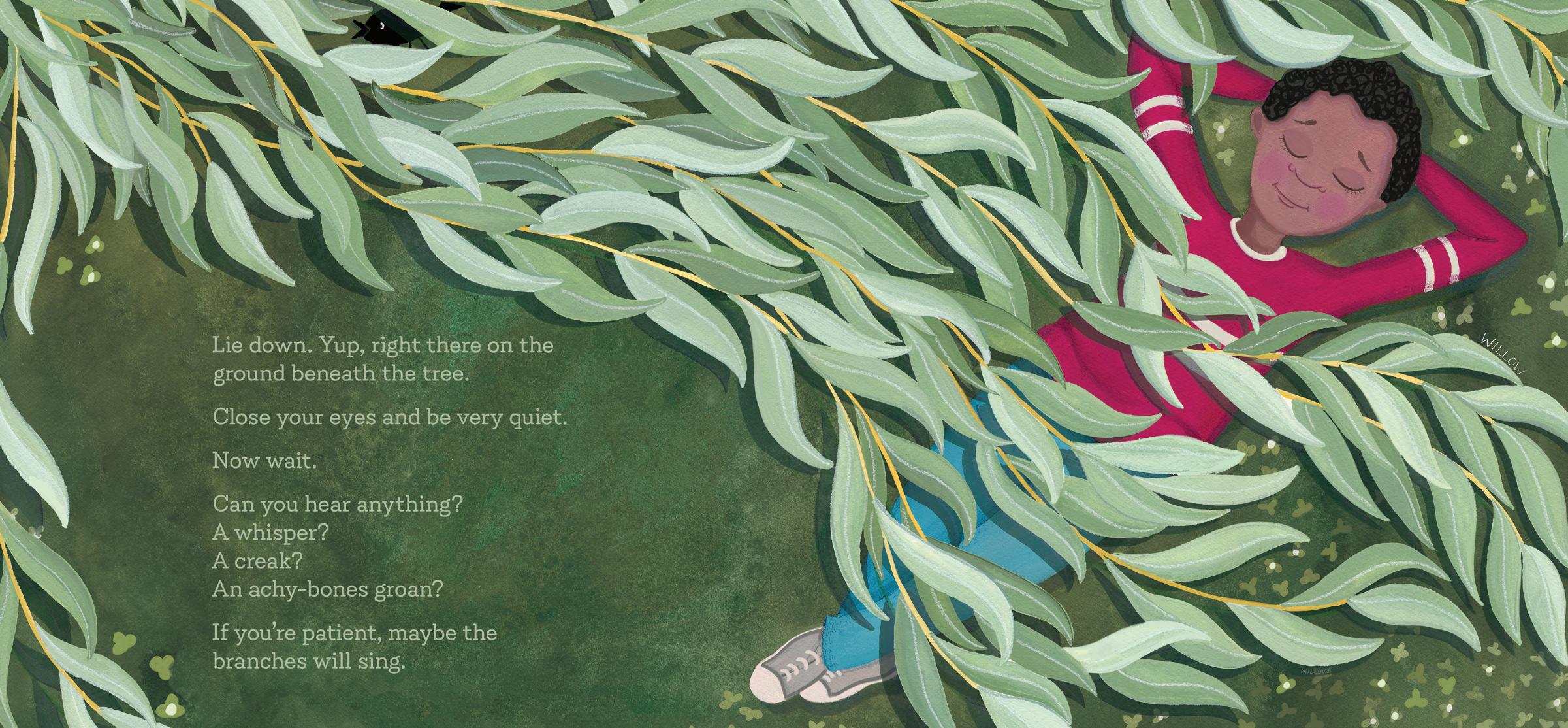
The Minnesota Historical Society Press team suggested Colleen Muske of Stillwater as an illustrator for David LaRochelle’s How to Draw a Tree. It was their first time collaborating. “I thought she’d be a great match for it, and she was. I could not be happier,” LaRochelle says.
Inspiration for Muske’s illustrative work for How to Draw a Tree came just outside her Stillwater home. “The tree on the cover is the tree in my front yard. I live by the St. Croix River, so I imagined the landscape with all the houses and landscaping gone and a clear view of the river and Wisconsin,” Muske says.
The illustrations depict trees from around the world, with the story starting and ending in autumn. Muske encourages readers to keep an eye out for a little black bird that appears on nearly every page and the names of each tree hidden within the illustrations. “Hopefully, my and [LaRochelle’s] love for trees comes across in the text and illustration,” she says.

wonderful because that means more people will read your book and hear about your work. The Star of the North Award is for picture books voted on by children, which Moo! won. That award means a lot too, and [it] feels good that the kids chose our book as their favorite that year.
Reese Witherspoon read your book
The Best Pet of All at the White House in 2010. What was that like?
I happened to stumble across it accidentally on the internet. She sat down and said, “Here is a book that’s a favorite in our family.” That was the best part about the entire thing. One of my books has reached someone like Reese Witherspoon, and it’s a favorite of her family. It’s extremely rewarding when you hear about it.
Your latest book, How to Draw a Tree, encourages children to slow down and appreciate nature. Where did the idea come from?
That goes back to attending St. Olaf College when my professor told me to look at the subject I’m drawing more than I look at the paper. It’s very difficult to do because we look at something and we have a picture in our mind of what we think it is, and we never look up again. When you start really looking at trees, you see the huge variety there is. When you start sitting, observing and looking at them before you start drawing, they look so different. Even trees in the same species have different personalities. When you start really paying attention, that’s when those personalities come out.
Colleen Muske colleenmuske.com @colleenmuske
David LaRochelle davidlarochelle.com
Mike Wohnoutka mikewohnoutka.com @mikewohnoutka
Minnesota Historical Society Press mnhs.org/mnhspress @mnhspress
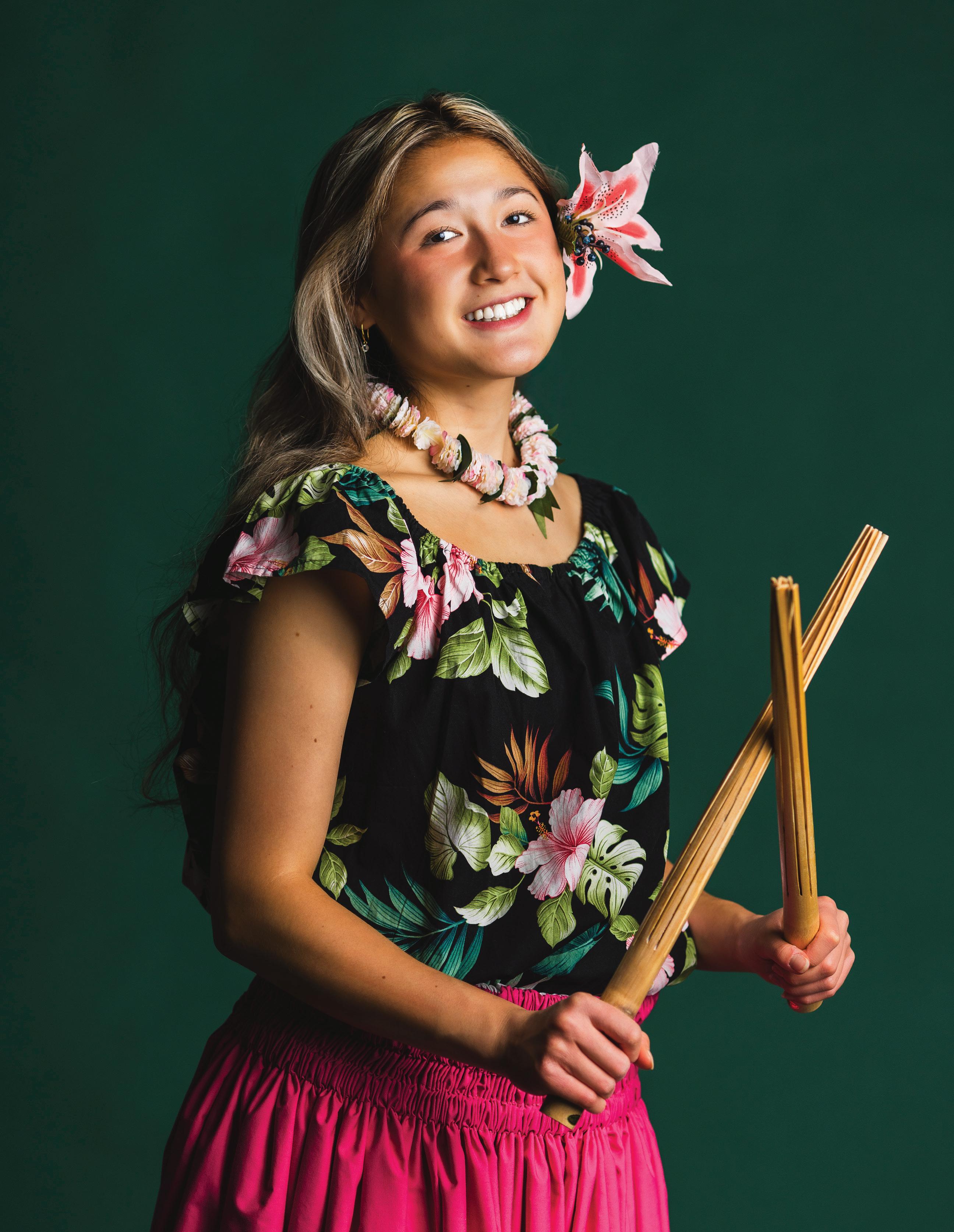
In August 2023, the world watched in horror as a series of wind-blown wildfires engulfed the town of Lāhainā on Maui’s northwest coast, taking the lives of more than 100 people and destroying businesses, homes and natural lands. The aftermath was gutwrenching. And for one Mahtomedi High School (MHS) senior, the wildfires represented something much deeper than a news story. “It was absolutely devastating to see so much Hawaiian culture dying, especially somewhere like Lāhainā, where so much of our culture had been preserved,” Alexis Lum says.
Alexis, who will graduate from MHS this spring, is a champion of Hawaiian culture and history, and she’s made it her mission to share that with her
peers—Native Hawaiians and mainlanders alike. “My dad was born and raised in Hawai i and came to the mainland for school and work,” Alexis says. “He definitely wanted me to get involved with my culture because, when he was growing up, he did all the cultural activities, like hula.” Alexis, who lives in Little Canada and has attended MHS since eighth grade, has been active in a local hula hālau (dance school) since she was 9. “I really enjoy being part of that community,” she says.
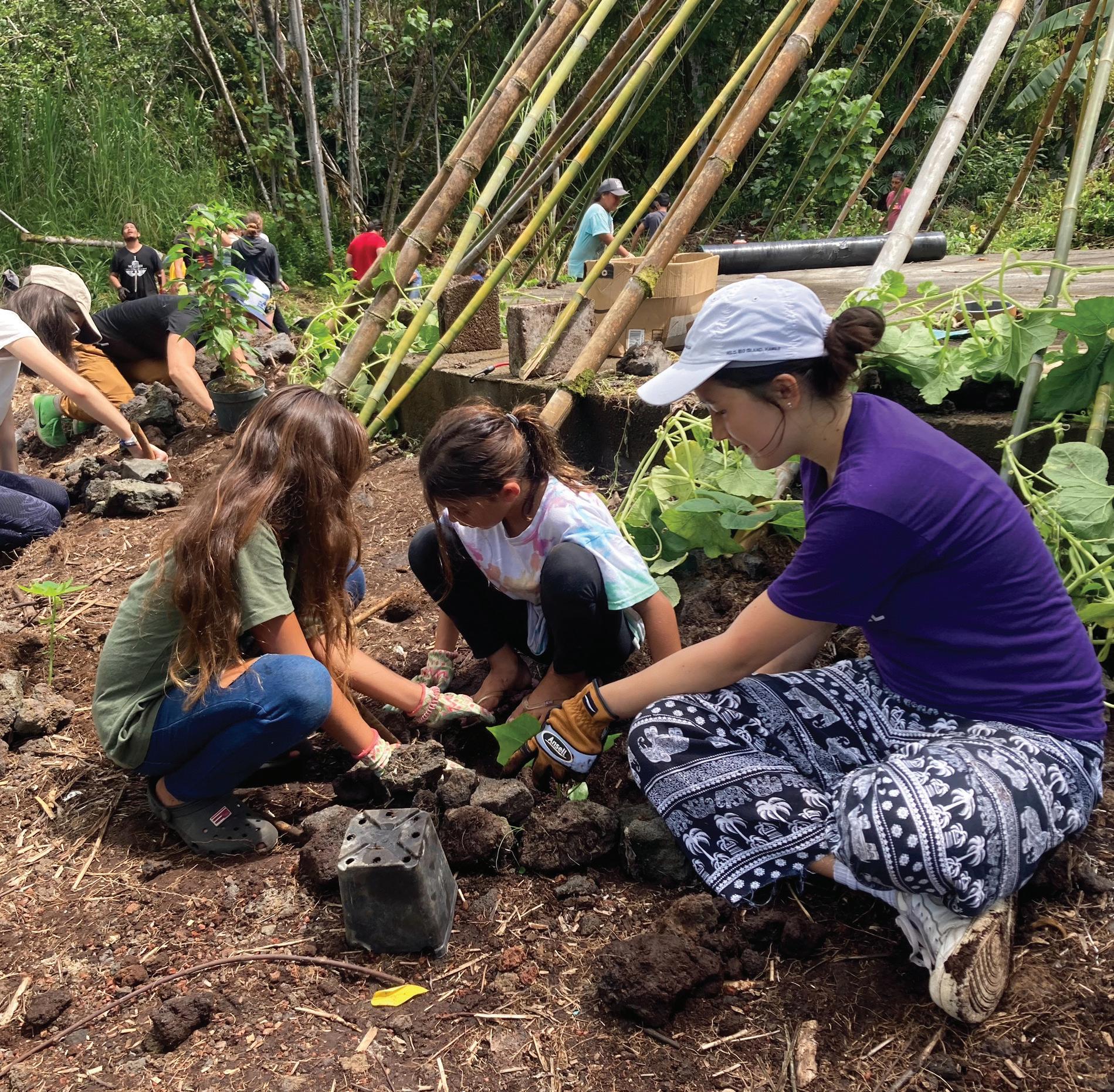
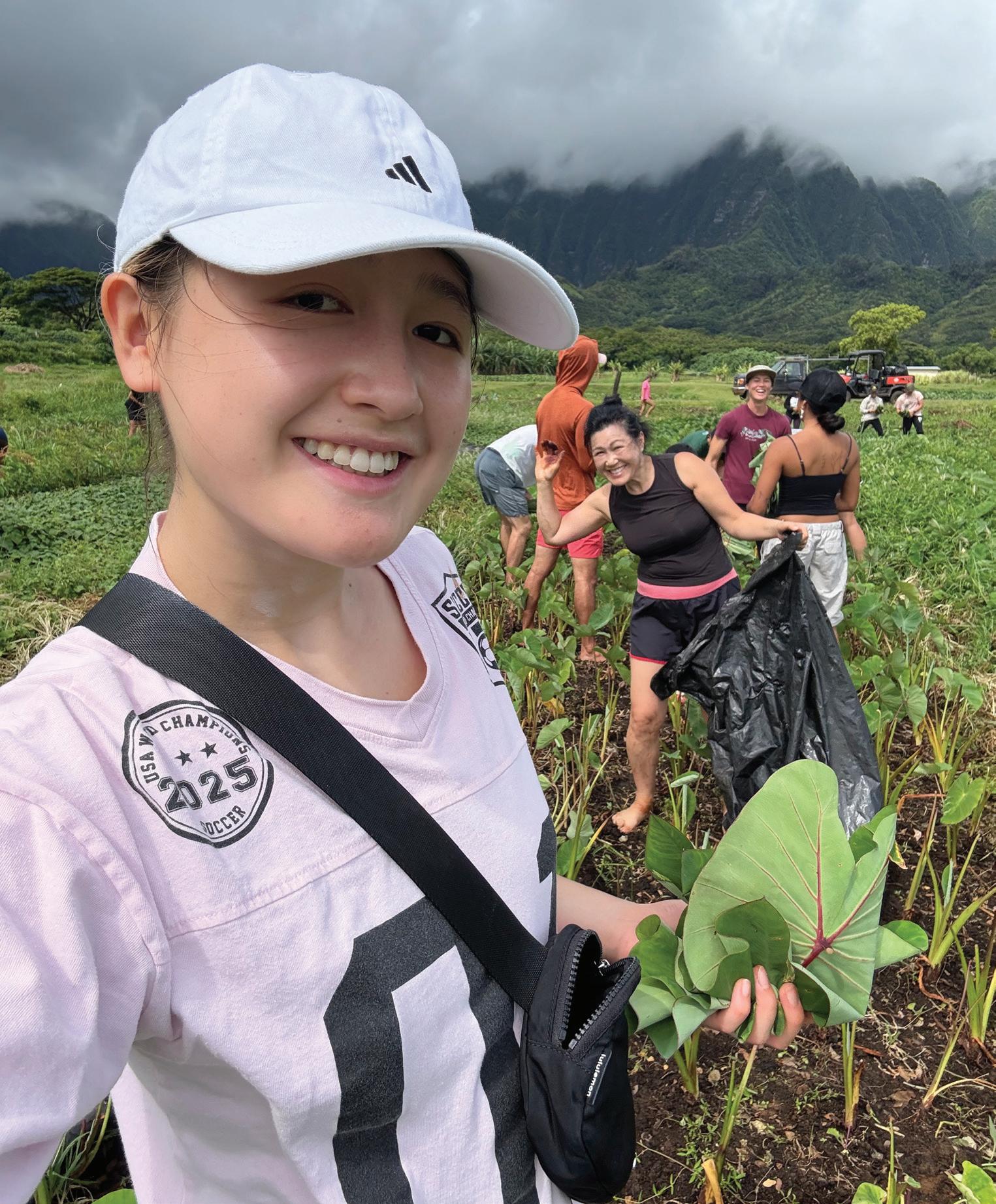
Alexis has also traveled extensively to the Hawaiian Islands, spending many of her summers staying with relatives on O ahu or volunteering. In 2023, she worked with Global Routes, a mission organization for teens, on volunteer projects and
Written by Jennifer Pitterle
connected with Native Hawaiians in areas around the Big Island. In 2024, Alexis helped win a $5,000 grant for Ho’ōla Nā Pua, a nonprofit that supports children who have been sex-trafficked in Hawai i.
“I just feel so connected there,” Alexis says. “Being in Hawai i has really opened my eyes to the different environmental practices on the land and helping people who have grown up there.”
Now, Alexis directs the MHS Hawaiian Culture Club (HCC), which meets regularly to share Hawaiian crafts, foods, history lessons and music. Alexis founded the club in fall 2023 after learning about the high number of Native Hawaiian cultural artifacts destroyed in the Lāhainā fires. “I had to do something,” Alexis says. “People needed to know more about Hawaiian culture, especially when they could see in the news what was going on that summer.” Under Alexis’s dedicated leadership, the HCC has been going strong for more than two years.
Each HCC meeting begins with a slideshow and presentation, where Alexis introduces the history and significance of the day’s theme and then transitions to a hands-on
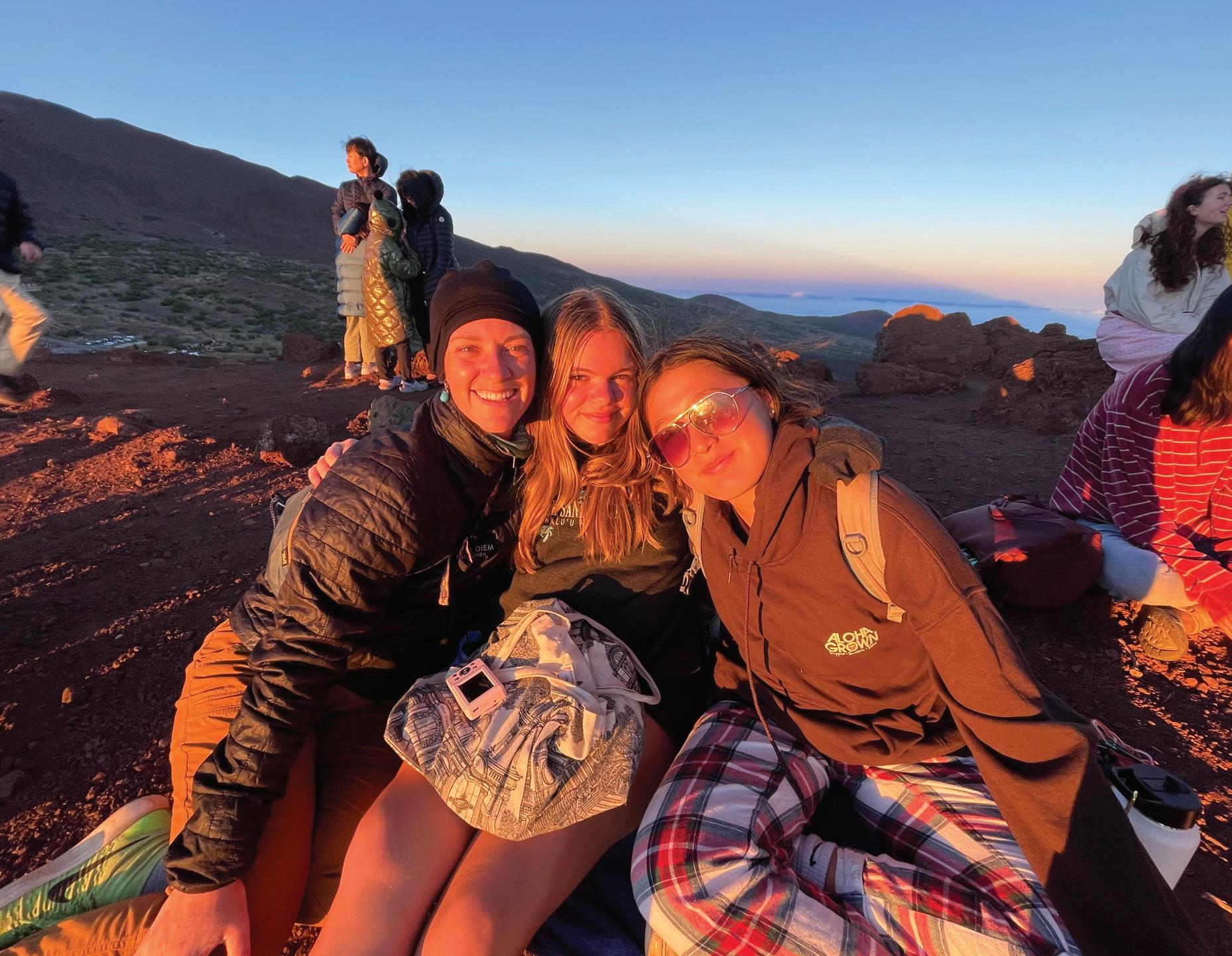
activity. “We’ve made malasadas, which are traditional Hawaiian doughnuts, or we make leis or play the ukulele,” Alexis says. Cooking is a popular pastime—HCC members have made Hawaiian-style mochi, Spam musubi and more. “It’s important to keep the culture alive for Native Hawaiians, but it’s also about teaching other people about the culture,” she says. “Seeing people who are willing to learn about other people’s cultures is my favorite part of the club.”
To her knowledge, Alexis and her younger brother, JJ, are the only two Native Hawaiian students at MHS. “I definitely plan for him to take over the club when I graduate,” Alexis says with a smile.
Her hula hālau, Ku ulei Kūikanani (formerly known as Kaleiokapilialoha), holds classes in Anoka, Brooklyn Center and
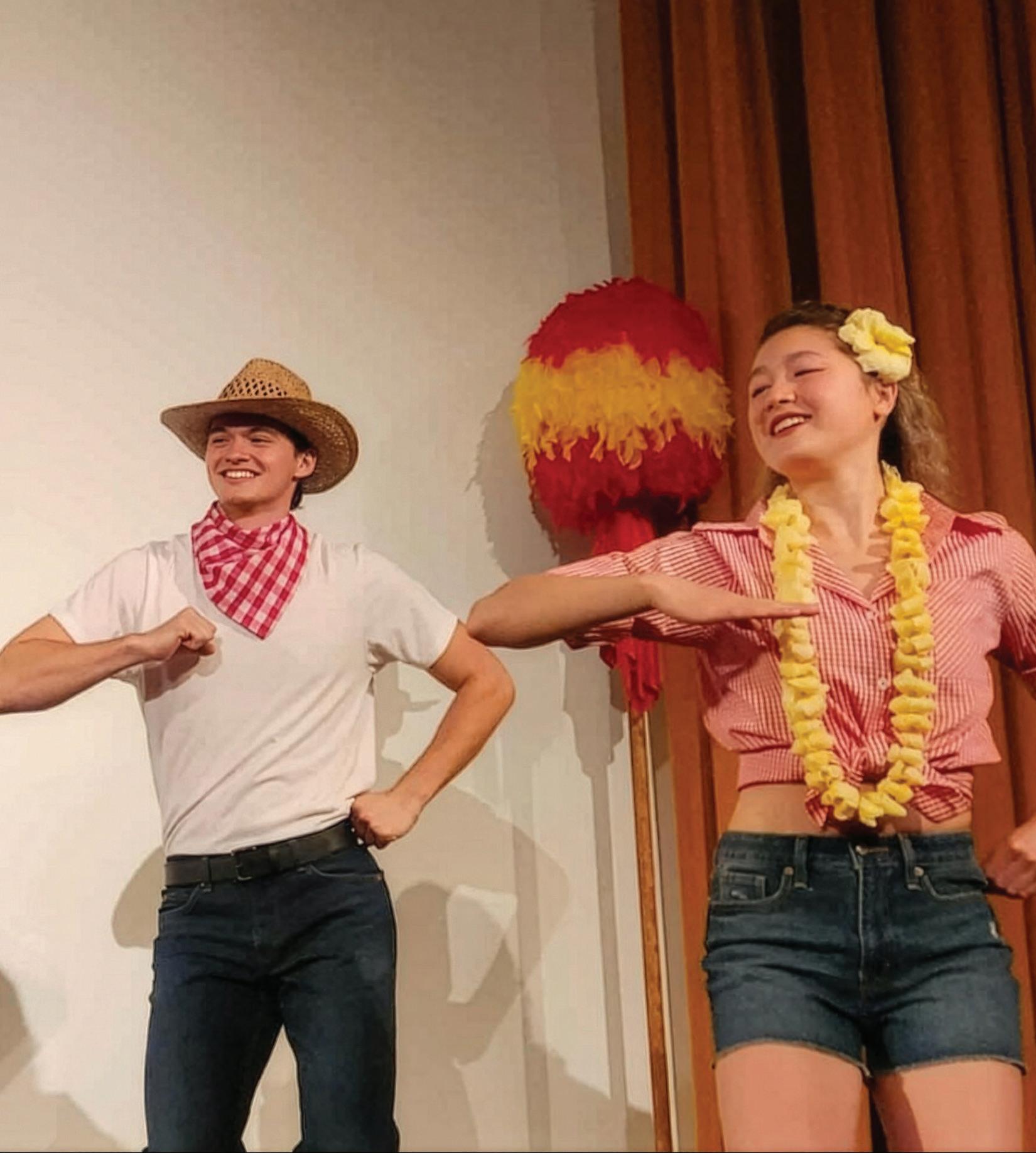
St. Paul throughout the year, along with casual gatherings and cultural events.. Alexis and her dance partners, both wahine (women) and kāne (men), know dozens of traditional dances, along with the Hawaiianlanguage lyrics, dance implements and storytelling elements that go with them. “We all get together and make our traditional skirts and leis,” Alexis says. “A lot of times, we perform for fundraisers or do volunteering. The community is really tight. I’ve known most of these people for a long time.”
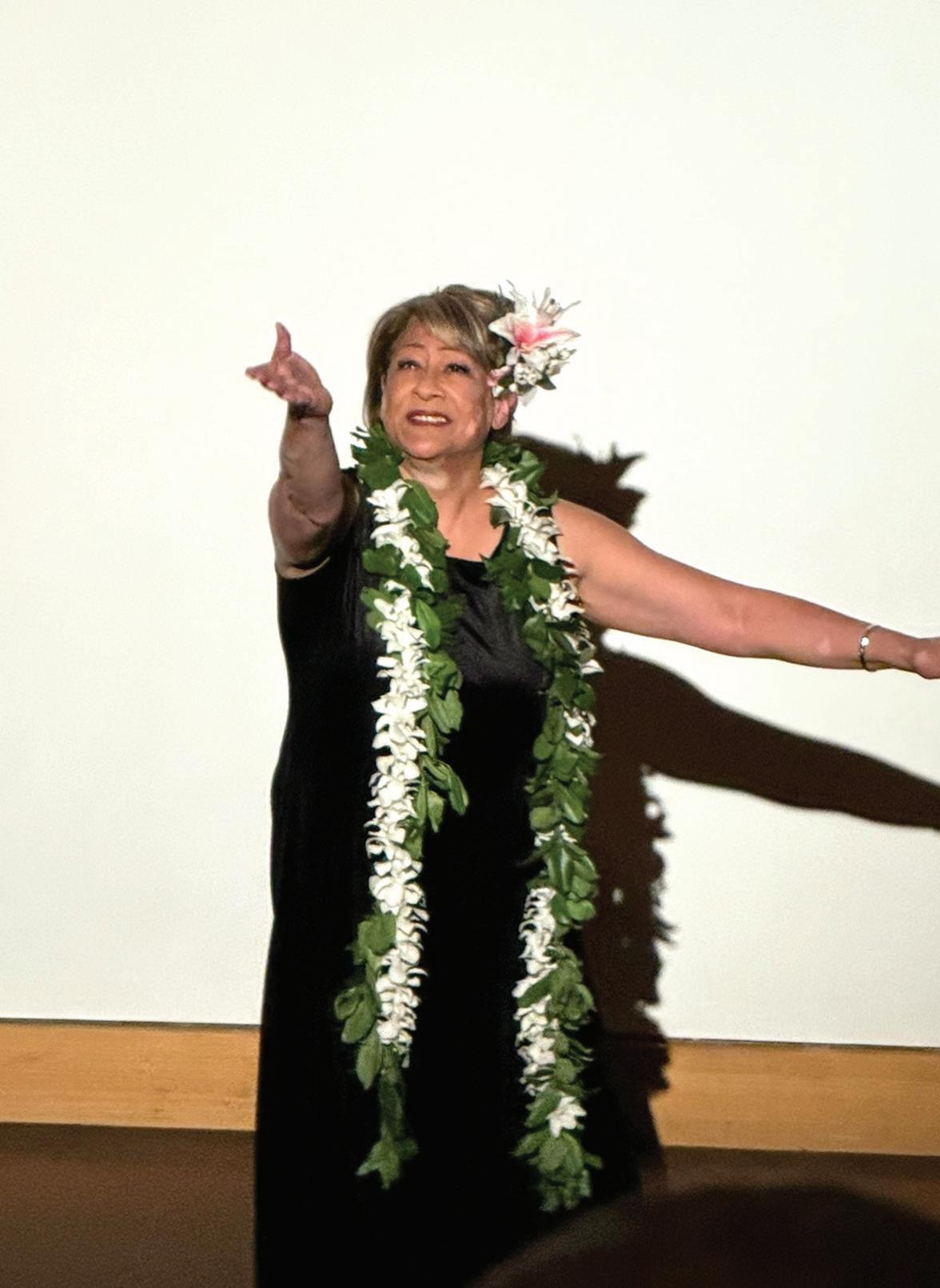
Last fall, Alexis and her fellow hālau members rehearsed for an important performance: the ho’ike retirement celebration of Kalei Enstad, their kumu (teacher) and hālau’s director and owner. “Without Aunty Kalei, this community would not be what it is,” Alexis says. “This is a celebration of
her retirement but also a transition to our new teacher.”
The group performed a series of special dances for the ho’ike, ending with a dance solo for their new teacher, whom they presented with a handmade lei to officially welcome her to the school.
Enstad says spaces like the hālau are crucial for keeping Hawaiian culture vibrant on the mainland, including for members who aren’t Native Hawaiian themselves but want to explore the islands’ history and traditions. “It has been my pleasure to watch boys, girls, men and women grow into hula dancers who embrace a culture that isn’t necessarily what they grew up with,” Enstad says. “It warms my heart.”
Enstad says she’s been proud to see Alexis step into a leadership role at the hālau and in

her school’s Hawaiian Culture Club. “There aren’t too many teens who would take that upon themselves, but then again, we are talking about Kamaha’o,” she says, using Alexis’s Hawaiian middle name, which is how she’s addressed at the hālau. “She has high expectations for herself, which helps her achieve and excel in all areas. Her Hawaiian name means ‘wonderful, astonishing, marvelous,’ and that says it all.”
Both Alexis and Enstad note that, for many mainlanders, the Hawaiian Islands are “just” a tourist destination. They hope that continues to change. “Wherever people go, including Hawai i, they should try to learn more about the culture,” Alexis says.
“It’s a vacation spot for most, but for those of us who grew up there, it’s just home,” Enstad says. “There will always be misconceptions or questions about Hawai i, and we just try to answer them one at a time with humility and grace. That’s what Alexis is trying to do—share what she knows, what she’s experienced, with her peers.”
Mahtomedi High School Hawaiian Culture Club mahtomedi.k12.mn.us @maht_hcc
Ku ulei Kūikanani kuuleikuikanani.com @kuulei_kuikanani
Written by Diane Meyer — Photos by Chris Emeott
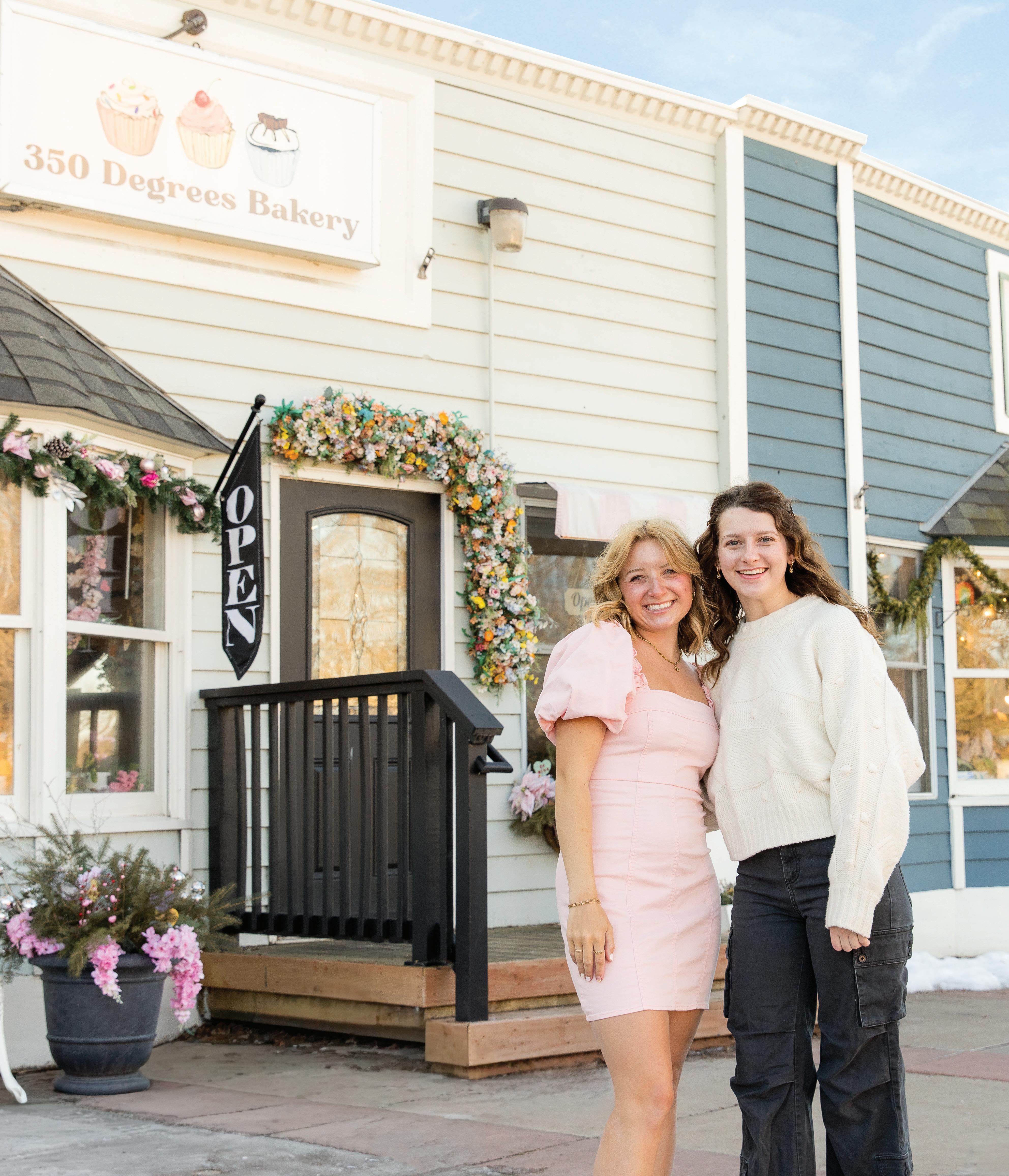
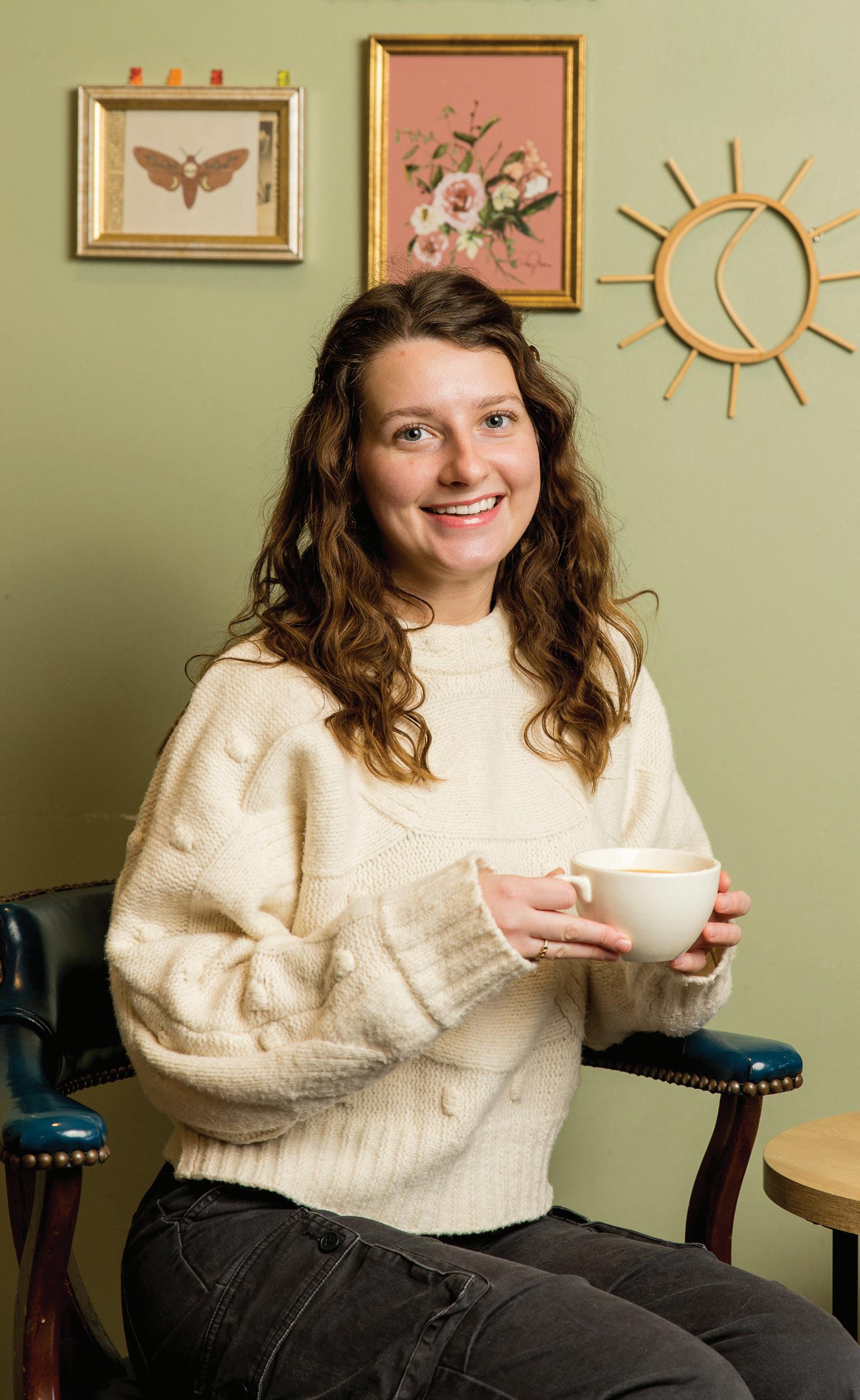
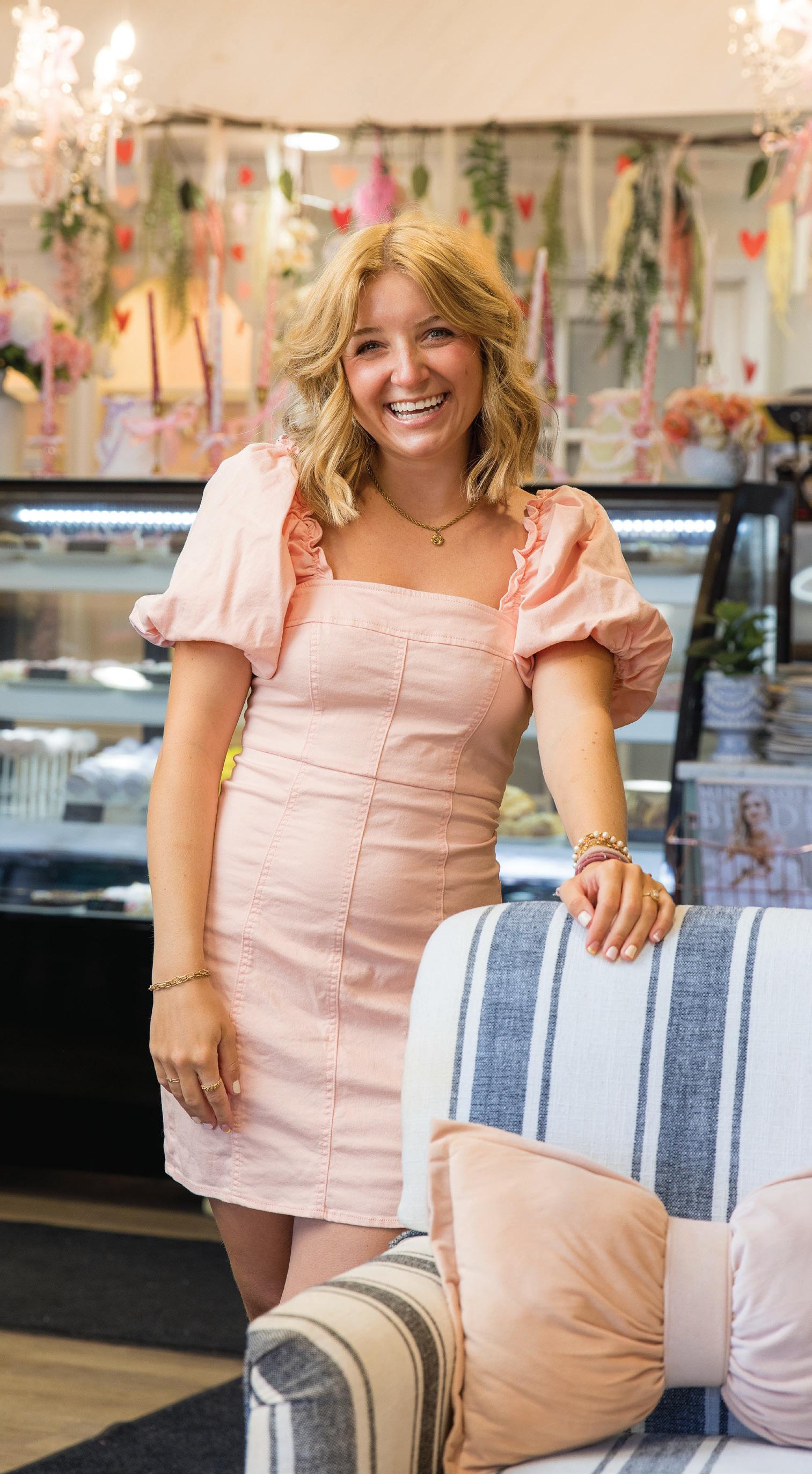
Situated on Mahtomedi’s main street, The Wild Bean and 350 Degrees Bakery are bringing fresh warmth and energy to the smalltown food scene. Maddie McMahon, owner of The Wild Bean, worked as a barista at the established coffee shop. When the opportunity to buy the business came up in 2022, McMahon, then a senior at Mahtomedi High School (MHS), took the chance; a year later, she bought the building too. In 2024, fellow MHS graduate Elouise Suoja opened 350 Degrees Bakery in the adjoining space, creating a dynamic dining destination for visitors and residents alike. (Read more about Suoja’s origin story at whitebearlakemag.com)
We caught up with McMahon and Suoja to learn more about their independent journeys as young entrepreneurs.
How did you get started in your respective industries? Maddie McMahon (MM): It happened by chance. I had taken on a lot of the managerial tasks [at The Wild Bean]. The previous owner told us she was looking to sell the shop. That’s when it kind of clicked to me that I could either spend the money I had saved on a coffee shop or invest in college.
Elouise Suoja (ES): I started doing bake sales when I was in middle school and high school, and then I started baking for some small businesses when I was still in high school during [COVID19]. [When the opportunity to open a brick and mortar arose], I was 21 and not expecting to open a bakery right away. I thought, “That’s really scary. I’m too young. I need to learn a little bit more.” But Maddie had a spot right next door to her, and she reached out through Instagram. It was kind of just a spur-of-themoment [decision].
The Wild Bean specializes in classic espresso beverages, alongside an array of noncoffee beverage options and food items like burritos and sandwiches. Maddie McMahon’s current favorite menu item is the Lavender Miel, which features espresso with honey and lavender syrup with a dash of cinnamon. Just next door (or via a connected hallway), 350 Degrees Bakery features a decadent display case of cookies, cupcakes, macarons and seven croissant flavors. Elouise Suoja recommends the Boston Crème Pie Croissant.

Describe the transition to becoming a business owner.
MM: A couple months after I had initially bought the shop, I think I had a realization that not only was I a boss, but I was now a teacher, and I needed to learn better ways of teaching. Once I learned that, I felt weight off my shoulders, and I felt more at peace. [Owning The Wild Bean] changed my perspective on my hometown, and it made me feel more connected in ways I hadn’t before.
ES: Last year, I was [at the bakery] every single day from open to close. Now, I’ve gotten a better grasp on the business side of it. I have a manager now, and I have nine employees that work the cash register and also bake everything in the display case. The bakery gives me freedom to do other things, and I’m always doing something new and different [with] 350 Degrees. We don’t just do custom cakes. We do cake classes and tea parties. It’s many businesses inside one business.
What has been the most rewarding aspect of operating in your hometown?
MM: I was one of those people who thought I was going to go far away for college, but I Lavender Miel
realized it wasn’t the right path for me … I had made my own little world at the shop, and it made Mahtomedi feel more like home to me. To see other people enjoy the space the same way that I do is what makes me want to keep doing it.
ES: The community. My whole life revolves around making celebration cakes. Every celebration needs a dessert. It’s really rewarding [to be] a part of everyone’s special moment. Gender reveal cakes are my favorite because I get to be in on the secret.
Why is it important to have community spaces like The Wild Bean and 350 Degrees Bakery?
MM: Everybody looks out for each other. Every day, random people are making friends and having conversations. I think that’s really nice and kind of lost in today’s society.
ES: I grew up in Mahtomedi, and it never really had a downtown. Now, there’s a bakery, a coffee shop, a hair salon, a record store and a florist. It’s becoming more of a destination. It’s super fun to be a part of that growth.



Offering reliable, personalized and flexible dog care backed by 15 years of experience. Customized services include daily walks and in-home sitting. Call or text to discuss your dog’s needs.
Walk A Dog!
Reliable, Personal and Flexible Dog Care! 651.492.8961

Annual juried art exhibition highlights artists from White Bear Lake and beyond.
It’s not too late to enjoy the creative work of regional artists at White Bear Center for the Arts’ (whitebeararts.org) longest-running annual exhibition. Through March 27, the 52nd Annual Northern Lights Juried Art Exhibition fills the Ford Family Gallery with color, life and texture.
“It’s really such a diverse range of art media being used,” says Karna Holub, White Bear Center for the Arts (WBCA) exhibition manager. With entries ranging from traditional oil and watercolor painting to contemporary sculpture, fiber arts and mixed media, up to 120 pieces are selected by three judges for the free exhibition. This year’s award winners and entrants were celebrated at a free community reception in February, where the judges spoke on the notable qualities of their selections.
The longevity of this exhibition, created in 1974 by the White Bear Arts Council (now WBCA) and Lakewood Community College (now Century College), is a testament to its importance in the area’s arts tradition. “It’s well known throughout the region,” Holub says. “I think the caliber of artists—anywhere from emerging to established artists—is very high. And it’s always fun to see what the judges select. Every year, it’s different. Every year, the judges are the ones [who] really decide the vision of the show.” —Zoe Yates
03.04
Mystery Book Club
Join fellow mystery lovers of all ages at the monthly meeting of the Sleuth Mystery Book Club. The theme for March is nature and travel or a mystery series. Read any book pertaining to the theme, and come ready to discuss your reading from 3–5 p.m. at the Ramsey County Library–White Bear Lake. Registration is required. rclreads.bibliocommons.com
03.19
Spring Equinox Sound Bath
Try something new, and sink into a state of relaxation with soothing sounds and guided meditation from instructor Terri Arfl. Wear comfortable clothing, and rest on your yoga mat or chair from 6–7 p.m. at the White Bear Center for the Arts. $15 tickets are required for this adult-only event. whitebeararts.org
03.24
Trivia Night
Assemble a team of up to six friends or family members of all ages, and partake in a free night of trivia fun from 6:30–9 p.m. at the White Bear Lake Armory. whitebearhistory.org
03.29
Opera Jukebox
Lakeshore Players Theatre’s Opera Jukebox will be held at 2 p.m. at Hanifl Performing Arts Center. Attendees choose the music at this musical experience with the Minnesota Opera’s resident artists. Ticket prices vary. lakeshoreplayers.app.getcuebox.com
04.16
Vision and Verse
Support high school artists and writers at the High School Arts and Writing Exhibition community reception from 6–8 p.m. at the White Bear Center for the Arts. Art will be on view from April 13–May 15. whitebeararts.org
Compiled by Diane Meyer and Avery Vrieze
To have your event considered: email whitebearlakemag@localmedia.co by the 10th of the month three months prior to publication. Please note that some events may have changed since these pages went to print. Please visit affiliated websites for updates.




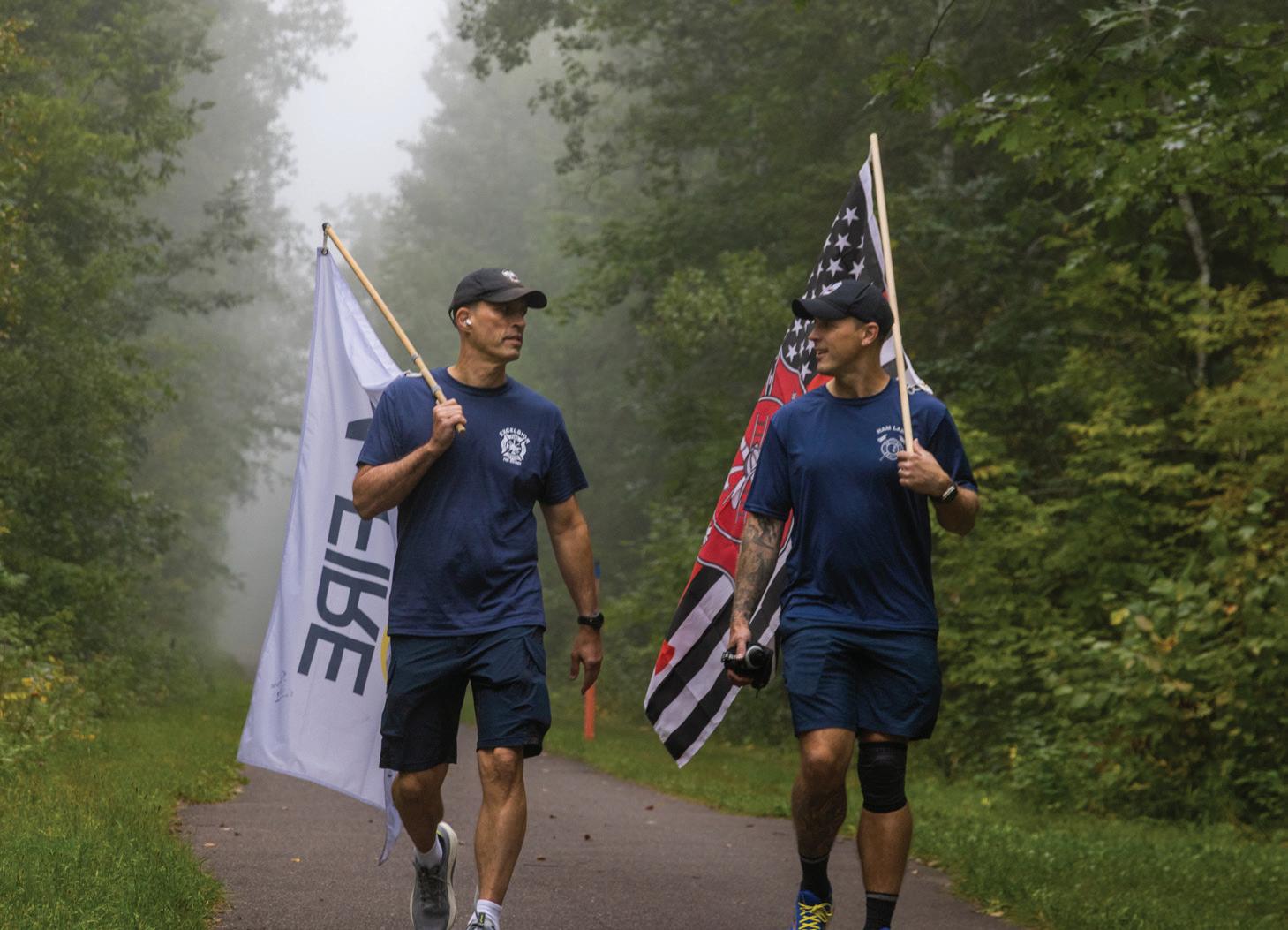
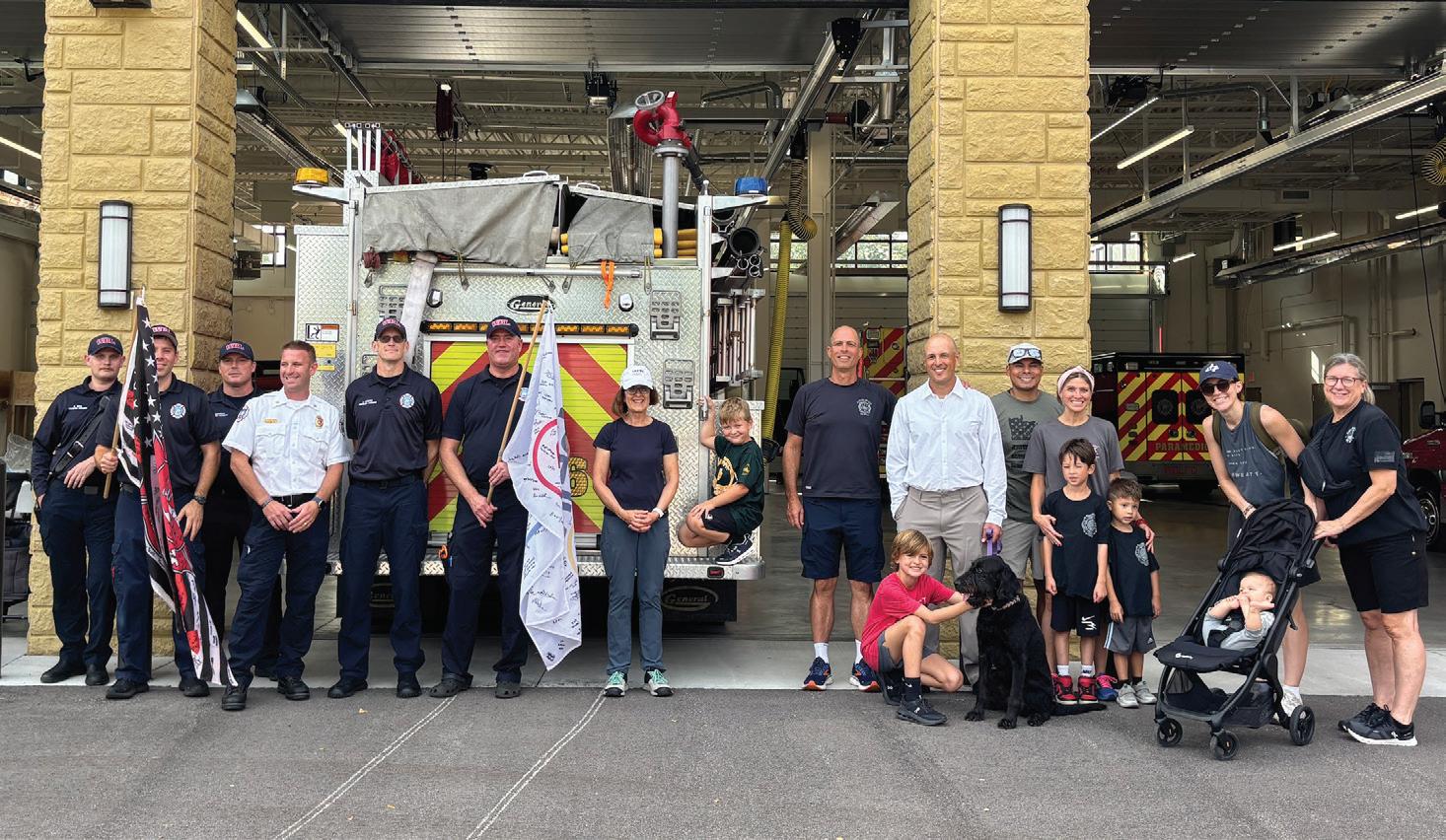
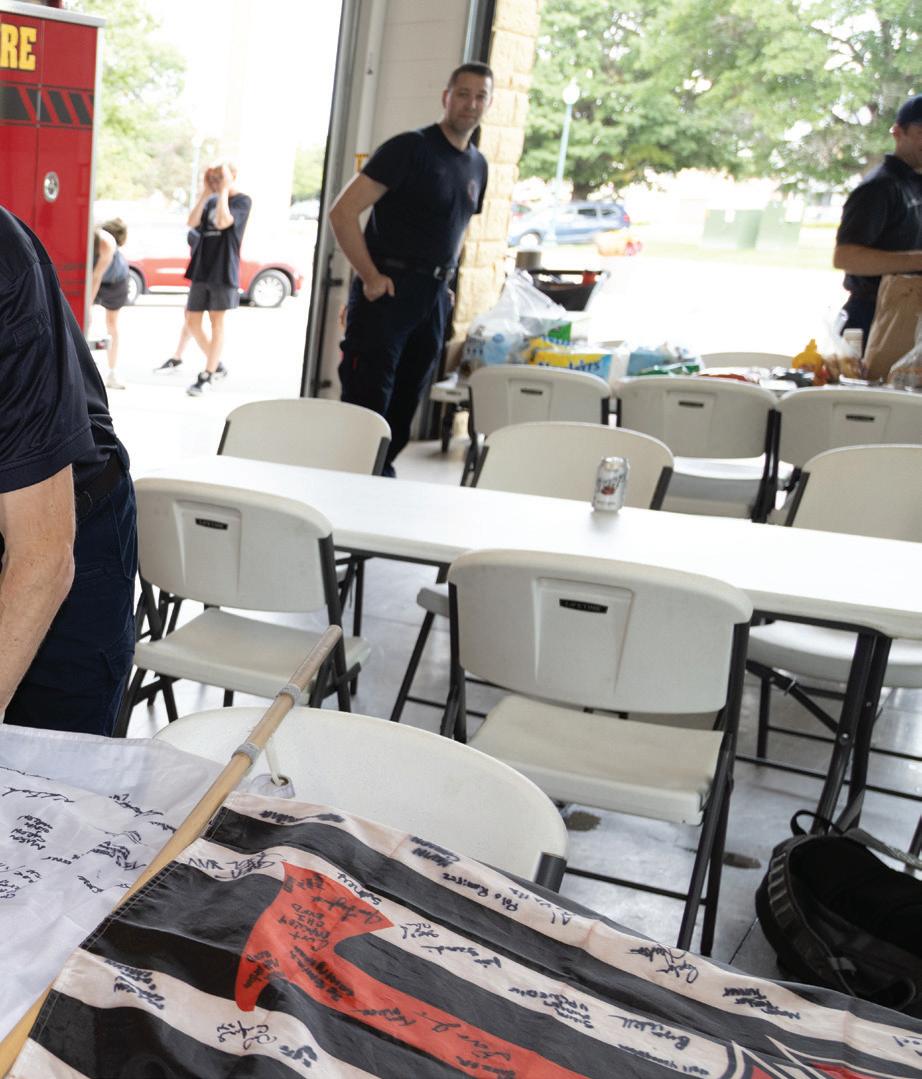
Last autumn, Minnesota firefighters Kyle Bode and Doug Foote stopped at the White Bear Lake Fire Department on the eighth day of a 161-mile Miles for MnFIRE walk from Duluth to St. Paul to raise awareness and funds for firefighter health and wellness resources. The walkers were welcomed by local fire department members, who added their names or those of people they wanted to honor to the flags that the walkers were carrying to the Fallen Firefighter Memorial. The next morning, Bode and Foote set off from the station for the ninth and final day of the journey. —Zoe Yates
To have your event considered: send date, time, location, photos, contact information and a brief description of the event to whitebearlakemag@localmedia.co.












Rachel Cain, an area photographer for more than 25 years, captured this award-winning shot one morning on Lake Drive in White Bear Lake. “I wanted to capture a dream-like image, the essence of geese flying,” she says. “To me, that meant just the shape of the geese, not all the detail.” She used a long exposure photographic technique for this image, which embraces light and movement. Find more of Cain’s work at Dock 6 Pottery in Minneapolis, Ripple River Gallery in Aitkin and online at rachelcainphotography.com. —Zoe Yates

LENS ON THE LAKE
Photographer: Rachel Cain
Title: Geese
Flying Equipment: Digital Mirrorless Camera
Location: Lake Drive Category: Abstract Award: First Place
To view other Lens on the Lake photo contest winners, visit whitebearlakemag.com.