Offer expires Dec 31, 2025 Offer expires Dec 31. 2026 Offer expires Dec 31. 2026
Offer expires Dec 31, 2025
Sisters and Brothers,
A PRESIDENT’S MESSAGE
s I reflect on my first year serving as President of the Toronto Professional Fire Fighters' Association, I am filled with a deep sense of pride, gratitude, and respect for the more than 3,000 members who make up our Association. It has been an honour to represent such a dedicated and professional membership, and while the past year has brought significant challenges, it has also highlighted the strength and unity of our organization. When I assumed this role, I understood the responsibility that came with leading the largest fire fighter association in Canada. What I quickly learned is that no challenge is ever faced alone. The support of our Executive Board, staff, committee members, our stewards, and members across the city has been invaluable as we worked together to address the issues facing our membership.
Without question, the most significant event of the past year was the release of our arbitration award. The decision marked the culmination of a lengthy and complex process that will have a lasting impact on our members and our collective agreement. While securing the award was an important milestone, it was only the beginning of the work that followed.
Since the release of the award,
a considerable amount of time and effort has been devoted to interpreting, implementing, and negotiating the language required to bring the arbitrator's decisions into practice. As many members are aware, arbitration awards often establish principles that must then be translated into clear and workable collective agreement language. This process has required ongoing discussions with the employer, detailed analysis of the award, and a commitment to ensuring that the rights and interests of our members are fully protected. Although progress has been made, some matters remain unresolved, and we continue to advocate for interpretations that reflect both the intent of the award and the best interests of our membership. Our goal remains straightforward: to ensure that every provision is implemented fairly, consistently, and in accordance with the arbitrator's decision. Beyond collective bargaining matters, the Association has remained actively engaged in supporting members through workplace issues, health and safety concerns, grievance administration, professional development opportunities, and the many day-to-day challenges that arise in a large and diverse organization. We have continued to strengthen our relationships with community partners, the other labour organizations within the city, and
elected officials from all three levels of government, while maintaining our unwavering focus on serving our members. As I complete my first year as President, I am reminded daily of the professionalism, courage, and commitment demonstrated by Toronto Fire Fighters. Whether responding to emergencies, supporting one another, or serving our communities, our members continue to set the standard for excellence.
While much work remains ahead, I am confident in our collective ability to meet future challenges and seize new opportunities. Together, we will continue to protect the interests of our members, strengthen our Association, and ensure that the voices of Toronto Fire Fighters are heard and respected.
Thank you for your trust, your support, and your continued dedication to our profession.
In Solidarity,
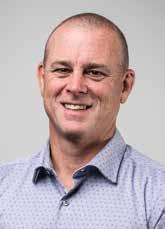
Michael Smith, President Toronto Professional Fire Fighters’ Association
SECRETARY-TREASURER’S MESSAGE
The Fab Four – A Tongue-in-Cheek Perspective
As Depeche Mode would say, “People are people”. So, what type of firefighter are you? It is always interesting to observe the various firefighter personalities that emerge when a hot topic arises. I find that there are four common categories that appear regularly. I call them the Fab Four.
The "Deals and Discounts" Firefighter
These firefighters focus on the money they will make or save, but sometimes that is as far as their analysis goes. In recent discussions about pensions and the 3% allowance, these are the firefighters who say, “I can save over $1,000 a year? Sign me up!” or “I'm getting over $3,000 on top of the raise we're already receiving? Great job!”
There is nothing wrong with wanting more money.
The "Hate Change" Firefighter
I have touched on this subject previously: firefighters typically dislike both what they currently have and any proposed changes. These members are satisfied with what is currently working and wonder why a change should even be discussed.
When the pension discussion resurfaced, these firefighters were among the first to ask, “We've had this pension in place for 20 years. Why the sudden change?” Ironically, these are often the same members who eventually accept the change as the new norm and then become reluctant to deviate from it, as happened with the 24-hour shift.
The "Doom and Gloom" Firefighter
These firefighters always seem angry, accusatory, and convinced that there is a conspiracy around every corner. They rarely seek to help the situation. Instead, they focus on assigning blame. Even when they have a great idea that is adopted, the doom-and-gloomer often shifts immediately into accusation mode. It is never good enough, fast enough, or frequent enough, which leads directly into the familiar "what are you hiding?" mindset.
Rather than asking how a topic is progressing, they assume someone is intentionally avoiding it. It must be exhausting to be angry all the time. Try smiling, be friendly, and enjoy life - it is a pretty good gig.
The "Gatherer" Firefighter
Most of our members fall into this
category, often with a hint of "Deals and Discounts" and "Hate Change."
I admit that I fall into all three categories. I could always use more money, my OCD appreciates structure and resists change, but after gathering information, I will adapt.
Gatherers listen to the entire discussion. They consider what has been presented, ask questions without making accusations, and provide valuable input through additional questions or suggestions.
I learn to see issues from multiple perspectives when these members engage in discussions. During the recent pension discussion, the gatherers brought forward many excellent questions and suggestions. We have had several hot topics lately, but pensions immediately come to mind. Perhaps we should ask how and why this became such a controversial issue that brought out all four of these personalities. Pension changes have been discussed for years; there is nothing new about the topic.
The recent arbitration established a committee to investigate a potential change from our current NRA60 plan to NRA65, which is OMERS' alternative option. This is where the topic began to heat up, thanks to the firefighter rumour mill, which is always entertaining and rarely reliable.
The kitchen-table conversations started: "Did you hear we're switching to NRA65?" And out came the Fab Four.
Deals and Discounts: "Switching will save me money, and I get a refund for previous years? Let's do it!"
Hate Change: "I finally understand this pension plan, and now you want to change it?"
Doom and Gloom: "Why are you changing the pension? You're jamming the members. Why weren't we told?"
Gatherers: "I hear there's a committee investigating a pension change. How would that work? Will more information become available? Will the membership have input? Could we have a discussion or town hall to help clarify concerns?"
The Gatherers win this one.
We held a town hall meeting to explain what is actually being discussed regarding pensions. To be clear, the membership has been raising the pension issue with the Executive Board for years.
I think everyone can agree that neither the NRA60 nor the NRA65 plan is perfect for every member. The NRA60 plan may require some members to pay for benefits they may never use, while the NRA65 plan
may offer cost savings but could result in members retiring at an older age.
For those who attended the meeting, I believe our panelists - Frank Ramagnano (L3888 President, Emeritus), Greg Horton (OPFFA President), and Chris Varcoe (OMERS Sponsors Corporation Board Member) - provided an excellent presentation and cleared up much of the confusion.
The takeaway is simple: we want a pension plan that works best for the majority of the membership. That may involve thinking outside the box, examining what other professions currently offer, or even developing a pension model that combines the strongest aspects of both plans. The bottom line is that once options become available, the membership will be involved so that we can make an informed decision together.
The reality is - and I may be wrong - it probably will not happen anytime soon. I would like to think that your Executive Board is being as consistent and transparent as possible when it comes to sharing information and providing updates.
At any given time, we have multiple discussions, committees, and investigations underway, and not everything can happen immediately.
Before becoming a doom-and-gloomer and assuming you are being ignored or avoided, consider looking at the issue from a gatherer's perspective. Seek clarification. Ask questions without accusations. Sometimes a lower-priority item simply needs a friendly reminder.
I believe we work best when we work together with a positive attitude. Perhaps Tim McGraw said it best: "Let yourself feel the pride but always stay humble and kind."
Stay Safe.
Chris Sornberger, Secretary-Treasurer
Toronto Professional Fire Fighters’ Association
I.A.F.F. Local 3888
VICE PRESIDENT’S MESSAGE
The Pregnancy/Parental Leave Discussion
Iam continuing my series on the new provisions to our Collective Agreement that came out of the Arbitrator’s Award. As promised in my last article, I have chosen a topic that applies to all of our members and not just Operations.
The potential changes to our pregnancy and parental leave entitlements have generated a lot of concerned questions and misunderstanding. Second only maybe to the NRA 65 issue. But the key takeaway for both issues is the same: there are no changes coming right now. Nothing was decided between the TPFFA and TFS, and the Arbitrator made no award regarding parental leave or NRA 65.
The Arbitrator noted in his Award that these discussions were on the table and directed the parties to continue negotiations. At this time, nothing has come of them. For pregnancy and parental leave specifically, we have agreed with TFS to push these talks to the next round of bargaining. That means there will be no changes to our current entitlements until a new contract is in place.
With that settled, let me walk you through what our current pregnancy and parental leave entitlements actually are, and try to give a sense of what future discussions might look like.
If you have any questions about your entitlements, the best place to start is Article 23 of the Collective Agreement and also the TPFFA Family Resource Guide, which is available to everyone on our website, even without logging into your account. For specific questions related to your individual situation, I can be your main point of contact.
Here is how our benefit works: once you begin your leave, you apply for Employment Insurance (E.I.). You submit your E.I. statements to TEAM
Central, and they process a top-up of your E.I. benefit to 75% of your current salary. You receive that 75% top-up regardless of whether you or your partner select the standard 12-month leave or the extended 18-month leave. Importantly, if you are sharing parenting, only one of you can make the selection, meaning that one partner can’t choose 12-months and the other choose 18-months. Whoever begins their leave first makes the choice for both of you, so this is a good conversation to have early.
For many other employees in Ontario, when they take the standard 12-month leave they receive a higher top-up rate than we do, say, 85% of their salary. But if they choose the extended 18-month leave, that same total dollar amount gets spread over the longer period, resulting in lower monthly payments.
For our members, we get topped up to 75% of our current salary for the full length of time that we are in receipt of E.I., regardless of whether it is 12-months or 18-months.
A concrete example makes this clearer. Imagine two city employees, one from Local 3888, one from another city division, each earning $100,000 when their leave begins. Both apply for E.I. and receive the maximum weekly payout of $729 from the federal government.
If both choose the standard 12-month leave: the Local 3888 member is topped up to $75,000 over the year, while the other employee is topped up to $85,000.
If both choose the extended 18month leave: the Local 3888 member continues receiving 75% of their salary throughout, totalling $112,500. The other employee, however, still receives only $85,000 total just stretched over a longer period.
As you can see, under our current structure there is very little incentive for our members to take the shorter leave. The City, understandably, wants
to encourage earlier returns and reduce costs, which is why this issue was raised in bargaining and argued before the Arbitrator. He wrote in his Award that there may be a reasonable compromise resulting in cost savings, but declined to make any ruling. Instead, he sent the issue back to the parties for further discussion.
I want to be very clear on this point: the TPFFA has absolutely no intention of agreeing to claw back your entitlements.
If and when this discussion returns during the next round of bargaining, any changes will either come through a hard-fought arbitration or as part of an equally valuable trade-off at the table. We will not sacrifice this crucial entitlement lightly. If there to be any changes, and that is a big if, we are also very mindful of the need for a fair and reasonable transition period, so that no one is caught off guard.
We say “family first” a lot in the fire service, and we describe ourselves as a family. This is one of the best ways we can prove it — by fighting hard for the members who are just starting theirs.
Having personally benefited from these provisions when I was a new dad, I can tell you firsthand that they provided the security and peace of mind I needed to focus on what really mattered. I am determined to protect that same benefit for every member who comes after me.
Justin D’Aloisio, Vice President Toronto Professional Fire Fighters’ Association
I.A.F.F. Local 3888
CHAPLAIN’S CORNER
Doing Our Best in Diffi cult Times
IS CHAPLAIN’S CORNER
uch are the words of Job, a character in the Bible who, in one day, lost ten of his children and all of his resources (7,000 sheep, 3,000 camels, 500 oxen, 500 donkeys, plus the tragic loss of most of his work force). To make things worse, a short time later, Job was afflicted with a painful skin disease that left him in the dirt as a broken man. His wife, having had enough, had this counsel for him, “Curse God and die’.
n the philosophical book of Ecclesiastes, which spends much of its time pondering the meaning of life, there is a small but powerful verse: “Two people can resist an attack that would defeat one person alone. A rope made of three cords is hard to break.” While this is often quoted at weddings, the larger lesson is this: we are stronger together. Healthy relationships do more than support us psychologically — they benefit our overall health.
“What I feared has come upon me, what I dreaded has happened to me.”
make our days more pleasant, and that matters for our overall well-being.
live with a spirit of fear”. Rather, I’m going to do my best to trust God, help others, all the while holding on to my faith, which speaks of a world to come in which there is no more suffering, tears, or death.
Why such a glum start to an article?
And then there are the people who refresh us and give us strength — sometimes intentionally, sometimes simply by being who they are, and sometimes because they walk with us in deeply personal ways. These may include doctors, nurses, physiotherapists, massage therapists, a religious leader, a trusted friend, or a spouse or partner.
While Job didn’t curse God, all his sufferings certainly made him think about death. In fact, for a period of time, he longed for it, praying that God take his life. Such are often the thoughts of desperate and broken people. When people are going through hard times, it is vital to have supportive and caring people at hand, for we are to loan our strength to others in their time of need.
I’ve always found the account of Job and his sufferings to be a bit unsettling; particularly the line, “What I feared has come upon me...” I have a vivid imagination. It would not be healthy for me to ponder the worst things that could happen. So, how do I process what he said? Instead of burrowing down the rabbit hole of “what could go wrong”, I live with the understanding that, “Yes, life is fragile, bad things can and do happen, but I’m not going to
Yet there is a dilemma we all face. German philosopher Arthur Schopenhauer described it in 1851 using the metaphor of the Porcupine’s Dilemma. It captures the human paradox of craving closeness while also pushing people away to avoid being hurt. He wrote, “The need of society drives the human porcupines together, only to be mutually repelled by the many prickly and disagreeable qualities of their nature.”
So, here’s a question for both you and me: how many social connectors are part of your life — people who help you stand strong mentally, spiritually, and physically?
I ask this intentionally because not all social connections are helpful. Some people in our lives are “energy vampires”; interactions with them leave us feeling physically, mentally, and spiritually drained. Others have a neutral effect — good people doing their best in their busy lives. We may not share our deepest thoughts with them, but they
Sometime today, TFS Communications will take a call where the very worst thing has happened in that person/family’s life. After the call is taken, a fire crew will arrive at that person or family’s door, and they will witness for themselves what the communications call-taker heard described on the phone.
As awful a day as it is for that person and family, such is what the TFS, as a whole, is about. Helping people who might be having the worst day of their lives.
So, how connected are you? Can you identify one, two, three, or even four people with whom you are close enough to share the important, vulnerable parts of your life? Remember, you don’t need a hundred friends to be healthy mentally, physically, and spiritually — but you do need some. Social isolation and loneliness are now recognized as significant threats to overall health.
Despite some of the horrible things heard and seen, and the toll that it often takes, it is a great privilege to come into a person’s or family’s life with the intention of helping them in their darkest hour. While it might not be possible to take away or even reduce someone else’s pain or trial, how and who we are in those moments that we are with them is of vital importance; the dignity and respect afforded, the compassion shown, the patience given, and going that extra mile. These things, which are called “soft skills,” can make
In December 2024, Giulia Cambieri of the Harvard T.H. Chan School of Public Health wrote, “Researchers agree that social connection can help people live longer and healthier lives. Being socially disconnected, for example, is associated with a higher risk of illnesses, including heart disease, stroke, anxiety, depression, and dementia. Loneliness and social isolation have also been shown to increase the risk of premature death by 26% and 29%, respectively.”
She also noted that social disconnection has become so widespread that countries like the United Kingdom and Japan have appointed ministers dedicated
a huge difference.
To attend a scene prepared (and this involves all members of the TFS) and to leave a scene having done what was realistically possible given the circumstances, there can be great comfort in just having done that. Sometimes, one’s consolation will be this: “I/We did our best in a difficult situation.” That’s a win! To think to oneself, “I entered into this person’s life on what was their or their family’s worst day. I did what I trained for, and I did my best. I followed to the best of my abilities and my training. I treated the person and the family with respect, patience, and compassion. I worked well with my team. While I can’t change what happened or take away their pain, I did what I could.”
to addressing this public health crisis. In the United States, Vivek Murthy has declared a national epidemic of social disconnection, warning that about 50% of adults struggle with loneliness.
We were made for connection, and that connection affects our health — physically, mentally, and spiritually. So, if you find yourself retreating from the world, consider taking a meaningful risk: seek out safe people and safe places to connect and to serve. Be a friend. Be a mentor. Volunteer. And if those steps feel too big at first, stay connected through the relationships you already have — your physiotherapist, massage therapist, barber or hairdresser, dental hygienist, doctor, or golf partner (if that’s your thing). These are more important connections than we often realize.
Helping, and being with people during difficult times, is both a privilege and a burden. Every member of the TFS family is a vital part of this. We are all working towards the same end/mission. As for the burden of service, it is impossible to “care without wearing”. Carrying our own load, plus that of others, necessitates monitoring and looking after ourselves so that our attitudes stay good and our mind, body and soul remain in a place which allows us to thrive, enjoy life, and continue to serve others. So please, look after yourself, and as you are able, ‘loan your strength’ to others in their time of need.
Not everything you try will work out, but keep at it. Give yourself at least six months when joining a church, synagogue, club, or group. Something will eventually stick, and both you and I will be better for it.
Thank you for your service and for all you do.
Thanks for all you do!
Proudly honouring those who serve.
We’re proud to serve the courageous men and women who protect and serve our community. The Dignity Memorial® Public Servants Program provides free funeral and cemetery services to police officers, firefighters and emergency medical technicians who have fallen in the line of duty. Rely on us to help you create a personal, meaningful tribute that not only details life’s memories and passions, but also honours your legacy of service and commitment.
We’re proud to serve the courageous men and women who protect and serve our community. The Dignity Memorial® Public Servants Program provides free funeral and cemetery services to police officers, firefighters and emergency medical technicians who have fallen in the line of duty. Rely on us to help you create a personal, meaningful tribute that not only details life’s memories and passions, but also honours your legacy of service and commitment.
We’re proud to serve the courageous men and women who protect and serve our community. The Dignity Memorial® Public Servants Program provides free funeral and cemetery services to police officers, firefighters and emergency medical technicians who have fallen in the line of duty. Rely on us to help you create a personal, meaningful tribute that not only details life’s memories and passions, but also honours your legacy of service and commitment.
KANE-JERRETT FUNERAL HOMES | 8088
Summary by Unit Type
Busiest Unit by Unit Type
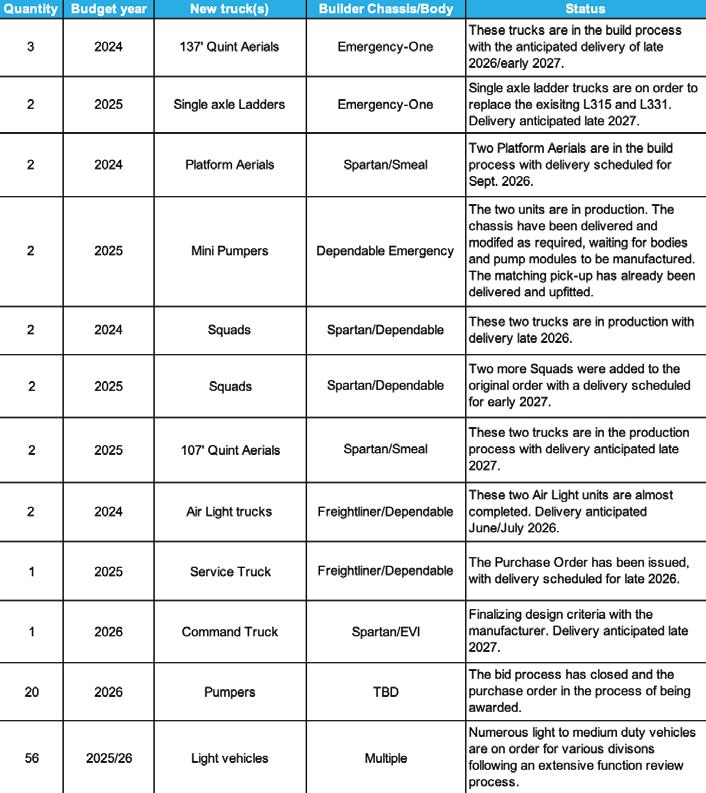
TFS Fleet Purchasing Status
(as of May 14, 2026)
Unit Responses 2025
Unit Responses 2025
Unit Responses 2025
Unit Responses 2025
Unit Responses 2025
Unit Responses 2025
Unit Responses 2025
Unit Responses 2025
Operational Events (the last five years)
Operational Performance
(the last five years)
Operational Performance (the last five years)
Event Count for Time Measures (n=)
Age of Current Fleet
TRAINING (PDT)
RESCUES
The Other First Responder
BY CECIL LAW, TORONTO FIRE ACTING CAPTAIN, FIRE STATION 235 - B
Answering the Other Alarm
Toronto Fire Services Staff Psychologist
Chris Rodrigues has become a respected and familiar presence within the fire service community, supporting members through the unique psychological challenges that accompany the profession. I recently had the opportunity to sit down with him for an insightful conversation about his upbringing, his journey into psychology, and the evolving role of mental health within the fire service. From his early years growing up in Scarborough, to helping shape mental health support within the department today, Chris shared personal reflections on family, loss, resilience, and the ongoing effort to strengthen wellness and peer support for firefighters and their families.
The Past
Confirmation bias refers to the tendency for Born and raised in Scarborough to Guyanese parents, Chris describes his upbringing as one rooted in family, community, and perseverance. His parents, both hardworking professionals, instilled in him a strong sense of discipline and independence from an early age. His mother worked in the insurance industry, while his father specialized in aircraft electrical systems and wiring inspection — careers that reflected precision, responsibility, and commitment. Although psychology was not traditionally viewed within his cultural background as a conventional or encouraged career path, Chris always found himself drawn toward understanding people and human behaviour. As a student, he developed a strong interest in history, political science, and biology, gravitating toward subjects that explored both society and the human condition. Friends and peers often viewed him as approachable, easygoing, and non-judgmental — someone people naturally felt comfortable speaking with. Outside the classroom, he immersed
himself in sports, Scouts, and Jeet Kune Do, the philosophy-driven martial art founded by Bruce Lee. More than simply a physical discipline, Jeet Kune Do introduced him to ideas surrounding selfawareness, adaptability, personal accountability, and humanity. Chris also found inspiration in figures such as Mahatma Gandhi and Martin Luther King Jr. — individuals who challenged conventional thinking while advocating compassion, resilience, and service to others.
A defining moment in his life came with the passing of his sister in 1996 — a tragedy that profoundly reshaped his outlook and ultimately solidified his decision to pursue psychology professionally. Following a period of reflection and personal growth, including time spent in Costa Rica, he returned with renewed direction and committed himself fully to graduate studies and clinical practice.
The Present
Chris completed his academic studies at York University before continuing advanced professional and clinical training in Alberta, specializing in counselling psychology, psychological assessment, diagnostic pathology, psychotherapy, and casebased clinical work grounded in DSM practices. His postgraduate training involved years of residency, supervision, ethics examinations, oral boards, and extensive clinical evaluation — a demanding process comparable in rigor to many other regulated healthcare professions. Although opportunities to pursue a PhD were available to him, Chris instead chose to focus on direct clinical practice and frontline psychological support.
Prior to joining Toronto Fire Services, Chris spent years working within corporate employee assistance programs and municipal services, including work connected to children’s services and career development initiatives. His experience supporting individuals through trauma, workplace stress, crisis management, and mental health intervention would later prove invaluable within the fire service environment.
His transition into the fire service came through leaders within the organization who recognized the urgent and growing need for embedded psychological support for firefighters and their families. Former Fire Chief Matthew Pegg, Chief Jim Jessop, and Chief Tony Bavota were all instrumental advocates in bringing Chris into the organization, firmly believing that mental health support needed to become an integral part of the modern fire service. At the time, mental health resources within the service were still evolving, with peer support members often carrying much of the emotional burden without formalized clinical
infrastructure. Chris would eventually become one of the first full-time staff psychologists integrated directly into a Canadian fire service environment. Since arriving, he has played a key role in helping shift the culture surrounding mental health within the organization. Through resilience training initiatives, suicide awareness modules, ethics education, peer support development, workshops, town halls, and ongoing member outreach, Chris has helped normalize conversations surrounding psychological wellness in a profession historically conditioned to suppress vulnerability. He acknowledges that earning trust within the fire service culture was initially one of the greatest challenges — but also one of the most meaningful accomplishments.
The Future
Looking ahead, Chris envisions a more comprehensive and proactive mental health framework within Toronto Fire Services — one that continues to prioritize prevention, education, accessibility, and long-term wellness for both members and their families. Among the initiatives he hopes to expand are dedicated wellness coordinators, enhanced resilience training, smaller and more personalized educational sessions within fire halls, and broader mental health development throughout a firefighter’s career.
He also emphasizes the critical importance of supporting firefighters’ families, recognizing that psychological strain often extends beyond the individual member. Efforts are already underway to improve family outreach, provide education surrounding signs and symptoms of operational stress injuries, and strengthen access to both peer and professional support resources. Chris believes families should feel connected to the support system rather than isolated from it.
Despite the progress made, he believes mental health within emergency services remains an ongoing evolution rather than a completed task. Continued cultural change, open dialogue, and accessible resources will remain essential moving forward. For Chris, however, the motivation behind the work has never changed.
“What keeps me going is the people,” he explains. “Firefighters are some of the most genuine and selfless individuals you’ll ever meet — people willing to get out of bed in the middle of the night to help complete strangers. Being able to support them in return is an honour.”
If you or a family member is in need of assistance, please contact peer support at 416-338-9EAP or Chris directly at 426-338-9557.
Since 1949, the Toronto Professional Fire Fighters’ Association has sponsored an annual Media Awards to honour and acknowledge media professionals who produce insightful and impactful coverage of the work that Toronto firefighters perform.
Firefighting is often dangerous and dramatic work. In Toronto, we are fortunate that our local media professionals do an excellent job of covering our efforts and capturing some of the dangers that we face on a regular basis. Many of our local journalists and media professionals also distinguish themselves through extensive investigation and insightful analysis of the people and stories behind the events.
The positive public perception of Toronto firefighters is undoubtedly as a result of the positive presentation of our profession by our local media professionals. Toronto firefighters are grateful for coverage of not only our professional actions, but also of our volunteerism and our charitable contributions to our community.
Our annual TPFFA Media Awards provides an opportunity for us to honour journalists who distinguish themselves with reporting of the highest quality on events involving our members. Award categories have been developed to recognize excellence in various mediums, whether coverage be in print, television, radio or posted online.
OFF-DUTY AWARDS
Roy Silver Award
Awarded to the Local 3888 member(s), who during the past year, while offduty, has distinguished themselves by performing first aid/CPR for a fellow citizen.
Dustin Stacey
On the evening of June 2, 2025, off-duty Toronto firefighter Dustin Stacey was at home preparing for the next day’s shift. The quiet evening was suddenly unsettled by an urgent call from a neighbour. His friend and neighbour had collapsed and was completely unresponsive.
Dustin and his wife rushed to the scene to find their neighbour lying on the ground. She was not breathing, and she had no pulse. In that terrifying moment, with no emergency gear on hand, instincts and professional training took over. Working together as a team to save their friend’s life, Dustin immediately began continuous chest compressions while his wife focused on managing her airway. Because they were in a more rural area, it took nearly ten minutes for emergency responders to arrive. For that entire window of time, the couple sustained life-saving efforts on their own, carrying the weight of their friend’s survival in their hands. When crews did arrive, they took over care and successfully restored her pulse.
Following weeks of critical care and months of intense recovery, this beloved neighbour and mother of three is finally back home where she belongs. Thanks to the immediate, exhausting, and selfless efforts of Dustin and his wife, she continues to improve each day surrounded by the family who loves her.
Al Pearsall Award
Awarded to the Local 3888 member(s) who contributed time, energy, and ability toward the improvement of their community and fellow citizens, while off-duty.
David Cossitt
Firefighters are naturally wired to help others, often displaying incredible selflessness on duty while remaining notoriously reluctant to seek recognition for themselves. David Cossitt perfectly embodies this humble spirit, yet his quiet dedication has built an extraordinary legacy of charity and solidarity. The Toronto Professional Firefighters Celtic Society shared the following regarding David’s impact.
“As we enter the tenth year of the TPFFCS Celtic Fire Ride, we honour David Cossitt with the Al Pearsall Award. Thanks to Dave’s commitment, leadership, and tireless effort, the Celtic Fire Ride has raised over $1 million dollars for the Canadian Fallen Firefighters Foundation since its’ creation in 2016. Dave has united firefighters from across Canada to complete the 550km journey across Ontario to Ottawa for awareness and solidarity. Serving as the Celtic Society President for over 10 years, he has also raised money for countless organizations such as: Camp Bucko, Sick Kids, and the TFF Toy Drive.”
Congratulations to David on this well-deserved award, and thank you for all of your incredible work.
OFF-DUTY AWARDS
The BOX 12 Award
The Box 12 Award is presented annually to an individual member of Local 3888 who has gone beyond the call of duty in a voluntary capacity for the direct betterment of Local 3888 members. This may be exemplified by a single significant contribution or by the continued extraordinary work of an individual that reflects positively on both the Box 12 Award recipient and Local 3888. The spirit of the award is to recognize outstanding service and volunteerism as demonstrated by the Box 12 Association which supports Local 3888 members at major fire and other related incidents.
DAVID COSSITT
This year, the Box 12 Association is beyond thrilled to award the Box 12 Award to Captain Dave Cossitt for his years of unwavering support for the Toronto Professional Firefighter’s Celtic Society Memorial Ride. Dave quietly nurtured his idea for the Ride from its humble beginnings, in 2017 when 13 riders raised $5,000.00 for the Canadian Fallen Firefighters Foundation. They did this by riding their bicycles from Toronto to Ottawa over two days and 433 km, attending events at the Memorial in Ottawa. Since then, Dave has worked tirelessly to encourage the Ride’s growth with seventy firefighters of which twenty-six represented the Toronto Fire Service signed up for the 2025 3-day 575 km ride from Hamilton to Ottawa.
To date, the Ride has raised well over $250,000.00 for the Foundation.
The purpose of the Ride is to raise awareness and support the Foundation’s mission to honour and remember firefighters who have lost their lives in the line of duty, and to support their families.
The Box 12 Association is delighted to be acknowledging Dave’s years of dedication to the Ride in the Ride’s 10th anniversary year and decided to honour Dave with a sizeable donation from its members to the Ride in his name. Dave truly exemplifies the spirit of the Box 12 Award.
Bernard ‘Ben’ Bonser Award
Awarded to the Local 3888 member(s) who during the past year, while off-duty, has distinguished themselves by making a rescue, or being involved in saving the life of a fellow citizen in a hazardous or threatening situation.
David Quinn
On November 13, District Chief David Quinn was driving home on Highway 401 westbound in Mississauga when he noticed a vehicle in the express lanes steadily dropping in speed. Moving closer to investigate, he realized the driver had collapsed at the wheel and was unconscious while the car continued to move. David immediately positioned his personal vehicle to act as a blocker unit to shield the car from traffic as it began scraping against the guard rail. Despite misunderstanding from other drivers who mistook the event for a road rage incident, David maintained his focus on the unfolding life-or-death situation. He contacted 911 to guide the Ontario Provincial Police to their location, successfully maneuvered the car out of the express lanes, and finally positioned his own vehicle in front of the driver’s to safely bring the runaway car to a complete stop. Once stopped, David rendered medical care to the unconscious driver until the OPP and EMS arrived to assume patient care. His quick thinking, composure under intense pressure, and decisive actions that day prevented a potential tragedy.
Josh Losier
On July 5, Firefighter Josh Losier was a guest at a wedding at the Royal Botanical Gardens Rock Garden in Hamilton. What began as a celebratory dinner quickly turned critical when the guest sitting directly next to him began choking on a piece of food and was unable to breathe. Recognizing the immediate danger, Josh’s training took over. He immediately stepped in and administered abdominal thrusts. Josh was successful in dislodging the food from the person’s airway, allowing the guest to recover and enjoy the rest of the wedding festivities. His quick thinking, composure under pressure, and decisive actions that day prevented a potential tragedy.
Barry White Award
The Barry White Award is presented annually to a deserving volunteer from Support 7 or Box 12. These two support units attend every major incident to provide support and supplies to the firefighters on scene. It is staffed entirely by volunteers who respond 24/7 to lend a hand to our crews on duty.
Brian Noble
Brian is one of the driving forces behind Support 7, serving as one of our primary drivers and always being willing to lend a helping hand whenever it’s needed. His dedication goes far beyond getting behind the wheel. When there was a vacancy on the Board, Brian didn’t hesitate to step forward, taking on the responsibility to help shape the future of our organization and make a meaningful difference. As one of our primary dispatchers, Brian is also a vital link between Toronto Fire Services Dispatch and Support 7, serving as a trusted point of contact for both our members and our partners. His reliability, commitment, and willingness to serve embody the spirit of volunteerism that makes our organization so strong. The Barry White Award is a fitting recognition of Brian’s selfless contributions, quiet leadership, and unwavering commitment to helping others. Congratulations, Brian, and thank you for everything you do for Support 7.
Best Fire Watch Article (Toronto Fire Historical Society)
This year, rather than recognizing a single article or author, we are breaking with tradition to honour the Toronto Fire Historical Society. The society has become a staple in the Fire Watch magazine, consistently providing excellent, informative, and engaging content. Their dedicated work sheds a vital light on the historical events, stories, and incidents that have shaped our city’s fire service over the years. Firefighters are part of a proud lineage, and without the society actively researching and preserving these stories, many of them would likely be lost to time or never brought forward to our membership. We are incredibly grateful for their ongoing contributions to our award-winning magazine, keeping our shared history alive for active and retired members alike. Thank you to the Toronto Fire Historical Society for your outstanding work and dedication.
Best News Story Featuring a Toronto Firefighter – Carol Charles
A respected voice in Canadian media and a Video Journalist with CTV News Toronto since October 2000, Carol Charles began her journalism career in Durham Region, where she built a strong foundation in local news and community storytelling. Carol has a long history of community service and outreach, supporting organizations like United Way Toronto and volunteering with Accessible Media Inc. to expand access for visually impaired Canadians. She is also a mentor to emerging Black journalists and speaks at elementary schools across the GTHA, earning multiple awards for her leadership and lasting impact in both media and the community.
This year, Carol is being recognized for her exceptional news story showcasing the Celtic Fire Ride and its driving force, David Cossitt. Carol spent two full days gathering footage and conducting interviews to tell this deeply moving story. She captured the heart of the ride by interviewing David as well as Jordan Richie, a rider from Pickering Fire whose father was being memorialized on the wall in Ottawa maintained by the Canadian Fallen Firefighters Foundation. Through her lens, Carol beautifully captured the camaraderie, physical effort, and profound purpose of the ride, which raises vital funds for the Canadian Fallen Firefighters Foundation. Her storytelling brought national awareness to this incredible journey of solidarity, helping to make that ride the most successful one yet. We are honoured to celebrate Carol’s excellence, leadership, and service.
Thank you for the work you do and the example you set.
Best Published Photo By a Toronto Firefighter – John Hanley
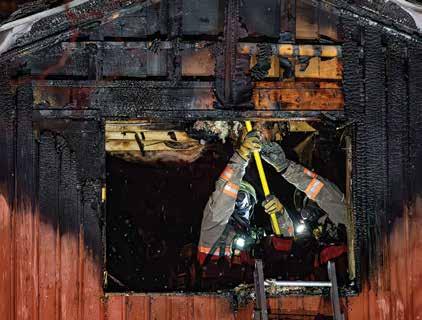
Lehar Crescent House Fire
Crews work to overhaul a burned-out bedroom at a 2nd alarm on Lehar Crescent
Best News Story, Web Based – Joanna Lavoie, CP24
A graduate of Toronto Metropolitan University, Joanna Lavoie joined CP24.com as a digital journalist in May 2022, specializing in breaking news and social justice issues. This year, Joanna is being recognized for her outstanding web-based coverage of a small plane that crash-landed near a high school in Toronto’s east end on September 15. Working alone as this major breaking incident unfolded at Monarch Park Collegiate, Joanna was among the very first media outlets to report on the scene. Her piece heavily featured the fast, coordinated efforts of the Toronto fire crews who arrived to find the plane skidded to a halt just shy of a sports field. Joanna provided continuous updates throughout the evening as firefighters and hazardous materials teams worked diligently to contain and mitigate leaking fuel, stabilizing the site in the heart of a highly populated community. Her thorough, real-time reporting kept the public informed while highlighting the multi-hazard capabilities and swift professionalism of the responding crews. We are honoured to celebrate Joanna’s excellence in digital journalism.
Best Video – Jacon Estrin
Firefighters are exceptionally skilled at doing their jobs, yet they are often notoriously reluctant to take credit for their efforts. That is why the work of visual storytellers like Jacob Estrin is so vital. This year, Jacob submitted three outstanding videos from separate incidents that capture Toronto firefighters in action. His footage is frequently picked up by local media outlets because he consistently seems to be on the scene, documenting the incredible work that our members do on the job. By focusing on the specific moments where firefighters are directly helping people, Jacob’s lens beautifully captures both the heroism and the deep humanity of the fire service. We want to extend our sincere thanks to Jacob and those like him who show up to show the world the incredible, dangerous, and incredibly necessary work our members do each and every day.
Best Photo, Social Media – Simon Sheehan
A skilled photojournalist and ENG camera operator at Bell Media, Simon Sheehan brings extensive expertise in visual storytelling and live broadcasting to everything he does. Having contributed as a CP24 photojournalist and live eye coordinator, Simon is no stranger to the fast-moving world of breaking news. That sharp eye for live action was on full display when he captured an outstanding photograph of Toronto firefighters on scene and posted it to social media. Much like the videos and photos captured by his media peers, Simon’s lens provides a crucial, authentic window into the incredible and dangerous work our members perform. We are incredibly grateful to professionals like Simon who use their off-duty time and professional talents to highlight the bravery and humanity of the fire service.
Best Photo, Social Media – Keith Hanley
Keith Hanley is a retired photojournalist who spent over thirty years capturing the news with CFTO/CTV News Toronto. Though he is now enjoying his retirement, Keith’s professional instincts remain as sharp as ever. While in his home neighbourhood of the Beaches in January, he captured a striking photograph of a 3-alarm fire that perfectly showcased the intensity and grit of the fire ground. His powerful image ended up on the front cover of our union magazine, Fire Watch. We are grateful to Keith for continuing to use his incredible talent to highlight our members in action, and we are honoured to recognize his work with this award.
3 Bridlington Street, Scarborough, Ontario M1H2L2
Wayne Bridger President Paul Moffatt Secretary Eric Motton Treasurer
Ghosts of The Canadian Expeditionary Force (CEF)
BY MIKE OGLE, RETIRED TORONTO FIRE CAPTAIN
Greetings All!
Hope everyone has survived our lengthy winter season and are ready for Spring.
We thought we would start off 2026 with another good story.
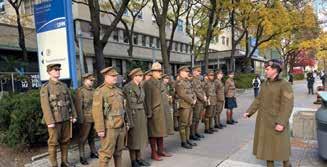
A few weeks before last year’s Remembrance Day activities, which were numerous, we were contacted by the Canadian Great War Society. The project was introduced to us as The Ghosts of the CEF. The contact information came with much support from a few others in our social circles, including our own Glenn Kerr and his Western Front Association, so it was something that looked interesting. It took us a while to figure out the big picture, from all the requests and all the project interpretations from our colleagues.
First some background. The Canadian Great War Society (CGWS) is a non-profit historical living history/ceremonial preservation organization, dedicated to remembering and educating the public about the Canadian soldiers of the First World War. The group was founded in 1997 by director Tim Gillies. The CGWS is operated from Thamesville, Ontario. One of the many interesting things about this group is their “back yard”. They have constructed a 150-foot First World War British military trench. This site serves as a hands-on educational resource for local youth groups and has been used as a location for several movie productions, including the short film The Unknown Soldier. Further, they maintain a group of reenactors, which emulate infantry and mounted cavalry sections.
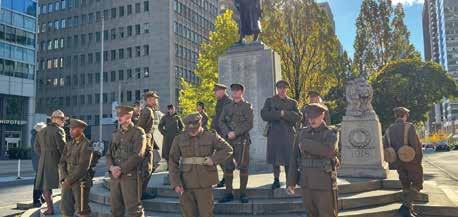
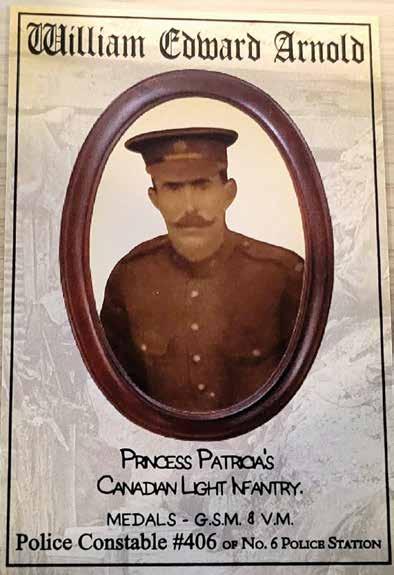
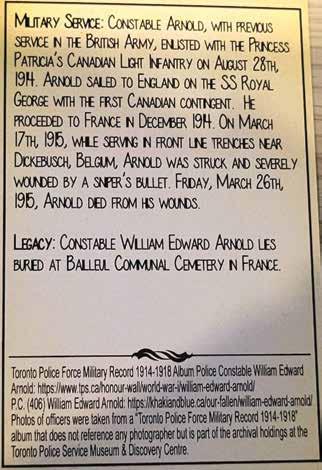
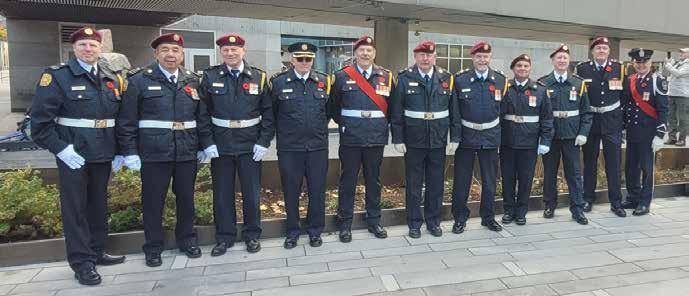
The event itself, as stated above, came together early last November. The GCWS partnered with the 48th Highlanders, the Toronto Police Military Veterans Association (TPS-MVA), and now us, the Toronto Firefighters War Veterans Association (TFFWVA), for an event called the Ghosts of the CEF. In this project, reenactors portray specific Canadian soldiers killed in WW-1. For those who have been following us, you will be aware of our “Operation Never Forgotten” project. In that project, we have been documenting all our war veterans, which has reached 880, 330 of which served in the Great War. We were proud that we could showcase some of our own veterans.
The project involves the collected group of reenactors, dressed as period soldiers, to wander silently around several “public places” just to be “seen”. Each of the participants are selected from the above groups and each participant specifically portrays a WW-1 veteran, also chosen from the attending organizations. The group travels on foot like soldiers do and hand out cards to the public, detailing the soldiers' identities and resting places. In some cases, the curious will approach the group and ask questions, and in others, the group will reach out, all the while being filmed with the focus being on the group and the public reactions. The contrast between the group and present day is quite amazing to watch. After a period of time, the group moves on, as if on the battlefield, to the next location. The itinerary involved three Toronto locations.
It is our understanding that some of the initial impetus for this project’s inception was in a similar project created in the UK, for the 100th anniversary of the 1916 Battle of the Somme, and was conducted the first time by Tim and the GCWS on 01 July 2016. The UK project was captured in a number of YouTube segments with the same name and can be readily searched here:
The Ghosts Project actually took place here on Saturday the 8th of November. The TFFWVA was not able to attend because it coincided with the inaugural Indigenous Veterans Day Ceremony held at Nathan Phillips Square. Our Colour Guard had already committed to attend, and we had a great turn out. The annual Indigenous Veterans Day will fall of the Saturday before Remembrance Day and will be an annual event for our Association.
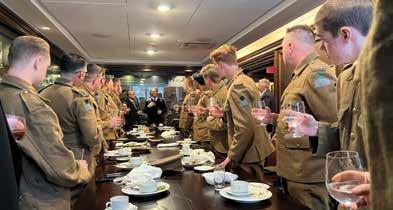
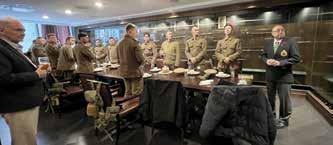
I was only able to catch up to the group after the event at the Royal Canadian Military Institute. There was a lunch held in the project’s honour. It was graciously member sponsored and hosted by Jack Gin. It was here when the whole scope of the project had become evident to me and I was given the opportunity to address those in attendance on behalf of the TFFWVA. I thanked them all, including the organizers and our gracious host. I told them how proud we were to participate and showcase some who had gone before us.
In conclusion, I must say that the above likely makes it look like our organization was an equal contributor. In fairness, we were not. November is a very busy month for us, and we were slow in the engagement with the project. Kudos goes out to the participants who volunteered their day to support this event, some who travelled quite a distance. We were able to provide six veteran profiles and some background support. This year, we will be providing more support. We have been asked to provide another six veteran profiles, which are in process as we speak, and we will also provide three firefighters to participate in the group itself. We also offer a shoutout to the photographers whose pictures we used.
Please look for this project to appear in our local media this year. It will take place Saturday, November 7, 2026, and will honour soldiers who were killed in 1916.
We hope that the summer season is a safe and happy one for all.
Our Next TFFWVA membership meeting will be announced soon. Please watch for the updates. Our meetings are always held quarterly at the Royal Canadian Legion - Branch 527 Wilson, 948 Sheppard Ave W, North York, ON M3H 2T6.
All are welcome.
TFFWVA Membership
Our membership drive is continuous, if you’re interested in becoming a member, feel free to contact us at tffwva@gmail.com. The dues ($25.00) are payable annually, consider becoming a member!
Don’t forget to follow our social media feeds:
On The web: www.tffwva.ca
On Facebook: https://www.facebook.com/groups/TFFWVA
On Twitter: @TFFWVA
Instagram https://www.instagram.com/tffwva
BY SUZANNE BOSS, TPFFA SENIOR EXECUTIVE ASSISTANT
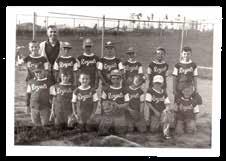
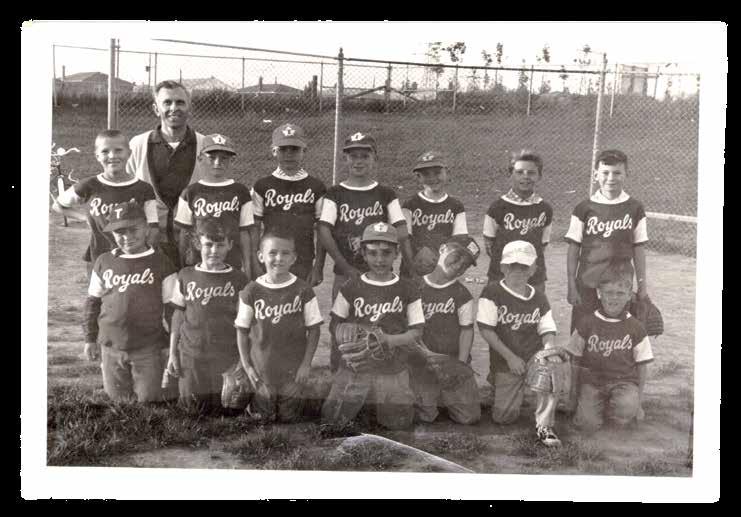
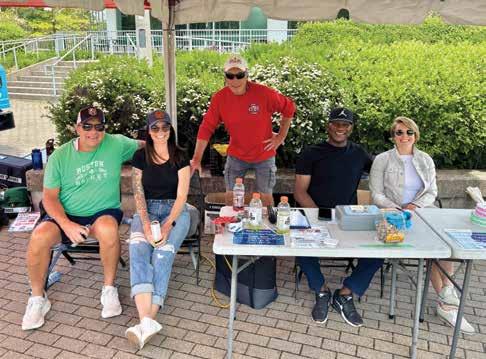
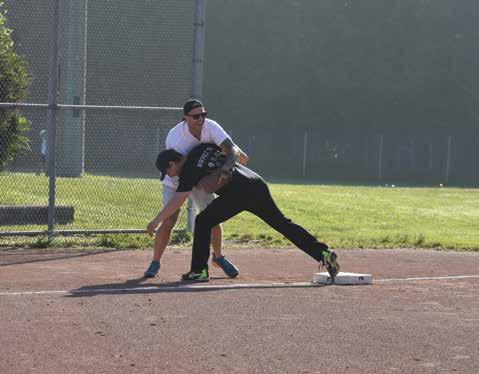
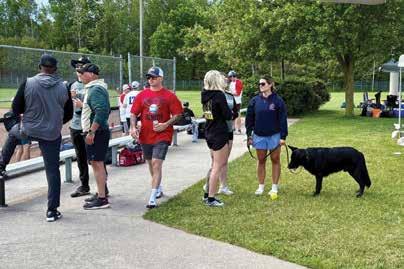
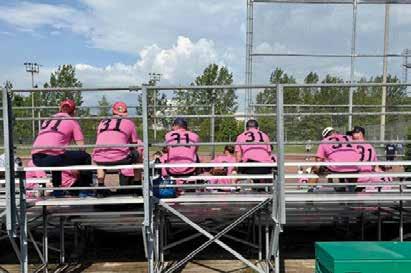
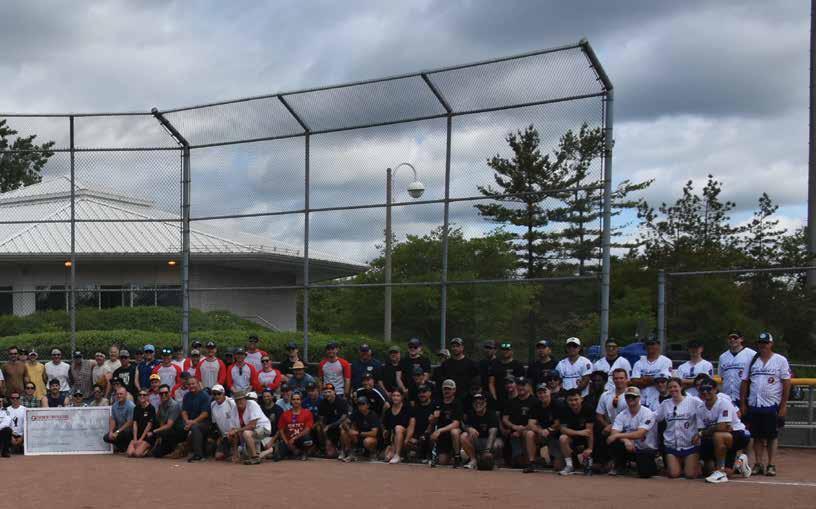
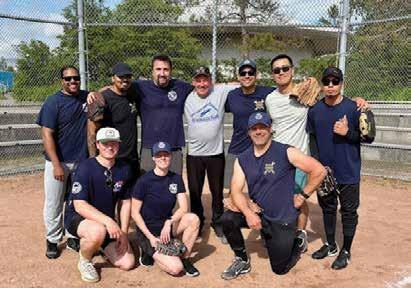
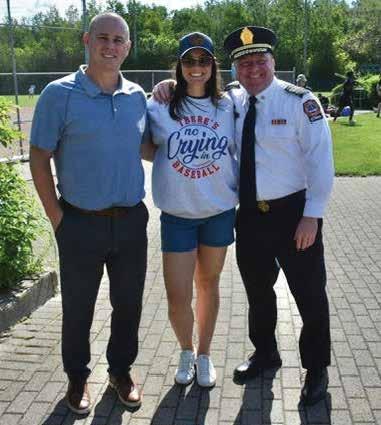
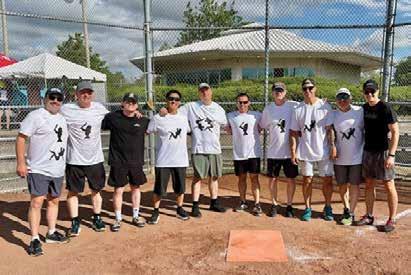
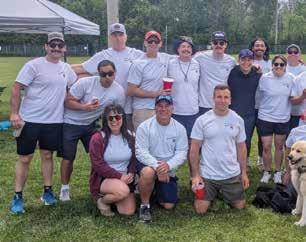
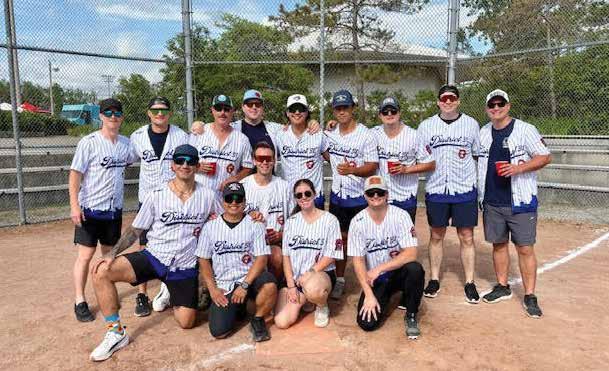
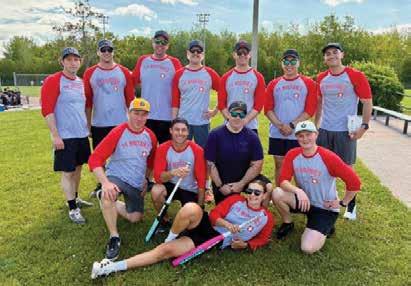
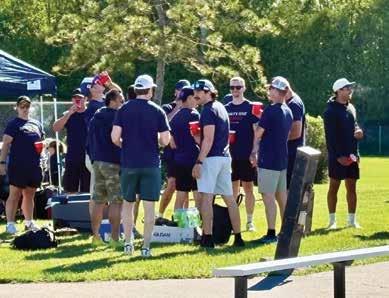
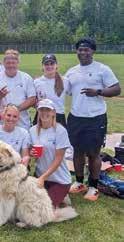
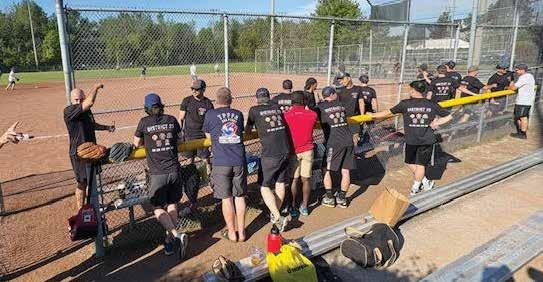
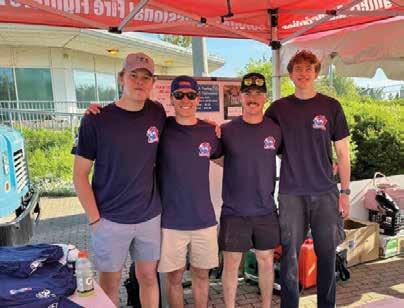
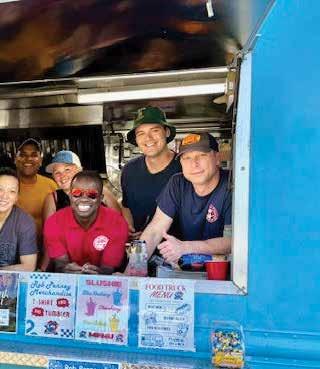
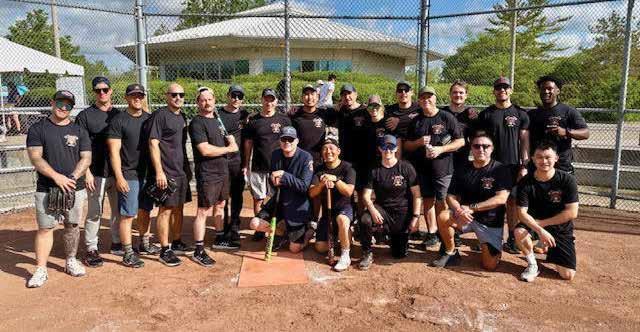
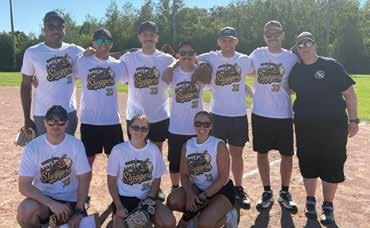
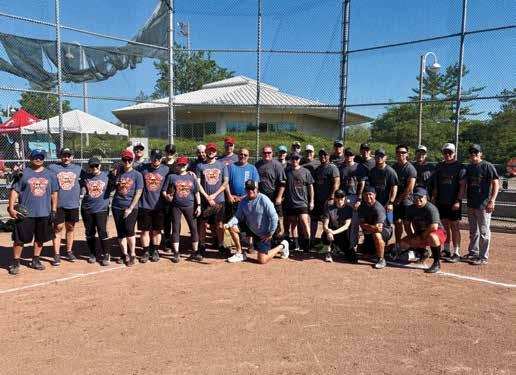
The 1962 Royals, a Toronto Maple Leaf Baseball Team of the American League, where the young Rob Penney, the tallest of the group, is in the back row, third from the left. Even as a young boy, Rob loved baseball and made friends for life. Retired Fire Fighter, John Gibb, and friend of Rob Penney, since childhood is also in the photo, back row, second from the left, beside Brother Penney. Thank you John for sharing this photo; these are great reminders of why we continue to honour Rob Penney’s legacy and bring awareness to the health and wellness of Toronto Fire Fighters through the Rob Penney Soft Ball Tournament.
Photo Credit: Larry Thorne
Rob Penney
Rob Penney
Rob Penney
Letter from the Editor…
In the fire service, strength is often measured by how much we can carry — long shifts, difficult calls, sleepless nights, and the emotional weight that comes with witnessing people on the worst days of their lives. We pride ourselves on resilience, dependability, and our ability to show up when others need us most. However, one conversation that continues to grow in importance across the profession is this: who takes care of the people doing the caring?
For generations, firefighters and first responders have been conditioned with an alpha mentality to push through exhaustion, compartmentalize stress, and place the needs of others ahead of their own well-being. While dedication and sacrifice remain core values of the profession, we are beginning to better understand the long-term consequences of neglecting our own physical and mental health. Burnout, chronic stress, sleep deprivation, anxiety, depression, and post-traumatic stress injuries are realities that affect firefighters at every stage of their careers.
When you are running on empty emotionally or psychologically, the consequences ripple out fast. If we do not prioritize our mental health, it will affect
BY ASAD RASTAGAR, TORONTO FIREFIGHTER, FIRE STATION 231 - A
us performing our duties as competent firefighters, and it will also hinder our personal lives by impacting family and friends around us. Taking care of your mental health is not “self-indulgence”—it is maintenance on your most important piece of equipment: yourself. Hence, you cannot pour from an empty cup, and you cannot safely rescue or help others if you are drowning.
As firefighters, we are trained to protect lives and communities. To continue doing that effectively, we must also recognize the importance of protecting ourselves and each other. Prioritizing mental health—whether through peer support, therapy, coping mechanisms or just breaking the stigma of talking about a bad call is what allows a firefighter to have a long, successful career and a happy family to retire to.
The culture around wellness in the fire service is evolving. More departments are recognizing that maintaining operational readiness means more than physical training and equipment maintenance — it also means supporting mental health, recovery, peer connection, and work-life balance. Conversations that were once considered uncomfortable or taboo are now becoming an important part of building healthier crews and stronger organizations.
In this article, Iyana Phakira explores why self-care is not a sign of weakness or selfishness, but rather a critical component of resilience and professional longevity in emergency services. Drawing on current research and the lived realities of first responders, this article highlights the importance of prioritizing sleep, physical wellness, mental health support, and peer connection in a profession built around service to others.
You Can’t Pour from an Empty Tank: Why Self-Care is Important
You Can’t Pour from an Empty Tank: Why Self-Care is Important
BY IYANA PHAKIRA, TORONTO FIRE COMMUNICATIONS, SHIFT 1
As first responders, we are trained to protect our communities during some of the worst moments imaginable. We run toward danger (literally and figuratively), work long and unpredictable hours, and witness traumatic events that most people will never experience. Yet, behind the strength and resilience associated with the profession is a reality that is often overlooked: first responders are at significant risk for physical exhaustion, burnout, sleep deprivation, anxiety, depression, and post-traumatic stress injuries. Because of these occupational demands, self-care is not a luxury for us — it is an essential part of maintaining health, performance, and longevity in the profession. Research consistently shows that poor sleep and chronic stress have a major impact on first responder wellness. A large North American study involving more than 6,000 firefighters found that sleep disorders and mental health conditions were strongly associated with emotional exhaustion and burnout. Firefighters with insomnia or other sleep disturbances were significantly more likely to experience depersonalization, fatigue, and reduced feelings of accomplishment. Sleep deprivation is particularly concerning in the fire service because it affects reaction time, decision-making, mood regulation, and physical recovery. In a profession where split-second decisions can mean life or death, prioritizing rest and recovery directly impacts operational safety. Self-care also plays an important role in protecting first responders from cumulative psychological stress. Firefighters are repeatedly exposed to traumatic incidents such as fatal fires, medical emergencies, child deaths, and severe accidents. Over time, repeated exposure to trauma can contribute to post-traumatic stress disorder (PTSD), anxiety disorders, depression, and substance misuse. A systematic review published in Trauma, Violence, & Abuse found that firefighters experience elevated risk for PTSD due to repeated exposure to potentially traumatic events throughout their careers. Another systematic review examining psychosocial stress in firefighters linked chronic occupational stress to poorer mental and physical health outcomes, including cardiovascular strain and emotional exhaustion.
Importantly, evidence suggests that supportive self-care practices can reduce these risks. Peer
support programs, resiliency training, access to counseling, physical activity, adequate nutrition, and healthy sleep habits have all been associated with improved mental health outcomes among firefighters.
A Canadian cohort study examining firefighters after the Fort McMurray wildfire found that firefighters who reported access to peer support had significantly lower rates of depression and anxiety symptoms. These findings reinforce the idea that self-care is not solely an individual responsibility — organizational culture and team support matter as well.
Physical self-care is equally important. Firefighters experience high rates of cardiovascular disease, musculoskeletal injuries, and chronic fatigue due to the physical intensity of the job combined with disrupted sleep and high stress levels. Regular exercise, hydration, balanced nutrition, and recovery practices help firefighters maintain physical readiness while reducing long-term health risks. Exercise has also been shown to improve mood, reduce stress hormones, and enhance sleep quality, creating benefits for both mental and physical wellness.
Despite growing awareness around first responder mental health, stigma remains a barrier to seeking support. Discussions within the fire department often highlight concerns about confidentiality, fear of appearing weak, or worries about career consequences when accessing mental health resources. However, attitudes within the fire service are gradually changing. More departments are implementing peer support teams, mental health education, and proactive wellness initiatives aimed at normalizing conversations around stress and psychological injury. We increasingly recognize that asking for help is a sign of professionalism and self-awareness rather than weakness.
Ultimately, prioritizing self-care allows us to continue serving others effectively while protecting our own health and quality of life. Just as we maintain our equipment and train regularly to remain operationally ready, we must also care for our minds and bodies. Prioritizing sleep, nutrition, exercise, mental health support, social connection, and recovery is not selfish — it is a critical component of resilience and occupational safety. A healthier first responder is better equipped to protect both the public and their crew, making self-care an essential investment in the future of the fire service.
Greg Duncan 333 D greg.duncan@outlook.com 416-525-4995
Chris Pallister 333 D chris_palli@hotmail.com 905-741-5396
Sidney Zigah 143 D smkz45@hotmail.com 416-990-0044
Darren Taylor 341 D darren.taylor@rogers.com 416-697-7842
Chris Rodrigues Mental Health Professional
Lorraine Patterson Mental Health Professional
Tony Mellozzi 325 D tonymellozzi@gmail.com 416-562-0253 Louis Chow 313 D chowl@live.com 647-401-0821 chris.rodrigues@toronto.ca 416-338-9557 lorraine.patterson@toronto.ca 416-338-8776
Robert Jackson firejackt333@gmail.com 905-419-4545
Ted Leck Chaplain NORTH ted.leck@toronto.ca 647-461-4047
Tahseen Gill Chaplain EAST tahseen.gill@toronto.ca 416-737-2127
Daniel Chandran Chaplain SOUTH daniel.chandran@toronto.ca 647-518-9750
Todd Riley (Coordinator) Chaplain WEST todd.riley@toronto.ca 416-318-9167
Call 24/7/365: 416-338-9327 Retired
Last Updated: May 2026
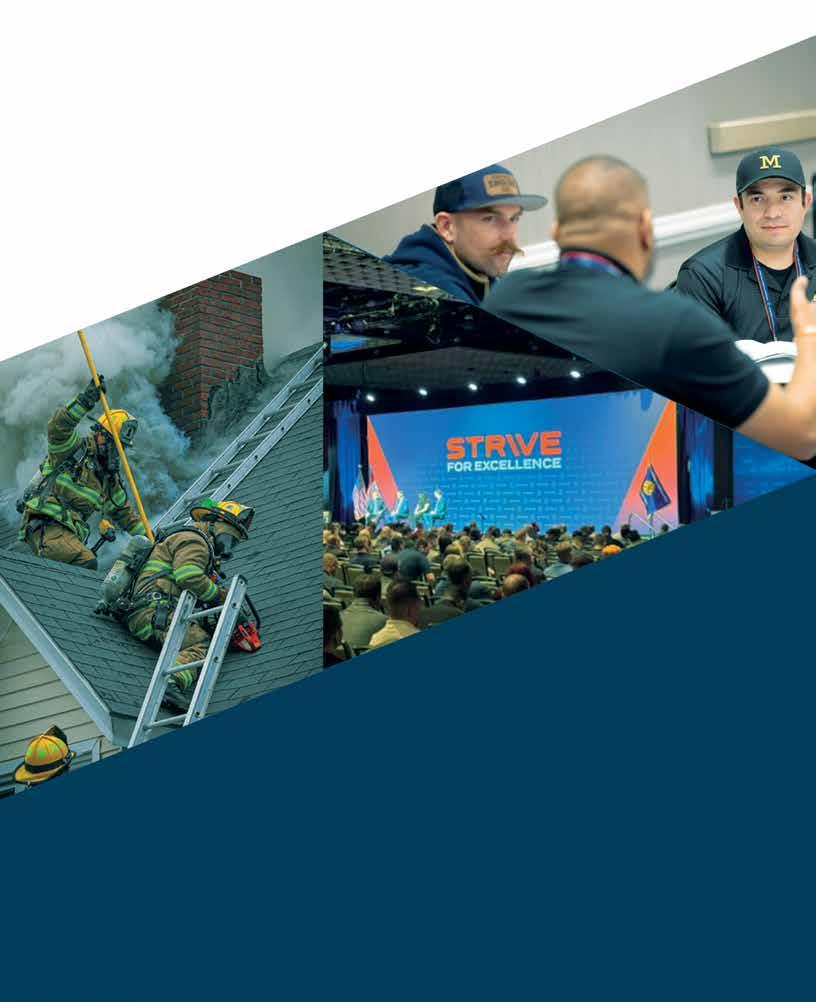
Report on the IAFF Strive for Excellence
Educational Seminar, Las Vegas, Nevada
BY NASTEHA BEINAH, TORONTO FIRE COMMUNICATIONS & MEMBER OF THE TFS HERI COMMITTEE & MEMBER OF THE TFS BLACK STAFF NETWORK. PUBLISHED (POSTHUMOUSLY)
It has been an exceptionally hard few months for this Association. I’m sure we have all been impacted by the passing of Chris Love, Nasteha Beinah and Dale Markham. Chris and Nas’ passing hit especially hard because of how young they were, and the promising careers ahead of them. All will be deeply missed. I hope that their memories move us to cherish one another and to express gratitude for the good people in our lives while we have them. Nas wrote this article before she passed. She reached out to me for some help editing it for a broader audience (aka dumbing it down). I got to know Nasteha during our recent trip to Las Vegas for the Strive for Excellence Conference. Spending just 10 minutes with her in the airport on the way to Las Vegas, and her spark was immediately apparent. She was so smart. And so self-aware. Not just on a personal level, but she had a sense of her place in this culture, this history, this earth like no one I had ever met. She made the folks I met in grad school seem dim. In every conversation together over the next week, she pulled out layers of meaning. You needed to keep up, or her wit would lose you pretty quickly. I think this article gives you a glimpse into the extraordinary person she was. The incredible vision that she possessed. I hope that this article serves as a preservation of her voice and her memory. Rest Easy, Sister. I wish we got to hear more of what you had to say.
TPFFA VP Justin D’Aloisio
As a relatively new member of the TFS Communications Division and the HREI Committee (who will at least be first class by the time you’re reading this article!), I was deeply grateful for the privilege of traveling to Las Vegas for the Strive for Excellence IAFF educational seminar. And so, in light of that gratitude, I would like to relay a bit of that experience here. I’ll start by admitting that before this opportunity, Las Vegas was nowhere near my “Top 500 Cities to Visit” list. Now that I have been, I would like to further demote her standing. Nevertheless, in the end, it was the people—the security guards, store clerks, waitresses, and bartenders— whose kindness and care sent me home with a treasure chest of warm memories, such that recognizing what was truly important became much less impossible in the face of all the blaring noise.
While I was witnessing the extreme culture of consumerism and gleeful self-annihilation on the Las Vegas Strip, I began recalling my mother’s lectures. As an elder and as an immigrant, said lectures were constant. She was quick to remind me that my every comfort, every ease, and all my frivolous complaints could only exist thanks to the great sacrifices of all those who came before. And my underdeveloped, first-world brain ought to keep that in mind before attempting to speak of “hardship.”
As a kid, I registered most of this not as wisdom, but as drama. It was amusing, theatrical hyperbole. As an adult, I see it more as an entire philosophy of life compressed into something I might absorb without paying the same price for it, and it brought the quieter realization that, as usual, my mother was right.
I am but a collection of sacrifices. And the sacrifices of others brought me and nearly 2,000 other members from across the fire service to Las Vegas. That recognition feels especially potent in our profession, where tradition does not survive as mere decoration. It is something more tangible. There are few professions left today so rich in legacy, so deeply intertwined with labour history, public duty, and civic expectation.
But in Las Vegas, after the trauma of the great spectacle had worn off, I resolved that mere imagery or slogans were not simply enough. They can bring people together, but they can’t guarantee that those people will get home from work safely.
Here, Gertrude Stein’s observation, “Silent gratitude isn’t of much use to anyone,” comes to mind. That is why gratitude cannot remain nostalgia. It must manifest as momentum. It should enable us to see that the relative stability we enjoy in Toronto does not mean the struggle has disappeared. It is evidence that enough of us remained involved long enough, and at sufficient cost, to secure what we now think of as “standard.”
That was one of the clearest lessons I took from Las Vegas. The state of labour relations in many places in North America is bleak. Many of the privileges, safeguards, and entitlements that we in Toronto see as ordinary were secured by union action and are not so common elsewhere. I met firefighters who had moved through numerous departments not simply in pursuit of wages or benefits, but because they did not feel safe. Not rhetorically, but literally, due to inadequate staffing, insufficient standards, or conditions that had been allowed to wither and decay. What appeared was not a series of isolated misfortunes,
but a more traceable pattern: poorer worker conditions following from weakened participation, diminished unity, and the slow erosion of political leverage.
If we take pride in this profession, if we believe in our shared history, and if we want to hold on to our sense of community, we have to react when standards begin to slip. We have to commit to ongoing participation.
And as we benefit from some of the strongest conditions this profession, and perhaps humanity at large, has ever seen, it feels all the more pressing that we understand our condition historically as well as sentimentally.
Hopefully, it is at this moment that the link between all these words and HREI becomes clear. HREI (Human Relations & Equity Initiatives) is often misread as a specialized concern. Dismissed as something belonging primarily to an obscure committee or to the language of policy, thankfully the reality of it is far more basic.
If you happen to be a human being working alongside other human beings, then questions of human relations are already embedded in your job. If you are concerned about fairness in a practical sense—that is, consistency, dignity, and accountability—then you are already participating in what equity initiatives attempt to address.
If you are committed to developing and participating in the culture of this department, the standards it upholds, the way members are treated, or the environment in which we all work, then HREI is not external to you. It is just another part of the responsibility you are already carrying.
What becomes clearer (especially after seeing how unevenly different departments can develop, even within the same union) is that the strength of a department, for better or worse, is dependent on the engagement of its members.
That can mean volunteering for union initiatives, city initiatives, or charities, participating in meetings, and remaining connected to the processes that shape the conditions of the job.
There exists perhaps the greatest personal duty at the most immediate level: whether our halls, offices, and daily interactions show respect for fellow members, for the legacy of the service, and for the discipline required to improve both ourselves and the work we do.
We owe it to those who came before us not to gamble with those legacies, and I’ll conclude with the final lesson Vegas imparted—actually winning money from gambling is much, much less straightforward than it looks.
Committee Members:
Chair: Ryan Morrison | CRR Division, North Executive Board Officer morrison@torontofirefighters.org
Justin Gaspini | OPS Division, South Executive Board Officer justin.gaspini@torontofirefighters.org
Frank Jones | OPS Division, TFS Black Staff Network Chairman, North Command Steward jones@torontofirefighters.org
District Chief Brian Porter | OPS Division, TFS Black Staff Network, Allied Firefighters Canada bporter@torontofirefighters.org
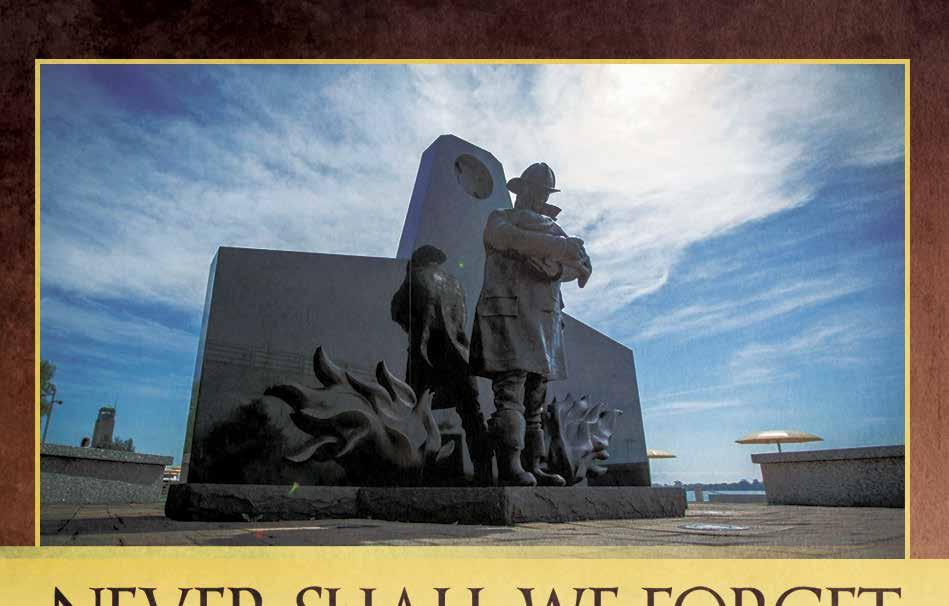
They shall grow not old, as we that are left grow old; age shall not weary them, nor the years condemn. At the going down of the sun and in the morning, we will remember them.
Murray W. Evaschuk
On March 21, 2023, District Chief Murray W. Evaschuk passed away from Lymphomatosis; his passing has been identified as a Line of Duty Death in the Toronto Fire Department. Brother Evaschuk was born and grew up in Toronto. He began his career with the Toronto Fire Department and retired after 32 dedicated years. He was a proud member of the fire community and was consistently bettering himself to help his career grow and improve. Retiring as a District Chief in 1997, Brother Evaschuk completed a very fulfilling career within the fire service. After retirement, he moved to Adams Lake, BC, where he and his family enjoyed travelling the world and hosting family and friends at their lake house. In addition to fire, Murray showed a great passion for Astronomy and the Naturalists Clubs; he also loved microbiology. He was an avid storyteller and a natural teacher. He connected with nature, enjoyed the beauty of our world, and always tried to share that love with those around him. His passion for life, quirky quotes and silliness will be greatly missed by those who knew him.
In Honour of District Chief Murray W. Evaschuk, a Memorial Plaque has been hung up at TFS Fire Station 134.
Ralph Amero
On July 9, 2023, the Toronto Fire Services lost Retired Senior Marine Captain Ralph Payson Amero to Bladder Cancer. Captain Amero served for 23 years as a Senior Marine Captain before his retirement in October 1999.
Born and raised in Nova Scotia, Ralph was one of 19 siblings. He later moved to Ontario for work where he was employed by the Toronto Harbour Commission and after returning to school for Marine Captain, he then joined the Toronto Fire Department.
During his lifetime Ralph could always be found working hard whether at home or at his beloved cottage. Ralph did make time for leisure and enjoyed boating, fishing, golfing, hockey, baseball, and gardening. Being a "Coaster" Ralph enjoyed a good feed of seafood, especially when digging clams and cooking lobsters. He had many great times with family and friends. Ralph and his neverending stories will be truly missed by his loved ones, his crew and the sea.
In Honour of Senior Marine Captain Ralph Payson Amero, a Memorial Plaque will be hung up at TFS Marine Unit.
Christopher Love
April 30, 1988 - April 12, 2026
Nasteha Beinah
September 7, 1996 – June 10, 2026
OUR OWN SELF AWARENESS
Greetings All!
We hope everyone is well these days. Your executive tries to meet at least once a month. When the spring becomes as busy as this one, that becomes increasingly difficult. None of us have ever seen a spring with so much going on and so much going on in the world. When we get together, each of us have long lists of member information requests, which we consolidate and then try to search out the appropriate answers.
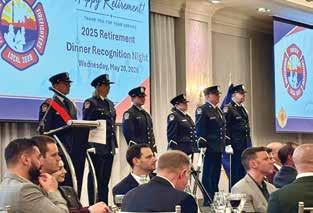
We constantly rely on our former retiree groups (the original six), a relationship we maintain for our mutual survival. Those following our various social media platforms will know we just had the opportunity to get together with our former retiree colleagues at the TFS Retirement Dinner and Recognition event. TFS generously allowed us to invite one member from each of the original six, to join our executive and enjoy the event. It allowed us to do some recruiting, and it also allowed us to answer retirement questions directly or refer the questions to the Local 3888 member responsible.
Like any group these days, our group all have common topics of discussion which have a recurring theme. Our recurring themes are much the same from year to year, although the priorities change places. The sheer number of retiree funeral postings in March alone was a big one, as was the topic of our own self-awareness. This was brought on by the Optional Health Screening Opportunity hosted by United Diagnostic Services (UDS). For our retirees that are not RTFFA members, this might have been missed the first time around, because, unless you’re a member, you don’t have access to the union notices at their time of posting. If you’re one of them, we urge you to read through this to the end and consider becoming a member.
The Optional Health Screening process was open to all, at an individual cost of approximately $500, and will be repeated this summer. Please keep an eye on our Facebook page for the notice. UDS conducts early detection diagnostic testing, which has proven successful in identifying actionable pathologies to improve overall health as well as early detection for cancer and cardiovascular issues. Early detection has had a significant impact on helping prevent and reverse potential future catastrophic events.
The loss of any of our members is tragic, with some “appearing” to succumb in very short order, leading to another of the recurring topics of discussion. Recently, that conversation was directly related to speculation
over the members themselves and if they had symptoms, and whether they were ignoring them, self medicating, or were asymptomatic. In any case, education is a priority, to give our members as much education and tools to be able to catch potential issues before they become catastrophic. We owe it to ourselves and to our families.
The UDS screening was part of a process that began with the Firefighter Medical Surveillance Guide. Please refer to union notice #26-018 dated April 15, 2026, Subject: Occupational Disease, Cancer & Early Detection. In addition, we recommend everyone search for the Canadian Fire Fighter Cancer Registry and read the available information.
Of course, our health and welfare are paramount, but there are also things which we think our membership should watch for in the coming months. There is an IAFF movement looking to change the designation of the “Active Retiree” group, to the “Alumni Retiree” group, which we are all watching closely. The last issue we are watching are the changes in our OMERS structure, resulting from the recent Governance Review.
“As a result of the Governance Review initiated by the Ford Government, the Sponsors Corporation is being wound down and replaced with a Sponsors Council. In many says the Sponsors Council will operate in a way similar to the Sponsors Corporation in that the Council will determine contribution rates, benefits and oversee appointments. What is concerning is that the Council will not have any independent staff to rely on, so all oversight will be based on information provided by the Administration Corporation. While this may provide the necessary information the role of the AC Board was always different to that of the SC Board. The SC Board had a fiduciary responsibility to the plan itself, focussing on its long-term sustainability and meaningfulness. While the new Council will be similarly focussed, they will be a bargaining board, weighing and negotiating the challenges to sustainability of the plan between the employer and employer groups. The Council will not have a strict fiduciary responsibility like the SC Board did. The new Council will also determine future appointees and representation on the Council through policies and bylaws that are currently being authored under the oversight of the AC. Retirees are the only group that are no longer contributors to the plan, that may put their appointed position at risk in the future. Time will tell whether these changes will bring about governance improvements.”
We are watching this process unfold and will report on it as information becomes available.
The Bottom Line!
Regardless of the claim, preferably before the receipt of the goods or services, make a pre-authorized claim though Green Shield Canada ON-LINE!
Keep all documents, get hard copies!
Get a yearly prescription beforehand, if possible, it’s easier to chat with your doctor
Should the claim be approved, then follow the process as required.
Should the claim be denied, download all of the documents
Find the 3888 TPFFA webpage (https://www.torontofirefighters.org)
You need not log in!
Locate the
Make the selection and follow the prompts!
This is the ONLY WAY to get one-on-one representation from a benefits rep.
The rep will advocate for you as best they can!
MROO Membership
We recommend everyone join the Municipal Retiree’s of Ontario (MROO). Its $25 for life, it offers all our members and their families many benefits regardless of which retirement stream they are in. MROO holds an annual zone meeting for all members, where you can attend at no cost and get all the pertinent OMERS/MROO updates. (www.mroo.org)
WSIB and Illness Tracking
We encourage all members, past and present, to reach out to us with whatever information you wish to share. Further, if a member has passed, we are reaching out to the families to share as well. We ask that all requests are made by the members themselves or directly from the family. Anyone who contacts us, will be forwarded to our WSIB group. Even if the cancer is not on the current list, we are asking for all members to share, so that we have case material to help add future illnesses for review.
The next RTFFA membership meeting will be held in October 2026 at the union office. We will be holding elections, should any of you want to join our executive. Please keep an eye out for the notice and consider attending.
RTFFA Membership
Our membership drive is continuous, if you’re interested in becoming a member, feel free to contact us at active.retired@torontofirefighters. org. The dues ($25.00) are payable annually on the 1st of January and we will be holding two general membership meetings each year. One in the spring, where you can sign up and/or pay your dues in person, and another in the fall. Meetings will involve food and fellowship, what could be better! Come join us and be well
Don’t forget to follow our Social Media Feeds: On The web: https://www.retiredtorontofirefighters.org/ On Facebook: https://www.facebook.com/TFSRetirees On Twitter: https://x.com/tfsretirees
President Alan Thomas
-
Secretary/Treasurer
Mike Neely - Al Falkner - Alan Hall - Ron Coates - Chuck West
Advancing Cardiac Arrest Care on the Fireground
Through the close collaboration between Toronto Fire Services and Toronto Paramedic Services, we are able to implement new evidence-based practices under the shared medical direction of our base hospital Sunnybrook Centre for Prehospital Medicine.
We have recently moved forward with two new advancements: Anterior-Posterior (AP) pad placement, and Double Sequential External Defibrillation (DSED).
Why:
Toronto sees approximately 2,000 prehospital cardiac arrests each year. While early CPR and defib remain the foundation of survival, a subset of patients remain in Refractory Ventricular Fibrillation (VF). Refractory VF is generally defined as VF that persists after three consecutive shocks despite ongoing highquality CPR and standard ACLS interventions. These cases have historically had poor outcomes, leading to the adoption of alternative defibrillation strategies beyond repeated standard defibrillation.
Evidence:
Much of this change is driven by research from Dr. Sheldon Cheskes and Sunnybrook Research Institute, including the landmark DOSE VF trial. In patients
with refractory VF, DSED showed a 30.4% survival to hospital discharge rate, while AP pad placement showed a 21.7% survival rate, both compared to 13.3% with standard defibrillation. The study also showed improved neurological outcomes, with neurologically favourable survival increasing from 11.2% with standard defibrillation, to 16.2% with AP pad placement, and 27.4% with DSED.
Change:
“Early AP Pad Placement (chest and back) changes the electrical vector pathway through the myocardium, potentially improving the likelihood of successful defibrillation. It is increasingly being applied early in resuscitation. Early AP pad placement also improves readiness for potential DSED without requiring crews to reposition pads later during an active resuscitation. For fire crews, this is a low effort, high impact intervention that can be done immediately upon arrival. For DSED patients who remain in VF after three consecutive shocks, care escalates with two defibs, two sets of pads (AP & Anterior Lateral), and two rapid sequential shocks (directed and completed by the paramedics). This allows an increase in energy delivered to the patient through multiple electrical vectors. Resulting in the improved probability of refractory VF termination and positive patient outcome.
Operation:
• Fire arrives on scene
• Pulse check confirms VSA and high-performance CPR is initiated
• Clothing is removed and patient is prepared for AP pad placement
• Pads are applied while minimizing interruptions in compressions
• CPR and airway management is continued
• Toronto Paramedic Services arrives and transitions pads to their cardiac monitor
• If VF persists after three consecutive shocks:
- Additional anterior-lateral pads are applied
- Toronto Fire’s AED or a second cardiac monitor is prepared
- Paramedics charge and shock the patient sequentially, less than 75ms apart
Moving Forward:
These changes represent a more active role for firefighters in advanced cardiac arrest care. Greater emphasis is now placed on pad placement, defibrillation readiness, and coordinated resuscitation alongside Toronto Paramedic Services.
Firefighters are no longer simply arriving first on scene; they are becoming increasingly integrated into high performance cardiac arrest management.
The adoption of AP pad placement and DSED reflects a system evolving through research, training, and inter-service collaboration, with the ultimate goal of improving survival for the patients we serve.
When paramedics make patient contact, they assume patient care, meaning fire crews continue assisting under paramedic direction while still operating within the scope of firefighter medical practice.
Firefighters should communicate:
• How long CPR has been in progress
• Number of shocks delivered
• Whether any advised shocks occurred
Firefighters are not trained to interpret cardiac rhythms. Paramedics are able to interpret cardiac rhythms using their cardiac monitor and identify refractory VF following three consecutive shocks. VF is not the only shockable rhythm. Pulseless Ventricular Tachycardia (VT) is also shockable. AEDs do not identify the specific rhythm present, only whether a rhythm is shockable or non-shockable.
Despite these advancements, high-quality CPR with minimal interruptions remains one of the most important predictors of survival in cardiac arrest care.
TPFFA hosted their Annual Retirement Dinner this past May.
Congratulations to all the 2025 Toronto Fire Retirees.
The TFS Peer Support Team recognized Mental Health week from May 4 - May 10th this Spring.
It’s important to recognize the needs of our Fire Fighters both mentally, physically and emotionally. We have a fantastic Peer Support Team who is available 24/7/365 at 416.338.9327
Jr. Fire Fighters taking their stuffies on a station tour. A great way to welcome the summer break!
Passing of Honourary Firefighter Donnie Witter
Honourary member, Donnie Witter, was an unofficial member of Fire Station 325 since he was five years old, right up until the day he passed on April 18, 2026, at the age of 58. The crews at 325 and Donnie all became too familiar with each other over the years; pop-in visits quickly became the norm, and before they knew it, Donnie was one of them. Our members took Donnie under their wing and showed him essential life skills along with sharing the tricks of the fire fighting trade. Donnie had great respect for our members and would always address them by their rank. He would even help the crews wash the trucks and played cards with them from time to time. He was a well known figure in their neighbourhood and part of his routine was to visit his friends at the fire station. AC John Michinsky of 325 set up a Go Fund Me to assist Donnie’s family during their time in need. The 325 crews, past and present, attended and participated in this fallen honourary member’s funeral. Donnie will forever be missed, and never forgotten. Rest in peace our dear friend.
A special card drawn by a child at the Red Door Family Shelter to the Association.
The TPFFA donates annually to this program to assist with mothers and children escaping domestic abuse.