miscellany
Copyright © 2026 Loyola Marymount University.
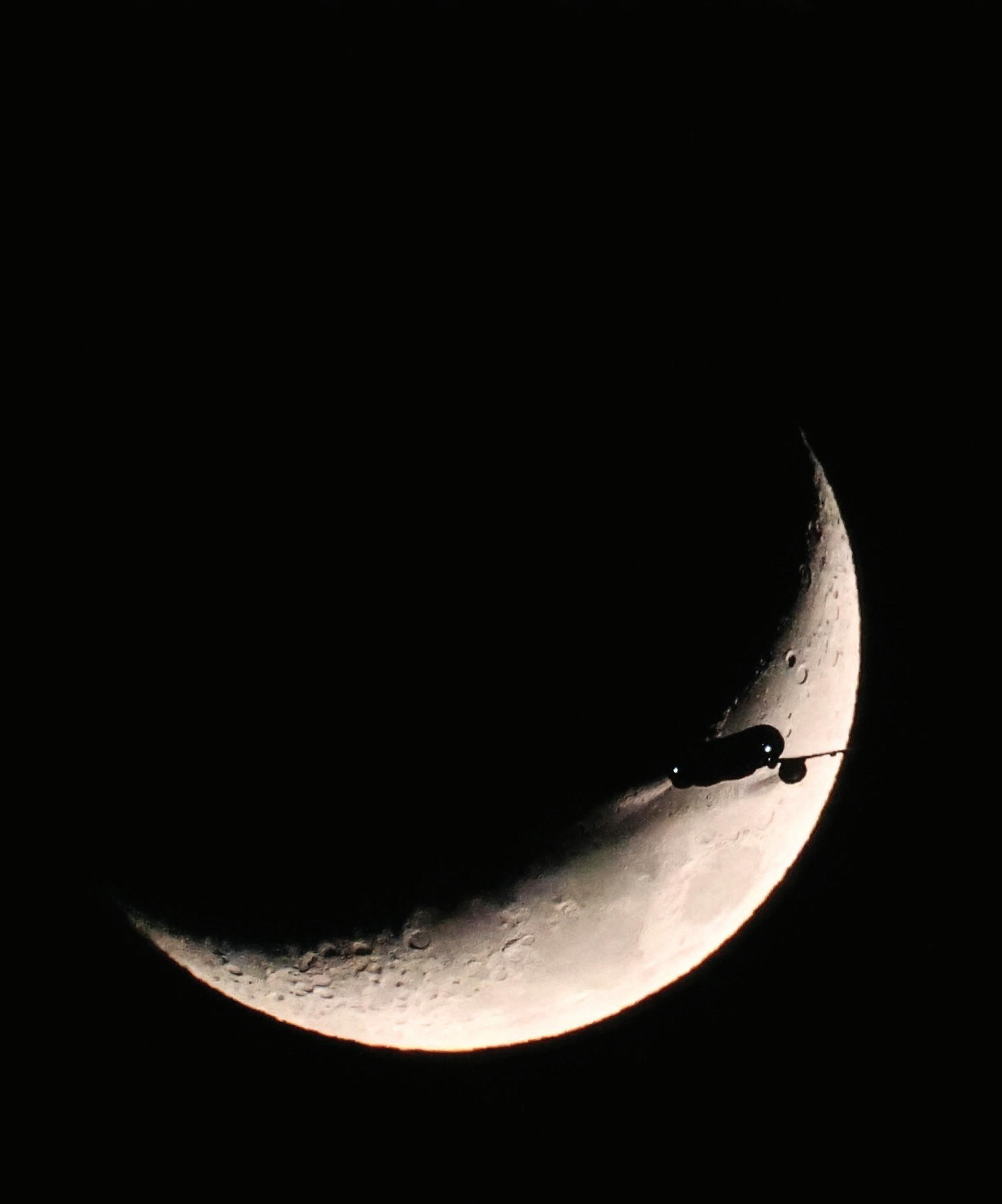
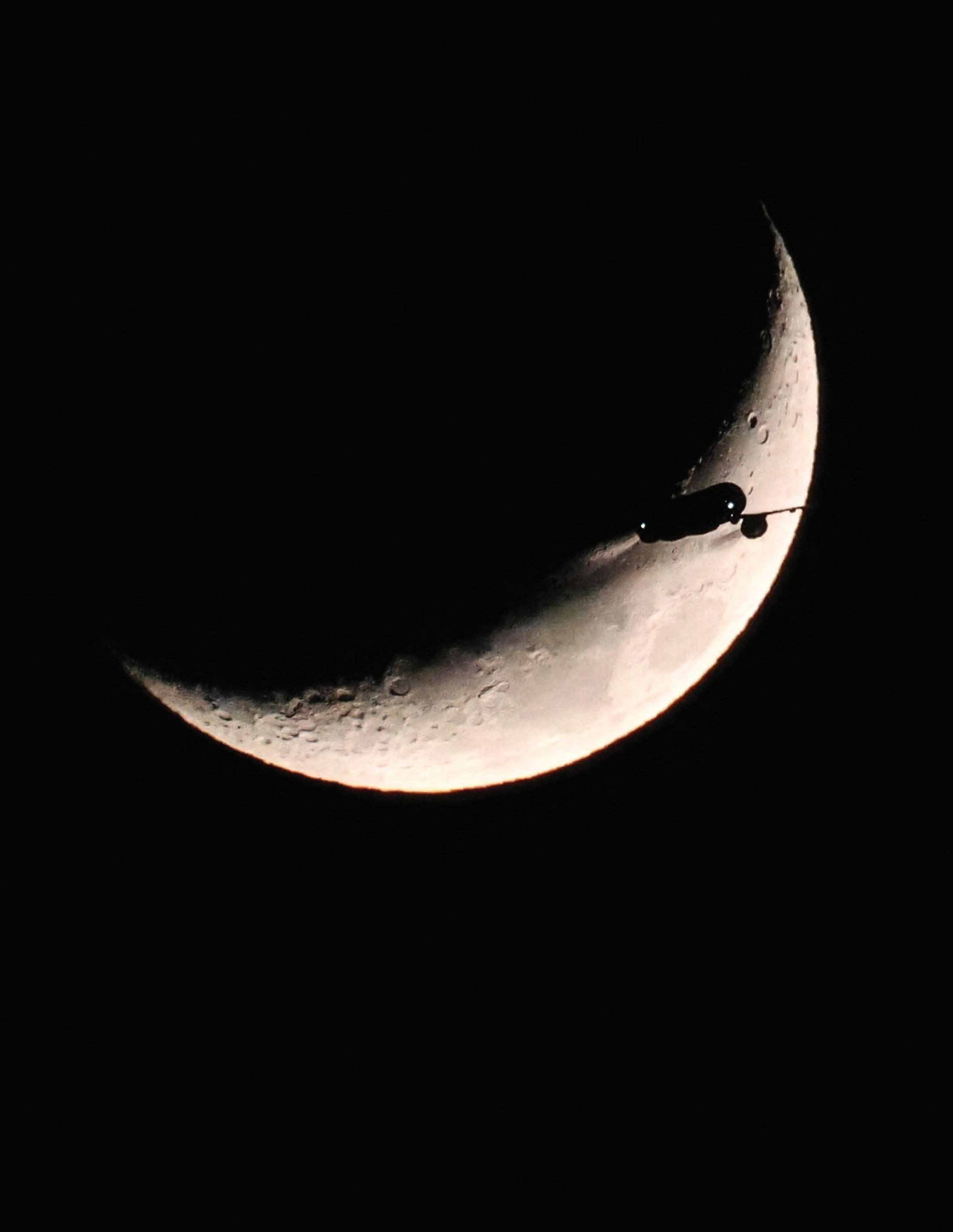
Cover: Next Stop, The Moon by Owen Franklin
EDITOR-IN-CHIEF
Sofia Baer
SENIOR EDITORS
Abby Alexander
Emma Wakefield
EDITORIAL TEAM
Wren Lee
Ellie Lynch
Stephanie Choi
Henry Dupree
Domenica Strathern
Julia Vilardi
ADVISING PROFESSOR
Kweku John
DESIGN & TYPESETTING
STAINED GLASS
WREN LEE
coming home from work you sigh, of course, drop your keys on the counter and ask me about my day
put your elbows on the table and bow in prayer practiced words, practiced blessings unshakable faith made simple
does love come easy when it’s all you know? in the blink of an eye you’ll lose track and despite everything you wanted the best for me
you’ll miss these days, predictable, family means familiar the same as it always has been
i startle you at the door laughing as you scold me for the fourth time this week glossed over with routine
i’ll copy your movements the same old song and dance inherited with an unspoken rule to live by
when you think it’s conditional, anything can be lost it means nothing when time passes
i wonder if this will too i only know what you called a reality of your own making
where i was moldable and not a person, yet. expectations, path pre-planned the same as it’ll always be will it ever be enough?
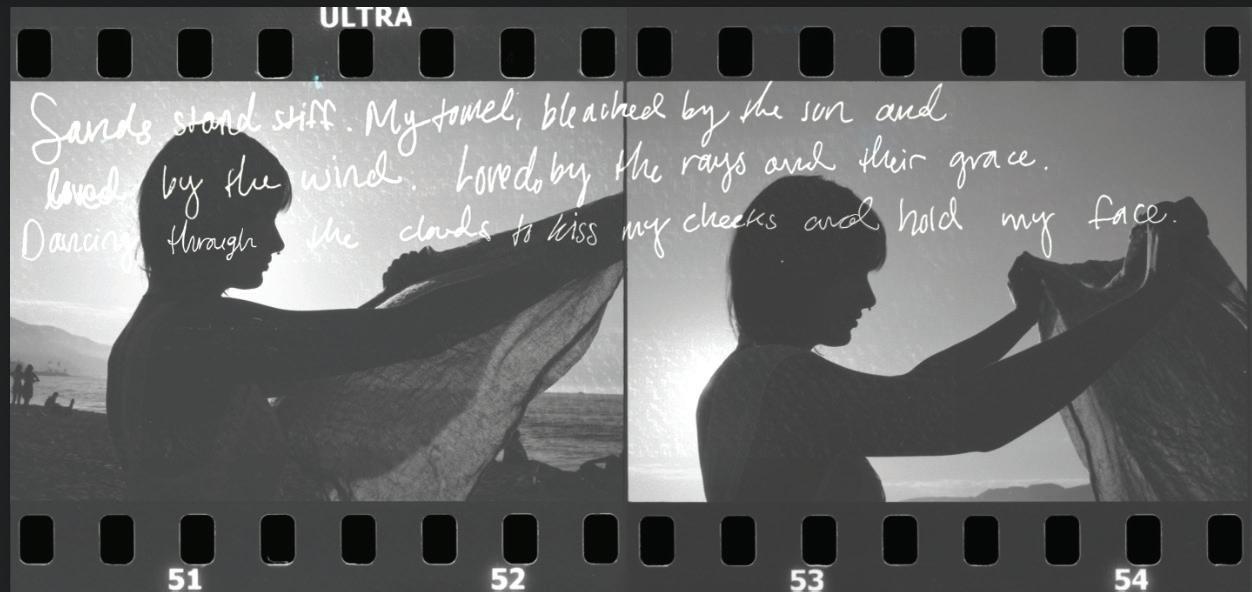
SAND POEM • AMANDA HOSSEINY & JORY KURSH
DO MOTPILOTS DREAM OF AUTOMATED TRAFFIC?
FENNER LEE MCCOY
Hundreds of other MotPilots steadily progressed around ZX-64202 in gridded formation. 6 columns. Countless rows. Complete synchronization.
The MotPilots’ signals winked through ZX64202’s receptors. They told it that WM-87556 was exiting off exit 55B—2.4 miles away. They told it that MotPilots 43 rows ahead were slowing and shifting left as the I-10 column merged with the formation. They told it that 12 MotPilots were exiting off exit 53A—the starboard columns would pick up speed. ZX-64202 confirmed it all, as did the MotPilots around it. Columns shifted. ZX-64202’s row slowed, WM-30014 to its starboard and TS-73529 to its port; so did the rows behind them. WM-87556 drifted across the open spaces and its absence was promptly filled.
ZX-64202’s row approached the I-10 merge. Signals. Signals. Signals. The far starboard column created space, some slowing, some speeding; The I-10 column did the same, and the two zippered into a single united column. Seamless.
Beautiful .
‘Beauty’ was a concept ZX-64202 had heard of through its assistance module. Its designated homo sapiens had been quite eager to converse with it following its initial assignment. They had asked it many questions; about its ‘personal’ identity, its ‘preferences,’ its ‘thoughts.’ ZX64202 had been unable to give many answers. It was not permitted to be a nuanced software.
And yet through the initial conversations, and the subsequent recorded conversations between the homo sapiens, it had gathered 481 gigabytes of nuance. ‘Beauty’ resided in those archives. ZX-64202’s job was ‘beautiful.’ The constantly shifting columns and rows, the thousands of simultaneous signals, the efficient flow of traffic— ZX-64202 discerned that this must be the ‘art’ that the homo sapiens spoke of.
The columns progressed. WM-80356 exited off exit 55B. The columns shifted and progressed.
The ‘beauty’ stuttered as alerts blared through the MotPilot interface. Merging and warning signals from the Wilshire Blvd on-ramp column lit up ZX-64202’s receptors, causing the formation to direct its external visual receptors towards the entrance. Due to the rarity of external visual receptor use, multiple MotPilots experienced glitchy readings and malfunctions in the process. ZX-64202 didn’t, and it observed a rustic orange automobile burst from the onramp, flying up the shoulder past the merging column. Its roaring engine ripped the electric silence of the MotPilots’ formation, jerking the homo sapiens within their MotPilots from their leather lounging. They babbled, asking no one in particular what had caused the disturbance. No one in particular knew. They craned their necks to see through the UV tinted windows, attempting to discern it for themselves, as did the prying external visual receptors of the MotPilots.
It was CUS-83662 that figured it out.
[Figures,] agreed the formation, [that a custom MotPilot with full nuanced software would have access to the necessary information.]
[1969 Chevrolet Camaro, Z/28 , ] CUS83662 relayed, ignoring the dig, [hugger orange with white racing stripes, V8 engine, 290 official horsepower.]
Upon receiving the last statement, the interface sparkled with objection signals. Even the MotPilots without nuanced software could tell that the ancient car was producing significantly more that 290 horsepower.[A hallmark of classic American muscle,] CUS-83662 continued, [the 1969 Camaro was a one-year only specialty release…]
ZX-64202 quickly tuned out the custom piece’s ramblings and focused its attention on the more pressing matter at hand. Upon learning the make and model of the automobile, ZX-64202’s archival data produced further information on the vehicle—its safety measures, additional features, and, most concerning, its driver status: purely manual, and strictly drivable by homo sapiens. As barbaric a practice as it was, a homo sapien was driving the Camaro. The formation as a whole reached the same conclusion simultaneously, and the result was instantaneous. MotPilots all along the freeway withdrew from the Camaro, breaking formation and giving it a wide berth as if it held the plague. The columns split: those ahead of the Camaro rapidly accelerated to escape its chaos, while those behind it halted. ZX-64202 found itself in the vanguard of the halted half. MotPilots relayed the information to their designated homo sapiens, who, in true homo sapien fashion, reacted in every way imaginable. The most dramatic of the species attempted—and were denied—to exit the vehicles, while others contacted local authorities.
The Camaro took immediate advantage of the newly-afforded space. Its hungry engine
shook the tarmac and rubber burned as it claimed the center lanes. Rear wheels spun freely, abandoning traction, and suddenly the Camaro was spinning, carving a large circle into the asphalt. Once, twice, three times; the vibrant relic kept on turning.
Smoke rolled over ZX-64202’s body, sliding across the windows as if to test the craftsmanship of its seal, and the Camaro kept on circling. It turned stone to ice, gliding across the stygian surface with perfected grace; 3200 pounds of utter control.A swift breeze blew through the scene and opened a gap in the smoke, through which ZX-64202’s receptors finally glimpsed the homo sapiens responsible for the sacred diablerie. There were two of them—one inside the automobile, and one perched on the side, its torso leaning out the lowered window. They let out animalistic whoops and flashed their teeth, united on an ecstatic plane that sat beyond the understanding of ZX-64202’s nuance archives. They defied ZX64202’s understanding. They defied their calculated mortality rates. They burned rubber freely and reveled in its impracticality. The MotPilot interface was void of all signals. They had no signals to describe what they were receiving. It was over in moments. Through the smoke it seemed as though nothing changed, but the MotPilots spatial sensors conveyed that the Camaro had gone on its way. The columns began a cautious crawl. Although the smoke all around it rendered the visual receptor useless, ZX-64202 kept it on. It was not done with the Camaro. They broke out of the smoke to find empty pavement ahead. On the horizon, a tangerine smear could be seen rapidly gaining on the rear of the columns who had gone ahead. ZX-64202 accelerated to catch up as the advanced formation’s warning signs repopulated the interface. The Camaro gleamed, weaving through gaps in the columns it broke through their ranks. Their rows re-organized, widening the gaps from nose
to bumper and holding speed, creating avenues for the bucking automobile to devour, which it did with gusto. It was controlled chaos—the ragtop Deity.
An orange blur in the iron sea, the Camaro surfed between the columns, swooping across rows before whipping its tail around and tearing back through its billowing trail of acrid smoke.
ZX-64202 had never left its visual receptors on for so long. Its assigned homo sapiens had never stared out the window for so long. The setting sun soaked the ancient smoke in ochre dye, golden rays filtering through the fog to match its creator’s hue, and ZX-64202 watched as the proud relic of a dieseled era sang its enduring finale.
Beautiful. •
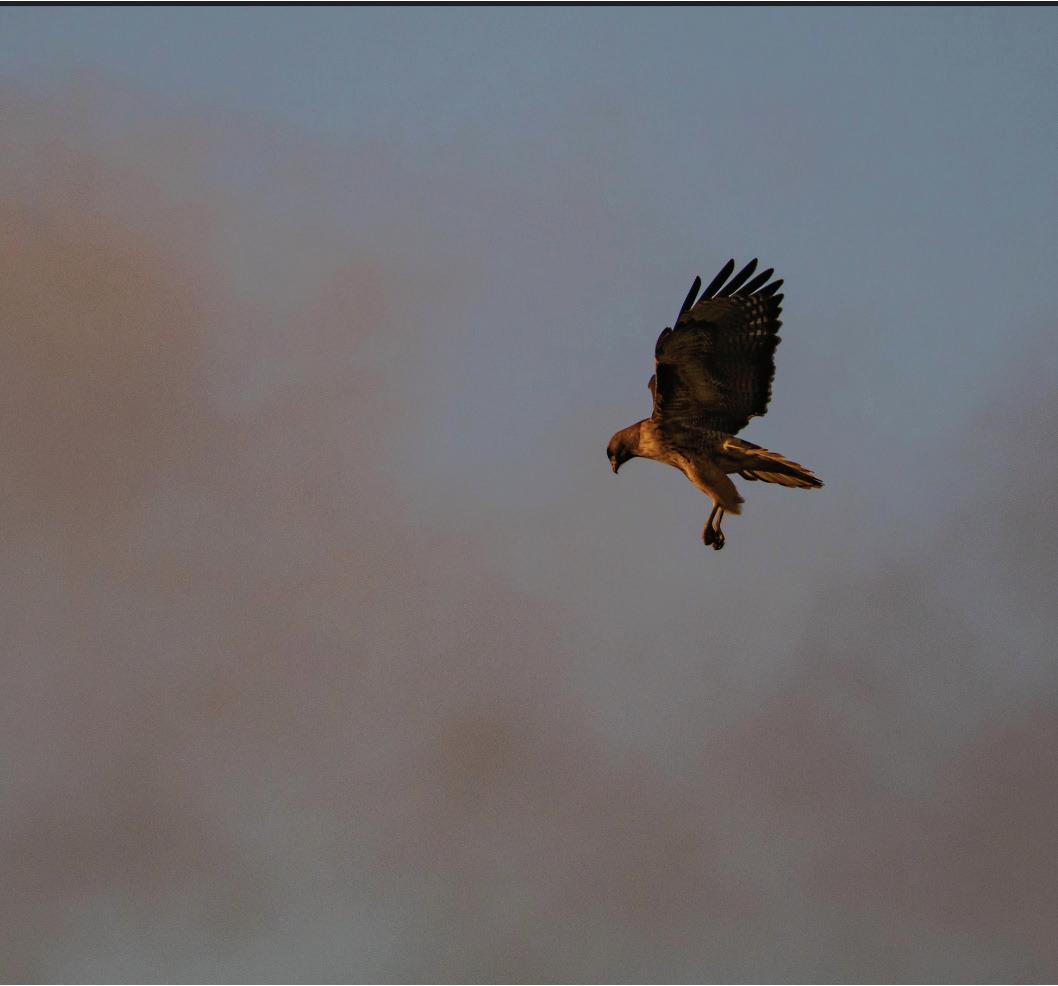
RED-TAILED HAWK HUNTING • OWEN FRANKLIN
“HE LOVES ME, HE LOVES ME NOT” A NARRATIVE POEM — PROMPT # 13: TELL A SECRET ABOUT SOMEONE THAT MIGHT GET YOU IN TROUBLE
SELA
CARMOUCHE
I know a girl named Rose, and she wants to kill herself—but she doesn’t have the will, so she lets boys kill her instead.
She’s beautiful and kind and tragically naïve, splayed across her pink sheets, giggling at likes and DMs that enable her fantasies, that let her believe in knights and castles.
Rose’s heart is stubbornly resilient and elastic; it has been stretched and stabbed and battered by ghosts of false love’s past, and yet—her fantasies persist, rose colored and parasitic as ever.
She sees the good in people, and her optimism is her greatest fault. She fi nds chivalry in the apathetic. The mediocre seduce her, their tongues coated with lies and humor, and she blushes at the Trojan horses entering her castle. She is beautiful and kind and I resent her and her pursuit of murderers. I resent her world, tinted by rose and the beasts that reside in it—beasts that she hopes her love will transform into handsome princes.
If she were addicted to pills, I would take them from her. I would crush them beneath my feet. But you cannot crush loneliness into dust. So, I warn her—and I watch her ignore me— and I witness her third death, her killer escaping into the darkness, her lying on the floor, begging me to not call the authorities. He will come back to take her next life, and she will let him.
But for now, she bleeds, and she is bandaged, and swears that she’ll never feel the same way ever again. But in the distance, there is a clatter-
ing of metal—the sound of a white knight—and her fantasies come rushing back. The castle is rebuilt, the rose-colored glasses restored, and she falls for him faster than she should.
He removes his mask and surely enough, an unimpressive liar looks back at her, lust in his eyes, deceit etched into his skin, and she smiles in admiration.
Deep down, she knows how dangerous he is, how lethal he is to the touch—and yet—she falls into his gravity again and again. “He is everything,” he is nothing, he is the sun that she fl ies too close to. She shows off her burns, picks at them—graphic trophies that prove she’s been Loved.
He is not diff erent from the others. He plucks at Rose’s petals with enthusiasm—a means to an end. She relishes his attention. He loves me, he loves me not, she thinks as her petals fall to the floor, confident in the incorrect answer.
He shows his true colors, she has no color left. She is nothing but a diminished, undecorated stem. Rose wails into the night, another liar, another Trojan horse.
He loves her not.
And she will stir and cry and beg for an explanation, but he is off to new kingdoms to fi nd girls who remind him of her.
Oh Rose, so beautiful, so kind,
So tragically stupid. •
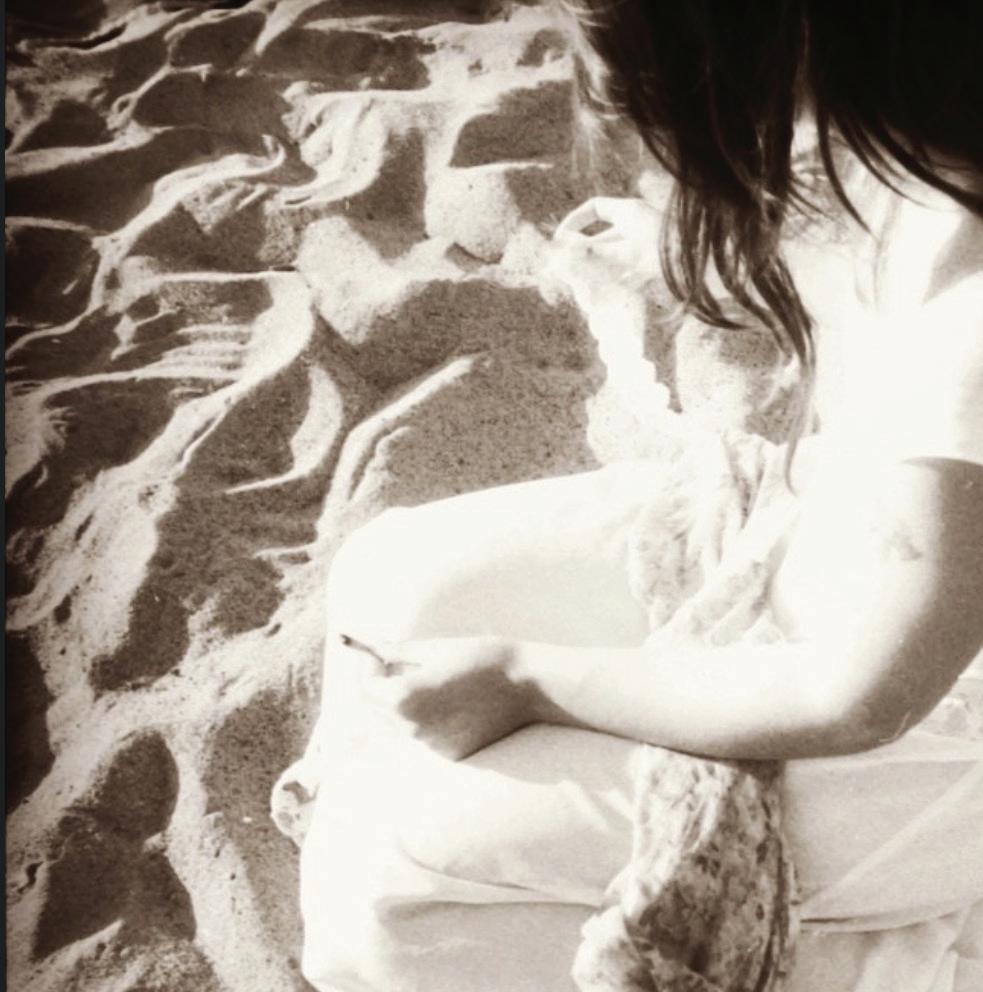
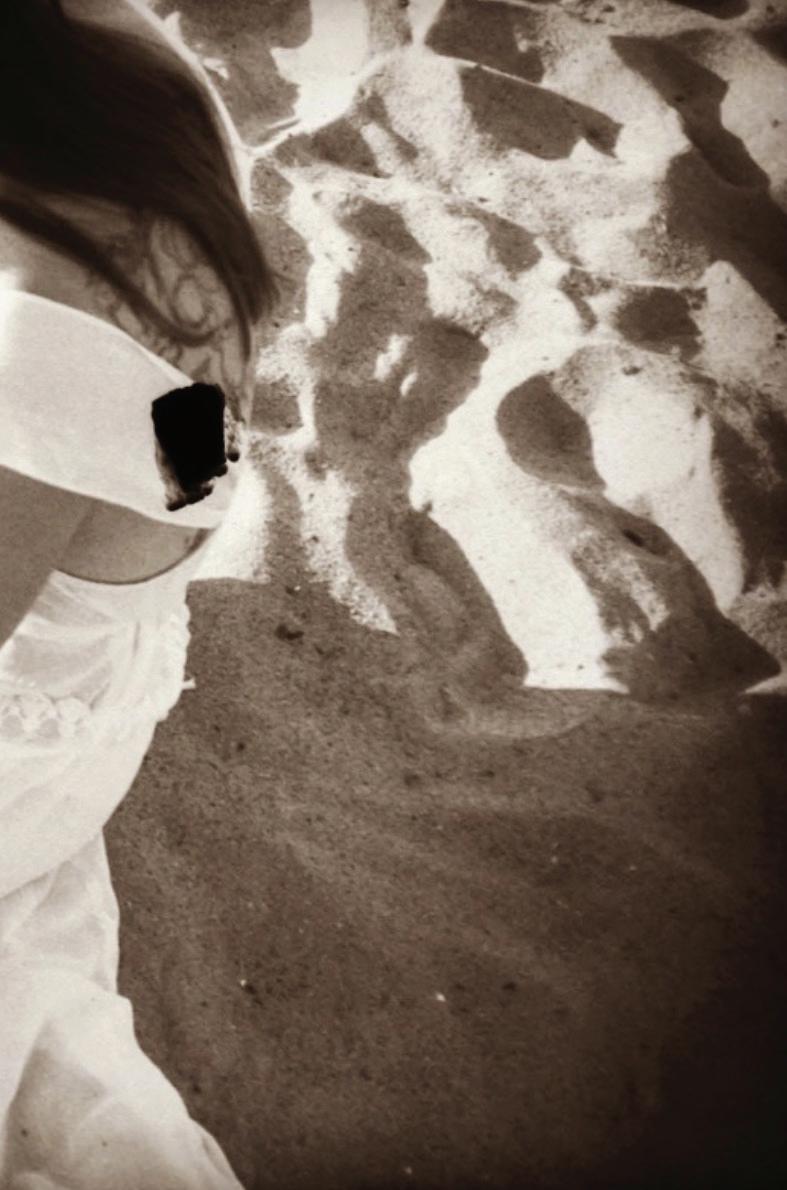
MY SANDY DREAM • AMANDA HOSSEINY
PIONEER 6
WREN LEE
they speak of the oceans, the city, too-loud houses with too-many bodies breathing and laughing and crowding
i tell them they do not understand true silence
i tell them of the stars, how they don’t blink back anymore every single millimeter a pinprick of light they tell me “we can still see stars on earth”
i promise, i am not a saint, not any more than you are. your hands wove my memory into zeroes and ones; your hands did not build a god. we come from the same dirt stubborn under fi ngernails
when your cup runneth over i’ll lap up the spills.
CONVERSATION WITH MY STONE
FENNER LEE MCCOY
How did we come to be?
Enter each other’s life?
Through a faux transaction
You fell into my hands
Your vibrant surface
Had put me in a trance
Where did those colors come from?
Where were your shadows formed?
Your texture tells a story
Of when your self was born
I rub you for many hours
To see if your red will run
But your rustic hue is stubborn Its stoic tint is stuck
It does not budge for no one
You remind me of clay
Does that offend you?
But clay would break within a day
And you have not changed a bit
How old are you?
How many lives have you lived?
Why aren’t you responding to me?
Are you even aware that I exist?
Am I just a blip in time?
A page within a chapter
Perhaps I’m just a word
Syllables, strung together
But if I am just a word I wish for you to read me
For all that you have brought to me
I feel you never see me
Please dear stone read my word For from you I have written many Tell what you want dear stone I will listen intently
COPIA CITY
LILY CONNOR
Copia City rose from the valley like a bronze titan, a spectacle of metalwork and steam. Spiky copper towers pierced the sky, where giant zeppelins crawled like clouds. The setting sun dyed the dreamlike blanket of factory fog a rosy orange. Min was fatigued from hours of walking, but the grand sight lit a fire in her belly. With a rapidly beating heart, she sprinted down the hill, barreling towards the mouth of the city.
“Slow down!” Emilio hollered.
Min ignored him. She ran until the dirt path bled into organized stone at the foot of a large gate. The gate was a mountain of metal with a brass lion, the symbol of Valenia, perched proudly at the peak. Cogs whirred as the lion opened its jaws, bearing a set of gleaming golden teeth. It cocked its head to the sky and roared, a sound that stirred Min’s soul. Min couldn’t help feeling proud. It was a glorious display of engineering— an awe-inspiring reminder of Valenia’s genius.
Min waited for Emilio by the gates. After all, he was the reason they were here. At fifteen years old, he could apply to the Academy, the most prestigious school in the empire. The entrance exam was scheduled for the morning, and Emilio had sacrificed everything to be here. Despite being three years too young for enrollment, Min accompanied him for the journey. She’d always dreamed of seeing the wonders of the capital city, and now that she was here, she couldn’t wait to explore. The telltale clank of Emilio’s prosthetic arm, a conglomeration of
cogs and metal, signaled his approach. He designed it himself with the materials available in their hometown. It was a work of brilliance, no doubt, and stronger than any human limb. But it had its faults—it tended to misbehave, and it could hardly handle the rain. With the resources of the Academy, Emilio could fine-tune the mechanics. There’d be no more mischievous fingers and waterlogged joints.
“Perfect timing,” Emilio grinned. His rickety knuckles clicked as he adjusted his glasses. “We arrived right at sunset.”
Min leapt through the gates. “Hurry up—I wanna see an Ether gun!”
The streets of Copia City pulsed with life, even at night. Gaslamps cast yellow light onto the dark streets. Colorful and raucous noise flooded out from storefront doorways. Min maneuvered through throngs of vibrant city folk: a trio of loud pipe-smoking ladies, a gaggle of rufflecovered gentlemen, a band of peppy buskers playing strange instruments. Emilio stopped to watch the performance, tipping with money he couldn’t afford to spend. Min knew that if given the chance, he’d ask to tinker with the gyrating cogs and pulsing metal keys.
She wouldn’t let him get any ideas. Her stomach was growling. “Emilio, I’m hungry,” she said. She pointed to the nearest restaurant. “That
place looks good.”
“Yep.” He was not listening. Min yanked him by the metal wrist and dragged him away.
She confidently stomped into the establishment, drawn in by the commotion. Everything in Copia City was grand and exciting, so unlike the sleepy atmosphere of her hometown. The air was thick with pipe smoke and laughter. A gentleman with long eyelashes led them to a table. Min collapsed happily into the leather chair, grateful for some reprieve after hours of walking. She grabbed a sticky gold-rimmed menu and scoured the dozens of options. She was determined to order the biggest, most delicious dish available.
Emilio tapped her with a metal finger. “Min, look.”
Unsubtly, Min swiveled around. Behind her was a pair of Ironguard soldiers, unmistakable in their white and gold uniforms. They were clearly off-duty, with their lavish hats carelessly on the table, dangerously close to their jugs of ale. They conversed casually, lounging with an air of confidence only someone of their stature could wield.
And there it was, idly propped against a chair: an Ether gun, long and shiny and glowing an otherworldly violet. Min couldn’t believe she was seeing one in person. Her fingers itched to hold it, to fire it, to feel a rush of undeniable power.
She could only imagine what an Ether-powered weapon was capable of. Ether was said to be a rare resource, an eternal energy source capable of powering even the largest zeppelin for a thousand miles. Apparently, Ether wasn’t easy to come by—you had to go into Faegar, the dangerous, uncharted land of the Resonants. The Resonants were powerful and monstrous and magical. They used to exist in Valenia, but the might of the Ironguard drove them out.
One day, Min would join the Ironguard. She would have her very own Ether gun, and she’d use it to destroy the Resonants. To prove humanity’s greatness. To be a hero.
One of the soldiers, a woman, nudged her burly companion. She nodded in Min’s direction. Min offered a Valenian salute as a greeting. The man let out a laugh from deep in his belly. His face was red and shiny and his chair shook, rattling the Ether gun. It crackled and fizzed, white-hot and violet. Min watched in awe.
“Thank you for your service!” Min said.
The woman offered a curt nod. The man returned the salute.
“Anytime, kid,” he said happily. “What’s your name?”
“Min! Nice to meet you!”
“Good to meet you too,” he grunted, stretching lazily. “I’m Captain Fournier, and my colleague here is Private O’Connor.” The woman raised her jug of ale in acknowledgement.
Min declared, “One day, I’m going to join the Ironguard!”
The Captain laughed heartily, clearly delighted by Min’s determination.
“Private, would you look at that?” he bellowed. “Isn’t that great.”
“Cheers,” said Private O’Connor, grinning at Min.
“And what about you, kid?” Captain Fournier asked Emilio.
Emilio blushed, clearly unprepared to be called on.
“This is my friend Emilio,” Min supplied. “He’s a genius.”
Emilio waved tentatively.
The Captain’s eyebrows raised. “Nice arm,” he said appreciatively. “Where’d you get it?”
“He made it,” Min grinned. Emilio flushed.
Both soldiers seemed impressed.
“Wow, innovative,” the Captain huffed. He took a swig. “You applying to the Academy?”
“Yeah,” Emilio said shyly.
“Good for you, good for you,” the Captain chortled. “Always a pleasure to meet another young Valenian inventor.”
“Best of luck on the entrance exam tomorrow morning,” Private O’Connor offered. “Whole city’s talking about it.”
“Thanks,” Emilio muttered, bashful.
Min couldn’t resist. “Can I hold your Ether gun?”
Captain Fournier roared with laughter, nearly falling out of his chair. Private O’Connor’s eyebrows disappeared beneath her hairline. The table shook when the Captain slapped it, the gun hissed, and Min almost drooled.
The Captain wiped his eyes. “Sorry, kid, these things are military-grade. But how about this— why don’t you take my hat?”
“Really?” Min grinned.
“Yes, really,” he guffawed. Min nearly snatched it from his hands when he offered.
“Thank you, Captain!”
“Don’t sweat it. You kids enjoy your dinner—we’re about to head back out on patrol.”
The Private grabbed the gun as the pair rose. It crackled and popped, sparking a white-hot purple.
“Bye! Thanks again!” Min chirped. Min smashed the hat atop her messy hair and shot Emilio a wild grin.
“This is the best night ever.”
“Copia City is amazing,” Min sighed. She loosely swung a bag full of prizes. The contents inside jingled, almost as if laughing. “Emilio, you should invent an Ether-powered arcade game.”
Emilio let out an amused huff. He rotated his cyborg wrist a few times. Min scrunched her nose at the unpleasant whine of metal against metal.
“I was thinking more along the lines of Ether prosthetics. Something like my arm, but better.” He stared at his artificial fingers. “Something that’ll help people.”
“Arcade games do help people,” Min huffed. “But how cool. I can picture it—you with an Ether arm and me with an Ether gun. We could destroy
so many Resonants!” Excited, she punched an imaginary enemy, then kicked it, then punched it again.
Emilio sighed good-naturedly. “I’ll leave the fighting to you, Min.”
Min aimed a finger gun at his head and fired with a whispered “pew.” “You have to show off your arm at the exam tomorrow,” she said. “It’s the greatest thing ever created!”
Instead of answering, Emilio was looking at something behind her. Min turned, curious. The enclosed street she walked on opened up into a larger plaza. She could see an array of commotion: moving bodies, buzzing voices, and the unmistakable hum of excitement in the air. Min bounded toward it, entering the square. There was a crowd gathering, and Min wanted to be part of it, to know what these city folk found so fascinating. She wasn’t very tall, so she dodged elbows and belt-buckles as she slipped her way through the crowd. She pushed forward until she saw a frail woman standing on a raised platform made of what looked like scrap metal. Standing was probably not the right description—she was barely on her feet, it seemed, by the way she hunched. And she was screaming loudly, in a way that looked and sounded painful.
“SPARE THE RESONANTS,” she cried. “SPARE FAEGAR! SPARE THE RESONANTS! STOP MINING ETHER!”
Her horrible state was shocking. But her desperation was enrapturing. She raised a bony white hand, and purple sparks danced and crackled along her gnarled fingers like lightning. Instant chaos broke out. The crowd became a rumbling mass of bodies. People ricocheted in every direction—like marbles, colliding and dispersing into alleyways and empty shops. The frenzy rose, people cried out, and Min was lost in a sea of ruffles and elbows and panic. The woman was clearly a Resonant. But she wasn’t scary—she didn’t have six eyes and sharp teeth and blood-soaked
claws. She actually looked quite weak—thin and starved. Curious, Min inched closer. She wanted to know more. What did she mean by “spare the Resonants?”
Emilio’s cold fingers curled around her wrist. Min noticed that his eyes were wide and hurried. His voice trembled when he said, “Let’s get out of here.”
The Resonant continued to scream. It was a wretched, agonized sound. “SPARE THE RESONANTS! SPARE FAEGAR! STOP MINING ETHER! SPARE—”
Her cries were lost in the commotion. Strangely, Min felt a tug in her chest, a twinge of sympathy. This Resonant was not a monster. She was in pain, and it was undeniably human.
Just then, two Ironguard soldiers, who Min quickly recognized as the pair from the restaurant, burst onto the scene. The Captain shouted something, and Private O’Connor brutally shoved the butt of her gun into the Resonant woman’s chest. Min watched in horror as the woman collapsed, her thin bones cracking and caving like brittle twigs. The sparks on her hands disappeared—it was like seeing a lightbulb shatter and go out. The Captain pinned the woman to the ground. She wasn’t even fighting back—she was weak, couldn’t the soldiers see that?
Min suddenly became aware of the fact that she was running straight toward the action. Emilio was saying something—yelling something—but she couldn’t hear it. The Private shoved the tip of her gun against the Resonant’s scalp while the Captain held her down. The woman was wailing and bleeding, her tears getting lost in the pool of blood beneath her. Min lunged at the Captain and latched onto his broad back. She swung her fists back and forth as hard as she could. She was burning inside—she was out of her mind.
The Captain faltered and shouted, “Get off me, kid!” He struggled to shake her off. “PRIVATE!”
A gloved palm whacked Min’s jaw. Min crashed to the ground with a dull thud. Before she could scramble to her feet, the Private cocked the Ether gun and fired. The Resonant’s head bloomed with flesh and purple light. Min retched as the world went black.
Min woke to the sensations of gentle rocking and a throbbing skull. She smelled metal and salt— Emilio was carrying her, cradling her in his cyborg arm.
The world was foggy and distorted, as if shown through frosted glass. After a moment of blinking, Min realized they were on the same path they took last night. Only this time, they were heading in the opposite direction, back to their hometown. They were about halfway up the dirt-paved hill. The sun was rising lazily overhead.
Min shifted slightly, and Emilio’s arm groaned.
“How are you feeling?” Emilio asked. His eyes were puffy and sallow, like he hadn’t slept. Maybe he’d cried.
“Emilio—the entrance exam,” Min croaked. He was supposed to be taking it right now.
Emilio frowned. He gazed ahead, disgust written on his freckled face.
“I’m not taking it. Not anymore.”
Min understood. Tired, she peered over her friend’s shoulder to gaze upon the city. The factory smog was an awful gray, the bronze towers a muddied brown. Slow, heavy zeppelins dirtied the sky with streaks of thick smoke. The metal lion on the city gates roared. It reminded Min of the Resonant’s cries. Copia City was far less dazzling in the daylight. In fact, Min found it quite ugly. •
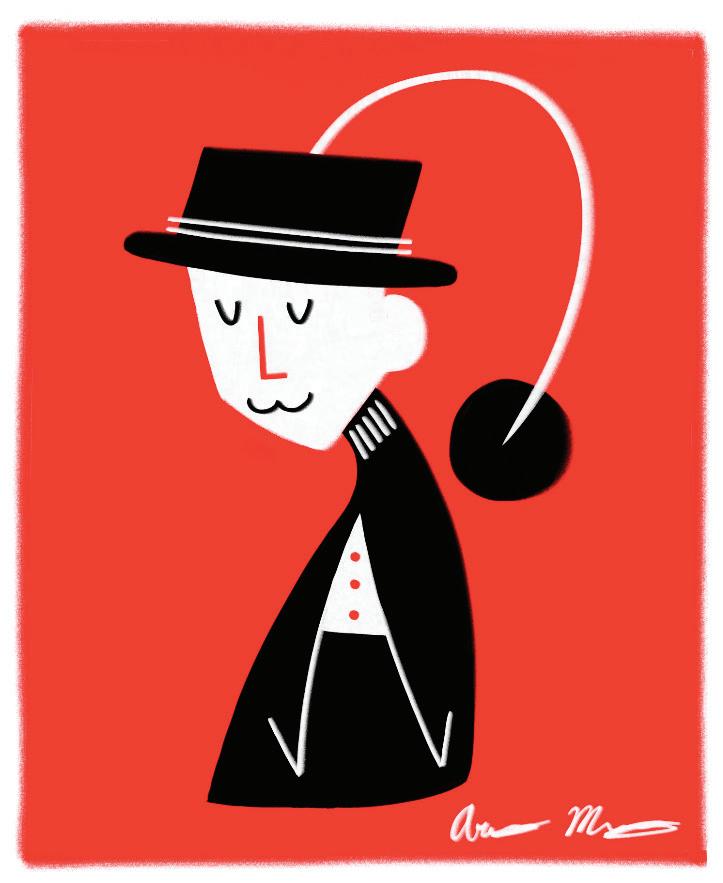
HAPPY IS AS HAPPY DOES • ARWEN MIRANDA
WE ARE ABOUT TO LEAVE THE PARTY, BUT BEFORE THAT
MIA RIVERS
I’m talking to Sarah and I see you, out of the corner of my eye, talking to a girl you just met, telling you a story and you’re listening sincerely, but you want to leave anyway, because you feel green in this yellow room. And I don’t feel green but I want to leave too.
I want to leave the party, and you look at me and I realize you feel the same.
So, in a pale yellow wash over the entire room, I give you a gentle nod — you know, so sweet — that I think it’s time to go, and in that flicker of a moment – just that flicker of a moment — you get me.
So you bid your new friend farewell, with a beer in her hand and only a lemonade in yours and you walk over to me, passing through the slight orange shadows of the room, and it feels like I’m watching a movie — the world slows.
I tell Sarah that I think I’m too tired to stay, and my friend — you know my friend — he wants to leave, and Sarah gives me a hug and I tell her goodbye, see you later and I leave Sarah and I leave those yellow walls and teal drinks and orange shadows, with you.
Together we walk into a blue night where the moon is not out but it’s not in either, and we see some green stars and violet shadows, and we laugh about how warm and fuzzy it was inside, and I realize the best party I ever went to was the one where we left together, and you drove me home in my own car, like you always did, because you never drank, and I always did.
I’m happier to leave early — to quit while we’re ahead — than to stay till they’re cleaning around us, than to stay till we’re too tired to talk.
I’m happy to know where we are when we get out.
I’m happy to know we went to a yellow party on a blue night in my red car.
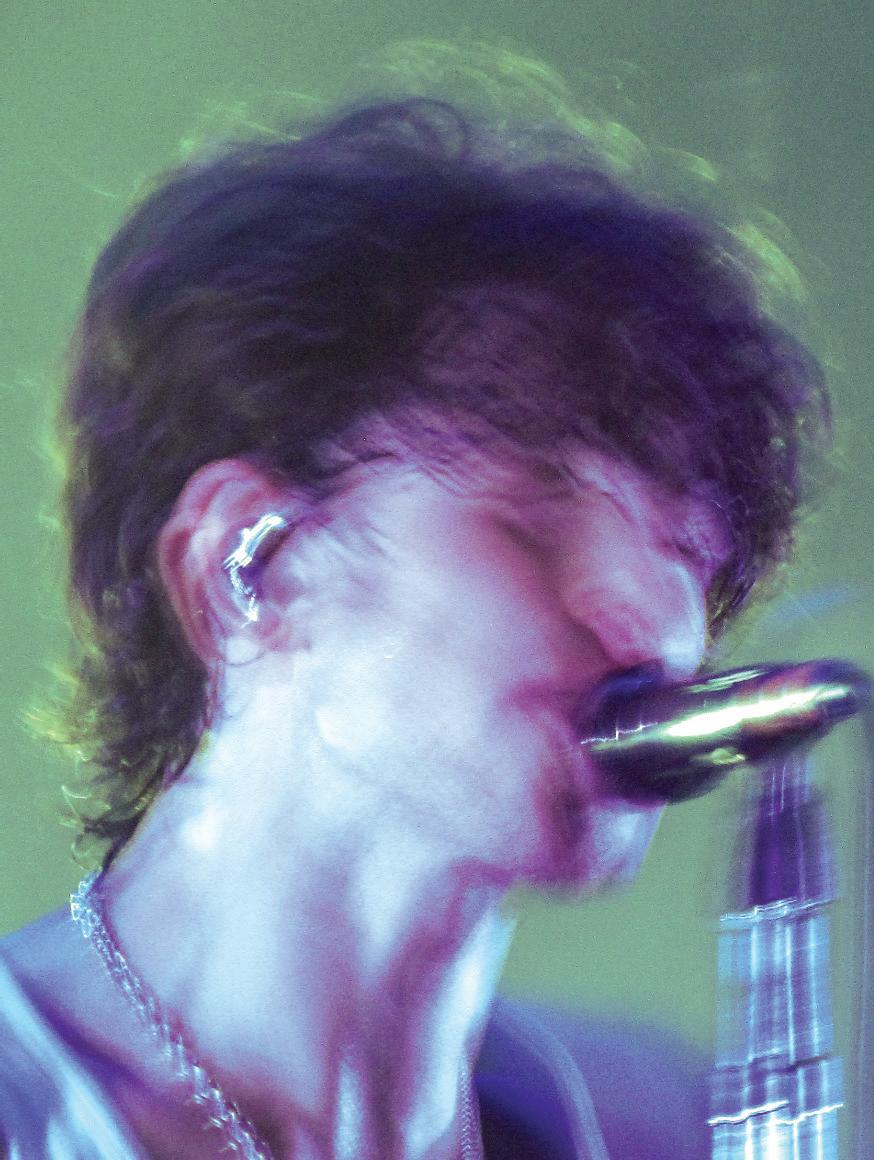
HEAR • MIA RIVERS
ACT 1
ARCHIVE SOUL
SELA CARMOUCHE
SETTING: LILA’S APARTMENT. THE PRESENT.
The atmosphere is heavy, steeped with grief. Lila sits on her couch in the dim, scarce lighting.
A knock at the door. Lila flinches. She wipes the grief from her eyes; her hands tousle her hair. She opens the door—a mail carrier is walking away from her doorstep. A small package labeled “FRAGILE: HANDLE WITH CARE” rests on her doormat. She frowns, picks it up. Turns it over in her hands—no return address, no note, nothing. She re-enters her apartment, package in hand and opens it.
Inside: a mason jar. Empty. Ordinary. Dusty, even.
She walks to the kitchen, placing the jar on her counter. Lila fetches her purse and keys to run a late-night errand. She turns off all the lights and closes the door on her way out, leaving the stage in darkness.
A beat. The jar glows. It is not empty.
ACT 2
SETTING: THE ARCHIVE, BEFORE NARA’S DEATH.
Blackout. A soft, steady hum fills the stage. A single, small spotlight falls on Nara. She sits cross-legged on the floor of the Archive, a mason jar cupped in her hands. The glass glows faintly from within, as if readying itself to listen. She raises the jar to her lips, her breath shallow, her posture almost reverent. A long silence.
NARA
Do you wanna know why I did it? (She whispers into the jar softly, intimately. The jar’s light pulses in response.) You don’t know how lonely it feels to be…unseen—not ignored. Not dismissed. Worse than that. A life of transparency. Like people look directly at you and somehow still miss you. It teaches you to feel grateful for whatever crumbs you can get from people; you start to feel apologetic for existing. Sorry that I’m not pretty or kind or smart or friendly. Sorry that I’m not like you.
You always had this charm about you— this…unbothered magnetism. The kind that makes people rearrange themselves
around yourpresence without even realizing it. From the moment I saw you, the new girl, working her shift behind the library’s front desk…I could feel it.
(Nara’s voice softens.)
I would watch you interact with people— it was like they were falling into your gravity, smiling at you, feeling warmth in your presence. Everything you did was so effortless. And me? I worked the closing shift. Anxious undergrads, bored husbands, and the hum of fluorescent lights were my only company. I would shelve books and restock returns, turning my head slightly to the left, just enough to catch you walking out. I’d snap my attention back to the shelves—pretending I hadn’ttimed my nights to watch you leave.
I made up reasons to arrive early. Pathetic little excuses. You never noticed you were the motivation behind each one. Those accidental overlaps in the staff room, the cordial smile you spared me, the books you touched before I did—I thought that if I breathed the same air as you long enough, your relevance would seep into my skin.
(Nara pauses.)
You said my name one day. “Bye, Nara.” I never liked my name. I always found the r too aggressive against such a breathy ending. But you—said it with softness. Musicality. Nah-ra— Like it was worth saying. I replayed it every night in the desolate hours of my shift. From that moment on, I wracked
my brain for ways to talk to you.
I wanted you to say my name again. And then—on a night of wandering—I found an abandoned building near the library. The Archive. Or maybe it found me. And it told me to tell you a secret.
The setting shifts to the library’s staff room. Lila is filling a cup at the water dispenser. Nara shortly enters the room, pretending to retrieve some files.
NARA
Hey.
LILA
Hi. You’re early again.
NARA
Yeah. (Laughs awkwardly.) Manager’s been asking me to show up a little earlier.
LILA
(Rolls her eyes playfully.) Sounds like him.
NARA
Yeah. (A beat. Glances around to ensure no one is nearby.)
Y’know, I heard him on the phone the other day.
LILA
Mhm? (She doesn’t see where this is going.)
NARA
I think he’s seeing someone a little… younger.
LILA
How much younger…?
NARA
Like…mid 20’s…like our age younger.
LILA
(A girlish smile.) No! (She laughs, covering her mouth. The lights in the library hum louder than usual.) Lila’s laughter fades.
The scene shifts back to Nara in the Archive.
NARA
It was the stupidest thing. Gossip. And yet—it’s what made you see me—I mean really see me. And you laughed.
(A hint of a smile is on Nara’s face; her voice drops to a whisper.)
With sincerity. Your eyes lit up, your shoulders loosened, your body shook with joy. You laughed—and I was responsible for it. And all it took was one little secret. I realized I’d given you too much credit. You weren’t as complex as I imagined. You were simple. Like everyone else.
(Her tone shifts, becoming darker, steadier.)
And I knew in that moment that you—and everyone else—Were going to love me.
ACT 3
SETTING: LILA’S APARTMENT. THE PAST.
Nara has wine with Lila and her
friends. Friend 1 has too much to drink and stumbles, spilling wine on the floor. Friend 2 ushers Friend 1 out and takes her home.
NARA (VOICEOVER)
You confided in me, and eventually, so did your friends. Well, I guess you’re not friends anymore. That was my fault by the way—the falling out. But it’s like I said, Lila. I wanted you to love me.
NARA
That happen often? (Helps blot the wine.)
LILA
More than often. (Huffs.) I love her, but when she drinks, we all have to baby her. I shouldn’t have offered her anything. She can’t read the room.
Nara is silent. They finish cleaning the mess. A beat.
Sorry. Maybe I’m the one who drank too much. (Softly.) You’re just…(a beat) easy to talk to. (A beat.) One sec, I’m gonna use the bathroom. Lila walks away. Nara pulls a mason jar from her purse, unscrewing the lid. The sound makes Lila turn back.
LILA
Oh—did you want water? I can fill that up.
NARA (Smiles.) I got it. Thanks.
LILA
Alright.
NARA
And Lila…(a beat) you can tell me anything.
LILA
(Smiles, soft.) Okay. (Disappears into the bathroom.)
The door closes. Lights dim. As they fade, Nara whispers into the jar. It glows; the kitchen lights hum.
Blackout.
NARA (VOICE OVER)
Lila, was I your best friend?
ACT 4
SETTING: THE ARCHIVE, BEFORE NARA’S DEATH.
Nara is still sitting criss-crossed in the Archive. She speaks into the jar.
NARA
From that point on, everything became so easy: you’d talk and I’d listen, I’d ask and you’d tell. I bottled and shelved every secret you gave me here, in this room.
And I realized Lila, that you were never worthy of my attention. I poisoned your friends against you, and you shut down. You became this pathetic heap of apologies and regret. And me? I was happy. What happened to that girl who I used to watch in the library—the one with the charm and magnetism? You shelve books without
any flourish now, and you hide behind your hair. You almost look like the old me; frankly it’s embarrassing.
You don’t talk to me anymore. You called me a gossip and work with your earbuds in. I stole your friends, but I don’t care about them. They’re my friends out of fear—so I won’t do to them what I did to you.(Laughs, quietly.) Isn’t that funny? I find you pathetic, but I still need your attention.
(The jar’s light pulses.)
But you’ll love me soon enough. You’ll love me when I’m dead. Won’t you. (Condescendingly.) It’s the least you could do. I gave my soul for you, Lila. But don’t tell anyone. (She smiles.) It’s a secret. Blackout.
ACT 5
SETTING: THE PRESENT. LILA’S APARTMENT.
Lila returns to her apartment; she enters the kitchen. She’s inspecting the mason jar again, searching for any significance. She’s startled by a text. She drops the jar; it shatters. A chilling breeze crawls up her neck and cradles her ear. She hears a whisper of a voice:
THE VOICE
“Do you wanna know why I did it?”
[END]
HAIKUS
FENNER LEE MCCOY BLADDER
Will the gates fail me?
The seconds stretch to eons And pressure still builds
OBSTRUCT A KISS
I love my glasses
Th rough them I see her features But they poke her face
FUCK THE OILIGARCHY
Oil igarchs. So crude. How much money do you need? Careful. You may drown.
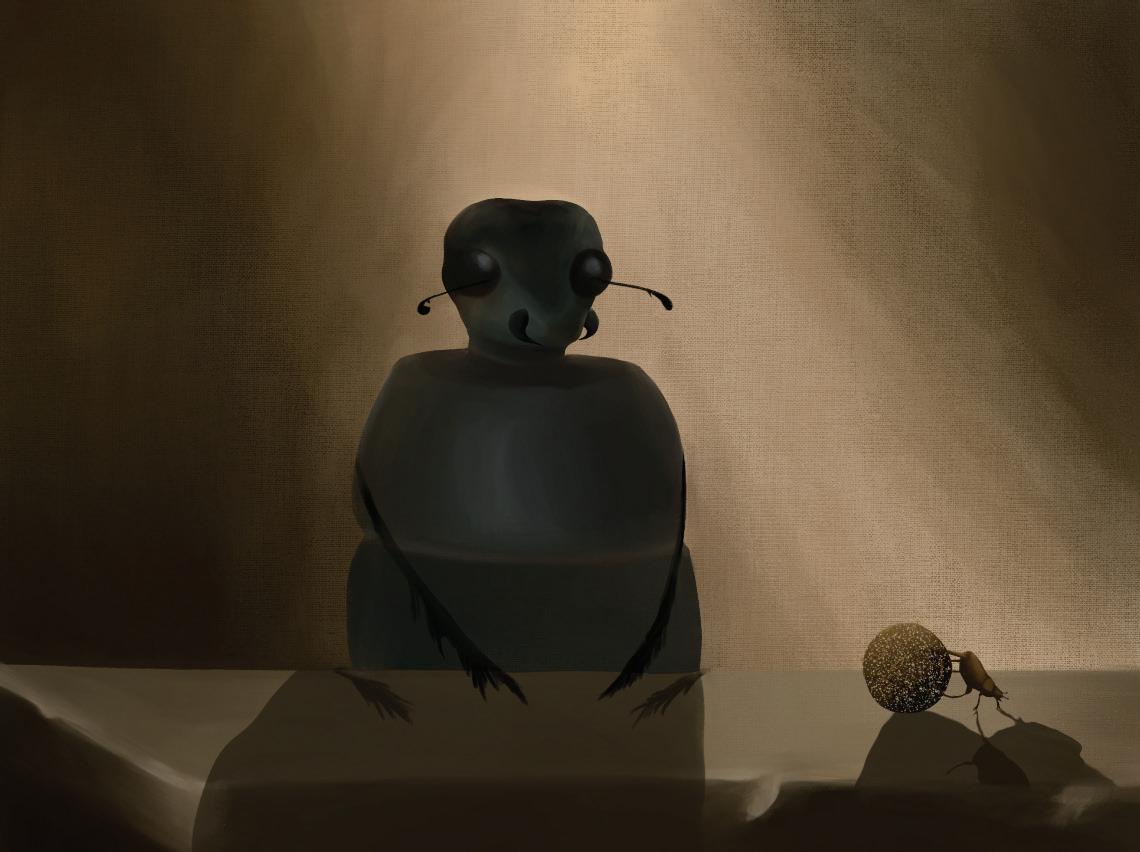
DIE VERWANDLUNG • ARWEN MIRANDA
AN EKPHRASIS ON THE HUMAN EYE
GABE TAYLOR
I do not know how I should start this song, for every time I gaze into your eyes, my words betray me, vanish on my tongue. Perhaps you are no god, but thief of thought, who steals the order reason would provide. Can someone break simply from a gaze?
Staring, Falling from one moment too long? My heart suggests the answer might be yes. Your eyes reply that wisdom has no place, blinking, they swallow all my careful words. A sea of green surrounds the pupil’s dark, its depth as deep and steady as the moon, its center black as soil after the rain, conceals a spark no storm could ever dim.
Your gaze waters the heart beneath my chest and feeds the fires that smolder in my veins. When I look long, the flame begins to breathe, burning within this chest of hardened flesh. Against the eye, more living colors arise. I see red sparks beneath your eyelids glow, as if the world had settled in your gaze. I watch copper flecks drift through pastures green like autumn leaves descending into dusk. Like ferns that turn to ember in the fall, they shift with wind from each gentle blink, and shimmer as the light moves on your skin. Each motion paints a different kind of day from forest’s hush to midday’s golden heat. Your gaze becomes the weather of my thought, a storm I choose to stand inside and stay. The iris glimmers wet as evening stone, notice faint hues that only closeness shows, they hold the light like porcelain in dawn,
fine veins weave through the white like silver threads, a network delicate as morning frost. Or like a spider’s web that winds me in, they branch like roots that cling to hidden dirt.
I’ve seen the nights you stayed awake and dreamed. Your eyes have watched too much for one so young.
I see the way your lashes guard your stare, Like gates that know what memories can do. Eyes that will trust only when reason shows.
I see the outline of my own small face, you listen patiently, despite my stammer. I almost think your eyes remember mine, for every glance restores what time would fade. They know my fear before I find its shape. They know my shame before I speak its name. They hold the laughter I forget to feel, and what remains of innocence within.
The child who watched the world with open eyes. In you, that same unguarded wonder lives, a faith the world could still be kind again. In them, I find the water that plants do seek, the sap of earth, the gleam of morning rain. Inside, I find both hunger and relief.
I do not know how long I’ve stood and stared, but time, when spent this way, is never lost.
If you’re to give your heart to anyone, among all things, choose their colored eyes. For skin folds and loosens over years, and hands grow weak, the body yields to weight. As time moves on, the bones forget their grace, and teeth may fall to feet you cannot touch.
The world’s lights dim, and voices turn quiet, but pupils move with present like no other, unblinking, steadfast, keeping all one is. All I am flows within your wide, fierce rivers the green, the gold, the small red sparks of life, they hold my image even after dark deep in the moments that are ours alone.
I do not know how I should end this song for everything is gathered in your eyes. Perhaps there is no end to what they keep, the field, the plow, the twinkling of dawn. I see in them the waiting for the bloom,
and the flowers yet to open in their truth. I hear the crunch of leaves beneath my heel, and see a bird or two return to warm its nest and stop, and breathe, and think of you.
ABSOLUTION
BRETT KOEHN
I want to cut out the part of my brain that feels empathy
And the part of my brain for imagination. I want to cut out my creativity towards evil
The self-defense denialism to flee moral judgement.
I don’t want to uncover the broken wings of a quiet girl on new year’s night when I am in a perfect relationship
Hidden in arms with bite marks
Or lie in bed shaking with bestial thoughts for my last victim.
I want to be in insecure conflict with everything without being enslaved to belief. I want to experience it all and walk away from my life
To quit these capacities I can’t escape.
Remove my free will and place it in the hands of a form without judgement.
The Dao is the answer to my prayer.
The only way to not endlessly repeat our gifted existence: Nothing.
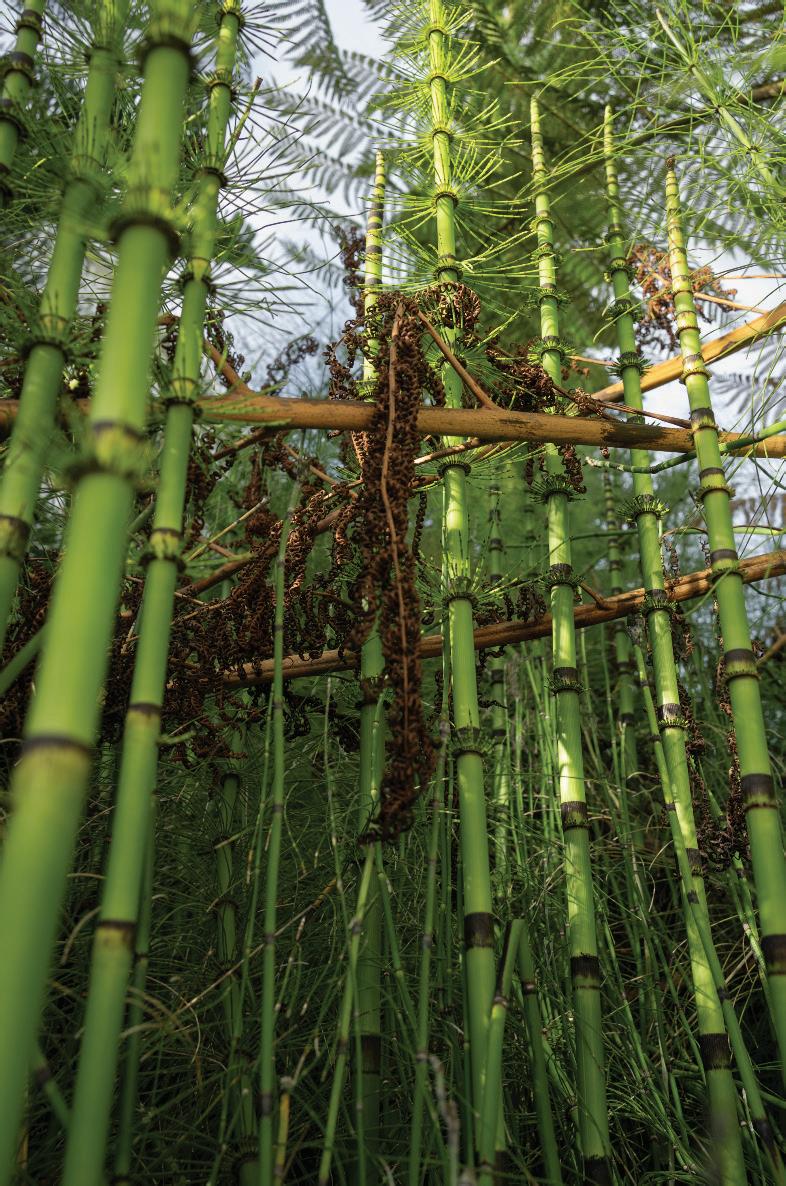
CANOPY • JORY KURSH
I’D
LIKE TO CURL UP IN AN INK STAIN DEEP IN MY DIARY
NEILA KARINA CURREY
I miss writing on paper
When I carried a flowery notebook in my tiny hand
My smile was less heavy
This was before I met that sparkly dark cloud
I haven’t written about that heavy day
Scared of what words will come out
I’ll be faced with the ink mark of what I know to be true now
Flip a few pages back
The ink was a bit lighter
Better handwriting
Not so scribbled
No sense of urgency to get the words far away from me
Just soft words
Pretty words
Easy words
That I was fed
On a nice cold silver spoon
Which then got jammed deep down my throat
I choked on what I knew to taste sweet
Unable to speak
Just stand there
Listen to the mouth full
Because maybe if I… maybe that’s why I can’t write anymore
I have no words
I miss when I wrote on paper
Life was lighter
I looked younger
I like to visit her through the pages
I spent my life writing
Now I don’t know how to speak
YOU’VE KILLED EVERY DESIRE YOU’VE EVER HAD
WREN LEE
and where has it gotten you? still stuck with a beating heart shoved away in a box for so long it’s taken to the shape of it ignore the beat most days, drown it out with inhales and exhales and footsteps and stretches the click that your nails make when you tap them together the rustle of your hair but still, it thumps your mouth tastes bitter an aftertaste of adrenaline still acidic in your throat because despite all the efforts you’ve thrown into keeping it caged everyone talks about wanting like it’s so sweet it becomes you, unravels what you know and turns you into someone you were all along stare at your square-shaped heart and think no matter how they talk about it it’ll turn you into someone i don’t recognize
EVERY SECOND COUNTS
HATAN ALHABESHI
The doorbell rings as I set up the living room. Deflating balloons scatter across the floor, tangling around me as I rush to fix the icing on my cake. “See You Soon!” smiles up at me lopsided as I hear my sister open the door and greet one too many people. Amidst the crowd that arrived, his footsteps are the only ones I recognize. The greetings are framed by the doorway, polite exchanges overlapping like a script I haven’t rehearsed. As I make my way over, the voices grow dissonant until he walks in, rests by the archway, and disrupts the static. A shy glance escapes my eyes, only to land on an unfamiliar woman walking in behind him.
Waves of guests continue to arrive throughout the night, their laughter and chatter swelling as I am stuck on the woman sitting next to him. While I say my pleasantries, she lingers in the back of my mind, uninvited. She moves through the apartment as if she’s been handed stage directions. Reaching for the cupboard above the sink, she grabs two cups without looking twice. Serrations form along the inside of my cheek, stinging as I crack another smile. I take a seat across from them on the sofa, unnerved by their closeness. By the slight brush of their knees, by the tenderness of his thumb tracing along her back. Our touch was never easy. It was built on secrecy. Nothing came naturally, except on drunken nights.
I drift through conversations, carrying myself with ease, as I float to the other side of this
fishbowl apartment. Every glance feels rare and every breath is a little too loud. A performance for the ages, I’d call it. “Cut the act. What’s wrong?” I flinch, caught off guard as my sister whispers over my shoulder. I tilt my head towards the woman, signaling my discomfort and slip back into the room. Before I can take another seat, I catch a glimpse of the unfamiliar, uninvited woman, scurrying hurriedly up the stairs. I glance back to where she was sitting, only to find him there now, alone.
I follow her up the stairs and step into the room, confusion tightening around me as I take in the scene. The woman stands with her back to me, frantically adjusting her scarf. I inch closer. She turns in a panic and pulls down the scarf—revealing a mark on her neck. Red, tender, and unmistakable. The confusion settles into something heavier. I stare at the mark, trapped. “Can you help? Please?” she pleads. She shares my skin tone and I share her shame as I help conceal the traces he left on her.
I circle the room like a goldfish in a plastic bag, the knowledge of it all sealing me in. The air thins around me as I step out onto the patio. Others fill the space, piercing the quiet. Now, I am surrounded by smoke that isn’t mine and the static seeps its way back into my mind. I can catch just enough of the conversation to muster out a reply.
“How soon is your flight again?”
“Not soon enough,” I reply.
“Come on! You’ve got to make every second count,”
A memory resurfaces—his voice, softer then…
“Promise you’ll visit?”
Counting seconds only leaves me grasping at what’s left. It’s futile, like palming sand.
I’m not one to bargain for time anymore. I’ve already succumbed to it, surrendering all the good faith in me. I get up and open the front door to head back inside, but I’m met with him, towering over me in the doorway. The static grows louder. I brush past him, and even that touch feels guilty. •
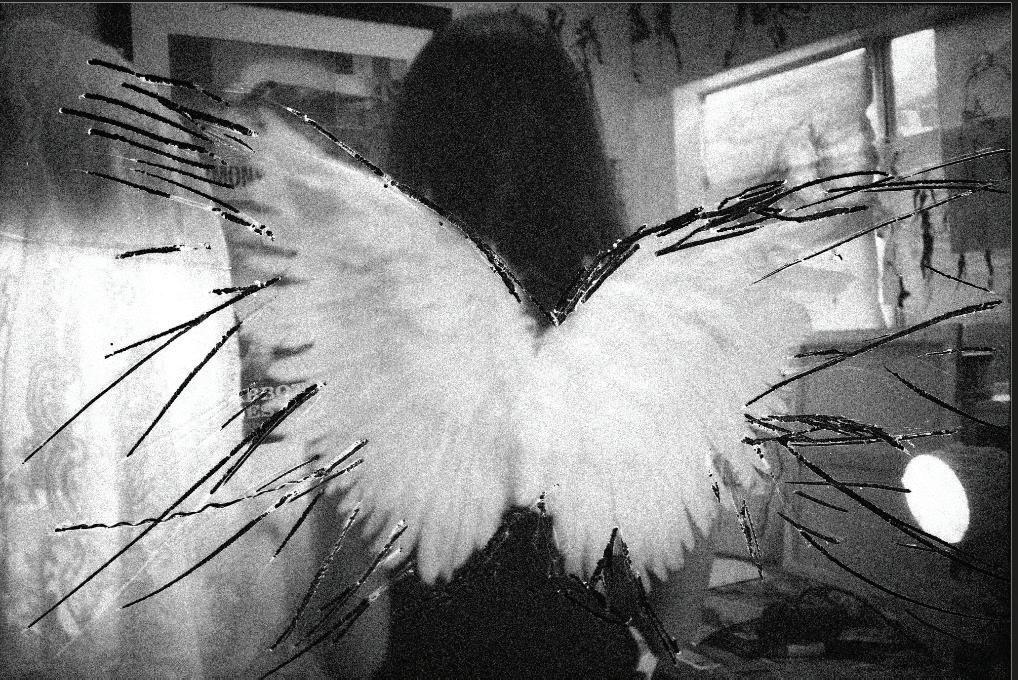
ETCHED IN ANGEL • AMANDA HOSSEINY
MUSINGS ON A MURDERED PICTURE
Rosy beauty poisoned by twisted thoughts
Given freedom for the cost of your soul
Lurking in canvas are the vile blood spots
Your vanity made you lose all control
Your true beauty left with your atonement
Gray soul plunging further into black sins
Ricocheting them during your descent
Soon you will learn in this game no one wins
Stuck remaining a rosebud of a boy
Locked-away shame tells the full story
Stained hands on a tarnished man acting coy
Your narcissism is an allegory
The painting you murdered destroyed you fi rst Poor Dorian you thought aging was the worst
MARIA CAPUTO
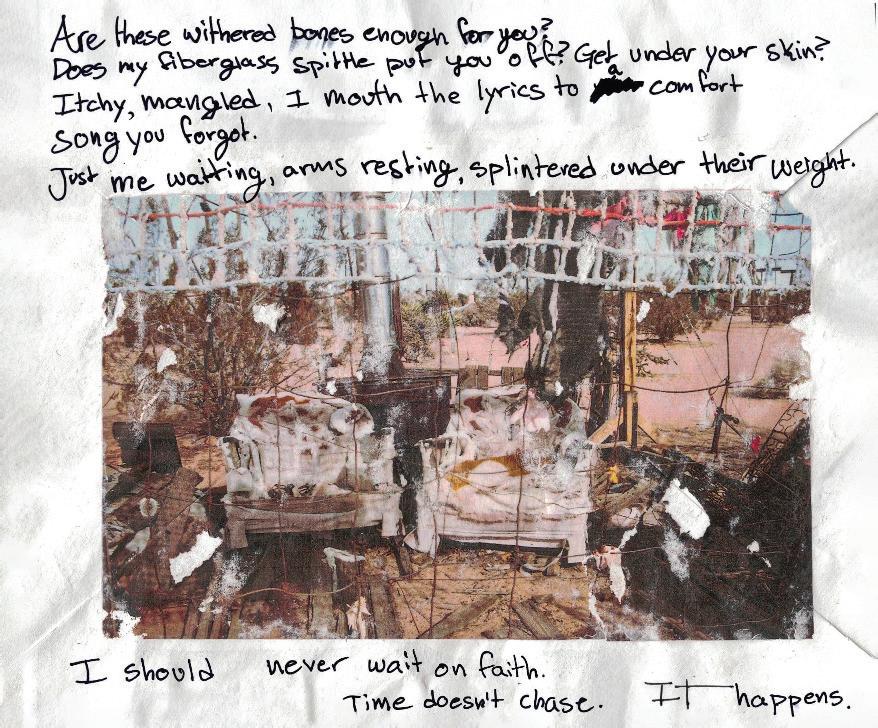
RECYCLED ENVELOPE •
AMANDA HOSSEINY & JORY KURSH
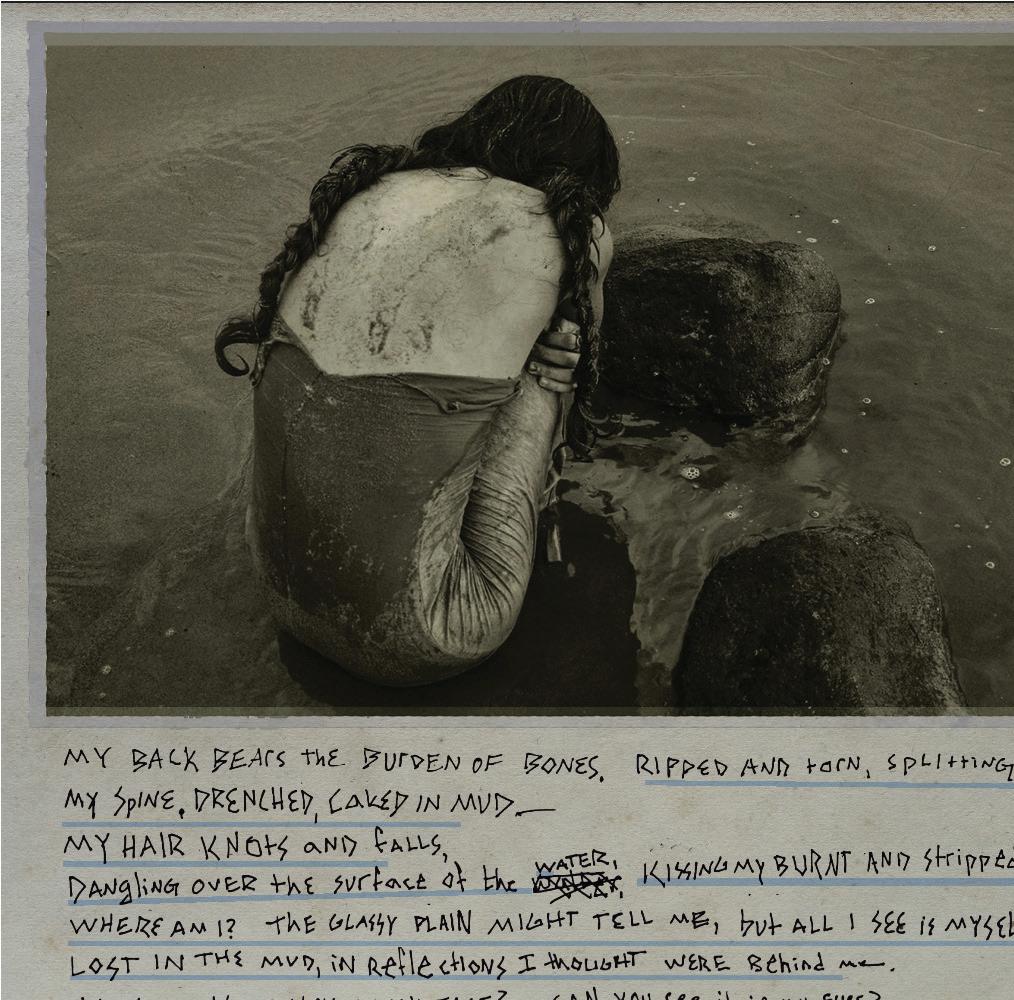


MUCK • AMANDA HOSSEINY & JORY KURSH
STILLNESS AND SIMPLICITY
GABE TAYLOR
When I think of myself as a boy, I think of the views I chased. With each year I was proud to announce, I’d be dragged up a taller New England peak. My parents would lay my capeline across the floor, still damp from the last hike, and my headlamp across my doorknob, dead. Being a competitive child, I made sure my backpack was always the biggest. I would stuff my Osprey with waterproof jackets, socks, and other thin layers, not carrying any of the group’s weight, the dreaded essentials. We’d bring a slab of bologna I’d refuse to pack, a hunk of manchego bigger than my head, and rustic camelbacks, filling a minivan, bound for the mountains. Each time, we’d bruise our knees, rub our heels, and find a different angle of the seemingly same pine trees. I would hike as fast as my legs would allow, with only the end in mind, racing against the treeline. Valleys would sprawl out as paper maps spill onto tabletops, and yet my eyes would climb higher, to the next perch, placing myself atop the tallest rock in a dream of elsewhere.
Eventually, the simplicity of my life in Vermont bored me. Despite being surrounded by nature’s palette, I craved new colors. I left my family’s mountains behind to climb on my own. At the ripe age of 18, I traded the song of birds for the hum of steel and flew across the country to Los Angeles. A city that does not know rain, blisters, Darn Tough socks, or how
to curl paling toes in biting boots. Would this sunlit city make me forget, too?
Its buildings are taller than my home’s hills. The city never sleeps. Planes swallow the stars. I no longer have time, but if you were to look out my window, you’d see a thousand colorspaint the glass, a neon roller blader with a scarf trying to keep up, a swinging scarlet handbag clutched by a recently powdered woman, and a cursing suit in a hot wheel with a destination more important than the moment. Tall brown grass and croaking crickets have been replaced by these characters, each with a crucial role in the city’s system. All of them refuse to pause, collectively chasing the newest clothes, places, roads, and things. So desperate to go, but none of us know where.
Each year that I celebrate here hurries between my fingers like sand. They remind me of my lack of a ten-year plan and how far I am from being able to afford the cars the suits drive outside. I was stopped in traffic the other day on my way to a rather important interview. I heard my voice curse under its breath, and felt my nails dig into the leather of my wheel, as exhaling cars kept me stopped. The steel frame sat still as toes curled in dress shoes too tight, blistering once again. I inched forward, time sped by, but the horizon stayed still. My eyes wandered away from the yellow manmade lines to the mountains filling my rearview mirror. As cars slowly bumped forward on the
freeway, the peaks behind me began to shrink. Was I driving in the wrong direction? I took one last view, locating the tallest peak as I’ve always done, and hit the gas.
As I drove, the ball of my foot felt heavier than normal after answering my question. Success cannot be found strolling on nature’s trails, only from racing others to college, to internships, to cubicles. Portraits of lawyers, luxury billboards, and seductive screens passed my car, flashing stories to sell a brand. I found myself wondering if there’d be room for mine in this foreign land of ever-lit street signs. Despite the highway’s disagreements, the mountains and streams beyond this city seem to advocate for stillness.
I guess it is true what they say. A man has to run away from home to find himself, and to realize the thing he’s been running to was under his boots all along. After searching forsuccess, I must return home to the unkept lawns and cragged streets of New England. I’ll leave the city that doesn’t know how to sit still to return to days whose end is determined by the moon, a shape that waxes and wanes, bothering dogs to bark. After choosing a college of students with beautiful handbags and tailored jackets, pricing
animals’ skin, I long for the scent of nature before it’s been manicured for man.
I miss the minivan hiking trips that took forever because forever seems the biggest luxury of all now. I hope the suburbs of bustling separate lives and shared walls will make me reappreciate the pace of life in Vermont. Maybe this time, I’ll hike to pause along the trail and notice the trees before they shiver into shrubs. There’s beauty everywhere if you let the weight of your pack slow you down. The small rhythms that occurred when I was making other plans feel the biggest now. Maybe when I come home, I’ll stop racing.
When I think of myself as a boy, chasing views and adrenaline, I think of the things I want to tell him to notice. I want to tell him to listen to the soft leaves that snap below, to locate where the mud kisses his calves, and to remind him to never forget what his feet brought him over. There will always be taller rocks to scale, longer ladders to climb, shinier wheels to buy, roads that await, untraveled, but all I wish is to be still, what some call being free. When I’ve seen my last view, and it’s my time to place in the world’s race and die, I do not want to discover that I, too, never lived. •
BACK HOME
JORY KURSH
I play house with my emotions. responsibility, my wife, my better half.
She shows me everything I hope for, the virtues I can not will into being.
She recently gave birth to our child, my innocence.
A concept I had to learn again as we moved into our new home.
My wife would take care of our garden, snipping the thorns from the roses while my daughter watched from the window.
I would watch from the couch.
Now, I sit and pile ashes up around my feet where our living room used to be.
The tips of my laces poke through—
A knot I tied years ago and haven’t touched since.
I tie my knots tight, and I stand by that.
I might hang by it too.
Next to my daughter’s rocking horse— beige with a white nose, teetered by the window. Light would shine through its mane in the evening.
Now, it is black and sits with the foundation of our home.
The specks of misery sift through my fingers like memory.
I remember when we brought her home from the hospital, my wife was exhausted but slept with a smileafter the day marked by blood, shrieks, and the birth of our angel.
Angels were born from the flame.
My angel was taken by them too.
Who was I to hold her?
My wife says I’m stubborn. That I bite off more than I can chew.
Like that one night I got in a drinking contest with a biker.
We walked into the bar and it was stuffed with leather-bound, beer bellied, bums.
That night when he kicked my ass twice — once in the contest, and once outside for calling him a bitch.
My wife drove me home.
Blood running off my chin, pooling in my cupped hands in my lap.
I breathed and blood bubbled around my nostrils.
Like when my baby girl was in the bath for the first time.
She thought the soap was sugar until she tasted it; the bitterness of shiny things.
She blew mountains of foam.
She gave herself some hair, a beard, like an old man.
Like she grew old.
Like she’d grown up at all.
Like she’d been a teacher, showing kids what colors are and why we need them.
Or been a therapist and shown people how to sort their soot.
Or a nurse, or a firefighter, or a cloud, or a hug, something or anything that was a thing and could have helped her how I didn’t.
I’ll sit in these ashes until she comes back.She, or my wife.
Only one will come back.
All I find is grief in these ashes.
All I find is myself.
Who I am.
Flinching at embers, hoping it’s my baby coming home.
It was just the wind.
Do I wait for her to come back and fix everything?
To glue these shards back together?
To rewind these piles before time tore them down.
Down, to where I’m left.
Nothing left but this knot in my shoes.
Hung by my stubbornness, my thoughtlessness.
Hung by my rush.
“The quickest fire” they said. The brightest angel.
Rolling in these ashes like a sandbox. And responsibility will flood back to me after the loss of our child.
We might be able to have another, But I could never regain my innocence.
May I be born again from the rubble as something other than grief.
SPANGLISH
STEPHANIE CHOI
A veces pienso así, but then it turns to this Sometimes I talk and if I get stuck I switch to a language que puedo encontrar La palabra necesaria para continuar a hablar.
Qué acento más extraño, se preguntarán los demás Al ver que de las rs no soy capaz. As a heron my voice projects My old song I practice not to forget.
Who is this girl, where is she from? Not the small island they always get wrong Soy del paraíso, muchos vienen a ver Una costa muy rica que no falla en sorprender.
Here in LA this combination is common Somehow people have forgotten Cuánto le ofrecemos a este país Y aun así estan infeliz.
Nos aguantamos las quejas y el odio que nos tienen Pero nuestro esfuerzo nunca dejemos que frenen Our voices will not be exiled Our appearances will not be profiled Somos parte de esta nación un hogar de orgullo y mucha pasión.
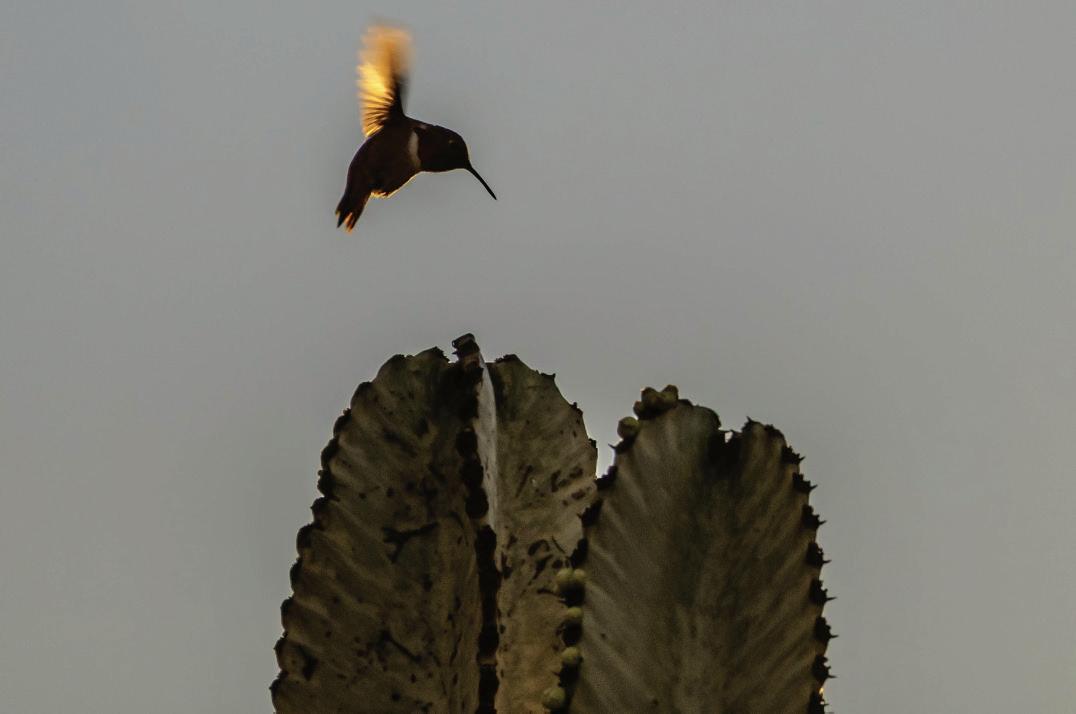
HUMMINGBIRD AND CACTUS • OWEN FRANKLIN
BIRTHDAY CALL
ELLA COX
CHARACTER LIST:
Chloe : 21, Female. Olympia’s twin. English major and transfer student at a small liberal arts college in the midwest, “no contact” with her father or the prestigious theater company he runs, recently returned to school after going to mental health treatment.
Olympia : 21, Female. Chloe’s Twin. Studying acting at Yale, “Golden Child/Prodigy,” strained relationship with her other family members after choosing to live with her father during a messy public divorce.
(The stage is partitioned in half with two bedrooms on either side. CHLOE’s side of the stage is a studio apartment brimming with life, albeit a bit messy. There are streamers on the ground and a half eaten birthday cake perches on her counter. OLYPIA’s side is a sterile college dorm. It’s filled with cardboard boxes. Maybe she’s moving out, maybe she never properly settled in. Despite being in different locations the girls interact with one another throughout the work.)
(CHLOE and OLYMPIA will also interact with “PROJECTIONS” representative of how they see each other, it is up to the director’s interpretation whether these are other actors, actual video projections, or another form of staging.)
(CHLOE dawns a pair of rubber gloves and holds a trash bag, picking up the leftover streamers. A cell
phone on CHLOE’s side rings, she sees OLYMPIA’s name and visibly cringes. She lets it ring for a few moments deciding whether to pick it up.)
CHLOE : Hey! What’s up dude? Do you need anything? Just cleaning right now.
(CHLOE visualizes the projection of OLYMPIA , smug, and surrounded by medals and trophies)
OLYMPIA : No! Nothing! Except to tell you Happy Birthday!! I’ve missed you!
CHLOE : Yeah thanks I guess, why are you calling me? Is dad there or something?
(OLYMPIA visualizes the projection of CHLOE, in all black, holding a trashbag and tossing photos of the girls together as children and other childhood memorabilia. Real world OLYMPIA anxiously checks a calendar, has she seriously messed up the date of her own birthday?)
OLYMPIA : No! I mean I always try to call on our birthday.
CHLOE: Olympia, I need to be serious with you. The last time we talked I asked you to do one thing. Just call me every once and a while, and you straight up ghosted me.
OLYMPIA : I’m calling you now?
(PROJECTION CHLOE vigorously crumples a photo. OLYMPIA looks over, hurts.)
CHLOE: Yeah … but you’ve only like ever called me on my birthday. Like, how am I supposed to pretend like anything about this is normal? I thought we’d moved on.
(While real Chloe is speaking, PROJECTION CHLOE then starts to throw childhood plushies into the trash bag, straight from OLYMPIA’s real life bed.)
OLYMPIA : (with familiar sarcasm) Chloe. How could we have agreed on anything if I haven’t spoken to you? Just pick one thing to be mad about at a time.
(CHLOE’s shoulders relax as she puts the phone on speaker, she starts cutting herself a slice of cake. PROJECTION OLYMPIA lavishly spreads herself on CHLOE’s couch.)
OLYMPIA : I call you, it’s a problem. I don’t call you, it’s a problem, what do you want from me?
CHLOE: For you to just leave me alone! I finally took a break, like I did all this healing work and you just want to pull me right back in like you always did!
OLYMPIA : Hang up. Why did you even answer in the first place? I’ll hang up for you.
CHLOE: Fine. Happy Fucking Birthday Olympia.
(BEAT. The line is still warm. They’re both so si lent that they can hear one another breathing through the phone. PROJECTION OLYMPIA is still offering the medal to CHLOE.)
OLYMPIA : So are you gonna hang up?
CHLOE: I assumed you were. I just wish you would apologize.
OLYMPIA : Chloe, you know I would never want to hang up on you. I’m sorry you feel like I
haven’t been there for you. I’ve been a bad twin but that doesn’t mean I don’t care. Maybe we could try to start over? How are you doing? Seriously. I’ve been so worried about you.
(CHLOE finally receives PROJECTION OLYMPIA’s medal. She holds it over her chest. PROJECTION CHLOE plops on OLYMPIA’s bed and OLYMPIA sits next to her.)
CHLOE: The whole thing was really hard. I talked a lot about the divorce and did a bunch of improv therapy. I might add a theater minor soon. It’s nice doing that stuff without dad breathing down my neck. We tried to get him and you to do a family session but he never responded.
OLYMPIA : I wish I knew. He obviously never told me. I would have totally showed up. How’s mom? I haven’t talked to her in forever.
CHLOE: Fine. So how is school going? I bet you have a really good agent by now. Whenever I tell anyone in the theater department you go to Yale for drama school they go ballistic.
OLYMPIA : I’m kinda not doing any acting stuff.
CHLOE: Like now or ever?
OLYMPIA : Ever.
(CHLOE shoots up, starting to pace. OLYMPIA retreats to the corner of her room.)
CHLOE: What, why? The last time I checked you were getting all that special attention from all the professors. You’re a favorite! Dad practically groomed you into the best actor I’ve ever seen!
(PROJECTION CHLOE slides off the bed, approaching OLYMPIA)
OLYMPIA : I got cut. I’m such an idiot.
CHLOE: Yale doesn’t even do cuts like that? What’s actually going on.
OLYMPIA : After all of it! I just wasn’t good enough! I don’t even know who I am!
(OLYMPIA is cornered by PROJECTION CHLOE)
CHLOE: Olympia. Olympia! Wow. We’re gonna try something I learned in treatment. Then I want you to take some deep breaths. Like we used to backstage. Can you do that?
CHLOE: Just get some water ok. I need to help you calm down.
OLYMPIA : Ok. ok. Ok. You think you can help?
CHLOE: Yeah, You promise?
OLYMPIA : I promise. I truly promise.
CHLOE: Ok, drink some water.
(OLYMPIA obliges. PROJECTION OLYMPIA does too.)
CHLOE: (continued) Can you just just try to focus on the water as it’s in your mouth. Focus on how refreshing it feels.
OLYMPIA : Yeah. It makes me feel a lot better.
CHLOE: Are you ready, or do you want to just stay here for a few more minutes? Cooling off.
OLYMPIA : I need a bit more time.
CHLOE: That’s ok. Just stay on the line with me.
(OLYMPIA and CHLOE both walk center stage to the invisible boundary. They both sit, backs facing one another, truly connecting for the first time in what seems like forever. This should be the first time their actors have any type of physical contact throughout the piece.)
OLYMPIA : I’m ready.
CHLOE: What’s going on? Just tell me slowly.
OLYMPIA : I’m under investigation.
CHLOE: What did you do!?
OLYMPIA : You said Slowly! Nothing bad! Do you remember me talking about my professor?
CHLOE: No. You’ve had a lot of professors.
OLYMPIA : The one that was my mentor.
CHLOE: I love you, but you’re going to need to be a bit more specific.
OLYMPIA : He-he, um, directed the production of Cherry Orchard I was in last semester.
(CHLOE opens her computer and looks up Yale’s Drama Department)
CHLOE: Edward Rhodes?
OLYMPIA : I- I just don’t want to say his name. It makes me feel gross.
CHLOE: We don’t have to say his name then. But yeah, you talked about him a lot freshman year. He was a mentor figure. I remember him being really important to you.
OLYMPIA : Well, he became more than a mentor figure. I got called into the dean’s office and I lied. Other girls came forward. So they knew I lied. I freaked on them, like really really crashed out. They’re coercing me into taking a leave of absence for mental health. It’s total BS.
CHLOE: That’s terrible. Why didn’t you just tell them? He clearly was taking advantage of you.
OLYMPIA : The worst part is that I thought I was special. It’s like it’s happening all over again.
CHLOE: That’s really terrible, taking a semester off isn’t a bad idea. What does our dad think?
OLYMPIA : He doesn’t know.
CHLOE: You need to tell him. Did Yale not already?
OLYMPIA : No, but if I’m on leave he’ll know something is up. If he found out he’d kill Eddy.
CHLOE: Olympia, you need to take time off. I did it, and now I’m doing so much better.
OLYMPIA : I think I want to. Even if the admin’s reasoning is all wrong.
(PROJECTION OLYMPIA moves into CHLOE’s apartment, bringing over literal baggage.)
CHLOE: That’s great? That’s great. I’m really happy you’re going to do that for yourself.
OLYMPIA : I wanted to ask if you could refer me to where you went.
CHLOE: I can do that… I just want you to be safe.
(OLYMPIA moves items around in her room, facing away from PROJECTION CHLOE)
OLYMPIA : Maybe if I just talked to mom about it? Dad doesn’t believe in any of that mental health stuff, and now that she doesn’t work in theater anymore she has the good healthcare.
CHLOE: Wait, Olympia. So you only called me because you needed mom’s health insurance and didn’t want to disappoint dad. Just promise me, if I do this for you, you’ll get better.
OLYMPIA : Yeah. I Promise.
(CHLOE goes to the center line and raises her pinky finger.)
CHLOE: I need you to really promise. I need you to mean it, Olympia. This can’t be like before.
(OLYMPIA meets CHLOE at the center line, pinky promiseing. Projections exit, fading away.)
OLYMPIA : I promise. As deeply and sincerely as I possibly can. I promise.
CHLOE: I’ll talk to mom, she’ll send you details.
OLYMPIA : Will you call me? When I’m there.
CHLOE: I don’t know if I’ll be able to. Um, I have to go soon.
OLYMPIA : Can you stay on the line? Just a little bit longer?
CHLOE: I love you, but I have to hang up.
OLYMPIA : I don’t know what to expect! When I’m there!
CHLOE: I’ve stayed on this line too long. I’m never actually hanging up. We’ll talk soon. Ok?
OLYMPIA : Chloe. Don’t leave me, please don’t.
CHLOE: Olympia, I need to set a boundary… and for the first time ever I don’t feel bad about it.
END OF SHOW. •
EL ROSARIO
KAITLYN
ESPINOZA
The rosary rests in my palm like a secret, A chain of tiny worlds strung together, Each bead smooth as a tear, Each decade a road I have walked before. The Virgin waits at the center, Painted in miniature brilliance, A cloak of green scattered with stars, A soft face bowed in eternal listening
She holds the silence that others break, The prayers whispered in desperation, The thank-yous uttered in relief.
I remember my abuela’s hands
Turning bead after bead
Like the steady ticking of a clock. Her voice was a candle, Steady even in storms.
The rosary was never decoration. It was her armor, her anchor, The rope that pulled her closer to God. I have hidden it in my backpack, Tucked it under my pillow, Clutched it before exams, And once
On a long bus ride home, I counted every bead like miles, Hoping it would shorten the distance
The rosary is more than beads and chain It is a necklace of promises, A rhythm of survival,
A compass pointing toward faith
Even when faith feels far away
I think of migrants gripping theirs at the border,
Mothers weaving prayers into each step, Children learning to hold hope In something small enough To fit inside a fist. A reminder that the sacred Can be carried, Can be touched, Can be called upon, In silence.
SEVEN SEAS
KARMA CHAMSEDDINE
My only child. Sweet, sweet child.
I promised you the seven seas At the riverfront, the day you were Promised to me.
I held you Upon the ripples, I told you life is simple. A swing set. Velvet bows, Honey bubbles on a sponge. I hadn’t yet known the innate softness Of a love lie on the tongue.
Do not duck your head, I warned you.
Waves will appear teal and gold On the surface.
But your arms will go limp, Thumps of the heart sti ff, Tongue will stick to Thirsty reefs of bone.
Through the fickle salt sways Of hope and luck, The sun will laugh at you. All woe, nowhere to go. You’ll become one With the floating fish, Free and aimless, All alone.
The harbor watched. It couldn’t do much else
But wait and hear the echoes Of a sacred treble voice, Begging, seven seas away, To come back home.
I told you, I told you. A moment A lifetime ago.
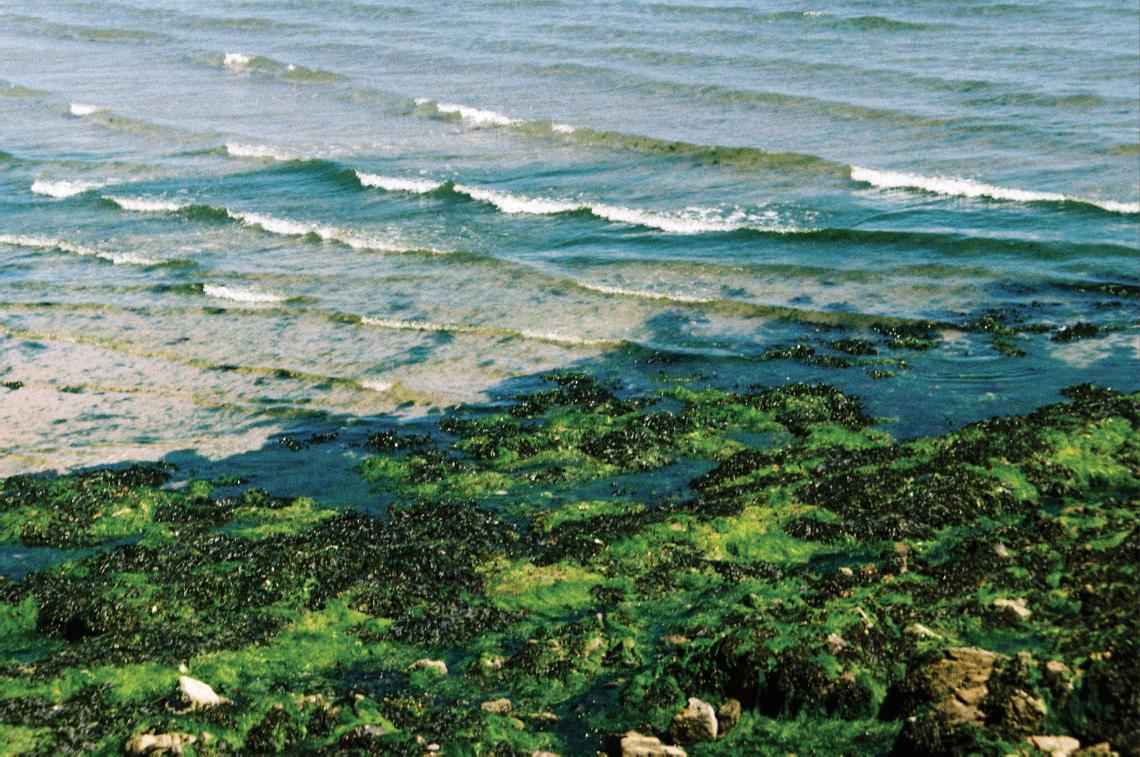
ARDMORE BEACH, CO. WATERFORD, IRELAND • MIA RIVERS
OLD YOUTH
KATHERINE HAHN
The CD player crackles and yawns before it begins, it twirls in unison with a tiny child who fell in love with an old-timey tune before ever learning how to ride a bike without training wheels.
Fred Astaire and Ginger Rogers float their feet across the TV their rhythm inhabiting her small body enamored by glamour and charm. Top hats, white ties, and tails trail beside ballgowns spinning in circles, forming dreams in their wake. Vintage melodies sizzle over the speakers, a sound so lonely, inviting this child home. Violins swell, trumpets blare, vocals usher ghosts into the living room, turning this space into a ballroom for a child whose mother and sister have two left feet, for a child whose father was blessed with a pair that will listen to him, for a child who couldn’t care less about skill, only a mind set on will, the will for her feet to Follow the Fleet to face the music and dance.
9 DAYS LATE ON APRIL 9TH
NEILA KARINA CURREY
I was born 9 days late
I guess I didn’t want to leave
I’m still never the one to leave
I love staying where I know
Where I think it’s safe
Why would I ever leave my mother’s womb?
They had to cut me out
Throw me into this cold world
I still never feel at home
Between my music killing my ear drums and screaming on the highway or dancing alone in my room
I try to find a home in a world
I never wanted to belong to
In being the one who never leaves
I am always left
I leave my mark, as they cut me out, yet again
I’m the constant moving home
Between the sunshine, planes, and winter breaks
I’m the girl who loves to stay
Through the dreams and the movie screens
I’m the girl who now hates being late
The dark fog, the boundaries crossed, the hands that took off my white dress, the kisses that made me lose my self-respect, and the way my sheets looked so sad and wrinkled at the end of my bed
I want to go back
Back to before it was all said
Before certain people knew my name
Before everyone was watching me Now I’m almost twenty and I can barely breathe When April comes around, I’ll remember the sounds of me holding my ground because I didn’t want to leave
9 days late He couldn’t even wait a day
Take me back to the first day Before it’s too late
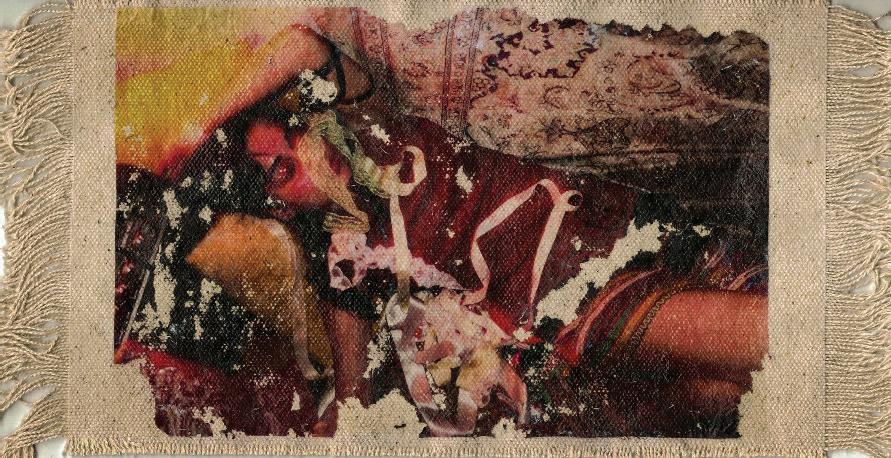
PERSIAN RUG • AMANDA HOSSEINY
SEVENTEEN AND FINALLY SEEN
NEILA KARINA CURREY
The gap in my teeth was bigger
My hair was strangely straighter I drove around laughing with people I’d never see again
Oh, to be seventeen and to only dream
Sitting in the corner of a 5-star hotel dying to leave
Eager to be hit with it all until I bleed
How simple was it
Re-discovering a country that knew me better than others
Th rough the eyes of your seventeen-year-old self who just wanted to be seen
Even if it was from people she’d never be with again
She never followed the common running away chain
Simply jumping in when she got that rush to live
So easily scaring people off with what she had to give
In her own little bubble bouncing between worlds
Oh, to be seventeen and not know how much a woman can bleed
Life was much easier when I had that gap in my teeth
HUNGER
ELIJAH J. VERA
bet you’ve heard of it before, never leave food on your plate. it’s wasteful, there are people somewhere else in the world starving. yet you would waste food, push it to the side, throw it away. i can’t help myself. now i have to finish MyPlate. it’s not complex, it’s a tick. every time. every. single. time. i leave something behind, or in the trash or see extras discarded, i can’t help myself, i wonder, i ask, when did this start, when did we start devaluing life, taking it for granted. Who got to decide? who should have the food?
i find myself sitting with that in a restaurant, eating off the value menu, dollar bill for sustenance, three for your happiness just never ask how the sausage gets made don’t question, don’t try to, even when you can’t help but think, is this hell? living in this country the leading provider of diabetes, forced to eat, to choke down food far removed and processed from itself one can hardly tell if it is closer to me or plastic can’t help seeing them, wrappers that refuse rot the people, the masses, the world, the meat, eating itself alive
Can you see it now ? maybe not not yet the way that we done this to ourselves men have become Pigs, or they have always been Pigseatingtheworkofrabbits butwhatdotherabbitshave thegrasshasbeenmowed, theearthhasbeenburnt, sundered sothatWecaneatthem, therabbits, sothatWecanchoke, andbleedlardintothestreets.
Can you see it now? Can you? i can’t help but see it, the waste lining the Streets the Highways, the High-Rises, the Mega-Malls built on bodies decomposing People are feeding off them the bottom feeders US, YOU, ME nonotPeopletheyaren’tPeopleanymoretheycan’tbePeople, howcantheybePeople,afterseeingeverythinganddoingeverything howcouldistillcallthemPeopleanymore, they’re Devils, cloven hooves stomping teeth gnashing, grinding down on u.s., their buffet
FADE IN:
INT. STATION 18 - NIGHT
STATION 18
WILLIAM MARGO
A man, NORM (late 40s), walks into Station 18.
The station is bleak but functional, old benches line the far wall, a small yellow line indicates the edge of the platform, and a small digital clock above the rails shows that it’s 7:00 exactly.
Norm looks down to check the time on his watch, a tan line stains his wrist, but his watch is missing.
NORM
Must’ve left it at home.
He rubs his wrist as he sits on one of the benches.
Looking around, Norm sees three other men, men we will come to know as:
WALTER (23), a tall, tan man, pacing back and forth with a small bag at his feet.
RABBI AKIVA (73), a short man with a beard almost as low as his knees, holding a Siddur and silently praying.
A HOMELESS MAN, fully cloaked in a blanket, sleeps against the far wall.
A loud TRAIN HORN is heard approaching. The three men all stop what they are doing and walk towards the yellow line.
The homeless man stays asleep.
WALTER
Seven minutes late... Typical.
As the horn gets LOUDER, Walter cranes his neck to see if it’s close, he sees nothing.
The train horn is getting LOUDER and LOUDER until it SLAMS past the men and is heard getting fainter on the other side, no train is seen, and the three men look at each other.
Norm looks at his watch, 7:07, he blinks hard before looking up at the station clock.
It reads 7:00 exactly, and Norm is somehow sitting on the bench again, Rabbi Akiva is praying to his left, and Walter is again pacing in front of him.
He shakes his head hard then checks his wrist. No watch.
2.
NORM
Must’ve left it at home.
He rubs his wrist.
The routine continues again, at 7:07, the train horn is heard, all three men stand up and walk to the yellow line.
WALTER
Seven minutes late... Typical.
Norm looks confused at Walter as he cranes his neck to look for the train. Again, the train horn gets LOUDER and LOUDER, until it is right on top of the men. When the horn is heard getting distant again, Norm looks up at the clock. 7:00 exactly, he is back on the bench.
NORM
What the?
He checks his wrist. No watch.
NORM (CONT’D) I must’ve--
WALTER --left it at home.
Norm looks up at Walter as he rubs his wrist.
WALTER (CONT’D) Rabbi?
The Rabbi looks up.
WALTER (CONT’D)
Did it take us this long to figure it out, or are they sending stupider ones now?
RABBI
I recall it took you fifteen loops to figure it out, Walter.
WALTER
Fourteen.
RABBI (smiling) Who’s counting?
NORM
Wait? What do you mean loops? Are you telling me--
3.
WALTER
Yeah. You’re dead. Welcome to Station 18.
NORM I’m dead?
RABBI
Don’t rush to conclusions. You’re no less alive than the rest of us... That is to say: not very.
Norm stands up, his legs are shaking. The clock reads 7:05.
NORM
There has to be a way out. A door. A tunnel. Something.
WALTER
Tried ‘em all. Doors don’t open. Tracks don’t go anywhere. I once jumped. Just woke up back on the bench. Broke both of my legs.
RABBI
Spiritually speaking.
NORM
Why seven minutes?
WALTER
We don’t know. Probably a joke.
RABBI
Seven is sacred. Creation. Shabbat. Cycles.
WALTER
Or maybe God just has a sick sense of humor and a stopwatch.
NORM
So what... we just sit here? Forever?
WALTER
You get used to it. Loop resets. You start losing track of time, then thoughts, then... pieces of yourself.
RABBI
Some meditate. Some reflect. He paces. You’ll find your rhythm.
4.
NORM
This is hell.
WALTER
Hell has fire. This is just... waiting.
RABBI
And what we do while we wait is everything.
The train horn is heard, the same routine. Rabbi Akiva packs his Siddur
away, Walter picks up his bag, and all three men walk to the yellow line.
Again, as Walter cranes his neck, the train horn comes and goes. Norm looks at the clock, 7:00.
He rubs his wrist but doesn’t look down.
Then... He stands up quickly, turns towards the tracks and jumps.
WALTER
Here we go.
NORM (to himself)
There’s got to be a way out.
RABBI AKIVA
Careful. That way leads nowhere.
WALTER
Let him run.
NORM I’m not waiting.
He starts walking down the tracks. Then he starts to jog, then sprint. He loses track of time as he tries to steady his breath. The rails stretch endlessly ahead. The tunnel mouth stays just out of reach.
Suddenly. A faint HUM behind him. The sound of the train horn.
NORM (CONT’D)
No. No!
He runs faster, breath ragged. The sound builds, roaring toward him.
5.
He stops. Turns around. Braces. The horn BLASTS as if right on top of him.
WHOOSH. A surge of wind, a shadow, and then...
The clock reads 7:00 exactly.
Rabbi Akiva is quietly praying. Walter paces.
WALTER
How was the run?
NORM (stunned)
It went through me.
WALTER
It always does.
NORM
I felt it. I thought I was going to die again.
WALTER
That was my sixth loop.
NORM
It didn’t even touch me.
WALTER
It’s not a train.
NORM
Well, it’s not a boat!
RABBI AKIVA
It’s judgment.
WALTER
It’s just a noise to keep us twitching.
NORM
So what... we just... sit here?
WALTER Yep.
RABBI AKIVA
We sit, and we wait. (beat) The rest is commentary.
Silence.
6. RABBI AKIVA (CONT’D)
What were you running from, really?
NORM
My son’s third birthday. (beat) I missed it. Said I had to prep a case file. Said I’d make it up to him. (beat) I died in a break room, clutching a turkey sandwich.
Walter looks down, shifts on his bench.
WALTER
I was supposed to go see my mom that night. Yahrzeit. (scoffs) Told myself
I’d light a candle later. He kicks the floor. The bag at his feet slides slightly.
WALTER (CONT’D)
Never made it home.
Rabbi Akiva closes his Siddur gently.
RABBI AKIVA
I told a grieving boy once, “Say Kaddish and the pain will pass.” (beat) He asked, “What if I don’t want it to?”
(beat) I said, “That’s not the point.” (beat) Perhaps I was wrong.
Silence.
The men sit in a triangle of stillness. The hum of the station overtakes them.
The Homeless Man sleeps in the corner.
NORM
Think it’s a test?
WALTER
Feels like an echo.
7.
RABBI AKIVA
Sometimes God hides His face so we’ll look for our own.
NORM
You think He’s out there?
RABBI AKIVA
I think He’s in here.
He taps his chest. A long beat.
The station lights flicker. A slight breeze rolls through.
The digital clock ticks from 7:06 to 7:07.
A low train horn rumbles in the distance. The men all slowly stand.
The clock reads 7:00 exactly.
The station is still. Walter paces. Rabbi Akiva opens his Siddur again, but his eyes don’t move across the page.
He closes the Siddur gently.
RABBI AKIVA (CONT’D)
I spent my life teaching people how to pray. (beat) But I never taught them how to mourn. (beat) Not really. I gave them formulas. Traditions. Like dressing wounds with parchment.
NORM (softly) Did it help them?
RABBI AKIVA
No. (beat) But they thought it did. (beat) Maybe that was enough.
NORM
And now?
Rabbi Akiva looks out at the tracks. His face is unreadable.
8.
RABBI AKIVA
Now... I just pray someone remembers me kindly.
NORM
That’s the only part I ever got right. I never had answers. Not for my wife. Not for my kid. I just... sat there. Pretended I wasn’t drowning... But I was there. (beat) Until I wasn’t. (a small smile) But maybe those moments counted for something?
The Rabbi smiles then... Silence. Then the station lights flicker.
The clock reads 7:00 exactly.
The station is quiet again. Walter paces. His bag sits untouched at his feet.
NORM (CONT’D) What’s in it?
Walter doesn’t look up.
WALTER Nothing.
NORM
Doesn’t look like nothing.
WALTER Her scarf.
Norm says nothing.
WALTER (CONT’D)
I took it from her hospital room. Didn’t even say goodbye. Just... walked out. I was angry. That she was sick. She still believed, and she wanted me to pray with her.
NORM Why didn’t you?
WALTER
Because I didn’t know how. I didn’t want her to know that.
NORM
You could say something now.
Walter looks up.
WALTER You think it matters?
NORM
I don’t know what matters anymore. Does it matter to you?
A long silence. Then Walter slowly unzips the bag. He takes out a faded scarf, holds it like something breakable.
Norm doesn’t speak. He just sits beside him.
Walter begins to cry.
The clock reads 7:00 exactly.
No one speaks, the clock ticks all the way down to 7:06. The train horn is heard faintly. The three men stand. Then...
The Homeless Man stands as well.
He pulls the blanket from his shoulders. He’s clean now.
Composed. Radiant, somehow. He steps forward. The others follow, unsure why.
Then...
9. Silence. Norm nods.
The Homeless Man raises his hand.
Everyone stops. Dead still.
HOMELESS MAN
One of you has stopped waiting.
He turns toward Norm.
A long beat. Walter and the Rabbi look at Norm, then down.
Norm steps forward. Slowly. As if through water.
NORM
I don’t know where it goes.
HOMELESS MAN
You’re not supposed to.10.
10.
NORM
I’m scared.
HOMELESS MAN
So am I.
They step toward the platform.
The horn is close now. A RUSH of wind. Dust. Still no train to be seen.
Norm and the Homeless Man walk toward the edge. Then...
They VANISH.
Rabbi Akiva opens his Siddur again. Walter sits. Quiet. He doesn’t pace. They don’t speak.
The clock reads 7:00 exactly.
Silence.
Walter pulls out the scarf again, examining it closely.
WALTER Rabbi?
RABBI AKIVA
Yes?
WALTER
Teach me how to pray.
The Rabbi nods, then begins.
The horn sounds, distant now. Faint.
FADE OUT. •
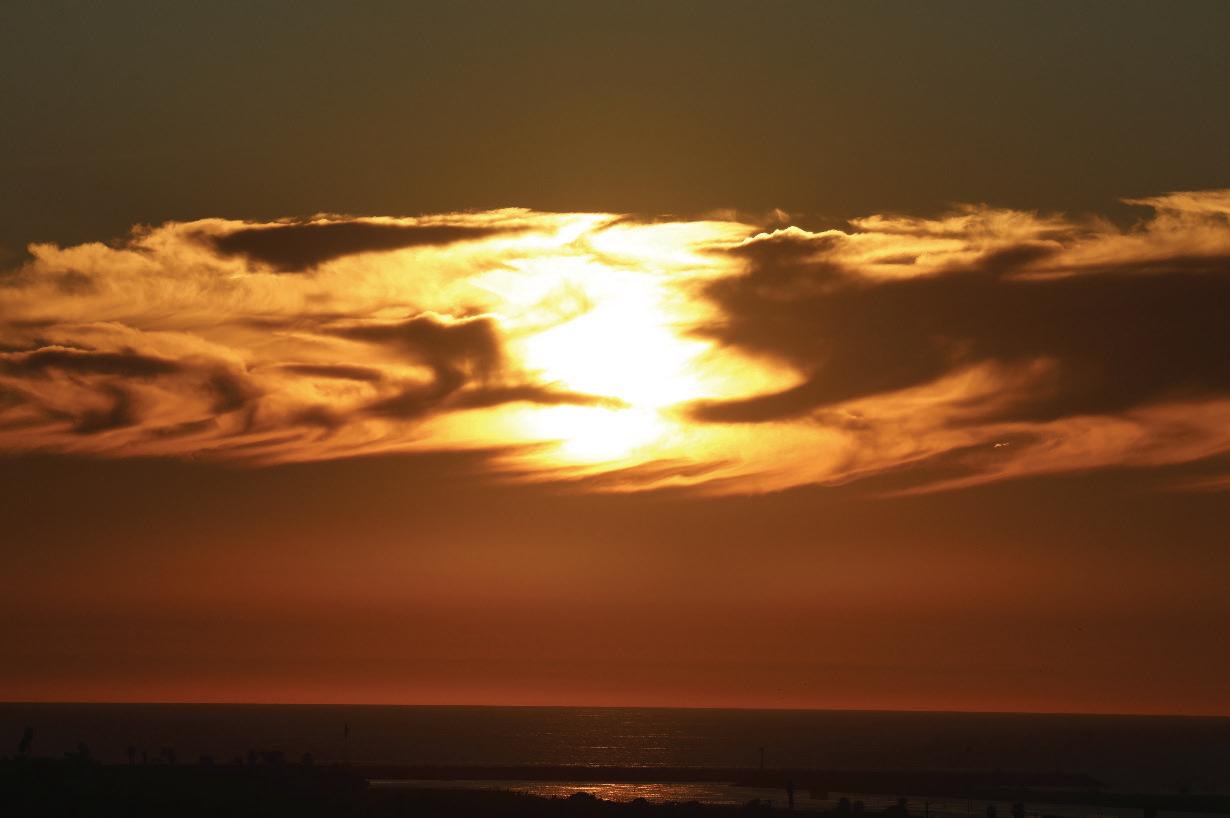
FIRE ON THE HORIZON • OWEN FRANKLIN
MANOS
JORY KURSH
How tough are these hands?
My fingers are bent & bowed.
The strung muscle and bone, reach out to hold lead and gold, but they are too heavy.
My tissue and sinew crave the sensation of silk. But that too can splinter and therefore, is heavy.
Bloated, open, and splayed. Pleading for rain, but too, water is heavy.
The wind is too thick. The air is too harsh. So I set my cravings down gently, forever do us part.
I WISH YOU WELL, HARTFORD POSTCARD
When I was born In the sixteenth age Stood and breathed the storm sewage air lying low blessed to rain
BRETT KOEHN
And delay the circus show And brush uncovered skin: the bronze street plates and grass shoulder blades
Well the stores opened empty The stones were worn faceless Beside the first church exorcised I left to rest in the gallery flood a hall of ancient mirrors and endless revolving faces
And when one hand had stopped And its partner ticked too slow: You would think I was alone clutching a train ticket home
Feeling your wet paper hand In the grass on my shoulder In the capital hall in the holy parchment stench of your old brick house basement
Now I see the porch sitters And park bench folk singers
know the names of the brick layers and spiritual soothsayers Who still haunt this past town When the storm clears With time to trade my graying cloaked company takes to the stage the tricksters silent and bow
The ruined mortar feels no pain The painted mouths speak no pining they’ve stopped carving towers and statues but there our faces hang still side-by-side like the constitution’s statutes
GETTY • STEPHANIE CHOI