
“Who We Are”
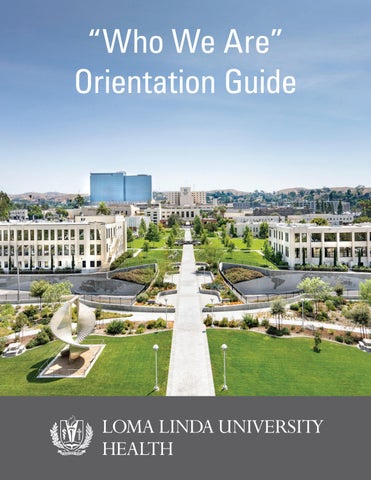
“Who We Are”
This orientation guide highlights who we are together as a team, introducing you to Loma Linda University Health (LLUH) and the Seventh-day Adventist faith that shapes our shared mission and values. It blends the clarity of an orientation resource with the distinctive heritage of LLUH. We are glad to begin this journey with you at LLUH, as together we discover and celebrate our inspiring history and identity.
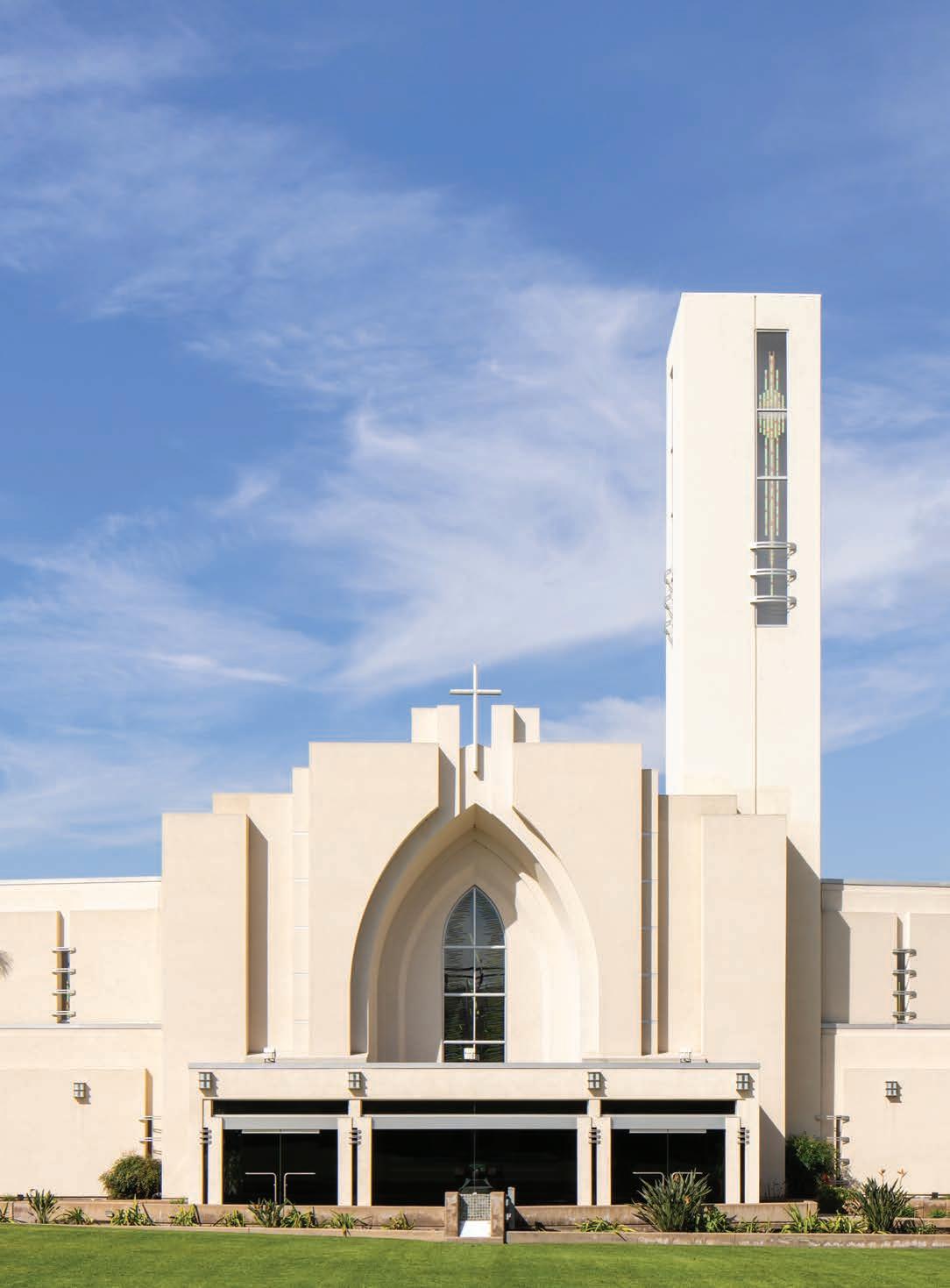
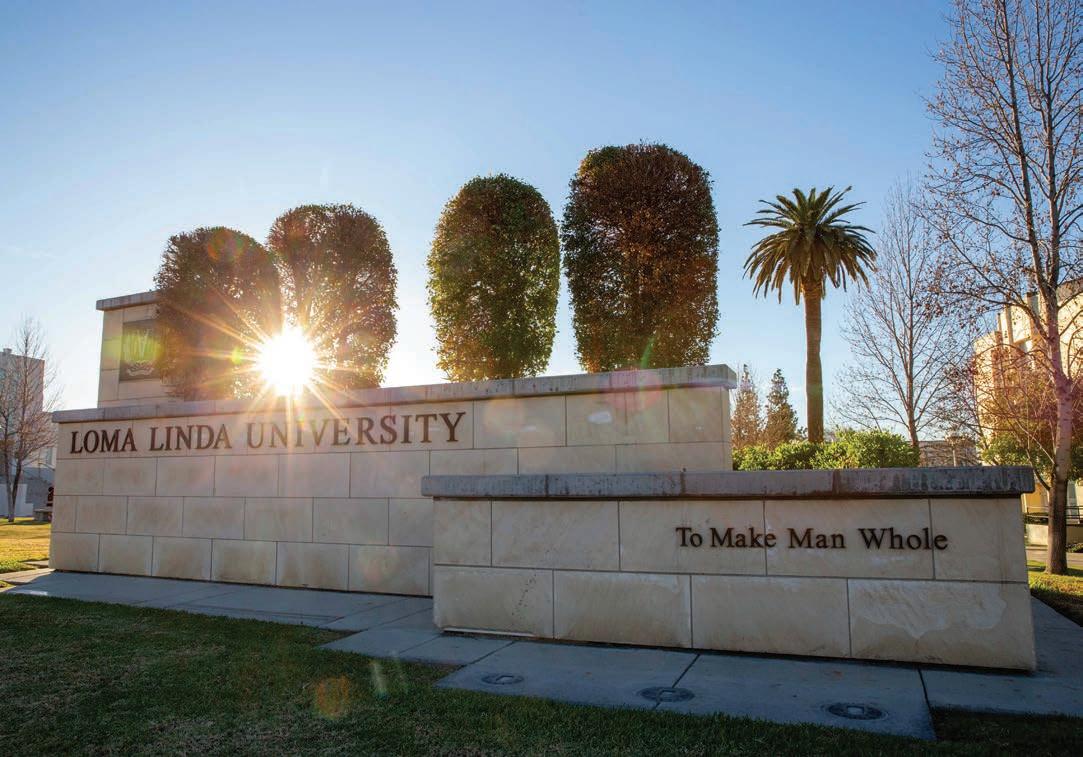
Loma Linda University Health is a faith-based academic health sciences center that includes Loma Linda University; the Loma Linda University Health hospital system and healthcare services; and Loma Linda University Faculty Medical Group and its clinical locations. For more than 120 years, Loma Linda University Health has combined teaching, research, and whole person healthcare with a Christ-centered mission serving both in the region and throughout the world.
LLUH exists to continue the teaching and healing ministry of Jesus Christ to a hurting and broken world. As a Seventh-day Adventist Christian health sciences organization, this mission is founded, motivated, animated, and sustained by key theological convictions drawn from Scripture (2 Timothy 3:16).

Key Highlights
• Eight professional schools with more than 4,500 students.
• A teaching hospital system with over 1,000 beds.
• Outreach programs on nearly every continent.
• A reputation for advancing whole person care: treating body, mind, and spirit.
Mission: To continue the teaching and healing ministry of Jesus Christ.
Vision: Transforming lives through education, healthcare, and research.
Our Values (C WITH Jesus’ Eyes):
• Compassion — Reflects the love of God with respect, mercy, and empathy.
Read: Matthew 25:40
• Wholeness — Actively living the Physical, Relational, Intellectual, Spiritual, and Mental (PRISM) principles within a loving relationship with God and shown through service to others.
Read: 1 Thessalonians 5:23
• Integrity — Carries out actions with honesty and trustworthiness.
Read: Proverbs 10:9
• Teamwork — Collaborates to achieve a shared purpose.
Read: Romans 12:4-5
• Humility — Puts self-importance aside for the greater good of others.
Read: Matthew 25:40
• Justice — Guided by Micah 6:8, we strive to act with justice, extend mercy, and walk humbly with God.
Read: Micah 6:8
• Excellence — Exceeds expectations with effectiveness, reliability, and efficiency.
Read: Colossians 3:23
Motto: To Make Man Whole
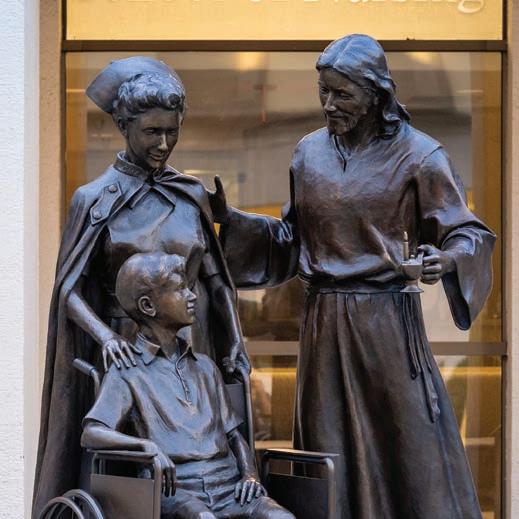
God has given you a special purpose and calling, and He designed your gifts to bless others.
Jeremiah 29:11
Your unique story and talents will add richness and beauty to our work together, just as the body of Christ is made complete when each part does its specific work.
1 Corinthians 12:12-14
• Decisions at LLUH are measured against these values.
• Our culture encourages accountability and empathy in every interaction.
• Excellence is not optional; it is a standard we hold ourselves to every day.
• Every role, whether at the bedside, in the classroom, or behind the scenes, is a calling and opportunity to live out C WITH Jesus’ Eyes.
The beginnings of the Seventh-day Adventist Church date back to the mid-1800s as part of a Christian renewal movement in North America. It found fertile soil in the hearts of those who had a deep yearning to forever be with Jesus. The thought of his soon return both sobered and thrilled their souls.
The Millerite Movement and the Great Disappointment
• William Miller, a Baptist preacher, studied biblical prophecy and concluded that Jesus would return around 1843-1844 (Daniel 8:14).
• Thousands followed this message, expecting Christ’s return on October 22, 1844.
• When Jesus did not return as expected, this experience became known as the Great Disappointment. This should be unsurprising as Matthew 24:36 reminds us that no one knows the exact day or hour.
• Many left the movement, but a small group returned to Scripture for deeper study.
• Among this group was a young woman, Ellen G. White (1827-1915). She experienced visions and offered guidance that helped the early Adventist believers understand the Bible more clearly.
• Her writings, covering Christian living, health, education, and prophecy, always point people back to Jesus and Scripture (Revelation 12:17; Revelation 19:10).
• Adventists see her as a recipient of the gift of prophecy, fully affirming biblical truth and encouraging a life of selfless service.
• By 1863, Adventists formally organized as the Seventh-day Adventist Church with 3,500 members and 30 ministers.
• The church is structured as:
» Local Church — where members worship and serve.
» Local Conference — groups of churches in a region.
» Union Conference — groups of local conferences covering a larger area.
» Division — major global regions of the world church.
» General Conference — the governing body, headquartered in Silver Spring, Maryland, appointed every five years by the global church constituency. It sets worldwide policy, coordinates mission, and promotes unity internationally and across cultures (Exodus 18:21-22 shows biblical foundations for shared leadership).
The Seventh-day Adventist Church is the most racially and ethnically diverse religious group in the United States not just among Christian denominations, but among all religions.* From its humble beginnings, it has grown into a global movement of more than 23 million members, united by faith in Jesus and a shared commitment to mission, health, and education.
ministrymagazinespectrummagazinepewresearch
*ministrymagazine.org/archive/2015/10/pew spectrummagazine.org/post-archives/seventh-day-adventist-church-most-racially-diverse-group-united-states pewresearch.org/short-reads/2015/07/27/the-most-and-least-racially-diverse-u-s-religious-groups
Every belief we have finds its meaning in Jesus Christ. From the start of the Seventh-day Adventist Church, Ellen G. White made it clear that Jesus, crucified on the Cross, and risen again, must be the center of all we do and are. Every teaching points back to Him — our hope, our Healer, our Teacher, and our returning Savior.
• God and the Bible — There is one God: Father, Son, and Holy Spirit (Matthew 28:19). The Bible is His inspired Word (2 Timothy 3:16-17).
• Salvation in Christ — We are saved by grace through faith in Jesus, and this is an unearned gift (Ephesians 2:8-9). Good works are the fruit of salvation, not the cause (James 2:17).
• The Great Controversy — Our world is part of a cosmic conflict between Christ and Satan (Revelation 12:7-9). God will ultimately triumph (Revelation 21:4).
• The Sabbath — The seventh day, Saturday, is God’s Sabbath of rest and worship (Genesis 2:2-3; Exodus 20:8-11; Luke 4:16).
• Hope in Christ’s Return — Jesus promised to return (John 14:1-3). His coming will be visible and worldwide (1 Thessalonians 4:16-17; Revelation 1:7).
• Whole Person Care — Our bodies are God’s temple (1 Corinthians 6:19-20). God calls us to live wholistically healthy, balanced lives (3 John 2).
• Mission — We are called to share the gospel with the whole world (Matthew 28:19-20; Revelation 14:6-7).
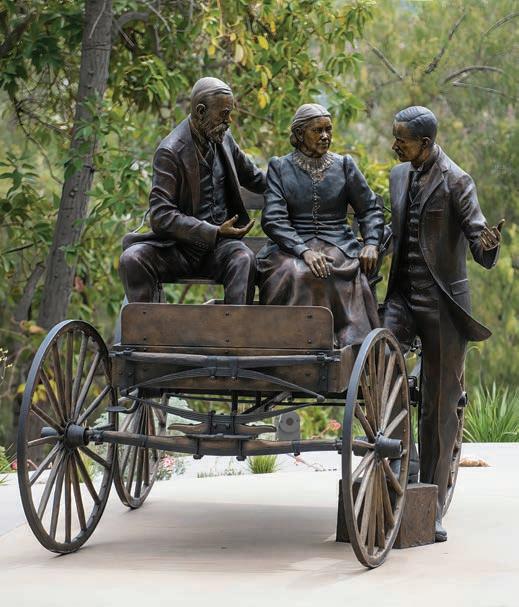
• At LLUH, culture is not just what we say, it is how we live.
• Dignity: Every person is valuable, created in God’s image (Genesis 1:27).
• Excellence: We commit to the highest professional and ethical standards (Colossians 3:23).
• Diversity: Our workforce is global and united by shared purpose (Galatians 3:28).
• Collaboration: We achieve more together through teamwork and respect (Ecclesiastes 4:9-10).
• Together, we work in an environment where professionalism and compassion intersect. As a team, we are dedicated to excellence in patient care, education, and service.
The Sabbath is at the very heart of the Seventh-day Adventist name and identity. “Seventh-day” refers to the biblical Sabbath, the seventh day of the week, Saturday, while “Adventist” highlights the hope in Christ’s second coming. Together, the name itself proclaims a key belief: God calls His people to remember the Sabbath and prepare for His return.
Biblical Foundation
• Creation: God rested on the seventh day and blessed it (Genesis 2:2-3).
• God’s Commandment: “Remember the Sabbath day, to keep it holy” (Exodus 20:8-11).
• Example of Jesus: “As His custom was, He went into the synagogue on the Sabbath day” (Luke 4:16).
• Promise for the future: “From one Sabbath to another, all flesh shall come to worship before Me” (Isaiah 66:22-23).
• The Sabbath is a weekly reminder that God is the Creator and Sustainer.
• It is a sign of our relationship with Him (Ezekiel 20:12).
• It provides physical rest, spiritual renewal, and time to reconnect with family, community, and God.
• It emphasizes grace: we stop from our own work and remember that salvation is God’s gift, not our achievement.
At LLUH
• Work schedules are managed with sensitivity to Sabbath observance.
• In healthcare and essential services, Sabbath work is seen as a continuation of Jesus’ healing ministry, caring for those in need (Matthew 12:12).
• Campus worship services, chapels, and cultural rhythms highlight the value of Sabbath rest and renewal.
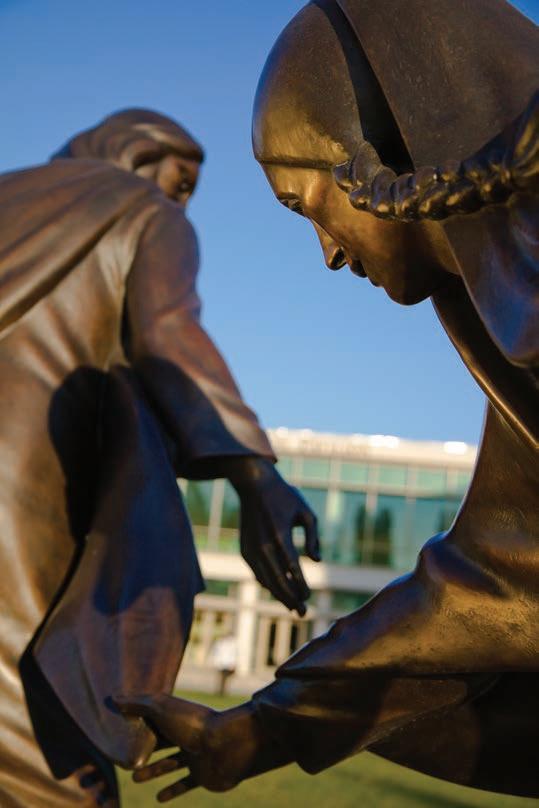
For all of us, understanding the Sabbath is essential because it reminds us why we exist as a Seventh-day Adventist institution. At LLUH, Sabbath is more than a tradition; it is part of who we are. It is central to our faith, our name, and our mission of whole-person care, caring for body, mind, and spirit. While not everyone may observe Sabbath in the same way, its principles of rest, renewal, and grace are gifts that benefit all. Sabbath reminds us that our worth is not found in constant work, but in God’s care for us.
A vibrant church life is the heartbeat of the Seventh-day Adventist experience. Every Saturday, members gather for Bible study, worship, fellowship, and service. This rhythm builds unity, strengthens faith, fosters better health, and provides a support system for believers and the community (Hebrews 10:25).
• Sabbath School: Interactive Bible study classes for all ages, from young children to adults.
• Worship Services: Congregational singing, prayer, and a sermon centered on God’s Word.
• Fellowship Meals: Sharing meals after church fosters community and inclusion.
• Ser vice Projects: Food drives, health fairs, housing assistance, and outreach to marginalized groups.
• Youth and Young Adult Ministries: Programs to empower the next generation in faith and leadership.
Love is central to God’s will and God’s ways, and love for others cannot be separated from love for God. Jesus provides this true revelation of God, who is often misrepresented and misunderstood. The expression and experience of God’s love is a dynamic and growing reality in the world and will one day, when Jesus returns, be a way of life for everyone. This anticipation nourishes hope in a day when all things will be renewed, and needless suffering and death will be eliminated (Luke 10:27-28 (see also Mark 12:29-31); 3 John 1:18; John 14:9; Luke 13:18-21; Revelation 21:4).
Jesus’ healing ministry was a demonstration of God’s love and healing power. The Hebrew prophets proclaimed God’s justice as care for the poor, the widow, the fatherless, and the migrant, and resistance to the social conditions that produce inequity. Jesus embraced that tradition, welcoming and extending healing to all who had need, especially to “the least of these.” God’s love and care extends deeply into all aspects of creation; Jesus drew many of his teachings from nature and taught that God notices even the sparrow that falls (Luke 9:11; Luke 11:20; Isaiah 1:17; Jeremiah 7:5-7; Zechariah 7:10; Matthew 25:45; Matthew 10:29).
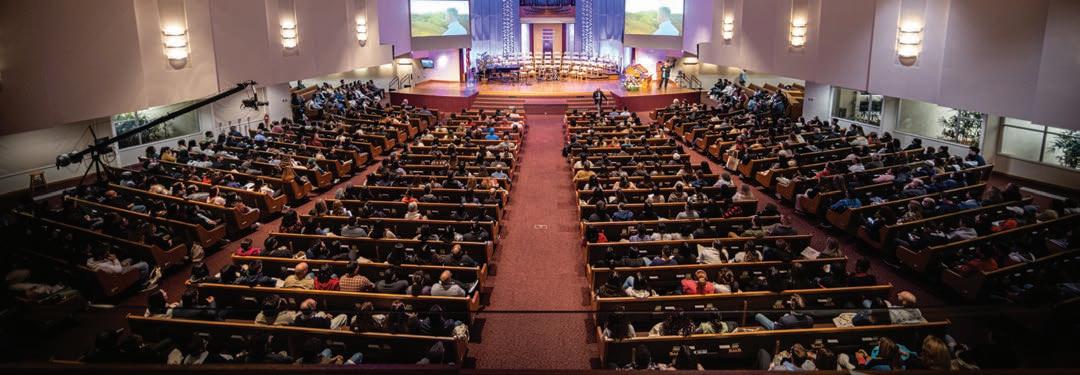
Loma Linda University Health is a vital arm of the Seventh-day Adventist Church’s worldwide mission. Rooted in our faith, we serve all including under-resourced communities across the globe through education, healthcare, and research.
1. Global Health Institute (GHI) — Coordinates service opportunities for students, staff, and faculty. Programs include SIMS (Students for International Mission Service), International Service Program (ISP), Deferred Mission Appointee, Global Service Award, and educational exchanges.
2. Global Campuses and Partner Sites — LLUH maintains international partnerships known as Global Campuses, beginning with Malamulo Adventist Hospital in Malawi, with planned expansions in Haiti and Nepal. These campuses serve as hubs for training, healthcare innovation, and community engagement.
3. Adventist Health International (AHI) — Based at Loma Linda, AHI strongly supports Adventist hospitals in developing nations by providing governance, technical support, improved systems, and training. AHI supports over 50 hospitals worldwide, including Africa, Asia, and the Americas.
4. Hands-on Outreach and Scholarships — LLUH provides mission scholarships to students and graduates serving overseas. The Global Service Award and Deferred Mission Appointee Program offer loan repayment in exchange for extended service abroad.
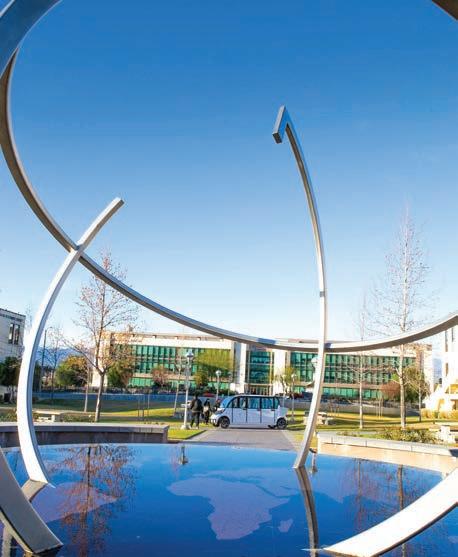
5. Strategic Infrastructure and Events — LLUH leads initiatives like the Global Healthcare Conference, gathering healthcare leaders from Adventist institutions worldwide. The Mission Globe on campus is a 26-foot engraved monument that honors staff and alumni who served internationally for at least one year.
• Together, we are part of a global movement, every contribution we make extends healthcare, education, and peace worldwide.
• We drive system-level change, building sustainable development and capacity in underserved regions.
• We carry forward a living legacy, continuing over a century of global healthcare outreach by LLUH.
At LLUH, professionalism and integrity guide us all. Together, we are called to live out our values each day, ensuring that every patient, student, and colleague experiences whole person care in every interaction.
• Live the “C WITH Jesus’ Eyes” Values Daily — every decision, action, and interaction should reflect our mission and values.
• Excellence and Safety — provide the highest quality of service and follow best practices to protect patients, students, colleagues, and yourself.
• Ac t With Justice and Extend Mercy — embrace people of all backgrounds, cultures, and beliefs, reflecting our global community.
• Whole Person Care — consider body, mind, and spirit in how you serve and interact with others.
• Ac countability — uphold ethical and professional standards, honoring the trust placed in you by patients, students, colleagues, and LLUH.
• Collaboration — work as part of a team, recognizing that our mission is achieved best when we support each other. Together we can do more.
At LLUH, we walk together in a partnership of excellence. Each of us brings skills, integrity, and compassion, while together we foster support, resources, and opportunities that enable us to live out our mission, to continue the teaching and healing ministry of Jesus Christ.

Mission, Vision, and Values
What unites Adventists worldwide?
Faith in Jesus Christ (Hebrews 12:2), commitment to living a life fully informed by Scripture (2 Timothy 3:16), and dedication to service (Matthew 25:35-36).
What is whole person care?
It is healthcare that considers body, mind, and spirit, reflecting the example of Jesus’ healing ministry (Luke 10:9).
How is spiritual care provided at LLUH?
LLUH offers chaplains, worship opportunities, prayer services, and pastoral counseling for all employees, learners, patients, and families, regardless of and sensitive to faith backgrounds.
Does LLUH support people of all faiths?
Yes. LLUH welcomes and respects people of all beliefs, supporting spiritual needs with compassion and inclusivity.
Do I need to be Adventist to work here?
No. We welcome all backgrounds who support our mission and values.
Who is Ellen G. White?
A co-founder and early Adventist leader, Ellen White emphasized and even made plain biblical counsel on faith, health, education, and service. Adventists believe her gift of prophecy points people back to the Bible, never replaces it.
From Creation, the seventh day was set apart (Genesis 2:2-3). Adventists honor it as God’s gift of rest (Isaiah 58:13-14).
Are Seventh-day Adventists really Christians?
Yes. Seventh-day Adventists are Christians who believe in the Bible, the Trinity (Father, Son, and Holy Spirit), and that salvation comes only through faith in Jesus Christ. They are recognized around the world as part of the Protestant Christian family, with millions of members, schools, hospitals, and humanitarian work that serve people everywhere. Unlike groups that reject central Christian teachings or follow a single human leader, Adventists share the core beliefs of historic Christianity.
Are all Adventists vegetarian?
Not all, but many choose plant-based diets of some sort. LLUH promotes healthy living for all (Daniel 1:12-15). The Adventist Health Studies coordinated by LLUH have yielded robust peer-reviewed evidence of the Adventist lifestyle, with Loma Linda included in the Blue Zones® of the world regarding longevity.
Seventh-day Adventists accept the Bible as their only creed and hold certain fundamental beliefs to be the teaching of the Holy Scriptures. These beliefs, as set forth here, constitute the church’s understanding and expression of the teaching of Scripture.
Revision of these statements may be expected at a quinquennial General Conference Session whenever the church is led by the Holy Spirit to a fuller understanding of Bible truth, or if better language is found to express these teachings of God’s Holy Word.
The expression of these concepts help provide an overall picture of what this Christian denomination collectively believes and practices. Together, these teachings reveal a God who is the architect of the world. In wisdom, grace and infinite love, He is actively working to restore a relationship with humanity that will last for eternity.
adventist.org/beliefs
God the Father, Son, and Holy Spirit — His Revelation and Work
• The Holy Scriptures — The Bible is the inspired Word of God, given for guidance and salvation (2 Timothy 3:16-17; 2 Peter 1:20-21; Psalm 119:105).
• The Trinity — There is one God: Father, Son, and Holy Spirit, a unity of three co-eternal persons (Matthew 28:19; 2 Corinthians 13:14; Deuteronomy 6:4).
• The Father — God the eternal Father is Creator, Source, and Sustainer of all (John 3:16; 1 Corinthians 8:6; James 1:17).
• The Son — Jesus Christ, fully God and fully man, lived, died, and rose again for our salvation (John 1:1-3, 14; Luke 19:10; Philippians 2:5-11).
• The Holy Spirit — God the eternal Spirit works actively to convict, guide, inspire, empower, and comfort (John 14:16-17, 26; Acts 1:8; Romans 8:26-27).
• Creation — God created the world in six days and rested the seventh day (Genesis 1-2; Exodus 20:8-11; Psalm 33:6, 9).
• The Nature of Humanity — Humans were made in God’s image but fell into sin and need redemption (Genesis 1:27; Genesis 3; Romans 3:23).
• The Great Controversy — A cosmic conflict between Christ and Satan that affects humanity (Revelation 12:7-9; 1 Peter 5:8; Revelation 20:10).
Salvation and the Christian Life
• The Life, Death, and Resurrection of Christ — Jesus’ sacrifice provides salvation (John 3:16; 1 Corinthians 15:3-4; Romans 5:8).
• The Experience of Salvation — Salvation is granted by grace through faith, and is a free and unearned gift from God. (Ephesians 2:8-9; John 1:12; Titus 3:5).
• Growing in Christ — Believers strive to grow daily in faith and obedience (Colossians 2:6-7; John 15:4-5; Philippians 3:12-14).
• The Church — The community of believers called to worship and serve (1 Corinthians 12:12-14; Ephesians 2:19-22; Matthew 18:20).
• The Remnant and Its Mission — God’s end-time people proclaim His commandments and the faith of Jesus (Revelation 12:17; Revelation 14:6-12; Matthew 28:19-20).
• Unity in the Body of Christ — All are equal and united in Christ (Galatians 3:28; John 17:20-23; Ephesians 4:3-6).
• Baptism — By immersion is a public symbol of faith and new life (Matthew 3:13-17; Acts 2:38; Romans 6:3-4).
• The Lord’s Supper — Communion as remembrance of Christ’s sacrifice and the promise of eternity one day with Jesus (1 Corinthians 11:23-26; John 13:14-15; Matthew 26:26-28).
• Spiritual Gifts and Ministries — God grants gifts to build up His church (1 Corinthians 12:4-11; Ephesians 4:11-13; Romans 12:6-8).
• The Gift of Prophecy — One of the gifts of the Spirit, seen in Ellen White’s ministry (Joel 2:28-29; Revelation 12:17; Revelation 19:10).
• The Law of God — The Ten Commandments remain binding expressions of God’s will and love (Exodus 20:1-17; Matthew 5:17-18; Romans 7:7).
• The Sabbath — The seventh day, Saturday, is a day of rest and worship (Genesis 2:2-3; Exodus 20:8-11; Isaiah 58:13-14; Luke 4:16).
• Stewardship — We are stewards of time, talents, and resources (Malachi 3:10; 1 Corinthians 4:2; Matthew 25:14-30).
• Christian Behavior — Christians live with purity, health, and joy (1 Corinthians 6:19-20; Philippians 4:8; 1 Peter 1:15-16).
• Marriage and the Family — is a lifelong union as divinely established in the Garden of Eden; families are to nurture love and faith (Genesis 2:24; Matthew 19:4-6; Ephesians 5:22-25).
• Christ’s Ministry in the Heavenly Sanctuary — Jesus intercedes for us as High Priest (Hebrews 8:1-2; Hebrews 9:24; 1 John 2:1).
• The Second Coming of Christ — Jesus will return visibly and gloriously, ending the Great Controversy (John 14:1-3; 1 Thessalonians 4:16-17; Revelation 1:7).
• Death and Resurrection — Death is sleep until resurrection (John 11:11-14; 1 Thessalonians 4:13-16; Ecclesiastes 9:5).
• The Millennium and the End of Sin — 1,000 years in heaven before final judgment and cleansing of the earth (Revelation 20:1-6; Revelation 21:1-4; Malachi 4:1-3).
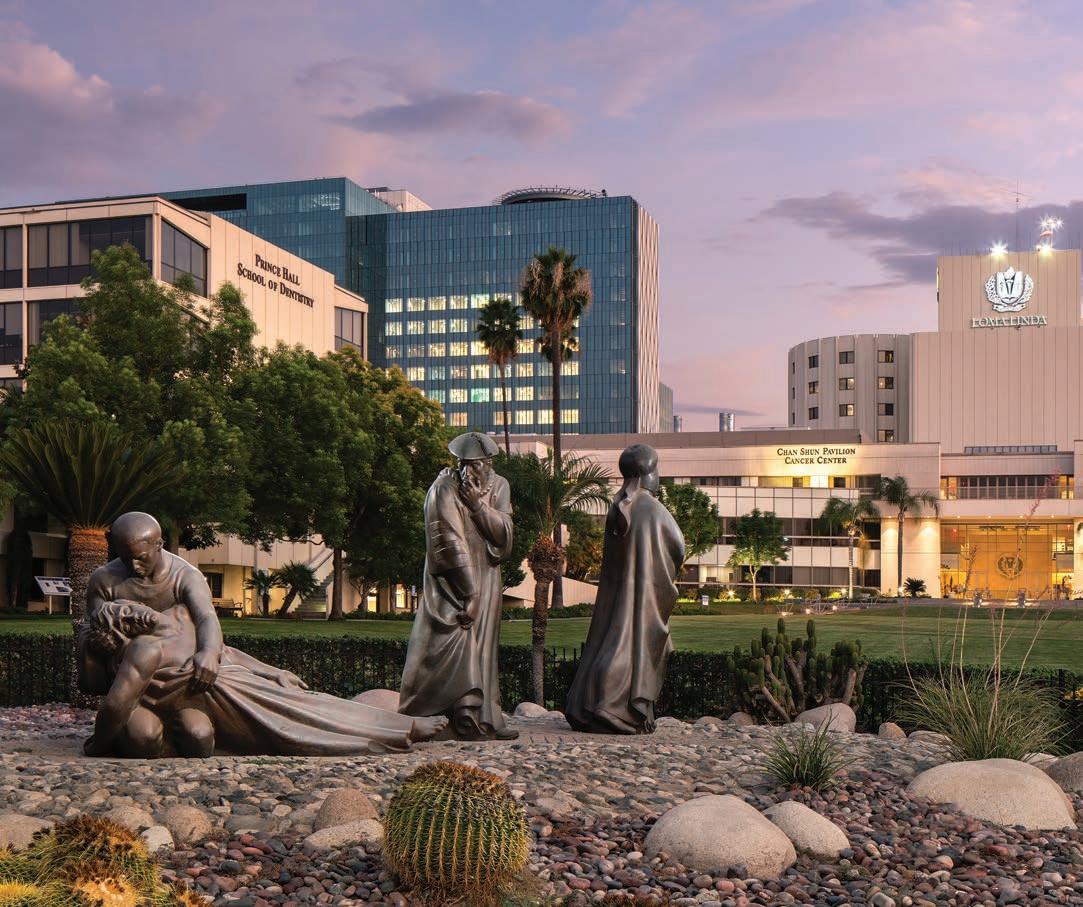
The Parable of the Good Samaritan (Luke 10:25-37) reflects the heart of Adventist community engagement. In the story told by Christ, a man is injured and ignored by others of his own faith, but a Samaritan stops to care for him binding his wounds, providing shelter, and ensuring his recovery. Jesus concluded, “Go and do likewise.”
This parable embodies the Adventist approach: compassion in action, serving neighbors with love, no matter their background.
Together, we are part of an organization where community service is not optional but central to who we are. Every act of kindness whether in the hospital, classroom, or community reflects our shared mission to continue the healing ministry of Jesus Christ.
Welcome to Loma Linda University Health. We are excited that you are part of our team. Here, your passion and talents will help transform lives through whole person care as we continue the teaching and healing ministry of Jesus Christ.
Many Strengths. One Mission.