Fiscal Year 2025
July 1, 2024 - June 30, 2025
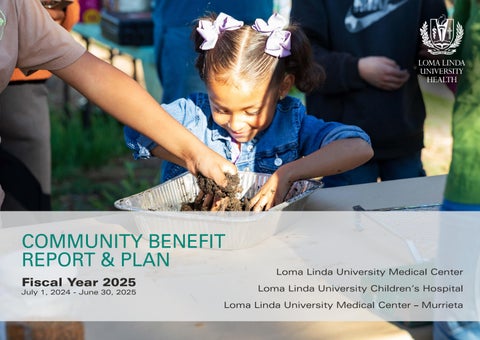
Fiscal Year 2025
July 1, 2024 - June 30, 2025
As we close the third year of our Community Benefit reporting cycle, we remain humbled by your trust. Each partnership and interaction reminds us that our mission to continue the teaching and healing ministry of Jesus Christ extends far beyond our hospital walls. We are guided by the words of Matthew 25:35 -40: “For I was hungry and you gave me food, I was thirsty and you gave me drink, I was a stranger and you welcomed me, I was naked and you clothed me, I was sick and you visited me, I was in prison and you came to me…Truly I tell you, whatever you did for one of these brothers and sisters of mine, you did for me.” This calling shaped our direct services and a deeper shift in FY 2025 toward upstream, multisolving investments that strengthen long-term community well-being.
You Gave Me Food and Drink. This call was reflected in emergency assistance and in efforts that expand opportunity. Together with our partners, we distributed food, housing vouchers, clothing, and essential items to thousands of low-income families in our region. We also invested in the future through 77 scholarships and stipends for underserved students, low-interest microloans and technical assistance for over 100 small businesses, and educational supports for vulnerable populations.
You Welcomed Me. Guided by the Vital Conditions for Health and Well-Being— especially the central role of belonging—we continued creating spaces that connect and uplift. In FY 2025, we invested over $100,000 in Jardín de la Salud, welcoming hundreds of community gatherings. Community Benefit investments also supported mental health support groups for justice-impacted individuals, mentor and kinship support for foster youth, and maternal mental health peer support groups for high-risk expectant mothers.
You Visited Me. Serving our region means meeting people where they are. This year, we strengthened street medicine partnerships, supported recuperative care, expanded home visitations through our Community Health Workers, and increased access to healthy food through mobile markets in local food deserts. These investments reflect our commitment to equitable access and innovative approaches that reach those most in need.
As we transition into our next three-year Community Health Implementation Strategy, shaped by the voices of more than 1,000 community members, we remain committed to investing in the root causes of health, strengthening belonging, and expanding opportunity. Thank you for your partnership, resilience, and trust. Together, we continue building a healthier, more equitable Inland Empire.
Hilliard, MD, FACC Chief Executive Officer

DrPH President

Vice President
Loma Linda University Health (LLUH) is committed to improving economic mobility, advancing health equity, increasing access to wellness resources, and improving maternal and child health outcomes, while remaining relevant and responsive to evolving needs in the Inland Empire.This FY 2025 Community Benefit Annual Report and Plan, on behalf of our three licensed hospitals, highlights these goals within and beyond the walls of our hospitals. As the third and final year of our 3-year Community Health Implementation Strategy (FY 2023-2025), this report highlights the impact of our community investments:
In FY 2025, LLUH prioritized underrepresented and first-generation students pursuing careers in health through 44 free academic tutoring sessions for elementary students through La Escuelita; hosting 290 middle school students on campus to explore health careers through MyCampus; welcoming 71 high school students for an immersive three-week, on-campus Discovery program, now in its 20th consecutive year; awarding 56 scholarships or stipends through
three nonprofit community partners via the Community Health Investment Awards; and providing 21 Community Benefit Graduate Scholarships across 13 health-focused academic disciplines. By supporting local students at multiple stages of their educational journey, LLUH helps strengthen a healthcare workforce that reflects and serves a growing Inland Empire.
In FY 2025, LLUH expanded charity care access by strengthening internal financial assistance systems and piloting a regional outreach initiative with Community Health Workers to increase awareness of charity care and support applications. LLUH’s charity care increased from $13.2 million to $52.7 million year over year. The regional pilot supported applications across more than 20 Inland Empire hospitals, with $375k in charity care forgiveness confirmed to date. Additional initiatives advanced environmental stewardship efforts by reducing the environmental footprint of anesthesia care, implementing waste reduction strategies, and expanding sustainability communications to engage more than 20,000 employees, students and faculty. LLUH also broke ground on a new Children’s Health Specialty Clinic that will bring more than 20 pediatric specialties together in one coordinated location. The clinic is expected to open in 2026 and support more than 75,000 outpatient visits annually.
LLUH listened and responded to community needs by serving 2,367 unique families through its Community Health Worker workforce, conducting over 3,000 home visits through the Community Health and Education Worker workforce, and hosting 152 community gatherings at our 1.8-acre Jardín de la Salud. In addition, LLUH deployed over $200k in emergency year-end funding to provide temporary housing assistance and supportive services as a bridge while CHWs connected patients to long-term housing solutions, street medicine, and recuperative care. This funding also responded to sudden budget cuts experienced across the nonprofit sector including preventing the closure of a transitional housing program for survivors of domestic violence that kept 10 women and 24 children safely housed and cared for.
Our FY 2025 Community Benefit Annual Report and Plan celebrates the transformative impact that is possible when trusted community partnerships come together. As we reflect on the final year of our Implementation Strategy and prepare for the next three-year cycle, we remain grateful to work alongside a resilient and asset-rich region committed to building a healthier Inland Empire.









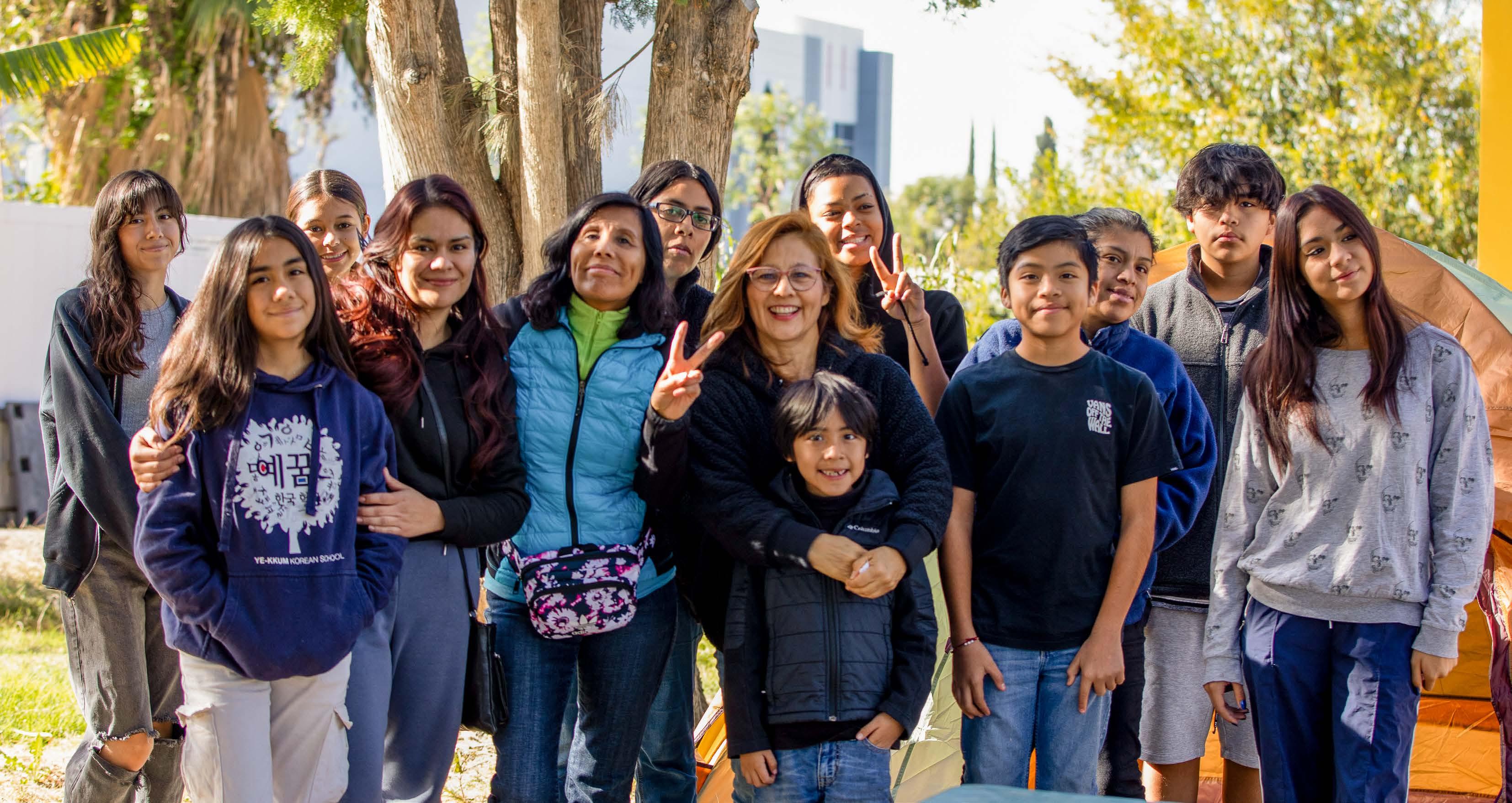
LLUH is a Level One Trauma Center and key safety-net provider for the Inland Empire. The Riverside-San Bernardino-Ontario metropolitan area is expected to grow from 4.6 million to 7.2 million people by 2050, which will make it one of the top 10 most populous metropolitan areas in the United States. The region currently faces severe problems with health disparities and poor health outcomes, which could be exacerbated by rapid population growth if left unaddressed. San Bernardino and Riverside Counties span over 27,000 square miles, representing more than 16% of California’s total landmass. The two counties are home to some of the most diverse peoples in California, with Latinos representing a majority of the population.
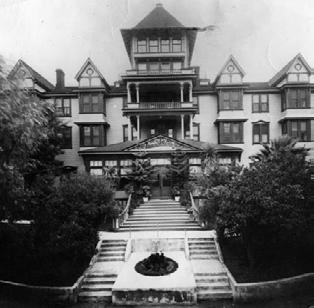
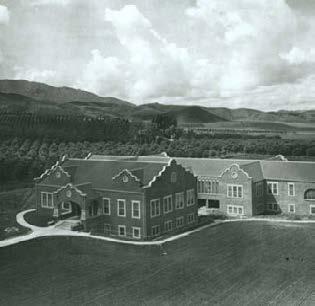
Sanitarium Pioneer
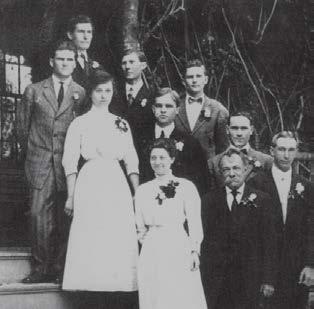
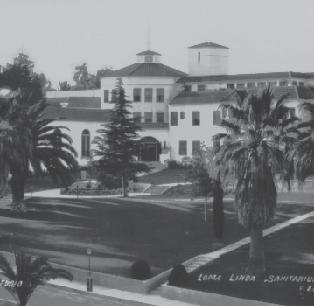
Ellen G. White, a pioneer of the Seventh-day Adventist Church, advocates purchasing Loma Linda property as a future sanitarium. It accepts its first nursing students in 1905. The College of Medical Evangelists (CME) is incorporated in 1909.
Loma Linda Sanitarium consolidates with CME. Temporary hospital facilities open in 1912, with Loma Linda Hospital officially opening in December 1913.
CME Physicians Graduate
First physicians graduate from CME in 1914. Board authorizes purchase of Ellen G. White Memorial Hospital site. First unit of the second hospital is completed in 1924.
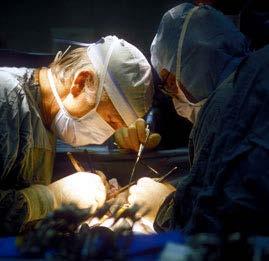
Groundbreaking ceremony for Loma Linda University Medical Center held in 1964. It accepts its first patients in 1967. LLUMC becomes the regional trauma center for Riverside, Inyo, Mono, and San Bernardino Counties in 1980. Loma Linda Community Hospital is purchased by LLUMC in 1982.
Second hospital opens for patients in 1929. Over the next three decades, the school expands educational opportunities. CME officially becomes Loma Linda University.
Outpatient Surgery Center opens in 1987. Behavioral Medicine Center opens in 1991. Loma Linda University Children’s Hospital opens in 1993. LLUMC first recognized by US News and World Report as one of "America’s Best Hospitals” in 1998.
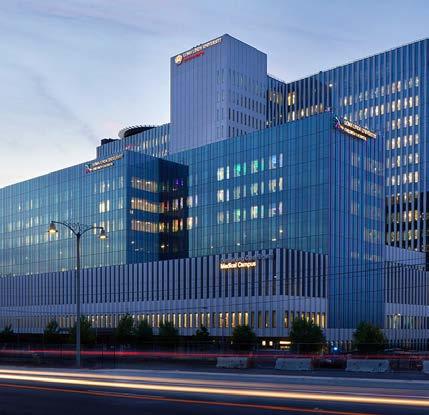
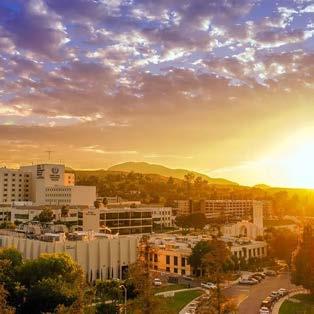
Vision 2020 Success In 2014, Vision 2020 is launched to construct a new LLUMC and LLUCH building to improve patient care and achieve earthquake compliance. Completed state-of-the-art hospital opens in 2021.
Loma Linda University Health (LLUH) system uses a unique best-practice model for implementing community benefits in order to maximize the collective impact of our investment programs:
• Since 2012, all licensed hospitals within the LLUH system have centralized the implementation and reporting of their community benefit investments through the Institute for Community Partnerships to better align and implement their community health investments. LLUH reports programmatically at the health system level to better coordinate and enhance community benefit strategies.
• Communit y benefit expenditures are reported annually and separately on each licensed hospital’s 990 Schedule H. They
are based on the individual hospitals financials with attentive management to both the collective and individual programs, activities, and outcomes reported in the annual system community benefit report, in compliance with the ACA (2010) and California’s AB 204 (2019).
• This centralized model allows the hospitals to improve the efficacy of the Community Health Implementation Strategy (CHIS) for implementing programs and collaborating with partner organizations.
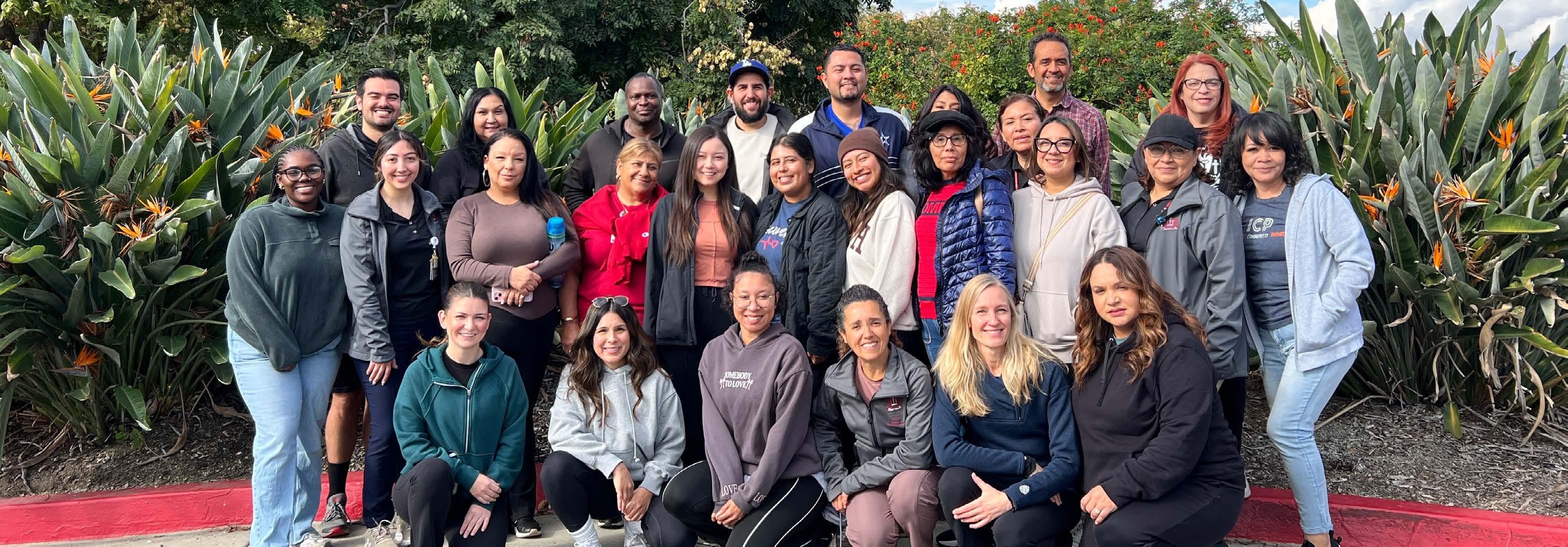
The Institute works strategically with our regional partners to better address community needs. ICP implements the LLUH-operated community benefit programs and provides the research component necessary to better target health system interventions for under-resourced community populations. ICP oversees the Office of Community Health Development to ensure strategic investments with partner organizations and coordinate the reporting of community benefit outcomes on behalf of LLUH. This model prioritizes LLUH’s focus on the social drivers of health and improved access to care for vulnerable populations.
To ensure Loma Linda University Health is relevant and responsive to the community.
We envision a thriving Inland Empire community where every person has a safe and healthy place to live, grow, learn and play. We do this through transformational community partnerships addressing the root causes of inequities and by inspiring future generations of health care leaders to work alongside the community and develop a lifelong love of service.
Community Benefit Accounting Categories
Community Benefit is reported according to four major categories subdivided into different types of activities on each hospital’s IRS Form 990, Schedule H.
Community Benefit investment dollars are also reported programmatically in this report by priority area and outcome in fulfillment of LLUH’s current implementation strategy. While all expenditures are reported per fiscal year, programs and outcomes reporting may span multiple years. ICP and the hospital finance teams review all community benefit categories as well as program and operational costs to ensure cost accounting expenses incurred are reported per licensed hospital in
this annual community benefit report. In addition, programs and outcomes may have offsetting grant revenue that is NOT included in the Community Health Benefit financials. For purposes of Community Benefit reporting, ICP has only reported its cost above the grant in its hospital Community Benefit dollars.
NOTE: Programs that include an asterisk (*) in the title are funded primarily by external grants, but may include countable costs such as staff time, non-grant funded expenses or other qualifying expenses per Community Benefit guidelines.
Economic Value (FY 2025): $257,116,468
**Total Community Benefit investments are based on hospital-reviewed financial statements and are reported on each hospital’s IRS Form 990, Schedule H. For full category definitions, please find a detailed description in the appendix section, “Community Benefit Accounting Definitions”.
$257.11 M Inland Empire Service Region
FISCAL YEAR JULY 1ST, 2024 - JUNE 30TH, 2025
Our commitment to Community Benefit begins by undertaking a comprehensive Community Health Needs Assessment (CHNA) every three years. This assessment helps LLUH identify the most pressing unmet health needs and opportunities for community members in our hospitals’ service region encompassing both San Bernardino and Riverside Counties. We actively engage with public health leaders, collaborate with hospital partners, and work alongside community-based organizations throughout the CHNA process. This assessment marks the initial phase of a multiyear strategic community investment plan.
The insights derived from the CHNA process serve as our “North Star” in addressing unmet health needs and promoting health equity within the region They play a pivotal role in shaping decisions on the optimal use of our human and financial resources to enhance community well-being. It is from this CHNA that we formulate our Community Health Implementation Strategy, which outlines the specific actions we will take to improve community health during the next three years.
In 2022, with the support of more than 20 dedicated partner organizations, we heard and learned from nearly 1,000 unique community members. The top health challenges that emerged across the community were:
Mental Health
The stress and isolation from the pandemic have had devastating effects on nearly every community and population across the region.
Because health inequities are so deeply rooted in our social systems and structures, solutions must also extend beyond the walls of the hospital. The community identified the following factors as having the greatest potential for improving health outcomes in our region: workforce development, youth education, food security, access to healthcare, behavioral health support, safe and affordable housing, access to green spaces and community safety. LLUH’s strategy focuses on improving these underlying social and environmental factors that contribute to health and well-being.
Heart Disease and Diabetes
These remain leading causes of preventable death and morbidity in the Inland Empire.
Maternal and Child Health
The huge disparities in maternal and infant mortality for ethnically-diverse populations have worsened during the past few years.
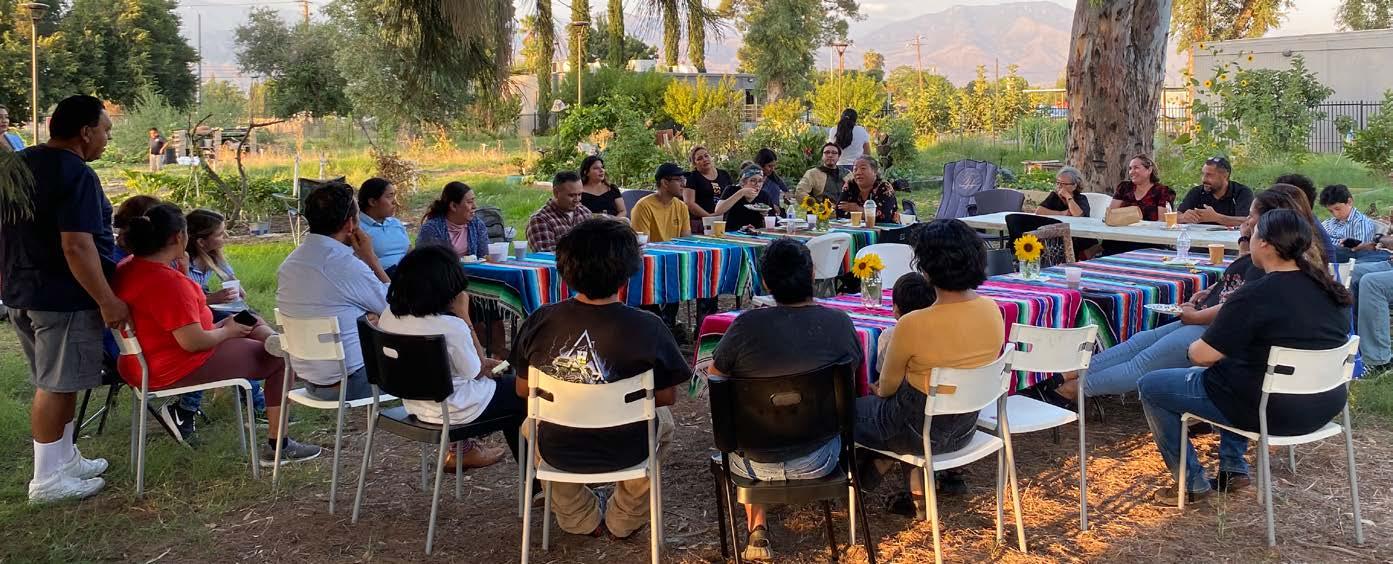
Accelerating impact through the Vital Conditions Framework
In FY 2025, LLUH deepened its integration of the Vital Conditions for Health and Well-being Framework into its assessments, reports, programming and regional collaborations. This innovative framework identifies seven vital conditions required for individuals and communities to achieve their full potential. It has significantly shaped our efforts by helping us identify “multi-solvers” programs and investments that yield benefits across multiple areas. It has also revealed gaps and blind spots, enabling us to address unmet needs and strengthen crosssector collaboration through a shared language. These insights have informed implementation strategies, including our Community Health Investment Awards and direct programming. Throughout this report, we have included symbols to illustrate which Vital Conditions our programs and investments aim to impact.
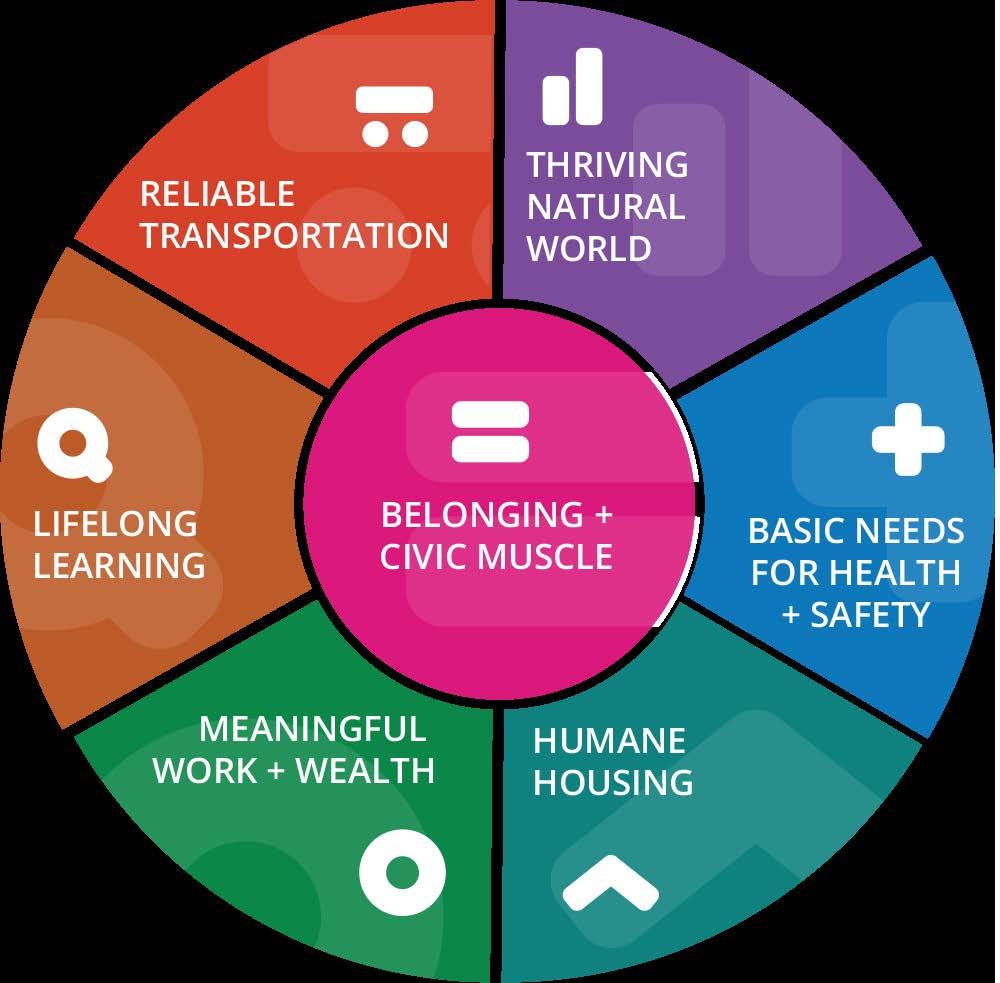
LLUH collaborates with the Inland Empire Vital Conditions Network, a regional initiative dedicated to advancing equitable well-being for all residents of California’s Inland Empire. As a “Network-of-Networks”, this initiative unites diverse sectors to collectively address the seven Vital Conditions. By fostering shared stewardship and leveraging existing strengths, the network aims to create a future where all people and places thrive without exception. Learn more and join the network.
THE VITAL CONDITIONS CONTINUE TO INSPIRE AND SURPRISE US.
EACH TIME WE INTEGRATE THEM MORE DEEPLY INTO OUR WORK, FRESH OPPORTUNITIES EMERGE—CLARIFYING COMPLEXITY, SPARKING BOLD IDEAS, AND OPENING NEW PATHWAYS FOR COLLECTIVE IMPACT.
The 3-year Community Health Implementation Strategy (English and Spanish) outlines the goals, actions, and metrics for measuring outcomes and evaluating impact for each of our Community Benefit targets. These focused initiatives aim to enhance economic advancement, promote health equity, expand access to health and wellness resources, and improve maternal and child health outcomes. The strategy is designed to leverage the distinctive strengths of the hospital system, partner organizations, and the community to achieve these goals.
Improve economic mobility through educational and workforce opportunities
Increase access to health and wellness resources
maternal and child health outcomes
STRATEGY Introduce underserved middle and high school students to careers in health
65 high school students participate in the 2-week Discovery program to prepare for college and explore different health professions.
Host 3 My Campus sessions to expose minoritized students to health professions; reach 120 students.
25 students in the Transition 2 Success program receive support from mentors in their health discipline of interest.
90 middle school students participate in Junior High School Science Fair.
Organize Robotics Simulation events inspiring STEM and health careers; engage at least 30 high school students.
71 program graduates from 33 different high schools in the region
290 students participated in 4 My Campus Events
Restructuring and aiming to expand mentorship program to all schools
Science Fair was merged with My Campus
STRATEGY Support educational and workforce opportunities for youth and adults from under-resourced communities FY 2025 METRICS RESULTS
Provide 50 scholarships/stipends to at-promise youth in the region to support their transition to higher education.
Provide 9 scholarships to underrepresented minority students who are currently pursuing higher education programs in health-related fields.
The La Escuelita program will provide free weekly academic tutoring and music lessons to elementary age students from San Bernardino, as well as educational workshops for their parents; Children participate in 350 academic tutoring sessions and 225 music lessons annually; Parents participate in 25 educational workshops annually.
56 scholarships/stipends provided through 3 partner organizations
21 scholarships awarded to students pursuing 13 different areas within health-related fields
Children participated in 44 academic tutoring sessions and 53 music lessons; parents participated in educational workshops. Educational workshops merged with Parent Health Institute.
27 students participated in 2 events
Invest in workforce development with communitybased partners and government to increase outreach to marginalized and specialty populations and their access to livable wage-paying jobs.
8 partner organizations in the region received LLUH investment focused on workforce development
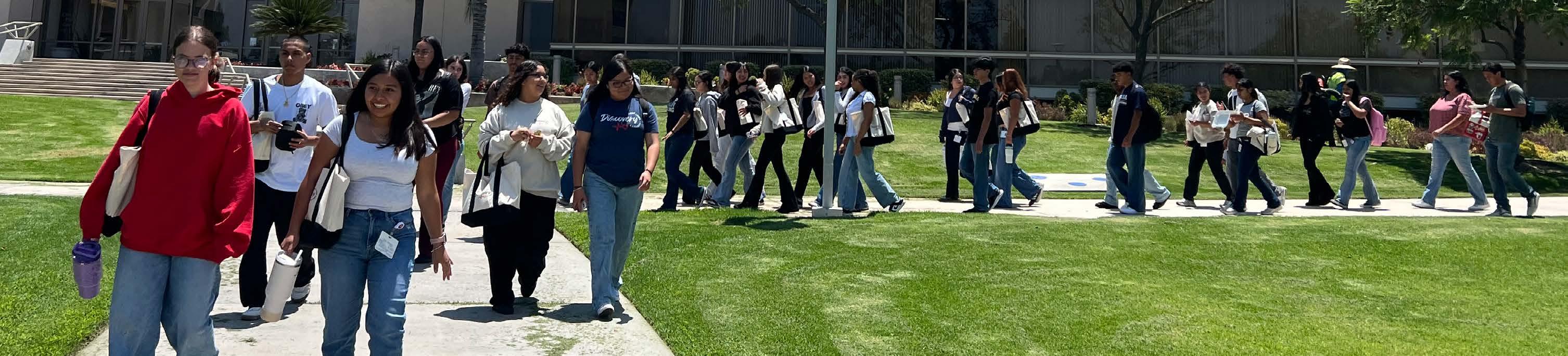
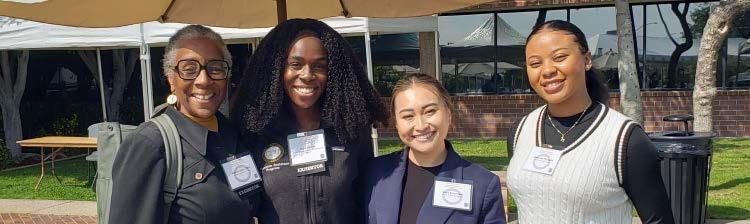
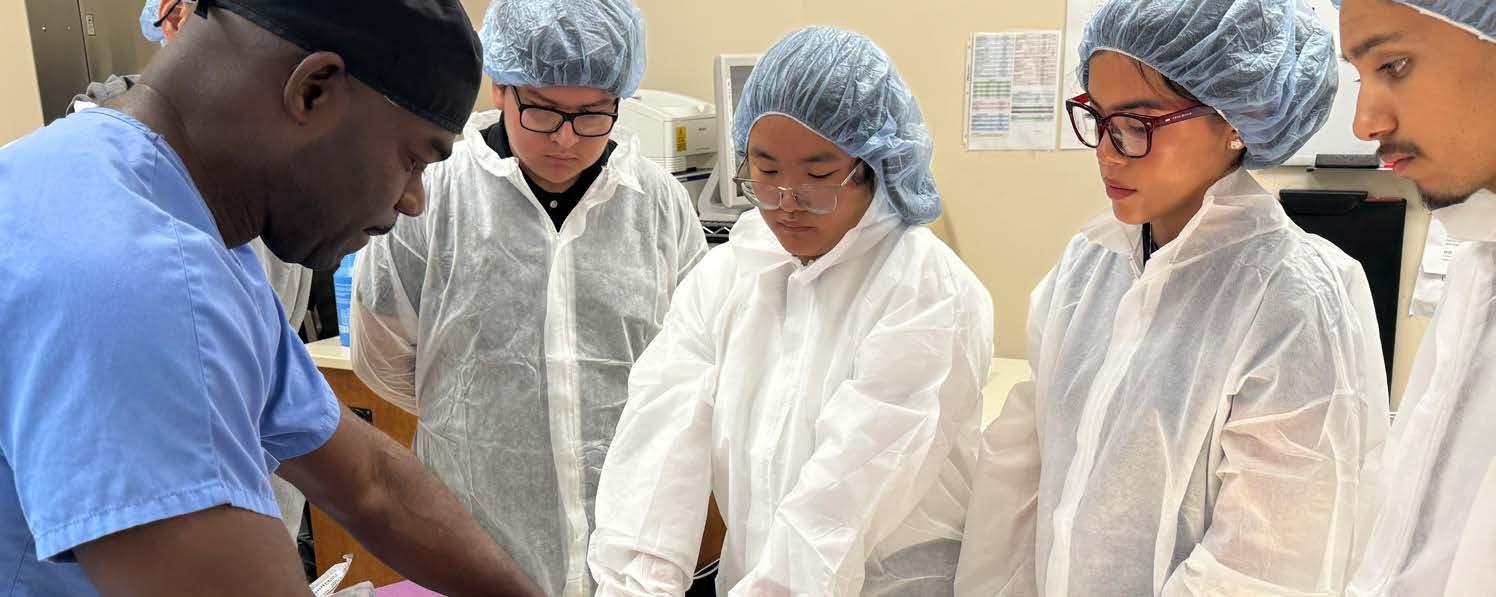
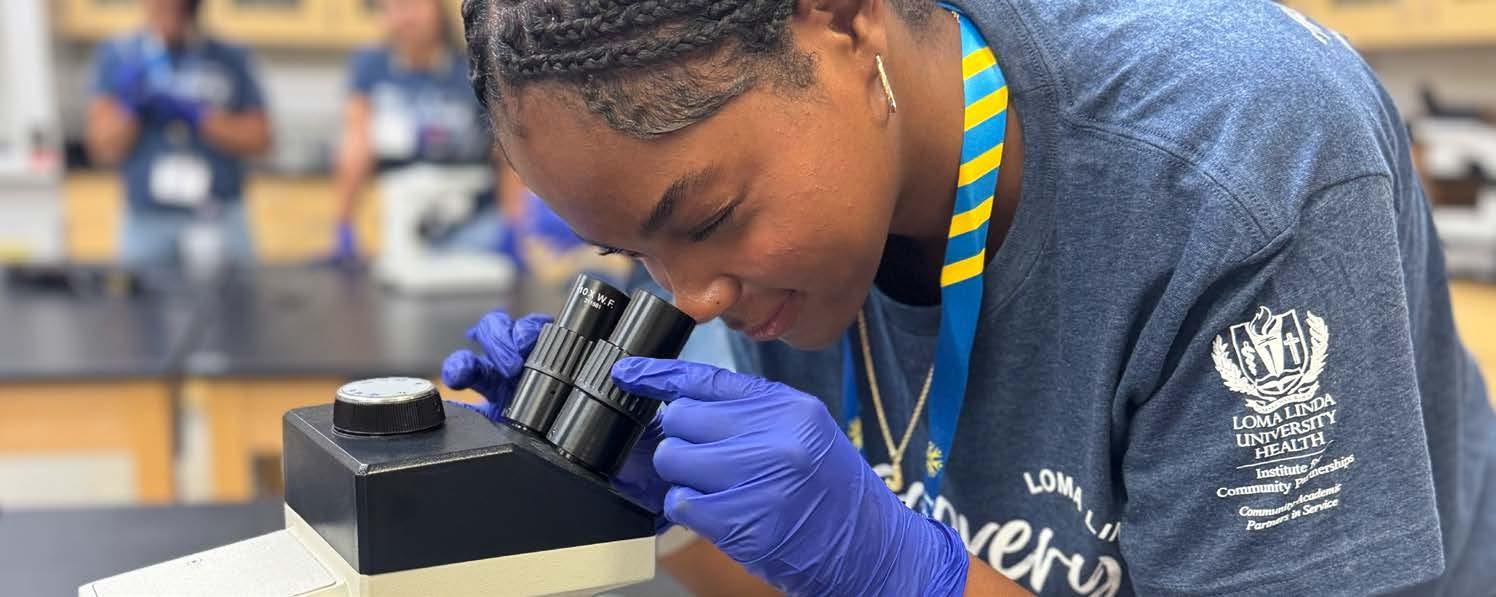
In 2025, Loma Linda University Health celebrated the 20th anniversary of its Discovery Program, an immersive summer initiative that introduces Inland Empire high school students from underrepresented and first-generation backgrounds to careers in the health professions. Formerly known as Sí Se Puede and the Summer Gateway Program, Discovery has become a cornerstone of LLUH’s health workforce pathway efforts.
This year, 71 students participated in the three-week, on-campus program. The experience included two weeks of interactive presentations, hands-on workshops, research projects, and service-learning opportunities, with an optional third week of clinical shadowing across LLUH medical center and outpatient clinics. Together, these experiences help students build academic confidence, explore health careers, and envision themselves in future roles across medicine, nursing, pharmacy, and related fields.
The program’s impact came full circle with this year’s keynote speaker, Daniel Samano, MD—one of Discovery’s first graduates in 2007. Dr. Samano now works as a family medicine physician in the Inland Empire and continues to give back to the community that once uplifted his dreams.
Led by Community-Academic Partners in Service within the Institute for Community Partnerships, Discovery is grounded in the belief that strengthening the healthcare workforce begins with supporting students from this region—so future providers reflect and serve the communities they call home, especially as local healthcare needs continue to grow.


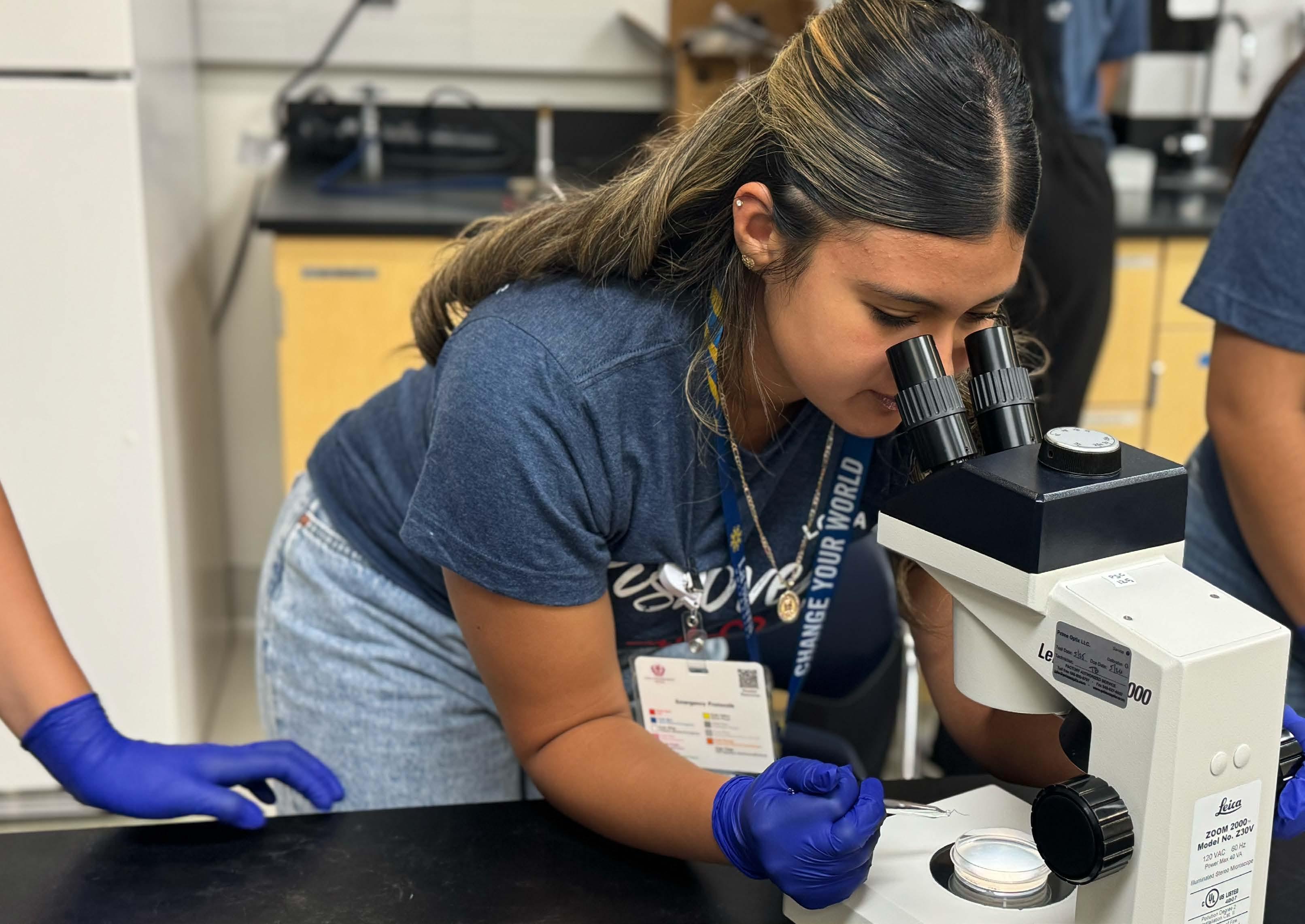
“I WOULD DEFINITELY RECOMMEND THIS PROGRAM. IT WAS FUN, AND IT WAS A LEARNING EXPERIENCE THAT I WOULD HAVE NEVER WANTED TO PASS UP… I GOT TO SEE DIFFERENT FIELDS THAT I MAY WANT TO GO INTO, AND IT WAS VERY EDUCATIONAL.”


Investing in the Next Generation of Health Leaders
Loma Linda University Health recognizes that improving economic mobility through educational and workforce opportunities depends on strong, trusted partnerships. One of these key anchor partners is Health Career Connection (HCC), whose mission is to inspire and empower the next generation of health and public health leaders. HCC partners with nonprofit host sites to provide paid internships for local youth—creating early career pathways that support the region’s health workforce.
In FY 2025, LLUH invested $95,850 to support its partnership with HCC, including an 11-month fellow who mentored 25 interns, led the Behavioral Health Careers Coalition (BHCC), and supported four site-based internships in the Inland Empire. Founded in 2022 with LLUH seed funding, BHCC responds to regional behavioral health needs identified through the FY2022 CHNA and supports alumni pursuing behavioral health careers.
This partnership extends beyond financial investment. By leveraging long-standing community relationships, LLUH introduced HCC to five new nonprofit host sites—expanding internship opportunities, supporting local organizations, and providing hands-on experience for future healthcare professionals in the Inland Empire. Over the past three years, 19 HCC alumni have gone on to pursue MD, DO, and PA programs, contributing to the next generation of healthcare providers serving the Inland Empire.
• 97% said HCC was important to their career and education
• 95% had a better understanding of graduate school pathways
• 87% built a stronger professional network
• 98% felt more confident pursuing their health career goals
STRATEGY Identify social determinants of health through screenings; refer those in need of social services
FY 2025 METRICS RESULTS
Integrate Social Determinants of Health (SDOH) screening tool in EPIC across licensed hospitals.
Expand Help Me Grow Inland Empire to link more children (ages 0-8) with prevention and early intervention services.
Rolled out SDOH Screening tool in EPIC for all inpatients on November 27, 2023; 21,057 patients screened (74%).
STRATEGY Address food insecurity through access to healthy and affordable food options, community gardens, and safe green spaces
FY 2025 METRICS RESULTS
Expand Jardín de la Salud in San Bernardino into a community center, fostering local engagement in educational activities for healthy lifestyles and food sovereignty.
15,592 children screened in FY 2025 (40% increase over FY 2024); the Access Center served 2,685 unique children and families.
STRATEGY Expand Community Health Worker integration in school districts and hospital systems
2025 METRICS
Create new full-time Community Health Worker positions with benefits; increase the number of CHW positions from 9 to 20 by FY 2025.
15 full time CHWs are currently employed; 2 CHW Program Managers hired for program expansion.
Facilitate healthy food access for local families in need; distribute 5,000 pounds of fresh produce weekly to 300 families, and provide 4,000 nonperishable food boxes annually.
$105,731 investment; hosted 152 events and activities hosted at the community garden.
Distributed more than 5,000 pounds of fresh produce weekly to an average of 320 families at 25 fresh produce weekly events in FY 2025, serving 7,200 families over the course of the fiscal year; 2,250 nonperishable food boxes distributed.
STRATEGY Increase access to health insurance for vulnerable populations
FY 2025 METRICS RESULTS
Collaborate with regional partners to assist 840 uninsured residents with Medi-Cal enrollment; Conduct outreach to 17,500+ people.
Strengthen LLUH’s hospital-based Community Health Worker program to address system barriers that lead to inequities for patients; CHWs reach 700 families.
2,367 families served
Community Health and Education Workers conduct 1,000 home visits to address the social determinants of health and education for students and families.
3,173 home visits were conducted throughout 2 school districts
295 applications submitted; program did not continue in FY 2025 as originally planned due to state budget cuts.
STRATEGY Provide outdoor opportunities to strengthen the physical, mental and emotional well-being for youth in under-resourced communities for youth living in underserved communities
FY 2025 METRICS RESULTS
Engage 375 participants in SHiNE Program to empower youth and families through outdoor leadership education, environmental justice engagement, and access to nature.
Provide technical assistance to local school districts on partnerships for land use agreements to increase access to green spaces for community members.
400 participants have attended SHiNE programming
Deferred land use initiative; prioritized other impactful projects.
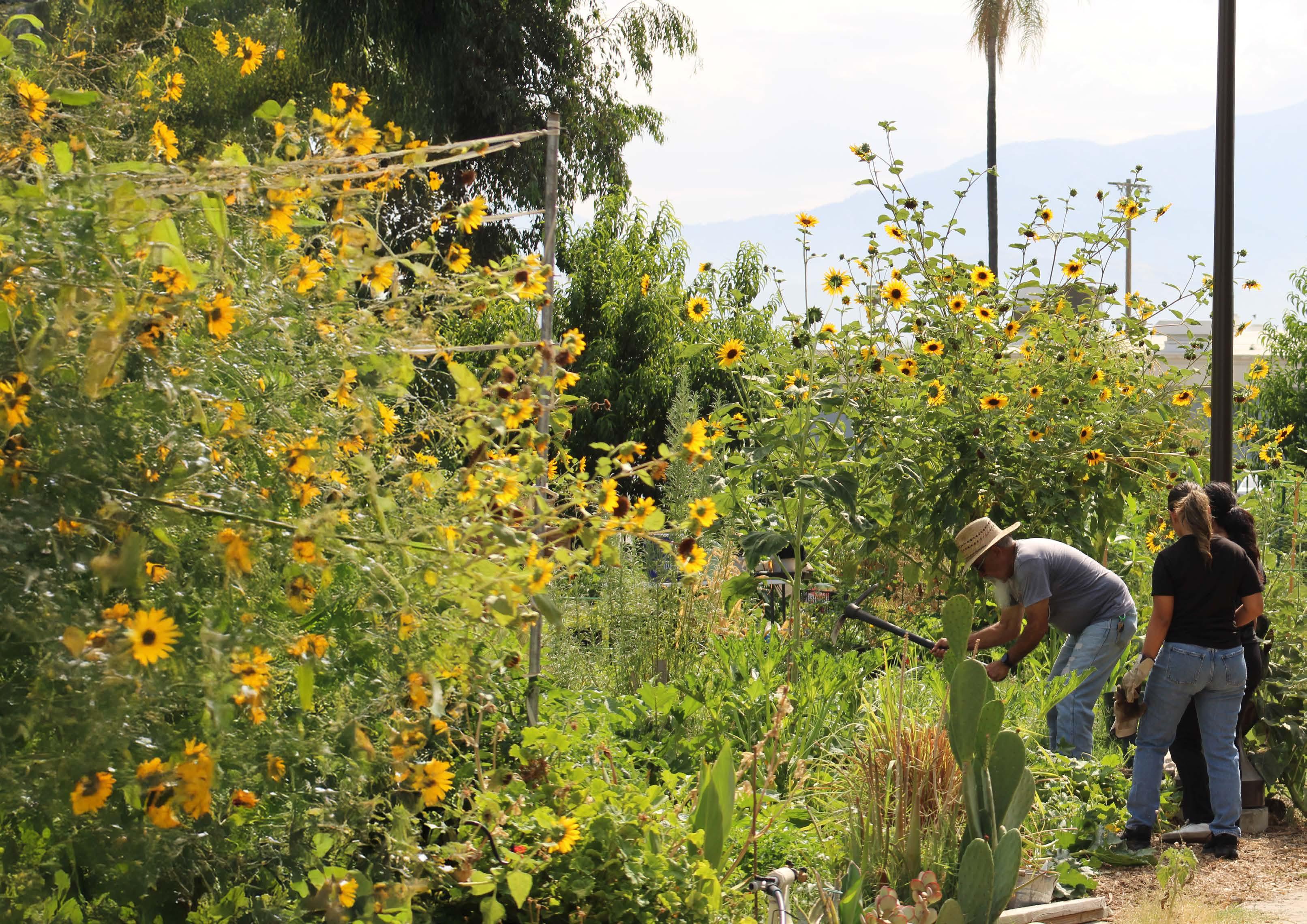
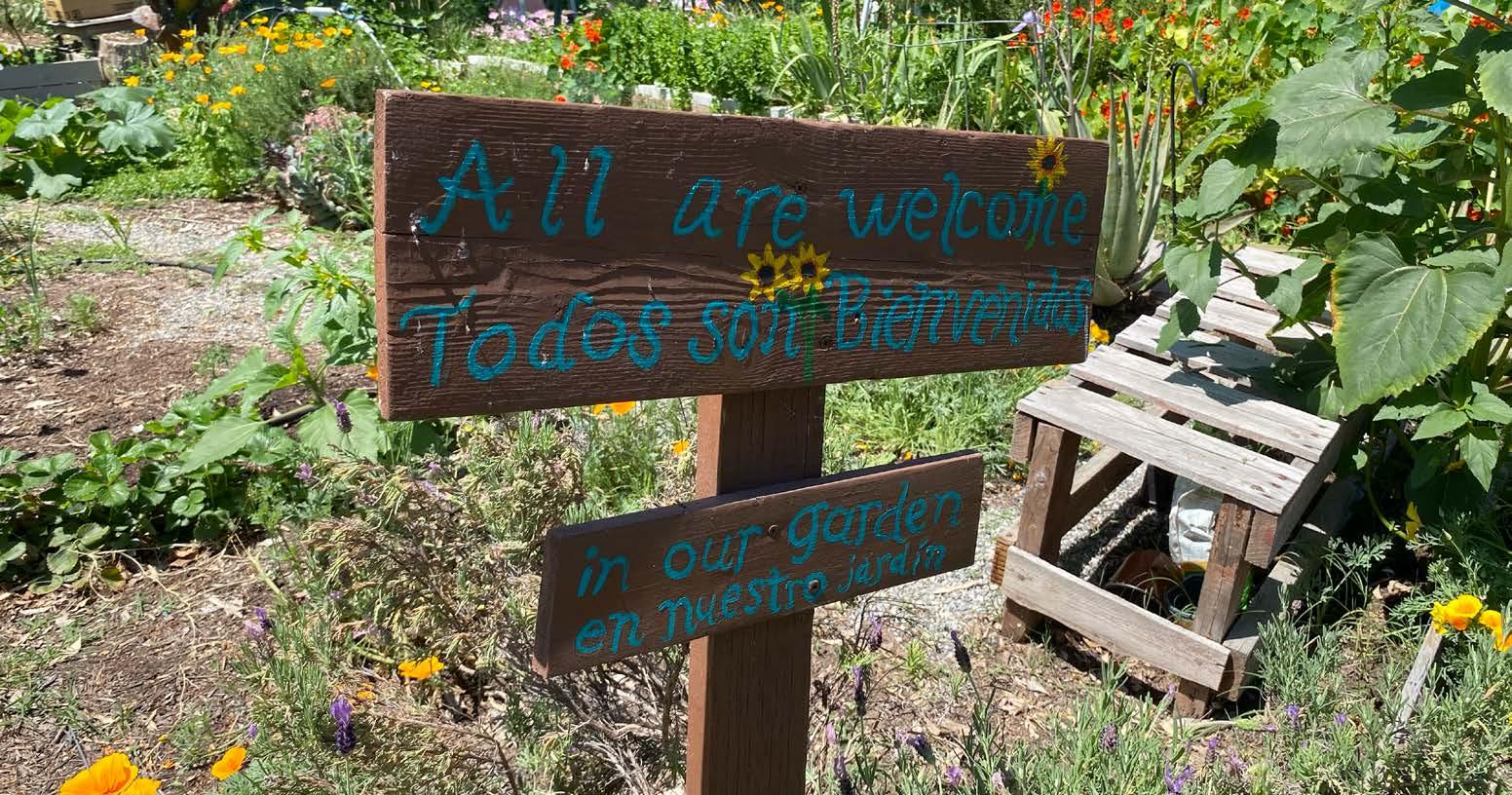
In FY 2025, LLUH committed more than $100,000 to support the ongoing development and expansion of Jardín de la Salud, our community garden in San Bernardino. This investment supports dedicated staffing, including a full-time Program Manager who stewards the 1.8-acre space, manages fifty-two 10x20-foot garden plots, coordinates public health programming, and builds relationships with participating families. A part-time Agricultural Lead provides hands-on garden education and crop planning to strengthen the local, urban food system.
Together, these efforts help ensure that Jardín de la Salud remains a welcoming space for food access, community, and health-promoting activities. Program highlights from the year include:
• Convened 152 gatherings that fostered connection and shared learning.
• Implemented an on-site outdoor youth program, SHiNE (San Bernardino Healthy in Nature and Equity).
• Engaged 1,469 student volunteers from LLU academic programs in community-based service and learning.
• Distributed fresh produce to an average of 320 families at 25 events, serving 7,200 families.
• Composted 15,970 pounds of organic waste, reducing waste and supporting environmental sustainability.
• Hosted bi-monthly workshops for adults and youth focused on gardening, nutrition, food preservation, and sustainable practices.
LLUH funding also supported a garden shade structure and new picnic tables, improving accessibility for year-round programming. Future plans include an outdoor kitchen, a children’s play area, and additional raised garden beds— further expanding access to healthy food, safe green space, and opportunities for connection that support community health, equity, and belonging.

San Bernardino Healthy in Nature –Equity Program (SHiNE)*
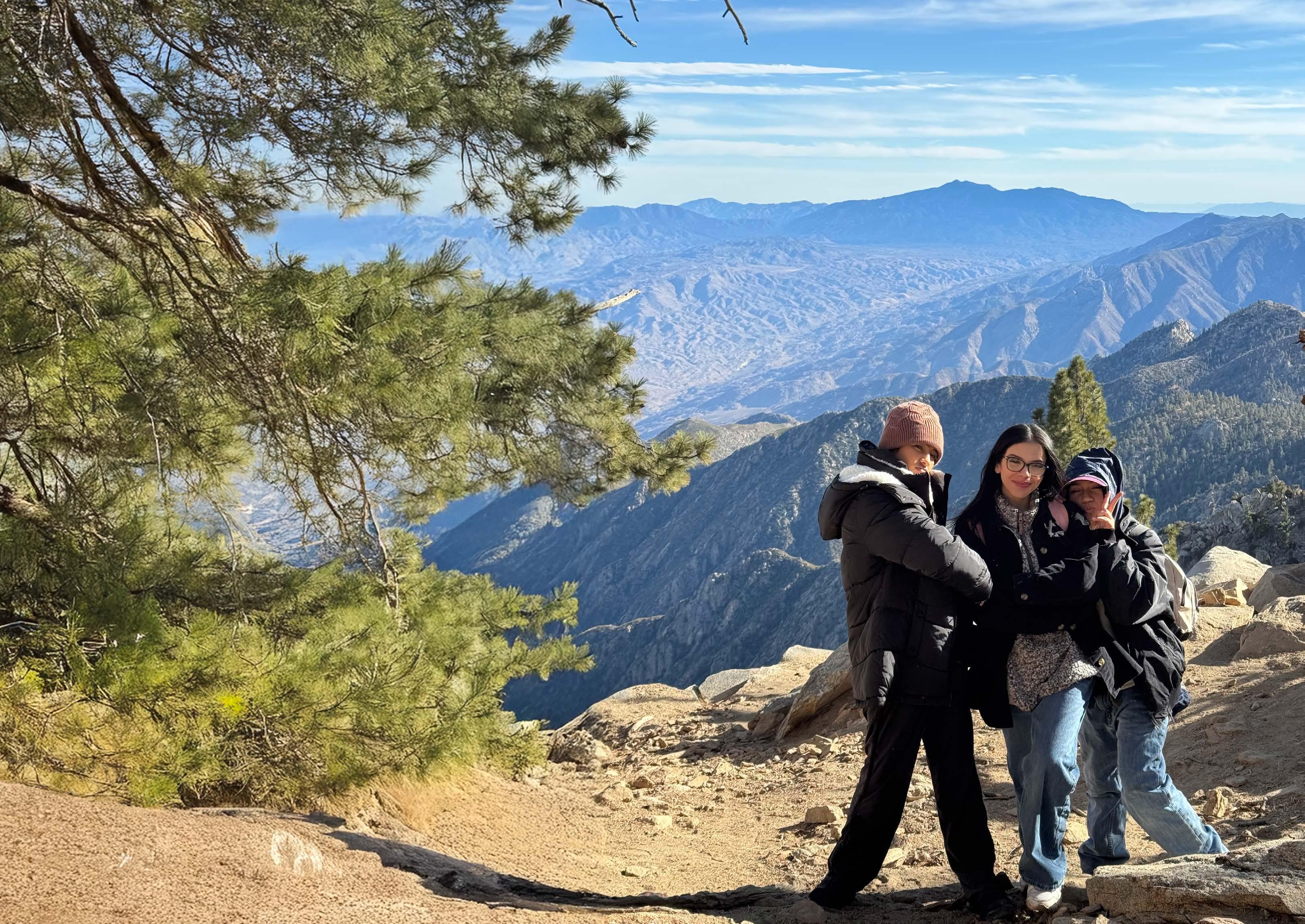
Loma Linda University Health – Institute for Community Partnerships was awarded $685,021 in a multi-year (FY 2023 - 2026) grant from the California Department of Parks and Recreation. This grant is founded on the belief that all Californians deserve access to nature and the ability to enjoy the great outdoors.
Within one hour of the beach, the mountains and the desert, the Inland Empire is uniquely positioned in its ability to provide tremendous outdoor recreation to our region. The unfortunate reality, however, is that many of our local youth and families have not had the opportunity to access these amazingly beautiful natural resources. SHiNE’s mission of creating change and hope for our community through nature looks to combat the barriers that inhibit our families from participating in nature, and provides completely FREE garden workshops, day trips, and overnight trips. FY 2025 program highlights:
• Served 400 community members
• Conducted 19 nature activities
• 4 Garden Activities: Pottery painting, Composting Workshop, and Celebrate Earth, Community & Music
• 10 Day Trips: Palm Springs Aerial Tramway, Lake Gregory Hike, Hulda Crooks Community Hike, The Ocean Institute, Whitewater Preserve, Oak Glen Preserve, Crystal Cove Conservancy, Diamond Valley Lake
• 4 Overnight Trips: Rock Climbing in Joshua Tree, Surfing at San Clemente, Kayaking & Fishing at Lake Cuyamaca
In September 2025, the program received a $403,200 award from California’s Youth Community Access Grant Program, supporting continued growth and expanded opportunities in the coming year.
Community Health Workers (CHWs) play a vital role in supporting the most vulnerable patients across our health system. They serve as trusted partners who listen, accompany, and guide individuals through complex medical and social challenges—reflecting the belief that Time is Medicine through relationships grounded in trust, compassion, and a shared lived experience.
In FY 2025, CHWs were integrated into eight clinical units, focused on Violence Intervention, Adverse Childhood Experiences, Maternal and Child Health, HIV/AIDS, Sickle Cell services, Enhanced Care Management, and the Emergency Department. Together, they supported 2,367 unique families, offering both immediate crisis assistance and long-term goal setting to stabilize health and well-being.
A Path Back to Stability: A patient in their 60s, unhoused and living with limb loss, received help securing temporary housing, Social Security benefits, and long-delayed back pay. Their CHW then supported admission into a Recuperative Care Center.
Rebuilding Health and Hope: A single mother facing eviction and life-threatening blood pressure received crisis support, safe temporary housing, a DMV voucher, and help connecting to primary care and mental health services. She is now off the streets and regaining stability.
Second Chance, with Her Dog by Her
A woman in her 60s experiencing homelessness with her small dog was supported with temporary housing, essentials, case management, and help completing a homelessness assessment. Today she is safe, receiving benefits, and planning for independent living.
What sets our program apart is the triple investment—benefiting the CHWs, the patients, and the healthcare system. By creating full-time, benefited CHW jobs, we support economic development and ensure stability for our community members. Formal employment reduces reliance on grant-based positions, enhancing income security. Hiring individuals with lived experience to be part of a hospital team enriches the clinical team expertise, patient experience, and serves as a key community benefit workforce development strategy.
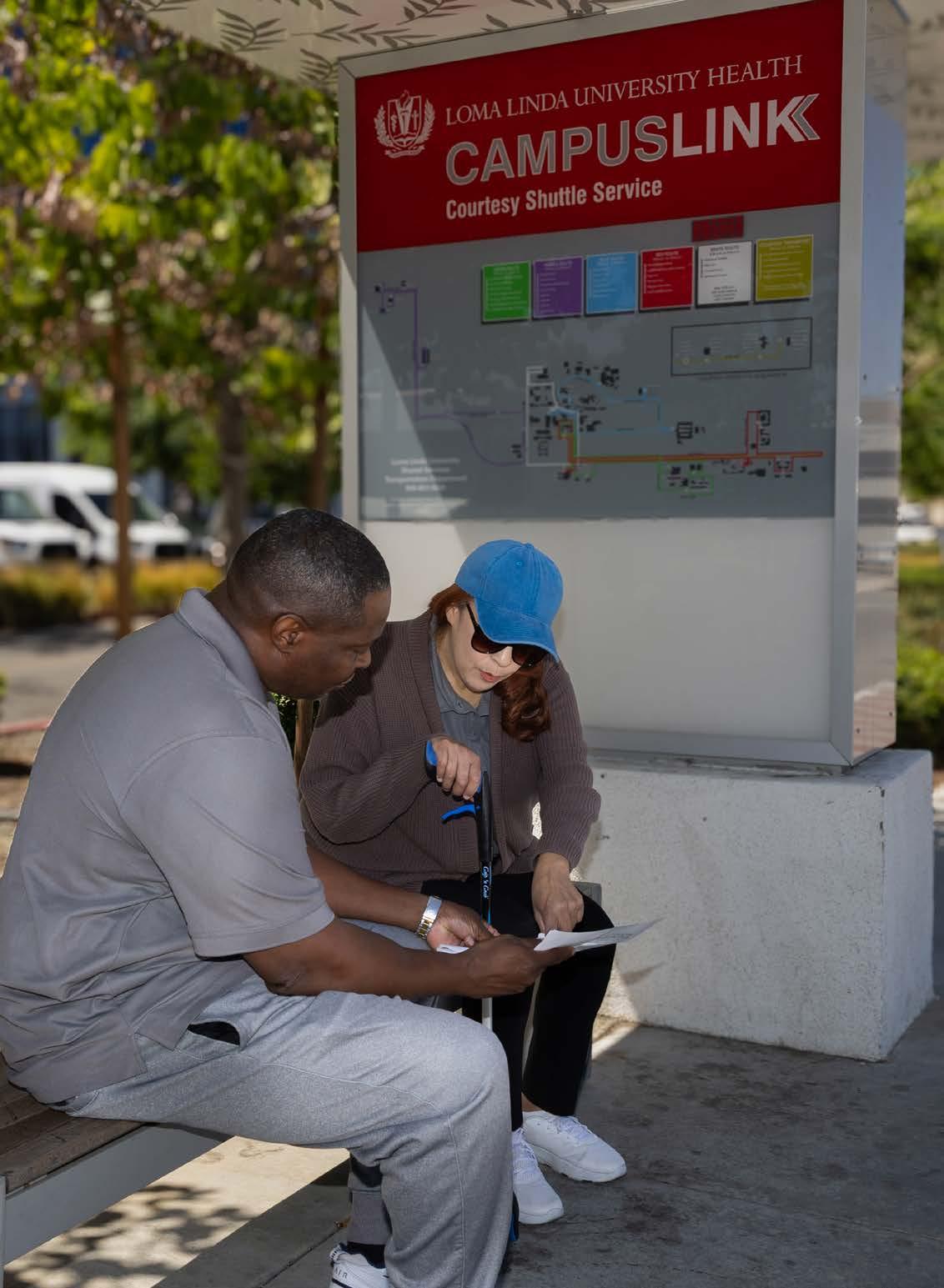
What began as a small pilot has evolved into a fully integrated, system-wide workforce that enhances patient experience, reduces barriers to care, and strengthens the Vital Conditions that help families thrive. CHWs remain grounded in the community while embedded within clinical teams, walking with patients through their most difficult moments and helping them chart a path toward stability. Through time, trust, and compassionate partnership, CHWs are creating lasting impact, one relationship at a time.


As part of a required fourth-year clerkship, medical students at Loma Linda University School of Medicine spend a day shadowing Community Health Workers. These ride-alongs take students into homes, motels, and neighborhoods where patients live—often immediately following hospital discharge—and provide firsthand insight into the social and environmental conditions that shape health long before and after a clinical encounter.
Through this experience, students see how CHWs work upstream to address social drivers of health such as housing instability, substance use, violence, and limited access to resources. Many of these challenges cannot be resolved through clinical care alone, yet they strongly shape a patient’s ability to heal and stay well. Shadowing helps future physicians understand how trusted community-based support strengthens continuity of care and improves long-term outcomes.
This hands-on learning reinforces whole-person care by grounding medical training in community context. By integrating CHW shadowing into medical education, Loma Linda University Health is preparing future physicians to practice medicine that is collaborative, responsive, and informed by the real conditions shaping patients’ lives.
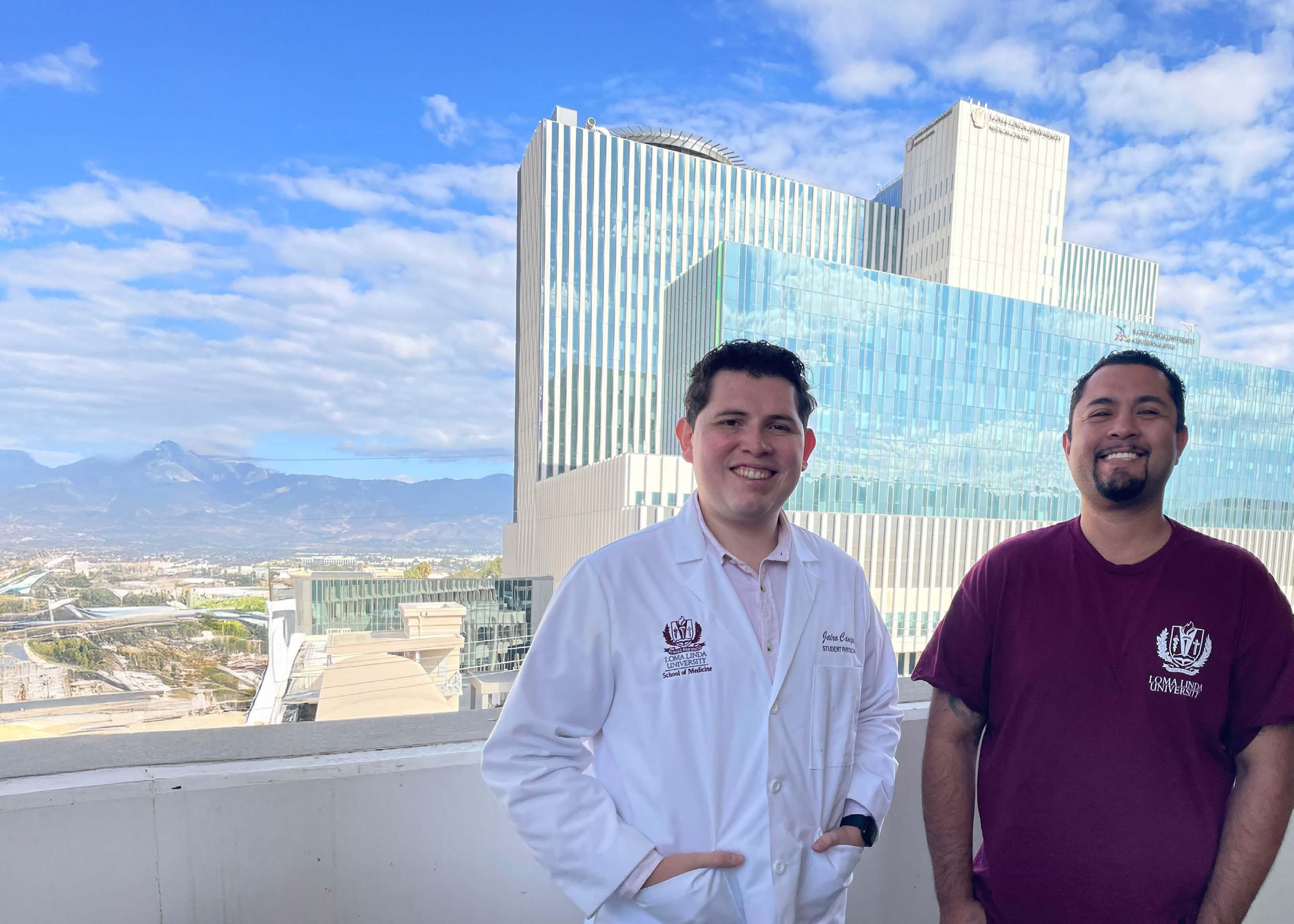
“IT WAS REALLY EYE-OPENING TO SEE THE POTENTIAL THAT THE COMMUNITY HEALTH WORKERS HAVE BECAUSE OF THE CONNECTION THEY HAVE WITH THE COMMUNITY.”
- MEDICAL

Community Health and Education Workers connect families, schools, and resources to support student attendance*
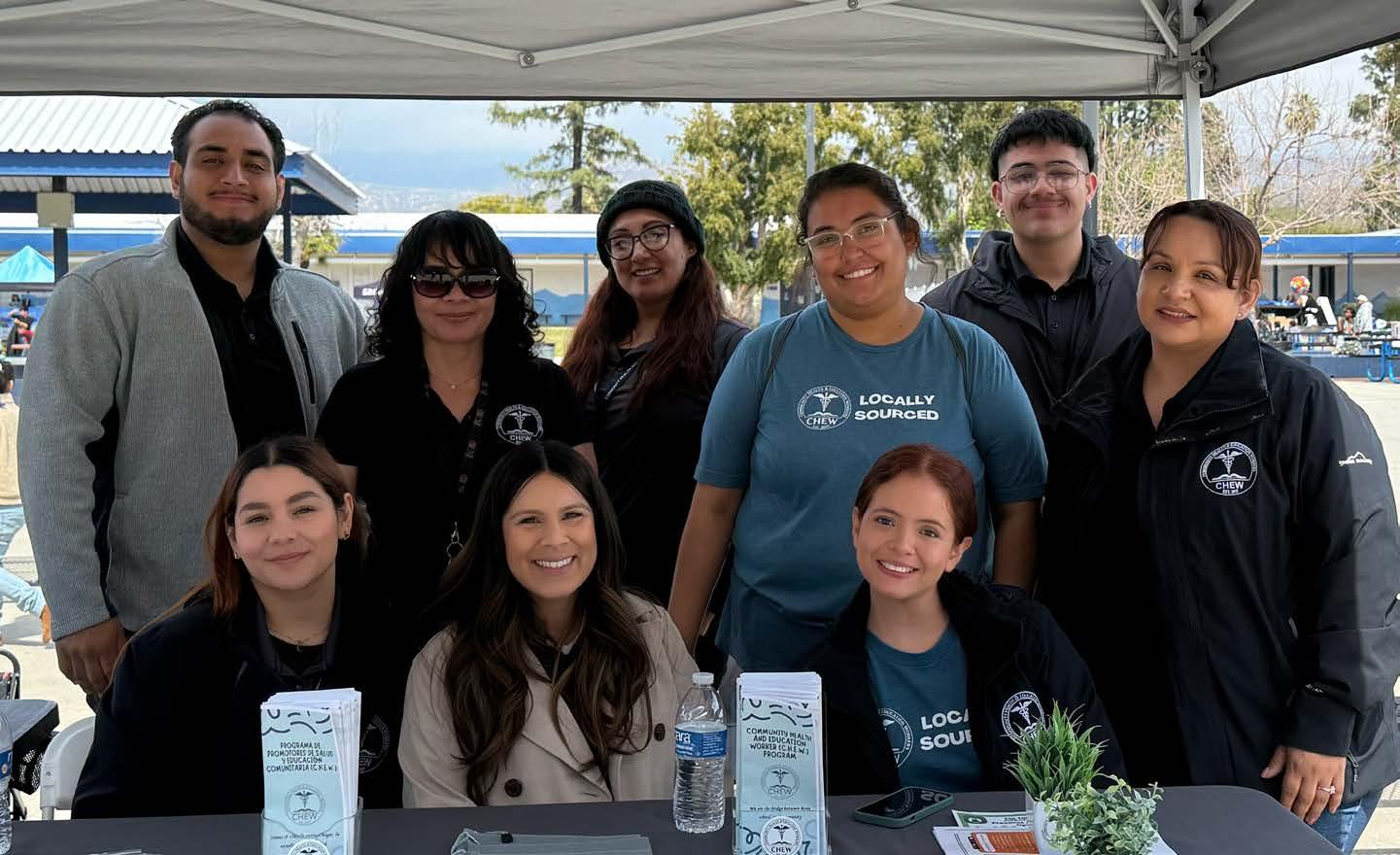
The Community Health and Education Worker (CHEW) program, in partnership with El Sol Neighborhood Educational Center, supported families in San Bernardino City Unified School District and Chaffey Joint Union High School District through a school-based, community engagement approach. The program focused on addressing determinants of chronic absenteeism and strengthening family re-engagement with school sites. CHEWs helped families navigate student health, behavioral, family, and environmental barriers by providing attendance support, systems navigation, and connections to district and community resources.
“I TELL HER THAT IT IS INDISPENSABLE OF WHAT SHE GIVE US… YOUR TIME, YOUR COURAGE, YOUR EFFORT, INDISPENSABLE.”
- SBCUSD PARENT PARTICIPANT
During the 2024–2025 school year, CHEWs engaged families through home visits, school site visits, phone outreach, and district-requested interactions, with a focus on students experiencing chronic absenteeism. These efforts ensured families received timely information, resources, and support to address attendance barriers and re-engage with their child’s school community.
As trusted partners within school communities, CHEWs supported families in navigating challenges related to health, housing instability, transportation, language access, and caregiver work schedules. Parent feedback underscored the value of CHEWs’ presence and sustained support in fostering trust, re-engagement, and improved attendance and academic participation.
FY 2025 Program Highlights
• 2,367 home visits across two school districts
• 564,340 diapers distributed during the school year, and more than 2 million since August 2022
• 2,250 food boxes provided to families experiencing food insecurity
• 232 parents participated in the Parent Health Institute
STRATEGY Support healthy lifestyle interventions that reduce chronic diseases
FY 202 METRICS
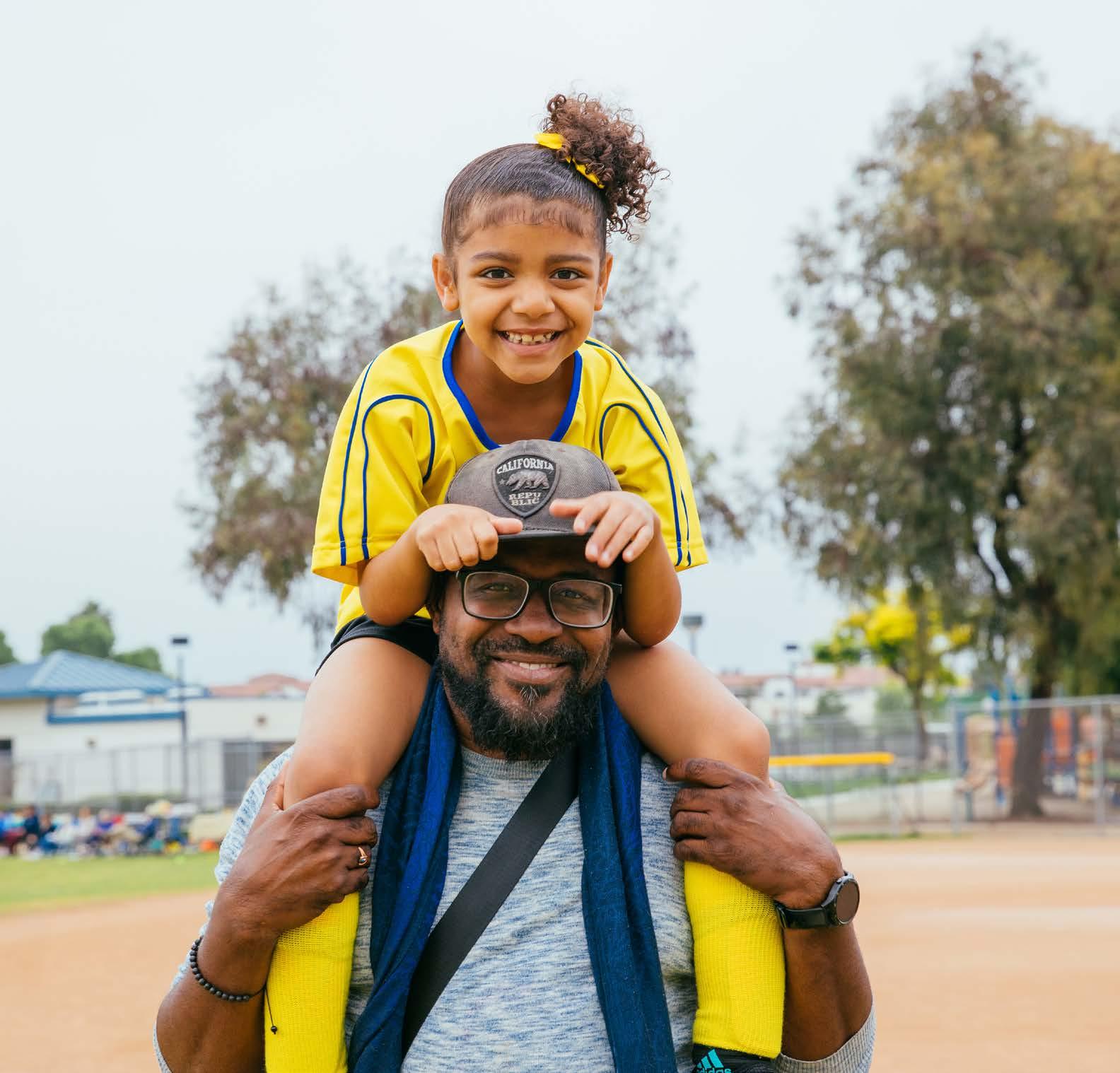
At least 200 local youth participate in Goal 4 Health soccer league; at least 40% of students will participate from underresourced neighborhoods.
310 youth and 20 adult players participated; Out of 209 families, 75 (36%) received scholarships, and 89 (43%) were from underresourced neighborhoods.
200 parents from local school districts engage in Parent Health Institute (PHI) educational workshops.
232 adults participated in PHI programming in-person or via Zoom.
The Produce Rx Program provides at least 40 educational workshops annually.
Produce RX program merged with Community Garden program. Garden program has grown and provides educational workshops to participants.
STRATEGY Increase community building and access to mental health resources
FY 2025 METRICS
Build capacity of Community Health Workers in mental health; 90% of CHWs and CHEWs are trained in Mental Health First Aid to provide crisis response with the community.
Pilot system for CHEWs to provide referrals to LLUH Resiliency Clinic.
100% of CHWs and CHEWs received Mental Health First Aid training.
Referral process created and implemented.
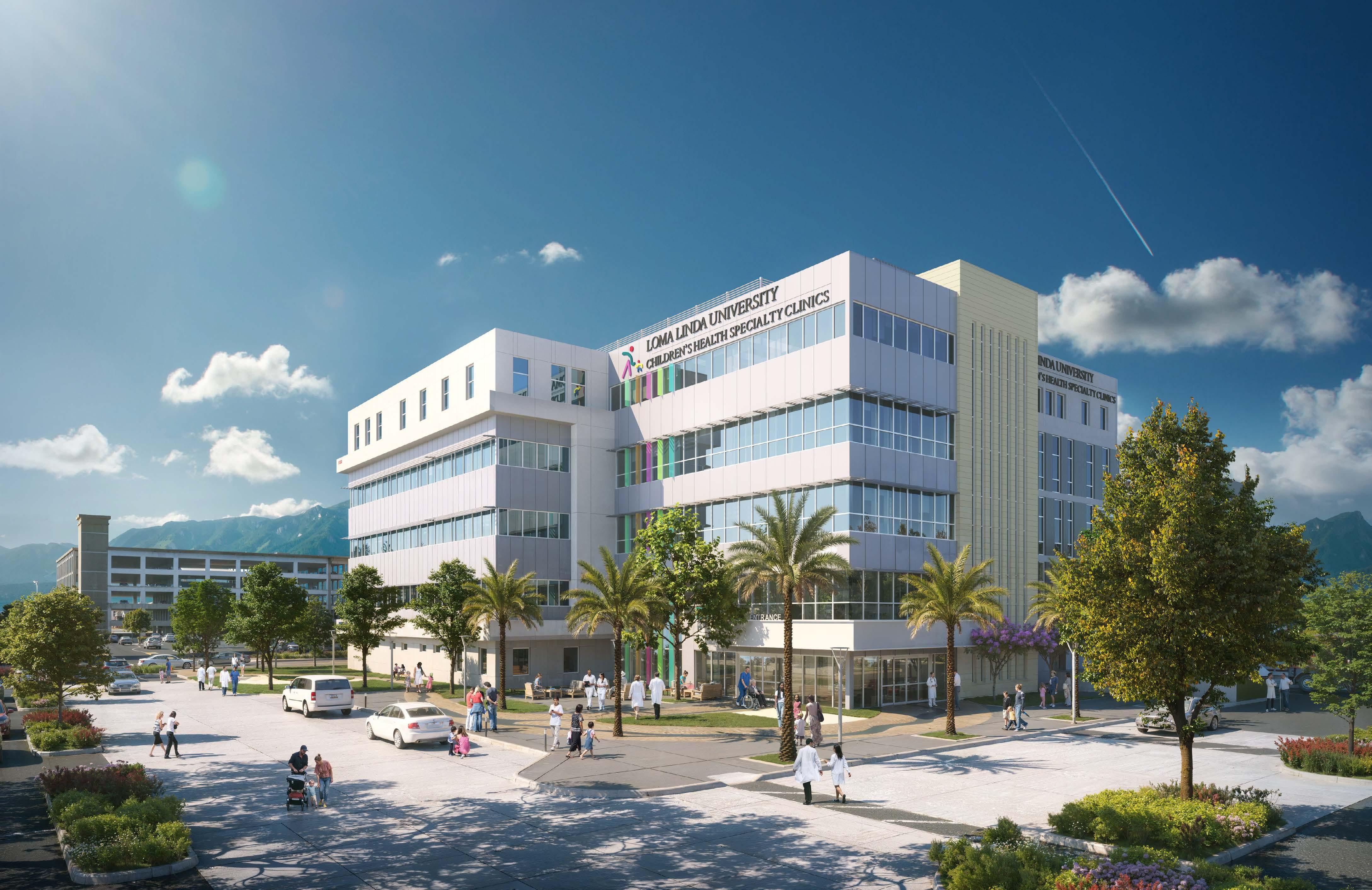
More than 20 specialties in one coordinated care destination*
In 2026, Loma Linda University Children’s Hospital will open a new Children’s Health Specialty Clinics facility designed to fundamentally improve how families across the Inland Empire access pediatric specialty care. The five-story, 105,000-square-foot center will bring more than 20 pediatric specialties together under one roof, replacing a fragmented system in which services are currently spread across multiple locations.
For children who require care from multiple specialists, this integrated model allows appointments to be coordinated into fewer visits and in many cases, a single visit. This reduces time away from work for parents, minimizes missed school days for children, and decreases the need for additional childcare and repeated travel. Just as importantly, it eases the logistical, emotional, and financial burden families face when navigating complex care across multiple sites, particularly for those traveling long distances or managing ongoing medical needs.
Once open, the facility is expected to support more than 75,000 outpatient visits each year, significantly expanding access to coordinated, high-quality pediatric specialty care in one of California’s fastest-growing regions. The $150 million project is made possible through a combination of California Proposition 4 funding—a voterapproved investment in children’s health infrastructure—and generous philanthropic support from donors committed to advancing pediatric care. Together, these investments ensure that more children receive timely, comprehensive specialty care today while strengthening the region’s health system for decades to come.
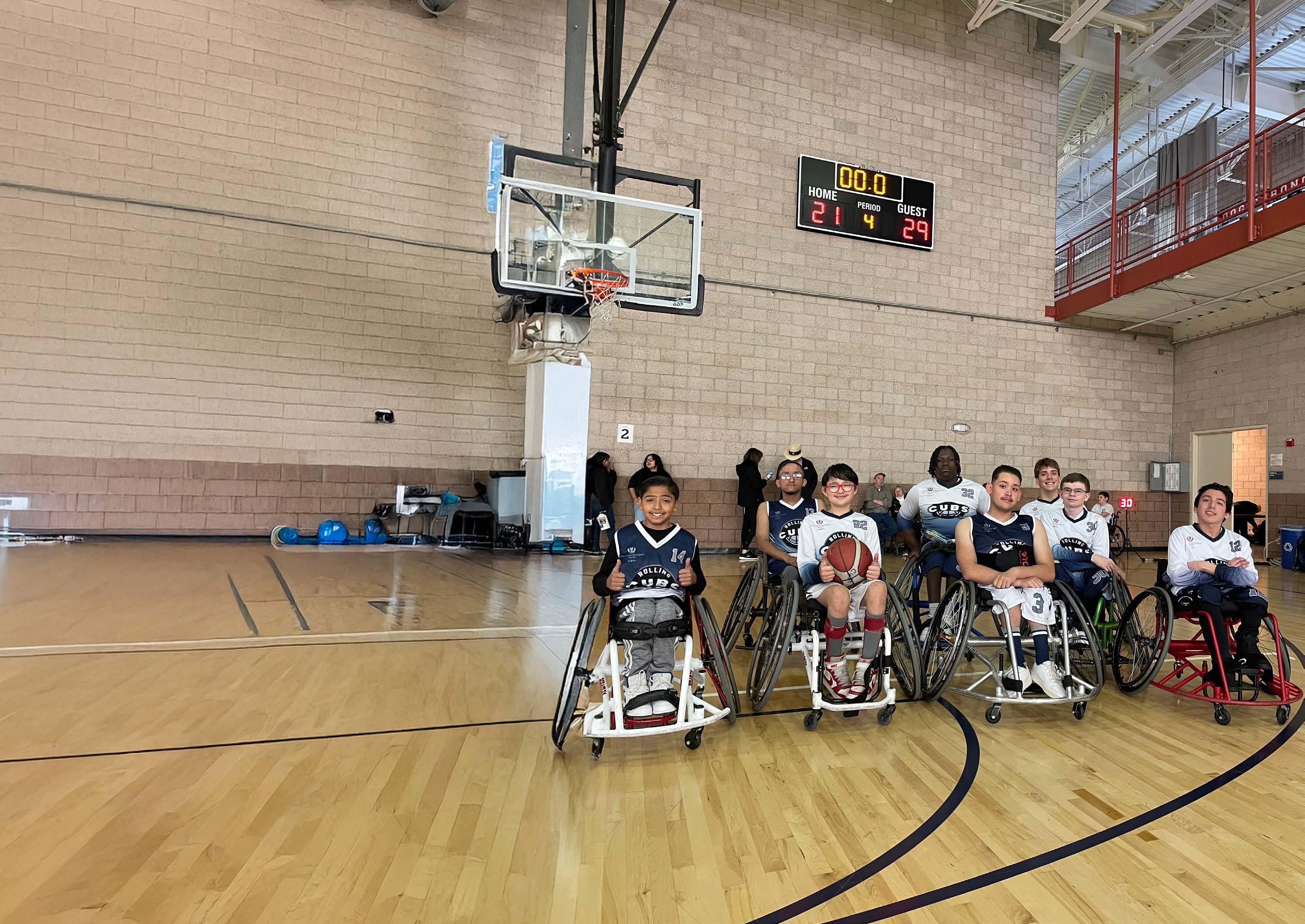
PossAbilities is a free community outreach program created by Loma Linda University Health to support individuals with permanent disabilities and Veterans. Established in 2000, the program was developed to address the need for a continuum of care for patients and their families following extended hospital stays or traumatic accidents. Over the years, membership has grown to more than 8,000 individuals.
Rehabilitation and healing extend beyond physical recovery, encompassing emotional, social, and spiritual well-being. A key component of this process is the opportunity to connect with peers and find a supportive community. Guided by the mission to further the healing ministry of Jesus Christ, PossAbilities offers new direction and hope to its members.
The program has evolved into an all-inclusive initiative that provides essential support and resources. By fostering connections among members and within the broader community, PossAbilities promotes inclusion, empowerment, and personal growth. Through valuable resources and a strong support network, members are empowered to build meaningful connections and experience a sense of belonging.
Benefits provided to the community by PossAbilities include:
• Discounted gym membership
• Health and wellness activities
• Grant and scholarship opportunities
• Local high school clubs
• Paralympic Training Program
• Recreational and competitive adaptive sports
• Referral services
• Social and recreational events
• Spiritual and emotional support
• Support groups and more
At Loma Linda University Cancer Center, our commitment to whole-person care extends far beyond clinical treatment.
Each year, our Cancer Registry supports more than 15,000 community members by collecting and analyzing high-quality data that strengthens early detection, guides treatment decisions, expands access to clinical trials, and informs cancer research locally and nationally. Though often unseen, the registry is a vital driver of quality, ensuring every patient receives care grounded in the best available evidence.
Our annual Celebration of Life brings survivors, families, and caregivers together to honor resilience and community. In FY 2025, 100 participants gathered to recognize meaningful milestones and the teams who support them—affirming that healing also happens through connection and hope.
This year also marks 35 years of proton therapy at Loma Linda University Health, home of the world’s first hospitalbased proton treatment center, established through the pioneering vision of Dr. James Slater. Nearly 30,000 patients have since received this precise, compassionate form of radiation therapy. Today, the program continues to evolve as we look toward innovations such as flash proton therapy, offering the promise of even greater precision, speed, and reduced side effects.
Together, these efforts reflect our enduring mission: to provide care that advances science, honors each patient’s journey, and shapes a healthier future for our region.
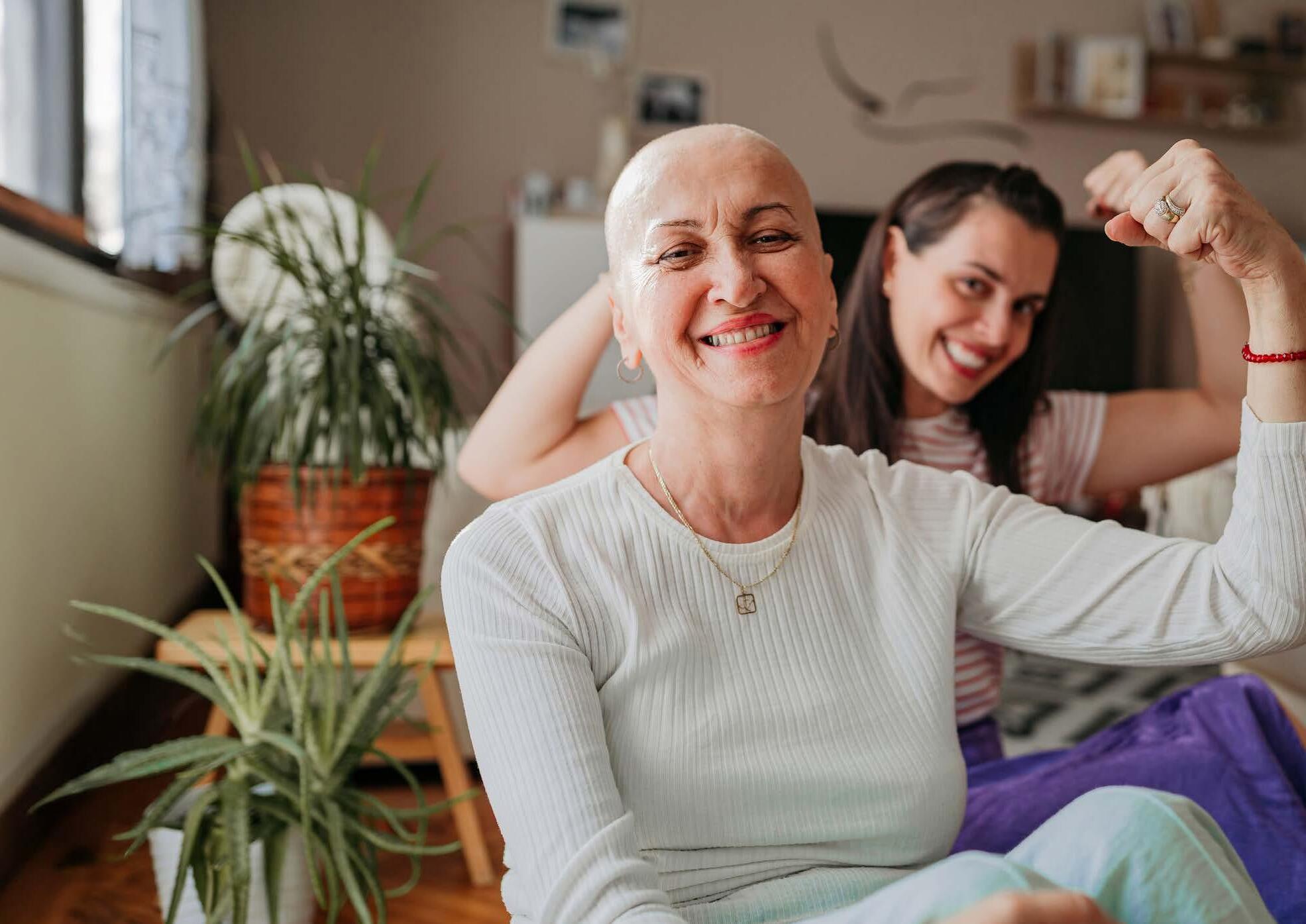
As a Level I Trauma Center for the Inland Empire, LLUH cares for the most critical trauma cases, treating up to 3,000 patients each year. Beyond hospital care, we are dedicated to trauma prevention through community programs. In FY 2025, we conducted 73 unique programs that served over 4,000 community members. Programs include:
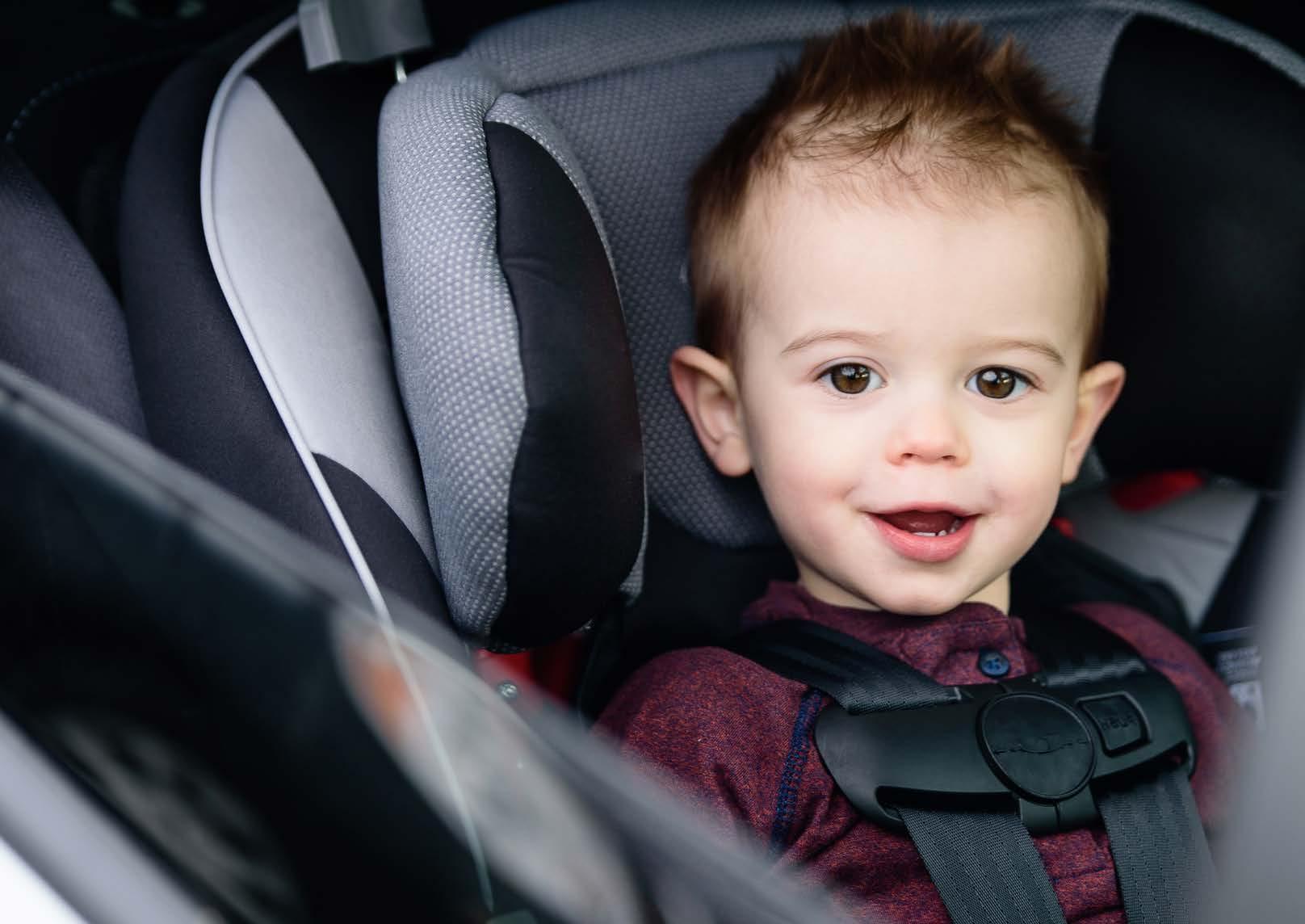
SAFE Kids – Aims to reduce childhood injuries from vehicles, sports, drownings, falls, burns, poisonings, and more. In FY 2025, 44 events served 2,784 community members, offering car seat education/fittings for different priority groups (expectant mothers, foster parents, etc.), safe sleep discussions, water safety events, and resource events.
Youth Drug and Alcohol Education – Designed to educate adults and teens about drugs, alcohol, and at-risk behaviors. This includes two key programs: the 6-week Youth Alternative Solutions Program (114 participants) and Narcan overdose awareness training (154 participants).
Senior Fall Prevention – Educates seniors on how to prevent falls. Events included visits to senior centers across the IE, events hosted at community centers, and education shared at resource fairs. Twenty programs served 391 unique participants.
Stop the Bleed – A nationally-recognized course teaching participants how to recognize life-threatening bleeding and apply techniques to control blood loss. Event sites across the Inland Empire included K-12 schools, community colleges, first responders, nonprofits, and churches. 15 programs served 660 community members.
STRATEGY Review and identify opportunities to strengthen LLUH’s policies, systems, provider training, and programming.
FY 2025 METRICS
Enhance support for at-risk infants and mothers in the Neonatal ICU through Community Health Workers; CHWs provide 200 families with support to address social determinants of health.
Expand Reach Out & Read program to serve 10% more young children annually to encourage healthy growth and early literacy.
RESULTS
170 families served
Collaborate with the LLUH Health Equity Committee and School of Public Health in conducting robust qualitative assessments that improve support for mothers and infants.
Distributed 20,016 books at well child visits, a 55% increase over FY 2023
Integrated into 2025 Community Health Needs Assessment
STRATEGY Participate in regional efforts to eliminate racial disparities in maternal and infant mortality.
FY 2025 METRICS
Collaborate with regional partners and coalitions to advance maternal and infant health equity.
RESULTS
Collaborated with Maternal Health Network of San Bernardino County and Inland Empire Perinatal Equity Initiative.

The Resiliency Institute for Childhood Adversity (RICA) is a trauma-informed pediatric clinic at Loma Linda University Children’s Hospital that provides evidentiary medical exams for the evaluation of child abuse allegations, alongside comprehensive primary care, mental health services, and educational advocacy. In partnership with San Bernardino County, RICA conducts forensic interviews and medical exams at the Children’s Assessment Center (CAC). All services are designed to reduce trauma for children and families while supporting healing and resilience.
FY 2025 Impact Highlights:
• 1,019 forensic medical exams
• 3,502 primary care visits
• 733 forensic interviews attended
• 2,814 mental health encounters
Recently recognized as one of California’s ten exceptional trauma-informed care models, RICA is preparing to expand its reach. A $7.5 million, five-year commitment from San Bernardino County will support additional physicians, new and remote practice sites, and stronger coordination with Children and Family Services, law enforcement, and the District Attorney’s Office. This investment positions RICA to deepen its impact locally while serving as a model for other regions seeking more coordinated, compassionate responses to childhood trauma.
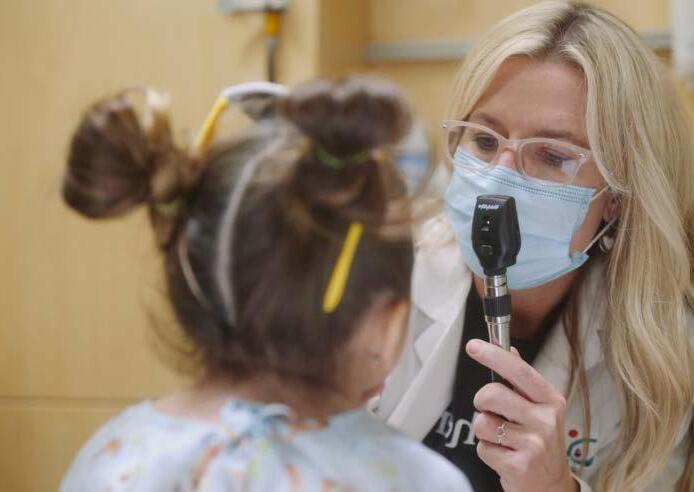
“IF EVERY CHILD IN CALIFORNIA HAD ACCESS TO COMPREHENSIVE, COORDINATED CARE LIKE THIS, WE COULD CHANGE THE TRAJECTORY OF COUNTLESS LIVES.”
- AMY YOUNG-SNODGRASS, MD
Building a Strong Foundation for Inland Empire Families through Early Intervention*
The Help Me Grow Inland Empire (HMGIE) program is a multi-sector partnership between First 5 San Bernardino, First 5 Riverside and the Loma Linda University Children’s Hospital that aims to ensure that children ages 0-5 are “kindergarten ready.” 1-in-4 children are at-risk for moderate-to-severe developmental delay before age 5 making HMGIE extremely critical. As part of a state and national effort, HMGIE screens children to identify and address developmental delays that may compromise the child’s ability to learn. The Help Me Grow Model is built on four key pillars:
• Developmental Screening: HMGIE and partners conducted 15,592 developmental and social risk screenings in FY 2025.
• Centralized Access Point for parents navigating developmental and social risks: The HMGIE Access Center provided 4,469 call activities in FY 2025, serving 2,685 unique children. The Access Center serves as a vital safety-net, connecting families to services and supporting continuity of care as they navigate developmental and school transitions from infancy through elementary school.
• Community Screening Platform: In FY 2025, 2,391 children were enrolled in HMGIE’s community screening platform through partnerships with early education providers, school districts, and pediatric care settings, expanding access to screening beyond traditional clinical environments.
• Data Collection and Outreach: 75% of families successfully attained resources discussed during their most recent call engagement. 82% of families served were Medi-Cal eligible, 8% were uninsured and supported with insurance navigation, and 10% of families were commercially insured.
Any parent or guardian of a child living in San Bernardino or Riverside County can call the HMGIE Access Center for FREE screening and support services at 1-888-464-4316.

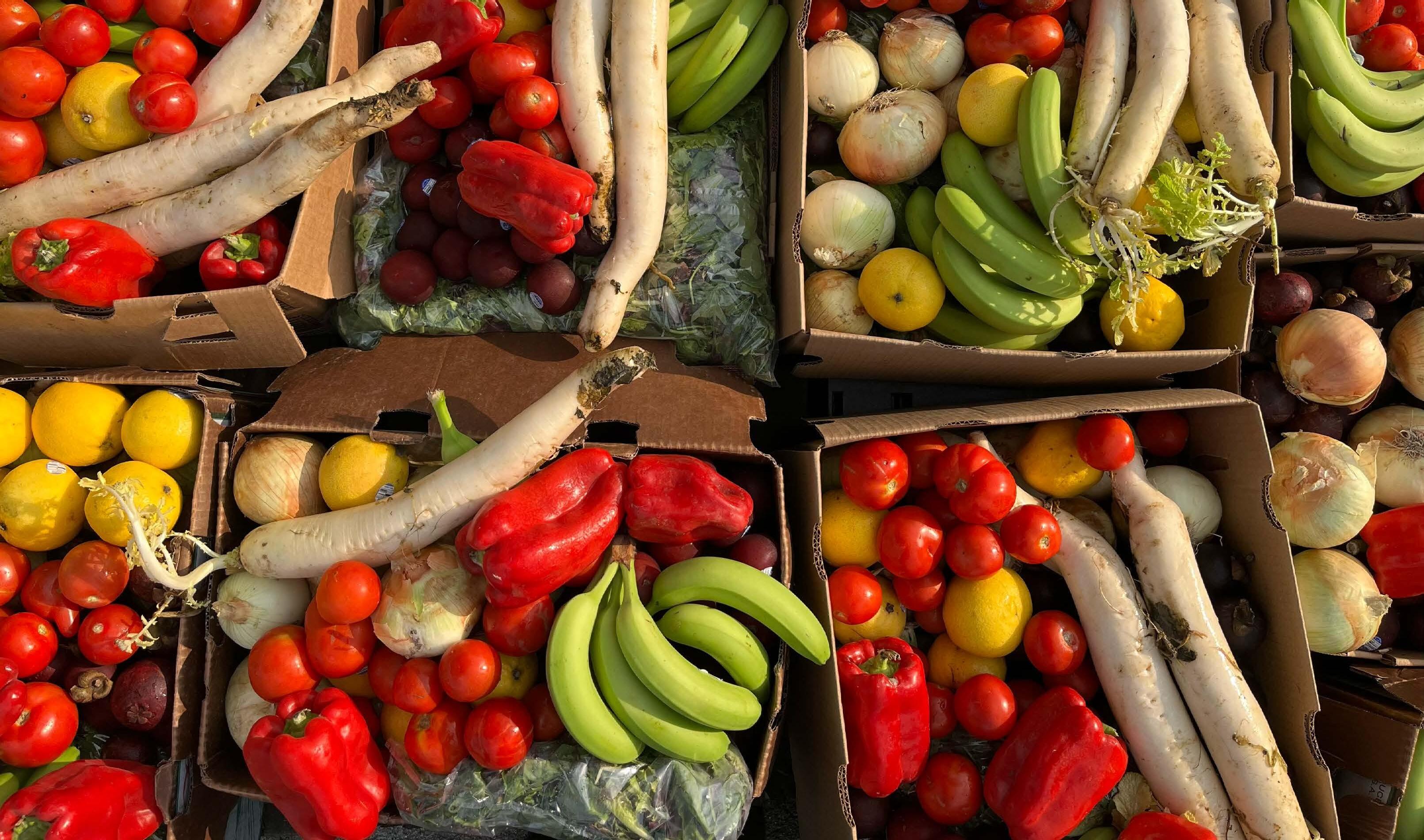
The Institute for Community Partnership’s mission is to stay relevant and responsive to the evolving needs of our community. This often involves going beyond the goals outlined in our 3-year Community Health Implementation Strategy to create new programs and partnerships as opportunities arise. In recent years, our efforts to remain relevant and responsive have led to initiatives such as our fresh produce distribution program and community-based COVID-19 vaccination clinics. In FY 2025, we launched internal and external efforts to reduce medical debt in our community, advanced environmental stewardship across our health system, and redirected unspent community benefit dollars to meet urgent partner needs. Read on to learn more about these initiatives.
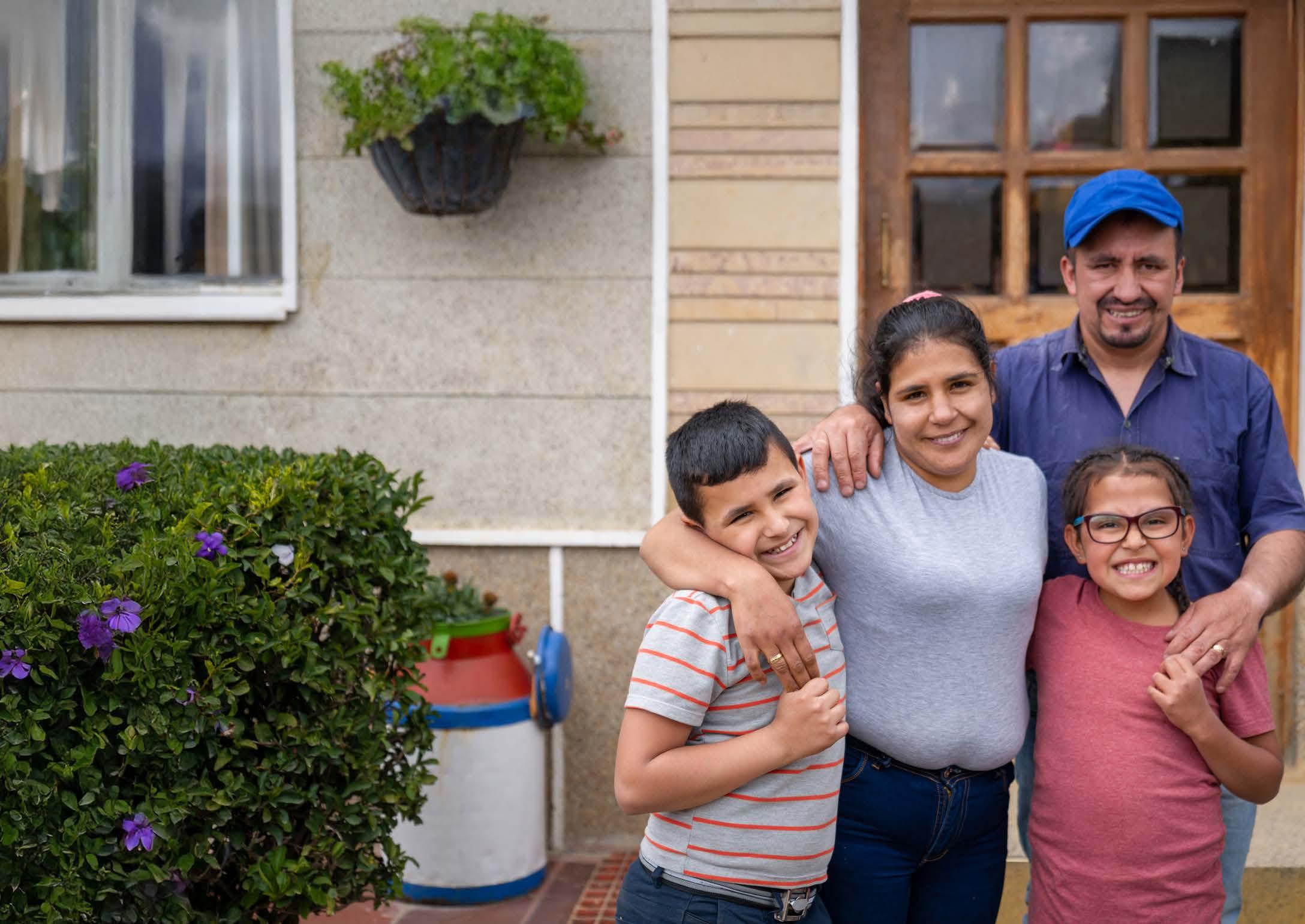
Medical debt affects thousands of families across the Inland Empire, and many who qualify for hospital charity care never learn that help exists. To expand access, LLUH partnered with El Sol Neighborhood Educational Center and Dollar For to pilot an innovative program that increased awareness of charity care eligibility and offered direct application support for residents served by more than 50 hospitals. Together, the partners reached over 128,200 residents through community events, outreach, radio messaging, social media, and engagement with more than 150 organizations.
El Sol’s Community Health Workers (CHWs) provided one-on-one support for residents navigating hospital bills and documentation requirements. El Sol submitted 87 charity care applications totaling $1.57 million, with $375,952 already forgiven. CHWs also completed 295 Medi-Cal applications and conducted outreach at 134 community events, continuing to assist families even after funding ended.
Regional activity through Dollar For’s online portal also increased notably. In the 15 months following the program launch, applications for Inland Empire hospitals rose 281% (219 additional submissions), and total application value increased from $1.67 million to $5.23 million—a gain of more than $3.5 million. These higher levels have remained well above pre-project baselines.
Many participants shared that they never knew financial assistance was available until meeting a CHW or encountering program outreach. By combining personalized community support with broad regional awareness, this partnership helped families access meaningful financial relief and reduce the burden of medical debt.

Strengthening hospital systems to improve access to financial assistance
Providing charity care is a core part of LLUH’s commitment to community health. In FY 2025, LLUH strengthened internal systems that help eligible patients access hospital financial assistance earlier and more effectively.
This work was driven by a coordinated, cross-functional collaboration spanning revenue cycle, billing, patient registration, patient experience, information services, and community benefit. Together, these teams focused on strengthening core charity care infrastructure at the system level. Key improvements included integrating the physician and hospital patient billing function, implementing presumptive eligibility tools, modifying debt collection policies and practices, creating a real-time charity care dashboard, and integrating the financial assistance application into the electronic health record—collectively improving access, consistency, and administrative efficiency across the charity care process.
These system-level changes produced clear, measurable results.
LLUH increased reported charity care from $13.2 million in FY 2024 to $52.7 million in FY 2025, reflecting stronger identification of eligible patients and more effective connection to assistance. While charity care has long been available, these improvements help ensure support reaches vulnerable patients earlier and more reliably.
Insights from community outreach and patient experiences helped inform and refine this work, aligning internal processes with real-world needs. Looking ahead to FY 2026, LLUH will continue strengthening charity care access by building on these improvements, evaluating additional opportunities to reduce barriers, and advancing data-informed strategies. Together, these efforts reflect emerging and replicable best practices in hospital charity care and demonstrate how coordinated, system-level approaches can meaningfully reduce medical debt.
As the implementation arm of LLUH’s community benefit programs, ICP ensures strategic investment with partner organizations in the Inland Empire. Each spring, ICP’s fiscal leadership reviews all available dollars to ensure Community Benefit spending is maximized, while also remaining within approved budgets. Unused community benefit dollars from vacant positions, excess grant funding, and lower discretionary spend are intentionally redirected to nonprofit organizations aligned with our Implementation Strategy that are facing emerging needs. This funding allows ICP to live its mission of remaining relevant and responsive to our community.
In FY 2025, ICP deployed over $200,000 in targeted funding to address emerging needs across two key priority areas.
These investments strengthened the work of CHWs serving some of the most vulnerable patients in our healthcare system. Invested dollars provided temporary housing assistance and supportive services as a bridge while CHWs connected patients to long-term housing solutions, street medicine services, recuperative care evaluation infrastructure, and a short-term post-hospitalization program. This ensured our chronically unhoused patients not only had necessary shelter but also the ongoing medical and behavioral health resources needed to transform their lives.
In March 2025, LLUH proactively contacted more than 20 community partners to assess the impact of sudden budget cuts affecting the nonprofit sector. Partners reported immediate and severe disruptions affecting the vulnerable communities they serve. LLUH funding responded directly to these expressed needs by supporting mobile food markets, accessible capital and technical assistance for local small businesses, a maternal-child health support group, and preventing the closure of a transitional housing program for survivors of domestic violence and substance use recovery that kept 10 women and 24 children safely housed and cared for.
Loma Linda University Health (LLUH) is transforming its sustainability vision into meaningful action. Through the Environmental Sustainability Committee, a multidisciplinary team of over 50 healthcare leaders, educators, students, and residents, LLUH is embedding sustainability practices into its operations and culture. Highlights from FY 2025 include:
• Reduced the environmental footprint of anesthesia care.
• Completed a 2-megawatt solar-and-battery microgrid to support clinic operations and maintain power for patient care during emergencies.
• Implemented waste reduction initiatives, including reducing single-use materials in clinical care and introducing an app to redirect surplus catered food to students in need.
• Expanded sustainability communications to engage more than 20,000 employees, students, and faculty in sustainability efforts.
During the year ahead, LLUH will develop a sustainability strategic plan with leadership and build interactive data dashboards to measure and transparently track progress. This work will guide future actions that reduce environmental harm while strengthening patient care and community resilience.
LLUH’s commitment to sustainability goes beyond operational improvements. It is about fostering a healthier, more equitable future for the community and planet. By reducing its environmental impact, LLUH aligns its practices with its mission of whole person care, extending a legacy of promoting health and well-being for all.
LLUH made significant investments in our partner organizations during FY 2025 through direct financial awards, investments in capacity-building, and in-kind contributions of resources to support the operations of local partners who serve our primary community benefit populations. The section below is a celebration of the work our partners accomplished throughout the year to address our Community Health Implementation Strategy priorities and improve health outcomes in our region.
Benjamin E. Jones Community Resource Center

BEJCRC transforms lives and communities by providing continued services, support, and opportunities to learn and grow. With funding from LLUH, BEJCRC delivered food and personal care products to more than 18,000 individuals and provided 34 nights of short-term temporary housing for clients later connected to long-term housing solutions. Services were also expanded to rural communities, including Daggett, Yermo, and Newberry Springs, to ensure consistent access to food and essential resources. This reflects BEJCRC’s commitment to innovative, region-wide service delivery.
$55,000
Big Brothers Big Sisters of the Inland Empire empowers children facing adversity with lasting mentoring relationships. LLUH funding supported 210 new matches (52 of which included mental health support goals) and 20 college / career readiness and mental health events such as the NextGen Leadership Summit, Resume and Interviewing Workshop, and Mental Health Summit. Mentee outcomes include 90% maintaining or improving their academic performance and 80% reporting improved emotional regulation and improvement of depressive symptoms.
$25,000
Center for Employment Opportunities serves justice-impacted individuals in Riverside and San Bernardino counties through workforce development programs. LLUH funding supported the expansion of trauma-informed, employment-centered reentry services for nearly 300 participants. Rooted in cognitive behavioral therapy, Cognitive Behavioral Interventions-Employment helped participants recognize how thoughts, emotions, and triggers influence their workplace decisions. Of the 284 individuals enrolled, 97.5% were employed on CEO work crews, and 134 went on to secure full time employment.
$50,000
Child Advocates of San Bernardino County (CASA) improves the quality of life for youth in foster care, juvenile justice care, and foster care alumni with stable and consistent mentoring, advocacy, and supportive services. LLUH funding provided 139 foster youth an assigned volunteer advocate, strengthened staffing, and enhanced collaboration with the Juvenile Public Defender Social Worker Unit.
“These types of relationships seem to be what is missing for many youths as they provide an opportunity for a path to social and economic successes.”
- Volunteer
$55,000
Children’s Fund is dedicated to supporting vulnerable children and breaking destructive cycles through community partnerships. LLUH funding supported housing/case management, scholarships, and mentorships. 25 unduplicated children and parents were placed in temporary housing and received ongoing case management to work toward safe, humane, permanent housing. Funding also supported 5, $2,000 scholarships for youth in foster care, the juvenile justice system, facing poverty or homelessness and 60 youth who aged out of the foster system with additional academic and social supports to improve their chances at academic success.
$30,000
El Sol Neighborhood Educational Center is on a mission to empower vulnerable communities to lead healthy lives through the deployment of highly trained Community Health Workers (CHW). With LLUH funding, El Sol’s CHWs provided one-on-one support to Inland Empire community members navigating hospital bills and documentation requirements, submitting 87 charity care applications and wiping over $375k of medical debt to date. CHWs also completed 295 Medi-Cal applications and conducted outreach at 134 community events, increasing awareness of hospital financial assistance and reducing medical debt to over 128,000 Inland Empire residents.
$40,000
FIND Food Bank’s mission is to end hunger today, tomorrow and for a lifetime as the regional food bank serving Riverside and southern San Bernardino counties. LLUH funding supported Find Food Bank’s Community Mobile Market and public benefit application assistance programs. In FY 2025, the Mobile Market distributed over 5.5 million pounds of food to individuals and families in need, of which 40% (over 2.2 million pounds) was fresh produce. In addition, Community Health Workers assisted clients submit 2,344 applications for services such as CalFresh, Medi-Cal, and other essential legal and public benefit programs.
$80,000
“We didn’t want to leave — the sense of community was incredible.”

– Caregiver, after attending a community enrichment activity at A Greater Hope
A Greater Hope enriches lives through culturally responsive integrated services. LLUH funding supported a portion of the Homecoming Program, where kinship families received behavioral health care, case management, skill development, and basic needs support. The program served 171 caregivers (88% reporting reduced stress and stronger community connections) and 278 kinship youth, of which 98% remained in kinship care, entered guardianship or adoption, or reunified with their birth parents. Additionally, 66 kinship families received monthly basic-needs and enrichment support with 92% reporting a greater ability to meet the needs of youth in their care.
$25,000

First Community Capital champions economic growth and expands opportunities by extending access to affordable capital, business counseling services, and technical assistance to economically disadvantaged small businesses and individuals, 98% of whom come from low-income households across the Inland Empire. LLUH funding supported more than 650 hours of technical assistance, workshops, and training for 85 microentrepreneurs in financial literacy, loan readiness, and business management. With this support, 21 new businesses were established, 68 jobs were created, 85 clients improved their credit scores, and 105 participants reported revenue growth.
$65,000
Health Care in Action (HIA) provides comprehensive healthcare to people experiencing homelessness across California. LLUH funding supported HIA’s mobile, street-based healthcare services in the Inland Empire providing primary care, mental health, and substance use support for patients identified as high utilizers of emergency services. By addressing healthcare needs upstream, the program reduced emergency department visits and hospital readmissions while improving health outcomes for people experiencing homelessness in San Bernardino.
$40,000
Making Hope Happen Foundation provides opportunities, resources, and hope to students in San Bernardino City. LLUH funding supported 14, $3,000 student scholarships as well as funding for paid mentors (previous scholarship recipients), who are tasked with supporting students as they navigate their first year in college. All students were pursuing STEM careers, with over 80% pursuing careers in the medical field. Beyond academic mentorship, the program provided soft job skills workshops and networking opportunities. Over 600 youth attended these events at San Bernardino Valley College.
$60,000
Health Career Connection (HCC) empowers undergraduates, recent graduates, and HCC alumni from underrepresented backgrounds to pursue careers in healthcare and public health. LLUH funding supported an 11-month paid fellowship; proactive outreach to diverse populations for intern sites; ongoing support for the alumni Behavioral Health Coalition; mentorship of 25 interns; and stipends for four placed interns. HCC also collaborated with more than 40 Inland Empire organizations to advance vital conditions initiatives and supported over 500 alumni pursuing primary care and behavioral health careers.
$95,850
“Through the Fellowship, I saw how intentional workforce strategies can transform opportunity into economic mobility. Supporting others as they navigated internships and career pathways reinforced my commitment to pursuing an MSW focused on systemslevel change and equity.”

Cheyanne McLaurin
HCC Loma Linda University Health Fellow
Mary’s Mercy Center serves low-income individuals and families in San Bernardino by providing essential needs such as shelter, food, and clothing. LLUH funding helped prevent the closure of Mary’s Haven, a transitional housing program for survivors of domestic violence, after funds were prematurely cut without warning. This ensured that 10 women and 24 children remained safely housed during a time of extreme uncertainty. All clients are provided with paid internship opportunities, GED/ College courses, enrollment in Medi-Cal, on-site health assessments, and housing services. During this time, eight families successfully transitioned into permanent housing having saved enough money to cover moving expenses and deposits.
$40,000
Sankofa Birthworkers Collective’s mission is to center connection, foster wellness, and support Black Birthworkers throughout the Inland Empire. LLUH funding supported 12 program participants fully complete a Breastfeeding Peer Counselor Training Certification Program, launch a six part video lactation education library/social media campaign, and provide strategic planning support for continued growth. It also funded Mama Harambee’s postpartum support group which offered 24 two-hour maternal mental health support group sessions serving 29 postpartum mothers to foster healing, connection, and culturally responsive mental health care, including postpartum mood disorders.
$74,400
“For me, this group is about building a community where we can talk about the messy, beautiful, overwhelming, and joyful parts of motherhood. It’s a chance to connect, breathe, and feel seen.”
—Mama Harambee postpartum support group participant

Symba Center’s mission is to embody Christ’s love by bridging the gap in access to healthcare and housing in the High Desert region of San Bernardino County. LLUH funding supported 24 participants with work attire and covered over 130 bus passes necessary for training and gainful employment. Beyond meeting immediate needs, the funding supported half of a Housing Navigator Case Manager’s salary, who connected participants with safe, affordable housing to ensure they achieve independence and long-term stability. Finally, funding supported the development of data infrastructure and tools to measure the outcomes for recuperative care services.
$70,000
Thrifting for Gifting offers philanthropic programs in Southwest Riverside County. LLUH funding supported 18 scholarships of $2,000 each for tuition, fees, textbooks, and educational supplies for low-income students in the Temecula/Murrieta region. Of the recipients, 14 plan to pursue medical fields and 4 plan to study areas such as teaching, data science, business, and criminology. Scholarship recipients include foster youth in transitional housing, first-generation college students, individuals with disabilities, and students from low-income singleparent households. More than half of recipients maintained a GPA of 3.5 or higher.
$36,000
Dream Academy provides in-person and virtual mentoring to elementary school students in San Bernardino. The program also connects schools with community partners to increase exposure to STEM topics and health professions. LLUH funding supported 278 students (100% considered low-income) at George Brown Elementary School who received mentoring, literacy tutoring, participated in STEM career day or the Dr. Me program hosted by LLUSM. George Brown Elementary reported improvements in academic performance, behavior, social-emotional health, grades, and attendance among participating students.
$25,000
Whole Person Care Clinic provides short-term post-hospitalization, street medicine, recuperative care, and sobering services for people experiencing homelessness with complex medical and behavioral health needs. LLUH funding supported the Short-Term Hospitalization program, serving at least 200 unduplicated individuals with housing, medical, and behavioral health support. Program goals include providing case management to at least 100 participants to restore activities of daily living and connecting at least 105 individuals to health care, housing, and social services that support long-term stability.
$25,000

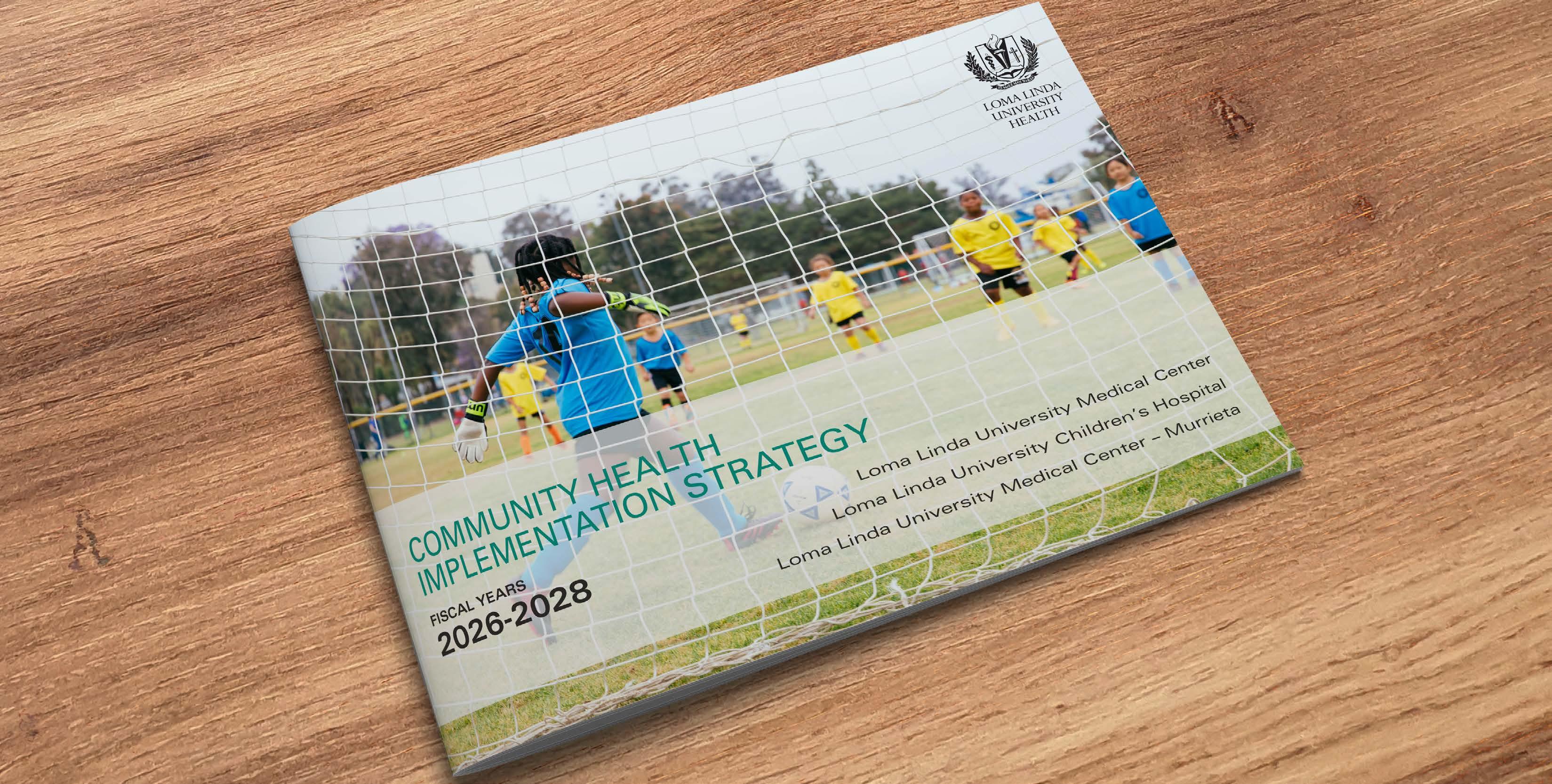
This year marks a transition point in Loma Linda University Health’s community benefit planning, concluding our prior three-year strategy while preparing for the work ahead. The 2025 Community Health Needs Assessment gathered input from more than 1,300 community members, with over 30 communitybased organizations partnering to reach medically underserved, low-income, and marginalized populations through surveys, community conversations, and key
informant interviews. Informed by this process, the FY 2026 -2028 Community Health Implementation Strategy is shaped by the perspectives, priorities, and lived experiences of our community. Guided by the Vital Conditions for Health and Well-Being framework, the plan focuses on “multi-solvers”—programs and investments designed to address interconnected challenges and support lasting improvements in health and quality of life as outlined in the following pages.
Anticipated impact: These initiatives will expand pathways to higher-skilled, better-paying careers—particularly in health professions— helping participants advance economically while addressing the region’s critical healthcare workforce shortage.
STRATEGY
STRATEGY
Introduce middle and high school students to careers in health
Vital Conditions Initiatives


Potential Resources & Partners
65 high school students participate in the summer Discovery health pathway program annually to prepare for college and explore various health professions.
Host 3 My Campus sessions to expose Inland Empire middle and high school students to health professions; reach 180 students annually.
Engage at least 25 high school students annually in Robotic Surgery Simulation events inspiring STEM and health careers.
Develop a campus-wide mentorship program to pair health pathway alumni students with an LLU student mentor from a field of their interest.
LLU Community-Academic Partners in Service, LLUH Pathways Programs, Loma Linda University, School Districts, Inland Health Professions Coalition, LLUH Faculty & Staff, SAC Health, BLU Foundation, La Sierra University, Community Benefit Funding


Support educational and workforce opportunities for youth and adults from under-resourced communities
Vital Conditions Initiatives
Provide 50 scholarships/stipends to at-promise youth in the region annually to support their transition to higher education.
Provide 20 scholarships annually to underserved students pursuing higher education in health-related fields, supported by a minimum of $70,000 in community benefit funding each year, with schools providing matching funds to double the impact.
Facilitate at least 40 academic tutoring and 25 music tutoring sessions for local K-12 students annually through the La Escuelita program.
Invest in workforce development with community-based partners to increase outreach to marginalized and specialty populations and their access to livable wage-paying jobs.
Potential Resources & Partners Community Health Investment Awards, Community Benefit Scholarships, Loma Linda University, San Manuel Gateway College, Community-Based Organizations, San Bernardino City Unified School District


Anticipated impact: These efforts will reduce delays in care, connect more patients with the right services at the right time, and improve continuity of treatment—leading to better health outcomes and fewer preventable hospital visits
Expand access to pediatric and emergency behavioral health care through new clinic sites and specialized treatment units
Potential Resources & Partners
Complete construction and begin operations of new LLU Children’s Hospital outpatient specialty clinics by the end of 2026, increasing access to pediatric subspecialty care for Inland Empire families.
Open new pediatric urgent and primary care clinics in underserved areas.
Open two EmPATH (Emergency Psychiatric Assessment, Treatment, and Healing) units—one pediatric and one adult—by 2026 to improve access to behavioral health services and reduce pressure on emergency departments.
CA Prop 4 funding, philanthropic support, California Mental Health Services Oversight and Accountability Commission, LLUH behavioral health team
Identify and address social determinants of health through routine screenings and targeted referrals
Advance Community Health Worker integration in hospital systems and school districts


Potential Resources & Partners
The Community Health Worker (CHW) team serves 550 participants annually, providing 1,900 encounters to address health-related social needs and support care coordination.
Integrate CHW workflows into Compass Rose to enable outpatient referrals by December 2026.
Complete CHW buildout in EPIC to enable inpatient referrals and submit documentation for service reimbursement.
Establish a referral pathway from the Emergency Department to CHWs for patients with identified social needs.
Community Health and Education Workers (CHEWs) conduct 3,000 home visits to address the social determinants of health and education for students and families.
Hospital-based CHWs, LLUH Hospital-based violence intervention program, CalAIM Enhanced Care Management, LLUH Social Work, San Bernardino City Unified School District, Chaffey Joint Unified School District
Reduce financial barriers by strengthening access to charity care and supporting public coverage for underserved populations
Leverage SDOH screening data to identify patient needs, strengthen referral pathways, and implement targeted interventions that support improved health outcomes.
Potential Resources & Partners
Expand Help Me Grow Inland Empire to link more children with prevention and early intervention services; increase developmental screenings by 10% (baseline: 7,000/year) and family support engagements by 10% (baseline: 2,400/year).
Internal data, Help Me Grow Inland Empire Program, First 5, Inland Empire Health Plan
Potential Resources & Partners
Improve charity care access for eligible patients by streamlining application processes and enhancing patient and staff awareness of financial assistance.
Engage in advocacy to ensure Medi-Cal remains a stable source of coverage for populations facing the greatest health disparities.
LLUH Charity Care Task Force, Dollar For, LLUH Government Relations, American Hospital Association, Children’s Hospital Association, Private Essential Access Community Hospitals (PEACH), California Children’s Hospital Association (CCHA)
Anticipated impact: Building on LLUH’s 120-year history of promoting health and well-being, these initiatives will strengthen the foundations for lifelong health by improving nutrition, supporting healthy child development, and increasing family knowledge and skills that help prevent future health challenges.
STRATEGY
Address food insecurity through community gardens, green spaces, and access to affordable healthy food
Vital Conditions Initiatives

Potential Resources & Partners
STRATEGY
Incorporate natural play areas, an outdoor kitchen, and seating at the Jardín de la Salud designed with garden members and youth to encourage engagement in educational activities for healthy lifestyles.
Coordinate 20 fresh produce distributions annually to help facilitate healthy food access for Inland Empire families.
Facilitate 25 workshops annually at the Jardín de la Salud, in collaboration with garden members and partners, engaging at least 325 participants to expand community knowledge on gardening, sustainability, and wellness.
Identify and implement at least two strategies to improve food security for patients and/or community members.
Inland Empire Health Plan, Bienestar, Community-based organizations
STRATEGY
Promote healthy development and well-being through education, physical activity, and connection to nature
Vital Conditions
Potential Resources & Partners
Initiatives
Engage at least 250 local youth in the Goal 4 Health soccer league, with at least 40% coming from under-resourced neighborhoods.
Facilitate 25 parent-informed workshops as part of La Escuelita engaging families in topics including physical health, mental health, and life skills.
Engage at least 200 parents from local school districts in Parent Health Institute (PHI) educational workshops.
Engage 350 participants annually through garden workshops, day trips and overnight trips via the SHiNE Program to green spaces throughout the region to promote physical and mental wellbeing.
LLU Community-Academic Partners in Service, CHEW Program, San Bernardino City Unified School District, California State Parks, Outdoor Outreach
Promote early childhood development and maternal-infant health through literacy-based interventions and community partnerships
Vital Conditions Initiatives
Potential Resources & Partners
Distribute 20,000 books annually through the Reach Out & Read program to encourage healthy growth and early literacy.
Collaborate with regional partners and coalitions to advance maternal and infant health equity; invest in community-based organizations implementing solutions that improve outcomes for historically underserved populations.
Reach Out & Read, First 5, American Academy of Pediatrics, 15 pediatric clinics, Community Health Investment Awards
STRATEGY
Anticipated Impact: These efforts will reduce environmental health risks, lower LLUH’s ecological footprint, and enhance resilience to extreme heat, wildfires, utility shutoffs, and other climate-related impacts that threaten community well-being and healthcare operations.
Integrate sustainability into clinical, operational, and purchasing practices
Potential Resources & Partners
STRATEGY
Implement at least one new high-impact sustainability project annually in areas such as waste reduction, energy efficiency, emissions reduction, water conservation, or sustainable purchasing.
Develop systems to monitor and report on key sustainability data— including energy use, emissions, and waste—by March 2027 to enable better tracking and decision-making.
Submit annual Practice Greenhealth awards application for benchmarking.
LLUH Environmental Sustainability Committee, Practice Greenhealth, community benefit operational support, Geographic Information Systems
Foster a culture of sustainability through education, staff participation, and community engagement
Potential Resources & Partners
Increase organizational readiness to provide essential medical services and protect community health during environmental emergencies.
Implement at least one staff engagement strategy by June 2027 to increase awareness of sustainability goals and empower action.
Share at least 10 updates annually through internal and external communications to highlight sustainability goals and progress.
Facilitate 24 outdoor recreational activities annually, reaching at least 375 youth and family participants through outdoor leadership education, environmental engagement, and access to nature.
LLUH Environmental Sustainability Committee, Practice Greenhealth
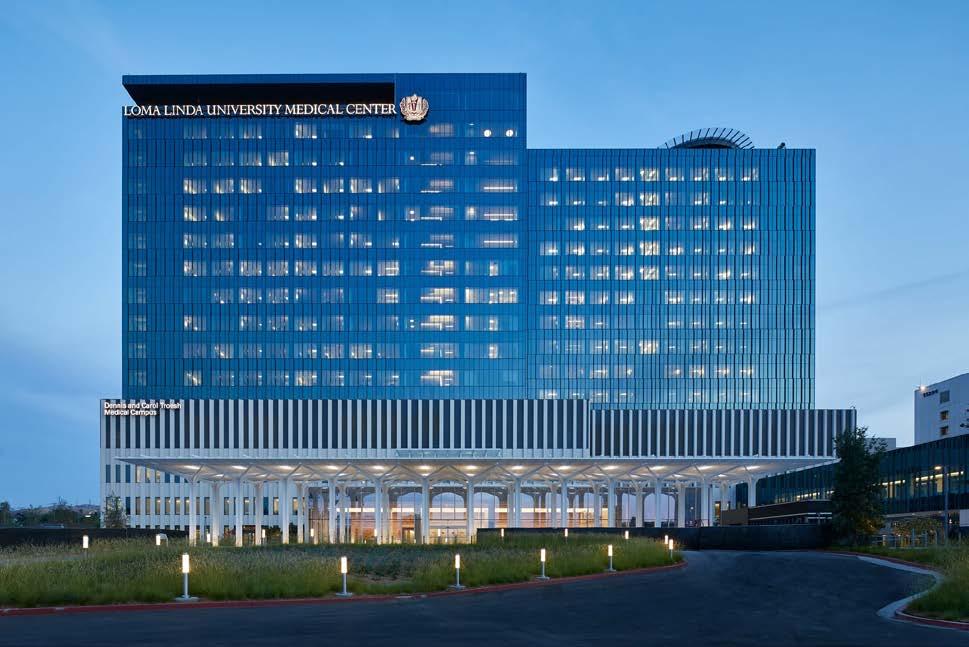
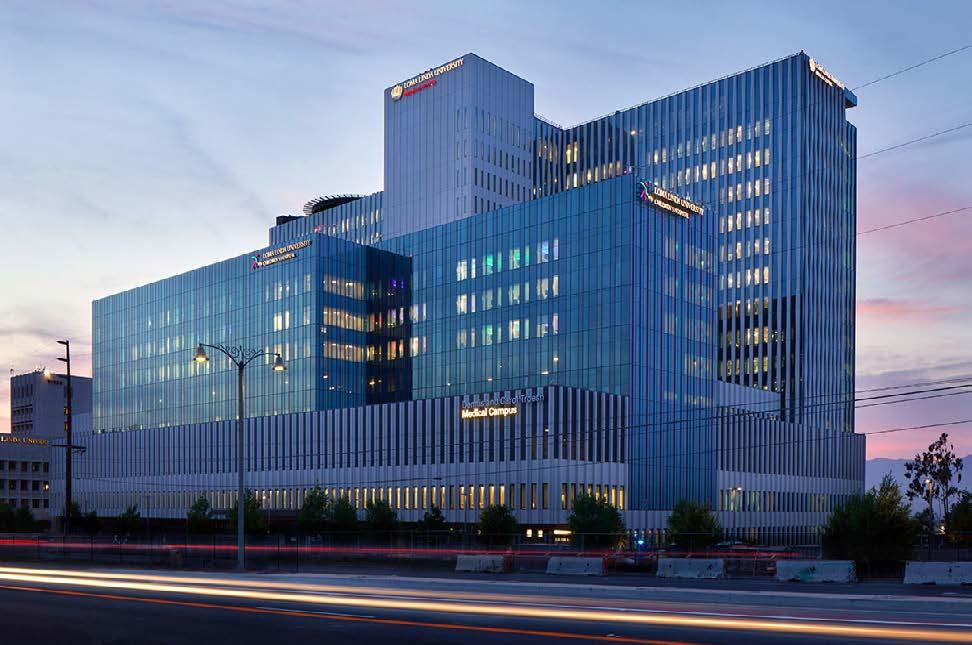
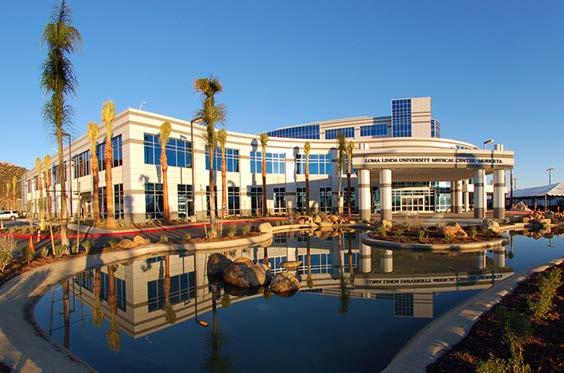
Loma Linda University Health
Loma Linda University Health Hospitals
Loma Linda University Medical Center
Loma Linda University Medical Center East Campus
Loma Linda University Surgical Hospital
Loma Linda University Behavioral Medicine Center
Loma Linda University Children’s Hospital
Loma Linda University Medical Center – Murrieta
Loma Linda University
School
School
School
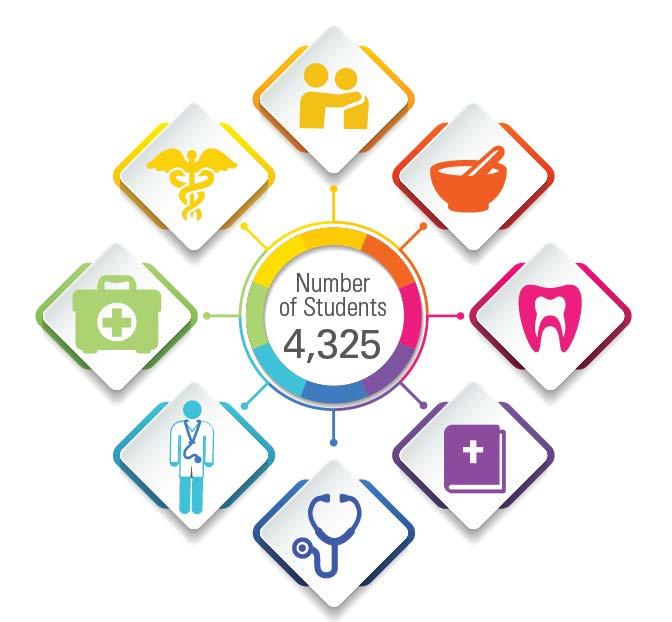
1,296
LLUH is committed to upholding the standards of excellence established by the 2010 Affordable Care Act and California’s AB 204 (2019) for excellence in Community Benefit and evaluates it based upon the following criteria:
• Access to care (health and behavioral) for disenfranchised and marginalized communities
• Focus on vulnerable populations: low socio-economic status, underinsured, uninsured
• Addressing SDOH’s for low-income people who experience undue, multiplied burden
LLUH reports the uncompensated dollars (net benefit) as Community Benefit for the following patient care services.
1. Medi-Cal and other Means tested Government Sponsored Programs: Medi-Cal, State Children’s Health Insurance Program (SCHIP) and California Children’s Services California Children’s Services (CCS)
2. Financial Assistance Program/Charity Care is defined as any medically necessary inpatient or outpatient hospital service provided to a patient who has an income below 200% of the current federal poverty level and who has established qualification in accordance with requirements outlined in the LLUH Charity Care and patient financial assistance policies. Discounted care is available to patients with income at or below 400% of the federal poverty level and who meet qualifications. To access any of LLUH’s Financial Assistance policies in multiple languages, you can find these on our website: https://lluh.org/patients-visitors/patients/billing-insurance/ financial-assistance
As an academic medical center, LLUH is committed to the investment in Graduate and Undergraduate medical education for physicians, nurses and other healthcare professionals. These expenditures are only reported after subsidies, grants, and payments (DME & IME) are offset.
Costs associated with studies or investigations aimed at increasing the generalizable knowledge made available to the public that improves population health. It includes: Clinical Trials and Community Health Research.
Community Benefit accounting in this category includes:
• Community Health Services – LLUH programming focused on access to care (i.e. support groups, community injury prevention, cancer center, diabetes treatment, behavioral health, etc.)
• Cash & In-Kind Donations – Direct cash donations to single day community benefit events.
• Community-Building Activities – Costs incurred for direct investment in partner organizations addressing the Community Health Implementation Strategy priority areas and costs for ICP ran community-based programming (health career pathways, CHWs, El Jardín, etc.)
• Community Benefit Operations – Administrative costs associated with running the aforementioned programs and for Community Benefit reporting.
Juan Carlos Belliard, PhD, MPH
Assistant Vice President | Community Partnerships
Director | Institute for Community Partnerships
Nery Pereira Administrative Assistant
Valeria Rodarte, MHA Research Associate
Community Benefit
Jasmine Hutchinson, MSPH
Director I Community Benefit
Associate Director | Institute for Community Partnerships
Mark Camarena, MNLM
Fiscal Manager | Community Benefit
Katie Jang, MS
Coordinator | Community Benefit
Program Design and Evaluation Unit
Sharlene Gozalians, DrPH, MPH
Lead Evaluator
Community-Academic Partners in Service
Taylor Pope, MPH
Director | Community-Academic Partners in Service
O. Siquem Bustillos, MPH
Program Manager | CommunityAcademic Partners in Service
Evelyn Perez
Program Coordinator | Outdoor Equity
Perla Madera
Program Coordinator | Outdoor Equity
Mark Alvarez
Fellow | Outdoor Equity
Miguel Cruz
Program Coordinator | Jardín de la Salud
Isabella Showalter, MS, OTR/L
Educational Lead | Jardín de la Salud
Kevin Head
Agricultural Lead | Jardín de la Salud
Community Health Worker Integration
Cristie Granillo, PhD, MEd, MS
Manager | School District CHW Integration
Marisol Flores, MSW
Manager | Hospital-Based CHW Integration
Camille Saye
Manager | Hospital-Based CHW Integration
Lucia Cloud, MPH, MSA Coordinator | Hospital-Based CHW Integration
Erica Landin Community Health Worker | VIP
Genesi Ramirez Leon Community Health Worker | VIP
Duane Fitzpatrick Community Health Worker | VIP
Rosa Perez Quintanilla
Community Health Worker | Perinatal
Candy Rangel
Community Health Worker | Perinatal/VIP
Janette Bucio
Community Health Worker | ACES
Esmirna Zapata
Community Health Worker | ACES
Yanina Chujutalli
Community Health Worker | ACES/DTC
Mykayla Miller
Community Health Worker | SC Clinic
Aliett Saldana
Community Health Worker | ID Clinic
Selina Peña
Community Health Worker | ED
Georgette Rivera-Leon
Community Health Worker | ED
Dr. Juan Carlos Belliard Director, Institute for Community Partnerships Loma Linda University Health
Mark Camarena Fiscal Manager, Community Benefit Loma Linda University Health
Dr. Richard Chinnock
Chief Medical Officer and Physician-In-Chief, Loma Linda University Children’s Hospital Board of Trustees Loma Linda University Health
Dr. Silvi Cuizon Director for Health Equity Loma Linda University Health
Stacey Davis Health Equity Program Manager San Bernardino County Department of Public Health
Dr. Willie Davis
Dr. Alex Dubov
Assistant Dean, Associate Professor, Program Director of PharmD Loma Linda University School of Pharmacy
Associate Professor, Division of Interdisciplinary Studies Loma Linda University School of Behavioral Health
Tammy Garcia-Chang Community Affairs Coordinator Mexican Consulate in San Bernardino
Brad Gates Director, Workforce Development Department San Bernardino County Economic Development Agency
Dr. Monica Guerra Branch Chief, Office of Community Air Protection California Air Resources Board
Jasmine Hutchinson Director, Community Benefit Loma Linda University Health
George Lamb President/CEO Faith Advisory Council for Community Transformation
Ginger Ontiveros
Chief Executive Officer Tomorrow’s Talent
Dr. Bridgette Peteet Professor, Department of Psychology Loma Linda University
Marcelino Serna
Parent/Family Community Engagement Project Specialist San Bernardino County Superintendent of Schools
Salomeh Wagaw Epidemiologist Riverside County Public Health
Jodie Wingo
Chief Executive Officer
CHAISR-Community Health Association of Inland Southern Region
Thomas Lemon, MDiv General Conference of SDA
G. Alexander Bryant, DMin North American Division
Lisa Beardsley-Hardy, PhD General Conference of SDA
Francis Chan, MD LLU School of Medicine
Shirley Chang, PhD, RN Retired Nursing Educator
Zeno Charles-Marcel, MD General Conference of SDA
Wilfredo Colón, PhD Rensselaer Polytechnic Institute
Daniel Dawes, JD Meharry Medical College
Paul H. Douglas, MBA General Conference of SDA
Steven Filler, DDS University of Alabama School of Dentistry
Wayne B. Harris, MD Emory University School of Medicine
Richard H. Hart, MD, DrPH LLUH
Paul Herrmann, MD, PhD LLU School of Medicine
Anthony Hilliard, MD, FACC LLUH
Erton Köhler, MTh General Conference of SDA
Robert E. Lemon, MBA LLU Faculty Medical Group
José Loredo, MD, MPH UC San Diego School of Medicine
Robert Martin, MD LLU School of Medicine
Richard McEdward, DMiss General Conference of SDA
Barbara McKinney, MD, MPH Physician Surveyor, Joint Commission
Sheryl D. Moorhead, MS, BSN, RN AdventHealth
Richard Osborn, PhD Retired Educational Administrator
Ricardo Peverini, MD LLUH
E. Albert Reece, MD, PhD, MBA University of Maryland School of Medicine
Sandra Roberts, DMin Pacific Union Conference of SDA
Herbert Ruckle, MD LLU School of Medicine
Jennifer Sacro, Esq Business attorney
Zareh Sarrafian, MBA Riverside University Health System
Randall Schell, MD, MACM University of Kentucky
Eunmee Shim, MSN, RN Saint Joseph Medical Center
Ella Simmons, EdD Retired educator and administrator
Laren Tan, MD LLU Faculty Medical Group
Tamara Thomas, MD LLUMC
Gary Thurber, PhD Mid-America Union of SDA
Rodney Wehtje, MBA, CPA Finance executive/consultant
April Wilson, MD LLU School of Medicine
President & CEO
CEO for LLUH Hospitals/Exec VP for Hospital Affairs
CFO for LLUH/Exec VP for Finance
Exec VP for Medical Affairs
COO for LLUH Hospitals & Sr VP for Health Facilities
Sr VP for Children’s Hospitals
Sr VP for Clinical Faculty
Sr VP for Finance, Hospital Operations
Sr VP for East Campus & Surgical Hospital
Sr VP for LLUMC-Murrieta
Sr VP for Clinical Faculty Finance & CFO for LLU Faculty Medical Group
Sr VP for Patient Care Services
Sr VP for Clinical Faculty Operations & COO of LLU Faculty Medical Group
Sr VP for Business Development
Vice President for Behavioral Health Services
Vice President for LLUMC Operations
VP of Government Affairs
VP of Finance Clinical Faculty
Vice President for Campus Development
VP for Clinical Faculty Administration
Chief Information Officer for LLUMC
Chief Compliance & Privacy Officer
Chief Medical Officer for LLUCH
Chief of Medical Operations
Chief Nursing Officer for LLUCH
Richard H. Hart, MD, DrPH
Anthony Hilliard, MD, FACC
Angela M. Lalas, MBA, CPA
Tamara L. Thomas, MD
Lyndon C. Edwards, MBA, MHS
Peter Baker, JD, MBA
Ricardo L. Peverini, MD
Alan Soderblom, MBA
Darryl VandenBosch, CPA
Jonathan Jean-Marie, MHA
Robert Martin, MD
Helen Staples-Evans, DNP, MS
Laren Tan, MD
Daryl L. “Rusty” Oft, MBA
Edward L. Field, MBA
Sara Matus, JD, MBA
Shandra Secor, MBA
Stella Kim
Eric N. Schilt, MBA
Barbara Sharp
Mark Zirkelbach, MS
Tonya Okon-Johnson, JD, FACHE
Richard Chinnock, MD
Adrian Cotton, MD
Sherry Nolfe, DNP, MS
Vice President for Payor Contracting
Kevin J. Lang, MBA
Chief Nursing Officer for LLUMC-Murrieta Denise Robinson, DNP, MPH, WOCN, FCNLA
Chief of Quality & Patient Safety Ihab Dorotta, MD
Sr VP for Advancement
Rachelle B. Bussell, MA
Vice President for Human Resource Management Denton Gruzensky, MBA
Vice President for Risk Management Raul Castillo, MBA
Vice President for Graduate Medical Education Daniel W. Giang, MD
Vice President for Revenue Cycle Lucas Secor, MBA, CPA
Vice President for Finance Llewellyn L. Mowery, MS, CPA
Vice President for Finance, FP&A and LLUSS Emily Ndlela, MBA, CPA
Vice President for Institutes Mark E. Reeves, MD, PhD
Vice President for Spiritual Life and Mission Randall L. Roberts, DMin
Vice President for Research Affairs Travis Losey, MD
Corporate Secretary Myrna L. Hanna, MA
Assistant Secretary Orlando L. Huggins
Assistant Secretary Whitney P. Henderson, MBA
Exec VP, University Affairs/Provost Ronald Carter, PhD
Vice President for Student Experience Karl M. Haffner, PhD
Dean, School of Nursing Shawn Collins, DNP, PhD
Dean, School of Behavioral Health Beverly J. Buckles, DSW
Dean, School of Dentistry Robert Handysides, DDS
Dean, School of Pharmacy Kyle Sousa, PhD
Dean, School of Allied Health Professions Craig R. Jackson, JD, MSW
Dean, School of Public Health
Dean, School of Religion
Adam Arechiga, PsyD, DrPH
Leo S. Ranzolin, Jr., ThD
Vice President & Chief Information Officer David P. Harris, PhD
Sr VP for Financial Affairs
Rodney D. Neal, MBA