![]()


ISBN 978-0-7387-7813-6
Copyright © 2026 Llewellyn Worldwide Ltd. All rights reserved. No part of this book may be used or reproduced in any manner whatsoever, including internet usage, without written permission from Llewellyn Worldwide Ltd., except for brief quotations embodied in critical articles or reviews. No part of this book may be used or reproduced in any manner for the purpose of training artificial intelligence technologies or systems.
Cover design by Kevin R. Brown
Editing by Hanna Grimson
Stock photography models used for illustrative purposes only and may not endorse or represent the book’s subject.
Typography owned by Llewellyn Worldwide Ltd.
Weekly tips by Lupa, Shelby Deering, and Elyse Welles.
Any internet references contained in this work are current at publication time, but the publisher cannot guarantee that a specific location will continue to be maintained.
A special thanks to Michelle Perrin for astrological proofreading. Astrological data compiled and programmed by Rique Pottenger, based on the earlier work of Neil F. Michelsen.
You can order Llewellyn annuals and books from New Worlds, Llewellyn’s catalog. To request a free copy of the catalog, call toll-free 1-877-NEW-WRLD or visit our website at www.llewellyn.com.
Moon Sign Book® is registered in U.S. Patent and Trademark Office. Moon Sign Book is a trademark of Llewellyn Worldwide Ltd. (Canada).
The publisher and the author assume no liability for any injuries caused to the reader that may result from the reader’s use of content contained in this publication and recommend common sense when contemplating the practices described in the work.
Published by Llewellyn Worldwide Ltd.
2143 Wooddale Drive
Woodbury, MN 55125-2989 www.llewellyn.com
Printed in China
GPSR Representation: UPI-2M PLUS d.o.o., Medulićeva 20, 10000 Zagreb, Croatia, matt.parsons@upi2mbooks.hr


Whether we live in simple, primitive times or a time of high technology and mass communication, we need our connection to Mother Nature and an understanding of how all of her systems work together—soil, sun, wind, water, plants, animals, people, and planets.
The connections among elements of nature become especially relevant when we recognize that many energies—both subtle and obvious—flow through our world and affect all things. Ancient civilizations knew about these changing energies and were much more attuned to the subtle effects that they had on us.
In the world of unseen energies, it has long been accepted in many quarters that the position of the planets makes a difference in the energy flowing around planet Earth. Those who question these energy flows are often sadly divorced from nature.
Imagine placing a large rock in the waters of a flowing stream or creek. Immediately you would notice numerous changes in the flow of the water moving over, around, and past the rock.
It is no different with our solar system. We live on a planet that floats in a solar sea of energies and frequency waves. As the planets
move around the sun, the currents of energy flowing through the solar sea change in the same way that flowing water changes around the rock placed in a creek or stream … and we are affected by those changes at every level—physically, mentally, emotionally, and spiritually.
The ability to detect these changes and their effect on us has long been organized into knowledge systems, and the Moon Sign Book has always been a stable anchor in maintaining this knowledge and recognizing its importance. We call these organized methods of gaining knowledge astrology, and ancient cultures around the globe used this as their science. It was how they found and maintained a sense of prediction, control, and security, something we are still striving for even today as we try to anticipate the cycles and events of our daily lives.
Although there are several ways of organizing and assessing these energy flows based on planetary positions, the Moon Sign Book uses the tropical system, which says that spring officially begins when the Sun is directly over the equator at noon, something that occurs around March 20 to 21 every year. Once that moment has been determined, the rest of the zodiac calendar is laid out at thirty-degree intervals. This allows us to be precise, but also flex with the changing nature of all things, including our solar system. We support a knowledge base that upholds the ancient wisdom and teaches it to all who are interested. We invite you to read what we have written here and to celebrate the interactions of these energies with the plants, animals, earth, and stars that share this time and space with us.


December 27–January 2
Date Qtr. Sign Activity
Dec. 27, 5:13 p.m.–Dec. 29, 9:27 p.m. 3rd Virgo
Cultivate, especially medicinal plants. Destroy weeds and pests. Trim to retard growth.
While outdoor time is great for our physical and mental health, we can’t always be outside, whether due to weather, health, or the lack of a safe place to go. You can still improve your indoor environments by decorating with images of nature or small artifacts like sticks, rocks, and flowers. For those with the time to care for them, houseplants, terrariums, and small aquariums also add natural benefits to your living and work spaces.
December 30 1:59 pm
January 3–9
Date Qtr. Sign Activity
Jan. 7, 3:24 p.m.–Jan. 8, 5:11 p.m. 1st Capricorn Graft or bud plants. Trim to increase growth.
Make a “calm down kit” for those times when your emotions run high. To soothe your nervous system and benefit your mental health, place items that will make you feel better in an easily accessible basket, like a bottle of lavender oil, a worry stone to turn over in your hand, and a few photos that make you smile. You can also write down mantras on a notecard to remind yourself that you’re strong and capable.
January 7 3:24 pm
January
Date Qtr. Sign Activity
Jan. 11, 5:36 a.m.–Jan. 13, 4:14 p.m. 1st Pisces
Jan. 15, 11:44 p.m.–Jan. 18, 3:33 a.m. 2nd Taurus
Plant grains, leafy annuals. Fertilize (chemical). Graft or bud plants. Irrigate. Trim to increase growth.
Plant annuals for hardiness. Trim to increase growth.
Any dog can benefit from learning to wear a well-fitted muzzle, not just aggressive dogs. Muzzles keep your pooch from eating unsavory or dangerous things on walks. And even the nicest dog may snap if they are injured or terrified. Make sure the muzzle is snug enough to stay on but still allows the dog to pant. Muzzle training should be done slowly and with care; consult a professional trainer if you want help.
January 15 3:34 pm EST
January 17–23
Date Qtr. Sign Activity
Jan. 20, 4:21 a.m.–Jan. 22, 3:45 a.m.
Jan. 22, 7:17 a.m.–Jan. 24, 3:45 a.m.
2nd Cancer
3rd Leo
Plant grains, leafy annuals. Fertilize (chemical). Graft or bud plants. Irrigate. Trim to increase growth.
Cultivate. Destroy weeds and pests. Harvest fruits and root crops for food. Trim to retard growth.
There are so many uses for a vintage recipe box. Although they were once intended to house one’s favorite recipes, you can use them for a lot of other things, like filing away favorite photos or quotes, or as an organization solution. Think tea bags, jewelry, mini craft supplies, and more. You can find these retro recipe boxes at thrift stores and flea markets.
January # January 22 7:17 am
Date Qtr. Sign Activity
Jan. 24, 3:45 a.m.–Jan. 26, 6:12 a.m.
3rd Virgo
Jan. 28, 12:21 p.m.–Jan. 29, 5:55 a.m. 3rd Scorpio
Jan. 29, 5:55 a.m.–Jan. 30, 10:14 p.m. 4th Scorpio
Jan. 30, 10:14 p.m.–Feb. 2, 10:33 a.m. 4th Sagittarius
Cultivate, especially medicinal plants. Destroy weeds and pests. Trim to retard growth.
Plant biennials, perennials, bulbs and roots. Prune. Irrigate. Fertilize (organic).
Cultivate. Destroy weeds and pests. Harvest fruits and root crops for food. Trim to retard growth.
Save money and have a great homemade gift ready to go by making your own vanilla infusion. Simply add a large vanilla bean (Madagascar is a delicious favorite) to a big bottle of the cheapest vodka you can find. Store it in a cool, dark place for six months or more, shaking periodically. Bottle it in brown bottles to help it last as long as possible.
January 29 5:55 am EST


Welcome to the world of gardening by the Moon! Unlike most gardening advice, this article is not about how to garden; it’s about when to garden. Timing is everything; if you know how to use the Moon, you’ll not only be in sync with nature, but you can sit back and watch your garden grow beyond your wildest dreams.
Gardening by the Moon is nothing new. It’s been around since ancient times when people used both the Sun and the Moon to predict the tides, as well as fertility and growth cycles for plants and animals.
Lunar gardening is simple and the results are immediate. It doesn’t matter whether you’re a beginner gardener with a single pot or an old hand with years of master gardening experience—your garden will grow bigger and better if you follow the cycles of the Moon and match up the right time with the right garden activity. When the temperature has dropped and the sun is low on the horizon, you can apply what you’ve learned to your indoor plants as well.
The sky is a celestial clock, with the Sun and the Moon as the “hands” that tell the time. The Sun tells the season, and the light and

location of the Moon tell the best times for birth, growth, and death in the garden. The Moon doesn’t generate any light by itself, but as it circles the earth, it reflects the light of the Sun, which makes the Moon look like it’s getting bigger and smaller. The cyclical increases and decreases in the light of the Moon are phases and tell times of growth.
The theory behind gardening by the Moon is “as the Moon goes, so goes the garden.” The earth circles around the Sun once a year, but the Moon has a much shorter “lifespan” of twenty-eight to thirty days. Every month, as the light of the Moon increases and decreases, it mirrors the cycle of birth, growth, and death in the garden. After adjusting your garden activities to the light of the Moon, you’ll be amazed to see how well your garden grows.
The waxing phase is the growth cycle in the garden. It begins with the New Moon and lasts for two weeks. Each month, the Moon is “born” at the New Moon (day one) and grows bigger and brighter until it reaches maturity at the Full Moon (day fourteen). When the light of the Moon is increasing, it’s the best time of the month to sow seeds, plant leafy annuals, and cut back or prune plants to encourage bigger growth.
The waning phase is the declining cycle in the garden. It begins with the Full Moon (day fourteen) and lasts for two weeks. The Moon grows older after the Full Moon as the light begins to decrease, until it disappears, or “dies,” at day twenty-eight. The decreasing light of the Moon is the time to plant bulbs, root vegetables, and perennials that store their energy underground. The waning Moon phase
is also a good time for garden maintenance, including weeding, raking, deadheading, mowing, working the soil, destroying insects, and burning brush.
Cup your right hand into a C shape and look up into the sky. If the crescent Moon fits into the closed part of your right hand, it’s a waxing Moon.
Cup your left hand into a C shape and look up into the sky. If the crescent Moon fits into the closed part of your left hand, it’s a waning Moon.
Every month, the Moon takes one day off. This time-out between waning and waxing is called the New Moon. The time-out between waxing and waning is called the Full Moon. When the Moon reaches either of these stopping points, it’s time for you to follow its example and take a one-day break from the garden.
Once you know the Moon phases, the next step is to locate where the Moon is in the zodiac. The Moon hangs out in each of the zodiac signs for two to three days per month.
There’s no such thing as a “bad” time in the garden, but there are Moon signs that are better for growth and others that are better for digging and weeding. Growth times alternate every two to three days with maintenance times. The trick is knowing which one is which.
The grow signs are Taurus, Cancer, Libra, Scorpio, Capricorn, and Pisces. When the Moon is in these signs, it’s time to seed and plant.
The no-grow/maintenance signs are Aries, Gemini, Leo, Virgo, Sagittarius, and Aquarius. When the Moon is in these signs, it’s time for digging, weeding, mowing, and pruning.
Remember: It’s always a good time to garden something!
In order to get started, you’ll need three tools: a calendar with New and Full Moons, the Moon tables (page 138), and the Moon phases and signs below.
Then, follow these simple steps:
1. Mark your calendar with your time frame for gardening.
2. Figure out when the Moon is waxing (1st and 2nd quarters) and waning (3rd and 4th quarters). Use the tables in the Weekly Almanac section (starting on page 1).
3. Locate the Moon by zodiac sign.
4. Check out the gardening advice below, which takes into account the Moon’s phase and sign.
Note: Can be applied to any calendar year.
Aries is one of the three fire signs that is hot and barren. Seeds planted under a waxing Aries Moon tend to be bitter or bolt quickly, but if you’re feeling lucky, you could try your hand at hot and spicy peppers or herbs that thrive in dry heat.
The decreasing light of the waning Aries Moon makes these two to three days a good time to focus on harvesting, cutting back, mowing the lawn, and getting rid of pests.
Taurus is one of the three semi-fruitful earth signs. These days are perfect ones to establish your garden by planting or fertilizing annuals. Annuals with outside seeds like lettuces, cabbage, corn, and broccoli grow faster when planted under a waxing Taurus Moon that is one to seven days old. Vegetables with inside seeds like cucumbers, melons, squash, tomatoes, and beans should be planted when the Moon is seven to twelve days old. Annual flowers can be planted any time during this two-week phase.
(May–November)
The decreasing light of this semi-fruitful waning Taurus Moon gives you a perfect two- or three-day window for planting perennials or digging in root vegetables and flower bulbs.
(December–June)
Gemini is one of the three dry and barren signs. But with the light of the Moon increasing, you can use these two to three days to prune or cut back plants you want to flourish and grow bigger.
(June–December)
Gemini can be all over the place, so use these couple of dry and barren days when the light is decreasing to weed invasive plants that are out of control.
Annuals 1st or 2nd
Apple tree 2nd or 3rd Cancer, Pisces, Virgo
Artichoke 1st Cancer, Pisces
Asparagus 1st Cancer, Scorpio, Pisces
Aster 1st or 2nd Virgo, Libra
Barley 1st or 2nd Cancer, Pisces, Libra, Capricorn, Virgo
Beans (bush & pole) 2nd Cancer, Taurus, Pisces, Libra
Beans (kidney, white & navy) 1st or 2nd Cancer, Pisces
Beech tree 2nd or 3rd Virgo, Taurus
Beets 3rd Cancer, Capricorn, Pisces, Libra
Biennials 3rd or 4th
Broccoli 1st Cancer, Scorpio, Pisces, Libra
Brussels sprouts 1st Cancer, Scorpio, Pisces, Libra
Buckwheat 1st or 2nd Capricorn
Bulbs 3rd Cancer, Scorpio, Pisces
Bulbs for seed 2nd or 3rd
Cabbage 1st Cancer, Scorpio, Pisces, Taurus, Libra
Canes (raspberry, blackberry & gooseberry) 2nd Cancer, Scorpio, Pisces
Cantaloupe 1st or 2nd Cancer, Scorpio, Pisces, Taurus, Libra
Carrots 3rd Cancer, Scorpio, Pisces, Taurus, Libra
Cauliflower 1st Cancer, Scorpio, Pisces, Libra
Celeriac 3rd Cancer, Scorpio, Pisces
Celery 1st Cancer, Scorpio, Pisces
Cereals 1st or 2nd Cancer, Scorpio, Pisces, Libra
Chard 1st or 2nd Cancer, Scorpio, Pisces
Chicory 2nd or 3rd Cancer, Scorpio, Pisces
Chrysanthemum 1st or 2nd Virgo
Clover 1st or 2nd Cancer, Scorpio, Pisces
Coreopsis
2nd or 3rd Libra
Corn 1st Cancer, Scorpio, Pisces
Corn for fodder 1st or 2nd Libra
Cosmos 2nd or 3rd Libra
Cress 1st Cancer, Scorpio, Pisces
Crocus 1st or 2nd Virgo
Cucumber 1st Cancer, Scorpio, Pisces
Daffodil 1st or 2nd Libra, Virgo
Dahlia
Deciduous trees
1st or 2nd Libra, Virgo
2nd or 3rd Cancer, Scorpio, Pisces, Virgo, Libra
Eggplant 2nd Cancer, Scorpio, Pisces, Libra
Endive
1st Cancer, Scorpio, Pisces, Libra
Flowers 1st Cancer, Scorpio, Pisces, Libra, Taurus, Virgo
Garlic 3rd Libra, Taurus, Pisces
Gladiola 1st or 2nd Libra, Virgo
Gourds 1st or 2nd Cancer, Scorpio, Pisces, Libra
Grapes 2nd or 3rd Cancer, Scorpio, Pisces, Virgo
Hay 1st or 2nd Cancer, Scorpio, Pisces, Libra, Taurus
Herbs 1st or 2nd Cancer, Scorpio, Pisces
Honeysuckle
1st or 2nd Scorpio, Virgo
Hops 1st or 2nd Scorpio, Libra
Horseradish 1st or 2nd Cancer, Scorpio, Pisces
Houseplants 1st Cancer, Scorpio, Pisces, Libra
Hyacinth 3rd Cancer, Scorpio, Pisces
Iris 1st or 2nd Cancer, Virgo
Kohlrabi 1st or 2nd Cancer, Scorpio, Pisces, Libra
Plant
Asparagus
Beans
Beets
Broccoli
Cabbage
Carrots
Citrus trees
Corn
Cucumbers
Eggplant
Grapes
Melons
Companions
Tomatoes, parsley, basil
Tomatoes, carrots, cucumbers, garlic, cabbage, beets, corn
Hindered by
None known
Onions, gladiolas
Onions, cabbage, lettuce, mint, catnip Pole beans
Beans, celery, potatoes, onions
Peppermint, sage, thyme, tomatoes
Peas, lettuce, chives, radishes, leeks, onions, sage
Guava, live oak, rubber trees, peppers
Potatoes, beans, peas, melon, squash, pumpkin, sunflowers, soybeans
Beans, cabbage, radishes, sunflowers, lettuce, broccoli, squash
Green beans, lettuce, kale
Peas, beans, blackberries
Corn, peas
Melons Corn, peas
Onions, leeks
Parsnip
Peas
Potatoes
Radishes
Spinach
Squash/Pumpkin
Tomatoes
Turnips
Beets, chamomile, carrots, lettuce
Peas
Radishes, carrots, corn, cucumbers, beans, tomatoes, spinach, turnips
Beans, corn, peas, cabbage, hemp, cucumbers, eggplant, catnip
Peas, lettuce, nasturtiums, cucumbers
Strawberries
Nasturtiums, corn, mint, catnip
Asparagus, parsley, chives, onions, carrots, marigolds, nasturtiums, dill
Peas, beans, brussels sprouts
Tomatoes
Strawberries, grapes
Dill, anise
None known
Quack grass, wheat, straw, mulch
Aromatic herbs
None known
Cabbage, radishes
Potatoes, gourds
Potatoes, gourds
Peas, beans, sage
None known
Onion, garlic
Raspberries, pumpkins, tomatoes, sunflowers
Hyssop
None known
Potatoes
Black walnut roots, fennel, potatoes
Potatoes
Anise Coriander
Basil Tomatoes
Flavor candy, pastry, cheeses, cookies
Dislikes rue; repels flies and mosquitoes
Borage Tomatoes, squash Use in teas
Buttercup Clover Hinders delphinium, peonies, monkshood, columbine
Catnip Repels flea beetles
Chamomile Peppermint, wheat, onions, cabbage
Chervil Radishes
Chives Carrots
Roman chamomile may control damping-off disease; use in herbal sprays
Good in soups and other dishes
Use in spray to deter black spot on roses
Coriander Plant anywhere Hinders seed formation in fennel
Cosmos Repels corn earworms
Dill Cabbage Hinders carrots and tomatoes
Fennel Plant in borders Disliked by all garden plants
Horseradish Repels potato bugs
Horsetail Makes fungicide spray
Hyssop Attracts cabbage flies; harmful to radishes
Lavender Plant anywhere
Lovage
Marigolds
Use in spray to control insects on cotton, repels clothes moths
Lures horn worms away from tomatoes
Pest repellent; use against Mexican bean beetles and nematodes
Mint Cabbage, tomatoes Repels ants, flea beetles, cabbage worm butterflies
Morning glory Corn Helps melon germination
Nasturtium Cabbage, cucumbers Deters aphids, squash bugs, pumpkin beetles
Okra Eggplant Attracts leafhopper (lure insects from other plants)
Parsley Tomatoes, asparagus Freeze chopped-up leaves to flavor foods
Purslane Good ground cover
Rosemary Repels cabbage moths, bean beetles, carrot flies
Savory Plant with onions for added sweetness
Tansy Deters Japanese beetles, striped cucumber beetles, squash bugs
Thyme Repels cabbage worms
Yarrow Increases essential oils of neighbors

Kim Rogers-Gallagher
The Moon circles the earth in about twenty-eight days, moving through each zodiac sign in two and a half days. As she passes through the thirty degrees of each sign, she “visits” with the planets in numerical order, forming aspects with them. Because she moves one degree in just two to two and a half hours, her influence on each planet lasts only a few hours. She eventually reaches the planet that’s in the highest degree of any sign and forms what will be her final aspect before leaving the sign. From this point until she enters the next sign, she is referred to as void-of-course.
Think of it this way: the Moon is the emotional “tone” of the day, carrying feelings with her particular to the sign she’s “wearing” at the moment. After she has contacted each of the planets, she symbolically “rests” before changing her costume, so her instinct is temporarily on hold. It’s during this time that many people feel “fuzzy” or “vague.” Plans or decisions made now often do not pan out. Without the instinctual “knowing” the Moon provides as she touches each planet, we tend to be unrealistic or exercise poor judgment. The traditional definition of the void Moon is that “nothing will come of

this.” Actions initiated under a void Moon are often wasted, irrelevant, or incorrect—usually because information is hidden, missing, or has been overlooked.
Although it’s not a good time to initiate plans, routine tasks seem to go along just fine. This period is ideal for reflection. On the lighter side, remember there are good uses for the void Moon. It is the period when the universe seems to be most open to loopholes. It’s a great time to make plans you don’t want to fulfill or schedule things you don’t want to do. See the tables on pages 74–79 for a schedule of the Moon’s void-of-course times.

The Moon journeys around Earth in an elliptical orbit that takes about 27.33 days, which is known as a sidereal month (period of revolution of one body about another). She can move up to 15 degrees or as few as 11 degrees in a day, with the fastest motion occurring when the Moon is at perigee (closest approach to Earth). The Moon is never retrograde, but when her motion is slow, the effect is similar to a retrograde period.
Astrologers have observed that people born on a day when the Moon is fast will process information differently from those who are born when the Moon is slow in motion. People born when the Moon is fast process information quickly and tend to react quickly, while those born during a slow Moon will be more deliberate.
The time from New Moon to New Moon is called the synodic month (involving a conjunction), and the average time span between this Sun-Moon alignment is 29.53 days. Since 29.53 won’t divide into 365 evenly, we can have a month with two Full Moons or two New Moons.

The aspects the Moon will make during the times you are considering are also important. A trine or sextile, and sometimes a conjunction, are considered favorable aspects. A trine or sextile between the Sun and Moon is an excellent foundation for success. Whether or not a conjunction is considered favorable depends upon the planet the Moon is making a conjunction to. If it’s joining the Sun, Venus, Mercury, Jupiter, or even Saturn, the aspect is favorable. If the Moon joins Pluto or Mars, however, that would not be considered favorable. There may be exceptions, but it would depend on what you are electing to do. For example, a trine to Pluto might hasten the end of a relationship you want to be free of.
It is important to avoid times when the Moon makes an aspect to or is conjoining any retrograde planet, unless, of course, you want the thing started to end in failure.
After the Moon has completed an aspect to a planet, that planetary energy has passed. For example, if the Moon squares Saturn at 10:00 a.m., you can disregard Saturn’s influence on your activity if it will occur after that time. You should always look ahead at aspects the Moon will make on the day in question, though, because if the Moon opposes Mars at 11:30 p.m. on that day, you can expect events that stretch into the evening to be affected by the Moon-Mars aspect. A testy conversation might lead to an argument or more.
Much agricultural work is ruled by earth signs—Virgo, Capricorn, and Taurus. The air signs—Gemini, Aquarius, and Libra—rule flying and intellectual pursuits.
Each planet has one or two signs in which its characteristics are enhanced or “dignified,” and the planet is said to “rule” that sign. The Sun rules Leo and the Moon rules Cancer, for example. The ruling planet for each sign is listed below. These should not be considered complete lists. We recommend that you purchase a book of planetary rulerships for more complete information.
The energy of an Aries Moon is masculine, dry, barren, and fiery. Aries provides great start-up energy, but things started at this time may be the result of impulsive action that lacks research or necessary support. Aries lacks staying power.
Use this assertive, outgoing Moon sign to initiate change, but have a plan in place for someone to pick up the reins when you’re impatient to move on to the next thing. Work that requires skillful but not necessarily patient use of tools—cutting down trees, hammering, etc.—is appropriate in Aries. Expect things to occur rapidly but to also pass quickly. If you are prone to injury or accidents, exercise caution and good judgment in Aries-related activities.
Ruler: Mars
Impulse: Action
Rules: Head and face
A Taurus Moon’s energy is feminine, semi-fruitful, and earthy. The Moon is exalted—very strong—in Taurus. Taurus is known as the farmer’s sign because of its associations with farmland and precipitation that is the typical day-long “soaker” variety. Taurus energy is good to incorporate into your plans when patience, practicality, and

Sharon Leah
Electional astrology is the art of electing times to begin any undertaking. Say, for example, you want to start a business. That business will experience ups and downs, as well as reach its potential, according to the promise held in the universe at the time the business was started—its birth time. The horoscope (birth chart) set for the date, time, and place that a business starts would indicate the outcome—its potential to succeed. So, you might ask yourself the question, If the horoscope for a business’s start can show success or failure, why not begin at a time that is more favorable to the venture? Well, you can. While no time is perfect, there are better times and better days to undertake specific activities. There are thousands of examples that prove electional astrology is not only practical, but that it can make a difference in our lives. There are rules for electing times to begin various activities—even shopping. You’ll find detailed instructions about how to make elections beginning on page 106.
The election rules in this almanac are based upon the planetary positions at the time for which the election is made. They do not depend
on any type of birth chart. However, a birth chart based upon the time, date, and birthplace of an event has advantages. No election is effective for every person. For example, you may leave home to begin a trip at the same time as a friend, but each of you will have a different experience according to whether or not your birth chart favors the trip.
Not all elections require a birth chart, but the timing of very important events—business starts, marriages, etc.—would benefit from the additional accuracy a birth chart provides. To order a birth chart for yourself or a planned event, visit our website at www.llewellyn.com.
You’ve probably experienced good timing in your life. Maybe you were at the right place at the right time to meet a friend whom you hadn’t seen in years. Frequently, when something like that happens, it is the result of following an intuitive impulse—that “gut instinct.”
Consider for a moment that you were actually responding to planetary energies. Electional astrology is a tool that can help you to align with energies, present and future, that are available to us through planetary placements.
Decide upon the important significators (planet, sign, and house ruling the matter) for which the election is being made. The Moon is the most important significator in any election, so the Moon should always be fortified (strong by sign and making favorable aspects to other planets). The Moon’s aspects to other planets are more important than the sign the Moon is in.
Other important considerations are the significators of the Ascendant and Midheaven—the house ruling the election matter
and the ruler of the sign on that house cusp. Finally, any planet or sign that has a general rulership over the matter in question should be taken into consideration.
Determine the general nature of the sign that is appropriate for your election. For example, much agricultural work is ruled by the earth signs of Virgo, Capricorn, and Taurus, while the air signs—Gemini, Aquarius, and Libra—rule intellectual pursuits.
Use common sense. If you must do something, like plant your garden or take an airplane trip on a day that doesn’t have the best aspects, proceed anyway, but try to minimize problems. For example, leave early for the airport to avoid being left behind due to delays in the security lanes. When you have no other choice, do the best that you can under the circumstances at the time.
If you want to personalize your elections, please turn to page 106 for more information. If you want a quick and easy answer, you can refer to Llewellyn’s Astro Almanac on the following pages.
The Astro Almanac tables, beginning on the next page, can help you find the dates best suited to particular activities. The dates provided are determined from the Moon’s sign, phase, and aspects to other planets. Please note that the Astro Almanac does not take personal factors, such as your Sun and Moon sign, into account. The dates are general, and they will apply for everyone. Some activities will not have ideal dates during a particular month.
Animals (Neuter or spay) 5–7
Animals (Sell or buy) 8, 14, 19
Automobile (Buy) 8, 18
Brewing 2, 3, 29, 30
Build (Start foundation) no ideal dates
Business (Conducting for self and others) 2, 13, 17, 26, 31
Business (Start new) 17
Can Fruits and Vegetables 2, 3, 29, 30
Can Preserves 2, 3, 29, 30
Concrete (Pour) 23
Construction (Begin new) 5, 15, 17, 19, 26, 28, 31
Consultants (Begin work with) 2, 5, 8, 13, 15, 18, 19, 23, 28
Contracts (Bid on) 8, 13, 15, 18, 19
Cultivate no ideal dates
Decorating 8–10, 18, 19
Demolition 3–5, 22, 23, 31
Electronics (Buy) 8, 18, 26, 28
Entertain Guests 23, 27
Floor Covering (Laying new) 23–28
Habits (Break) 6
Hair (Cut to decrease growth) 3–7, 31
Hair (Cut to increase growth) 12, 15–19
Harvest (Grain for storage) 23
Harvest (Root crops) 3–5, 22, 23, 31
Investments (New) 17, 26
Loan (Ask for) 15–17
Massage (Relaxing) 8, 23, 27
Mow Lawn (Decrease growth) 1–6, 23–31
Mow Lawn (Increase growth) 8–21
Mushrooms (Pick) 21–23
Negotiate (Business for the elderly) 4, 9, 18, 22, 31
Prune for Better Fruit 1–5, 28–31
Prune to Promote Healing 6, 7
Wean Children 4–10, 31
Wood Floors (Installing) 6, 7
Write Letters or Contracts 8, 13, 22, 26

When rules or elections refer to “favorable” and “unfavorable” aspects to your Sun or other planets, please refer to the Favorable and Unfavorable Days Tables and Lunar Aspectarian for more information. You’ll find instructions beginning on page 130 and the tables beginning on page 138.
The material in this section came from several sources, including The New A to Z Horoscope Maker and Delineator by Llewellyn George (Llewellyn, 1999), Moon Sign Book (Llewellyn, 1945), and Electional Astrology by Vivian Robson (Slingshot Publishing, 2000). Robson’s book was originally published in 1937.
The Moon should be conjunct, sextile, or trine Mercury or Uranus and in the sign of Gemini, Capricorn, or Aquarius.
Write ads on a day favorable to your Sun. The Moon should be conjunct, sextile, or trine Mercury or Venus. Avoid hard aspects to Mars

and Saturn. Ad campaigns produce the best results when the Moon is well aspected in Gemini (to enhance communication) or Capricorn (to build business).
Take home new pets when the day is favorable to your Sun, or when the Moon is trine, sextile, or conjunct Mercury, Jupiter, or Venus, or in the sign of Virgo or Pisces. However, avoid days when the Moon is either square or opposing the Sun, Mars, Saturn, Uranus, Neptune, or Pluto. When selecting a pet, have the Moon well aspected by the planet that rules the animal. Cats are ruled by the Sun, dogs by Mercury, birds by Venus, horses by Jupiter, and fish by Neptune. Buy large animals when the Moon is in Sagittarius or Pisces and making favorable aspects to Jupiter or Mercury. Buy animals smaller than sheep when the Moon is in Virgo with favorable aspects to Mercury or Venus.
Animals are easiest to handle when the Moon is in Taurus, Cancer, Libra, or Pisces, but try to avoid the Full Moon. To encourage healthy births, animals should be mated so births occur when the Moon is increasing in Taurus, Cancer, Pisces, or Libra. Those born during a semi-fruitful sign (Taurus and Capricorn) will produce leaner meat. Libra yields beautiful animals for showing and racing.
Have livestock and pets neutered or spayed when the Moon is in Sagittarius, Capricorn, or Pisces, after it has passed through Scorpio, the sign that rules reproductive organs. Avoid the week before and after the Full Moon.
In either buying or selling, it is important to keep the Moon and Mercury free from any aspect to Mars. Aspects to Mars will create discord and increase the likelihood of wrangling over price and quality. The Moon should be passing from the first quarter to full and sextile or trine Venus or Jupiter. When buying racehorses, let the Moon be in an air sign. The Moon should be in air signs when you buy birds. If the birds are to be pets, let the Moon be in good aspect to Venus.
Train pets when the Moon is in Virgo or trine to Mercury.
Let the Moon be in Aries in conjunction with Mars, which makes them courageous and quick to learn. But let Jupiter also be in aspect to preserve them from danger in hunting.
When buying an automobile, select a time when the Moon is conjunct, sextile, or trine to Mercury, Saturn, or Uranus and in the sign of Gemini or Capricorn. Avoid times when Mercury is in retrograde motion.
Your cakes will have a lighter texture if you see that the Moon is in Gemini, Libra, or Aquarius and in good aspect to Venus or Mercury. If you are decorating a cake or confections are being made, have the Moon placed in Libra.

Timing activities is one of the most important things you can do to ensure success. In many Eastern countries, timing by the planets is so important that practically no event takes place without first setting up a chart for it. Weddings have occurred in the middle of the night because the influences were at the best then. You may not want to take it that far, but you can still make use of the influences of the Moon whenever possible. It’s easy and it works!
Llewellyn’s Moon Sign Book has information to help you plan just about any activity: weddings, fishing, making purchases, cutting your hair, traveling, and more. We provide the guidelines you need to pick the best day out of the several from which you have to choose. The Moon Tables are the Moon Sign Book’s primary method for choosing dates. Following are instructions, examples, and directions on how to read the Moon Tables. More advanced information on using the tables containing the Lunar Aspectarian and favorable and unfavorable days (found on odd-numbered pages opposite the Moon

Tables), Moon void-of-course and retrograde information to choose the dates best for you is also included.
Look up the directions for choosing dates for the activity that you wish to begin, then go to step 2.
You’ll find two tables for each month of the year beginning on page 138. The Moon Tables (on the left-hand pages) include the day, date, and sign the Moon is in; the element and nature of the sign; the Moon’s phase; and when it changes sign or phase. If there is a time listed after a date, that time is the time when the Moon moves into that zodiac sign. Until then, the Moon is considered to be in the sign for the previous day.
The abbreviation “Full” signifies Full Moon and “New” signifies New Moon. The times listed with dates indicate when the Moon changes sign. The times listed after the phase indicate when the Moon changes phase.
Turn to the month you would like to begin your activity. You will be using the Moon’s sign and phase information most often when you begin choosing your own dates. Remember to convert the time to your own time zone.
When you find dates that meet the criteria for the correct Moon phase and sign for your activity, you may have completed the process. For certain simple activities, such as getting a haircut, the phase and sign information is all that is needed. If the directions for your
How to Use the Moon Tables and Lunar Aspectarian
activity include information on certain lunar aspects, however, you should consult the Lunar Aspectarian. An example of this would be if the directions told you not to perform a certain activity when the Moon is square (Q) Jupiter.
On the pages opposite the Moon Tables you will find tables containing the Lunar Aspectarian and Favorable and Unfavorable Days. The Lunar Aspectarian gives the aspects (or angles) of the Moon to other planets. Some aspects are favorable, while others are not. To use the Lunar Aspectarian, find the planet that the directions list as favorable for your activity, and run down the column to the date desired. For example, you should avoid aspects to Mars if you are planning surgery. So you would look for Mars across the top and then run down that column looking for days where there are no aspects to Mars (as signified by empty boxes). If you want to find a favorable aspect (sextile (X) or trine (T)) to Mercury, run your finger down the column under Mercury until you find an X or T. Adverse aspects to planets are squares (Q) or oppositions (O). A conjunction (C) is sometimes beneficial, sometimes not, depending on the activity or planets involved.
The tables listing favorable and unfavorable days are helpful when you want to choose your personal best dates because your Sun sign is taken into consideration. The twelve Sun signs are listed on the right side of the tables. Once you have determined which days meet your criteria for phase, sign, and aspects, you can determine whether
or not those days are positive for you by checking the favorable and unfavorable days for your Sun sign.
To find out if a day is positive for you, find your Sun sign and then look down the column. If it is marked F, it is very favorable. The Moon is in the same sign as your Sun on a favorable day. If it is marked f, it is slightly favorable; U is very unfavorable; and u means slightly unfavorable. A day marked very unfavorable (U) indicates that the Moon is in the sign opposing your Sun
Once you have selected good dates for the activity you are about to begin, you can go straight to “Using What You’ve Learned,” beginning on the next page. To learn how to fine-tune your selections even further, read on.
This last step is perhaps the most advanced portion of the procedure. It is generally considered poor timing to make decisions, sign important papers, or start special activities during a Moon void-ofcourse period or during a Mercury retrograde. Once you have chosen the best date for your activity based on steps one through four, you can check the Void-of-Course tables, beginning on page 74, to find out if any of the dates you have chosen have void periods.
The Moon is said to be void-of-course after it has made its last aspect to a planet within a particular sign but before it has moved into the next sign. Put simply, the Moon is “resting” during the voidof-course period, so activities initiated at this time generally don’t come to fruition. You will notice that there are many void periods during the year, and it is nearly impossible to avoid all of them. Some people choose to ignore these altogether and do not take them into consideration when planning activities.
1
To Have Eggs by this Date Sign Qtr. Set Eggs On
Jan. 11, 5:36 a.m.–Jan. 13, 4:14 p.m. Pisces 1st Dec. 21, 2026
Jan. 15, 11:44 p.m.–Jan. 18, 3:33 a.m. Taurus 2nd Dec. 25, 2026
Jan. 20, 4:21 a.m.–Jan. 22, 3:45 a.m. Cancer 2nd Dec. 30, 2026
Feb. 7, 11:32 a.m.–Feb. 9, 9:49 p.m. Pisces 1st Jan. 17, 2027
Feb. 12, 5:44 a.m.–Feb. 14, 10:59 a.m. Taurus 1st Jan. 22
Feb. 16, 1:38 p.m.–Feb. 18, 2:31 p.m. Cancer 2nd Jan. 26
Mar. 8, 4:29 a.m.–Mar. 9, 4:02 a.m. Pisces 1st Feb. 15
Mar. 11, 11:16 a.m.–Mar. 13, 4:30 p.m. Taurus 1st Feb. 18
Mar. 15, 9:11 p.m.–Mar. 17, 11:41 p.m. Cancer 2nd Feb. 22
Mar. 22, 4:02 a.m.–Mar. 22, 6:44 a.m. Libra 2nd Mar. 01
Apr. 7, 7:10 p.m.–Apr. 9, 11:21 p.m. Taurus 1st Mar. 17
Apr. 12, 2:32 a.m.–Apr. 14, 5:30 a.m. Cancer 1st Mar. 22
Apr. 18, 12:22 p.m.–Apr. 20, 5:21 p.m. Libra 2nd Mar. 28
May 6, 6:59 a.m.–May 7, 7:06 a.m. Taurus 1st Apr. 15
May 9, 8:59 a.m.–May 11, 11:01 a.m. Cancer 1st Apr. 18
May 15, 6:33 p.m.–May 18, 12:33 a.m. Libra 2nd Apr. 24
Jun. 5, 5:39 p.m.–Jun. 7, 6:13 p.m. Cancer 1st May 15
Jun. 11, 11:57 p.m.–Jun. 14, 6:17 a.m. Libra 2nd May 21
Jul. 3, 11:02 p.m.–Jul. 5, 3:40 a.m. Cancer 1st Jun. 12
Jul. 9, 6:24 a.m.–Jul. 11, 11:55 a.m. Libra 1st Jun. 18
Aug. 5, 2:55 p.m.–Aug. 7, 6:53 p.m. Libra 1st Jul. 15
Sep. 2, 1:07 a.m.–Sep. 4, 3:44 a.m. Libra 1st Aug. 12
Sep. 13, 9:39 p.m.–Sep. 15, 7:03 p.m. Pisces 2nd Aug. 23
Sep. 29, 10:36 p.m.–Oct. 1, 1:45 p.m. Libra 1st Sep. 08
Oct. 11, 5:02 a.m.–Oct. 13, 4:10 p.m. Pisces 2nd Sep. 20
Nov. 7, 12:09 p.m.–Nov. 9, 11:38 p.m. Pisces 2nd Oct. 17
Nov. 12, 7:58 a.m.–Nov. 13, 10:26 p.m. Taurus 2nd Oct. 22
Dec. 4, 8:20 p.m.–Dec. 7, 8:30 a.m. Pisces 1st Nov. 13
Dec. 9, 5:36 p.m.–Dec. 11, 10:55 p.m. Taurus 2nd Nov. 18

Kim Farnell
Astrological weather forecasting dates back thousands of years and still uses the same basic techniques as in its earliest days.
There’s a range of different methods, but the most important factor is always the Moon because it signifies change. Simply looking at when the Moon changes zodiac signs gives clues about the state of the weather while the Moon is in that sign. Each sign describes basic weather conditions.
Aries: Hot and dry. While not too windy, it causes some air motion.
Taurus: Mild, calm, and moderate with still air.
Gemini: Cool and fluctuating temperatures, a very windy sign.
Cancer: Mildly cold and tends to see steady rain.
Leo: The hottest sign with little air movement and tends to be dry.
Virgo: Dry and chilly with winds that clear the air.
Libra: Cool and mild with refreshing breezes.
Scorpio: Makes conditions more extreme; can indicate heavy rain.
Sagittarius: Warm and fair with clear skies.
Capricorn: Cold, wet, and damp, and worsens existing weather.
Aquarius: Coldest sign and shows drastic drops in temperature.
Pisces: Cool rather than cold and tends toward calm weather.
So when the Moon moves into Virgo, for example, you can expect the weather to be cooler than it was previously. Obviously, you also need to take into account the expected weather for the area and the season. A drop in temperature in summer can feel very different to a drop in temperature during an already-cold winter.
But this is only very basic information, and for more detail it’s necessary to look at what else is going on. That involves looking at the signs the planets are in and their relationships. Each planet is associated with a type of weather as below.
The Sun is mainly a trigger for other planetary configurations, though it also shows warm, sunny, and calm periods when it’s prominent in a chart. When it’s conjunct another planet, it shows extremes in whatever that planet signifies.
Though the Moon’s effects are short-lived, it triggers other planetary combinations, especially in terms of increasing wet weather.
Mercury brings wind and can have a cooling effect. When it’s retrograde, it can mean rain.
Venus has a calming influence and signals warm and pleasant weather, though she also brings rain.
Mars brings extreme heat and turbulence and can generate storms.
Jupiter suggests fair weather but also thick white clouds, and it can raise temperatures.
Saturn is associated with cold and damp and suggests dark clouds and heavy rain.
Uranus shows sudden change and is often involved in extreme conditions, such as thunderstorms and hurricanes.
Neptune is a wet planet. It increases humidity and often indicates fog or mist.
Pluto tends to be cold and may bring hail or sleet. It sometimes acts like Mars.
The planets bring change and adjust the meaning of the sign they’re in. For example, Gemini is associated with cool temperatures and wind. If Mercury is in Gemini, it can be very windy. And if Jupiter is also opposite Mercury, that raises the temperature so the winds don’t blow too cold.
When two planets connect that have different natures, they create different effects depending on the signs involved. For example, Mars indicates hot weather. When it’s next to Saturn—cold, wet, and gloomy—two weather fronts meet. If that happens in Scorpio, which indicates extremes, it suggests a powerful storm. However, if it happens in Taurus, which is mild and calm, it’s more likely to cause uncomfortable hot and humid air.
For a long-term view, the planetary combinations for when the Sun enters Aries, Cancer, Libra, and Capricorn (the solstices and equinoxes) describe the general weather for the season, especially in terms of temperature.
As the Moon acts as a trigger and brings out the energies of the planets, the planetary combinations for when the Moon enters a new phase describe the weather for that week. This is particularly useful when it comes to forecasting rain or storms.
Because the Moon moves so fast, the connections she makes to the other planets are fleeting and usually ignored. However, if you
want to look closely at a particular day, lunar aspects to planets can be very useful.
It isn’t essential to cast a chart to make an astrological weather forecast, but doing so makes it easier to predict the weather for a specified location and provides more detail. As well as casting a chart for the season or week, a chart can be cast for sunrise to forecast the weather for a particular day.
Whatever astrological method is used to predict the weather, the most important factor is always the Moon because it signifies change.
Kim Farnell
Windy and stormy weather is likely in Zone 1. However, it’s not too cold, and any storm tends to be far less violent than it appears it might be. Zone 2 also has stormy weather, and it’s a lot warmer overall than usual for the season. However, it can also be dull and cloudy. Zone 3 has changeable weather with fluctuating temperatures and potential storms. However, there can also be the odd sunny moment. In Zone 4, it’s warm for the time of year, but there can also be persistent cloud cover, creating a gloomy atmosphere.
Zone 5 is also cloudy, and the temperature fluctuates a lot. Brief periods of fog are possible, especially late at night or in the early hours. In Zone 6, there are persistent cutting winds. It’s also cloudy, varying between thin, gray clouds that cover the whole sky and thick, white clouds that hang low and threaten rain. However, although showers are possible, it mostly remains dry. Zone 7 has fluctuating temperatures, and although it can be cloudy, there’s also the occasional burst of unexpected sunshine. Alaska can be cloudy, but it’s also unexpectedly warm for the time of year and remains dry for most of the time. Hawaii is also warm for the time of year, but there’s a lot of on-and-off wind that can cool the air.
4th Quarter Moon December 30, 2026–January 6, 2027
Zone 1: It’s dry and not too cold, especially late in the week, but wind comes out of nowhere, chilling the air before it disappears.
Zone 2: It’s dry and windy, but the temperature fluctuates. It’s most pleasant at the end of the week.
Zone 3: A mild week with still air, though the temperature fluctuates. Occasional short showers are possible.
Zone 4: Pleasant temperatures with some short sunny periods during the week. There are occasional gusts of wind, but they aren’t powerful, and they can feel pleasant.
Zone 5: It’s warm and there’s plenty of sunshine. It will remain dry, although there’s a risk of short showers early in the week.
Zone 6: A windy week with damp air and dark clouds, although there’s unlikely to be any rainfall. It’s chilly rather than cold.
Zone 7: Colder than last week with a lot of dark cloud cover, which lingers because of the lack of wind. The air feels damp, but rain is unlikely.
Zone 8: Alaska will experience a drop in temperature, though it stays dry. Hawaii will be pleasantly warm with some fine periods, although showers are possible from midweek.
New Moon January 7–14, 2027
Zone 1: Ongoing cutting winds can penetrate clothing and make it feel cold. Midweek can be cloudy and damp, but it remains dry.
Zone 2: Although it’s windy, the temperature is comfortable and there’s some sunshine. Rain is possible from midweek, but it’s soon carried away by the wind.
Zone 3: Blustery winds are likely. However, it can be warmer than expected, and any rain is more likely early in the week and will be short-lived.
Zone 4: A pleasantly warm week with clear skies and light breezes. It remains dry.
Zone 5: It’s slightly warmer than last week, but it can be windy at times, although less so as the week goes on. It remains dry.
Zone 6: Although the temperature is comfortable, it can fluctuate, and the air’s damp. There can be heavy cloud cover.
Zone 7: It’s warmer than usual, although the temperature is changeable. Although there may be short gloomy periods, the sky is mostly clear, and it will remain dry.
Zone 8: Alaska will feel damp, but the breezes carry away any rain. Hawaii is windy with dull skies and feels damp, but rain is unlikely.
2nd Quarter Moon January 15–21
Zone 1: A chilly and windy week. It can be gloomy early in the week; the skies are mainly clear. Unexpected but short-lived showers are possible.
Christeen Skinner
The Sun is the centre of our solar system, and consideration of the lunar and planetary cycles of 2027 must start with a review of an important solar cycle.
The duration of a sunspot cycle cannot be predicted ahead of time. While the average length is approximately 11.2 years, cycles may last as little as 8 years or extend up to 14 years. Nor have solar scientists been able to forecast the number of sunspots to be expected in any cycle. Some cycles present just 100 sunspots a day, even at maxima. The present cycle, number 25, began in 2019 and has astounded observers by yielding an extraordinarily high number of sunspots. Forecasting the highs (maximum) of any cycle is difficult. In fact, through Cycle 24, forecasters suggested that Cycle 25 would be a quiet cycle. Yet in August 2024, over 380 sunspots were recorded. This time period marked a significant moment in US political history: President Biden announced he would not seek reelection, naming Vice President Kamala Harris as the nominee for November.
Across the world, and amid heightened security as the 2024 Paris Olympics ended, someone still managed to climb to the top of the Eiffel Tower.
You may not remember where you were during this time, but there is a high probability that you, too, were affected. A high number of sunspots seems to bring the need for excitement and thrill.
When the number of sunspots is high, stock market indices tend to rise, and the opposite is true when the low point is reached at solar minimum. It is probable that throughout 2027 the number of sunspots will diminish, and it is unlikely that the highs of 2024 and 2025 will recur. If solar minimum takes place as expected sometime between 2029 and 2031, then the next solar maximum should be around 2037.
On this basis alone, traders should not expect high returns in 2027. This probability is confirmed by other cycles.
In this digital age it is rare to see traders carrying physical diaries. In times past, however, many traders purchased a version that listed New, Second, Full, and Fourth quarter Moons. It was generally acknowledged that there was a link between the lunar cycle and price movement—information they found useful.
Indeed, the Royal Bank of Scotland commissioned a report in which researchers compared a trading strategy of buying at the New Moon and selling at the Full versus buying on the Full Moon and selling on the New. The results clearly showed that profits would have been far greater using the New to Full Moon method (“Sheer Lunacy Staring at the Heavens” 2010).
In recent times, financial astrologers have at their disposal considerable data and are able to backtest possible correlations between market movements and planet cycles. Had a trader chosen to use $100K to buy the S&P index at every New Moon since March
2020, selling at each Full Moon up to and including the Full Moon on March 14, 2025, the profits would have been 95 percent.
Following the basic Sun-Moon cycle is helpful to the trader but even more so when other lunar cycles are taken into account.
The Moon’s distance from Earth varies. When it is at perigee (its closest point to earth) and this coincides with a Full Moon, a Supermoon occurs. Research reveals that traders tend to overreact on these occasions and that there is marked market volatility. In 2027, there will be one Supermoon on January 22 (known as the Wolf Moon).
In some years, the Moon reaches a maximum declination beyond that of the Sun (which can never be more than 23 degrees and 27 minutes). In the years when the Moon’s declination goes beyond this figure, there are days in every month when the Moon’s declination exceeds this figure.
When the Moon is in this condition (“out of bounds”), human behaviour can be “out of bounds” also: Habits may be broken, and a surge of “I can do it” results in sports people exceeding personal bests. Some people have opined that these are ‘”Wild West” trading dates. Since 2021, the Moon has regularly reached out-of-bound status, with maximum declination of 28 degrees North and 28 degrees South in 2025. Lunar declination reduces in 2027, although the Moon will still be out-of-bounds for several days every month. It will not come back within bounds until the mid-2030s.
The Moon’s latitude is its distance from the ecliptic (path of the Sun) and varies from 0 degrees to 5 degrees north or south of the ecliptic. As with declination, when the Moon is at maximum latitude there is clear correlation with market movement. This is most dramatic when maximum latitude coincides with either a New or Full Moon.
In any year, Mercury is retrograde for three periods. The pattern to these is such that the different elements (fire, earth, air, and water) are emphasized in sequence. In 2027, Mercury turns retrograde from early degrees of the water signs and returns to late degrees of air signs before turning direct. Two of the stationary direct degrees in 2027 are particularly important.
On July 4, the stationary direct degree is 27 degrees Gemini, opposing the Galactic Centre and drawing attention to the SaturnUranus cycle, which began with their most recent conjunction at 27 degrees Sagittarius in 1988—exactly opposite 27 degrees Gemini. This cycle concludes with their next conjunction at 28 degrees Gemini in 2032.
Aspects between Saturn and Uranus since 1988 have coincided with major developments in digital currencies. Bitcoin, the most well-known of the block (Saturn) chain (Uranus) currencies was first traded when the two planets reached their opposition phase in 2009. The two planets will be moving into a 40-degree (a ninth of a circle) aspect in July 2027. Early July could yet see major announcements regarding digital currencies with stationary Mercury conjunct asteroid Vesta.
The other important Mercury direct station of 2027 is on October 28 at 19 degrees Libra. Libra is one of the cardinal signs, and for the last 150 years at least, 19 degrees of these signs have been prominent when there has been a major global financial event. (Reference my book Exploring the Financial Universe.)
Mercury last made complete retrogrades through water signs in 2020 (i.e., turned both retrograde and direct in water signs), with the first retrograde of that year in February. On February 20, 2020,
Sally Cragin
Can you believe only three years remain of the chaotic 2020s? We started the decade with Covid, which brought supply shortages and unemployment, then inflation, and then funding cutbacks for public services, including education, libraries, and arts and humanities— the opposite of a century ago. The 1920s were go-go-go, and you remember how that decade concluded (the stock market crash, the Depression of the 1930s).
And we still have three more years of the 2020s, with dozens of New and Full Moon transits. This year’s forecasts continue to take into account larger planetary movements as well as lunar shifts. And though I’ve written astrological forecasts for more than thirty years, I will never weary of analyzing the Moon as she moves through her phases.
One fact you can take to the bank is that although people who menstruate are more “tuned in” to the theory that the moon influences our days, weeks, and months, plenty of other folks are quickly catching up. I find this encouraging, particularly as our population includes a wide variety of gender-based definitions, and not everyone who menstruates may consider themselves “female.”
Here’s some helpful history: “moon,” “menstrual,” and “menses” derive from the Latin mensis, which means “month.” This is drawn
from the Greek word mene (“moon”). Interpreting lunar phases goes back thousands of years.
As I’ve taught classes, the one bit of folklore everyone remembers is that the Full Moon is a time when “everyone’s crazy,” and I can’t say I can argue that point! However, lunar rhythms are more complex. Consider this: The Moon is constantly orbiting the earth, so we see her nearly every evening. But those phases can be divided into four distinct sections: the New Moon, as the cycle begins; the second quarter, in which patterns are established; the Full Moon, which brings a climax to projects and relationships; and the fourth quarter, which provides an opportunity to review or adjust projects right up to the next New Moon.
Each phase of the Moon is around seven to eight days—thus, the “quarter” Moons (second and fourth) refer to a quarter of the entire lunar phase: new to full to new. I’ve had many conversations with people explaining that, “Yes, you see half of the Moon, but the phase is called a quarter!”
New Moon to Second Quarter: When the Moon is “new” it will not be seen at first, but before long, Luna is visible as a sliver similar to a closing parenthesis. As the days pass, that sliver fattens and eventually takes the shape of a D. A New Moon is a time to initiate projects or get a brand-new perspective; opportunities, new relationships, or projects may emerge.
Second Quarter to Full Moon: That D shape grows until the big, beautiful Full Moon reveals herself. This phase is about “pedal to the metal” acceleration on a project, relationship, or endeavor. The
second quarter indicates a “turning point” in a project that may have begun the week before (at New Moon).
Full Moon to Fourth Quarter: Socializing, multitasking, and expending energy? Staying out late and burning the candle at both ends? Absolutely on track. This can be a vexing period for introverts, but it’s the best time of the month for extroverts and excitementseekers. Complex situations simplify. During this period, discard what doesn’t work.
Fourth Quarter to New Moon: Simplification and completion. The Moon now resembles a C as it wanes. A good time to plan but not start projects. Reduce your expectations of “getting it all done.” However, decluttering, cleaning, and discarding items in your household comes more easily.
The Dark of the Moon: The day or two before the New Moon, when the Moon is difficult to see, even when it’s overhead. Are you accident-prone and not seeing things clearly? I’ve found that decisions made during this time tend not to stick after the Moon begins waxing again. Wait until after the New Moon to make decisions that will have a long-term impact on your life.
Some New and Full Moons come very close (relatively) to Earth during their orbits, which makes the Moon appear larger. I’ve been researching global trends during “Supermoon” periods and have found that events, whether unexpected or anticipated, end up having a more dramatic or devastating effect during these times. There is one Full Supermoon in 2027, on January 22. See below for more.
You’ll notice that each entry includes comments for all twelve signs as well as particular notes for the sign that has the focus of the New or Full Moon. Feel free to write your own comments for the New and Full Moon in the margins as you experience the phases. By the end of the year, you may find you are “in tune with the Moon” more deeply (or madly, or truly)!
Our first earth sign Moon emphasizes systems, construction, and form. And if you haven’t made any, today’s New Year’s resolutions will stick better than those made on January 1! Capricorn: Be forthright—reticence doesn’t “git ’er done.” And consider taking on a project or deepening a relationship during this New Moon that will have a mid-July finish line (to connect with your Cappy Full Moon). Libra, Aries, Cancer, Leo, and Gemini: Slow and steady is your pace to win the race. Rushing irks others. Virgo, Taurus, Aquarius, Pisces, Scorpio, and Sagittarius: Look for projects that take a while to unfold. You have the insight to succeed more than you thought you could.
The only Supermoon of the year arrives on the cusp of the Sun moving into Aquarius, and explosive personalities are ready to erupt. Duck or prepare to raise your voice. This Wolf Moon can also prompt stealth in others, who would rather not be asked. Asked to what? Dance, respond in a timely manner, or reflect on possibilities. Impulsiveness rules, even for more conservative folks. Mars in Virgo began retrograding on January 10 (through April 1), so we all get a

Lupa
What do you think of when you picture a garden? Chances are it’s a large, open space in a yard, with the sun shining down on beds of colorful flowers or neatly arranged rows of vegetables. Many of us live in much smaller confines, like condos and apartments, and the most outdoor space we have to hope for is a small porch or balcony.
In 2024, I moved back to an apartment in Portland, Oregon, after living on a farm on the Washington coast for the better part of a decade. I went from having a good-sized yard all to myself to a balcony less than ten feet by four feet in size, which, thankfully, neither of the people I lived with was interested in using. I knew I wanted to get a garden in the following spring, but it had been a while since I’d been so restricted in space.
Thankfully, there are certain factors that are pretty universal when planning a garden, whether you’re working indoors or out. Let’s look at these in detail.
This is the starting point for any garden. For those with a wealth of space, the question is usually what percentage of their land they want to dedicate to gardening. Small-space gardening is more about maximizing most (or all) of your available outdoor space, or whatever indoor portion is right up against the windows.
First, look at your balcony, porch, or window area and see what’s already there. Are there railings or eaves that can provide infrastructure for containers or act as plant supports? Do you need to work around non-garden objects like chairs, grills, or indoor furniture? Where will you store supplies like extra potting soil, tools, hoses, and so forth? Who else is using the space, and how much do they need? You may need to negotiate with other people to find a compromise that works, though if they are fellow gardeners, they may be enthusiastic about collaborating with you.
If the space is contained, such as inside your apartment or within the confines of a balcony, you can expect reasonable privacy from neighbors. However, if you have an open porch without a fence, you may need to factor in potential unwanted visits if your neighbors or other people passing by have poor boundaries. More than one porch gardener has looked forward to harvesting berries or tomatoes, only to find they were stolen right out of the garden.
Don’t discount incursions by wildlife, either. An indoor garden will need to be pet-proofed if there are any domestic animals in the home. Birds can fly into just about any outdoor garden, and a ground-floor garden may have to fend off all sorts of hungry critters. Even balconies higher up may still be invaded by rats, squirrels, and other climbing animals, never mind a whole host of insects.
Any gardener is going to need to consider the ratio of sun to shade in their space. In the Northern Hemisphere, a south-facing balcony or porch is ideal for many plants, though you may need to put up a sun shade for especially tender plants on hot days. My own garden faces east, so I get nice morning sun, and by the time the afternoon
heats up, my plants are protected by the shade. North-facing gardens can still work; you might just have to focus on more shade-tolerant species.
Indoor gardeners are limited by their windows. Most of mine face north, so my houseplants are all clustered by the eastern sliding glass door that goes out to the balcony. If you don’t have a good sunny window, you might consider supplementing your plants’ sun exposure with grow lights. Full-spectrum LED grow lights use less energy than their older incandescent counterparts and can give your indoor garden a good boost. Many of these hang from hardware in the ceiling, so make sure the area above your window will accommodate your light, including finding studs to mount the hardware and an outlet to plug the lights into. Check your lease to be sure you’re allowed to hang things from the ceiling too.
This is something you should consider before you start building your garden. Where will your water come from? If your balcony or porch has a spigot, that gives you lots of options, from easily filling a watering can to setting up a timed drip irrigation system. Otherwise, plan to make multiple trips with a watering can from the nearest indoor sink to your garden.
What will happen if water spills? Outdoor spaces are already reasonably weatherproof, so a little extra water isn’t likely to be an issue. However, if there are places where water regularly pools, especially next to the building foundation or where the balcony attaches to the building, you may not want to add containers there, as the moisture trapped underneath them could cause problems down the

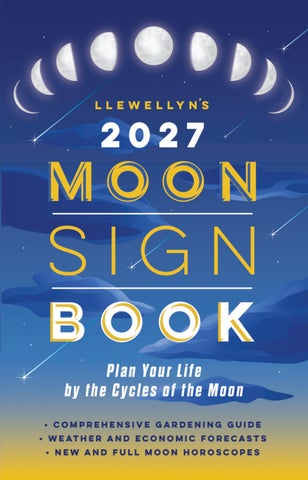
For more than 120 years, this bestselling almanac has been an essential guide for millions of astrologers, gardeners, and laypeople alike. Inside, you’ll find advice on when to schedule all your events and activities, such as:
•Planting & Harvesting • Adopting a Pet • Medical Treatments
•Romance • Traveling • Breaking a Habit • Getting Married
•Buying a Car • Settling Legal Matters • Starting a New Job
•Brewing Beer • Losing Weight • Fishing
This almanac also suggests ways to overcome challenges and live a more spiritual life. You’ll enjoy fascinating articles on self-improvement via Moon phases, small-space gardening, syncing dream work with the Moon, intuitive eating via Moon phases, and more.
Filled with dozens of tips on supporting your health and improving your home, this book helps you connect to lunar energy whenever you need it.
•Detailed weather predictions for each region
•Weekly pages featuring advice for growing fruits and vegetables
•Best dates for relationships, business, and finances
•A monthly lunar aspectarian with Moon tables
•Economic forecasts Llewellyn