We hope you have enjoyed meaningful time with family and friends this season.
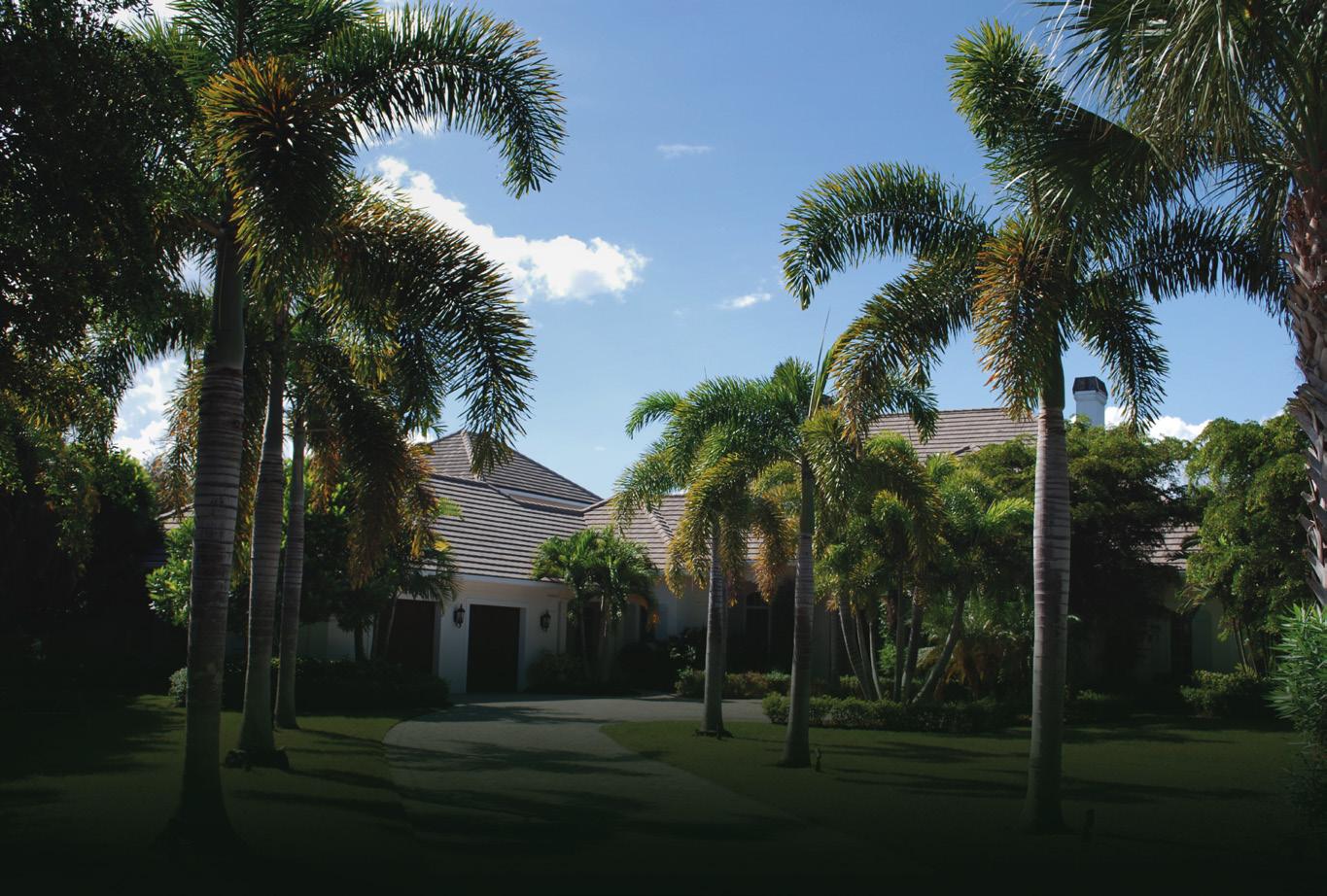
At the outset of this year, expectations were high for a notable resurgence in the barrier island real estate market following two years of tempered activity. Much of this optimism was driven by the belief that many buyers who deferred purchases in 2024—largely due to election-related uncertainty—would re-enter the market. While 2025 was anticipated to reflect this renewed momentum, persistent concerns surrounding tariffs, interest rates, and inflation continued to temper both buyer confidence and seller willingness.
Looking ahead, 2026 was widely expected to usher in greater stability and measurable improvement. While there have been encouraging signs, the first quarter has presented a complex landscape shaped by ongoing global and economic uncertainties, including government shutdowns, geopolitical tensions in the Middle East, and volatility in oil prices.
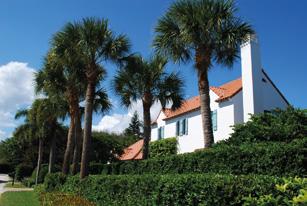
Despite these headwinds, the Vero Beach barrier island market has demonstrated remarkable resilience. Firstquarter data reveals a significant year-over-year shift: condominium sales increased by an impressive 83%, with average pricing remaining steady. Single-family home sales rose more than 38%, even as available inventory declined by 18%. Notably, pricing in the single-family segment has remained measured, with a modest 3% increase—reflecting a market that is active, yet still cautious.
There is a strong likelihood that pent-up demand will begin to materialize following the season, potentially guiding the market toward more normalized conditions. The extent of this shift will depend largely on the resolution of the broader economic and geopolitical factors currently influencing consumer confidence.
Should economic conditions remain favorable, energy prices stabilize, and global tensions ease, the outlook for the balance of 2026 is encouraging. Additional support for the local market continues to emerge, including expanded accessibility to Vero Beach through the addition of new airline routes connecting key northern markets—further enhancing demand drivers for the barrier island.
The central question remains whether strengthening demand will translate into more meaningful price appreciation in the months ahead. The second quarter is expected to provide greater clarity, offering valuable insight into both near-term trends and longer-term trajectory.
As always, I remain at your service to discuss all of these dynamics in greater detail or to assist with any of your personal real estate needs.
CITIZEN ACTION
34 Green Heart Tribe
PIECES of the larger whole 22 Statement Chairs
Bridal registries eschew formal table settings for pieces that carry visual and stylistic weight.
DESIGN HISTORY
26 Art Nouveau and Interior Design
Transforming nature into a comprehensive design language surrounding everyday life.
Three ladies commit to beautifying our island—and they’re only getting started!
VERO BUSINESS
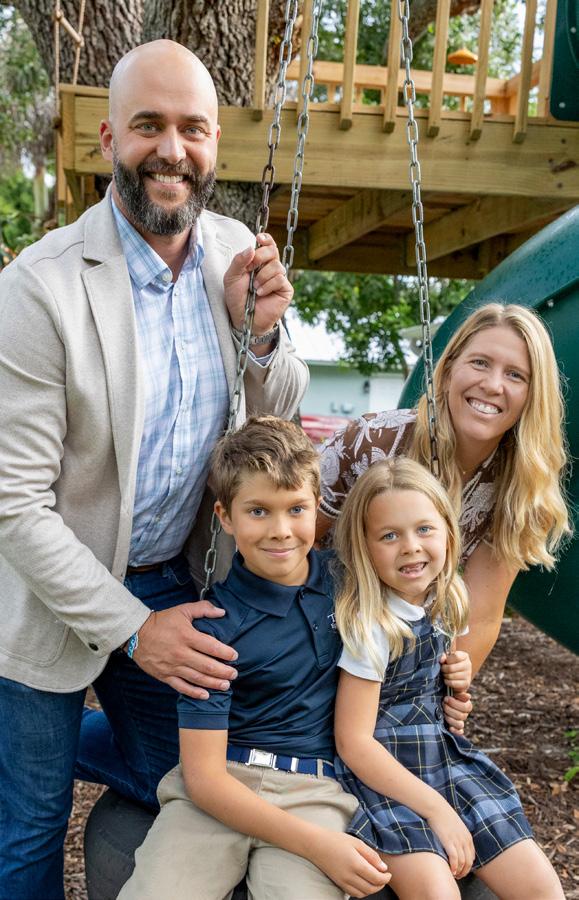
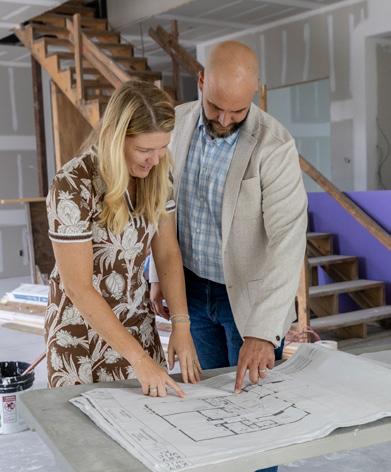
50 Alex and Whitney Wells Part I Next chapter in RCL Development’s storied history as a builder of highend custom residences.
“THE ENJOYMENT OF SCENERY EMPLOYS THE MIND WITHOUT FATIGUE AND YET EXERCISES IT; TRANQUILIZES IT AND YET ENLIVENS IT.”
—Frederick Law Olmsted, American landscape architect, journalist, and social reformer.
ARTISTS IN FOCUS
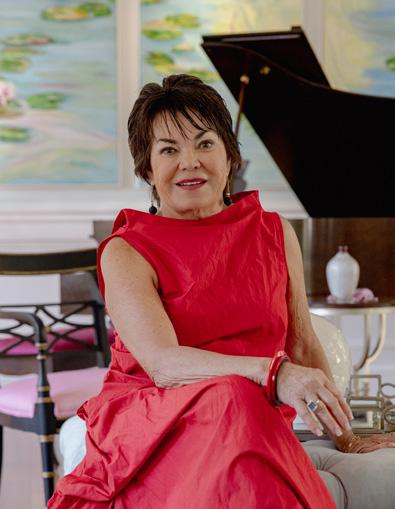
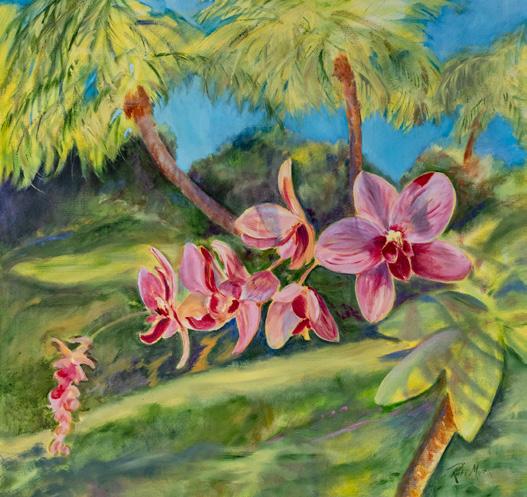
58 Ruth Martin
Drawing inspiration from travel and everyday beauty around her.
EDUCATION
68 The Value of an Independent School Education
Appreciating the value of social capital in one’s career and throughout life.
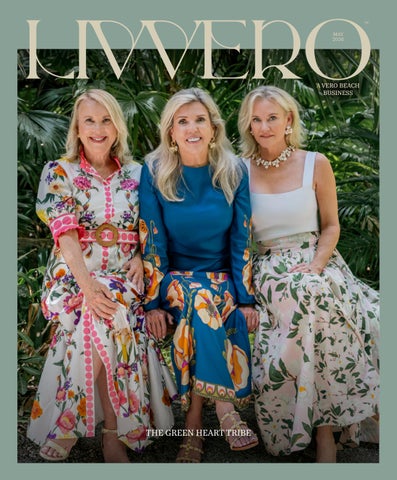
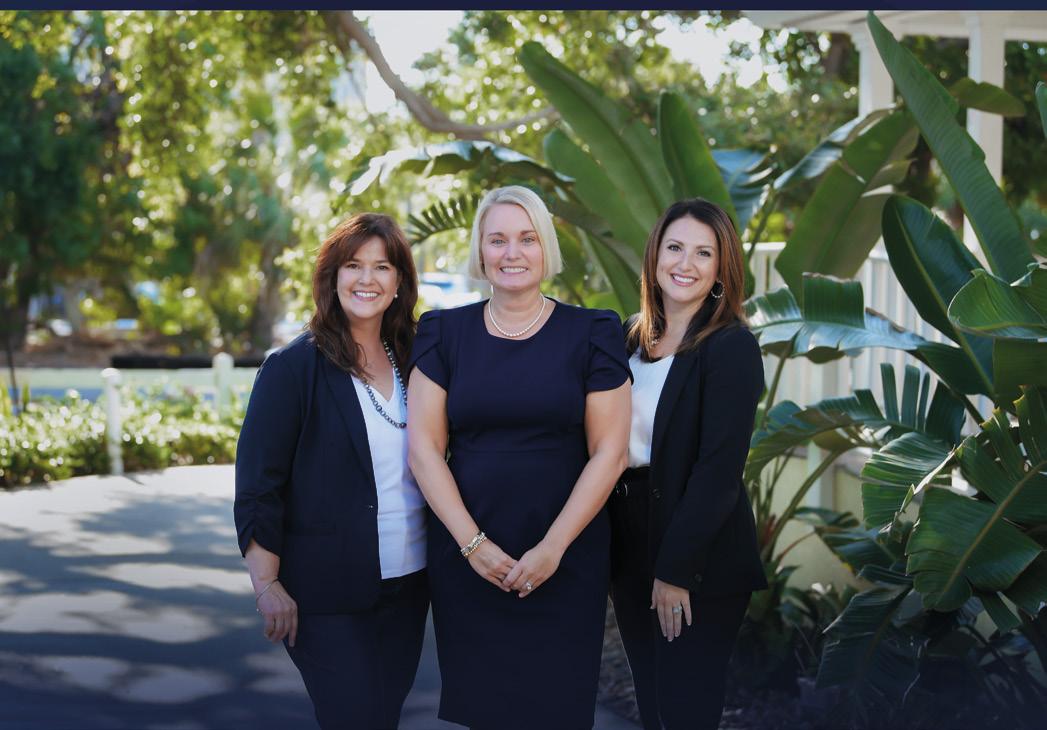
Green Heart Tribe is on a mission to beautify Vero Beach’s barrier island downtown.
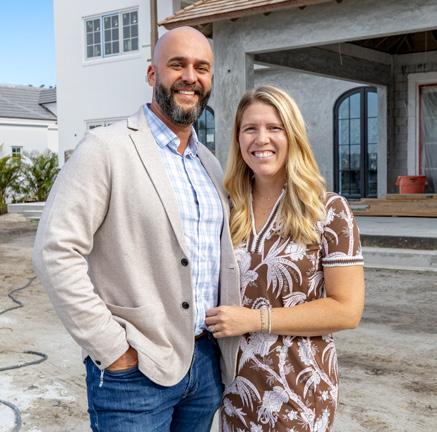
Alex and Whitney Wells of RCL Development—a partnership redefining the client experience.
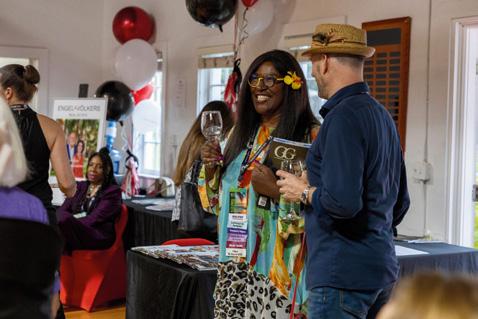
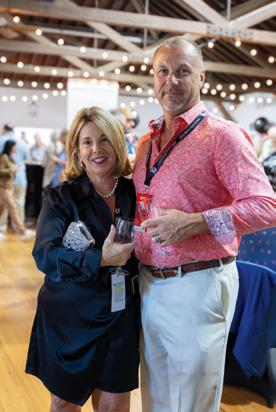
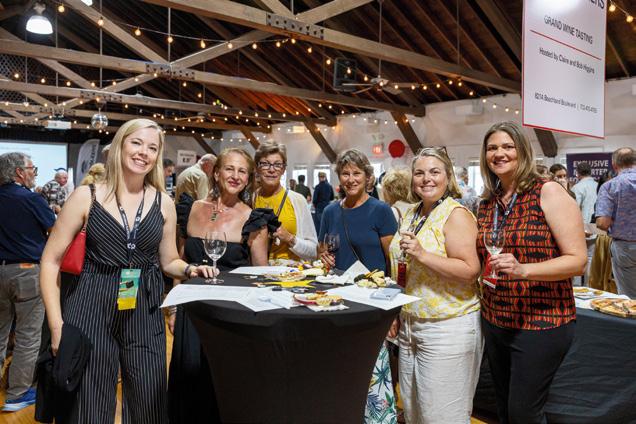
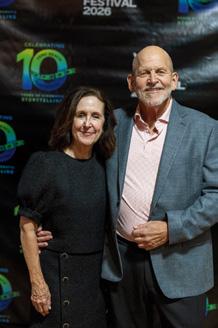
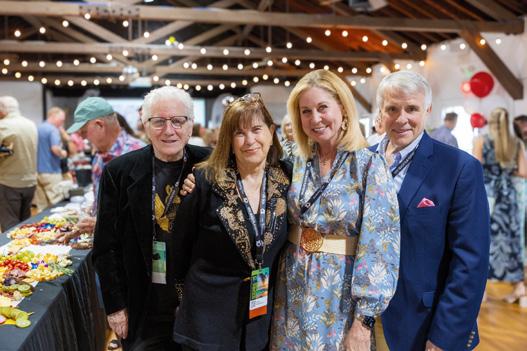
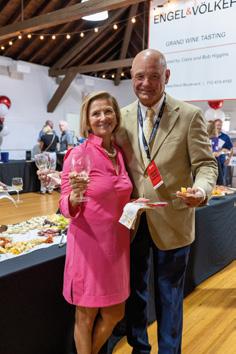
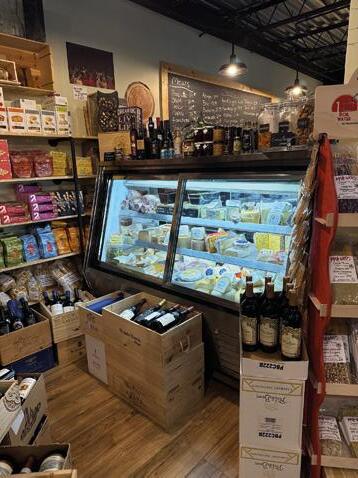
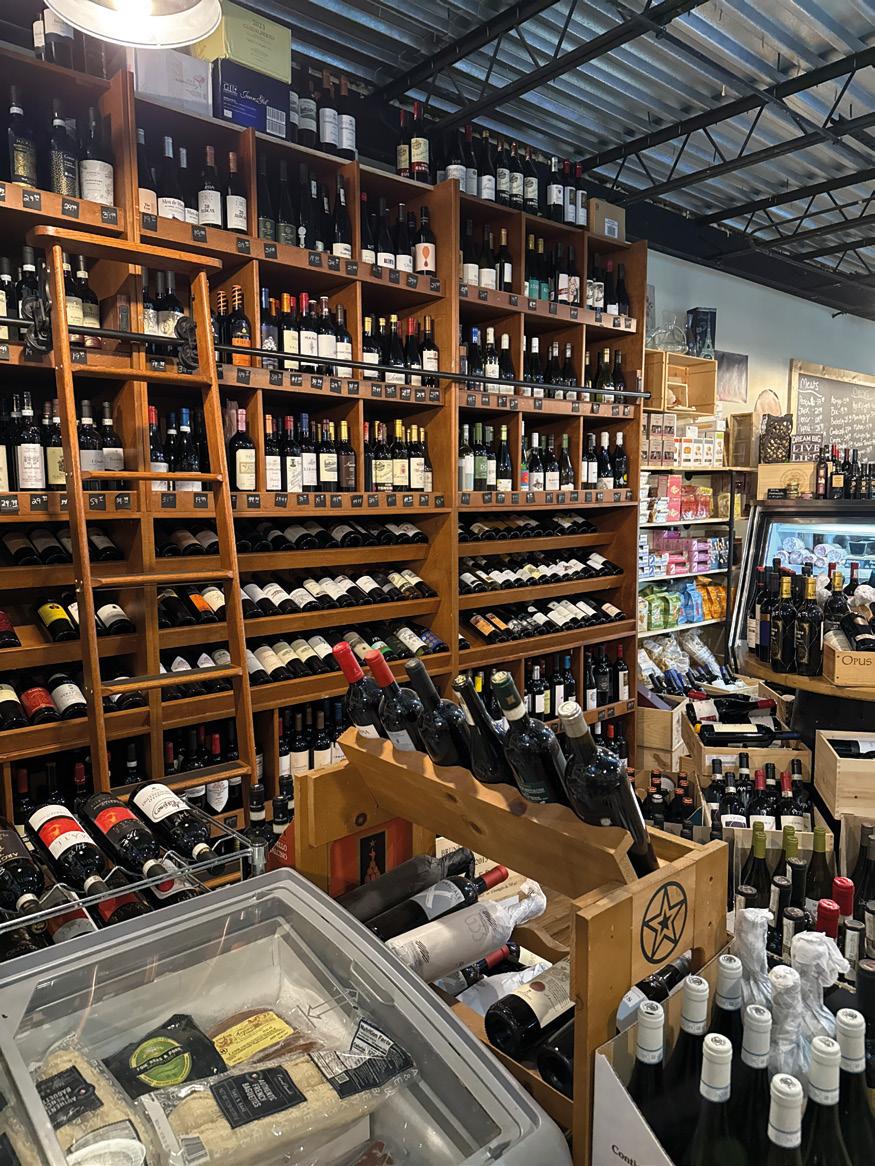
Thank You for Joining Us at the Engel & Völkers Grand Wine Tasting Event!
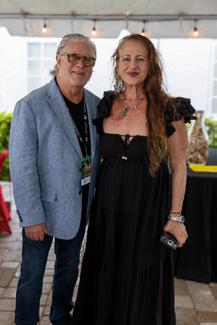
As a part of the Vero Beach Film Festival, Engel & Völkers Vero Beach & Hutchinson Island has been a proud host and sponsor of the Grand Wine Tasting Event over the past 4 years. We are thrilled to continue the tradition and support this fantastic community event. We had a wonderful time trying the many wines from around the world provided by Varietals & More and eating the delicious catering from Chef Kelly Dakis. We also gave away a raffle prize valued at $500! Most of all, we loved seeing you and getting to know our community even better. At Engel & Völkers Vero Beach & Hutchinson Island, this community is incredibly important to us. We are very grateful for the connections made and the opportunity to promote local culture and the arts. We hope to see you next year at the Engel & Völkers Grand Wine Tasting Event 2027!
Aimee Lubin & April Okun
Claire & Bob Higgins, Owners of Engel & Völkers Vero Beach & Hutchinson Island
Lynn & Tim Grady
Janis & Gordon Nordstrom with Diane & Jim Field
Ana Lucia & Jay Carlson
Robert & Michele Wayne, Owners of Varietals & More
Jerusha Stewart, Film Festival Founder
MAY 2026
VERO LIFE
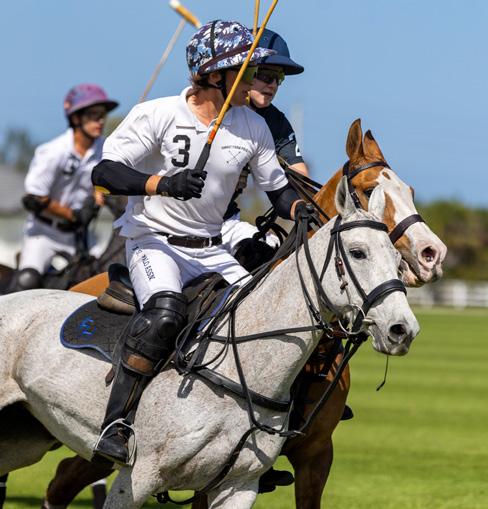
70 “The Sport of Kings”
Vero Beach Polo Club continues to amaze and attract new participants and enthusiasts.
ENVIRONMENT
80 Hurricane Season 2026
Early “read” on the level of storm activity forecasted for Vero Beach.
WINE AND FOOD
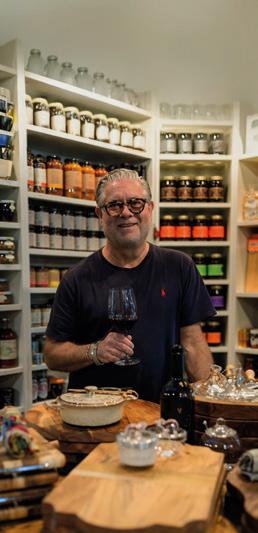
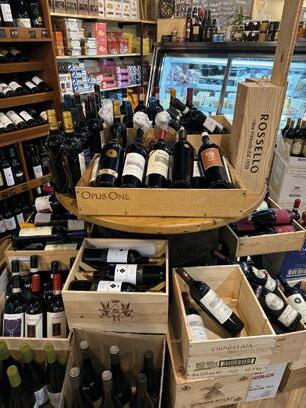
86 Varietals and More
A wine-filled journey towards an eleven-year anniversary.
HEALTH AND WELLNESS
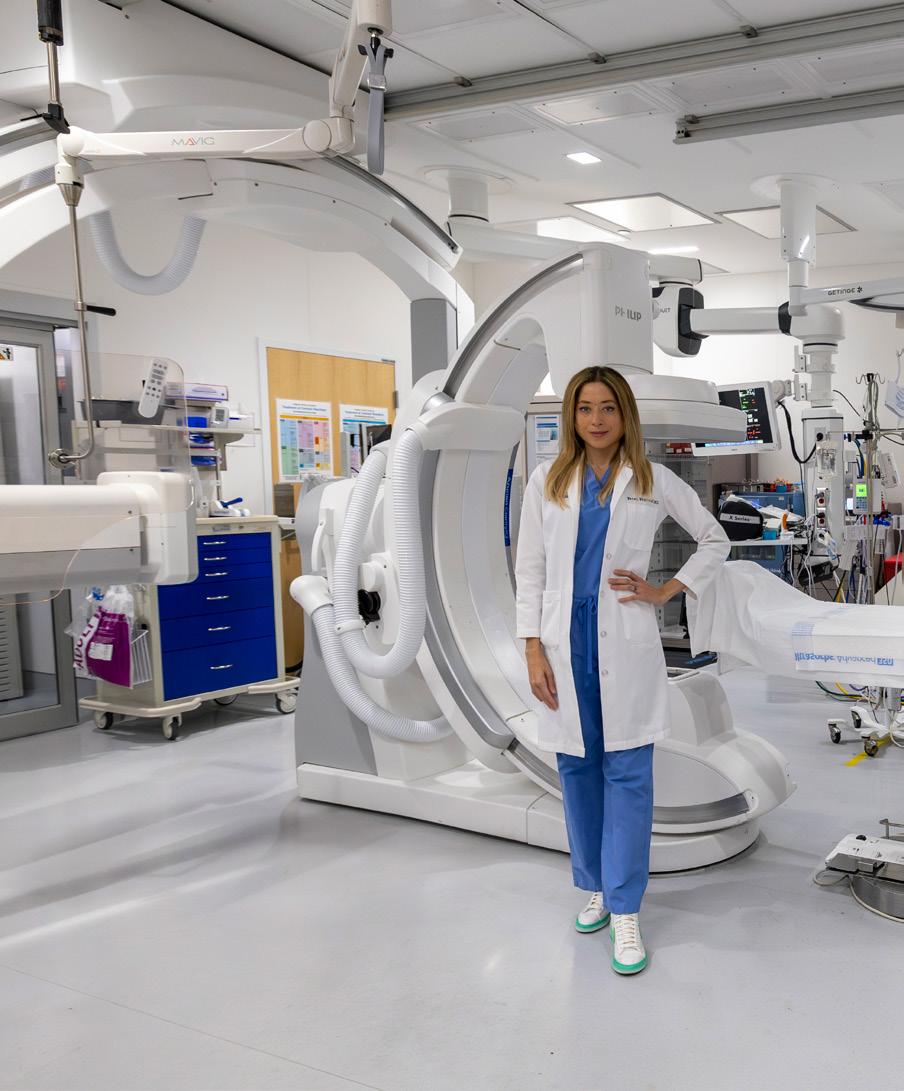
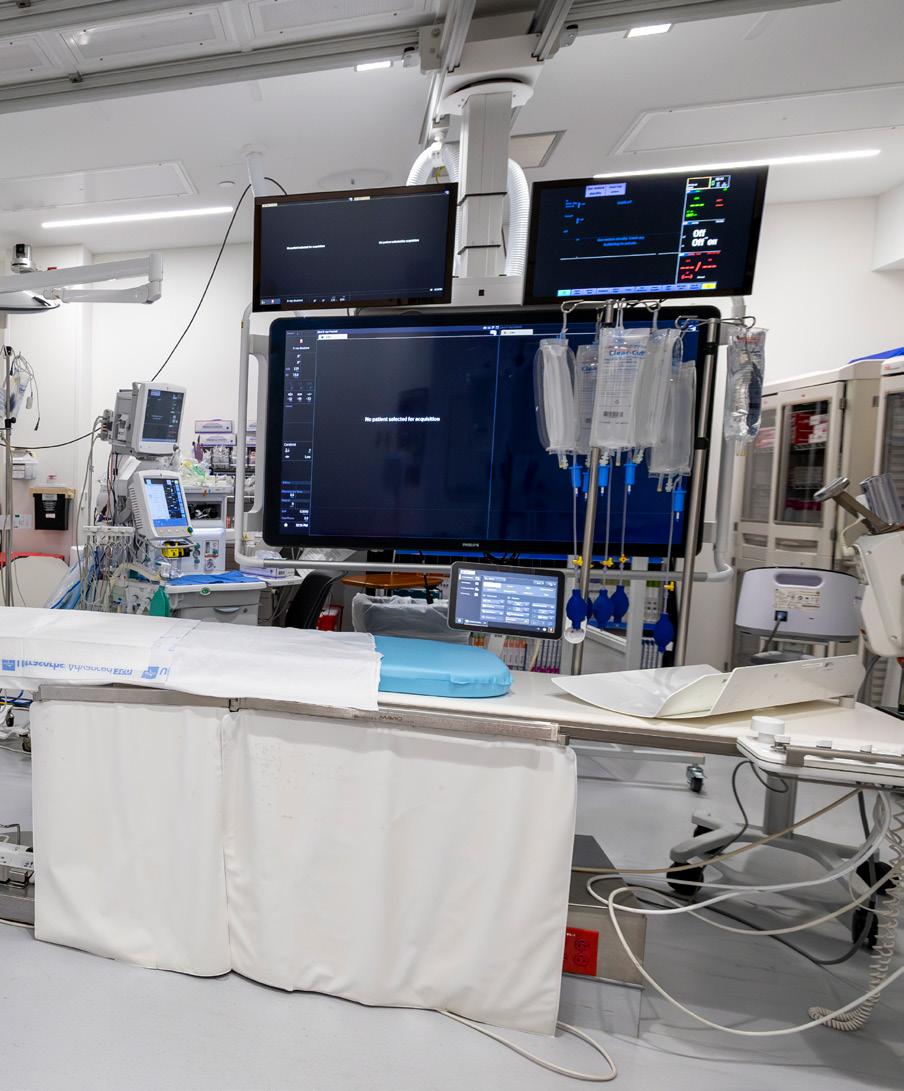
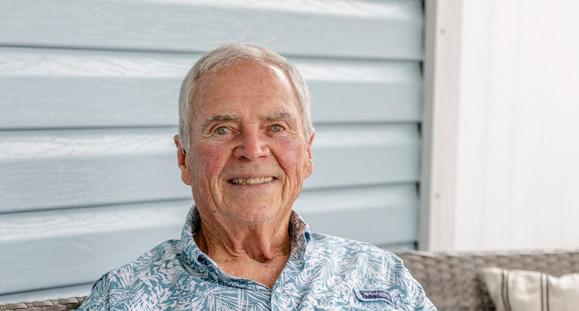
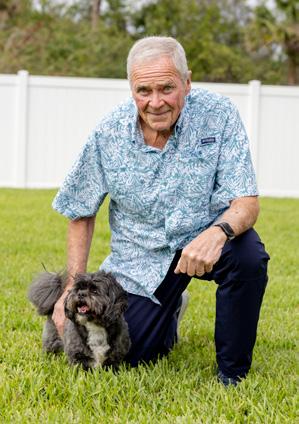
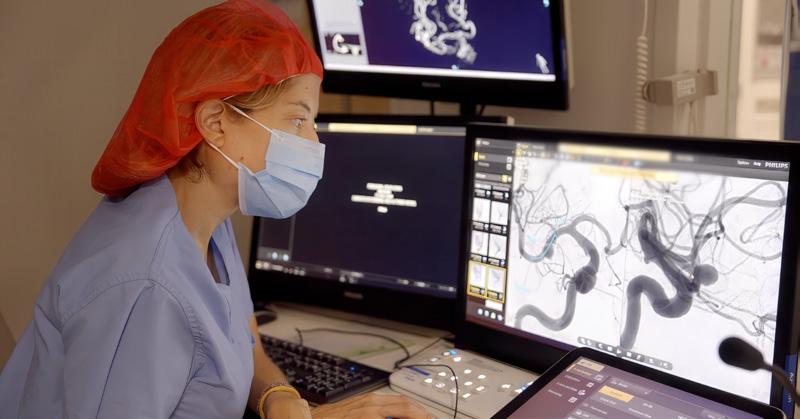
96 Louis Klein–Stroke Survivor
Twice saved by rapid access to neuro endovascular surgery services.
HEALTH AND WELLNESS
98 Neuro Endovacular Surgery for Stroke Part 1
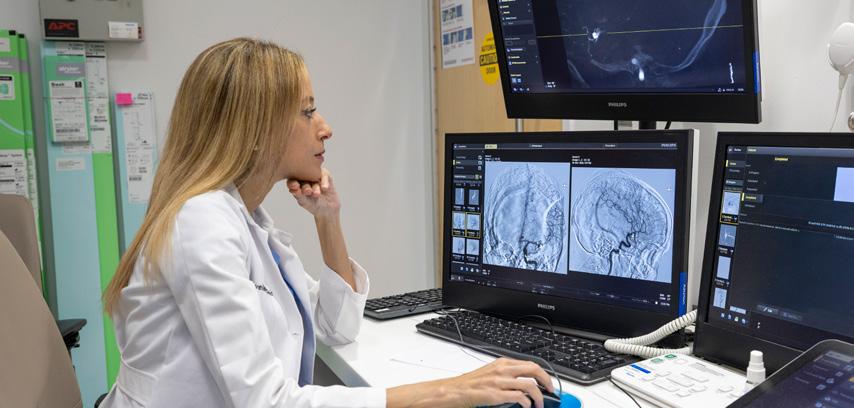
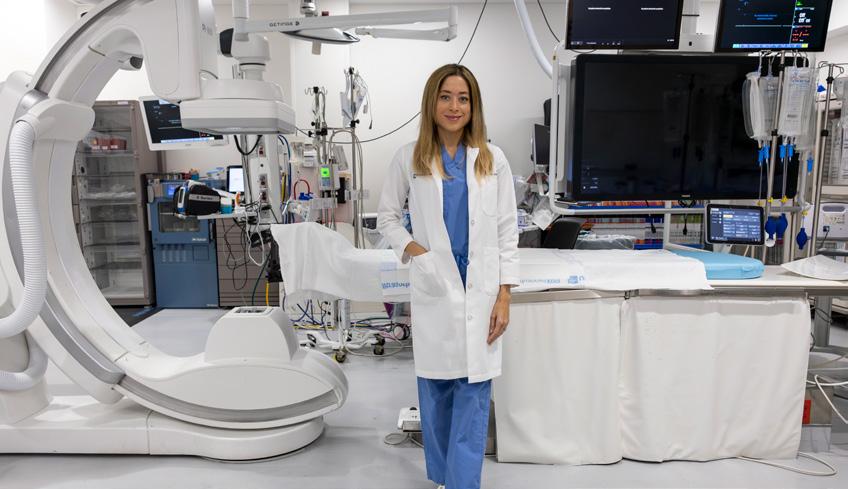
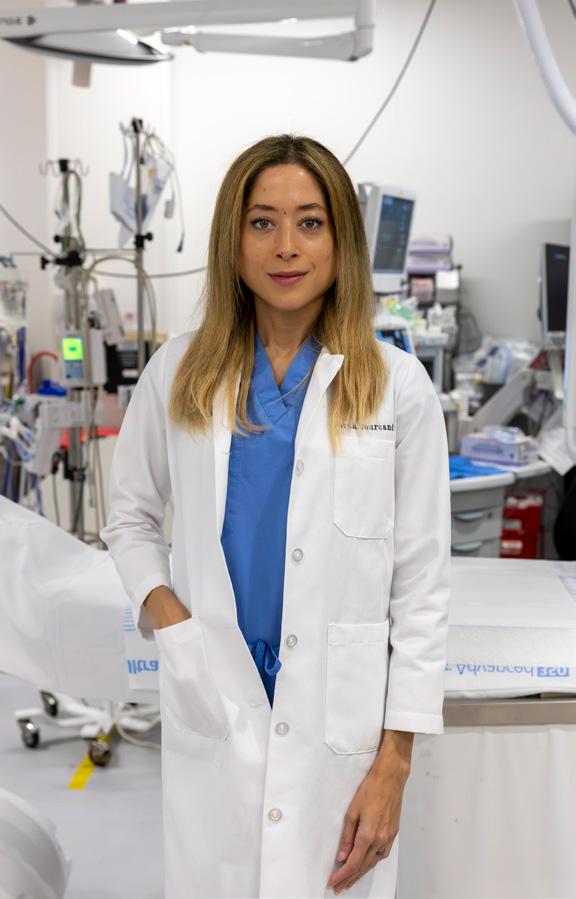
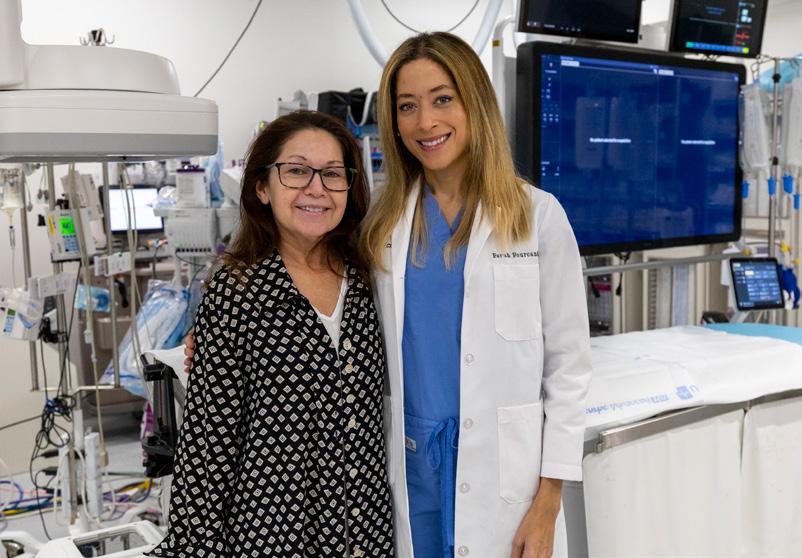
Interview with Farah Fourcand, MD, Cleveland Clinic Indian River Hospital.
HEALTH AND WELLNESS
106 VNA & Hospice Foundation
Interview with Michael P. McGee, Board Chair.
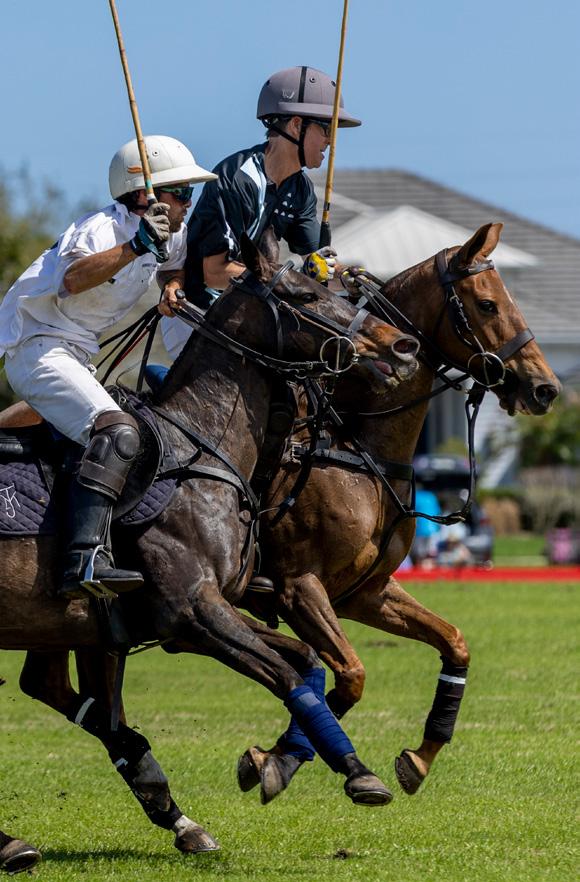
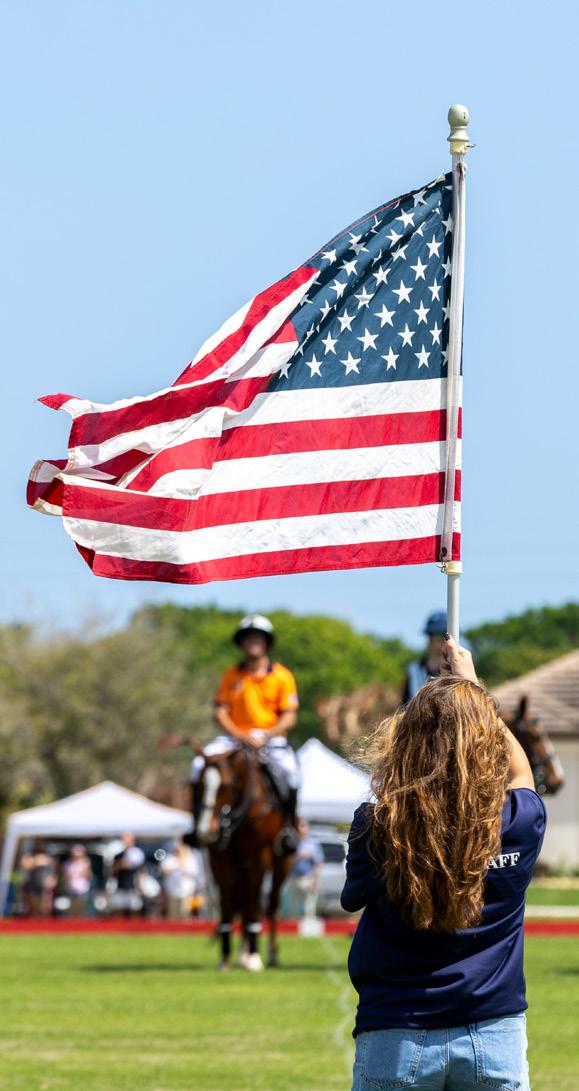
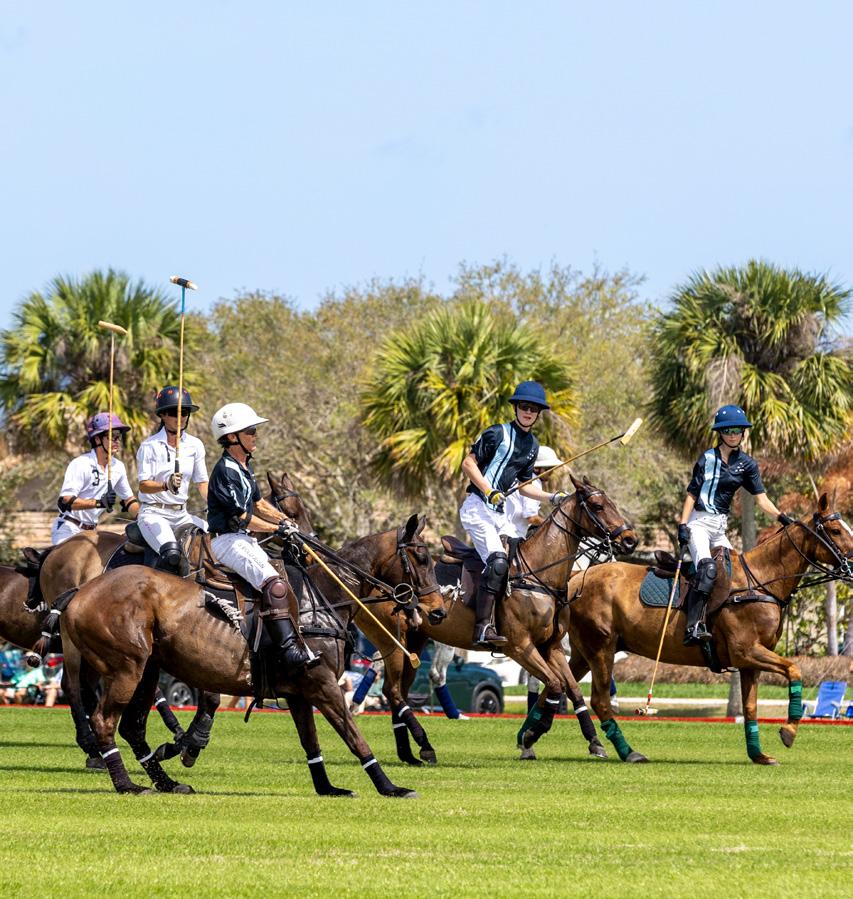
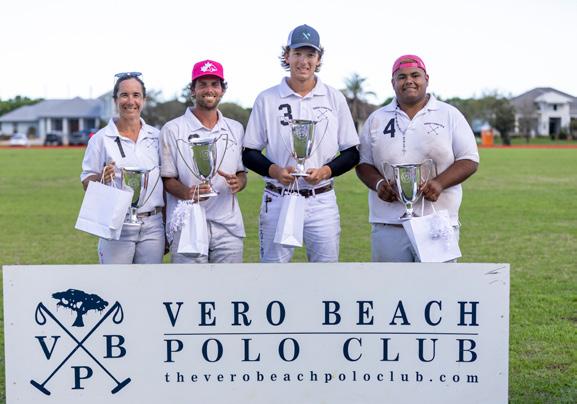
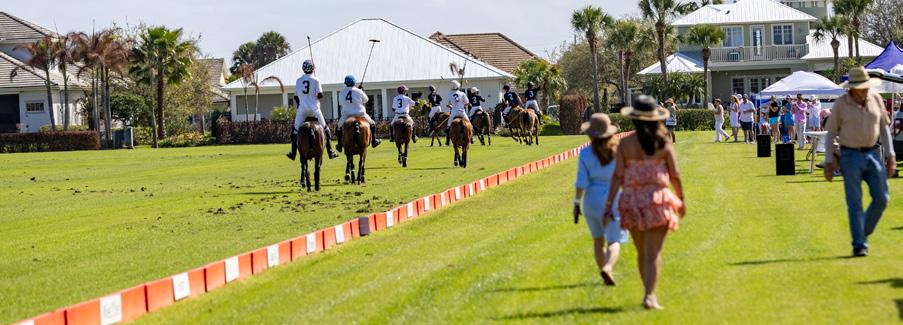
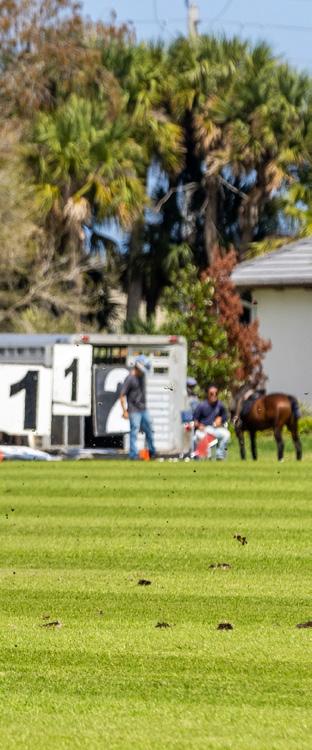
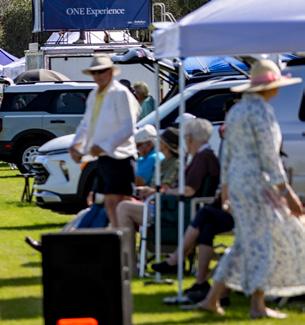
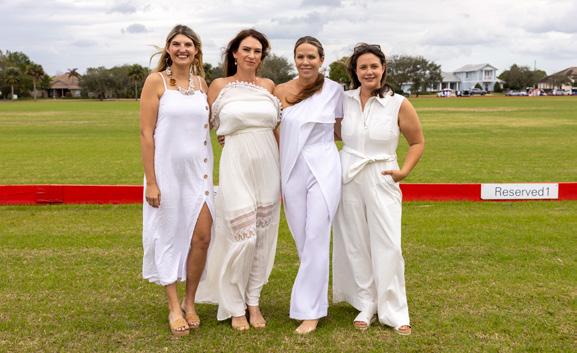
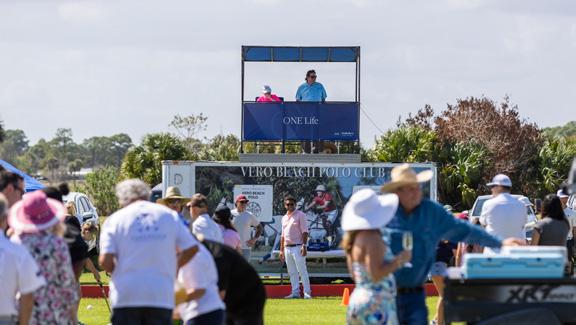
The Vero Beach Polo Club brings the sport, pageantry, and excitement of polo to a mainstream audience.
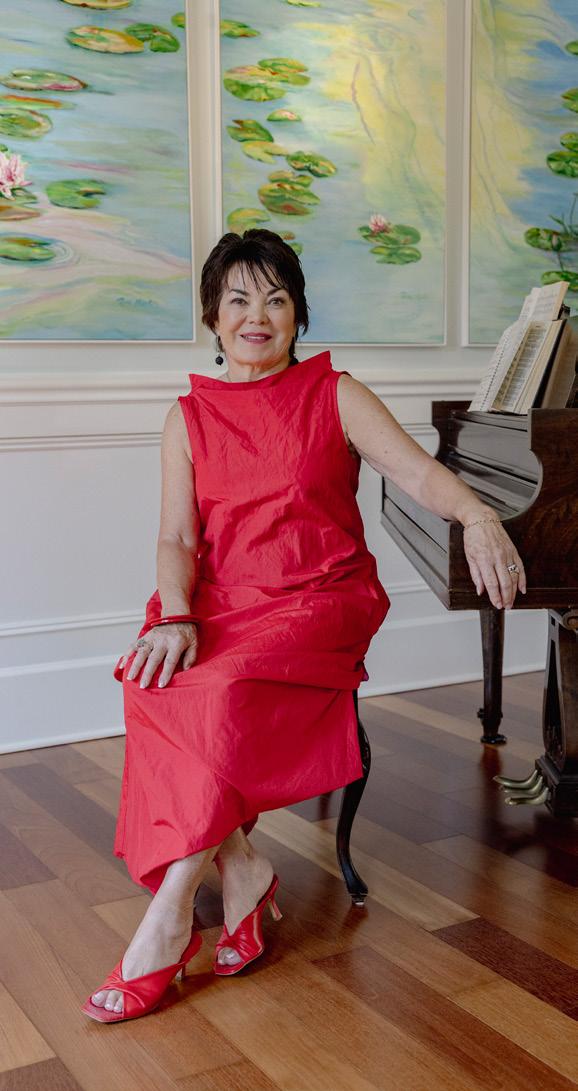
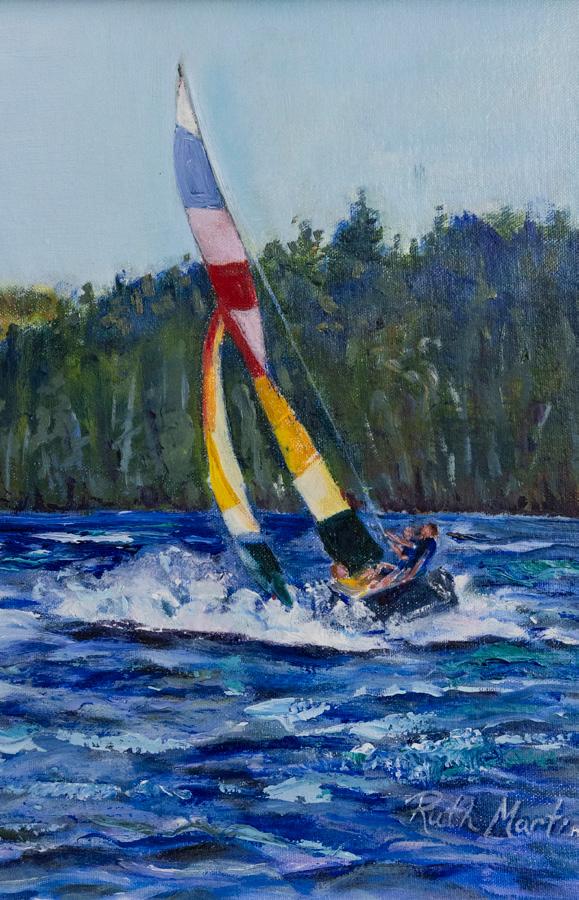
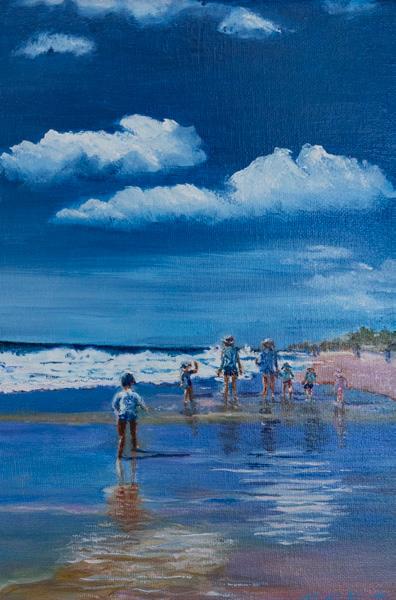
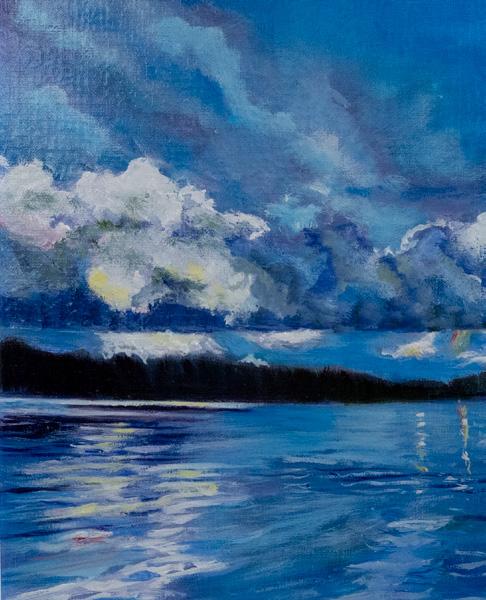
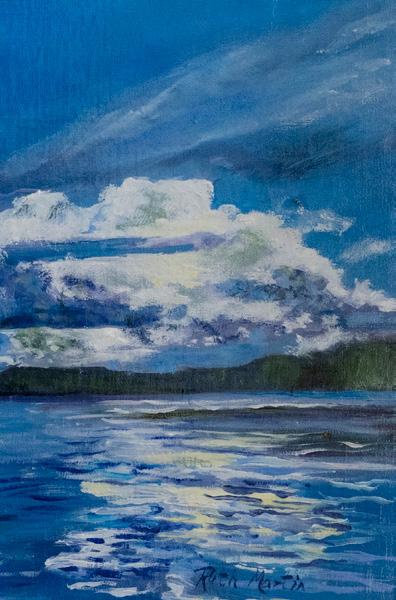
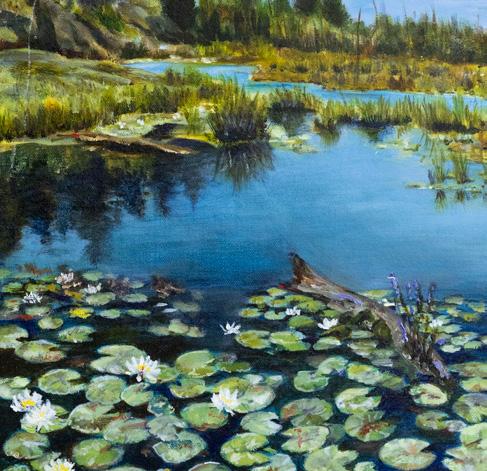
Ruth Martin’s painting seeks to capture the splendor of God’s creation.
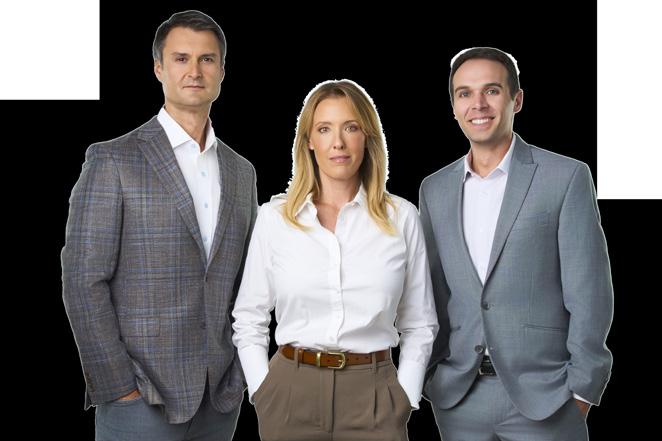
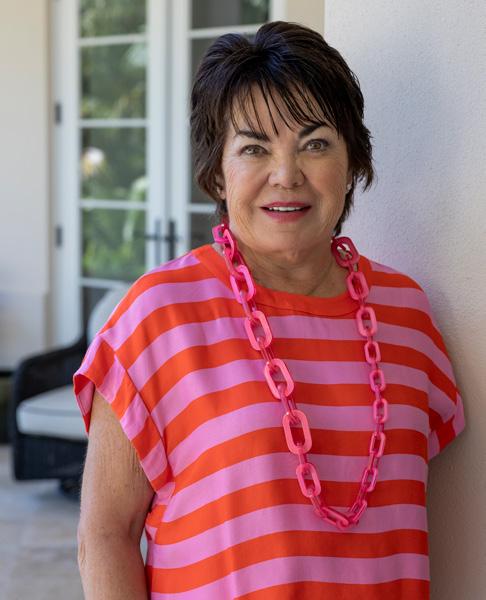
As we continue to serve founders, families, and business owners across the Treasure Coast and Palm Beach communities, this growth reflects our commitment to thoughtful and relationship-driven wealth management. Our team focuses on helping clients navigate major financial transitions, coordinate long-term planning, and steward wealth across generations. We are proud to continue growing our presence in Vero Beach and looking forward to serving our community together.
Oceanic Wealth Management
Wells Fargo Advisors Financial Network
3387 Ocean Drive
Ver0 Beach Florida 32963
772-200-3973
Razvan Ilie
Senior Financial Advisor
Jenna Suleman Senior Financial Advisor
Chase Perez-Blanco Financial Advisor
HEALTH AND WELLNESS
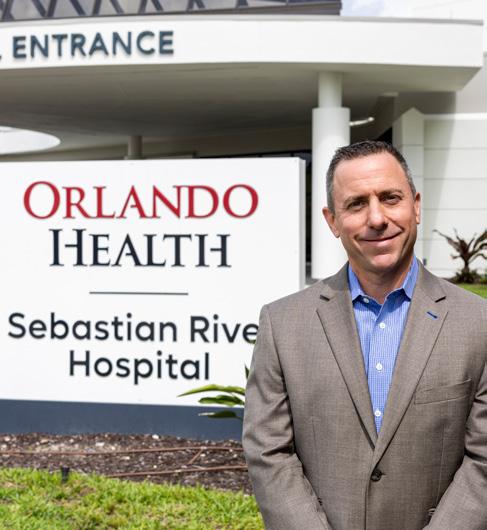
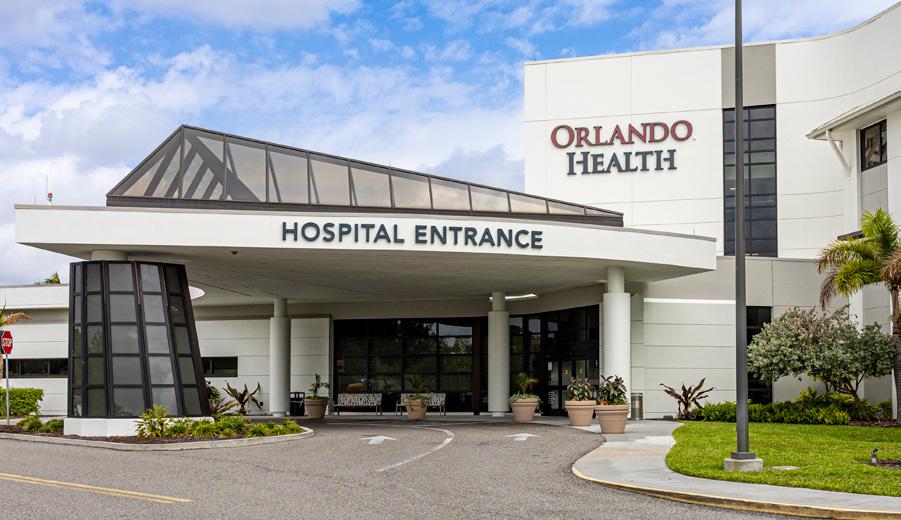
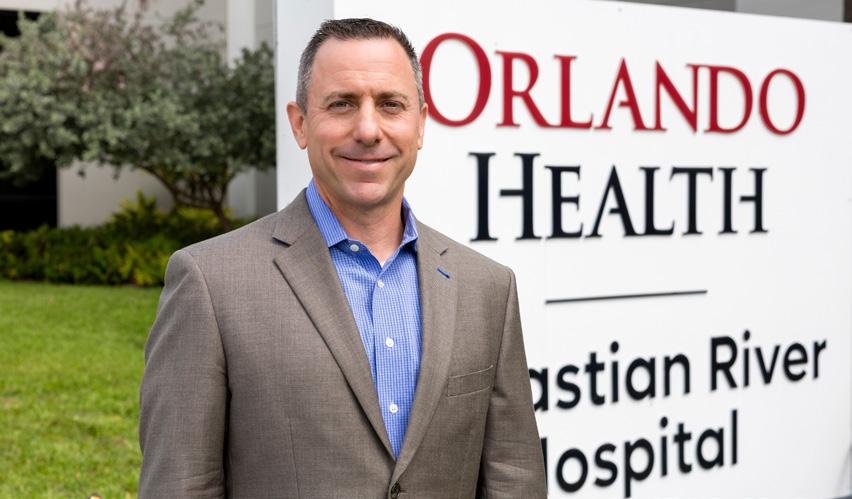
110 Orlando Health Sebastian River Hospital Begins a New Chapter
New President Dan Bowen introduces the vision ahead.
SURF SCENE
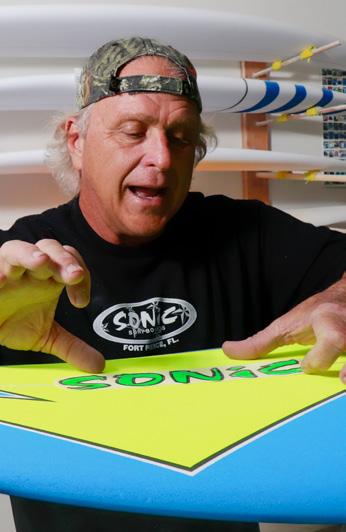
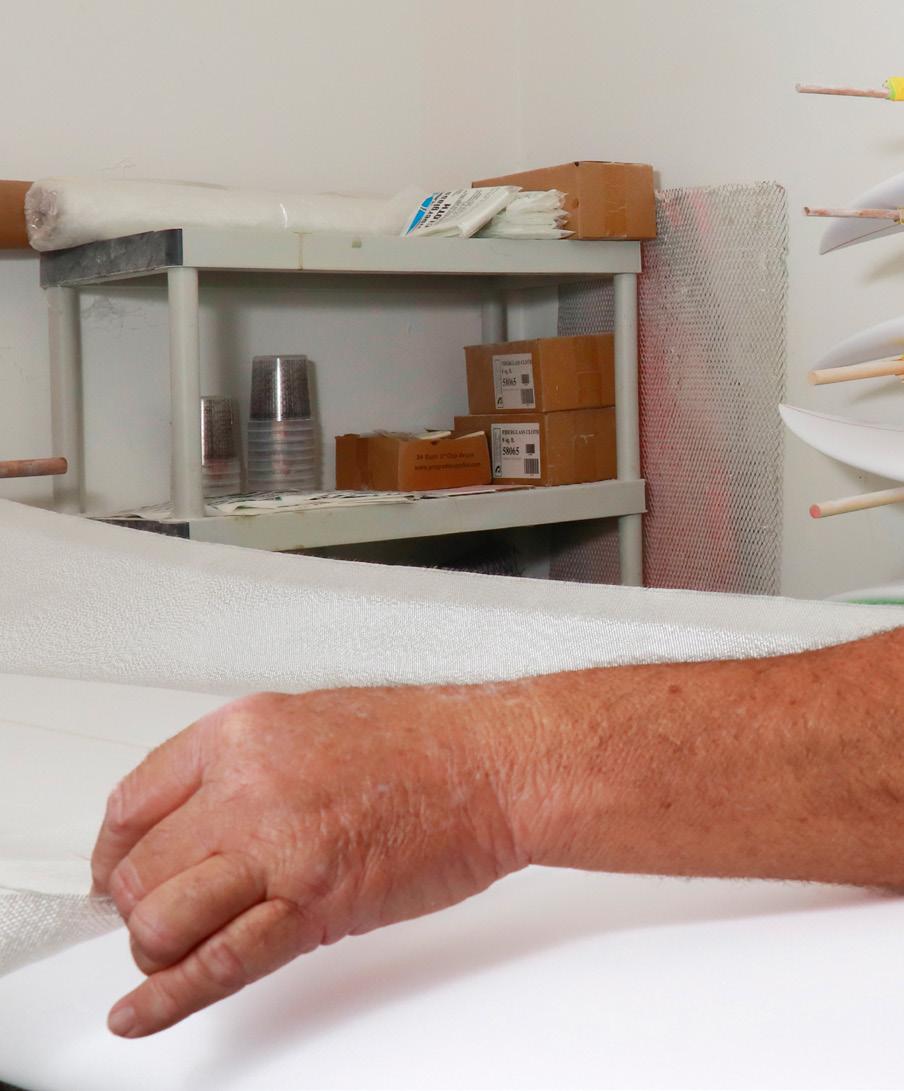
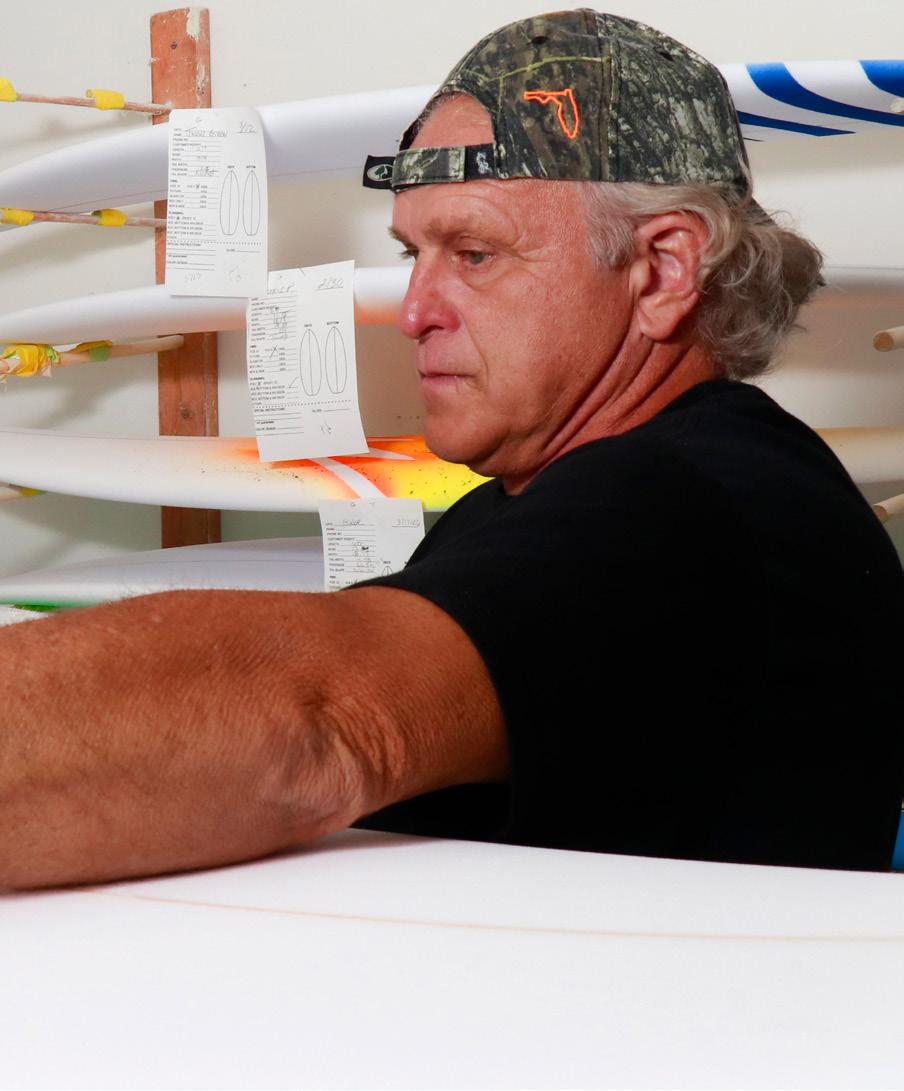
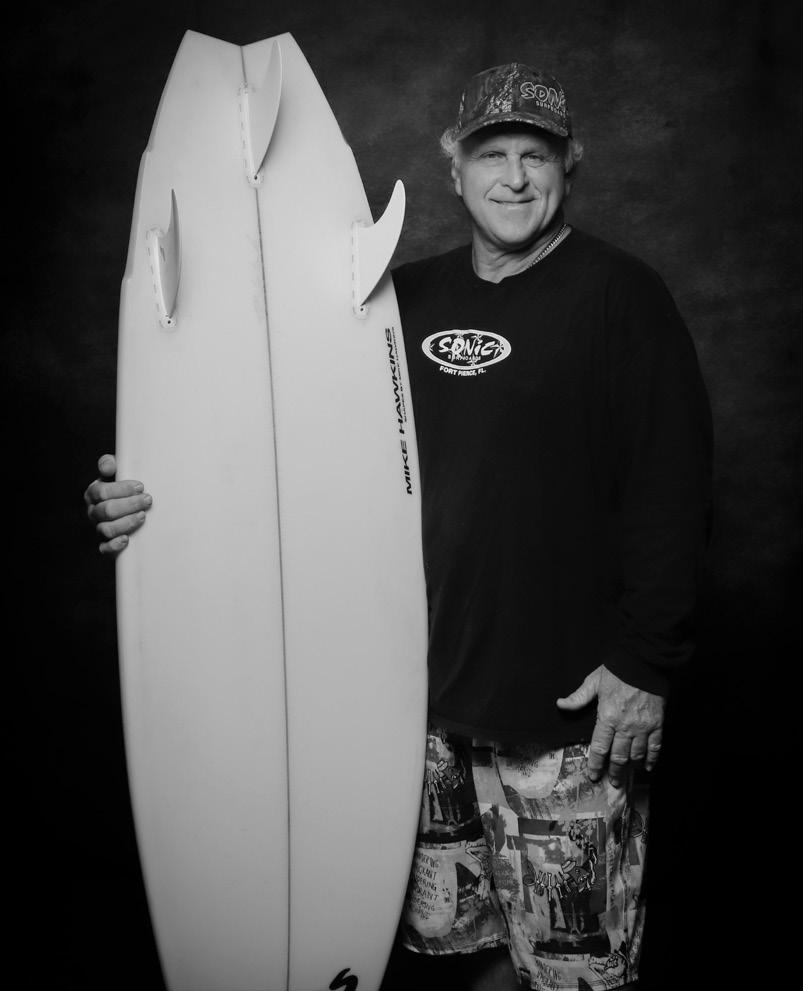
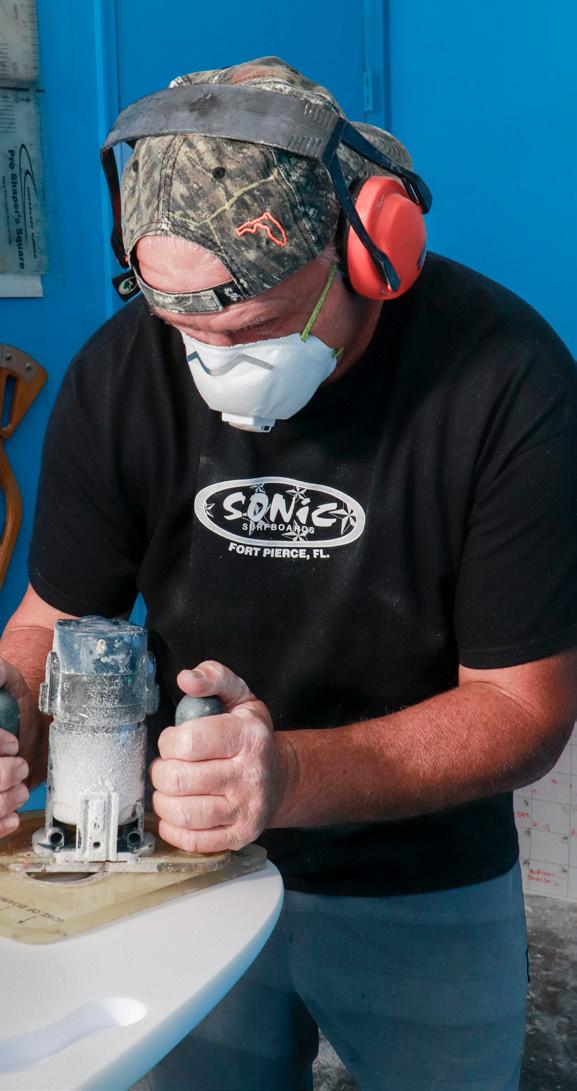
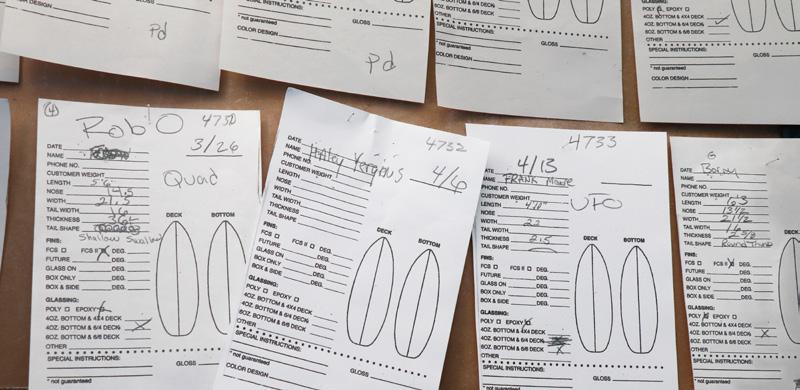
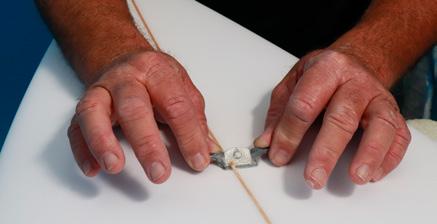
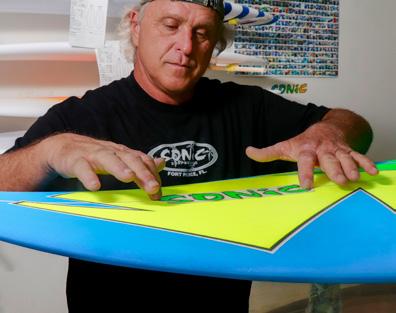
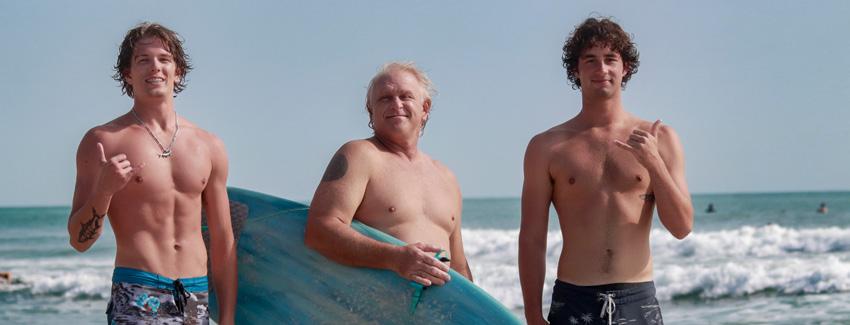
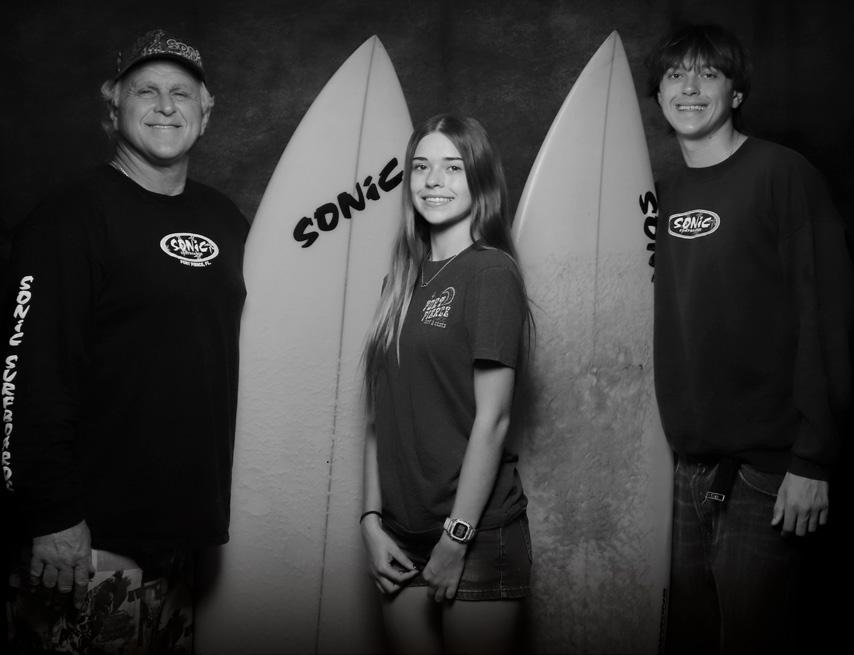
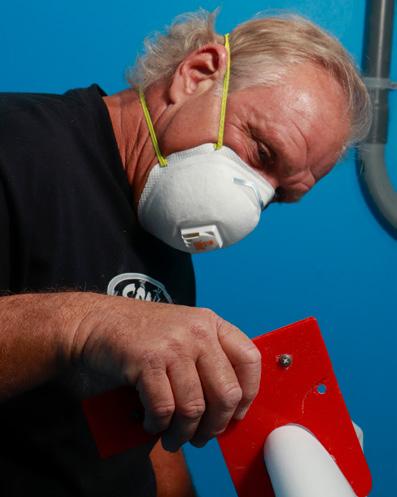
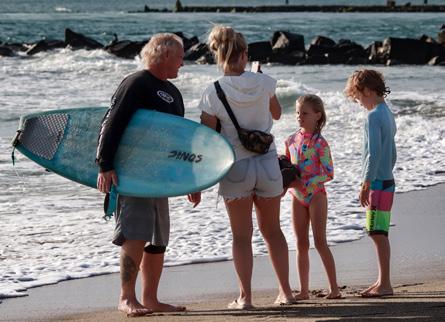
122 Mike Hawkins—Sonic Surfboards
Master shaper of custom boards in Fort Pierce. 144 Finito MAY 2026
Digital Edition: Access on livvero.com. Comments: Email to jim@livvero.com.
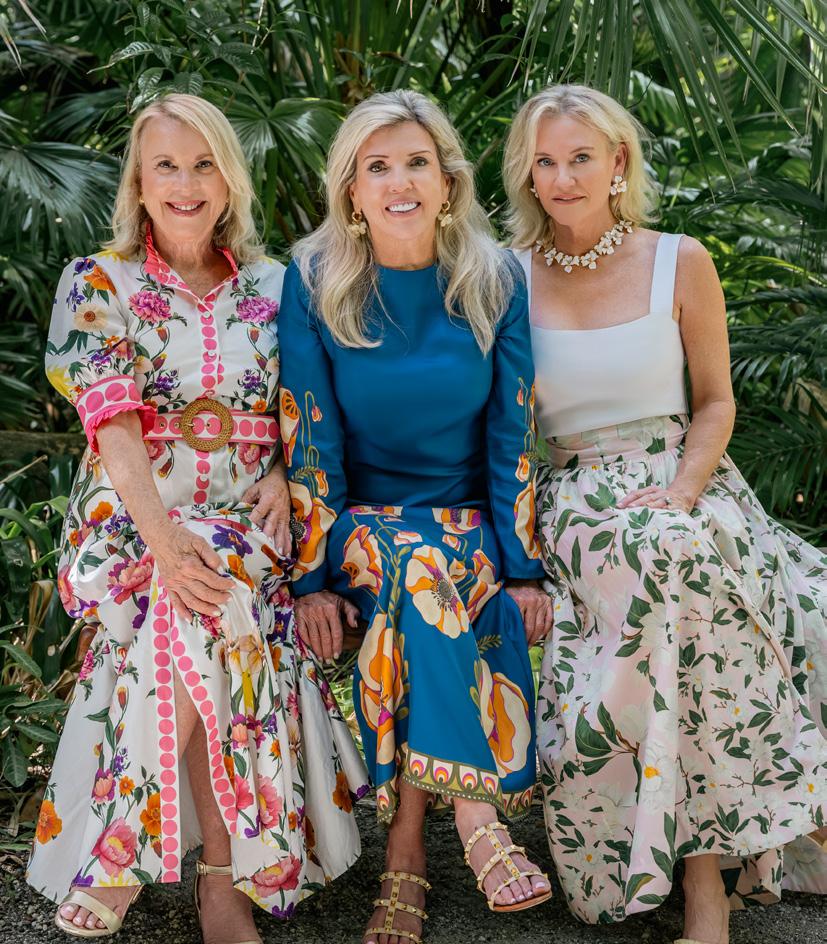
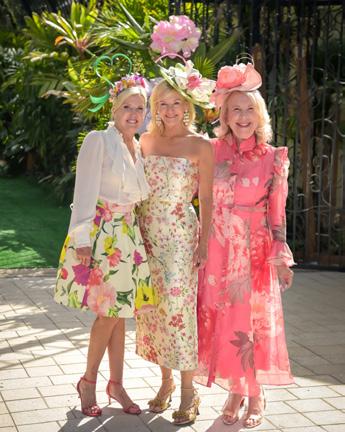
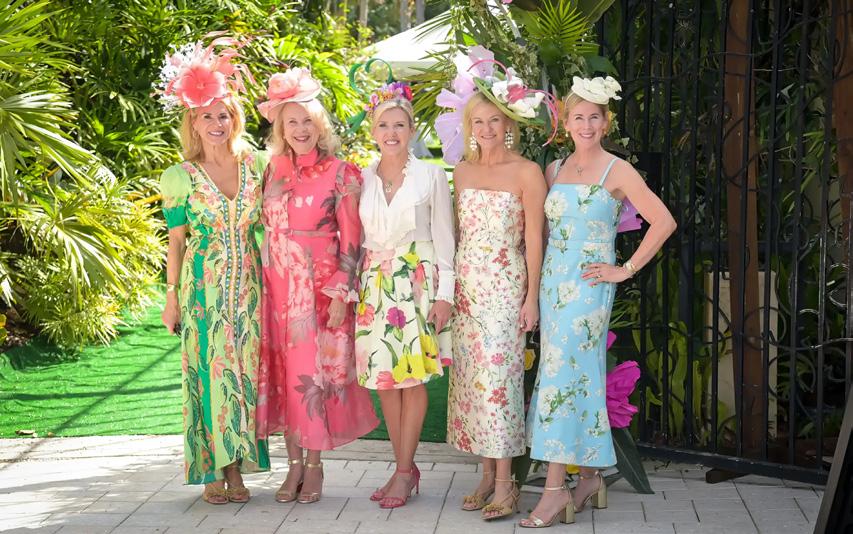
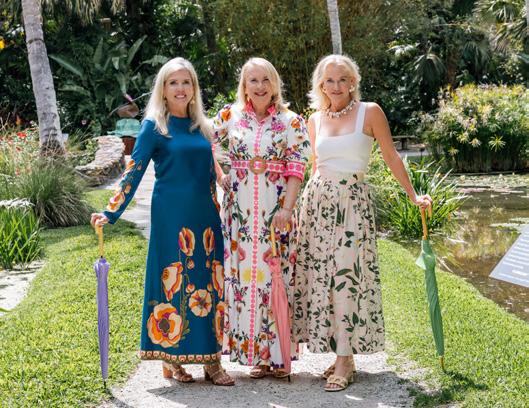
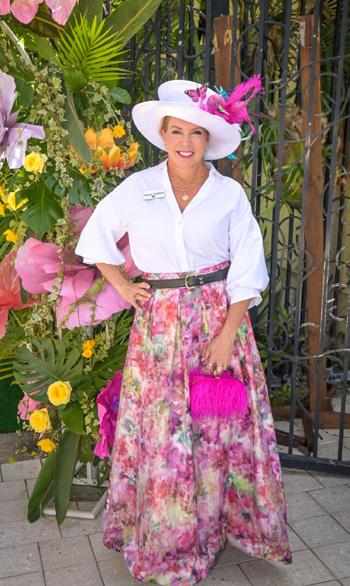
Green Heart Tribe leadership trio, (L-R) Cindy O’Dare, Jordan Wakeland, and Deana Marchant. Photographed in McKee Botanical Garden by Victoriya Knapp.
Dan Bowen brings a track record of leadership and energy to revitalizing Sebastian River Hospital.
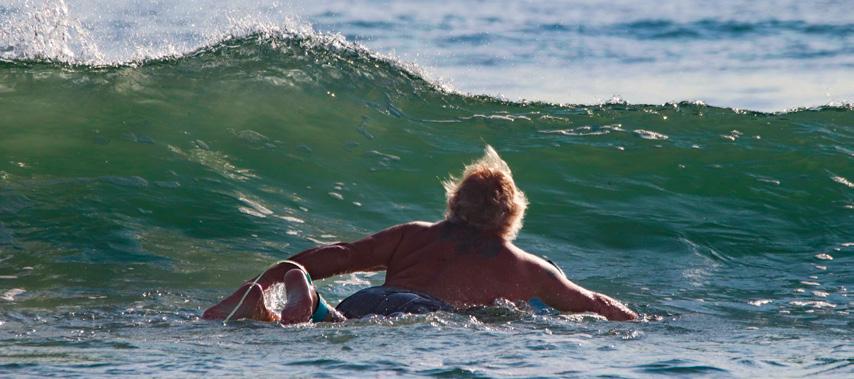
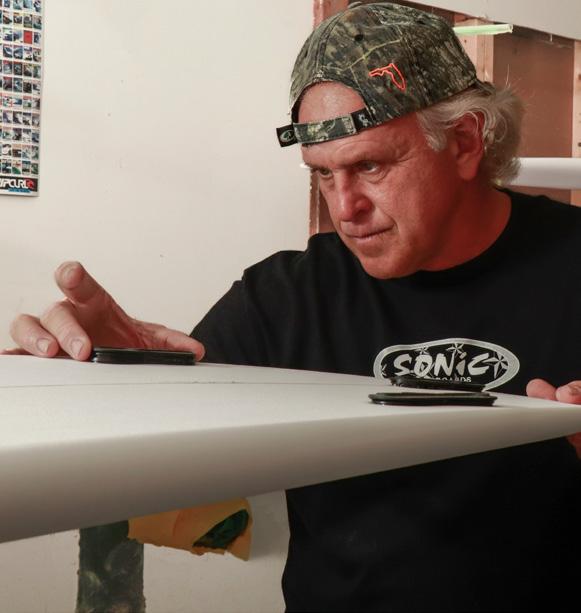
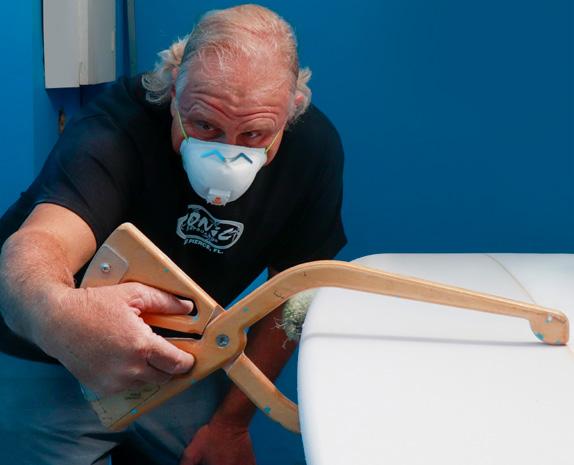
Mike Hawkins channels a lifetime of surfing into shaping custom Sonic boards.
•
•
•
•
•
•
•
EDITORS’ LETTER
EDITORIAL BLUEPRINT FOR LIV VERO MAGAZINE
I’ve found that whenever I speak with others about LIV VERO Magazine, there’s an unspoken question hovering in the air: what, exactly, are you trying to create?
Sometimes it could be asked directly. Just as often, I could raise it myself. But in most conversations, it remains implicit— something we circle around rather than confront. We answer it indirectly, through fragments: a comment about tone, a reference to quality, a description of what it won’t be (e.g., a formulaic city magazine).
And yet, the central question persists— quiet, unresolved, shaping the conversation without ever quite being named.
It deserves a direct answer—one I’d like to share with readers now.
Five Editorial Principles
1. Careful Content Selection. We choose subjects that reveal something essential about Vero Beach—culturally, aesthetically, and socially. We feature people, places, and ideas we believe are genuinely worth encountering and knowing.
2. People at the Center. Humans are the essential ingredient in every worthwhile endeavor. We will profile individuals who shape and define Vero Beach—people whose stories, ideas, and accomplishments are worth knowing.
3. Independent Voice. Editorial decisions are firewalled from financial relationships. Credibility is the foundation of the publication. We do not publish advertorials.
4. A Unified Whole. Each issue is handcrafted to be an artistic object. Stories, imagery, and pacing are combined to create a unified intellectual experience, not a collection of disparate parts.
5. Substance Over Fluff. We favor depth over surface. Every key story must carry weight—through research, detail, reporting, perspective, accuracy, narrative. If it does not deepen understanding or reward attention, it does not belong.
Five Editorial Styles
1. Structured Experience. The magazine unfolds in incremental progression— contrast between sections, rhythm in pacing, moments of pause and emphasis. It is laid out as a continuous journey, not cobbled together.
2. Visual Appeal. Generous white space, disciplined layouts, and an absence of clutter and congestion. The magazine’s design creates a perfect platform for showcasing the ad creativity of our advertising partners.
3. Long-Form Conversations. Interviews are given space to unfold—allowing voice, perspective, and nuance to emerge. Rather than extracting quotes, we present conversations as narratives, preserving cadence, thought, and character.
4. Photographic Authority. Large-scale, engaging, arresting imagery is missioncritical. Photography is not decorative—it carries narrative weight, often telling the story before words do.
5. Content Rich. The magazine is complete from first page to last. We do not rely on back-of-book filler—event listings, directories, routine roundups. Every page is designed to hold the reader’s attention to the end.
CO-PUBLISHER CO-EDITOR
JIM FIELD jim@livvero.com
CO-PUBLISHER CO-EDITOR
DIANE FIELD diane@livvero.com
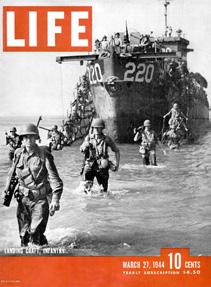
Exemplars—Life and Look Magazine
These two oversized weekly magazines from my youth serve as tangible examples of what I want LIV VERO Magazine to emulate
People didn’t just read these magazines— they experienced them. Their appeal came from a mix of strong editorial curation, dramatic layouts, powerful photography, narrative pacing like a film, and cultural relevance. We will be proud to come close to capturing their novelty, elegance, and impact.
Exceptional Properties. Extraordinary Lifestyle.
Innovation and People have always been at the heart of the O’Dare Boga Dobson success story.
Our Circulation and Reach
On Five Levels
MAIL
Magazines mailed to EVERY residence in Indian River County (all 8 zip codes) with incomes equal to or greater than $200,000.
DIGITAL
Electronic Edition sent to curated, expanding list of over 3,200 email addresses.
IN PERSON
Hand delivery of 1,500 copies to advertising partners, other businesses, organizations, individuals—including hotels, airport, restaurants, real estate offices, physician offices, country clubs, drop points.
WEBSITE
Electronic Edition, in full, is accessible to all on our website livvero.com.
SUBSCRIPTION
Building list of subscribers locally and across country to primary/secondary residences. Subscribe at livvero.com.
LIV VERO® Magazine is a registered trademark of Orchid Island Publishing Group LLC.
John Stearns, Renee Morad, Amanda Blumberg, Diane Field, Jim Field, Joshua McMiller, Analise McManus, Jack Curley
ART
CONTRIBUTING PHOTOGRAPHERS
Victoriya Knapp, Jim Field, Analise McManus
ADVERTISING AND EVENTS
703-851-0703
DIGITAL
WEBSITE: livvero.com
INSTAGRAM: @livveromagazine
ORCHID ISLAND PUBLISHING GROUP LLC
Vero Beach, FL 32963
President | Jim Field
SUBSCRIPTIONS
10 issues: $45. Subscribe at www.livvero.com
POSTMASTER
SEND ADDRESS CHANGES TO: Orchid Island Publishing Group 3320 Cardinal Dr., Suite 648175 Vero Beach, FL 32963
LOCALLY OWNED & OPERATED LIV
SUBSCRIPTIONS: Free of charge to qualified residents of Vero Beach. Publisher reserves the right to determine qualifications. Annual subscriptions: U.S. and possessions $45, all other countries $125 U.S. funds (via air mail). Single copies: U.S. and possessions $5. No part of this publication may be reproduced without the written consent of the publisher. The publisher does not warrant, either expressly or by implication, the factual accuracy of any advertisements, articles or descriptions here in, nor does the publisher warrant the validity of any views or opinions offered by the authors of said articles or descriptions. The opinions expressed are those of the individual authors, and do not necessarily represent the opinions of Orchid Island Publishing Group. Orchid Island Publishing Group makes no representation or warranties regarding the accuracy or appropriateness of the advice or any advertisements contained in this magazine.
SUBMISSIONS: We welcome submissions. Unless otherwise negotiated in writing by the editors, by sending us your submission, you grant Orchid Island Publishing Group permission by an irrevocable license (with the right to license to third parties) to edit, reproduce, distribute, publish, and adapt your submission in any medium on multiple occasions. Submissions will not be returned.
•
•
•
• Featuring
•
STATEMENT CHAIRS
Furniture as Expression Signaling Taste and Design Awareness
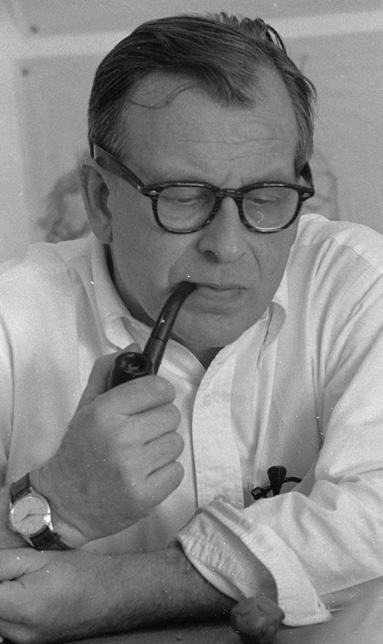
by Diane Field photography source Wikimedia Commons.
In exploring today’s bridal registries, I came across a number of telling insights. In my own day, I was captivated by the elegance of formal table settings—along with other domestic aspirations—and envisioned gifts that would begin collections of fine china, silver flatware, and crystal stemware. As it turns out, my tastes were perfectly in step with the times.
Today’s wedding registries, in contrast, are no longer about “starting a life” from scratch—they’re about refining one that already exists. Many couples are entering marriage with established homes, shared routines, and essential household items already in place. As a result, the registry has shifted from necessity to purpose.
Here’s a list of frequently requested gifts:
High-end cookware and knives
Serving platters, charcuterie boards, barware
Cooking classes, events, or activities
Luggage and travel gear
Cash toward honeymoon, home purchase
Smart devices, subscriptions, fitness gear
Coveted home furnishings have taken an interesting twist—a move away from full sets toward statement pieces. A key driver is simply space. Homes are smaller, storage is tighter, and couples are more conscious of how every item fits into their environment. A statement piece does more with less. It can anchor a room, define a style, or elevate everyday use without requiring the footprint of an entire collection. In a smaller home, that kind of efficiency matters.
Statement Chairs
A statement chair is a piece of seating designed to serve as a visual focal point— something that draws the eye and sets the tone of a room rather than blending into the background. A chair crosses into “statement” territory when it embodies several of the following qualities:
Sculptural form. An unusual silhouette, bold lines, or an almost artistic presence Distinct identity. Recognizable design or designer
Material impact. Leather, molded plastic, metal, or other expressive textures
Scale and proportion. Larger, lower, or more dramatic than standard seating Color or contrast. Visually set apart from the surrounding space
A statement chair signals taste and design awareness while adding personality— whether modern, classic, playful, or architectural. It is not purely functional seating, nor is it chosen primarily for comfort or price. At its core, a statement chair is furniture as expression—a single piece that carries disproportionate visual and stylistic weight, often defining the room around it.
A small handful have become globally recognized icons, showing up in magazines, high-end homes, and architecture books for decades.
• Eames Lounge Chair and Ottoman by Charles Eames and Ray Eames. Gold standard of modern comfort and midcentury luxury
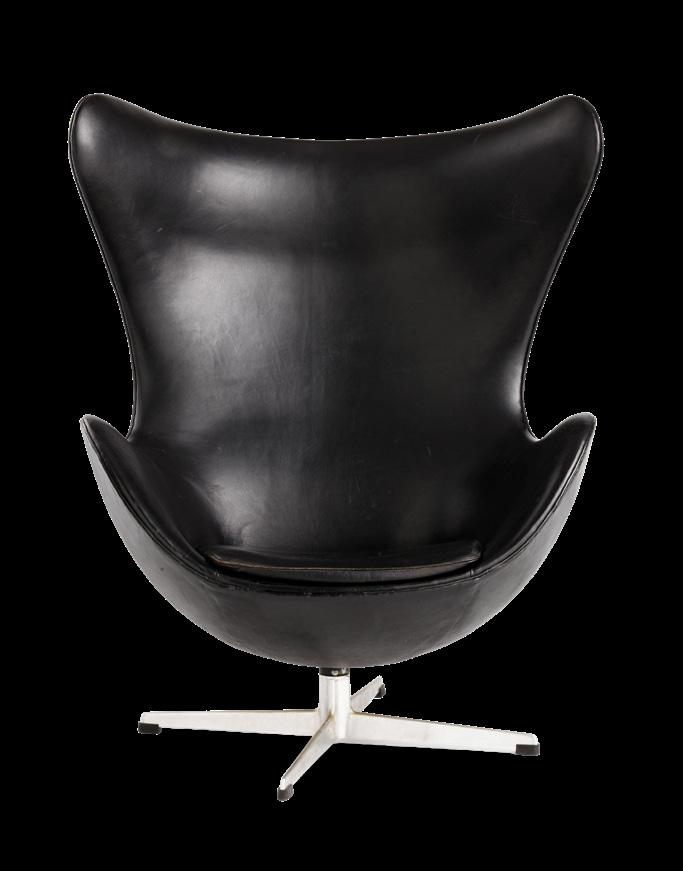
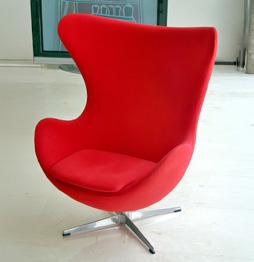
• Egg Chair by Arne Jacobsen. Sculptural, cocoon-like, instantly recognizable
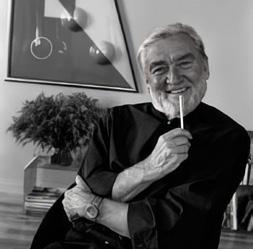
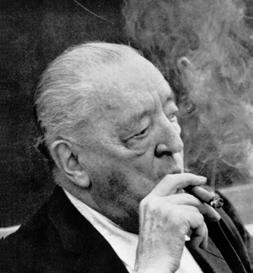
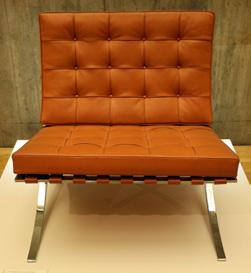
• Barcelona Chair by Ludwig Mies van der Rohe. Minimalist steel-and-leather icon of modernism
• Panton Chair by Verner Panton. First one-piece molded plastic chair; bold and futuristic
• Swan Chair by Arne Jacobsen. Soft, flowing form with no straight lines
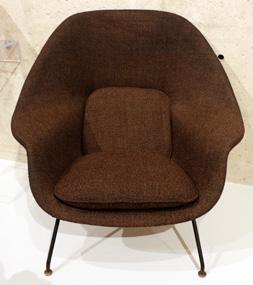
• Womb Chair by Eero Saarinen. Designed for comfort—invites you to curl into it
• Louis Ghost Chair by Philippe Starck Transparent interpretation of Louis XVI form
(Note: Please see two articles on Charles Eames and Ray Eames in our December 2025 issue.)
Designer Favorites Today
Today, designers—especially in coastal luxury markets like Florida—tend to approach statement seating as a composition rather than a single piece. A typical room might include one “serious” anchor chair, such as the Eames Lounge Chair and Ottoman; one sculptural moment, such as an Egg-style form; and one playful or modern contrast piece, such as the Panton Chair. In practice, that trio defines the current language of statement seating: a safe, dominant, universally respected choice; sculptural chairs as the high-design, editorial focal point; and a modern, energetic accent that keeps the room from feeling too serious.
Abundance of Choice
Contemporary versions of these—and countless additional statement chairs— are readily available online today, offered in every conceivable material, scale, and price point. One can choose an exacting reproduction of an iconic design or more loosely interpreted adaptations. The only real challenge in today’s landscape is not access, but restraint: narrowing the field of choice and ultimately making a decision.
A STATEMENT CHAIR SERVES AS A VISUAL FOCAL POINT— DRAWING IN THE EYE AND SETTING THE TONE OF THE ROOM.
Eero Saarinen
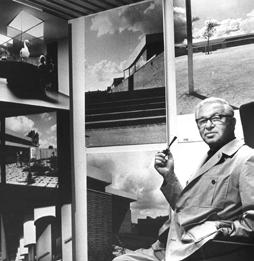
Eero Saarinen (1910–1961) was a FinnishAmerican architect and industrial designer recognized for his expressive, sculptural approach to modernist design. Created some of the most enduring works of the 20th century, including TWA Flight Center at JFK Airport. His architecture and furniture are distinguished by sweeping forms and structural innovation that helped reshape the visual language of mid-century design.
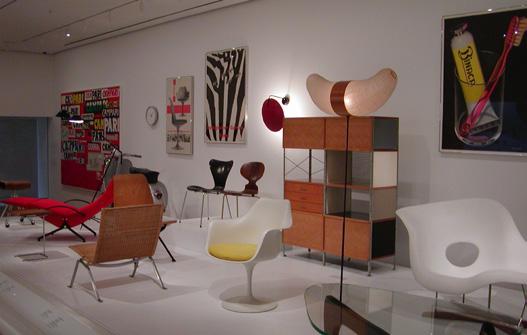
Chairs on display at MOMA in New York City. 2005.
Photograph by Balthazar Korab between 1955 and 1956.
Womb Chair, New York 1947-48. Milwaukee Art Museum.
PIECES of the larger whole
STATEMENT CHAIRS
Egg Chair. Arne Jacobsen. 1958.
Arne Jacobsen
Arne Jacobsen (1902-1971) was a Danish architect and designer who helped define modern Scandinavian design through a clean, functional approach that integrated architecture, furniture, and interiors into cohesive environments. Created some of the 20th century’s most iconic seating designs, including the Egg and Swan chairs, which continue to be widely used in contemporary residential and hospitality spaces. His work became a cornerstone of mid-century modern design, characterized by simplicity, organic form, and precise attention to proportion and detail.
Ludwig Mies van der Rohe
Ludwig Mies van der Rohe (1886-1969) was a German-American architect and designer and one of the most influential figures in modernist architecture, known for his philosophy of “less is more” and his focus on clarity, structure, and minimalism. Designed landmark buildings such as the Seagram Building in New York and helped pioneer the use of steel and glass to create open, refined architectural spaces. His work had a lasting impact on both architecture and furniture design, shaping much of the visual language of modernism throughout the 20th century.
Verner Panton
Verner Panton (1926-1998) was a Danish designer recognized for his bold, futuristic approach to furniture and interior design, often working with vivid colors, plastic materials, and unconventional, fluid forms. He produced some of the most influential designs of the 20th century, including the Panton Chair, the first mass-produced chair made from a single molded form without traditional legs or frame. His work expanded modern design into a more experimental and expressive direction, and it continues to shape contemporary interior aesthetics.
Photograph 1968, photographer not identified.
Photograph 1960, photographer not identified.
Photograph by Erling Mandelmann 1996.
Egg Chair, 1958.
Barcelona Chair, 1923. Calouste Gulbenkian Museum.
Panton Chair, 1960
ART NOUVEAU AND INTERIOR DESIGN
Transforming Nature Into a Comprehensive Design Language
By Diane Field and Jim Field photography source
Wikimedia Commons
As noted in our April 2026 issue, Victorian-era design marked one of the first movements to bring living plants indoors as a deliberate part of domestic life. Shaped by industrialization and the rise of a growing middle class, homeowners sought to reconnect with nature, fostering a vogue for indoor ferns, palms, and flowering plants displayed in parlors and conservatories. The result was a new aesthetic in which plants were not merely decorative, but emblematic of refinement, curiosity, and a cultivated relationship with the natural world.
This article turns to Art Nouveau, which emerged later in the late 19th century and rejected several defining features of Victorian design. Where Victorian interiors leaned toward heaviness, dense ornamentation, and historical pastiche— blending Gothic, Rococo, and Classical influences—Art Nouveau viewed such eclecticism as cluttered and derivative. It also pushed back against the Victorian
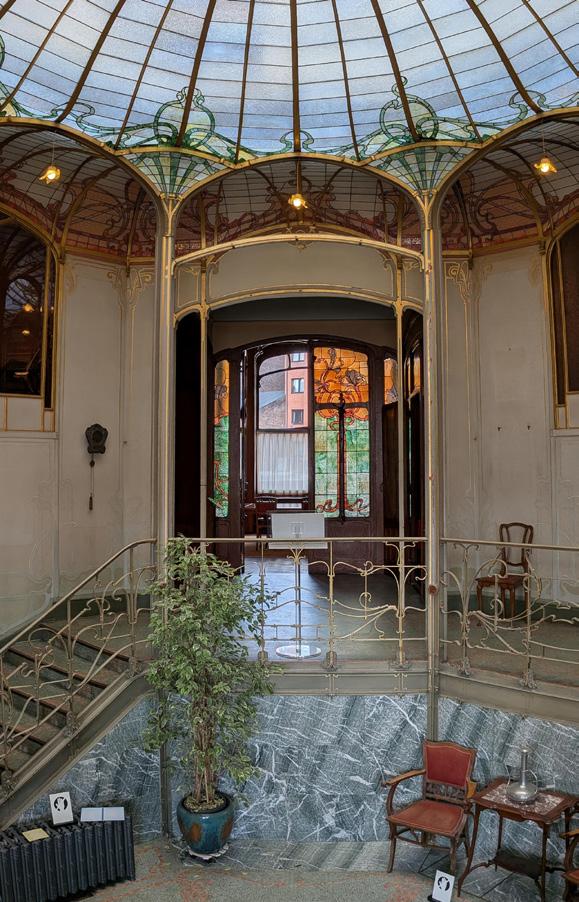
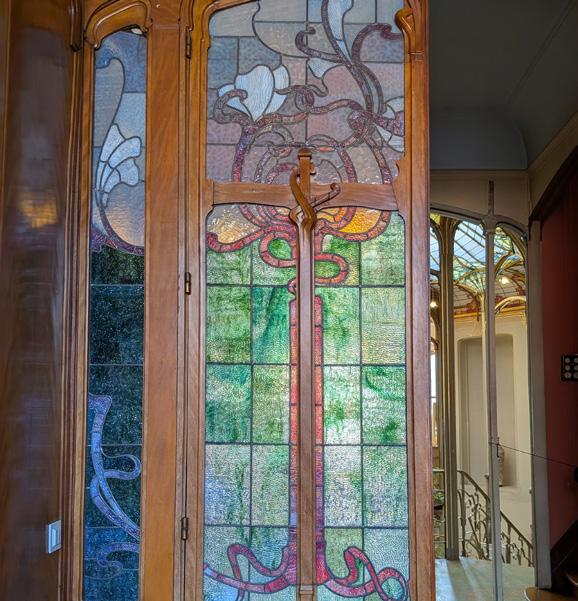
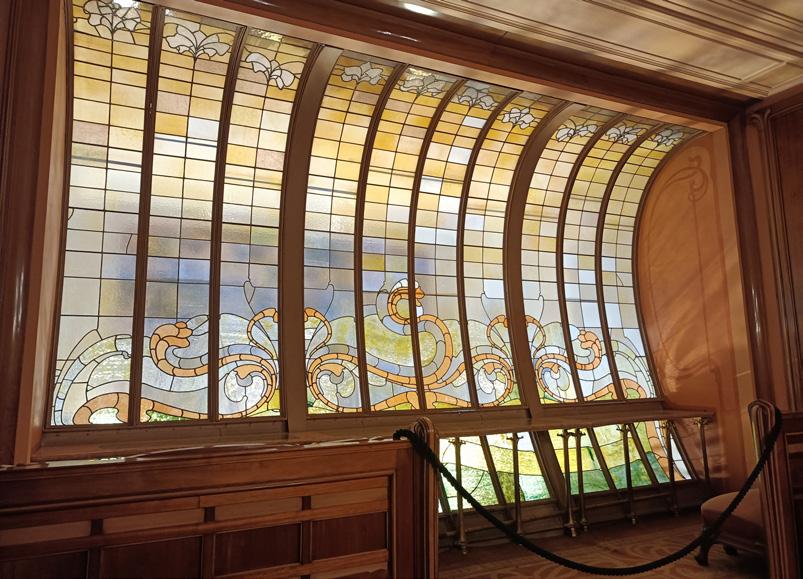
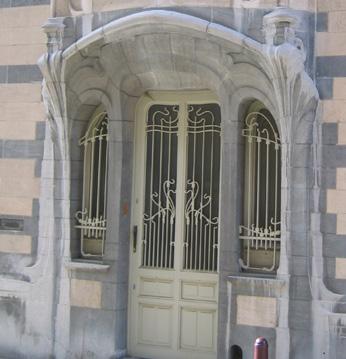
Hôtel van Eetvelde, Brussels.
preference for dark, object-filled rooms, favoring instead openness, light, and a sense of visual unity.
Most significantly, Art Nouveau rejected decoration as something merely applied to surfaces. In its place, it advanced a philosophy of total design, in which structure and ornament are inseparable— lines, forms, and materials flowing together organically, often inspired by nature. Even the Victorian enthusiasm for live plants was reformulated: rather than filling interiors with actual greenery, Art Nouveau abstracted plant forms into stylized curves and motifs, transforming nature into a cohesive and expressive design language.
Basic Characterization
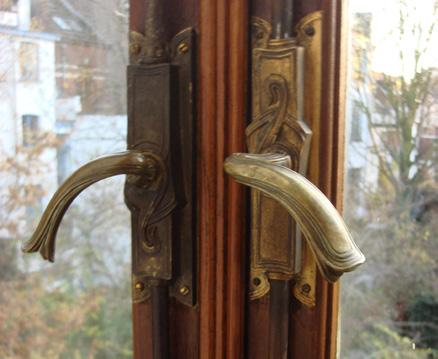
Art Nouveau is an international decorative style whose artists conceived that art should surround everyday life. Buildings, furniture, windows, lamps, wallcoverings, even door hardware were designed as part of a unified and seamless artistic environment. The essence of the movement was to apply forms found in nature—vines, flowers, hedges, trees, flowing water—to architecture, objects, and artwork, celebrating nature’s flowing curves and shapes by integrating them into everyday experience and consciousness.
Hôtel van Eetvelde, Brussels.
Victor Horta, 1900.
DESIGN HISTORY
ART NOUVEAU AND INTERIOR DESIGN
Art Nouveau’s distinctive style is primarily defined by four design features. Once you know these, you can easily recognize the style anywhere:
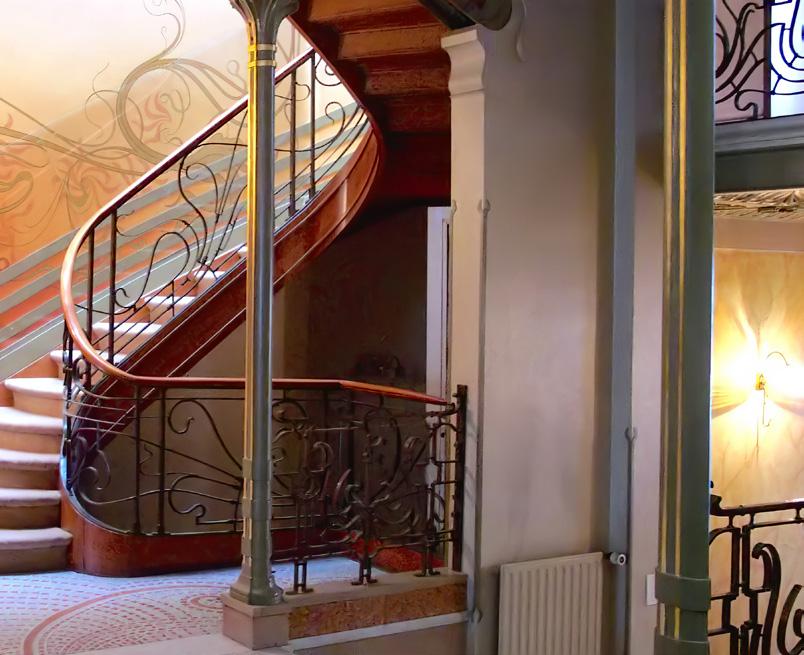
“Whiplash” line. Long, flowing S-curve that twists, loops, and spreads like a vine or tendril. These lines appear in architecture, iron railings, posters, furniture.
Plant, floral, insect motifs. Designs incorporate stylized plants, especially lilies, irises, vines, ginkgo leaves, also dragonflies and butterflies. These natural forms are interpretive rather than realistic.
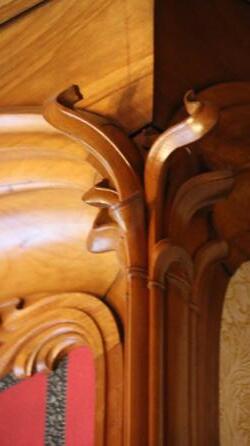
Integrated structure and ornament. Decoration isn’t applied to a surface, but “grows” out of the structure—e.g., stair railings or columns branch like stems or spread like leaves. Nature “transforms” into architecture.
Graceful female figures. Graphic art features elongated women with flowing hair, surrounded by circular halos of flowers or decorative patterns.
Art Nouveau and Interior Design
Art Nouveau designers believed that interiors should function as a complete artistic composition, referred to as a Gesamtkunstwerk (“total work of art”). Each room was considered a living work of art, where architecture, furniture, and decoration would flow together in organic congruence inspired by natural surroundings.
Organic forms in furniture. Tables, chairs, cabinets featured arched legs that resembled stems, carved vines or leaves, asymmetrical shapes.
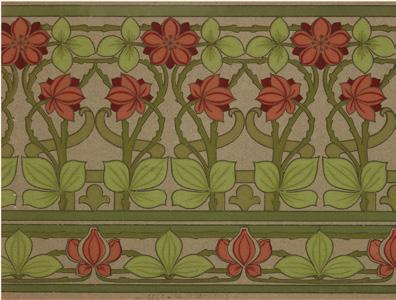
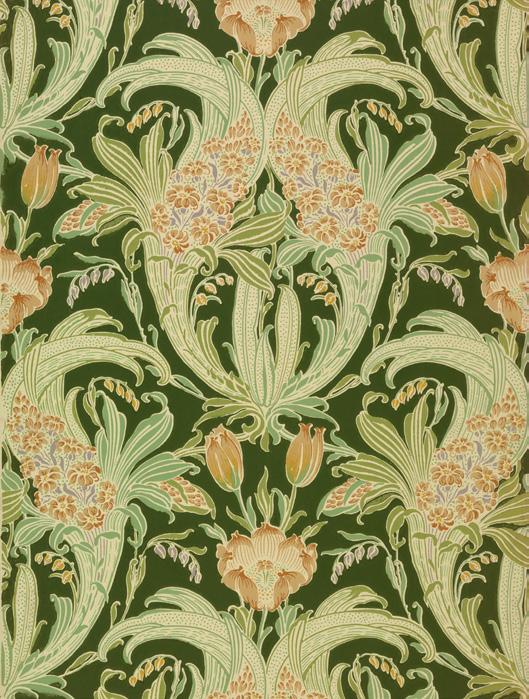
Dramatic interior surfaces. Became highly decorative employing floral wallpapers, painted murals, mosaic floors, stained-glass windows and lamps.
Novel materials and use. Crafted in expressive ways—for example, curved ironwork, carved wood, colored glass, ceramic tile—to appear fluid and natural, echoing vines or flowing water.
Atmosphere and mood. Interiors sought to create a sensuous, immersive atmosphere with light, airy, sinuous, garden-like rooms.
Renowned Artists
Victor Horta. Belgian architect who designed fluid, plant-like iron staircases. Alphonse Mucha. Flowing poster designs with stylized women and floral halos.
Hector Guimard. Designer of iconic Paris Métro entrances.
Louis Comfort Tiffany. Creator of stainedglass windows and lamps.
Profile of Victor Horta (1861–1947)
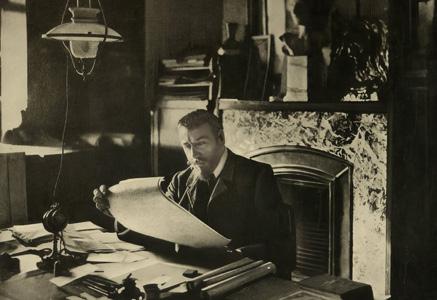
Belgian architect and among founders of Art Nouveau. His buildings and objects helped define the movement’s distinctive flowing, organic lines and integration of art with architecture. Born in Ghent, Belgium. Studied architecture at the Royal Academy of Fine Arts of Brussels. Early interest in combining modern materials like iron and glass with decorative design. Architectural innovations transformed interiors: curving iron columns and railings to mimic nature; glass roofs and skylights to introduce direct light; flowing floor plans to impart motion, seamlessness. Famous buildings in Brussels: Hôtel Tassel (1893), Hôtel Solvay (1895-1900), Hôtel van Eetvelde (1895-1898). (Note: “Hôtel” in French architecture refers to a private townhouse for wealthy citizens.)
Victor Horta Museum, Brussels.
ART
Profile of Hôtel Tassel, Brussels
Considered the first fully executed Art Nouveau house. Key features: flowing, organic lines; stairs, railings, mosaics, stained glass, furniture; iron and glass incorporated to create lightfilled interiors; central staircase with curved iron balustrades resembling vines, illuminating skylights; rooms flow naturally into one another; mosaics, woodwork, stained glass all echo plant and floral motifs. Established the standard for Art Nouveau architecture across Europe. Today a UNESCO World Heritage Site.
Victor Horta, Maison Deprez-Vandervelde, Av. Palmerston 3, Brussels. Victor Horta Museum, Brussels.
Stairway of the Hôtel Tassel, Brussels.
CITIZEN ACTION
Photograph by Victoriya Knapp
GREEN HEART TRIBE
Three Ladies Commit to Beautifying Our Island
Jordan Wakeland, Deana Marchant, and Cindy O’Dare
Interview by Jim Field, photographs by Victoriya Knapp and courtesy of Green Heart Tribe
Editor’s Introduction. Going into my conversation with Jordan Wakeland, Deana Marchant, and Cindy O’Dare, I had only a loose sense of the story I was about to hear— and document.
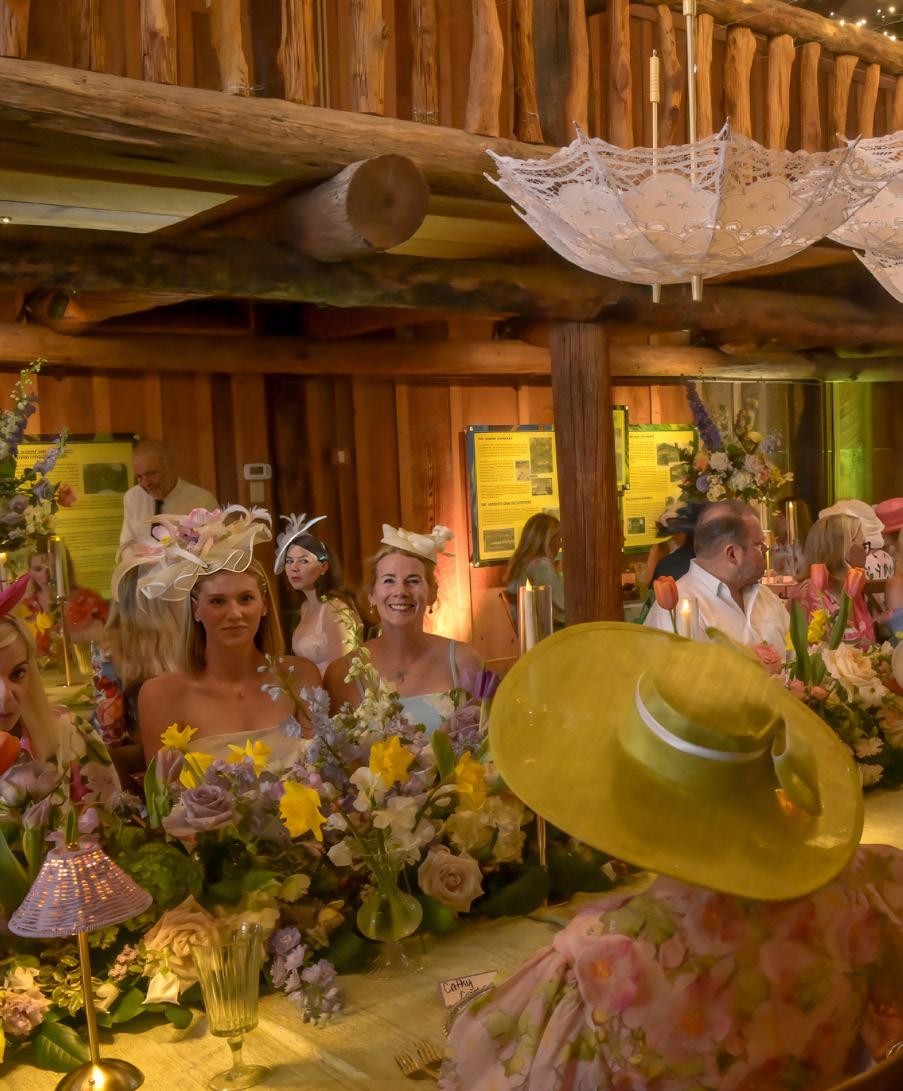
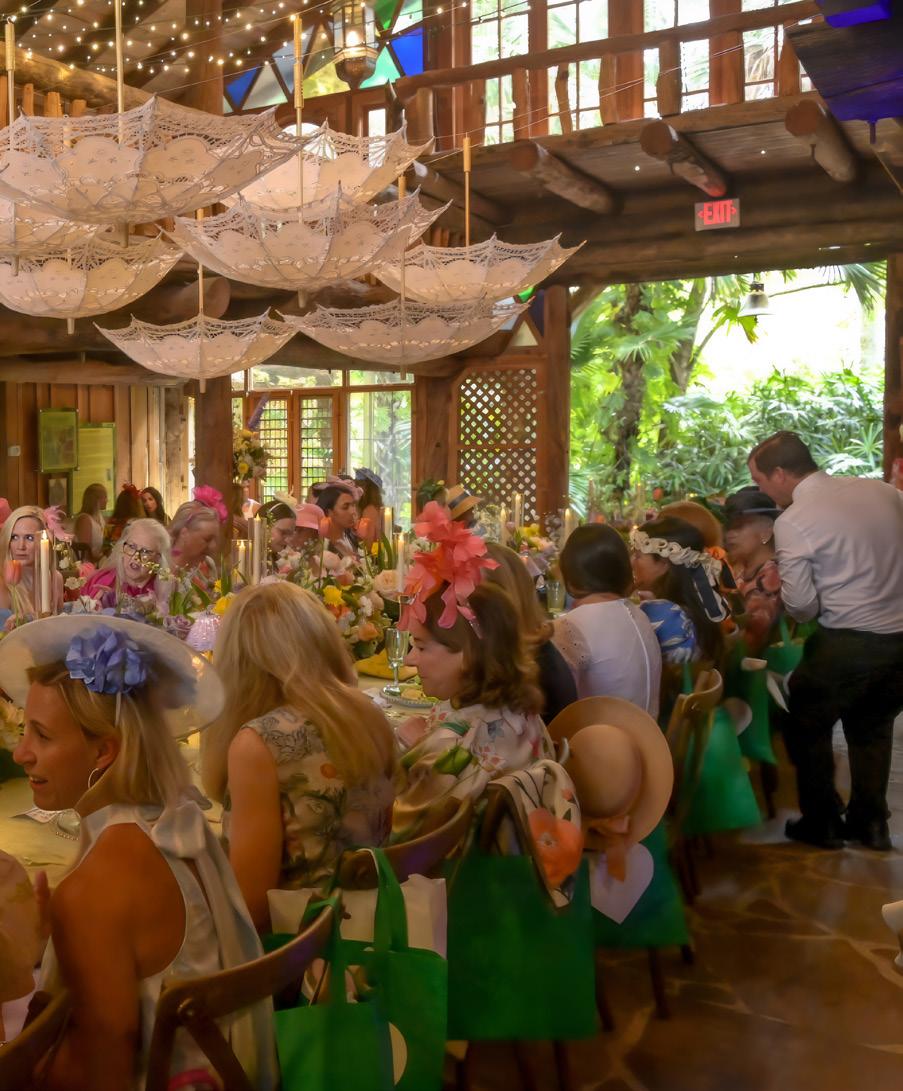
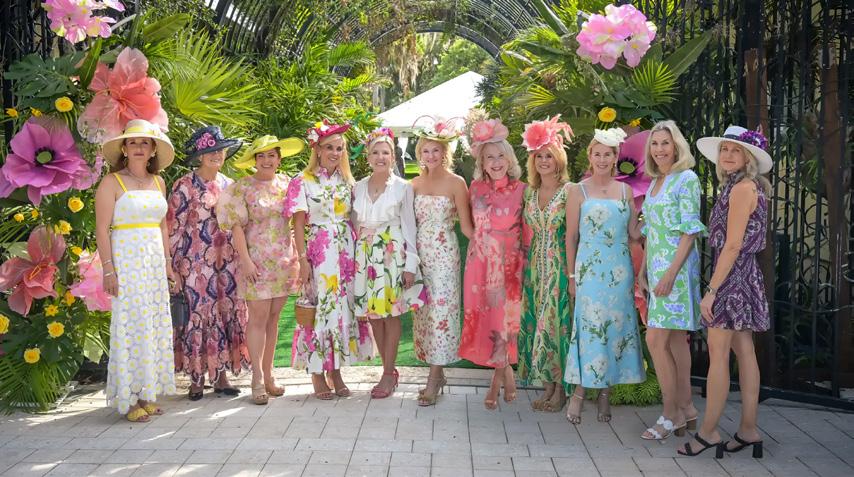
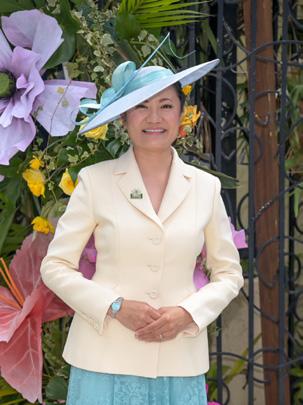
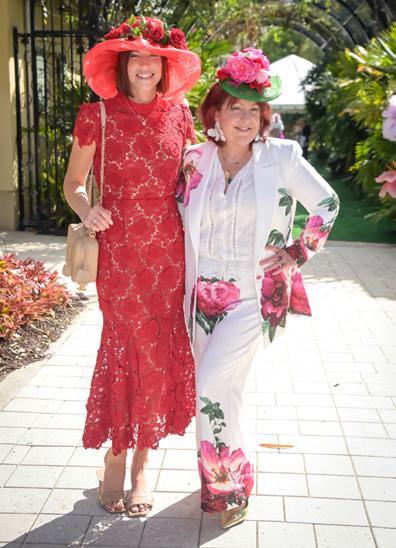
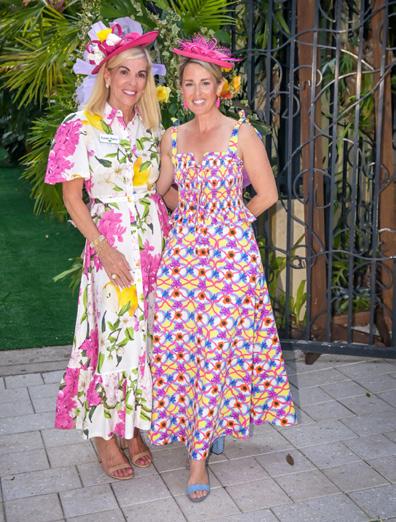
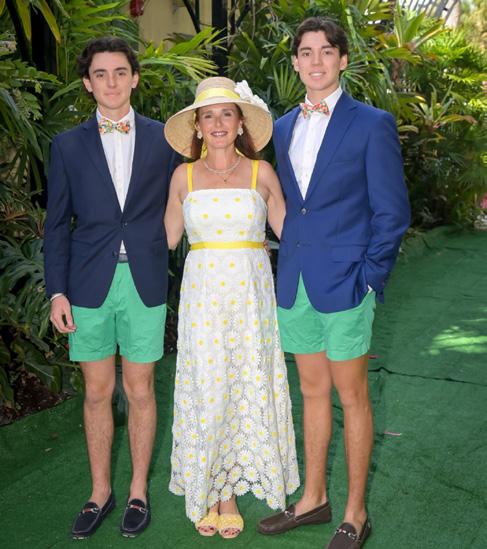
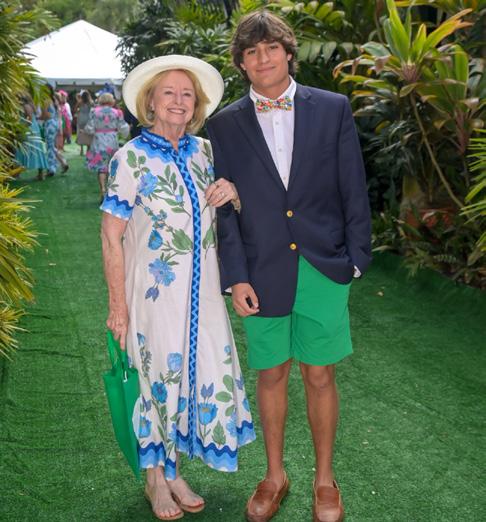
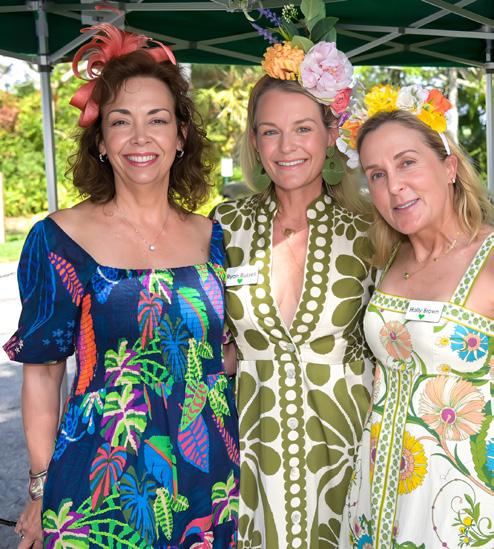
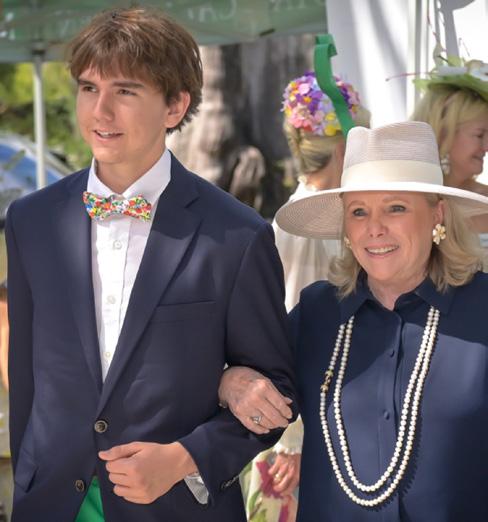
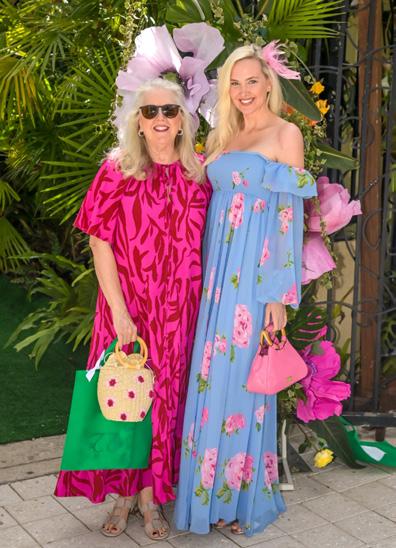
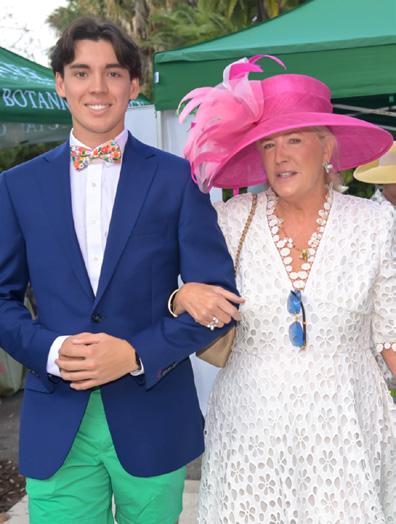
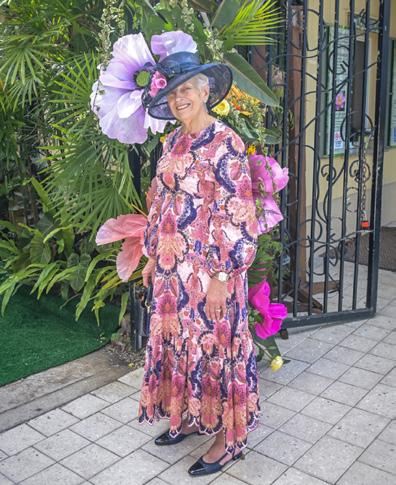
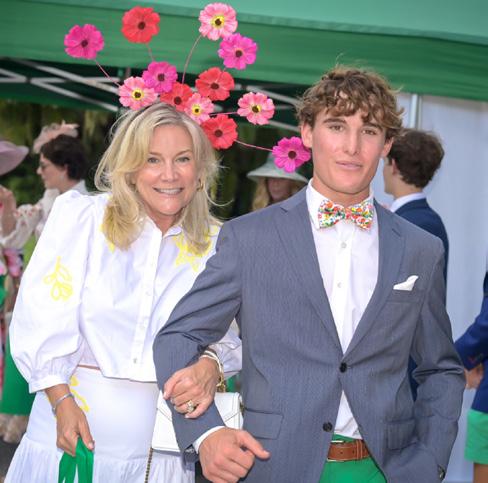
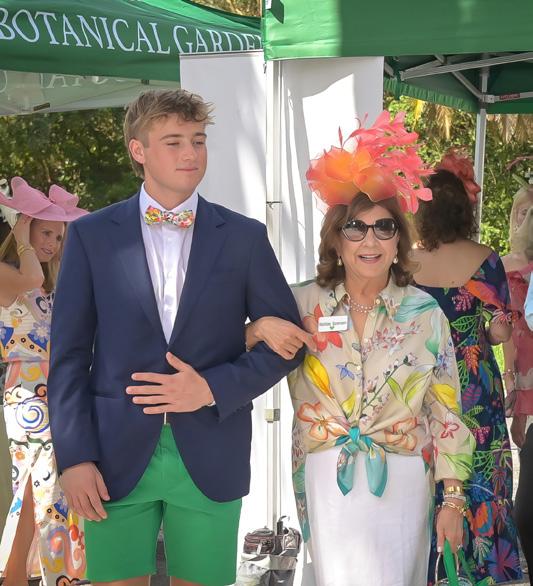
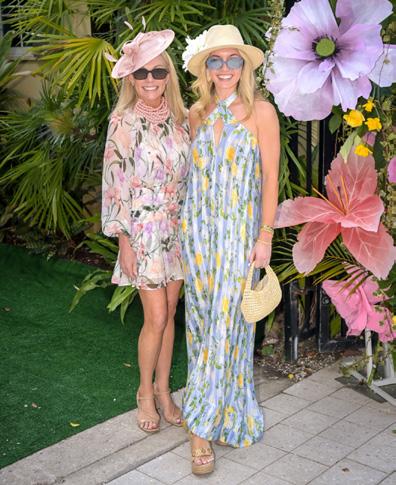
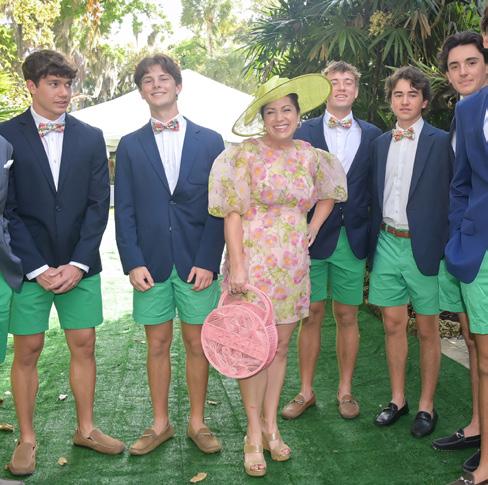
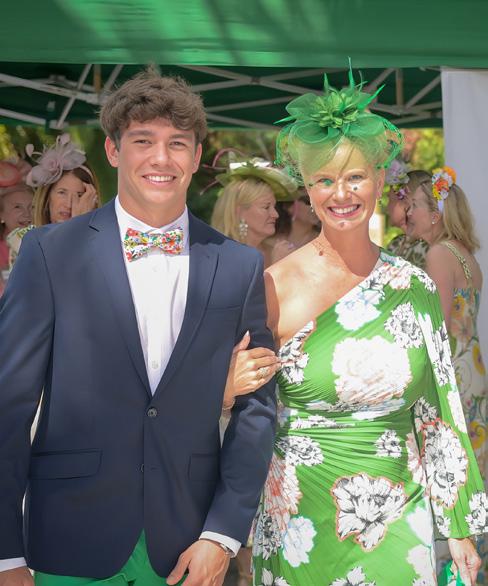
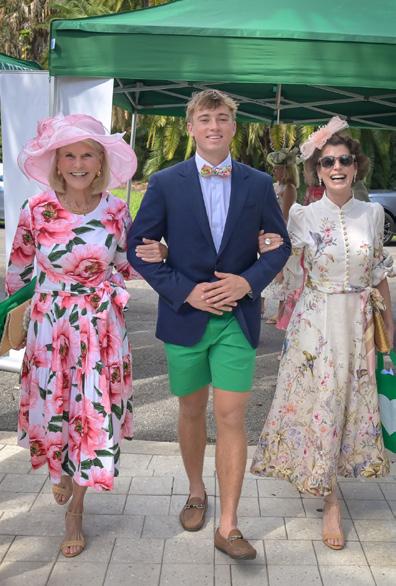
At first glance, it seemed straightforward: three women leading an effort to beautify sections of Ocean Drive in Vero Beach. To raise funds, they hosted a fête at McKee Botanical Garden, where guests arrived in elegant attire donning statement hats in a nod to the setting. The event was a resounding success, earning glowing coverage. It had all the hallmarks of a familiar and welcome narrative—”good citizens doing good work.”
That alone was enough to draw my interest, and I was genuinely appreciative of their willingness to share their story through LIV VERO Magazine.
But within ten minutes of sitting down together, it became clear that this was something more. What emerged was a story of uncommon resolve—of three friends who not only envisioned a more beautiful community, but committed themselves to making it happen. From a standing start, with little initial support and no established roadmap, they navigated uncertainty, built momentum, and steadily transformed an idea into action. Along the way, they attracted supporters,
raised funds, and overcame the quiet but persistent forces that so often stall wellintentioned efforts.
It is, in the truest sense, a story of initiative meeting perseverance—and of results following both. Having come away with a far deeper appreciation for what they have accomplished, I am pleased to share this conversation, with the hope that readers will experience the same sense of discovery—and recognize that, knowing these ladies and true to their spirit, this is only the beginning!
Board of Directors.
Organization Description (From Website)
Founded in 2022, Green Heart Tribe is a 501(c)(3) nonprofit organization dedicated to enhancing the beauty and vitality of our community through thoughtful public plantings and green initiatives. What began as a grassroots effort by a group of community-minded women has grown into a movement to promote environmental education and urban beautification.
We are committed to educating others in the advantages of street and public plantings, which enhance and beautify the community. We are dedicated to working with our private funds and local government to provide beautification efforts through plantings and maintenance within the public right-ofway. All of our efforts are funded through community donations. As we expand our efforts, we remain committed to growing one flower at a time.
Our Mission. We strive to enhance the beauty of Vero Beach’s Barrier Island, by fostering a community driven effort to creatively beautify public spaces one flower at a time.
Our Vision. The vision of the Women’s Beautification Committee of Vero Beach is to elevate and promote the enhancement of Ocean Drive and the Barrier Island by adding a personal touch and care to our public spaces. We take pride in our town and aim to unite like-minded women in a collaborative effort to make Vero Beach even more vibrant and appealing for all residents and visitors.
Board of Directors. Jordan Wakeland— President. Deana Marchant—Vice President. Cindy O’Dare—Secretary/ Treasurer. Stephanie MacWilliam— Creative Director. Margaret Anne Evans— Director of Development.
JF: Ladies, thank you for getting together this afternoon to tell me about the Green Heart Tribe. Assume I know nothing about your undertaking—so please fill me in on all the details. Let’s start at the beginning— how and why it all got started.
Cindy: We all know from where we’ve traveled and live that many little towns have beautiful downtowns—parks and flowers, hanging baskets, pretty street lighting, everything carefully manicured. And Jordan asked the question, “Why can’t we do that in Vero Beach.” And she talked to Deana, and the two of them said “Let’s ask Cindy.”
And the three of us hatched the idea and called Monty Falls, the City Manager. And it’s so funny when I look back on that now—we were like “Where’s the money! How is it being spent? We want to know where all the money is. Why hasn’t the city spent our tax money to beautify our downtown on the island?” Monty was just sweet, and patient, and listened. But we did find out there is no money.
GREEN HEART TRIBE
JF: So your focus began with Ocean Drive?
Jordan: Actually, the initial prompt was the stretch of road on A1A traveling north from the 17th Steet Bridge, along Riomar Country Club’s back nine and Quail Valley’s River Club. That median strip just looked so unsightly for so long. And I assumed the city was going to improve it— you know, plant something nice and clean it up. And I kept waiting.
And then separately, I have gone to the Hat Luncheon fundraiser in New York City for probably ten years—which raises millions of dollars each year to maintain and preserve Central Park—and I came home and drove down this stretch of road and I thought we can do better than this.
Cindy likes to say that Vero Beach is the Hamptons of the South. Well, have you been to the Hamptons? Because there is beautiful landscaping everywhere in their commercial areas, and we don’t have this, and we should.
So Deana and I were playing tennis, and we started talking, and we’re just so aggravated that the city isn’t doing something about this stretch of road, and how can we do something about it.
Deana: In Winter Park Florida, where I grew up, the downtown area of Park Avenue is absolutely beautiful. They have installed beautiful street lights with hanging pots with flowers, brick roads, flower beds and potted plants all along the avenue. It always struck me that Ocean Drive could look like this too. Jordan and I have talked about the medians and lack of charm in our downtown area. She mentioned the Hat Luncheon in New York City and how the ladies raise money to beautify the park. I said, why can’t we do that here! That’s when we thought of Cindy O’Dare. Cindy is very involved in the community through her real estate company and has great taste. We decided to talk to Cindy and see if she would be interested in working with us on our new mission. She was more than willing to join! It’s snowballed from there and evolved into what it is today. It has been a lot of hard work. We started about 4 years ago with little support and no guidelines.
Cindy: We met with Monty in the summer, four seasons ago. And I’ve known Monty forever, we said let’s just talk to him about it. Maybe we can get him excited and he’ll plant some flowers.
Deana: I also have known Monte for a long time. He was very willing to listen to us. We set up a meeting with Monte and the Public Works director Mathew Mitts and the City Grounds and Maintenance manager, Nanette Haynes. They liked our ideas and they really did want to work with us, but they didn’t have the funds to do the projects we wanted to do.
Cindy: And especially the median strip, the original issue. If anything, we focused on that too long, until it wasn’t going anywhere.
Deana: We did learn that it’s the Florida Department of Transportation that’s in charge of that A1A median. Not the city. The city is hired to maintain it for the FDOT.
Jordan: It turned out it wasn’t as easy as getting some money and asking to have everything changed out. There are a lot of restrictions, a lot of various laws and permits. But in learning this we decided we’re still going to solve this problem. We’re not giving up. We pivoted and asked what can we do? And remember, we didn’t have our own Hat Luncheon at this point. We had nothing.
Event Committee
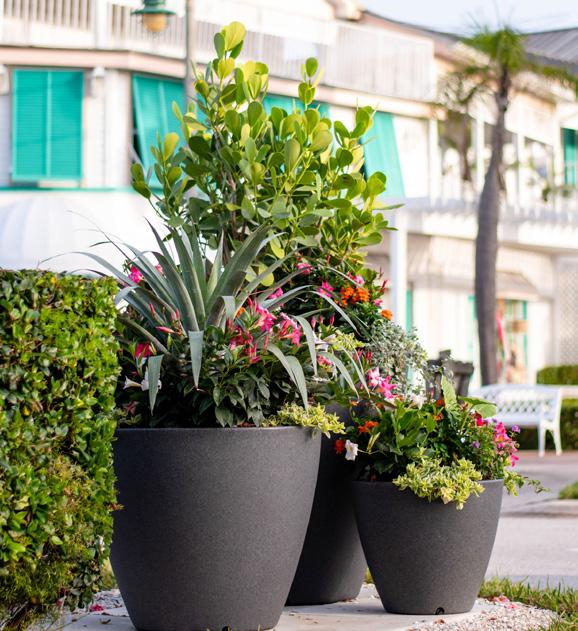
We started researching flower pots that can maintain themselves. I found on the internet this line of products called Earth Planters, which have a water source. And we said why don’t we start here? Start small and get some experience and something accomplished and behind us. Because I can see the city side of it, thinking, oh these three women, they’re going to burn out. But they didn’t know who they were messing with, right? [Laughter.] Here are three women when you say “No,” we just keep going. That’s just what we do.
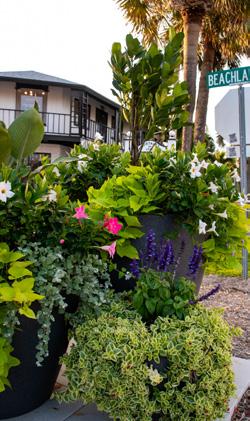
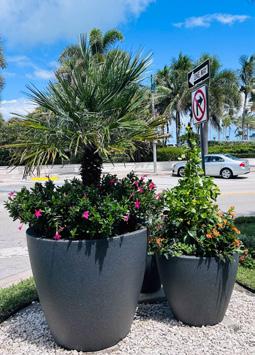
Deana: I have been frustrated for years with Sexton Plaza. My business is located right across the street from the Sexton Plaza sign. It was tired looking. The median and flagpole area across the street was a mess. I had called the city years ago to ask for assistance, for example, trimming the palm trees. The response I got was that they don’t trim the palm trees because it’s not good for them—they are selftrimming. We decided that updating the intersection of Ocean Drive and Beachland Boulevard would be our first project. Jordan discovered the self-watering pots and we decided to do groupings of pots with flowers. Around that time we became associated with Peter Benedict and Aiello Landscaping.
Cindy: Prior to this, we had a party to raise money in my garage—my inner carport. This was our first event, sort of a trial balloon, because we didn’t know if people would support the idea. But we raised roughly $37,000, which gave us seed funding.
Deana: We went back to the city and asked how we could get started with the Sexton Plaza intersection. They said we needed to sign leases for the areas we want to place the planters. Once we sign the leases that entire area would be ours to maintain. So we made the decision to sign the leases. We had to get insurance too. And we pay for the upkeep and replanting at the Sexton Plaza intersection and all the potted plants on Ocean Drive. What we did at Sexton Plaza on a small budget was transformational. We painted the sign, placed lighting on the sign, added three large royal palms, sod, shells, and lots of pretty seasonal flowers.
CITIZEN ACTION GREEN HEART TRIBE
Cindy. But you know what? It’s a good thing. Because it’s ours.
Deana: We turned our attention to having a fundraiser. Initially, it was going to be held in Jordan’s beautiful backyard on the intracoastal. Unfortunately, storms were forecasted the day before with 25 to 30 mph winds. We literally at the last minute switched to a safer location, Cindy’s carport at her house.
Cindy: And it turned out perfect. It was so cute. We had about 100 attendees.
Jordan: We called it an “informational.” We wanted to check the pulse of the other women. We even had a few who said “Nobody’s going to wear a hat.” And we’re thinking, really? Maybe they will. So it was an experiment—we think we’re on to something, but we don’t know for sure. But the turnout, even in the carport, was amazing.
Deana: They weren’t sure who to invite so we selected ten girls (peers) of different ages, and different involvement in the community. We called them the “Garden Girls.” We asked each of them to pick ten people who they thought would be interested and want to help us. We ended up with a phenomenal group for our first fundraiser.
Cindy: We invited about 100, and 95% showed up. In the pouring rain! And it was so pretty. We had a musician. We had valet parking. We had catering. We had a bar set up. And the girls showed up with beautiful hats on in the rain! [Laughter.] We raised $37,000. We talked to everybody about the Hat Luncheon in New York. Did they think it was a good idea? Well, we sensed everyone liked it.
Afterward we posted the event on social media, and Marion de Vogel at McKee Botanical Garden, who follows me, immediately called, and she said, “Wait a minute. This is a dream come true. I have wanted to do this. Would you consider having your luncheon at McKee?” And we were just dying. [Laughter.]
Jordan: Because we all wanted to hold the next event someplace really special. And McKee is wonderful, but I had never been
there for an event like we had in mind. And we were thinking are they really going to let us do this? And Marion said yes, everything we wanted to do. And for our two events now at McKee, we could not have imagined how wonderfully things have gone.
raised funds we started placing pots all the way down Ocean Drive.
Deana: Each installation was a challenge. We had to decide which corners would be best suited for the pots and what the
Continued on page 132
Deana: We needed a name and liked the Green Hearts, because of our love for flowers and plants. We asked around and some younger generation girls said you should call yourselves a Tribe. So we went with the Green Heart Tribe. Officially, we’re the Women’s Beautification Committee of Vero Beach.
JF: And so despite bumps in the road, you figured it out. You built support for your cause, raised funds, and put them to work.
Jordan: And I think it’s because we’re all businesswomen. We come from different backgrounds, but we definitely have a lot in common, and I think that’s what it takes—strong women who have a goal. So Sexton Plaza was our first project. And then the pots. We started with two corners that mirrored Sexton Plaza. And then as we
PRESENTATION TO GUESTS
Rochelle Wolberg Executive Director McKee Botanical Garden
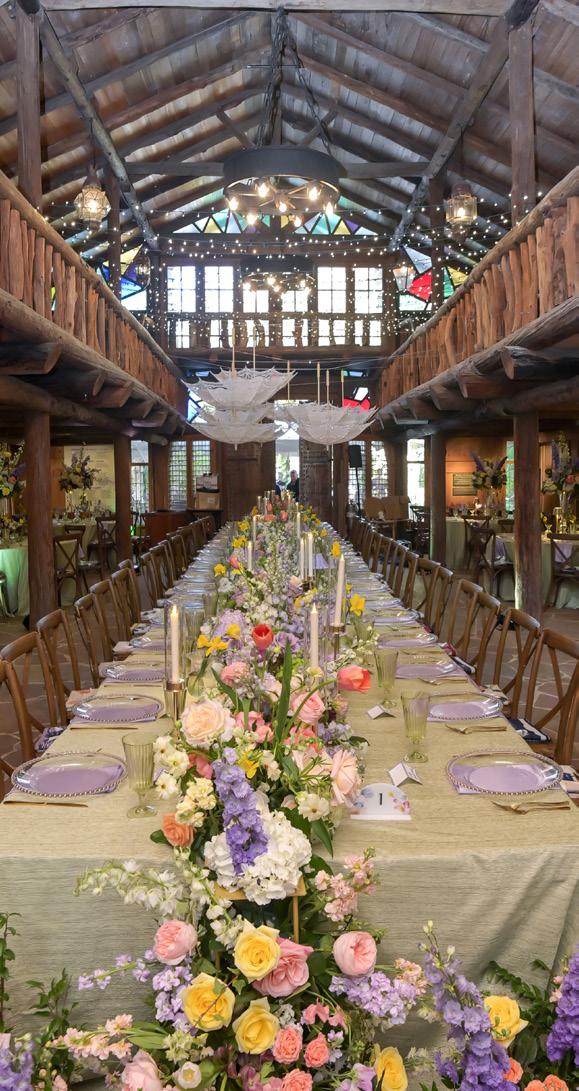
Good morning, and welcome to McKee Botanical Garden and our Hall of Giants. This may be one of the most beautiful collections of hats and fascinators ever assembled in Vero Beach!
We’ve enjoyed working with the Green Heart Tribe to host the second annual Vero in Bloom Hat Luncheon. And for my remarks today, I’d like to focus on the green heart itself. As a symbol, the green heart connects us in many ways: to one another other, to purpose, and to the greater good. Through McKee Botanical’s collaboration with the Green Heart Tribe, I see three particularly meaningful connections.
First, a connection to Central Park, which has been called the “green heart” of New York City
In the late 1920s, our Garden’s founders, businessmen and conservationists Arthur McKee and Waldo Sexton, hired landscape architect William Lyman Phillips to transform a jungle nursery into what would become McKee Jungle Gardens, a popular roadside attraction that opened to the public on January 1, 1932.
Lyman Phillips was deeply influenced by Frederick Law Olmsted, who co-designed Central Park (with Calvert Vaux in 1858) and is considered its Chief Architect.
William Lyman Phillips trained under Olmsted’s sons (Frederick Jr. and John Charles) and was employed by them in their company—the Olmsted Brothers Firm based in Brookline, Massachusetts. Lyman Phillips eventually became known as their “Florida guy.” He designed Bok Towers Gardens, Fairchild Tropical Botanic Garden, and McKee Jungle Gardens, the early iteration of our botanical garden.
Like the Central Park design, Lyman Phillips designed McKee to feel natural and immersive. He used winding paths and worked with the site’s water features and our own distinct jungle canopy, shaping McKee into the lush tropical garden we cherish today, a place that feels both restorative and deeply inspiring to those who visit.
That leads to the second connection: the power of women coming together around a historic landscape
The Women’s Committee of the Central Park Conservancy was founded in 1983 after the first Frederick Law Olmsted Awards Luncheon was held in 1982. That 1982 event began with about 75 women who gathered for that first luncheon at Tavern on the Green (not at the Conservatory Garden). At a time when Central Park was in serious decline, a group of determined women stepped forward to help restore and protect it. And I have to say, those hat ladies meant serious business.
They wore hats deliberately, not just for fashion, but to capture media attention and raise awareness for restoring the
park. Today, that luncheon has grown into one of New York’s premier social and philanthropic events.
So, 1983–the Women’s Committee of the Central Park Conservancy was founded. In June 2023, forty years later, the Green Heart Tribe was incorporated, women coming together with enthusiasm, purpose, and a shared call to action. Because when women gather around a cause we care about, we don’t just raise awareness, we create lasting change. And two women, Suzann Phillips and Susan Schuyler Smith, galvanized the efforts to save and resurrect McKee.
Finally, the third connection: the power of community
When our historic jungle garden faced its own uncertain future, having closed in 1976 and under threat of being redeveloped into a strip mall and parking lot, this community stepped forward. A Historic Landmark Committee formed in 1984, and by 1993 a campaign committee was raising funds to save the garden. In January 1994, the property was purchased back from developers, preserving the jungle garden that, quite simply, refused to die.
In fact, the fascinator I’m wearing today carries a little history of its own. It was worn to the Central Park Hat Luncheon of 2001, the very same year our historic jungle garden reopened to the public as McKee Botanical Garden. So, it feels especially fitting to wear it today as we look to celebrate the 25th anniversary of McKee’s reopening later this year.
Both moments reminding us what can happen when women and communities come together to protect and celebrate extraordinary landscapes. These stories remind us that gardens and the communities around them thrive because people care enough to act.
And that may be the true meaning of a green heart: a place where nature, community, and purpose meet. I congratulate the Green Heart Tribe on what they have achieved for Ocean Drive and the community over the past two years, and I thank you all once again for being part of this incredible story.
Photograph by Victoriya Knapp
ACROSS THE SPECTRUM
ALEX AND WHITNEY WELLS PART 1
The Next Chapter in RCL’s Storied History
Interview by Jim Field photography by Victoriya Knapp
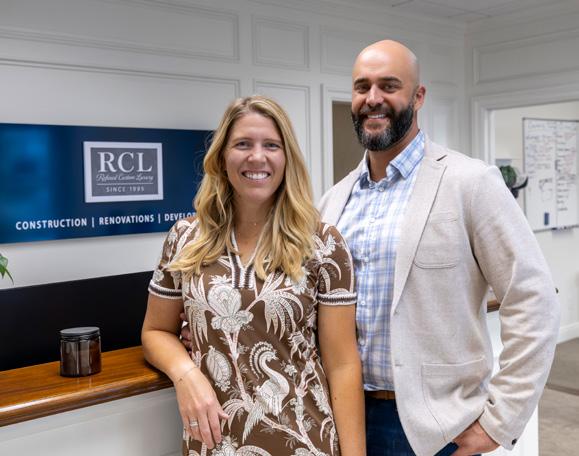
Editor’s Introduction: Alex and Whitney Wells own and manage RCL Development, Inc., an award-winning builder of highend custom residences in Vero Beach.
Founded by Bob Lyles—who, over decades, established RCL’s reputation for innovation and exceptional quality—the firm entered a new chapter in 2023 when Alex and Whitney acquired the company. They are now advancing that legacy through enhanced building processes and a heightened focus on client engagement and communication.
LIV VERO Magazine is dedicated to profiling Vero Beach businesses as a central part of our editorial mission. We strive to present each organization in depth, so readers can fully appreciate not only the value of what they offer, but—most importantly—the people behind it. We are honored to feature Alex, Whitney, and RCL Development in these pages.
Alex Wells
President | Principal
JF: In a single sentence—what is the RCL story right now?
AW: Whitney and I—a husband-andwife team—took over RCL Development and we’re building on the exceptional foundation with our own twist. We’re a young family planting roots right here in Vero Beach, and our mission is to modernize RCL’s process and client experience while preserving everything that made this company’s reputation great. We’re just getting started—and we’re very much here for the long run.
JF: I am so appreciative to have this opportunity to present RCL’s current story to the Vero Beach community—a special thank you to both you and Whitney for your goodwill. Why don’t we start with bit of personal history. AW: Jim, we are grateful in turn. I grew up in southeastern Pennsylvania, on a tree farm and nursery in Chester County that my family still runs today. My father and uncle spent decades building that business, specializing in high-end hollies and specimen-quality landscaping plants. Their work stretches across the MidAtlantic supplying carefully cultivated, ball-and-burlap, hand-dug plantings for discerning clients. It was a hands-on world, rooted in the rhythms of rural life, and it shaped me powerfully early on.
Jack and Tilly.
Alongside the nursery, we also operated a design-build landscape contracting firm. That side of the business gave me my first exposure to the intersection of design and execution—how ideas move from paper into the ground.
After high school, I attended Penn State’s College of Agriculture, studying landscape contracting and design—a natural continuation of what I’d grown up doing. At the time, I assumed I would return to the family business. But I graduated into the heart of the 2008 recession, and instead of going home, I chose to continue my education, pursuing a master’s in landscape architecture at the University of Colorado in Denver.
About a year into the program, I realized something important. The work felt too abstract. So, I made the decision to step away and return to the field. In Denver, I worked in landscape contracting— designing projects, selling work, and managing installation crews. It brought me back to what I knew and enjoyed. But over time, as I worked closely with developers and homebuilders, I began to see a different path. I found myself drawn not just to landscaping but to the buildings themselves—and the broader process of development and construction.
During that time, I also met Whitney, who encouraged me to think more intentionally about my long-term direction. With that perspective, I went back to school once more, this time at the University of Denver, where I earned a master’s degree in real estate and construction management. That decision marked a turning point, and it ultimately led me into the world of construction, where I could combine my background in hands-on work with a larger vision for building and development.
By the time I finished graduate school, I already had nearly a decade of hands-on experience behind me. I wasn’t coming in fresh—I understood job sites, crews, and the realities of building. That background helped shape my next move.
I was recruited by Clark Construction, one of the largest general contractors in the country, to join their team in San Diego. Whitney and I left Denver and headed to the West Coast, where I was thrown into a massive, high-profile project at the U.S.–Mexico border. It was an extraordinary job—an entire campus at an international crossing, including a tunnel and a CBP inspection facility, with the southern edge of the site literally defined by the border itself.
VERO BUSINESS
ALEX AND WHITNEY WELLS PART 1
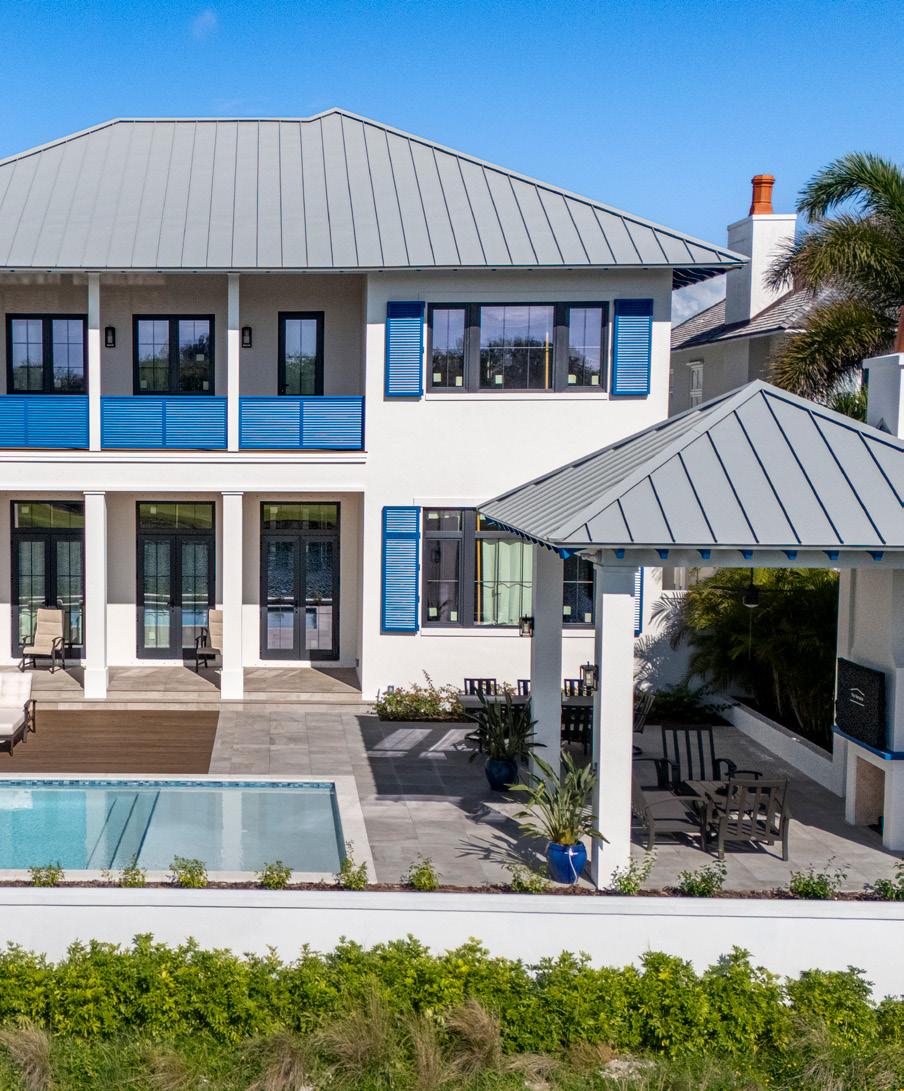
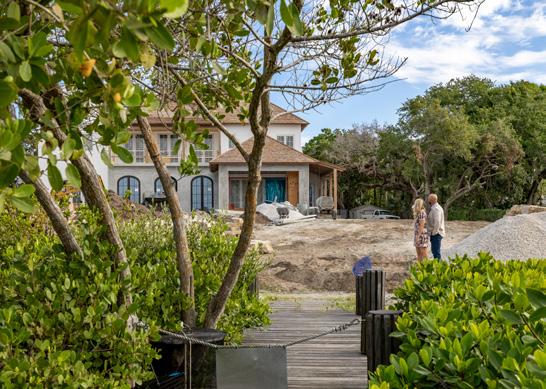
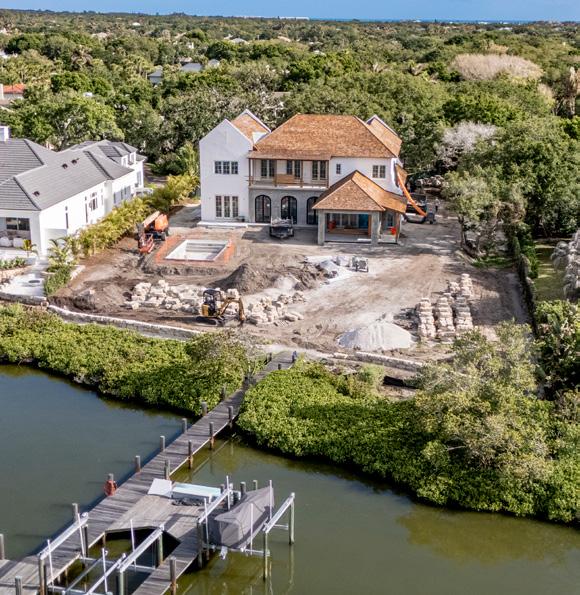
An Anglo Caribbean–inspired residence defined by proportion and ease. Spanning 6,000 sq ft under roof (5,240 under air), the home blends classic island architecture with a clean, modern sensibility—delivered in just 14 months.
VERO
ALEX AND WHITNEY
WELLS PART 1
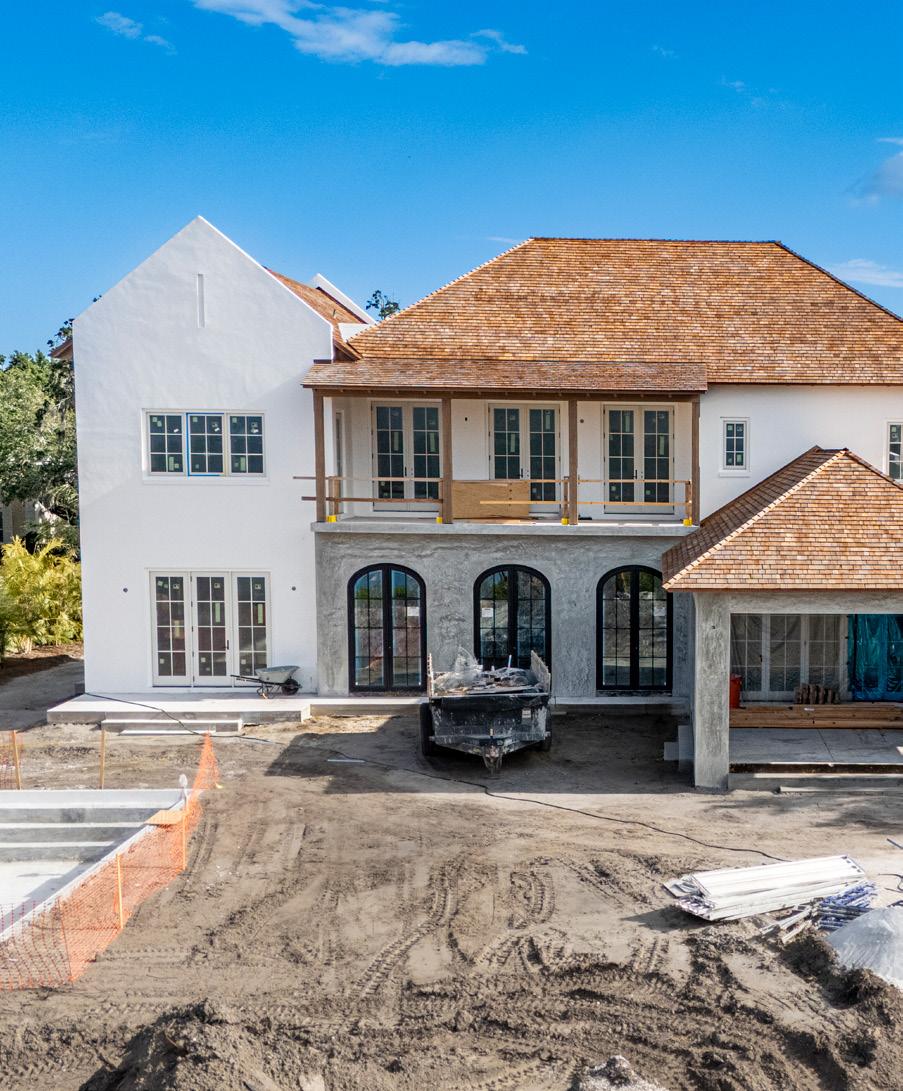
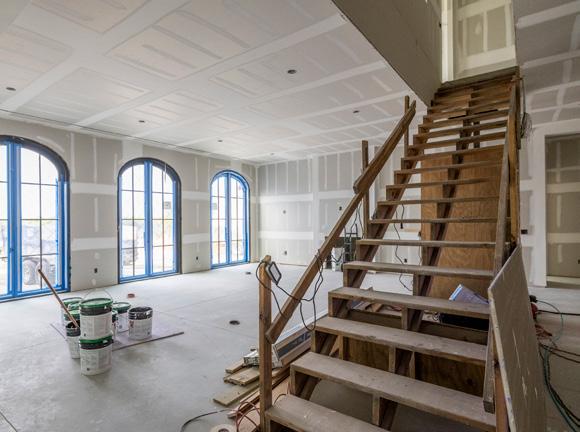
Alys Beach–inspired design meets custom craftsmanship. This 7,900 sq ft under roof residence (6,000 under air) pairs clean coastal architecture with standout details— from a floating plaster staircase to custom steel doors by French Steel, and stained cypress exterior millwork.
ALEX AND WHITNEY WELLS PART 1
I was responsible for managing the structural scope, which meant coordinating an enormous amount of work in a complex, high-security environment. It was intense, fast-paced, and technically demanding— exactly the kind of experience I had hoped to gain. My thinking in joining Clark was simple: If a company is successfully managing billions of dollars in construction annually, they must have systems and processes worth learning. I wanted to understand how they operated at that scale.
And I did learn a lot. The organization was incredibly disciplined and the exposure was invaluable. But it was also humbling. Despite my prior experience, I came in as a project engineer—the entry-level role. Many of my peers were just out of college, while I was older and had already spent years in the field. Still, I embraced it. I was opening the job site at 4:30 in the morning, often the first one there, with crews arriving just after. At the same time, we had a baby on the way—our son, Jack—and the pace was pretty relentless.
I remember sharing the news at work that
my wife was pregnant. The immediate response wasn’t congratulations—it was, “How are you going to balance that with your responsibilities here?” That moment stuck with me. It made clear that, in an organization that large, you’re ultimately a small part of a very big machine.
On the plus side, they recognized my potential and fast-tracked me through their training programs. But as I looked ahead—at the people above me, at the trajectory of a successful career there—I began to question whether it aligned with the life Whitney and I wanted. Advancement meant constant travel, long stretches away from home, and a level of professional commitment that would inevitably come at the expense of family. And I had to be honest with myself: Even if I succeeded in that environment, I wasn’t sure I wanted the life that came with it.
At a certain point, we realized we were missing something—really missing the mountains. San Diego had been an incredible professional experience, but it didn’t feel like home. So we made a
leap. We chose Bozeman, Montana—sight unseen, really—just knowing it was a great town in the Rockies with access to skiing and the kind of lifestyle we were drawn to.
JF: Sorry to interject—that sounds like something I would have done. What an amazing place to live.
AW: The move turned out to be a pivotal one. Not long after arriving, I connected with the owner of Teton Heritage Builders. It was one of those fortunate alignments. He had come up through a path very similar to mine—graduate school followed by a major commercial construction firm—and he was applying that same disciplined, systems-driven approach to high-end residential construction. That immediately resonated with me. It was exactly how I had been thinking about the industry: bringing the organization and rigor of large-scale commercial work into the custom homebuilding space.
I joined his team as a project manager, and over the next several years, we built luxury ski homes in Big Sky, including projects in the Yellowstone Club and surrounding communities. The work was exceptional—mountain contemporary homes with steel, stone, timber, and expansive glass, all set against an incredible landscape. These were large, complex homes, often in the 5,000 to 6,000 square foot range, with many pushing well beyond that. At the time, even the land alone was commanding prices in the million-dollar range.
As beautiful as it was, the environment was demanding in ways you don’t fully appreciate until you live it. Job sites were an hour up the mountain from the office, and everything—from labor to materials— had to be hauled up daily. Winters were long and intense. I remember during my interview in the spring, noticing salt in a job site porta-potty and asking about it—only to learn it was there to keep the lines from freezing solid. That was my introduction to Montana cold.
Professionally, it was a great fit, but life outside of work was getting harder. Whitney, who grew up in Vero Beach, was adjusting to Montana winters with two very young children—our son Jack and our daughter Tilly, just 20 months apart. Being indoors for long stretches of bitter cold,
managing two babies, it started to wear on her.
We both loved skiing and the outdoors, but there’s a big difference between a ski vacation and living through months and months of extreme winter. So, in the spring of 2020, we made the decision to leave Montana for Vero Beach.
JF: I get it. We love skiing and the Rockies too—but notably live in Vero.
AW: Not long after getting settled, I connected with Bob Lyles of RCL Development. Bob had built the company over decades— since the mid-1990s—and had a strong reputation in the community. At the time he was in his early 70s and beginning to think seriously about what came next.
I don’t recall that we explicitly discussed succession during the initial interview process, but it became clear fairly quickly. His family wasn’t interested in taking over the business, and he needed someone who could not only operate the company but eventually take ownership.
For me, that aligned perfectly with my long-term goals. I had always wanted to learn how to run a business and ultimately own one. I joined Bob in mid-to-late 2021 as his right-hand operator, working closely with him to understand every aspect of the company. Over time, that relationship evolved into an ownership opportunity. Whitney and I structured a deal to acquire the business in the spring of 2023. While the company itself has been around since 1995, we’re now about three years into this next chapter under new ownership.
JF: That’s a great story. Like with many individuals I meet, it seems like your background prepared you perfectly for what you’re doing today—fate playing an invisible role. Purchasing an existing small business is an intriguing avenue. You’re not starting from scratch, but still you have to make it your own, keep its momentum, presumably make it even more successful.
AW: What we acquired wasn’t just a set of active contracts—it was a name, a reputation, and a foundation of trust in the community. RCL was known as a good
Continued on page 134
RUTH MARTIN
Drawing
Inspiration from Beauty Around Her
Interview by Jim Field photography by Victoriya Knapp
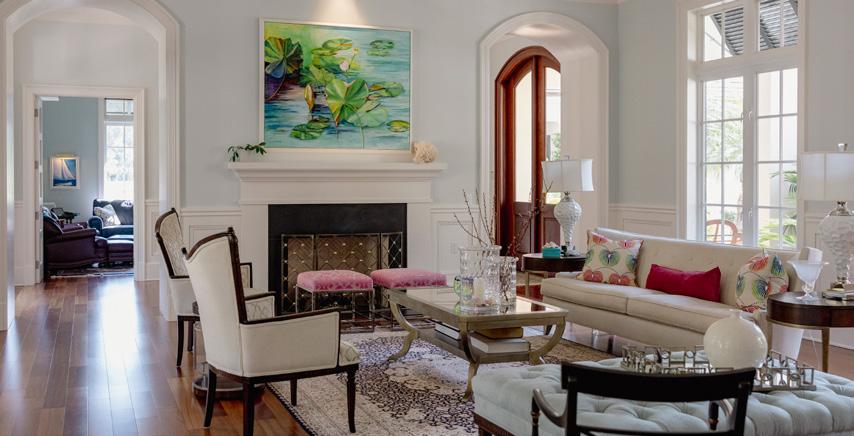
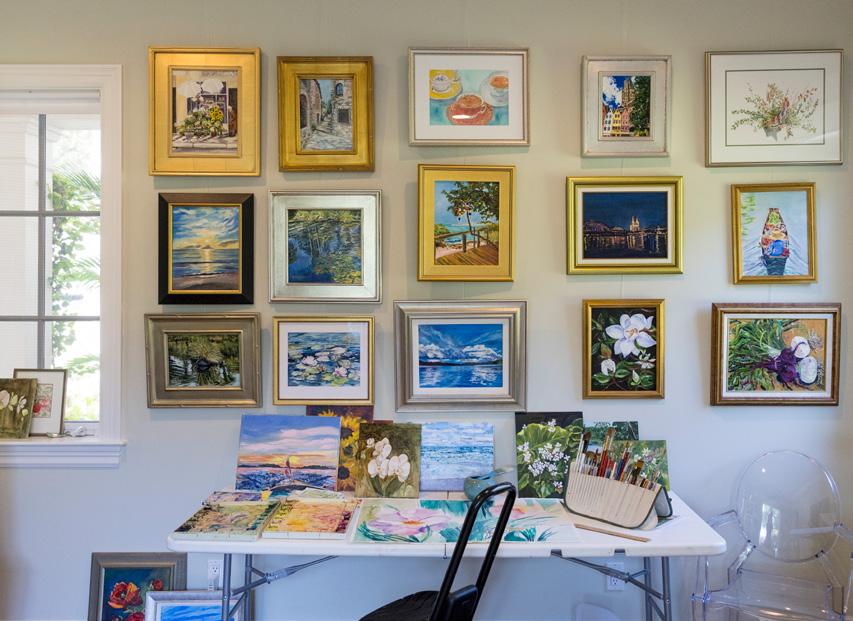
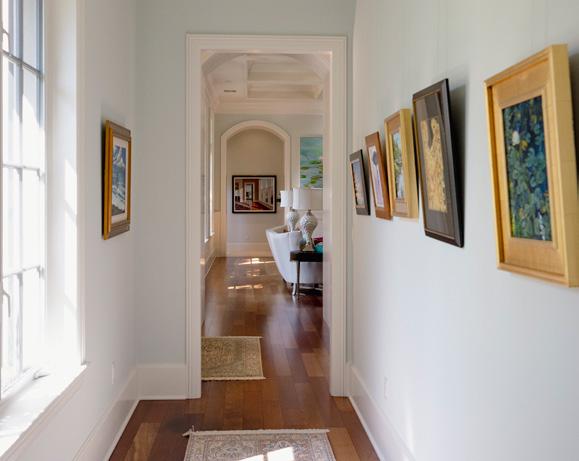
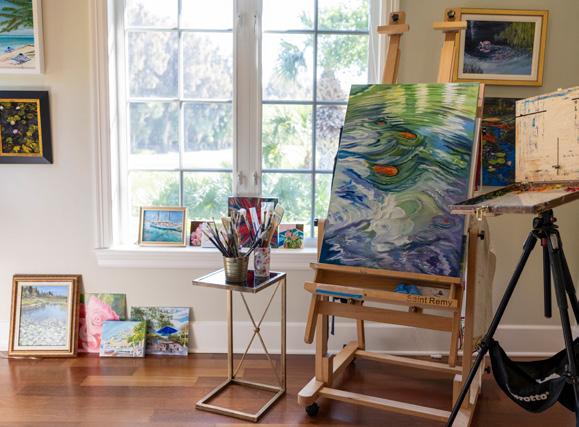
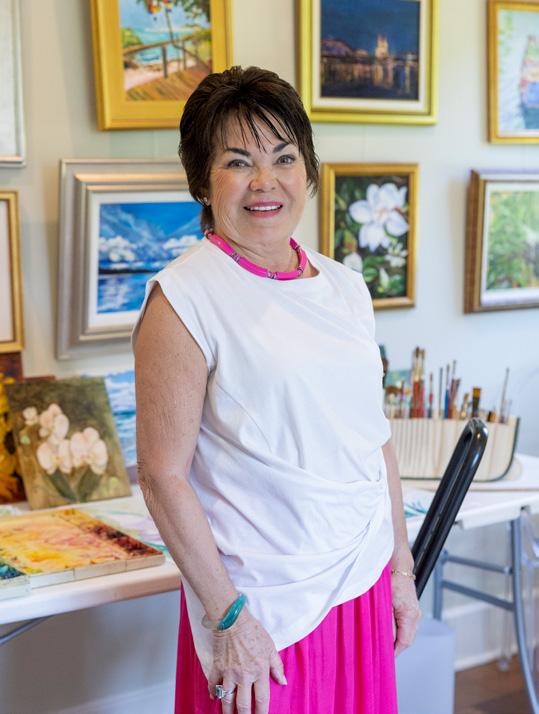
Editor’s Introduction. We were introduced to Ruth and her husband, Murray, through mutual friends who spoke of Ruth’s passion for art and her deep commitment to her craft. Ruth generously worked with colleagues at the Orchid Island Art Club to arrange an invitation for us to write about the club’s 2026 Celebration of Creativity show (April 2026 issue). A visit to Ruth’s home offers readers a glimpse into her personal art world—through conversation, a review of selected works, and a tour of her creative spaces. We are grateful to Ruth for sharing her story and her work with LIV VERO Magazine.
JF: Ruth, your home is absolutely stunning—I’m going to have a difficult time concentrating. I see, as a typical artist, that you live with your work, a daily reminder of your journey as a painter. Let’s start at the beginning of your story.
RM: I grew up in Windsor, Ontario, Canada, the youngest of three sisters— seven and nine years behind the others—in a solidly middle-class family that wasn’t particularly artistic Still, I was always drawing, always doodling. As a child, I took a few classes, but creativity mostly found its way in on its own.
I began making my own clothes by about eighth grade—not everything, but enough to feel the pull of creating something from nothing. My mom signed me up with a woman who taught us how to make our patterns, and we began creating our own outfits. I still remember going out to buy the fabric and it felt like opening a door to something. My mother sewed as well, so there was always a sewing machine in the house. It wasn’t unusual to just sit down and make something. That made it all feel possible.
Around that same time, I learned millinery from my sister. I was creating hats even in high school, making pieces for family and for weddings. In my own quiet way, I was already immersed in creativity.
JF: Were there things as a child that stimulated your curiosity in people making things on their own?
RM: A catalyst for me when I was a young girl was in the basement of a friend’s old house and seeing a wee calligraphy sign painted and positioned over a crooked little door. I remember still wondering about that creativity that made me stop and smile. It said “Ye Olde Curiosity Shop.” Another time I was in a car with my Sunday School teacher. I was about 12 years old. She commented on how God was such a great artist to mix colors like pink and green. That was in the days when the rhyme, “Pink & green should never be seen, except when they’re found in a washing machine!” I was fascinated by that comment, and it awakened my curiosity about colors.
JF: Did you have an opportunity for formal art lessons?
RM: No, art education and training were never really available. There were few opportunities where I grew up—just a single art class in high school—and so, for a long time, that side of me was set aside.
JF: What was the path you took as you came of age?
RM: I went into nursing. It was a traditional three-year hospital training program, and I lived in residence beside the hospital. Everything revolved around it—school and work were completely intertwined. We were on shift caring for patients as much as we were in class.
JF: Was this in another town?
RM: Still in Windsor. I lived in residence beside the hospital because the program was your life. It was definitely old school. Soon thereafter, the curriculum changed to university programs, but we were part of the last group trained fully within the hospital system—staffing, working, and learning all at once.
RUTH MARTIN
JF: Amazing. Was there any time away from that environment?
RM: For three months, I went to another city for my psychiatric rotation and lived at the hospital there. Otherwise, it was all very contained. Completing the program, I worked in the ICU and CCU for a period—saving money—and then I went to Scotland—to Edinburgh. I trained in midwifery there for a year, and that was very old school as well. I started out in a residence, and then three of us moved into a flat. It was an intense year, finishing with earning my State Certified Midwifery (SCM) degree, after my Registered Nurse degree.
JF: What drew you to Edinburgh for midwifery? Was there a well-known program or unique approach to this discipline?
RM: I wanted to go to a major hospital with a world-renowned reputation. I applied to programs in South Africa, Scotland, and England, but I had some acquaintances in Scotland, including a doctor, which helped guide the decision. Also, because I had grown up and trained in a smaller city, I really wanted the experience of a larger one—the scale of a university hospital, the pace, the exposure. It felt like a bigger world. The hospital was SSMP—part of the University of Edinburgh.
JF: You were quite a young lady. Confident and independent. Was it what you expected?
RM: It was incredibly interesting—and very hard. A demanding year, but a formative one. In Canada at the time [U.S. as well], midwifery wasn’t widely established. There may have been some programs in the southern U.S., but a lot of it wasn’t formally recognized. It just wasn’t common then. Not long after returning to Canada, I started teaching prenatal classes, and some of my colleagues were beginning to practice midwifery—but it was still on the margins. It’s very different now.
JF: And how did this fit into your larger vision of yourself?
RM: Interestingly, before Scotland I had thought I might go into mission work in Africa. I actually applied to work for a year in the Copperbelt region of Zambia, just to see what that experience would be like. But they wouldn’t take me without a formal midwifery degree. So that pushed me toward Edinburgh. I thought, I’ll take the year and get the training. But life had other plans. After I came back to Windsor, I met Murray—and that changed the course of things.
JF: So Murray won out over Africa? Did you stay active in medicine?
RM: I did. I went into oncology. In fact, I was the first full-time oncology nurse in Windsor. The physician I worked with had just moved into what became the cancer clinic. Before that, oncology wasn’t specialized—different doctors handled cases as they came. He was the first to focus entirely on it, so it felt like the beginning of something more structured. It was incredible. Very intense, but incredibly meaningful work. I did that for about a year and a half. Then I got married and we moved.
JF: Where did you meet Murray?
RM: At church. He had moved to Windsor from further east while I was in Scotland. My sister played a role. She told him she thought he should meet me. She didn’t like who I was dating at the time—though, to be fair, she hadn’t even met him. Murray was watching for me to return from Scotland. About a year after we married and moved to London, Ontario, where I did some work in nuclear medicine. Not long after that, we moved again—this time to Vancouver— for four years. We had twin boys while we were there, so I stepped away from work. Then we moved back east, and I was pregnant with our daughter. We settled in Mississauga, just outside Toronto. I taught prenatal classes at a community college—mostly evening courses—for about twelve years. It let me keep a foot in the profession while still being very present at home. Murray traveled a great deal, so going back full-time would have meant bringing in a nanny or live-in help, and that wasn’t the life we wanted. I really wanted to raise our children. Later on we moved to Connecticut, Ridgefield first, and then Wilton. I didn’t want to re-train in nursing, so I switched to a great deal of
“ALWAYS IN AWE OF GOD’S CREATION, LIGHT AND SHADOWS, COLORS AND SKIES, AS WELL AS WATER, ARE ESPECIALLY ATTRACTIVE TO ME.”
RUTH MARTIN
volunteer work, leading Bible studies and mentoring moms. Once the kids were in college, I began traveling quite a bit with Murray.
JF: And I assume at some point the art bug took hold?
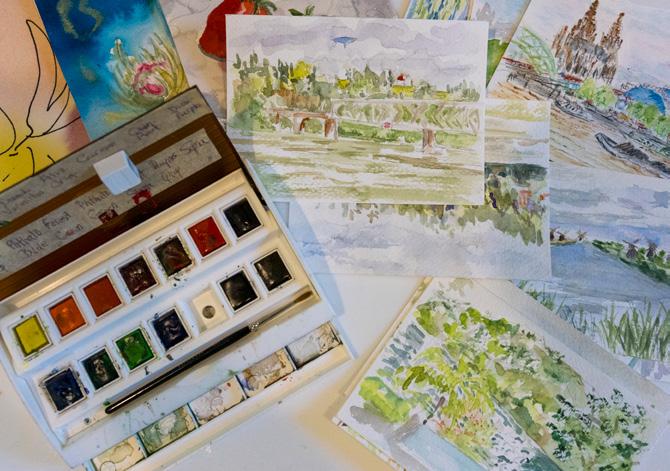
RM: It had always been there. I was constantly drawn to watercolor—any time I was in someone’s home or a gallery, that’s what I gravitated toward. Transparency and luminosity are so unique to watercolors. I remember saying to a friend of mine, who was an art teacher, “Someday, I’m going to paint watercolor.” And he—and someone else—said to me, “What are you waiting for?”
JF: And what were you waiting for?
RM: I still had young children at the time, so I suppose that was part of it. But that question stayed with me. And I thought, well . . . what am I waiting for? This friend told me to go to a flea market, buy a little box of children’s watercolors, and just start. So I did. Then I began taking local classes when my daughter was in preschool and kindergarten—nothing too formal at first, just getting started.
JF: And that grew into something more serious?
RM: Yes. When we moved to Connecticut, I enrolled at the Silvermine School of Art in New Canaan. I took one class a week, but there was always homework—it gave me structure. That’s when I really began painting in earnest.
JF: And you stayed with watercolor?
RM: For many years, yes. Watercolor was my primary medium. Occasionally I’d do wall pieces in acrylic for people, but watercolor was where I lived artistically.
JF: Were there particular artists you admired or learned from—people you patterned your work after?
RM: I’ve always loved the Impressionists— Monet in particular—and that whole Impressionist movement. I was really drawn to their use of light and color. And as a Canadian, I’ve always had an appreciation for the Group of Seven—that earlier generation of Canadian painters. I really admire their work.
JF: When did you get into oils?
RM: Much later. When we moved to Orchid,
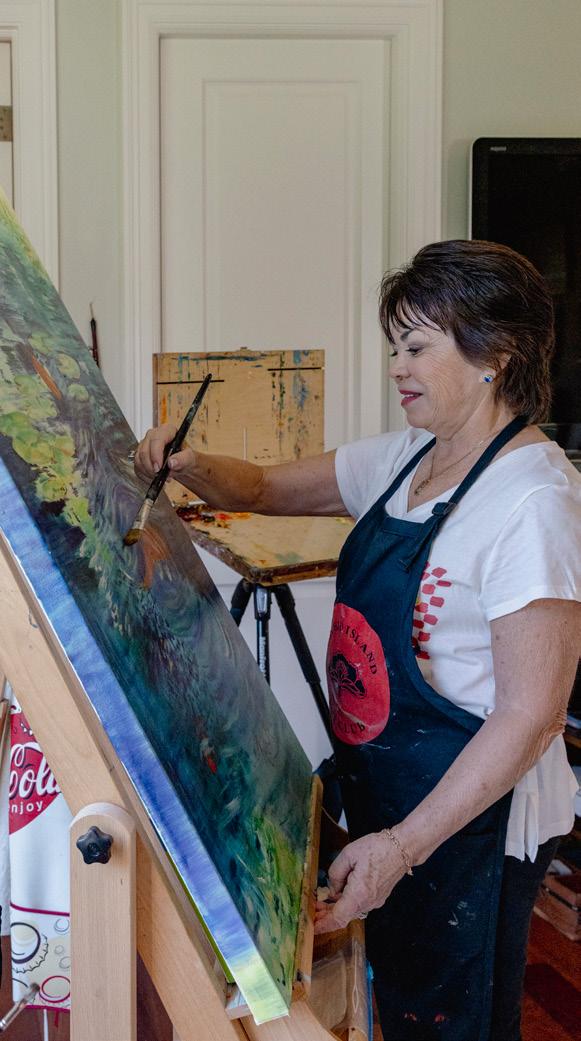
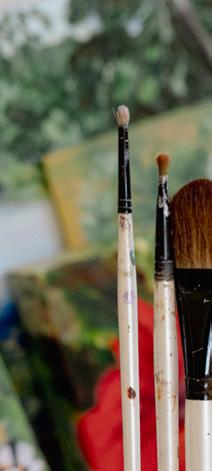
there was a painter—Judy Stach—who was teaching. I told her I’d try oils if she would coach me. It felt like a big leap. Moving from watercolor to oil is completely different—new materials, new brushes, easels—a real investment. I didn’t want to dive in unless I knew I had the right teacher. That was over ten years ago. I still work in watercolor, but my painting now is generally oil. It’s messier to clean up, but overall it’s more forgiving than watercolor.
JF: Can you give me an example of this?
RM: In watercolor, you have to preserve the white of the paper—that’s your highlight. You don’t paint it in. In oil, you can come back and add highlights afterward. With oil, if you don’t like something, you can scrape it off and rework it. It gives you more room to adjust as you go.
JF: How has your technique evolved over that time?
RM: I think the biggest shift has been in understanding color, contrast, and light. That’s really everything in painting. Learning to recognize when something is too light or too dark, or when it needs more depth or saturation—that takes time. You have to learn how to build your own palette. I have my color charts—gradations where you learn how to get from one tone to another using the paints you actually have. Because you don’t have every color in the world on your palette—you mix them. I probably use more paint now. Lately, I’ve been working with a palette knife, which naturally pushes you to use more paint. I’m also probably braver about applying it. I used to be more tentative—too focused on detail. That can be a real trap in painting: getting caught in every leaf, every berry. Now I try not to do that as much.
JF: How does your daily interaction with the world inspire and feed your life as a painter?
RM: Travel was a catalyst as we visited many places in the world over Murray’s career. I remember being in absolute wonder at the color combinations God painted on the fish in the Andaman Sea in Thailand. Growing up and today, we spend time in the beautiful Lake District of Muskoka on Lake Rousseau, north of Toronto. Water has been a special focus since my life has revolved around lakes,
ponds, and the ocean. Light and shadow fascinate me. It is often the smallest detail that catches my attention—the flash of light across a dress cuff, or on a bird’s wing, or dancing on the water—which brings a painting to life.
JF: Beautiful examples. Any other visual cues?
RM: When I walk, especially around the lake in Canada, I always look for a treasure. It might be a bursting seed pod, that flash of light on a wave, a bee or butterfly lighting on a blossom. Art has taught me not just to look, but to really see. There is the magic of a moment, the peace a scene brings, and especially the awe of God’s majesty.
JF: You had mentioned that you enjoy giving your art away as gifts. That must be very gratifying.
RM: I like to make cards as gifts. I do watercolor miniatures when I travel—sort of personal postcards. Last year, I had two stacks of watercolor paintings up at the lake. They weren’t great as finished pieces, but there were good parts in all of them worth saving. So I cut them up and turned them into gift cards—yielding about 100 of them.
RUTH MARTIN
JF: I was paging through your book of paintings from a trip to Africa. Your depictions of the people are gorgeous—so endearing. Tell me more about this project. RM: I went over with a group of friends. We had connections with people living in Rwanda and Kigali [capital city] working with World Relief, a Christian organization that assists local churches to meet community needs. There were five of us women in total, and we traveled around the country, visiting everything World Relief was involved in. It was about fourteen years after the genocide, so the work they were doing was very focused on rebuilding. We went into schools, saw their programs, visited homes where people living with HIV/AIDS were receiving nutritional support, and spent time in baby clinics—really across all of their outreach.
JF: Was there one project that stood out?
RM: Yes—one place we visited was called ‘Bake the Cycle’ at the time—it is now called Handspun Hope. It was started by a woman from Texas. She went to Rwanda and created a program for women affected by the genocide—many of them widowed and without means of support. At that point, they were working with a solar oven and baking bread for the market. It was very early stage, and honestly, the location wasn’t ideal for solar baking—it was often cloudy or rainy, near the mountains where the gorillas live. But it grew from there. They created a compound where women could live and work together. She brought in sheep, hired a shepherd, and the women began learning weaving and dyeing. They also created knitting kits that were sold in the U.S. for beginners. Now it’s expanded even further—they have Angora rabbits, produce Angora wool, and even run children’s programs. It’s grown to support around a hundred women with real, sustainable livelihoods. I photographed many of the women—especially when they greeted us, often dancing in their colorful clothing to celebrate their new lives. I later painted them based on those photographs, producing watercolor postcards. I sent some to the women I was with. They surprised me by turning them into printed gift cards, which World Relief then used as donor thank-you gifts. Then someone from another organization saw my work
“WE NEED TO REEVALUATE WHO GOD CREATED US TO BE, AND WHAT HE PUT IN US TO REFLECT HIM.”
and said, “But those are my women.” I told her, I’ll paint you your own set. So I went back through my photographs and created additional paintings, which I donated. The book itself was made by Murray—that was his contribution.
JF: How wonderful is that! A final question, if I may. Your paintings might be described as impressionistic realism style. Have you ever thought about doing abstract paintings?
RM: I’ve tried, but it’s very hard for me. I think it’s more a mindset than anything. I went to an abstract workshop recently— not even a workshop, really, more of a demo. The artist was very free—just sweeping paint across the canvas. Years ago I did a day class with her. She asked us to paint something that represented an emotion. She came over to mine and said, “You’ve got a flower on here.” And I said, sorry. I just can’t help it. Even when I try not to, something recognizable shows up. In another workshop, we literally threw paint on the canvas, let it dry, and then responded to what emerged. Then we added ink and interpreted it. Well, I saw flowers. That’s what came out for me. So even in abstraction, I still find form.
Ruth has studied with many fine artists and instructors at the Silvermine Guild Arts Center in Connecticut, such as Hannah Ferenbach, David Dunlop and Dmitri Wright. In Canada she also studied with a large number of artists both at the Manse Gallery and The Haliburton School of the Arts. Ruth has shown her work in Muskoka, Connecticut and Vero Beach. Her art is in many private collections in Connecticut, New Jersey, Maryland, Florida, Texas, Oregon and Canada. She is a member of AIS.
Website: ruthmartinartist.com
THE VALUE OF AN INDEPENDENT SCHOOL EDUCATION
Appreciating the Value of Social Capital
By Dr. Stuart Hirstein photography courtesy of Saint Edward’s School
In late February, I read an article titled “Private School’s Real ROI: Relationships.”
The author starts by explaining how the cost of independent education, especially in places like New York City, is bordering on insanity. He listed the tuition at Horace Mann in the Bronx and what you would pay as a parent if your child attended from Pre-K through 12th grade. The cost, including bus service, food, and donations, would top out at over $1.3M.
He then goes on to calculate the opportunity cost, or if you had invested the same tuition, bus service fees, and lunch fees in the S&P 500 over the same period. The estimated sum? A parent of one child would realize over $3.7M. He states that “If education is reduced to curriculum delivery, the spreadsheet appears decisive. Public school plus disciplined investing wins on paper.”
However, the author goes on to point out that this spreadsheet exercise assumes something that is overly simplistic: that education is a commodity, and that its only value is knowledge acquisition. Importantly, it ignores the missing variable in the independent school world— the value of social capital.
The networks that are created at our school are valuable. Especially given the fact, as he points out, that 70-80% of jobs are never publicly posted. Rather, they are filled through connections and referrals made because of relationships. Many of those relationships began at schools like Saint Edward’s.
When we reduce education to a line item in a household budget or a cell in a spreadsheet, we miss the human dimension that cannot be easily quantified. Schools are not simply content-delivery systems; they are
communities. And communities shape lives in ways that extend far beyond test scores and transcripts.
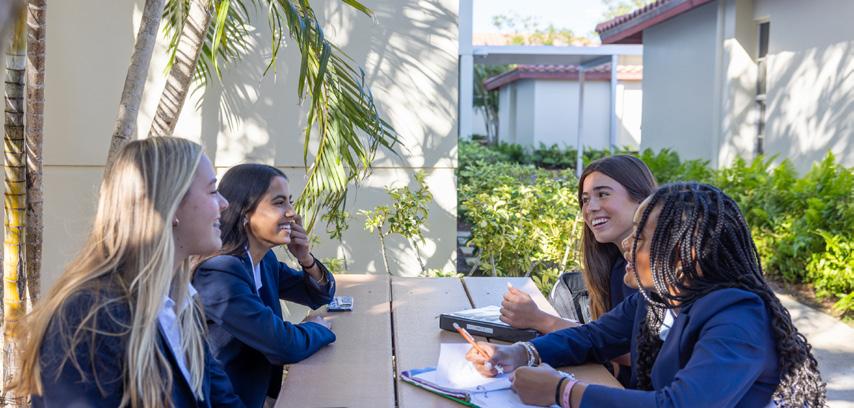
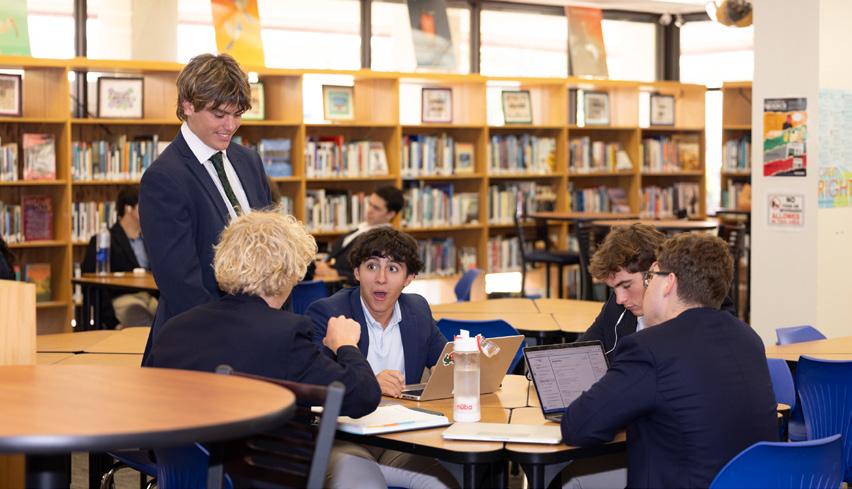
At schools like Saint Edward’s, students are not only learning algebra, literature, or biology. They are building friendships that will endure for decades. They are learning how to collaborate, how to lead, how to navigate disagreement, and how to show up for others. They are forming relationships with teachers and coaches who know them well, who write recommendations years later, who take phone calls long after graduation, and who open doors because they believe deeply in their character.
The author’s highlighting of social capital is not about elitism or exclusivity. It is about proximity and trust. When 70–80% of jobs are filled through relationships and referrals, the value of being known—truly known—becomes significant. A former classmate becomes a business partner.
A teammate becomes a colleague. A parent connection leads to an internship. A teacher’s introduction leads to a first opportunity. These moments rarely appear in financial projections, yet they shape careers and lives.
This is where starting the college counseling program in 8th grade is crucial. While some may believe that asking a 14 year-old what the future holds constitutes undue pressure, our young teenagers have grown up in an environment where the
relationships that have been nurtured on the stage, on the fields, and in the classrooms give them confidence to talk through the budding options. And, having access to the depth of knowledge offered by the College Counseling team means those discussions may uncover options that weren’t even considered.
The Class of 2026 is proving that hard work and focus, combined with these supportive relationships and important connections, can not only bring teenage dreams to life but can also offer the next level of social connection, which can grow into fulfilling, successful careers.
The college list this year is more than impressive. The “marquee” names are all represented. Our students have been accepted to Harvard, Yale, Princeton, Amherst, Stanford, the U.S. Naval Academy, and similar elite and competitive schools. They have also zeroed in on schools such as Williams College, Smith, and the Savannah College of Art and Design–a sample of schools with specific programs where our students can connect with like-minded individuals.
There is such an intangible confidence that grows in environments where students feel seen and supported. When young people are encouraged to try, to fail, to lead, and
to serve within a close-knit community, they develop both competence and courage. That, too, is a return on investment.
Of course, every family must make decisions that are right for them financially. The numbers are real, and they matter. But so do relationships. So does belonging. So does mentorship.
If education were merely about curriculum delivery, perhaps the spreadsheet would win. But if education is about forming capable, connected, and compassionate human beings, then the return is measured not only in dollars, but in lives well lived.
Dr. Hirstein has been the Head of Saint Edward’s School since 2020. His leadership is guided by the concept of creating a “culture of constant Improvement,” which is evident in the campus improvements, including the newly constructed pool, updated locker rooms and a state of the art playground in the Lower School. The Class of 2026 has one of the most impressive college lists in recent years.
THE “SPORT OF KINGS”
Vero Beach Polo Club Continues to Amaze by
John Stearns
photography by Victoriya Knapp
Winston Churchill wrote that polo is the “finest game in the world,” so he likely would have enjoyed spending a sunny Sunday afternoon watching the action at the Vero Beach Polo Grounds west of town—not only for the matches but also for the food, drink, atmosphere, and conversation among spectators.
The Vero Beach Polo Club concluded its 2026 season last month (the season ran nine Sundays from mid-January to mid-April), but it’s not too early to put a tickler in one’s e-calendar for January 2027 to visit the club’s website for next year’s schedule. The action is lively and serious but also fun and friendly; the players range from developing to highly skilled; the horses are graceful, powerful, and athletic; and the fans who watch range from newbies (like this writer attending his first match), to regulars who know the riders, rules, and terminology—and when to stomp divots.
During the break between matches, fans walk onto the field and use their feet to press divots from horses’ hooves back into place. It’s the same field maintenance briefly highlighted in the 1990 movie “Pretty Woman,” when Vivian Ward (Julia Roberts) and Edward Lewis (Richard Gere) joined fellow polo spectators for divot replacement as the announcer is heard advising, “Avoid the steaming divot.”
On match days, Vero Beach spectators back their vehicles to the field’s boundary, open a liftgate, trunk, or tailgate, set up chairs, tables, and tents, unload food and beverages, and stake out a position near the field, which has about nine times the square footage of a football field. Gates open at noon, with matches starting at 2 p.m. Entry to The Polo Grounds—located at 1084 E. Polo Grounds Lane, just across 12th Street from Pointe West Country Club between 74th and 82nd avenues—runs $25-per-person (children under 10 are free), with proceeds supporting the club.
Some regulars reserve their parking location along the field’s sidelines for the season. They get their business or personal names stenciled on wood rails bordering the field, securing their spot to watch each weekend at the park-like setting bordered by beautiful homes on half-acre lots. This writer was invited to join Stacy Allen, her father George Allen, and friends, at their tailgate along the sideline.
The event exemplifies Vero’s bigger-than-itspopulation attractions and sophistication.
“It is a unique sport and it’s an opportunity for people to see something that they normally would not see in any other small town like this,” said Charley Replogle, owner of Ocean Grill and a Vero Beach Polo Club sponsor and supporter since the club’s launch around 2000. “If we can get the spectators to come out once, usually they keep coming, and it’s a very relaxing day, and it’s pretty cool to watch eight people on a field trying to hit a ball 300 yards down the field—it’s pretty exciting.”
Replogle once played competitively as an amateur, but at 71, he limits his polo to more casual competitions with friends in twoon-two scrimmages on a polo practice field where he keeps his horses, rather than the club’s four-on-four games, called chukkers.
“I want to just have more fun, laugh, because the games on Sunday, they can get pretty intense,” Replogle said, but he believes strongly in supporting the club.
So does Max Secunda, a polo professional who has played locally for about 20 years, lives in Vero, teaches the game, and is director of equestrian operations at the Windsor community north of the Wabasso Bridge. He appreciates Vero Beach Polo Club’s competition and accessibility to fans.
“There are a lot of people who go to the Vero Polo Grounds every Sunday, and they enjoy seeing the animals, they get to know the players, and they become friends of the sport because some of them have been multiyear,
long-term supporters,” Secunda said. “They like the sunshine, they like the friendships they make there, they become friends with the players, and they’re part of the scene. I think that accessibility and that low-key aspect makes it really friendly and unique, and that’s one of the main differences between the polo in Vero and the polo in Wellington.”
Wellington, in Palm Beach County, is known for its horses and polo. The village is home to the U.S. Polo Association’s National Polo Center and tournaments that include the U.S. Open Polo Championship. It’s Florida’s capital for what’s long been known as the “Sport of Kings.”
Gaston Rodriguez, Vero Beach Polo Club’s owner and manager.
VERO LIFE THE “SPORT OF KINGS”
Wellington’s action is competitive and serious, and includes professional players and prize money, but Vero Beach’s action also is entertaining and puts spectators closer to the action, according to Secunda. While Vero’s polo is played at a club-sport level, not professionally or with prize money, it still offers excellent action, said Secunda, who often plays in the Vero matches with his son, Finn, an accomplished player himself.
Chukkers pit players of similar skill levels so that the teams are more evenly matched. Vero Beach Polo Club includes up-andcoming high school and college-level players, to pros like Secunda.
“I think that everyone who participates there in Vero does it because they’re based in Vero, and they love to support the club, and it’s close, it’s convenient,” Secunda said. “We can maintain a certain level, maintain the horses, and introduce younger players to the sport that maybe are not ready to go and compete at a more serious level.”
He hopes to see the club attract more younger players who can help grow the sport locally, but also for the benefits that he believes accrue to young players as they accept responsibilities associated with animal care and training, and learn professional interaction with grooms and polo sponsors, many of whom are highly successful businesspeople. The sport teaches a lot, he said.
“Also, I think that everyone involved loves to see the continuity of the public interaction with the sport and for it to exist in Vero,” Secunda said. “I think everyone wants to see that continue, so we support it as well as we can.” For spectators, Vero provides a “wonderful conduit” to a cozier interaction with player and pony, he said.
That comes from an expert in the game. Secunda was raised by his mother, a competitive event rider, and from a young age, by his stepfather, Julian Hipwood, captain of the England national team for 15 years, who won the Queens Cup, Gold Cup (British Open) and U.S. Open, and in 2010 was inducted into the Museum of Polo and Hall of Fame in Lake Worth, according
to Secunda’s website. Born in the United Kingdom, Secunda grew up on the global high-goal circuit (his father was a 9-goal player, considered one of the highest levels attainable), spending winter vacations in Wellington and summers in Cowdray Park in the UK surrounded by top horses and the best players in the world. Secunda’s visits to Wellington with his stepfather eventually led Secunda to residency there and he went on to play professionally for a number of highgoal teams.
In 2004, Secunda moved from Wellington to Vero Beach to manage the burgeoning polo operation of John Walsh, the former host of “America’s Most Wanted” for ten years before going to work at Windsor, his website notes. While the area’s polo got its start at Windsor in 1989—when then Prince Charles, now King Charles III, was invited to play there by Windsor founders Galen Weston and Geoffrey Kent—the sport moved to The Polo Grounds around 2000, according to an article, “A Brief History of Vero Beach Polo,” on the club’s website.
Polo is still played at Windsor, but rather than the regular matches like those at Vero’s Polo Grounds, Windsor has hosted the biennial Windsor Charity Polo Cup since 2012, a prestigious affair that has raised about $2.5 million for local and national nonprofits since its inception. The 2026 Windsor Charity Polo Cup presented by PNC Bank on February 14, raised $417,000 in net proceeds shared among Childcare Resources of Indian River, Crossover Mission, and the Environmental Learning Center, according to Windsor’s website.
In addition to his day job as Windsor’s director of equestrian operations, Secunda supports the Vero Beach Polo Club, plays in its matches, and continues to play professionally when he can. Galen Weston Jr. and his son, Grayden Weston, also have been playing with the Vero Beach Polo Club. “I think the fact that they’re back into polo really bodes well for the future of the Vero Beach Polo Club,” Secunda said of the Westons.
Sport And Support
“The mission of the club is not only to play polo and have fun, it’s also to give back to the community,” said Gaston Rodriguez, Vero Beach Polo Club’s owner and manager.
The club asks every sponsor to combine with a nonprofit organization each Sunday. “We like to give nonprofits the space and the field, so they can put up their tent and offer silent auctions” to raise money, Rodriguez said.
Match beneficiaries this year included the Gifford Academy for Performing Arts, House of Natural Living, Mental Health Association of Indian River County, New Horizons of the Treasure Coast and Okeechobee, Special Equestrians of the Treasure Coast, and The Arc of Indian River County.
“That’s our mission of the club: to promote polo and have a fun Sunday for all the friends and families . . . but also try to help the community by giving a chance to nonprofit associations to be part of the event and try to do some charity and help them to raise some funds for their purpose,” Rodriguez said.
Noreen Davis, marketing director for The Arc of Indian River County—whose mission is to support and empower special needs individuals 18 and over to achieve their life goals—said the club has been a great partner for The Arc of IRC, which was the featured nonprofit at a match February 8. That includes Replogle of Ocean Grill, one of Vero Beach Polo Club’s annual sponsors.
“Both Charley and Gaston have bent over backwards, jumped through hoops, to make sure that every year we get to do this,” Davis said, estimating The Arc of IRC has visited a match annually for about ten years, always on Super Bowl Sunday, when Replogle closes Ocean Grill so his staff can watch the game and also attend the polo match if they want.
Replogle gets clients from The Arc of IRC’s residential group homes and their staff into the match, buys them lunch, “and we have non-alcoholic champagne, just like everybody else in the world attending a polo match,” Davis said.
The Arc of IRC had about 40 people attend this year, Davis said. During intermission between matches, clients took the field and Rodriguez coached them how to strike a polo ball with a mallet. Clients also helped to stomp divots.
She considers the experience the key benefit for clients—some of whom have Down syndrome, fragile X syndrome, are blind, deaf, mute, have a traumatic brain injury, or are in wheelchairs with feeding tubes.
“If Charley and Gaston did not do this, they never would have that experience, and it’s one of their best days,” Davis said. “They love watching . . . and they all pick a number off of the horses and they cheer them—and it’s just a heartwarming experience for anybody that has the privilege to see them do this. And that’s all because of the Replogle family and Vero Beach Polo Club.”
The Arc of IRC, which gets seated under a large tent, also benefits from 50/50 raffles at the match and other goodwill. “Over the years, for multiple reasons, my focus has become that the guys have a wonderful experience,” Davis said. “They know it’s only once a year, but they’re already asking, ‘When do we get to go again? When do we get to go see the horses and stomp divots?’”
The match also exposes The Arc of IRC to spectators who may be unfamiliar with it and are inspired to help. “They come by and they get my brochures, talk to people, and we’ve picked up donors that wouldn’t have known about us before,” she said, grateful for polo club’s annual invitation. Replogle and Rodriguez are “both just so incredibly wonderful—how much they help to make sure that this is a good day for everybody,” she said.
VERO
The Arc of IRC means a lot to Replogle, whose younger brother has Down syndrome and lives in an Arc men’s home near Vero Beach High School and works at Ocean Grill folding napkins. Replogle enjoys supporting the polo club and the local nonprofits that are recognized and helped through it.
He praised Rodriguez’s efforts running the club. “He really works hard at it,” Replogle said. “It’s a tough job, you’ve got to sell it, so we do everything we can to help him—and once people start coming, they keep coming because it’s a nice day.”
Holding The Club’s Reins
The Vero Beach Polo Club leases the polo field from The Polo Grounds at Pointe West Property Owners Association. Players pay a fee to be club members, and the club also relies heavily on sponsors like Ocean Grill. Other sponsors this year included Blondie’s Fashion & Frills, Farm Credit of Florida, Gallery 14, Golden Horn Concierge, Golf Carts of Vero Beach, Grayfields, Harbour Ridge Equine, Indian River Health Center, ONE Sotheby’s International Realty, Skycastle Equestrian, and Vero Beach Table Tennis Club.
Rodriguez and Ocean Grill’s Replogle have known each other about 25 years, since they met playing polo. Rodriguez is a professional player, formerly played throughout his home country of Argentina, the U.S., and other countries, has his own horses, and still plays when he can. He’s more focused now on polo management, running the club in the winter and spring. He also trains horses for polo, including former racehorses, and coaches players.
After Vero Beach’s season ends, Rodriguez works in New York state in the summer, managing a polo operation for a family there.
Much like Secunda, Rodriguez’s father also was a high-level professional player and Rodriguez and his mother would accompany him to the U.S. for matches, his first visit being in 1993. Rodriguez later began traveling stateside on his own and has stayed since 2004. Rodriguez took over the Vero Beach Polo Club from Frank Evans, a polo supporter and player whom Rodriguez credits for making Vero Beach polo possible.
The club works to get as many players in the action as it can, splitting them among chukkers to get experience, with some of the club’s players being teenagers. “We have a lot of kids that play polo in our club,” Rodriguez said. “We want to have a fun polo community; we make it fun and safe.”
Fun doesn’t mean noncompetitive. “Everybody wants to win; it gets competitive, but we don’t want to lose sight of being fun and friendly—and we play together during the week, so it makes it more fun,” Rodriguez said, referring to Wednesday and Friday practices. “We want to see families coming and enjoy the game and the kids play and be safe.”
Matches can include players from Wellington, Tampa, and Ocala, he said.
Conditioning for Sport and Life
Vero Beach’s Sailor Schwaber, 18, has ridden horses most of her life and started playing polo about five years ago. “We love to have fun and everyone wants to win in polo, but this is for sure very friendly,” Schwaber said before a February practice. “And everyone wants to see everyone else getting better, and learn, and progress in the sport, which is really nice.”
She has two horses she rides in matches. Like humans, horses need rest during competition, so they sub in and out, and also need to learn the game. The riders, like their horses, also need to be well-conditioned for performance and safety. The sport can be dangerous, Schwaber acknowledges. “That’s why you have to put in a lot of practice and working out is very important, too,” she said. “You have to have very strong legs and core. One wrong move and you’ll be on the ground.”
Players need to be strong riders and be keenly aware of their surroundings. “You really have to think about your whole body, and who’s around you, and what’s happening,” she said.
Schwaber hoped to play polo in college, but schools with the sport were in colder climates and she wanted to say in Florida, choosing to attend Rollins College in Winter Park. She plans to play outside of school, at a club-sport level, she said, hoping to continue playing after college. Being a pro probably isn’t in the cards, “but I’d love to continue to play for a while.”
THE “SPORT OF KINGS”
Another young polo player, Secunda’s son, Finn, plans to attend Harvard University this fall on an academic scholarship that his father partially attributes to the lessons learned from polo, and the hard work and dedication required of the sport--from caring for horses, to working with grooms, sponsors, and successful people orbiting the sport.
The Game’s Lessons
Secunda is a big believer in the benefits of polo for young people and would like to see more try the sport. “Playing it really teaches you a lot,” he said, acknowledging there’s expense involved with horses, but the level of expense depends upon one’s desired level of play and competition—playing for fun is considerably less expensive.
“I’ve seen over the last 15, 20 years a large number of young people benefit hugely from playing polo and I’m very keen for us to continue that influence on young people. I’ve seen it in my son . . . it’s given him a lot of confidence.”
Finn’s pursuit of polo pushed him, his father said. “Polo does that, it challenges them,” Secunda said. “It’s a sport that traditionally was reserved for military leaders, princes, and I don’t want to sound cheesy, but it’s a privilege to be able to play it because it gives children a lot of confidence. They spend a lot of time with animals; they have to work with their teammates; and the animals they’re riding, they’re all different. They have to work with the grooms who work extremely hard to get them out on the field. It’s like a race car driver working with the mechanics— you have to know the mechanics. You have to treat them well. They have to like you to do a good job.”
And if someone is going to play professionally, he or she has to interact well with sponsors, he said. “You are introduced and you spend time with extremely successful people, and the rigors, physically, are hard,” Secunda said. “If you take it seriously and you practice, it takes discipline, a lot of coordination. There are a lot of people involved, and I just think it’s a wonderful thing for young people to do and I’m hopeful over the next five to 10 years that we can get more young players coming through.”
In a digital age, spending time outside with animals, caring for them, interacting with grooms, interacting with people involved in the sport, learning how to be social, traveling to matches, are all growing experiences, he said.
“Winston Churchill said that polo is a passport to the world . . . and it’s true because not that many people play it and it’s played in interesting places,” Secunda said. “When you tell people as a young person that you play polo, they’re kind of curious about you.”
People interested in getting their son or daughter involved in polo can call Rodriguez at the Vero Beach Polo Club, Secunda said, noting there are opportunities for beginners, with practice chukkers for those still learning the sport.
“It’s very collaborative,” he said. “The other players out there are accommodating to them, and they include them, and encourage them. . . . Then we have other chukkers that we play at a faster tempo and then those beginners don’t play in those—and when they’re ready, they do.”
Schwaber had a similar take. “It’s like a big family, we’re all very close, we all know how we ride, and how we play, so we can all help each other through that,” she said.
Chelsi Schwaber, Sailor’s mother, also has seen the positive effects of polo on her daughter. “I’m a big believer—and this is how I was raised, very fortunate that I had horses in my life—but my dad was not one to let us just kind of walk up to the ring and jump on our horse; we had to learn the ins and outs of it,” Chelsi said. “So it was important for me for Sailor to know, ‘Listen, if you don’t have a trainer standing right there or something happens, you need to know how to help your horse, change your saddles, change your bridles, bits, everything’—and she dove into that willingly. The work ethic that it has taught her, the people that she’s been surrounded by—she has lifelong friends from it and that’s been a big, big part of it.”
Sailor keeps her horses at Ten Square Farms, near The Polo Grounds, where Replogle and Gaston also keep horses with Cesar Rodriguez. “Being around the people that we’ve been around, Gaston, Charley, and Cesar, they’ve been just wonderful and
somebody for her to look up to,” Chelsi said. “She gets to pop on other horses that they have that might be a little too crazy for me, but she handles it, and it’s built her confidence. . . . I think there’s something about the equestrian world in general that you grow up faster and you have a lot of responsibility. You’re dealing with this massive animal; you have to have a good head on your shoulders because there’s a lot that can happen, so you have to be sharp and you have to be on top of it all times. So I think that has been something that has been a positive attribute to Sailor as well.”
Equine Appreciation
Secunda stressed the connection between horses and riders. “Once you become really serious about polo and you try to play at a high level, it’s a little bit like being a race car driver,” he said. “I think probably your life starts to revolve around cars and engineering and, in polo, it really does become revolved around the horses—and they’re just amazing animals.”
Riders treasure their horses, he said. When horses play well, they’re easy, compliant, and willing, he said. “It’s because they really like it, that I can say with total certainty,” Secunda emphasized, “because I’ve tried to play polo on horses that don’t like it and it’s impossible—they don’t want to do it, and there’s no point in trying to do it. But the horses that these kids play on . . . they look after the kids, they’re loyal, they’re honest, they try, they’re amazing animals. . . . They’re just very willing, very eager-to-please horses, and they’re not that easy to find, and they provide so much joy to the players.”
Riders spend significant time looking after their horses and preparing them, “and it’s important that the public know that because, especially nowadays, people don’t have much contact with animals,” he said. Regretfully, people may occasionally question how well horses are looked after or the purpose of them playing, but “they’re just so appreciated.”
The grace, beauty, and athleticism of the horses is something to enjoy, not unlike the scene of players and fans on match Sunday at The Polo Grounds.
Vero is fortunate to have polo, Chelsi Schwaber said, noting players who travel the world for the game.
“There are very few places that have that ability to have polo on a Sunday a few times a month,” she said, crediting Gaston Rodriguez and Frank Evans for what they’ve brought to the community.
“It’s always for a good cause,” Chelsi noted. “It’s all about supporting your town and being around your neighbors and your friends and meeting new people. And you can come out in sneakers, you can come out in your boots, you can come out in a dress and heels, but just come out, show up, and support.”
Frank and Gaston have made polo family friendly, she said. “It can be intense, but it’s family friendly. They made it like a fun day, Sunday polo.”
It’s among Vero’s many special attributes. As Stacy Allen remarked, “It’s why Vero Beach is so amazing and awesome—you have things like this here, one of the best-kept secrets in town.”
Website: theverobeachpoloclub.com
HURRICANE SEASON 2026
Early “Read” on the Level of Storm Activity for Vero Beach
by Jim Field photography source Wikimedia Commons
Every spring, Floridians approach forecasts for the upcoming hurricane season with trepidation. Spanning June 1 through November 30, the season lasts a full six months—half the year— underscoring the state’s prolonged vulnerability to storms capable of inflicting significant damage.
Hurricane risk is fundamentally a matter of probability. While we can say with certainty that a storm will one day impact Vero Beach, the particulars—timing, track, and intensity—remain the domain of conjecture that we call “forecasts.” Even so, the desire for precision persists: what will happen this season, this month, next week? Nature, however, resists such exactness.
That said, certain large-scale climate patterns can offer directional clues about what a given season may hold— most notably La Niña and El Niño. This article takes a closer look at their current signals—and what they may suggest for the pending 2026 hurricane season.
First: Evaluating La Niña
La Niña is a recurring climate pattern in the Pacific Ocean and part of the broader El Niño–Southern Oscillation. It occurs when sea surface temperatures in the central and eastern Pacific become cooler than average, strengthening trade winds and shifting global atmospheric circulation. While this phenomenon originates far from Florida, its influence extends across the globe, shaping weather patterns in ways that are especially relevant during hurricane season.
One of La Niña’s most important effects is its impact on atmospheric wind patterns over the Atlantic. Specifically, it reduces vertical wind shear—that is, changes in
wind speed and direction with elevation that can disrupt developing storms. With less vertical shear present, tropical systems are more likely to organize, strengthen, and persist. In sum, less vertical shear creates more favorable conditions for hurricane formation and intensification across the Atlantic basin.
For Florida, the implications are significant. La Niña years are typically associated with more active hurricane seasons, including a higher number of named storms and a greater likelihood of major hurricanes. Storm tracks also tend to favor the Caribbean and the southeastern U.S., placing Florida at increased risk. These seasons can be
Only three Category 5 hurricanes have made landfall in the U.S. in recorded history—a remarkably small number given how many storms form in the Atlantic. Labor Day Hurricane of 1935: struck Florida Keys with catastrophic force; still considered one of the most intense U.S. landfalls ever recorded. Hurricane Camille in 1969: made landfall in Mississippi with devastating storm surge and extreme winds. Hurricane Andrew in 1992: hit South Florida (notably Homestead) and caused massive destruction; one of the costliest U.S. hurricanes. At left, GOES-7 satellite image shows Hurricane Andrew at its peak intensity on August 23, 1992 before making landfall near Homestead, FL.
longer as well, with meaningful storm activity possible both earlier and later within the June-to-November window.
Importantly, La Niña conditions do not guarantee that Florida will be struck by a hurricane. It increases the probability of activity, but the exact paths and impacts of storms depend on shorter-term weather patterns that cannot be predicted far in advance. Even in active years, Florida can avoid a direct hit, while quieter seasons have still produced devastating landfalls. The takeaway is this: La Niña raises the stakes, making preparedness more important, but it does not determine any single storm’s outcome.
La Niña 2026
In 2026, La Niña is not expected to be the dominant influence on the Florida hurricane season. The weak La Niña conditions that were present earlier in 2026 are fading, and the atmosphere is transitioning into neutral conditions. Most forecasts also point toward a likely shift into El Niño–Southern Oscillation El Niño conditions by late summer or fall, which is the peak of hurricane season.
Second: Evaluating El Niño
El Niño–Southern Oscillation El Niño is the warm phase of a naturally occurring climate pattern in the tropical Pacific Ocean. It develops when sea surface temperatures in the central and eastern Pacific become warmer than average. This shift changes global wind and pressure patterns, which in turn affects weather far beyond the Pacific—including rainfall in the U.S. and hurricane activity in the Atlantic.
During El Niño, upper-level winds over the Atlantic basin typically strengthen, increasing vertical wind shear. This shear disrupts developing tropical systems by tearing apart storm structure and preventing hurricanes from organizing or intensifying efficiently. In simple terms, El Niño tends to act as a “brake” on Atlantic hurricane formation.
El Niño 2026
For the pending Florida hurricane season, current outlooks suggest a developing El Niño late in the season, portending a less active Atlantic hurricane environment overall, especially during the peak months of August through October. That usually means fewer storms forming in the Atlantic, and a lower likelihood of rapid intensification compared to La Niña years. However, it does not eliminate risk—Florida can still be impacted by individual storms that form in favorable pockets of conditions.
Combined Effect and Single Forecast
Narrative
The 2026 season should begin with lingering weak La Niña conditions fading into neutral early in the year. La Niña’s short-term influence tends to slightly favor hurricane development by reducing wind shear over the Atlantic, which can make it easier for storms to form. This means the early part of the season—roughly June through July—could still see some tropical activity or scattered development opportunities, even though La Niña is weakening rather than fully established.
However, the more important signal is the expected transition toward El Niño–Southern Oscillation El Niño conditions by late summer or fall. El Niño typically increases wind shear across the Atlantic basin, suppressing hurricane formation and limiting how strong storms can become. That means the peak months of August through October should trend less active overall, with fewer storms reaching hurricane or major hurricane strength compared to La Niña years.
Combining both phases, the picture for Florida in 2026 looks like a transitional and mixed season: early-season activity is still possible under neutral-to-weak La Niña conditions, but the peak season is more likely to be dampened by emerging El Niño conditions. This reduces the probability of a highly active year, especially in terms of total storm counts and rapid intensification events.
HURRICANE SEASON 2026
Bottom Line Forecast
2026 does not look like a strongly “hyperactive” hurricane year for Florida, but neither is it risk-free. Instead, it appears to be a season where overall activity may be suppressed later in the year, while still leaving room for individual storms to develop and threaten the state depending upon short-term weather patterns.
Lessons for Homeowners
Seasonal forecasts are not a substitute for preparedness. Whether the outlook is active, average, or neutral, true risk emanates from the same fact: it only takes one storm making landfall to cause major damage. A below-average forecast can reduce urgency, but it does not reduce exposure. In addition, warm Atlantic waters can still fuel rapid intensification, meaning storms can strengthen quickly and leave little time to react. That shifts the emphasis from watching the season as a whole to being ready for fast-moving, short-notice threats.
The smartest homeowners treat hurricane preparedness as a baseline condition, not a seasonal reaction. That means maintaining the home year-round—roof condition, windows, drainage, insurance coverage, and evacuation planning—rather than adjusting behavior based upon forecasts.
In Florida, resilience isn’t about predicting the season correctly, but about ensuring that any single storm, whenever it arrives, is survivable with minimal disruption.
El Niño Statistics
How often does El Niño occur?
• Irregular but recurring
• Typically develops every 2 to 7 years
• On average, about every 3–5 years
How long does it last?
• Usually lasts 9 to 12 months
• Stronger events can persist up to 18 months or longer
• Often begins in spring or summer, peaks in winter, fades the following year
How common is it?
• Neither rare nor dominant, simply one phase of a constantly shifting system
• El Niño conditions occur roughly 25–30% of the time
• Neutral conditions occur about 40–50% of the time
• La Niña makes up the rema ining 20–30%
How strong are events?
• Not all El Niños are equal
• Weak events are the most common
• Moderate events occur regularly
• Strong El Niños (e.g., 1982–83, 1997–98, 2015–16) happen once every 10–15 years
Saffir–Simpson Hurricane Wind Scale.
Tropical Depression. Sustained winds of 38 mph or less.
Tropical Storm. Sustained winds of 39–73 mph. Storm receives an official name.
Category 1 Hurricane. Sustained winds of 74–95 mph.
Category 2 Hurricane. Sustained winds of 96–110 mph.
Category 3 Hurricane. Sustained winds of 111–129 mph. Considered a major hurricane.
Category 4 Hurricane. Sustained winds of 130–156 mph.
Category 5 Hurricane. Sustained winds of 157 mph or higher. Catastrophic destruction.
Image shows satellite sea surface temperature departure for October 2015, ranking as one of the top three strongest events since 1950.
Source: NOAA.
Last radar image taken from NHC before the WSR-57 radar was blown off the roof, August 24, 1992, by Hurricane Andrew.
Source: U.S. National Weather Service. (Note: dBZ stands for decibels of Z, a unit used in weather radar to measure the strength of returned radar signals—in other words, how much energy is reflected back to the radar by precipitation.)
Hurricane Season
Season is June 1st
ARE YOU READY?
ARE YOU READY?
ARE YOU READY?
What should you do NOW?
What should you do NOW?
q Trim your trees and remove debris.
What should you do NOW?
q Trim your trees and remove debris.
q Trim your trees and remove debris.
q Know if you reside in an evacuation area and the location of local public shelters.
q Know if you reside in an evacuation area and the location of local public shelters.
q Know if you reside in an evacuation area and the location of local public shelters.
q Inventory and update your disaster supply kit. Include a 3-day supply of water (one gallon per person per day).
q Inventory and update your disaster supply kit. Include a 3-day supply of water (one gallon per person per day).
q Prepare to secure your home and register for a special needs or pet friendly shelter, if applicable.
q Inventory and update your disaster supply kit. Include a 3-day supply of water (one gallon per person per day).
q Prepare to secure your home and register for a special needs or pet friendly shelter, if applicable.
q Prepare to secure your home and register for a special needs or pet friendly shelter, if applicable.
What should you do if there is an imminent threat?
What should you do if there is an imminent threat?
What should you do if there is an imminent threat?
q Listen to news media or NOAA Weather Radio for critical information.
q Listen to news media or NOAA Weather Radio for critical information.
q Listen to news media or NOAA Weather Radio for critical information.
q Turn your refrigerator/freezer to the coldest setting.
q Turn your refrigerator/freezer to the coldest setting.
q Turn your refrigerator/freezer to the coldest setting.
q Fill your car’s gas tank.
q Fill your car’s gas tank.
q Prepare for your pets.
q Fill your car’s gas tank.
q Prepare for your pets.
q Secure your home.
q Prepare for your pets.
q Secure your home.
q Secure your home.
q Safeguard your important documents and gather your medications.
q Safeguard your important documents and gather your medications.
q Evacuate if told to do so.
q Evacuate if told to do so.
q Safeguard your important documents and gather your medications.
q Evacuate if told to do so.
COLONIALS TONGUE & GROOVE BAHAMAS
ACCORDIONS
CLEAN. Clean all shutters with soapy water and rinse well with fresh water (especially important if you live near the ocean with its salty sea-air).
SCREWS. All screws in the Colonial and Bahama Shutters should be lubricated and installed only finger tight (if they’re too tight, they may not unscrew easily).
LUBE. After cleaning, Accordion Shutters should have the wheels and locks lubed with a spray lubricant.
RE-INSTALL. Re-install any screws where you might have removable tracks for Storm Panels to keep dust, dirt and insects out.
RUN. Run Rolling Shutters up and down several times after cleaning to align the slats and heat up the motors.
VARIETALS AND MORE
A Wine-Filled Journey
by Michele and Rob Wayne, owners of Varietals and More photographs courtesy of Varietals and More
Eleven years ago, this wasn’t a wine shop. It was a raw, empty space . . . concrete floors, blank walls, and a whole lot of potential, if you had the vision for it.
Most people would have walked in and seen nothing. We walked in and saw everything.
From humble beginnings, we didn’t just imagine a wine shop—we imagined an experience. Not just wine. Never just wine. From the very beginning, we brought together all the things we love—wine, cheese, charcuterie, caviar, and chocolate alongside beautiful, unexpected finds. Clothing you reach for again and again. Jewelry that catches your eye at just the right moment. Cheese boards, serving pieces, and gifts that feel thoughtful without trying too hard.
It was always meant to feel layered, curated, and a little indulgent. In 2015, we built exactly that.
Every detail was intentional. Our 900 square foot space doesn’t allow for excess, which means everything here has a reason to be. Every bottle, every product, every piece has earned its place. That constraint became our strength and it keeps us focused, thoughtful, and true to our point of view.
In the early days, we did everything ourselves and, in many ways, we still do. Buyer, curator, merchandiser, event planner, problem solver. But what we learned is that this business isn’t just about what’s on the shelves. It’s about the people who walk through the door.
It’s the conversations, the trust, the moments. The customer who comes in for “just a bottle” and leaves with something perfect. The regulars who rely on us to guide them. The wine club that has grown into something more than a membership—it’s a community.
Somewhere along the way, this stopped being just our shop. It became yours too. A place to gather. To discover. To connect.
Eleven years later, we’ve grown in all the ways that matter. Not bigger, not louder, just more refined. More thoughtful. More ourselves. Still curated. Still a little unexpected. Still grounded in the belief that wine, food, and the things that surround them should feel approachable, enjoyable, and just a little bit special.
From an empty space to something full of life—and community—that’s what 11 years looks like for us!
A Spring Table, The Varietals Way To celebrate, we’re doing what we’ve always done . . . we are bringing it all together at the table.
We start, of course, with Champagne. A beautiful bottle of Billecart, whether Brut Réserve or Rosé paired simply with cheese. Nothing overcomplicated—just the kind of pairing that reminds you how perfect the basics can be when they’re done well.
From there, the table shifts into something a little more relaxed and seasonal. A fresh spring salad, bright and crisp, alongside a warm, savory quiche. This is where Kistler Russian River Chardonnay comes in— round, balanced, and exactly right with the richness of the dish. It’s the kind of pairing that feels effortless but lands perfectly.
And then we linger.
Because the best part is never rushing off the table. It’s opening that next bottle. A beautiful red, like CADE Howell Mountain Cabernet Sauvignon, full of depth and meant to be savored, alongside chocolate truffles. Rich, indulgent, and the perfect ending to the evening.
This is what we’ve always believed in. Not just wine. Not just food. But the way they come together, and the way they bring people together—easily, beautifully, without overthinking it.
VARIETALS AND MORE
Varietals and More has always been about more. More flavor, more beauty, more connection, and above all, community. And we’re just getting started!
Billecart-Salmon Brut Réserve
Fresh and refined, crisp orchard fruit, citrus, and a silky, lightly toasted finish.
Kistler Vineyards Chardonnay
Rich and beautifully balanced, layers of ripe pear, white peach, and citrus wrapped in subtle toasted hazelnut, finishing long, silky, and mineral-driven with refined elegance.
Sauvignon
Powerful yet polished, with layers of cassis, blackberry, and cocoa wrapped in firm mountain tannins, finishing long, structured, and beautifully balanced.
Leek, Gruyère & Prosciutto Quiche
• 1 pie crust (store-bought or homemade)
• 2 tablespoons butter
• 2 large leeks (white & light green parts only, thinly sliced and well rinsed)
• 4 ounces prosciutto, torn or chopped
• 1 cup grated Gruyère cheese
• 4 large eggs
• 1 ½ cups heavy cream (or half-and-half for lighter)
• Salt & black pepper
• Pinch of nutmeg
Preheat oven to 375°F. Roll out your crust into a pie dish, crimp edges, and lightly prick the bottom with a fork. Par-bake crust for about 10 minutes, then set aside. In a skillet, melt butter over medium heat. Add leeks and cook gently until soft and silky about 8–10 minutes. Add prosciutto and cook another minute just to warm through. In a bowl, whisk eggs, cream, salt, pepper, and nutmeg. Spread leek/prosciutto mixture into the crust, sprinkle Gruyère evenly over it. Pour egg mixture over the top. Bake 35–45 minutes until set in the center and golden on top. Let it rest at least 10–15 minutes before slicing.
Cade Estate Howell Mountain Cabernet
Leek, Gruyère & prosciutto quiche.
Spring Salad with Burrata, Peas, Radish & Lemon Vinaigrette
4 cups tender greens (baby arugula, butter lettuce, or a mix)
1 cup fresh or lightly blanched peas
4–5 radishes, very thinly sliced
1/2 cup shaved fennel (optional but lovely)
1/3 cup fresh herbs (mint, basil, chives— whatever feels right)
1–2 balls burrata
Zest of 1 lemon
A few Marcona almonds
Lemon Vinaigrette
3 tbsp extra virgin olive oil
1 tbsp fresh lemon juice
1 tsp Dijon mustard
1 tsp honey
Salt & fresh cracked pepper
Whisk together the vinaigrette until smooth. On a large platter (not a bowl—this should feel a little styled), scatter the greens loosely. Layer in the peas, radishes, fennel, and herbs so everything feels light and natural, not packed down. Tear the burrata gently and place it right in the center or in a few soft mounds throughout. Drizzle lightly with vinaigrette—don’t overdress. Finish with lemon zest, a pinch of flaky salt, fresh pepper and crushed Marcona almonds
Cheers to 11 Years of Wine, Community & Friendship. Stop in and say “Hello!”
Rob & Michele
Varietals and More
54 Royal Palm Pointe
Vero Beach
772-217-2780
Instagram: @varietals
Website: varietalsandmore.com
WHAT IT’S LIKE TO WORK WITH KMK BUILDERS
KMK EXPERIENCE AN
ELEVATED BUILDING EXPERIENCE
At KMK Builders, building a home is more than a project — it’s a collaborative journey. From the first conversation to the final walkthrough, we focus on listening, planning, and executing with purpose. Our team brings refined craftsmanship and thoughtful project management to every custom home, renovation, and addition, ensuring a seamless experience and exceptional results.
MICHAEL & KYLE
KONDZIOLA
3201 Cardinal Drive, Vero Beach, FL 772-643-1353
kmkbuidersllc.com @kmkbuilders
WHERE YOUR IDEAS TAKE SHAPE
We believe the best homes are created through clear communication and careful attention to detail. Every decision is guided by your lifestyle, your goals, and our commitment to quality — delivering a home that feels as intentional as it is beautiful.
HEALTH & WELLNESS
Photograph by Victoriya Knapp
LOUIS KLEINSTROKE SURVIVOR
Twice Saved by Rapid Access to Neuro Endovascular Surgery Services
Interview by Jim Field photography by Victoriya Knapp
Editor’s Introduction. Louis is a very lucky man. Talking to him, his speech is perfect, his memory is detailed, and he is as sharp as a tack. As he relates below, he has suffered two ischemic strokes since 2023. He attributes his good health—and perhaps continued life—to rapid access to a stroke center, in his case, at Cleveland Clinic Indian River Hospital. I asked him to recount his experiences in his own words.
Louis Klein with Jake, Sebastian Residents
My first stroke came on June 20, 2023.
I was in the back bedroom when I felt it begin—dizziness, then numbness spreading across my face. From my medical background, I recognized it immediately: I was having a stroke.
Instead of trying to stand, I lowered myself onto the bed and then to the floor. Within moments, parts of my body felt paralyzed.
Our dog, Jake, sensed something was wrong. He came over, licked my face, then ran to get my wife, barking until she followed him back. When she saw me, she called 911. The ambulance took me to Cleveland Clinic Indian River Hospital.
My stepson, a lieutenant in the local fire department, understood how critical time is in stroke therapy—and how important it is to get to the right hospital. He made sure EMS brought me there.
That’s where I met Dr. Dahlgren, a neuro endovascular surgeon who had just arrived from South Florida. I may have been one of his first patients. In a procedure that took about 30 minutes, he removed the clot.
When I woke up, I was fine. I could walk, talk, move—everything. After a few days in the hospital for evaluation, I was discharged on baby aspirin. I did some physical therapy for my hand, but even that resolved. My mind was normal. I returned to 100%.
Everything was normal—until February 22, 2025.
That morning around 8:00, I was sitting on the couch watching the news when I felt numbness again. I called to my wife and told her I thought I was having a TIA [transient ischemic attack]. She called 911. I remember seeing the ambulance arrive. Then I lost consciousness. Again, I was taken to Cleveland Clinic Indian River Hospital. I arrived around
9:00 a.m. A stroke alert had already been issued. The emergency team was waiting. They moved immediately—assessment, CT scan, clot-busting medication.
Sometime before 10:00 a.m., Dr. Dahlgren came in to evaluate me. By then, I had deteriorated significantly. I was intubated and rushed to the Bi-Plane Neurointerventional Surgical Suite. From the initial incision to restoring blood flow, the entire life-saving procedure took only 12 minutes. Once again, he removed the clot, restoring blood flow to my brain.
I woke up in the ICU. I asked the nurse what had happened. My throat was sore from the breathing tube—that was it. Forty-eight hours later, I was home. This time, I was prescribed Eliquis, a blood thinner.
The next day, I went out with friends and had a beer. What struck me most was how clear my mind felt—if anything, sharper than before.
Over the following months, I saw Dr. Dahlgren a few times for follow-up care. Eventually I transitioned to a neurologist. But in those critical moments, it was personal. I had a great relationship with Dr. Dahlgren. He’s my hero.
He saved my life—twice. Before all of this, I knew about the technology. I understood stroke care in theory. But I had never heard of a neuro endovascular surgeon until I met him. Thank God he was there.
Drs. Ryan Dahlgren and Farah Fourcand are neuro endovascular surgeons at Cleveland Clinic Indian River Hospital who together provide acute therapies for stroke events and share call coverage responsibilities for emergency cases.
STROKE PRIMER
A stroke is not a single condition but a medical emergency with several distinct forms—all involving a sudden interruption of blood flow to the brain. Knowing the differences, and recognizing the warning signs, can be lifesaving.
Three Types of Stroke
Ischemic stroke. Accounting for roughly 85 percent of all strokes. Occurs when a blood clot blocks an artery supplying the brain. The blockage may form locally due to plaque buildup or travel from the heart or other vessels. Without oxygen, brain cells begin to die within minutes. Treatment focuses on restoring blood flow as quickly as possible—often using clot-dissolving medications or minimally invasive procedures to remove the clot.
Hemorrhagic stroke. Results from a ruptured blood vessel, causing bleeding within or around the brain. Although less common, tend to be more severe and require a very different approach to care. High blood pressure is the leading cause, although aneurysms and trauma may play a role. Treatment centers on controlling the bleeding and relieving pressure on the brain, sometimes requiring surgery.
Transient ischemic attack (TIA). Often referred to as a “mini-stroke.” A temporary blockage that resolves on its own. Symptoms may last only minutes and typically leave no permanent damage. TIAs should never be dismissed. They are important warning signs that a major stroke may follow.
Warning Signs
Stroke symptoms typically appear suddenly and without warning. The most widely used tool for recognition is the acronym FAST:
Face: One side of the face droops or feels numb
Arm: Weakness or numbness in one arm
Speech: Slurred or difficult speech
Time: Call emergency services immediately
Not all strokes present in the same way. Other warning signs may include:
• Sudden confusion or difficulty understanding
• Sudden trouble seeing in one or both eyes
• Sudden dizziness or loss of balance
• A severe, unexplained headache
Time Is Brain
In stroke care, minutes matter. During an untreated stroke, roughly 1.9 million neurons can die each minute. Rapid evaluation and treatment dramatically improve the chances of survival and recovery. Even if symptoms disappear, as in a TIA, immediate medical attention is essential. Recognizing the signs— and acting without delay—can make all the difference in outcomes.
Stroke Centers
Cleveland Clinic Indian River Hospital is designated as a thrombectomy-capable stroke center, offering specialized services that include:
24/7/365 stroke team. Neurologists, neuro endovascular surgeons, neurosurgeons
Endovascular therapy. Procedures to physically remove clots (thrombectomy) Neurosurgery. For hemorrhagic strokes or complications
Stroke centers will typically serve as a regional hub because speed and expertise dramatically affect survival and outcomes.
“Code Stroke” Protocol
When a victim arrives with stroke symptoms, the hospital activates a rapidresponse system termed “Code Stroke.” The goal is to diagnose and treat within minutes. Within the protocol, major steps and treatment modalities include:
• A non-contrast CT scan is done immediately to establish a bleed or a clot
• No bleeding = likely ischemic stroke (clot)
• Bleeding present = hemorrhagic stroke
• This step is crucial because treatment paths are different
Clot-Busting Drug (e.g., tPA/ tenecteplase)
• If ischemic stroke within the treatment window the patient may receive a thrombolytic drug to dissolve the clot and restore blood flow
• Time window: within 4.5 hours of symptom onset (sometimes extended in select cases)
• Goal: “door-to-needle” within 60 minutes (many top centers do it faster)
Mechanical Thrombectomy (if large clot)
• If a major artery is blocked, neuro endovascular surgeon threads a catheter into the brain and physically removes the clot
• Can be done up to 24 hours in selected patients
NEURO ENDOVASCULAR SURGERY FOR STROKE PART 1
Interview with Farah Fourcand, MD, Neuro Endovascular Surgeon
Conducted by Jim Field photography by Victoriya Knapp and courtesy of the Cleveland Clinic Indian River Hospital
Dr. Fourcand is Board Certified in Neurology from the American Board of Psychiatry & Neurology, 2019.
Editor’s Introduction. For individuals experiencing the signs and symptoms of an acute stroke, a 911 call and EMS transport to Cleveland Clinic Indian River Hospital may ultimately lead to neuro endovascular surgery performed by Dr. Fourcand. What she does for a living is extraordinary.
Quickly defined, a neuro endovascular surgeon is a specialist who treats disorders affecting the blood vessels of the brain and spine using minimally invasive, catheter-based procedures. Working through tiny tubes (i.e., catheters) inserted into arteries, these physicians can remove stroke-causing clots, repair aneurysms, treat vascular malformations, and restore blood flow without open brain surgery. The field combines elements of neurology, neurosurgery, stroke care, and advanced imaging-guided intervention.
During my own career, I interviewed—and scrubbed into cases with—some of the world’s leading procedural specialists. To witness that level of expertise firsthand is both a privilege and an unforgettable experience. There is something rare and exhilarating about hearing true masters of a discipline speak directly about their work—especially in medicine, where the stakes are so profoundly human.
The purpose of this article is to allow readers to hear Dr. Fourcand speak directly about her profession and passion—in her own words. Along the way, you will likely learn a great deal about stroke care, neuro endovascular surgery, and recovery, while also gaining reassurance from the knowledge that physicians like her stand ready when patients need them most.
JF: Dr. Fourcand, it is such a pleasure to meet you. Thank you for sharing your story with LIV VERO Magazine. By nature of your work, you are a life saver—so it is a privilege for me to interview you. Can we start by discussing your background and early interests in medicine?
FF: I was born and raised in Miami, Florida, and I am a first-generation American. My parents are both Haitian, from the island of Haiti.
From an early age, I found myself drawn not just to medicine, but specifically to neuroscience. I’ve always been fascinated by the brain—how it shapes who we are and makes even a simple conversation like this possible. Our heart may race and our stomach may rumble, but it is the brain that fuels and directs everything.
Part of that interest comes from a broader curiosity about the unknown. I’ve always loved nature—the vastness of space, the mysteries of the deep sea—things that
remain largely unexplored and, for some, a bit unsettling. Neurology felt similar to me in that way. It’s often one of the more intimidating and less anticipated areas of study in medical school, but I was consistently drawn to it.
At one point, I considered several paths— pursuing neuroscience from a research perspective, going into clinical neurology, or even neurosurgery. Early in my career, I explored a combination of these interests,
ultimately shaping the direction I would take. I attended the University of Miami for undergraduate, and then medical school at FIU Herbert Wertheim College of Medicine. From there I moved to Washington, D.C. for my residency at Georgetown University Hospital with additional training at the National Institutes of Health. Specifically, I pursued a physician-scientist track through Georgetown and NIH with the intention of focusing on neuroscience research— neuroplasticity, neural repair, and related fields. I loved that work.
At the same time, I’ve always been someone who enjoys working with my hands. I’ve long had an interest in art—creating, shaping, building—and I realized I needed a path that allowed me to do that as well.
That realization led me to shift from general neurology to neurovascular medicine. I hadn’t been fully exposed to the field until residency, but what drew me in was its hybrid nature—a blend of neurology, critical care, and surgical intervention. I witnessed stroke cases with remarkable outcomes, and that was the moment I knew this was the right path for me.
After residency, I completed four years of fellowship training in stroke and neurocritical care, followed by neurovascular surgery. In many ways,
I’ve become a “brain plumber,” immersed in highly technical procedures, yet still grounded in an appreciation for the art of medicine, neuroplasticity, and primary research.
JF: Extremely interesting. Tell me more about your fellowship training.
FF. I did multiple fellowships in New Jersey at JFK University Medical Center, part of the Hackensack Meridian Health System. At the time, it was the only program in the country offering a four-year track that combined three fellowships—training that would typically take five or six years—into a single, integrated program. It was a small program, but an exceptional experience.
JF: I’m trying to sort out in my mind how a young woman finds herself on the track that you took. Did you have family members who were physicians? Was there a mentor who influenced your thinking and direction?
FF. No to both of those. I’ve always had a deep fascination with the brain, and I pursued it relentlessly. Growing up, I balanced being social with spending a lot of time observing—trying to understand human behavior and think about it from a neurological perspective.
As far as inspiration, my patients have always been my greatest source of
NEURO ENDOVASCULAR SURGERY FOR STROKE PART 1
inspiration. Even the different turns in my career have been driven by patient experiences. After medical school, I worked with the Special Olympics, caring for children and adults with neurodevelopmental disabilities. I absolutely loved that work. That experience deepened my interest in neuroplasticity—how the brain develops, adapts, and repairs itself—and further motivated me to pursue research in that area early in my career.
JF: You mentioned that your early experiences in treating stroke cases had a profound effect on your career path. Tell us more about this. I assume that, when a case goes well, you foster a great sense of accomplishment.
FF: One of the defining moments for me came on my very first day at Georgetown. I had my first stroke patient—and I looked like I was 12 years old. [Laughter.] A patient came in with an acute stroke, and we ended up performing a thrombectomy. I still remember the woman’s daughter looking at me and saying, “How old are you? You’re not going to take care of my mom.” And I said, “Ma’am, it’s three in the morning—I’m all you’ve got.” It was a tense moment, but also a very real one.
The procedure went well, and that experience changed everything for me. It was the moment I knew I wanted to move toward intervention. But what stayed with me even more was what happened afterward. I followed her through recovery, and months later, when she was at the National Rehabilitation Hospital, I would stop by after my rotations—sometimes after long days at Washington Hospital Center or the VA—and sit with her. We’d talk for an hour at a time. Over time, she was no longer technically my patient, but we had built a relationship. We stayed in touch—meeting for lunch, checking in on each other—and even now, nearly a decade later, we’re still close. She didn’t just shape a moment in my training—she helped shape the direction of my career.
JF: I worked in cardiology for many decades and watched interventional cardiology develop into a major subspeciality with the introduction of cutting-edge drugs, devices, and techniques. The first balloon angioplasty dates back to the 1950s. Is it fair to say that interventional neurology is very similar to interventional cardiology in its evolution, although at an earlier stage of
development?
FF: I would agree. During my residency, the field was seeing some major transformations. Landmark studies—like the DAWN trial— were redefining what we could do for stroke patients. Mechanical thrombectomy went from something relatively unknown to a proven, life-changing intervention. Being in training at that exact moment had a profound impact on me—it solidified my decision to pursue neurovascular intervention. So yes, this is still a relatively young field. Many of its pioneers are still actively practicing. I believe we’re entering its prime—and it will be exciting to see where it goes over the next few decades.
JF: How did you find your way to Vero Beach?
FF: It’s an interesting story. I was in New Jersey at the time—Hackensack Meridian Health System—but I knew I wanted to come back to South Florida to be closer to my mother and my family. I was very loyal to my training program, and there was definitely some gentle pressure to stay, but for me it came down to a simple choice: remain there or go home. And no one can fault you for wanting to be near family.
HEALTH AND WELLNESS NEURO ENDOVASCULAR SURGERY FOR STROKE PART 1
Initially, I looked at opportunities in Miami. Around that time, a position with the Cleveland Clinic opened across several of their Florida locations. I was first drawn to the Weston campus because of its proximity to Miami. But during the process, the regional director—a stroke neurologist—said something that stuck with me. He told me, “We’re really looking to build the program at Indian River.” I’ll admit, being from Miami, I barely knew where that was.
He was very direct. The hospital had a long history, but Cleveland Clinic had only recently acquired it, just before COVID. The neuro program, he said, needed work. It would require rebuilding—not entirely from scratch, but reshaping it, strengthening it, and bringing it up to the standards of the broader Cleveland Clinic system.
What appealed to him about my background was the combination of training in stroke, neurocritical care, and neuro endovascular intervention. That mix allows you to see the full picture—not just from a procedural standpoint, but across the continuum of care, including rehabilitation. It’s less of a “hammer and nail” approach and more of a 360-degree perspective.
He was also very clear about the expectations. This would mean adapting to constant change, navigating uncertainty, and taking on a significant leadership role in building the program. They offered me the position of Stroke Medical Director. And ultimately, I was willing to take that on.
JF: So you had never visited Vero Beach at this point?
FF: Not yet. When I came, I came by myself. I was single, and I brought only my dog and my two blind cats. I drove down from New Jersey fully committed to the move. In fact, instead of renting, I bought a home— completely unnecessary at the time—but it reflected how serious I was about being here. Even during the interview process, I heard comments from both medical and nonmedical people suggesting, “You’re a young woman—you’re not going to like it here.” Being a young, single woman in a new place came up more than once. But my response was simple: I’m going to stay. I made the move, I put down roots, and I started the work.
JF: You knew that you were stepping into a big role with lots of room for improvement. What was the program like?
FF: When I arrived, we didn’t have a dedicated neurohospitalist service in place. I initially functioned in a hybrid role—as a neuro endovascular surgeon—and when I wasn’t on call, I would also help cover general neurology needs as a neurohospitalist to bridge gaps in inpatient care.
(Note: A neurohospitalist is a neurologist who specializes in the care of patients who are hospitalized with neurological conditions. They typically manage acute inpatient neurological problems such as stroke, seizures, encephalopathy, brain infections, and other urgent or complex neurologic disorders that require hospitallevel care. The neurohospitalist acts as the primary neurology physician in the inpatient setting—similar to how a hospitalist functions in general internal medicine.)
Although that wasn’t the role I was formally hired for, it ended up being incredibly valuable. It allowed me to build relationships across the entire hospital system in a way I wouldn’t have otherwise. Instead of working in a silo, I became connected with hospitalists, EMS providers, rehabilitation teams at Encompass rehab, and many others throughout the system. It gave me a true 360-degree understanding of how care flows through the hospital.
Over time, we have built a more structured team. We now have dedicated neurohospitalist coverage and a stronger foundation in place, which allows me to focus more consistently on neuro endovascular work while maintaining strong collaboration across services.
JF: How many colleagues do you have in neuro endovascular surgery?
FF: In neuro intervention, it’s myself and Dr. Dahlgren. We also work closely with Brianna Parker, our nurse practitioner, who is exceptional. She holds a doctorate in nursing practice from the University of Tennessee. Together, the three of us form the core neuro endovascular surgery team. On the stroke side, I serve as Stroke Medical Director, and Dr. Dahlgren serves as Neuro Endovascular Director. Brianna supports both neuro endovascular and stroke care in her advanced practice role.
We also recently welcomed Terry Fussinger as our stroke program manager. She brings tremendous experience and energy, and I think she’s going to have a major impact as the program continues to grow. It’s not a large group, but it works well and everyone is highly engaged and collaborative.
We have a Stroke Steering Committee that brings together ER leadership, nursing leadership, and key stakeholders across the hospital. Early on, we didn’t have a formal name for it—we just recognized the need for better communication and created a structure to support it. The goal was simple: improve coordination and ultimately improve patient outcomes.
A major driver for this was the realization that communication gaps were affecting care in measurable ways—readmissions, length of stay, patient satisfaction, and consistency in acute care practices. Rather than assume alignment, we built a forum where we could regularly meet with hospitalist leadership and hospital administration to address these issues directly. Once we established that communication framework, we saw a significant reduction in readmissions. It became clear that much of what improves outcomes isn’t only technical expertise—it’s alignment, structure, and shared decisionmaking.
In many ways, the stroke program functions like concentric circles. There is a core clinical team, a broader multidisciplinary group, and then an even larger system that includes EMS, emergency medicine, nursing, rehabilitation, and hospital leadership—all working in coordination. On the neurology side, we also have outpatient general neurologists who support the system. We work closely with neurosurgery as well. In cases such as aneurysm treatment, there is a true collaborative workflow—procedures like external ventricular drains are managed by neurosurgery while we coordinate endovascular and medical aspects of care. It is very much a staged, team-based approach. The neurosurgical team continues to grow. Overall, we are still a relatively small program compared to larger centers, but it is a highly committed team and we do very good work.
JF: What do your case volumes look like?
FF: We have an extremely busy emergency department within the Cleveland Clinic Florida enterprise, seeing approximately 50,000 patients per year. Within that setting, we manage roughly 800 cerebrovascular cases annually. For a relatively small hospital, that volume is significant.
By comparison, larger campuses like Weston have substantially more staffing and academic infrastructure, including fellows and residents, and Tradition also has a
larger neurovascular footprint. We are a lean team—but we get the work done.
To be specific, cerebrovascular cases include any condition involving the blood vessels of the brain or neck. In our practice, that breaks down into approximately 400 strokes per year and around 300 TIAs. The remaining cases include intracranial hemorrhages—brain bleeds—as well as a smaller number of subarachnoid hemorrhages, often related to ruptured aneurysms.
Within that broader category, we also perform a range of neuro endovascular surgical procedures, including carotid stenting and aneurysm treatments, depending on the clinical scenario. From a mechanical thrombectomy standpoint, we perform approximately 40 to 50 cases per year.
JF: Can you describe what the process looks like for the typical patient and family who call 911 in response to a suspected or actual stroke?
FF: When someone is having a stroke at home, it’s often disorienting. From the family’s perspective, everything can feel like a blur. A spouse may think it’s a TIA or something that will pass, but once they recognize something is wrong and call 911, the system immediately activates. When EMS arrives, they come rapidly and with
HEALTH AND WELLNESS
NEURO ENDOVASCULAR SURGERY FOR STROKE PART 1
purpose. Their goal is not to overwhelm the patient or family, but to quickly gather the highest-yield information because time is brain. One of the most important questions they ask is: “When was the patient last known to be normal?” or “When were they last seen well?” That single time point is critical, because it determines eligibility for almost every acute stroke treatment in the emergency department.
During transport, EMS continues the evaluation. They check blood sugar, monitor vital signs, and perform a focused neurological exam while preparing the hospital for arrival. They also communicate a pre-hospital stroke alert so that the receiving team is ready before the patient even arrives.
EMS providers are highly trained to distinguish between a general stroke and a large vessel occlusion. A typical stroke may present with symptoms like slurred speech or weakness on one side of the body. A large vessel occlusion, however, is a more severe form caused by blockage in one of the major arteries supplying the brain, and it makes a patient a potential candidate for mechanical thrombectomy—the procedure we perform to physically remove the clot. The symptoms can be more subtle but also more specific. Instead of just slurred speech, a patient may have aphasia—difficulty producing or understanding language. They may have gaze deviation or neglect one side of the body. These findings help determine whether the patient needs to be taken directly to a thrombectomy-capable center.
Once the patient arrives, they are taken directly to CT imaging after rapid registration. The first priority is to rule out bleeding in the brain. From there, if the patient is within the treatment window— typically within 4.5 hours of last known well—they may receive IV thrombolytic therapy, such as tenecteplase (TNK) or alteplase (tPA).
A CT angiogram is then performed to evaluate the blood vessels. If a large vessel occlusion is identified, the neuro endovascular surgery team is activated and the patient is taken for mechanical thrombectomy, with the goal of restoring blood flow and minimizing brain injury.
From there, the patient is transferred to the ICU, and the family is updated as quickly as possible. Sometimes loved ones are still in the waiting room, and we make every effort to reach them and keep them informed.
The entire early phase of stroke care is highly structured and protocol-driven. But after that acute window, everything becomes much more individualized—guided by the patient, their condition, and their recovery trajectory.
JF: Just to be clear, can you say more about the role of the thrombolytic agent. Who receives it and who doesn’t.
FF: Sure, IV thrombolytic therapy—such as tenecteplase (TNK) or alteplase (tPA)—is used for acute ischemic stroke, regardless of whether it is caused by a large vessel or a smaller vessel occlusion.
To repeat, it is not limited to small vessel strokes. Rather, it is a systemic treatment that circulates through the bloodstream and works by helping dissolve the clot that
is blocking blood flow in the brain. That blockage may be in a large artery, a mediumsized vessel, or smaller branches.
In general, patients may be candidates for IV thrombolysis if they present within 4.5 hours of being last known well, are not on contraindicated anticoagulation, and do not already show a large established infarct on CT imaging.
For large vessel occlusions specifically, IV thrombolysis and mechanical thrombectomy are not mutually exclusive—they are often used together when appropriate. While the IV medication works systemically to help break down clot material, mechanical thrombectomy physically removes the clot from the blocked large artery. So in eligible patients, both therapies can be used in tandem: one is pharmacologic and systemic, and the other is mechanical and targeted.
JF: That’s an excellent clarification, thank you. Can you walk me through the next group of procedures you do after the acute phase?
FF: Sometimes patients present with a stroke but are not candidates for acute mechanical thrombectomy—either because they are outside the treatment window or because imaging already shows a large established infarct. In those cases, they may receive IV thrombolytic therapy if appropriate, then go to the ICU for close monitoring. From there, we reassess the full vascular picture and brain imaging in more detail.
One of the key things we often evaluate is whether there is an underlying area of significant arterial narrowing—what we call stenosis. This can occur in the carotid arteries in the neck, or in the vertebral arteries, which run along the back of the neck through the spine and supply the posterior circulation, including the brainstem and back of the brain. Less commonly, there can also be disease within intracranial vessels, such as the middle cerebral artery, which supplies a large portion of the cerebral hemispheres.
At this stage, MRI becomes very important. It allows us to better define the true size of the stroke—what we often refer to as “infarct burden”—and assess for complications such as hemorrhagic transformation. This is not a primary brain bleed, but rather bleeding that can occur into an area of already damaged brain tissue after an ischemic stroke.
We have to be very careful at this stage, because while the goal is always to help, the first principle is still do no harm. If the stroke burden is not too large and the risk profile is acceptable, we may proceed after a short stabilization period with revascularization procedures.
That can include carotid stenting for significant carotid stenosis, vertebral artery stenting for posterior circulation disease, or in select cases, intracranial stenting for disease within the brain’s own arteries.
The timing is critical. These procedures are typically performed a few days after the acute event, once the patient is stabilized and imaging confirms it is safe to proceed. The goal is to restore and maintain adequate blood flow, reduce the risk of recurrent stroke, and optimize long-term outcomes.
Part II of our conversation with Dr. Fourcand continues in our June/July issue.
VNA & HOSPICE FOUNDATION
Interview with Michael P. McGee, Board Chair
Conducted by Jim Field photography by Victoria Knapp
Editor’s Introduction: In our April issue, we published a detailed profile of VNA Treasure Coast, featuring an interview with its President and CEO, Lundy Fields. The Visiting Nurse Association is a nonprofit healthcare organization that provides inhome medical care and community-based health services, primarily delivered by nurses and other clinicians. As a nonprofit, its mission is to deliver the highest quality care regardless of a patient’s ability to pay, supported in part by a strong base of community donors.
The VNA stands as one of the largest healthcare providers and employers in Indian River County, with a broad regional footprint spanning the full continuum of home-based care. Notably, it has long served as the county’s hospice provider and
operates Hospice House, located adjacent to Cleveland Clinic Indian River Hospital in Vero Beach.
This article introduces readers to Michael P. McGee, Board Chair of the VNA & Hospice Foundation. We asked Mr. McGee to explain how the Foundation operates and how donor contributions are directed to support patients and enhance care across the community.
JF: Mike, thank you so much for spending time with LIV VERO Magazine. Like so many people, I am a committed advocate and supporter of hospice care, considering it a fundamental component of every progressive healthcare continuum. Can you start by explaining how the VNA Hospice
Foundation fits into the larger VNA Treasure Coast organization?
MM: It’s my pleasure, Jim. The VNA & Hospice Foundation is the philanthropic arm of the VNA of the Treasure Cost.
The VNA of the Treasure Coast is widely known in the community as the VNA, and is the only nonprofit Home Health & Hospice Agency here in Indian River County. The VNA’s mission to provide compassionate, innovative care of the highest quality, setting the standard for patients and caregivers needing home health, hospice and community health services, is evident in every program and service we provide.
JF: Just to clarify, because you are a comprehensive organization, does VNA Treasure Coast have another foundation?
MM: No, the VNA & Hospice Foundation is the only foundation affiliated directly with VNA Treasure Coast.
JF: Can you define the role of the Foundation?
MM: The VNA of the Treasure Coast accepts all patients regardless of their financial ability to pay for services. The role of the foundation is to offset those expenses. Donor support helps us provide the best quality care to anyone regardless of their financial ability.
JF: As a donor, would my contribution be placed into a general fund, or can I choose to direct my contribution in a more specific way?
MM: Great question. We have multiple avenues available—I’ll outline our top four. In addition, I would call attention to our Hospice House Endowment Fund, Bereavement Fund, Community Health Services, and Mobile Health Unit.
Unrestricted Fund (Area of Greatest Need): Gifts to the Unrestricted Fund allow the VNA & Hospice Foundation to allocate resources where they will have the greatest impact. These funds can be directed toward new programs, staff support, facility maintenance, patient needs, or emerging priorities—helping the VNA continue to deliver exceptional, compassionate care across Indian River County.
Charitable Care Fund: This fund provides essential support for patients who are uninsured or underinsured. This fund gives the VNA flexibility to apply resources to any program or service area where charitable care is most urgently needed, ensuring that financial hardship never prevents a patient from receiving care.
VNA Hospice Program: This fund enhances every aspect of the hospice program, including home visits, medical supplies, patient comfort needs, and caregiver support. By giving to this fund, donors help ensure that patients receive the highest quality of care and that families are supported throughout their hospice journey. Last year the VNA Hospice program provided care to 1,278 patients.
Hospice House: For patients whose symptoms cannot be managed at home, the recently renovated VNA Hospice House offers premier end-of-life care in an elegant yet cozy home-like setting. The spacious 12,000 square-foot building has 12 private beautifully appointed patient rooms and offers 24/7 hospice care. The Hospice House Operating Fund supports the ongoing costs of running the VNA Hospice House—from utilities and equipment to maintenance and staffing. Your gift helps preserve the warm, homelike setting where patients and families receive comfort and peace in their final days. The Hospice House is fully funded by philanthropic support. The Hospice House cared for 661 patients during the last fiscal year
JF: Thanks, Mike, for this very useful description—emphasizing the amazing services the VNA provides our community. This level of detail
should be extremely useful for donors to determine the impact they want their gift to achieve. At a higher level, can you share how the Foundation is structured? What interests does it represent?
MM: The Foundation is an operating entity that employs four to five fulltime dedicated and talented employees, including, for example, an Executive Director—Maurika Reed, who is doing an amazing job for us—a grant writer, and donor relations coordinator. There is a Board of Directors serving in an oversight capacity. Broadly defined, the role of the Board is to ensure that we are actively sharing the VNA story with potential donors and working with community partners to engage clients with philanthropic ambitions as they prepare their Estate plans. In addition, the Board is actively engaged in hallmark events such as our Golf-a-thon and Annual appeal. Lastly, the Board reviews and
VNA
VNA & HOSPICE FOUNDATION
grants requests that we receive from VNA Treasure Coast to fund areas of need while adhering to the wishes of donors.
JF: At an aggregate level, how are Foundation monies spent?
MM: Last year the VNA & Hospice Foundation provided the VNA of the Treasure Coast with $3,281,076 to help offset patient care expenses.
JF: Congratulations! I know how much hard work and donor generosity go into that level of support. Do you have a special future project that you’re raising funds for at present?
MM: We recently completed a special fund drive to replace the roof on Hospice House. Next, we have plans to begin landscaping redesign and installation on that beautiful parcel of land. Our primary goal, however, is to fund the needs identified across the Treasure Coast to ensure we are providing appropriate and high-quality services to those in need, regardless of ability to pay. As Lundy Fields stated in your recent article, the VNA provides essential services, every day, to scores of individuals, that can always benefit from funding support--new beds, computerized medicine dispensers, mobile clinic maintenance, and so on. We are eternally grateful for financial support to assist us in executing our mission.
JF: Well said. In terms of practical nuts and bolts, where should I go to give to the VNA & Hospice Foundation?
MM: Sure. Donations can be made online at w ww.VNATC.org or mailed directly to VNA & Hospice Foundation, 920 37th Place, Ste. 101, Vero Beach, FL 32909. Tax ID# 59-2804739.
Michael P. McGee, Board Chair.
Introducing Complete Women’s Health
Exceptional, Personalized Care for Every Woman
Ask
At Complete Women’s Health, our mission is to deliver exceptional, personalized healthcare for women at every stage of life—combining clinical excellence, compassion, and empowerment in a state-of-the-art setting. Here, every woman feels valued, understood, and supported.
Women’s Health
Comprehensive Gynecologic Care Across All Stages
We specialize in caring for women through every phase of life:
• Adolescence and early reproductive years
• Midlife transitions and menopause
• Post-menopausal health
• Hormone Replacement Therapy administered by a Menopause Society Certified Practicioner (MSCP).
Our board-certified providers deliver compassionate, individualized care for the full spectrum of gynecologic and hormonal needs—whether you’re managing a complex condition or focusing on preventive wellness.
We are your lifelong partner in women’s health.
Primary Care
Complete Wellness for the Modern Woman
Our primary care services center on your overall well-being. We deliver personalized preventive care, chronic disease management, and evidence-based weight-loss support—including GLP-1 therapy.
Your health, supported every step of the way.
Our Providers — Expertise With Heart
Our highly trained medical team delivers compassionate, high-quality care that exceeds expectations—ensuring your comfort, confidence, and overall wellbeing.
Now welcoming new patients.
On-Site Laboratory Services
Fast, Convenient, Coordinated
Our full-service diagnostic lab allows same-day specimen collection during your appointment. Results flow directly into your electronic health record, supporting faster care decisions and seamless follow-up.
Thanushiya Jeyakanthan, MD
James Presley, MD
Ashley Scent, APRN, FNP-C
ORLANDO HEALTH SEBASTIAN RIVER HOSPITAL BEGINS A NEW CHAPTER
New President Dan Bowen Introduces the Vision Ahead
Interview by Jim Field photography by Victoriya Knapp and courtesy of Orlando Health
Editor’s Introduction: Indian River County has two acute care hospitals—Cleveland Clinic Indian River Hospital in Vero Beach and Orlando Health Sebastian River Hospital in Sebastian. Steward Health Care operated Sebastian River Medical Center for roughly seven years (2017–2024), a period marked by operational uncertainty and mixed clinical and financial performance as Steward moved toward bankruptcy.
With the entry of Orlando Health into Indian River County, residents can look forward to a strengthened future for the hospital and its affiliated physicians. Orlando Health is widely regarded as a leading regional healthcare system with a strong reputation for clinical quality and organizational growth and stability.
This article introduces Sebastian River Hospital’s new president, Dan Bowen, to our readers. Having recently begun his role in January 2026, Mr. Bowen is becoming acquainted with Indian River County and its residents while beginning to develop and execute Orlando Health’s strategic vision for the future of Sebastian River Hospital.
We are extremely grateful to Mr. Bowen for taking time from his busy schedule to speak with LIV VERO Magazine and provide county residents with a clear overview of the initiatives he and his team plan to undertake throughout 2026 and beyond.
Key Background
Orlando Health completed its acquisition of Sebastian River Medical Center on October 24, 2024. The deal included Sebastian River Medical Center in Indian River County, along with Melbourne Regional Medical Center and Rockledge Regional Medical Center in Brevard County.
Following the closing, Sebastian River Medical Center was rebranded as Orlando Health Sebastian River Hospital and fully integrated into the Orlando Health system, including alignment with its clinical operations, standardized workflows, and streamlined health data and care delivery for patients
and clinicians through the adoption of Epic, the most widely used and comprehensive health records (CHR) system. The acquisition reflects Orlando Health’s strategic expansion along Florida’s Space Coast and Treasure Coast, aimed at improving access to care, strengthening regional service networks, and investing in longterm facility and technology upgrades across the newly acquired hospitals.
Orlando Health Sebastian River Hospital is a comprehensive acute care facility serving Florida’s Treasure Coast for more than 50 years. Over time, the hospital has expanded its capabilities to meet the growing healthcare needs of residents and
visitors across the region. A major expansion completed in 2020 added a new facility wing featuring a large modern lobby, 48 private patient rooms, and significantly increased surgical capacity, including six fully operational operating rooms and two additional shelled OR suites. The expansion also introduced three procedure rooms, new preoperative and postoperative patient bays, advanced surgical technology, and upgraded sterilization and infectioncontrol equipment. Together with these enhanced facilities and services, the hospital’s physicians, nurses, clinicians, and support staff remain committed to delivering high-quality, compassionate care to the community.
Bowen President
JF: Dan, tell us about yourself and your family. I see Red Sox mementos scattered around your office—I’m thinking Massachusetts or New England more broadly.
DB: I was born and raised in Dracut, Massachusetts, just outside of Lowell and not far from the New Hampshire border. It was a great place to grow up—strong family, a supportive environment, and a lot of pride in where I came from. But at 19, I felt the pull to serve, so I enlisted in the United States Air Force and began what would become a defining journey in my life.
Dan
Orlando Health Sebastian River Hospital
Hospital President Dan Bowen.
HEALTH AND WELLNESS
ORLANDO HEALTH SEBASTIAN RIVER HOSPITAL
BEGINS A NEW CHAPTER
My early years took me to Eglin Air Force Base in Florida’s panhandle, and from there, overseas to England. Right before that assignment, I married my wife, Jessica, and together we started building our life abroad. While stationed at RAF Lakenheath in Suffolk, our first child, Brendan, was born. That made our time overseas especially meaningful. It’s hard to believe now, but he just turned 27.
After about five and a half years as an enlisted member, I decided to come back to Massachusetts and pursue a commission. I attended UMass Lowell on a two-year ROTC scholarship. In 2002, not long after 9/11, I was commissioned as a second lieutenant in a ceremony I’ll never forget—on the deck of the USS Constitution in Boston Harbor. Security was tight, our class was small, and it made the moment even more significant. Around that same time, our daughter Shelley was born, so we had a newborn and a toddler as I stepped into this next phase.
I spent the next 15 and a half years as a Medical Service Corps officer, essentially working as a healthcare administrator in military treatment facilities. My career took us all over—Ohio, Patrick Air Force Base in Florida, Japan, and Maryland. Each assignment brought new experiences, but Florida’s Space Coast always stayed with us. We grew to love the area and kept it in the back of our minds.
One of the most impactful periods of my career was my deployment to Afghanistan. I spent six and a half months at Craig Joint Theater Hospital at Bagram Air Base. It was a high-intensity trauma environment, and the work we did there was incredibly meaningful. If someone came through our doors with a pulse, our job was to stabilize them and get them to the next level of care. The survival rate was about 99 percent. It was tough, no question, but it taught me what it really means to work as a team under pressure and to get things right when it matters most.
I also completed two other deployments and a humanitarian mission to the Philippines, which gave me a different but equally important perspective on service and community needs.
My final assignment was at Travis Air Force Base in Northern California, working at the medical center. As I approached 20 years of service, I knew it was time to start thinking seriously about what came next. But that decision wasn’t mine alone. My kids were in high school—one getting ready to graduate, the other just starting— and the reality of continued moves every couple of years was setting in.
Years earlier, I had made a promise to my family that when the time came, we would make that decision together. So we sat down and talked about it—and together, we decided it was time to settle down and start the next chapter of our lives.
JF: Thank you for your service to our nation. No question, constant moves for military families bring pros and cons. Still, new starts are exciting, especially returning to civilian life.
DB: Well, I put my résumé out there and was fortunate to be hired by Health First in Brevard County. I spent seven years there, from 2017 to 2024, and it was an incredibly formative time in my career. During that period, I had the opportunity to lead three of the system’s four hospitals at different points—Palm Bay Hospital, Viera Hospital, and Cape Canaveral Hospital. Each role came with its own challenges and lessons, and it gave me a broad perspective on hospital operations, leadership, and community care.
After seven years, I felt it was time for a new challenge. I accepted a role as Market Chief Operating Officer in Rock Hill, South Carolina, with Piedmont Medical Center, part of Tenet Healthcare. That position expanded my scope significantly—I was responsible for two hospitals, a freestanding emergency department, and multiple outpatient centers. It was a great
experience, and I learned a tremendous amount in a relatively short period of time.
While I was there, I stayed in touch with a colleague and friend, Dr. McLaughlin, who had moved from Health First to Orlando Health as the Chief Medical Officer for the East Region. Like most of us do, we’d catch up from time to time—but what stood out was how consistently positive he was. Every conversation came back to the same thing: the culture at Orlando Health. He couldn’t say enough about it—how aligned the leadership was, how engaged the teams were, and how much he genuinely enjoyed being part of the organization.
That stuck with me. I had always heard strong things about Orlando Health, but hearing it firsthand, repeatedly, from someone I trusted made an impression. Then one day, during one of our conversations, he mentioned that the president role in Sebastian was open and asked if I’d be interested. That was the moment it really clicked for me. I realized that if I were going to come back to Florida, it wouldn’t just be to return—it would be for the right organization and the right opportunity. Orlando Health represented both.
Of course, there was a personal side to it as well. My son had settled in Melbourne, and my daughter was living in Orlando, which made the decision even more meaningful. But at the end of the day, it was the organization—and this specific opportunity—that made it the right move.
What really drew me in was the opportunity within Indian River County. I could see it right away—this is a community that’s engaged, that cares, and frankly, one that’s hungry for a highperforming hospital. When I’m out in the community—whether it’s in Sebastian with the Chamber or down throughout Indian River County—people are invested. They want us to succeed. They want this to be the best hospital it can be. And that matters to me, because that’s exactly what I want as well.
There’s strong competition in the region, and that’s a good thing. It raises the bar for everyone and ultimately benefits the community. But with that support also comes responsibility. My focus is on
making sure we perform at a high level every single day—leading with safety and quality, ensuring access to care, and delivering an exceptional patient experience.
That experience isn’t just clinical—it’s every interaction. From the moment someone walks through our doors, whether they’re greeted by security, a concierge, or a nurse, to their time in the emergency department or a scheduled surgery, all the way through discharge and follow-up care with our medical group—it all matters. Every touchpoint counts.
This role was a tremendous opportunity, and I’m grateful to have been selected. I officially joined on January 19, and from day one, it’s been clear that the culture at Orlando Health is real. It’s not just something people talk about—it’s something you feel.
Here at the hospital, the team welcomed me with open arms. But it goes beyond that. Across the entire Orlando Health system—corporate teams, fellow hospital presidents, colleagues throughout the organization—there’s a level of collaboration and support that’s special. If I need guidance or want to talk something through, I can pick up the phone and people respond. They’re engaged, they care, and they want to help you succeed.
That kind of support makes a difference. It allows me to focus on what matters most: taking care of this community, bringing in great physicians, supporting our team, and holding ourselves accountable to a high standard of performance. It’s been an incredible start. These first few months have been everything I hoped for—balancing time inside the hospital with time out in the community, building relationships, and really getting to know the people we serve. I’m excited to keep that momentum going and continue building something special here.
JF: It sounds like you were destined for your new opportunity and role. I’m really intrigued by Orlando Health’s strategy—it’s an exemplary healthcare system. I had the good fortune to work across the system at different levels across my career.
DB: When I think about Orlando Health’s interest in Sebastian Hospital, it really comes down to opportunity and responsibility. This entire East Region— from Brevard County down through Indian River County—is an area where we believe we can make a meaningful impact, and Sebastian is a key part of that.
This is a community we can truly serve. Not just by providing high-quality healthcare, but by being present—by investing in the people, the facilities, and the broader community. That includes everything from philanthropy and community engagement to the day-to-day experience patients have when they walk through our doors. Orlando Health has a strong track record of not just operating hospitals, but becoming part of the fabric of the communities we serve.
And we don’t make these decisions lightly. When Orlando Health chooses to enter a market—whether it’s here, in Alabama, or elsewhere—it’s because we believe we can elevate care and meet real needs. If we’re going to do it, we’re going to do it the right way. That means resourcing it properly, investing in infrastructure and technology, and building a long-term strategy that’s grounded in what the community actually needs.
You’re already seeing that commitment here. From campus improvements and upgraded equipment to branding and visibility, those are the early signs. But more importantly, it’s about where we’re going—how we expand services, improve access, and strengthen care delivery across the region.
In terms of how Sebastian fits into the broader system, it’s part of a coordinated regional approach. Orlando Health
Continued on page 139
ORLANDO HEALTH SEBASTIAN RIVER HOSPITAL STAFF PROFILE
MOTHER-DAUGHTER TEAM PROVIDING LIFESAVING CARE
We are grateful to Orlando Health for providing us with this compelling and endearing story.
When patients arrive at the Emergency Department at Orlando Health Sebastian River Hospital, they are often frightened, uncertain, and facing one of the worst days of their lives. It is in those moments— when stress is highest and clarity hardest to find—that nurses like Nancy McMullen, RN, step in.
“Gratitude. Help others. Listen. Care,” McMullen said. “Those are the things that make a good nurse—and they’re what I try to practice every single shift.”
For McMullen, nursing has been both a profession and a calling for 54 years, including more than 25 years with Orlando Health and the last 15 at Orlando Health Sebastian River Hospital.
Indian River County recorded more than 64,000 emergency department visits in 2024, reflecting the continued demand for local emergency services. Orlando Health Sebastian River Hospital handles roughly one-third of those cases.
Amid the pace and unpredictability of the ER—the hospital’s front door—McMullen thrives in an environment where seconds matter and teamwork can mean the difference between life and death. What makes her role even more meaningful is knowing that when a patient’s journey continues beyond the ER, it may lead directly to her daughter.
Across the hospital in the Cardiac Catheterization (Cath) Lab, Jennifer Konowitz, APRN, guides patients through some of the most critical moments of cardiac care. Together, the mother–daughter duo represents the hospital’s continuum of care—from emergency evaluation and stabilization to advanced, lifesaving cardiac intervention.
“Sometimes we share a patient,” McMullen said. “I can tell her what happened at the very beginning in the ER, and while we don’t discuss patient particulars, she can tell me how the situation ultimately turned out in the Cath Lab. It’s exciting to follow someone’s entire journey—and even more special to share that experience with my daughter.”
Konowitz joined the hospital team when the Cath Lab opened in 2012. Although she began her professional life in sales and private aviation, she felt drawn to nursing when she decided to start a family, remembering how her mother balanced a demanding career with raising children.
“I remember her laying out our dinners for the weekend, then putting on her white stockings and shoes for work,” Konowitz recalled. “She always found a way to make it work—taking care of her patients while taking care of us.”
Patients notice it, too. One patient recently returned to the Cath Lab with brownies to thank Konowitz for her care, only to realize later that his ER nurse, “Miss Nancy,” was her mother.
“They’re always surprised,” Konowitz said with a smile. “But for some patients, it means everything to know they were never handed off—they were passed forward.”
Over the years, McMullen has watched medicine evolve and embraced the changes along the way. “There have been so many advancements, and that excites me because it means better care,” she said. “And since Orlando Health came in, leadership truly listens. The improvements here make me proud.”
She has also learned from her daughter, sharpening her own practice with every patient transfer. “I hear the questions she asks when every minute matters,” McMullen said. “I try to remember to ask those same questions now—it makes me better at my job.”
Expert Team in Dental Aesthetics
• Dental Veneers And Crowns
• Smile Makeover And Design
• Full Mouth Reconstruction
• Invisalign
• Gum Disease/Periodontal Care
• Dental Implants/All-On-4
• Teeth Whitening
• Full And Partial Dentures
• Laser Dentistry
DR. EVA NAPOLES
• Wine Cellar
• Cheese Cave
• Charcuterie
• Gourmet | Epicurean
• Unique Finds
• Clothing | Jewelry
• Gift Baskets
• Charcuterie Boards
• Wine Tastings
SURF SCENE
Photograph by Frank Moore
MIKE HAWKINS—SONIC SONIC SURFBOARDS
Master Shaper of Custom Boards in Fort Pierce
Interview by Jim Field photography by Frank Moore
Editor’s Introduction: I was introduced to Mike Hawkins through repeated recommendations from members of the surfing community—people who know him, ride his boards, and speak highly of both. He was described, quite simply, as someone LIV VERO Magazine “had” to feature. Mike graciously agreed to participate, and I am sincerely appreciative of his enthusiasm and support in helping bring this piece together.
Once again, Frank Moore contributed a stunning set of photographs. My steady flow of gratitude to Frank risks losing meaning through repetition, but it remains no less genuine. His talent, generosity, and friendship continue to elevate our magazine—thank you, Frank.
There is little need for additional context here. Mike’s story speaks for itself.
Text messages received from Mike after we spoke:
Thank you for this afternoon. It was a great conversation.
Not sure if you need any of this, but For my spelling it is Mike Hawkins
My Brother Jeff Hawkins
Kids Michael Hawkins but no Jr,
Anabelle Hawkins
Surf Shop that showcases Sonic boards Fort Pierce Surf & Skate
Owned by my sister Tiffany Aultz
Good afternoon.
If you need who my inspirations were when coming up into surfing it was Jeff Hawkins, Charles, George, Cheryl Williams and Sean Cronin from Impact Surfboards. Surfboard shapers that inspired me were Charles Williams, Matt Kechele, Rich Price, John Lucas, Greg Geiselman, Rich Rudolph.
I have always had the support of my family to push me to keep my growth mindset and self-improvement alive for shaping and surfing!
Born, Raised, Surfing
I grew up in Fort Pierce—about as local as it gets. Around 1982, I started surfing the Fort Pierce North Jetty, and that’s where everything really began for me. The first people I remember seeing in the water were Charles Williams and Cheryl—who would later become his wife, Cheryl Mickleborough. I was just a kid, but I was drawn not only to the surfing itself, but to the sense of community around it. There was something about the way everyone looked out for each other, the shared experience of it all. Charles, in particular, became a central figure in my early life. He and his brother George were shaping boards locally under the name Impact Surfboards, and at the time, he was the guy on the Treasure Coast. Everyone looked up to him. He wasn’t just building boards—he was shaping the culture.
What stands out most is how they took us in. Me, my brother, a handful of friends—we were young, just figuring things out, and they made space for us. They mentored us, brought us into that world, and showed us what it meant to really be part of a surf community.
Charles also opened doors beyond our local breaks. He’d take me to different spots around Florida, expanding my understanding of the ocean and the sport. And as I got older and started traveling, he helped guide that too, pointing me toward places to go, people to stay with, and how to navigate surfing in other countries.
Looking back, it wasn’t just about learning how to surf. It was about being brought into something bigger—a culture, a network, a way of life—and having someone there to guide you into it.
Window on the World
When I first started branching out from the local breaks, most of the early trips were about chasing waves up and down Florida— learning different conditions, different rhythms. But the first real surf trip that changed everything for me was to Costa Rica. That was a turning point. It opened my eyes to what surfing could be beyond home.
After that, things started moving quickly. Charles helped line up my next trip to Puerto Escondido—a whole different level of wave and intensity. From there, I made my way to Puerto Rico, then on to Barbados. As I got more comfortable traveling, the map kept expanding out to Hawaii, where surfing has its own deeprooted culture, and to California, another cornerstone of the sport.
Each place had its own personality, its own kind of wave, but they were all connected by the same thing: once you were in, you were part of a global surf community. And a lot of that came from having someone early on who knew where to point you, who to trust, and how to make those first jumps into the wider world.
Exploring East Coast
Back when I was starting out, where you surfed really depended on the time of year and what the swell was doing. Locally, Fort Pierce North Jetty was always a consistent go-to. You could count on it more than most spots on the Treasure Coast, and it became kind of our home base. But when winter rolled around and the swells lined up differently, a lot of us would head south toward the Palm Beach area. That’s where you’d find some of the better waves during those months, so you learned pretty quickly to follow the conditions.
And then there was Sebastian Inlet. Back in the ’80s, that was the hot spot on the East Coast—especially along the Space Coast. When it was on, everybody knew it. It had a reputation, and it drew surfers from all over. So you kind of rotated between those places—Fort Pierce for consistency, Palm Beach in the winter, and Sebastian when it was firing. That was the rhythm back then.
Yeah—it was a tight-knit culture. Most of the people I was around were part of that same early scene, especially the Impact crew. It wasn’t just surfing together either. It was everything—shaping boards, traveling, figuring it all out as we went. My brother surfed too, so it really became the core of what we did. That was the main group I ran with.
And honestly, it was pretty constant. We surfed every day. For years. A couple of decades, really. If there were waves, you were out there. And if someone heard about a trip, you just went. No
overthinking it. There were times we’d be checking conditions at Sebastian Inlet and it was small, so we’d keep moving. Maybe head up to New Smyrna Beach to see if it had something better. And if it looked like there was a run building farther north, we’d just commit and keep driving.
One of those trips ended up all the way to the Outer Banks. We basically just followed the coast. To get around, you have to deal with the ferry system—like the one out of Ocracoke Island. And the funny part is, we barely had anything. I think we had maybe $150 between the three of us for five days or so. But that was just normal. You figured it out as you went. Gas, food, sleeping wherever you could. It didn’t really matter—we just wanted to surf. That was the mindset back then.
MIKE HAWKINS— SONIC SURFBOARDS
Started Shaping
I started shaping surfboards in 1994. It really came out of experience more than anything else. I was on a trip in Costa Rica with a friend, and he had shaped a board himself. I rode it, and it just felt right— better than anything I had been on at the time. That planted the idea that I wanted to try it myself, to see if I could improve and build something of my own.
When we got back, I went down to West Palm Beach and met a guy named Mickey Miller who had a shaping and glassing operation. He was generous enough to let me use his shaping room and glassing room, and that’s really where I started learning hands-on.
Once I built a few boards, people started noticing. A few surfers began asking how they could get one, and that’s when it started to shift from just experimenting into something more real. Around that time,
I connected with another local shaper in Fort Pierce named Jeff Klunn. He had been involved with Evolution Surfboards, and I asked him if his shaping room was still available. It was, and he ended up renting it to me. That became my next step—working out of that space and building boards more consistently.
What made it even more meaningful was the history tied to it. From what I was told, that same spot on Old Dixie Highway had been part of the local surfboard lineage going back years. In the early ’80s, Charles Williams had made boards there. Then Impact Surfboards came through that same stretch. After that, Evolution Surfboards operated there. And then I came into it. That made it feel like you weren’t just starting something—you were stepping into something that was already there.
Product Focus
I focused on performance shortboards. At that time, a big part of what I was working on were fish-style boards—“fish” boards— but with a performance edge—something that still had that flow and speed, but could actually be pushed harder in more critical surf. I wasn’t trying to just copy what was already out there. I was looking at what worked, but then trying to take it a step further—subtly, piece by piece. Things like refining the concaves, adjusting the bottom contours, changing rail transitions, all those small details that end up making a big difference in how a board feels in the water. It was less about reinventing everything, and more about constantly tweaking—trying to squeeze more speed, more control, and better overall performance out of each shape.
Board Design Evolution
Over time, what works in boards has definitely shifted—and in some ways, it’s come full circle. Going back in time when I first started shaping in the early/mid 90s, a lot of boards were narrower and thinner. That was the direction performance was going in at the time. But now it’s kind of swung back the other way. You’re seeing wider outlines again, a bit more volume, more forgiveness in the design.
The modern versions still carry performance, but they do it differently— through things like refined concaves and more advanced fin setups. The way fins are designed and positioned now gives a lot more control and versatility than what we had back then.
For me, I’m trying to fine-tune things based on where and how people actually surf. Because it really depends on the break. Someone surfing Fort Pierce North Jetty, for example, is usually dealing with softer, less critical waves. So those boards tend to have a bit less rocker—flatter through the nose and tail—to help generate speed in weaker surf.
But if you’re talking about somewhere like Sebastian Inlet, or up around Vero and that stretch, the waves get steeper and more powerful. In those cases, I’ll add more rocker to the board so it can
SURF SCENE
MIKE HAWKINS— SONIC SURFBOARDS
fit into the curve of the wave better and stay controlled in critical sections. And the same idea applies when people are traveling. A board that works at home might not translate somewhere else unless you adjust for it. So what I try to do is really fine-tune each board to the surfer— how they surf, where they surf, and what kind of waves they’re trying to ride. When I travel overseas, I always take my own surfboards. I can’t really ride something else and expect it to feel right. Cost-wise, it’s pretty straightforward. It usually costs about a hundred bucks each way per board bag. It’s manageable.
Board Materials Evolution
On the materials side, things have definitely evolved, but not in a way that completely changed everything. The fiberglass cloth is still fundamentally the same, but I tend to use a higher-grade version called warp cloth. It’s a tighter, stronger weave. It costs a bit more, but it holds up better and adds durability to the board. For resins, it’s still mainly polyester or epoxy, depending on what the board is for. Those core materials haven’t really changed as much as people think.
Where things have changed a lot is in fin systems. When I first started shaping, everything was glass-on fins—you’d literally glass the fins directly onto the board. That was just how it was done. Now, most boards use fin boxes. You install plugs or boxes into the foam, glass them in, and then you can swap fins in and out. It’s a big shift in functionality. I still do glass-ons for people who want that setup, but most surfers prefer the flexibility of removable fins. It makes a real difference because fins completely change how a board performs.
Different fin setups can adjust drive, looseness, hold—everything. So if a board isn’t feeling quite right, you can fine-tune it just by changing fins. That’s especially important depending on wave type. If you’re surfing a hollow, more powerful wave, you’ll usually want a bigger fin setup for more hold. If it’s softer or more playful, you can go smaller and loosen the board up. So even though the board itself is fixed, the performance can still be adjusted quite a bit just through fins—and that’s been one of the biggest practical advancements over time.
And then starting around maybe 2005, 2007, you started seeing the rise of EPS boards. There are basically two main types of blanks now. One is the traditional polyurethane blank, which gets laminated with standard polyester resin. That’s what most people think of as a “normal” surfboard.
Then you’ve got EPS blanks, which are expanded polystyrene foam. Those are used with epoxy resin systems instead. You can’t mix them with polyester resin because it actually melts the foam. It reacts with it—kind of like if you took a coffee cup made of that bead-style foam and hit it with the wrong chemical. It just breaks it down. EPS blanks are very light, have a beaded internal structure, and are more buoyant and often a bit livelier in the water. EPS boards tend to be a longer, more involved build process, especially when you’re doing them right. But they’ve become a big part of modern surfboard construction.
Board Design Mix
As far as what I personally focus on, my shaping has stayed pretty dialed into performance. My main categories are performance shortboards and performance fish boards that are tuned for speed and flow. Those are the core of what I build.
Then I also do mid-lengths, kind of in that seven foot to eight foot range. Those are a really versatile board—somewhere
between shortboard performance and a more relaxed, wave-catching style. And then you’ve got step-ups, which are basically just a slightly bigger version of your performance shortboard—usually about three to six inches longer. Those are for when the waves get more serious and you need more control and paddle power, but you still want performance. On the far end of that spectrum are guns—big-wave boards. Those are designed for heavy surf, places like Hawaii or heavier swells in Mexico, especially spots like Puerto Escondido. And then also bigger days down in places like Costa Rica when it really turns on.
But the bulk of what I do stays centered around performance shortboards, fishes, and mid-lengths—boards that people can actually surf every day, but still push hard when the conditions are right.
Critical Eye
When I look at a board—really evaluate it— there are a few things my eye goes to right away, almost instinctively. The first is the rails. You can tell a lot just by the rail line and how it carries through the board. Even visually, you start to get a sense of how it’s going to engage in the water, but a lot of it is also tactile—you can feel it in the rail itself, how it’s foiled, how it transitions.
Then I’ll look at the bottom contours— especially things like concaves. That’s where you really start reading how the board is designed to move water. It’s not
just shape for shape’s sake; it’s how the water is being directed and released.
After that, fin placement becomes a big factor. Where the fins sit, how they’re aligned, and how they interact with the water flow—that all ties directly into how the board will perform in different parts of a wave.
At the core of all of it, you’re really looking at hydrodynamics. If a board is crafted correctly, everything works together— rails, bottom contours, fin setup—and the water flows cleanly through it instead of fighting it.
Customizing to the Surfer
Every bit as important as wave conditions, board design has to factor in the surfer themselves. For example, someone who naturally surfs more off their back foot is going to load the tail differently. In those cases, a slightly different tail thickness or foil can make a real difference in how the board responds.
That’s why I try to watch how people surf when I’m building for them. I’m looking at their style—how they move, where they put their weight, how they transition through turns—so I can better match the board to them. From there, I can fine-tune things like rocker, bottom contours, and fin placement. Because fin placement isn’t just where the fins sit—it’s also the angles, the cant, the way they engage with the water at different speeds and different
MIKE HAWKINS— SONIC SURFBOARDS
parts of the wave. All of that changes how the board releases, drives, or holds through a turn. So the goal is always the same: match the board not just to the wave, but to the way the person actually surfs it.
Yeah, where they surf, how they surf, and what they look like physically all matters. Foot placement is a big one—how far up they put their front foot, how their stance is spaced, whether they’re narrow or wider in their stance. That directly influences how the board should be set up. The wide point of the board is especially important. You don’t want that wide point sitting too far behind the front foot, because then the surfer ends up feeling like they’re constantly fighting the board instead of
working with it. Ideally, you want that wide point sitting right under or very close to where the front foot naturally lands. That’s what helps the board feel balanced and connected under performance surfing. For more casual surfers, they might not notice those differences as much. But for high-performance surfers, they absolutely feel it. Some of them are so dialed in that they’ll notice changes down to a sixteenth or an eighth of an inch. They know exactly what they want, and they expect that level of precision. That’s something I try to take seriously—getting as close as possible to exactly what they ordered.
Hand Vs. Machine
I still do everything as a hand shape. I don’t use a shaping machine. With a machine, you can reproduce the same board over and over, but most of what I do is custom. I’m constantly adjusting outlines, rocker, and details from board to board, so a machine system doesn’t really fit the way I work. It would actually slow things down more than help. Hand shaping lets me stay flexible, make realtime adjustments, and build each board specifically for the person it’s going to.
Classic Boards
When I look at older boards that are hanging up in surf shops—especially the ones from the 60s, 70s, and into the 80s— you’re really looking at a different era of surfboard design. Most of those classic boards represent the early evolution of surfing, up through the mid-to-late 80s. You don’t see as many from the 90s and beyond displayed the same way, even though there were still world titles and very high-level surfing happening on boards from that era.
Design-wise, there’s been a big shift over time. Those older boards were generally heavier, with thicker glass jobs and more weight overall. The construction was just different. Modern boards are much lighter by comparison because that’s what most surfers want now—something more responsive and performance-driven. Even so, some fundamentals haven’t changed. Three-fin setups are still the standard on performance shortboards. That part of the design language has carried through.
Purchase Frequency. Overseas
Guys at high levels of the sport are often going through boards pretty quickly— every couple of months, sometimes three to six months. And especially when they travel, they’ll bring different boards for different conditions depending on where they’re going. A lot of times they don’t even bring them all back. They’ll sell them locally, or pass them on. I’ve seen plenty of surfers give boards away to local kids when they’re traveling—just hand them over, or sell them for a fraction of what they’re worth. So a board that might have $700 or $800 into it—between the board itself, travel costs, fins, everything—they might sell it for a couple hundred dollars just so someone else can use it. Then they come home and order fresh boards again for the next trip.
And honestly, that’s a really good part of the surf culture. I’ve helped a lot of kids in different countries over the years—places like Jamaica, Puerto Rico, Costa Rica, and even up in California. It feels good to give back. A lot of surfers do the same thing without even thinking about it. You meet people, you share waves, you leave a board behind, and the next time you come back, there’s already a connection there. People remember that.
And in a lot of those countries, there are definitely people shaping boards locally. Some use machines, some are hand shapers, and in places like Costa Rica especially, there are quite a few very good craftsmen doing it. Whenever I travel, I always try to connect with local shapers too. It’s good for the culture, and it’s good knowledge exchange. Plus, realistically, boards get damaged in transit all the time—airlines are rough on them. So it helps to know someone local who can repair a board or even build you something quickly if you need it while you’re there. It’s all part of the same network, really— surfing, travel, shaping, and the people tied into it wherever you go.
Production Time
Typically, my turnaround time on a board is about four to six weeks. That’s from the time someone orders it to the time it’s ready to deliver. And that process isn’t just one continuous workflow—you’re constantly working on it in stages. You shape it, then you let it sit. You glass it, let it cure, come back to it. It’s a cycle of building, drying, and refining rather than just doing everything at once.
When you get into epoxy boards, the process extends quite a bit—sometimes two to three times longer. Epoxy systems require more steps in finishing. You’re doing multiple sandouts instead of one, and usually re-coating the board two or three times throughout the process. Each layer has to cure properly before you move to the next stage, so it naturally stretches the timeline. So while polyester boards fall into that standard four to six week window, epoxy builds are just more time-intensive because of the additional finishing and curing stages involved.
More on Construction
At the core, a surfboard starts with the blank. There are a few different blank manufacturers, depending on whether it’s a standard polyurethane blank or an EPS foam blank. I’m actually getting ready to start making my own EPS blanks in the next couple of months.
For a traditional polyester board, it starts with that polyurethane blank. From there, you shape it using a planer and hand tools—bringing the outline, rocker, rail bands, and thickness into the design.
That’s where the board really comes to life in terms of performance. Once the shaping is done, you route and install the fin system—typically either Futures or FCS boxes—depending on the setup. After that, the board gets passed into the finishing stages.
In my case, I shape the board, my brother handles the fin installation, painting, resin hot coats, sanding. Then you have our glasser—someone who has been doing it for decades as well, including time with other Florida board builders.
Painting usually happens before glassing, and most of the time it goes underneath the fiberglass so it becomes part of the board itself. With epoxy boards, though, it can be different. Because epoxy reacts differently with materials, you often have to use water-based paints to avoid damaging the foam. In some cases, the artwork goes on top of the finished board instead, and then gets sealed in with a clear coat.
So depending on whether it’s polyester or epoxy, and depending on the design, the process shifts slightly—but the core flow is always the same: shape the blank, install the fins, glass it, finish it, and refine it until it’s ready to surf.
Even though it can look from the outside like “one person makes a board,” in reality, it’s a small, highly specialized system. Each part of the process is handled by someone who’s extremely focused on that one stage. My brother is dialing in fin placement and installation. Then you have our expert glasser with deep experience—and experience truly matters because lamination and finishing aren’t just cosmetic—they affect durability, weight, and how the board ultimately feels in the water. A skilled glasser can make a board last longer and perform cleaner just through execution.
So what you end up with is not a single craftsman doing everything, but a tight, in-house ecosystem where each person is responsible for a critical layer of performance. And the key point is, it’s not outsourced. Everything stays under one roof, which is important. A lot of larger manufacturers will send shaping, glassing, or finishing out to different places. In our
MIKE HAWKINS— SONIC SURFBOARDS
case, each stage stays controlled within the same team, which keeps consistency much tighter.
Production Volume and Balance
Our company is Sonic Surfboards. We’ve built up a pretty strong presence over time, especially on the Treasure Coast. I wouldn’t say we’re the top brand, but we’ve got a very solid following that’s developed over the last three decades. A lot of people around here know it. Even in conversations with younger surfers and people working in the local surf and photo scene, it comes up naturally—like, “Yeah, my friends just got boards from Sonic.” It’s very much part of the local surf culture.
My brother and sister have a surf shop in Fort Pierce called Fort Pierce Surf & Skate that is the only place that stocks new and used boards and apparel from Sonic Surfboards. It functions as a pickup point more than a stock-heavy retail space. The way it usually works is people ordering a custom board either come through the shop or contact me directly. Once the board is finished, it gets dropped off there.
We’re very custom-focused. I don’t really build large quantities of stock boards for shops anymore. Everything is essentially built to order. In terms of volume, it fluctuates, but it’s generally around 20 to 30 boards a month—so roughly in the 250 to 300 boards per year range depending on the year. And that’s all custom.
We like to batch production. You shape a run of boards, then shift into the next phase while others are finishing glassing or sanding. That naturally creates cycles in the workflow. And instead of downtime being wasted, it becomes travel time—surf trips to places like Costa Rica or other surf destinations. So the system stays in motion: shaping, finishing, surf travel, then back again.
It’s a rhythm, not a linear factory process. There’s a balance to it. If you push production too far, you lose the flexibility for travel, downtime, and even the ability to stay hands-on with each board. You’d also have to expand space, increase overhead, and it changes the entire structure of the operation. So instead, it’s kept at a level where there’s a steady rhythm—enough work to stay busy
and established, but not so much that it becomes a factory environment.
That balance is intentional. It allows for both consistency in production and space to still surf, travel, and stay connected to the actual reason the boards exist in the first place. And in a way, that’s the “sweet spot”—keeping the operation strong without losing the lifestyle or quality control that makes it work in the first place.
Favorite Spot
North Jetty Fort Pierce will always be one of my favorite spots in Florida. If I could go anywhere, it would be Costa Rica. The county, the waves, the people, the rhythm of it. I’ve had friends there for over 30 years now, different generations of surfers, and over time it just started to feel like home.
When I’m there, it doesn’t feel like I’m visiting anymore. It feels familiar, just in a different setting. And there’s always surf—there’s always something working along the Pacific side. Most of the time I’m on the Pacific coast, because that’s where the consistent swell hits. And one of the standout waves there is Pavones. It’s known for being one of the longest left-hand waves in the world—just a long, running point break when it’s on. So for me, that’s really it. Costa Rica has become that place I keep coming back to.
Changing World. What Matters Most
When I look at how things have changed from when I was a kid surfing the Fort Pierce North Jetty compared to now, I’d say the biggest difference is the sense of community. Back then, it felt more concentrated. There were fewer groups, fewer divisions. You had crews like the Impact group, or local shops like Beach Break, and that was basically the structure of it. From places like Vero down through South Florida, that whole stretch had a pretty unified surf scene.
The Impact Surfboards crew in particular had a strong presence across the region. So when you showed up at a break, there was a kind of recognition—you knew who people were, where they came from,
what they were part of. And that created a different kind of bond. More shared identity, less fragmentation.
Even the boards were part of that. If someone saw a kid riding a Sonic board, they immediately knew he was from Fort Pierce. It created connection out in the water, even between strangers. And back then, people were more likely to bring someone in, especially younger surfers. If a kid was out there trying, most experienced surfers would naturally take them under their wing a little.
Today, it’s more segmented. There are still strong pockets of community, but it’s not as unified as it once was. More groups, more influences, more individual paths.
As for kids now, I think it depends a lot on environment. There are definitely still kids growing up the way we did—surfing until dark, riding bikes, fishing, being outside constantly. I see it with my own kids and their friends. My son and daughter both surf, and they’ve grown up outdoors in that same kind of rhythm. They’ve got a core group of friends they’ve known since they were little—since they first started surfing—and they still all surf and fish together today. That kind of continuity is still there if you’re in the right circle.
But at the same time, kids now are more indoors, more disconnected from the beach—even in places where the ocean is right there. It’s different.
That’s why I think it matters to keep those experiences alive when you can. Taking kids somewhere like Costa Rica— letting them surf, see other cultures, meet other kids growing up in different environments—that stays with them. It changes how they see the world. And honestly, that part of it—travel, surfing, culture, community—that’s still the most powerful thing about all of it.
Fort Pierce Surf & Skate 2156 N US Highway 1
Fort Pierce, FL 34946
772-444-5282
Instagram:@fortpiercesurfandskate
CITIZEN ACTION GREEN HEART TRIBE
(Continued)
traffic was like in that area. Our first-choice corner was turned down by a property owner who did not like the idea of a pot there. Now she’s a big supporter of our group. Sometimes you have to see progress unfold before getting on board.
Cindy: We had to hire an attorney. We had to hire an accountant. We had to form a nonprofit.
Jordan: But at the time, we weren’t known, we were nobody. The city had tried a project like this downtown [mainland] with pots and it worked and then it stopped. But we agreed that this Hat Luncheon is not going away. When we held our first event, it turned out people were supportive, everyone wants to be a part of it. Everyone has ideas. But we knew that we alone would have to drive it. And we were surprised, there was some negativity too—it will never happen, it will be an uphill battle, and the like.
Cindy: But you know what? We know who we are. We’re very confident, very secure, and we’ve been in business most of our lives. And we know how to get things done. And we knew we were going to do it. When you know that, it doesn’t matter what the naysayers think, we just keep pushing.
I was at Cravings the other day, and there was a dad with his little girl who walked out and she was crying. So probably the mom was inside trying to eat, and he’s holding the little girl, and he walked up to the flowers, and there was a butterfly. He showed the little girl. And all of a sudden, she stopped crying. And she was so happy where she was. And I wanted to say we did that. But I kept quiet. And it made me so proud and happy to do that.
Jordan: Also in the beginning, the road medians were our big thing, but we also wanted to run lanterns—nice lighting—all down Ocean Drive with pretty hanging pots. The lighting on Ocean Drive is poor anyway. And we thought we’ll just meet with the city and they’ll do it—we were babes in the woods. But we are still committed to this project. We don’t want to be known as the pot girls—the flower girls. We’re so much more than that. We just had to get a foothold and people to believe in us, and build our momentum. We’re just starting.
Cindy: But I will tell you, a lot of the shop owners are now taking pride in how their area looks, and more and more are acting on their own. And now we’ve got almost all the property owners on Ocean Drive behind us. Reaching out to us. Wanting to meet with us. We just needed to figure it out, and we still have a lot more work to do.
Phase One was Sexton Plaza and starting the pots. Phase Two was continuing with the pots and identifying new things we wanted to take on, like the entrance to Humiston Park. Plus we’re doing corners on Cardinal Drive. And Phase Three is a big project with lights, hardscape, brackets, hanging baskets—this will involve some serious planning.
Jordan: It’s funding at this point in time. But we feel we have so many people who are now supporting us, that as long as we’re able to raise money, we’ll continue to keep going.
Cindy: But it hasn’t been automatic. For our first Hat Luncheon at McKee, it wasn’t easy getting sponsors. And it wasn’t easy selling tickets. We had no idea. When McKee invited us, we’re like, we’re all in! And then we realized that you have to bring everything. We had to do tents, rentals, music, flowers. It was quite the undertaking. And for the record, it looked like we spent a fortune on the event, but we really did not. We worked really hard to protect the donors’ dollars.
Jordan: The Executive Director of McKee, Rochelle Wolberg, was simply amazing. During the Hat Luncheon, she presented to the audience and was wonderful. She wore a beautiful fascinator and wanted to tell us about it. It belonged to her great aunt, who was one of the first women to start the Hat Luncheon in New York City.
Cindy: It was such an endearing moment, we had tears running down our cheeks.
Jordan: Another connection we discovered is that the New York Hat Luncheon is formally called the Frederick Law Olmsted Awards Luncheon. Olmstead was the co–lead designer and guiding visionary behind Central Park. And McKee Botanical Garden was created by landscape architect William Lyman Phillips, who was deeply influenced by the Olmsted tradition of landscape architecture.
Cindy: Everything has come together so beautifully. The connections to the New York Hat Luncheon and renowned landscape architects elevates the spirit of our events— it almost feels like divine intervention. [Laughter.] And I can tell you, there have definitely been moments along the way when we’ve had to say a few prayers for a little extra help.”
Deana: We all quit a few times! [Laughter.]
Jordan: We all quit! [Laughter.] But seriously, we’re invested in this work and we love it. We’ve reached the phase where we’re asking what is our legacy going to be? How can we best give back? We’ve been successful with what we’ve done. We’ve raised our kids here. And we’re asking what are we going to be proud of for generations to come? What would our mothers be proud of? And our daughters? We get so much pleasure out of seeing what we’ve done. And we want to accomplish so much more.
Cindy: We’ve certainly learned a lot along the way. We started a nonprofit. We do everything by the book. We have a wonderful lawyer, bookkeeper, accountant. Peter Benedict at Aiello has been with us from the start. And we have an amazing community of women.
Jordan: We really, really do. It was amazing at this year’s Hat Luncheon as we greeted people out front, you could feel the pride and the energy. The women were all dressed up and looking beautiful, so happy to have this cause to support in such a stunning venue. For us, it was humbling that we were able to do this, to have such tremendous support from the community.
Cindy: We rolled out the green carpet. Cars pulled up to the valet. We had the Saint Edward’s young men—dressed in Bermuda shorts and jackets—helping every lady out their car. And the ladies were escorted down the green carpet and had their photograph taken. These were magical moments.
Elizabeth Kennedy does the catering. The tablescapes are gorgeous. We have entertainment. And pop-up stores, which change from year to year. And Lara’s Theme does the spectacular flowers. It’s just such a beautiful, fun day!
In planning the day, we didn’t miss anything—we covered every detail. It’s very hard when you start to delegate things to others. We were better this year, and we’ll be better next year, but it’s hard. We didn’t have our ticket sales platform right this year—so we’ll have to correct this. We all have our strengths and weaknesses. But practically speaking, we work like we do because we’re here all year round and there are 1,000 moving parts. From January to March, the three of us met 27 times. It takes time to arrange sponsorships, do social media, take and place calls, make decisions, follow up on everything, and the list goes on.
Jordan: But this year we sold out in 24 hours—that’s the good news. We enlisted sponsors quickly. This year we raised the ticket price substantially and some people were like, oh, that’s a big jump. But McKee advised us to do it. Tickets for the first McKee event were $275. This year we were at $325. And next year will be $375. And we sold tables this year—tables for eight—for $3,500. People who were unable to get tables have said they will definitely be there next year. And almost every sponsor has said they will participate again next year.
JF: Congratulations are in order. Do you want to get bigger?
Deana: Most fundraisers are larger, that’s true. But we want to keep it at McKee and we’re limited by the space to 200 guests. At the same time, we’re not only doing the big fundraiser but also figuring out what projects we are going to fund and initiate, who is going to draw up the plans, how we are going to work with the city. We’re coming at it from both ends, trying to do all these things at once.
JF: And it really is just the three of you?
Deana: We had a great committee this year, in that we found people who really wanted to work, and work where we needed it. They deserve a huge thank you—they stepped up and did a superb job. We’re definitely going to have a bigger committee next year.
Jordan: Next year, a little side note, we’re planning a pre-party for women to buy hats, inviting one or more hat vendors, probably in January sometime. After the event we discovered that some women had difficulties finding a hat, so we could be helpful and at the same time raise a bit of money.
JF: Reaching the end of our time, how would you summarize your efforts so far? What are the big takeaways for you?
Cindy: We’ve had multiple people ask us why we’re doing this—why isn’t the city doing this, where are their tax dollars going? They don’t want to give us money when it’s the city’s responsibility. Fair enough. But we also grew up learning to be a good citizen. If there’s a need, be willing to volunteer and do it. I think that’s where our heads have been.
Jordan: And it’s a passion. We can do better. We can make people smile a little bit.
Cindy: Like the little girl with the butterfly.
Deana: At the end of the day, it’s about translating a shared love for our town into garden installations that amplify our natural beauty and bringing people together to make it happen.
Vero In Bloom Women’s Hat Luncheon
March 16, 2026
Event Committee
Stacey Barnett
Holly Brown
Cathy Curley
Lily O’Dare
Christine Kahler
Robyn Nolan
Susan Perry
Trudy Rainone
Ryan Russell
Matilde Sorensen
Susan Temple Tra
Sponsors
Dale Sorensen Real Estate Inc.
Ryders Gourmet Market
Cindy O’Dare, ONE Sotheby’s International
Realty
The Scout Guide Treasure Coast
Veranda
Kristin Dobson, O’Dare Boga Dobson Group
Monkee’s of Vero Beach
AMAC, Alex MacWilliam Real Estate
Cathy Curley Realtor
Lulich & Attorneys
Trudie Rainone
Vero Beach Magazine
Sassy Boutique
Green Heart Tribe
Women’s Beautification Committee of Vero Beach
3320 Cardinal Drive PO Box 643085
Vero Beach, FL 32963
Email: greenhearttribe@gmail.com
Instagram: @greenhearttribe
Website: greenhearttribe.org
WELLS PART 1
(Continued)
builder. But from the moment we stepped in, we could see the opportunity to elevate it further. Coming from a commercial construction background, we were accustomed to a high level of structure— systems, processes, and disciplined execution. In contrast, residential construction, even at a high level, often leaves room for more variability. We saw a path to bring that commercial mindset into the business: to systematize how we operate, improve efficiency, and, just as importantly, enhance the overall experience for the homeowner.
That’s really been the focus since day one—to take a company with a strong reputation and transform it into something exceptional. Not just in terms of the final product, but how we deliver it. At the core of how I think about luxury construction, the house is obviously important—but it’s not the only product. In many ways, it’s just the final output of a much longer experience. What really defines “luxury” is the process: how someone feels from the first conversation through design, construction, and ultimately turnover. That’s really where we’ve tried to evolve RCL—to optimize the experiential side of things. High-end homes are significant investments for people, often a second or third home in Vero Beach. The process spans a year or more, involves hundreds of decisions, and requires attentive guidance for clients who are experiencing custom construction for the first time. So we’ve been very intentional about treating it as a guided experience, not just a construction project.
I often tell clients—half joking, but also very seriously—that when we start a project, we’re essentially entering a longterm relationship. In some ways, it’s like dating that turns into a year-and-a-half marriage. We’re going to be in constant communication, making a huge number of decisions together, and navigating inevitable changes along the way. So, we’re constantly balancing two priorities: protecting the client experience while also protecting the integrity of the project.
JF: As a client—speaking from experience—unless you’ve been through new construction or a major renovation before—it’s hard to grasp how complex things can get. There are so many moving parts. Is there an overarching solution?
AW: A big part comes down to communication—and being willing to have the hard conversations early. It’s easy to say “yes” to a change, but every change has an impact: schedule, cost, or coordination. We’ve found that it’s far better to have that conversation in real time than to quietly absorb it and let it surface months later as delay and frustration. Clients ultimately appreciate honesty, even when it’s uncomfortable, because it gives them control over their decisions.
The other critical piece is visibility. A lot of our clients aren’t living locally, so they can’t physically see progress every day. That distance creates natural anxiety in a high-investment, long-duration project. So we’ve built systems specifically to address that. We use Buildertrend software, a digital operating system for building a home. Think of it as a central hub that connects everyone involved in a project— the builder, subcontractors, architect, and homeowner—so everything is organized and visible in one place. For our clients in New York, they can see their framing progress from their kitchen table. They can also log in and see, for example, who was onsite, what trades were there, what was completed, and what’s coming next. That level of transparency changes the entire experience.
On top of that, we’ve started layering in automated reporting—using AI to compile structured weekly summaries from those daily logs. So instead of relying on memory or manual updates, clients receive a consistent, professional snapshot of progress every week. The goal is simple: eliminate uncertainty. When you combine real-time transparency with structured communication and disciplined scheduling, you reduce a huge amount of the stress that typically comes with custom construction. And that ties back to what we’re building more broadly with RCL Legacy—our estate management company. Because for us, the relationship doesn’t end at turnover. These homes represent a
major investment, and there’s a long-term responsibility to help clients maintain and care for them.
So ultimately, what we’re building isn’t just a better construction company—it’s a more complete service model around luxury residential living, from first conversation through long-term ownership.
JF: That’s very compelling. Our family projects have never benefited from this type of technology—I’m extremely jealous. Our projects were black boxes. AW: The other major piece is helping clients stay organized through the sheer volume of decisions that come with a custom home. One of the most common questions we get is, “How can we help the process go as smoothly as possible?” And the honest answer is simpler than people expect: make decisions early, and stick to them.
That sounds almost too straightforward, but it’s actually one of the biggest drivers of success in a custom build. If you choose your tile, commit to it. If you select your finishes, lock them in. The more clarity you can create upfront—and the less revisiting of decisions along the way—the more efficiently the entire project moves. Because in construction, change doesn’t happen in isolation. Every change has a ripple effect. It impacts procurement, scheduling, sequencing of trades, and sometimes even completed work that has to be undone or adjusted. That’s where delays and cost escalation come from—not complexity itself, but change layered on top of complexity.
Part of our role is not just building the home, but helping clients structure their decision-making process so that it’s manageable. That means laying out selection timelines from the beginning, clearly defining when decisions need to be made, and helping clients understand the downstream impact of timing. Most people appreciate having a clear roadmap—there are far more choices than they anticipate, and without structure, it’s easy for things to drift.
JF: Tell me how clients come to you, and vice versa. I do appreciate that there are any number of different avenues and you can enter the picture at any point. And there could be various other professionals involved—which is another facet of complexity.
AW: Client acquisition in this business is almost entirely relationship driven. It’s not transactional—it’s built on trust, reputation, and professional networks. Most of our work comes through relationships with local architects. Typically, someone buys property in Vero Beach and leverages their broker, their friends, or their existing network to ask, “Who should I talk to?” That usually leads them to an architect first. And from there, architects will recommend builders they trust and have worked with before. So a large part of our pipeline is rooted in maintaining strong, collaborative relationships within that architectural community.
Occasionally, we’ll meet a client earlier in the process—through marketing or a direct introduction—and that’s always a great opportunity. If we’re involved from the beginning, we can help shape the project more holistically. We can have early conversations about budget, priorities, and how the home is going to live and operate, and then guide the client toward architects who are a good fit for that vision. That early alignment is incredibly valuable, because one of the most common pitfalls in custom construction is a disconnect between design and budget. When that alignment is there, the process runs smoothly. From our perspective as the builder, it becomes a more streamlined, professional collaboration— almost business-to-business—while still keeping the client engaged at key moments.
Where things get more challenging is when there isn’t alignment. If a homeowner and architect are pulling in different directions, or if too many voices are trying to steer decisions, it can create friction. As the builder, we often end up in the middle, trying to reconcile competing inputs while keeping the project moving forward. That’s where delays and inefficiencies tend to creep in. So a big part of our role is being a strong partner to architects. I often
tell our team that architects are our best creative partners and collaborators. Our job is to take their vision and make it real. That means more than just identifying issues—it means coming forward with solutions, being open to new approaches, and embracing the fact that truly custom work often requires doing things you haven’t done before. That mindset is what separates custom from semi-custom.
In the best-case scenario—particularly on high-end custom homes—you have three aligned parties: a client with a clear vision, an architect guiding the design, and a builder executing with discipline and flexibility. If there’s also an engaged interior designer involved throughout, that adds another layer of cohesion, helping tie together materials, finishes, and overall intent. When that team is aligned, the process becomes not just efficient, but genuinely enjoyable—and the end result reflects that.
When we’re able to connect with a client early, the first thing we try to understand is how they want to live in the house. That’s really the foundation for everything that follows. Is this a primary residence or a seasonal home? Is it designed for entertaining, for hosting multiple generations, or for quieter day-to-day living? Do they need a home office? How do they move through a typical day? Those functional questions shape the entire program, and once we understand that, we can start guiding the right design team around it.
From there, we can help connect them with architects who are a good fit stylistically and practically. In some cases, clients will engage us in a preconstruction role, where we take a more active hand in managing the process—working directly alongside the architect to ensure the design stays aligned with budget and intent. In other cases, the client may prefer to engage the architect independently, and we step in as a collaborative partner—tracking costs, providing estimates as the design evolves, and making sure we’re staying grounded in the realities established early on. That early alignment is critical. Without it, it’s easy for a design to drift beyond the intended budget, which can stall a project before it ever gets off the ground.
As the project moves forward, one of the biggest factors in maintaining momentum is decision-making—especially if the homeowner is taking on the role of interior designer themselves. In those cases, responsiveness becomes essential. We lay out a clear selection schedule from the very beginning and say, “If we want to maintain this timeline, these decisions need to be made within the first 90 days.” There’s real substance to that ask, and we’re very mindful of it when helping clients stay on track. We often say, “This structure exists to protect your project and your timeline.” Because ultimately, if schedule matters—and for most clients, it does—then decisions have to happen in sequence and on time. It’s not about rushing people for the sake of it. It’s about protecting the integrity of the process they said they wanted at the outset. And part of our role is helping guide them through that—keeping things organized, setting expectations early, and making sure they understand how each decision fits into the larger timeline.
JF: Do architects tend to get involved in product selection, or pass this on to someone else? Having asked this, I think you’re going to tell me it all depends.
AW: When it comes to architects some firms offer full-service design— architecture and interior design under one roof—and that’s often the smoothest path. You’ve got one cohesive vision, one team managing selections, and they understand the timeline and sequencing of decisions. It becomes a very professional, coordinated process.
In other cases, the architect handles the structure and brings in an interior designer to develop the material palette. And sometimes the homeowner takes on that role themselves. That’s where things can become more challenging—not because clients can’t do it, but because they don’t always realize how many decisions are required, or how early those decisions need to happen.
Even at the architectural level, you have to think beyond just layout—to consider how the house actually lives. You don’t need to have every piece of furniture picked out, but you do need to understand
VERO
ALEX AND WHITNEY WELLS PART 1
intent. A living room designed around a large sectional is fundamentally different from one meant for a pair of chairs and a quieter seating arrangement. Those decisions ripple all the way back into the design. That’s what makes custom homebuilding so complex, you start with a vision of how you want to live, and then translate that into a set of plans and specifications that can actually be built. And that’s where efficiency—and the systems behind it—become critical.
JF: Which takes us back to where we started—your experience in commercial building and interest in processes, systems, hardwired efficiencies— introducing this to residential construction and renovation. Can you speak more on this—I find it fascinating.
AW: A lot of the innovation we’re focused on now isn’t happening in the field; it’s happening in the administrative and preconstruction side of the business. The act of building still relies heavily on skilled labor. But the way we plan, estimate, and manage projects—that’s where technology, especially AI, is starting to make a real impact.
One of the areas we’ve invested heavily in is estimating. We primarily work on a lump sum basis, which means if we give a client a number and sign a contract, we’re standing behind that number. The only way that works is if our estimating process is extremely thorough and grounded in real data. Traditionally, that process can take three to four weeks—digging into plans, soliciting bids, building out a full budget.
But the reality is, not every client needs that level of detail right away. What they need first is a clear, honest signal: is this project aligned with my budget, or not? So we’ve started leveraging our historical data—recent estimates, completed projects—and using AI to generate square-foot-based pricing models that are grounded in real, current costs. It’s not perfect, but it’s remarkably accurate. And more importantly, it’s fast. What used to take weeks, we can now turn around in days. That allows us to have a much earlier, more honest conversation. If a client’s vision and budget are a mile apart, it’s far better to know that upfront than
after weeks of design and estimating work. It saves time for everyone and helps filter for clients who are truly ready to move forward.
From there, if there’s alignment, we move into a formal preconstruction phase. That’s where the real work begins—developing a full, market-driven estimate, refining the design, preparing for permitting, and working through as many selections as possible. That phase is typically a paid engagement, and it signals commitment on both sides. The client is investing in the process, and we’re investing significant time and resources into building a complete, executable plan. In a best-case scenario, by the time we break ground, most of the major decisions are already made. There may still be allowances for certain finishes, but we’ve removed as many unknowns as possible. And that upfront effort pays off—projects move faster, with fewer surprises, fewer changes, and a better overall experience. It’s a shift from reacting during construction to solving problems before construction even begins.
JF: What percentage of your builds are sole-source arrangements? I know from a client’s perspective, there are differing perspectives about the usefulness of this.
AW: I’d say roughly 25 to 30 percent of the clients we encounter are interested in a competitive bid process. So it’s not insignificant, it’s a real part of the market. And to some extent, I understand it, especially being relatively new in this market personally, even though the RCL name has been around for a long time. There’s a natural inclination for people to “check the market” and compare numbers.
We try to avoid competitive bid situations whenever possible. In a market like ours, most builders are working with the same pool of subcontractors, so wildly different numbers usually mean something else is happening—cut corners, reduced supervision, or incomplete pricing that turns into change orders later. On the surface, it sounds like the right approach— get multiple numbers and pick the best one—but in reality, we don’t think it produces the best outcome for the client. It often becomes a race to the bottom.
For me, it comes back to transparency. I’d much rather give a client the real number upfront. And if that number doesn’t work, then we can have a productive conversation about how to bring it in line—adjust scope, refine materials, rethink elements of the design. But at least we’re working from a place of truth. That philosophy is what’s driven our investment in improving the estimating process. Because clarity is what allows these projects to succeed, both in outcome and in experience.
That two-step philosophy—fast alignment first, then a thorough preconstruction engagement—is really the foundation of how we approach every project. It protects the client, protects the schedule, and ensures that by the time we break ground, the hard thinking is already done.
Our goal over time is to build a reputation strong enough—both in terms of quality and client experience—that we’re not competing on price alone, or at least not being evaluated that way. Because if the primary decision driver is simply, “Who can do this the cheapest?” then we’re probably not the right fit. That doesn’t mean we don’t focus on value—we absolutely do. Everyone has a budget, and it matters. But in a space like this, where builders are often working with the same subcontractors, using similar materials, and operating within the same labor market, the range of “real” pricing should be relatively tight. In most cases, the true cost of the project is the true cost. There isn’t a magic way to build the same house for dramatically less money without something giving along the way.
JF: This is exactly the point I often discuss with fellow homeowners: while price is important, it shouldn’t be the sole factor guiding your decision about whom to work with. Ultimately, it comes down to the people themselves—choosing the individuals you trust. It’s a more nuanced decision, and by no means an easy one. At its core, it becomes a matter of personal connection.
AW: Precisely. Once you’re looking at a group of reputable builders with comparable numbers, the decision shouldn’t come down to price—it should come down to people. Who is going to be
on your job every day? Who’s managing the process? How strong is their communication? How transparent are they? How do they handle problems when they inevitably arise? Because over the course of a 12- to 18-month project, those factors are what define the experience— not whether one number was marginally lower than another at the outset. At that point, it becomes less about cost and more about trust.
At a certain project scale—generally around the $1 million mark and up—we make a very deliberate commitment: that job gets a dedicated superintendent. That’s their project, start to finish. They’re on site every day. That’s not the cheapest way to run a job, but it’s the right way. It drives efficiency, reduces mistakes, improves quality, and keeps the site cleaner and safer. we can’t imagine managing larger custom projects any other way. When supers are spread across multiple jobs, things get missed—it’s just the reality. For us, that level of focus is a key part of delivering a consistent, high-end product.
As for my role, it’s very hands-on— especially at the front end. Historically, We had a salesperson, but even then, I was always deeply involved. At some point, every project moves beyond handshakes and into the technical details—budget, constructability, logistics—and that’s really where I add the most value.
More recently, that role has evolved. Whitney and I now function as the business development team together, and it’s been a meaningful shift. I tend to come at things from the technical side— numbers, systems, construction strategy— while Whitney brings a more relational, human perspective to the process. And that balance matters. In many cases, the homebuilding process is driven just as much—if not more—by one partner in the relationship, often the wife, who is deeply engaged in how the home will feel and function day to day. Whitney connects naturally in that space in a way that complements how I operate. Together, it creates a more complete experience for the client from the very first interaction.
That’s one of the advantages of being a smaller, focused company. We’re not trying to run dozens of projects at
once. Our goal is to have seven or eight active jobs at a time—enough to grow and stay busy, but not so many that I lose visibility. I stay involved throughout. We visit every job site weekly, checking in with the superintendent, making sure jobs are running the way they should, and removing any obstacles we can. Our director of operations is deeply involved as well, and we never want to be disconnected from what’s happening in the field.
JF: I know clients appreciate this. It is invaluable.
AW: The most critical phase of any project is the beginning. We always say a job is won or lost in the estimate. A wellbuilt, thoughtful budget sets the tone for everything that follows. If that’s right—if the scope is clear, the expectations are aligned, and the numbers are grounded in reality—the project has a strong foundation from the start.
That’s why we stay so involved from the first conversation. And now, when someone reaches out, they’re not going through layers of staff—they’re talking directly to ownership. Whitney answers the phone, and from that first touchpoint, they’re engaging with the people who are ultimately responsible for delivering their project. That level of access and accountability is intentional. It sets the tone for everything that follows.
JF: Can you speak further on contract type—lump sum versus cost-plus. It’s a critical distinction that I think clients don’t give enough consideration to. AW: When it comes to contracts, we most often work on a lump sum—fixed price— basis. That means we agree upfront on a total number, and then it’s on us to deliver the project within that number. From the client’s perspective, it creates clarity and predictability. From our perspective, it creates accountability.
It’s really a signal of confidence. If we’ve done our job properly in preconstruction— if the scope is well-defined, the selections are understood, and the estimate is thorough—then we should be able to stand behind that number. And it puts real skin in the game for us. If the schedule slips or we mismanage something, that cost comes out of our side. The longer a job runs, the
more overhead we carry—supervision, coordination, time—so it directly impacts our bottom line. That alignment of incentives is intentional.
That said, we don’t only do lump sum contracts. There are situations where costplus makes more sense. Smaller projects— like a renovation for an existing client—are a good example. In those cases, it can be more efficient to say, “Let’s work through this together,” with transparency around actual costs and a defined fee structure.
We’ll also do cost-plus on larger projects if a client prefers it. But even then, we approach it the same way on the front end. That approach came in part from what I learned earlier in my career: cost-plus doesn’t have to mean uncertainty. It can still be grounded in a very disciplined, transparent budgeting process. Because that clarity is what ultimately drives a successful project, regardless of the contract structure.
It bears mentioning repeatedly—at the end of the day, when everything else is roughly equal—similar pricing, similar capabilities, similar portfolios—the deciding factor is human connection. It really comes down to trust. Clients aren’t just hiring a builder, they’re choosing a partner they’re going to work closely with for a year or more, making hundreds of decisions, navigating challenges, and investing a significant amount of money.
That’s why, for us, the fact that Whitney and I are both directly involved matters. When a client reaches out, they’re not being filtered through layers—they’re talking to ownership from the very first interaction. They’re building a relationship with the people who are ultimately responsible for the outcome. And the reality is, no one is more invested in the success of that project than we are.
JF: Organization certainly matters—big or small company. Tell me again—I’m the client—what does your organization look like to me?
AW: We’ve structured the team to support that level of work without losing accountability. At the project level, everything starts with the superintendent. On any job over about a million dollars, that superintendent is dedicated full-
ALEX AND WHITNEY WELLS PART 1
time to that project—on site every day, managing trades, maintaining quality, and keeping things moving. That’s a cornerstone of how we operate. Above that, you have project management. Our project managers are responsible for contracts, financial tracking, and client interface—especially through structured touchpoints like ownerarchitect-contractor (OAC) meetings. They’re managing multiple projects at once—typically three to five—and making sure everything stays aligned from a budget and communication standpoint. Right now, that layer includes me, Logan Martin, and Art Barton. Logan is focused fully on project management and has been a great addition—sharp, organized, and quick to get up to speed. Art serves as Director of Operations, overseeing all the superintendents while also staying involved in project management himself. I’m involved across the board—both overseeing the operation and directly managing select projects.
Then there’s the broader structure around that. Whitney and I handle business development, client relationships, and marketing. She’s often the first point of contact, which sets the tone right away. And in the back office, we’ve got strong support keeping financials and administrative operations running smoothly, including Terri Sullivan, our controller.
Even with defined roles, it’s very much a team environment. We’re constantly communicating and supporting each other. Every Monday morning, we have what we call our “Monday muster”—a standing meeting where we go through every project, talk through what’s happening that week, identify challenges, and coordinate resources. In a small market, we’re often working with the same subcontractors across multiple jobs, so coordination is critical. Who needs what trade, where, and when—it all gets worked out collaboratively. That structure allows us to stay nimble while still maintaining discipline. Everyone knows where they fit on the team.
JF: I’d like to go back to something earlier that I really attached to—
and is really critical—and that is your emphasis on building a really solid budget upfront, and bringing technology to bear, like AI, to raise the level of accuracy. Can you elaborate on this? I think you called it market-based estimating. I haven’t heard this before. AW: Market-based estimating is exactly the right phrase—and what it really means is letting the actual market determine the cost of a project, rather than relying on guesses, rules of thumb, or internal assumptions. In practice, it works like this: You take a completed (or mostly complete) set of plans and send them out to multiple qualified trade partners— electricians, plumbers, concrete crews, and so on—and ask each of them to price the exact same scope of work. Then comes the critical step: you don’t just take the lowest number. You analyze each bid in detail to make sure they’re truly comparable. Because they rarely are at first. One contractor may look cheaper simply because they left something out—a generator, a fixture allowance, a scope detail. So you go back, clarify, and “level” the bids until you’re comparing apples to apples.
That process is time-intensive, but it’s where the accuracy comes from. Once that’s done, you’re no longer guessing— you’re seeing a real pricing band emerge. If three qualified subcontractors are all within 10–15% of each other, that’s the market speaking. That’s what it costs to build that piece of the house. From there, you assemble a full project budget based on those real numbers. And importantly, when a contractor uses this approach properly, they can immediately lock those prices in by issuing subcontracts once the client signs. That eliminates one of the biggest sources of frustration in construction: prices drifting upward later and turning into change orders. It also reframes the conversation with the client. Instead of “Why is this so expensive?” it becomes “This is what your design costs in the current market.” And if the number doesn’t work, the solution isn’t squeezing the contractor—it’s adjusting the design, scope, or materials. That’s the real value of market-based estimating—it replaces uncertainty with clarity, and opinion with evidence.
JF: That’s brilliant. As an accounting major, I love that. So here is a final question for you—and I’m sorry to have to let you get back to work—I’ve learned so much. There are many wonderful luxury builders in Vero Beach. We can look everywhere to see examples of stunning homes—some of the finest in the world. How do builders at this level differentiate themselves? How would you differentiate RCL?
AW: To my mind, the real separator is trust, and that trust is earned over time, especially through complex projects. When a builder successfully navigates technical challenges, client needs, and the inevitable friction of custom work, architects and clients stop guessing. They know how that builder operates. They know the job will get done—and done well. That confidence leads directly to repeat work and referrals.
But what truly distinguishes one builder from another is not performance when things go smoothly—it’s how they respond when things don’t. Every project encounters issues. The difference is whether a builder becomes defensive or takes ownership. The best builders step up, solve problems, and, when necessary, absorb responsibility—even in gray areas— because they prioritize the success of the project and the relationship over shortterm gain.
That mindset builds something more valuable than margin on a single job: reputation. And in a relationship-driven market, reputation compounds. Architects remember who made their job easier. Clients remember who told them the truth and followed through. Over time, that consistency—doing what you say you’ll do to the highest degree, one of our RCL core values, becomes a defining competitive advantage.
Part II in our June/July issue contrinues our discussion with Whitney Wells.
acquired facilities in both Brevard and Indian River counties at the same time in October 2024, including Melbourne. So now you have a connected presence across the Space Coast and into the Treasure Coast, supported not just by hospitals but by a growing medical group with primary and specialty care throughout the region.
This isn’t a one-off investment—it’s part of a larger, strategic expansion. Orlando Health is growing thoughtfully, whether that’s here on the East Coast, on the West Coast of Florida, or in other regions like Alabama and Puerto Rico. And that growth will continue, including right here in these communities. The overarching goal is simple: deliver better access, better care, and better outcomes—and become a healthcare partner this community can rely on for the long term.
JF: We speak of the hospital facility itself as the center of the organization, but physicians are every bit as important—two halves make a whole. Tell us about your physician partners. DB: When it comes to our physician model, I like to keep it simple and high level. It’s really a blended approach—one that combines both employed physicians and independent, private practice physicians who are part of our medical staff.
On the independent side, we have physicians who run their own practices in the community. They maintain privileges at the hospital, which allows them to admit patients, perform procedures, and follow their patients throughout their care— whether that’s in their office or here in the hospital. That continuity is important, and it’s a very traditional model that you see in many communities.
At the same time, we’re actively building out our employed physician network through Orlando Health Medical Group. For example, the primary care physicians we’re recruiting are employed by Orlando Health, and we’re supporting them with the infrastructure they need to care for patients locally. That’s a big focus for us right now, because primary care is really the front door to the healthcare system.
One of the biggest opportunities—and candidly, one of the biggest challenges— is primary care. This is an underserved area and access is critical. We’re actively recruiting, and I’m excited that we have new primary care physicians starting— two in May and another in August—with more to come. Our goal is to build that network across the county, from the southern end all the way up through Sebastian, so people can access care when and where they need it.
From there, it becomes about building the right mix of specialists. Our approach is driven by community need. If we’re seeing long wait times or gaps in access— whether it’s cardiology, general surgery, gastroenterology, urology—those are areas where we’re going to prioritize recruitment. The goal is to create a strong referral network so patients can move seamlessly from primary care to specialty care without leaving the area.
So these aren’t independent practices— we’re hiring and employing these physicians directly through Orlando Health. They’re fully integrated into our system, which means they have the backing of a well-organized, wellresourced medical group. Everything from operations and staffing to clinical standards and technology is supported at the system level.
Some services, like anesthesiology and radiology, are already fully integrated and supported to ensure we can provide safe, high-quality care, especially for surgeries and diagnostics. Beyond that, we’re continuing to recruit across nearly every specialty to meet demand.
Geography also plays a role. We’re looking at the entire region—Sebastian, Vero Beach, and even into southern Brevard County—to determine where physicians should be located so patients have the best access. In some cases, a patient might see a specialist in a nearby community but have their procedure done here. The goal is to keep care as local and convenient as possible. We don’t want patients traveling 30 or 40 miles for care if they don’t have to. If you live in Sebastian or Vero Beach, you should be able to see your doctor close to home—and have your procedures done close to home as well.
As for our emergency department, that’s a contracted model. We partner with a dedicated physician group that staffs the ER. They’re highly engaged, led by an excellent medical director, and focused on delivering high-quality care. The team includes board-certified physicians and advanced practice providers, all working together to manage the acuity we see and ensure patients get the care they need when they need it.
From a community standpoint, what that means is pretty straightforward: it’s really about access, integration, and long-term investment. We’re not just bringing in individual physicians—we’re building a coordinated medical group that’s designed to serve this community in a consistent, sustainable way.
JF: Simplifying things, there are two medical conditions that can threaten older residents with injury or death at any moment, and that is heart attack and stroke. Tell us about your acute services for these two threats.
DB: When it comes to emergencies like heart attacks and strokes, time is everything—and that’s exactly how we’re built to respond. If you’re in Sebastian and you’re having a heart attack, you come to our emergency department, and you’re going to get immediate, high-level care.
We’re a STEMI-receiving facility, which means we’re equipped to treat the most serious types of heart attacks. Our EMS partners are outstanding—many times they’re identifying a heart attack in the field with an EKG and alerting us before the patient even arrives.
The moment you come through our doors, we’re moving. We confirm the diagnosis quickly and activate our cath lab team. We have interventional cardiologists on call, and we’re performing primary angioplasty 24/7/365. That speed and coordination are critical, and it’s something we measure very closely. Our goal is simple: get you treated as quickly as possible and restore blood flow to the heart.
Stroke care follows a similar sense of urgency. If you come in with signs of a stroke, we immediately activate a “code stroke.” That triggers a rapid-response
ORLANDO HEALTH SEBASTIAN RIVER
HOSPITAL BEGINS A NEW CHAPTER
protocol for stabilization and triage. Our role is to keep you safe and stable. Depending upon the type of stroke, you will either stay with us or be moved to a higher-level hospital for complete care.
At the same time, we’re actively working to expand our stroke capabilities. Our goal is to build toward a thrombectomy-capable program, which would allow us to treat more complex strokes right here. That’s a significant investment—in technology, staffing, and expertise—but it’s exactly the kind of capability this area needs, and it’s being carefully evaluated.
JF: Orlando Health has amazing hospitals, specialty care centers, and physicians just to our north a relatively short distance away. I assume you will be working closely with these resources to provide the highest quality of care possible to patients.
DB: More broadly, our philosophy is to keep care local whenever we can. Community hospitals today are capable of much more than people sometimes assume, even when it comes to high-acuity care. We’re building programs so that, in most cases, you can come here, receive treatment here, and recover here.
That said, as you noted, we’re also part of a much larger system. If you need a higher level of care—like major trauma— we stabilize you, and then we move you quickly to the most appropriate facility. For example, Orlando Regional Medical Center is a Level I trauma center and part of our system, so if that level of care is needed, we can get you there rapidly by air. In some cases, depending on conditions and protocols, a closer facility may be used—but the priority is always getting you the right care as fast as possible.
So from a community standpoint, the message is this: if you have a heart attack or a stroke, you can come here with confidence. You’re going to get rapid, coordinated, high-quality care—and if you need something beyond what we provide on-site, we have the system and partnerships in place to get you there without delay.
JF: And how about inpatient specialist physicians, do you have hospitalists and intensivists on staff?
DB: Yes to both. Our hospitalist program is a contracted model, and it’s a very strong, experienced group that also supports Melbourne. They do a great job managing patients throughout their inpatient stay. On the ICU side, we have employed intensivists. They rotate on and off service and are dedicated to caring for our most critical patients. That combination— hospitalists managing general inpatient care and intensivists focused on the ICU— allows us to deliver a high level of coverage and consistency across the hospital.
JF: That’s wonderful. In terms of current and future investment, what can you share about what we might see?
DB: On the community side, we recently completed a community health needs assessment, and that’s a really important tool for us. It’s not just about clinical care—it looks at the full picture. Do people have access to transportation? Do they have reliable access to food? What are the most common health conditions we’re seeing? Where are the gaps?
We’re in the process of analyzing that data now, and it will directly shape our decisions moving forward. It helps guide everything—from what services we build inside the hospital to how we invest in the community outside our walls. That includes partnerships with local nonprofits, support for population health initiatives, and preventative care efforts.
We’ve already invested over half a million dollars back into the community here in the region, and that’s something that will continue to grow. Each year, we look for opportunities to support organizations and programs that are making a real difference locally.
From a facilities standpoint, we’ve taken a very deliberate approach. Early on, we focused on foundational investments— things that aren’t always visible but are critical. That includes roof work, lighting, and core infrastructure across the campus. Those are the kinds of upgrades that ensure the hospital is safe, reliable, and ready for long-term growth.
Now we’re moving into more patient-facing improvements. In the coming months, we’ll begin work inside the emergency department, with a focus on safety, efficiency, and patient flow. That includes upgrades to triage, the waiting area, entry points, and how patients move through the department once they’re inside.
At the same time, we’re engaged in broader master planning for the entire campus. That means evaluating everything—our utilities, our medical equipment, our clinical spaces—and prioritizing where we need to invest next. Some of that will support new clinical capabilities, like expanding stroke care. Other investments may be on the outpatient side or focused on inpatient services.
So yes, we started with the fundamentals— making sure the building and infrastructure are solid. But all of that is laying the groundwork for the next phase, which is expanding services, improving access, and continuing to elevate the level of care we provide to this community.
One of the biggest early investments Orlando Health made here was the transition to Epic. After the acquisition in October, the entire region was converted by that following spring and summer. That’s a massive undertaking—on both the inpatient and outpatient sides—and it really speaks to the level of commitment. Even if a facility is already using Epic, we transition everything to the Orlando Health version. That standardization matters. It ensures that no matter where a patient is seen across our system, their information is connected, accessible, and consistent.
For patients, that shows up in tools like MyChart, which gives them easy, userfriendly access to their health information. But it’s just as important for our care teams. Whether a patient is in a primary care office, the emergency department, or admitted to the hospital, our physicians and advanced practice providers can see the full picture in real time. That continuity improves decision-making, coordination, and ultimately outcomes.
JF: Committing capital comes with acquiring existing hospitals—no different, really, then when moving into a 20-year old home that hasn’t been kept in pristine condition. It’s encouraging to hear the scope of your survey and considerations.
DB: At the same time, it’s important to recognize that some parts of this hospital are already in excellent shape—especially our procedural and surgical areas. The newer patient tower, built in 2020, includes modern, single-occupancy rooms for progressive care and med-surg patients. And our surgical platform is a real strength.
We have six fully operational operating rooms, with two additional rooms shelled for future growth. The entire perioperative space—from pre-op to PACU [Post-Anesthesia Care Unit]—is modern, efficient, and designed with the patient experience in mind. It’s easy to navigate, close to parking, and flows well for both patients and families.
We’re continuing to invest in that space as well. Right now, we have two da Vinci Xi Robotic Surgical Systems in place, and upgraded our Mako Robotic-Arm Assisted Surgery System for joint procedures. These kinds of investments ensure our surgeons have access to the latest technology and can deliver the highest level of care.
On the service line side—urology is a good example—we’re still in the process of evaluating where we can expand and strengthen capabilities. I’m not ready to announce anything specific yet, but it’s absolutely part of the broader strategic review. More generally, across all of our service lines, the key questions we’re asking are consistent: do we have the right number of specialists, and do they have the resources, technology, and support they need to care for patients at the highest level? And just as importantly—are there services or procedures that we’re currently not capturing that we should be bringing into the community?
As we look ahead, we’re taking a comprehensive approach. It’s not just about adding new services—it’s about making sure the underlying infrastructure
can support them. Anytime you expand clinical capabilities, you have to ask: does the building, the power, the systems all support that growth? That’s a critical part of our planning.
So while we’ve already made meaningful investments—from Epic to infrastructure to surgical technology—we’re continuing to evaluate where we can have the greatest impact. It’s a long-term strategy, grounded in what this community needs and how we can best deliver it.
JF: Again, this is simply good—no, great—news for our community. We need this—your presence will do so much to enhance our quality of life here. Perhaps we can turn now to the softer side of healthcare—community engagement, outreach, those things that impact people daily. I know you’ve been attending to important initiatives here too.
DB: Some of the best examples of what we’re doing here really come through in our community engagement work. One of those is what we call “407 Day,” or our Day of Giving. The name comes from Orlando’s area code, but it has grown well beyond that. Today, it’s something Orlando Health does across all of our regions—in Alabama, on the West Coast, here on the East Coast, and even in Puerto Rico.
This past April 7th, we held an event here in Indian River County focused on supporting homeless veterans. It was a really meaningful day. We had volunteers from this hospital, along with colleagues from across Orlando Health and even our corporate partners, who came together to pack 500 care bags for veterans. Each bag included food and essential items, and many of our team members wrote personal notes to include as well.
The mayor of Sebastian joined us, and the event had strong community support. As a veteran myself, I wore my uniform that day, and it was one of those moments where you really feel the connection between service, community, and purpose. It was simple, but incredibly powerful.
We’ve also introduced pet therapy programs here in Indian River County, which has been a tremendous addition. We brought it in last fall, and it’s been very well received
by both patients and staff. We have a couple of different therapy animals that come through the hospital, including one connected to our EMS liaison. It’s amazing what that kind of interaction does. For staff, it can be a reset after a difficult day. For patients, it can completely change the tone of their experience. We also bring therapy animals into patient rooms when appropriate—it really is true therapy. It brings comfort in a very real way.
We’re also actively rebuilding and expanding our volunteer program. During National Volunteer Week (April 19-25), we hosted an open house to bring new volunteers in. We’ve already had strong interest from people asking when they could return, which is very encouraging. Volunteers make a real difference in a hospital. Whether they’re supporting the emergency department, surgical services, or helping patients and families navigate the facility, they add a level of warmth and connection that is hard to replicate. Even with a strong clinical team and culture, that extra human touch matters.
We’re also formalizing our community partnerships through a Community Engagement Council. That group includes leaders from public safety, local government, and across Indian River County—including Sebastian and Vero Beach. We meet quarterly. At our first meeting, we shared updates about the hospital, answered questions, and most importantly, listened. These leaders serve as a direct connection to the community— our “eyes and ears,” so to speak—helping us understand what people are hearing and experiencing.
So far the feedback has been very positive. There’s a growing sense of trust in the organization, and people are starting to see the improvements and the consistency in care. That matters, because at the end of the day, everything we’re doing—whether it’s clinical investment, community programs, or engagement—is about earning and keeping that trust.
ORLANDO HEALTH SEBASTIAN RIVER HOSPITAL BEGINS A NEW CHAPTER
JF: It takes time, no doubt, to communicate everything you’re doing, to change perceptions, to build that trust. Still, people are hopeful by nature and have every incentive to support the local community hospital.
DB: We’ve seen a significant increase in volume here year-over-year. This past season—while we always expect it to be busy—was even higher than previous years. We saw about a 45% increase in admissions compared to the prior year. From my perspective, that’s a really positive signal. It tells me two things: first, that the community is growing and utilizing the hospital more; and second, and maybe more importantly, that people are choosing us. EMS volume is part of it, but a meaningful portion of that increase is patients making a deliberate decision to come here—because they trust the care they’re going to receive.
That trust is something we have to earn every single day. And once you start seeing that kind of volume growth, the responsibility shifts to making sure you’re ready for it. So we’re actively looking at everything—staffing models, facility capacity, throughput, and overall operational readiness.
We know this isn’t a one-time spike. It’s a trend. Volume is seasonal, yes, but the baseline has shifted upward. So our focus is making sure we are built not just for today’s peak, but for the next one—and the one after that. We’re planning for sustained growth, and we have to be ready at every level when that demand comes in.
JF: We haven’t yet mentioned philanthropy and donations. I assume there are irons in the fire.
DB: Absolutely. Another important development is the launch of our East Region Foundation. That’s a dedicated foundation specifically supporting this part of the system. It’s an important vehicle for philanthropy, but also for reinvestment. Any margin generated is either reinvested back into the hospital or directed into the community, and the foundation helps identify opportunities for both—whether that’s new technology, expanded services, or community health initiatives.
Everything comes back to the patient— either directly through care, or indirectly through investment in better tools, better access, and better outcomes. So there’s a lot of momentum here. A lot of growth, a lot of trust being built, and a lot of opportunity ahead. And honestly, it’s exciting to be part of it at this stage and help shape where it goes next.
The larger needs of residents for healthcare—not just acute care, but preventive care, quality of life—is where the focus is. Because patients today are making decisions differently than they used to. When someone comes into the emergency department, they’re a patient in front of us. But when they’re at home deciding where to go, they’re effectively a healthcare consumer. They’re looking at outcomes, they’re looking at access, they’re looking at experience, and they’re looking at trust.
So in that sense, we have to think about care through both lenses—clinical and consumer. People are choosing where to go for care at some of the most vulnerable moments in their lives, and we have to earn that trust every time. And as we pull all of this together—from service line planning, to community outreach, to investment in infrastructure—it really tells a larger story. It’s about building a system that is present in the community every day, earning trust, and continuing to expand access to high-quality care.
Orlando Health Sebastian River Hospital 13695 US Hwy. 1 Sebastian, FL 32958
Point of Contact: Miriam Jodun, Administration office, 772-581-2040
Primer on Orlando Health (Source: Orlando Heath)
Orlando Health is a private, not-forprofit, integrated academic healthcare system with $12 billion in assets under management that serves the southeastern United States—including Florida and Alabama—as well as Puerto Rico. With corporate offices in Orlando, Florida, the system provides a complete continuum of care across a network of medical centers and institutes, community and specialty
hospitals, physician practices, urgent care facilities, skilled nursing facilities, home healthcare, and long-term and behavioral health care services. Founded more than 100 years ago, Orlando Health’s mission is to improve the health and the quality of life of the individuals and communities we serve
46 Hospitals and ERs:
• 17 hospitals
• 10 freestanding ERs
• 9 hospital care at home
• In development: 4 hospitals, 6 freestanding ERs
Central Florida:
Orlando Health Advanced Rehabilitation Institute; Orlando Health Arnold Palmer Hospital for Children; Orlando Health Dr. P. Phillips Hospital; Orlando Health–Health Central Hospital; Orlando Health—Horizon West Hospital; Orlando Health Jewett Orthopedic Institute; Orlando Health Lake Mary Hospital; Orlando Health Orlando Regional Medical Center; Orlando Health St. Cloud Hospital; Orlando Health South Lake Hospital; Orlando Health Winnie Palmer Hospital for Women and Babies.
Highlights:
• Specialty hospitals dedicated to children, women, and babies. 19,712 babies born (FY2024).
• Central Florida’s only Level 1 trauma center.
• Clinical expertise: cancer care, digestive heath, heart and vascular, neonatology and women’s health, neurosciences, orthopedics and sports medicine, pediatrics, primary care, surgery.
• Statutory teaching hospital system: 1 of 6 major teaching hospitals in Florida; 116 faculty members, 30 fellowship programs, 10 residency programs, 374 medical residents, 7 pharmacy residency programs.
• One of Central Florida’s largest employers: 30,220 team members, 3,320 unique physicians.
THANK YOU FOR SUPPORTING OUR LOCAL PARTNERS
Caldwell Trust Company ctrust.com
Complete Women’s Health completewomenshealth.org
Capritta Appliance & Air Conditioning caprittafinelines.com
Engel & Völkers Vero Beach, Hutchinson Island Claire Higgins, Broker verobeach.evrealestate.com
Engel & Völkers Vero Beach Diane Field dianefieldrealtor.com
Florida Shutters floridashuttersinc.com
Frou Frou St Tropez lefroufroucouture.com
HBS - Impact Windows & Doors hbsglass.com
Hudson Advisors hudsonadvisors.com
Huryn Construction hurynconstruction.com
KMK Builders kmkbuildersllc.com
Leigh Jewelers leighjewelers.com
Louden Bonded Pools loudenpools.com
LPL Creations lplcreations.com
Luke Webb and Associates Legacy Real Estate webbluxuryrealestate.com
Morgan Stanley Financial Advisors morganstanley.com
Nuva Dental nuvadentalsmiles.com
O’Dare Boga Dobson Group odareboga.com
Jennifer D. Peshke, Law Offices of peshkelaw.com
Premier Estate Properties Brown Talley Group browntalleygroup.info
Prism Capital 772-200-3973
Quail Valley quailvalleygolfclub.com
Reilly Construction building2last.com
Saint Edward’s School steds.org
Sassy Boutique sassyboutique.com
Scott Tree Services scotttreeservices.com
6th Avenue Jewelers 6thavenuejewelers.com
Solid Waste Disposal District indianriver.gov
Tocqueville Asset Management tocqueville.com
Varietals and More varietalsandmore.com
VB Private Jewelers vbprivatejewelers.com
Vero Beach Choral Society verobeachchoralsociety.org
Vero Beach Pavers vbpavers.com
Vero Beach Roofing Inc verobeachroofing.com
Vero Fitness verofitness.fit
VNA Treasure Coast vnatc.com
FINITO
Collaboration thrives through genuine friendships
We would like to thank Ms. Raquel Rivas of Communications and Media Relations for her exceptional support in making it possible for us to publish articles about Cleveland Clinic Indian River Hospital. Raquel is always ready to listen—and to offer thoughtful solutions—a true magician when it comes to scheduling and coordination. With a strong command of internal operations and clinical details, she is also an exceptionally effective editor. Above all, she is a kind and gracious person to work with. Thank you, Raquel.
(L-R) Raquel Rivas and Dr. Farah Fourcand in the neuro interventional biplane suite in Cleveland Clinic Indian River Hospital. This is the acute treatment area for stroke, aneurysm and other cerebrovascular interventions.