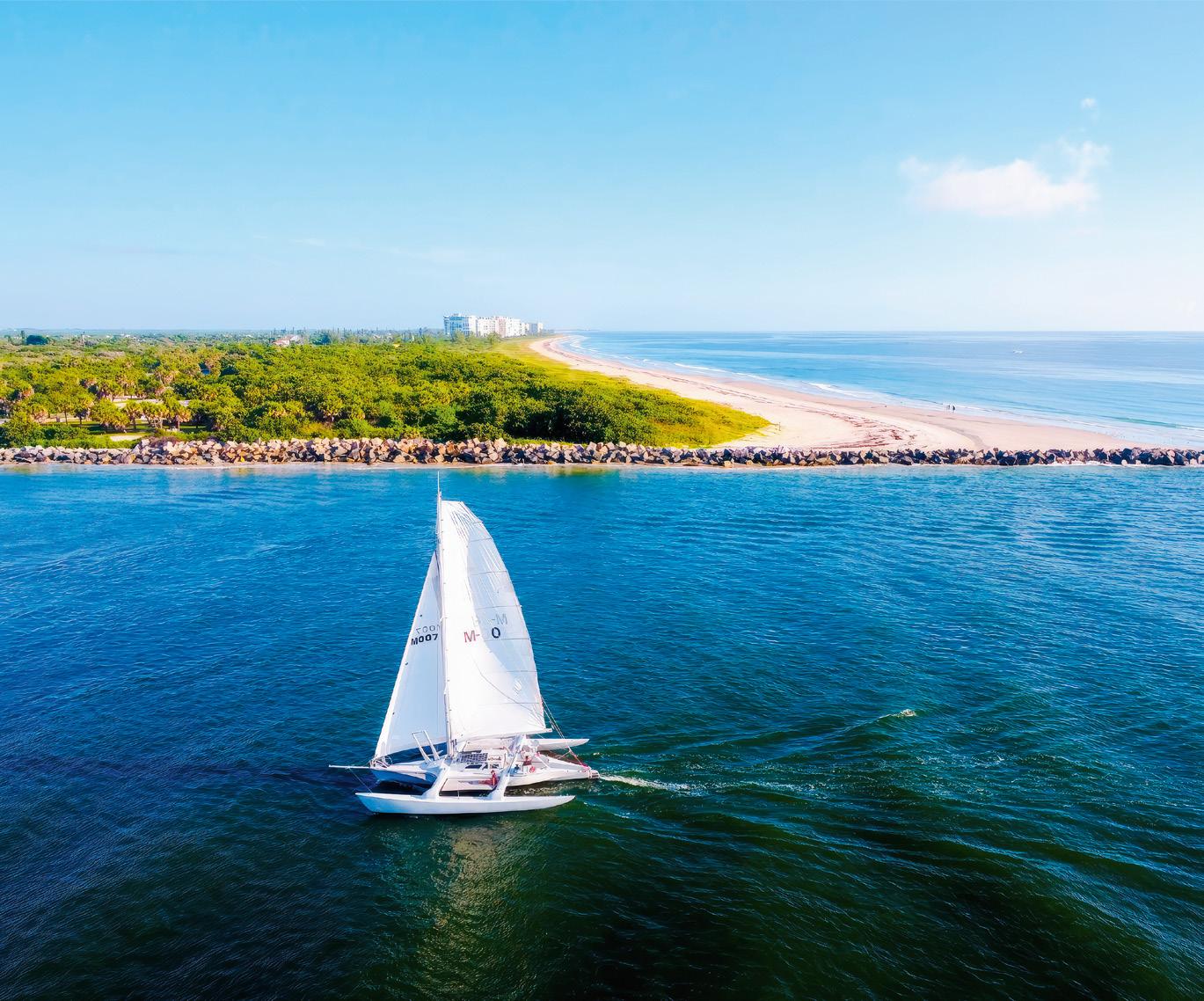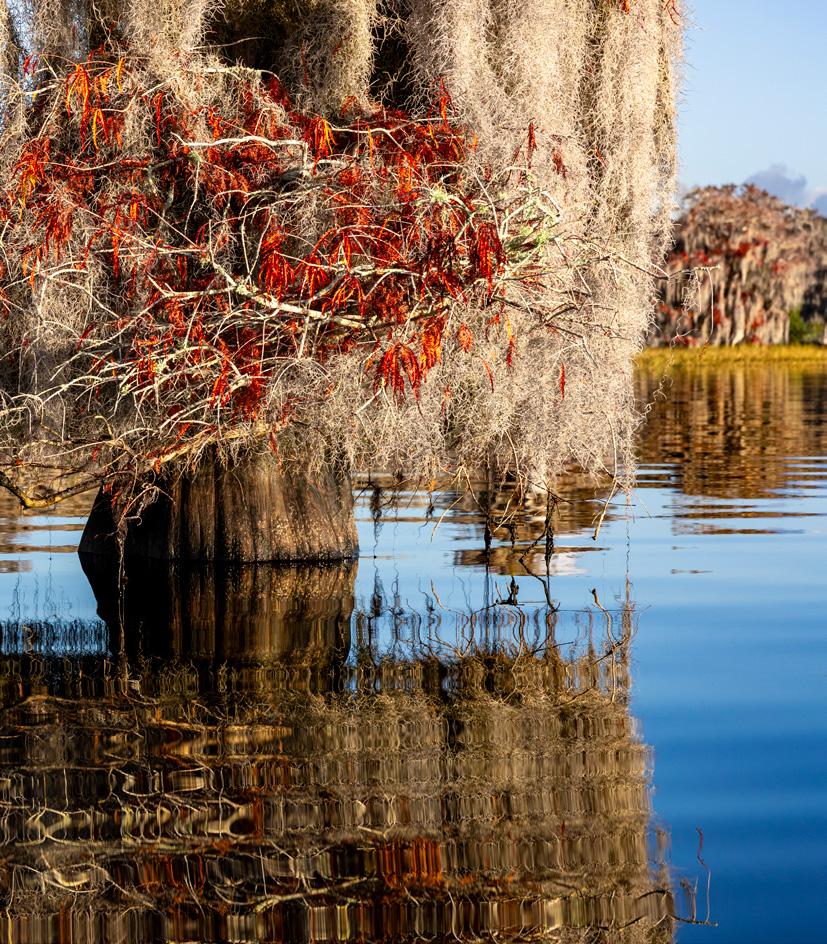
BLUE CYPRESS LAKE: HEADWATER TO THE ST. JOHNS RIVER

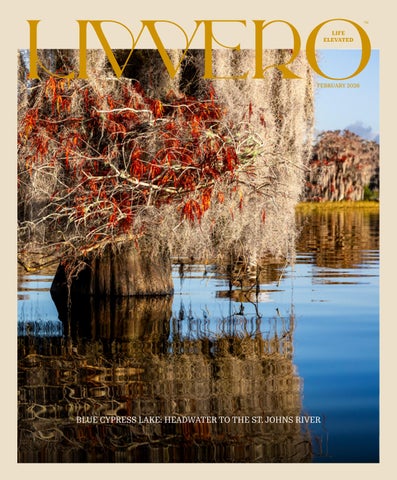
BLUE CYPRESS LAKE: HEADWATER TO THE ST. JOHNS RIVER





We manage your wealth so that you can focus on what matters most.
Caldwell Trust Company exists to provide personal, traditional, and independent trust services. Our team offers a full range of integrated services, tailored to your individual financial priorities, to help you enhance and protect your legacy for generations to come.

Welcome to KMK Builders, where we combine refined craftsmanship with unparalleled dedication to transform your vision into a masterpiece. Located in Vero Beach, we specialize in bespoke home construction, renovation, and additions, delivering results that resonate with sophistication and excellence. With our meticulous approach, we turn dreams into stunning realities.
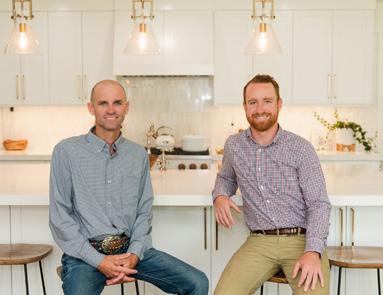
MICHAEL & KYLE KONDZIOLA
3201 Cardinal Drive, Vero Beach, FL 772-643-1353
kmkbuidersllc.com @kmkbuilders
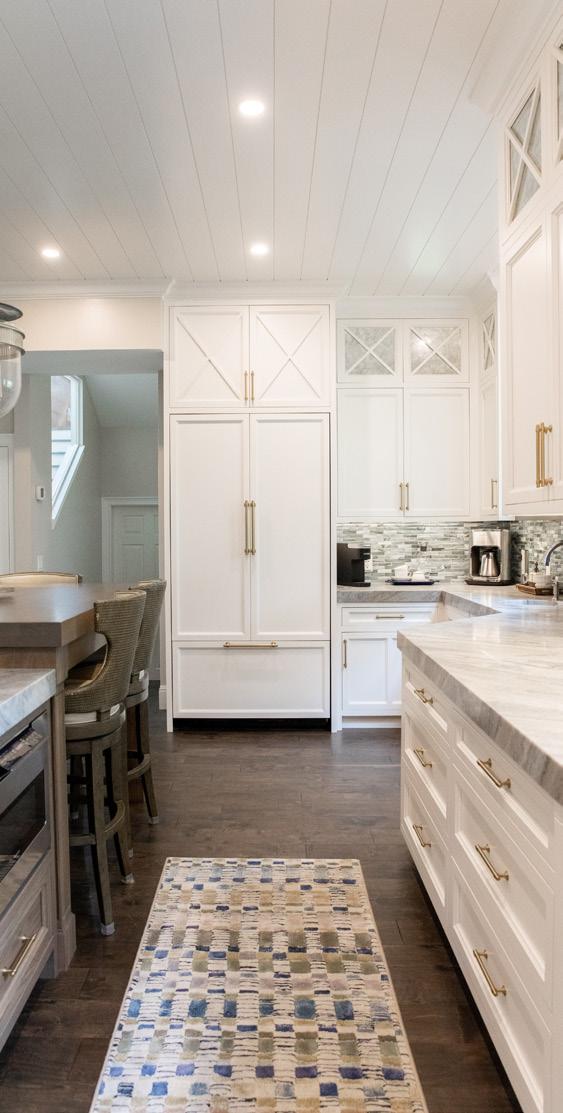
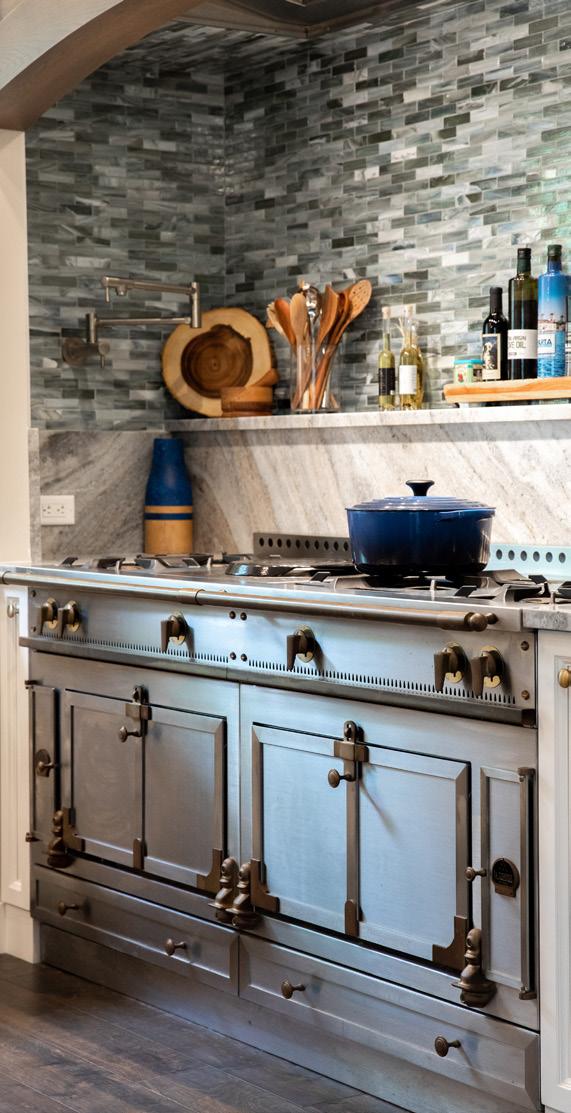
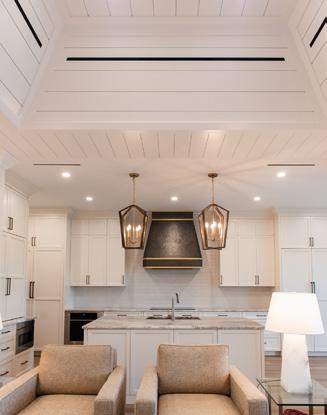
At KMK Builders, we believe the journey to your dream home should be as exceptional as the final result. Our process is built around a clientfocused approach that ensures each detail is carefully managed, from initial consultation to completion. Every step is designed to reflect your unique vision while upholding the highest standards of craftsmanship.

Wells Fargo Advisors Financial Network, LLC (WFAFN), Member SIPC, a registered broker-dealer and non-bank affiliate of Wells Fargo & Company. WFAFN uses the trade name Wells Fargo Advisors. Ad.
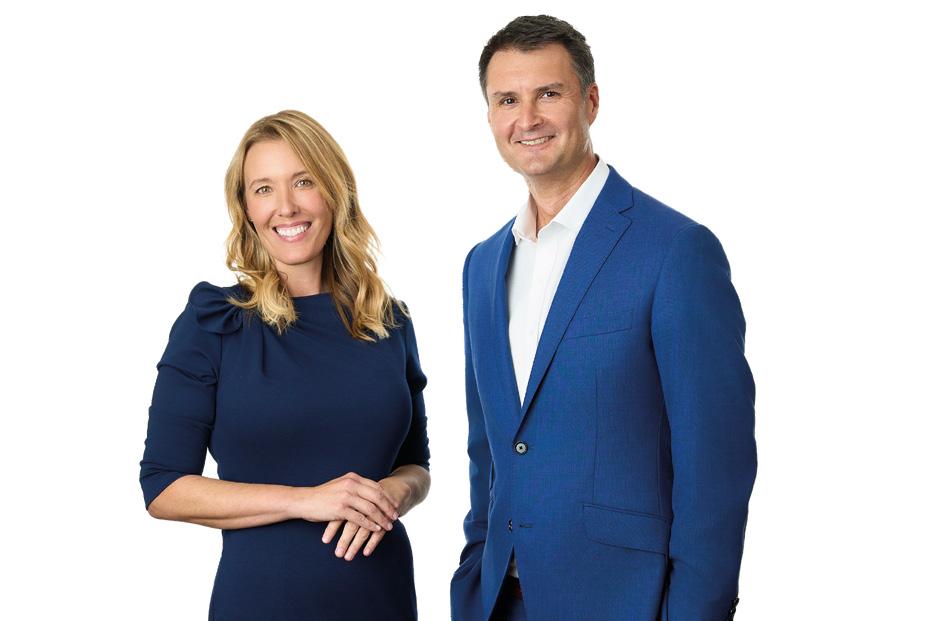
Contact Us
3387 Ocean Drive
Vero Beach, Florida
(772) 200-3973
jenna.suleman
razvan.ilie@wfa net.com


PERFUMERY
62 Florida Vibrations
A Parisian creation captures wild Florida.
VERO BUSINESS
66 Luke Webb & Associates
Planting a new stake in Vero Beach’s luxury real estate market.
VERO BEACH REAL ESTATE
68 Ten Truisms Governing Sales
The current market isn’t so complicated.
WINE AND FOOD
72 A Survey of Fine Cheeses
Gourmet cheeses and artisanal charcuterie from around the world. ART
76 Turtle Mural At Sebastian Elementary School of the Arts
A parent and artist team up to gift children a precious project.
“A MAGAZINE SHOULD BE A SENSIBILITY, NOT A COLLECTION OF ARTICLES.”
Clay Felker, founding Editor
of New
York Magazine.











































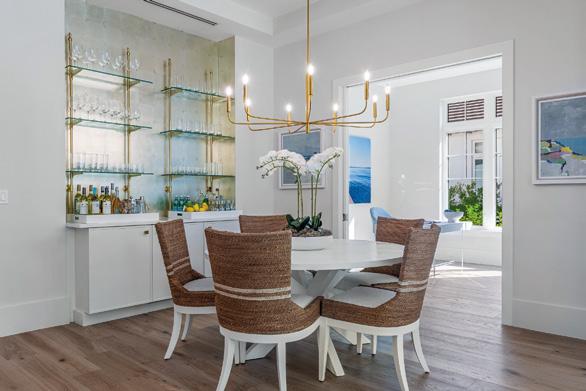
Elevated interiors with timeless elegance and vibrant character. Full-service design for homes and condos — from Vero Beach to Nantucket and beyond.
4625 HIGHWAY A1A, STE 8
Vero Beach, FL 32963
Monday through Friday 9am – 5pm (772) 231-3746
Nantucket Interior Design Office – by appointment only –(508) 844-9350 www.alexandranuttall.com
Staging by Ti ani Buckley Home Instagram: @tiffanibuckleyhome Website: tiffanibuckleyhome.com
FEBRUARY 2026
NATURE
84 Sea Turtle Nesting Season
Three simple steps—keeping beaches clean, flat, and dark—to safeguard sea turtles.
EDUCATION
86 Where Style Meets Community
Inside the annual Saint Edward’s School trunk show.
HERITAGE NOTES
88 Winter Beach Bridge
Connecting barrier island farmers to a railroad depot.
TRAVEL
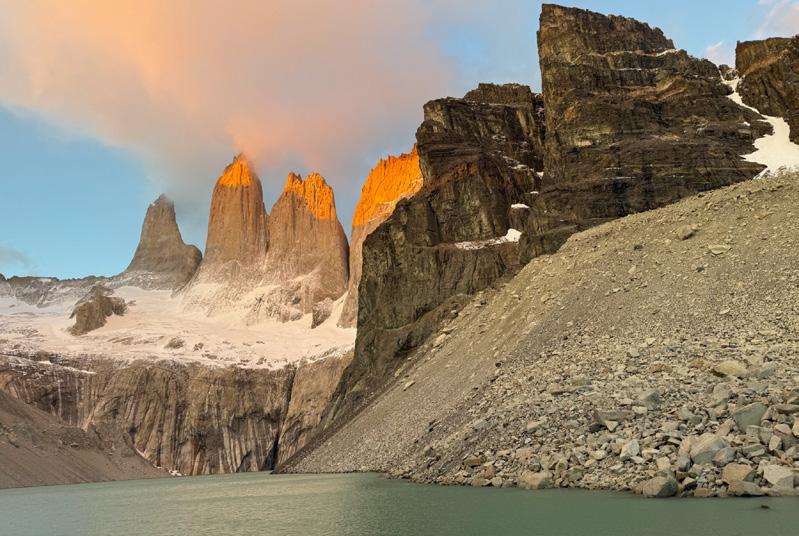
94 The Patagonia Compromise
A honeymoon at the edge of the world.
ECOLOGICAL TREASURES
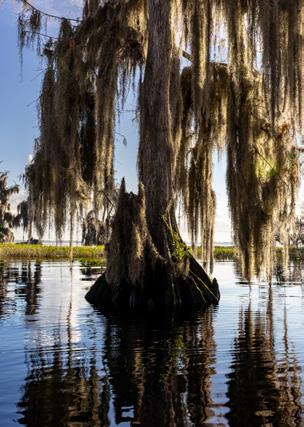
106 Bald Cypress Trees
Centuries-old specimens rising out of the water.

FEBRUARY 2026
ENVIRONMENT
108 Wonderous St. Johns River Florida’s longest river with headwaters in Indian River County.
HEALTH AND WELLNESS
122 Catheter-Based Heart Diagnostics and Therapies Interview with Mistyann-Blue Miller, MD, Interventional Cardiologist.
HEALTH AND WELLNESS
130 Evidence-Based Approach to Reversing Obesity
Interview with Grettel Rodriguez, MD, board certified in Obesity Medicine.
SPACE EXPLORATION
138 Artemis II Mission to the Moon Vero Beach residents can enjoy a front row seat.
SPACE EXPLORATION
146 Apollo 8 Aligns Closely to Artemis II Both missions took first crewed flights to the Moon.
ROBOTIC SPACEFLIGHT
150 Apollo Lunar Landings Confirmed Disappointing the conspiratory theorists among us.
154 Mark Your Calendar
160 Finito
Website: livvero.com.
Instagram: livveromagazine.
Subscriptions: Go to livvero.com.
Digital Edition: Access on livvero.com.
Comments: Email to jim@livvero.com.


I am reflecting on the work that led up to publishing this issue of LIV VERO Magazine.
In the planning phases, we were inundated with possible articles—some we brainstormed and others brought to us by individuals and organizations. (Thank you!)
In conducting research and interviews, there was a kaleidoscopic experience of changing subject matter, changing people, changing locations, changing narratives to get excited about.
Shooting photographs and video, Victoriya Knapp and others accepted assignments and were off in pursuit of images across a variety of settings—e.g., raw nature one day, an inpatient cardiac procedural suite the next.
With written and photographic assets organized before me, I then set out to physically create the issue, front to back cover, positioning text, quotes, photographs, placing titles, captions, end marks. I do this with my digital design partner Luis Guillen—a remarkable artist and creative—
sharing multiple screens, working hours and days on end. Perfection is our goal: beauty, accuracy, precision. Luis resides in Lima, Peru. He, in turn, is supported by his design teams in Turin, Italy.
Finally, we place our advertisements. Premium positions first, then page-by-page selections taking great care to situate a given advertisement in a perfect position. If across from text and a photograph(s), colors and images must complement each other to a high degree. If across from an advertisement, the same applies to an even higher degree. Similar businesses must be spaced appropriately. This is our ethic.
Stepping back, constructing a magazine is like making a puzzle: at some point you are able to discern what you are creating. For a magazine specifically, what emerges are key themes: the thread that ties together otherwise independent articles into a larger message, with elevated purpose.
The messages this month were twofold: the nobility of effort, and the gift of inspiration. In one endearing article, we learn about a mother and local artist who teamed up to involve an entire elementary school in creating a large-scale work of art. In another article we profile an interventional cardiologist and cardiac cath lab teams who save and enhance lives every day, multiple times. And undertaking a mind-blowing initiative just north of us, NASA is sending mankind back to the surface of the Moon.
Small efforts, huge efforts—all equally powerful efforts to improve the lives of others—giving at its core. Inspiring the people they touch to believe in the greatness and magnanimity of fellow human beings. The overarching goal of LIV VERO Magazine is to celebrate the beauty of humanity through the stories we bring to our readers each month.

We note the departure of Chris Foster from the magazine’s team. We thank him for his contributions and core activity—producing fashion-based covers and accompanying articles—at which he excelled. With his restaurant now open, Chris will certainly be dedicating every ounce of energy to its success. We wish him well. CO-PUBLISHER



i•con•ic /īäkänik/ (adj.) relating to or of the nature of an icon; regarded as a representative symbol or as worthy of veneration.
sub•lime /s ’blīm/ (adj.) of such excellence, grandeur, or beauty as to inspire great admiration or awe. e
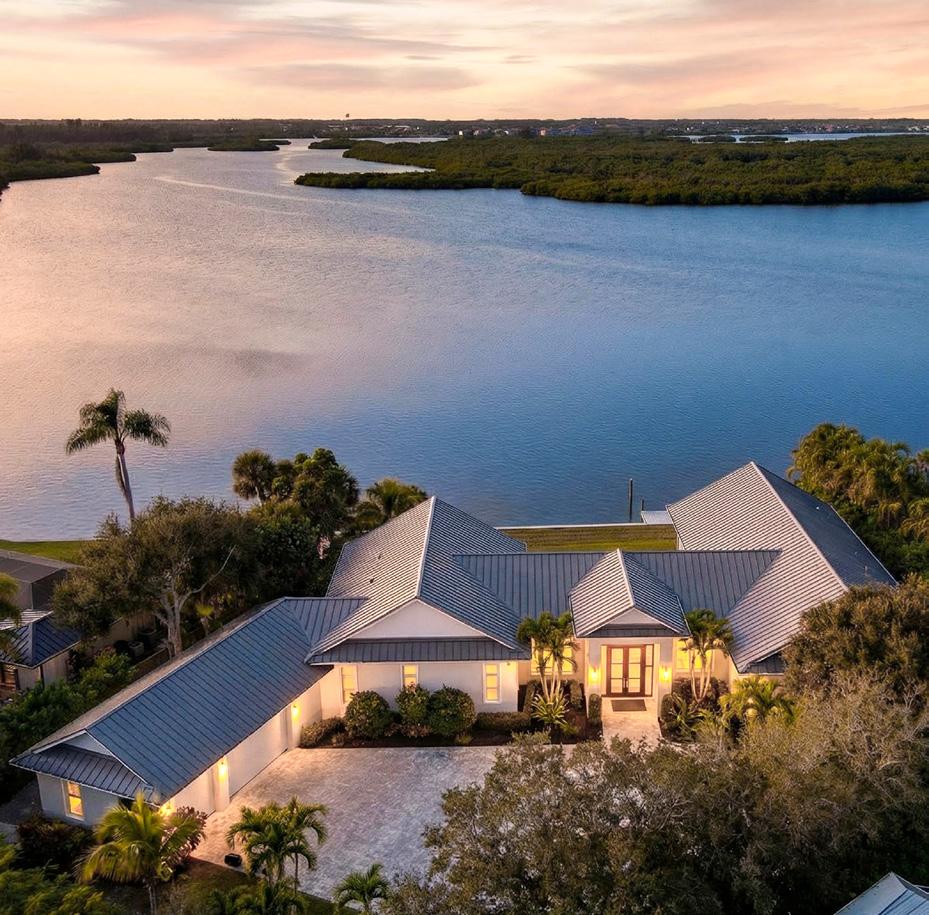
1765 Sand Dollar Way
$3.495 Million
Magazines mailed to EVERY residence in Indian River County (all 8 zip codes) with incomes equal to or greater than $200,000.
Electronic Edition sent to curated, expanding list of over 3,200 email addresses.
Hand delivery of 1,500 copies to advertising partners, other businesses, organizations, individuals—including hotels, airport, restaurants, real estate offices, physician offices, country clubs, drop points.
Electronic Edition, in full, is accessible to all on our website livvero.com.
Building list of subscribers locally and across country to primary/secondary residences. Subscribe at livvero.com.
LIV VERO® Magazine is a registered trademark of Orchid Island Publishing Group LLC.
© 2025 Orchid Island Publishing Group LLC. All rights reserved. Reproduction or distribution of any content without express written consent is prohibited.
CO-PUBLISHER | CO-EDITOR
Jim Field jim@livvero.com
Diane Field diane@livvero.com
EDITORIAL
CONTRIBUTING WRITERS
John Stearns, Renee Morad, Amanda Blumberg, Diane Field, Jim Field
ART
CONTRIBUTING PHOTOGRAPHERS
Victoriya Knapp, Yuri Semenyuk, Jim Field
ADVERTISING AND EVENTS
703-851-0703
DIGITAL
WEBSITE: livvero.com
INSTAGRAM: @livveromagazine
ORCHID ISLAND PUBLISHING GROUP LLC
Vero Beach, FL 32963
President | Jim Field
SUBSCRIPTIONS 10 issues: $45. Subscribe at www.livvero.com
POSTMASTER
SEND ADDRESS CHANGES TO: Orchid Island Publishing Group 3320 Cardinal Dr., Suite 648175 Vero Beach, FL 32963
LOCALLY OWNED & OPERATED
SUBSCRIPTIONS: Free of charge to qualified residents of Vero
Publisher reserves the right to determine qualifications. Annual subscriptions: U.S. and possessions $45, all other countries $125 U.S. funds (via air mail). Single copies: U.S. and possessions $5. No part of this publication may be reproduced without the written consent of the publisher. The publisher does not warrant, either expressly or by implication, the factual accuracy of any advertisements, articles or descriptions here in, nor does the publisher warrant the validity of any views or opinions offered by the authors of said articles or descriptions. The opinions expressed are those of the individual authors, and do not necessarily represent the opinions of Orchid Island Publishing Group. Orchid Island Publishing Group makes no representation or warranties regarding the accuracy or appropriateness of the advice or any advertisements contained in this magazine.
SUBMISSIONS: We welcome submissions. Unless otherwise negotiated in writing by the editors, by sending us your submission, you grant Orchid Island Publishing Group permission by an irrevocable license (with the right to license to third parties) to edit, reproduce, distribute, publish, and adapt your submission in any medium on multiple occasions. Submissions will not be returned.
•
•
•
•
•
•
•

PRINCIPAL DESIGNER



by Diane Field
Vases are not something that I have sought out in a methodical way. I have collected a handful of vases during our travels—some very fine and others created by local, unknown artisans.
Then I have shelves filled with utilitarian vases of specific sizes—specifically height and neck diameter—in which I arrange purchased and gifted bouquets—roses, hydrangeas, tulips, lilies, and the like. A few of these are pricey—from high-end glass companies—but most are simple glass, their number proliferating over time, necessitating an occasional culling.
All this said, I suddenly found myself interested in creating a new centerpiece for a table. Being a major component, I researched vases and immediately came across the “Savoy Vase.” I loved it at first sight—its size, atypical shape, consistency of the glass and play of light. Upon further investigation, I wasn’t surprised to learn that the Savoy Vase has a storied history.
The Savoy Vase, also known as the Aalto Vase, is the creation of Alvar Aalto and his wife Aino. The piece is considered a masterpiece of organic modernism, a symbol of Finnish design identity. It became known as the Savoy Vase because it was one of a range of custom furnishings and fixtures created by the Aalto’s for the luxury Savoy Restaurant in Helsinki—where it was used as table decor—that opened in 1937.
It is a unique design object, being both mass-produced and artisanal. Its fluid, asymmetrical shape broke radically from the rigid geometry of early modernism, its flowing form making modernism feel natural and alive. Each vase is mouthblown, making every example slightly unique. The form grows naturally from the properties of molten glass. Nearly 90 years old, the design still looks contemporary and continues to be in production— manufactured by Iittala Glassworks, Finland (founded 1881)—in a spectrum of colors. Original pieces are widely held in major museum collections, including MoMA.


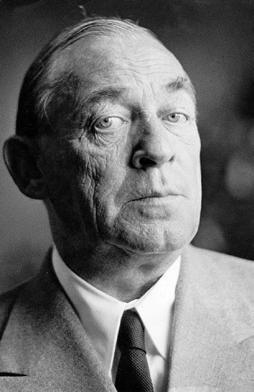
Hugo Alvar Henrik Aalto
Finnish architect, furniture designer, glass designer—known simply as Alvar Aalto —is widely regarded as one of the most influential figures of modern architecture and design. He was born February 3, 1898, in Kuortane, Finland, and died May 11, 1976, in Helsinki. While many modernists emphasized strict geometry and industrial aesthetics, Aalto focused on natural materials, organic forms, human comfort and emotion, harmony with landscape and light. His legacy was to blend modernism with tradition, humanize modernism, proving that functional design can be warm, poetic, connected to nature—mimicking the Finnish landscape. Throughout his career, he designed concert halls (Finlandia Hall), libraries (Viipuri Library), hospitals, privately owned homes. With his wife, he founded (1935) the Artek brand, an innovator in bent plywood techniques. Iconic pieces include Paimio Chair, Stool 60, Tea Trolley 901. They believed good design should serve life, not dominate it.
The design was inspired by the dress of a Sami woman—indigenous people of Northern Europe, reindeer herders, fishers, hunters, handicraft artisans— and specifically, a woman’s leather breech. Aalto produced a series of crayon drawings on cardboard and scratch paper. Initial prototypes were made by blowing glass in the middle of a composition of wooden sticks stuck into the ground, letting the molten glass swell on only some sides and creating a wavy outline. The vase was originally manufactured using a wood mold which was slowly burned away.
As perfected, each vase is hand-blown by skilled glassmakers, its shape guided by human breath, gravity, and rotation. The glass is reheated several times to refine flowing contours, rims, thickness. The rim is cut, shaped, and polished by hand, giving each vase a slightly different profile. Finished glass is cooled slowly in an annealing oven. Variation is part of the design.
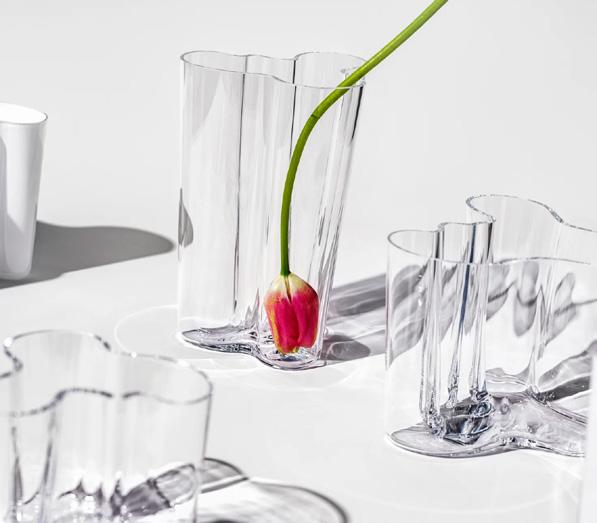

Display empty as a sculptural piece on its own. Place where light passes through it. Own one neutral (clear or white) and one emotionally expressive color. With flowers, use stems, not large bouquets. Ideal for branches, sculptural flowers, wild or asymmetrical arrangements. Pair with natural materials: wood, linen, stone.
by Diane Field
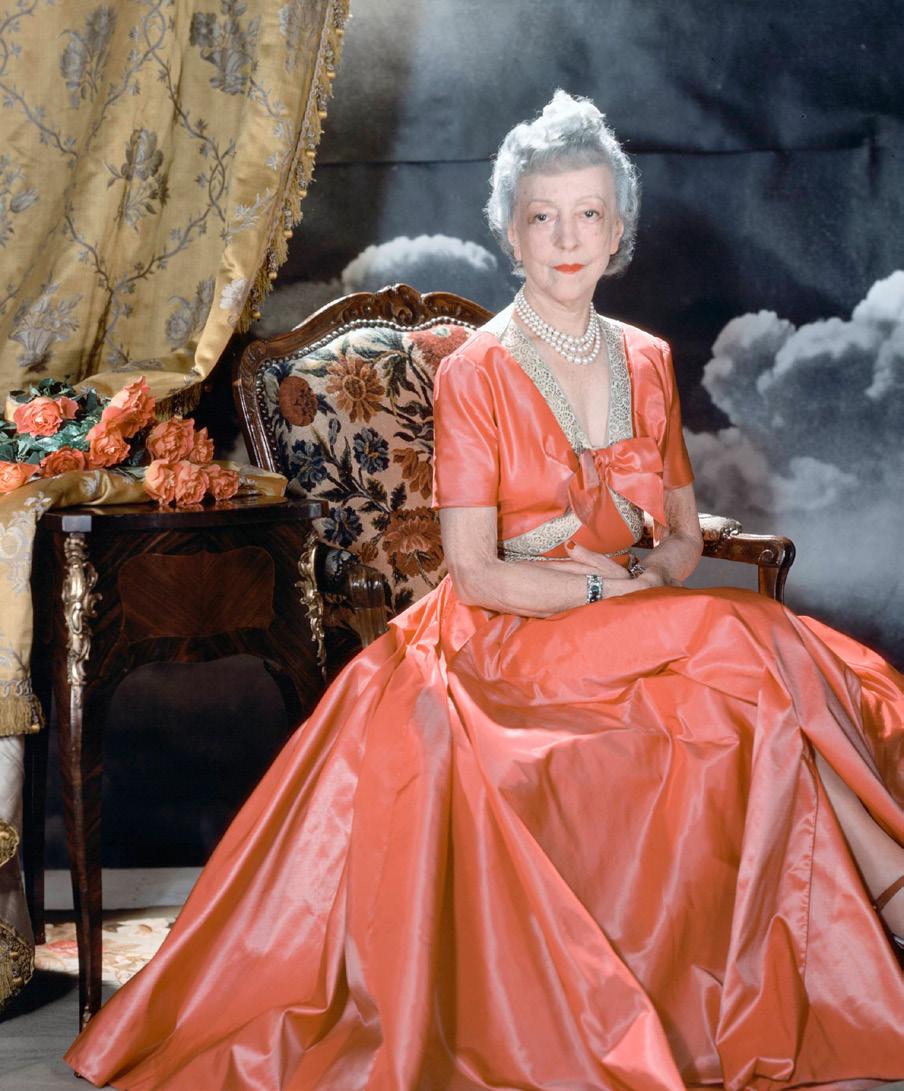
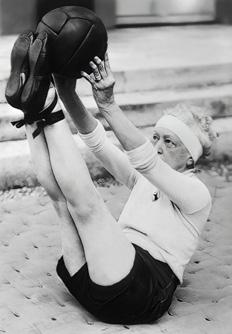
Photograph caption June 1935: “Despite her title, Lady Mendl continues in a program of calisthenics that would make many a younger girl fearful of over exertion. She never misses these morning exercises which she executes on a folding mattress. She is doing her medicine ball exercise.”
Source Bettmann/Getty Images.

I have always loved learning about the history of interior design and how it informs today’s trends and tastes. It is impossible to go far in that history without encountering Elsie de Wolfe—born Ella Anderson de Wolfe (1865–1950). In her own time and by modern standards alike, she was a force to be reckoned with: a true American groundbreaker and pioneer, a free spirit and creative dynamo, a cultural influencer whose relevance endures.
It is astonishing to grasp the extent of her influence on modern American interior design. She aligned design with modern life, reshaped national taste, and taught generations that a beautiful home should be light-filled, livable, and humane— achievements that have led many to regard her as the most influential interior designer in American history.
Here are highlights of her life, career, and design philosophies.
• Born on December 20, 1865 in New York City.
• Wealthy, prominent family and high social status gave her access to elite circles, later her client base.
• Early exposure to art, antiques, architecture, traveled to Europe cultivating taste for French and English interiors.
• Attended private schools in New York City, no formal art or design school education.
• Artistic foundation from observation, mentorship, practice.
• Worked as a stage actress in New York and London 1880s–1890s.
• Said she was not a great actress, but the experience shaped her understanding of staging, lighting, atmosphere, sensitivity to how people experience space.
• Her theatrical eye helped her reconceive interiors as “sets for living”—a radical idea.
• Frustrated with acting, turned her attention to decorating interiors beginning with her own homes.
• Widely regarded as first professional interior decorator.
• Rejected the heavy, dark, excessive Victorian style of the 19th century.
• Introduced light, airy, comfortable interiors; emphasized simplicity, elegance.
• Pale color palettes (whites, creams, soft pastels); Chintz fabrics, mirrors, light furniture.
• Comfortable furniture arranged for real life, both comfort and beauty.
• Decorated elite homes in New York, Paris, and London.
• Wrote influential book The House in Good Taste (1913). Taught Americans how to live with beauty long before design advice was common.
• Her work reached middle-class homes via magazines, pattern books, department stores, mass-produced furniture.
• Successful, independent woman at a time when that was rare.
• Lived openly in a long-term partnership with Elisabeth “Bessie” Marbury.
• Served as a style authority for America’s social and cultural elite.
Died on July 12, 1950, 84 years old, in Versailles, France. At the time of her death, she held the title Lady Mendl, following marriage in 1926 to British diplomat Sir Charles Mendl.
Elsie de Wolfe Quotes
“I am going to make everything around me beautiful—that will be my life.”
“I opened the door and let the sunshine in.”
“A house should be livable, and beautiful only by accident.”
“I believe in plenty of optimism and white paint.”
“Comfort is the main thing.”
“Simplicity is the keynote of all true elegance.”
“You don’t want a house that looks as if it had been decorated, but as if it had been lived in.”
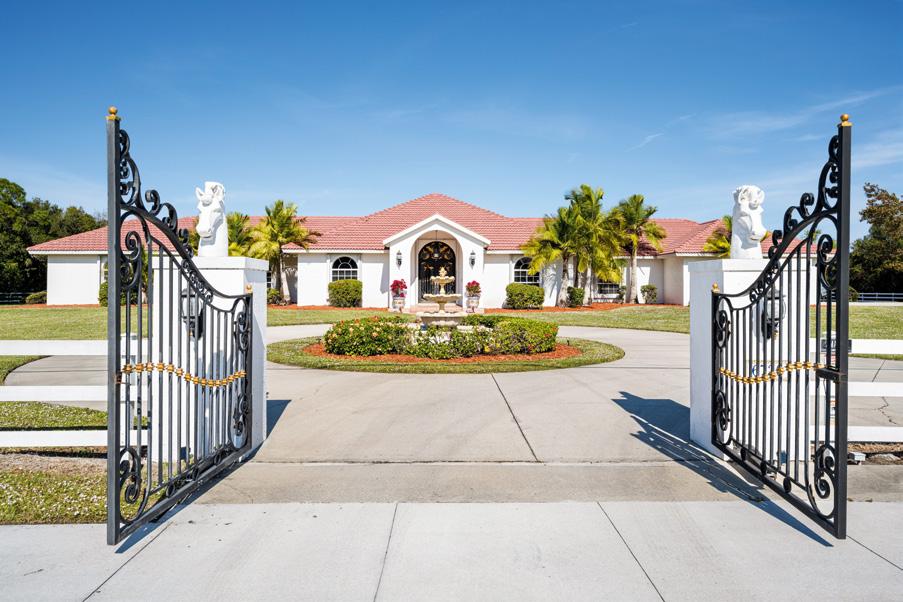
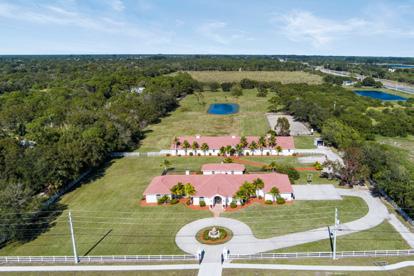
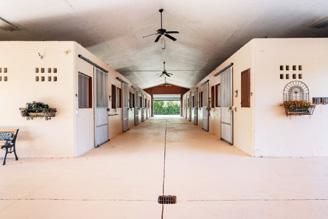
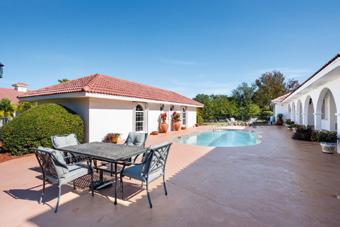
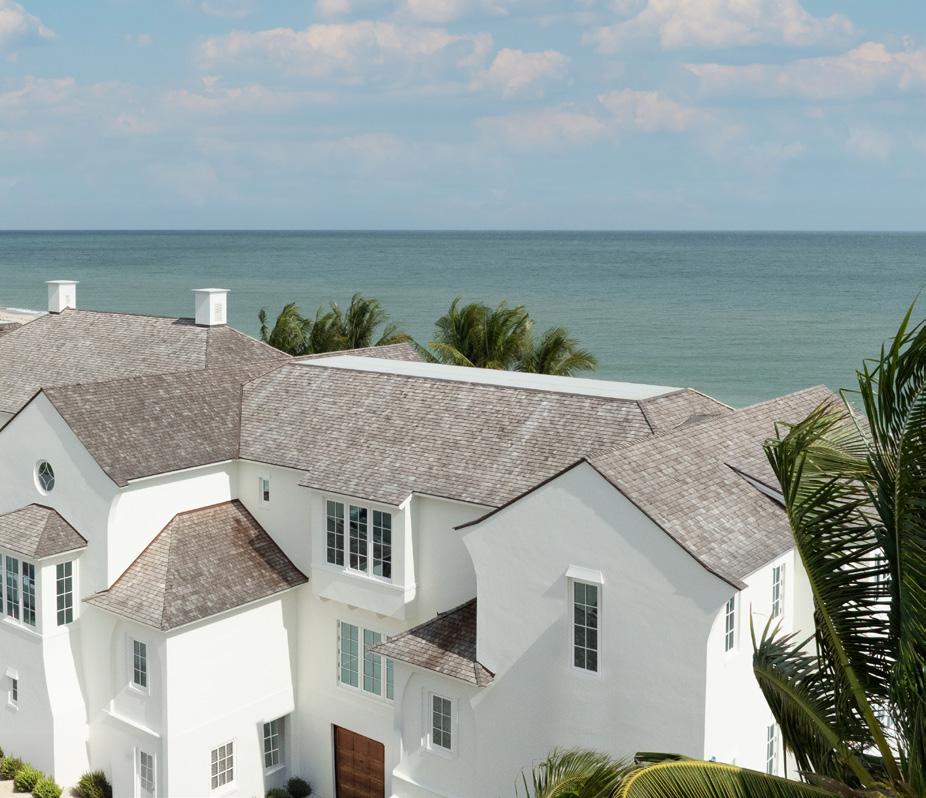
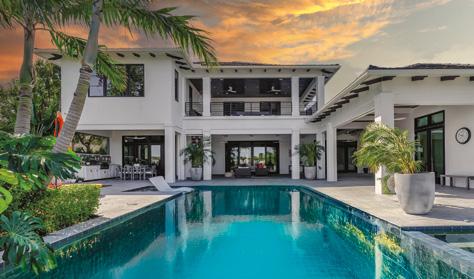
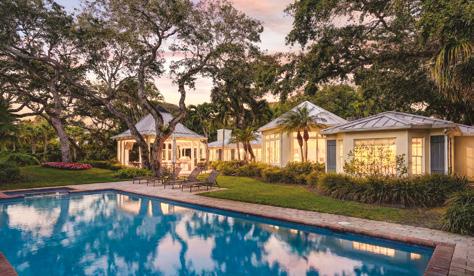
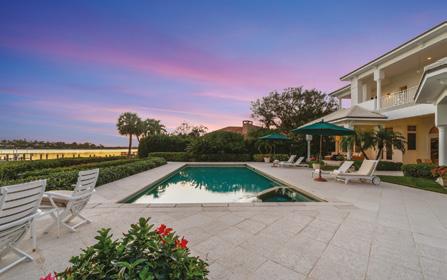
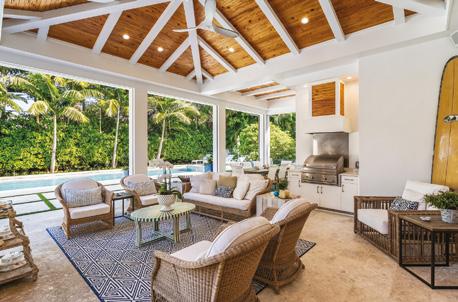
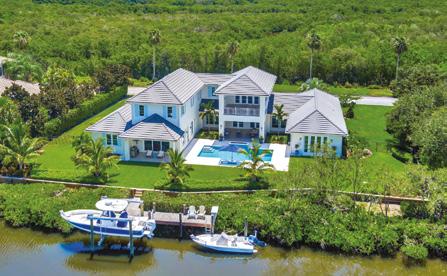
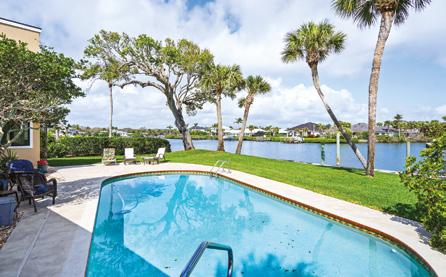
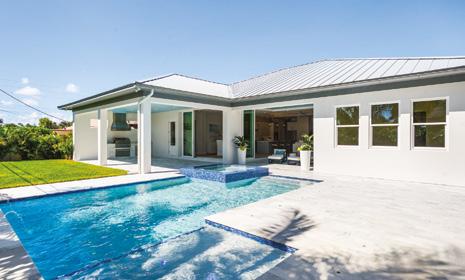
Welcome to this beautiful Spanish hacienda built to feel like you are in Sevilla Spain. Situated on 9.4 acres this Florida ranch has a spacious main home with a pool, guest house. The 19 stall barn provides top tier accommodations for breeding and boarding. Formally known as "Hacienda del Sol Andalusians" this exquisite ranch bred some of the worlds finest horses. The barn is equipped with 12x12 concrete block stalls, automatic waterers, swing in feeders and fans. Included is a feed room, tack room, laundry, office and medical area. The paddocks and dressage arena complete this equestrian estate. The home is a well appointed four bedroom, three bath home with a one bedroom, one bathroom guest cottage and a four car garage. Your equestrian estate awaits, inquire today.
by Jim Field
There are some U.S. cities that you visit specifically to see their historic districts. In our own region, I would include Savannah, GA, Charleston, SC, and St. Augustine, FL.
I would also definitely include Key West, FL. Most people have heard tales of modern Key West’s bawdier side, but its relatively large and well-defined historic district is full of beautifully preserved and architecturally unique homes—that people still live in and sell for breathtaking prices. I would describe the ambiance as serene, informal, understated, charming, classical, freespirited, quiet money.
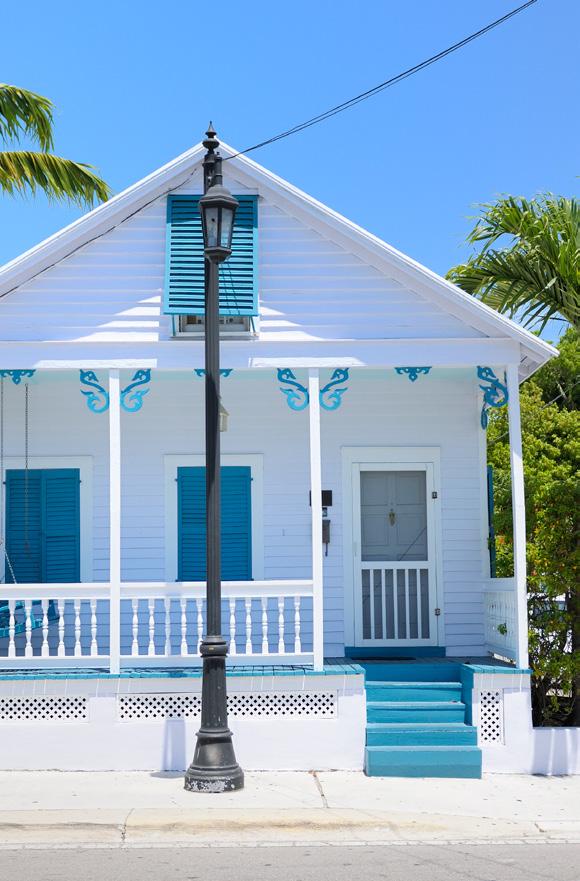
Key West/Conch-style homes are an iconic Florida architectural style with roots in Caribbean dwellings and thusly adapted to the rigors and benefits of a permanent tropical climate. They were originally built in the late 1800s and early 1900s by Bahamian immigrants located in Key West. Notably, Key West is relatively close to the Bahamas: Bimini, the closest island, roughly 120 miles away; Nassau (New Providence Island), 185 miles; and Great Abaco/Grand Bahama, 215 miles.
What is Conch?
Conch (pronounced “konk”) originally referred to Bahamian immigrants who settled in Key West in the 1800s. Over decades, conch became a general moniker for native Key West residents, especially those of Bahamian descent. The term is meant to represent the unique heritage, culture, and lifestyle traits of these specific residents. The dwellings they built by tradition and artisanal techniques were duly termed Conch-style homes.
Literally, a conch is a large bottom-dwelling sea snail—a marine gastropod mollusk— distinguished by a spiral shell and edible meat. Scientifically, the family Strombidae contains several large snails, the most common and culturally and economically significant species being the Queen conch (Aliger/Lobatus gigas). Their native habitat is warm, shallow tropical waters, sandy or
seagrass bottoms. The shell is described as large, spiral, often pink, orange, or creamy inside; thick and sturdy. Empty shells are often cleaned and used as a musical instrument (conch horn) or decoration. The flesh of the soft-bodied snail that lives inside the shell is tender and edible, used in salads, fritters, chowders, and conch ceviche. A conch can grow up to a foot in length, depending upon the species. As of February 2024, the Queen conch is officially listed as a threatened species under the U.S. Endangered Species Act (ESA).
Finally, the Conch Republic is a satirical protest movement proclaimed by Key West in 1982 to symbolize its independent spirit, humor, and resistance to bureaucracy. The Republic declared war on the U.S. by breaking Cuban bread over a man in a naval uniform, then surrendered after one minute, requesting $1 billion in foreign aid now that it was a foreign nation. Its flag reads “The Conch Republic–We Seceded Where Others Failed.”

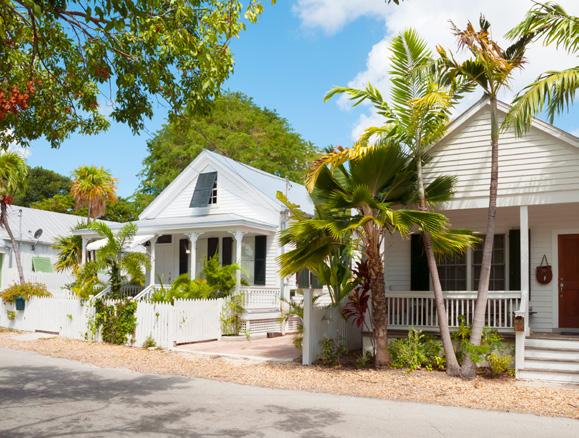
In previous issues, we profiled Florida Cracker (April 2025) and Florida Craftsman Bungalow (January 2026) home styles, which are close architectural derivatives of the Key West/Conch style. As such, key features that characterize a Key West/Conch home should already be familiar to readers of this series.
• Raised foundation. Built on piers or raised blocks to avoid flooding and improve airflow.
• Wood construction. Wood frame with horizontal siding (beaded or clapboard).
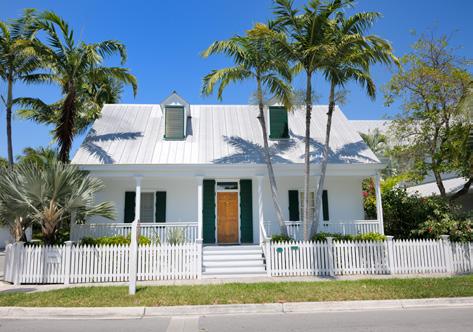
• Metal or wood roofs. Steeply pitched gable roofs or hipped roofs for rain runoff.
• Front porches/verandas. Large shaded porches for outdoor living and cooling breezes.
• Windows & shutters. Double-hung or jalousie windows to maximize ventilation. Functional shutters for storm protection.
• Simple, symmetrical shapes. Usually one or two stories. Square or rectangular footprint with clean, functional lines.
• Bright colors. Exterior paint in pastels or vibrant hues (light blues, pinks, yellows) reflecting Caribbean influences.
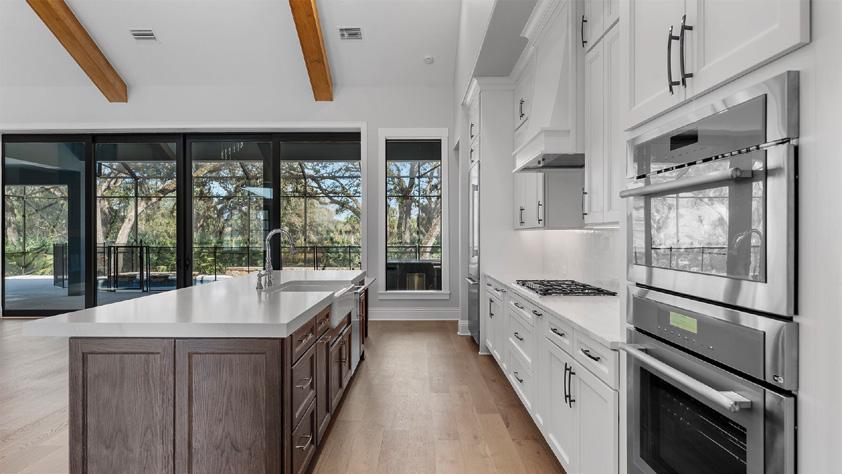
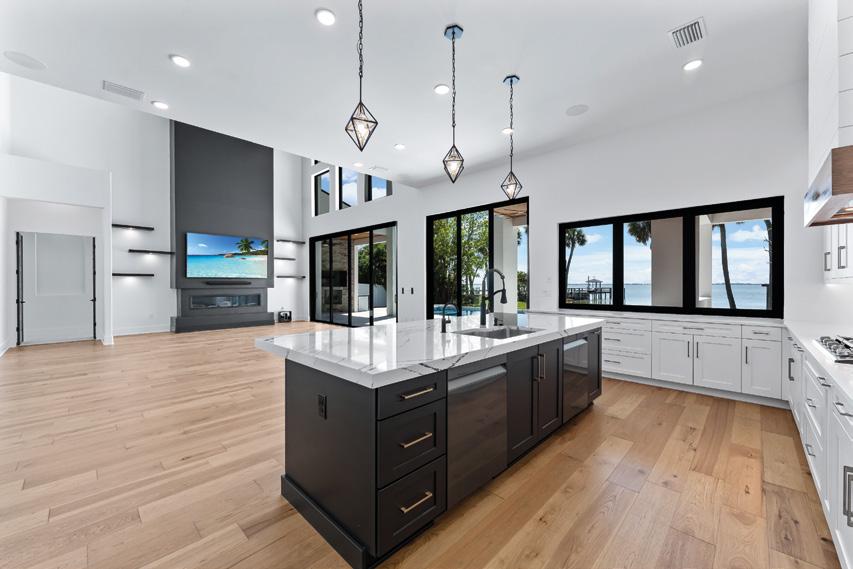
Modern updates include hurricane-rated windows and doors, fiber-cement siding, energy-efficient HVAC, contemporary open floor plans, and fully equipped kitchens.
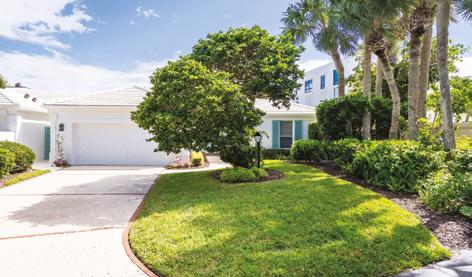
KEY WEST’S HISTORIC DISTRICT IS FULL OF BEAUTIFULLY PRESERVED AND ARCHITECTURALLY UNIQUE HOMES.




McKee Botanical Garden Celebrates Its Centennial
by Marion McKee Latta de Vogel photography by Ngoc Minh Ngo and J. Patrick Rice
A Century of Wonder, Rooted in Nature.
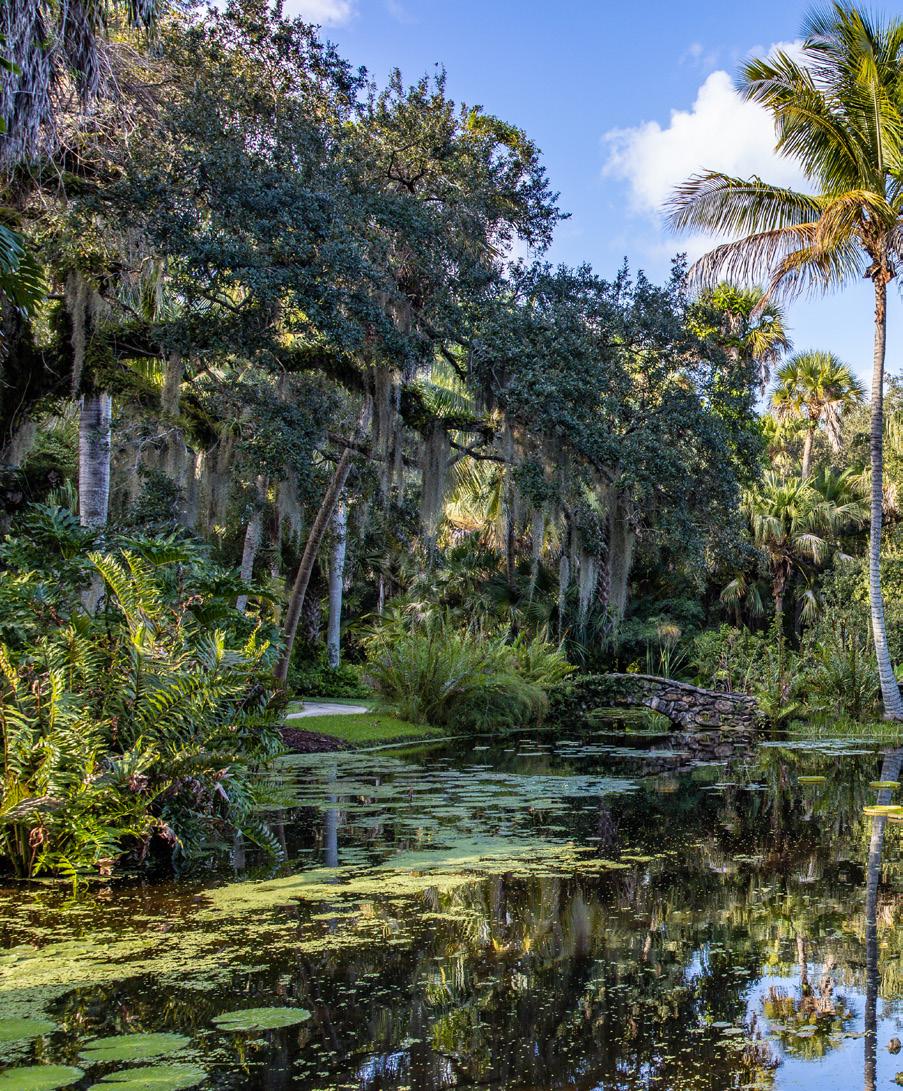
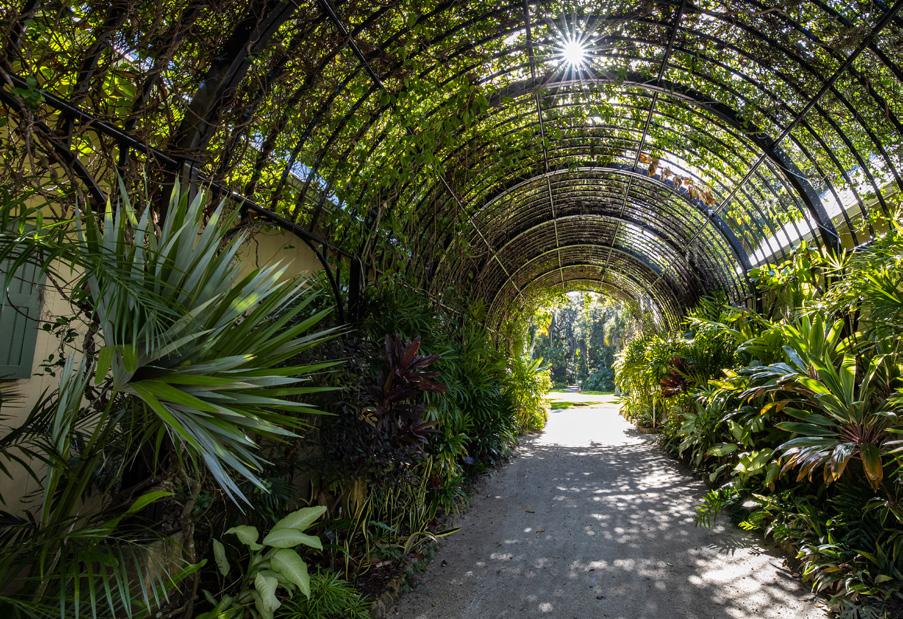
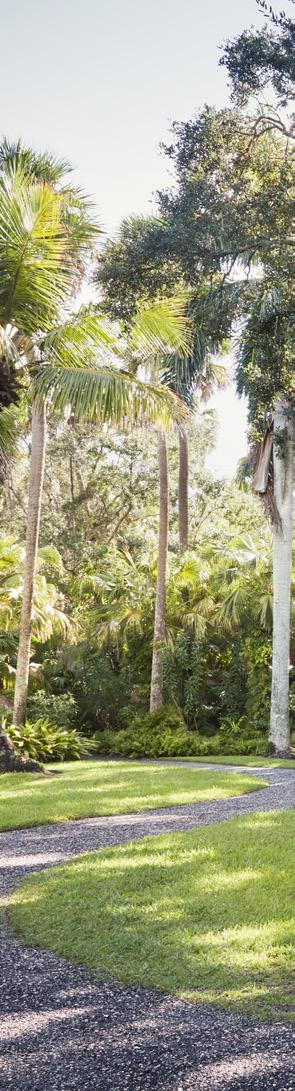
Nestled within the subtropical heart of Florida’s Treasure Coast lies a remarkable oasis—McKee Botanical Garden, a living legacy of vision, preservation, and community pride. With its lush landscapes, architectural whimsy, and rare plant collections, McKee has not only endured the test of time but emerged as one of the most significant examples of environmental and cultural conservation in the state of Florida. Its story, like the orchids that once bloomed in its glasshouses, is a tale of resilience, rediscovery, and renewal.
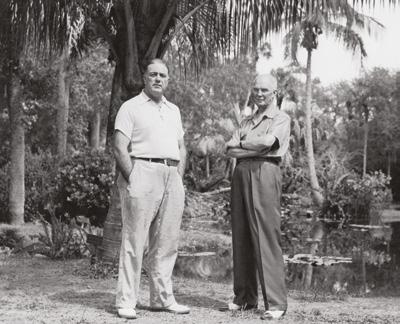
The story begins in 1922, when industrialist Arthur G. McKee and his Florida-based business partner Waldo E. Sexton purchased an 80-acre tract of dense, native hammock along the Indian River Lagoon in Vero Beach, Florida. Originally intended for citrus cultivation, the land’s topography, biodiversity, and unique beauty suggested another possibility: the creation of a botanical paradise unlike anything Florida had seen.
By 1926, Arthur McKee and Waldo Sexton had established a thriving commercial nursery to supply lush landscape material
for their residential development, known today as the Vero Beach Country Club. The plants they introduced were not random imports, they were living jewels, carefully chosen and brought home by some of the world’s most daring plant explorers. These adventurers journeyed deep into the rainforests of South America, the jungles of Asia, and the verdant isles of the Caribbean, returning with botanical rarities to be rooted in Florida’s sandy soil.
This early assemblage would lay the groundwork for what would eventually become McKee Jungle Gardens, one of Florida’s earliest and most beloved
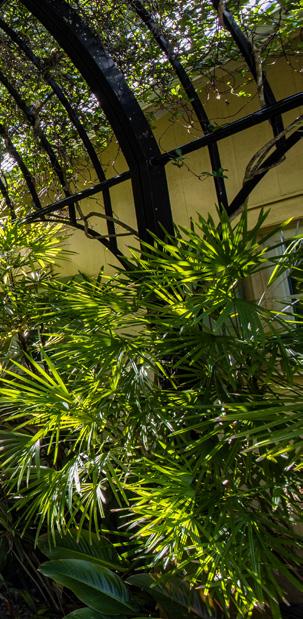
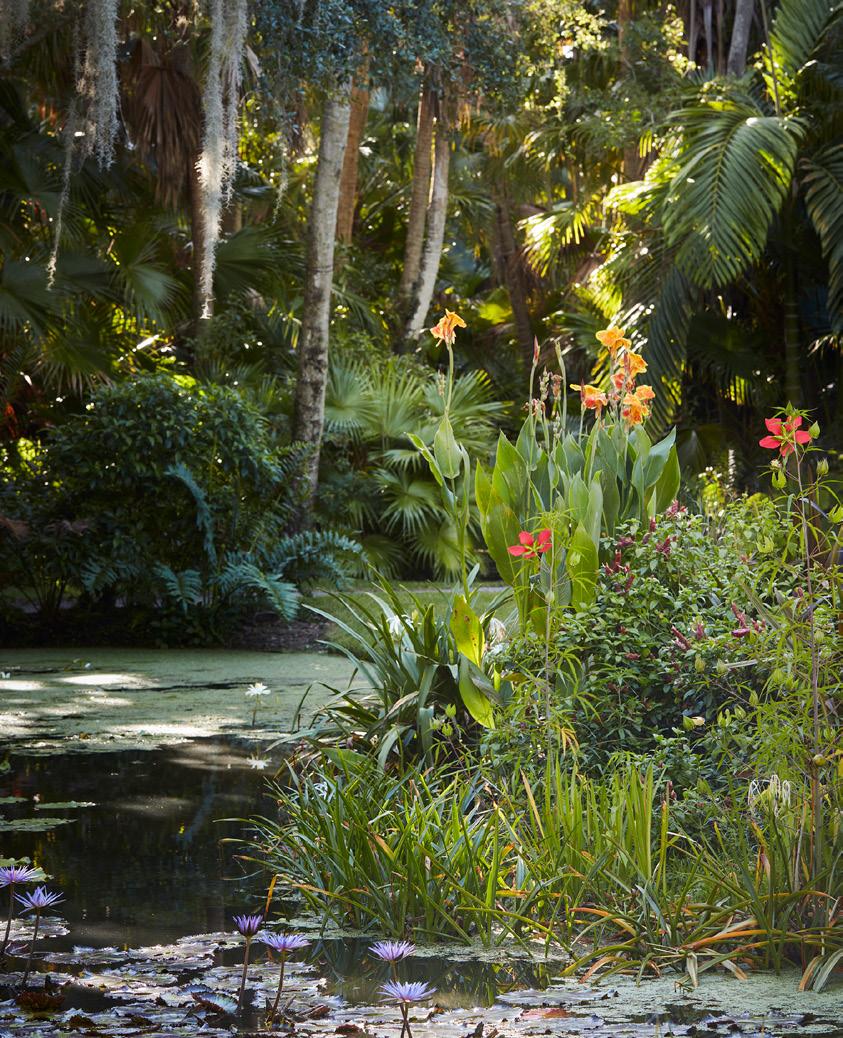
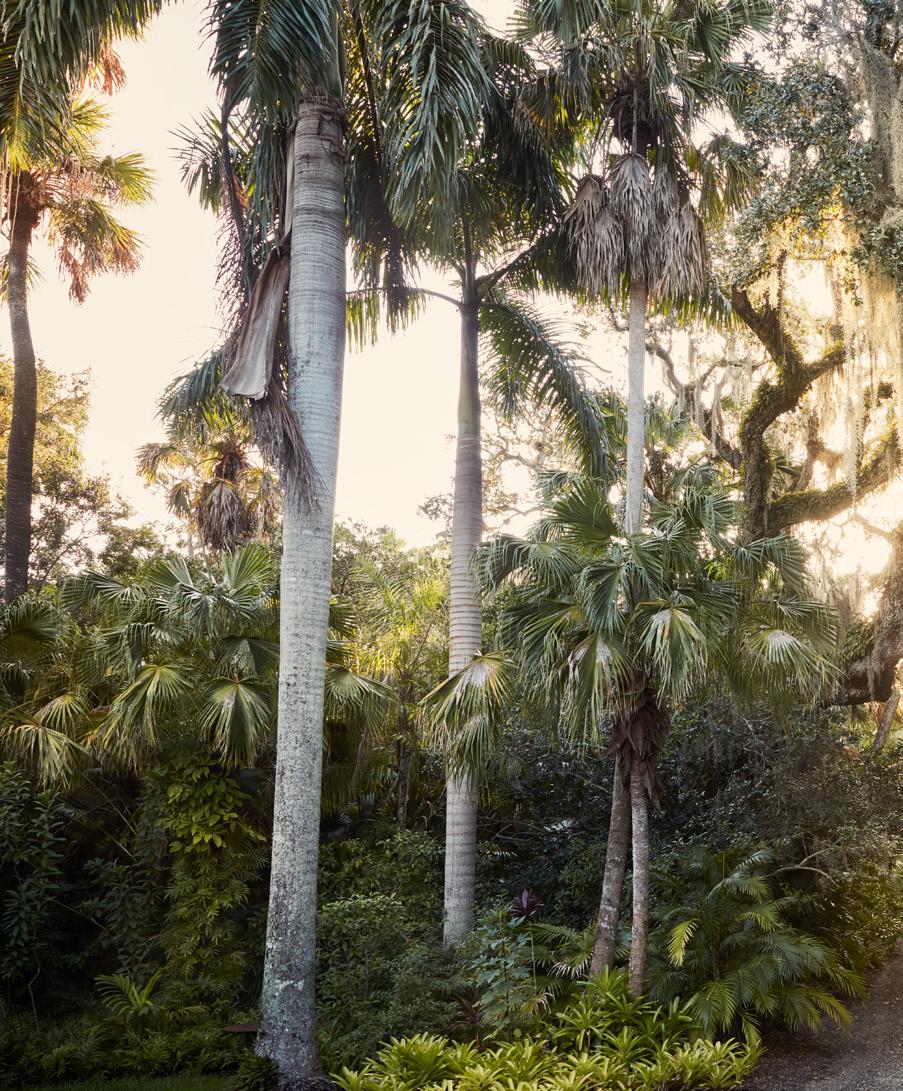
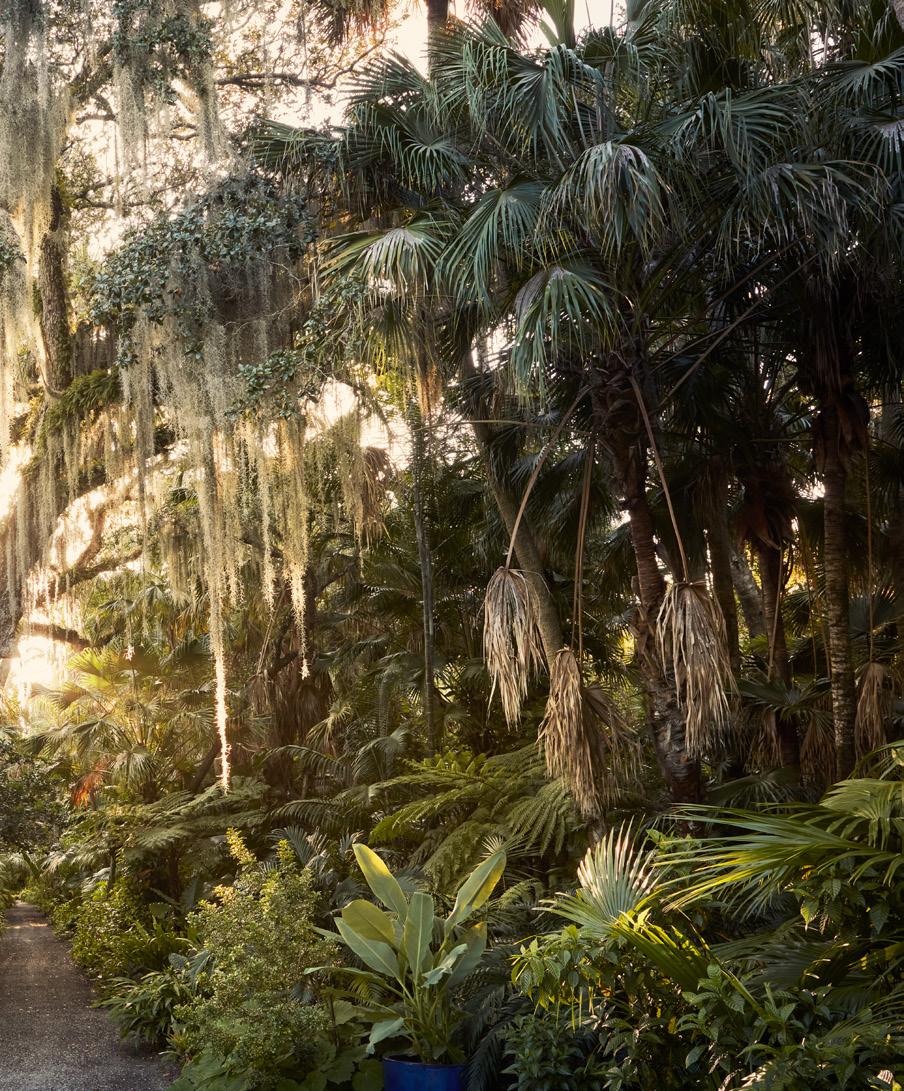
roadside attractions. To bring harmony to the burgeoning jungle of natives and newcomers, McKee and Sexton hired pioneering landscape architect William Lyman Phillips, a key figure in the Olmsted Brothers’ firm, who had supervised construction of Bok Tower Gardens, and would also go on to design Fairchild Tropical Botanical Garden. Phillips wove the exotic specimens into the natural landscape with skill and reverence, creating a naturalistic garden defined by meandering streams, towering palms, dramatic garden “rooms” and beckoning “windows.”
Opening the Gates: 1932–1976 In 1932, McKee Jungle Gardens officially opened to the public. Admission was 25 cents, and visitors were promised an immersive walk through a garden that felt equal parts tropical Eden and Victorian curiosity cabinet. They were not disappointed.
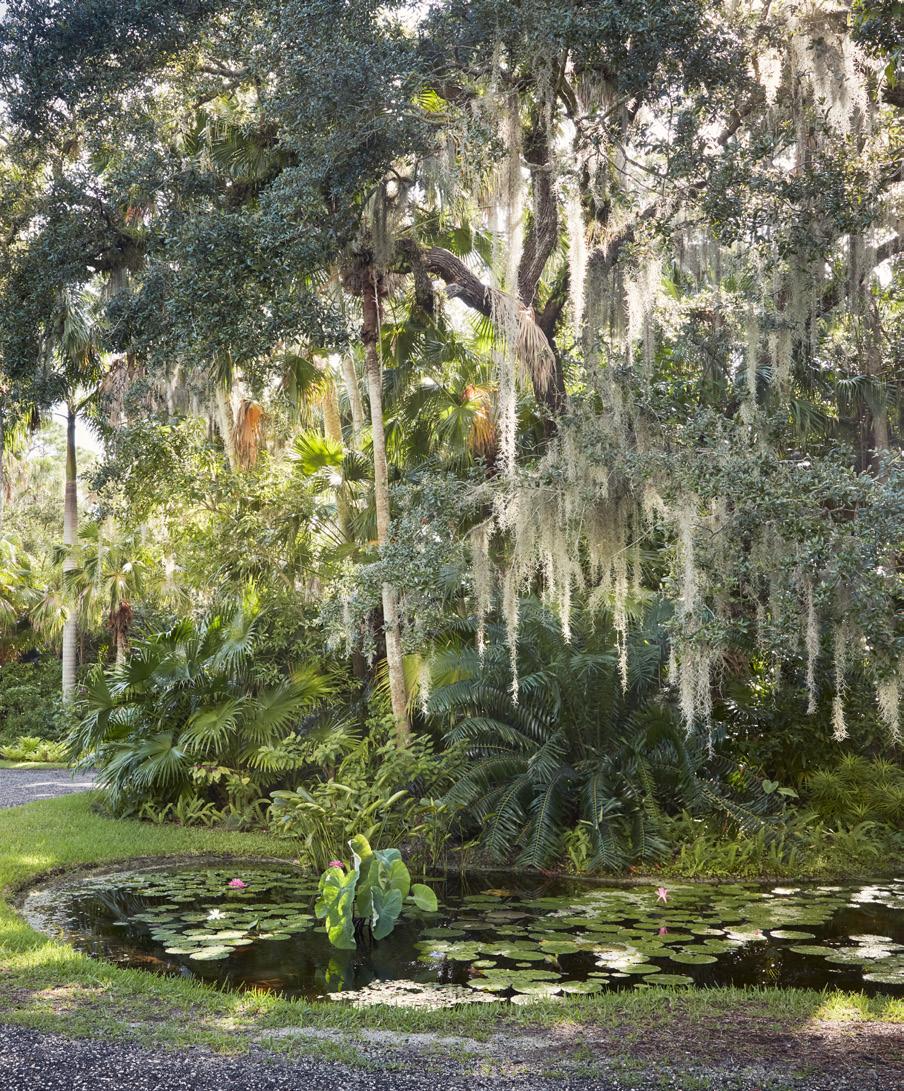
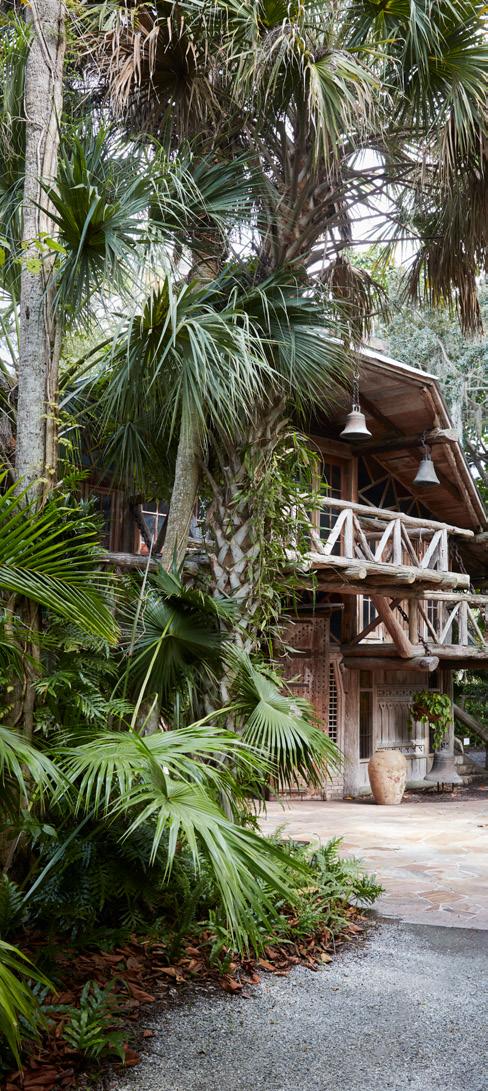
At its height, the Garden attracted more than 100,000 visitors annually. Monkeys swung from tree limbs, waterlilies bloomed in shimmering pools, and flamingos paraded before wide-eyed children. Jungle trails led guests past Sexton’s architectural marvels, such as the Hall of Giants, inspired by a Polynesian ceremonial palace (which housed the world’s largest mahogany table) and the Spanish Kitchen, a whimsical outdoor cooking space inspired by a Mexican fiesta kitchen.
Among its most celebrated features was the Garden’s orchid collection, which grew to include thousands of rare and unusual species. In 1946, Arthur McKee recruited Dr. David Fairburn, a young orchidologist from the Missouri Botanical Garden, to curate and expand his private collection of orchids. Under Fairburn’s care, McKee’s orchid program blossomed into one of the most significant in North America, known not just for its breadth but for the introduction of new hybrid varieties and pioneering conservation techniques.
Even during World War II, McKee played a quiet but important role in orchid preservation. Orchids from the British Isles were sent to McKee Jungle Gardens for safekeeping, away from the air raids and destruction in Europe. Arthur McKee also designed and built the first mechanically cooled greenhouse in the United States to accommodate cool-growing orchids brought back from a plant expedition to the Andes.
But despite its popularity and renown, McKee Jungle Gardens could not withstand the changes that reshaped Florida’s tourism industry in the 1970s. As massive theme parks like Walt Disney World opened, visitors turned west to Orlando. In 1976, after 44 years of enchantment, the family-owned garden closed its storied gates.


Following its closure, most of the original 80-acre garden was sold to developers. Concrete replaced canopies. Condominiums replaced caladiums. Of the original site, only 18 acres remained untouched. For two decades, these acres lay dormant, choked by invasive species, with crumbling pathways and overgrown structures slowly giving way to time and decay.
Yet the Garden’s memory never fully faded. It lingered in the hearts of longtime residents, horticulturalists, and families who remembered childhood visits. And then, like a water lily blooming from dark waters, hope returned.
In the late 1980s, as developers again threatened the remaining acreage, a coalition of local citizens, conservationists, and former visitors, most notably Susan Schuyler Smith and Suzan Phillips, rallied to save what was left. In 1994, the Indian River Land Trust with the help of the Trust for Public Land, spearheaded an effort to purchase the remaining land, and a remarkable grassroots campaign raised funds to restore and reopen the Garden.
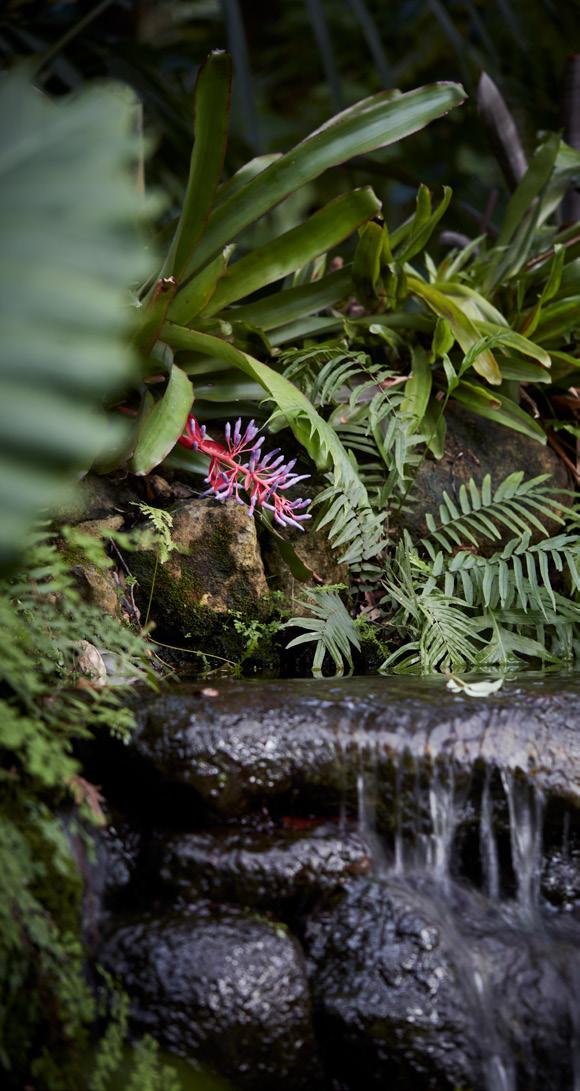
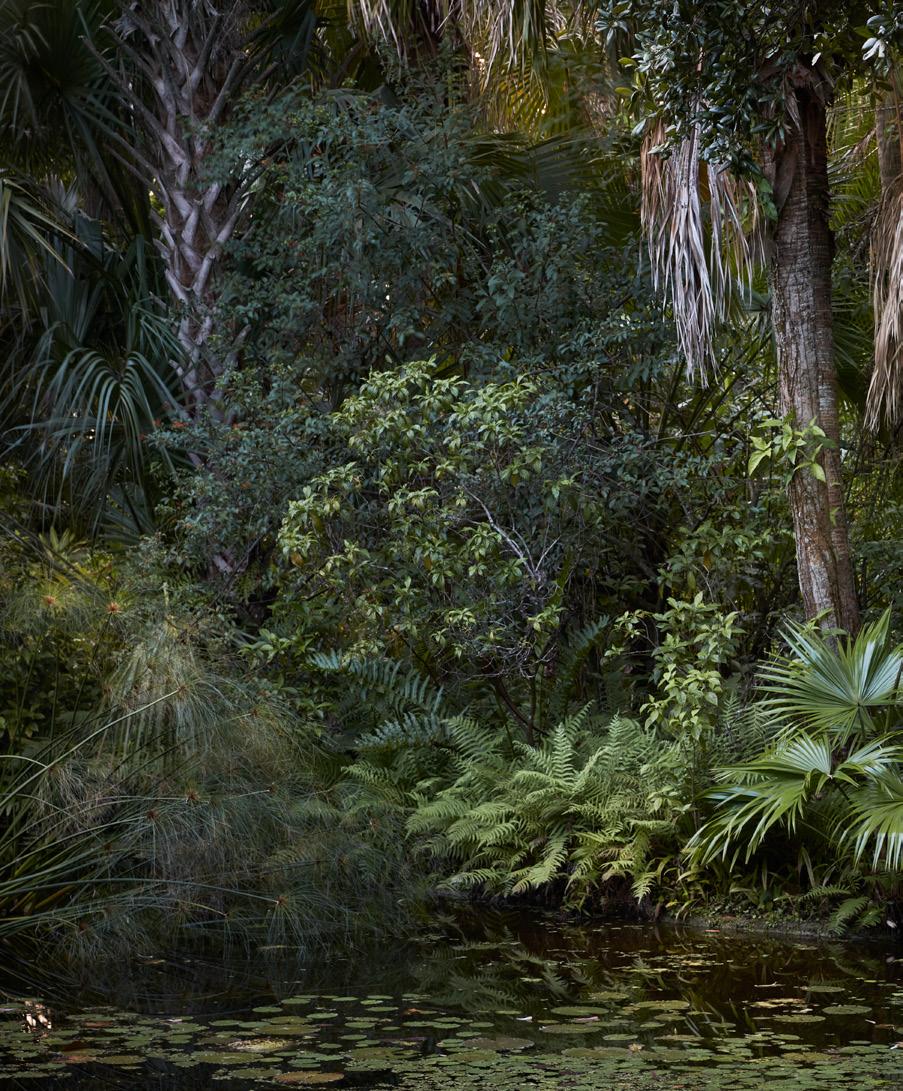
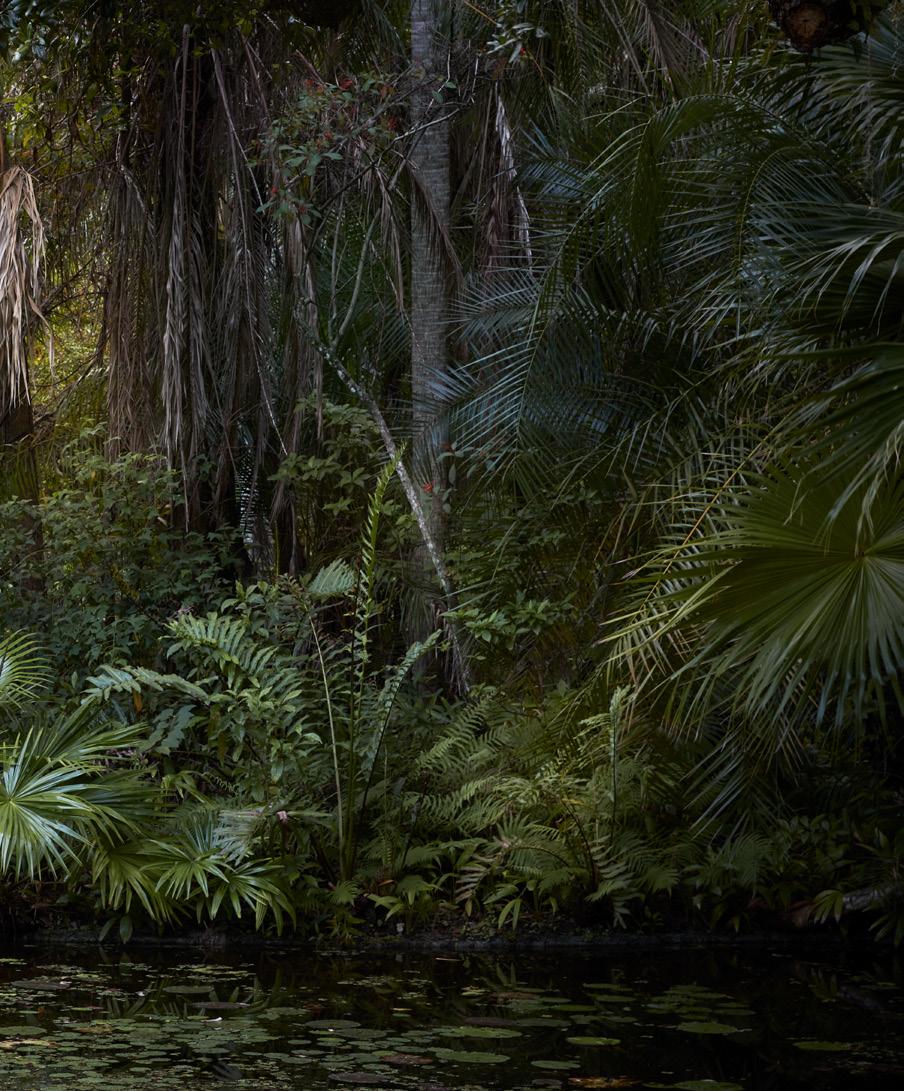
In 2001, twenty-five years after closing in 1976, McKee Botanical Garden reopened to the public. No longer just a nostalgic attraction, it was reimagined as a nonprofit botanical and cultural institution, focused on conservation, education, and community engagement.
Landscape architect David Sacks developed a new master plan, carefully balancing historical preservation with contemporary relevance. Sexton’s original structures were stabilized and restored, while new features such as a Children’s Garden, the Bamboo Pavilion, outdoor classrooms, and rotating exhibitions brought new life to the historic site.
Over the past 25 years, McKee Botanical Garden has been recognized nationally and internationally for its outstanding restoration and excellence in horticulture, design, and programming. It is listed on the National Register of Historic Places and recognized as a Florida Heritage Landmark. National Geographic Traveler named McKee one of the top 22 places of surprise and sanctuary in North America.
In 1996, the Garden was recognized by The Garden Conservancy as a preservation project of national significance. In 2024, The Garden Conservancy awarded McKee its highest honor, The Jean and John Greene Prize for Excellence in American Gardening, praising its innovation in public engagement and stewardship of historic landscapes.
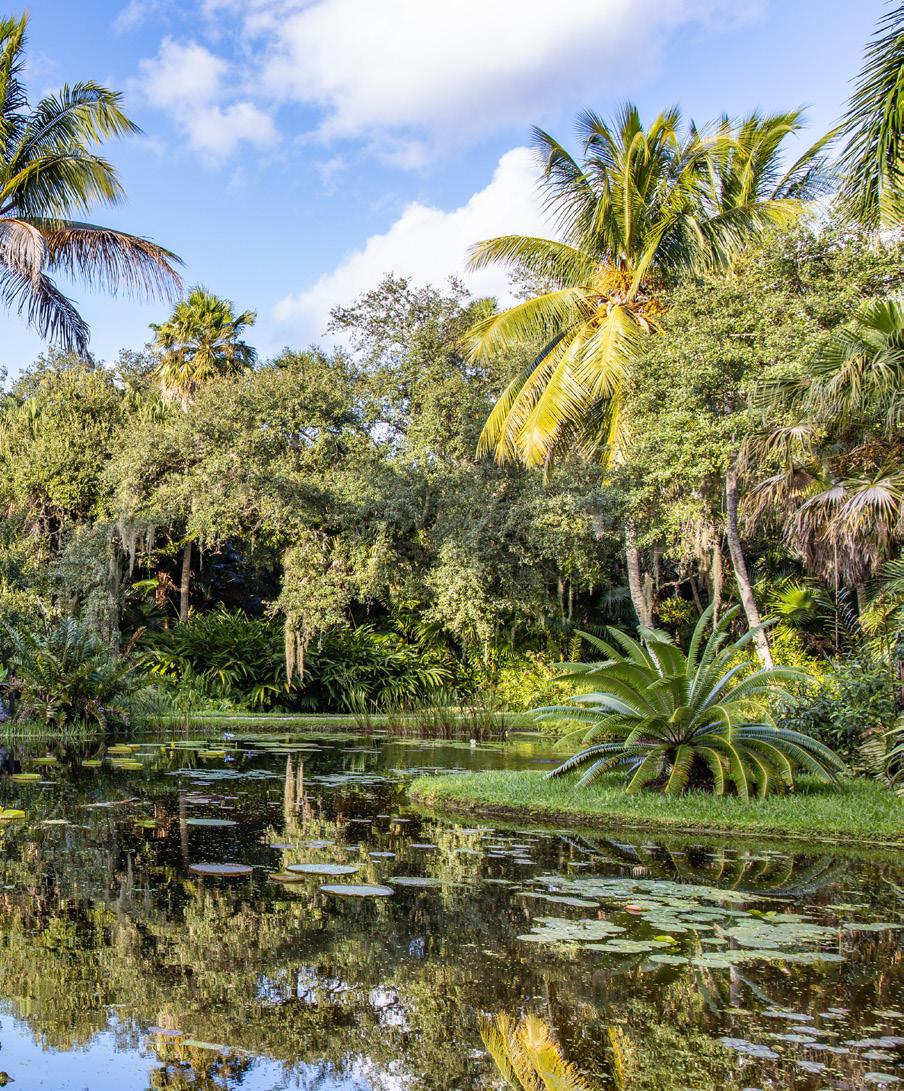
McKee’s waterlily collection, one of the most vibrant and expansive in the United States, was named a Collection of Excellence by the International Waterlily and Water Gardening Society, placing McKee among only seven gardens worldwide to earn that distinction.
The Garden is a proud member of the American Public Gardens Association and the American Horticultural Society’s Reciprocal Admissions Program, and has earned accolades for education, native plant conservation, and sustainable landscape design.
Today, McKee Botanical Garden is not simply a preserved monument, it is a living, growing institution that continues to evolve while honoring its past. Its
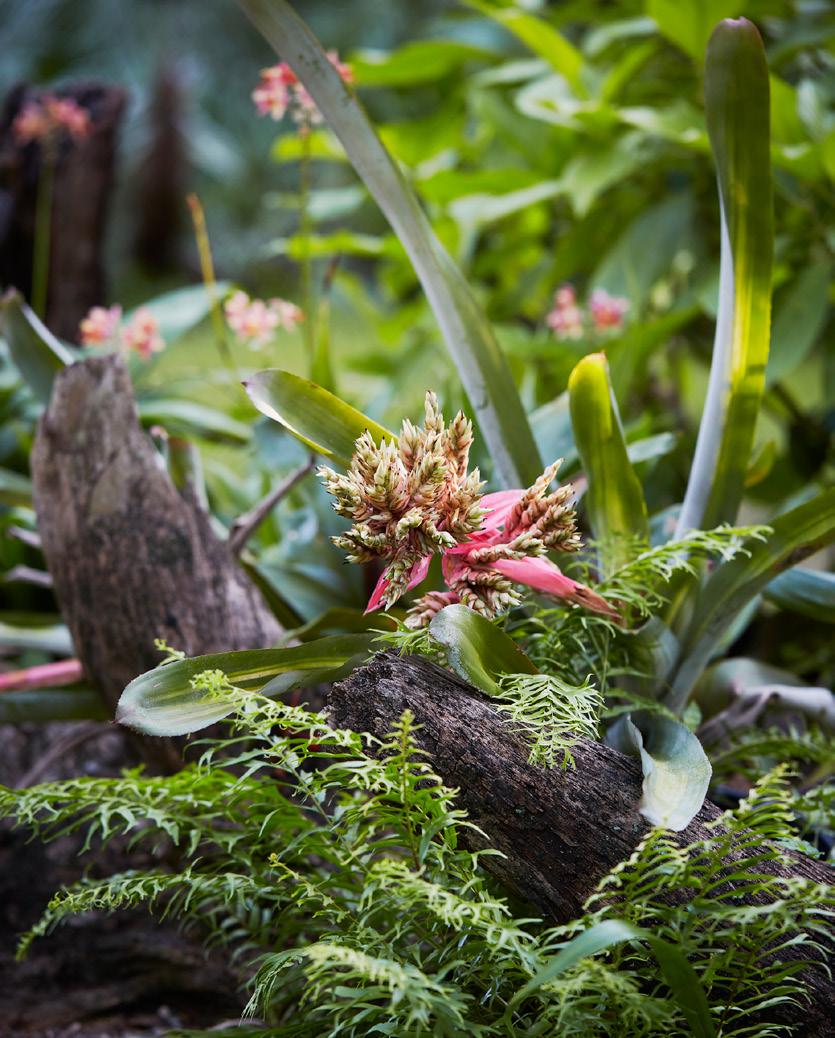
curated collections include more than 10,000 native and tropical plants, such as historic palms, bromeliads, ferns, and orchids. The Garden’s unique naturalistic style, with layered plantings and water features, reflects the original vision of Phillips while accommodating modern conservation practices.
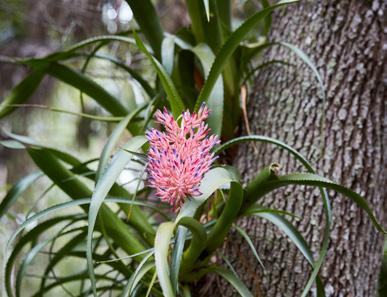
McKee’s orchid collection is again on the rise. More than 1,700 orchids are currently part of the living collection, including native, historic, and rare species. Some 158 orchids are mounted in trees throughout the Garden, while others are tended in the greenhouse or cultivated in the nursery by McKee’s newly appointed orchid curator, Luis Ortiz. In 2024, McKee joined the ambitious Million Orchid Project, working with Fairchild Tropical Botanic Garden to reintroduce native orchids to South Florida landscapes. As part of this initiative, McKee has added 294 native orchids, all tagged, mapped, and monitored by staff and volunteers as they become established under the Garden’s canopy.
The Garden has also become a hub for horticultural education and cultural enrichment. From the ever-popular Annual Waterlily Festival to the Rare & Exotic Orchid Exhibition and Sale, Twilight at McKee’s during the summer months, and seasonal art installations, McKee blends botany with beauty in a way that resonates with both casual visitors and lifelong learners.
In a letter dated December 11, 1931, from Arthur G. McKee to David Fairchild, following Dr. and Mrs. Fairchild’s visit to McKee Jungle Gardens, Arthur wrote:
“This has been a dream of mine for a long time and I am delighted to know that you and Mrs. Fairchild approve the results of our efforts ... I sincerely hope that this Garden may merit the kind words which you have said about it and that someday it may bring very great pleasure to many people from many lands.”
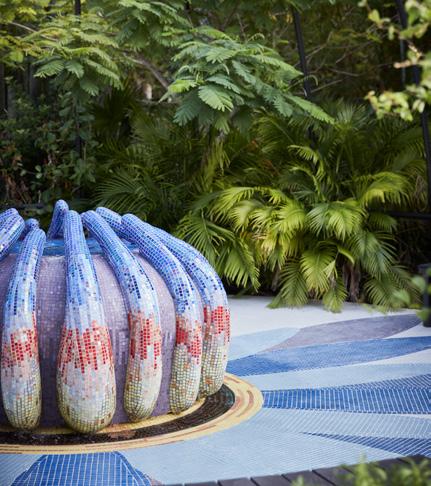
Art is not confined to galleries at McKee, it is rooted in the landscape. From vibrant mosaics in the Children’s Garden to sculptures by internationally renowned eco-artists, McKee continues to showcase the vital intersection of nature and creativity.
In January, McKee Botanical Garden unveiled its Centennial exhibition, FLORIGAMI IN THE GARDEN, a monumental and colorful outdoor sculpture experience by Santa Fe artists Jennifer and Kevin Box. The momentum continues in November, for the 25th Anniversary of the reopening of the Garden with a major installation by renowned Australian-based public artists Gillie & Marc, alongside the exuberant work of London-based Graphic Rewilding, creators of site-specific large-scale art installations for NYBG’s acclaimed exhibit, Van Gogh’s Flowers. Together, these exhibitions reflect McKee’s crosscontinental, cross-cultural approach to storytelling, seamlessly linking contemporary art with the Garden’s storied history and firmly establishing McKee as a national leader in presenting public art within natural spaces.
In honor of these extraordinary milestones, McKee has also partnered with Rizzoli International Publications to produce a commemorative book documenting the Garden’s remarkable journey. With photography by Ngoc Minh Ngo, known for her atmospheric and poetic botanical imagery, the book will offer readers a lush visual chronicle of McKee’s past, present, and future.
Part history, part celebration, the volume will serve as a tribute to the Garden’s founders, restorers, and stewards, a collective of dreamers who believed that even a lost paradise could be found again.
What began as a bold horticultural experiment nearly a century ago has become a testament to the power of vision, community, and conservation. McKee Botanical Garden remains a vibrant tapestry of wildness and order, whimsy and wisdom, a place where past and future, nature and culture, converge.
As McKee prepares to celebrate 100 years of its living collections, it does so with a renewed commitment to environmental stewardship, horticultural excellence, and public engagement. The Garden continues to inspire new generations of plant lovers, artists, and explorers, and in doing so, it fulfills the original dream of Arthur McKee and Waldo Sexton: to create a place where the imagination could roam freely through the wonders of nature.
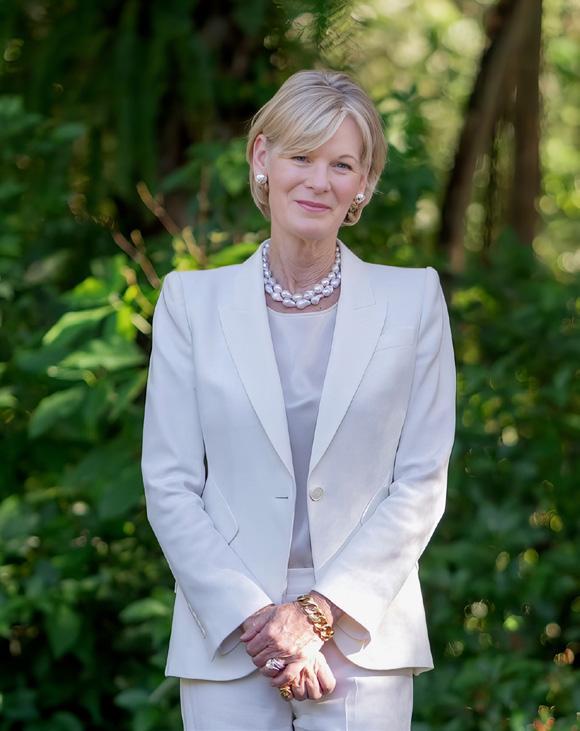
Born and raised in Vero Beach, Marion de Vogel built her career in New York City, working in marketing and communications for iconic luxury brands Tiffany & Co. and Hermes. While living in New York, she remained closely connected to her roots, joining the Board of Directors of McKee in 2012. In 2018, she returned with her husband as a winter resident, deepening her involvement with the place that shaped her early life. When asked whether it was her family’s legacy that ultimately brought her home, her answer is an unequivocal yes.









Blessed
by Anastasia Sokolow photography by LANCEPHOTO
Sulékó is a Perfume House based in Paris, France, founded by myself, Anastasia Sokolow. I describe the Sulékó perfumes as poems, as intimate stories that capture a state of mind at a specific moment in one’s life.
Each story begins in the morning, with the first spray, and slowly unfolds throughout the day, revealing new emotions and sensations as time passes. These stories are not told with words, but with scent— through a language where emotions and aromas meet. I call such language: the Language of the Seasons.
I created the concept of the Language of the Seasons to help people discover a fragrance that truly resonates with their mood and their feelings—a fragrance that can accompany them as they journey through life. To teach this Language of the Seasons, I created a series of Masterclasses.
An artistic approach lies at the heart of the brand and sets it apart. Sulékó highlights the richness of French artistic craftsmanship—not only through the
creation of its perfumes, composed with precious essences, but also through the design of unique bottles. Sulékó collaborates with French master ceramicists to design the bottle of each fragrance and translate the story of each perfume into shapes, textures and colors. Every piece is unique: a collectible work of art which can be refilled.
I want to offer to people the opportunity to rediscover ceramics, worked in a contemporary way; to see and feel that each bottle has been created by hand, with passion and great attention to detail, rather than generated by a machine. Such is the case with each Sulékó fragrance— such as Baba Yaga and *Albho, two other enchanting creations.
Sulékó’s latest creation is an ode to Wild Florida. This perfume is very personal to me—I want to share a special place where I go to find peace and to re-energize.
Although Florida has been a part of my life since childhood, it was during the pandemic, when travel was restricted, that I really came to understand what Florida
meant to me. Florida Vibrations is born out of my own exploration of Florida: It speaks of the energizing scent of magnolias in full bloom along crystal clear springs, of the joyful and enveloping scent of orange blossoms, the wrapping warmth of pines and sand dunes, the grounding scent of mangrove forests . . .
With Florida Vibrations, I want people to reconnect with the beauty and energy of Florida’s nature, a place that always lifts my spirit and awakens a joyful, peaceful and energetic state of mind within me.
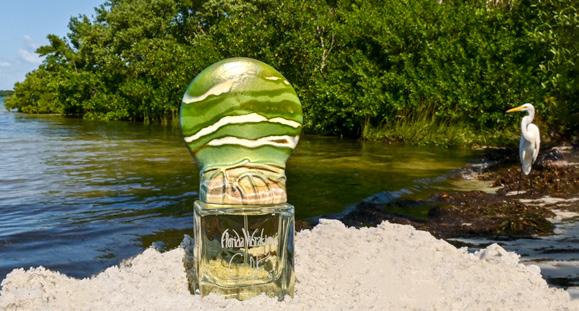
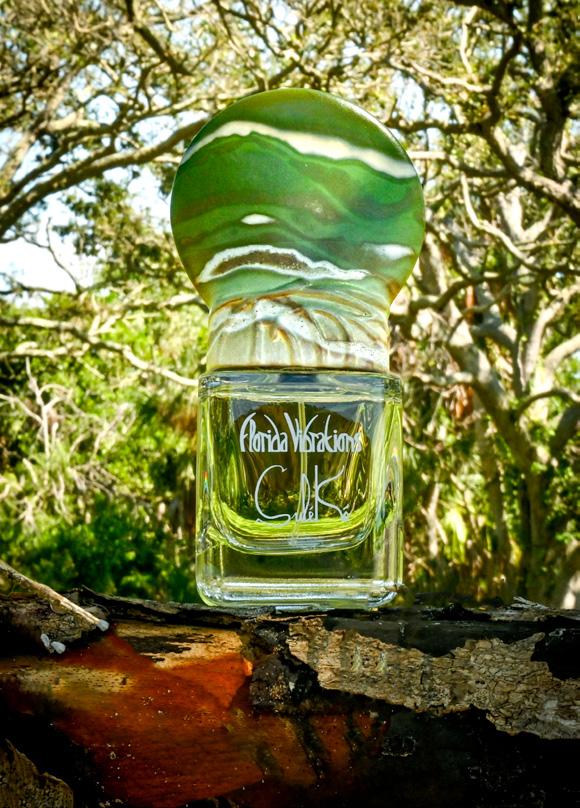
I collaborated with French master ceramicist Maxime Defer to create the Florida Vibrations Sculpture-Bottles. Maxime translates one of the most ancient ceramic techniques, Terra Sigillata, into a contemporary, poetic language. He creates contemplative universes where form, texture and color invite silence, slowness, and emotion.
The rich variety of colors and shapes is obtained by a complex firing process of the Terra Sigillata handmade pieces which are buried within casings filled with layers of ashes and other natural materials. Consumed by fire, the layered materials leave their imprint on the surface of the sculptures and generate a variety of colored hues. Each cap is unique; it is signed and numbered by the artist.
With Maxime, Florida Vibrations with its shapes and colors conveys the vibrations generated by Florida’s green swamps, birds, pristine springs, rivers, lakes, lush forests and wild beaches. Intricate mangrove roots that protect the Florida shores and the limestone foundation upon which the State has developed inspired the base of the Sculpture which unites Florida’s two identifying colors—the blue and the green.
The Florida Vibration Masterclass–Explore Wild Florida
As I was researching native plants and scent ingredients, I realized that people should know more about the rich diversity of Florida’s natural habitats. Not just people in Europe, but even people across the United States, and sometimes within

Florida itself: Few have deeply experienced the enchanting fragrance of mangrove flowers or the breathtaking sight of Florida’s native Butterfly Orchid (Encyclia tampensis) in full bloom, draping the crooked branches of live oaks—to name just a few of Florida’s hidden wild beauties.
My research also made me realize the extent of the damages caused by overdevelopment, intensive agriculture, and climate change to Florida’s fragile ecosystems.
In response, I decided to create a special Masterclass—an immersive scented journey to rediscover Florida, the diversity of its natural habitats and their singular, evocative scents. I want to encourage people to open their eyes to the riches and diversity of these natural habitats and inspire them to further explore them on their own.
On March 19, 2026 I will present the Florida Vibrations Masterclass at McKee Botanical Garden in Vero Beach. I invite participants to explore through the Masterclass the vibrant and diverse landscapes of Florida. I will walk and



Anastasia Sokolow.
guide participants through lush forests, mangrove tunnels, barrier islands, pristine springs and rivers, pine forests, swamps and the well-known River of Grass.
Each participant will receive a box with paper strips and vials of scent ingredients which will illustrate the atmosphere of each habitat that I will unveil and give the participants the opportunity to immerse themselves into the fragrant world of Florida’s flora.
I will also explain how I use the Sulékó language of scents to create Florida Vibrations and translate my vision of Florida. I will disclose my approach to perfume creation and how I select and use scent ingredients to narrate a story and stir emotions. The experience will conclude with a behind-the-scenes video revealing the step-by-step creation of the Florida Vibrations sculpture-caps by Maxime Defer.
It is my privilege to present our Florida Vibrations Masterclass in the beautiful setting of McKee Botanical Garden, in connection with the Centennial celebration of the garden, and to collaborate with their dynamic and passionate team, whose work to preserve nature’s wonders and educate people to the world of plants is so significant.
Sign up for Florida Vibrations Masterclass at the McKee Botanical Garden website, McKee Botanical Garden Signature Series, on March 19, 2026: https://mckeegarden. org/events/the-language-of-scentsflorida-vibrations-with-anastasiasokolow/
McKee Botanical Garden 772-794-0601
350 US Highway 1 Vero Beach, FL 32962
Sulékó Online Shop Website: suleko.com
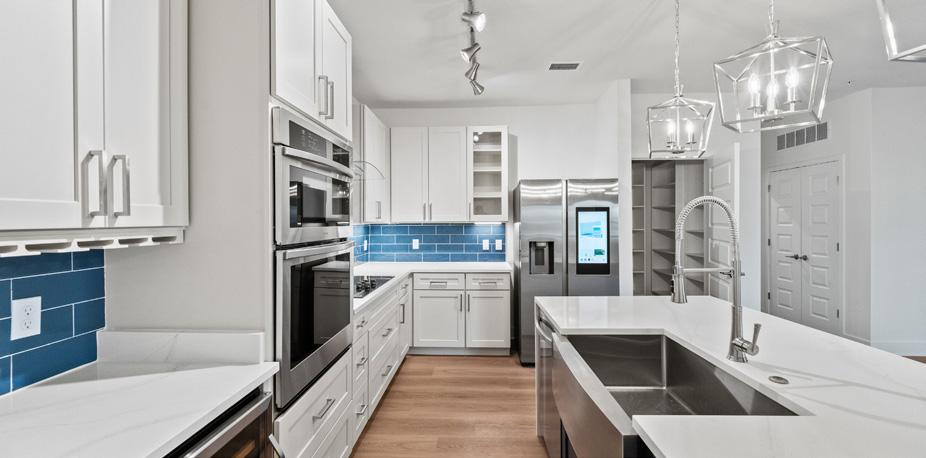
LUXE LIFESTYLE - COMMUNITY PERKS
• Heated Saltwater Pool
• Outdoor Spa With Private Cabanas
• Fitness Center With Spin Room
• Golf Simulator
• Sauna and Steam Room
• Pickleball Courts
• Interior Corridors With Elevators
• Barbecue Area
• Professional Demonstration Kitchen With A Private Dining Room
• Billiards Game Room
• Poker & Card Table Room
• Piano Lounge
• Mail Room With Package Lockers
• Indoor Pet Spa
• Dog Park With Shaded Pavilion
• Car Care Center With Tire Filling Station And Vacuum
• Private Garages
• Controlled Parking Access
• Carports
• Climate Controlled Storage Available
• Monthly Resident Social Events


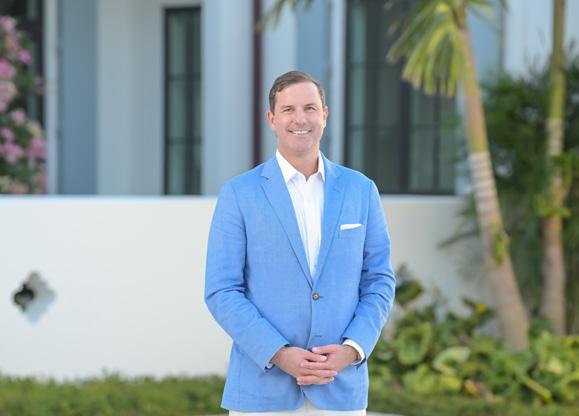
by John Stearns photograph courtesy of The Scout Guide Treasure Coast.
Luke Webb’s interest in luxury real estate was piqued when a friend and successful real estate broker in Miami invited him to the filming of a TV show his friend was cast in, Bravo’s Million Dollar Listing Miami
The friend had been trying to get Webb— who lived in Miami Beach and was in the marine industry with Miami Nautique and Nautique Boats—into real estate and invited him to a party for the filming. It was pure Miami: glitz, glamour, beautiful people, and live band in a high-rise penthouse overlooking the city lights.
“He’s like, ‘This is what you could be doing,’” Webb recalled.
The friend talked Webb into getting into real estate, then mentored and supported him. As Million Dollar Listing was filmed that 2014 season, Webb learned the business.
“My first showing I ever did was in a $14 million condo at the St. Regis in Bal Harbour
in Miami,” Webb said. “Would love to say that I sold the unit; I didn’t.” In the parlance of his days as a competitive water-skier at Florida Southern College in Lakeland, Webb admitted to being “way out over my skis.”
Not anymore.
The broker/owner of Luke Webb and Associates in Vero Beach has carved a niche in luxury real estate sales since then. After learning the ropes in Miami, he and his wife, Molly, moved to Vero Beach 10 years ago, an easy choice when they sought a place to raise their two young girls—then age 1, with another on the way—plus the added child care bonus of Webb’s retired parents living locally. Molly, a professional in the architecture industry, works in the Vero office of architect James R. Stein. Their daughters today are 10 and 11.
Working for three different luxury real estate groups over his decade here, Webb honed his craft, expanded his contacts,
built his reputation, and ventured out on his own in September 2025, leasing a former Stewart Title Company office at the corner of Beachland Boulevard and Cardinal Drive, a visible location in the commercial district on Vero’s barrier island. He has two other broker associates, Lange Sykes and Nancy Hardy, and a licensed associate, Amy Maria Montemarano, plus two other associates who are planning their moves to the firm, with a sixth who’s an experienced commercial specialist in Memphis working to obtain his Florida license. Webb envisions eventually having eight to 10 top-tier agents.
Luke Webb and Associates covers all of Indian River County, with most listings on the barrier island, but it ventures as far north as Sebastian Inlet and as far south as the Fort Pierce Causeway Bridge.
“I don’t really have plans to expand the footprint, unless there’s a need for it,” Webb said. “There are folks I’ve talked to that have tried to expand into Brevard, St. Lucie, and Martin counties with limited success. Vero’s barrier island is just a different market, a different niche, and I don’t really think I have an interest in pursuing other geographic markets. Focusing on the client is our biggest thing, servicing our clients better than anybody else—and my role in all that is trying to serve our agents better than anybody else as well.”
Webb added, “I think there’s a place in the market for an ultra-luxury boutique firm that’s locally owned and just focuses on Vero Beach and on providing the highest level of full, hands-on, white-glove concierge service.”
LIV VERO Magazine caught up with Webb in mid-January on a day when he was working on a potential deal for $18.5 million. If it were to happen, he believed it would be the county’s highest sale in almost two years. It also would surpass his previous career sales high of $14.5 million in John’s Island.
The conversation with Webb—who was born in Reno, Nevada; moved to St. Louis with his family at age 7; water-skied competitively in high school; received a water-ski scholarship at Florida Southern, where he earned a bachelor’s degree in financial management and business, then got his MBA at Nova Southeastern University in Fort Lauderdale—is edited for length.
JS: Your company’s real estate niche is purely luxury. How do you define luxury? Is it by a minimum price point?
LW: It’s not a price point. … It’s really more the property itself and the story that it tells. I mean it could be $300,000, but it could be an amazing luxury $300,000 property. The reality is, we’re mainly focused on the island side, although we do properties on the mainland … (including representing) a 1,000-acre ranch deal out west of town as well. … We’re able to cover all of it with our experience and expertise; but generally speaking … most anything on the island would fall into that category.
JS: What sets your office apart from the myriad others out there competing for listings, especially in the luxury niche?
LW: There are a few different ways that we do that. … I’ve been with many top, highend firms and seen how they operate. … The reason I started it was saying there’s a better way to do all of this, and I think you just go back to basics. You just go back to focusing on the client, whether it’s a seller or a buyer, and you go back to focusing on your agents and that’s it. Everybody’s competing for the same slice of pie, but (there are) those that have had the experience of dealing with giving their listing to somebody who then end up dealing with the assistant all the way through, that maybe is just newly licensed, or doesn’t have the experience, or the knowledge, or the expertise to negotiate very complex deals. … All the agents we have here, except for the one that’s brand new, have decades of experience in negotiating deals. They want to be hands-on; they want to be involved because they know how quickly a real estate transaction goes sideways. So, it’s not dealing with assistants, it’s not dealing with some office administrator; it’s dealing directly with the people that are there to support you and to help you get the best price that you can. … We’re focused more on service than on volume.
JS: How would you classify the state of the Vero Beach area real estate market right now?
LW: It’s strong but balanced I would say at this point. It’s not really a seller’s market, not really a buyer’s market, but there’s still some good buying opportunities out there. At the same time, there’s still some really good properties coming to market for people who’ve been waiting patiently.

JS: How do you describe Vero Beach to new clients who are perhaps unfamiliar with the area?
LW: Paradise. I mean, we live in this village by the sea, and that’s what makes it so special. There are no high-rises. Most of the land on the island’s been developed, so there’s not the risk of overdevelopment. And if you drive down the main street—instead of T-shirt shops and hot dog stands—you see trust and tax attorneys, financial advisory firms, high-end shopping boutiques; but it’s all in a very upscale but understated setting that you really can’t get anywhere else. And to that point, you’ve got what you’d call titans of industries … Fortune 50 executives that live here in Riomar, John’s Island, and Windsor, you’ve got strong entrepreneurs, you have authors, you have people that have made a lot of money and accomplished a lot that could live anywhere that choose to live here for the upscale but quiet and refined lifestyle.
JS: You send out a regular email listing events around Vero. How did that start?
LW: It was something I started a while ago when I got to Vero. … For the first year or so, my wife and I were always trying to figure out what to do and there was no central place to find it. … And then when I joined with a local firm here, it was sort of how to get my name out there as well. And so I was already looking into doing events and
came up with the idea, so why don’t we just do a biweekly curated list of things going on and then … at the bottom we can put in some real estate stuff. … It was sort of a soft way to just do marketing, get my name out there, but also to provide a little bit of good and a little bit of help to the community. … Now, (organizations) reach out to us all the time (to be on the list). … We don’t charge. I’m happy to have anybody that has an interesting event that I think people would like to go to. … My name’s on it, which helps advertise the firm, but hopefully people are getting benefit of the events going on, both people going to the events (and) the people putting them on. If you scroll to the very bottom, there is some of our real estate, but I purposely leave it kind of buried because it’s not meant to be in your face.
JS: It shows potential clients from out of town how much is going on around this little town, too.
LW: Absolutely. … Every week we get probably two to three requests from friends, “Hey, can you sign our friend, the Smiths from Rowayton, Connecticut, up for it? They saw it when they were down here and they want to be involved.” … It sort of keeps (the office name) out there. … I love helping people, I love solving problems, I love putting deals together, and that’s what drives me.
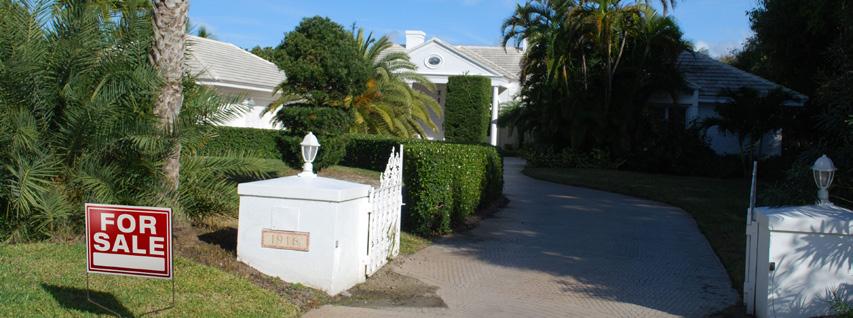
Our
by Jim Field
Truism: a statement that is obviously true and widely accepted, so self-evident that it is unremarkable because of its obviousness.
I am not a real estate professional, merely a consumer who has purchased, sold, and renovated multiple primary and secondary properties over my lifetime.
I just spent the last two hours reading roughly two dozen articles on the current residential real estate market—local, regional, national levels, also focusing on the politics and deliberations of the Federal Reserve. I read both national and local media sources (the Wall Street Journal a favorite).
I was looking for insights on the leading factors influencing residential sales activity, on both the macro (broad) and micro (granular) levels.
It had been about six months since I last looked into macro drivers. I discovered that the consensus view hasn’t changed. Here’s my version of the “Top 5” list:
• High Interest Rates. Monthly mortgage payments too high for type of home desired.
• Lack of Affordability. High home prices and ownership costs relative to wages.
• Low Inventory. Homeowners holding onto low-rate mortgages, not wanting to sell.
• General Economy. Concerns about inflation, job security, taxation, foreign affairs.
• Buyer–Seller Standoffs. Sellers expect peak-market prices, buyers expect discounts.
Looking for tactical factors influencing sales—i.e., specific actions and/or considerations likely to produce or inhibit a given transaction—I didn’t find much. However, I did have a fallback to turn to: recent holiday parties and dinners, during which conversations inevitably turned to real estate, reflecting the obsessive interest of many Vero Beach residents in homes—their own and everyone else’s.
Why this intense interest? It seems that many people come to Vero Beach to purchase a second property, seeking the “good life.” So too, these same purchasers may choose to later switch to a more
appropriate property—different location, larger or smaller. And finally, there could one day be a decision to sell the primary residence and find a still more refined “forever home” in tropical paradise. So, it turns out, each new prospective resident scouting Vero Beach could spawn three future real estate transactions. And when you’re that potentially active as a buyer and seller, you can’t afford but to watch the market like a hawk. (It makes sense, right?)
These real estate conversations over beverages, hors d’oeuvres, and entrées (infrequently dessert) are anything but casual banter. To the contrary, participants are amazingly aware of what homes are currently listed, what homes will soon be listed (CIA-level intelligence at work), every detail of a home’s interior and exterior, what is desirable and undesirable about the home, and, last but not least, firm opinions about the appropriateness of the asking price. Finally—and this is especially critical to understanding a possible transaction—details about the sellers themselves, amounting to a concise paragraph of pop psychology.
Listening to all of this, I will admit to learning a lot about real estate—and better still, from local experts: neighbors, friends, acquaintances. Distilling all this knowledge, comment, and opinion, what crystalizes is a small set of truisms that well capture why some homes sell and others don’t.
Applicable primarily to single-family homes, in no particular order:
#1 Comps rule. Real estate comparables (i.e., “comps”) are recently sold properties used to estimate the market value of a given property by identifying “similar homes,” considering such factors as location, square footage, age, features, and amenities. Comps rule because they are a market-based determination—and supply vs. demand is the best pricesetting mechanism known to man. Real estate agents will compile a list of comps for both buyers and sellers to initiate discussions. As a rule, a newly listed home’s price should match those from a well-researched list of comps unless there are demonstrated features that set it apart, and these features will be valued by buyers enough to support a higher price. Observation: We could go into the MLS (multiple listing service) today for Vero Beach and easily find properties that are priced significantly above their comps for no apparent reason. The only plausible explanations would seem to be that the sellers are (1) secretly indifferent to selling their home and/or (2) delusional about its intrinsic market value. Pearl from The Group: Listed homes priced above their comp by more than a few percentage points will sit; those priced right on comp— i.e., where price precisely reflects intrinsic value—will sell in a week.
#2 Big red flag. In the real estate market where I came from before Vero Beach, the metric Days on Market (DOM) was closely watched and managed by realtors. When this number grew too large, standard practice was to withdraw the listing and sideline it for a period of consecutive days, affording a DOM reset to zero when the home is relisted (most MLSs require 30 to 90 consecutive days). The paranoia surrounding DOM stems from a widespread perception that something is fundamentally “wrong” with a property with a high DOM—the degree of wrongness
correlating strongly with recorded DOM. Observation: Many listed homes in Vero Beach have very high DOMs, implying that sellers don’t seem to care what this key metric communicates to buyers: “buyer beware.” Pearl from The Group: DOM matters.
#3 Home price levels. Home prices during the COVID pandemic period—2020-2022 especially—skyrocketed nationally and in Vero Beach. In my neck of the woods, for example, homes that had been valued in the $750,000 range were suddenly being listed for $1,300,000 and higher. (We all can point to examples.) Since the peak in 2023-2024, prices on the island have retreated 10-15% overall—a healthy market correction for long-term stability. Observation: Current home prices are still too high—as demonstrated by the prolonged slowdown in sales. Pearl from The Group: A further 10% retreat is warranted; many sellers are “greedy.”
#4 Firm “no” to major renovations. There is unanimous agreement that potential home buyers in Vero Beach do not want to undertake major renovations. Almost to a person, these prospective buyers are 60 years of age and older, retired or semi-retired, looking for peace and quiet, not familiar with the local building community, and not interested in taking on a first or yet another home renovation ordeal. As such, few if any are looking to pay an exorbitant price for a home whose age and condition indicate that—realistically—it should be gut renovated or, being less kind, torn down. Even if a potential buyer was slightly inclined to consider a major renovation, the asking price would have to be bargain basement—given the required investment—to make the numbers work. Observation: The MLS reveals many teardown-worthy properties priced at impossibly high values—suggesting the sellers actually believe their dated or dilapidated home is move-in ready.

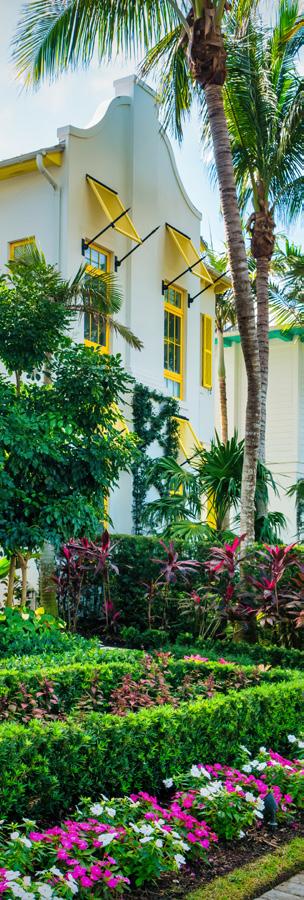
Pearl from the Group: Don’t waste your time trying to talk sense to such sellers. Payback: The home will sit forever.
#5 Asking price plus needed upgrades = real price. Asking price is commonly understood to be a false number in many ways. First and foremost, it is “asking”—thus retail. Second, there is the additional cost of various investments to upgrade a home that the buyer will consider essential. Examples abound: new roof, kitchen appliances, an entirely new kitchen, HVAC unit, impact windows, interior and exterior painting, lighting, hardware, storage, etc. Accordingly, the actual price of the home for the buyer is asking price plus these necessary upgrades—which can easily equate to 5%+ of asking price. Observation: Most sellers will price their home as if no upgrades are needed—indeed, their home is perfect and there’s no admission of deficiencies. The practical effect is to turn off potential buyers who know otherwise—and wonder what the sellers could possibly be thinking. Pearl from The Group: Make an offer discounting the asking practice on a dollar-for-dollar basis for all upgrades required. Present your list and watch the reaction.
#6 Improvements must be worthy improvements.
Few things make potential buyers more nervous than a listing that is headlined “newly renovated.” To be frank, The Group has concluded that most people have “pedestrian” tastes (being generous) when it comes to interior design. Couple this with businesses and individuals who see a lucrative opportunity in buying homes in need of repair, investing frugally in enhancements, and selling them at a price to realize a healthy margin. Where things go awry is when renovations are done on the cheap and look it—dysfunctional floorplans, cheap materials, inferior products/appliances, sloppy finishing, strange colors, and so on. To a trained and discerning eye, a five-minute tour through a home reveals everything you need to know. Observation: Many sellers of renovated homes price their listing to recoup the initial home purchase price plus renovations—dollar-for-dollar—plus profit. Unappreciated by them, however, is that sellers don’t want to pay for the
enhancements—and, truth be told, would have preferred to purchase the home at a far lesser price without them. Listed properties of this sort are not hard to find; most agents seem to be aware of the dog they’re representing. Pearl from The Group: Don’t choose to inherit someone else’s dream palace. Alternatively, discount renovations dollar-for-dollar from asking price plus lop off an additional increment to cover ripping bad things out.
#7 Present tidy properties. A number of conversations mentioned visiting multimillion dollar listings only to find the home unkempt, dirty, odorous, packed to the gills with personal items and unused junk stowed in closets and the garage. Meanwhile outdoors, grills rust, pools are poorly maintained, hardscaping is broken, weeds proliferate, hoses left where they were dropped. Apparently, the sellers had never heard of “staging” or were unconvinced of its ROI. Concurrently, some agents wouldn’t think to vacuum, empty trash, organize. Observation: Many homes are presented in a manner to actually destroy value—you, a prospective buyer, can’t wait to exit. Pearl from The Group: When homes are meant to look great and look shabby, just wonder what else awaits beneath the tarnished veneer.
#8 Mainland alternative. We know and hear of many couples who have decided to leave the island for the mainland, or have chosen—unlike their parents—to never purchase on the island in the first place. For those pulling up stakes, the costs of home and flood insurance, constant maintenance, select upgrades, and higher HOA fees are too much of a burden. In addition, the brand new home they purchased three decades ago has finally reached an age where a decision is soon approaching of either renovating the home to some considerable degree or relaxing their standards to live in an increasingly dated home. When this scenario is expanded to the island’s larger inventory of aging homes, a clear dilemma emerges. Prospective buyers are purchasing multi-million-dollar properties built in the 1970s through the 2000s— frequently labeled move-in ready—yet finding themselves in homes with inferior construction and fewer amenities than they would have tolerated elsewhere. Just
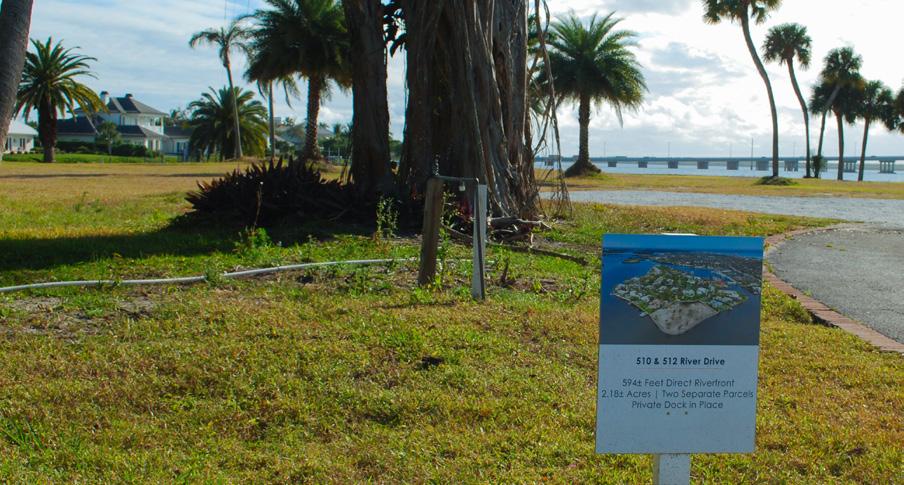
minutes away over a bridge are brand new homes of every price range in pristine neighborhoods closer to the hospital and shopping. Of course, it’s not the island they’re used to but, stated in a positive way, it’s not the island and that’s the point. Observation: Many island homes are showing their age. Not all prospective buyers are willing to pay a large sum of money to live in a dated structure with high built-in costs. All to say that in pricing some listings on the island, there are genuine alternatives that didn’t exist a decade ago. Pearl from The Group: Yes, people love the beach. But they also love new.
#9 Interest rates are not determinative. Interest rate levels rarely popped up in our conversations, reflecting that basis point changes have limited influence on real estate activity where a substantial number of deals are cash transactions. Average 30-year mortgage rates are cooperating very recently, moving from 3.5% in 2020, to 3.0% in 2021 (record low 2.65%), to above 6% in 2022, breaking 8% in 2023, remaining above 7% in 2024, and trending lower to mid-6% range in 2025. At minimum, lower interest rates provide a psychological boost suggesting the prospect of an uptick in real estate activity. Observation: Mainstream media coverage of interest rates is disproportionate to the limited impact on overall affordability
made possible by small and staggered adjustments to the Federal Funds Rates controlled by the Federal Reserve. Pearl from The Group: Interest rates what?
#10. It’s the national mood that counts. In our social circles we try not to talk politics. Once in a while, of course, someone will slip, expressing an actual opinion or heartfelt conviction (yikes!). Just beneath the congenial times, however, people are clearly troubled and worried sick . . . about everything. The economy, world affairs, our culture, crime, fraud and corruption, the promise and threat of AI, and on and on—bottom line, what the future portends for themselves, children, and grandchildren. In the current mood, conservative postures prevail, rejecting risk for greater safety. The stock market is still an acceptable form of risk taking, real estate far less so, largely forgetting that smart real estate investing has yielded exceptional returns over the last five decades. Observation: Sadly, there is a dark cloud stalled over our country going on two decades, and its shadow has dampened real estate enthusiasm. Faced with a choice to buy or wait, many are choosing the latter, not seeing a reason to act in the short-term, which then becomes the near-term. Pearl from The Group: If you find an amazing property fairly priced, show it to me.
Case Study in Point
Barrier island oceanfront home built in 1989. Desirable gated community. HOA. Two stories. 5,300 square feet. Construction concrete block, wood frame. Roof wood shake. 3 bedrooms, 3.5 baths. Partial storm shutters. Small pool. Original kitchen and baths. Original asking price: $5,950,000. Most recent asking price: $4,200,000. Days on market: 389. Sold 12/25. Selling price: $3,755,000. (Reduction from original asking price: 37%.)
REAL ESTATE CONVERSATIONS OVER BEVERAGES, HORS D’OEUVRES, AND ENTRÉES ARE ANYTHING BUT CASUAL BANTER. TO THE CONTRARY, PARTICIPANTS ARE AMAZINGLY AWARE OF WHAT HOMES ARE CURRENTLY LISTED, WHAT HOMES WILL SOON BE LISTED (CIA-LEVEL INTELLIGENCE AT WORK), EVERY DETAIL OF A HOME’S INTERIOR AND EXTERIOR, WHAT IS DESIRABLE AND UNDESIRABLE ABOUT THE HOME, AND, LAST BUT NOT LEAST, FIRM OPINIONS ABOUT THE APPROPRIATENESS OF THE ASKING PRICE.

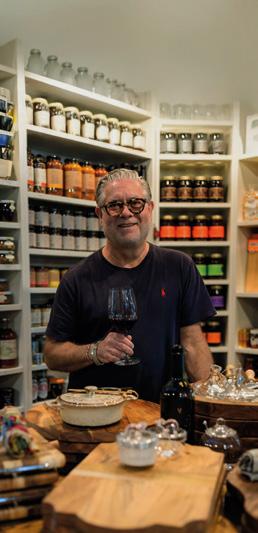
by Rob and Michele Wayne, owners of Varietals and More photographs courtesy of Varietals and More
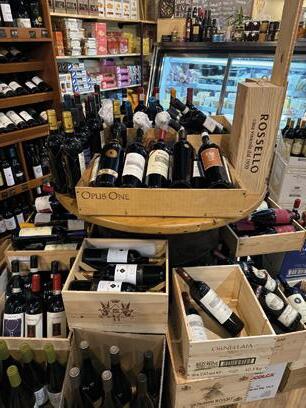
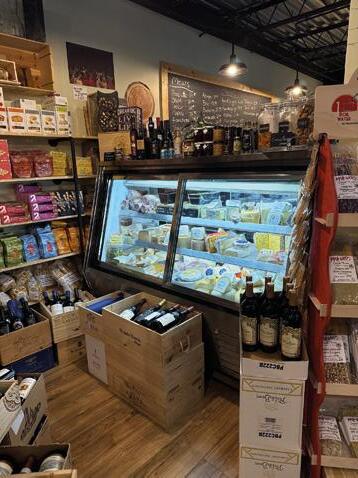
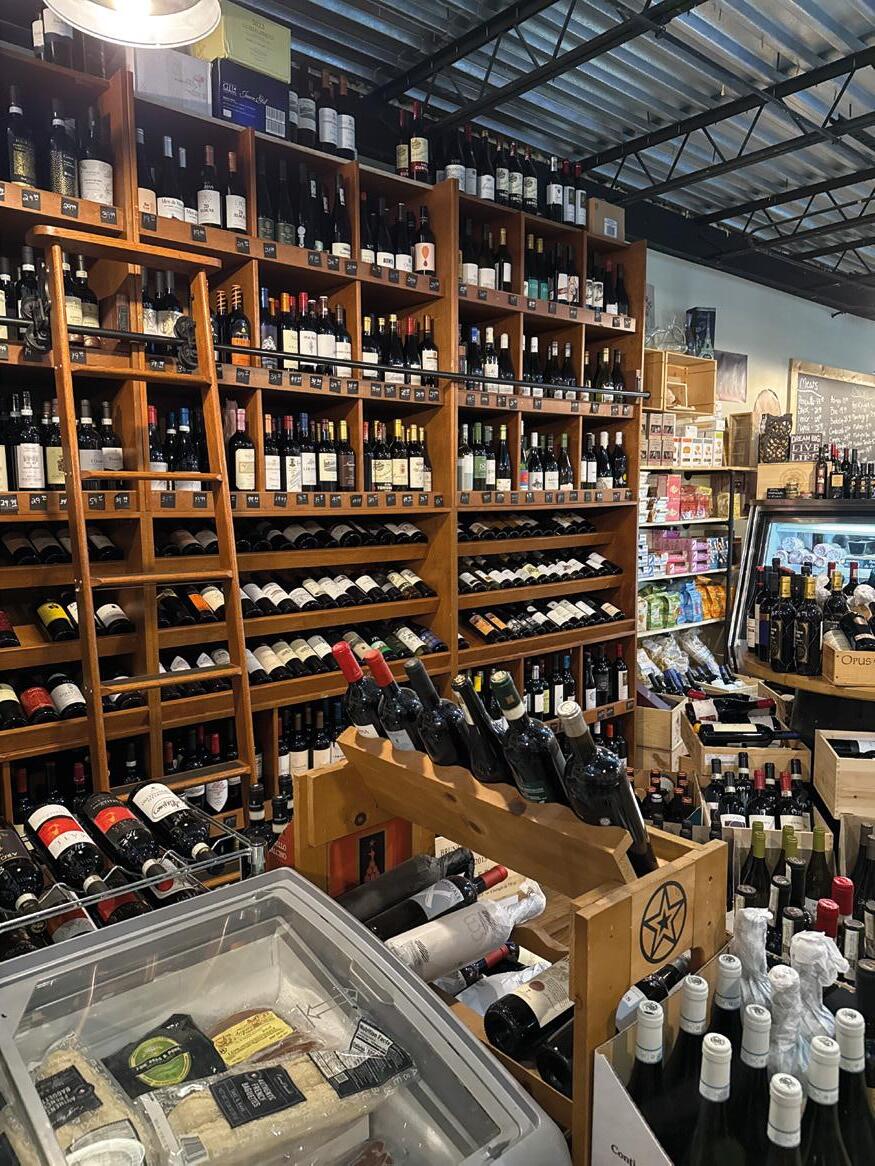
For more than a decade, Varietals and More at Royal Palm Pointe has been a destination for those who appreciate fine wines and distinctive, hard-to-find selections. Our reputation is built on thoughtful curation, exceptional quality, and a passion for the art of entertaining.
While our wine collection remains at the heart of what we do, Varietals and More offers an experience that extends well beyond the bottle. We proudly feature gourmet cheeses and artisanal charcuterie from around the world, complemented by fine caviar, premium smoked salmon, and an elegant array of gourmet accoutrements. Every offering is carefully chosen to inspire pairing, elevate gatherings, and create moments of refined indulgence.
Known for its bold personality and wideranging styles, blue cheese is one of the most versatile cheeses in the world. From creamy and mild to robust and intense, its complex flavors make it a natural companion to wine, charcuterie, and gourmet accompaniments. Perfect wine pairing: Sauternes, Port or a bold red.
Cheddar is a timeless classic, celebrated for its depth of flavor and remarkable range of expression. From smooth and buttery to sharp, complex, and crystalline, cheddar offers a richness that deepens with age, making it both comforting and refined. Perfect wine pairing: Chardonnay, Cabernet Sauvignon.

Goat Cheese
Goat cheese has a fresh, tangy flavor and a creamy texture that makes it easy to enjoy. With styles ranging from soft and mild to more aged and flavorful, it’s also naturally lower in lactose, making it a great option for those who are sensitive. Perfect wine pairing: Sauvignon Blanc, Chenin Blanc.
Gouda
Gouda comes in many different styles, each offering its own texture and flavor. Younger Goudas are smooth and creamy with a mild, buttery taste, while aged Goudas become firm and nutty, developing those signature crunchy crystals as they mature. With such a wide range—from gentle and comforting to bold and deeply flavored—there’s a Gouda for every palate and every occasion. Perfect wine pairing: Chardonnay, Pinot Noir, Merlot.
Parmesan
We only offer a 36-month aged Parmesan, prized for its firm, crumbly texture and deeply savory, nutty flavor. Extended aging allows natural crystals to form, creating added texture and complexity in every bite. This is a bold, classic Parmesan meant to be savored on its own or enjoyed as part of a well-curated cheese board. Perfect wine pairing: Chianti, Barolo, Amarone, Prosecco.


Truffle Cheese
Our truffle cheeses offer a rich, earthy depth, blending the unmistakable aroma of truffle with carefully selected cheeses such as Moliterno, Gouda, Pecorino, and Cheddar. Each variety brings its own character—from firm and savory to smooth and creamy—creating layers of bold yet balanced flavor. These truffle-infused cheeses are indulgent without being overwhelming, and are equally at home on a cheeseboard or added to favorite recipes for an elevated touch. Perfect wine pairing: Barolo, Nebbiolo, Champagne.
Brillat-Savarin
Brillat-Savarin is a classic French triplecream cheese from Normandy, known for its rich, buttery texture. Lush and elegant, it melts on the palate and pairs beautifully with Champagne or fresh fruit. Perfect wine pairing: Champagne, White Burgundy.
Pate
We carry a classic selection of country pâté, duck rillettes, and silky foie gras, best served with crisp crostini, cornichons, and traditional whole-grain mustard. Rich and savory, these timeless offerings pair beautifully with Champagne or fine wine.
Spanish Tapas Night
One of our favorite tapas nights brings together Spanish chorizo, Ibérico jamón, Manchego, and carefully selected tin fish for an easy, shareable spread. Perfect wine pairing: Rioja, Cava, Sherry.
Charcuterie Board
Our favorite selections for entertaining: Époisses de Bourgogne, Stilton Blue, aged Manchego, and creamy goat cheese, accompanied by 24-month aged Prosciutto di Parma and Napoli salami, with fig jam and olives. And don’t forget your favorite wine!
Truffle Pasta
8 oz tagliatelle or fettuccine
2 tbsp unsalted butter
1 tbsp olive oil
¾ cup finely grated Moliterno al Tartufo or Pecorino with Truffle
Freshly cracked black pepper
Salt (lightly—cheese is salty)
Reserved pasta water
Cook pasta in well-salted water until al dente. Reserve ½ cup pasta water. Warm butter and olive oil together over low heat—do not brown. Add pasta to the pan, tossing gently. Add a splash of pasta water for silkiness. Remove from heat. Gradually fold in the grated cheese until glossy and emulsified. Finish with black pepper. Taste before adding any extra salt. Serve with a crisp green salad, Enjoy!
So whether you’re a novice or a true gourmand, consider this just a glimpse. Our cases are filled with far more to discover—from an expansive, everchanging selection of exceptional cheeses and imported meats to fine chocolates and our famous Key Lime pie. We look forward to seeing you soon. Bon Appétit!
54 Royal Palm Pointe
Vero Beach, FL 32960
772-217-2780
Instagram: @varietals
Website: varietalsandmore.com






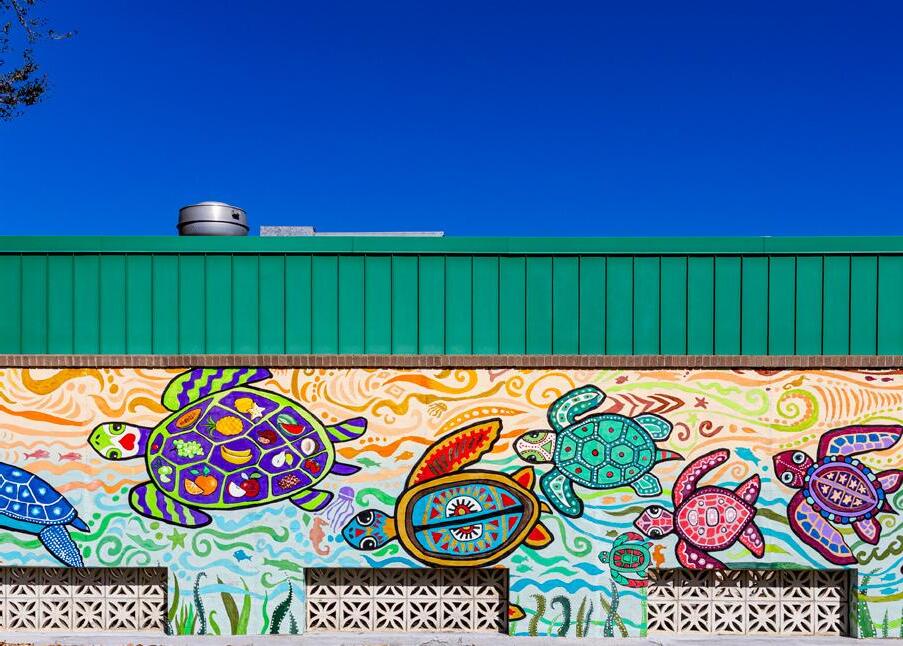
Interviews conducted by Jim Field mural photography by Victoriya Knapp group and student photographs courtesy of Grace Sheldon and Katherine Larson
Editor’s Note: This story was brought to our attention by a friend, Kimball Stadler. She wondered if we might be interested in featuring an elementary school art project, and her eyes and enthusiasm betrayed there could be something special involved. She offered to email me a few items to look at—a brief writeup and a few photos. Upon review, it was quickly apparent that the story was extraordinary—for what it reveals, for what it teaches, for, simply put, how endearing it is. Individuals contributing to their community through personal involvement. Reaching down to enrich and shape the lives of children. Creating things of permanence for many to enjoy. We feel privileged to be associated, in our small way, with the people and
organizations profiled here. A heartfelt thank you to Grace Sheldon and Katherine Larson.
Grace Sheldon Parent
The project started in the summer of 2024. At that time my son was a student at the school, and I was serving as President of the PTA (Parent-Teacher Association). When I stepped in as President, finding artistic opportunities for the students was a big priority of mine.
Turning over ideas in my mind, I started with the city of Sebastian, researching to see what opportunities might exist for a
local partnership. I found my way to the Chamber of Commerce website and saw a mural program mentioned. I loved the concept, and immediately filled out and submitted an application.
Remarkably, I think it was approved the next morning! I received a call from the Chamber’s President at the time—Cheryl Thibault—and she was really excited about the mural program and our proposed project—and said that I could count on her backing.
With this piece in place, I turned to finding an artist. The Chamber maintained a list of six designated artists that you could
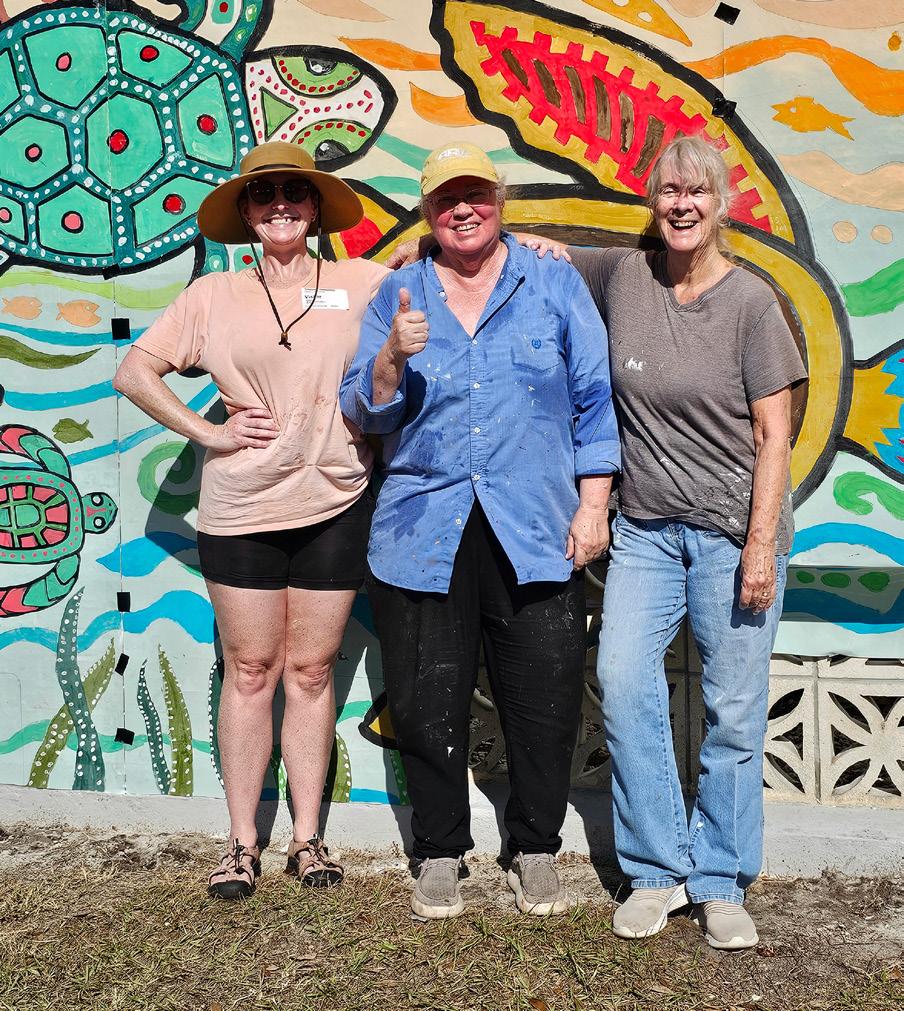
effectively choose from. I went down the list and found Katherine Larson right away. She had lots of experience with children creating murals. And seeing this solidified what I wanted to do—which was to do an art project—an amazing mural— where every child had the opportunity to participate. Katherine and I met and we hit it off right away, reaching a clear understanding of what we would do.
The Chamber of Commerce picks the wall, and location is important: The Chamber will only sponsor a mural if it meets certain criteria. For example, how many cars drive by it? How much public access exists to it? How large is it? Also, the design had to include Florida flora and fauna. And we said, “No problem, we’re going to do sea turtles.” It was an immediate winner.
The wall we had in mind at the school is right when you drive in. Every person coming onto our campus—including the car pickup line—has a front row view of this mural, every single day. And it’s visible from two main roads in our small city. The Chamber gave its approval—thank goodness we had a perfect location! And to make it unique, it’s a three-sided curved wall, something that hadn’t been done before.
Katherine came back with an initial budget of $18,000. I thought, “This is not a small undertaking.” The Chamber came back and asked how we were going to fund it. Katherine suggested that I reach out to the Sebastian Riverfront Fine Art and Music Festival, and Robert Johnson, who is the head of their Board. They kindly funded $10,000 to purchase materials—so generous! And then Katherine’s non-profit, Isola Arts in Vero Beach, covered the rest. So thank goodness, we were able to get these two amazing donations.
In terms of timeline, we had secured the funding by Christmas 2024. Which meant we were already half way through the school year. We really weren’t ready to start the mural—I hadn’t gotten permission to do
it in the art teacher’s classroom. The initial plan was to simply designate a Saturday and have the kids come in, whoever was available. However, it quickly became apparent that not enough kids would get to participate that way.
So then I worked with the Principal to request that the school district include the mural formally into the art curriculum and the school district was very supportive! So we were able to get six weeks of the art curriculum dedicated to the mural—on top of what the students would also do in the classroom. The mural took three months to complete in the classroom. Every kid at the school—roughly 240 students—from kindergarten through fifth grade—was able to work on the mural three times—not just once, but three times. No one declined. That was fantastic.
But going back, the second half of the 2024-2025 school year—Christmas through summer break—is an extremely busy time, between programming and testing and the school play and so on. So we waited to start the mural until September 2025—the current school year. And it worked out just fine. We finished the mural on December 23, 2025.
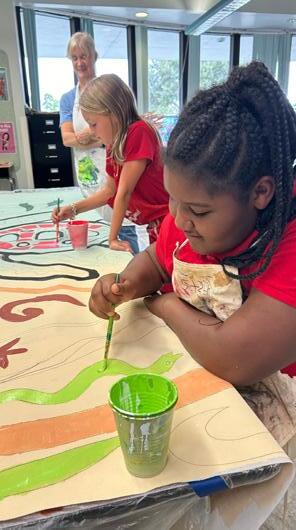
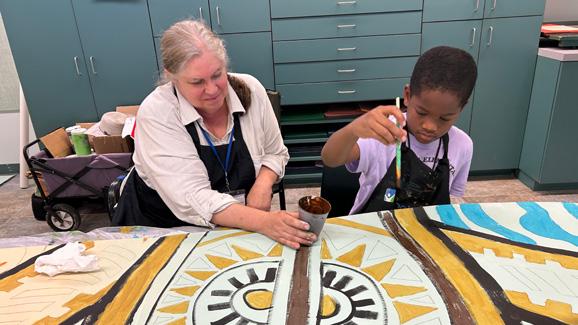

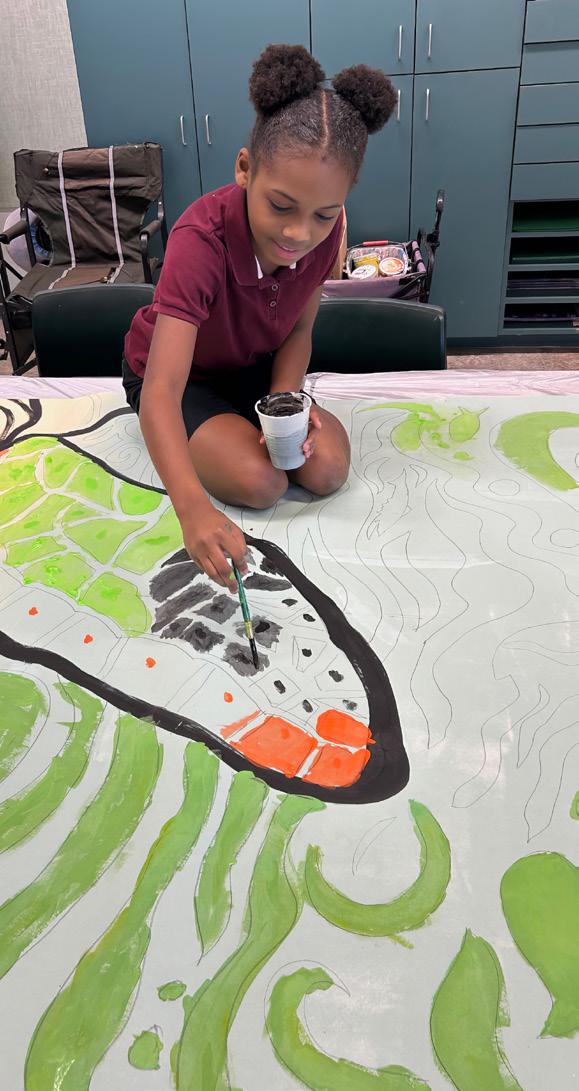
Reflecting on what we accomplished, it was a wonderful experience from my point of view. I received so much support; I didn’t expect that; I never got any pushback. Yes, it was a big undertaking, but honestly, it was very smooth. Everyone contributed. Everyone was well-intentioned. Everyone was constructive, and kind. And Katherine is an exceptional artist and person. We are blessed to have her in our community—she brings so much to our lives.
The mural brings joy. It really does. It brightens the space. It connects the Chamber of Commerce, the city of Sebastian, with our schools. The Elementary School hadn’t had that relationship before. Having the Chamber involved as a sponsor was critical. There’s a mural tour, and the school is formally part of it—a city-sponsored piece of art. How wonderful!
Grace Sheldon is a working mom, volunteer, and face painting artist turning creativity into connection. Driven and ambitious, she has a talent for uncovering creative opportunities and bringing ideas to life. Easy to work with and even easier to be around, she pairs professionalism with a genuine sense of fun.
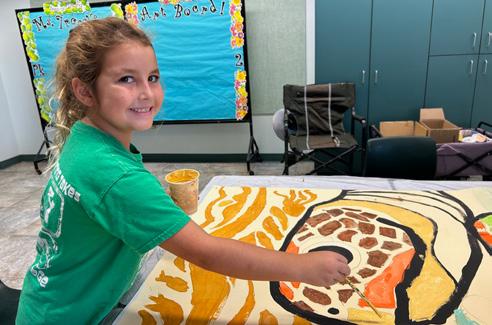
Please follow this link to donate art supplies to Sebastian Elementary School of the Arts. Thank you.

Katherine Larson Muralist
I have been doing murals with school children for about 30 years. Most of them are located in Michigan—up in the Midwest area—and are interior murals because you’re dealing with a very short moderate weather season and most sponsors want an inside mural for the kids.
Grace Sheldon came up with the idea to do the mural at Sebastian Elementary School of the Arts. She looked at various artists. She said that she selected me because she liked my art style and saw I had done murals with children—I’ve probably done 25 of them. This would be my first in Florida, so I was excited.
The technique is different for an outside mural than for an inside mural. In accepting the project, I said I was going to use a different technique involving panels, which I perfected about 15 years ago. The panels are very thin, similar to fiberglass, spun rather than a woven product, without stretching diagonally. The material is dyed by the paint—so the paint doesn’t sit on top, but is embedded in the product— which makes it wonderful because it isn’t going to flake off or fade, giving you a very durable product. The paints I use are called Nova Color, hand-mixed in California and formulated for light fastness.
The process of adhering panels to a wall is interesting because it was discovered accidentally by a man who was painting using a gel, also manufactured by Nova Color. He had this rag that he was using to wipe gel off with, that fell from his scaffolding onto the hood of his car. He didn’t want to get off the scaffolding to pick it up, so he left it there for about a half hour. But when he came down and tried to remove it from his car he discovered it was stuck fast and nothing was going to take it off of that metal. They tried everything— even sand blasting—without success.
So he thought, well, jeez, if it sticks to metal like that, I wonder if it would stick to concrete, brick, and so forth on the side of a building. So he tried it and success!-that’s the same product that I use. And it makes the wall much stronger because when you’re doing an outside mural, you

are subject to the quality of the last coat of paint that is put on, or condition of the mortar, or brick, or concrete that you’re painting on. And with this, you’re not subject to that because the plastic is going to make it stronger.
So what we found with these murals is that they’re impervious to everything—sun, rain, wind. If a hurricane hits, it doesn’t matter. In sum, it’s the perfect product for Florida with our bright sunlight. Grace loved it as a way to go—thought it was ideal. Actually, I used the same approach on the first exterior mural I did in Sebastian, which is at the Mel Fisher’s Treasure Museum
Since Sebastian city officials were already familiar with how I would create the mural, the project passed through their review without a hitch. Our attention then turned to fundraising, which would be a challenge because the products I’d be using are expensive and our chosen location is a very large wall—65 feet long and 9 feet tall. Fortunately, we had amazing people and organizations supporting our cause. I donated my time for the project and brought in outside artists from Isola Arts in Vero Beach to assist with the children. In planning the project, I had to estimate how many assistants I was going to need, how many students we could accommodate at a time around a work table, how quickly we could complete the mural—all the small process-related details.
One finer point about this particular mural is that it was a different style for me, technically. I chose the style because of the material. If you’re painting directly on a wall, for instance—which we did not—you can do a lot with layering, with transparencies and things like that. But when you’re dyeing a cloth—which is what we did—layering is much more difficult to do. So it’s much more graphic, whereas most of my murals are very realistic. It was easier for the children to paint and I think a lot more fun for them. I wasn’t as concerned about a few drips or splashes or painting outside the lines or whatever—the fluidity of the background and the turtles themselves allowed for a lot of flexibility in the graphic design because we could fix minor issues by adding the thick black outlines later. And the background is very free. From a distance, it looks fabulous. As you come up closer to it, you see that they’ve painted outside the lines and there are drips and imperfections. But you know, that’s part of the beauty of it.
Interestingly, we set up the work space in the art teacher’s room, and she was kind of surprised, thinking we’d create the mural outside. We explained the panel-based process to her and she was incredible, so helpful. The kids are always really excited when they’re in there painting and it gets loud. So we figured out hand signals—I’d hold my hand up with fingers indicating how many artists we needed. When you’re working with that many children, you want
to make sure everybody gets a chance to paint—that was a major goal—and we’re being very efficient with time. I would draw the design ahead of time in my studio and then bring it to the work space. Technically, the transition from panel to panel was somewhat difficult because we were painting panels in the room—say waves of water—while the matching panels were in my studio; I devised a color code to match panel to panel. After a week or so, we figured out the logistics and could focus all our attention on the students.
The kids were wonderful. After their first time painting, they knew to get their aprons on quickly and ready themselves to paint. We had to know which class was coming so we could tailor the work to their skill level. For the younger classes, for example, they can’t reach as far across the table, so we’d have to set things up near the edge. And then you have to factor in dexterity skills, sometimes simply outlining something they’d fill in. Alternatively, we would use dot patterns—effectively pointalism. So everything was tailored to skill levels. And even within age groups, there were different skill levels. Some of the second graders were excellent painters—so it really didn’t matter about age, it just depended on whether they had those skill sets or not. And we quickly learned which children were best suited for certain projects.
And again, the art teacher was amazing. She kept the regular class going so that we could work with three to five students

and not have the whole 24-student class trying to paint on the mural at once, which would have been chaos. The art classes were somewhat short so organization was key—we had about 20 minutes to paint, then clean up and line up the students. Of course, things by definition are complicated when you involve 240 students—and maximum participation was our objective. The intent was to pass on the creative experience and mural to this generation for their personal enrichment. Where else would they find this?
From the kids’ perspective, while they were painting they likely didn’t grasp what the mural would look like when completed. I would tell them, “Remember you’re painting the little octopus next to the “fruit” turtle; so when you see that turtle, look for the octopus next to it.” And eventually they’d get a sense of it, and I would show them the mockup picture, and how it was going to look. And they were like, oh, that’s cool. But I still don’t think that they really realized what they were doing until they saw the actual work going up and coming together.
And finally, there were some incredible moments with children that made the project very special. It’s about impacting a child’s life by doing these kinds of things— giving them opportunities. There was one young man who was particularly difficult, acting out, pushing other kids aside, trying to paint their section. He was extremely quick and smart—I saw this right away—but he was a problem, constantly getting in trouble. And the third time I had him he was slopping paint on and not paying much attention, talking to the other kids, and so on. I put my hand on his shoulder—and I think it shocked him that I touched him— and he looked up at me and I said, “Listen, I know you’re smart, and I know you can do better than this. And this is really important because this mural is going to be in front of the school. So if you could, please paint better because I know you can.” And he didn’t say anything. He looked back down and he paused for a minute, and then he painted perfectly. He painted beautifully. So I said, “Would you mind if I kept you for a little bit longer? Can you paint this over here for me?” So I had him do a little bit more. And afterwards I thanked him and he gave me the biggest smile. And that connection, it was an amazing moment for him and for me too.
It just takes a few seconds to change somebody’s mind about who they are and what they want to become. When I was a kid, I had the same thing happen to me. I had a teacher take one of my drawings and everybody else was doing these trees that looked like lollipops—you know, green circles with a stick coming out of it. But I knew trees didn’t look like that. So I did one with branches and I had a dog at the base of the tree and a squirrel up in the tree. And she took my drawing and put it above everybody else’s drawings on the bulletin board and pointed it out to the kids the next day. How different mine looked and how she pointed out the window at a tree and said, “Look, it actually looks like a tree.” And I was embarrassed, but I was proud at the same time. And I think it really affected me and made me become an artist. It changed my life. Just because a teacher said that I did something special.
And so that’s always my goal in working with children—I know the impact it can have on their future. And that young man could be an artist, could easily become an artist someday. That’s basically why I love to work with kids.
But you have to have the cooperation of the community. You have to have the cooperation of the school. They have to have the vision, and in this case, everything worked. They understood it and allowed it to happen and I’m very grateful for that. And Grace was the shining light—having the idea to do this. She was the driving force behind it, definitely.
Katherine Larson moved to Vero Beach five years ago from a small farm in Michigan after running an ad agency, painting over 200 murals, and winding down an opera and classical singing career. She has illustrated 10 nationally distributed children’s books and most recently authored a book about her paintings of Treasure Coast landmarks entitled Memories of the Treasure Coast Katherine founded Isola Arts, a local nonprofit arts organization, best known for Waldo’s Secret Art Walk and she owns Arms Creek Studio, a graphic design company. Katherine lives in rural Vero Beach with her beloved weimaraner, Aria. You can see more of Katherine’s work at katherinelarson.com or armscreekstudio.com.
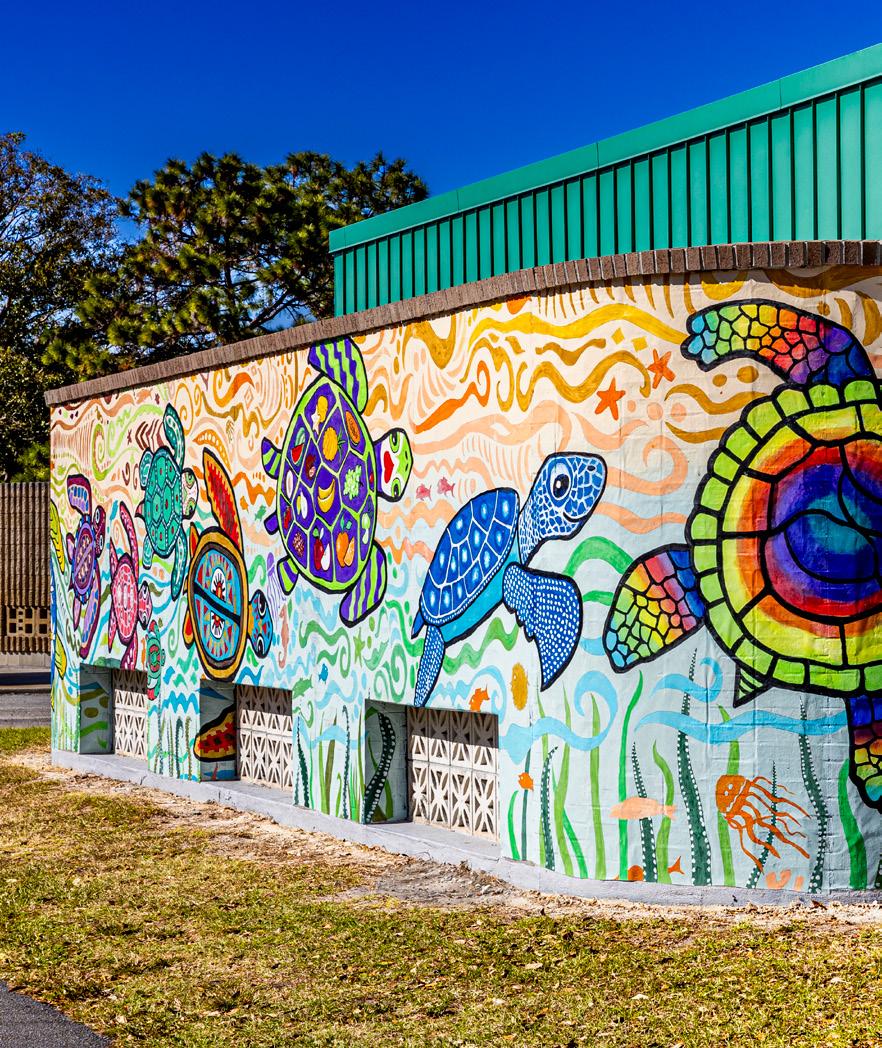
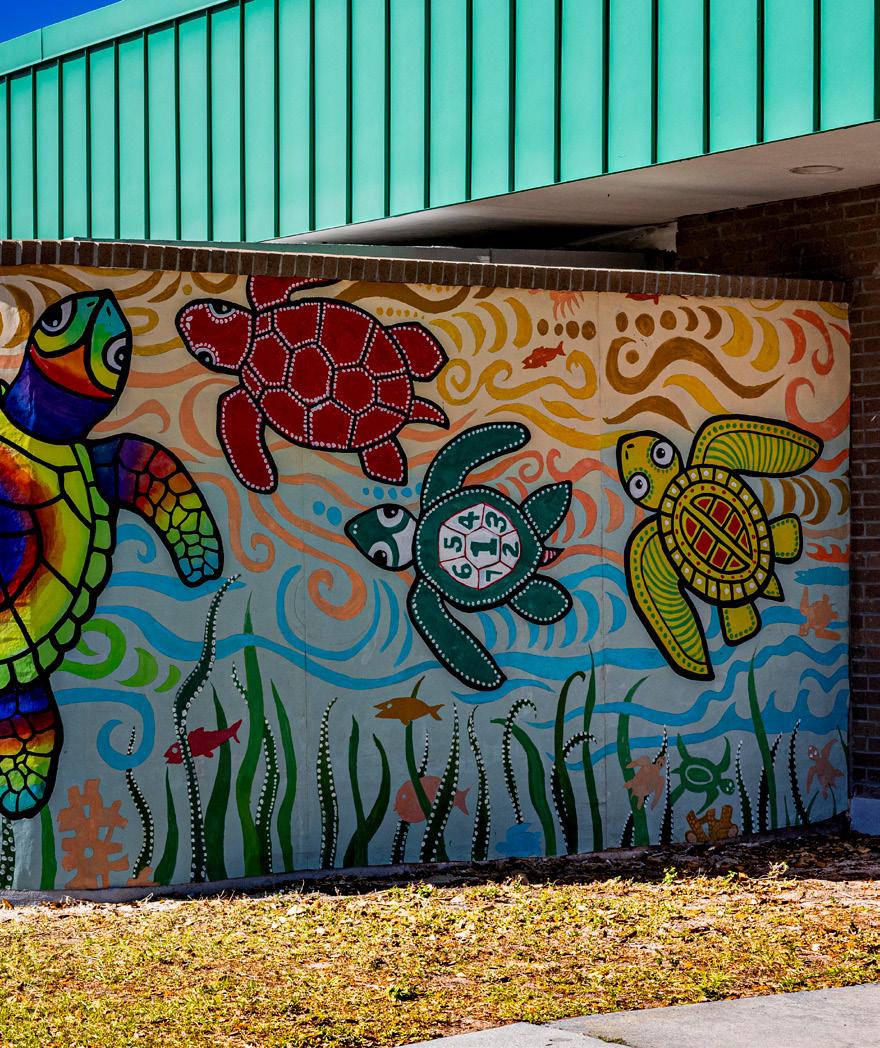
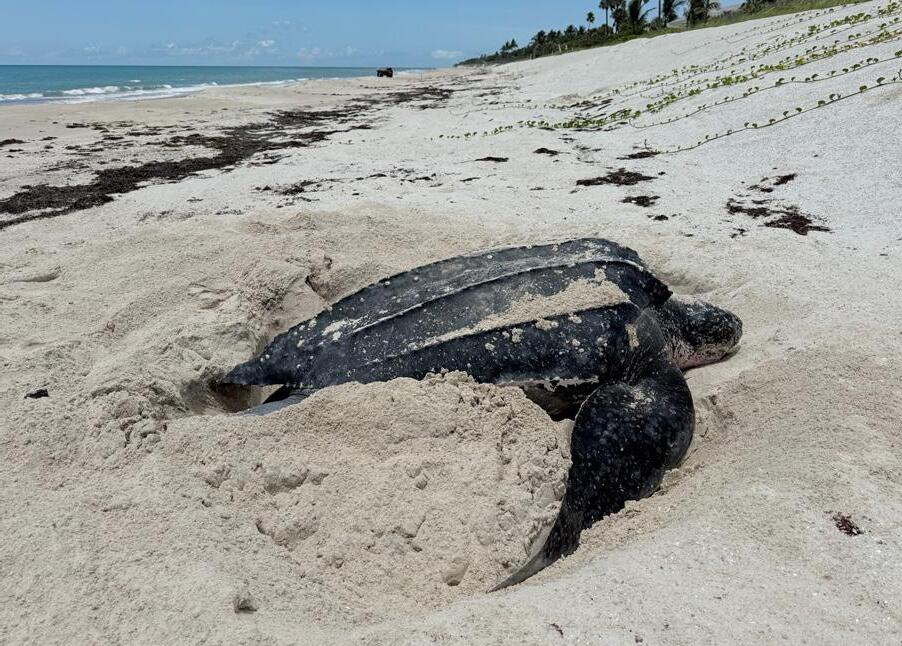
March 1 through October 31 Each Year
To Residents and Visitors:
We often speak about saving sea turtles, but it’s easy to overlook why their nesting truly matters to all of us. Known as a keystone species, sea turtles have a major influence on the balance of entire ecosystems.
The leatherback sea turtle, for example, feeds almost exclusively on jellyfish. By keeping jellyfish populations in check, leatherbacks assist larval fish and help sustain healthy fish populations, providing humans with fish to consume.
Green sea turtles graze on seagrass and keep seagrass beds healthy and productive. Healthy seagrass beds stabilize the seafloor and produce oxygen.
The benefits of sea turtles don’t stop in the water. When turtles nest, their eggshells and unhatched eggs enrich the sand with nutrients for dune vegetation, which in turn help build healthy dunes.
Sea turtles are doing their part to keep our beaches and oceans healthy, now it’s our turn. By following three simple steps— keeping beaches clean, flat, and dark—we can help safeguard sea turtles and give them safer beaches to nest on.
Coastal Environmental Specialist
Natural Resources Department–Coastal Division
1801 27th Street
Vero Beach, FL 32960
Office: (772) 226-1669
Cell: (772) 268-7069
dwhelan@indianriver.gov www.indianriver.gov/services/ natural_resources
A F E G U A R D
T H E T U R T L E S




























































K EEP IT CLE A N
K EEP IT DA RK
K EEP IT FL AT


























Our beaches are home to nesting sea tur tles. Proper ly dispose of all tr ash, pl astic, and fishing debr is. L eave nothing behind but footpr int s and take only photogr aphs and memor ies
Sea tur tles rely on dar k beaches to nest. A r tificial light s that illuminate the beach from proper ties, street s, and fl ashlight s disor ient them. Keep the beach dar k at night.
F l at beaches suppor t sea tur tle nesting W hen leaving the beach, fl at ten s andc astles, fill in holes, and remove beach fur niture to prevent barr ier s that c an tr ap or obstr uc t sea tur tles.

If you find a sick , injured or dead sea tur tle, please c all 1-88 8-40 4-3922
F WC at

by Monica Jennings
For one glittering weekend each year, Saint Edward’s School transforms into a destination that rivals any exclusive shopping district. The annual Saint Edward’s School Trunk Show is more than a shopping event—it’s a celebration of style, community, and purpose, drawing fashion lovers together for an experience that feels equal parts runway, boutique crawl, and social gathering.
From statement jewelry and beautifully crafted accessories to children’s attire, high-end women’s fashion, and distinctive household items, the Trunk Show offers a carefully curated collection of vendors from around the country, all under one roof.
What makes the event especially compelling is its rarity. This is a once-ayear opportunity—one weekend only—to discover unique designers and beloved brands without boarding a plane or navigating a crowded urban shopping district. For attendees, the Trunk Show is a reminder that access to the latest trends doesn’t have to mean travel. Instead, it arrives locally, stylishly, and with a sense of occasion.
The weekend begins on a high note with the Trunk Show’s signature preview party on Friday night. Sparkly and social, the preview sets the tone for what’s to come. Guests sip, stroll, and shop while enjoying first access to the vendors’ collections. It’s an evening that blends fashion with festivity—part cocktail party, part insider shopping experience.
As the weekend unfolds, the Trunk Show becomes a fashion lover’s playground. Shoppers move from vendor to vendor, exploring an ever-changing landscape of style. One moment might be spent trying on a perfectly tailored dress; the next finding charming children’s clothing that balance whimsy with quality. Home goods and household items add another layer of discovery.
What truly sets the Saint Edward’s School Trunk Show apart is the caliber and diversity of its vendors. Drawn from around the country, they bring with them a sense of individuality and expertise that’s difficult to find in traditional retail settings. Many are small or boutique brands, eager to share the stories behind their designs. Shoppers aren’t just purchasing items— they’re engaging directly with creators.
Yet the Trunk Show’s impact extends far beyond closets and shopping bags. At its heart, the event is a school fundraiser— one that raises more than $100,000 each year in support of Saint Edward’s School. The proceeds go directly toward unique school programs, enriching the educational experience for students in meaningful and lasting ways. Attendees shop with the knowledge that their purchases are doing double duty: bringing something beautiful into their lives while investing in the growth and opportunity of the school community.
This dual purpose infuses the Trunk Show with a sense of goodwill and shared pride. Parents, alumni, faculty, and friends of the school come together, united by a common goal. The event has become a beloved tradition, eagerly anticipated and fondly remembered, in part because it so seamlessly blends enjoyment with generosity. It’s shopping that feels good—in every sense of the phrase.
THERE’S ALSO A SOCIAL MAGIC TO THE WEEKEND THAT CAN’T BE OVERLOOKED. THE TRUNK SHOW IS AS MUCH ABOUT CONNECTION AS IT IS ABOUT COMMERCE. FRIENDS PLAN OUTINGS AROUND IT, LADIES MAKE A DAY OF IT, AND CONVERSATIONS SPARK EASILY BETWEEN RACKS AND DISPLAYS. THE RELAXED, FESTIVE ENVIRONMENT INVITES LINGERING, LAUGHTER, AND THE KIND OF EASY CAMARADERIE THAT TURNS AN ANNUAL EVENT INTO A CHERISHED RITUAL.

The 34th Annual Saint Edward’s School


SIP & SHOP PARTY
FRIDAY, F EBRUARY 27, 2026
6:00 - 8:30 p.m.

OP EN BAR | VIP TRUNK SHOW ACCESS | LIGHT BITES | LIVE DJ
GENERAL ADMISSION SHOPPING
SATURDAY, F EBRUARY 28, 2026
9:00 a.m. – 5:00 p.m.
SUNDAY, MARCH 1, 2026
10:00 a.m. – 3:00 p.m.
FOLLOW THE TRUNK SHOW INSTAGRAM


PURCHASE PARTY TICKETS & LEARN MORE

HELD AT SAINT EDWARD'S SCHOOL
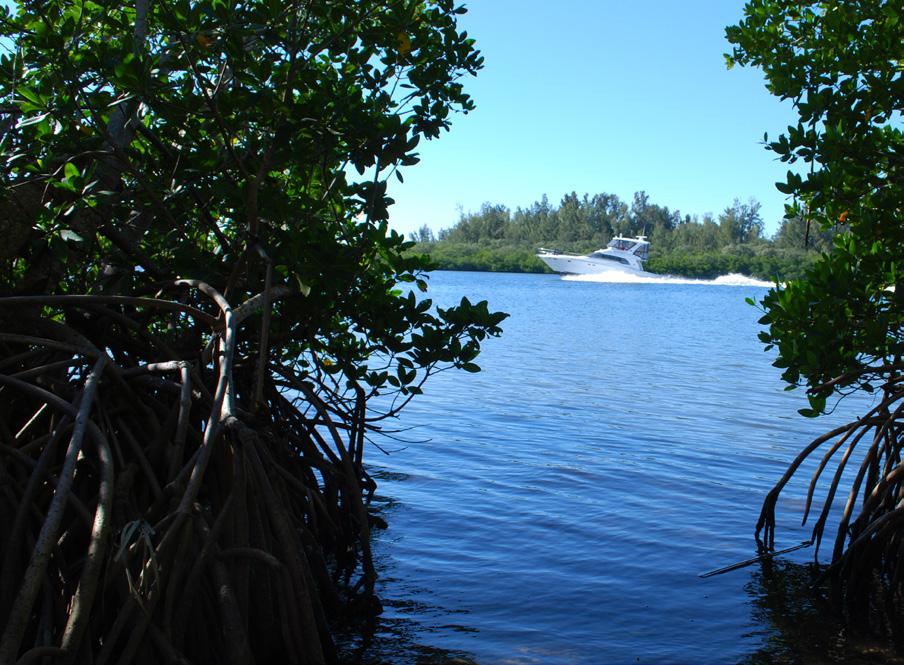
by Jim Field Photography by Jim Field
Finding Bridge Tender Park: Travel north on Route A1A from City of Vero Beach. Enter Indian River Shores. After passing main entrance to John’s Island, take first left onto Old Winter Beach Road. Proceed down full length of road to just before entrance to the Jungle Trail. Turn left onto Winter Beach Blvd. and continue to roundabout. Park anywhere. Locate the Florida Heritage Site Marker.
In the early 20th century, the Indian River Lagoon was a highway for settlers and tourists. There were few roads, and no bridges from the mainland to the barrier islands in the Indian River County area. Crossing using a private boat was possible, and there were ferries operating in certain locations.
On Labor Day in 1920, Vero Beach opened its first bridge across the Indian River. The western end of the bridge was located at what is known today as Royal Palm Pointe, while the eastern end connected to the island where the Merrill Barber Bridge connects today.
A second bridge, Winter Beach Bridge, opened in 1924, crossing eastward from North Winter Beach Road on the mainland— now 69th Street—across Hole in the Wall Island, the southern tip of Pine Island, and over the main channel onto Orchid Island. On the Orchid Island side, a small house was built for the bridge tender, his wife, and children. His job was to position the bridge
by hand crank to allow cars and pedestrians to cross or boats to pass up and down the channel.
Once on the island, travel north and south took place on the Jungle Trail, and eastward to the ocean on Winter Beach Road—now Old Winter Beach Road.
Using these narrow sandy roads and simple bridge, developers and tourists scouted the island for suitable locations to build winter homes and access the Atlantic beaches. Because Winter Beach served as a Florida East Coast Railway depot, this bridge was especially useful for island farmers to get their produce—vegetables and citrus—to market quickly.

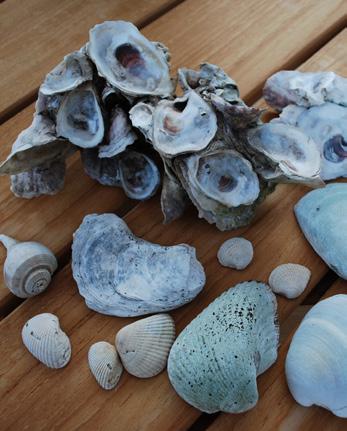
After World War II, the Winter Beach Bridge burned, and the metal span was removed, leaving only the pilings. The former site of the bridge and bridge tender’s home is now Bridge Tender Park, featuring the Florida Heritage Site Marker.
Sources: Florida Heritage Site Marker at Bridge Tender Park, Indian River County Historical Society, Florida Department of State, Division of Historical Resources, and the State of Florida.
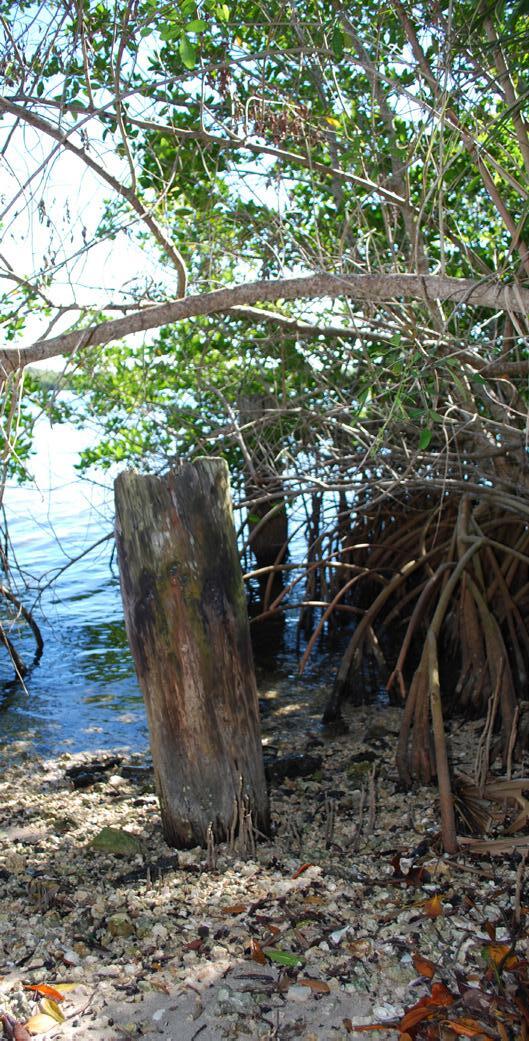
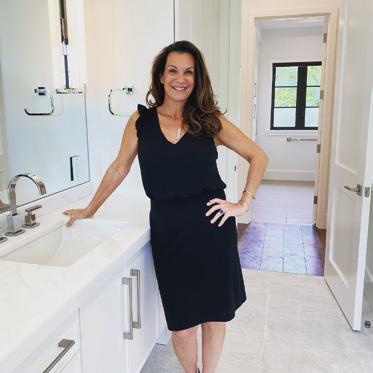
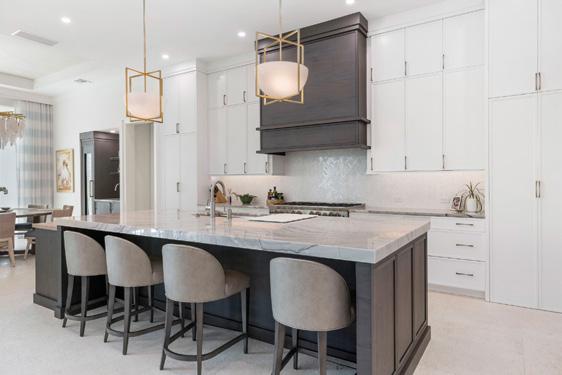
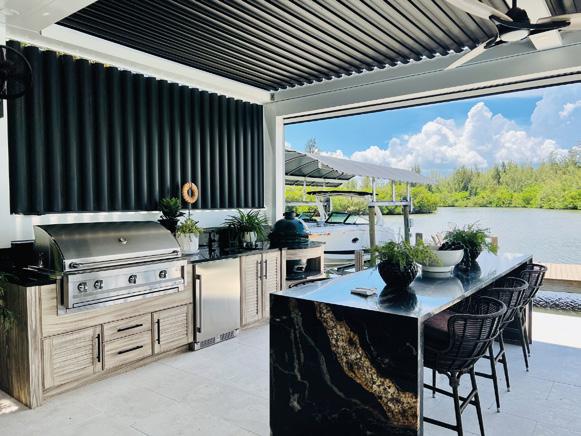
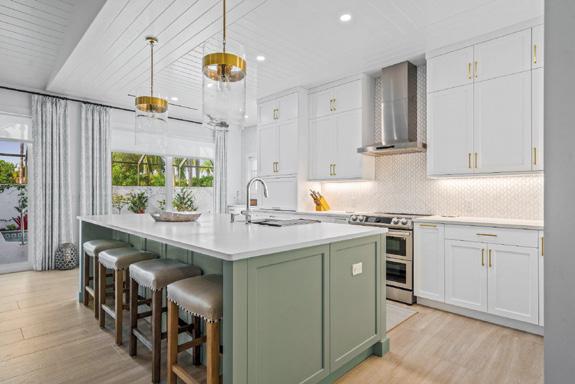
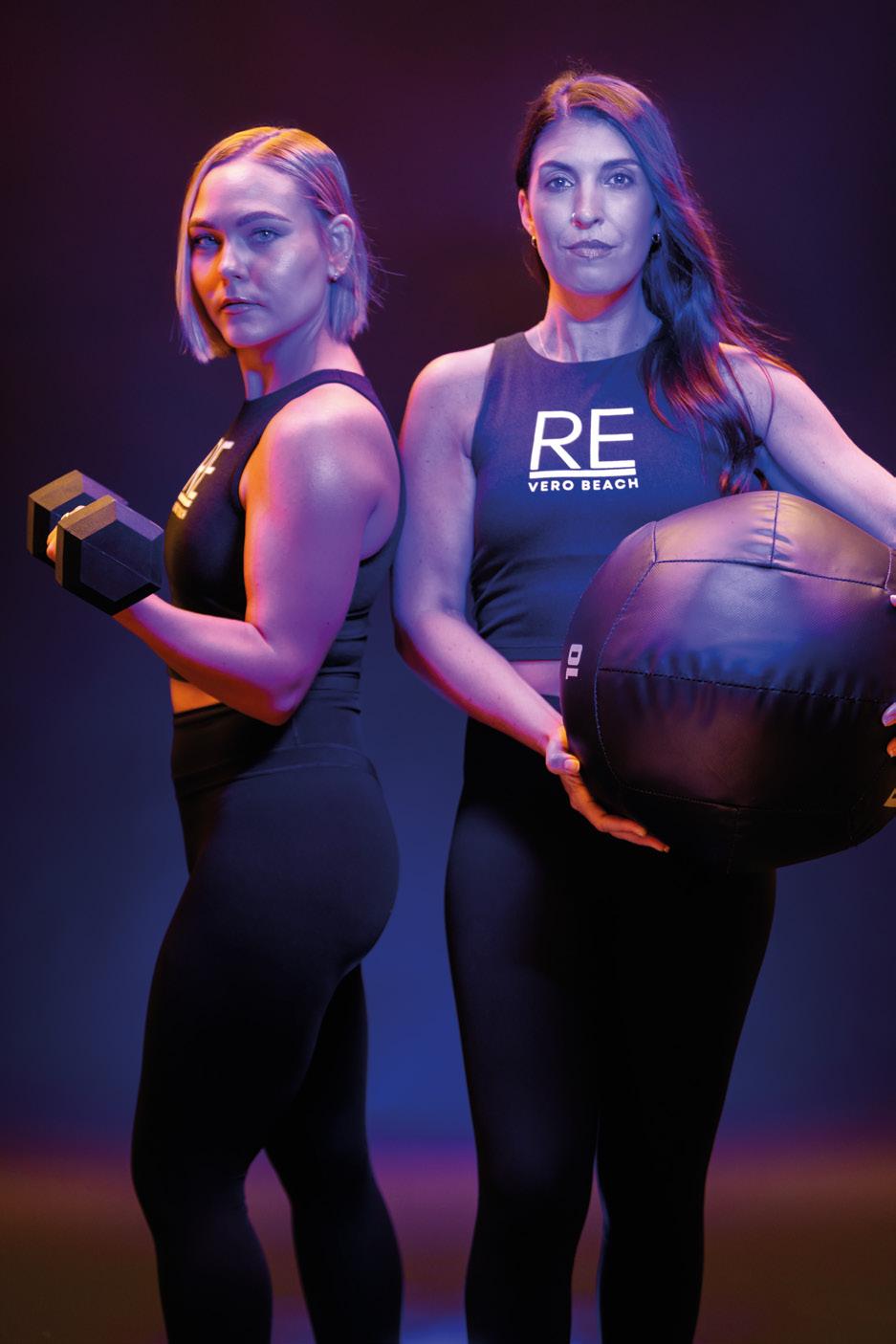
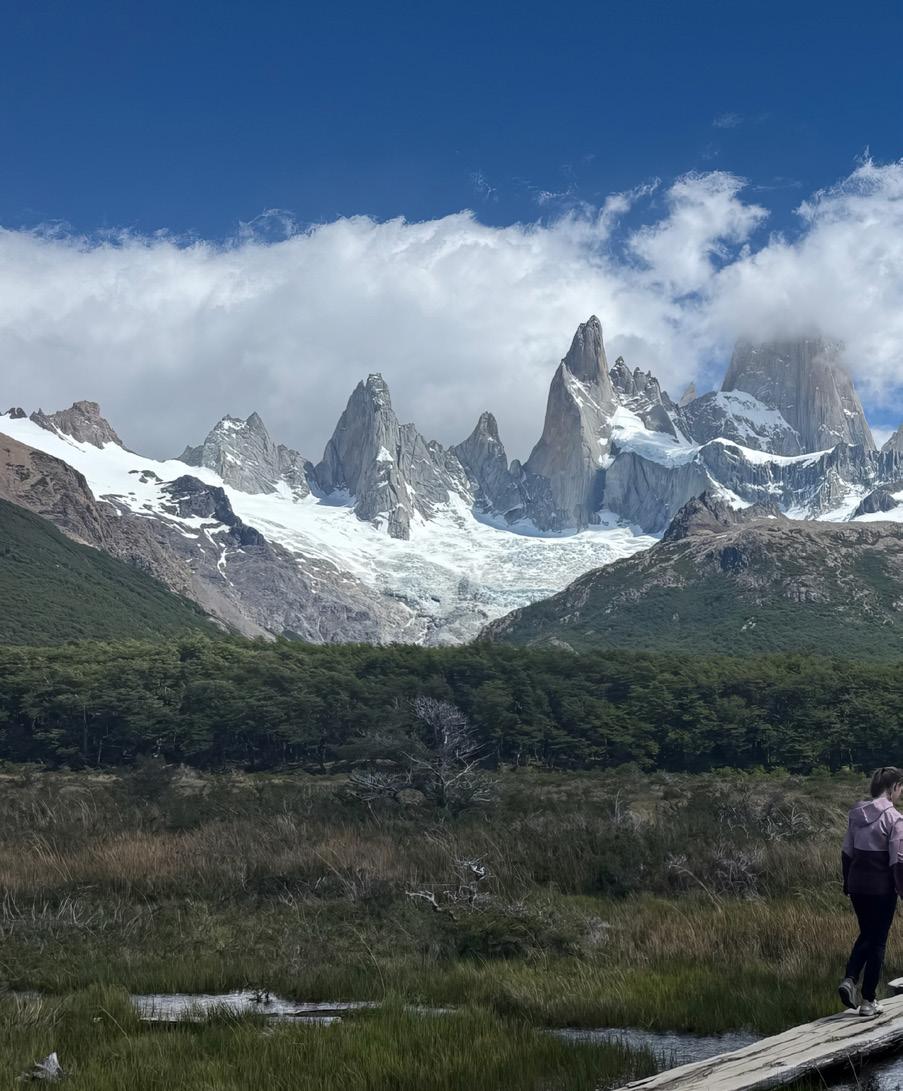
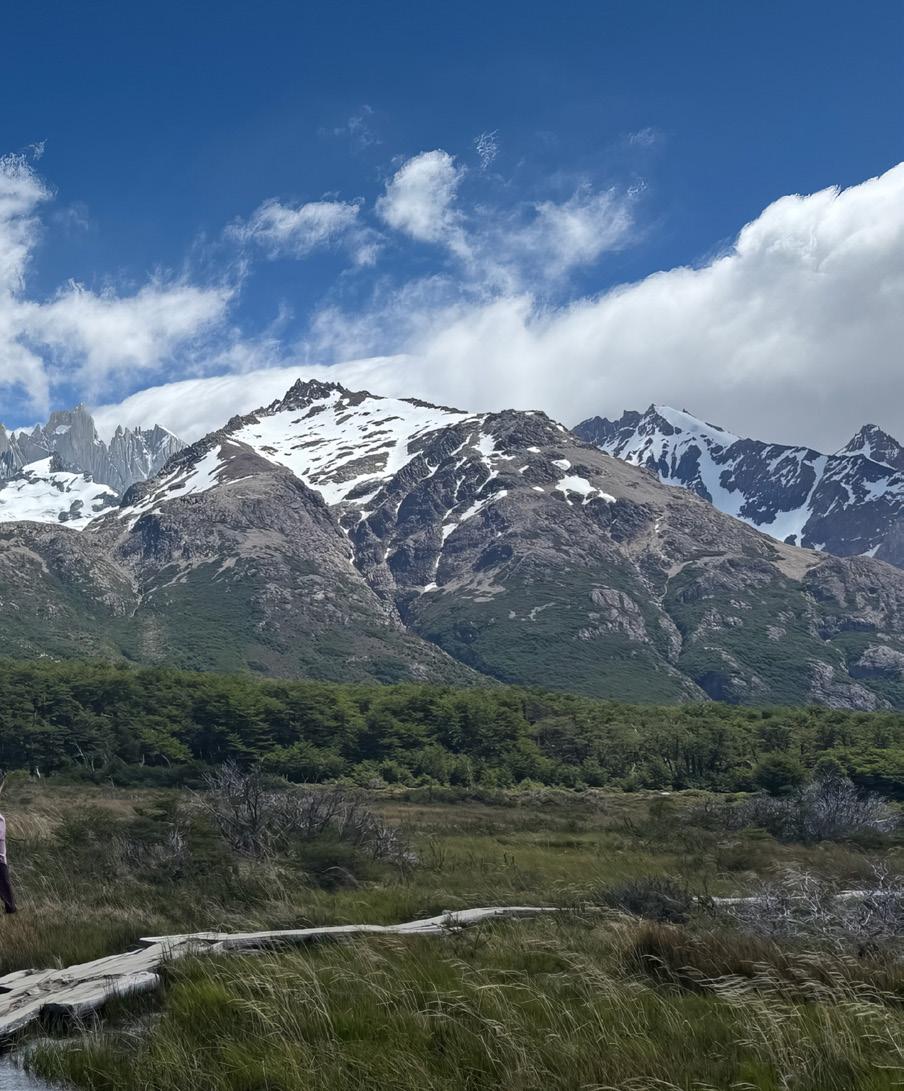
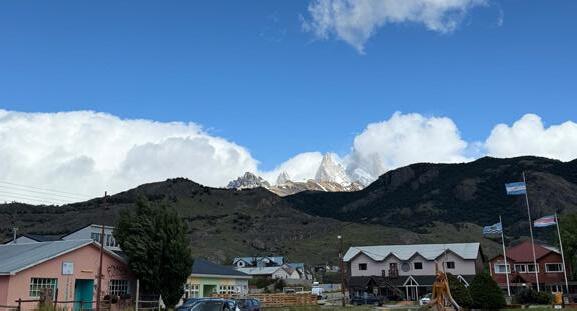
by Adam Schmitz photography by Adam and Bailey Schmitz
Editor’s Note: Adam is a dear friend of our family. My son Andrew met Adam at high school, they spent a semester together in England, became best friends and have maintained their relationship over the years, getting together periodically to explore parts of our country— with a bias towards hiking, climbing, and camping. After college, Adam joined the U.S. Army, earned a masters degree, became an Army Ranger, and finished his tenure as a Captain. Eventually he met, fell in love with, and last March married Bailey (our son was best man, we attended a perfect weekend). When I heard they were Patagonia—bound for their honeymoon, I knew right away that I would want their story in the magazine. One of the things I admire about Adam is that he reminds me of myself as a young man: boundless energy, passion for travel, quick to smile, ever an optimist. These personality types can typically be counted upon to do something unusual and riveting. Better still, Argentina, Patagonia, Chile are red-hot travel destinations and I’ve yet to visit—drives me crazy—drawing me to every opportunity to read about the experience (hopefully as preparation!).
Adam Schmitz
The seeds for our Patagonian adventure were sown years prior, in the llama flooded mountains of the Peruvian Andes. About two months into a budding relationship with my then-girlfriend Bailey, I vanished for two weeks. I was on an adrenaline-fueled trek through Peru with one of my friends, navigating the Salkantay Trail and eventually standing in the cloud-shrouded shadows of Machu Picchu.
Upon my return to the States, exhausted, I expected a warm “welcome home!” Instead, I found a girlfriend who was, to put it mildly, envious. She didn’t just want to hear about the adventure—she wanted to have been on it. It was a lingering point of contention, a “travel debt” I owed. Consequently, when the time came to plan our wedding and eventual honeymoon, the stakes were high. We weren’t looking for a lounge chair in the Caribbean or a slow tour of European museums. We needed to top my Peru adventure. We needed Patagonia!
The Great Compromise
Before I began booking our bottom-of-the world quest, my knowledge of Patagonia
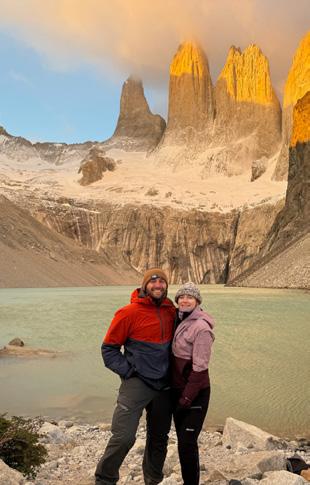
was, at best, slightly below that of the average casual hiker. I knew there were jagged peaks; I knew it was a split between Argentina and Chile; and, like everyone who spends time outdoors, I knew there was a high-end outdoor clothing brand that shared the name.
Because we were married in March, we faced our first logistical hurdle: the seasons. To catch the Patagonian summer, we decided to delay our honeymoon by several months, finally settling on the window between Thanksgiving and Christmas.
First, we set ground rules for the tip. Bailey, ever the lover of comfort, inserted a requisite spa experience into the itinerary, to recover from the physical toll of the trek. An unapologetic carnivore, I required a high-end beef-steak dining experience at some point during our time in Argentina. With those two pillars established, we filled the middle with 100 miles of grueling trails, glaciers, and unpredictable weather.
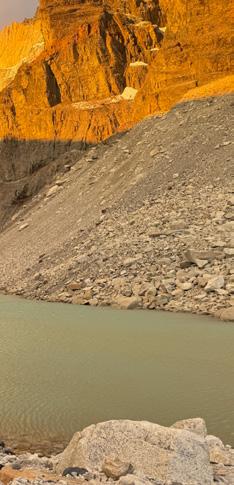
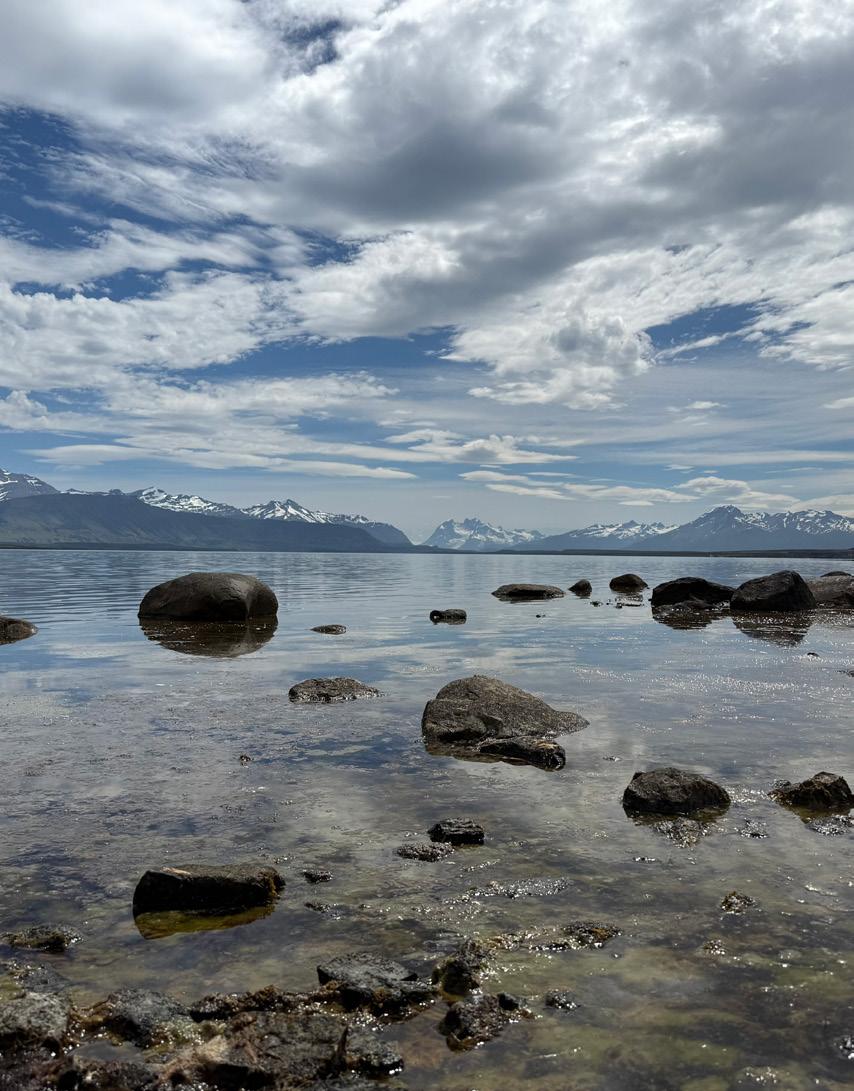
The Long Trip South
Our journey began on the Friday after Thanksgiving at Washington Dulles (IAD). Flight options to South America from the DC area remain surprisingly limited, so we opted for Avianca, connecting through Bogota, Colombia. The logistics of getting to the bottom of the world are a test of endurance in themselves. After a five-hour layover in the El Dorado Lounge—where we fueled up on great Colombian coffee and not-so-great Colombian beer—we boarded a second leg to Santiago, Chile.
We touched down at 1:00 a.m. with our internal clocks shattered. We took refuge at the Holiday Inn Santiago Airport, which sits conveniently smack dab between the international and domestic terminals. After a five-hour power nap that felt more like a coma, we were back in the terminal. Our final flight was on LATAM, headed for Puerto Natales, Chile.
I can say I’ve never experienced a commercial flight quite like it. As we crossed into Patagonia, the flight attendant took over the intercom like a seasoned tour guide. “If you look to your right, you’ll see the volcanic fields,” he announced. Suddenly, half the plane unbuckled and scrambled to the windows. Then, “To your left, the Southern Ice Field.” The passengers rushed back to the other side. By the time we finally touched down, 36 hours after leaving DC, we were ready to go.
We gave ourselves two nights of buffer in Puerto Natales to account for any lost luggage or flight delays. It’s a relatively simple gateway town of about 20,000 people, where the salty smell of the fjords meets the scent of roasting lamb.
The highlights of these two days centered on food and drink. We discovered Last Hope Distillery, where they produce a gin infused with calafate berries. According to our bartender, legend says that anyone who eats a calafate berry is destined to return to Patagonia; we figured drinking it in a gin and tonic counted as a legal contract. That night, at El Asador Patagonico, I ordered and thoroughly enjoyed a smoked salmon appetizer that redefined my expectations for seafood—oily rich, perfectly cold-smoked.
During our final afternoon of “luxury,” we made the obligatory stop at a tourist shop for a collectible magnet. Then, we did the unimaginable and split with our gear. We dropped our large suitcases at the hotel where we’d be staying post-hike, keeping only essentials: wool layers, waterproof shells, and plenty of snacks.
Early Monday morning, we caught a taxi to the Puerto Natales bus terminal. The 2.5hour journey into Torres del Paine (TdP) is a cinematic experience. The landscape shifts from the rolling hills of the town to desolate, wind-swept plains, until finally, the granite massif of TdP begins to pierce the horizon.
(Note: The W Trek is a famous multiday hiking route called “W” as the trail braches out to three major valleys, making the W shape on the map.)
After checking in with the park rangers we boarded a catamaran across Lake Pehoe. The water was an impossible shade of turquoise. We disembarked at Refugio Paine Grande, adjusted our heavy packs, and officially started walking north toward our campground for the first night.
The first nine miles were a lesson in Patagonian geography. The trail skirts the base of the jagged mountains that define the western park. We gained about 1,250 feet in elevation before descending back


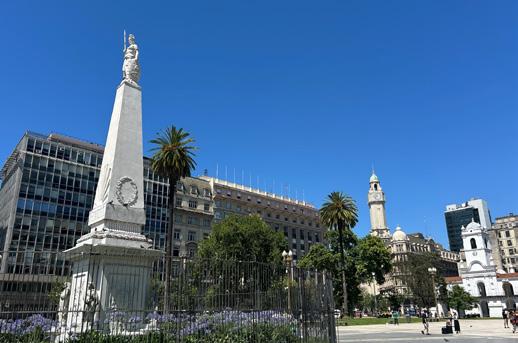
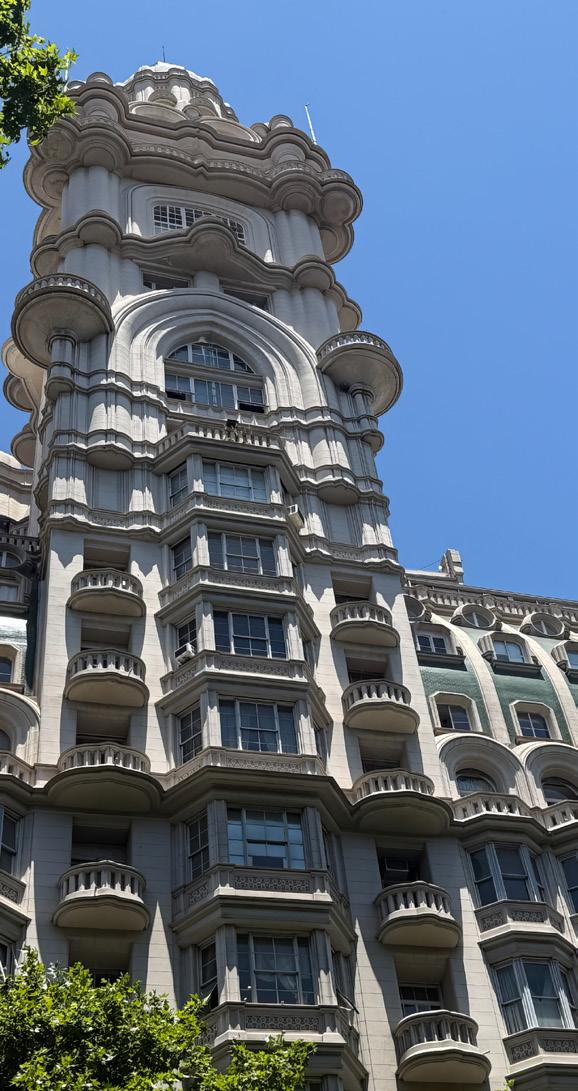
toward sea level at Refugio Grey. After checking into our tent and dropping our bags, we walked another ten minutes to a viewpoint overlooking Grey Glacier.
Seeing a glacier of that scale up close is a humbling experience. It was Bailey’s and my own first experience seeing a glacier that close, but it wouldn’t be our last of the trip. This viewpoint was also our first encounter with the notorious Patagonian wind. The gusts here don’t just blow; they push. I watched as Bailey, who is considerably lighter than I am, as she literally anchored herself to a boulder to keep from being shoved off the trail.
Dinner that night at the “refugio” was simple but exactly what we needed: rice, chicken, beans, and a curious mashed corn dish. The refugios are interesting places, hybrids of hostels and alpine lodges where hikers from different countries sit at communal tables, trading stories of blisters and views as well as asking the everlasting question: “Are you travelling east-to-west or west-to-east?”
Day 2: Walking on Gray Glacier
The next morning we packed up our tent and headed for a breakfast of scrambled eggs and cold cuts, fuel for our first real adventure of the trip: an ice hike on Grey Glacier.
From the refugio’s waterfront, we took a 30-minute boat ride toward the face of the glacier. Our guides lashed the boat to the ice with ropes while we donned crampons, harnesses, helmets, and ice axes. For the next four hours, we weren’t just looking at the glacier; we were in it. We explored deep blue crevasses, ice tunnels, and tiny rivers carved into the frozen surface. At one point, our guide encouraged us to lay flat on the ice and drink directly from a glacial stream. It was the purest water I have ever drunk, and most likely ever will.
When our glacier sojourn finished, we traveled by boat back to Refugio Grey and started the trek back south towards Paine Grande. Up to this point, we had been incredibly fortunate with the weather. I
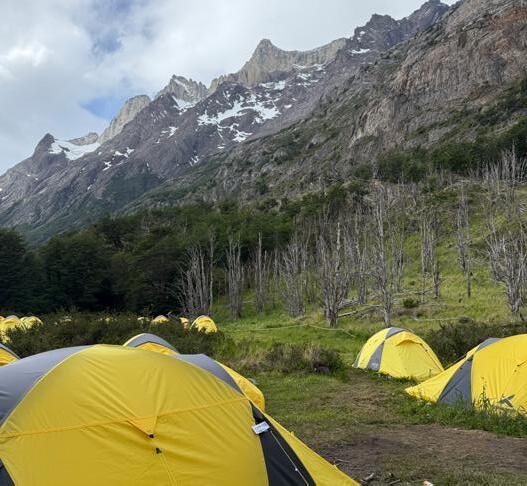
made the mistake of saying this aloud to Bailey. “We’ve been so lucky,” I remarked, looking at the clear sky. I might as well have invited the clouds myself.
Wind gusts through the night made it seem like the entire tent was going to blow away with us inside. Periods of deathly silence were cut with tremendous “whooshes” of wind that shook the tent.
Wednesday was slated to be one of our longest days of the hike: 18 miles of slight elevation gain, including a detour into the famous French Valley. Thirty minutes into the hike, the drizzle started. By the time we reached the entrance to the French Valley, the drizzle had become a relentless, horizontal rain. Halfway through the day, my “waterproof” jacket was totally soaked through and I was miserable—with a capital “M.”
The temperature hovered at a brutal 40°F. In the French Valley, the cloud ceiling was so low that the iconic peaks were completely invisible. We were walking through a grey void. Miserable and shivering, we made the executive decision to skip the higher viewpoints and cruise toward our destination: Refugio Cuernos
When we arrived, I was decidedly unhappy. I stood at the check-in desk, dripping water onto the floor, thinking of how I was going to hang my clothes to dry in our tent. The receptionist looked at our booking and asked, “Are you in a tent or cabin?” I checked my booking agent-provided “roadbook” and saw the word cabin. I assumed a cabin was just a fancy tent or had otherwise been lost in translation.
“Does the cabin have electricity?” I asked, hoping I could at least charge my phone. The receptionist smiled. “You’re in for a surprise.”
He walked us up a hill to a small cluster of private cabins. He opened the door, and I had an unexpected, near emotional reaction. Inside was a king-sized bed, skylight views of nearby waterfalls and, most importantly, a personal wood burning fireplace. I have stayed in some nice hotels, but nothing will ever feel as luxurious as that cabin felt after the day we had just experienced!
The next morning, I practically had to drag Bailey out of bed. “I’m not leaving!” she joked (mostly). The rain had subsided, leaving behind “Patagonian blue” skies and miles of thick, ankle-deep mud. Day 4 was a long traverse through a river valley. While it lacked the drama of the glaciers, it featured beautiful viewpoints overlooking some of the glacial lakes in the south part of TdP. We ended the day at Chileno Camp, tucked into a ravine at the base of the “Towers.”
Over a dinner of salmon couscous—by far the best meal of the trek—we were peer-pressured by other hikers into doing a sunrise hike. Weather had been hit or miss thus far, but based on the forecast for the next day it looked like the only clear time was going to be between 5:00-6:00 a.m. To make that happen, it meant a 3:00 a.m. wake-up.
At 3:00 a.m. the mountains were pitch black. We donned our headlamps—their beams cutting through the mountain darkness—and began the ascent. The hike from Chileno to the Mirador is punishing: 2,000 feet of gain over a single mile. It felt like climbing a 3,400-step staircase at a 40% incline.
We reached the summit shortly before 5:00 a.m. We found a spot among the boulders to shield us from the wind and waited. Slowly, the grey light began to bleed into the sky. Then, it happened. The sun hit the tops of the three granite towers, turning the grey stone into a glowing, vibrant pink. The reflection in the glacial lake below was perfect.
We descended from this incredibly beautiful perch, then caught a bus back to Puerto Natales, and checked into the Remota Patagonia Lodge. We were a sight to be-
hold: smelling of sweat and trail, covered in dried mud, walking past freshly arrived National Geographic tourists in the lobby. But after a hot shower and a three-day rotation of spa treatments and King Crab pie, we felt human again.
The honeymoon was only half over. On Monday, we headed to the bus station for the long journey into Argentina. The 4.5hour ride to El Calafate included crossing the border from Chile to Argentina. After we crossed to the Argentinian side, Bailey discovered her new obsession: the empanada. Every stop we made for the rest of the trip, if there was an empanada on the menu, she devoured it.
After a transfer, we arrived in El Chaltén, a rugged mountain town that sits in the shadow of Mount Fitz Roy. Our first night, we ate at La Tapera, where I had my first authentic Argentinian steak. It was massive, perfectly salted, and quite possibly ruined all other steaks for me—forever. While I found religion in a ribeye, Bailey took a walk on the wild side with a plate of savory guanaco lasagna.
We spent three days in El Chaltén. We did a “warm-up” hike to Mirador De Los Condores for a panoramic view of the Andes, but the main event was the Monte Fitz Roy Trail. It was a 14-mile beast. The final mile is a vertical scramble over loose rock. I was shocked to see people attempting it in sandals—I was struggling in hiking boots. Standing at the base of the mountain that inspired the Patagonia logo was a surreal “full circle” moment.
Buenos Aires: The Paris of South America
The final leg of our honeymoon took us to Buenos Aires. After weeks in the wilderness, the city was sensory overload. We stayed at the NH Collection Jousten, a beautiful historic building.
We packed our three days with everything the city had to offer. We watched a late-night tango show at Aljibe Tango, where the dancers moved with a precision that makes my attempts at dancing look like a toddler taking first steps. We took a “free walking tour” to learn about the city’s complex history, the obsession with soccer, and the ritual of drinking mate (caffeinated herbal infusion).
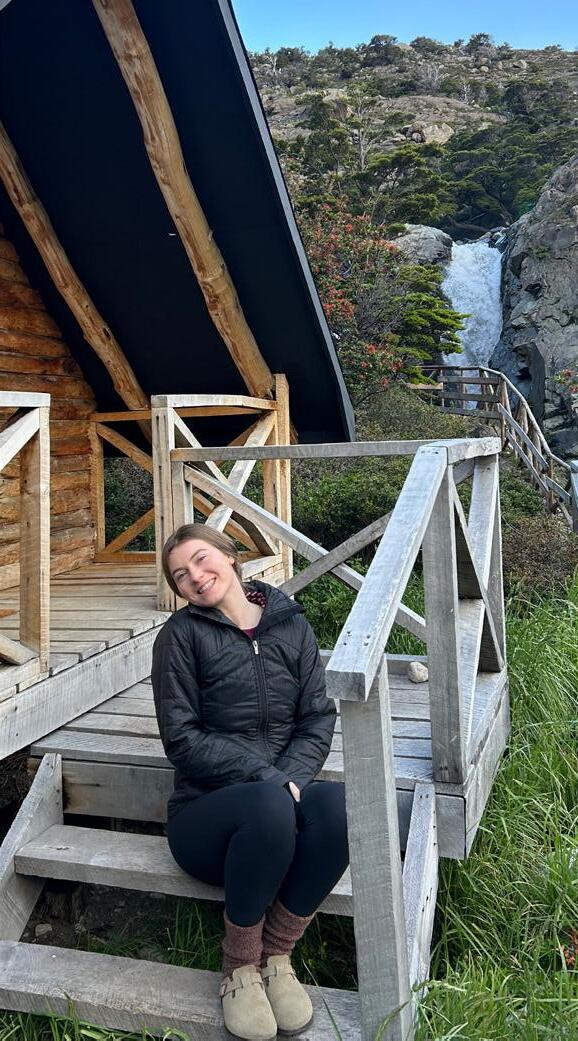
Finally, it was time to cash in my end of the honeymoon compromise: Fogón Asado, a highly recommended steak restaurant in the Palermo neighborhood. This wasn’t just a dinner: it was theater. We sat at a “chef’s counter” surrounding a massive open fire pit. Over 14 courses, the chefs explained the “Asado” culture, how the wood is chosen, how the meat is aged, and the importance of the chimichurri. The heat from the pit was overwhelming at times, but the ribeye was, without exaggeration, life-changing.
Our final morning was spent in the San Telmo neighborhood, where we took an Airbnb Experience empanada-making class. In a local family’s kitchen, we learned the repulgue (the decorative fold) of a traditional meat empanada. While they baked, we made alfajores—shortbread cookies sandwiched with dulce de leche.
While we were only able to spend three days in Buenos Aires at the tail end of our honeymoon, the city blew our expectations out of the water. As an unapologetic, excessive planner, I had arrived prepared. I had read the blogs, listened to the podcasts, and watched every travel documentary I could find. I knew the history of the Plaza de Mayo and the architectural significance of the Teatro Colón. Everything I’d consumed highlighted how “European” the city was, but experiencing the reality of it was something entirely different.
It wasn’t just the architecture or the wide, leafy boulevards: it was the kinetic energy of the place. It was the way the city didn’t even begin to wake up until our usual bedtime, and the way a simple afternoon coffee felt like a grand tradition. For a trip that had been defined by the raw, unpredictable wilderness of the south, Buenos Aires provided a sophisticated, high-octane contrast that we didn’t know we needed. It was the perfect ending to a trip to Patagonia.
As we finally headed to the airport for the long haul back to DC, the grit of the W Trek felt like a lifetime ago. My boots were cleaner than they had been in weeks, and the smell of the trail had finally faded
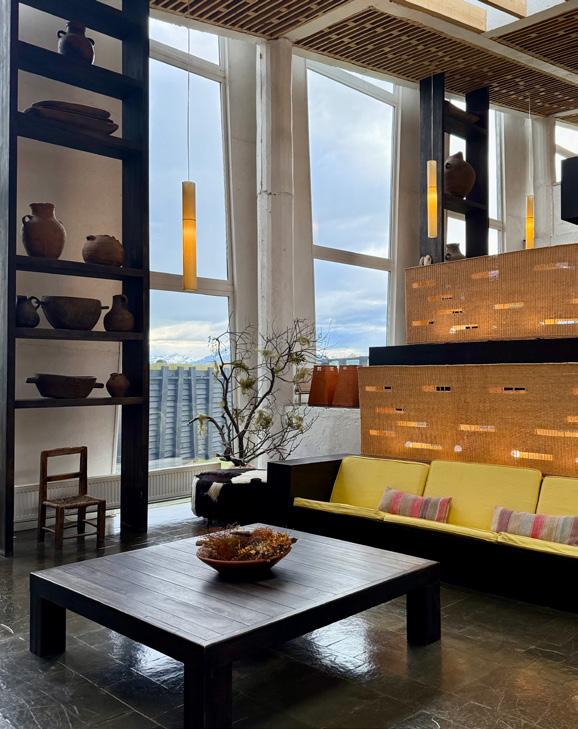
from my jacket. I looked over at Bailey, who was already scrolling through her phone, looking at a photo of the “surprise” cabin at Cuernos, an absolute high point of the entire trip.
We had come to the bottom of the world because of a lingering sense of competition, a need to top a past adventure in Peru. But sitting there at the gate, exhausted and dreading the 15 hours of travel to get home, it felt worthwhile. We
weren’t just returning with a collectible magnet or a bottle of gin; we were returning with the quiet, shared knowledge of what it felt like to be cold, wet, tired, and still enthusiastically knowing it was worth it to wake up at 3:00 a.m. Before the plane took off, we knew that this honeymoon could be considered non-traditional, but we knew it was the right honeymoon for us.


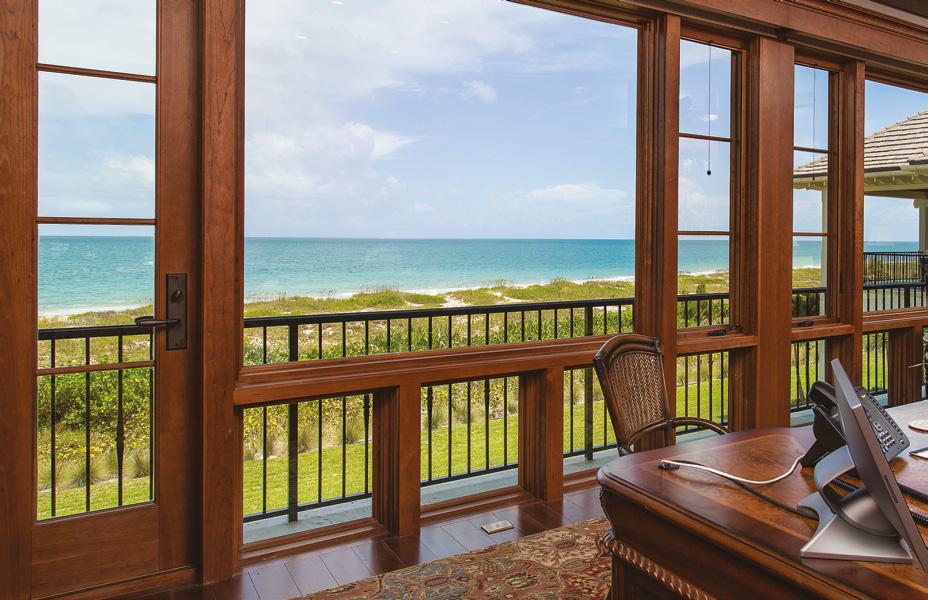
• Featuring
•


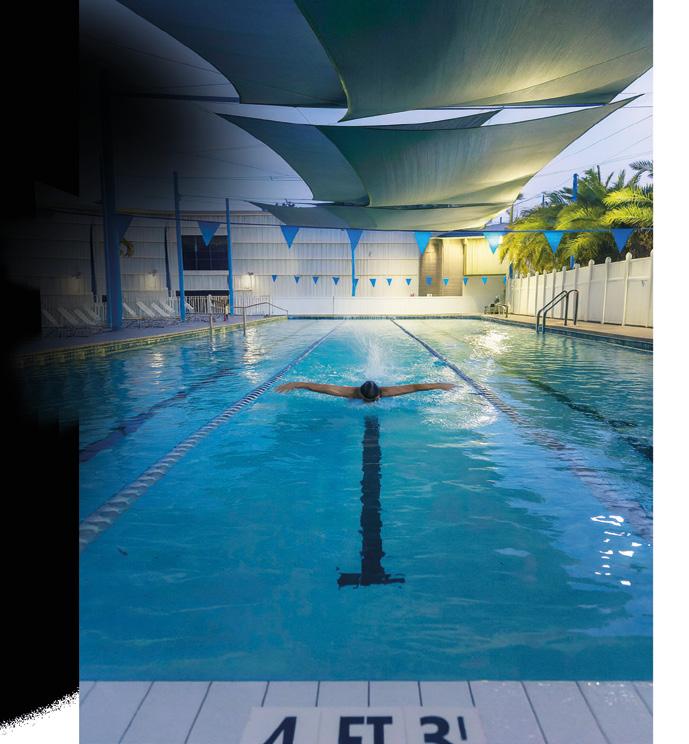
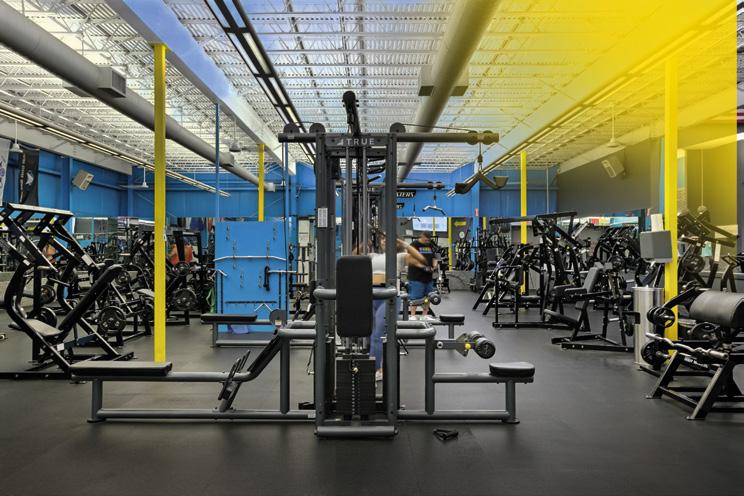
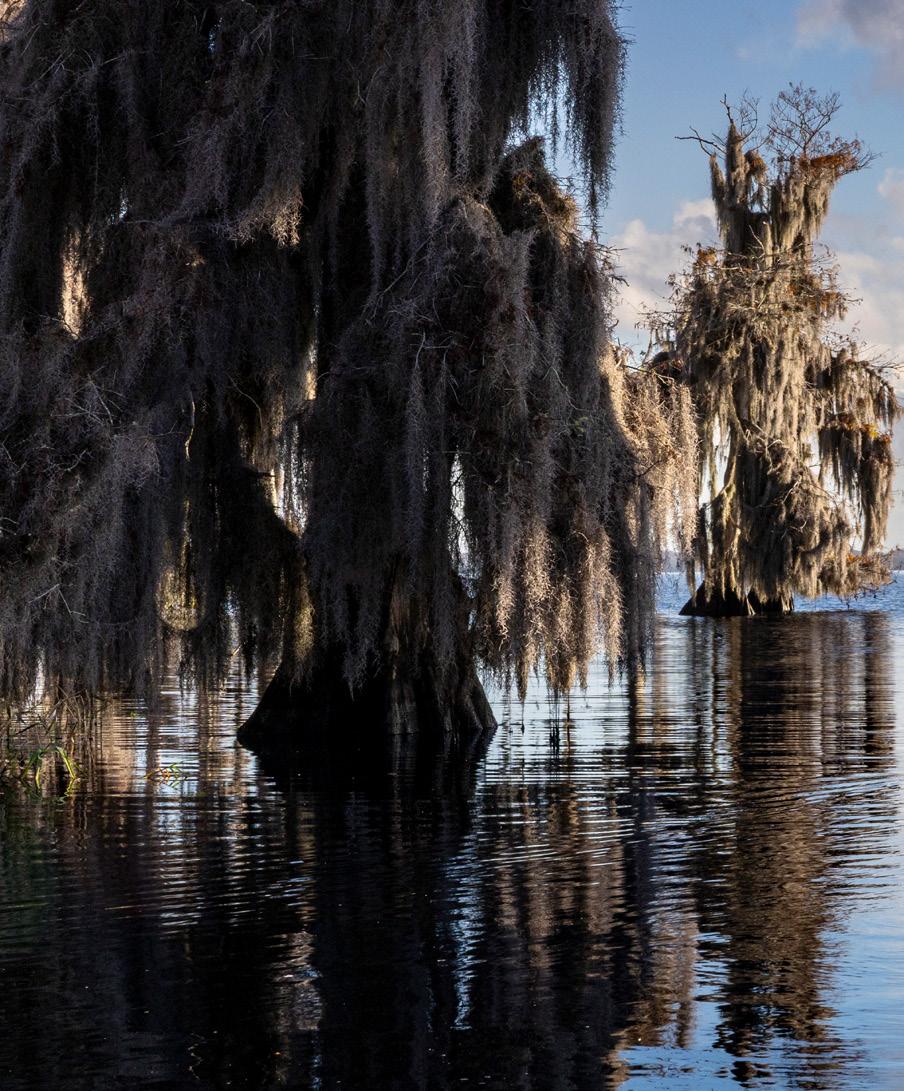
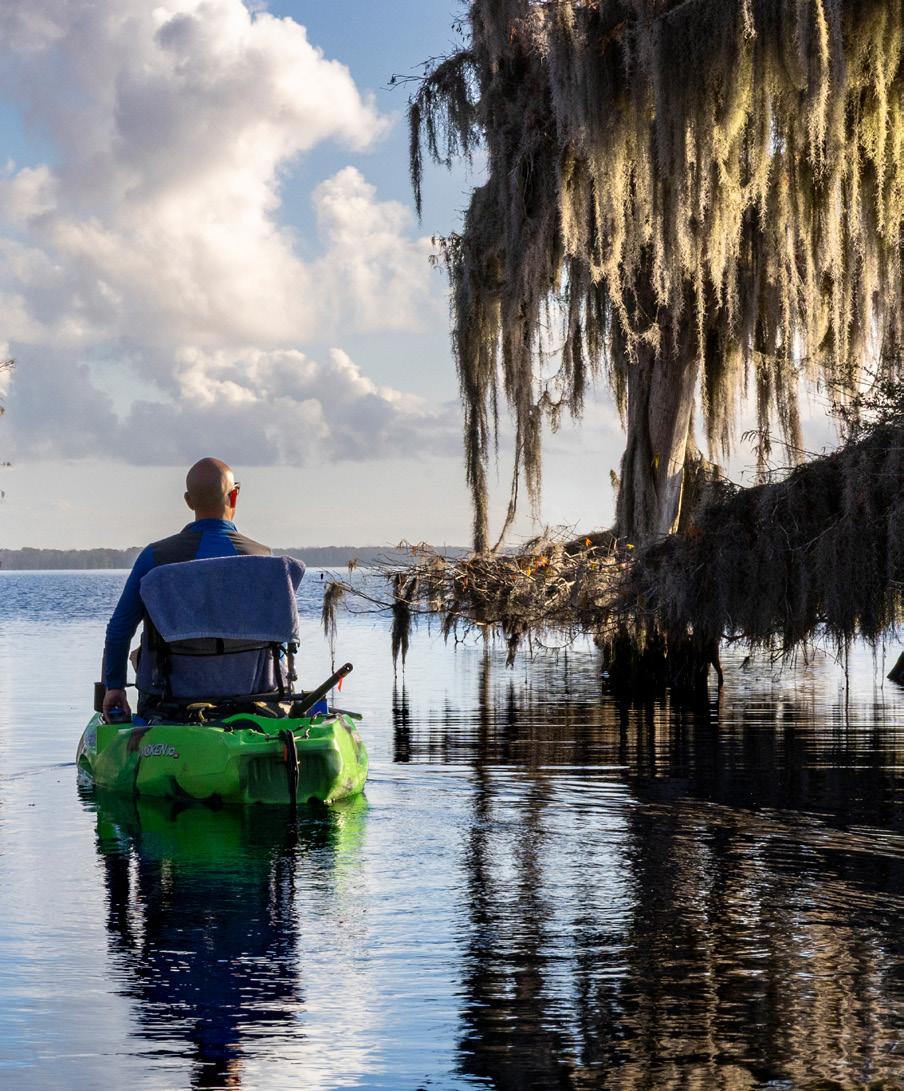
by Jim Field photography by Victoriya Knapp
At Blue Cypress Lake, the tall centuries-old trees rising out of the water are giant bald cypress (Taxodium distichum) specimens. Among the largest and oldest trees in Florida, they are native wetland trees adapted to standing water. They support wildlife, stabilize shorelines, and store centuries of carbon. Native Americans used them for dugout canoes, medicine and tools, and building their homes. Importantly, they are survivors of ice ages, sea-level changes, climate shifts, and logging that nearly brought them to extinction.
The Meaning of Bald
Bald cypress are conifer trees. Most conifers are evergreens, meaning they keep their needles year-round (e.g., pine, spruce, cedar, redwood). However, bald cypress are deciduous, meaning they lose their leaves each year in fall and winter—thus their “bald” appearance. The trees turn rusty orange/brown, creating copper-orange shorelines, producing one of Florida’s best color displays. After dropping their leaves, bare, gray, skeletal branches can look dead until leafing again in spring.
(Note: Bald cypress leaves are thin, flat, and feather-like, making them look like needles. But botanically they are true leaves, arranged serially along branchlets.)
Bald cypress naturally tolerate being rooted in water. Their preferred habitat is flowing or open water—lakes, rivers, large swamps. Their ability to live in standing water—typical trees suffocate when flooded—is attributable to unique adaptations:
• “Knees.” Knobby projections surrounding tree, growing upward from the roots above the water or mud, facilitating gas exchange and stabilizing tree in soft sediments.
• Specialized roots. Roots adapted to low-oxygen soils; tree can slow metabolism when oxygen is scarce.
• Air channels. Wood contains aerenchyma —i.e., air-filled spaces that move oxygen down to submerged roots.
• Deciduous leaves. Dropped leaves reduce water loss and stress during floods/storms.
• Resistant wood. Wood contains natural chemicals that make it resistant to rot, insect, and fungus, enabling submerged trunks and roots to survive for centuries.
Bald cypress are among the longest-lived trees in the eastern U.S., with lifespans far exceeding most other native hardwoods. Exceptional bald cypress specimens in undisturbed wetlands have been dated to 2,000–3,500 years old. For example, The Senator in Florida was estimated to be around 3,500 years old before it died in January 2012 from fire.
At Blue Cypress Lake, many trees are likely several hundred years old—possibly much older if conditions were optimal and they escaped logging. Blue Cypress Lake is special in showcasing remaining examples of old-growth bald cypress in Florida, given that it was largely spared from logging. Corkscrew Swamp Sanctuary near Naples also contains 500+ year old bald cypress trees.
In general, however, because of logging, most bald cypress in Florida are secondgrowth—under 150 years old. Thus, oldgrowth giants like those at Blue Cypress Lake are ecological relics to be cherished.
Physical Description and Contributions
Cypress trunks can be massive in diameter, with fluted, buttressed bases. Knees are often large, tall, and abundant— can be several feet high in deep water. Viewed from a distance, the tree overall features a broad, spreading crown.
Specimens in open water are largely fireproof by location, surviving lightning strikes yet continuing to grow due to compartmentalized decay. Cypress slow surrounding water flow causing sediment to settle, helping to stabilize shorelines. Finally, bald cypress host a rich variety of wildlife, including wood ducks nesting in cavities, barred owls and herons, epiphytes, mosses, and lichens, and fish and amphibians sheltering among roots. Young trees grow extremely fast—but giants may add only a millimeter or two of growth per year.
Bald cypress forests were almost completely logged out across Florida during the late 1800s and early 1900s. Several factors made the tree uniquely valuable to loggers and readily accessible to mass harvesting: exceptional wood qualities and huge yield from a single tree; introduction of railroads, steampowered sawmills, steam skidders for dragging enormous logs out of swamps, canals to float logs to mills; and lack of conservation laws.
The boom came and went quickly in affected areas; however, resulting environmental damage was considerable and lasting. Wetlands were drained for agriculture and development. Water levels changed, preventing cypress seedlings from surviving. Fortunately, bald cypress regenerate well when conditions are right and left undisturbed.
A key fact to appreciate is that old-growth bald cypress trees in Blue Cypress Lake survived by happenstance: deep water made logging difficult; some trees were inaccessible to steam skidders; sections were left standing as logging became less profitable. Only later, the area gained protection. In short, we are blessed to have Blue Cypress Lake to enjoy today—and nurture and protect for future generations.
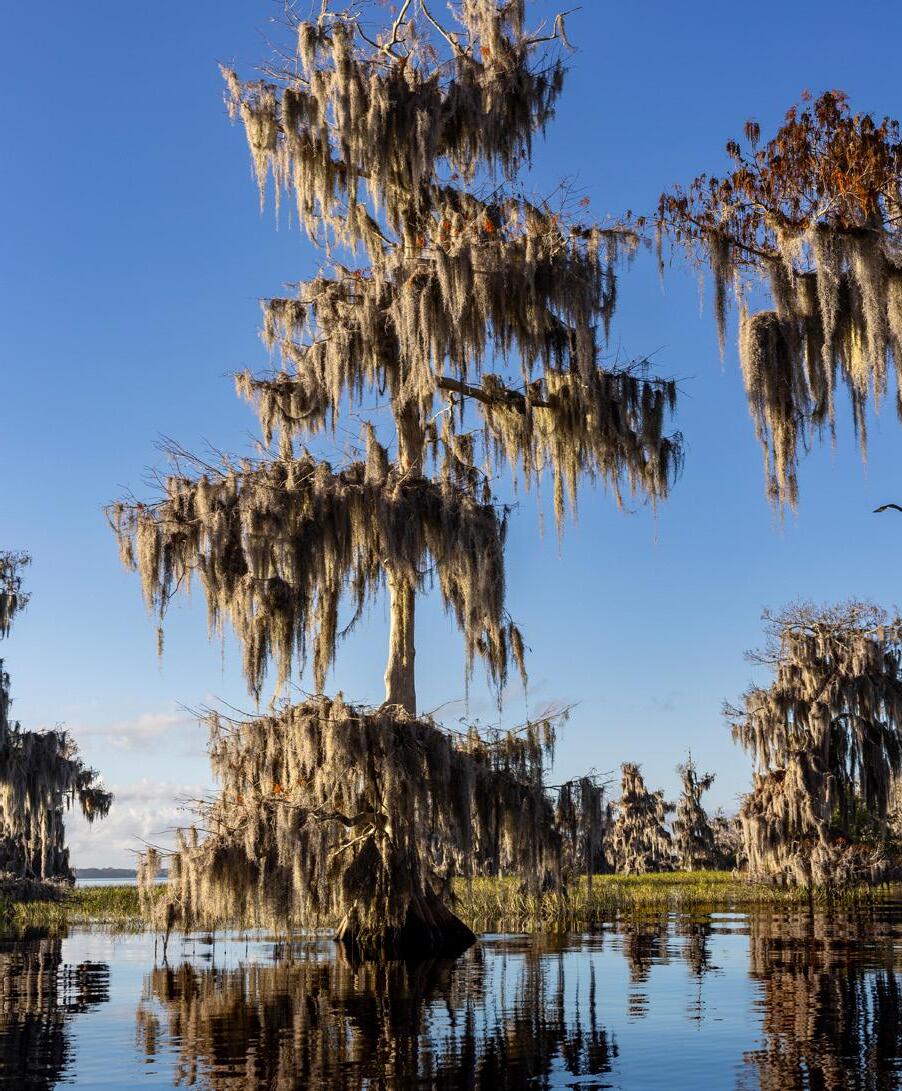
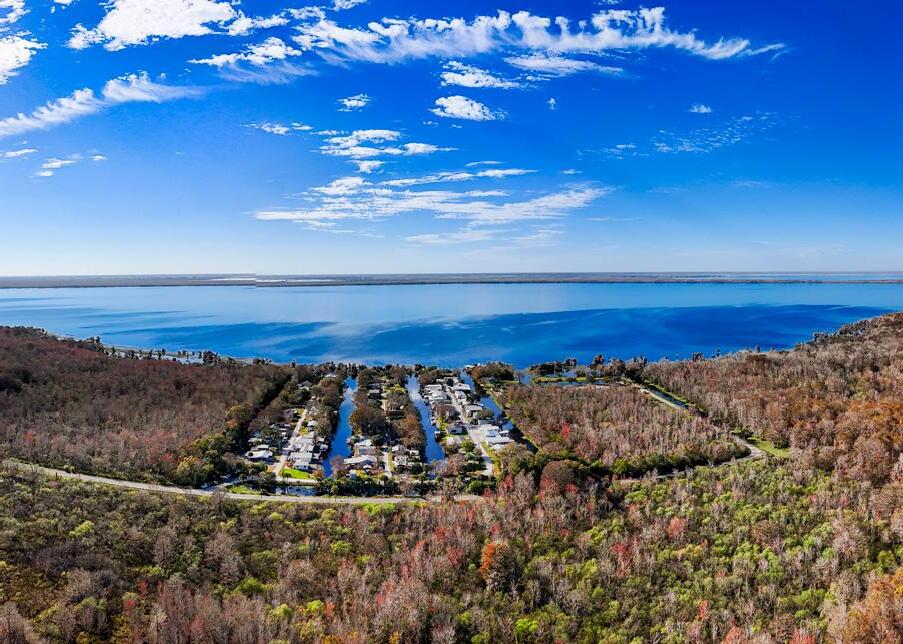
by Jim Field photography by Victoriya Knapp
It takes a while to learn about where you live—city, county, state—if you are not born and raised there. I moved to Vero Beach nearly eight years ago, and geography-wise I have concentrated on the Atlantic Ocean and Indian River Lagoon (IRL).
I have written a number of articles about the lagoon, covering its flora and fauna, edible oyster production and, of course, its pollution—both the sources of and efforts underway to restore it back to health.
When researching the lagoon, I came across references to the St. Johns River Management Area (SJRMA). At these times, I simply noted the name and left it at that. What little I knew was that the SJRMA and IRC are somehow linked to each other, although I didn’t understand how.
Roughly a month ago I decided to go west— mentally and physically—in Indian River County. I want to take LIV Vero Magazine westward and write about everything that exists out there, what’s going on, and what’s in store for the future.
My early findings are typical: We live in a relatively large and diverse county with much of the West devoted to agriculture and left in its natural state. Also true, most residents of the barrier island—both full- and part-time—know very little about what lies beyond Interstate 95 (it might as well be Mars). So too, what lies out there is fascinating and absolutely relevant to life in Vero Beach—especially the evolving land use and conservation efforts. Finally, the wonders of nature in the wild to be found out west are stunning—swamps, trees, animal life, insects, big blue skies, deep dark nights. Visit this terrain and you won’t forget it. West is an hour from the Ocean Grill.
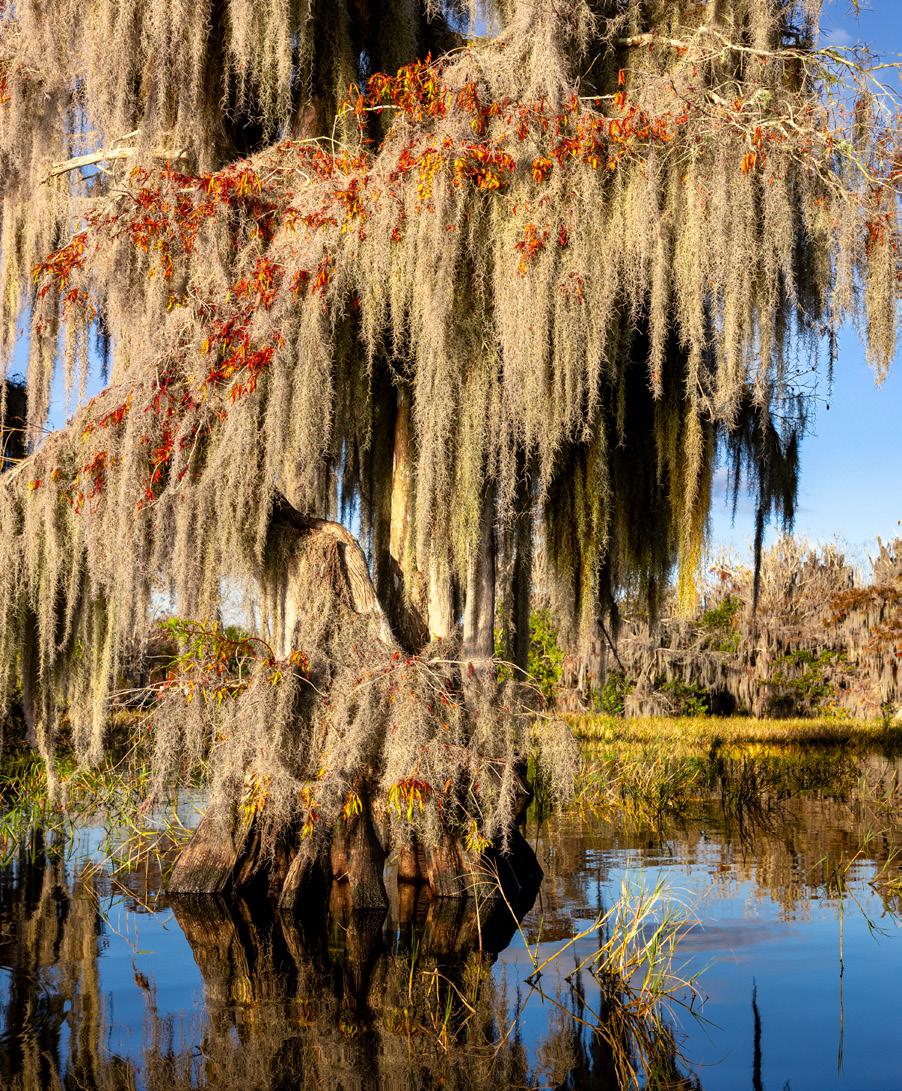
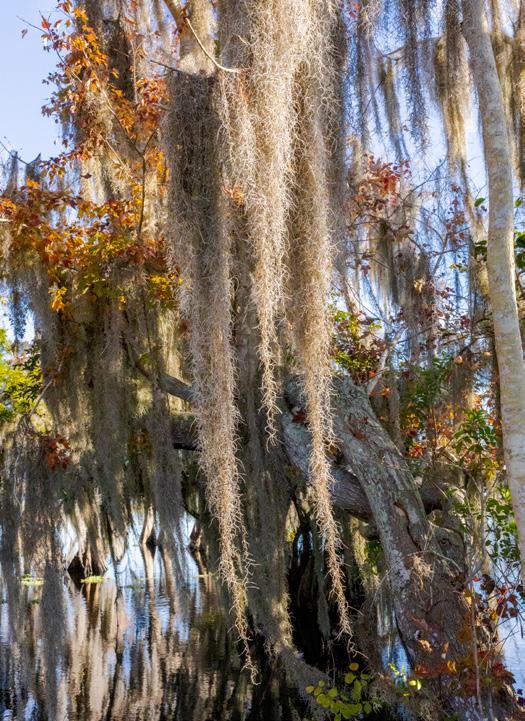
This article is an introduction to the West. It will discuss the St. Johns River and its importance to the state of Florida. Within this story, we will develop how Indian River County relates to the St. Johns River— what importance it plays in its existence. And we will visually survey Blue Cypress Lake, a major contributor to nature’s doings out there.
St. Johns River Described Consistent with my scant knowledge of the St. Johns River, I couldn’t ever locate it on maps of Indian River County that I’d glance at occasionally. I didn’t see it coursing through interior regions of the county, nor could I find it emptying into the Atlantic Ocean. Not bothering to actually study a map, it remained a phantom river to me.
So it was a surprise in preparing this article to learn a few choice facts about the St. Johns River. First, it flows north—not south, where I expected to find it somewhere in St. Lucie County. Why does it do this? Because central Florida tilts this way—being slightly higher in the south than in the north by approximately 30 feet over 310 miles—making St. Johns one of the flattest river gradients in North America. Most U.S. rivers flow from mountains to the sea; but Florida has no mountains, and “high ground” is inland, not coastal. Given its slow rate of elevation decline, the river is variously described as slow moving, quiet, peaceful, wide, lake-like, tidal near its mouth. In sum, water follows the lowest path available, which happens to lead north.
Another notable fact is that its 310 mile span makes the St. Johns River the longest river in Florida. After meandering northward through or bordering 12 counties, it eventually reaches the Atlantic Ocean in Jacksonville.
Its water is described as tea colored. Because of its length, the St. Johns River defines much of Florida’s inland ecological signature. Common wildlife includes manatees, alligators, river otters, bald eagles and ospreys. The river was used by Indigenous Peoples for thousands of years. Spanish explorers navigated it in the 16th century. During Florida’s early development it served as a major inland transportation route.
St. Johns River vs. Indian River Lagoon To get this out of the way, here is how the two relate to each other. Both are critical water systems on Florida’s east coast, but they are separate watersheds with different flow patterns, management concerns, and ecological characteristics. Concisely defined, they are adjacent but separate drainage systems: the St. Johns River is a riverine system, while the Indian River Lagoon is an estuarine lagoon system. This makes them very different entities.
The St. Johns River flows north from its headwaters west of Vero Beach, eventually reaching Jacksonville and the Atlantic Ocean. It contains freshwater, flows
northward, is roughly 310 miles long, winding and often wide, declines in elevation very slightly, and has minimal tidal influence except near its mouth. Visually, think wild, cypress knees, Spanish moss, still water.
In contrast, the Indian River Lagoon stretches roughly 156 miles along the Atlantic coast, from Ponce Inlet (near Daytona Beach) south to Jupiter. It flows east into the Atlantic at various inlets. Its water is brackish (mix of salt and fresh), its shape narrow, linear, parallel to the coast, is at sea level with strong tidal flow. Visually, think breezy, shallow blue-green water, seagrass meadows, sandbars, mangroves, dolphins, sea turtles, hundreds of fish and invertebrate species.
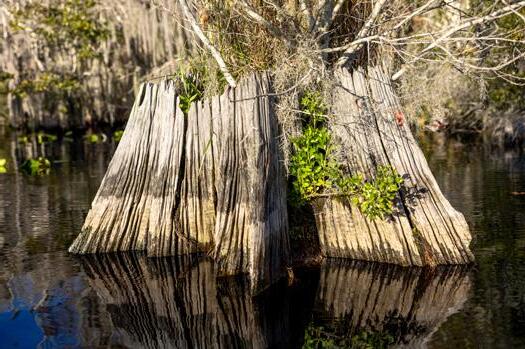
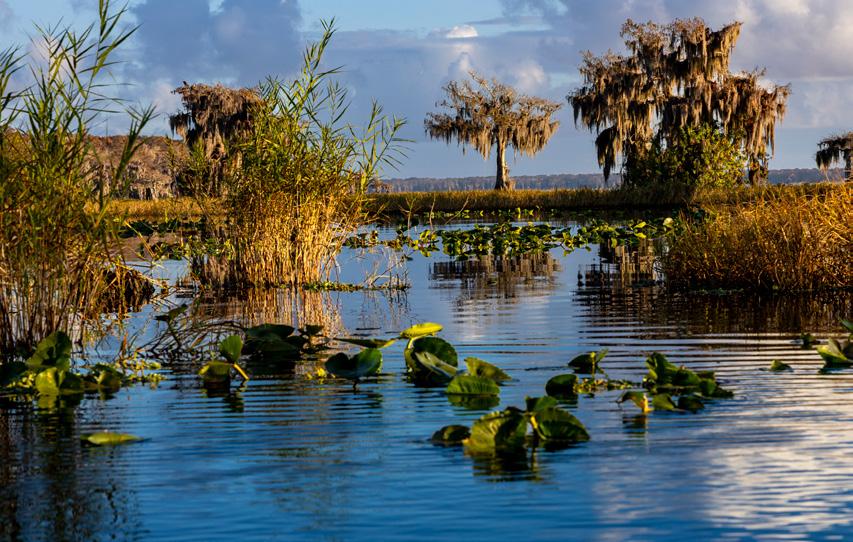
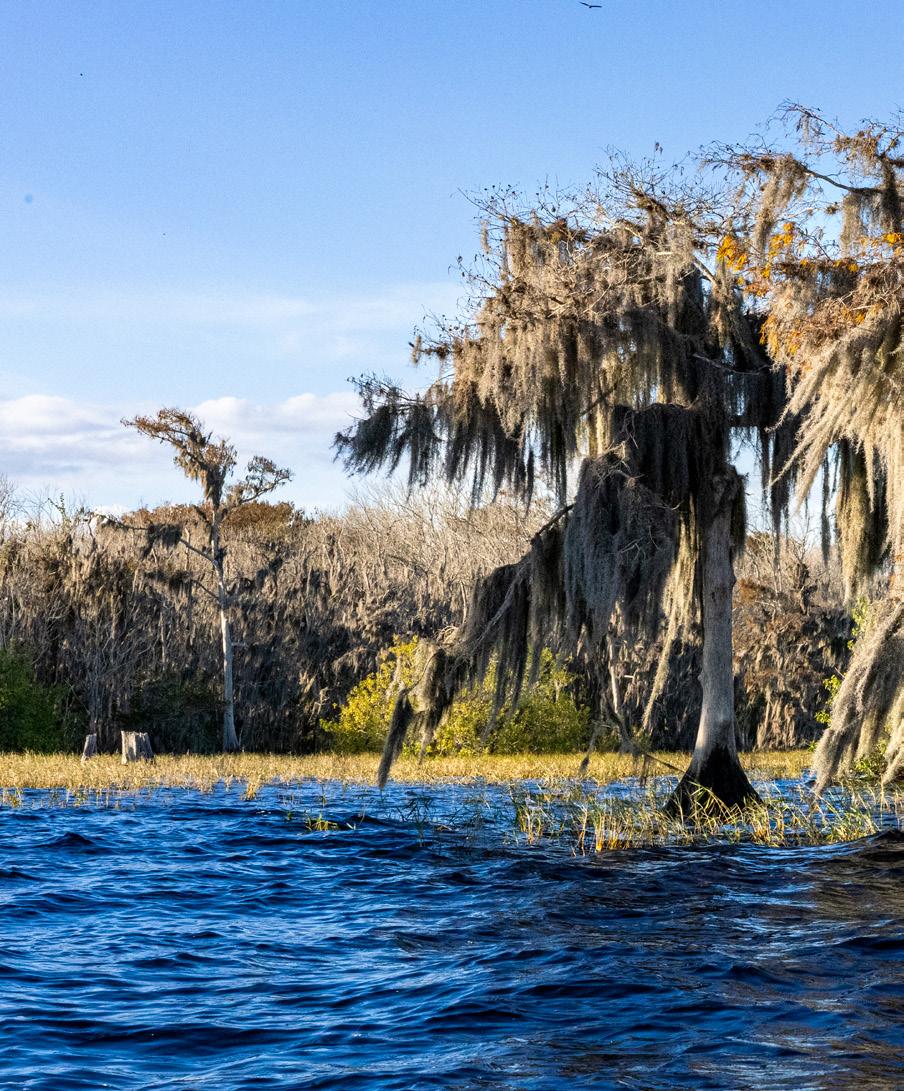
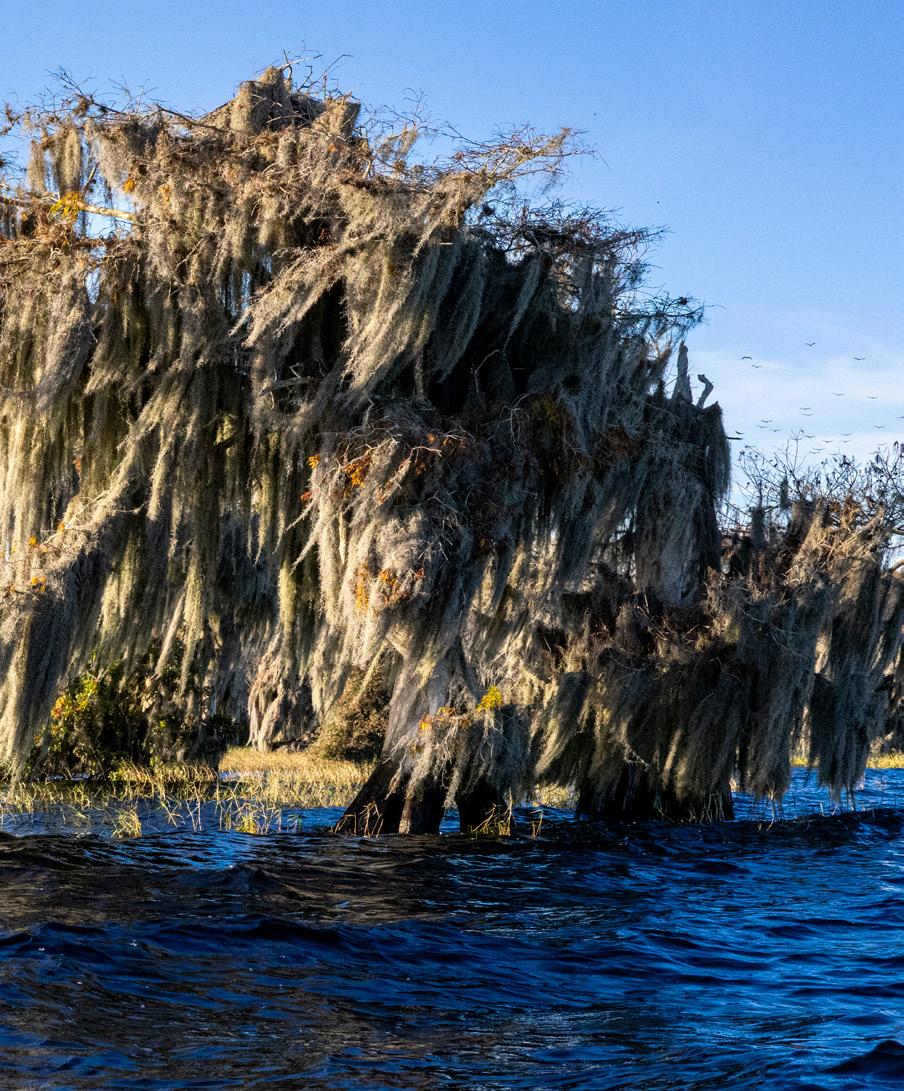
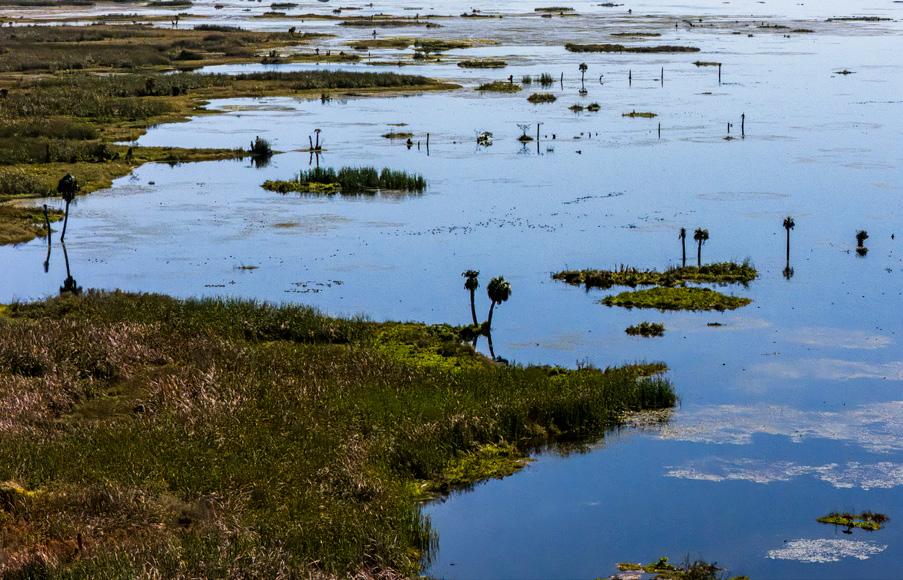

About 30–40 miles west of Vero Beach, you reach the Upper St. Johns River Basin, where the St. Johns River is born. The St. Johns doesn’t have a dramatic point-of-origin like a mountain river. Instead, it emerges from a mosaic of marshes, shallow lakes, wetlands, and braided channels—effectively a vast expanse of water spread thinly across land. Language is important here: there is no one “source,” but a network of sources constituting a “headwater.”
The system begins with rainfall, which is the primary water source. Because the land is flat, rain spreads across the landscape as sheet flow—a thin, slow-moving layer flowing across sawgrass marshes and wet prairie—the earliest diffuse stage of the river. As water accumulates, it settles into marsh depressions, seasonal wetlands, shallow lakes. The lakes act as natural reservoirs, holding water and releasing it gradually. With time sheet flow gathers into channels and poorly defined streams. Flow direction gradually becomes more consistent, eventually functioning as a recognizable river. Banks are defined and continuous flow is established. Key contributing waters include Blue Cypress Lake, Lake Hell ’n Blazes, and Lake Washington.
THE ST. JOHNS RIVER FLOWS NORTH—NOT SOUTH, WHERE I EXPECTED TO FIND IT. WHY DOES IT DO THIS? BECAUSE CENTRAL FLORIDA TILTS THIS WAY— BEING SLIGHTLY HIGHER IN THE SOUTH THAN IN THE NORTH BY APPROXIMATELY 30 FEET OVER 310 MILES— MAKING ST. JOHNS ONE OF THE FLATTEST RIVER GRADIENTS IN NORTH AMERICA.
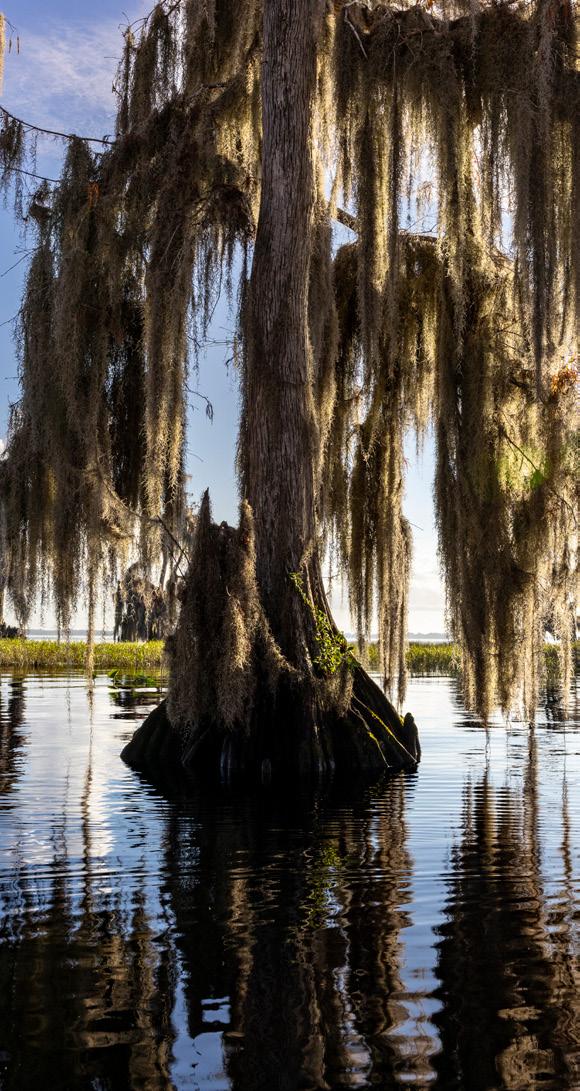
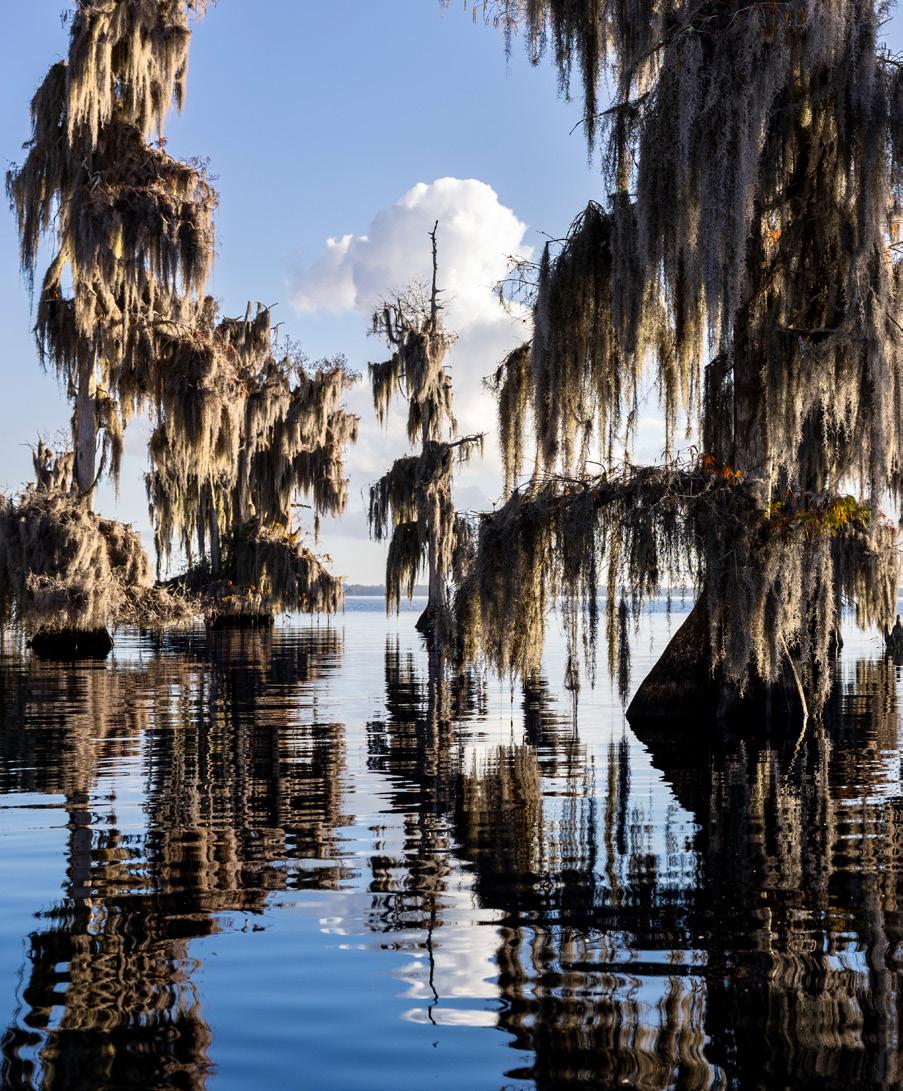
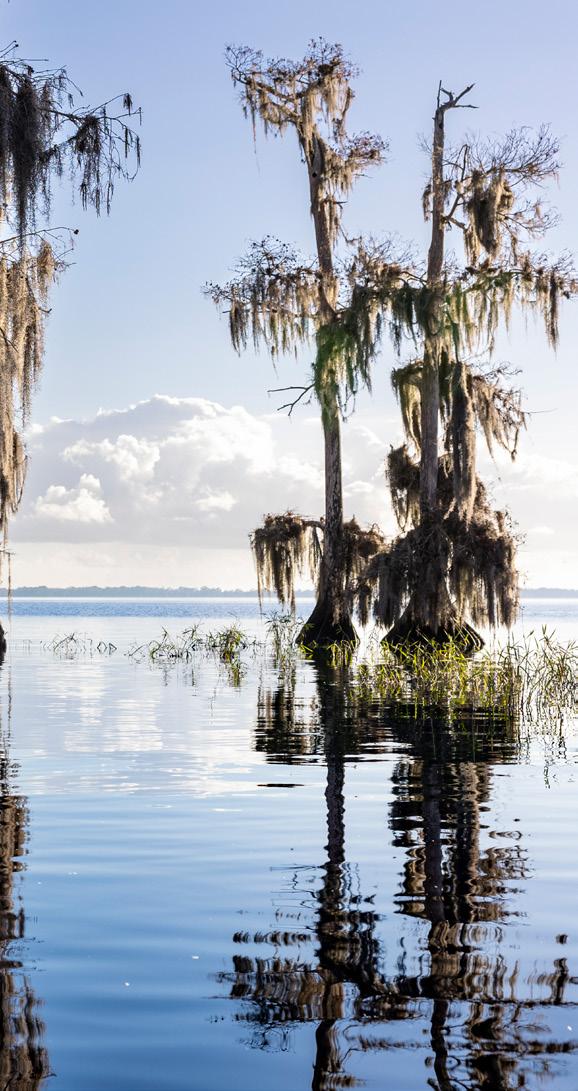
During wet seasons the basin expands dramatically. During dry periods, water retreats into narrow channels. This natural pulsing is essential to the river’s ecology. The larger basin is managed by the St. Johns River Water Management District for flood control, water supply, and environmental restoration.
Blue Cypress Lake in Indian River County is one of the largest and most recognizable water bodies comprising the Upper St. Johns River Basin. It supports a wide variety on flora and fauna, including ancient bald cypress trees, wading birds, fish and alligators. The small community on the western shore of Blue Cypress Lake is called Blue Cypress Village, a tiny hamlet of cabins, mobile homes, and a few lakefront residences.
The Upper St. Johns Basin is a river-inthe-making, while the Everglades is a marsh that stays a marsh, eventually becoming Florida Bay. Thus, the Everglades features sawgrass—a “river of grass”— sloughs, tree islands, and mangroves near the coast. Wildlife includes endangered species—Florida panther, snail kite—crocodiles, and estuarine species near the coast. The Everglades is one of the largest ecological restoration projects on Earth. It’s variously described as vast, iconic, subtropical, dramatic, lonely.







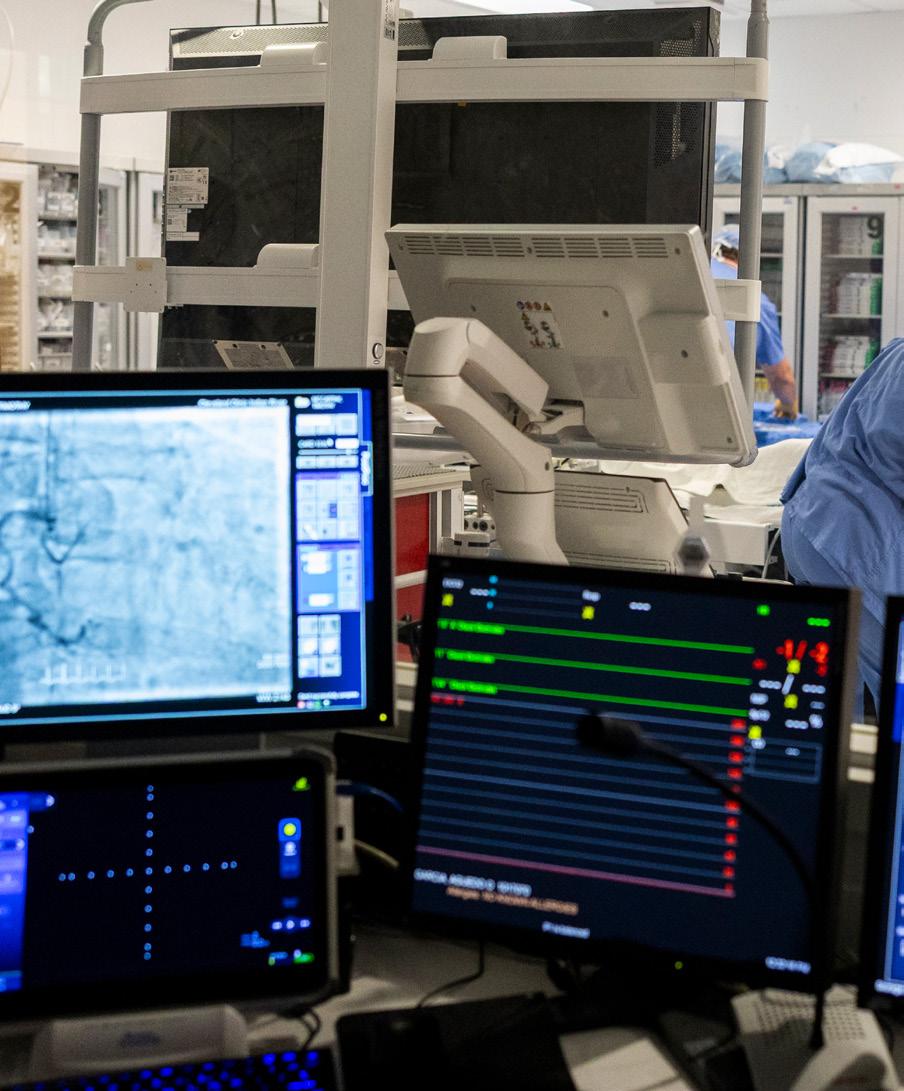

Cardiac Cath Lab Team Prepping for Procedure
Cleveland Clinic Indian River Hospital
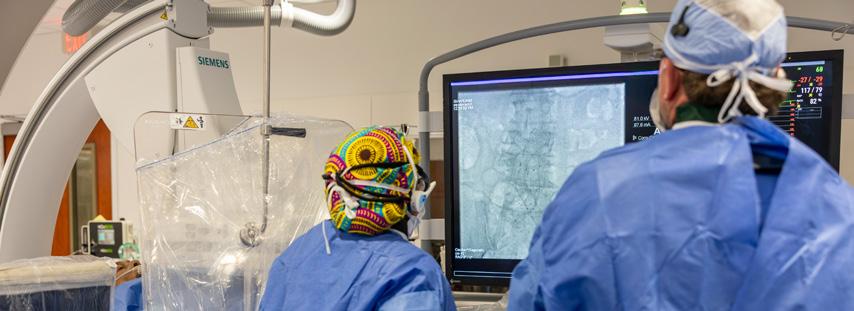
Conducted by Jim Field photography by Victoriya Knapp
Dr. Miller is board certified in Internal Medicine, Cardiovascular Disease, and Interventional Cardiology.
Editor’s Note: Interventional cardiology is a procedural specialty that treats coronary artery, heart valve, and other heart anomalies using minimally invasive, catheterbased procedures instead of open heart surgery. The training pathway is rigorous, spanning five to eight years following medical school and internship, to encompass internal medicine, general cardiology, and one or more fellowships in sub-specialty areas—plus ongoing education to stay current with new technologies, techniques, and drugs.
The first percutaneous transluminal coronary angioplasty (PTCA) procedures in the U.S. were performed in the late 1970s. Simply described, the procedure threads a thin, flexible tube (catheter) fitted with a small inflatable balloon at its tip though a blood vessel and into the heart, positioning the balloon in a narrowed segment of a coronary artery where blood flow is restricted or blocked. Once precisely positioned, the balloon is inflated, compressing plaque against the vessel wall and widening the artery, improving or restoring blood flow. The catheter with balloon is then deflated and removed.
In the early 1990s, coronary artery stents were introduced—tiny, expandable, permanently implanted mesh tubes— to act as a scaffold and prevent the process—termed restenosis—by which an artery narrows again after mechanical intervention. Ballooning a coronary artery causes microscopic injury to the vessel lining, prompting scar tissue to form with a chance to gradually impede blood flow. First-generation stents were bare-metal devices, and while superior to balloons in restoring and maintaining blood flow, still incited undesirably high rates of restenosis.
To address in-stent restenosis, in the early 2000s drug-eluting stents (DES) were introduced, whereby metal stents were coated with various pharmacological agents that, released into the vessel lining over time, would prevent scar tissue from forming, thus reducing restenosis rates. And most recently, product innovation has focused on drug-coated balloons (DCBs), which deliver medication to the artery wall without leaving a stent behind.
As should be apparent, interventional cardiology has been a hot-bed of technology innovation for half a century, providing a dynamic, challenging, and demanding area of procedural medicine for specialists
to work in, attracting highly-talented, highly-motivated physicians. Indeed, a full accounting of current interventional cardiology devices—comprising its “armamentarium”—would easily exceed 30 different instruments for performing various tasks. Within balloons alone, for example, there are standard angioplasty balloons, drug-coated balloons, cutting balloons, scoring balloons, and high-pressure noncompliant balloons. To physically remove plaque from within arteries, there are atherectomy devices, including rotational atherectomy, orbital atherectomy, laser atherectomy, and directional atherectomy. Accordingly, the term percutaneous coronary intervention (PCI) is now used as an umbrella term to accommodate all options for restoring and optimizing coronary artery blood flow.
Importantly, interventional cardiology emerged as a less invasive alternative to open heart “bypass” surgery for treating advanced and symptomatic coronary artery disease. As new devices allowed for greater success in opening blocked and narrowed coronary arteries and preventing restenosis, open heart surgery case volumes declined while interventional cardiology volumes expanded steadily year after year. This transition was at the forefront of a larger
Dr. Mistyann-Blue Miller.
trend in procedural medicine towards less-invasive diagnostic and therapeutic modalities.
A revolutionary development in the treatment of heart attacks—formally known as myocardial infarction—took place in the late 1980s, with interventional cardiologists using angioplasty to open blocked coronary arteries, replacing thrombolytic (“clot-busting”) drugs. Termed “primary angioplasty”—or primary PCI—it is used to treat ST-elevation myocardial infarction (STEMI), a subset of heart attack that roughly 40% of sufferers present with. Incorporating stents, drug-eluting technology, and rapid-response systems to minimize time to treatment, primary PCI is now the global gold standard for STEMI treatment. In the September 2025 issue of LIV VERO Magazine, we published a dedicated article on primary angioplasty at Cleveland Clinic Indian River Hospital.
Yet another transcatheter procedure performed by interventional cardiologists is left atrial appendage closure, during which a device—a small, parachute-shaped implant—is placed inside the left atrial appendage to seal it off, preventing blood clots from forming there and reducing stroke risk. In the October 2025 issue of LIV VERO Magazine, we wrote about this procedure as performed at Cleveland Clinic Indian River Hospital.
Finally, interventional cardiologists are central to managing valvular disease, performing Transcatheter Aortic Valve Replacement (TAVR) to replace a diseased aortic valve without open-heart surgery, restoring blood flow and improving survival in patients with severe aortic stenosis. Whereas traditional open heart valve surgery removes the patient’s diseased aortic valve, replacing it with a mechanical or tissue prosthetic valve, TAVR implants a new bioprosthetic valve inside the old one, pushing the damaged leaflets aside. Valve deployment includes two options: balloonexpandable valves or self-expanding valves. Following placement, catheters are removed. There is no chest incision, no heart-lung machine.
Note that PCI procedures are performed in a cardiac catheterization laboratory, referred to simply as a cath lab. The primary machine is a fluoroscopy/X-ray

imaging system, which allows operators to see in real time catheters, guidewires, stents, and devices as they move through blood vessels. The use of contrast dye enables visualization of the structural and functional status of arteries and chambers.
JF: Dr. Miller, thank you for opening your busy schedule to accommodate this interview. I really appreciate your time and sharing what you do every day with our readers. Let’s start at the beginning with an overview of your background and medical education and training.
MM: It’s my pleasure. I was born in Brooklyn, New York. I didn’t live there very long, so I don’t remember it. I grew up in Miami, Florida, so I’m a Floridian. I earned my undergraduate degree from the University of Florida and then went to medical school at Morehouse School of Medicine in Atlanta. During my internal medicine residency at the University of Miami Miller School of Medicine, I fell in love with cardiology. I met my mentor, Dr. Lawrence Lovitz, an interventional cardiologist and phenomenal teacher. Watching him, I found cardiology to be exciting and rewarding. From there, I completed a fellowship in general cardiology at Drexel University College of Medicine in Philadelphia, and a second fellowship in interventional cardiology at Harvard Medical School—Beth Israel Deaconess Medical Center in Boston. So I am board certified in Internal Medicine, Cardiovascular Disease, and Interventional Cardiology.
JF: You have a very impressive resume, to be sure. And how did you find your way to Vero Beach?
MM: I wanted to return to Florida. By way of training, I knew two interventional cardiologists at Indian River Hospital— they were mentors to me as well. They were getting ready to retire, and paved the way for me to come to Vero Beach. It’s been a wonderful ride and I’ve had a very unique and wonderful experience here.
JF: Traditionally, interventional cardiology wasn’t an area in medicine with many female practitioners— in part because it can consume every waking hour. What was your experience?
MM: When I was training, I think about
4% of interventional cardiologists were women. That number is slightly higher now, but the demands of the job are real, and many women physicians hope to have a schedule to more easily accommodate both a family and career. Many of my mentors have been men who really believed in having more women in the field, and they really believed in my skills and my ability to do this work. That just made things so much more enjoyable and better when I was just getting started. Now I do my part to assist others coming up the ladder. Occasionally, you encounter a person who’s not used to seeing a female in this role, but I find they’re pleasantly surprised. Most patients are very gratified
to see a woman, and female patients appreciate having a woman taking care of them. Scientifically, female adult cardiology is markedly different from male adult cardiology. So I bring that perspective into my practice.
JF: Tell me about how patients find their way to you. What are the typical referral patterns.?
MM: Typically patients are seen by either their primary care physician (PCP) or general cardiologist. By the time they are referred to me, or my colleague Dr. Carlos Gonzalez Lengua, it’s to have a procedure done. It could be a diagnostic cardiac cath, a PCI, a valve replacement—that’s
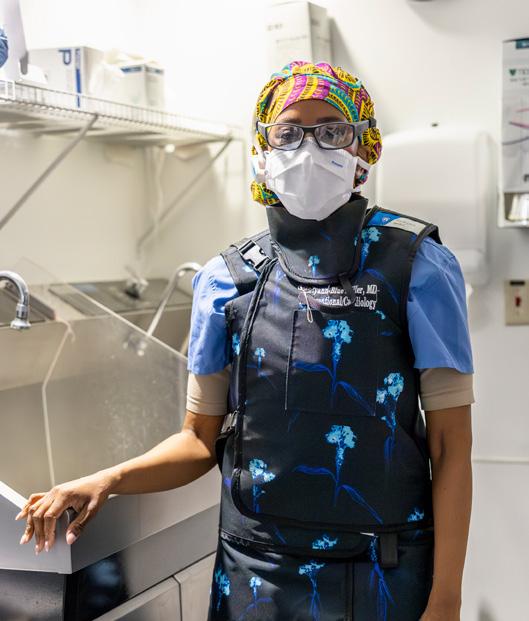
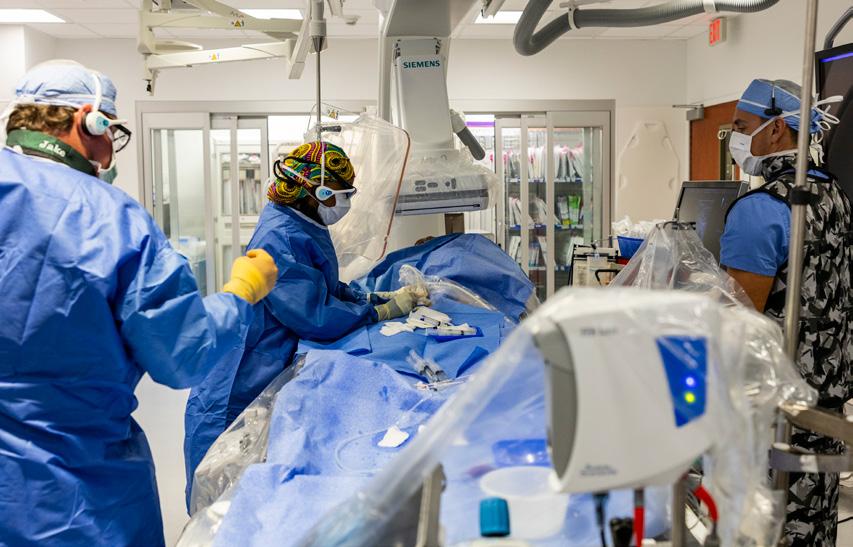
when I come into the picture. My practice is a bit different in that I spend a lot of time in the hospital itself, although I do see patients in the office. Referrals come from other Cleveland Clinic physicians and also private cardiologists and PCPs. Of course, for emergency cases our time with patients before a procedure will be limited. For elective cases, patients like to meet the physician who will do their procedure, and we use this time to educate them about every aspect of a potential or scheduled procedure.
JF: Angioplasty and stenting are your bread and butter procedures. Can you tell us about your work with these therapies?
MM: There are a lot of tools in the toolbox—now more than 10 years ago. The catheters have gotten smaller. The standard entry site for catheters used to be the large femoral artery in the groin; now we routinely use the radial artery located in the forearm and wrist, on the thumb side of the arm. Radial access reduces bleeding, improves comfort, and speeds recovery compared with femoral access. Balloon angioplasty is
still an option. We’re in our third or fourth generation of stents. Bare metals stents used to be standard practice, now we use drug-eluting stents which are superior for preventing restenosis.
We have a number of different types of specialty balloons—cutting balloons, scoring balloons. And we’re using drugcoated balloons more and more—we’ve had them in our cath lab for over a year now—but they’re only approved for certain situations. One approach to treating instent restenosis is to place a new stent within the existing stent—creating two layers of stents. An alternative is to use a drug-coated balloon within the original stent, the results for which point to very good outcomes in preventing restenosis. Looking ahead, I think the landscape for drug-coated balloons is going to expand significantly. I always describe coronary arteries like trees and roots: you have the main trunk and then branches, some bigger, some smaller. Of course, we’re concerned about the big arteries. But sometimes it’s difficult to put stents at angles in branches where there’s a stent in the main artery, or in small-diameter arteries in general. And in these situations
drug-coated balloons show great promise. They can deliver a drug right to that spot without having to leave behind any metal. Data are pointing to very good results. So drug-coated balloons—having been around for some time in earlier forms—are back in fashion and making real inroads. The quest continues for treating smaller and smaller arteries of the root system.
Just briefly, another very useful technology is Shockwave Intravascular Lithotripsy (IVL), used to treat severely calcified coronary arteries during catheter-based procedures. It uses acoustic pressure waves (similar in concept to kidney stone lithotripsy) to fracture hard calcium embedded in artery walls so the vessel can be safely expanded with a balloon and stent. We’ve been using it for a few years now. We use it quite a bit—it’s shortening procedural times and reducing risk of treating calcium in coronaries.
JF: In sum, I would say that you provide the full gamut of interventional cardiology services right here in Vero Beach—which is comforting to know. MM: There are some esoteric things that we will refer out when appropriate, but
your statement is fair. We work hard at what we do.
JF: What is the current protocol for blood thinners following an intervention? I recall that recommended durations were being shortened.
MM: It’s remained pretty much the same in the past few years. We still recommend dual anti-platelet therapy, which means aspirin and another agent—like Plavix for example. For patients who have stable coronary artery disease—that is, patients presenting electively from home with procedures done on an outpatient basis—we recommend at least six months. If emergent with a heart attack, then 12 months. Still, if they’re tolerating their anti-platelet very well, we’ll recommend 12 months for good measure.
JF: In a previous article LIV VERO reported on primary angioplasty for STEMI heart attacks. I sleep better knowing you provide this gold standard of care 24/7/365. Thank you for what you do. You save lives and improve outcomes and quality of life for patients suffering heart attacks. Our community is fortunate to have you and Dr. Gonzalez Lengua.
MM: Thank you. We’re here to contribute.
JF: We also reported on left atrial appendage closure, profiling what Dr. Faulknier in electrophysiology (EP) is doing in the hospital. Can you please comment from your perspective?
MM: When we started the program here, we were doing them together—EP and interventional cardiology. And then we branched and sometimes we do it separately now. EP often combines left atrial appendage closure with atrial fibrillation ablation—so doing a concomitant procedure. Alternatively, if patients don’t need ablation, then they can come to us and we’ll perform the procedure, using the same Watchman device. Referral patterns from general cardiologists and patient preference will often determine who performs the procedure.
JF: Finally, we have TAVR to talk about— Transcatheter Aortic Valve Replacement. This was such an exciting new approach when it first came out. Where does it
stand now in your practice?
MM: We do a lot of these procedures, averaging over 100 a year, meaning we’re one of the busiest programs in Florida. Initially, TAVR was indicated for patients who could not have open heart surgery to remove the aortic value—they were judged to be at high risk—for example, being old and frail, with fragile aortas, severe lung disease, multiple prior surgeries. There were no options for them. Currently, indications have expanded to those who are at moderate and low risk—so relatively healthier patients who prefer a less invasive surgery. Of course, procedural success as measured by excellent clinical outcomes is what has driven an expansion of TAVR. Importantly, the surgeon and interventional cardiologist work collaboratively to make a preferred recommendation based upon anatomy and the patient’s clinical condition. If both are equally attractive, choosing between open heart aortic valve surgery versus TAVR comes down to patient choice after conversations with a surgeon, an interventional cardiologist, and family members.
Remember, aortic valve replacement surgery cuts out the valve leaflets and sews in a new prosthetic valve. TAVR leaves in the native valve and positions a new prosthetic valve across the aortic valve annulus, implanting it by balloon or self-expanding device. What that does is push your own valve leaflets out of the way, and the leaflets and calcium on the native valve help anchor the TAVR valve in place so it doesn’t move. It starts to function right away. We opt for sedation, which is better for the patient and improves recovery times. Still, TAVR is done with both the interventional cardiologist and a cardiac surgeon in the room as well as an anesthesiologist, who provides sedation. It’s nice to do this together and we’ve built the program around excellent outcomes and teamwork.
JF: Dr. Miller, this has been wonderful. Thank you. Is there anything else you might mention before we conclude? MM: Yes, I also do another higher-risk intervention called a chronic total occlusion (CTO). Technically, a CTO is a complete blockage of a coronary artery— no blood flow--that has been present for a long time. It’s caused by long-standing
atherosclerotic plaque that hardens and scars over time. The blockage becomes dense and fibrotic, often heavily calcified. Add it all up, and they are among the most technically challenging lesions to treat.
For the longest time, we wouldn’t do anything with these types of arteries. The only treatment was medication, trying to mitigate symptoms, which can include chronic chest pain (angina), shortness of breath, and reduced exercise tolerance. But now there is a growing, highly specialized field to treat them. There’s more data suggesting that with treatment patients experience a better quality of life. And with a CTO present with a heart attack, patients tend to do worse.
I’ve been doing CTOs since 2021. There are dedicated fellowships where you do an extra year of training to do CTOs. I was lucky to have exposure to these procedures in my fellowship in Boston, along with attending training programs elsewhere in the country. We officially started a program here and do several procedures every month. Candidates undergo extensive evaluation—viability studies using MRI—to ensure the anatomy and lesion are optimal for intervention. The required techniques are more advanced than just normal ballooning and stenting. You use specialty wires, specialty catheters. You have to use more aggressive wiring techniques to burst through all of that plaque and find or create a channel. That’s half the battle. The other half is to clean out all the gunk. The goal is to balloon and stent. We can have CTOs that have been there for a few months to a few years. Its challenging work but I enjoy it. You’re giving patients some quality of life back. That’s extremely valuable.
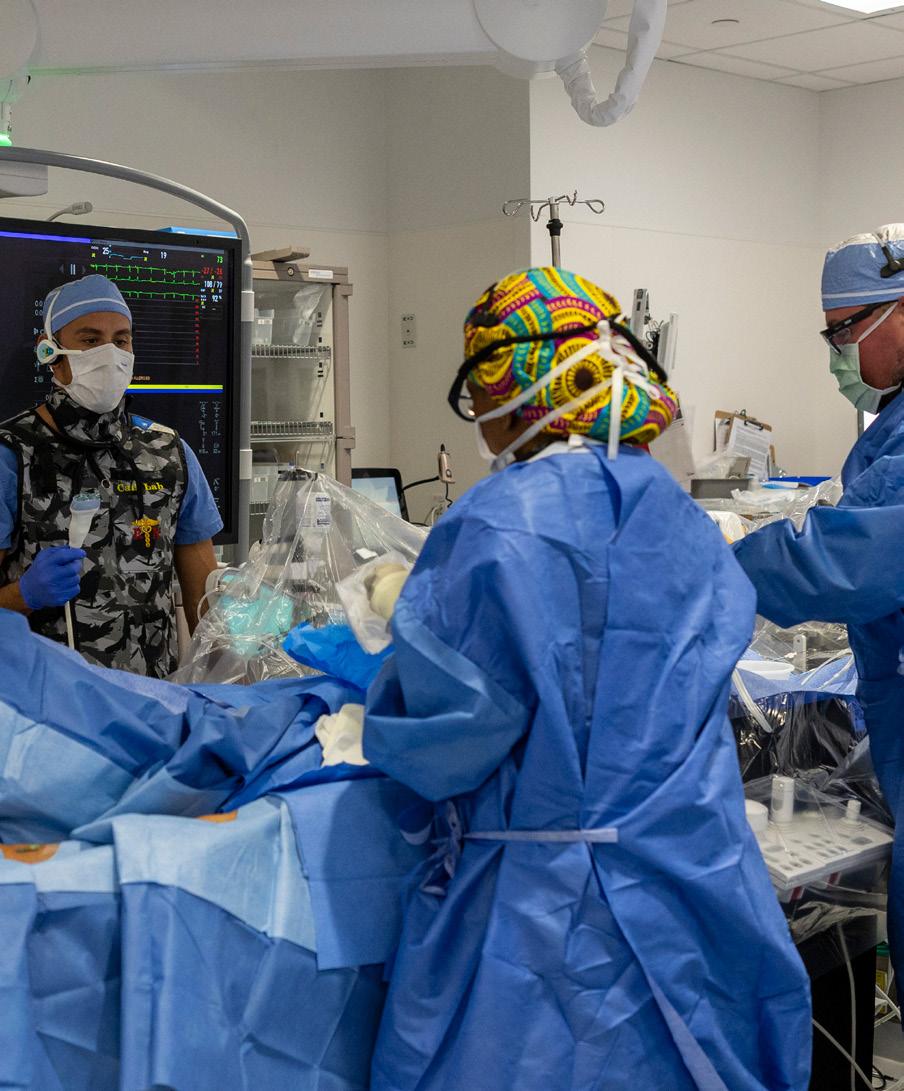
• Dental Veneers And Crowns
• Smile Makeover And Design
• Full Mouth Reconstruction
• Invisalign
• Gum Disease/Periodontal Care
• Dental Implants/All-On-4
• Teeth Whitening
• Full And Partial Dentures
• Laser Dentistry

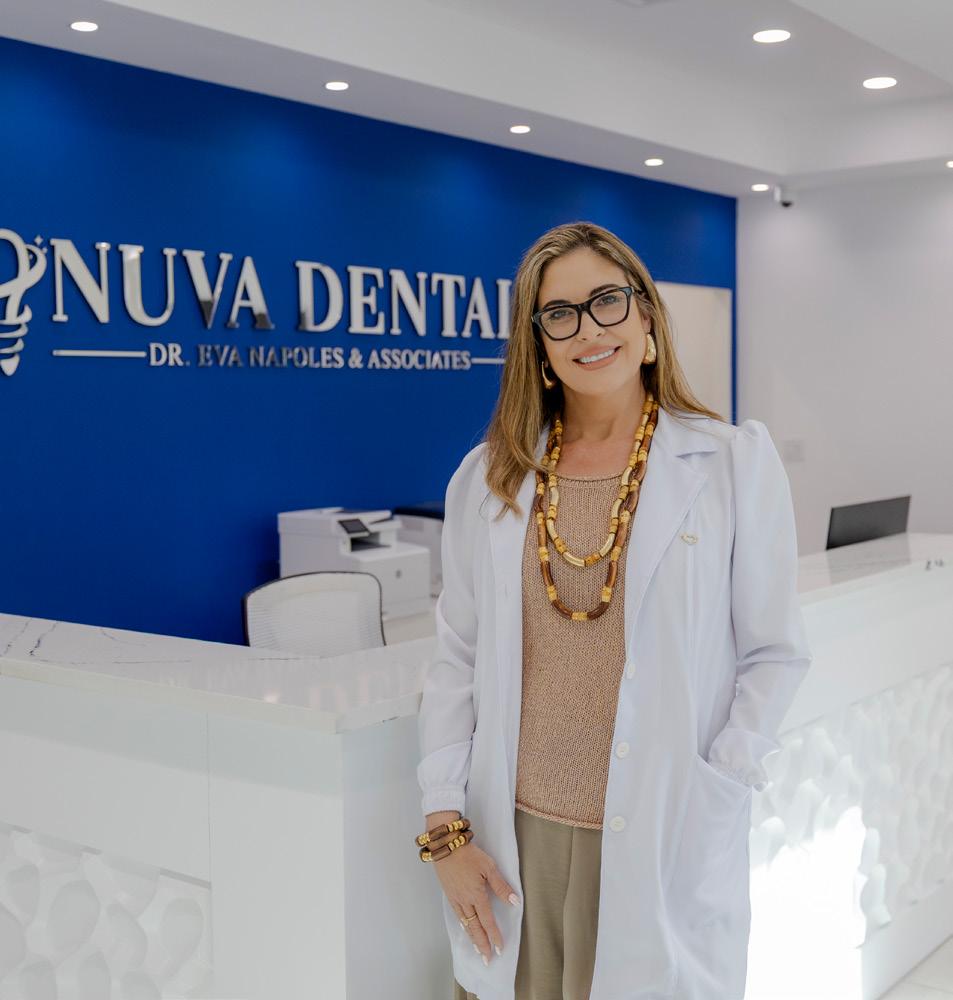


Dr. Rahman-Garcia specializes in providing personalized, patient-centered care in partnership with patients and families, with a focus on wellness, prevention, diagnostics, primary care, and long-term health.
Physician-patient partnership
Same-day or next-day appointments
Extended, comprehensive visits
No waiting room time
Personalized care plans
24/7 direct access

Dr. Rodriguez is board certified in Internal Medicine and Obesity Medicine.
Editor’s Note: Obesity has reached epidemic proportions globally, with about 15% of adults afflicted by excessive weight and elevated disease risks. Adult obesity has more than doubled since 1990, and adolescent obesity has quadrupled in the same period. Without major changes, more than half of adults and about one-third of children and young people could be overweight or obese by 2050.
The prevalence of obesity is far worse in the U.S. About 40% of U.S. adults are obese, with steadily increasing numbers for decades. Higher obesity rates are associated with Black and Hispanic adults, adults with lower educational attainment, and middleaged (40-59) adults.
From a medical perspective, as determined by standardized methods and metrics, “overweight” is a risk factor, while “obesity” is considered a chronic disease requiring medical, behavioral, and/or pharmacologic treatment, not just lifestyle advice. Importantly, many health insurers will cover medical services for enrollees with a formal diagnosis of obesity. Clinically, obesity is
most commonly determined using body mass index (BMI).
The negative impact of obesity on health is profound, increasing the risk of type 2 diabetes, heart disease, hypertension, stroke, certain cancers, and more. Considering both its prevalence and detrimental influence on nearly every system in the body, obesity adds hundreds of billions of dollars in incremental medical costs each year in the U.S.
Looking at cardiovascular health alone, obesity contributes to high blood pressure, heart disease and heart attacks, stroke, type 2 diabetes, abnormal cholesterol and triglyceride levels, and metabolic syndrome. In terms of brain and mental health, obesity is associated with increased risk of dementia and cognitive decline, depression and anxiety, lower self-esteem and body image distress, weight stigma and social discrimination, which worsen mental health. The list of negative clinical consequences goes on to include respiratory problems, musculoskeletal impairments, cancer risk, digestive and liver disorders, hormonal and reproductive effects, and reduced longevity and quality of life.
Encouragingly, many of the deleterious health effects of obesity can be partially or fully reversed with weight loss, especially when sustained and combined with healthier habits. Other harmful effects may improve but not completely resolve.
Currently, obesity treatment is being revolutionized by a new class of drugs— incretin-based medications—for weight loss, especially GLP-1 receptor agonists and related next-generation agents. These drugs work on hormones that regulate appetite, hunger, and metabolism, leading to significant weight loss far beyond older treatments.
GLP-1 stands for glucagon-like peptide-1, a hormone that slows stomach emptying, increases feelings of fullness, and reduces appetite. FDA-approved products include Semaglutide (Wegovy/Ozempic), early market leaders requiring weekly injections or now (late 2025) a daily oral pill approved in the U.S. Compared to older weight-loss medications (e.g., orlistat or naltrexone/ bupropion), incretin-based drugs deliver far greater average weight loss (often >15%–20%) and also help with blood sugar control and metabolic health. Importantly, they are not failsafe solutions—diet, exercise, and long-term management still matter—
but they do represent a paradigm shift in obesity treatment.
Finally, researchers are building on the success of GLP-1 drugs by developing multitarget agents and/or oral options that could be more effective or easier to take. These next-generation agents aim to improve efficacy, convenience, or accessibility compared with existing weekly injections.
JF: Dr. Rodríguez, thank you for spending time with LIV VERO Magazine. Can you begin by telling us about your background?
GR: I was born in the Dominican Republic. I did my preparatory studies there and also attended medical school. For my specialty studies I went to Spain. One of my professors was particularly impressive—he was a nephrologist—and I asked him about his own training and practice experience. He replied that he had spent many years in Utah, and essentially everything he shared pointed me towards pursuing a residency in the U.S. That decision started a process of making that goal a reality, and along the way I met my husband, who is also a physician and currently practices at Cleveland Clinic Indian River Hospital.
Coming to the U.S., I did my internship at Lincoln Medical Center in the Bronx, New York. It’s part of the NYC Health + Hospitals system, the largest municipal public healthcare organization in the U.S. Because of the population we served, the training was very good and I gained firsthand knowledge about a broad range of diseases. I continued into my residency program and became board certified in Internal Medicine. I found myself very interested in aging and longevity, which eventually took me to what used to be called St. Luke’s-Roosevelt Hospital Center, now known as Mount Sinai West in the Mount Sinai Health System, where I completed sub-specialty training in Geriatrics.
As part of my participation in the J-1 Visa Program [which allows foreign physicians to train in the U.S.], I elected to practice for a period in a designated underserved area—which turned out to be Hattiesburg, Mississippi. A major downside of this placement was that it was very far away from my family. Conversely, from a medical
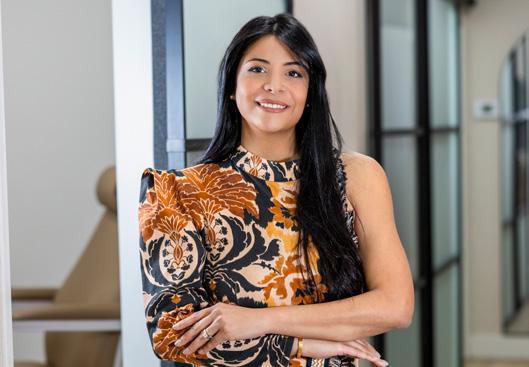
point of view, it was an amazing place to practice and learn. Hattiesburg’s health outcomes map exactly to Mississippi overall, which consistently ranks near the bottom nationally for key health outcomes including obesity, diabetes, hypertension, and maternal/infant mortality. In short, a significant proportion of the population is in poor health, due to socio-economic and other factors. I was particularly struck by the fact that obesity was at the center of much of this excessive disease—this was my awakening.
I started a chronic disease management clinic, focusing on the sickest people, with goals that included outpatient management versus hospitalization, avoiding readmissions, improving key health metrics, and so forth. I noticed that in working with patients to control their diabetes, they were especially receptive to weight loss tactics, and I could achieve better outcomes engaging with them on this level, as opposed to, for example, discussing hypertension or hyperlipidemia, which can be abstractions.
Finally, this led me to seek additional training in obesity, which, being now recognized as a chronic disease, allowed me to earn board certification in Obesity Medicine—which is now my professional focus. Obesity is simply a root cause of
so much disease. We have an epidemic of obesity in our country and it’s getting worse—I feel there is a lot of good work for me to do in our community.
JF: That’s a very interesting narrative of your journey through medicine to where you are now. In medicine your future certainly isn’t preordained—but something you figure out along the way. Can we go back, however, to when you first realized you wanted to be a doctor? I find that fascinating—when physicians discover their calling. Were there physicians in your family?
GR: No, there were not. I had two choices, really. I’m a very creative person, and I was very interested in art, dancing, ballet. But growing up in a relatively poor country, I had to think about what made sense financially, because you have to survive, right? So then it was architecture or medicine. My brother, however, got into a situation where the lack of care nearly took his life. And I promised after that that I would become a doctor to help people.
JF: OK, thank you. So you are in Mississippi at your chronic disease clinic. Obesity is top of mind. Please continue.
GR: The clinic was very successful, building a very large patient referral base.
It would have been very attractive to stay in Hattiesburg after my obligation was fulfilled and keep building what was in place. And Hattiesburg was a very nice place to live, it really was. My decision to move to Florida came down to being close to family every day. So leaving was bittersweet. I left a thriving practice, but it was easily the right decision.
JF: Once in Vero Beach, what did you do?
GR: I developed a medical weight management program at the Cleveland Clinic and was its solo practitioner. It was within the Internal Medicine Department and outpatient based. I developed my practice there for a number of years, and then decided to leave and establish my own practice, VEROMD, a clinical weight loss and metabolic health practice. Patients use health insurance to pay for our services, although our level of service equates to a concierge practice, since patients can readily access me as needed.
JF: Tell me about the nature of referrals coming to your practice. Primary care physicians (PCPs) manage a wide range of diseases in their practices every day; in theory, they could focus on obesity. Why do they refer obese patients to you?
GR: It comes down to whether the referring physician—a PCP or as often a
specialist, including but not limited to a pulmonologist (obstructive sleep apnea, lung restrictive disease), cardiologist (coronary artery disease, heart failure, arrhythmias), orthopedics (osteoarthritis pending replacements for surgical optimization), oncologist (post-cancer weight gain)—feels prepared to manage obesity in a manner in which they will actually be able to impact the patient’s weight and changes in health metrics as a function of significant weight loss over time. To be successful with weight loss, you have to have very specific protocols and schedules of patient interaction and follow up over time. You have to be deeply knowledgeable of current and emerging pharmacological therapies. You have to understand human psychology and behaviors underlying obesity and weight loss in general and in our society. And there is a genetic predisposition as well. If you add this all up, generalist practices, traditional specialty practices, don’t support this level of detailed knowledge and tailored and personalized care. It is why medicine overall is so highly specialized: humans are complex beings and individual physicians can’t master more than a sliver of medicine. For many practicing physicians today, a patient visit is allotted a short period of time. Should a patient have multiple clinical problems, how is something as complicated and
stubborn as obesity going to get properly addressed in, say, 15 minutes, every six months? And long-term success generally takes far more than merely prescribing a weight loss medication.
JF: So I am an overweight or obese patient being referred to you. Tell me what I can expect to experience under your care.
GR: Just to start, let me emphasize that everything we do is science-based, evidence-based medicine. We do not do fads, or gimmicks, but practices and therapies shown by scientific studies to be safe and effective. The patient will have a first visit scheduled, during which I will review all existing charts and records, perform an initial history and physical, calculate a key basket of metrics, and most likely order additional tests, often blood panels. For example, doing a body composition analysis is important to break down how weight is distributed. There will be an extensive interview regarding nutrition, past and current behaviors, social and environmental factors such as access to healthy foods, family or social support, socioeconomic barriers, prescribed medications, use of supplements, diet programs, and other risk factors and information pertinent to their medical status. In documenting my findings I am rigorously linking everything as appropriate to obesity as a chronic condition, using established medical diagnostic codes and documentation guidelines, which set the foundation for insurance coverage.
The next step is the development and start of a customized and detailed treatment plan. Depending upon other comorbidities and the patient’s specific status, a treatment plan could include nutritional and dietary interventions, physical activity, behavioral and psychological therapy, surgery and procedural options, goal setting, monitoring and follow up, and ongoing education, which is critically important.
And of course there will typically be pharmacotherapy—the use of anti-obesity medications if lifestyle interventions alone are insufficient—monitoring for side effects, contraindications, and efficacy. Overall, about 85% of our patients will opt for pharmacotherapy utilizing an
assortment of FDA approved medications that we can offer.
Finally, the chronic model to treat obesity involves treatment plans of sufficient duration to achieve real, significant, and documented changes in patient weight and health status. This typically is not going to happen in three months. We start off with frequent interactions and over time can taper off to maintenance sessions perhaps two to three times a year. The longer a patient stays with us, the greater success we are able to achieve.
JF: Let’s talk about the GLP-1 drugs. My first encounter with them was a few years ago—one or two people I knew were using them. It was sort of hushhush at first—a particularly outgoing friend might admit to being treated, and you could clearly see it by changes in their appearance. But more recently, it seems like a lot of people have a prescription and are eager to discuss their experience to anyone who will listen.
GR: I think the GLP-1 drugs are probably the best invention since penicillin. First of all, by way of background, an individual will need a prescription to obtain the drug. This could be written by a physician or anyone able to write a prescription as per state laws—so perhaps a nurse practitioner or physician assistant. And especially with COVID and expanded use of telehealth, prescribing clinicians do not need to be local.
There are specific clinical indications that should be met to quality for a prescription, and contraindications for not using the drug. These tie directly to defined populations used for clinical trials to determine safety and efficacy, typically designed by dose administered. One benefit of being managed by me is my familiarity with who will and will not benefit from use of a GLP-1, and risks of taking them for some individuals. These criteria are changing over time, so not every clinician will have an up-to-date perspective. Given the overall large number of clinicians prescribing GLP-1s, it is safe to assume that not all patients are being carefully evaluated for benefits and risks, which is not ideal. This can be exacerbated when clinicians aren’t seeing patients directly, face-to-face.
Notably, there are “absolute” contraindications—examples being personal or family history of medullary thyroid cancer, pregnancy, breastfeeding. Then there are “relative” contraindications—not automatic “no’s,” but they require clinical judgment, dose adjustment, or close monitoring. Examples include history of severe gastrointestinal disease, history of pancreatitis, gallbladder disease, severe renal impairment, and eating disorders.
I will maintain it is best for patients to be evaluated for obesity prescriptions by a physician who knows the latest science.
JF: Do most patients specifically ask for a GLP-1? I assume there are other medications that might be more appropriate.
GR: These days, because of TV advertising and exposure on social media, I would say 90% of patients are requesting a GLP-1. But it’s my job to educate them about appropriate use based upon trial data, about alternative drugs that are indicated and may be optimal, and other options such as surgery. Every patient is different, and any course of action doesn’t apply to all individuals.
JF: How do you start off a patient on a GLP-1?
GR: There is a loading dose specific to each patient. And then you escalate according to the patient’s tolerance, side effects, and rate of loss. Here again, there is a true benefit to have this process closely managed by a physician. Some patients will not do well in the beginning—they will feel nauseous, for example. Is this considered normal, or an indicator of something else? How fast do you escalate for a patient? What results should they be seeing at each dose? Safety would seem to indicate that a physician closely manage this progression.
There is also the critical issue of setting expectations. One category of expectations has to do with potential side effects. A patient can accept a certain side effect and get through feeling poorly if they are educated about it beforehand and a physician can confirm that nothing more concerning is going on. Secondly, there are expectations about progress. Patients
need to understand about the percentage of weight loss experienced, rate of weight loss, range of weight loss, so that they don’t have false expectations and quit or press for more aggressive dosing. Simply put, setting appropriate expectations based on evidenced-based data is the ethical way to proceed.
I do receive a good number of referrals, and patients independently finding their way to me, involving those who have started with a GLP-1 and have stopped for some reason, or who don’t really understand what’s going on. They basically admit to themselves that they’re lost in the process. They just need right instructions and education on how to do this well—and this is what we do.
JF: Some people who I speak to are selfdosing. They talk about micro-dosing and other ad-hoc strategies. I feel nervous listening to them.
GR: That’s part of the possibility for misuse and abuse, for sure. Lots of theories out there.
JF: Are you finding many patients drawn to the option of a daily oral pill versus injection?
GR: Not so much. I am surprised that most patients are okay with the injectable. And
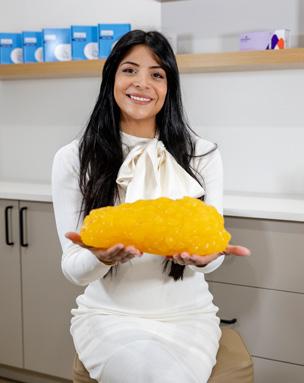
for compliance, they usually prefer the weekly treatment over daily treatment.
But I think the oral medication is a good alternative for those patients who have a phobia to needles. The development pipeline definitely includes oral medications.
JF: Can we please talk more about side effects? I know there is a list. Are most patients aware of these?
GR: Patients are usually very excited about taking a GLP-1 and experiencing significant and lasting weight loss. I mean, that is the core attraction—the genuine possibility of overcoming being overweight or obese and reaping the psychological and clinical benefits that accompany this. It can be life-changing.
It goes back to sound medical practice. A pre-evaluation before prescribing the drug educates the patient about the expectation of potential side effects. Importantly, you can develop a plan from the beginning to avoid and/or minimize side effects. This is a totally different approach than taking the drug on one’s own and waiting for possible bad things to happen, and then over- or under-reacting.
The most common side effects—typically dose-related and temporary—are gastrointestinal: nausea, vomiting, diarrhea, constipation, abdominal pain/
bloating, and early satiety. Mild side effects include decreased appetite, fatigue, dizziness, and headache.
JF: I have also heard that a typical patient will stay on the drug for the rest of their life? Tell me about that.
GR: A recent research study (British Medical Journal) found that people who stop taking weight loss drugs, including GLP-1, are likely to see the weight loss and cardio-metabolic benefits gone in a period of between 1.5 to 2 years after discontinuing use.
The key is to treat obesity as a chronic medical condition which means long-term and sometimes lifelong treatment. It will depend upon the initial cause of weight gain but also if we are protecting the patient to reduce cardiac risks including heart attacks and strokes, improve kidney filtration, etc.—which would support continued use.
If they are just reducing caloric intake by injecting, then the day the drug is removed, hunger will return, increasing caloric intake, and you’re back to square one.
So the intention of the length of treatment is for patients to change fundamental habits. So when you taper down or remove the drug, the patient continues with a new lifestyle they developed to prevent regain.
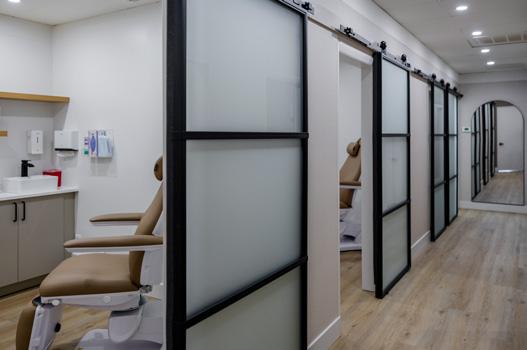
The ideal scenario is to be on the drug for a period of time to reach optimal weight, then come off the drug successfully due to changes in behavior patterns and diet. I’m already having patients in that final stage. Realistically, however, some patients will require lifelong treatment.
.
JF: What plans do you have for the future of your practice? Obesity is such a massive problem, and the pharmacology will continue to evolve, portending a busy practice in the longterm.
GR: What’s interesting is that I didn’t choose my specialty and sub-specialties thinking about the practice economics. Obesity wasn’t expected to be “big business.” But the introduction and expansion of pharmacological therapies have opened up new avenues for what we can accomplish and who we can treat successfully. My current plan is to expand services offered in this office to be a one-stop shop for patients, considering diagnostics and therapies, offered by a multidisciplinary team. This will involve, for example, a dietitian, behavioral therapist, and exercise physiologist— resources to help patients with unwanted side effects of significant weight loss, which include hair loss and skin laxity issues.
And the most important aspect that I want to develop—which is not available in Vero Beach—is treating the pediatric population. We all know that overweight and obesity in children and adolescents are shockingly common. However, treating the pediatric patient can be complex, given that you’re not just treating that individual, but you have to consider their surroundings, the larger family’s food and behavioral norms, how all of this influences that one child. I currently see pediatric patients age 13 and above. I’m trained to manage this group appropriately towards life-long success.
VEROMD
772-237-3847
77 Royal Palm Pointe Vero Beach FL 32960



Artemis I Launch
Complex 39B
Kennedy Space Center, Florida
November 16, 2022


by Jim Field photographs courtesy of NASA
Editor’s Note: The Artemis II manned test flight to the Moon is presently scheduled to launch in early 2026—the official target no later than April 2026—potentially launching as early February 5, 2026. By the time you read this article, the flight may have already occurred, or the candle is close to being lit!
The mission will launch from historic Launch Complex 39B, Kennedy Space Center, Florida. Walk to the beach to see this amazing, historic event! Take your children and grandchildren. The rocket is the most powerful ever flown. There will be four astronauts onboard. There are few spectacles of similar excitement and merit. America is on a path to return mankind to the lunar surface.
I was 15 years old when the Apollo 11 Lunar Module Eagle touched down on the surface of the moon. The date was July 20, 1969, the time 4:17 p.m. Eastern Daylight Time. Nearly seven hours later, at 10:56 p.m., Neil Armstrong became the first human to set foot on the lunar surface. At the time, I was at summer camp in Pennsylvania atop a small mountain overlooking Wyomissing, a small borough in Berks County, immediately west of Reading. The camp had a single television, perhaps a 24” screen, located in a pine cabinet in the Dining Hall. I can remember receiving permission to watch the landing. I would guess I crowded round the TV with 30-odd fellow campers. I believe it was a
black and white set. We all cheered when touchdown was confirmed. Remarkably, we were given “extra” permission to stay up late to watch Neil Armstrong descend the ladder. The group had narrowed to perhaps 20 and was very quiet. Again, we cheered with his small leap to the surface. We then broke and walked back through deep dark woods to our tents.
The United States sent astronauts to the Moon for a combination of factors. What would seem unthinkable today, the overall effort—from announcement to inaugural touchdown—spanned a mere eight years.
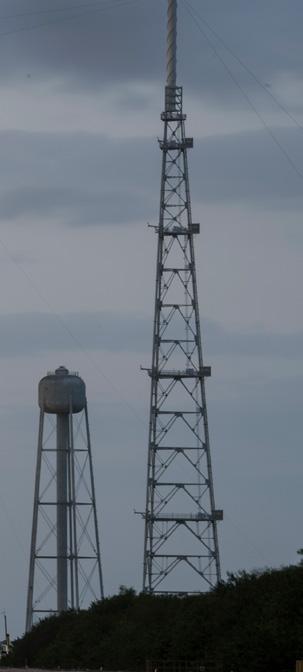
Of the varying drivers of this remarkable effort, perhaps the U.S.-Soviet rivalry had the largest influence, providing the necessary context to justify sizable federal funding and large-scale mobilization of military, scientific, and industrial resources. Historians cite the following important factors:
• Cold war competition. The USSR launched the Sputnik satellite in 1957 and sent the first human into space, Yuri Gagarin, in 1961. Landing humans on the Moon was positioned as the gold medal of technological and ideological superiority.
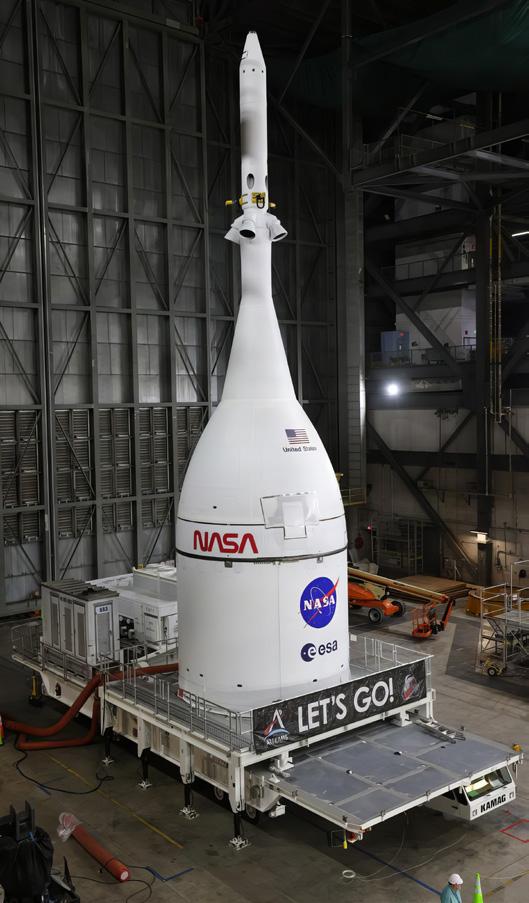
Artemis II mission. October 7, 2021. In Bremen, Germany the Airbus Space team prepares the Orion European Service Module-2 (ESM-2) for shipment to Kennedy Space Center.
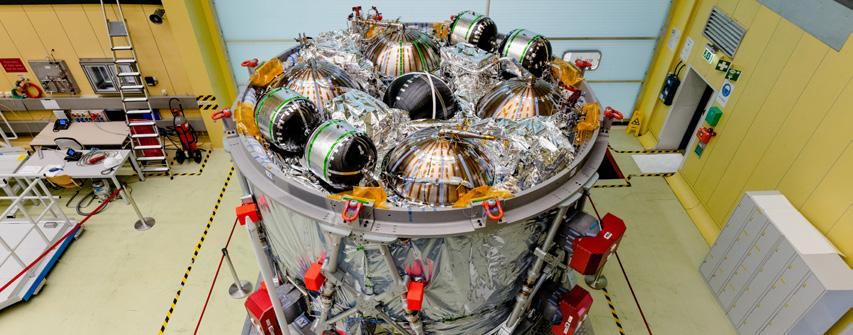
• National will and challenge. In 1961, President John F. Kennedy announced his goal “To land a man on the Moon and return him safely to the Earth.” It was characterized as a difficult but achievable aspiration, coalescing government, industry and public support.
• Burgeoning technology base.
Following World War II, U.S. industry was experiencing an extraordinary period of growth driven by advancements in basic and applied science, engineering, manufacturing techniques, new materials, and computing analytics. These capabilities were poised to develop technologies essential to space exploration.
• Scientific imperative. The new frontier of space would fill the ongoing quest within the scientific community for expanded knowledge about astronomy, physics, geology, and biology, while creating new tools/methods for observation. Investments in space programs would advance humanity’s understanding of both the cosmos and our place within it.
• Human aspiration. Human-based space exploration embodies a deep and enduring human need to explore, understand, and transcend limits. Humans innately are driven by curiosity and a need to discover what lies beyond the known horizon.
The National Aeronautics and Space Administration (NASA) was founded in July 1958 by President Dwight D. Eisenhower. Its founding charter established it as a civilian, non-military space agency tasked with: exploration, scientific research, aeronautics advancement, and technological innovation. Its broadest mandate was to promote the peaceful use of space and disseminate knowledge broadly.
Under NASA’s direction, the U.S. built and perfected the technologies and human skills necessary for landing on the Moon within the framework of three distinct management programs. Each program featured a distinctive crew capsule, rocket, and astronaut pool directed towards achieving a defined set of objectives.
Project Mercury’s primary purpose was to put a human in space and return them safely, demonstrating the feasibility of human spaceflight. Specifically, its goals were to: demonstrate human spaceflight was possible for short periods; develop spaceflight technology (e.g., booster rockets, life-support systems, reentry and recovery systems); understand human physiology in space (e.g.,
weightlessness, g-forces, radiation); and gain experience for more sophisticated missions.
Project Mercury’s astronaut pool was known as the “Mercury Seven.” The capsule was designed as a singleperson cockpit. A heat shield provided protection against extreme reentry temperatures. The first launch vehicle, capable of suborbital flight only, was the Redstone rocket. The more powerful Atlas rocket facilitated orbital flight. Capsules returned to Earth using parachutes for ocean splashdown. Six manned Mercury missions were accomplished.
Project Gemini’s primary purpose was to develop the skills, technologies, and operational experience needed for Apollo lunar missions. Its detailed goals were to: extend human spaceflight duration from days to weeks; master orbital maneuvering (e.g. change orbits, rendezvous, dock spacecraft); develop spacewalking capability; improve spacecraft control and reentry accuracy; and prepare for lunar missions by validating techniques for reaching, orbiting, and landing on the Moon.
The Gemini capsule accommodated two astronauts, seated side-by side. There was a dedicated onboard computer for navigation and control. The launch vehicle was the Titan II rocket, more powerful and reliable than Mercury’s launchers. Recovery provided for controlled reentry and ocean splashdown with improved landing accuracy. There were 10 crewed missions (Gemini 3–12).
Project Apollo’s primary purpose was to land humans on the Moon and return them safely to Earth, fulfilling President Kennedy’s 1961 mandate. Its stated goals were to: achieve a human lunar landing and return them safely; demonstrate technological and scientific leadership; advance space science and exploration, studying the Moon’s geology, formation, and environment; develop deep-space operational capability beyond Earth orbit.
The Apollo Command Module accommodated a three-man crew. An attached Service Module provided
propulsion, power, life support. A Lunar Module transported astronauts from lunar orbit to the surface and back. The launch vehicle was the Saturn V rocket—363 feet tall, the most powerful rocket ever flown successfully, capable of facilitating translunar injection.
The mission accomplishments of Project Apollo were impressive: 11 crewed Apollo missions (Apollo 7–17; Apollo 13 aborted landing); 6 successful lunar landings (Apollo 11, 12, 14, 15, 16, 17); 12 astronauts walked on the Moon.
The Apollo lunar landings stand as one of the greatest achievements of mankind, impacting profoundly progress in science and technology, man’s understanding of his role and existence in the larger universe, and demonstrating what human effort can achieve when guided by a common purpose, vision, and quest to explore new frontiers. Looking at Project Apollo in its entirety, walking on the moon was itself one highlight of a complex, high-risk, largescale, difficult, aspirational, undertaking.

• Scientific legacy. Lunar science, planetary formation, new scientific methods.
• Technological legacy. Systems engineering, computing advances, materials innovations.
• Human spaceflight legacy. Proof of feasibility, operational lessons, humans beyond low Earth orbit.
• Cultural and philosophical legacy. “Earthrise” photograph, generational inspiration, shared global moment.
• Political and geopolitical legacy. Cold War context, international cooperation, peaceful exploration norm.
The cost of the programmatic efforts to place a man on the Moon—considering Mercury, Gemini, and Apollo combined—is estimated at between $270 billion and $300 billion in today’s dollars (inflation adjusted). Compared to the massive spending by the U.S. government today on dozens and dozens of useless, wasteful, and even harmful programs to the nation’s best interests, this figure seems like a monumental bargain, the purpose honorable and exulted.

Looking back, it is a remarkable insight that public opinion on the Apollo space program in the 1960s wasn’t overwhelmingly supportive. For example, in the early 1960s a Harris poll reported that about 46% supported the Moon landing effort and 43% opposed it. In mid-1969 (just before Apollo 11), about 50% of Americans supported the goal of landing a man on the Moon, while 42% were opposed. Another poll found that only 53% thought the Apollo 11 landing was “worth the cost.”
The key understanding to recognize is that only in retrospect—decades after the last astronaut had walked on the Moon, after anniversary tributes, dissemination of accomplishments, and follow-on space projects—did the American public wake up and fully appreciate the amazing feat that had been accomplished in their lifetimes, some lucky enough to have paid attention to the grand spectacle taking place before them.
Quickly, to fill in the record and timeline, NASA pursued three major space programs between Apollo and today’s Artemis Program.
The primary purpose of the Space Shuttle program was to provide a reusable, versatile transportation system that could routinely carry astronauts and large payloads to and from low Earth orbit. The Shuttle Transportation System (STS) consisted of three components: the orbiter (with crew and payload), two solid rocket boosters, and an external fuel tank. Missions encompassed launching satellites, conducting scientific research, servicing and repairing spacecraft (including the Hubble Space Telescope), and assembling much of the International Space Station (ISS). Two fatal accidents—Challenger (1986) and Columbia (2003)—claimed 14 astronauts. Over 30 years, the Shuttle flew 135 missions.
2012-Present NASA program that contracts with U.S. companies to deliver cargo to and from the ISS. Instead of NASA owning and operating the spacecraft, NASA

buys delivery services, encouraging competition and reducing costs. Cargo spacecraft are uncrewed, deliver food, water, experiments, spare parts, and scientific equipment, some missions returning cargo and research samples to Earth. Contracted providers are SpaceX—featuring its Dragon spacecraft—and Northrop Grumman–using its Cygnus spacecraft. CRS marks a major shift in U.S. space policy with NASA pivoting from operating spacecraft to partnering with industry, allowing NASA to focus on deep-space exploration. Combined CRS missions flown 2012–2025 number 70–75 total cargo resupply flights to the ISS.
Commercial Crew Program: 2010 to Present NASA program to provide safe, reliable, and cost-effective transportation of astronauts to and from the ISS, contracting for U.S.-built commercial spacecraft. Reduces U.S. reliance on Russian Soyuz spacecraft for ISS access. Primary providers are SpaceX using Crew Dragon and Boeing with
CST-100 Starliner. SpaceX flights to date include 12 crewed missions to the ISS and 2 demo flights. Boeing’s CST 100 Starliner flew its first crewed mission on June 5, 2024, launching NASA astronauts Butch Wilmore and Suni Williams to the ISS. However, while the capsule successfully docked with the ISS and transferred the astronauts, it experienced multiple technical issues, forcing NASA to choose to not bring the astronauts back onboard Starliner at the end of the planned stay. Instead, the spacecraft was returned uncrewed and the astronauts returned to Earth later aboard a SpaceX Crew Dragon.
Introducing the Artemis Program
NASA’s Artemis Program is audacious in scope and aspirations—indeed, it makes the Apollo Program look in comparison like a small-scale undertaking. The purpose of Artemis is to return humans to the Moon, establish a sustainable presence on and around the lunar surface, setting a foundation for future human exploration of Mars.
Artemis’ key goals include: establishing a sustainable lunar exploration infrastructure—to include the Gateway space station in lunar orbit; develop and demonstrate new technologies for longduration human spaceflight and surface operations; land the first woman and next man on the Moon’s surface; and inspire global interest and international cooperation in space exploration.
The program’s name is fitting: Artemis was the Greek goddess of the Moon and twin sister to Apollo. Lunar landings will once again position the U.S. at the center of human presence in space. That said, the moon itself is simply an interim step to Mars—the real goal and an extremely difficult mission to accomplish. Artemis— and all its operational components—are the test bed and training ground for devising the means and methods for reaching Mars and returning home safely. NASA aims to send astronauts to Mars by the 2030s.
Artemis is an umbrella organizational framework comprised of four major system components: Space Launch System (SLS) rocket; Orion crew capsule; Gateway space station; and Human Landing System (HLS).
NASA’s super heavy-lift launch vehicle developed to carry astronauts, spacecraft, and large cargo loads beyond low Earth orbit for deep-space exploration, including future missions to Mars. The rocket itself is designed to evolve with mission complexity and demands, utilizing different components to build increasingly more powerful configurations. The Moon is 1,000 times deeper into space than the low Earth orbit occupied by the ISS, requiring higher launch vehicle performance levels to deliver the Orion capsule and designated payloads into lunar orbit and, eventually, deep-space destinations. To reduce cost and development time, NASA is supplementing newly developed components with upgraded hardware from the Space Shuttle program.
In its first configuration—designated Block 1 —the SLS will stand 322 feet high, weigh 5.75 million lbs., lift 27 metric tons (59,500 lbs.) to lunar orbit, and produce 8.8 million lbs. of thrust at liftoff—making it the most powerful rocket ever flown. (Saturn V, by comparison,

produced 7.5 million lbs. of liftoff thrust.) SLS itself consists of three major components:
• Core stage. 212 feet tall with diameter of 28 feet, stores 730,000 gallons of super-cooled liquid hydrogen and liquid oxygen. Propulsion provided by four RS-25 engines (Space Shuttle main engines). During flight, the four engines provide 2 million lbs. of thrust. The core stage is the newest part of the rocket.
• Solid Rocket Boosters: Massive twin five-segment solid-fuel boosters providing over 75% of total liftoff thrust. Derived from Space Shuttle’s solid rocket boosters, but lengthened and more powerful. 177 feet tall. Thrust 3.6 million lbs. per booster at liftoff. Burn time 2 minutes. Ignite on the launch pad and lift the vehicle off Earth, burn continuously. Separate and fall into the ocean after burnout. The most powerful solid rocket boosters ever flown.
• Upper Stage. Interim Cryogenic Propulsion Stage (ICPS) on early flights. Propels Orion capsule out of Earth’s orbit using one RL10 engine powered by liquid hydrogen and liquid oxygen. Generates 24,750 lbs. of thrust.
To travel to the Moon, Orion must reach a trans-lunar injection (TLI) speed of approximately 24,500 mph relative to Earth. This speed is achieved after Orion is already in low Earth orbit, when the SLS upper stage (ICPS) performs a long burn to send the spacecraft on a Moon-bound trajectory.
Orion Crew Capsule
NASA’s spacecraft designed to carry astronauts beyond low Earth orbit, beginning with the Artemis missions to the Moon and eventually onward to Mars. Prime contractor responsible for the Crew Module—the pressurized capsule where astronauts live—is Lockheed Martin


Prime contractor for the European Service Module (ESM)—which provides propulsion, power, air, water, and thermal control—is the European Space Agency (ESA). Crew capacity is up to four astronauts. Mission duration is up to 21 days independently; longer when docked to Gateway. Recovery is parachute-assisted ocean splashdown.
Notably, Orion is the toughest spacecraft NASA has ever built. It is designed to transport humans over 270,000 miles away from Earth. It is the fastest humanrated spacecraft ever to return to Earth, reentering Earth’s atmosphere at 25,000 mph during the Artemis I mission. It
has the largest heat shield ever built for human spaceflight—16.5 feet in diameter—designed to withstand reentry temperatures of 5,000°F.
NASA’s small, crew-tended space station that will orbit the Moon and serve as a staging point for Artemis missions— specifically, acting as a transfer hub between Orion and lunar landers— enabling sustained human exploration beyond Earth orbit. It will maintain a near-rectilinear halo orbit (NRHO) around the Moon, allowing constant communication with Earth and access to
the lunar surface. Unlike the ISS, it will be visited intermittently by astronauts rather than continuously inhabited. It is an international project, built by NASA, ESA (Europe), JAXA (Japan), and CSA (Canada).
Interestingly, it is about the size of a small apartment, composed of modules that will be added over time, powered by solar electricity; will deploy a robotic arm to help dock ships, move cargo, assist astronauts in their work.
NASA’s lunar lander designed to carry astronauts from lunar orbit (Gatewayor Orion-based) to the Moon’s surface and back. It is built for deep space, to support multiple missions with refueling capability, and enables longer stays on the lunar surface than Apollo. Current contractors/landers are SpaceX Starship HLS and Blue Origin-led “Blue Moon” lander.
Importantly, the HLS isn’t a single machine, but a family of landers to be designed by various contractors over time. Remarkably, Starship HLS is taller than a 15-story building—by comparison, the Apollo Lunar Module was merely 23 feet tall. Because of this height, astronauts will use elevators or lifts to reach the lunar surface instead of ladders. Further, far more cargo will be transported than astronauts—equipment, scientific gear, supplies. HLS is built to land near the lunar south pole, where sunlight, shadows, and icy terrain prevail.
The first test flight of NASA’s Artemis program, designed to prove that the SLS rocket and Orion crew capsule could safely operate together on a deep-space mission. There were no astronauts onboard. It launched November 16, 2022 with a flight of roughly 25 days. Orion traveled over 1.4 million miles, farther than any spacecraft designed to carry humans had ever flown. Validated Orion’s life-support systems, navigation, communications, power. Occupants included mannequins named Commander Moonikin Campos, Helga, and Zohar, wired with sensors to measure radiation exposure. Critically important, the first-ever flight of the SLS rocket was successful.
For its Moon encounters, Orion entered lunar orbit and circled the Moon for several days in an orbit that also carried it tens of thousands of miles beyond the Moon, farther than any human-rated spacecraft had ever traveled. Orion also performed two close lunar flybys—passing within 80 miles of the lunar surface.
While Artemis I was judged highly successful, it was not without problems and challenges—which, after all, was the purpose of the test mission. The heat shield worked, but not as predicted. Some sections charred and eroded more deeply than expected and ablation was uneven, with localized material loss greater than modeling predicted. NASA identified gaps and compression behavior between heat-shield segments. Data will be used to modify design and manufacturing for Artemis II. One solar array produced less power than expected; Orion experienced temporary communication losses during lunar flybys; some components saw temperature swings outside optimal ranges.
First crewed mission of the Artemis program, sending astronauts on a lunar flyby to test all systems before landing missions begin with Artemis III. There will be a four-astronaut crew. Mission duration will be approximately 10 days.
Mission specifics include: transporting astronauts beyond low Earth orbit for the first time since Apollo 17 in 1972; conduct close flyby of the Moon, passing behind it; test life-support, navigation, communications, crew operations; demonstrate Orion’s manual control and abort systems in deep space; confirm procedures for long-duration human missions. Astronauts will manually pilot Orion during periods to prove humans can control the spacecraft. Actual human radiation exposure data will be collected in deep space.
Launch: from historic Launch Complex 39B, Kennedy Space Center, Florida. Originally built for Saturn V (Apollo), subsequently used for Space Shuttle, modernized for Artemis. Rocket is Space Launch System (SLS) Block 1. Orion crew

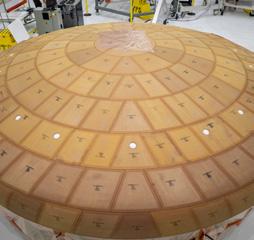
capsule with service module. Crew four astronauts. Trajectory: SLS lifts off heading east over the Atlantic Ocean. Orion enters temporary low Earth parking orbit for final systems checks. ICPS (upper stage) ignites and burns accelerating Orion to 25,000 mph, sending it towards Moon. Lunar flyby: Orion passes behind Moon, temporarily losing Earth communication. Closest approach 5,000 miles from lunar surface. Return to Earth: reenters Earth’s atmosphere at 25,000 mph. Splashdown in Pacific Ocean.
Missions: Artemis III—Estimated Mid-2027
Latest NASA planning targets mid-2027 for the first crewed lunar landing. Earlier schedules had slated 2026, but the timeline was lengthened to allow work on spacecraft, spacesuits, and the Human Landing System (Starship HLS).
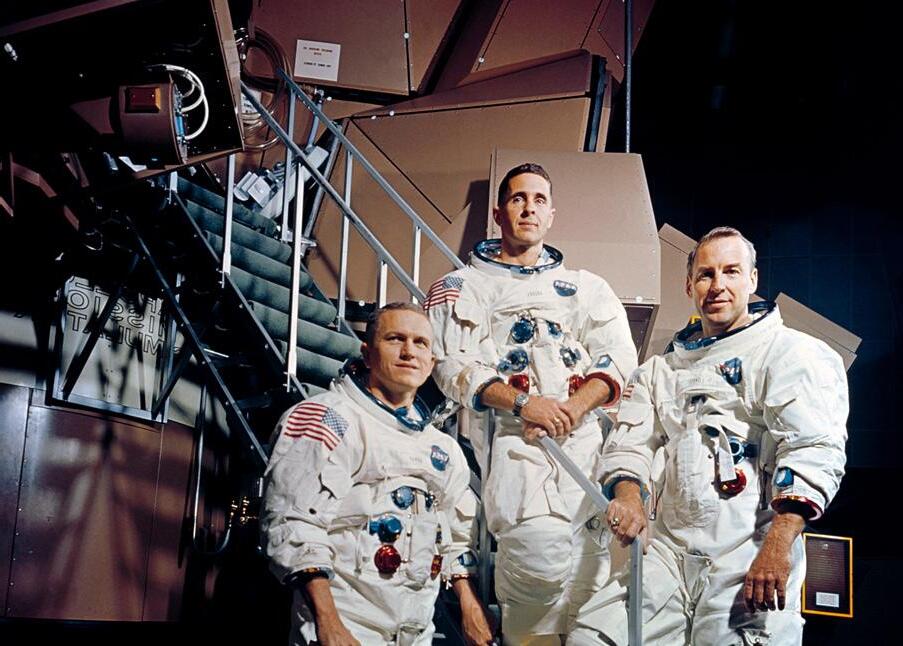
by Jim Field photographs courtesy of NASA
Artemis II’s mission to the moon closely aligns with that of Apollo 8, launched in December 1968. The shared primary objective of these missions was/is to place astronauts in lunar orbit and validate their spacecraft’s safe operation leading up to placing astronauts on the moon’s surface at a later date.
Importantly, both marked the moment their programs shifted from Earth-orbit testing to true lunar missions. That said, the major difference between them is that
Apollo 8 proved that humans could go to the Moon, while Artemis II will demonstrate that its program’s systems are able to carry humans to the Moon and back safely.
It’s not a subtle difference—Apollo 8 was discovery on a grand scale, representing one of the most unique and pivotal journeys in human history.
December 24, 1968. The rising Earth is about five degrees above the lunar horizon in this telephoto view taken from the Apollo 8 spacecraft. On Earth 240,000 statute miles away the sunset terminator crosses Africa. The South Pole is in the white area near the left end of the terminator.

Here are the major accomplishments of the Apollo 8 mission:
• First humans to leave Earth orbit.
• First humans to orbit another world.
• First humans to view Earth from lunar distance.
• First time humans saw and photographed the far side (or “back side”) of the Moon. Before Apollo 8, the far side had only been photographed by Soviet robotic spacecraft (Luna 3 in 1959).

• Bold mid-program decision: planned as an Earth-orbit test, Apollo 8 was rerouted to the Moon in 1968 to keep pace with the Soviet space program.
• First full test of Saturn V rocket with crew.
• Christmas at the Moon: On December 24, 1968, the crew broadcast live from lunar orbit, reading from the Book of Genesis—one of the most-watched television events in history. (I watched at home on TV with my family.)
Genesis 1:1–10
In the beginning God created the heaven and the earth. And the earth was without form, and void; and darkness was upon the face of the deep. And the Spirit of God moved upon the face of the waters. And God said, Let there be light: and there was light . . .
December 26, 1968. Television viewers saw this picture of Earth during the sixth live telecast from the Apollo 8 spacecraft as it continued its journey home. At the time this picture was made, the Apollo 8 spacecraft was about 97,000 nautical miles from Earth, and was traveling at a speed of 6,084 feet per second. As the spacecraft continued its trans-Earth course, the Apollo 8 crew noted that “Earth was getting larger” and that they were looking forward to being home.


Near vertical view of lunar far side taken from Apollo 8 spacecraft. December 24, 1968.
December 24, 1968. This is how the surface of the moon looked from an altitude of approximately 60 miles as photographed by a television camera onboard the Apollo 8 spacecraft. This is Apollo 8’s third live television transmission back to Earth. At the time this picture was made, the Apollo 8 spacecraft was making its second revolution of the moon.
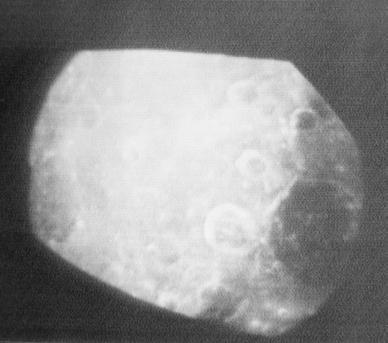


Jim Field
One drawback of our country—a function of our cherished First Amendment combined with scores of unaccountable social media sites—is that anybody can have a platform to broadcast their opinions to millions, regardless of how illinformed and outlandish they may be.
Such is the case with a small group called “Moon lander deniers”—also “landing hoax proponents”—who claim that the Apollo Moon landings did not occur. Instead, they believe that the Apollo missions were: staged on Earth (filmed on a soundstage); fabricated by NASA; part of Cold War propaganda.

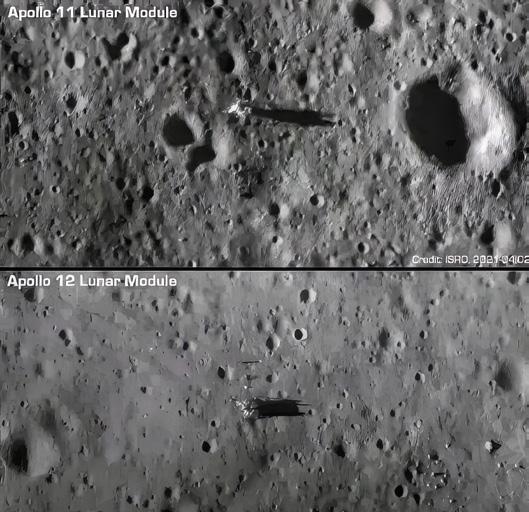
Of course, evidence to support the reality of Apollo lunar landings is not hard to come by—e.g., hundreds of thousands of engineers and technicians; 842 pounds of lunar samples studied in research institutions worldwide; independent tracking by other countries, including USSR/Russia; and retroreflectors still used for laser ranging from Earth.
Most interesting to me are orbital images of landing sites taken by satellites of various nations, showing artifacts— lunar descent stages, American flag, other equipment—astronaut boot tracks, disturbed soil caused by spacecraft engine exhaust. This imaging is possible because modern lunar orbiters carry cameras with sufficient resolution and because the Apollo descent stages contrast with the lunar regolith (i.e., the layer of loose, fragmented material covering solid rock on a planetary surface), making them detectable even after many decades.
The following is a brief accounting of select satellite missions with accompanying images.
India’s Chandrayaan-2 Lunar Orbiter
Captured images of the Apollo 11 and Apollo 12 landing sites, showing descent stages of the lunar modules. Images were taken in April 2021 using the orbiter’s Orbiter High-Resolution Camera (OHRC) from lunar orbit.
Japan’s SELENE Lunar Orbiter
Selenological and Engineering Explorer (SELENE), also called the Kaguya lunar orbiter. Imaged Apollo landing regions during its lunar mission in 2008, reporting detection of the Apollo 15 landing site from Terrain Camera (TC) data. Terrain camera data allowed scientists to detect the “halo” of disturbed soil from the Apollo 15 lunar module’s ascent engine—a sign of landing activity.
India’s Chandrayaan-2 Lunar Orbiter images of the Apollo 11 and Apollo 12 landing sites, showing descent stages of the lunar modules.
United State’s LROC Orbiter
Lunar Reconnaissance Orbiter Camera (LROC). Designed to acquire data for moon landing site certification and to conduct polar illumination studies and global mapping. LROC consists of a pair of narrow-angle cameras (NAC) and a single wide-angle camera (WAC). LROC launched in June 2009 and acquired images of the Apollo 11 landing site between July 11 and July 15. In January 2011, LROC imaged the Apollo 14 landing site in extreme detail, showing the descent stage of the lunar module Antares and the Apollo Lunar Surface Experiment Package (ALSEP) in a scene about 500 meters across.

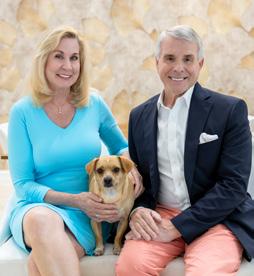
THANK YOU FOR SUPPORTING OUR LOCAL PARTNERS
Alexandra Nuttall Design alexandranuttall.com
Align Aesthetics & Wellness alignmedicalaesthetics.com
Caldwell Trust Company ctrust.com
Capritta Appliance & Air Conditioning caprittafinelines.com
Coastal Interiors coastal.net
Distinctive Cabinetry Designs distinctivecabdesign.com
Engel & Völkers
Vero Beach, Hutchinson Island Claire Higgins, Broker verobeach.evrealestate.com
Engel & Völkers Vero Beach Diane Field dianefieldrealtor.com
Executive Medicine of Vero Beach 772-567-6140
Florida Shutters floridashuttersinc.com
HBS - Impact Windows & Doors hbsglass.com
The Hill Group thehillgroup.biz
Hudson Advisors hudsonadvisors.com
Huryn Construction hurynconstruction.com
Indian River County Natural Resources Department, Coastal Division coastal@indianriver.gov
KMK Builders kmkbuildersllc.com
Leigh Jewelers leighjewelers.com
Louden Bonded Pools loudenpools.com
LPL Creations lplcreations.com
Luke Webb and Associates Legacy Real Estate webbluxuryrealestate.com
Nuva Dental nuvadentalsmiles.com
O’Dare Boga Dobson Group odareboga.com
Jennifer D. Peshke, Law Offices of peshkelaw.com
Premier Estate Properties Brown Talley Group browntalleygroup.info
Prism Capital 772-200-3973
Reilly Construction building2last.com
REsistance Cycle & Strength resistancevb.com
Rise Modern Wellness risemodernwellness.com
Saint Edward’s School steds.org
Sassy Boutique sassyboutique.com
Scott Tree Services scotttreeservices.com
SPENGA Vero Beach verobeachfl.spenga.com
Tocqueville Asset Management tocqueville.com
Varietals and More varietalsandmore.com
VB Private Jewelers vbprivatejewelers.com
Vero Beach Art Club verobeachartclub.org
Vero Beach Pavers vbpavers.com
Vero Beach Roofing Inc verobeachroofing.com
Vero Fitness verofitness.fit
The Vivien thevivien.com
The 2026 Golden Fork Awards Ceremony: Celebration Grove
Monday, 6 to 8 pm
Join your community in this annual foodie celebration that offers excellent culinary experiences and local flavor. Guests will enjoy chef-prepared bites from hand selected local restaurants and celebrate this year’s winners of Top 10 Best Dishes, Chef of the Year, and Restaurant of the Year. A portion of this event’s proceeds will benefit the Food Pantry of Indian River County. treasurecoastfoodie.com
4TH through 22ND
Riverside Theatre: Mauritius by Theresa Rebeck
In this comedic and twisted thriller, character Jackie’s mother dies and she is left with debt needing to be paid off with an heirloom stamp collection. Join Jackie in her journey navigating trials of deception and conflict through humor to find if the stamp collection is treasure or worthless. Dates and times are available on their website. riversidetheatre.com, 772.231.6990
FAU Harbor Branch Johnson Marine Education Center: Lecture Series
Wednesday, 4 to 5:30 pm
Join John and Barbara Ferrera in their Ocean Science Lecture Series. This free lecture series provides an opportunity to learn about FAU Harbor Branch’s most recent discoveries directly from scientists and engineers. Advanced registration is required and more information on dates and times are available on their website. fau.edu/ hboi/osls, 772.242.2293
Riverside Theatre: Live in the Loop
Thursday, Friday and Saturday 5:30 to 9 pm
Enjoy a free outdoor concert every Thursday, Friday, and Saturday evenings with performances by local artists. No ticket required. Food and drink are available for sale. riversidetheatre.com, 772.231.6990
5th and 19th
Vero Beach Museum of Art: Cork, Canvas, & Company
Thursday, 6:30 to 8:30
Create beautiful artwork with your friends, led by a professional instructor. Art materials are provided and participants can bring their own beverages and snacks. No experience necessary. More information is available on their website. vbmuseum.org, 772.231.0707
5th through 14th
Vero Beach Theatre Guild: I Love You, You’re Perfect, Now Change. Friday, 5 pm
This humoristic musical takes its audiences through storytelling with surrounding themes of romance from first dates, to marriage, and beyond. Times, dates, tickets, and further information is available on their website. verobeachtheatreguild.com, 772.562.8300
7th and 8th
Riverside Park: Gardenfest! Saturday, 9 am to 5 pm
Presented by the Garden Club of Indian River County, the 24th Annual Gardenfest! returns with over 80 selected vendors for all things plants and accessories, gardening advice, food trucks, and children’s activities. gardenclubofirc.org, 772.567.4602
7th
Intergenerational Center: 5th
Annual Family Fun Festival
Saturday, 10 am to 3 pm
Enjoy this free family event with a petting zoo, live dj, face painting, children’s activities, food and coffee, and local nonprofits with resources. indianriver.gov, 772.770.4811
Riverside Theatre: The Distinguished Lecturer Series: Sir Niall Ferguson
Monday, 4 pm & 6 pm
British American Historian and Millbank Family Senior at the Hoover Institution comes to Riverside Theatre apart of this lecture series. Tickets and more information are available on their website. riversidetheatre.com, 772.231.6990
Waldos Secret Garden: Waldos Secret ArtWalk Lecture Series
Saturday, 11 am
This free admissions event offers fine art from 35 artists, antiques, cocktails, and live music under the lush undergrowth of Waldo’s Secret Garden. This yearly event displays live paintings, fine print, ceramics, local scenes, photography, and much more- all derived from Waldo Sexton’s private collection. isolaarts.com, 772.696.0113
Vero Beach Museum of Art: 40th Anniversary Celebration
Saturday, 10 am
Join the Vero Beach Museum of Art in celebration of their 40th Anniversary on Valentine’s Day by showing its love for art and community through free admissions. Including live music, food trucks, artist demonstrations, a community art project, family art activities, and more. Information can be found on their website. vbmuseum.org, 772.231.0707
9th 14th 15th 14th 14th through 15th 14th 14th 14th
Sweet Desires Dessert Lounge: Dynamic Duo of the Brenna Bavis Band
Saturday, 7 pm
Perfect for date night, enjoy live performances from the Dynamic Duo of the Brenna Bavis Band at Sweet Desires in Royal Palm Pointe. Offering romantic music from the musical couple, for couples. brennabavisband.com, 772.290.3373
Indian River County Fairgrounds: Oddities & HeART Market
Saturday, 11 am to 6 pm
Explore more than 140 unusual and unexpected “oddities”, artists, crafters, psychics, tarot card readers, gems and fossils, and delicious food trucks at this event. accessartfl.org
Vero Beach High School
Performing Arts Center: Vero Beach Opera
Saturday, 7 to 9 pm
Vero Beach Opera presents their greatest hits at the Opera Showcase. Join them in an emotional and soul-moving journey through some of the best collections of operas by Puccini, Verdi, Mozart, and many more. More information is available on their website. verobeachopera. org, 772.569.6993
schachtgroves.com, 772.562.5858
Royal Palm Pointe Park: Florida Craft Brew and Wing Fest 2026
Saturday, 11:30 am
Watch Hillbilly Hellcats perform at the 2026 Florida Craft Brew and Wing fest, while munching down on a variety of wings and sipping on the best beer from top craft brewers. Also featuring a cornhole tournament, games, raffles, and more. Proceeds benefit the charitable projects of the Sunrise Rotary Club of Vero Beach. floridacraftbrewandwingfest.com
Vero Beach Museum of Art: Atlantic Classical Orchestra
Sunday, 3 to 4 pm
The 18th Season of the Vero Beach Museum of Art and the Atlantic Classical Orchestra’s celebrated partnership begins in January of 2026 apart of the Chamber of Music Series. More information can be found on their website or by phone. vbmuseum.org, 772.231.0707
Vero Beach Museum of Art: ART TALK- Discover the Stories Behind the Art
Wednesday, 12 pm
Join the VBMA education staff every third Wednesday of each month for in-depth conversations exploring the stories behind exhibitions and artwork displayed. vbmuseum.org, 772.231.0707
18th
Heritage Center & Citrus Museum: Bluegrass ConcertGrateful Dawg Tribute Wednesday, 6:30 pm
Apart of the Heritage Bluegrass Music Series, enjoy a free bluegrass music concert held monthly from January until May, offering an open jam session after the concert for amateur bluegrass musicians and enthusiasts to enjoy. Raffle supports and benefits local school music programs. veroheritage.org, 772.770.2263
The Arc of Indian River County West Campus Event Pavillion: Hawaiian Luau Fundraiser
Thursday, 5 pm
Participate in this exciting and vibrant evening with a Hawaiian Luau featuring a traditional pig roast, fire-eating performances, hula dancers, a live band and more. The Arc of IRC benefits the special needs community with resources, programs, personal care, educational curriculums, wheelchair accessible transport, services, and individualized support. More information is available on their website. arcir.org, 772.562.6854
20th and 21st
Vero Beach Museum of Art: Asbury Short Film Concert
Friday, 7 pm
Saturday, 1 pm or 7 pm
Asbury Shorts USA is New York City’s longest running non-competitive short film showcase and touring show. Coming to Vero Beach Museum of Art, hosting the “Asbury Short Film Concert” for the twelfth year in a row. Presenting a fast-paced and entertaining line-up of the best short films in drama, animation, documentary, and comedy. Including Oscar nominees, US Film Festival “Best in Show” winners, and international honorees. vbmuseum.org, 772.231.0707
Peterson’s Groves: Farm-to-Table Basta Pasta Class “Under the Stars at Peterson’s Groves” Saturday, 4 pm to 7 pm
Hand craft your own pasta and sip wine by the fire under the new pavilion at Peterson’s Groves. Featuring flavorful desserts created by Brianna Beard, after enjoying a four-course dining experience that includes your very own hand-crafted pasta from the class, paired with home-made sauce made specially for this event, and seasonally available vegetables. More information about offerings for this exclusive event is available on the website listed below or by phone. word-of-mouth-vero. com, 772.584.9624
Vero Beach Museum of Art: International Lecture Series: Fred Minnick
Monday, 4:30 pm
Wall Street Journal Best Selling Author, Award Winning Podcast Host, and World Leading Bourbon Critic: Fred Minnick, comes to Vero Beach to share the American experiences that shaped him and influenced his career and life story, and his 20 plus year exploration of the study of bourbon. vbmuseum.org, 772.231.0707
Riverside Theatre: Jesus Christ Superstar
Thursday, 7:30 pm Friday and Saturday, 8 pm
Follow the story of Jesus and His disciples based on the Gospel in this 1970s rock musical by Tim Rice and Andrew Lloyd Webber. As it leads through the last week of Jesus’s life through the exploration of personal relationships and struggles amongst his followers and the Roman Empire, audiences will be enamored by award-winning musical numbers and courageous storytelling. More information on dates, times and tickets is available on their website. riversidetheatre.com, 772.231.6990
Mainstreet’s Downtown Street Party Friday, 6 to 9 pm
Enjoy music, dancing, street vendors, and food trucks on Downtown Vero Beach’s Mainstreet. This event is free to attend. mainstreetverobeach.org/ downtownfriday, 772.643.6782
Vero Beach Theatre Guild: Cabaret
Friday, 7:30
Saturday, 2 pm
Join John and Barbara Ferrera Delight in this captivating and romantically provocative musical set in 1930’s Berlin through the development of the romance between an American writer and cabaret performer on the brink of the Nazi Regime. While blending themes of personal relationships and an intense political backdrop, this musical is a powerful exploration of love, freedom, and the darkness of world history that brings us towards a more personalized lens through entertainment. More information on tickets is available on their website. verobeachtheatreguild.com, 772.562.8300
28th through March 1st
Vero Beach Blues Festival: Indian River County Fairgrounds
Saturday and Sunday, 10:30 am to 9 pm
Featuring live Blues performances from a lineup of singers and musicians plus marketplace vendors, full liquor bars, and food. verobluesfest.com, 772.492.6105
28th
Vero Beach Ballet at VBMA Saturday, 12 and 3 pm
Experience live dance performances from Vero Beach Ballet at the Vero Beach Musuem of Art that encapsulates viewers through creativity and powerful displays of American Artistry through movement. More information on performances and tickets is available on their website. vbmuseum.org, 772.231.0707
Vero Beach Opera Lecture: Puccini’s “Girl of the Golden West”: Vero Beach Museum of Art Sunday, 2:30 pm
Vero Beach Opera’s master of ceremonies, Ian Campbell, discusses the impact of the libretto and historical background of the 1910 Opera, “Girl of the Golden West” as it correlates to it’s storyline that had audiences and critics confused in the early twentieth century.
Vero Beach Museum of Art: Cork, Canvas, & Company: Fishing Around Thursday, 6:30
Enjoy a fun evening with friends at this instructor-led painting course while enjoying snacks and drinks. vbmuseum.org, 772.231.0707
Orpheus Chamber Orchestra: Community Church of Vero Beach Thursday, 7 pm
Witness an astonishing piano performance from Marc-Andre Hamelin alongside the creative collaboration of the Orpheus Chamber Orchestra. 772.778.1070
1st Friday Art Gallery Stroll: Historic Downtown Arts District Friday, 5 pm
Enjoy art galleries, shops, and restaurants in Vero’s Downtown Art District for its monthly first Friday of the month Art Gallery Stroll. 772.217.3345
St. Paddles Day Pickleball Tournament: South County Park Saturday, 8 am to 3 pm
Enjoy a community charity event for a family-friendly day of pickleball with fast-paced action on the courts. unitedwayirc.org, 772.567.8900
Night Sounds Concert: Glory Days: Sebastian Inlet State Park at Cocoanut Point
Saturday, 7 pm
Dazzle under the stars overlooking the Indian River Lagoon with live music from local favorites Donnie Haight and Meg Hickey. This band covers songs from Fleetwood Mac, Don Henley, Bruce Springsteen, Billy Joel, The Zombies, and more.
ChoZen Artisan Market: Love Edition
Sunday, 10 am to 4 pm
Connect with nature at this unique event featuring eco-friendly programming and a curated selection of local artisans. Every second Sunday of the month the Harvest House and in the Love Garden at the ChoZen Eco-Retreat & Sanctuary offers a soul-nourishing opportunity to participate in activities and eco-explorations to support small businesses, creatives, artisans, farmers, showcasing handcrafted, recycled, and regenerative goods. chozenretreat.com, 772.900.1111
2026 International Lecture Series: Conor Knighton: Vero Beach Museum of Art
Monday, 4:30 pm
National Correspondent for CBS News Morning, Conor Knighton, highlights in detail of his year-long exploration of every single National Park in the United States from his book: “Leave Only Footprints: My Acadia to Zion Journey Through Every National Park”. vbmuseum.org, 772.231.0707
10th
E-Series Presents Olivia Redding on the History of Sea Turtles: The Emerson Center Tuesday, 7 to 9 pm Rescue and Research Coordinator at Coastal Connections Inc, Olivia Redding, presents a compelling rundown of the history and conservation of sea turtles in Southeastern Florida. Highlighting challenges, insights of her work, and information on conservation efforts towards the community and protection of sea turtles, Redding provides an enjoyably educational experiences for audience members through this opportunity to learn about our local wildlife in a way that connects to our community directly. theemersoncenter.com, 772.778.5880
13th through 15th
75th Annual Under the Oaks Fine Arts & Crafts Show: Riverside Park
Friday and Saturday, 9 am to 5 pm
Sunday, 10 am to 4 pm
Recognized apart of the Top 200 Art Shows in the Nation, visit the Treasure Coast’s largest juried and judged Fine Arts & Crafts show featuring more than 200 acclaimed artists from across the US. verobeachartclub.org
14th through 22nd
Indian River County Firefighters’ Festival: Indian River County Fairgrounds
Monday through Friday, 5 pm
Saturday and Sunday, 1 pm
This annual festival is back and full of more family fun rides, food, entertainment, vendors, livestock and horticulture exhibitions that celebrated our local firefighter’s. All proceeds go back to the community for scholarships, the burn fund, and more. firefightersfair.org, 772.571.3247
16th
Academy of St Martin: Community Church of Vero Beach Monday, 7 to 9:45 pm Bestow upon the exquisite sounds of celebrated violinist, Joshua Bell with the Academy of St Martin in the Fields. Tickets sell out fast, be sure to secure your seats with the phone number provided. 772.778.1070
Michael J. Tougias Blizzard of 78’ Survival Story: The Emerson Center
Tuesday, 7 pm
New York Times Best Selling Author, Michael J. Tougias, presents an immersive and chilling narrated slide presentation of his book: “Ten Hours Until Dawn”. Reflecting on the day where Tougias alongside five other men, were called to assist a coastguard boat and oil tanker in distress, at the height of the blizzard when 40-foot waves and 100 mph winds challenged their willpower and bravery. theemersoncenter, 772.778.5880
‘Beyond Therapy’: Vero Beach Theatre Guild
Thursday, 8 pm
This theatre performance explores modern relationships and therapy through a comedic lens, following the story of Bruce and Prudence, two neurotic singles navigating the modern dating scene with the help of their therapists. Journeying through lessons of love and self-discovery through chaotic therapy sessions while examining the absurd concept of human connection. Information on ticket pricing, dates, and times, is available on their website. verobeachtheatreguild.com, 772. 562.8300
Ballet Vero Beach Presents: Composer’s Notebook David Homan: Vero Beach High School Performing Arts Center Friday, 7:30 to 9:30 pm Ballet Vero Beach celebrates the musical composition of David Homan and his long history at Ballet Vero Beach at this performance. Alongside the company’s reimagined performance of ‘Firebird’, and a world premiere by Artistic Director, Adam Schnell: ‘Ribbons’. balletverobeach. org, 772.269.1065
Vero Beach Concours in The Oaks 47th Annual Antique Auto Event: Riverside Park
Saturday, 10 am to 4 pm
The Indian River Region of the Antique Auto Club of America presents it’s 47th Annual Concours in The Oaks Show. Showcasing 325 vehicles and 6000 attendees, this renowned annual event will also offer a food court and DJ, contributing all income above expenses towards United Against Poverty. indianriver. aaca.com, 772.584.1842
Ballet Vero Beach: Spring Flings: Riverside Theatre
Sunday, 2 to 3 pm
The company is thrilled to expand their Accessible and Family Friendly Series this season that are tailored and geared towards audiences of differently abled individuals of our community, as well as families with young children. Performances are a bit informal and include modified audio and visual effects and venue setup that meet the needs of all attendees. More information and answers can be found on their website, email, or phone number. info@balletverobeach.org, balletverobeach,org, 772.269.2065
2026 International Lecture
Series: Dr. Ashley Rose Young Ph.D.: Vero Beach Museum of Art
Monday, 4:30 to 5:30 pm
Smithsonian National Museum of American History historian and Research Associate, and Oxford University Press Author, examines the connections of culinary culture in American history and progression. vbmuseum.org, 772.231.0707
Pollinators in Florida: Nature’s Essential Workers at the Emerson Center
Tuesday, 7 to 9 pm
Welcoming Florida Master Naturalist, Dennis Mayo to explore the vital role of Florida pollinators from bees, butterflies, to bats, and birds, in this E-series lecture on how they maintain our ecosystems and food supply. As well as Buzz & Flutter: Art Inspired by Pollinators, a very special art exhibition celebrating the little creatures that make pollination possible for our survival and well-being. Dates, times, tickets, and additional information is found on their website or by phone. theemersoncenter.com, 772.778.5880
The Buffalo Philharmonic Orchestra: Community Church of Vero Beach
Tuesday, 7:30 to 9:45 pm
Wrapping up this season with the return of The Buffalo Philharmonic Orchestra led by JoAnn Falletta, and violinist, Simone Porter. 772.778.1070
‘Almost, Maine’: Riverside Theatre
Tuesday, 7:30 to 9:30 pm
Propelled by the mystical energy of the aurora borealis, the town of Almost experience life-shifting occurrences in a series of loosely connected tales about loving and longing, with a touch of magic. Information on tickets, dates, and times are available on their website or by phone. riversidetheatre.com, 772.231.6990
Mozart’s The Impresario & Mascagni’s Cavalleria Rusticana: Vero Beach High School
Performing Arts Center
Sunday, 3 pm to 5 pm
Vero Beach Opera presents this spectacular performance fully staged with the Brevard Symphony Orchestra and English supertitles, with an unexpected “twist” on Mozart’s hilarious one-act comedy then spun masterfully into Mascagni’s one-act tragedy. verobeachopera.org, 772.569.6993
The Distinguished Lecturer Series: Kevin O’Leary: Riverside Theatre
Monday, 4 pm and 6 pm
Television personality and Canadian businessman Kevin O’Leary comes out of the Shark Tank and visits the WaxLax and Stark Stage for this part of Riverside Theatre’s Distinguished Lecturer Series. 772.231.6990
Collaboration thrives through genuine friendships
LIV VERO Magazine partners with Involucra, headquartered in Turin, Italy, to design and publish our print/digital magazine, build and administer our website, and create and manage our social media platforms. It is marvelous to work with this team of professionals—highly creative, high octane, cannot do too much to contribute and pitch in. Marzio Allocco, CEO, and Luis Guillen, Creative Director, were both in Miami recently and drove to Vero Beach for a productive and relaxed business breakfast meeting at the Costa d’Este Beach Resort & Spa They love Vero Beach.