A VERO BEACH BUSINESS
Photograph by Analise McManus
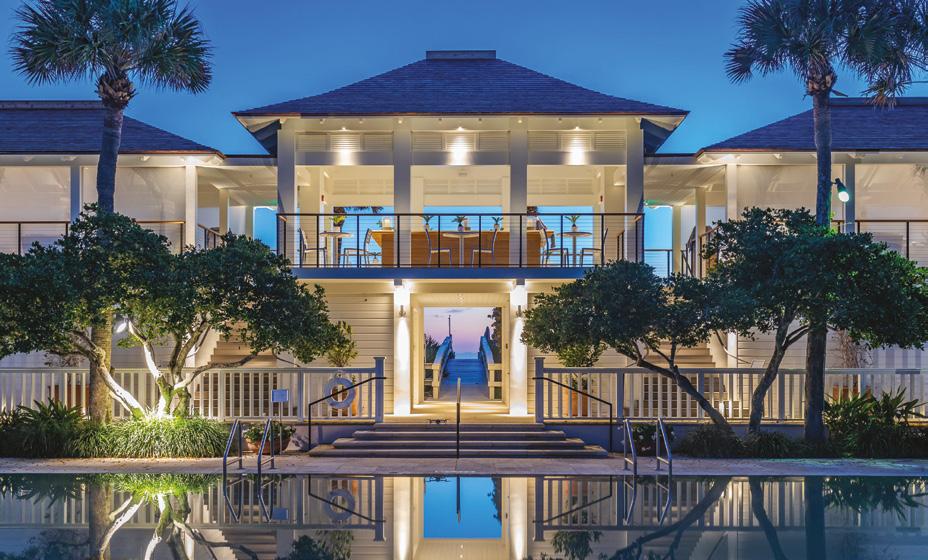

Windsor Beach Club Cabana Bar
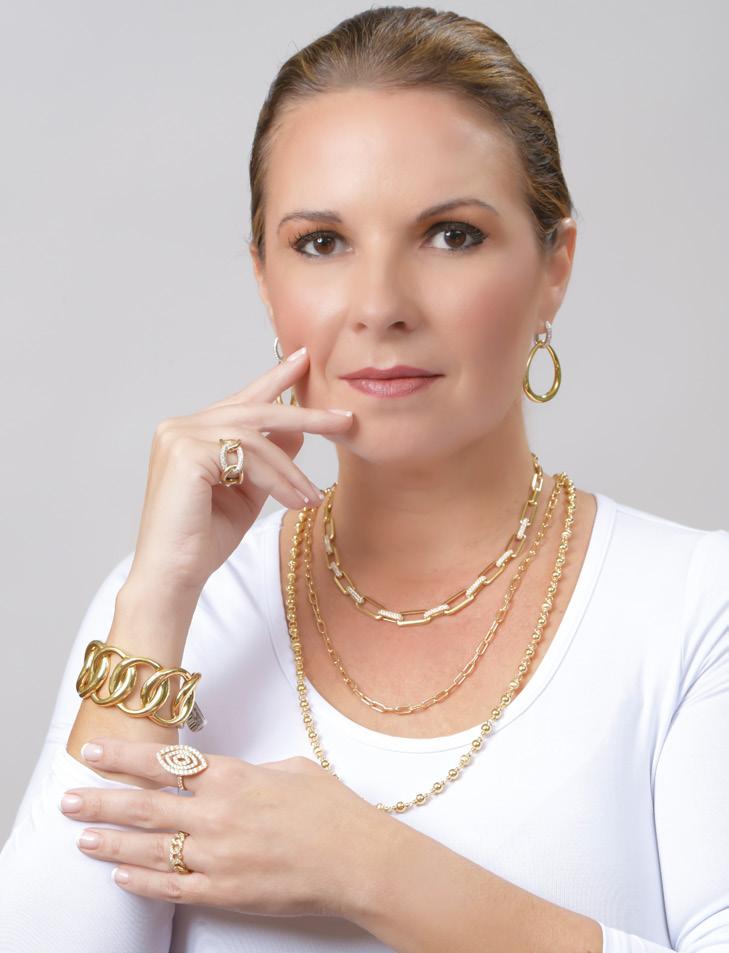





Life’s most meaningful moments are made at home. That’s why the Visiting Nurse Association brings expert, compassionate care to your doorstep. Whether you’re recovering from surgery, want to feel confident living independently or need support through end-of-life care, the VNA is here for you every step of the way.





PIECES of the larger whole
PINCH of London
An Artisan Studio introduces its Anders Loop Pendant—a sculptural statement light of generous proportions inspired by the folds of a couture petticoat.
DESIGN HISTORY 30 Victorian Era Interior Design
The first to bring nature indoors as a centerpiece of both physical and aesthetic life.
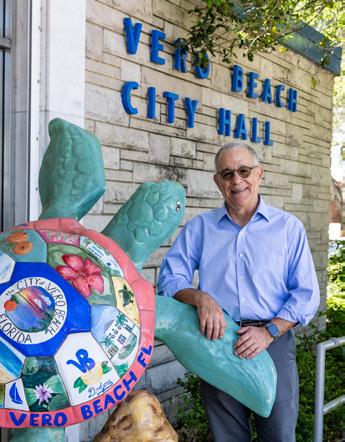
Vero Beach Mayor
John Cotugno
In his fourth year behind the gavel, working hard to craft solutions to pressing local issues.
FASHION
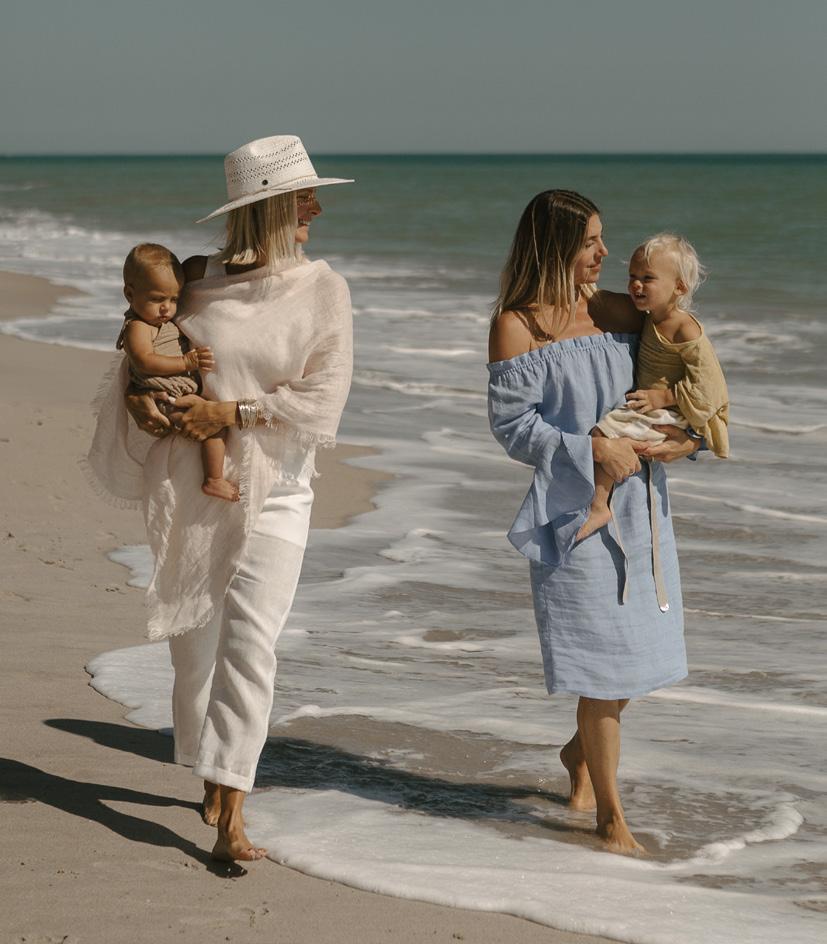
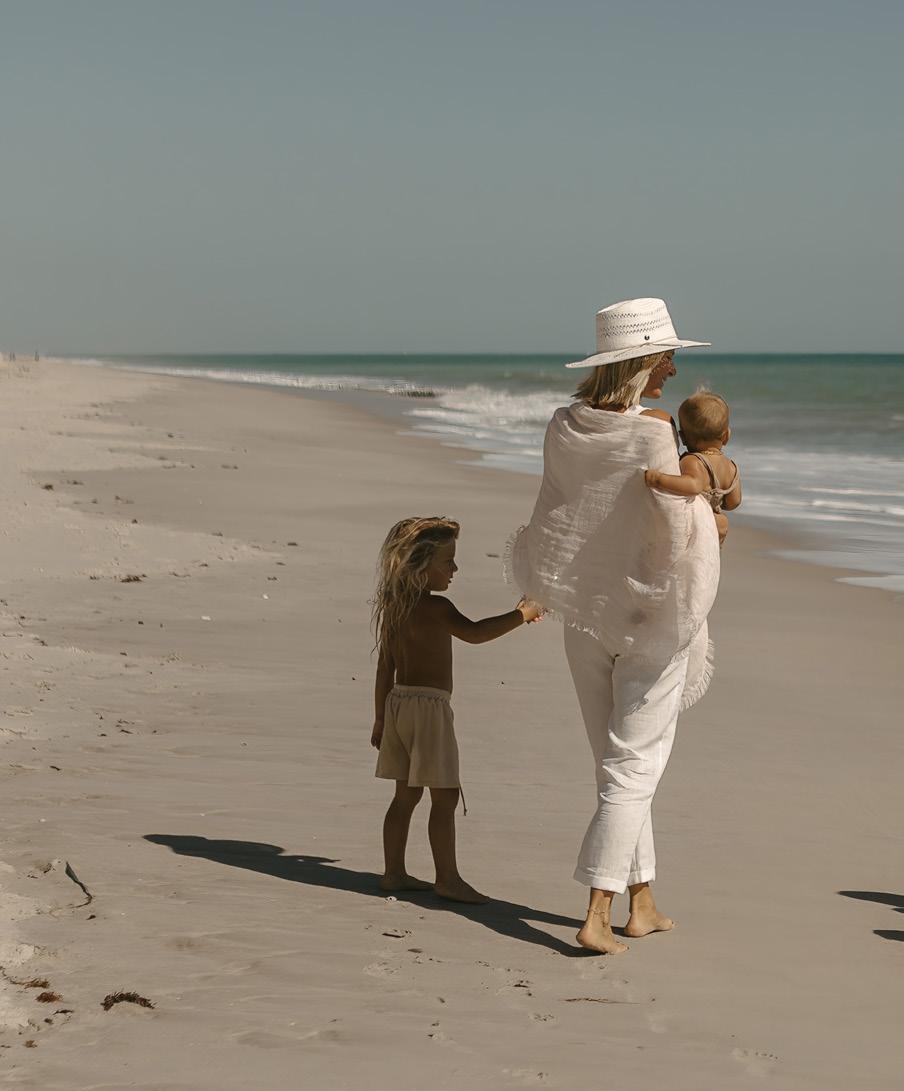
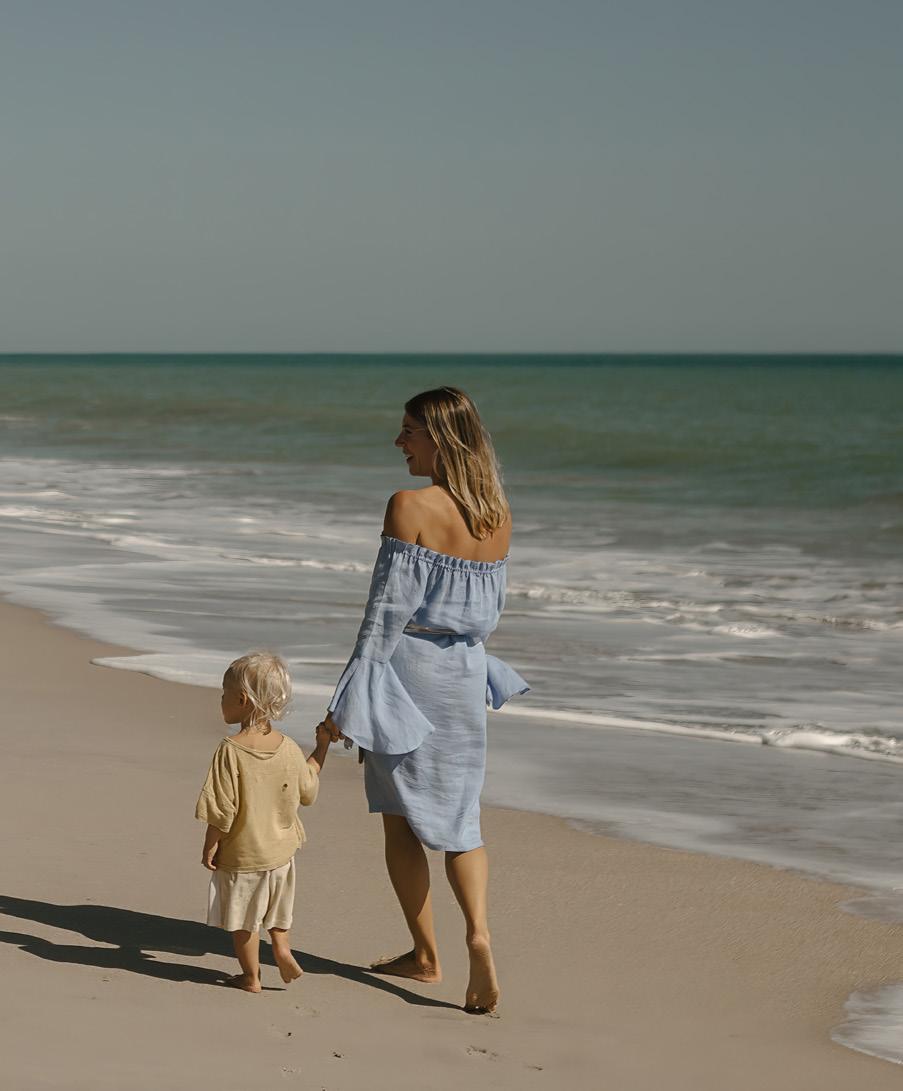
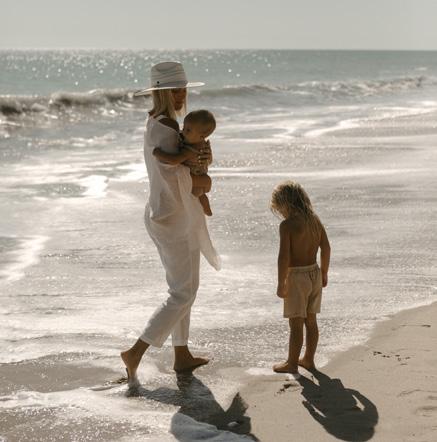
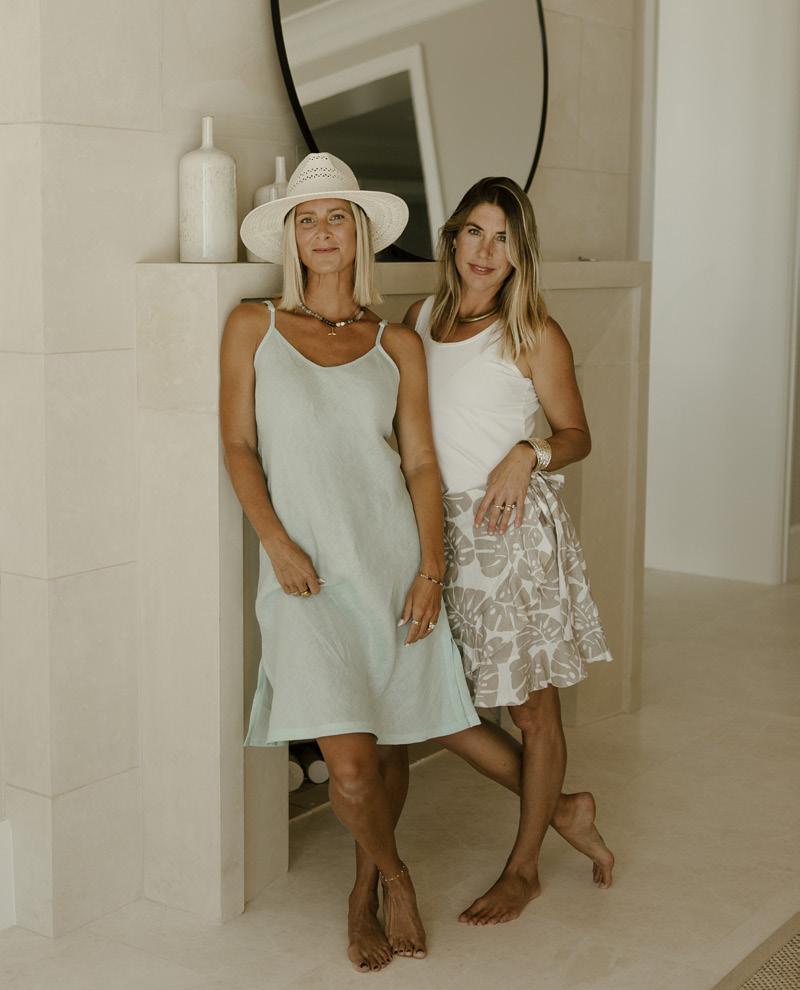
48 Friends and Children at the Beach
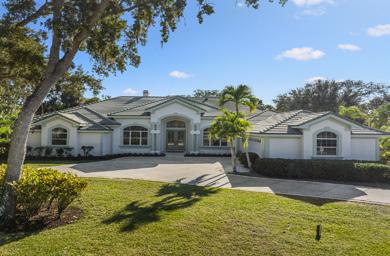
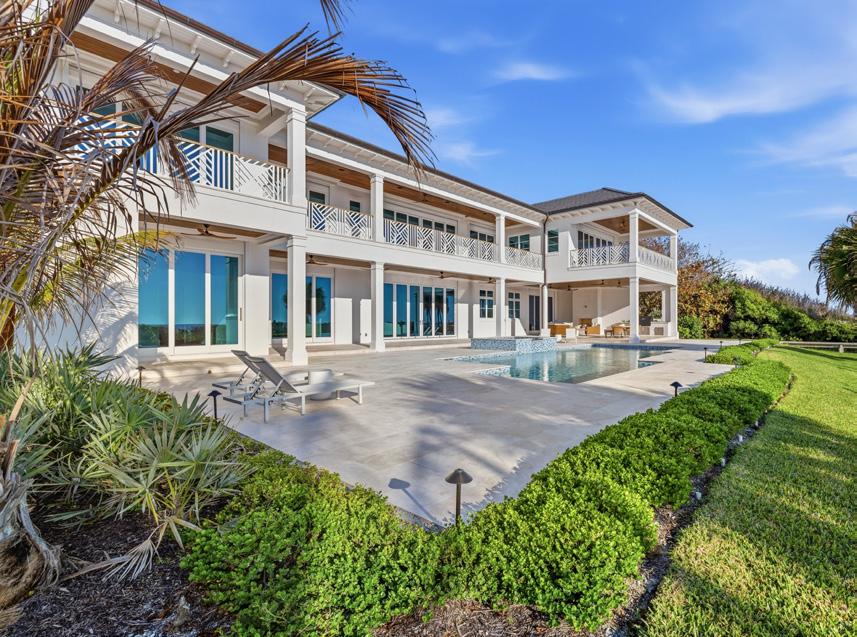
Featuring clothing from iLinen Coastal Boutique and an oceanfront home courtesy of O’Dare Boga Dobson Group, ONE Sotheby’s International Realty.
ART SHOWS
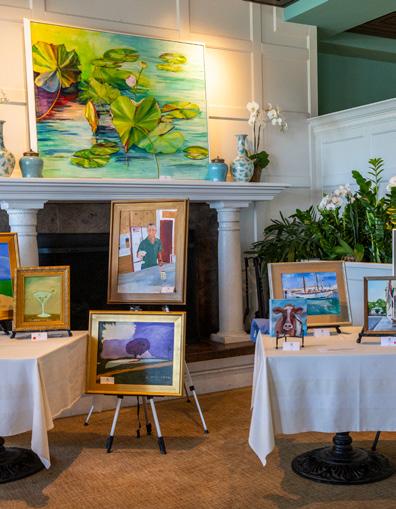
58 Orchid Island Art Club
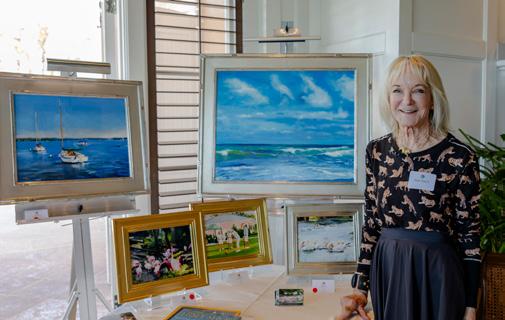
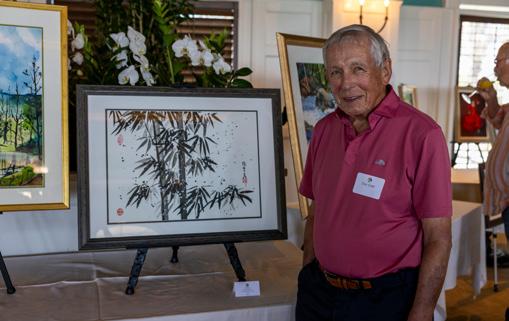
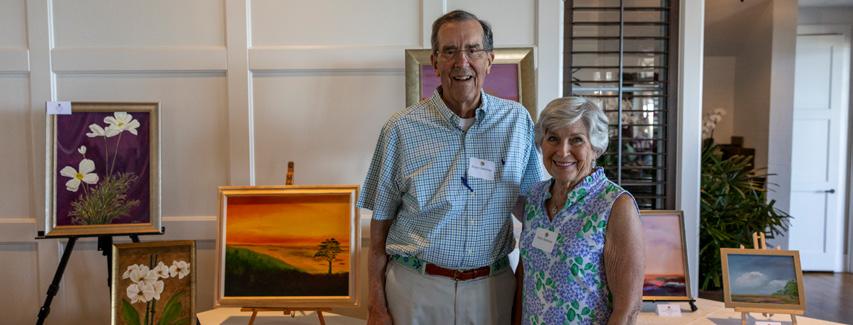
The 2026 Celebration of Creativity showcased a beautiful setting, consistently impressive artwork, and a true expression of Orchid Island Golf & Beach Club community spirit.
OCEAN RACING
68 Forty-Foot Boats and Forty-Foot Waves . . .
A classic story of weather, teamwork, and survival from the 1960 Newport to Bermuda Race.
“THE GOVERNMENT CLOSEST TO THE PEOPLE SERVES THE PEOPLE BEST.”
—Thomas Jefferson














































ARTISTS IN FOCUS
72 Erika Kuhn Schultz
Painting as an expression of spirituality and love.
EDUCATION
76 PALS Day
A 30-year Saint Edward’s School tradition of hosting Wabasso School students for a day of experiences and friendships.
PEOPLE AND PURPOSE
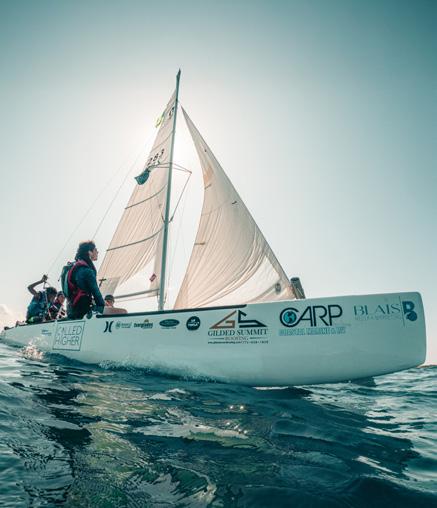
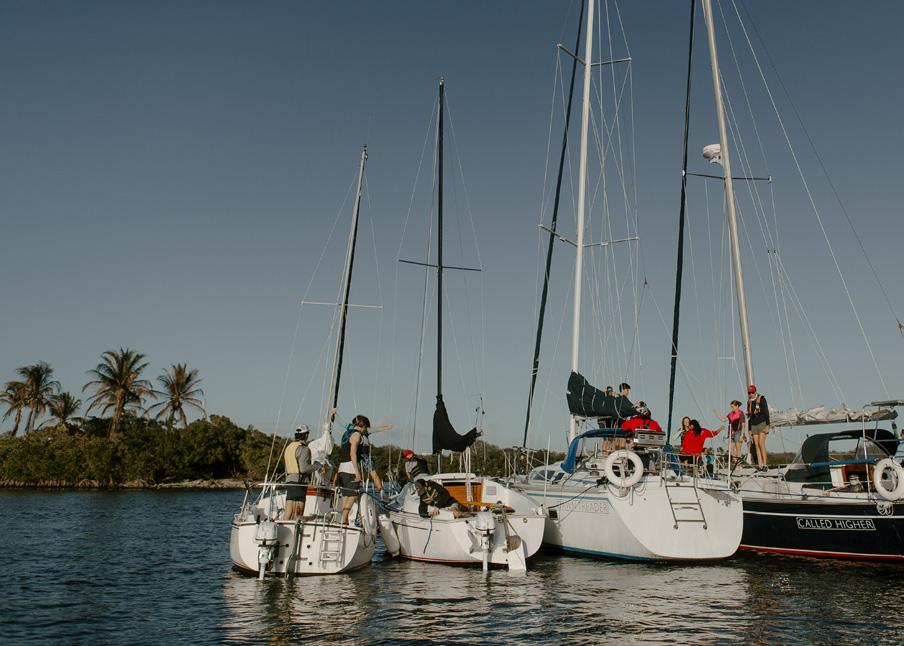
78 Called Higher Adventures
A Vero Beach ministry dedicated to faith, exploration, and the open water. APRIL 2026
ART MASTERPIECES
88 The Gulf Stream
Winslow Homer. 1899. Oil on Canvas. 28 x 49 in.
HERITAGE NOTES
92 A.B. Michael Bridge—a.k.a. Wabasso Bridge
Another early connector between Orchid Island and the mainland.
HEALTH AND WELLNESS
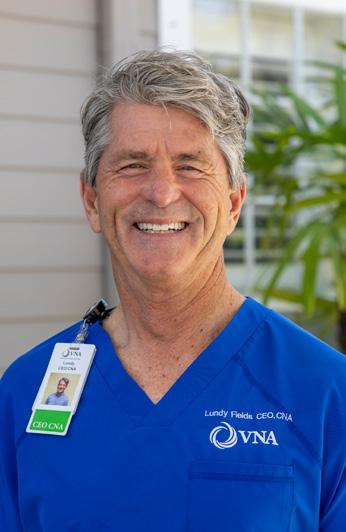
106 Visiting Nurse Association— Vero Beach
Delivering exceptional nursing and hospice services in Indian River County for over 50 years.




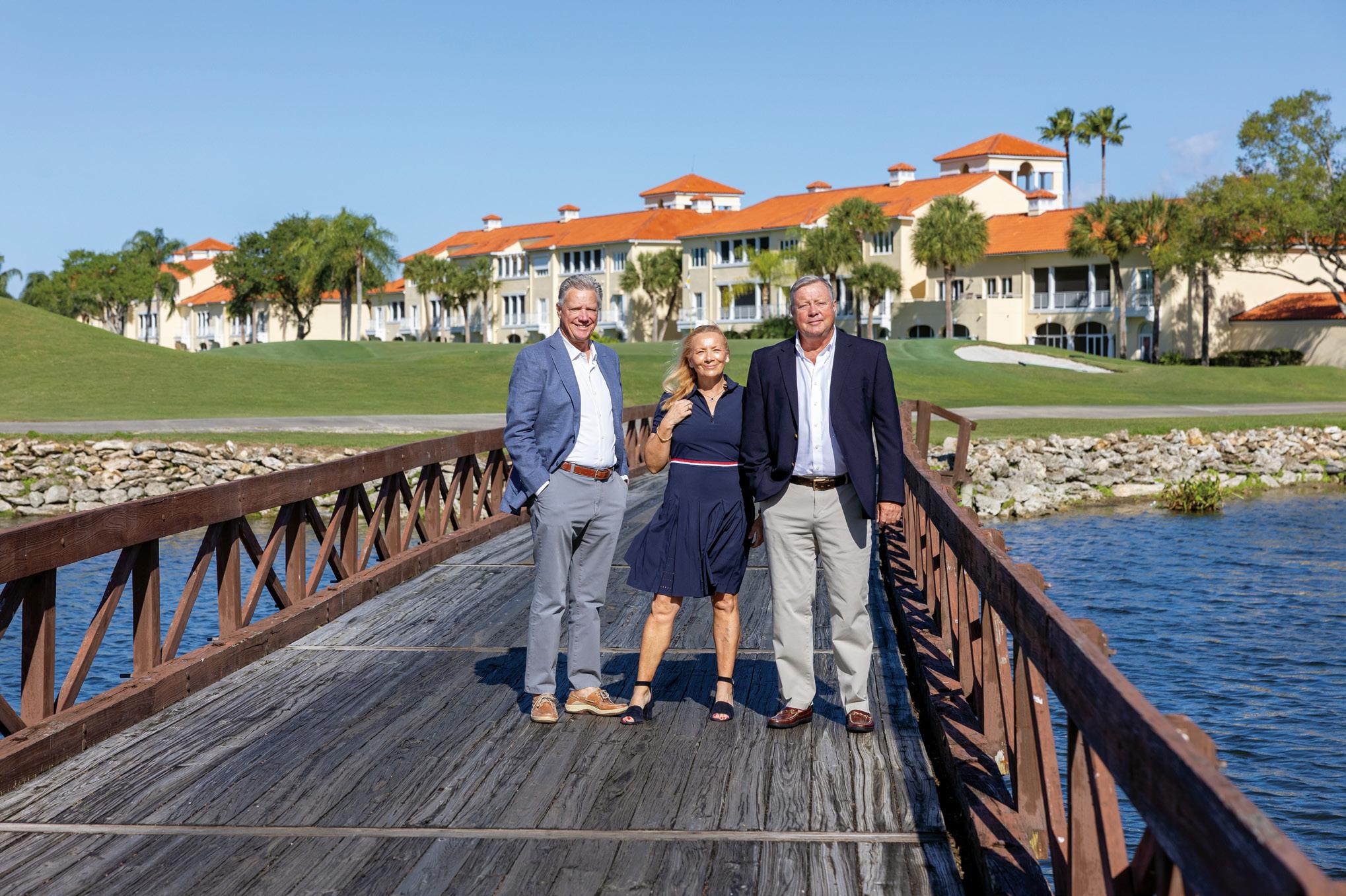
The real estate market is an ever changing landscape and to navigate it efficiently, it requires experience and local knowledge. The Heber t / Keleher Group offers buyers and sellers over 45 years of real estate success and an intimate knowledge of the local landscape. All members at Grand Harbor and Golf Life Navigators Cer tified Real Estate Advisors, Lilla, Paul and Randy know and appreciate the lifestyle that makes Vero Beach so special. With a vast wealth of knowledge and experience, Lilla, Paul and Randy offer you professional and ethical representation as your trusted advisors. We are proud to be working with Engel & Völkers and would be happy to assist you in your real estate needs Let us help you navigate the real estate landscape.


•
•
•
•
•
•
•
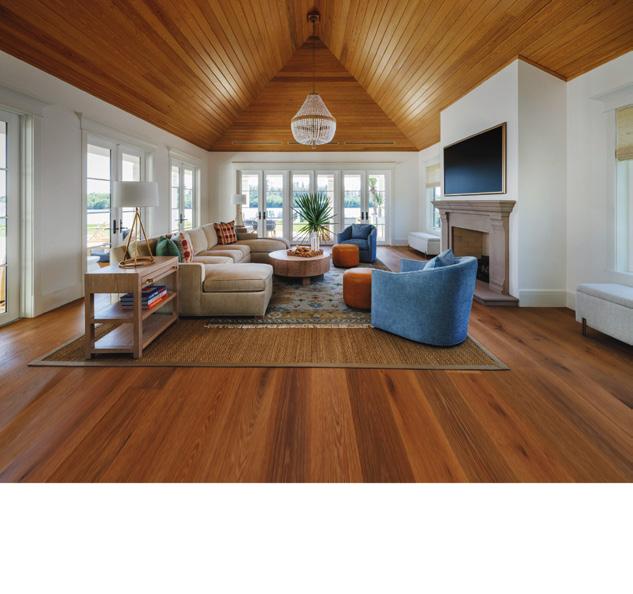
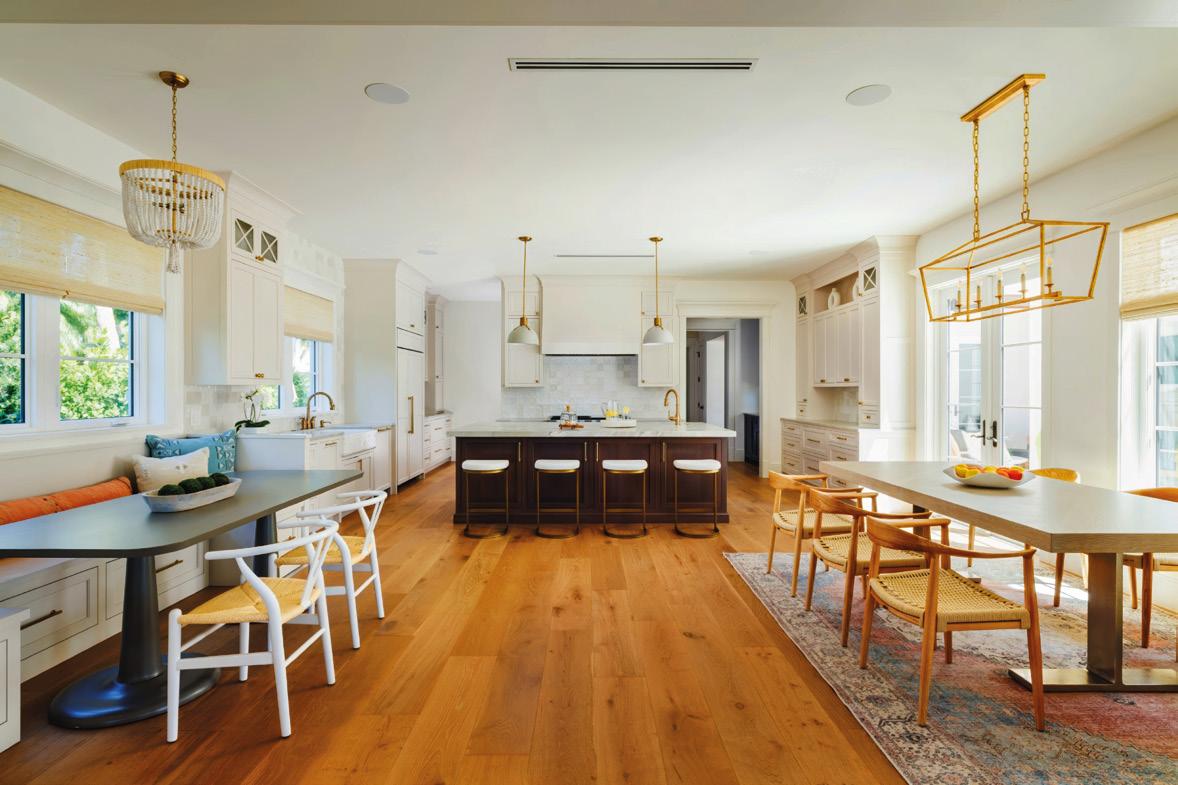
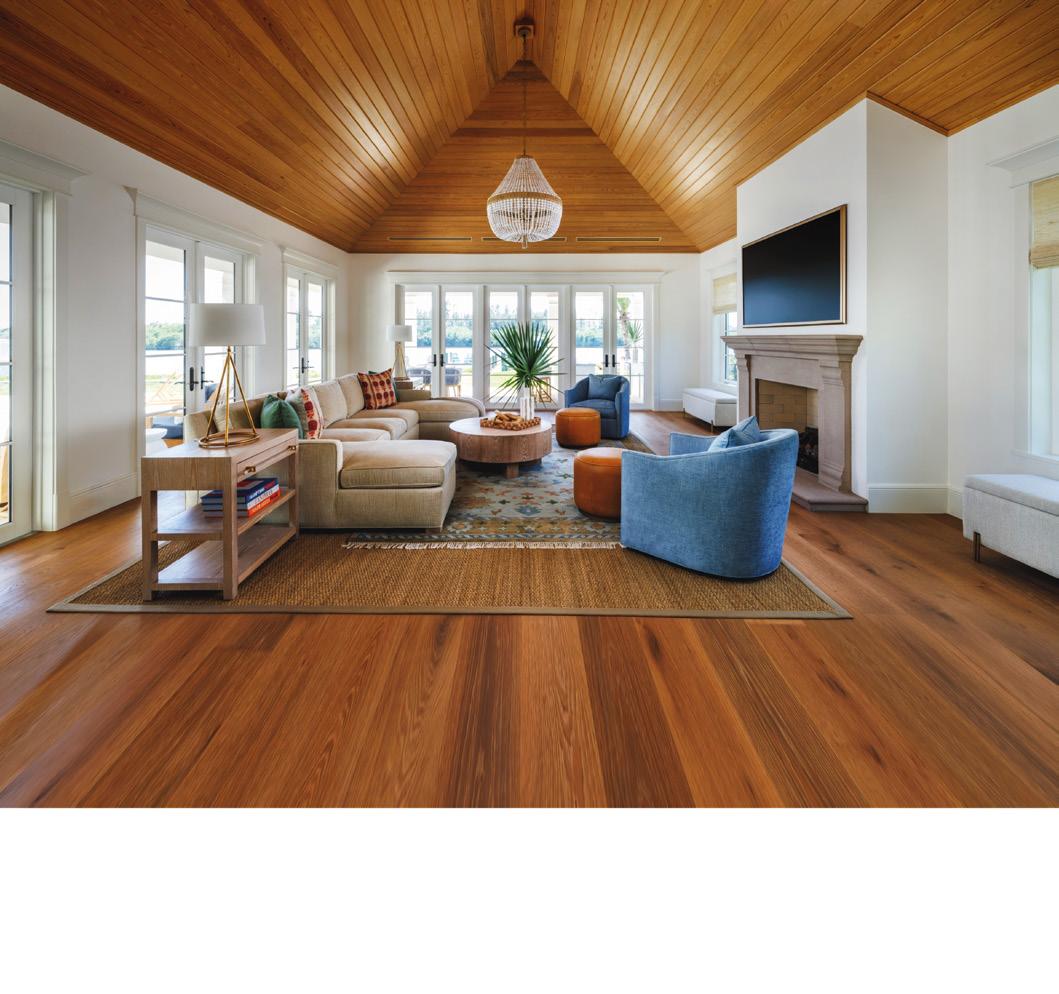
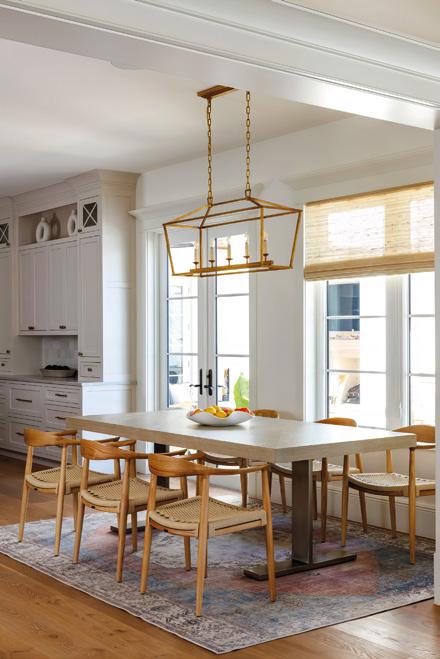
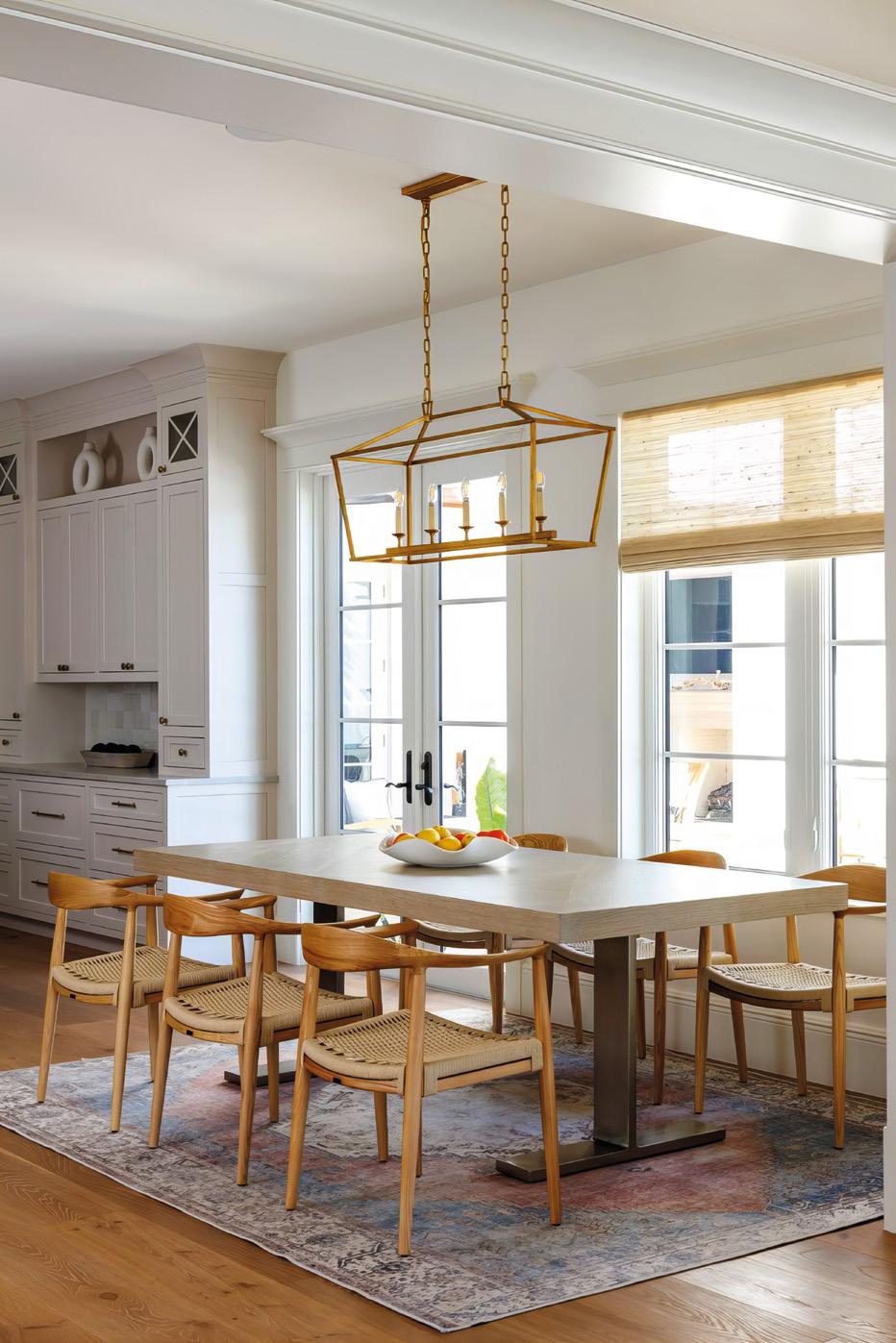
Alexandra Nuttall Design has evolved as part of Maison by Alexandra — a natural progression reflecting the growth of our studio. Maison by Alexandra unites our interior design work with expanded services under a single, cohesive brand, while preserving the personalized approach, refined aesthetic, and thoughtful process our clients have come to expect.
With studios serving Vero Beach, Kansas City, Nantucket (by appointment only), and select projects in Europe, our reach has expanded — yet our design philosophy remains unchanged: timeless interiors, carefully curated, and beautifully lived in.
Kansas City MO 64113 913-954-9799
Nantucket and Beyondcontact Alexandra directly
www.alexandranuttall.com


• COVERING LOCAL GOVERNMENT
• NEW CONTRIBUTOR ANALISE MCMANUS
• INSTAGRAM VS. MAGAZINES FOR SENIORS
Beginning with this issue, LIV VERO Magazine will report regularly on our local governments—Indian River County and the City of Vero Beach.
Too often, news of important developments seems to arrive late. We find ourselves reacting, rather than anticipating—responding, rather than engaging. There is a better way.
Much of what reaches us carries some degree of controversy. Decisions can appear unclear. Paths forward uncertain. Yet there is also a quiet truth: when we choose not to engage, we forfeit the right to complain. That is the cost of occupying the sidelines.
We begin with John Stearn’s interview with Mayor John Cotugno—a portrait of both the public servant and the man. We are grateful for his time and his service.
In future LIV VERO issues, we will continue these conversations, while also following the work of deliverative and administrative bodies—tracking agendas, decisions, and what comes next.
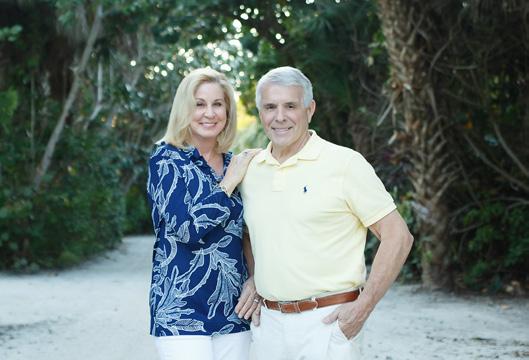
New Contributor
This issue introduces Analise McManus
As both writer and photographer, she contributes two features and this issue’s cover image—a journalistic hat trick! We are delighted to include her work and to welcome her as a colleague.
An FYI to Advertisers
We have invested thoughtfully in our presence on Instagram—and we believe it shows. Still, a few facts are worth noting, particularly in a community such as ours, with senior citizens (65+ years of age) a prominent demographic:
19% of seniors use the platform
5–10% use it daily
Magazines
55–65% of seniors read magazines regularly
60–70% read most or all of an issue
60–70% notice advertisements
40–50% take action
Print remains deeply read—and highly effective
This reflects what we hear often: our readers value how we present our advertisers—and regard those pages, quite simply, as part of the experience.
Most engage only occasionally CO-PUBLISHER


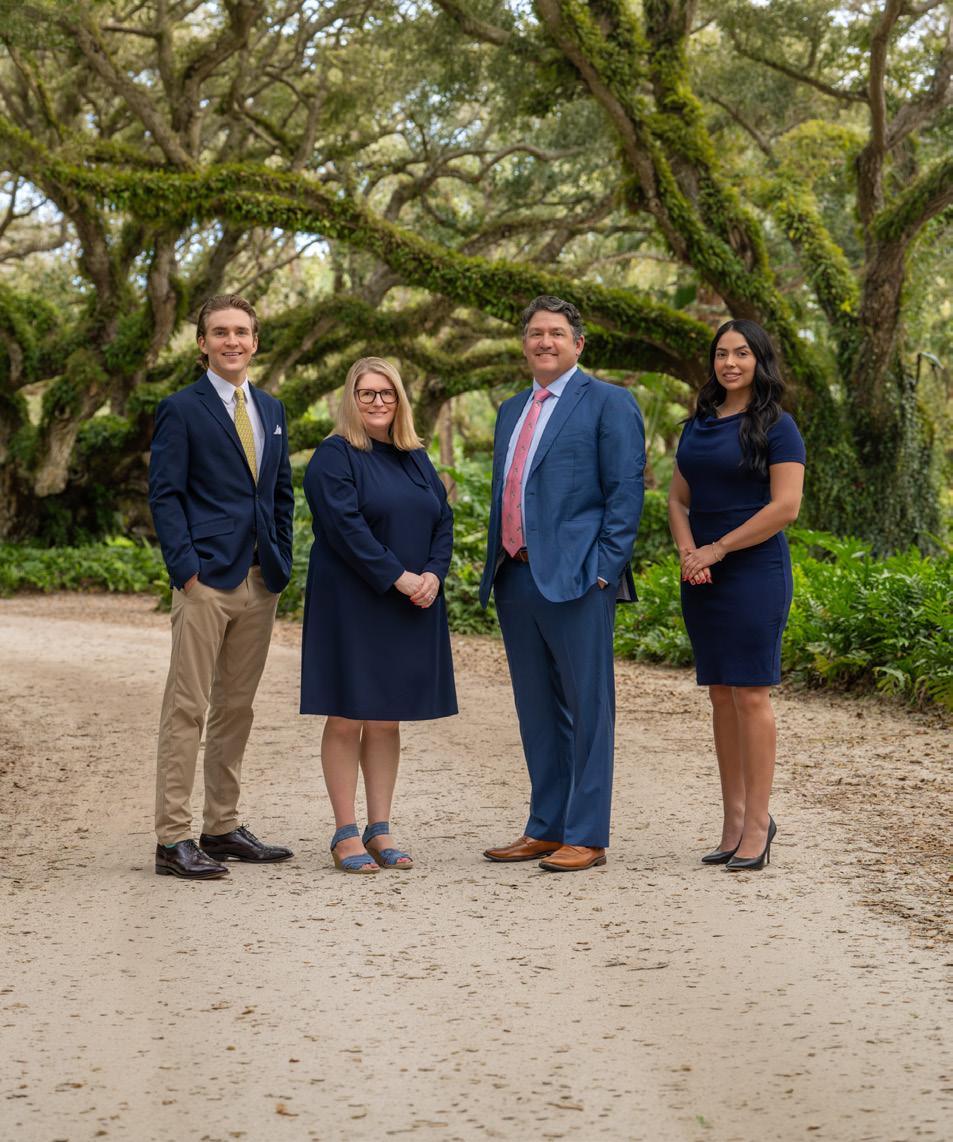
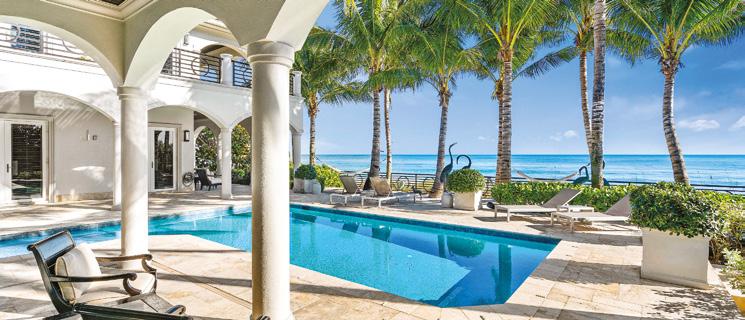
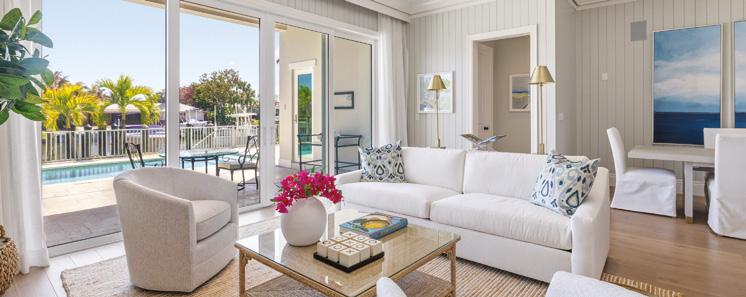
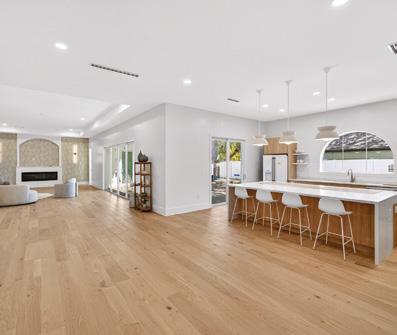
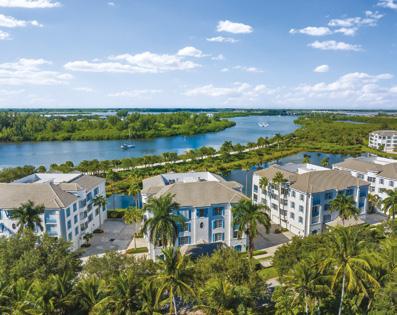
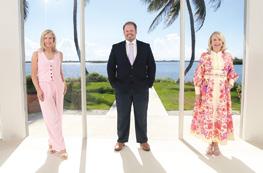
Exceptional Properties. Extraordinary Lifestyle.
Innovation and People have always been at the heart of the O’Dare Boga Dobson success story.














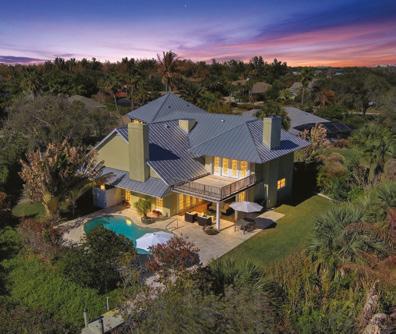




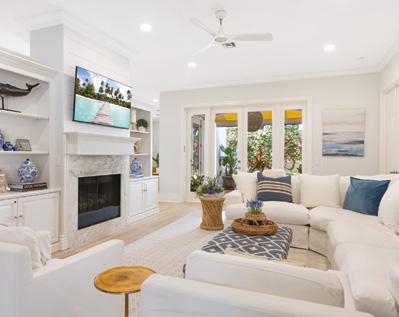
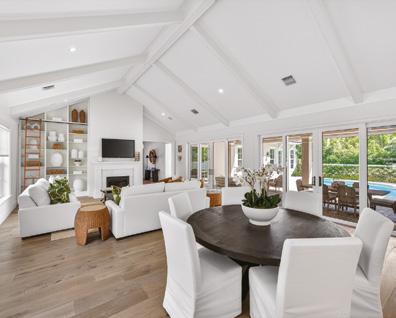

Magazines mailed to EVERY residence in Indian River County (all 8 zip codes) with incomes equal to or greater than $200,000.
Electronic Edition sent to curated, expanding list of over 3,200 email addresses.
Hand delivery of 1,500 copies to advertising partners, other businesses, organizations, individuals—including hotels, airport, restaurants, real estate offices, physician offices, country clubs, drop points.
Electronic Edition, in full, is accessible to all on our website livvero.com.
Building list of subscribers locally and across country to primary/secondary residences. Subscribe at livvero.com.
LIV VERO® Magazine is a registered trademark of Orchid Island Publishing Group LLC.
© 2025 Orchid Island Publishing Group LLC. All rights reserved. Reproduction or distribution of any content without express written consent is prohibited.
CO-PUBLISHER | CO-EDITOR
Jim Field jim@livvero.com
Diane Field diane@livvero.com
EDITORIAL
CONTRIBUTING WRITERS
John Stearns, Renee Morad, Amanda Blumberg, Diane Field, Jim Field, Joshua McMiller, Analise McManus, Jack Curley
ART
CONTRIBUTING PHOTOGRAPHERS
Victoriya Knapp, Jim Field, Analise McManus
ADVERTISING AND EVENTS
703-851-0703
DIGITAL
WEBSITE: livvero.com
INSTAGRAM: @livveromagazine
ORCHID ISLAND PUBLISHING GROUP LLC
Vero Beach, FL 32963
President | Jim Field
SUBSCRIPTIONS
10 issues: $45. Subscribe at www.livvero.com
POSTMASTER
SEND ADDRESS CHANGES TO: Orchid Island Publishing Group 3320 Cardinal Dr., Suite 648175 Vero Beach, FL 32963
LOCALLY OWNED & OPERATED LIV
SUBSCRIPTIONS: Free of charge to qualified residents of Vero Beach. Publisher reserves the right to determine qualifications. Annual subscriptions: U.S. and possessions $45, all other countries $125 U.S. funds (via air mail). Single copies: U.S. and possessions $5. No part of this publication may be reproduced without the written consent of the publisher. The publisher does not warrant, either expressly or by implication, the factual accuracy of any advertisements, articles or descriptions here in, nor does the publisher warrant the validity of any views or opinions offered by the authors of said articles or descriptions. The opinions expressed are those of the individual authors, and do not necessarily represent the opinions of Orchid Island Publishing Group. Orchid Island Publishing Group makes no representation or warranties regarding the accuracy or appropriateness of the advice or any advertisements contained in this magazine.
SUBMISSIONS: We welcome submissions. Unless otherwise negotiated in writing by the editors, by sending us your submission, you grant Orchid Island Publishing Group permission by an irrevocable license (with the right to license to third parties) to edit, reproduce, distribute, publish, and adapt your submission in any medium on multiple occasions. Submissions will not be returned.
•
•
•
• Featuring
•


by Diane Field photography by James Merrell
Artisan: Skilled craftsperson who makes things by hand, often using traditional methods and exceptional expertise. Handcrafted work (not mass-produced). Specialized skill or trade. Emphasis on quality, detail, and technique. Founded in tradition and/or heritage methods.
Occasionally one comes across an Artisan Studio where goods are conceived, designed, constructed, and sold under one roof—sometimes literally, other times in various locations as components of a Studio portfolio. These are radically different commercial entities from what we are used to in modern life, where design is sub-contracted, manufacturing is sub-contracted and automated, and retail can occur in a single location or multiple dispersed locations and, of course, online. We are used to abundance: of objects made in batches of every conceivable size. Should an item somehow break, we can reorder an exact replacement and have it tomorrow.
PINCH is an extraordinary example of such an Artisan Studio. Their wares include lighting and furniture, organized by room, and sometimes collection. I receive their digital updates and read (study) them religiously. I enjoy these moments of discovery because I know I will be immersed in the world of fine art, learning what gifted people do when their job—their everyday principal activity—is to create beautiful objects: things that viewers react to viscerally, intellectually, in awe, stimulating emotion and contemplation.
Described by PINCH
A dedication to poetic drapery. Designer: Russell Pinch. A sculptural statement light of generous proportions, our new Anders loop pendant is the latest evolution of our original Anders design. Inspired by the folds of a couture petticoat, in 2008 we realised the first Anders light and 16 years later we celebrate a lighting family of 6, with the introduction of its latest member. Defined by its delicate demonstrations of draped plant fibre, the Anders loop pendant continues its eponymous series’ signature serve of gentle drama, at its most impressive scale yet.

The starting point
The folds of a beautiful dress, chronicled in a fashion magazine, gave us pause for inspiration. A couture underskirt, where the twirls and folds of the petticoat created a poetic drapery became the beginning of an important design: the Anders light.

Bringing life to an idea
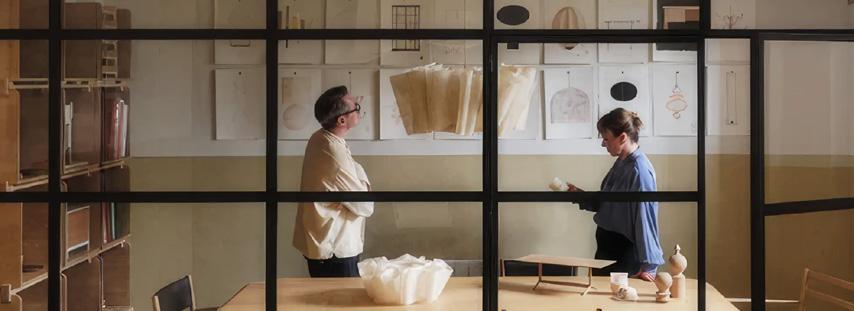
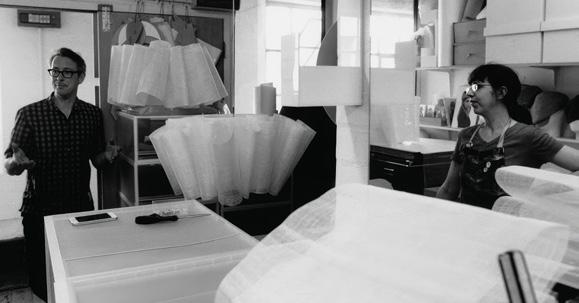
We struggled to realise our ambitions, until we walked into a master milliner’s studio. The application of skills, from this seemingly unrelated craft, gave form and purpose to our light.


Crafted poetic drapery
Made from abaca fibre, a traditional millinery material, each fold is carefully pinned, observed, balanced, and stitched. The final piece stands as a piece of sculpture in its own right. When illuminated it casts a very gentle, and atmospheric warm glow, which adds a quiet drama to a space.
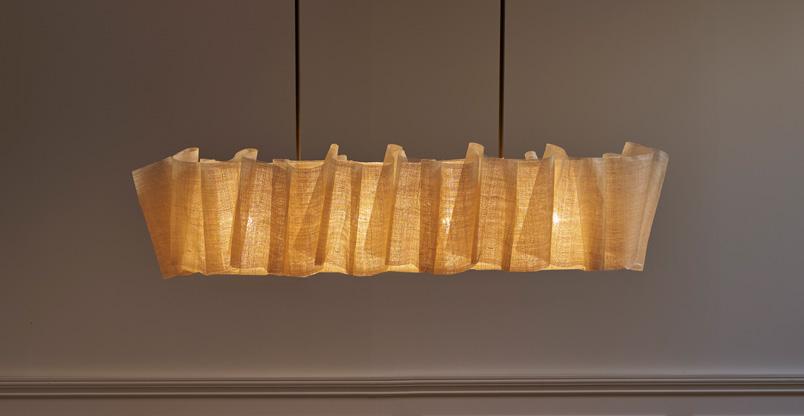
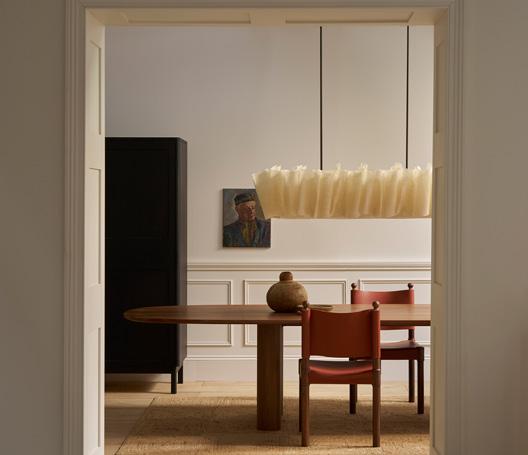
Made in the UK at a specialist lighting workshop, the Anders loop pendant, much like its wider series, is carefully assembled and stitched by the hands of expert makers. With the utmost respect for the organic and malleable properties of plant fibre, sections are skillfully sculpted into place, meaning each is a work of art in its own right, and no two Anders are the same.
When illuminated, light is softly diffused through its intricate folds, delivering the distinct, gentle drama for which the design is so celebrated.
Showroom
200 Ebury Street
London
SW1W 8UN
+44 (0) 207 622 5075
Studio
5A Canterbury Court
Kennington Park
1–3 Brixton Rd
London SW9 6DE
+44 (0) 207 622 5075
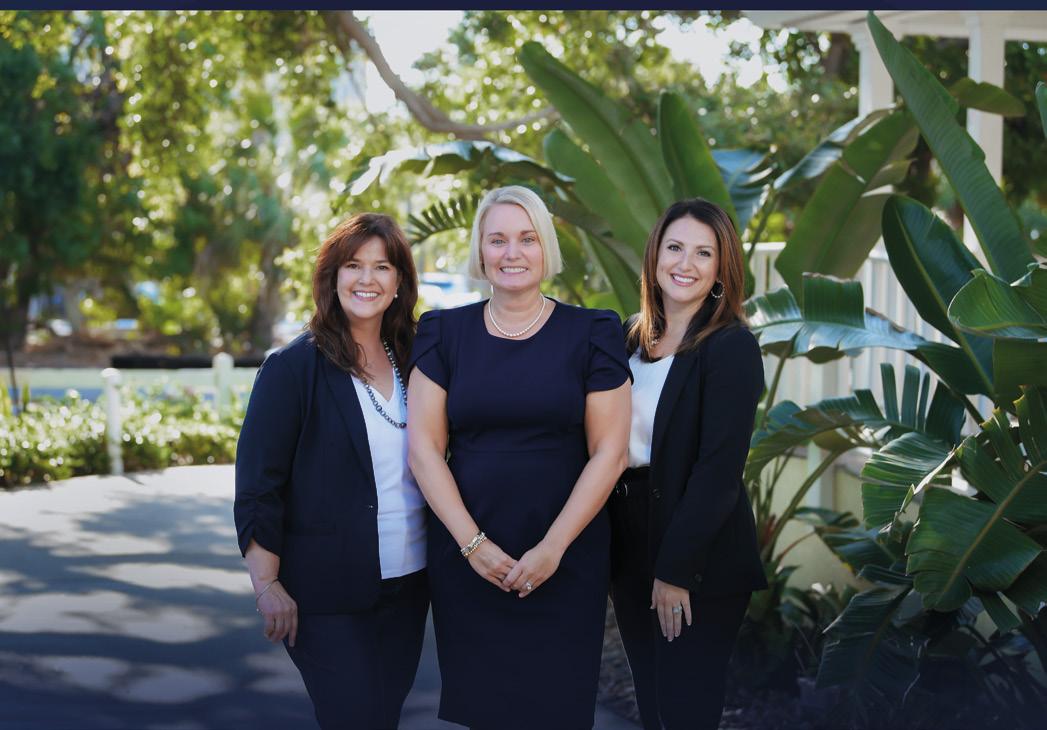
As we continue to serve founders, families, and business owners across the Treasure Coast and Palm Beach communities, this growth reflects our commitment to thoughtful and relationship-driven wealth management. Our team focuses on helping clients navigate major financial transitions, coordinate long-term planning, and steward wealth across generations. We are proud to continue growing our presence in Vero Beach and looking forward to serving our community together.
Oceanic Wealth Management
Wells Fargo Advisors Financial Network
3387 Ocean Drive
Ver0 Beach Florida 32963
772-200-3973
Razvan Ilie
Senior Financial Advisor
Jenna Suleman Senior Financial Advisor
Chase Perez-Blanco Financial Advisor

by Diane Field photography source Wikimedia Commons.
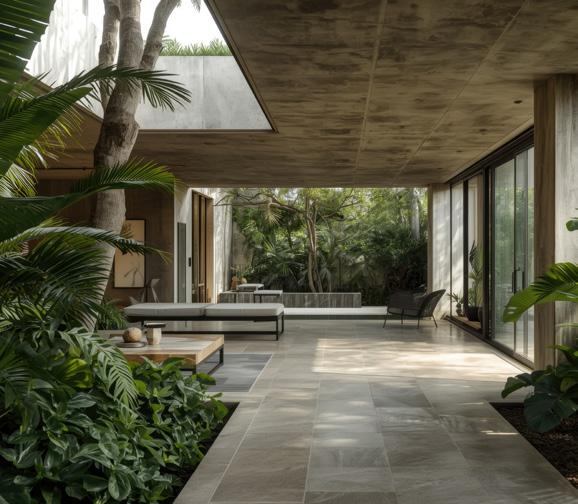
For many of us, living in the tropics means being immersed in nature—surrounded by it, bordering it, and even bringing it into our indoor and outdoor living spaces. The quintessential example of this is tropical modernism, an architectural style that blends modern design with the sun, wind, and landscape of the tropics (see our September 2025 issue). The landscaping that adorns our homes and neighborhoods lets us cohabitate with flowers and lush greenery every day—garden plots we maintain are curated interpretations of primeval jungle.
That said, a few centuries ago, humans were far more concerned with shielding themselves from nature than connecting with it. Homes prioritized shelter over aesthetics, designed to defend against
cold and heat, wind, pests, disease, smoke, and agricultural odors. Interiors were often enclosed and utilitarian, with small windows, sturdy doors, and thick walls. In short, the prevailing mindset was to separate interior life from the natural world, rather than integrate the two.
Notably, the Victorian era (1837–1901) changed this, laying the foundation for our contemporary bond with nature as a centerpiece of both physical and aesthetic life. Victorian interior design sought to domesticate nature, turning the home into a kind of indoor garden. Key developments in preceding decades made this infatuation with plant décor possible: the invention of the Wardian case (a sealed glass container for transporting plants), greater accessibility to tropical
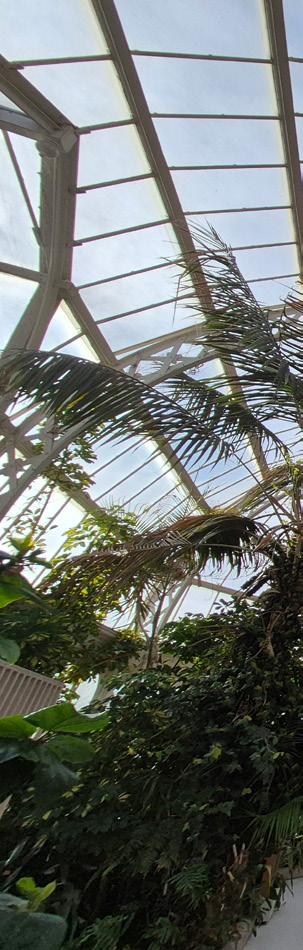
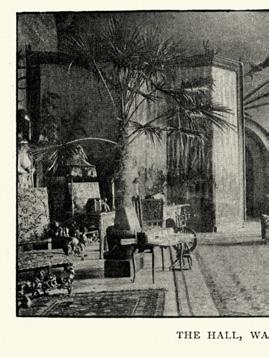
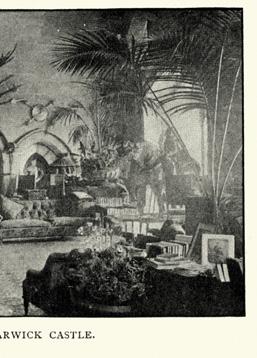

species through the expansion of the British Empire, and improvements in heating and glass that made interiors more habitable. In a cultural shift, nature became something to collect, study, and admire—not escape. So the next time you admire your flowers and lush foliage, you can thank Queen Victoria.
Victorian Design
Victorian design is characterized by ornate decoration, complex forms, and eclectic historical influences (e.g., Gothic Revival, Neoclassical). Buildings feature steep roofs, towers and bay windows, elaborate trim, patterned surfaces, and highly detailed and layered interiors filled with dark wood paneling, heavy drapery, ornate furnishings, and richly patterned carpets. Criticism of the style centered on its excessive ornamentation, lack of unity, visual clutter, rigidity, and dim interiors. In short, the style for many was complex, dense, overstimulating.
Against this canvas, plants were deliberately used to soften and enliven otherwise imposing surroundings. Organic, irregular forms would add color, lightness, and movement to enclosed spaces, balancing and humanizing the weight and rigidity of Victorian interiors.
Plant Obsession
Victorian designers used florals, ferns, and palms to create interiors that felt lush and exotic, connecting to the dawning world and colonial empire of the 19th century. Potted palms could be quite large, placed anywhere in a room—near a window, as a grand centerpiece, to demarcate a passageway. Exotic species were showcased on plant stands or in terrariums and hanging baskets.
Floral patterns were carried over into other elements of interior design, introducing natural imagery into fixed architectural elements, softening heavy materials like brick, stone, dark wood.
• Wallpaper and textiles. Bold, intricate, often densely patterned floral botanical designs—roses, lilies, vines, and ferns. Repeating patterns covered entire walls, sometimes ceilings. Intense colors like burgundy, forest green, gold.
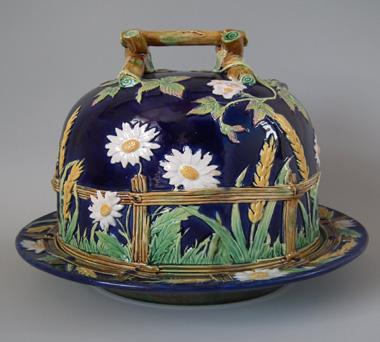
• Ceramics and tiles. Flowers and natural motifs introduced color and pattern. Porcelain and earthenware depicted hand-painted or transfer-printed floral designs. Used in vases, plates, washbasins, decorative objects displayed throughout the home. Ceramic tiles were commonly used in fireplace surrounds, entryways, kitchens, bathrooms.
• Carved furniture. Chairs, cabinets, sideboards, bed frames were richly detailed with hand-carved foliage. Common motifs included acanthus leaves, ivy, and grapevines. Carvings were integrated into legs, armrests, backs, and cornices, giving pieces a sculptural quality.
Victorian conservatories came of age during the 19th century as both
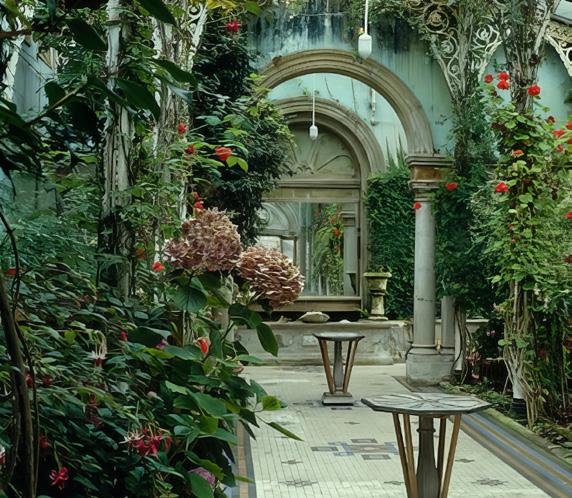
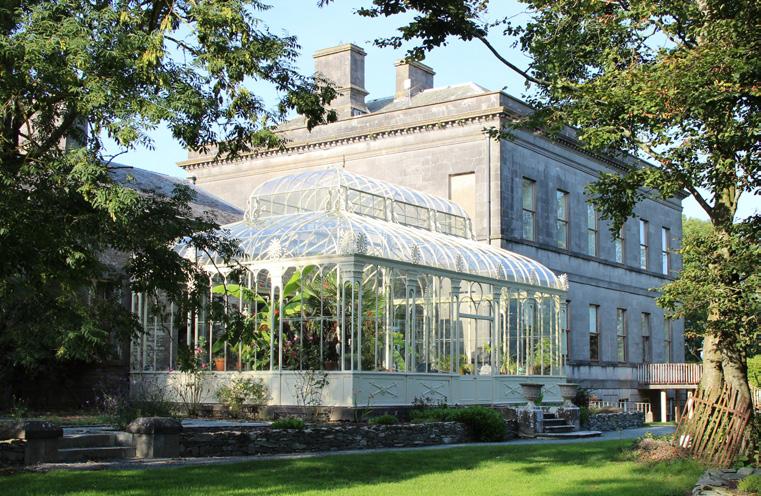
architectural statements and cultural symbols. Advances in glass and iron technology made it possible to construct large, structurally sound, light-filled enclosures, while central heating and improved glazing allowed interiors to remain warm and humid year-round. Conservatories became must-have features in wealthy homes, signaling status and sophistication. They could be freestanding structures or attached to the house, often opening to a drawing room or parlor. Architectural elements included curved iron ribs and decorative detailing, high ceilings, and domed or pitched glass roofs, all designed to maximize sunlight and retain warmth. As a cultural phenomenon, conservatories were the ultimate expression of the Victorian desire to collect, study, and display nature. The Sefton Park Palm House in Liverpool stands as an iconic example.








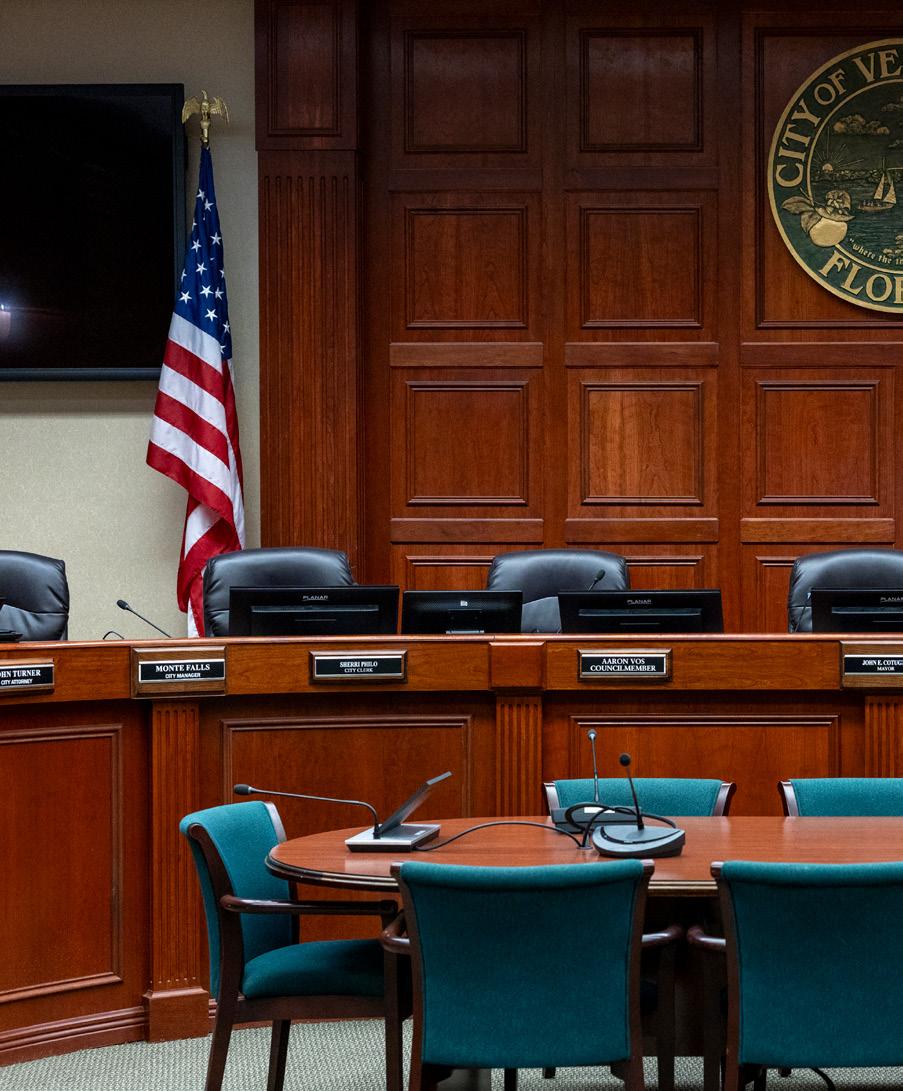
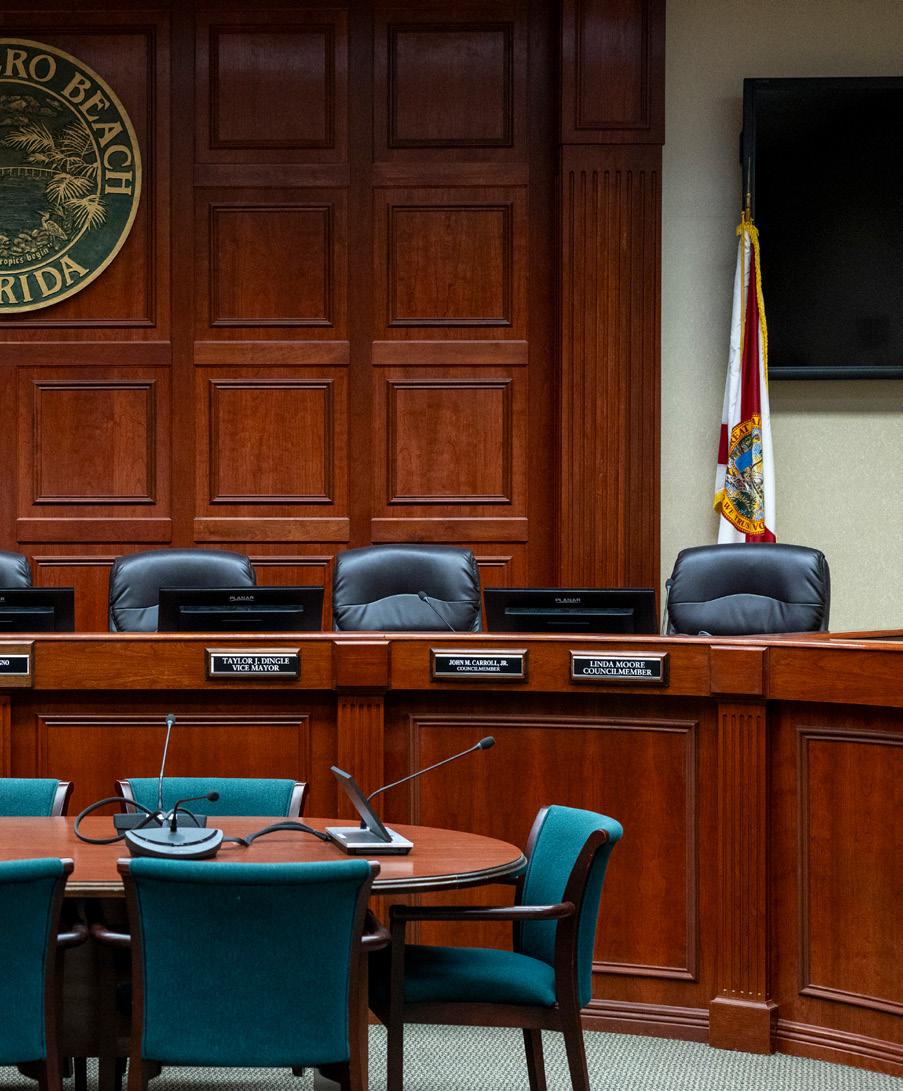

by John Stearns photography by Victoriya Knapp
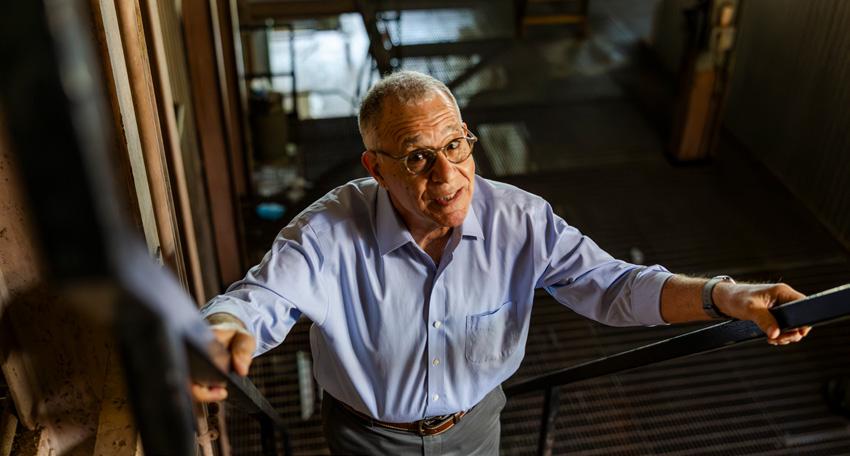
John Cotugno needed three years and three tries to win election in 2021 to the Vero Beach City Council. He was reelected twice since, in 2023 and 2025, and has been chosen by council colleagues to serve as Mayor every year since 2023—a fouryear mayoral streak not seen in about 35 years.
Cotugno [pronounced Co-tune-yo] played baseball in college, a sport where errors and strikeouts are part of the game; players dust off and try again. For him, the third time was a charm, not a third strike.
Cotugno, 77, has been told he’s the shortest-tenured resident elected to the council, having arrived in Vero in 2018, three years before winning a seat. He described an “older heritage kind of vibe here, let’s put it that way.” That’s not to say residents don’t take kindly to strangers, he emphasized. “It’s just that they’re cautious and it just took me time.”
Vero Beach’s role of Mayor is largely ceremonial, he said, noting the fiveperson council guides policy and the city manager, Monte Falls, carries it out and directs staff. Being Mayor means leading meetings; listening to constituents; appearances at myriad lunches, dinners, and events; and, most importantly for Cotugno, trying to do right for its estimated 17,000-plus residents and leaving Vero better than when he started.
Cotugno retired in 2018 from an executive sales and marketing career in the electronics-semiconductor industry that began with Texas Instruments in Massachusetts and ended with Shinko Electric America, Inc. in California. He comes across as a modest, matter-of-fact everyman—perhaps reflecting his bluecollar upbringing in Providence, Rhode Island.
He’s proud of his family’s Italian-American heritage with loving parents. His father worked as a commercial baker and then a custodian, and his mother as a cook. They shared a two-story house with different aunts and uncles and cousins, with family gatherings a cacophony of conversation and connection. He attended Rhode Island College in Providence, about a mile
from his childhood home, and earned a bachelor’s degree in social science.
“I was a relatively lucky guy from the standpoint of it’s not a prep school background here, just an average guy, an average student who worked hard and got an opportunity,” he said in mid-March from his modest office in City Hall. “I was lucky and that was it.”
LIV VERO Magazine met with Cotugno to learn more about the guy behind the gavel—his upbringing, city issues important to him, thoughts on government, disappointments and accomplishments, and whether he’ll run for council again when his current term expires at the end of 2027. The conversation is edited for length and clarity.
JS: Did you come from a big family?
JC: My immediate family now is just myself and my younger brother [Edward, 71, a Providence political consultant]. My dad only had himself, a sister and a half-brother, but my mom came from nine. I actually grew up in my grandfather’s house. My grandparents on my mom’s side came over from outside of Naples in the great migration from Italy at the turn
of the 19th and 20th centuries [through Ellis Island] and somehow ended up settling in the Providence area. My dad’s side of the family came from a town in Campania, Bonito, [Italy] which is known for shoemaking [birthplace of Salvatore Ferragamo] and migrated to the Boston area to work in all the shoe factories. There’s no record they knew each other, but Bonito is small, like 1,400 people, and Ferragamo at the same time migrated to Boston to work in the shoe factories—and the rest is history when it comes to that name.
My maternal grandfather did what immigrants do when they come to a new place—they worked hard, saved money, built a two-story tenement house in the Elmhurst section of Providence. Eventually the Dominicans [the Order of Preachers] bought a big swath of property across the street and established Providence College. The family of nine grew up there and later on so did I. My mom and dad eventually bought the house. My grandparents, typical Italians, left one-ninth of the house to each of the nine kids, so my parents bought them all out. But there was an aunt and uncle or a cousin living on the first or second floor—and we moved from the first to second floor all throughout my life. And I’m wondering, “What the hell are we doing this for?” We’re moving up and downstairs. So it was typical, boisterous cousin stuff floating around all the time.
JS: I assume you’re bilingual.
JC: No, because as second-generation Italians, you had to become Americans, so my parents wouldn’t speak Italian. They were Americans. I was born in ’48 and so it was World War II and radios from Italians were confiscated. It was still a great time growing up, really was.
JS: You went from college to Texas Instruments?
JC: I should have graduated college in ’70; I graduated in ’72 because I wasn’t the best student in the world. I was selling textiles while going to school and then I got to work for Texas Instruments. I got the break, one of those opportunities in life, timing’s everything. I went to a local recruiter and TI at that time had a big campus in Attleboro, Massachusetts. I did not have an engineering degree and they wanted somebody who was better from
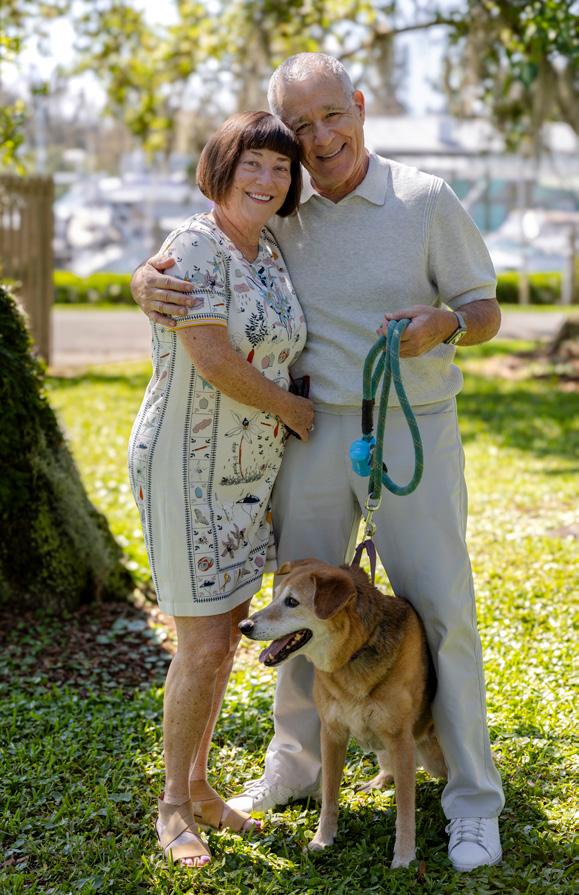
BEING A SMALL TOWN, I REALLY BELIEVE THE LOCAL DECISIONS ARE THE MOST IMPORTANT DECISIONS.”
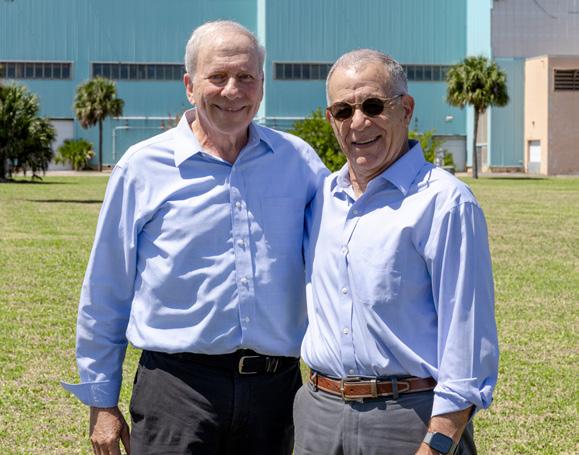
a personality standpoint, a salesmanmarketing type. Maybe it helped that the two guys interviewing me were both Italian. It was what is called product specialist, essentially an inside marketing position. [Cotugno in 2000 joined Shinko, a Fujitsu affiliate, retiring in 2018 as vice president of sales and marketing operations responsible for North American marketing, business development, and sales in Shinko’s semiconductor die packaging market space.]
JS: You played baseball in college, right?
JC: I love baseball, big baseball fan. I was good enough to make the team [playing second base when he played for the Division III school]. We played a Division I schedule because our two coaches [one of whom was former Washington Senators pitcher Dave Stenhouse] knew all these people, so we played teams like NYU, Columbia, St. John’s, Saint Francis, Queens College.
JS: You have a signed baseball behind you; is it somebody famous?
JC: It’s a 64-year-old baseball signed by Rocky Colavito [full name was Rocco Domenico Colavito] who played for the Cleveland Indians and he was a great baseball player. He was born in Brooklyn, New York, big Italian family; played a brief time for the Yankees. If you were from Cleveland, he was a hometown hero. My uncle’s son worked with his uncle in the scrapyards in Newark, New Jersey, and I was a big baseball fan and loved Rocky Colavito at the time because he was always in Sport magazine. [Cotugno sent a baseball to his uncle’s son, who got it signed and mailed it back to Cotugno, who was 13 at the time.]
JS: Is that one thing people may not know about you, that you’re a baseball nut?
JC: If you haven’t figured it out, I’m very proud to be Italian, very proud of my heritage, and proud of my parents, what
they did for me [his voice cracks slightly]. We could go on for hours about what my parents did for me.
JS: It sounds like that’s an emotional topic for you.
JC: It is.
JS: They worked hard, as you mentioned—blue-collar jobs, baker and custodian.
JC: My dad, and then my mom served food at the dining center at Rhode Island College. [Cotugno’s dad worked in the Walsh-Kaiser shipyard in Providence when he was introduced to Cotugno’s mother by his sister, who worked with her at Imperial Knife Co. assembling bayonets during World War II. He then became a commercial baker for the old A&P grocery chain, and when that closed, he became a custodian at Rhode Island College. At one time, Cotugno and his brother were students at the college while their parents worked there.] It’s other things, too, but yeah, I’m trying to do the best I can as Mayor and hopefully I’ll leave this position and the city better than when I took it over.
JS: What inspired you to run for council in 2019?
JC: It began with a traffic-calming issue on Fiddlewood [the barrier island street on which Cotugno lives]. People like to cut through Fiddlewood to get to the dog park. We had a bunch of neighborhood meetings and at that time Laura Moss was on the City Council and she would come to the meetings and encourage people to get involved. I was getting involved because I was talking to various sundry neighbors about “How can we approach this?” Then I got into conversations on Vero’s growth and other issues and was encouraged to run that way. That was the year [2019] of the Leisure Square dust-up. [Leisure Square is a city recreation/fitness center that includes a swimming pool.] There was a Leisure Square uprising when City Council was threatening to close the facility due to the cost of running it and its related programs, which far exceeded the facility’s revenue. I’ve never seen so many people since show up at City Hall.
JS: You felt a calling to try to give back to your adopted town?
JC: I did. And I thought it being a small
town, I really believe the local decisions are the most important decisions. At this level, philosophy or ideology doesn’t come into play because you don’t care about that—you just want your streetlight fixed, or your pothole fixed, or “I don’t understand why this is happening?” or “Why can’t I get a stop sign here?” Those are quality-of-life issues, and then the other thing is public safety and the police. Those kinds of local issues, zoning issues, issues to do with development, issues to do with cultural or civic events or entertainment—that’s what impacts you. When it comes to the local issues you want something to get done.
JS: When you ran for reelection in 2025, you cited that your commitment to public service and your collaborative approach helped position the city to grow responsibly while preserving the unique charm that defines Vero Beach. Describe that unique charm.
JC: I think it’s a low-key approach. I think people here are engaged with their community. People who migrated
here established themselves here and had a profound sense of community [establishing Riverside Park, the Museum of Art, Riverside Theatre, building-height restrictions, and more]. This is really a city that’s grown up in neighborhoods. They love the environment they live in; they’ve tried to protect it as best they can. We try to protect it with a lot of what we’re trying to do with the new wastewater treatment plant [to reduce risk of spilling effluent into the lagoon]. So we’re conscious of our environment, the people, the heritage that we have. I think we’re more conscious of our history and because of that, organically, Vero has become the brand of Indian River County and maybe the Treasure Coast. I think it’s the responsibility of each City Council to try to maintain that as best they can, no matter what’s happening in the county with development.
JS: What is your position on growth? How much bigger can or should the city get?
JC: Good and bad with this: The city of
Vero Beach is not growing. It will barely grow one percent a year for the next three to five years because there’s no land; everything here is infill. Our worries are not concern with overdevelopment here; our concern is the demand on our infrastructure here due to the growth in the surrounding area in the county.
We’re the county seat, so that’s one additional demand placed upon us, due to the traffic that comes in and out of our town [to and from the county complex, the courthouse, main library, and more]. This requires us to have a police department that’s slightly larger than we should have for a city our size because you have more traffic.
Three Corners will generate additional traffic, but the other burden that we have in this city is that the county population uses the city’s facilities, whether they’re private or public. We are, from both a cultural and entertainment standpoint, at the center of that—it’s the museum,
(Continued on page 130.)
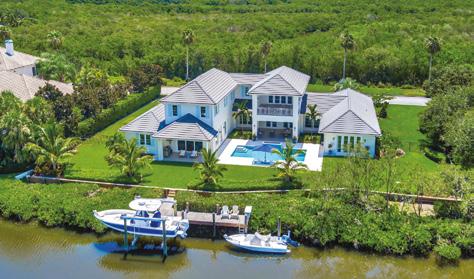
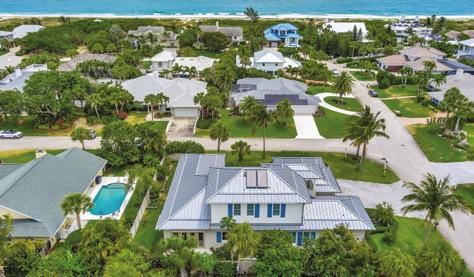


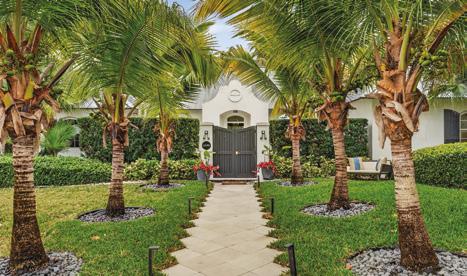





At KMK Builders, building a home is more than a project — it’s a collaborative journey. From the first conversation to the final walkthrough, we focus on listening, planning, and executing with purpose. Our team brings refined craftsmanship and thoughtful project management to every custom home, renovation, and addition, ensuring a seamless experience and exceptional results.
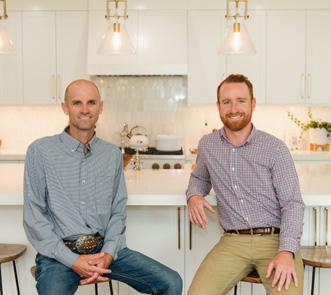
MICHAEL & KYLE
KONDZIOLA
3201 Cardinal Drive, Vero Beach, FL 772-643-1353
kmkbuidersllc.com @kmkbuilders


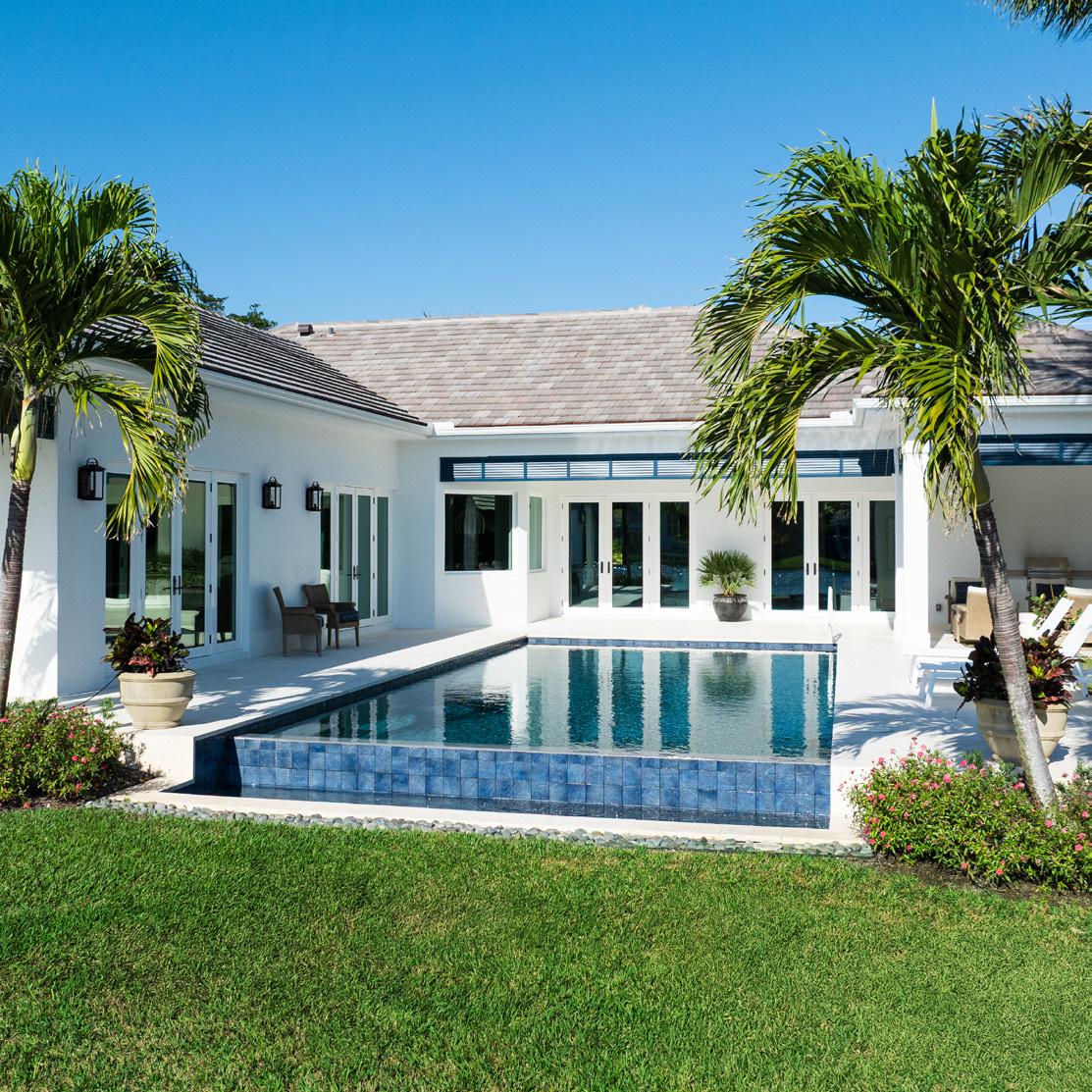

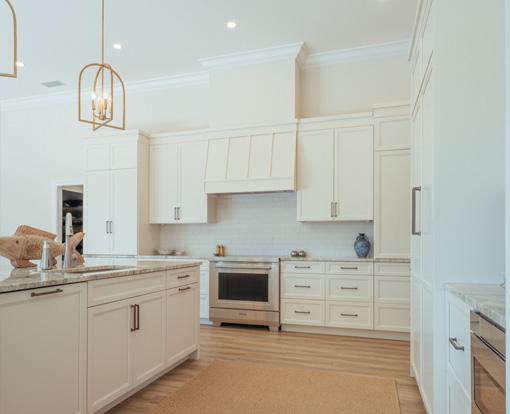

We believe the best homes are created through clear communication and careful attention to detail. Every decision is guided by your lifestyle, your goals, and our commitment to quality — delivering a home that feels as intentional as it is beautiful.
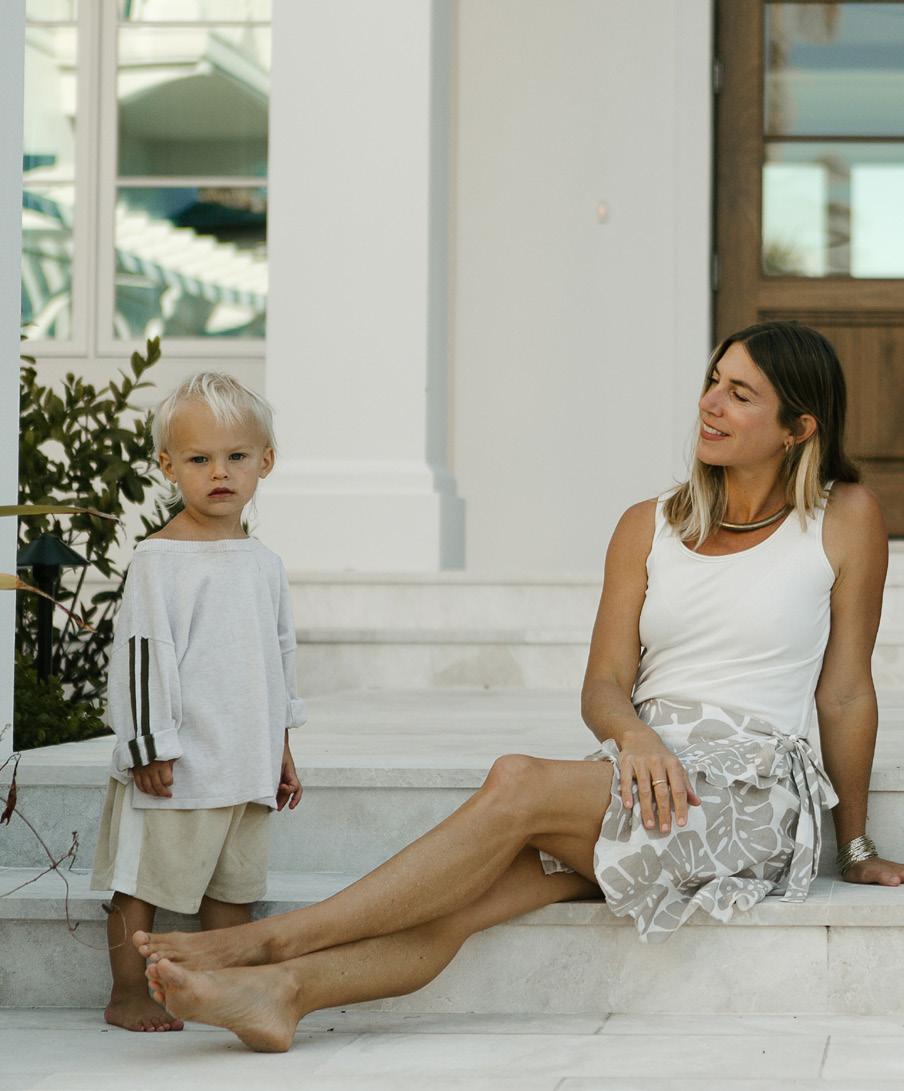
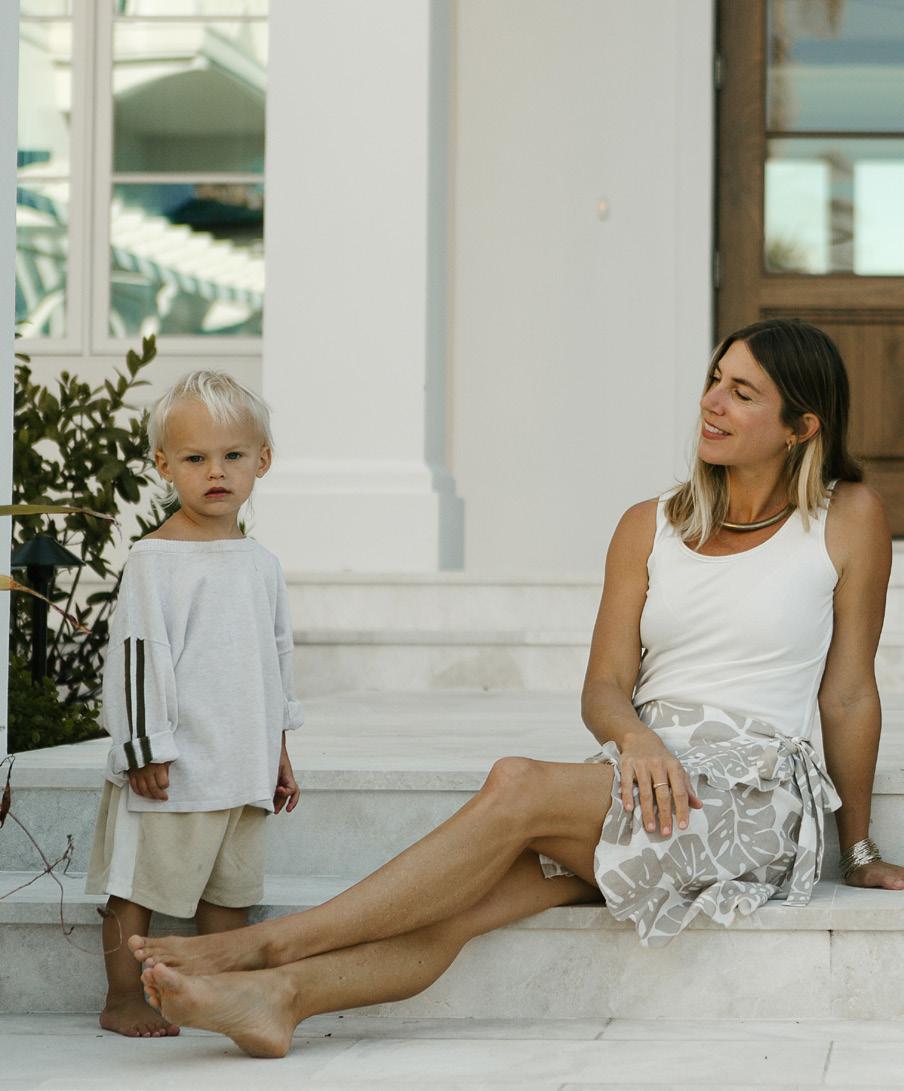


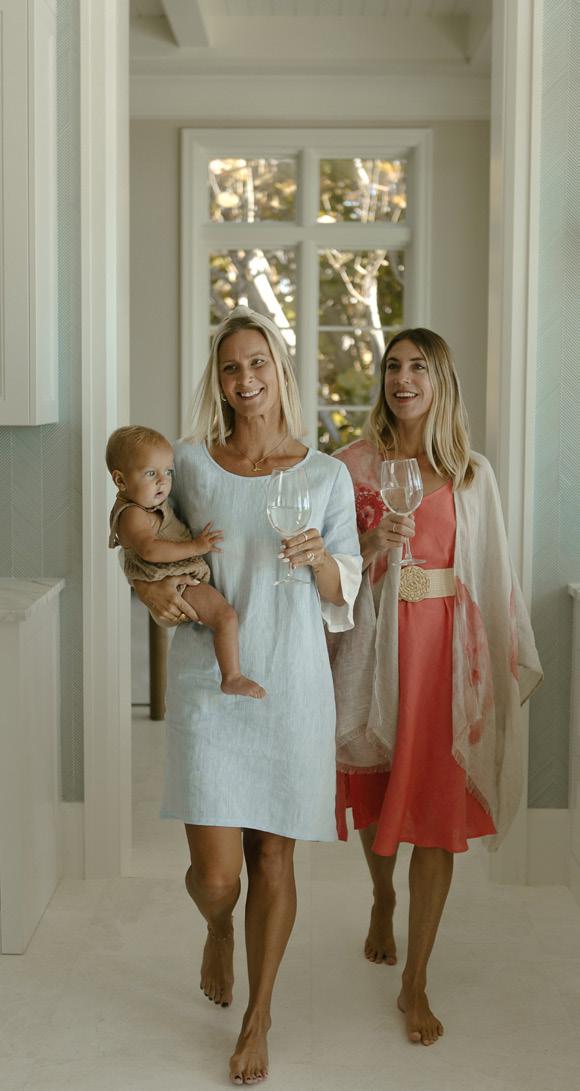
by Jim Field photography by Analise McManus and Victoriya Knapp
You awake to sunlight streaming into the bedroom from due east, traversing directly from the horizon to your eyes. You notice that the base of the sun’s sphere has just left the horizon, a finger-width distant. The house is silent—the children are still sleeping.
Your closest friend arrived last night for a three-day visit—both husbands away on business—and by the time the little ones were fed and bathed, the evening had grown late. The children slip easily into one another’s company. So do you.
Today unfolds without a schedule—breakfast whenever it happens, children already in swimsuits, drifting from pool to hot tub to beach and back again. Lunch in town, then the same easy rhythm carries us through the afternoon. By evening, it’s grilled chicken, fresh fruit, and stories before an early night. The weather is spectacular. Sunscreen is applied generously, though somehow, we all return a little more sun-kissed—it simply happens.
Iga Luther, Owner
I grew up in Poland where I earned a master’s degree in economics. I first came to the United States as a student nearly twenty years ago, working at country clubs in North Carolina while learning English. After graduation, I chose to return—eventually finding both Vero Beach and my husband.
I began my professional career in corporate banking. It was a valuable experience, but I quickly realized it wasn’t where I belonged. When I became pregnant with my first child, I returned to what I knew and loved: the clothing industry. My mother owned several sportswear boutiques in Poland, and I had grown up immersed in her business.
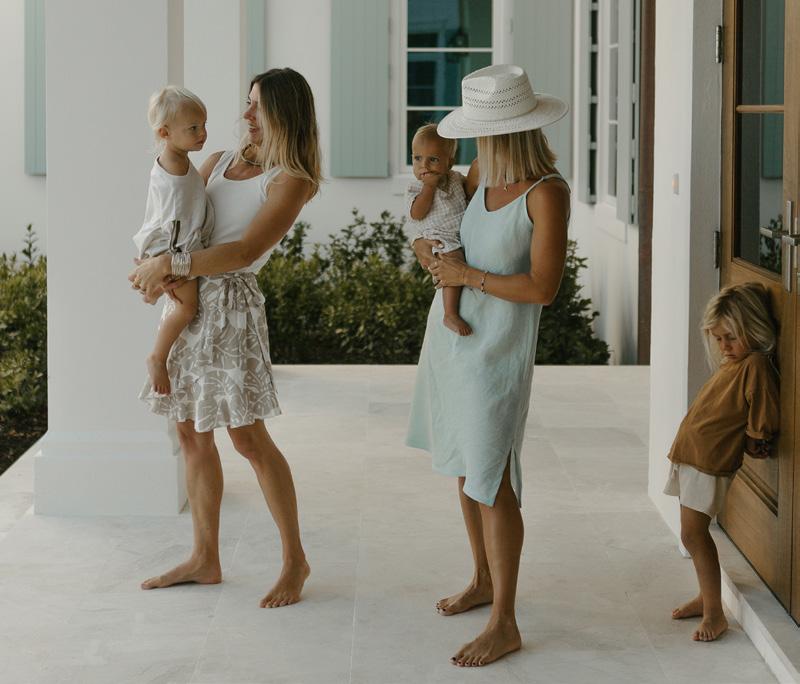

I initially represented two Polish clothing companies in the U.S., which proved successful for a time. But I came to understand that what works in European fashion does not always translate to the American market—they are, in many ways, entirely different worlds.
That realization led me to focus on what has always inspired me: linen.
For over fourteen years, I have specialized in high-quality, small-production linen fashion. I work directly with the finest growers— primarily in Belgium, and some in France— where climate, soil, and cultivation methods all influence the character of the fiber. Linen is both natural and highly nuanced; its weight, length, and texture vary, and selecting the best requires deep knowledge and care.

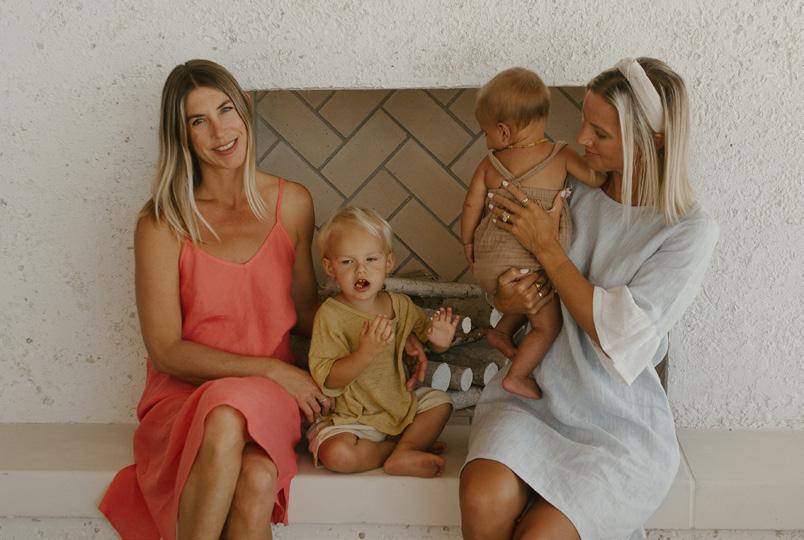
From there, we dye and print each fabric, a process that transforms not only its appearance but its feel. I am especially proud of our prints, which are created by true artists.
All production is rooted in Poland. I oversee both the creative and manufacturing processes, maintaining control over every detail. While I occasionally partner with outside firms, I work only with those who meet the highest standards—relationships and trust are everything in my business. I travel frequently to Poland and speak Polish daily with my team, while also embracing life here in Vero Beach. In many ways, I am fortunate to live between two worlds.
For years, I designed and produced clothing for other boutiques—many of
them among the finest in the country. Today, approximately 70% of our store collections are linen, complemented by other carefully selected natural fibers such as cotton, produced exclusively for us. Nearly everything in our stores is our own—you won’t find it anywhere else.
Three years ago, we opened our signature boutique in Vero Beach. Last year, we expanded with a second location in Naples— fittingly, on my mother’s birthday. I continue to exhibit at trade shows and local events, which I love for the opportunity to connect, learn, and share our work.
Between business, family, and the ongoing pursuit of balance, time moves quickly. Through it all, I remain captivated by my first fashion love—linen, of course!

A special thank you to our local models: Brie and Wolfgang, Hannah, Fox, and Rue.
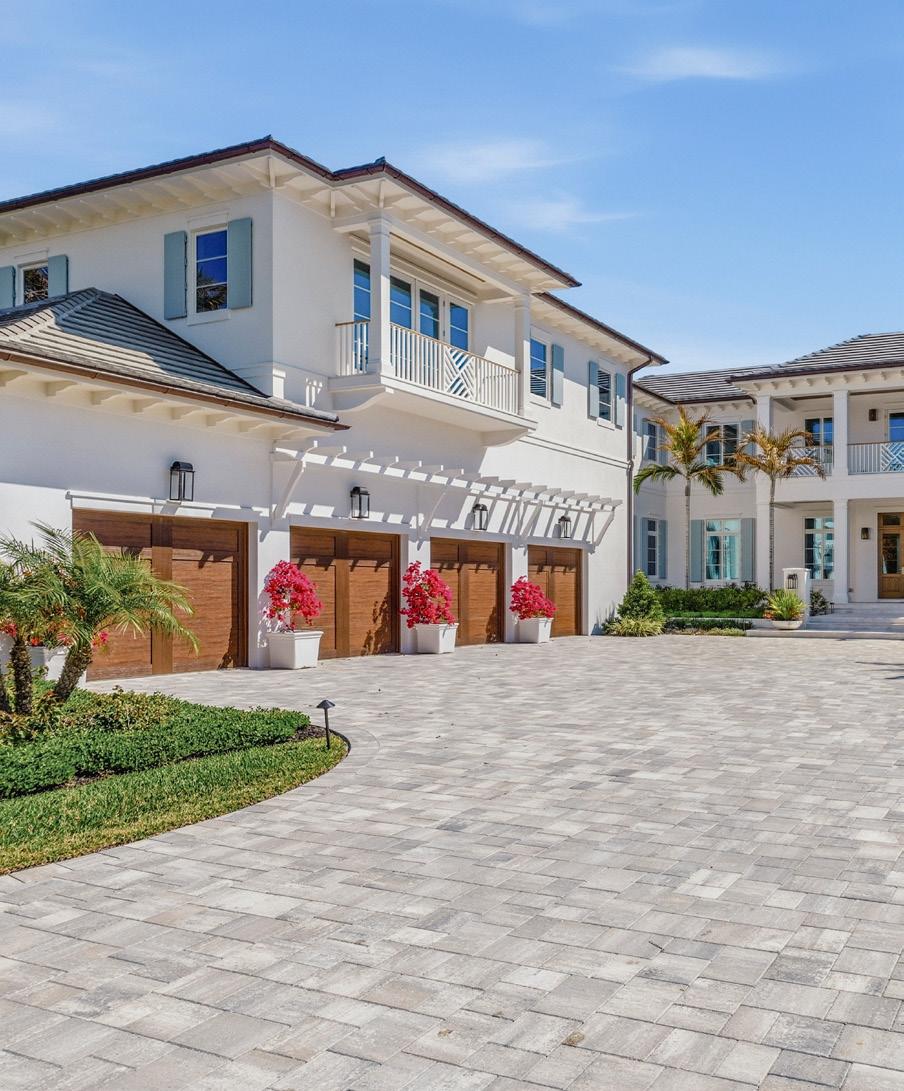
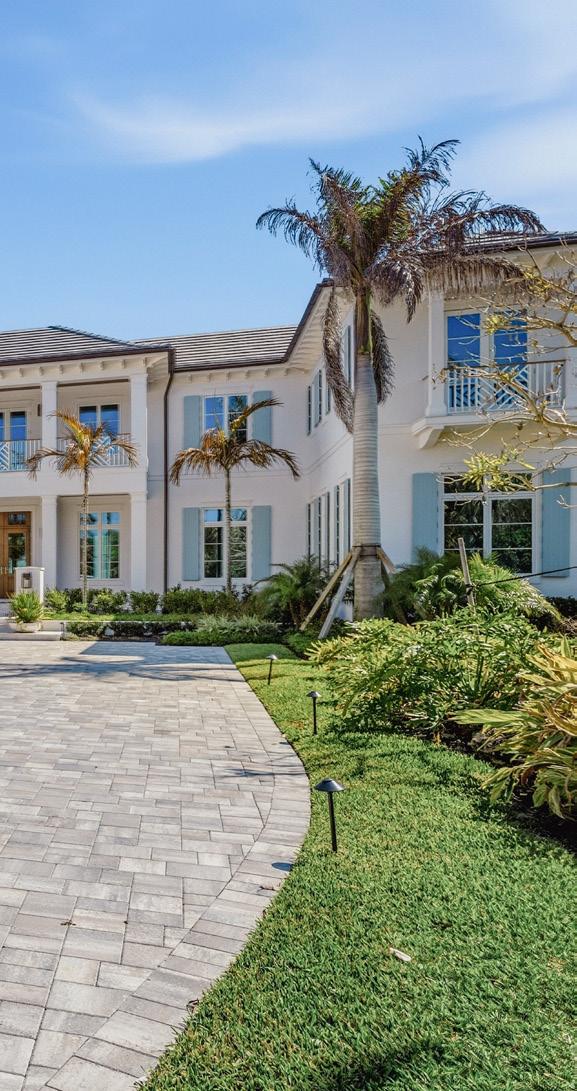
Ocean Pearl Enclave
330 N Blue Wave Lane
Vero Beach FL 32963
7 bedrooms, 8 full bathrooms, 2 half bathrooms, approximately 16,000 square feet, 1.4 oceanfront acres
Designed by Greg Anderson. Built by Water’s Edge Estates. 2024/2025
From the brochure:
Oceanfront serenity meets architectural distinction.
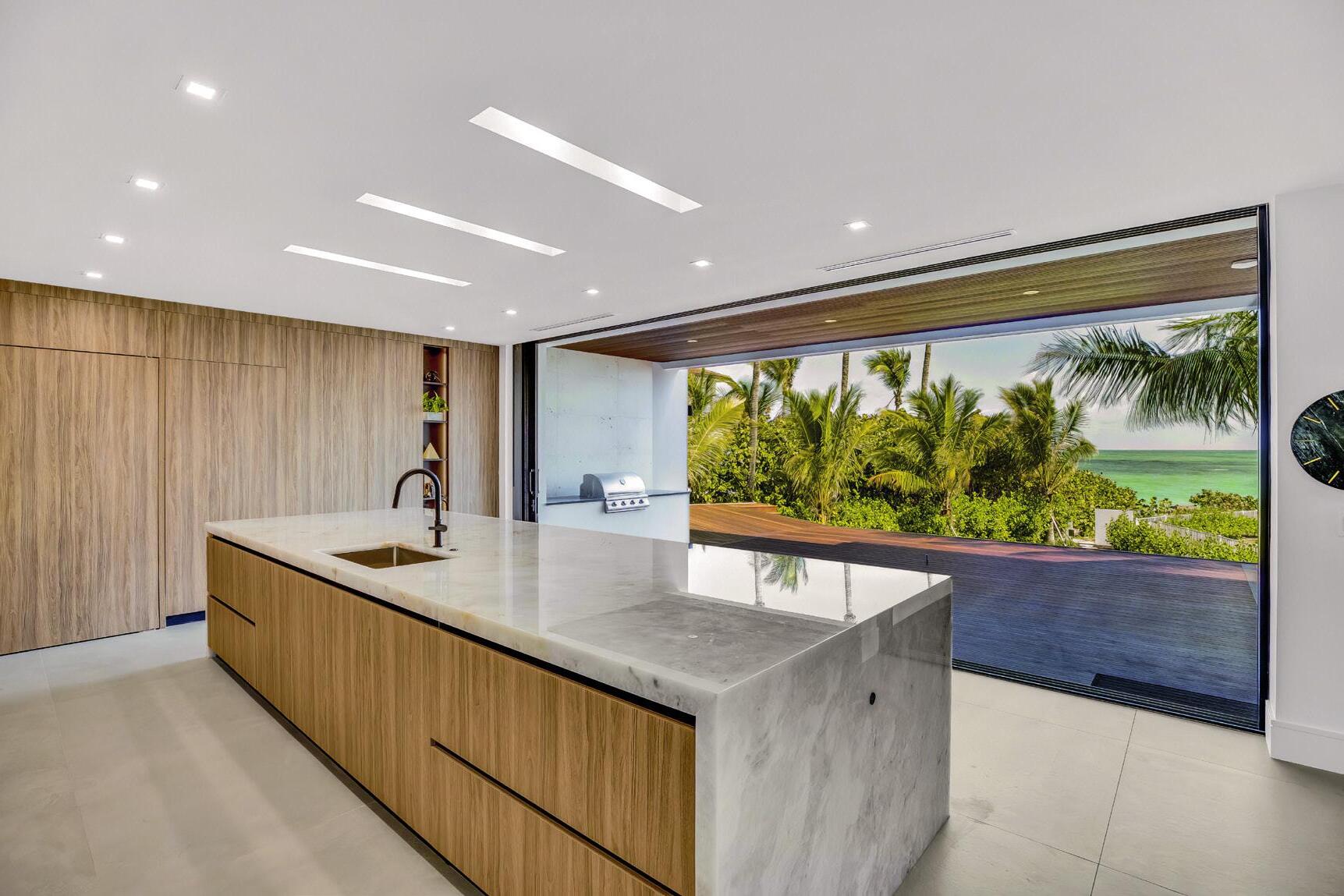
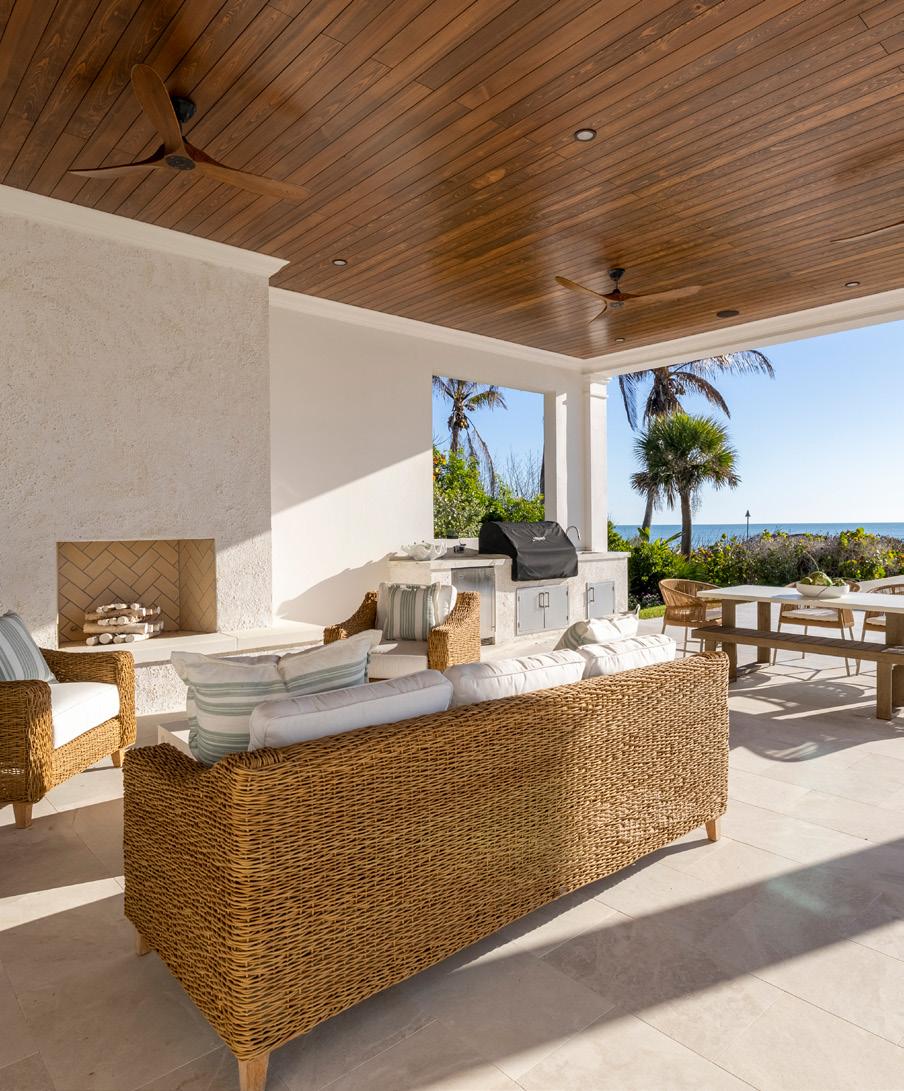
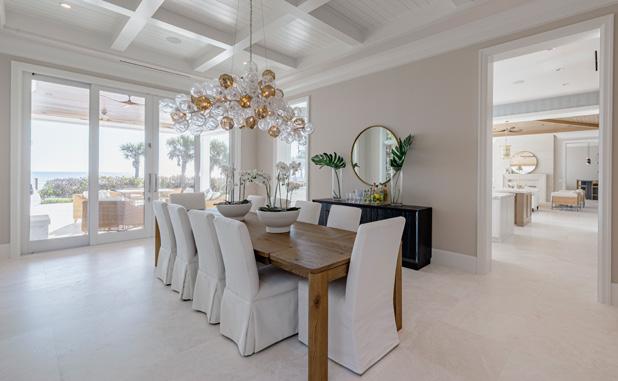
A rare collector’s home, this turnkey modern estate delivers a seamless blend of coastal serenity and architectural refinement. In the desirable enclave of Ocean Pearl, the property boasts Atlantic Ocean views with private beach access just steps away. Every element of the property is designed for a life well lived—elegant spaces, sunlit interiors, and a natural flow between indoors and outdoors.
Over 1.4± acres along private Atlantic beachfront. Walls of glass frame endless water views, while outdoor terraces, shaded cabanas, and a resort-style infinity pool invite seamless living in the Florida sun. Every space—indoors and outdoors—is designed to flow effortlessly, capturing the breezes and the rhythm of the coast.
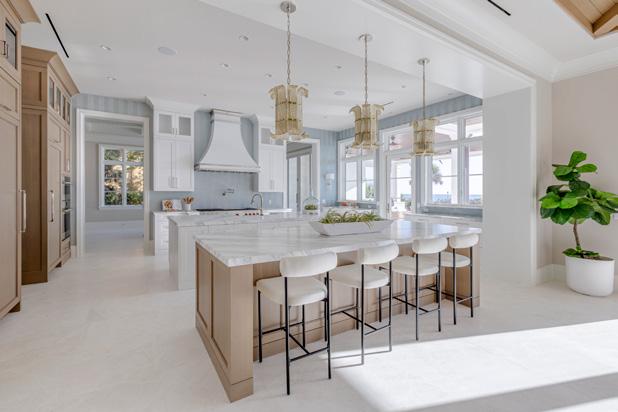
The interiors are thoughtfully curated for both grand entertaining and quiet moments. Light and air define every room, with refined finishes and a soft coastal palette creating warmth within modern lines.

• Seven en suite bedrooms, each a private retreat.
• Primary suite with sweeping ocean views, spa-inspired bath, and spacious wardrobe areas.
• Chef’s kitchen with dual islands, premium appliances, and a separate catering kitchen.
• Multiple living and dining areas, all designed for connection to the outdoors.
• Media lounge, fitness studio, and flexible rooms for entertainment or wellness.
• Private guest quarters for extended stays or staff.
Ocean Pearl is an exclusive gated oceanfront community located in Indian River Shores. This secluded enclave encompasses only eight luxury homes, each offering direct access to the Atlantic Ocean. Residents enjoy private beach access and lush landscaping.
Offered by O’Dare, Boga, Dobson Group ONE Sotheby’s International Realty
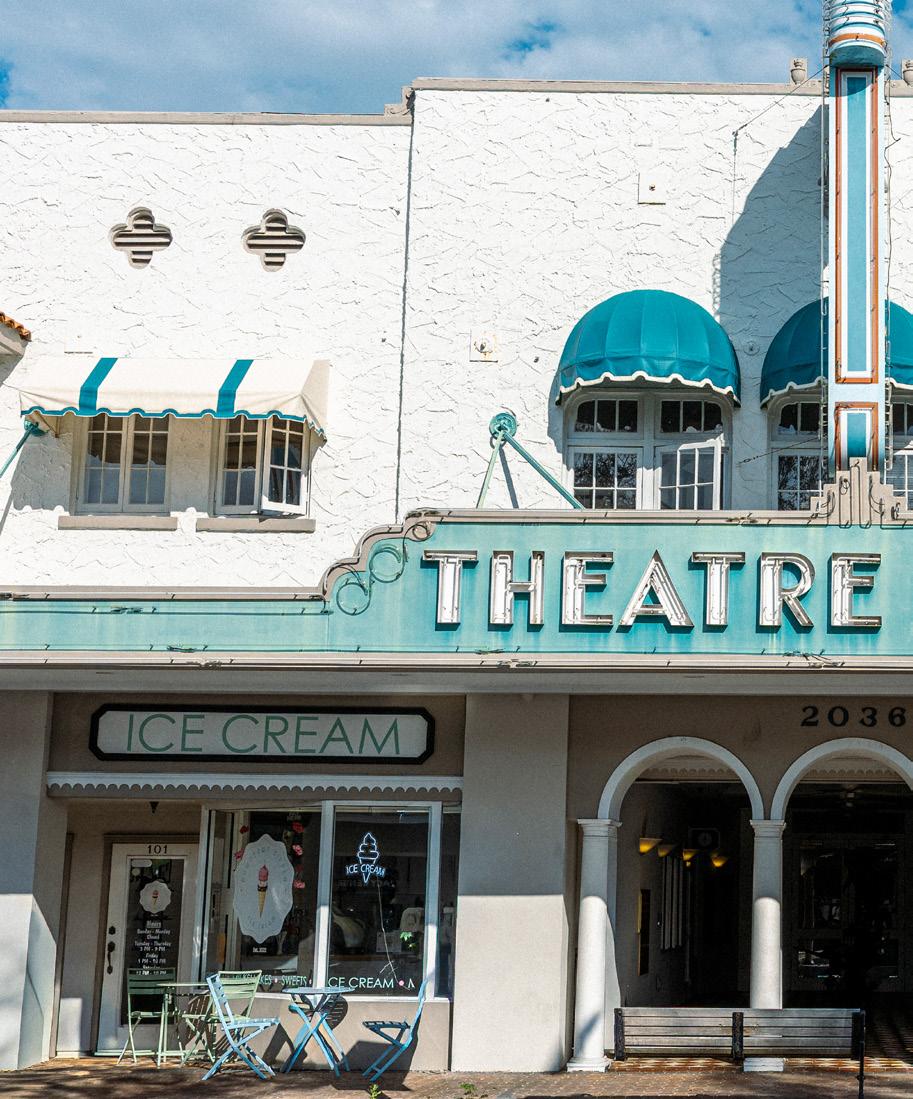
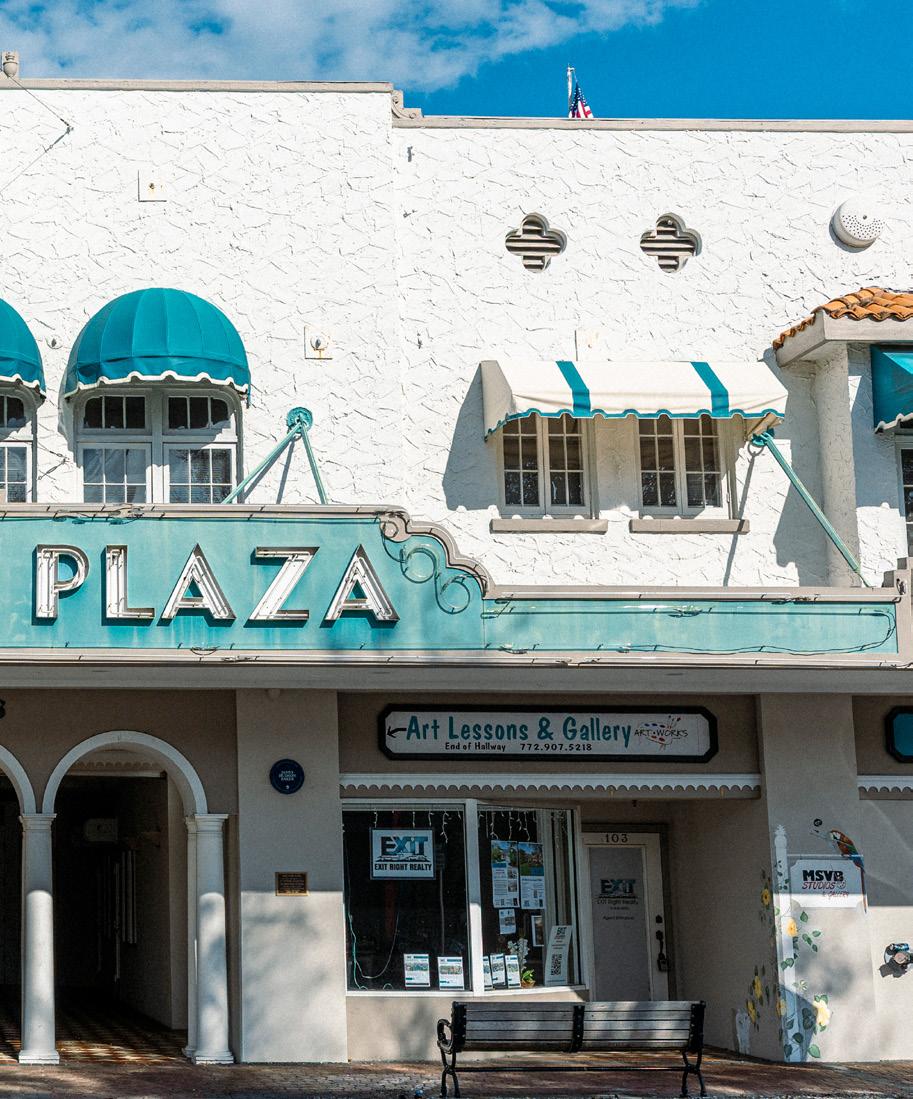
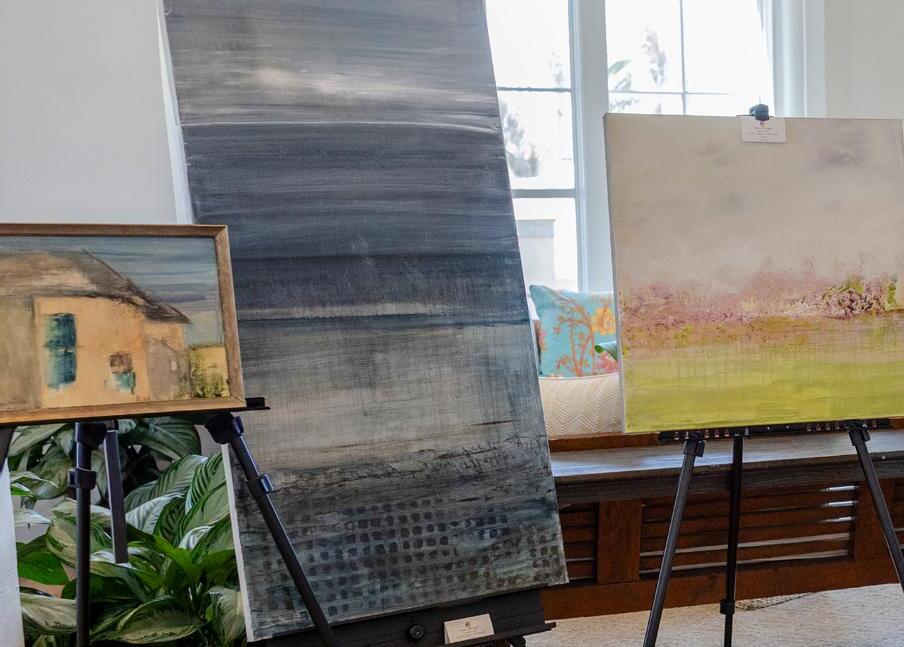
Photography by Victoriya Knapp
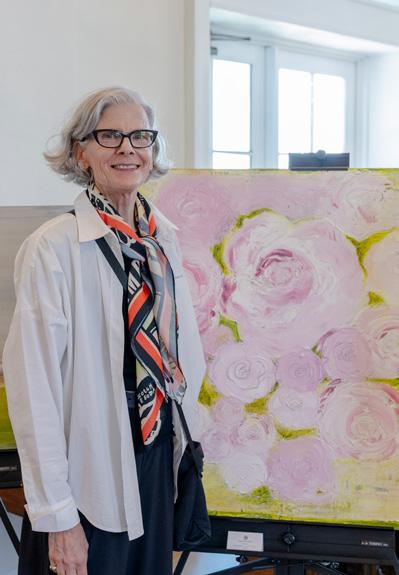
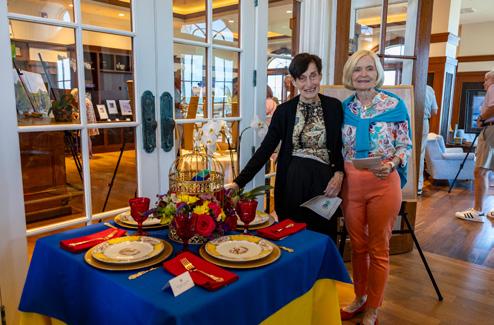
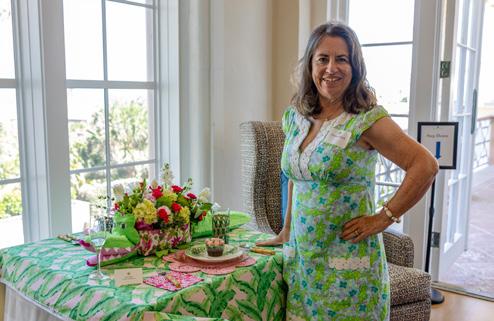
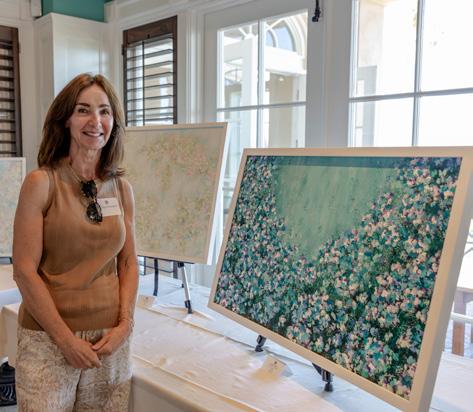
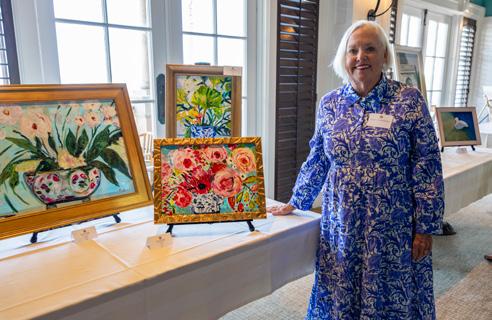
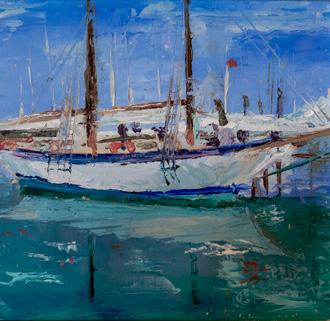
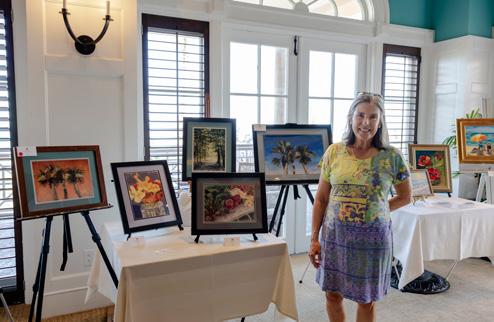
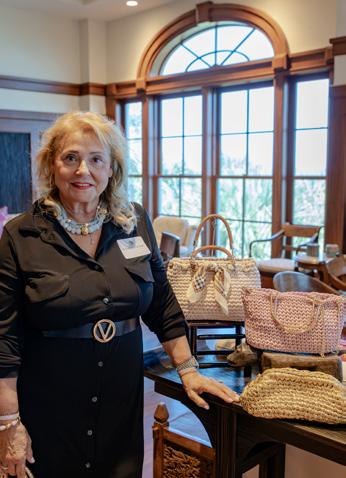
Editor’s Note: We were kindly invited to visit and photograph the Orchid Island Art Club’s 2026 Celebration of Creativity. The weather was stunning, the rooms provided a beautiful setting, and the artwork was consistently impressive—an abundance of talent on display. The turnout, too, was remarkable. Above all, it was a pleasure to meet the artists themselves. Representing their work, they were warm, expressive, and articulate—graciously sharing their passion with a quiet confidence and humility. Perhaps most of all, the show was simply enjoyable: residents of Orchid Island Golf & Beach Club stopping in to support neighbors, reconnect, and linger in conversation—a true expression of community spirit.
The Art Club’s Announcement
In 2014, a group of Orchid Island neighbors with an urge to paint met together at the Vero Beach Museum of Art which, at that time, housed the Vero Beach Art Club. After many wonderful sessions spent sharing, learning and, of course, painting, it was evident that we wanted to continue to paint together but would rather do it closer to “home.” All that time traveling and setting up/breaking down our equipment was taking too much time away from our golfing obligations!
By 2016, the number of interested artists had grown significantly, and the areas of interest broadened as well, into photography, pottery, weaving, jewelry making and sculpting. Interest grew in providing a venue to showcase the work of our artists and artisans and the Art Club became an established entity within the Club, including annual dues to promote a variety of art-related activities, and an annual show to display our work and share our creations with the entire Club. Following a meeting with our General Manager, we set the date and time for the first of what would become an annual and growing event.

During the initial years of the Club’s history, we did not have a central location within the Club for artists to gather, learn and create. Some met in each other’s homes, occasionally with another member as a teacher. Others joined local organizations such as the Plein Air Painters of the Treasure Coast and often traveled off site to paint at some of the local attractions including McKee’s Gardens, the Environmental Learning Center, the riverfront under the Barber Bridge and Rock City Nursery. In addition, workshops were scheduled involving renowned local and nationally recognized
artists. During this time the membership continued to grow as more and more talented people took advantage of the opportunity to turn their retirement into a chance for creative development. At the present time our membership is nearing 70 and shows no signs of declining.
THIS WEEKEND’S CELEBRATION OF CREATIVITY IS THE ELEVENTH ANNUAL SHOWCASE OF THE MEMBERS’ TALENTS AND HARD WORK. ENJOY THE SHOW!
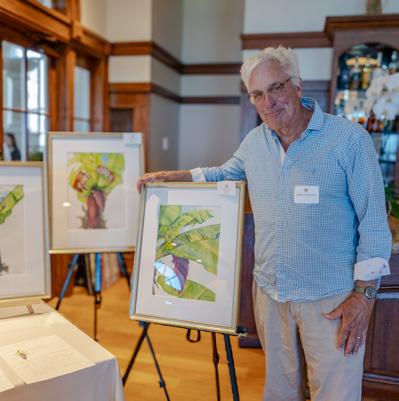
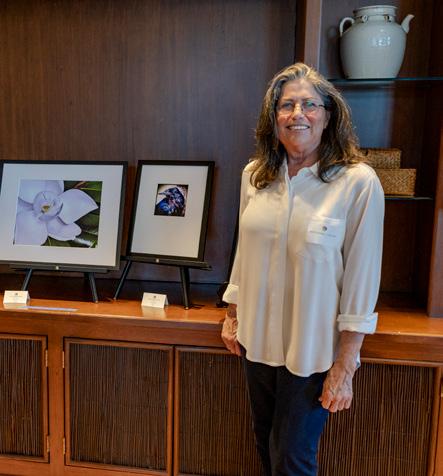
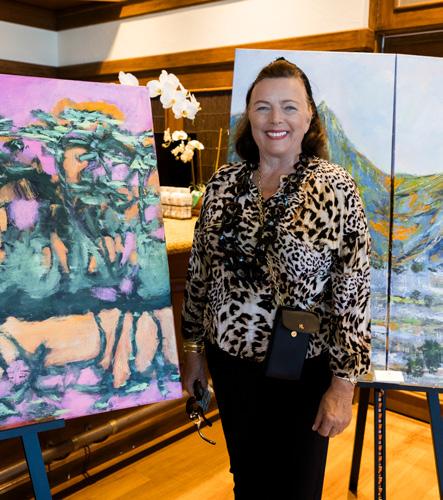
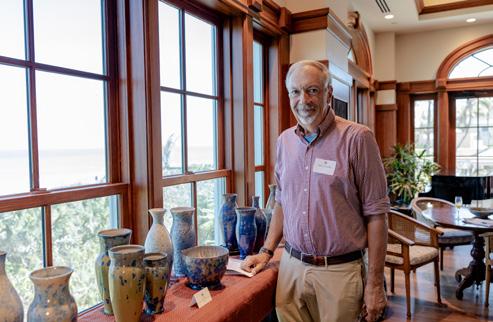




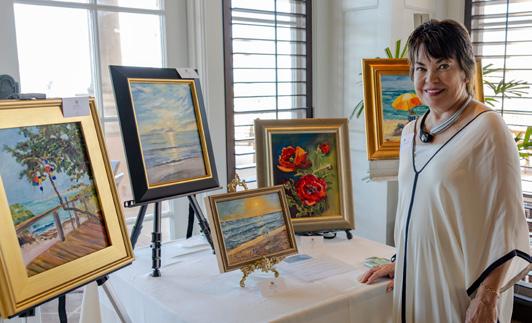
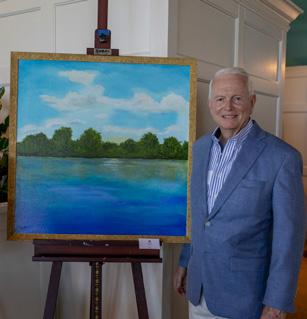
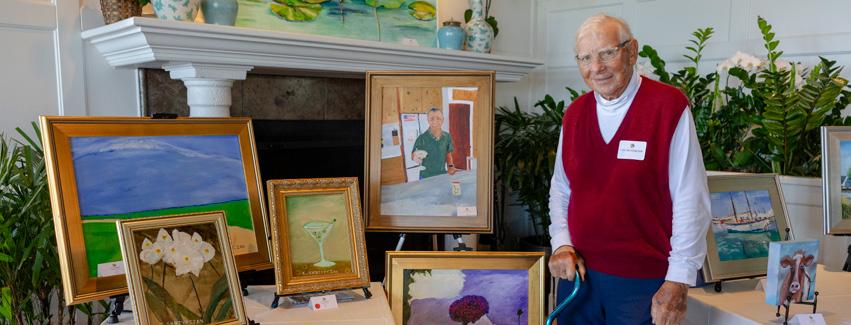
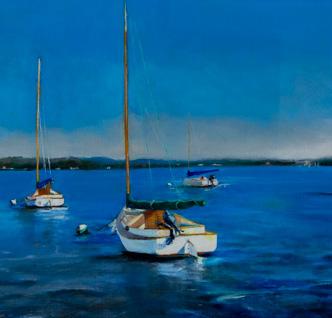
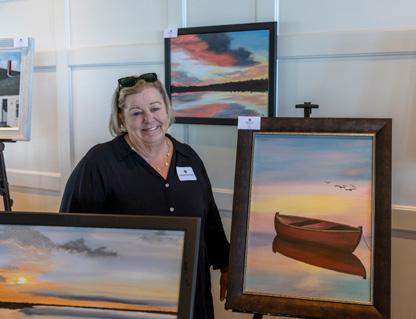
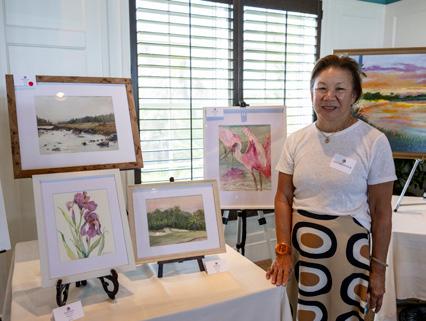
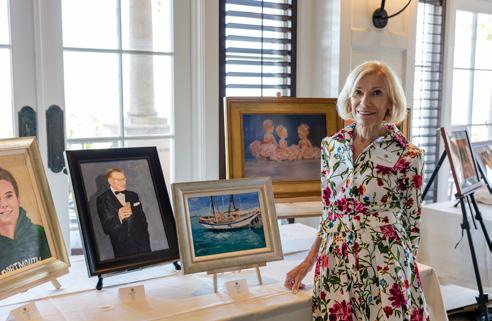
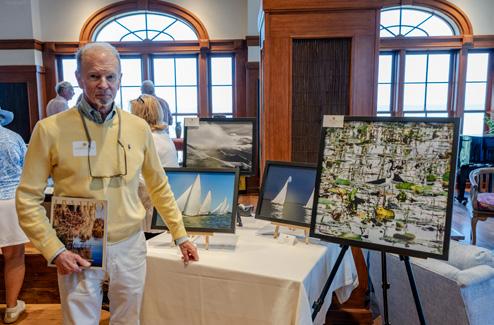

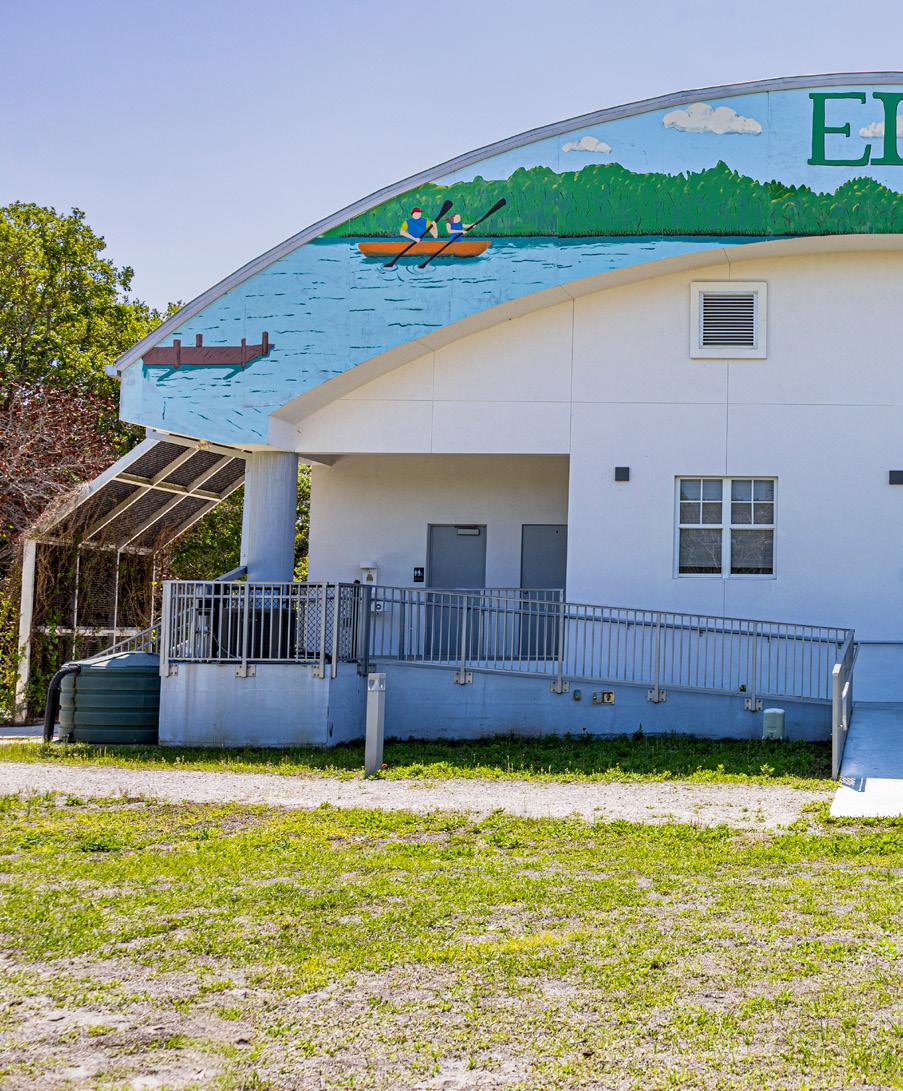
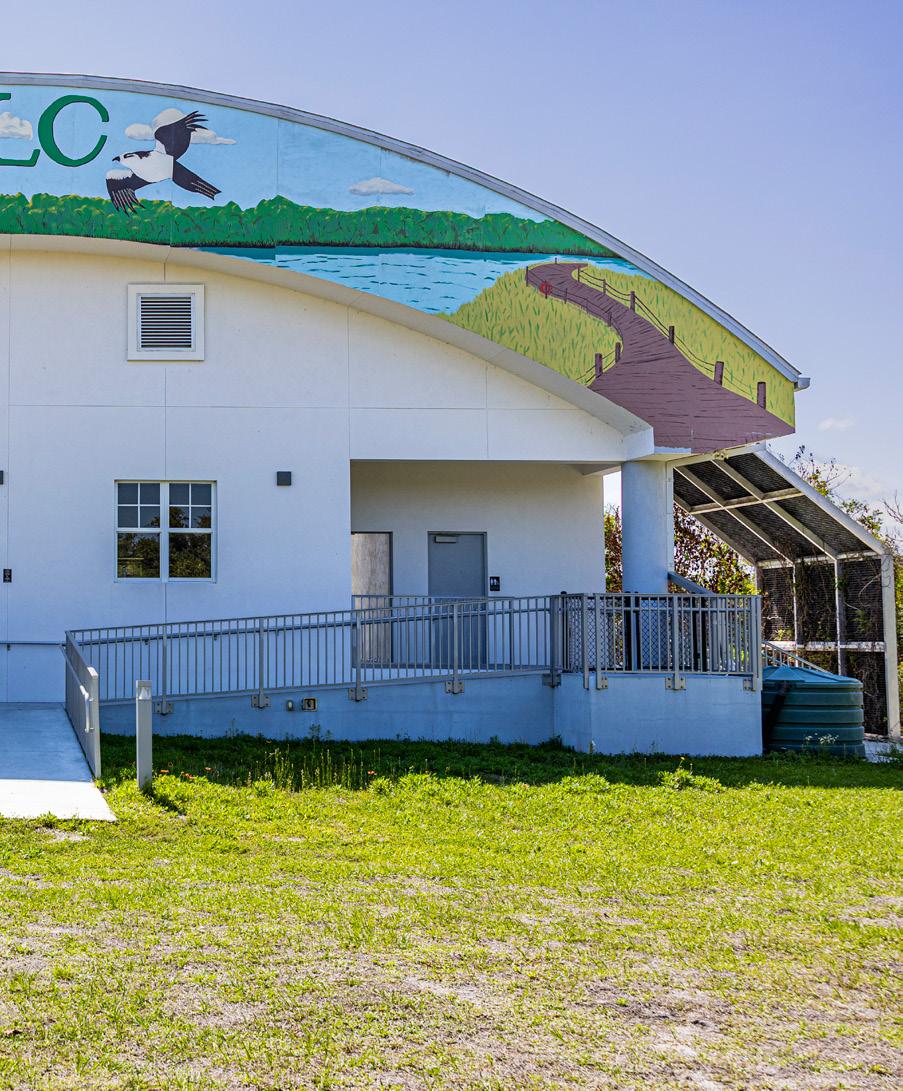
Mural Produced by the Orchid Island Art Club, 2025
Overview by Mary Stewart, Chairperson
It all started with a simple request from Rich Brennan, Chairman of the Board of the ELC: “Would you do a sketch for a mural for the Pavilion at the Environmental Learning Center?”
That said, I was happy to submit two sketches, one of which they approved. The Art Club at Orchid Island was now going to take on this project! I had never done a mural of this scale, and not one that was to be outside.
The next step was left to Heidi Leone Royals to find out about scaffolding. Between the exorbitant bid she received and the thought of senior citizens climbing up to paint some fifty feet high, wisdom prevailed, and we all thought the project would never happen. Heidi persevered and discovered a mural material that could be painted and applied like wallpaper. A brief aside here—I am a retired art teacher, and that became integral to the success moving forward. In order to
enlarge my original sketch and determine the number and exact shape of the material panels, each 60” wide, I turned to a past student, now an architect, Fabiana Berenguer-Gil. With her knowledge, she was able to calculate the precise measurements for each of the fifteen panels.
The Orchid Island Art Club enthusiastically signed up to paint! The next step was to scale the sketch (1” to 1’)
and to draw a “paint-by-number” type of outline of the finished mural on the panels, which ranged from 8 to 12 feet high. Paint colors were determined, quantities calculated, distributed to the artists, and work began!
Installation was the next hurdle. Heidi found a sign company whose attempt failed. It was a windy day, and we all watched as the first panel succumbed! The installers realized that this project
was not in line with their expertise, so it was back to square one, with all panels painted, rolled up, and stored. Heidi found a wallpaper company that was willing and able to complete the installation.
Hallelujah! There is nothing like driving over the Wabasso Bridge and seeing the finished product. The osprey, kayakers, and lagoon are all inviting the public to come to the Environmental Learning Center and participate in the glory of the Indian River Lagoon.
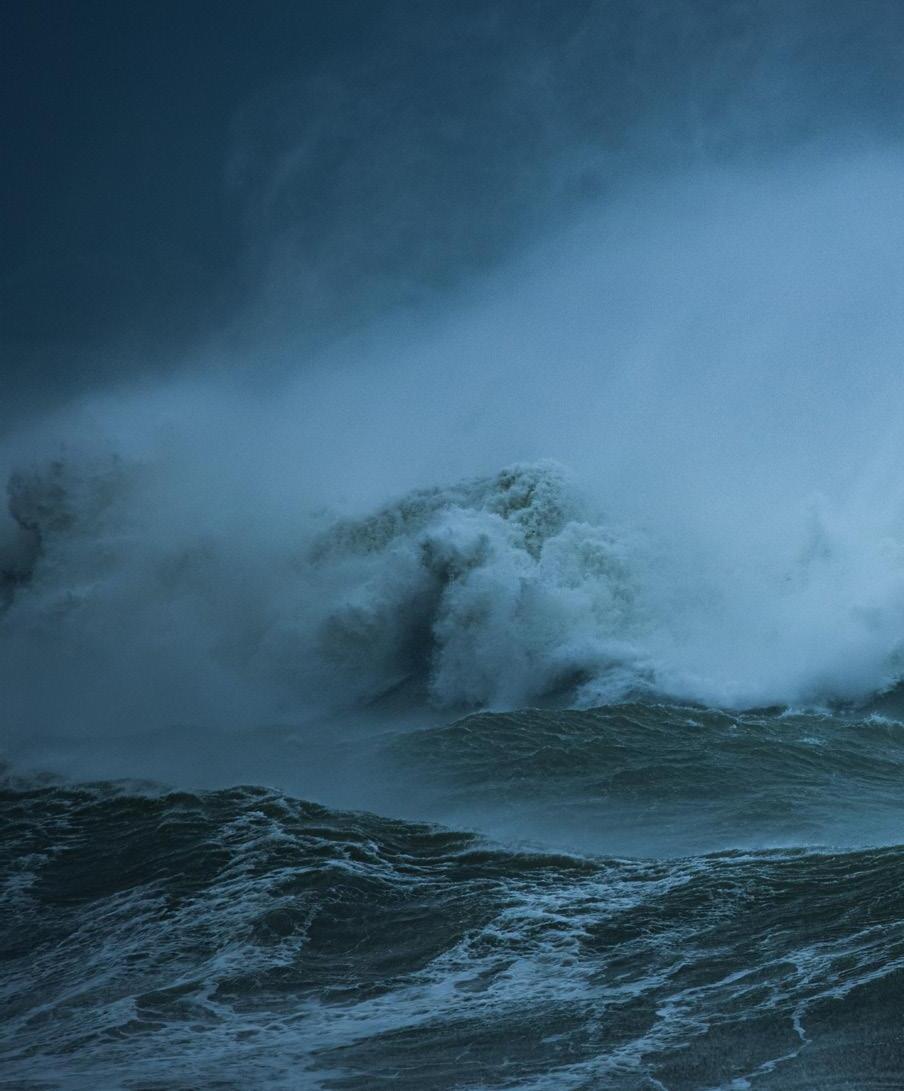
by Jacques Megroz
“That is what the 1960 Bermuda race is often called. All contenders had a rough ride, some had it rougher than others, and for those aboard the ‘Scylla’ it was nearly catastrophic.”
Editor’s Note. I have always wanted to participate in the famous Newport Bermuda Race—offshore yacht race, roughly 636 nautical miles, held every two years, first race in 1906. Alas, I never got into the sport, although have read some amazing books. Dining in Vero Beach, a table is sometimes assembled of friends who are very accomplished yachtsman and racers, the conversation inevitably turning to the topic. I love it: new boats, old boats, old gear, new gear, good times, bad times, great personalities both living and passed. One evening my dear friend Roger Megroz mentioned that his father had written an article on the 1960 Newport Bermuda Race, which Sports Illustrated published in their June 6, 1966 issue (35 cents). I asked him if I could read it, and later that night he texted me photographs of the pages. I am very well read on sea stories of every type—yarns, adventures, journals, legends, myths, storms, pirates, survival—and have a high bar for what I think is good. Reprinting the story here tells you I was/am enthralled by this account—it is “classic” in the sense of regular guys going off to have fun, finding themselves in a mess, and figuring it out. Historically, it was husbands and dads, experts in the ways of the ocean and ocean craft. As you read, think about the odds of a happy ending. Truth: very low. To my mind, there was a larger force present that night—whatever you choose to call it. A special thank you to Roger for sharing this family history.
Jacques Megroz
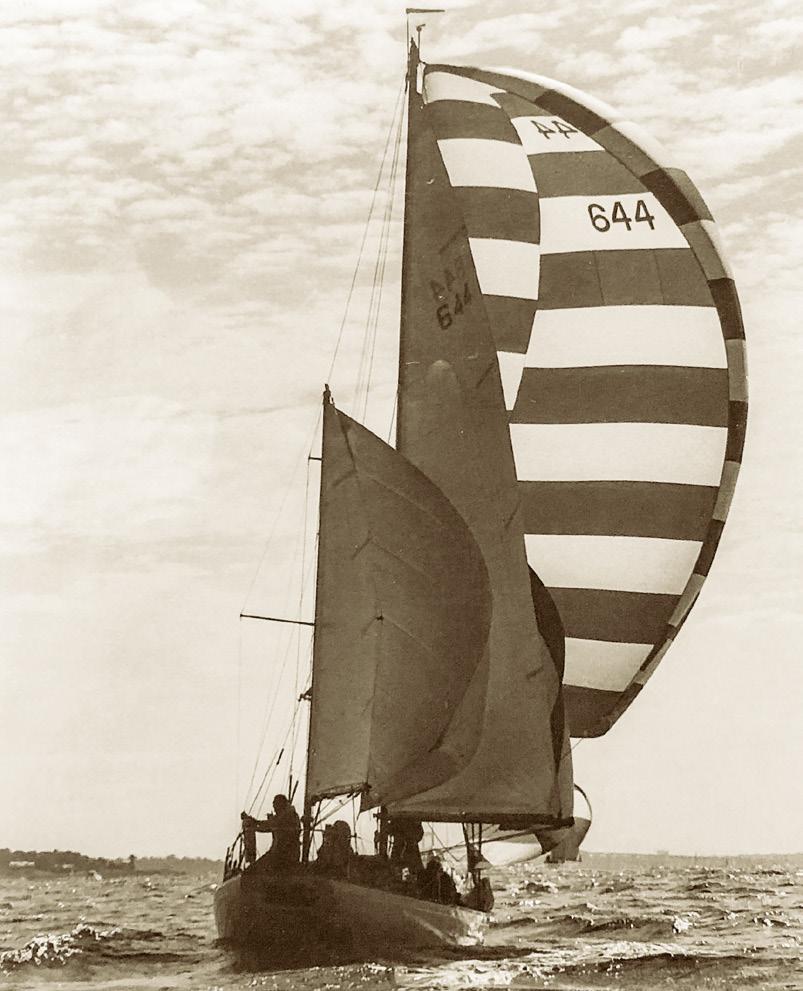
It was a bad start. We had two days of peasoup fog off Newport and no wind of any consequence—and then two days of no wind at all. We just drifted in the Gulf Stream and watched the fungus grow on clothing and whatever else was stored below. The heat of the Stream warmed Scylla’s fiber-glass hull to about 75°. The sun had added its share of heat by beating down on us as we ghosted along on the road to Bermuda.
But about 1530 that fifth afternoon, a Wednesday, we felt some air come in, and the boat came alive. We were soon responding to this opportunity by piling up onto the deck to enjoy the new experience and set and trim all the sail we could. At 1600 hours the destroyer Hank, our escort vessel, came on the air with the afternoon weather report, which was local squalls and clearing.
At 1800 Jack Weston, Findlay Corsar and myself, as well as Charlie Ulmer, the skipperowner, reluctantly went off watch. At this point we had reefed in the main. Scylla was driving with a bone in her teeth on a close reach, and as the light began to go we passed others of our size—much to our glee. The cabin was still like a steam bath, and the humidity from the rain squalls that accompanied the freshening air kept everyone sweating, but sweating happily.
There just isn’t anything like a cold martini, some chow and the lively motion of a hull driving through the sea to make a sailor happy, and that’s just what we had. Jack had stripped to his skivvies; Charlie, Findlay and myself to just about the same. Joe DaCorte, our navigator, worked the helm while we ate.
By 2000 hours we were heeling over so that we were having difficulty getting about below. We decided that before turning in we would go on deck and help the other watch reduce sail so we wouldn’t get called out of the sack to do this later on.
We all agreed that we should roll in more reef in the main and go to a No. 4 Genoa with a very high foot and low center of effort that would prevent the seas from loading the sail with water and eventually exploding it. After we finished we all sat up on the weather deck watching with great interest as our proud Scylla began to drive through a forest of masthead lights. Damn—if this wasn’t the very essence of ocean racing!
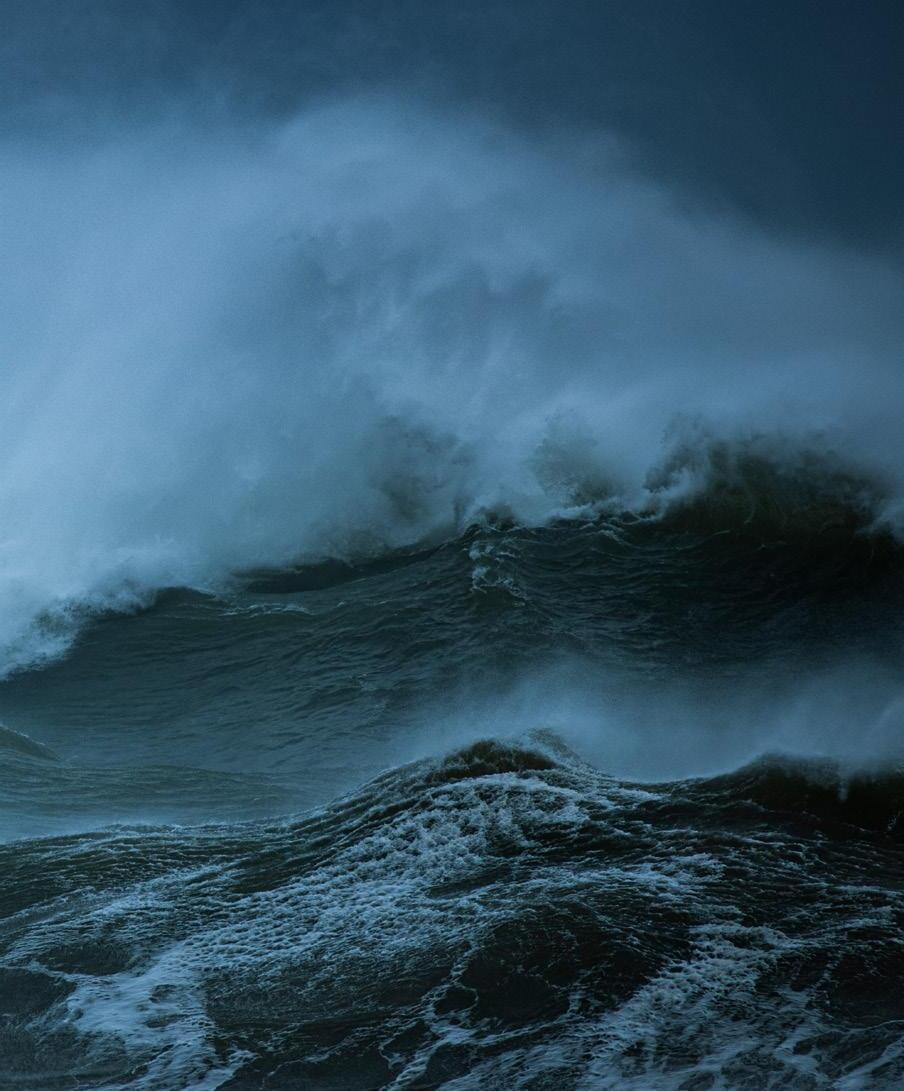
By now the seas were extremely heavy, perhaps 30 to 35 feet high, and wind gusts were 55 knots—so violent that the tops of the seas were being ripped off and tossed on our decks, depositing the residue of the sea—sargasso seaweed, flying fish trying to escape our scuppers, even swimming between us and the cabin house in their rush back to the sea.
Before we went back on deck after chow, we had re-dressed for the storm. I still recall wearing a turtleneck sweater my grandmother knit for me during World War II and my foul-weather gear. Also, we all wore safety belts that permitted us to hook up to the ship to prevent being swept overboard.
Jack Weston hastily put his foul weather suit over his underwear and slipped into someone else’s Top-Siders in his haste to get back up on deck. It was still warm, and clothing did not seem particularly necessary.

Once on deck, we persuaded the other watch that we had too much sail and the boat was laboring. We all shortened sail. I guess Joe DaCorte became bored under shortened canvas, so at this point Chuck Wiley took over the helm.
Weston, sitting near the forward end of the cabin house, Corsar, just aft of him, and I, next to the after end of the cabin house, remained on deck. Two of the other watch, who were the duty watch, sat in the cockpit. They were Ray Kaufman, a well-known Snipe champion and naval architect, and Ed Curran, a veteran of ocean racing.
DaCorte was below now, as were UImer and the remaining member of the crew, Joe Dempsey. They began to bail with pails as, much to our surprise, the water suddenly came over the floorboards. Our pump would not pump. All the labels from our bilge-stored canned goods had soaked off and clogged our electric and mechanical equipment. This is the price we paid for organizing an ocean racing party too late in the season and not having a “soaking” party to remove the labels at home.
The three of us on the weather deck and off duty decided to stay there. The boat was being well sailed and no more than three could pass pails of water up on deck at one time, so we decided to conserve our energy until the bailers needed relief and then we three would take over their job.
We sat thinking of Beryl’s (Charlie Ulmer’s daughter’s) remark as we left Newport for the race start. Scylla was built of fiber glass and was seamless, so there should be no leakage. “Don’t worry, Dad, you will only leak through one crack—right up the middle.” She was referring to some early hulls built in two parts which split in half. No one was scared, but with a boat full of water coming from God knew where, with mountainous seas and a constantly freshening wind, there was some anxiety.
It was late—perhaps midnight—when Jack passed the word aft that he was cold, and wanted to hit the sack. Charlie and his group below had gained against the rising water, and there seemed no reason why he should not. It was necessary to unhook Jack’s safety belt from the rail, pass it over each stanchion, and then rehook it in order for him to reach the companionway. Each time we did so, one of us would grab him by the belt while someone else rehooked his belt onto another section of rail.
I was next to the companionway, and had the last grab. Holding his belt I lowered him down two steps on the companionway ladder. He was facing forward and hanging on. “Are you O.К., Jack?” I asked. “Yes,” he replied. I undid his hook, and handed it to him. He fastened it to the ring in his belt, and started down the ladder facing aft.
As he was turning, a gigantic sea hit Scylla under her starboard quarter and pitched Jack out of the hatch like a circus performer
fired from a cannon. The main boom and sail were just beyond where Jack dropped, so they failed to stop his flight. He fell between the stanchion rail and the waterway combing. I reached for him as he flew out and can to this day feel his belt rip my fingers as I tried to grab hold. I suppose one or two seconds at most elapsed as we watched in horror—and then Jack was gone into the boiling sea.
Ray Kaufman was the first to react. He shouted, “My God, he’s overboard! Jack’s overboard!”
We didn’t know it at the time, but the effort to rescue Jack began before the race. A few months before we left Newport, he and I were riding in a car together and Jack said, half asking, half recounting, “I was going to put a case of liquor on Scylla for the race. Remember after the Block Island race when our wind indicator and compass lights killed our 12-volt battery and we couldn’t start the diesel and had to sail from Stamford to City Island? Well,” continued Jack, “I’ve decided to put a new 12-volt auxiliary battery and a set of jumper cables on board instead of the booze.”
Kaufman’s shouting brought us all out of shock, and we began to move. Chuck Wiley at the helm yelled into the cabin, “Navigator, give me a reciprocal course.” Kaufman went to the weather side, our starboard, and cast adrift a rescue light with a horseshoe life ring attached. Ed Curran released a 10-foothigh flag and buoy that would locate the spot when daylight arrived. Findlay and I knew the boat was to be jibed, so we went forward to work the deck. We had little trouble getting the No. 4 Genoa down, but when we released the main halyard (it was on a selfwinding winch and was of stainless-steel cable) we had a gigantic backlash on our hands from the great pressure on the sail slides. No one had released the mainsheet to ease this pressure off the mainsail. The wind and sea were so violent that those in the cockpit could not hear us ask them to do so.
Eventually, Fin and I managed to wind out the backlash with the wrench he carried on his belt and by my jumping up on the main boom and hauling on the bolt rope. We were still hooked on by our safety belts, but it was nonetheless an effort to stay aboard and still get the mainsail down. Meanwhile, our navigator had figured a reciprocal course and went to work on the ship-to-shore radio. He never did raise anyone.
While I was securing lines at the mast step, I kept looking aft at a strange light following us. I finally made myself heard, and Kaufman investigated only to find the old style light he had thought he had released for Weston had fouled around the mizzen sheet and was, in fact, still secured to Scylla. He then threw over the new strobe-type rescue light and ring, which we soon left far astern; we had not yet jibed Scylla
Charlie Ulmer tried to start the engine with no success. The diesel just would not turn over. At this point Charlie carried forward the new 12-volt battery Jack had put aboard in place of a case of liquor. He hooked on the jumper cables, led them on deck and into a sail locker on the lee (port) side to secure them to the regular 12-volt system that was located in that locker. To do so he had to climb into the sail locker, and he had me shut it above him so the seas would not enter. It takes nerve to crawl into a dark locker thinking your boat is sinking, and ask someone to close the hatch on top of you.
We finally managed to get the diesel going, only to discover the propeller was out of water so much of the time we had no steerageway. The mizzen was taken down, and Findlay and I went forward and hauled up the jib, as it was obvious we would have to turn the boat with the help of that sail. Once the jib was flying we were able to wear the boat around.
Meanwhile, Kaufman kept an eye out in the direction of the second strobe light he had released. We could not see the light at first but in minutes—we don’t know how many—we began to see a pulsing-halo effect such as you experience when approaching a lighted city at night by air. The surface light was being refracted by the tops of the seas torn off by the wind and turned into wind spume. When we got to the light, Jack was there too—bobbing in the heavy seas and waving the light. He was hollering at us, his words fighting the wind, “I’m all right,” he was saying.
Our approach to Jack was almost downwind, being the reciprocal of a very close reach when we lost him. We were on port tack, and our plan was to try and pick him up in the lee of the boat. It became quickly apparent we could not slow down, and if we moved in we might crush Jack with our bow. Ulmer
grabbed a new spinnaker sheet from a sail locker and heaved one end to Jack. He just missed it. Then we brought the boat around into the wind. DaCorte and I lay in the windward waterway and Chuck eased Scylla up to Jack, and as a sea surged Joe and I rolled Jack on board, rescue light and all. Just then the diesel went dead. We raised a well-reefed main, the sails took charge and off we went back to hull speed.
Weston, in emotional shock, was put to bed. Wiley, Kaufman and I remained on deck the remainder of the night. Wiley had the helm at least 10 hours without a spell. Once during the remainder of the night a sea similar to the one which sent Weston over the side hit us and sent me all the way across the cockpit into the lee rail. I was hooked on and so cheated the sea of its prize. Wiley was also thrown, but the tiller caught him in the stomach and prevented his departure. In the darkness I wondered if Scylla would founder and the sea consume us all. In fact, I wondered why I had ever taken up ocean racing in the first place.
Dawn arrived, and now six years later I can still clearly see it and sense it as though it happened yesterday.
With the first gray light I began to see the size of the seas. I sat in utter awe as Scylla slid from a crest 40 feet in the air to a trough 40 feet below without turning turtle. As we reached the bottom of a trough our sails would go almost slack, since we were then below the wind. Then a sea would surge in under us and send us on a wild elevator ride back up into the gale and spray and cresting spine of each successive wave. Soon the sun came into view. As the clouds broke up and the sky grew brilliantly blue and the warmth of the sun increased, I began to enjoy the race again. The sea was still running big and the wind was strong, but it was apparent the worst was over. And we were still afloat.
The boys below who had had some sleep began to stir, and after a good breakfast we got down to the serious business of assessing our damages and opportunities.
Up forward we found the spinnaker halyard had gone adrift in the rescue and had fouled about the headstay aloft where a long steel pennant leads from the jib halyard to the head of the Genoa. With the jib fouled we were unable to change headsails.
We had no structural damage, but when Charlie threw over the spinnaker sheet in attempting to rescue Jack, it had fouled the propeller as we turned about, and that was the reason the diesel went dead. This is rather ironic considering Charlie manufactures throwing lines of polyvinyl that float and he had two aboard, but both were stowed away in the lazaret.
About 1100 that morning Jack came up on deck. He wanted to be alone, so we left him sitting amidships in the sun. Little by little he began to thaw out, and to tell us of his experience.
“I watched the stern light of Scylla disappear as my eyes adjusted to the light and the first shock of finding myself overboard wore away. I just knew you guys were the kind who would come back for me.” But when we had sailed on Jack said he had reached a point of giving up hope. The seas were monstrous, and he could see no lights. Despair set in. About this time in Jack’s experience Kaufman must have launched the strobe light. At some later point Jack became aware of this pulsing light and hope re-awakened. He removed his foul weather suit and started swimming toward the light. Jack had been a fine competitive swimmer and knew how to swim in the surf. He rallied all his strength and swam under the waves and their dangerous crests until he finally reached the light.
I had had the helm a while and asked to be relieved. When I was, I went up and asked Jack if he would help me run a new halyard through the spare masthead block he had installed in Newport. This block made it possible to continue racing. Soon Jack was involved and by midafternoon was back up on the foredeck as full of fire as ever. Scylla felt good; she was driving and so were we. By dusk we sighted Kitchen Shoals. By midnight we could see the finish.
We crossed the line at 0300, six days out of Newport. We dropped our canvas and took a tow from the very accommodating Bermudians since our propeller was still fouled from the rescue. Where did we finish? We finished twelfth in fleet—all of us.
By Analise McManus photography by Analise McManus
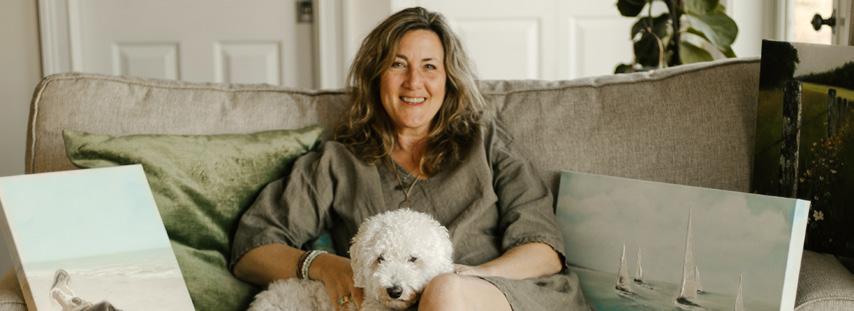
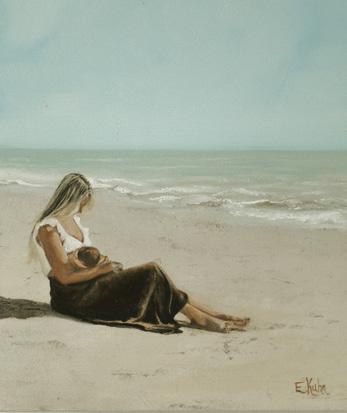
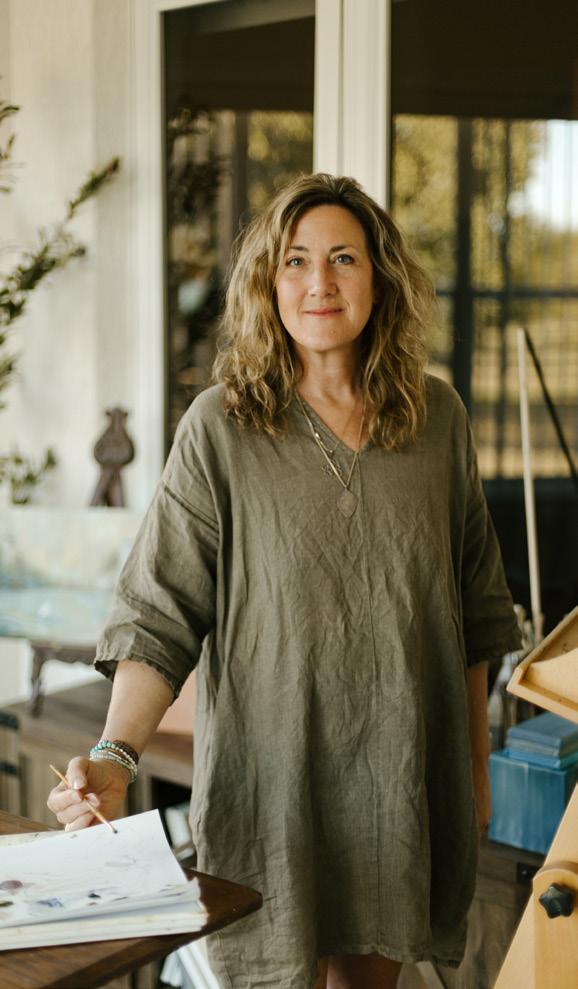
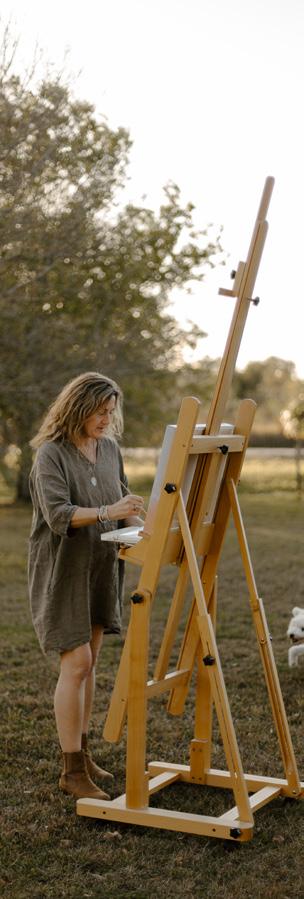
Erika Kuhn Schultz is a local artist whose work—and story—unfolds at the intersection of faith, generosity, and creative freedom. Her path to painting has not been linear, but rather a series of quiet invitations and unexpected turns, each one embraced with openness. “Even if I stopped painting tomorrow,” she reflects, “I would still have this incredible testimony of the journey. I’d get to say— what a fun ride.”
My own introduction to Erika’s work felt serendipitous. On a walk through downtown Vero Beach, I glanced into a studio and paused—there, on canvas, was a scene I knew intimately: one of my own photographs, reimagined in oil. The artist was Erika. What felt like a fleeting “God-wink” became the beginning of a meaningful friendship and creative partnership—her as a painter, me as a photographer. There is something singular about seeing a captured moment translated by hand, brushstroke by brushstroke, into something newly alive.
Erika’s artistic journey began in 2020 with what she describes as a simple, inward prompting: Do you want to paint? Her answer was immediate. Though she had spent time with a painter friend the year prior, she had never considered painting as her own path. That friend offered a perspective that would stay with her: that painting is, at its core, a conversation between the artist and her Maker.
It is a belief Erika carries deeply. Creativity, she suggests, is not confined to traditional forms, but expressed through the unique ways each person is made— whether through art, hospitality, problemsolving, or generosity. For her, painting is simply the language that gives shape to that inner life.
Where questions of skill or outcome once lingered, they have since fallen away. “Painting has nothing to do with perfection,” she says. “It’s about expression—a conversation using whatever you’ve been given.” In that shift, there is both freedom and clarity.
After completing a single painting in 2020—her first since high school—Erika set her brushes aside for several years. It wasn’t until her move to Vero Beach, and a
chance connection with artist and teacher Rita Ziegler, that painting returned to her life. In just two years, her work has quietly found its way into the world through commissions, sales, and, most meaningfully to her, as gifts.
Generosity is the throughline. Erika is actively involved with the Vero Beach Art Club, drawn to its vision of cultivating a vibrant creative community. “They’re working to make Vero Beach an art destination,” she notes. “I’m grateful to be part of that.”
Any proceeds from her work are directed outward, toward the needs around her. “I’m simply along for the ride,” she says. “My art will become what it’s meant to be. I’m not interested in building a platform—I just want to share the gift.”
That posture—open-handed and unselfconscious—infuses both her process and her impact. There is a particular fulfillment, she reflects, in creating something that resonates with another person. Yet for Erika, the act of giving deepens that exchange, making it as meaningful for the artist as for the recipient.
When asked how painting has shaped her, her answer is thoughtful: “It’s helped me feel seen by the Lord in a deeper way. Through painting, I’ve discovered something of how He made me. It’s very relational.” Beneath the surface of her work is a universal longing—to be known, seen, and loved—and a quiet confidence that such connection is already present.
Erika is careful not to define herself by her art. Instead, she sees it as one expression among many—an extension, rather than an identity. In that distinction lies a sense of ease, a release from expectation. “Creative gifts can mingle,” she says, “and form a tapestry of beautiful colors.”
Her story reflects just that: a life in which creativity, faith, and community are interwoven with intention and grace. And if her journey thus far is any indication, it is only just beginning.
Her encouragement is simple, but resonant: “Don’t be afraid to be called out—in a good way. Let go of perfectionism. Allow God to move in your life, and see what happens.”
AM: Tell us about your art teacher, Rita Ziegler. How did you meet her?
EKS: We met through an unexpected connection. I reconnected with someone I knew from high school who was visiting Vero Beach and invited him to dinner. At one point he said, “My mom would love you.” His mother was Rita. We met for lunch, and when she mentioned she taught art, I felt an immediate emotional response. Now she lives just a few miles from me. It’s one of those moments that feels less like coincidence and more like something thoughtfully arranged. Rita is extraordinary—both as an artist and as a teacher. Her approach is refreshingly open: What would you like to paint? Bring it in, and I’ll help you begin. There is no formula, only space to explore.
AM: Are there colors or themes you’re drawn to?
EKS: I’m always drawn to water—light, movement, reflection. My palette leans toward earth tones: blues, greens, tans, and soft pastels. Blue, especially, has always stayed with me.
AM: Where do you find inspiration?
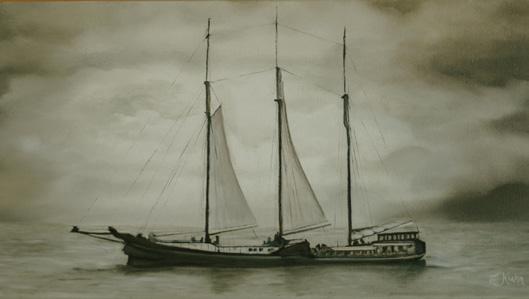
EKS: Rita often encourages painting boats, which connects to my grandfather. He was an artist in New England and painted coastal scenes. He didn’t begin until his 40s, which has always felt meaningful to me. Perhaps there’s something of that story continuing.
AM: How does God meet you while you paint?
EKS: Often through joy—and sometimes through frustration. When I feel stuck, I’ll pause and pray, asking what the next step should be, and I often sense direction. At times, scripture comes to mind while I work, and I sit with it. There’s also a deep joy in the shared experience—being in class, creating alongside others. That sense of community is part of it.
Instagram: @oilsbyerika

By Jack Curley ’27
photographs courtesy of Saint Edward’s School
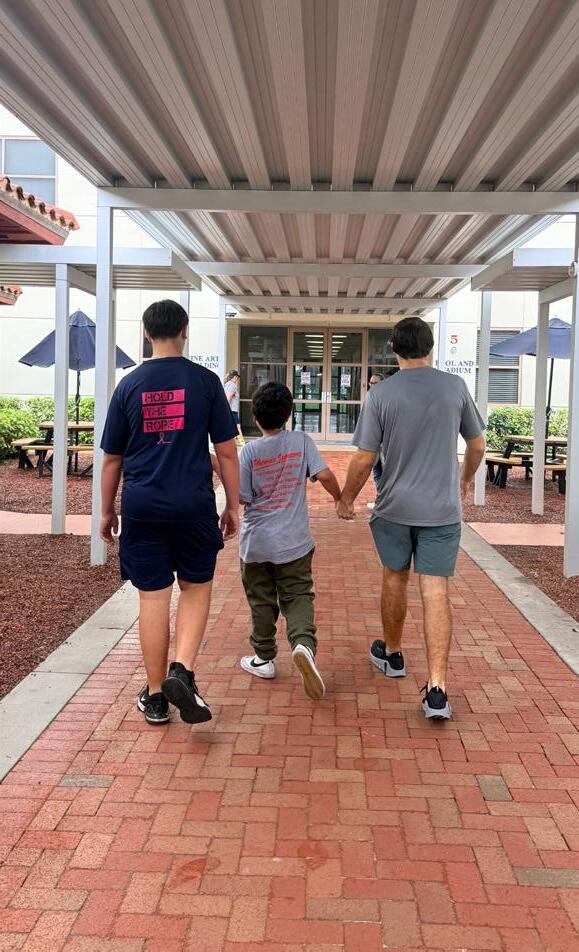
For more than 30 years, students from Saint Edward’s School and Wabasso School have come together for a special annual tradition that leaves a lasting impression on everyone involved. PALS Day is a day of connection, when Saint Edward’s welcomes Wabasso students to campus to spend time, share experiences, and build meaningful friendships.
Each Wabasso student is welcomed by the entire Saint Edward’s community, with everyone united by the common goal of making sure the Wabasso students have the best day possible.
The Wabasso School is a specialized center dedicated to supporting students with diverse learning and developmental needs, from preschool through age 22. It’s a place where students who may not have thrived in other settings can find a strong sense of belonging. The faculty and staff foster a caring, connected environment where every student is seen, supported, and celebrated. Their unique approach ensures that each child receives individualized care to grow in independence, build self-advocacy skills, and reach their full potential.
The current principal of the Wabasso School is Chris Kohlstedt, known to students as Mr. K. Every year, Mr. K visits Saint Edward’s School to talk to our students about how much PALS Day means to the Wabasso
FOR OVER 20 YEARS, SAINT EDWARD’S UPPER SCHOOL STUDENTS HAVE WELCOMED THEIR FRIENDS FROM THE WABASSO SCHOOL FOR AN AFTERNOON OF FUN AND FELLOWSHIP.
community. In addition, he shares his personal story of how he began working at the Wabasso School.
At summer camp in college, Mr. K signed up for extra credit in one of his classes. When he arrived, however, he found out he would be working with kids with special needs. What began as a requirement became a calling. Mr. K says, “Being an athlete, I’ve always tried to grow in life. And I realized that even with athletics and my career at the time that I worked at camp, it’s more than just me. And I wanted to give back to someone else or be supportive, so I became a coach and an educator, and I always had leadership positions growing up, with sports and with school, and in my jobs. I also had a passion for working with special needs kids and wanted to make sure that I advocate for them in every way I can.”
The origin of the PALS Day tradition dates back to 1995, when Mrs. Colontrelle, the dean of Saint Edward’s School at the time, first visited the Wabasso School and was compelled to do something together. “I was just determined,” Mrs. Colontrelle recalls. “Because I believed our kids needed Wabasso more than Wabasso needed our kids.”
From that day on, Mrs. Colontrelle, along with Mrs. Sternberg, began making regular visits to the Wabasso School with students. “We wouldn’t miss any other classes, we would take our classes, we would buddy up with the kids, we would do anything we could. And then I thought, ‘We have to culminate the year.’ So in 1996, the day before Spring Break, we had our first Pals and Partnership Play Day.”
The first PALS Day took a lot of planning and coordinating on the part of Saint Edward’s students and faculty. “Everybody got together, we made sure we didn’t leave a stone unturned,” Mrs. Colontrelle emphasizes. Speaking about the buddy system, “Every Wabasso student needed two buddies. I would tell our students, there are lots of things you can do to help out: you can work the carnival booths, you can work the petting zoo, you can work the refreshment stand. But if you take on a buddy, you have to

be committed to this child from the moment they walk off that bus, greeting them and having a good time.”
The tradition of volunteering to buddy up with a Wabasso student carries on to this day, and every year Saint Edward’s students of all ages pair up with a friend and spend the morning getting to know one Wabasso student.
Looking back, the first PALS Day was a huge success. In fact, it was only intended to be a one-time thing. However, the experience was so positive that the schools continue doing it every year. Mrs. Colontrelle reflects on the impact, “We saw mini miracles. At the closing ceremony, there wasn’t a dry eye in the place. You were changed from the moment that day started to the end of that day. And I remember going into Mr. Shaw’s office, and Mr. Watcher and Mr. Benedict were all in there, and they looked at me and said, ‘This was the best day.’ It was one of the proudest things I’ve done in my entire life.”
Today, PALS Day is an opportunity for Wabasso students to enjoy a variety of activities, from a petting zoo and gym games to arts and crafts—all alongside new friends.
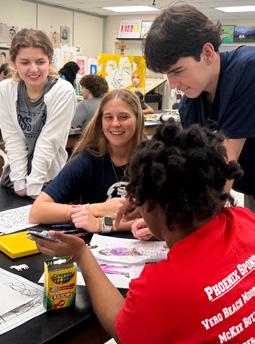
It is an incredibly memorable time for both Wabasso and Saint Edward’s students— everyone gets to spend time with kids they otherwise would not have met. For Wabasso students, it’s a chance to experience a new environment, be independent, and enjoy the day.
Mrs. Stalquist, director of student activities and an integral part of the event, captures its spirit best: “It truly is a magical day, and I love seeing the smiles on everyone’s faces. It’s one of my favorite events to coordinate because the rewards far outweigh the work.”
by Analise McManus photography by Analise McManus (Vero Beach) and Jared Blais (Bahamas)
Imagine growing up with stories that sound almost mythical—adventures on sailboats, nights spent camping on remote islands, journeys beyond the horizon to new countries, and countless moments of laughter along the way.
Called Higher is where those stories begin.
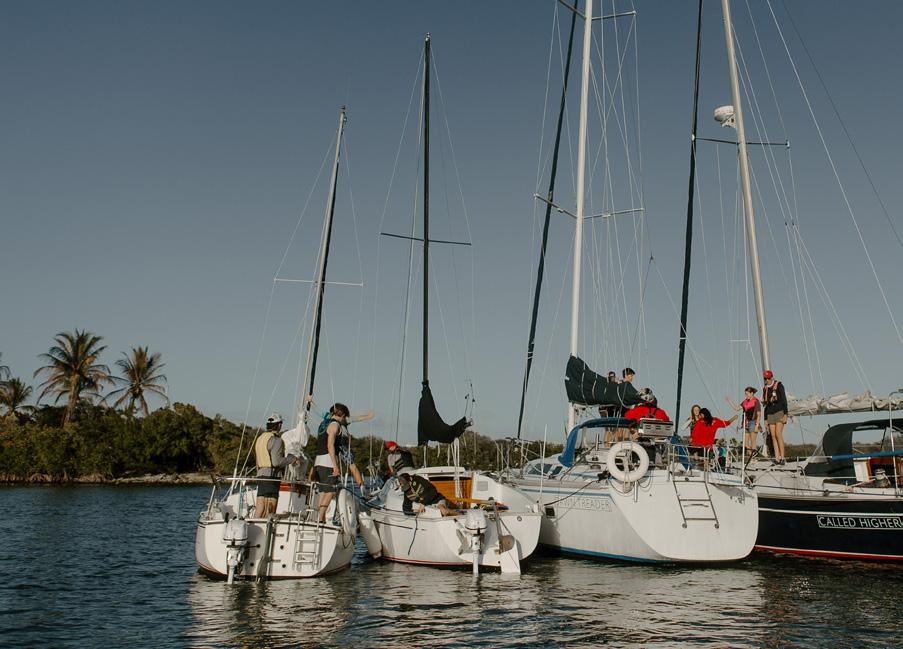
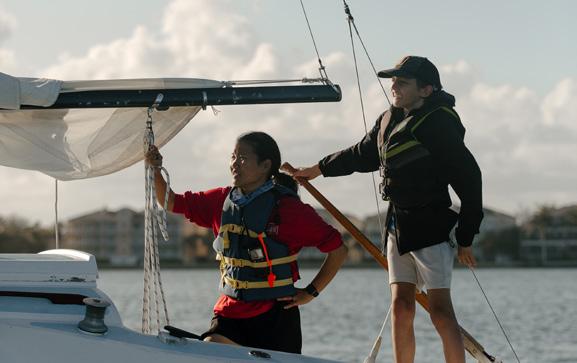
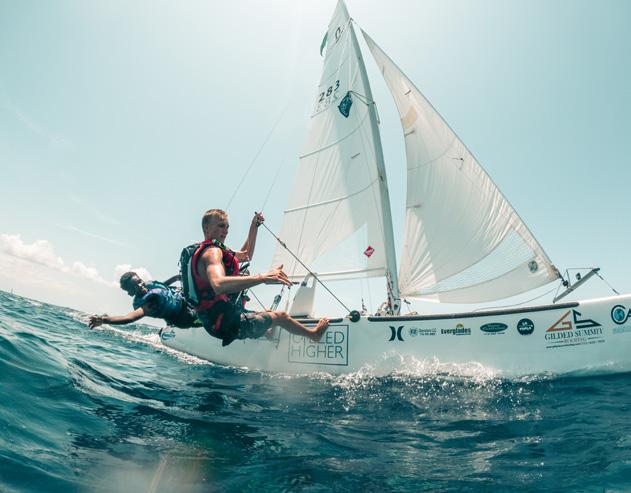
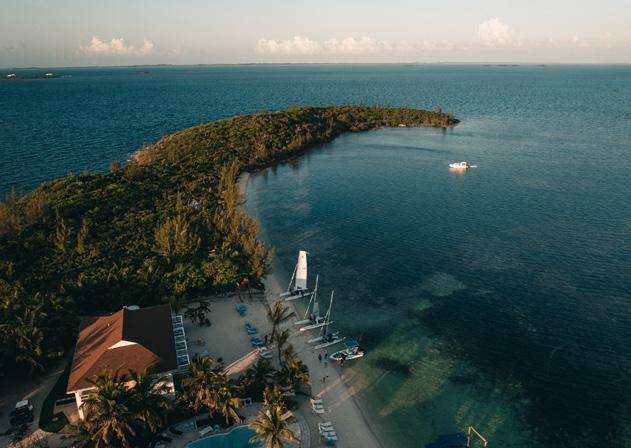
Rooted in Vero Beach, Called Higher is a ministry where faith and discipleship meet action and adventure. Students not only learn the art of sailing, but also deepen their relationship with Jesus, developing confidence, resilience, and a lifelong sense of purpose. It is a place where young people are shaped by experience—on the water and in their faith.
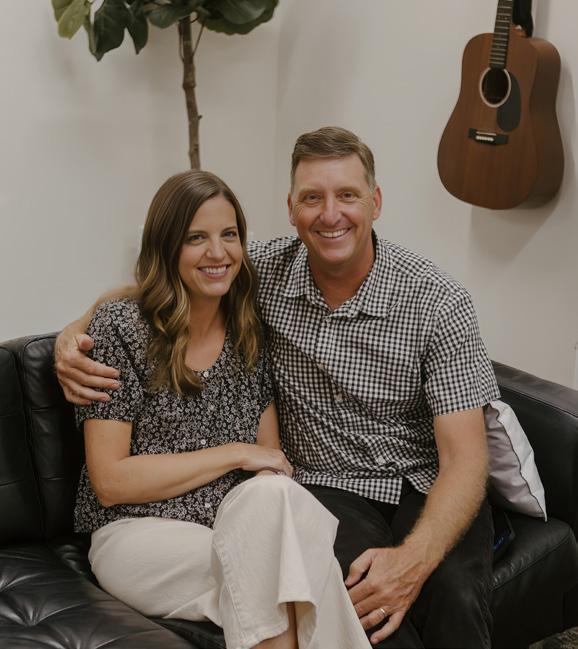
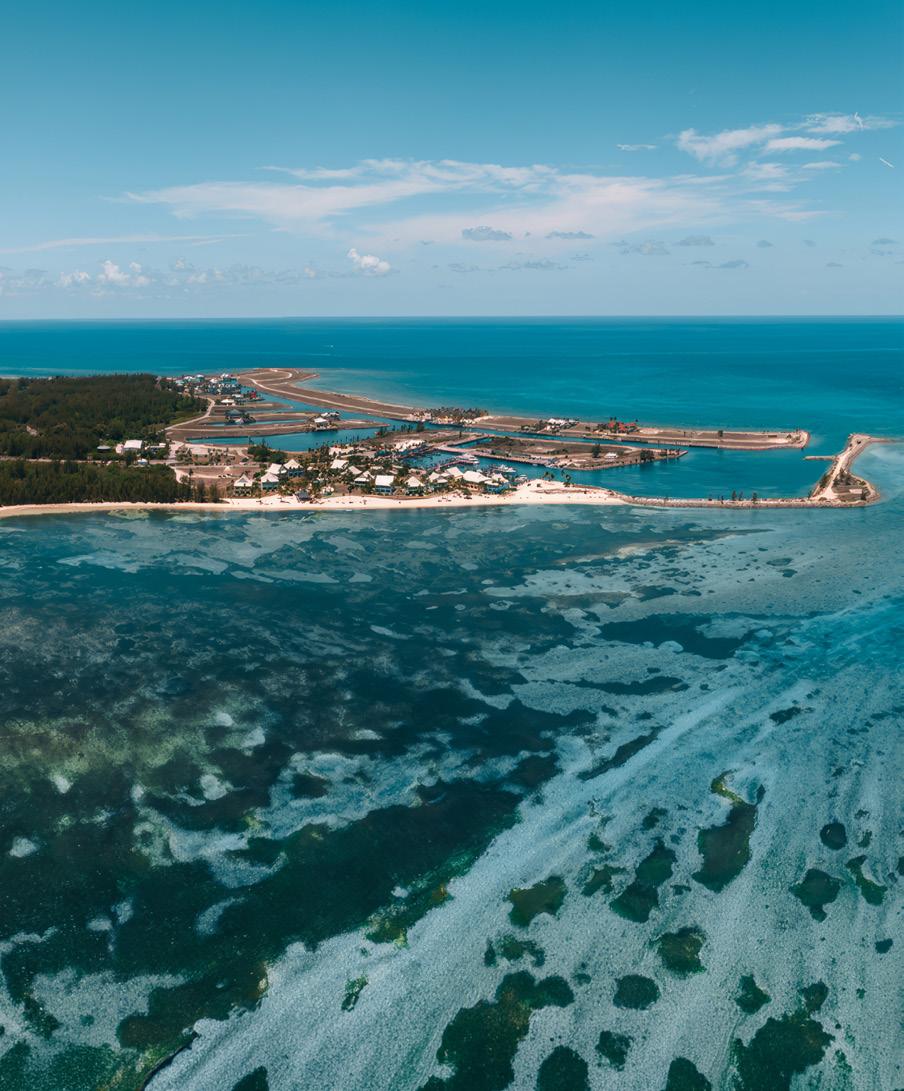
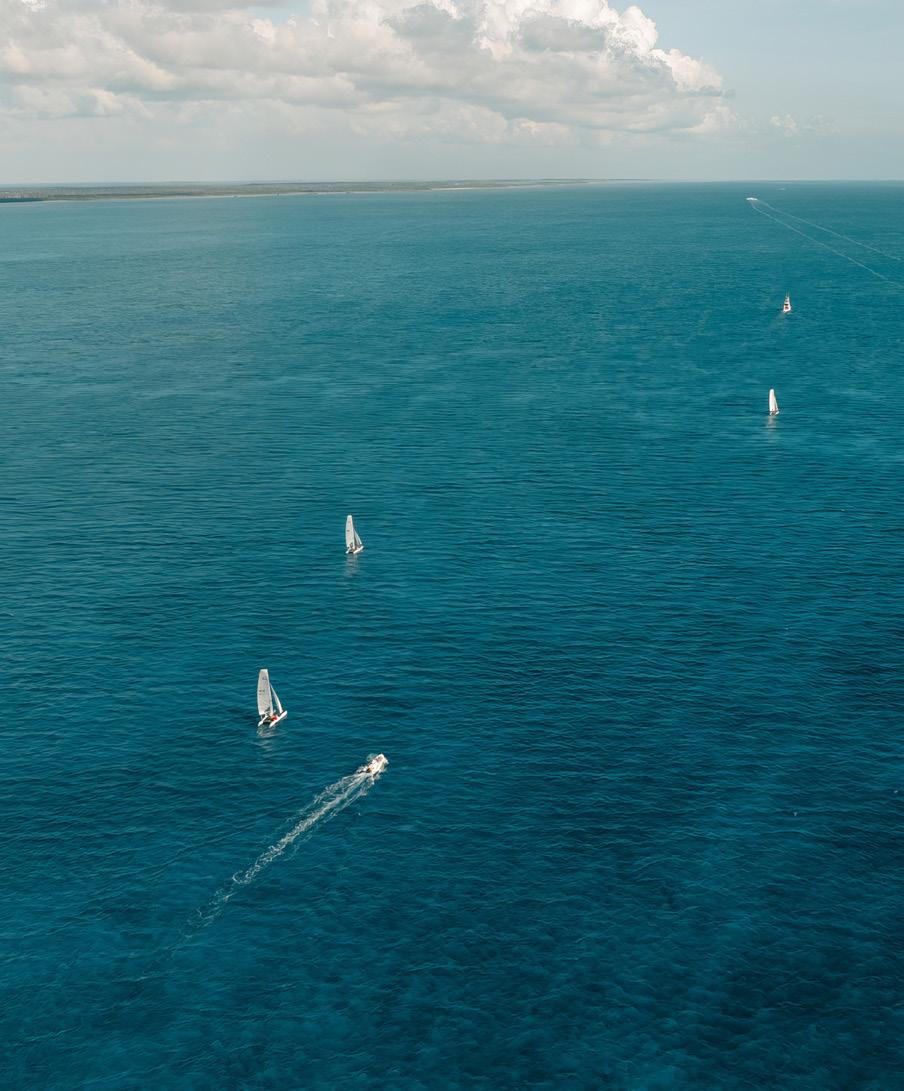
At the center of the nonprofit is founder and director Donathan Williams, whose vision has grown into a thriving ministry after years of perseverance, setbacks, and moments he describes as nothing short of miraculous. Today, Called Higher sails weekly on the Indian River Lagoon and leads transformative trips throughout the year—from local waters to the Bahamas, with future voyages planned as far away as New York City.
What began humbly has become a ministry that continues to profoundly impact students across the community.
The Story Behind Called Higher
The roots of Called Higher stretch back to Southern California in the 1990s. Donathan grew up immersed in boating
culture. “My influence was everything boating when I was a kid,” he recalls.
In 1996, while serving as a worship leader at Calvary Chapel Costa Mesa, a sailboat was donated to the church. Donathan saw an opportunity. With the blessing of senior pastor Chuck Smith, he began using the boat for junior high ministry—hosting Bible studies and sailing trips to Catalina Island. The model closely resembles what Called Higher is today.
After marrying his wife, Kimberly, the couple felt called to something new. In 2000, they moved to Vero Beach to help plant Calvary Chapel Vero Beach, where they continue to serve faithfully.


For years, sailing took a back seat. But in 2010, Donathan felt a renewed calling—to deepen his faith and step forward when opportunity arose. That opportunity seemed to point back to the water.
After a series of false starts searching for the right boat, a remarkable moment occurred: just before meeting with an attorney to begin forming a nonprofit, Donathan was handed an envelope containing exactly the amount needed to start one.
Yet even then, the path wasn’t straightforward.
In 2012, the family was called to spend a year in Montana, learning discipleship ministry. It was a challenging but
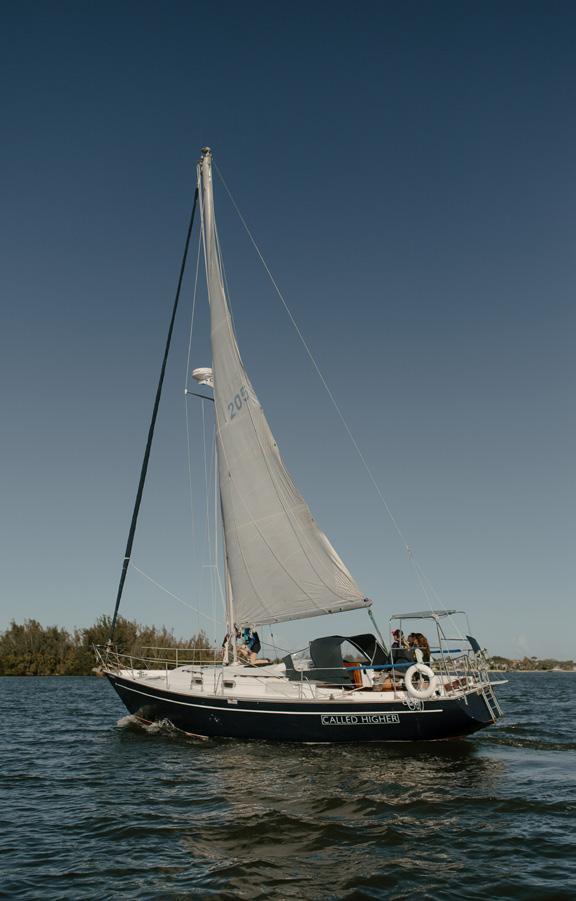
formative season. “The Lord was doing a deep work,” Donathan reflects. “Laying a foundation for what lay ahead.”
When they returned to Vero Beach in 2013, the vision began to take shape—starting small, just as he had sensed it would.
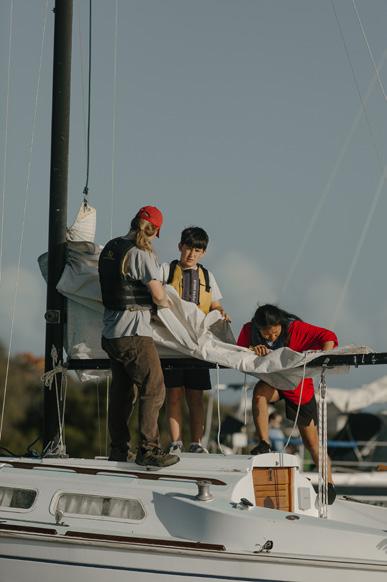
A friend offered a sailboat. A pilot program began. Students gathered. They sailed, studied Scripture, and eventually took a trip to Guatemala. Word spread organically. Interest grew.
There were setbacks—an electrical fire destroyed one of the boats—but each obstacle led to a new beginning. Donathan purchased a fixer-upper, gathered a small group of students, and set out on a twoweek coastal journey. The experience was transformative. The stories those students brought home sparked something bigger.
Without formal advertising, Called Higher grew—one story, one student, one voyage at a time.
In 2019, the ministry expanded westward to St. Petersburg. To make the move, a team of students sailed four boats around the Florida peninsula—a two-week journey that became the Perseverance documentary. Then came COVID-19, halting plans and reshaping the path once again.
By 2022, the Williams family returned to Vero Beach, bringing renewed clarity and commitment to the ministry’s original home. Today, Donathan leads Called Higher while Kimberly serves as worship leader at Calvary Chapel Vero Beach. Their daughter Mackenzie has also stepped into a leadership role.
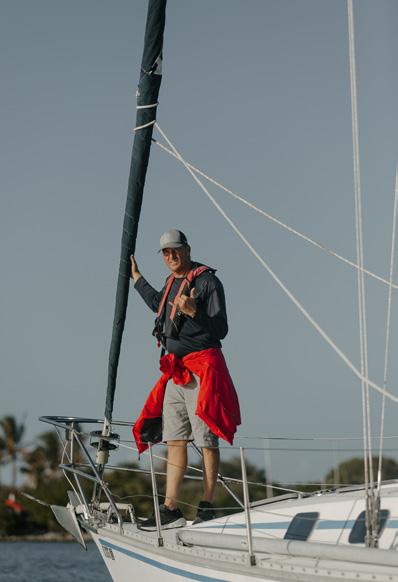
What remains unchanged is the ministry’s heart. “It feels like a family,” shares Lani Onorato, a former student turned leader. “Everyone encourages each other, and it’s a place where you can grow in faith and step out of your comfort zone.” Former participant Ezra McManus reflects similarly: “From simple afternoons to week-long trips, I made unforgettable memories. Called Higher shaped my life in such a positive way.”
Nacra Bahamas Adventure
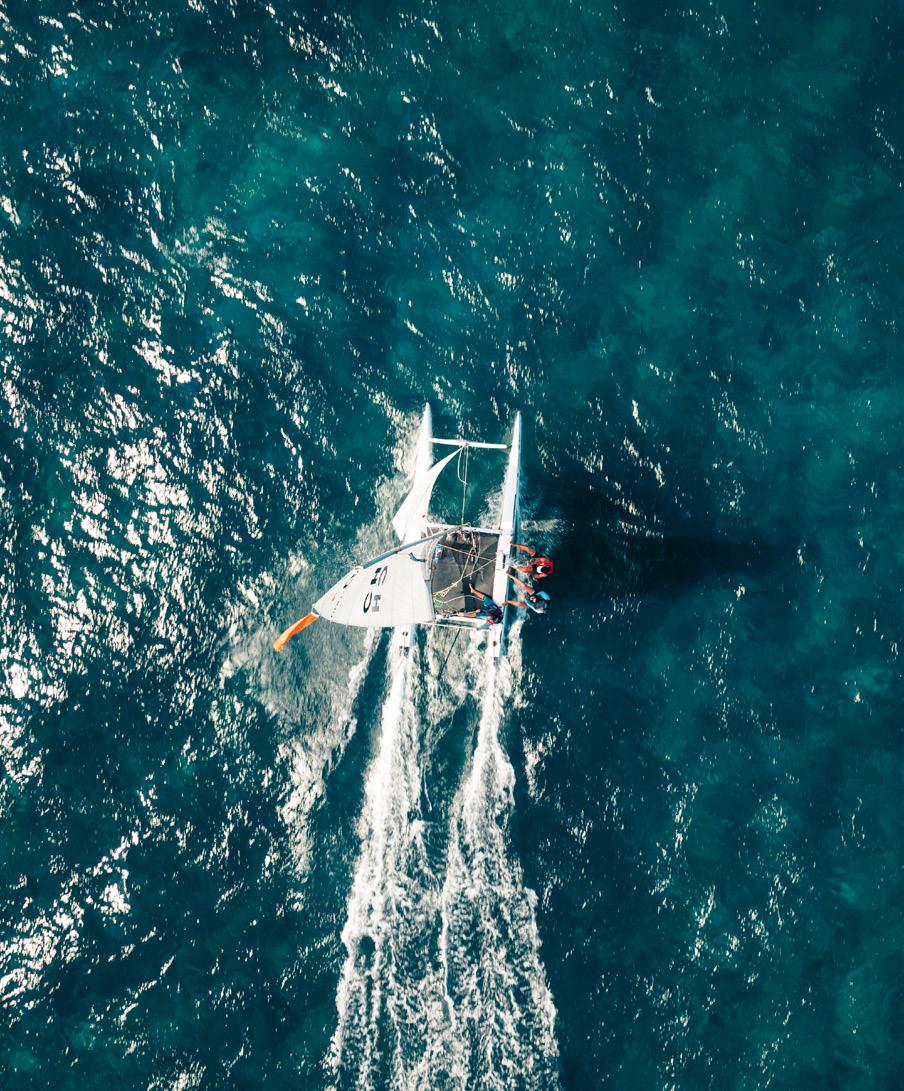
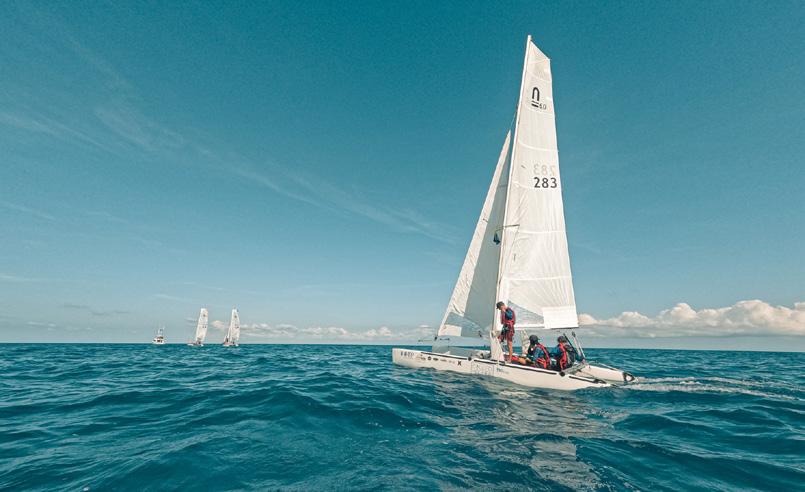
One of the most ambitious expressions of the ministry came in June 2025: a 500mile round-trip sailing expedition to the Bahamas using Nacra catamarans. The journey required ten months of preparation—physical, technical, and spiritual. Nine high school students committed to the challenge, training weekly on the water. They learned everything from rigging the boats to recovering from capsizes, and eventually progressed to offshore and endurance sailing.
The journey itself was not without difficulty. Unpredictable winds forced them to tow on the first day. But perseverance defined the trip. By the third day, everything aligned—wind, rhythm, confidence. “We were flying,” one student recalled. “That was our moment.”
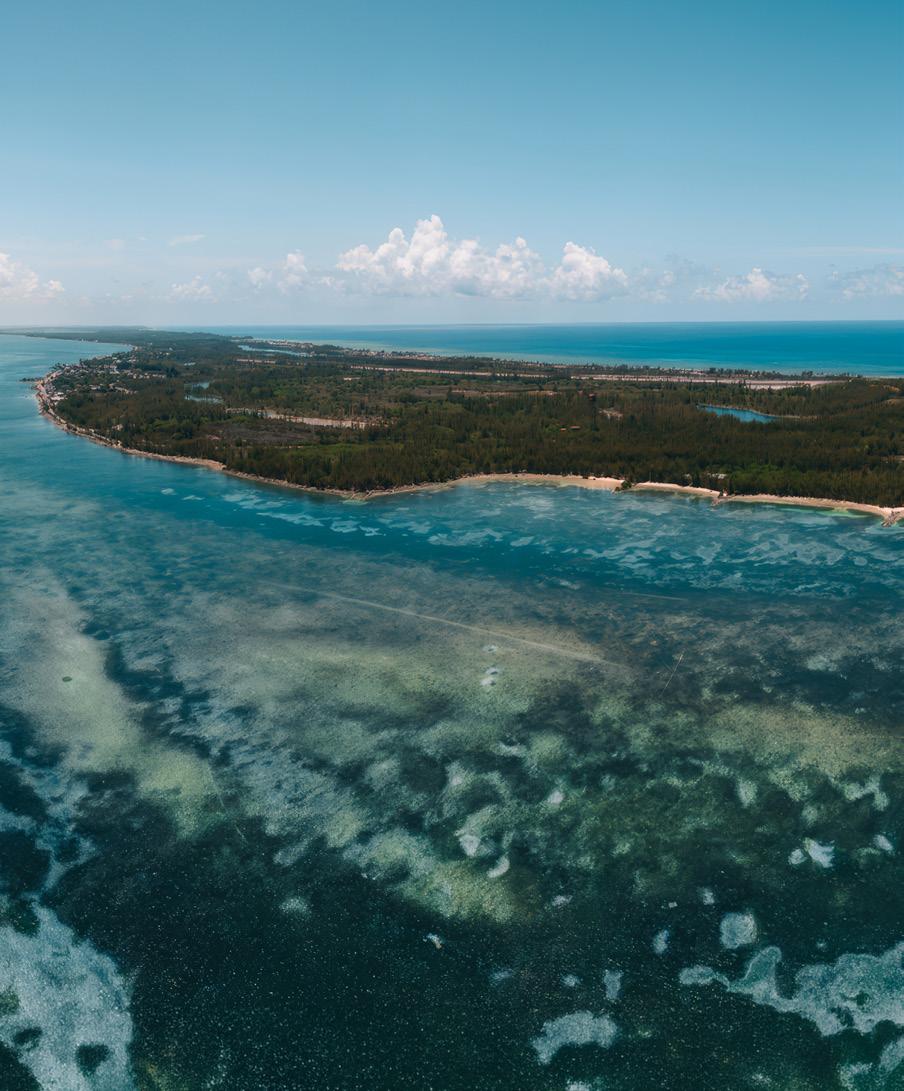
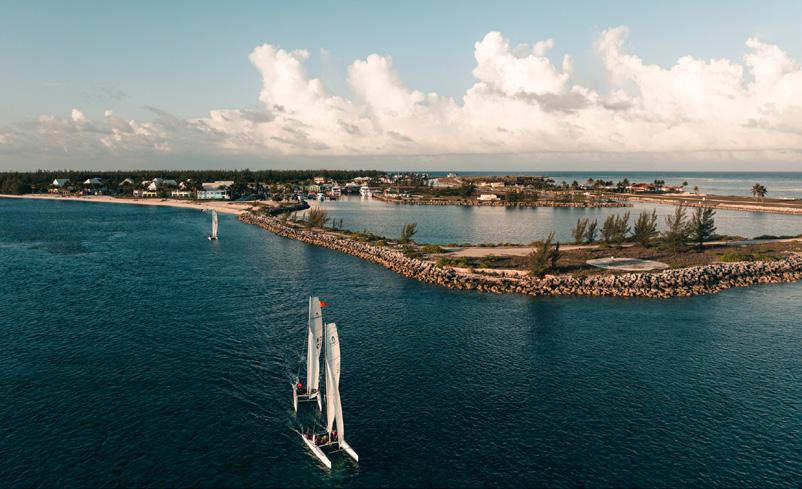
When they finally reached Guana Cay, the experience became something more than a sailing achievement. The team connected with the local community,
shared testimonies, led worship, and even taught island children how to sail. “It was full circle,” Donathan said. “Our students teaching what they had learned.”
The return journey brought both challenge and reflection—storms, exhaustion, and ultimately triumph. After ten days, the team arrived home to cheering families, closing a chapter that would leave a lasting imprint on every participant.
Called Higher continues to look forward. This summer, the team plans a 600-mile journey from North Carolina to New York City, culminating at the Statue of Liberty as part of the country’s 250th anniversary celebration. It will be their most ambitious voyage yet.
At its core, Called Higher is not just about sailing—it is about formation. “We are not the primary influence in these students’ lives,” Donathan says. “We come alongside
parents and churches. We are one part of helping them grow.”
What matters most is transformation. “The greatest joy,” he reflects, “is watching students flourish.”
From early days sailing off California to ministry work in Guatemala, from setbacks to breakthroughs, the story of Called Higher is one of steady faith and resilience. It is proof that sometimes the longest journeys—across water, through uncertainty, and into purpose—begin with a simple step forward.
Called Higher Adventures
23 Royal Palm Pointe Vero Beach, FL 32960
Instagram: @called_higher
Website: calledhigheradventures.com
Blais Media & Marketing
Instagram: @jblaisphoto
Website: blaismediaandmarketing.com
PURPOSE
PURPOSE
Painted by Winslow Homer 1899. Oil on Canvas. 28 x 49 in.
Metropolitan Museum of Art, New York, NY
Winslow Homer (1836-1910). One of the most important American painters of the 19th century. Depicted American life in a period when the country was shaping its cultural identity, with a concentration on the ocean and rural life. Born in Boston, Massachusetts in 1836. Little formal academic training and largely taught himself to draw and paint. Started career as commercial illustrator, during which he developed strong drawing skills and talent for dramatic visual storytelling.
Travels and Settings. Worked as American Civil War correspondent and artist, sketching soldiers and camp life. Scenes became basis for early oil paintings. Afterward turned to fine art, producing dramatic oils and luminous
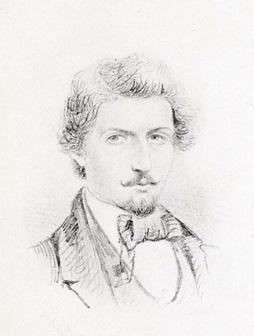
watercolors along coastal New England. From 1881 to 1882 lived in Cullercoats in northeast England, painting local fisherwomen and sailors confronting rugged North Sea. Eventually settled in Prouts Neck, southern Maine, living in relative isolation along restless and moody coastline.
Time in Florida. Homer worked in Florida numerous times as mature artist already renowned for powerful nautical subjects. His watercolors—presenting bold contrasts between sea, sky, and subjects, featuring transparent washes of turquoise and emerald waters—solidified his reputation as one of America’s great watercolorists. In 1880s and 1890s, established base in Key West, then a small and isolated village known for wrecking, sponge diving, green turtle harvesting, Caribbean influences. Intense sunlight, tropical heat, crystal clear ocean provided new artistic material radically different from Maine seacoast. Often combined Florida visit with excursion to nearby islands in the Bahamas, where he painted prolifically.
The Gulf Stream Deconstructed. The powerful Gulf Stream flowing closely offshore Florida proved a powerful influence on his understanding and perception of the ocean. His work depicting the subject is widely proclaimed as one of the most powerful and disturbing paintings by an American artist. Shows Black man lying prostrate and helpless on a dismasted sailboat in rough seas filled with large, aggressive sharks. Waterspout looming in background portends another devastating threat. Distant ship on horizon offers hope—but vessel may not spot him and continue on course. Painting is interpreted to introduce various existential themes: human vulnerability
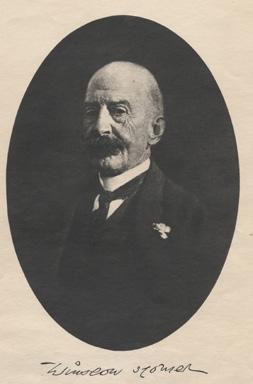
and loneliness, struggle of man versus overwhelming natural forces, precarious condition of Blacks post American Civil War, dangers inherent to venturing onto sea.
Legacy. First American to portray nature as demanding, dangerous, unpredictable as opposed to romantic. Emotional restraint rather than sentimentality. Bold, simplified compositions, strong, direct brushwork, dramatic natural light and weather. America’s greatest painter of the sea.
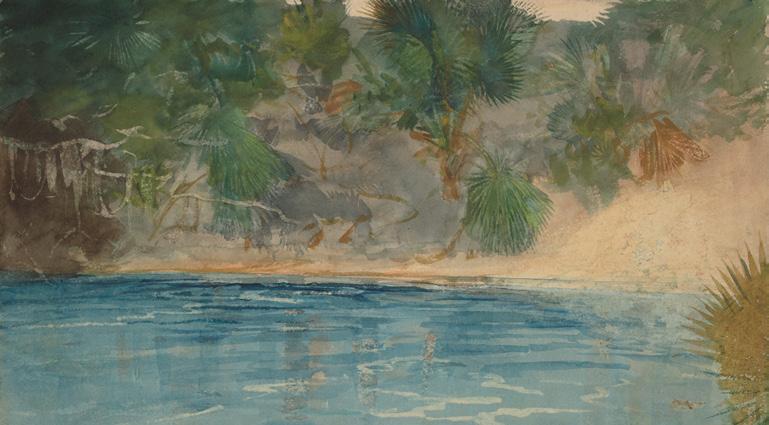
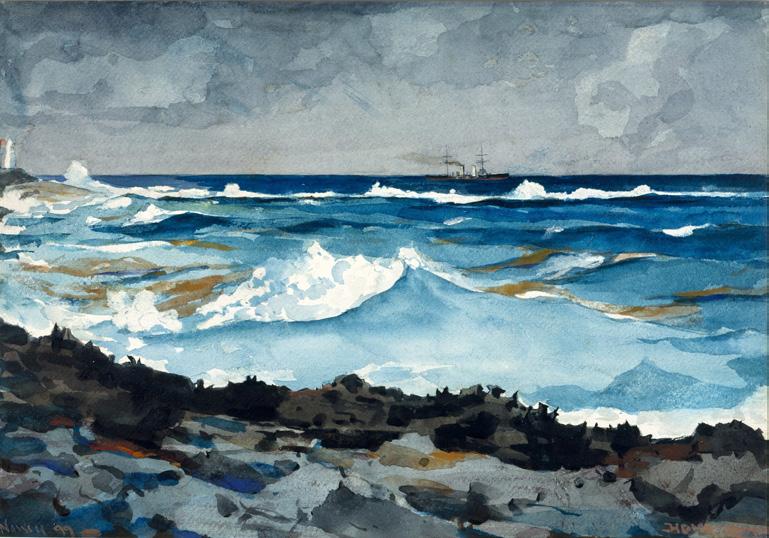
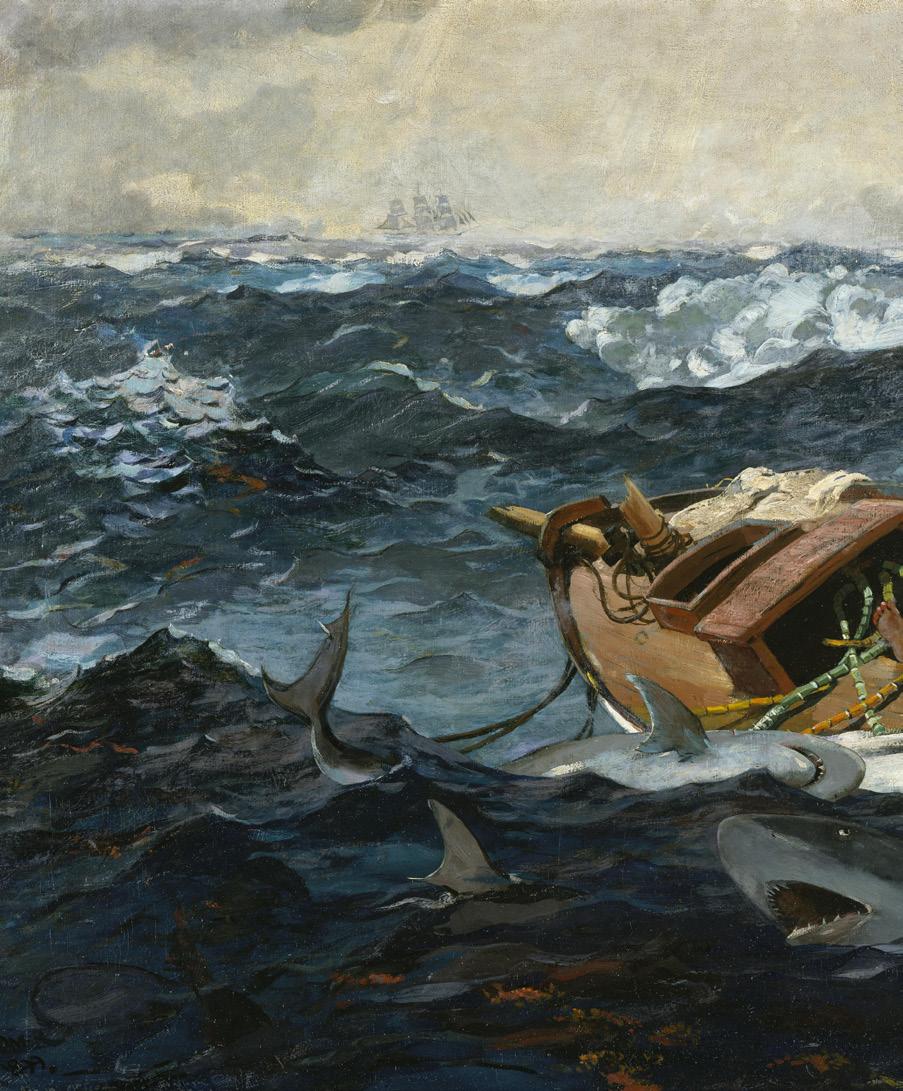
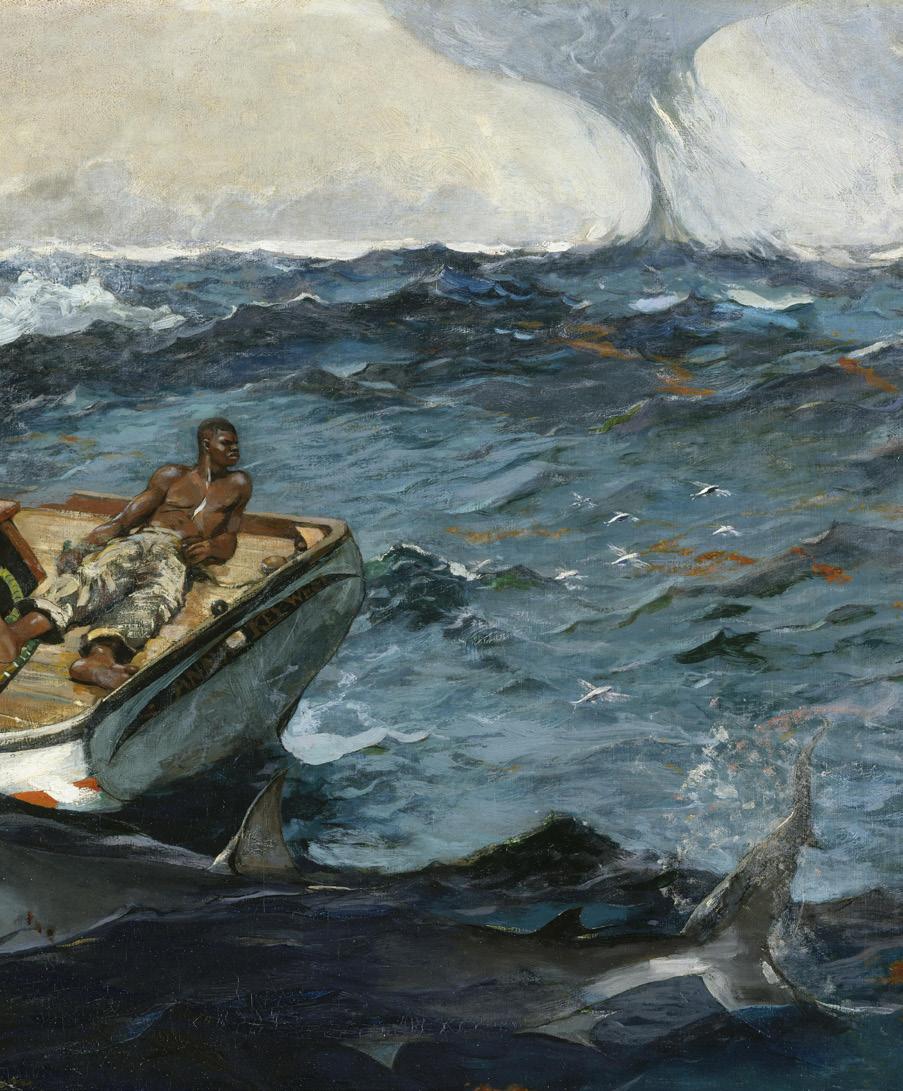
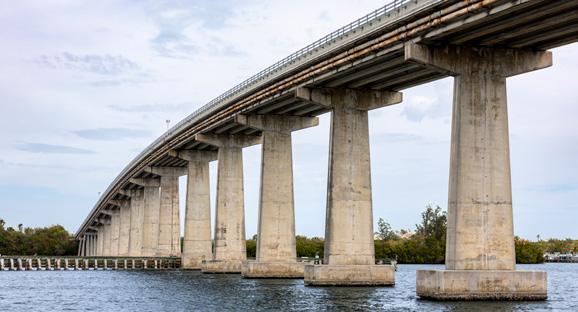
by Jim Field photography by Victoriya Knapp
Finding A.B. Michael Bridge. Travel north on Route A1A from City of Vero Beach. Enter Indian River Shores. Continue north until the stoplight intersection with Route 510. Turn left and you will cross the Indian River Lagoon using the A.B. Michael Bridge. Alternatively, proceeding north from Vero Beach on Route 1 continue to the stoplight intersection with Route 510. Turn right and you will cross the Lagoon on the A.B. Michael Bridge. The Florida Heritage Site Marker is located on the western side of the causeway.
Quoted from the Historical Site Marker:
Two Dollar Bluff, prominently featured on the U.S. Geodetic Map of 1887, was considered a navigational aid for ships on the Indian River. Located on property owned by settler and citrus grower A. B. Michael, this bluff was an Ais Indian midden and became the site for the Michael family dock. By 1927, archaeological materials in the midden, including shell, pottery shards, and bones, were almost gone, taken for use as road material. The dock was replaced with a narrow wooden bridge with a metal swing span that crossed to the community of Orchid. This bridge allowed the Indian River citrus to travel from the Orchid Island groves to the railroad, and it opened up the northern part of Indian River County to tourism and land development. During World War II, the bridge was limited to those who lived on the island, and the bridge tender was tasked with checking the credentials of those who crossed. In 1970, the old
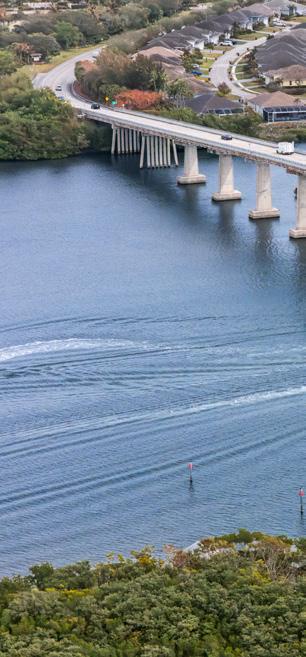
bridge was replaced with a causeway, a high-arch bridge over the main channel, and named the Wabasso Bridge. In 2020, it was renamed the A.B. Michael Bridge. This bridge leads directly to the beaches of the Treasure Coast where remnants of the 1715 Spanish silver fleet are still found.
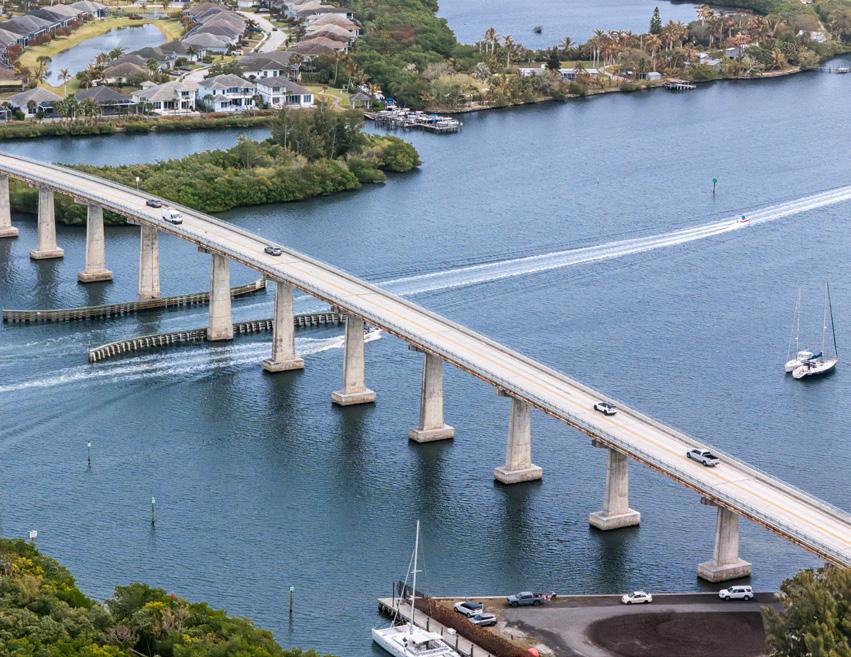
Notes
A “midden” is an archaeological term for a place where people discarded everyday waste. Middens can contain animal bones, shells, broken pottery, tools, ash and charcoal, food scraps. Because people discarded what they used and ate, middens are often valuable time capsules. Used over decades or centuries, some middens grew to look like small natural hills.
Ais Indians (also Ayis Tribe) were a Native American people who lived along Florida’s east-central Atlantic coast before and during early European contact. They occupied a portion of coastline from present-day Cape Canaveral south to Fort Pierce. The name “Indian River” is believed to derive from this tribe. Shipwrecked Spanish sailors were often sheltered by the Ais. The Ais population declined dramatically by 1700 due to the slave trade, European diseases and incursions.
Sources: Florida Heritage Site Marker at A. B. Michael Bridge, Indian River County Historical Society, Florida Department of State, Division of Historical Resources, and the State of Florida.
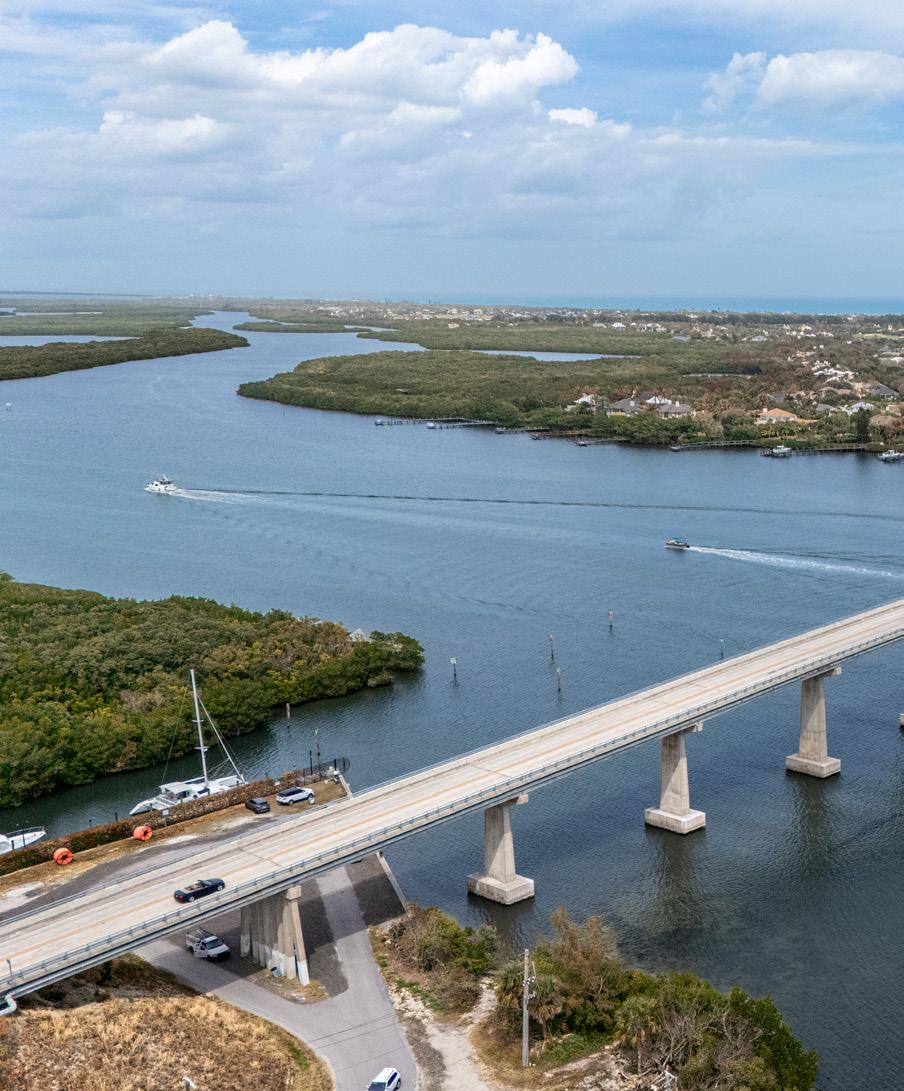
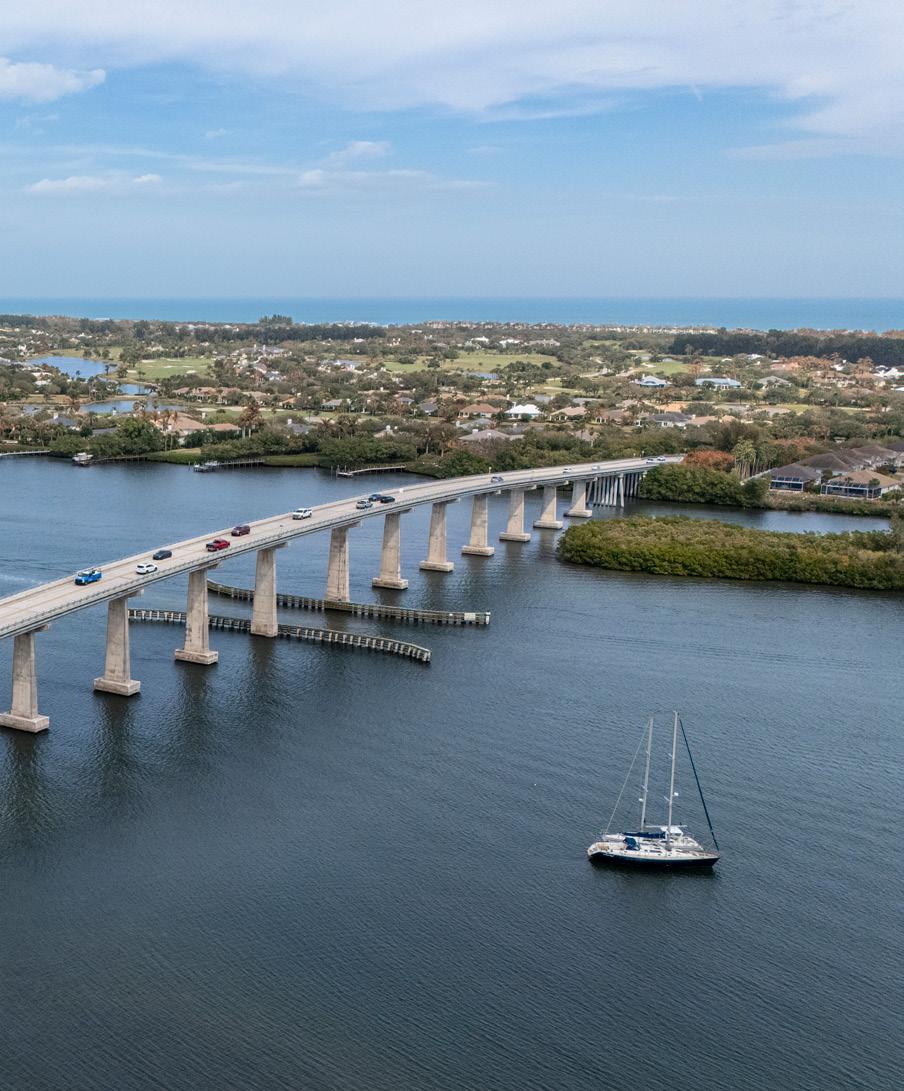

(Haliaeetus leucocephalus)
Location: Indian River County
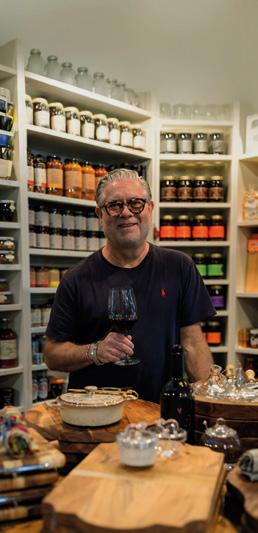

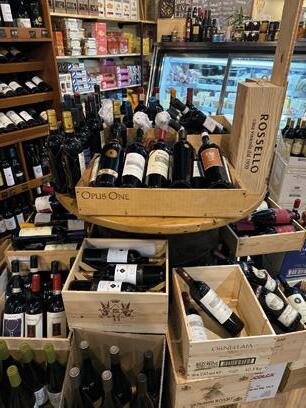
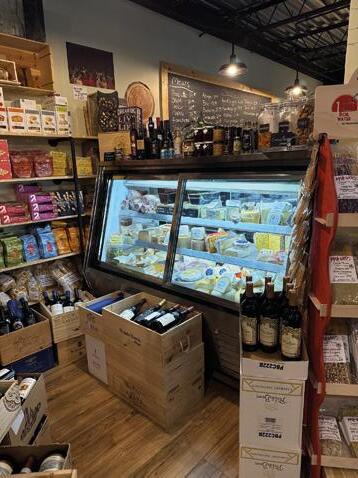

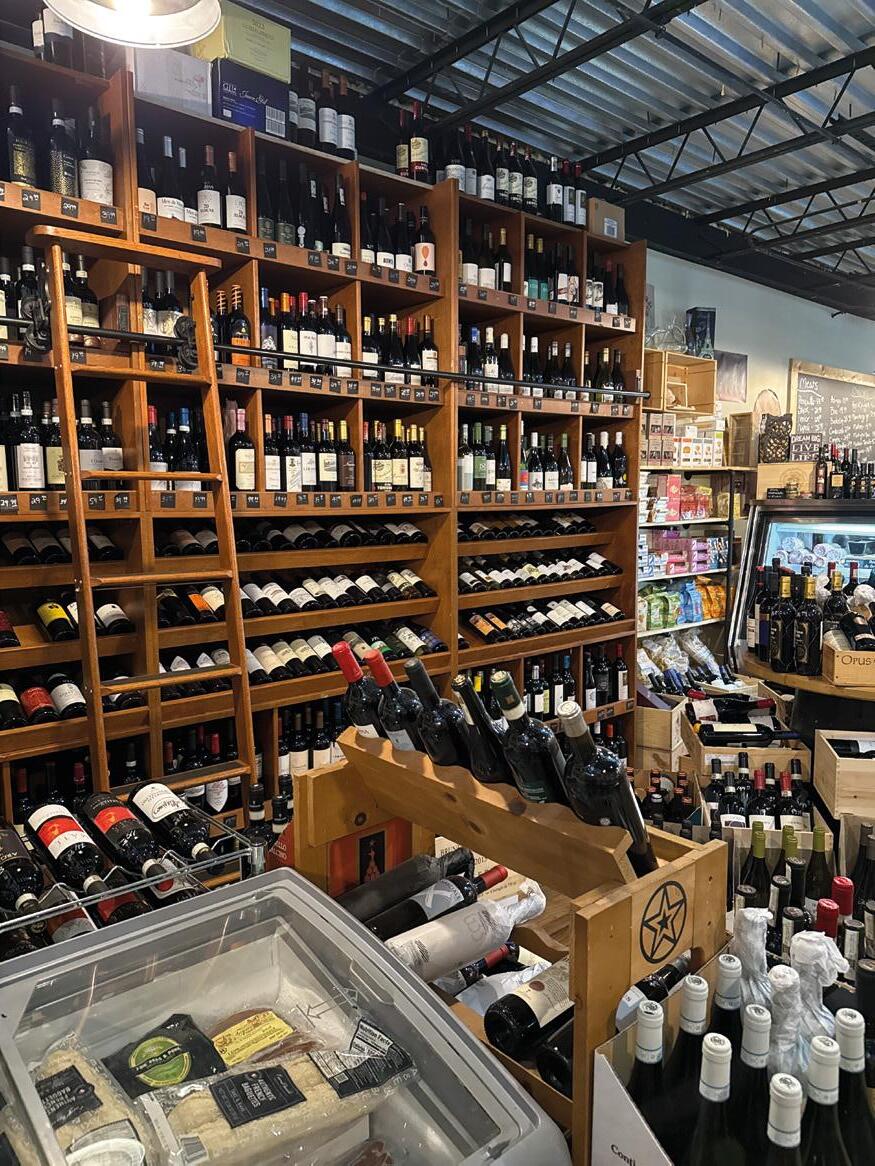

project is completed by our own team—more than 100 full-time professionals who live and work right here on the Treasure Coast.
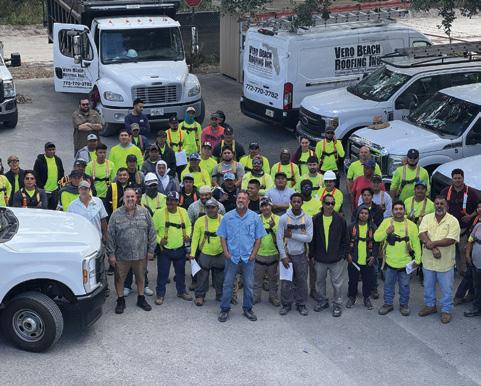
craftsmen who are part of our company and accountable to strict safety standards.


For over 30 years, our team has built and Coast, Space Coast, and Gold Coast.
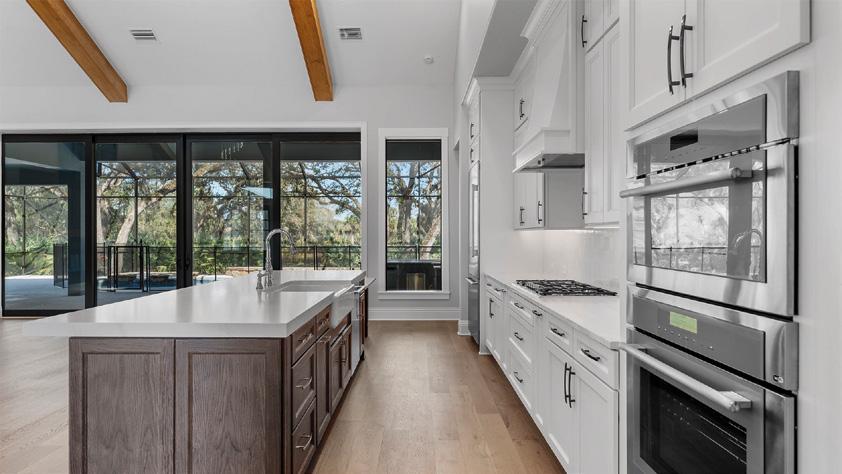
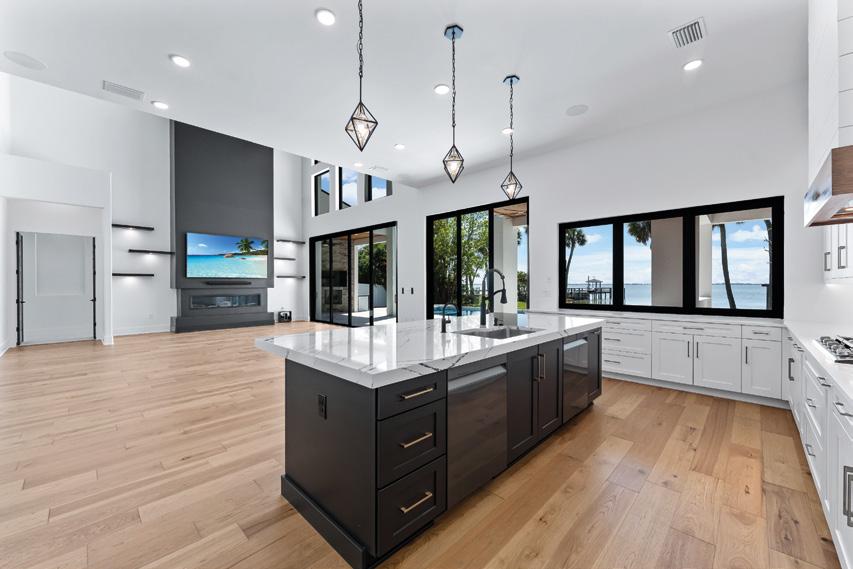
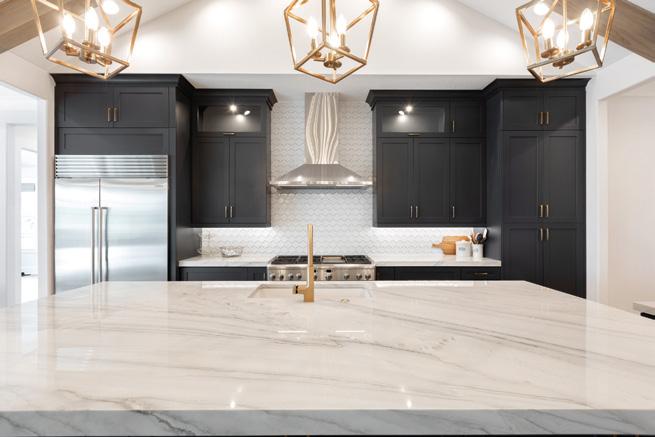

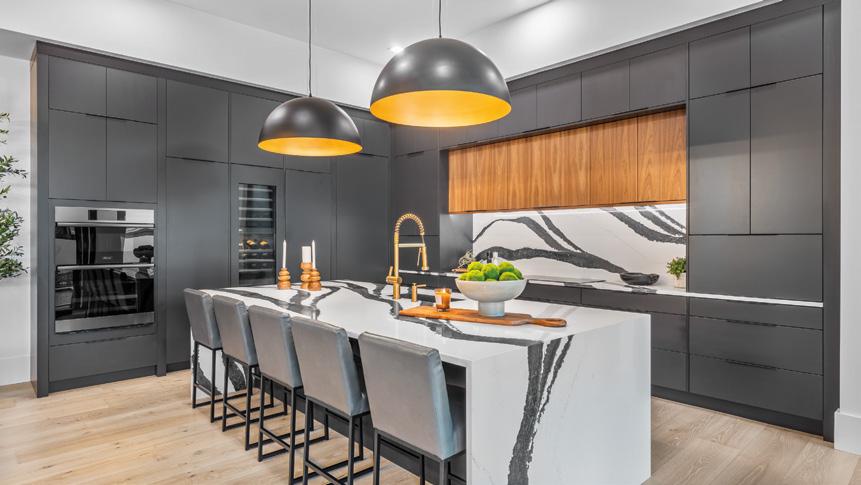


• Dental Veneers And Crowns
• Smile Makeover And Design
• Full Mouth Reconstruction
• Invisalign
• Gum Disease/Periodontal Care
• Dental Implants/All-On-4
• Teeth Whitening
• Full And Partial Dentures
• Laser Dentistry



Ask

At Complete Women’s Health, our mission is to deliver exceptional, personalized healthcare for women at every stage of life—combining clinical excellence, compassion, and empowerment in a state-of-the-art setting. Here, every woman feels valued, understood, and supported.
Comprehensive Gynecologic Care Across All Stages
We specialize in caring for women through every phase of life:
• Adolescence and early reproductive years
• Midlife transitions and menopause
• Post-menopausal health
• Hormone Replacement Therapy administered by a Menopause Society Certified Practicioner (MSCP).
Our board-certified providers deliver compassionate, individualized care for the full spectrum of gynecologic and hormonal needs—whether you’re managing a complex condition or focusing on preventive wellness.
We are your lifelong partner in women’s health.
Our primary care services center on your overall well-being. We deliver personalized preventive care, chronic disease management, and evidence-based weight-loss support—including GLP-1 therapy.
Your health, supported every step of the way.
Our highly trained medical team delivers compassionate, high-quality care that exceeds expectations—ensuring your comfort, confidence, and overall wellbeing.
Now welcoming new patients.
Fast, Convenient, Coordinated
Our full-service diagnostic lab allows same-day specimen collection during your appointment. Results flow directly into your electronic health record, supporting faster care decisions and seamless follow-up.
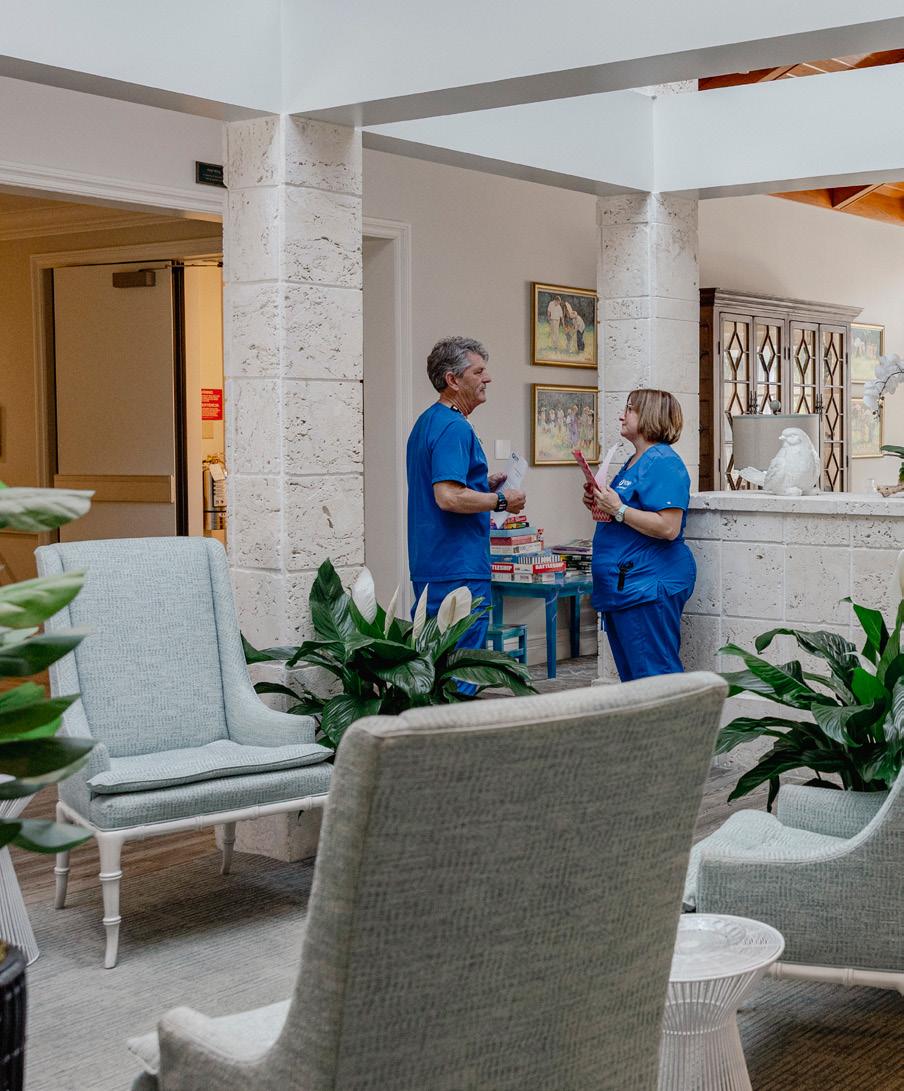
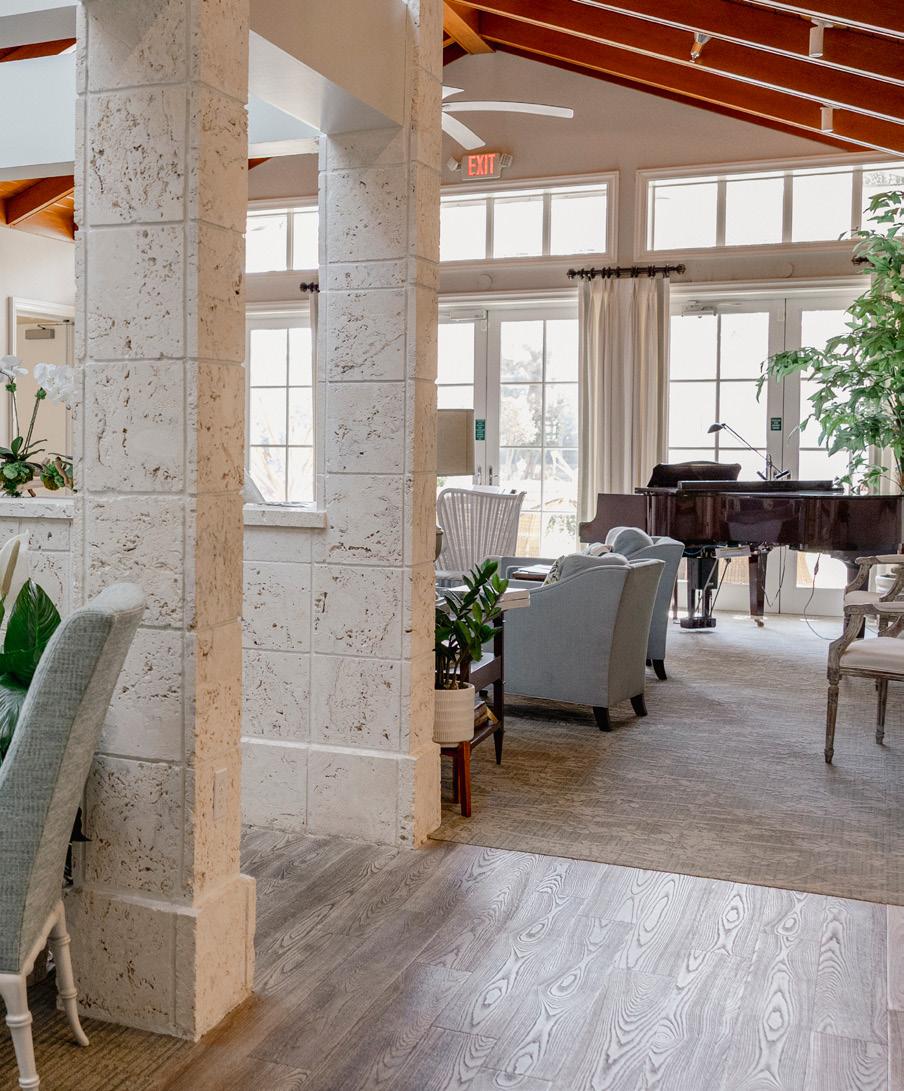
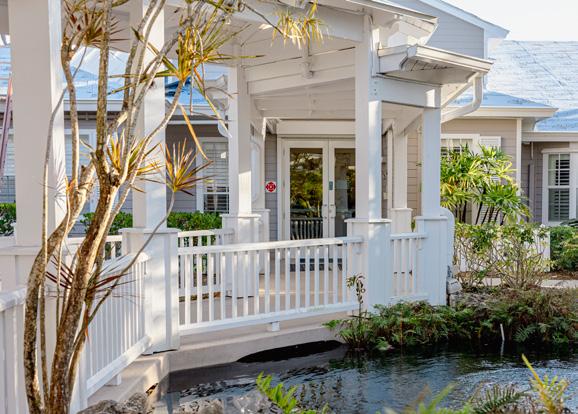
Conducted by Jim Field photography by Victoriya
Editor’s Note: The Visiting Nurse Association has been such a constant presence in our community that it’s easy to take it for granted—to assume it will always be there when the day comes that we need its care. For some, the name is familiar, loosely associated with healthcare, yet its full scope and significance remain largely unknown.
In truth, VNA is widely respected, yet it still merits even greater recognition and appreciation for the extraordinary role it plays. With deep roots in Indian River County (IRC), the organization has quietly shaped the quality of life here for generations. Our community—and countless individual lives—would be markedly diminished without the essential services it provides.
While many associate VNA with Hospice House, that is only part of a much larger story. Hospice care is a vital and compassionate service, but it represents just one facet of the organization’s daily
Knapp
work. Beyond it, VNA delivers a wide range of healthcare services to hundreds of IRC residents each day—often behind the scenes, and always with profound impact.
The breadth of services provided by VNA is one of its greatest strengths, offering patients and families a single, trusted point of access to nursing care across the continuum. At the heart of this model is VNA’s nursing workforce—arguably its most valuable asset—distinguished by a high standard of training, experience, professionalism, and clinical excellence.
A defining feature of VNA’s approach is its ability to bring care directly to patients and families in a variety of settings, aligning the level of nursing expertise with each individual’s clinical and personal needs. This flexibility allows for care that is both highly customized and appropriately scaled.
At the same time, the very scope of these services can make it less obvious to the broader community just how much VNA offers and how best to access it. What follows is an overview of the organization’s principles, history, and primary services.
The Visiting Nurse Association is a nonprofit healthcare organization that provides inhome medical care and community-based health services, primarily delivered by nurses and other clinicians. As a nonprofit, its goal is to provide patients with the highest quality care, regardless of ability to pay, with funding provided in part by a strong base of community donors.
● Chief goal Collaborating as a team to provide excellent care to patients and families, so that patients experience optimal quality of life at all times.
● Core mission Providing compassionate, innovative care of the highest quality, setting the standard for patients and caregivers needing home health, hospice, private care and community health services, extending this care to the uninsured and underinsured in our community, ensuring healthcare equality for all.
● Core values Integrity in our actions. Collaboration with our community. Accountability to those who trust us. Respect for all people. Excellence in all we do.
The Visiting Nurse Association movement began in the late 19th century, during a period of rapid urbanization and widespread poverty in American cities. Early efforts sent nurses into crowded tenement housing in places like Boston and New York, where they tended to the sick during outbreaks of infectious diseases such as tuberculosis and influenza—often working in environments marked by hunger, poor hygiene, and limited access to even the most basic care. By the early 20th century, cities across the U.S. were establishing Visiting Nurse Associations—nonprofit organizations dedicated to providing skilled nursing care in the home, along with maternal and child health services and education focused on hygiene and disease prevention.
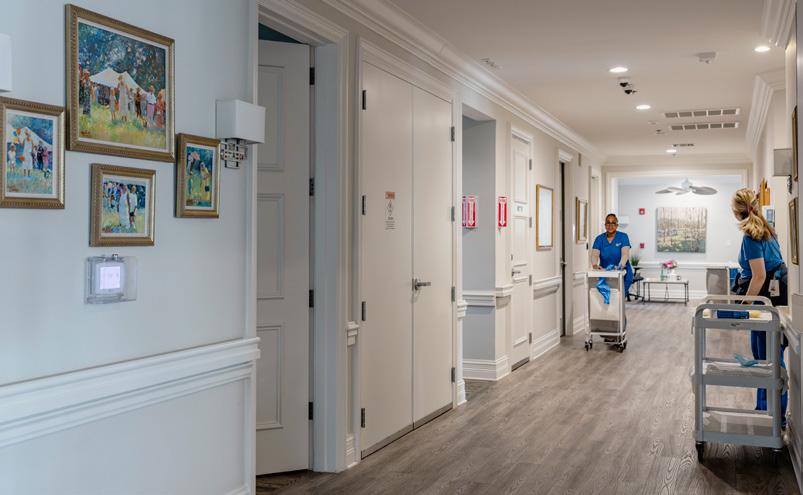
During the Great Depression, VNAs became salvations for families who could not afford medical care. They again played a critical role during World War II, helping to fill gaps as hospitals and providers came under strain. A major turning point came with the passage of Medicare in 1965, which introduced federal funding for home healthcare and helped accelerate the expansion of VNA services into a broader continuum of care.
In 1974, IRC resident Marion Oechsner recognized a growing need in the community for a home healthcare agency dedicated to delivering quality care in patients’ homes. She organized a group of committed volunteers to establish a Visiting Nurse Association. The decision to form a VNA reflected both mission and structure. As nonprofit organizations, VNAs were designed to provide care regardless of a patient’s financial circumstances, a principle that the founders intentionally embraced as a cornerstone of the agency’s work.
By 1975, the organization was fully operational, completing 80 home visits in its first month. Its staff consisted of a single
nurse director and one home health aide, who together provided care for patients recently discharged from the hospital and in need of continued support at home.
Today, the VNA stands as one of the largest healthcare providers and employers in IRC, with a footprint that extends across the region and across the full spectrum of home and endof-life care.
The history of the VNA in IRC would not be complete without recognizing the pivotal contributions of Ann Marie McCrystal, who has been a long-term and indefatigable supporter and promoter.
Skilled nursing. In-home services to assist patients requiring long-term medical care or short-term rehabilitative services while recovering from a surgery or illness. Delivered by licensed registered nurses (RNs) and licensed practical nurses (LPNs). Includes wound care, medication management, injections, monitoring of vital signs, education for patients and caregivers. Nurses coordinate closely with a patient’s regular physician.
Rehabilitative therapies. Physical therapists help patients regain strength, balance, and mobility after injury or surgery. Occupational therapists focus on daily living skills like bathing, dressing, and home safety. Speech therapists assist with swallowing disorders or communication challenges.
Home health aides. Provide a multitude of in-home personal and companionship care services, including bathing, grooming and dressing, meal preparation, transportation, exercising, light housekeeping, medication reminders. Overseen by a registered nurse and passed local, state, federal background checks. Can be combined with skilled nursing.
Private in-home care. Personal care services provided in the home, paid for privately by the patient or family rather than covered by insurance or Medicare. Services include companionship, meal preparation, light cleaning, laundry, errands, bathing and dressing, memory care monitoring.
Hospice and Hospice House. Provide specialized care focused on comfort, dignity, and quality of life for individuals facing a terminal illness, typically when curative treatment is no longer pursued. Rather than attempting to cure disease, hospice care emphasizes symptom management and emotional support, including pain and symptom control, skilled nursing care and regular clinical visits, and emotional and psychological support for both patients and families. Services also include support from social workers and counselors, spiritual care and guidance if desired, caregiver support, and bereavement services following a patient’s passing. Hospice care may be delivered in a variety of settings, including the patient’s home, assisted living facilities, and hospitals. The VNA Hospice House in Vero Beach serves patients whose symptoms cannot be adequately managed at home, offering premier end-of-life care in an elegant, yet comfortable, home-like setting.
Mobile health clinic. Provides accessible and affordable healthcare services throughout IRC, bringing care directly into the community. Staffed by Advanced Practice Registered Nurses (APRNs), the clinic treats patients across the lifespan— from infants to adults—offering evaluation, diagnosis, and treatment for a range of common illnesses. Also, preventive services for children and students, support for school
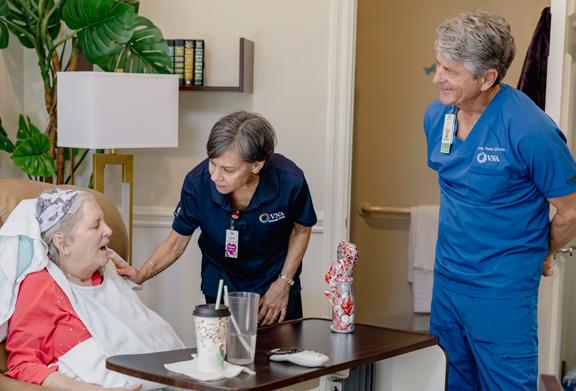
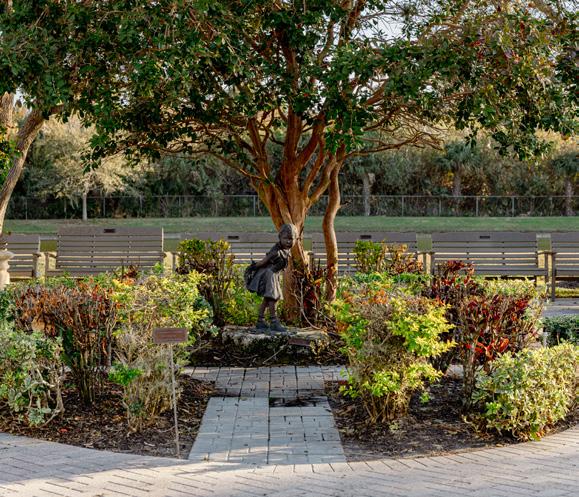
health requirements, select medication refills, on-site testing for respiratory illnesses.
VNA Hidden Treasures thrift store. 656 21st Street, Vero Beach, FL 32960. Offers a wide range of gently used items at affordable prices, including clothing, furniture, home goods, books, jewelry, and electronics. Proceeds from the store help support VNA Hospice services and the organization’s mission.
Lundy Fields, President & CEO
VNA Treasure Coast
Interview conducted at VNA Hospice House, Vero Beach
JF: Lundy, thank you for spending time with LIV VERO Magazine to discuss everything you do at VNA Treasure Coast to serve those in need in IRC. Can we start with the big question: What makes VNA a special organization? What are your distinctive strengths in our community?
LF: Thank you for featuring VNA in your magazine—we’re very appreciative. Actually, that’s a good place to start—the bigger picture of everything that VNA does. I would point to five distinctive features of our organization. First, we are a nonprofit organization dedicated to serving all residents in need of responsive, high-quality, compassionate nursing
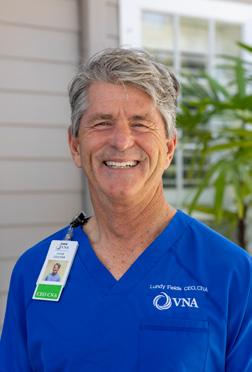
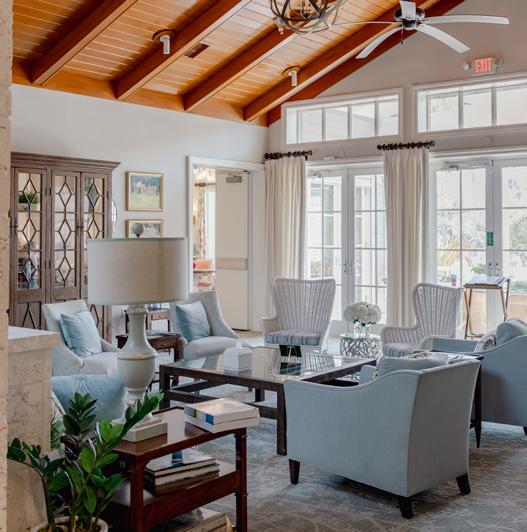
care, regardless of ability to pay. Second, VNA pioneered the concept of bringing nurses into the home both nationally and in IRC. We have been a bedrock in the community for a long time—over 50 years—and we have long-standing relationships that run very deep with local healthcare providers, related nonprofit organizations, community leaders and, of course, families and patients. Third, we provide nursing and therapeutic services across the care continuum and in many different settings—which allows for care continuity, operating efficiencies, a highquality and scaled work force, and broad community impact. We take great pride in the training, caliber, and quality delivered by our caregivers. Finally, we are the sole providers of hospice care in the county— which is a vitally important service accessible to all individuals and families.
(Continued on page 133.)























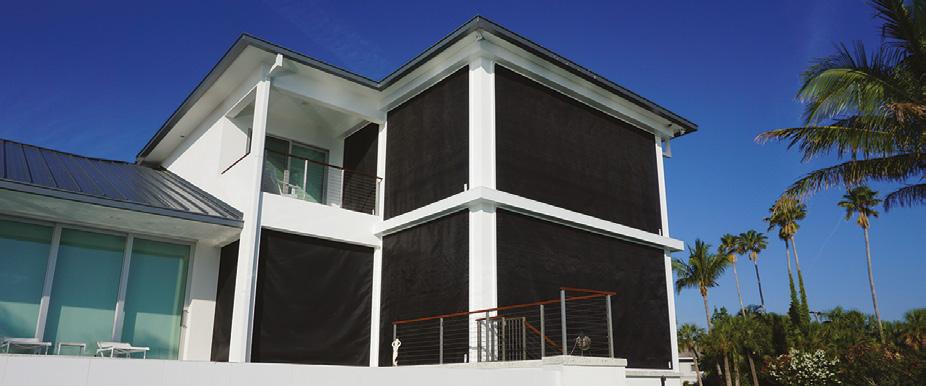

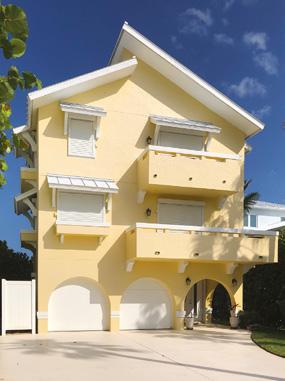


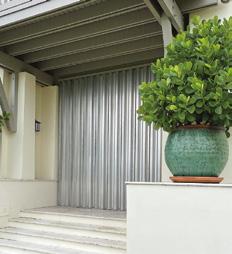
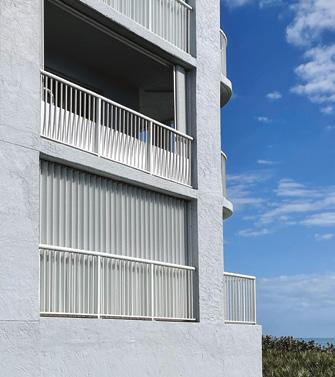
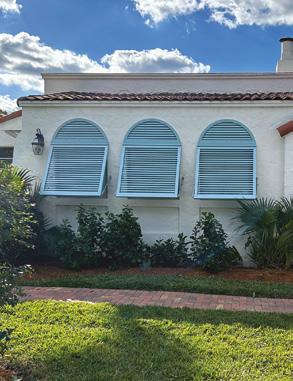


DO NOT PUT LITHIUM BATTERIES IN YOUR CARTS!

Lithium batteries, such as rechargeable, cell phone and laptop batteries, and other hazardous household batteries are highly flammable and should NOT be put in a cart. Please bring them to one of the 5 Customer Convenience Centers or to the Main County Landfill.





The new FedEx SenseAwareSM devices on packages contain lithium batteries which are highly flammable. They SHOULD NOT be put in either your recycling OR garbage cart. Please return all sensors to one of the 5 Customer Convenience Centers or a local FedEx for proper disposal.







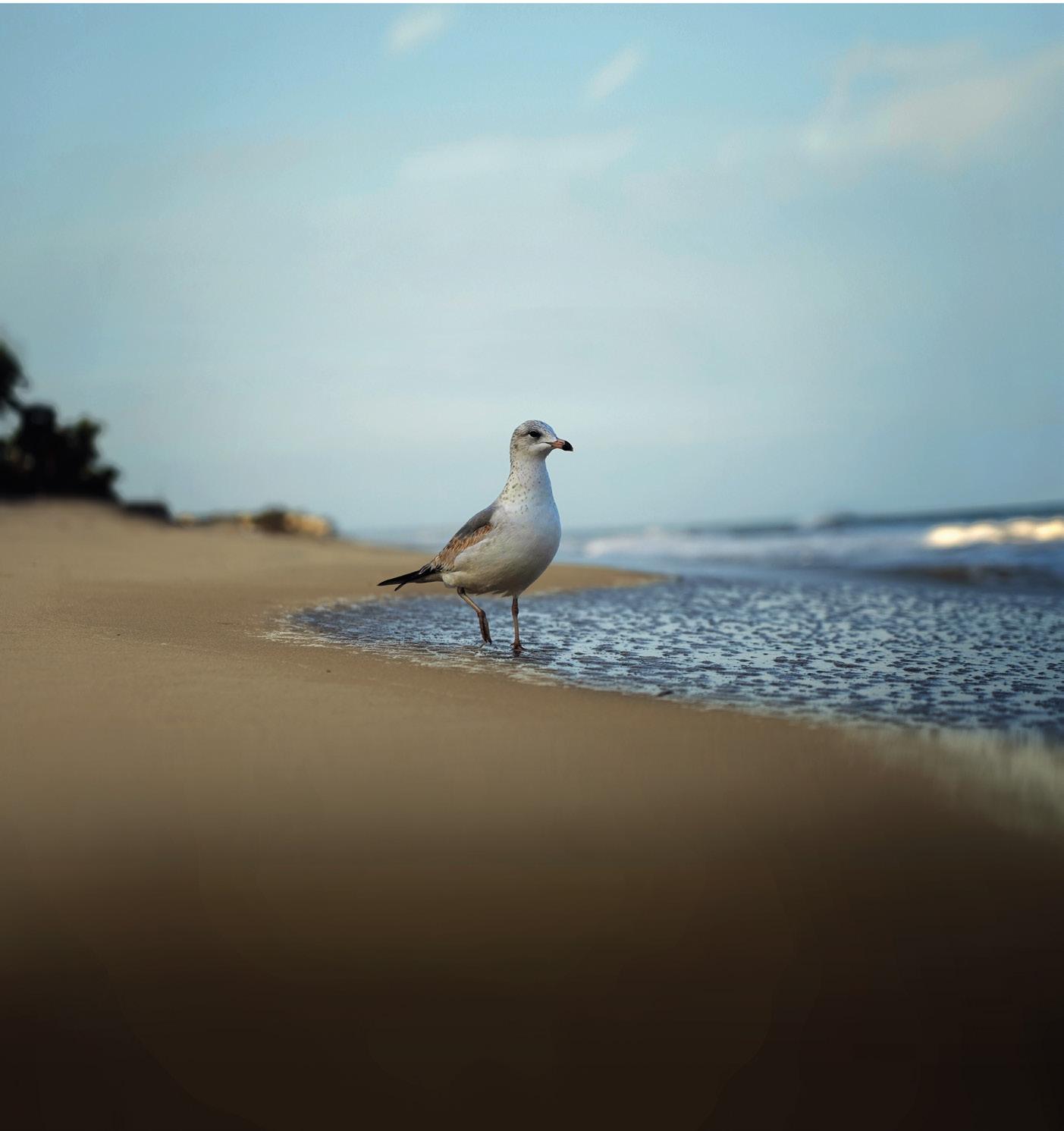


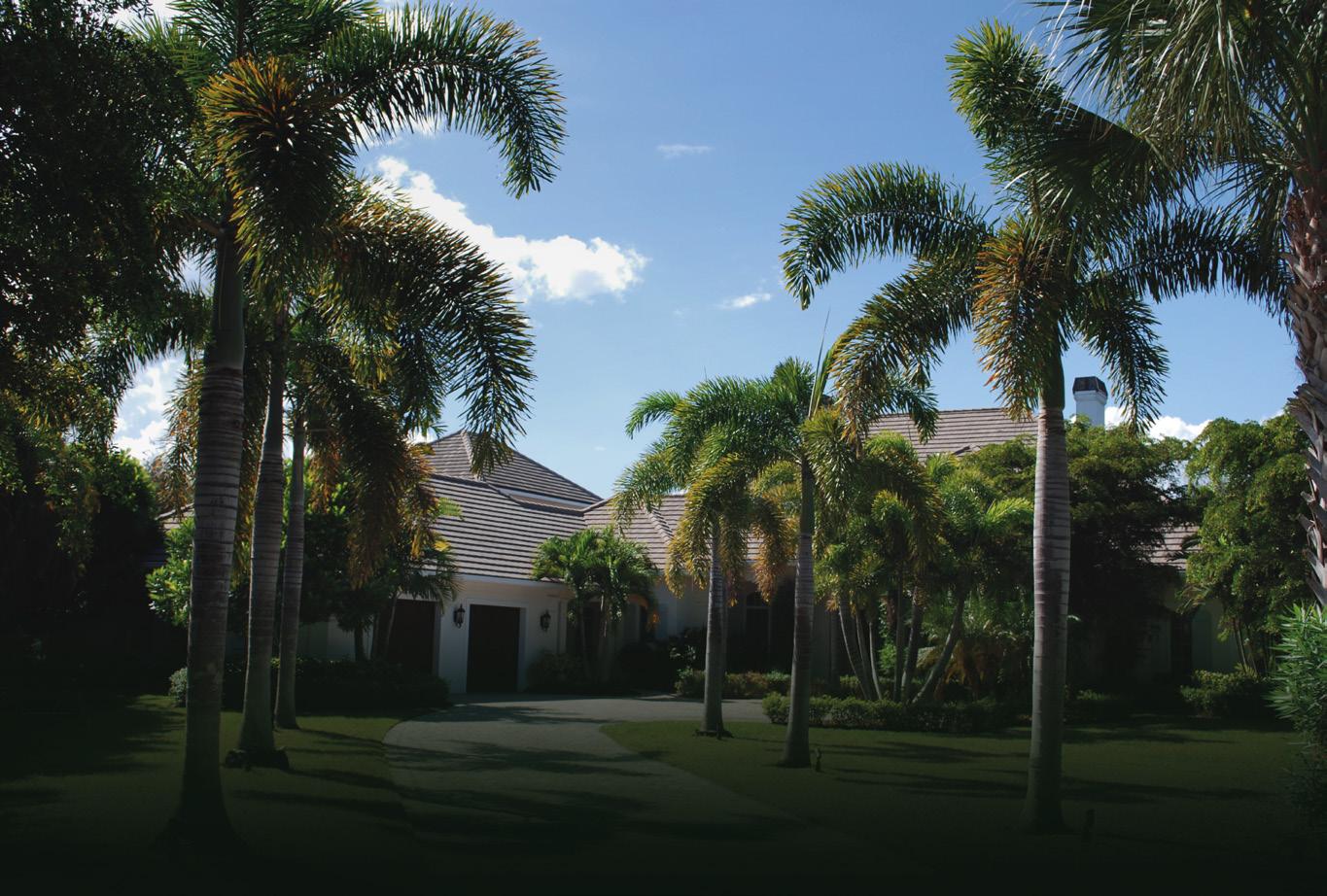

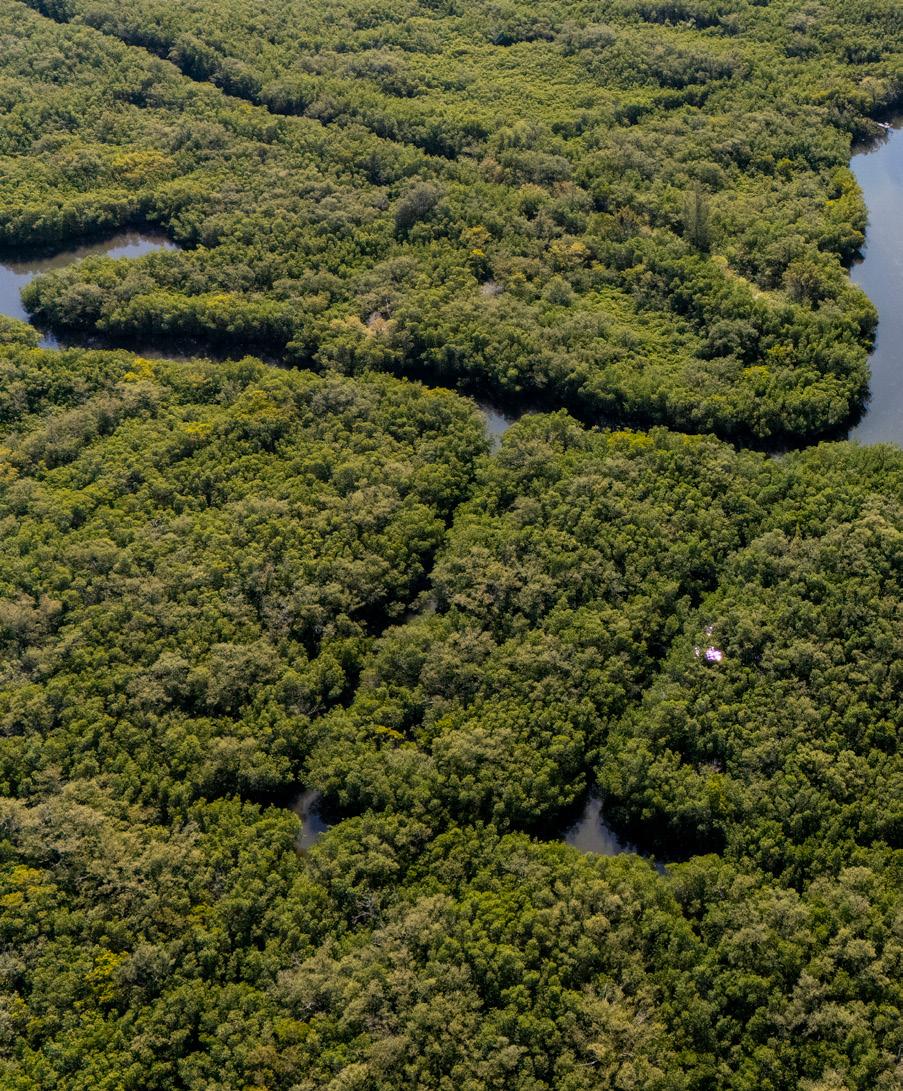
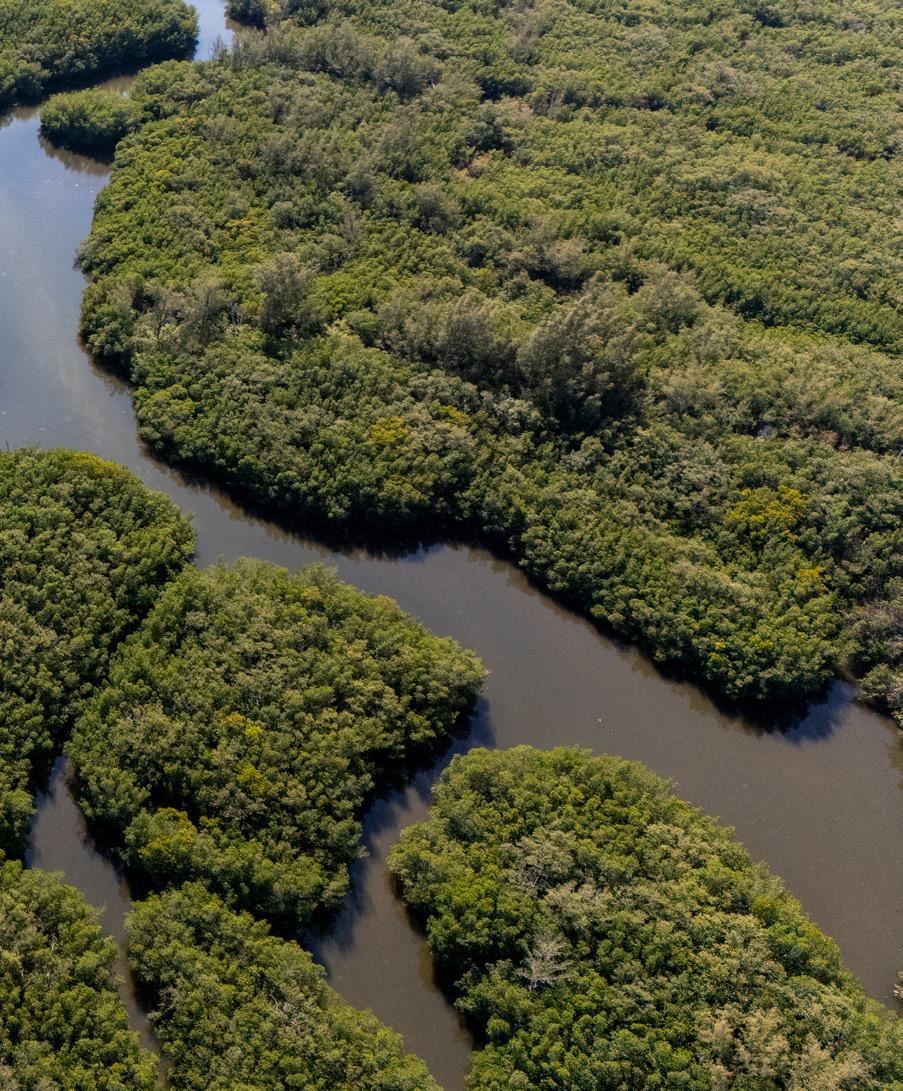
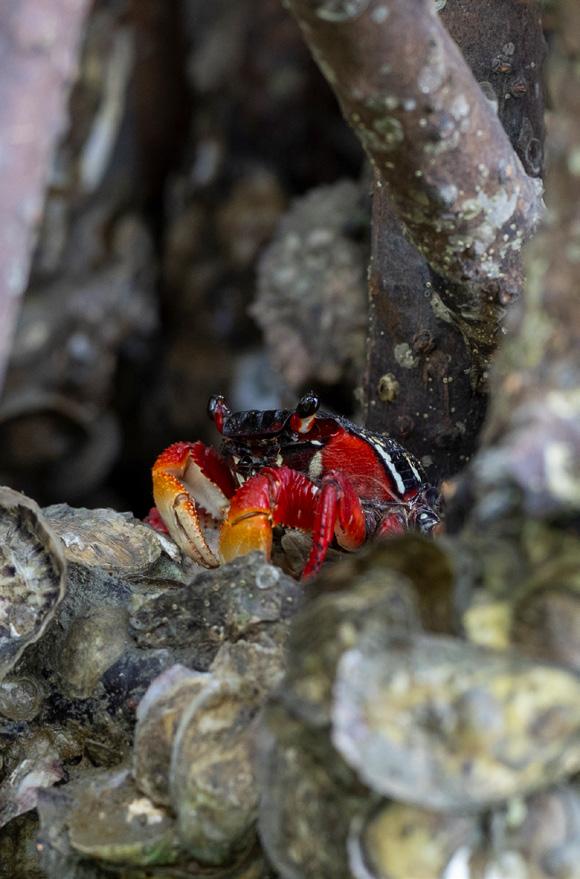
By Jim Field
photography by Victoriya Knapp
Mangroves in Florida are natural infrastructure for maintaining, shaping, and even building our islands and shorelines. In Vero Beach specifically, living along the Indian River Lagoon (IRL), mangroves form the living boundary between land and water.
The ecological system in which mangroves play a central role is biologically diverse and complex, encompassing a rich assortment of flora and fauna and natural processes determining food abundance and water quality. The fact that the IRL is one of the most biodiverse estuaries in North America is attributable in large measure to the presence and health of our mangrove forests.
Accordingly, we should all be fanatical mangrove proponents, advocates, and preservationists. To foster this enthusiasm, this article will provide a factual and visual overview.
Mangroves are salt-tolerant plants—trees and shrubs—that grow along tropical and subtropical coastlines. They form dense, intertidal forests in and along shorelines, estuaries, lagoons, and river mouths. They thrive in brackish and saltwater environments and tidal zones that flood and ebb daily.
Globally, they are native to such places such as Brazil, Indonesia, Australia, and the U.S.—mainly Southern Florida. Notably, the northern range limit of mangroves along the Atlantic Coast is Sebastian, which historically has marked the demarcation line for freeze events.
As expected, in contemporary times mangroves are threatened by coastal development, dredging and shoreline hardening, rising sea levels, pollution, and altered freshwater flow. On the plus side, there is building momentum in some regions to protect and restore mangrove ecosystems.
Southern Florida has three native mangrove species, each with very different ecological roles. Together they form a layered coastal defense and habitat system moving inland and increasing in elevation—thus creating a vertical ecosystem structure. Without all three species, mangrove forests lose ecological complexity and survivability.
Red Mangrove (Rhizophora mangle)
Directly along water’s edge in areas with constant tidal flooding. Long, arching prop roots look like stilts standing in water. Prop roots anchor the tree/shrub in loose, shifting mud. Salt elimination occurs at the root level. Viviparous reproduction, meaning seeds germinate while still attached to the parent tree, then drop as floating seedlings. Key roles: first coastal habitat structure, nursery shelter for juvenile fish and crustaceans, first species to colonize new shoreline sediments. Red mangrove.
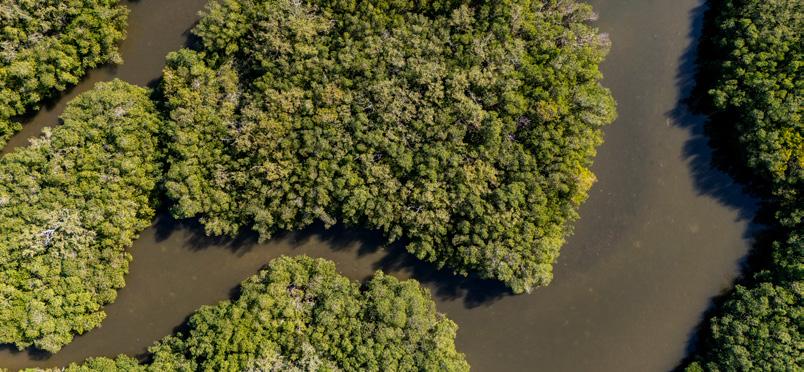
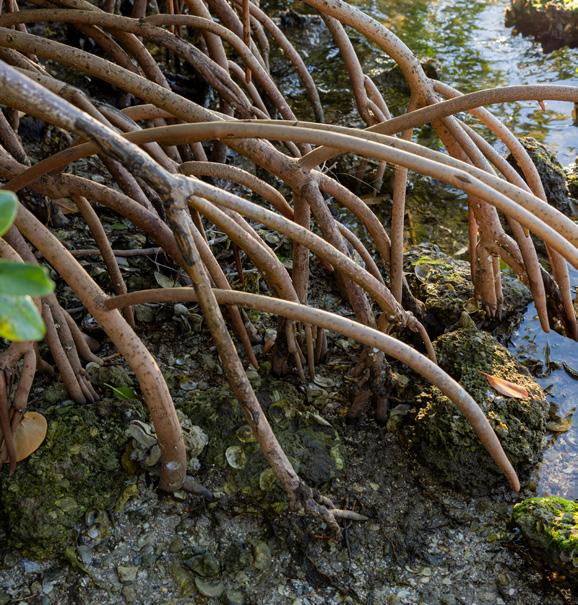
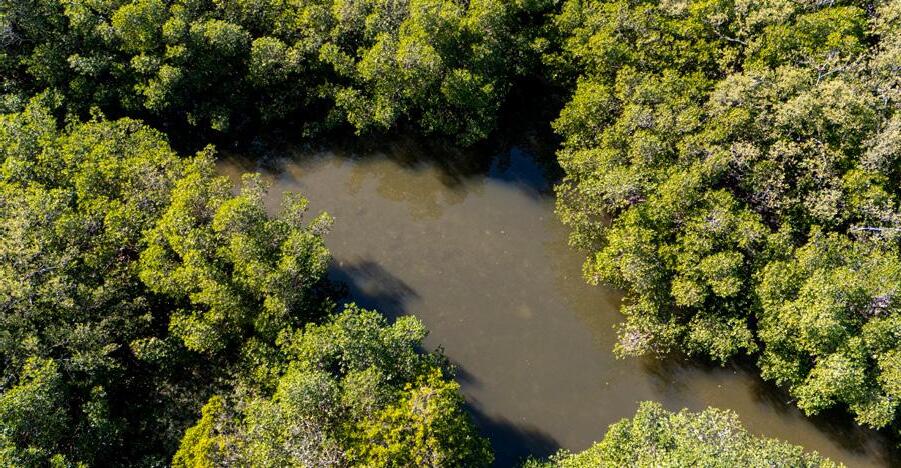
Black Mangrove (Avicennia germinans)
Subtly higher elevation, areas that flood but also periodically dry out. Pencil-like breathing roots (pneumatophores) in clusters sticking vertically out of mud. Pneumatophores facilitate oxygen intake in waterlogged, low-oxygen soils. Salt excretion through specialized leaf glands. Key roles: stabilize soil behind red mangrove band, dense stands just inland from red mangroves, feeding habitat for shoreline invertebrates.
White Mangrove (Laguncularia racemosa)
Highest and driest areas of mangrove habitat, transitional zones with inland vegetation. Rounded, oval leaves. Two small salt glands near the leaf stem. More tolerant of occasional drought than long-term flooding. Key role: defines landward edge of mangrove ecosystem.
Land Formation
In the Indian River Lagoon, mangrove forests are slowly (imperceptibly) creating new land by trapping sentiment and building soil vertically. This phenomenon is called biogenic land formation—meaning land built by living organisms rather than geologic activity.
The process begins with sediment trapping by mangrove roots, which act as filters.
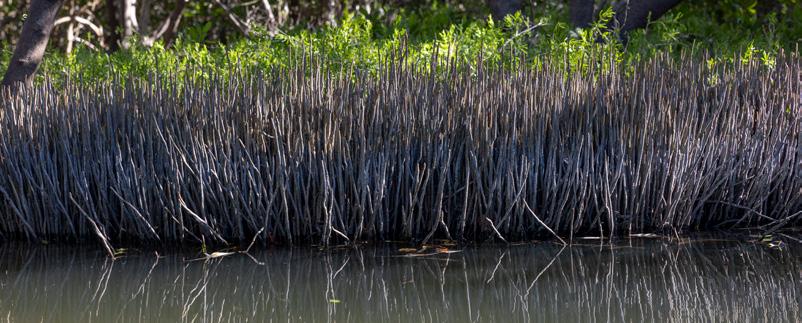

When tides move, water slows through root networks, suspended mud, sand, organic particles settle, accumulating around roots and trunks. Simultaneously, as leaves, roots, and branches fall they decompose slowly and incompletely with accumulation of organic matter, forming thick, dark peat-like soil. Further, as trees/shrubs grow, roots grow vertically through accumulating sediment, pneumatophores help stabilize new soil layers. Ironically, hurricanes help mangroves build land by depositing large sediment loads, debris, and fallen organic material. Indeed, mangrove systems can add elevation after storms. Finally, over many decades mangrove forests can push shorelines seaward and create new estuary islands. Importantly, mangroves store huge amounts of blue carbon in their roots and soil. (“Blue carbon” refers to ocean-related habitats, “green carbon” forests on land.)
Mangroves are among the most productive ecosystems on Earth. Mangrove leaves fall into the water and decompose, becoming detritus—the base of the Indian River Lagoon’s food chain. This organic matter feeds bacteria, small invertebrates, shrimp and crabs, small forage fish. This energy then moves up the chain to larger fish, birds, dolphins, and larger species. The Lagoon receives freshwater from rainfall, canals, and rivers, with mangroves absorbing nutrients, trapping pollutants, buffering salinity swings.

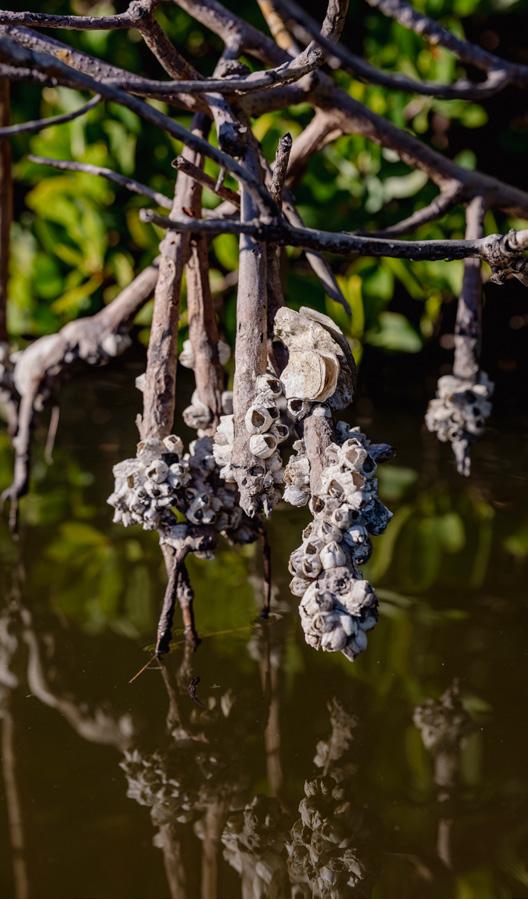
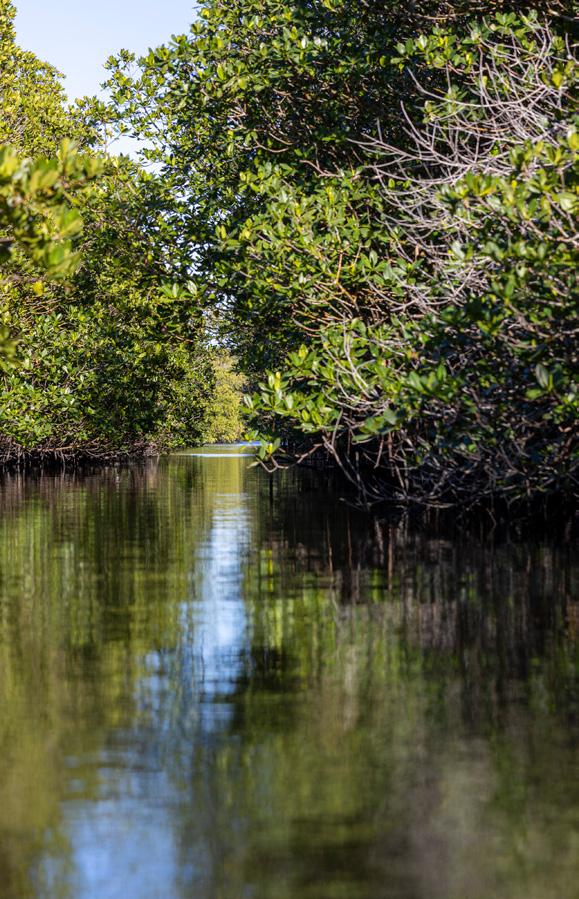
The prop roots of red mangroves create underwater shelter for juvenile fish. Common species include snook, tarpon, red drum, mangrove snapper. Roots protect fish from predators, calm water flow, stabilize food supply of small crustaceans and plankton.
Mangrove forests also serve as bird rookeries for coastal populations. Species include herons, egrets, pelicans, roseate spoonbills. Mangrove islands and dense canopy protect nests from predators and human disturbance.
Mangrove forests and seagrass beds have a symbiotic relationship, working together to stabilize shoreline and affect water quality. Mangroves protect seagrass beds by reducing wave energy, trapping sediment that can smother seagrass, stabilize shoreline runoff. Critically, seagrass requires clear, low-turbidity water for sunlight penetration. Conversely, seagrass beds harbor immature fish that then migrate to mangroves for predator protection.
Similarly, mangroves and seagrasses exchange energy through detritus. Mangroves contribute fallen leaves and organic particles, seagrasses oxygenate sediments through root activity and stabilize underwater soils. Together they feed the Lagoon’s nutrient web.
Finally, there is a water clarity cycle. Mangroves trap land-based nutrients and sediments, while seagrass captures dissolved nutrients and slows water movement near the seabed. Working together, they maintain a balance of nutrients to support biological productivity while inhibiting algal blooms.
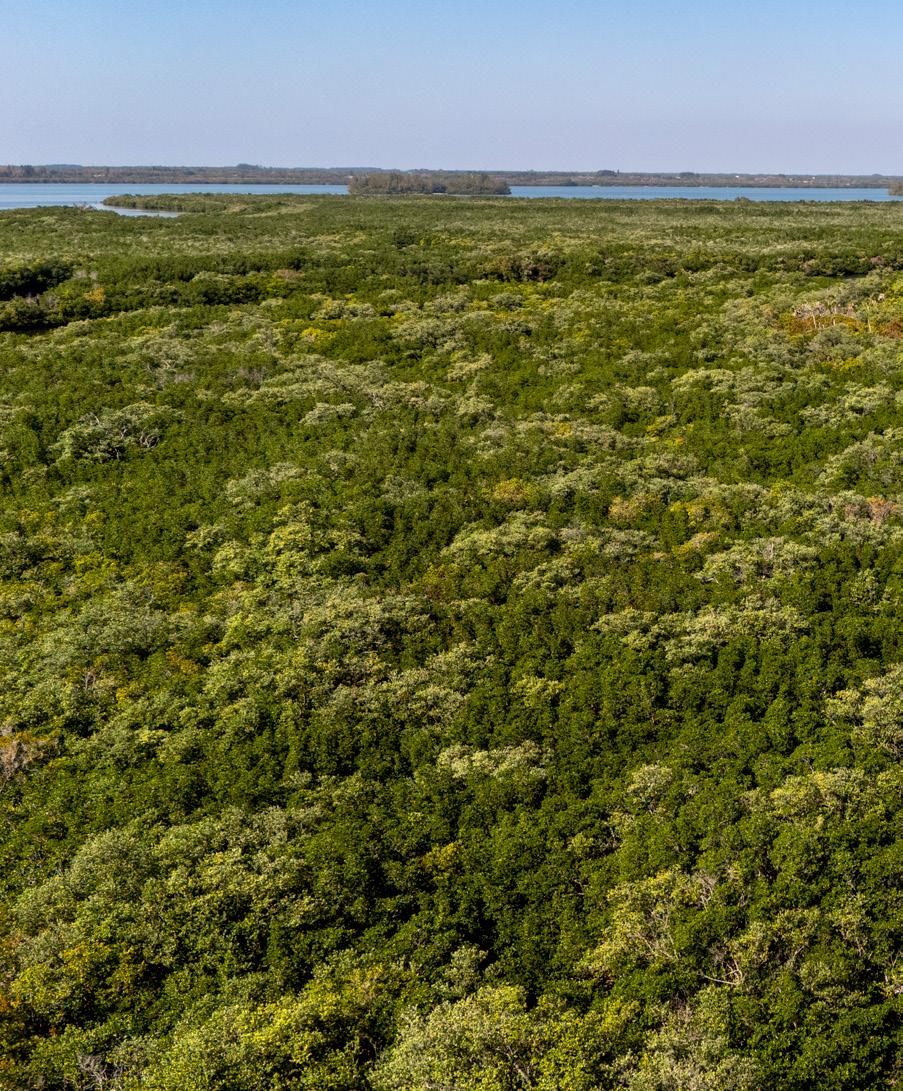
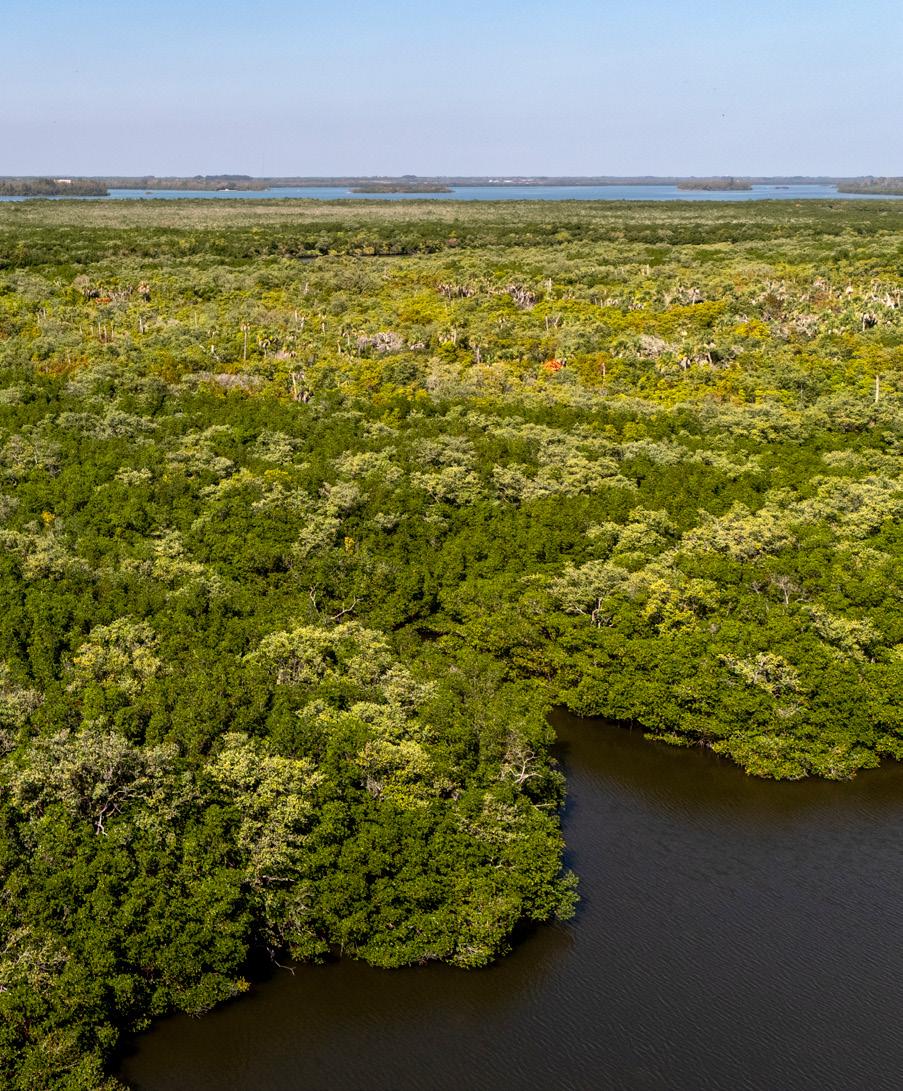

by Jim Field images and artwork source Wikimedia Commons.
“He felt the power of the Gulf Stream under the boat and knew the ocean was alive and full of giants.” Ernest Hemingway. The Old Man and the Sea. Scribner, 1952.
The Gulf Stream is one of Earth’s most important natural forces, a large and powerful Atlantic Ocean current that carries warm water northward from the Caribbean Basin, keeps Europe warmer than other places at similar latitudes, and heavily influences vast weather systems and marine ecosystems.
Notable for Vero Beach, the Gulf Stream flows right offshore—roughly 10-15 miles from our beaches. If we had tall condominiums, occupants on higher floors could look seaward and spot the deep cobalt blue water the current is known for. Better still, travel 30 minutes eastward in a boat to fish for pelagic species—sailfish, marlin, tuna, mahi—that seek out the Gulf Stream’s warm water, deep depth, and abundant bait fish.
Everything about the Gulf Stream is large scale, dramatic, and extreme. As our close neighbor, the Gulf Stream naturally sparks curiosity, and this article highlights several key things about it that are worth knowing.
For many years I fished the Gulf Stream regularly from Hatteras Village, North Carolina, in the Outer Banks. Its western edge was typically 15 miles offshore, a quick boat ride once you exited Hatteras Inlet. Closing its approximate location, we would readily make out the Stream’s characteristic deep blue water and differentiated surface texture—more chaotic, roiling, turbulent. Crossing into it, there is a hard temperature break— we would watch in awe as our seawater temperature gauge’s needle climbed six, eight, ten degrees higher in seconds. This temperature break could be seen on the surface by what appeared to be a line drawn by soap detergent laid down using a squeeze bottle. More times than not, huge hammerhead sharks would place themselves right on the line, spaced 20 yards apart, swinging their tails just enough to maintain a position, on the hunt for any fish that would be drawn to the temperature break. We would troll bait right next to the line, also hunting. And inside the Gulf Stream our odds of encountering large game fish increased many fold (some days analogous to shooting fish in a barrel).
Spectacularly, in winter the Gulf Stream would smoke—quite literally—its much warmer water producing clouds of vapor that elevated off the ocean surface in shapes that looked like mini-tornados— dozens of them. We’d drive into this vapor wall and see nothing beyond 20 yards. Eventually there’d be an opening affording a larger view—like entering an auditorium. On one occasion five foot breakers developed, inside of which we could see dozens of surfing dolphins. It was a visual you never forgot.
The Gulf Stream is best described as a powerful warm ocean current in the Atlantic Ocean. It starts in the Gulf of America, flows northward through the Straits of Florida and along the East Coast of the United States. Reaching Cape Hatteras, North Carolina, it turns northeast across the North Atlantic Ocean towards Bermuda and Western Europe.
• Length. Roughly 3,000 to 4,000 miles long. If laid across the U.S., it would stretch from Florida to Alaska—a massive “river” of warm water cutting through the ocean.

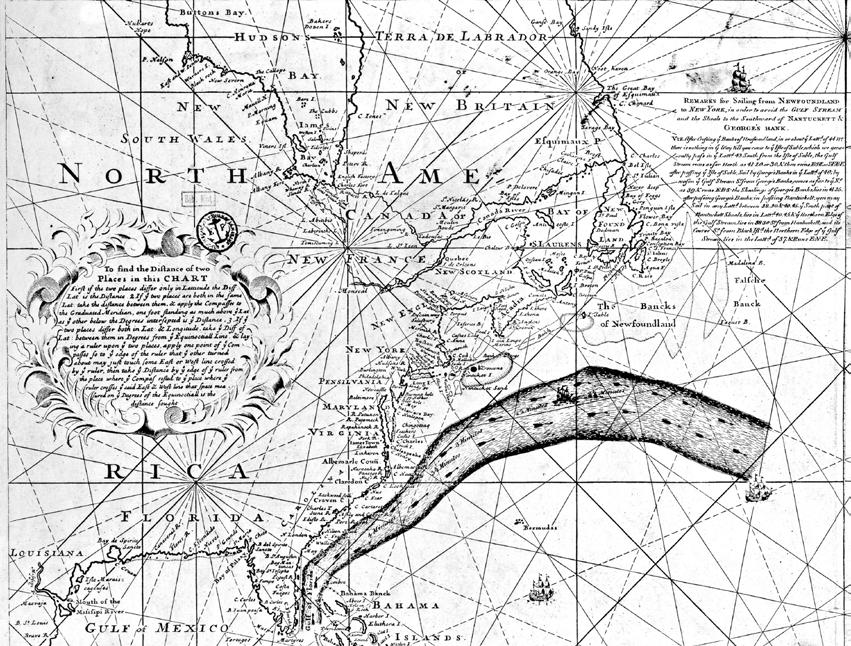
• Volume. Carries more water than all the world’s rivers combined. To appreciate its scale: Every second the Gulf Stream moves roughly 30–100 million cubic meters of water, about 150 times more water than the Amazon River. This is important in that it transfers vast quantities of heat from tropical regions towards the North Atlantic, helping regulate climate across the Atlantic Basin and influencing weather in North America and Europe.
• Width. Varies along its path depending upon location and season. Only about 20-50 miles in the Straits of Florida as it squeezes through the narrow passage between Cuba and Florida. Expands to 50-80 miles along the U.S. East Coast, then broadens to 80-100+ miles beyond Cape Hatteras into the North Atlantic.
• Depth. The Continental Shelf off Vero Beach is very narrow, then drops off suddenly, bringing deep ocean water— and the Gulf Stream, which seeks deep water—very near our shore. As the shelf falls away steeply, water depth increases rapidly to 3,000 to 4,000 feet. Within the Gulf Stream core, the fast-moving current flows over deep water, typically 2,000-4,000 feet.
• Temperature. Varies along its path due to a number of factors: change in latitude; heat exchange with the atmosphere; and mixing with surrounding waters. Typical temperature ranges include: Straits of Florida, 78–84°F; off southeastern U.S., 72–82°F; near Cape Hatteras, 68–77°F; into the North Atlantic, 50–68°F.
However, the temperature contrast between the Gulf Stream and the surrounding Atlantic Ocean can be 10–20°F across only a few miles—painting a sharp boundary clearly demarcated on satellite maps.
• Speed. One of the fastest ocean currents in the world, with speed changing due to: narrow vs. wide channels; seasonal pressure gradients; wind patterns and eddies; and water depth (e.g., deeper water moves more slowly). Typical speeds include: Straits of Florida, 4-6 mph; off southeastern U.S., 3-4 mph; near Cape Hatteras, 3-4 mph; into the North Atlantic, 1-3 mph.
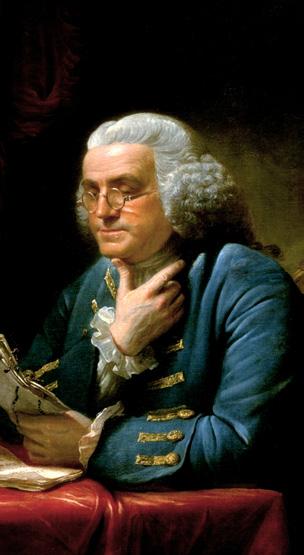
The Gulf Stream is created and set in motion by the physics of the oceanatmospheric system. Near the equator steady trade winds blow from east to west across the Atlantic, pushing warm surface water toward the Caribbean Sea and the Gulf of America. Because the water is pushed westward and partly trapped by land (Central America and North America), it accumulates in the Gulf of America, whose sea level is accordingly several inches higher than in the open Atlantic. This creates pressure that forces water through the Straits of Florida—the narrow passage between Florida and Cuba. Squeezing through the Strait, the water speeds up and becomes a definable and powerful flow called the Florida Current, which, once north of Florida, becomes the Gulf Stream proper. Responding to the Coriolis effect, the moving water is deflected to the right in the Northern Hemisphere, causing the Gulf Stream as it flows north to hug the
U.S. East Coast. Traversing further north, the Stream gathers additional water from the Atlantic, becoming wider and deeper. Approaching Cape Hatteras, the Stream veers away from North America and heads northeast across the Atlantic, eventually contributing to the broader circulation known as the Atlantic Meridional Overturning Circulation.
(Note: The Coriolis effect is the deflection of moving air or water caused by Earth’s rotation. As currents or winds travel across the planet, they are turned to the right in the Northern Hemisphere and to the left in the Southern Hemisphere. This effect shapes global wind patterns, ocean currents, and the rotation of large storms.)
The Gulf Stream often appears a deep cobalt blue—when viewed from a boat, aircraft, or satellite—because of extreme water clarity and the way sunlight interacts with pure seawater. Located far from river mouths, the Gulf Stream carries very little suspended sediment (sand, mud, or silt) to scatter light, producing dark, crystal clear water. Further, the Gulf Stream is relatively nutrient-poor, supporting little plankton near the surface and thereby fewer organisms to scatter green light. Also, seawater absorbs the longer red and orange wavelengths of light, leaving shorter blue wavelengths to penetrate deepest and reflect back toward the eye, giving the water its blue appearance. Finally, Gulf Stream water is exceptionally clear—with 100–200 feet of visibility at times—allowing light to penetrate deeply and reflect back with a dark, saturated blue tone—often described as cobalt or indigo.
The Gulf Stream forms massive rotating eddies—often 100–200 miles wide—caused by the interaction between fast-moving water, Earth’s rotation, and surrounding slower ocean waters. Natural to large ocean currents, these phenomena are formally known as “mesoscale eddies.” Notably, the velocity difference between the fast-moving Gulf Stream and slower surrounding ocean water creates friction along the edges of the Stream, these small
disturbances growing larger over time. The Coriolis effect amplifies any small rotation, producing, in the Northern Hemisphere, clockwise eddies called “warm-core rings.” The Gulf Stream does not flow in a straight line, but meanders and snakes like a river, which can cause segments of water to be “pinched off,” creating a separate rotating ring of water. Compared with surrounding water, the Gulf Stream is warmer and saltier—and thus denser—facilitating the formation of stable eddies that can persist for months. Importantly, eddies help the ocean distribute heat and nutrients. Incredibly, some eddies can last up to a year and travel hundreds of miles, acting like a min-ocean ecosystem within the larger Atlantic.
Moving vast amounts of warm tropical water northward—thereby transferring heat from the tropics into the atmosphere over the Atlantic Ocean—the Gulf Stream has a powerful influence on weather, influencing storms, wind patterns, and regional climates. As the Gulf Stream flows north from Florida toward the North Atlantic, warm water releases heat into the air, warming the larger atmosphere. This heat, in turn, helps drive air circulation patterns—for example, keeping nearby coastal regions milder, especially in winter. Crucially, warm ocean water is a major energy source for hurricanes moving north along the U.S. East Coast, intensifying their strength when passing over the Gulf Stream’s warm water. Winter storms forming off the East Coast—known as nor’easters—also gain energy from the warm current. The strong temperature differential between the Gulf Stream and cooler Atlantic water strengthens atmospheric fronts, triggering storm development along the East Coast. Once turned at Cape Hatteras and continuing northeast, the Gulf Stream becomes the North Atlantic Current, which carries warmth toward Europe, producing much milder temperatures than regions at the same latitude in Canada. In sum, the Gulf Stream distributes vast amounts of tropical heat northward, shaping storm tracks, seasonal temperatures, and the climate of entire continents.
Benjamin Franklin and the Gulf Stream Benjamin Franklin played an instrumental
role in identifying, mapping, and applying knowledge of the Gulf Stream to improving trans-Atlantic travel. In the 1760s, while serving as Deputy Postmaster General for the American colonies, Franklin picked up on a puzzling fact that British mail ships sailing from England to New York often took longer than American merchant ships making the same voyage. Consulting his cousin Timothy Folger, a Nantucket sea captain, Folger explained that American whalers knew how to avoid or use this observed powerful current to their benefit, while British captains were oblivious to it, often sailing into it, fighting its flow. Franklin and Folger went on to produce one of the first charts of the Gulf Stream in 1769, detailing the current’s track along the North American coast; its warm-water boundaries; and guidance for captains on how to use or avoid it. Franklin shared the chart with Anthony Todd, secretary of the British Post Office. It was printed in London in 1769; a second copy was printed in Paris 1770–1773; and a third version was published by Franklin in Philadelphia in 1786. Today, Franklin is generally credited as the first person to chart the Gulf Stream, another of his many achievements.


Ship crews placed a mercury thermometer in a bucket or container of seawater drawn from the ocean and then recorded the temperature. Alternatively, a thermometer could be lowered over the side and into the water. Franklin asked captains crossing the Atlantic Ocean to record temperatures at different points along their routes. Comparing readings revealed a consistent pattern of warmer water delineating the Gulf Stream, cooler water indicating the surrounding Atlantic. Franklin also used practical knowledge from mariners who recognized the current by water color, floating seaweed (Sargassum), differences in wave patterns, faster ship speed over ground. Franklin’s approach was an early form of oceanographic surveying.
(Continued)
the theater, the better restaurants. We have the best beaches, not only from an aesthetic or geography standpoint, but they’re all guarded and they’re all where you can bring your family and enjoy a day at the beach.
We have the best boat-launching ramps and this puts demand on our infrastructure. The county has not built boat-launching ramps to meet the demand for the county. They have one in Sebastian. We have two, located in Riverside Park and over at MacWilliams Park that have high demand, ridiculously high demand. The county hasn’t found a place to help relieve that.
The other thing is there’s a county swimming pool in the north part of the county, but there’s not a county swimming pool in the south part of the county because Leisure Square [Vero’s city recreation complex] has a swimming pool. We have more county people using it, with more memberships there than we have city people. We have 12 tennis courts at Riverside; there are only two tennis courts in all of south county managed by the county. And we have more county residents or members at Riverside than city residents. So we provide a lot of services to the county, which we don’t get reimbursed for, by the way.
That puts a lot of pressure on our infrastructure and with the county growing exponentially, where do you think these people are going? The Oslo corridor: where do you think they’re going? The best beach is South Beach and that’s the first beach you come to when you cross the causeway.
So I think our issues are how are we going to convince the county to share—even though we’re not growing—to help us meet the demands that their growth is going to have on our infrastructure.
JS: Do you consider the relationship with the county good? Are they pretty receptive to you guys putting your hand out and saying, “Hey, our tennis courts, you guys are taking most of the occupancy on those tennis courts. Can you help us?”—that kind of thing?
JC: Historically, we’ve had a dialogue, but it was hard to get them to give us money
for Humiston Boardwalk, and it initially came with all kinds of preconditions. I find our relationship with the county almost like siblings. We happen to be the older sibling, but they happen to be the sibling that grew up to be bigger and faster and they’re reluctant to admit that we’re the brand of the county; and therefore, people come here basically because they’re coming to Vero Beach, they’re not coming to Indian River County.
It’s a very conservative county, fiscally. They have been reluctant in the past to share some of these costs. We have a dialogue with them. We’re always talking to them; it’s not hostile. It’s just that they have not seen their way clear that this is an investment they have to make at this point in time, even though city residents are county residents.
JS: Your key issues have included Three Corners, the new wastewater plant, Humiston Boardwalk repair, and downtown master plan progress?
JC: Yes. The current wastewater plant is an environmental disaster waiting to happen; it’s way past its useful lifetime. The new plant is going to be state of the art, what they call the “One Water” project [costing $164 million and on budget so far]. Rob Bolton [city water and sewer director] has done a tremendous job in managing that project.
JS: Humiston Boardwalk renovation, money still needs to be raised for that project?
JC: We’re trying to seek more appropriations from the state to help pay for it. We’ve asked the county for more money; we’ve also asked for a federal earmark [and are receiving a roughly $400,000 donation of precast concrete from Clayton Sembler, who owns CDS Manufacturing and whose brother, Charlie, served Indian River County as tax collector and state representative] for the boardwalk, so we’re confident we’ll get it done.
JS: Downtown master plan, where does that stand? The referendum to increase downtown housing density failed in 2024.
JC: Not giving up, but we also have to listen to what the people want. In this year’s budget, we’re going to be redoing the playground portion of Pocahontas
Park. We have $700,000 in the budget for Pocahontas Park. The year after, we have another $700,000 for the north side of Heritage Center to redo that whole green area and put in a permanent stage. There’s some new lighting that’s been installed (with more coming) on what is our Main Street, which is 14th Avenue. We’re going to look at doing more updating to the streetscapes, so we’re going to brighten up the area. I think a lot of progress will be made downtown and it’s good because it’s really become a gathering place for people.
JS: Did we list all your key priorities?
JC: One thing that we did leave out— succession planning at the city. When we did our goals and objectives for the city, number two was succession planning and the systems upgrade for our financial systems and that type of thing. We have a number of people in key positions, including city manager and the city attorney, who will be retiring within two to four years, and rather than just wait until it happens, how are we thinking about it? [The council hires the city manager, attorney, and clerk, but other department heads are hired by the city manager.] What’s the plan for those positions? They may have a plan, but let’s enunciate it and get it in front of the City Council and get some of our feedback. That’s important, especially in such a small city like this; we run a very lean ship here.
The other thing is the systems. When we had the issue with our audit [missing a state filing deadline] we found out that city ERP [enterprise resource planning] systems are dated and we need to upgrade those. We’ve allocated capital to get that done. It’s in the process right now, but that’s important. [The missed deadline involved a personnel issue with a prior employee, not a systems issue, Cotugno said, noting it cost the city $153,000 in lost sales tax revenue. Staff are correcting reporting protocols.]
JS: How do you deal with sometimes sharp criticism?
JC: I’ve decided I have a purpose; I have to personally deliver certain services to the city. From my standpoint, I take it
from where it comes from and I assess who says it. If I get legitimate criticism from people I respect, fine, I try to address that. But if I’m getting criticism from people who don’t want to speak with you or don’t have a conversation with you, or don’t want to engage with you in any way, shape, or form—because I’m always open to engage with anybody, and you don’t have to come here; we can go meet for coffee, lunch, or whatever—then it’s their issue and if you want to go down your track, that’s fine.
JS: You have to have that kind of attitude because it would probably drive you crazy otherwise.
JC: The Mayor here is more ceremonial. The person sitting here, you can just be the guy who shows up, is the parliamentarian at the meetings, hit the gavel, or you can do something else. I prefer to do something else with it. I do all that parliamentary stuff but I’m the cheerleader for the city. I’m an economic development guy. If there is some issue, I try to connect people, build up relationships, get a better understanding of what everybody’s looking for because the best way to do that—sales-marketing—is to go out and talk to people and find out what are their issues. It’s “What are they looking to get out of the city? What do they need? What’s going on?” So that’s what I try to do—bring people together to address the issues that face the city.
[Supporting his belief that good ideas can come from anywhere, Cotugno recalled a time when he was in Japan for his job at Shinko. A major customer, worth about $400 million in revenue, was having a problem with one of Shinko’s products and a large group of Japanese managers and executives were sitting around a large conference table debating a possible solution. The engineering team suggested a fix that would cost about $10 million, after which a lower-level technician from the manufacturing floor, who was not at the table but observing from the periphery, suggested a solution that would cost less than $1 million, and it worked.]
I think that’s part of what I got to learn working with them is that you never know where a good idea comes from. At the local level, you never know where a good one comes from. I think it served me well on the City Council because I’m always not
only willing to listen to the people on the dais and give them their time, but also outreaching to the community in general or some person that may have a good idea that could affect the city in a positive way. I think that’s part of my management style: to get consensus, to always drive to get 4-to-1 council votes—3-to-2 counts—but 4-to-1 is always better. Try to understand a person’s position, use that understanding to formulate your ideas and develop a conversational approach to problem-solving, finding solutions. That served me well when I was at Shinko and I believe it served me well here.
JS: You’re retired, so you have more time on your hands, but I would imagine this still takes an awful lot of your weekly time.
JC: If you do it right it takes time and it’s not really a part-time job. I think to understand the issues, to engage with the staff in a productive way, takes time.
JS: Is it basically a full-time job?
JC: It all depends. It can be if there are certain issues going on, like Three Corners, an audit issue, the new wastewater treatment plant—when those things all come together, yeah, it can be a full-time job. For the most part, it’s a three-quarter-time job.
JS: What does the Mayor get paid? I assume you get a little more than the average councilperson, right?
JC: Not much more. I know I clear $1,188 a month [after a $50-per-paycheck contribution to United Way].
JS: Is your wife, Jan Williams, still working?
JC: No. She’s now on the board of directors for Senior Resource Association; she’s also on their finance committee and heads up their audit committee. And she’s on the board of directors and treasurer of Coastal Connections—so she’s busy. And she plays a lot of tennis.
[The couple married 34 years ago, his second marriage. He has one daughter— Jana, from that marriage, who’s married to Paul Homer—and two grandsons, 20 and 17. Jan grew up in Indiana, near Chicago, and graduated from Indiana University with a bachelor’s degree in management and accounting, and was thrilled by this
year’s national football championship, Cotugno said. She retired in 2018 from the Alzheimer’s Association, where she spent 14½ years, the last five as regional director of finance. Among Cotugno’s various volunteer positions, he’s an ambassador/ advocate for the Alzheimer’s Association and on a state committee addressing Priority 1 Alzheimer’s disease and related dementias, is a member of The Learning Alliance board, which “I hold near and dear to my heart” and more.]
JS: How did you end up in Vero Beach?
JC: We found Vero by accident. We knew about Vero, but I had never been there. [They were in Orlando for a conference for Jan in 2007, had some extra time, and decided to drive over and check it out.]
JS: Was it love at first sight?
JC: Oh, yeah. We came here on a beautiful day and you go over the Barber Bridge and it’s a Chamber of Commerce day. You can see the ocean because there’s no highrises. That’s the first thing you notice, for anybody who hasn’t been here before, and the trees, the oaks, the whole nine yards, and you go, “Hmm, let’s check this joint out” and we did. At that time, it was the Vero Beach Hotel [Kimpton], we had no reservation and I actually negotiated a rate and we stayed there for a few days and fell in love. We came back every year at least once or twice a year and stayed a week. Then we decided around 2015 or ’16 maybe this should just be the place to retire. And in 2017 just before, I think, Hurricane Irma came ashore, we bought our house. We renovated it and moved in on April Fools’ Day, 2018.
JS: What do you consider your biggest accomplishment to this point as Mayor City Councilman?
JC: I think keeping Three Corners moving forward has been the most public one. The city got caught up in a small controversy and having to a make a decision to start over on developer selection in mid-2024 was a tough decision, but I’m glad we did what we did to keep the process moving forward.
[The project to redevelop the former Vero Beach power plant property at the northeast corner of 17th Street and Indian River Boulevard calls for about 250 hotel rooms, restaurants, event
JOHN COTUGNO
center, marina, public open space, and more—a project estimated at nearly $300 million, with work envisioned to start next year and with segments opening in phases over three-plus years. The city in March received a $50,000 check from the developers, a partnership of Clearpath Services and Madison Marquette, binding the city to begin negotiations on the project’s contract. The project is on one corner, the other two being the southeast corner with the current wastewater plant that will go offline when the new plant under construction at the northeast corner of Vero Beach Regional Airport is completed. Once that plant goes online in late 2027, the old plant will be demolished and the 14-acre site redeveloped, with three acres for a new Youth Sailing Foundation building and the rest yet to be determined. The third corner, the southwest corner of the intersection that is an empty grass lot, has a development proposal from Clearpath for a mixed-use retail and workforce housing project.]
Also, my biggest accomplishment, I think, has been making sure there’s free and open dialogue going on about all these issues. A lot of the infrastructure issues that we faced, a lot of the upgrades and revitalization issues, getting the City Council to approach that stuff head-on, having open and frank discussions when it came to the airport and the expansion at the airport. It’s the communication amongst the City Council and trying to get the City Council to be more proactive than reactive; adapting ourselves to the needs of the city versus getting caught in some ideological, philosophical discussion that may benefit you personally, or maybe a constituent or two that you have, but really doesn’t benefit the city.
JS: It sounds like what you’re saying, too, is the city is very citizen-oriented and is trying to do what’s right, and it’s not always easy—it’s sometimes painful, in fact—but you try to be very public with issues and do the right thing?
JC: Yes, that’s my philosophy. There are probably media outlets that will disagree with that; that’s fine, too. I don’t personally understand why you want to be in this seat, a City Council seat, not necessarily a Mayor seat, unless that’s your objective. Even if you think you’re going to go on
to a higher level of government, if you don’t execute at this level how are you ever going to be able to execute at that higher level? At this level, it’s all about what the public needs—quality of life and public safety—everything that’s under that umbrella. I know people well enough on my City Council to know that’s what their philosophy is. We all have a different approach to it, we have different careabouts but, in general, it’s what we’re trying to do.
JS: What’s your biggest regret in your role to date?
JC: What happened with the downtown referendum [when city voters rejected a referendum to approve more housing density in parts of downtown]. I knew it was going to be difficult, but I didn’t think it would be that overwhelmingly difficult. I thought we had a case of revitalizing our downtown area that made sense and obviously people didn’t trust us enough to agree with that—that density wasn’t going to get out of control. That our overall objective was to provide for a dynamic downtown that could attract—I’m old, I can say this—a younger demographic. I think that is important to our city, to our community, because we skew very old and it’s hard for us to attract younger people unless they’re very successful and want to come back here because of lifestyle. I think that, at this point in time, has been my biggest disappointment. [The Tampa Bay Times in 2024 reported that among 3,100-plus counties in the United States, Florida is home to seven of the top 10 with the highest median ages, including Indian River County, No. 7 nationally, at 55.6 years. The median is where half the people are younger and half are older. Florida’s median was 42.7 years.]
JS: What works in city government and what doesn’t?
JC: The local government has an ability to understand and determine what a local issue or problem is, or a fix that’s needed. But what it’s not good at is executing a fix, or the solution—the problem is executing. Government’s problem with executing is the procurement process, all the careabouts in a procurement process. How you send an RFP [request for proposals], how you execute it, how you award contracts, how you have to make sure you’re addressing certain issues in procurement
policies, economic policy, social-economic policy, etcetera, etcetera. That slows down the process.
I think that’s the frustration the public sees and the public equates that with either trying to line your pockets, get your brother-in-law the contract, or “You guys are lazy, you’re not smart enough” or whatever, because government’s an easy target. Anything that goes wrong, blame that person or blame that government for not getting it done right. I think the issue with government is their ability to be able to act quickly in as expeditious a manner as you would to execute a project, understanding that you’re going to have problems with the project when you’re doing a timeline or a Gantt chart—you’re going to have issues. But because of the way the process is, what you need to do as a government is to make sure you’re satisfying all the procurement policies, employment practices. It slows down the process.
JS: What would you tell Vero Beach residents about the state of their city as it stands today?
JC: I think, from all aspects, the city’s in a good position. The City Council that I’ve been involved in has been a City Council that has acted in the best interest of the city, took over a lot of projects, started some projects. Some things were forecasted, some things weren’t. Who would’ve thought we would have three airlines flying in here five years ago? But we reacted the best we could, we’ve debated amongst ourselves, we executed, so we’re actually in excellent shape. Our general fund is $36 million; as of the 24th of February we had $15 million of cash in the bank. Our unassigned fund balance at the audit time was $18.5 million, which is similar to your reserve account, and the city had $18 million in the capital reserve fund established from the remaining proceeds of the electric utility sale. So, financially we’re in great shape, contrary to what people want to make you believe.
Yes, we’ve made errors and the late audits were errors on our part, and I think we’ve done the best we can to apologize for that and correct them. But when you look at a city our size—a millage rate [2.9816, or $2.9816 per $1,000 of taxable property value] that is the lowest for a city of our size, full-service city on the Treasure
Coast, and probably including Brevard County, I believe. We have an excellent quality of life here from a social-economic standpoint, cultural standpoint, the amenities that we offer. We’re a low-key area, people still say hello to you, and you can enjoy yourself at the beach. [He cited a Patch.com report in February on a Safewise study finding Vero the safest community in Florida, and a Southern Living article last summer lauding the city under the headline, “Millionaires flock to this under-the-radar Florida escape—and you can too,” and another Southern Living piece in February, “I found a Florida beach town that’s perfect for a mother-daughter trip—no matter your age.”] We have an excellent quality of life and I think it’s every City Council’s responsibility to try to maintain that.
JS: What do you do for fun?
JC: Before I got a little too old, I used to be a runner but I don’t do much of that anymore. I do read a lot of fiction, nonfiction, got into memoirs lately. I’m a big John Steinbeck fan—I’ve read everything he’s ever written. I found him to be a real writer of the blue-collar people, and his writing really captures not only that period of time, but the impact of circumstances, happenstance in your life, just going about executing your everyday whatever, just to make it through, and these circumstances that spin around that from nothing more than living your life. So I find Steinbeck very interesting.
JS: Do you want to run for reelection in 2027?
JC: That’s a good question. I’ve had a good run. I didn’t retire to become anything. I’m probably the only person retired who stopped playing golf [laughs]. I think we will see how the rest of the term plays out. I think it’s been a good three terms as a City Council person. I’m a baseball fan, and although I’m not a Boston Red Sox fan, even though I’m from Providence, Rhode Island—Italians were Yankee fans back then because of Joe DiMaggio—I prefer to go out like a Ted Williams, go out with a home run at my last time at bat versus Mickey Mantle stayed two years too long and his .300 lifetime batting average went down to .298, if you get my drift. I’ll be 79 when the current council term is over. You don’t want to overstay your welcome— that’s my point of view.
JF: That’s a great overview, concretely conveying your footprint and presence. Because of the high mission and crucial nature of hospice care, perhaps we can start our discussion there. How would you concisely describe hospice services. LF: Hospice is a comprehensive model of care for individuals and, by extension, families confronting a life-limiting illness. Rather than pursuing a cure, hospice focuses caregivers and services on pain and symptom management, emotional support, spiritual care when desired, and support for caregivers and family members. When working with patients and families, we ask them to consider what their goals are for the life journey ahead of them. And everyone is going to have a unique view of things. For example, there will be a mother’s goal to attend her son’s wedding in six months. Similarly, a person might want to attend the birth of a grandchild or baptism. Alternatively, an individual might want to be free of stress, of responsibilities, to concentrate on quality of life and time remaining with family and friends. They might want to be free of pain and made comfortable to let nature take its course. The essence of hospice care is to understand individual and family goals and objectives and make them happen.
Everybody has a different journey to the very last breath. Some individuals will persist beyond everyone’s expectations— it’s amazing how our bodies can function without any resources at all, functioning for days and even weeks. Patients like knowing they are in control. There is a plan of care in place that reflects their exact desires and everyone is working to make that a reality. Sometimes they are holding on until someone special arrives. It’s Wednesday, and this person is coming Friday, and after they arrive they wait for an hour or so, and then pass. Or it could be the opposite—they don’t want this person to be in the room when they pass, so they wait until the loved one takes a break, or runs an errand, and that is when they let go.
I was taking care of a patient once, a lovely lady, and she was a naturist, loved being outside. And she asked if it was possible to move her bed onto the porch. We set her up looking into the garden, and she was so
happy. Then minutes later she was gone. She just wanted to be in control, and she wanted to die surrounded by nature. That was her space.
After a patient’s passing, hospice then focuses on bereavement counseling, which is vitally important. Every survivor is on a different grief journey as well. Some people go into a deep level of grief for a week—crying their eyes out—and at the end of that week they’re done, they’ve processed it, time to resume life. And for others the impact can be deep and longer term. Hospice is a resource for everyone as they deal with their loss in their own way. We are always here to assist.
On a more practical level, there are often pressing issues that need to be raised and addressed in a professional and timely manner. Is there a need for advanced care planning to set expectations and a process to follow that everyone can agree to? What is the status of a will or trust? Has a healthcare surrogate been identified? Is there a shared understanding of the pros and cons of a Do Not Resuscitate (DNR) order?
Ultimately, hospice is designed to provide an individual the maximum amount of quality time with family and friends—to be able to spend time with loved ones before they transition into the next life. We make them comfortable, their minds at ease and free of worry, for the best transition possible. For us as caregivers, it is an honor and privilege to be involved, to care for them up to the last moment.
Ultimately, the whole point of hospice is to provide the longest, most comfortable care that your loved one can have. And studies have shown that patients on hospice live longer than those not on hospice. And it makes sense—hospice is just a more organized way of passing, of transitioning, because you’re being treated properly, and so you’re going to optimize whatever time you have left. So you are sometimes going to live longer, because you’re doing all the right things, working in concert with dedicated and compassionate caregivers.
JF: That is beautiful. The antithesis of modern hi-tech medicine. Who makes up the hospice team?
LF: It is an interdisciplinary group of both professionals and volunteers working sideby-side to carry out with professionalism and compassion the priorities and needs of the patient and family. To begin, there is the Hospice Medical Director, who provides care and directs the care team in the development, delivery, and revision of the individualized and specific plan of care. The Medical Director will coordinate with other physicians to involve them in the care plan, and a patient’s regular doctor may continue as the primary care physician. There is a Hospice Nurse who assesses medical needs and coordinates other team members to achieve physical, emotional and spiritual comfort. This nurse provides consultations and/or home visits, listening, educating, clarifying options and choices. Next there is a Hospice Counselor, whose role is to provide emotional support and act as an advocate for the patient. Counselors may be social workers or other licensed therapists. Another key job is to make referrals to involve other caregivers and services such as homemaking, respite, food and shelter, legal assistance, and funeral arrangements.
Continuing, there is a Hospice Chaplain, an integral member of the team during this challenging time to support the patient and family emotionally and spiritually as desired. There are Hospice Aides to assist with personal care and activities of daily living—for example, shampooing, shaving, other grooming, changing bed linens. Hospice Volunteers provide emotional and spiritual support to you and your family, undergoing extensive training to understand the needs and experiences of the terminally ill and their families. They may provide companionship, run errands, assist simple hygiene, provide light housekeeping, make a light meal. And finally, there are Bereavement Counselors to help individuals and families work through personal struggles such as grief, family issues, or any medical circumstances. They encourage and guide difficult discussions working toward a sense of resolve and peace after death.
Importantly, this team meets every two weeks to discuss every hospice patient being cared for, reviewing in detail their plan of care and ensuring everything is getting done and care is fully coordinated,
to include medication management. The plan of care is the centerpiece of the relationship between the patient, family, and hospice team. The patient and family have primary input and understand it thoroughly and agree to it. It is updated regularly and changes approved by the individual and family.
JF: That is an A-Team lineup, to be sure. In what settings are hospice services delivered?
LF: Hospice services can be delivered in a patient’s home—this is the largest group we serve—in a nursing home where the patient resides, when the patient is inpatient at a hospital, and then in the VNA Hospice House. The ethic is that we deliver hospice services where patients are.
JF: What are the formal criteria to qualify for hospice?
LF: I’d say that there are four basic requirements. First, two physicians— typically the patient’s doctor and a hospice medical director—must certify that the patient has a life-limiting illness with a prognosis of about six months or less if the disease follows its expected course. Second, the patient shows signs of disease progression or decline, such as frequent hospitalizations or ER visits, progressive weight loss or weakness, reduced ability to perform daily activities, and worsening symptoms despite treatment. Third, the patient or their legal decision-maker must choose palliative care over curative treatment. This means stopping aggressive treatments aimed at curing the illness and focusing instead on comfort, symptom control, and quality of life. And fourth, the patient must formally elect hospice care by signing a statement acknowledging the shift to comfortfocused care.
JF: How long can you receive hospice services?
LF: Great question. Eligibility isn’t tied to a fixed number of days, but rather to the patient’s condition. Under Medicare insurance, for example, hospice is initially approved for two 90-day periods. After that, it can be renewed for an unlimited number of 60-day periods. Notably, at the start of each benefit period, a physician must recertify that the patient still has a life expectancy of about six months or less if the illness follows its expected
course. In practice, some patients receive hospice care for just a few days or weeks, others remain in hospice for many months or even longer than a year. As long as the patient continues to decline or remains medically eligible, hospice care can continue. Conversely, if the patient’s condition stabilizes or improves, they may be discharged from hospice, return to curative treatment if desired, and re-enroll later if their condition declines again. So, it’s different for every single patient and family—as it should be—based on their individual progression.
Every two months the hospice Medical Director is required to meet with each hospice patient for an in-person evaluation of their clinical condition, home situation, family dynamic, with confirmation of their continued eligibility for hospice services. It’s a valuable check on the plan of care and ensuring that care being delivered is appropriate, efficient, and problem-free.
JF: And what does insurance cover in terms of hospice services?
LF: For Medicare and Medicaid specifically, almost everything is covered with no out-of-pocket obligations for the patient. Hospice is truly one of the great medical benefits paid for by federal and state government. Same for private insurance— most companies have generous coverage policies. And VNA, remember, will always provide care for those who are unable to pay.
JF: Does this include medications as well?
LF: Yes, hospice care both manages and pays for many medications. To be specific, hospice will provide and pay for medications related to the terminal illness and cover drugs that help with pain and symptom control, such as pain relievers, anti-nausea medications, anti-anxiety drugs, and respiratory treatments. These are typically delivered to the patient’s home and managed by the hospice team, which closely monitors effectiveness and adjusts as needed. That said, hospice usually does not pay for medications unrelated to the terminal diagnosis, such as long-standing medications for unrelated conditions and preventive drugs that no longer contribute to comfort or quality of life. For non-covered medications, the patient may use regular
insurance (like Medicare Part D) or pay out of pocket. In sum, hospice simplifies care by focusing on comfort-driven medication management, often reducing unnecessary prescriptions while ensuring the patient remains as comfortable as possible.
JF: That certainly simplifies things. Is there a “right way” and “wrong way” to use hospice services? What are “best practices” to follow?
LF: Absolutely, and this is really important for people to know. The biggest mistake is to wait too long before starting hospice. The greatest benefits come when hospice is started months before death, allowing time to properly manage pain and symptoms, build relationships with the care team, receive emotional and spiritual support, and organize legal and personal affairs. Our average length of stay in hospice is only 40 days—ideally it should average around 90 days. A second best practice is for everyone to understand and accept the goal of prioritizing comfort over cure, avoiding quarrels and allowing care to happen smoothly and peacefully. A third key to a highly positive experience is to use the full care team, taking advantage of these amazing resources. Finally, open, honest, and constructive communication among all parties creates the conditions to actually realize the individual’s and family’s goals and wishes.
JF: Great information to pass along. Now tell me about VNA’s Hospice House, where we are today for our interview. How does the Hospice House fit into all of this?
LF: The VNA Hospice House is a physical space designed specifically for hospice care. It provides a homelike environment when a patient can no longer remain at home. Think of the Hospice House as the right care setting when home care becomes impractical or unsafe. We opened the VNA Hospice House in Vero Beach in 2000, made possible by a capital campaign and many local donors and philanthropists—it was a true community effort. It’s a beautiful building that doubles as a warm, welcoming residence and state-of-the-art care setting. The house offers 12 private rooms, each with its own bath, screened patio, and sleeping accommodations for overnight visitors. Each room overlooks a large, secluded
garden surrounding the house. With a priority on patient comfort and safety, the VNA Hospice House employs 24/7/365 care for residents, affording around-theclock access to the multispecialty hospice care team.
The atmosphere here is quiet, peaceful, family friendly, not at all clinical in feel and appearance. The hospital ICU, in contrast, is bells and whistles, technology, bright lights, busy caregivers—everything dedicated to extending life. Hospice House, in contrast, is tranquil, serene, and calm. When patients and families arrive, you can hear them take a deep breath, watch them relax, the stress and fear leaving their bodies and minds. It’s an amazing moment to witness.
JF: Yes, it really is a beautiful building— bright, clean, attractive, and the rooms are huge. It truly feels like home—or better still, a well-appointed hotel. What are the criteria for being admitted to Hospice House?
LF: There are a number of considerations that can come into play. First, the care needs of the patient reach a point where the family becomes physically or emotionally overwhelmed. Second, the patient requires continuous monitoring and supervision to keep safe, although short of a crisis situation. The patient’s care needs become too complex to provide at home—for example, a bedbound patient requiring frequent repositioning, hygiene care, or assistance. Fourth, the patient requires intravenous medications to reach an optimal state of comfort. Of course, oral pain medications for use at home are commonly prescribed for hospice patients, but the differentiating factor here is the need for IV pain medications. Finally, a patient is actively dying and the family prefers a peaceful, supported setting. The home environment may be too stressful or unprepared for this final phase of transition.
JF: What are the main sources of hospice referrals?
LF: Individuals and families, of course, will call the VNA directly by phone and speak with a representative about their situation, looking for information. Primary care physicians are an important referral source given their detailed knowledge of patients over time and often early
detection of a worsening condition and failure to thrive. Importantly, we have VNA community liaisons monitoring patients in the hospital, especially those in the ICU. They have excellent working relationships with the intensivists and hospitalists, who will typically be the first ones to mention hospice services to patients and families—introducing them to the role played by hospice and how to think about it as an option. Our VNA inpatient liaisons, as appropriate, will then introduce themselves, and begin the process of detailed education and planning with the patient and family—answering questions, solving problems, involving other resources as necessary. When invited by the patient and family, we will initiate hospice services while the patient is still in the hospital, putting everything in place for immediate care. Finally, we also have VNA community liaisons in our local nursing homes and inpatient rehabilitation centers, working with their clinical staff to identify potential hospice candidates.
JF: A final thing I’d like you to address are “myths” about hospice—that is, common misperceptions that cast doubt on the need for hospice, the efficacy of hospice, even going so far as to portray hospice as acting counter to patient interests—for example, withholding medications and doing other things to shorten time to death. Can you speak to what drives this?
LF: There are four basic fears or misunderstandings that I’d call out and address. As you mentioned, one is that hospice will work to shorten a patient’s remaining life—which just isn’t the case. The whole purpose of hospice—as we’ve laid out in detail during this interview—is to provide the best quality of life for the time remaining, which sometimes ends up prolonging patient survival. A second point of confusion involves medications, and the incorrect belief that we will withhold medications and thereby hasten death. The accurate way to present this is that in agreeing to hospice, patients and families shift their priority from curative services to palliative care. As such, for example, a cancer patient will forgo chemotherapy meant to extend life, but they can continue to take medications for conditions unrelated to their terminal diagnosis. If they have a bacterial infection, for
example, they will receive an antibiotic. If high blood pressure is not related to their terminal diagnosis, they can stay on a blood pressure medication. And so on. So which medications are affected will depend upon their terminal diagnosis.
Another thing we hear is that hospice is equivalent to “giving up,” and families don’t want to appear to be abandoning their loved one. But here again, hospice is nothing about giving up, but prolonging life in the most comfortable way possible. Closely tied to this is a belief that a medical miracle is possible, and every step towards recovery is judged reasonable and helpful and justified, while hospice is going in the wrong direction—surrendering to the disease. People sometimes have very unrealistic expectations about the capabilities of modern medicine— sometimes encouraged by clinicians who are reluctant to tell patients and families the hard truth. They might make their income from attempting heroic cures, or merely be poor communicators. In the end, the patient may inevitably decline, leaving the patient and family wholly unprepared for what will happen next. These are some of the people we see a few days prior to passing, when our ability to assist can still be powerful, but far from optimal.
JF: That was wonderful learning for me about hospice—thank you. I’m so grateful it exists as an organized discipline and set of services, and I’m relieved that government and most private insurers pay for it, making it available to all Americans.
LF: And as I’ve said, we at VNA are honored and privileged to provide hospice to individuals and families and be a part of their profound transitioning experience.
JF: Lundy, let’s shift to all the other nursing services offered by VNA Treasure Coast. We can go through each one in turn, with you highlighting important things we should know. Let’s start with Skilled Nursing at Home.
LF: Skilled nursing services delivered in the home is where VNA began in IRC in the 1970s. Fifty years later, it remains at the heart of our work—helping individuals recover safely and comfortably where they most want to be—at home. The service is designed primarily for patients transitioning out of a hospital or
recovering from surgery. Think of someone who has undergone an orthopedic procedure: they may not require a stay in a rehabilitation facility, but they still need professional care. That’s where home health steps in.
To qualify under Medicare, patients must meet homebound status, meaning they are not able to leave home freely or without significant effort. This isn’t simply a matter of convenience—it’s a clinical determination. Patients are typically limited to essential outings, such as medical appointments, and are otherwise expected to remain at home during their recovery. Once enrolled, patients receive care based entirely on medical need, not arbitrary limits. Services are guided by a physician’s plan of care and tailored to each individual. Benchmarks for typical lengths of stay can be: 30 days for orthopedic patients, 60 days for medically complex cases, an average length of stay (ALOS) of roughly 45 days. Again, care continues as long as the patient meets eligibility criteria.
VNA’s home health program is more than occasional nurse visits. It is a coordinated, multidisciplinary effort that may include skilled nursing care, physical therapy, occupational therapy, speech therapy, home health aides, nutritional support. The goal is simple: provide everything necessary for a safe and effective recovery without requiring the patient to leave home. In addition, VNA clinicians perform medication reconciliation— ensuring prescriptions are accurate and appropriate—although they do not directly manage medications in the same way hospice will. Instead, care is delivered in close alignment with physician orders, maintaining a clear clinical chain of responsibility.
Delivering this level of care requires a substantial and highly coordinated workforce. We take great pride in the professionalism, skill, and quality of our home health team, and the expertise we bring to its scheduling and deployment. The makeup of the team is as follows: about 30 registered nurses (RNs), 12–14 licensed practical nurses (LPNs), 7–8 physical therapists, 5–6 occupational therapists, 2 speech therapists, and approximately 8 home health aides. While
regulatory oversight and administrative functions are centralized, day-to-day operations are highly specialized and patient-focused.
Interestingly, in IRC there are nearly 40 Medicare-certified home health agencies—a mix of national providers and smaller, not-for-profit and for-profit operations. What sets VNA apart is our nonprofit status and broader continuum of care. We also take a more expansive view of the patient and family, identifying and focusing on patients who may face more complex health trajectories, including those who could become appropriate for hospice care within six to twelve months. This allows for continuity and deeper patient relationships over time.
JF: Next, you offer Private In-Home Care, sometimes referred to as “Private Duty.”
LF: More families are seeking something beyond clinical recovery—they want personalized, reliable care at home, delivered with professionalism and dignity. That aligns to our Private Care program, blending healthcare discipline with a concierge-level approach to in-home support. Unlike traditional home health services covered by Medicare, Private Care is client-directed and privately paid, offering flexibility for those who need ongoing assistance—whether that means help with daily living, companionship, or more hands-on support.
Here again, there are a host of private duty providers in IRC. VNA’s service is unique by encouraging caregivers to become VNA employees, gaining access to paid time off, affordable, comprehensive health benefits, and ongoing education and licensing support. In return, we are able to train these caregivers to meet our high standards, retain them over time, and apply a layer of clinical oversight not always present in privateduty care. Registered nurses conduct monthly supervisory visits, ensuring quality and providing an added level of reassurance for families. All caregivers are background-checked, bonded, and insured. Licensing is actively maintained and reported to the state. Ongoing competency training is required.
Our approach is a shift designed to professionalize a workforce that is often transient. Caregivers in this field frequently juggle multiple per diem roles across agencies, valuing flexibility over stability. VNA, however, is steadily moving toward a more balanced model, with nearly half of its 160 caregivers now employed and working full time. The reasoning is simple: consistency benefits everyone. Patients receive more reliable care, and caregivers gain financial security and professional growth.
Another strength to mention is our scheduling function. Unlike traditional home health, where visits are episodic and clinically driven, private care scheduling is a constantly shifting puzzle. Clients may require different levels of service on different days, and expectations can be high. We maintain a small team of highly skilled schedulers to manage this complexity. It’s a role that demands equal parts logistics expertise and problemsolving instinct. When clients are paying privately, they expect responsiveness—and the ability to meet those expectations consistently is a defining feature of the program.
In sum, our Private Care offering is a natural extension of our core in-home nursing business, serving as a continuum of care for patients transitioning out of medical services, a way to support families needing long-term assistance and complementing VNA’s broader mission. Like everything we do, VNA caregiving is about more than assistance—it’s about trust, consistency, and quality of life.
JF: I’ve heard about your next key offering, Community Health Service. Tell us about this.
LF: Access to healthcare is often taken for granted—until it isn’t. For many residents across IRC, barriers like cost, transportation, and lack of insurance can turn even basic medical care into a challenge. That’s where the VNA Mobile Health Clinic steps in—literally bringing care to people. Five days a week, our Mobile Clinic travels into underserved neighborhoods creating a highly visible and trusted point of care. We park in the community, open the doors, and let people walk in. No appointments, no barriers, no intimidation—just accessible healthcare.
Staffed by a nurse practitioner and a medical assistant who also serves as the driver, the Mobile Clinic operates much like a traditional urgent care. From 9 a.m. to 5 p.m., patients can receive evaluations, diagnoses, and treatment for common illnesses and conditions. The clinic sees approximately 4,000 patients each year, offering services for a nominal $10 fee—a co-pay that can be waived if needed. Importantly, most patients still choose to contribute what they can, reinforcing a sense of dignity and shared responsibility in their care. For those with insurance, including Medicare, the clinic can also process coverage for certain services, including lab work such as blood draws.
The true measure of the program lies in the stories it creates. On one visit, a mother brought her two-year-old daughter to the mobile clinic. The child was quickly diagnosed with strep throat—a condition that, left untreated at that age, can escalate rapidly. Thanks to immediate access to care, the situation was addressed before it could worsen. In another case, a recently divorced mother shared how the mobile clinic became her family’s lifeline during a difficult period without health insurance. She brought her children to the bus for care when few other options were available. Even those outside the target population find themselves relying on it—me, being a perfect example! After surfing, when I knew something was wrong, I visited the bus and was diagnosed with a ruptured eardrum. The visit was so convenient and easy!
Beyond treating acute conditions, Mobile Clinic services extend into preventive care and education. The team regularly offers blood pressure and glucose screenings, A1C and lipid testing, basic health assessments, and ongoing health education. Also seasonal initiatives, such as flu shot programs. Despite its mobility, the clinic maintains a predictable presence. Community members can easily locate it through VNA’s website, where daily schedules and locations are posted. The Mobile Clinic is a manifestation of our nonprofit mission, a great example that sometimes the most effective way to deliver healthcare is simply to show up where it’s needed most.
JF: This has been a great conversation— again, thank you very much. Is there anything that we haven’t touched on?
LF: I’d like to briefly mention VNA’s Hidden Treasures Thrift Store, which operates within a broader philosophy that defines the VNA itself: care extending beyond clinical settings. This retail arm supports our larger mission by meeting needs, easing burdens, and strengthening the community fabric. Many of the items that arrive at Hidden Treasures come from families navigating life’s most difficult transitions. When a loved one passes, belongings remain—furniture, clothing, keepsakes—each carrying meaning, memory, and often, emotional weight. For some families, donating these items becomes part of the healing process. It’s not just about clearing a home; it’s about giving something to meet a future need. A dining table may now serve another family. A bedroom set, no longer needed, becomes a fresh start for someone else. One local resident recently shared how, after his mother was unexpectedly displaced, he turned to Hidden Treasures to furnish her new apartment. In a single visit, he was able to outfit her entire living space— affordably, quickly, and with dignity. Hidden Treasures is a reminder that healthcare isn’t only about medicine. It’s about stability, dignity, and the everyday essentials that make life livable.
‘Almost, Maine’: Riverside Theatre
Wednesday, 2 pm and 7:30
Propelled by the mystical energy of the aurora borealis, the town of Almost experience life-shifting occurrences in a series of loosely connected tales about loving and longing, with a touch of magic. Information on tickets, dates, and times are available on their website or by phone. riversidetheatre.com, 772.231.6990
1st 2nd 3rd
Vero Beach Museum of Art: Cork, Canvas, and Company: Pineapple Pop
Thursday, 6:30 to 8:30 pm
Enjoy a fun evening with friends at this instructor-led painting course while enjoying snacks and drinks. vbmuseum.org, 772.231.0707 are available on their website. riversidetheatre.com, 772.231.6990
1st Friday Art Gallery Stroll: Historic Downtown Arts District
Friday, 5 pm
Enjoy art galleries, shops, and restaurants in Vero’s Downtown Art District for its monthly first Friday of the month Art Gallery Stroll. 772.217.3345
4th
Tipsy Turtle 2-mile Fun Run and Festival: Jaycee Beach
Saturday, 7:30 am
All running levels are welcome at this community race and festival. As sea turtle nesting season approaches, celebrate with this event offering activities for the whole family. All proceeds benefit Coastal Connections mission for advancing sea turtle survival and prosperity. runsignup.com/ Race/Info/FL/VeroBeach/ TipsyTurtle2Mile
9th through 12th
Vero Beach Film Festival
Celebrate independent film makers from around the world with screenings of films from comedies to dramas, and short films to documentaries. During the festival this non-profit arts organization offers red carpet screenings, parties and filmmaker events that support both the independent and student film makers. Proceeds go back to the community in donations and local charities. vbfilmfest.org, 772.444.2827
10th
Ballet Vero Beach: Allusions and Allegories: Vero Beach High School Performing Arts Center
Friday, 7:30
This program presented by Ballet Vero Beach, follows the storytelling of two main works of Camilo A. Rodriguez’s “And So It Goes” exploring human relationships, and the return of Yves de Bouteiller’s “West Side Story Suite”. The program highlights symbolic narrative techniques. Dates, times, and tickets are available on their website. balletverobeach.org, 772.269.1065
11th
2026 Deeply Rooted Gala: Vero Heritage, Inc. Saturday, 8 am to 3 pm
This event celebrates and recognizes the young people of our county who are actively involved in their pioneer families’ business, community involvement, and leadership. Celebrate the young, determined, and loyal Indian River pioneer youths who are on track to making our county productive and prosperous for years ahead. veroheritage.org, 772.770.2263
Vero Beach Museum of Art: Children’s Art Festival
Saturday, 10 am to 3 pm
Families and little ones are welcome to this community event honoring the annual celebration of the arts, artmaking, and creation. Featuring activities, music and dance performances, food trucks, tours of the galleries, and free admission to the museum and the kids’ art zone. vbmuseum.org, 772.231.0707
Treasure Coast Craft Spirits Festival: Airport Dr. Saturday, 2 to 6 pm
Taste Florida’s finest craft distilled spirits and cocktails that are also available for purchase. Enjoy a meal with your ticket during this event that benefits the Rotary Club of Vero Beach Sunrise Foundation. treasurecoastspiritfestival.com, 772.494.6306
2026 Vero Beach Spring Boat Show: Riverside Park
Saturday, 10 am to 5 pm
Sunday, 10 am to 4 pm
Enjoy this community event with all things water mobile. Boat dealers and suppliers from our local area display their product lines and businesses with experts available to answer your boat-related questions. All things water vehicles from kayaks, paddle boards, jet skis, deck boats, and pontoon boats, offshore fishing machines and cruisers, and marine accessories and supplies. Food and refreshments will be available during the event. verobeachboatshow.com, 772.562.7922
13th Annual Spring Art and Craft Expo: Indian River County Fairgrounds
Saturday, 10 am to 5 pm
Sunday, 10 am to 4 pm
Enjoy live music, all things original artwork, and food, during this community event featuring more than 110 exhibitors. This is a combined event alongside the Vero Beach Home and Remodel Show. artandcraftexpo.com, 772.492.6105
13th Annual Spring Home and Remodel Show: Indian River County Fairgrounds
Saturday, 10 am to 5 pm
Sunday, 10 am to 4 pm
In this combined event alongside the Spring Art and Craft Expo, this event features contractors, landscaping, and all things home remodeling. Tailoring to homeowners and DIY enthusiasts, this expo displays a diverse array of exhibitors, experts in renovation and home improvement projects, and interior design. patriothomeshows.com, 772.492.6105
Ballet Vero Beach: The Sleeping Princess: Riverside Theatre
Sunday, 2 pm
In this expansion of their Accessible/Family Friendly Series this season, Ballet Vero Beach presents an extra hour-long performance specifically geared towards the needs of differently abled individuals of our community and families with young children. info@balletverobeach.org, 772.269.2065
Mckee Botanical Garden: The Jungle Experience: A Path to Stillness
Monday, April 13th
Thursday, April 23rd
1 to 3 pm
Step on a guided, mindful, sensory journey of stillness and slowing down beneath the Mckee Garden canopy of their historic jungle trail. Rooted in the principles of forest bathing, this experience is catered to calm the nervous system, reduce stress, boost immune system and restore an inner sense of balance. mckeegarden.org, 772.794.0601
2026 International Lecture Series: Regina Palm Ph.D.: Vero Beach Museum of Art
Monday, 4:30 to 5:30 pm
Join Dr. Regina Palm as she shares highlights from the exhibition ‘American Made: Painting and Sculptures from the DeMell Jacobsen Collection’ while celebrating the creativity and expression of American artists from over 250 years, and the voices that shape our understanding of American artistry. vbmuseum.org, 772.231.0707
Jackie Robinson Celebration Game: Holman Stadium, Jackie Robinson Training Complex
Wednesday, 6 pm
Held annually on the 15th of April, this special event honors Jackie Robinson’s achievements while supporting United Way’s mission to improve the lives of those in need. unitedwayirc.org, 772.567.8900
2026 Rising Stars Opera Festival: Competition: Vero Beach High School Performing Arts Center
Wednesday, Semi-Finals, 3 pm
Thursday, Finals, 3 pm
Friday, All Star Concert, 7 pm Vero Beach Opera presents the 2026 Rising Star Opera Competition Festival with a chance to witness the world’s top young uprising opera stars as they compete for cash prizes. verobeachopera.org, 772.569.6993
‘9 to 5’ The Musical: Riverside Theatre
Based on the hit movie, ‘9 to 5’ The Musical is an upbeat and comedic story of female friendship and delightful revenge. When Violet, Judy and Doralee are pushed beyond their limit by their awful boss, they come up with a revenge plan. Taking hold of the company and making it a huge success, these three ladies have audiences enamored with their charm, wits, and humorous musical narration. riversidetheatre.com, 772.231.6990
Wheels and Keels: 16th Annual Vintage and Exotic Car Show: Moorings Yacht and Country Club
Enjoy this showcasing event of a stunning collection of classic cars and vintage boats on the water. Admire rare automobiles and sleek yachts in a day filled with nautical and horsepower elegance. wkvero. com, 772.559.97580
Distinguished Lecturer Series: Former White House Press
Secretary: Sarah Huckabee Sanders: Riverside Theatre
Monday, 4 and 6 pm
Inaugurated as the 47th Governor of Arkansas in January of 2023, and as the youngest governor in the country and first woman governor of the state, Sarah Huckabee Sanders comes to Vero Beach’s very own Riverside Theatre apart of their on going 28th season of the Distinguished Lecturer Series. Since taking office, Governor Huckabee Sanders has enacted conservative reforms in effort to radically transform and improve Arkansas educational system, public safety, and tax cuts. Learn more about Sarah Huckabee Sanders’ history as former White House Press Secretary from 2017 to 2019, and her political presence as current state Governor during this educationally enlightening lecture. riversidethreatre.com, 772.231.6990
24th through May 10th
Agatha Christie’s: The Mousetrap: Vero Beach Theatre Guild
This classic murder mystery by Agatha Christie is brought to the stage of the Vero Beach Theatre Guild. A group of strangers is trapped in a secluded guesthouse during a snowstorm and throughout a series of suspenseful and unfortunate events, the killer could be anybody. verobeachtheatreguild.com, 772.562.8300
The Third Annual Treasure Coast Country BBQ and Music Festival: Indian River County Fairgrounds 4 to 8 pm
The TC Country BBQ and Music Festival is returning for the third year in a row in Vero Beach, perfect for the whole family in celebration of Treasure Coast culture, with mouth-watering, slow-smoked meats, live vibrant country music performances, and activities for all ages. treasurecoastcountryfest.com, 954.2205.7813
Agatha Christie’s: The Mousetrap: Vero Beach Theatre Guild Friday, 7:30 to 9:30 pm
This classic murder mystery by Agatha Christie is brought to the stage of the Vero Beach Theatre Guild. A group of strangers is trapped in a secluded guesthouse during a snowstorm and throughout a series of suspenseful and unfortunate events, the killer could be anybody. verobeachtheatreguild.com, 772.562.8300
Vero Beach Museum of Art: Cork, Canvas & Company: Sea Turtles
Thursday, 6:30 pm
Enjoy a fun evening in this instructor-led class, bring your own beverages and snacks, and connect with new company while painting your very own creation on the canvas. A professional instructor will guide the class, supplies are provided, and no experience is necessary. vbmuseum.org, 772.231.0707
First Friday Art Gallery Stroll: Historic Downtown Arts District 5 to 8 pm
Enjoy art galleries, shops, and downtown restaurants at Vero’s local once a month Art Gallery Stroll. www.verobeachartclub.org, 772.217.3345
Live Stand-Up Comedy: Comedy Zone: Riverside Theatre 6:30 and 8:30 pm
View live stand-up comedy from professional comics at Riverside Theatre’s very own Comedy Zone. Both shows are held at 6:30 and 8:30 pm. More information can be available by phone or website. riversidetheatre.com, 772.231.6990
‘9 to 5’ The Musical: Riverside Theatre Friday, 8 to 10 pm
Based on the hit movie, ‘9 to 5’ The Musical is an upbeat and comedic story of female friendship and delightful revenge. When Violet, Judy and Doralee are pushed beyond their limit by their awful boss, they come up with a revenge plan. Taking hold of the company and making it a huge success, these three ladies have audiences enamored with their charm, wits, and humorous musical narration. riversidetheatre.com, 772.231.6990
Sawbones vs Jawbones: United Way IRC: Jackie Robinson Training Complex
Friday, 5:30 pm
Support the United Way of IRC during a night of fun watching doctors versus lawyers play against each other in a baseball game. unitedwayirc.org, 772.567.8900
Vero Beach Airshow 2026:
Featuring the Blue Angels: Vero Beach Municipal Airport
Friday, 6 to 9 pm
Saturday, 9 to 4 pm Sunday, 9 am to 4 pm
Experience this exciting, family friendly, annual airshow event, featuring exhilarating air shows from the United States Navy Blue Angels, as they roar the skies of Vero Beach throughout the weekend of this event. Witness aerobatics, air shows, skywriting, aircraft displays, and more. More information can be found online or by phone. veroairshow.com, 772.410.4831
16th
A PURRRFECT Basta Pasta Night at Kitty’s Saturday, 4 to 7 pm
Kick your evening off with a charcuterie happy hour then roll up your sleeves in a hand-crafted pasta making from scratch session with Chef Kitty Wagner, at the beautiful and iconic waterfront at Kitty’s. word-of-mouth-vero.com, 772.584.9624
MAY 17th
Vero Beach Opera Presents: Puccini’s Golden Girl of the West: Vero Beach Museum of Art
Sunday, 2:30 pm
As the first opera to have its world premiere at the Metropolitan Opera, the Golden Girl of the West, has had audiences and critics captivated and perplexed since 1910. Ian Campbell, Vero Beach Opera’s master of ceremonies, will lead this lecture and discuss the impact of the libretto and its historical background. vbmuseum.org, 772.231.0707
18th
Citrus Golf Tournament: United Way IRC: Vero Beach Country Club
Monday, 8 am 2 pm
Join the United Way of Indian River County for a morning of camaraderie and golf competition in efforts of charitable funding for vital health, education, and financial stability in Indian River County. Registration begins at 8 but players can register in advance. unitedwayirc.org, 772.567.8900
21st
Vero Beach Museum of Art: Cork, Canvas, and Company: Sun Kissed Skies
Thursday, 6:30 pm
Enjoy a fun evening in this instructor-led class, bring your own beverages and snacks, and connect with new company while painting your very own creation on the canvas. A professional instructor will guide the class, supplies are provided, and no experience is necessary. vbmuseum.org, 772.231.0707
Vero Beach Museum of Art: ART TALK
Every third Wednesday of the month at noon, join the Education Team at VBMA in an in-depth examination of select artwork from their special exhibitions and permanent collections.
Ballet Vero Beach Presents: Spring Flings 2026: Riverside Theatre
Friday, 7:30 pm
Saturday, 2 pm and 7:30 pm
Sunday, 2 pm
The season finale that leaves audiences astounded, with performances from George Balanchine’s original version of Valse Fantaisie (1953), making its company premiere alongside Adam Schnell’s: ABBAsolutely- with inspiration from the Swedish pop music group ABBAand Matthew Lovegood’s: Caprice returns after several seasons. Witness these dazzling performances to wrap up Ballet Vero Beach’s Spring 2026 season. More information is available on their website or by phone. balletverobeach.org, 772.269.1065
Mckee Botanical Garden: Centennial Exhibition: Florigami in the Garden
Friday, 5 pm
Florigami in the Garden is a monumental outdoor sculpture exhibition by Santa Fe artists, Jennifer and Kevin Box. The show presents a fresh look at paper folding in the 21st century with large scale, origami inspired metal sculptures. Displays of sculptures can range from butterflies, blooming flowers, big birds, deer, all in celebration of the process of plant pollination. mckeegarden.org, 772.794.0601
THANK YOU FOR SUPPORTING OUR LOCAL PARTNERS
Alexandra Nuttall Design alexandranuttall.com
Align Aesthetics & Wellness alignmedicalaesthetics.com
Caldwell Trust Company ctrust.com
Complete Women’s Health completewomenshealth.org
Capritta Appliance & Air Conditioning caprittafinelines.com
Coastal Interiors coastal.net
Engel & Völkers
Vero Beach, Hutchinson Island Claire Higgins, Broker verobeach.evrealestate.com
Engel & Völkers Vero Beach Diane Field dianefieldrealtor.com
Florida Shutters floridashuttersinc.com
Frou Frou St Tropez lefroufroucouture.com
HBS - Impact Windows & Doors hbsglass.com
Hudson Advisors hudsonadvisors.com
Huryn Construction hurynconstruction.com
KMK Builders kmkbuildersllc.com
Leigh Jewelers leighjewelers.com
Louden Bonded Pools loudenpools.com
LPL Creations lplcreations.com
Luke Webb and Associates Legacy Real Estate webbluxuryrealestate.com
Morgan Stanley Financial Advisors morganstanley.com
Nuva Dental nuvadentalsmiles.com
O’Dare Boga Dobson Group odareboga.com
Jennifer D. Peshke, Law Offices of peshkelaw.com
Premier Estate Properties Brown Talley Group browntalleygroup.info A VERO BEACH BUSINESS
Prism Capital 772-200-3973
Quail Valley quailvalleygolfclub.com
Reilly Construction building2last.com
Rise Modern Wellness risemodernwellness.com
Saint Edward’s School steds.org
Sassy Boutique sassyboutique.com
Scott Tree Services scotttreeservices.com
Solid Waste Disposal District indianriver.gov
6th Avenue Jewelers 6thavenuejewelers.com
Tocqueville Asset Management tocqueville.com
Varietals and More varietalsandmore.com
VB Private Jewelers vbprivatejewelers.com
Vero Beach Choral Society verobeachchoralsociety.org
Vero Beach Pavers vbpavers.com
Vero Beach Roofing Inc verobeachroofing.com
Vero Fitness verofitness.fit
Collaboration thrives through genuine friendships
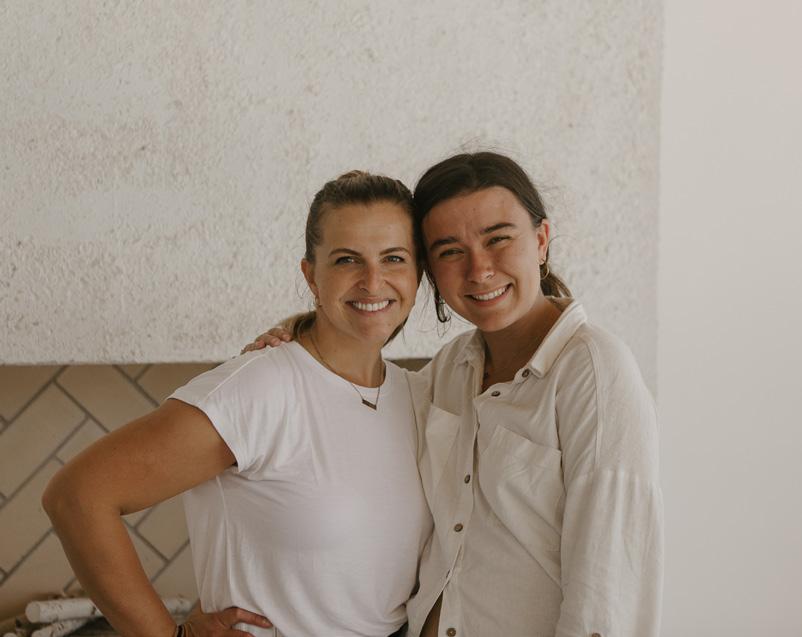
Friends and collaborators (L-R) Victoriya Knapp and Analise McManus pause for a photograph after completing the fashion shoot at 330 N Blue Wave Lane in Vero Beach. Victoriya introduced Ani to us—further enriching LIV VERO with her involvement. Ani’s inaugural project resulted in her first cover image with us—and it is simply stunning, capturing exactly the look and feel we had envisioned. We are deeply grateful for their contributions and presence.