YOU BEFORE YOU TAKE THAT PILL WHY CAN’T I SLEEP ANYMORE?
Total
Total
Partial
Total
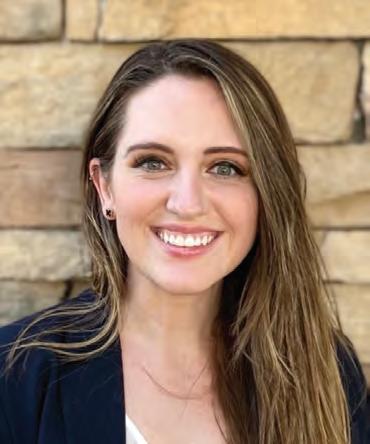
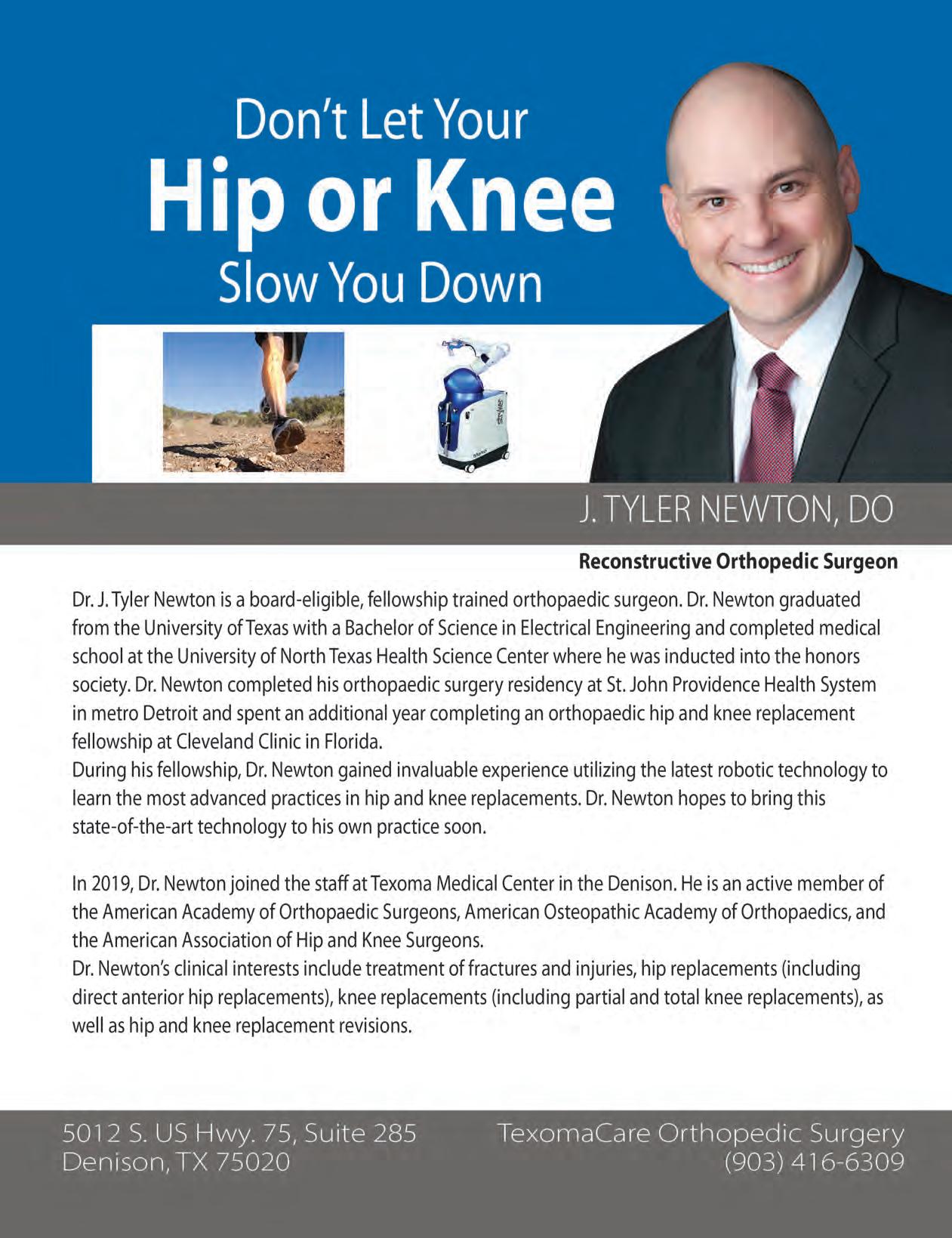
Dr. Hannah Abigail, a fellowship-trained foot and ankle reconstruction podiatric surgeon, is dedicated to providing exceptional care to patients in North Texas. She is committed to providing top-tier care and innovative treatment solutions and is a strong proponent of minimally invasive surgery. Dr. Abigail brings expertise and confidence in handling all aspects of reconstructive foot and ankle procedures, including complex trauma, diabetic ulcer care, flaps, sports medicine, elective reconstruction, and complications.
Whether you are experiencing foot pain, a sports injury, or a chronic ankle condition, Dr. Abigail is available to help you achieve optimal health and get back to your daily activities with confidence. Contact her office today to schedule an appointment.
Stephen P. Courtney, MD
Fellowship-Trained Orthopedic Spine Surgeon
Over 28 Years of Experience
Dr. Courtney is a board-certified orthopedic spine surgeon located in Plano, Texas. A Louisiana native, he attended Louisiana State University for medical school, and completed residency at Texas A&M followed by a fellowship at the Florida Neck and Back Institute.
SPECIALTIES:
• Back Pain
• Neck Pain
• Spine Pain
• Disc Replacement
• Microdiscectomy
• Spinal Fusion
• Minimally Invasive Surgery
• Steroid Injections
• Physical Therapy
“I believe in treating each of my patients with honesty, dignity, and respect. My patients come away from our shared interactions feeling confident, assured that they are truly in the best hands. Throughout my career, I have remained laser-focused on providing world-class care and innovation to the patients I treat on a daily basis. I look forward to getting to know you!”
Enjoy Big Adventures & Quiet Conversations
Don’t miss out on the sounds of summer!
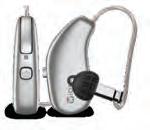
Widex Allure™ combines new and updated features for crystal clear speech and accurate environmental sound. You’ll experience a natural clarity powered by a new W1 Chip that is 4x faster with 4x memory capacity. You’ll hear an improvement in speech intelligibility with the help of directional mics, noise reduction, and feedback cancellation.
Widex Allure™ delivers every voice sound with greater balance, vibrancy and authenticity than ever before.
• Precision Hearing technology
• Bluetooth-hands free phone calls & streaming
• 28-hr battery life
• Speech Enhancer Pro
• AI Sound Assistant- create instant listening environments
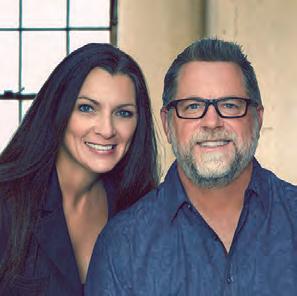
“When you have a hearing loss, it forces your brain to work harder to interpret sounds, leaving you frustrated, exhausted, and often feeling isolated. It can also lead to more rapid cognitive decline for some people, which can be frightening. The good news is that with WIDEX’s remarkable hearing aid technology coupled with brain training customized to your needs, you can stay fully engaged with your life. Imagine the joy of casual conversations, streaming music, differentiating the sounds of nature! We want to help you maintain your independence so you can engage with friends and family – with life – more easily. Call now. We want to help you hear all the sounds of summer. ”
Jill Sheppard, B.S., SLP/Audiology, Licensed Fitter and Dispenser of Hearing Instruments (LFDHI), Certified Dementia Practitioner (CDP), Co-owner of HearCare & Associates
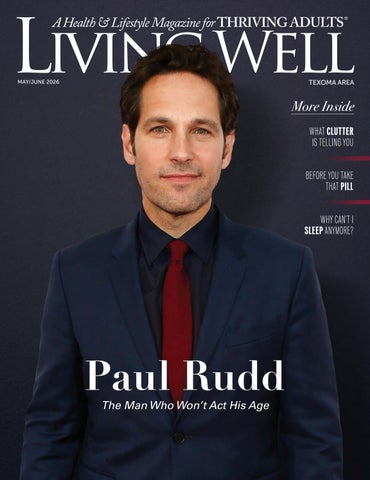
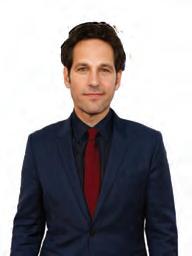
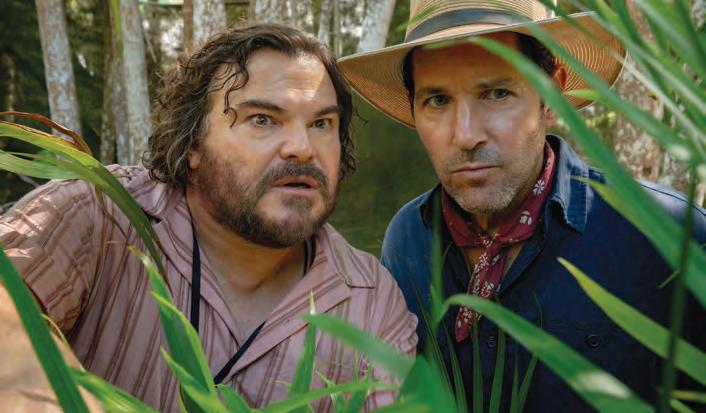
There’s something reassuring about someone who doesn’t seem to chase time. And actor Paul Rudd, who’s nearing 60 (although you’d never know it based on his youthful face), is approaching older age with his signature ease and humor. He’s a reminder that living well isn’t about turning back the clock; it’s about knowing what matters and leaning into it.
The rest of this issue follows that same instinct. The stories feel familiar in the best, most comforting way. They address the issues that meet you in real life. When sleep gets inconsistent, when health decisions feel a little murky, or when your home starts to feel heavier than it should.
Flip to page 38 for an article on sleep that looks at why rest changes over time and what’s actually going on when it does. It’s straightforward, honest, and likely to sound familiar.
Meanwhile, “Before You Take That Pill” takes a closer look at the supplement aisle, a place full of promises, but not always clarity. It’s a good reminder that a quick conversation with the right professional can make all the difference. Turn to page 34 to read it.
Then there’s clutter. Not the kind you fixin an afternoon, but the kind tied to memory, identity, and the versions of ourselves we hang onto. The piece on page 26, is thoughtful, a little unexpected, and one of those pieces that tends to stay with you.
If anything connects these pages, it’s this: living well isn’t about getting everything right. It’s about paying attention, making a few better choices, and adjusting as you go.
Live well,
Sam & Spring Houston
PRESIDENT & CEO
SAM HOUSTON
VICE PRESIDENT & CFO SPRING HOUSTON
EDITOR, FEATURE WRITER & SOCIAL MEDIA SONDRA BARR
ART DIRECTOR
VANESSA FRYER
ACCOUNTS MANAGER JENNIFER BEAVERS
WEBSITE LYDIA ROGERS
ADVERTISING & SALES
TEXAS: Denton County, Dallas County, Collin County
TEXAS & OKLAHOMA: Texoma Area
WRITE TO US:
Tell us who you would like to see featured on the cover, or what subjects you would like covered in upcoming editions of LIVING WELL MAGAZINE at info@livingwellmag.com
SUBSCRIPTIONS & CUSTOMER INQUIRIES
Houstons of Dallas Publishing, Inc. 102 E. Broadway, #901 Prosper, TX 75078
www.LivingWellmag.com
Phone: (214) 507-1000 Fax: (855) 248-2132
LIVING WELL MAGAZINE is a source for quality educational articles on living a healthy, vibrant life. Our focus is on connecting our readers with the latest information on a host of topics relevant to their evolving life. From cutting edge medical news and procedures to top-tier financial, legal and lifestyle information. Connecting readers to leading medical and business professionals in their community in Texas and Oklahoma.
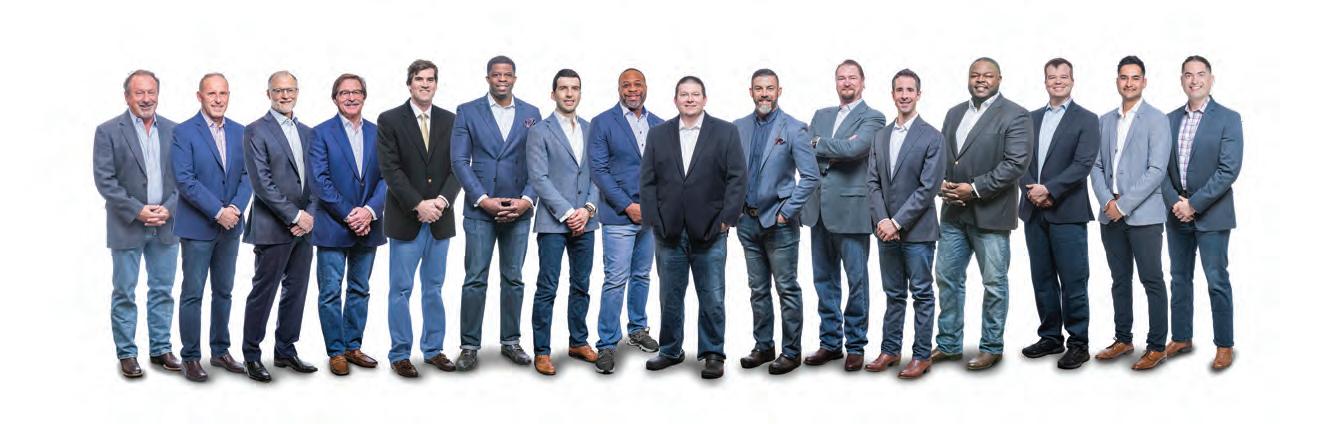
Expert Orthopedic Surgeons Close to Home
Left to right
John S. Early, MD
Terry K. Gemas, MD
William F. Tucker, Jr., MD
Duncan L. McKellar, Jr., MD
J. Conner Ryan, MD
Brian I. Nwannunu, MD
Florian F. Dibra, MD
Charles E. Toulson, MD
Cyrus E. Abbaschian, MD
Donald W. Hohman, MD
J. Stephen Appleton, MD
Alexander S. Greenstein, MD
Kwame A. Ennin, MD
Samuel K. Stephenson, MD
Raj Yalamanchili, MD
Emmanuel D. Eisenstein, MD
Innovation. Ingenuity. Integrity.
With a clear focus on quality, reliability and timely completion, Plyler Construction works with owners of such diverse commercial, institutional and industrial projects as manufacturing, warehousing, educational, retail, support and religious facilities to provide the most appropriate delivery method. Plyler offers pre-construction services, experienced construction management, a variety of delivery methods, equipment setting and in-plant maintenance services.
We work with our clients, not just for them. That’s just one of the reasons architects, designers, and industrial and commercial project owners from across the nation have looked to Plyler Construction for more than a half-century for solutions to their building needs. At Plyler Construction, we build relationships.
General Construction
Pre-Construction
Design-Build Capabilities
Construction Management
MEP Mechanical
Electrical
Plumbing
HVAC
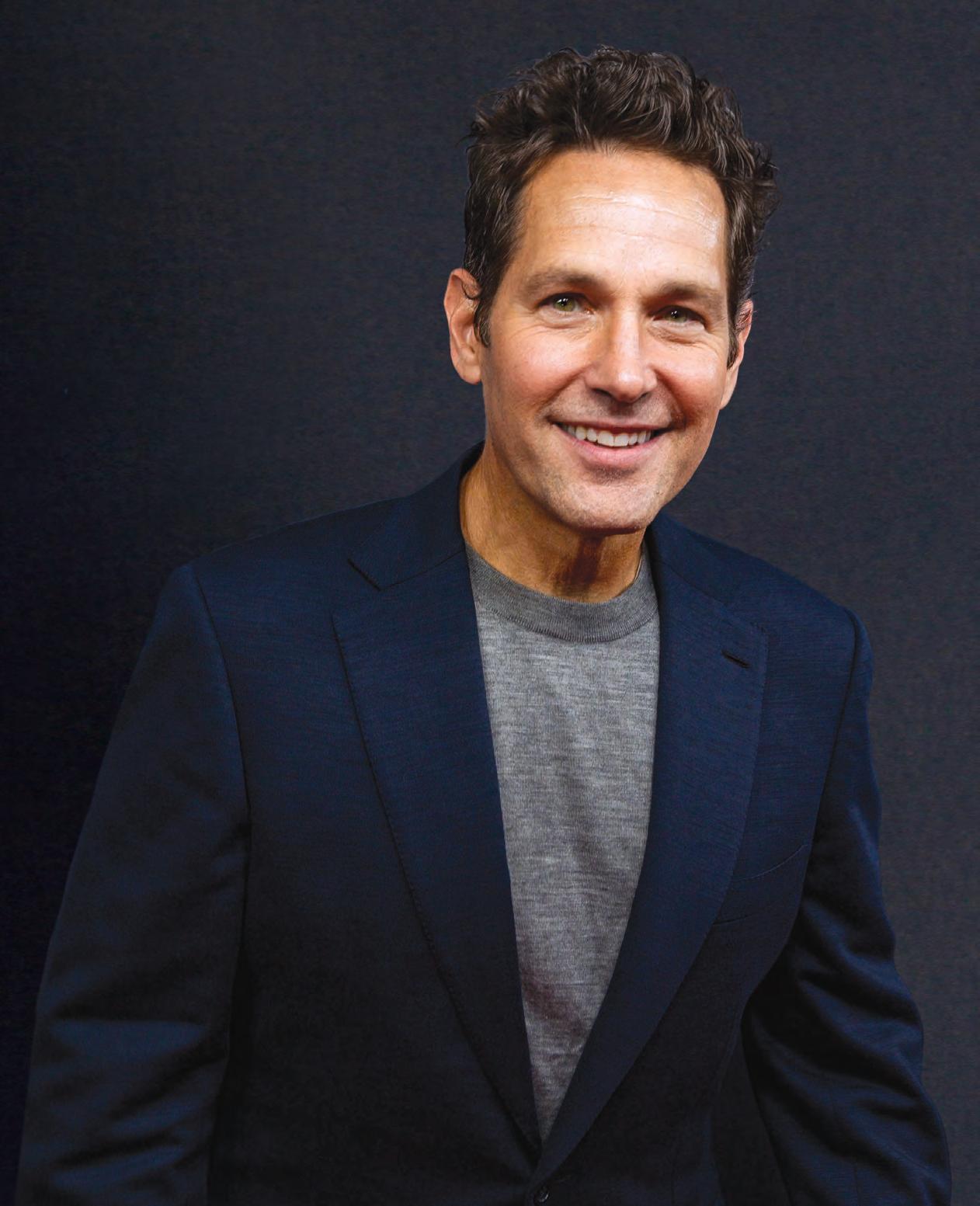
I try to be polite to people. I think it feels better knowing that people probably think that I’m nice versus a jerk.
PAUL RUDD
The man who defies aging.
By SONDRA BARR
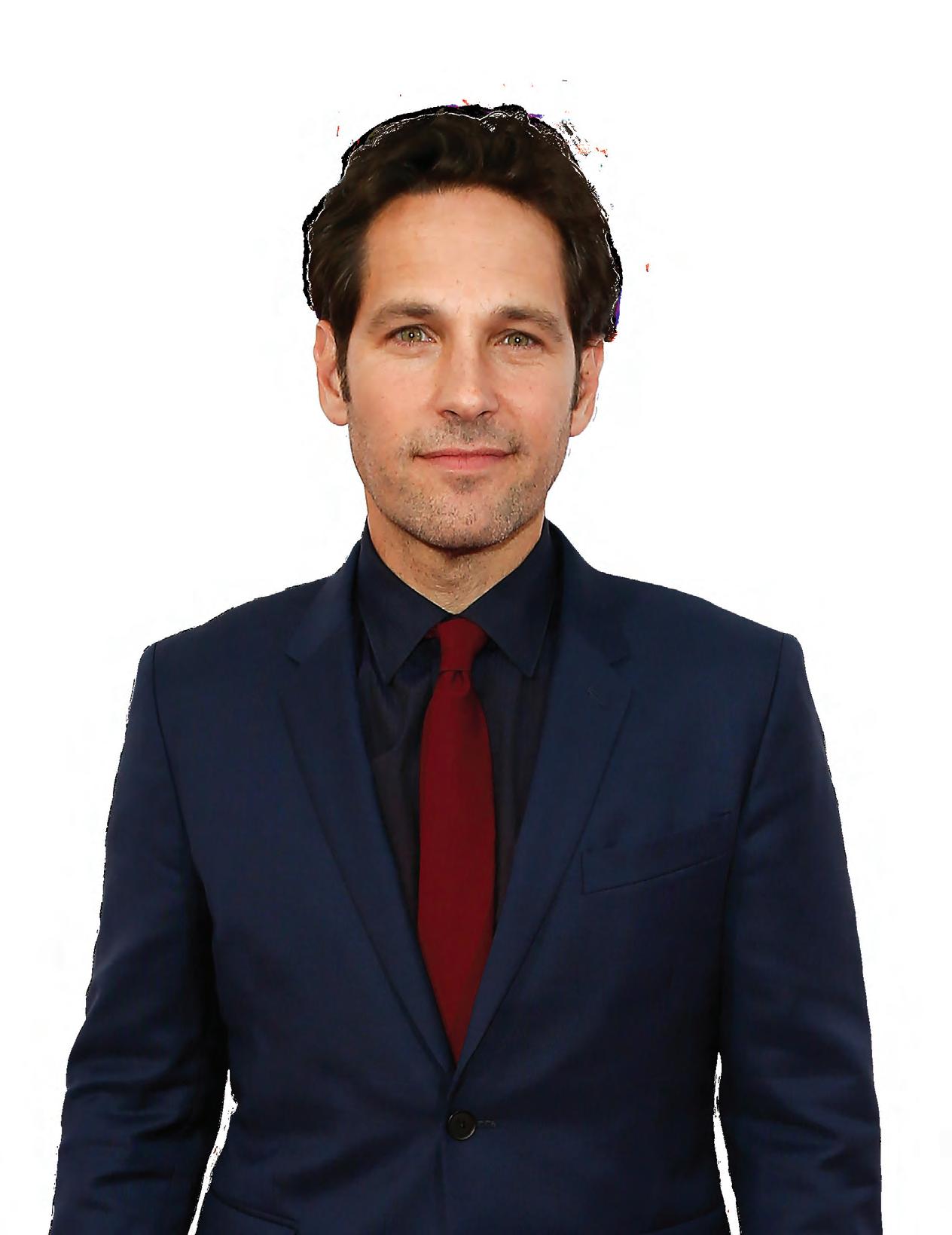
Actor Paul Rudd is approaching 60 with the kind of confidece that comes from knowing exactly who he is and seemingly unbothered by how famous he is. At 57, he has been in the cultural zeitgeist for three decades and still seems quietly baffled by what that means.
There is, by now, a well-established tradition of marveling at his face. Jennifer Aniston, his friend since before either of them became famous, summed it up in 2024 when she posted a birthday clip from their film Wanderlust with the caption: “Happy birthday Paul Rudd, I love you, you ageless freak.” Even Deadpool & Wolverine riffed on it: Deadpool stumbles upon Giant-Man’s corpse and remarks, “Paul Rudd fially aged!”
The jokes land because they’re rooted in something real—and because Rudd has never had any interest in pretending he deserves the credit.
Paul Stephen Rudd was born April 6, 1969, in Passaic, New Jersey, to British parents who immigrated for his father Michael’s career at Trans World Airlines. By the time Rudd was 10, the family had settled in Overland Park, Kansas. “At my core, I’m a Midwesterner,” he told Elle in 2011. He studied theater at the University of Kansas and trained at the American Academy of Dramatic Arts.
In 2023, he told Interview Magazine: “ There is a major part of who I am that does not feel like the alpha male… I moved a lot when I was a kid. I’m sure that shaped my personality in many ways.” In 1995, Clueless arrived. Playing the irresistible stepbrother opposite Alicia Silverstone’s Cher, he landed in a film that became a cultural touchstone. By Hollywood standards, he was on the launchpad. He chose to do a play in New York instead.
His agent was not pleased. Rudd explained in a 2023 Men’s Health cover story: “My agent said, ‘What are you doing?’ My career was just starting. But I had a real clear vision of what I wanted. I didn’t want to be considered a joke among actors who I really admire.”
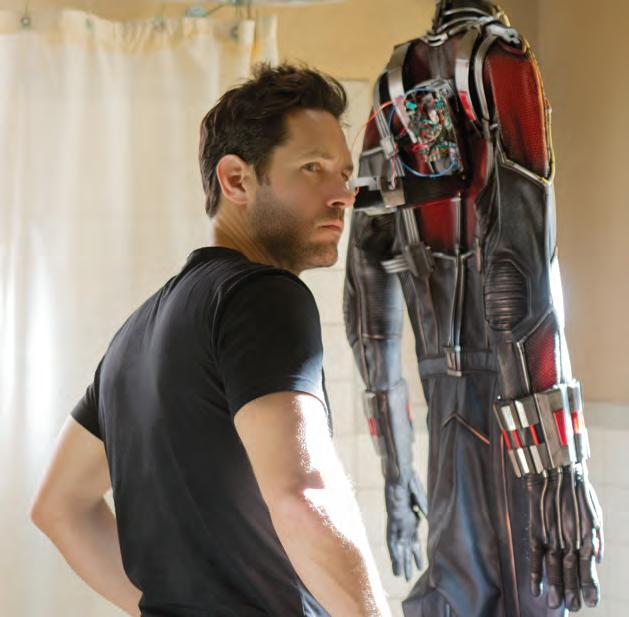
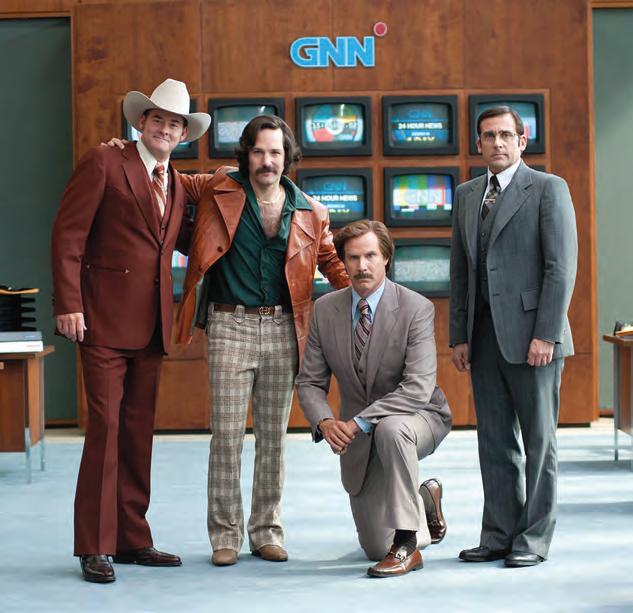
TOP ROW: Ant-Man, Marvel Studios; Anchorman 2, Paramount Pictures
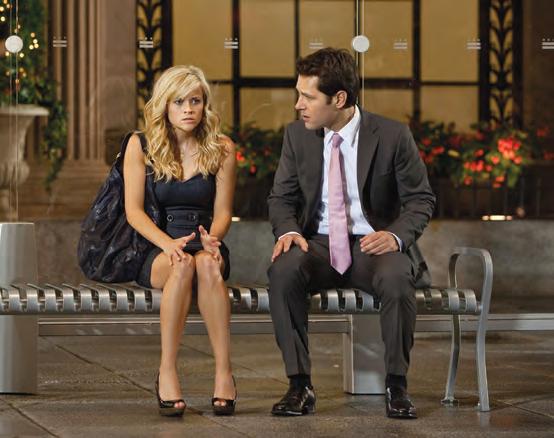
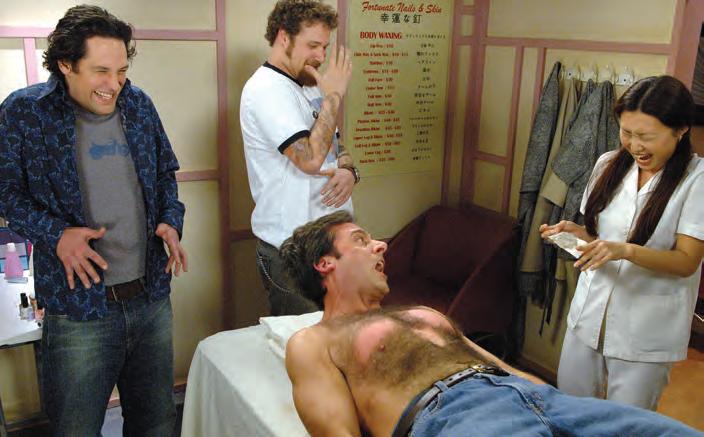
MIDDLE ROW: How Do You Know, Sony Pictures; The 40-Year-Old-Virgin, Universal Pictures
BOTTOM ROW: Anaconda, Columbia Pictures
A superhero franchise was never on my radar.
That clarity defies everything that followed. Wet Hot American Summer led to Anchorman, Anchorman led to Judd Apatow, and Apatow led to The 40-Year-Old Virgin, Knocked Up, and This Is 40—cementing Rudd as the funniest straight man in Hollywood. “I never thought of myself as a comedic actor,” he has said. “I didn’t go to Second City. I studied theater.”
“Looking back, I’m really happy with the choices I’ve made in my career,” he told one interviewer. “Just about every single thing I’ve ever done I’ve gone into with the right intentions, and that goes a long way.”
The role of Ant-Man came in 2015. “A superhero franchise was never on my radar,” he told Men’s Health. “I never really thought I was the type of actor that they would offer any of those parts to.” His son’s fist reaction to the casting said it all. “What he actually said was, ‘Wow, I can’t wait to see how stupid that’ll be,’” Rudd recalled to HuffPost. Many films later, Emmy nominations for Only Murders in the Building, and an upcoming Avengers: Doomsday (2026) later, Rudd has become something rarer than a movie star: a genuinely beloved one.
Asked about the secret to his seeming agelessness, Rudd gave Men’s Health a hierarchy: “Sleep. Then diet. Then weights. Then cardio.” The specificsare not glamorous: eggs every day, salmon, protein shakes of just protein and water, cardio before breakfast. And sunscreen—always. “I am a big believer in sunscreen,” he told InStyle. “Honestly, I wear it not to prevent wrinkles but because I don’t want to get skin cancer.”
The deeper insight is what routine does for the mind. “ There isn’t an officthat we have to go to every day where we see the same people,” he told Men’s Health. “Routine is a human need. It’s grounding in a really positive and healthy way… I fially understand that if you make fitness a part of your lifestyle, you’ll just feel good.”
In November 2021, People magazine named Paul Rudd its Sexiest Man Alive. He found out by email. He read it twice. “I do have an awareness, enough to know that when people hear that I’d be picked for this, they would say, ‘What?’” he told People. “Ths is not false humility. There are so many people that should get this before me.”
His wife Julie was, he reported, “stupefid.” “After some giggling and
shock, she said, ‘Oh, they got it right.’ She was probably not telling the truth, but what’s she going to say?”
The most revealing thing Rudd has said in any interview may be about a conversation with his father, Michael, who died of cancer in 2008. “I had a good relationship with my dad; we always got on and talked. But we didn’t have, like, the real heart-to-hearts,” he told People in 2023. His father’s message was simple: treat people the way you’d want to be treated. “You’re only here for a short while anyway,” Rudd recalled, “so try and do something that adds to the pot, that makes life a little bit easier for somebody else.” “It was a major moment to have with my dad,” he said. He carries it still.
He has spoken to TODAY about loss: “When you lose a parent, the world is offits axis, and it never rights itself… you adapt or perish.” He adapted. “I feel like a husband and a father when I think about myself,” he told People. “I feel my age… in a good way.”
Rudd has lived in New York City for nearly 30 years. He and Julie, married since 2003, split their time between Manhattan and upstate New York, where since 2014 he has co-owned Samuel’s Sweet Shop in Rhinebeck—a candy store he and actor Jeffrey Dean Morgan saved from closing after its owner, a friend, died unexpectedly. He is also a regular at Big Slick Celebrity Weekend, the Kansas City fundraiser for Children’s Mercy Hospital. For all of it—the career, the family, the candy store, the decades of being the guy everyone says is genuinely nice—Rudd remains constitutionally modest. “I try to be polite to people,” he told Parade. “I think it feels better knowing that people probably think that I’m nice versus a jerk.”
On a 2019 episode of Hot Ones, eating spicier and spicier wings with host Sean Evans, Rudd arrived at the fial sauce and looked up with genuine wonder. “Hey, look at us,” he said. “Who would’ve thought? Not me.” It became a meme instantly—because it reads like his autobiography in six words: bemused by his own good fortune, and genuinely grateful for it.
He is, by every credible account, exactly what he appears to be: talented, kind, funny, and fully at ease with a life built on his own terms.
Sixty is a few years away for Rudd. At this rate, nobody will be able to tell.
Where Did You Get Your Power of Attorney?
By CRAIG WATSON
John’s parents were in their 90s. They had banked at Big Bank for most of their life. They even owned stock in Big Bank since it was listed on the NYSE. When John’s Dad died, his mother signed a Statutory Power of Attorney that John obtained from the lawyer who handled his divorce. John, his three brothers and his mother wanted to set up her estate to avoid probate. His mother had over $500,000 in her checking account at Big Bank and another $750,000 in certifiates of deposit (CDs) scattered at several local banks. He wanted to move some of the money to another bank in order to keep the deposit amount under the FDIC insurance maximum limit. The banker suggested that his mother should use a “payable on death” (POD) beneficary form to change her account so that her money would pass equally to her four sons without probating her will. The banker told John that by adding her four sons to her accounts, her FDIC coverage at Big Bank would be increased to $1,250,000.
However, the banker insisted that his mother sign a new power of attorney on a standard power of attorney form supplied by Big Bank. So John took Big Bank’s power of attorney to his mother. She signed it in a notary’s presence and he returned it to Big Bank. John used Big Bank’s power of attorney to add him and his brothers to his mother’s accounts. Since the banker had helped him obtain more FDIC coverage, John decided to simplify his mother’s estate by moving her other deposits to Big Bank. He took the power of attorney to the local banks and withdrew her CDs, even though they had not matured, and moved all her money to Big Bank.
John used the Big Bank power of attorney all year to make deposits and write checks. His mother decided to give her house, valued at $120,000, to John’s brother for Christmas. She also instructed John to withdraw $360,000 from her account and divide it into three equal shares to give to himself and his other two brothers so that all four of
her sons received the same amount. He used the Big Bank power of attorney to do this without objection from Big Bank.
John’s mother died soon after New Year’s Day. A couple of months after the funeral, after all her bills were paid, John and his brothers went to Big Bank to withdraw their equal shares of her accounts. They were shocked and angered when Big Bank told them that it would not honor its own Big Bank power of attorney because the Big Bank corporate attorney decided that its power of attorney did not give John the right to add POD beneficaries to his mother’s account. It made no difference that the banker at Big Bank had allowed John to use Big Bank’s power of attorney to add the POD beneficaries and that John had relied on the banker’s advice to withdraw his mother’s money from the other banks and deposit it at Big Bank. Big Bank’s decision to go back on their word required John and his brothers to incur extra expense and delay to probate his mother’s estate. Big Bank refused to reimburse John and his brothers for the extra cost made necessary by Big Bank.
What could John have done differently to avoid this frustrating experience? If John had sought the counsel of an elder law attorney to advise him, he would have been provided with a power of attorney that Big Bank would have accepted and that would have authorized John to add the POD beneficaries to his mother’s accounts. In the alternative, based on the elder law attorney’s advice, John and his mother may have decided to use a revocable trust to avoid probate instead of trying to use POD beneficary designations. Using a revocable trust to avoid probate is a far more reliable method of avoiding probate than using POD designations, which often result in problems. Using right of survivorship accounts to avoid probate often causes even more surprises. Finally, it is important to remember that when you hire an attorney, he represents you and only you. If you rely on a legal document drafted by Big Bank’s lawyer, or anyone else’s lawyer, you are on your own.
Texas Back Institute
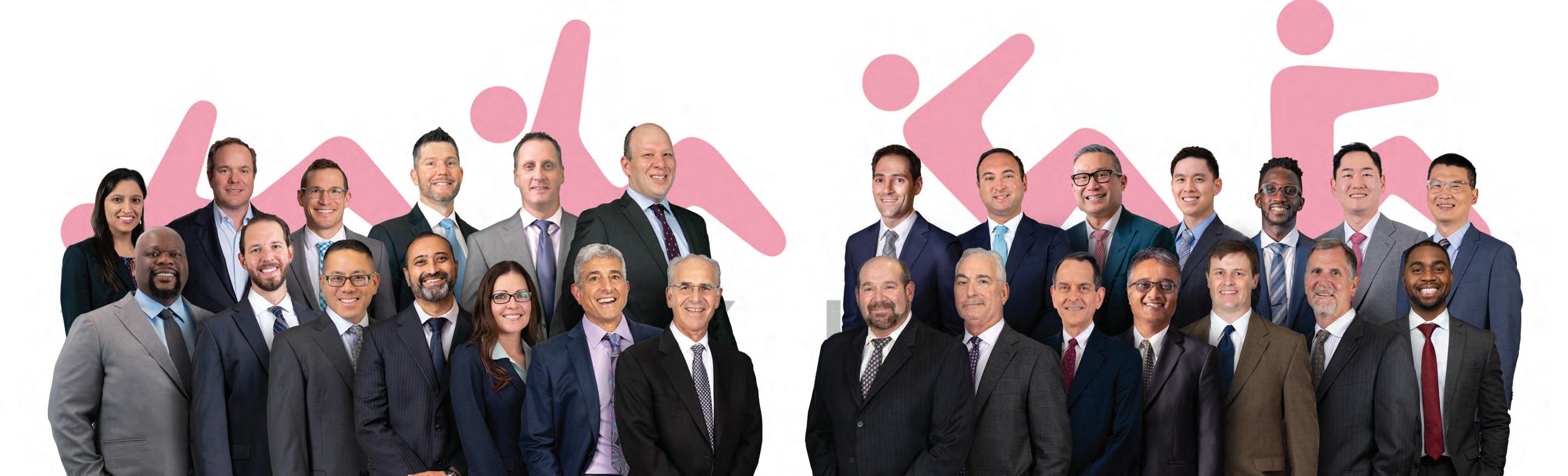
Texas Back Institute (TBI) has served the North Texas area in spine care for over 45 years. An uncompromising desire to put patients first and provide individualized spine care has helped change the treatment options available to patients for neck and back pain.
Today, TBI is a leader in artificial disc replacement, minimally invasive spine surgery, complex revision surgery, and treatment of spinal deformity. TBI has trained hundreds of surgeons, scientists, and allied health professionals now practicing worldwide. Its research institute employs state-of-the-art technology and is actively involved in many clinical trials, including artificial disc replacement, minimally invasive technologies, and robotic spine surgery. Texas Back Institute has remained one of the most academic practices in spine care. It is one of the largest multidisciplinary spine centers in the world, providing comprehensive care for neck and back pain. With a fully dedicated staff of board-certified orthopedic spine surgeons, neurosurgeons, physiatrists, and physical therapists, the TBI team works together to support its mission of helping patients get back to life. The 26 physicians at Texas Back Institute are leaders in the surgical
and nonsurgical treatment options for back and neck pain, from the most common outpatient procedures to the most complex cases. Thanks to the unmatched expertise of the medical staff, the advanced diagnostic testing, and an unparalleled commitment to patient care, the Texas Back Institute physicians can identify the potential cause of your pain and create a treatment plan specific to your needs.
Texas Back Institute has developed several spine specialty programs. These include the Minimally Invasive Spine Surgery Center, Center for Disc Replacement, Scoliosis and Spine Tumor Center, and Complex Back Surgery Center. These programs give patients access to highly-trained care teams who focus specifically on these areas of spine care, allowing patients in the North Texas area access to treatment options for their individual problems from physicians with extensive experience in these areas.
“At Texas Back Institute, finding the right solution for each patient and offering the least invasive treatment is core to our belief and the foundation for all treatment plans.” Dr. Michael Duffy.
ALLIANCE
3025 N. Tarrant Pkwy., Ste. 220 Fort Worth (Alliance), TX 76177
ARGYLE
310 FM 407E, Ste. 100 Argyle, TX 76226
DALLAS
12222 N. Central Expy. Pavilion II, Ste. 310 Dallas, TX 75243
DENTON
3537 S. Interstate 35, Ste. 308 Denton, TX 76210
FLOWER MOUND
4370 Medical Arts Dr. River Walk Bldg. III, Ste. 230 Flower Mound, TX 75028
FORT WORTH
1650 W. Rosedale St. Ste. 301 Fort Worth, TX 76104
4510 Medical Center Dr., Ste. 106 McKinney, TX 75069
NORTH RICHLAND HILLS
4351 Booth Calloway Dr., Ste. 404 Fort Worth, TX 76180
CENTRAL PLANO
4001 W. 15th St. Ste. 455 Medical Office Bldg. III Plano, TX 75093
PLANO
6020 W. Parker Rd. Ste. 200 Plano, TX 75093
ROCKWALL
3164 Horizon Rd. Ste. 100 Rockwall, TX 75032
SASCHE
4650 President George Bush Turnpike, Ste. 100 Sachse, TX 75048
TOP ROW:
Sheena Bhuva, MD; Michael Duffy, MD; Peter Derman, MD; Brian Braaksma, MD; Shashank Gandhi, MD; Stephen Tolhurst, MD; Blake Staub, MD; Alexander Satin, MD; Chun Lin, MD; Kevin Ju, MD; Akwasi Boah, MD; Junyoung “Jon” Ahn, MD
BOTTOM ROW:
Adewale Adeniran, MD; Thomas Kosztowski, MD; Rey Bosita, MD, MBA; Rajesh Arakal, MD; Jessica Shellock, MD; Isador Lieberman, MD, MBA, FRCSC; Richard Guyer, MD; Jack Zigler, MD, FACS; Scott Blumenthal, MD; Theodore Belanger, MD; Nayan Patel, MD; Craig Lankford, MD; Michael Hisey, MD; Uche Davidson, MD
STAND OUT WITH THE EMINENT CHOICE IN HEALTHCARE
Total
Headache
ROBOTIC
Balance
for Strength and Stability
By MADISON FINCH
Like strength or flexibility, it can improve with attention and practice. As you work on your balance, the benefits will extend far beyond simply staying upright.
Having good balance matters more than you think. It’s one of those things most of us rarely think about, until we suddenly feel unsteady. Maybe it happens while stepping offa curb, reaching for something on a high shelf, or standing on one foot while putting on a shoe. In these small moments, balance reveals itself as something quietly essential. It’s not just about avoiding a fall; it’s about maintaining confidece and remaining capable in the way we move through everyday life.
Balance is a remarkable dance between your body’s systems. It depends on a complex partnership between your muscles, your eyes, your inner ear, and your brain. When all of those systems communicate smoothly, your body instinctively knows how to adjust when the ground shiftsbeneath you or when you change direction. When one of those systems weakens or becomes less responsive, stability can start to feel less certain.
The good news is that balance is not a fied ability. Like strength or flexbility, it can improve with attention and practice. As you work on your balance, the benefits will extend far beyond simply staying upright. Researchers at the Harvard T.H. Chan School of Public Health have noted that balance training strengthens the body’s stabilizing muscles, particularly in the core, hips, and legs—while also improving coordination and reaction time. In practical terms, that means smoother movement, quicker adjustments when something unexpected happens, and greater confidece in daily activities.
Balance also plays an important role in preventing injuries. According to the Centers for Disease Control and Prevention, falls remain one of the leading causes of injury among adults in the United States. But what’s encouraging is that studies show regular balance exercises can signifiantly reduce the risk. The CDC’s fall prevention research has consistently shown that activities that improve strength and balance such as Tai Chi, yoga, and targeted stability exercises can make a measurable difference.
But beyond statistics and research fidings, balance has a deeper connection to how we experience our bodies. When balance improves, movement feels smoother. Walking feels lighter. Climbing stairs feels easier. Even standing for longer periods becomes more comfortable. These changes may seem small, but they add up to a greater sense of independence and ease in everyday life.
When balance is neglected, those systems can become less responsive. Muscles that support the joints may weaken, reaction time may slow slightly, and the brain may receive less precise signals about where the body is positioned in space. Over time, this can create a sense of hesitation or uncertainty during movement.
Incorporating balance into daily routines doesn’t require an hour-long workout. It might mean standing on one foot while folding laundry, taking a short walk outdoors, or adding a few simple strengthening exercises to your morning routine. Over time, those small moments of practice reinforce the systems that keep you steady. Fortunately, improving balance doesn’t require complicated routines or specialized equipment. Often, the most effective exercises are surprisingly simple. One of the easiest starting points is practicing single-leg balance. Standing on one foot while brushing your teeth or waiting for the kettle to boil can gently activate the muscles that sta-
bilize your hips and core. Over time, your body learns to make those subtle adjustments more efficitly.
Another helpful practice is mindful walking. Instead of rushing from place to place, pay attention to how your feet meet the ground. Notice your posture, your stride, and the way your arms swing naturally. Ths kind of awareness strengthens the brain-body connection that supports coordination and stability.
Activities that challenge balance in a controlled way can also be particularly benefical. Yoga, for example, includes poses that strengthen the legs while encouraging steady breathing and concentration. Tai Chi, a slow and graceful form of movement often described as “meditation in motion,” has been widely studied for its balance benefits.
Strength training also plays a critical role. While balance exercises help the body respond quickly to instability, strong muscles provide the foundation that keeps joints supported. Strengthening the legs and core through exercises such as squats, step-ups, or gentle resistance training can signifiantly improve balance and reduce fall risk.
Posture is another factor that often goes overlooked. Many of us spend long hours sitting, which can gradually weaken the muscles that help keep the spine aligned. When posture becomes rounded or forward-leaning, the body’s center of gravity shifts,making balance more difficult. Standing tall, with the shoulders relaxed and the head aligned over the spine, helps restore the natural alignment that supports stability.
Vision also contributes more to your balance than many people realize. Your eyes constantly provide information about your surroundings and help your brain orient the body in space. As your vision changes over time, your balance may feel slightly different as well. Regular eye exams and proper lighting in the home can quietly support safer movement.
The inner ear plays its part, too. Tiny structures within the ear detect motion and changes in head position, sending signals to the brain that help regulate balance. When this system is disrupted, whether by illness, inflammation, or certain medications, people may experience dizziness or vertigo.
Perhaps the most encouraging truth about balance is that improvement can happen at any stage of life. The body remains adaptable, and even small, consistent efforts can produce meaningful change.
Thik of balance as a conversation within your body—a constant exchange of information between muscles, joints, senses, and brain. The more that conversation is practiced and strengthened, the more naturally stability becomes part of everyday life.
As the seasons change and routines shift,it can be a good time to check in with your own sense of stability. Are you moving with ease? Do you feel confidet stepping onto uneven ground or reaching for something overhead? If not, a few minutes of balance-focused movement each day can gradually restore that sense of steadiness.
Strength and stability are not separate goals. They work together, supporting the body in ways that often go unnoticed until they are challenged. By caring for balance now, through movement, awareness, and simple daily habits, you create a foundation that supports both safety and vitality for years to come.
Justin M. Kane, MD, is a board-certified orthopedic surgeon and founder of the Orthopedic Institute of North Texas (OINT). He is internationally recognized for his expertise in foot and ankle care. He is a published author and a global lecturer, who has previously served as a Professor of Surgery at Texas A & M Health Science Center College of Medicine.
At the Orthopedic Institute of North Texas, Dr. Kane and his team’s goal is your return to normal activity. They provide surgical and non-surgical solutions designed to resolve your pain.
Dr. Kane specializes in
• Bunion and hammertoe correction
• Complex foot and ankle reconstructive surgery
• Surgical and non-surgical treatment of foot and ankle disorders
How Prepared Are You?
By NANCY JACKSON, MBA
You see it on the news all the time, people talking about being prepared for severe weather, zombie invasions, or end of times. There are checklists, packages for sale, and YouTube videos to help you pack! But how many of us go all in?
Which is why we shouldn’t wait until it’s too late to prepare our Advance Directives. Sometimes the questions seem too hard, family doesn’t want to talk about it, or it doesn’t seem important until the last minute. So here are some quick questions to ask yourself and some great resources to move you along.
• Do you want to make your own healthcare decisions?
• Do you have a medical power of attorney (MPOA)?
• Does someone know your wishes and plans as you age?
• Have you had a conversation with your family to share your wishes?
• Could a loved one correctly describe how you’d like to be treated in the case of a terminal illness?
• Is there someone you trust whom you have appointed to advocate on your behalf?
• Have you completed any of the following: written a living will, appointed a healthcare power of attorney, or completed an advance directive?
If you answered “Yes” to two or more than you are in the Top 25%! And for those you answered “No,” it’s time to get started. Just like emergency preparedness, there are numerous YouTube videos, websites, and checklists to help you. Here are a few websites with a lot of tools that really get you going:
• AARP.org
• AmericanBar.org: American Bar Association Advance Care Planning Toolkit
• CaringInfo.org
• TheConversationProject.org: Conversation starter and video
• 5Wishes.org: Provides ways to help express all that you want and provide a helpful guide to family members, friends, care givers, and doctors.
If this all seems too much, please visit our website HomeHospice.org. Or give us a call at (903) 868-9315 and ask for Nancy. We’ll help you navigate these tough decisions while they are easier to make when no zombie is headed your way!
Caring for patients. Supporting their families.
JUST BECAUSE DAYS ARE LIMITED, QUALITY OF LIFE SHOULDN’T BE.
We are your neighborhood hospice helping patients and families find loving care with unparalleled skill. Surprisingly, perhaps, there are still opportunities to experience joy. Governed by community leaders, funded by grants and gifts, we are an award-winning hospice, providing end-of-life care for you and support for those you love. Let us be of assistance during this time when every moment is more precious than ever.
What Really MeansLegacy
By RICK ALLEN
There is a particular kind of conversation that tends to happen at a certain point in life. It does not happen at dinner parties or over coffee. It happens late at night, or during a long drive, or on a quiet Sunday afternoon when the house is unusually still. It is the conversation you have with yourself, the one that asks, in so many words, what any of this actually adds up to.
The word “Legacy” has been hijacked. It now conjures images of scale, of impact that can be measured and ranked and pointed to. Buildings with names on them. Endowments. Charitable foundations. The kind of thing that requires a press release and a tax attorney. And because that version of legacy belongs to a very small group of people, the rest of us tend to quietly let the word go, as though it somehow has nothing to do with us.
It has everything to do with us. It’s your life’s quiet figerprint.
Consider what people say at funerals. Not the formal eulogies that get rehearsed and printed out, but the quieter moments afterward, the things people say to each other in the parking lot or over plates of food in someone’s dining room. They almost never talk about accomplishments. They talk about what it felt like to be around that person. They mention a specificphrase someone used. A habit. A way of listening. The particular quality of attention that someone gave when you needed it most. The offhand remark made thirty years ago that you have never forgotten, though they almost certainly had no idea it would stay with you.
That is legacy. And it is happening right now, whether you are thinking about it or not.
The research confims what most of us sense intuitively. Ths is worth sitting with for a moment. Not the headline version of legacy, but the quieter, more personal one. The kind that does not require a Wikipedia page. The kind that requires showing up, paying attention, and being honest about who you actually are and what you actually value.
Thiking about your legacy is one of the most life-affirming things a person can do. It forces you to decide what actually matters, in how you spend your time and your energy and your patience on an ordinary Tuesday. For many people in their fiies, sixties, and seven-
ties, this reframing comes as something of a relief. The pressure to build something monumental begins to liftwhen you realize that the things people carry forward from your life are rarely your achievements. They are your recipes. Your sense of humor. The advice you gave that one time that stuck. The way you handled something hard without falling apart. The things you believed in and were not ashamed to say so.
One practical way many people are beginning to approach this is by thinking deliberately about how they want their life to be remembered and celebrated. What songs meant something to you? What readings, or words, or small details would feel like you? More people are sitting down with funeral planners earlier than you might expect, not out of morbidity, but out of love. Pre-planning a funeral service is quietly becoming one of the most generous giftsa person can give their family, lifting the weight of impossible decisions from the shoulders of the people who are already grieving. It is also an opportunity to have a say in your own story by shaping a service that truly reflcts who they were and the mark they want to leave behind.
There is also something to be said for the legacy being built in real time, through the relationships you are tending right now. The grandchild you sit with patiently. The friend you call even when you are tired. The neighbor you check on without being asked. None of this requires wealth or fame or a particularly dramatic life. It requires presence, and a willingness to believe that the ordinary moments are the ones that matter most.
The mark you leave will not be on a building. It will live in the people who knew you, in the way they treat others because of how you treated them, in the values they carry forward without quite knowing where those values came from. And when the time comes to honor that life fully, the team at Allen Family Funeral Options understands that a life well lived deserves to be told well, and they are there to help families capture, share, and celebrate the story that only you could have written.
Legacy is not something you leave when you go. It is something you are building today.
What Clutter is Telling You
By MARGARET HOLLOWAY
There is a particular kind of frustration that settles into a home that looks, from the outside, perfectly fie. The rooms are livable. The furniture works. And yet, something feels heavier than it should. Drawers resist closing. Closets feel stuffed even when nothing is obviously out of place. Countertops become permanent resting spots for things that never quite fid their way back where they belong. If this sounds familiar, you are in good company. And chances are, it has nothing to do with laziness or poor organization. What sits beneath the surface of most clutter is something far more interesting, and far more human, than a simple failure to tidy up.
Clutter is emotional. It is psychological. And understanding why it accumulates, and why letting go feels so surprisingly difficult, can change the way you approach your home entirely.
At the heart of it all is attachment. We tend to think of attachment as something we reserve for the people in our lives, but the brain does not always draw that line so neatly. Objects become containers for memory. A chipped mug is not just ceramic. It is a Tuesday morning twenty years ago, a child in pajamas, a season of life that felt both chaotic and tender. A stack of old notebooks is not just paper. It is a record of who you once were, or who you quietly hoped to become.
Clutter is not a character flaw.
Once an object is connected to a memory or an emotion, it stops being just a thing. It becomes a cue, capable of bringing a feeling back to life. That is powerful. And letting go of the object can feel, on some level below conscious thought, like letting go of the memory itself. Intellectually, we know that is not true. Emotionally, the two can feel impossible to separate.
Then there is the sheer exhaustion of it all. Every item in a cluttered home represents an unfinshed task or an unresolved choice, and these possessions trigger what psychologists call the Zeigarnik Effect, a tendency for the mind to become preoccupied with incomplete actions. That creates a kind of mental background noise that makes true relaxation difficult. Add to that the weight of dozens of tiny decisions, keep it, donate it, throw it away, store it for later, and the brain simply runs out of steam. When decision fatigue sets in, avoidance becomes the path of least resistance. Instead of sorting, we shiftthings into another room. Instead of deciding, we delay. Clutter, in this sense, is not just accumulation. It is postponed decision-making, made visible.
But even beyond fatigue, there is something deeper at work: the discomfort of uncertainty. When you let go of an object, you are not just releasing the thing itself. You are also releasing what it represents. A box of old clothing might carry a past identity, a past body, a past chapter of life. Keeping it preserves a kind of continuity. It quietly says, “this still belongs to me.” Letting it go introduces questions that are not always easy to sit with. Who am I without this? What does it mean if I no longer want to hold onto it?
These questions are not logical. But they are emotionally real, and they tend to grow louder during life’s transitions. Career changes, grown children leaving home, health shifts,the natural evolution of who we are as we age. During these seasons, possessions can become anchors to earlier versions of ourselves. A wardrobe full of “someday” clothes or a garage full of half-finshed projects is not simply clutter. It is a collection of paused stories.
There is also something deeply human about seeing what an object could be, rather than what it is. The dress that no longer fits becomes a future self, imagined and waiting. The unopened hobby supplies represent the person you plan to be once life slows down. The unfinshed home project is the more spacious, more intentional life that always feels just around the corner. In this way, clutter is often built on hope. And hope, even when it has quietly expired, is genuinely difficult to discard without a little grief.
That grief tends to get overlooked in most conversations about decluttering. We frame letting go as liberating, and it can be. But it can also feel quietly mournful. Every item released requires a small emotional adjustment, an acknowledgment that a moment has passed, that a version of yourself has shifted, that a particular possibility is no longer alive. Ths is often why people start decluttering with real enthusiasm and then fid themselves stalled partway through. The emotional weight becomes more visible as the process deepens, and nobody warned them to expect that.
Memory plays its own central role here. We are not neutral archi-
vists of our lives. We are emotional historians. A souvenir from a trip does not just remind us of a place. It holds the sense of freedom we felt during that particular season of life. A child’s drawing keeps something of early family years, when everything felt simultaneously overwhelming and irreplaceable. These objects work as emotional shortcuts, allowing us to revisit states of mind that would otherwise be out of reach.
Ths is why decluttering can feel, at its deepest, like editing a personal biography. You are not just sorting through belongings. You are deciding which parts of your story remain physically present around you. That is a profound act, even when it involves something as ordinary as a kitchen drawer.
Research published in 2025 in the Journal of Environmental Psychology found that people who considered their homes more cluttered reported lower levels of wellbeing and life satisfaction, along with higher levels of negative emotion. The science is catching up to what many people already feel intuitively: the state of your home and the state of your inner life are far more connected than we sometimes like to admit.
There is also the influence of how we were raised. Many of us grew up in households where keeping things was a sign of responsibility, or preparedness, or simple respect for what you had worked hard to afford. Thowing something away could feel wasteful, even morally uncomfortable. For those who experienced fiancial uncertainty, whether personally or through the stories passed down from parents and grandparents, holding onto objects became a quiet form of security. Even decades later, even in circumstances that look entirely different, the emotional habit remains.
All of this helps explain why the usual decluttering advice so often falls short. Tips about storage systems and sorting categories address the surface without touching what lies beneath. People do not struggle to let go because they do not know where to put things. They struggle because each object is quietly asking something of them.
And yet, change is genuinely possible, not through forcing yourself to be ruthless, but through becoming curious. When you begin to notice what an object actually represents rather than simply what it is, something shifts.You can honor a memory without needing to keep the physical item that carries it. You can recognize that identity lives inside you, not inside a drawer. You can allow yourself to feel a small loss without interpreting it as failure.
A simpler home, then, is not built by removing everything unnecessary in a single afternoon. It is built gradually, through the thoughtful process of disentangling meaning from material things. It is learning to tell the difference between what is still alive in your present life and what is simply echoing from the past.
Clutter is not a character flaw. It is a reflction of something deeply human: the instinct to remember, to hope, to prepare, and to hold on. Letting go is not the opposite of those instincts. It is a way of refiing them, so that what surrounds you supports not just who you have been, but who you are still becoming.
Macular Degeneration
Diabetic Eye Disease
Retinal Vein & Artery Occlusions
Flashes & Floaters
Retinal Tears & Detachments
Macular Pucker/Epiretinal
Membrane
Macular Holes
Uveitis
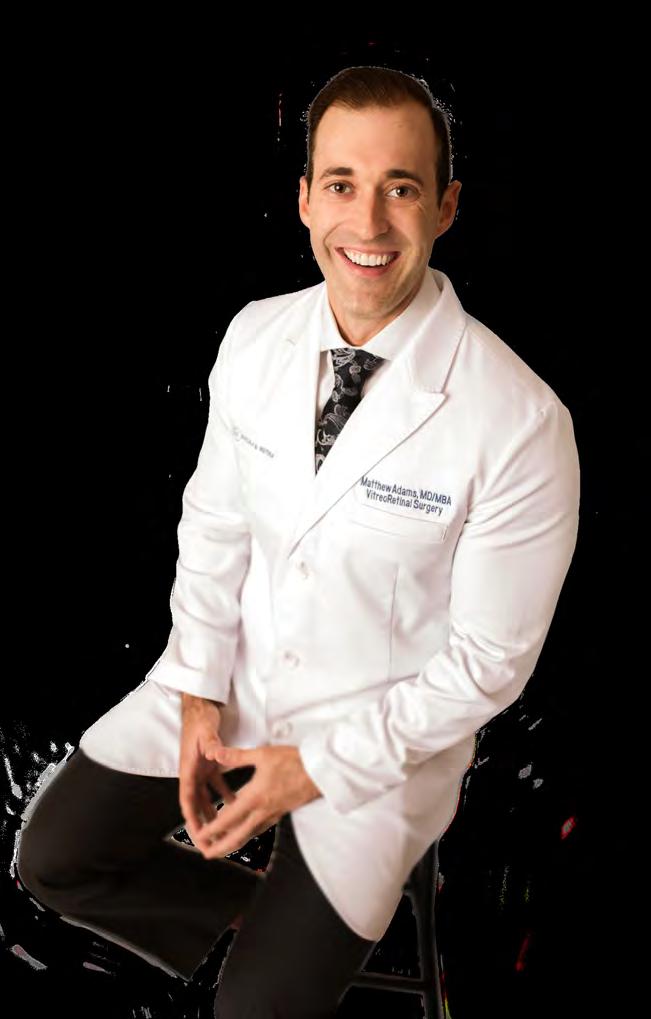
MATTHEW K. ADAMS, MD, MBA
At Texas Macula & Retina, our mission is to provide exceptional eye care with a focus on the diagnosis, treatment, and management of retinal disorders.
Dr. Adams is a board-certified Ophthalmologist and Ophthalmic Surgeon specializing in Vitreoretinal Surgery. His principal areas of interest include age-related macular degeneration, diabetic retinopathy, retinal detachment repair, macular surgery, retinal lasers, and secondary intraocular lens implantation.
Dr. Adams and his team are committed to preserving and improving the vision and overall quality of life for our patients by offering the most advanced and personalized retina care available.
Does Eating Carrots Really Improve Your Vision?
Dietary and Lifestyle Modifications to Keep your Eyes Healthy
By MATTHEW K. ADAMS, MD, MBA
Eating carrots alone won’t improve your eyesight; but living a healthy lifestyle and eating nutritious foods can be benefical to your eye health. In today’s fast-paced world, with its reliance on screens, artifical lighting, and fast food, it’s more important than ever to take care of our eyes. As we age, our eyes become more susceptible to various conditions such as age-related macular degeneration, cataracts, and glaucoma. However, there are steps we can take to maintain good eye health well into our golden years.
Maintain a Healthy Diet
Dark greens and leafy vegetables such as spinach and kale, along with yellow and orange vegetables (such as carrots!) contain nutrients that can contribute to the health of the retina, the part of the eye that is responsible for clear, detailed vision. Eating fish that are high in omega-3 fatty acids like salmon and tuna may reduce the risk of age-related macular degeneration.
Nutritional supplements can also benefit your eye health. The National Eye Institute’s Age-Related Eye Disease Studies (AREDS and AREDS 2) found that supplements with a specificformulation of vitamins C and E, zinc, lutein, and zeaxanthin can delay or even prevent the progression of macular degeneration.
Stay Hydrated
Dehydration can cause dry eyes, which can lead to discomfort and irritation. Make sure to drink plenty of water throughout the day to keep your body and eyes hydrated. If you spend a lot of time in air-conditioned or
heated environments, consider using a humidifierto add moisture to the air and prevent dry eyes.
Maintain a Healthy Weight and Exercise Regularly
Being overweight or obese increases the risk of developing diabetes and other systemic conditions that can lead to vision loss. By maintaining a healthy weight and exercising regularly, you can reduce your risk of developing these conditions and help preserve your vision. The American College of Sports Medicine recommends 150 minutes of moderate-intensity aerobic physical activity each week. That equates to 30 minutes of exercise, five days per week.
Get Adequate Sleep
Getting enough sleep is essential for overall health, including eye health. During sleep, your eyes are replenished and refreshed, reducing the risk of eye strain and fatigue. Aim for 7-8 hours of sleep per night, and establish a regular sleep schedule to ensure restful and rejuvenating sleep.
Protect Your Eyes from UV Rays
Exposure to ultraviolet (UV) rays can increase the risk of developing cataracts and macular degeneration. When spending time outdoors, especially on sunny days, it’s crucial to wear sunglasses that offer 100% UV protection. Wide-brimmed hats can also provide added protection by shading your eyes from direct sunlight.
Limit Screen Time
In today’s digital age, many of us spend a signifiant amount of time in front of screens, whether it’s computers, smartphones, or tablets. Prolonged screen time can cause digital eye strain, which can lead to symptoms such as dry eyes, eye fatigue, and headaches. To reduce eye strain, follow the 20-20-20 rule: every 20 minutes, take a 20-second break, and look at something 20 feet away. Additionally, consider using blue light filters on your electronic devices to reduce the amount of blue light emitted, which can contribute to eye strain.
Quit Smoking
Smoking is not only harmful to your overall health but can also have a severe impact on your eye health. Smoking increases the risk of developing age-related macular degeneration, cataracts, and optic nerve damage. If you smoke, quitting can signifiantly reduce your risk of developing these eye conditions and improve your overall health.
Be Mindful of Changes in Your Vision
Finally, pay attention to any changes in your vision or eye health and seek prompt medical attention if you experience any unusual symptoms. Common warning signs include blurry vision, double vision, sudden loss of vision, eye pain or discomfort, flashes of light, or the appearance of flaters in your fild of vision. Early detection and treatment are essential for preserving your vision and preventing further damage to your eyes.
By following these simple tips, you can help maintain good eye health well into your golden years. At Texas Macula & Retina, our experienced team is dedicated to helping you maintain optimal eye health. With stateof-the-art technology and personalized care, we will ensure that your eyes receive the attention and treatment they deserve. Schedule an appointment with us today and let us take care of you and your eyes. We would love to help you see better!
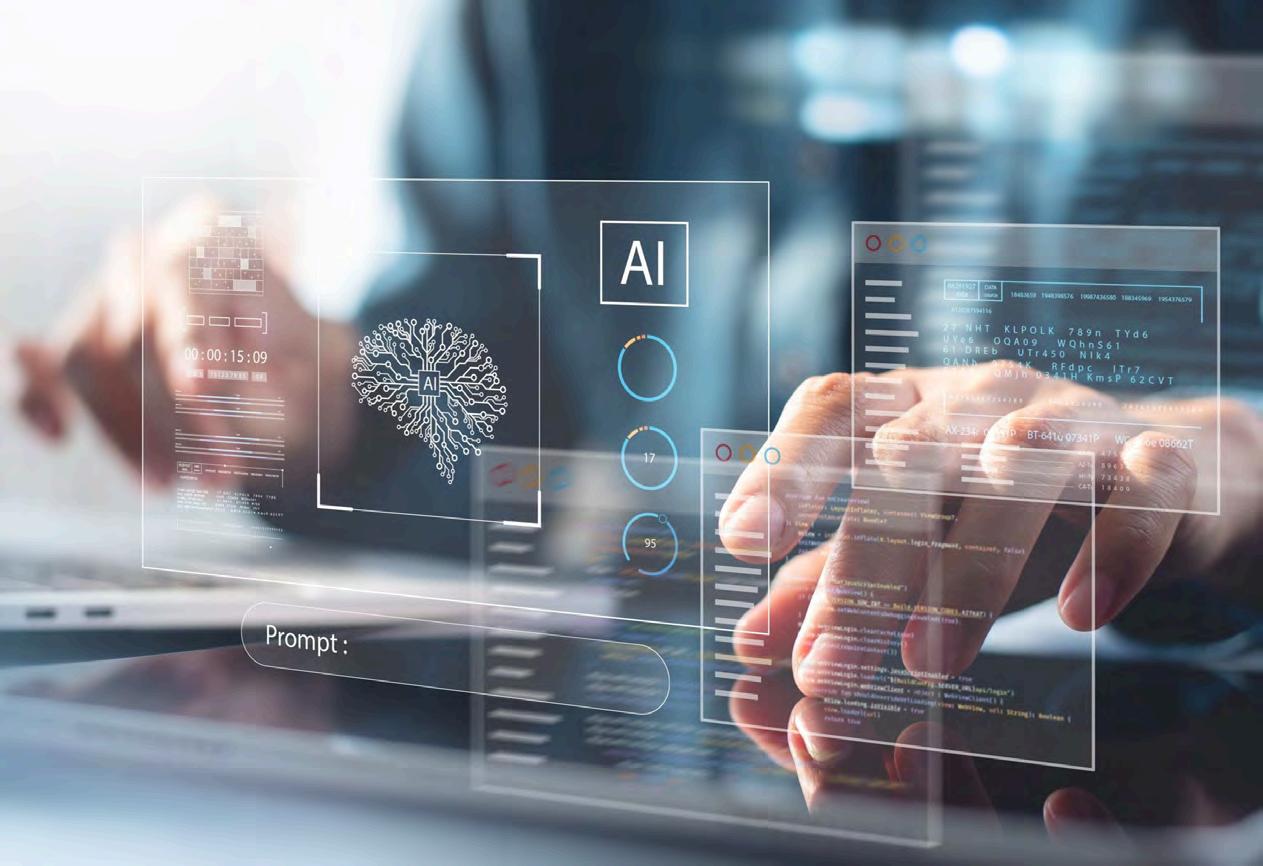
Tired of Hearing About AI?
Here’s What You Should Know Before Ignoring It Completely
By CLAIRE SUTTON
If you have heard the letters "A.I." so many times in the past year that your eyes have started to glaze over, you are in very good company. According to a June 2025 survey by the Pew Research Center, half of all American adults say the growing use of AI in daily life makes them feel more concerned than excited, with just ten percent saying they feel genuinely enthusiastic about it. The exhaustion is real, and it is entirely understandable.
Most of us have lived through enough technology waves to be forgiven for a little skepticism. We watched the internet promise to revolutionize everything. We adopted smartphones and suddenly could not remember how we had ever lived without them. Then came social media, which arrived as a way to connect with people and somehow turned into something rather more complicated than that. When artifical intelligence shows up with the same breathless headlines and bold promises, the temptation to fold your arms and say "not this time" is more than reasonable.
But before you close the door on it entirely, it may be worth pausing for just a moment to understand what AI actually is, what it is not, and what you might quietly be missing if you walk away without looking.
Here is the fist thing worth knowing: AI is not magic, and it is not science fition. At its core, it is software that analyzes enormous amounts of information and generates responses based on patterns it has learned. Thik of it as a very fast, very well-read research assistant that has absorbed more text than any human could read in several lifetimes. It can be impressively helpful. It can also be confidetly wrong. And occasionally it produces answers that are technically accurate but oddly phrased, like someone who read everything but understood less than they let on.
The second thing worth knowing is that most people are already using it. If your email quietly filters out spam before you even see it, if your phone groups your photographs by faces, or if a maps app reroutes you around traffiin real time, you have been living with artifical intelligence for years. It has simply been working in the background, without fanfare or a press release.
What changed recently is that AI became something you can talk to directly. Tools like ChatGPT, Microsoft'sCopilot, and others allow you to type a question and receive a response, draftan email, summarize a long article, or brainstorm ideas. That shiftfrom background tool to front-of-house presence is what made everything feel suddenly unavoidable.
And with that shiftcame the bigger questions, the ones that deserve to be taken seriously. Will it replace jobs? Will it spread misinformation? Will it deepen our already considerable dependence on screens and devices? These are not paranoid concerns. They are the questions that researchers, economists, and ethicists are actively wrestling with right now.
On the job question, the picture is genuinely complicated. The McKinsey Global Survey on the state of AI, published in late 2025, found that nearly nine out of ten organizations are now regularly using AI in some form, though most have not yet embedded it deeply enough to see signifiant real-world results. What most analysts agree on is that AI is more likely to reshape work than to eliminate it wholesale. Some tasks will be automated. New roles requiring human judgment, creativity, and relationship skills will emerge to replace them. That kind of shiftcan feel unsettling, particularly if your preference is for tools that are simple and familiar. But it is worth noting that the same concern accompanied the arrival of the computer, and the photocopier before that.
On the misinformation front, the concern is well founded. AI systems can produce confident answers that are simply not accurate. Experts call this "hallucination," which is a rather
Think of it as a very fast, very well-read research assistant that has absorbed more text than any human could read in several lifetimes.
polite term for making things up. It is one of the most important limitations to keep in mind when experimenting with any AI tool, and a good reason to always verify anything important through a trusted source.
Privacy is another area that warrants care. Just as you would not hand your bank details to a stranger, it is wise to avoid sharing sensitive personal information when using AI tools. Read the terms of service of anything you try, and treat your private details with the same caution you would apply anywhere online.
That said, dismissing AI entirely also carries its own tradeoffs.Medical researchers are using it to detect patterns in complex scans that can help doctors identify diseases earlier. Banks use AI systems to flag unusual account activity that may signal fraud before it becomes a crisis. Language tools are making it easier to communicate across language barriers in ways that simply were not possible a decade ago. These are not trivial things.
If curiosity is nudging you to try it, the good news is that starting could not be simpler. You do not need to overhaul your life or sign up for anything complicated. Many AI tools are available to use directly through a web browser. Try asking a question about a topic you enjoy. Use it to generate a few ideas for an upcoming trip or a tricky email you
have been putting off. Thik of it as a brainstorming partner rather than an authority. You remain the one who decides what is actually useful.
The most practical way to think about AI is the way you might think about a calculator. It helps you work more quickly, but it does not replace your need to understand the numbers. It is a tool, not a substitute for the person using it. The people who tend to benefit most from AI are those who treat it exactly that way, as an assistant rather than a replacement for their own thinking.
So if you are thoroughly tired of hearing about artifical intelligence, that reaction is fair. Life worked perfectly well before AI started drafting grocery lists and suggesting dinner recipes. But understanding something before rejecting it puts the choice fimly back in your hands, which is exactly where it belongs.
Human curiosity, humor, lived experience, and genuine judgment are things no software can replicate. Whatever you decide about AI, those qualities remain entirely yours.
The most important thing is remembering that technology should serve people, not the other way around. Artifical intelligence may continue to grow and evolve, but human curiosity, humor, judgment, and creativity remain the qualities that give life its texture. Those are things no machine can replicate.
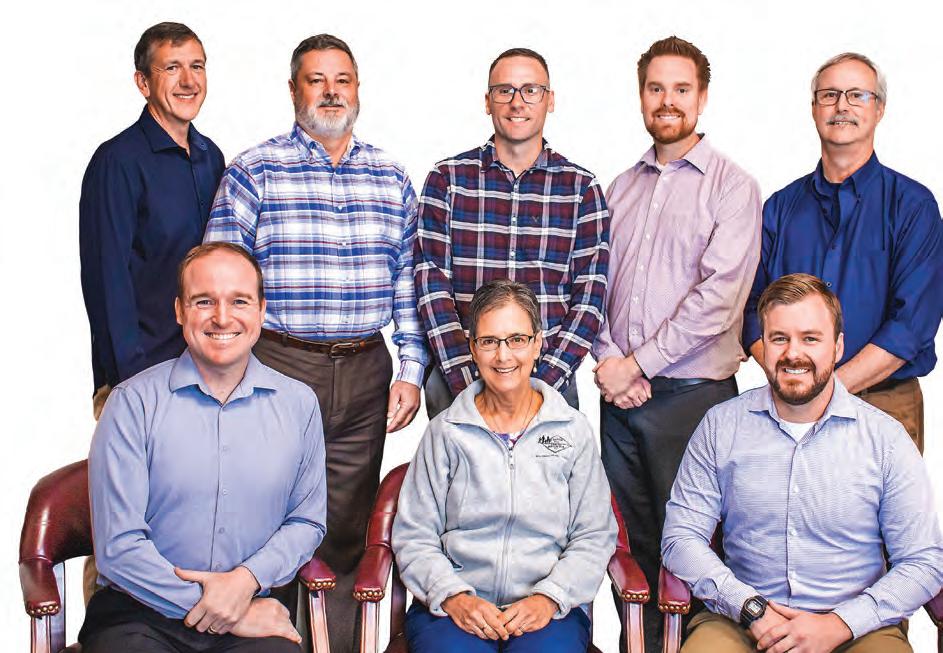
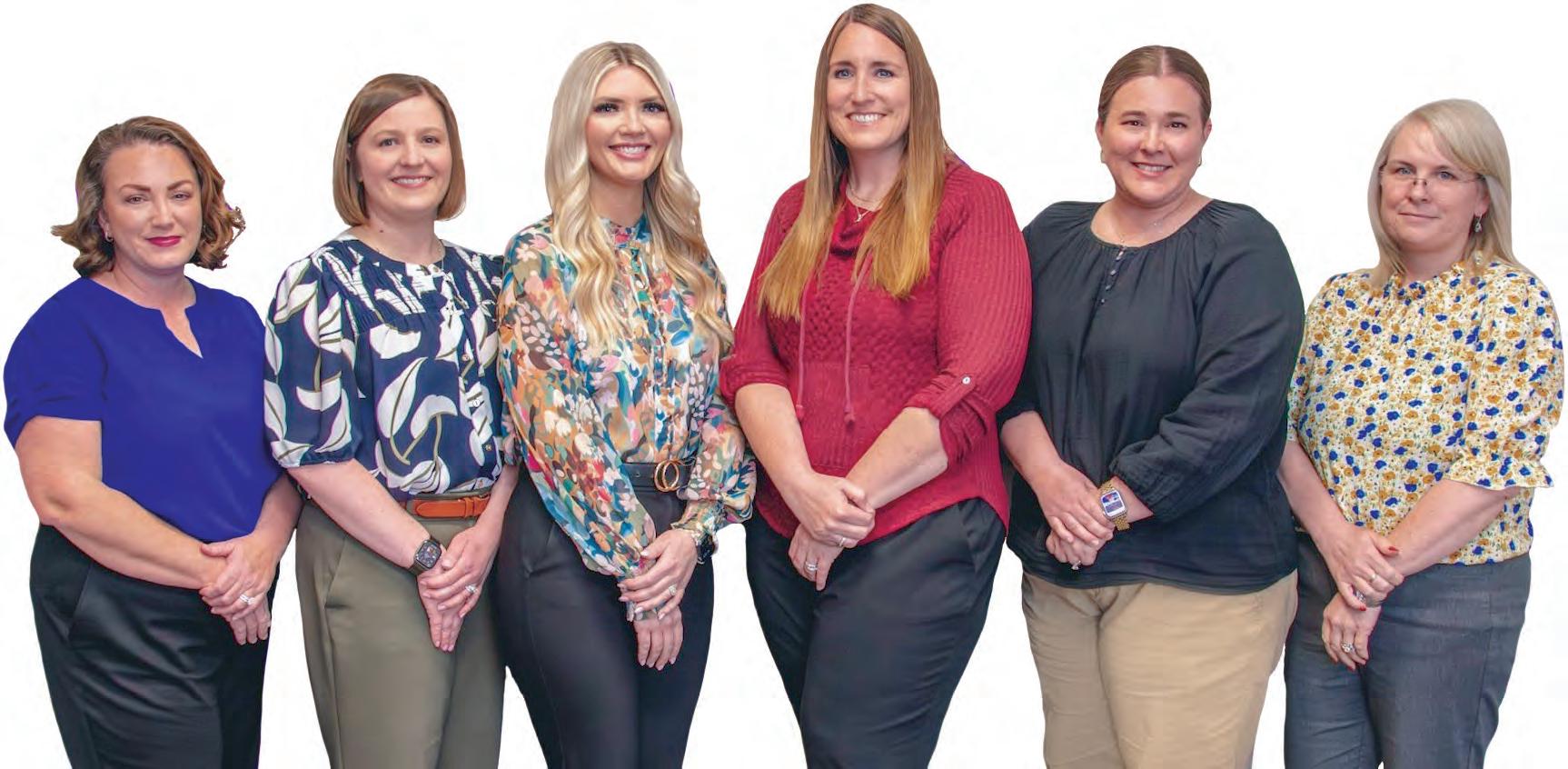
For more than 35 years, Center for Family Medicine has been proud to call Sherman home. Our team of 14 providers is welcoming new patients and caring for every member of your family, from age 2 onward, with a full-service, whole-person approach to health.
PHYSCIANS:
Left to Right Back Row:
Jasyn Haney, MD; Bradley Hodge, MD; Kevin Brighton, DO; Tyler Ockwig, DO; Ronald Woods, Jr., MD
Front row:
John Kenworthy, DO; Helen Schulze, MD; Dalton Tidwell, MD
ADVANCE
Left to Right: Lorene West, NP;Lacie Mitchell, PA; Kayla Earnhart, NP; Deaun Handlang, NP; Katie Boatner, PA; Kelli Mabey, NP
Dear Olivia,
I have so many questions about hospice care, and I have heard different things from the medical community and family members. Can you help clarify a few things?
~Wanting to Learn More
Dear Wanting to Learn More, You are not alone. Navigating health care can be confusing when it comes to talking about end-of-life care, which is hard to discuss for anyone facing these difficult decisions. I hope the below questions can help!
1. Is hospice a place? No, hospice is a type of health care provided primarily in the home. Many people associate hospice with a facility, but actually most hospice care is provided in the patient’s own home, or wherever they call home (nursing facility, assisted living facility, memory care, etc).
2. Is hospice care expensive? The services are meant to be accessible and affordable for patients. Hospice is covered by Medicare, Medicaid, and most private insurance plans. The Visiting Nurse Association (VNA) also provides charitable care for those with no means to pay.
3. Do most hospice patients have cancer? Hospice is not just for cancer patients. Though many associate it with cancer, hospice can be used for any terminal diagnosis. These include Alzheimer’s, other forms of dementia, heart disease, lung disease, liver disease, and many other diagnoses. The doctor certifies that a patient meets the criteria for hospice care, and then care can begin.
4. Does hospice stop all of my medications once I sign up for hospice care? No, hospice works with your doctor and the hospice doctor to establish a plan of care to meet the goals of the patient and family. Also, hospice care is about more than medical needs. Hospice aims to treat the whole person by providing emotional, social, and spiritual support.
5. What about personal needs for those who cannot care for themselves with activities of daily living? Hospice support includes a home health aide who can assist in personal care such as bathing, dressing and light meal preparation. They are part of the interdisciplinary team, along with volunteers. Hospice organizations have many trained volunteers who visit patients, provide respite for caregivers, help with errands, and offer companionship.
~Olivia
OLIVIA ROGERS , RN, BSN, CHPN, CHPO, MBA, is a leading voice in health care and senior services and the Vice President, Chief Nursing Officer of VNA Texas.
Before You Take That Pill
By EDWARD LANGFORD
Walk into any pharmacy or grocery store and you will fid an entire wall devoted to supplements. Bottles promising better sleep, sharper memory, stronger joints, smaller waistlines, more energy, and a longer life stare back at you from every shelf. The market has grown to over 100,000 products in the U.S., and Americans are buying them in remarkable numbers. They are easy to purchase, require no prescription, and carry the reassuring word “natural” on almost every label.
But natural does not always mean safe. And the gap between what most people assume about supplements and how they are actually regulated is wide enough to matter.
Here is what most people do not know. When you pick up a bottle of fish oil, turmeric, or melatonin, that product has not been reviewed or approved by the U.S. Food and Drug Administration before it reached the shelf.
According to the FDA’s own guidelines under the Dietary Supplement Health and Education Act, passed by Congress in 1994, supplements are not medicines and are not required to prove they work before being sold. The responsibility for safety sits with the manufacturer, not the government. The FDA steps in after the fact, if a problem is reported or a product is found to be harmful.
Ths is not a small distinction. It means the burden of proof runs in the opposite direction from what most people expect. With a prescription drug, a company must demonstrate safety and effectiveness before it reaches you. With a supplement, it can reach the shelf fist and face scrutiny later, if at all.
That said, the FDA does enforce some meaningful standards. Supplement manufacturers are required to follow what the agency calls Good Manufacturing Practices, which are rules covering how products are made, labeled, and tested for purity and content. The FDA also conducts periodic facility inspections and can issue recalls when products are found to be contaminated or mislabeled. In fact, the FDA recently issued warnings after testing uncovered supplements containing undisclosed prescription drug ingredients, including substances found in medications for blood pressure and other serious conditions, none of which appeared anywhere on the label. Ths is not a fringe problem. It is one of the reasons simply reading the label is not always enough.
When you are browsing the supplement aisle, one thing worth looking for is a third-party verifiation seal. Organizations such as USP, NSF International, and ConsumerLab independently test supplements and allow products that pass their standards to carry a seal of approval on the label. Ths seal does not mean the supplement will do what it claims, but it does mean the product likely contains what it says it contains, in the amount stated, without harmful levels of contamination. It is one of the more reliable signals available to a consumer in an otherwise loosely regulated marketplace.
But reading the label carefully is only half of what you need to do. The other half involves a conversation that far too many people skip entirely.
A comprehensive review published in Cureus in 2025, examining evidence across nearly three decades of research, found that between 23 and 82 percent of older adults were taking both prescription medications and dietary supplements at the same time, and that the risk of harmful interactions was signifiant, particularly with blood thinners and thyroid medications. Even more concerning, the review found that a critical failure in communication between patients and their healthcare providers was consistently making the problem worse. Doctors often do not ask. And patients often do not think to mention what they consider to be vitamins.
The interactions are real, and some of them are serious. St. John’s Wort, one of the most widely purchased herbal supplements in the country, is known to speed up the liver’s processing of many medications, which means it can quietly reduce the effectiveness of antidepressants, heart medications, and other critical treatments. Ginkgo biloba and fish oil both have mild blood-thinning properties that can amplify the effect of prescribed blood thinners like warfarin, raising the risk of dangerous bleeding. Calcium and magnesium can interfere with the absorption of thyroid medication if taken at the same time. Potassium supplements taken alongside certain blood pressure medications can cause potassium to build up in the bloodstream to levels that affect heart rhythm.
None of this means supplements are something to fear across the board. Some have genuinely good evidence behind them and a reasonable safety profile when used appropriately.
But “appropriate” is the key word, and appropriate for you specifially depends on what else you are taking.
Before starting any new supplement, speak with your doctor or your pharmacist. Your pharmacist in particular is an often underused resource for exactly this kind of question. They have access to your full medication history and are well positioned to spot a potential interaction that might not be obvious to anyone else. It is a five minute conversation that can prevent a serious problem.
And here is something equally important: when you hand your doctor or pharmacist a list of everything you are taking, include the supplements. Every single one of them. The fish oil. The magnesium. The turmeric capsule you started taking for your knees. The probiotic your neighbor recommended. Supplements do not require a prescription, but that does not mean they have no effect on the body. They absolutely can, which is precisely why the people treating you need to know about them. A complete picture of what you are putting into your body every day is not optional information for your medical team. It is essential.
The supplement aisle is not the enemy. But it deserves the same thoughtful approach you would bring to any other health decision. A little information, a conversation with the right person, and a realistic view of what any bottle can and cannot promise will serve you far better than the claims on the label ever will.
When you are browsing the supplement aisle, one thing worth looking for is a third-party verification seal.
At some point, sleep stops being the thing you fall into easily at the end of a long day and starts being the thing you have to work at. As we age, especially after 50, this shiftcan feel sudden and deeply frustrating. You lie awake at 2am for no particular reason. You wake up feeling like you barely touched the pillow. You driftoffon the couch at eight in the evening but stare at the ceiling for an hour once you actually go to bed. If any of that sounds familiar, you are not imagining it, and you are not alone.
Something genuinely changes in the way our bodies handle sleep as we get older, and understanding what is actually happening is more useful than lying there blaming yourself for it.
Here is the honest explanation. Deep inside the brain sits a cluster of around 20,000 cells called the suprachiasmatic nucleus, which is essentially your body’s internal clock. It governs when you feel sleepy,
when you feel alert, when you get hungry, and when certain hormones are released. Ths internal clock begins to lose some of its precision as we age. The rhythms it keeps become less reliable, which is why sleep patterns shiftin ways that feel completely outside your control, because to a signifiant degree, they are.
One of the most noticeable changes is that the body begins producing less melatonin, the hormone that rises in the evening as darkness falls and signals to the brain that it is time to wind down. With less melatonin in circulation, that natural transition from wakefulness to drowsiness becomes blurrier. You may feel tired but wired, ready for sleep in theory but unable to get there in practice. Compounding this, many people spend less time outdoors as the years go on, which matters more than most people realize because daylight is one of the most powerful tools the body uses to keep that internal clock properly set.
Deep inside the brain sits a cluster of around 20,000 cells called the suprachiasmatic nucleus, which is essentially your body’s internal clock.
The architecture of sleep itself changes too. The deep, restorative slow-wave sleep that leaves you feeling genuinely refreshed in the morning becomes harder to reach and easier to fall out of. You spend more time in the lighter stages, which is why the smallest sound, a car outside, a partner turning over, a pet at the foot of the bed, can pull you fully awake at three in the morning when it would have barely registered years earlier.
A large-scale study published in Nature Communications, involving over 730,000 participants across 63 countries, found that sleep duration declines through early adulthood, stabilizes through the middle years, and then naturally begins to lengthen again in the early fiies. In other words, the disrupted, fragmented sleep so many people experience is not necessarily the permanent new normal. The body does fid its way back toward rest. It just needs some help getting there.
What that help looks like is less dramatic than the supplement aisle at your local pharmacy might suggest.
Consistency is the single most effective tool most people are not using properly. Going to bed and waking at the same time every day, including weekends, gives that imprecise internal clock something reliable to anchor itself to. It sounds almost insultingly simple, and yet most sleep specialists consider it the foundation everything else is built on. The body responds to routine in ways it does not respond to anything you can buy.
Light exposure matters enormously, and in both directions. Getting outside within the fist hour or so of waking, even on a cloudy day, sends a strong signal to the brain that the day has begun and the clock can start counting. In the evenings, the opposite applies. The blue-toned light from phones, tablets, and televisions tells the brain it is still midday, which suppresses melatonin production at exactly the time you need it rising. Dimming the lights and putting screens away at least an hour before bed is one of the more evidence-backed changes you can make, even if it is also one of the least popular ones.
Alcohol deserves a particular mention because it is probably the most misunderstood sleep disruptor for this age group. Many people have a drink in the evening specifially because it helps them relax and nod off. And it does help with the falling asleep part. The problem is what it does to the quality of sleep once you are there. Alcohol suppresses the deeper stages of sleep and causes the brain to become more active in the second half of the night, which is why a nightcap that sends you offpeacefully tends to leave you wide awake at four in the morning, restless and unable to settle. The sleep you get after alcohol is genuinely less restorative than the sleep you get without it.
Temperature also plays a larger role than most people appreciate. The body needs to drop its core temperature slightly to initiate sleep, which is why a bedroom that is too warm makes it harder to
get there and stay there. Keeping the room a little cooler than feels instinctively comfortable supports that process in a way that is easy to overlook precisely because it is so unglamorous.
Caffeine is another quiet culprit worth reconsidering. Most people know not to drink coffee at ten at night, but caffeine has a half-life of roughly five to seven hours, meaning a three o’clock cup still has a signifiant presence in your system at bedtime. If sleep has become a struggle, moving that afternoon cutoffearlier than feels necessary is often worth the experiment.
For those dealing with persistent wakefulness that goes beyond the ordinary shiftsof aging, it is worth speaking with your doctor about what might be driving it. There are underlying conditions, from sleep apnea to restless leg syndrome to hormonal changes, that a doctor can properly assess and address. Do not assume that broken sleep is simply something to endure. In many cases, there is a specificreason for it, and a specific olution.
Your doctor may also be able to discuss cognitive behavioral therapy for insomnia, often referred to as CBT-I, which has a strong body of evidence behind it and is now widely considered more effective than sleep medication for long-term results. It works by addressing the thought patterns and behaviors that reinforce poor sleep rather than simply sedating the brain, and unlike medication, it tends to produce lasting improvements rather than short-term relief. It is well worth asking whether it might be right for you.
The important thing to hold onto, on those nights when sleep feels impossibly out of reach, is that what you are experiencing has a biological explanation. Your brain has not failed you. Your habits are not irredeemable. Sleep changes as we get older, but different is not the same as gone. With a little patience and a few deliberate changes made consistently over time, most people fid their way back to rest.
It just rarely happens overnight.
This internal clock begins to lose some of its precision as we age.
» Staffed by 2 Licensed, Doctors of Audiology
» Hearing Aid Fittings, Maintenance and Repairs
» Invisible Fittings/Open Fittings
» Evaluation Period On All Hearing Aids
» Hearing Evaluations For All Ages
» Wireless/Connectivity Hearing Solutions
» Battery Purchase Programs
» Custom Ear Protection
» Assistive Devices
Yes, You’ll Get Used to Them
Courtesy HEARING SERVICES OF McKINNEY
Picture this. You’re sitting with a hearing specialist, about to be fitted for your very fist pair of hearing aids. Part of you is genuinely excited. Another part is quietly wondering what it will feel like to have a device in your ear all day, every day. Both of those feelings are completely normal, and both deserve a thoughtful answer.
The truth is that getting hearing aids is the beginning of a journey rather than a single moment. And like most journeys worth taking, it gets better the further along you go.
The fist thing most people notice is the physical sensation. Something new in your ear is going to feel like something new in your ear, at least for a little while. Hearing specialists typically suggest wearing your aids as much as possible in order to acclimate and re-train the brain. Ths is not because the devices are difficult to wear. It is simply because your brain and body appreciate a little time to get acquainted with something new. Minor awareness of the device is common in those early days. Actual pain, however, is not, and if you experience it, a quick visit back to your specialist to adjust the fit will sort it out.
The second thing people notice (and this one tends to catch them by surprise), is the sound itself. Hearing aids do not just turn up the volume. They open up a whole spectrum of sound that may have been fading quietly into the background for years. The rustle of leaves. The hum of a refrigerator. A conversation happening across the room. At fist, some of these sounds can feel almost startlingly present. That is your brain reconnecting with an auditory world it had learned to do without. Give it a few weeks, and it begins to filter naturally, tuning into what matters and letting the background settle where it belongs.
Practicing during this period makes a real difference. Reading along with audiobooks, watching television with captions, or simply having more conversations all help your brain adjust more quickly to its new, richer sound environment. Patience with yourself during this phase is not optional. It is part of the process.
Once that adjustment settles, most people fid they stop thinking about their hearing aids altogether and simply start noticing what they can hear again.
A large part of how comfortable that journey feels comes down to which style of hearing aid you choose, and the good news is that the options today are genuinely impressive. Invisible-in-Canal devices
are designed to sit inside the ear canal where they are virtually undetectable, making them a popular choice for anyone who wants maximum discretion. Receiver-in-Canal models are among the most widely worn styles today, offering a slim, lightweight fit with excellent sound quality and comfort. For those who prefer something easier to handle, In-the-Ear styles fill the outer ear and come with longer battery life and a simpler, all-in-one design. Behind-the-Ear models are highly versatile and work across nearly all degrees of hearing loss, offering room for advanced features including rechargeable batteries. And if the thought of fidling with tiny disposable batteries feels like a concern, it is worth knowing that rechargeable options are now available across most styles, including many In-the-Ear models, making daily use even simpler than it used to be.
For anyone who simply wants the most hands-offexperience possible, extended-wear devices are fitted by a professional and can stay comfortably in place for several weeks at a time. No daily insertion. No removal at night. Just consistent, clear hearing as part of your everyday routine.
Many of today’s hearing aids also connect wirelessly to smartphones, allowing you to stream phone calls, music, and audio directly to your ears. Settings can be adjusted through an app, and some specialists can even make fie-tuning changes remotely, without requiring you to come in for an appointment. Custommolded fits are available for those who want the most precise and comfortable result possible.
The right style for you depends on your degree of hearing loss, your lifestyle, and honestly, your personal preferences. There is no single correct answer. What matters most is fiding a device that fits your life so naturally that you stop noticing the hearing aid and start simply enjoying the sounds around you.
That is exactly the kind of conversation the team at Hearing Services of McKinney loves to have. From your very fist evaluation through to fiding the right fit and following up to make sure everything feels as good as it should, we are here to guide you through each step without any pressure. A hearing evaluation is a relaxed and informative starting point, and many people leave surprised by how straightforward and reassuring the whole experience feels.
The sounds you love are waiting. The journey to hear them clearly again starts with one easy appointment.
Providing modern, minimally invasive procedures to patients with neurological conditions
Dallas Brain, Spine and Skull Base Surgery is a neurosurgical practice that offers over 40 years of experience providing an innovative and collaborative state of the art approach to the care of patients with challenging neurological problems from around the world. Dr. Beshay and Dr. Coimbra have developed unique expertise in the treatment of brain tumors becoming the referral destination for the treatment of patients, especially those with complex or difficult to access tumors. They have also shown a commitment to the development of minimally invasive neurosurgical procedures including the most modern expanded trans–nasal endoscopic skull base surgical techniques and focused extradural approaches to skull base tumors.
Dr. Beshay’s interests include tumors of the brain and spine, minimally invasive spine surgery, complex spinal reconstruction, and epilepsy surgery. In addition to surgical treatment of intracranial and spinal disease, he has an interest in neurological bleeding and its reversal. Dr. Beshay’s clinical interests include: benign and malignant brain tumors, neuroendoscopy, epilepsy surgery, intracranial hemorrhage, cranial/ spinal trauma, minimally invasive spine surgery, complex spinal reconstruction with an interest in C1–C2 and occipito–cervical junction disease.
Dr. Coimbra restricts his practice mostly to intracranial neurosurgery. This selective tertiary practice has fostered the opportunity to develop unique expertise and commitment to the treatment of malignant and benign brain tumors. He is an expert in the minimally invasive resection of the most complex skull base tumors, including meningiomas, acoustic neuromas, and pituitary tumors. He employs CyberKnife radiation therapy, endoscopic endonasal techniques, and an array of focused skull base approaches to create a customized treatment plan for each patient in his practice. These innovative approaches allow resection of deep, difficult, and complex tumors with minimal brain tissue manipulation and maximal preservation of function.
Dr. Coimbra and Dr. Beshay believe in customized patient care and a team approach to medicine with attention to careful selection of the least invasive and most effective treatment for each patient. Their commitment to this philosophy has resulted in maximum preservation of function, less discomfort, shorter hospital stays and durable favorable outcomes for their patients.
Left to Right
Caetano J. Coimbra, MD; Joseph Beshay, MD
Carly, Colon Cancer Survivor
• Comprehensive Adult Eye Care
• Light Adjustable Lens, Odyssey™, Symfony®, PanOptix, Vivity® and the Eyhance IOL
• Management of Dry Eye, Glaucoma & Corneal Disease
• Eyelid Surgery & Botox®
• Laser Vision Correction, EVO ICL™ Convenient locations to serve you in Allen, Arlington, Dallas, Frisco, Greenville, McKinney, Mesquite, North Fort Worth, Plano, Richardson, and Rockwall.
Left to Right: Leslie Pfeiffer, MD; Anita Jacob, OD; Kimberly Warren, MD; Sadaf Razi ElHaffar, OD; Faisal Haq, MD
I Didn’t Plan This Either
By D.S. EMORY
Can I be honest with you about something? I had plans. Good ones, I thought. The kind you build quietly over years, the kind that feel solid because you’ve thought them through so carefully. And then life, as it has a way of doing, went in a completely different direction. Not just once. More times than I care to count.
I don’t know what your unplanned thing looks like. Maybe it’s a health diagnosis that arrived like a stranger at the door. Maybe it’s a relationship that fell apart after you gave it everything you had. Maybe it’s a dream you carried for so long that letting it go felt like losing a part of yourself. Whatever it is, I want you to know that I’m not going to sit here and tell you it doesn’t hurt. It does. And that matters. What I will tell you is what I’ve slowly, and sometimes painfully, come to understand. Trust isn’t something that shows up fully formed when you need it most. It’s built in the ordinary, quiet moments long before the hard ones arrive. And when the hard ones do arrive, which they will for all of us, trust looks a lot less like confidece and a lot more like just getting up and trying again tomorrow.
There is a passage in Proverbs that has stayed with me through some of my most disorienting seasons. It says that the heart of a person plans their way, but the Lord establishes their steps [Proverbs 16:9]. The fist time I really sat with those words, I’ll be honest, I wasn’t sure if I found them comforting or unsettling. Because I liked my plans. I had worked hard on them. But somewhere along the way I began to understand that this wasn’t a verse about God overriding us. It was a verse about God being with us, even in the redirections we never asked for.
There’s something I’ve noticed about the seasons in my life that looked the most like failure or loss. They were also, strangely, the seasons where I grew the most. Not because the pain was good in itself, but because something about being stripped of the plan I was gripping so tightly opened me up to things I never would have seen otherwise. Compassion I didn’t know I had. Resilience I didn’t know I needed. And a kind of quiet peace that I honestly cannot explain, except to say it felt like something beyond me was holding what I couldn’t hold myself.
I think about Joseph sometimes, the one from Genesis, a man who had more reason than most to feel abandoned by any sense of a plan. Betrayed, sold, imprisoned, forgotten by people he’d helped. And yet he later looked back at all of it and said, what was intended to harm him, God had intended for good. I fid that remarkable. Not easy, not painless, but remarkable. Because it means that even the broken places in a story are not outside of something larger being written.
Now, I want to be careful here, because I know how hollow certain words can feel when you are deep in the middle of something hard. I am not suggesting that everything that happens is meant to happen, or that your pain has a tidy explanation waiting for you around the corner. What I am saying, gently and with real conviction, is that I do not believe you have been forgotten. Not for a single moment.
Prayer changed for me during one particularly difficult stretch of my own life. I stopped approaching it as a list of requests and started showing up to it more like I would show up to a conversation with someone I trusted deeply. Less polished. More honest. Some mornings it sounded more like, I don’t understand this, but I’m still here, and I’m still trying. And that, I came to believe, was enough. Because I think what we sometimes call weak faith is actually just real faith. The kind that keeps showing up even when the answers haven’t come yet.
I’ve also learned that I need people around me who are also figuing this out. Not people who have all the answers, but people who will sit with me in the questions. There is something quietly powerful about being known by others who are learning, just like you are, to hold their plans with a little more openness. Not to give up on hoping, but to hope with open hands instead of clenched fists.
If you are in a season right now where almost nothing looks the way you thought it would, I want to leave you with this. You are not behind. You are not forgotten. And your story is not over. The same love that set the stars in place has not lost track of you in the middle of your particular Tuesday, your particular heartache, your particular unplanned chapter.
Trust, I’ve found, is less about having certainty and more about choosing to keep walking toward something good, even when you can’t quite see it yet. And sometimes, just sometimes, the path you never would have chosen turns out to be the one that leads you somewhere you couldn’t have imagined from where you started.
I believe that for you. I really do.
Trust isn’t something that shows up fully formed when you need it most. It’s built in the ordinary, quiet moments long before the hard ones arrive.
by CANTEX CONTINUING CARE NETWORK
Beacon Hill is a state-of-the-art 150-bed transitional care center located in a residential setting that feels like a deluxe cabin retreat.
Welcome to Beacon Hill
Transitional Healthcare in a Luxury Setting
QUALITY MEASURES
Beacon Hill
3515 Park Avenue, Denison, TX 75020
(903) 327-8537
• Private and Semi-Private Suites
• Pastorial Services
• Television with Satellite Service
• Wi-Fi Internet Access
Rehabilitative, Complex or Chronic Care
Beacon Hill offers both inpatient and out-patient rehabilitation services aimed at treating a variety of sub-acute and chronic medical conditions:
Cantex Continuing Care Network has been performing the highest standards of transitional healthcare and long-term residential services for more than 30 years. Ask anyone who knows: Cantex stands for quality.