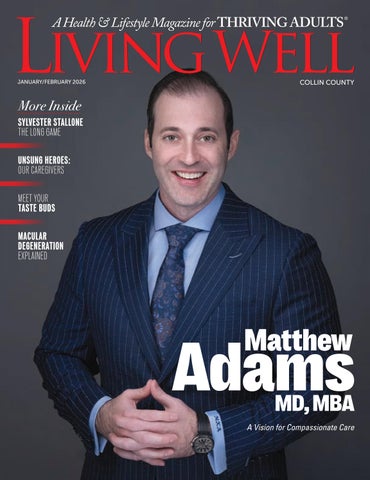
JANUARY/FEBRUARY 2026
COLLIN COUNTY
More Inside SYLVESTER STALLONE THE LONG GAME UNSUNG HEROES: OUR CAREGIVERS MEET YOUR TASTE BUDS MACULAR DEGENERATION EXPLAINED
Matthew
Adams MD, MBA
A Vision for Compassionate Care
Kwame A. Ennin, MD, MBA Orthopaedic Surgeon
Kwame Ennin, MD, MBA, is a fellowship-trained board-certified orthopedic surgeon at Texas Joint Institute in McKinney and Plano, Texas who is an expert in hip and knee replacement procedures, adult reconstructive surgery, and nonoperative osteoarthritis care. Dr. Ennin earned his undergraduate degree in biochemistry from the State University of New York in Stony Brook. He then went on to receive his medical education at the University of Cincinnati College of Medicine, before completing his general internship and orthopedic surgery residency at The University of Texas Southwestern Medical Center in Dallas. He is fellowship-trained in adult reconstructive surgery from William Beaumont Hospital in Michigan. Dr. Ennin has a keen desire to educate. He is a presenter and educator to his colleagues regarding direct anterior total hip arthroplasty, total knee arthroplasty, revision total knee arthroplasty, partial knee replacement, and robotic surgery. He is committed to ensuring that the best understandings and techniques are available to all surgeons in the orthopedic community. Dr. Ennin is passionate about research. He has, throughout his career, been involved in and published numerous peer-reviewed studies. Dr. Ennin has been a leader in the North Texas orthopedic community since 2015. He delivers personalized, patientcentered, evidence-based care for his patients. He is committed to taking care of his patient’s joints for their lifetime.
Dr. Ennin specializes in: • • • • •
Hip Replacement Surgery Knee Replacement Surgery Revision Hip and Knee Replacement Surgery Orthopedic Surgery Osteoarthritis
4201 Medical Center Drive, Ste. 100, McKinney, TX 75069
(469) 796-4295 4650 Pres. George Bush Tpke., Suite 100, Sachse, TX 75048
(972) 566-5255 4001 West 15th St., Ste. 180, Plano, TX 75093
(972) 566-5255
txjointinstitute.com kwameenninmd.com
02 • JANUARY/FEBRUARY 2026
Left to right John S. Early, MD Terry K. Gemas, MD William F. Tucker, Jr., MD Duncan L. McKellar, Jr., MD J. Conner Ryan, MD Brian I. Nwannunu, MD Florian F. Dibra, MD Charles E. Toulson, MD Cyrus E. Abbaschian, MD Donald W. Hohman, MD J. Stephen Appleton, MD Alexander S. Greenstein, MD Kwame A. Ennin, MD Samuel K. Stephenson, MD Raj Yalamanchili, MD Emmanuel D. Eisenstein, MD
Expert Orthopedic Surgeons Close to Home ALLEN | DALLAS | FRISCO | LAKEWOOD | MCKINNEY | PLANO | SACHSE | SHERMAN
At Texas Joint Institute, our growing team of highly skilled orthopedic surgeons and medical professionals are at the forefront of bone and joint health. From joint replacements and minimally invasive treatment options to complex joint reconstruction and treatment of bone and soft tissue sarcomas, our team offers a wide range of services to help you get back to your daily activities you enjoy.
Livingwell TOP DOCS AND OTHER
HEALTHCARE PROVIDERS
2025
TXJOINTINSTITUTE.COM
Phone: (972) 566-5255
| Fax: (972) 566-5236
COLLIN COUNTY • 1
STAND OUT
WITH THE EMINENT CHOICE IN HEALTHCARE
2 • JANUARY/FEBRUARY 2026
Eminent Medical Center is the premier treatment destination in the Dallas/Fort Worth area with three operating suites and five private patient rooms. Pain Management • Sports Medicine • General Surgery • Spine Surgery Orthopedic Surgery • Neurosurgery • Minimally Invasive Spine Surgery Total Joint Surgery • Foot & Ankle Surgery • Hand Surgery Headache and Migraine Treatment • Plastic Surgery
IN-NETWORK
Livingwell TOP DOCS AND OTHER
HEALTHCARE PROVIDERS
2018-2025
Eminent Medical Center is a premier, boutique treatment destination in the DFW area. We are an In-Network provider with Aetna, Blue Cross Blue Shield, Cigna, and United Healthcare.
ROBOTIC TECHNOLOGY Orthopedic surgeons and the medical staff at Eminent Medical Center are excited to offer Zimmer Biomet’s ROSA Knee System, which helps surgeons personalize surgical procedures for their patients.
PROVIDING SPECIALTY CARE We provide surgical services for pain management,
orthopedic & sports medicine, headache and migraine treatment, spine surgery and general surgery.
Eminent Medical Center is a proudly certified Center of Excellence Designation for Advanced Spine Surgery and Advanced Hip & Knee Replacement
www.eminentmedicalcenter.com • (469) 910-8800 1351 W. President George Bush Highway, Richardson, Texas 75080 COLLIN COUNTY • 3
FROM THE PUBLISHER
Living Well A Health & Lifestyle Magazine for THRIVING ADULTS
TM
JANUARY/FEBRUARY 2026
THE PRACTICE OF LIVING WELL
L
iving well is rarely defi ed by dramatic moments. More often, it is shaped by informed decisions and the steady habits that support health, purpose, and resilience over time. Th s issue brings those ideas into focus through articles that balance science, real-world relevance, and thoughtful perspective. At the heart of the issue is “A Vision for Compassionate Care,” which profiles Dr. Matthew Adams and the patient-centered approach behind Texas Macula & Retina on page 8. Designed to place people before process, the practice emphasizes access, communication, and trust alongside clinical precision. It offers a compelling example of what modern healthcare can look like when expertise and empathy are treated as equals. Vision health is further explored in “Macular Degeneration Explained,” written by Dr. Adams himself, reinforcing his role as both clinician and educator. The article breaks down complex medical information into understandable terms, outlining symptoms, treatment options, and preventive measures that empower readers to take an active role in protecting their sight. Don’t miss it on page 33.
Adding a different perspective, this issue also spotlights Sylvester Stallone. From Rocky to Tulsa King, Stallone’s work refl cts how purpose can shift with time and experience. At this stage of his life, living well appears less about proving something and more about choosing how energy and attention are spent—a reminder that growth does not stop with age, it simply takes a different shape. Find it starting on page 24. The issue also pauses to recognize those whose work often goes unnoticed. “Unsung Heroes: Our Caregivers” honors the dedication of individuals who support loved ones through the challenges aging presents, while offering insight into how meaningful support begins with listening. It’s a must-read on page 44 for anyone caring for aging family members. The stories in this issue underscore a simple truth: living well is built through mindful attention to the details that matter most, informed by medical, legal, and professional experts whose work strengthens everyday life. Find those informed voices inside this issue. Be Well, Sam & Spring Houston
4 • JANUARY/FEBRUARY 2026
PRESIDENT & CEO SAM HOUSTON VICE PRESIDENT & CFO SPRING HOUSTON EDITOR, FEATURE WRITER & SOCIAL MEDIA SONDRA BARR ART DIRECTOR VANESSA FRYER ACCOUNTS MANAGER JENNIFER BEAVERS WEBSITE LYDIA ROGERS ADVERTISING & SALES TEXAS: Denton County, Dallas County, Collin County TEXAS & OKLAHOMA: Texoma Area
WRITE TO US: Tell us who you would like to see featured on the cover, or what subjects you would like covered in upcoming editions of LIVING WELL MAGAZINE at info@livingwellmag.com
SUBSCRIPTIONS & CUSTOMER INQUIRIES
Houstons of Dallas Publishing, Inc. 102 E. Broadway, #901 Prosper, TX 75078 www.LivingWellmag.com Phone: (214) 507-1000 Fax: (855) 248-2132 LIVING WELL MAGAZINE is a source for quality educational articles on living a healthy, vibrant life. Our focus is on connecting our readers with the latest information on a host of topics relevant to their evolving life. From cutting edge medical news and procedures to top-tier financial, legal and lifestyle information. Connecting readers to leading medical and business professionals in their community in Texas and Oklahoma. All advertisements in this Magazine are placed by third parties. We do not control or endorse either the advertisements or their content. Further, we do not manufacture, sell, distribute or provide any of the goods or services advertised herein. We hereby expressly disclaim any liability with respect to information or goods and services contained herein. We further disclaim any and all warranties or representations, express or implied, with respect to such information, goods or services, including any warranty of merchantability or fitness or a particular purpose (it being understood that we do not acknowledge that any such warranty exists). We are not liable or responsible for any loss, injury, damage, or harm that you may suffer as a result of the information contained in any advertisement or goods or services contained herein. “We” refers to the name of this Magazine, and all versions of Living Well Magazine as well as Houstons of Dallas Publishing, Inc.
CONTENTS
AND MUCH MORE...
8
14
Meet Your Taste Buds
20
Annoying Habits Driving People Crazy
31
Struggling With Your Hearing Aids?
35
Understanding Palliative Care
36
Improving Your Focus and Concentration
39
The Importance of Ceremony
40
Mouth Breathing Deserves Your Attention
24
FEATURES 8
Dr. Adams A Vision for Compassionate Care
24
Sylvester Stallone The Long Game
33
Macular Degeneration Explained
44
Unsung Heroes: Our Caregivers
JANUARY/FEBRUARY 2026
COLLIN COUNTY
More Inside
33
FOLLOW US ON SOCIAL MEDIA
SYLVESTER STALLONE THE LONG GAME UNSUNG HEROES: OUR CAREGIVERS
@ LivingWellmag
MEET YOUR TASTE BUDS MACULAR DEGENERATION EXPLAINED
@ LivingWellmags Matthew
Adams
@ LivingWellmags
MD, MBA
A Vision for Compassionate Care
@ LivingWellmagaz
Visit LivingWellMag.com for a free digital subscription.
44 COLLIN COUNTY • 5
PREMIER SURGEON FOR HIP AND KNEE REPLACEMENT Dr. Charles Toulson specializes in: • Robotic Joint Replacement • Total Hip Replacement • Total Knee Replacement • Partial Knee Replacement • Total Hip and Knee Revisions TO LEARN MORE, VISIT
txjointinstitute.com
ALLEN 1125 Raintree Cir., Ste. 201 Allen, TX 75013 MCKINNEY 4201 Medical Center Dr., Ste. 100 McKinney, TX 75069 SHERMAN 204 Medical Dr., Ste. 110 Sherman, TX 75092
(972) 566-5255
Please call to make an appointment.
Livingwell TOP DOCS AND OTHER
HEALTHCARE PROVIDERS
2025
VOTED TOP DOC IN DALLAS COUNTY AND COLLIN COUNTY. DR. TOULSON IS PROUD TO SERVE LOCAL RESIDENTS AND SURROUNDING COMMUNITIES.
6 • JANUARY/FEBRUARY 2026
Stephen P. Courtney, MD Fellowship-Trained Orthopedic Spine Surgeon Over 28 Years of Experience Dr. Courtney is a board-certified orthopedic spine surgeon located in Plano, Texas. A Louisiana native, he attended Louisiana State University for medical school, and completed residency at Texas A&M followed by a fellowship at the Florida Neck and Back Institute. SPECIALTIES: • Back Pain • Neck Pain • Spine Pain • Disc Replacement • Microdiscectomy • Spinal Fusion • Minimally Invasive Surgery • Steroid Injections • Physical Therapy “I believe in treating each of my patients with honesty, dignity, and respect. My patients come away from our shared interactions feeling confident, assured that they are truly in the best hands. Throughout my career, I have remained laser-focused on providing world-class care and innovation to the patients I treat on a daily basis. I look forward to getting to know you!”
Livingwell TOP DOCS AND OTHER
HEALTHCARE PROVIDERS
2018-2025
Voted Top Doc for Orthopedic Spine Surgeon by Living Well Magazine readers.
2004 Ventura Drive, Suite 200, Plano, Texas 75093 (972) 499-5457 • scheduling@advancedspinecenters.com advancedspinecenters.com COLLIN COUNTY • 7
The clinic operates on what he calls the “Triple A” standard— availability, affability and ability.
”
8 • JANUARY/FEBRUARY 2026
Matthew
Adams
MD, MBA
A Vision for Compassionate Care By DEE LEONE
W
hen Dr. Matthew Adams opened Texas Macula & Retina in Plano, he wanted more than just a state-of-the-art medical practice. He also wanted a place where patients felt seen, understood and genuinely cared for—not rushed through a system that too often forgets the patient behind the pathology. “I think modern medicine has become cold,” he laments. “Too often, you hear stories of patients who wait three hours to see the doctor for three minutes. That’s not the case here. At Texas Macula & Retina (TM&R), the patient experience is a top priority.” That philosophy has helped the clinic grow faster than anyone expected. What began as a dream became a thriving practice serving patients across North Texas in less than two years by customizing care to meet unique individual needs and schedules. For instance, TM&R is the only retina specialty practice in the Metroplex offering Saturday appointments—a small but meaningful way to accommodate patients who can’t afford to miss work or school. As Adams explains, the clinic operates on what he calls the “Triple A” standard—availability, aff bility and ability. “These are the qualities that defi e us.”
Where vision meets precision A board-certifi d ophthalmologist and vitreoretinal surgeon, Dr. Adams specializes in the diagnosis and treatment of complex eye conditions, including diabetic retinopathy, retinal detachment repair, and age-related macular degeneration—the leading cause of irreversible vision loss in older Americans. His credentials are matched only by his personal commitment to excellence. “The thing that I want to impress on all my patients is that when you come here, you’re going to get the best quality care, the best technology, and the best treatment options,” he says. “You’ll understand what’s happening, so you don’t have to be afraid.” A Grapevine native, Dr. Adams earned his bachelor’s degree in biomedical science from Texas A&M University, graduating summa cum laude in just 3 years. He went on to receive his medical degree from Baylor College of Medicine, then completed his ophthalmology residency at the college’s world-renowned Cullen Eye Institute. A fellowship in vitreoretinal surgery followed at the Mayo Clinic, where he also served as Instructor of Ophthalmology. Along the way, he added an MBA from Rice University, earning the prestigious Owl Award for leadership and scholarship. Adams’ career has included more than 25 clinical trials advancing treatments for retinal disease. He is certifi d by the American Board of Ophthalmology and is an active member of the American Academy of Ophthalmology and the American Society of Retina Specialists. COLLIN COUNTY • 9
Putting patients first
From design to staffing, everything about TM&R refl cts Dr. Adams’ patient-centered approach. The waiting area feels more like a futuristic coffee shop than a clinic, with soft natural lighting and a welcoming atmosphere. Front-desk staff greets every visitor by name, and each patient leaves with a full understanding of their diagnosis and treatment plan. “It means a lot to patients that we take all the time they need to make sense of everything,” Adams says, “and that makes people feel safe.” It’s also not uncommon for patients and physicians alike to express surprise when they reach him directly after hours. “Many referring providers have my personal cell phone number,” he adds. “When you have an issue with your retina, time is vision.” That level of access and care has earned Texas Macula & Retina a devoted patient base and steady referrals from Optometrists and Ophthalmologists across the region. Adams often says his top customer is the referring provider, whose trust he works hard to earn with every glowing report. Further, he has been awarded Living Well Magazine’s “Top Doc” honor in both his fi st and second years of practice—an accolade determined by votes from the magazine’s readers and rarely achieved in a physician’s fi st year.
Building something bigger than himself
Dr. Adams says the name Texas Macula & Retina was deliberate. The clinic doesn’t bear his name—a choice rooted in humility and teamwork. “Th s is about serving people, not building an ego,” he says. The practice was designed to outlast its founder, becoming a trusted regional destination for retinal care. Building the clinic demanded uncommon grit and sacrific . While waiting for construction to be completed, Adams took on temporary work to help cover payroll for his associates. He later refl cted that the experience was exactly what he needed to stay grounded and focused on his purpose. Those lessons in humility continue to shape how he leads his team. From the offic manager who relocated from Wisconsin to his lead technician who moved from Florida, everyone shares a sense of purpose that transcends titles. The staff ’s camaraderie shows in every patient interaction—a culture of warmth, precision and mutual respect.
A visionary approach to science
Behind the personal connection lies an unwavering commitment to clinical innovation. Dr. Adams spends much of his time studying medical journals and participating in research aimed at improving outcomes for patients with advanced retinal disease. In 2026, the practice will expand to Prosper with a new clinic offering access to emerging gene therapy trials— treatments that could transform how doctors approach inherited retinal diseases. It’s a monumental step that refl cts Adams’ dual priorities: scientific advancement and patient accessibility.
10 • JANUARY/FEBRUARY 2026
“Our mission is to give patients options they can’t fi d anywhere else,” he says. “We’re building a place where cutting-edge technology meets compassion.”
A light in the community
For Adams, service doesn’t stop at the clinic door. He also partners with Texas Native Health, an Urban Indian Organization that provides accessible and culturally sensitive care for Native American communities across Texas. Together, they are launching a free eye-care program for underserved families—an initiative that refl cts both his medical expertise and his commitment to equitable care. A man of deep faith, Adams considers his work a calling. “I know I’m on this earth to serve people,” he says with quiet conviction. That sense of purpose extends to his patients, many of them older adults who don’t always receive the attention they deserve. “I want to be a light for my patients,” he adds. To that end, a verse from Mark 8:25 displayed on the clinic wall serves as daily inspiration for both doctor and clients: “His eyes were opened, his sight was restored, and he saw everything clearly.”
An eye toward balance— and the future
Colleagues describe Dr. Adams as both exacting and approachable—a rare hybrid in a fi ld defi ed by rigorous objectivity and precision. Whether reviewing imaging results or coaching new technicians, Adams balances accuracy and empathy in equal measure. Between surgeries, patient visits and research, Adams still makes time to exercise daily and maintain a sense of equilibrium—no small feat for one who admittedly forgets to “stop and smell the roses.” Though he gave up Brazilian Jiu-Jitsu to protect his hands, the discipline continues to shape his core values of focus, respect and relentless improvement. He now channels that same intensity into scuba diving, skydiving and performing as a percussionist—pursuits that remind him to stay present, breathe deeply and fi d rhythm beyond the operating room. Looking ahead, Dr. Adams envisions a bold future for Texas Macula & Retina. A future where innovation and compassion join forces to help change the face of modern medicine. A future guided, above all, by a calling to serve with skill, compassion and purpose.
6843 Communications Pkwy., Suite 810 Plano, TX 75024
(972) 440-2020 • texasmr.com
Livingwell TOP DOCS AND OTHER
HEALTHCARE PROVIDERS
2025
Our mission is to give patients options they can’t find anywhere else.
”
COLLIN COUNTY • 11
Orthodontics for Children and Adults
Dr. Mark S. Ozier
Nothing Expresses
Beauty and Confidence
Like The Perfect Smile.
Trusting an orthodontist with the future of your smile is a big decision. Our office is dedicated to delivering the highest level of orthodontic experience possible and to helping you unlock the smile you have always hoped for. That’s why our office proudly offers trusted orthodontic products from 3M. Created with your comfort and treatment goals in mind, 3M products offer aesthetic excellence with trusted performance. Ask us how our team can help you unlock the power of an amazing smile.
We have relocated to a new modernized office. 12 • JANUARY/FEBRUARY 2026
Call today to schedule your complimentary consultation. Most insurance plans accepted. 5225 Independence Pkwy., Ste. 200 Frisco, TX 75035 (972) 712-3300 www.ozierorthodontics.com
Named one of D Magazine’s Best Orthodontists 2007, 2011, and 2013-2024.
Livingwell TOP DOCS AND OTHER
HEALTHCARE PROVIDERS
2025
Brian Nwannunu MD, MS Brian Nwannunu, MD, MS, is an orthopedic surgeon specializing in hip and knee replacement. He cares for patients at Texas Joint Institute in Allen and in McKinney, Texas. Dr. Nwannunu, a native of Dallas, graduated Valedictorian from the High School for Health Professions at Townview Magnet Center in DISD. He then earned his bachelor’s degree in Biology at Morehouse College in Atlanta, Georgia, where he was part of the Morehouse College Honors Program. Upon graduation, he completed his master’s degree in Physiology at Georgetown University in Washington, D.C., with a concentration on complementary and alternative medicine. Dr. Nwannunu then graduated with his medical degree from Howard University College of Medicine in Washington, D.C., where he was inducted into the Alpha Omega Alpha Honor Medical Society. Dr. Nwannunu completed his residency in orthopedic surgery at the John Peter Smith Health Network in Fort Worth, Texas, before pursuing additional training with a fellowship in adult reconstruction at Baylor College of Medicine in Houston, Texas. In addition to his clinical training, Dr. Nwannunu enjoys mission work abroad, providing medical care and health education to populations in need. He is also one of the few official Jiffy Knee™ surgeons in the North Texas area. He is a member of the American Medical Association, National Medical Association, American Academy of Orthopaedic Surgeons and the American Association of Hip and Knee Surgeons. When not working, Dr. Nwannunu enjoys basketball, weight training, outdoor activities, attending art and music festivals, traveling, world news, and reading.
ALLEN 1125 Raintree Cir., Ste. 201, Allen, TX 75013 MCKINNEY 4201 Medical Center Dr., Ste. 100, McKinney, TX 75069
(469) 796-4295 • txjointinstitute.com
Livingwell TOP DOCS AND OTHER
HEALTHCARE PROVIDERS
2025
COLLIN COUNTY • 13
Meet Your
Taste Buds By JOHN BENNETT
14 • JANUARY/FEBRUARY 2026
I
t’s popular on social media right now to show the behind-the-scenes, the BTS, of what’s happening in someone’s life. Consider this the BTS, the behind-the-science, of your taste buds. Every bite of food is the result of a remarkable, microscopic orchestra working inside the mouth. Taste buds are not simply tiny bumps on the tongue; they are sophisticated sensory organs hidden within the tongue’s papillae. Each taste bud contains approximately fi y to one hundred receptor cells! These busy little cells detect chemicals
Taste buds aren’t just on the tongue. in food and transmit signals to the brain, where they are interpreted as specific tastes. Molecules from food dissolve in saliva and enter the taste pore at the top of the taste bud, activating these receptors. Th s intricate process is what transforms the flavors of a ripe strawberry, a salted almond, or a warm bowl of soup into the sensations that are immediately recognizable and enjoyable. Humans typically have between two thousand and four thousand taste buds, though some estimates by Cleveland Clinic suggest the number can reach as high as ten thousand. While most are located on the tongue, taste buds also exist on the roof of the mouth, the soft palate, and parts of the throat, making taste a more widespread experience than commonly imagined. Taste buds are dynamic, constantly renewing themselves approximately every ten days. Th s rapid turnover helps maintain sensitivity to flavors but also explains why taste perception can change over time, particularly as aging naturally slows the regeneration process. Every new cycle of receptor cells creates an opportunity for tastes to be perceived differently, whether more muted or more vivid. The traditional tongue map most of us grew up with that labeled the different areas of our tongues which tasted for sweet, sour, salty, bitter, and umami has been disproven. Research now confi ms that most taste buds can detect all five basic tastes. Flavor perception, therefore, is not limited to specific regions of the tongue but results from the integrated input of taste buds across the mouth, combined with smell, temperature, texture, and even memory. The difference between hot and iced chocolate illustrates how multiple sensory inputs influence the overall experience of taste. Individual variation also plays a role in taste perception. Supertasters, for example, have a higher density of taste buds, making certain flavors, especially bitter or spicy, more intense. Others with fewer or less sensitive taste buds may experience the same food as comparatively bland. Th s natural variation highlights that there is no single “correct” way to experience flavor. Lifestyle factors can influence taste perception over time. Smoking, chronic dry mouth, sinus problems, and certain medications can impair taste buds or alter saliva
fl w. Since taste buds regenerate approximately every ten days, prolonged disruption of this environment may dull flavor perception and reduce the enjoyment of everyday meals. Supporting taste buds does not require complex interventions. Hydration ensures saliva can carry food molecules to receptor cells effectively. Maintaining oral hygiene and a clean tongue helps prevent buildup that may obstruct taste pores. Incorporating a variety of flavors, textures, and spices can activate different receptors and enhance the overall experience. Mindful eating, such as paying full attention to flavors, textures, and aromas, can also help highlight subtle nuances in food, making even familiar dishes more engaging. Taste buds respond not only to chemical stimuli but also to touch, temperature, and mild irritation. Spicy foods, creamy textures, and cold treats engage additional sensory receptors, creating a multi-dimensional tasting experience. The combined input of these receptors is what makes eating a full-body sensory event rather than a purely chemical one. Age-related changes affect taste perception as well. As taste buds decrease in density and regeneration slows, flavors may seem muted, making foods taste different than they once did. Adjustments such as using fresh herbs, citrus, or spices, and paying attention to textures can help maintain an engaging and satisfying flavor experience. Ultimately, taste is a dynamic and evolving sense. Every bite engages a complex system that continuously renews itself. Each meal offers an opportunity to explore subtle and bold flavors, and understanding the science behind taste buds can deepen appreciation for even the simplest foods. Microscopic receptor cells work tirelessly, creating the pleasure of taste with every bite, transforming eating into both a biological and sensory adventure. From a practical perspective, paying attention to your “taste health” through hydration, oral hygiene, variety in diet, and mindful eating, can help preserve the richness of flavor for years to come. While taste perception naturally evolves with age, understanding the mechanisms behind taste allows individuals to adapt and continue to enjoy the full spectrum of flavors that make meals memorable and satisfying.
COLLIN COUNTY • 15
Don’t let hip or knee pain keep you from what you love.
Find a doctor who uses Mako, visit
MakoCan.com
All surgery carries risk. Talk to your doctor to see if joint replacement is right for you. JR-MKOSYM-GRAP-681675
16 • JANUARY/FEBRUARY 2026
Scan. Plan. Mako Can.
FLORIAN DIBRA, MD Florian F. Dibra, MD is a board-certified, orthopedic surgeon located in Frisco, Texas who has extensive knowledge in hip and knee orthopedics and treats operative and non-operative hip and knee arthritis. He focuses on minimally invasive muscle-sparing total hip and knee replacement, anterior hip replacement, partial knee replacement, robotic joint replacement and complex hip and knee replacement revisions. Dr. Dibra is specialized in MagicKnee and MagicHip, muscle-sparing techniques with robotic technology. Dr. Dibra graduated with honors from Villanova University in Pennsylvania. Soon after, he received his medical degree, with cum laude honors from the esteemed Jefferson Medical College in Philadelphia, Pennsylvania. He completed his orthopedic surgery training at the University of Florida. He continued at the University of Florida Health Hospital to complete his fellowship in Adult Arthroplasty with an emphasis in hip and knee reconstruction. During Dr. Dibra’s surgical training, he accomplished several publications, book chapters, and poster presentations. Dr. Dibra’s family consists of his wife and two children. In addition to English, he is fluent in Albanian, Italian, and proficient in Spanish.
Livingwell TOP DOCS AND OTHER
HEALTHCARE PROVIDERS
2025
txjointinstitute.com (972) 566-5255
5575 Frisco Square Blvd., Ste. 260 Frisco, Texas 75034
4201 Medical Center Drive, Ste. 100 McKinney, Texas 75069 COLLIN COUNTY • 17
Livingwell TOP DOCS AND OTHER
HEALTHCARE PROVIDERS
2025
Texas Back Institute Texas Back Institute (TBI) has served the North Texas area in spine care for over 45 years. An uncompromising desire to put patients first and provide individualized spine care has helped change the treatment options available to patients for neck and back pain. Today, TBI is a leader in artificial disc replacement, minimally invasive spine surgery, complex revision surgery, and treatment of spinal deformity. TBI has trained hundreds of surgeons, scientists, and allied health professionals now practicing worldwide. Its research institute employs state-of-the-art technology and is actively involved in many clinical trials, including artificial disc replacement, minimally invasive technologies, and robotic spine surgery. Texas Back Institute has remained one of the most academic practices in spine care. It is one of the largest multidisciplinary spine centers in the world, providing comprehensive care for neck and back pain. With a fully dedicated staff of board-certified orthopedic spine surgeons, neurosurgeons, physiatrists, and physical therapists, the TBI team works together to support its mission of helping patients get back to life. The 26 physicians at Texas Back Institute are leaders in the surgical 18 • JANUARY/FEBRUARY 2026
and nonsurgical treatment options for back and neck pain, from the most common outpatient procedures to the most complex cases. Thanks to the unmatched expertise of the medical staff, the advanced diagnostic testing, and an unparalleled commitment to patient care, the Texas Back Institute physicians can identify the potential cause of your pain and create a treatment plan specific to your needs. Texas Back Institute has developed several spine specialty programs. These include the Minimally Invasive Spine Surgery Center, Center for Disc Replacement, Scoliosis and Spine Tumor Center, and Complex Back Surgery Center. These programs give patients access to highly-trained care teams who focus specifically on these areas of spine care, allowing patients in the North Texas area access to treatment options for their individual problems from physicians with extensive experience in these areas. “At Texas Back Institute, finding the right solution for each patient and offering the least invasive treatment is core to our belief and the foundation for all treatment plans.” Dr. Michael Duffy.
TOP ROW: Sheena Bhuva, MD; Michael Duffy, MD; Peter Derman, MD; Brian Braaksma, MD; Shashank Gandhi, MD; Stephen Tolhurst, MD; Blake Staub, MD; Alexander Satin, MD; Chun Lin, MD; Kevin Ju, MD; Akwasi Boah, MD; Junyoung “Jon” Ahn, MD BOTTOM ROW: Adewale Adeniran, MD; Thomas Kosztowski, MD; Rey Bosita, MD, MBA; Rajesh Arakal, MD; Jessica Shellock, MD; Isador Lieberman, MD, MBA, FRCSC; Richard Guyer, MD; Jack Zigler, MD, FACS; Scott Blumenthal, MD; Theodore Belanger, MD; Nayan Patel, MD; Craig Lankford, MD; Michael Hisey, MD; Uche Davidson, MD
ALLIANCE 3025 N. Tarrant Pkwy., Ste. 220 Fort Worth (Alliance), TX 76177 ARGYLE 310 FM 407E, Ste. 100 Argyle, TX 76226 DALLAS 12222 N. Central Expy. Pavilion II, Ste. 310 Dallas, TX 75243 DENTON 3537 S. Interstate 35, Ste. 308 Denton, TX 76210 FLOWER MOUND 4370 Medical Arts Dr. River Walk Bldg. III, Ste. 230 Flower Mound, TX 75028
FORT WORTH 1650 W. Rosedale St. Ste. 301 Fort Worth, TX 76104 FRISCO 5575 Frisco Square Blvd. Ste. 400 Frisco, TX 75034 LEWISVILLE 500 W. Main St., Ste. 380 Lewisville, TX 75057 MCKINNEY 4510 Medical Center Dr., Ste. 106 McKinney, TX 75069 NORTH RICHLAND HILLS 4351 Booth Calloway Dr., Ste. 404 Fort Worth, TX 76180
CENTRAL PLANO 4001 W. 15th St. Ste. 455 Medical Office Bldg. III Plano, TX 75093 PLANO 6020 W. Parker Rd. Ste. 200 Plano, TX 75093 ROCKWALL 3164 Horizon Rd. Ste. 100 Rockwall, TX 75032 SASCHE 4650 President George Bush Turnpike, Ste. 100 Sachse, TX 75048
(972) 608-5100 • texasback.com COLLIN COUNTY • 19
Annoying Habits That Quietly Drive People Crazy By SUSAN DI CLEMENTE
S
mall irritations have a way of sneaking into our daily life. They’re not dramatic moments or major confrontations, just tiny behaviors that quietly chip away at patience. Most people recognize these scenarios instantly because they’ve lived them. I travel a lot, so my list of irritations may differ from yours, but here is my top ten. Perhaps some will resonate with you, too, prompting an internal sigh.
1. The Loud Public Talker
Whether it’s a phone call on speaker or a conversation that carries through an entire waiting room, loud talkers can make shared spaces feel smaller. Sometimes they’re unaware; other times, it seems as if the whole room has become their audience. In places where everyone else is trying to read, rest, or simply exist quietly, this habit can turn the environment into a one-sided performance.
2. The Key-Clicks-at-Full-Volume Texter
It’s a small sound, but in a quiet room, the sharp tap-tap-tap of loud keyboard clicks on a phone can feel like someone typing directly into your ear. Most devices allow the sound to be muted, which makes its presence even more noticeable. The person clicking away may have no idea they’re creating a soundtrack for everyone around them.
3. The Split-Attention Conversationalist
Trying to talk to someone whose eyes keep darting to their phone can be surprisingly deflating. Even when they insist they’re listening, the constant glances at notifi ations interrupt the rhythm of connection. What should feel like a natural exchange instead becomes disjointed, leaving the other person feeling half-heard and unimportant.
4. The Chronic Favor-Requester
Th s irritation shows up when someone asks for help but doesn’t respect boundaries, schedules, or basic patience. It’s not the favor itself that becomes frustrating. Most people are happy to step in when they can. It’s the expectation of instant attention, the urgency placed on non-urgent requests, or the assumption that someone else’s time is endlessly flex ble. Over time, that combination can wear down even the most generous friend.
5. The Unwavering Complainer
Everyone vents now and then. But some people return to the same frustrations repeatedly, brushing off solutions and continuing the cycle. At fi st, listeners offer advice and empathy. Eventually, they realize the goal isn’t improvement, it’s repetition. Supporting someone becomes harder when the conversation feels like reruns.
6. The Person Who Comments on Your Food
A casual meal can quickly turn awkward when someone feels compelled to analyze what’s on another person’s plate. Whether it’s a re20 • JANUARY/FEBRUARY 2026
mark about portion sizes or a surprise critique of ingredients, these comments rarely land well. Eating habits are personal, shaped by tastes, needs, and sometimes private health considerations. A meal shouldn’t come with commentary.
7. The Relentless Latecomer
Few habits irritate quite like someone who is always running behind schedule. Meetings, dinners, or casual meetups lose momentum when one person shows up consistently late. It’s not just a minor inconvenience; it signals that their time takes priority over everyone else’s. Even if the delay is unintentional, repeated lateness creates stress, forces others to adjust plans, and quietly erodes trust. Over time, punctuality becomes a measure of respect, and chronic tardiness can leave friends, colleagues, and loved ones feeling undervalued without a single word being spoken.
8. The Space-Spiller
Plane seats, waiting room chairs, and theater rows all require a bit of spatial awareness. Yet there’s always someone who sprawls beyond their share with elbows parked on both armrests, legs extending into the next person’s area, or belongings claiming more square inches than necessary. It may be unintentional, but it leaves others feeling cramped and invisible.
9. The Mid-Thought Interrupter
Being cut off while speaking forces a conversation into a new direction, often before the original point is even fin shed. It’s a habit that suggests impatience or the belief that one person’s thoughts outweigh the other’s. Even well-meaning interrupters chip away at the natural give-and-take that makes dialogue feel respectful.
10. The Perpetual Mess-Maker
In shared environments—offices break rooms, homes—messiness becomes a silent communication. Dishes left behind, trash not thrown away, or countertops sprinkled with crumbs all send the same message: someone else will handle it. The mess isn’t usually the issue. The lack of consideration behind it is what starts to sting. These everyday frictions are part of being human and navigating spaces with one another. What makes these habits so familiar is that they refl ct an imbalance of awareness. When someone overlooks how their behavior lands on others, even the smallest actions can ripple outward. The hopeful part is that awareness works both ways. Once people recognize these patterns in themselves or others, change becomes surprisingly simple. Courtesy has a way of spreading quietly, just as irritations do.
DALE EHMER JR., MD Board-Certified Otolaryngologist (ENT) Dr. Dale Ehmer Jr. received his medical degree from UT-Southwestern Medical school graduating in the top of his class with honors. He subsequently completed his ENT training at the UT-Southwestern Department of Otolaryngology-Head and Neck Surgery in Dallas, Texas. He is also board certified by the American Board of Otolaryngology-Head and Neck Surgery. Dr. Ehmer has multiple publications in medical journals and his research has been presented at multiple national conferences. Dr. Ehmer’s approach to medicine combines technologically advanced surgical experience with the ability to communicate and relate to his patients and their families to provide the best care possible. His goal is to apply extensive knowledge and expertise to enhance the quality of life for both children and adults seeking comprehensive ENT care.
A RE A S O F C AR E • • • • •
Ear infections Allergies Nasal Congestion Sinusitis Tonsillitis
• • • • •
Snoring Sleep Apnea Thyroid Disease Swallowing Disorders Hearing Loss
• Facial Trauma • Benign and Malignant Tumors of the Head and Neck
Relief starts with a conversation. Call (972) 731-7654 to schedule your visit. FRISCO
Centennial Medical Pavilion I 4401 Coit Road, Ste. 411 Frisco, TX 75035
McKINNEY
Eldorado Office Park 6717 W. Eldorado Parkway, Ste. 140 McKinney, TX 75070
e n t t e x. n e t
PROSPER
940 Legacy Drive, Ste. 30 Prosper, TX 75078
COLLIN COUNTY • 21
Don’t put your life on hold any longer because of your foot pain. Justin M. Kane, MD, is a board-certified orthopedic surgeon and founder of the Orthopedic Institute of North Texas (OINT). He is internationally recognized for his expertise in foot and ankle care. He is a published author and a global lecturer, who has previously served as a Professor of Surgery at Texas A & M Health Science Center College of Medicine. At the Orthopedic Institute of North Texas, Dr. Kane and his team’s goal is your return to normal activity. They provide surgical and non-surgical solutions designed to resolve your pain. Dr. Kane specializes in
Justin Kane, MD, FAAOS Board-Certified Orthopedic Surgeon
•
Bunion and hammertoe correction
•
Complex foot and ankle reconstructive surgery
•
Surgical and non-surgical treatment of foot and ankle disorders
Schedule your consultation with Dr. Kane today at one of our convenient locations ~ 972-591-6468 (OINT). Baylor-Frisco
Dallas
Professional Bldg. #1
Pavilion III
5575 Warren Parkway, Suite 115
12228 N. Central Expy., Suite 390
Frisco, TX 75038
Dallas, TX 75243
Livingwell TOP DOCS AND OTHER
HEALTHCARE PROVIDERS
2025
972-591-6468 (OINT) • www.oint.org 22 • JANUARY/FEBRUARY 2026
See Better. Look Better. Feel Better. Livingwell TOP DOCS AND OTHER
HEALTHCARE PROVIDERS
2025
Left to Right: Leslie Pfeiffer, MD; Anita Jacob, OD; Kimberly Warren, MD; Sadaf Razi ElHaffar, OD; Faisal Haq, MD
• Comprehensive Adult Eye Care • Light Adjustable Lens, Odyssey , Symfony®, PanOptix, Vivity® and the Eyhance IOL ™
• Management of Dry Eye, Glaucoma & Corneal Disease
Convenient locations to serve you in Allen, Arlington, Dallas, Frisco, Greenville, McKinney, Mesquite, North Fort Worth, Plano, Richardson, and Rockwall.
• Eyelid Surgery & Botox® • Laser Vision Correction, EVO ICL™
Follow us on
Give us a call today 972-769-2020 or Toll-Free 800-442-5330 www.keywhitman.com
(username: keywhitman) COLLIN COUNTY • 23
24 • JANUARY/FEBRUARY 2026
The Long Game From Rocky to Tulsa King, Sylvester Stallone is still writing the script of his life. By SONDRA BARR
S
ylvester Stallone has spent decades playing men who get hit, get up, and keep going. But the “never quit” myth didn’t start on a film set. It began in the parts of his life that weren’t cinematic at all. Long before Rocky turned him into a worldwide name, Stallone was a kid who learned early that attention could arrive as trouble. In an interview with Rob Tannenbaum of AARP, Stallone doesn’t soften his origin story. “My mother didn’t want me,” he said, recalling her telling him, “If you had any defect whatsoever, I would have put you on the windowsill and let you get pneumonia. And I’d be doing you a favor.” He described being sent away at age 2 to a boardinghouse in Queens, where he lived for years. And when people reach for neat motivational quotes, he pushes back. “I never bought that Nietzsche quote—‘That which does not kill you makes you stronger.’” Stallone’s version of living well doesn’t resemble a wellness slogan. It refl cts a life built despite missing pieces, and a career spent reckoning with what those pieces cost. “I felt as though I wasted a lot of time,” he told James Hibberd of The Hollywood Reporter. “Now I realize there are only so many bullets left in he gun. Very few.” His school years were chaotic. He passed through “about a dozen schools,” before landing at Devereux, a school for emotionally troubled kids. His stories from that period often veer into dark humor. “Once… I went into the cabins and took all their pocket knives—25 of them!” he said. “But I was trying to attract chaos because I couldn’t function if everything was copacetic,” he told AARP. At Devereux, Stallone found an outlet. He leaned into art, using drawing and painting to process what he couldn’t yet say. After two years, he spotted an ad in the back of Popular Mechanics for the American College of Switzerland and talked his way in. “I lied on the application. I said I was a champion Golden Gloves boxer… But I wasn’t even athletic!” Once there, he joined the drama club almost by accident. Before Rocky, he was broke, often sleeping wherever he could, and struggling to be taken seriously by casting directors. A forceps accident at birth damaged a nerve on the left side of his face, leaving him with partial facial paralysis and a slurred speech pattern that narrowed the roles he was offered. So, he started writing. “I still, today, don’t know what a pronoun is,” he said. “I’m just still working on a verb.” What he understood was voice. “When you’re writing dialogue, the way you speak is as personal as your fi gerprints.”
COLLIN COUNTY • 25
Everything changed after he watched Muhammad Ali fi ht underdog Chuck Wepner. The bout became the catalyst for writing the screenplay for Rocky, which premiered in November 1976. In his earliest draft, Stallone admitted, “He was not a nice character. He wasn’t even a boxer. He was just a thug.” His fi st wife, Sasha Czack, read it and delivered the line that changed his life: “I hate this character.” So, Stallone rewrote. He made the character kinder and more vulnerable. And he refused to sell the script unless he could star in it, even when the money offered would have changed his life overnight. That stubbornness helped Rocky resonate. Stallone later explained that audiences responded because: “Rocky wasn’t about boxing; it was a love story,” he told AARP. The underdog story worked because it mirrored everyday life. “Because everything’s a fi ht.” What often gets overlooked is Stallone’s tenderness. Right before Rocky took off, he was so broke he sold his dog, Butkus, then bought him back as soon as he could. Butkus appeared in the film, a reminder that Rocky’s world (and Stallone’s) includes loyalty. Stallone’s career didn’t follow a straight line. The late 1970s and ’80s brought enormous success. First Blood arrived in 1982, introducing John Rambo as a damaged Vietnam veteran. Rocky III and Rocky IV cemented Stallone’s box-offic dominance, while Cliffhanger and Demolition Man kept him commercially viable into the early 1990s. As tastes shifted, the industry moved on. By the late 1990s, the phone slowed. Stallone has spoken openly about being dropped by agents and losing momentum. In 1997, he took a sharp turn with Cop Land, gaining weight and muting his persona to play a small-town sheriff. The performance earned critical respect but didn’t lead to steady work. What brought him back to the public forefront was returning to the character who started it all. Rocky Balboa arrived in 2006 as the sixth film in the franchise. Stallone said it wasn’t “about fi hting,” but about grief, loss, and aging. “Once you hit 50, it’s all about subtraction,” he told AARP. The film reframed Rocky as a widower learning how to move forward, and it reset Stallone’s place in Hollywood. Renewed momentum followed. He revisited Rambo in 2008, then launched The Expendables in 2010, a self-aware pivot that brought together aging action stars and acknowledged time without apology. The franchise spawned sequels and kept Stallone fi mly in the conversation. He later returned to the Rocky universe through the Creed films, earning some of the strongest reviews of his career. Rambo III StudioCanal
26 • JANUARY/FEBRUARY 2026
Stallone accepting the 2025 Kennedy Center Honors with his wife Jennifer Flavin by his side. Tulsa King Paramount+
First Blood StudioCanal
“
When you’re writing dialogue, the way you speak is as personal as your fingerprints.
That resurgence came with a cost. In an interview with Escher Walcott of People, Stallone refl cted on the toll of doing his own stunts. “I did stupid stuff,” he said. “I never recovered from Expendables. After that film, it was never physically the same.” The reckoning didn’t stop him. It redirected him. His latest chapter is Tulsa King, the Paramount+ series created by Taylor Sheridan. Stallone plays Dwight “The General” Manfredi, a mob fi ure released after 25 years in prison and sent to Oklahoma. Rather than leaning into cliché, Stallone approached the role as himself placed in unfamiliar territory. The tension comes less from violence than from time, relevance and what remains. Off creen, his focus has narrowed. Stallone has been married to Jennifer Flavin since 1997, and together they are raising their three daughters, Sophia, Sistine and Scarlet. Their family dynamic appears in The Family Stallone, the Paramount+ reality series that premiered in May 2023. Away from the spotlight, his life is quieter than his films suggest. He paints, collects art, reads, and rewrites scripts early in the morning. At this point, living well looks less like proving something and more like paying attention. Stallone is still continuing to shape his own story, much as he did when it all began. Demolition Man Warner Bros
COLLIN COUNTY • 27
Scott Nodzo, MD Board-Certified Orthopedic Surgeon
Associate Professor, UT Southwestern Medical Center
Dr. Scott Nodzo is a nationally recognized orthopedic surgeon specializing in advanced hip and knee replacement. A proud U.S. Air Force veteran, Dr. Nodzo brings the same dedication and precision he demonstrated in service to his work in orthopedic surgery. He is a Fellow of both the American Association of Hip and Knee Surgeons and the American Academy of Orthopaedic Surgeons and serves on national committees and as an Editorial Board Member and reviewer for The Journal of Arthroplasty. He is widely published and has contributed to leading orthopedic textbooks, including The Technique of Total Knee Arthroplasty and Operative Techniques in Orthopaedic Surgery.
Dr. Nodzo specializes in: •
Robotic-Assisted Hip and Knee Replacement Surgery
•
Robotic-Assisted Partial Knee Replacement Surgery
•
Augmented Reality-Assisted Hip and Knee Replacement Surgery
•
Complex Revision Hip and Knee Replacement
Call Dr. Nodzo today to schedule a consultation and take the first step toward pain-free movement.
(214) 645-3300 • utswmed.org Orthopaedic, Sports Medicine, and Rehabilitation Programs (Las Colinas) 6121 N. State Highway 161, 3rd Floor, Suite 300 Irving, Texas 75038 Orthopaedic Surgery (Park Cities) 8611 Hillcrest Road, 2nd Floor, Suite 250 Dallas, Texas 75225 28 • JANUARY/FEBRUARY 2026
Urology Care Robert Brunner, MD is a general urologist with Urology Clinics of North Texas serving patients in our Dallas office cated at Texas Health Presbyterian Hospital Dallas. A native of Toledo, Ohio, Dr. Brunner combines a robust academic foundation with extensive clinical expertise. He graduated magna cum laude from the University of Notre Dame, earning dual degrees in Economics and PreProfessional Studies. He then earned his Doctor of Medicine (MD) degree from the University of Toledo College of Medicine and Life Sciences, where he was inducted into the prestigious Alpha Omega Alpha Honor Medical Society. Following medical school, Dr. Brunner completed his residency in Urology at Baylor College of Medicine in Houston, Texas, where he received comprehensive training in all aspects of adult urology. He developed specialized expertise in the management of stone disease and in the use of robotic-assisted surgery, particularly with the Da Vinci robotic system. Dr. Brunner is skilled in treating a wide range of both benign and malignant urologic conditions, with a particular focus on leveraging advanced robotic technologies to improve surgical outcomes and accelerate patient recovery. Committed to providing exceptional care, Dr. Brunner is passionate about staying at the forefront of urologic advancements, ensuring that his patients benefit from the latest techniques and innovations in the fi ld.
SOME CONDITIONS TREATED: • Bladder Cancer
• Penile curvature or Peyronie’s disease
• Blader Stones
• Prostate Cancer
• Enlarged prostate or benign prostatic hyperplasia (BPH)
• Stress urinary incontinence (Male & Female)
• Erectile dysfunction
• Ureteral Cancer
• Kidney stones
• Ureteropelvic juncion (UPJ) obstruction
• Low Testosterone
• Urethral stricture
• Male sexual dysfunction
• Urinary retention
• Overactive bladder
• Urinary tract infection (UTI)
• Testicular Cancer
PRIMARY OFFICE LOCATION: Urology Clinics of North Texas 8230 Walnut Hill Lane, Prof. Bldg. 3, Ste. 700, Dallas, TX 75231 (214) 691-1902 | urologyclinics.com COLLIN COUNTY • 29
Better Hearing KEEPS YOU
Connected! » Staffed by 2 Licensed, Doctors of Audiology » Hearing Aid Fittings, Maintenance and Repairs » Invisible Fittings/Open Fittings » Evaluation Period On All Hearing Aids » Hearing Evaluations For All Ages » Wireless/Connectivity Hearing Solutions » Battery Purchase Programs » Custom Ear Protection » Assistive Devices
HEARING SERVICES OF McKINNEY
CASSANDRA WILSON, Au.D. DOCTOR OF AUDIOLOGY
hearinmckinney.com
972.838.1300 3600 Eldorado Pkwy., Building B, Suite 1 McKinney, TX 75070
TOP DOCS AND OTHER
HEALTHCARE PROVIDERS
2025
Monday–Thursday: 8:30am-5:00pm Friday: 8:30am-2:00pm
Locally Owned and Operated • Financing Options Available 30 • JANUARY/FEBRUARY 2026
Livingwell
Struggling With Your Hearing Aids? How to make yours work better. Courtesy HEARING SERVICES OF McKINNEY
A
s an audiologist, one of the most common things I hear, both from long-time wearers and from people considering hearing aids for the fi st time, is that someone they know has been unhappy with their hearing aids. These stories often spread faster than the success cases, and they can discourage people who would benefit tremendously from better hearing. But most frustrations have simple explanations and even simpler solutions. With the right adjustments, support, and expectations, hearing aids can be one of the most life-changing tools for safety, connection, and confide ce. If you’ve ever wondered why some people give up on wearing their hearing aids or if you aren’t sure what to expect from your own, here are the real reasons behind most complaints and what can be done to ensure your hearing aids work the way they’re meant to.
Embarrassment Is More Common Than You Think Many people hesitate to wear hearing aids simply because they feel self-conscious. Some worry that others will notice them, or that wearing a device will make them look older. But if you pause and compare hearing aids to something like glasses, the picture becomes clearer. No one hesitates to wear glasses when they need them. We reach for them because they help us read, work, drive, and live safely. Hearing aids serve that same purpose. They help you reconnect with conversations, enjoy movies again, and stay aware of alarms, timers, or traffic These are things your brain relies on to keep you safe. Plus, you might appear younger by demonstrating good hearing. Today’s devices are discreet, modern, and designed to integrate seamlessly into daily life. Choosing to hear well is never something to be embarrassed about.
Comfort Takes Time and Sometimes a Little Tweaking A common concern among new users is that hearing aids feel odd at fi st. That’s completely normal. Anything worn daily such as contact lenses, new shoes, even sunglasses, may feel foreign before it feels natural. Most people simply need time for their ears and brain to adjust. If you’ve worn your hearing aids for a while and they no longer feel right, it could be a small fit issue. Ear shapes naturally change over time, and hearing aids may need refitting or a different style of earmold. Your audiologist can make these adjustments quickly and painlessly. What’s most important is not giving up. If something doesn’t feel comfortable, keep your efforts going until the fit feels right. Comfort is absolutely achievable.
Maintenance Can Make or Break the Experience Hearing aids are tiny pieces of technology working in a warm, humid environment—your ears. That means regular cleaning and care matter. Earwax buildup is one of the most common reasons hearing aids stop working properly. A quick cleaning or simple wax
guard replacement can often solve the problem. Keeping devices dry is equally important. Moisture can interfere with sound quality or damage internal components. Using a drying case overnight or wiping them down after activity can extend their lifespan and improve performance. If managing batteries or small components is difficult, don’t hesitate to ask for help from a family member, or consider rechargeable models that eliminate battery changes altogether. Your audiologist can walk you through easy routines that keep your devices performing the way they should.
Sometimes They Don’t Seem to Help… At First When someone says their hearing aids “don’t work,” they usually mean they aren’t working the way they expected. But hearing loss often develops gradually. The brain slowly loses practice processing certain sounds, and when hearing aids suddenly introduce those sounds again, the brain needs time to relearn and adapt. Th s process doesn’t happen overnight. Consistency is the key. The more regularly you wear your hearing aids, the faster your brain adjusts and the better they perform. If you feel like they aren’t helping enough, schedule a follow-up appointment. Your hearing may have changed since your last fitting, or the devices may need a simple adjustment to match your current needs. Hearing technology is powerful, but it works best when it is precisely tuned by a professional.
Expectations Matter…A Lot Hearing aids don’t restore natural hearing, just as glasses don’t cure vision issues. Instead, they amplify sound and give the brain clearer information to work with. Although hearing aids have come a long way with fi e-tuning hearing in crowded situations, some situations may still require focus. But with proper fitting and realistic expectations, hearing aids dramatically improve communication, confide ce, and quality of life. There’s a strong and growing body of research showing that properly fitted hearing aids can reduce the emotional strain associated with hearing loss, help people stay socially active, and support long-term cognitive health. Even small improvements in hearing clarity can have an enormous impact on day-to-day living.
Why Support Matters No one should navigate hearing loss alone. At Hearing Services of McKinney, the goal is to make sure your hearing aids are more than devices. You deserve a long-term partnership focused on comfort, clarity, and confide ce. If you’ve heard complaints from others or if you’ve experienced your own frustrations, remember this: almost every issue has a solution. With the right care and guidance, hearing aids can be incredibly effective. And for so many people, they become something they wish they’d embraced sooner.. COLLIN COUNTY • 31
We Preserve, Enhance, and Protect your vision. OUR SERVICES: Macular Degeneration Diabetic Eye Disease Retinal Vein & Artery Occlusions Flashes & Floaters Retinal Tears & Detachments Macular Pucker/Epiretinal Membrane Macular Holes Uveitis
MATTHEW K. ADAMS, MD, MBA At Texas Macula & Retina, our mission is to provide exceptional eye care with a focus on the diagnosis, treatment, and management of retinal disorders. Dr. Adams is a board-certified Ophthalmologist and Ophthalmic Surgeon specializing in Vitreoretinal Surgery. His principal areas of interest include age-related macular degeneration, diabetic retinopathy, retinal detachment repair, macular surgery, retinal lasers, and secondary intraocular lens implantation. Dr. Adams and his team are committed to preserving and improving the vision and overall quality of life for our patients by offering the most advanced and personalized retina care available.
Livingwell
Texas Macula & Retina, PLLC 6843 Communications Pkwy., Ste. 810 Plano, TX 75024
TOP DOCS AND OTHER
HEALTHCARE PROVIDERS
2025
32 • JANUARY/FEBRUARY 2026
texasmr.com (972) 440-2020
Macular Degeneration Explained Protecting Your Sight as You Age By MATTHEW K. ADAMS, MD, MBA
M
acular degeneration, often referred to as AMD (Age-related Macular Degeneration), is a progressive eye disease that affects the macula, a small but crucial part of your retina responsible for central vision. Th s condition can lead to signifi ant vision impairment and is a leading cause of vision loss among individuals aged 50 and older. There are two primary types of macular degeneration: dry and wet. Both forms can cause vision loss, but they progress differently and have distinct treatment options.
Dry Macular Degeneration: Dry macular degeneration is the most common form, accounting for about 80-90% of cases. It is characterized by the gradual breakdown of light-sensitive cells in the macula. In the early stages of dry macular degeneration, people may not notice signifi ant vision changes. However, as the condition progresses, central vision may become blurry, and it can become difficult to read, recognize faces, or perform tasks that require fi e vision. Dry macular degeneration tends to progress slowly over several years, but in some cases, it can lead to advanced vision loss. Wet Macular Degeneration: Wet macular degeneration is less common but more severe. It occurs when abnormal blood vessels grow under the retina and leak fluid or blood, which damages the macula. Th s rapid onset of abnormal blood vessel growth is known as choroidal neovascularization, which can cause sudden and signifi ant vision loss. Straight lines may appear wavy or distorted, and a dark or empty area can develop in the center of your vision. How is Macular Degeneration Treated? Managing macular degeneration involves a combination of lifestyle changes, medical interventions, and ongoing eye care. While there is no cure for AMD, various treatment options can help slow its progression and improve your quality of life: • AREDS SUPPLEMENTS: Studies, including the Age-Related Eye Disease Study (AREDS), have shown that taking specific vitamins and minerals can slow down the progression of dry macular degeneration. These supplements typically include a combination of Vitamins C and E, Zinc, Copper, Lutein, and Zeaxanthin. • LIFESTYLE CHANGES: A healthy lifestyle can make a difference in the progression of macular degeneration. Quitting smoking, eating a balanced diet rich in leafy greens, and exercising regularly can protect your vision. • INTRAOCULAR INJECTIONS: For those with wet AMD, injections can be a highly effective treatment option. These injections help reduce abnormal blood vessel growth and leakage, preserving central vision. • LOW VISION AIDS: If macular degeneration has caused signifi ant vision loss, low vision aids like magnifie s,
special glasses, and electronic devices can help maximize your remaining vision and maintain independence in daily activities. • REGULAR EYE CHECKUPS: Early detection and monitoring are crucial in managing macular degeneration. Regular eye examinations by an Ophthalmologist can help identify changes in your condition and guide treatment decisions. Can You Prevent Macular Degeneration? While it’s not possible to completely prevent macular degeneration, there are steps you can take to reduce your risk or slow the progression if you have already been diagnosed: • QUIT SMOKING: Smoking signifi antly increases the risk of developing macular degeneration. Quitting smoking is one of the most effective ways to protect your vision. • MAINTAIN A HEALTHY DIET: A diet rich in leafy green vegetables, fruits, and omega-3 fatty acids has been linked to better eye health. Foods like spinach, kale, and fish are excellent choices for supporting macular health. • MANAGE OTHER HEALTH CONDITIONS: High blood pressure, high cholesterol, and cardiovascular diseases can increase your risk of macular degeneration. Managing these conditions with the help of your healthcare provider can benefit your vision. • WEAR SUNGLASSES: Prolonged exposure to ultraviolet (UV) light may contribute to the development of macular degeneration. Wearing sunglasses that block UV rays or a widebrimmed hat can help protect your eyes. • REGULAR EYE EXAMS: Early detection is crucial for managing macular degeneration. Regular eye exams, especially if you’re over 50, can help catch the condition in its early stages. What To Do If You Think You Have Macular Degeneration? If you experience any symptoms of macular degeneration, such as blurry central vision, difficulty reading, or seeing distorted or wavy lines, it is essential to see your eye doctor immediately. Early detection and prompt treatment can make a signifi ant difference in preserving your vision. With the right treatments, healthy habits, and regular check-ups, you can continue enjoying the things you love in life. Remember, early action is key—so keep an eye on your eye health and stay positive!
COLLIN COUNTY • 33
2026 DART Student
Art Contest This year’s theme:
Discover new horizons.
Deadline:
2-13-26
Win cash
prizes!
Learn more at DART.org/ArtContest
Title Partner:
34 • JANUARY/FEBRUARY 2026
Award Partners:
Community Partners:
Media Partners:
Sponsored by:
OLIVIA ROGERS, RN, BSN, CHPN, CHPO, MBA, is a leading voice in health care and senior services and the Vice President, Chief Nursing Officer of VNA Texas. Dear Olivia, We are looking into Palliative Care for my mother and need to know how effective early care matters with managing her chronic illness. Can you help us understand what early care will do? ~Trying to Understand Dear Trying to Understand, Your question is such an important one—and I’m glad you’re asking it now. Many families think palliative care is only for the very end of life, but in reality, starting early can make a big difference for someone living with a chronic illness. Why Early Palliative Care Matters 1. Chronic conditions often bring pain, fatigue, or shortness of breath. Palliative care focuses on easing these symptoms so your mother can feel more comfortable day to day. 2. When palliative care is introduced early, the team works alongside your doctors to align treatments with your mother’s goals. This
often means fewer hospital visits and more care at home. 3. Caregiving can be overwhelming. Palliative care includes emotional and practical support for families, helping you make decisions with confidence and reducing stress. 4. Palliative care doesn’t replace curative care— it can be provided at any stage, even while your mother continues her regular treatments. Why Start Now? Early conversations give your family time to plan, ask questions, and make choices that reflect your mother’s wishes. It’s about improving quality of life—not just for her, but for everyone who loves her. You are not alone—many families face these decisions, and reaching out early is a sign of strength. If you’d like guidance, organizations like the Visiting Nurse Association of Texas can help you understand options and connect you with compassionate care. ~Olivia
vnatexas.org NIJH
ACCREDITED
®
To schedule your free in-home informational visit please call (972) 433-7061 or email gethelp@vnatexas.org For volunteer opportunities please call (214) 689-2271 or email volunteer@vnatexas.org COLLIN COUNTY • 35
Improving Your Focus and Concentration By STEVEN HARRIS
H
aving an alert mind is less a gift of chance but more of a result from having a great set of habits and conditions. Memory and concentration are not fi ed traits handed down at birth; they are dynamic functions shaped by sleep, movement, nutrition, stress, and the small choices made day to day. Understanding how the brain assembles and preserves attention and recall, offers us an opportunity to exercise practical ways to sharpen focus and make our memory more reliable. Let’s look at the science in plain language and consider natural, low-risk strategies we can try. Memory and concentration rely on networks of brain cells communicating effici tly. The hippocampus helps form new memories, the prefrontal cortex steers attention and working memory, and millions of synaptic connections strengthen or fade depending on use. Our adult brains retain plasticity, the capacity to reorganize and form new connections, across our lifespan. Activities that increase blood fl w, stimulate the formation of new neurons, and encourage repeated use of specific ci cuits reinforce those pathways. Conversely, chronic sleep loss, unmanaged stress, sedentary behavior, poor nutrition, and social isolation can blunt cognitive sharpness over time. The stakes for maintaining cognition are real. According to the Alzheimer’s Association, an estimated 7.2 million Americans aged 65 and older were living with Alzheimer’s dementia in 2025, a reminder that strategies for brain health carry both short-term benefits and longterm value. While not every memory change signals disease, thoughtful lifestyle choices can help preserve mental agility and quality of life. Movement, more than almost any other single factor, supports both memory and attention. Aerobic exercise raises heart rate, increases circulation to the brain, and stimulates brain-derived neurotrophic factor, a molecule that aids neuron survival and growth. Resistance and bal-
36 • JANUARY/FEBRUARY 2026
ance training contribute as well. Research consistently shows that regular physical activity supports executive function, processing speed, and episodic memory. Even modest goals are useful: a daily walk, a bike ride, or a short session of strength work helps. Importantly, exercise can be adapted to fitness levels and mobility, so the focus is on consistent, achievable movement rather than intensity for its own sake. You probably already guessed it, but sleep is at the top of the list. Sleep is the brain’s nightly housekeeping. During deep and REM sleep, the brain consolidates memories, clears metabolic byproducts, and recalibrates neural networks. Fragmented sleep or insuffici t duration reduces the brain’s ability to encode new information and impairs concentration the following day. Cultivating a sleep routine that prioritizes regular bedtimes, a dark cool bedroom, and wind-down habits (such as limiting screens and stimulants before bed), supports memory consolidation. When sleep problems are persistent, a clinical evaluation is warranted because treatable conditions can undermine both sleep and cognition. Nutrition also matters in subtle and powerful ways. Diets rich in whole foods, colorful vegetables, berries, nuts, fish, legumes, and olive oil support vascular health and reduce inflammation. A growing body of research links dietary patterns with cognitive outcomes. A 2025 meta-analysis published in a peer reviewed journal found that adherence to a Mediterranean-style dietary pattern was associated with an 11 to 30 percent reduction in the risk of age-related cognitive disorders, suggesting that consistent dietary habits benefit the brain over time. Hydration, adequate protein intake, and attention to essential micronutrients also matter. Rather than chasing single “brain” supplements, prioritizing overall dietary quality and variety yields the most reliable support.
Movement, more than almost any other single factor, supports both memory and attention. Mental exercise is as important as physical exercise for the brain. Learning new skills, engaging in hobbies that require concentration, reading challenging material, and practicing memory techniques strengthen the circuits involved in attention and recall. Cognitive training that varies tasks and increases difficulty over time tends to produce broader gains than repetitive drills. Social engagement is cognitive training in disguise; conversations, group activities, volunteering, and study groups all demand attention, memory, and mental flex bility, and they buffer against loneliness and its cognitive costs. Stress management is frequently underrated in conversations about cognition. Prolonged stress and chronically elevated cortisol erode attention and impair formation of new memories. Techniques that reduce physiological arousal such as mindfulness practice, breathing exercises, progressive muscle relaxation, and regular leisure activities, help preserve the brain’s learning capacity. Small daily rituals that signal rest, such as short walks, moments of focused breathing, or a consistent hobby, make stress easier to manage and attention easier to mobilize. Structure and environment matter for concentration. The brain thrives on external cues when internal willpower is taxed. Simple habits like decluttering a workspace, batching related tasks, scheduling focused blocks of time, and limiting interruptions improve sustained attention. When attention is required, short, timed work intervals followed by brief rests often outperform marathon sessions. Lighting that mimics daylight, regular movement breaks, and ergonomically comfortable seating also support sustained focus over hours. Certain habits undermine cognition and are worth addressing. Excessive alcohol use, chronic smoking, and prolonged sedentary behavior all correlate with poorer memory outcomes. Medications can also affect cognition; any persistent change in memory or focus warrants review of current medicine by a clinician. When a person notices a meaningful decline in daily functioning, a medical evaluation helps differentiate reversible causes from conditions that require specialized care. Supplements attract attention, and some have promise for specific populations, but skepticism is warranted. Nutrients like vitamin D, B vitamins, and omega 3 fatty acids play roles in brain health, yet evidence for broad cognitive enhancement in otherwise healthy adults is mixed. Your healthcare provider can evaluate individual needs and identify deficie cies when appropriate. The safest and most consistent approach is a nutrient-rich diet combined with targeted supplementation when a deficie cy is documented. There are practical, low-risk techniques that consistently appear in the evidence base. Practicing focused attention exercises for short periods each day trains the brain to resist distraction. Simple memory strategies such as chunking information into bite-sized pieces, using mnemonic devices, establishing meaningful associations, and rehearsing material shortly after learning it all improve retention. Repetition spaced over days solidifies memory far more effectively than cramming. Combining sensory cues, such as visual notes and spoken rehearsal, engages multiple pathways and enhances recall. Technology can help when used intentionally. Apps that remind
about medications, organize calendars, and prompt daily tasks reduce cognitive load so mental energy can concentrate on higher-order thinking. Digital tools that block distracting websites for defi ed intervals create structure for focused work. Yet technology also fragments attention when overused, so thoughtful limits on notifi ations and screen time support memory and concentration in the long term. Contextual factors deserve attention. Chronic inflammation, metabolic disorders such as poorly controlled diabetes, and cardiovascular risk factors impair brain health. Maintaining healthy blood pressure, managing blood sugar, and avoiding excessive weight all support vascular components of cognition. Regular primary care checkups help identify and treat conditions that can silently influence memory and attention. Prevention and early management of these underlying issues preserve the physical substrate the brain depends upon. The approach to improving memory and concentration is not instant or heroic. It is cumulative. Tiny changes repeated consistently yield measurable improvements over weeks and months. The combination of regular movement, restorative sleep, nutrient-rich meals, cognitive challenge, social engagement, stress management, and a supportive environment amplifies benefit because these elements reinforce one another. People who notice troubling changes should not interpret this as inevitable. A thoughtful evaluation can uncover reversible causes such as medication side effects, sleep apnea, depression, thyroid dysfunction, or nutritional deficie cies. In those cases, addressing the root issue often restores cognitive function. For persistent concerns, clinicians with training in cognitive health can recommend appropriate testing, rehabilitation strategies, and community resources. Improving memory and concentration is as much about lifestyle architecture as it is about willpower. By prioritizing consistent movement, good sleep habits, nourishing meals, mental challenge, and emotional balance, individuals can harness the brain’s capacity to adapt and strengthen. The goal is practical and achievable gains in daily life: fewer forgotten names, better focus during conversations, clearer thinking at work or in hobbies, and the calm confide ce that comes from knowing one is doing what is possible to support brain health. Keeping our brain fit is a long game that rewards curiosity and steady effort. Small, sustainable adjustments generally outperform dramatic short-term fi es. That reality offers a hopeful message: regardless of where one begins, intentional habits can sharpen memory and focus, enhance quality of life, and nurture the routines that make each day more productive and more enjoyable. If questions arise about specific symptoms or sudden changes, an evaluation by your physician is the sensible next step. For those committed to gradual improvements, the evidence is clear: active choices matter, and the brain responds.
Small daily rituals that signal rest, such as short walks, moments of focused breathing, or a consistent hobby, make stress easier to manage and attention easier to mobilize. COLLIN COUNTY • 37
Plano’s only family owned and operated full service funeral home Rick and Melanie Allen Owners/Funeral Directors
Meaningful
Appropriate
Affordable
2112 W. Spring Creek Pkwy. | Plano, TX 75023 | 972.596.8200 38 • JANUARY/FEBRUARY 2026 www.affoplano.com
The Importance of Ceremony By RICK ALLEN
T
here are few things in life that will affect us like the death of someone to whom we are close. People will attempt to prepare themselves mentally for the time when that death will occur, but until the reality of loss hits, exactly how you will respond or what you will need to move through the grief you will experience is hard to anticipate. In times past, funerals were traditional in nature and a set protocol was expected and followed. People traveled to attend ceremonies, time was taken off work and people stopped to honor the life that was lived and to offer support for the grieving family. As with everything in life, funerals, traditions, and schedules are different and the approach to how we as a community deal with death is different. For example, viewing of the body has become less common now compared to times past. Preferences for cremation has paralleled that of burial on a national average and with that trend, the type of ceremony has changed. While the “traditional” funeral may be less popular for a lot of people, the need to have a ceremony has not changed. Some people attempt to deal with grief by ignoring it. While some things will go away on their own, grief is not one of those things. There are identifiable steps and a chartable cycle of grief we experience and failing to acknowledge each phase and reconcile it can lead to long-term problems. The best way to acknowledge and
deal with grief is to allow others to come around you to show their support. While this helps the one most impacted by loss, it also allows others who knew the person who died to be able to say their “good-bye” as well. Th s is often accomplished through ceremony. Ceremonies should refl ct the uniqueness and personality of the one being honored. Memorabilia displayed often helps people remember the good times shared with the one who has passed and allowing people to share those stories often lightens the burden of loss for everyone. Finally, after a ceremony of remembrance, establishing a permanent memorial to the one who is gone is also important. For those choosing burial, a marker on a grave is common. For cremation, a permanent memorial can be a bit more difficult if cremains are scattered, but burial or placement in a columbarium allows for marking the place of rest. In summary, everyone is different and while the way we live will vary, the way we are remembered will also vary, but it should closely resemble the way we lived. If you have strong feelings about what your fi al tribute should look like, write down those wishes and make them known to the one who will be responsible for those arrangements. Even though none of us want to be a burden and it has often been said, “I don’t even want a funeral,” do not deny those who are left and grieving a chance to deal with that grief through ceremony. COLLIN COUNTY • 39
Why Mouth Breathing Deserves Your Attention By CHRISTOPHER EVANS
M
outh breathing at night is one of those issues that often goes unnoticed until its effects begin to interfere with daily life. Many people assume it is simply an occasional habit or a harmless response to nasal congestion. Yet the more we understand about how the airway functions during sleep, the clearer it becomes that habitual nighttime mouth breathing can influence everything from oral comfort to the quality of rest and even long-term health. One of the most immediate consequences appears in oral health. When the mouth remains open through the night, the tissues of the mouth and throat dry out. Saliva production decreases signifi antly, leaving teeth and gums without their natural protective coating. Den-
40 • JANUARY/FEBRUARY 2026
tal researchers at the Journal of Oral Rehabilitation have noted that a consistently dry oral environment can increase vulnerability to cavities and gum inflammation because saliva plays a crucial role in maintaining pH balance and washing away bacteria. It is a simple shift in airfl w, but over time, the effects accumulate. Beyond oral dryness, mouth breathing at night is closely linked with snoring and sleep-disordered breathing. In fact, the American College of Cardiology reports that sleep-disordered breathing is associated with increased cardiovascular risk, including higher rates of hypertension, atrial fibrillation, and stroke. When mouth breathing becomes chronic, it can contribute to airway instability, which is one
reason it often appears alongside obstructive sleep apnea. People may not realize the connection, but these nighttime habits exert subtle pressure on systems that rely on deep, restorative sleep. There are many reasons an individual may rely on mouth breathing during sleep. Nasal obstruction is one of the most common. Seasonal allergies, chronic sinus inflammation, nasal polyps, or a deviated septum can narrow the nasal passages enough that the body instinctively switches to breathing through the mouth. Even temporary congestion from a cold can trigger a pattern that lingers beyond the illness. In addition, research increasingly suggests that mouth breathing may itself play a role in shaping how the airway behaves at night. A systematic review in Sleep and Breathing reported that mouth breathing can increase the risk of airway collapse during sleep by altering tongue position and changing the mechanics of the upper airway. Understanding why nasal breathing matters helps clarify the broader picture. Nasal airfl w does far more than deliver oxygen. The nose filters particles, humidifies and warms the air, and produces nitric oxide, a molecule that supports blood fl w and airway dilation. Nasal breathing can positively influence blood pressure regulation and oxygen exchange, advantages that mouth breathing does not provide. These details offer insight into why repeated nighttime mouth breathing often leaves people feeling less restored, even after what seems like a full night’s sleep. Public conversation about mouth breathing has grown in recent years, partly because of trends circulating online. One example is mouth taping, promoted as a way to force nasal breathing overnight. While the idea has gained attention, many experts emphasize that the evidence is preliminary. Scientific reviews describe mouth taping as unproven and potentially unsafe for individuals with undiagnosed sleep apnea or nasal obstruction. The basic concern is that sealing the mouth may mask or worsen an underlying condition rather than addressing its cause. Curiosity about simple fi es is understandable, but safety should be prioritized, especially when dealing with something as essential as the airway. When discussing practical ways to address nighttime mouth breathing, it helps to begin with the most common contributors. If allergies or environmental irritants play a role, improving indoor air quality can make a difference. Consistent cleaning practices, minimizing dust, and using a high-quality air filter may help reduce nasal resistance. Many people also fi d nasal saline rinses benefic al for clearing congestion. These approaches are not medical treatments, but rather everyday habits that support clearer nasal breathing. Small changes in sleep positioning, such as elevating the head slightly or maintaining good neck alignment, can also influence airway comfort at night.
When the mouth remains open through the night, the tissues of the mouth and throat dry out.
Nasal breathing can positively influen e blood pressure regulation and oxygen exchange, advantages that mouth breathing does not provide. There are other gentle strategies that encourage nasal breathing without imposing force. Breathing exercises during the day, especially slow nasal inhalation and relaxed exhalation, can help retrain the body toward a nasal breathing pattern. Being mindful of daytime posture is equally useful. When the head tilts forward or the jaw relaxes downward, the tongue often falls back, increasing the likelihood of nighttime mouth opening. Over time, reinforcing better alignment can support nighttime habits as well. For many individuals, the best outcomes come when they consult the appropriate type of clinician to identify what lies behind the mouth breathing. Because chronic mouth breathing can sometimes occur alongside sleep apnea, it’s important to have it evaluated promptly if you suspect nighttime breathing issues. An ear, nose, and throat specialist is often the right place to start. They can evaluate structural obstructions such as polyps or septal deviations and guide patients toward appropriate next steps. Your primary care physician can assess for the presence of sleep-disordered breathing by ordering sleep studies or therapy options designed to stabilize the airway. Dentists with training in sleep medicine also play an important role, especially when jaw structure, bite alignment, or oral appliances could be part of a solution. Myofunctional therapists provide targeted exercises designed to strengthen the tongue and facial muscles, helping encourage comfortable nasal breathing. These professionals address different facets of the same problem, and their input helps clarify what is causing nighttime mouth breathing rather than relying on trial-and-error solutions. A multidisciplinary approach is often the most effective, particularly when both structural and behavioral elements are involved. Awareness is the fi st meaningful step. People often assume the dryness, snoring, or morning fatigue they experience is simply part of life, yet these signs can reveal a pattern worth exploring. When nighttime mouth breathing becomes regular or is accompanied by loud snoring, morning headaches, or excessive daytime tiredness, it is reasonable to seek a professional evaluation. What might appear to be a minor habit can signal an imbalance in sleep, airfl w, or nasal function. The encouraging news is that nighttime mouth breathing is not something anyone has to resign themselves to. With the right information and a willingness to explore what the body is communicating, many people fi d relief through practical changes or professional guidance. Improvement often comes gradually, but small steps can make sleep quieter, mornings easier, and breathing more comfortable. And if support is needed along the way, consulting the appropriate clinician can provide clarity and confide ce.
COLLIN COUNTY • 41
Livingwell TOP DOCS AND OTHER
HEALTHCARE PROVIDERS
Left to Right Caetano J. Coimbra, MD; Joseph Beshay, MD
2025
Providing modern, minimally invasive procedures to patients with neurological conditions Dallas Brain, Spine and Skull Base Surgery is a neurosurgical practice that offers over 40 years of experience providing an innovative and collaborative state of the art approach to the care of patients with challenging neurological problems from around the world. Dr. Beshay and Dr. Coimbra have developed unique expertise in the treatment of brain tumors becoming the referral destination for the treatment of patients, especially those with complex or difficult to access tumors. They have also shown a commitment to the development of minimally invasive neurosurgical procedures including the most modern expanded trans–nasal endoscopic skull base surgical techniques and focused extradural approaches to skull base tumors. Dr. Beshay’s interests include tumors of the brain and spine, minimally invasive spine surgery, complex spinal reconstruction, and epilepsy surgery. In addition to surgical treatment of intracranial and spinal disease, he has an interest in neurological bleeding and its reversal. Dr. Beshay’s clinical interests include: benign and malignant brain tumors, neuroendoscopy, epilepsy surgery, intracranial hemorrhage, cranial/ spinal trauma, minimally invasive spine surgery, complex spinal reconstruction with an interest in C1–C2 and occipito–cervical junction disease. Dr. Coimbra restricts his practice mostly to intracranial neurosurgery. This selective tertiary practice has fostered the opportunity to develop unique expertise and commitment to the treatment of malignant and benign brain tumors. He is an expert in the minimally invasive resection of the most complex skull base tumors, including meningiomas, acoustic neuromas, and pituitary tumors. He employs CyberKnife radiation therapy, endoscopic endonasal techniques, and an array of focused skull base approaches to create a customized treatment plan for each patient in his practice. These innovative approaches allow resection of deep, difficult, and complex tumors with minimal brain tissue manipulation and maximal preservation of function. Dr. Coimbra and Dr. Beshay believe in customized patient care and a team approach to medicine with attention to careful selection of the least invasive and most effective treatment for each patient. Their commitment to this philosophy has resulted in maximum preservation of function, less discomfort, shorter hospital stays and durable favorable outcomes for their patients.
7777 Forest Ln., Ste. A307, Dallas, TX 75230 (972) 566–5200 • dallasbrainandspine.com 42 • JANUARY/FEBRUARY 2026
David Shau, MD/MBA Texas Hip and Knee Center Fellowship Co-Director and Faculty at the Anne Burnett Marion School of Medicine at Texas Christian University Dr. David Shau is a native Texan, born in Fort Worth, TX. He graduated high school in Flower Mound, TX, and attended the University of Texas at Austin, where he studied biomedical engineering. Dr. Shau then ventured out-of-state to work at leading academic orthopedic surgery centers, including Vanderbilt University, Emory University, and University of California, San Francisco, before being recruited to return home to practice at the premier DFW joint replacement group, the Texas Hip and Knee Center (THK). Dr. Shau has quickly built his practice through connecting with his community, committing to quality service, and delivering excellent patient care. He utilizes a variety of techniques and approaches for hip and knee care, including direct anterior hip replacements, and offers technology-assisted surgeries, such as Mako Technology for partial and total joint replacements. He also specializes in revision joint surgeries and enjoys complex, challenging cases. As a result of dedicating himself to his craft, his partners at THK promoted him to Fellowship Co-Director early in his practice. Dr. Shau also serves as a Physician Development Coach and is an Assistant Professor at the Burnett School of Medicine at TCU, where he enjoys his roles as a teacher, mentor, and coach. In his free time, he enjoys food, sports, music, and spending time with his wife and daughter. For more information on Dr. Shau’s care philosophy and the techniques/approaches offered for hip and knee care, please visit DavidShauMD.com.
Dr. Shau has three office locations: 10900 Founders Way, Ste. 201, Fort Worth, TX 76244 6301 Harris Parkway, Ste. 300, Fort Worth, TX 76132 5450 Clearfork Main, Ste. 100, Fort Worth, TX 76109
Please call 817-433-8301 for an appointment. COLLIN COUNTY • 43
Unsung Heroes: Our Caregivers By CAROL FORD
44 • JANUARY/FEBRUARY 2026
The comfort you provide, the dignity you preserve, and the love you show are more heroic than any moment of public applause.
O
ften when we think of heroes, images of fi efi hters rushing into burning buildings, police offic s running toward danger, or veterans returning home come to mind. Those individuals earn our gratitude for very good reasons. But there’s another group that’s less visible, less celebrated, and often unrecognized. Individuals whose daily devotion quietly shapes lives and keeps families grounded. These are the caregivers, the ones who tend to loved ones with patience and compassion, whose efforts seldom show up in headlines but matter profoundly. A new report by AARP and the National Alliance for Caregiving (NAC), estimated that more than 53 million adults in the United States currently serve as unpaid family caregivers, helping aging parents, relatives with chronic conditions, or friends in need of daily support. That makes caregivers one of the largest groups of unsung heroes. That number alone doesn’t capture the countless small sacrifices caregivers make each day. The caregiver’s journey sometimes begins with simple acts such as preparing meals, doing laundry, running errands but often these tasks evolve into a deeper responsibility: coordinating medications, managing mobility, offering emotional support, and being a steady presence through long nights and difficult days. At fi st, it may feel manageable, even meaningful. Over time, though, the weight can accumulate quietly and relentlessly, touching physical stamina, emotional reserves, and personal balance in ways that are easy to overlook if you’re not walking in those shoes. It matters, then, to pause and honor caregivers not only for what they give to others, but also for what they give up. Time. Rest. Personal plans. Social opportunities. They frequently set aside their own needs to tend to someone else’s, with love and often without expectation of reward. Yet unlike fi st responders or frontline workers, society rarely turns to cheer for them. Recognition can be minimal. Visits from friends may be short. Emotional support for the caretaker is often assumed, not offered. But this can change. As friends, family members, and community members, there are ways to offer help and kindness without stepping over boundaries or projecting your own expectations. The real gift lies in supporting caregivers on their terms. Respecting their established routines, understanding for their burdens, and a willingness to ask how you can help rather than assuming what they need. Perhaps the most powerful encouragement to a caregiver begins with simple words: We see you. We appreciate what you do. Know that you are not alone. When loved ones offer to help, sometimes it feels as though they’re offering advice instead. They might suggest different routines, updated diets, or a new provider, while often not realizing how much their help can come across as judgment. The courageous thing for friends and family to do is to offer support on the caregiver’s terms. Ask what’s most helpful rather than tell what should be done. Offer a break. Provide a few hours of respite, a home-cooked meal, a phone call to check in as a gift of recognition. Helping in the caregiver’s own way amplifies trust and respect, strengthening both care and community and can provide the added stamina they may be needing. Because at its core, caregiving deserves to be honored not as a duty, but as a calling. It is work that shapes lives and holds families together. The quiet nightly routine, the whispered reassurance, the gentle preparation of meals and medicines all carry weight. It deserves gratitude, compassion, and support. To every caregiver: your dedication matters deeply. The comfort you provide, the dignity you preserve, and the love you show are more heroic than any moment of public applause. Your perseverance, often under strain and shadow, becomes a bridge to hope, stability, and care. And to friends, neighbors, and family who know caregivers: offering help graciously and respectfully might mean more than you realize. A small gesture such as a phone call, a sit-down conversation, an offer to help out can ease a burden and let them know someone sees them and values their work. It costs little but means so much. Because true heroism is not always loud. Sometimes it is expressed in quiet kindness, steadfast care, and daily devotion. For all the caregivers who give so much without complaint or credit, thank you. Your work changes lives. You are appreciated.
COLLIN COUNTY • 45
T E X A S O N C O L O G Y. C O M
EXPERT COLON CANCER CARE RIGHT WHERE YOU LIVE.
Carly, Colon Cancer Survivor
When you’re diagnosed with colon cancer, you need comprehensive care from renowned physicians, advanced treatment options, leading edge technology, and clinical trials. But you also need to keep being Mom. With more than 280 locations across the state, Texas Oncology provides expert cancer care and keeps you close to those you love. Because we understand that hugs from your six-year-old are an important part of your treatment plan. 46 • JANUARY/FEBRUARY 2026
903.868.4700
GET BACK TO DOING WHAT YOU
love.
KHALID YOUSUF, MD, MS Board-Certified Orthopedic Surgeon | Hip & Knee Replacement Specialist
Dr. Yousuf is a nationally recognized leader in advanced hip and knee surgery, offering robotic-assisted procedures, partial knee replacements, and the anterior hip approach to help patients fi d relief from joint paint and move freely again. He serves as Medical Director of Hip & Knee Surgery and Orthopedic Robotics at Baylor Scott & White (East Region) and has been honored among the Best Doctors in Dallas & Collin County. His dedication to innovation and patient care continues to set the standard in orthopedic excellence.
Livingwell TOP DOCS AND OTHER
Call Dr. Yousuf’s office to book your appointment now.
2025
(469) 800-7200 • DallasOrtho.com
HEALTHCARE PROVIDERS
F R I S C O AT T H E S TA R 3800 Gaylord Pkwy., Ste. 810 Frisco, TX 75034 MCKINNEY 5220 W. University Dr. Physician Bldg. 2, Ste. 300 McKinney, TX 75071
PLANO 4716 Alliance Blvd. Pavillion II, Ste. 600 Plano, TX 75093 GARLAND 7217 Telecom Pkwy., Ste. 100 Garland, TX 75044
Physician is an employee of Health Texas Provider Network, a member of Baylor Scott & White Health. ©2025 Baylor Scott & White Health. COLLIN COUNTY • 47
Stay Informed, Stay Healthy
Subscribe now to our free digital magazine and get expert advice from local professionals, catch up with your favorite celebrities, and discover wellness tips to improve your life. Enjoy inspiring content, health insights, the latest lifestyle trends, and our annual Top Docs and Top Laywers issues—all delivered straight to you electronically!
www.LivingWellMag.com/Subscribe Subscribe for your FREE digital subscription.
Living Well A Health & Lifestyle Magazine for THRIVING ADULTS
48 • JANUARY/FEBRUARY 2026
®
Carrara
OVERALL
BY CANTEX CONTINUING CARE NETWORK
*AS MEASURED ON MEDICARE.GOV
Carrara is a 112-bed facility staffed by friendly professionals with extensive experience caring for high clinical acuity residents.
QUALITY MEASURES Livingwell TOP DOCS AND OTHER
HEALTHCARE PROVIDERS
2025
Carrara
4501 Tradition Trail, Plano, TX 75093 P: (469) 969-0740 • F: (214) 880-0053
Welcome to Carrara Transitional Healthcare in a Luxury Setting
• Private and Semi-Private Suites • Pastorial Services • Television with Satellite Service • Wi-Fi Internet Access
Rehabilitative, Complex or Chronic Care
Carrara offers both inpatient and out-patient rehabilitation services aimed at treating a variety of sub-acute and chronic medical conditions: • Orthopedic (Fractures, Joint Replacement, Amputation, etc.) • Cardiac (Congestive Heart Failure, etc.) • Comprehensive Wound Care • IV Therapy • Pain Management • Chronic Obstructive Pulmonary Disease • Stroke Recovery • Lymphedema Management • Bladder Control • Contractures • Care Transitions • Rheumatoid Arthritis • Post Operative Care • Neuromuscular Conditions (Such as Parkinson’s) • Balance Recovery • Swallow Function Recovery
• Electric Beds for Easy Comfort Adjustments • Restaurant Style Dining • Three-Course Meals at Lunch and Dinner
Services Include: • Clinical Services • Round-the-Clock Skilled Nursing Care • Intravenous Therapy • Physician Services • Enteral/Parenteral Therapy
• • • • • •
Housekeeping Transportation Bilingual Staff Activities and Outings Library Salon Services
• Medication Administration • Therapy Services • Physical Therapy • Occupational Therapy • Speech Therapy • Respiratory Therapy • Restorative Program
Our Clinical Capabilities Include: • Cardiac Drips • Dobutamine & Milrinone • LVAD • Lifevest • TPN • Trachs & Trach Collars • CPAP • BIPAP
• Trilogy for COPD Support • Wound Vacs • Chest Tubes • Pleurex • JP Drains • Hema Vacs • Long Term Antibiotics
Experience the Cantex Advantage
Cantex Continuing Care Network has been performing the highest standards of transitional healthcare and long-term residential services for more than 30 years. Ask anyone who knows: Cantex stands for quality. COLLIN COUNTY • 49
Left to right John S. Early, MD Terry K. Gemas, MD William F. Tucker, Jr., MD Duncan L. McKellar, Jr., MD J. Conner Ryan, MD Brian I. Nwannunu, MD Florian F. Dibra, MD Charles E. Toulson, MD Cyrus E. Abbaschian, MD Donald W. Hohman, MD J. Stephen Appleton, MD Alexander S. Greenstein, MD Kwame A. Ennin, MD Samuel K. Stephenson, MD Raj Yalamanchili, MD Emmanuel D. Eisenstein, MD
Expert Orthopedic Surgeons Close to Home ALLEN | DALLAS | FRISCO | LAKEWOOD | MCKINNEY | PLANO | SACHSE | SHERMAN
At Texas Joint Institute, our growing team of highly skilled orthopedic surgeons and medical professionals are at the forefront of bone and joint health. From joint replacements and minimally invasive treatment options to complex joint reconstruction and treatment of bone and soft tissue sarcomas, our team offers a wide range of services to help you get back to your daily activities you enjoy.
Livingwell TOP DOCS AND OTHER
HEALTHCARE PROVIDERS
2025
TXJOINTINSTITUTE.COM 50 • JANUARY/FEBRUARY 2026
Phone: (972) 566-5255
| Fax: (972) 566-5236