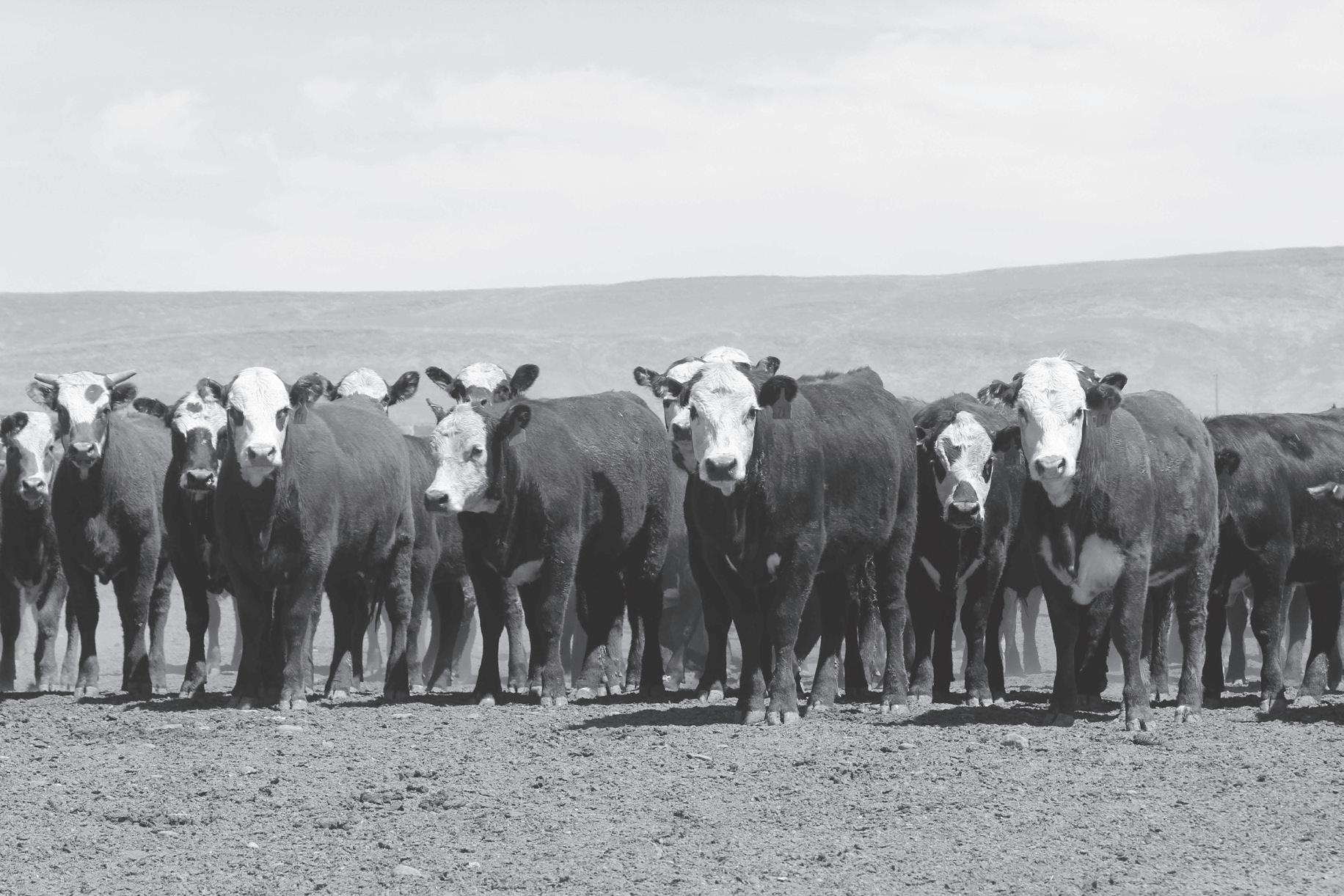
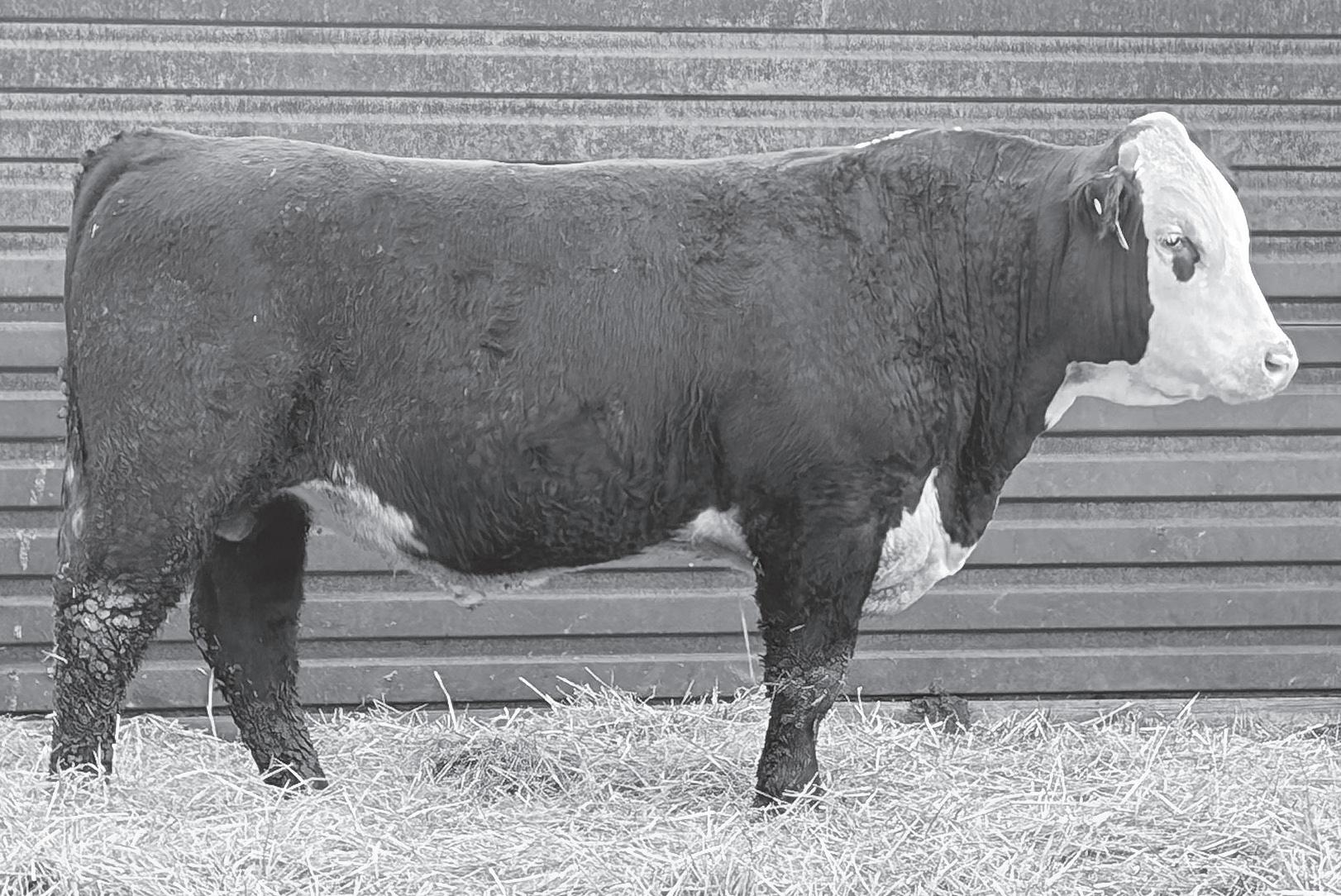
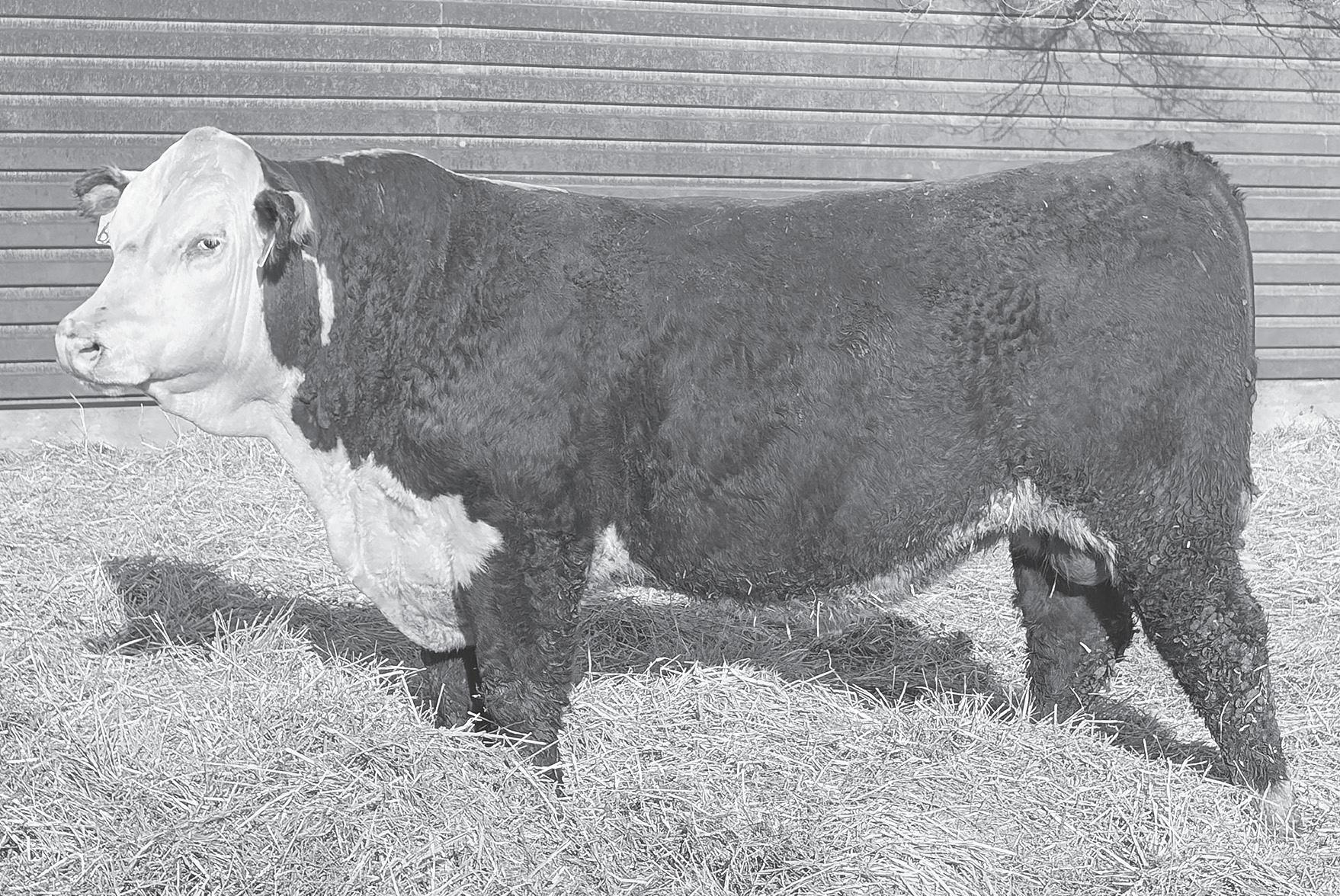
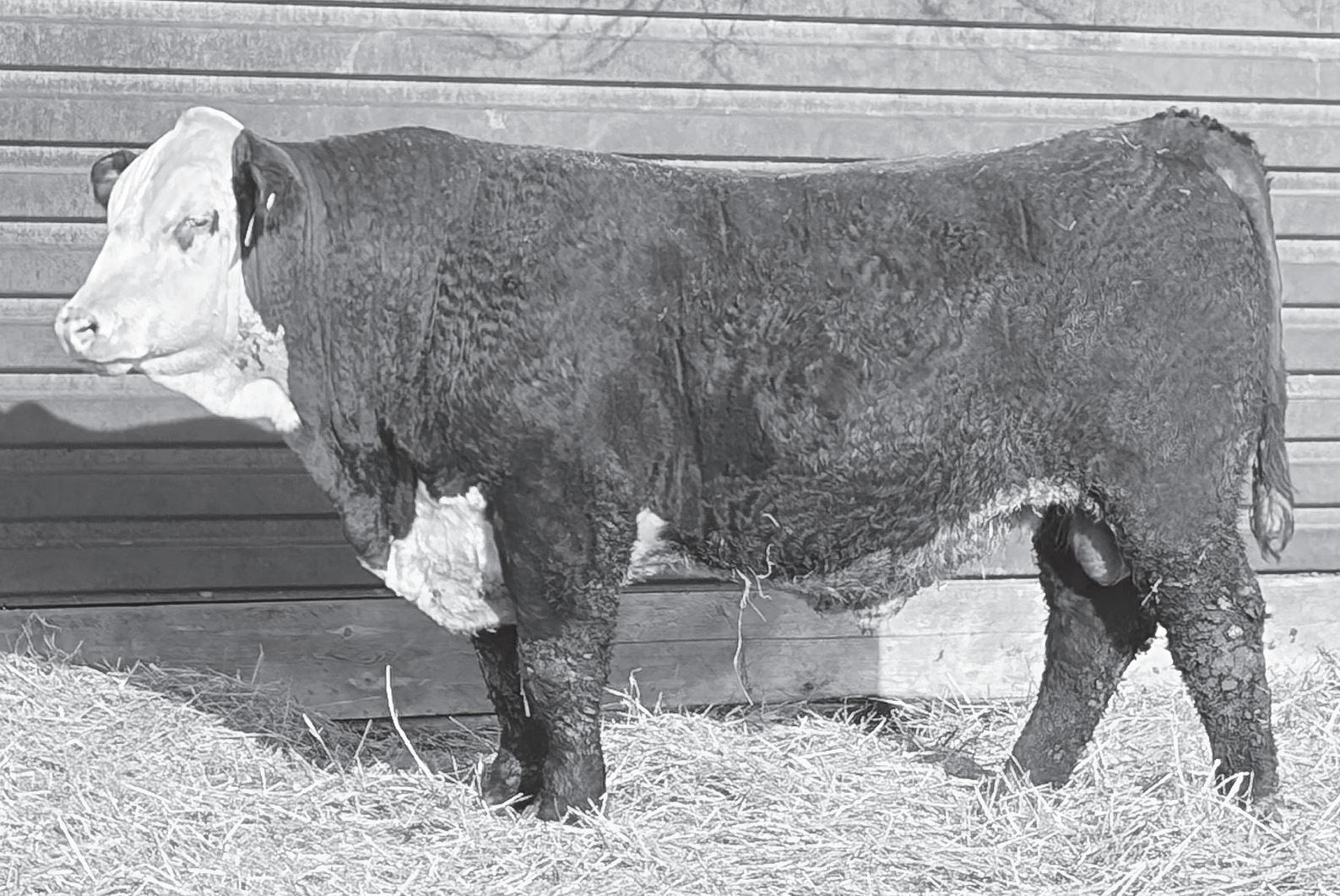
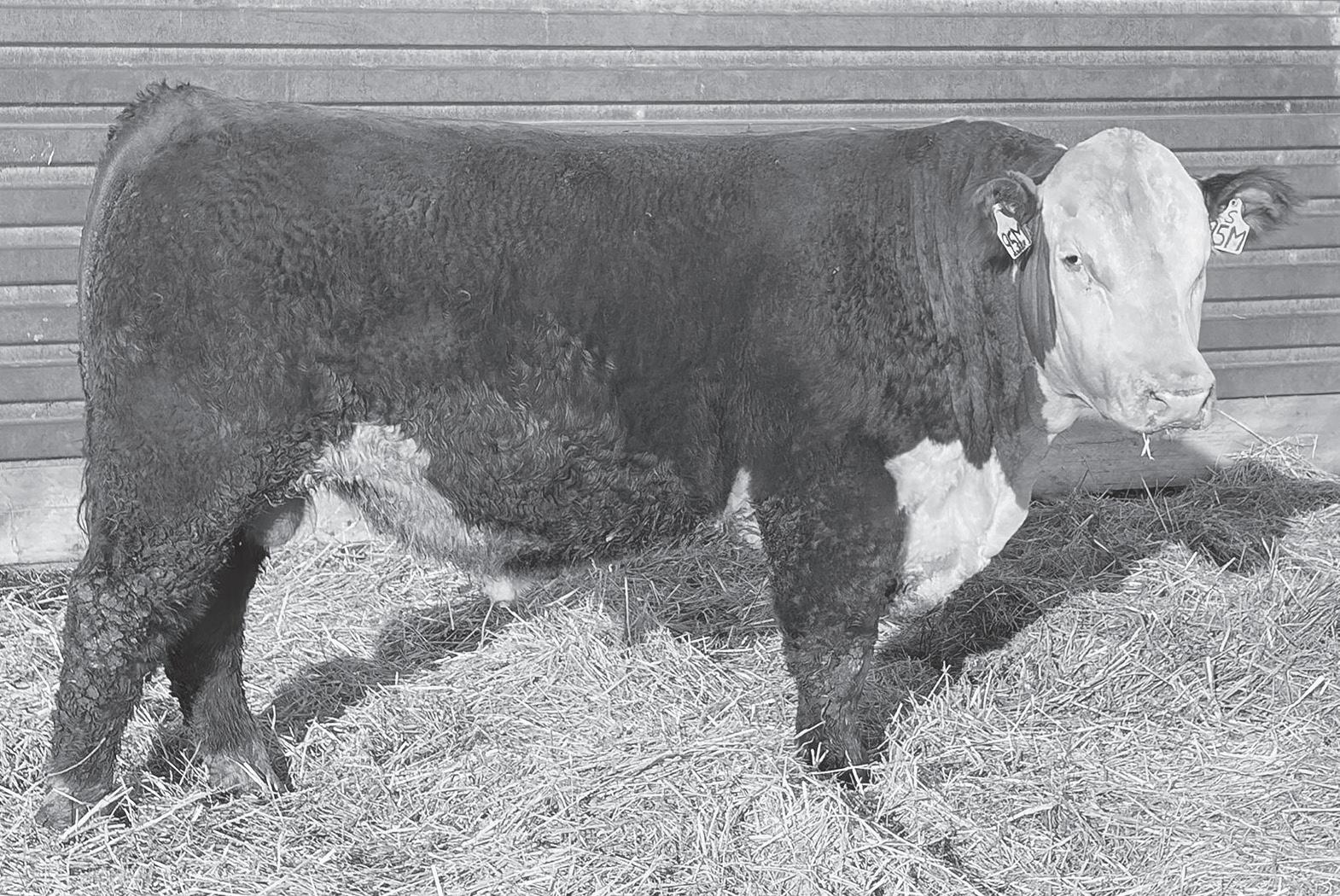
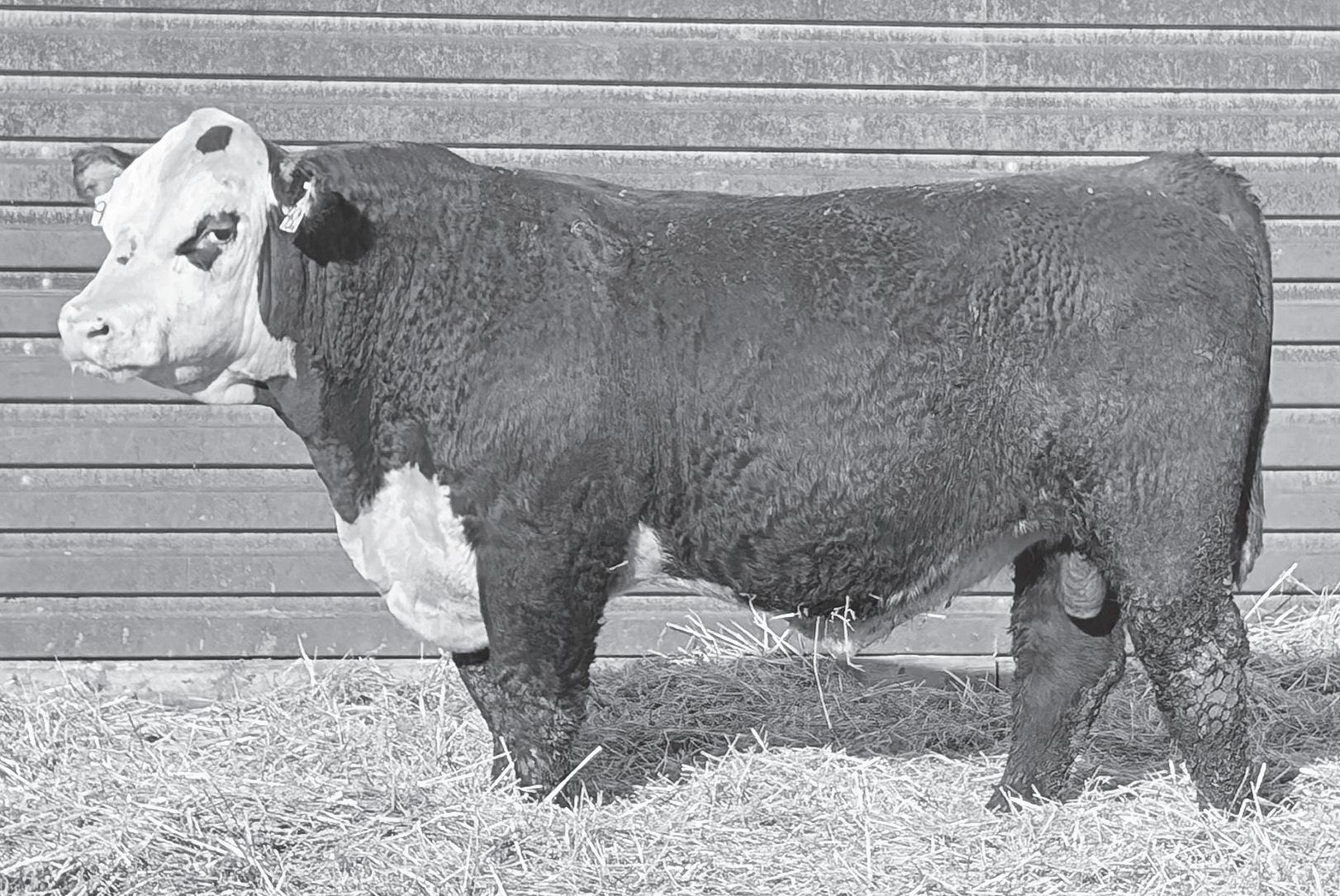
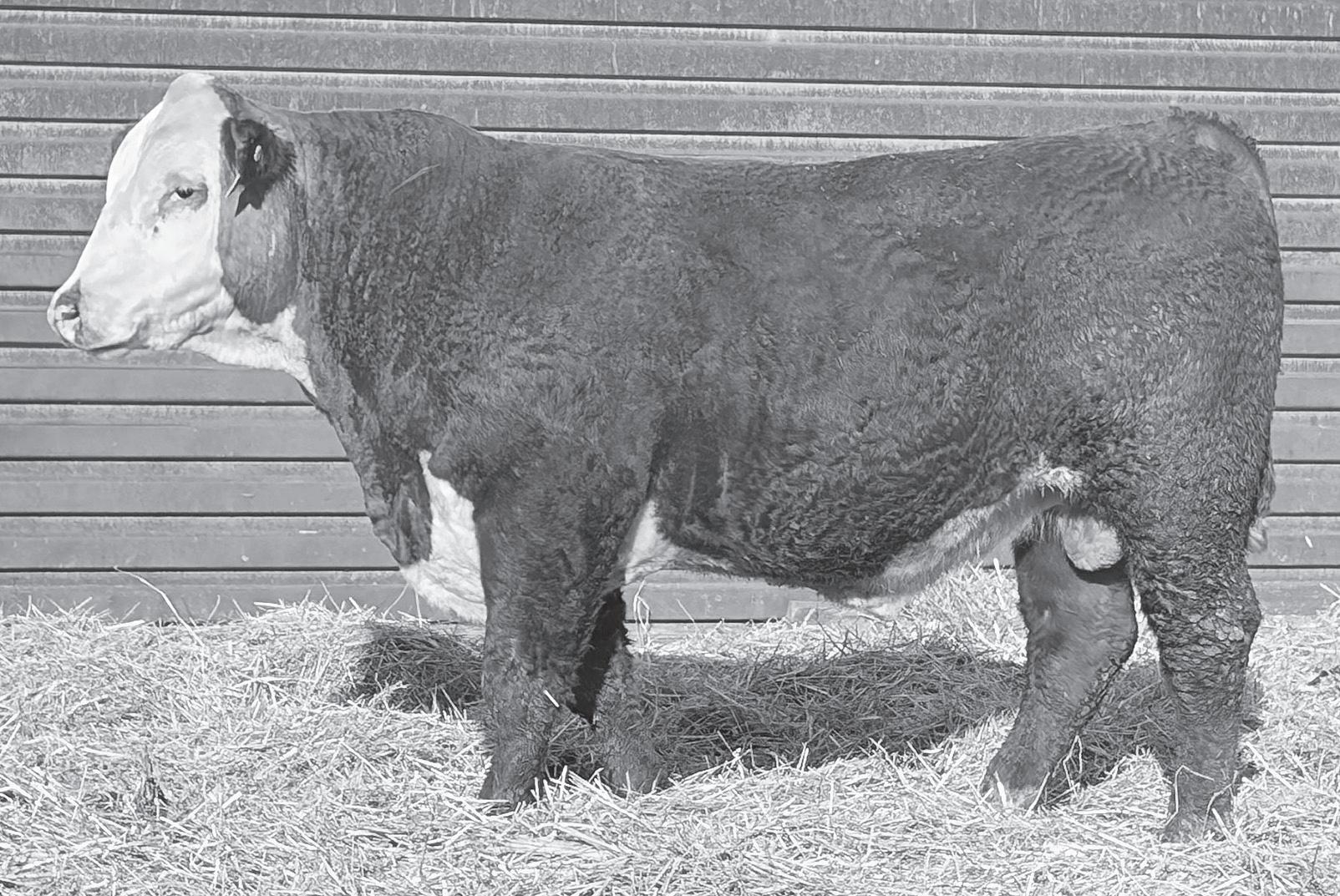
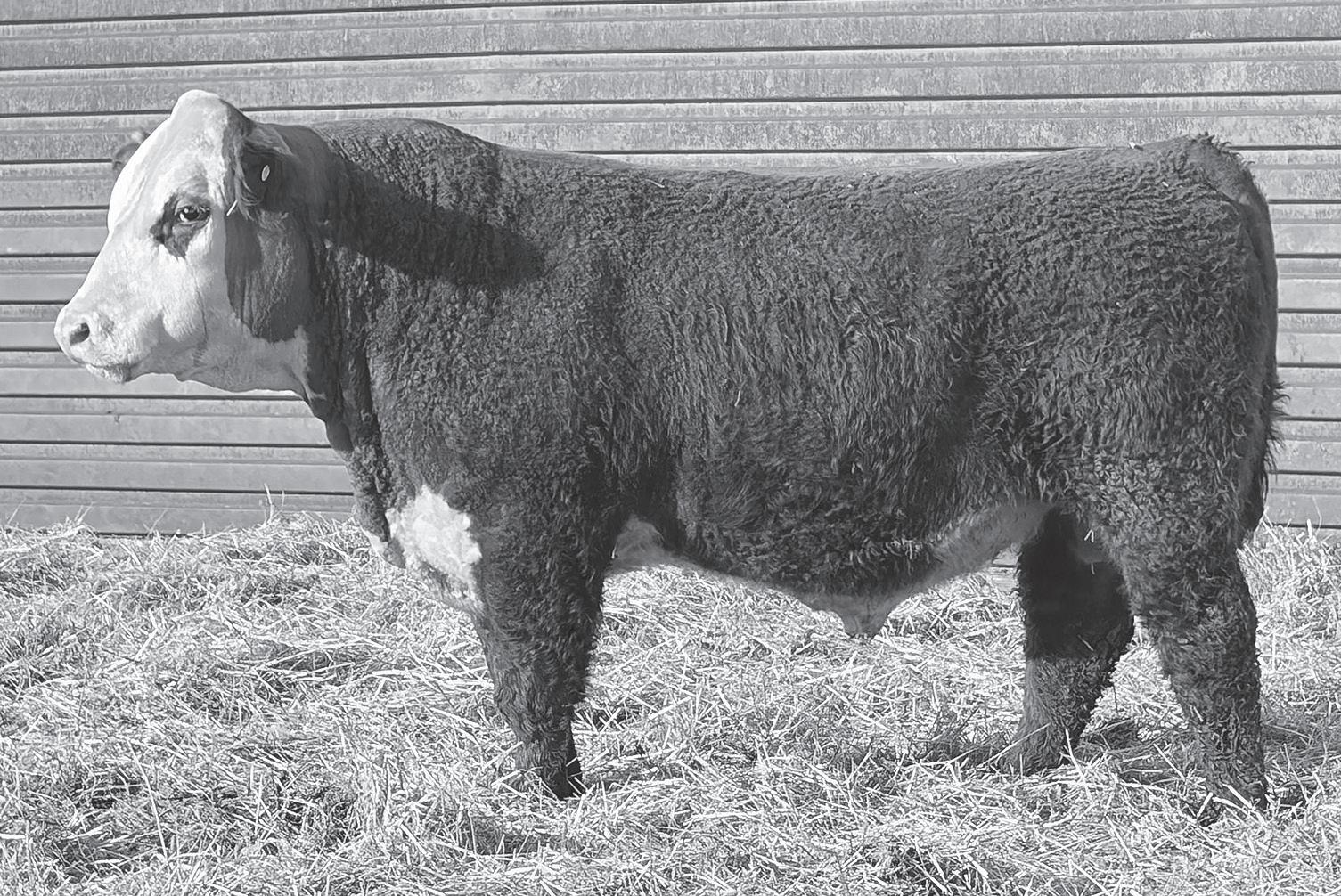
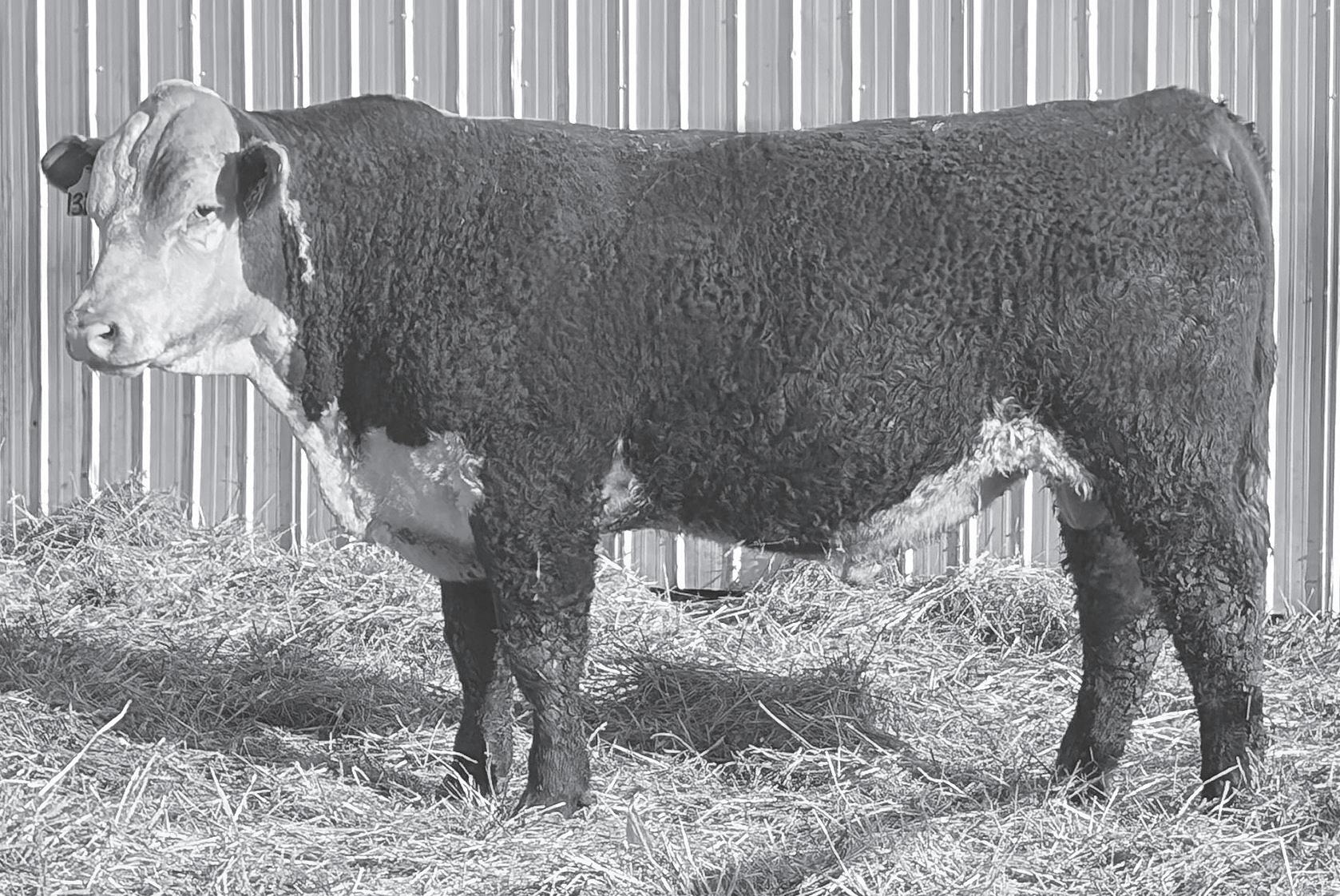
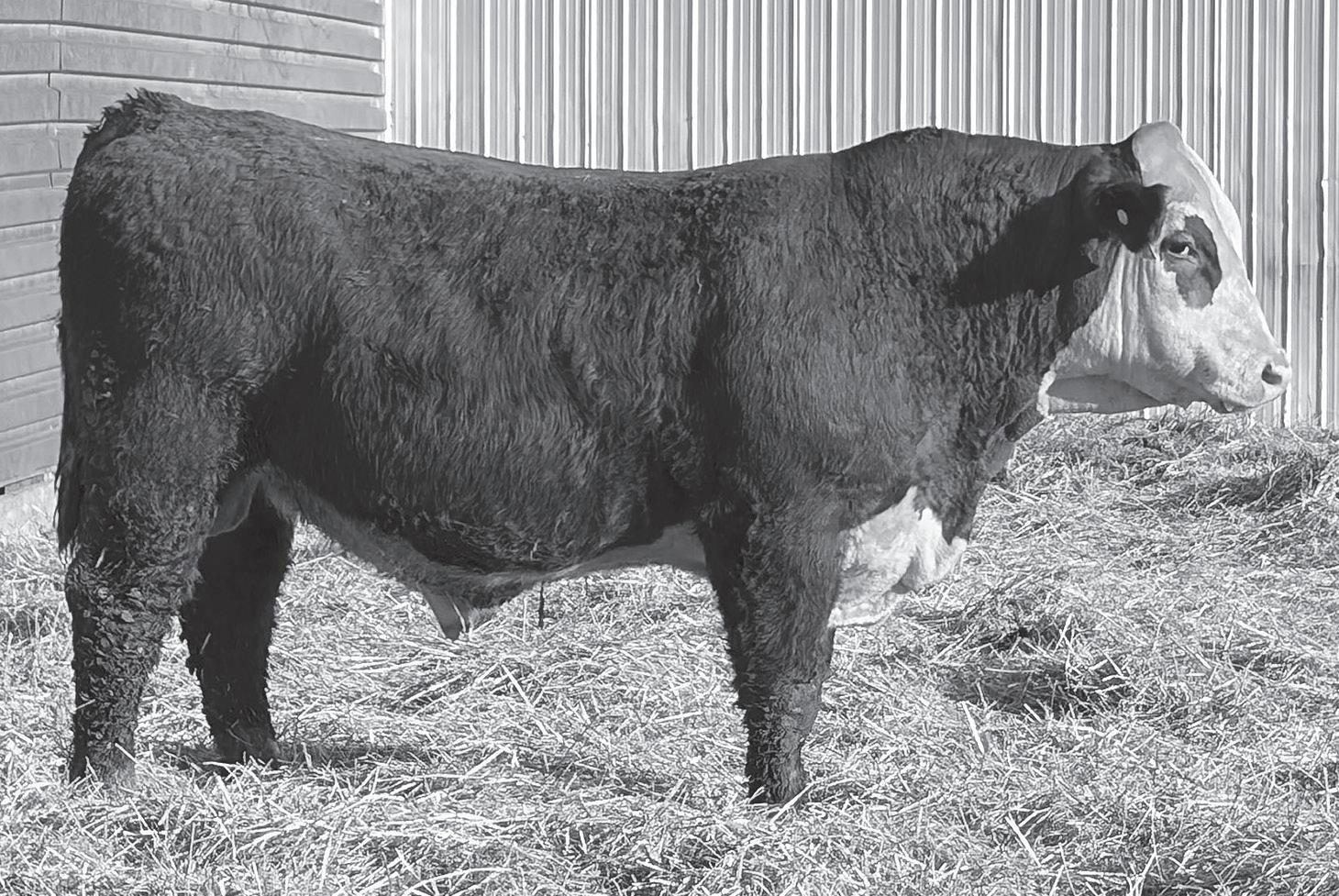
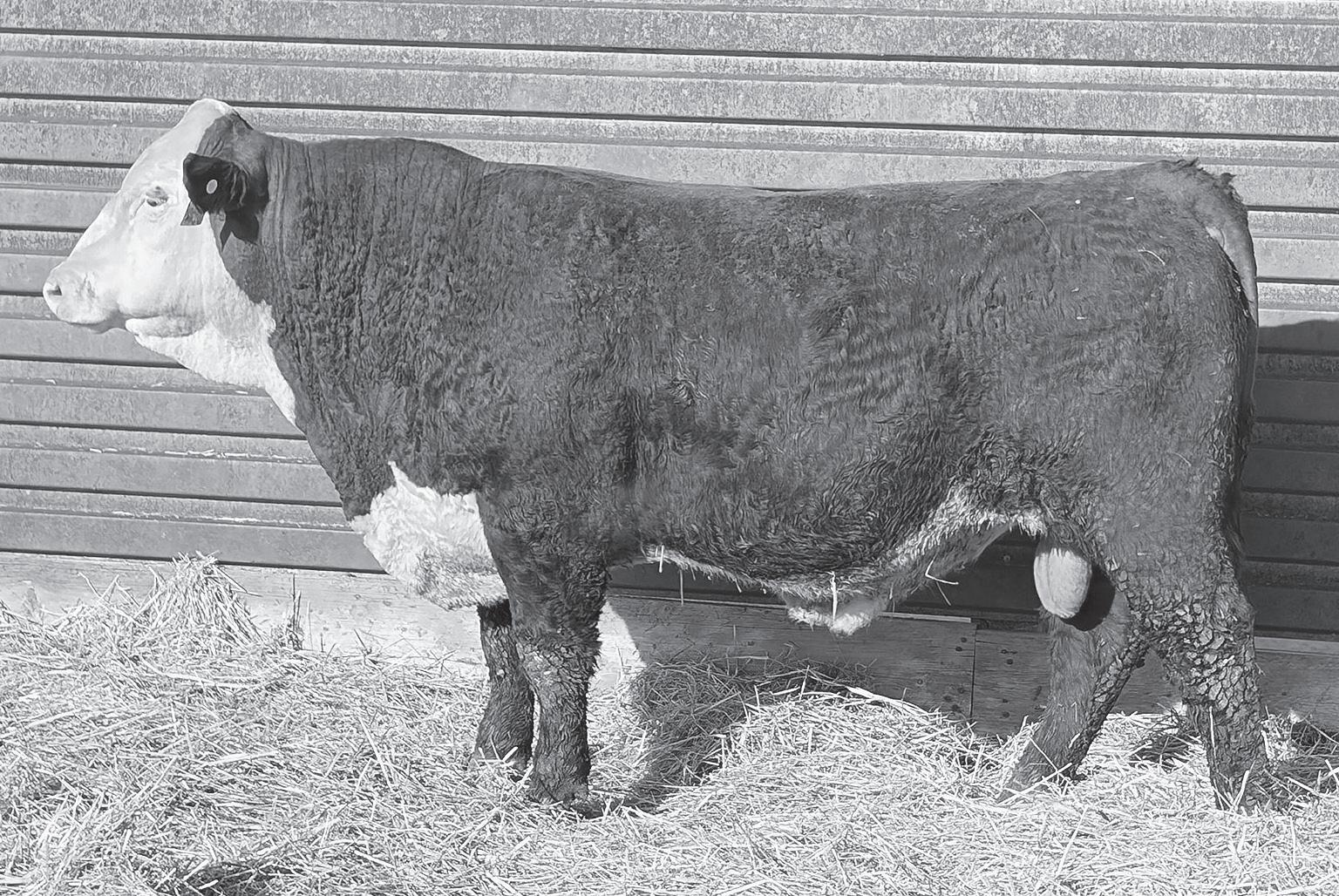
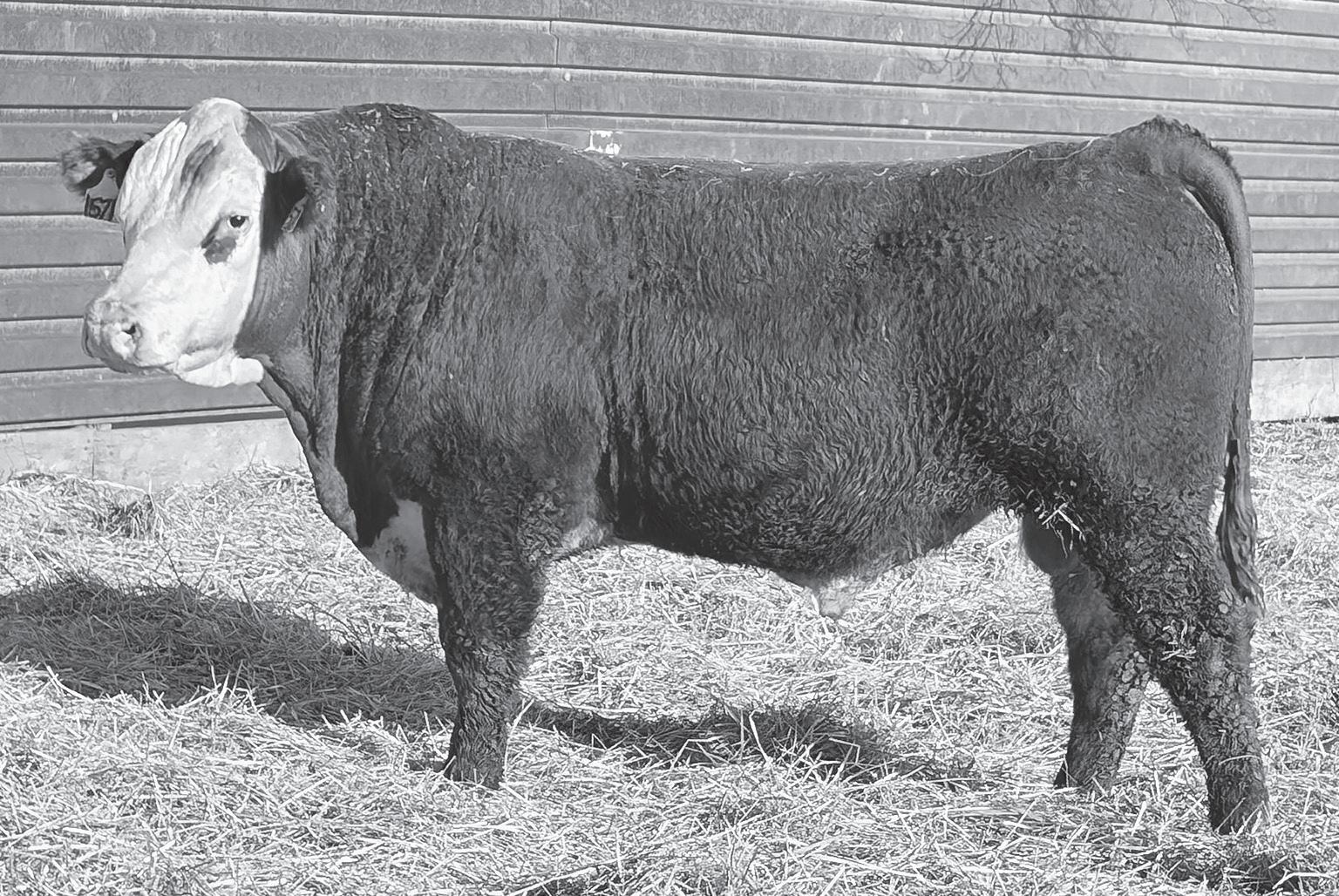
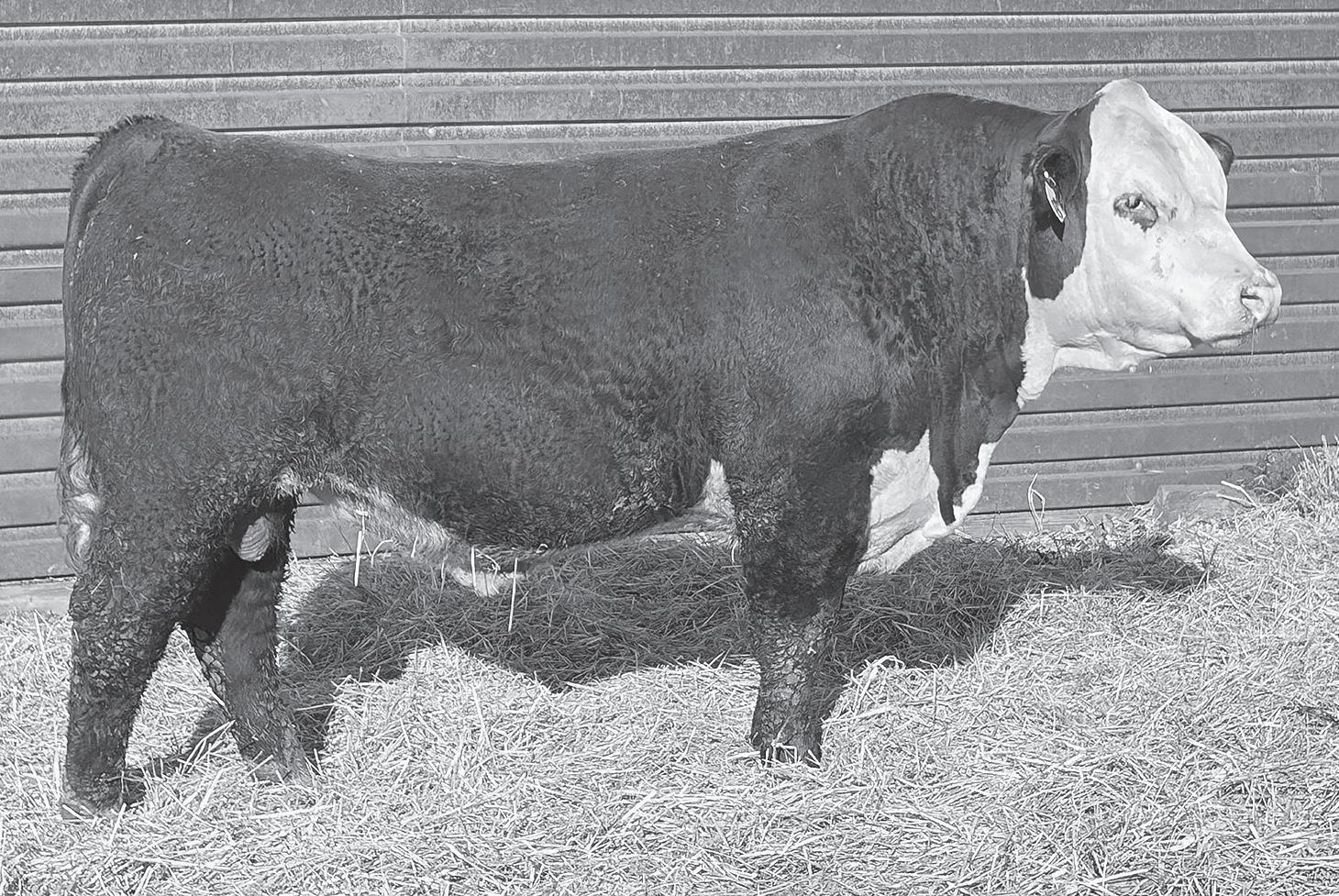
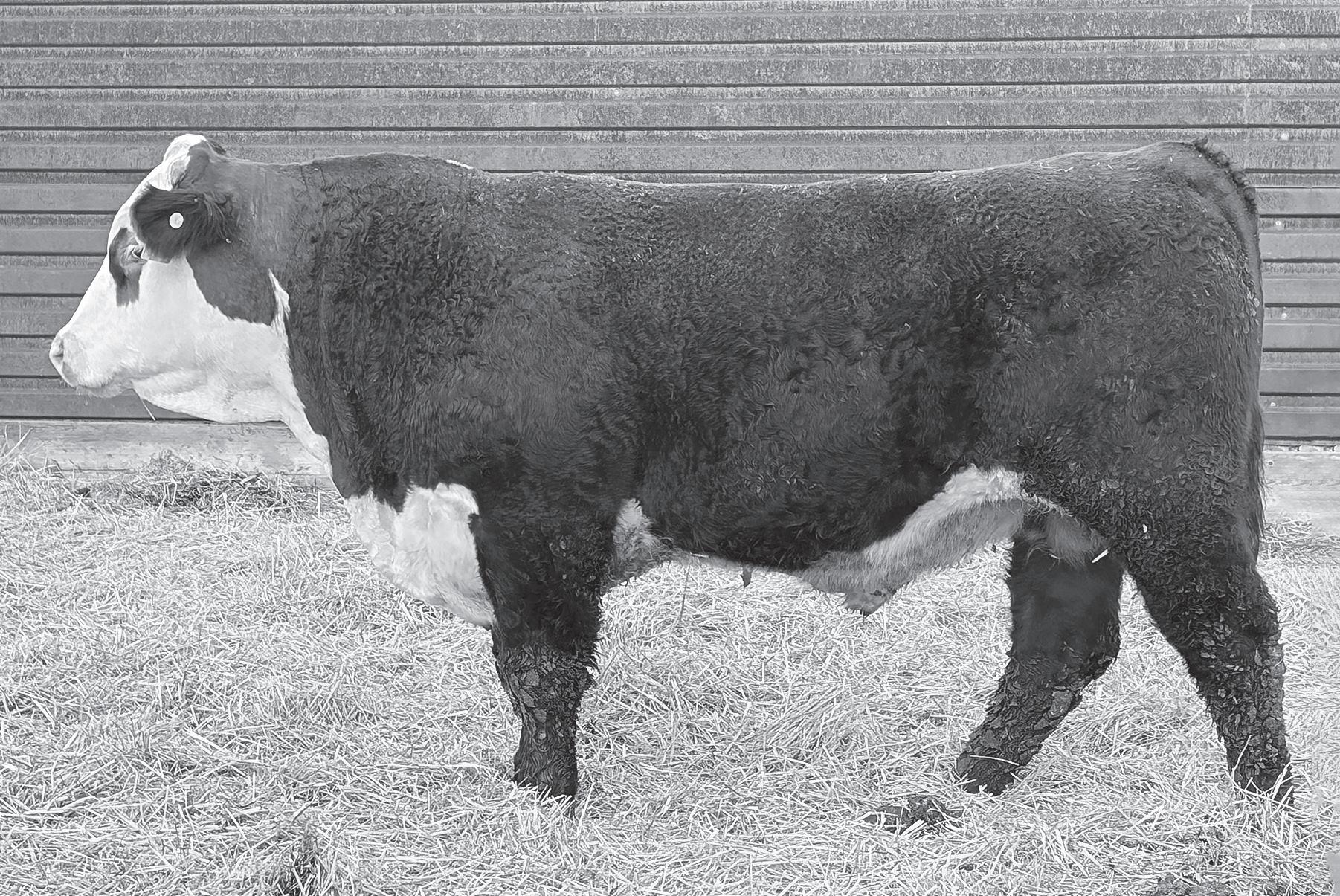
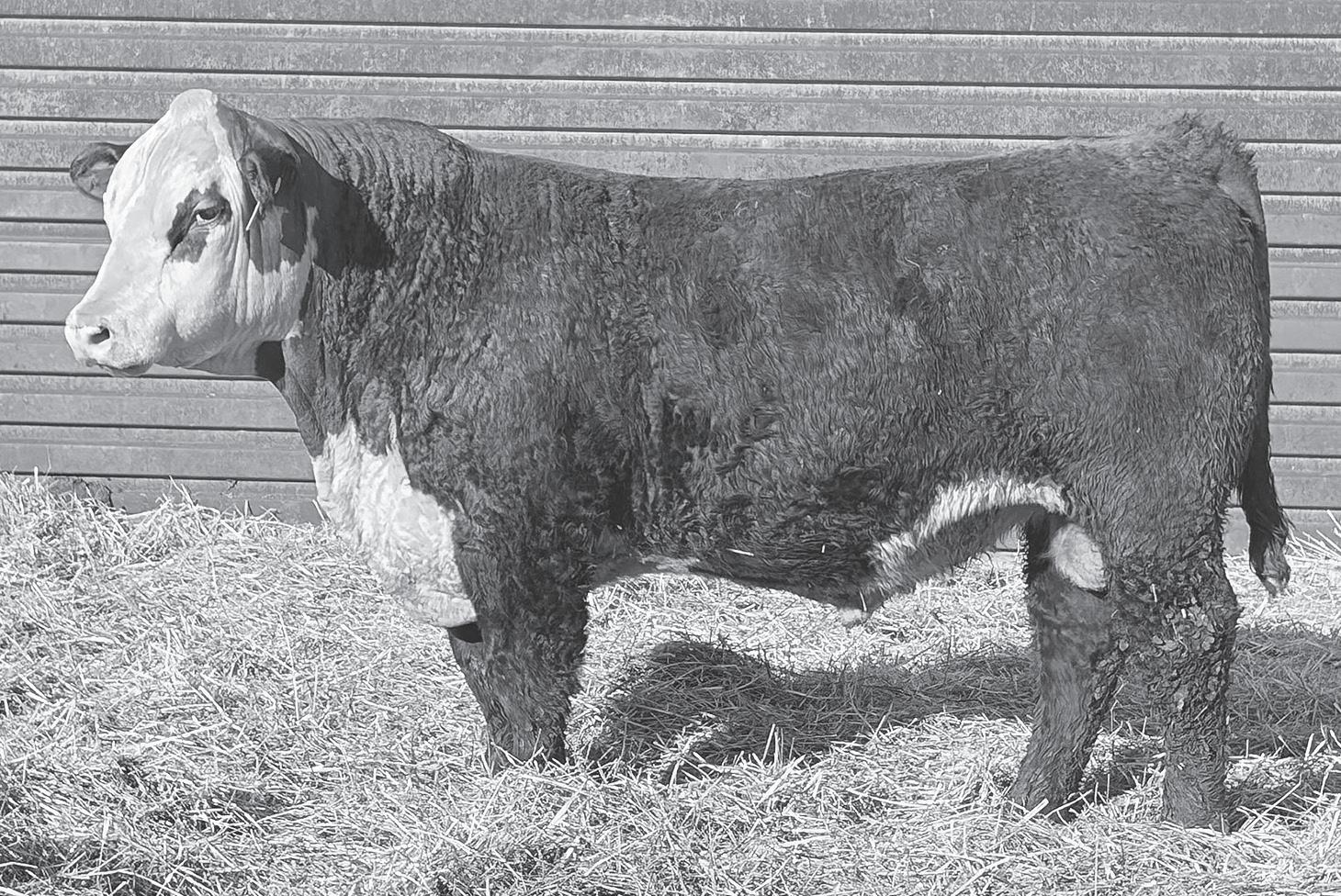
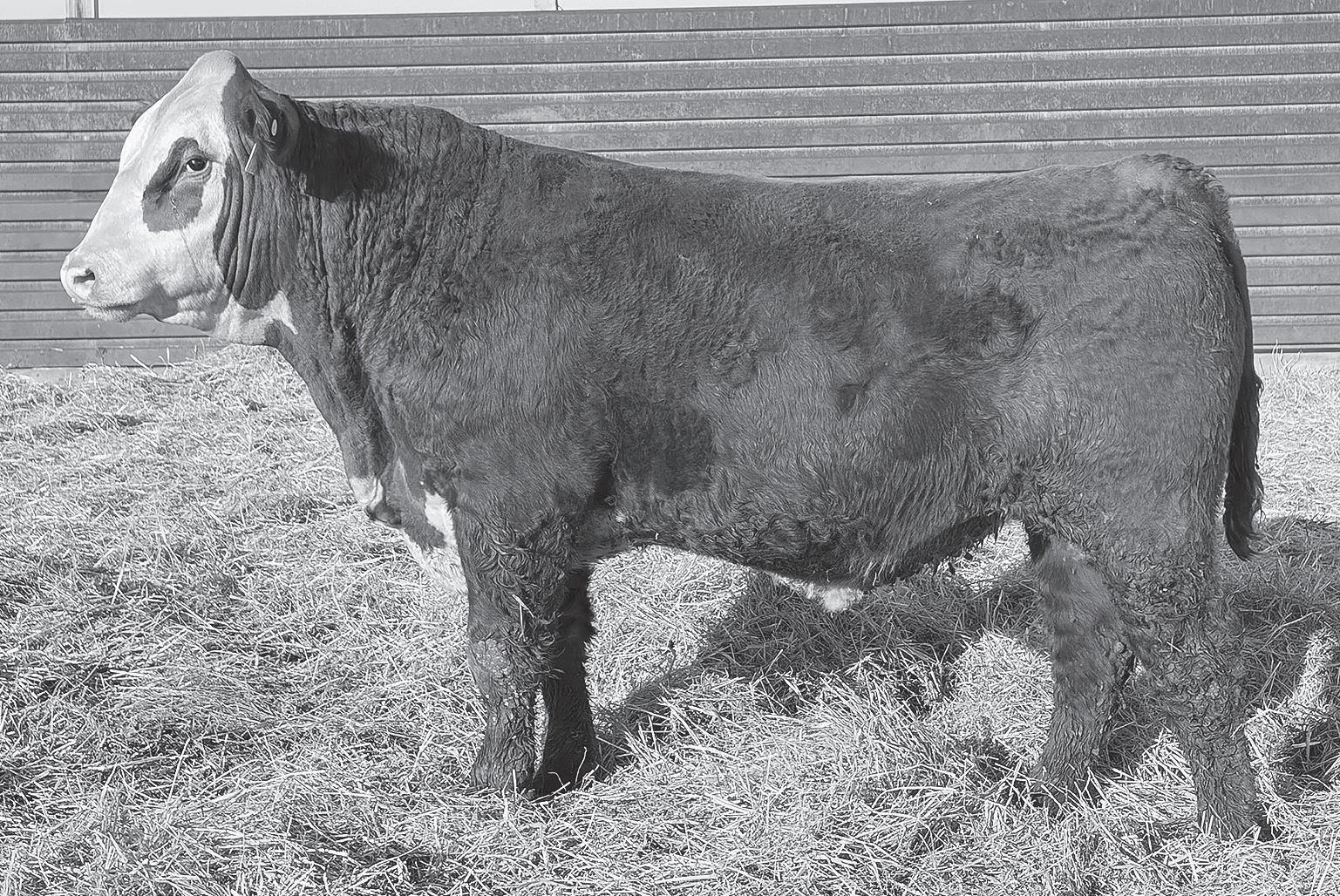
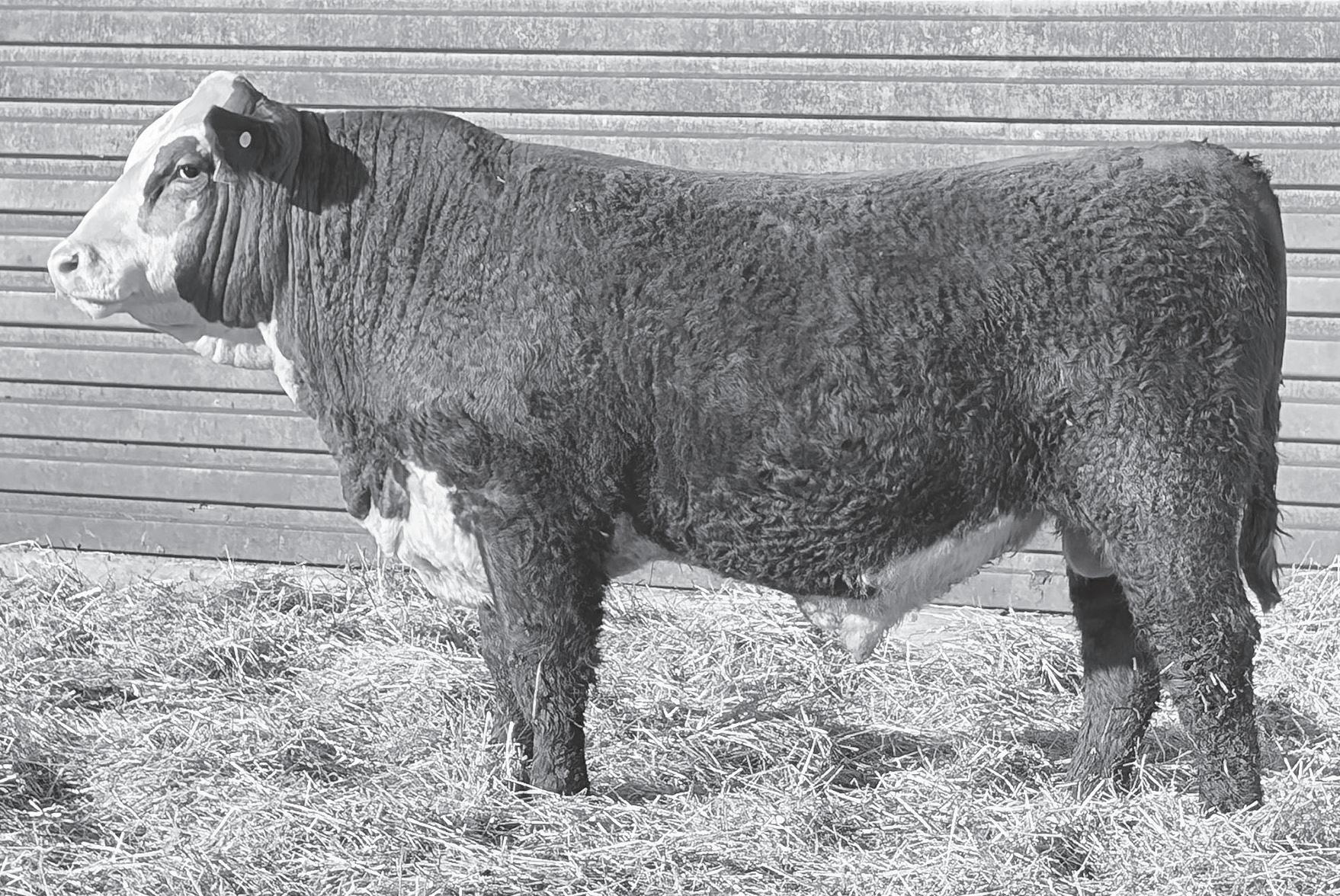
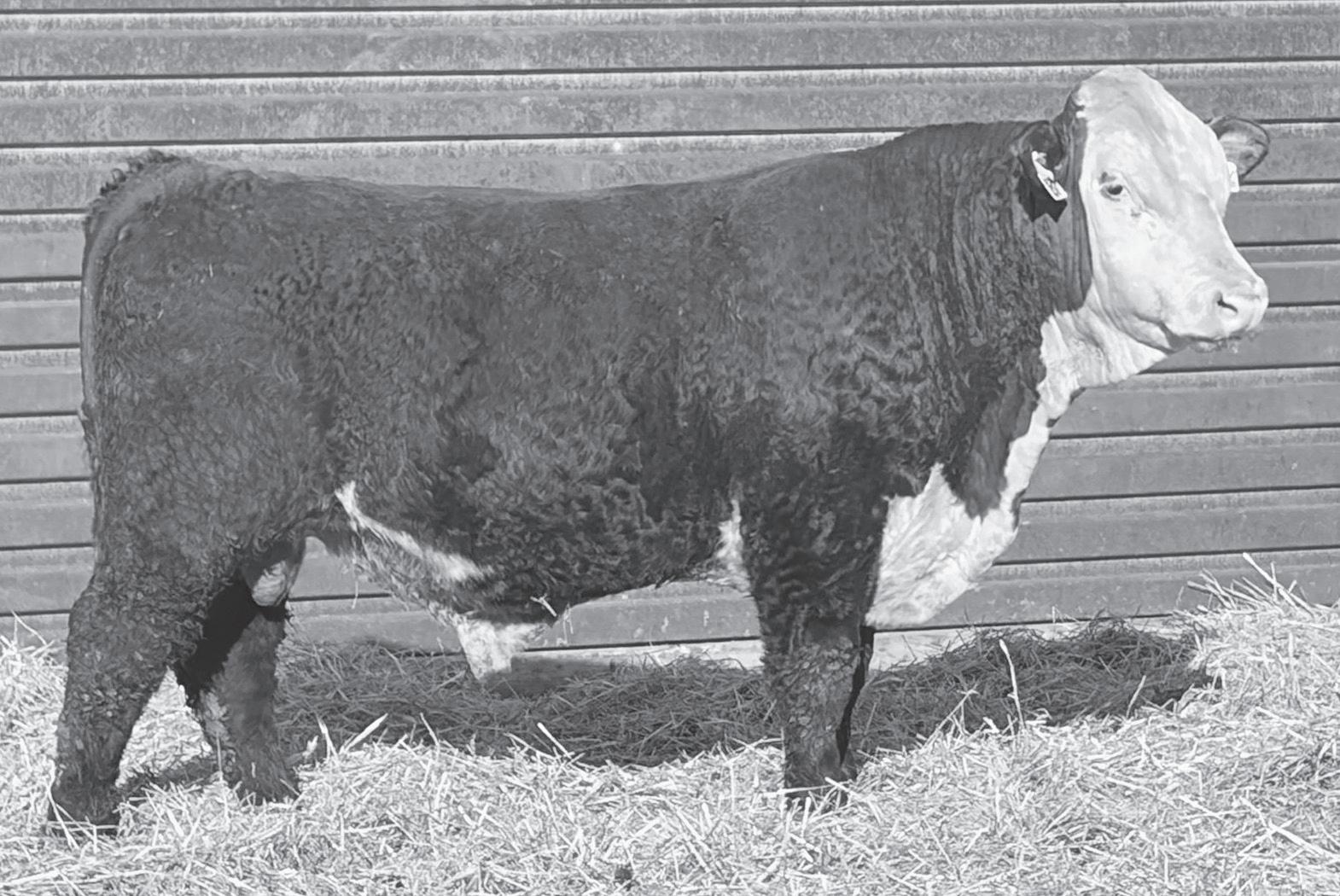
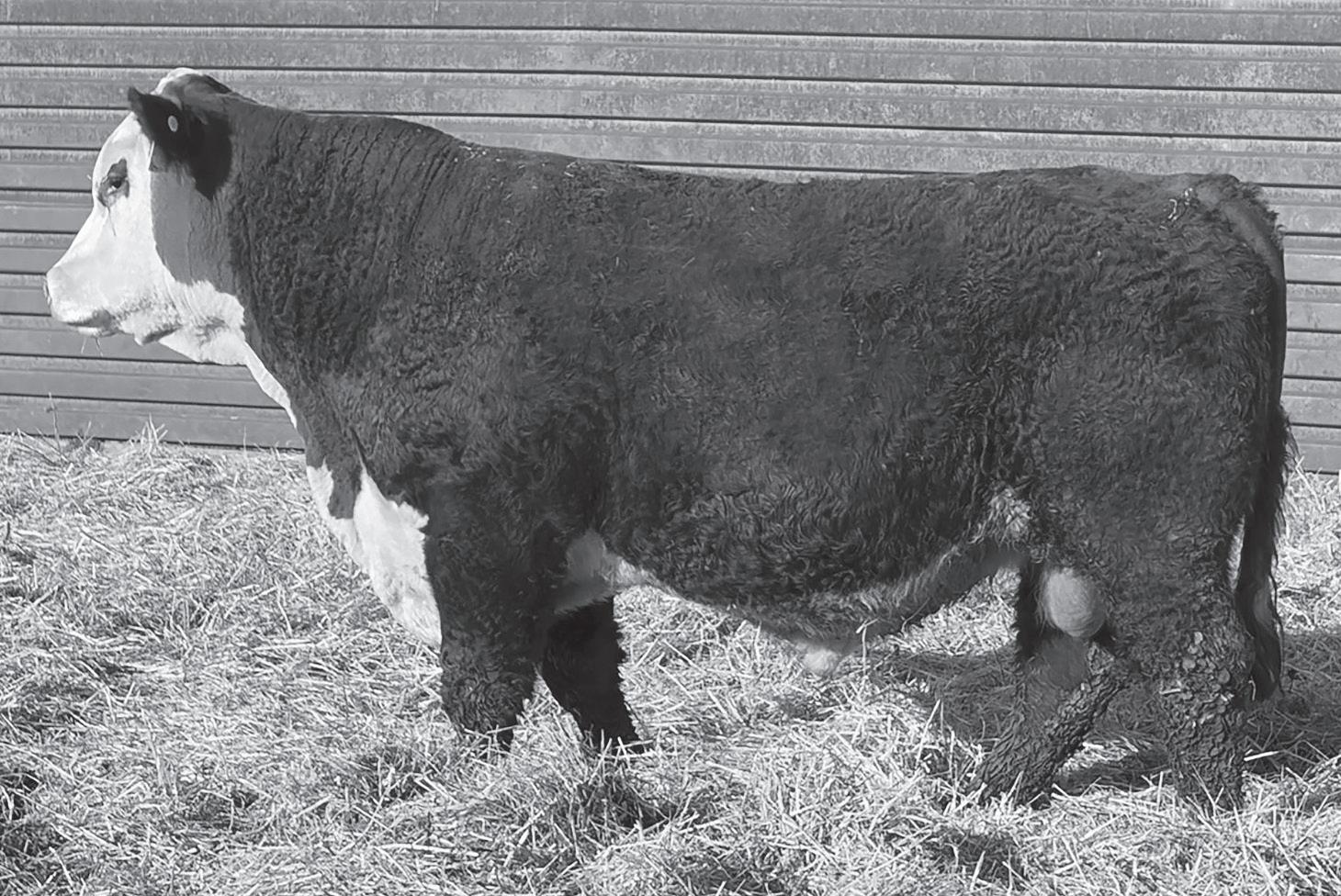
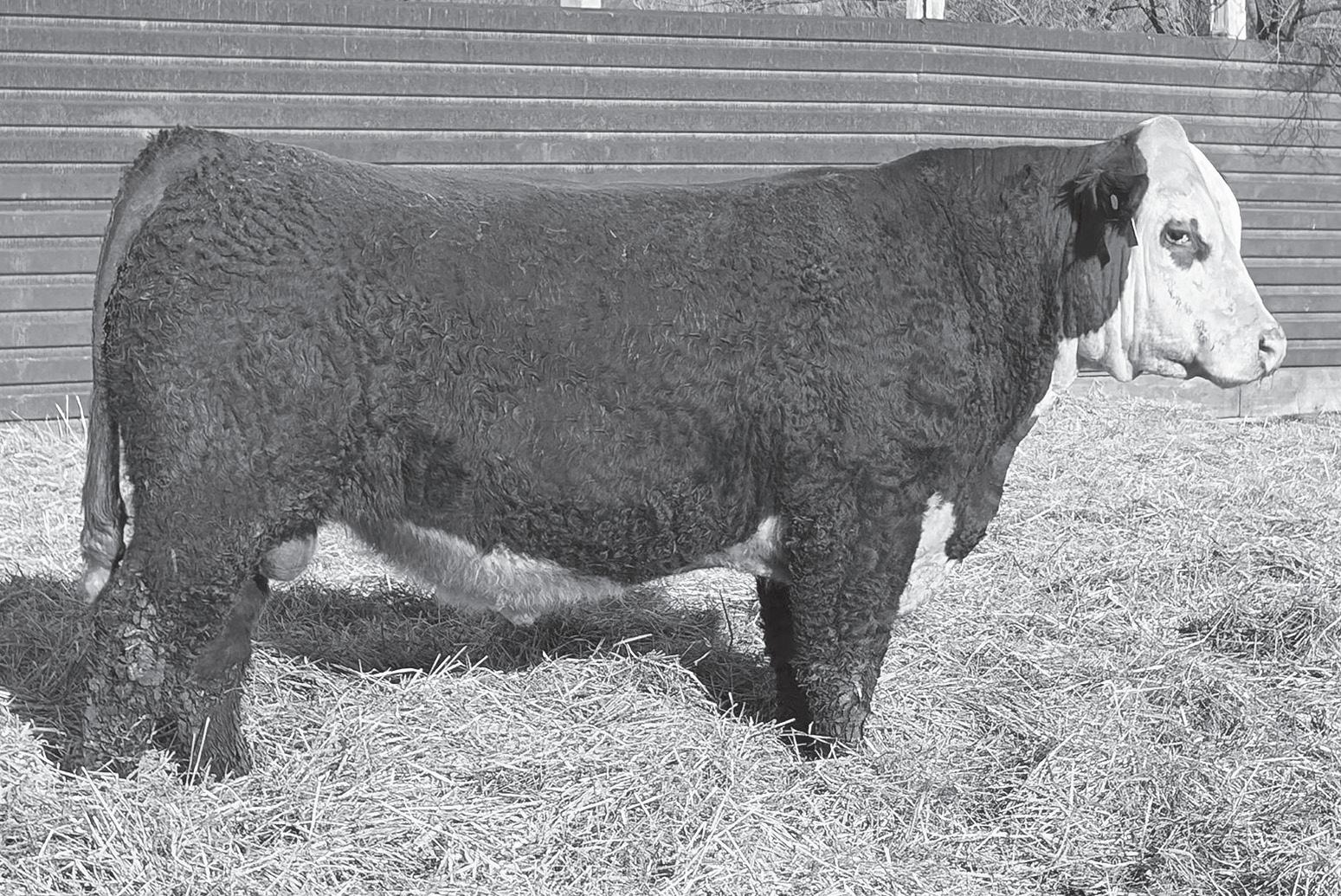
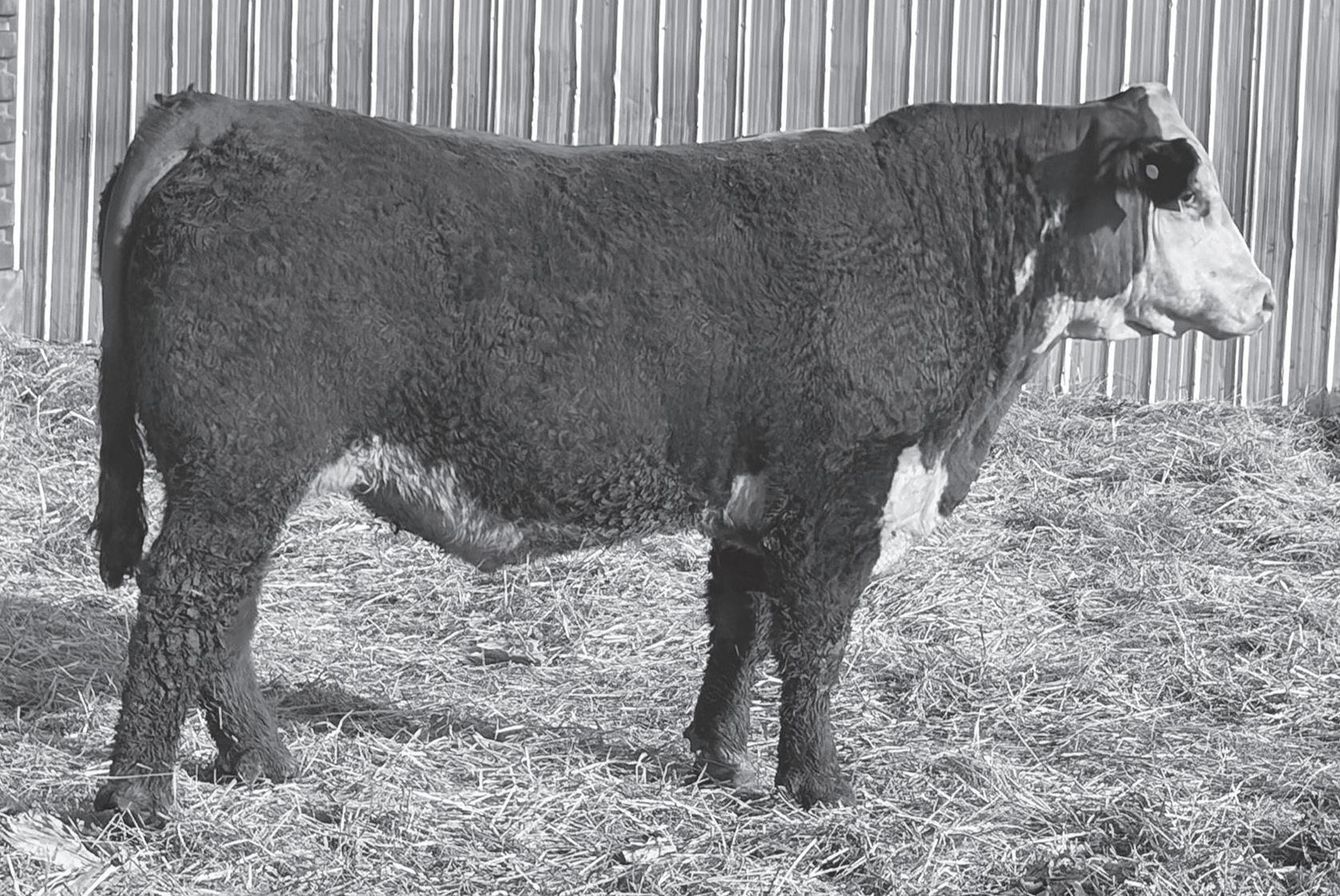
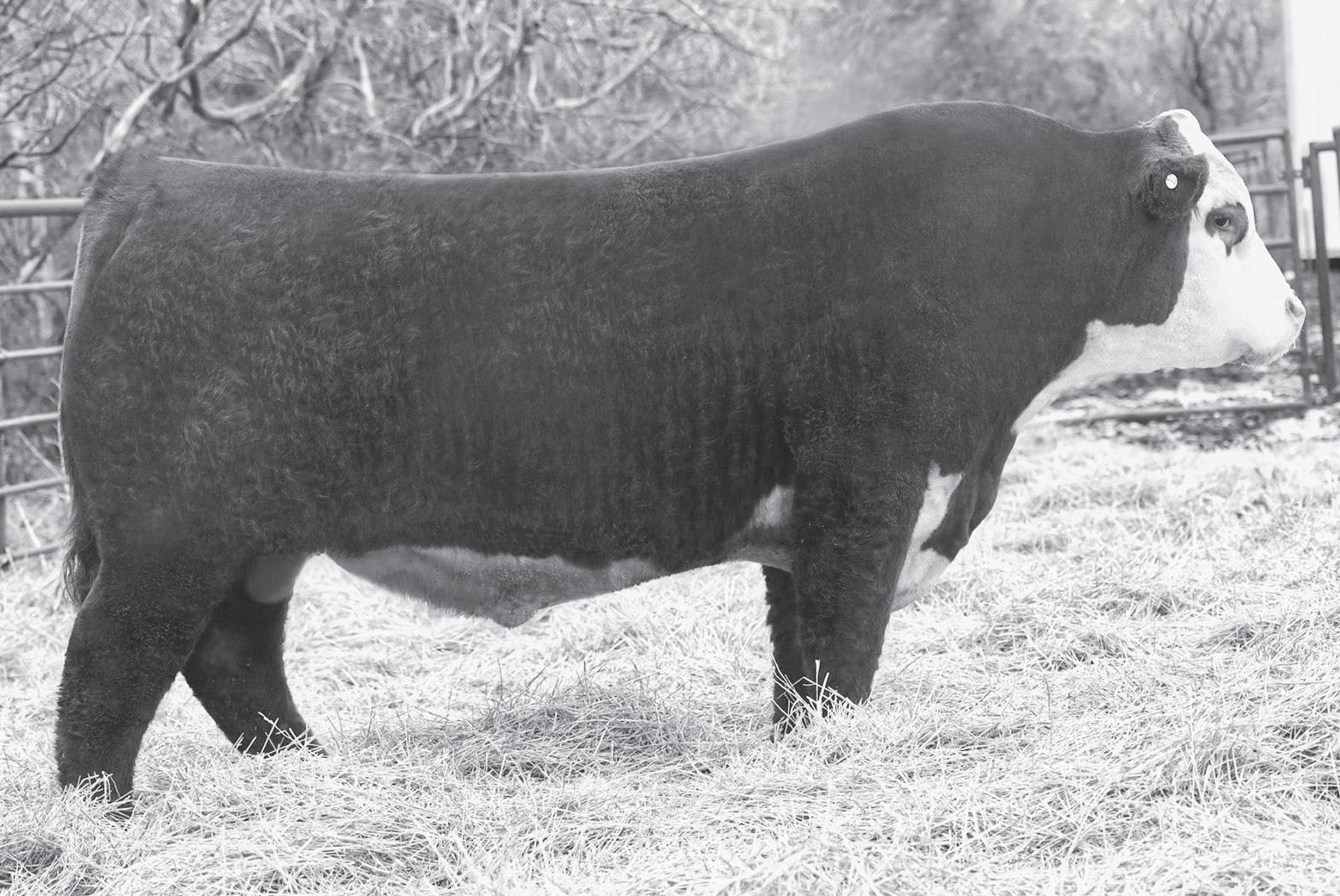
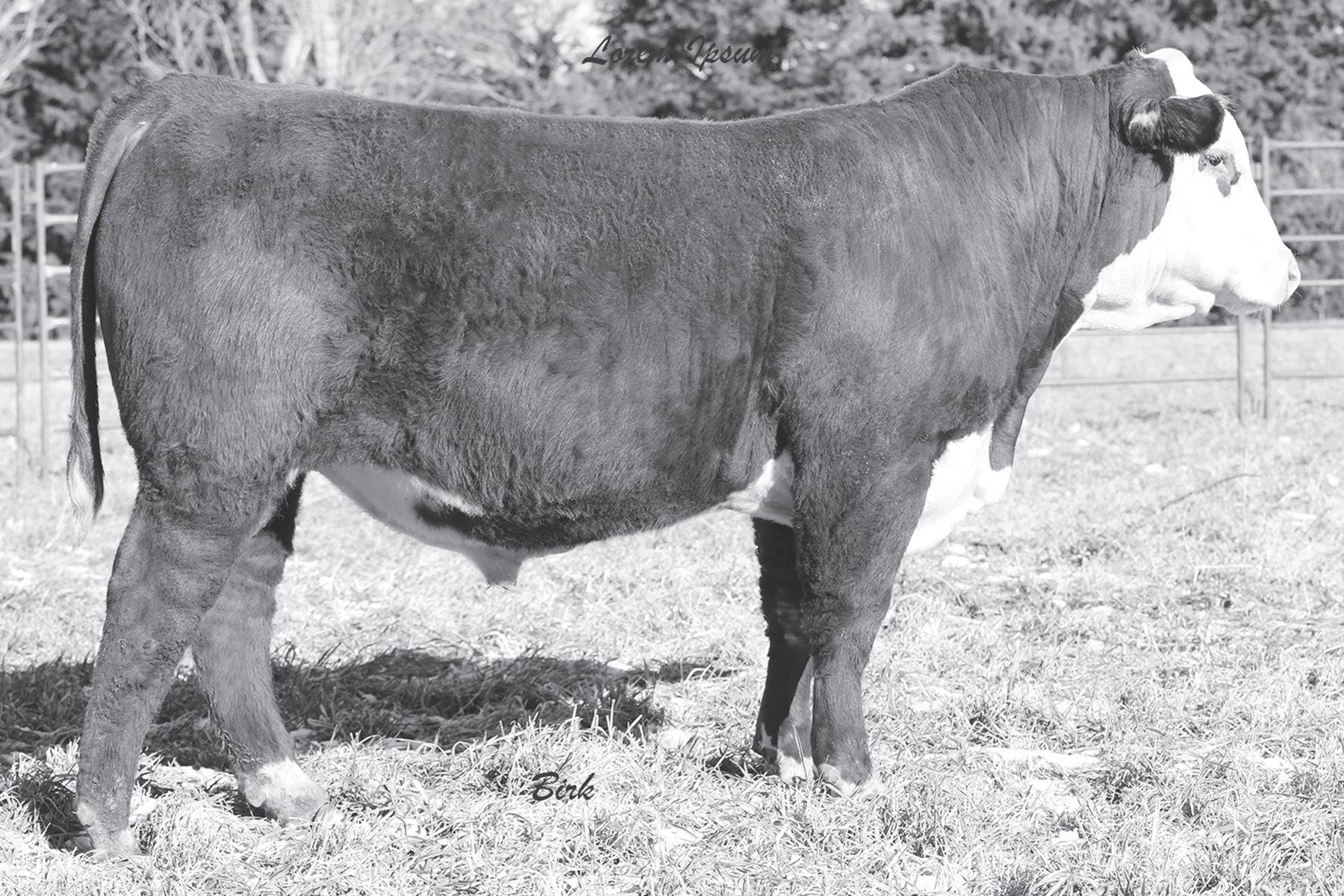
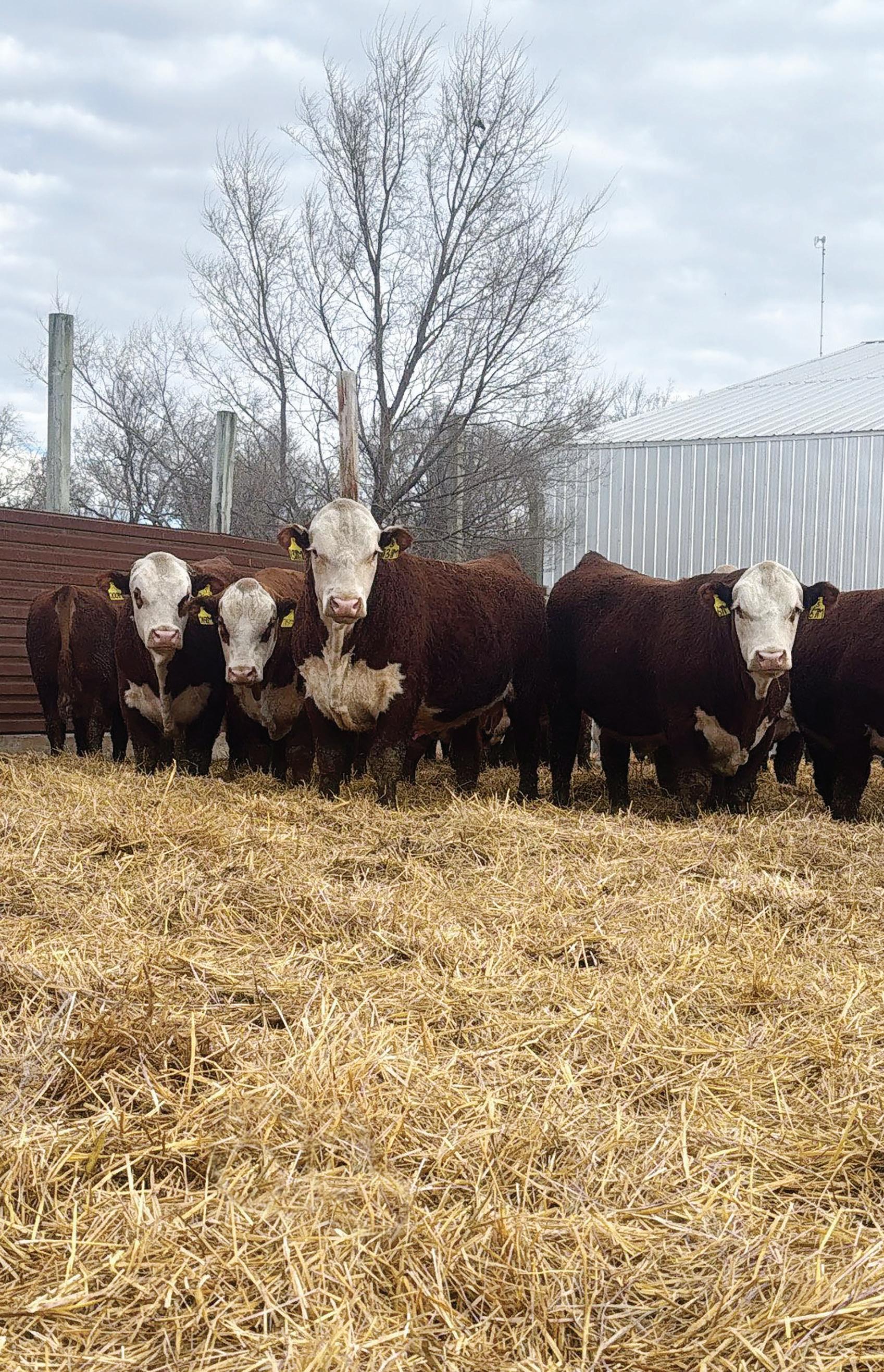
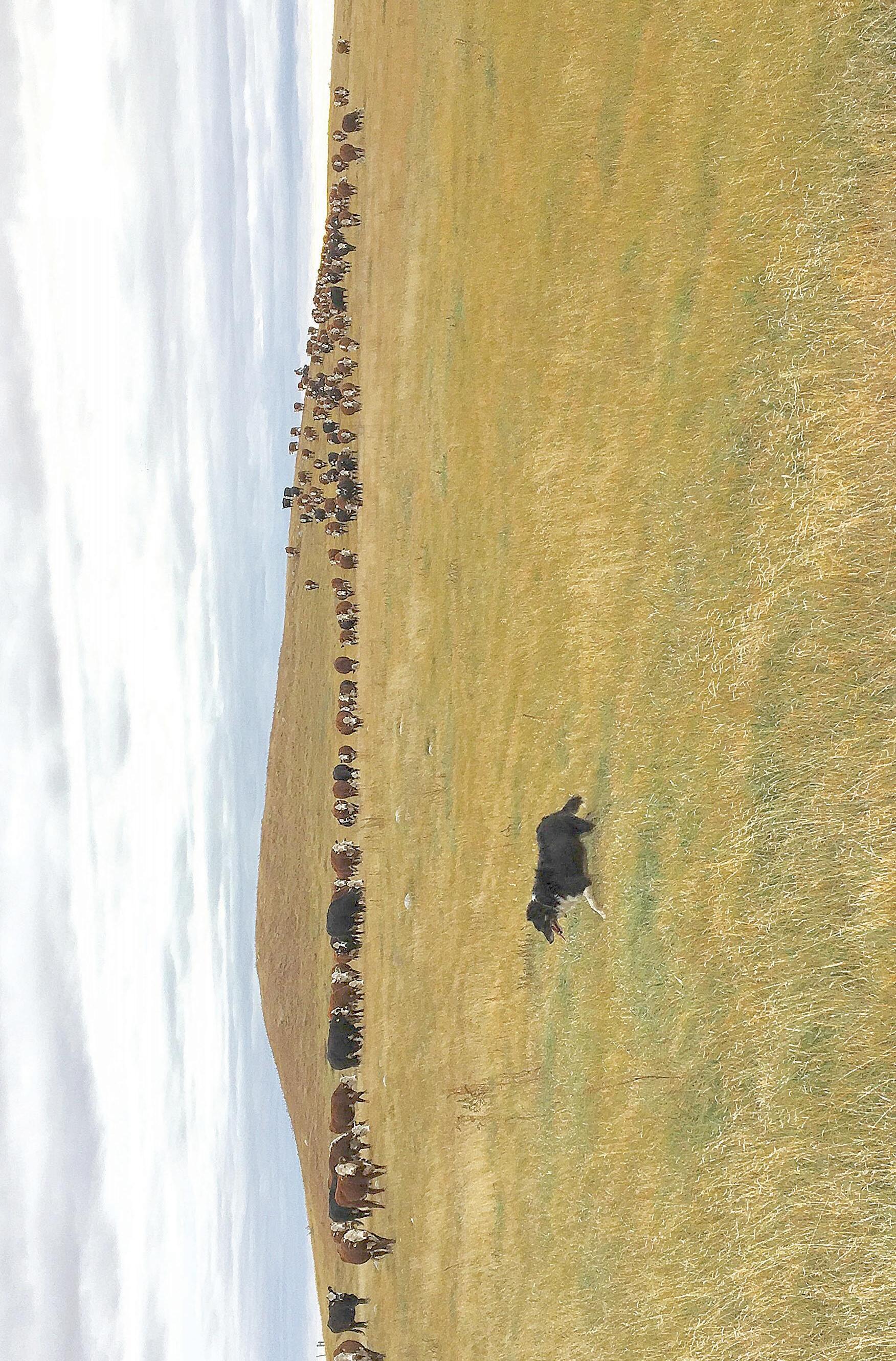
Please come visit us and view our bulls. This is another set of very uniform bulls. These bulls were weaned at the end of October last year and had no creep feed. The bulls spent the summer and fall on grass with no supplements other than trace mineral blocks. They were raised on a high roughage diet and grown up slowly. We brought them home in November and started feeding them silage/hay mix. We like the moderate frame cattle that are easy fleshing with lots of rib shape and muscle. We want them to be able to maintain themselves on grass. These bulls should sire easy-fleshing daughters who will have longevity in the cow herd. The feeder steers sired by them should have great feed efficiency. Hereford bulls are an excellent cross on black cows. If you haven’t tried them yet, now is the time to start. Thank you for your interest!
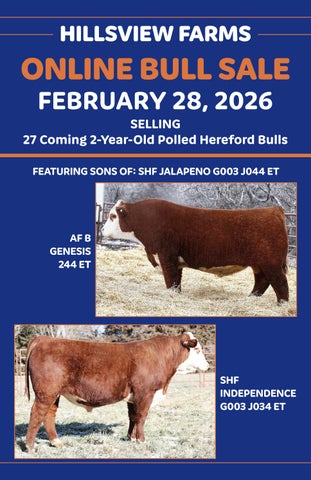
HILLSVIEW FARMS
ONLINE BULL SALE
FEBRUARY 28, 2026
Bids close at 7PM
Sale animals are located at the farm near Eureka, SD 7 miles south of Eureka on Hwy 47, 1.1 miles east on Hillsview Road (119th St.) Or 15 miles north of Bowdle on Hwy 47, 1.1 miles east on Hillsview Road (119th St.)
SELLING
27 Coming 2-Year-Old Polled Hereford Bulls
GENERAL INFORMATION
Terms and Conditions: Terms of the sale are cash. We must receive payment to consider a bull sold. All cattle are the buyer’s property as soon as sold and will be taken care of for a reasonable length of time at the buyer’s risk. Neither the owners nor any person connected with this sale assumes any liability, legal or otherwise.
Guarantee: Every animal is, to the best of our knowledge, free from any disease or defect. All bulls are guaranteed to be breeders. If a bull proves to be a non-breeder, either a bull of comparable rank will be substituted, or money refunded, or credit will be given in a future sale.
Health: Health of the herd is excellent. All cattle are under a full vaccination program and poured with Dectomax. All bulls will be fertility tested prior to the sale. Health papers will be furnished as needed, and trich testing will be done if needed. We advise you to semen check the bulls again before turning them out in the spring.
Discounts: We will still be offering our generous volume discounts on the bulls. If you purchase 2 bulls, you receive $50 off each bull. If you purchase 3 or more bulls, you receive $100 off each bull. To receive these discounts bulls must be purchased in the online auction and leave the premises within 10 days of purchase.
We are offering three options for delivery or wintering the bulls:
1) We will keep the bulls free of charge until June 1st. You must come pick them up at that time.
2) We will deliver bulls at our convenience, free of charge, within 200 miles. No delivery will be offered for bulls purchased after April 1st.
3) Bulls hauled home within 10 days of the online auction will receive a $100 discount off each bull. They must be purchased in the auction to receive this credit.
industry-changing program from
REQUIREMENTS
• Source & Age verification
• Genetic merit
– Minimum of 50% Hereford genetics –Bull battery ranking in top 50% of breed for $CHB index (bull battery average)
– Bull ownership transferred (all bulls)
• Vaccination program — two rounds of vaccinations pre–weaning (minimum)
Look for this logo in Hereford bull sale catalogs to identify sires meeting the genetic requirements for the Hereford Advantage program.
• BQA certification for the Hereford Advantage program.
• BQA certification for the Hereford Advantage program.
American Hereford Association | (816) 842-3757 | 11500 NW Ambassador Drive, Suite 410, Kansas City, MO 64153 | HerefordAdvantage.com
• BQA certification the Hereford Advantage program. American Hereford Association | (816) 842-3757 | 11500 NW Ambassador Drive, Suite City, MO 64153 | HerefordAdvantage.com
American Hereford Association | (816) 842-3757 | 11500 NW Ambassador Drive, Suite 410, Kansas City, MO 64153 | HerefordAdvantage.com
American Hereford Association | (816) 842-3757 | 11500 NW Ambassador Drive, Suite 410, Kansas City, MO 64153 | HerefordAdvantage.com
If you are unable to attend the sale, you can register to watch or bid online through The Livestock Link by following these instructions:
• Visit our website, www.thelivestocklink.com.
• Click the “Auctions” tab.
• Click on “Click Here to Register.”
• Enter your e-mail address and password, and fill out all your contact information.
• Fill out your banking information. If you are only viewing the sale and do not wish to bid, this information can be left blank.
• Check the checkbox at the bottom of the page that says “I’m not a robot” to prove you are a real person.
• Click “Register” at the bottom of the page.
• You will receive an e-mail with a link to activate your account.
• Please register to bid at least 24 hours in advance of the sale.
You will receive an e-mail when you are approved for bidding. All applications will be reviewed and processed promptly. You will receive a bidder number only after you have made a purchase in the sale, and that number will only be used at that sale. When the sale is completed, please contact the sale owner or manager for instructions of payment and delivery of your purchase.
To use our service, you must have access to high speed internet.
Livestock Videoing • Video Sales
• Bid-by-Click Online Sales To view events go to: www.TheLivestockLink.com
An
the American Hereford Association
IMI Global to verify and add value to Hereford-influenced feeder cattle with superior genetics, health and management.
AF B G16 GENESIS 244 ET {DLF,HYF,IEF,MSUDF,MDF,DBF}
PCR IDA GOLDIE 40X {DLF,HYF,IEF,MSUDF,MDF,DBP}
SHF FARMHOUSE Z115 F011 ET {CHB,DLF,HYF,IEF,MDF,DBF}
AMAN F11 FERN 284H {HYP,DBP}
AMAN 0245 CASSIE 119Z {DOD,HYP,DBP}
NJW 79Z Z311 ENDURE 173D ET {SOD,CHB,DLF,HYF,IEF,MSUDF,MDF,DBF} LOEWEN 77 48 MISS 344N 4RB42ET {DLF,HYF,DBP}
RPH PCR IDAHO 80U {SOD,DLF,HYF,IEF,DBP}
PCR ABIGAIL GOLDIE 854U {HYP,DBP}
SHF ZANE X51 Z115 {CHB,DLF,HYF,IEF,MDF,DBF}
SHF MISS W18 B65 {DLF,HYF,IEF,MSUDF,MDP}
DKF RO CASH FLOW 0245 ET {SOD,DLF,HYF,IEF}
DCA 405S NELLY 214U {HYP,DBP}
AF B G16 GENESIS 244 ET
{DLF,HYF,IEF,MSUDF,MDF,DBF}
(P44395909) • DOB: 2/15/2022 • BW: • 205 Day Wt:
NJW 79Z Z311 ENDURE 173D ET {SOD,CHB,DLF,HYF,IEF,MSUDF,MDF,DBF}
LOEWEN GENESIS G16 ET {CHB,DLF,HYF,IEF,MDF,DBF}
LOEWEN 77 48 MISS 344N 4RB42ET {DLF,HYF,DBP}
RPH PCR IDAHO 80U {SOD,DLF,HYF,IEF,DBP}
PCR IDA GOLDIE 40X {DLF,HYF,IEF,MSUDF,MDF,DBP}
PCR ABIGAIL GOLDIE 854U {HYP,DBP}
KCF BENNETT ENCORE Z311 ET {SOD,CHB,DLF,HYF,IEF,MSUDF,MDF,DBF}
BW 91H 100W RITA 79Z ET {DLF,HYF,IEF,MSUDF,MDF}
MSU TCF REVOLUTION 4R {SOD,DLF,HYF,IEF,MDF,DBC}
PCR JACKLYN NIKOLE 344N {DLF,HYF,IEF,DBP}
SHF PHOENIX M33 P68 {HYP}
RPH PLAYMATE 13K {DOD,HYP,DBP}
PCR 286 MR ADVISOR 502R {SOD,CHB,DLF,HYF,IEF,DBP}
PCR PAIGE GAL 310N {DOD,HYP}
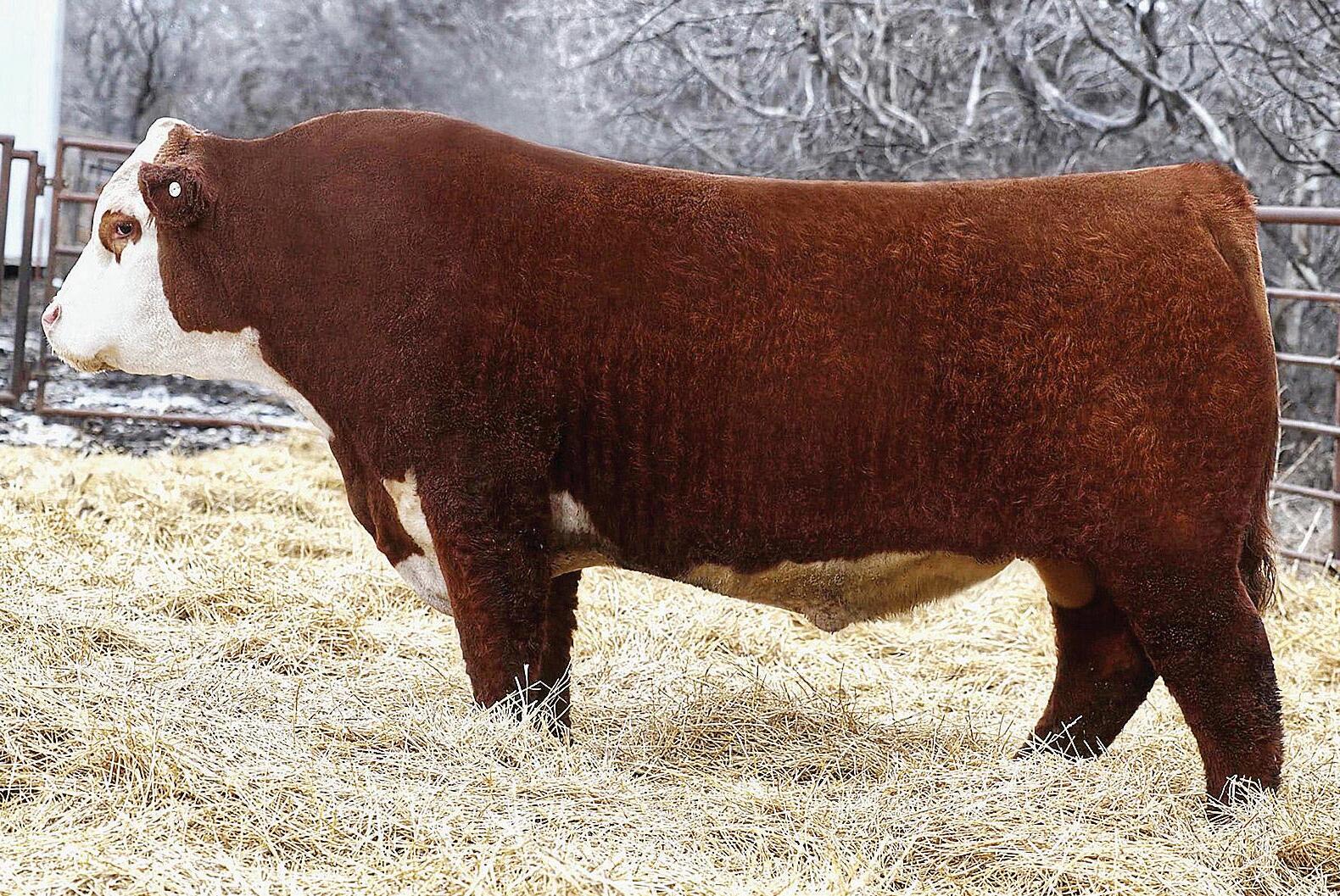
Genesis has a very powerful set of EPDs featuring carcass traits as well as maternal traits. He sired the four youngest bulls in the offering, but they are every bit as high-performance as the older bulls.
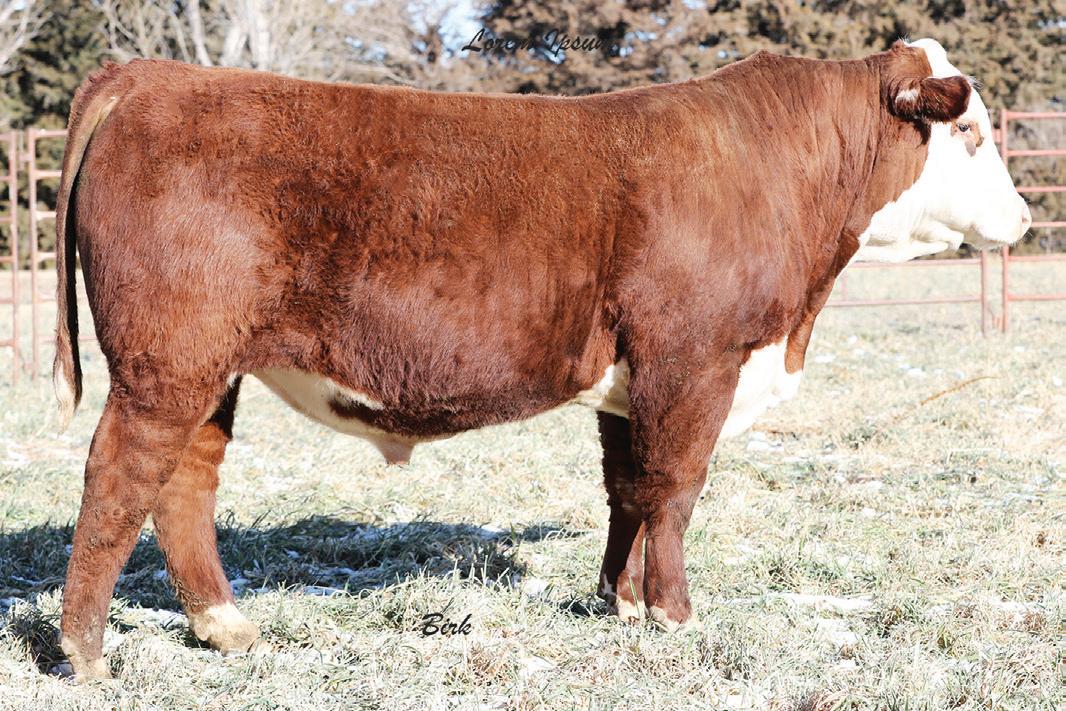
Independence comes from Sandhill Farms in southern Kansas. He has tremendous performance EPDs, as well as fabulous carcass and maternal traits. We are offering 11 sons sired by him.
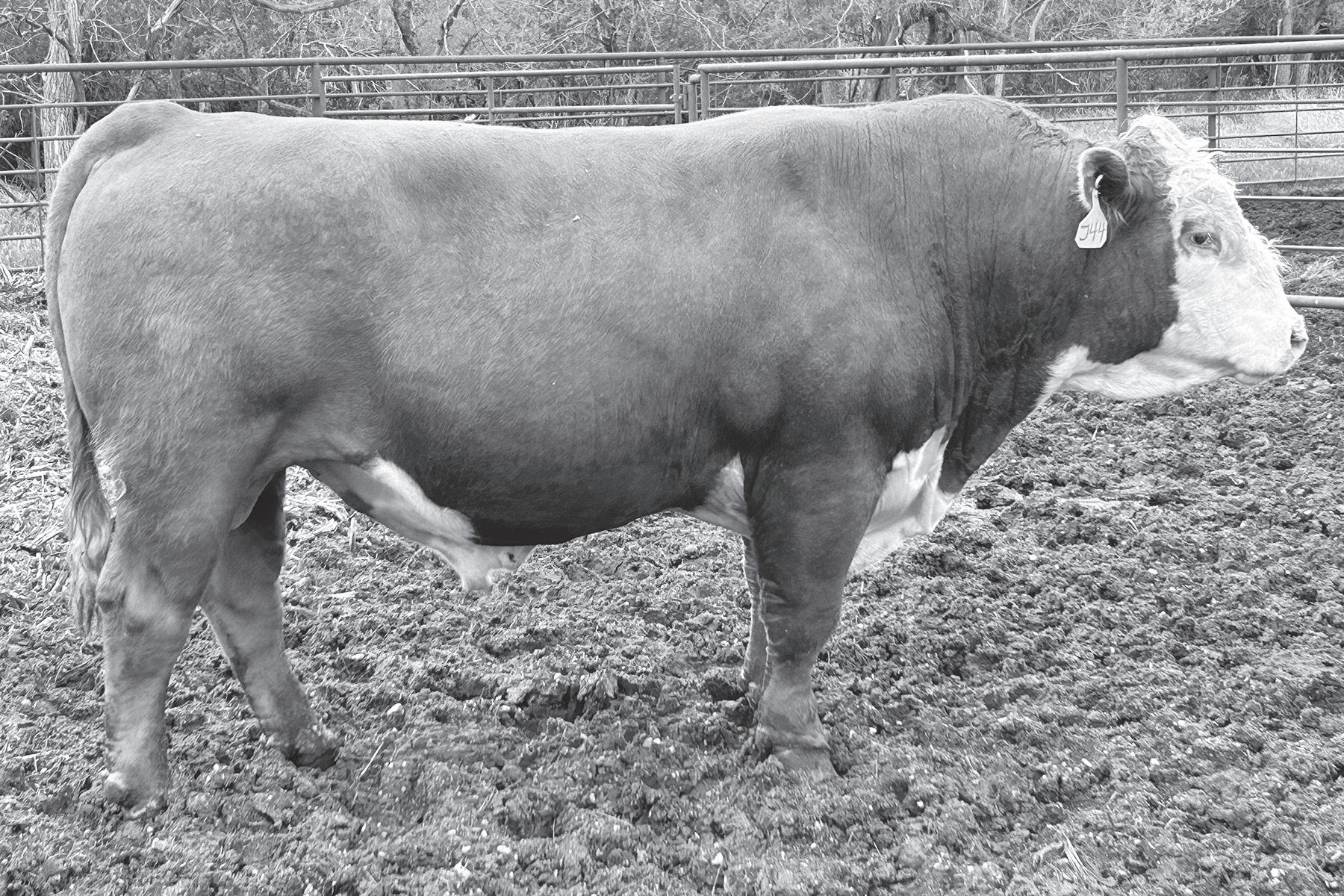
SHF JALAPENO G003 J044 ET {CHB,DLF,HYF,IEF,MSUDF,DBP}
Jalapeno is the full brother to Independence. His personal traits follow very closely with Independence, as do his offspring. He has 12 sons in the offering.
TRAIT DEFINITIONS
The American Hereford Association (AHA) currently produces expected progeny differences (EPDs) for 17 traits and calculates three profit ($) indexes.
CALVING EASE DIRECT (CE) – CE EPD is based on calving ease scores and birth weights and is measured on a percentage. CE EPD indicates the influence of the sire on calving ease in females calving at 2 years of age. For example, if sire A has a CE EPD of 6 and sire B has a CE EPD of -2, then you would expect on average if comparably mated, sire A’s calves would be born with an 8% more likely chance of being unassisted when compared to sire B’s calves.
BIRTH WEIGHT (BW) – BW EPD is an indicator trait for calving ease and is measured in pounds. For example, if sire A has a BW EPD of 3.6 and sire B has a BW EPD of 0.6, then you would expect on average if comparably mated, sire A’s calves would come 3 lb. heavier at birth when compared to sire B’s calves. Larger BW EPDs usually, but not always, indicate more calving difficulty. The figure in parentheses found after each EPD is an accuracy value or reliability of the EPD.
WEANING WEIGHT (WW) – WW EPD is an estimate of pre-weaning growth that is measured in pounds. For example, if sire A has a WW EPD of 60 and sire B has a WW EPD of 40, then you would expect on average if comparably mated, sire A’s calves would weigh 20 lb. heavier at weaning when compared to sire B’s calves.
YEARLING WEIGHT (YW) – YW EPD is an estimate of post-weaning growth that is measured in pounds. For example, if sire A has a YW EPD of 100 and sire B has a YW EPD of 70, then you would expect on average if comparably mated, sire A’s calves would weigh 30 lb. heavier at a year of age when compared to sire B’s calves.
MATERNAL MILK (MM) – The milking ability of a sire’s daughters is expressed in pounds of calf weaned. It predicts the difference in average weaning weights of sires’ daughters’ progeny due to milking ability. Daughters of the sire with a +14 MM EPD should produce progeny with 205-day weights averaging 24 lb. more (as a result of greater milk production) than daughters of a bull with a MM EPD of -10 lb. (14 minus -10.0 = 24 lb.). This difference in weaning weight is due to total milk production during the entire lactation.
MATERNAL MILK & GROWTH (M&G) – Maternal Milk & Growth reflects what the sire is expected to transmit to his daughters for a combination of growth genetics through weaning and genetics for milking ability. It is an estimate of daughters’ progeny weaning weight. A bull with a 29 lb. M&G EPD should sire daughters with progeny weaning weights averaging 19 lb. heavier than progeny of a bull’s daughters with a M&G EPD of 10 lb. (29 minus 10 = 19 lb.). It is equal to one-half the sire’s weaning weight EPD, plus all of his MM EPD. No accuracy is associated with this since it is simply a mathematical combination of two other EPDs. It is sometimes referred to as “total maternal” or “combined maternal.”
MATERNAL CALVING EASE (MCE) – MCE EPD predicts how easily a sires daughters will calve at 2 years of age and is measured on a percentage. For example, if sire A has a MCE EPD of 7 and sire B has a CE EPD of -3, then you would expect on average if comparably mated, sire A’s daughters would calve with a 10% more likely chance of being unassisted when compared to sire B’s daughters.
MATURE COW WEIGHT (MCW) – The MCW EPD was designed to help breeders select sires that will either increase or decrease mature size of cows in the herd. The trait was developed after years of cow weight data collection and the EPD relates directly to the maintenance requirements of a cow herd. An example of how the MCW EPD allows breeders to compare sires: If sire A has a MCW EPD of 100 and sire B has an EPD of 85, then you would expect the females of sire A, if mated to similar cows, to be 15 lb. heavier at mature size.
UDDER SUSPENSION (UDDR) – Scores range from 9 (very tight) to 1 (very pendulous) and represent assessments of udder support. Weak udder suspension results in pendulous udders that make it difficult for a calf to nurse. Weak suspension in the udder indicates a lack of support in the ligament that ties the udder to the cow’s body wall. Over time, weakness in this ligament will allow the udder to hang down too far from the body and may subject the udder to serious problems and increased potential for injury. UDDR EPDs are reported on the scoring scale. Differences in sire EPDs predict the difference expected in the sires’ daughters’ udder characteristics when managed in the same environment. For example, if sire A has a UDDR EPD of 0.4, and sire B has a UDDR EPD of -0.1, the difference in the values is 0.5, or one-half of a score. If daughters of sires A and B are raised and managed in the same environment, you would expect half a score better udder suspension in daughters of sire A, compared to sire B.
TEAT SIZE (TEAT) – Scores range from 9 (very small) to 1 (very large, balloon shaped) and are subjective assessments of the teat length and circumference. Oversized teats are difficult for newborn calves to nurse, and the calf may not receive adequate colostrum. This could lead to a higher incidence of scours or decreased immunity levels in the newborn calf. TEAT EPDs are reported on the scoring scale. Differences in sire EPDs predict the difference expected in the sires’ daughters’ udder characteristics when managed in the same environment. For example, if sire A has a teat size EPD of 0.4, and sire B has a teat size EPD of -0.1, the difference in the values is 0.5, or one-half of a score. If daughters of sires A and B are raised and managed in the same environment, you would expect half a score smaller teat size in daughters of sire A, compared to sire B.
SCROTAL CIRCUMFERENCE (SC) – Measured in centimeters and adjusted to 365 days of age, SC EPD is the best estimate of fertility. It is related to the bull’s own semen quantity and quality, and is also associated with age at puberty of sons and daughters. Larger SC EPDs suggest younger age at puberty. Yearling sons of a sire wth a .7 SC EPD should have yearling scrotal circumference measurements that average 0.7 centimeters (cm) larger than progeny by a bull with an EPD of 0.0 cm. In the Hereford genetic analysis, a multiple-trait model was used for scrotal circumference. Weaning weight was used as a predictor variable to increase the prediction accuracy of SC EPDs. Therefore, an animal with a weaning weight EPD should also have a SC EPD.
SUSTAINED
COW FERTILITY (SCF) – The AHA’s new Sustained Cow Fertility EPD (SCF) is a prediction of a cow’s ability to continue to calve from three years of age through twelve years of age, given she calved as a two-year-old. The EPD is expressed as a deviation in the proportion of the ten-possible calving’s to twelve years old expressed as a probability. For example, the daughters of a bull with a 30 EPD would have the genetic potential to have one more calf by age twelve then the daughters from a bull with a 20 EPD. In other words, the daughters from the 30 EPD bull would have a 10% greater probability of having one more calf than the bull with a 20 EPD. This is equivalent to saying that the daughters are 10% more likely to remain in the herd to age 12.
DRY MATTER INTAKE (DMI) – The Dry Matter Intake EPD predicts the daily consumption of pounds of feed. For example, if sire A has a DMI EPD of 1.1 and sire B has a DMI EPD of 0.1, you would expect sire B’s progeny, if comparably mated, to consume on average 1 pound of feed less per day.
CARCASS WEIGHT (CW) – Carcass weight is a beneficial trait when considering the impact that pounds have relative to end product value. At the same age constant endpoint, sires with higher values for carcass weight will add more pounds of hot carcass weight compared to sires with lower values for carcass weight. For example, if sire A has a CW EPD of 84 and sire B has a CW EPD 64, then you would expect the progeny of sire A, if harvested at the same age constant endpoint, to have a 20-lb. advantage in terms of hot carcass weight.
RIB FAT (FAT) – The FAT EPD reflects differences in adjusted 365-day, 12th-rib fat thickness based on carcass measurements of harvested cattle. Sires with low, or negative FAT EPDs are expected to produce leaner progeny than sires with higher EPDs. Ultrasound measures are also incorporated into this trait and have been shown to be highly correlated with the performance of slaughter progeny. All data is expressed on a carcass scale.
RIBEYE AREA (REA) – REA EPDs reflect differences in an adjusted 365-day ribeye area measurement based on carcass measurements of harvested cattle. Sires with relatively higher REA EPDs are expected to produce better-muscled and higher percentage yielding slaughter progeny than will sires with lower REA EPDs. Ultrasound measurements are also incorporated into this trait and have been shown to be highly correlated with the performance of slaughter progeny. All data is expressed on a carcass scale.
MARBLING (MARB) – MARB EPDs reflect differences in an adjusted 365-day marbling score (intramuscular fat, [IMF]) based on carcass measurements of harvested cattle. Breeding cattle with higher MARB EPDs should produce slaughter progeny with a higher degree of IMF and therefore higher quality grades. Ultrasound measurements are also incorporated into this trait and have been shown to be highly correlated with the performance of slaughter progeny. All data is expressed on a carcass scale.
BALDY MATERNAL INDEX (BMI$) – The Baldy Maternal Index is a maternally focused index that is based on a production system that uses Hereford x Angus cross cows. Progeny of these cows are directed towards Certified Hereford Beef. This index has significant weight on Sustained Cow Fertility, which predicts fertility and longevity of females. There is a slightly positive weight on Weaning Weight, Mature Cow Weight and Milk which accounts for enough growth but ensures females do not increase inputs. There is some negative emphasis on Dry Matter Intake, but a positive weighting on Carcass Weight which is anticipated to provide profitability from finishing of non-replacement females and castrated males. Marbling and Rib-eye Area are also positively weighted to keep the harvested progeny successful for CHB. This index is geared to identify Hereford bulls that will be profitable when used in a rotational cross with mature commercial Angus cows.
BRAHMAN INFLUENCE INDEX (BII$) – The Brahman Influence Index is a maternally focused index that is based on a production system that uses Brahman x Hereford cross cows. Progeny of these cows are directed towards a commodity beef market since Certified Hereford Beef does not accept Brahman influenced cattle. This index has significant weight on Sustained Cow Fertility, which predicts fertility and longevity of females. There is a slightly positive weight on Weaning Weight, Mature Cow Weight and Milk which accounts for enough growth but ensures females do not increase inputs. There is some negative emphasis on Dry Matter Intake, but a positive weighting on Carcass Weight which is anticipated to provide profitability in finishing non-replacement females and castrated males. Marbling and Rib-eye Area are also positively weighted to keep harvested progeny successful for a variety of commodity based programs. This index targets producers that use Hereford bulls on Brahman influenced cows.
CERTIFIED HEREFORD BEEF INDEX (CHB$) – The Certified Hereford Beef Index is a terminal sire index that is built on a production system where Hereford bulls are mated to mature commercial Angus cows and all progeny will be targeted for Certified Hereford Beef after the finishing phase. This index has significant weight on Carcass Weight to ensure profit on the rail. As well there is a positive weighting for Average Daily Gain along with a negative weighting on Dry Matter Intake to ensure efficient pounds of growth in the finishing phase. Keep in mind, this production system takes advantage of complimentary breeding with the commercial Angus cow. Although Marbling is weighted positively in this index, a positive weighting for Rib-eye Area and a negative weighting for Back Fat are a greater priority in this index to allow for optimum end-product merit. This is the only index that has no emphasis on fertility. Remember that no replacement heifers are being retained.