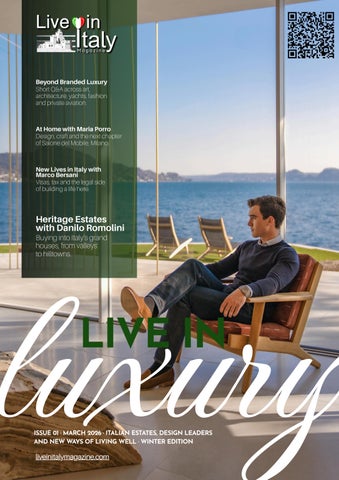
Live in Luxury | A Special Edition by Live in Italy Magazine | March 2026
Beyond Branded Luxury
Short Q&A across art, architecture, yachts, fashion and private aviation
At Home with Maria Porro
Design, craft and the next chapter of Salone del Mobile, Milano
New Lives in Italy with Marco Bersani
Visas, tax and the legal side of building a life here
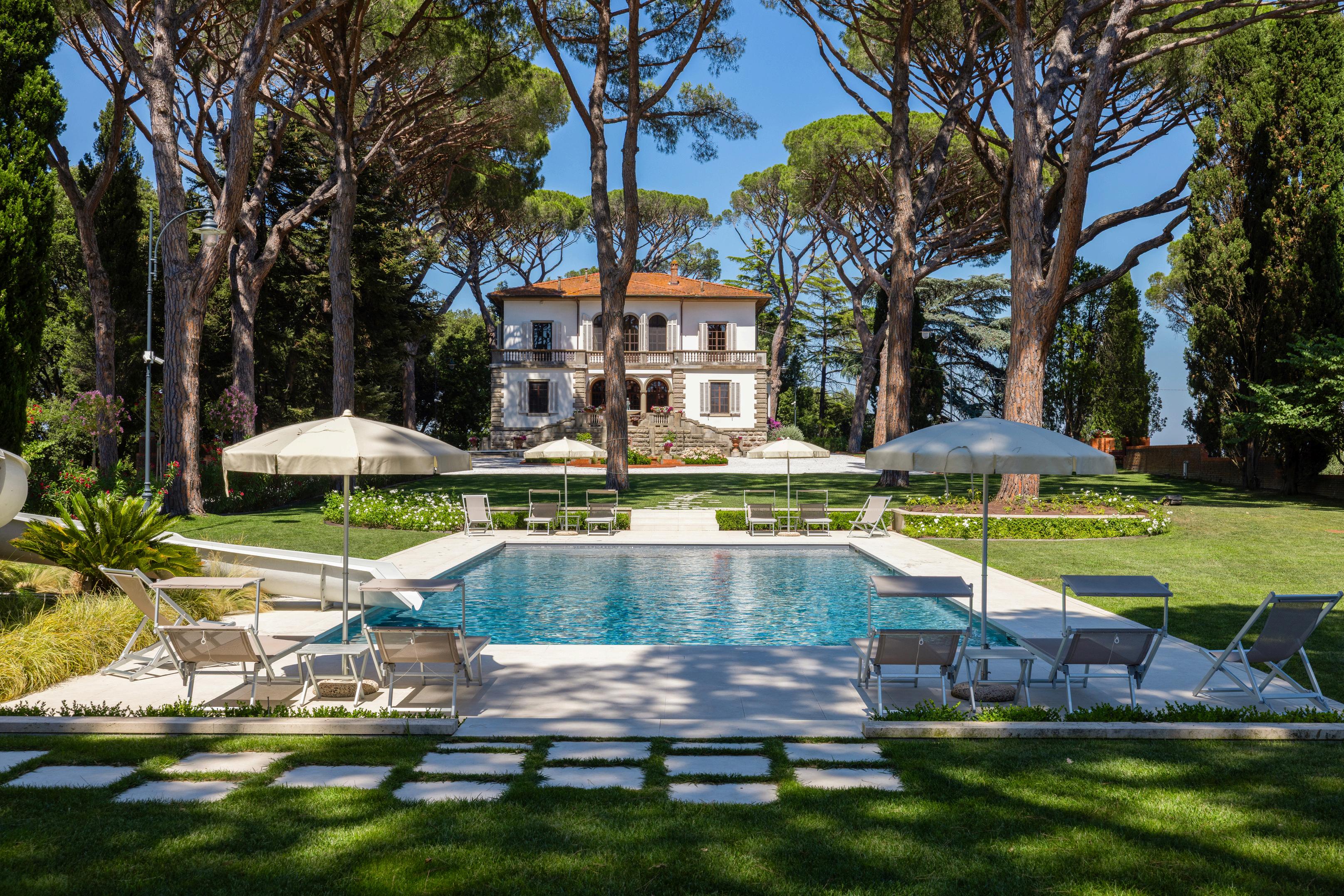
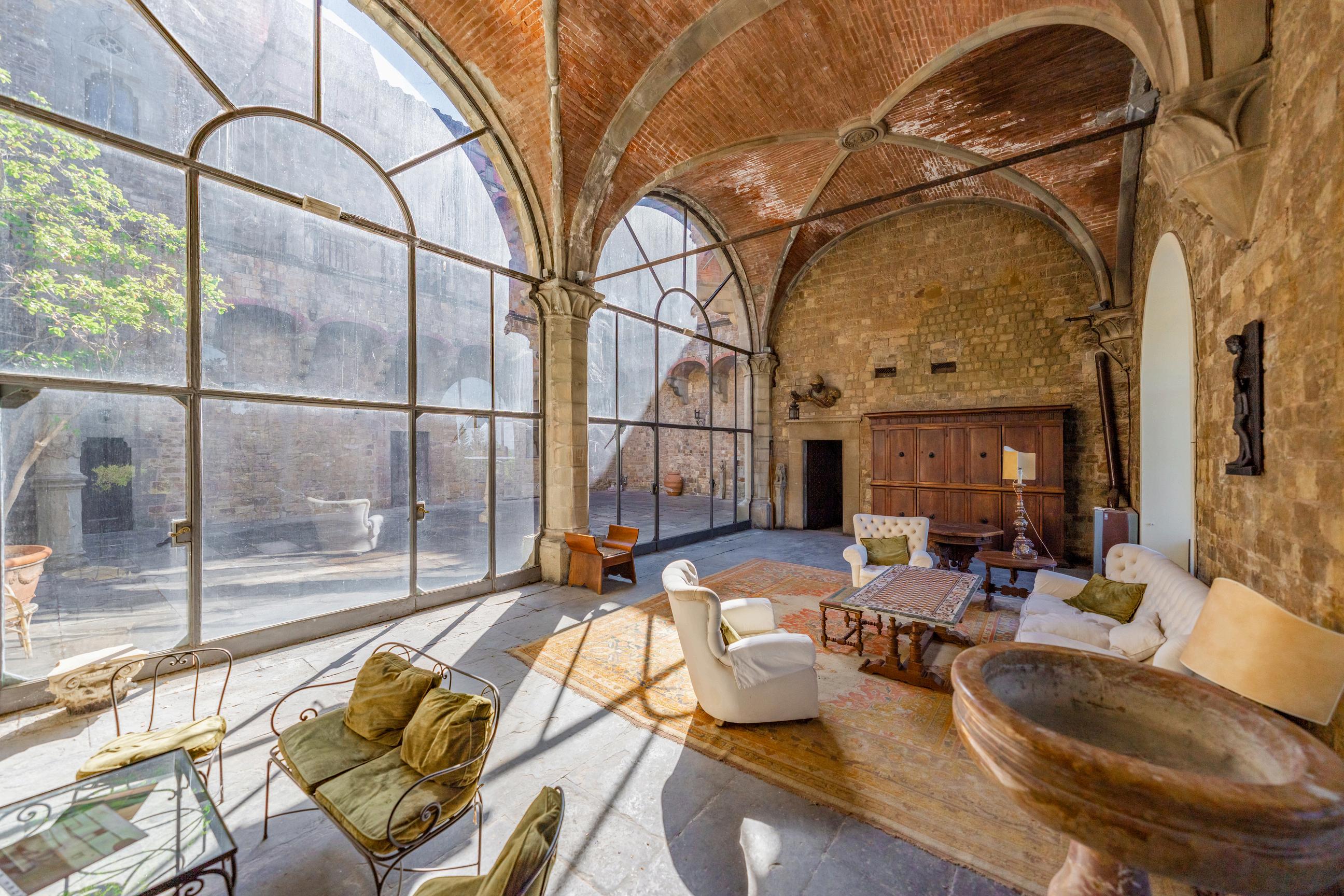
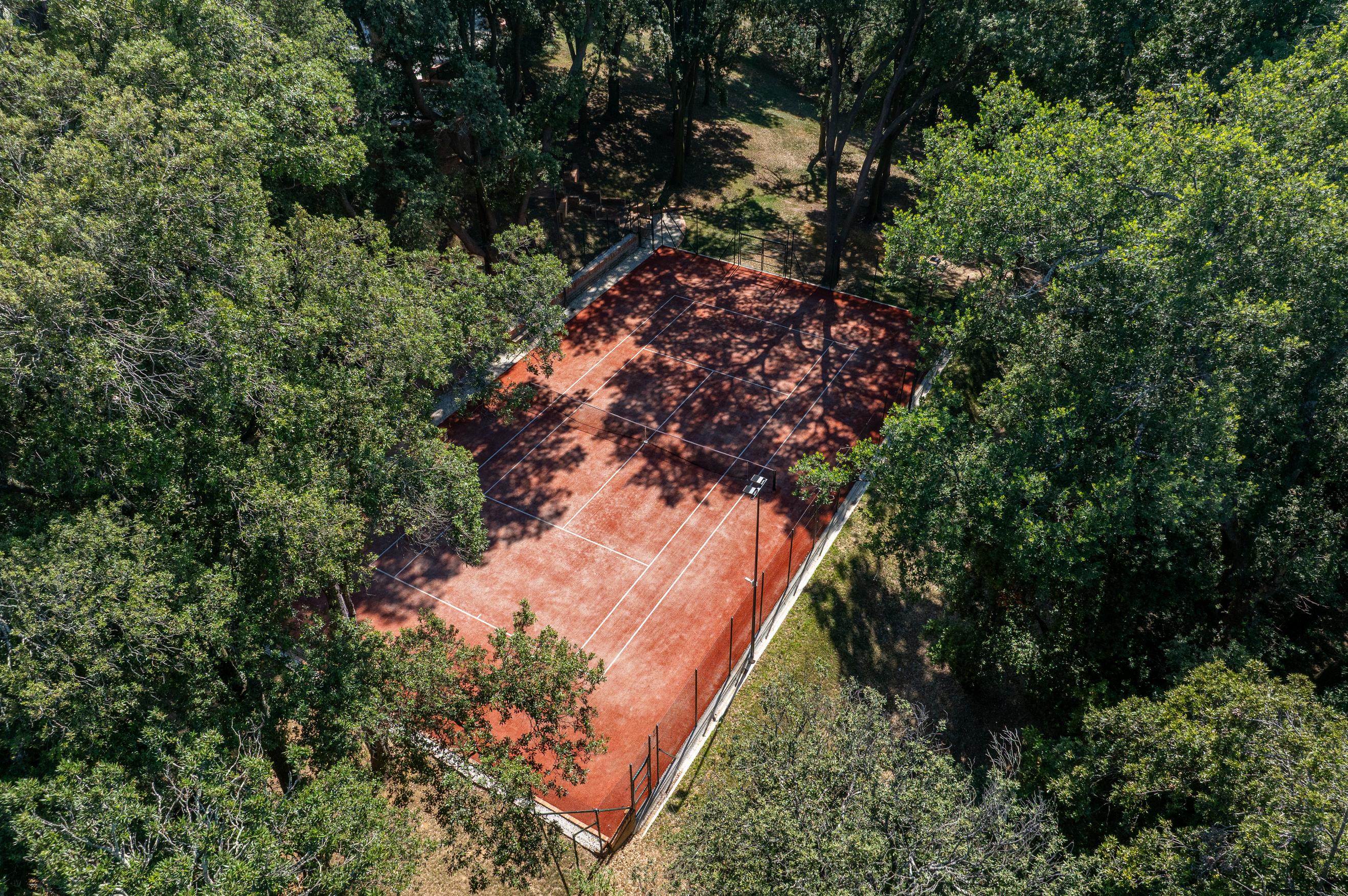
Heritage Estates with Danilo Romolini
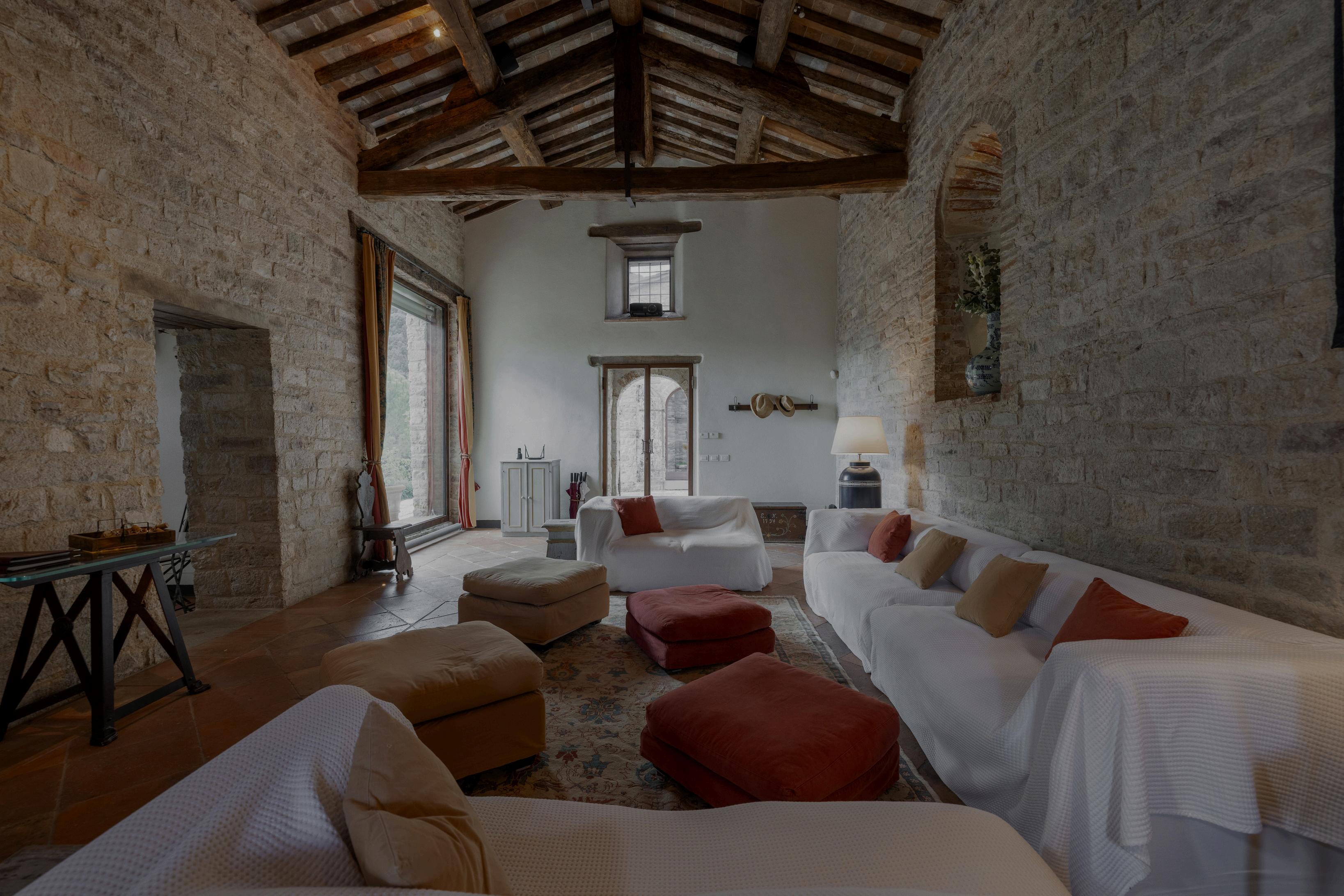
Buying into Italy’s grand houses, from valleys to hilltowns
letter
LisaMorales
Green has a way of settling in. It lies on the Italian flag and stretches across hills planted with vines and olives. It travels from state emblems to the gardens of dolce vita villas, from the sage and bottle greens of post-war Milanese interiors to the visual language of Italian fashion Who could forget Gucci’s campaigns?
For this first issue, we kept returning to a sense of time. Not a seasonal, fleeting dolce vita, Green felt like a deliberate commitment. The people we speak to work with places and objects designed to
endure: a vineyard that rewards patience, a villa slowly brought back to life, a yacht conceived with uncompromising quality Even when the conversation shifts to visas or tax rules, the question beneath it all remains the same: where do you choose to build something that lasts?
Calling this a green edition is our way to open this new chapter, a wish for our community. A future that asks for care, commitment, and time. More demanding, more valuable, and ultimately the only one worth building.
ON ITALIAN LUXURY REAL ESTATE, LIFESTYLE, AND BUILDING TRUST
Author–LisaMorales
A conversation with Danilo Romolini, Managing Partner and Broker at Romolini Immobiliare | Christie’s International Real Estate, recorded for the Italy Answered podcast.
If you have ever searched for luxury properties in Italy on YouTube and found yourself immersed in sweeping drone footage of villas, vineyards, and historic estates, chances are you have come across the work of Danilo Romolini. As Managing Partner at Romolini Immobiliare | Christie’s International Real Estate, Romolini represents a new generation of Italian real estate professionals combining heritage, transparency, and modern storytelling This conversation was recorded for the Italy Answered podcast and is presented here as a formatted, follow-along interview The dialogue has been lightly edited for clarity, with spoken redundancies removed, while preserving the natural flow and voice of the conversation
YOURBACKGROUND ANDFAMILYBUSINESS
LET’S START WITH YOU CAN YOU SHARE YOUR BACKGROUND AND HOW YOU BECAME PART OF THE FAMILY BUSINESS?
DANILO: I was born and raised in Italy
My parents were very young when they had me, and they started the business around the same time. I was born in 2000, and Romolini Immobiliare was founded in 2004, so I really grew up alongside the company I’ve seen the business from the very beginning, from when it was just starting to where it is today That had a big impact on my journey because I saw my parents struggle in the early years and then slowly achieve their goals When I finished school and had the chance to add my own contribution, I really wanted to develop aspects of the business that didn’t exist yet. Even though I’m officially about five years into the business, real estate has been part of my life for as long as I can remember My parents talked about real estate constantly. My father would take me to see castles and historic properties several times a week. I really grew into it naturally.
WHEN DID YOU KNOW THIS WAS YOUR PATH?
WAS THERE A MOMENT WHEN YOU REALIZED REAL ESTATE WAS TRULY YOUR PASSION?
DANILO: I think a big part of it comes from how my parents involved me and passed on their appreciation for beauty
My father loves beautiful things, antiques, and objects with history. He has collections of antique pieces he’s gathered throughout his life, and I grew up surrounded by that appreciation for heritage At the same time, I became fascinated by sales. Sales are everywhere in life, and I found that world very interesting as I was growing up. I also realized how lucky I was to be part of a family business that was so fascinating and dynamic
Whatdefinesus isthe familyapproachto thebusiness.
The first few years were challenging I wasn’t always sure it was the right path, because things take time to work But once I found my own style and my own way of working, I understood that this was what I wanted to do Real estate is also very broad It’s not just about selling You can invest as well When I was 20, I made my first real estate investment in a small apartment building That experience made me even more passionate because I now sell real estate, invest in it, and help grow the family business at the same time
AFAMILYBUSINESS, BEYONDFAMILY MEMBERS
IS YOUR ENTIRE FAMILY INVOLVED IN THE BUSINESS TODAY?
DANILO: My sister is 19 and is studying medicine, so she’s in a completely different field, but it’s good to have a doctor in the family My brother is 15, so he still has time to decide what he wants to do In the early days, my aunt worked as our office manager. Today, my mother’s cousin is one of our agents But more than having family members involved, what defines us is the family approach to the business Real estate is very relationship-based, and it can also be very competitive. We are competitive, of course, but we care deeply about our team. We treat people like family, and I think that approach really shows in how we work and how clients perceive us
WHERE BUYERS ARE LOOKING BEYOND THE OBVIOUS
WE OFTEN HEAR ABOUT TUSCANY, LAKE COMO, AND THE AMALFI COAST ARE YOU SEEING INTEREST IN OTHER REGIONS AS WELL?
DANILO: We specialize mainly in central Italy: Tuscany, Umbria, parts of Marche, and Emilia-Romagna Tuscany and Umbria remain the most requested regions, and after speaking with colleagues across the country, that trend holds true.
Tuscany has become a brand in itself You leave Florence and immediately find Chianti or Val d’Orcia. Everywhere you go, there’s an active market, beautiful scenery, and strong services Umbria is still less known, especially to Americans, but it’s growing quickly. Prices are about 20 percent lower than Tuscany, and many clients see it as quiet luxury
Marche is another region to watch It offers incredible landscapes, rolling hills, and the sea, often at a fraction of Tuscany’s prices. Sicily is also gaining momentum
We’re also seeing growing interest in higheraltitude properties, above 700 meters, which are attractive not only in winter but increasingly in summer as well
THEYOUTUBE CHANNELAND BUILDINGTRUST
YOUR YOUTUBE CHANNEL HAS BECOME A MAJOR RESOURCE. HOW DID THAT BEGIN?
DANILO: When I was about 16, I was watching property tour videos from New York and Los Angeles. They were glamorous, but more importantly, they showed properties in a way that photos couldn’t They also positioned the agent as the go-to expert I thought about Italy We may not always have ultra-modern properties, but we have 1,000-year-old castles, historic villas, and places where history was literally made These are unique pieces, almost like works of art I started very simply, filming on my phone and editing the videos myself. I was shy at first, and the early videos were not professional But within the first ten videos, some reached half a million views. In Italy at that time, no one was doing this Within a year, we started selling properties directly from the videos I sold a castle for several million euros to buyers who had never seen it in person They trusted the process because they followed the videos and saw the Christie’s brand Today, this has become normal. I’ve sold properties in Montepulciano and on the Amalfi Coast without inperson visits The videos build trust, and that trust translates into real transactions.
PEOPLE OFTEN COMMENT ON YOUR TRANSPARENCY AND APPROACHABILITY WHERE DOES THAT COME FROM?
ARE YOUR CLIENTS PRIMARILY INVESTORS, OR ARE THEY LOOKING FOR LIFESTYLE AND LEGACY?
DANILO: Actually, aside from properties like boutique hotels or running businesses, which we also sell, most clients are really looking for a holiday home or a residence.
In many cases, they’re buying a property that will hold its value and may increase over the long term, but Italy is a fairly linear market. It doesn’t grow dramatically year over year, although it does tend to hold value.
In general, the return on investment, even if you rent the property, is not as strong as other types of investments you could make. And I think it’s very important to be transparent about that from the beginning. Clients need to understand that buying property in Italy is usually a lifestyle choice It’s about enjoying the home with family and friends.
I often work with large families who are spread across different countries or across Europe They’re looking for a central place to gather, to spend time together, and to create memories These properties also become legacy homes. In Italy, this idea is very common. Historically, important families owned important buildings and estates, and that became part of their heritage and identity.
If someone asks me what the best investment is purely from a financial perspective, I would probably suggest something like an apartment building. But if you ’ re looking for a piece of history, almost like buying a work of art, something you can enjoy with your family, that holds its value and can also be rented, then Italy makes sense
Vineyards are a perfect example. We sell many vineyards and are probably among the most specialized in this area in Italy. My father is a third-degree sommelier, and we also have an enologist and an agronomist working as agents on our team, so we ’ re very specific about this sector. Even when a vineyard is an operating business, especially in wine, it’s still a lifestyle investment. It’s a bit like owning a beautiful boat. It may cover its costs if you operate it or rent it out, but it’s not about generating large profits. Clients understand this, and they buy because it gives them pleasure, connection, and something meaningful to pass on
ACCESSIBILITYAND FINANCING
ARE THERE PROPERTIES ACCESSIBLE TO NON-HNWI BUYERS?
DANILO: Absolutely We have properties starting around €150,000 for apartments or townhouses in villages Country homes with pools can start around €700,000 or €800,000, even in Tuscany Foreign buyers can obtain mortgages in Italy, often at very favorable rates compared to the US Currently, rates are around 3 percent fixed (which is actually high for us) Foreigners are typically financed up to 50 or 60 percent, depending on their financial situation, and the process is straightforward We work closely with attorneys and mortgage brokers, and so far, every client we ’ ve introduced has successfully obtained financing
GOLDENVISAAND RESIDENCYTRENDS
HAVE GOLDEN VISA AND TAX RESIDENCY PROGRAMS INCREASED DEMAND?
DANILO: Yes Italy’s flat tax regime and the investor visa have played a role. The flat tax, introduced in 2017, initially set at €100,000 and now €200,000, has attracted many high-net-worth individuals. The Golden Visa requires either a qualifying investment or investment in Italy, often around €500,000 These programs have contributed to increased demand, especially in the luxury segment That said, most clients already have advisors. What they need is local expertise. Italy has many nuances, especially in countryside purchases, agricultural tax benefits, and local regulations A local advisor makes a real difference
BUILDINGLONG-TERM RELATIONSHIPS
HOW HAS YOUR FAMILY BUILT SUCH LASTING CLIENT RELATIONSHIPS?
DANILO: It’s a process Clients follow us for a long time before contacting us They see how we work, how we present properties, and how responsive we are From the beginning, we set clear expectations and explain everything upfront, even uncomfortable details like taxes or fees That honesty builds longterm relationships
Many clients become friends. I often have dinner with people I sold properties to years ago. One day, they may sell again, and I hope they’ll choose us
This conversation reflects how Italian luxury real estate today is shaped not only by price points and locations, but by trust, transparency, and lifestyle For many buyers, Italy represents more than an investment It represents heritage, connection, and a different way of living. Readers interested in hearing the full conversation are encouraged to listen to the complete Italy Answered podcast episode
WHERETOFIND ROMOLINIIMMOBILIARE
HOW CAN READERS FOLLOW YOUR WORK?
DANILO: You can find us at romolinicom or simply search Romolini online We’re on YouTube for full property tours, Instagram for photos and short videos, and also on Facebook, LinkedIn, and TikTok. Once you start following us, you’ll find us everywhere
Website: wwwromolinicom
YouTube: @Romolini christies
LinkedIn: agenzia-romolini-immobiliare-s-r-l
Facebook: RomoliniChristies X: RomoliniChristies
FEDERICO ROSSI ON REDEFINING ROSSINAVI
Author–JustinPatulli
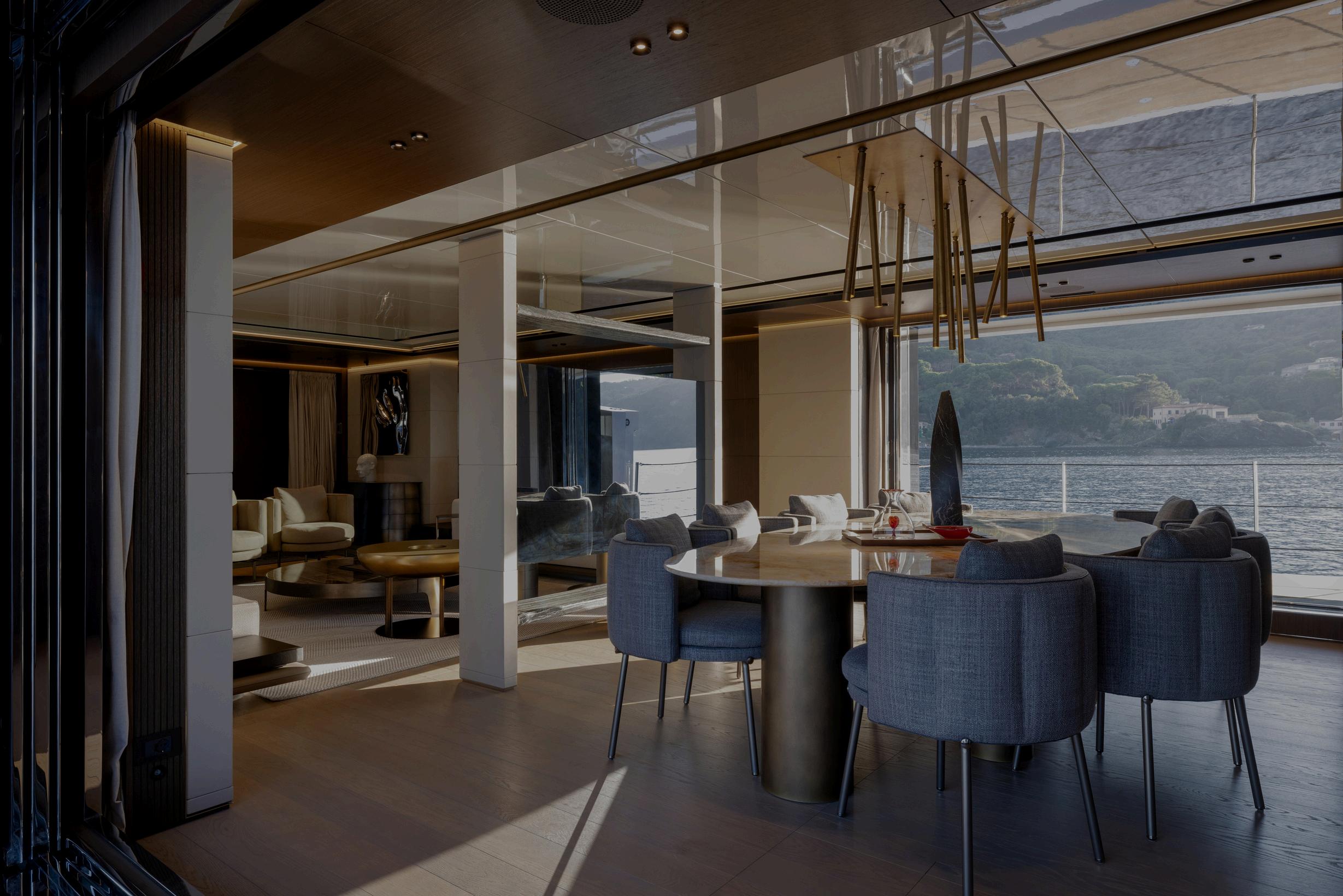
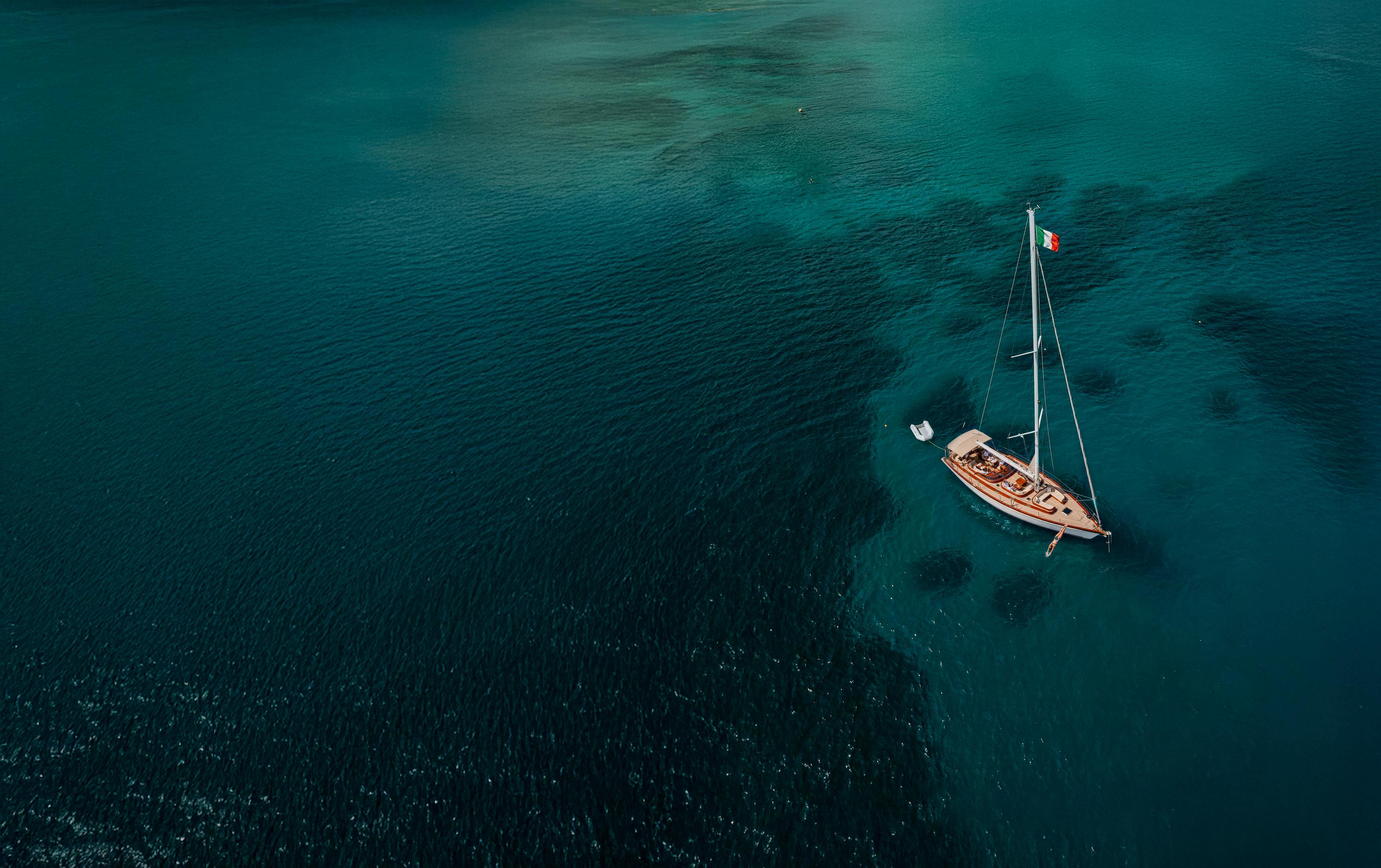
As luxury moves away from a logo- driven mindset toward environmental stewardship and artisanal mastery, yachting is undergoing a quiet transformation of its own. Since 1980, Rossinavi has stood at the forefront of building Italian luxury yachts, guided today by Chief Operating Officer Federico Rossi. He is steering the brand into an era of environmentally responsible yachting – a trend gaining momentum across the luxury sector. Rossinavi has introduced proprietary AI technology alongside monohull designs, a notable departure in an industry where sustainability is typically associated with multihull yachts. In other words, the brand is proving that luxury and environmental responsibility can live in symbiosis.
yach
All the while, Rossinavi continues to deliver its signature aesthetic. Its yachts embody Italian elegance and sophistication, balancing refined interiors with inviting comfort. The result is an immediate sense of ease that’s perfect for a retreat at sea. We recently caught up with Federico Rossi to discuss how the brand is navigating this redefined luxury yachting landscape.
ROSSINAVI HAS E LEADER IN SUSTA INNOVATION, FRO HYBRID SYSTEMS DRIVEN ELECTRIC HOW DO YOU DE OF “CONSCIOUS L WATER, AND WHI OR DESIGN SOLU MOST MEANINGF
FEDERICO: The future of conscious luxury is rooted in the belief that comfort and environmental responsibility are not opposing concepts but two dimensions of the same experience While luxury remains essential for yacht owners, it must now coexist with a tangible respect for the sea and the natural world that surrounds them
Today, the most meaningful progress comes from electrification and batterybased solutions, which represent the most realistic and effective path toward lowering emissions. Technologies such as our Sea Cat platform engineered to minimize impact while cruising and capable of supplying energy back to the shore in hibernation mode demonstrate how sustainability can be built directly into the heart of the yachting experience
We are also developing new ecodisplacement monohull concepts that deliver the performance advantages traditionally found in multihulls, but with a reduced environmental footprint
Ultimately, conscious luxury means offering state-of-the-art design and uncompromised comfort while ensuring that every moment on board strengthens one ’ s connection with the sea rather than diminishing it
YACHT OWNERS TODAY ARE MORE GLOBAL, MORE INFORMED, AND MORE FOCUSED ON LONG-TERM VALUE THA EVER HOW ARE THESE EVOLVING EXPECTATIONS INFLUENCING THE WAY ROSSINAVI DEVELOPS NEW VESSELS WHETHER THROUGH MATERIALS, ENGINEERING, ONBOARD EXPERIENCES, OR ENVIRONMENTAL PERFORMANCE?
FEDERICO: Today’s yacht owners are more global, informed, and focused on long-term value than ever before Their growing demand for sustainability alongside comfort directly shapes how we design and engineer new vessels It encourages us to prioritize technologies that deliver measurable reductions in emissions advanced battery systems, electric propulsion, and hybrid solutions without sacrificing the quality of the onboard experience
This evolution also led to the development of Rossinavi’s AI, conceived for next-generation superyachts such as Seawolf X. This intelligent system merges energy management, comfort automation, and sustainability Powered by machine learning, it continuously analyzes sensor data across the yacht to optimize energy usage, maintain batteries within their ideal range, and anticipate both operational requirements and guest preferences
The AI automatically adjusts lighting, climate, and shading according to environmental conditions and occupancy, personalizing comfort while minimizing waste It interacts with the crew in real time for example, suggesting adjustments in onboard activities or planning stops to maximize solar energy production.
Integrated into our BluE sustainability philosophy, the system enables electric or hybrid navigation on most routes, significantly reducing noise and emissions. Its purpose is to harmonize luxury and responsibility through an intelligent, selfimproving platform
At the same time, shifting expectations are reshaping naval architecture itself The desire for cleaner navigation drives innovation in hull forms, from low-impact catamarans to new eco-displacement designs, while owners ’ increasing wish for closeness to nature inspires onboard spaces that bring the sea into the heart of the experience
In essence, long-term value today is defined by performance, pleasure, and environmental integrity working in unison Our role is to make that balance seamless
ITALIAN SHIPBUILDING HAS ALWAYS BEEN SYNONYMOUS WITH CRAFTSMANSHIP AND DESIGN EXCELLENCE. AS ROSSINAVI PUSHES THE BOUNDARIES OF INNOVATION, HOW DO YOU MAINTAIN THAT UNMISTAKABLE ITALIAN IDENTITY IN YOUR VESSELS, ENSURING THEY FEEL BOTH FORWARD-THINKING AND DEEPLY ROOTED IN HERITAGE?
FEDERICO: Italian shipbuilding has long been synonymous with craftsmanship, elegance, and design excellence values that remain at the core of Rossinavi’s philosophy even as we push the boundaries of innovation
For us, Italian identity is expressed through the union of research and aesthetics Sustainability is integrated without compromising style, and cutting-edge engineering becomes a natural extension of Italy’s tradition of beauty, creativity, and refinement Our goal is to create yachts that feel both visionary and deeply rooted in heritage: vessels where technological innovation coexists with meticulous craftsmanship and the emotional sensibility that defines Italian excellence
THEFUTUREOFITALIAN LUXURYYACHTS
FEDERICO: Much like a captain adjusting to a changing tide, Federico Rossi and Rossinavi have done the same when it comes to crafting Italian luxury yachts for a more sustainable future To discover more about their fleet and how they’re championing environmental stewardship without compromise, be sure to visit their website You can also follow their journey on Facebook, Instagram, YouTube, and LinkedIn for the latest updates.
Designed and handcrafted in Verona by a young creative couple, JOK is a compact object in polished chrome stainless steel, created as a refined, paper-free alternative to disposable components
Precise, minimal and tactile, it reflects a contemporary design. A discreet, adult-only object for those who value lasting materials over throwaway habits.
ofvittori
ON SUSTAINABLE PERFORMANCE AND ITALIAN DESIGN
Author–ReginaldDunlap
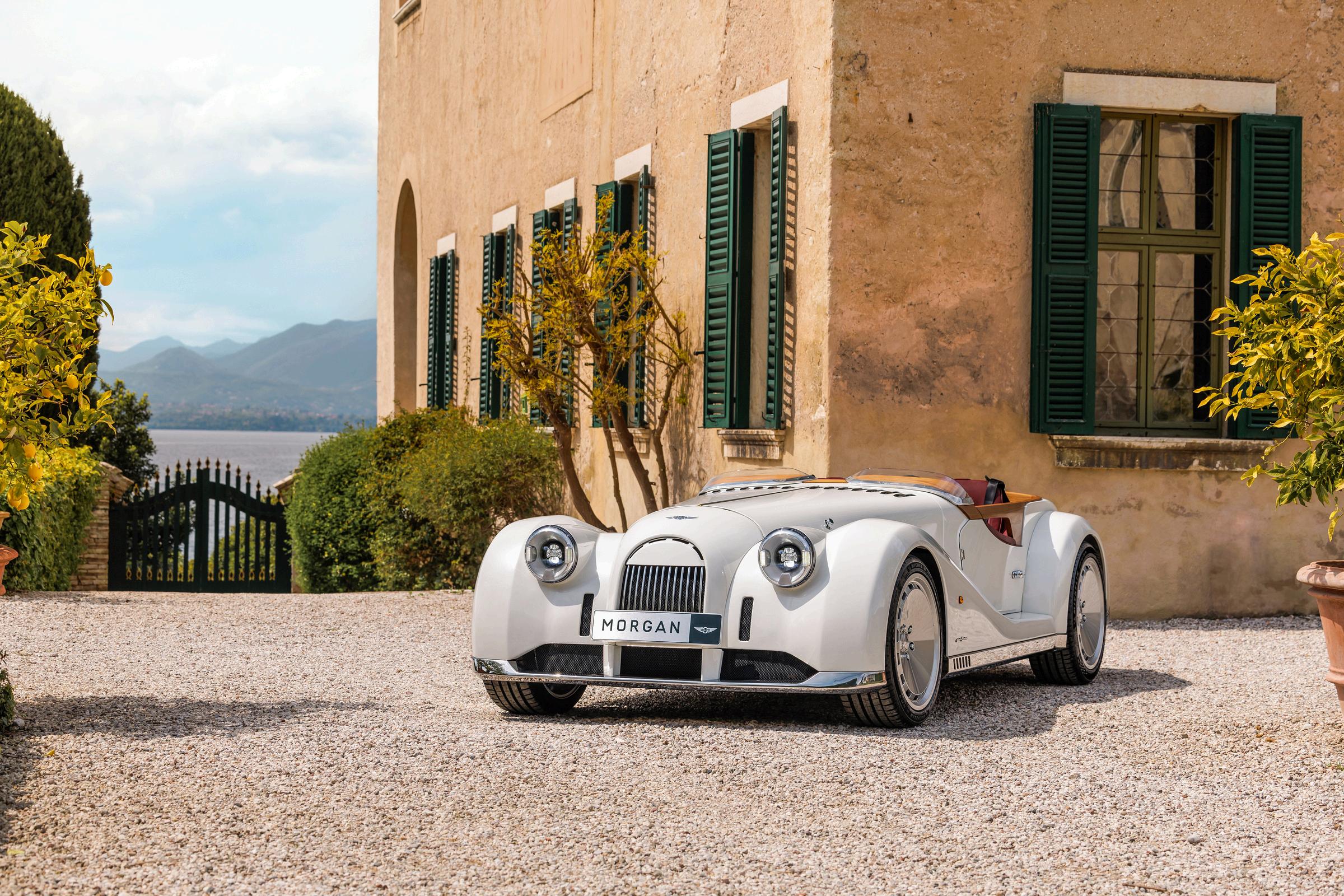
A designer’s conversation with the Founder and CEO of Vittori, following the unveiling of the Vittori x Pininfarina hybrid hypercar, on longevity,craftsmanship, and the evolving language of luxury mobility.
Experiencing the Vittori x Pininfarina unveiling felt less like attending a traditional car launch and more like observing a design philosophy take shape. As a designer, what stood out immediately was not spectacle, but restraint the way proportion, material choice, and intention were allowed to speak without excess The presentation invited consideration rather than consumption, appealing to those who understand design as something lived with over time
That sensibility reflects a design tradition where craftsmanship, emotion, and innovation are inseparable one shaped by patience, material intelligence, and respect for longevity In this context, Vittori’s collaboration with Pininfarina reads not as branding, but as shared values: an understanding that performance today must balance ambition with responsibility, and that luxury gains meaning through endurance rather than immediacy
IN THE CONVERSATION THAT FOLLOWS, CARLOS CRUZ OF VITTORI REFLECTS ON SUSTAINABILITY AS DURABILITY, ITALIAN DESIGN AS CULTURAL INHERITANCE, AND WHY THE FUTURE OF LUXURY MOBILITY DEPENDS AS MUCH ON INTENTION AS IT DOES ON ENGINEERING.
HOW DOES VITTORI DEFINE SUSTAINABILITY WITHIN PERFORMANCE AND DESIGN, AND HOW IS AWARENESS RESHAPING LUXURY MOBILITY?
CARLOS: The way Vittori addresses sustainability is by aiming for longevity and durability in our products, focusing on timeless design and quality that allows our products to last for generations Moving away from fast consumption, we can achieve this with our low-volume bespoke program. We are also looking into using titanium and aluminum effectively; additive manufacturing (3D printing) allows us to do that by using only the material needed to produce small to medium parts
BEYOND PERFORMANCE, HOW DOES THIS COLLABORATION EMBODY A MODERN INTERPRETATION OF MADE IN ITALY MERGING EMOTION, ARTISTRY, AND INNOVATION?
CARLOS: I have always dreamt of visiting Italy and driving an Italian supercar in the beautiful Toscana or the Stelvio Pass It is like the pinnacle of a car enthusiast having a natural painting as your surroundings with a work of art at your command. Now the dream is even better. I get to be a part of the team of artisans producing this work of art and having that emotion transmitted to our customers to fulfill their dreams whilst doing it with the most enduring and innovative technology available Un viaggio molto emozionante! Un’arte perfetta! L’innovazione più grande!
WHENPERFORMANCE BECOMESDESIGN CULTURE:
What emerges from this conversation is a vision of luxury mobility grounded less in velocity than in values Cruz speaks about sustainability as longevity, craftsmanship as responsibility, and performance as something designed to endure— principles that extend well beyond any single launch or moment.
ITALIANDESIGN LEGACY:
WHAT IS THE ENDURING INFLUENCE OF ITALIAN CRAFTSMANSHIP, AND WHY DOES IT RESONATE SO STRONGLY WITH COLLECTORS DRAWN TO DESIGN-FORWARD, LONG-TERM VALUE?
CARLOS: We consider that Italian taste in many industries has always been a benchmark for luxury and refinement That is exactly why we are committing to having our car made in Italy, because it gives it a heritage in design and quality that you will only find in la bella Italia.
For designers, this way of thinking feels instinctive. It mirrors how meaningful spaces and objects are created: through coherence, restraint, and a deep understanding of how people live with what is designed When applied to mobility, these same principles transform engineering into experience and innovation into culture. In a world increasingly redefining luxury from possession to presence, Vittori’s approach suggests a broader shift The collaboration with Pininfarina reflects a global mindset where legacy matters, materials are chosen with care, and the most compelling expressions of luxury are those that age well technically, aesthetically, and emotionally.
CHOOSE ITALY’S GOLDEN VISA? A CONVERSATION WITH MARCO BERSANI.
Author–LisaMorales
A supplemental article to the Italy Answered podcast, focusing on Italy’s Golden Visa and investment pathways, while also exploring professional visas, elective residence, healthcare access, and long-term life in Italy.
Italy’s Golden Visa is often presented as a straightforward residency-by-investment option, yet it is frequently misunderstood Many people confuse it with citizenship-by-investment programs offered elsewhere, even though Italy follows a very different legal framework.
In this conversation, Italian immigration attorney Marco Bersani, explains how Italy’s Golden Visa actually works and who it is designed for As the discussion unfolds, he also addresses residency options for professionals working abroad, elective residence for retirees, access to Italy’s healthcare system, and recent developments affecting citizenship by descent
Editor’s note: This article is adapted from a recorded episode of the Italy Answered podcast The conversation has been edited for clarity and readability, with redundancies removed , while preserving the natural flow , first-person voice , and structure of the original discussion.
MARCOBERSANI
CAN YOU SHARE YOUR BACKGROUND AND WHAT LED YOU TO FOCUS ON ITALIAN IMMIGRATION LAW?
MARCO: I’m originally from northern Italy, and my law firm is based in Verona My background has always been international, and from early on I worked with clients outside Italy. Over time, more and more people began reaching out because they wanted to move to Italy, invest here, or understand whether they had a real path to residency or citizenship
What I noticed very quickly was how much confusion there is around Italian immigration law. Many clients come in with information they’ve found online or assumptions based on how other countries work. Italy doesn’t operate like Portugal or Spain, and that gap between expectation and reality is where people often get stuck. That’s really what pushed me to focus almost entirely on immigration law Today, my firm works daily with international clients on visas, residency permits, and citizenship applications. The goal is always to explain clearly what is actually possible under Italian law and help people avoid mistakes before they happen
MANY PEOPLE USE THE TERM “GOLDEN VISA” LOOSELY. WHAT DOES ITALY’S GOLDEN VISA ACTUALLY OFFER?
MARCO: The first thing I always clarify is that Italy does not offer citizenship by investment Italy offers a residency-byinvestment program, commonly called the Golden Visa or investor visa With this program, a non-EU national can obtain legal residency in Italy by making a qualifying investment. Residency can eventually lead to citizenship, but only after meeting strict requirements, including long-term residence Investment alone does not grant Italian citizenship Italy’s system is different because it focuses on economic contribution, not on selling passports The Golden Visa gives you residency rights, not nationality
QUALIFY UNDER ITALY’S GOLDEN VISA?
MARCO: Under current law, there are four qualifying investment options:
Investment in an Italian company
Investment in an innovative startup Investment in Italian government bonds A philanthropic donation to approved Italian institutions
One of the biggest misconceptions is real estate Buying property in Italy does not qualify for the Golden Visa This idea comes up often, but it is not part of the law today. Each option has a minimum threshold The lowest is €250,000 for an innovative startup Investment in an Italian company requires €500,000, while government bonds require €2 million
Most of my clients choose to invest in Italian companies That allows for proper due diligence and financial transparency. Startup investments can work, but they carry more risk Government bonds appeal to clients who prioritize stability.
Watch Marco’s video “Italian Golden Visa: The REAL Processing Time”.
IS RESIDENCY THE ONLY PATH TO CITIZENSHIP FOR THOSE WITHOUT ITALIAN ANCESTRY?
MARCO: Yes For individuals without Italian ancestry, residency is the only legal path to citizenship.
After ten years of legal residence in Italy, a person can apply for citizenship by naturalization. This process is completely separate from citizenship by descent, which is based on family lineage and does not require residency in Italy. People often confuse these two paths Citizenship by descent depends on ancestry Residency-based citizenship depends on time, continuity, and compliance with Italian law
HOW DOES ITALY’S FLAT TAX REGIME FACTOR INTO RESIDENCY PLANNING?
MARCO: The flat tax regime often comes up when people are considering relocating to Italy It allows certain individuals who become Italian tax residents to pay a fixed annual tax on foreign-sourced income. At the moment, that amount is €200,000 per year, although there has been discussion about increasing it This option is designed for high-net-worth individuals with significant income abroad who want predictability. It’s not automatic and it doesn’t work for everyone Immigration and taxation are separate issues, but they are closely connected, which is why planning should always be coordinated
WHAT OPTIONS EXIST FOR PROFESSIONALS WORKING ABROAD WHO WANT TO MOVE TO ITALY?
MARCO: Many professionals assume that if they are not investors, their only option is the Digital Nomad Visa That’s not always true
Italy looks closely at where income comes from, not just how much someone earns
The Digital Nomad Visa applies mainly to freelancers and remote employees
Freelancers must show professional experience and financial stability
Employees must show that their employer allows remote work from Italy
Applications are evaluated case by case
Authorities want to see that the applicant can support themselves and that their professional activity fits within the legal framework For regulated professions, additional approvals may be required
THE ELECTIVE RESIDENCE VISA IS OFTEN CALLED A RETIREMENT VISA. IS THAT ACCURATE?
MARCO: Not really That label is misleading.
The Elective Residence Visa is based on passive income, not age That income can come from pensions, investments, rental properties, dividends, or other nonemployment sources. What matters is stability and continuity
Employment in Italy is not allowed under this visa That’s a critical point Many people assume they can apply first and decide later whether to work That’s not how it works, and applications are reviewed carefully.
For retirees and others with sufficient passive income, the Elective Residence Visa can be an excellent long-term solution when structured correctly
HEALTHCARE OFTEN COMES UP AS A CONCERN HOW DOES IT WORK FOR NEW RESIDENTS?
MARCO: Healthcare is one of the biggest surprises for many clients
Once someone becomes a legal resident in Italy, they gain access to the public healthcare system During the initial visa phase, private insurance is required After registration, residents can enroll in Italy’s national healthcare system. For Americans especially, this is a major shift. Italy’s healthcare system consistently ranks among the best globally and does not come with the same financial burden people are used to elsewhere It’s an important lifestyle factor that shouldn’t be overlooked.
WHAT’S THE CURRENT SITUATION WITH CITIZENSHIP BY DESCENT?
MARCO: Citizenship by descent remains a valid pathway, but it has become more complex
An emergency decree introduced in mid2025 created confusion by imposing new restrictions. Courts have already begun pushing back, recognizing that individuals born before those changes already held citizenship rights at birth
Several local court decisions support this view, and a ruling from Italy’s Constitutional Court is expected in 2026 I’m cautiously optimistic and generally advise eligible individuals not to delay applications
Marco discusses How to Secure an Italian Consulate Appointment in Miami on his YouTube channel
MARCO: Italy offers multiple legal pathways for investors, professionals, retirees, and families. The Golden Visa is one option, but it is not the right solution for everyone Digital nomad visas, elective residence, and citizenship by descent each serve different profiles
This article follows the natural flow of the conversation, but many topics are explored in greater detail in the full Italy Answered podcast episode. Readers looking for deeper explanations, examples, and case-specific considerations are encouraged to listen to the complete interview.
BERSANI LAW FIRM
Website: mbersanilaw.com
YouTube: @lawfirmbersani
Instagram: @bersanilawfirm
Facebook: @Bersani-Law-Firm
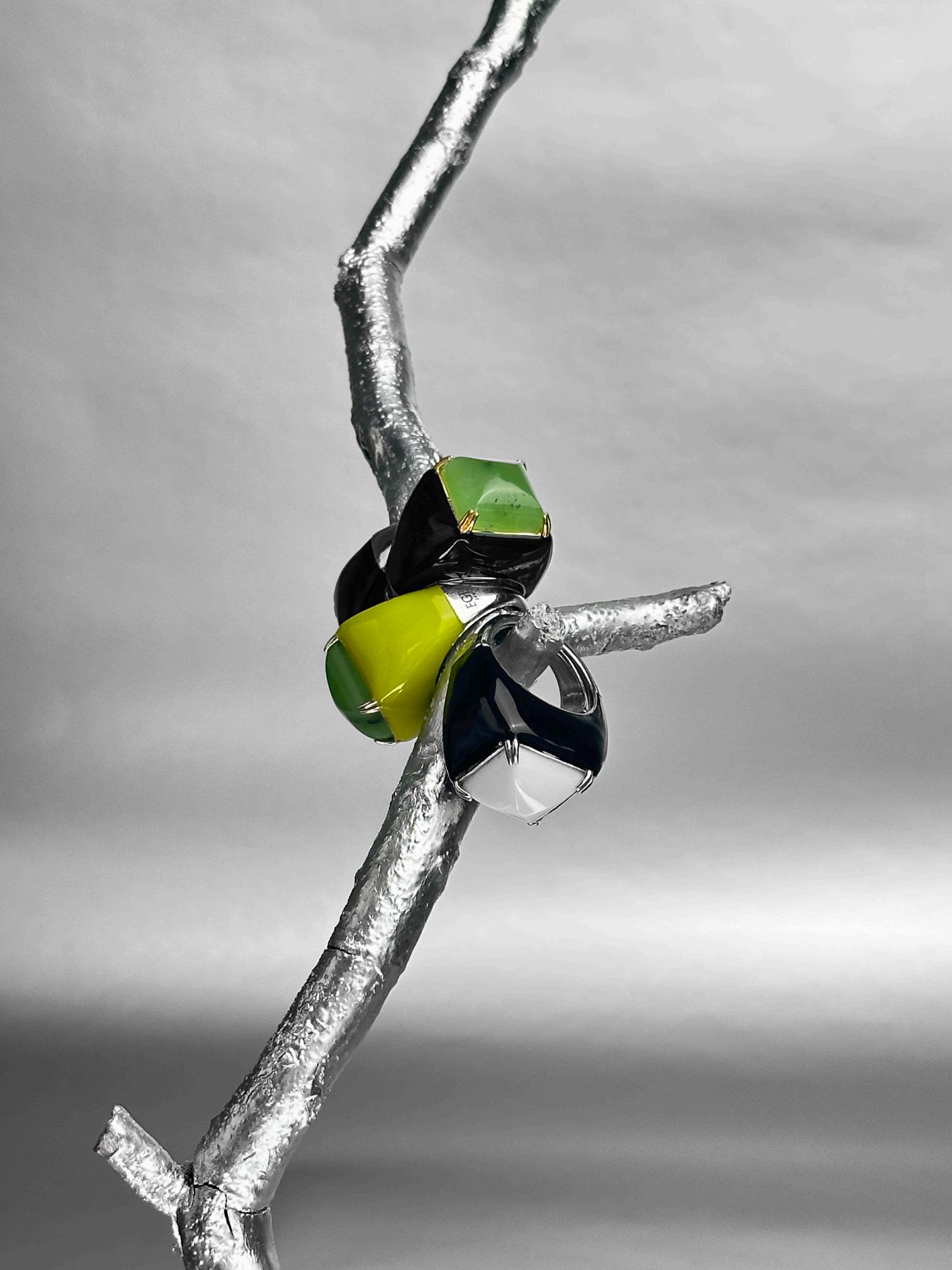
Based between Italy’s north-east and the Adriatic coast, EGEA Jewels designs jewelry as sculptural objects. Drawing from Greek islands, Venetian light and
Mediterranean symbolism, the brand works with carefully selected stones and traditional metal techniques to create pieces intended to endure beyond fashion.
MICHELE
OF TORNABUONI ART ON ITALIAN MASTERS, PROVENANCE, AND GLOBAL COLLECTING
Author–ChristineCutler
A conversation with the head of Tornabuoni Art Paris on museumlevel Italian works, provenance, and how global collecting is evolving after Art Basel Miami Beach.
Italian art has always been the visual fiber of Western Civilization, a bridge between the classic and the modern worlds From the flat Byzantine icons of the Middle Ages to the breathtaking human realism of the Renaissance; from dramatic chiaroscuro to the elegant neoclassic realism, Italian art has been the foundation for nearly every major movement in Western art history Italian artists have shaped international visual language in ways that continue to influence museums, scholarship, and private collections worldwide
That legacy is the heart of Tornabuoni Art, a family-run gallery founded in Florence in 1981 and now active across Italy and Europe. Following Art Basel Miami Beach, where Tornabuoni Art presented a curated booth highlighting both Italian and Latin American masters, Michele Casamonti shared his perspective on collecting, provenance, and the shifting geography of the global art world
As head of the gallery’s Paris space and part of the second generation of the Casamonti family, Michele reveals a vision grounded less in market cycles than in art history itself.
WITH SPACES IN ITALY, FRANCE, AND SWITZERLAND, HOW DO YOU SEE COLLECTORS ACROSS THESE REGIONS ENGAGING WITH HISTORICALLY SIGNIFICANT ITALIAN WORKS AND WHAT DRIVES THEIR INTEREST TODAY AT AN INVESTMENT LEVEL?
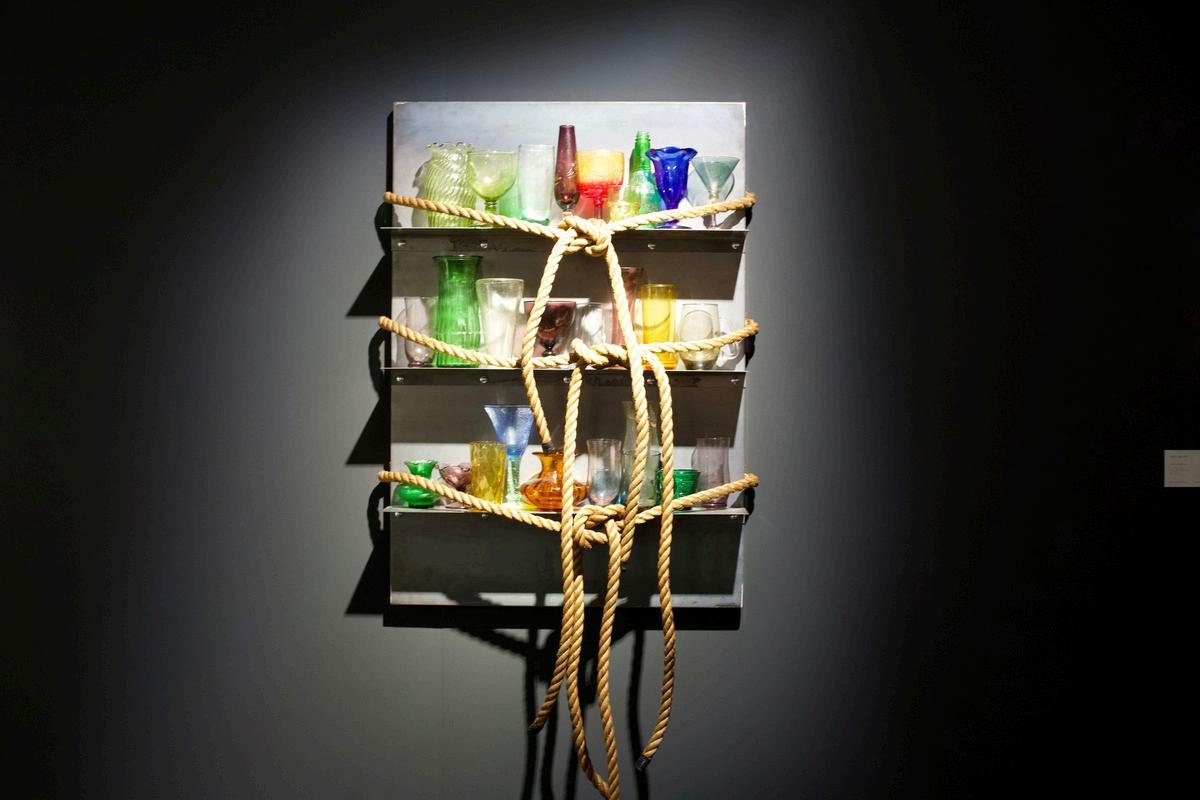
MICHELE: Italian art particularly in the early part of the twentieth century with Futurism and Metaphysical painting, and in the immediate postwar period with Spatialism and Arte Povera played a leading role on the global cultural stage These two moments have become essential international points of reference and, alongside certain individual figures of Italian modern and contemporary art, have been collected not only by a national public but also by major European and international museums, as well as countless private collections around the world Naturally, although many Italian artists are collected throughout Europe, only a smaller group enjoys truly global recognition and stands as an absolute benchmark The primary interest, of course, lies in Modigliani, de Chirico, and Morandi during the first half of the century, without neglecting the strong appeal of Marino Marini’s sculptures and other internationally renowned figures In the postwar period, above all, Lucio Fontana, Alberto Burri, and the principal exponents of Arte Povera, such as Boetti and Kounellis, as well as artists like Castellani, have secured a presence in American, Asian, European, and even Middle Eastern collections Interest, therefore, is directed toward those figures who have shaped the international cultural landscape and who hold the highest value, not in terms of the art market, but in the history of art.
HOW DOES THIS CURATORIAL DEPTH SHAPE THE GUIDANCE YOU OFFER TO COLLECTORS LOOKING FOR WORKS WITH STRONG PROVENANCE, LONG-TERM VALUE, AND SCHOLARLY IMPORTANCE—PARTICULARLY IN A MARKET THAT IS BECOMING INCREASINGLY GLOBAL AND DIGITALLY INFORMED?
MICHELE: There is a constant connection between what we collect and offer to our collectors, and the research we carry out through our exhibitions. To do our work professionally means ensuring that every exhibition becomes an opportunity to learn and deepen our knowledge This is automatically reflected in the type of works we select and present. The provenance of a work is not just a line on a label: it means enhancing and giving value to its history And while this may not be particularly important in the primary market, it becomes essential in the history of the secondary market Recently, I happened to purchase an extraordinary work by Alberto Savinio that had belonged to Rosenberg and was sold at Drouot in 1941 The story of how Rosenberg left France in those years, and how the work later passed through private collections, represents added value that goes far beyond mere aesthetic appreciation The same is true for works that have been in museums, exhibited in collections, featured in major public exhibitions, or included in publications And I must say that this approach also pushes us to be generous lenders, ensuring that works precisely in order to enrich their history can always remain accessible to the public Thus, whenever public institutions request our works and circumstances allow, we lend them. This is why we have become among the most prominent lenders of Italian art to international exhibitions
ART FAIRS HAVE EVOLVED DRAMATICALLY IN RECENT YEARS, SHAPED BY DIGITAL PLATFORMS, SHIFTING
GLOBAL TASTES, AND NEW COLLECTOR DEMOGRAPHICS.
FROM YOUR PERSPECTIVE, WHAT ARE THE MOST IMPORTANT DIFFERENCES BETWEEN U.S. AND EUROPEAN COLLECTORS TODAY, AND HOW DO THESE SHIFTS INFLUENCE THE WAY TORNABUONI PRESENTS ITALIAN ART ACROSS INTERNATIONAL FAIRS AND EXHIBITIONS?
MICHELE: Art fairs are a crucial component of a gallery’s activity We are among the galleries that participate in the largest number of them, across nearly every continent: throughout the United States, naturally in Europe, particularly in France and Italy, and increasingly in Asia.
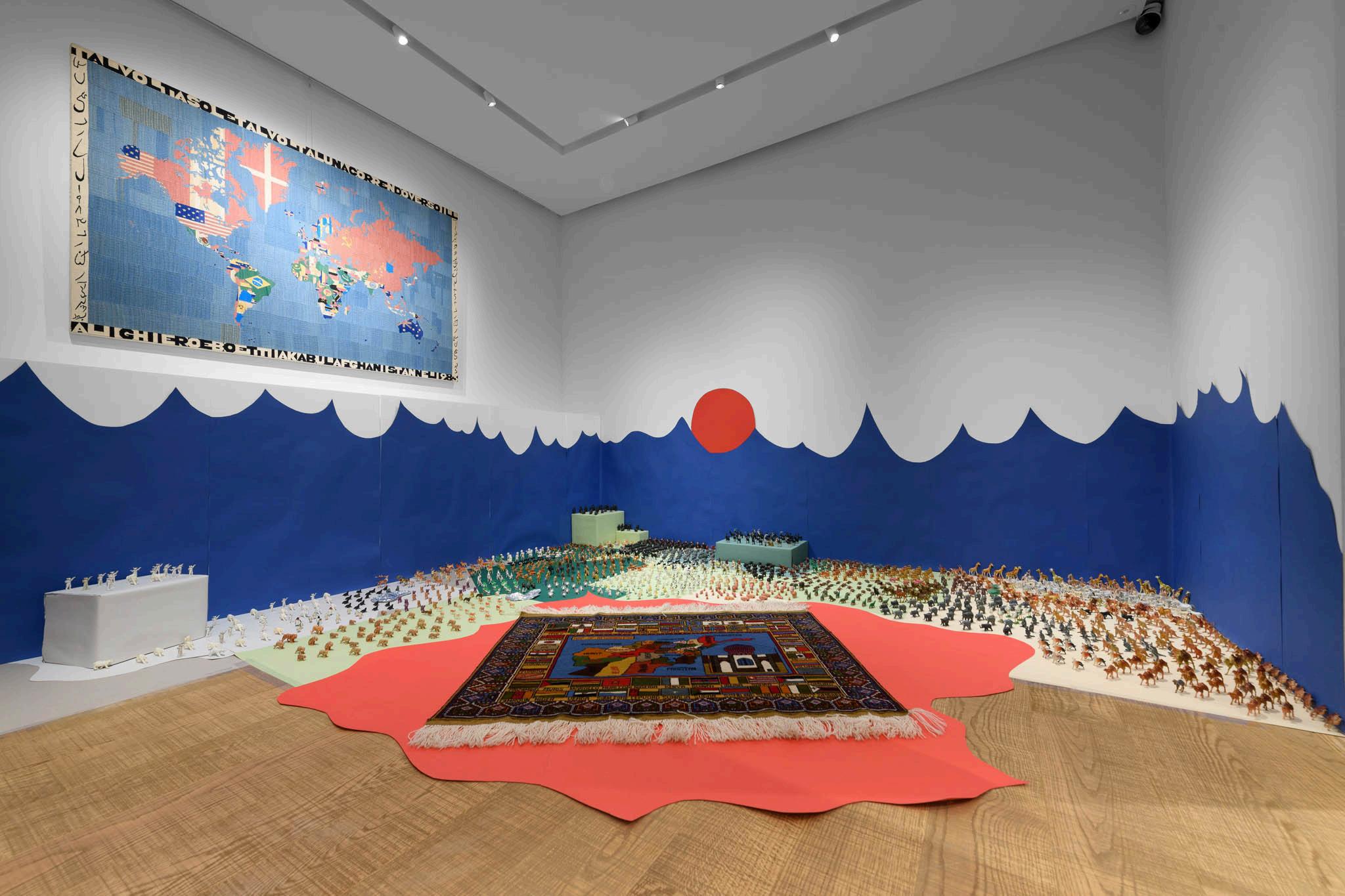
Yet art fairs are undergoing a transformation Some now lend themselves to more ambitious, almost curatorial projects, and each year we dedicate at least two fairs to presentations prepared well in advance and developed with great conceptual rigor We have done so on several occasions in Basel, where we presented Scheggi’s Biennale room, paid homage to Lucio Fontana’s Fine di Dio, and showcased a special survey of Burri’s plastic combustions We have pursued similar approaches with Boetti’s Mappe, a focused presentation of Isgrò’s œuvre, and of Parmiggiani’s major museum works. While it is not feasible to mount such projects at every fair, we aim to present one significant and distinctive project at each event on a rotating basis.
In certain instances, fairs also offer an opportunity to expand the gallery’s cultural mission by developing dedicated exhibitions accompanied by fully fledged catalogues Although fairs last only a week, the preparation and resources required can be substantial At other times, therefore, we choose to present a more concentrated display built around a single, emblematic work.
Fairs continue to evolve, but the most striking shift concerns how they are now perceived The pandemic prompted a moment of reflection on their usefulness and purpose. While fairs have regained their central role much as they held in the 2010s what we observe in the post-COVID landscape is a marked decline in globalization Asian collectors are no longer encountered in Miami or Paris, nor do American collectors regularly attend fairs in Europe or Asia There is a growing tendency toward local engagement. Only a select few fairs maintain a truly international appeal, and this suggests a rapidly changing ecosystem whose future contours are still taking shape
framework. It is something built over time, maintained through care, and strengthened through shared knowledge.
As markets evolve and geographies shift, this model positions Italian art not simply as an asset, but as a living continuum—the bridge that connects past, present, and future through enduring value rather than short-term momentum.
OF PININFARINA ON ARCHITECTURE, DESIGN, AND MODERN LUXURY
Author–SandraDiaz-Velasco
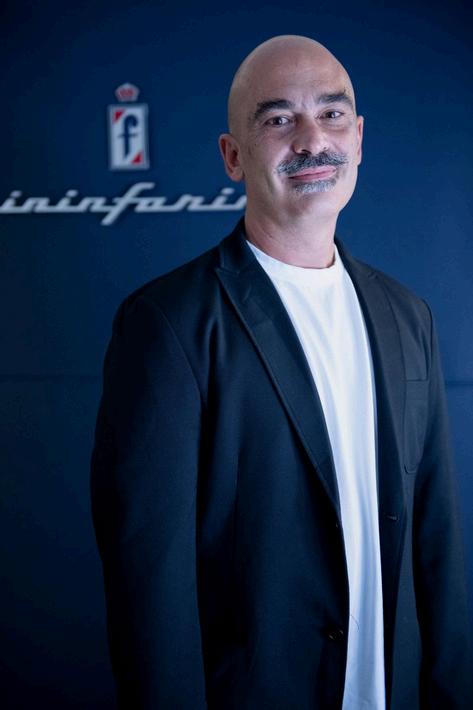
A conversation with the Chief Architect Officer of Pininfarina of America, following the brand’s 95th anniversary celebration in Miami, on Italian design heritage, conscious luxury, and shaping global architecture.
In the world of Italian excellence, few names translate legacy into contemporary relevance as seamlessly as Pininfarina. From the intimacy of the cockpit to the scale of the skyline, the studio’s work has always shared one conviction: design is not only about form it is about how it feels to live inside it
For this Live in Italy Magazine luxury feature, architect and contributor Sandra Diaz-Velasco spoke with Samuele Sordi of Pininfarina about how the brand’s multidisciplinary DNA automotive, product, and architecture shapes spaces for a global audience whose expectations continue to evolve. Today, luxury is increasingly defined by calm, longevity, craftsmanship, and conscious performance.
In the conversation that follows, Sordi shares how Pininfarina is interpreting this shift, creating architecture where precision and emotion coexist.
This dialogue also unfolds in the context of Pininfarina’s 95th anniversary, recently celebrated in Miami, a moment that underscored the brand’s evolution from automotive icon to a global design ecosystem spanning architecture, product design, and mobility.
HOW DOES THIS MULTIDISCIPLINARY HERITAGE SHAPE YOUR PHILOSOPHY WHEN CREATING CONTEMPORARY SPACES FOR A GLOBAL LUXURY AUDIENCE?
SAMUELE: Pininfarina’s multidisciplinary legacy is the foundation of how we approach contemporary space-making Coming from a heritage that spans automotive, product, and architecture, we have developed a design philosophy rooted in a distinctly Italian sense of refined proportion and sensorial elegance
These values transcend scale whether we are shaping the ergonomics of a steering wheel, the gesture of a façade, or the flow of an interior
Our automotive roots, in particular, teach us to design around the human experience with extreme precision
Cars require an intimate understanding of proportion, movement, aerodynamics, and sensorial quality; when translated into architecture, this becomes a commitment to fluid spaces, intuitive functionality, and a deep focus on comfort and well-being
Product design adds another layer: the belief that every detail counts It trains us to approach buildings with the same sensitivity we would apply to an object held in the hand.
Materiality, touch, craftsmanship, and interface become crucial in creating environments that feel both personal and elevated.
Finally, our Italian heritage infuses all of this with a cultural lens defined by beauty, balance, and emotional resonance For a global luxury audience, this translates into spaces that are not only sophisticated and technologically advanced, but also warm, humanized, and unmistakably Pininfarina
In essence, our cross-disciplinary DNA allows us to design architecture that operates at multiple levels functional, experiential, and symbolic creating spaces that stand out in the global landscape while remaining deeply connected to our roots
AS CLIENTS INCREASINGLY PRIORITIZE WELLBEING, LONGEVITY, AND ENVIRONMENTAL RESPONSIBILITY, HOW IS PININFARINA INTERPRETING “CONSCIOUS LUXURY” WITHIN ITS CURRENT ARCHITECTURAL WORK?
SAMUELE: At Pininfarina, we define conscious luxury as the convergence of wellbeing, environmental intelligence, and timeless design quality a shift from opulence to experiences that elevate life in meaningful, lasting ways Architecture must not only be visually compelling; it must also humanize our built environment by nurturing people, respecting nature, and creating emotional connections
Biophilic and sustainable principles play a central role in this evolution We design buildings as ecosystems, where natural light, ventilation, materiality, and landscape are integrated from the earliest concept stages In Light Towers, for example, the dual-volume composition is shaped to maximize daylight penetration and frame views of nature, enhancing both energy performance and emotional wellbeing The building becomes a living interface between urban life and the natural environment
Our Italian heritage naturally places emphasis on human comfort, proportion, and emotional resonance, and today we expand that lens to include physiological and psychological wellbeing: access to greenery, multisensory experiences, and architecture that promotes calm rather than overstimulation In Aldea Uh May, this becomes a guiding principle the design is immersed in the lush Mexican jungle, using organic geometries and natural materials to create meditative, sensorial pathways where architecture almost dissolves into the landscape. It is a direct expression of luxury as connection to nature
On the sustainability front, conscious luxury also means integrating performance-driven solutions inspired by our automotive expertise, such as
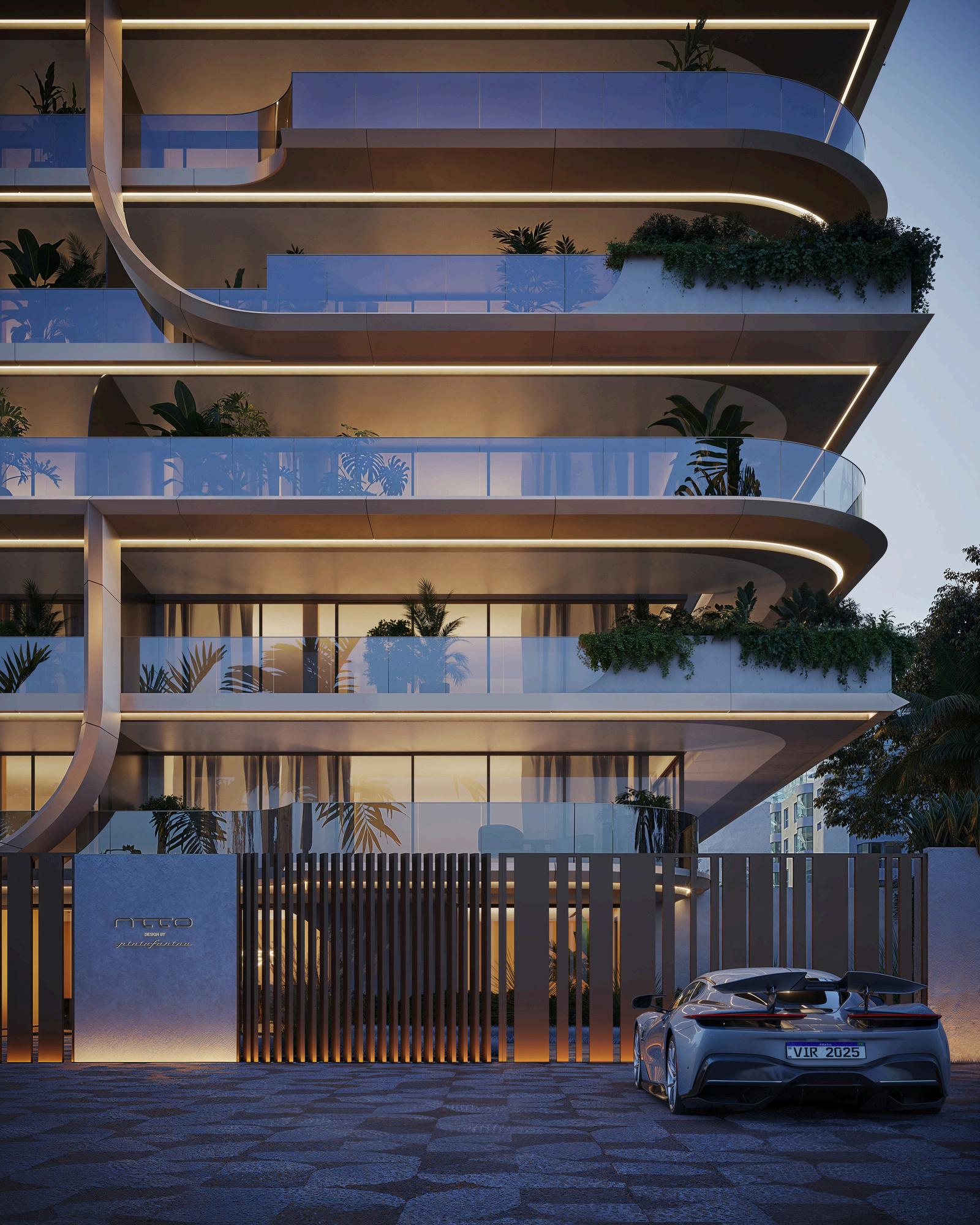
prefabrication, modularity, and material optimization Atto, in Rio de Janeiro, is a clear example of this mindset: its façade was engineered with a combination of shading strategies, structural efficiency, and slender proportions that reduce heat gain while delivering a distinctive sculptural identity. The result is a building that is both elegant and highly responsive to its climate
Across these projects, our definition of luxury expands from the visual to the experiential Conscious luxury means designing spaces that feel good, function well, and evoke emotion spaces that allow people to reconnect with themselves, with others, and with nature
This is, ultimately, a human-centered approach: architecture as a catalyst for healthier, calmer, and more meaningful lives
HOW DO YOU SEE ITALIAN DESIGN RESONATING WITH THESE NEW EXPECTATIONS, AND HOW IS PININFARINA ADAPTING ITS APPROACH?
SAMUELE: Italian design has always carried a unique emotional and cultural weight an instinctive balance of craftsmanship, proportion, material sensitivity, and human warmth
Today, as international buyers increasingly seek authenticity and meaning over extravagance, this design language resonates more strongly than ever What people are looking for is not just a luxurious home, but a place that tells a story, reflects heritage, and elevates everyday life with quiet sophistication.
At its core, Italian design is rooted in craft, culture, and care It embraces beauty not as decoration, but as a way of living This aligns perfectly with the global shift toward more intentional, experience-driven luxury where materials matter, natural light matters, cultural context matters, and the way a space makes you feel becomes the true metric of value
Pininfarina’s approach adapts these principles to an increasingly diverse and global audience We draw from Italy’s tradition of artisanal excellence, but we reinterpret it through a lens of innovation, technology, and local relevance.
Projects like Andare in Fort Lauderdale demonstrate how an Italian sensibility can bring refined proportion and fluidity to a vibrant coastal lifestyle, while Cyrela Heritage in São Paulo reveals how craftsmanship, material depth, and hospitality-driven intimacy can redefine vertical living in a dense urban context Even at a monumental scale such as the Iconic Tower in Dubai we translate Italian design values into expressive forms, human-centered luxury, and a sculptural identity that remains elegant rather than excessive
Across these geographies, our goal is consistent: to craft architecture that carries the timeless DNA of Italian design while being fully rooted in the culture, climate, and aspirations of the places we build in In a world where luxury is shifting from possession to experience, from ostentation to authenticity, Italian design offers a model that is both timeless and deeply relevant
LUXURY THAT EVOLVES
Pininfarina’s architecture makes a compelling case for where luxury is headed: away from spectacle, toward experience.
As Samuele Sordi explains, automotive heritage brings a discipline of human-centered precision—movement, ergonomics, comfort—while product design sharpens the attention to detail, tactility, and craft. When applied to architecture, this becomes something rare: spaces that are simultaneously sculptural and intimate, technologically advanced yet deeply human.
Most importantly, the conversation reframes “conscious luxury” as a new standard—not an add-on. Sustainability, biophilia, and material intelligence are treated as intrinsic to beauty and wellbeing, shaping environments that feel restorative and enduring.
In a world redefining luxury from possession to presence, Pininfarina’s work suggests a simple truth: the most elevated spaces are not the ones that announce themselves—they are the ones that quietly transform life from the inside out.
OF SALONE DEL MOBILE.MILANO ON DESIGN, CULTURE, AND THE FUTURE OF LUXURY
Author–LisaMorales
A conversation with the President of Salone del Mobile.Milano on conscious luxury, Italian design heritage, and why cities like Miami are shaping the next chapter of global design.
Maria Porro of Salone del MobileMilano represents a new generation of Italian design leadership, where cultural intelligence, sustainability, and long-term vision guide global strategy As President of the world’s most influential design fair, Porro operates at the intersection of industry, creativity, and cultural diplomacy, shaping how Italian design engages with international markets.
This interview follows Salone del MobileMilano’s debut at Art Basel Miami Beach, marked by an intimate press breakfast and the unveiling of the Salone-designed Collectors Lounge.
While the conversation itself was conducted separately, it builds on the themes Porro outlined in Miami, where Italian design took center stage within one of the world’s most influential cultural ecosystems
The moment underscored Miami’s growing importance as a hub for architecture, hospitality, and intentional luxury rooted in global exchange
HOW IS SALONE DEL MOBILE.MILANO INTERPRETING THIS EVOLUTION, AND WHAT DOES “CONSCIOUS LUXURY” MEAN TO YOU AS BOTH A LEADER AND A DESIGNER?
MARIA: Luxury today is moving away from the grammar of display and toward a vocabulary of meaning At Salone del Mobile.Milano, we read this shift as a call to reaffirm what design can do at its best: translate culture into form, transform craftsmanship into innovation, and give time a tangible value
Salone is not simply a marketplace, it is a global platform that generates opportunities and builds connections across industries, disciplines, and generations, so that ideas and quality can circulate with substance, not with volume
For me, “conscious luxury” is not an aesthetic category, and it is certainly not a shortcut to minimalism It is a way of designing and producing: thinking in terms of durability, repairability, traceability, and respect for materials, for know-how, and for the people behind every process. It also means moving beyond narratives and being accountable, with measurable commitments.
This is why we have integrated sustainability into the way we run Salone, through practical tools such as green guidelines for exhibitors, impact monitoring, and internationally recognized frameworks, including ISO 20121 certification and alignment with the UN Global Compact.
And as a design entrepreneur, I think conscious luxury is when an object keeps giving over time: emotionally, functionally, culturally. In a market where experiences are increasingly driving value, design has to earn its place by being both useful and meaningful, not merely “ new ”
HOW DOES THIS DUAL PERSPECTIVE HERITAGE AND INNOVATION SHAPE YOUR VIEW OF WHAT ITALIAN DESIGN SHOULD STAND FOR IN THE COMING DECADE?
MARIA: Living every day between a century of manufacturing tradition and the future-focused mission of the Salone teaches you one key thing: innovation only makes sense when it has roots
At Porro, I’ve learned that quality isn’t a label it’s a process made of hands, time, and disciplined choices That same approach shapes how I see the Salone: as a space where industry and culture meet, and where experimentation becomes a shared value.
Looking ahead to the next decade, I believe Italian design should stand for three things First, project culture: the ability to connect architecture, interiors, product, and craft into a coherent language. Second, longevity: creating objects that are made to last both physically and intellectually. Third, responsible excellence: beauty and sustainability have to go hand in hand, from materials to the supply chain
With Salone Raritas, we are developing new formats that connect authorial design and high-end craftsmanship directly with real-world briefs and professional needs, opening a more fluid dialogue with architects, interior designers, developers, and hospitality and contract clients, rather than keeping collectible pieces and project design in two separate ecosystems
MIAMI IS BECOMING A GLOBAL HUB FOR HIGH-END ARCHITECTURE, HOSPITALITY, AND DESIGN.
WHAT MAKES ITALIAN DESIGN RESONATE SO STRONGLY IN CITIES LIKE MIAMI, AND WHAT DOES THIS SAY ABOUT THE INTERNATIONAL MOVEMENT TOWARD MORE INTENTIONAL EXPRESSIONS OF LUXURY?
MARIA: Miami is a fascinating laboratory because it sits at the crossroads of highend real estate, hospitality, contemporary art, and a truly international community
Italian design resonates in cities like Miami because it offers a rare balance: it is sophisticated but not cold, expressive but not superficial It brings a human scale and a sense of material intelligence that fits perfectly with the way Miami is building spaces today.
Our partnership with Art Basel Miami Beach is exactly about meeting that cultural and professional energy in the right place. By bringing Italian design into the Collectors Lounge, inside one of the most influential ecosystems of global collecting and cultural investment, we are aligning design with a broader cultural conversation
What this tells us about intentional luxury is simple: people are investing less in the loudness of objects and more in the intelligence of environments Luxury becomes spatial, lived, and curated, closer to a cultural choice than a status signal
AS YOU LOOK AHEAD, WHAT IDEAS OR SHIFTS WILL DEFINE THE NEXT CHAPTER OF GLOBAL DESIGN?
MARIA: If I had to name the shifts that will define the next chapter, I’d start with longevity as the new frontier. Not sustainability as compliance, but durability as desire Objects conceived to last, to be repaired, to age well, and to carry meaning
Second, craftsmanship evolving rather than retreating. Craft and digital tools will not cancel each other out, they will layer We will see more hybrid processes, where advanced design, AIenabled research, and artisanal finishing coexist, as long as integrity remains the guiding principle
Third, new ecosystems and formats With Salone Raritas launching in 2026, we are responding to a real transformation Limited editions, one-of-a-kind works, and high-end craftsmanship are increasingly relevant for architects, developers, interior designers, and hospitality decision-makers, not only for private collectors.
Finally, geographies are shifting. New hubs are consolidating through culture, mega-projects, and investment in the built environment Our role is to enter these contexts not as a one-off presence, but as a business-first and culture-driven platform designed to build long-term value and lasting collaborations
BEYONDTHEFAIR: BUILDINGA DESIGN ECOSYSTEM
MIAMIartweek
MADE IN ITALY AT MIAMI ART WEEK: ART, DESIGN, AND CULTURAL PRESENCE ACROSS ART BASEL
Author–LisaMorales
Miami Art Week continues to be one of the most influential global platforms for contemporary art, design, and cultural exchange. Within that landscape, the Made in Italy presence stood out not through spectacle alone, but through depth, continuity, and a strong dialogue between art, design, and heritage.
From the main halls of Art Basel Miami Beach to satellite fairs such as Design Miami and Untitled Art, Italian galleries, institutions, and designers reinforced Italy’s role as a cultural anchor during Miami Art Week, balancing historical legacy with contemporary experimentation.
Held at the Miami Beach Convention Center, Art Basel Miami Beach once again confirmed its position as the premier market and discovery platform for modern and contemporary art in the Western Hemisphere. The 2025 edition brought together 283 galleries from 43 countries, welcomed more than 80,000 visitors, and attracted representatives from over 240 museums and foundations worldwide. Italian galleries played a significant role in this international dialogue. Exhibitors such as Cardi, Tornabuoni Art, and Mazzoleni presented museum-caliber works that traced Italy’s enduring influence on postwar and contemporary art From Arte Povera to conceptual and material-based practices, these presentations reinforced Italy’s long-standing commitment to artistic rigor rather than trend-driven programming
Cardi Gallery presented a focused selection rooted in postwar Italian abstraction and material experimentation Long recognized for its authoritative stewardship of artists such as Alberto Burri and Lucio Fontana, Cardi’s booth positioned Italian modernism as a living reference point within contemporary discourse, emphasizing materiality and spatial inquiry over spectacle
At Tornabuoni Art, the presentation centered on historically significant works tied to Arte Povera and postwar European movements The booth attracted collectors and curators seeking depth and continuity, reinforcing Tornabuoni’s role as a bridge between scholarly context and the international market.
Mazzoleni continued its transgenerational dialogue between Turin and London. By juxtaposing postwar Italian figures with contemporary voices, the gallery underscored Italy’s ongoing relevance as a framework that continues to inform current artistic inquiry rather than a closed historical chapter
A note beyond the Italian galleries: Italian artist Maurizio Cattelan was among the most discussed presences at the fair through Gagosian Following the global attention surrounding Comedian in 2019, his recent work executed in Carrara marble introduced a quieter, materially grounded register that subtly referenced Italy’s sculptural tradition while engaging contemporary themes without overt narrative
Within the fair’s ecosystem, curated spaces such as the Collectors Lounge played an important role beyond exhibition viewing Designed by Salone del MobileMilano, the lounge functioned as an exclusive setting for informal conversations, small meetings, and press interviews, while also offering Champagne, light fare, and moments of quiet within the scale of the Miami Beach Convention Center.
As an environment intentionally removed from the pace of the main halls, the Collectors Lounge offered a natural setting for dialogue That atmosphere connects seamlessly to our recent conversation with Maria Porro, whose presence in Miami highlighted the growing intersection between Italian design leadership and the global art market
Just steps away from Art Basel, Design Miami celebrated its 20th anniversary with the theme Make Believe, reaffirming its role as the leading fair for collectible design Italian craftsmanship was prominently represented, particularly through immersive environments that highlighted material innovation and architectural sensitivity
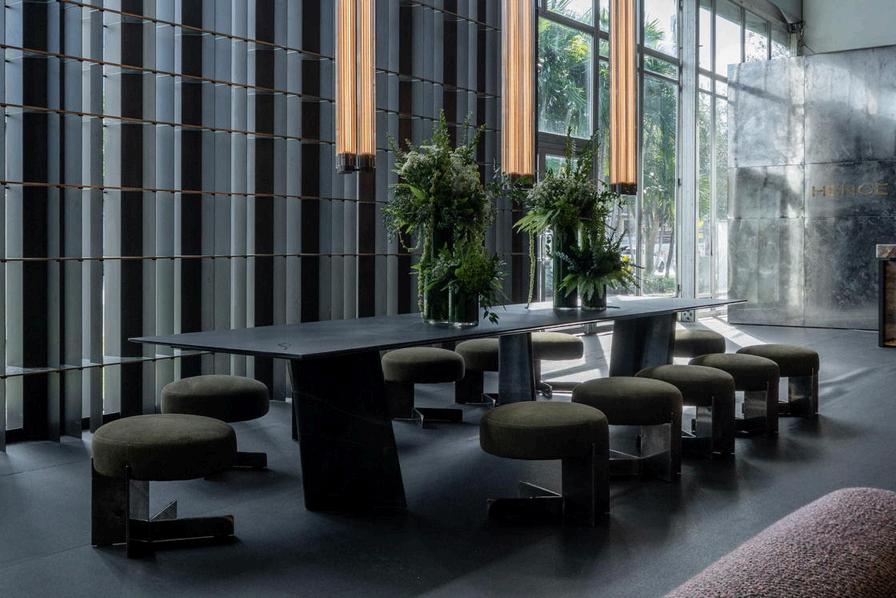
The Henge Collectors Lounge, designed by Ugo Cacciatori, exemplified this approach
Blending sculptural furniture, refined materials, and architectural restraint, the space reflected a distinctly Italian philosophy where design is experienced through tactility, proportion, and atmosphere Rather than serving as a conventional lounge, it became a sensory extension of Italy’s design language within the Miami context
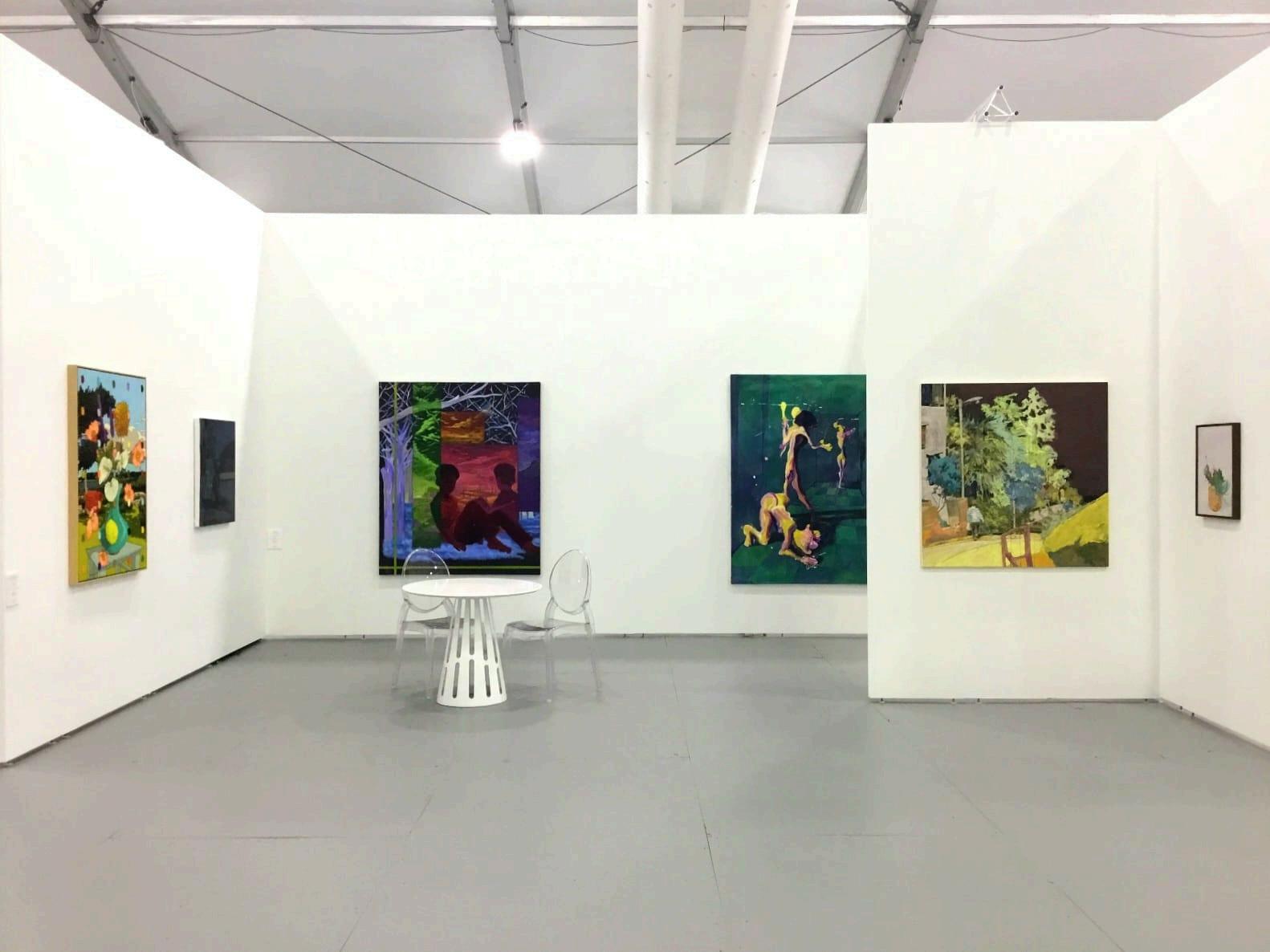
At Untitled Art, the Italian presence extended beyond the fair floor itself. While Luce Gallery did not present Italian artists at its Miami booth this year, the fair provided an important introduction to emerging Italian voices shaping the next chapter of contemporary painting
Among them is Francesco Pirazzi, a young Italian artist whose work has drawn increasing attention for its quiet tension and symbolic architecture His painting Santa (2025), featured here, offers a dreamlike yet grounded vision that resonates with Italy’s long tradition of metaphysical and architectural painting, while remaining distinctly contemporary.
This mention serves as a natural segue into future coverage within Live in Italy Magazine’s Visual Arts section, where emerging Italian artists will continue to be explored beyond the framework of fair-week visibility
COURTESYPHOTO:HENGE
ALIVING CULTURAL ECOSYSTEM
What emerged most clearly during Miami Art Week was not a single Italian moment, but a network of connections Italian art, design, and architecture appeared across multiple platforms, reinforcing one another rather than competing for attention.
This ecosystem approach mirrors Italy’s cultural reality, where art history, design excellence, and contemporary practice exist in continuous dialogue.
As Live in Luxury continues to explore architecture, design, real estate, and cultural leadership, art remains a central thread Italy’s artistic heritage is not static; it evolves through fairs, institutions, and emerging voices that carry its values forward.
Miami Art Week offered a clear reminder of that continuity, positioning Made in Italy not as a trend, but as a sustained presence within the global cultural landscape.