Poets on Poetry
There is no ‘Mother’ in Nature. It is an efficient system that takes no prisoners, and leaves nothing to waste. The survival of the fittest, eating of the young, infirm, and the merciless lashing of the planet by storms, volcanoes, floods and more. Its errant children, supported by the law of survival of the fittest, continue to devastate and murder one another with a ruthlessness second only to Divine retribution.
Amidst this menagerie of organised chaos lies the mote in one’s eye. That irritating speck, which refuses to leave the surface of the eye. It clutches tightly hoping to keep the eyelid shut so that senseless hate and violence do not intrude upon the very soul of the onlooker. Alas, a splash of water later, seeing once again becomes crystal clear, where living is hell, and a death that dispels a sense of belonging. But this doesn’t last. The mote always returns, perhaps to remind one that the only path towards life is to close one’s eyes and see with our hearts.
As we trudge across the plains of our miserable lives we carry a heavy burden. The burden of love, of forgiveness, of charity, of faith, of non-violence. We are Sisyphus personified, desperately seeking an end to the cycle of great effort ending in boundless failure.
Many among us have intentionally dropped these burdens and embraced the cruelty and unforgiving nature of Nature. We excel in this deception of our true selves. And it is here that the Sherpas, standing by the wayside, come forward to lift these discarded burdens to carry them forward for all humanity. We call these Sherpas, poets.
How does one become a poet? And can one learn to be a poet?
We can find suitable explanations in the mundane and the absurd. The lexicon deliberately leads one into a labyrinth and into the mouth of a thesaurus where one is lost in the calisthenics of self-serving egoism. The perpendicular pronoun, I, becomes omnipotent. But despite these hurdles, many poets do emerge from this labyrinth, to rise above the baying crowds to present, by word, mirrors for our souls.
Mark Ulyseas has served time in advertising as copywriter and creative director selling people things they didn’t need, a ghost writer for some years, columnist of a newspaper, a freelance journalist and photo-grapher. In 2009 he created Live Encounters Magazine, in Bali, Indonesia. It is a not for profit (adfree) free online magazine featuring leading academics, writers, poets, activists of all hues etc. from around the world. March 2016 saw the launch of its sister publication Live Encounters Poetry, which was relaunched as Live Encounters Poetry & Writing in March 2017. In February 2019 the third publication was launched, LE Children Poetry & Writing (now renamed Live Encounters Young Poets & Writers). In August 2020 the fourth publication, Live Encounters Books, was launched. He has edited, designed and produced well over 300 editions of Live Encounters. Mark’s philosophy is that knowledge must be free and shared freely to empower all towards enlightenment. He is the author of three books: RAINY – My friend & Philosopher, Seductive Avatars of Maya – Anthology of Dystopian Lives and In Gethsemane: Transcripts of a Journey. https://www.amazon.com/s?k=mark+ulyseas+author https://liveencounters.net/mark-ulyseas-publisher-editor-of-live-encounters-magazines/
In an interview in Live Encounters, June 2012, the late Irish Poet, Writer, Editor and member of Aosdána, Philip Casey said, “There are people who think writers are elitist loafers and leeches and never do a day’s work, and while the Catholic Church was at its most powerful and obscurantist in the 1940s and 1950s, books were banned and writers were hounded from their jobs, a notable case being the novelist and short-story writer John McGahern. Most writers of note had to leave the country. Today is a different matter, and I think there is a general respect for writing as a profession. I know that writing friends from abroad have commented on the fact that if you declare yourself to be a writer in Ireland, nobody thinks it’s strange!
The peculiar thing about poetry is that a lifetime’s experience can be distilled into a few lines, though I think any poet is lucky if he or she leaves behind one durable poem. To leave more than half a dozen durable poems is to be a great poet.
As for ebooks, I see some writers publishing direct to Kindle, but as yet not many. I don’t own a Kindle and probably won’t, as I believe in open formats and I distrust the Kindle’s proprietary format. I do however sometimes read ebooks, mostly free classics, on my old smart phone and I think as the technology evolves and open formats become better appreciated then writers will be more comfortable with e-publishing.”
This is the seventeenth year of Live Encounters Poetry & Writing. During this period, some contributing poets have moved on to another plain. The plaintive voices of loved ones left behind continue to be heard on social media, which is flooded with the beauty of cruelty and the anguish of love.
I had invited some of the outstanding poets, who have been contributing their work for many years to Live Encounters Poetry & Writing , to share their views on questions related to poets and poetry. Here are their answers. Perhaps this mini-sized brains trust can enlighten aspiring poets in their daily encounters with the lyrical WORLD.
Angela Patten
Angela Patten’s publications include five poetry collections, most recently Feeding the Wild Rabbit (Kelsay Books 2024) and a prose memoir, High Tea at a Low Table: Stories From An Irish Childhood (Wind Ridge Books 2013). Winner of the Anthony Cronin International Short Poem Award and the Cultural Center of Cape Cod National Poetry Prize, Patten has received artist grants from the University of Vermont Retired Scholars Award Program, the Vermont Arts Council and the Vermont Community Foundation. Her work has appeared widely in literary journals and in anthologies including The Field Day Anthology of Irish Writing and The White Page/An Bhileog Bhan: Twentieth-Century Irish Women Poets. Born and raised in Dublin, she maintains dual citizenship in Ireland and the United States. She lives in Burlington, Vermont, and is a Senior Lecturer Emerita in English at the University of Vermont.
Must contemporary poetry be relevant as the daily news?
“It is difficult to get the news from poems, yet men die miserably every day for lack of what is found there,” William Carlos Williams famously said. I have always found that remark misleading. Redemption is a lot to ask of poetry and the same claim might also be made for music or painting. Williams was no doubt referring to the need for an imaginative life and a shared sense of our human experience as opposed to the endless stream of information that passes for ‘news.’ At its best, poetry can nudge us out of our complacency and evoke our compassion. But I do not think that poetry will ever enjoy the mass appeal of the daily news although it might provide an escape from it. Apart from those who developed a love of poetry at an early age, it is an acquired taste like certain kinds of jazz.
When catastrophe occurs, people tend to look to poetry for meaning and solace. The rest of the time it is forgotten. But there are exceptions – like the New York Times reporter who wrote “Words of War: A Literary Lifeline for the Battlefield.” The subheading posed the question: “Does poetry have any place in a war zone? For one correspondent, it is indispensable.” And poetry is indispensable for some of us, providing us with insight and consolation in a world fraught with confusion and tragedy.
David Rigsbee
David Rigsbee is the recipient of many fellowships and awards, including two Fellowships in Literature from The National Endowment for the Arts, The National Endowment for the Humanities (for The American Academy in Rome), The Djerassi Foundation, The Jentel Foundation, and The Fine Arts Work Center in Provincetown, as well as a Pushcart Prize, an Award from the Academy of American Poets, and others. In addition to his twelve collections of poems, he has published critical books on the poetry of Joseph Brodsky and Carolyn Kizer and coedited Invited Guest: An Anthology of Twentieth Century Southern Poetry. His work has appeared in Agni, The American Poetry Review, The Georgia Review, The Iowa Review, The New Yorker, The Southern Review, and many others. Main Street Rag published his collection of found poems, MAGA Sonnets of Donald Trump in 2021. His translation of Dante’s Paradiso was published by Salmon Poetry in 2023, and Watchman in the Knife Factory: New & Selected Poems was published by Black Lawrence Press in 2024.
How does one become a poet?
I came to poetry and the formation of myself as a poet through the example of my two mentors: feminist poet Carolyn Kizer and Russian-American poet Joseph Brodsky. Kizer wrote poems as the single child of older, welleducated parents, but she didn’t learn to take herself seriously until she met Theodore Roethke, who gave her permission to conceive of herself as a poet. Her gift was apparent from childhood, but the permission and the recognition were handed down to her from another poet, himself channeling Kunitz, who channeled Yeats.
Joseph Brodsky, another only child whom I translated and knew well, was asked by a Soviet judge who had given him the right to call himself a poet. “No one,” he said. “Who enrolled me in the ranks of the human race?” Pressed further—had he studied for it, attended some school for poets?—he said he didn’t think it came from education. “I think it’s from God.” Poetry is not merely self-expression but an allegiance to language, whose demands exceed the claims of ideology. It makes the individual more singular, more resistant to being absorbed by the crowd. For Brodsky poetry was a summons, not just a credential. Nothing conferred it, and no court could revoke it.
In my own case, I could see that I have combined these in devotion to language itself. A poet, I would argue, is made twice: once by whatever compels the ear toward language early, and then by someone, a poet, willing to say, yes, you are a poet too.
Mark Tredinnick
Mark Tredinnick OAM is a much-awarded poet and essayist and the managing director of 5 Islands Press. He is the author of five collections of poetry, including, most recently, A Beginner’s Guide; Chain of Ponds: New &: Selected Poems appears in July 2026. Next year also sees the reissue of his classic guides to the craft:The Little Red Writing Book and The Little Green Grammar Book (New South). Mark lives with his wife Jodie in Bowral, on Gundungurra Lands, southwest of Sydney. He runs the poetry masterclass What the Light Tells online through his website https://www.marktredinnick.com/ and he teaches literature and creative writing at the University of Sydney. He is at work on The Divide, which tracks the Great Dividing Range in prose and poetry, the way Basho’s Narrow Road tracked the deep north/ outback/ deep interior of his times. 5 Islands Press has recently published a collection of poems from Gaza, Each Night I Count my Children, edited by Denise Howell. All revenue goes to support MSF in Gaza. Please support the book, which you can purchase at https://www.5islandspress.com/ continued overleaf...
Can one train to become a poet, or is it a divine talent?
I have heard it said of English, that it may be the easiest to pick up and muddle-through with, and the hardest to master.
The same is true, I think, of poetry. There would hardly be a person who hasn’t sometime committed some thought or feeling or observation to paper and wondered if it might be a poem. It probably isn’t, or isn’t much of a poem, measured against the finest poems in any given language, but it speaks to the almost universal aspiration, at least from time to time, to get something poetic written, and if that poem were shared, nearly everyone hearing it, whether they thought much of it or not, would recognise it as a poem.
Football, too, of any code, is relatively easy for most people to play. But few of the people who play it are going to be Lionel Messi, and if the woman who kicked a mean enough pass in her Monday evening comp were to step into the middle of a match at the World Cup, everyone would know that what she was doing out there did not closely resemble what we expect football to look like and feel at a high level.
I never met anyone who did not think they had a poem or two in them. But for any such person to begin to write poems likely to change anyone else’s life, to reenchant the world, to elevate a consideration of the meaning of human life, to help anyone fathom injustice and cultivate hope and wisdom, that person is going to need to acquire some skills. Most of the learning required to begin to make work worthy of a readership beyond oneself can happen, and probably happens best, by reading well and sustaining a writing habit. Most of the best learning in poetry has always happened through apprenticeship: the person who feels called to write poems finds, with someone’s help, or following their nose, poems worth imitating in form and technique.
Two aspirations motivate poets, or those who would write poems that last. One is self-expression: to express authentically what one feels and sees and knows and to speak in one’s one true voice. To express one’s self. In the sense that one’s work is done when the saying is well enough said to convince the sayer, less craft is required, less poetry. The second aspiration is to hope to express all our selves, some universal truths, to make work that, at least in potential, finds a reader and helps them know and live and survive their life. Part of this enterprise entails clarity, what I like to call “radical clarity”: not just to be original, though, but for one’s originality to make something like sense for someone else and almost to seem to be their own self, the reader’s subjectivity, that they encounter in the poem. This work is harder and more self-less. It aims to serve not just the self, but all selves. And it is in this work that craft helps. To speak other lives, to speak in a sense all living, involves a writer in entering the communal mind—the human, not just the personal. The language of the commons, inflected of course by the ideolect of the speaker, places a high price on plainness and inclusion and on devices of rhythm and speech music and care with words. For it is all selves one hopes to speak, all lives one hopes to do justice to. And if that justice is to be done, the poet is going to be doing more listening than talking. Meter and architecture and precision of fit between word and sense: these all help more of the community of possible readers hear and understand and feel seen by a poem, spoken by a poem.
Among the human cultural practices, I can think of none that are going to entail more scholarship, more training (most of it got by reading) than poetry—if it is part of a poet’s concern not just to express authentically, but to articulate ideas and truths bigger than themself, longer than one’s moment. To innovate, to speak strangely, is not especially hard. You just have to let yourself go, smash a few syntactical windows. To speak memorably (Auden’s definition of poetry), takes some time and practice. To write in a way that makes one’s poetry desirable to remember, and relatively easy to recall (because of the a poet’s care for readers’ sanity and understanding of the privilege the reeader is according you by reading your work)—to speak so that one’s poetry remains spoken for years, this is the work of years. And it involves humility, discipline, other-orientation, and heaps of reading and listening carefully to one’s work as if one were its reader, and it involves some learning of how it is at that poets in many times and cultures have solved the same sorts of puzzles one faces oneself. How to make sculptures of voice in which a reader feels not only heard and seen, but spoken.
Audrey Molloy
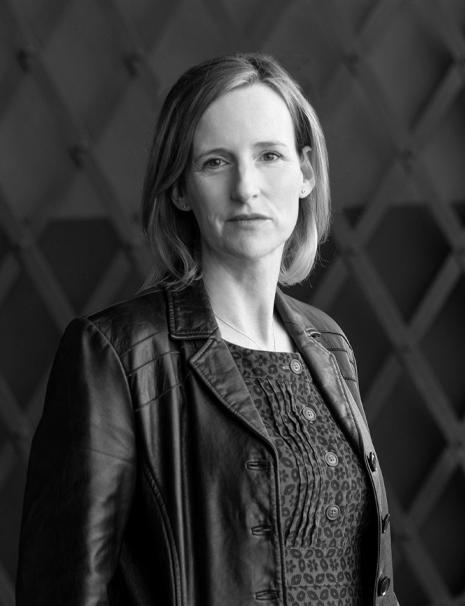
Audrey Molloy grew up in Ireland and has lived in Sydney since 1998. Her debut collection, The Important Things (The Gallery Press, 2021), won the Anne Elder Award and was shortlisted for the Seamus Heaney First Collection Poetry Prize. Her most recent collection, Fallen (The Gallery Press / Pitt Street Poetry 2025) was longlisted for the Forward Prize for Best Collection. She has an MA in Creative Writing from Manchester Metropolitan University and is the recipient of a Literature Bursary Award from The Arts Council of Ireland. She is founding editor of The Marrow International Poetry. https://www.themarrowpoetry.com/
Can one train to become a poet, or is it a divine talent?
A natural aptitude for language, a musical ear, an artist’s eye for detail – any of these talents can make the writing of poetry come more easily. But all the talent in the world is redundant if one does not do the ongoing work towards mastering this complex craft. The most musically talented child cannot simply pick up an oboe or French horn for the first (or hundredth) time and play in a way that will reward and move not only themselves but also their listener. This takes decades of hard work, regardless of talent. To have a chance at achieving such things, a poet must, like any other artist, undertake a long apprenticeship that requires resilience as well as close reading, understanding what poetry has been written before, listening to their own inner voice, and honing every element of their craft: metaphor, imagery, prosody – the music of language – form and the line. I’ve seen very talented emerging poets pack their notebooks and pencils away, disillusioned with their progress, because they believed talent alone was enough. It’s not.
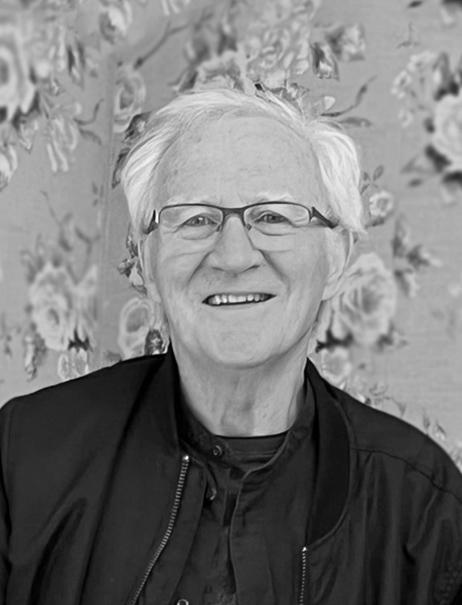
Terry McDonagh
Terry McDonagh, Irish poet and dramatist has worked in Europe, Asia and Australia. He’s taught creative writing at Hamburg University and was Drama Director at Hamburg International School. Published eleven poetry collections, letters, drama, prose and poetry for young people. In March 2022, he was poet in residence and Grand Marshal as part of the Saint Patrick’s Day celebrations in Brussels. His work has been translated into German and Indonesian. His poem, ‘UCG by Degrees’ is included in the Galway Poetry Trail on Galway University campus. In 2020, Two Notes for Home – a two-part radio documentary, compiled and presented by Werner Lewon, on The Life and Work of Terry McDonagh, The Modern Bard of Cill Aodáin. His latest poetry collection, ‘Two Notes for Home’ – published by Arlen House – September 2022. He returned to live in County Mayo in 2019.
email: terrymcdonagh,writer1@gmail.com
00353 (0)86 8861853
How does one become a poet?
Poetry is and always has been with us. To a greater or lesser degree, it is lodged in the bones, lore and legend in every community, person and society. The Irish poet, Michael Longley, said, if I knew where poetry came from, I’d go there. We need music and song to put shape on our lives, history and emotions – we need words to tell our tales. Poetry, a special arrangement of words, is part of what we are, but certain people, we call poets, seem to be handed the task of putting shape on words. Is this a gift – a calling?
The poet, Patrick Kavanagh said, poetry made me a sort of outcast and I became abnormally normal.
Can one become a poet, and if we think it is possible, how does one go about it? Reading and listening to poetry is a good and essential starting point. We learn from poets from the past and from the practitioners of our own generation. It has been, ever, so.
I consider myself lucky to have had an uncle who would walk fields and hills telling me tales and stories of Raftery, an old blind bard. I was fascinated and dreamt of walking roads with a handful of poems as he had done. It is my destiny.
Geraldine Mills
Geraldine Mills is an award-winning poet and short story writer who lives in the west of Ireland. She is the author of six collections of poetry, four of short stories and two children’s novels. She is the recipient of many awards including the Hennessy New Irish Writer Award, three Arts Council Bursaries and a Patrick and Katherine Kavanagh Fellowship.
Her fiction and poetry have been on curricula of contemporary literature courses in a number of US universities and the USA summer programme at the Burren College of Art. Her fourth short story collection, Survival Games, was published by Arlen House in 2025. She was recently awarded a Heinrich Boll Residency in Achill, Co. Mayo, Ireland to work on her next novel.
Can one train to be a poet or is it a divine talent?
There are poets whose work has endured down the centuries. Think Homer, Enheduanna, Sappho, Shakespeare. Then there are those whose poetry has dissolved into the ether, never to be heard of again because they didn’t possess that intangible quality that makes a poet.
A memorable poem rarely arrives fully formed. Any would-be-poet sitting around expecting Calliope or Erato to fly in with one beautifully wrapped up in a golden box is in for a nasty shock. ‘Inspiration exists but it must find you working,’ Picasso so rightly states. A poet worth his or her salt knows that they must work towards inspiration for it to come towards them. They are forever marrying their gift with the hard graft of revision to coax an image or an idea to be fully realised.
There are, certainly, elements of poetry that can be taught. Someone with the spark and guided by a good mentor can be taught the skills of form, of phrasing, to learn the power of imagery, metaphor, to practise the sonnet, villanelle, pantoum. Even with this knowledge, the poet without talent will write mere statement that is clichéd, vapid. It is the difference between painting by numbers and a vibrant canvas; scratches on a piece of marble and Michelangelo’s David. Between wheat and darnel.
A poet who is at the top of their game understands the felt quality of sound, its fluency. With the scrupulous selection of imagery and sensory detail, they have the innate ability to select the precise language, the music of a line, its turning. The finished work will lift an experience out of the ordinary into a realm that is memorable or startling for the reader.
When written by such a poet, the completed poem is a lightning bolt that ignites a picture in the mind of the reader/listener, and to quote from Seamus Heaney’s ‘Postscript’ ‘…catches the heart off guard and blows it open.’
Jordan Smith
Recipient of fellowships from the Guggenheim and Ingram Merrill Foundations, Jordan Smith recently retired after four decades of teaching at Union College. His latest books are Cold Night, Long Dog from Ambidextrous Bloodhound Press and Little Black Train from 3 Mile Harbor Press. He’s working on a volume of selected and new poems and a series of essays about poetry, history, and music. You may reach him at smithj@union.edu
Can anyone become a poet?
When I started writing seriously back in the early 1970’s, there were two anthologies readily available for American beginners who wanted to get their bearings. One codified the younger members of what we thought of as academic poets: often skilled at traditional forms and prestigiously, prodigiously educated. If you were a small-town kid from a public high school studying at a newly founded experimental state college, this seemed an uncomfortably exclusive club. The other, foregrounding a range of mostly free-verse poets, not all university-affiliated, who had held a variety of jobs and a variety of more esoteric interests, was also more welcoming, partly because it included a selection of “statements on poetics” that offered the same sort of DIY promise as the not-quite-contemporaneous Whole Earth Catalog, whose subtitle was access to tools.
What you need to become a poet is a tradition, which serves both as instruction and permission, and a way to find your start in it. Anthologies offer that, as long as you find the right one, as do the communities of writers of which any anthology is just one example. After that, it’s up to you and luck. The best luck of all is the right teacher. As Japhy Ryder (a fictional version, in Jack Kerouac’s The Dharma Bums , of one of the poets in the second anthology) says, “I always meet my Bodhisattvas on the street,” Can anyone? You’ve got to keep your eyes open.
Thomas McCarthy
Thomas McCarthy was born at Cappoquin, Co. Waterford in 1954 and educated locally and at University College Cork. He was an Honorary Fellow of the International Writing programme, University of Iowa in 1978/79. He has published The First Convention (1978), The Sorrow Garden (1981), The Lost Province (1996), Merchant Prince (2005) and The Last Geraldine Officer (2009) as well as a number of other collections. He has also published two novels and a memoir. He has won the Patrick Kavanagh Award, the Alice Hunt Bartlett Prize and the O’Shaughnessy Prize for Poetry as well as the Ireland Funds Annual Literary Award. He worked for many years at Cork City Libraries, retiring in 2014 to write fulltime. He was International Professor of English at Macalester College, Minnesota, in 1994/95. He is a former Editor of Poetry Ireland Review and The Cork Review. He has also conducted poetry workshops at Listowel Writers’ Week, Molly Keane House, Arvon Foundation and Portlaoise Prison (Provisional IRA Wing). He is a member of Aosdana. His collections, Pandemonium and Prophecy, were published by Carcanet in 2016 and 2019. Last year Gallery Press, Ireland, published his sold-out journals, Poetry, Memory and the Party. Gallery Press published his essays Questioning Ireland in September; and Carcanet published a new collection, Plenitude, in April 2025. https://gallerypress.com/product/questioning-ireland/
How does one become a poet?
A poet is born a poet, although the skills of poetry can be very usefully improved by apprenticeship to a good poet, preferably through a disciplined and engaged MFA Programme in a university. But to be a poet is to be agitated into verbal action by some aspect of life, whether love, nature or politics. You must become a poet naturally first, that is before becoming a poet professionally. Be fascinated by language from the age of fifteen or sixteen, suffer from a sense of isolation, from ‘difference’ or from an agitated sense of hopeless political suffering. Read good poets. Be painfully aware of the ironies of life. Allow yourself to have passionate favourites, poets who you read obsessively. This obsession is the very best kind of first apprenticeship. This obsession is also a signal that you might be a poet too. For the first ten years of adulthood keep a personal journal. This journal will have a marvellous ‘centering’ effect on you mentally, teaching you the difference between what is necessary and what is merely ephemeral in your daily life. Send poems to good journals from the beginning. Never give up. Never give up. Keep writing. Never give up.
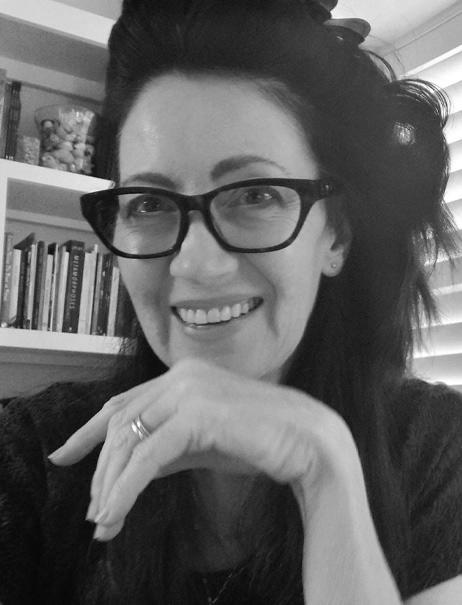
Denise O’Hagan
Denise O’Hagan is a Sydney-based poet, born in Rome. She has a background in academic publishing and is co-editor on The Marrow. Her recent awards include the Monica Taylor Poetry Prize and the NSW Poetry Prize. Her third poetry collection is forthcoming with 5 Islands Press (2026).
Website: https://denise-ohagan.com
Email: info@blackquillpress.com
How does one become a poet?
Poetry finds us rather than the other way around, or so I believe. It’s not just a matter of will or discipline; rather, we get to a time when the only language available to us to express our vision is the language of poetry, by which I mean the distilled, imagistic and lyrical mode of expression characterising the best writing. It could be said that we ‘become’ poets when we start writing in this pure way, free of concerns of ego or public acclaim.
Outwardly, however, ‘becoming’ a poet tends to be defined precisely like this; that is, in terms of public recognition such as publications, awards, residencies and the like. Such apparent proofs of accomplishment carry obvious advantages, but they can also reinvigorate us creatively. Not only do they introduce us to new writing and open up fresh connections, but they encourage us to read more expansively which in turn expands our own poetic horizons. If in a journal of, say, thirty poems, we find a single one which ‘catches our heart off guard and blows it open’* we may be blessed with a sudden and piercing insight into why we’re writing in the first place.
*Seamus Heaney, ‘Postscript’
John Philip Drury. Photo credit: Tess Despres Weinberg.
John Philip Drury is the author of six poetry collections: The Stray Ghost (a chapbook-length sequence), The Disappearing Town, Burning the Aspern Papers, The Refugee Camp, Sea Level Rising, and most recently The Teller’s Cage (Able Muse Press, 2024). His first book of narrative nonfiction, Bobby and Carolyn: A Memoir of My Two Mothers, was published by Finishing Line Press in August 2024. After teaching at the University of Cincinnati for 37 years, he is now an emeritus professor and lives with his wife, fellow poet LaWanda Walters, in a hundred-year-old house on the edge of a wooded ravine.
How does one become a poet?
I didn’t do much homework when I was in elementary, junior high, or high school, but I did complete the assignments in confirmation classes at the Episcopal church we attended, where I also sang in the choir as a boy soprano. I memorized the General Confession from Thomas Cranmer’s Book of Common Prayer (thrilling to the cadences of “We have followed too much the devices and desires of our own hearts…. We have left undone those things which we ought to have done, and we have done those things which we ought not to have done, and there is no health in us. But thou, O Lord, have mercy upon us miserable offenders”) and I learned by heart the Apostle’s Creed. Here is my creed for being a poet:
I believe in the power of words, and the music of words together, and the knack for taking things in, being open to impressions, receptive to what the five senses notice, and immersion in reading, indulging in daydreams, and jotting things down in a notebook or journal or smart phone, and the force of compression, and the value in details, and the multifarious forms, from strict to free, that a poem wriggles into and inhabits, and the song composed for the page, for silent contemplation, to be read with eyes and ears, even if its chosen form is prose, and the sound of voices emerging, conversing, arguing, and the consolation of language amid the animal condition of mortality and the human condition of worrying about it, and the joy of entering a musical groove, and the silence of waiting for another opening, an orchestra tuning up, the tip of the tongue on the verge of finding words, names, and phrases that set a draft in motion.
overleaf...
I’m a lapsed Episcopalian now, but I still take Communion if I happen to attend a service, and I still believe in language. Poetry is not a religion, but writing it is certainly a calling. Something wells up in the potential poet. It can take decades, as it did for a kindergarten classmate who was a birdwatcher, growing up in the country, paying attention to her surroundings and tuned into the political disasters of our age. She kept journals, and those notes eventually turned into poems. We reconnected as friends when we both had work accepted for Passager, a marvelous literary magazine for writers over 50.
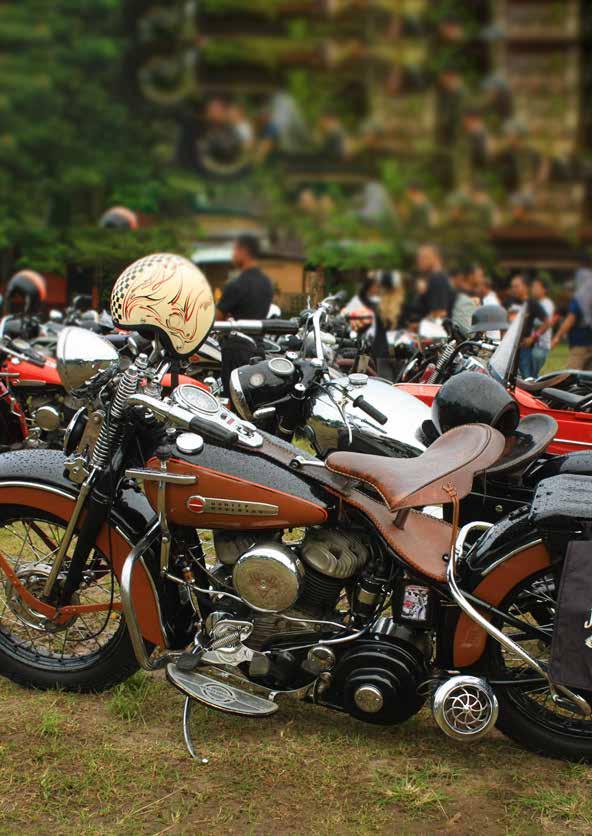
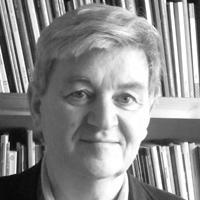
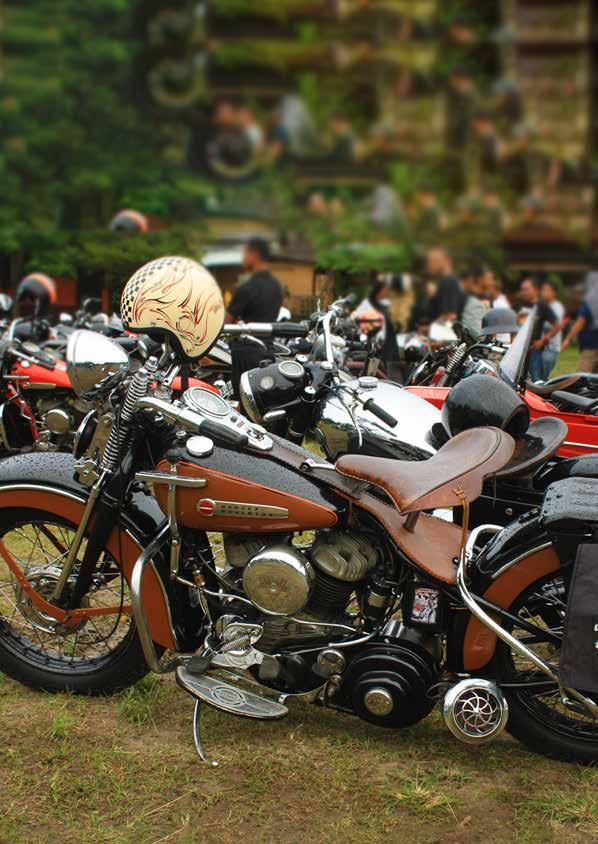
©Mark Ulyseas
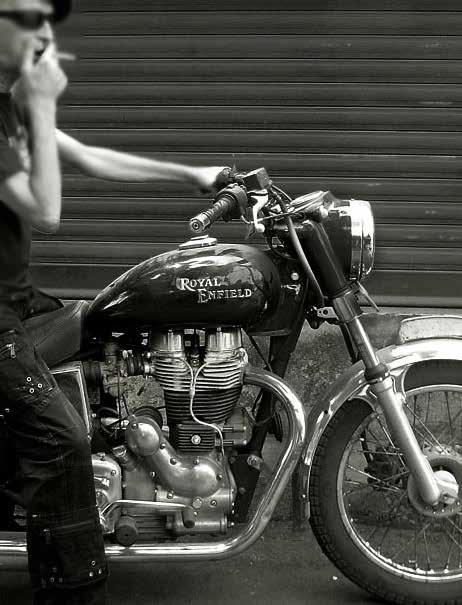
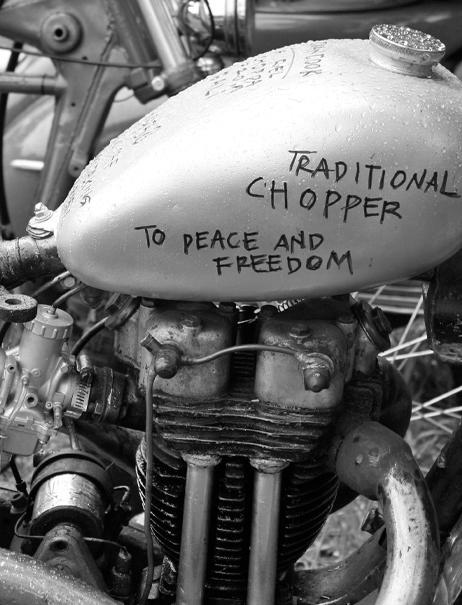
Photograph by Mark Ulyseas.
Jane Frank
Jane Frank is an award-winning Brisbane poet, editor and academic who lives and writes in Meanjin Brisbane. Her most recent collection is Gardening on Mars (Shearsman Books, 2025) and she is author of Ghosts Struggle to Swim (2023) and Wide River (2020) published by Calanthe Press. Her work is widely published in journals and anthologies in both Australia and internationally including Westerly, Cordite, Meniscus, Shearsman, Poetry Ireland Review, The Ekphrastic Review, The Mackinaw, StylusLit, The Memory Palace (Ekphrastic Review, 2024), 100 Poets (Flying Islands, 2025), Poetry for the Planet (Litoria Press, 2021), and The Liquid Amber Prize Anthology (Liquid Amber Press, 2024, 2025 and 2026). In 2025, she was nominated for a Pushcart Prize. She was awarded a PhD from Griffith University and has previous qualifications in both art history and arts and cultural management. Her monograph Regenerating Regional Culture: A Study of the International Book Town Movement was published in Palgrave Macmillan’s Sociology of the Arts series in 2018. She teaches in the School of Business and Creative Industries at the University of the Sunshine Coast in south-east Queensland.
How does one become a poet?
To become a poet, the first thing you need to do is grant yourself permission to be one. I wouldn’t tell many other people until you feel you are on your way to becoming one! It’s astounding how negative people can be about poetry as a genre. Initially —and always, really— it’s important to immerse yourself in the writings of other poets and move your reading habits outside of your usual comfort zone. To be a poet, you need a big curiosity about the world. This might involve eavesdropping on people’s conversations on the bus and train (!), slowing down and paying attention to tiny details but equally, making sure you have a point of view about important things or should I say, the things that are important to you. For me, it was a process of understanding myself better and finding a way to articulate that complexity using images—a kind of turning inside out. Also, realising that poetry has no rules. And then, of course, finding the courage to start sending your writing out into the world. To begin with, be ready for rejection. You will always need to wade through piles of rejection letters, but that makes it even sweeter when acceptances come in! And one day they will, and you will find your readers. Sometimes, incredibly, words and inspiration fall from the sky, but in the meantime, write poetry every day, because you need to work away at being a poet, not just pretend to be one.
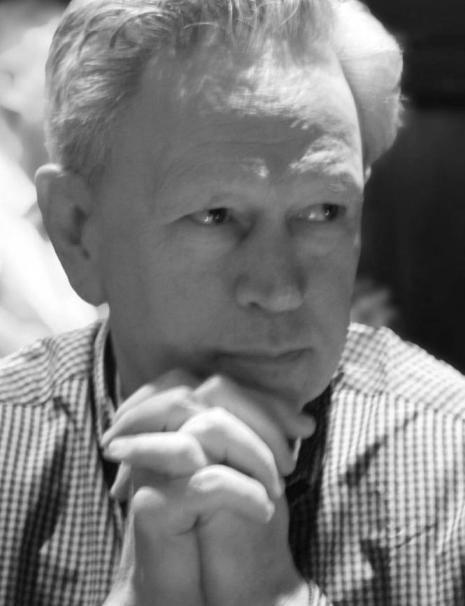
Brian Kirk
Brian Kirk has published two poetry collections with Salmon Poetry, After The Fall (2017) and Hare’s Breath (2023) and a fiction chapbook It’s Not Me It’s You (Southword Editions, 2019). His first novel Riverrun is forthcoming from Library Tales Publishing in late 2026.
How does one become a poet?
In my case it was a slow process. Looking back, I can see that it began long before I started writing. Standing out in the back yard on an evening as a small child, feeling the light fade and the day passing into night. It was a kind of unearned regret for the impermanence of things, a sense of the elegiac before I had lost anything or anyone of importance. Reading is important, of course. I remember the fascination I had with Old Testament bible stories as a child. There was poetry in them for sure. Later, at mass the Old Testament sat alongside the New and the dry text of the liturgy. As a child I was already discriminating, noting the shifts in register as the priest rattled on.
And there is ego involved also when the idea lands that, perhaps yes, I might write something. The first efforts are painfully bad, but that’s as it should be. It took me years to look outside myself, to the world, to the experiences of others, to find my way back to a truth about myself that might apply to the world as a whole. At some stage you begin to think of yourself as a poet, mainly because someone whose work you admire refers to you as a poet. But you must study and read. And then you must write and continue to write. That is the act that defines you.
Gillian Roach
Gillian Roach is a Ahuriri Napier poet who won the New Voices — Emerging Poets Competition in 2018 and was runner-up in the Kathleen Grattan Prize for a Sequence of Poems in 2018 and 2019. Her poetry has been widely published, including in Landfall, takahē and Poetry Aotearoa Yearbook. Gillian is a founding member of the Isthmus poets, and has published three collaborative poetry collections with them over the past 9 years. She completed a Master of Creative Writing degree at AUT in 2016, and has also written novels and short stories.
How does one become a poet?
Poets are born, then made, then they make themselves. It’s a process. Watching children play with Lego, I see strong connections with the way people engage with words and language. There are key developmental stages. The youngest start alongside an adult or older child, enjoying the bright colours and strong shapes, the satisfying way the blocks click together. As their agility and confidence develop, they move to more advanced sets, carefully following the ‘constructions’ to build the exciting item on the box cover, before taking the delicious step beyond the instructions to make something entirely their own. (I am fascinated by how these ‘lego expressions’ reflect the child making them, alongside the influences of their environment and culture. One child’s rocket ship might be tiny and intricate, the other’s roomy and furnished for pets.)
While most children move on to other pursuits, for some the practice of building seems to fill a deep need — providing a physical embodiment of their thoughts; mind and hands working together. This commitment to the process often leads them to high levels of creativity and proficiency, in a virtuous circle. They are Lego poets.
For me, words clicked early. I loved them completely; the way they rhymed and chimed, the scents and sensations and worlds they carried. I was lucky to grow up in a home with story books, puns and wordplay; to be educated in a culture which celebrated literacy. These building blocks provided the foundation for a lifetime practice of poetry, a lifetime of creative expression. All contributed to the process.
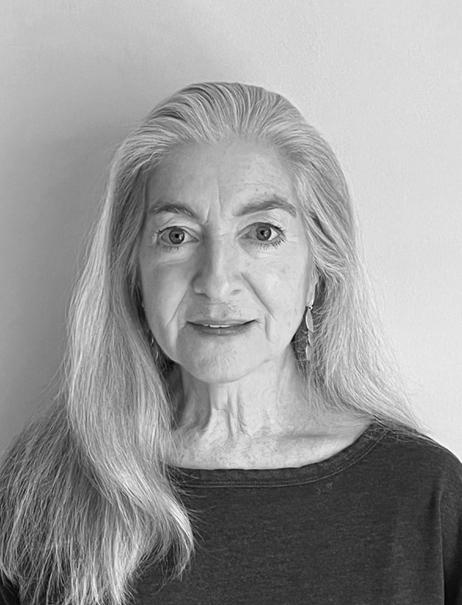
Photograph by Mark Ulyseas