
June 2026
Support Live Encounters.
Donate Now and Keep the Magazine Live in 2026
Live Encounters is a not-for-profit free online magazine that was founded in 2009 in Bali, Indonesia. It showcases some of the best writing from around the world. Poets, writers, academics, civil & human/animal rights activists, academics, environmentalists, social workers, photographers and more have contributed their time and knowledge for the benefit of the readers of:
Live Encounters Magazine (2010), Live Encounters Poetry & Writing (2016), Live Encounters Young Poets & Writers (2019) and now, Live Encounters Books (August 2020).
We are appealing for donations to pay for the administrative and technical aspects of the publication. Please help by donating any amount for this just cause as events are threatening the very future of Live Encounters.
Om Shanti Shanti Shanti Om
Mark Ulyseas Publisher/Editor

All articles and photographs are the copyright of www.liveencounters.net and its contributors. No part of this publication may be reproduced without the explicit written permission of www.liveencounters.net. Offenders will be criminally prosecuted to the full extent of the law prevailing in their home country and/or elsewhere.
Contributors
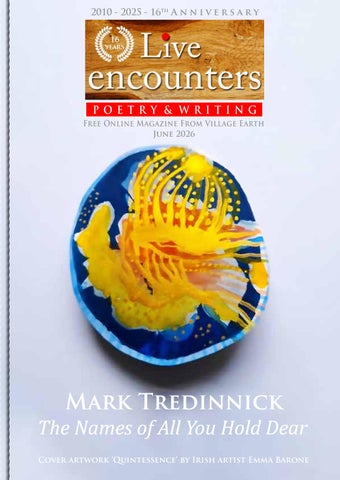
June 2026
Mark Tredinnick
Isi Unikowski
Oormila Vijayakrishnan Prahlad
Anne M Carson
Shona Bridge
Ma Yongbo
M L Williams
Paddy Donoghue
Peter A Witt
Richard W Halperin
Sally Breen
Nigel Spence
Stephen Haven
John Grey
Caterina Mastroianni
Tim Tomlinson
Book Review of Tango in Blue Nights by Vasilis Manousakis
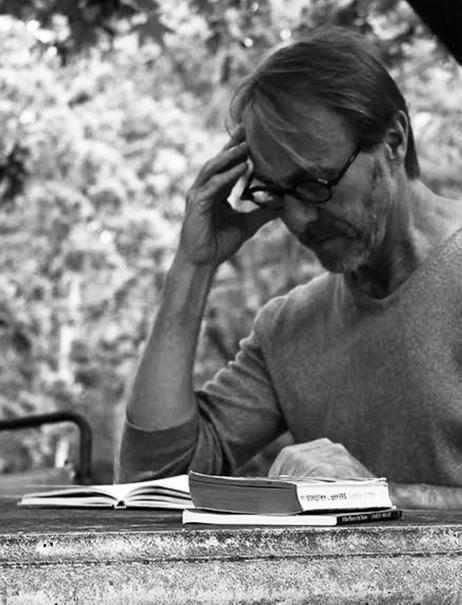
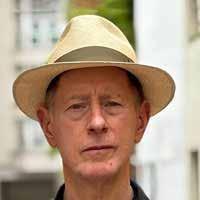
Mark Tredinnick OAM is a much-awarded poet and essayist and the managing director of 5 Islands Press. He is the author of five collections of poetry, including, most recently, A Beginner’s Guide; Chain of Ponds: New &: Selected Poems appears in July 2026. Next year also sees the reissue of his classic guides to the craft:The Little Red Writing Book and The Little Green Grammar Book (New South). Mark lives with his wife Jodie in Bowral, on Gundungurra Lands, southwest of Sydney. He runs the poetry masterclass What the Light Tells online through his website https://www.marktredinnick.com/ and he teaches literature and creative writing at the University of Sydney. He is at work on The Divide, which tracks the Great Dividing Range in prose and poetry, the way Basho’s Narrow Road tracked the deep north/ outback/ deep interior of his times. 5 Islands Press has recently published a collection of poems from Gaza, Each Night I Count my Children, edited by Denise Howell. All revenue goes to support MSF in Gaza. Please support the book, which you can purchase at https://www.5islandspress.com/
The Names of All You Hold Dear:
A Novena
1.
MAY it be true that, though we shed the years, the lives we spend stay Where we spent them, and with whom and what. So, though you’ve stepped, Mother, From the burning circle of our days, your life is carried on.
2.
Who takes form must give it back: that’s the deal life makes with time. But That which was once embodied, so that it might know love and be A voice in love’s long choir, never finds an end. And nor will you.
3.
Is the longing one feels, all one’s days, a foreknowledge of this Missing the departed feel for the living world? Tell us what You most miss—high cloud, dawn song, preludes, frogs—and we’ll miss them more.
4.
Across the rooftops and through the spreading pinions of the pines, Day fails and night rains a fine dust my daughter sits and reads in, Till she can’t. May it sometimes be like this, too, where you are now.
5.
May the birds gather like a well-tempered synod of weather, Here in this grey haven of gums, where all that’s not yet transposed Of you into eternity’s holy thrum stays on a while with us,
6.
Prays on a while with us, and with the bluewrens and grass parrots, The passing seasons and the ordinary hours they traffick. And let’s join you in the raven’s caw, the morning rush, the hush.
7.
Surely time runs rings around us, and we are still on Copeland Road, headed for school in the Escort; and these are your soft shoes Running like four young boys and a dog up and down the pedals.
8.
A name for the whole world is Mother. Child. Woman. Wife. Heather Runs fragrant where it always ran. Heaven is scented with song, Some of its notes yours now, the names of all you held dear on earth.
9.
When the storms stopped, fire sang the world into the kind of stillness Trees could grow in and love might start. Words made a hearth of wildfire. And you fall back now, soft molecules, into the canticle.
The Age of Stars
For Dave at Sixty l’amor che move il sole e l’altre stelle. —Dante, La Comedia (Par. 33.143-45)
… we should be careful Of each other, we should be kind While there is still time.
—Philip Larkin, “The Mower”
And the light shineth in darkness; and the darkness comprehendeth it not.”
—John 1:5
ON LITTLE MOUNTAIN deep in winter stop The car at midnight. Stand among the gathered
Bands of barrel gums and contemplate The sky. This is the age of stars, this many-
Billion-yeared experiment in light, When nearly all the matter in the world
(This universe of forms and voids we are) Is organised in luminescent mobs
Like those assembled on the plains of time Above our heads. Our being here at all
Is down to them, their coming and their going, The way their being comprehends the dark,
So while this holds, stand glad among the living And let your breathing fall in with the stars. * continued overleaf...
2
THE ERAS age; all light in time will dim; Then nothing much will happen—on and on.
But let’s agree Forever has a few More miles in its old legs. Let’s make a pact
To sow the light that’s left to us; let’s scatter All the starlit matter we can spare.
Let’s dance quite often with the one we love; Let’s wage iambic warfare on the prose
That dumbs the days; let’s praise in jazz and think In syncopated rhythms like the winds
Of early spring. Let’s ebb like ageing stars, You say; let’s spend our waning energy
Among the constellations of our care. Let’s learn to fall the way we meant to live.
3.
BESIDE THE pool across the tracks from where You’ve lately made your home, an episode
Of winter rain makes landfall like a meteor Shower among the teeming white of prunus
Trees, as if to flush their Seraphs out. But when you wake into the seventh heaven—
The Cielo di Saturno—of your way, Your contemplative era, your temperate zone,
You’ll find, above the multitude of fallen, A throng of thriving stars intact. The nearer,
It seems, you draw to the stars, the farther from home, The more you get to weep at the comedy
Of life. But the more, if you’re smart, you learn of the love That burns in the sun and all the ageing stars.
Near Saskatoon
Ten minutes out of Melville, the train sounds its rude horn at a level crossing, and I watch a cardinal fly a ploughed field, changing its mind in open ground between one bare copse of wattle and birch and the next.
The water is dark in the shining ponds, and the grass, where it stands, is straw. The beaver lodge is an unreconstructed temple, a little out of its depth, and even the water here has lost its faith in spring. But if you look closely, the birches are budding: the sun is out and the air is hitting 18 degrees, and I guess this feels to the trees like their moment.
Except for the traces it leaves, the art of ploughing is very like the art of flight—how do you read the field as you write the field, and how do you know when to turn?
Grace is a knack, which comes by art, and it makes nothing much happen; nothing like this, for instance: a cardinal sows the Saskatchewan sky, and the birches begin to reap.
And then, the horses
A W I N D bright as prayer flags tears the floodplain Apart. Mid-August never felt so warm. Beside the car, unsteady in the wild air, my father seems uncertain Where he stands and what’s become of everything
He knew. Five miles north the mountain rests Like St Exupery’s hat. The gale blows the inland inside out And drops it here like silt across the afternoon.
And then, at the fence, among the peppermints, the horses, The foal, green in judgment, rolling in her mother’s feed—her salad days and beside me, my father, at his ancient ease again.
This lithe moon tonight
O N E D A Y I may write three lines that outlast time. Like: this lithe moon tonight.

Isi Unikowski lives in Canberra, Australia. He has been widely published in Australia and overseas, including Best of Australian Poems 2022. His collections ‘Kintsugi’ (2022) and ‘Re:Vision’ (2025) are published by Puncher & Wattman, New South Wales. His published poetry can be viewed at https://www.isiunikowski.net
The Despots of Epirus
Like missing-person posters at the local mall, the faces of the last rulers of the Despotate of Epirus look out from their keeps in tapestries and icons with enough detail to be plausible; but, as I squander an hour or so by tapping on links for ‘predecessors’, or ‘fathers’, and lineages stumble backwards over history’s uneven pavement— arrival of a greater power from somewhere else, or the matrilineal line cracks with treachery over supine scions— their faces take on the physiognomy of doubt itself, vulnerable to time’s rucked weather; a muddy coin waiting to be dislodged by a plough; mosaics tiled in cloud and snow; a fresco in a ruined abbey, that’s half profile, half stain, reminding me how I used to procrastinate, making photocopies of photocopies of photocopies in the library basement: the very last one always precarious, like something almost appearing in rain’s cold, dented pewter.
The Prime Minister listens to the last movement of Mahler’s Ninth
We saw him once: ushered into the back room at the record store, where it was known he’d make his choices among the late Romantics. He sailed serenely past us while we paused, a little awestruck, from flicking through the racks and bins, then turned to one another, agog. So it might have been Boulez at that time, or others of that ilk, from where he’d go back to the eyrie he was known to inhabit among his antique clocks and furniture; his Parnassian mode. Later, it was said that he might even have been depressed at times, ‘somewhere else’ when the call for him to join the battle required his characteristic aggression and drive. But he was troubled by Mahler, who prescribed abandoning 19 out of 20 ideas every day. That’s how I see him now: all he can hear is that final coda behind the sense of crisis, the raised tones around the table; those sparse, lingering notes demand that he change his life, not the country’s. A symphony must be like the world, says Mahler to Sibelius; why not vice-versa? broods the PM.
The first time I watched Skull Murphy at work
I’d watch TV while my grandmother baked and roasted, and today the wrestling was on: some guy performing a knee drop onto another guy’s elbow, held outstretched beneath him. It wasn’t that, so much as every time he did, the young man’s head bobbed up and down in agony; again and again, that awful motion with his head, as if affirming his pain each time those knees landed. Bubba must have come in and noticed the hold
I was held by before the screen. I heard her offer to go outside and help my grandfather, up a ladder with his old, blunt shears, hacking at the hedge.
It wasn’t so much the violence I was watching for the first time, but how hard I found it just to look away, for all my distance from that tiny screen.

Oormila Vijayakrishnan Prahlad is a widely published and awarded Indian-Australian artist and poet with works in Cordite, Black Bough Poetry UK, The Salons, Poetry Sydney, and other publications. She has performed internationally, including at Oxford Poetry Circle, The Surrey Laureate Lounge, and Charing Cross Library UK. She won the 2025 Bankstown Poetry Slam (Sydney Writers Festival), the 2025 Bread and Butter Slampionship at the Opera House, the 2025 Don Bank Short Fiction Cup, and the Curator’s Award in the 2025 Grieve Anthology. A multiple Pushcart Prize, Best of the Net, and Best Small Fictions nominee, she is the author of Patchwork Fugue (Atomic Bohemian Press 2024) and A Second Life in Eighty-eight Keys (Hedgehog Poetry Press 2024, winner of the Little Black Book Competition). Her new collection is forthcoming from 5 Islands Press (2026). Her artworks have been published on the covers of Yale Divinity School, Pithead Chapel, Amsterdam Quarterly, and numerous other literary magazines. She is the current and inaugural Writer in Residence at Woollahra Libraries. Find her @oormilaprahlad (X) and @oormila_paintings (Instagram)
Two-note drone
It was a wicked prank, really— older sister telling her younger brother of the mysteries of the deep, of the great white patrolling the waves, lurking to chomp an arm or foot.
Of course, there were no sharks in that placid gulf—just schools of mackerel, and red-gilled anchovies, but I would slip beneath the waves at high tide, gliding under to find the leg of my unsuspecting brother, nipping like a blunt-toothed turtle, pretending to be Bruce from Spielberg’s ruthless sea.
The jump scare always worked and the joke played on for years till he grew up and realized that our childhood sea was harmless— that the periwinkle folds kept nothing in its depths.
Such was the fun of those times— innocent, distant now. I stand at a southern harbour watching the nylon netting holding away what the waters at Shark Beach really harbour— the two-note drone growing loud above the crash of the waves: Ta-dum, ta-dum, ta-dum.
Christiansen Park, Vaucluse
for Nik
Remember that time you said that flying was trusting the wind, that a moth or a bird, or an archaeopteryx in its time, just took to the skies, knowing it would be buoyed. A reckless leap— no trace of hesitation to weigh its body down.
It is the same here, on this green wedge where the wind is a whistling force and I feel airborne though I have no wings, and the lighthouse fears for my waif-body as I toe the beaded edges of the cliff.
Brush and stone spill into the mouth of oceans. Sometimes, it is hard to remember you are not a bird. But I don’t think that is you— you who are always sky-ready in your metal armour, flight bones primed as you thunder A320s off the tarmac.
We are sky-sirens— I taxi off the page, you glide into the clouds. This is where we will skim together, arms outstretched like when we were children: airborne, not knowing if feathers will sprout but leaping anyway to meet the glitter below.
Limbo child
A golden shovel after Song of the Future
The native grasses, tall as grain, Were waved and rippled in the breeze; From boughs of blossom-laden trees The parrots answered back again
-Banjo
Paterson
How do I look this conundrum in the eye, the sting every time I bare my face—not native enough—a ferret that has crept out of the grasses. When will I convince myself I am allowed to stand tall wear my hard-earned victories with pride just as much as anyone else who has toiled against the grain? Am I the face of the future, and is it something that were desired, or am I something to be awkwardly waved into a corner—a token, a temporary reprieve and a problem to be tamed. Who am I in whom much has rippled, a vessel to hold so many disparate worlds in bronzed silence. Will I ever find my place in the lines of this red earth, I who have floated on the breeze so far and so often that now I am from nowhere, of no land, and all I hang upon the boughs of memory are the curled and distressed maps of lands and rivers too far-flung, childhood blossoms whose shape and feel I forget, their pollen laden with the prints of faded mountains and trees. I am the limbo child of another earth, and no earth, the sky above me filled with rose-ringed parrots, asking if I would answer back. I have answered, I say, with both ink and dignity, even though I hold back often—and words seem to fail me now and again.
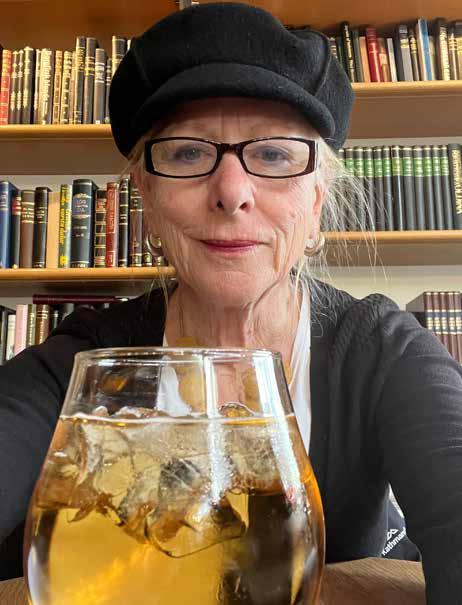
Anne M Carson is an Australian poet, essayist and creative writing teacher living on unceded Bunurong Country, whose poetry is published widely and acknowledged in awards including the Society of Women Writers NSW (2024). Her fifth poetry collection, George Sand (and Me): a poetic biography is forthcoming, and in 2027, Liquid Amber Press will publish her collection Originary. Her PhD received an Outstanding Dissertation Prize (2024).
Protest is a creative act
after Jemima Wyman Haze 20, 2024
Hand-cut digital photographs of smoke sorted by colour and then chronologically
At first the hung fabric seems to be outsized shower curtains or draped room dividers. Hanging floor-to-ceiling, two giant pieces, gossamer-thin. People passing cause them to billow and blouse. Hued in muted rainbow tones – abstract, almost floral.
Cut up photographs of smoke from hundreds of world-wide protests collaged into a dynamic roseate pattern. It swells and swirls like a mushroom cloud, like a geyser already burst. Photo-fragments of fumes from stacks of burning tyres (acrid, throat-tearing), smoke bombs (viscous), incendiary vehicles, the choking ‘green’ smoke from piles of manure and hay- bales, from flares, Molotov cocktails, tear gas. In that photographic melange, amongst all the poisonous lung and windpipe wrecking smoke – one whisp of the healing herbal smoke of sage.
Each citizen action is named, located, dated – farmers, (with and without tractors), students, environmentalists, anti-environmentalists, animal rights activists, people pro-squatting, pro-Monarchist, anti-Government, demanding justice for Palestine, for Israeli hostages, for farmer’s rights, the end of femicide, against the granting of amnesty for Catalan protesters, for and against abortion and euthanasia, against the resumption of bullfighting, against the EU Green deal, against tariff-free trade with Ukraine. The billowed smoke from the actions of right-wing activists inseparable now from the protest smoke of left-wing activists.
All the particulates absorbed now into the lungs of the protesters, bystanders, emergency services personnel, the put-upon somewhat forgiving air, and the respiring body politic. What remains is the battered and burnt beauty of human action – imprint in the fabric of the world.
The Rev skates
after Reverend Robert Walker (1755 - 1808) Skating on Duddingston Loch by Henry Raeburn - National Gallery of Scotland, Edinburgh, online collection
The weather is stormy at the far end of the Loch today, clouds heavily freighted although up towards heaven they thin and a blurred blue pool leaks through. Sheets of rain (or are they brushstrokes) pelt down. Mist hangs off the crags and the ground is moody with brooding and melancholy. A faint mushroom light illuminates a patch above the valley.
But weather is clear where the Rev takes his exercise on the ice. Untroubled by inclemency (he is made of sterner stuff) the air around him seems to know this and part for him.
Not even a rain-jacket or hood to keep possible precipitation at bay just his frockcoat dress hat and a nicely ruffled cravat at his throat –gear of choice for skating gents at the tail end of the 1700s.
The Rev bends an exact forty-five degrees off perpendicular, erect (though cantered), adopting travelling mode. He makes it look easy keeping his angle just so, his balance and his arms crossed at his chest but it’s not easy (which is why he likes it). He likes to pit himself against a worthy foe and keep his composure his rectitude, his eye keen on the goal. He makes a neat parcel
of a man – nothing gangly or awkward to muddy his presence in the world. His faith is an impenetrable aura, confidence gathered in. He has inscribed circular patterns in the ice – a member of the first figure-skating club in the world, he loves practicing finds it calming – the regularity of the moves, the rhythm of glide unweigh, glide again, the cold air, his solitude in a wild landscape.
There’s some soul-quirk that he can find the Almighty as present here, figure skating alone in the Scottish Highlands as at his Kirk’s altar leading his congregation in prayer and Presbyterian praise.
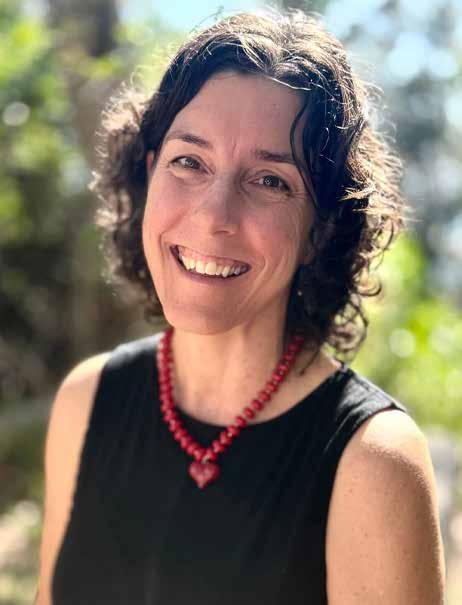
Shona Bridge lives and works on Darkinjung land (NSW Central Coast). She is currently working on her debut collection of poetry. Her poems have appeared in The Marrow, Hecate, Ribbons, Kokako and various anthologies. When she’s not writing, Shona is out in her community sharing the skills and tools of Yoga. She is passionate about nervous system regulation as a counter movement to the challenges of our lives. Shona loves well-crafted writing that dares to speak from the heart. Insta: @shonawrites
River Stones Dream Of The Sea
What will happen when I ford the river’s
cool quickness, washing away the silt of all the places my mind lures me, like yesterday and tomorrow?
Threads come loose when I pull them, careful stitches unravel. What will happen when I wade long-hemmed into the homing current of all that flows?
Wild
Have you seen how trees offer branches, forgiving the seasons? I am learning the language of leaves; I want to believe it’s not too late. When I am bones, earth will hold me. Like trees, poets already know they belong. If they are wrong, so are the trees.
Paper Daisies
Standing over the neighbour’s mower, my father frowns. Citrus rises on the threat of rain. My father yanks the mower’s chord but the motor doesn’t fire. He pulls, pulls again. His face is now as dark as the clouds.
At last, the motor flares, catches; spinning blades rush over grass until the mower strikes poo. My father swears. His words land hard on my memory of our kind neighbour, fallen under her clothes line, her skin tracked with ants.
Now the afternoon stinks and the bees are gone from the paper daisies.
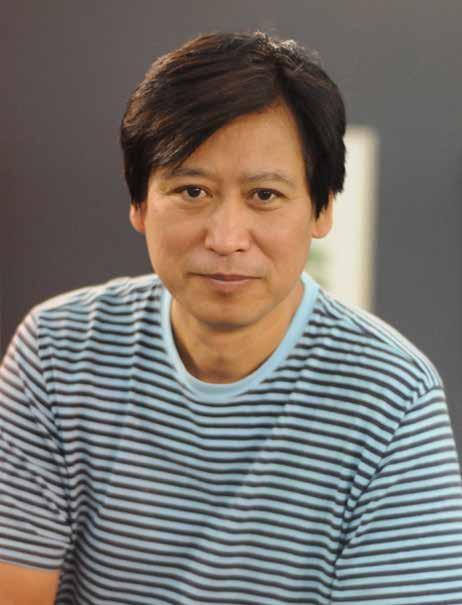
Ma Yongbo was born in 1964, Ph.D, representative of Chinese avant-garde poetry, and a leading scholar in Anglo-American poetry. He is the founder of polyphonic writing and objectified poetics. He is also the first translator to introduce British and American postmodern poetry into Chinese, making contributions that fill gaps, the various postmodern poetry schools in Chinese are mostly guided by his poetics and translation. He has published over eighty original works and translations since 1986 included 9 poetry collections.He focused on translating and teaching Anglo-American poetry and prose including the work of Dickinson, Whitman, Stevens, Pound, Amy Lowell,Williams, Ashbery and Rosanna Warren. He published a complete translation of Moby Dick, which has sold over 600,000 copies. He teaches at Nanjing University of Science and Technology. The Collected Poems of Ma Yongbo (four volumes, Eastern Publishing Centre, 2024) comprising 1178 poems, celebrate 40 years of writing poetry.
Reading Virgil in Autumn
Before facing the future, return first to the silence of the dead, phantoms shun you three times; even your own father passes dreadfully through the yard, his long hair ablaze, his face unseen.
Those phantoms drifting in the air pierce straight into your eyes, every embrace of ecatasy passes hollow and unfulfilled, while suffering, woven with memories of suffering, becomes sorrow doubled upon sorrow. Enjoying is the gate of ivory, suffering the gate of horn, whichever gate you take to leave the underworld, you return to the same lost path.
Dido looks Aeneas up and down, her desperate silence drifting like white doves upon heaving tides. Smoke curling upward from the funeral pyre, and masts dwindling low above the sea measure the helpless rift between love and duty.
After death, we are mere shadows, never to walk the mortal world again, though surrounded by shades of the departed, it cannot compare to carving oars beneath the sun. See how the wedge-shaped prow rises high once more, its hull cleaving the water, ploughing through the waves— exile itself becomes homeland, and all things have only just begun.
Therefore, Virgil—my guide, my master— I shall take jagged reefs for an altar, no longer dividing the underworld from the living world. From you alone I learn the true meaning of courage; as for fate, I must turn to others for answers.
Spending a Quiet Afternoon Reading Ovid on the Double Ninth Festival
Sunlight glimmers high above, chrysanthemums everywhere shake their small fists in quiet protest.
Green mountains lie not far away, I do not go, yet they remain, unchanging, autumn and silence abide there too, as do the brown birds, for years, they have trodden through fallen leaves, wandering toward the deeper mountains, like a crowd of noisy, tumbling children leaving school.
The gaunt little lake lingers there, lingering over blue skies and distant echoes. Dark silt hidden in reed beds, a frail symbol of humanity, also dwells there.
And so I stay at home, on the low southern slopes of Purple Mountain, immersed in Ovid’s recollections, lingering through a slow, tranquil afternoon.
He preserve autumn cherries in dark crimson lees. for he once said: so long as one knows not who he is, one may live long into old age.
Thoughts on Reading
Sylvia Plath’s Diaries
“How dreadful it is to live into a cold middle age— well-educated, once full of promise, yet fading into the crowd, good for nothing.”
To live into a cold old age, to live through any cold, indifferent years, is no less sorrowful. So long as you go unseen by others, so long as such words ring like the tongue of a politician.
She brought it all to an end. She outwitted middle age, never to be given the chance to break down doors in valiant old age, and die the death of a young person.
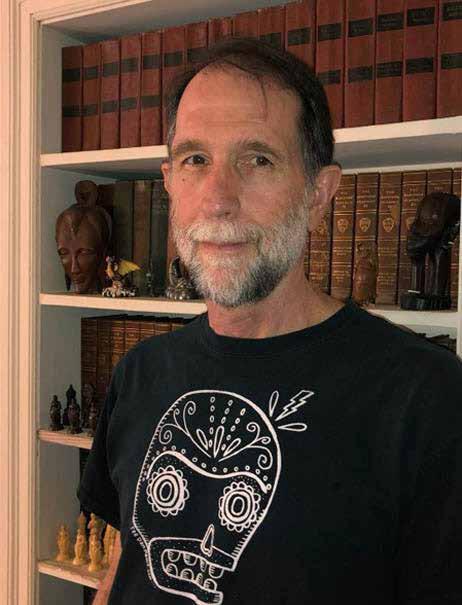
M. L. Williams is the author of Game (What Books Press), the chapbook Other Medicines, and coeditor of How Much Earth: The Fresno Poets. His poetry and prose is published in many journals and anthologies, including Salt, Western Humanities Review, Hubbub, Plume, Miramar, The Journal of Florida Studies, and The Cortland Review. He teaches creative writing and contemporary literature at Valdosta State University.
Pool Kingdom, 1978
Izzy pulls up in his low-rider Impala all chrome shine and polished clean, hydraulics to bounce, sweet rims to cruise with some girl he hopes, and the Clovis kid and his blonde buddy give him racist shit before Roger sends us out to trim hard-pan with picks and shovels and jackhammers for a liner built-in, 108 degrees in that hole. Raz and Dean light smokes and pick hard ground to shards for inches the backhoe missed and I ask how they can put fire in their mouth in this heat. “It cools me down,” says Dean who plays guitar and sings when he’s not in a hole or hanging liners and then goes on about John Prine again, schooling this college boy home for summer. Mike, the boss’ kid, chimes in, who’ll blast Van Halen all the way home and Raz will roll a joint and pass it after this long day, twelve hours. Quiet and beat, evening coming into red sunset, we’ll sense the blown cool that open windows give our sweaty arms all the way back from Firebaugh or Mendota, small towns where a four-foot piece of braced sheet metal and a vinyl liner are heaven to people who work the Thompson seedless vines or grow fat cotton, and our Kingdom the white van, palace of butts and fast-food wrappers, rusting tools and empty talk of songs or cars or girls, the day broken only by blessings of water gushing from a hose.
Sometimes there is no story
Rows of Thompson seedless vines, Paper trays of raisins, 99 degrees and no shade, blue sky bleached by haze. Check for black widows that hide under the trays. If you find one, let the paper down softly and stomp it when it tries to crawl away. If not, roll the paper around the dried grapes, not yet black, and place them on the trailer bed—roll, load, walk—all day, short break for lunch, no shade and dust in the nose and mouth. No story. They pay cash.
Without Leave
We go to the National Gallery to see Cezanne to Giacometti bored fiancé elaborated cat Klee’s geometries Picasso blue and cubed faces Matisse’s magazine covers Braque’s pipe but on the way out the deserter Sidney Nolan’s larrikin bandit Ned Kelly gang leader his angry Jerilderie letter condemned the mistreatment of poor folks in the bush two years running from his murders his rifle his horse his armored head tilted his last days canvased here his square and heavy head flat no eyes but the bush seen through he is hollow he will be hanged he is hollow but not empty
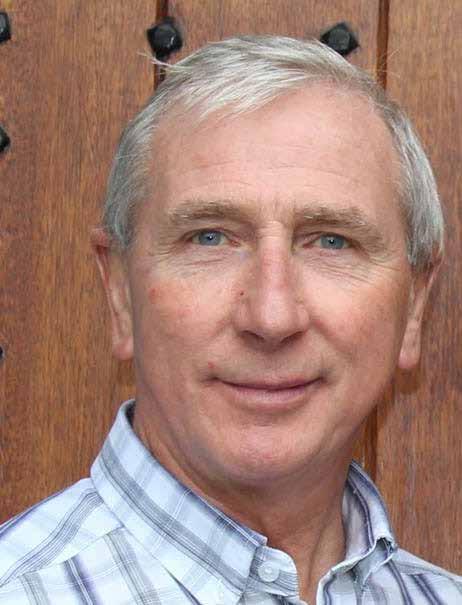
Born in Glencolmcille, currently residing in Bundoran, Paddy has been writing poetry since his school days. Widely published. He was the Donegal Bealtaine Poet 2025, facilitating workshops across Donegal. His 2024 collection, Leave Taking, was shortlisted for the CAP Awards. Founder of Bundoran Writers Group and Atlantic Writers Ink.
Moonstalker
Snow flurries peppered his coat as he scurried along the streets near empty - in the dusking of the day some rushing to nowhere in particular some to homes - or noisy houses others - to lonely apartments to hide time in melancholy.
While hehurrying - in the opposite direction fleeing from - his own hopelessness absconding the claustrophobic existence of his own life - in isolation lived in a state of solitude - of aloneness where daylight hours were measured in cups of coffee and cans of beer.
And when the evening news - scratched across the old black & white - in the corner his wake up call - a siren to quake him unleash him into the prowling hours of dimly lit streets and alleyways –roaming time for the moonstalkers.
Lady Days’ Voice
(i.m. Billie Holiday 07 April 1915 – 17 July 1959)
A voice - chiselled by years of hardship roughened like a worn path - trodden over by unscrupulous vendors of tragedy seeking selfish profit courting glory and fame.
A voice - smoke deep after a night in drawing applause from punters in some seedy bar.
A voice - reeking of sadness telling its story of a life lived on the threshold the very edges of society.
A voice - fuelled with a loneliness that would freeze a legion of soft hearts comfort the broken.
A voice - that told the story of the many lives lived alone and in silence in obscurity - unnoticed.
A voice - that offered a bridge connecting storied people - a thread a lifeline and a hope.
Truth Distorted
mirror a reflection without suspended place fire the above not – things of destroyer a anymore required
reality the distorts facts in find to hope we real the for searching while world unreal an in
truths as - veiled deceits where conscience our flood judged are we - questioning undesirables or traitors
establish to seeking merely when facts thebelieve to told are we stories the in
Peter A Witt is a Texas poet, with poems appearing online and in print publications such as Bluebird Word, Verse-Virtual, Live Encounters. He is a former university professor who now devotes his time to researching and writing family history and poetry. He’s twice been nominated for Best of the Net. He is also an avid birder.
Small Poem
My poem is so small it would be comfortable sitting on the tip of a pen, a secret passenger riding the ink like a lone sailor on a vast, blue ocean. It is so tiny it doesn’t appear on google earth, slipping past the unblinking eyes of satellites that map every mountain and street.
It is so minute it goes unnoticed, fainter than the dust motes dancing in a single, slanted shaft of light, or a whisper lost in a crowded hall. It breathes in the margins of silence, waiting for a quiet moment to bloom, an invisible seed tucked deep within the heavy soil of the page.
Equations in the Snow
The storm shut the road, blurred the fence line, and the barn drifted off in a tide of white.
The fields turned to ledger paper, each flake a faint number falling into the margin of silence.
Inside, the stove murmurs to itself, iron expanding like breath in a chest, a kettle hums, steady as thought.
I sit with a pencil, snowbound with arithmetic, counting the shapes that winter hides, mailbox buried, gate swallowed, sound of the creek gone still.
The figures won’t hold, they scatter like dry oats spilled from a feed scoop.
Memory seems cleaner, your scarf smelling of cedar, voice rising through frost as sure as smoke from the chimney.
Outside, the wind starts over, scrubbing the fields again, like a fox circling back to cover its tracks.
To the Emperor Penguin
You know the weight of winter, in a land of silence where nothing grows. Now, the sky softens and light returns. The landscape is a vast expanse of white. This is not a pale or empty white; it is an aggressive, shimmering white, brighter than a thousand polished mirrors. Your presence is a testament to survival, a reflection of the fierce tenacity needed to endure the long night. You waddle toward the breaking ice where the sea surges, as the warmth returns like a slow, deep breath. You dive, leaving the frozen shore behind, resolute emperor penguin.
Richard W. Halperin is a U.S.-Irish dual national living in Paris. His poetry is published by Salmon/Cliffs of Moher and by Lapwing/ Belfast & Ballyhalbert. His November 2025 collection for Salmon All the Tattered Stars: Selected & New Poems, Introduction by Joseph Woods, was one of three finalists for Best Poetry Book of the Year in the annual Poetry by the Sea Conference in Madison, Connecticut, May 2026, Rachel Hadas adjudicator. One of the New poems in the book was The Poem of the Week in The Guardian, January 19. Mr Halperin is Featured Artist in Edition VI of Tintreach: The Smashing Times Arts and Literary Journal, Sandycove, April 2026, which includes an interview about his poem ‘The Arcades Project’ which first appeared in Live Encounters Poetry & Writing in April 2025. Several of Mr Halperin’s poetry readings in Ireland are on the internet, e.g., First Wednesday, Whitehouse Bar, Limerick, January 2026; Heinrich Böll Memorial Weekend, Achill, May 2024; videos taped for University College Dublin’s Irish Poetry Reading Archive. In October of this year, his poem ‘Antigone 3’ will appear in the bilingual Carnet No5, ShannOdet Quimper-Limerick, French translation by Lionel Poiraudeau.
Under the Great Beech Tree
That is where Lord Claverton, the title character in T.S. Eliot’s The Elder Statesman, at the end of the play tells his daughter and her fiancé he has been standing. Somewhere on the grounds of what is either a rest home or the in-between of this world and the next.
What is ‘elderly’? What if eternity and what if in-between – the real in-between – is in fact young? As are the parts of the Bible which remain after one lets fall away all that noise. The play demonstrates, without demonstrating, that no one, including the statesman, cares what a statesman states. He is under the great beech tree.
A neglected play, launched with a perfect cast in Edinburgh in 1958, the year after the Callas Sonnambula Edinburgh, which had and still has a glow to attract such things. Seventy years ago now, which are still somewhere. A play written in my lifetime. What is my lifetime? An appointment in Samarkand or Edinburgh.
Thoughts one on a day. Claverston, which is a little like clavier.
The Owl of Minerva
‘The owl of Minerva spreads its wings only with the falling of dusk.’ - Hegel, via Hannah Arendt
What light there is at dusk is like a veil. Like lakes at dusk. They, too, become veils, veils which one can hear, slosh slosh. At dusk, my thinking begins to stir.
In Genesis, God creates both the visible and the invisible. Reality and reality. Thinking is bumping into reality. Thinking is bumping into the furniture.
Stage actors are trained not to bump into the furniture. I was also so trained, in order to enter the work world. Selective oblivion helps one get along. Even in friendships.
At dusk, the owl of Minerva spreads its wings, bump bump. Owls are ungraceful. At dusk, one can almost hear Minerva herself, bumping into everything.
Minerva who, as Athene in ancient Greece, was judge in the trial of Orestes who had deliberately killed his mother Clytemnestra for having killed his father Agamemnon.
When The Furies scream for Orestes’ punishment, Athene says, ‘Please know I sprang directly from the forehead of Zeus. Mothers mean nothing to me.’
At dusk, what does Mary think? About anything? She who had a mother, she who is a mother. When she, some evenings, is alone. When she is, finally, alone.
The Colour Blue
A good marriage is a perpetual conversation. It goes on well after death. The same for a good friendship.
In this I admit no impediments.
John Field wrote beautiful nocturnes. They are very Irish and written well before others took up the form he invented. Beethoven, Brahms, Barber, thought him a great composer and so do I. His music heals me. As do his interpreters, John O’Conor, Míċéal O’Rourke, among others.
He spent two-thirds of his life in Russia, where he was adored. One of the older Rostovs in War and Peace one evening asks their harpist Dimmler to play a transcription of a Field nocturne, and the whole room falls into a hush, especially among the young ones like Natasha and her brother.
Why do I divert my poem to him? No impediments
Three Pages
I have just read the last three pages of ‘The Window’ in To the Lighthouse Mr and Mrs Ramsey alone at evening. Moments in a good marriage. Something I know something about, although my wife did not knit stockings and I did not read Balzac.
The narration is Virginia Woolf’s. She squeezes words, as song seems squeezed from a nightingale.
Is death such a squeeze? Is that how the entire song gets out?
Associate Professor in Creative Writing at Griffith University and Executive Director of Asia Pacific Writers and Translators (APWT) Sally Breen is the author of grunge memoir The Casuals and the neo-noir novel Atomic City. Her short form work has been published widely www.sallybreen.com.au
Elle Macpherson’s Beauty Machine
I think my body wants vodka the clean endless cut my body does not want potions designed to intervene with my sad eyelids my mom jeans face
interrupt a conversation about the past already going on inside my hair follicles my sunset skin without me
My body wants vodka my body does not want ex-model snake oil saps for sale from the tall, lonely tree
slippery limb elixirs late-night hot chocolate ghost gums rewind residues dusty powder regrets the unstoppable dangling bits of her falling out of the internet
toned flexxy stick leg curled up inside all my open pores flawless peddler of nutrient endlessly patient waiting to be fed
Talking with Incels
Talking with Incels on a cyclone ravaged beach at 2am
it’s definitely you not me it’s definitely the way it’s always been it’s definitely just the planet correcting itself again just gravity on my face they still think is ok their boy skin talking boy-splaining me
I forgot the memo about women not existing just like the mother he doesn’t love my hair just like hers he says just like a cliff on a beach when there is no beach left
And we are still sitting here on top of the ancient Egyptians something something
and none of this is their fault toes curling in the cliff face and I know they’re right in a way
nothing can be changed so we stop anger managing start seeing
at 2am with incels that the earth is indeed flat that it’s flat to the cliffs that it’s flat in the Balinese father I can see in him that he doesn’t want to admit
young boys with hurt hearts incels smiling at me at the ripped shadow of their mothers
and far be it from me to say they’re into the wrong deities we are all on the cliff and the plants and the sea have always been changing have always done this they say it is what it is
I try to tell them about changing tides currents damaged seas is this something you got from Finding Nemo? they ask me smirking and I am back on the cliff finding Nemo in the open unscarred faces of incels their beautiful skin they think will never be damaged by the hardness of their eyes but already is
No wonder we pay for the sand to come back from where the sea has taken it the sea doesn’t want us doesn’t want the sound of us talking on the cliff calling for restitution or reminder
on the rim of the flat flat earth and still not seeing anything beyond it
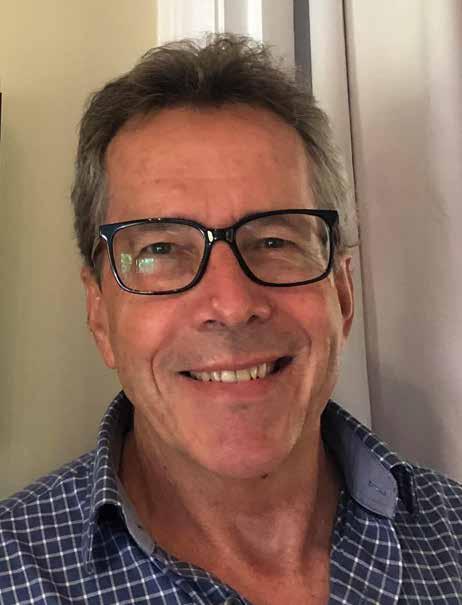
Nigel Spence is an emerging poet who lives on Wallemudegal land (Hunters Hill), in Sydney. He worked for many years as a child and family social worker, child rights advocate, and CEO with overseas aid agency ChildFund before completing a PhD and working as a research fellow and associate lecturer at the University of New South Wales and University of Wollongong. His lifelong hankering for poetry has found time for expression in recent years, and the poems are coming. His poetry has been longlisted for the Lane Cove Poetry Prize, and he is a regular contributor in Mark Tredinnick’s Poetry Studio.
Citriodora
At the corner, a junction of no consequence, corymbia citriodora spreads, sinuous, tall, spare as bones with an open habit to share its sheer limbs, creased under-arms beneath boughs that snake out, up to fringes of slender crescent leaves.
It’s a corner where nothing happens.
Turning traffic ticks by, a council worker trims the verge, dogs sniff, on the adjoining field schoolboys collide at rugby.
The corner is the end of my road. An intersection: one street an explorer, the other a saint. It’s where I find heaven after rain, when the citron mist descends.
Turrunburra Middens
Bank-embedded, trail speckle litter diffuses in casuarina-rooted Turrunburra alluvium.
Fragmented badanyi, gadyan, hairy mussel, in a long line mosaic stretching back before Byzantium.
Quiet antiquity without monument, form and place same same, as country ingests feast fragments. Maugro bones, crab shell, daringyan cartilage, absorbed in a second consumption. Wallumai and wallumil, badiwa and burra are long gone.
Hardier porcelainate remains remind of millennia interrupted, yet unsilenced Wallemudegal stories seep from tidal soil conjuring figures along the sandy marrang.
Splash and spear, small smoke, oyster cut by sparse yarn and birdsong, djanaba bilya.
This valley I thought I knew, tracing its lines a mere three generations,
child’s play beneath overhangs, fishing for eel with bread on a bent pin,
never knowing the words: gibba, yerung, ngurra, yura.
Driving roads based with shell grit, historic homes mortared
by the limeburner’s midden-stacked fire, never knowing the words:
bembul, guwarra, gwianga, badu. Sounds in the shells, stories in the sand.
Dharug translations
badanyi – Sydney rock oyster; badiwa – flathead; badu – water; bara –fish hook made from shell; bembul (bemal) – earth; burra – eel; daringyan –stingray; djanaba bilya – laughter; gadyan – Sydney cockle; gibba – rock; guwarra (guwayana) – wind; gwianga (guwiyang) - earth; maugro – fish; ngurra –environment; Turrunburra - Lane Cove River; wallumai – snapper fish; Wallumedegal (Wallumettagal) - traditional custodians of the Ryde / Hunters Hill area; wallumil – bull head shark; yerung – trees; yura (iyora) – people. (Attenborough, V. 2002, Sydney’s Aboriginal past, UNSW; https://dharug.dalang. com.au/language/ accessed August 2021 and November 2025)

Stephen Haven’s fourth collection of poems, The Flight from Meaning, was published in 2025 by Slant Books. His three earlier collections are: The Last Sacred Place in North America; Dust and Bread; and The Long Silence of the Mohawk Carpet Smokestacks. For more details, see stephenhaven.com.
Title Page
On the edge it matters, your song being glad or bitter, Only you are singing. It matters, the song,
Apart from the singer, apart from the mic, The megaphone, the portable podium,
Only that it’s strummed. Peripherally, it matters. Apart from singing, what can you do who live
Slim on the edge of things? You must sip, You must tip the frame of that silence.
When an entire continent hangs its purchase In the bandwidth, the broken bark of you,
You must sing, being glad or bitter, To no one, to someone, you on the edge.
Butterscotch
He’d pitch his billy bats where they were sure to lock The mower’s ride and rip, the engine choked And farted when they hit. He’d clock you in the shins, Limb you across the grass, no wider berth For your unsuspecting kids, each elementary emergency Pausing just a few webbed feet away. He’d peel the paper From the walls, gnaw the door jams down. He’d tuck the cat’s head entirely in his mouth, Scaring her to the point of his jaded pleasure. Her talon tip flipped his switch. Then suddenly he’d go Super Mario, two black coals in a sixty-five-pound pack Of snow, baby bear snout, stubby legs, a private Pamplona bursting the gate of your beige carpet, where in The living with the picture window your daughter turned
Her cartwheels. The kids laughed at his mad mud! No shock could wake him to his better senses. In the sound a leaf blower might make in a wish For silence or grace, you remember his run beneath Lollipops in baskets that poked Ohio’s sky, Wild Fire, Wings Over Wicker, blimping each July. One came down behind the house, the pilot ditching Her day’s levity in the wireless street. A fire-breathing Goddess angled a chariot twenty feet above Your ten-foot basket. From that distance she strafed, Around your colonial, a jolted splotch of ivory, Scotcho scooting for his life, one barbaric yawp Lapping the house. Then one day you sent your son,
Too young to collar him, to hitch him to the run. Scotch caught his end in the grill of your daughter’s Flute teacher’s van. Or else you remember The red rabbits, your Butter on the stoop
Of a summer you cut tight circles with the tractor Around a rotten stump. Clumped in the grass Without their backs they looked like baby mice, Like a heart with its house of ribs peeled back. The part you shared to the shock of a summer class Was how you bludgeoned them with a cherry kindling, Buried them in the far back garden, where the kids Would never see, the students angered because You offered it was mainly your own trouble That sickened you, with all you had to do.
Scotch had them swinging from his mouth the next morning. Your calico leapt five feet in air the first night He wasn’t there, and stuck like Velcro to the sideways circles She ran on your porch screens. That night you were The second thing that scared her, your seven-year-old Whistling a lovely oblivion in the kitchen. Then the stars, The moons of your daughter’s phosphorescent room. Halfway between the comforters, your son already sleeping, From the floor you read “Maggie Scraggle Loves
The Beautiful Ice Cream Man,” The Oxford Treasury
A tent over your head. In a first-night sort of vespers, Until the moon stole all trouble from your doors, The girl who chatted with the moles, dauntless, Fearless in catacombs, when you asked her From her red covers, rose with the swallows, with all other Creatures that spoke to her, and for the dog years He had given you, lifted one last prayer to the late-night air.
The Peaceable Kingdom
Everywhere around you the Hawkins Supermarket cashier Exchanges the good news about her Great Aunt Bertha With the manicured fifth-grade instructor who cites Kids, cousins, purple and gold pom poms, the fundraiser She wants to funnel mainly through the Moms and Dads, The kids leading the passing traffic through the suds. In her charitable vision, windshields they’re paid to scrub, Girls tap dance with signs along the small-town strip, 5 bucks a pop and you can bet everyone will tip. All this In a New York minute gone suddenly slow-mo In Ashland, Ohio. All you needed was a little milk for home. The cashier doesn’t seem to see as you swing the pendulum Of your chivalry in a gallon, ready to belt them in their Bibles,
The peaceable kingdom they thought the Earth had gone to Right here in the heartland, where once their parents Went to school. Your haste pegs you a snob-nosed radical Straight from the East. No matter you teach Sundays too, Keep the covenant your neighbors agreed to, your lawn in Its crew cut, 3/8’s of an inch or even your Hold ‘Em friends
Start to talk. When the teacher asks her niece for a price check She as good as rips the vinyl from your old colonial. Somewhere the lion paces with the lamb, the wolf, the yearling Dozing together. Ever more genuinely a child leads them, William Penn soothsaying Delaware Indians. Your kids etch Their initials in one corner of the family portrait the summer You fed them straight off the barbecue. Hicks offered something
Like 100 variations, all those Kingdoms peacefully wired In his one great gallery. Over a familial cup of Twining’s Each morning he waited for inspiration, scanned everything He once made, the same old business of beasts and burdens Lovingly lifted, even among humans, the inner quietude For which there is no final herd or hurdle. And when He was done, he started painting 101.
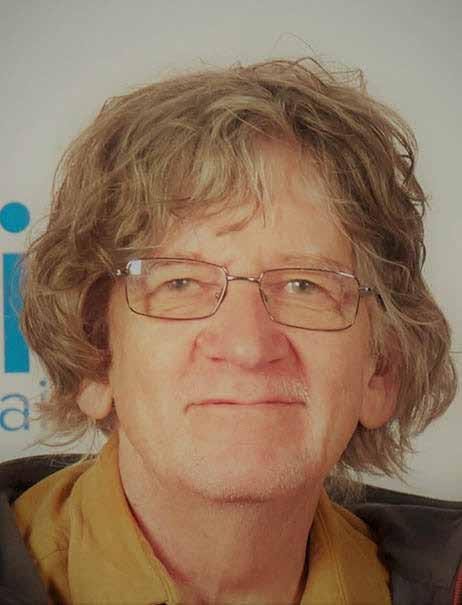
John Grey is an Australian poet, US resident, recently published in Midnight Mind, Novus and Abbey. Latest books, “Bittersweet”, “Subject Matters” and “Between Two Fires” are available through Amazon. Work upcoming in the MacGuffin, Touchstone and Willow Review.
A Walk Home In Spring Rain
Cool spring rain, puddles in the road, roots and buds on high alert
Rainy day, the people in the passing bus windows have that solemn gray look of never coming back this way.
I have a vision of eternity –folks under awnings waiting for the weather to clear.
My hair is matted. My shirt clings to my chest. There’s dribble on my watch-face
What can a guy do but head for home and damn the weather.
Snails experience my brisk walk as light speed.
Serenity Prevails
On a night filled with everything imaginable from a drive-by shooting to a prison breakout to a fall from a sixth floor hotel windowmy head is in a pillow’s hands, my body’s half hidden by blue sheet and blanket, and, as I snore barely louder than a breath, dreams come to enlighten me or take engaging liberties with the past, with feel-good nostalgia, dollops of love, wrapped in a quiet that pacifies, endures, so I can wake up next morning fresh and hopeful, blissfully uninformed.
Birthday Boy
The year has been run through me like a spear. I’m bleeding April. I’m spitting May. January burst my lungs. August seared my brain.. December was the sharpest point and it took out heart and kidney and liver so now the times are shish-kebob. It’s the new year and what do I have but another raw and savage weapon to look forward to brandished by who knows who. The calendar looks so innocent but the evil hides behind that baby giraffe. Soon enough, it will find my weak spot and start ramming. What choice do I have but to suck it up and live.
Disconnected
Shower water breaks on my skin into gleaming bracelet gems.
Border patrol wipe the desert clean of interlopers.
“Illegals” mouth the lips of a small town bar.
A mother’s hands and a father’s pipe are my clearest memories of parents.
The underground befits human waste and brown rat conquest.
The woman in the long evening gown –the more the dress glitters, the more her eyes go dim.
On a wide expanse of shoreline, the sea collapses in a faint at my feet.
The fields are squared off by chainlike fence, as seen from the air, like a crossword puzzle in which all the answers are cows.
Unlike flowers, strip malls burst into life over time.
After rain, such invigorating sunshine. Even the potted plants believe they came by their pots naturally.
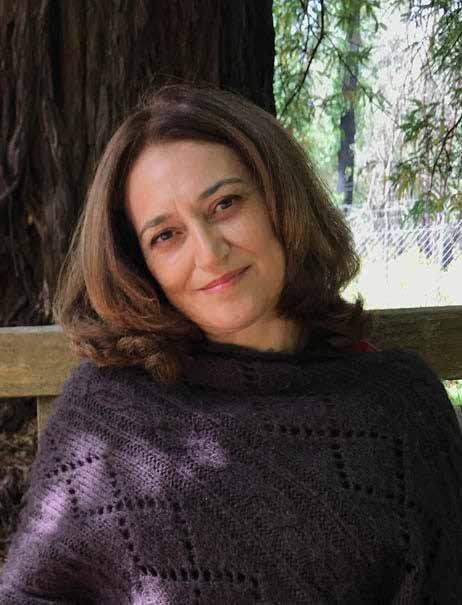
Caterina Mastroianni is a poet and educator living in Sydney on the land of the Cadigal and Wangal people of the Eora nation. She has published poetry in various literary magazines and Australian anthologies, including Kalliope X, Poetry of Flight: The Liquid Amber Prize Anthology, Oystercatcher One Anthology, Burrow, Live Encounters Poetry and Writing, and Poetry for the Planet: An Anthology of Imagined Futures.
The stitch un-pickers
Once cameras couldn’t see - each learned l-e-t-t-e-rinterlocked - into a running threadeach learned word - repaired into a seameach learned text - sewn into a handmade patterna stitched language of resettlementslowly stitched across war-torn fabricsa soft shield deflecting word-bullets - from outside the English classroom where the first surveillance cameras in Cabramatta could shoot into the consequence of translating your being and you being here.
All over the city, cameras insist on turning right side up, what was upside down, on declaring that an image of a text, or a snapshot of a scene is the whole picture, while threads of being –- flawed – frustrated –- or flourishingare picked and pulled up - -until all the panels of textiles- are unstitched - -and it unsettles me, no matter how settled I am.
Steelmakers
We were shiny at first, then second-hand, then obsolete, like a rotary dial telephone, a Holden car or a used fridge. To make them, steelmakers extracted a multitude of hands and legs from drained homelands and filled the emptiness with bank accounts. Steelmaking was like people making, and though they tried to roll and mould our hot bodies into a more obedient alloya colder, more useful form fixed into the frame of a built nationwe kept the humane parts of ourselves for our own making of the next generation.
Some iron bits wedged in: the metallic taste on our tongues, the skeleton steel that braced our houses, the scrapped steel that split a home, the silent steel inside our bodies, the tortured steel that smelted secrets, the polished steel that shined our teeth. They are rusting talismanic reminders at work, and at home reminding us that we are not cars and houses, we are not robots and firearms, we are not tools and devices.

Vasilis Manousakis is a writer, translator, mental health counselor, and university instructor. He has taught or given lectures in universities in Greece, England, the USA, Australia and Cyprus. He is a faculty member of New York Writers Workshop in New York. He is a tenured educator at the University of Patras. He writes and publishes poetry and short prose in Greek and English. His last book is Tango in Blue Nights, Liotrivi Pubs (2025). He also researches talents and character strengths and he co-authored the book My child you have a talent, a manual for the cultivation of character strengths in children. He is the co-author of the student/teacher manual for Creative Writing for the secondary education, which was approved by the Ministry of Education in Greece, and will be taught in schools from September 2026 onwards. He translates and publishes poetry and short prose in Greece and abroad. He also currently works privately as a Mental Health Counselor, specializing in Cognitive Behavioral Therapy and Mentoring for students and young adults. Finally, he volunteers in prisons and teaches Creative Writing to inmates.

Tango in Blue Nights available at: https://www.liotrivibooks.gr/index.php?page=vivlia_tango_in_blue_nights
Tim Tomlinson is the author, most recently, of Listening to Fish: Meditations from the Wet World, a hybrid collection of prose, poetry, and photographs concerned with the splendors of, and the perils facing, the world’s coral reefs. He is also the author of poetry collection, Requiem for the Tree Fort I Set on Fire, and the short story collection, This Is Not Happening to You. He is a founder and co-director of New York Writers Workshop. He teaches in NYU’s Global Liberal Studies and the Deledda Master in Creative Writing & Translation in Sardinia.