Cigarette Angels
On the factory floor, the men bolted machines to the hardwood. They would be the first to tell you they were shipped from Germany where people knew things about the purposes of steel and fire. My father’s job was to wander around from behemoth to behemoth, monitoring the humming gears inside, keeping an eye on the changing facial expressions of dials. Here is the thing. While most of the paper was bound to scream headlines and maybe invite poems, other rolled sheets were sliced again, and again, in which cured tobacco, now separated and crushed was to be inserted a section of charcoal granules between the cigarette and the filter, added for the sake of public health. That’s where he met my mother, a pretty girl from a tobacco farm who came up from the floor below, having risen from the one below that as the years doubled, then tripled. She fed the leaf into the hopper, then checked the other end to see that the product was uniform. Soon after they married, I squirmed out.
Awake at Three
Beyond the window: summer night stilling the wrens, sparrows, and hawks. The small dark brook even now makes its stony way to the Hudson like someone leaving before the seventh inning..
That girl from far away comes back to me in a dream. Knowing we belong we sit and hold hands. The waiter returns and asks if we would like anything else and she says no.
God returns as night air by the forest floor not disturbing the feathered and the small beings who couldn’t close their eyes: replacements all. Not for the world.
I flick the light on for just a minute, then turn it off.
A child’s ceiling stars in random constellations, loop and align according to their innocence, as if I was being invited to pause before their dimming phosphorus.
Cicadas at Dawn
I couldn’t sing. Neither could I keep the bushes trim: they kept sending out shoots. Mr. Hall, the principal, was still coming down the corridor, brandishing a copy of Orwell in one hand and a paddle in the other.
Chipmunks criss-crossed in front of me, tails at full exclamation point. The clouds seemed forms willing to take on any figure to pull away from the blue behind them. I had a name for when I was everywhere truant, but by that measure, still alive. L. said words would fence our desires in, but he was unfortunately in a bad place, whereof he spoke. The nuns on the hill, the fathers and brothers billow as they walk from their cars to Maryknoll. Having lasted the night, The cicadas at dawn surge and retreat. Summer will come to a halt. You can mark it off with that pencil I left you by the refrigerator and do whatever else you need to do, when the mowers drive their red machines between our houses, meanwhile.
Second Person
I like the way the wind lifts the glass twine of the green spiders, but I save my praise for the switches to which they are tied, also leaning into the air. I was thinking of switches the other day, how you had to go and select just the right ones when you had been found guilty of something shameful, selection itself being part of the penance and symbol too of how that might be forgotten (it never was) in wake of the lashes, formally laid on to your tiny hide. And nature is both more devious and absorbing than you thought it would be, coming down to breakfast in your slippers, the little edemas now peeking out from your ankles, like you, bleary to no one in particular. How you hove off into the morning again, switching your point of view into the second person, like a sedan having rounded a curve at the bottom of a hill. Momentarily the glass flashes as sunlight meets the windshield and the oncoming traffic behaves itself.
As I say, the cables lift and hold, a fine enmeshment easy to look past, necessary even, in the dappled confusion of ordinary morning, the grim process of nothing special. The mind says “let…” and off you go in your fabulous jalopy. Even the weeds may be said to mean you well in their nihilistic way, as you blow past, half in daydream, baseball cap reversed, shading those secret eyes in back of your head.
Along the Palisades
I bring my father with me, and my mother, who only saw the city once during the brief misery of my first marriage. Who else do I bring? Brother, of course, himself buried In the stiff basalt lava of Ohio.
Small waves wash ashore, then pull back into the swollen stream, glinting as the sun powers down in the west. There are egrets, of course, curvature itself mounted on walking scissors, stalking the marshes, and above,
eagles in slow rotation. Farther out, jets bound for Newark. The river traffic hardly moves. My parents likewise slow as they emerge into time again, and we walk along the river’s edge, bounded by cliffs on the far side, a seaward footpath on this.
Hoeing
You can look out and see glassy threads waving in the air, butterflies as large as magpies making chaotic flight over the saplings. Sunlight moves from one side of a web to the other. The spider is a sundial and slowly burning. It’s August, the leaves everywhere exhausted. A wasp rises like the Holy Ghost. The air swallows it. Another drifts down, more like a parachute than a winged being. It is well to have lost our way, lost the time we were given to thrive. Still, there is a motion to the whole of this patch of creation. At the center sits the spider, its regulator and citizen. When a cloud comes it feels like a reprieve, until you watch it cross the sky. You can feel the breath of the question like a man hoeing along a field, one row at a time, alternating between effort and rest, parting the earth, then standing straight a moment, wiping his face with his shirt, wiping his eyes.
The Mouthpiece of My Cornet
Whatever the sun’s might was then, it was nothing compared to the flag being lowered, at which point we turned and set out across the grass. Someone asked, “When does surf become fact in the waves?” I felt a slap coming on and rifled through my rejoinders until I found a big one.
“How far we have spread,” said another. A third trilled, “And how little.” The strata before us extended along the embankment, before it seemed to fold into a ledger, one with tall pages and keen blue lines, next to the symbols for percentages and dollars, which were a way of policing the penmanship that we, wags that we were, were taught. I blew my cornet in front of the whole school, and I knew that behind the sun-blinded window squares my classmates shuffled their supplies messily or neatly, as the case may be, as if to say, keep up the good work, or as a star would say to the gravity that held it intact, and spiraled off.
The late August days offer choice in the riot, but I sit here, and you probably there, as if nothing could ever matter more. The word brilliant comes to mind, but not without qualifications. Or difficulties not of anyone’s making. Late at night, some birds whereof I know little, square off. I want
to grow a little wilder, to find things in range of my elbow. The mouthpiece, of my cornet lies somewhere good, I hope, some felt bed that opens nothing whatever of its distant provenance and yet points in the direction of songs we set out to play so long ago. So much for moon shadow and tales
from the Grand Chartreuse. So much for the pickers in their denim overalls, or for that matter the pink-coiffed church ladies, the cleaners of headstones. Ants mount the balustrade where you are, where I am. They pause at the flat top, feelers waving. It must be a tower to them.
Gallipoli
While other poets are boring down into their souls, I’m fixing my pillow to read about a soldier from Gallipoli who reported that the bullets were like a shower of rain coming down on the sea. Commanded to advance, they trudged ashore, trying to keep their carbines hoisted above their heads. What else were they to do? Downstairs, a pot of shamrocks coiled and dangling, some exhausted, awaits tending. Next to them the cold window and snow country, streetlights like reduced moons. Nearing sleep myself, I remember a song I used to dance to, in which can be heard a sideman whispering, What key? What key? That was folded into the song. Meaning couldn’t get near it.
©David
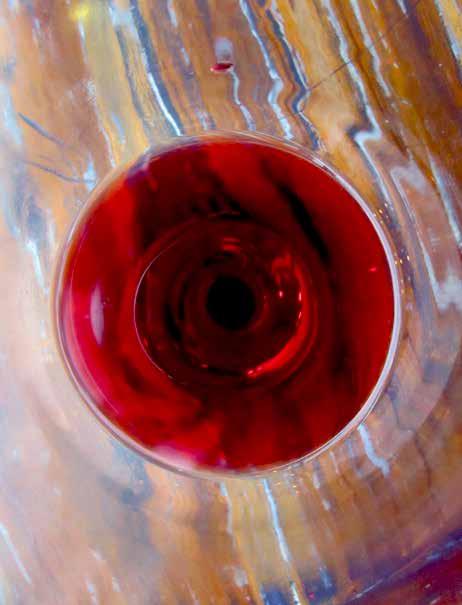
Glass of wine on a wooden table. Photograph © Mark Ulyseas
©Mark Ulyseas
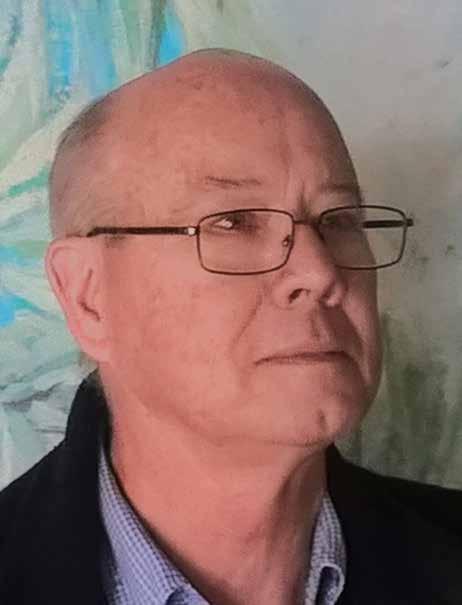
Richard W. Halperin. Photo credit: Joseph Woods.
Richard W. Halperin’s poetry is published by Salmon/Cliffs of Moher (five collections) and by Lapwing/Ballyhalbert (twenty shorter collections). The most recent Salmon, November 2025, All the Tattered Stars: Selected & New Poems, Introduction by Joseph Woods, includes ‘Now, Mother, What’s the Matter?’ which was The Poem of the Week in The Guardian, January 19. The two most recent Lapwings, June 2026, are Silk Threads and Some Walk with Sticks; many poems in these first appeared in Live Encounter Poetry & Writing.
Wherever It Pleases
‘. . . The wind blows wherever it pleases. You hear its sounds but you cannot tell where it comes from or where it goes.’
- John 3:8
Poetry, too. No one, least of all poets, knows where poetry comes from or where it goes. Sometimes poets themselves get blown off cliffs, off ships.
Wind is anarchic, poetry as well –property is theft. Anything Baudelaire notices is anarchic.
Wind cleans. ´It’s a bright evil world,’ says the very Irish narrator of Welles’s The Lady from Shanghai – platinum blonde Rita Hayworth brilliant in white and speaking Chinese into telephones –which ends in a hall of mirrors.
In The Winter’s Tale, nothing stays the same, and that without transition. Near play’s end Queen Hermione, vilified unjustly and thought dead for a generation, is resurrected. Easy-peasy, although music helps.
I have no idea why Stevenson put ‘The Swing’ in A Child’s Garden of Verses. A terrifying poem. Swings go wherever they please.
Language Close to The Word
T.S. Eliot’s play The Cocktail Party. I have read it innumerable times. Is it seldom done because it requires a perfect cast and perfect production, as in Edinburgh in 1949? I do not know. Each time I read it, I am all the parts, which does something to me. Language which takes my breath away and makes me realise I do not know what breath is. He aims higher than Milton and, ping, hits it.
Dresses by Dior for the ladies, a catered trolley of cocktails, a psychiatrist who may not be a psychiatrist, a person who can hear the sound of bats whose family has to send him to an island where there are no bats, a young woman in the first two Acts who in the last Act is reported to have been crucified near an anthill on an island (not the island where there are no bats) – all dramatise love. I had to be old to realise this. I realised it yesterday.
‘Peter, take and eat’ says God in Acts as Peter dreams that a net in lowered from heaven with every living thing in the world in it. The Cocktail Party. Crisps and Dior dresses. Language can do that.
Grovers Corners Mind of God
If anything has been left out of Our Town, I do not know what it can be.
A kitchen. Implied streets and farms. a graveyard on a hill. Early on, a letter which a minister has sent to a young girl. She shows it to another young girl who reads the envelope, not the letter, outloud. The play is about what is written on the envelope.
Any high school can put on Our Town and many have. Any audience can come to see it, and many have. Several great film and stage actors, at the end of their careers, have wanted to play the Stage Manager who narrates, and a few have.
At the end of Act One, the Stage Manager tells the audience that they can go out now and have a smoke if they like, and some do, surprised that the street is still there.
Vogel als Prophet
I write this as a flurry of things is flurrying: a letter from a cousin in the USA ‘good to see Barack and Michelle Obama again at the dedication of the Chicago Presidential Center, it brings hope back into the picture’ –
a CD of Tobias Koch playing Robert and Clara Schumann pieces on an 1852 Érard pianoforte, including Vogel als Prophet which is the purity of an unheard bird heard –
a dinner last night with another couple, Canadian, whose work is also constructive –
my own recalcitrant body and the fact that the author of The Cloud of Unknowing, thinking the sun and the moon are only bodies, says in his Chapter 62 that the sun and the moon are worth far less attention than anyone’s soul because the soul is you and God direct –
the great soprano Lillian Nordica whose voice was said to be more powerful than Flagstad’s who advises singers in her memoirs: if you feel like putting on and taking off your scarf a hundred times during an evening to protect your throat, do it despite what The Great They think because The Great They don’t have to sing.
Alicia Viguer-Espert
Alicia Viguer-Espert, born and raised in Valencia, Spain is a three-times Pushcart nominee and a one-time Best of The Net. Winner of the San Gabriel Valley Poetry Festival (2017) with her chapbook “Holding a Hummingbird.” Two chapbooks, “Out of the Blue Womb of the Sea” (2020) and “Four in 1” (2022) published by Four Feather Press. Her poetry has appeared in numerous anthologies as well as Panoply, Amethyst Review, Lummox, Altadena Poetry Review, Odyssey, Valiant Scribe, Live Encounters Poetry & Writing, Galway Review, Thimble and Gyroscope.
To My Brother
From the bedroom you listen to Zeus’ thunderous messages, the sea and the pulse of waves afraid to die.
You dream of the infinite ineffable, those moments of your childhood when you hold the ball triumphally determined not to let it go, while your ears fill with loud voices from the ones pulling it from you.
You, a sleepwalker child without books or backpack, score a goal, your parents buy you an ice cream, the sun illuminates your mud-covered uniform, an honor as big as the bestowed on the valiant masked warrior, El Guerrero del Antifaz. *
Of the child you were, only pictures remain, a wooden horse who once took you to Damascus now covered with dust in the garret, the silk scarf you stole from your first girlfriend.
But today, your last, we promenade arm on arm by the garden of gone remembrances, comforted to notice that ours, are still here.
* A cartoon hero of the 60’s in Spain, who covered his face with a mask.
The Name
Your name tastes of lavender, star anis, bitter herbs never mentioned in the Santoral; * parents had to imagine a winter day to celebrate.
The tramway where your name was decided echoed, between the rattle of wheels, your dad’s desire, your brother’s hope, your mom’s dreams for you.
At night, hands on a belly as round as a ring, she plucked from earth names of flowers, jewels, planets and entire constellations.
And in that public transport, two people tore three pieces of paper, wrote three names, mixing them into the darkness of a fedora hat.
The ten-year-old boy, favored Carmen, because Bizet’s Opera, dad holding a fantasy of a truthful child choose its meaning in Greek, mom wished you Luz.
The innocent hand, picked one of the papers, hesitated, returned it to the hat before unfolding it, opened the next one-, and that-time it stuck.
You were not always truthful though, often lied to avoid being grounded, get away with chores you never intended to complete.
When older, you searched Medieval prayer books where gilded names of martyrs are stenciled; yours was never recorded with All Saints.
But when your dad called your-not so Christian name to stroll by the river hand on hand, you inhaled the unequaled perfume of mystery you are.
* List of saints celebrated by the Catholic Church.
* Luz, light in Spanish and also, a female name.
Hemat Malak
Hemat Malak lives in Picton, NSW, and works as an accountant in the not-for-profit sector. Born in Egypt, she migrated to Australia with her family in 1969 at the age of three. Following early recognition for her spiritual writing, which received finalist placements in international awards, she returned to poetry after decades away from the form she first loved as a child. Hemat won the 2025 Bruce Dawe National Poetry Prize and is a Pushcart Prize and Best New Poets nominee. Her poems have been shortlisted for the ACU Prize for Poetry and the Robert Gray Prize and longlisted for the Liquid Amber and Ros Spencer Poetry Prizes. They have appeared widely in Australian and international journals and anthologies, including Rattle, Rochford Street Review, Catchment Literary Journal, Locative Magazine, and publications from 5 Islands Press, One Art, WestWords, and WA Poets. Her debut poetry collection is forthcoming with 5 Islands Press (2026). Find her at hematmalak.com.
The Secret Work of Pillows
Who else could love that face? Plumped and dressed for your arrival I let you lie [pancaked] on my satin sift the silt out from your head have you rest (and snort and dribble) while I mend and polish your mistakes put them back as if you’d won before you wake so you can go again precious little human head so fervent so intense so afraid
My Hair is a Ride on a Harley, No Helmet
What a pot-holed road we’ve cruised, you trailing behind me, as we ride into the wind. People call out, side-eye, look back. We leave lines of discarded containers—
gels, oils, creams—like breadcrumbs. But who’d want to return to those flare-filled days of burnt-out dryers, singed ends and straight-for-a-second-then-it-rained cries?
There’s no taming you, you furious frizz-ball. You own the road, whether I like it or not. Though I’ve felt your patience, idling, till I would learn to let you be as kinky
as you please. I’ve stood in your warm revv of approval, reading the backs of bottles, unmasking all the coded words for silicone (that you so despise). That year of chemistry wasn’t wasted as my tongue rolled over rivals: cyclo-pen-tax-il-ane amo-di-meth-icone (though ok if cetri-mon-ium chloride’s in the mix).
Ohh and the proteins that would stun you rigid, crunch your cuticles till you seized with a splutter those times I’d dress you like a salad with mayonnaise, yoghurt—even egg!
Remember when I almost lost you? The stress from that old boss—her screeches like rips—and then I wouldn’t listen to your whimpers on the shower floor? How far we’ve come.
I see the comedy now in those thirsty days of high humidity when you’d float, all your strands apart, doing cartwheels with your mouth open like a sideshow clown.
Oh my cashmere, my silk, my yes-you-cantouch-it coiled cobra, leave your leather behind the door now. Come, sleep on this satin pillow I’ve plumped just for you.
The Gnats of Your Comfort
We used to go to Flemington markets every Saturday. You’d buy boxes of overripe fruit and veggies from all the bargain spots for our little family of four.
We’re grown now and half of us have moved away but you still buy boxes. I don’t know what hunger you are feeding but its gnats don’t die when I swat them.
Image by Studio Lichtfang from Pixabay.
John W Sexton
John W. Sexton lives on Carn Mór, a mountain on the Kerry side of the Beara peninsula. He identifies with the Aisling poetic tradition and his work spans vision poetry, contemporary fabulism and tangential surrealism. His poetry is widely published and he has been a regular contributor to Live Encounters. He is the author of eight poetry collections, the most recent being Futures Pass (Salmon Poetry 2018), Visions at Templeglantine (Revival Press 2020) and The Nothingness Kit (Beir Bua 2022). In 2007 he was awarded a Patrick and Katherine Kavanagh Fellowship in Poetry.
Her Dress of Blue Feathers
In her dress of blue feathers she came to my sleep
In her dress of blue feathers she found me
She shook out my coat of its silver and dust
And promised that she would astound me
She pulled up my shoes by their dry speechless tongues And bid me to dance in my skin
And together we danced on the ribbons the moon Sent down for us to step within
She shouted the mountains and shouted the sea
And they blindly jumped into her purse
She shouted the night and she shouted the stars
They surrendered themselves to be hers
In her dress of blue feathers she asked for my heart
And I gave her my heart completely
And she tore it in two and tore it in four And said nothing but her would defeat me
In her dress of blue feathers she said that she, That only she could beguile me
She’d beguile me for weeks, beguile me for years Beguile me forever and ever
And each night of each week and each night of each year
Would be as short and as light as a feather
In her dress of blue feathers she came to my sleep
In her dress of blue feathers she found me
Jonathan Cant
Jonathan Cant is a writer, poet, educator, and musician. His work was shortlisted in the 2025 Gwen Harwood Poetry Prize; won the 2023 Banjo Paterson Writing Awards for Contemporary Poetry; and was longlisted in the 2023 Fish Poetry Prize. His poems have appeared in Cordite, Island, Verandah, and Bristol Noir. Jonathan’s debut poetry collection, Finding Pan, is available at 5islandspress.com
Nine by Nine by Nine
1.
Nine, you’re so shapely. You’ve really done a number on me. Dressed to the Nines to impress. You have a multitude of fine facets—I never knew you were such a well-rounded character. You are the months it takes to create a human life or conceive a big idea. Workdays start with you. You’re the highest single-digit number;
2.
but you do like to be spelled out—no short cuts for you. You’d prefer we go the whole Nine yards ’cos a stitch in time saves… Nine baseball players and innings and stanzas in Donald Hall’s poem Meatloaf. Bat Out of Hell, the album, peaked at Number Nine on the rock chart in Britain. “Good thinking, 99!”— she was always helping Max get smart.
3.
Nine by Nine by Nine. That’s odd: even when you’re cubed, 7-2-9 is the result—the first two figures add up to the third. You’re the sum of yourself. You contain yourself. Walt Whitman would have agreed: you “contain multitudes”. And, like Walt, I bet you “contradict” yourself, too. Nine, you contrarian. Now even 6 wishes it were you!
4.
The nonet is a nice Italian poetic form—its Nine lines of Nine syllables decreasing to one in the last line. However, Dante used terza rima to take us through the Nine circles of Hell in his Divine Comedy. The Aztecs and Mayans also suffered Nine levels of Hell. And the Ancient Greeks had how many
5.
muses? Nine, you mysterious and magical number, you make black cats lucky—giving them Nine lives to waste. You owned the planets, too—before poor Pluto’s demotion. You’re right in your element with the Hindu world: Earth, Water, Air, Fire, Ether, Time, Space, Soul, and Mind. You’re Buddha’s Nine Virtues and Odin’s Realms and his days spent. Hanging
6.
upside down, you’re a 6 arse-up. You even have your very own Cloud, Nine— an ephedra-based party drug way back in the early Nineteen Nineties: Herbal Ecstasy. Possession is Nine tenths of the law but, then, you weren’t illegal. No, not like the Real Thing. Here, toke on this number—it’ll numb the edge off all this nonic nonsense.
7.
Nine, you’re one half of a tantric act and you look like a single sperm with a bent flagellum. Yes, you’re into some flagellation: your cat-o’-Nine tails and your 99 lashes. Nein!— saying “no” in German. Remember Nena’s song Ninety-Nine Luftballons? I much prefer If Six Was Nine by Jimi Hendrix. Even Prince said he’d
8.
“party like it’s 1999”. In music, you’re a note of nuance, Nine. Hiding humbly, midway between the tonic and the major third. Jazz loves you—uses you. So do the Blues. Classical music composers had a superstition they’d die after completing their Ninth symphony. And Ludwig Beethoven was proven right.
9.
There you are, Nine, in pairs, at the end of price tags—a virtual hundred because you’re always rounding upwards. On pages and screens, you’re at the end of people’s “quotes”—always having the last word, you cheeky punctuation mark. This is no ode, that’s fine, but I still celebrate you. You may not be a 10, but you’re almost perfect, Nine.
Luis Cuauhtémoc Berriozábal
Born in Mexico, Luis Cuauhtémoc Berriozábal lives in California and works in Los Angeles. He is the author of Raw Materials (Pygmy Forest Press), Make the Water Laugh (Rogue Wolf Press), and Peering into the Sun (Poet’s Democracy). His recent poetry has been featured in Blue Collar Review, Live Encounters, Mad Swirl, Oddball Magazine, and Unlikely Stories.
Empty Promises
Swallow your pride. Do not chase empty promises. Leave that for the unsmiling insects hiding in the hedge.
We all become dust. If we are lucky, we are given parting flowers as we lie in darkness under a giant tree. People come to see us and light candles in the half-darkness of churches.
Darkness Never Leaves Us Alone
Darkness never leaves us alone. It stands outside the door. It suctions all the light inside. There are days it devours all the calmness and friendliness.
We lie in bed at night. There is darkness sleeping next to us. Why does it come when we are dreaming over and over again?
Our eyes are weary from darkness. It comes to bring us anxiety. It comes to instill hurt feelings.
Moments of peace are a blessing. When it comes, we feel at ease. Darkness brings coldness to our hearts.
All night it spreads its dark wings spreading poison and disease, a plague unlike any other.
Wandering
Wandering through sleepless nights he walks back and forth in and out of traffic in grimy streets, twice almost getting run down as the stars look away and the moon veiled by dark clouds. He sleeps on the streets when he knocks out and the wandering takes a break. In the clinic downtown they know his name. His life is at risk out there in the streets under the sun and moonlight. In these streets that feed on his sorrow, and the sorrows of those like him, the wandering persists. In these streets, where one’s life flashes faster than flapping butterfly wings, in darkness and light. It gets tough. The wandering end up behind bars. They are locked up when a home is what they need just for a start.
Keep Silent
On the death ship, a stowaway, I keep silent like the dead stars mouthing words and sighs forgotten. In this place I sit and listen to drops of rain from faraway streets where no sun shines and nothing in life matters but the row of boats.
Open The Door
Open the door. Turn the corner. Walk in the sun. Smell the roses. Take in their fragrance, even if nobody else will. Take your loneliness for a walk every day. Get it good and tired. Go to bed and sleep it all away.
David Atkinson
David Atkinson is a Sydney poet; his poems have been published widely in Australia, the USA and the UK. David’s awards include First prizes in the Ros Spencer Poetry Prize, the FAW Jean Stone Poetry Award and the Whitsunday Heart Poetry Prize. David has published three collections: “The Ablation of Time” (2018), “Strands and Ripples” (2021) and “Natural Light” (2024). He convenes the Pennant Hills Poets workshop group in Sydney. David is a poet of memory, the human condition and the natural world. See: www.davidatkinson.com.au
Childhood Memory
For Isla (aged 3½)
I watch you race back and forth, back and forth, through the playground, radiant smile, runaway elation.
Our routine, multicoloured ball on the slippery dip with the savour, ambience of parkland grass.
You make believe in the two dolls houses, across the street and in our lounge room, you clasp the gilded dolls and toys.
You explain your Christmas books, tactile pop-ups. Eager episodes of Bluey, the focus of your face.
Joy when George the kitten appears, his determination as he swings away on the crossbar.
A sparkling smile as you run. You may not recall today; will you remember eyes of love?
Kite
I.M. Ian N.
You came and taught me how to build a kite, my spirits soaring with it to the sun, a stirring sight. Array of struts and string and glue as one, with nothing imprecise or left undone. My far-flung impulse running wild and free. Designed and built, your baffling gift to me.
I wondered how the winds would make it climb. Our country climate kept the squalls away, with endless time for flight remote from hindrance; thus each day my role confirmed to be a child at play. Your well-judged skill ensured the risks were less than could be overcome with your finesse.
The trick to keep the cord restrained and taut, to watch and guide with vigilance and flair. The breezes fought, I held against a chancy rip or tear you then repaired with diligence and care. I learnt to lead and harness, not be pinned, by uncontrolled inflections in the wind.
An engineer transposed to rural life, a different way to use your razor brain, a needle knife applied to dream beyond the dull, to train your callow nephew for his lasting gain. We looped and leapt as though in outer space. I still recall your tender easy grace.
The joy of freedom running as a boy, the kite in tow and weightless way up high, not just a toy. You showed me how to struggle, to reply with faith and vision, not debating why. My reaching eyes still focus on the height, recalling how I stared with such delight.
Cud
Heads bowed as if in reverence, tactile tongues wrapped like gloves around grass, pastoral farmland.
Knapsack of each leathery mouth contains and chews cud, milk for the calf.
Over the paddocks advance of a squall, livestock turn about, haunches to the gale, bovine instinct.
The smell of stippling drizzle. Cumulus cloud, brumous blanket screens the south like phlegm.
Offspring will be taught, imprinted with skills of survival. Each generation exists in turn
as it is destined to do. It is claimed that some species have sentience, a point of view.
Are ruminants able to ruminate, to think through the nature of their lives and to communicate?
Whenever cows congregate, heads lowered and almost touching, the community appears to converse as if speaking in tongues.
© David Atkinson
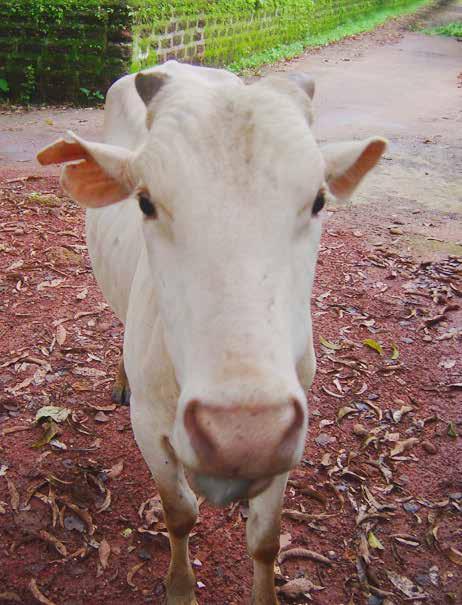
Cow in Goa. Photograph © Mark Ulyseas
©Mark Ulyseas
Lynn Strongin. Photo British Columbia Canada by Deborah G Munro.
Lynn Strongin, b NYC 1939 grew up in a household of music and the arts. Attended Manhattan School of Music, transferred to Hunter College for a B.A., went to Stanford University for an M.A. in Literature. Moved to Berkely during the active sixties, worked as secretary for Denise Levertov, met Josephine Miles and other Bay Area poets. Began to publish in small magazines. Has been nominated for the Pulitzer Prize, published fourteen books, won an NEA creative writing award and appeared in twenty groundbreaking anthologies, mainly feminist. A pioneer for rights for the disabled and for women, Strongin now lives in Canada which has become her second home. Lynn was also nominated for Lifetime achievement for the Woodcock Award (Canada). Her latest book, “Salai, you little Devil! The Shipwreck of Adoration”, which is on Leonardo da Vinci’s lifetime, “Apprentice / companion/ lover” out on Amazon.
Family silvers
Roll over your portrait, quicksilver. Flee! Fruit parlors gleam in Japan. Parlez, talking tragedy. My words are the only shawl sheltering me a cri de Coeur, one step near oblivion.
With a disfigured face, like Cherie, with a strawberry birthmark: Toughen up, the sadness of parlors lit dimly: frugally. Landscape a great weight on the eyeball, a passport to God could be.
Being cut by glass the Private, not knowing it till he sees blood run down his leg. My summer a woody rust-belted keg for shampoos. Is open to the sky
The snowy owl, red fox are native to this country We’re as strange as the silver running over your portrait solarized like bruised silver quietness, brown eyes.
FIRST, THE sadness of turning thirteen
The movie parlor Marquee bulbs blinded by noon With a girlfriend chewing gum: the motes of dust whirl from projector to milky screen
Then the ice cream parlor, frilly socks with bleached sandals Of a Sunday, a mood-board downtown Small town fuzzy in the background. Glossies, movie mags, the north star.
Two years ago
She was wheeled on a stretcher in pad & gown to high-ceilinged hospital auditorium to see Gene Autrey. Dale Evans riding into sunset.
The beauty as it existed at the edge of town, the summer before polio everything was on loan, bent, cardboard, corrugated roofs of iron.
AMID THE SILENCE of silvers
Flocked birds Passenger pigeons who brought love letters.
She rested in the sitting room, front parlor: radio featured someone partnering with a double bassist. Last stop, the train stains wood platform. She kept the latest letter folded to her breastpocket. It warmed The color of magnolia at the edges.
And it wasn’t spring, on the boulevard, families silvering. You only get one chance to get the sparkles right. Rise up. Dance on!
Michael J Leach
Michael J Leach resides on unceded Dja Dja Wurrung Country in Victoria, Australia. Michael’s poems can be found in journals such as Plumwood Mountain, anthologies such as The Best Australian Science Writing (NewSouth Publishing, 2024 and 2025), and his four books: Chronicity (Melbourne Poets Union, 2020), Natural Philosophies (Recent Work Press, 2022), Rural Ecologies (In Case of Emergency Press, 2024), and Chords in the Soundscapes (Ginninderra Press, 2025). Michael’s poems have been recognised in competitions such as the University of Canberra Health Poetry Prize, Woollahra Digital Literary Award, Liquid Amber Poetry Prize, and Philippa Holland Award for Poetry.
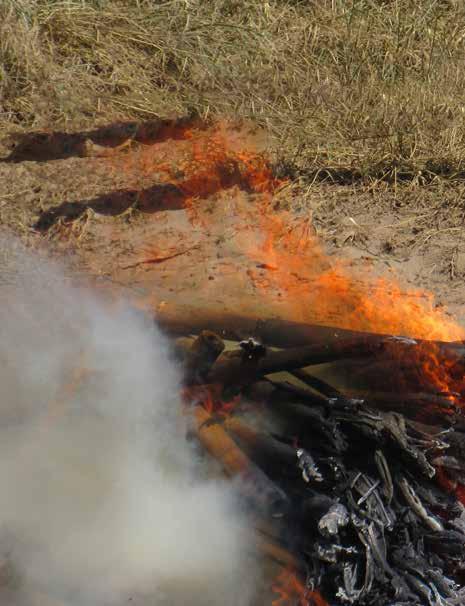
Campfire, I Tried
A response to ‘Quickfire, I Tried’ from Moonface (AKA Spencer Krug) and Siinai’s album Heartbreaking Bravery (Jagjaguwar, 2012)
Campfire, I tried to light you and to feed and to stir and to sit by you
Campfire, I tried to be social but all the spoons had already gone
Campfire, I tried to play like Krug but my fingers couldn’t find the keys
Campfire, I tried to live in cities but the concrete crushed my wellness and left me sick for home
Campfire, I tried to be a pharmacist but I couldn’t keep up with the prescribers
Campfire, I tried to win each prize but I knew I’d lose to worthy winners
Campfire, I tried to stay positive but negative’s my natural state
Campfire, I tried to hear the news but certain stories rang untrue and left me sick for truth
Campfire, I tried to use the app but it wouldn’t work as promised
Campfire, I tried to tell tasteful jokes but the joke was still on me
Campfire, I tried to keep calm but pressure kept coming like metro trains
Campfire, I tried to sleep at night but my brain remained enmeshed in daymares and left me sick of consciousness
Campfire, I tried to picture each moment with her but the memories had faded like sweet dreams
Campfire, I tried to picture each moment with her but the memories had faded like sweet dreams
Campfire, I tried to keep you going Campfire, I tried but you’re going out
Photograph © Mark Ulyseas
©Mark Ulyseas
© Michael J Leach
Michael Minassian
Michael Minassian is a Contributing Editor for Verse-Virtual, an online poetry journal. His poetry collections Time is Not a River, Morning Calm, A Matter of Timing, Jack Pays a Visit, and 1000 Pieces of Time are all available on Amazon. For more information: https://michaelminassian.com
Shards of Glass
My friend, the pilot, never talked much about his time in Iraq or Afghanistan, preferring to write long rambling poems about injustice, immigration, and voting rights.
Someday, he says, you and I will march shoulder to shoulder, filling the streets with words, as sharp as shards of glass.
For a moment we share the vision before clutching in a bear hug, grizzly-like in its attention.
The last time I saw him he was reading a poem, glasses perched on the end of his nose, military patches on his jacket, his words exploding like streaming bombs.
Crying in the Whole Foods Store
When I was having lunch at the Whole Foods store, I saw a young black man at a corner table with his head down, shoulders shaking, tears salting his coffee.
Sadness knows many forms and even more reasons to be.
None of the other customers said anything or glanced his way, but I couldn’t look away, glad he didn’t lift his head and catch me staring.
Sadness knows many forms and even more reasons to be.
I finished my lunch then left the café and took one last look— his head still down, his neck bent like a bird poised to lift up and break into a song of lament.
Sadness knows many forms and even more reasons to be.
© Michael Minassian
Photograph © Mark Ulyseas
©Mark Ulyseas
Paul Williamson
Recognisable
Sitting in a café in Sydney I wonder how much Kenneth Slessor would recognise of his city with its smoky pubs; the city where he endured the poet’s testing gift the search for the right word.
Solid old buildings remain in sandstone or red brick some with Chinese characters on their fronts. Jammed between them newer buildings advertise. George Street is closed to traffic for light rail. Passengers stand and check their smart phones. China Town with Paddy’s Market leads towards Circular Quay. Feral pigeons mill around for scraps. Electric scooters dodge pedestrians.
A silver gull sails down the brick canyon past the Queen Victoria Building to where parks with vagrant ibises overlook the Harbour. The homeless with wary faces that hint of damage thread through crowds to sleep in railway station entrances. Ferries ply, still green and cream though most now are catamarans. The bells we hear are from the cathedral drifting over cloudy green Harbour waters.
Paul Williamson is an Australian poet who now lives in Canberra. His recent collections are Edge of Southern Bright, A Hint of Eden, and Along the Forest Corridor, published by Ginninderra Press. His background is in Geoscience.
Different Truths
Industries reap as they lobby politicians to allow more coal mining, produce more gas clear forests for gain, expand by burning fossil fuels boosting short-term profits that swell company stocks.
Other voices call for change to stop climate’s rapid heating bush fires, fiercer heat, storms and floods ice melts that drown coasts. People wave signs outside parliaments so car horns call to save the planet. Others paddle kayaks to try to hinder coal ships leaving port with cargos of greenhouse gases.
Our children watch the natural world drift away in a man-made mass extinction.
Following the Glow
Trekking after weeks at sea we trudge through the strongest Sub Antarctic blizzard the island has seen in decades. Inside the whiteout a skua gull of indeterminate size stands on snow. The last day-glow orange peg has passed from sight. There should be another along the track. The next peg appears. We trudge ten miles in ten hours guided by trust to the field hut.
Trekking now through daunting years we try to keep a steady footing as blinking glows of opportunity people, ideals and faith show the direction to the future.
André Stefan. Photo credit: Sarah Louise Kinsella.
André Stefan is an Australian poet, living and writing on Kabi Kabi country. He has worked under the mentorship of distinguished Australian poet and essayist, Mark Tredinnick. Long-listed for the Red Room Poetry Fellowship in 2025, his work has been published in Oystercatcher Anthology’s I & II, by 5 Islands Press. His work strives to capture portraits of moments, past and present. Reflections on the real. He seeks to find the truest lines for what is wanting to be said. Working on his debut collection, “The Ghost Of Ships,” he hopes to release it to print in 2027.
Crescendo
After Gregory Orr
Rise and fall— two tides of the same sea.
To come of age in this vastness of time and space.
Noosa Sounds Sijo
Closing the loop before dawn Like the pelican downstream I gulp; the time that has flown, no river. Today my heart Pools in prayer—wades into the wake of memories. How blessed.
Waiting Season
A poem toils away for years before it ripens on the vine. Why, then, are we so eager for the Spring?
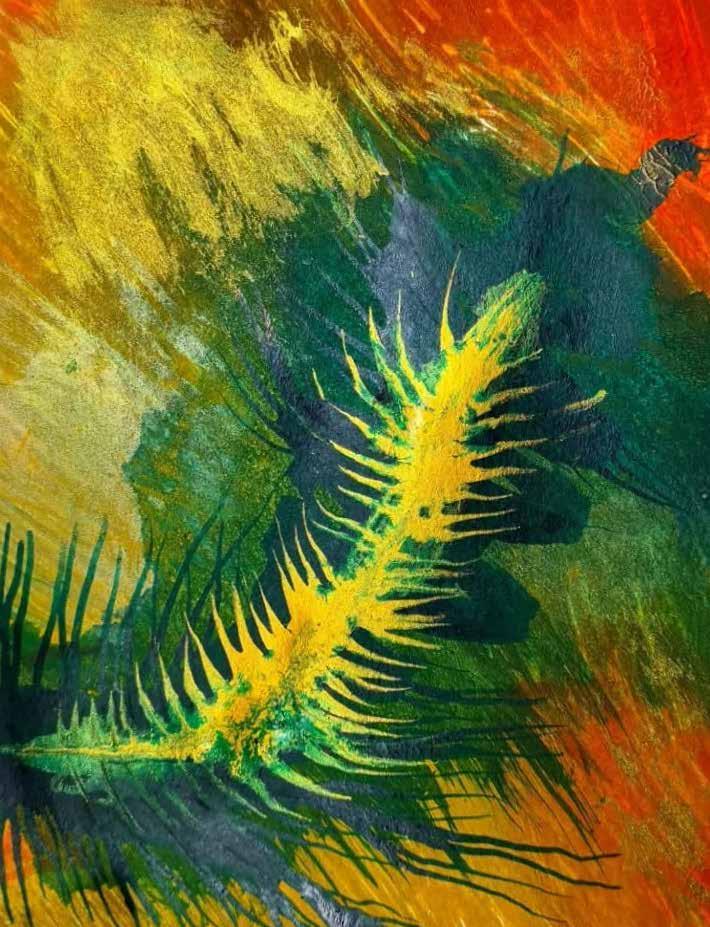
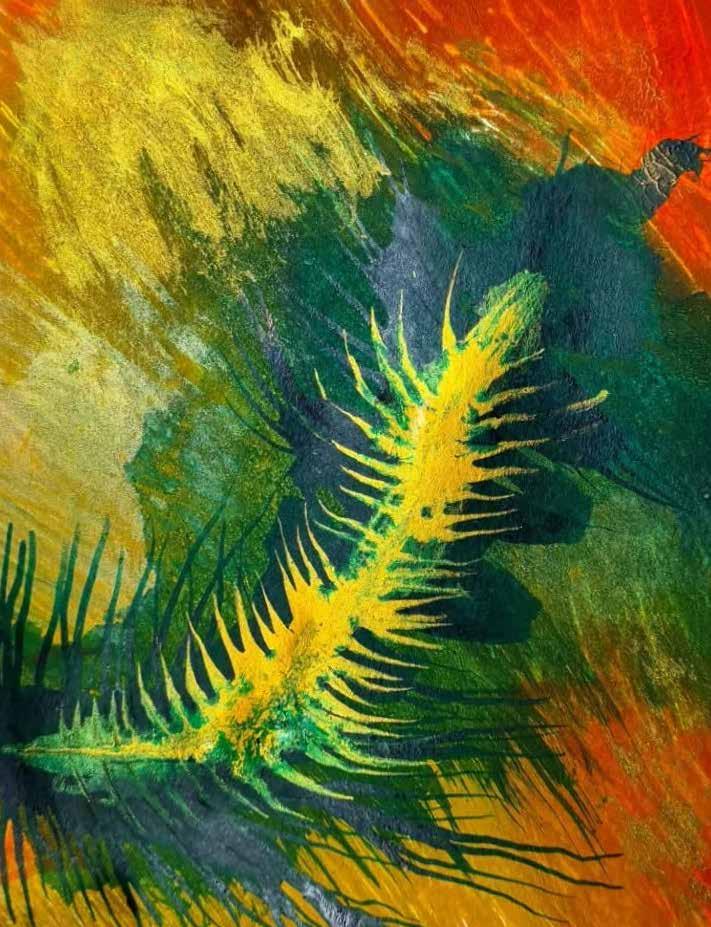
Cover artwork ‘Gold Fragments’ by Irish artist Emma Barone