Review and co-sign SOAP (Subjective, Objective, Assessment, and Plan) notes or relevant records where appropriate
Student Support & Safety
Minimum 40 hours/week of supervised training (may be up to 55–60 hours)
Ensure professionalism regarding phone/social media use
Maintain confidentiality in medical records and client information
Report any incidents or concerns to LIU-CVM promptly:
o CVM-ClinicalPrograms@liu.edu
See contacts in course syllabi for site-specific support
Long Island University, Lewyt College of Veterinary Medicine Clinical Affiliate Handbook Handbook
Tips for Effective Teaching
Set clear expectations and goals with the student
Use “teaching moments” to discuss cases or decision-making
Model professional communication with staff and clients
Encourage reflective learning and curiosity
Teaching Moments
Time is often short in the clinical environment and teaching in addition to the normal workflow can feel unachievable. However, each day provides multiple moments and touch points for teaching.
Several key ideas will be shared here, but a resource for clinical educators in veterinary medicine is Smith, JR., Lane IF. Making the Most of Five Minutes: The Clinical Teaching Moment. JVME. 2015; 42(3). Please let us know if you need help accessing this or other references.
Tip 1: Skillful questioning
1
Connect and motivate like a coach:
o Be present: make eye contact or use gestures
o Use the learner’s name
o Include visualization (“Imagine you are passing the needle cranial to the rib….”)
Listen:
o Hold your questions until the student has completed an answer or case presentation
o Interruptions can be flustering to the learner
Use open-ended questions to probe into mechanisms/principles or application of knowledge. These types of questions can:
o Ask a student to justify their reasoning: This demonstrates knowledge and comprehension. Ex: “Given the signalment and your exam findings, why are you prioritizing these two differential diagnoses?”
o Apply their knowledge to a hypothetical scenario: This challenges students with application of knowledge. Ex: “What would you recommend therapeutically for a patient that presents this way, and you are unable to perform diagnostics?”
o Propose an alternative/ “What if” scenario: explores decisionmaking and application Ex: “How would you approach your initial therapeutic plans in this patient if it was also azotemic?”
Pause…a little longer:
Long Island University, Lewyt College of Veterinary Medicine Clinical Affiliate Handbook Handbook
o Wait at least 3 seconds after asking a question to allow students to develop a response.
Meet the student where they are: Observe body language (e.g. anxiety, stress) and listen to the strength of student answers.
o If questions are too simplistic, start to increase the complexity of application through your next questions.
o If the questions are too challenging, start to decrease the complexity to allow students to demonstrate their knowledge and capacity.
o Learning is most effective with challenge, but not so much challenge that the stress overwhelms the opportunity to learn.
Tip 2: Model The Way1
Clinicians and all staff are modeling the professional veterinary environment throughout the student’s clerkship. The veterinarian’s modeling can:
o Demonstrate clinical reasoning and information processing within the professional environment, and
o Actively involve the learner in moments when time does not allow for a more student-directed approach.
What do I model and how?
o Thought processes and reasoning: Talk aloud and take the student through your thought process by highlighting key factors.
o Before the interaction: Before communication, procedure, or other interaction, highlight to the student specific concerns or approaches that will guide the veterinarian’s behaviors and actions.
o Debrief: After a procedure or interaction emphasize key moments, behaviors, or actions in what occurred that can focus the student’s thoughts and learning.
o Reflection: We hope our students develop a healthy skill of personal reflection through their education to bring into their professional career. This can reinforce the growth mindset and encourage lifelong learning. Consider sharing your reflections on decisions, actions, and communications that develop during your work together. We all struggle at times, and seeing veterinarians reflect on difficulties helps our students set appropriate expectations for their own performance and
Long Island University, Lewyt College of Veterinary Medicine Clinical Affiliate Handbook Handbook
Tip 3: Be Student-Centered
Being student-centered means considering the individual student’s goals, knowledge, and areas for growth. It also charges the student with responsibility for their own learning.
As a veterinarian, consider yourself as a catalyst in the student’s learning:
o Do not provide them with detailed information. However, facilitate their self-directed learning through open-ended questions and reflective feedback.
If they ask a question, consider whether it is best to ask the student to investigate resources for an answer before having a discussion later on what they have learned.
o You are there to help facilitate their personal learning trajectory, but the student should be driving.
Feedback & Evaluation
Mid-Rotation Feedback: Schedule a check-in to review strengths, challenges, and goals.
End-of-Rotation Evaluation: Complete required online evaluation form (via eValue). An email will be sent with a link to complete. The evaluation includes:
o Professionalism
o Communication
o Clinical Reasoning
o Technical Skills
Assess Entrustable Professional Activities (EPAs) using LIU’s Critical Competency Rubric
Long Island University, Lewyt College of Veterinary Medicine Clinical Affiliate Handbook Handbook reflection.
Start of Rotation
Orientation
tour of facility, introductions, expectations, setting goals
Ongoing Feedback in the moment feedback, support, reflective, growth and improvement
Teaching Moments skillful questioning, model processes and reasoning, student-centered
During Rotation
Mid-Rotation Feedback intiated by student, submitted by student
Preceptor Evaluation of Student initiated by institution, rubric with comments, submitted by supervising clinician
Long Island University, Lewyt College of Veterinary Medicine Clinical Affiliate Handbook Handbook
A Message from the Dean
Dear Clinical Affiliates,
On behalf of the Lewyt College of Veterinary Medicine at Long Island University, we want to express my sincere gratitude for your willingness to serve as a clinical affiliate location for our students. Hosting students is a significant commitment, and we truly appreciate your dedication to guiding the next generation of veterinary leaders.
As a distributive learning model, the LIU College of Veterinary Medicine partners with affiliates like you to create an exceptional learning environment for our students. This model allows us to tap into the strengths of our affiliates while ensuring that all students receive a consistent, aligned, and uniform learning experience. This site provides the materials and resources to support you in working with and educating LIU students, ensuring a cohesive educational experience across all our partner locations.
As one of your partners, we view you as an extension of our Veterinary Medicine family. Your support plays a vital role in shaping the future of our profession.
Carmen Fuentealba Dean
Lewyt College of Veterinary Medicine
Long Island University
About this Document
This handbook is intended to provide information to clinical affiliate clinicians and staff regarding the Long Island University Lewyt College of Veterinary Medicine (LIU-CVM). The content should provide an overview of the LIU-CVM curriculum, policies, expectations of students, and guidance for clinical affiliates working with the LIU-CVM curriculum.
Although most common situations will be addressed, this handbook does not cover all possibilities. Never hesitate to contact the LIU-CVM with any questions or concerns.
If any information in this document conflicts with current University or College policies, practices or procedures, the LIU-CVM catalog policies,
Long Island University, Lewyt College of Veterinary Medicine Clinical Affiliate Handbook Handbook
practices or procedures will prevail. The policies, practices and procedures in this handbook are not a contract of any kind.
The Veterinarian’s Oath
Being admitted to the profession of veterinary medicine, I solemnly swear to use my scientific knowledge and skills for the benefit of society through the protection of animal health and welfare, the prevention and relief of animal suffering, the conservation of animal resources, the promotion of public health, and the advancement of medical knowledge.
I will practice my profession conscientiously, with dignity, and in keeping with the principles of veterinary medical ethics.
I accept as a lifelong obligation the continual improvement of my professional knowledge and competence.
ADOPTED BY THE AMERICAN VETERINARY MEDICAL ASSOCIATION, JULY 1969. AMENDED & UPDATED NOVEMBER 1999 & DECEMBER 2010.
About the University
History
Long Island University, founded in 1926, continues to redefine higher education, providing high quality academic instruction by world-class faculty. Recognized by Forbes for its emphasis on experiential learning and by the Brookings Institution for its “value added” to student outcomes, LIU offers over 150 degree programs, with a network of over 200,000 alumni that includes industry leaders and entrepreneurs across the globe.
Accreditation—Middle States Commission on Higher Education
Long Island University is accredited by the Middle States Commission on Higher Education, 3624 Market Street, Philadelphia, PA 19104. (267-2845000https://www.msche.org/. The MSCHE is an institutional accrediting agency recognized by the U.S. Secretary of Education and the Council for Higher Education Accreditation (CHEA).
Once every eight years, the University undergoes a comprehensive process of self-assessment and peer review in order to ensure that it meets the Commission’s standards for accreditation, set forth in its Standards for
Long Island University, Lewyt College of Veterinary Medicine Clinical Affiliate Handbook Handbook
Accreditation and Requirements of Affiliation. The University’s mission statement serves as the lens through which the institution and the Commission’s evaluation team view the standards and apply them to the University.
Mission
Long Island University’s mission is to provide excellence and access in private higher education to those who seek to expand their knowledge and prepare themselves for meaningful, educated lives and for service to their communities and the world.
About the Lewyt College of Veterinary Medicine (LIU-CVM)
Accreditation—AVMA
Long Island University Lewyt College of Veterinary Medicine (LIU-CVM) received Provisional Accreditation from the American Veterinary Medical Association, Council on Education (AVMA-COE) in April 2020. The inaugural class began the Doctor of Veterinary Medicine (DVM) program in Fall 2020. Students who graduate from a veterinary school or college operating under any classification of AVMA COE accreditation are considered graduates of an accredited school for the purposes of licensing examination. Graduates become fully licensed veterinarians upon successful completion of the program and passing the North American Veterinary Licensing Examination (NAVLE).
Mission
The mission of the Long Island University College of Veterinary Medicine (LIUCVM) is to awaken, enlighten and expand the horizons of its students through a commitment to innovation and teaching, research and service to society.
LIU-CVM Goals
To develop an innovative curriculum based on transformative experiential learning, scholarship and research, and mutually beneficial community collaborations.
To provide a vibrant learning environment that promotes academic excellence, discovery and social accountability.
To offer an innovative, accredited and contemporary veterinary program that meets local and global society needs.
Long Island University, Lewyt College of Veterinary Medicine Clinical Affiliate Handbook
To foster scholarship that contributes to enhancing the veterinary health profession.
To cultivate globally competent, practice-ready and entrepreneurial veterinarians.
LIU-CVM Contact Information
The Office of Clinical Programs
The Clinical Programs administration is responsible for oversight of the clinical year program.
Ms. Nan Du Ms. Danielle Fischer Office: (516) 299-3402 (516) 299-3679
Nan.Du@liu.edu Danielle.Fischer@liu.edu
Administrative Assistant
Mr. Sheldon Sandiford Office: (516) 299-2575
Sheldon.Sandiford@liu.edu
Department of Academic Affairs
The Department of Academic Affairs manages registration and academic policy in the clinical year.
Interim Associate Dean of Academic Affairs
Geoffrey Fosgate DVM, PhD
Geoffrey.Fosgate@liu.edu
Long Island University, Lewyt College of Veterinary Medicine Clinical Affiliate Handbook Handbook
Administrative Assistant of Academic Affairs
Susan Sternberg Office: (516) 299-3867
Susan.Sternberg@liu.edu
Clinical Year Veterinary Mentors
Clinical Year Veterinary Mentors provide support and monitor student progress (i.e. required assignments and competencies) throughout the clinical year.
Alanna Chesney-Manz, DVM, CVA
Alanna.Chesney-Manz@liu.edu
Alison Flanigan, DVM Office: (516) 299-3918
Alison.Flanigan@liu.edu
Stephanie Jacoby, DVM
Stephanie.Jacoby@liu.edu
Alexandra Jakubik, DVM Office: (516) 299-3408
Alexandra.JakubikDiaz@liu.edu
Sarah Leavell, DVM, CCRT Office: (516) 299-3644
Sarah.Leavell@liu.edu
Margaret Summers, DVM
Margaret.Summers@liu.edu
Course Coordinators
Full-time LIU faculty members that work with clinical course directors. These individuals are responsible for recording the grade for a course.
Clinical Course Directors
Clinical Course Directors are subject matter experts and may host rounds with students once per week. Additionally, clinical course directors will be a point of contact for affiliate sites and are available to students for clinically related questions. Throughout the clinical year, clinical course directors work closely with contracted specialists as needed.
DVM-800 Large Animal Medicine Clerkship
Jerry Roberson, DVM, PhD, DACVIM (LAIM)
Long Island University, Lewyt College of Veterinary Medicine Clinical Affiliate
Office: (516) 299-2931
Jerry.Roberson@liu.edu
DVM-801 Small Animal Medicine Clerkship
Aline Bomfim Vieira DVM MS PhD
Aline.Vieira@liu.edu
DVM-802 Small Animal Surgery Clerkship
Jessica Baron DVM DACVS
Jessica.Baron@liu.edu
DVM-803 Anesthesiology Clerkship
Andrea Looney DVM, ACVAA, ACVSMR
Vien.O@liu.edu
DVM-804 Clinical Pathology Clerkship
Oscar Illanes, DVM, PhD, DACVP
Office: (516) 299-3689
Oscar.Illanes@liu.edu
DVM-805 Anatomic Pathology Clerkship
Oscar Illanes, DVM, PhD, DACVP
Office: (516) 299-3689
Oscar.Illanes@liu.edu
DVM-806 Diagnostic Imaging Clerkship
Jerry Roberson, DVM, PhD, DACVIM (LAIM) Office: (516) 299-2931
Jerry.Roberson@liu.edu
DVM-807 Emergency Medicine/Critical Care Clerkship
Tara Bellis BVetMed MRCVS DACVECC
Tara.Bellis@liu.edu
DVM-808 Elective Rotations
Alanna Chesney-Manz Office: (516) 582-0183
Alanna.Chesney-Manz@liu.edu
DVM-812 Tropical Animal Health & Medicine
Sukolrat Boonyayatra DVM PhD (516) 299-3602
Sukolrat.Boonyayatra@liu.edu
Long Island University, Lewyt College of Veterinary Medicine Clinical Affiliate Handbook
DVM-813 Community Practice
Alison Flanigan DVM
Alison.Flanigan@liu.edu
DVM-804 Elective-Externship – Student proposed
Alanna Chesney-Manz Office: (516) 582-0183
Alanna.Chesney-Manz@liu.edu
DVM-815 Spay Neuter
Jonathan Perez DVM Jonathan.Perez@liu.edu
DVM-816 Equine Medicine & Surgery Elective Overseen
Laura Patterson MV PhD aPAS DACAS(Genetics) Laura.Patterson@liu.edu
DVM-817 Production Animal Medicine
Jerry Roberson, DVM, PhD, DACVIM (LAIM) Office: (516) 299-2931
Jerry.Roberson@liu.edu
DVM-818 Exotic Companion Animal Medicine & Surgery Elective Overseen
Caitlin Renna DVM
Caitlin.Renna@liu.edu
DVM-819 Shelter Medicine
Yulia Bashkatova-Mills DVM
Yuliya.Bashkatova-Mills@liu.edu
Supervising Clinicians and Affiliate Clinical Educators/Preceptor
The Supervising Clinician and Affiliate Clinical Educator/Preceptor is the main clinical contact for students at an affiliate site. Students can find information on Supervising Clinicians at each affiliate site on Clerkship Site Info Sheets posted on Brightspace. Supervising Clinicians are responsible for completing the end of rotation evaluation for each student and may work collaboratively with other affiliate clinical educators to determine the final evaluation for each student. Both Supervising clinicians and Affiliate clinical educators may evaluate clinical competencies (EPA’s). It is imperative that correct email
Long Island University, Lewyt College of Veterinary Medicine Clinical Affiliate Handbook Handbook
addresses of those evaluating students is obtained. This is the student’s responsibility to verify correct email addresses.
University Equal Opportunity and Affirmative Action Policy
Long Island University is committed to providing a learning, living, and working environment free from prohibited discrimination and harassment and to fostering a nurturing and vibrant community founded upon the fundamental dignity and worth of all its members.
Review the purpose, statement of policy, and relevant definitions on our website: Equal Opportunity and Affirmative Action Policy
University Non-Discrimination/Anti-Harassment Policy and Procedures
Long Island University is committed to an environment free from discrimination, harassment, retaliation and/or sexual assault. Discrimination or harassment based on race, gender, gender identity or expression, color, creed, religion, age, national origin, ethnicity, disability, veteran or military status, sex, sexual orientation, pregnancy, genetic information, marital status, citizenship status, or any other legally prohibited basis is unlawful and undermines the character and purpose of the University.
Review the purpose, statement of policy, and procedures on our website: Non-Discrimination/Anti Harassment Policy and Non-Discrimination/AntiHarassment Procedures.
LIU-CVM Non-Discrimination & Community Resources
LIU-CVM Non-Discrimination & Community Mission Statement
The College of Veterinary Medicine is committed to fostering an environment where all students are welcomed and supported, regardless of their background. We believe that a variety of perspectives enhances the academic experience, promotes personal growth, and strengthens communities and workplaces. We are dedicated to creating a space where every student feels valued, encouraged, and empowered to succeed both on campus and on their professional journeys.
Long Island University, Lewyt College of Veterinary Medicine Clinical Affiliate Handbook
LIU-CVM Non-Discrimination & Community Vision Statement
The College of Veterinary Medicine strives to lead and innovate by leveraging the academic and professional community to:
Advance and integrate a culture that promotes respect, innovation, and collaboration across all aspects of the College.
Attract, develop, and retain exceptional talent to build a dynamic and skilled workforce.
Enhance engagement within the community and expand academic and professional impact.
Prepare veterinarians to excel in a diverse workforce and to be professionals dedicated to serving their communities with care and integrity.
The College of Veterinary Medicine is committed to fostering an environment where all students feel supported, valued, and empowered to succeed both on campus and in their professional journeys.
LIU-CVM Community Goals
Foster a Positive College Culture: Promote principles that support a welcoming environment throughout all aspects of the College.
Attract and Develop Talent: Build a skilled workforce by attracting, developing, and retaining exceptional individuals.
Enhance Community Engagement: Strengthen connections within our community to broaden our academic and professional influence.
Empower Future Leaders: Prepare veterinarians to succeed in a dynamic workforce, instilling values that enhance their practices and communities.
Reporting Discrimination or Bias
The College of Veterinary Medicine is committed to maintaining a respectful environment for all members of its community. If you witness or experience a bias-related incident, we encourage you to report it through the following channels:
Anonymous Reporting: Community members can use EthicsPoint, an anonymous and confidential reporting tool, to share concerns about discrimination or bias-related incidents. EthicsPoint ensures privacy and allows individuals to report without revealing their identity.
Long Island University, Lewyt College of Veterinary Medicine Clinical Affiliate Handbook Handbook
Reporting Procedures: The University conducts impartial investigations, ensures all parties are heard, notifies complainants and relevant parties of findings, and takes appropriate action for policy violations; details are available in the full policy, click here.
Policies: All policies applicable to the College of Veterinary Medicine can be reviewed at liu.edu/policy.
Employees with Disabilities Accommodation Policy
Equal Opportunity and Affirmative Action Policy
Hate and Bias Crime Policy
Non-Discrimination/Anti-Harassment Policy
Service and Support Animal Policy
Students with Disabilities Policy
Title IX/Sexual Misconduct Policy
Title IX Trainings
University Grievance Policy
Complaint Reporting Procedures
CVM Off-Site Complaint Policy and Procedure
We are committed to addressing all reported incidents promptly and in alignment with Long Island University’s policies and procedures. Our goal is to foster a supportive environment where every individual feels valued, respected, and empowered to succeed.
Long Island University, Lewyt College of Veterinary Medicine Clinical Affiliate Handbook Handbook
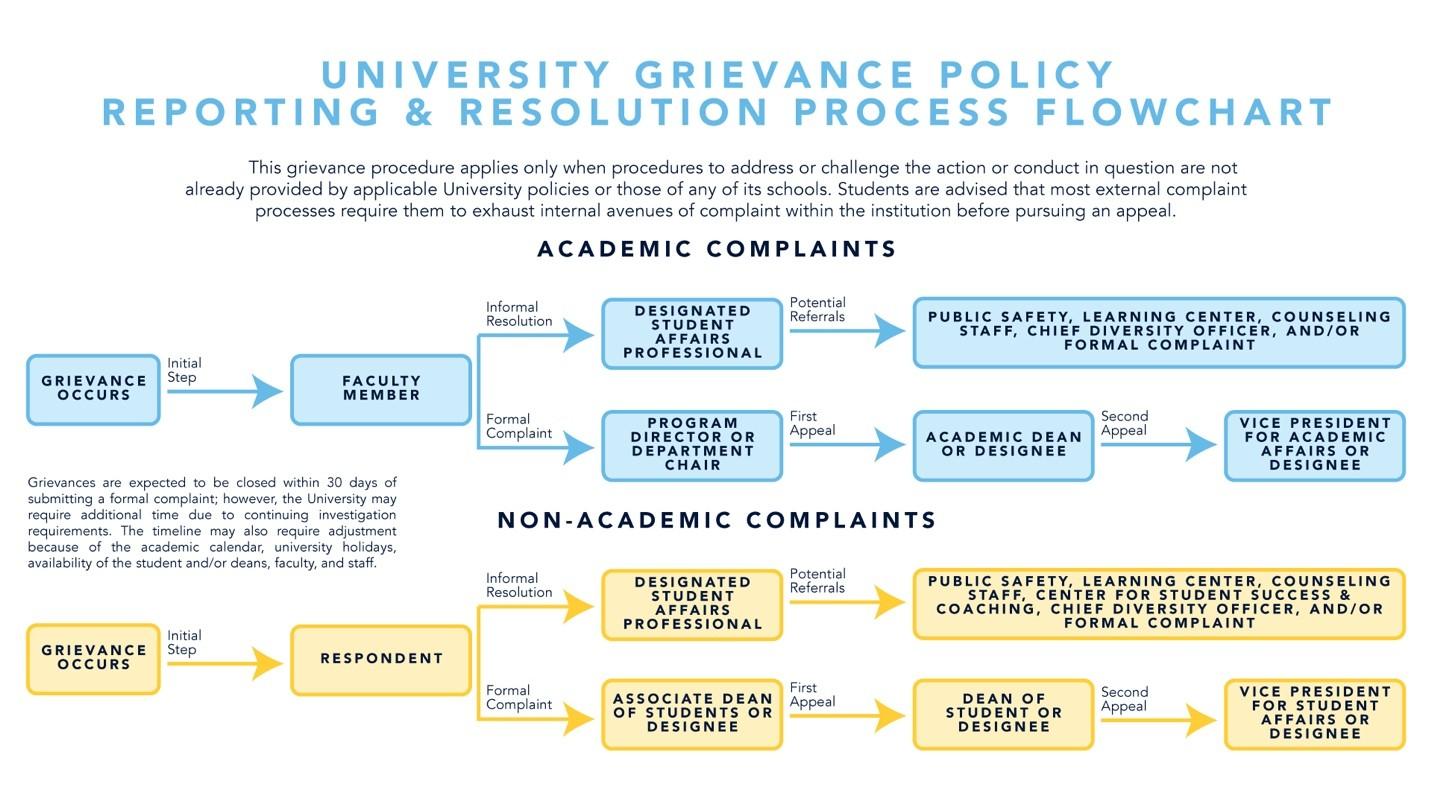
University Grievance Policy Reporting & Resolution
Process Flowchart
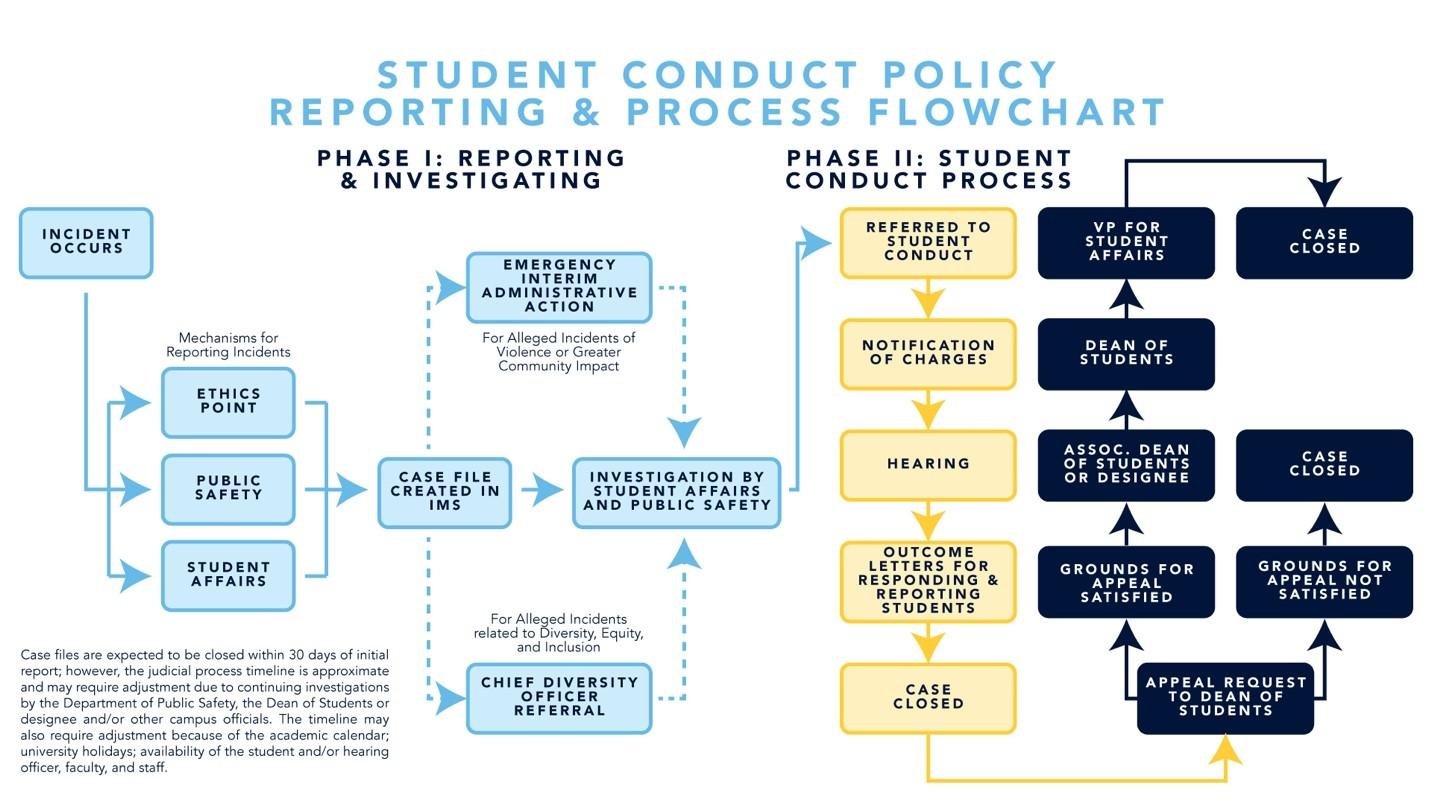
Student Conduct Policy Reporting & Process Flowchart
Long Island University, Lewyt College of Veterinary Medicine Clinical Affiliate Handbook Handbook
LIU-CVM Office of Clinical Programs
The Office of Clinical Programs is dedicated to delivering high-quality clinical education services to both students and affiliated clinical sites. Regular office hours are Monday-Friday, 9:00 a.m.-5:00 p.m. Eastern Time, excluding university holidays. For urgent matters outside of these hours, please contact CVM-ClinicalPrograms@liu.edu.
A current list of LIU-CVM clinical affiliates is available on the Clinical Affiliate Partners website.
To manage clinical course scheduling, student evaluations, and clinical experiences, the office utilizes a system that employs an advanced scheduling algorithm designed to optimize student placements based on the following factors:
Curriculum requirements,
Availability and capacity of clinical sites,
Student preferences, and
Custom rules, such as proximity to a student's home address.
Clinical course assignments are determined with input from faculty advisors, career mentors, and clinical relations veterinarians. Each fall, the Office of Clinical Programs contacts clinical sites to confirm their availability and the number of placements they can offer for the upcoming clinical year. Students then select their preferred clinical sites, and these choices are factored into the scheduling system.
Once schedules are generated, adjustments may be considered for locationrelated hardships or housing issues. Finalized schedules are released in January, and changes after that point are only made in cases of student displacement due to emergencies. The office works closely with students to ensure that their clinical experiences align with their academic and career goals. For this reason, it is essential for clinical sites to honor the availability they provide, as unexpected changes can significantly impact a student's training and overall experience.
Clinical Year Academic Calendar 2026–2027
The holidays included below are observed by the University. However, our educational partners may not observe these holidays; thus, students may have clinical duties even during University-observed holidays.
Start of Summer Semester May 11, 2026
Long Island University, Lewyt College of Veterinary Medicine Clinical Affiliate Handbook Handbook
Start of Fall Semester
Labor Day
LIU-CVM NAVLE Window (no rotations)
Complete NAVLE Testing Window
August 31, 2026
September 7, 2026
October 12–25, 2025
October 12 – November 14, 2026 (LOA* required outside of LIU-CVM NAVLE window)
Thanksgiving Holiday November 27, 2026
Start of Spring Semester
January 4, 2027
Spring NAVLE Testing Window March 1 – March 20, 2027 (LOA* required)
Last Day of Spring Semester
Commencement
*LOA – Leave of Absence
April 25, 2027
May 2027
Click to view the Veterinary Medicine Academic Calendar for Years 1–3.
LIU-CVM clinical year students do not follow the standard LIU academic calendar, meaning holidays are not automatically scheduled as days off. Students must verify their holiday attendance requirements directly with their assigned clinical site, as they may be expected to work on holidays or weekends.
Time commitments vary by practice, but students are required to complete a minimum of 40 hours per week of clinical training under the supervision of a veterinarian. The goal is to provide students with a comprehensive experience that reflects the responsibilities of a full-time veterinarian. While the typical weekly schedule may range from 55 to 60 hours, this can fluctuate based on the needs of the practice and the time of year.
Additionally, clinical sites are encouraged to keep in mind that students will also have 10–15 hours per week of coursework related to their LIU curriculum. Balancing hands-on training with academic responsibilities is essential for student success.
University Observed Holidays–Offices Closed
The LIU-CVM offices will be closed on the following holidays:
Labor Day
Thanksgiving Day
Christmas Day
New Year’s Day
Memorial Day
Long Island University, Lewyt College of Veterinary Medicine Clinical Affiliate Handbook Handbook
Independence Day
However, the LIU academic calendar does not apply to students on clinical rotations. Clinical year students are required to report to their assigned clinical site on the first day of each rotation, especially when orientation is scheduled.
Long Island University, Lewyt College of Veterinary Medicine Clinical Affiliate Handbook Handbook
Roles and Responsibilities
This section will reflect the roles and responsibilities of the LIU-CVM faculty and staff that manage the distributive fourth year curriculum.
Vice Dean & Assistant Dean for Clinical Programs
Identify and recruit suitable clinical sites to meet program requirements.
Coordinate preceptor training and distribution of training documents.
Communicate with clinical preceptors about students who will complete the course/rotation at the preceptor’s facility on an ongoing basis.
Train and orient students to education in a distributive model curriculum.
Schedule required rotations and facilitates scheduling of elective rotations.
Review and respond to clinical sites’ and preceptor concerns regarding students.
Review and respond to comments/critiques/recommendations regarding the clinical site and/or preceptors.
Provides feedback to preceptors regarding student evaluations of courses and/or sites
Provide oversight of communication between LIU personnel and preceptors at sites.
Prepare, maintain and distribute the LIU-CVM Clinical Preceptor Handbook.
Perform routine clinical site visits to maintain sufficient oversight of student clinical education and ensure Clinical Site compliance with the College policies regarding safety and facilities.
Oversee the Clinical Field Liaisons activity and monitoring of clinical facilities.
Ensure Clinical Sites receive evaluations summaries of completed student evaluations and current student schedule.
Communicate with students, reports issues to appropriate team members and respond as needed.
Review student evaluations of preceptors and other personnel.
Counsel students regarding academic issues.
Serves as Chair of the Clinical Affairs Committee.
Serves as ex-officio member in the Academic Standing Committee.
Long Island University, Lewyt College of Veterinary Medicine Clinical Affiliate Handbook Handbook
Meet with the Associate Dean for Academic Affairs, Assistant Dean for Clinical Programs, Clinical Year Veterinary Mentors, Course Directors regularly.
Assistant Dean of Clinical Operations and Engagement
Develop and structure the clinical year framework within eValue, including building timeframes, integrating evaluation forms, and linking them to clinical year courses.
Construct clinical year courses and seamlessly commit them to the curriculum to ensure alignment with academic objectives.
Create, update, and manage user structures annually, including user groups and learning cohorts. Maintain user accounts by updating, deactivating, and troubleshooting access issues to ensure smooth platform functionality.
Assist in scheduling clinical rotations, ensuring all curricular requirements are met for graduation. Conduct audits of student schedules to verify compliance.
Oversee the initial setup of student biographical data, including photo uploads, rabies vaccination records, insurance documentation, and emergency contact information.
Help deliver orientation sessions to the third-year class preparing for clinical year.
Serve as a primary resource for students, faculty, and preceptors, providing guidance and technical support for eValue-related inquiries.
Assist clinical year faculty in resolving evaluation issues and facilitate the distribution of evaluations to preceptors as needed.
Conduct comprehensive training sessions to enhance platform usability.
Generate various reports from eValue at a minimum annually to support academic and administrative functions.
Act as the escalation point for technical and operational support issues, coordinating with eValue support as necessary to resolve complex problems.
Remain updated on eValue system enhancements by attending training sessions and implementing best practices.
Serve as a member of the Clinical Programs Committee.
Long Island University, Lewyt College of Veterinary Medicine Clinical Affiliate Handbook
Coordinator for Clinical Programs
Maintains completed Clinical Site Check-list forms and keeps track of scheduled visits and items that might require follow-up.
Manage schedule changes due to unexpected situations arising from students or clinical sites.
Assist with orientation events offered to third year students and assist with creation of schedules prior to entry into E-value
Ensures alignment of clinical sites resources and specific requirements to meet educational objectives and accreditation requirements
Assist students with unexpected changes to rotation schedules
Administer scheduling issues (excused absences, hardships, etc.) in consultation with Associate Dean for Academic Affairs (leadership team).
Oversee and process payments to clinical affiliate sites, maintain accurate financial records and ensure timely disbursements.
Serves as the primary staff contact member between LIU-CVM and the practice manager at affiliated clinical sites.
Assists the Associate Dean for Clinical Programs and Clinical Liaison Veterinarian with periodic visits to clinical sites.
Associate Dean of Academic Affairs
Provide academic oversight of the curriculum during the clinical year.
Lead preparation of preceptor training modules detailing expectations as a clinical educator.
Assures training modules include the preceptor and clinical instructor roles in training students, providing timely feedback, and meeting AVMA-COE standards
Review course syllabi prior to submission to Curriculum Committee for approval and/or publication.
Provide oversight of the clinical (4th) curriculum
Review and respond to curricular concerns expressed by students, faculty or clinical preceptors regarding clinical courses.
Determine appropriate response to areas of potential improvement with Assistant Dean of Clinical Programs and the Course Directors.
Convene meetings of Course Directors and/or Clinical Year mentors to discuss academic issues or potential areas of improvement.
Coordinate with Course Directors and Clinical Year Veterinary Mentors responses to academic issues.
Long Island University, Lewyt College of Veterinary Medicine Clinical Affiliate
Counsel students regarding academic issues.
Provide information to the Academic Standing Committee on all student performance issues.
Serves as ex-officio member on the Clinical Affairs Committee
Serves as Chair of the Curriculum Committee and Chair of the Academic Standing Committee
Convene meetings of Course Directors and/or Clinical Year Veterinary Mentors
Clinical Year Course Director
Organize a clinical year rotation/course
Serve as content expert or work in collaboration with contracted specialist
Generate course syllabus and learning objectives.
Communicate to students course expectations as described in the course syllabus.
Delivers rounds once a week, or coordinates with a contracted specialist to deliver rounds
Inform students of ancillary resources available – books on site, etc.
Meet with the Associate Dean for Academic Affairs, Assistant Dean for Clinical Programs, Department Head, Clinical Year Mentors and other Course Directors regularly.
Respond to comments/critiques/recommendations submitted about the course/rotation related issues
Communicates unsatisfactory performance of students to the Associate Dean of Academic Affairs.
Respond to clinical sites’ and preceptor course-related concerns from students, faculty, and/or administration.
Provides input to Assistant Dean for Clinical Programs on suitability of site.
Conducts weekly rounds and responds to subject-related questions from students
Monitors case logs (PxDx)
Provide additional oversight of student activities at clinical sites
Maintain adequate communication between Preceptor and other personnel involved with LIU-CVM faculty, staff, and students.
Review and respond to course concerns expressed by students, faculty, and administration.
Long Island University, Lewyt College of Veterinary Medicine Clinical Affiliate Handbook Handbook
Communicates to the Assistant Dean for Clinical Programs concerns from students, faculty, and/or administration about Clinical Sites and Preceptors.
Communicate with students and respond as needed, then report to Associate Dean for Academic Affairs, Assistant Dean for Clinical Programs.
Collects Clinical Preceptor feed-back in the form of Preceptor evaluation of students
Calculate and enter student grades for rotations
Provide information to the Academic Standing Committee on all student performance issues.
Serves as member of Clinical Affairs Committee
Clinical Year Veterinary Liaison
Perform routine clinical site visits to maintain sufficient oversight of clinical site facilities and student clinical education.
Work to ensure Clinical Site compliance with the College’s policies regarding safety and facilities.
Provide additional oversight of student activities at clinical sites, supplementing oversight provided by the Course Director
Facilitates communication between Course Directors and Clinical Sites and Preceptor.
Provides feedback to preceptors regarding student evaluations of courses and/or sites
Collects clinical sites’ and preceptor concerns from students, faculty, and/or administration and coordinate response with Assistant Dean of Clinical programs.
Provides input to Assistant Dean for Clinical Programs on suitability of site.
Meet with the Associate Dean for Academic Affairs, Assistant Dean for Clinical Programs, Department Head, Clinical Field Liaisons, Clinical Year Mentors and other Course Leaders regularly.
Communicate with students and respond as needed then reports to CVM Course Directors, Assistant Dean for Clinical Programs, or Associate Dean for Academic Affairs.
Long Island University, Lewyt College of Veterinary Medicine Clinical Affiliate Handbook Handbook
Clinical Year Veterinary Mentors
Provide support and monitor student progress (required assignments required evaluations, competency evaluations) throughout the clinical year
Communicate with students during their rotations for check-ins, progress reports 1-3 times a week.
Meet one on one with students as needed
Visit students during clinical rotations once per semester
Monitor the receipt of student/site evaluation and communicate with the affiliate sites regarding outstanding evaluations
Review and discuss with mentees preceptor evaluations of students
Communicate clinical year progress and/or concerns with course directors and Assistant Dean for Clinical Programs
LIU-CVM Faculty & Staff: Directory
Directory information for all LIU-CVM faculty and staff is available in the LIUCVM Contact Information section of this document.
Clinical Site Safety and Facilities
The Clinical Programs team is responsible for monitoring the safety of the clinical learning environment at Clinical Affiliate sites. In alignment with this responsibility, the Clinical Programs team conducts regular site visits at all affiliated sites involved in the delivery of the required curriculum to verify the environmental safety.
The Clinical Programs team does not report their findings to any regulatory body and these services are not intended to ensure regulatory compliance. Ultimately, environmental safety at clinical sites is the responsibility of the facility owner or facility safety officer.
Long Island University, Lewyt College of Veterinary Medicine Clinical Affiliate
Roles and Responsibilities
Complete required onboarding/Clinical Affiliate Training prior to hosting LIU students.
Provide an orientation on the first day of a clerkship that should include their expectations of students and how students can integrate into the setting.
Assist students in developing areas for self-directed learning while refining clinical skills and competencies.
Challenge students to participate in clinical decision-making; one of the most important areas for their growth while in Clerkships.
Guide student development in clinical reasoning, diagnosis, and patient management.
Supervise student involvement in patient care, diagnosis and treatment.
Guide student in development of comprehensive medical record skills.
Assess students’ performance in the areas of knowledge, clinical skills, interpersonal skills, and professionalism.
Include students in discussion of individual case management decisions as well as in daily or weekly rounds.
Assist students in becoming competent, capable, conscientious, compassionate, and confident members of our profession.
Mentor students through actions as a role model alongside your colleagues, staff, and clients.
Provide a venue in which the student can spend time as part of “the team” of health care professionals in your facility.
Assess students directly and through consultation with other practice members through intermittent feedback discussions. At a minimum, accommodating student requests for mid-rotation feedback and through provision of feedback at the end of the rotation.
Maintain compliance with pertinent University, State, and Federal regulations regarding students (FERPA, OSHA, etc).
Be familiar with the LIU-CVM curriculum and the AVMA Council on Education accreditation standards.
Long Island University, Lewyt College of Veterinary Medicine Clinical Affiliate Handbook
Clinical Affiliate Training
All Clinical Affiliates are required to complete onboarding training prior to hosting LIU students at their sites.
This training provides a comprehensive overview of our veterinary medicine curriculum, clinical competencies, and course-specific information. New affiliates will need to create an account for the first time to access the training materials at the Clinical Affiliate Training website.
All courses are offered online. Clinical Affiliates are awarded with a certificate of completion upon successful completion of each course.
Active Student Learning Thresholds
Each clinical site must provide LIU-CVM students with the experiences necessary to meet established learning thresholds, ensuring a robust and consistent educational experience. LIU-CVM expects clinical affiliates to facilitate these opportunities, and students will track their experiences to ensure they meet the required thresholds.
The Clinical Affairs Committee reviews each student's progress in meeting the active student learning thresholds to determine whether the clinical affiliate site will continue to be part of the rotation opportunities for future students. This process helps maintain the quality and consistency of the learning experience.
For exact active student learning thresholds, visit the LIU-CVM Curriculum section of this document.
Clinical Competencies
Students must have each Entrustable Professional Activity (EPA)/clinical competency evaluated a minimum of three separate times, by three different clinical affiliates, over the course of their clinical year. It is the student’s responsibility to make arrangements with the supervising clinicians. Students will select the specific competency for assessment in the Procedure section of the eValue Case Log for a patient.
Supervising Clinicians will provide feedback through eValue on student performance using the entrustment scale found in Appendix B.
Long Island University, Lewyt College of Veterinary Medicine Clinical Affiliate
Student Privacy
The Family Educational Rights and Privacy Act of 1974 (FERPA), also known as the Buckley Amendment, affords students certain rights with respect to their educational records. These rights are established upon receipt of the student’s first deposit and include grade-related material. All personal and educational information regarding a LIU-CVM student is privileged. Disclosure of any student information to individuals other than LIUCVM faculty or administration is in violation of FERPA regulations. This includes discussion of LIU-CVM student performance with other LIU-CVM students or students from other programs.
End of course evaluations of student performance submitted by the supervising veterinarian fall under the protection of FERPA and cannot be transmitted to another individual outside the college without the student’s written consent.
Many students include clinic and/or supervising clinician names in their CV. As such, a supervising veterinarian may be contacted by potential employers in reference to the student’s clinical experience. While the supervising clinician is encouraged to give information in an honest and professional manner as they would for any current or former employee, providing copies of student evaluation forms is in violation of FERPA. If there are any questions or concerns, please contact the Assistant Dean of Clinical Programs for clarification.
Feedback and Evaluation of Student by Supervising Clinician
Supervising clinician should provide continuous feedback to the students during their entire time at the clinic. This performance feedback should include both positive and areas of improvement information so that the student can continually improve.
Students are required to request a mid-rotation feedback discussion with their supervising veterinarian. Students are provided guidance on how to approach the discussion and must summarize the discussion in their course work. Please accommodate student requests for these mid-rotation feedback discussions.
Long Island University, Lewyt College of Veterinary Medicine Clinical Affiliate
A formal evaluation of the students at the end of the rotation is mandatory. Supervising veterinarians, or their appropriate chosen staff member, will receive an emailed link to complete these evaluations in eValue. Both positive and negative comments are encouraged with some specific detail. Supervising veterinarians should make criticisms constructive and not an attack on individual personalities.
Evaluations and comments are considered confidential with Course Leaders and students receiving the feedback. There is a confidential comments box for those remarks that will not be shared with course leaders and students and are viewed only at the administrative level (e.g. Assistant Dean of Clinical Programs). Examples of the evaluation forms are provided in the course-specific course outlines provided to Clinical Affiliates.
Supervising clinicians will also be required to complete clinical competency assessments when requested by the students. These evaluations are brief and managed through the software platform, E-value, as well.
Should any complications arise, or the student is not meeting their responsibilities as defined in this handbook or other LIU-CVM materials, it is vital that the supervising clinician address these issues as soon as possible and not wait until the end of the rotation. If there are any questions or concerns how to approach the issue, the supervising clinician should contact the Clinical Course Director or Assistant Dean of Clinical Programs.
See Appendix A for the Preceptor Evaluation of Student Rubric.
Training the Trainer
The LIU-CVM is required to provide education to our affiliate educators that train students in veterinary professional environments. Our affiliate educators must also be familiar with student rotation requirements, facets of the LIU-CVM program, and how to assess students during/after rotations.
To support adequate distribution of this information to all affiliate educators and appropriately document the training received, all clinicians or faculty that interact with students on rotation must complete at least 1 educational module and receive a certificate of completion annually. The initial required modules will provide:
An overview of the DVM curriculum with emphasis on the clinical year
Review of course-specific syllabi including rotational learning objectives, evaluations, and grading
Long Island University, Lewyt College of Veterinary Medicine Clinical Affiliate Handbook Handbook
Tips that promote success for all involved through planning before student arrival, guiding interactions within the learning environment, and how to close the loop at the end of a rotation
Clinical Competencies: What they are, why they are a component of our program, and the role of our clinical affiliate educators
Each affiliate educator will receive notice and access to complete the course module via their provided email addresses. The courses are hosted within the University’s Learning Management System called Brightspace. Documentation of completion will be available to the affiliate educator after completion of the module and records are maintained within our system.
Clinical Site Safety and Facilities
The Clinical Programs team is responsible for monitoring the safety of the clinical learning environment at Clinical Affiliate sites. In alignment with this responsibility, the Clinical Programs team conducts regular site visits at all affiliated sites involved in the delivery of the required curriculum to verify the environmental safety.
The Clinical Programs team does not report their findings to any regulatory body and these services are not intended to ensure regulatory compliance. Ultimately, environmental safety at clinical sites is the responsibility of the facility owner or facility safety officer.
Long Island University, Lewyt College of Veterinary Medicine Clinical Affiliate Handbook Handbook
Role and Responsibilities
Maintain professional appearance and conduct at all times while attending a course/rotation.
Meet the learning objectives for each course/rotation through clinical experience or independent research.
Maintain communication with Clinical Year Veterinary Mentors, Course Directors, Coordinator for Clinical programs and the Assistant Dean for Clinical Programs.
Complete daily case logs of activities and submit them for review in a timely fashion.
Summarize mid-rotation feedback discussion
Complete reflective writing exercises for elective rotations
Complete competencies using the entrustment scale
Communicate with preceptors about personal performance on an ongoing basis.
Respond to concerns from the preceptor, Course Directors and LIU-CVM administration.
Assist the clinical site medical team in all facets of clinical practice.
Be proactive in their approach to cases – learning all they can about the diagnosis, treatment, and client communication.
Develop and explore learning issues from cases seen.
Evaluate the experience at its conclusion.
Clinical Competencies
Students must have each Entrustable Professional Activity (EPA)/clinical competency evaluated a minimum of three separate times, by three different clinical affiliates, over the course of their clinical year. It is the student’s responsibility to make arrangements with the supervising clinicians. Students will select the specific competency for assessment in the Procedure section of the eValue Case Log for a patient.
Supervising Clinicians will provide feedback through eValue on student performance using the entrustment scale found in Appendix B.
Evaluation of Supervising Clinicians by Students
Evaluation of clinical sites by students is mandatory. Feedback to the supervising clinicians and sites is essential to their growth. Both positive and negative comments are welcome and encouraged, although students should
Long Island University, Lewyt College of Veterinary Medicine Clinical Affiliate Handbook Handbook
make criticisms constructive and not an attack on individual personalities. Evaluations and comments are confidential and are shared with supervising clinicians only after a minimum of 6 evaluations have been submitted to assure anonymity and no retribution. Feedback will be analyzed and delivered to clinical affiliate sites on an annual basis.
Professionalism
Work Ethic
Students are expected to meet course/rotation time commitments as outlined by the supervising clinician during orientation. Time commitments are likely to vary. Failure to meet the rotation time commitments may lead to failure of the clinical rotation. A minimum of 40 hours per week is required. Failure to meet this requirement may result in failure of the rotation.
Personal Appearance
Students shall maintain a neat, clean appearance, and dress in attire that is appropriate for the setting. While in practice experiences and during official college professional events, students must be dressed in professional attire. Students must follow the professional appearance expected at the veterinary affiliate's practice. For men, this includes a dress shirt and slacks or neatappearing khaki pants. Women should dress similarly in a blouse with a skirt, dress pants, or a dress. The following attire is not permitted: sneakers, opentoe shoes of any kind, work boots or shoes resembling work boots, T-shirts, shorts, and jeans of any color. In the classroom, students should be dressed in clothes that are clean and neat and are not considered offensive or embarrassing to the faculty or students. Tattoos should be covered if that is the requirement at the clinical veterinary affiliates. Additional or specific dress code requirements may be outlined in individual course syllabi.
Professional Dialogue
Comments relative to concerns about the adequacy of animal care, the accuracy of diagnosis, and the appropriateness of therapy are never permitted in the presence of the owner/client. These conversations should be conducted respectfully, professionally, and directly with the clinician at an appropriate time and location away from the client. Violation of this professional conduct code may result in student removal from the Clinical
Long Island University, Lewyt College of Veterinary Medicine Clinical Affiliate Handbook
Affiliate site and require completion of the clerkship at another date at the student’s own expense.
Smartphone and Other Media Device Usage
Student usage of smartphones, tablets and other electronic devices during their clinical activities should be conducted wisely and with the permission of the supervising clinician. Supervising clinicians will understand that not every question needs to be looked up immediately. Supervising clinicians should also understand that mobile devices are becoming more essential for daily required activities, such as student evaluations and case reports, and that they need to be more accepting of their usage during daily activities when appropriate. Students should never abuse the privilege of using electronic devices by conducting personal business as opposed to clinically related activities.
Social Media
Material related to any client or patient may not be shared on any public or social networking site unless explicit permission has been granted by the Clinical Affiliate, owner, and/or Clinical Course Director.
No picture of any client or patient may be posted without prior approval from both the client and the clinic where the patient was seen.
Posting these materials without appropriate permissions will be considered unprofessional behavior and subjected to sanctions as per University policies and procedures.
Any post which contains information about a client, patient, Clinical Affiliate, or faculty member must include a comment indicating that permission to post was received prior to posting.
Medical Record Confidentiality and Security
Medical records are the property of the individual rotation site and are strictly confidential. Their contents must not be divulged to anyone other than personnel involved in patient care or in response to course requirements. A veterinary professional is ethically bound to keep this information confidential unless the owner has granted written permission for disclosure.
Descriptive information of the client (e.g. name, address, telephone number) is the confidential property of the Clinical Affiliate and is not required for any purpose by the college for any academic reason.
Long Island University, Lewyt College of Veterinary Medicine Clinical Affiliate
If the Clinical Affiliate authorizes students to write in the medical records, the following general rules apply:
For paper records, the records must be written in black or blue ink and must be signed or initialed by the student so that it clearly indicates the portion that was entered by the student.
Personal comments or commentary must not be included.
Medical records are not to be taken outside the Clinical Affiliate site.
Dosimetry Badges
Students may be exposed to ionizing radiation during activities and procedures in clinical clerkships.
Students are issued personal dosimetry badges which must be worn in all clinical practice clerkships.
Lost badges must be replaced as soon as possible.
Badges must be returned to Ms. Nicole Gambino (Nicole.Gambino@liu.edu), LVT at the end of the clinical year. If badges are not returned in a timely manner, students are responsible for paying a late/lost fee.
Failure to comply with these radiation safety requirements can lead to a failing grade in a clerkship and additional evaluation for professionalism pursuant to College and University policies. Fetal dosimetry badges are available for students as needed. Please contact the Assistant Dean of Clinical Programs directly for fetal dosimetry badges.
Legal Considerations for Student Clerkship
Activities
Each state’s Veterinary Practice Act will regulate what activities a student may complete while engaging in clerkships for academic credit. The legal considerations for New York will be covered here. It is required that all clinical education facilities abide by local, state, and federal laws. Please consult the specific state/local/regional laws to ensure compliance with the law. Within the United States consult the state Veterinary Practice Act.
Long Island University, Lewyt College of Veterinary Medicine Clinical Affiliate Handbook
NY State Article 135 Veterinary Medicine and Animal Health Technology
**The following excerpt and discussion are not intended to be a legal interpretation of all related New York state laws. If there are specific questions or concerns, it is the student’s responsibility to contact the state and local regulatory agency for specific legal interpretation of applicable laws.**
Article 135
Section 6705: Exempt Persons. The following persons under the following limitations may practice veterinary medicine within the state without a license:
9. Any student enrolled and in good standing in a school of veterinary medicine approved by the commissioner, who practices under the general supervision of a veterinarian licensed and registered under this article; provided however, that only such students who have completed at least two and one-half years in an approved veterinary program and completed all required didactic training may assist in diagnosis, treatment and surgery in such practice, subject to the following requirements: (a) assisting in diagnosis and surgery be under the immediate personal supervision of such veterinarian; (b) assisting in treatment be under the direct supervision of such veterinarian; and (c) only one such student shall be supervised, as specified in clauses (a) and (b) of this subdivision, by one such veterinarian.
Fourth-year veterinary students completing required and elective clerkships within New York state are permitted under immediate and direct supervision by a NY licensed veterinarian to assist in diagnosis/surgery and treatment, respectively. They may not participate in these activities as employees in practice, during curriculum breaks (e.g. summer or weekends) or in circumstances that are not specifically a part of the CVM curriculum.
Professional Liability Insurance Coverage
The University provides professional liability insurance coverage for students in approved clerkships while the student is directly under the supervision of the supervising clinician or designee.
Long Island University, Lewyt College of Veterinary Medicine Clinical Affiliate Handbook
The University’s liability coverage DOES NOT apply to:
any unsupervised student clinical activity
clinical activity conducted during a student’s personal time
activities outside scheduled rotations
non-credit experiences
o Students must notify sites if participating outside of curriculum
o Students may be required to obtain personal liability insurance
o The University’s professional liability coverage only extends to learning experiences as part of enrolled clerkships that are for academic credit.
For example, if a student spends time at a clinic before their rotation officially starts of after it officially ends, then the student is NOT covered by the LIU professional liability insurance (exceptions may occur if a student is required to make-up missed days due to absence, but MUST be done in consultation with the Assistant Dean of Clinical Programs).
o Students are responsible for notifying clinical sites if they are rotating on personal time and may be required to demonstrate proof of individual liability insurance.
o Students have the option to schedule additional clinical experiences in the form of externships (NOT for credit) during personal time. Students are responsible for notifying sites if a clinical experience/externship is not for credit. Additionally, LIU liability insurance does not cover students for externships that are NOT for credit. Students are responsible for purchasing personal liability insurance and providing proof to sites (SAVMA members have personal liability insurance).
o Some required elective sites require personal liability insurance in addition to LIU liability insurance. Students are encouraged to purchase personal liability insurance (SAVMA members may obtain personal liability insurance at no charge). SAVMA Member Benefit and Resources | AVMA PLIT
Student Health & Safety
Students are responsible for their own safety both on and off-campus. Therefore, students should immediately report any hazardous conditions to the clinical affiliate, hospital administrator/manager, or other responsible
Long Island University, Lewyt College of Veterinary Medicine Clinical Affiliate Handbook
individual. Additionally, students should immediately report any injuries to the clinical affiliate, hospital administrator/manager, and LIU’s CVM via a phone call, text message, or email directed to the Clinical Year Veterinary Mentors and the Assistant Dean of Clinical Programs.
To help students maintain their personal safety and the safety of the doctors, staff, patients, and clients, at the beginning of a rotation, supervising clinicians should orient students on appropriate safety policies and procedures. These can include but are not limited to the following:
Students should be made aware of the location of any safety equipment within the clerkship site. This includes alarm pulls, fire extinguishers, first aid kits, safety showers, eye wash stations, and exits from the building.
Students should also be instructed about their responsibilities toward colleagues, the public, and the patients with whom they are working.
Clinical affiliates should inform students about the evacuation route and designated meeting area in case of evacuation.
Clinical affiliates should inform students where the nearest human medical services can be obtained.
Clinical affiliates should show students where the first aid supplies are located.
Personal Safety
Students enrolled in the LIU-CVM professional curriculum participate in a medical profession where the threat of exposure to and the chance for spread of infectious agents and interaction with fractious animals and potentially toxic agents are greater than in the general population.
For both personal safety and the safety of all personnel, attention must be given to cleanliness and sanitation as essential safeguards against infectious disease, including COVID-19.
The student and their equipment must be kept in such orderliness as to reduce the chance of contracting infection and spreading infection to others.
Students may not wear protective clothing (e.g., scrubs, lab coat, overalls, coveralls) in public places away from the LIU-CVM or rotations sites (e.g., retail establishments, public gatherings, entertainment events, sports events). These clothing items are to be worn only while
Long Island University, Lewyt College of Veterinary Medicine Clinical Affiliate Handbook Handbook
engaged in educational, research, and/or service activities related to veterinary medicine.
Students must utilize their veterinary training to properly approach and restrain fractious animals to prevent both personal injury and injury to personnel or patients.
Emergency and Incident/Injury Procedures
Student injuries occurring within learning environments in NY State should not be treated under the affiliate’s worker’s compensation insurance coverage as students are not considered employees. The student’s health insurance will be the primary coverage for such an incident or injury. If the facility where the student is hosted is not in New York, please consult the relevant state laws, codes, and regulations regarding liability and coverage.
Minor Injury
Student responsibility:
o Obtain immediate first aid if needed
o If indicated, seek medical care at the nearest medical facility
o Notify the Clinical Year Veterinary Mentor and Assistant Dean of Clinical Programs as soon as possible via phone or email, dependent on urgency of the situation
Affiliate responsibility:
o Administer immediate first aid if needed
o Direct student to seek medical care at the nearest medical facility if indicated
o Complete any state, federal, or locally-required reporting (e.g. public health officials for animal bites)
Severe Injury
Student responsibility:
o Call or direct another individual to call 911
o Apply first aid as appropriate until medical services arrive
o Notify the Clinical Year Veterinary Mentor and Assistant Dean of Clinical Programs as soon as possible, dependent on urgency of the situation
Affiliate responsibility:
o Call or direct another individual to call 911
o Apply first aid as appropriate until medical services arrive
o Complete any state, federal, or locally-required reporting (e.g. public health officials for animal bites)
Long Island University, Lewyt College of Veterinary Medicine Clinical Affiliate Handbook Handbook
It is at the student’s discretion as to where to seek medical care. Students must provide the treating facility with their PRIMARY insurance information. In New York and most states students are not considered employees; thus, rotation related injuries are not worker’s compensation injuries. Students should advise the treating facility that they are a Long Island University CVM student.
Student Privacy
The Family Educational Rights and Privacy Act of 1974 (FERPA), also known as the Buckley Amendment, affords students certain rights with respect to their educational records. These rights are established upon receipt of the student’s first deposit and include grade-related material. All personal and educational information regarding a LIU-CVM student is privileged. Disclosure of any student information to individuals other than LIUCVM faculty or administration is in violation of FERPA regulations. This includes discussion of LIU-CVM student performance with other LIU-CVM students or students from other programs.
End of course evaluations of student performance submitted by the supervising veterinarian fall under the protection of FERPA and cannot be transmitted to another individual outside the college without the student’s written consent.
Many students include clinic and/or supervising clinician names in their CV. As such, a supervising veterinarian may be contacted by potential employers in reference to the student’s clinical experience. While the supervising clinician is encouraged to give information in an honest and professional manner as they would for any current or former employee, providing copies of student evaluation forms is in violation of FERPA. If there are any questions or concerns, please contact the Assistant Dean of Clinical Programs for clarification.
Title IX & Sexual Misconduct Policy
Long Island University is committed to creating and maintaining an educational and work environment free from all forms of sexual misconduct. The broad term “sexual misconduct” includes, but is not limited to, acts of sexual harassment, domestic violence, dating violence, sexual assault, and stalking. Such behaviors are illegal, against University policy, and strictly prohibited.
Long Island University, Lewyt College of Veterinary Medicine Clinical Affiliate Handbook Handbook
Review the purpose, statement of policy, contact information and procedures for reporting on our website: Title IX & Sexual Misconduct Policy.
Scheduling & Attendance
Scheduling
The student schedule is provided by, and at the discretion of, Clinical Affiliates in order to meet the needed objectives and competencies of the clerkship. Students should anticipate that their duty hours may include weekends, nights, and holidays.
Students are expected to be actively engaged in the activities of a clerkship for a minimum of 40 hours per week. However, in recognition of SAVMA Duty Hours Guidelines, student duty hours should not exceed 60 hours per week (averaged over the length of the rotation). Students must also be scheduled on 4 or more days of the week during clerkships. Scheduling for three days or fewer per week is not permitted.
Mandatory Free Time: Students must have at minimum one full day (24 hours) free of all duty hours each week, averaged over the length of the clerkship. At-home “on call” cannot be assigned on these free days.
Maximum Duty Length: Student’s “in-house” duty periods must not exceed 20 consecutive hours in duration. After completing 20 consecutive hours the student must have a minimum of 8 consecutive hours with no duty-hours, either “in-house” or “on-call.”
Ideally, students should not be scheduled during the last weekend to facilitate travel to the next rotation.
Attendance
Attendance is mandatory for daily clinical responsibilities, including afterhours duty assignments. Students must be prepared to attend during regular clinic hours including evening, weekend, and holidays when the student has case responsibilities. Clinical responsibilities, expectations and scheduling will be discussed with the student during orientation at the clinical affiliate site. Rotation schedules are finalized after scheduling is complete and cannot be changed without the approval of the Department of Clinical Programs. It is the student’s responsibility to understand their responsibilities, expectations, and scheduling during the rotation. Daily on-time arrival at the clinical site for all scheduled clinical days is expected and required. Failure to attend
Long Island University, Lewyt College of Veterinary Medicine Clinical Affiliate Handbook Handbook
rotation activities or inaccurate reporting of attendance may result in course failure.
The start date and time for each rotation will be determined by the rotation and individual clinical affiliate.
General Guidelines
LIU-CVM maintains, and each student must recognize, that fulfillment of the academic program is the top priority in our program, and that it is your responsibility as a student to ensure you fulfill all clinical course requirements. Failure to do so may result in your inability to graduate on time.
Students must adhere to the schedule provided to them by their supervising clinician or clinical site administrator OR a minimum 40 hours per week (Monday-Sunday), whichever is greater. Students should expect to remain at the site until all clinical duties are completed. Students are expected to check in with their supervising clinician prior to leaving the clinic each day.
For discussion purposes, 8 Blocks make up 1 Semester. That means that your 24-Block clinical year equals a total of 3 semesters (Block 1-8 is the Summer semester, Block 9-16 is the Fall semester, and Block 1724 is the Spring semester).
For any day you are not physically at your affiliate site when you are scheduled to be, you must submit an Absence Request Form.
You are allowed 2 Personal Days per Semester
o Personal days can be used for planned events. You are expected to work in advance to notify all parties (Clinical Affairs Coordinator and Supervising Clinician) and complete the Absence Request form. Students are responsible for notifying the Clinical Affiliate to obtain an Absence Request form and to work with the Supervising Clinician/Site Administrator to complete the form.
o These personal days can also be used for unplanned events such as illness, in which case you submit your Absence request form as soon as possible after the absence has occurred.
Only one personal day may be taken per block.
A personal day does not need to be made up if:
It is one of the two allowed personal days for the semester.
No other day was taken off during that particular block
Long Island University, Lewyt College of Veterinary Medicine Clinical Affiliate Handbook Handbook
To clarify, if a student uses all 2 Personal Days in a Semester, any additional absences are considered unexcused, and the time taken off on the rotation must be made up during that rotation.
If you are submitting an Absence Request for time which must be made up at that site, you are required to include a plan showing how you will make up the time.
o If the time cannot be made up in that rotation, such as for a prolonged illness or other extreme event, then you may be required to repeat the rotation.
Planned Absence Days
(For example: job interviews, conferences, NAVLE® test taking outside of LIU NAVLE test taking window)
As described above, a maximum of ONE (1) personal absence day may be taken in a given 2-week clinical rotation block for a planned absence, for a maximum of 2 per semester.
Planned absences will be scheduled at least 3 weeks before the date of the planned absence.
Planned Absence days will require approval by the supervising clinician or affiliate site administrator and the Department of Clinical Programs. Students should first contact the Clinical Affairs Coordinator to obtain an Absence Request form. Students are then responsible for discussing the absence with the supervising clinician or affiliate site administrator. Once the supervising clinician or affiliate site administrator signs the absence request form, the student is responsible for submitting the completed form to the Clinical Affairs Coordinator for final approval.
No planned absence days are allowed on the first day of a rotation.
If a student must take the NAVLE® during a clinical rotation block, they must use a planned absence day.
If a student plans to take the NAVLE® outside of the designated 2week NAVLE® Administration block, they must request a leave of absence.
A copy of the student’s Scheduling and Admissions Permit must be submitted with the Absence Request Form for the time-off request to be considered.
Unplanned Absence Days
(For example: illness and emergencies)
Students will use a personal absence day for unplanned events such as illness, a family emergency or a death in the family.
Long Island University, Lewyt College of Veterinary Medicine Clinical Affiliate Handbook Handbook
For absences for illness that require missing 2 or more days of a rotation, medical documentation will be required. The note will need to be provided from the student’s health care provider. Before resuming the program, a note from the student’s health care provider must be provided stating that the student is healthy and able to participate in the LIU-CVM clinical year veterinary program.
Students must provide evidence of the need for an unplanned absence after the fact.
Students must complete the absence request form as soon as they know of an absence. Similar to a Planned Absence, students must notify the Clinical Affairs Coordinator to obtain an Absence Request Form. Students are then expected to notify the Supervising clinician or affiliate site administrator. If the student has utilized all of their personal days during the semester, students must discuss a make-up plan for the missed time with the supervising clinician, and outline this on the absence request form. Once the absence request form is completed and signed by the supervising clinician or affiliate site administrator, it is the student’s responsibility to send the completed form to the Clinical Affairs Coordinator for final approval.
Make-Up Dates/Hours for Planned and Unplanned Absences
Students must coordinate make-up dates with the clinical site to makeup any missed days/hours (if allowed). Students must notify the Department of Clinical Programs of the planned make-up schedule on the Absence Request form.
Any absence in excess of 2 days in a given Semester (Summer semester Blocks 1-8, Fall semester Blocks 9-16, Spring semester Blocks 17-24) must be made up. With the approval of the clinical affiliate at secondary instructional sites or electives, the student may make-up missed time, by working extra hours during a given calendar week so as to still work a minimum of 40 clinical hours a week in a given sevenday calendar period (Sunday - Saturday). The Department of Clinical Programs must also approve the planned make-up schedule. This should be outlined in the absence request form.
Miscellaneous
• Any request for absences that go beyond the scope of personal absence days (Planned and Unplanned) described above is to be submitted in writing to the Department of Clinical Programs for consideration as soon as possible.
Long Island University, Lewyt College of Veterinary Medicine Clinical Affiliate Handbook Handbook
• For medical appointments not exceeding 2 hours over the course of a rotation, the missed time will not require the use of a personal absence day and will not need to be made up.
• When more than one medical appointment is needed within a given rotation block, the student should contact the Department of Clinical Programs (Nan.Du@LIU.edu) and provide a note from the student’s health care provider stating that the student is able to participate in the LIU-CVM clinical year veterinary program.
• Jury Duty: A student that receives a summons for jury duty during their scheduled fourth year clerkships must:
o Notify the Department of Clinical Programs immediately, including the date of the summons and effected clerkship.
o Request a postponement of the summons through the online service and/or by contacting your local commissioner of jurors office.
If the summons cannot be postponed or you cannot be excused from service by the local commissioner of jurors office, please contact the Department of Clinical Programs as soon as possible. Failure to communicate with LIU-CVM prior to the date of a jury summons will lead to unexcused absences for the clerkship.
• Observation of Religious Holidays: Students that anticipate being absent because of a religious observance must notify the Assistant Dean of Clinical Programs, Clinical Course Director, and clerkship supervising clinician prior to the start of a clerkship
o NY state law requires that students be provided accommodated schedules and experiences around absences for religious observance. This should all be arranged prior to the start date of a student rotation. If it is not, please contact the Assistant Dean of Clinical Programs or Clinical Course Director
Long Island University, Lewyt College of Veterinary Medicine Clinical Affiliate Handbook Handbook
Curriculum Overview
The Doctor of Veterinary Medicine (DVM) program at Long Island University, Lewyt College of Veterinary Medicine, is a 4 year long degree program, organized into 2 academic semesters per calendar year, totaling 8 semesters. However, the clinical year spans the entire year (April – May the following year).
The pre-clinical portion of the DVM program encompasses Years 1-3 and the clinical program consists of one academic year of a series of clerkships (rotations) each 2-4 weeks in length. A total of 40 weeks (credits) of clinical rotations is required for graduation.
First Year
The first year of the DVM program emphasizes structure and function, animal handling and restraint, and building clinical skills. The learning environment includes didactic teaching, on campus laboratory sessions, and experiential learning at partner institutions. In the second semester students learn general pathology and parasitology, and are encouraged to integrate acquired basic science knowledge and skills required to practice veterinary medicine.
Second Year
The second year of the DVM program emphasizes morphological and physiological manifestations of disease focusing on infectious diseases. The learning environments include didactic teaching, on campus laboratory sessions, and experiential learning at partner institutions. Students continue developing professional and clinical skills and are engaged in activities that promote integration of basic and clinical sciences.
Third Year
The third year of the DVM program emphasizes clinical medicine focusing on clinical signs, diagnosis, prognosis, prevention, and treatment of common diseases of domestic animals.
Fourth Year
The fourth year of the DVM program provides supervised opportunities for students to enhance professional and clinical skills. The final year is designed to allow each student to select high quality, specialized learning experiences throughout the world. These experiences may occur in public and private
Long Island University, Lewyt College of Veterinary Medicine Clinical Affiliate Handbook Handbook
institutions, in practices providing primary, secondary, and tertiary animal health care, or in public/corporate institutions delivering specialized medical services to the public. Rotations may include international or public policy veterinary experiences.
Fourth-Year Clinical Clerkship Information
Summary
The fourth year of the DVM program is designed to allow each student to select high-quality, specialized learning experiences throughout the world. These experiences may occur in public and private institutions, in practices providing secondary and tertiary animal health care, or in public/corporate institutions delivering specialized medical services to the public. Rotation may include international or public policy veterinary experiences.
Learning Objectives for Clinical Clerkships
Learning objectives are specific to individual courses. Course-specific learning objectives are available on the Clerkship Guides and Rubrics website.
Required Clerkships
The fourth-year program consists of 8 required clerkships occurring over consecutive 2- and 4-week scheduled periods.
DVM-800 Large Animal Medicine & Surgery Clerkship 4 credits
DVM-801 Small Animal Medicine Clerkship 4 credits
DVM-802 Small Animal Surgery Clerkship 4 credits
DVM-803 Anesthesia Clerkship 2 credits
DVM-804 Clinical Pathology Clerkship 2 credits
DVM-805 Anatomic Pathology Clerkship 2 credits
DVM-806 Diagnostic Imaging 2 credits
DVM-807 Emergency Medicine / Critical Care 2 credits
DVM-813 Community Practice 2 credits
DVM-815 Spay / Neuter 2 credits
DVM-819 Shelter Medicine 2 credits 28 total credits
Elective Clerkships
In addition to the required Core Clerkships, students must also complete ten 2-week (2 credit) elective Clerkships. Of these ten-week elective Clerkships, 4 weeks must be completed at an affiliate site. The remaining 6 weeks can
Long Island University, Lewyt College of Veterinary Medicine Clinical Affiliate Handbook
be fulfilled through student-proposed electives. Additionally, students are required to complete a 2 week Experiential Learning Externship (Pass/Fail).
It is the student’s responsibility to identify appropriate and desired elective clerkship experiences for their fourth-year program.
Students are encouraged to identify a faculty or clinical mentor to support their choice of electives based on their educational and career goals.
Proposed electives must fit within the provided session scheduling blocks. Elective requests that do not fit within a scheduling block will be further reviewed by the Clinical Programs team and may not be approved. Electives that are proposed outside the normal blocks must be competitive/highly sought after elective rotations. Additionally, students may not propose more than 1 rotation outside of traditional blocks without approval from the Assistant Dean of Clinical Programs.
Elective proposals must be submitted prior to the provided deadlines to be considered for approval and final scheduling.
The Office of Clinical Programs and Clinical Affairs Committee will approve elective rotation requests and confirm acceptance through communications with the student and proposed clerkship contact.
While student-proposed electives and supervised externships are similar in structure, they differ in grading: student-proposed electives receive a letter grade, whereas supervised externships are graded on a pass/fail basis.
DVM-808 Elective Clerkship 4–12 credits
DVM-814 Externship
0–8 credits
12 total credits
Clerkship Descriptions & Active Student Learning Thresholds
DVM-800 Large Animal Medicine & Surgery Clerkship
This required clerkship provides students with opportunities to participate in the diagnosis and treatment of common diseases and conditions seen in contemporary large animal medicine. Under the direct supervision of a veterinarian, ideally students will assume responsibility for the management of individual cases and will be encouraged to participate in the decisionmaking process and clinical reasoning. This required rotation is 4 weeks in length. Time commitment is a minimum of 40 hours per week per student,
Long Island University, Lewyt College of Veterinary Medicine Clinical Affiliate
DVM-801 Small Animal Medicine Clerkship
In this required clerkship, students participate in the practice of clinical veterinary medicine. Students develop a detailed knowledge of the principles and techniques used in Small Animal Medicine with emphasis on patient evaluation, diagnosis and treatment of common diseases. Under direct supervision of an internal medicine team member, ideally students will assume responsibility for the management of individual cases and will be encouraged to participate in the decision-making process and clinical reasoning. This required rotation is 4 weeks in length. Time commitment is a minimum of 40 hours per week per student, and emergency and off-hour duties may be required.
Active Student Learning
Practice thorough history-taking and physical examination 2 per day
Demonstrate clinical reasoning through development of diagnostic and therapeutic plans 2 per day
Evaluate and interpret diagnostic results
3-5 per day
Participate in diagnostic and therapeutic procedures 3-5 per week
Develop problem-oriented medical records and diagnostic/treatment plans 2 per day
Monitor hospitalized patients and update treatment plans accordingly 1 per day
Attend and participate in daily case rounds, including presenting on assigned patients Daily
Participate in client communications (e.g. history, recommendations, results, discharges, etc) 2 per day
Perform common technical procedures (e.g. intravenous catheterization) and participate in nursing care 3-5 per day
Develop discharge instructions and follow-up plans for patients 3-5 per week
DVM-802 Small Animal Surgery Clerkship
In this required clerkship students will be provided an opportunity to apply and further develop practice skills, techniques and principles learned in the third year surgery course. Students are expected to participate in and (under
Long Island University, Lewyt College of Veterinary Medicine Clinical Affiliate Handbook Handbook and emergency and off-hour (7 days/week) duties may be required. This rotation consists of two weeks of Large Animal/Production Animal ambulatory, one week of Equine ambulatory and one week of necropsy.
supervision) perform surgery on routine (spays, neuter, excise small mass) and complex surgical cases commensurate with the animal’s condition and the student’s ability. Under direct supervision of a surgery team member, students ideally will ideally assume responsibility for the management of individual cases and will be encouraged to participate in the decision-making process and clinical reasoning. This required rotation is 4 weeks in length. Time commitment is a minimum of 40 hours per week per student, and emergency and off-hour duties may be required. Active Student Learning
Practice thorough history-taking and physical examination 2 per every appointment day
Demonstrate clinical reasoning through development of diagnostic and therapeutic plans 2-4 per day
Participation in pre-surgical patient assessment and surgical planning 2 per every surgery day
Evaluate and interpret diagnostic results 2-4 per day
Scrub in as assistant on various soft tissue and orthopedic procedures, from basic to complex 2 per every surgery day
Participate in diagnostic and therapeutic procedures 3-5 per week
Perform common technical procedures (e.g. intravenous catheterization) and participate in nursing care 3-5 per day
Attend and participate in daily case rounds, including presenting on assigned patients Daily
Monitor hospitalized and post-operative patients, update treatment plans accordingly 1 per day
Develop problem-oriented medical records and diagnostic/treatment plans 2 per day
Participate in client communications (e.g. history, recommendations, results, discharges, etc) 2 per day
Develop discharge instructions and follow-up plans for patients 3-5 per week
DVM-803 Anesthesia Clerkship
This is a required clerkship designed to provide clinical experience in the use of anesthetics in small companion animals. The student will develop an understanding of the selection, dosage, and administration of anesthetic drugs and other life supportive therapy. Under direct supervision of the
Long Island University, Lewyt College of Veterinary Medicine Clinical Affiliate Handbook Handbook
anesthesia team, students will be given responsibility for the management of individual cases and are encouraged to participate in the decision-making process and clinical reasoning. The required rotation is 2 weeks in length; students can enroll for additional 2 weeks as an elective. Time commitment is a minimum of 40 hours per week per student, and emergency and off-hour (7 days/week) duties may be required.
Active Student Learning Threshold Number
and/or frequency
Perform pre-anesthetic patient evaluations and develop anesthetic plans 2 per day
Calculate appropriate drug dosages for various species and health statuses 3-5 per day
Place intravenous catheters and administer premedications 2 per procedure day
Perform endotracheal intubations on various species 2 per procedure day
Set up and operate anesthesia machines and monitoring equipment 3-5 per procedure day
Monitor patients during procedures and make appropriate adjustments 3-5 per procedure day
Maintain detailed anesthetic records throughout procedures 3-5 per procedure day
Manage recovery from anesthesia and post-operative pain control 3-5 per procedure day
Participate in critical case management and emergency protocols 1 per week
Develop local and regional anesthesia techniques under supervision 1-2 per week
DVM-804 Clinical Pathology Clerkship
This required clerkship provides students with case-oriented review of veterinary hematology, cytology, clinical chemistry. Students gain experience with fine needle aspiration, recognition and interpretation of alterations in peripheral blood smears, cytologic samples, and biochemistry panel from serum and other body fluids. Time commitment is a minimum of 40 hours per week per student, and emergency and off-hour duties may be required. The required rotation is 2 weeks in length; students can enroll for additional 2 weeks as an elective. Credits 2. Every Summer and Fall.
Long Island University, Lewyt College of Veterinary Medicine Clinical Affiliate Handbook Handbook
DVM-805 Anatomic Pathology Clerkship
This required clerkship involves hands-on exposure to diagnostic autopsies of species presented to the pathology room. Students perform autopsies under the guidance of pathology faculty and/or resident. The required rotation is 2 weeks in length; students can enroll for additional 2 weeks as an elective. Credits 2. Every Summer, Fall and Spring.
DVM-806 Diagnostic Imaging Clerkship
In this required clerkship, students develop interpretation skills and ability to perform common procedures used in diagnostic imaging. Depending on caseload students will use radiographic, CT, ultrasonography techniques to evaluate animal patients. Time commitment is a minimum of 40 hours per week per student, and emergency and off-hour duties may be required. The required rotation is 2 weeks in length; students can enroll for additional 2 weeks as an elective. Credits 2. Every Summer, Fall and Spring.
DVM-807 Emergency/ Critical Care Clerkship
This required clerkship provides the student with opportunities to develop skills in assessment and evaluation of critically ill patients. Students participate in discussions about evaluation, triage, and management of emergency and critically ill patients, stabilization of the trauma patient, and management of cardiovascular, respiratory, renal, and neurological disorders. Under direct supervision of a team member, ideally students will assume responsibility for the management of individual cases and will be encouraged to participate in the decision-making process and clinical reasoning. The required rotation is 2 weeks in length; students can enroll for additional 2 weeks as an elective. Time commitment is a minimum of 40 hours per week per student, and emergency and off-hour (7 days/week) duties are commonly required. Credits 2. Every Spring.
Active Student Learning Threshold Number and/or frequency
Perform triage and primary/secondary assessments on incoming emergency patients 2-4 per day
Develop and implement initial stabilization plans 1-2 per day
Place and maintain various types of vascular access devices 1-2 per day
Monitor critical patients and adjust treatment plans accordingly 2-4 per week
Long Island University, Lewyt College of Veterinary Medicine Clinical Affiliate Handbook Handbook
Assist with procedures on emergency or critical care patients 2-4 per week
Participate in administration of basic and advanced life support Once in rotation
Manage fluid therapy and electrolyte/acid-base disturbances 1-2 per day
Develop problem-oriented medical records and diagnostic/treatment plans 2 per day
Attend and participate in daily case rounds, including presenting on assigned patients Daily
Interpret point of care diagnostics (blood gas, lactate, ultrasound) 2 per day
Develop and present emergency cases management plans 2 per day
Communicate effectively with clients during high-stress situations 3-5 per week
DVM-813 Community Practice Clerkship
In this required clerkship, students participate in the practice of clinical veterinary medicine in a community practice setting. Students develop a detailed knowledge of the principles and techniques used in community practices with an emphasis on patient evaluation, diagnosis and treatment of common diseases. Under supervision of a veterinarian, ideally students will assume responsibility for the management of individual cases and will be encouraged to participate in the decision-making process and clinical reasoning. Time commitment is a minimum of 40 hours per week per students, and emergency and off-hour duties may be required. The required rotation is 2 weeks in length; students can enroll for additional 2 weeks as an elective. Credits 2. Every Summer and Fall.
Active Student Learning Threshold Number and/or frequency
Conduct complete wellness examinations across life stages 2 per day
Develop and implement preventive healthcare plans for diverse patients 2 per day
Perform common outpatient and technical procedures (e.g. vaccinations, bandaging, IV catheterization) 3-5 per day
Practice efficient history-taking and thorough physical examination 2 per day
Formulate diagnostic and treatment plans within realistic client circumstances 3-5 per day
Long Island University, Lewyt College of Veterinary Medicine Clinical Affiliate Handbook Handbook
Communicate effectively with clients about routine and unexpected findings 2 per day
Practice efficient time management in a primary care setting Daily goal setting with ongoing feedback
Develop and provide client education materials and/or discharge instructions for inpatients and outpatients 3-5 per week
Participate in routine surgeries (e.g. spays, neuters, mass removals) 3-5 per week
Participate in oral and dental health procedures (e.g. oral exam, dental charting, dental radiographs, dental scaling, dental extractions) 3-5 per week
Navigate electronic medical records
DVM-815 Spay / Neuter
Multiple times daily
In this required clerkship, students spend two weeks at the LIU CVM
Spay/Neuter Center performing anesthesia and spay/neuter surgeries as the primary surgeon under direct supervision of a veterinarian. Students will perform pre-surgical skills including pre-anesthetic and pre-operative patient assessment, determination of anesthetic protocol, and surgical planning. Following completion of surgery and anesthesia, students will manage patient recovery and post-operative care planning. Time commitment is a minimum of 40 hours per week per student, and emergency and off-hour duties may be required.
Active Student Learning
Conduct complete wellness examinations across life stages 2 per day
Develop and implement preventive healthcare plans for diverse patients 2 per day
Perform common outpatient and technical procedures (e.g. vaccinations, bandaging, IV catheterization) 3-5 per day
Practice efficient history-taking and thorough physical examination 2 per day
Formulate diagnostic and treatment plans within realistic client circumstances 3-5 per day
Communicate effectively with clients about routine and unexpected findings 2 per day
Practice efficient time management in a primary care Daily goal
Long Island University, Lewyt College of Veterinary Medicine Clinical Affiliate Handbook Handbook
setting setting with ongoing feedback
Develop and provide client education materials and/or discharge instructions for inpatients and outpatients 3-5 per week
Participate in routine surgeries (e.g. spays, neuters, mass removals) 3-5 per week
Participate in oral and dental health procedures (e.g. oral exam, dental charting, dental radiographs, dental scaling, dental extractions) 3-5 per week
Navigate electronic medical records
DVM-819 Shelter Medicine
Multiple times daily
In this required rotation, students spend two weeks participating in the practice of clinical veterinary medicine and surgery in a Shelter Medicine setting. Under direct supervision of a veterinarian, students will engage in individual animal care (i.e. shelter intake, spay/neuter, dentistry, infectious disease management) as well as population management (i.e. isolation and biosecurity, animal welfare). Students will apply the standards of care in shelter medicine and participate in decisionmaking processes across a spectrum of care. This required rotation is 2 weeks in length. Time commitment is a minimum of 40 hours per week per student, and emergency and off-hour duties may be required.
Active Student Learning
Conduct complete wellness examinations across life stages 2 per day
Develop and implement preventive healthcare plans for diverse patients 2 per day
Perform common outpatient and technical procedures (e.g. vaccinations, bandaging, IV catheterization) 3-5 per day
Practice efficient history-taking and thorough physical examination 2 per day
Formulate diagnostic and treatment plans within realistic client circumstances 3-5 per day
Communicate effectively with clients about routine and unexpected findings 2 per day
Practice efficient time management in a primary care setting
Daily goal setting with ongoing feedback
Develop and provide client education materials and/or 3-5 per week
Long Island University, Lewyt College of Veterinary Medicine Clinical Affiliate Handbook Handbook
discharge instructions for inpatients and outpatients
Participate in routine surgeries (e.g. spays, neuters, mass removals) 3-5 per week
Participate in oral and dental health procedures (e.g. oral exam, dental charting, dental radiographs, dental scaling, dental extractions) 3-5 per week
Navigate electronic medical records
Multiple times daily
Twelve weeks of elective clerkships are required. In order to obtain the most hands-on experience, four weeks are suggested as the length of an elective clerkship.
DVM-808 Elective Clerkships
These fourth year elective clerkships may cover a variety of disciplines including but not limited to anesthesia, animal behavior, aquaculture/aquatic animal medicine, avian medicine, cardiology, dentistry, dermatology, diagnostic imaging, emergency medicine, equine medicine, exotic animal medicine, integrative and rehabilitative medicine, internal medicine, laboratory animal medicine, neurology, oncology, orthopedic surgery, ophthalmology, pathology, production animal medicine, soft tissue surgery, zoo animal medicine, etc. Elective clerkships are 2-4 weeks in length. Time commitment is a minimum of 40 hours per week per student, and emergency and off-hour (7 days/week) duties are commonly required. A minimum of 4 weeks of electives are required at an LIU CVM Clinical Affiliate Site.
DVM-816 Elective Overseen Equine Clerkship
This two-week college-overseen elective clerkship provides students with hands-on experience in the diagnosis, treatment, and management of common equine medical conditions. Under the direct supervision of veterinarians, students will actively participate in case management, clinical reasoning, and medical decision-making. This course emphasizes essential clinical competencies, including history taking, physical examination, diagnostic procedures, treatment planning, emergency response, and client communication. Time commitment is a minimum of 40 hours per week, with potential emergency and off-hour duties, including weekends. Students must adhere to all policies and procedures of the hosting clinic.
Long Island University, Lewyt College of Veterinary Medicine Clinical Affiliate Handbook Handbook
DVM-818 Elective Overseen Exotic Clerkship
This two-week elective overseen clerkship provides students with hands-on experience in the diagnosis, treatment, and management of common medical or surgical conditions in exotic companion animals such as exotic small mammal, avian, reptile and amphibian species. Students will utilize proper handling techniques for exotic companion animals and provide species-specific husbandry requirements. Under the direct supervision of veterinarians, students will actively participate in case management, clinical reasoning, and medical decision-making. This course emphasizes essential clinical competencies, including history taking, physical examination, diagnostic procedures, treatment planning, emergency response, and client communication. Time commitment is a minimum of 40 hours per week, with potential emergency and off-hour duties, including weekends. Students must adhere to all policies and procedures of the hosting clinic.
DVM-812 Elective Tropical Animal Health & Medicine Clerkship
This elective course provides students a clinically-based, multicultural practicum experience of veterinary practice in tropical countries. Students will shadow local veterinarians practicing clinical and veterinary medicine with diverse animal species, such as elephants and tigers. In addition to clinical experiences, students will be immersed in different cultures, customs, and beliefs while learning how those factors impact work with animals in the region. Students will have exposure to animal conservation in the region and management of captive species. This rotation is 2 weeks in length.
DVM-817 Elective Production Animal Medicine Clerkship
This elective clerkship provides students with opportunities to participate in the diagnosis and treatment of common diseases and conditions seen in general production animal medicine. Under the direct supervision of a veterinarian, students will participate in the management of individual cases as well as herd or flock animal health decisions and clinical reasoning. This elective rotation is 1 to 4 weeks in length. Time commitment is a minimum of 40 hours per week. Student emergency and off-hour (7 days/week) duties may be required. Students must follow the rules and procedures of the hosting private practice veterinary clinic or veterinary teaching hospital.
Long Island University, Lewyt College of Veterinary Medicine Clinical Affiliate Handbook Handbook
The fourth-year supervised externship/learning experience may cover a variety of disciplines including but not limited to anesthesia, animal behavior, aquaculture/aquatic animal medicine, avian medicine, cardiology, dentistry, dermatology, diagnostic imaging, emergency medicine, public health and regulatory medicine, equine medicine, exotic animal medicine, integrative and rehabilitative medicine, internal medicine, laboratory animal medicine, neurology, oncology, orthopedic surgery, ophthalmology, pathology, production animal medicine, soft tissue surgery, zoo animal medicine, etc. Time commitment is a minimum of 40 hours per week per student, and emergency and off-hour (7 days/week) duties are commonly required. Up to 8 weeks of externships are allowed.
Long Island University, Lewyt College of Veterinary Medicine Clinical Affiliate Handbook Handbook
Clinical Site Student Orientation and Expectations
A comprehensive orientation on the first day of a clinical rotation is essential to establishing a productive and supportive learning environment. It ensures that expectations are clearly defined for the student, supervising veterinarian, and all team members.
Students must receive a formal orientation on Day One of their rotation. This session should include introductions, a facility walkthrough, and a review of site protocols and expectations. Participation from staff, including the office manager, is encouraged to help students quickly acclimate to the clinical setting.
Students are required to complete a Learning Contract with their supervising veterinarian on the first day. Once finalized, the student must submit the signed document to their LIU-CVM Course Mentor. In addition, students will provide the university with a signed acknowledgment confirming their orientation was completed.
Orientation Should Include:
A guided tour of the facility and introductions to team members, including background on their roles and interests to help students feel integrated.
A review of safety policies and procedures, including the locations of emergency exits, fire extinguishers, first aid kits, safety showers, and eyewash stations.
An overview of clinic operations, such as work schedules, break/lunch times, days off, rotation hours, and parking policies.
Practice culture and professional expectations, including dress code, conduct, use of cell phones and computers, and internet access.
Discussion of the student’s personal learning goals, along with what the clinic can realistically offer in terms of hands-on experience.
The clinic’s learning goals for the student, to ensure alignment and mutual understanding.
Clarification of the student’s expected level of involvement in client communication, patient care, and case management.
A clear outline of student responsibilities related to medical records, including any limitations or documentation protocols.
Review of the course syllabus to ensure both the student and supervising veterinarian understand the learning objectives and expected outcomes for the rotation.
Long Island University, Lewyt College of Veterinary Medicine Clinical Affiliate Handbook Handbook
Identification of quiet areas where students may study or take breaks during the day.
Students should also be informed of who will serve as their primary point of contact and who is responsible for completing their evaluations. If multiple veterinarians are involved in the student's supervision, clarify how feedback will be collected and incorporated into the final evaluation. Finally, make sure the student understands how to contact the clinic in the event of an emergency or unexpected absence.
Clinical Site Student Orientation Checklist
Students are responsible for sending their signed Clinical Site Student Orientation Checklist Refer to Brightspace. Refer to Appendix C for a detailed Orientation Checklist to assist in delivering a consistent and thorough onboarding experience.
Student Learning Agreement
The learning contract should be discussed, agreed to, and completed on Day 1 of the rotation. It is the student’s responsibility to complete and obtain a signature and submit it to LIU-CVM.
This agreement may be changed at any time during the rotation upon mutual agreement of the student and supervising clinician. Students need to communicate with the course mentor why a learning agreement may be late. Refer to Appendix D for the Student Learning Agreement.
Preparing the Learning Environment
Preparation and planning are the most important steps for positive experiences and outcomes. Here are the things we recommend considering and preparing before the students are scheduled to arrive.
Onboarding the Veterinary Team
Communicate with the entire professional environment team about the decision to accept students within your facility.
Confirm that the team members are willing to participate in teaching and working with students.
Long Island University, Lewyt College of Veterinary Medicine Clinical Affiliate Handbook Handbook
Ensure that the entire team is aware of who will be spending time in the facility and the general expectations for the experience.
Scheduling for Success
The LIU-CVM Office of Clinical Programs will often request your availability to host students many months before the scheduled dates.
Consider your facility schedules and workflow for the requested times of year, especially including:
o Facility holidays and events
o Doctor and staff scheduling
o Other externs or similar arrangements
Caseload expectations
Proactively reach out to the LIU-CVM Office of Clinical Programs team early if you anticipate changes in your availability or capacity to host students.
Student Roles and Expectations
Consider the daily workflow in your professional environment and how the student can integrate into the workflow.
o What roles can the student play in your facility?
o What opportunities are available to them?
o What are your goals for the student experience: On a daily basis? On a weekly basis? For the entire clerkship?
o How should the student be scheduled to maximize student opportunities and to meet your goals?
o How should the student interact with the team?
Designate a student workspace and a place for their belongings.
Supervising Veterinarian and Team Roles
Decide which team member will provide an orientation for each new student to the professional environment.
Who will be the supervising veterinarian? This individual is the veterinarian-on-record at the LIU-CVM and will be responsible for online student evaluations and feedback.
Which doctor(s) will the student be assigned to work with?
Who will be responsible for providing regular feedback about skills and performance?
Ensure the clinical team is familiar with intended learning opportunities and learning objectives found in the clerkship syllabus.
Long Island University, Lewyt College of Veterinary Medicine Clinical Affiliate Handbook Handbook
Preparation Bonus Points
Consider starting a Workplace Wellbeing Program and getting certified through the AVMA’s Workplace Wellbeing Certificate Program.
Consider the NYSED definition for Culturally Responsive-Sustaining Education (CR-S):
o CR-S is grounded in a cultural view of learning and human development in which multiple expressions (e.g., race, social class, gender, language, sexual orientation, nationality, religion, ability) are recognized and regarded as assets for teaching and learning.
o Are there additional steps your team can take to create a welcoming and affirming environment?
o Can you practice and model continuous self-reflection that helps build awareness of implicit bias and how it impacts our thoughts and actions?
Teaching Moments
Time is often short in the clinical environment and teaching in addition to the normal workflow can feel unachievable. However, each day provides multiple moments and touch points for teaching.
Several key ideas will be shared here, but a resource for clinical educators in veterinary medicine is Smith, JR., Lane IF. Making the Most of Five Minutes: The Clinical Teaching Moment. JVME. 2015; 42(3). Please let us know if you need help accessing this or other references.
Tip 1: Skillful questioning1
Connect and motivate like a coach:
Be present: make eye contact or use gestures
Use the learner’s name
Include visualization (“Imagine you are passing the needle cranial to the rib….”)
Listen:
o Hold your questions until the student has completed an answer or case presentation
o Interruptions can be flustering to the learner
Use open-ended questions to probe into mechanisms/principles or application of knowledge. These types of questions can:
o Ask a student to justify their reasoning: This demonstrates knowledge and comprehension. Ex: “Given the signalment and
Long Island University, Lewyt College of Veterinary Medicine Clinical Affiliate Handbook Handbook
your exam findings, why are you prioritizing these two differential diagnoses?”
o Apply their knowledge to a hypothetical scenario: This challenges students with application of knowledge. Ex: “What would you recommend therapeutically for a patient that presents this way, and you are unable to perform diagnostics?”
o Propose an alternative/ “What if” scenario: explores decisionmaking and application Ex: “How would you approach your initial therapeutic plans in this patient if it was also azotemic?”
Pause…a little longer: Wait at least 3 seconds after asking a question to allow students to develop a response.
Meet the student where they are: Observe body language (e.g. anxiety, stress) and listen to the strength of student answers.
o If questions are too simplistic, start to increase the complexity of application through your next questions.
o If the questions are too challenging, start to decrease the complexity to allow students to demonstrate their knowledge and capacity.
o Learning is most effective with challenge, but not so much challenge that the stress overwhelms the opportunity to learn.
Tip 2: Model The Way1
Clinicians and all staff are modeling the professional veterinary environment throughout the student’s clerkship. The veterinarian’s modeling can:
o Demonstrate clinical reasoning and information processing within the professional environment, and
o Actively involve the learner in moments when time does not allow for a more student-directed approach.
What do I model and how?
o Thought processes and reasoning: Talk aloud and take the student through your thought process by highlighting key factors.
o Before the interaction: Before communication, procedure, or other interaction, highlight to the student specific concerns or approaches that will guide the veterinarian’s behaviors and actions.
o Debrief: After a procedure or interaction emphasize key moments, behaviors, or actions in what occurred that can focus the student’s thoughts and learning.
o Reflection: We hope our students develop a healthy skill of personal reflection through their education to bring into their
Long Island University, Lewyt College of Veterinary Medicine Clinical Affiliate Handbook Handbook
professional career. This can reinforce the growth mindset and encourage lifelong learning. Consider sharing your reflections on decisions, actions, and communications that develop during your work together. We all struggle at times, and seeing veterinarians reflect on difficulties helps our students set appropriate expectations for their own performance and reflection.
Tip 3: Be Student-Centered
Being student-centered means considering the individual student’s goals, knowledge, and areas for growth. It also charges the student with responsibility for their own learning.
As a veterinarian, consider yourself as a catalyst in the student’s learning:
o Do not provide them with detailed information. However, facilitate their self-directed learning through open-ended questions and reflective feedback.
If they ask a question, consider whether it is best to ask the student to investigate resources for an answer before having a discussion later on what they have learned.
o You are there to help facilitate their personal learning trajectory, but the student should be driving.
Long Island University, Lewyt College of Veterinary Medicine Clinical Affiliate
Assessment Overview
This section will provide an overview of specific tasks and actions that supervising clinicians are responsible for during the student rotation. See Appendix E: Rotation Pathway.
Ongoing Feedback
Our goal is to help students develop the skills of a lifelong learner. These skills include frequent self-assessment of what they know, what they need to know, and how to obtain and apply this information. To support the development of these skills, we have included required reflective processes and feedback discussions for the students.
An important component of student growth is feedback provided by the supervising clinician (and the entire staff). Here is some guidance to support successful feedback discussions that help the students with their growth.
Good feedback is:
Specific, avoid general statements such as, “Good job with that case.”
Provide specific examples of what has gone well and what the student can improve on.
o Describes what was done well
o Describes what will make it even better yet (area for growth)
Ex: “You did a good job by asking additional questions in the history to probe for possible evidence of a cause for the polyuria/polydipsia. Did you happen to observe the client’s body language during the communication? They seemed very anxious and one area for growth is to consider affirmations and open-ended questions to make sure you are building rapport and trust with the client.”
It is best to provide feedback in a timely manner, ideally close to the observed experience. Consider whether:
The student is ready to receive feedback. If they are distressed or distracted, then it is better to arrange a time later for follow up to discuss the feedback. “I know this has been a stressful experience for you, so let’s find a few minutes later to talk about how this has gone from both of our perspectives.”
You are prepared to give feedback. If you feel like the feedback may be judgmental or you are not able to collect your thoughts appropriately
Long Island University, Lewyt College of Veterinary Medicine Clinical Affiliate Handbook Handbook
at that moment, you may also want to schedule a time later to discuss the feedback when you are better prepared.
Focus on one to two elements for feedback at one time. Feedback on more than that may be overwhelming and will not allow a student to focus appropriately on areas for improvement.
Our feedback template to the students recommends that they consider one to two areas where they think they are doing well and where they can improve before sitting down for feedback with the supervising clinician. Be sure to include the student’s perceptions of their strengths and areas for growth too. “Before I share my perspective, I am curious what areas you feel have been strongest for you and if you have identified areas for growth?”
Mid-Rotation Feedback
Students are required to ask for a mid-rotation feedback discussion with their supervising clinician. The students have been provided with a template for how to approach these discussions (similar to information in the previous section on Feedback) and they are required to summarize the feedback discussion in eValue. What should the clinician and staff expect?
o Students will ask for a feedback discussion approximately halfway through their scheduled rotation.
o Please take a few minutes to speak individually with the students to provide feedback. Incorporate the student’s reflections on their performance as well.
Clinical Competency Evaluations (EPAs)
Students are required to have Competencies evaluated by the supervising clinicians at rotations throughout their clinical year. There should only be a few at most per student on rotation.
The Competencies along with Entrustability scale are provided as part of the Clinical Education toolkit for clinician and staff reference.
Students must coordinate with clinicians and ask them to observe the students completing one or more specific competencies.
Long Island University, Lewyt College of Veterinary Medicine Clinical Affiliate Handbook Handbook
After the clinician agrees and the student completes the experience being evaluated, the student will make a log of the experience that requests for evaluation from the clinician.
The clinician receives an email from eValue with a link to an Entrustability scale (single question evaluation) on the student’s performance.
See Appendix B: Critical Competencies.
End of Rotation Evaluation
Preceptor Evaluation of Student
The designated contact for your location (supervising clinician or staff) will receive an email during the last week of a student rotation requesting completion of a final evaluation of the student.
The evaluation rubric can be seen at any time in the appropriate Course Outline depending on the student rotation (e.g. Internal Medicine, Anesthesia, etc.).
A link will be in the email notice for you to complete the evaluation of the student.
Please complete the student evaluations within 2 weeks of the end of the rotation.
If possible, please find a few moments to provide feedback to the student at the end of the rotation in-person. Context and understanding of the feedback will be best if you can share it directly with the student as opposed to indirectly through the completed evaluation.
The evaluations include a space for open-ended comments as well as for the indication of whether the feedback was provided to the student in-person as well.
See Appendix A: Preceptor Evaluation of Student (Example).
Communication
Early outreach for concerns: If you have significant concerns about student knowledge, skill, or professionalism, please contact the College early during the student clerkship. Do not hesitate to contact us even if you are unsure of the significance of something.
Long Island University, Lewyt College of Veterinary Medicine Clinical Affiliate Handbook Handbook
o The Course Directors are the primary point of contact for a student’s clinical clerkship if you have any questions or concerns. Please see the Clinical Affiliate Handbook or Course Outlines for contact information.
o You may also reach out to the Assistant Dean of Clinical Programs at any time for any questions or concerns.
Concern for student wellbeing: Occasionally clinical staff recognize signs of severe stress, anxiety, or other concerns about a student’s wellbeing.
o Consider obtaining suicide prevention gatekeeper training for clinicians +/- staff. The AVMA offers Question Persuade Refer (QPR) training at no cost to members. This will provide you with tools and an approach to someone you worry may be at-risk for suicide.
o If your concerns for a student are emergent, please contact the College (Assistant Dean of Clinical Programs) immediately and emergency services if indicated by the circumstances. We can connect students to support services provided here on campus for some crisis situations.
o If your concerns are not emergent, please contact the College (Assistant Dean of Clinical Programs) so that we can connect with the students for their support.
Speaking with College representatives for a “site visit”
o Every time we have students with your team for a rotation, a College representative will schedule a time to meet with the students. This may be in-person or virtually via zoom. This is part of our process in monitoring student opportunities and experiences.
o The College representative will also reach out to the supervising veterinarian to speak with them as well. We want to be sure we can address any questions or concerns, including confidence with providing feedback and evaluations.
o You may receive a phone call, email, or potential in-person visit by a Course Director, Assistant Dean of Clinical Programs, or other members of the Clinical Programs team. We will work around your schedule and try to keep our communications as brief as possible under the specific circumstances in your site.
Long Island University, Lewyt College of Veterinary Medicine Clinical Affiliate Handbook Handbook
Appendix A: Preceptor Evaluation of Student
Rubric
CBVE Domain 1: Clinical Reasoning and Decision Making
1.1 Gather and assimilate relevant information about companion animal patients, including history and complete physical examinatio n. (CLO1, CC1a)
Uses template to obtain history; obtains incomplete history in healthy and unhealthy patients. May struggle to effectively handle patient and usually requires support. Disorganize d/ incomplete physical exam.
Uses template to obtain history; obtains complete general history but may gather insufficient or irrelevant information. May require assistance with animal handling and/or restraint in complicated, clinical cases. Complete physical exam but may lack systematic approach or miss key findings.
Gathers relevant information; may omit details that impact clinical reasoning process. Generally effective animal handling but may be unable to effectively minimize patient stress. Physical exam is complete and follows logical sequence but may miss subtle findings.
Gathers relevant information and organizes data logically to consider common disorders. Handles patients effectively to minimize stress. Physical exam is complete, follows logical sequence, and includes subtle findings.
Long Island University, Lewyt College of Veterinary Medicine Clinical Affiliate Handbook Handbook
1.2
Synthesize and prioritize identified problems to arrive at differential diagnosis.
(CLO2, CC1a, PCC1, PCC2)
Problem list incomplete and/or poorly prioritized; reflects only presenting complaint. Generates limited or irrelevant differential diagnoses for consideratio n.
Problem list is generally complete for the presenting complaint (occasional omissions) but excludes other problems; may not be prioritized or updated with increasing information. Differential diagnoses may not be prioritized, may be limited in scope, and/or may include irrelevant conditions.
Problem list is accurate/compl ete, but not well prioritized. Differential diagnosis list may be generally complete and prioritized, but may exclude common, relevant conditions or include less common or irrelevant conditions.
Consistently develops an accurate, prioritized problem list and differential list for common problems.
1.3 Develop and adjust a diagnostic plan for common companion animal patients based on available evidence.
(CLO3, CC1c, PCC1, PCC2)
Minimal ability to develop diagnostic plan for general and unique clinical patient data. Does not reevaluate plan during case progression.
Describes basic components of a diagnostic plan but may not consider unique clinical patient data to develop a tailored plan. Re-evaluates plan during case progression only when prompted.
Generates diagnostic plans that incorporate elements of unique patient findings but are not comprehensive . Re-evaluates plan but may require support to integrate new data or when dealing with uncertainty.
Develops comprehensiv e plan tailored to the patient, re-evaluates information, and updates plan as needed. Can justify case management decisions and self-corrects when initial conclusions are inaccurate.
Long Island University, Lewyt College of Veterinary Medicine Clinical Affiliate Handbook
1.1
Interpret and synthesize diagnostic results to effectively adjust differential diagnoses and develop a treatment plan.
(CLO4, CC1c, PCC1, PCC2)
1.3 Develop and adjust a comprehens ive treatment plan for medical and surgical companion animal patients.
(CLO5, CC1b, CC2, CC5, PCC1, PCC2)
1.3, 1.4
Develop ability to practice along a spectrum of care that utilizes shared decisionmaking to tailor care options to the unique circumstanc es of each client and patient.
(CLO6, CC1b, CC1c, CC2, CC8b)
Unable to interpret majority of results within the context of the patient.
Generally able to interpret results but may lack acknowledgem ent of key findings and rarely advances patient plan.
Interprets laboratory tests correctly most of the time; struggles to interpret conflicting results.
Interprets laboratory tests, including ambiguous results, correctly within the context of the patient; is effective at advancing patient plan.
Minimal ability to develop treatment plan for general and unique clinical patient data. Does not reevaluate plan during case progression
Fails to consider unique client and patient circumstanc es in developing patient plans. Is unable to adapt knowledge and skills to offer a spectrum of care
Describes basic components of a treatment plan but may not consider unique clinical patient data to develop a tailored plan. Re-evaluates plan during case progression only when prompted.
Acknowledges unique client and patient circumstances but is unable to apply them through shared decisionmaking to tailor care options. Unable to provide a range of care options.
Generates treatment plans that incorporate elements of unique patient findings but are not comprehensive . Re-evaluates plan but may require support to integrate new data or when dealing with uncertainty.
Can provide care options that consider unique client and patient circumstances but may fail to remain clientcentered within the decisionmaking process or misses key circumstances to address with client.
Develops comprehensiv e plan tailored to the patient, re-evaluates information, and updates plan as needed. Can justify case management decisions and self-corrects when initial conclusions are inaccurate.
Thoroughly considers and addresses unique client and patient circumstances . Offers range of care options that address individual circumstances . Utilizes shared decisionmaking to guide the client.
Long Island University, Lewyt College of Veterinary Medicine Clinical Affiliate Handbook
1.7
Recognize limitations of knowledge, skills, and resources, including identificatio n of circumstanc es in which referral is warranted.
(CLO7, CC2)
Struggles to identify what steps to take to advance clinical reasoning and patient care. Cannot identify supporting resources or develop appropriate justification for potential referral.
May lack awareness of resource limitations. May underestimate or overestimate own abilities in the workplace. Reluctant to reveal shortcomings or seek advice from others to obtain assistance.
Recognizes some limitations but may overestimate other abilities. Requires assistance in utilizing resources for consultation and/or referral. Recognizes own limitations. Usually seeks guidance when warranted. Occasionally delays timely consultation and/or referral.
CBVE Domain 2: Individual Animal Care and Management
2.1 Perform common diagnostic and therapeutic procedures in companion animals including venipunctur e, diagnostic imaging, fluid therapy, nutritional support, anesthesia, analgesia, surgical sterilization, and complete oral health assessment and treatment.
(CLO8, CC2, CC3, CC4, CC5, CC6)
Unable to perform procedures or skills; requires complete hands-on guidance or is not provided opportunity for patient safety.
Able to perform procedures and skills only with continuous assistance and direct supervision.
Able to perform procedures and skills with intermittent assistance and direct supervision.
Able to perform procedures and skills without direct supervision but support available as needed.
Long Island University, Lewyt College of Veterinary Medicine Clinical Affiliate Handbook Handbook
2.2
Evaluate and recommend speciesspecific protocols for husbandry, nutrition, behavioral problems, and disease prevention.
(CLO9, CC1b)
Unable to identify or recommend protocols for appropriate, speciesspecific husbandry, nutrition, behavioral problems, or disease prevention.
Can develop general, speciesspecific plans for husbandry, nutrition, behavioral problems and disease prevention recommendati ons, but lacks specificity or is incomplete.
Develops species-specific disease prevention, husbandry, behavioral problems, and nutritional recommendatio ns but may have occasional minor omissions. May be unable to effectively communicate recommendatio ns with peers or clients.
Develops comprehensiv e, speciesspecific disease prevention, behavioral problems, husbandry, and nutritional recommendati ons and effectively communicates these with peers and/or clients.
CBVE Domain 3 and 4: Animal Population Care/Management and Public Health
4.1 Identify and respond appropriatel y to potential zoonotic, transbound ary, and reportable diseases that occur in companion animal species.
(CLO10, CC7, CC8c)
Unable to identify clinical signs associated with zoonotic and reportable diseases in clinical cases.
Identifies clinical signs associated with common zoonotic and reportable diseases in clinical cases. Can outline a general, appropriate response.
Lists zoonotic and reportable diseases as differential diagnoses when appropriate. Can explain and initiate appropriate response, with occasional omissions
Identifies common zoonotic and reportable diseases consistently. Can develop and initiate an appropriate response. Instructs others in the plan.
Long Island University, Lewyt College of Veterinary Medicine Clinical Affiliate Handbook Handbook
CBVE Domain Competen cy
3.3, 4.2
Advocate for animal welfare and public health by advising stakeholder s on best practices for husbandry, animal manageme nt, and biosecurity within and outside of the practice setting.
(CLO11, CC3, CC7)
Unable to recognize animal welfare or public health concerns. Unable to develop general mitigation approaches.
Recognizes animal welfare and public health concerns. Able to identify general mitigation approaches.
CBVE Domain 5: Communication
5.1, 5.2 Listen attentively and communica te professional ly with diverse audiences.
(CLO12, CC8a, CC8c)
5.3 Develop and maintain complete records in accordance with professional and legal requirement s.
(CLO13, CC8a)
Can utilize basic communicat ion skills unidirection ally; does not recognize importance of active listening or eliciting others’ perspectives .
Unable to document relevant information and requires continuous direct supervision.
Communicates with a single style, in spite of audience. Limited active listening. May be unable to adapt when confronted with unexpected variables.
Inconsistently records relevant information. May require direct supervision to complete records.
Recognizes animal welfare and public health concern. Identifies mitigation strategies but may have difficulty communicating or promoting the strategies to stakeholders.
4 N/ A
Advocates for animals and advises stakeholders regarding strategies to enhance welfare.
Attempts to adapt communication style to needs of others. Occasionally utilizes active listening or elicits others’ perspectives.
Adapts communicatio n to audience; routinely practices actively listening and elicits the perspectives, expectations, and concerns of others.
Records most relevant information with appropriate terminology. May require guidance to finalize records.
Develops complete and accurate records. Able to identify areas for growth.
Long Island University, Lewyt College of Veterinary Medicine Clinical Affiliate Handbook Handbook
CBVE Domain 6: Collaboration
6.1, 6.2
Work collaborativ ely with colleagues and the veterinary team. (CLO14, CC8a, CC8b)
Requires guidance to perform in assigned role. Unable to understand how all roles work together for the team goals. Disregards contribution s of others. Conflict avoidant or creates conflict without seeking solutions.
Performs in assigned team role and depends on others for direction in the workplace. Requires guidance to transition between roles. May disregard contributions of those perceived to have less authority. Does not engage productively in conflict
Functions independently in assigned team role in routine situations. Demonstrates respect for input from others, may not always incorporate input to advance team goals. Engages in productive conflict management with guidance.
CBVE Domain 7: Professionalism and Professional Identify
7.6
Recognize the role of companion animal veterinarian s in society and explore the discipline as a potential career path. (CLO15, CC8d)
Disengaged and demonstrate s lack of intentional personal or professional growth within the experience. Unintereste d in understandi ng the career path of the companion animal veterinarian.
CBVE Domain 9: Scholarship
Engages within experiences to strengthen expertise and expand network for career path. May not clearly demonstrate awareness of the role of the companion animal veterinarian
Engages effectively for personal and professional development but may not be self-aware of individual interests and needs that can shape career path progression. Clearly demonstrates awareness of the role of the companion animal veterinarian.
Adapts own roles and responsibilitie s as needed to meet team goals. Considers team goals; solicits and incorporates input from others to advance team goals. Engages in productive conflict management.
Demonstrates clear commitment to professional and personal development towards career goals, even if ultimately not to be an companion animal veterinarian. Effectively recognizes personal interests, needs, and how to engage in the veterinary profession.
Long Island University, Lewyt College of Veterinary Medicine Clinical Affiliate Handbook
9.1
Formulate appropriate questions, identify appropriate supportive resources, and apply them to solve clinical problems using evidencebased medicine. (CLO16, CC8c, CC9)
Requires guidance and reminders to identify evidencebased solutions to problems. Struggles to identify knowledge gaps and formulate appropriate questions to identify solutions.
Limited ability to use evidencebased medicine to solve problems. Can identify knowledge gaps and formulate relevant questions. Needs guidance identifying resources or developing comprehensive solutions.
Requires guidance to select and apply the best evidence to a given setting. Inconsistently translates information from common to novel situations.
Incorporates evidence and experience to solve common problems. Consistently translates information across settings.
Long Island University, Lewyt College of Veterinary Medicine Clinical Affiliate Handbook Handbook
Appendix B: Critical Competencies Rubric
Entrustable Professional Activity (EPA)
An Entrustable Professional Activity (EPA) is a group of procedures that a student is expected to be proficient in by the time they graduate.
Instructions for Students: Students must have each competency evaluated a minimum of three separate times, by three different raters, over the course of their clinical year. After arrangements with the supervising clinician, students will select the specific competency for assessment in the Procedure section of the eValue Case Log for a patient. Students must gain approval of their attending clinician for the clinician to evaluate them in the requested EPA.
Instructions for Preceptors: Supervising Clinicians will provide feedback through eValue on student performance using the entrustment scale below
Score 1 2 3 4 5
As the Supervis ing Clinician
“I had to do”
Descripti on Requires complete hands-on guidance, did not do, or was not given the opportunity to do.
“I had to talk them through”
“I had to prompt them from time to time” “I needed to be in the room just in case” “I did not need to be there”
Able to perform tasks but requires constant direction. Demonstrate s some independenc e, but requires intermittent direction
Independenc e but unaware of risks and still requires supervision for safe practice
1) Provide information on what the student did well.
2) Provide information on what the student could improve.
Complete independenc e, understands risks and performs safely, practice ready
Entrustable Professional Activity List (EPAs)
1 EPA1: Consultation
Obtain a complete and accurate history in an organized fashion.
Demonstrate client-centered interview skills (establish rapport, attentive to verbal and nonverbal cues, client culture, socioeconomic factors, demonstrate active listening skills).
Long Island University, Lewyt College of Veterinary Medicine Clinical Affiliate Handbook Handbook
2
Identify the client complaint
Identify the pertinent history elements associated with common conditions
Demonstrate culture competence in interactions with clients, recognizing the potential for bias
EPA1: Examination
Perform exam (individual animal or herd)
Communicate findings
Attend to patient welfare and client safety and comfort
EPA1: Determining Differential Diagnosis
Create a problem list
3
4
5
Justify prioritized differential diagnosis(es)
Consult or refer as needed based on limitations
EPA1: Documentation in the Medical Record
Document Subjective and Objective findings in the medical record
Document initial patient assessment, possible diagnoses, necessary interventions, and management plan, and client communication in the medical record.
Document recommendations and procedures in the record
EPA2 Develop a Diagnostic Plan
Use clinical reasoning skills to create a prioritized differential diagnosis list
Select initial diagnostic tests/procedures
Explain working diagnosis and rationale for further testing
Develop a financial estimate and obtain and document informed consent 6
EPA2: Interpret Results
Interpret test results
Update working diagnosis, diagnostic plan and client consent as new information is obtained 7
EPA3: Develop a Management/Treatment Plan
Use clinical reasoning skills to integrate medical, ethical, legal and economic factors, and client desires, to create a management/treatment plan
Act in the face of ambiguity resulting from gaps in available information 8
EPA3: Implement a Management/Treatment Plan
Explain treatment options to client and respond to questions
Perform therapeutic interventions, including euthanasia when warranted
Educate client or team to provide ongoing care for patient, and recognize changes or concerns that trigger additional action 9
EPA3: Management/Treatment Plan Long Term
Long Island University, Lewyt College of Veterinary Medicine Clinical Affiliate Handbook Handbook
10
Integrate new information as it is available to update management/treatment plan
Recognize limitations of personal veterinary skills, team or facilities and arrange for referral based upon client circumstances
Follow-up with clients or team to determine change in patent status, compliance
EPA4: Recognize Patient Requiring Urgent/Emergent Care
Quickly assess a situation to identify patent(s) that might require urgent or emergent treatment
In the case of multiple patients, effectively triage patient care according to severity of condition
Evaluate patient status to determine and triage urgent problems
Update client on the urgency of the patient’s status and immediate management plans
EPA4: Urgent/Emergent Care Initiate Management
As necessary, initiate emergency management to support vital functions such as:
o Provide oxygen
o Secure an airway and effective ventilation
o Establish effective circulation
11
12
o Provide effective pain relief and sedation for safe patient handling
o Correct life-threatening alterations (e.g. hypoglycemia, hypothermia)
o Control hemorrhage
o Stabilize fractures
EPA4: Urgent/Emergent Further Evaluation and Management
Identify potential underlying e/ologies for the urgent or emergent patient status and determine initial management plan.
Discuss patient status and initial management plan (including euthanasia when warranted) with client and identify client expectations
Optimize patient care by engaging team members, determining when to function as a leader or team member and working within personal limitations
13 EPA5: Identify Questions & Information Resources: Life-long Learning
Formulate focused pertinent questions based on situation evaluation.
Appraise sources of information to evaluate the quality of the content.
Assess applicability and generalizability of published studies to specific clinical situations.
Identify resources and reliable information technology to assess accurate and reliable online medical information and retrieve animal/herd information.
Long Island University, Lewyt College of Veterinary Medicine Clinical Affiliate Handbook Handbook
Evaluate animal/herd response to interventions and use available evidence to adjust care plan. 14
EPA6: Pre-operative Planning – Stable Patient
Formulate surgical plan.
Direct veterinary team to assist in procedure.
Prepare self and surgical site to perform procedure
Formulate analgesic plan
EPA6: Surgery and Post-operative Care – Stable Patient
Perform surgical procedure
Apply principles of tissue handling, hemostasis, asepsis and surgical skills
Recognize own limitations and ask for assistance when required
Respond to changes in patient status
Formulate post-operative care plan
EPA7: Plan and Perform Anesthesia – Stable Patient
16
Evaluate patient based on history, physical examination, results of diagnostic tests and procedure for suitability for anesthesia (ASA status 1 or 2 – a normal, healthy patient or a patient with mild systemic disease that does not result in functional limitations
Formulate a general anesthetic and analgesic protocol including premedication, induction, maintenance and recovery. Select drugs and equipment.
Share plan with team members and answer questions.
Follow legal requirements for us of controlled substances.
EPA7: Perform Anesthesia and Monitoring – Stable Patient
Execute anesthesia and recovery safely. This includes:
o Select and prepare anesthetic, support and monitoring equipment
o Prepare patient for anesthesia
o Administer premedication to patient
o Induce anesthesia and establish airway
o Maintain anesthesia
o Monitor vital signs including blood pressure and respond to common complications associated either with anesthesia or the procedure
1. Recover patient from anesthesia, including assessment of pain and administration of analgesic drugs if necessary
Maintain an anesthetic record including drugs, doses, route and /me of administration, vital signs, important anesthetic and procedure events and complications
18 EPA8: Formulate Recommendations for Preventive Healthcare
Evaluate individual animal or herd needs, considering age, health status, exposure risk
Make recommendations regarding disease screening
Educate clients and stakeholders on disease prevention measures
Perform preventive healthcare measures
Long Island University, Lewyt College of Veterinary Medicine Clinical Affiliate Handbook Handbook
Appendix C. Clinical Site Student Orientation Checklist
Long Island University, Lewyt College of Veterinary Medicine Clinical Affiliate Handbook Handbook
Appendix D. Student Learning Agreement
Long Island University, Lewyt College of Veterinary Medicine Clinical Affiliate Handbook Handbook
Appendix E. Rotation Pathway
Start of Rotation
Orientation tour of facility, introductions, expectations, setting goals
Teaching Moments skillful questioning, model processes and reasoning, student-centered
During Rotation
Ongoing Feedback support, reflective, growth and improvement
Mid-Rotation Feedback intiated by student, submitted by student