Never offered before from Newcastle’s tallest building with one acre of recreational amenity. Soaring above the harbourfront, the Penthouse Collection redefines elevated living in Newcastle. Completion January 2027.
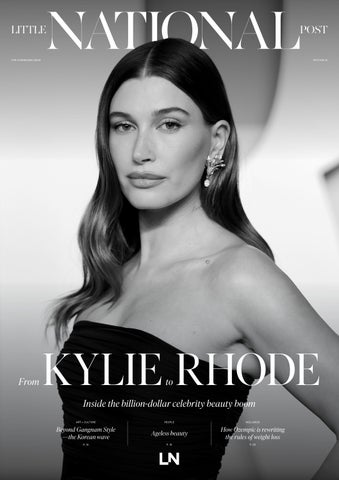
BEAUTY BOOM
beauty hasn’t disappeared. In fact, according to global marketing research firm NIQ, it’s a billion-dollar business.
WITH THE GLOBAL BEAUTY AND PERSONAL CARE MARKET NOW VALUED AT AN ESTIMATED US$677 BILLION, IT’S NO WONDER THAT A-LISTERS ARE LITERALLY USING THEIR FACES TO LAUNCH THEIR OWN COSMETIC ENDEAVOURS.
CELEBRITY BEAUTY’S
glow up Celebrity beauty brands aren’t a new addition to the industry.
Entering the cultural zeitgeist in the 1980s thanks to the launch of Elizabeth Taylor’s fragrance Passion—considered by some to be the first celebrity-founded beauty product—celebrity beauty gained momentum with supermodel Iman’s Iman Cosmetics in 1994.
Tapping into the natural human instinct to follow high-status, high-prestige individuals, the rise of celebrities as some of the most influential players in the cosmetics industry has been nothing short of meteoric.
From Jessica Simpson launching Dessert Beauty in 2004 to Goop hitting shelves in 2008 and Kylie Jenner changing the industry forever with the launch of Kylie Cosmetics in 2015, some argue that the success is due to celebrities being seen as more than a face—they’re seen as a muse.
It’s part of the reason why Kylie Jenner sold out her Kylie Lip Kits in mere seconds.
Jenner saw a hole in the market to target fans trying to imitate her overlined (and enhanced) pout. Stating on the brand’s website, “I create Kylie Cosmetics to give my fans access to the makeup products that I love and use every single day to create my looks”, she’s tapped into the cultural desire to be
linked to celebrity, even if it is just through a lip kit.
Recently celebrating 10 years of Kylie Cosmetics— which saw a return to the infamous King Kylie era to celebrate the milestone—the business is now valued at an eye-watering $1.2 billion, with Forbes reporting that she sold 51 per cent of Kylie Cosmetics in January 2020 for $600 million.
While Kylie Cosmetics dominated the direct-to-consumer space, 2017 brought another seismic shift with the introduction of Fenty Beauty.
Beginning as a 50-50 joint venture between singer Rihanna and French luxury goods conglomerate LVMH, the brand boomed thanks to its inclusive approach to beauty with the introduction of a 40shade foundation range.
Fenty reshaped industry standards for luxury makeup, according to Forbes, not only helping Rihanna enter one of the world’s most exclusive ranks—billionaire—but generating over $550 million in revenue in its first year alone.
Now predicted to be valued between $1 and $2 billion, in November 2025 LVMH announced it was selling its 50 per cent stake, with industry experts believing the slowed growth of the business, including a four per cent decline in revenue in the first nine months of 2025, led to the choice.
But that’s not due to a decline in product quality; rather, the decrease is attributed to Rihanna stepping back as the brand’s “daily storyteller” as she shifted her focus to other projects, including motherhood and the Super Bowl performance.
The influx of celebrity brands continued into 2018 when model-turned-beauty mogul Rosie HuntingtonWhiteley launched Rose Inc—a brand built with a focus on clean, clinically proven and sustainable products. Hong Kong-based asset management firm
AA Investments bought Rose Inc for US$2.5 million at auction in December 2023.
A year later, Rosie Huntington-Whiteley stepped down from Rose Inc.
"I am no longer involved or affiliated with its operations, products, or promotional activities," she wrote in an Instagram announcement.
"Authenticity and integrity are paramount to me in any business endeavour on which embark, and therefore, it is time for me to close this chapter."
Her departure highlights a crucial question facing all celebrity beauty brands: Can it succeed without the famous face behind it?
The APPEAL of CELEBRITY BEAUTY
Celebrity products capitalise on clout, name recognition, and fan bases; and while some are now collecting dust on shelves, others have as much staying power as star power.
Following the evolution of the hyper-glam aesthetic of the 2010s into the ‘clean beauty’ trend of the 2020s, longstanding celebrity brands have advanced alongside the demands of consumers and fans.
With Gen Z reported to prefer multi-use and simplified skin care routines, celebrity beauty brands now go beyond selling a product—they have to sell a lifestyle.
Social media has been instrumental in this shift. With platforms like TikTok and Instagram transforming how celebrity beauty brands connect with consumers, stars can now bypass traditional advertising and speak directly to millions of followers.
The subject of more than 16.5 million posts on TikTok alone, Haus Labs by Lady Gaga is the perfect example.
The singer launched the brand on Amazon in 2019, saying that she wanted to “promote the power of make-up and feeling confident in your own skin”.
In 2022, she re-launched the brand exclusively with Sephora, experiencing great success due to its commitment to high-tech, high-pigment, and high-performance products.
Its most viral product, the Triclone Skin Tech™ Foundation—a skincare-infused foundation that comes in 50 shades—cemented Haus Labs’ place in the celebrity beauty ecosphere, seeing it become one of the market’s most revered. It was valued at $90 million in 2024.
Haus Labs isn’t alone in proving that reinvention can revive a celebrity beauty brand.
Victoria Beckham Beauty also launched its sustainable and luxurious yet cruelty-free formulations in 2019, alongside the Victoria Beckham Spring/ Summer 2020 collection at London Fashion Week.
In Netflix’s 2025 three-part docuseries Victoria Beckham, it was revealed that the beauty brand helped to save the Victoria Beckham fashion label, which had been operating at a loss for some years.
Tapping into the ‘quiet luxury’ trend that peaked during 2023, it’s reported that a Victoria Beckham Beauty Satin Kajal Liner is sold every 30 seconds, with many beauty lovers trying to replicate her minimalist, chic look.
“I want to take care of women inside and out, providing them with the must-have items in makeup, skin care, fragrance and wellness that feel need in my own life,” Beckham said in announcing the brand’s launch.
Using the power of endorsement to make consumers feel connected to the celebrity and their aspirational life, it’s a very successful sales model that other celebrity beauty moguls have tapped into. Like Hailey Bieber’s Rhode.
The RISE of RHODE
It’s rare for a brand to evolve beyond the celebrity behind it, but Rhode is something of a phenomenon.
Co-founded with Michael D. Ratner and Lauren Ratner in 2022, Rhode by Hailey Bieber has taken the beauty world by storm, becoming a cult brand in just three short years.
Cutting through the noise of the crowded beauty market by selling Bieber’s effortlessly desirable lifestyle—complete with chic cocktails and beachside escapes—it’s her central role in its marketing that has built trust and authenticity with consumers, seeing her products become “must-haves” on bathroom shelves.
Effortlessly aligning Rhode with her own personal brand, many industry experts say that what makes it so successful compared to others on the market is the way it delivers exactly what Gen Z was already craving: a community.
Showcasing an aspirational "clean girl" lifestyle, not only did Bieber leverage her impressive social presence to embed Rhode into the cultural moment, but she actively engages with its followers, takes community feedback into account for product development and creates an exclusive "insider" feel.
“I feel like for me when I’m building Rhode, it’s a whole universe and a whole world that I’m building. And when I open up that world, my hope for why people have really gravitated towards it is that they feel like they’re a part of something that is bigger than skin care,” Bieber told GQ.
“It’s not just a beauty brand, it’s a whole lifestyle.”
Involved in everything from creating the products to starring in the ad campaigns, Bieber once again made waves with the announcement of the sale of Rhode to E.L.F. Cosmetics in a deal worth $1 billion, marking what Fashion Law says is one of the fastest, most remarkable success stories in the beauty industry’s recent history.
And while some would think that the sale would lessen the shine of Rhode, with Bieber remaining part of the company as the chief creative officer and head of innovation, fans believe that the authenticity that has made it so successful will continue to shine through.
MORE than SKIN DEEP
While a celebrity name can launch a beauty brand, it takes far more than fame to sustain one. Kim Kardashian’s KKW Beauty, Jennifer Lopez’s JLo Beauty and Blake Lively’s Blake Brown Beauty are just three examples of big celebrity names who— whether due to gimmicky and misleading marketing, bad press or high price points—have quietly faded away.
The success of brands like Rhode, Haus Labs and Kylie Cosmetics isn’t due to a mere stroke of luck; rather, a carefully orchestrated blend of personal branding, strategic marketing, and the ability to tap into cultural conversations.
“It was very fortunate that got to watch a lot of people launch their brands before mine,” Bieber said to Forbes.
“That really helped me to decipher what did and didn’t
THE SUCCESS OF BRANDS LIKE RHODE, HAUS LABS AND KYLIE COSMETICS ISN’T DUE TO A MERE STROKE OF LUCK; RATHER, A CAREFULLY ORCHESTRATED BLEND OF PERSONAL BRANDING, STRATEGIC MARKETING, AND ABILITY TO TAP INTO CULTURAL CONVERSATIONS.
...WHEN I’M BUILDING RHODE, IT’S A WHOLE UNIVERSE AND A WHOLE WORLD THAT I’M BUILDING. AND WHEN I OPEN UP THAT WORLD, MY HOPE FOR WHY PEOPLE HAVE REALLY GRAVITATED TOWARDS IT IS THAT THEY FEEL LIKE THEY’RE A PART OF SOMETHING THAT IS BIGGER THAN SKIN CARE.
ESCAPES TO INSPIRE
YOUR NEXT VACATION
Dreaming of sipping spritzes and exploring new cities, but don’t have the budget to book an overseas holiday?
Literary tourism—travel inspired by books—is on the rise. And while exploring a city on paper is not the same as navigating its streets in real life, how better to understand a place’s social, cultural, and historical values than to walk in the footsteps of authors and characters who have lived there themselves?
Perfect for escapes without the jet lag, take some time out with these books as they transport you to your dream destination.
Still Life by Sarah Winman
Beginning in a Tuscan wine cellar in 1944, where a young British soldier and an older art historian form a bond that spans decades, Still Life is a historical fiction novel that will transport you between war-torn Italy, the East End of London, and post-war Florence.
Exploring the themes of love, friendship, and the transformative power of art, the book is all about the families we make and the friendships that sustain us. You’ll feel like you’ve walked the streets of Florence, all without changing out of your pyjamas.
A Moveable Feast by Ernest Hemingway
Written during the last years of his life, this memoir is all about Hemingway’s memories of his life as an unknown writer living in Paris during the 1920s.
A Moveable Feast is a magnificent tribute to the City of Love, from Hemingway’s experiences writing in cafés with the other great writers of the time to the nightlife of the Roaring 20s.
Not only is it Hemingway at its best, but for anyone who is dreaming of visiting Paris, it promises to be pure pleasure.
A Year in Provence by Peter Mayle
Conjuring up all the earthy pleasures of Provençal life, this best-selling memoir by Peter Mayle is ideal for when you need a little bit of escapism, complete with sun, wine and food.
A witty and warm-hearted account of his experience moving into a 200-year-old stone farmhouse in the remote country of the Lubéron with his wife and two large dogs, from the secrets of goat racing through the middle of town to the mouth-watering regional cuisine, you’ll be living vicariously through Mayle.
Crazy Rich Asians by Kevin Kwan
A satirical romantic comedy, Crazy Rich Asians by Kevin Kwan is the ideal choice if you’re searching for a light novel that still scratches the travel bug. Often described as “uproarious, addictive, and filled with jaw-dropping opulence”, the story is primarily set in Singapore and is said to be loosely based on the author’s own childhood.
All about three super-rich, pedigreed Singaporean Chinese families and the gossip, backbiting, and scheming that occurs when the heir to one of the most massive fortunes in Asia brings his Americanborn Chinese girlfriend to the wedding of the season, from the modern, bustling side to the peaceful, colonial neighbourhoods, it offers a side of Singapore you’ve never experienced before.
Eat, Pray, Love by Elizabeth Gilbert
An intensely articulate and moving travel memoir, Eat, Pray, Love will inspire you to change your life— and possibly quit your job. Published in 2006, the memoir chronicles Elizabeth’s trip around the world after her divorce and what she discovered during her travels.
Spending four months in Italy, three months in India and ending in Bali, Eat, Pray, Love is praised for empowering countless people to search for their own best selves—and it might just inspire your next trip.
The Alchemist by Paulo Coelho
From exploring the city of Tangier to traversing the Sahara Desert and searching for treasure at the Egyptian pyramids, The Alchemist is sure to evoke wanderlust. Combining magic, mysticism, wisdom, and wonder into an inspiring tale of self-discovery, it tells the mystical story of Santiago, an Andalusian shepherd boy who yearns to travel in search of a worldly treasure.
Known as a modern classic, since its publication in 1988, The Alchemist’s universal and inspiring message about following your dreams has transformed the lives of countless people across generations and likely inspired many worldly trips.
Care and Feeding by Laurie Woolever
This moving, hilarious, and insightful memoir by food writer Laurie Woolever will transport you to the streets of New York City all without having to board a plane. Chronicling her life from her smalltown childhood to working at revered restaurants and food publications—including as a personal assistant to chefs Anthony Bourdain and Mario Batali—from making her way through the food world, to navigating addiction, it will literally leave you hungry for more.
IN A WAREHOUSE-SIZED DANCE STUDIO in
northern Seoul, a dozen teenagers move in perfect synchronisation, their choreography precise enough to satisfy an Olympic coach. They’ve been rehearsing for hours, and they’ll rehearse for hours more—not just dance, but media training, language lessons, even how to project “good personalities.”
Welcome to the world of K-pop, where cultural dominance is manufactured with the precision of a Samsung smartphone.
But K-pop is just one wave in the hallyu tsunami that has swept across the globe. Twenty-five years after a Chinese newspaper first coined the term “Korean Wave” to describe the phenomenon of Korean cultural exports, hallyu has evolved from a regional curiosity into a global force worth an estimated USD $12.3 billion to the Korean economy.
From the Oscar-winning brilliance of Parasite to the billion-view phenomenon of Gangnam Style from the fermented depths of kimchi to the 10-step skincare routines that have revolutionised beauty counters worldwide, Korean culture has achieved something remarkable: it has made a nation of 51 million people culturally unavoidable.
Australians have an unprecedented opportunity to explore this phenomenon as the National Museum of Australia presents Hallyu! a major exhibition examining the Korean Wave’s extraordinary rise and global impact.
“It’s a movement,” says Craig Middleton, Manager of Programming for the exhibition. “You see people dancing in shopping malls, filming themselves. It’s incredibly broad—technology, music, dance, fashion, food. It all intersects.”
From CRISIS to COOL
The Korean Wave didn’t emerge from prosperity—it was born from crisis. When the 1997 Asian financial crisis devastated South Korea’s economy, forcing the government to accept a humiliating USD $57 billion bailout from the IMF (a day still remembered as the Day of National Humility), something shifted in the national consciousness. President Kim Dae-jung looked at the economic carnage and decided Korea needed a new strategy.
“Kim marvelled how much revenue the United States brought in from films and the UK from stage musicals,” journalist Euny Hong writes in her book
The Birth of Korean Cool “He decided to use those two countries as benchmarks for creating a pop culture industry in Korea.”
The government threw billions into a new Cultural Content Office, backed by a massive public-private investment fund. The mission was audacious: rebrand an entire nation through creative exports. As Martin Roll notes in his analysis of the Korean Wave, the strategy inverted traditional soft power dynamics: “In the past, effective ‘soft power’—notably, the cultural exports of Britain and the US—followed on from economic empire building. The Korean model, by contrast, was ‘culture first, economics second.’”
It worked spectacularly. By 2024, according to Korea’s Ministry of Foreign Affairs, there were 225 million hallyu fans worldwide across 119 countries. Netflix recently announced $2.5 billion in investment in South Korean projects over four years, with Disney Plus and Apple TV following suit.
The MECHANICS of a MOVEMENT
What makes hallyu different from previous cultural exports is the strategic precision behind it. K-pop, the movement’s most visible ambassador, operates more like a tech startup than a traditional music industry. Companies like SM Entertainment and Hybe don’t just sign talent; they manufacture it with almost algorithmic efficiency.
“One of the things we tell [new talent] is that they are representing our country,” Chris Lee, CEO of SM Entertainment, told journalist Tim Adams for The Guardian. “If you were on an Olympic team you would have to be trained and we see no difference.”
The training is intense. Young recruits—some as young as 11—sign long-term contracts and essentially live in their management company’s buildings, studying languages, media presentation, choreography, and vocal technique. The production quality
is Hollywood-level, but the accessibility is pure social media age. K-pop idols maintain near-constant contact with global fan communities through digital platforms, creating a sense of intimacy that traditional pop stars rarely achieve.
“It’s inclusive, highly engaged, joyful,” Middleton observes of the K-pop fan culture. “The diversity of the audience—across age, across cultural backgrounds—it’s really remarkable.”
But as the University of Melbourne’s Natalia Grincheva notes in her research, K-pop’s demographic reach extends far beyond what many expect.
According to her Hallyu Tracker analysis, countries with “zero direct Hallyu imports”—including Middle Eastern nations like Oman, Qatar and Kuwait—show high compatibility with Korean cultural products, particularly among younger populations.
“These countries score very highly for Hallyu compatibility thanks to the median age of their populations,” Grincheva explains, revealing untapped markets where Korean culture could thrive.
BEYOND the BOY BANDS
While K-pop captures headlines, the Korean Wave’s most sophisticated achievements may lie in film and television. Bong Joon-ho’s Parasite didn’t just win the Oscar for Best Picture in 2020—it became the first non-English language film to do so, a watershed moment that proved global audiences were hungry for stories that Hollywood had stopped telling.
“While Hollywood repeats ever-more bloated Marvel franchises,” Adams writes, “Korean film-makers have learned that 1970s Hollywood trick of making thoughtful, auteur-led films go mainstream.“
Parasite succeeded not through any compromise to Western tastes but through “brilliant contemporary storytelling, the sharp and resonant things it had to say about inequality and class and poverty and excess—subjects about which mainstream American film is mostly silent.”
The success continued with Netflix’s Squid Game which became the platform’s first non-English show to top global viewing charts, clocking 1.65 billion hours in its first month—more than double the previous record holder, Bridgerton The show’s brutal examination of late-stage capitalism, wrapped in the aesthetics of children’s games, proved that Korean creators had mastered a tone of voice entirely their own.
KPop Demon Hunters has ridden the crest of the Korean Wave, becoming Netflix’s most-watched film ever. Accumulating around 500 million views since its release in June 2025, its success has extended far beyond the small screen, selling out cinemas, lifting Netflix’s revenue by 17%, and snagging both a Golden Globe and Grammy for its original song Golden
TRADITION within INNOVATION
For all its technological sophistication and global reach, hallyu also draws deep from Korean tradition.
Take kimchi, the fermented cabbage dish that has become a global superfood phenomenon. Chef Shim Young-soon, 84, has spent five decades collecting regional kimchi recipes dating back to the 15th century.
“It was kimchi—fizzing and fermenting in clay pots underground—that got Korea through the harshest winters of its war-torn history,” Adams recounts.
During COVID-19, Korean food’s reputation for health benefits went viral alongside K-pop, with Korean restaurants proliferating in major cities worldwide. In Australia, Korean cuisine has moved far beyond niche status.
Major retailers like Mecca and Sephora now prominently feature Korean beauty brands including Dr. Jart, Sulwhasoo, Innisfree, and Laneige, according to the Australia-Korea Business Council (AKBC).
“The rise of the Hallyu wave in Australia, marked by the popularity of Korean media, cuisine, and beauty products, has not only bolstered the Australia-Korea economic relationship by opening new avenues for trade and collaboration but also significantly enhanced Australians’ familiarity with Korea,” the AKBC notes in their analysis of Korean soft power’s growth in Australia.
The WAVE CONTINUES
As Korean culture becomes increasingly omnipresent, it’s worth asking what makes this wave different from previous cultural exports.
Perhaps it’s the timing. Korea’s rise coincided with the social media revolution, allowing fan communities to form globally and instantly. Perhaps it’s the content itself—Korean creators seem unafraid to tackle inequality, mental health, and social pressure in ways that resonate across cultures. Or perhaps it’s simply that in an increasingly homogenised global culture dominated by American franchises, Korean culture offers something different: sophisticated production values married to distinctive storytelling, traditional wisdom filtered through technological innovation, emotional depth combined with visual spectacle. Whatever the reasons, hallyu shows no signs of receding.
“The growth of the Korean Wave over the past two decades has been fascinating, and it is still unfolding,” writes Martin Roll. “Moving forward, it will be interesting to see how Korea continues to innovate and tap on the massive potential and popularity of the Korean Wave to sustain its appeal to global audiences.”
For Australians curious about this phenomenon, the Hallyu! exhibition offers a chance to explore not just the products of the Korean Wave—the music, films, fashion, and food—but the movement itself. “It’s about community,” Middleton reflects, describing hallyu’s inclusive and joyful nature as people come together across cultural and generational divides.
Twenty-five years after that Shanghai newspaper first identified the Korean Wave, what began as a regional trend has become a global force. And if Seoul’s meticulously planned cultural strategy continues to unfold as intended, this wave is only beginning to crest. ● Hallyu! The Korean Wave is
WORDS Amanda Whitley
They’ve got the BEACHES , the FOOD SCENE , the CREATIVE ENERGY MINUS the CROWDS . These FOUR NSW COASTAL TOWNS are where the SAVVY SET ARE HEADING before EVERYONE ELSE CATCHES ON.
EAT + DRINK PLAY STAY
EAT + DRINK
Paper Daisy (21 Cypress Crescent, Cabarita Beach), nestled within the Halcyon House boutique hotel, has earned acclaim for its deceptively simple approach to local produce, while No. 35 Kitchen & Bar (35 Tweed Coast Road, Cabarita Beach) is a modern ‘Italian-ish’ restaurant in Cabarita on the Tweed Coast showcasing local produce from the region.
Nearby, you’ll find Husk Farm Distillery (1152 Dulguigan Rd, North Tumbulgum), Australia’s only single-estate paddock-to-bottle rum operation, spread across 150 acres on the Tweed River’s banks. It’s also home to Ink Gin and their cellar door experience—cocktails, lunch, distillery tour—is worth the drive alone.
PLAY
STAY
Halcyon House (21 Cypress Crescent, Cabarita Beach) is the stuff retro motel dreams are made of—the 21-room property’s Hamptons aesthetic is irresistibly Instagrammable.
For those seeking hinterland tranquillity, La Rochér Eco Retreat (7 Minto Place, Smiths Creek) offers luxury villas with sunset views over Wollumbin—best enjoyed from their dreamy infinity pool.
Tweed Regional Gallery and Margaret Olley Art Centre (2 Mistral Road, Murwillumbah) showcases permanent and touring national and regional artists. You can also learn about the life and legacy of Australia’s most celebrated painter of still life and interiors in the Margaret Olley Centre, which recreates parts of Olley’s home studio.
Or graze on a platter of local prawns and charcuterie on a Tweed River and Rainforest Lunch Cruise with Tweed Eco Cruises a family-run business committed to minimising its environmental impact. Feeling a little more adventurous? Strap on a mask, adjust your snorkel and get ready to meet the sea turtles that hang out at the volcanic outcrop known as Cook Island around 600 metres off Fingal Headland south of Tweed Heads. You’ll likely meet green, hawksbill and loggerhead turtles amid the coral reefs on a snorkelling tour of Cook Island Aquatic Reserve with Watersports Guru or Cooly Eco Adventures.
Venture slightly inland to Murwillumbah for Bistro
Livi a neighbourhood restaurant laser-focused on Northern Rivers produce. Or head to Pottsville for Pipit where contemporary Australian cuisine gets a coastal spin, and where you can even take gyotaku art classes in the kitchen.
Wheeler’s Seafood Restaurant (162 Arthur Kaine Drive, Pambula) is an essential visit. Settle in with a dozen Merimbula oysters and a glass of sparkling, lake views stretching before you, and you’ll understand why locals get protective about this place. For something more casual, Dulcie’s Cottage (60 Main Street, Merimbula)—a reimagined 1925 building—serves burgers, beers, and those famous oysters under a shady jacaranda. Sunny’s Kiosk (8 Lakewood Drive, Merimbula), perched on the lake’s
HOW MATURE MODELS ARE REWRITING THE RULES
IN 1986, KATE BELL was a genetic anomaly.
At 18, she was tall, tanned, long-limbed and lithe, with bright blue eyes and a sculpted face. Kate looked like the girl-next-door—only much, much more beautiful.
As she pursued a modelling career, Kate would travel to every continent on the planet, and base herself in iconic cities like New York, London, Paris, Munich, Sydney and Hamburg. She would shoot campaigns in the jungles of Costa Rica, the beaches of South Africa, and even the historic Viennese castle where The Sound Of Music was filmed. Now, at 57, Kate presents something of a commercial, economic and cultural anomaly. She is still modelling. Indeed, there’s never been a busier time.
Still sporting the same bright blue eyes and sharply symmetrical cheekbones that made her a teen cover girl, Kate holds three firsts as a ‘mature model’: the first to be the face of a national beauty campaign (Myer), a national underwear campaign (Bonds), and a national sporting campaign (Rebel).
And while some of her clients have been steady across her career—Australia’s iconic David Jones has been casting her for the last 40 years—others are reaching out for the first time. In 2024, at the age of 56, she opened her first international show at Copenhagen Fashion Week. In 2025, she closed Australian Fashion Week.
“My look hasn’t changed much except for what gravity, the sun and general wear-and-tear have done,” she says with a smile.
“When was in my 20s, I felt big for the fashion industry. I was athletic and enjoyed exercise. Now that menopause has ravaged my thigh muscles, I do all can to maintain strength and agility in my body. have always watched my weight, at first fastidiously in my late teens and twenties, then chilling out, relaxing into a mindset of choosing very healthy food.”
Possessing a spiritual curiosity honed through decades of dedicated yoga study and practice, Kate approaches her work with an open mind and earned confidence.
“In my field, I’m an expert, just like an engineer who builds bridges. know exactly how to make a perfect bridge. The photo is that bridge.”
She has also helped pave the way for a long-overdue shift from the cult of youth in defining beauty standards to a broader acceptance that beauty can,
voice. You just have to look at the current discourse around menopause, which has been driven by this generation, after generations of women before us suffering in silence with inadequate information and advice to draw on.
“For so many years, Gen X was the forgotten generation—it was all about Boomers and Millennials fighting it out while we sat in the middle with the popcorn. We’re just not prepared to be ignored anymore—and that’s benefitting those older than us as well as the generations to come.”
For Glynis, the juggernaut that is the pro-age movement also taps into the cold, hard realities of marketing as well as a wave of representative empowerment.
as
“When
And yet it wasn’t easy.
“We were building something that didn’t really exist yet. The industry wasn’t
and should be, appreciated across the decades.
“In my late 30s, was based in London, working through the world’s first ‘classic’ model agency.
had an epiphany that modelling would never stop; Baby Boomers would change advertising. Just like was turning away from very young women selling me stuff—their images just didn’t correlate, didn’t speak to me,” she says.
“It was an empowering moment, and came back to Australia buoyed by a confidence that was pioneering a movement, if you will, and it had ramifications for all women.”
In 2021, Forbes Magazine published its first 50 Women over 50 list. Now it’s an annual and coveted award tapping into the zeitgeist, and Forbes has labelled this cohort of women “super consumers” with more than $15 trillion in purchasing power—making them the “wealthiest and most active generation in history.”
It makes sense then that the aspirational images used to sell the high-value accompaniments of wealth and success to this group reflect what they see in the mirror.
Kate says that the rise of social media has changed the game for mature models.
“Modelling became not only about me. understood for the first time that my job had real meaning, and my ‘still being there’ empowered other women.”
“Who has money to spend? Older women! I read a story recently that said women over 50 account for just over a quarter of all consumer spending. So why would you not speak directly to them in your marketing? It’s wild to me that it has taken so long to connect these two threads. This cohort of women needs to feel seen and respected by these brands if those brands want to benefit from that considerable spending power.”
A self-confessed magazine addict who grew up nose-deep in Dolly and various British teen and pop magazines like Seventeen and Smash Hits, Glynis never questioned at the time the extraordinary youth of the models (but she remembers when Kate Fischer won the Dolly Covergirl competition at just 13, and it doesn’t sit well in hindsight). Glynis was about 16 when she got her hands on her first Paris Vogue, and even then, the “older” models would only have been in their 20s. It wasn’t until the mid-2000s/early 2010s that she picked up on conversations around older representation that were being kick-started.
“Ari Seth Cohen’s Advanced Style blog and book shone a light on stylish older women, and Iris Apfel was becoming known globally for her flamboyant style—she became a style icon in her 80s and was visible right through to her death last year at 102. She signed a modelling contract at 97! In terms of fashion campaigns, the one that always pops into mind was the 2015 Celine campaign featuring Joan Didion, in her silver-bobbed, 80-year glory.
“But really, I’d pinpoint the big push to later in 2020, following the death of George Floyd at the hands of police in the US, which reignited the Black Lives Matter movement. While fashion and beauty industries grappled to deal with their lack of black representation, it also opened up the conversation to the broader issues of diversity and inclusion across race, gender, size, age and those with disabilities.”
THE DEMAND FOR AUTHENTICITY ISN’T A TREND, IT’S A PERMANENT SHIFT.
I UNDERSTOOD FOR THE FIRST TIME THAT MY JOB HAD REAL MEANING, AND MY ‘STILL BEING THERE’ EMPOWERED OTHER WOMEN.
While pro-age models have made inroads, Glynis, who closely observes the itinerary of international fashion shows, notes that she sees far less commitment to size and disability representation.
But she is relieved to see models proudly sporting more natural faces and bodies after decades of obsessive (and obvious) airbrushing.
“We earn our stripes—and our wrinkles! Airbrushing them out negates the lived experience. Of course, most of us want to age as slowly and gracefully as we can, but we also shouldn’t be changed to be something we’re not to suit someone else’s agenda. think we just accepted it in the ’80s and ’90s—that level of retouching today would be called out straight away on social media.”
For the founder of Silverfox Management, Brigitte Warne, the creation of an agency specialising in pro-age models was partly due to a canny and prescient business sense and partly due to a sense of self-preservation.
At just 24, she was working as a model herself and at danger of ageing out when she decided to redefine what beauty and ageing representation looked like in Australia.
Glynis Traill-Nash is one of Australia’s most respected and experienced fashion writers and commentators. Formerly the Fashion Editor of The Australian, she’s a regular contributor to Business of Fashion, Australian Financial Review, Australian Women’s Weekly, Harper’s Bazaar, and Marie Claire, among others.
She is also of the generation that grew up seeing Kate Bell regularly appear in magazines and on the screen, and is both relieved and delighted to see her continued presence today.
“The spending power of this generation has a lot to do with it,” reasons Glynis.
“But honestly, in part, think we can thank Gen X for much of this conversation. We’ve finally found our
“I was being told that my career was nearing its end because was getting ‘too old’, while also noticing that brands were actually wanting to book more relatable, diverse, and mature talent,” says Brigitte.
“It just didn’t make sense that this whole demographic of people over 30, 40, 50 and beyond was being completely overlooked in mainstream fashion and advertising. So we decided to do something about it.” From starting out with street casting which earned Brigitte a small handful of beautiful people that she helped train into “models”, the Silverfox team has now built an international agency representing 500 diverse, mature, and authentic faces across Australia and works with major fashion and beauty brands like David Jones, Mecca, The Iconic and Country
THE GREAT AUSTRALIAN DREAM used to be owning a home with a front garden and a back yard.
But for younger generations finding themselves priced off the quarter acre block, it’s time to reassess that dream.
These days, a roof over one’s head is more likely to be within an apartment complex or employing creative accounting in the form of “rentvesting”.
Australia’s multi-unit sector is poised for
Tim says this is part of a 15-year shift away from detached houses on blocks of land, which, for so many, are too expensive to afford.
“Land has always been expensive, and now it comes at such a premium it makes much more sense for many Australians to move into multi-unit dwellings.”
Tim notes the rise of “rentvesting”, a term which describes the increasingly popular practice of buying a more affordable home in a rural or regional area and renting a more lifestyle-oriented home in the city which would normally be out of budget to buy.
While it may sound complicated to pay both rent and a mortgage, rentvesting is a more affordable path to get into the property market, allowing the owner to build equity over time with an eye to eventually trading up.
If that is financially possible.
that while 92 per cent of renters aspire to own their own home, less than half think they will. It’s part of a phenomenon that American Economics Professor Scott Galloway describes as "intergenerational theft". A social media and podcasting sensation who espouses views on not only the financial markets, but everything from toxic masculinity to the erosion of American democracy, Professor Galloway believes older generations have accumulated wealth and opportunities directly at the expense of their children and grandchildren.
He argues that this “theft” is the result largely of Baby Boomers and Gen Xers reaping the benefits of more affordable housing and education, and failing to oppose Government policies that have led to younger generations facing skyrocketing costs and greater barriers to financial success. He has been scathing of government spending, particularly the COVID19 stimulus, for contributing to inflation and asset inflation (housing and stocks) that primarily benefits those who already own assets.
Professor Galloway also advocates government support for public universities to lower tuition, making a case that some institutions are using a scarcity model, similar to luxury brands, to drive up tuition prices, while large endowments suggest they are acting more like hedge funds than public service institutions. He’d rather see bailout funds redirected to public universities to cut costs and increase enrolments, thereby making higher education more accessible and affordable for the current generation.
With education comes better job prospects, higher standards of living and an entrée to property ownership.
Outspoken on the mental health crisis among young people, which he links in part, to the negative effects of social media, Professor Galloway says older generations did not have to confront many of the economic (not to mention environmental, political and social) problems of youth today and yet show very little interest in making a difference to those who feel pretty despondent about their circumstances.
Back in Australia, Professor Nick Biddle, Head of the Australian National University’s School of Politics and International Relations recently published a major research paper which he entitled “The Erosion of Hope”.
The key findings are that Australians are increasingly pessimistic about the future, with declining trust in government and institutions and higher levels of financial stress.
Life satisfaction has dropped to its lowest level since COVID-19 lockdowns, with mean satisfaction falling to 6.45 out of 10—a statistically significant and substantial decline from 6.78 in early 2023, and 7.05 prior to the Black Summer bushfires and COVID-19 pandemic.
Financial stress remains high, with 33.1 per cent of Australians finding it difficult or very difficult to meet household expenses on their current income, a rise from 29.9 per cent in October 2024.
This pervasive pessimism extends to both personal circumstances and the broader future of the country, with only 21.7 per cent of Australians believing their life has improved in the past year, while 31.0 per cent believe it has worsened—the worst outlook recorded since early COVID-19 lockdowns.
The long-term national outlook is also overwhelmingly negative, with 50.3 per cent of Australians believing life will be worse in 50 years, while only 16.3 per cent believe it will improve. It’s unsurprising then, that nostalgia for the past is widespread with 51.8 per cent believing life was better 50 years ago, despite major improvements in life expectancy, real income, and education levels.
A father of two teenage sons, Professor Biddle is genuinely concerned about the uncertain economic and political structures that his sons will be navigating as they grow older. But he warns against romanticising some bygone era.
“When was their age, youth unemployment rates were in the high double-digits but are now less than 10 per cent. But, more than any time in recent history, the economic structure of Australia 10 or 20 years into the future is very hard to predict.
“It is definitely true that homeownership has featured very differently in the lives of young Australians and will do so into the future. But part of this is a good news story. Far more young Australians are completing one or two degrees and travelling the world. Far fewer Australians are having children when they are young and not ready.
“These trends have delayed home ownership. Not because young adults can’t afford it, but because they are making a choice,” says Professor Biddle.
“And if we expand our definition of wealth to include human capital, then am not sure that young Australians aren’t, on average, far wealthier than we were at that age. But of course, human capital doesn’t have a roof. For too many young Australians, once they are ready to make the choice to purchase a home, it is more difficult than it was for most of the post-war period.”
He also shares Professor Galloway’s concerns on inter-generational inequality, suggesting older Australians have allowed house prices to increase far faster than they should have, to the detriment of those entering the market.
“The challenge as a country is to ensure that the burden of a more sustainable housing footprint doesn’t just fall on younger cohorts. It doesn’t have to be an apartment, but an apartment should be a viable option, and we do need to make sure that those who live in apartments have access to the same amenities as those who live in free-standing houses.
“The main goal needs to be to ensure that the housing stock continues to expand, but in a sustainable way, and that the family you grow up in doesn’t overly determine the quality of your housing now, or into the future.”
But there are bright spots to his research.
“What was most surprised by when analysing our survey data from earlier in the year is that younger Australians were far more optimistic about the future than the rest of the adult population. 18- to 24-yearolds in particular, but those aged 25 to 34 as well, were far more likely to say that life will improve rather than worsen in the next five or 50 years, not just for them as individuals, but for society as a whole.” ●
Similar resilience is needed in other countries, too.
Since US President Donald Trump came back into office, it’s been a battle to sift fact from fiction.
IN 2025 , AUSTRALIAN JOURNALIST Bryce
Corbett sat down with a group of mums in Estonia.
The former Deputy Editor of The Australian Women’s Weekly, columnist at the Australian Financial Review and producer at 60 Minutes has interviewed a wide range of subjects while chasing intriguing stories over his 25-year career.
But this was a surreal moment for Corbett, who over the last five years has founded Squiz Kids, Australia’s number one daily news podcast for kids (with an audience of more than 160,000 Aussie kids and their families) while also helping to create Newshounds—a leading media literacy program for primary school students.
He was meeting with mums who have put themselves on the frontline of democracy. Sitting in a parliamentary building in Tallinn, the capital of Estonia, Corbett was learning about the existence of the Estonian Women’s Voluntary Defence Organisation.
A bit like a militarised Country Women’s Association, it’s an association for Estonian women to get together, share knowledge and learn—among other things—how to be prepared in the event of a Russian invasion. As their website says, “every member can take part in military activities and different social events”.
The part that intrigued Corbett the most was that these stoic mums have added “information warfare” courses to their programming, teaching members how to recognise and resist “information manipulation”.
A recipient of a prestigious Churchill Fellowship, Corbett spent much of 2025 analysing global media literacy (or lack thereof) and the alarming spread of misinformation and disinformation—the impact on our democratic process and sense of world order he has labelled “The Big Threat”.
Tying his international research program into an eight-part “The Big Threat” podcast put out under the banner of parent podcast The Squiz, Corbett said meeting these no-nonsense Estonian mums was profoundly inspiring. Their experience of sharing a border with Russia means they are exposed almost daily to the flood of disinformation that comes out of Moscow’s state-sponsored troll factories, and they therefore need to stay ahead of the game when it comes to promoting media literacy among their children. Because their fledgling democracy depends on it. Estonia, as well as neighbouring Finland, spends considerable time and money ensuring their citizens learn to tell online fact from fiction—from kids in kindergarten right through to senior citizens.
Siim Kumpas, who works within the European External Action Service for the European Union sums up this new warfront. “We cannot make Russia stop using information as a weapon. We can do everything, impose sanctions, stand on our heads, but they will never stop. So we can only talk about making ourselves stronger and building resilience.”
Whether it is Trump or his Press Secretary Karoline Leavitt threatening journalists to their faces and labelling any question they don’t like as “fake news”, or the use of a communications strategy coined by Trump’s former senior advisor Steve Bannon as "flooding the zone with shit”, people are often so overwhelmed with the daily onslaught of announcements and media stunts, they simply give up trying to find the truth.
And in many cases, the truth may be more jaw-dropping than any political fantasy (think Trump’s rambling late-night posts or AI-generated videos).
This has been exacerbated by Meta’s decision, shortly after Trump’s inauguration last January, to abandon fact-checking. It has meant that formerly in-touch citizens who relied on a strong and independent Fourth Estate (not to mention a regulated internet and respect for the central tenets of democracy) have been feeling increasingly, if not alarmingly, off-balance.
How does one separate genuine headlines from the propaganda, AI and misinformation and disinformation we have collectively allowed ourselves to be fed in our phone-fuelled diet of clickbait, bot-rage and addictive algorithms? No wonder we feel we are sometimes drowning in the darkest regions of the web.
Corbett said he had applied for the Churchill Fellowship back in 2023, but by the time he began his program at the start of this year, things had certainly taken a dramatic turn.
“I’d been mulling media literacy for a while, but this year really did throw it all into very sharp focus. Now it has morphed into something bigger. We need to consider what critical thinking and life skills we need to teach our children when our very democracy is under threat. I mean, Trump is demolishing the East Wing of the White House. Tell me that is not a metaphor!”
has been disappointed in the uptake of formal digital literacy programs in Australia.
He has been pushing for Newshounds to receive Federal Government funding and be expanded into schools, or for any formal commitment to incorporate digital literacy within the primary curriculum, through the senior years and indeed, stretching throughout the entire population.
“It should be a cradle-to-grave proposition, as even our seniors have shown they are particularly susceptible to manipulation online.”
At the University of Canberra, research published by the News and Media Research Centre suggests Australians are deeply concerned about media manipulation, but they are unsure how to combat it, and are susceptible to switching off as an avoidance technique.
Professor Sora Park’s 2025 Digital News Report found that in a survey of over 2,000 Australian adults, 97 per cent of them experienced some type of difficulty in verifying information. Part of a global annual survey of digital news consumption in 48 countries, commissioned by the Reuters Institute for the Study of Journalism at the University of Oxford, the report shows that more Australians are receiving their news from social media than traditional sources, and a decline in trust is being accompanied by a loss of interest in news and growing avoidance.
More than two-thirds (69 per cent) of Australians say they often, sometimes or occasionally avoid the news. The reasons given range from the negative impact it has on their mood (46 per cent), perceptions of untrustworthiness or bias (37 per cent), and news fatigue (32 per cent).
For Corbett, the statistics are sobering.
“When you live in a happily functioning democracy within a country like ours, you can take for granted it will always be there. But the impact of misinformation and disinformation is just so pernicious, and the way it has risen to the mainstream while the power and influence of the fourth estate has diminished should be something we are all alarmed about globally.
“I say this as a journalist, as a father and as someone who really likes living in a functioning democracy.”
During his time in America, Corbett concedes he did register moments of existential dread while speaking with academics and journalists who feel they are currently losing the battle against Trump’s “excrement flood”.
This was felt acutely while he spoke with Professor Sam Wineburg, a cognitive psychologist from Stanford University who explained the “economics of rage”.
“Think about just how the platform X monetises contributors. Contributors are monetised by their level of engagement, so the more incendiary, the more enraged, the richer the rage merchant becomes,” Wineburg explained.
“Merchants…profit off the skilful deploying of anger, of trolling, of rage, because that seems to be a recipe for more engagement, which ultimately leads to a greater pay stub from the platforms that provide it. And in other words, it pays to lie.”
Corbett says the interview stood out among the many he did on his Churchill Fellowship because Wineburg expressed an “almost defeatist tone with respect to the enormity
Merchants…profit off the skilful deploying of anger, of trolling, of rage, because that seems to be a recipe for more engagement, which ultimately leads to a greater pay stub from the platforms that provide it. And in other words, it pays to lie.
“Of
“These
“There
THERE’S SOMETHING TO BE SAID about embodying effortless style, season after season.
Some refer to it as curating a capsule wardrobe.
Others, investment dressing. But at its core, quiet luxury is about collecting a set of everyday outfit essentials, where the focus is on quality rather than quantity.
And when it comes to the mathematics of quiet luxury, the return on investment is well worth the price.
Take the Soft Margaux 15 Bag from The Row. Made in Italy with 100 percent calfskin leather and lined with 100 percent cotton herringbone, the bag reached a cult-like status thanks to it’s minimal and refined look. Stripped of logos and flashy hardware, since it was launched in 2018 the Margaux has been spotted on the arms of many of fashion’s most public figures—from Kendall Jenner to Harry Styles.
Meticulously crafted, what truly makes the Margaux luxurious is its scarcity. The Row rarely restocks the bag and releases drops in small quantities, making it almost impossible to buy and seeing the luxury consignment e-commerce site, The RealReal call it a ‘modern heirloom’. And with its if ‘you know, you know’ status, and ability to be styled with everything from jeans to crisp tailored suits, it’s the definition of quiet luxury.
Then there’s a black silk slip-style dress.
Slinky, sensual and versatile, it’s a modern wardrobe staple for many. Nili Lotan’s Cami Gown is the perfect example—with a v-neckline and finished with spaghetti straps, it’s a nod to the ‘90s without getting too nostalgic, and the fluid movement of the fabric combined with a chic silhouette makes it ideal for date night when worn with a pair of strappy stilettos. But add some ballet flats or a pair of sneakers and a leather jacket, and it’s perfect for popping out to the shops or catching up over a coffee. And what about jewellery? A gold bracelet like the classic offerings from Cartier is a forever piece that looks just as impressive with a white t-shirt as with an evening gown, while diamond and blackened gold gypset hoop earrings from Jessica McCormack are a timeless addition to any look.
When looking for versatility, a Long Gabardine Ellingham Fit-and-flare Car Coat from Burberry, a Manuela coat from Max Mara or a classic white collared shirt stretch far beyond one season. Easily becoming staples in your wardrobe, they’re all worthy investments—because not only do you look good wearing them, but you feel good too.
That’s the power of quiet luxury; it’s not just about creating a uniform look. It’s about building a wardrobe that lasts beyond trends, not only thanks to
Max Mara MANUELA Coat
MeghAN markle, DucheSs Sussex In New
NicOle KIdman At WimbledoN
by emilY rATaJKowski
HailEy BiebeR iN tiffany & Co
The ROW MARGAUX BAG
BLACK Silk DRESS
EARRINGS
WHITE Shirt
MeghAN markle, DucheSs OF
For years, people have wished for a little magic pill for weight loss—something convenient and easy that would allow them to shed kilos without starving themselves. So, it’s no surprise that when Ozempic entered the cultural zeitgeist, it quickly became known as a miracle drug.
APPROVED BY THE U.S. Food and Drug Administration (FDA) in 2017 for the treatment of type 2 diabetes and subsequently approved in Australia in 2019, GLP-1s—commonly known by the brand names Ozempic and Mounjaro—are anti-obesity medications used for long-term weight management.
Mimicking a hormone that helps regulate blood sugar and appetite, the medication works by suppressing the appetite by slowing down stomach emptying and sending signals of fullness to the brain, limiting appetite.
The injectable treatment has completely changed the weight-loss treatment landscape—especially with countless celebrities and public figures speaking about how it’s transformed their bodies and their lives.
How OZEMPIC is rewriting the rules of weight loss.
Why NUTRITIONISTS are PAYING ATTENTION
While conversations surrounding GLP-1 are focused on weight loss, research shows that the benefits go beyond this. Also lowering blood sugar, new research shows that it can also significantly reduce the risk of heart attacks and strokes, leading to improved overall health and longevity.
It’s also changed the way nutritionists like Isabella work with clients.
Helping her clients change their lifestyle by focusing on protein-forward, plant-rich, and habit-based nutrition, along with sustainable lifestyle changes, she believes that the introduction and popularity of GLP-1 in recent years has expanded the toolboxes of nutritionists.
Often Isabella works with women who don’t want to give up their lifestyle but are working towards a fat loss goal. Unlike crash diets that often lead to quick weight regain, Isabella says that GLP-1s offer a more sustainable approach for certain individuals when prescribed by their health care practitioner, and paired with daily habits, education, and sustainability.
And while it can reduce intrusive cravings and make portion control easier, she emphasises that it doesn’t replace mindful eating.
“Clinical trials show that Ozempic produces the greatest and most sustainable results when combined with lifestyle changes. Medication alone isn’t a long-term solution,” says Isabella.
A nutritionist’s PERSPECTIVE
The impact of GLP-1 has been profound. Now seeping into the lifestyles of everyday people looking for a way to maintain or lose weight, there’s been explosive growth in use of the medication in Australia.
According to a 2025 study by University of NSW scientists, the total sales of GLP-1 in Australia have increased almost tenfold since May 2020. In the year to April 2025, the data shows that more than six million units were sold in Australia, with an estimated half a million Australians taking weight loss drugs every month.
But beyond the numbers, GLP-1 has also transformed our eating habits. From Ozempic restaurant menus to meal plans, the way people eat is shifting— and in turn, it’s changing how nutrition professionals approach weight management.
When Sydney-based nutritionist and fat loss coach Isabella Raso of B.FIT first heard about Ozempic, she says she was “cautiously optimistic” but had concerns about access, side effects, and the unrealistic expectations that often come with new weight loss medications.
As someone focused on translating nutrition science into simple, repeatable habits for women with busy lives, she admits that the new treatment sounded almost too good to be true.
However, as more evidence has emerged—including large clinical trials showing significant weight loss and cardiovascular benefits in people with overweight or obesity and heart disease—her perspective has evolved.
“I’m now pragmatically supportive when it’s prescribed appropriately and paired with professional guidance to protect overall health, muscle mass, bone density, and the long-term habits needed to maintain results,” she says.
“Ozempic is a valuable tool to make weight loss more achievable for certain individuals, but understanding how to support your body through proper nutrition, movement, and sustainable habits is what turns short-term results into long-term success.”
Ozempic is a valuable tool to make weight loss more achievable for certain individuals, but understanding how to support your body through proper nutrition, movement, and sustainable habits is what turns short- term results into long-term success.
What OZEMPIC CAN’T REPLACE
So, will Ozempic ever replace the benefits of eating nutritious food and daily movement when it comes to weight loss? Not quite.
“Ozempic can help lower appetite and support weight loss, but it doesn’t replace the wide-ranging benefits of nutritious eating and regular movement,” says Isabella.
“A balanced diet and physical activity support heart health, muscle strength, bone density, and mental well-being, things medication alone can’t replicate. When prescribed, Ozempic should be used alongside healthy habits and lifestyle changes, not instead of them.”
Isabella notes that the positive side of Ozempic is that it gives people with genuine medical needs more options and helps recognise obesity as a complex, chronic condition. However, there are trade-offs— including the risk of people relying on it without building sustainable habits that will serve them long after they stop taking the medication.
But the use of GLP-1s isn’t going anywhere. Hailed as the biggest drug boom in decades, as more and more people take drugs like Ozempic as routinely as daily vitamins, the landscape of nutrition and weight management is evolving rapidly.
“We’re moving toward integrated care. Personalised nutrition, strength training, digital habit support, and medication when appropriate,” says Isabella.
We’re
moving toward integrated care. Personalised nutrition, strength training, digital habit support, and medication when appropriate.
1 FOCUS ON PROTEIN & PRODUCE FIRST
At every meal, aim to include a good protein source like eggs, Greek yogurt, chicken, tofu, or protein powder, and something from nature—fruit or veg. This combo helps with satiety,
2 BATCH THE BASICS
Instead
“Future research will likely focus on dose strategies, long-term maintenance, and
3 EAT BY ROUTINE, NOT JUST HUNGER Busy
4 KEEP SMART SNACKS HANDY Have
short on time.
evidence-based, sustainable methods, for nutritionists like Isabella, sustainable health is about consistency.
“Whether you’re focusing on nutrition alone or using Ozempic as part of your journey, the real key is building habits that support healthy, sustainable results,” she says.
“Working with a qualified coach or dietitian can make a huge difference, helping you understand how the medication works while building balanced eating habits, strength training routines, good sleep, and self-awareness. Those lifestyle foundations are what keep your results long after the medication stops.”
5 THINK MINIMUMS, NOT PERFECTION When life gets busy, hit your “non-negotiables”: one solid protein source per meal, one serve of fruit and veg per meal, enough water, and 20-30 minutes of movement per
ISABELLA RASO Nutritionist and Founder of B.FIT
01.
Greek CHICKEN & RICE Tray Bake
Method:
01. Preheat oven to 200°C fan-forced.
02. Lightly spray a large ceramic or glass baking dish with olive oil.
03.
04. Rinse rice under cold water until clear. Add to the baking dish with onion. Pour over chicken bone broth and lemon juice, stirring gently.
05. Rub chicken thighs with olive oil, Greek seasoning, garlic powder, paprika, salt and pepper. Place on top of rice and add lemon slices.
06.
Hidden VEG BOLOGNESE
01.
Method:
01. Dice the cucumber into small cubes and set aside.
02. Pat the salmon dry with paper towel. Sprinkle the lemon pepper seasoning over the top and spray lightly with olive oil.
03. Place salmon skin-side down in the air fryer and cook at 200°C for 12 minutes.
04. Microwave the rice cup according to packet instructions (usually 90 seconds.)
05. Add the hot rice to your serving bowl. Top with cucumber, carrot shred and pickled onion.
06. Once salmon is cooked, place it whole on top or flake it over the bowl.
07. Add the lemon wedge on the side for squeezing over before eating.
Method:
01. Bring a small saucepan of water to the boil. Add eggs and cook for 6½ minutes. Transfer to cold water.
02. Heat a non-stick pan over medium heat and lightly spray with olive oil.
03. Season chicken with salt and pepper, then cook for 3–4 minutes per side until golden and cooked through.
04. Remove chicken, rest for 2 minutes, then slice.
05. Peel eggs and cut in half.
06. Chop lettuce, halve tomatoes and slice cucumber.
07. In a small bowl, mix yogurt, dill and lemon juice. Season lightly.
08. Arrange vegetables in a bowl, drizzle with dill yogurt sauce and serve with lemon wedges.
BANANA SPLIT YOGHURT Bowl
STRAWBERRY CHOC–PEANUT BUTTER Slice
04.
05.
08. Add beef to the sauce. Simmer 10–15 minutes, adding water if too thick.
9. Cook pasta in salted boiling water according to directions. Drain, reserving ½ cup pasta water. 10. Stir pasta into the sauce, adding reserved water for silkiness. Serve with parmesan.water.
Slice red onion into thin half moons. Rinse and thinly slice the lemon, removing seeds. Trim excess fat from chicken thighs.