

September marks five years since Candice McQueen arrived at Lipscomb, encouraging us all to ‘Be A Light.’ Page 28 The Magazine for Alumni and Friends spring 2026



FIVE YEARS OF LIGHT

September marks five years since Candice McQueen arrived at Lipscomb, encouraging us all to ‘Be A Light.’ Page 28 The Magazine for Alumni and Friends spring 2026
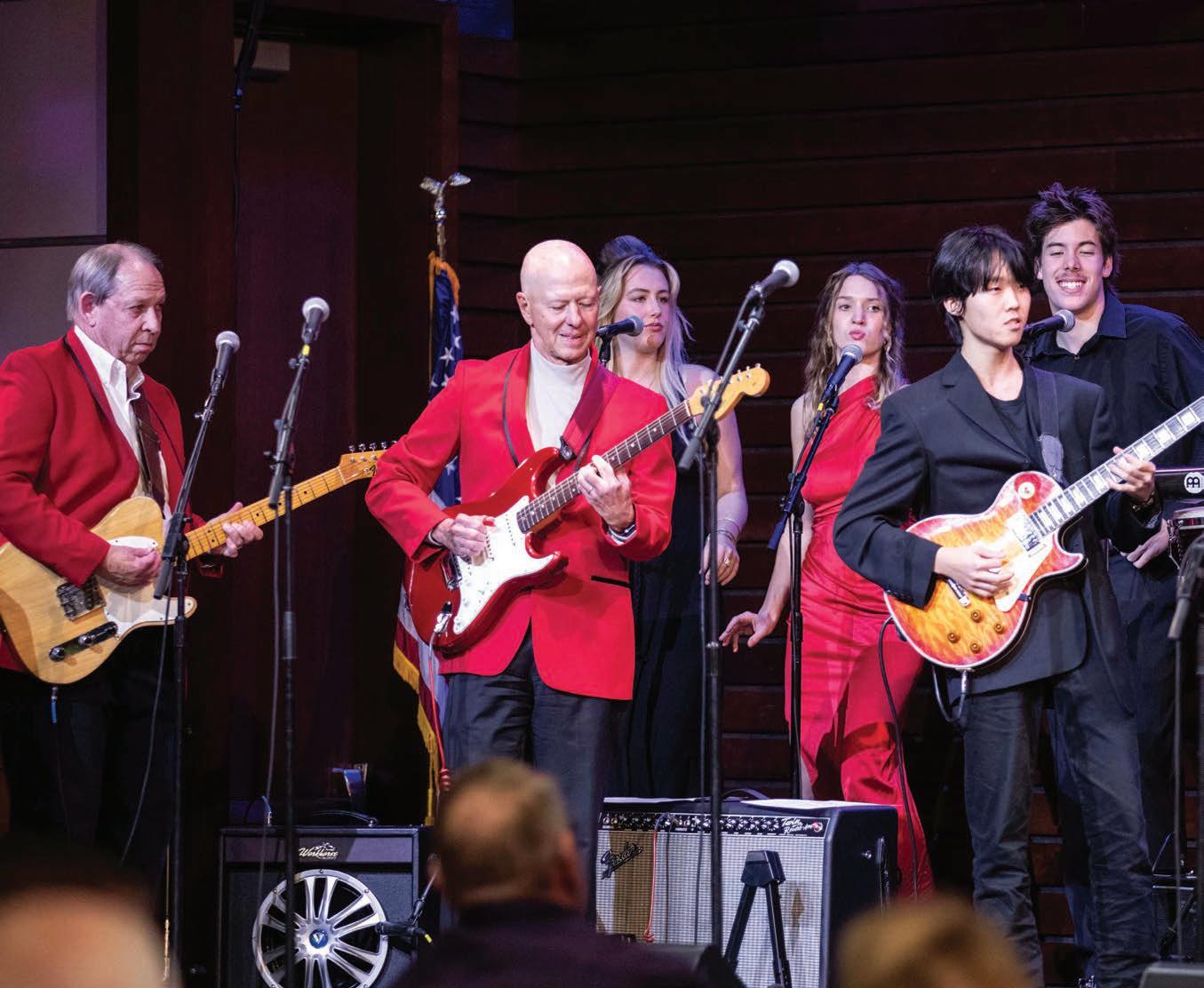
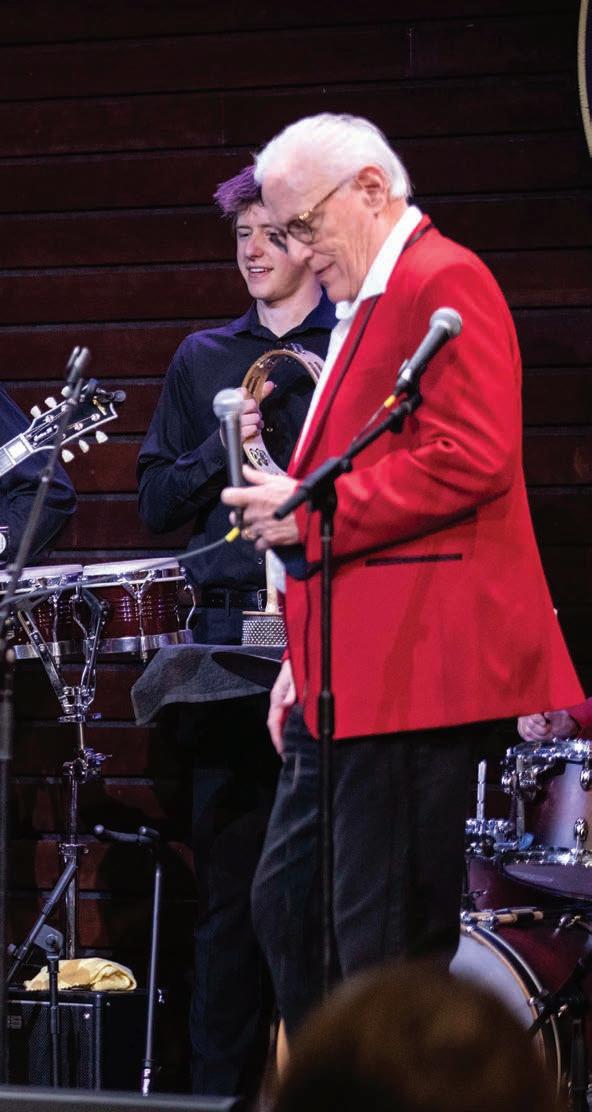
Bisons Weekend 2025 hosted the 50year reunion for the Class of 1975, and the reunion committee came up with a rockin’ way to mesh the past and present: a Delta NaNaNa concert with both original members and current School of Music students filling out the roster.
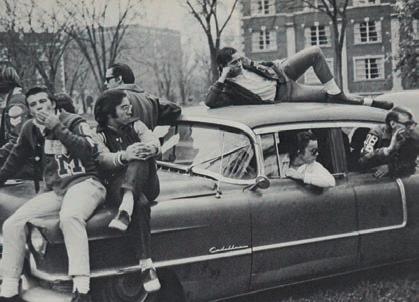
In 1973, members of Delta Nu participated in Bison Day by performing 1950s songs that had re-emerged as popular tunes due to the professional group Sha Na Na. After their performance on the steps of then-Alumni Auditorium, Dean Carl McKelvey (BA ’53) asked the group if they could do a full-length performance, and the Delta NaNaNa (yes, the name was inspired by Sha Na Na) concert was born.
Then held on the auditorium stage, the concert packed the venue with students dressed in bebop ’50s outfits. The original
members played annually until they graduated, several in the Class of 1975. They then returned periodically for five- and 10year reunions.
The concert continued to be an annual event for 22 years, with Delta Nu and Delta Sigma members playing popular music of the era until 1995. After a year’s break, the concert was revived in 1997 with a show that included about 50 alumni club members playing a selection of tunes from each decade since the 1950s. Since then the concert has been held by the clubs on and off, sometimes at Homecoming.
For the 50th reunion performance, original Delta NaNaNa members Steve Staggs (LA ’71, BS ’75), Jim Lawrence (BA ’76), Tom Billington (A ’74), Andy Wood (BS ’76) and Ernie Clevenger (BA ’75), joined fellow alums from other years,
Gary Jerkins (LA ’70, BS ’74), Jerry Cover (BS ’75) and Michael Puryear (A), on the stage.
The 10 current student performers were Braxton Algood , Gordie Molin , Titus Thomas, Isaac Bivers, Roni Bates, Zerita McAttee, Ryker Lacy, Kate Marcino, Reece Hoffman and Brett Hawley
“I wanted these students because they are so gifted but also have stellar character,” said Brown Bannister, associate professor in the School of Music. “I knew they would love getting to know and work with the group. The result was fantastic! The students said they would do it again in a heartbeat!”
Learn more about the origin of Delta NaNaNa and its impact on Lipscomb at lipscomb.edu/now/DNNN.
Editor
Kim Chaudoin
Senior Managing Editor
Janel Shoun-Smith
Writers
Kim Chaudoin
Janel Shoun-Smith
Photography
Kristi Jones
Lipscomb Athletics
Design
Emily Kinney
Will Mason
Postmaster: Send changes of address to LipscombNow, Alumni Relations
University.
At Lipscomb, we do more than serve our next-door neighbor. We serve neighbors far and wide throughout Tennessee’s three Grand Divisions. See how Lipscomb’s academic programs impact rural areas across the state, for the better.
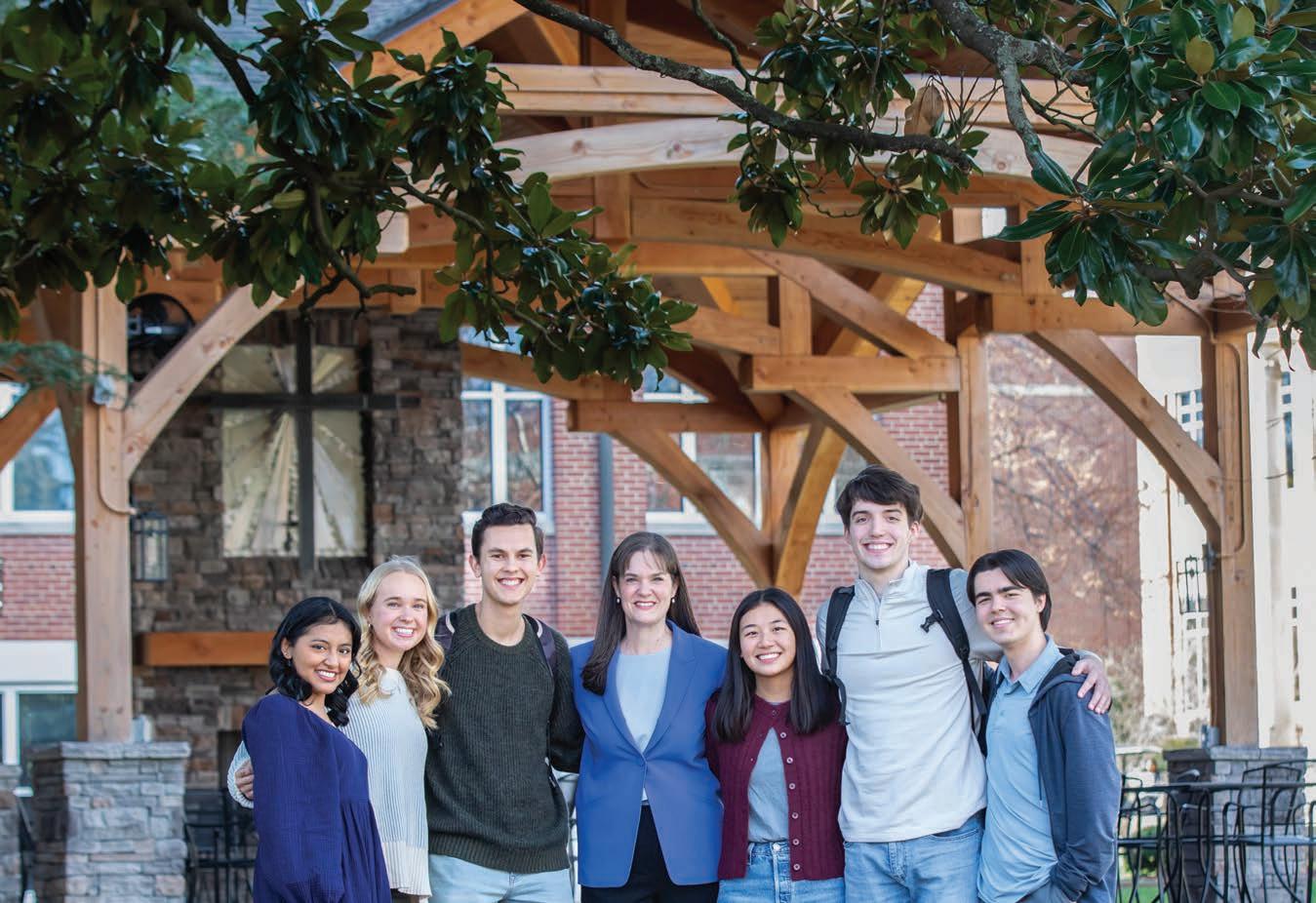
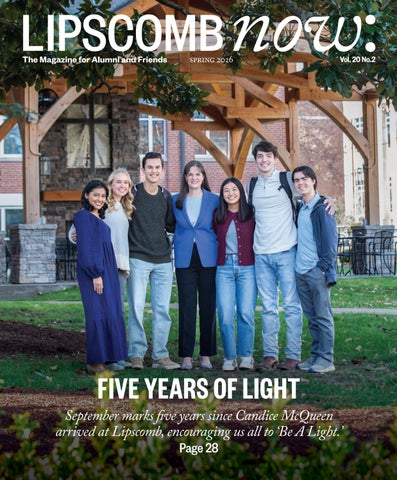
roughout her first five years at Lipscomb, which culminate on Sept. , Dr. Candice McQueen (BS ’) has been dedicated to leading all Bisons to help fuel, focus and shine that Lipscomb light. Cover Photo: Candice McQueen (center) with students in front of e Marni, the new outdoor pavilion on campus.
Lipscomb’s sports dietitian alumni are fueling championship victories throughout the SEC Conference, teaching healthy habits, good nutrition and the best ways to achieve stellar performance to the nation’s top collegiate teams.
Lee Huber (BA ’) brings joy to millions of readers with two series of historic mystery novels written over the past
It’s hard to believe that it has been almost five years since I began in this role as president of my own alma mater. It seems like hardly any time since I was encouraging the Lipscomb community to let its light shine in our surrounding community from the inaugural stage in Allen Arena.
ere is no doubt that in the past five years, Lipscomb University has let its light shine in ways both big and small.
I won’t soon forget many of the major milestones accomplished in the past five years: record-setting enrollment for three consecutive years and record-setting Giving Days for four, cutting a ribbon with Country music icon Dolly Parton on-campus to open a one-of-a-kind exhibit; cheering on our men’s basketball team in the NCAA Nationals in Wisconsin and celebrating another renewal of our university accreditation with no outstanding recommendations (page ), among so many others.
All of these events came with great pomp and circumstance, deservedly so, but there are also many moments that stand out in my mind, not necessarily because of the luminaries involved or the dollar amounts raised, but because they are moments when Lipscomb shines its light the brightest for individuals.
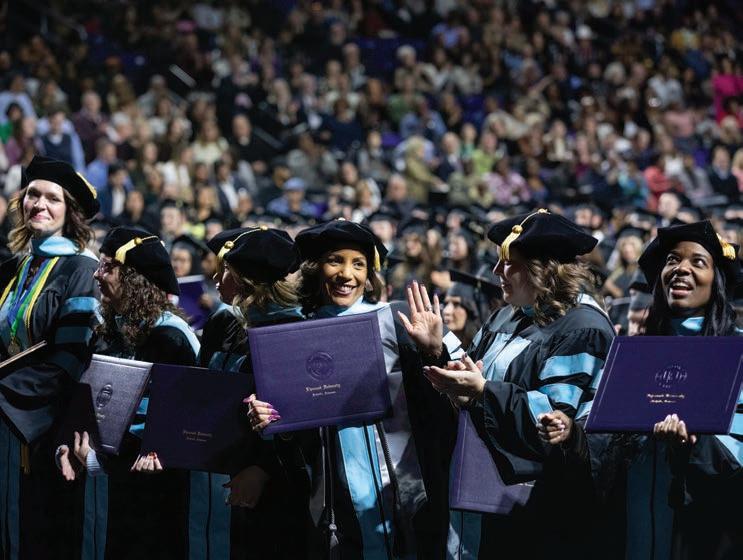
ese moments come when we’re serving parents and their children pancakes at Bisons Weekend, meeting admitted transfer students in their hometowns on the Be A Bison Tour, playing Dodgeball against our incredibly passionate students and watching our graduates in the Allen Arena tunnel as they congratulate each other before walking out to receive their degree.
ese are the moments that show who Lipscomb is, at its core, on a day-to-day basis: It’s a community, a team and a family.
In the pages of this magazine, you can see how Lipscomb as a community welcomes our neighbors immediately around campus, as we did just recently in January after a devastating ice storm caused power outages both on- and off-campus (page ). ree buildings powered by generators became a refuge for students, faculty and our immediate neighbors.


You can also read how we continuously reach out to our neighbors who live throughout Tennessee’s three Grand Divisions through academic programs in leadership, ministry, nursing and school psychology that impact under-resourced rural areas for the better (page )
ese pages describe how Lipscomb truly comes together as a family to support each other in times of crisis (page ) and mourning (page ), in celebration and throughout generations
Finally, certainly graduates leave campus knowing they are part of the Lipscomb team. Both of our Alumni of the Year, Alex Samuels (BBA ’), a former member of Lipscomb’s volleyball team (page ), and Drew Davis (BA ’), a former member of Lipscomb’s gymnastics team (page ), both learned many life lessons as part of Lipscomb Athletics that they now carry out in their own small businesses in downtown Nashville and in Atlanta, respectively.
In addition to that, don’t miss the feature on our dietetics alumni, who live out teamwork at the nation’s top universities every day as sports dietitians for high-profile athletic teams (page )
From a private encouraging word from a faculty member to one-onone assistance given by financial aid staff, from quiet wellness walks led by student life staff to the bonanza of social involvement that is Singarama (March -), we are all a part of the team that shines Lipscomb’s light to each individual student, family member, alumnus and community member every day.
at’s a wealth of light-filled moments over the course of five years. You can read more about how Lipscomb, as a higher education institution, has grown, transformed and strategically stoked the fire of its Christian light over the past five years on page .
We at Lipscomb take Christ’s charge in Matthew , to be the light of the world, seriously. We seek to live out that charge every day, in ways both big and small, impacting and transforming the lives of individuals searching for purpose and their place in the world.
Dr. Candice McQueen (BS ’96) President, Lipscomb University







As Winter Storm Fern swept across much of the United States Jan. -, Nashville emerged as one of the hardest-hit cities in the nation. Layers of ice weighed down trees and power lines, causing widespread outages and damage across Middle Tennessee.
According to Nashville Electric Service (NES), at the height of the storm, more than , homes and facilities across Nashville were without power.
While NES crews and volunteers worked around the clock, tens of thousands of Nashville residents remained without electricity for more than a week, as snow flurries and frigid temperatures continued.
Despite extensive preparations, power to the Lipscomb campus was disrupted for approximately hours. Although classes were canceled and offices closed for three days, the university remained open to care for and serve residential students and others in need.



Lipscomb’s winter preparation plan designates three buildings, Bennett Campus Center, the Nursing and Health Sciences Center and Sewell Residence Hall, as generator-powered locations to ensure continuity of care, warmth and basic services, and Lipscomb quickly became a place of refuge, not only for its students, but also for neighbors across the Green Hills community.

Charging stations, seating areas and common spaces offered students places to gather, play games, eat together, rest and stay connected. Residence Hall Directors (RHDs) worked around the clock on campus, and the Student Activities Center opened for basketball, volleyball and walking on the track. roughout the storm, Lipscomb’s Service Operations team, housekeeping staff and Lipscomb Security officers worked in extreme cold to pretreat sidewalks, remove ice and fallen limbs, maintain generator-powered facilities and ensure campus safety. Crews were on campus for several days clearing downed trees and limbs.
As the neighborhood’s power outages stretched into multiple days, Bennett also became a beacon of warmth, electricity and food for faculty, staff and neighbors from the surrounding Green Hills community throughout the week.



Bennett served as the central hub, providing heat, Wi-Fi and access to essential supplies. Food services, Bison Café and Starbucks, remained fully operational and continued their normal hours.


“We intentionally prioritized powering Bennett with a generator to ensure food services and other essential resources remained available during unexpected disruptions like this,” said President Candice McQueen (BS ’). “We are grateful to be in a position to serve, especially our neighbors here in Green Hills, during moments like this. Serving others is one of our core values and fundamental to who we are as an institution.”



Many Lipscomb employees themselves were among those hardest hit, with staff members in Green Hills, Crieve Hall, Bellevue and Brentwood neighborhoods experiencing extended outages and property damage.

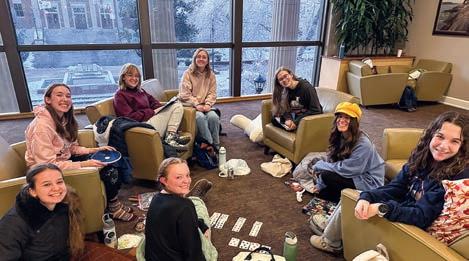
Diana Benson, program specialist for the school counseling program, and her family were among those without power for several days.
“Having access to the university’s facilities during such a difficult time made an incredibly stressful situation much more manageable,” said Benson.
Benson’s husband, Neal (’), was grateful for Lipscomb’s hospitality.
“Witnessing my alma mater’s resilience during the winter ice disaster was truly inspiring,” he said. “ e cafeteria staff ’s dedication and warm service stood out, serving hundreds of students and community members a hot meal and a smile, with the cherry on top being soft serve ice cream.”
Lee Camp, distinguished faculty fellow in Lipscomb’s Center for Vocational Discovery, said, “We were hit hard: damage to and leaks in our roof, remaining without power, and things are a mess. It was a sweet scene with all the students piled into the student center, engaged with one another, waiting, attentive and even playful.”



Following the storm, Lipscomb established a Winter Storm Recovery Fund through the President’s Excellence Fund and a generous matching donor gift to assist current full-time Lipscomb University faculty and staff who incurred expenses related to storm, as well as a Campus Restoration Fund to help the Lipscomb campus recover from the significant impact of the storm.




To donate to either of these funds, scan the QR code or go to lipscomb.edu/winter-storm-fern-relief

“...THE STUDENT CENTER TRANSFORMED INTO A MUCH-NEEDED RESOURCE DURING A WEATHER DISASTER... JUST ANOTHER WAY TO DEMONSTRATE HOW WE ARE ALL A COMMUNITY AND WE





In its ongoing efforts to prepare and support pastoral leaders, the Lilly Endowment Inc. has awarded an almost million, fiveyear grant to Lipscomb’s Hazelip School of eology to launch its new Leadership Initiative For Tomorrow (LIFT) program, designed to create lasting partnerships with congregations and better understand their training needs for emerging leaders.
e LIFT program is being funded through Lilly Endowment’s Pathways for Tomorrow Initiative, which is intended to help theological schools across the United States and Canada strengthen their educational and financial capacities to better prepare pastors and lay ministers to effectively lead the congregations they serve.
Lipscomb’s LIFT program will partner the Hazelip School with specific congregations to help them determine their greatest training needs among staff and lay leaders, and then develop and provide the training needed through non-credit learning modules delivered in the most efficient way for that specific congregation.
Common skill gaps among today’s ministers and lay leaders include conflict management, communication and teaching, pastoral care, insights into the Christian tradition and the Scriptures, and administrative abilities that support congregational life said Frank Guertin, assistant dean for the Hazelip School of eology, associate professor of theology and executive director of the LIFT program.
In March, Lipscomb was awarded a planning and assessment grant of , from Lilly to develop the LIFT program concept. at support enabled Hazelip school






leadership to craft the successful grant proposal that will now launch the new program over the next five years.
LIFT began in January with six partner congregations, administered by Lipscomb College of Bible & Ministry alumni and supporters, located in Nashville, Franklin and Whites Creek, Tennessee; Whitestown, Indiana, and Pensacola, Florida.
Since , the Hazelip School has graduated students who sought to lead, or were already leading, congregations. Lipscomb alumni will play a vital role as Lipscomb works to expand and grow the LIFT program up to churches during its first five years, said Guertin. Over time, LIFT will build a storehouse of curriculum that can be used or modified for future church partnerships, he said. e program will also keep Lipscomb Bible faculty abreast of what today’s churches value and their needs in today’s world.





This fall, Lipscomb debuted its new state-of-the-art 24- by 13foot LED volume wall, providing film and broadcasting students with the latest advancements in real-time rendering and display technology and a professionalgrade environment rarely found in academic settings.




The wall is made up of high-resolution LED pixels that display realistic virtual environments and can be used in a myriad of ways from news broadcasting to film settings, from promotional videos to a comedy club stage.
Check out how these students dove into their virtual production coursework this past fall, using industry-standard tools and digital systems including DMX-controlled lighting, Brompton processing, DaVinci Resolve, Assimilate and Unreal Engine.

1.
The director of photography creates environments for the wall using traditional cinematography techniques as well as cutting-edge AI scenes to achieve the visual style and artistic makeup of the director’s vision for the film.
The actors and sets in front of the wall must be lighted to exactly match the digital image. The lighting director designs, programs and operates Lipscomb’s new digital lighting setups that use DMX protocols to control fixtures, colors, intensity, effects and cues across a film.

This student is a grip or lighting technician, learning to build, rig and manage the physical support systems that shape and control light and camera movement such as lighting stands, dollies, tracks, cranes and rigging.
The prop master’s work is vital to ensure that all the props are properly placed to achieve realism and to blend the real world with the virtual world.
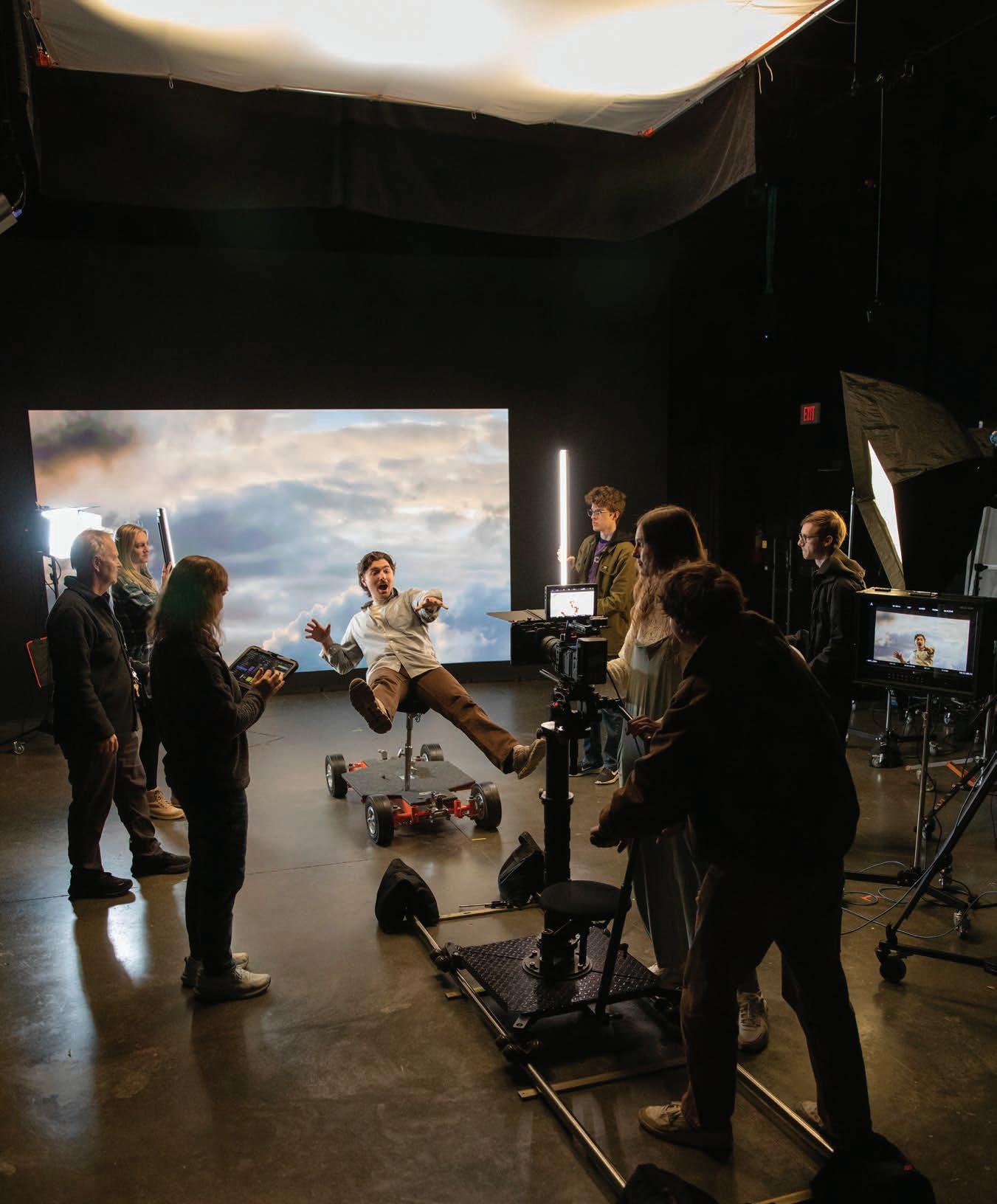
The first assistant camera sets up the camera for each shot and is responsible for maintaining the camera’s focus on the subject, even when the camera is on the move on this dolly shot. When the camera moves, the digital image moves to match.
More than , people turned out to ring in the holiday season at Lighting of the Green on Dec. , but this year with a different host. As traditional host Amy Grant had a scheduling conflict, Nashville singer-songwriter Ellie Holcomb hosted the show, bringing her energetic Christmas spirit to the Allen Arena stage.
Holcomb was joined by Matt Maher, nine-time GRAMMY® nominee and three-time GMA Dove Award winner; fan favorite and Lipscomb alumni group Daves Highway; Sandra McCracken, a GRAMMY®-nominated, Dove Awardwinning singer-songwriter and author; the Lipscomb Academy and Lipscomb University choirs; and Lipscomb ensembles Sanctuary and the Lipscomb Gospel Choir.
Accreditation reaffirmed with no recommendations for improvement
Reaccreditation marks 30 years of continuous excellence and national leadership in higher education
In December, Lipscomb University once again received reaffirmation of its accreditation status from the Southern Association of Colleges and Schools Commission on Colleges (SACSCOC) with no recommendations for improvement. is marks the third consecutive -year reaffirmation process in which Lipscomb has received an overwhelmingly positive review with no recommendations.
“ is is a remarkable accomplishment and a testament to the dedication to excellence of our entire Lipscomb community,” said Lipscomb

In addition to giving the gift of music to the community, Lighting of the Green serves as the announcement ceremony for the Amy Grant scholarship, established in . Katie Rey Sutherland, a junior songwriting major from Santa Clarita, California, was named this year’s recipient of the scholarship.
Sutherland is a member of Phi Sigma social club, participates in commercial ensembles every semester and has led worship in e Gathering and in student-led devotionals.
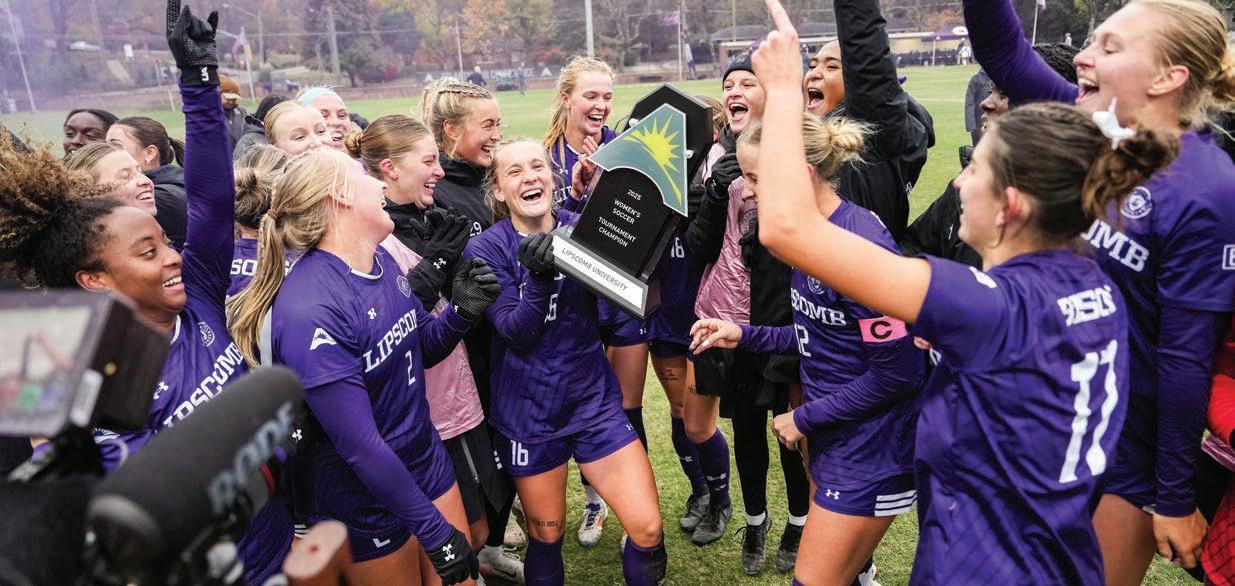
e evening concluded with members of the ASUN championship women’s soccer team lighting the Christmas tree in the university quad.
President Candice McQueen (BS ’). “ is outcome affirms our mission to prepare students for lives of purpose by recognizing the strength of our rigorous academics and the transformative experiences we provide. is will have a meaningful impact on the future of this institution.”
e reaffirmation follows an extensive review process, including both on-site and off-site evaluations, to ensure Lipscomb continues to meet or exceed national standards for academic quality and institutional eff ectiveness.
Over the past two years, faculty and staff contributed hundreds of pages of documentation and developed a new series of courses to empower students with essential communication skills for lifelong success as part of the reaccreditation process and its embedded Quality Enhancement Plan.



SACSCOC is the regional accrediting body for institutions awarding degrees at the baccalaureate, master’s and doctoral levels. It accredits higher education institutions in the Southern states and serves as the common denominator of shared values and practices among the diverse institutions within its region.


Lipscomb’s

On Sept. , audiences across the country experienced the premiere of Light of the World, a hand-drawn D animated feature that tells the story of Jesus through the eyes of a young Apostle John.
e film is co-directed by Tom Bancroft, founder and artist-in-residence in Lipscomb University’s animation program, alongside longtime friend and collaborator John J. Schafer. Tom’s twin brother, Tony Bancroft, who directs Imagine House Animation at Lipscomb, served as animation director and co-head of story on the project.
“When I was at Disney, I was able to work on wonderful films that stand the test of time, but I couldn’t be a complete animator and director working on them,” says Tom Bancroft, who lent his skills to The Lion King , Beauty and the Beast among other Disney animated films. “ ere was a part of me I couldn’t share, which was my faith. Now I get to share all of me and all the talent that Jesus gave me to tell his story. To me, this film is more important than any other project I have worked on because I feel like this is going to change people.”
Set in AD, Light of the World follows -year-old John as he seeks the Messiah to save his family from Roman oppression. What begins as a quest
for deliverance becomes a journey of friendship, faith and understanding as John discovers Jesus’ true purpose.
e million project was produced by e Salvation Poem Project (TSP), a nonprofit committed to sharing the story of Jesus through creative media.
e Bancroft brothers weren’t the only Lipscomb connections involved in the project. rough Tom Bancroft’s animation company, Pencilish Studios, they were able to hire Lipscomb alumni Chloe Arvin (BFA ’) to work with the storyboard animatic, along with Joel Guthrie (BFA ’) and Jon Densk (BBA ’, BFA ’) who worked on character poses and early experimental animation. In addition, Hayden Luckett (BFA ’) and McKenzie Chaffins (BFA ’) produced clean up drawings for the film’s animation test and Marynia (Harris) Gottfred (BFA ’) did ink and paint for the animation test.
“Having Chloe, Joel and Jon on the team was incredible,” Tom says. “It’s a proud moment to see our alumni making such a significant impact on a major feature film.” Scan the QR code to see how you can view Light of the World
e Granny White Pike retail space directly across the street from Lipscomb’s campus is welcoming two new tenants and an expansion of community hot spot e Well Coffeehouse this spring.
e university-owned line of storefronts will now include an expansion of e Well and two new eateries—Victor Tango and Nashville Pie Company — in spaces that have been vacant for an extended period.
“We have been strategically working for months on these new offerings,” said Lipscomb President Candice McQueen. “ ese spaces are designed for students and neighbors alike to gather, study and connect, enhancing the student experience while contributing to a vibrant Green Hills community.”
e Well Coffeehouse, co-founded in by alumna Rob Touchstone (BA ’, Div ’), has been located across from the Lipscomb campus since . It will expand into the space previously occupied by Subway.
e -square-foot expansion is designed to increase seating to accommodate group study and meetups, offer a grab-and-go pickup area with app integration, and additional integrated power access throughout the space.
Victor Tango is a new dining concept that will offer burritos and bowls made with housemade salsa, chips and tortillas.
Nashville Pie Company, a popular online gourmet pie brand based in Nashville, will open its first physical retail location in the development. e shop will serve as the company’s home base for both retail sales and its online business, offering a variety of pies along with frozen yogurt.



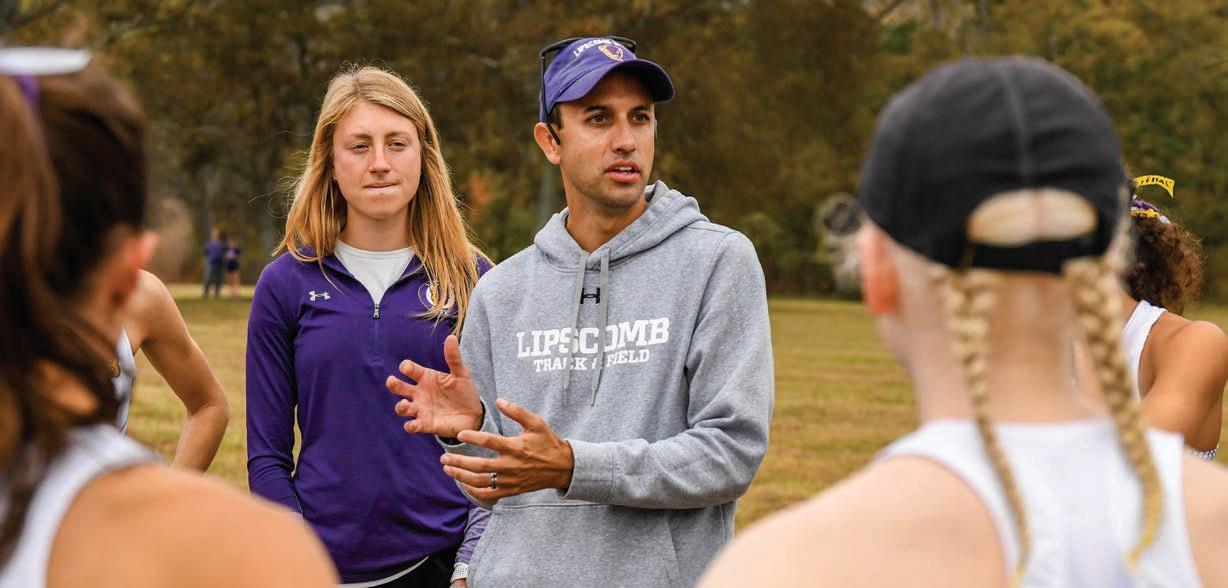
Coach of the Year Nick Polk, Christian culture and a cohesive team are bringing Lipscomb track and field and cross country across the finish line to success.
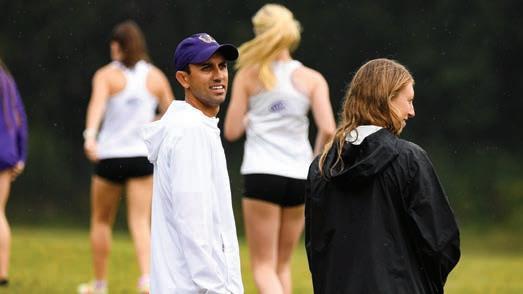
Both the men’s and women’s cross country teams had exceptional years in , and Coach Nick Polk, who has led Lipscomb to five ASUN championships, was once again honored as women’s cross country ASUN Coach of the Year this past fall.
Finishing his sixth season at Lipscomb strong with the women’s cross country team winning the ASUN championships for the th time, and the men’s cross country team missing an ASUN championship and trip to the NCAA tournament by just one point, Polk said the teams’ success has everything to do with the quality of student athletes choosing to come to Lipscomb.
“You have to create a good culture, but so much of success is getting good athletes. If you get athletes who are motivated and talented, they will mold the team into a successful group,” said Polk, who coaches the men’s and women’s indoor and outdoor track and field and cross country teams, working with about athletes.
“Being a smaller school, we can focus on the team, instead having a superstar individual,” he said.
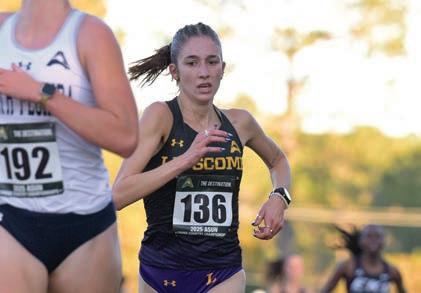
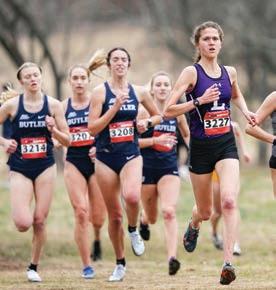
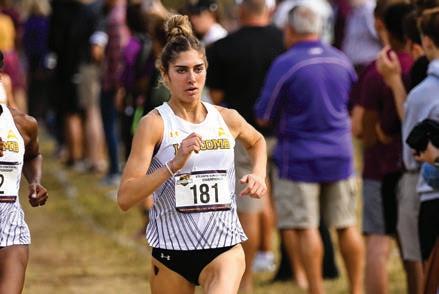
e women’s cross country ASUN championship was led by senior Mia Bergman’s record-breaking k performance. e Bisons placed five runners inside the top eight and seven within the top to secure the program’s latest conference title. Lipscomb collected a conference-best eight All-ASUN selections following the race.
At the NCAA South Regional meet, Lipscomb made an impressive showing with top- team finishes for both the men and women and two All-Region honorees.
Senior Liza Corso (BS ’) led the way with a standout performance, placing rd overall.
e women’s team delivered one of its strongest regional performances in program history, finishing th out of teams and defeating several Power Five opponents including Ole Miss, Georgia Tech and Georgia.
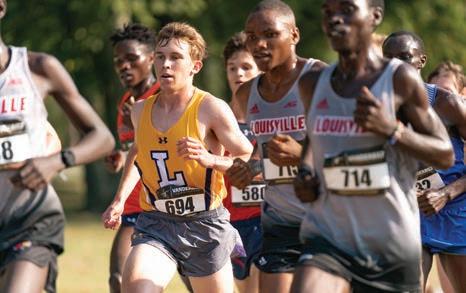
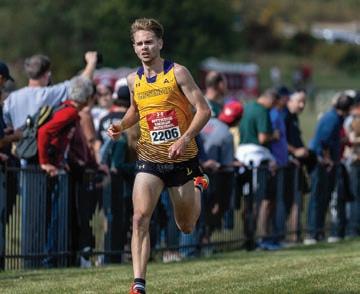
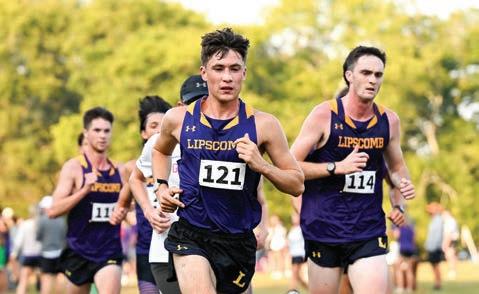
Men’s cross country also delivered one of its most impressive performances in program history, earning a second-place team finish at the ASUN championships. e Bisons placed six runners inside the top , led by freshman standout Max Hooper, who finished fifth overall, breaking the Lipscomb all-time k record.
Will Goodrich, senior; Matthew Hansen, junior; and Joe Ponter, sophomore, added crucial depth to the Bisons’ dominant pack presence, as the team placed all seven scorers inside the top for one of its strongest conference finishes in program history. Lipscomb earned seven All-ASUN honors following the meet.
ese accomplishments are just one part of a string of highly successful years for both track and cross country under Polk, whose ASUN Coach of the Year honor is his fourth consecutive and the fifth time Polk has snagged the honor, recognizing his years of work bringing Lipscomb’s teams to prominence since his arrival in .
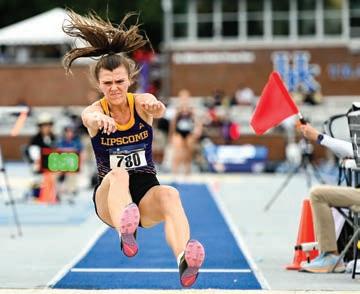
Before coming to Lipscomb, he coached at Grand Valley State, Elon and John Carroll universities and served a two-year stint as the sports science and medicine manager at USA Track and Field (USATF).
“I’ve been coaching for years or so. I’ve had a pretty unique experience in that I’ve coached at Division III, Division II and Division I, and I’ve worked in the national office at USATF,” said Polk. “I think I bring a pretty good perspective. I’ve worked all the way from, ‘Kids are just having fun,’ to ‘I want to be an Olympian and run for my country.’ As far as a kid wants to take this, I’ll cater to them.
“We have a really good niche here at Lipscomb. I knew when I took the job that there are few opportunities for athletes who want to pursue D athletics but in a smaller Christian environment,” said Polk. “ at has given us the opportunity to recruit some high-level special athletes, particularly on the women’s side.”
In fact, the women’s cross country team has made its only two team appearances in the NCAA nationals under Polk’s leadership, first in and in the team finished rd overall.
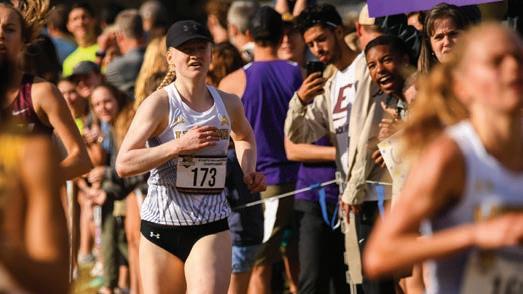
ey won the ASUN championship by a -point margin of victory, the largest in ASUN history.
“Our ladies are super close: they train together, live together and eat together. ey understand the culture and pack running. at’s been our superpower over the last few years,” said Polk.
During the past five years at Lipscomb, Polk has produced three of Lipscomb’s first four Division I All-Americans in any sport: Shane Streich (MBA ’) ( meters in ), Jonathan Schwind (BBA ’, MBA ’) ( meters in ) and Lydia Miller (BSN ’) (XC in ). In addition, he has coached two athletes to the Olympic trials, Aislinn McElhaney (BBA ’, MBA ’), also coached by Assistant Track & Field Coach Jake Alexander, (long jump in ) and Streich ( meters in ), and one medalwinning Paralympic athlete, Corso (m bronze in and silver in ).
Polk has also produced four consecutive NCAA DI cross country championship individual qualifiers: Brent Leber (BS ’, GC ’, MPS ’), Courtney Brenner (BS ’, GC ’, MPS ’), Grant O’Callaghan (GC ’, GC ’) and Miller.
In , between cross country and indoor track and field, Lipscomb earned ASUN postseason honors.
Polk expects even better things in the future, as younger athletes have been exposed to the Lipscomb experience through national accomplishments. e men’s team has a firm goal to make it to a national meet, said Polk. “We thought we were going to do that this year, but just missing it makes us now more motivated than ever,” he said.
“Our team’s overall goal is to continue to bring the program up to an even higher level and to make sure we remember that this is a fun, super unique job that we get to do,” he said. “Just making sure we realize every day that it’s a blessing and not something that we have to do or that we should be nervous about.
“Our team has done an awesome job of creating an environment where they have their running, but they also have their other outlets: outings as a team, mission trips, their own devotionals each week, supporting each other, praying before runs, pouring into each other, going to church together. ey are taking advantage of what is available at Lipscomb.”
“OUR TEAM’S OVERALL GOAL IS TO CONTINUE TO BRING THE PROGRAM UP TO AN EVEN HIGHER LEVEL AND TO MAKE SURE WE REMEMBER THAT THIS IS A FUN, SUPER UNIQUE JOB THAT WE GET TO DO.”
— NICK POLK

The Lipscomb women’s soccer team capped off a historic 2025 season in November by capturing its second-consecutive ASUN championship and advancing to the NCAA tournament second round, its fifth NCAA appearance since 2018.
The Bisons entered the postseason with an impressive 11-5-2 regular season, setting the stage for another dominant conference tournament run.
The Bisons’ postseason run began with a gritty 1-0 overtime victory over Jacksonville in the ASUN semifinal at the Lipscomb Soccer Complex. After a scoreless regulation period marked by intense, physical play, graduate student Maddy Rhodes delivered the golden goal in overtime, burying a perfectly placed pass to send Lipscomb to the ASUN championship final.
In that game, also played on the Lipscomb campus, the Bisons defeated North Florida 3-0 to secure consecutive conference titles and punch their ticket to the NCAA tournament, continuing a legacy of dominance under Head Coach Kevin O’Brien
The team’s breakthrough came in spectacular fashion in the 27th minute when
Rhodes delivered a highlight-reel moment, flicking a back-heel finish past the North Florida keeper to put Lipscomb ahead 1-0. Senior captain Lucy Hurst pounced on a rebound inside the box, burying the ball from close range to make it 2-0, and junior forward Hailey Johnson sealed the championship, slotting home a precise finish to make it 3-0, earning the team’s fifth ASUN championship title.
For her outstanding performance throughout the tournament, junior midfielder Bella Carapazza was named the ASUN Tournament MVP. She was joined on the ASUN All-Tournament Team by graduate student defender Lauren Bennett, Johnson and sophomore midfielder Tatum Ahlemeyer
O’Brien finished his 14-year career at Lipscomb with his fifth ASUN Coach of the Year honor and was the winningest head coach in program history. With more than 150 career victories, O’Brien has elevated the Lady Bisons into the national conversation and established Lipscomb as one of the premier mid-major programs in NCAA Division I women’s soccer.
Under O’Brien’s leadership, the Bisons have captured 12 ASUN championships in the
past nine seasons, five tournament titles and seven regular season championships. The team’s 15-6-2 overall win-loss record in 2025 tied for the most in program history.
The Bisons opened their NCAA tournament run in Starkville, Mississippi, to face SEC opponent Mississippi State. Carapazza scored a single goal, and a complete team defensive performance proved enough to send the team to their second NCAA secondround appearance.
Lipscomb’s historic season came to a close in Washington D.C. on Thursday, Nov. 20, when the Bisons faced Florida State, the eventual winner of the championship, and fell 1-0.
Lipscomb’s back line, anchored by senior Rebekah Doolittle, Hurst, Bennett and sophomore goalkeeper Kaïna Cesar, stood strong against one of the nation’s most dangerous attacking units, allowing only one Florida State goal in the 23rd minute.
Though the run ended, the team’s accomplishments were recognized with significant ASUN honors, including freshman forward Skylar Cole as ASUN Freshman of the Year. In total, eight Bisons were named to All-Conference teams.









When Gabriel Martin (BA ’25) sat in a French philosophy class during his freshman year at UCLA four years ago, everything on paper looked perfect. He was a student at a prestigious university, accepted into its music program and competing on its track and field team.








But he said he sensed something deeper tugging at his heart. “I remember sitting there and just feeling it strongly, ‘This is not where I am meant to be,’” Martin said.

That tug ultimately led him from Los Angeles to Lipscomb University, where he said faith, purpose and athletics aligned. Martin graduated Dec. 13 with a Bachelor of Arts in pastoral leadership.


After relocating to Tennessee, Martin learned about Lipscomb through a co-worker at a local recreation center who happened to be on the Bisons track and field team. Following prayer and what he describes as a clear sign, he applied to Lipscomb and made the team.





Martin quickly made an impact. Competing in the long jump and 4x100 relay, he earned multiple ASUN Conference championship medals, including gold in the 2025 outdoor long jump, and set Lipscomb’s indoor long jump record.


In the classroom, Martin said his pastoral leadership studies deepened his sense of calling. Balancing training, travel and academics required focus, but Martin credits Lipscomb’s faculty, coaches and Christ-centered community with shaping his growth. “Lipscomb taught me how to serve, listen and love people well,” he said.








As he prepares for a career in ministry he reflects on his journey and said he is certain of one thing, “Only God could have written my story.”
Read more about Martin at lipscomb.edu/wal/gabriel-martin.



















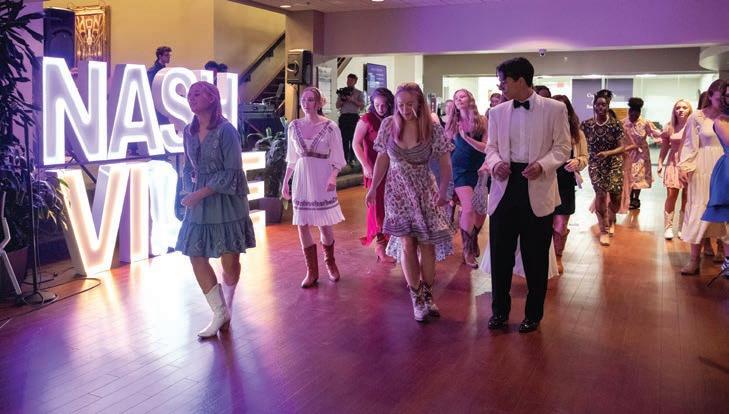
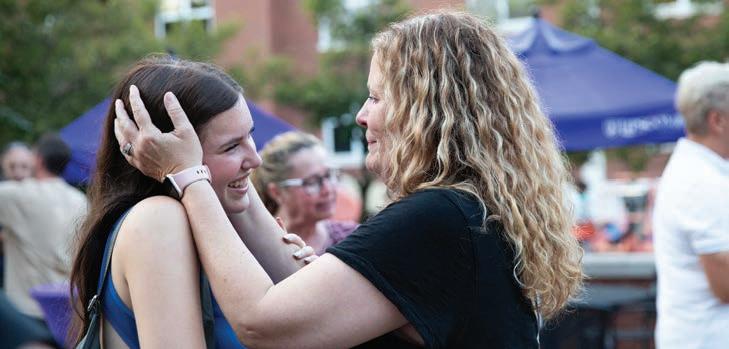
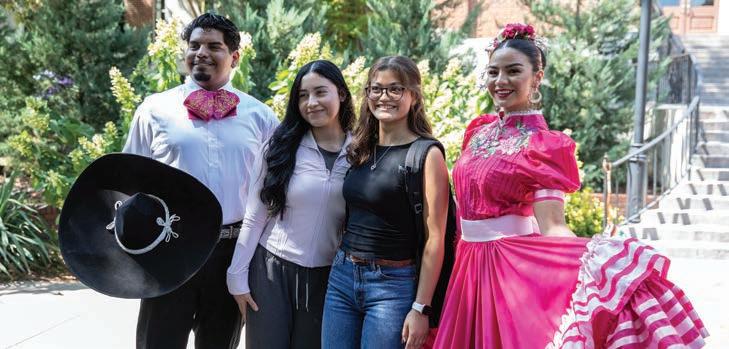

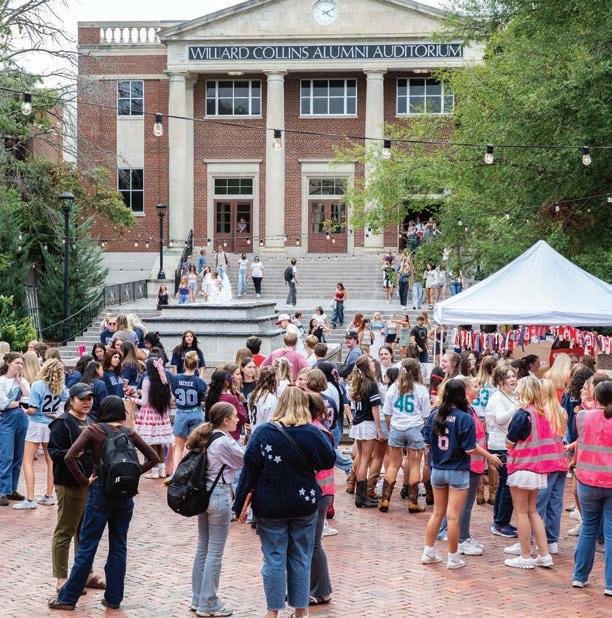
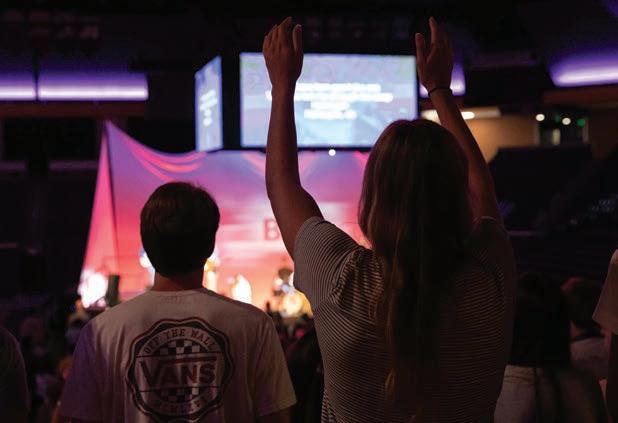
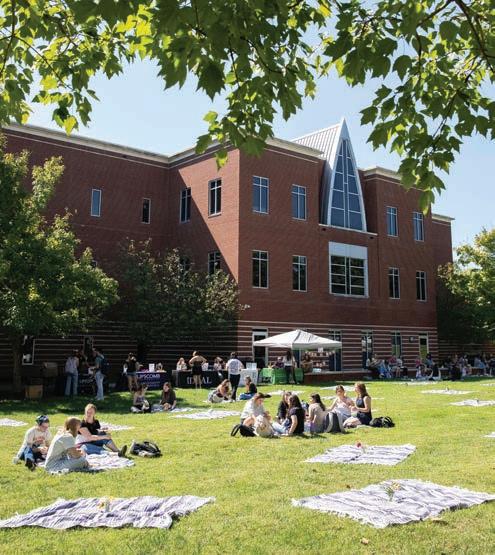
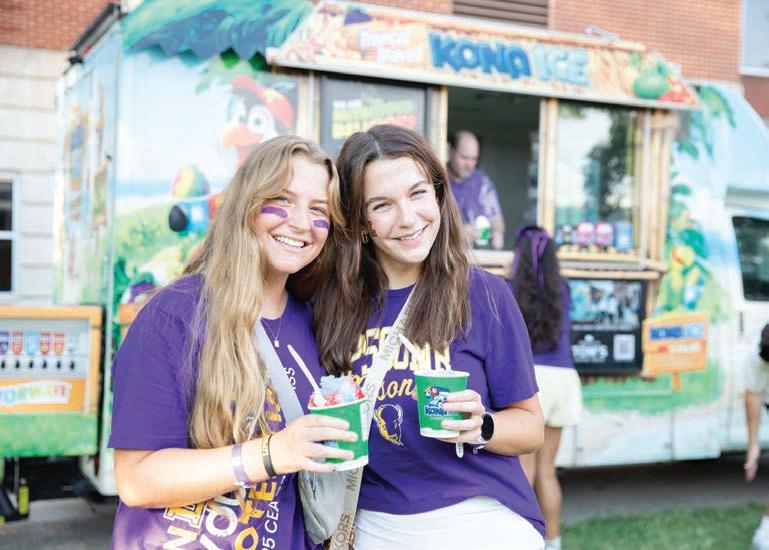
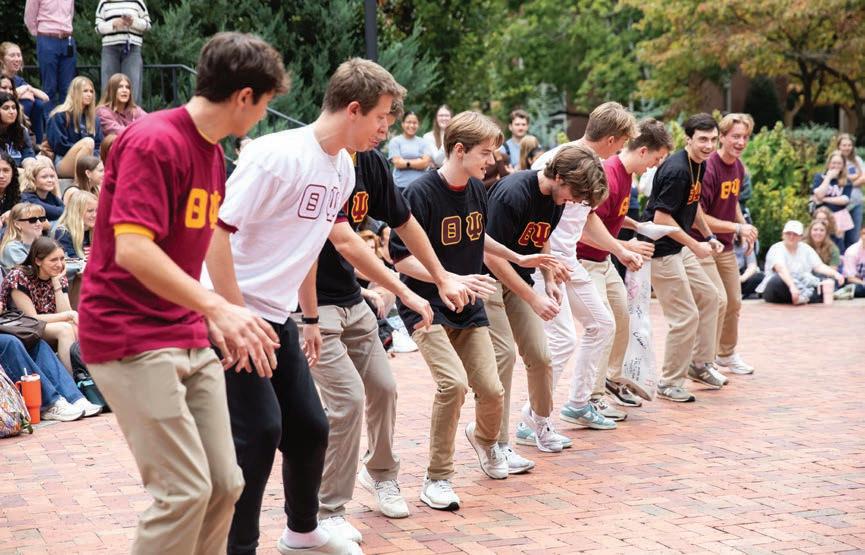
Fall is always an exciting time of year for Lipscomb students. The arrival of a new class of students brings events both fun and heartfelt, including the chockfull orientation week called Quest Week. During that week in August, students get to know the university’s athletes by sharing snow cones (08) before the annual Running of the Bison and officially celebrate the start of the academic year at Initium (07), as well as many other gatherings. After a special worship service and a sometimes tearful farewell to their parents (03), each year’s freshman class continues to enjoy special events curated just for them in the First Year Program, such as the First Year Fair (09) and the LipSync performance (11). Throughout the semester, the whole student body enjoys campus events such as the Fashion Week Gala (01), the Fall Fiesta (05), and the social clubs’ Rush Fair (02) and Square Cheers (10), as well as the weekly Gathering (04). As fall turns into winter, students round out the fall semester with Lighting of the Green (06) and December Commencement (12)






























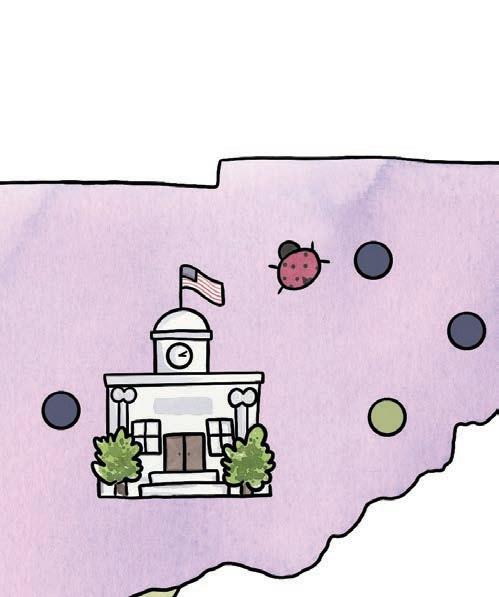
HERE IN THE BISON HERD, WE DO MORE THAN SERVE OUR GEOGRAPHIC NEIGHBOR. WE SERVE OUR NEIGHBORS FAR AND WIDE, THROUGHOUT TENNESSEE’S THREE GRAND DIVISIONS.
e State of Tennessee’s three Grand Divisions are so geographically, culturally and economically distinct, that some people even refer to them as “the three states of Tennessee.” But at Lipscomb, we know there are ties that bind us all closer than mere geography or culture. We are one state, and Lipscomb works each day to make an impact on its citizens both urban and rural.
Whether it is through online courses, workforce pipelines targeted to specific counties, on-site continuing education programs, community service or leadership programs designed to gatherTennesseans from east to west, from city to county, all together, Lipscomb has moved far beyond its town and gown relationship with Nashville to become a proactive source of leadership and resource development in the entire state.





In -, Lipscomb is impacting Tennessee’s rural counties in ways unlike ever before, through students and alumni who have stepped up to:
• Help their hometowns recover from devastating floods in ,



• Nurture new health care providers who live, and will work, in rural communities,
• Empower small town churches through networking and education, and
• Prepare school psychologists and school counselors to combat the state’s current shortage in schools.
Lipscomb’s Regional Scholars, a graduate program in leadership and public service, has been intentionally focused on bringing together students from both urban and rural areas since its inception. Seventy percent of its enrollees since have come from Tennessee’s rural counties.
Four graduates of the Regional Scholars program who live and work in rural East Tennessee





























found their leadership skills tested far beyond their imagination when Hurricane Helene ripped through the area in September causing catastrophic flooding and mudslides.
Two Lipscomb alumni are now coordinating programs designed to enhance the career fields they studied at Lipscomb: nursing and ministry, both areas that regularly see staffing shortages and lack of resources in rural areas.
And a fourth program, launched in , takes advantage of a key community partnership to bring more school counselors and school psychologists to rural schools in a state that hovers far below the national recommendation for the ideal counselor-tostudent ratio.
We invite you to turn the page and read more about these alumni who reflect our mission to prepare not just leaders who respond, but leaders who transform with courage, conviction and care.








Do Lipscomb programs impact a community near you?
Four alumni of the College of Leadership & Public Service’s Regional Scholars Program have been in the thick of Hurricane Helene response and recovery in these two counties since September 2024. (p. 16)
Cocke | Unicoi



The College of Bible & Ministry’s Thrive: Empowering Rural Churches program has enrolled five Church of Christ congregations in these rural counties to become more equipped to lead in their communities. (p. 19)
Henry | Robertson | Lincoln | Bedford | Coffee
The School of Nursing’s Rural Workforce Initiative for Nursing is training six students from these rural counties to provide care in the state’s rural areas. (p. 20)
Montgomery | Giles | Williamson | Robertson | Sumner
The College of Education’s Ed.S. in School Psychology is partnering with Project RAISE to train more school psychologists in these counties across the state. (p. 21)
Obion | Carroll | Henderson | Lincoln | Warren | Meigs | Loudon | Hamblen | Greene | Washington | Sullivan | Carter
These programs and others for teachers, school counselors, educational and community leaders, pharmacists and online students broadcast the Lipscomb experience throughout Tennessee’s three Grand Divisions.
*Counties are listed from west to east.
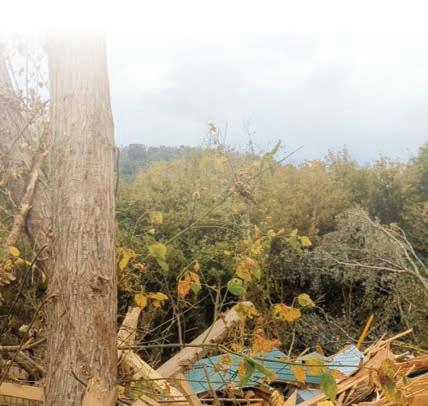
In September 2024, Hurricane Helene carved a path of destruction through the southeastern United States, leaving behind a story of devastation and resilience.
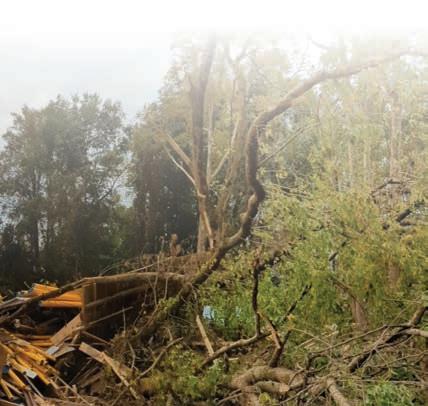
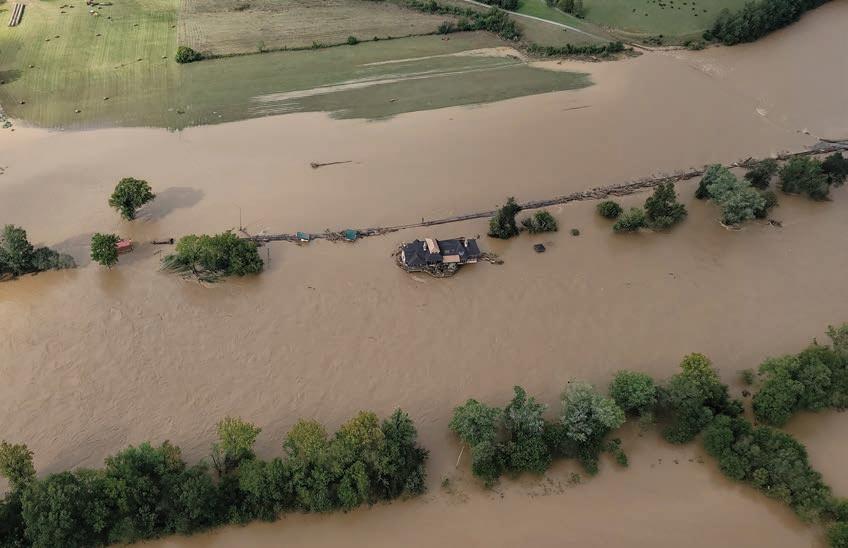
Though Tennessee is far from Florida’s Big Bend region where the Category 4 storm swept ashore, the storm’s reach extended deep into the Appalachian region, where three feet of torrential rains, 60 mph winds and catastrophic flooding triggered massive mudslides and infrastructure collapse, devastating towns across the eastern part of the state. Seventeen Tennesseans lost their lives.
In the face of this unprecedented disaster, four recent graduates from Lipscomb’s Regional Scholars program in the College of Leadership & Public Service stepped into the breach. While working full time, they were also pursuing their graduate studies in Lipscomb’s Master of Arts in leadership and public service (LPS) program, but suddenly found themselves in the eye of the storm.
Armed with the leadership skills, ethical grounding and collaborative mindset they developed through this program, these public servants became anchors of hope in their communities.
Rob Mathis (MA ’), had just finished his Lipscomb degree and had been mayor of Cocke County, nestled in the Smoky Mountain region of East Tennessee, for two years when Helene hit. All three major rivers in the county— the Pigeon, French Broad and Nolichucky—achieved record flood stage simultaneously, flooding the city of Newport.

program. “Encouraging , people while fending off rumors and fake news was a challenge. ese Lipscomb classes helped our team to maintain clarity and effective communications while also enabling us to listen to the public in order to assess needs and develop courses of action.”
Facilities for eight county government services and administration were all “wiped out in a day.” In addition, a portion of I- collapsed; many roads, businesses and over homes were either destroyed or severely damaged; and two residents lost their lives in the flooding.
Mathis enrolled in Lipscomb’s Regional Scholars program to hone his leadership and personal development skills, and that he did as he carried out a four-part recovery effort that stretched well beyond his term as county mayor.
“ e lessons in consensus building and organizational communications were very helpful,” Mathis said of the
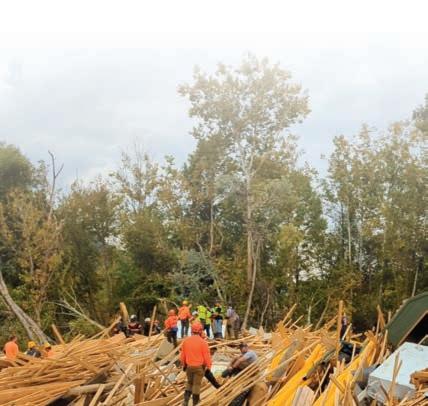

e initial life-saving stage in the first few days involved conducting rescues and emergency services. e life-sustaining phase involved providing food, clothing, shelter and other necessities to residents while essential services like water, electricity and retail were disrupted. Keeping the hospital open until water utilities were restored was especially critical. e cleanup phase is still ongoing, focused on removing storm debris from land and waterways, and the rebuilding phase is expected to span four to five years.
Mathis reflects that communication and effective problem-solving were key in managing the response to Helene. “ roughout this event and its aftermath, we have stressed the importance of unity, cooperation, positivity, resilience and strength,” he says.
“Our goal is to make each day a little better than the past,” said Mathis.


“I LEANED HEAVILY ON THE PRINCIPLE OF SERVANT LEADERSHIP, AND I SIMPLY TRIED TO PUT THE NEEDS OF THE COMMUNITY FIRST AND LEAD BY EXAMPLE.”
At just 22 years old, Derek Driskill, (MA ’25), a Cocke County native, was stationed in the county as a rural fellow for the Tennessee Department of Economic and Community Development when Helene struck.
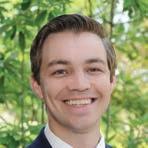
“I remember watching the water levels rise and realizing we were about to lose entire neighborhoods,” Driskill says. “It was surreal— and terrifying…. I know there are a lot of images online of the flooding in East Tennessee. However, pictures truly cannot do justice to the level of water that ran through our county.”
Driskill worked tirelessly alongside local leaders in the days following the storm. In his role, he helped establish a local relief fund through Cocke County Partnership to secure emergency grants and handle the generous monetary donations that began to roll in from around the world.
Some of the immediate challenges Driskill encountered as the situation unfolded was responding to the mass volume of texts, calls and emails coming into the Emergency Operations Center (EOC) while also responding to emergency rescues and crucial, time-sensitive decisions.

“Being the youngest person in the room is never easy, so I felt that being authentic, being willing to listen and being willing to do anything that was needed was how I could best serve my community,” said Driskill, who sat in on regular EOC debriefs alongside Mathis, the Emergency Management Agency director, TEMA and FEMA representatives, highway patrol and a host of other organizations, leaders and volunteers.
He drew on his studies in adaptive leadership and systems thinking strategies to navigate this situation. “Being able to step back, assess complex situations and lead with empathy were all skills that have proven vital throughout this recovery journey,” Driskill said.
Andrew Harris (MA ’25), captain of Unicoi County Search and Rescue, an all-volunteer team that responds to emergencies and disasters, had trained for worst-case scenarios, but nothing prepared him for the scale of devastation Hurricane Helene unleashed.

“That meant organizing missions, prioritizing resources, supporting mutual aid with other organizations, and making sure our team stayed safe and focused under extreme stress,” he explains. “I also served as a liaison with emergency management and helped communicate updates to the public.”
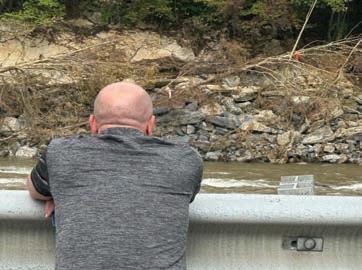
Harris led a team of volunteers through treacherous terrain, round the clock. Homes were destroyed, roads collapsed and the Unicoi County Hospital in Erwin was engulfed in 12-foot-high floodwaters which stranded more than 50 patients and staff on its roof.
“One of the hardest parts was balancing the urgency of the moment with the emotional toll it took on our team. We were rescuing neighbors, friends, even family members,” shares Harris. “Resources were limited, communication lines went down and many roads were impassable. Yet in the middle of that chaos, we had to stay grounded and make splitsecond decisions that impacted lives.”
Harris’s leadership philosophy—with servant leadership at the core—and strategies

A lifelong resident of Unicoi in East Tennessee, Harris helped coordinate local search, rescue and recovery operations.





learned in his graduate studies shaped how he guided his team and kept him focused on the task at hand.
He says he believes leadership is more than just showing up in a crisis, “it’s about showing up with wisdom, compassion and a vision for rebuilding stronger.”

“Lipscomb’s program doesn’t just teach theory, it prepares you to lead through uncertainty. I remembered what I’d learned about cross-sector coordination and community engagement. ose lessons helped me stay level-headed and responsive in the most challenging moments,” he said.
As town recorder for Erwin, Tim Bailey (MA ’) oversees the dayto-day operations of local government and ensures that the town functions smoothly and effectively across all departments. He manages a team of employees distributed across eight departments.
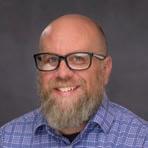

“In my -plus years of training and experience in disaster response, I always assumed I’d be called
to help a community near the coast—somewhere where hurricanes and tropical storms are more common,” reflects Bailey, who had just finished his Lipscomb degree when the hurricane struck.
“Suddenly, I wasn’t responding as an outsider coming in to help—I was responding as a member of the very community that needed support,” he continues. “It was personal. I was helping my neighbors, my friends and my town. at shift brought a different kind of urgency and responsibility to the work.”
Typically responsible for maintaining municipal records and overseeing financial operations, Bailey’s role quickly evolved into coordinating Erwin’s compliance with local, state and federal disaster protocols. He began compiling detailed documentation of damages, expenses and recovery activities—critical groundwork for securing FEMA reimbursement and other federal aid.

aid delayed, the burden of response fell on local government and volunteers, forcing Bailey to stretch limited resources—shelter, clean water, food—while maintaining transparency and equity in their distribution.
Among the most influential of his Lipscomb lessons was the concept of adaptive leadership— learning to distinguish between technical problems, such as damaged infrastructure, and adaptive challenges like rebuilding trust and morale, he said. “ at distinction became critical in the aftermath of the storm. We faced both physical destruction and emotional trauma—challenges that couldn’t be solved with a simple checklist.”
Bailey also leaned heavily on principles of collaborative governance and ethical leadership, drawing on Lipscomb’s emphasis on cross-sector coordination and transparent communication. “We don’t recover in silos,” he says. “True leadership means knowing how to bring people together.”
As recovery funds began to flow in, Bailey shifted into a stewardship role, tracking and managing incoming dollars with an emphasis on transparency and accountability. With federal
Even now, as recovery continues, Bailey said the lessons from Lipscomb remain central to his work. “ e LPS program didn’t just teach me how to lead in theory—it shaped who I am in practice.”
“I CHOSE LIPSCOMB BECAUSE I WANTED TO GROW INTO THE KIND OF LEADER WHO BRINGS PEOPLE TOGETHER, BUILDS TRUST AND DRIVES REAL, MEANINGFUL CHANGE. AND THAT’S EXACTLY WHAT THE PROGRAM HELPED ME BECOME.”


— TIM BAILEY

Ask anyone on the street today to describe a “rural church” and one image will likely come to mind: small. From the Bomont First Christian Church in Footloose to scientific data from national research houses, the emerging picture of America’s small town churches is small, if not declining.
What the average American may not know, however, is that such churches may be small, but they can be mighty.
Mike Cope, director of the Empower and Equip: Rural and Small Town Church Initiative, says “those congregations enjoy spiritual gifts that make them rich and strong in things that matter.”
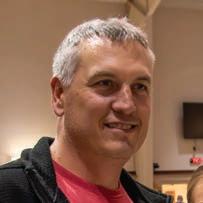
Bart Croasmun, youth minister at Sulphur Wells Church of Christ in Springville, can tell you what some of those things are: “One thing our eldership continually asks is, ‘Are we being attentive to our neighbor?... Small town churches care about how well you pastor more than they care about how well you preach.”
Cope, Lipscomb’s College of Bible & Ministry and Croasmun, along with leaders from four other rural churches in Tennessee, came together this year to “empower and equip” rural churches to magnify their spiritual strengths in the face of a daunting societal decline in church attendance and engagement.
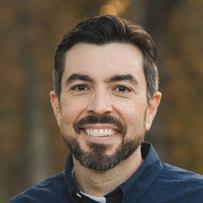
Lipscomb’s program, lead by Bible alumnus Wilson McCoy (BA ’05, DM ’16), is called Thrive: Empowering Rural Churches, and will work to build better relationships between the university
and rural churches, to develop a network of rural church leaders in Middle Tennessee, and to develop resources and workshops to help rural congregations feel healthy and equipped to lead in their communities.
“Growing up, some of my most formative moments happened in various rural churches in Middle Tennessee,” said McCoy, who is from Clarksville. “One thing I am learning is that every church is different. Sometimes we assume a lot about a church simply because of where it is. I think we are seeing that while there is some commonality, each church offers its own flavor and texture, and that is important to understand the real life dynamics of people doing real ministry in real places.”
The first cohort of church leaders from five Church of Christ congregations in Springfield, Springville, Fayettville, Tullahoma and Shelbyville, began a one-year series of activities in February, including monthly check-ins with Lipscomb leaders and the network members, one-day intensive learning opportunities, retreats, one-onone coaching and special gatherings designed to enrich that specific group of churches.
Lipscomb plans to coordinate at least three cohorts over three years, thanks to a $400,000 pass-through grant awarded by Pepperdine University to Lipscomb. Last year, the Lilly Endowment Inc. awarded $7.5 million to Pepperdine for the Empower and Equip program, which relies on seven of the nation’s Church of Christ universities, including Lipscomb, to develop outreach programs in their local areas.
“Both humans and churches face the reality of aging and ending, but unlike humans, churches have the possibility of reversing the aging process to some degree and revitalizing their mission,” said Leonard Allen, dean of the College of Bible & Ministry.
“Another important part of this is what the broader Church can learn from these rural congregations,” said McCoy, who has preached at a small-town church in Texas and worked at Lebanon’s College Hills Church of Christ for 15 years. “Part of the program’s research is about learning with the leaders and learning from them as well… We are trying to better understand the dynamics of these churches so that we can plant seeds in other churches.”
Chelsia Harris, a first generation college graduate and Lipscomb’s executive director of nursing, is well aware of what it is like to grow up in a rural area.
Her own upbringing in rural Arkansas and her career experiences in underserved rural areas gave her firsthand experience with the challenges of under-resourced rural health care and instilled a passion to bring the best care available to patients in small towns.
So when the Tennessee Department of Labor and Workforce Development’s (TDLWD) Rural Healthcare Initiatives Program announced a new opportunity for grant money in the field of health care, Harris and the School of Nursing jumped on the opportunity.
Lipscomb’s Tennessee Rural Workforce Initiative for Nursing (TN R-WIN) is designed to address the critical nursing shortage in Tennessee’s rural communities by recruiting students from underserved areas to complete Lipscomb’s Accelerated Bachelor of Science in Nursing (ABSN) program.
TDLWD is providing comprehensive financial support for the first two semesters of the four-semester ABSN program, including full tuition, fees, supplies, travel expenses and overnight accommodations when necessary.
The ABSN program is led by Assistant Program Director Ashley Jackson (MBA ’22), who also grew up in

Tennessee’s Robertson County, where the six-person TN R-WIN cohort began their clinical training this past fall.
Jackson, who lived in White House, suffers from Celiac Disease and Type 1 Diabetes, so she became well familiar with the long drive to Nashville to see medical specialists as she grew up.
“The special thing about rural health care is that you truly get to know each other,” said Jackson. “It is hard to care for someone’s physical needs without attending to their spiritual needs, and rural health care emphasizes that.”
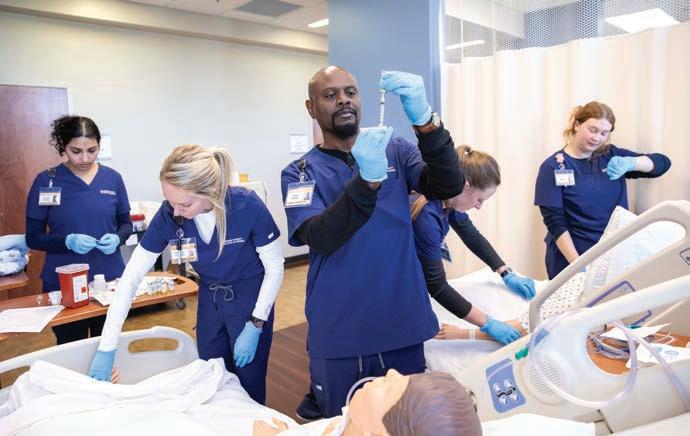
Hailing from Montgomery, Sumner, Giles and Williamson counties and trained at TriStar Northcrest Medical Center, the first TN R-WIN cohort will not only have health care experience within a rural health care setting, but they also all have personal ties to such areas.
Kimberly Linderman, a member of the current cohort, grew up in Nolensville (before Nashville’s urban growth overtook the small town) and today lives in Spring Hill (where she moved before it also became much more urban). The 36-year-old has experience as a pharmacy tech, an allergy tech and then as a clinical liaison who traveled to rural areas for years to set up allergy clinics for United Allergy Services.
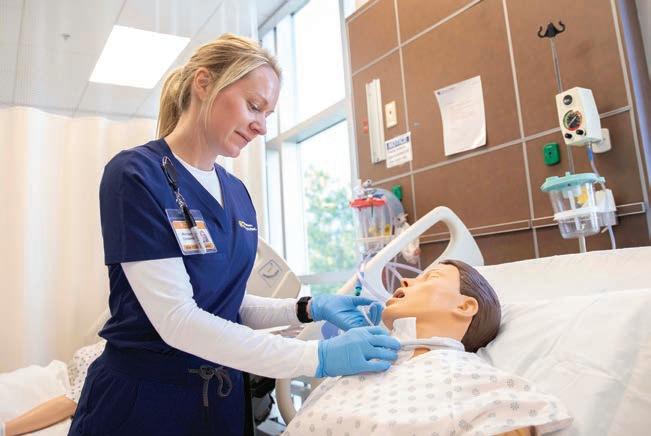
Health care in rural areas “feels more family-oriented and smaller, so you can get closer to your patients,” said Linderman. “I love learning about them and making them feel loved and heard.”
Tony Gentry, a social worker at Nashville’s Centennial Medical Center who lives in Giles County, certainly understands the travel obstacles that small town patients face.
Raised in Pulaski, Gentry already has experience working with the Department of Child Services in rural areas of Tennessee and working as a caregiver for his mother and grandmother. He’s looking forward to being able to work with people in a different way as a nurse.
“I enjoy working with people, meeting people and engaging with folks to build effective, long-lasting relationships,” said Gentry, who hopes to become a cardiac nurse. “I enjoy providing care and comfort to patients during their vulnerable time.”
The TN R-WIN students having personal ties to a rural area is important for building a sustainable health care staff, said Harris, who noted that more often than not, urban-raised health care providers do not readily thrive in the under-resourced remote areas.
Similarly, faculty also have ties to rural Robertson County, Jackson who works from Lipscomb’s campus in Nashville and Hannah Bagwell, who lives in Robertson and oversees the cohort’s clinical studies at NorthCrest Medical.
Discussions are ongoing to replicate the TN R-WIN model with other Tennessee counties, said Harris.

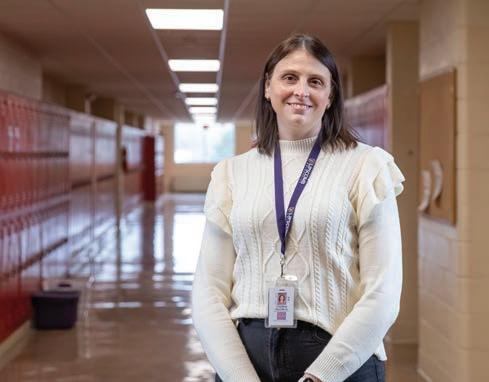
Having been raised and worked her entire educational career in Warren County, Tennessee, Courtney Reed-Myers knows both the advantages and disadvantages of teaching in a rural school district.
“I like being a part of my community here. It’s where I was raised. A lot of the teachers who were here when I started working here were teachers that I had in school,” said ReedMyers, now the Individual Education Plan (IEP) coordinator at Warren County Middle School in McMinnville.
“I prefer to be here and… help the students who are hopefully going to be here in the future, to watch them grow into productive citizens.”
But she can also see the need for more resources in her school district, which like many in Tennessee is understaffed in the school psychologist’s office. at situation is not abnormal in Tennessee, said Cindy Minnis, director of Lipscomb’s new Education Specialist degree program in school psychology. e program currently has candidates, including Reed-Myers, who will intern in rural counties in the state and commit to practice in a Tennessee rural district for at least one year, through a partnership with a program called Project RAISE.
e role of a school psychologist could be much broader, said Minnis, but “the shortage across the state means that most school psychologists don’t get to do much beyond testing. ey can’t really contribute with counseling, mental health interventions or
establishing school-wide systems that could be really helpful to students and school districts.”
According to April Ebbinger, Tennessee’s director of psychological and behavioral supports, in fall , . percent of Tennessee’s local education agencies did not have a full-time school psychologist.
To help alleviate that problem, Tennessee received an almost million grant in from the U.S. Department of Education. e grant-funded Project RAISE (Rural Access to Interventions in School Environments) provides up to , in stipends for school psychology and school counseling candidates during their full-time internship, a requirement to become licensed. By December , Project RAISE had placed interns and had positively impacted school districts.
In its -person inaugural cohort, Lipscomb’s school psychology program has candidates preparing this year for internships in rural counties, and Lipscomb’s graduate program in school counseling also has two Project RAISE participants in its cohorts currently enrolled.
e school psychology program is a three-year program with two years of online synchronous instruction and spring-semester, in-person intensives on the Lipscomb campus.
e hybrid delivery format was certainly a draw for Reed-Myers, who wanted to continue to work during her studies. She and program officials are currently working to arrange her internship in Warren County Schools.
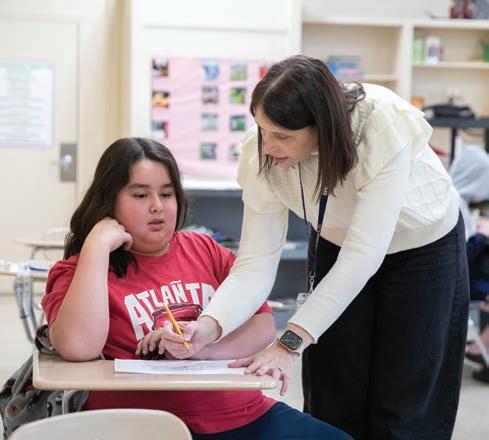
While Lipscomb’s courses are synchronous, meaning she has to be online with her cohort at specific times, she likes that structure because she gets to know her classmates and professors better than she did through asynchronous online learning at Arkansas State University for her master’s.
“It’s been such a better experience to do it through Zoom, because you really have someone guiding you,” she said. “I have two excellent professors who have so much knowledge in the field. It’s been great to hear their instruction and get to interact with other students. You kind of have a community that is being built, and after we graduate, we have people we can collaborate with and interact with.”
With only a handful of school psychology programs in Tennessee, “this program is really going to be a game changer,” said Minnis.
Learn more about each of the programs in Tennessee’s rural counties at lipscomb.edu/now/rural-ties

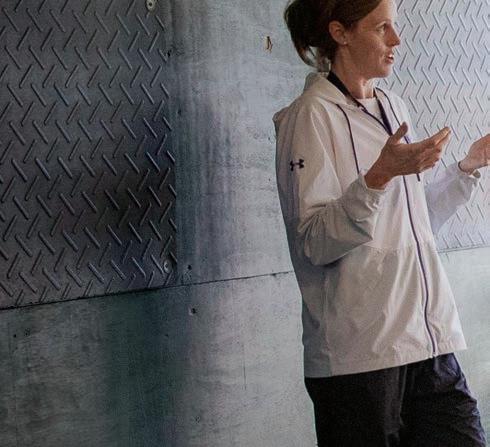





STUDENT-ATHLETES ARE ALL ABOUT CHAMPIONSHIP-LEVEL PERFORMANCE, AND IT IS LIPSCOMB’S SPORTS DIETITIAN ALUMNI WHO ARE FUELING TOP-SHELF ATHLETIC PERFORMANCE THROUGHOUT THE SOUTHEASTERN CONFERENCE (SEC) AND THE NATION.

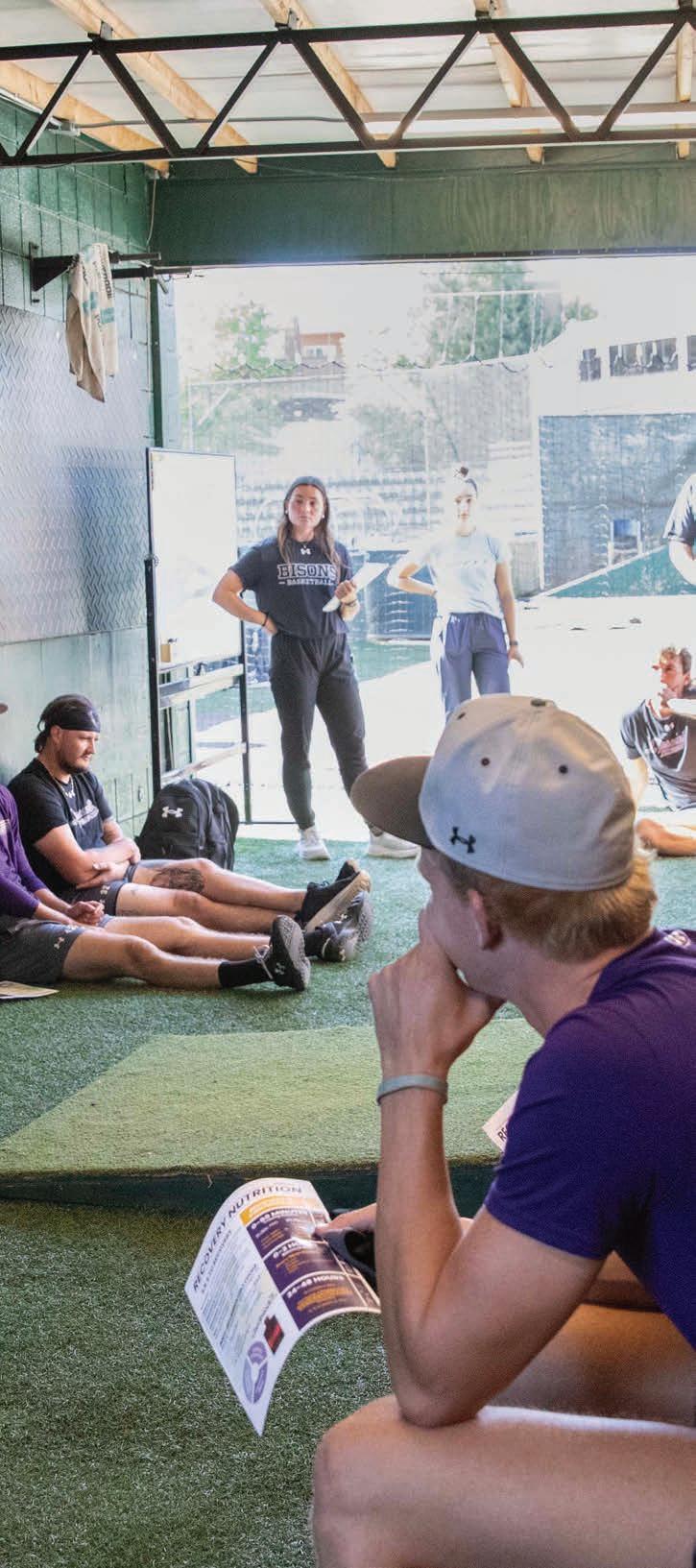
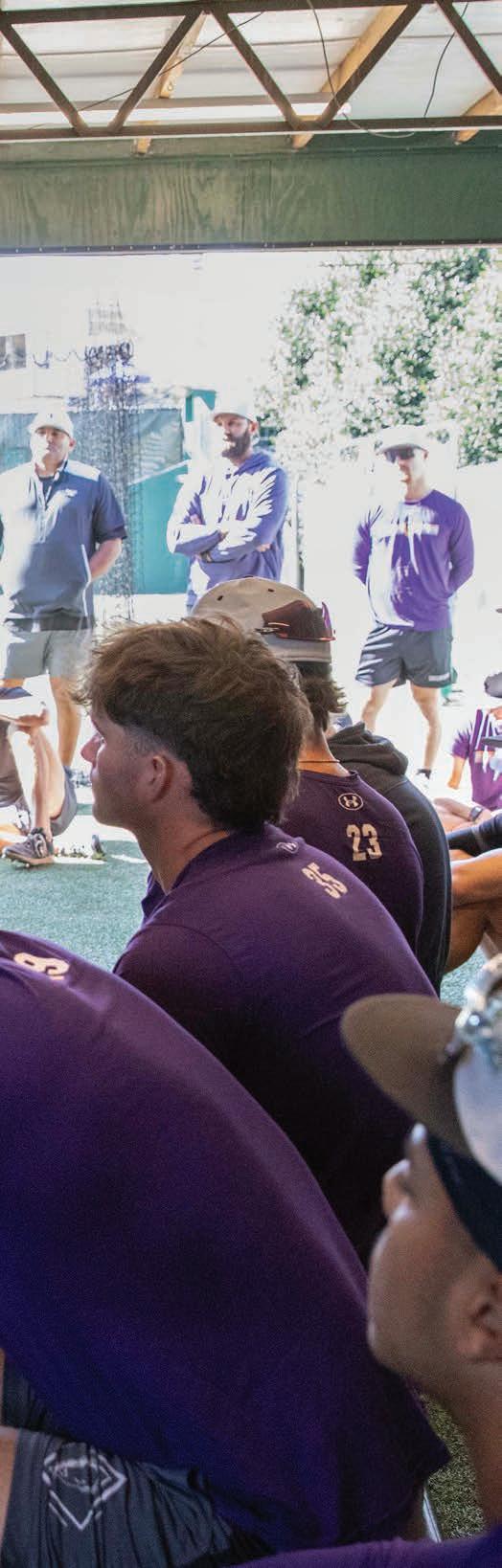
Every morning in America, college athletes are pushing their bodies through early-morning conditioning sessions, weight room workouts and long hours of practice.
But today, more student-athletes than ever before are grabbing a balanced breakfast, packing energy-boosting snacks for a full day on campus or refueling after practice with post-recovery shakes—smarter nutrition habits shaped in part by the growing presence of sports dietitians on college campuses.
In as a response to the growing demand, Lipscomb’s Dietetic Internship Program (DIP) created a pathway to train future sports dietitians, becoming the first private university in Tennessee and one of the earliest midmajor programs in the nation to hire a dedicated full-time sports dietitian. is role, then and now, supports Lipscomb’s athletic teams and serves as a preceptor for DIP students who complete a two-month rotation at a major sports organization, including Lipscomb University Athletics, the Nashville Soccer Club professional team and Vanderbilt University football. rough these efforts, Lipscomb has become a key point of entry into the field, steadily expanding its program over the past decade.
Since the American Sports and Performance Dietitian Association (ASPDA) was established in , the number of universities across the nation employing full-time sports dietitians has grown from to more than , with many of those universities employing multiple dietitians, according to the association.
In , Lipscomb graduated its first dietitian to go into sports nutrition, Rachel Stratton Manor (DIP ’), who went on to practice at the University of Oregon and the University of North Carolina at Chapel Hill. At that time, there were people across the U.S. working full-time in sports nutrition, according to ASPDA.
After adding Ann Toy (Ed.D. ’) as the full-time sports dietitian, assistant professor and dietetic internship coordinator, Lipscomb Athletics debuted its “fueling station,” funded by donors through the Giving Day campaign. e designated kitchen space and snack depot for all studentathletes is conveniently located in Allen Arena and provides a consistent space to educate and influence the Bison athletes.
“What started as a bold move nearly a decade ago has grown into one of the most well-recognized and sought-after programs in the country in our world of sports nutrition,” said Toy. “ e other really cool part about all of this is that everyone wins: the athletic department benefits from having a really high quality sports nutrition program to support its athletes, the students get an awesome hands-on learning experience and the DIP continues to attract and send out exceptional practitioners into the field. ey are working in collegiate sports, professional sports and even the highest-ranking military operations units.”
Today there are more than people working in the SEC’s universities alone, according to ASPDA, and at least seven of those are Lipscomb graduates. Alumni of the DIP sports nutrition concentration have landed jobs or fellowships at the universities of Michigan, Kentucky, Mississippi and Tennessee; at Notre Dame, Vanderbilt, Clemson, Auburn and Purdue universities; and at North Carolina State University, Virginia Tech, Texas A&M University and Washington State University, among others.
On the following pages, get a glimpse of how Lipscomb Bisons are showing athletes across the powerhouse SEC how to eat their way to victory.
If you thought it was tough getting your own kids to eat their peas and carrots, imagine what it’s like trying to get a whole ball team to eat healthy. at’s what Xaymara Gonzalez-Adams (DIP ’/MS ’), director of Olympic performance nutrition at the University of Kentucky, strives to achieve on a daily basis. She oversees teams, including the top sport on campus: men’s basketball.
“I’m feeding them multiple times per week and rotating the food enough so they don’t develop food fatigue,” said Gonzalez-Adams. “We do two-to-three proteins, a couple of carbs, a cooked vegetable, fruit and salad bar, all buffet-style. ose are the building blocks and then I work with the chef to rotate flavors… Plus, I have to keep picky eaters and food allergies in mind.”

It’s a lot. And that’s just half her job. She also does one-on-one nutrition counseling for student-athletes on her teams and hops around from practice-to-practice to check on athletes’ performance, make sure everyone is hydrated enough or to hand out recovery protein shakes.
athletic department. She played volleyball in high school in Puerto Rico, earned her bachelor’s degree in culinary nutrition at Johnson & Wales University in Rhode Island and worked for three years as a clinical dietitian at Ascension St. omas in Nashville before scoring a fellowship in sports nutrition at Auburn University.
Each team’s “fueling schedule” differs based on the performance factors in each sport, said Gonzalez-Adams. As young adults, many of the student-athletes coming to Kentucky are living away from home for the first time and may have never learned about healthy food or how to cook for themselves.
Gonzalez-Adams says her master’s in exercise and nutrition science helps her relate to students and coaches, as she can understand the body science behind injuries, conduct data analysis of students’ performance and empathize with the stress of the student-athlete life.



check is an
volleyball as the second dietitian on staff, was only established four years ago, and
National-level competition can bring national-level stress, but Gonzalez-Adams knew the drill for a hectic life within an
And that is all in addition to her experience earning her dietitian credential through Lipscomb’s DIP and her master’s in exercise and nutrition, where she worked as Toy’s graduate assistant. Lipscomb’s concentration was still relatively new in -, so in addition to learning time management, Gonzalez-Adams also learned how much building relationships and learning to persuasively explain the benefits of the program matters to a newly established nutrition department. at helped a lot at Kentucky as her position, originally covering basketball and volleyball as the second dietitian on staff, was only established four years ago, and two additional dietitians under Gonzalez-Adams’ supervision were added for the Olympic
were added for the Olympic sports just last year.
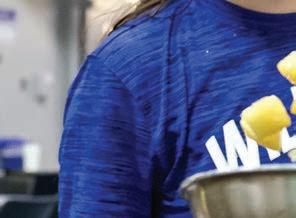


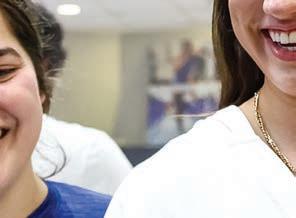

“Part of the job is meeting them where they are,” said Gonzalez-Adams. “I have the perfect plate in my mind, and they have what they want to eat in their mind. I try to figure out where we can meet in the middle. I am never going to get them to stop eating Raising Canes, but can I get them to eat that after a game, not before. If they go into the pros, we want them to know the basics of nutrition, so they are not floundering around.”




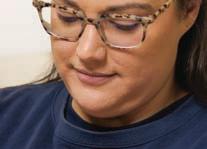
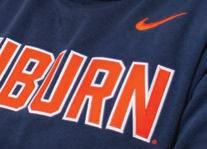
Lee Stowers’ (DIP ’, MS ’) position at Auburn University as director of Olympic sports nutrition is a full circle moment for her and her family as both her mother Gaye attended, and her father played football, at Auburn. Her father, Tim Stowers, went on to become a collegiate football coach in Rhode Island for years.
Stowers was an athlete herself during her undergraduate years, but in the Olympic sports, throwing hammer on the track and field team at the University of Alabama. While there, she logged two years as a nutrition intern, earning a second bachelor’s degree before pursuing her dietetic internship and master’s at Lipscomb.
“I have a very unique skill set, because I grew up in football,” Stowers said. “Football can be very intimidating to people. It has a lot of aspects you have to learn on the job. It’s intense, especially in the summer.”

While at UAB, Stowers earned her Ph.D. exploring the effects of food insecurity, hydration status and training conditions on body composition (a measurement of muscle, fat mass and bone density).
at degree is coming into play now as Auburn revamped its nutrition program in to become more clinically focused and to expand coverage of the Olympic sports, Stowers said. Now the university has two dietitians and an intern working with the football team, and Stowers oversees four full-time dietitians on the Olympic side working with sports. Stowers herself focuses on the track and field, baseball and golf teams.
In Auburn’s clinically-based program, dietitians are given the time to focus on menu planning, individual nutrition counseling, body composition testing, blood tests, nutrition screenings, diet evaluations, supplementation and helping injured athletes to fuel up to return to play, she said.
Earning her DIP at Lipscomb during the first year of the sports nutrition concentration proved valuable as she was hired at Auburn with the charge to build a lot of the structure on the Olympic side. At Lipscomb, she has experienced ways to nurture and build an athletics nutrition program from the ground up.
Upon graduation in , Stowers went to the University of Alabama at Birmingham (UAB) to join the four-person nutrition staff to work with its football team, a Division Conference USA team that was actually cut and then resurrected in and went on to win three conference division titles consecutively in -.
In the men’s golf team won the NCAA national championship. Auburn’s men’s basketball team was also successful, winning the SEC regular season in and the SEC tournament championships in .







As a program manager now, Stowers works to ensure her staff is providing equitable time and resources to all the teams and meeting the specific needs of each team. She mentors staff and ensures that the best systems are in place to achieve both their mission now and their vision for the future.








“Having all the different experiences at different levels really helps me build the program here,” she said. “It helps me to connect with all the different athletes. At Lipscomb, I even helped with a research study, which showed






to work with its football team, a Division then went titles in place to achieve both their mission research study, which showed that practice and research is feasible and how to utilize your resources on campus.”








Jacksonville, Florida native Cameron Nill (DIP/MS ’) finished her degree in May but has already been working with Vanderbilt University’s football team as assistant football dietitian for several years.
e former student-athlete, earned her chops as a volunteer with the University of Florida’s nutrition team, traveling with the football team during her undergraduate studies there. During that time, she made contacts with Vanderbilt’s nutrition team and knew that at Lipscomb, she could do an internship at the Nashville-based Vanderbilt.


at small atmosphere prepared her for Vanderbilt, which she said also has a small “family atmosphere,” meaning she can spend a lot of time with the players and build strong personal relationships with them.
is past season Nill worked with the defensive players for Vanderbilt football and this semester she is working with the women’s lacrosse team.









“A big part of my job is one-on-one counseling to help athletes meet weight goals and body composition goals,” said Nill. She teaches students how to fuel properly before practices and games, so they don’t lose stamina or agility. She often develops personal nutrition plans for specific student-athletes.

Vanderbilt, experiences. health care-focused Nashville.
Her plan came to fruition as she snagged one of Lipscomb’s six sports dietitian internship spots in and did all of her sports training at Vanderbilt, as well as completing clinical, school and bariatric nutrition rotations among other experiences. e strength of Lipscomb’s sports dietetics program was that it was small, said Nill. It allowed her to build more one-on-one connections and to customize her training through the wealth of experiential placement locations in health care-focused Nashville.

In addition to making educational presentations to the teams and leading grocery store tours for new students, she also orders all the snacks for Vanderbilt’s fueling station and makes catering orders for the students when they need a meal from someplace other than the cafeteria.
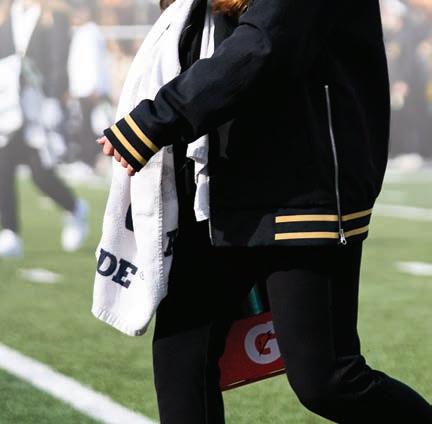




Vanderbilt’s sports nutrition program is small compared to other SEC schools, said Nill, but it has certainly been a factor in helping the football team’s rise through the ranks in the past two years. e team had a - win-loss record in , but rose to be ranked in the top in with a - overall record and was ranked as high as No. in the Associated Press Top poll in . e football nutrition staff of two dietitians are crucial before, during and after practices, said Nill. ey weigh the football players and conduct hydration testing every morning before practices. en they are on-site at practice to provide extra water and sports drinks, with a blend of carbohydrates and electrolytes, in case players get cramps or begin to feel ill. Some players have health conditions such as Type Diabetes that require monitoring or certain quick-grab snacks like Skittles and Gatorade to raise blood sugar, said Nill. Post-practice the nutrition staff is ready with recovery protein shakes.
“I’m pretty hands-on with the linebackers,” Nill said. “ e guys and I have developed a good relationship. ey trust me, so they are willing to ask me questions.”
“It is rewarding to see your work payoff as the team succeeds,” she said.



Margo Grover Newman (DIP ’, MS ’), now director of Olympic sports nutrition at Texas A&M University, was not only a student-athlete herself, in rowing at the University of Wisconsin-Madison, but she also married a Lipscomb athlete, Wayne Newman (BS ’, MM ’), a hurdler on the track and field team from -.
She studied dietetics and worked as a UW athletics performance nutrition student worker before continuing her dietetics internship and master’s work at Lipscomb. at undergraduate experience allowed her to “see both sides of sports nutrition, as an athlete and as a student worker,” which has proven valuable in her job today.
Desiring a well-rounded experience, she chose the health promotion and wellness concentration for her dietetic studies at Lipscomb and began working in clinical nutrition in Nashville upon graduation. at decision served her well as her clinical experience and an additional fellowship in sports nutrition at Texas Christian University earned her the position at Texas A&M, which has a medically focused program, she said.

SEC recently began using a new electronic medical record for documentation of care, said Newman. Her clinical experience has helped her guide her three-person staff to learn the EMR process and practice the best ways to collaborate with the medical staff, she said.
“It’s becoming more and more clinical,” said Newman, noting that they do body composition scans three to four times a year and weekly hydration testing on all the athletes. Her nutrition team also has a goal to do a sit-down consultation with every new studentathlete at the university, she said.
at’s a tall order with teams on A&M’s Olympic sports slate. Newman’s teams include softball, track and field and cross country.
“I use what I learned day to day as I navigate conversations with coaches and caring for athletes from a performance and clinical perspective.” Since taking on her role at Texas A&M, the university’s women’s tennis team won the NCAA national tournament for the first time in , and the men’s track and field team, which has a long storied history of success, won the NCAA DI outdoor national championship.
While consultations with athletes are a large part of Margo’s role, the performance nutrition department at A&M also serves the athletes with educational “team talk” presentations on topics relevant for an entire team. “We’re educating them on the best timing of eating, explaining what to eat at meals before practices, about supplementation, and we even provide cooking classes,” she said.
As performance nutrition increasingly intertwines with sports medicine, the
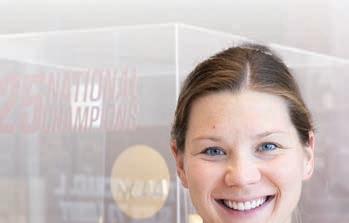
anks to her education at Lipscomb, Newman feels equipped to take on this order. “ e multiple types of nutrition exposure I got at Lipscomb has been really helpful to draw on,” said Newman. “We saw so many types of dietitians in different areas. It helped me build confidence in working and collaborating with many types of professionals.
“Supplements are a very popular topic as the supplement industry is booming right now,” said Newman. “It’s definitely the wild west out there when it comes to supplements. We really preach to the students that they need to be taking things that are effective and certified as safe for sport (or devoid of banned substances). We help them navigate those choices.” sports medicine, the of professionals.











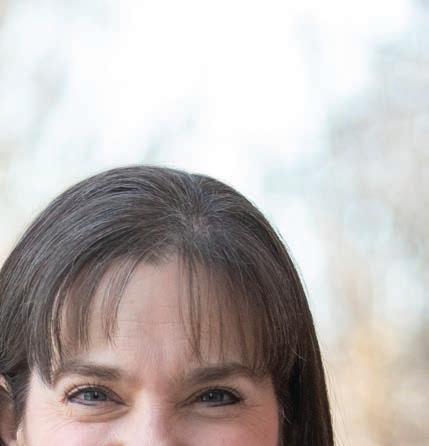
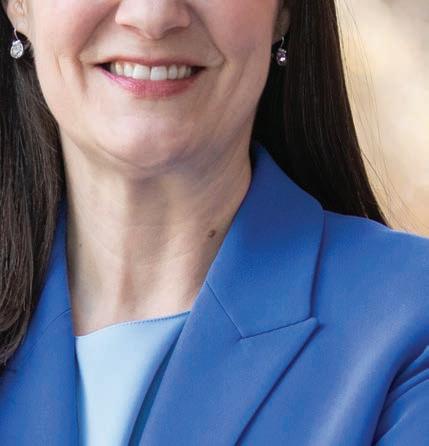







“ e light shines in the darkness, and the darkness has not overcome it.”

JOHN 1:5

UNIVERSITY. THROUGHOUT THAT TIME, LIPSCOMB HAS BEEN A SHINING LIGHT WITH REMARKABLE GROWTH AND RECORD-SETTING PROGRESS ACROSS NEARLY EVERY AREA OF THE UNIVERSITY.
Since her first days officially back on campus, in August 2021, Lipscomb President and alumna Candice McQueen (BS ’96) has been talking about light—the light that Lipscomb was, is and has become—a light that drives out darkness.


In her August acceptance speech in the George Shinn Center, McQueen referred to the light that Lipscomb has been for more than years: a light that reveals Christ to our students from pre-school age to graduate students and even to lifelong learners.
roughout her first five years at Lipscomb, which culminate on Sept. , McQueen has been dedicated to leading all Bisons to help fuel, focus and shine that Lipscomb light.
Whether through enacting strategic administrative policies, reviving fun student gatherings like Beautiful Day, revamping publicfacing services and processes or developing new academic programs and innovative offerings, to has been five years of illuminating a brighter future for both students and the entire Lipscomb community.

ose efforts have resulted in the largest classes of new students for three consecutive years, increased student retention to and a university endowment that has grown by more than million in less than four years.
“ e Board of Trustees believes strongly in her ability to lead Lipscomb into the future, as demonstrated by the extraordinary achievements she has already delivered in enrollment growth, academic innovation and student success,” said Board Chair Richard G. Cowart. “Her vision, deep commitment to Christian higher education and unwavering focus on excellence are shaping a future of continued impact for Lipscomb and the students we serve.”

One of McQueen’s first initiatives was to establish a year-long process to develop a strategic plan for Lipscomb, spurred by her belief that when the mission of every member of the community is aligned, an organization’s purpose and the way forward will become clear.
“Every person has a role, whether small or large, in uplifting our mission,
reaching our vision and defining our culture,” said McQueen. “So any organization is better and more efficient when all those individuals are aligned to a specific purpose. At Lipscomb that purpose is to light the path to God’s Kingdom, and we work relentlessly every day to achieve results.”
e resulting Lipscomb Impact 360 plan, enacted in August , illuminated what matters most: a learner-focused Christian education, spiritual growth and transformation, instilling tools for a purposeful life, deep community connections and a culture of effectiveness. e plan’s strategic goals and common vision, values and core tenants served as a torch lighting the way to fulfill Lipscomb’s common mission: A Christcentered community preparing learners for purposeful lives through rigorous academics and transformative experiences.
“ e Lipscomb Impact development and implementation brought a clarity of mission and purpose to the university,” said McQueen. “Once you have that clarity, it is then time to focus, and at Lipscomb, it is easy to see what our primary purpose has been and always will be: students.”
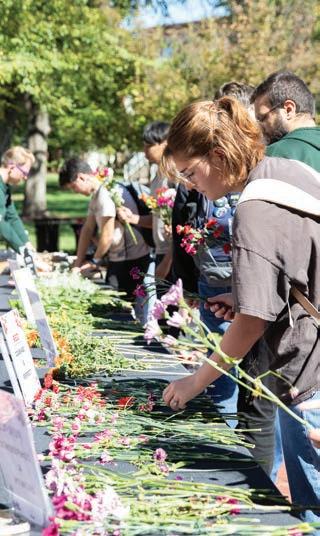

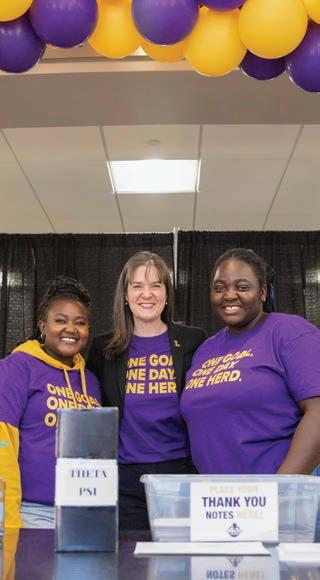
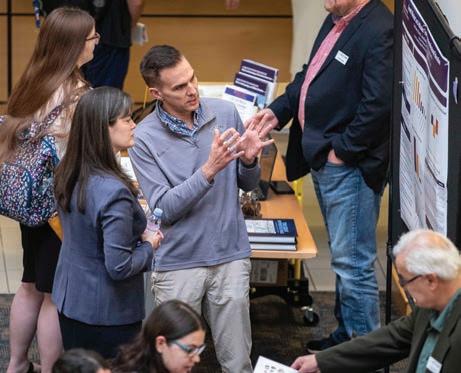
From facilities to engagement, from athletics to spiritual formation, the past five years have been devoted to crafting a positive, seamless student experience, focused on student needs from the moment they put down their admissions deposit to their graduation day.
Lipscomb’s holistic student success model incorporates departments, events and programs from throughout the university. In particular, Lipscomb’s First Year Experience program draws from various partnerships among key university departments to hold orientation events, thriving workshops and a freshman seminar course, all to instill the skills needed to successfully thrive throughout their freshman year.
Undergraduate students have reaped the benefits of expanded and enhanced shared experiences, ranging from the revival of the annual Beautiful Day, with a wealth of on-campus activities taking the place of classes one day each year, to the establishment of two new musical ensembles: the Gospel Choir and the Bison Pep Band.
e Office of Student Success and Well-being has established over the years various new wellness services to address students’ social, emotional, physical and spiritual needs. is school year debuted with a new Service Office within the Office of Spiritual Formation, designed to be a hub for enhancing service opportunities for individual students at both Lipscomb University and Lipscomb Academy.
Lipscomb’s Center for Vocational Discovery (CVD), launched in fall , offers spiritual and life discovery activities intended to unify students’ fouryear college experience. Today, the CVD offers more than workshops to help students develop their understanding of their identity in Christ, discover their God-given purpose, discern their vocational calling and design a pathway to engage their faith in their career.
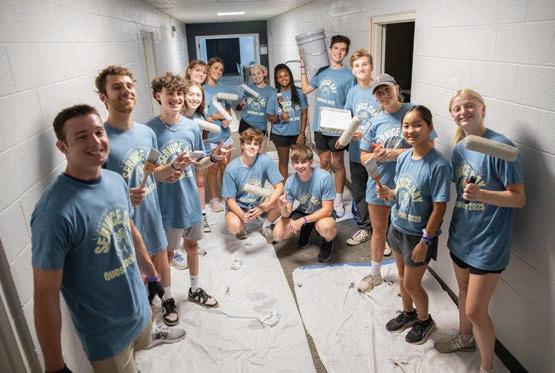
“ ese efforts, and more, have resulted in all-time highs in student satisfaction, with of all indicators on the university’s annual Student Satisfaction Survey rising with noted improvements in academic advising, the presence of school spirit through athletic programs and student activities,” said McQueen.
“Over the years since I have returned to Lipscomb, we have been working hard to strengthen our culture of stewardship in our operations, reflecting the stewardship I Peter talks about—serving others as ‘faithful stewards of God’s grace,’” said McQueen. “Delivering our best is even designated as one of our core values, and it’s that stewardship that has contributed to our endowment growth and decrease in debt while also boosting student satisfaction with the overall Lipscomb experience.”
Emphasizing efficiency and effectiveness to produce excellence, the university has restructured academic colleges; debuted the Beaman Library’s new digital platform, the Carolyn WilsonDigital Archives, as a repository of Lipscomb’s own research, writing, and scholarly and creative works, and made a significant investment in campus-wide integration of generative AI tools through the Boodlebox platform.
Two major new efficiencies on campus include, Bison One Stop and the Lipscomb Learning Commons. Established in , Bison One Stop is a centralized location for the services of the Registrar, Financial Aid, Information Technology and the Business Office, intended to make the registration and enrollment process faster and easier by providing a single focal point for students.
In , five key academic success support services were aligned in the Lipscomb Learning Commons, bringing more collaboration and convenience for students. e commons includes: the Coggin Family Academic Success Center. e Career
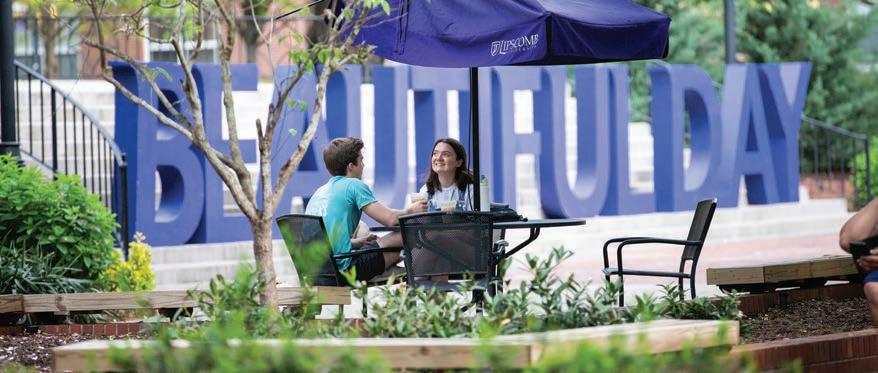
Development Center, Beaman Library, the Office of Accessibility and Learning Supports and the Center for Teaching and Learning.
“ ese advancements enacted over the past five years are not just accomplishments of today. It is important that they fuel a sustainable future for the university and keep the Lipscomb light shining brightly in the days to come,” said McQueen.
“In daily practice that means we are all working towards continuous improvement to ignite a brighter future for tomorrow.”
is mindset sparked various new endeavors such as the Office of Research and Grants, established in to solidify infrastructure and pursue more and advanced research; the recently debuted Journey curriculum that supersedes the former general education curriculum; and GROW Lipscomb, a leadership development program for faculty and staff with various offerings throughout each semester.
Among the latest moves to ensure continued improvement is LUInnovate, Lipscomb’s Office of Innovation dedicated to advancing Lipscomb’s mission through high-quality programming, strategic partnerships and innovative learning models. ese efforts, such as developing noncredit credentials for nurses and ministers, serve as strategic initiatives that will support revenue generation for many years to come.
With an eye toward the future, Alumni Relations has enhanced the number and variety of annual events, drawing more people to campus over the last five years. A focused approach on nurturing donors, especially for the benefit of student scholarships, has produced a jump in the number of gifts, and the amount donated through February’s annual Giving Day
has continued to increase each year, up to . million in .
In addition, three distinguished professorships have been funded by donors to ensure that both students and the community have access to a prestigious level of expertise in theology, public policy, and faith and reason.
Various new academic programs have been added to address ongoing workforce gaps in the marketplace, ranging from online versions of existing programs, such as the Doctor of Pharmacy and the Bachelor in Nursing, to all-new programs addressing national and local shortages, such as the Master’s in Anesthesiology Studies and the Bachelor’s in Communication Science Disorders.
At the five-year mark, McQueen has no intention of letting Lipscomb’s light wane.
With the Impact strategic plan concluding in and many accomplishments achieved, McQueen’s administration is now hard at work developing a new plan to take the university through . is new plan will drill deeper into a few specific areas, as opposed to Impact , which was designed to take a broader view of the whole university, said McQueen.
“ ese first five years have laid a foundation for great accomplishments in the next five years,” said McQueen. “With our mission aligned, our eyes set on stewardship and improvement, and a tight focus on students, we have already risen in the ranks of the nation’s top universities and grown our enrollment to its highest mark in history.
“We have all the elements in place to achieve greater accomplishments in future days, and I have no doubt that God’s light will continuously show us the way.”
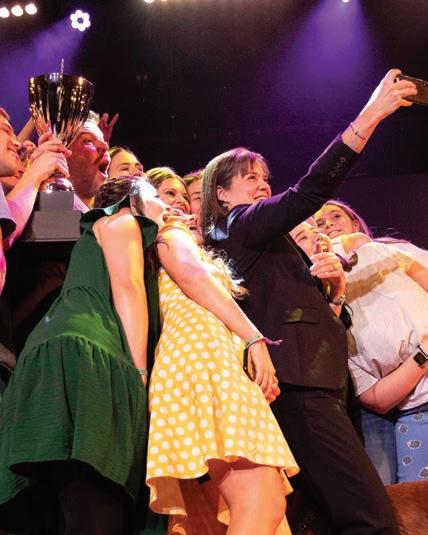
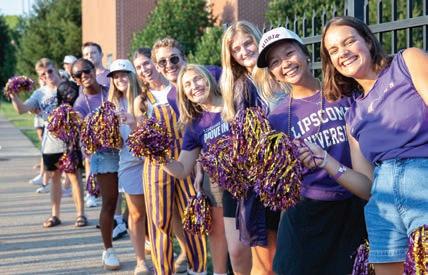
• Largest enrollment in history
• Record freshman to sophomore retention
• 77% of all indicators on Student Satisfaction Survey have improved
• 24% increase in students attending campus events
• Launch of seven new academic programs
• Launch of the Center for Vocational Discovery, Bison One Stop and new Service Office
• $36.7 million increase in endowment
• 90% increase in gifts given
• $30 million decrease in debt
• 87% increase in alumni event attendance
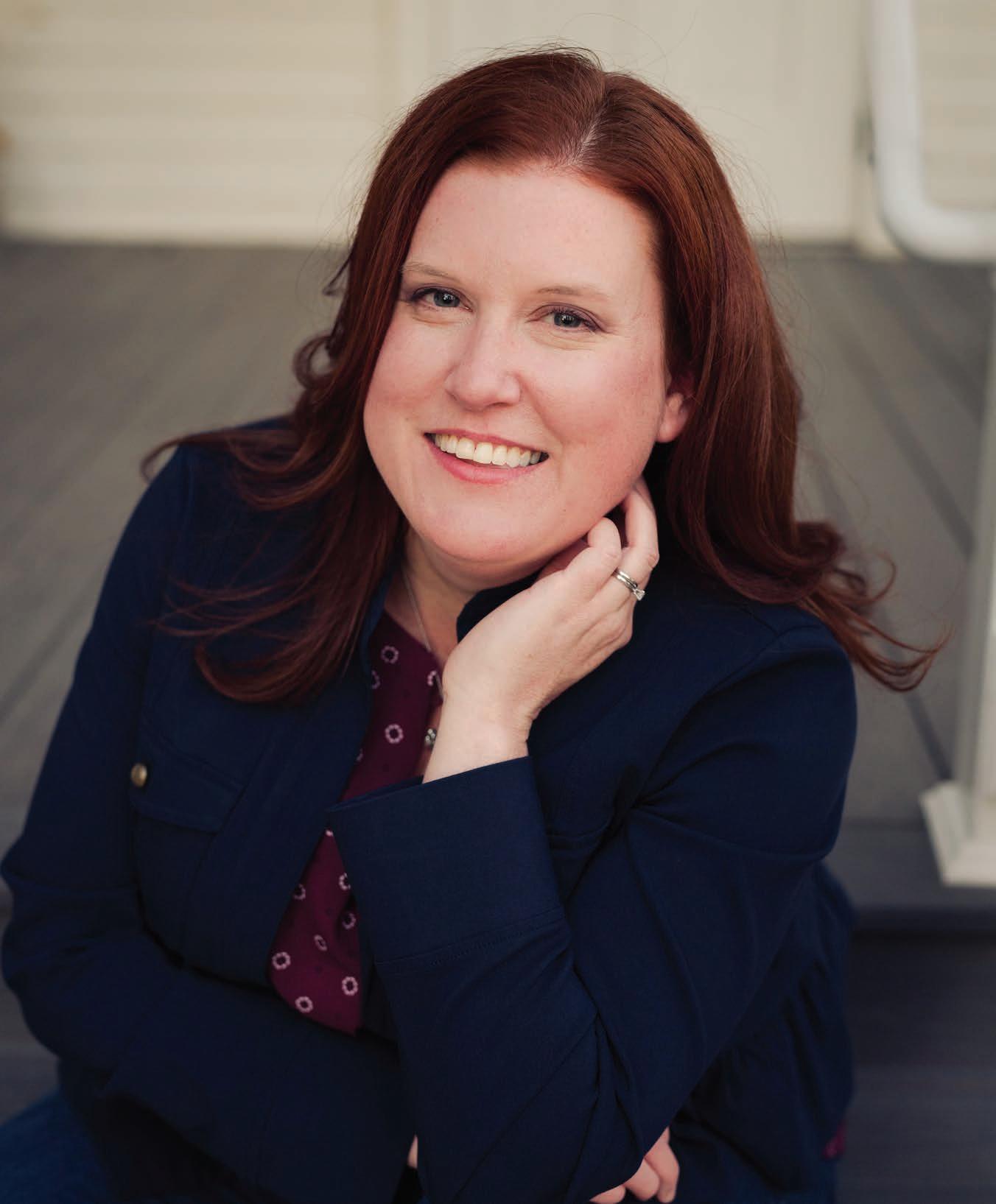
AUTHOR ANNA LEE HUBER LIKES A LITTLE MYSTERY IN HER LIFE, MUCH TO THE JOY OF MILLIONS OF READERS WHO ENJOY THE USA TODAY-BESTSELLING NOVELIST’S HISTORICAL MYS TERY SERIES—THE LADY DARBY MYSTERIES AND THE VERITY KENT MYSTERIES—WRITTEN OVER THE PAST 12 YEARS.
Anna Lee Huber (BA ’) likes a plan. But she also saves a little room for inspiration.
She certainly arrived at Lipscomb University as a freshman with a plan: to become the next Amy Grant, queen of contemporary Christian music.
But when that didn’t pan out, she rekindled the creative spirit of her youth and launched a new plan. And how did that turn out? Here’s a clue…
Today she has written novels including three historical mystery series, one historical fiction novel about the Titanic; and one novella in an anthology.
e Lady Darby Mysteries follows Kiera Darby, an artistic sleuth in s Scotland, as she uses her knowledge of anatomy and art to solve murders. e Verity Kent Mysteries follow a war widow and former British Secret Service agent as she navigates post-World War I intrigue and murder mysteries.
Two more are on the way in : A Bitter Cut, the th Lady Darby novel, in June and e Bravest Hour, the ninth Verity Kent novel, in August.
“I try to leave things open as much as I can,” to allow for inspiration, said Huber, who now lives in Indiana with her two daughters and Lipscomb alumnus husband, Shanon Aycock (BA ’). “You do need to give depth to your characters and understand who they are, but it’s also really nice to leave that mystery— not only for yourself, but for your readers.”
In fact, she intentionally doesn’t write the name of the murderer in concrete before finishing a book, just to leave that mystery open.
“I think, for me, it forces me to make it more interesting and trickier, because if I’m giving clues that could point to multiple people, it helps avoid the tendency to make it too obvious for the reader. By making myself come up with different paths, that hopefully makes it trickier all around.”
Huber’s path to become a published writer was a little tricky in itself.
She chose Lipscomb because of her love of music. Music City USA sounded perfect for a young Huber with ambitions to go into contemporary Christian music. She spent four years studying classical music with former adjunct faculty member Patricia Roberts, and counted her among her mentors as she tried to navigate the music business.
During college she performed in the Early Music Consort and the Jazz Vocal Ensemble, both directed by the late Gerald Moore, and the A Capella Singers, directed by Larry Griffith
She also performed in theatre, portraying the lead role of Emily Webb in the production of Our Town, directed by Deb Holloway. Her future husband played the drunken choirmaster in the production, where the two met.
Upon graduation, she found the music business tougher to break into than she
originally anticipated, and with a husband and an uninspiring administrative assistant job in Nashville, she returned to her childhood love of reading mystery novels as a personal creative outlet.
Her hobby reminded her of how much she had enjoyed writing as a youth. At years old, she penned her first story, “Prom Duty”, and asked her teacher to read it to the class. She went on to write several more stories, including a series featuring her own gang of mystery-solving teens, inspired by Nancy Drew novels.
Remembering those early creations, Huber decided to devote one holiday weekend to doing nothing but researching and writing her own novel—just for fun.
“ e bug bit me, and I never looked back. I decided right then and there that writing was what I was going to pursue, no matter what else I did,” said Huber, “and so I’ve been writing ever since.”
And that she did, writing four different novels over seven years before her fifth, e Anatomist’s Wife, was picked up by an agent and published in by Penguin Random House.
Besides writing and music, Huber also loved history as she grew up, so when she began writing as an adult, she was immediately drawn to historical fiction mixed with romance and mystery. “I loved the music history course at Lipscomb, and my classmates thought I was crazy!” she laughs.
“I TELL PEOPLE THAT IF YOU LIKE JANE AUSTEN AND BRIDGERTON, YOU WILL LIKE LADY DARBY, AND IF YOU LIKE AGATHA CHRISTIE AND DOWNTON ABBEY , YOU WILL LIKE VERITY KENT.”
— ANNA LEE HUBER




“My first (unpublished) book was historical, and then I tried to write romance, but I kept having dead bodies show up. So I finally decided to write a mystery with a romance subplot,” chuckled Huber.

Huber chose to set her books in environs on the British Isle in the s because she found that there was not much historical fiction set in this time period when William IV ruled. Sandwiched between the Regency era and the Victorian era, these years don’t get a lot of attention in fiction, she said.
“I started doing research, and it just fit so perfectly with what my character was and her background,” Huber said of Lady Darby, a widowed artist shunned by polite society because of her role helping her late husband during autopsies.


In researching the World War I era for an idea for a second mystery series, Huber “stumbled across the British intelligence MI website and learned that there were all these women who spied for British intelligence during World War I. So that was my in with the Verity Kent series—making her a former intelligence agent.”

Today, she conducts in-depth research for all her books and loves it so much, she sometimes has to pry herself away from the research to write.



“If you want to write history, you have to really love it, otherwise it would be torture. I could dive down rabbit holes all day long. I love to learn anything,” said Huber, who keeps a notebook of her ideas constantly in the works.
Only about to of her research ends up in any particular book, but much like her classical music studies at Lipscomb, of the research and knowledge ends up informing each book she writes, she says.
“Everything you learn you end up using. It all builds on itself. A lot of my characters have artistic sensibilities, and language itself is like a different type of music,” said Huber, who says she turns to etymology dictionaries all the time.



“In different eras, people speak differently. I imagine the music they listened to at that time, and how that impacts how they form their sentences. e s has a lot of slang and a different rhythm and beat to the words… I love finding old turns of phrase and metaphors that we today can relate to, but they have fallen out of use.”
She never falls short of ideas, she says. “I feel like I have so many ideas, that I don’t have enough time in life to write all of them. Everything is fodder. I get ideas from the weirdest and wackiest places.”


Today, Huber uses her music skills as director of the children’s choir at Covenant United Methodist Church, and spends a lot of time on the Internet (www.annaleehuber.com) and social media interacting with her readers. Her blog often gives readers sneak peaks into the research she is conducting for her next books. Her website lists her book signing events and opportunities for readers to win free copies of her books.
With everything Huber has learned over the years about the publishing business, her key advice for young writers is the same advice she got from a mentor early on: just finish the book. Even if you don’t like it or don’t think it will sell, just be sure to actually finish any book you write. e experience of planning, researching and writing through the entire process will serve future writers well, she said.


“I wish I had known in the beginning to not panic. Know that this is a journey,” said Huber. “It’s going to be a slow build. I feel like that when you are first starting out, you just want it all, and you want it all immediately.
“But now I tell people, be strategic with your time and resources. I knew the things I could control, in my situation, were how much I could write, and so I made it my goal to just write as much as I could. at was great advice.”

“IF YOU WANT TO WRITE HISTORY, YOU HAVE TO REALLY LOVE IT, OTHERWISE IT WOULD BE TORTURE. I COULD DIVE DOWN RABBIT HOLES ALL DAY LONG. I LOVE TO LEARN ANYTHING.”
— ANNA LEE HUBER


At Lipscomb, we like to say, “The world is our campus and Nashville is our classroom.”
Perhaps nowhere is that more true than in the College of Business, where both graduate and undergraduate students have a variety of opportunities to learn on-site at companies in a worldclass, forward-thinking city, including through custom-designed “Learn Days” held since 2014.
In fall 2025, MBA students with the Directed Work Experience (DWE) concentration all received the opportunity to move beyond classroom walls and into the real-world stadiums of some of Nashville’s most successful sports operations.
Students had the chance to absorb the experience and insight of proven leaders in Nashville’s baseball and hockey franchises, including Garner Goode (BS ’08, MS ’11), senior manager of corporate development at the Nashville Predators and Katie McMullen, community relations manager; Christopher Jones, senior director of marketing; and Hannah Jurgens, senior director of corporate sponsorships, all at the Nashville Sounds.
“Students can compare and contrast their Directed Work Experience organization with those they visit and observe firsthand how the business concepts they are learning in class are applied in different types of companies and non-profit organizations,” said Suzanne Sager, associate dean of professional development engagement.
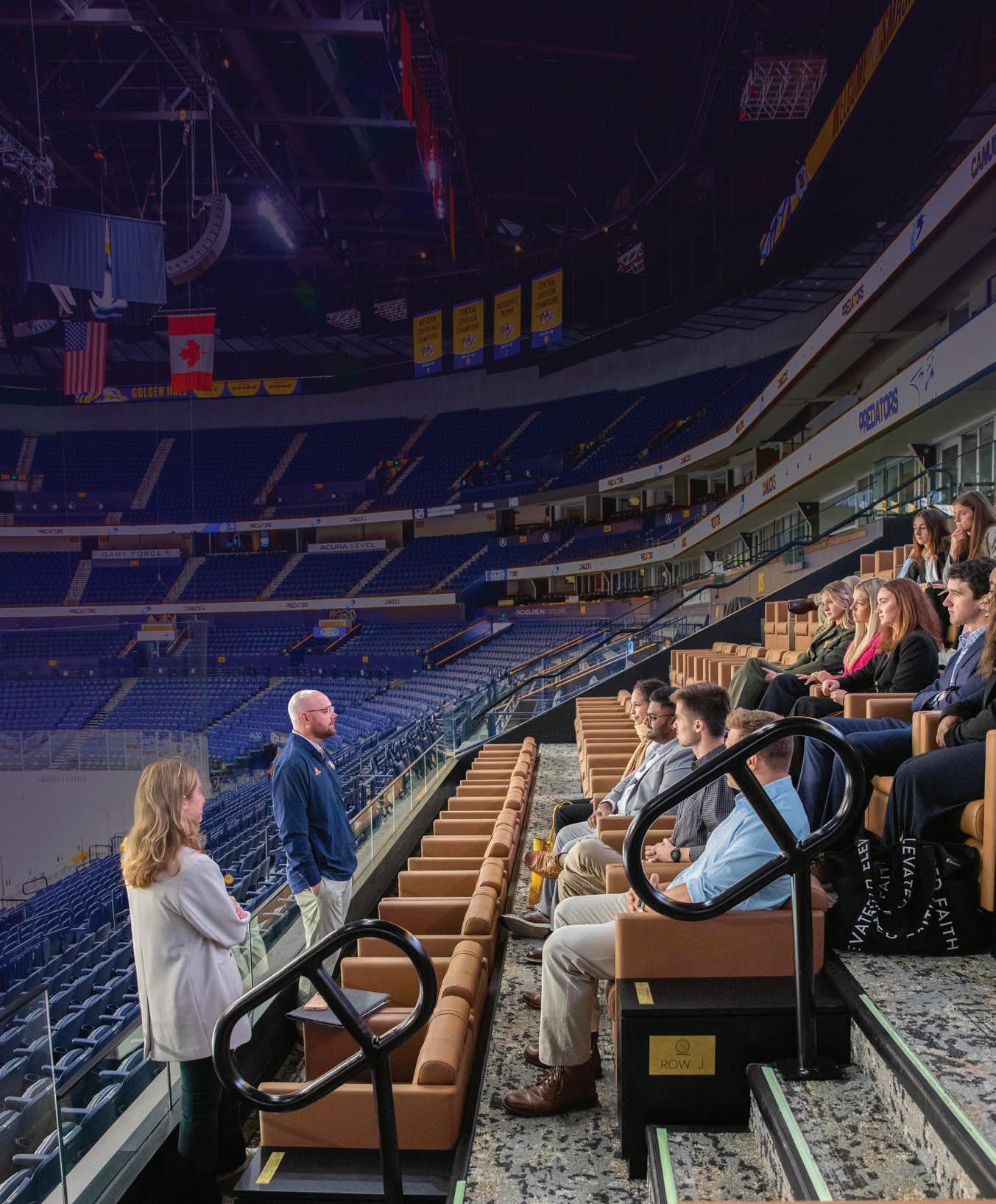
The visits allow participants to build their professional networks and relationships with their cohort members, as well as how to prepare for a company visit by researching the presenters and their companies and developing relevant questions, said Sager.
Each year, two Learn Days are held for these MBA students, who are also strategically matched with employers to complete a nine-month paid internship at companies in their field of interest.
Lipscomb alumnus Goode showed the students around Bridgestone Arena, the home of the Predators, while describing how the sales and partnership/sponsorship process focuses on the fan experience, from perks at local companies for fans after Predator wins to exclusive VIP spaces to watch the games.




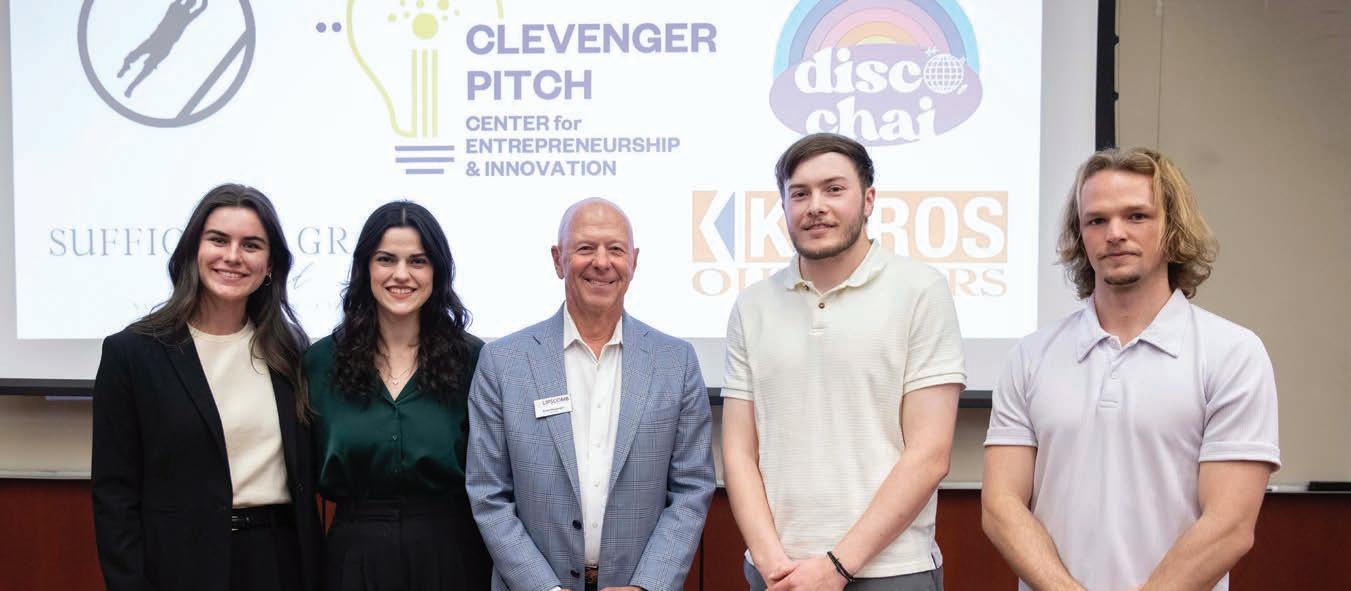
“Students invest in themselves, and they get a wonderful return into the future… For me to be a participant in their investment, leverages my investment beyond a normal return.”
Alumnus and Lipscomb trustee Ernie Clevenger (BA ’75) draws from his personal relationships at Lipscomb, his experience starting and running his own successful companies and his faith molded by the university and his business career as motivation for giving the gift of education to future generations.
A frequent presence on campus, Clevenger, a 2019 Lipscomb Honors honoree, and his wife Arjaree, enjoy meeting students one-on-one through Lipscomb’s events and athletic competitions.
For Clevenger, a numbers guy who majored in math at Lipscomb and started his successful business career by coding computers, supporting Lipscomb is about compounding investment in the future of the community and God’s Kingdom.
“Students invest in themselves, and they get a wonderful return into the future. Their lifetime compensation is influenced early on by their investment in education,” said Clevenger.
“For me to be a participant in their investment leverages my investment beyond a normal return, because it rides on top of the students’ return. It’s a compounding effect.”
One of his earliest commitments to Lipscomb was for the golf program, largely because he knew Coach Will Brewer (BS ’77), when they were both college students at Lipscomb.
“I always admired his skill at golf,” Clevenger said of Brewer, “I thought he could bring a lot of attention to golf when he returned as the coach. Will’s return was an opportunity to lift the program and get Lipscomb more notoriety. And certainly, it happened!”
Lipscomb men’s golf program has climbed to unprecedented heights with its first NCAA Division I Men’s Golf Championship appearance in 2016 and the program’s first ASUN Championship tournament victory and NCAA appearance in 2024.
In 2025, Clevenger took on sponsorship of Lipscomb’s 10-year-old annual business pitch competition for entrepreneurial students, an appropriate event for a man who owned his own insurance underwriting company and started his own on-site health clinic company.
Originally founded by former Lipscomb Trustee, Marty Kittrell (BS ’77), the Clevenger Pitch Competition is an interdisciplinary opportunity for students of any major to create and pitch their business ideas to local business professionals.
“I like what Jeff Cohu (executive director of the Center for Entrepreneurship & Innovation) is doing to get students to start a company or at least consider the option,” said Clevenger. “I wish that I’d had that kind of training earlier in my career. I would have been more confident earlier in starting my own company.”
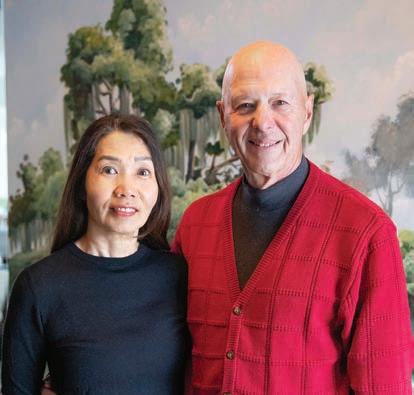
Funds from Clevenger also established the Clevenger Family Endowed Faculty Excellence Award in Theology and Ministry, which was first awarded in 2025..
“I think professors at Lipscomb give of their lives with modest income. It’s a sacrifice for them. So, if there can be an unexpected acknowledgement of their work, it’s a good thing.”
While Clevenger values contributions that represent his personal interests, he is also supportive of unrestricted giving to Lipscomb, which he hopes provides a more sustainable, long-term benefit to the university that shaped his faith and his way of doing business at his own company, CareHere, which provides onsite medical, wellness and pharmacy management for public and private employers.
“When I started the health care company, I said, ‘We’re going to do what is best for the patient, and we believe that profits will follow.’ And that model was taken from Jesus, who was first a physician. He healed, and then he taught.”
As a donor who cares about both visible programs and behind-the-scenes needs, Clevenger is proud to honor his family’s history, as both his parents were Lipscomb Bisons in the 1950s, and his own college experience in a loving, Christian environment.

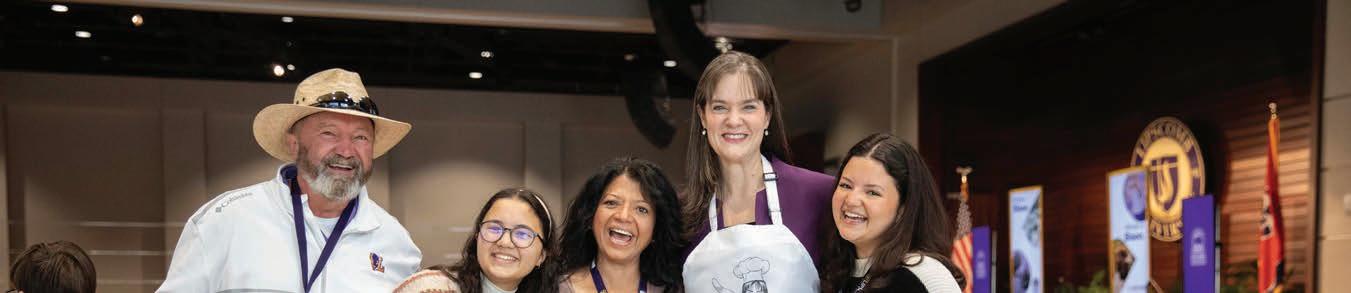







As I reflect on our most recent Bisons Weekend, this past November, I am filled with gratitude and pride for the vibrant community we all share. One moment in particular stands out as the embodiment of what it means to be part of the Lipscomb community.
During the Class of 1975 reunion, we had the privilege of welcoming back several of the original members of the legendary Delta NaNaNa band, created by Delta Nu social club (see page 1). For many, the band’s music is woven into the fabric of cherished college memories, and its return to the stage was a nostalgic journey back to a formative era.

radiating from the stage created a powerful visual representation of the Lipscomb spirit.
But what made the evening truly magical was what happened next: as the band concluded its set, the members invited our current music students to join them on stage.
In that instant, the gap between generations disappeared. Alumni and students, united by their shared love of music and their alma mater, performed side-by-side. The joy on their faces, the harmony of their voices and the energy

It was a reminder that, no matter when we graduated, we are all connected by the experiences and values that define our community. This is exactly what we love to see: our alumni coming to campus, being involved, interacting with students and reminiscing around shared experiences.
I was reminded of those connections again in February when alumni and the entire Lipscomb community came together to participate in another successful Giving Day, giving of their hearts to strengthen and shape the Lipscomb of today and tomorrow.
In fact, its growth has opened a new opportunity for Lipscomb to serve its alumni. We are pleased to announce that Hamar will now serve as the new director of Alumni and Friends Travel. Soon you will begin to see new opportunities to travel the world with Lipscomb professors, fellow alumni and parents. We hope these experiences will allow you to explore new places and continue to learn and connect.


Lifelong Learning will also benefit from this change, as Karin Hensley (BS ’85), who has been serving at Lipscomb as the director of donor relations, will now serve as the new director of Lifelong Learning and Senior Alumni Programs
As we continue to engage alumni in different stages of their lives, Lifelong Learning has become a beloved program for many of our alumni. This program provides the opportunity to take noncredit courses and continue to learn no matter your age. Amy Hamar (LA ’78, BA ’81) has led this program for the last 15 years with incredible dedication, growing it exponentially.
Thank you for being a vital part of our story. Your presence, mentorship and support are what make Lipscomb a truly special place. I look forward to seeing you back on campus soon.
As always, Go Bisons!

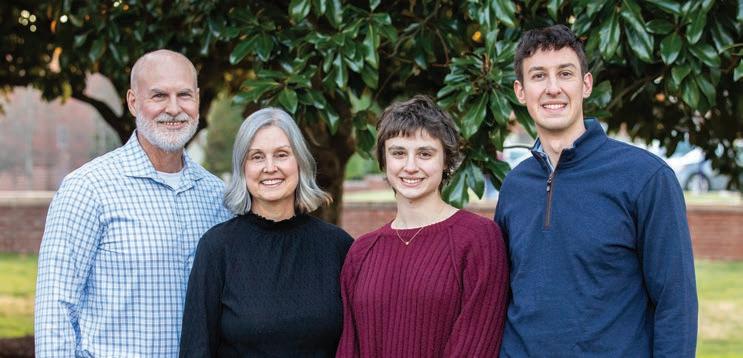
Lipscomb’s Butler family experiences God’s healing as siblings share life-saving stem cells in bone marrow transplant.
When Lipscomb University junior Chloe Butler left a Bisons basketball game last February, she had laughed with friends, enjoyed the game and felt normal. But the next morning, unusual symptoms—a bloody nose, sores in her mouth and tiny red spots on her legs—sent her to urgent care.
Doctors determined a week later that her bone marrow was failing. At the age of , she was suffering from severe aplastic anemia, a rare condition in which the bone marrow stops producing red blood cells, white blood cells and platelets.
Chloe needed a stem cell bone marrow transplant and she needed it quickly.
e odds were slim with only a one-in-four chance that a family member would be a full match. But the test results stunned the family: Chloe’s older brother, Connor (MS ’), a staff member in Lipscomb’s event management office, was a
match.
Conner’s bone marrow was harvested in April, a procedure that resulted in minimal soreness and recovery for him.
Chloe, however, went through a week of chemotherapy beforehand to clear her marrow before the stem cell infusion, and she remained in the hospital as doctors monitored engraftment, the moment when Connor’s stem cells began creating their own life inside her body.
Every morning, she opened a patient portal on her phone and analyzed her own data.
“I would know before the doctors came in if I would need platelets,” said the nowdata analytics major. “It showed the trends. It helped my data brain, but I also gained a lot of knowledge in biology. I think it’s so interesting.”
Her father, Charlie (BS ’) and mother, Cynthia (Riden) Butler (BS ’), student records specialist in Lipscomb’s registrar’s office, marveled at how Chloe handled each day.
Gradually, the counts rose. Chloe went home a month after her transplant with strict precautions. For days, she stayed within a one-hour drive of the hospital, went to the clinic twice a week for evaluating blood work and monitoring vitals and avoided anything that might expose her compromised immune system.
e th day post-transplant landed on a meaningful milestone: her st birthday.
Chloe continued her coursework online throughout the summer. is fall she had some online and two in-person classes as her strength continued to return. Her hair slowly grew back.
Chloe said she saw God’s hand in every detail. “After I heard Connor was a perfect match, I knew that God’s plan was for me to get this transplant,” she said.
“I know we were close before,” Chloe said of her sibling, “but we’re so close now. I mean, we literally share the same bone marrow.”
We want to hear from you! At lipscomb.edu/classnotes you can post a career update or accomplishment, a marriage, birth or passing, and share a special photo as well. We always have our ear to the ground to hear what’s going on in the Bison Herd.
Submitted Bison Notes are edited for length, clarity or for any reason at the discretion of the editors of Lipscomb Now. Images that do not meet the quality standards necessary for printing cannot be included.
Degree abbreviations follow standard academic abbreviations except for: (LA), alumni of Lipscomb Academy; (AD) associate degree; (GC), alumni who have completed a graduate certificate; and (A), non-degreed alumni or those whose degrees are unknown.
Read much more about the Butler family’s faith journey and God’s healing of Chloe at lipscomb.edu/now/chloe-butler
1969 Dan (BS) and Carolyn Thomas (BS) of Tullahoma received the Clyde W. Smith Junior Leadership Award at the Tullahoma City Schools Board of Education meeting on Oct. 21, 2025.
1972 Marty Luffman (BA) of Smyrna was selected as the 2025 LaVergne Fall Festival parade grand marshal.
1974 Nelda Lee Sturgeon (BS, EdD ’25) of Nashville received her doctoral degree in learning organizations and strategic change from Lipscomb University and also was recognized for Distinguished Service to Education by the Alpha Nu Chapter of the Delta Kappa Gamma Society International in May 2025.
1975 Debra P. Bates (BS) of Oklahoma City, Oklahoma, is an educational consultant and curriculum writer.
Glenn Till (BS) of Birmingham, Alabama, is the managing partner of Till, Hester, Eyer & Brown firm and is marking his 50th anniversary in the accounting profession.
1981 David Tudor (BS) of Springfield, Missouri, was appointed as a board member of Nabors Industries LTD, a Texasbased oil and gas company.
1984 Alan Henderson (BA) of Sharpsburg, Georgia, completed his 11-year tenure as senior minister for the Newnan Church of Christ in December 2024. He now volunteers with Pioneer Bible Translators as a church mobilizer. He also continues to work full time with Frontier Airlines as a flight attendant.
1985 Christopher Craun (BA) of Fernandina Beach, Florida, is a pilot for a major airline.
1989

Sam Collier (BS) of Nashville was promoted to chief revenue officer at First National Realty Partners.
Dr. Kelly Ann Mero Francis (BS) of Huntington Beach, California, is a board-certified surgeon, and she has been added to the Prime Medical Evaluators panel of physicians.
1990 Amy Jo Perry (BA) of Chattanooga, dean of the School of Nursing at Lee University, was promoted to associate professor.
1992 Tracy Ayers (BS) of Franklin is a CRE relationship manager with SouthState.
Brian Robins (BS) of Sunset, South Carolina, joined the data cloud company Snowflake as chief financial officer in September 2025.
1994
Mark Campbell (BA) of Humboldt is in his 27th and final season leading the women’s basketball program at Union University. He will remain as the university’s athletics director.
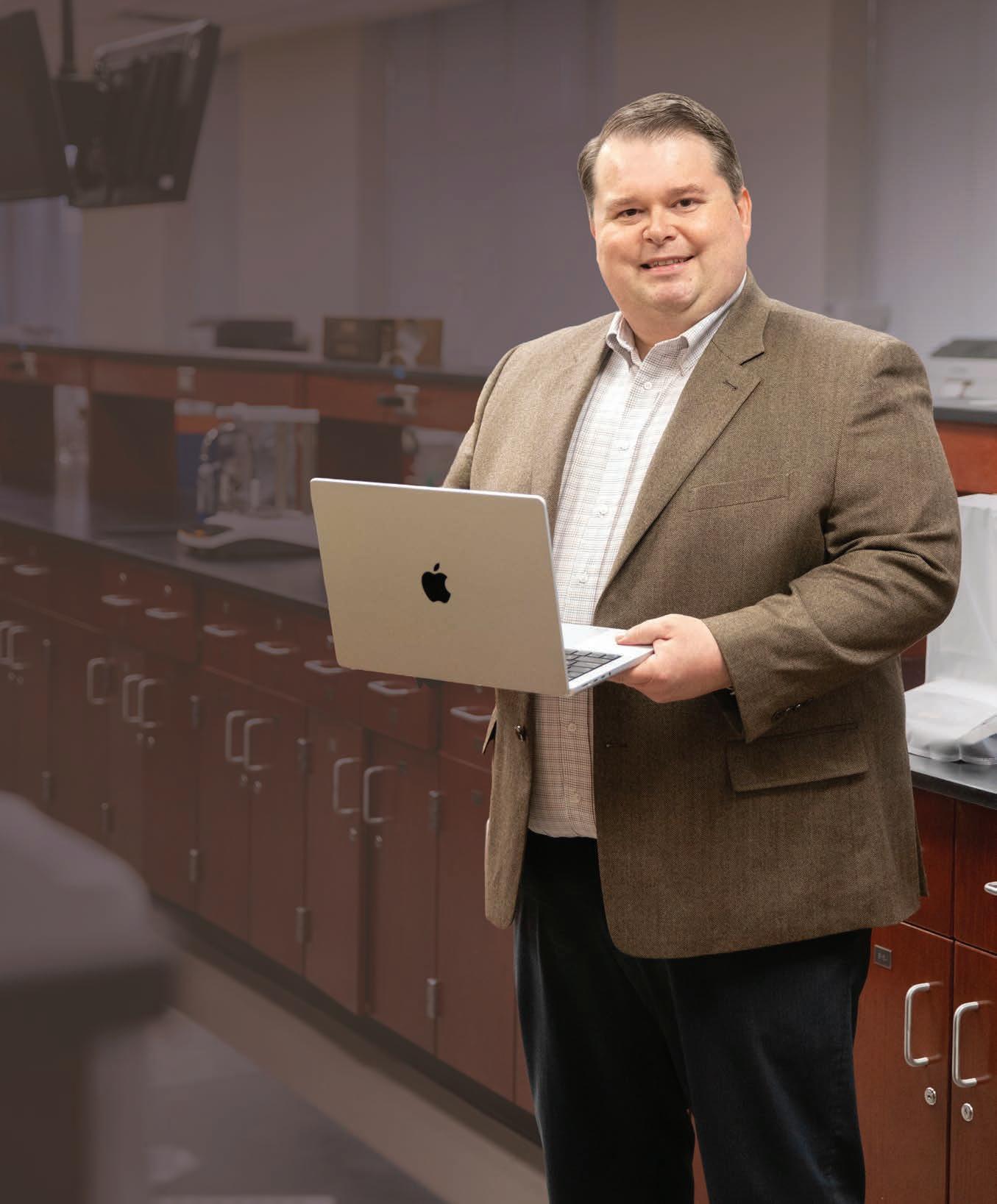
LIPSCOMB FAMILY TREE
Jay Dorris (LA ’07, Pharm.D. ’14), assistant professor of pharmacy practice, came back to his Lipscomb roots just in time to move Lipscomb’s studentpharmacists into the future.
Having worked with custom-built technology at Vanderbilt University, the electronic health record system at University of Florida Health Jacksonville and artificial intelligence at UF’s Shands Gainesville Hospital, Dorris arrived at Lipscomb in 2023 with a wealth of cutting-edge knowledge just as generative AI Chat GPT came into the public’s awareness.
As a clinical informatics pharmacist with University of Florida Health, he built elements of a pharmacogenetics AI platform and worked on system-level projects and natural language processing platforms to screen for potential safety events and quality assurance challenges.
Today, Dorris has become a member of Lipscomb’s AI Steering Committee, bringing his AI experience back to the organization that helped raise him.
He is among the third generation of his family to attend and work at Lipscomb, sprouting from his grandfather, Tom Hanvey (A ’42), Lipscomb’s long-time gymnastics coach and faculty member.
Dorris grew up hearing story after story of how his grandfather “loved and cared for his athletes, as competitors but also as people,” said Dorris. “I think about that as how we work with our informatics students, especially as we dive deeper into unique research where we really try to customize.
“Having such deep Lipscomb roots here, I can see how this is just a continuation of what Lipscomb has been doing for a very, very long time.”
Learn more about Dorris and the Hanvey family at lipscomb.edu/wal/jay-dorris
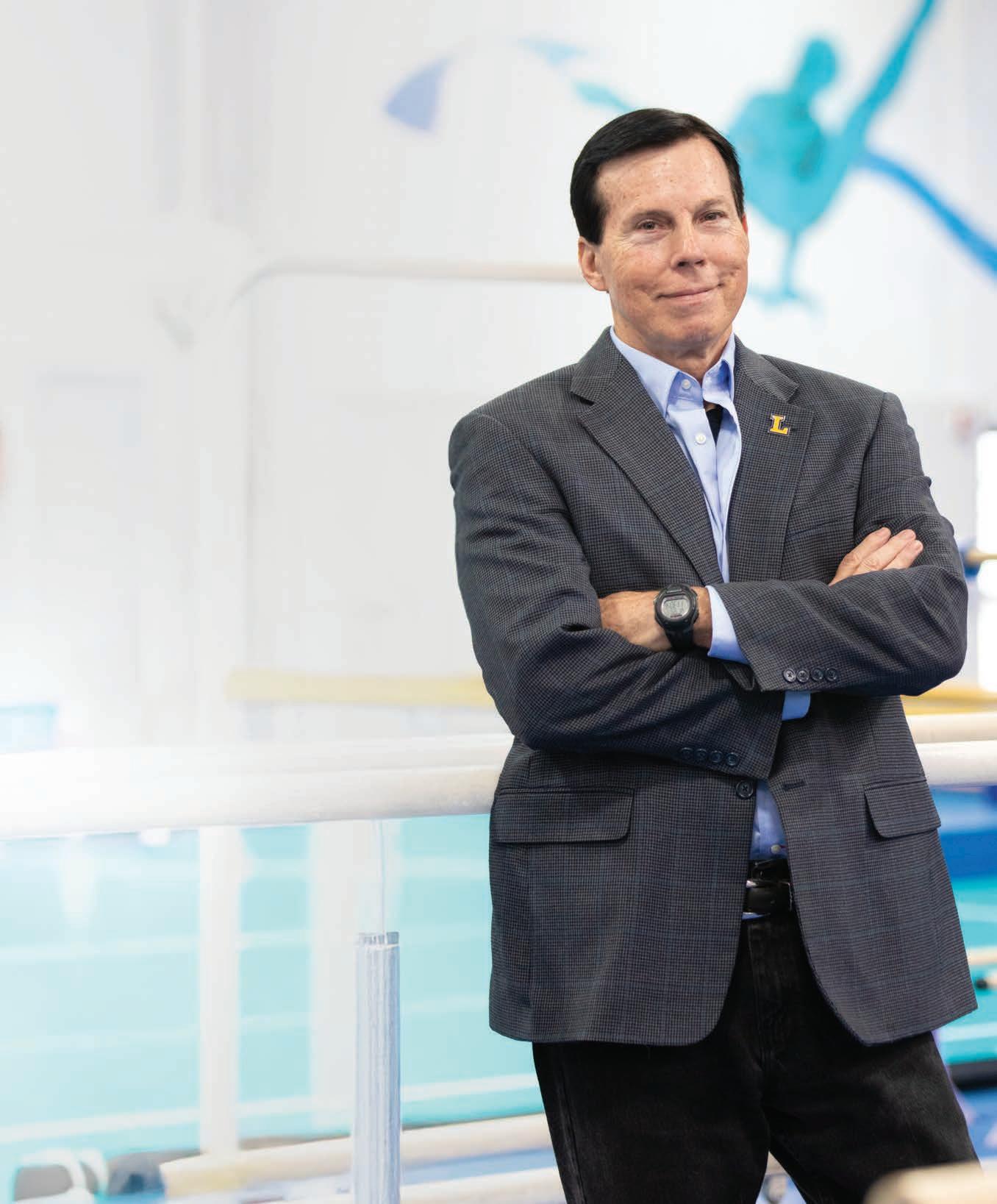
ALUMNUS OF THE YEAR
When Drew Davis (BA ’81) came to Lipscomb University in 1977, he found more than the skills he needed to run his own business for more than 40 years. He found more than a spiritual transformation even. According to Davis, he found a home for life.
“It’s the center of the universe,” chuckles Davis. “Even today, when I drive down Granny White Pike, I feel like I’m coming back home.”
He resides in Atlanta, where the former gymnastics team member and theology major is a community leader in gymnastics, having established Rockdale Gymnastics school in the area more than 40 years ago. Throughout his career as a coach and meet director, he has served more than 100,000 athletes and raised more than $200,000 for charitable causes such as the Wounded Warrior Project and Susan G. Komen.
When he makes his way back “home,” Davis serves on the Lipscomb College of Bible & Ministry alumni board and the Lanier Theological Library Foundation. Over the years he has founded the Gospel Jam, an annual on-campus event honoring Davis’ mentor the late Harvey Floyd (BA ’53), longtime Bible teacher; helped establish the Harvey Floyd Biblical Languages Scholarship; and organized a 2023 reunion of the gymnastics team that drew about 40 alumni to campus.
In addition, as a personal project to honor “the rocks, the pillars here at Lipscomb for decades,” who impacted his life for the better, Davis has produced several videos of interviews (available on YouTube) with Lipscomb Legends, such as Carl McKelvey (BA ’53), Floyd, Jim Thomas (BA ’69, MA ’10), Neika Stephens (LA ’52), Dennis Lloyd (LA ’54, BA ’58), Harold Hazelip (BA ’50) and Robert Hooper (BA ’54), among others.
“The impact Lipscomb has had on thousands of lives has been truly incredible,” said Davis, who said winning the 2025 Alumnus of the Year was “truly the honor of a lifetime.”
“Lipscomb has always meant so much to me. It still feels like home here,” he said. “It still feels like this is the place.”
Learn more about Davis at lipscomb.edu/wal/drew-davis
John D. Pierce Jr. (BA) of Brentwood was listed by e Tennessean as #50 on the Nashville 50 Greatest Athletes list in August 2025.
Gregory Thompson (BA, LA ’89) of Brentwood started his own business, ompson Academic Coaching, after 30 years as a classroom teacher. e company was featured in the Oct. 21, 2025 issue of Nashville Voyager online magazine.
1997 Dennis Hennen (BS) of Berkley, Michigan, was re-elected to a third term on the Berkley City Council.
1998 Dr. Lisa Piercey (BS) released her book Natural-Born Entrepreneurs: Breaking into Business Ownership in October 2025.
2002 Anna Lee (Huber) Aycock (BA) of Fort Wayne, Indiana, released novel number eight of the Verity Kent Mystery series. e book A Moment’s Shadow was released in August 2025 (see page 32 for more on Huber’s writing career)
Alumni of the softball, volleyball, cross country and track and field teams as well as a long-time supporter of Lipscomb Athletics were honored at Bisons Weekend with their induction into the Lipscomb Athletics Hall of Fame.
e Hall of Fame inductees are:
Jewell Dobson Forester (BA ’15, MED ’16) Volleyball
(-), she was the and ASUN Championship winner and Cross Country Runner of the Year, and she led Lipscomb to four-straight ASUN cross country championships from -. Artz was just as impressive as a member of the track & field indoor and outdoor teams. An elite m steeplechase runner, Artz is the only Lipscomb student athlete to qualify for NCAA nationals in the event all four years.
Kellie Sirus McGuckin (BS ’10)
Softball
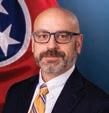
2003 Jay Miller (MBA) of Franklin was named chief operations officer for the Tennessee Department of Education.
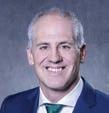
2005 Zachary D. Blair (BA) of Nashville was appointed assistant vice president and associate authority counsel for the Metropolitan Nashville Airport Authority.
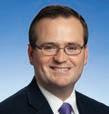
Brent Culberson (BA, MA ’10) of Brentwood joined the Tennessee Department of Commerce & Insurance as the department’s chief of staff.
2007 Brent Easley (BS, MA ’22) of Nashville has been named partner at BHA Strategy.
Derrick L. Jackson (DMin) of Gallatin is president of American Baptist College, serving as the 11th president in the school’s 100-year history. He also has served as the senior pastor of First Baptist Church in Gallatin for the past 24 years.
Dustin Lynch (BS) of Nashville will headline the third annual PGA Show Winter Jam in Orlando, Florida, on Jan. 22, 2026.
Forester will go down as one of the most prominent players in Lipscomb volleyball history, helping the team reach the top of the ASUN with two ASUN championship titles and two ASUN Championship Runner-up finishes. She was voted an ASUN All-Decade Team member (-), ASUN All-Freshman Team honoree, ASUN Player of the Year, an ASUN All-Academic Team honoree two times and an All-ASUN team member three times, one of only six Bison volleyball players to be recognized with such an honor in three different years.
Lauren Ford Sophiea (BS ’15) Volleyball
Sophiea helped lead the volleyball team to new heights, earning a spot on the ASUN All-Decade Team (-) and a unanimous selection to the ASUN All-Freshman Team. Sophiea is one of just a handful of Lipscomb athletes to eclipse the ,-kill mark, finishing her career with , kills, a mark that ranks fifth all-time in the ASUN and third all-time at Lipscomb. Twice a member of the ASUN AllTournament team, she also earned an invitation to the U.S. Women’s National Volleyball Team open tryout.
McGuckin started her career strong as a member of the ASUN All-Freshman Team, and her upward trajectory continued as she became one of only five Bisons all-time to earn three or more All-ASUN honors. McGuckin was always a threat in the postseason, being named to the and ASUN All-Tournament Teams and was named the Tournament MVP after leading the Bisons to an ASUN championship for the first time in program history. She also made history during that run, breaking the NCAA Division I record for home runs in consecutive games.
Mark McGee (BS ’79, MA ’17)
Meritorious Service
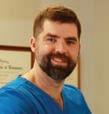
2008 Dr. Christopher Kellum (BS) of Olive Branch, Mississippi, joined Kellum Dental Clinic and became the third Kellum at the clinic, joining his father Dan and uncle Tom.
2009 Zackary W. Blair (BA) of Nashville has joined as partner at irtyfive Group, a Nashville-based government relations firm specializing in state and local governments.
2011 Kristen Blankenship (MEd, MA ’25) of Lebanon is executive director of graduate enrollment at Lipscomb University.
Dee Hammonds (MEd) of Hendersonville is dean of fine arts at Warner Arts Magnet Elementary School. She received the Queen Smith Award for Commitment to Urban Public Education from the Council of the Great City Schools and McGrawHill Education at the November 2025 conference in Philadelphia.
Madi Talbert Artz (BS ’16) Cross Country/Track & Field
Artz is one of the most accomplished members in the history of the program. Selected as an ASUN All-Decade Team member
McGee was a cherished member of the Lipscomb Athletics staff from -, serving as senior publisher and director of athletics media relations. roughout his time at Lipscomb, McGee received several accolades, most notably, induction into the Tennessee Sports Writers Hall of Fame in and a national award in the Fred S. Stabley Sr. Writing Contest. As a Knight Center Fellow in e Business of Sports at the University of Maryland and a Lipscomb professor, he continued to teach and to contribute to writing for the Lipscomb Athletics website and annual report for several years after he retired from the department.
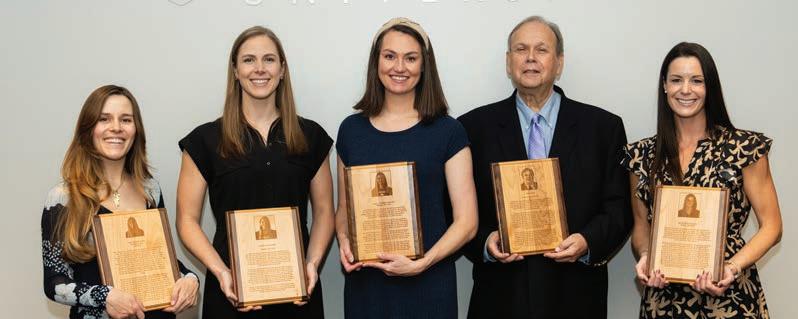
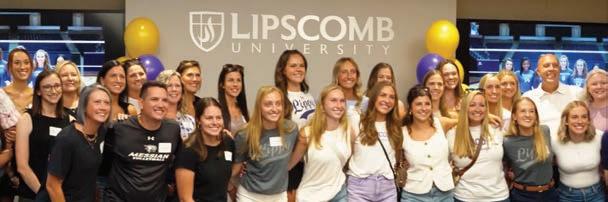
Volleyball alumnae
is past August, Lipscomb Volleyball (LUV) had the opportunity to play a No. ranked team, the University of Nebraska, in Allen Arena. As this was a first-time event for the team, Lipscomb Volleyball decided to make the rare opportunity even bigger by inviting all former Division players to a weekend reunion to watch the match and celebrate years of NCAA Division play.
Both the match and the reunion were a big success, with , people attending the match, setting a new volleyball attendance record in Allen Arena, and alumni athletes, their family members and friends of the program attending reunion events.
e reunion featured a pre-game reception, a special moment honoring the volleyball alumni during the game and a dinner the next day at recently retired Head Coach Brandon Rosenthal’s home.
e volleyball team was first established in , and Rosenthal, who was the all-time winningest active volleyball coach in ASUN history, is only the third coach of the team, arriving at Lipscomb about the time that Allen Arena was constructed. e volleyball team has competed in the NCAA nationals eight times over the years from to .
“Quite honestly, I won’t remember the wins and losses,” Rosenthal said at the event. “What I will remember is the relationships that we have built, and continue to build. It is truly my favorite thing about Liscomb Volleyball.”
And he wasn’t alone. ”I’ve always said that LUV is so much more than the game of volleyball. It’s the community. It’s the school. It’s everybody who has bought into this program that came before me and that will continue to come after me,” said reunion attendee and former volleyball student-athlete Megan Sullivan (BS ’, MA ’), “and it is just one of the biggest blessings that I have ever gotten to be a part of.”
“LUV as a program, to me, has meant everything,” said former volleyball student-athlete Lauren (Ford) Sophiea (BS ’), who is now a full-time emergency medicine physician with Middle Tennessee Emergency Physicians. “It has created my adult friendships. It has given me the opportunity to pursue medicine and to create a career for me through all the people I have met here.”
Scan the code to watch a video of the volleyball team reunion here.
2012
Rhett Emerson (BS, BS ’14) of Gallatin is the chief financial officer and vice president of KYZEN.
Nate and Taylor (Davis) Underwood (BBA) of Nashville announce the March 10, 2025 birth of son, omas Nathaniel.
2014 Sean Cofoid (MBA) of Nashville is the chief data officer at Cardiovascular Associates of East Tennessee.
Michael Kneiry (MS) of Hendersonville has joined Alliant Insurance Services as first vice president within its employee benefits group.
2015 Reisha D. Kidd (BSW) of Mount Juliet was honored as Citizen of the Year by the Wilson County Omegas. She is the director of community and youth engagement at Tennessee Prison Outreach Ministry.
2016 Jeffrey J. Butler (BBA) of Bel Air, Maryland, recently was named an assistant coach for men’s basketball at Belmont University.
Jonah Jackson (BFA) of Nashville performed in Studio Tenn’s production of Dracula on Oct. 9-26, 2025. He previously performed in Little Shop of Horrors and Crimes of the Heart.

Larissa N. Westerfield (EdD) of Nolensville began a new role as principal of Rock Springs Middle School on Jan. 1, 2026. She previously served as the coordinator of teaching and learning for the district’s instruction department.
2017

J. Andrew Whitten (BA) of Signal Mountain is a litigation associate at Miller & Miller PLLC in Chattanooga.
Dr. Rachel Pampe Baker (BS) of Claremont, Illinois, is a primary care provider at OSF HealthCare.
2018 Morgan Beers (BA) of Great Mills, Maryland, graduated with her PhD in English and accepted a tenure track position as assistant professor of rhetoric and professional writing at St. Mary’s College of Maryland.
2019 Tayler Aliff-Allyn (BS) of Alexandria, Virginia, is senior coordinator for congressional policy and advocacy at Susan G. Komen.
Jill Courtney (EdS) of Colorado Springs, Colorado, received a doctorate in instructional design leadership from Franklin University.
2021 Ryan Egly (MA) of Lawrenceburg was appointed to the Tennessee Tourism Committee. He is president and CEO of Lawrence County Chamber of Commerce.
Abigail McQueen (BA) of Nashville is a sales lead with Ann Taylor, and is a Master’s of Marketing candidate at Vanderbilt University.
Dr. Jennifer Thompson (EdD) of Clarksville is a radiography program director at Austin Peay State University.
Jacob Tucker (MA) of Linden is a junior lender in a new lender pilot training program at Bank Independent. He recently completed his first year at Alabama Banking School and was elected class president for the Class of 2025.
2022 Dr. Jordan Lauer (EdD) of Columbia recently released the book e Two Backpacks: Understanding Teens and What ey Carry. e teacher, author and blogger also hosts the podcast Educational Warfare, where he discusses 21st Century teaching, learning and life.
Jennifer Sharpe (EdD) of Lebanon became the superintendent of Wilson County Schools on July 1, 2025.
2023
Jennifer Frazier (MEd) of Johnson City is assistant principal at Happy Valley Elementary School.
Cassie Burt (MEd) of Clarksville is a teacher with Metro Nashville Public Schools.
Derrin Boyd (BS, MBA ’24) of Princeton, Kentucky, landed in the 38th spot in the NBA’s G League draft with the Santa Cruz Warriors.
Kassandra Porter (MPA, GC ’24, MA ’25) of Antioch is manager of support services at Crossroads Campus and also launched Kater 2U & More LLC consultation services.
2024 Mia Cox (BA) of Nashville is a middle grades science teacher.
Giselle Domingo Diaz (BS) of Nashville is a dental scholar with Interfaith Dental.
Leighton McBryde (BBA) of Pasadena, California, is revenue operations coordinator at CliniComp.
Will Pruitt (BBA) of Mount Juliet was added to the Leuven Bears roster for the Belgian professional basketball club’s 2025-26 season.
2025 Mariana Arias (BSN) of White House is a registered nurse at Ascension Saint omas Midtown.
Kayla Beene (BA) of Nashville is a theatre director at Franklin High School.
YOUNG ALUMNA OF THE YEAR
Whether it’s the volleyball court in Allen Arena or a high-end, custom hat store in the Gulch neighborhood, Alex (Kelly) Samuels (BBA ’11) loves working with a team.
The former All-American and ASUN Conference Hall of Fame Lipscomb volleyball player has a team of her own now at the popular and successful Rustler Hat Co., where customers can customize their hat with one-on-one help from a Rustler team member.
Rustler brings its signature experience to private and off-sites events around the city, and has worked with more than half of the companies on the Fortune 500 list.
Samuels pioneered the concept in Nashville’s hopping Gulch district, opening her shop in 2021 as a way to become more of a community builder in Nashville, the city that the Kansas City, Missouri, native now calls home.
“We have built a community and a team around people who can create an experience. So when you walk in, you’re not just leaving with a hat, you’re leaving with a full experience, meeting people from Nashville and just having fun,” said Samuels.
Sounds much like her experience at Lipscomb.
“A lot of things that athletes do to be successful, like putting in the extra hours, and just being a good teammate,” said Samuels, “are so important to owning a business, because now I have 30 teammates. Even though I’m the owner, I remember that we’re all focused on doing the same thing.”
Today Samuels is still in contact with Lipscomb and volleyball team members, attending all the team’s games and relishing the opportunity to work with other Lipscomb alumni in Nashville.
Learn more about Samuels at lipscomb.edu/wal/alex-samuels.

YOUR FELLOW ALUMNI
From The Chosen to the farm, Joellie Anderson (BFA ’24) is always in style.
The 2024 fashion design graduate not only helped make the hit show The Chosen come to life as part of the costume shop in 2023, but upon graduation she shifted gears to become a designer at Tractor Supply Co. (TSC), working on the company’s Blue Mountain, Field and Stream and Ridgecut clothing lines.
Anderson grew up in Wylie, Texas, and wasn’t exactly a country girl, but she has embraced the workwear and everyday casual aesthetic of TSC, a Brentwood, Tennessee-based company that caters to farmers, ranchers, pet owners and landowners.
Her studies at Lipscomb not only provided her with the perfect combo of fashion design and fashion merchandising skills to work at a corporate retailer, she said, but it also helped her land a summer internship on The Chosen, where she learned more about working with films, still a sideline of hers today.
Anderson spent two months on the film site in Texas, working in the costume department. She made a few full costumes and many garment repairs and attachments to costumes needing details for historical authenticity, a hallmark of the show.
At TSC, Anderson collaborates to create sketches and pick the fabrics for around 40 pieces for a season. “Since we are so small, we are wearing many hats,” said Anderson. “This season I am working a lot with plaids and prints, and it changes every season.”
“I personally love working with individuals to create what they feel most comfortable in,” she said. “I like to help people find their style, not put a style on them.”
Learn more about Anderson at lipscomb.edu/wal/joellie-anderson.
Joel Booker (BFA) of Nolensville is a graphic designer for MERIT Real Estate Advisors.
Cole Brown (BA, LA ’21) of Nashville has joined Creative Nation as publishing, management and records A&R.
Giselle Domingo Diaz (BS) of Nashville is a dental scholar with Interfaith Dental.
Dylan Harman (BA) of Mount Juliet is a graphic designer with Wild Card Inc.
Cooper Hayes (BBA) of Strawberry Plains is a wealth management associate with Raymond James.
Morgan Hayes (BS) of Greenville, South Carolina, is a teaching assistant at Clemson University.
Mati Kalopisis (BA) of Hoffman Estates, Illinois, is a guest experience associate with Willow Creek Community Church.
Jaeden Kennedy (BBA) of Chapel Hill is an admissions counselor at Lipscomb University.
Leann Landstrom (MEd) of Lebanon founded the nonprofit organization e Maker’s Worship to provide refuge and healing for children rescued from human trafficking and abuse.
Peyton Lewis (BFA) of Cordova is the assistant stage manager at Studio Tenn.
Nick Marek (BS) of Eads is a mechanical engineer at Smith & Nephew.

Thomas William Davis, professor of archaeology at Lipscomb and associate director of the Lanier Center for Archaeology, passed away on September , . He had retired from Lipscomb in May.
Caton McCarty (BS) of Columbia is a permitting specialist with Ervin Cable Construction.
Kendall Mullen (BS) of Brentwood is a special education teacher at Norman Binkley Elementary School.
Rebekah Nickerson (BSN) of Nashville is an ICU registered nurse with Ascension St. omas Hospital Midtown.
Joelle Noble (BS) of Berry Hill is a strategic accounts project manager with Hobbs & Associates.
Howell O’Bryan (BS) of Cumberland Furnace is a residential clinical supervisor at Cumberland Heights Foundation.
Madison Pearson (BS) of Matthews, North Carolina, is an occupational therapy student at Wingate University.
Amiee Sadler (MA) of Nashville is executive director of Miriam’s Promise.
Olivia Schuette (BSN) of Greenville, North Carolina, is a registered nurse at ECU Health.
Sandra Slate (BA) of Riverside, Alabama, is the marketing director for Alabama Symphony Orchestra.
Kara Williams (BBA) of Murfreesboro is an audit and assurance staff member at Deloitte.
Sean Worth (BFA) of Nashville is a visual content manager for Crowd Surf.
Seth Wright (BA) of Tuscaloosa, Alabama, is an MFA graduate student at the University of Alabama.

Elizabeth S. Kerce (BS) of Manchester died Sept. ,
1953 Elaine Moore (LA) of Nashville died Sept.
Sara Smith (BA) of Nashville died Nov.
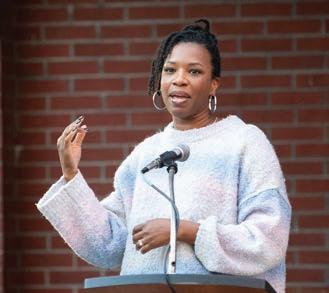
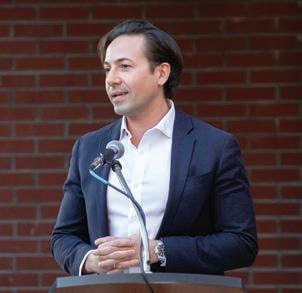
Bisons Weekend in November served as the backdrop to celebrate the -year anniversary of a small Lipscomb facility making an impact far beyond its modest square footage.
e Lipscomb Family erapy Center’s (LFTC) drew friends and alumni to rekindle memories and see the updates to the center, which has seen cohorts of student-therapists come through its doors. e clinic offers its services through student interns who are supervised by licensed therapists.
It launched in with a mission to offer affordable mental health care to individuals, couples and families who may not be able to afford it elsewhere, and a decade later it has certainly succeeded, serving more than , clients and providing more than , hours worth of therapy, according to the clinic’s director Sean Surber
In addition, more than students have graduated from Lipscomb’s Marriage and Family erapy (MFT) program and are currently enrolled. Five alumni, including Sahel Gingerich (BA ’, MFT ’), Marcus Geromes (MFT ’) and Liz Stinus (MFT ’), spoke during the reunion program, sharing their personal experience with the MFT program and its facility.

1942 Bertie Lou McMurtrie (A) of Flintstone, Georgia, died Aug.
1947 Bobby Sutton Mason (LA) of Nashville died Sept.

1949 Curtis Burgess (BA) of Broken Bow, Oklahoma, died Aug.

1950 Vera Howard Davis (BA) of Bradford, Vermont, died on Dec.
1957 Gay (Barnes) Banowsky (BA) of Dallas, Texas, died Sept.
1958


Mary L. Pilkinton (BS) of Columbia died Nov.
James W. Costello (BA) of Spring Hill died Aug.
Costello joined the staff at Lipscomb around
and became a professor in the Education Department after completing his doctorate in . He trained thousands of Lipscomb students until
He also coached the David Lipscomb High School Rifle Team for
years.
e facility has gone through some changes since its launch, said Chris Gonzalez, director of the MFT program and the founder of the LFTC. It now sports all new furniture, including built-in desks creating workspaces in the intern room; a new security door; updated interior design; and updated technology for video recording for supervision purposes.
e reunion also served as the announcement of the Bridge to Healing Fund, intended to provide additional training and resources for MFT students and to make a bigger impact on the community through additional resources, support groups and eventually a bigger facility.
e initial goal for the Bridge to Healing Fund is to raise
by the end of .
“Mental health care is for everyone and the Bridge to Healing fund helps make that possible,” said Gonzalez.
Learn more about each of the center’s anniversary reunion at lipscomb.edu/LFTC10
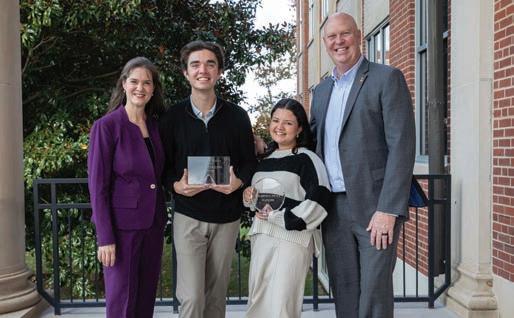


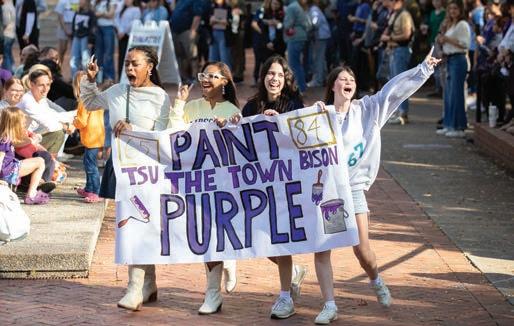
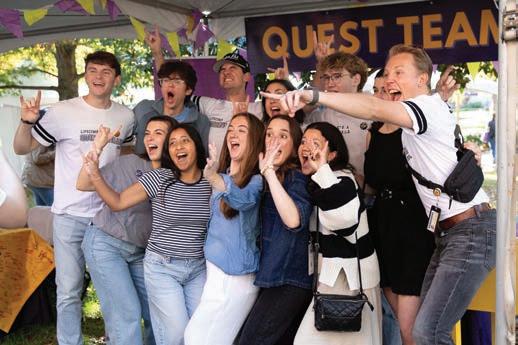
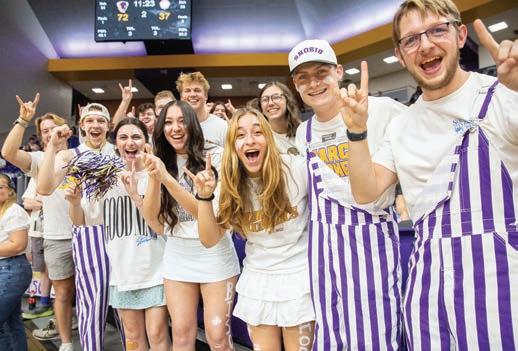
This past fall, the Lipscomb alumni community came together for a season filled with connection, celebration and cherished memories.
The season kicked off with a celebration of a major milestone for our women’s volleyball program—25 years in the NCAA (see page 42). More than 100 volleyball alumni returned to campus from across the country to reunite, reminisce and cheer on the Lady Bisons as they faced the University of Nebraska.
The energy and camaraderie on display reminded us that our volleyball program is more than just a team, it’s a lifelong family.
Our signature event in October, Lipscomb Night at Walden Farm, welcomed more than 400 guests for an evening of autumn fun and fellowship. It was heartwarming to see so many Lipscomb families picking out their pumpkins for the season, enjoying the petting zoo, painting pumpkins and gathering around the popcorn bar.
Walden Farm is owned by a Lipscomb alumni family, making this event not only a wonderful opportunity to reconnect, but also a chance to support a fellow Bison business.
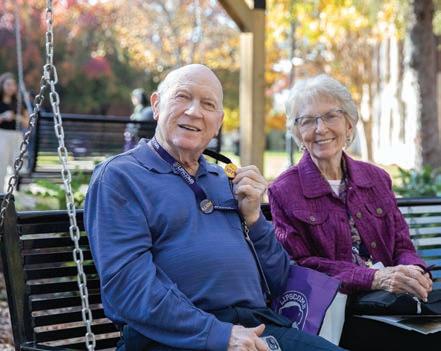
The crisp November air brought with it a renewed sense of energy and excitement as alumni, students, families and friends gathered on campus for the annual Bisons Weekend, a chance to celebrate everything that makes Lipscomb special. This year’s festivities were a tapestry of tradition, connection and new memories—a true testament to the enduring spirit of our Bison family.
Connection was the heartbeat of the entire weekend. From the spirited student parade and pep rally on Friday afternoon to the warmth of Saturday morning’s “Pancakes with the President,” our campus was alive with Bison pride.
The Bisons Weekend Chapel was a particularly moving highlight, where we honored our Alumnus of the Year (see page 40) and Young Alumna of the Year (see page 43), alongside Miss Lipscomb and the Bachelor of Ugliness. We have worked diligently to make our programming more familyfriendly, which was on full display at the Saturday Bison Square Fair, where young families enjoyed the petting zoo, coffee truck and bounce houses.
To learn more about upcoming events, follow the alumni office on Facebook, Instagram and LinkedIn.
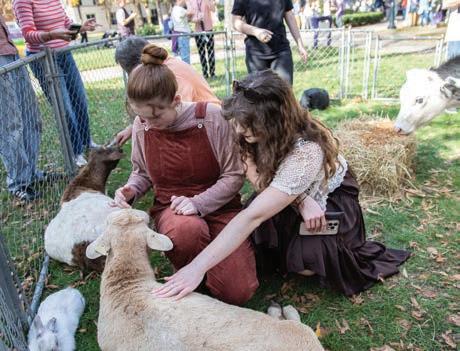
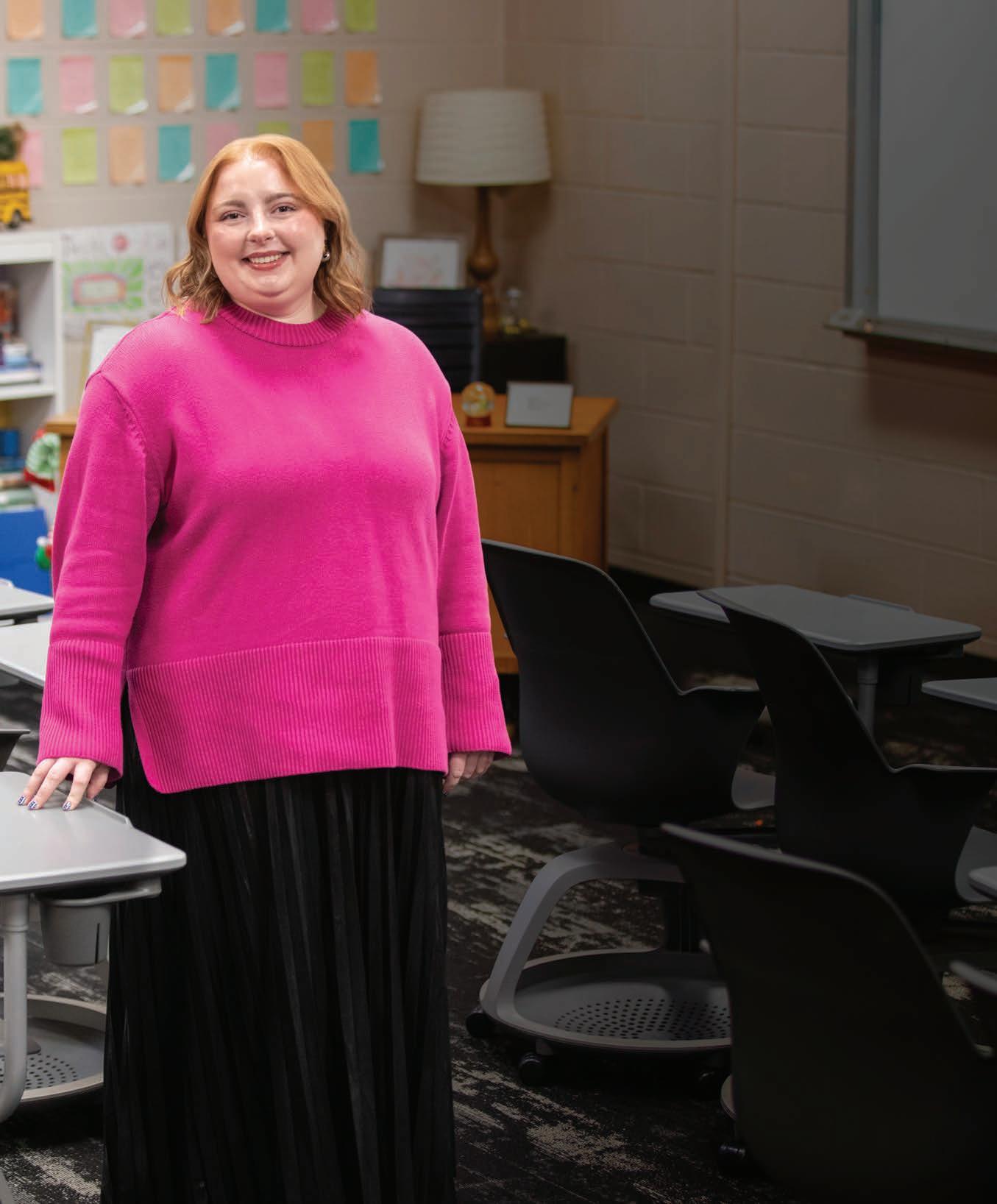
YOUR FELLOW ALUMNI
As a special education teacher at Sunset Middle School in Tennessee’s Williamson County, Abigail Hardage (BS ’21), is busy all day long in her classroom, but her influence has stretched far beyond her classroom walls, as demonstrated by two special honors in 2024.
She was named Williamson County Teacher of the Year and honored as the advisor of the Best Buddies International Outstanding Middle School Chapter of the Year.
Having only joined Sunset in 2021 and starting the school’s Best Buddies chapter in 2022, Hardage has already made an impact on her school’s culture.
Participation in the Best Buddies chapter has risen from about 18 members to 55 members this year. Monthly Best Buddies events are held, such as sensory-friendly trick-or-treating, inclusive egg hunting, volunteering at a local food pantry and teaching accessibility through going bowling.
“The culture our students have created has been exceptional. We could not do it without each other. They have taken everything I’ve built and really made the best of it,” she said.
Hardage found her way to special education through three years of involvement with Lipscomb’s IDEAL (Igniting the Dream of Education and Access at Lipscomb) program, a twoyear certificate program uniquely designed for students with intellectual disabilities who want to participate in a college experience.
Throughout her college career, she served as a peer mentor for IDEAL students (winning the Peer Mentor of the Year from the program), became a circle of support leader (which oversees all the mentors assigned for one IDEAL student) and then became a resident assistant for the IDEAL women living in Lipscomb’s residence halls.
“I just really love it,” Hardage said of her job. “I am so passionate about giving students with disabilities opportunities and that continues to drive what I do. I have loved this position, and to see the impact it has, has been so powerful.”
Learn more about Hardage at lipscomb.edu/wal/abigail-hardage.
e Lipscomb community mourned the loss of Steve Prewitt (BA ’), an English professor for more than years and administrator, who passed away Nov. , at age .
Prewitt was a member of Lipscomb’s English and Modern Languages department faculty from until his retirement in May .
In addition, during his tenure he served as director of the Writing Program, director of general education, director of Academic Program Development, president of the Faculty Senate and Associate Provost.
Prewitt was a native of Clarksdale, Mississippi, and a member of the Tennessee Philological Association, the Tennessee College English Association, the National Council of Teachers of English, Conference on Christianity and Literature and Phi Kappa Phi, among other associations.
Prewitt is survived by his wife, Terry (BA ’); son, Tom C. Prewitt; daughter-in-law, Melanie Stover; and two grandchildren, omas and Jack Prewitt.
On Jan. , Lipscomb lost Randy Bostic (LA ’, BS ’), assistant professor of kinesiology and lifelong devoted Bison fan.
Bostic was a studentathlete in the s, and after an injury ended his playing career, he continued serving the team as a student-coach under head coach Ken Dugan (BS ’).
Bostic founded Bostic Law PLLC and generously gave his time as a youth baseball, softball and basketball coach. He was a member of Brentwood Hills Church of Christ.
He returned to Lipscomb to serve as an adjunct professor in the College of Business for several years and founded Lipscomb’s sport analytics graduate program, which launched in . He was well-known for his love for the Lord, his heart for Lipscomb, his passion for baseball and his deep love for his family.
Randy is survived by his wife, Amanda (BA ’), and their two children, Reid, a th-grade student at Lipscomb Academy, and Kayleigh, a th-grade student at the Academy.
Joe Riggs (BA) of Middleburg, Florida, died Oct. , .
1959 Allen Adler (BS) of Memphis died Aug. , .
1960 Leatha Tripp (BA) of Marion, North Carolina, died Aug. , .
1963

1964
Judge Alan E. Highers (BA) of Henderson, died Aug. , .
Jo Luck (BS) of Little Rock, Arkansas, died Nov. , .

James Robert “Bob” Carlton (BA) of Nashville, died July , .
1965 Benjamin V. Hess III (BA) of Bozeman, Montana, died Sept. , .

Jimmie Lou Hedgcoth Lee (BS) of Hendersonville died Sept. , .
1967 Robert D. Pierce (BS, LA ’) of Nashville died Jan. , .
1968

Becky A. Porter (BA, LA ’) of Lakewood, Colorado, died Aug. , .
1970 Steven Watson (BA) of Burns died Oct. , .
1972 Clayton H. Agee (BS) of Lascassas died Nov. , .

Susan B. Montgomery (BS) of Nashville died Sept. , .
1973 Robert Fred Cope (BA) of Nashville died Oct. , .
Susan Heflin (BS) of Falls Church, Virginia, died July , .
1975 Donald Clark (BS) of Florence, Alabama, died Sept. , .

Laurene Annette McBride Glover (BA) of Kileen, Texas, died June , .
1978 Stephen L. Dodd (BA) of Avon, Indiana, died Nov.

David Alan Woodyard (BS) of Bel Air, Maryland, died March , .
1981 Beth Lunn Johnston Feenstra (BS, LA ’) of Franklin, died Nov. , .
1983 George T. Hagan (BA) of Springfield, died July ,

David Snyder (BS) of Winchester, Virginia, died Aug. , .
1997 Jeffery A. Hartline (MA) of Nashville died June , .
2000 Amy Marshall-Colon (BS) of Urbana, Illinois, died July , .
2007 Lindsey Harris (BA) of Nashville, died Aug. , .
2012 Jonathan Corley (BA) of Washington, D.C., died July , .
In January, the Lipscomb University community mourned the loss of alumnus and former trustee
Mike Adams (BA ’), a nationally respected higher education leader whose career spanned nearly four decades.
Adams served on the university’s Board of Trustees for six years and was named Lipscomb’s Alumnus of the Year in .
In his career, Adams served as president of the University of Georgia from to , a period during which the institution rose to national prominence.
Before UGA, Adams served as president of Centre College from to and at Pepperdine University, where he was vice president for university affairs from
to
and later returned as chancellor from
to .
For generations of students, faculty, staff, alumni and friends, Mary Nelle Hutcheson Chumley (LA ’, A ’) has been a steady, welcoming presence at Lipscomb University. e Lipscomb community mourns her passing on Jan. at the age of and is thankful for her life of extraordinary service, generosity and faith.
Chumley’s relationship with Lipscomb spanned more than years. Her bond with Lipscomb began in childhood, when her grandfather served on the board of trustees of what was then David Lipscomb College. Her legacy of volunteerism formally began in , when her husband John C. Hutcheson Jr. (LA ’, BA ’) returned to Lipscomb to join the faculty. A gifted floral arranger and organizer, she decorated campus events, managed Homecoming activities and became a steady presence behind the scenes of university life.
Following Hutcheson’s untimely death in , Chumley continued serving Lipscomb and creating floral arrangements for major on-campus events through six presidential administrations.



She was a founding member of the Associated Women for Lipscomb in the early s, and was also the power behind the transformation of Avalon, the historic on-campus home of university founder David Lipscomb and his wife, Margaret, into a bed-and-breakfast and meeting space to fund scholarships. Chumley became its scheduler, host and caterer, roles she continued for more than years.
In , Chumley was named Lipscomb’s Alumna of the Year, an honor she shared with her second husband Charles Chumley (A ’).
She is survived by son John (Lynn (MAT ’)) Hutcheson (LA ’ , BA ’), daughter Margaret (Randy (BS ’)) Deaton (LA ’ , BS ’); five grandchildren: Josh (Heidi) Hutcheson, Evan Hutcheson, Erin (Raphe Victor) Hutcheson, Jake Deaton, Alex (Libby) Deaton; and eight great grandchildren: Cooper Powell, Isaac Morrow, Winnie Hutcheson, Naomi Victor and Jaxon, Eloise, Rosie and Gemma Deaton.
Learn more about the life of Chumley at lipscomb.edu/obit/mnhc









the old proverb goes, “Where
a way.” Discover financial peace of mind for you and your family while also leaving a legacy that supports students who dream of achieving a Lipscomb degree.


code to request a free estate planning guide!