INTERNATIONAL 2026
CANNES SPECIAL




THE WONDER OF DISCOVER FILMING IN COSTA RICA
Up to 11.7% reimbursement in



CANNES SPECIAL
Travolta takes THE controls
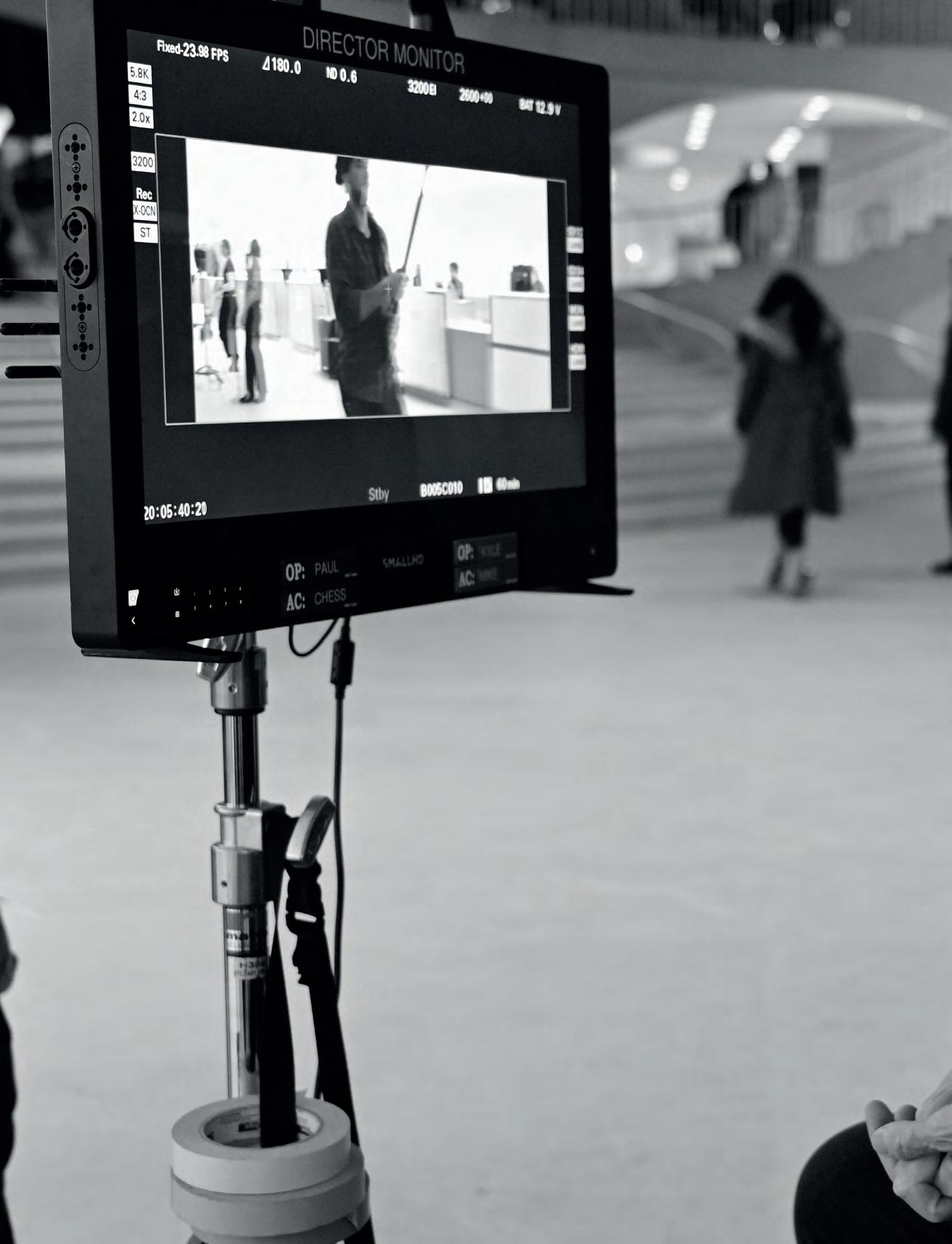

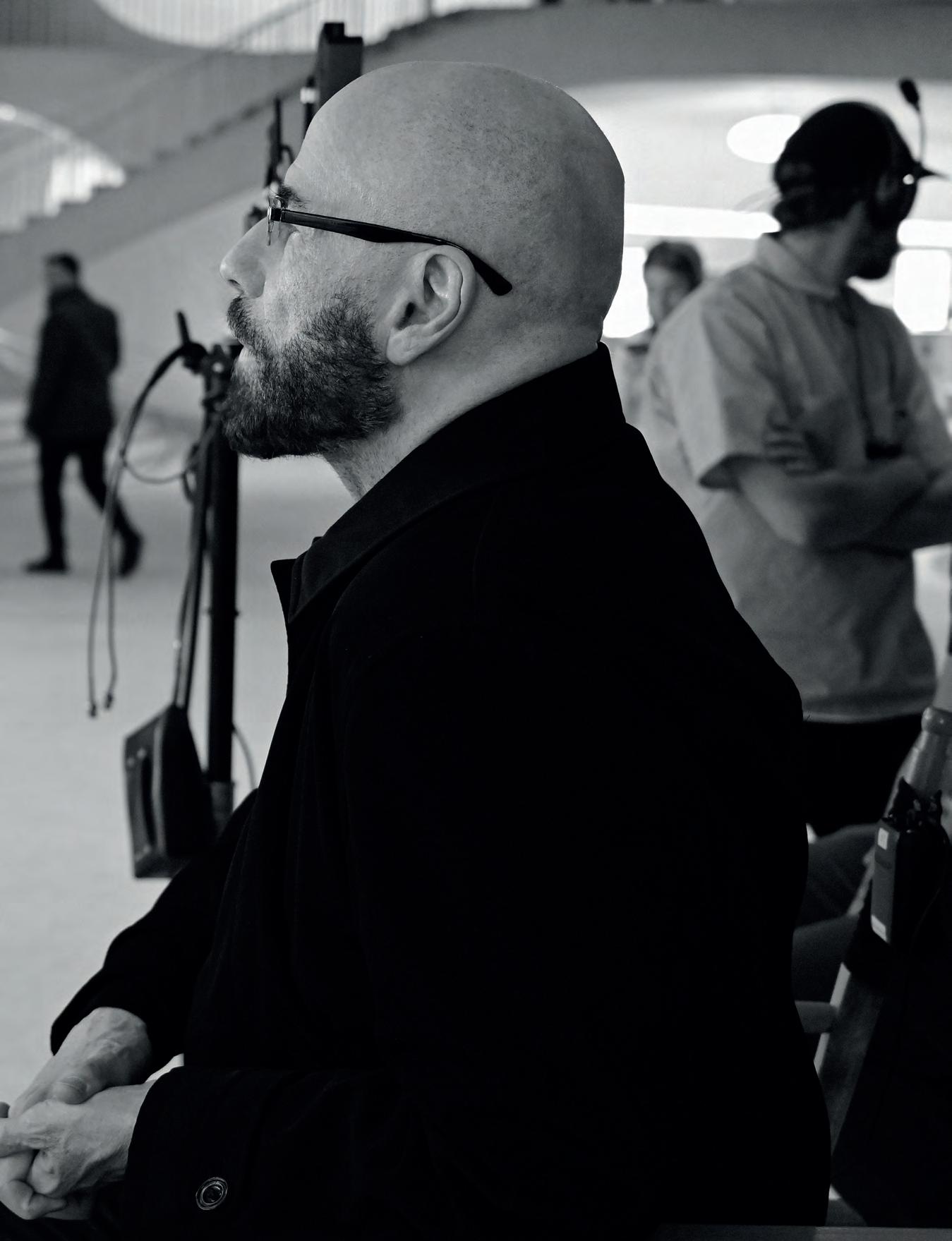

John Travolta directs Propeller One-Way Night Coach. Photo: Apple TV
John Travolta is back at the Cannes Film Festival, this time as a director. Presented in the Cannes Premiere Selection, Propeller One-Way Night Coach is an adaptation of the book published in 1997 by Travolta, inspired by his childhood passion for aviation that led to his becoming a professional pilot and owner of a number of aircraft. Julian Newby looks back at the Hollywood star’s career and anticipates a Cannes premiere that everyone is talking about
APPLE Original Films’ Propeller One-Way Night Coach premieres at the Debussy Theatre in the Palais des Festivals this year, in the presence of the film’s writer, director and producer, John Travolta. The film is based on the book of the same name, written by Travolta and first published in 1997. It tells the story of a young boy, Jeff, who more than anything in the world has always wanted to travel in an airplane. His mother told him if he saved his money, one day they would take a trip together. That day finally came, and mother and son set off on a series of connecting flights that would take them from Newark, New Jersey, all the way to Los Angeles, California — a journey Jeff planned entirely by himself.
Along the way, what begins as a routine flight becomes something far more exciting, filled

with strange airline food and even stranger passengers, unexpected detours and a beautiful stewardess who steals Jeff's heart. And there were many more surprises to come.
Now at 72 years old, with a filmography of more than 70 films spanning half a century, Travolta’s long-standing passion for aviation remains. As a child, he loved watching planes take off from New York’s LaGuardia Airport, near the family home. He began flying at just 15 years old, became a pilot at 22, and has since qualified to fly Boeing 707s, 737s, 747s and the Bombardier Global Express; he was the first private pilot to fly an Airbus A380. With over 9,000 flight hours to his credit, he has also owned several aircraft and actually flew planes in two movies: Look Who’s Talking (1989) and Broken Arrow (1996). Today he famously keeps his planes at his Florida home, which features a private runway and taxiway leading to his door.
TRAVOLTA has said that if he was ever GOING TO DIRECT it would be on ‘SOMETHING SMALL AND PERSONAL’


Plan your next project in LA and see how we can help. Learn more at FilmLA.com With fexible multi-location flm permits, scalable pricing, fast permit turnaround, and free production planning support, FilmLA makes flming in Los Angeles easier than ever.

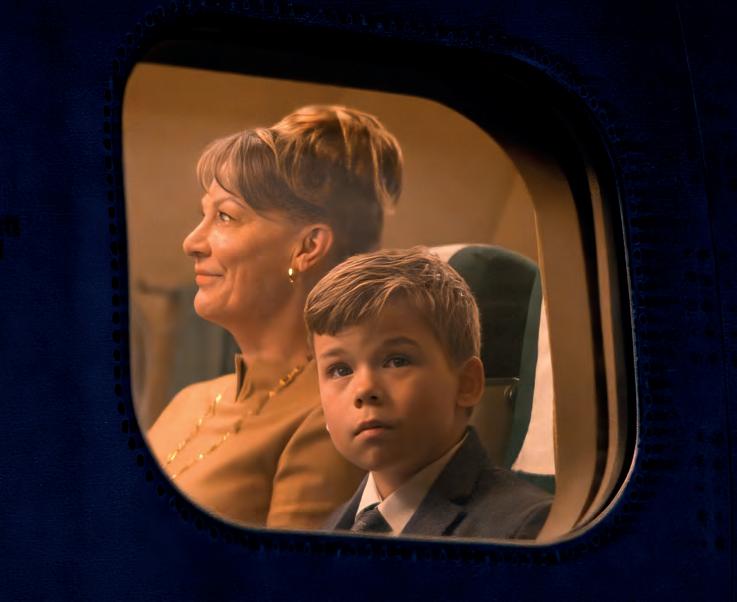
This passion finally led him to write the book. Inspired by his childhood and the extraordinary stories of air travel he has collected over the years, Propeller One-Way Night Coach tells of a journey set in the golden age of aviation. Jeff, played by newcomer Clark Shotwell — an airplane enthusiast like Travolta — and his mother, played by Kelly Eviston-Quinnett, set off on a one-way cross-country trip to Hollywood, with magical and unexpected moments that will change Jeff ’s life forever.
Born to a large Italian-Irish family in Englewood, New Jersey, Travolta has been acting for most of his adult life. His first success was at the age of 21 with the TV series Welcome Back Kotter; three years later he became an international superstar with Saturday Night Fever.
A Palme d’Or winner, two-time Academy Award nominee and three-time Golden Globe and Emmy winner, John Travolta’s visits to Cannes up until now have been in support of movies in which he has been very much the star. He famously attended with Pulp Fiction (1994), She's So Lovely (1997) and Primary Colors (1998). He also appeared in Cannes for screenings of vintage classics Saturday Night Fever in 2017 and Grease the following year.
Whenever asked in interviews, he has played down the idea of going behind the camera, saying that if he ever did, it would be on “something small and personal”, adding: “The job of directing is 24/7 and I have too much else going on in my life.”
And “small and personal” is exactly what this film is. From a book he wrote for his family, it
features Shotwell, a 10-year-old actor from Idaho, who plays Travolta’s younger self. And Travolta’s 26-year-old daughter, Ella Bleu Travolta, plays a flight attendant. She made her acting debut at age nine with her dad, and the late Robin Williams, in the 2009 Disney comedy Old Dogs
Another star of the film is the plane — a 1959 Lockheed Super Constellation aircraft known as the Super Connie. He flew on the plane to his 50th birthday party in Mexico in February 2004; it later became a fixture at the Airline History Museum at the Kansas City Downtown Airport –Wheeler Field. It is now understood to belong to Travolta and has been seen in a handful of movies over the years. It was used for interior scenes for Jim Carrey’s Ace Ventura: When Nature Calls in 1995, and also appeared in Martin Scorsese’s 2004 Howard Hughes movie, The Aviator, starring Leonardo DiCaprio.
Much of the film was shot in Kansas City and involved local Kansas City crews. It had the support of both the Kansas City Aviation Department and the TWA Museum, based at the Wheeler Downtown Airport, Kansas City. Travolta was seen filming in Kansas City in mid-January 2025 with the Super Connie plane. Around the time of filming, the plane “was seen emerging from Hangar 9 at the airport for a round of engine tests”, according to Vintage Aviation News magazine. The Apple Original Films movie Propeller One-Way Night Coach is produced by John Travolta’s JTP Films and Kids At Play. Travolta produces with JTP Productions, alongside Jason Berger and Amy Laslett of Kids at Play.
Clark Shotwell and Kelly Eviston-Quinnett in Propeller One-Way Night Coach Photo: Apple TV
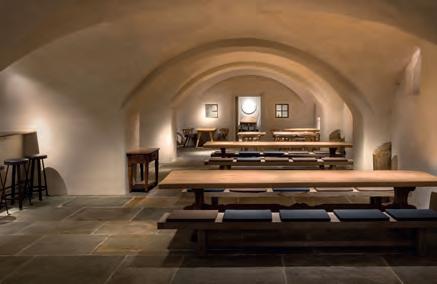





NFI STUDIOS HUNGARY
where stories come to life
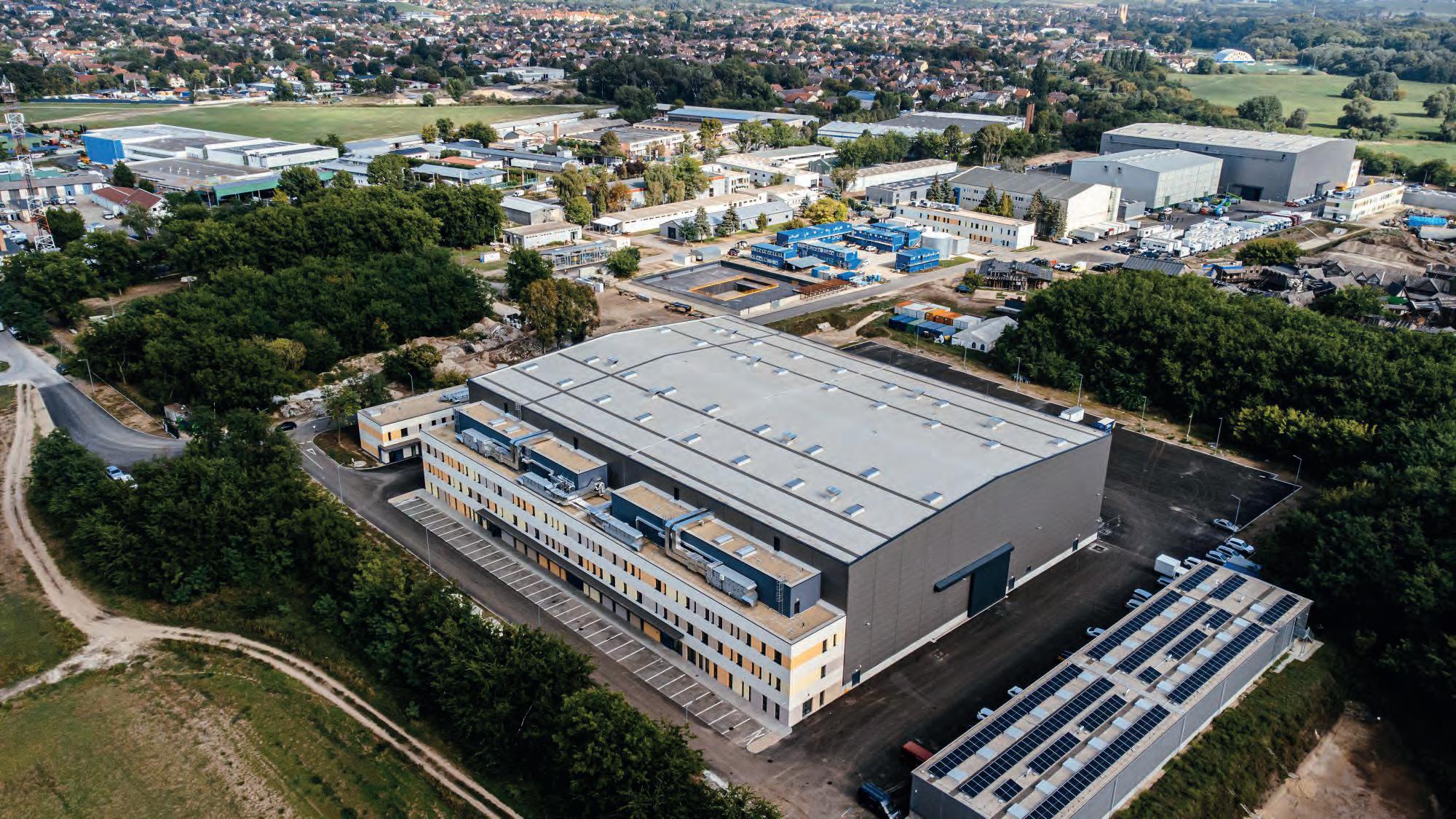


Just a 15-minute drive from Budapest
12,670 sqm of certified soundstages
24,700 sqm for set construction
38,000 sqm of buildable area
4,700 cbm the largest outdoor water tank in continental Europe
WORLD-CLASS STUDIOS IMPRESSIVE INCENTIVES

REMARKABLE LOCATIONS
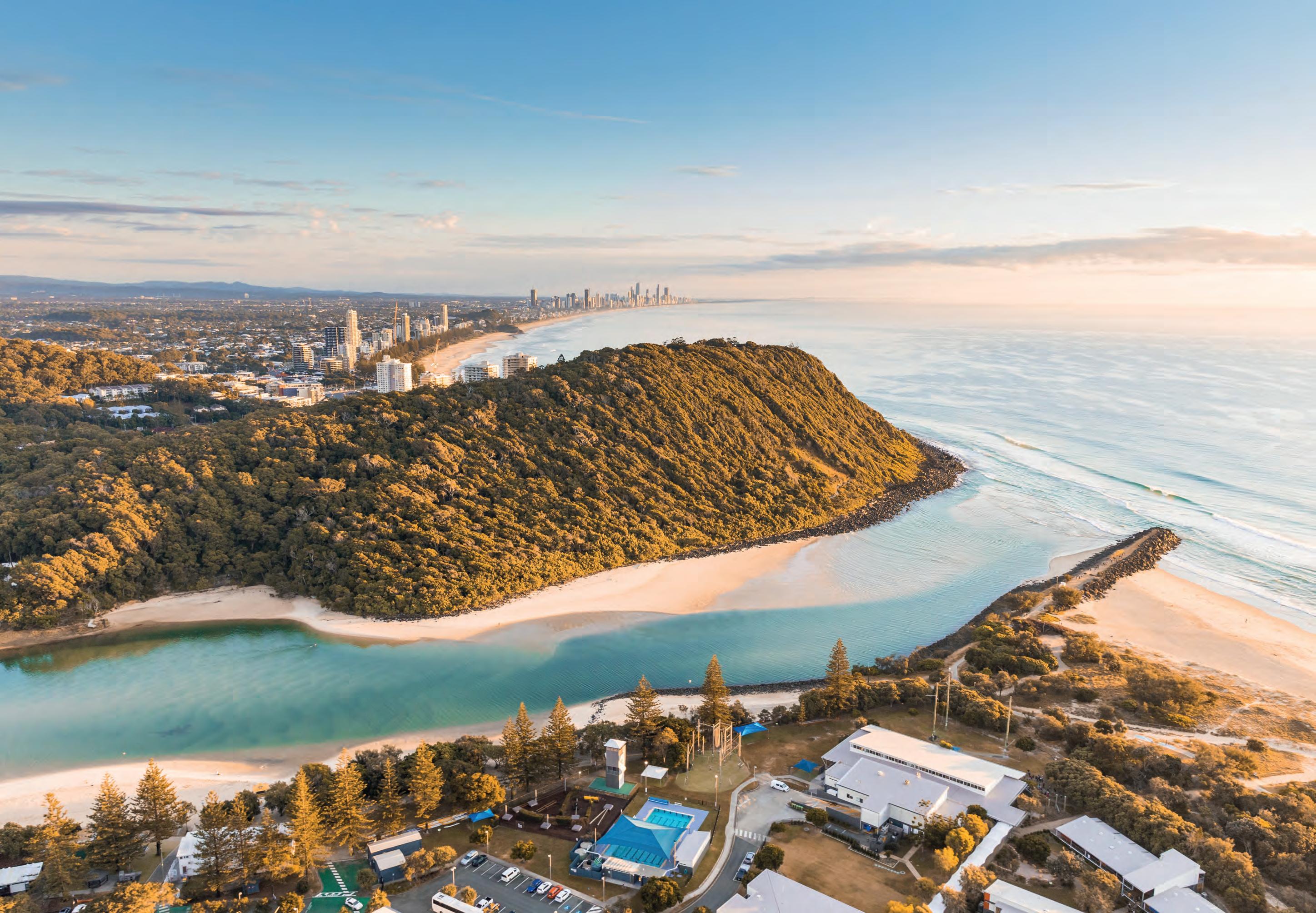
Gold Coast, Queensland, Australia
YOUR NEXT BLOCKBUSTER
STARRING
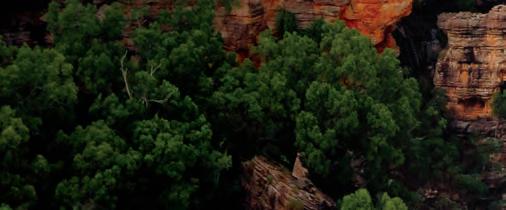
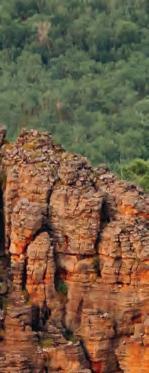
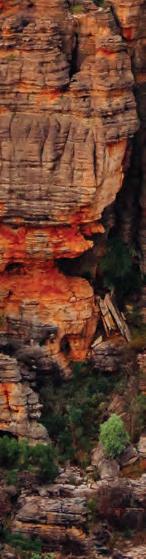
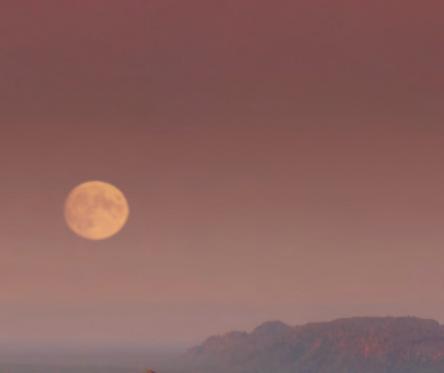
QUEENSLAND, AUSTRALIA












INTERNATIONAL 2026
SHOWCASING THE GLOBAL PRODUCTION INDUSTRY
Published by Boutique Editions Ltd

EDITOR Julian Newby
MANAGING EDITOR Debbie Lincoln
CONTRIBUTORS Andy Fry, Gary Smith
PUBLISHER Richard Woolley
PRODUCTION MANAGER Roger Hall
ART DIRECTOR Christian Zivojinovic www.zivographie.com

PUBLISHED BY Boutique Editions Ltd 117 Waterloo RoadLondon SE1 8UL - United Kingdom T: +44 20 7902 1942 www.boutiqueeditions.com
Published in association with Boutique Media International Ltd.
ADVERTISING SALES
INTERNATIONAL SALES DIRECTOR Jerry Odlin jodlin@boutiqueeditions.com
SALES DIRECTOR (EMEA + ASIA) Lisa Ray laray@boutiqueeditions.com
SALES DIRECTOR (AMERICA+OCEANIA) Nicki Webber nwebber@boutiqueeditions.com
The paper used by Boutique Editions is a natural, recyclable product made from wood grown in sustainable forests. The manufacturing process conforms to the environmental regulations of the country of origin. Information in this publication is edited from submissions provided by individual lm commissions and organizations. Although all reasonable e orts have been made in compiling this information, Boutique Editions Ltd assumes no responsibility for accuracy. The publisher assumes no liability for unsolicited manuscripts, photographs and artwork.
Copyright ©2026 Boutique Editions Ltd. All rights reserved. Reproduction in whole or in part of any text, photograph or illustration without prior permission of Boutique Editions Ltd is strictly prohibited.
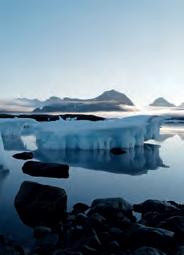

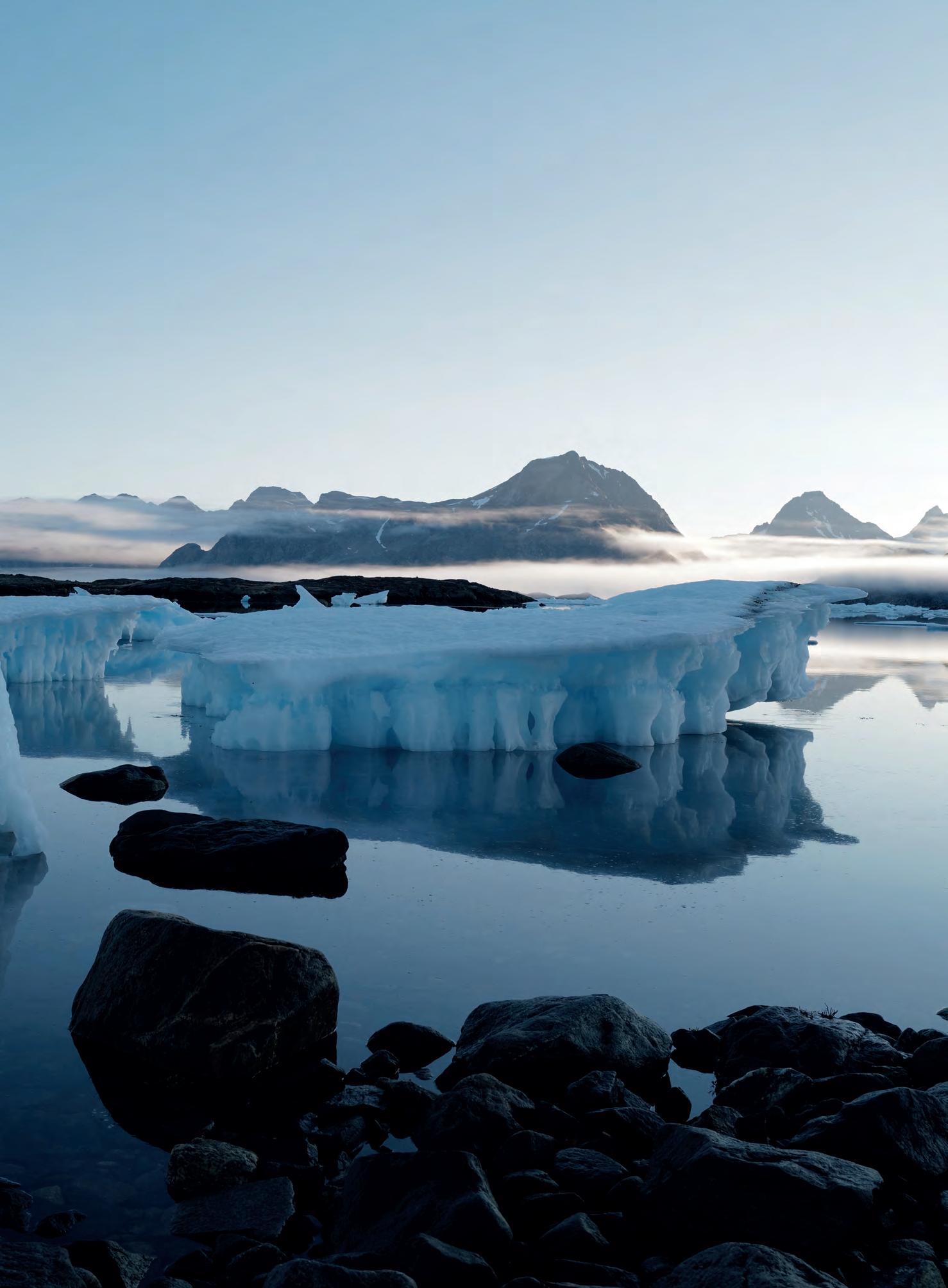
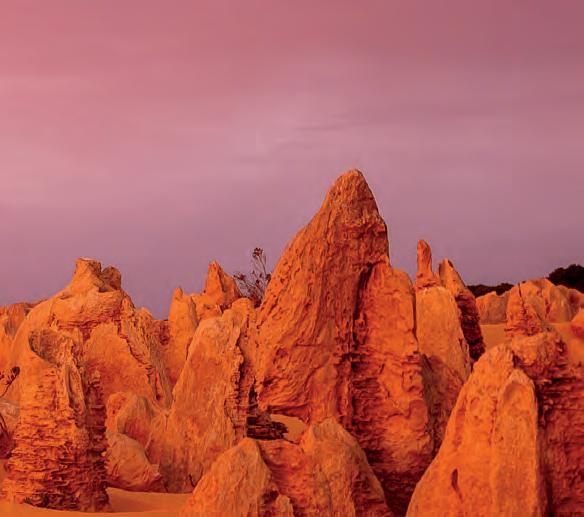
KULUSUK ISLAND, GREENLAND
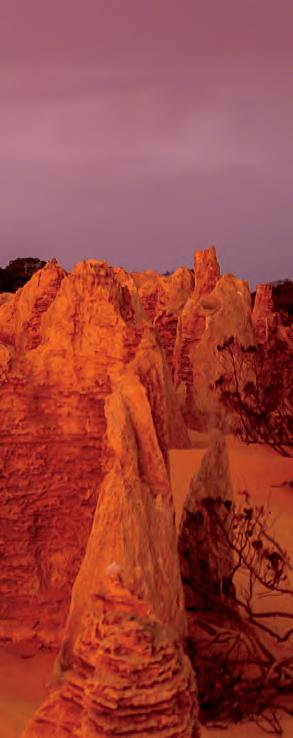
This location features a brutal volcanic barren landscape, picturesque shing villages in epic ords






10
SONG SUNG BLUE
The story of two musicians known as Lightning & Thunder, set in Milwaukee and shot in New Jersey
14
EUROPE
Diverse locations and an extraordinary network of flm ofces and studios across a vast but compact continent
37
SPAIN
Now frmly established as one of the most popular flming destinations and advanced flming hubs in Europe
46
CALIFORNIA
The blockbusters are back and so is the optimism
56 UK
The UK's screen industries have entered 2026 with renewed confdence
62
ATLAS OF THE UNIVERSE
A coming-of-age story of courage, friendship and self discovery, flmed in Romania
66
ASIA
A fast-growing production industry is hosting a new wave of storytellers
76
AUSTRALIA
The home-grown screen sector is welcoming the return of the feature flm
82
CANADA
Where the flm industry is no longer concentrated in a handful of production hubs
90
MENA
A growing infrastructure is attracting more international production to this unique region
96
USA
Across the country producers are looking beyond the established flmmaking centres
102
GEORGIA
The Peach State's flm and TV industry is looking ahead with cautious optimism
108
NEW ZEALAND
We take a tour of these majestic islands and profle new action feature The Wrecking Crew, which shot NZ for Hawai'i
113
IN PICTURES
Exploring spectacular locations from around the world
136 ADVERTISERS

come DREAM
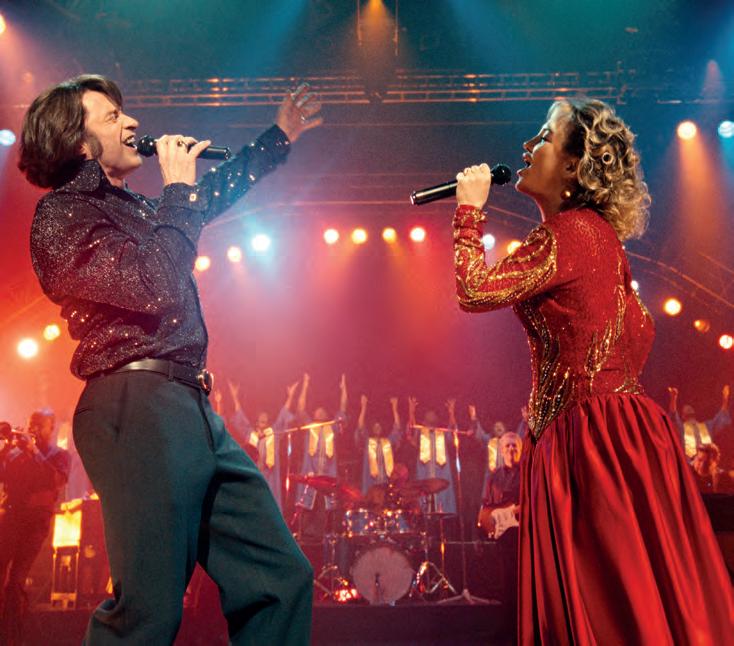
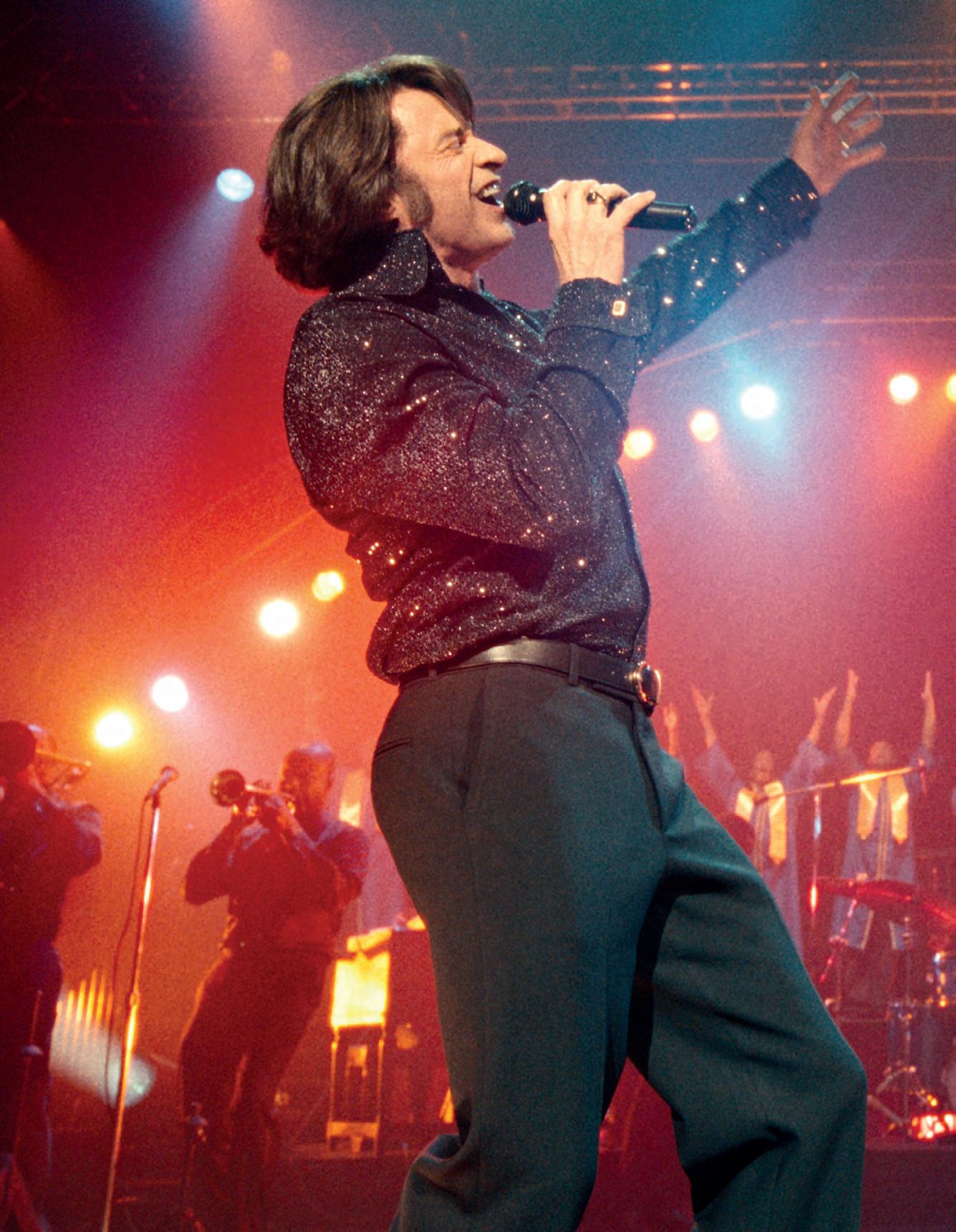
Based on a true story, Song Sung Blue follows two down-ontheir-luck musicians, played by Hugh Jackman and Kate Hudson, who come together to form a Neil Diamond tribute band. Full of joy and music, the flm also tells a simple love story — set in Milwaukee and shot in New Jersey.
Julian Newby reports
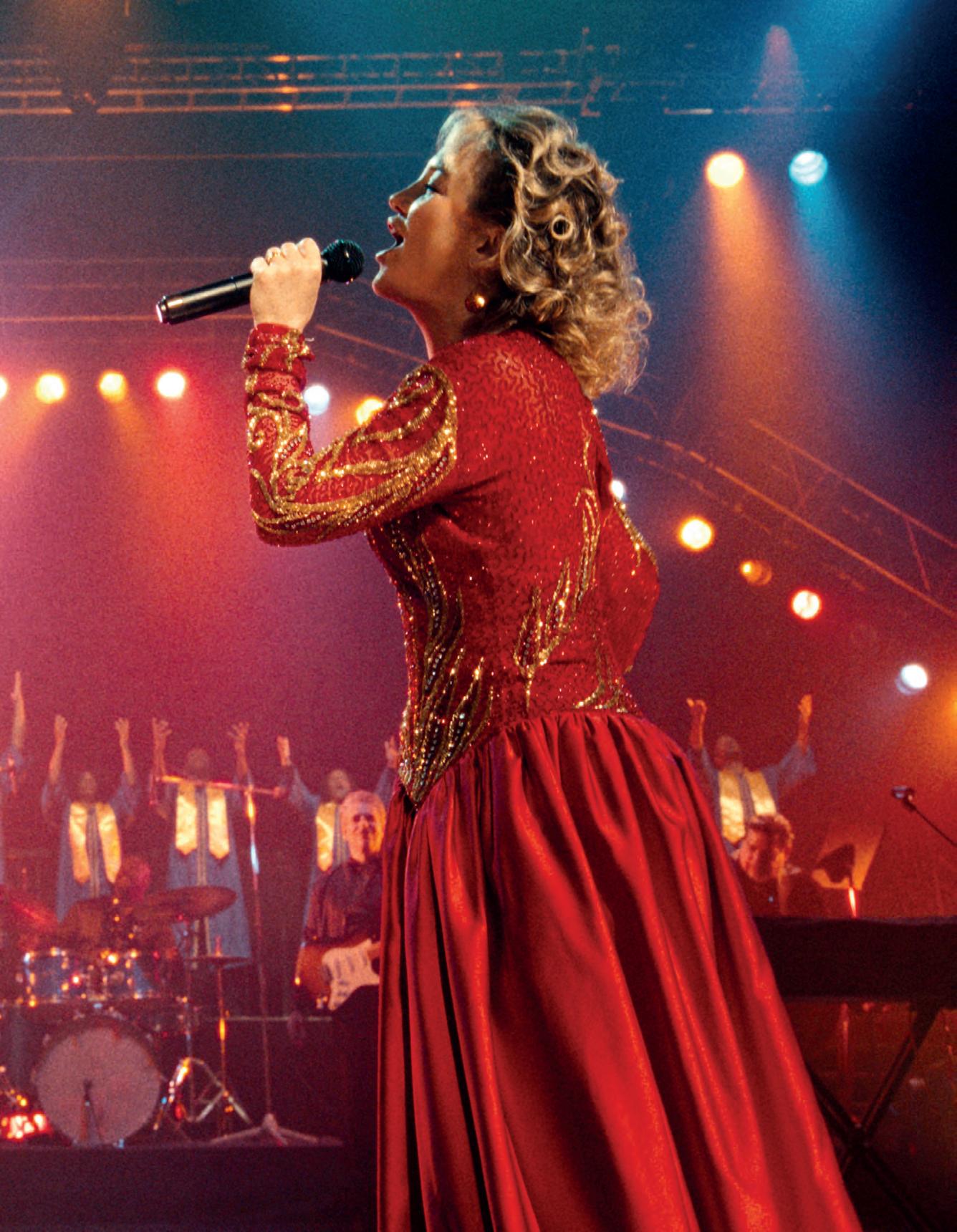
Hugh Jackman as Mike and Kate Hudson as Claire, on stage as the duo Lightning and Thunder, in Song Sung Blue
Photo: Focus Features
WHEN Mike Sardina (Hugh Jackman) meets Claire Stengl (Kate Hudson), he’s a recovering alcoholic, a Vietnam vet and a smalltime musician on the gigging circuit. He moonlights as a mechanic to support what he really loves most: to play music and perform, no matter how small the crowd, no matter how empty the venue. When he sees Claire up on stage performing her Patsy Cline tribute act, he recognises someone with the same passion as his — and a love story begins, both on and of the stage, as they come together to form Lightning & Thunder, their Neil Diamond tribute act.
When Craig Brewer frst watched Song Sung Blue, the 2008 documentary directed by Greg Kohs, at the Indie Memphis Film Festival, he had no idea of the story it told — about this reallife Milwaukee couple and the highs and lows they experience while trying to live the dream.
“The hardships and tragedies these two faced were relentless — even unbelievable,” Brewer says. “I remember thinking: How can this all be real? How can one family take so many hard knocks and still hold on to each other and to their dreams?
Some 15 years passed between Brewer seeing the documentary — quite by chance — and setting out to make his own version of the story. “On so many levels I just felt like it was for me,” he says. “I understood where the flmmaker probably was, dedicating so much of his life to trying to tell this story. And it's not the story where suddenly they get the big record contract. That's not usually the tale that is told about the majority of artists.”
Producer John Davis was the catalyst for Brewer’s re-telling of the story. The two previously had a hit with 2019’s Dolemite Is My Name, starring Eddie Murphy. Davis was producer on that and was keen to work with Brewer again, so he asked him for ideas. The producer took to the story of Mike and Claire immediately. “It’s a story of these two people that wanted to do something, and they did it on their own terms, they did it in their own community, they did it in their own way. It was really beautiful,” Davis says. “It's about ordinary people fnding their big dreams and being able to live them out in whatever fshbowl they get to live them out in.”
Brewer adds: “I’m always fascinated with mad men, especially mad men in music. And I saw that in Mike: a little bit of madness in his eyes, thinking, ‘I’m going to be the biggest Neil
& Thunder.
Kate Hudson
‘What really stayed with me was how WE DON’T MAKE THESE MOVIES ANYMORE’
Diamond impersonator, I'm going to be a star with this.’.”
“It’s a working-class fairytale,” Hugh Jackman says. “You’ve got two working-class people trying to get by, working two or three jobs, all the while harbouring this dream to be up there on stage, where they feel most alive. It’s a fairytale because they hold their dream so tightly and with so much faith and hope and confdence, that it comes true. But it's not a straight line to fame and success.”
Brewer tracked down the real-life Claire — her husband had since passed — along with her daughter Rachel and son Dayna, played in the flm by Ella Anderson and Hudson Henley. “I would do these Zoom calls with them, and I got a lot of story that was not in
the documentary, little teeny things that became bigger scenes and bigger moments,” he says.
After he was approached for the role, Jackman watched Kohs’ documentary.
“It was such a compelling, beautiful idea. What I sensed was this ode to tip-jar musicians around the world,” Jackman says.
Kate Hudson remembers bursting into tears on reading Brewer’s script for the frst time. “It just hit me,” Hudson says.
“What really stayed with me was how we don't make these movies anymore, and how incredible it was to actually read one that was getting made. And I've been wanting to work with Craig since the frst time we met, when I was 21 or 22. It's just so crazy that all this time and experience has gone by, and now we're coming together to fnally make a movie, so many years later.”
For the look of the flm, Brewer joined forces once again with director of photography Amy Vincent, who had worked with him on Hustle & Flow (2005), Black Snake Moan (2006) and Footloose (2011). The challenge was to combine the small-town look of the bars the couple played, with the joy of their romance. “I wanted the bars
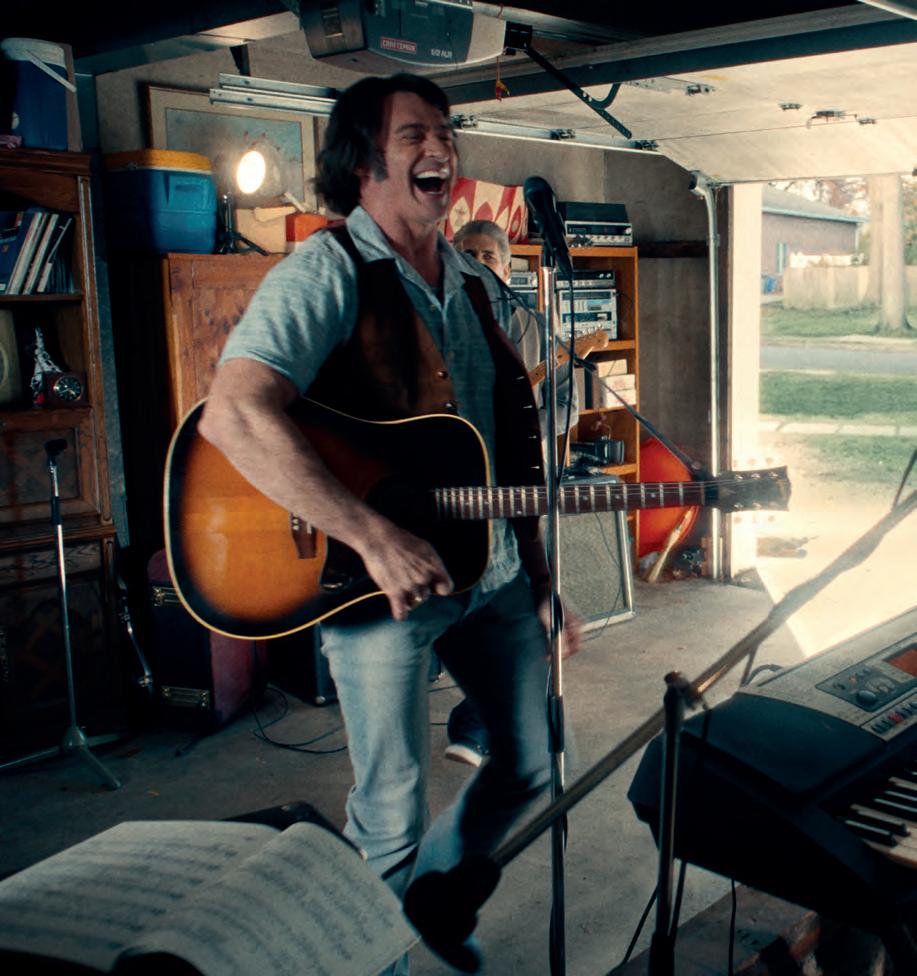
Mike and Claire rehearse in their garage for their on-stage performance as Lightning
Photo: Focus Features
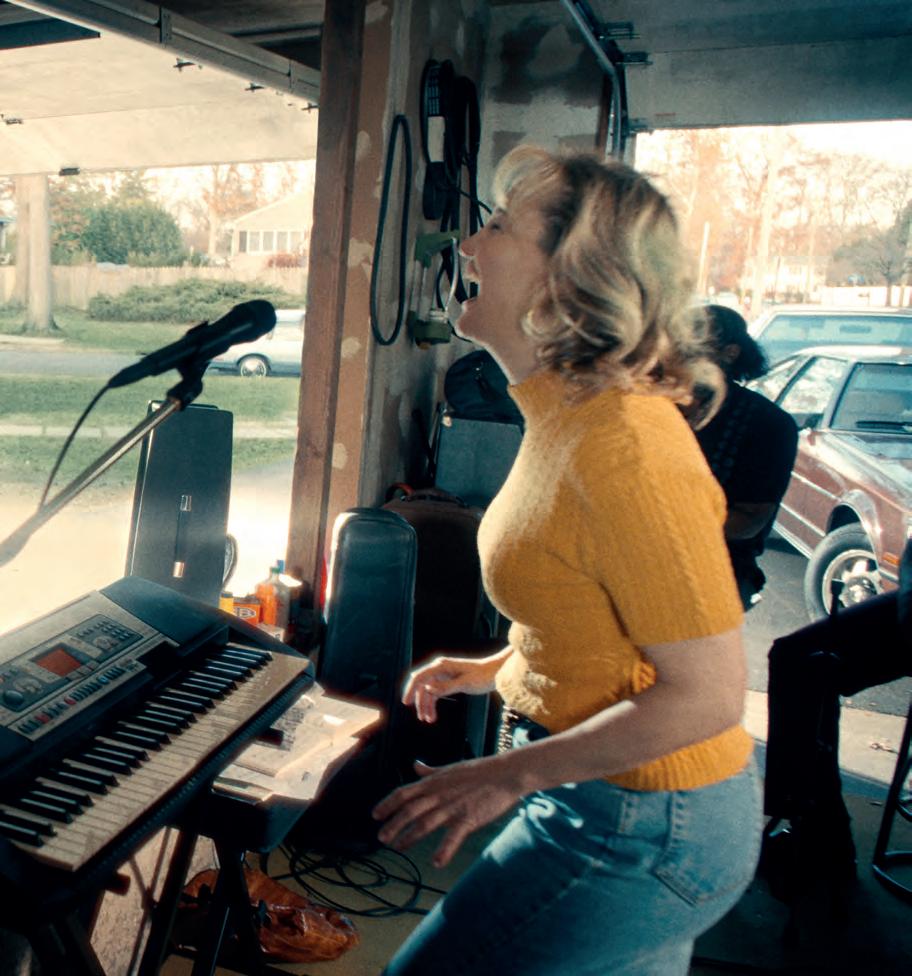
to feel real, but I also wanted there to be magic to it,” Brewer says. “When they play at Charm Thai [Charm Thai Cuisine, one of several New Jersey locations used for the flm], it needs to have an element of cheesiness to it, where they probably have Christmas lights up, but the way we want to flm the sequence, it needs to feel like it's the most magical place on Earth. And Amy knows how to do that.”
Vincent understood from what Brewer was asking for, that “he is really in love with that pre-LED particular light temperature of late 1980s Par Can stage lights”. So she had to go and fnd some.
Production designer Clay Grifth was tasked with achieving a sense of authenticity — a world that felt true not only to this period-specifc time and place, but also to the actual story of the couple depicted in the flm. This meant doing a lot of research into early-nineties Milwaukee, while also studying real footage from Kohs’ documentary. Some intense location scouting took place across New Jersey, where the all-location production was flmed, in order to recreate the state of Wisconsin and its biggest city.
Clay Grifth
‘Michele Baker and I scoured almost every corner of the Garden State for our story, and WE WERE REWARDED WITH AN EMBARRASSMENT OF RICHES’
from. With a fair amount of design work, and a lot of the stellar artistry from our set decorator Lisa SessionsMorgan, we recreated and gave life to what Mike and Claire Sardina’s home truly felt like: a working-class family living in the Rust Belt, just making ends meet.”
“We wanted to create that nineties feel that is made of eighties and seventies furniture,” Brewer says. “I looked around the house that our designers
The home of Mike and Claire Sardina was what Grifth calls “the icing on the cake,” a house he and Baker found in the working-class neighbourhood of Old Tappan, NJ. They partially rebuilt the place, gutting the walls and replacing them with wood paneling. “We had the best road map ever, a Bible of visual information at our fngertips with Greg Kohs’ documentary,” says Grifth, who had previously worked with Brewer on Dolemite Is My Name. “The location manager, Michele Baker, and I scoured almost every corner of the Garden State for our story, and we were rewarded with an embarrassment of riches. Venues are Mike and Claire’s second home in Milwaukee, malls, local clubs and dive bars — and New Jersey has plenty of these to choose
made, and I felt like I was going back to certain parts of my childhood with these old couches. We wanted it to feel like they made a home, and there just happens to be this newer TV sitting on top of the old TV. It's lived-in, and Clay always fnds this way to fnd that magic — in all of these locations.”
That included a New Jersey fairground that Grifth was able to revive as a Wisconsin State Fair in the nineties that has a particular period feel. “We were up against the weather, trying to fnd a place that felt old — a lot of these fairgrounds now are all very new and very LED,” Grifth says. “We happened to fnd this great place in Keansburg, New Jersey, that a family has owned since 1963, and they have not changed much of it at all. So, when we found that place, it was a dream come true.”
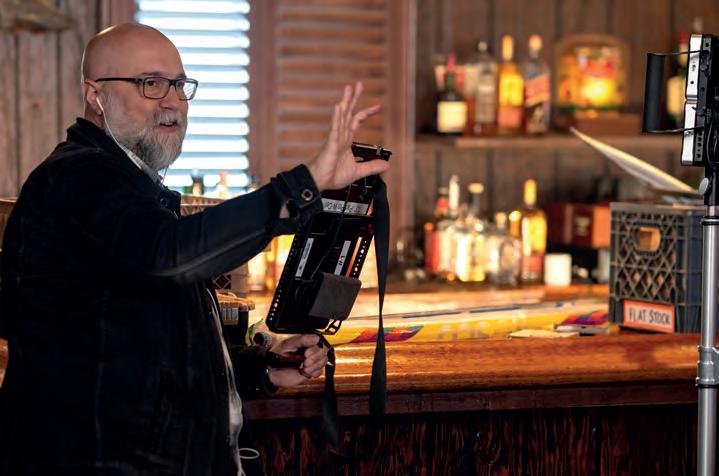
Director Craig Brewer on location for Song Sung Blue Photo: Focus Features
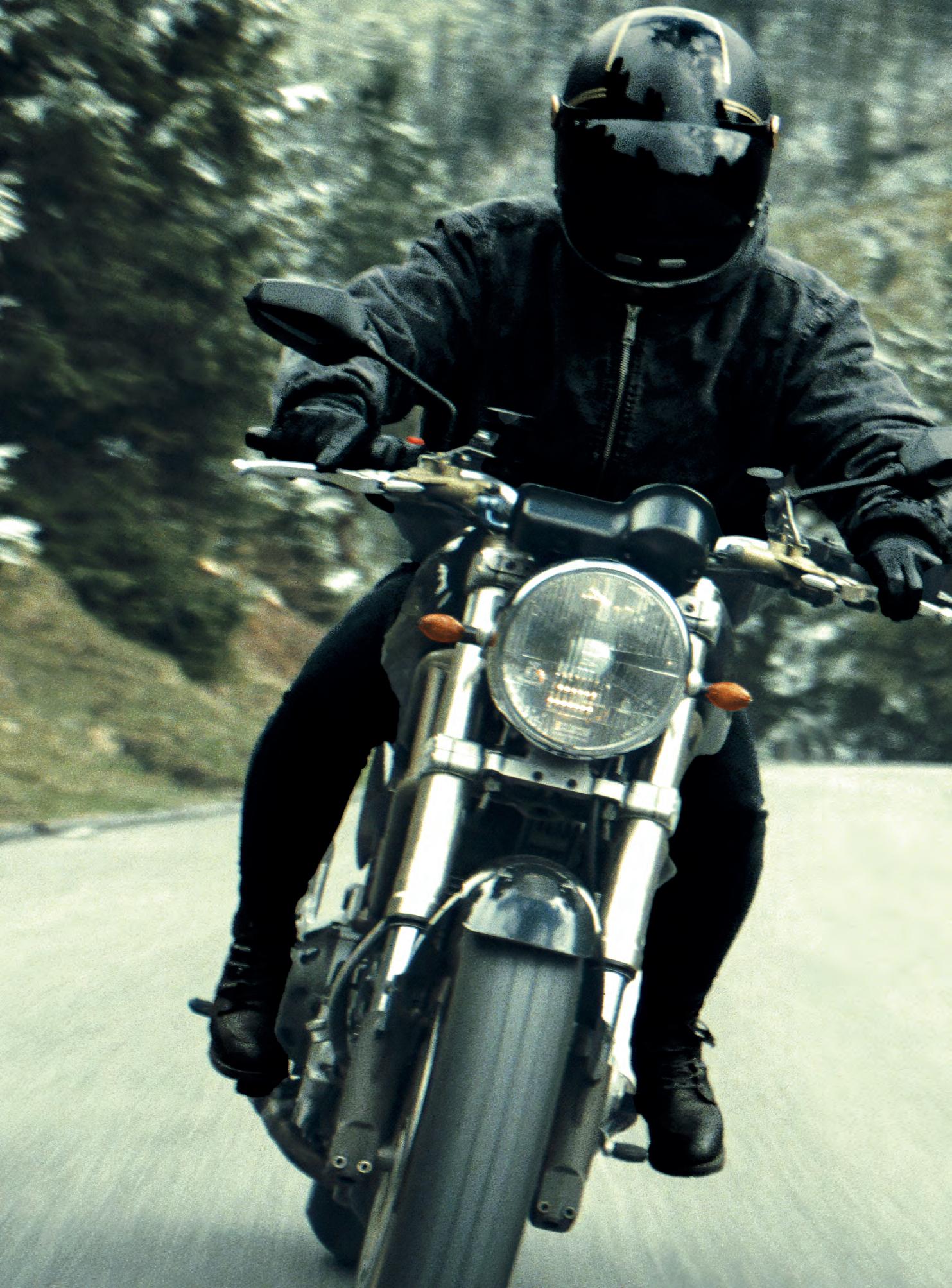
Anna Maria Mühe in Totenfrau
(Woman of the Dead), Filmed in the Tirol region of Austria, produced by Austria-based Mona Film.
Photo: Mona Film/Barry Films/Anna Hawliczek

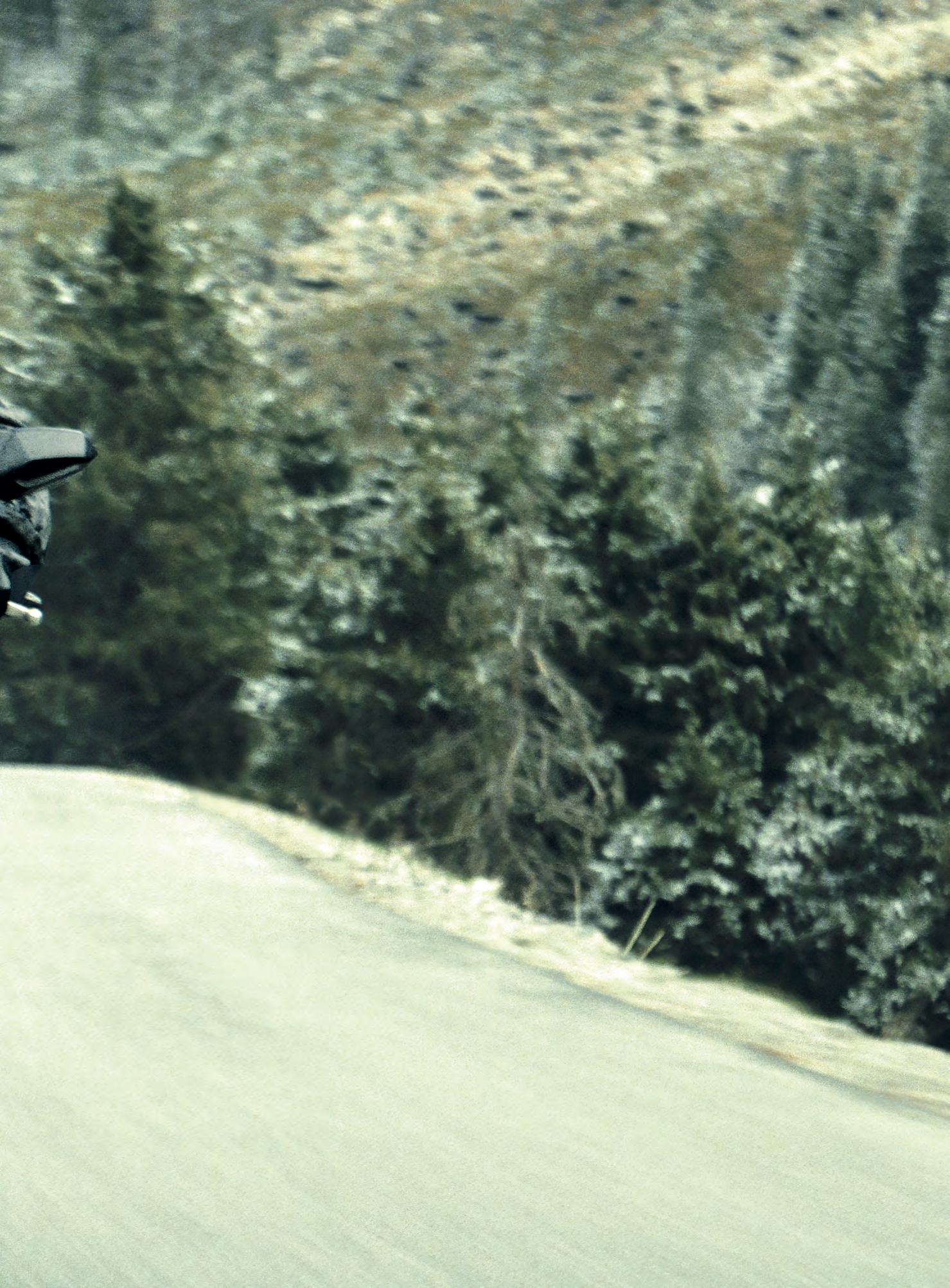
CHASING THE PERFECT SHOT



When it comes to filming on location, the northern and central areas of the European continent can’t always promise perfect weather. But that’s the only area where these dynamic regions fall short. Because right across these territories, producers can find spectacular topography, exquisite architecture, state-of-the-art studios, world-class crews and robust incentives. Andy Fry takes a tour



IT IS possible to characterise regions of Europe in terms of what they have to offer in a visual sense; these may be stereotypes up to a point but there’s substance behind them. For example, Scandinavia can offer Arctic scenery; Central Europe, stunning architecture, Disneyesque castles and Brutalist Cold War; Germany and Benelux, urban and coastal backdrops. But where facilities are concerned, all have a mature infrastructure, the result of a long history of filmmaking — from Zentropa in Denmark to Babelsberg in Berlin; from Barrandov in Prague to Korda in Hungary. And the whole vast region has a strong record of providing both crew and value for money that attract productions from any part of the world.
CINEMATIC LEGACY: HUNGARY
& CZECH REPUBLIC
Central Europe continues to be a popular option for international film and TV producers. Hungary, for example, offers a 30% incentive, the ability to double for cities across Europe and North America, and world-class facilities. Among the many large-scale productions to have been based in Hungary recently is the third instalment of Warner Bros.’ epic Dune franchise. Also of note, Netf-
lix based Seasons 2 and Season 3 of its drama series 3 Body Problem in that country. Hungary’s studio system is a key strength, with no less than five major complexes. These include Korda Studios, which head of sales Ágnes Csörgei says combines scale with a hands-on approach to production. “Korda Studios offers a unique combination: one of Europe’s largest sound stages, our 6,000-square-metre Superstage, seven sound stages totalling over 21,000 square metres, 15 hectares of open backlot, and 10 hectares of permanent sets, all within a single location. But what truly sets us apart goes beyond infrastructure. It is our partnership approach and reliability. We don't simply rent out space — we collaborate with productions to bring their creative vision to life.”
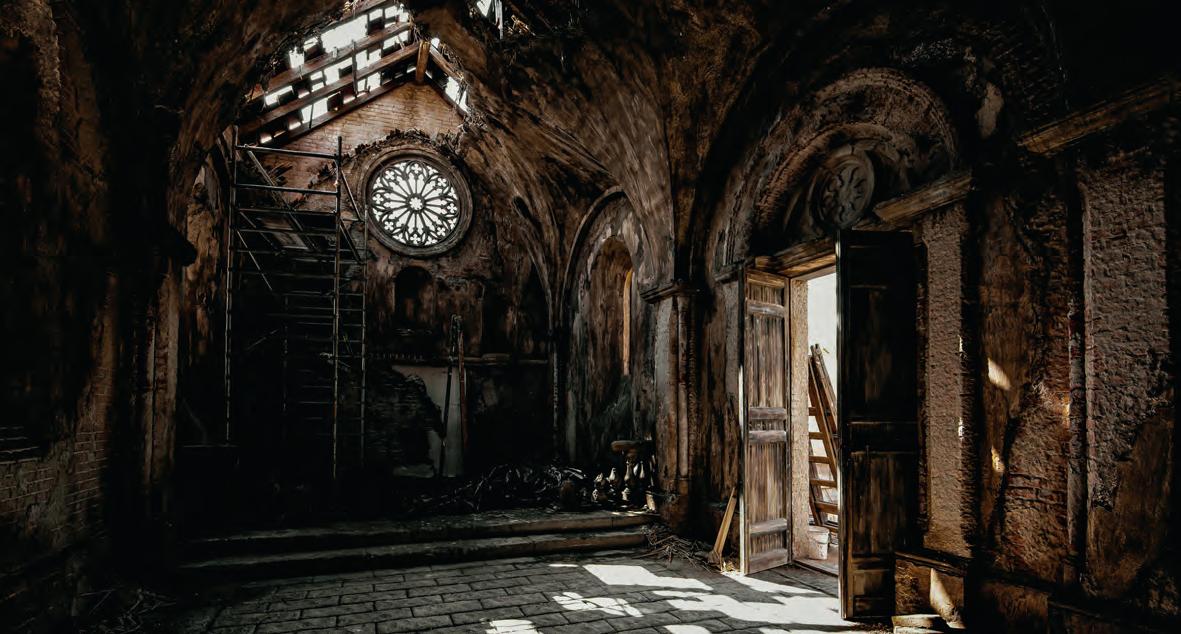
That ethos is refected in the calibre of projects the studio continues to attract. “Last year, Dune: Part Three flmed key scenes in our Stage 6. Other highlights from recent years include Poor Things, Netfix’s Eric starring Benedict Cumberbatch and Halo Seasons 1 and 2 (Paramount+). The majority of our work comes from major American studios and streaming platforms.”
Despite recent industry headwinds, the outlook is positive for 2026, Csörgei says. “We currently have a major long-term tenant in the studio, and we are optimistic about the second half of the year too. After last year's slowdown, Hungary's rebate system seems to be fnding its feet again, and productions are picking up. We already have several signifcant enquiries in the pipeline.”
More broadly, Csörgei points to renewed confdence across the sector: “The industry has had a tough few years, but the mood is shifting. Hungary's 30% tax rebate remains one of the best incentives in Europe, and with over 20,000 skilled local professionals and world-class facilities, Korda is well placed to deliver for the most ambitious projects out there.”
Alongside production, Korda has been investing in both sustainability and infrastructure. At the same time, it has streamlined access to locations: “We launched Korda Locations, a unifed platform bringing together the diverse flming locations across our corporate group — from industrial complexes and forests to modern ofces and historic buildings — making it signifcantly easier for location managers to fnd exactly what they need.”
That’s a logical step in a country which is magnet for location managers in search of diverse looks. Capital city Budapest’s historic streets, for example, are a go-to destination for productions seeking to double European capitals, notably Paris. Sky Original period drama series Amadeus, which tells the story of the composer Mozart, recently used Budapest locations to double for Austrian capital Vienna. Filming took place in the city’s famous Castle Quarter as well as St Stephen’s Basilica and the Hungarian State Opera. Two hours outside the capital, Esterházy Castle in Fertőd replicated the palace of Habsburg Emperor Joseph, a key patron of Mozart. Signifcantly, Hungary rarely has trouble persuading A-list actors to join projects flming there. Amazon MGM Studios movie Alone
At Dawn recently flmed in Hungary, with Adam Driver and Anne Hathaway in starring roles. Set against the backdrop of the Afghanistan war, Hungary provided both interior and exterior locations — with action scenes shot at a quarry in Fejér County, an hour from Budapest. Neighbouring Czech Republic also ofers an attractive combination of location authenticity and controlled-stage capability. Capital city Prague’s gothic and baroque architecture continues to attract period and fantasy projects, while Barrandov Studios is
recognised as one of Europe’s most established studio complexes. For example, Robert Eggers' 2024 flm Nosferatu used Barrandov as its production hub, where it recreated the 19th-century Baltic town of Wisborg. Underpinning this momentum is an enhanced incentive framework designed to keep pace with regional competition. “The new incentive structure, introduced in 2025, represents a signifcant step towards strengthening the competitiveness of the Czech audiovisual sector,” says Pavlina Žipková, national flm commissioner at the Czech Film Commission. “The basic production rebate has been increased to 25%, while animated and digitally produced projects can receive up to 35%. At the same time, the maximum limit per project has been increased from CZK150m (€6m) to CZK450m.” As Žipková says, “these changes respond to growing competition from other European countries and aim to attract more large international productions to the Czech Republic”. That competitive edge has translated into a strong run of activity. “The past few years have been very positive,” she says. “Inward investment from flm productions reached approximately €381m in 2025. The country continues to attract major international projects, bringing billions of Czech crowns into the local economy while creating valuable opportunities for industry professionals.”
In Žipková’s opinion, the breadth of projects continues to be a defning strength: “The Czech Republic continues to attract a wide diversity of productions — from big-budget international series to European co-productions, crime dramas, comedies and fairytale flms. Several major international productions flmed in the Czech Republic in 2025, including the Netfix series The Age of Innocence, inspired by the novel by Edith Wharton and set in New York high society in the 1870s. Another notable project was action series Ride or Die, produced by Skydance Television, which flmed extensively here in 2025, with 109 shooting days. Starring Octavia Spencer, Hannah Waddingham and Ed Skrein, using numerous locations.”
Emphasising the scale of projects that the Czech Republic can host, Žipková points to Amazon Prime Video series Blade Runner 2099, “which spent more than 100 flming days in the country and invested approximately €72m. The production took over the entire Barrandov Studios complex and flmed at a variety of locations. The third season of Apple TV+ series Foundation invested more than €32m and flmed here for nearly 100 days. Filming for the fourth season of the series began in January. German horror series City of Blood, for Disney+, was another major production.” Looking ahead, the pipeline is robust, buoyed up by the new incentive programme. “In 2026, production began on the German flm Fellinger, produced by Producers at Work Film, and the ffth season of the series Charité. Scouting is under way for The American
One of the sets for Nosferatu, built at Barrandov Studios. Photo: Barrandov Studios
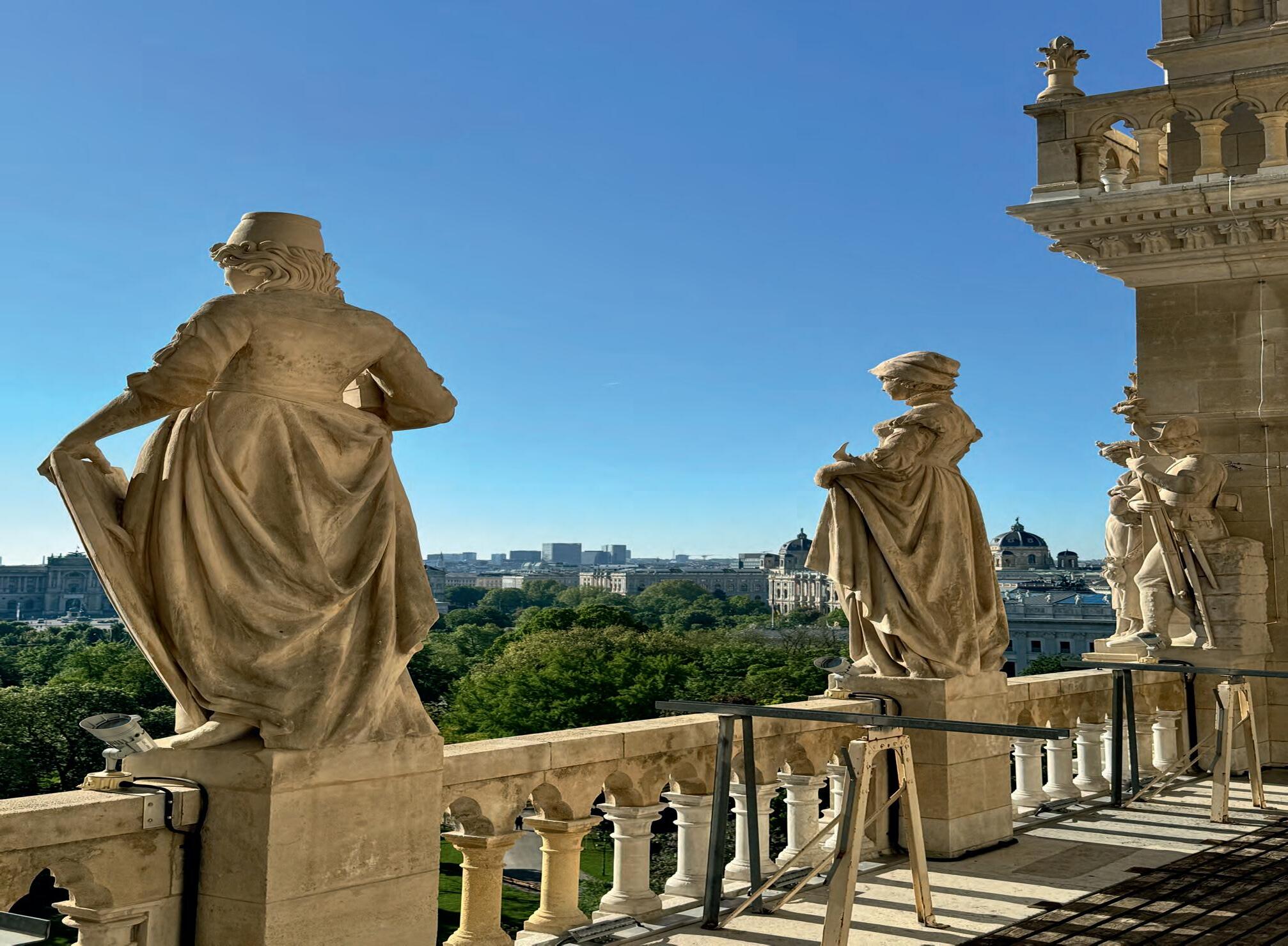
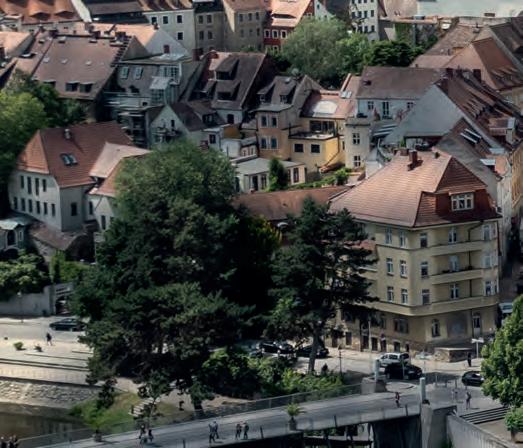
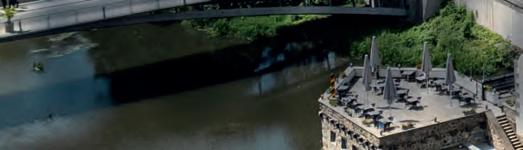
From dream to screen: Görlitz
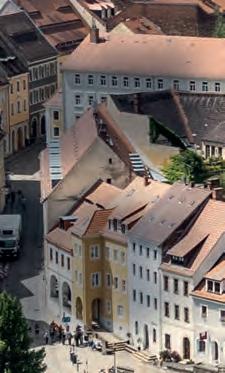

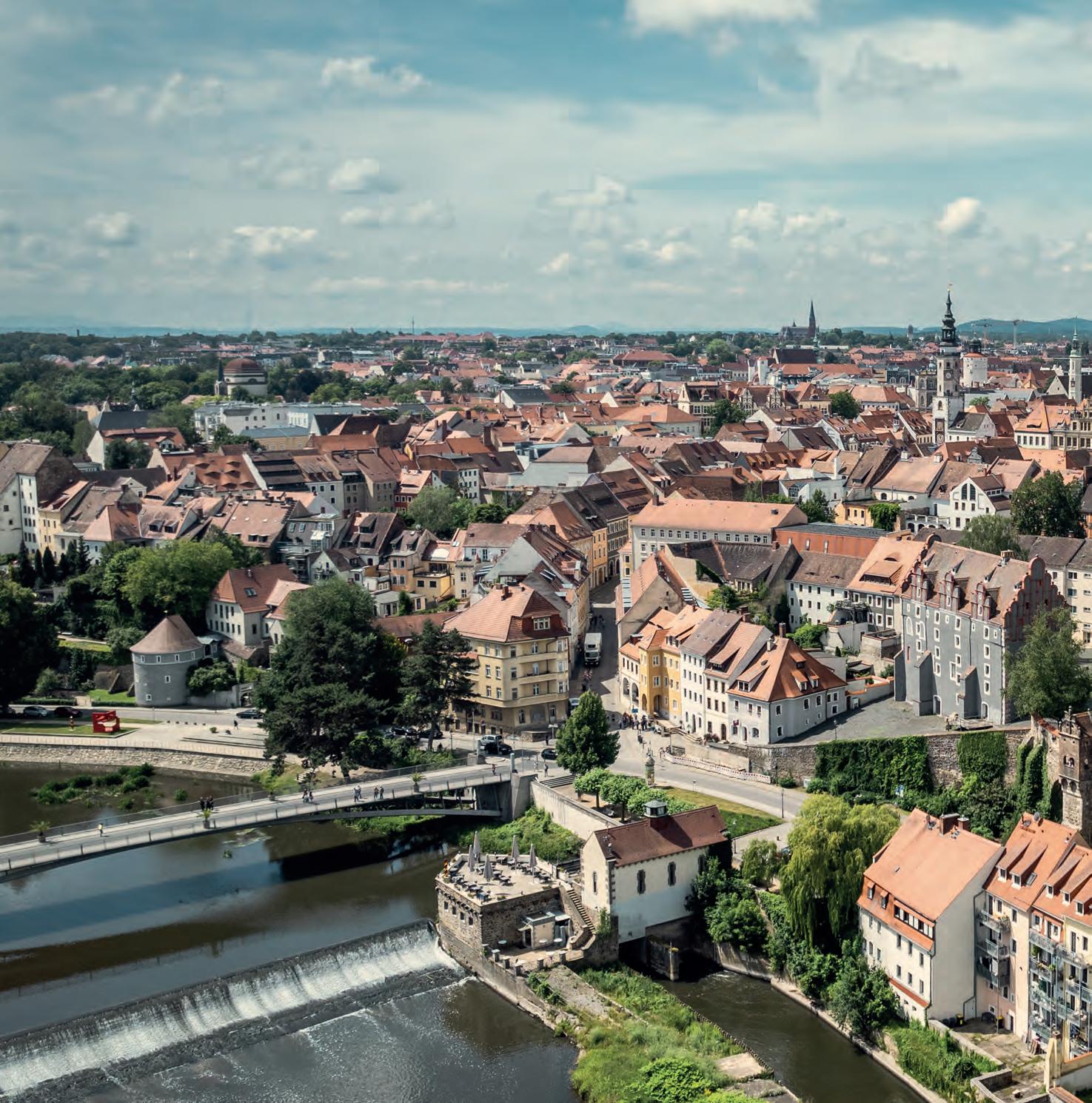
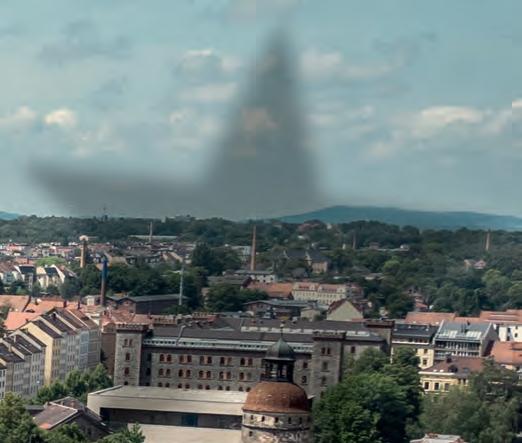

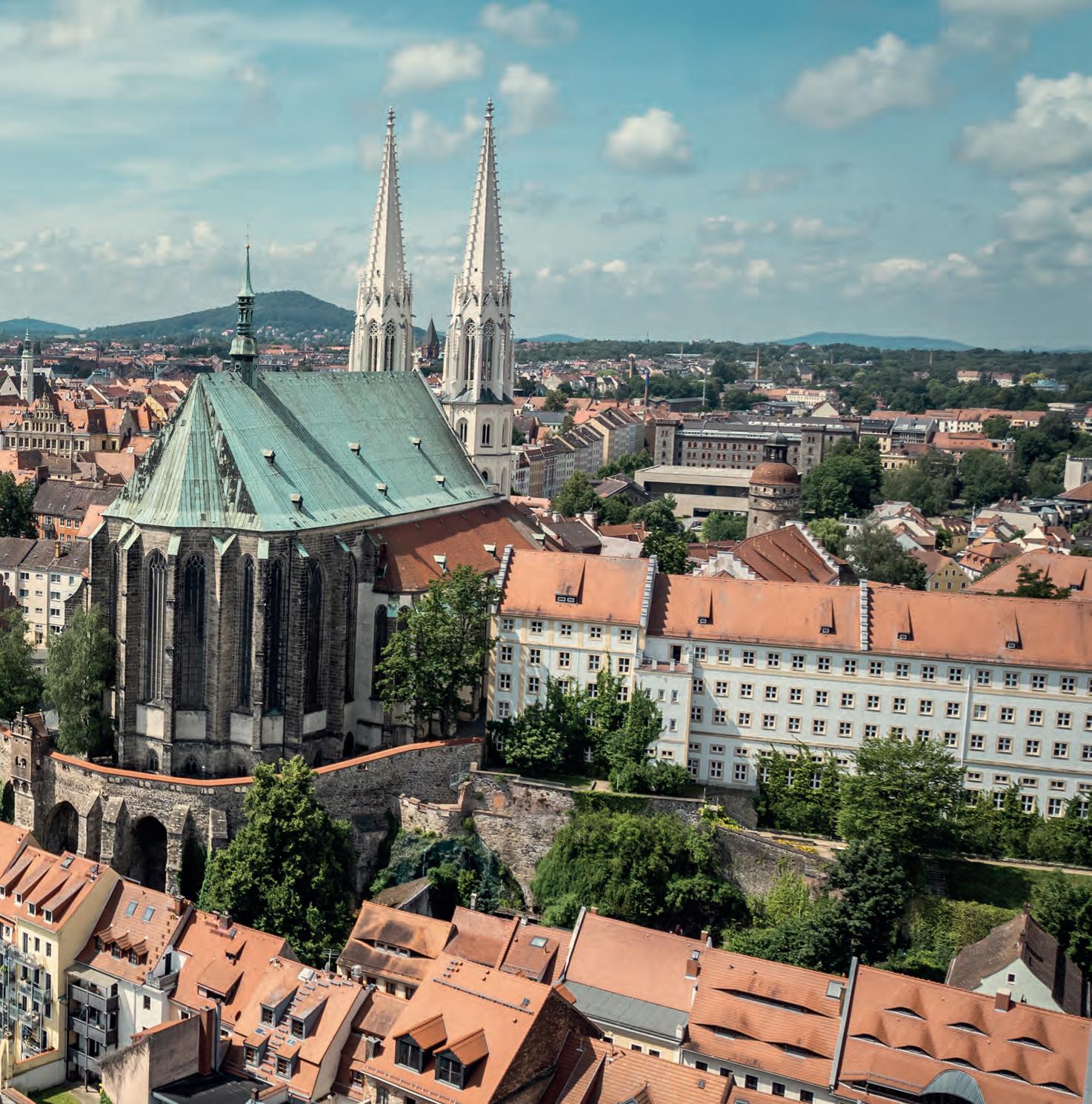
Mitteldeutsche Medienförderung (MDM) awards funding to flm and media projects realised in the German federal states of Saxony, Saxony-Anhalt and Turingia. Te region is home to numerous production companies with extensive experience in international co-productions. Te MDM Film Commission supports productions on the ground: connecting flmmakers with funding, unique locations, experienced crews and professional service providers.
www.mdm-online.de
www.mdm-online.de
“Sound of Falling” by Mascha Schilinski
© Fabian Gamper/Studio Zentral
“Two by © “School of Magical Animals 2” by Sven Unterwaldt
© Bernhard Jasper
“Sound of Falling” by Mascha Schilinski
© Fabian Gamper/Studio Zentral
“School of Magical Animals 2” by Sven Unterwaldt
© Bernhard Jasper
THE NETHERLANDS. WHERE BIG IDEAS FIT WITHIN REAL WORLD BOUNDARIES
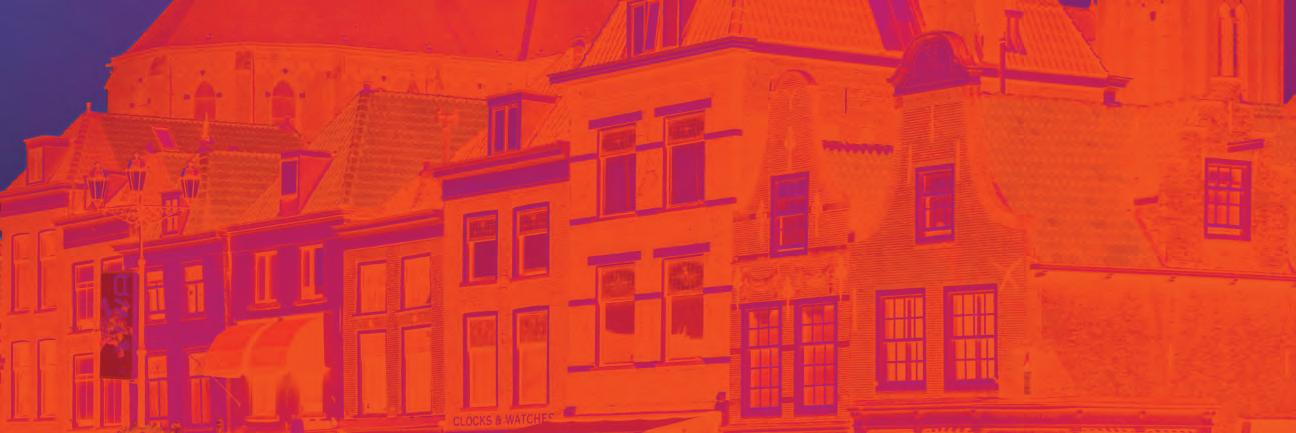
UNLOCK CHARACTER. UNLOCK CREATIVITY. UNLOCK THE NEDERLANDS.
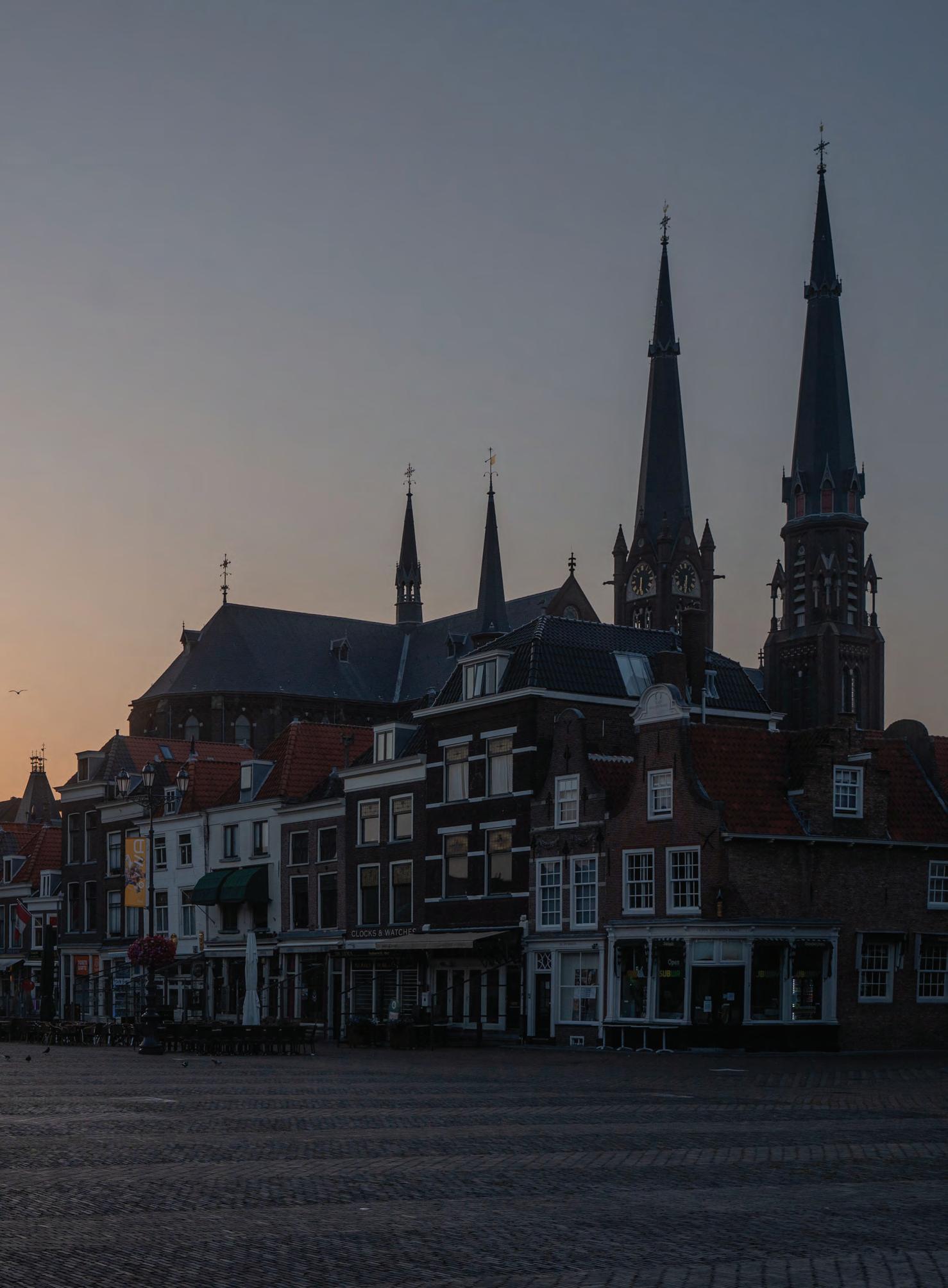













35% CASH REBATE SHORT DISTANCES RICH
Birdwatcher, produced by Legendary Television and Apple, as well as the British series Legacy of Spies [produced by The Ink Factory].”
Žipková says: “The combination of highly skilled local crews, strong infrastructure, and a wide variety of locations makes the country a compelling destination for flmmakers.”
All of this is underpinned by the commission’s own work. While hands-of creatively, its role in maintaining a supportive environment is key. “We are not directly involved in everyday production,” Žipková says. “Producers handle their own workfows, and they’re great at it. We only step in when something truly needs our attention, like if there’s an issue with location permits or other administrative hurdles. What we do focus on is making sure the overall environment for flmmaking is as smooth and welcoming as possible. Our job is to keep the incentives programme strong, ensure laws and regulations work well for flmmakers, and support all the conditions that make our country an attractive place to shoot. ”
Petr Tichý, CEO of Prague’s Barrandov Studio, is upbeat about the coming period: “We expect continued strong interest from international productions in 2026. Barrandov Studio remains a well-established partner for producers seeking high-quality facilities, experienced crews and competitive production conditions.”
Tichý says Barrandov “currently operates 16 sound stages, with two additional stages opening in June 2026, bringing the total to 18”. Productions also have access to backlot areas for exterior sets, workshops and storage facilities including props, carpentry and costume departments, as well as production ofces and dressing rooms. “One of Barrandov’s advantages is that many key services are located on-site or nearby, allowing productions to operate efciently within a compact area,” he adds.
Barrandov maintains several permanent exterior sets, including a Medieval Town and a Paris Street backlot, which can be adapted, Tichý says. But one of its key additional strengths is proximity to rich locations. “Prague itself ofers signifcant diversity within a short distance. Historic architecture, castles, forests and contemporary urban environments can all be reached quickly.”
In terms of the projects that come to Barrandov, there is no question it is popular with demanding large-scale productions. “The frst months of 2025 were largely taken up by Blade Runner 2099. Extensive and visually striking sets were constructed both on the sound stages and the studio grounds. Netfix series The Empress also returned for its third season after positive experiences from previous flming. The production made use of the studio spaces and permanent sets, allowing the creative team to build historical environments. Viewers are often surprised to learn that scenes set in locations such as tropical countries were in fact flmed on Bar-
randov stages. Other signifcant productions to land at the studio have included Anna Biller’s gothic horror flm The Face of Horror and the Netfix series The Age of Innocence. “The scale of the production involved the construction of large and detailed sets,” says Tichý, “with Barrandov once again playing a key role in delivering the production design and studio infrastructure.”
Robust demand has given Barrandov the confdence to expand, Tichý adds, with, as well as two new sound stages, there is the establishment of "a new production centre focused on the development of flm and television projects. The aim is to strengthen Barrandov’s role as a creative partner.”
Big news for 2026 is that Martin Scorcese's highly anticipated and long-kept secret project What Happens at Night shot in the Czech Republic. With Leonardo DiCaprio and Jennifer Lawrence in lead roles, it's from Apple Studios in partnership with StudioCanal. The dream-like story follows a married American couple who travel to a small, snowy European town to adopt a baby. The feature is adapted from the novel of the same name by Peter Cameron.
POLAND: COMPETITIVE & DIVERSE
Poland is another European country that has emerged as a signifcant production partner in recent years, building momentum around a competitive 30% cash rebate. Recent visitors have included Jesse Eisenberg’s A Real Pain, which showcased Warsaw, Lublin and Lower Silesia on screen, and The Hunger Games: The Ballad of Songbirds & Snakes, which flmed at Wrocław’s Centennial Hall. “Poland has become one of the most competitive and reliable production destinations in Europe,” the team at the Polish Film Institute (PFI) says. “Attractive fnancial incentives, experienced crews, modern infrastructure and a wide variety of locations make Poland an increasingly compelling choice for international producers.”
Beyond incentives, one of Poland’s key advantages is its “exceptionally diverse range of locations within relatively short distances. From modern urban skylines in cities like Warsaw, Wrocław or Gdańsk, to medieval old towns, grand palaces and castles, Poland can convincingly stand in for many European settings.”
Natural landscapes are equally varied, with Poland having doubled for Germany, Ukraine, Russia, Scandinavia and even parts of North America in past productions, thanks to its architectural and natural diversity. Behind the camera, Poland’s workforce has become a key asset. And in recent years, there has been increased investment in training and skills development, particularly in areas such as
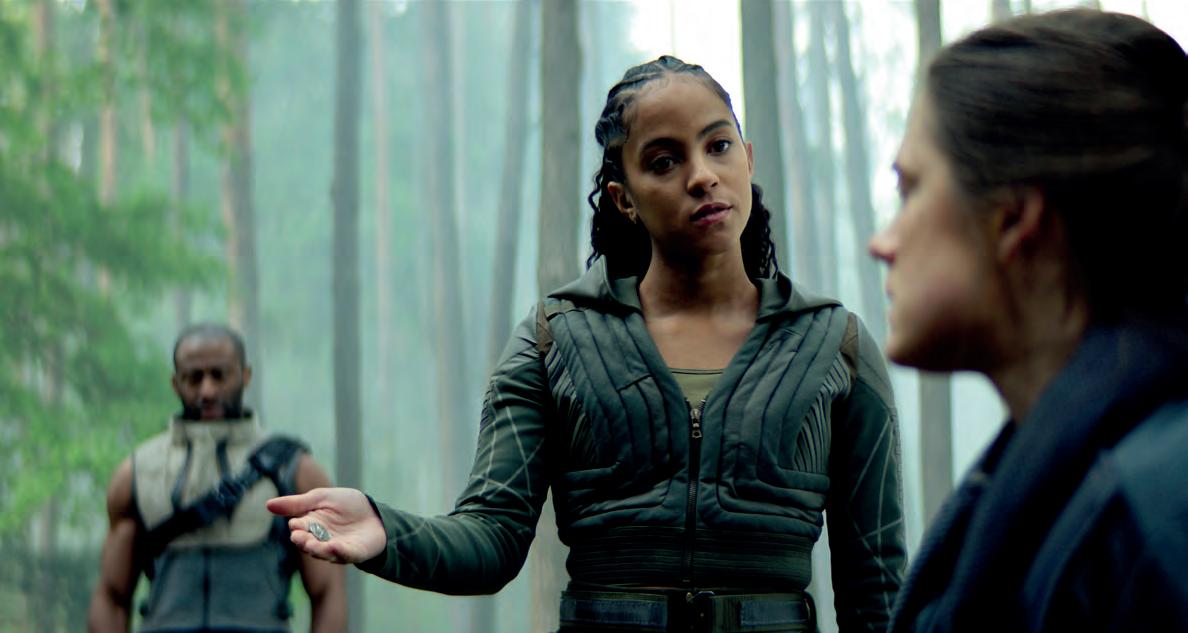
Lou Llobell in Foundation Photo: Apple TV+
VFX, post-production, stunt co-ordination and advanced camera technology. In terms of the kind of projects coming to Poland, the PFI says streaming platforms have increasingly chosen the country as a flming location. “We have seen large-scale historical dramas, contemporary thrillers and fantasy projects taking advantage of our locations, studios and skilled crews.”
One interesting project coming down the pipeline is feature film Erupcja, starring British pop artist Charli XCX. The story follows Bethany, played by Charli XCX, and her boyfriend Rob, portrayed by Will Madden, who travel to Warsaw for a romantic getaway. Things don’t go as planned when a volcanic eruption in Italy causes widespread travel disruption and forces them to stay in the city. As with Eisenberg’s A Real Pain, the result is a movie that becomes deeply embedded in Warsaw’s locations with the Old Town, metro stations, riverside locations and local shops all featuring prominently. For several scenes, director Peter Ohs used guerrilla-style production with a small crew to achieve a more authentic feel. This included a Warsaw nightclub scene where the cast mixed with real crowds.
SPECTACLE: THE BALTICS & SCANDINAVIA
While the combination of Poland, Hungary and the Czech Republic makes for a powerful production engine at the heart of Europe, they only tell part of the story. To the North, the Baltics and Scandinavia service signifcant volumes of production, as do Austria, Germany and the Netherlands to the West, South and East of Hungary, there are also efective production hubs across the Balkans and Romania.
When it comes to locations, there are few regions that can match Scandinavia for spectacle. The glaciers and volcanic plains of Iceland, Norway’s fords, Denmark’s coastal minimalism and Sweden’s vast forests have long been associated with prestige storytelling — and that reputation is only strengthening. With its black sand beaches, lava felds, waterfalls and ice caves, Iceland remains one of Europe’s most visually arresting destinations. Its 35% reimbursement continues to attract high-end projects, while experienced English-speaking crews and a compact infrastructure make logistics surprisingly efcient. Iceland has proved to be a great doubling option. HBO’s True Detective: Night Country shot Iceland for Alaska while BBC historical drama King & Conqueror recreated 11th-century England and Normandy here. It is also popular with high-end commercials and sci-f/fantasy productions looking for other-worldly locations. Film director Christopher Nolan is a repeat customer, having flmed sequences of Batman Begins and Interstellar here. More recently, he shot scenes for The Odyssey in remote stretches of Iceland. There have also been reports of a life-size Viking ship having been constructed near Landeyjarhöfn, for use in the $250m production. Iceland has tended to dominate the headlines when it comes to servicing international production out of Scandinavia. But that may be changing. Following government approval, Denmark is preparing to introduce a 25% incentive. With capital Copenhagen’s blend of historic harbour fronts and cutting-edge architecture — not to mention world-renowned production design and VFX talent — Denmark is likely to become markedly more competitive once the scheme is fully operational. Greenland, an autonomous territory within Denmark, has also just introduced its frst national flm Institute, the Film Institute of Greenland, led by CEO Inunnguaq Petrussen. At time of writing there are plans for a 25% reimbursement for international productions that shoot in Greenland, due to start in August 2026. Finland, meanwhile, is emerging as a compelling option for international producers seeking visual
originality, technical reliability and strong fnancial support. The country ofers striking seasonal contrasts, from snow-blanketed Lapland to endless summer light in Helsinki’s design-forward districts — alongside a 25% cash rebate and an efcient, flm-friendly permitting system. “International interest in flming in Finland continues to grow, with productions seeing the value of our incentive,” Merja Salonen, chief funding advisor at Business Finland, says.
Finland’s fnancial ofer is being further strengthened by a layered incentive model, with regional top-ups lifting the total support available: “By combining our national scheme with regional incentives, producers can access up to 40% support in Finland,” Teija Raninen, from the West Finland Film Commission, says. “This makes flming here highly competitive internationally, while also bringing direct benefts to regional economies and local crews.” Growing interest is refected in a steady stream of international productions choosing Finland for both its landscapes and infrastructure. Recent projects include The Summer Book, starring Glenn Close, and The Dead of Winter, led by Emma Thompson, which used the forests and lakes of eastern Finland to double for Minnesota. The country also hosted series Constellation and The Witcher, as well as a range of international features and co-productions. Beyond incentives, Finland offers a highly reliable production environment. Modern studios, post-production and VFX facilities are complemented by skilled, English-speaking crews and a reputation for efciency in even the most challenging conditions. As for locations, Finland’s appeal lies in its range. Finnish Lapland, in particular, has a unique and often otherworldly quality, its vast snowfelds, frozen forests and low winter light creating an atmosphere that is both stark and cinematic. The Baltic States, meanwhile, have also made a concerted attempt to attract production. Lithuania, for example, has had a tax incentive in place since 2014 and has managed to attract acclaimed productions including Stranger Things and Chernobyl, which transformed capital Vilnius into 1980s Ukraine. In 2025, the incentive achieved record results, according to the Lithuania Film Centre. Under the Lithuanian scheme, local companies can allocate funds to flm production on a non-repayable basis in exchange for a reduced corporate income tax. For 2025, domestic and international productions received €25.6m in investments, up by a ffth compared with 2024. “The Film Tax Incentive has been signifcantly contributing to the growth of the Lithuania’s flm industry for more than a decade,” says Laimonas Ubavičius, head of the Lithuanian Film Centre. “Since 2014, Lithuanian companies have provided more than €133m in investments. These investments enable more flms to be made in Lithuania, broaden opportunities to attract foreign flmmakers, and support the creation of new jobs.”
In total, 108 flms benefted from the incentive in 2025, up on 89 in 2024 and 101 in 2023, including 68 national flms, 21 co-productions and 19 service projects. Compared with 2024, the number of foreign projects saw the strongest growth, while the number of coproductions more than doubled: “Thanks to the incentive, foreign flmmakers spent nearly €56m in Lithuania in 2025,” according to Deimantas Saladžius, head of the flm production department at the Lithuanian Film Centre.
The largest amount of investment — €6.9m — was attracted by the frst season of the US series Star City. The German series Mozart/ Mozart ranked second with €1.5m, while Netfix's Polish flm Riot (Bunt) came third. While Vilnius is a major draw because of its distinctive architecture, second city Kaunus is also attracting attention from producers. According to Edgaras Šilkauskas f the Kaunas Film Ofce, this is partly down to the national incentive. But in addition, he says, the city ofers “exceptional stylistic diversity within a compact territory”.
MERJA SALONEN
‘INTERNATIONAL INTEREST IN FILMING IN FINLAND CONTINUES TO GROW, WITH PRODUCTIONS SEEING THE VALUE OF OUR INCENTIVE’

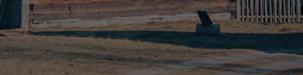
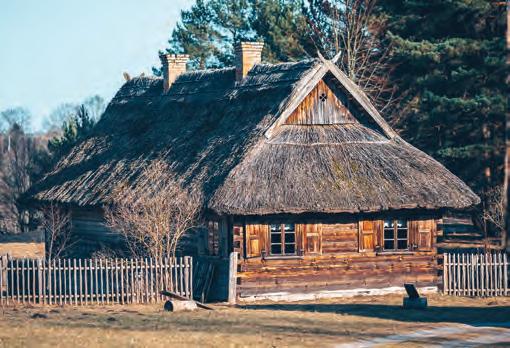
Skip the cross-border or even cross-city logistics. In Kaunas, you can shoot across centuries without leaving the city.
Baroque at Pažaislis Monastery
The Future at Science Museum
Rural Heritage at Rumšiškės Open-Air Museum
Gritty Soviet-era textures across the city
A UNESCO-recognized early 20th-century modernist cityscape
Maximize your production value. Save up to 30% of your budget through Lithuania’s film tax incentive.


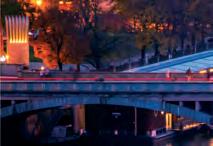
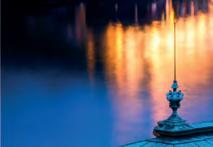
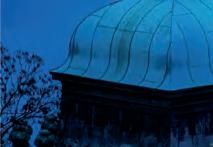
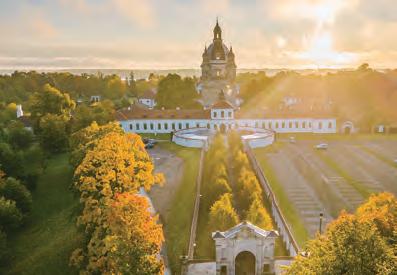

One City, Many Eras: The Cinematic Magic of Kaunas

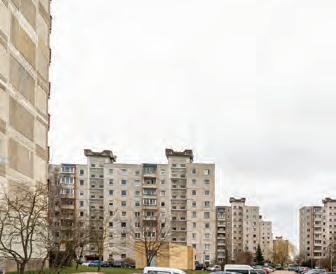
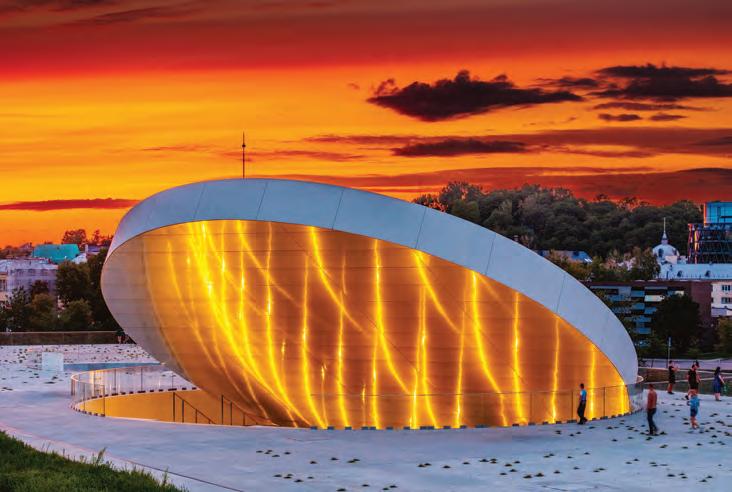


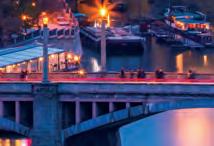

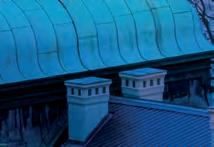

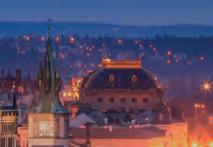

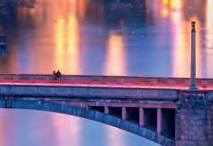


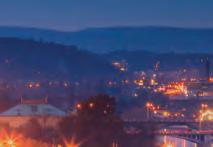



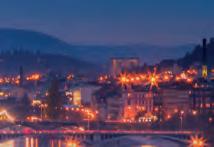


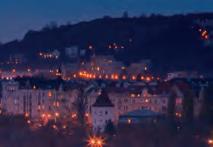
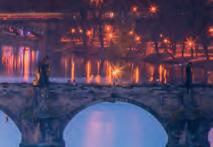


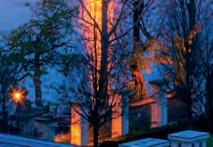
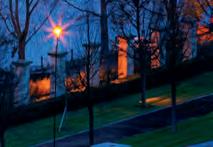



Within a short radius, Šilkauskas says, “flmmakers can access ethnographic wooden architecture just outside the city, medieval settings such as Kaunas Castle, Russian Empire-period environments, Soviet and Cold War backdrops, Baroque landmarks including Pažaislis Monastery, UNESCO-recognised interwar modernism, and even contemporary and futuristic architecture such as Science Island”.
This range translates into strong doubling potential, he adds. Kaunas has recreated a wide range of locations and eras, including 1980s East Berlin, late-20th-century Stockholm, Russian Empire settings and Soviet environments. The city’s well-preserved interiors further enhance its suitability for period storytelling. It’s not just about locations either: “The city has proven it can handle international productions of signifcant scale, including European co-productions and UK-backed series,” Šilkauskas says. “Kaunas combines logistical manageability with architectural range, making it both production-ready and creatively versatile.”
Recent productions underline that versatility. The UK-backed series Honey, produced with Sid Gentle Films, used Kaunas to double for 1980s East Berlin, while Swedish-led drama We Come In Peace combined multiple city locations with a local crew of around 45–50. The city also played a role in HBO’s Chernobyl. Geographically and commercially, Kaunas is particularly well positioned for European co-productions. “Many international productions come from Scandinavia, Germany and the UK, often structured as European co-productions. Lithuania’s cost efciency, strong local crews and adaptable locations make it particularly attractive.”
Looking ahead, Šilkauskas points to a growing interest in lesserknown locations and new architectural additions. “Beyond the well-known landmarks, producers are increasingly discovering underused mid-century interiors, adaptable industrial spaces and preserved early 20th-century apartments. Science Island [the frst science and innovation centre-museum in Lithuania] represents a new addition and expands Kaunas’ ofering into contemporary and futuristic territory.”
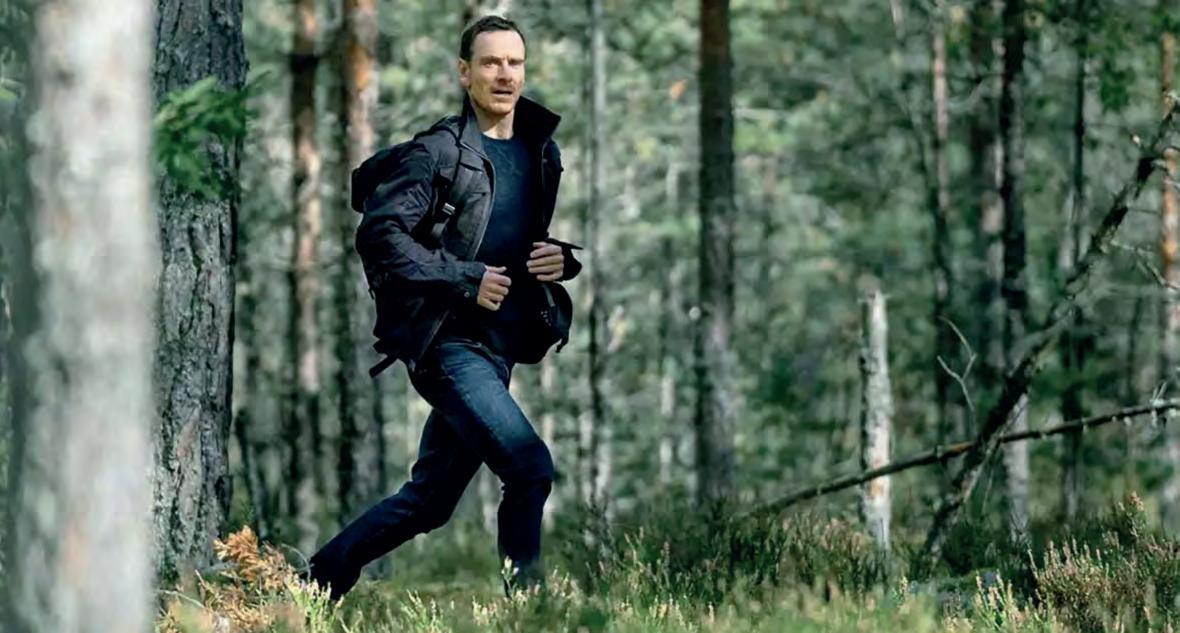
Still in the Baltics, Latvia combines competitive incentive with its own distinctive look. Capital Riga’s art nouveau architecture and Baltic coastline provide distinctive backdrops, while forested interiors and Soviet industrial zones ofer doubling potential. Estonia meanwhile has an attractive 30% cash rebate. This attracted Paramount+ spy thriller The Agency, with Michael Fassbender, which used Tallinn’s medieval Old Town, Soviet-era districts and border regions to double for Eastern European settings. Sticking with the Eastern side of the continent, the Balkans and
Romania continue to be popular flming locations for international producers. Serbia, for example, ofers a combination of great locations, talented crews and investment in infrastructure. It also has a solid tax incentive programme that ladders up from 20% for TV commercials to 25% for flm and TV to 30% for projects which spend €5m in-country. Neighbouring Croatia, meanwhile, has established a reputation as one of Europe’s most visually distinctive and production-friendly destinations. The country now ofers a 25% cash rebate, with an additional 5% available for productions flming in regions with below-average development. Highlights of the 2025’s production slate include the ffth and fnal season of Netfix’s hit series Outer Banks, which flmed in Dubrovnik between October and November. Also arriving on streaming platforms in 2025 was O’Dessa, starring Stranger Things’ Sadie Sink. Serviced by Embassy Films, the production shot extensively in capital city Zagreb and the surrounding area. BritBox drama A Taste For Murder also shot here, doubling Croatia for Italian island of Capri.
HISTORIC: GERMANY & AUSTRIA
Shifting focus to the West, Germany and Austria merit attention. The former has a huge production industry in its own right, but also remains an attractive option for in-bound producers. Multi-centred, Germany combines diverse urban backdrops — from Berlin’s edgy modernism to Munich’s classical grandeur — with one of Europe’s most storied studio complexes in Potsdam’s Studio Babelsberg. In 2025, the studio renamed its historic Haus 5 facility as the Wes Anderson Building, marking the long-standing relationship between studio and director. Anderson has shot fve flms at Babelsberg, including his most recent outing The Phoenician Scheme. Germany has also moved to strengthen its competitive position with a revised funding framework that lifts federal incentives towards the 30% mark, complemented by powerful regional funds in Bavaria, Berlin-Brandenburg and North Rhine-Westphalia (NRW). Overall, the total funding budget for flm and high-end TV production was €390m last year, comprising 61% federal funding and 39% regional funding. Recent benefciaries of German funding include The Hunger Games: Sunrise On The Reaping, which attracted €28.3m through a range of funding mechanisms. Key locations used to create the post-apocalyptic movie have included Landschaftspark Duisburg-Nord, an industrial park used to portray scenes from the 50th Hunger Games, and the iconic Berlin Tempelhof Airport, frequently used as a location. Castle Ehreshoven
Paramount+ spy thriller The Agency with Michael Fassbender used Tallinn’s medieval Old Town, Soviet-era districts and border regions to double for Eastern European settings. Photo: Paramount+
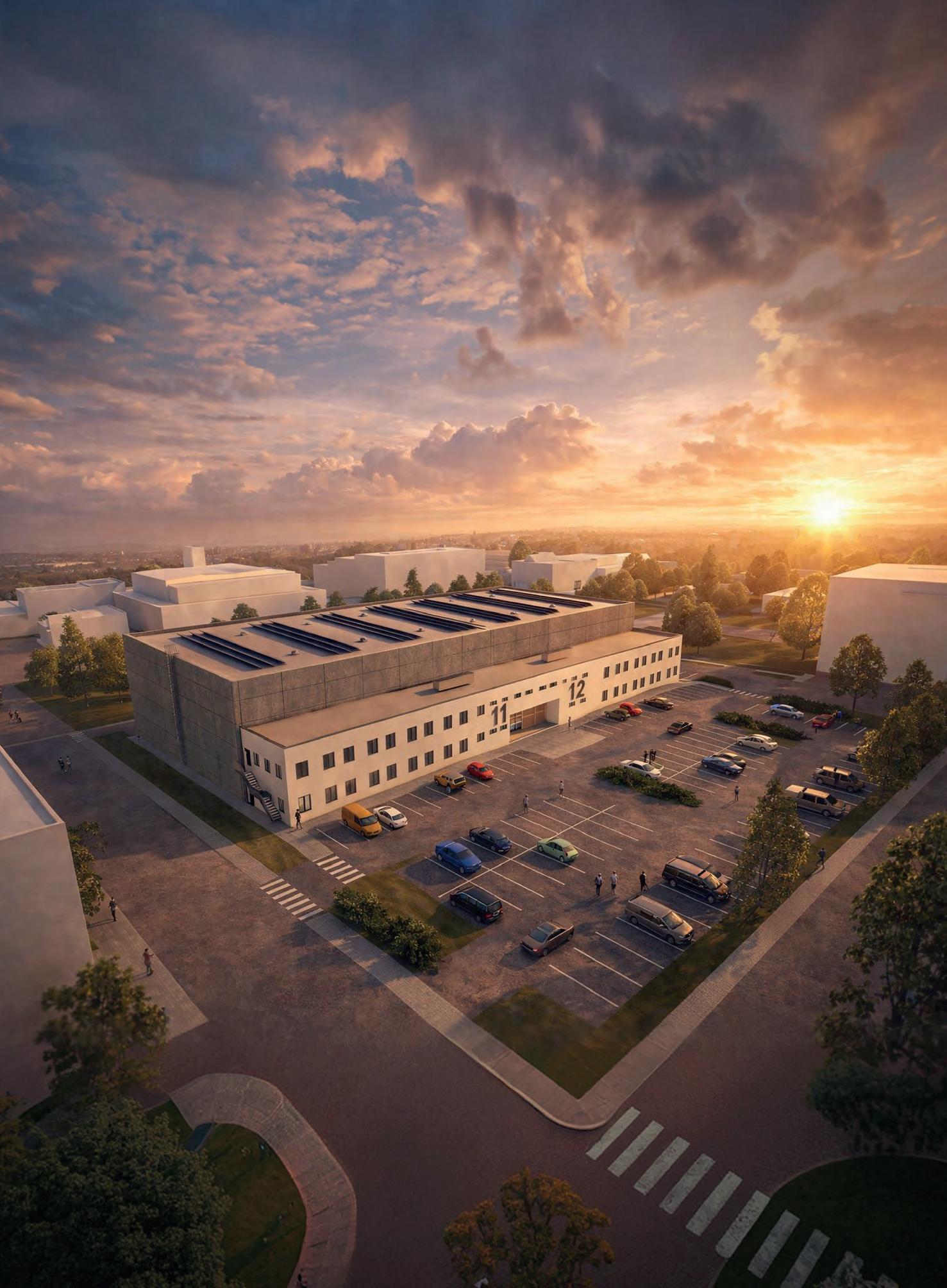

in the NRW municipality of Engelskirchen also featured. With its world-class crews and infrastructure, Germany is also an attractive doubling proposition. Paul Greengrass’s new feature, The Uprising, for example, is set during the English Peasants’ Revolt of 1381, with Andrew Garfeld playing farmer turned rebel Wat Tyler. However, it was flmed across Bavarian locations and at the Penzing Studios in Munich. Key locations include the open-air museum at Bad Windsheim and the historic city of Nuremburg, both in the Bavarian region of Franconia. Among numerous cinematic oases within Germany is the historic town of Görlitz, located in the state of Saxony, right on the border with Poland. Kerstin Gosewisch, project manager at Görlitz Film Ofce, says the town is “a ready-made flm set. It has authentic architecture spanning fve centuries, more than 4,000 heritage buildings and diverse urban and natural backdrops ofer 360-degree locations for almost any genre. Short distances, flm-friendly authorities and dedicated crews ensure efcient shoots, supported by an experienced flm ofce.”
Gosewisch says this breadth allows Görlitz to replicate a range of settings. “Görlitz is exceptionally versatile, doubling for period New York, Paris, Prague or Berlin.
Beyond the city, the flm ofce “covers the Germany-Poland-Czech tri-border region”, she says, “with urban districts, rural towns, industrial grounds, forests and lakes — a compact, fexible mix ideal for period pieces, dramas, thrillers and adventure flms.”
Gosewisch believes a key element of the region’s appeal is its constant supply of lesser-known locations that ofer immediate visual impact. “Görlitz ofers locations that genuinely surprise producers: the Brauner Hirsch with its versatile period interiors, the distinctive Neisse viaduct and the Berzdorfer Lake within the city, featuring a beach that echoes Coral Beach. These are locations you don’t fnd everywhere, with instant visual impact. The Film Ofce connects productions quickly and precisely with the right locations and specialised crews.”
The city’s track record refects its adaptability. “Görlitz has hosted major productions such as The Grand Budapest Hotel, The Reader, Inglourious Basterds, The Book Thief and Around the World in 80 Days. The long running ARD series Wolfsland flms regularly in the region, while Paweł Pawlikowski shot his flm Fatherland (Vaterland) last year at the historic Nikolaifriedhof and the municipal cemetery.”
Most enquiries come from Germany and across Europe, and — through partners such as Studio Babelsberg — also from the US and the UK. But Gosewisch says the flm ofce is “expanding our reach, especially towards directors and producers in the US, the UK and
India who seek fresh European flming locations.”
Neighbouring Austria, meanwhile, ofers a distinctive blend of imperial architecture and Alpine spectacle. Capital city Vienna’s palaces, baroque streets and Danube waterfront provide period authenticity within a compact, flm-friendly capital. Summarising the city’s appeal, Marijana Stoisits, managing director of the Vienna Film Commission, points to “stunning locations, on-location flming possible all over the city and full support by the Vienna Film Commission. The city is perfect for period flms as well as contemporary stories, and we have great incentives: the Vienna Film Incentive, at 30%, and the federal incentive FISA+, at 30%, plus a 5% green flming bonus.”
Visually, Vienna remains synonymous with historic architecture, which can be used for doubling, Stoisits says. In 2025, Vienna stood in for Prague, Berlin and Munich, while also ofering a fexible proxy for a wide range of Central and Eastern European settings. This ability to “travel” on screen is a key advantage for producers looking to maximise efciency without sacrifcing visual richness. That said, Vienna’s range extends well beyond imperial facades. “Vienna may be best known for historic locations, but it ofers way more,” Stoisits says. “There is a lot of modern architecture especially alongside the waterfront next to the Danube. Not only that, 53% of the land use in Vienna is green spaces or bodies of water, while 11% is agriculture. Vienna is the only city worldwide with vineyards.”
Recent productions refect both the scale and international reach of Vienna’s offer, Stoisits says, with productions hailing from Europe, the US and Asian countries including Korea, Japan and Thailand. The recent slate has included: “The Blood Countess by Ulrike Ottinger with Isabelle Huppert; Crooks (Season 2) by Marvin Kren for Netfix; Der Wachtmeister by Stefan Ruzowitzky with Clive Owen; Kochschule Schwarz by Dani Levy with Florian David Fitz; and a slate of Austrian TV series and movies including Downgrade, Crystal Wall, Pfegeleicht and Kommissar Rex.”
If Vienna offers control and classical beauty, Austria’s Alpine region of Tirol brings something altogether more elemental. “Tirol is where high-end production value meets genuine Alpine character,” Angelika Pagitz, head of Cine Tirol Film Commission says. “From a producer’s perspective, it’s a place where you can get big cinematic images and still run a tight, efcient shoot.”
Pagitz breaks Tirol’s appeal down into three core strengths: “Firstly, a remarkable diversity of locations in a compact radius: glaciers, dramatic mountain ranges and passes, forests, lakes, rivers, traditional villages, contemporary architecture and vibrant urban
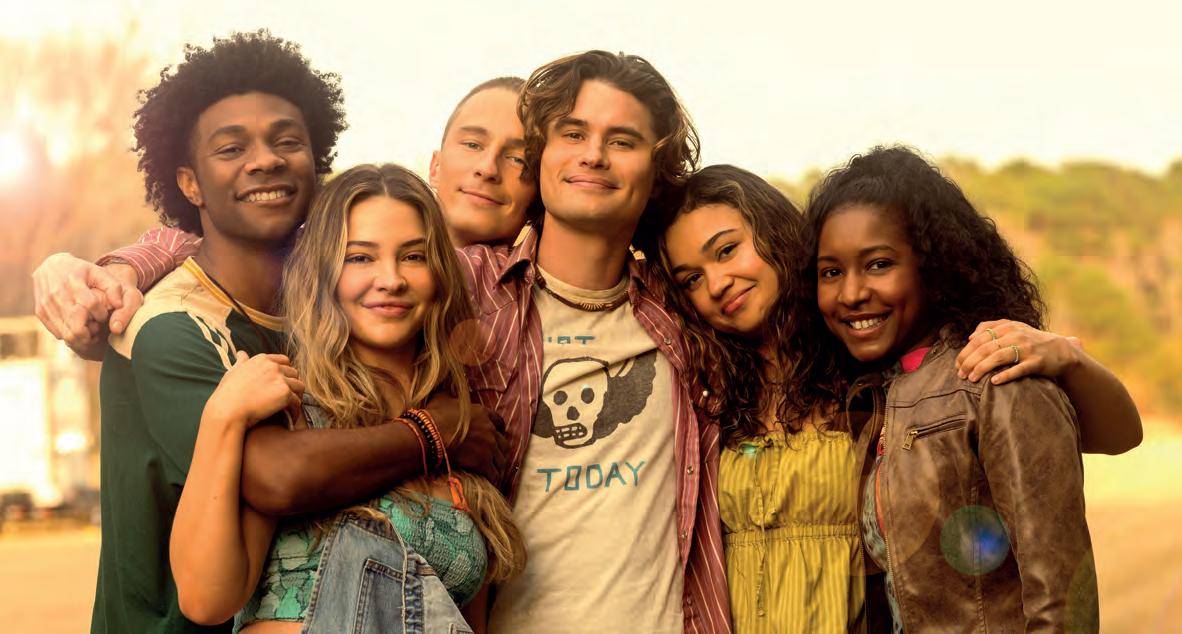
Jonathan Daviss as Pope, Madelyn Cline as Sarah Cameron, Drew Starkey as Rafe, Chase Stokes as John B, Madison Bailey as Kiara, Carlacia Grant as Cleo in Outer Banks, whose ffth and fnal season flmed in Dubrovnik. Photo: Jackson Lee Davis/Netfix
environment — all within workable driving distances. Secondly, a production-savvy region: experienced crews, strong infrastructure, and authorities who understand the needs of a serious shoot. Finally, incentives at national and regional level in Austria and Tirol, paired with hands-on support. With Cine Tirol, producers get practical guidance, local connections and problem-solving support.”
Tirol’s raw, physical intensity has been central to the identity of acclaimed drama series Totenfrau (Woman of the Dead), based on the books by Bernhard Aichner. Produced by Austria-based Mona Film, the series demonstrates how location can move beyond backdrop to become a driving dramatic force. For Mona Film managing director and series producer Thomas Hroch, the decision to base the show in Tirol was never really in doubt: “From the outset, it was clear that Tirol would play a central role. Totenfrau is deeply rooted in a very specifc Alpine world — socially, culturally and geographically. While we briefy explored alternative Alpine regions for practical reasons, it became evident that the atmosphere described by Aichner is inseparable from Tirol’s landscape and mentality.”
Pagitz agrees: “Filming here wasn’t just a visual decision, it was about staying true to the material and its sense of place. The series needed an Alpine world that could be beautiful and unsettling, and a community that feels authentic, with nature always looming in the background.”
This duality — beauty and menace — is exactly what Hroch and his team set out to capture: “Rather than framing the mountains as wide, majestic panoramas, we often chose tighter compositions, steeper angles and unpredictable weather conditions. Fog, low cloud cover and transitional light became narrative tools. The mountains are vast and indifferent — and we leaned into that indiference.”
This was reinforced by the creative decision to avoid peak seasons. Hroch says: “Avoiding the typical snowy winter postcard or lush summer tourism aesthetic was a deliberate decision. The transitional seasons gave us muted colours, unstable weather and a raw texture that supported the story’s psychological tension.” Logistically, he says, “this meant constant flexibility. Weather
shifts were rapid, daylight windows were shorter, and continuity was more difcult. However, creatively it gave us enormous advantages: a landscape in fux mirrors a protagonist in crisis. The unpredictability became an asset rather than a problem.”
Pagitz says this tonal versatility is a key attraction: “Tirol ofers a genuine mix: elegant ski resorts with a glamorous sheen, grounded villages that feel lived-in, winding mountain roads, rivers, and forests that can look idyllic in the morning and ominous by night. That range allowed Totenfrau to build a credible local universe while still delivering the heightened visual mood a Netfix production demands.”
Naturally, working in such an environment brings challenges. High-altitude, remote access and volatile conditions all had to be managed carefully, Hroch says. “Weather and access were primary concerns. At those altitudes, conditions can change within minutes. Transporting equipment required careful co-ordination, and crew endurance was a real factor — both physically and in terms of concentration. Preparation was everything. We relied heavily on local expertise, precise scheduling and contingency planning. Safety protocols were tightened, and we built bufer days into the schedule. Despite the difculties, those locations gave the series a scale and authenticity that would have been impossible to recreate elsewhere.”
From the flm commission’s perspective, facilitating this kind of production is precisely where regional expertise comes into play. “Mountain regions always come with challenges,” Pagitz says. “The key ones included shutting down roads in narrow valleys, coordinating around ski operations and seasonal tourism, reaching remote locations with equipment, and managing rapidly changing weather.
This is where Tirol’s work as a flm commission really matters, she says: “Tirol is used to large-scale tourism and international events, so there are tried-and-tested systems for road closures, safety concepts and community communication. Our role at Cine Tirol is to bring the right partners to the table early, anticipate seasonal and local sensitivities, and help design solutions that protect both the production schedule and local good-
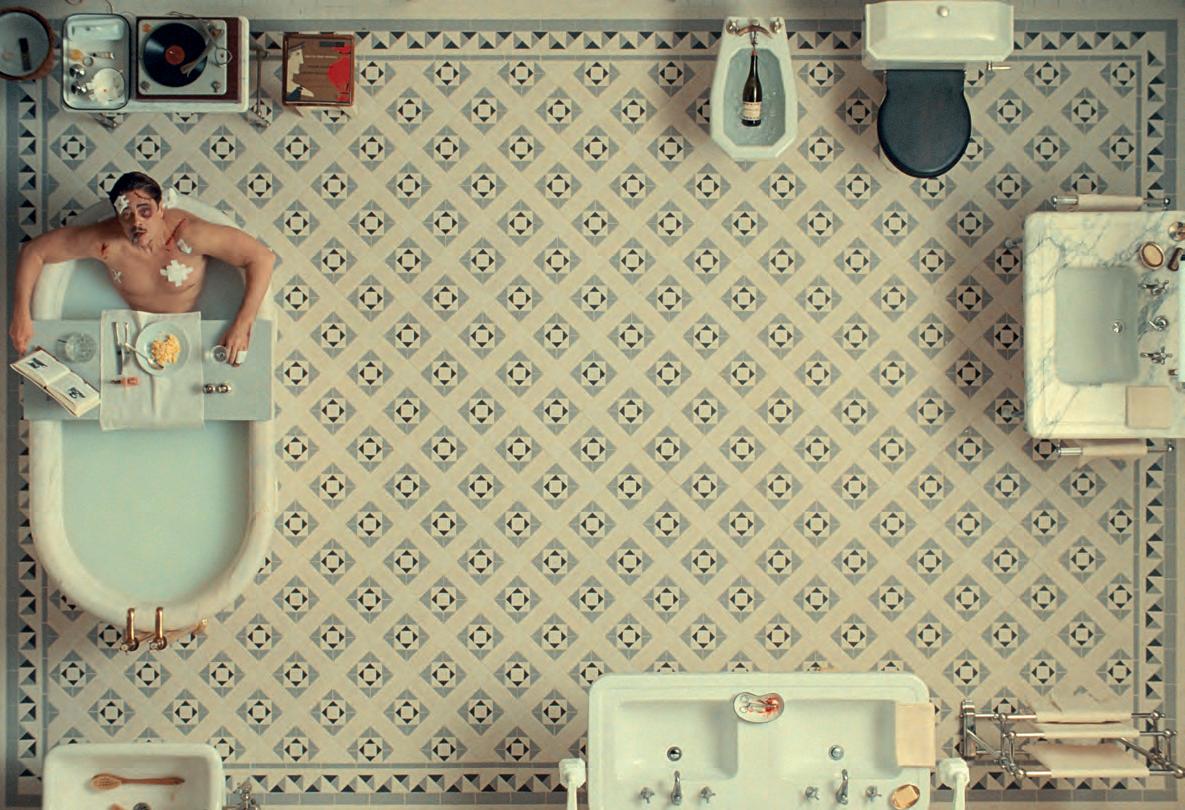
Benicio del Toro in The Phoenician Scheme, which flmed at Germany’s Studio Babelsberg. Photo: Focus features
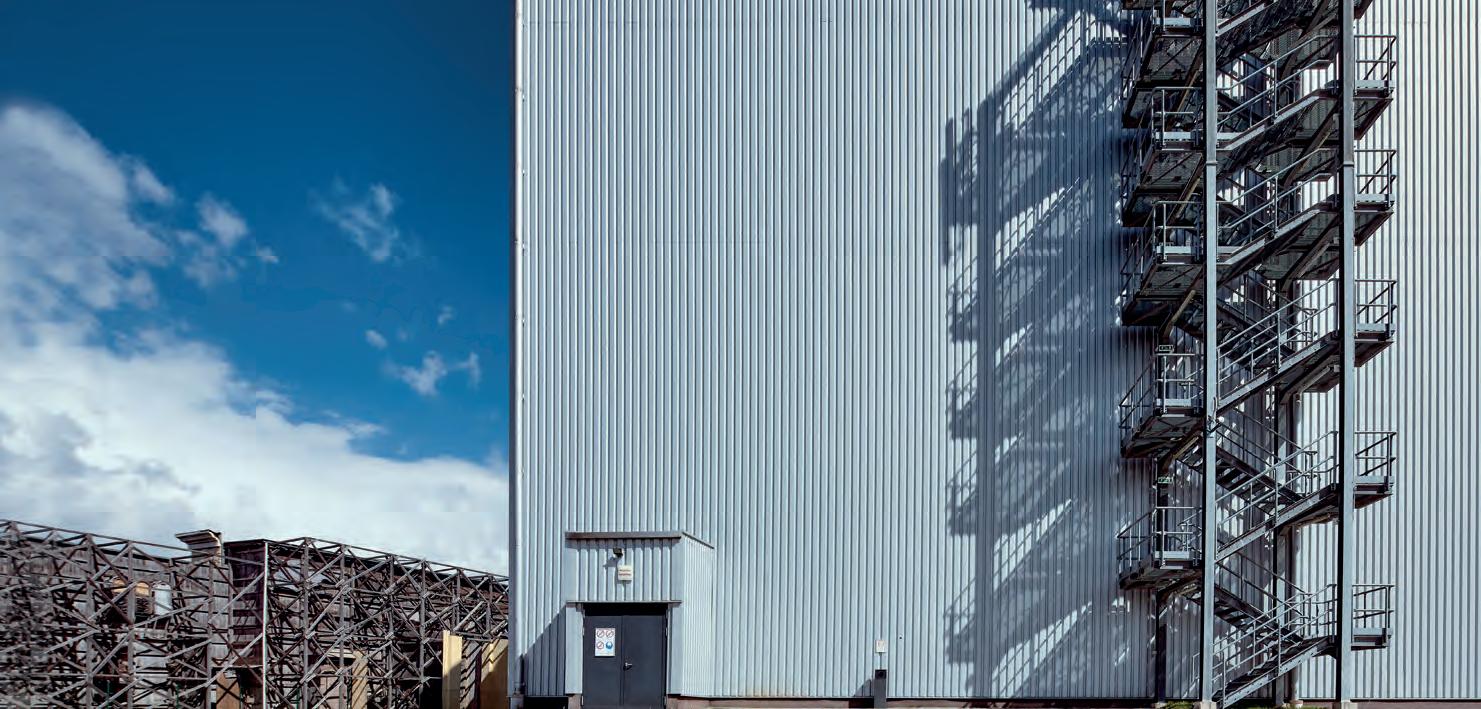
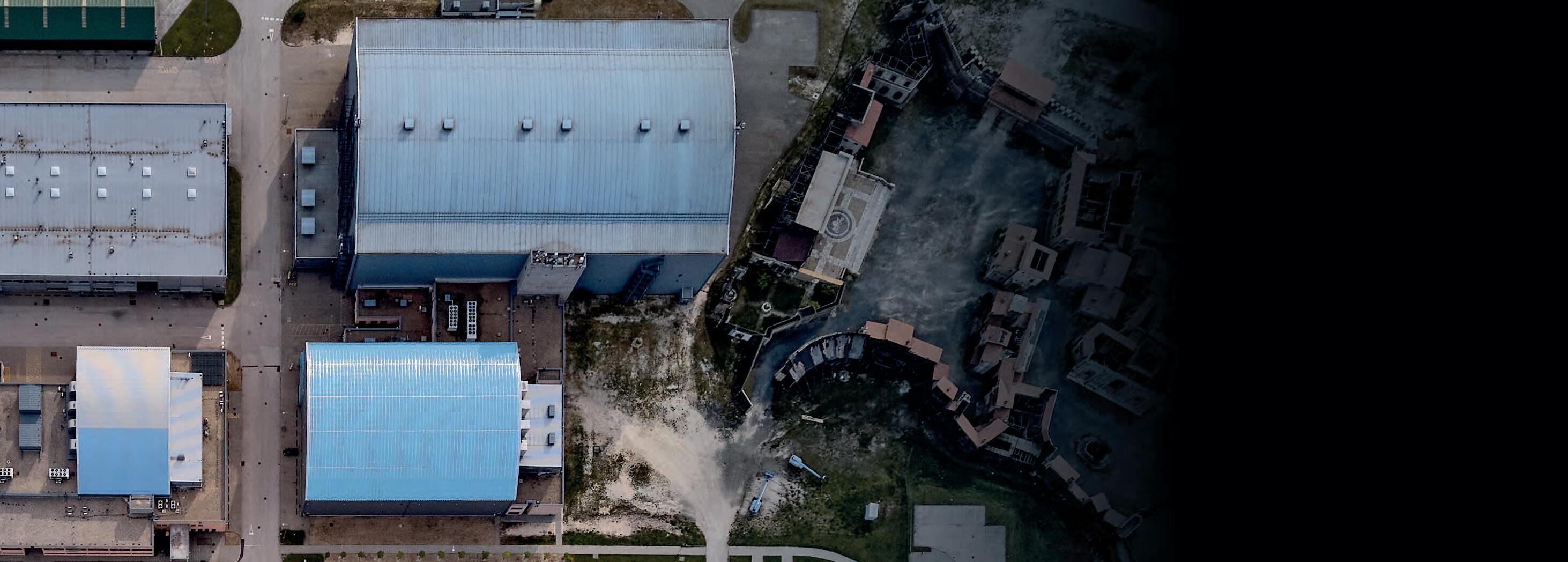
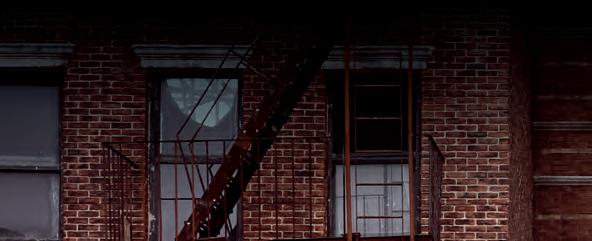

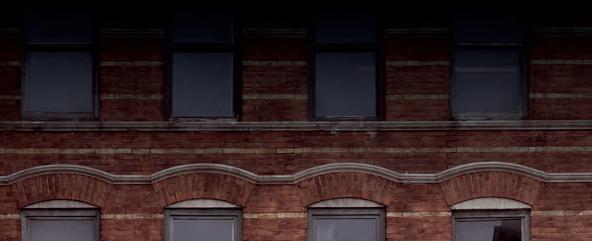
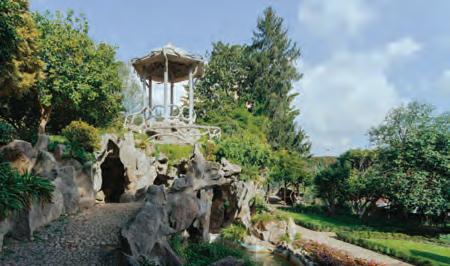
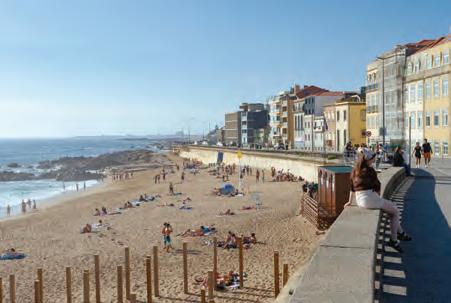
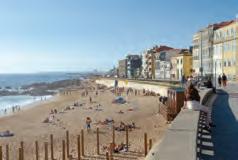
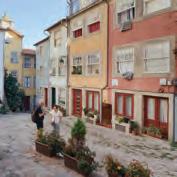
→ UNESCO World Heritage sites
→ From medieval settings to futuristic possibilities
→ Remarkable architectural heritage
→ Where urban landscape meets the river, sea and green spaces
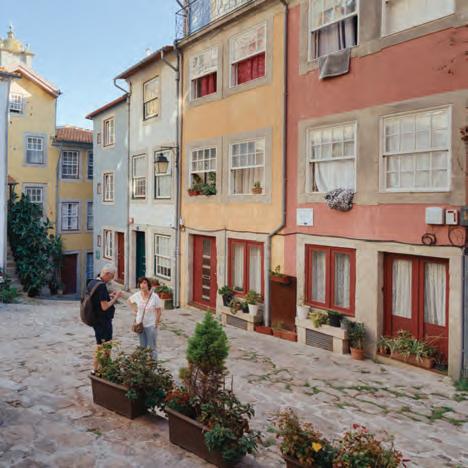
will, so the creative team can get what they need.”
This collaborative infrastructure has helped sustain the drama into a second season. “Season 2 benefited from the learnings and groundwork of Season 1,” Pagitz says. “Relationships, logistics and a clear understanding of what the show needed visually. In addition, the Tirolean location scout for Season 2 brought strong local knowledge and on-the-ground expertise. We are convinced this helped the production identify fresh settings quickly and efficiently and ensured that new locations expanded the world of the series in a way that stayed true to its established look and feel.”
Rooting the series so deliberately in the Tirol has also given it the kind of narrative authenticity that appeals to audiences outside Austria. “We were committed to preserving dialect, cultural specificity and the authentic rhythm of Austrian life," Hroch says. “At the same time, the narrative structure, pacing and production value had to meet the expectations of an international thriller audience. Rather than diluting authenticity, we found that specificity actually strengthened the global appeal. Audiences worldwide respond to stories that feel truthful and grounded.”
DYNAMIC, DIVERSE: THE NETHERLANDS
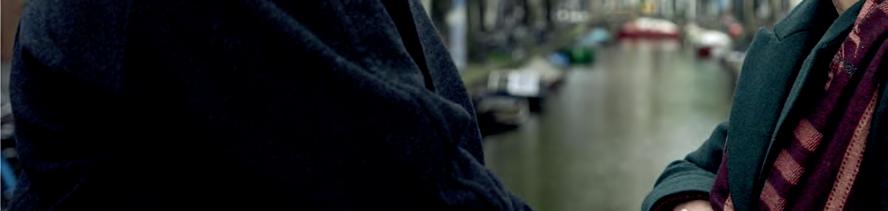
Another dynamic production hub in North Europe is the Netherlands, with film commissioner Roeland Oude Nijhuis saying the nation “offers something that's increasingly rare in the European market: diversity compressed into a small, highly navigable country, with exceptionally skilled English-speaking crew and cast. Because of our infrastructure and connectivity, productions benefit from short travel distances both within the Netherlands, and from across the rest of Europe.” Dutch crews, are “known for their efficiency, praised for their practical mindset and loved for their down to earth, no-nonsense way of working, and their ability to work across cultures, making them ideal partners”, Nijhuis says. “And all this is backed by The Netherlands Film Production Incentive, a competitive programme that offers a 35% cash rebate on qualifying Dutch expenditure.” Location-wise: “We’re not just Amsterdam canals,” Nijhuis says. “We're coastline, forest, modernist architecture and distinctive historic streetscapes. While Amsterdam is an obvious choice, Haarlem, Leiden, Delft and Utrecht offer beautifully preserved 17th- and 18th-century streetscapes with far less congestion and permit complexity. These cities can double convincingly for other Northern European settings, while The Hague offers grand governmental architecture if you need ‘power and institution’.”
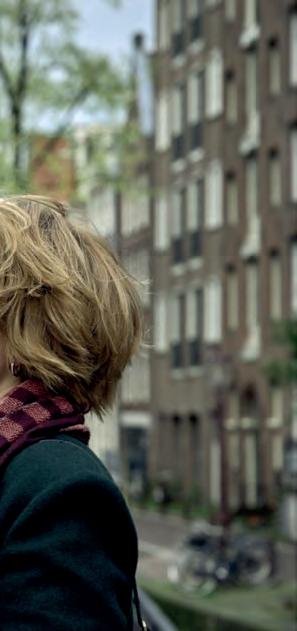
As for bold modern architecture, “Rotterdam is the standout here. Largely rebuilt after WWII, it has a skyline and street-level texture that rivals any European city. The Erasmus Bridge, the Cube Houses, the Markthal and Depot Booijmans are cinematic environments that read as near-future or a kind of heightened cosmopolitan present.” Away from urban areas, the North Sea coastline offers wide beaches with dunes providing natural cover. “The Wadden Islands offer genuine remoteness. Inland, the De Hoge Veluwe National Park provides forest and heathland environments. And, of course, our horizontal, wide-open agricultural world with windmills and dykes is iconic.”
Productions that have captured this diversity on screen include Donald Glover’s FX series Atlanta, Australian feature film Jimpa and thriller Safe Harbour. Most recent is Polly Findlay’s critically acclaimed drama Midwinter Break. “This film used the Netherlands to create a mood,” Nijhuis says. “Grey light and winter streets give it a particular Northern European atmosphere that fits the specifics of this heartfelt story.”
Dutch-originated productions are also making their mark, showcasing the strengths of the Netherlands to the world. “The Dutch film iHostage, inspired by the Apple Store hostage in Amsterdam, has been a significant international success on Netflix. The film is set on the bustling and touristy Leidscheplein, but was primarily shot at ReadySet Studios — in collaboration with Planet X, Leap3D, Zero Gravity Drone, and a team of photographers — created a highly realistic digital version of Leidscheplein using an innovative 3D scanning technique. Thanks to this approach, all filming could take place in a controlled virtual environment, where every detail was controllable: lighting, camera angles and even virtual passersby in the background.”
Supported by a stable economy, well-trained crew base and proactive network of regional and city-level film offices, Nijhuis says: “The Netherlands has been increasing its profile as a serious midto-large scale production destination rather than just a location for establishing shots and second-unit work. For 2026, I'm optimistic. We have a big international production shooting, and more on the horizon.”
What sets this spectacular region apart is the sheer completeness of its offer. From the ords of Scandinavia to the castles of Central Europe and the emerging hubs of the Balkans, the region delivers not just striking visuals, but the infrastructure, talent and financial support to match. For producers balancing creative ambition with economic reality, the combination of authentic locations, world-class crews and competitive incentives makes it a go-to destination.
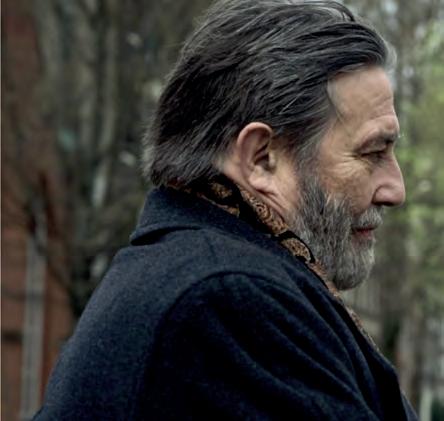
Ciarán Hinds and Lesley Manville in Polly Findlay’s critically acclaimed drama Midwinter Break Photo: Protagonist Pictures


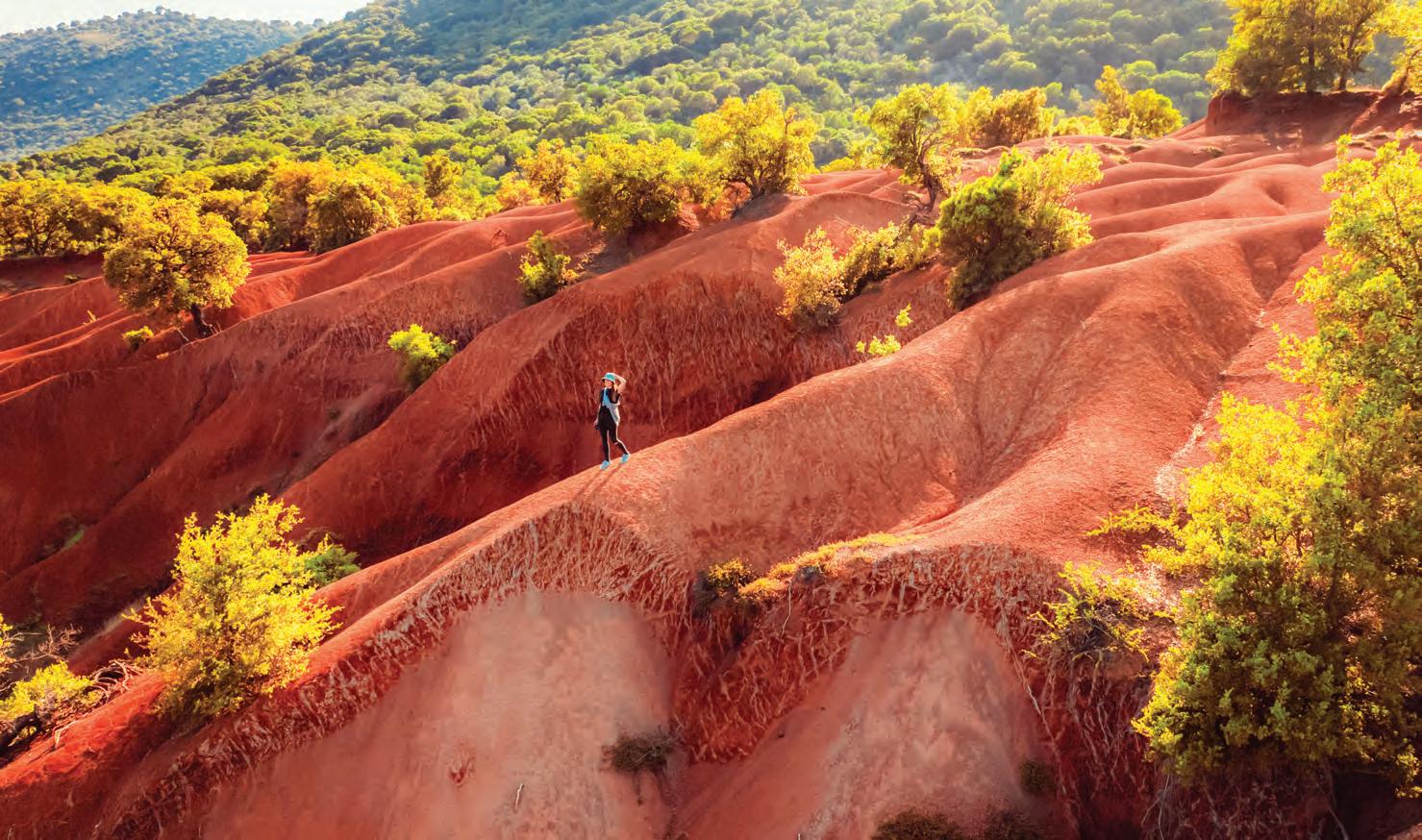








IT’S HOTTING UP DOWN SOUTH
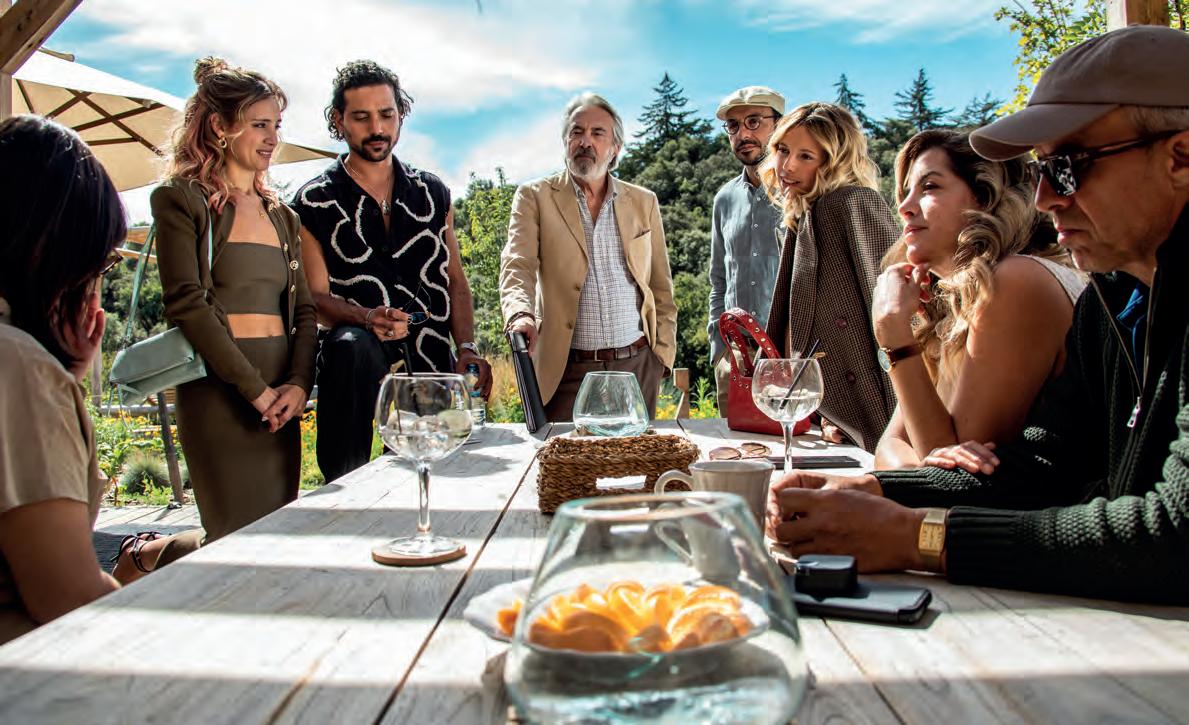
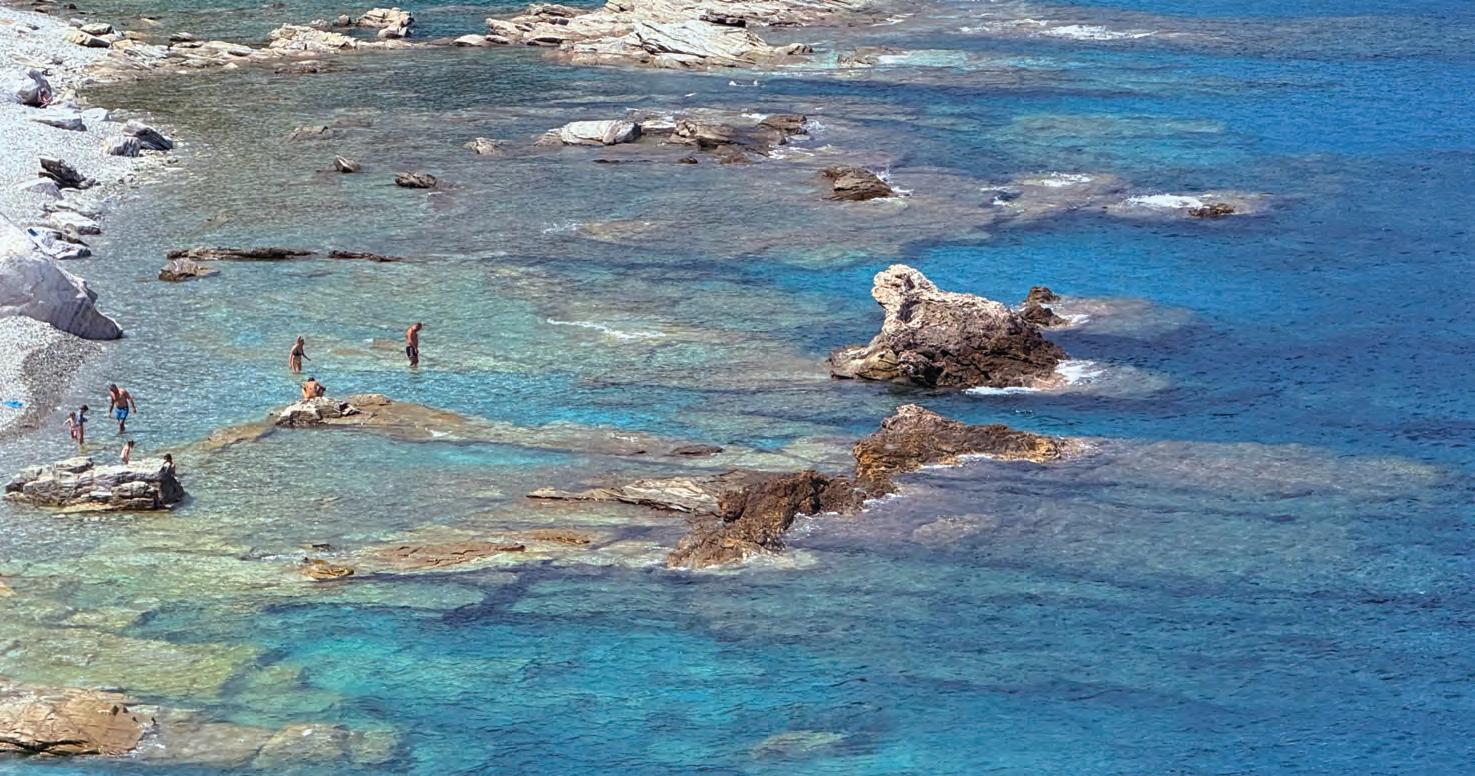
Southern Europe has so much to offer productions, ranging from its sophisticated infrastructure and short travel distances, to an array of locations, looks and cultures — not to mention the weather. In recent years, Portugal and Greece have become important hubs for international production and they’re not just there for the sunshine. Gary Smith reports
SOUTHERN Europe has proved a reliable host for international flm and television productions for many years now, and creative and fnancial partnerships with flmmaking powerhouses around the world continue to consolidate this position. Fueled by competitive incentive schemes, co-production agreements, and increasingly sophisticated local industries, the region’s interconnected markets are drawing everything from major studio features and global streaming series to independent and character-driven projects. Expanding funding programmes, diverse locations, and highly skilled crews have transformed Europe into a dynamic hub that not only hosts productions but plays a central role in shaping the future of global storytelling.
“Thanks to the implementation of our own incentive schemes designed to support production and to attract international projects, Portugal has become an attractive destination, hosting a list of flms and series that reach considerable audiences throughout the world,” says Ana Teresa Oliveira Marques, executive director of the Portugal Film Commission. “One of the highlights was the TV series FBI: International, which flmed an episode of Season 4 here. It’s where an American teenager disappears from a beach party during her senior year trip to this country.” The episode was shot in diferent locations around Lisbon and in the Algarve, including Lagos with its golden clifs by the Atlantic. “These are breathtaking landscapes that form a natural scenario, day and night, for this episode,” Oliveira Marques adds. Production was by Wolf Entertainment, CBS Studios and Universal Television.
The Disney+ original Si Es Martes, Es Asesinato, (If It's Tuesday, It's Murder) was released in March this year. The Spanish series was shot entirely in Lisbon, showcasing several locations from the capital city, while following a group of Spanish tourists investigating a murder. Produced by Grupo Lazona for the Walt Disney Company
and streaming on Disney+, the series premiered out-of-competition at the Festival de Málaga 2026.
“We shot for 87 days, and it was flmed entirely in Portugal,” says line producer Margarida Adonis of Ready to Shoot, a flm production company based in Lisbon.
Si Es Martes, Es Asesinato is a series about a diverse group of 20 tourists on an organised trip to Lisbon who fnd themselves investigating a murder after one of them is killed on the frst morning. The group sets out to fnd the killer among them as they visit some of Lisbon’s most beautiful locations.
“This was a medium-sized crew of 150, with 20 actors — around 200 people in total. We shot at many monuments and across major tourist locations, as the storyline required flming in Sintra and throughout Lisbon. Since the end of last year, I have also been shooting a period feature flm, The Custom of the Country, for StudioCanal across Portugal. Like Si Es Martes, Es Asesinato, it is entirely shot in this country,” Adonis adds.
Si Es Martes, Es Asesinato and FBI: International “are just two of several examples of productions trusting both Portugal as a location, and their Portuguese partners, as the industry recognises the quality of local crews, in a country that ofers co-production opportunities with more than 60 countries,” Oliveira Marques says. “It is also worth noting that both series were supported by the PIC Portugal – Cash Refund Incentive, that was designed to support high-budget projects, with a minimum of €2.5m of eligible production expenditure in Portugal. Our aim is to respond to the sector’s needs, and to foster its sustainability, and to this end, a new funding programme was implemented by the Portuguese Government. It comprises a four-year budget for both Cash Rebate and Cash Refund, and a mutual guarantee scheme to support credit for production.”
SCRI.PT is Portugal’s new Audiovisual and Film Industry Funding Programme, which has a total budget of €350m for the next four years. Targeting big productions, it ofers a cash refund and a cash rebate and projects supported by these incentives will be able to access a mutual guarantee scheme, with an allocation of €150m for the period between 2026 and 2029. “It’s a robust programme that proves that flm and audiovisual projects generally are crucial to this country, that reinforce Portugal’s image as a well-grounded partner for shooting and producing international projects,” Oliveira Marques says.
Detective series Jones shot over eight weeks, dividing the schedule between Foz Côa and Sintra in Portugal. “The production
Detective series Jones shot over eight weeks, dividing the schedule between Foz Côa and Sintra in Portugal. Photo: Caracol Studios/ RTP/ORF-Enterprises









MÁRIO GOMES
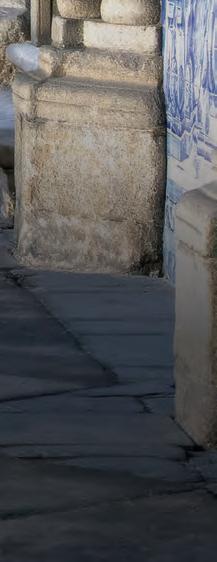
'OUR CITY CAN BE ANYTHING FROM THE SCENARIO OF A 19TH-CENTURY STORY TO THE LANDSCAPE OF A DYSTOPIAN WORLD'
was intentionally lean, with approximately 40 crew members and 13 actors. This was a strategic choice, because Jones is a character-led series and psychologically very intimate,” producer Joana Domingues says. “The scale allowed us to maintain agility, protect performance-driven scenes, and optimise budget efciency without compromising cinematic quality. From a market perspective, it demonstrates how Portugal can deliver high production value through strong locations, disciplined scheduling and highly skilled crews.”
On top of the lean team, locations are a core narrative asset rather than a backdrop: “This is a psychologically driven series with supernatural undertones, so the environments needed to carry emotional, historical and visual depth,” Domingues says.
“Vila Nova de Foz Côa [a city and a municipality in the district of Guarda] ofered a rare combination of cinematic scale and authenticity. The landscape gives the series a strong visual identity while grounding the story in something organic and believable. In contrast, more refned locations such as the historical Quinta de Vineadouro and the Rocco restaurant were chosen to frame interpersonal tension. Their visual elegance and architectural detail amplify the psychological confict within the family dynamic. Quinta da Penalva in Sintra delivers sophistication and mystique. It’s a classic Portuguese manor house with British influences, surrounded by a dense forest, and next to some dramatic Atlantic coastline. These provide texture and production value without the need for artificial set construction. The juxtaposition between controlled aristocratic spaces and the wildness of the surroundings reinforces the psychological tension at the heart of the series.”
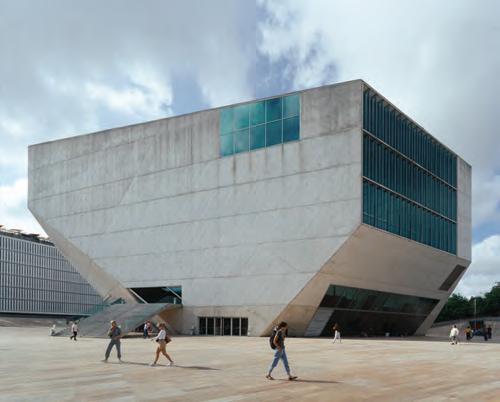
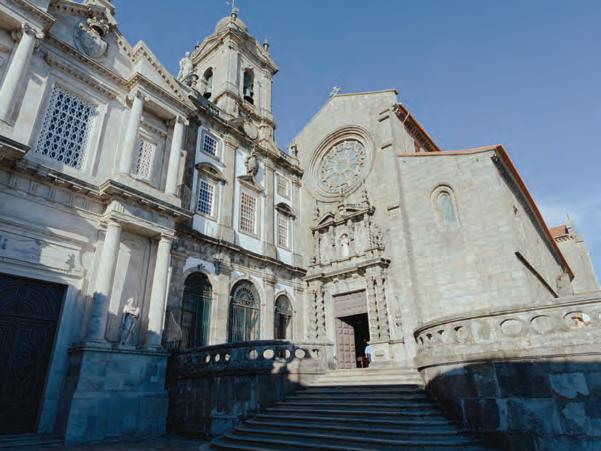
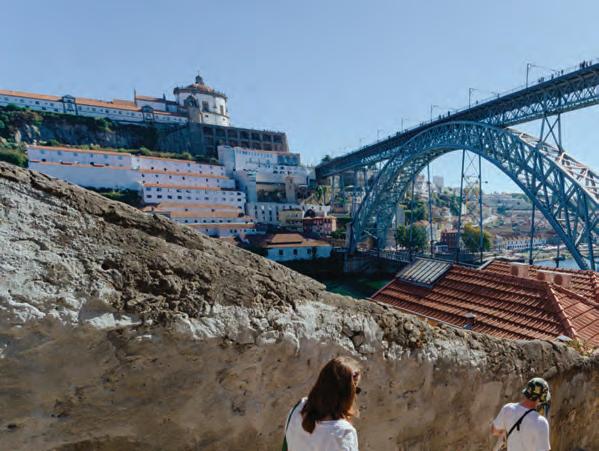
According to director and creator Bruno Gascon, the psychic dimension of the story demanded landscapes that feel inhabited by memory. “The Douro Valley, with its warm earthy tones and expansive horizons, creates a sense of emotional exposure that supports a story about memory, legacy, family confict and the unseen. Foz Côa has an overwhelming sense of vastness. It is a place where time feels suspended. The characters are confronted not only with each other but with the weight of what came before them. Sintra, on the other hand, is almost archetypal in its mystery. It feels embedded in the collective imagination of crime fction. In many ways, Sintra evokes the atmosphere of an Agatha Christie novel. The manor house, the surrounding forest, and the ocean clifs create a visual tension between beauty and threat. That tension is essential to the supernatural tone and to the layered mystery that drives the series.” Porto saw an increase in projects developed by local production companies (10,4 %), an increase in feature flms, documentaries and fction (one in 2024, seven in 2025), and an increase in short flms produced in the city (34,6%), according to Mário Gomes, flm commissioner at Filmaporto. “Two big feature flms partially shot in Porto in the last few months,” Gomes says. “Memórias de Cárcere, directed by Sérgio Graciano, is an adaptation of the book of the same name by the 19th-century Portuguese author Camilo Castelo Branco. And the dystopian fction Aquí, directed by Tiago Guedes, is an adaptation of Nobel laureate J.M. Coetzee’s Jesus Trilogy novels. Both flms were produced by Leopardo Filmes and they really show what Porto can ofer. Our city can easily be anything from the scenario of a 19th-century story, through to the landscape of a dystopian fctional world.”
Much like the series Jones, both productions used architecture to set the mood. Memórias de Cárcere was mostly flmed in the streets and squares of the historic neighbourhoods of Sé and Ribeira, and Aquí was mostly shot at the Bouça Housing Complex, designed by Álvaro Siza Vieira, a Pritzer Prize-winning architect, in the 1970s. “Together, these productions flmed approximately 40 days in Porto, and both projects required that all elements of the present day be hidden,” Gomes says. “This was a big challenge for the flm commission and for the Municipality, as well as for the people who live and work in the locations flmed, and for the production designers of the projects. Our job was to fnd solutions, and to promote a productive dialogue between all parties involved in the process, to enable shooting but minimise interference in daily life.”
In recent years, Greece has been attracting a growing number of high-end productions, and 2025 saw that trend being consolidated with a signifcant amount of repeat business. “A clear sign of change in the country’s audiovisual sector is the increasing tendency for major foreign television productions to return to Greece after having previously flmed here,” Neoklis Mantas, head of Ekome, the Hellenic Film Commission, says. “A notable example is the second season of Amazon Prime’s series House of David, which shot its entire second season in Greece.” An entire biblical village was constructed for the production, at Paiania — a town and municipality in East Attica — while complicated studio sequences were filmed at Kappa Studios a faith-based postproduction studio in Burbank, California.
“Another significant development during 2025 was the rise in international co-productions, particularly in TV series. The television adaptation of M Karagatsis’s novel The Great Chimera, a co-production between Greece, Italy and Germany is one of the best recent examples,” Mantas says.
Over the last nine months, many high-end productions visited Greece including Christopher Nolan’s feature flm The Odyssey, whose star-studded cast includes Matt Damon, Anne Hathaway, Charlize Theron, Tom Holland, Elliot Page, Robert Pattinson and Zendaya. The production flmed in Greece’s Peloponnese region, with key locations including Voidokilia Beach, Methoni Castle and Acrocorinth, generating more than 1,300 local jobs.
The Riders, starring Brad Pitt, and based on the novel by Tim Winton, has also chosen Greece as a location. “Part of the production took place on the island of Hydra, where an entire 1980s setting was recreated with a 500-member crew, extras and detailed period design, alongside shoots in Athens, Chalkida and Skaramagas,” Mantas says.
Sweetsick, staring Cate Blanchett, flmed key scenes in the Mani region of Messinia, with locations including Kardamyli, Trachila and Petrovouni. Directed by Alice Birch in her feature debut, the film follows a mysterious woman with the unusual ability to sense what others most deeply need. The production shot in both the UK and Greece, where it used the dramatic landscapes of Mani as the backdrop for the story’s emotional journey and climactic finale. And in early 2026, director Damien Chazelle (Whiplash, La La Land) was preparing to shoot his next project in Corfu and Athens. Starring Cillian Murphy, Daniel Craig and Michelle Williams, the project was untitled at press time: “The only thing that is known about it is that can be described as a classic prison movie,” Mantas says.
Aquí was mostly shot at the Bouça Housing Complex, designed by Álvaro Siza Vieira, a Pritzer Prize-winning architect, in the 1970s. Photo: Leopardo Filmes

ANDALUCÍA FILM COMMISSION


30% TAX REBATE
UNIQUE LOCATIONS
FILM TOURISM
FILM CITIES NETWORK
TALENT BEHIND THE SCENES

IT'S NOT ALL ABOUT THE WEATHER
Spain is now firmly established as one of the most popular filming locations in Europe, and it’s not just about the reliable weather. There’s the advanced infrastructure, the vast array of locations and world-class crews too. On top of that, there is a growing network of studios and other facilities. Gary Smith reports
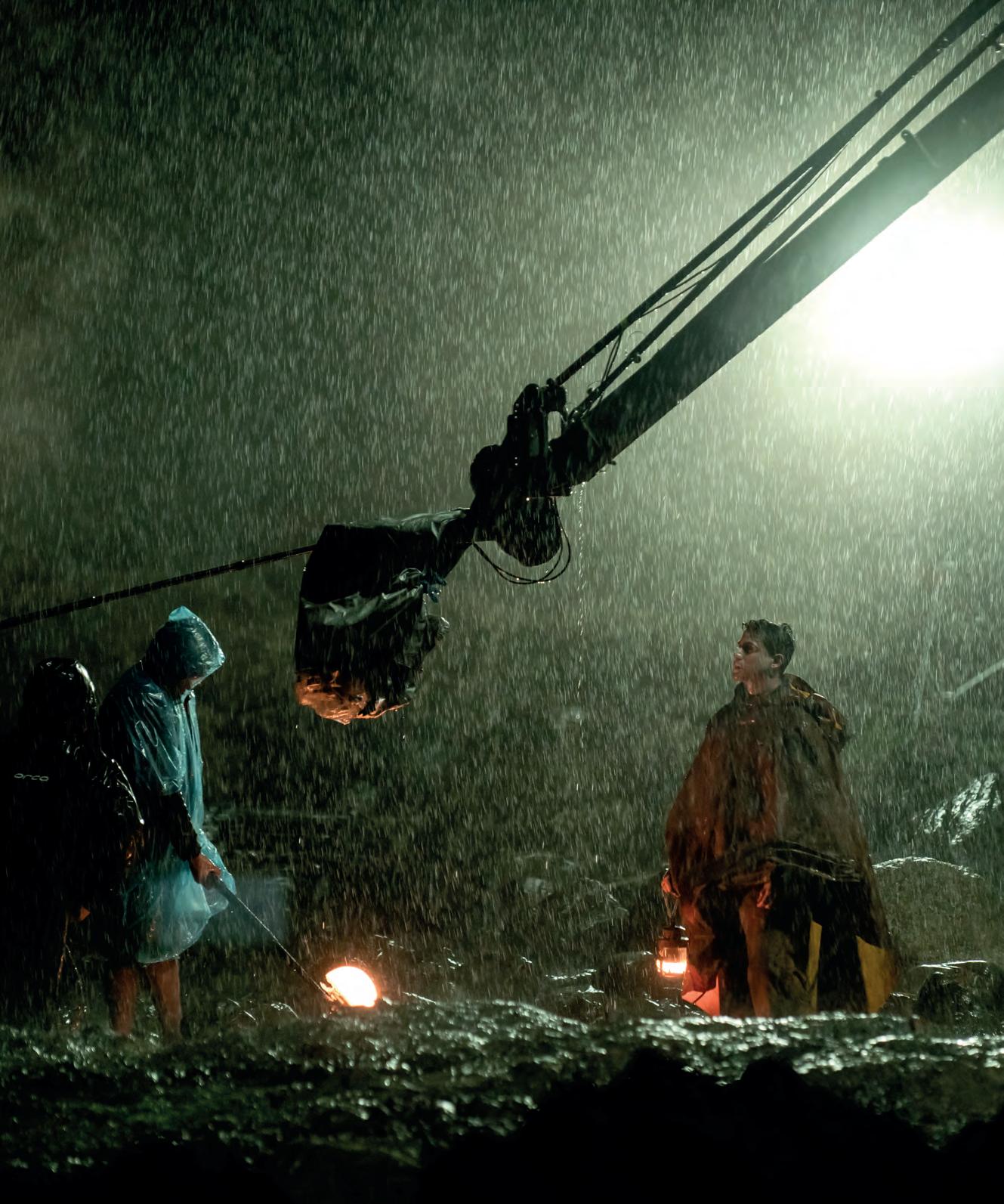
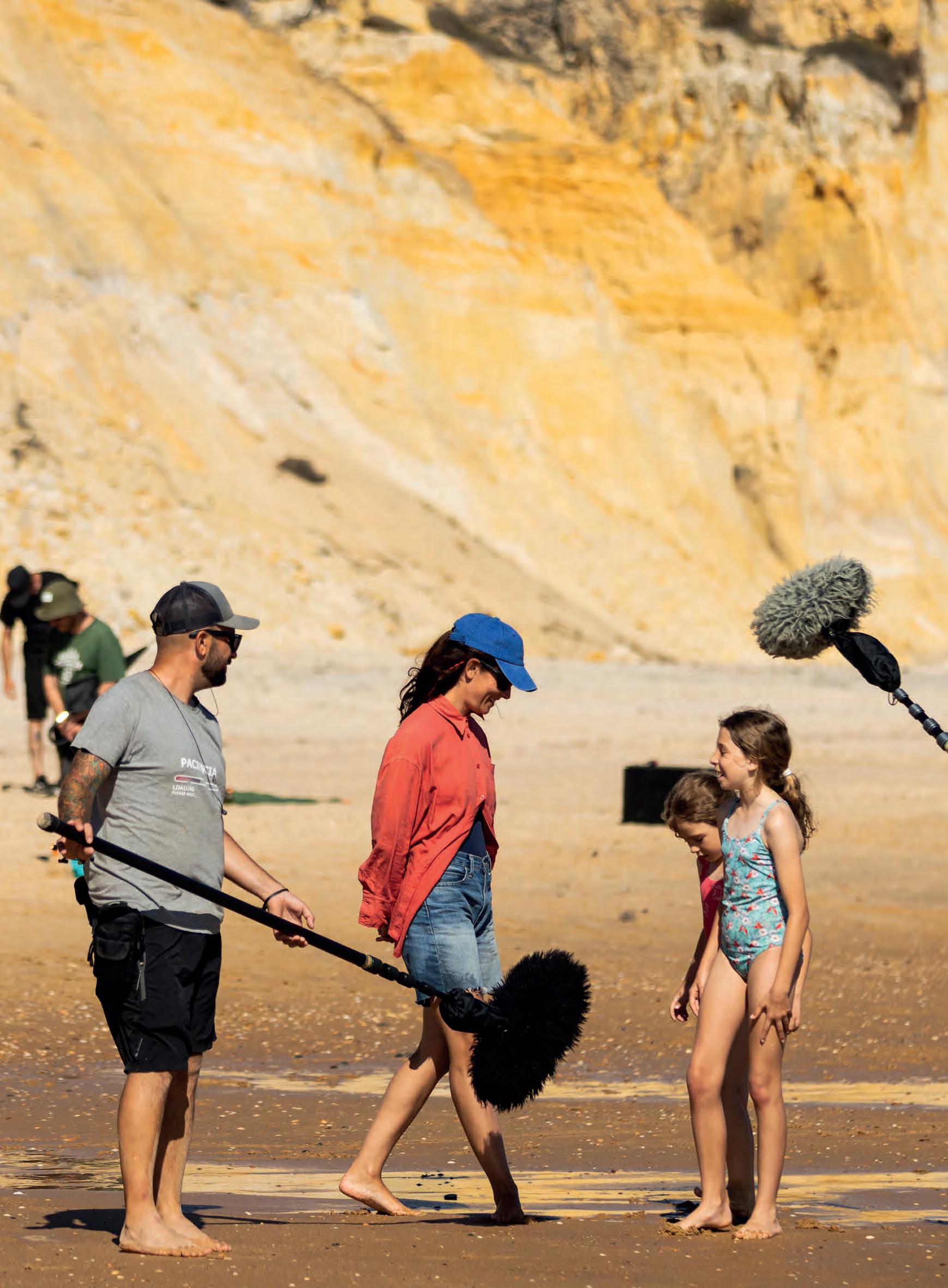
Filming a stormy night on a clif top for Igor Legarreta’s Inurri Itsuak. A large part of the flm shot on a set in Punta Zorroza
SPAIN’s production incentives are delivering strong economic returns, according to a 2024 report commissioned by the Spain Film Commission. The study fnds that tax rebates for international flm and television production generated around €1.8bn in gross value added between 2019 and 2022, alongside signifcant employment and wider supply-chain benefts.
Crucially, the report estimates a return on investment of roughly 9:1, meaning that every euro of public support generated nine euros for the wider economy. This reflects not only direct production spending but also indirect and induced efects across sectors such as hospitality, transport and local services.
Spain’s incentive system — ofering rebates of around 30% on initial expenditure and 25% thereafter — has helped position the country as a leading European production hub.
Juan Manuel Guimeráns, president of the Spain Film Commission (SFC), emphasises the signifcance of the fndings, adding that forthcoming analysis covering 2023–2025 is expected to provide further evidence of the incentives’ economic impact.
And there are other initiatives and co-operations that are helping to provide a firm foundation for the country’s production industry.
For example, India and Spain have established a co-production treaty that facilitates collaboration in film and television production, allowing both countries to pool resources for creating flms, documentaries and animation. In March 2026, a
JUAN MANUEL
GUIMERÁNS
‘THE PRODUCTION TREATY RELATIONSHIP WITH INDIA IS CRUCIAL. THIS COLLABORATION IS FLOURISHING’
from the audiovisual sector in Madhya Pradesh (India). Furthermore, we took the opportunity to present, for the frst time, our SFC Global Visionaries Awards to organisations that embody an innovative and transformative vision of international audiovisual co-operation with Spain.
Specifcally, the SFC presented this award to two key production companies: “Yash Raj Films, India’s most prestigious and infuential flm studio with a strong presence in our country, and Atrece Creaciones, an independent production company founded by Anna Saura, for its clear auteur vision, its international reach and its ability to drive innovative projects that connect cultures and territories, including the frst ever Spanish-Indian co-production, Mudras,” Guimeráns says.
Meanwhile Spain is enjoying a sustained presence of international productions, in various regions. In the northeast, the international co-production Rosebush Pruning, selected for the 2026 Berlinale, starring Elle Fanning, Callum Turner and Pamela Anderson, was flmed entirely in Catalonia and directed by Brazilian flm director and visual artist Karim Aïnouz. Andreas Wentz, of SUR Film — a production company based across the Iberian Peninsular — says: “As one of the Spanish co-producers, to see this project reach the Ofcial Selection at the Berlinale was thrilling. Our role was to link Karim Aïnouz’s creative vision with the immense possibilities offered by Catalonia, and the result could not be more rewarding.”
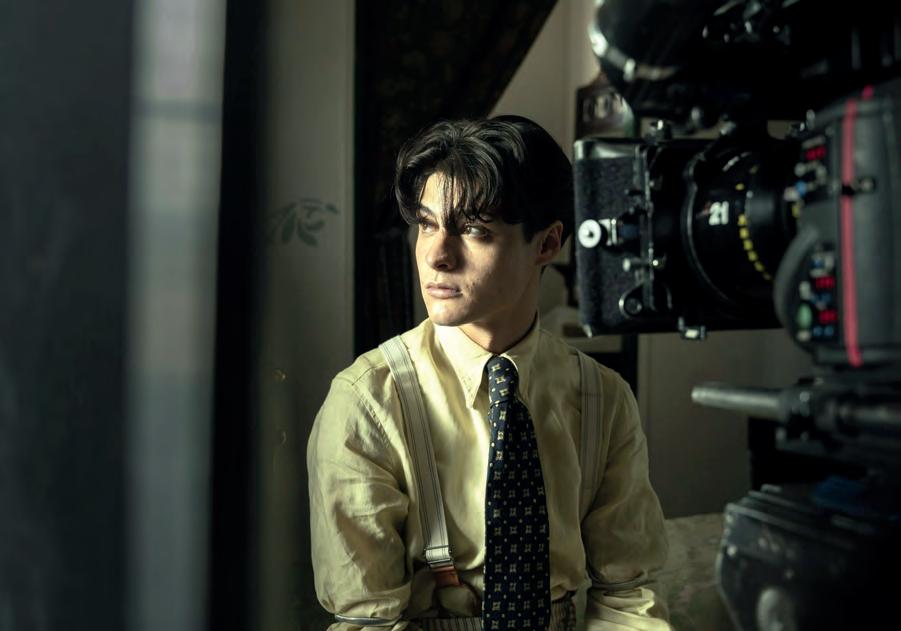
new memorandum was signed to further strengthen ties. “The production treaty relationship with India is crucial and takes on even greater signifcance given that 2026 is the Spain-India Dual Year of Culture, Tourism and Artifcial Intelligence, which serves as confrmation that this ecosystem of collaboration between the two countries is fourishing. In this regard, the Spain Film Commission will play a leading role throughout the year and will foster relations between the two countries through various initiatives,” Guimeráns says. “In fact in January, we kicked of a year full of opportunities with the launch of the dual year during FITUR Screen 2026, an event attended by leading representatives
He added: “Filming in Catalonia was an outstanding experience. Locations such as the Casakubrick in Castellterçol, alongside various spots across the Costa Brava and Barcelona, are all places with a very specifc architecture and atmosphere that only this region can provide. The versatility of Catalan landscapes, alongside the talent and reliability of the local technical crews, were essential in bringing the flm’s aesthetic to life.”
Barcelona-based production company Nostromo has worked on several international projects as co-producers, including Black Tides , starring Melissa Barrera and John Travolta, using the water tank at Barcelona’s In Extremis Film Services, and the Parc Audiovisual de Catalunya studios, in Terrassa. New developments at the Parc Audiovisual de Catalunya (PAC) will double the current production capacity by adding two new sound stages of approximately 2,200 and 1,000 square metres, alongside new production-service spaces. Day Drinker, starring Johnny Depp and Penélope Cruz, was partly shot in Catalonia at the Port of Vilanova del Vallès, while the Netfix thriller Ciudad de Sombras, produced by Catalonia’s Arcadia Motion Pictures, follows the investigation of a serial killer whose crimes are linked to buildings designed by modernist architect Antoni Gaudí. The production flmed for a total of 85 days, with 78 shoot days in Barcelona, mainly using iconic architectural landmarks. Among them was Gaudi’s La Pedrera – Casa
Filming Los Javis’ adaptation of an unfnished piece by Federico García Lorca, The Black Ball (La Bola Negra)

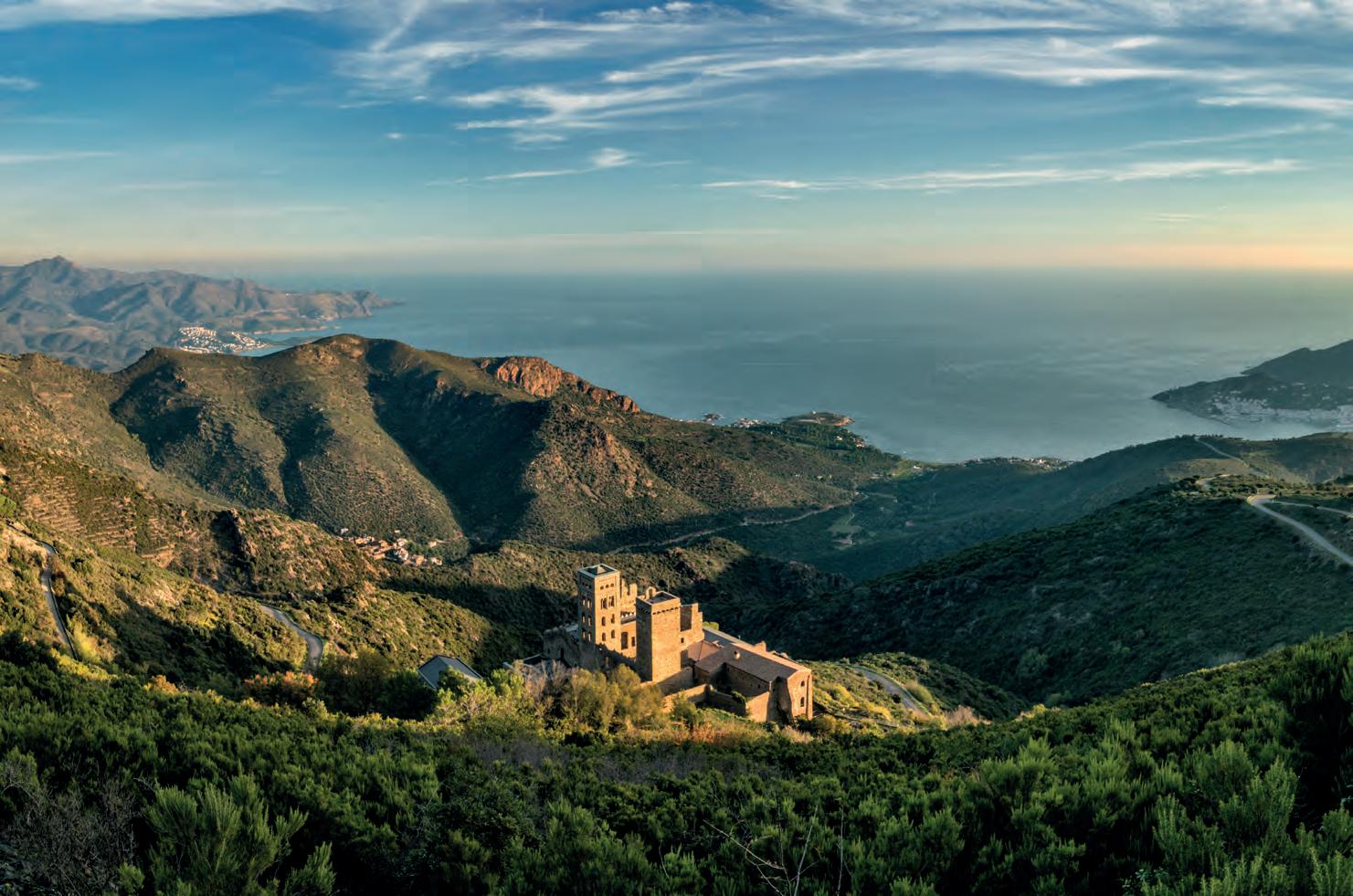
catalunyafilmcommission.cat
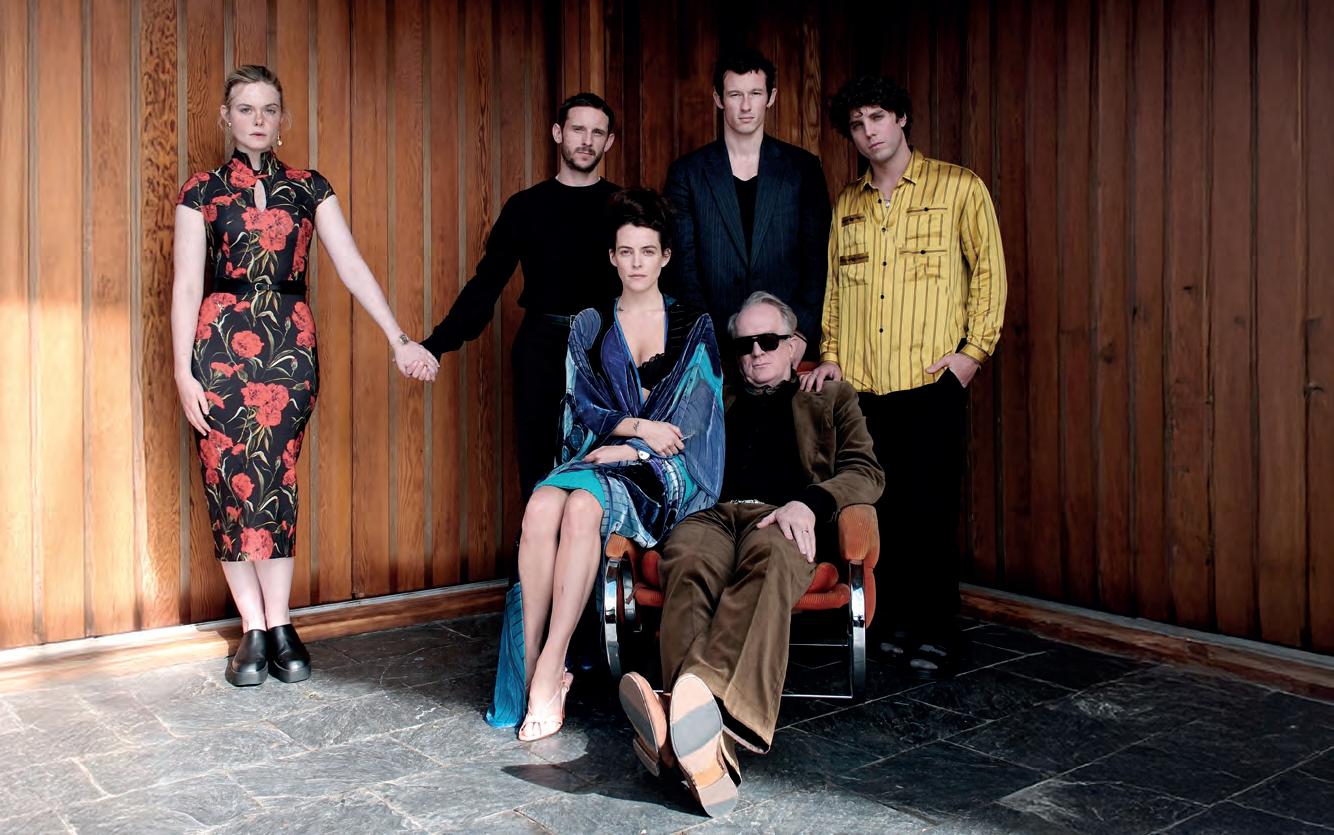
Milà, where a particularly complex sequence required a burning body on the façade. The art department carried out meticulous work to achieve the efect while fully respecting and protecting the building. Gaudi’s Palau Güell and the Güell Pavilions — in the neighbourhood of Pedralbes, Barcelona — also served as locations.
The city of Madrid hosted 50 high-end TV fction series over the past year for major national and international platforms including Netfix, HBO Max, Prime Video, Apple TV+ and Disney+. In the same period, the city hosted 71 feature flms, exceeding the 47 flms shot in 2022, the previous best year. “It’s a very signifcant increase, partly explained by the rise of co-productions and, undoubtedly, by a progressive implementation of the diferent flm funds from the City Council and the Region aimed to the development, production and promotion of independent flms,” Madrid Film Ofce head of communication, Victor Aertsen says. “In addition, we have hosted advertising shoots, music videos, entertainment programmes and short flms. In total, more than 1,000 medium and large-scale projects were shot in the city, including director Marc Webb’s Day Drinker; the sequel to the British thriller The Postcard Killings, directed by Renny Harlin; and the Canadian flm Journey to You, directed by Terry Ingram. Also noteworthy are new projects by Pedro Almodóvar, who returns with Bitter Christmas (Amarga Navidad ), and the creative duo Los Javis’ adaptation of an unfnished piece by Federico García Lorca, The Black Ball (La Bola Negra).
VICTOR AERTSEN
'MADRID'S CREATIVE TALENT HAS PROVEN ITS ABILITY TO DEVELOP ORIGINAL CONTENT THAT WORKS IN THE GLOBAL MARKET'
a more monumental side of Madrid, with scenes shot in the area around El Retiro Park, the city's main historical park. Has Fallen 2 did something similar, this time in the neighbourhoods of Palacio and Sol, two of the city's most classically ceremonial settings. For me, what makes Madrid special is that it offers a highly attractive environment for flm and audiovisual productions, a well-established industry and competitive pricing. The region hosts a wide network of top-level crews, production companies, studios and specialised service providers with experience in international shoots — and cost-efective rates, both for talent and technical resources. Additionally, Madrid’s creative talent has proven its abiliity to develop original content that works in the global market, as characterised by Money Heist or Red Queen.” According to Film Madrid Film Commissioner Xiomara Garcia, one thing that makes the Spanish capital’s surrounding region unique is the strength of its audiovisual ecosystem, which combines to form the leading production hub in Spain.
The city’s standing as a major tourist destination also inspires storylines for series around the world, with scenes from projects including Turkish series Love, and the Argentinian series O11CE (both for Disney+) flming there. “Among Spanish high-end TV series, miniseries Anatomy of a Moment (Movistar Plus+) used the Cortes Palace, the seat of Spain's Congress of Deputies, to recreate the central scenes of its historical story, and new TV series Salvador (Netfix) shot in and around Santiago Bernabéu, Real Madrid’s football stadium,” Aertsen says. “In its second season flming in the city, The Walking Dead: Daryl Dixon chose
“According to the latest study, the industry already represents 2.6% of the region’s GDP, bringing together more than 3,500 companies, creating 29,000 direct jobs and a global economic impact exceeding €7.2bn. This level of technical concentration, talent and economic weight is simply unmatched in the rest of Spain,” Garcia says. The year 2025 was, according to Garcia, a pivotal year for the Film Madrid Region. “Beyond a very solid level of flming activity, the year allowed us to take decisive steps that strengthened our role within the audiovisual ecosystem. One of the most signifcant milestones was the repositioning of the ofce in September, a change that refects an evolution in our responsibilities. We no longer operate solely as a traditional flm commission; we now serve as the single point of contact for the audiovisual industry in the Madrid Region.
“We hosted several major productions including Pedro Almodóvar’s upcoming feature flm, Amarga Navidad, which shot in the city of Madrid and at the iconic Hemeroscopium House in Las Rozas, continuing his signature tradition of integrating the unique architectural spaces that are so characteristic of our region. We also welcomed large-scale international projects
Rosebush Pruning, starring Elle Fanning, Callum Turner and Pamela Anderson, directed by Karim Aïnouz, flmed entirely in Catalonia
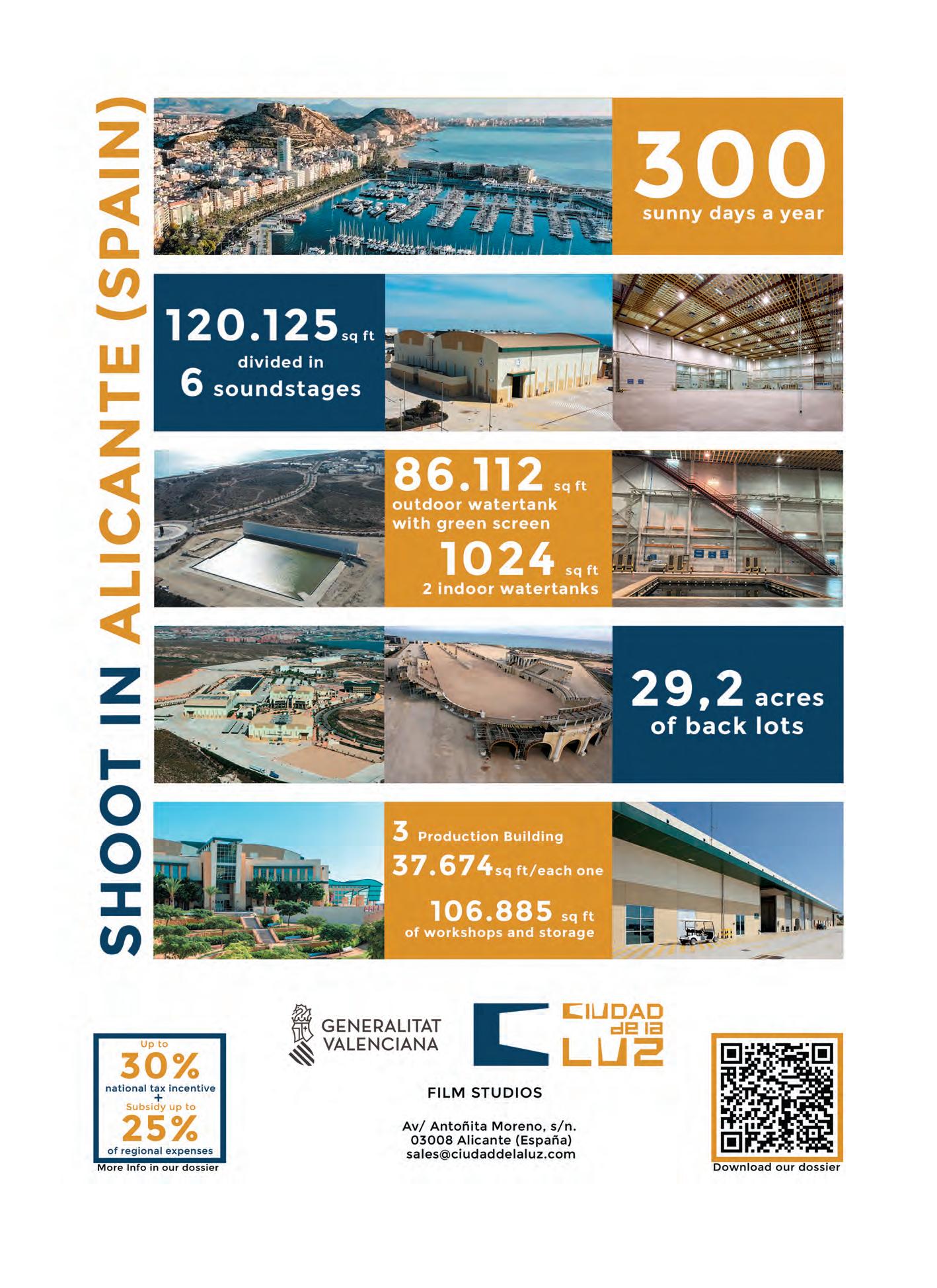
such as Day Drinker, and the fourth season of The Walking Dead: Daryl Dixon, as well as La Bola Negra, the latest flm from Los Javis.”
The Walking Dead: Daryl Dixon shot at several natural landscapes in the northern part of the region. “These locations are already well known domestically, but still relatively undiscovered beyond that. We believe that the scale and visibility of this series will help position these natural spaces more prominently, opening new opportunities for future international shoots,” Garcia says. “One project that particularly stands out is Edén (working title), produced by Caballo Films. They are shooting in multiple municipalities — such as Getafe, Móstoles and Fuenlabrada — and by working closely with us, the production has been able to operate seamlessly. The collaboration and responsiveness from these municipalities is exceptional, allowing the shoot to proceed uninterrupted. What truly sets our region apart is the extraordinary diversity of locations available within a relatively compact territory.
(Huelva),” Querol says. “In Cádiz city alone, the local Film Ofce estimated the direct economic impact of this shoot to be around €2m, a signifcant short-term boost derived from local hiring, hospitality and services. And then there’s the second season of Netflix’s Berlin, a high-profile spin-off from Money Heist, which also flmed in Andalusia. Major urban scenes were used in Seville and Jerez de la Frontera, Cádiz, using historic streets and architecture as part of the show’s narrative landscape.”
KONTXI CLAVER
‘BILBAO BIZKAIA IS BECOMING ESTABLISHED AS AN EXCELLENT AUDIOVISUAL REGION IN SPAIN AND IN EUROPE’
“This combination of urban variety, natural landscapes, architectural richness and authenticity makes the Madrid Region one of the most versatile flming destinations in Europe.”
The Walking Dead: Daryl Dixon also flmed in Andalusia. The series, with services provided by the Malaga-based production company Anima Stillking, filmed significant sequences in Seville and Granada, choosing iconic historic and architectural sites as part of a post-apocalyptic landscape. In Seville, locations included the Reales Alcázares and the Casa de Pilatos; in Granada, the Alhambra and the Mirador de San Nicolás were used for key scenes.
Film commissioner Piluca Querol says: “Among the most notable flms, Ivan & Hadoum was directed by Ian de la Rosa and shot in the province of Almería. It premiered in the Panorama section of the Berlinale 2026, where it was awarded a Teddy.
Guy Ritchie’s Young Sherlock also filmed widely across Andalusia, using a range of urban and historic locations to represent 19th-century Europe. “Filming took place in Cádiz, Jerez de la Frontera, El Puerto de Santa María, Seville and Nerva
Andalusia tends to attract projects from all over the world thanks to its diverse locations, industry services, and flming facilities. This continued to be the case in 2025, with an increase in film shoots from Asia, especially Korea and India. “We like to treat each project as unique,” Querol says. “So we always ask that you contact Andalusia FC as far ahead of a shoot as possible, because we can be very helpful in the development process. We’ve even managed to secure funding for low-budget feature flm projects that just needed that fnal push.”
According to Kontxi Claver, Bilbao Bizkaia’s councillor for economic development, commerce, tourism and employment, 2025 was a very good year for several reasons: “It was mainly due to the success of the productions flmed in Bilbao Bizkaia, an increasingly stable, powerful and competitive industry in the city and the region, plus the value, quality and distribution of projects flmed in Euskera,” Claver says. “Thanks to all that, Bilbao Bizkaia is becoming established as an excellent audiovisual region in Spain and in Europe. And Euskadi [the Basque Country] is experiencing a unique moment of opportunity in the audiovisual field due to the quality of its creative, artistic and technical professionals, creating stories that invite audiences to think, refect and empathise. But we should also never underestimate the importance of tax incentives, and we ofer deductions of up to 60% depending on the expenditure made in Bizkaia.”
In 2025, the Bilbao Bizkaia Film Commission hosted 219 projects shot at locations in the city and the region, including 23 full-length feature flms, 18 full-length documentaries, 13 fction series and 10 documentary series. There were 1,298 flming days, which translates to over fve shoots per working day in 79 towns in
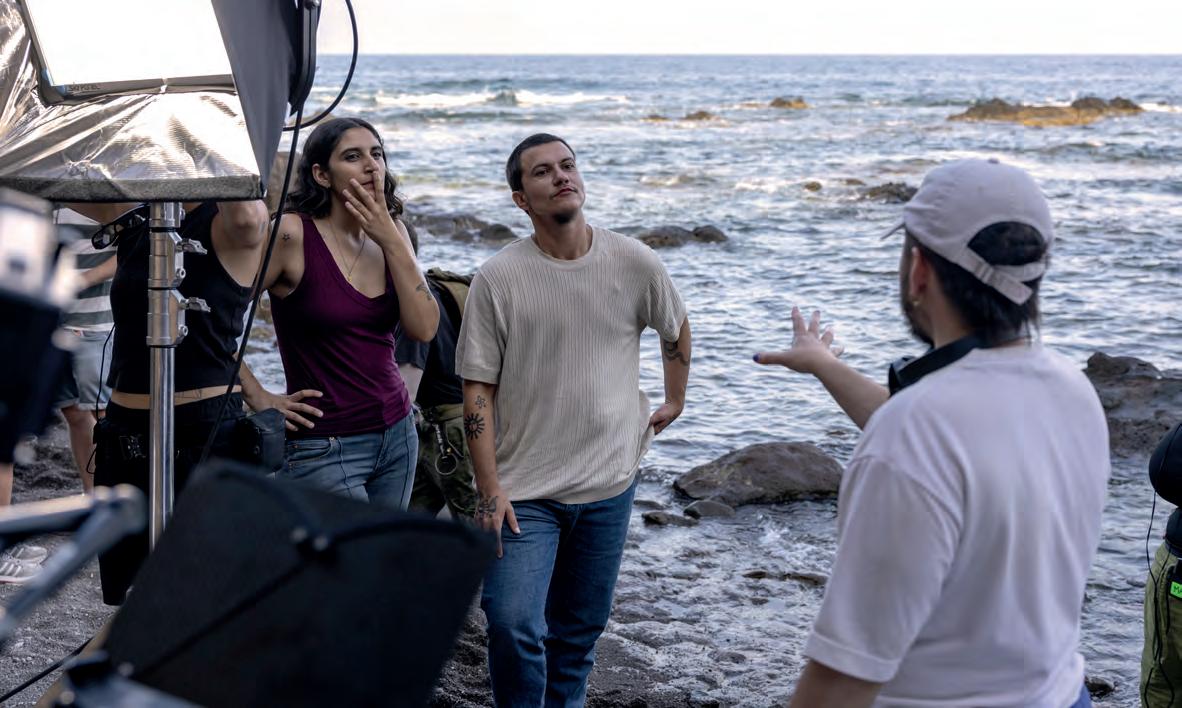
Ivan & Hadoum, by Ian de la Rosa, shot in the province of Almería
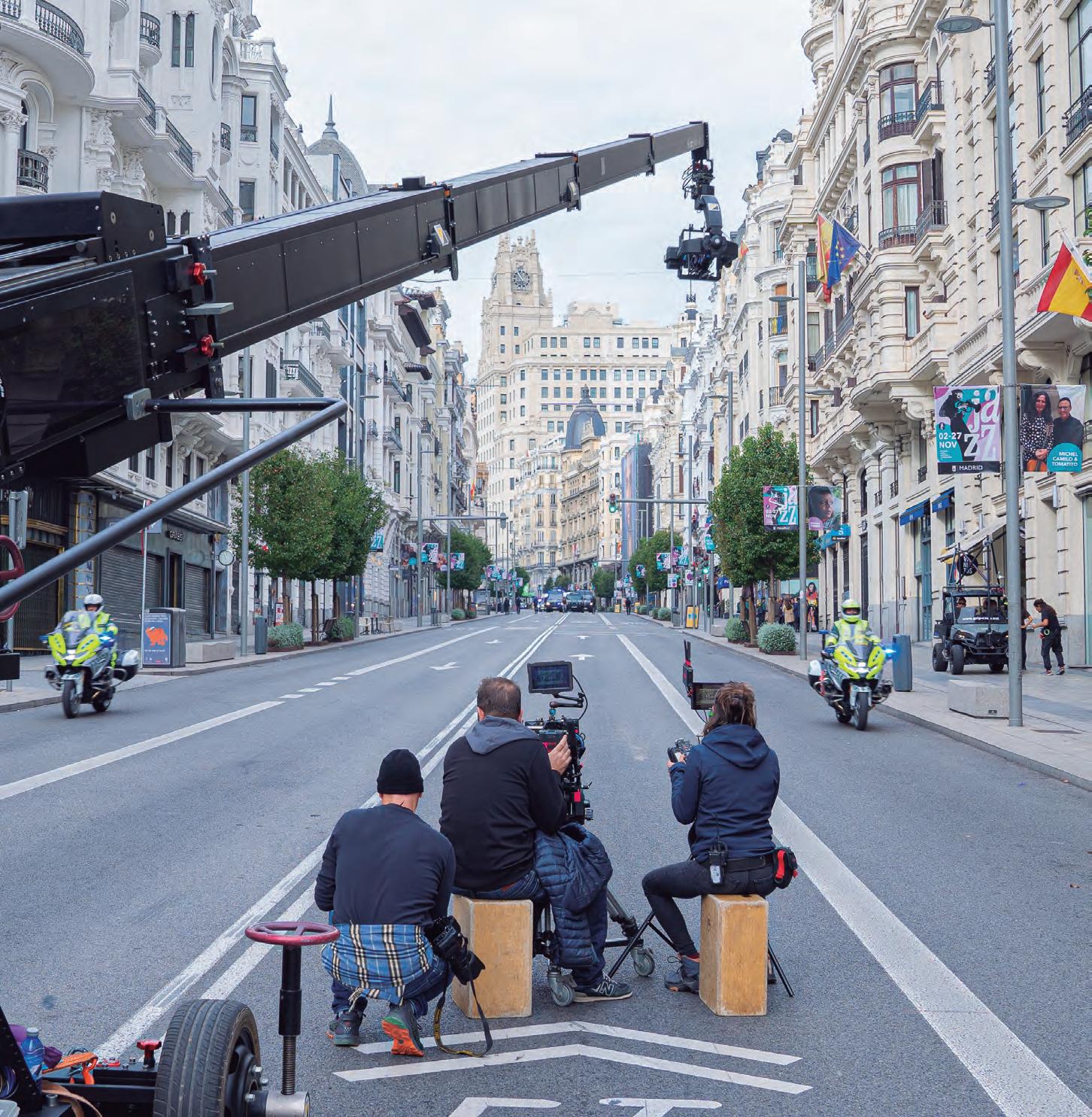

Bilbao Bizkaia, with a direct economic impact of €91m. “The most notable titles include Los Domingos, by director Alauda Ruiz de Azua, and Igor Legarreta’s Inurri Itsuak, which shot a large part of the flm on a 10,000 square-metre set in Punta Zorroza, flming a stormy night on a clif top,” Claver says. “Catherine Zeta-Jones flmed the series Kill Jackie in Bilbao Bizkaia over four months, and a spectacular scene from The Walking Dead also shot outside the Guggenheim Museum in Bilbao. Other productions include La Tregua (Netflix), Sacamantecas by David Pérez Sañudo, El Niño, by Mariano Barroso for Netfix, and Hidden Assets, a co-production between Ireland, Belgium and Canada. The fact that Netfix series Sira recreated cities in Europe and Morocco at locations and palaces in Bilbao and Bizkaia makes it clear that our region has become a prime destination for the international audiovisual production industry.”
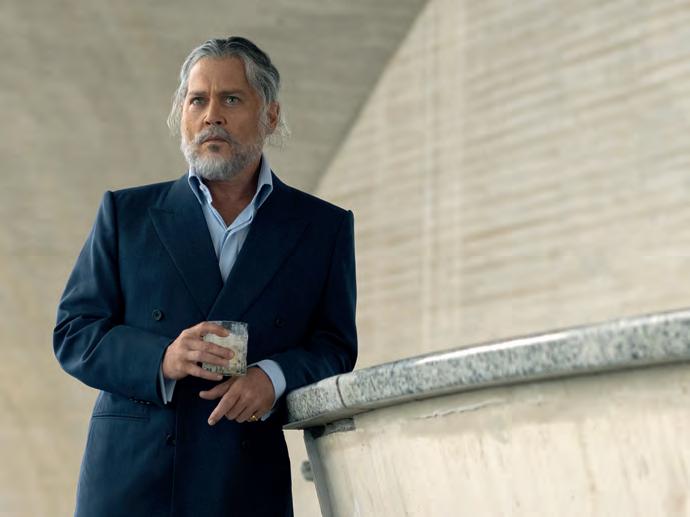
Away from the mainland, the Canary Islands is a big draw for all kinds of production, not least because of the climate and stunning landscapes; a set of attractive tax advantages can apply to audiovisual productions thanks to the Canary Islands Economic and Tax Regime. There are many incentives on ofer depending on the nature and nationality of the production — some international productions can be eligible for up to a 50% tax deduction.
The audiovisual sector in the largest and most populous of the Canary Islands, Tenerife, created 4,249 jobs in 2025, 15% more than in 2024 and with an economic impact of €117m, almost €15m above the previous highest fgure. In that year, audiovisual activity left an average investment of €464,616 for each working day of the year. “The island hosted 166 audiovisual productions throughout 2025, with highlights including the American series NCIS: Tony & Ziva for Paramount+, and the German TV series Alea Aquarius, which shot in different locations in Tenerife for six months,” film commissioner Sara Pérez says. “Other highlights include American feature flm Day Drinker, partially shot in the Auditorio de Tenerife which reunited Johnny Depp and Penélope Cruz for the fourth time, and fnally the American series Wild Things for Apple TV+.”
“Tenerife is widely known for distinctive venues including Hotel Barceló, a flm-friendly hotel, located inside the San Blas Environmental Reserve. It’s a protected area in the arid south of Tenerife that was the main location for TV series Crossfre for BBC Studios/RTVE and, last year for the feature flm Last Resort Regarding the shoot days, the island is seeing a marked shift in how audiovisual productions operate, with shoots becoming
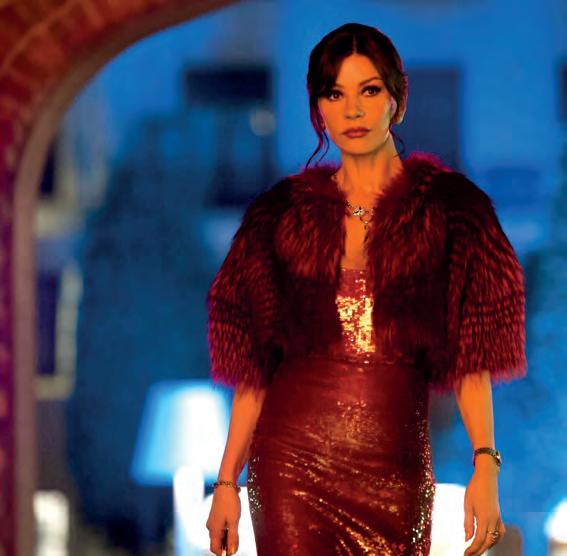
noticeably longer and more sustained. This pattern is refected in the new record of 1,526 flming days registered in 2025, well above the previous peak of 1,207 in 2021,” Perez says.
Meanwhile, studios and other audiovisual facilities have been working at capacity, taking advantage of the country’s tax incentives, weather, locations and technical know-how.
In October 2025, Pedralonga Studios, a joint venture of the Galician Audiovisual Cluster (CLAG) and A Coruña U — located in the autonomous community of Galicia in northwestern Spain — opened the Coruña Immersive Studio (CEI), a virtual studio and one of the most advanced integrated virtual facilities in Europe. A testament to the good timing of the move, the studio has been working nonstop ever since. “Since November, we’ve been working mostly with fashion brands, hosting diferent types of campaigns, from snow-themed photoshoots to New York recreations. However, one of the fction projects that flmed car scenes with a rain efect on our stage is Dímelo en Secreto, produced by Vaca Films. It is the sequel to Dímelo en Bajito. Much of our recent work has been in advertising and fashion, particularly with Zara Kids,” says Laura Pazienza, production co-ordinator at CEI. The CEI boasts a 750 square-metre virtual sound stage equipped with a permanent semi-circular LED screen measuring 28 x 6 metres, ofering 4K resolution with a 1.9 pixel-pitch defnition. It is backed up by further screens, an ARRI camera and optics.”
Located seven kilometres from Alicante’s historic centre, the Ciudad de la Luz complex has hosted names including Ridley Scott, Francis Ford Coppola, J A Bayona, Bigas Luna and Álex de la Iglesia. Among its facilities are 11,000 square metres of interconnected sound stages equipped with indoor water tanks. It also has two outdoor shooting areas totaling 14.8 hectares, with water, electricity and telecommunications.
The outdoor water tank is equipped with wave systems, water cannons, and a 120 x 12-metre-high chroma screen, allowing for underwater recordings with exceptional clarity. The Region of Valencia ofers non-repayable subsidies to boost the production of cinematographic and audiovisual works, covering 25% of eligible expenses incurred in the Valencian territory, with a limit of €1,500,000 per project and per benefciary company for each call. To qualify, at least 50% of the overall budget must be allocated to activities in the Region of Valencia.
Catherine Zeta-Jones in Kill Jackie. The series flmed in Bilbao Bizkaia over four months
Johnny Depp in Day Drinker, which was partly shot in Catalonia at the Port of Vilanova del Vallès
HOLLYWOOD RELOAD
The blockbusters keep coming – and one of them cleaned up at The Oscars.
Thrilling procedural dramas set to shiny backdrops are streaming all over the world, and a re-vamped Incentives Program is giving Hollywood yet another boost. The past few years have felt tough for the people on the ground, but as ever, the movie capital is fighting back. Andy Fry and Julian Newby report
LET’s start with the big one. An A-list cast and a massive crew, always on the move, always on location, with ofcially (for now) the world’s best director at the helm. Paul Thomas Anderson’s One Battle After Another has single-handedly revived what could be described as a beleaguered Hollywood. At least where morale is concerned.
Tragic wildfires, strikes and financial pressures were quite enough to make the world’s movie capital feel as though it was being punished for something. But Hollywood always comes back — and so it has once again.
One Battle After Another, inspired by Thomas Pynchon’s Vineland, that follows a washed-up former hippie as he navigates the aftershocks of Sixties counterculture, gave director Anderson and his extraordinary cast a night to remember at the Academy Awards. It won six Oscars, for the brilliant telling of a story set in a crazy period in America’s history, while reminding the world of the wealth of moviemaking — and storytelling — talent that still exists there. With the number of locations featured — 25 in California alone, and more as the production ventured into Texas — the big ensemble cast, the density of dialogue and the highspeed nature of the flming and editing, it’s easy to believe that the flm took a long time to make and cost a lot of money. There are stories that say that the gestation period — for Anderson at least — was 10 years; others say up to 20 years. For location manager Michael Glaser it was three, maybe four, and his frst key contact in the process was production designer Florencia Martin. “I think it was April or March 2022 when I saw Paul at an event and he was kind of surprised I hadn't heard about this, as Florencia and others were now getting started on how they were going to make this flm,” Glaser tells Location International magazine. “When they all got back to LA, I was on another flm at the time, and I got a call and Florencia started sending me all these ideas. There wasn't even a script that we were looking at. It was more of a very vague outline of worlds that we were trying to fnd and
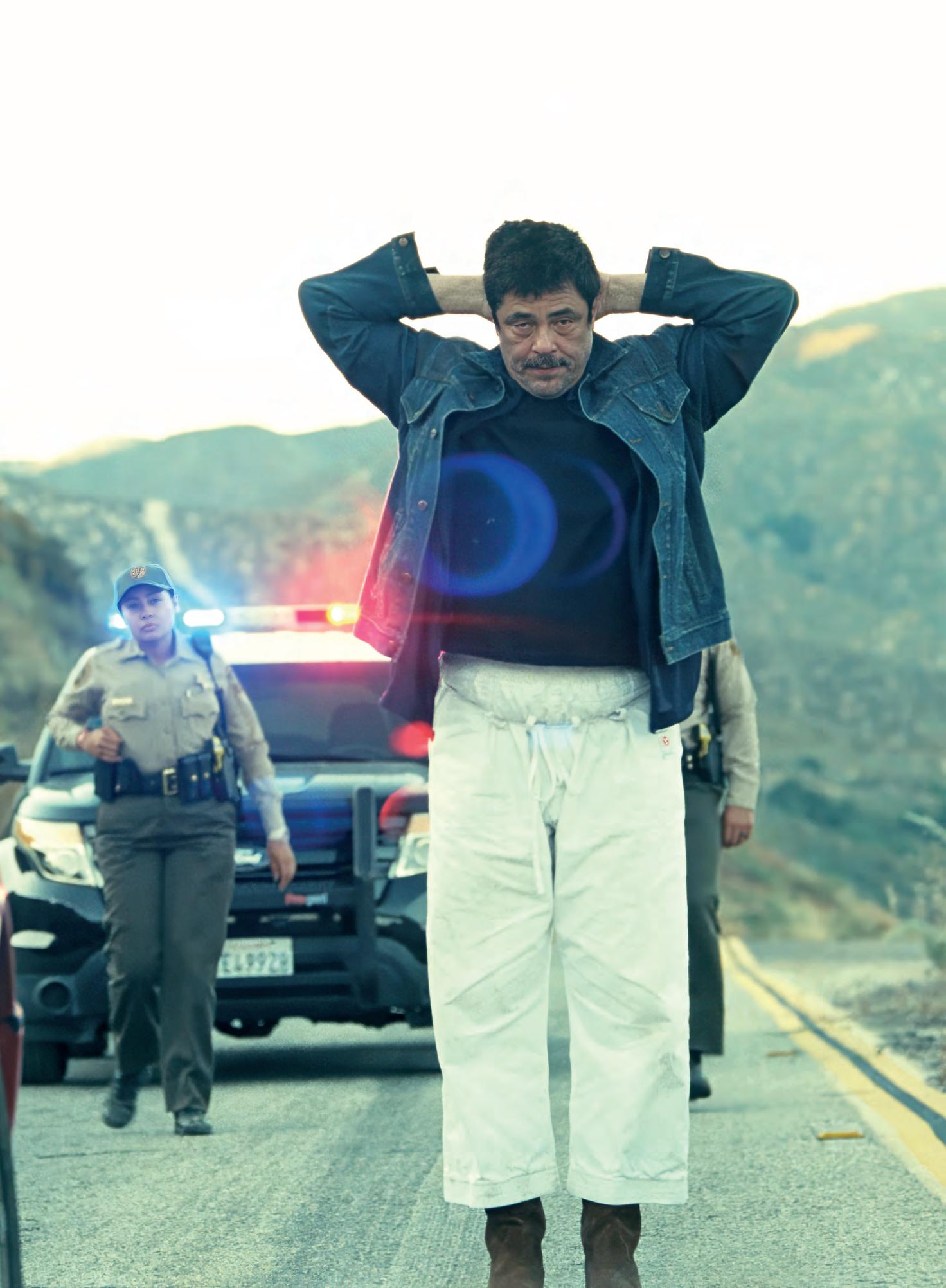
ED

Benicio Del Toro as Sensei Sergio St Carlos is arrested ahead of the epic car chase in One Battle After Another
Photo: Warner Bros. Pictures
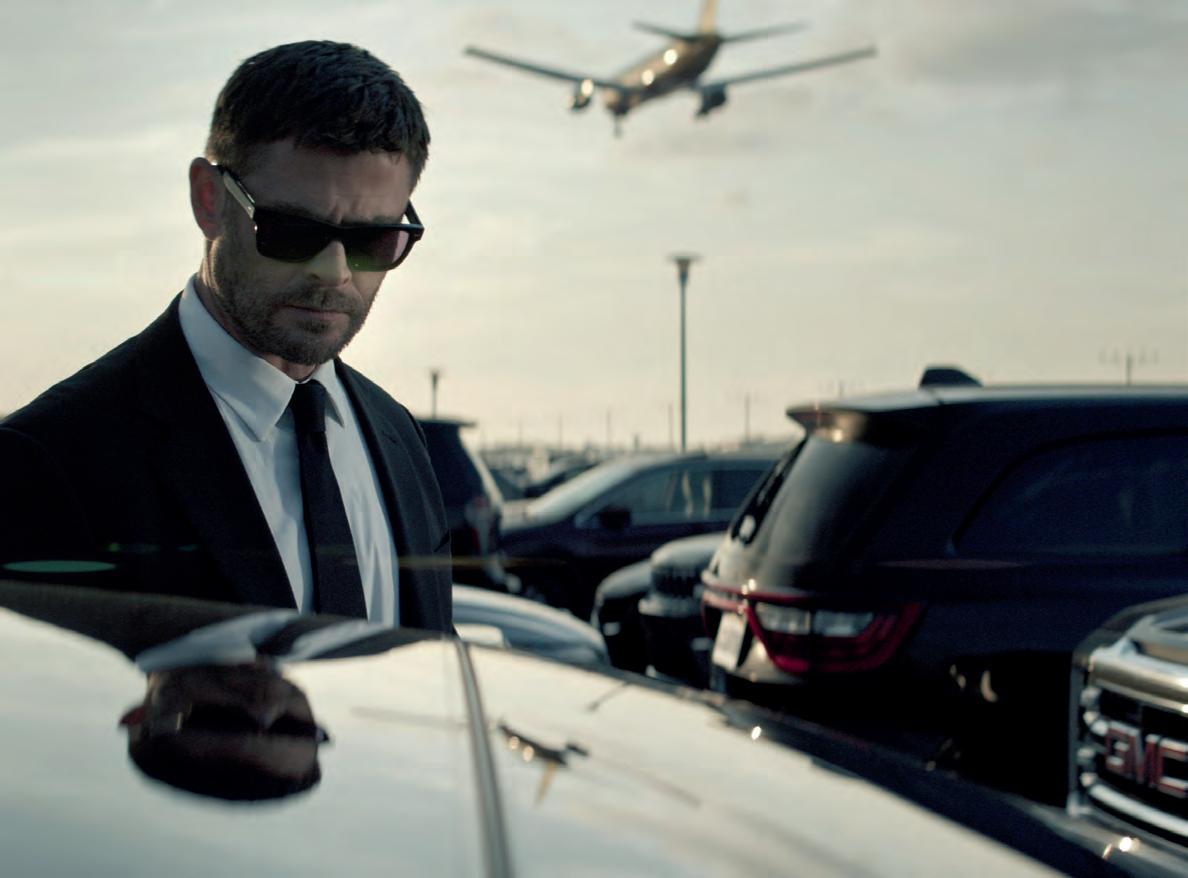
build for these characters. She was giving me short kind of biographies of who Willa was [Chase Infniti], who Lockjaw was [Sean Penn], where they live, where their layers are… so that's where it started. And it kind of organically picked up steam until we started flming in late January, early February of 2024.”
The scene that nobody will ever forget is the car chase towards the flm’s conclusion, in which Willa is pursued by Tim Smith, a member of hate group the Christmas Adventurers Club, who is attempting to eliminate or capture her following her escape.
That was shot on a desert highway dubbed the River of Hills, located in Southern California's Anza-Borrego Desert, on Highway 78. Cinematographer Michael Bauman says the scene was “immensely technically complicated”, mainly because it was a “live road” so there was a lot of traffic and they needed to close it for short 10-minute sequences, in order to create both a safe environment for the cast and crew, and the illusion of an empty highway.
kind of go in there a lot of times, and it’s like, ‘Okay, here's the plan and here's the second plan and here's the third plan’. And you know that between all the plans, something's going to happen.”
Another blockbuster followed soon after. Set in Los Angeles, Bart Layton’s Crime 101 is much more than a typical crime caper. An adaptation of the Don Winslow novella, it centres around jewel thief Mike Davis, played by Chris Hemsworth, who is careful to steal from those who can aford it. He carries a gun but is not violent against his victims. Things change as two key fgures enter his orbit: Sharon, a disillusioned insurance broker (Halle Berry); and LAPD detective Lou Lubesnick (Mark Rufalo) who is onto Davis’ game.
MICHAEL GLASER
‘THEY COULDN’T FAKE THIS. IT WAS AN EXISTING ROLLER COASTER THAT WE COULDN'T REPRODUCE’
“We'd asked to close it down and the California transit authority, Caltrans, had said it was going to be a 150-mile detour. Basically saying, ‘We're not closing this road down’!” Glaser says. “So we had to work around all those things. There was nowhere else to go to get a similar look — they couldn’t fake this. It was an existing roller coaster that we couldn't reproduce.”
The perfect post-script to the story of the River of Hills car chase is that it turns out it wasn’t originally in the script — the location itself inspired the scene when Anderson and Glaser came upon it by chance. “We were always trying to catch the chaos of the moment, and letting the spontaneity happen,” Bauman says. “That was really critical to the energy of the flm. You just had to
Alongside Winslow’s plot, the performances and Layton’s storytelling, the city of Los Angeles plays a key role in Crime 101. Layton saw in the city a metaphor for society’s inequalities that so often lead to crime: “You can live in LA and glide between your beautiful home and marble ofce without ever touching the underbelly,” he says. “The rich live literally higher, in the hills or as far west as possible. At the start of the flm, a diamond travels from downtown LA, from an immigrant family, to Calabasas,” a wealthy city in the southwestern region of the San Fernando Valley in Los Angeles County. “In the 45 minutes it takes, it quadruples in value — just by moving closer to wealth.”
Early scouting happened further south — San Diego and Orange County — “because that's the world that Don Winslow works in”, supervising location manager Robert Foulkes says. But the LA backdrop was central to Layton’s interpretation of the story. Combine that with production designer Scott Dougan’s desire to showcase parts of the city that people normally don’t see, and
Chris Hemsworth stars as Mike Davis in Crime 101 Photo: Amazon MGM Studios
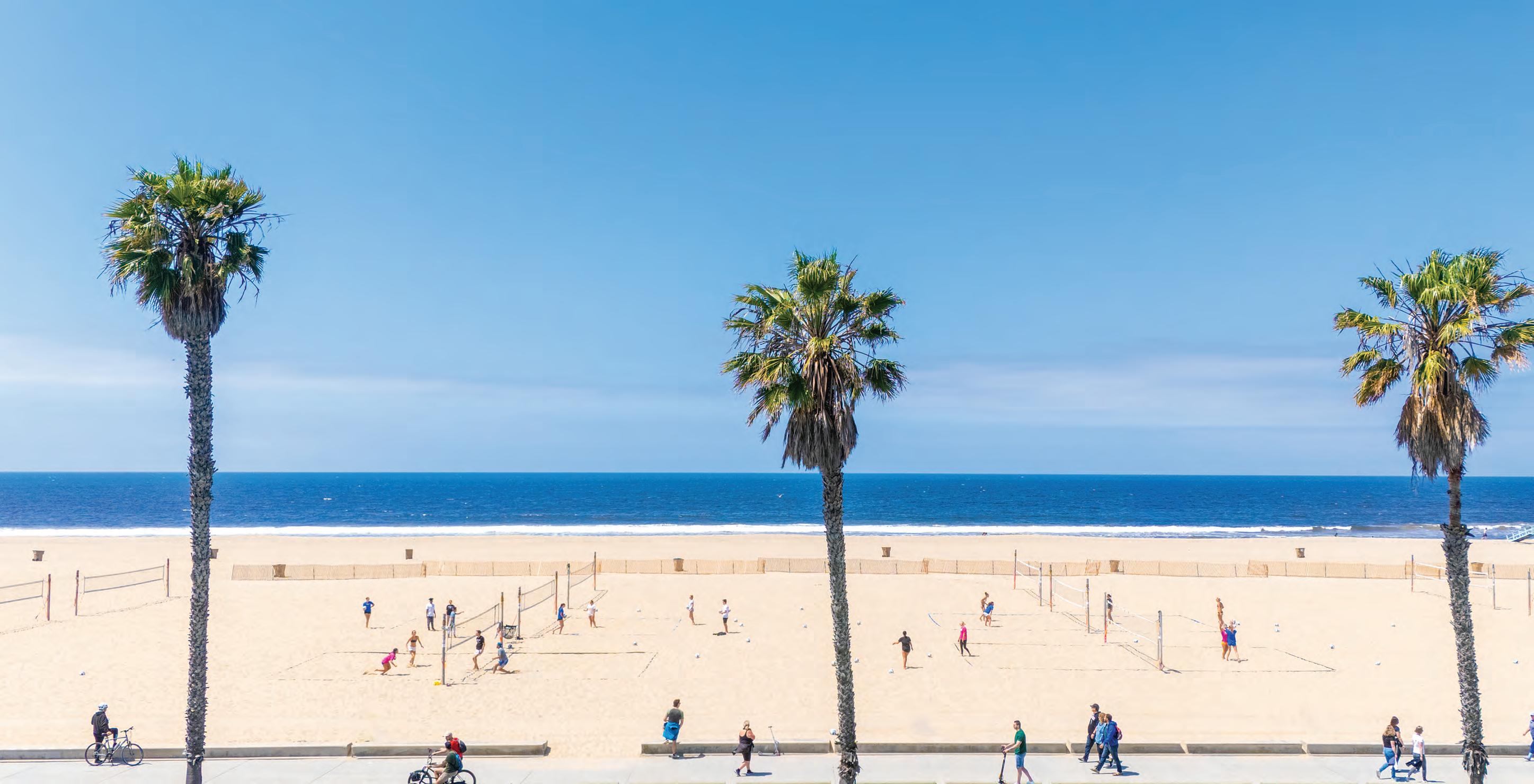
SANTA MONICA, CALIFORNIA
Sun-soaked beaches. Urban chic. Beach city streetscapes and modern architecture all within minutes of one another.


Accelerate your project with white glove permitting support, location insights, crew resources and community coordination so you can focus on creativity, not red tape. info@filmsantamonica.com | +1.310.319.6263 | filmsantamonica.com
you have a real LA story without the clichés. The story’s action spans from San Barbara to downtown LA, with locations in Pacific Palisades, Venice, Redondo, Hermosa, Beverly Hills and Echo Park. Initial scouting was carried out by Foulkes along with Layton and Dougan and, at frst, they did look beyond Los Angeles County. “But eventually it became an all-based-in-the-Los Angeles-area movie,” Foulkes says. “Because you can't fake LA.”
Which is very much the view of prolifc crime writer Michael Connelly, whose characters Bosch, The Lincoln Lawyer and Ballard have all given their names to TV series shot exclusively in Los Angeles, over the past 15 years or so. Bosch was the frst of those series and even before the cameras started rolling, Connelly had laid down the law as far as locations were concerned.
The early Bosch series were the result of a collaboration that began in 2012, between Connelly and Henrik Bastin, at the time CEO at Fabrik Entertainment, back then the LA-based scripted house of Germany’s Red Arrow Entertainment group.
“When I met Henrik, I said: ‘I’m going to put it in the contract that every shot of this show must be shot in LA, or I won’t make a deal with you.’.” Connelly put it more bluntly to Location International: “LA is Harry Bosch, and Harry Bosch is LA. And so you cannot try to re-create that somewhere else — somewhere you might get a tax break or something. Yes, it will be more expensive to shoot in LA, but that’s what we wanted to do.”
to the directors and DPs that ground our scenes in the reality of LA while still making it recognisable.”
Much of the Bosch, Ballard and The Lincoln Lawyer series show the grittier side of Los Angeles. But the cameras do sometimes stray to the sunnier more picturesque parts of the county — including the Pacifc Coast towns of Santa Monica and Malibu — both well used to flm crews showing up for some sea, sun and occasional action. In a fashback to his more carefree surfng days at the start of Season 3, Mickey Haller drives from Malibu to Santa Monica in an old red VW and spies what will become his glorious blue convertible Lincoln, on a Santa Monica car lot.
MICHAEL CONNELLY
‘YES, IT WILL BE MORE EXPENSIVE TO SHOOT IN LA, BUT THAT’S WHAT WE WANTED TO DO’
Every one of Connelly’s novels to have made it to the small screen have been shot in the city, and the authenticity that brings is immeasurable. Most recent from the Connelly stable is The Lincoln Lawyer, the fourth season of which is streaming now on Netfix — with a ffth season in production.
Mickey Haller — played by Manuel Garcia-Rulfo — is the eponymous lawyer, who has always worked out of the back of one of his three Lincoln cars. At least when they’re roadworthy; the risky nature of his business sometimes leaves them out of action for repair. But the on-the-move nature of his work means that Los Angeles is almost always in shot. “LA is such an atmospheric city — there’s a lot more to it than the stereotype of Hollywood and celebrities,” showrunner Ted Humphrey says. “LA is this mysterious, brooding entity. It’s bright and sunny, but that just serves to accentuate the darkness lurking around every corner. There’s a lot of history here, not all of it nice, that echoes of the streets Mickey drives. And of course, it’s an endlessly diverse place, a remarkable melting pot even in a nation of melting pots.” “LA, while iconic, is very recognisable — for better or for worse,” location manager, Richard DiPatri says. “I think the key is to present locations that ft the story and the scripts, but also to stay away from the main tourist attractions. Most of that credit goes
“The city is, in many ways, camera-ready,” says Film Santa Monica COO Evan Edwards, who points to its palm-lined streets, mid-century buildings and historic landmarks. “Santa Monica is special because you can shoot a sunrise on the beach and be on a contemporary city street fve minutes later,” she says. “It’s iconic, instantly recognisable and ofers the fexibility to tell multiple stories in one area.” Santa Monica’s proximity to Hollywood ensures access to a deep crew base and major studio resources. And the launch of a dedicated flm ofce in 2025 has meant that permit approval times have dropped from weeks to just 24-48 hours. “We work with the community and our residents to ensure production enhances the city experience rather than disrupts it,” Edwards says, “while still allowing ambitious shoots. Everything from a helicopter over the water to complex street closures can be managed efectively.”
California — and certainly its cities — may have landscapes and cityscapes that can never be properly replicated, but the state’s dominance has been tested in recent years as productions have increasingly chased lower costs and aggressive incentives around the world. The Golden State has, of course, fought back. Its Film & Television Tax Credit Program was introduced in 2009 and has generated over $27bn in economic activity since then. According to the California Film Commission (CFC), the credit has supported more than 211,000 cast and crew jobs across the state. For every dollar awarded, says the CFC, California has seen $24.40 in economic output, $16.14 in GDP and $8.60 in wages. Despite this efort, however, global competition remains intense. With production work harder to come by and more jurisdictions launching eye-catching rebates, the Golden State has had to dig even deeper — enhancing its tax incentive so that more producers can take advantage. In July 2025, California unveiled the fourth iteration of its incentive, aka Program 4.0. Active through 2030, the state has increased its base rebate from 20% to 35%. Just as signifcantly, the state has addressed the fact that 70% of projects that applied for the California incentive were reject-
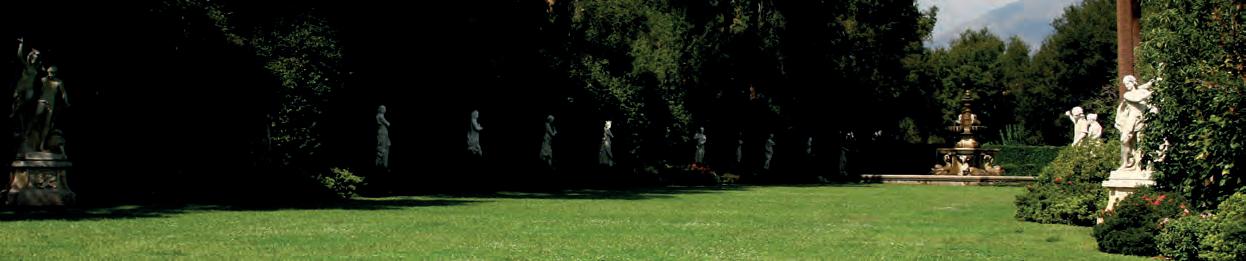
THE HUNTINGTON


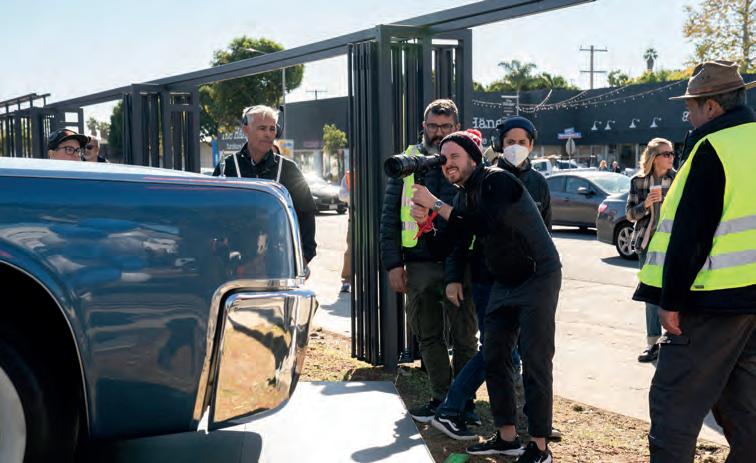
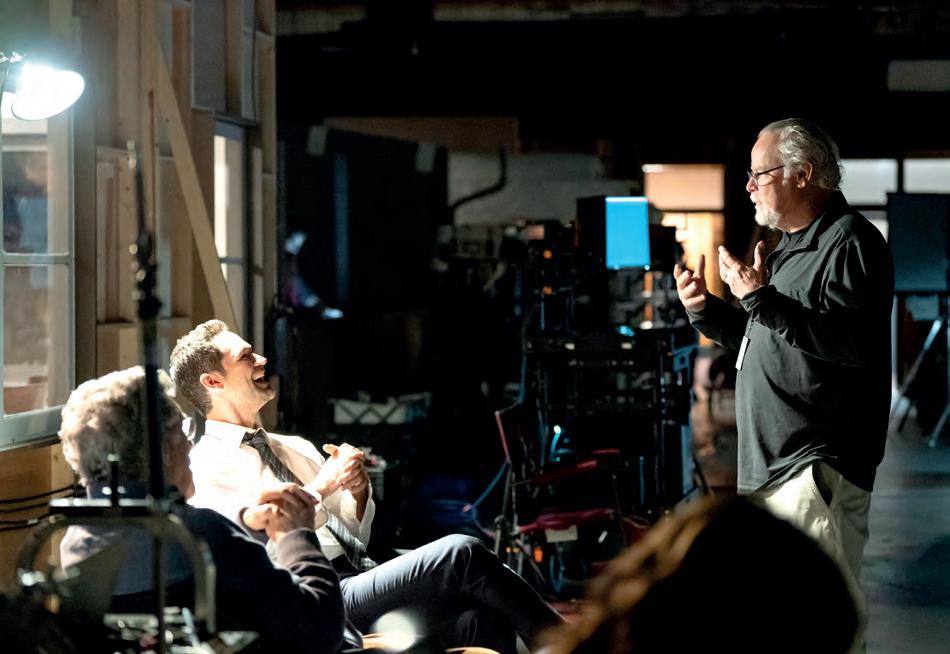
ed because of insufcient budget — by doubling its annual tax credit allocation from $330m to $750m. This is the largest expansion since the programme’s launch in 2009, and one of the most signifcant such commitments across the US. The expansion was championed by state Governor Gavin Newsom, who says it is about more than money. “California’s flm and television industry isn’t just an economic engine, it’s part of who we are. For more than a century, the world’s most iconic stories have been imagined, produced and shared from right here, powered by unmatched talent, creativity and innovation. This latest round of tax credit awards builds on that legacy while delivering real results across the state: good-paying jobs, stronger local economies and thriving small businesses.
It’s a clear signal that California remains the global home of storytelling — yesterday, today and for generations to come.”
blings that more big movies are coming.”
The headline data supports this anecdotal observation. “Since we launched 4.0 in July, we’ve taken in 119 flm and TV projects, with 25,000 cast and crew hires and 4,000 shooting days,” Bell says. “Those 119 projects are on track to generate over $4.17bn in economic activity here in the state.”
COLLEEN BELL
Bell’s assessment is echoed by FilmLA, the ofcial flm ofce for the City and County of Los Angeles. While 2025 was 16% down on 2024, it sees blue skies ahead: “FilmLA has projected that the full efect of the expanded programme would take time to materialise,” FilmLA vice-president, communications, Philip Sokoloski says. “Although our overall numbers remain low, there are dozens of incentivised projects that have yet to begin flming.”
‘I'M OUT IN THE COMMUNITY AND I'M HEARING FROM FRIENDS — I JUST BOOKED A JOB. MY WIFE JUST BOOKED A PROJECT’
The 2025 changes are already reshaping production decisions and stabilising employment, according to CFC director Colleen Bell. “There’s always a time lag between introducing a new incentive and shows getting into production,” Bell says, “but I’m out in the community and I’m hearing from neighbours and friends — ‘I just booked a job. My wife just booked a project’.”
Location manager Mandi Dillin agrees. After a “rollercoaster” few years, she says: “I know a lot of people who are working, mostly on episodic television. The town is busy with streaming shows and there is still a handful of on-location network shows as well. I’ve also heard of several second-season shows moving to LA due to tax credits and other things, like people wanting to work at home. Big movies are coming back too. I just fnished one, which was a period 1970s movie, almost all on location. I’ve heard rum-
Major feature flms expected to shoot significant portions in California include the latest instalment of Jumanji, Michael Mann’s Heat 2, Netfix’s The Fifth Wheel directed by Eva Longoria, a new project from the Daniels, and Ang Lee’s Gold Mountain, an epic centred on the California Gold Rush. The expansion of the tax credit has also created headroom for more independent flms to choose California. In the latest round of tax credits awards, 42 independent projects have been benefciaries, 10 of which have budgets in excess of $10m. FilmLA’s Sokoloksi sees the rise in independent movies as something for Los Angeles to celebrate, after a year in which feature-flm shooting was 31% down on the fve-year average. Among titles coming down the tax incentive pipeline is Epiphany, starring Kristen Wiig and Bill Murray. Producer Ellen Goldsmith-Vein says: “California has been home to my career from the start, and being able to make Epiphany here means I get to work with the best crews in the business while keeping jobs in my community.
Director Alonso AlvarezBarreda, cinematographer Moira Morel, director José Gilberto Molinari-Rosaly, flming Mickey Haller’s future Lincoln, on a Santa Monica car lot in Series 3 of The Lincoln Lawyer.
Photo: Lara Solanki/Netfix
Elliot Gould as Legal Siegel, Manuel Garcia-Rulfo as Mickey Haller, with executive producer and writer Michael Connelly shooting a scene from The Lincoln Lawyer Photo: Lara Solanki/Netfix
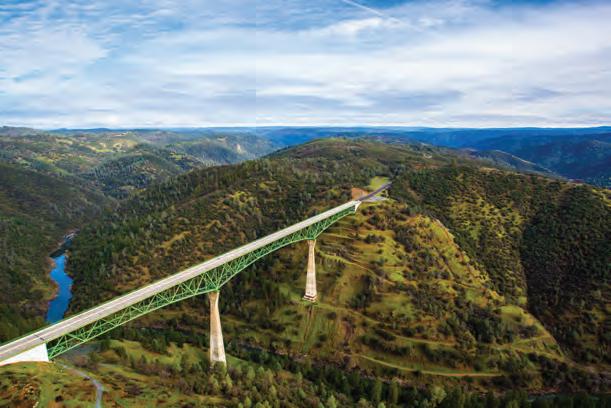
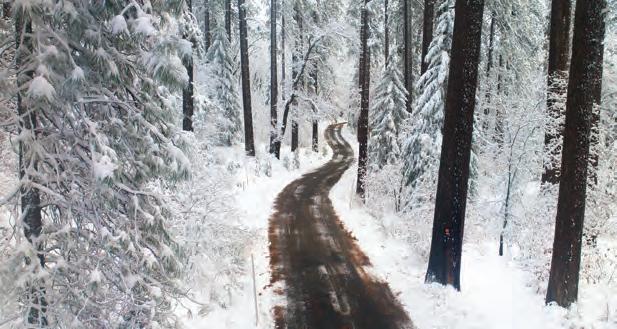

BUILDING ON A HISTORY OF STORYTELLING
The UK’s screen industries have entered 2026 with renewed confidence, tempered by pragmatism, and reflected in some impressive numbers. And in recent years, it’s the place where some legendary British stories have been re-told. Andy Fry reports
OFFICIAL figures from the British Film Institute (BFI) show that film and highend television (HETV) production spend reached £6.8bn ($9bn) in 2025, a 22% rise over 2024. High-end television accounted for £4bn, 59% of the total, while flm production hit a record £2.8bn. Inward investment remained the engine of growth, delivering £5.8bn — 85% of combined spend — and cementing Britain’s position as one of the world’s most attractive destinations for international production.
The data reveal a market of fewer, but larger and more resourceintensive projects. Many are anchored by multi-season television commitments or major features. Tentpole inward-investment titles including Avengers: Doomsday and The Thomas Crown Afair underscored the UK’s blockbuster credentials. Meanwhile, domestic productions including Sense & Sensibility and Shane Meadows’s Chork signalled continuing local ambition.
If one flm encapsulates the UK’s craft, atmosphere and ambition, it is Warner Bros.-distributed Wuthering Heights. Directed by Emerald Fennell and starring Margot Robbie and Jacob Elordi, the 2026 adaptation is unmistakably British in landscape, language and artistic tradition — yet executed at the scale and technical assurance investors demand.
Exterior sequences were shot across the Yorkshire Dales National Park — in Arkengarthdale, Swaledale and around Low Row — where the moors refect the elemental force of Emily Brontë’s
EMERALD FENNELL
‘BRITAIN HAS AN UNBELIEVABLE BASE OF TALENT. IF YOU CAN USE IT, YOU’D BE MAD NOT TO, BECAUSE THAT’S THE PLEASURE’
Jessie Buckley and Paul Mescal with director Chloé Zhao on the set of Hamnet, a Focus Features release.
Photo: Agata Grzybowska/Focus Features
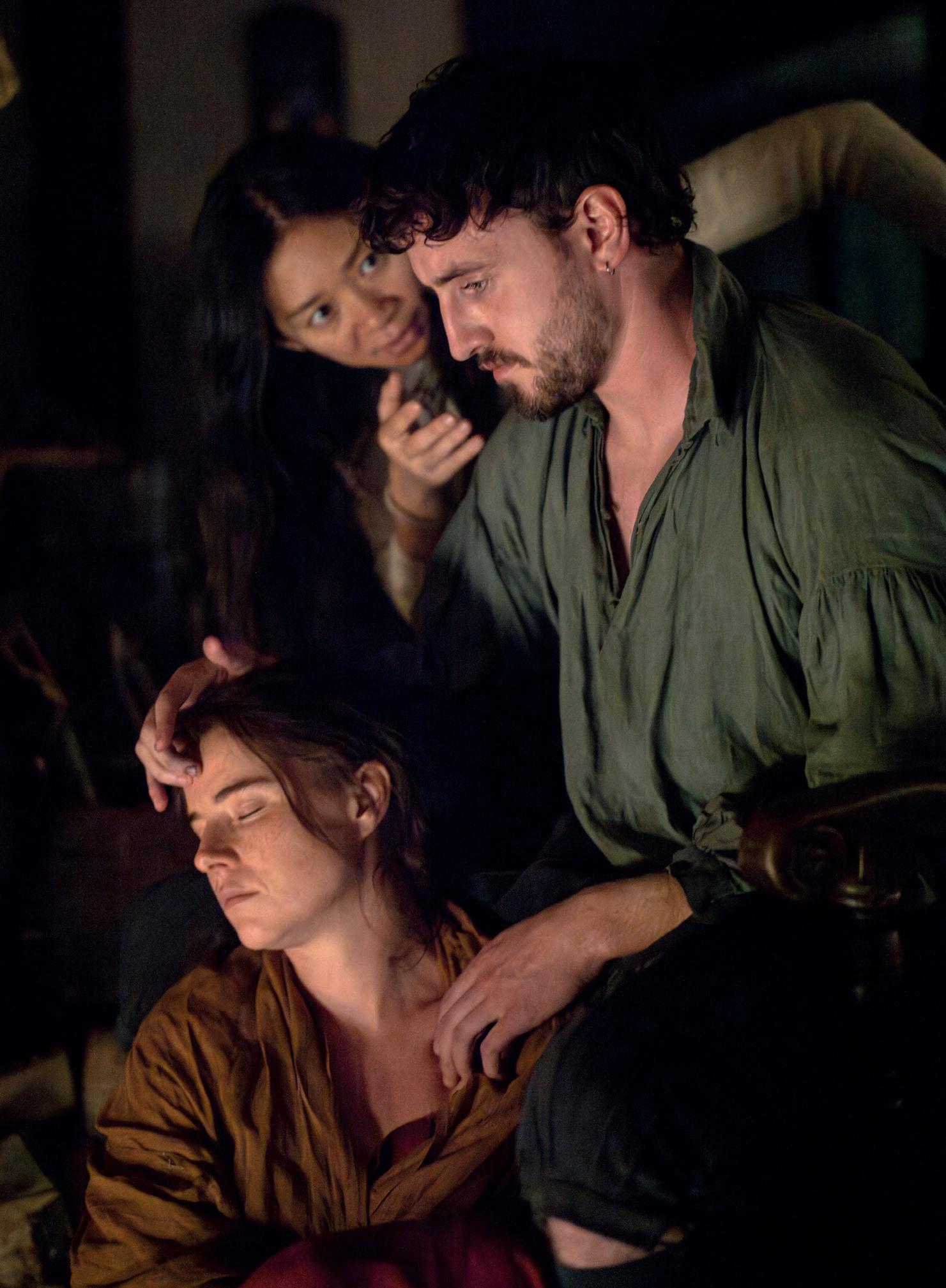


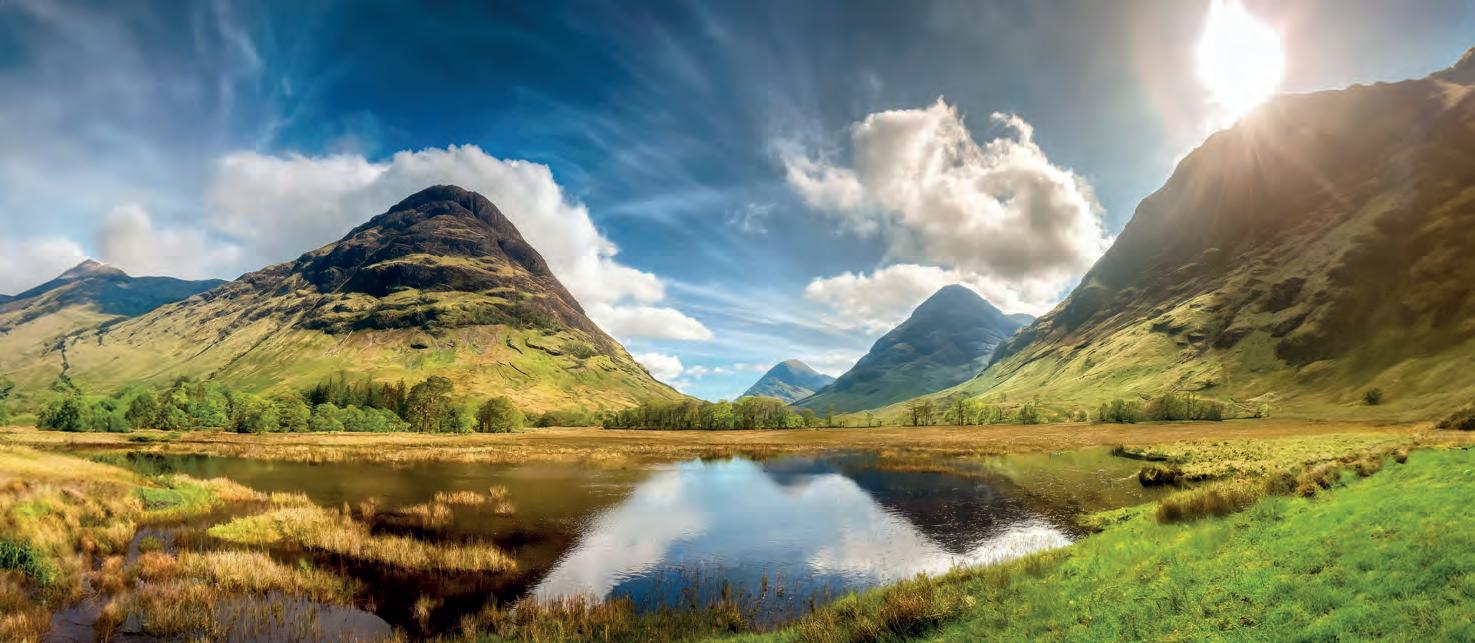
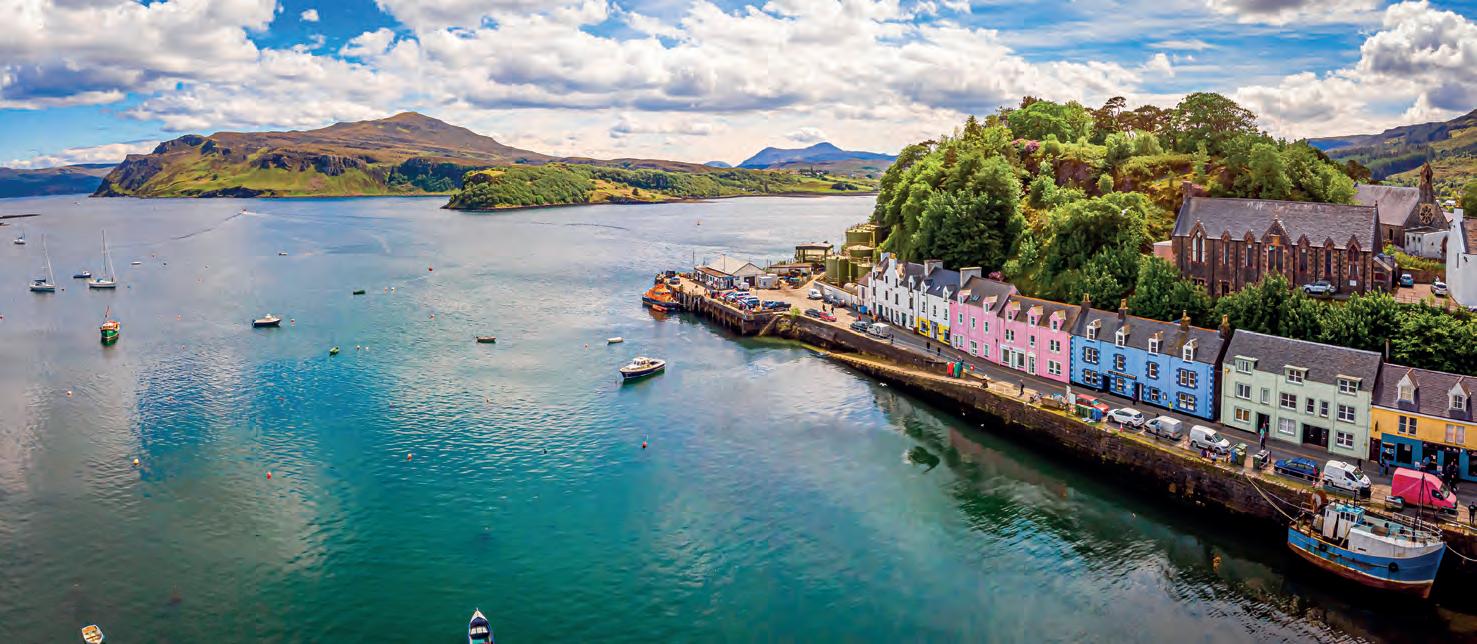
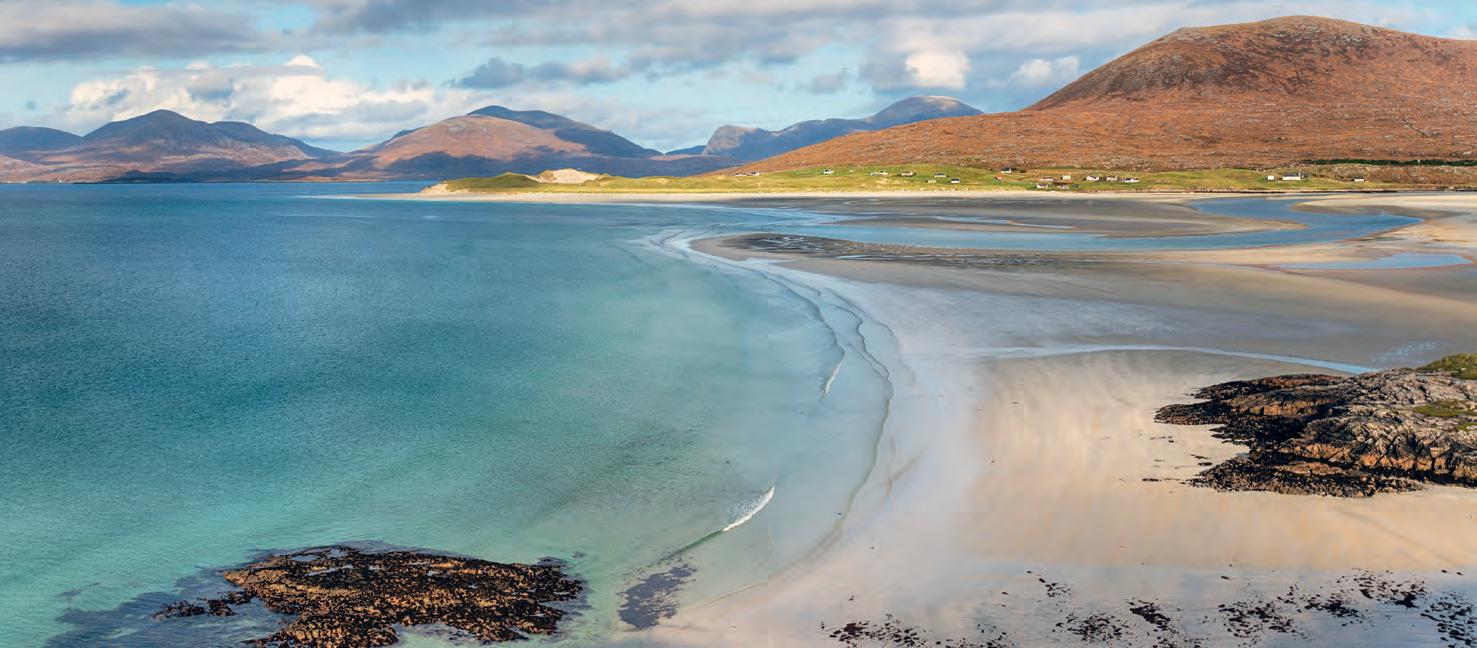
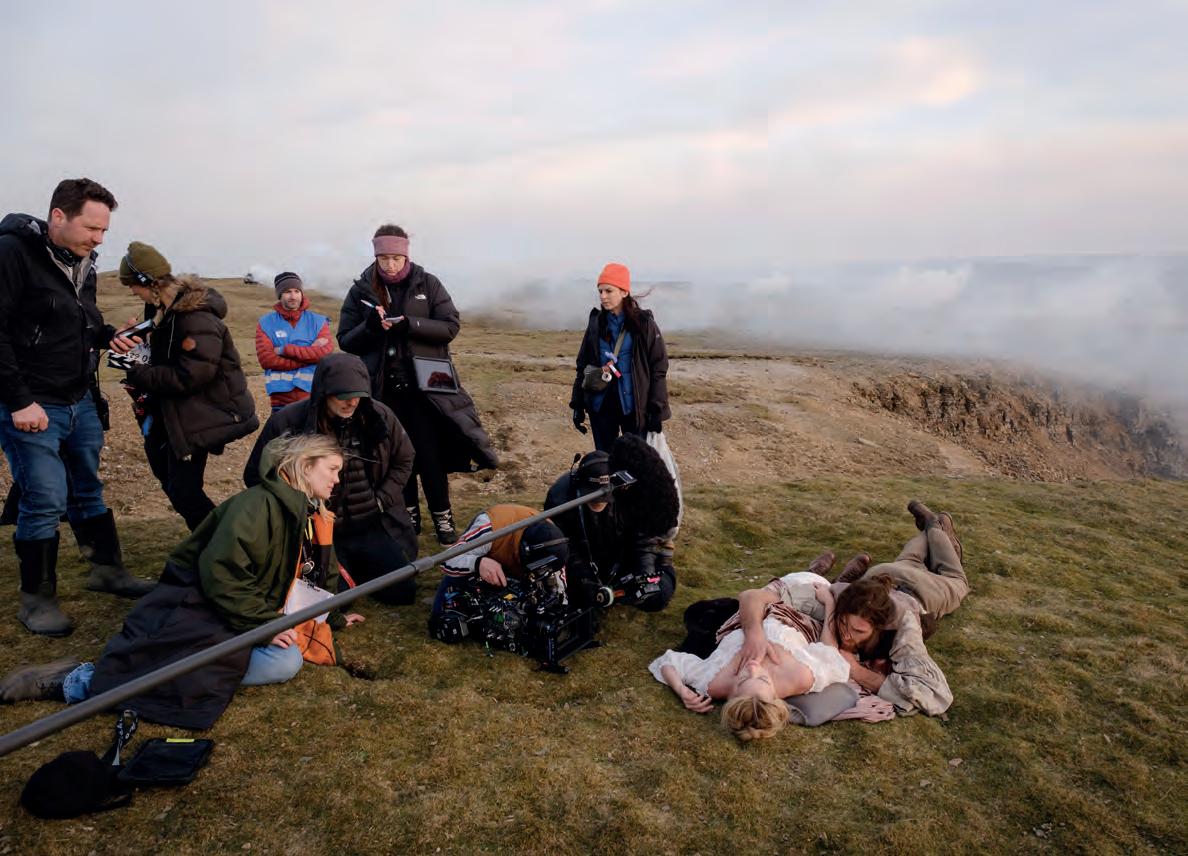
novel. Interiors were constructed at Sky Studios Elstree, with Stage 1 housing the opulent Thrushcross Grange and Stage 3 a composite build of the decaying Wuthering Heights farmhouse. The contrast — civility and wildness, polish and decay — was widely praised.
Fennell, who built her reputation with 2023's Saltburn, relishes pushing craft to its limits. “Britain has an unbelievable base of talent,” she says. “If you can use it, you’d be mad not to, because that’s the pleasure. I like the pleasure of craft, and in Britain, we’ve got people making the most extraordinary things.” Robbie echoed this sentiment: walking onto the Thrushcross Grange set, she felt “utterly transported”. She joked that for Kathy to choose Heathclif over such opulence, he “had better be extraordinary”. Every detail — from double-wicked candles to freplaces burning practically wherever possible — underscored the production’s meticulousness.
For Adrian Wootton, chief executive of the British Film Commission, 2025 represented not a temporary rebound but a consolidation of the UK’s production ecosystem. “After a shock to the system, the UK has delivered a leap in performance, particularly in high-end TV, and has grown share against other major territories,” he told Location International. “Volumes aren’t at the peaks of 2021 or 2022, but the direction of travel is clear. Inward investment remains strong, and confdence is returning — underpinned by a tax-credit system that is stable, competitive, and, crucially, delivers what it promises.” London remains central to this confdence. “London is unquestionably one of the two or three busiest production cities in the world,” says Wootton, who also heads Film London. “It has scale, credibility and a depth of infrastructure that few places can match. Just as important, it’s a magnet for talent. Productions don’t have to work hard to persuade people to come and work here.”
The city’s studio infrastructure — Pinewood, Shepperton, Warner Bros. Leavesden, Sky Studios Elstree and Elstree Stu-
dios — forms a dense production corridor that underpins much of the UK’s inward investment. Recent additions, such as Eastbrook Studios in Dagenham and Shinfeld Studios near Reading, have increased total UK studio space to almost seven million square feet. These facilities are complemented by mature networks of post-production, VFX, fnance and legal services, enabling productions to base themselves in London while operating nationally and internationally with minimal friction.
This fexibility extends to London’s locations. Historical, medieval, Georgian and Victorian sites remain invaluable in an era of CGI, AI and virtual production. Nearly all London scenes in Hamnet — for which Jessie Buckley won the 2026 Best Actress Oscar —were flmed at The Charterhouse in Clerkenwell, a 600-yearold site doubling for Shakespearean streets. Supervising location manager Lindsey Powell said: “London needed to feel diferent from our Stratford world. There was a sense of Will arriving somewhere new, having left his family behind. The Charterhouse allowed us to play multiple scenes that captured that.” Productions also mix locations. Hamnet recreated Stratfordupon-Avon in Herefordshire’s Weobley, with its well-preserved timber-framed buildings standing in for Elizabethan streets. Surrey, Kent, Oxfordshire and East Anglia also benefit from proximity to London’s studios and crews. Netfix’s My Oxford Year combined Oxford landmarks with Windsor, while Pillion, based on Adam Mars-Jones’ novel Box Hill, flmed extensively in Kent, including Castle Farm Estate, Lullingstone Castle and The Chequers pub. And National Trust sites including Cwmmau Farmhouse and Knole Park continue to host productions.
Wootton is clear that the UK’s strength is not all connected to London: “One of the most signifcant shifts we’ve seen is how embedded production has become across the whole country. The UK’s nations and regions have their own studios, skilled crews, landscapes and identities. For producers, there is real choice.”
Director, writer, producer Emerald Fennell, cinematographer Linus Sandgren, actor, producer Margot Robbie and Jacob Elordi, on location for Wuthering Heights, a Warner Bros. Pictures release. ©2026 Warner Bros. Entertainment. Photo: Jaap Buitendijk
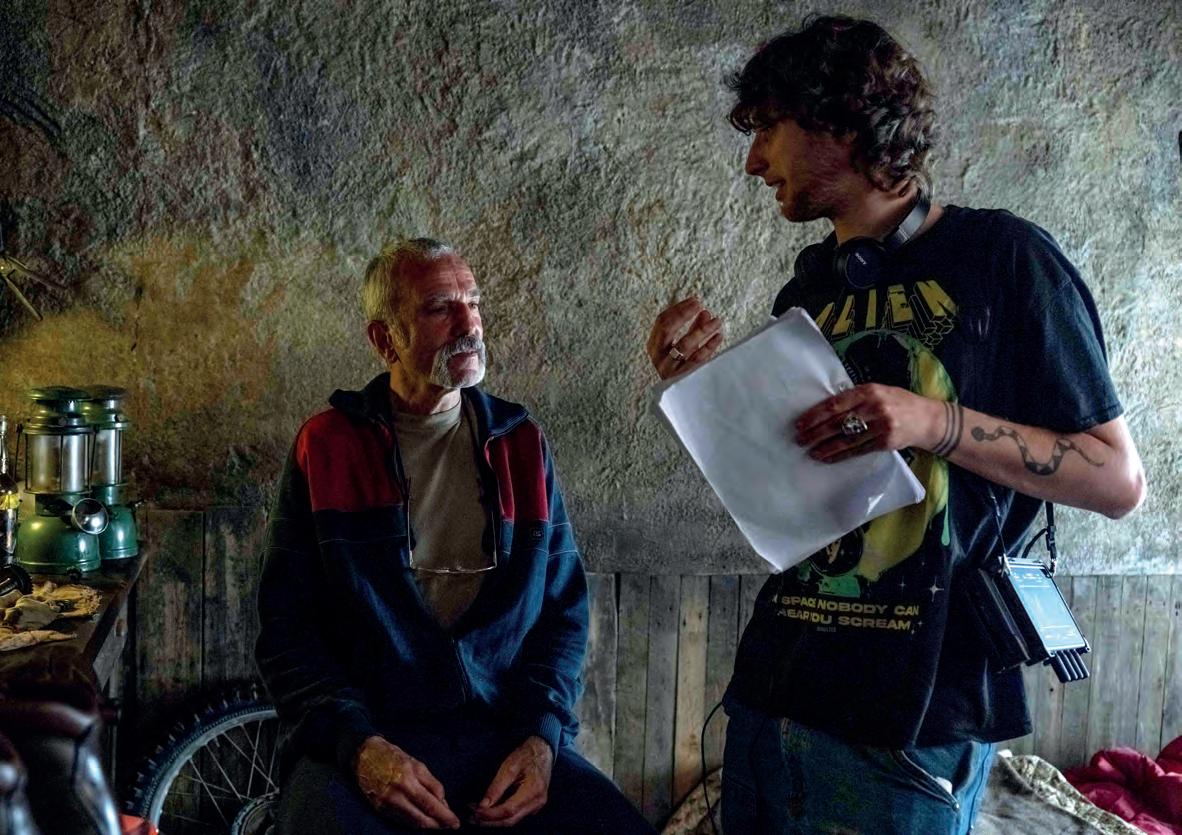
NORTHERN IRELAND SCALE AND EFFICIENCY
Northern Ireland remains a strategically confdent production hub, well-positioned for a market demanding both ambition and efciency. Its strength lies not just in volume but in balance: between inward investment and indigenous production, between physical locations and studio infrastructure, and between scale and creative problem-solving.
“Numbers probably stayed about the same year on year,” says Andrew Reid, head of production at Northern Ireland Screen, “but we saw a lot of smaller productions alongside an immense amount of television drama — for streamers, for the studios, and for the BBC and beyond. That balance is exactly what we’re always looking for.”
Returning series have played a critical role. Blue Lights returned for a third series, while Trespasses, Malpractice and Murder Most Puzzling reinforced the region’s appeal. Netfix’s How to Get to Heaven from Belfast marked another high-profle global release. High-end TV remains a cornerstone. HBO’s A Knight of the Seven Kingdoms extended Northern Ireland’s association with the Game of Thrones universe but avoided the familiar. “They didn’t want to revisit the Game of Thrones locations,” Reid says.
“It’s a knight and a squire travelling through Westeros. Northern Ireland delivered exactly what the show needed — the vast majority shot on location.”
Infrastructure investment is also rising. Studio Ulster, a 75,000
square-foot facility, now offers virtual production stages, a motion-capture volume, and advanced 3D and volumetric scanning. Its frst broadcast project, Titanic Sinks Tonight, showcased virtual production used pragmatically. Reid notes: “It allows you to put characters into environments they couldn’t access otherwise… it’s about creating the illusion in the smartest way.” Belfast Harbour Studios has added two 20,000 square-foot stages, bringing its total to over 100,000 sq ft. Northern Ireland also welcomed the movie The Death of Robin Hood, which has its release in 2026. Starring Hugh Jackman in the title role — alongside Jodie Comer as a mysterious character and Bill Skarsgård as Little John — flming began in early February 2025, at Belfast Harbour Studios and on location at Silent Valley, Glenram and Murlough Bay, with post-production at Yellowmoon in Holywood, County Down.
SCOTLAND: INDIGENOUS STORYTELLING, INTERNATIONAL AMBITION
Scotland’s sector is defned by its balanced approach: inward investment fuels infrastructure while supporting indigenous storytelling. Cheryl Conway, head of Screen Scotland, emphasises the importance of local IP. “80% of Screen Scotland’s budget goes to supporting local talent,” she says. Recent projects with a distinctive Scottish voice include The Incomer, a comedy debut by Louis Paxton, and Black Church Bay, a mys -
CHERYL CONWAY
‘80% OF SCREEN SCOTLAND'S BUDGET GOES TO SUPPORTING LOCAL TALENT’
Actor Daniel Day-Lewis with director Ronan Day-Lewis on set for Anemone, whose UK locations included Wales. Photo: Maria Lax/Focus Features
tery-thriller supported by Screen Scotland and BBC Film. Inward-investment projects also sustain crews and infrastructure. The Buccaneers , Outlander: Blood of My Blood , and Department Q returned or were greenlit for further series. Post-production has become strategic: Project-Post, a pilot incentive launched after a sector slowdown in 2024, has attracted VFX and post work, now formalised and applicable alongside UK tax credits. Halon Entertainment’s £28m Glasgow studio, creating 250 jobs over three years, signals long-term intent.
WALES: TALENT, SUSTAINABILITY AND STORY
Wales enters 2026 with a focus on people, stories, and sustainability, rather than raw production volume. Lee Walters, chief executive of Fflm Cymru Wales, says: “Film matters. It shapes how we see ourselves, how we understand each other, and how Wales is seen by the world… This strategy is about ensuring Welsh stories continue to be made, shared and valued.”
Local productions demonstrate this philosophy. Brides , a coming-of-age feature, premiered at Sundance and toured international festivals, while The Man in My Basement, starring Willem Dafoe, was flmed across Cardif, Carmarthenshire and Swansea. Together, they created over 130 Wales-based jobs and 14 trainee placements. Walters adds: “Talent doesn’t develop in straight lines… clear pathways and long-term support are central to how we work.”
Studio investment complements talent development. Aria Studios on Ynys Môn, the island just of the coast, has expanded North Wales’ capacity, while South Wales hosts high-end series including House of the Dragon, The Witcher and Sex Education. Recent projects including Sky’s Under Salt Marsh and Ronan Day-Lewis’ Anemone underline the region’s versatility.
REGIONAL ENGLAND LIVERPOOL, YORKSHIRE AND BRISTOL
Outside London, regional production sustains the UK’s screen economy. Liverpool has hosted more than 1,600 productions since 2019, contributing £150m and 5,400 full-time-equivalent jobs. Lynn Saunders, head of Liverpool Film Ofce, highlights a societal mission: “We have a commitment to economic regeneration, skills development, community engagement and sustainable growth.”
Liverpool’s Production Fund, which can invest up to £500,000 per project, aims not simply to attract production but to embed it, prioritising local employment, skills development and long-term resilience. Returning dramas, including This City Is Ours , The Responder and Time exemplify crew continuity and production confdence. Yorkshire has similarly strength-
ened its ofering through the Yorkshire Content Fund. Projects include Reunion, written by Shefeld-born deaf writer William Mager, which placed British Sign Language at the heart of storytelling, while Virdee and The Choral explore crime, family and historical identity. Documentary also thrives: Kim Hopkins’ Still Pushing Pineapples revisits 1980s pop act Black Lace, illustrating the value of flming from within communities. Bristol combines historic architecture with studio facilities. The Bottle Yard Studios and city streets hosted productions including The Forsytes , Agatha Christie’s Seven Dials and Guy Ritchie’s Young Sherlock, transforming Broad Street, All Saints Lane and Small Street into Victorian thoroughfares. Supervising location manager Deon Du Preez says: “Bristol played a crucial role in creating Young Sherlock’s world… the city is well equipped to accommodate large-scale flm and TV productions.”
CROSS-BORDER PRODUCTION AND TECHNICAL TOOLS
Productions increasingly traverse regions. Shane Meadows’ Chork follows two children across England and Scotland, while The Unlikely Pilgrimage of Harold Fry spans multiple locations. From Pinewood and Leavesden to Pembrokeshire and Northern Ireland, the UK delivers inward-investment features and HETV alongside support for indigenous storytelling. Technical logistics are supported by tools such as the ATA Carnet, a customs document allowing temporary import of equipment into over 80 countries duty-free. Moira Wilson of Boomerang Carnets says: “Companies are forging ahead and expanding into new markets. Our role is to match that enterprising spirit with knowledge, access and 24/7 support.” In Japan, producers combine the ATA Carnet with the Carnet de Passages en Douane, covering both vehicles and equipment.
The UK screen industries in 2026 are defned by scale, sophistication, and fexibility. London provides unmatched infrastructure and talent, while regions offer distinctive locations, skilled crews and a growing production ecosystem. Investment in studios, post-production and incentives — coupled with long-term support for indigenous storytelling — ensures Britain remains competitive on the global stage. As Wootton observes, the country is no longer merely recovering; it has “found its footing again”, ofering both creative assurance and commercial efciency. From Yorkshire moors to Scottish islands, Belfast studios to Welsh coastlines, the UK combines technical rigour with a commitment to local talent, proving that inward investment and indigenous storytelling are not mutually exclusive — but mutually reinforcing.
The road to GROWING
up
After mistakenly buying two right-foot shoes, a 10-yearold boy sets of across the Romanian countryside to fnd the missing left one. An unexpected journey of courage, friendship and self-discovery follows in this gentle flm that won a Special Mention at the 2026 Berlinale. Julian Newby meets the flm’s writer/director and location manager
TEN-YEAR-old Filip, played by Matei Donciu, travels with his father to the nearest town to buy new shoes for school.
When his father gets sidetracked by an old friend, Filip is left to continue the journey alone. A simple mistake at the shoe shop — buying two right shoes — sets him on an unexpected adventure through an unfamiliar world. Too ashamed to return home empty-handed, Filip decides to fx the problem himself. Along the way, he befriends an unlikely companion, a stray dog he names Bape after his favourite football player, Kylian Mbappé. Through small choices, moments of fear and quiet courage, Filip takes his frst steps toward independence and growing up.
Atlas of the Universe is an unusual flm as it is completely devoid of cynicism. The story it tells is one of innocence and learning. As its lonely protagonist walks through empty countryside, the people — and the dog — he meets present no jeopardy, just help, advice and friendship. Filip is trying to get to a neighbouring town to fnd a left shoe and sets of initially with no idea where to go and how to get there.
“We decided to make a flm for
children because all of us, the people that worked on the flm, or most of us, we are friends in real life and we have kids quite similar ages, and we noticed that there weren’t many Romanian flms for kids — or if there were, they were really hard to watch for an adult,” the flm’s director Paul Negoescu says. “So that's where we started actually — we wanted to make a flm that our kids can watch. And also, to have our kids on set helping us, playing diferent characters or being extras — seeing what we actually do for a living. So yeah, it was targeted mainly for kids, but also for parents, because when I go to watch some of the flms my daughter watches, sometimes I don't get caught-up in the flm at all. So, I thought I would like, as a parent, to watch this kind of flm.”
Shot entirely on location, the countryside Filip has to navigate is quiet and underpopulated, refecting the task he faces: he’s alone and there’s not much about his surroundings that is going to change that situation. Atlas of the Universe is co-written by Negoescu and Mihai Mincan — a Romanian writer and director, known for the flms Bondoc (2015), To the North
Paul Negoescu
‘We decided to make a flm for children because we noticed that there weren’t many Romanian flms for kids’
Matei Donciu as Filip, cautiously keeps his distance from a stray dog, who eventually becomes his companion on his quest. Photo: ©Razvan Marinescu
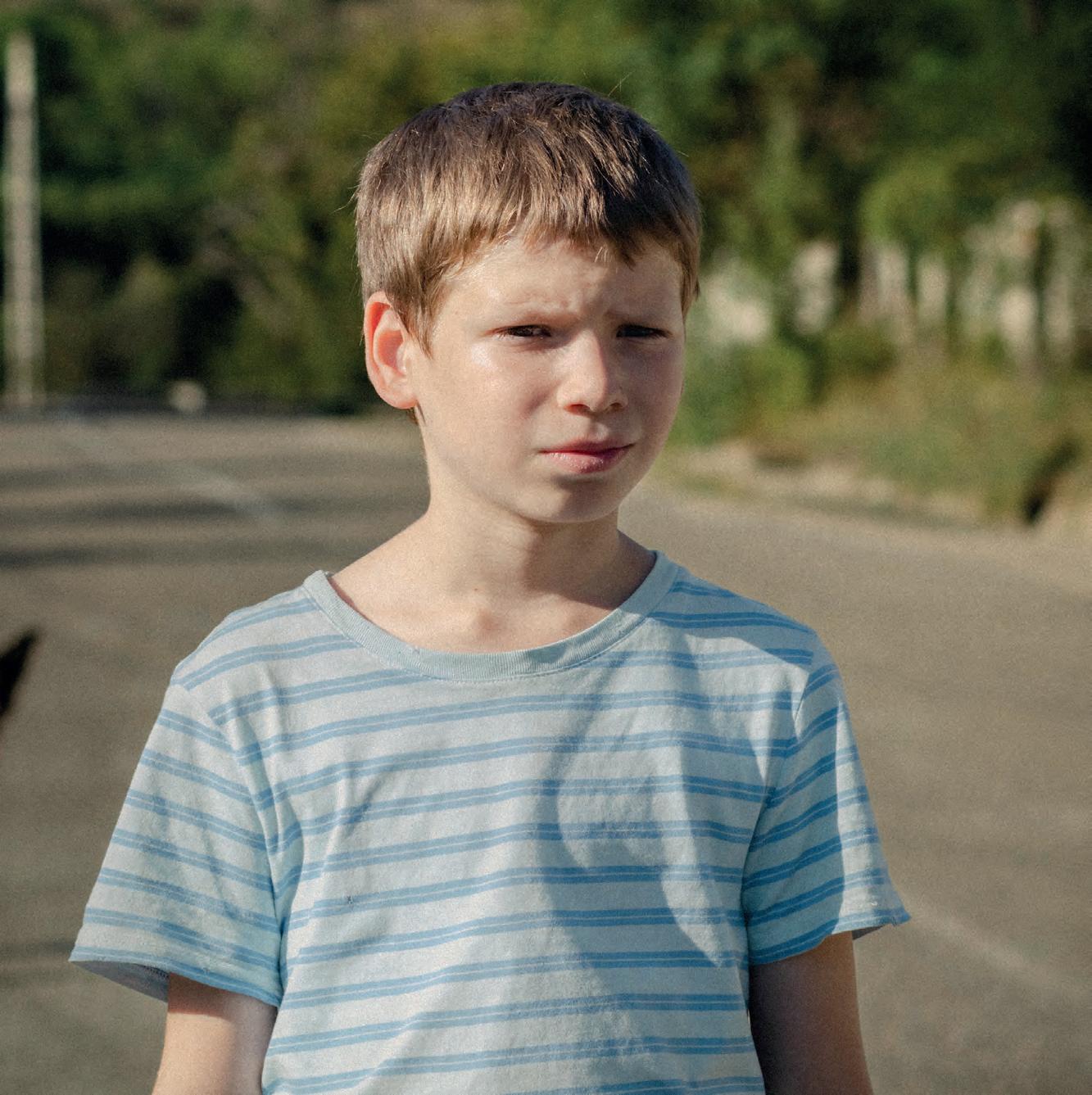
(2022) and Milk Teeth (2025). Negoescu is best known for the flms Two Lottery Tickets (2016), The Story of a Summer Lover (2018) and Men of Deeds (2022). Mincan came up with the initial idea for the flm. “It’s a story about loneliness and the courage to solve problems on your own,” Negoescu says. “These are feelings I know very well, and they are what frst drew me to Mihai’s story. We tried to bring these emotions to the surface in a simple and understated way, without explicitly pointing them out. Matei’s
personality and talent were essential. His performance as Filip brings to life a character shaped by all these emotions. I believe he allows the audience to resonate with Filip and to feel everything he goes through.”
Sales are with international agency Pluto Film. “What gives Atlas of the Universe its international resonance is a universal truth: every child must navigate that defning moment between shame and courage,” Pluto managing director Daniela Cölle says. “It’s rare to see a flm portray the
transition from innocence to independence with such honesty. Filip’s adventure is deeply personal yet universally recognisable, ofering a fresh and contemporary lens on what it means to grow up. With its tender humour, genuine emotion and unexpected friendship, this flm reafrms the importance and enduring power of children’s stories.”
After reading the script it was location manager Andrei Stehan’s job to provide the backdrop for Filip’s adventure. “Paul and the producer








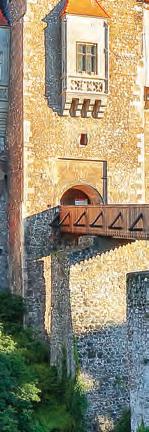

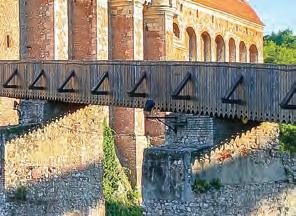







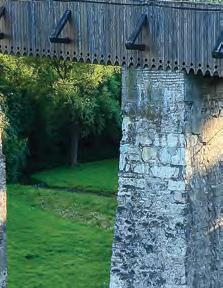














































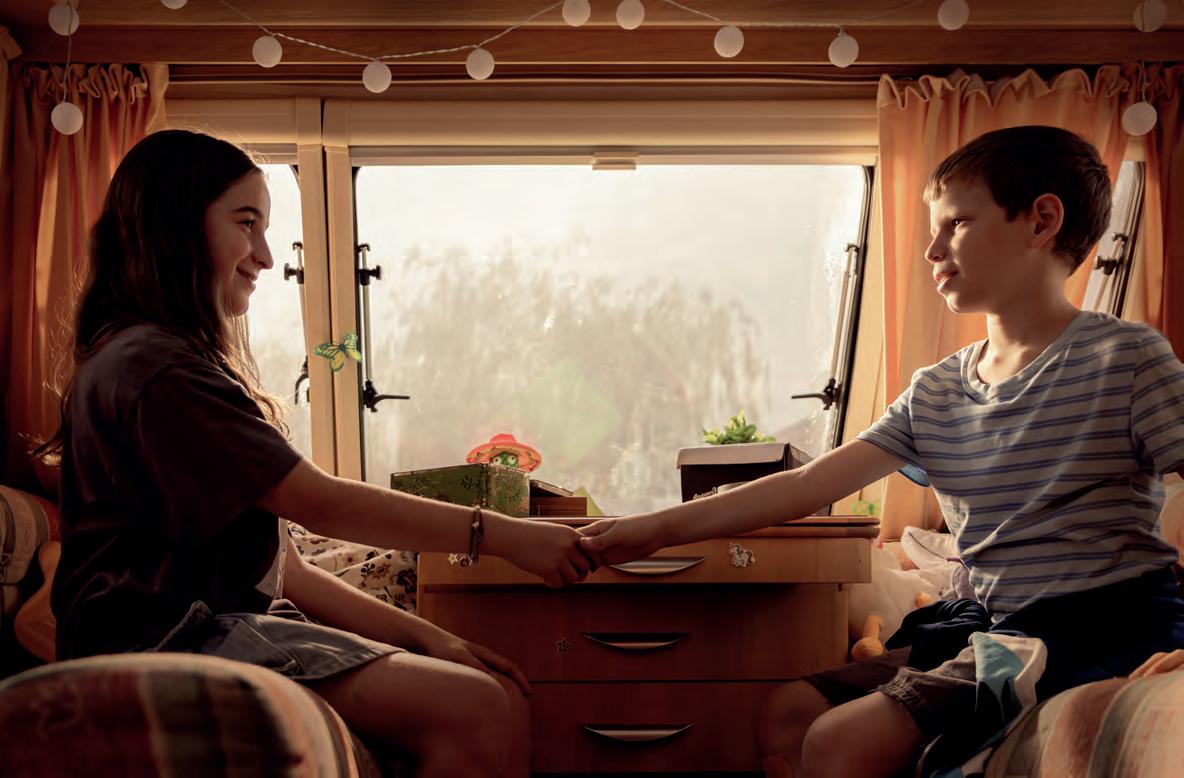
Radu [Stancu] had already done their own scout — they’d gone on a road trip for two days…” and it turned out they had all been focusing on the same or similar places. “It’s my second feature flm with Paul and fortunately I like the same things that he likes. So then I went on my own scout, for around two weeks, and I made a short location list. I just drove around and when I saw something I liked, I made a lot of pictures and videos. Sometimes I wanted to get live feedback from Paul so I would send him videos on WhatsApp.”
Stehan and the team settled on the town of Vălenii de Munte and its surrounding countryside and villages. And Negoescu’s initial brief to Stehan was simple: Filip’s journey should begin at his home, go into the countryside and then slowly climb again as he reaches the next town — where hopefully he fnds the other shoe. “Paul said, okay, he's going to leave from his house, which is higher up, and then we're going to go down to the city, and then when he goes to the other villages, he can go up a little bit more,” Stehan says. “But let's have this sense of altitude when fnding the locations.”
This is peaceful countryside that’s rarely troubled by flm crews — Vălenii de Munte has a population of just over 13,000 people. “Fortunately there haven’t been a lot of movies shot in this area, so people are still excited,” Stehan says. “But when we had to
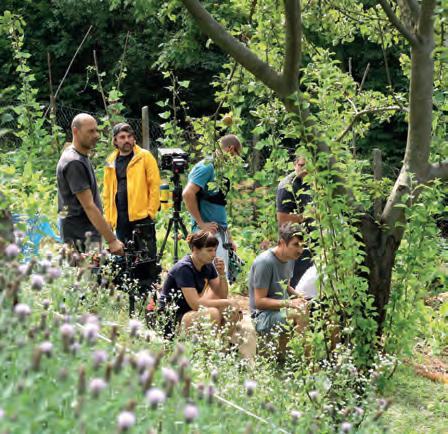
close a busy road that connected some villages, people weren't happy because we had to stop trafc for like 15 minutes to do one or two takes, then clear everything, and then do it again. It was pretty stressful and dangerous.” However, local ofcials were co-operative: “The mayors were really, really helpful with us, not only giving us permissions to shoot everywhere, but also if they had, like a cultural building or something that they could ofer us, they did it.”
“Producing flms for young audiences has long been a personal ambition,” Radu Stancu, producer at Romanian production company deFilm, says. “I strongly believe there is a real need for flms that speak to children and teenagers with artistic integrity, emotional honesty and cultural
meaningfulness. Through such projects as these, that respect their intelligence, we hope to contribute to the healthy cultural development of young audiences. Going forward, we aim for deFilm to develop and produce a strong, artistically ambitious project for young viewers every two to three years, as a long-term commitment to this essential and often underserved cinematic space.”
Atlas of the Universe (Atlasul universului) is produced by deFilm in co-production with Screening Emotions of Bulgaria and Avanpost Media of Romania. The production is supported by the Romanian Film Center, the Romanian Government – OFIC, Eurimages –Council of Europe, the Bulgarian National Film Center, Magic Lab, CinemaCity, Magic Shop, Romanian Television and rights body UPFARARGOA. The Romanian Film Center and the Ofce for Film and Cultural Investments manage, fund and promote the Romanian flm industry, ofering a 35-45% cash rebate for international productions. They support flmmakers, manage state aid, and promote Romania as a flming location, as well as its crews and diverse landscapes.
Director Paul Negoescu (right) and crew on location for Atlas of the Universe Photo: Paul Negoescu
Matei Donciu as Filip befriends Edith (Johanna Mild-Keresztúri) while wandering through a fairground in his quest to fnd the missing shoe. Photo: ©Razvan Marinescu

WELCOME EVER
Asia-Pacific’s rich tapestry of ancient landmarks and landscapes may have branded this vast region as a place to tell stories of the past. But hypermodern skylines, fast-growing production infrastructures and new incentives have, in recent years, welcomed a new wave of storytellers — including international producers keen to embrace the region’s extraordinary locations and costeffective crews. Andy Fry reports
IN RECENT years, every facet of this vast region has been explored and enjoyed by producers from around the world. Recent productions range from ultra-urban Tokyo in A24’s The Smashing Machine to the beaches and jungles of Thailand in Universal Pictures’ Jurassic World: Rebirth. Skyscrapers in Taiwan and Malaysia have taken on starring roles, while Korean cities have hosted streaming hits including Squid Game and XO, Kitty
Over the past five years Asia-Pacific’s production offering has been overhauled. Incentives have been formalised, film commissions have sharpened their international outreach and studio infrastructure has expanded. Local crews, seasoned by collaborations with global platforms, have acquired high-end experience. What once looked like a patchwork of disparate territories is increasingly seen as a co-ordinated and competitive production zone.
At the centre sits the Asian Film Commissions Network (AFCNet), founded in 2004 and linking more than 50 organisations across over 20 countries. It acts as both an information hub and diplomatic bridge, facilitating first contact while leaving execution to its members on the ground. From AFCNet’s perspective, Asia-Pacific’s growing appeal reflects converging forces rather than a single trend. “Across East and Southeast Asia, markets have been scaling up — expanding opportunities beyond service production into co-productions, local investment and franchise development," says Hyungdong Cho, known as JJ, AFCNet manager. "At the same time, non-English-language content is now travelling worldwide. Asia-Pacific is increasingly seen not just as a filming destination, but as a place where content originates.”
Cho describes a “multi-hub environment where different production centres coexist with distinct strengths. Asia-Pacific now combines “a large audience base, competitive production



Anna Cathcart as Kitty Song Covey, Jocelyn Shelfo as Madison, Gia Kim as Yuri Han in Season 3 of XO, Kitty Photo: Youngsol Park/ Net ix



YONE












































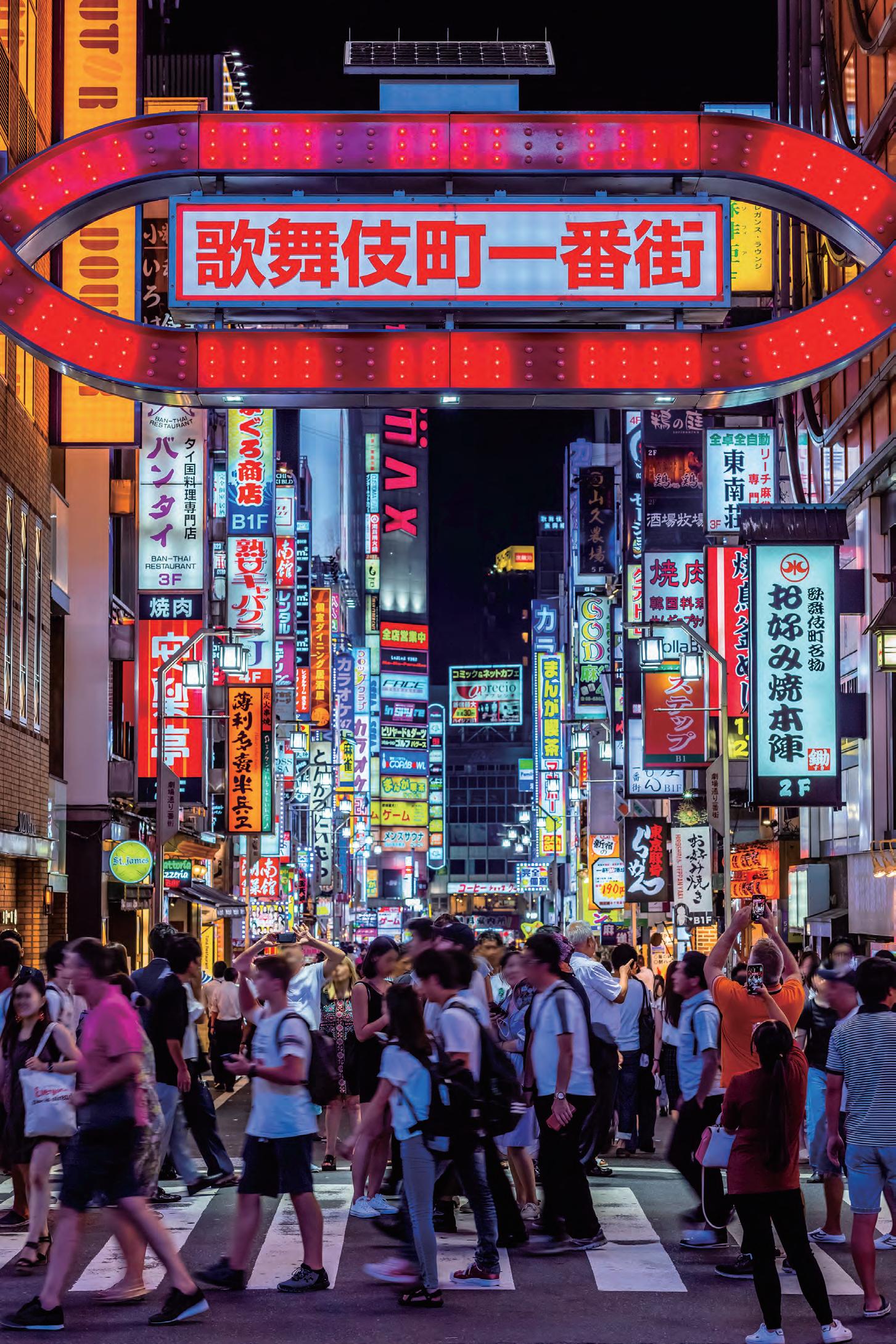
and post-production capacity, and a broad location spectrum that expands genre and tone”.
Producers are shifting towards multi-hub strategies tailored to individual projects, with Asia-Pacific “one of the key pillars of that transition”.
Much of the supporting infrastructure has its roots in tourism. “Tourism-led infrastructure has provided an important foundation for Asia-Pacific to become more film-ready,” Cho says. “As transport networks and accommodation capacity improve, location moves and base operations become more stable, with clear advantages in safety, insurance and emergency response.”
He cautions, however, against treating the region merely as backdrop. “Smooth filming depends on operational capability,” he says, citing permitting lead times, logistics, community co-ordination and safety standards.
Incentives have proliferated across North and South-East Asia, though with marked differences. “In some places, the track record of incentive administration is relatively short, which can create a perception gap in terms of consistency. But competitiveness here is not defined by rebate percentage alone. It often shows most clearly in production value — what ends up on screen,” Cho says. Streaming has been a powerful accelerant. Platforms including Netflix, Apple TV+ and Disney+ have invested heavily in Asian content, raising standards and sustaining employment. “As nonEnglish-language content began travelling globally more projects were developed with international audiences in mind. That has raised standards in areas like data security, safety, schedule management and delivery formats,”he says.
The workforce is now accustomed to premium television and large-scale features. Even so, missteps are still possible. “Languages, administrative systems and approval structures vary,” Cho says. Permits, visas and customs procedures can diverge in ways that disrupt schedules and budgets if not addressed early. The remedy is straightforward. “Successful productions typically connect in pre-production with the official local point of contact — the film commission — and experienced local partners,” he says. AFCNet’s role is to provide clarity from the outset.
Japan illustrates the shift. Its international production profile has strengthened markedly since the launch of a national incentive programme in 2023, administered by the Visual Industry Promotion Organisation with the Japan Film Commission. Covering up to 50% of qualifying local spend, it ranks among the region’s most competitive schemes. Projects supported include The Smashing Machine, Rental Family and Season 2 of Drops of God, alongside large-scale productions including Monarch: Legacy of Monsters Reforms extending the programme through fiscal year 2026, including multi-year subsidies, signal long-term intent. Constraints tied to rigid fiscal calendars have been eased, allowing projects to span multiple years — an important adjustment for complex features and premium television.
Japan’s appeal extends beyond incentives. Its production sector is known for technical precision, particularly in art direction, design, animation and visual effects. Growth is especially visible in streaming drama and co-productions combining domestic and overseas talent.
Tokyo remains the principal gateway. “High demand for creating works set in Tokyo is itself a core strength,” says Itto Kameshima of the Tokyo Film Office. “For us, the key is how effectively we can meet that demand.” The commission focuses on facilitating shoots in a dense urban environment — co-ordinating permits, introducing locations and managing the interface with public space. “We place great importance on maintaining harmony with communities,” Kameshima adds. He also wants to broaden perceptions of the city. “Through our website, we provide filming locations, including those in the suburbs of Tokyo,” he says. Rental Family illustrates the point. Set in contemporary Tokyo, it follows a struggling actor, played by Brendan Fraser, who takes a job with a “rental family” agency. The film's director, Hikari, says: “Tokyo is a big city where you can feel so isolated, and you can hire people to be your mom, dad, brother, sister, cousin, boyfriend, anything you want. People are looking for connection, even though they’re paying . There’s a lot of interesting chemistry happens between people who rent and the people who work at a rental company.”
Andrew Gar eld, centre, portrays ctional Jesuit missionary Father Rodrigues in Martin Scorcese’s Silence, set in 17th-century Nagasaki and lmed entirely in Taipei. Photo: Paramount

































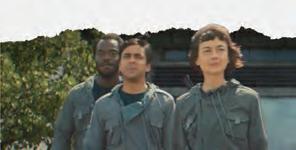
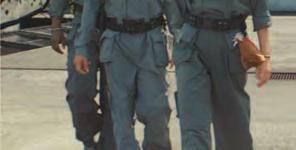



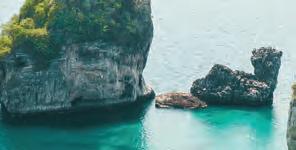



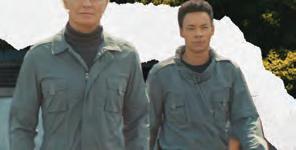

















ALIEN : EARTH
Despite some constraints, Tokyo’s ecosystem continues to expand. Local partnerships remain essential. “When overseas production companies flm in Tokyo, it is essential for them to have local partners in Japan,” Kameshima says. “Tokyo ofers a supportive environment for international productions, with not only the Tokyo Film Commission but also many production companies experienced in international co-productions.”
The ambition is broader than hosting shoots. “We hope that Tokyo will be recognised as a co-operative and welcoming environment for overseas projects,” he adds. Regional authorities are also competing. Kagoshima, in southern Japan, ofers subsidies of up to 50% alongside bays, sub-tropical coastlines and the active volcano Sakurajima, featured in 1967's You Only Live
Twice
South Korea ofers another illustration. Its flms and television series have become global staples, boosting interest in flming locally. A rebate of up to 25%, administered by the Korean Film Council and supplemented regionally, underpins a high-cost but high-value proposition.
Seoul blends modern architecture with historic sites and dense neighbourhoods. Its digital infrastructure supports sophisticated post-production, and crews are adept at delivering complex, multi-season dramas. Visual-effects capabilities are strong.Recent productions are reshaping perceptions. XO, Kitty trades dystopian tropes for romance and comedy, presenting a softer vision of the city. Drawing on a mosaic of real locations, it reveals a softer, more relatable side of the Korean capital. The efect is a city that feels livedin rather than monumental — a place of teenage rituals, romantic landmarks and weekend escapes to Yeongheung Island. For producers, that tonal shift matters. XO, Kitty shows Seoul can host globally accessible genres beyond crime or high-concept drama: aspirational young-adult fare, romantic comedy and glossy ensemble franchises.
streaming executives, alongside location tours designed to move projects “from discussion to concrete development planning”. Busan’s appeal is reinforced by practical support. In addition to national incentives, the city ofers rebates, streamlined permitting and fee waivers. “Filming at parks, bridges, ports and other municipally operated sites does not incur location fees,” Choy says. “The efective zero-cost access to public locations can, in many cases, exceed the value of direct cash incentives.” Recce teams are supported with hotel accommodation, lowering upfront costs.
Geography is another strength. “Historic neighbourhoods and traditional markets coexist alongside contemporary skylines and major port infrastructure, while mountains, rivers and coastlines are integrated directly into the urban landscape,” he says. “Busan ofers a distinct Korean identity while retaining the fexibility to
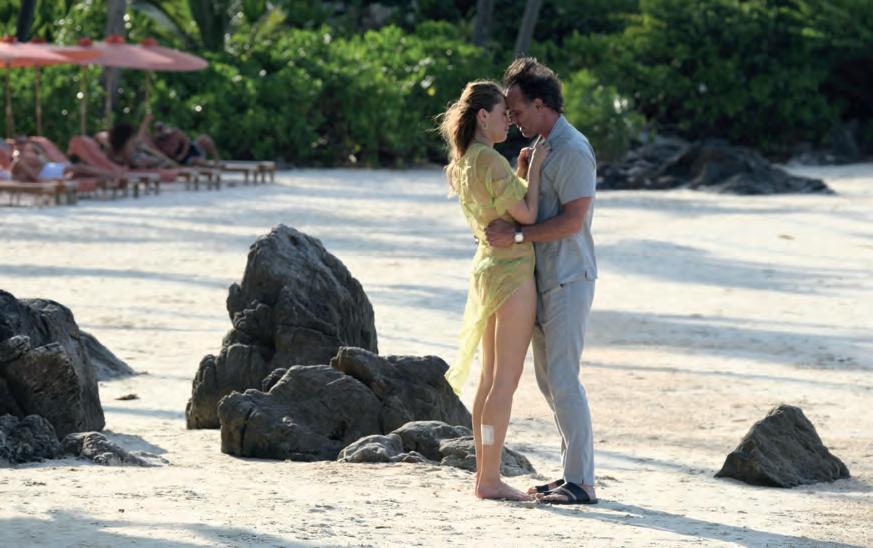
double for global port cities when required.”
Busan ofers a complementary proposition. Framed by mountains and coastline, it provides maritime settings and natural backdrops. As host of the Busan International Film Festival and home to the Busan Cinema Centre, it occupies a central place in Asia-Pacifc’s industry calendar.
For Phil Choy of the Busan Film Commission, that prominence is substantive. “For nearly three decades, the Festival has served as Asia’s most infuential cinematic gateway,” he says. “Through platforms such as the Asian Contents & Film Market, it functions not only as an exhibition event but as a marketplace, a co-production incubator and a strategic industry forum.” During the market, the commission meets producers, fnanciers and
ITTO KAMESHIMA ‘WHEN OVERSEAS PRODUCTION COMPANIES FILM IN TOKYO, IT IS ESSENTIAL FOR THEM TO HAVE LOCAL PARTNERS IN JAPAN’
Infrastructure has expanded in tandem. “What we are building is not only scale but future readiness,” Choy says, pointing to investment in visual efects and AI-driven workfows. “Our ambition extends beyond serving as a flming location. We aim to establish an integrated production ecosystem — culturally distinctive, technically robust and globally connected.”
Taiwan ofers a diferent mix: industrial maturity and cultural specifcity. Incentives can reach 30% of qualifying spend, supported by co-production frameworks. “When targeting the global Chinese-speaking audience, collaborating with Taiwan leverages both geography and cultural fuency,” says Jennifer Jao of the Taipei Film Commission. “It allows projects to connect regionally while maintaining international distribution fexibility. Taiwan lies at the crossroads of Northeast and Southeast Asia, within a subtropical zone that maintains year-round temperatures between 20 and 25 degrees Celsius. For European and American crews, that means fewer acclimatisation concerns and more predictable scheduling,” she adds.
The island’s production base is concentrated, and its track record well established. “We collaborate with an average of 500 flm and television projects annually, and roughly one in seven is an international co-production or series,” Jao says.
Taipei’s appeal lies in its contrasts. “Taipei City stands as one of the most refned embodiments of Chinese cultural heritage,” she says. “At the same time, it is a contemporary metropolis capa-
Aimee Lou Wood and Walton Goggins in Season 3 of The White Lotus, which shot in Thailand.
Photo: Youngsol Park/ Netfix©2026
JENNIFER JAO
‘TAIPEI CITY STANDS AS ONE OF THE MOST REFINED EMBODIMENTS OF CHINESE CULTURAL HERITAGE’
ble of doubling for multiple urban environments.”
That versatility extends even to live broadcasting. “This project allowed the world to witness Taiwan,” Jao says of Netflix’s Skyscraper . “International media coverage no longer merely introduced locations. It positioned Taipei as a city capable of supporting world-class live-broadcast events.”
Thailand has also expanded rapidly. “Thailand’s success as an international filming destination is grounded in diverse locations, world-class crews, competitive production costs and a very attractive 30% cash rebate incentive,” says Ubolwan Sucharitakul, director of the Thailand Film Office.
“In 2025, Thailand hosted 546 foreign film productions from 42 countries, generating over THB7bn (approximately $200m) in local economic activity,” she says. “This growth — up from 490 productions in 2024 — highlights how our cash rebate programme makes Thailand a financially compelling choice for production companies.”
“Thailand attracts a mix of film formats including feature films, television series, music videos, reality shows, commercials and documentaries,” she adds.
“This diversity is reflected in the great volume of projects and the range of source countries.”
building a complete ecosystem — from talent training and modern tech usage to post-production. We want Malaysian crew to go international, local companies to create content for Southeast Asia markets and more local universities to become professional training centres for the industry.”
Even so, production can often be demanding. “The kids were tireless, they just kept going,” director Marc Munden said of filming his feature Lord of the Flies. “We filmed during the monsoon, so everyone was permanently wet, either through sweat or seawater or rain.” Technical ingenuity then came into play, including shooting with an infrared camera, which turns all the foliage vivid red, orange and pink, creating a hallucinatory sense of unease. Alongside incentives and infrastructure, Malaysia’s remarkable visual range remains central to its pitch. The Marvel feature Thunderbolts opens with Florence Pugh’s Yelena Belova leaping from Merdeka 118 building, while the romantic comedy Worth the Wait — supported by Tourism Malaysia — showcases Bukit Bintang, the Sultan Abdul Samad Building and Kuala Lumpur’s backstreets as the backdrop to a cross-border love story starring Ross Butler and Lana Condor. The latter has already travelled on streaming platforms across North America and beyond, reinforcing Malaysia’s onscreen recognisability.

“Thailand’s geography is exceptionally diverse,” she says. “Within a few hours’ travel, filmmakers can access tropical beaches, limestone cliffs, dense jungles, waterfalls, historic temples, modern cityscapes, rural villages, mountains and river landscapes.”
Support is centralised. “At the Thailand Film Office, we issue film permits, facilitate communication with government agencies, and most importantly we provide the 30% cash rebate programme for foreign film productions,” Sucharitakul says.
“We also work closely with local production-service companies to deliver seamless support from pre-production through wrap.”
“Thai crews are recognised for their professionalism, adaptability, technical capability and competitive cost structure,” she adds.
“Paired with our incentives, this means productions can deliver higher production value for their budgets without sacrificing global standards. We are focused on strengthening our incentive scheme to remain competitive. Our strategy is to promote green production and develop a highly skilled local workforce to support sustainable growth. Our commitment is to ensure Thailand remains one of the most attractive, production-friendly destinations in the world.”
Malaysia, too, is sharpening its offer. “Malaysia offers attractive locations, cost-efficiency and a production-friendly environment,” says Datuk Azmir Saifuddin Mutalib of The National Film Development Corporation (FINAS). “More importantly, we are
Other countries within the Southeast Asian economic block all have something to capture the imagination of international producers. Upcoming highlights include Red Butterfly , an international co-production between European studio StudioCanal, and local production companies Beach House Pictures and Momo Film Co. The series is a crime drama about an all-female gang set in the 1950s in Singapore, known then as ‘the Chicago of the East’. At time of writing, the series had secured a Taiwanese co-production partner and was in discussion with Infocomm Media Development Authority of Singapore (IMDA) and the Singapore Tourism Board (STB) about accessing the attractive Singapore On Screen Fund (SOF). The Philippines is also generating international attention for its dramatic landscapes and competitive cost base. With thousands of islands, volcanic terrain and dense urban environments, it offers striking visual range. Widespread English fluency facilitates communication with international crews. Tourism secretary Christina Garcia Frasco has visited California to pitch the country’s locations and incentives to Hollywood decision-makers. But recent activity is a reminder that Asia-Pacific countries are not reliant on the West for production work, with regular production services and co-production activity taking place within Asia.
Across the region, the direction of travel is clear. Incentives are expanding, infrastructure is maturing and film commissions are co-operating more closely. Cho hopes producers will adjust their perspective. “We would like Asia-Pacific to be understood not as a single ‘alternative’ destination, but as a portfolio of locations that can be combined to fit the story and the production’s operating requirements,” he says. “The diversity here — ultra-modern megacities, traditional neighbourhoods, tropical coastlines, deserts and heritage sites — aligns closely with contemporary storytelling needs.”
Lana Condor & Ross Butler star in the romcom Worth the Wait, which showcases Bukit Bintang, the Sultan Abdul Samad Building and Kuala Lumpur. Photo: Tubi
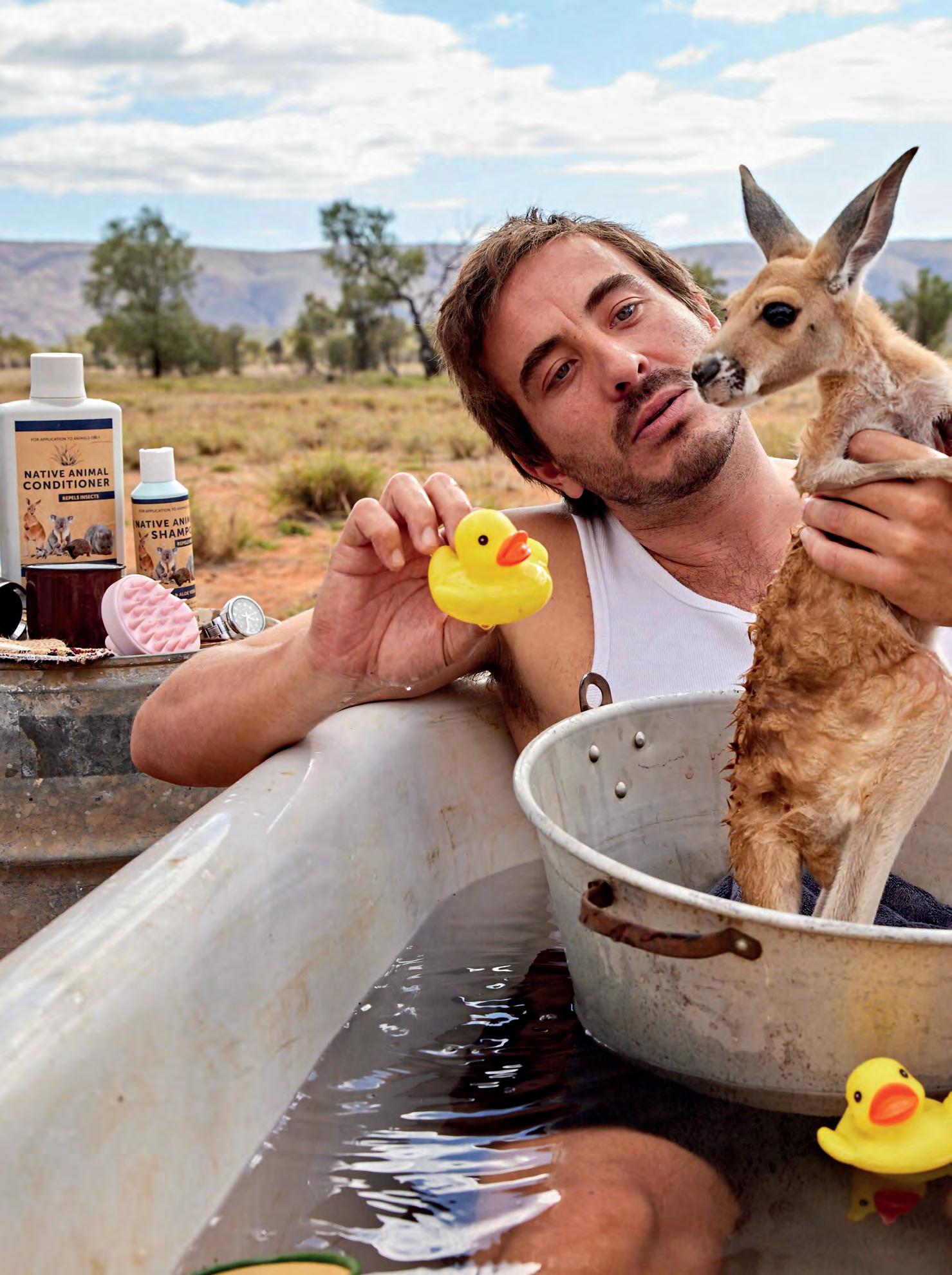
MOVIES MAKE A COMEBACK
From StudioCanal’s production arm, Cultivator Films, Kangaroo is a family comedy about ex-TV personality Chris Masterman played by Ryan Corr.
Photo: StudioCanal
The numbers don’t lie: Australia has bucked global trends over the past two or three years, where production is concerned. And while TV output has grown steadily over the years, the industry has recently noted a strong comeback for feature films. Extraordinary and varied locations, a strong studio sector and a solid crew base, are all key factors behind the sustainability of Australia’s production business.
Gary Smith reports
RELIABLE weather, adaptable crews and landscapes of striking otherworldliness have long made Australia attractive to flmmakers. And that appeal has translated into a buoyant 2025. As Kate Marks, chief executive of AusFilm, says: “Expenditure on drama production reached a record US$1.9bn in 2024/25. That’s a 43% increase on the previous year. An uplift that points to holistic sector growth driven by high-budget features and SVOD production, with a $486m increase directly attributable to an expansion of international activity. Of the 174 titles that entered production in 2024/25, 71 were Australian, with $78m spent on local stories — a 14% increase in expenditure from 2023/24. We’re also seeing a return to feature flms, and that sits nicely with us because Australia has traditionally been a place for feature flms. And we regard them as being very important for the sustainability of the local industry.”
The past year has seen activity across the spectrum, from features to television and independent productions. “It's a healthy mix, and a sign of a healthy industry. It's been positive to see,” Marks adds. “Among the high-profle television series last year were All Her Fault for NBCUniversal starring Sarah Snook, and Season 2 of Monarch: Legacy of Monsters for Apple. Mining down into the numbers, we're seeing the benefts of the government reforms that took place in 2023 and 2024 concerning the rental ofset. That change is really what's leading to a more consistent pipeline of work that’s increasingly diversifed, with good numbers of productions coming from the US and the UK. Also, the fact that Perth in Western Australia now has a sound studio is regionally very signifcant, but it’s also a national asset.”
Institutional support has reinforced this growth. Australia’s layered system — spanning local, state and federal authorities — provides assistance ranging from permits and location access to fnancial incentives. Alongside state schemes, federal measures such as the Producer and Location Ofset remain central to the country’s competitiveness.


Perth city skyline. Courtesy of Tourism Western Australia.
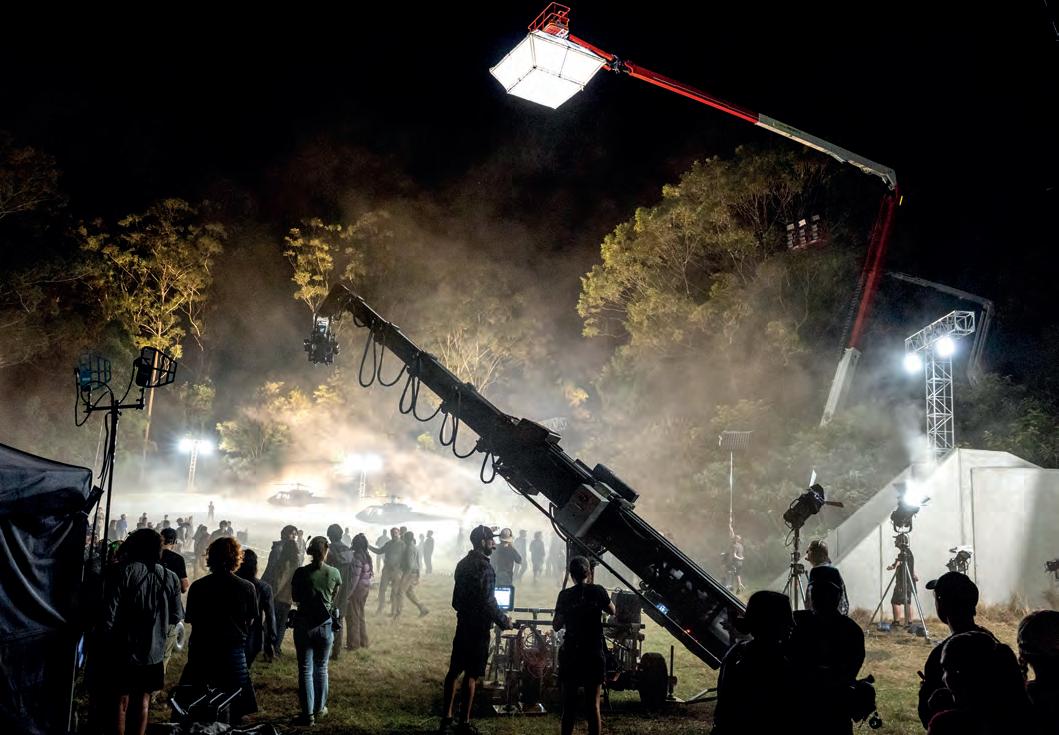
The Northern Territory typifes the outsider’s image of Australia. Covering 1.3 million square kilometres, it is hot and sparsely populated, bordering Western Australia, South Australia, and Queensland. The capital, Darwin, is a tropical city in the north. Jennie Hughes, senior director at Screen Territory — the Northern Territory Government's body that supports and develops flm, television and digital media — notes a resurgence in features: “We hosted Kangaroo for StudioCanal, and it has been really good to have feature flms in the region again.”
From StudioCanal’s production arm, Cultivator Films, Kangaroo is a family comedy, directed by Kate Woods, about an ex-TV personality, Chris Masterman, who becomes stranded in an Outback town after a car accident on his way to Broome in Western Australia. He teams up with 11-year-old Indigenous girl Charlie and the pair form an unlikely friendship and work together to rescue and rehabilitate orphaned joeys — an endeavour that proves to be life-changing for them both.
ranging from the Arafura Swamp to Arnhem Land — are often as prominent as the actors themselves. Other notable locations include Kakadu National Park, whose lush terrain has featured in a number of productions including Netfix’s The Territory, which showcased other striking Northern Territory locations including the working cattle station Tipperary Station, Litchfeld National Park's Wangi Falls and coastal regions near Darwin.
JENNIE HUGHES
‘WE HOSTED KANGAROO FOR STUDIOCANAL, AND IT HAS BEEN REALLY GOOD TO HAVE FEATURE FILMS IN THE REGION AGAIN’
The film is largely set and shot on location in the Australian Red Centre town of Alice Springs, on Arrernte country, the traditional land of the Arrernte people, and the home of the Kangaroo Sanctuary on which the flm is based. “There's something really wonderful about feature flms, you know?” Hughes says. “There's something about going to a premiere. We had a beautiful premiere in Sydney at the Entertainment Quarter [close to Disney Studios Australia in the suburb of Moore Park] and our tourism guys came on board and worked with StudioCanal and created this really wonderful experiential event. We try and work with the tourism guys, who can come in and help amplify the audience through their marketing avenues.”
The Northern Territory also hosted the documentary Journey Home, narrated by Hugh Jackman, chronicling the fnal journey of Indigenous Australian actor David Gulpilil. Its landscapes —
In Western Australia, too, momentum is building. Melissa Hayward, who heads up the industry development team at Screenwest, highlights a landmark project: “Netfix chose Western Australia as the location for its new TV series, Breakers, making it the biggest production to take place in Western Australia to date. It's an eight-part series from the Baby Reindeer producer, Clerkenwell Films, that’s filming in the southwest and that’s bringing $21m into the region. Antony Starr from The Boys plays the leader of a surfing community, and it’s genuinely a big deal for the state. But equally important for Western Australia is that the Perth Film Studios are coming online. They reached practical completion in February, and following testing they will be opening their doors. We can't talk about the major project that will kick of the action there but sufce to say it is more exciting news.”
The new studio complex, comprising four sound stages, addresses a long-standing gap. “So far, we’ve taken a few people around it, and they were properly impressed. It's the missing piece of the puzzle for us in Western Australia,” Hayward says. “We’ve got amazing landscapes and have always been known for our location shoots, but while we’ve had a lot of interest over the years for the larger scale productions, no amount of good locations can compensate for a lack of underlying infrastructure. And now we have that and it's going to be a new era of screen production in Western Australia.”
Village Roadshow Studios hosted Monarch: Legacy of Monsters, Season 2, for Legendary Pictures. Photo: Apple TV



WORLD-CLASS STAGES UNPARALLELED LOCATIONS
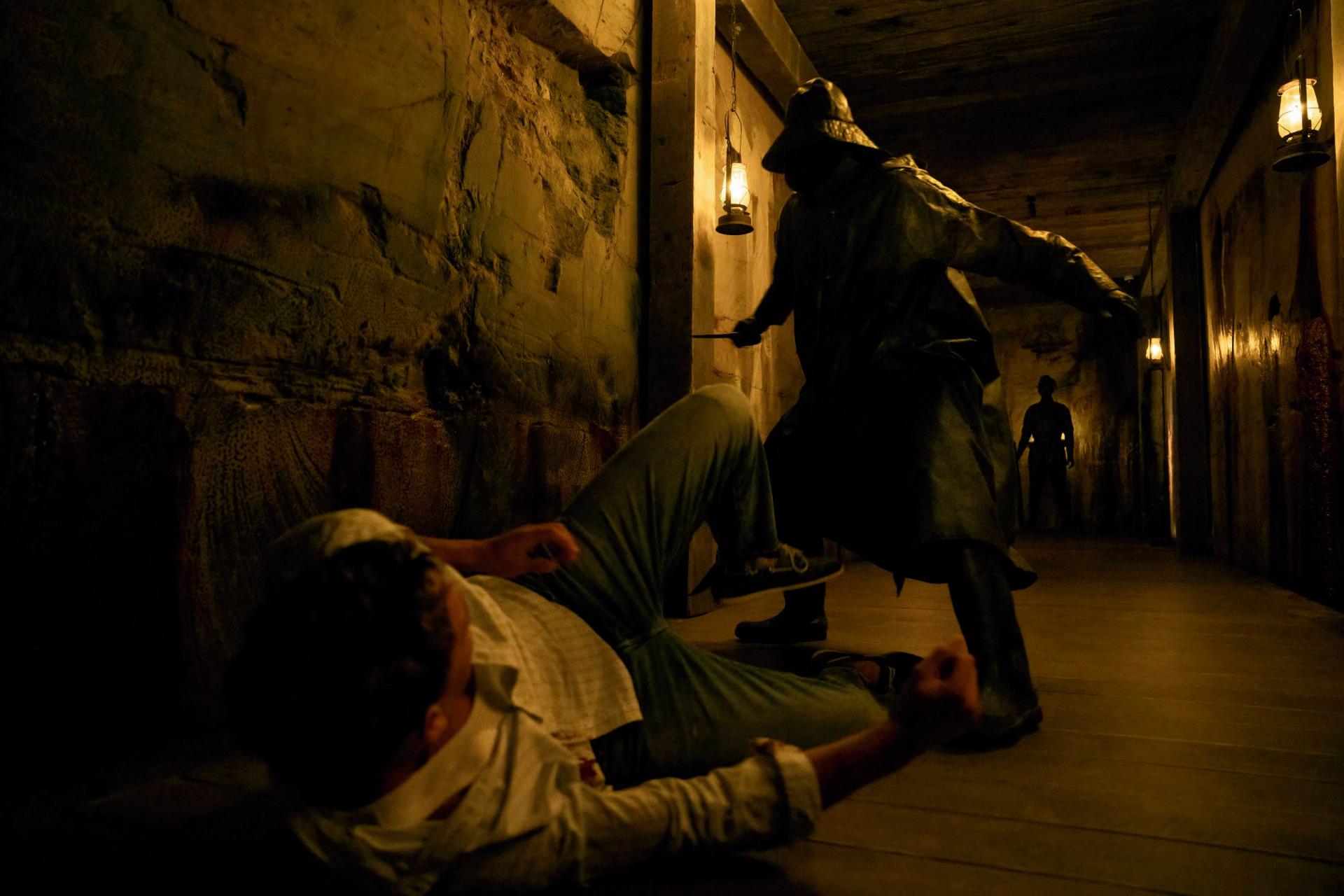
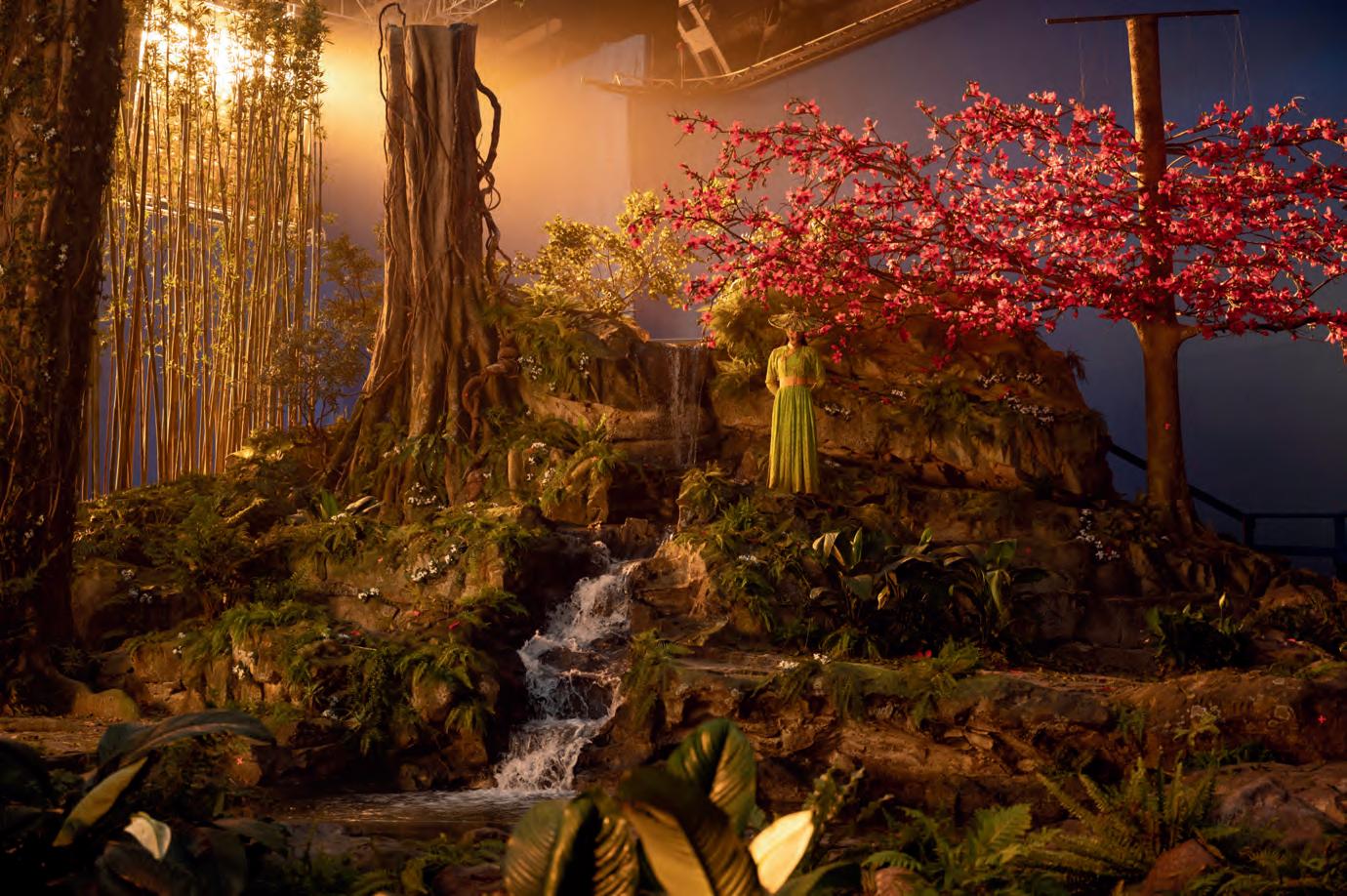
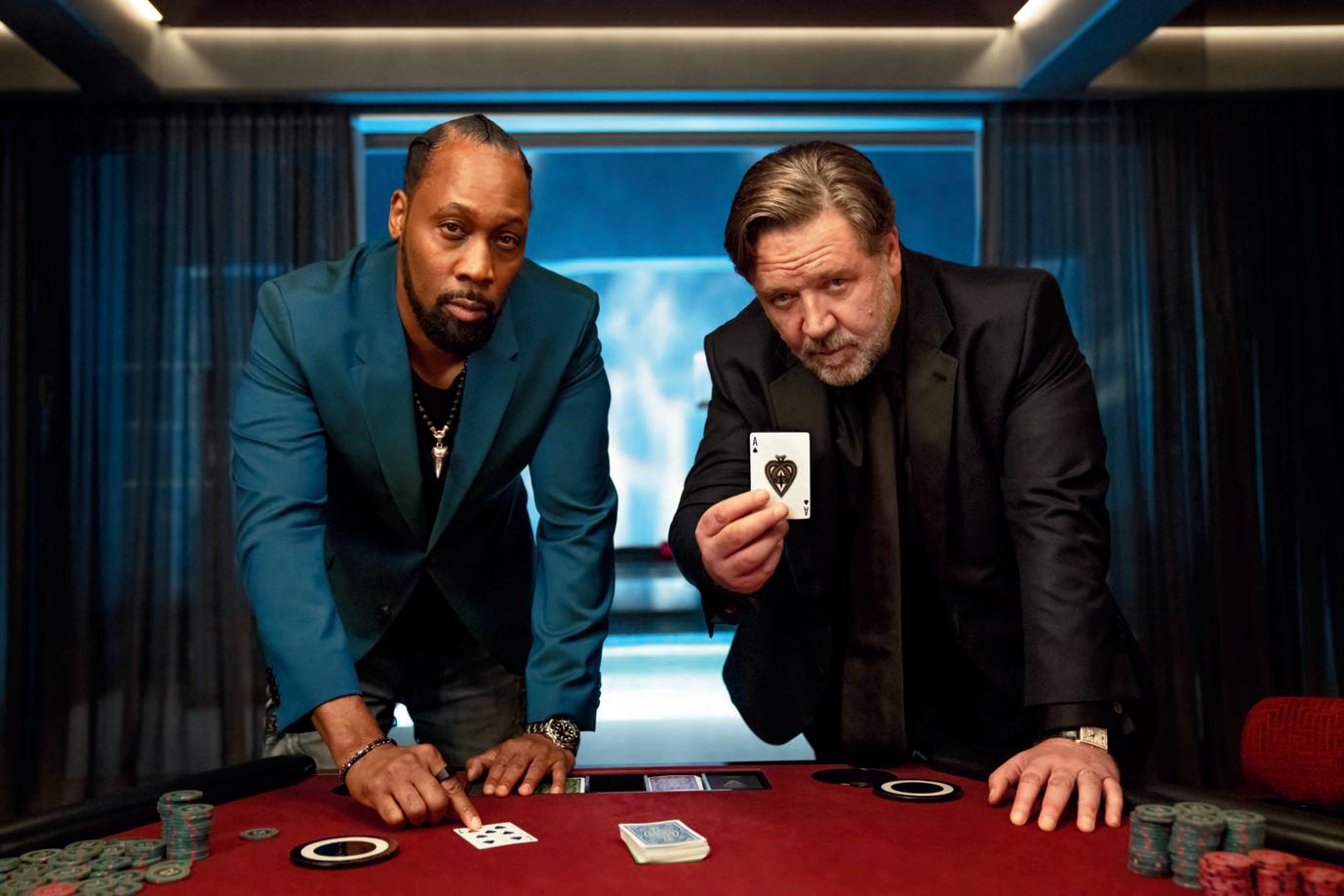
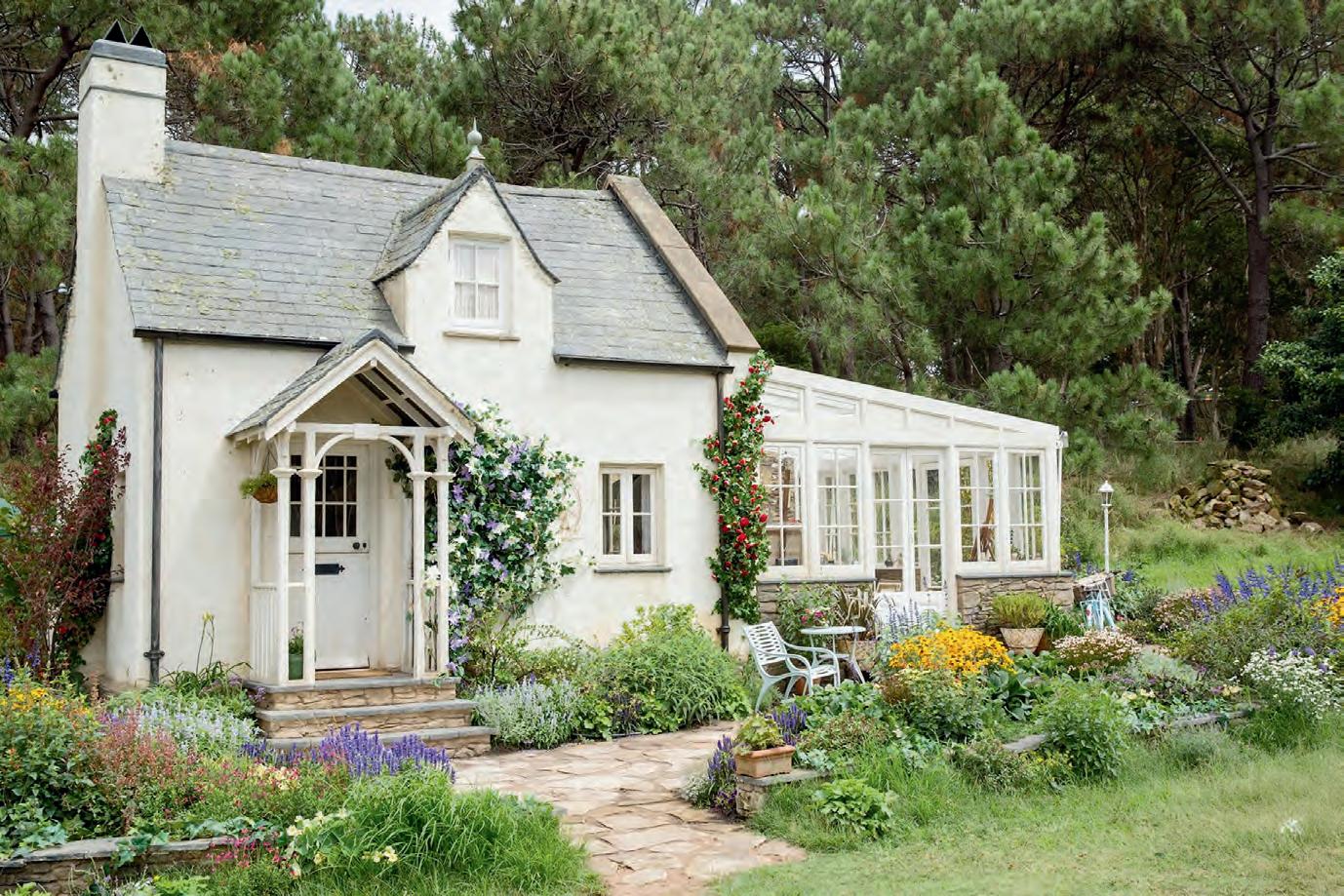
Western Australia’s distinctive advantage lies in its isolation. “We get so many requests for an isolated property, and we can give that in all sorts of diferent ways, anything from empty felds to a forest look or coastal properties.” Recent productions include The Engagement Party, directed by Dacre Montgomery, shot on Rottnest Island. “We’ve also hosted the comedy TV show Ghosts Australia which shot in and around the magnifcent 19thcentury Woodbridge House,” she adds. Other projects range from The 12, flmed in Margaret River, to We Bury the Dead starring Daisy Ridley.
On the east coast, Queensland has emerged as a production powerhouse. “We do Team Queensland very well. We bring together all the people that are part of the screen industry. It’s a very rich ecosystem,” says Jacqui Feeney of Screen Queensland. “We managed to get the state government to work really closely with all the teams that attract shooting business to Queensland, and we are a package deal. We have the incentives, the locations, the crew — and that all works together. But there's this other thing that Queensland does because we're a tourist destination. We've got the hotels, we've got the restaurants, we've got a lifestyle that we can pack in with the screen supply chain to make sure those hard-working people also have a good time. That’s what makes Queensland special. And our incentives are good.”
Recent productions include The Mosquito Bowl for Netflix, directed by Peter Berg, who says: “I was thrilled to be in Queensland flming The Mosquito Bowl with some of the best crews in the world. The landscapes here are cinematic gold, perfect for bringing this story to life. So far, I’ve crossed paths with two kangaroos and a couple of pythons, and I’m seriously considering casting them! Huge thanks to Screen Queensland for their incredible support.” Other projects include an Amazon MGM Studios production, Black Snow, and Subversion, starring Chris Hems-
DISNEY DOWN UNDER
OVER the past 12 months, Disney Studios Australia, located at Moore Park, Sydney, has hosted a wide range of productions, spanning international studio features and independent projects. Most recently, 20th Century Studios’ Send Help filmed at the Disney studios, utilising Stage 1 alongside a number of on-site production facilities. The production also made extensive use of nearby locations, including Centennial
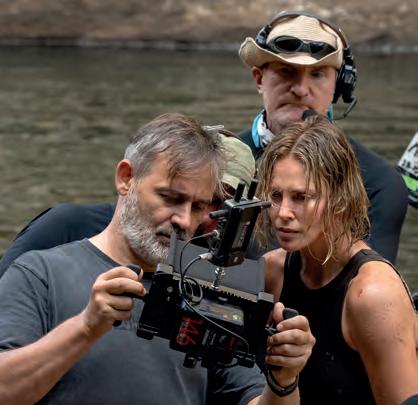
worth and Lily James. A producer for Apple's Monarch: Legacy of Monsters, Lawrence Trilling says: “The flmmaking community here is very strong. It’s a real can-do attitude, and an incredible work ethic.” Other producers echo that sentiment. Andrew Form, from 2025's Anaconda says: “You have the best crews, the best locations, the most beautiful place. I couldn’t have asked for more.” Michael Disco, from new action movie The Bluf, concurs: “Filming in Queensland was an absolute dream… Queensland has set a new benchmark for international production, and I can’t wait to return.”
Queensland-based Village Roadshow Studios continues to anchor large-scale production. Recent projects include Voltron, Monarch: Legacy of Monsters, Subversion and The Bluf. Lynne Benzie, the studio’s president, attributes its success to geography as much as infrastructure: “Apart from our facilities, the reason why many of the productions come here is because of the sort of topography that’s so close by. Within a short distance you can double locations for Miami, beaches or rainforest. It’s no secret that the fexibility of the Gold Coast is quite unique.”
Studio capacity is equally important. Large-scale builds — including for Nautilus and Mortal Kombat — have demonstrated the versatility of the stages, some exceeding 3,700 square metres. Extensive water tanks, originally constructed for 2008's Fool’s Gold, have since been re-used by numerous productions. Taken together, these elements—diverse landscapes, robust infrastructure and a co-ordinated policy framework — help explain why Australia’s screen sector is enjoying a sustained upswing. The country’s long-standing appeal endures, but it is now underpinned by a depth and consistency that suggest the current boom may prove more than cyclical.
Parklands, five minutes from the studio. Centennial Parklands has previously been used for productions including The Great Gatsby, Australia, Wolverine and Peter Rabbit, where it doubled as the quaint English countryside.
Netflix’s Apex was also based at Disney Studios Australia, with filming across Stages 2, 3, 4 and 7. The production additionally filmed on location in the Blue Mountains in New South Wales, which provided the dramatic backdrop for the wilderness thriller. “For a film like Apex — where the elements and the terrain are characters that loom just as large as the stars, no other country in the world could have taken the place of Australia as our primary location,” director Baltasar Kormákur said. “The unrivalled landscape, studio facilities and talented crews in New South Wales have been a boon to this production.”
NO TROUBLE IN QUEENSLAND
ANNA Torv, known in Australia for the ABC drama The Newsreader, stars as a detective in crime drama Dustfall also for ABC Australia, working on the case of an 18-year-old found naked in a cane field with no memory of how she got there. Producer Daisy Gilbert of Moon River TV says: “The local crew
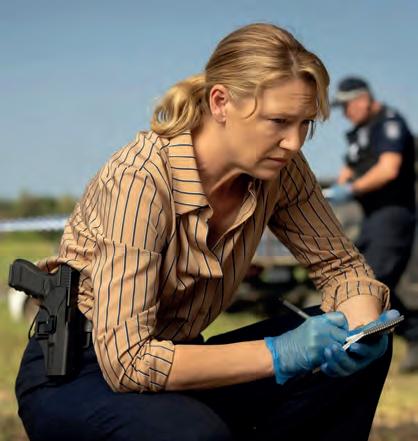
were always ready to pivot depending on weather conditions and are just solution-orientated by nature. And as always Screen Queensland was really supportive, ready to troubleshoot. We were shooting in the Numinbah Valley, a national park which is very green, plus using cane fields and some rain forest. In terms of buildings, we needed a typical Queenslander house, which features as a big part of the story. But the challenge is that these days many of them have been spruced up, and we wanted one that looked lived-in and a bit down-at-heel.”
Anna Torv as Tig Pollard in Dustfall Photo: ABC/Vince Valitutti
Charlize Theron and director/producer Baltasar Kormákur on location for Apex Photo: Kane Skennar/©Netfix 2026
CANADA ON CAMERA


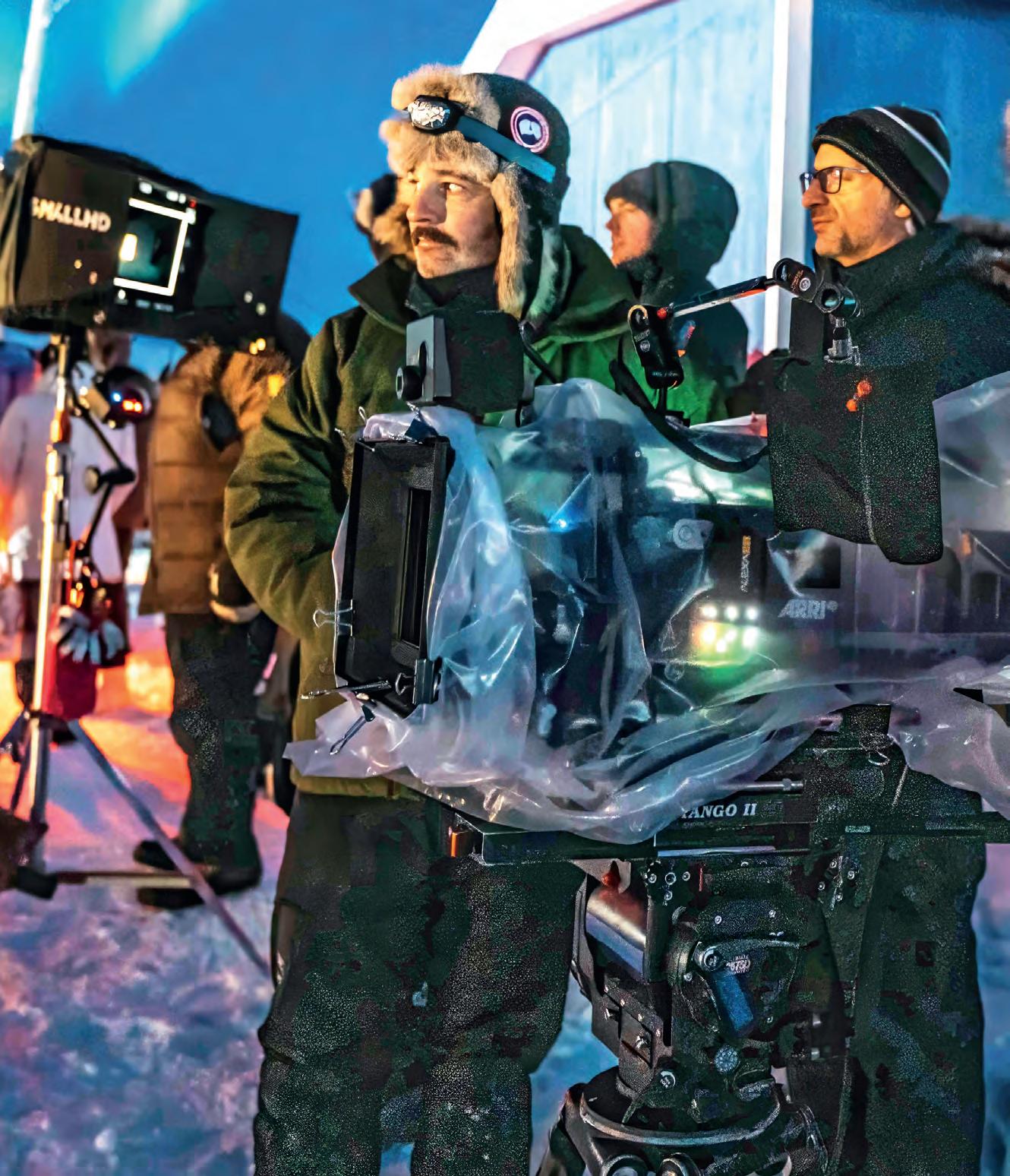



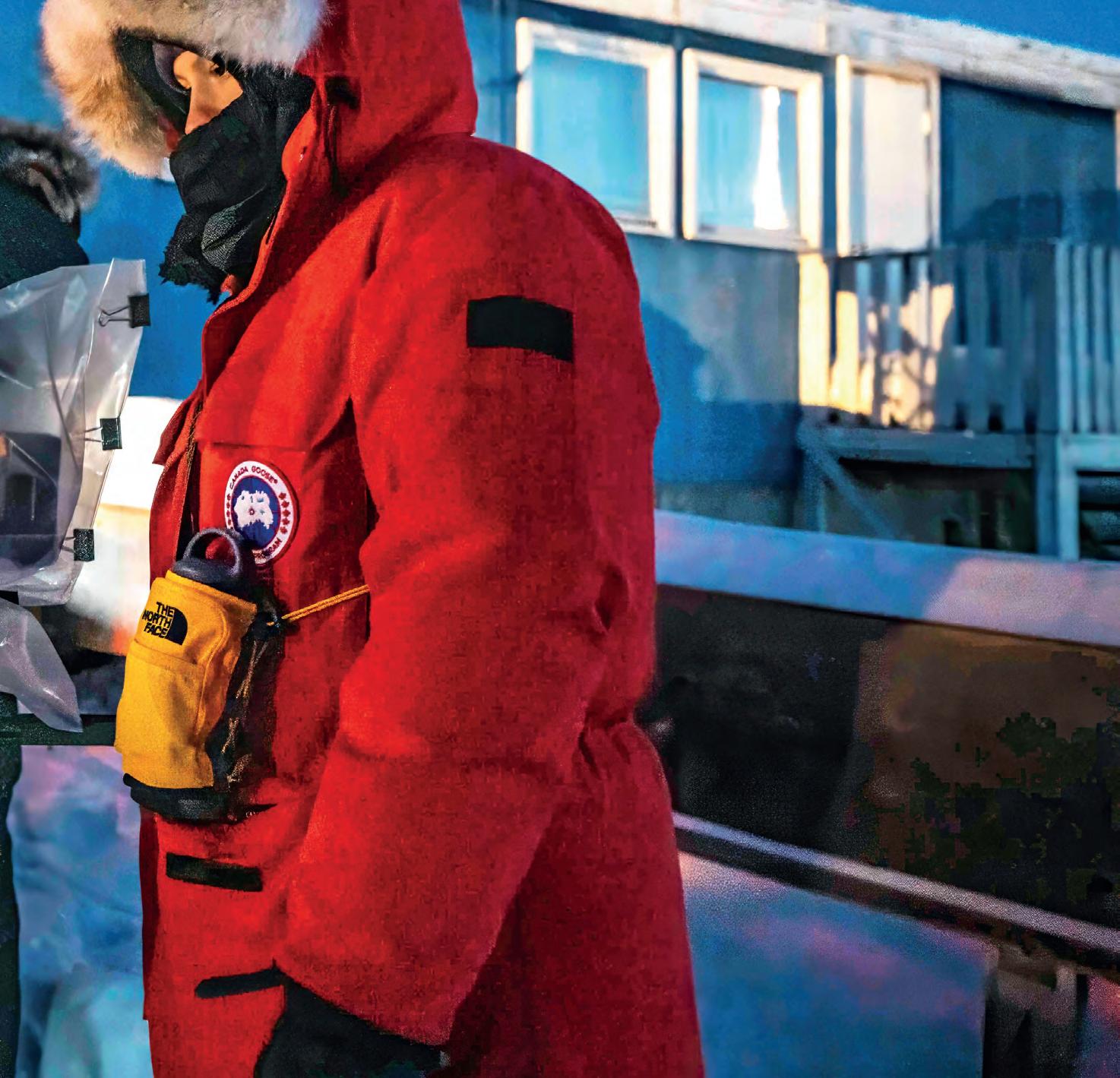


Canada offers everything from highly sophisticated cities to the wildest of wild terrains. From the Pacific Northwest through to the Atlantic, right up to the sparsely populated snowscapes of the Arctic North, there lies an inspiring, unspoilt and varied palette. Gary Smith reports
CANADA’ s provinces are vying to outdo one another as destinations for film and television production, offering a blend of striking landscapes, competitive incentives and increasingly sophisticated infrastructure. The result is a geographically dispersed but highly co-ordinated national industry, capable of accommodating everything from indie thrillers to global streaming hits. Saskatchewan is making a concerted push. The province recently hosted the shoot for #VanLife, a psychological thriller charting the descent of young social-media influencers lured into a violent cult. Filmed over 25 days at the John Hopkins Regina Soundstage in Regina, it employed LED volume-wall technology throughout. “The film shot for 25 days in Saskatchewan, and was the first Indigenous and Canadian indie film to shoot entirely using virtual production,” says Megan Folden, director of communications at Creative Saskatchewan.
Other projects underscore the province’s growing appeal. Deathgasm 2: Gormageddon, a cult zombie sequel, filmed in Regina and Regina Beach over 20 days, while the romantic comedy One Perfect Date spent 28 days in the provincial capital. The supernatural horror Split Rock used locations in Avonlea, Rockglen, Cypress Hills and Grasslands to craft a visual style

Director Kyle Edward Ball, on location in the Northwest Territories for The Land of Nod.
Photo: A24
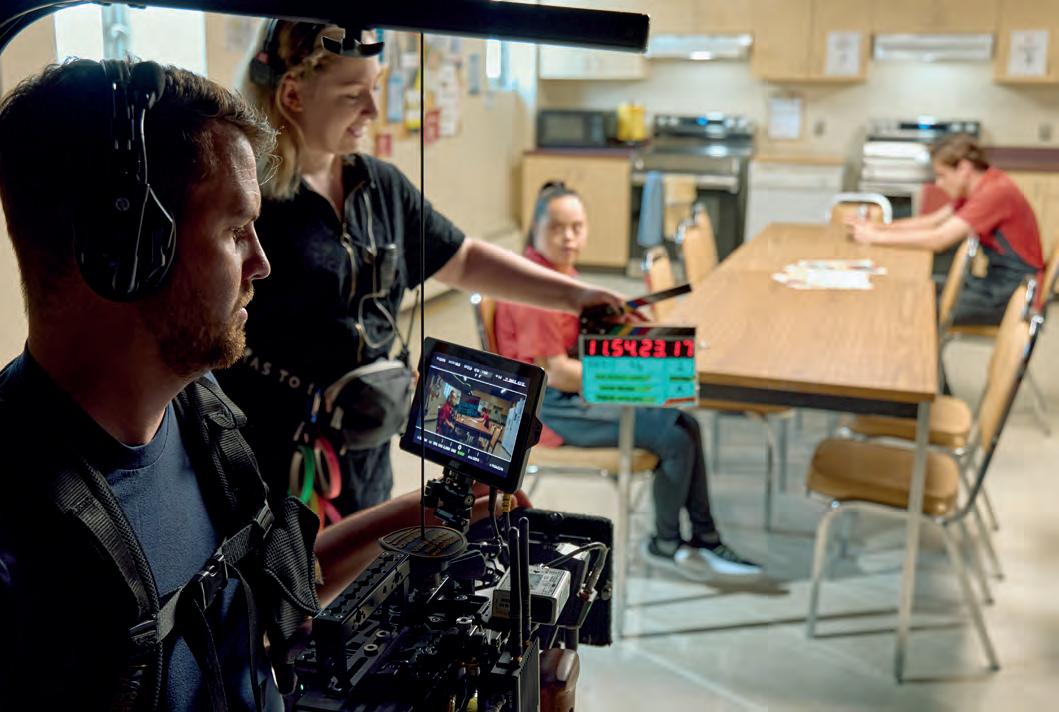
rooted in Saskatchewan’s stark badlands. As Folden puts it, the production drew on “Saskatchewan’s famous badlands to create a haunting visual style that is underscored by the natural landscape.”
The pipeline is filling. “Over 20 additional productions are already slated, and although we can’t announce them yet, they will be flming throughout the province,” Folden says. Policy is evolving alongside output. Saskatchewan’s main incentive, the Feature Film & TV Production Grant, since April 1, 2026, now includes an Apprenticeship Stream. “Producers will be able to bring in the crew they need, provided there is no qualifed Saskatchewan resident available to do their job, and each person brought in provides on-set training to a Saskatchewan resident.”
The aim is to import expertise while building a domestic workforce.
International interest is rising. New business in 2025 came from New Zealand and Serbia, while location scouts from elsewhere in Canada have been courted with site visits and introductions to local partners. “Additionally, we’ve hosted location scouts for several out-of-province producers to show of the facilities and locations in person, plus we introduced them to potential co-production partners and industry suppliers. We will often ofer up-front funding opportunities with our production grant, creating signifcant interest savings and budget fexibility for productions.”
debuted to exceptional critical and audience response, topping HBO Max at Nº1 and becoming the most watched original series on Bell Media’s Crave,” he says. “Much of the global conversation around the show has centred on pride in its Ontario roots, a testament to the world-class talent and production ecosystem we have here.”
Shot over 36 days, the series used locations across Toronto, Hamilton, Guelph and Muskoka to double for settings as varied as Russia, Boston, Montreal, New York and Las Vegas. It has already been renewed for a second season. Ontario also hosted Guillermo del Toro’s Frankenstein, which flmed across the province and at Cinespace Studios. “The flm’s nine Academy Award nominations speak to Ontario’s strength as a home for ambitious, worldclass feature flmmaking,” Cutler says.
MEGAN FOLDEN ‘WE WILL OFTEN OFFER UP-FRONT FUNDING OPPORTUNITIES WITH OUR PRODUCTION GRANT, CREATING SIGNIFICANT BUDGET FLEXIBILITY’
The province’s breadth is evident in its 2025 slate: Reacher (Amazon), the final season of The Boys (Amazon), Sheriff Country (CBS Studios), Star Trek: Starfeet Academy and Star Trek: Strange New Worlds (Paramount), Shoresy (Crave), Boston Blue (CBS Studios), The Greatest (Amazon), Devil in Disguise: John Wayne Gacy (NBCUniversal) and Law & Order Toronto: Criminal Intent (Universal). Collectively, these projects illustrate Ontario’s ability to handle productions of varying scale and genre.
If Saskatchewan is emerging, Ontario remains the industry’s heavyweight. According to Ontario flm commissioner Justin Cutler, the province continues to attract high-profle international productions across both television and flm. A recent standout is Heated Rivalry, created by actor, producer, director Jacob Tierney, which became an international breakout. “The series
Infrastructure is expanding to match demand. A new purpose-built facility by Dark Slope will add 7,000 square metres of production space, including three sound stages and a dedicated motion-capture and animation stage. Such developments are particularly attractive for projects requiring hybrid or virtual production workfows. Heated Rivalry recently used Dark Slope Studios to realise scenes set in Las Vegas and the Sochi Olympic Village through virtual production.
Actor Madison Tevlin and crew, on set at the John Hopkins Regina Soundstage in Regina, Saskatchewan for One Perfect Date
Photo: Kiriako Latridis



UNIQUE LOCATIONS
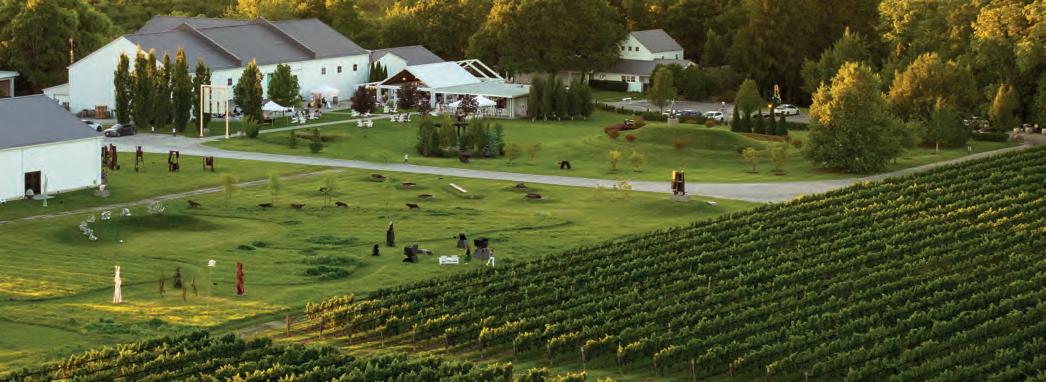

EPIC NATURE






Ontario has you covered with beautiful vistas, bustling cities, world-class crews, competitive incentives, sustainable production, and so much more.







SAS KAT CHE WAN


Your story needs range. Saskatchewan delivers.


The Ontario Film Commission plays a crucial role in enabling such projects, often stepping in during early planning. This was especially evident on Heated Rivalry and Frankenstein. “For Frankenstein, one particularly challenging request was to fnd a vast, barren Arctic winter seascape set in the late-1800s,” Cutler says. “Working closely with the production’s location team, the Ontario Film Commission helped identify Lake Nipissing in North Bay Ontario as an ideal solution. The region ofered the rugged wilderness the director’s vision required, and the local municipal flm ofce worked closely with production to ensure the shoot was a success.”
Manitoba, meanwhile, is capitalising on its reputation for reliability and collaboration. TV series American Hostage, directed by Adam Arkin and starring Jon Hamm, Mireille Enos and William Jackson Harper, shot between November 2025 and February 2026 in Winnipeg’s Exchange District, and the neighbourhood of Crescentwood in Selkirk. “When looking for a place to flm, Manitoba is on our radar,” says producer Marc Provissiero, of Odenkirk Provissiero Entertainment. “I have a good relationship with the crews here and the government; you can tell that they care about the industry and are easy to work with. It’s always easier to get work done when everyone is on the same page working with a positive attitude.”
Mandy Patinkin and Robert Carlyle.
Further projects shot in Manitoba include: the original Normal, directed by Ben Wheatley and starring Bob Odenkirk, Henry Winkler and Lena Headey, flmed in Carberry, Starbuck and Selkirk. The Long Walk, directed by Francis Lawrence and starring Mark Hamill, Judy Greer and Cooper Hofman, shot in Winnipeg’s Exchange District, at the Pinawa Dam and in La Rivière.
MARC PROVISSIERO
'I HAVE A GOOD RELATIONSHIP WITH THE CREWS AND THE GOVERNMENT, YOU CAN TELL THEY CARE ABOUT THE INDUSTRY'
Television remains important: “Little House on the Prairie’s season one shot at Cooks Creek, Balmoral, Dugald and Oakbank, and ahead of its premiere, the producers announced a second season which will also be shot in Manitoba,” Jaclyn Obie, director of marketing and communications at Manitoba Film & Music says. “Canadian show Acting Good just announced a ffth season and will begin shooting in April 2026. This is an Indigenous series created for CTV, and produced by Winnipeg-based Kistikan Pictures. And finally, Mike & Nick & Nick & Alice — shot here in 2024 — premiered on Disney+ on March 27.”
The province has hosted a steady stream of productions. Nobody 2, directed by Timo Tjahjanto and starring Bob Odenkirk, Christopher Lloyd and Sharon Stone, flmed along Winnipeg’s Red River, at the Fort Garry Hotel, and on Winnipeg Beach and in Selkirk. Love Hurts, directed by Jonathan Eusebio, used neighbourhoods across Winnipeg, while November 1963, directed by Roland Jofé, also shot in the city. The flm focuses on the assassination of John F Kennedy, with a cast including John Travolta,
Quebec operates on a diferent scale altogether. The province produces over 1,000 projects annually, employing some 57,000 workers across domestic and international productions. Montreal recently hosted the pilot and episodes of DMV , a CBS comedy set in an East Hollywood Department of Motor Vehicles workplace, created by Dana Klein — who served as a supervising producer on Friends from 2001 to 2004 . The show explores the frustrations of both staf and customers in a setting where patience is in short supply.
Other returning series include Ghosts (seasons four and fve), in which a young couple inherit a haunted mansion and attempt to convert it into a bed-and-breakfast, only to discover its spectral inhabitants. “We also hosted the French TV series Alice, plus the feature flm Love & Chaos… and the independent flm The
Muskoka, Ontario, one of the locations used in Jacob Tierney’s TV series Heated Rivalry
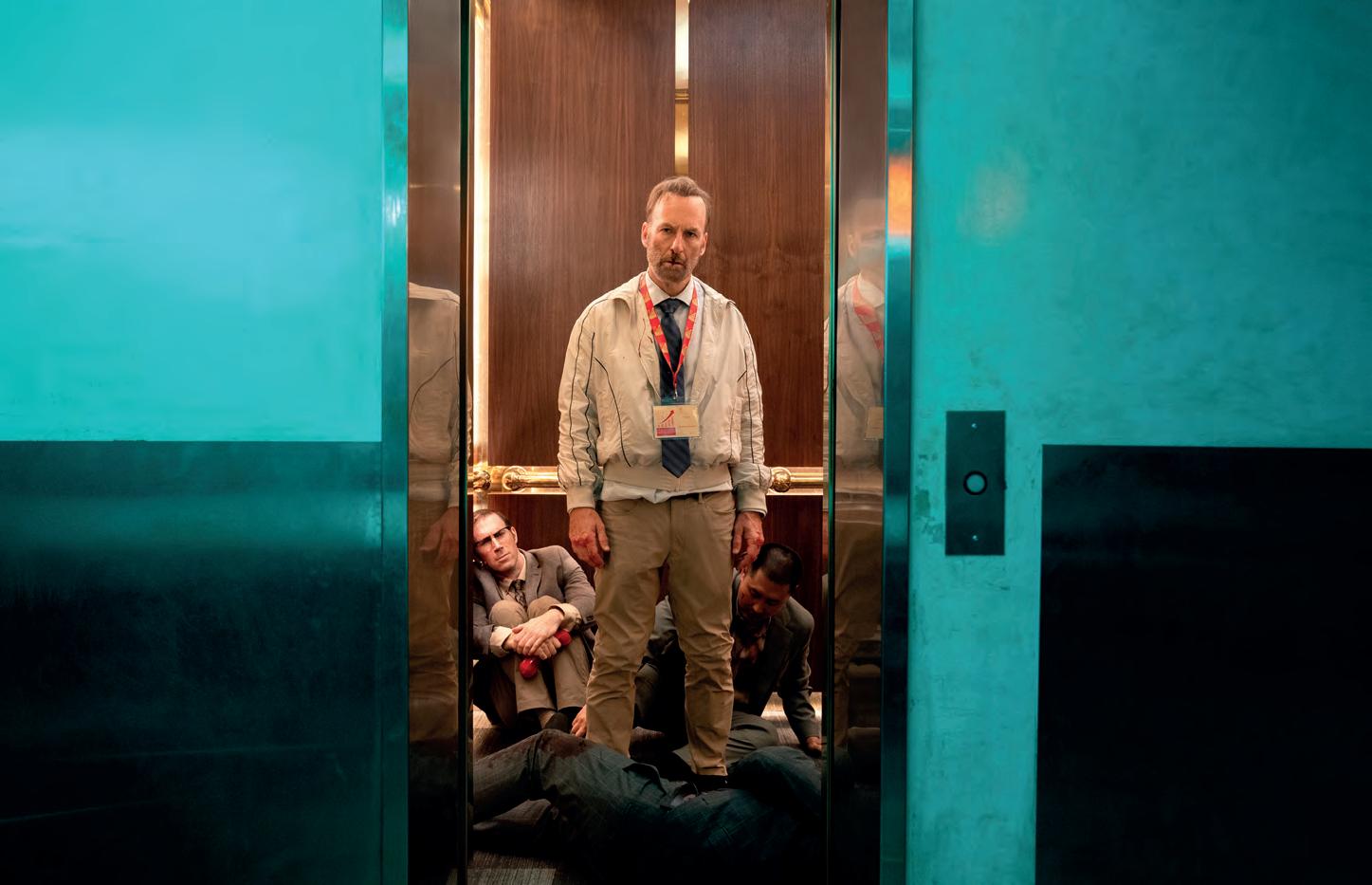
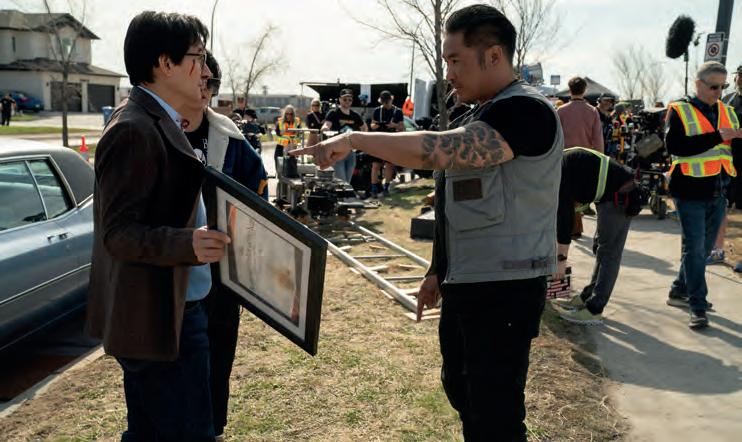
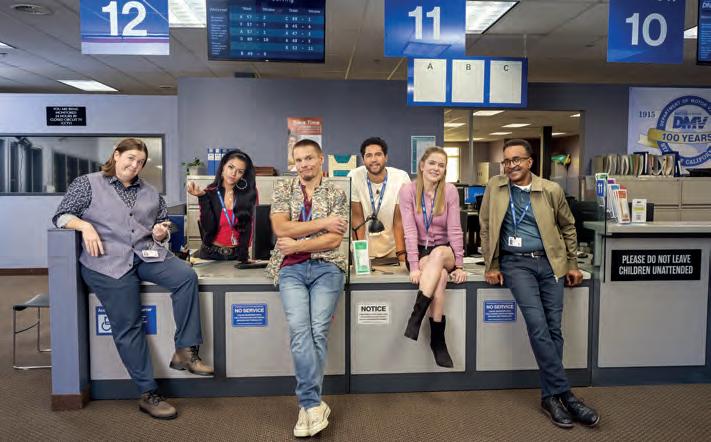
Housewife, starring Naomi Watts and Luke Evans,” says Viviane Agostino of the Quebec Film and Television Council (QFTC).
The province’s appeal lies not only in volume but in co-ordination. The QFTC works closely with the Montreal Film Commission and regional offices to aid production. “Together, we help streamline logistics, facilitate location access and support efcient resource management. We also foster strategic connections within Quebec’s audiovisual ecosystem by introducing international producers to local professionals, businesses and service providers,” Agostino says.
Quebec’s broader qualities reinforce its appeal. “Beyond its culture and language, Quebec stands out as one of North America’s most welcoming, multicultural, safe and creative regions. The province ofers a dynamic environment where innovation thrives — while remaining one of the most afordable and safest places to live and work in Canada.” Its architectural diversity
is another asset: “From the historic charm and European-style streets to the sleek modernity of Montreal and Quebec City… the province combines European elegance with North-American energy,” Agostino adds.
Further north, the Northwest Territories ofer something rarer: scale and remoteness. With vast natural ecosystems and a population that is roughly half Inuit, the region has long attracted documentaries and survival series. “As a result, we have historically been a hotspot for nature docs and survival series, but for us it’s just a way of life,” says Camilla MacEachern, flm commissioner and promotions manager. The territory is home to Inuvialuit, Inuit, Métis and Dene communities, contributing to a rich cultural landscape that surprises visitors. Filming in such remote environments requires logistical ingenuity. “In terms of flming in remote places, we are very good at creating very comfortable working camps that are fully serviced,” MacEachern says. The
Top: Nobody 2, directed by Timo Tjahjanto, and starring Bob Odenkirk, Christopher Lloyd and Sharon Stone. Left: Love Hurts, directed by Jonathan Eusebio, shot in the Sage Creek and Bridgewater neighbourhoods in Winnipeg. Right: Montreal recently hosted the pilot and episodes of CBS comedy DMV, which stars stars Harriet Dyer, Tim Meadows, Tony Cavalero, Molly Kearney, Alex Tarrant and Gigi Zumbado. Photo: CBS
territory’s resource-based economy, rooted in prospecting and mining, has fostered a practical, problem-solving mindset that carries over into flm production. Scripted projects are becoming more common, helped by increased funding and growing awareness. “Every production that does flm here demonstrates to the broader flm and TV production community that we are very flmable,” MacEachern says. “A big thing for us as a northern region is simply creating awareness that we even exist.” Recent projects include Lumi, sci-f Arctic adventure feature flmed in early 2025, and reality competition The Amazing Race, which shot above the Arctic Circle in Inuvik and Tuktoyaktuk. Alberta rounds out the picture with a year of recovery and growth. According to flm commissioner Mark Ham, 2025 marked a rebound after the disruptions of the 2023 Hollywood strikes. “2025 was a strong year for the local screen industry, and that momentum has carried right into early 2026,” he says. “After the slowdown we all felt in 2023… production activity has rebounded.”
MARK HAM
‘2025 WAS A STRONG YEAR FOR THE LOCAL SCREEN INDUSTRY, AND THAT MOMENTUM HAS CARRIED RIGHT INTO EARLY 2026’
High-profle productions have reinforced Alberta’s standing. My Life with the Walter Boys continued flming for Netfix, bringing signifcant activity to the region. Other projects included Fraggle Rock: Back to the Rock (Apple TV+), flmed in and around Calgary, and the third season of Billy the Kid (MGM+), which used Alberta’s landscapes to stand in for the American frontier. The feature adaptation of Colleen Hoover’s Reminders of Him also shot in the
province, while the long-running series Heartland continues to anchor the local workforce. Kyle Edward Ball, the writer and director behind 2022 horror hit Skinamarink, has also looked to this part of the world for his latest production. Ball has teamed up with A24 for The Land of Nod, about a group of isolated neighbours in northern Canada, which recently shot in Edmonton, Alberta and Yellowknife, Northwest Territories. The Land of Nod follows the fortunes of a community in a small and secluded town in the northern Canadian territories during a snowstorm. International collaboration is a growing focus. Ham points to TV series Can This Love Be Translated? as an example of Alberta’s partnership-driven approach. Working with Travel Alberta, ofcials engaged directly with South Korean partners, including Netfix Korea, through trade missions and targeted outreach. “That work really paid off,” Ham says. The series showcased Alberta’s landscapes to audiences across South Korea, Japan, Mexico and France, reinforcing its reputation as a fexible and flm-friendly jurisdiction.
Taken together, these provincial eforts reveal a national strategy built on diversity: of geography, of talent and of approach. Canada’s flm industry is no longer concentrated in a handful of hubs but distributed across a federation of eager competitors, each ofering its own mix of incentives and advantages. For producers, that means choice. For Canada, it means resilience.
CANADA’S NORTHWEST TERRITORIES
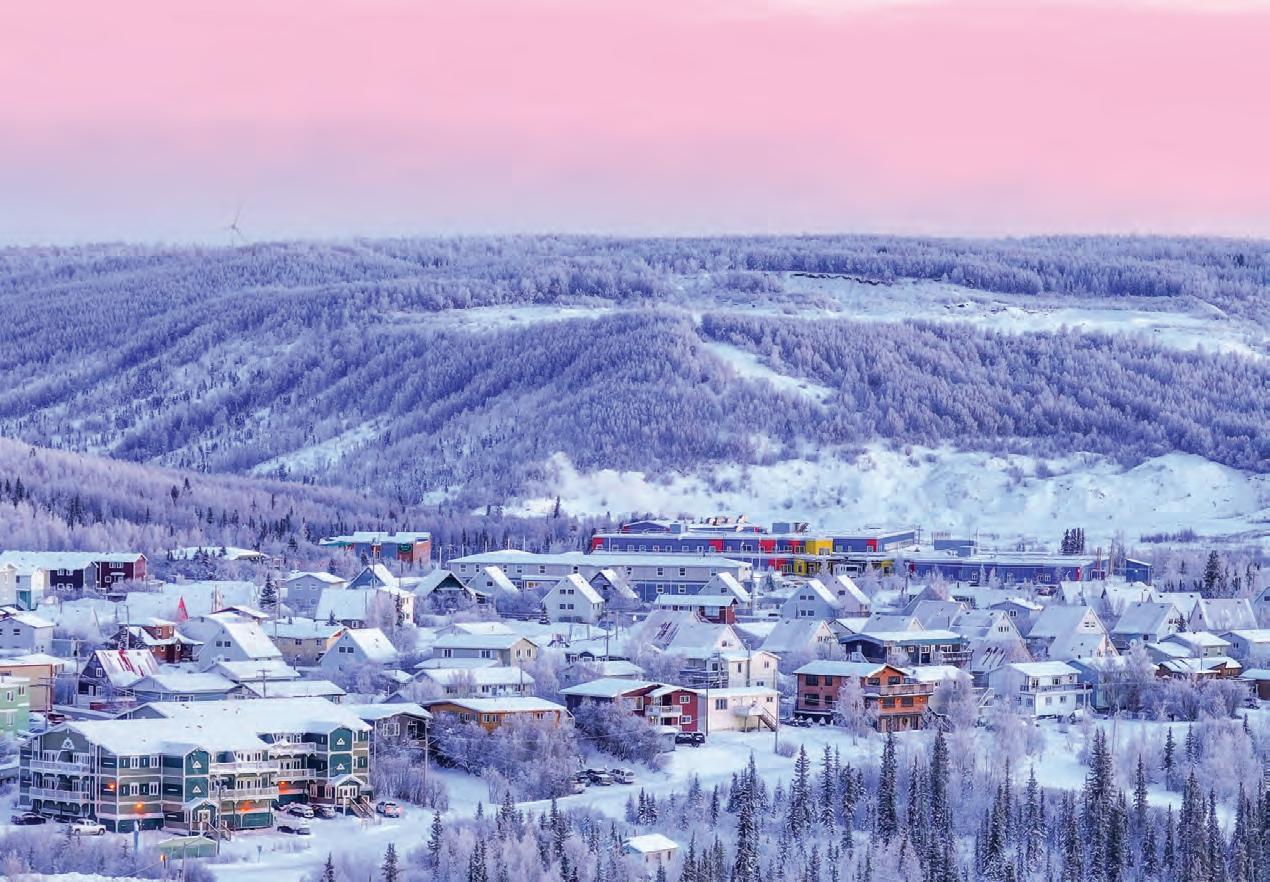
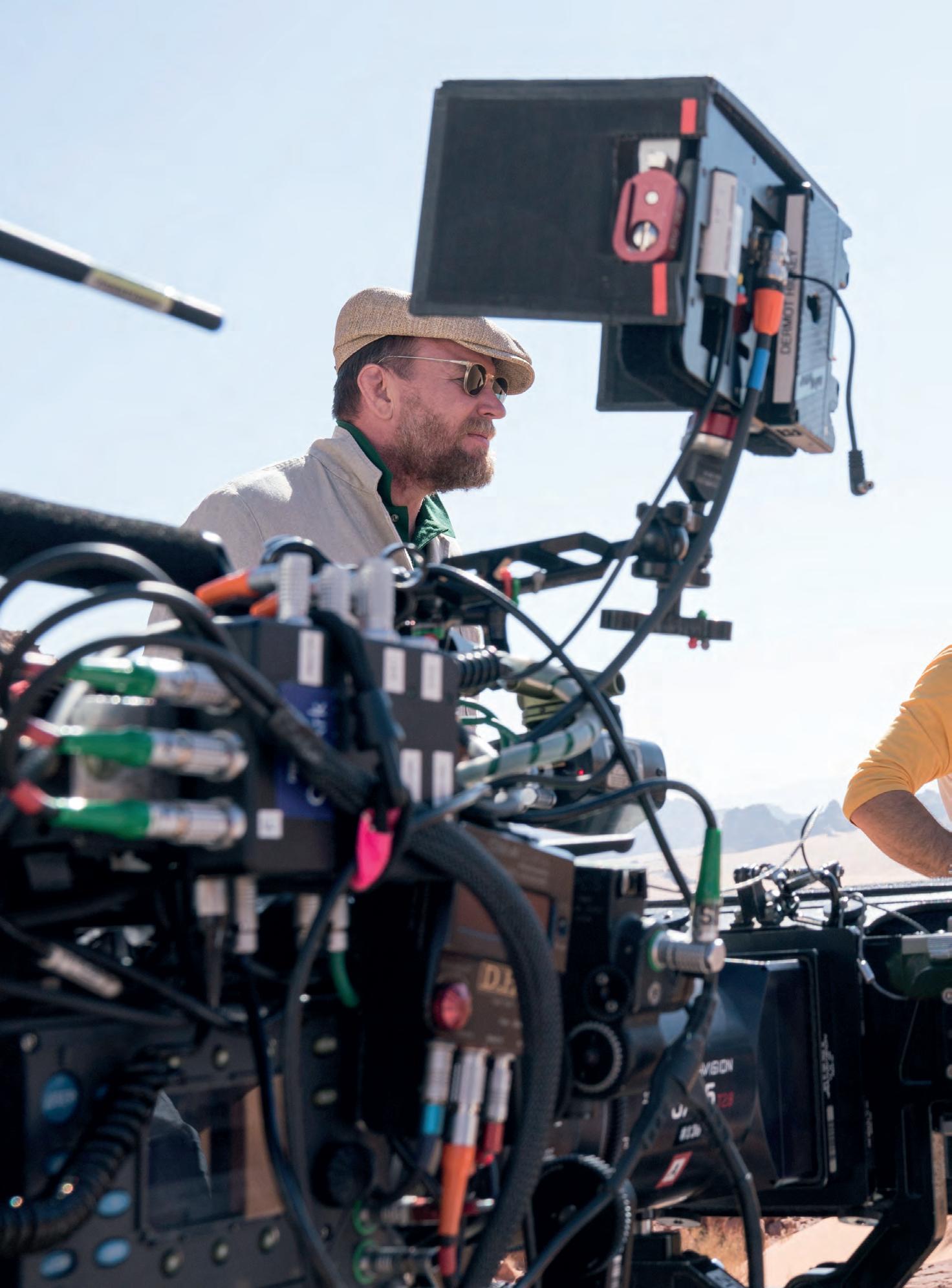
MAKING MAGIC
With its vast deserts, hyper-modern skylines, ancient cities and otherworldly coastlines, the MENA group of territories has evolved from an occasional backdrop for mythical and magical epics, into one of the most ambitious film and television production hubs in the world. Andy Fry reports
Director Guy Ritchie and actor Mena Massoud, on location for Aladdin in the Wadi Rum desert, Jordan. Photo: Disney
ONCE associated chiefly with sand-blown epics and historical drama, the Middle East and North Africa (MENA) region now presents a more rounded proposition: generous incentives, expanding state-of-the-art studio infrastructure, internationally experienced crews and governments that treat screen production as a strategic growth sector. Over the past decade this shift has been deliberate and policy-driven. National transformation plans have placed media and entertainment at the centre of diversifcation strategies; flm commissions have professionalised; and rebate systems have become clearer and more competitive. Crucially, infrastructure has been built not just for spectacle but for repeat business. Yet the region’s core asset remains unchanged. From the sandstone canyons of Jordan to the glass-and-steel skylines of the UAE, MENA ofers cinematic environments that are difcult to replicate elsewhere.
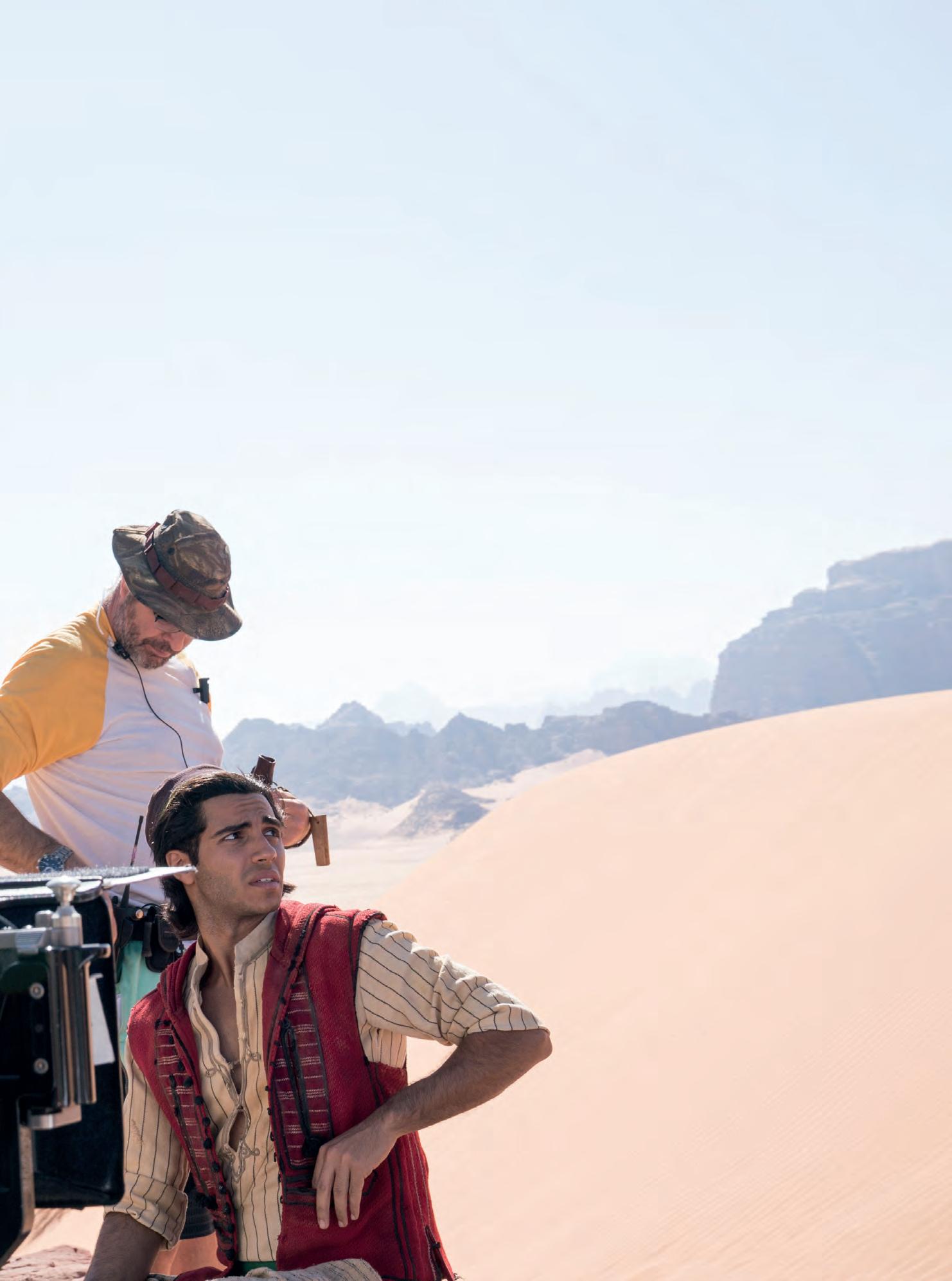
Nowhere has moved faster — or more strategically — than Saudi Arabia, and a key catalyst has been its incentive regime. Administered by the Saudi Film Commission, a cash rebate of up to 40% on qualifying local spend has positioned the kingdom among the most competitive jurisdictions in the world. That headline rate has attracted high-profle international features and major streaming projects while underwriting the development of a broader production ecosystem.
According to data released in 2025, 64 projects have been supported through national incentive programmes, generating almost $300m in local expenditure. There are now around 17 flm studios housing 37 sound stages, as well as 65 registered production companies operating in the market.
The signs of expansion are visible. Riyadh-based JAX Studios boasts two sound stages and a virtual production facility designed by Pixomondo. NEOM is building a futuristic flming hub with sound stages and support facilities for large-scale international shoots. In the country’s northwest, AlUla has emerged as another emblem of Saudi Arabia’s cinematic ambition. Overseen by the Royal Commission for AlUla, the area combines vast desert valleys, towering sandstone monoliths and UNESCO-listed heritage sites within a tightly managed production environment. Productions such as Kandahar have already demonstrated the scale possible.
In May 2025 Film AlUla marked a milestone, signing a landmark agreement with MBS MENA Limited, the regional arm of The MBS Group, to manage AlUla Studios exclusively. Branded AlUla Studios Powered by MBStudios, the partnership links the Saudi campus to MBS’s global network of more than 50 facilities, spanning Los Angeles, New York, London and Vancouver.
Jason Hariton, chief studio and real estate ofcer at The MBS Group, is bullish about AlUla’s prospects. “We see AlUla as a premier destination for global content creators,” he said at the time of the deal. “The city ofers proximity to remarkable landscapes and frst-class accommodation — and some of the industry’s best fnancial incentives for flmmakers.”
Another milestone in the kingdom’s push to build a full-service ecosystem is the opening of PlayMaker Studios at Qiddiya City
JASON HARITON
‘WE SEE ALULA AS A PREMIER DESTINATION FOR GLOBAL CONTENT CREATORS”
by the Qiddiya Investment Company. Located 40 minutes from Riyadh, the complex is the country’s newest purpose-built hub and a strategic addition to its infrastructure base.
PlayMaker Studios launched with two high-spec sound stages, fexible workshops, integrated production ofces, backlot space and on-site amenities, designed to meet the needs of large-scale international and regional productions. Strong demand has already prompted expansion: two additional sound stages, due in 2026, will signifcantly increase capacity and allow multiple productions to run simultaneously.
The facility also offers streamlined access to Saudi Arabia’s 40% production rebate and has been designed with future growth in mind. Dedicated post-production, visual-efects, volumetric-capture and music studios form part of its long-term plan. Activity is already under way, including pre-production on the historical action feature Unbroken Sword, directed by Alik Sakharov, with principal photography scheduled for early 2026. To the north, Jordan has long been a reliable partner for international producers, thanks in part to the Royal Film Commission (RFC). From the red deserts of Wadi Rum to the carved facades of Petra and the mineral fats of the Dead Sea, the country has doubled for Mars, mythic kingdoms and confict zones. Major

productions including Dune, The Martian and Guy Ritchie’s Aladdin have all exploited its versatility. The 2019 flm Aladdin flmed extensively in Jordan's Wadi Rum desert to create the flm's Cave of Wonders. Coming up to date, flmed in 2025, Dune: Part Three is one of the latest high-profle movies to have used the Wadi Rum as a backdrop.
Ahmad al-Khatib, the commission’s communications and culture manager, points to continuity as a competitive advantage:
“First of all Jordan has infrastructure, both human and cinematic, that has been developed over the past 22 years,” he says. “We have worked consistently to prepare our crews and to ensure that Jordan can operate high-value, mainstream productions.”
Olivewood Studios, launched in 2023, ofers two 1,500 squaremetre sound stages, he adds, and has already hosted major regional television formats — evidence of a growing market beyond features. “It’s a small country — you can move from north to south in fve hours — with diverse landscapes,” Al-Khatib says. “Jordan can serve not only as itself, but double for other countries.”
That fexibility extends widely. Jordan has stood in for Iraq, Syria, Afghanistan and Sri Lanka. “Jordan is known for its political and social stability,” he says. “That gives reassurance to producers. We work closely with all government entities — armed forces, tourism, culture — and productions do not need to deal with bureaucracy. The RFC takes care of everything from A to Z, including permits and customs clearance.”
Recent reforms have sharpened its ofer. In 2025 Jordan raised the ceiling on its cash rebate from 25% to 45%, introducing a tiered system based on spend, cultural integration and economic impact. Productions spending over $10m and incorporating Jordanian heritage elements can access the full 45%, while local productions spending $500,000 now qualify for 30%.
The United Arab Emirates has also positioned itself as a regional leader. Abu Dhabi in particular shows how infrastructure, incentives and global event strategy can combine efectively. Anchored by a rebate administered by the Abu Dhabi Film Commission and supported by facilities at twofour54, the emirate has attracted major franchises including Mission: Impossible – Ghost Protocol and Furious 7.
Sameer Al Jaberi, head of the commission, says producers seek “scale, certainty and cinematic range”. In Abu Dhabi, those are delivered without fragmentation across multiple authorities. Productions can move quickly between environments — from the Liwa Desert to waterfront developments, contemporary skylines and landmarks such as Louvre Abu Dhabi and Yas Marina Circuit — often with minimal travel.
Movie, produced by Apple Studios with Formula 1 Management, the FIA and all 10 Formula 1 teams, and distributed by Warner Bros. Pictures, embedded itself in the 2024 Formula 1 Etihad Airways Abu Dhabi Grand Prix, capturing live racing sequences at Yas Marina Circuit — a cinematic frst.
The production flmed in Abu Dhabi on three occasions, totalling 29 days across the Yas Marina Circuit, Zayed International Airport and twofour54 Studios. More than 280 local crew were employed, alongside 15 UAE-based interns.
JOSEPH KOSINSKI
Abu Dhabi was an early mover. It introduced the MENA region’s first production rebate in 2013 and has supported 180 major productions since. The scheme was enhanced in 2024: the baseline rebate rose to 35%+, with the potential to reach 50% through a points-based system tied to local activity, including hiring and spend. Eligibility now spans feature flms, high-end television, streaming, short-form content, reality programming and animation. A steady fow of projects has followed. Recent releases including Now You See Me: Now You Don’t and War 2 used Abu Dhabi locations. Filming for Dune: Part Three in 2025 marked the third time the Liwa Desert doubled for Arrakis, following Dune: Part One and Dune: Part Two. The franchise’s return refects what Al Jaberi calls “sustained confdence in Abu Dhabi’s ability to meet demanding requirements”. Within a compact radius, flmmakers can access deserts, mountains in Al Ain; and coastlines, mangroves, industrial zones, aviation facilities and cultural landmarks on Saadiyat Island. Abu Dhabi has doubled for locations across the MENA region, India, parts of Hong Kong, California and Europe, as well as imaginary settings. Other projects underscore its capabilities. F1: The
‘WE’VE HAD THE INCREDIBLE PRIVILEGE OF FILMING IN ABU DHABI THREE TIMES — EVERY TIME IT’S BEEN AN AMAZING EXPERIENCE’
Director Joseph Kosinski said: “We’ve had the incredible privilege of flming in Abu Dhabi three times — every time it’s been an amazing experience. The stunning locations, the support, the warmth of the people make it a truly special place to create.”
Producer Jerry Bruckheimer emphasised logistics: “We had such phenomenal co-operation from Abu Dhabi and their racetrack. You can’t thank them enough for the effort they put into this movie.”
The project relied on close coordination between the Creative Media Authority, the Abu Dhabi Film Commission and local partner Epic Films — a model that illustrates one of the UAE’s strengths: streamlined permitting and centralised support. Al Jaberi calls the flm “a prime example of how our rebate programme and ecosystem can support worldclass flmmaking from start to fnish”.
Behind the scenes, the ecosystem has matured alongside this infux of work. Khalid Khouri of the Creative Media Authority notes that the number of production companies in Abu Dhabi has grown steadily, while the resident crew base has deepened in both scale and expertise. Local technicians now manage complex shoots across environments, from desert locations to high-security urban flming during events such as the F1 Grand Prix weekend. Technical infrastructure has expanded in parallel. International equipment providers such as Gamma Engineering operate locally,
Brad Pitt stars in F1: The Movie, which embedded itself in the 2024 Formula 1 Etihad Airways Abu Dhabi Grand Prix. Photo: Apple Studios
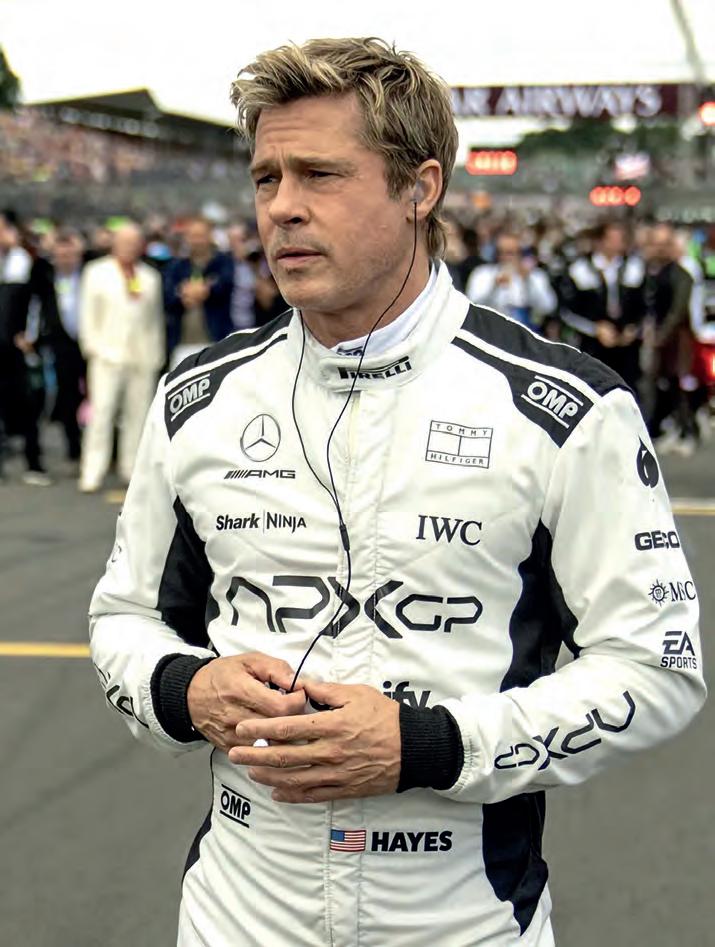
giving productions access to high-end camera, grip and lighting packages without extensive freight. Post-production and visual-efects services are also developing, with frms such as T-VFX enabling more of the production lifecycle to remain in Abu Dhabi. Dubai has taken a diferent path. Rather than competing on headline incentives, it has positioned itself as one of the region’s most efcient and well-connected production hubs. For Saif Al Suwaidi of the Dubai Media Council, the appeal is straightforward: “Dubai delivers exceptional value for flm producers by combining worldclass production infrastructure, fast government permits, global connectivity, exceptional logistics and diverse locations, all available within a single, highly efcient production hub.” He adds that Dubai is “home to the largest concentration of production service companies, equipment suppliers and experienced crew in the region, making it the MENA’s main production hub.”
including feature and television productions from global studios and streaming platforms, as well as international unit work and major commercial productions,” Al Suwaidi says.
Elsewhere in the Gulf, smaller markets are developing quieter but credible propositions. Qatar has invested in media infrastructure through initiatives linked to the Doha Film Institute. Oman ofers striking coastal and desert landscapes and is becoming more open to international shoots. Kuwait and Bahrain have also signalled ambitions to expand their screen sectors. For producers already working in the Gulf, these markets may serve as supplementary locations within multi-country shoots.
Though part of North Africa, Morocco is often considered alongside the region. Its long-standing reputation as a flming hub provides a useful counterpoint to newer entrants. Experienced crews, competitive costs and established service companies make it a dependable option, complemented by a wide range of locations — from Ouarzazate’s deserts to the urban backdrops of Marrakech and Casablanca.
To remain competitive, Morocco introduced a 30% rebate on qualifying local spend in 2022. The results are visible: foreign shoots generated $150m in 2025, up from under $50m before 2021, according to Mohamed Mehdi Bensaid, minister of youth, culture and communication.
Major productions continue to arrive. Christopher Nolan’s The Odyssey, starring Matt Damon and Zendaya, flmed extensively across Aït Benhaddou, Essaouira and Marrakech.
In Egypt, another North African heavyweight, the industry has long been anchored by Cairo’s studio infrastructure and deep talent pool. Facilities such as Studio Misr and Cairo Studio, combined with locations ranging from Nile vistas to the Giza Pyramids, give the country a distinctive ofering.
Historically focused on domestic and regional output, Egypt is now opening up. In November 2025 the cabinet, led by Prime Minister Mostafa Madbouly, granted the Egyptian Film Commission authority to oversee all foreign productions. Central to this reform is the Single Digital Window, an online platform designed to streamline approvals and co-ordinate government agencies. The commission operates within the Egypt Media Production City, a vast complex near the Giza Pyramids spanning more than two million square metres. It ofers studios, backlots, technical services and broadcasting infrastructure, alongside incentives including up to 30% cashback for productions using its facilities. Recent activity signals intent. The 2025 Apple Original Fountain of Youth flmed key sequences on the Giza Plateau, including a helicopter landing — reportedly a frst for a feature flm — requiring close co-ordination with the military.
AHMAD AL-KHATIB ‘ON DUNE: PART THREE, MORE THAN 90% OF THE CREW WERE JORDANIANS'
Geography helps. At the crossroads of Europe, Asia and Africa, Dubai is among the world’s most connected aviation hubs. Two decades of investment have produced a dense ecosystem of production services. Even when flming takes place elsewhere in the region, crews, equipment and technical support are often sourced from Dubai.
“Dubai has developed a mature production services ecosystem, including world-class sound stages, easy access to high-quality equipment providers, media-free zones where companies can operate tax-free and access a full production ecosystem, and a skilled international talent pool,” Al Suwaidi says. “Much of this ecosystem is located in Dubai Media City and Dubai Studio City, making Dubai the region’s primary production hub and the frst to adopt new technologies.”
Its visual range remains a draw, especially for contemporary settings. Productions including Amazon Prime Video’s Jack Ryan and Netfix’s Korean drama Genie, Make a Wish have flmed there.
“Dubai continues to host a steady fow of international shoots,
A persistent question for producers has been crew depth. Historically, many countries in the region relied on imported department heads and key creatives. That is changing. In the UAE and Jordan, locally based crews with international experience are now common across departments. Saudi Arabia is investing heavily in training and partnerships to accelerate development. Jordan, says Al-Khatib, illustrates the shift: “On Dune: Part Three, more than 90% of the crew were Jordanians,” he says. “Our crews are experienced in both large international productions and independent flms. They are cost-efective, highly trained and increasingly working across the region, including in Saudi Arabia.”
Taken together, the MENA region ofers a layered and evolving production landscape. Incentives are among its defining strengths: rebates range from around 30% in the UAE to up to 40% in Saudi Arabia, with higher tiers available in some cases depending on spend and criteria. The question now is whether the region can turn a run of high-profle shoots into a sustained pipeline of production.
• All interviews were carried out before the outbreak of war in Iran
MORE THAN MEETS THE EYES...
For decades America’s screen economy revolved around three centres: California, Georgia and New York. Their sound stages, crews and post-production ecosystems captured the lion’s share of domestic work. But in 2026 producers and studio executives are looking further afield. Andy Fry takes the tour
AS GLOBAL competition intensifies and budgets tighten, the industry is rediscovering the rest of America — not merely as backdrops for imagined worlds, but as storytellers in their own right. From Utah’s snow-capped peaks to the plains of Ohio, from New Jersey’s Atlantic coastline to Texas’s ever-expanding metro landscapes, a widening constellation of states now ofers distinctive visual grammar — and, increasingly, substantial money on the table.
TEXAS: BIGGER STAKES
Texas, long associated with Western epics and modern urban dramas alike, is deepening its production appeal with an historic expansion of incentives. Since its creation in 2007, the Texas Moving Image Industry Incentive Program (TMIIIP) has generated $2.52bn in in-state spending, supported 189,000 jobs and delivered a reported 469% return on investment (through 2024). The numbers are not merely abstract. Rod Lurie’s college football movie The Senior spent $1.2m across Dallas, Fort Worth and West Texas over 38 days; the television miniseries Love and Death invested $61.5m in central Texas during a 108-day shoot. In 2025, Senate Bill 22 transformed the programme’s scale. It allocates $300m to TMIIIP every two years through 2035 — $1.5bn over the decade — marking the largest commitment in the state’s history. From September 1, 2025, projects have been able to apply for grants of up to 31% of qualifed in-state expenditure. Dallas is positioning itself to capture that momentum. Katie Schuck, film commissioner for the Dallas Film Commission, describes the city as “one of the most dynamic and accessible flming destinations in the country, particularly for emerging flmmakers ready to accelerate their careers.” With the 31% state rebate, rising private investment and a growing creative community, she argues Dallas ofers “a compelling fnancial edge within an established major production hub.” Centrally located and served by two major airports, Dallas com-
Bill Skarsgård as Tony Kiritsis in Gus Van Sant’s Dead Man’s Wire, shot in Louisville, Kentucky, Van Sant’s birthplace.
Photo: Stefania Rosini / Row K Entertainment
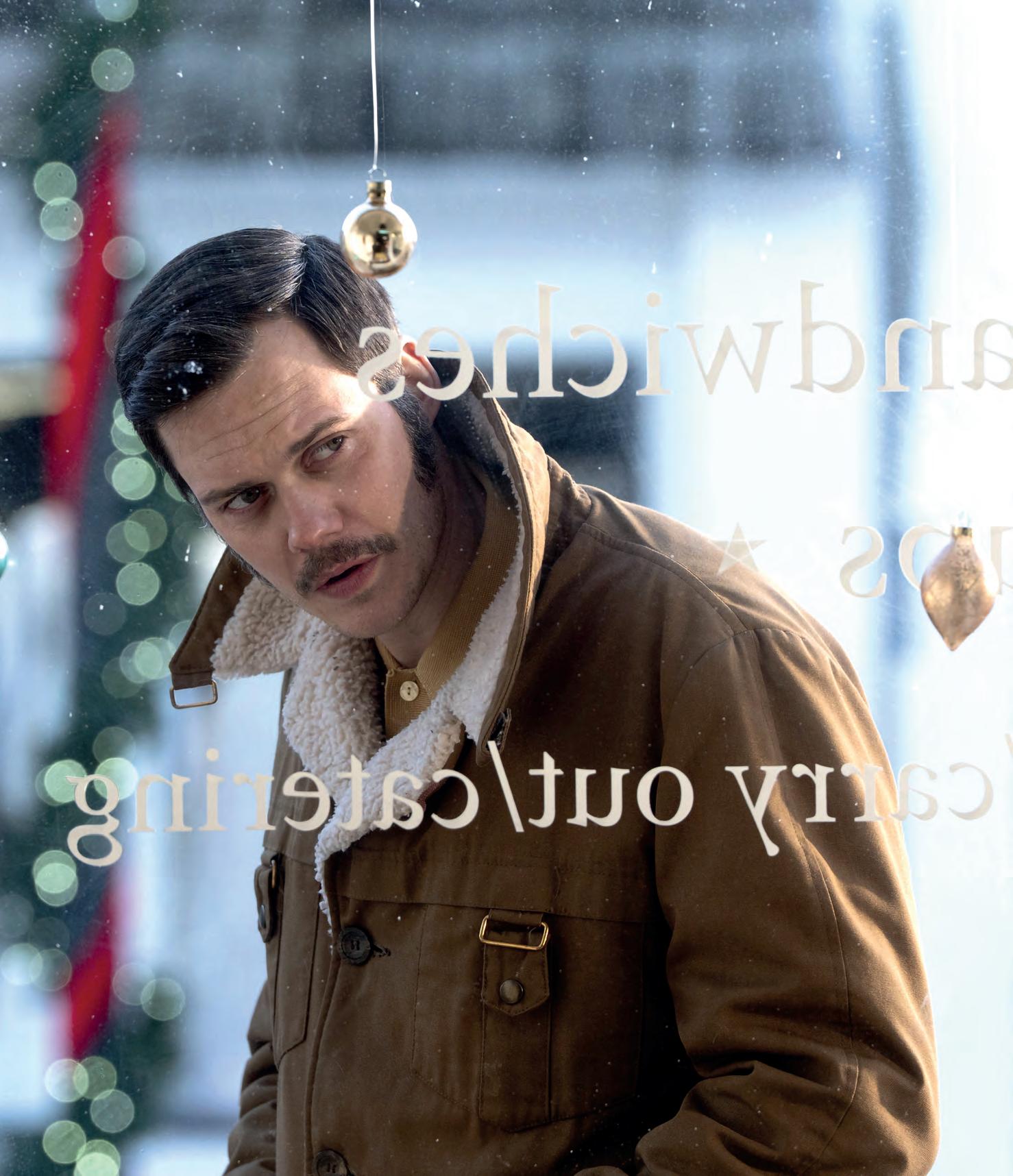














bines logistical ease with visual range: diverse neighbourhoods, a striking skyline, public art, green spaces and a notable collection of Art Deco exhibition buildings. Foremost among them is Fair Park, the 277-acre complex built for the 1930s Texas Centennial Exposition. “It’s like stepping back in time,” Schuck says, adding that its sweeping spaces provide “a stunning Art Deco backdrop that feels both timeless and cinematic”.
Recent activity refects that versatility. Over the past year Dallas has hosted Taylor Sheridan’s Lioness , Landman , Dutton Ranch and The Madison, alongside Netfix’s America’s Sweethearts , chronicling the Dallas Cowboys Cheerleaders, from director Greg Whiteley. The series returns in 2026, with the latest auditions complete and football season in full swing and cameras rolling in Texas capturing every moment, giving viewers more unfltered access into the iconic team.
Independent features including Atonement and One In A Million have also chosen the city, while nearly 200 branded short-form projects were produced across the region in 2025 for clients including Shell, Toyota, Budweiser, Apple Music and PlayStation.
Infrastructure is expanding in tandem. South Side Studios reopened in 2025 following a major renovation; SGS Studios in nearby Fort Worth has added stage capacity. The region now hosts more than 10 XR volumes, including the frst LED wall at Dallas College, designed to train local talent in immersive production. Schuck points to “highly skilled crafts people across a wide range of expertise”. With Dallas preparing to host the International Broadcast Centre for this year’s FIFA World Cup, she expects 2026 to be “incredibly dynamic for production”. Elsewhere in Texas, San Antonio has capitalised quickly on renewed state funding. In November 2025 the City Council approved a redesigned San Antonio Film Incentive (SAFI), raising rebates for qualifying productions to a combined 45%.
Administered by the San Antonio Film Commission, SAFI now extends eligibility to commercials, introduces workforce development requirements and boosts incentives for veteran and local hires. Since 2022, flm permits have risen 165%, from 221 to 586, while total flm days have nearly doubled to 710 — evidence of the city’s growing stature.
El Paso, too, has stepped into the spotlight. The acclaimed feature One Battle After Another was drawn to the city’s borderland character and preserved architecture spanning Spanish, American and mid-century eras. “The frst interior we walked into was Genesis Perfumeria, which became Sensei’s family store in the flm,” production designer Florencia Martin says. “From that moment, we were met with incredible warmth from the community.” Supervising location manager Michael Glaser praised the city’s cinematic efciency: rooftops and streetscapes required minimal alteration. “It was almost like having a backlot in the real world,” he says.
UTAH BEYOND THE WESTERN
Utah’s trajectory illustrates how incentives, infrastructure and geography can reinforce one another. Long associated with Westerns and mountain vistas, the Beehive State has shed its peripheral status. It is now an increasingly confdent production centre with a screen identity of its own.
Recent credits are eclectic. HBO’s Mountainhead shot around Park City, using snow-dusted wilderness and contemporary alpine architecture as narrative assets. CBS’s Yellowstone spinoff Marshals established a presence in Summit and Wasatch counties. The forthcoming monster feature Godzilla x Kong: Supernova staged action sequences amid Moab’s red-rock vistas, reinforcing Utah’s blockbuster credentials.
Marvel Studios’ Thunderbolts flmed for 11 days in Green River, spending more than $1.2m in Emery County alone. Kevin Costner’s Horizon: An American Saga – Chapter 1 shot across fve counties and spent nearly $95m statewide, demonstrating how location-specifc productions ripple economically.
In 2025 the Utah Motion Picture Incentive Programme supported at least 36 productions across 14 counties, generating $136m in local spending and more than 2,600 jobs. Over the past decade it has delivered $736m in economic impact, with productions spending an average of $270,000 a day in-state.
Utah has also refned its strategy geographically. Launched in 2022, the Rural Utah Film Incentive Program ofers addition-
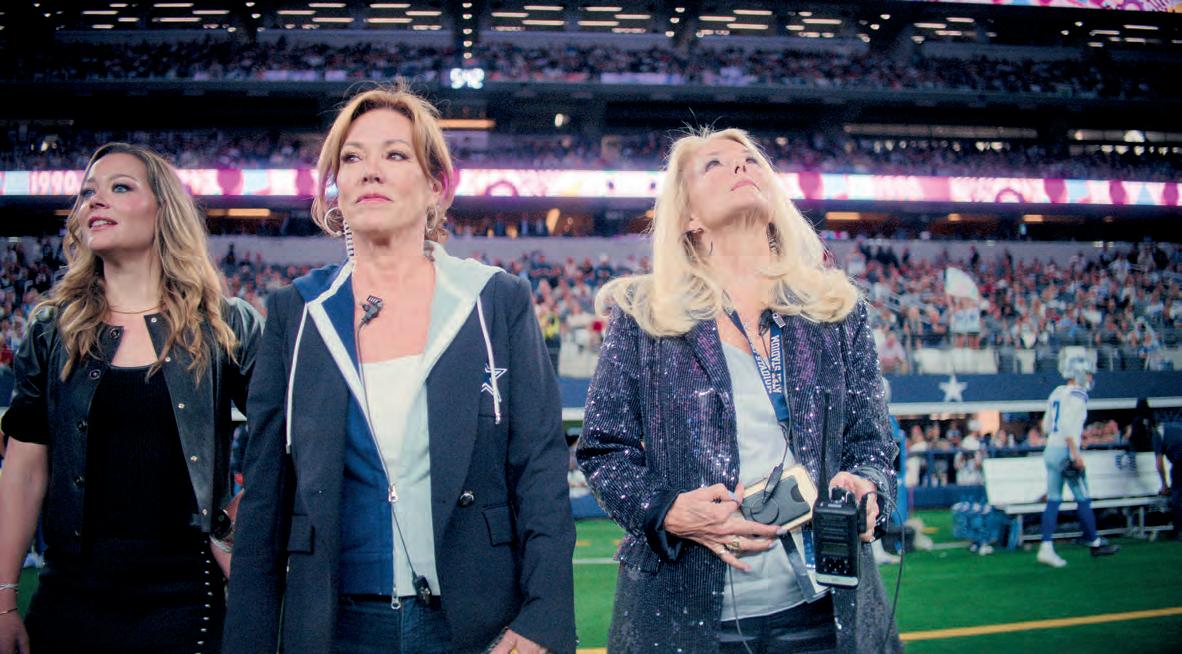
Haley Anderson, Kelli Finglass and Judy Trammell in America's Sweethearts: Dallas Cowboys Cheerleaders, Season 2. Photo: ©2025 Netfix
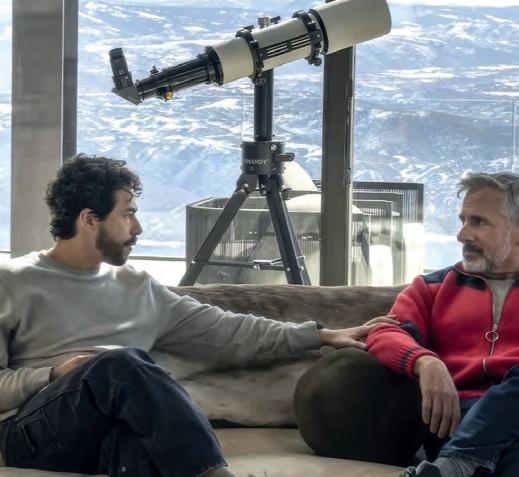

al support to productions that spend at least 75% of shoot days in rural counties. Since then, 28 productions have used the scheme, spending more than $200m across 28 of Utah’s 29 counties.
“Film is a powerful form of economic diversification,” says Jennifer Wesselhoff, president and CEO of the Park City Chamber of Commerce. “HBO’s Mountainhead demonstrated that film incentives are not merely tools to attract productions; they are vital strategies that help stabilise and sustain local economies and help offset the seasonality of tourism.”
THE MIDWEST AUTHENTICITY PAYS
If Utah shows how alpine beauty attracts production, the Midwest demonstrates the pull of authenticity. Union County , starring Will Poulter and Noah Centineo, shot on location in Ohio in spring 2025 before premiering at Sundance in January 2026. Grounded in small-town landscapes and Midwestern character, the production embedded itself in the region, using real Ohio courts and local participants.
Speaking at Sundance, Poulter said the commitment to authenticity was central. “My favourite scenes are those where I’m in the company of the recovery community,” he said, describing a graduation sequence led by Annette Deo, the real-life director of the adult recovery court programme. “That moment — celebrating people’s graduation… against exceptional odds — has the most special place in my heart.”
Minnesota’s lakes and four-season climate continue to anchor productions that might otherwise migrate. Iowa and Wisconsin have approved new incentive programmes beginning in 2026. Wisconsin’s proposed scheme offers a 30% transferable tax credit, capped at $1m per project and $5m annually. “We are one step
JENNIFER WESSELHOFF
‘FILM INCENTIVES ARE NOT MERELY TOOLS TO ATTRACT PRODUCTIONS; THEY ARE VITAL STRATEGIES THAT HELP STABILISE AND SUSTAIN LOCAL ECONOMIES'’
closer to an exciting new chapter,” says Nathan Deming, founder of Nobody Pictures, arguing that incentives and a state film office will immediately make Wisconsin “a destination of interest”. Montana and Nebraska maintain a quieter but steady presence. Montana’s credit — 20%, rising to 35% with bonuses — has helped attract series including Yellowstone and features including The Revenant, underscoring the economic and aesthetic power of Big Sky territory.
KENTUCKY A NEW CONTENDER
Kentucky is emerging as a serious contender. Its Kentucky Entertainment Incentive offers up to 30% refundable tax credits, rising to 35% for enhanced counties or local hires, under a $75m annual cap through 2026. In 2025 alone, 80 of Kentucky’s 120 counties hosted at least one project. Since 2022 more than 250 productions have received support.
“The Kentucky Entertainment Incentive Program has played an incredibly important role in positioning our state at centre stage,” says Jeff Noel, secretary of the Kentucky Cabinet for Economic Development.
Momentum has concentrated around Louisville and southern Kentucky. The historic Louisville Gardens arena is being converted into a film studio with $10m in state backing. Recent projects include Gus Van Sant’s Dead Man’s Wire, Nicolas Cage’s Western Gunslingers and Queen of the Ring, a biopic of wrestling pioneer Mildred Burke. Hallmark features and independent films have spread activity beyond the main urban hub.
Kentucky-based actor Neil Mulac believes such projects will recalibrate perceptions. “It’s not grandiose to think that Dead Man’s Wire is going to make a statement about the quality of film making in Kentucky,” he says. “Gus Van Sant may have been a little nervous about leaving the Los Angeles crew scene, but he quickly discovered that we have amazing people behind and in front of the camera here.”
Dead Man’s Wire is based on the true story of Tony Kiritsis — played by Bill Skarsgård — a man who, in 1977, came to believe that his mortgage company had exploited him at his most vulnerable and so took drastic action to reclaim a sense of power and justice.
“In telling Tony’s story, I wanted to resist the impulse to lead the audience toward a single interpretation or moral conclusion. Instead, I chose to observe — to let the situation unfold as it did in real life, without judgment or commentary,” director Gus Van Sant says. “My hope was to create space for viewers to experience
Jason Schwartzman (left), Ramy Youssef and Steve Carell in Mountainhead, shot in Park City, Utah. Photo: HBO
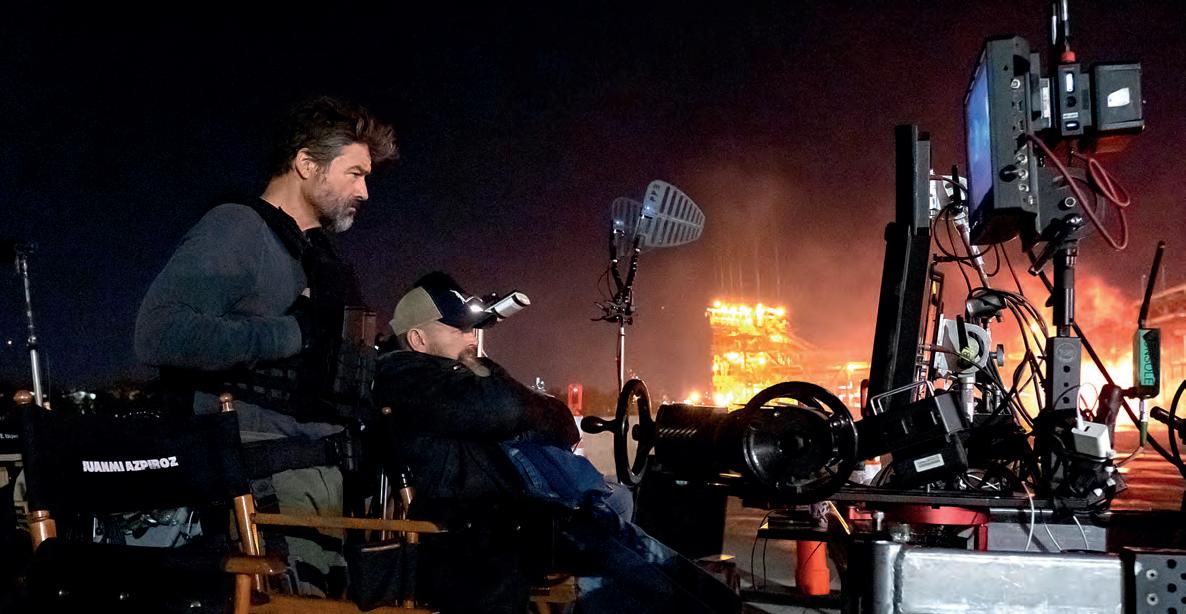
GUS VAN SANT
‘MY HOPE WAS TO CREATE SPACE FOR VIEWERS TO EXPERIENCE THEIR OWN EMOTIONAL RESPONSES’
their own emotional responses, whether empathy, discomfort, confusion, or even laughter.”
Van Sant had just 19 days for the shoot, creating a sense of urgency that resulted in maximal creativity for cast and crew. He shot in Louisville, Kentucky, Van Sant’s birthplace — and a town that has visibly retained its mid-Century character.
The just under three-week shoot took place in the deep Kentucky winter with temperatures at just above zero. “It usually doesn’t snow that much in Louisville,” Van Sant says, “but it happened to snow on our first day of shooting. It snowed a foot-and-a-half, and it somehow stayed on the ground for the whole three weeks.”
NEW JERSEY REINVENTION ON THE EAST COAST
New Jersey has undergone perhaps the most dramatic reinvention. Its Film & Digital Media Tax Credit Program offers 30–40% transferable credits on qualifying production and post-production spend, making it one of the country’s most competitive frameworks.
Since reinstatement in 2018 the state has attracted hundreds of projects. Netflix broke ground in 2025 on a $900m, 500,000-square-foot facility at Fort Monmouth, supported by an estimated $387m in tax credits. Paramount has committed to a long-term lease at 1888 Studios in Bayonne.
The state’s Film Ready programme has certified dozens of municipalities as production-friendly, streamlining logistics. From industrial waterfronts to coastal towns, New Jersey’s diversity allows it to double for New York City, Pittsburgh, Washington, D.C. and beyond.
High-profile projects underline the point. Happy Gilmore 2 filmed across 31 municipalities; Netflix titles including The Whisper Man, Paper Tiger and Ponyboi have followed. The critically acclaimed A Complete Unknown relied on 17 municipalities, with the Ritz Theatre in Elizabeth standing in for Carnegie Hall and Newark Symphony Hall transformed into a San Francisco
venue. “Films like A Complete Unknown demonstrate the state’s versatility,” says Jon Crowley, executive director of the New Jersey Motion Picture and Television Commission.
THE CAROLINAS AND FLORIDA STEADY GROWTH
North Carolina offers up to 25% back on qualifying spend. Though less aggressive than some transferable credit models, the state emphasises predictability and experienced crews. In 2025 production generated $185.5m in in-state spending — the fourthhighest total since the programme’s launch in 2015 — with 38 productions filming across 45 counties.
Governor Josh Stein notes that production supported more than 7,000 jobs. Projects ranged from ABC’s R.J. Decker to Netflix’s The Hunting Wives, alongside features including The Bard, which tells the story of George Moses Horton, the first Black poet published in the American South. Co-producer Lauren Moews emphasised local hiring: “We hired 500 local cast members, and a consistent crew base of 200… but also think about all of the vendors, lumber, vehicles, medics, construction.”
Florida, lacking a robust statewide incentive, has instead leaned on county-level initiatives and location appeal. Palm Beach County generated more than $260m in local spending in 2025, up 3% year on year. Michelle Hillery, commissioner of the Palm Beach County Film & Television Commission, argues the region offers “a rare combination: a globally recognisable luxury aesthetic paired with a highly workable footprint.”
Within a short drive, productions can capture Atlantic coastline, Gilded Age architecture and Mediterranean Revival estates. Netflix’s The Rip filmed a closing scene there; ABC’s R.J. Decker utilised courthouse locations. Viral shoots by MrBeast and commercial campaigns featuring Travis Kelce and Frances Tiafoe underscore the county’s lifestyle appeal.
While Florida does not offer a statewide incentive, producers can access the Florida Entertainment Industry Sales Tax Exemption, allowing savings of up to 7.5% on certain purchases. “Our strength lies in our aesthetics and operational readiness,” Hillery says. “For producers seeking cinematic coastal visuals combined with a co-operative and experienced production environment, the Palm Beaches deliver.”
Across America, states are recalibrating incentives, investing in infrastructure and sharpening regional identities to capture economic growth and cultural cachet. For producers the result is a democratised production landscape — one in which the full geographic and narrative range of the country is increasingly in play.
On location in Palm Beach County for The Rip: Kyle Chandler as DEA Agent Mateo 'Matty' Nix (left) and writer/ director Joe Carnahan. Photo: Claire Folger/Net ix. © 2025

‘IT’S A GIANT PLAYGROU

Bert Kreischer as Bert Kreischer, Ava Ryan as Georgia Kreischer, in the Net ix comedy drama Free Bert, in which Atlanta doubles for Los Angeles
ND’
After three years of contraction that rippled through every major production hub in the world, Georgia’s film and television industry is looking ahead with cautious optimism. Andy Fry looks on as growth returns to the Peach State
AFTER its 2022 peak of nearly $4.4bn, spending in Georgia’s production industry fell to $2.3bn in fiscal year 2025, a slowdown driven by strikes, studio consolidation and a global recalibration of content budgets. Yet rather than signalling retreat, optimistic state officials and industry leaders describe the past year as a necessary reset — one that is giving way to a steadier, more sustainable phase of growth in 2026.
“We anticipated that the level of business we were seeing during our highest production phase in 2022 was not sustainable,” says Lee Thomas, deputy commissioner of the Georgia Film Office. “Georgia was not immune to the strike or the post-strike shutdown that sent shockwaves through the landscape as production levels adjusted to new norms, but we’re happy to see production rebounding; 2026 is looking much better and busier than any time in 2025.”
Georgia’s resilience, Thomas says, lies in infrastructure built for longevity: millions of square feet of sound-stage space, an experienced crew base and a tax-credit structure that studios understand and trust. “Studios may not want to try out new markets — especially overseas — for projects that may run for 10 years or more,” she says. In a climate where predictability is as valuable as scale, Georgia’s reliability has helped keep returning shows such as Netflix’s epic Stranger Things on the ground.
LEE THOMAS
“2026 IS LOOKING MUCH BETTER AND BUSIER
THAN ANY TIME IN 2025”
The state’s emphasis on dependability is evident in its approach to incentives. Rather than escalating headline percentages in a crowded global market, Georgia has focused on protecting the effective value of its credit. In 2025 the Film Office worked with the Department of Revenue to overhaul audit processes, ensuring productions receive as close as possible to what they are promised on paper. “If a market is advertising a 40% incentive but has no crew and everyone has to be brought in, housed and paid per diems, Georgia is a better value proposition,” Thomas says. Evidence of durability can be seen not only in last year’s totals but in the slate rolling into 2026. Georgia hosted 245 productions in FY2025, including 145 television and episodic projects and 42 independent films, and activity has continued to build. Series such as Hulu’s Chad Powers (Season 2) and Netflix’s limited drama All the Sinners Bleed have filmed in metro Atlanta, alongside reality mainstays including Love & Hip Hop Atlanta Netflix’s mystery thriller Heartland, starring Jessica Chastain, shot through late 2025, while Apple TV+’s big-budget series Cape Fear wrapped its Atlanta shoot and is set for release in 2026. Looking ahead, a modern Western titled The Rescue and independent features including 21 Down and Who Killed My Mother? are also under way or scheduled to shoot locally, underscoring Georgia’s appeal across formats and budgets. Atlanta is also the setting for independent filmmaker Mann Robinson’s character-driven drama Georgia Peach, which premiered in February 2026 on Amazon Prime Video and Apple
Bert Kreischer as Bert Kreischer, Ava Ryan as Georgia Kreischer, in the Net ix comedy drama Free Bert, in which Atlanta doubles for Los Angeles Photo: Tom Griscom/ Net ix

TV. Starring Jasmine Burke alongside Teresa Celeste, Christopher Dion and Cocca Brown, the flm centres on Jannie, a nurse trying to rebuild her life after addiction and a damaging relationship nearly destroyed everything she worked for.
If Georgia’s strength lies in statewide infrastructure, much of its day-to-day momentum is carried by counties that have matured into ecosystems of their own. Few illustrate this better than DeKalb County, within metropolitan Atlanta.
“DeKalb County has become one of Georgia’s most active flming locations thanks to strong infrastructure, a skilled workforce and consistent public-sector support,” says Shelbia Jackson, director of the DeKalb Entertainment Commission. “Our role is that of a reliable, production-ready partner, helping keep Georgia competitive globally.”
Since 2019 DeKalb has averaged roughly 90 projects a year, weathering both the pandemic slowdown and the 2023 strikes. Jackson credits that consistency to a deliberately productionfocused structure. Through the Entertainment Commission, crews receive a single point of contact and a streamlined permitting pathway designed to move at the pace of a particular shoot. “Producers aren’t navigating multiple departments on their own; we co-ordinate that for them,” she says. “That level of communication and responsiveness is not something you fnd everywhere.”
Location diversity is another defning asset. Within minutes, productions can pivot from dense urban corridors to historic neighbourhoods, small-town main streets, corporate campuses or wooded landscapes. “That range allows productions to maximise time and budget without constantly relocating,” Jackson says.
The county’s chameleon quality has helped it stay busy even as volumes fuctuated. DeKalb has doubled for cities and regions across America — including Tulsa, Oklahoma, for Tulsa King and the Ozark region of Missouri for Ozark Areas such as Arabia Mountain National Heritage Area and Stone Mountain Park provide textures that can stand in for everything from the Deep South to the Pacifc northwest.
the Peach State’s ofer, with the Atlanta area acting as anchor. Michelle Morrissey, executive producer along with Josh Brolin, of Warner Bros.’ critically acclaimed horror flm Weapons, says: “This is my ffth job in a row in Atlanta. We end up getting every kind of look you can possibly imagine.”
The New Line Cinema production written and directed by Zach Cregger — in which a class of elementary-school students, save for one boy, goes mysteriously missing — required Georgia to play ‘anytown America’. “We found an incredible little neighbourhood to shoot everything,” Morrissey says. “Not only is the look right, but the people who live in it have been welcoming and fexible.”
JOHN BIRCHALL
‘GEORGIA IS VERY SUPPORTIVE OF FILM. THEY GO OUT OF THEIR WAY TO HELP US’
Recent projects illustrate that versatility. Will Trent, Bugonia and Weapons all shot extensively across the county. From water-treatment facilities doubling as forest backdrops to museum interiors and decommissioned schools transformed into fctional campuses, Jackson says the common thread is collaboration. “We consistently go the extra mile to accommodate productions.”
Proximity to major studio campuses adds further value. Assembly Studios and Shadowbox Studios sit within DeKalb, while Trilith Studios is a short drive away. “Productions want efciency — they want to minimise travel time, reduce logistical friction and keep cast and crew close to both stages and locations,” Jackson says. “Being just minutes from these world-class facilities means productions can move seamlessly between sound stages and on-location shoots without losing hours to transport.”
Crucially, she adds, DeKalb is thinking beyond the immediate production cycle. Workforce pipelines, small-business engagement and community partnerships are central to its long-term strategy. “We’re not just hosting productions, we’re helping to shape the future of Georgia’s creative workforce.”
Producers are often efusive about the richness and fexibility of
Other productions highlight Atlanta’s ability to double convincingly for major cities. In Netfix’s comedy drama Free Bert, a larger-than-life father struggles to ft in when his daughter enrols at an elite private school in Beverly Hills. With the exception of a sequence set in Atlanta’s iconic Magic City strip club, the series uses Atlanta and its surrounding neighbourhoods to stand in almost entirely for Los Angeles. For location manager John Birchall, Georgia delivered creatively and logistically. “Georgia is very supportive of flm. They go out of their way to help us,” he says. “We were looking for locations that could, in theory, be Los Angeles. The homes needed to have LA vibes; the school needed to have LA vibes.”
The production used 14 locations, including Woodward Academy as its private school and Atlantic Station for mall sequences. Downtown Atlanta proved especially versatile. “You’ve got countless streets and they’re supportive. It’s a giant playground.”
NBCUniversal’s limited series Murdaugh: Death in the Family also showcased Georgia’s range, doubling for South Carolina’s Lowcountry and even the Bahamas. Production designer Dave Blass describes the state’s variety as a constant discovery. “There’s always something new, another texture that I haven’t found,” he says. “You’re always going to fnd a new house, a factory, a new building.”
Although Georgia is “obviously not South Carolina”, he notes, the team found locations — including Lake Lanier — that worked visually for the story’s fctional Archers Creek. The script also called for a Bahamas-set episode without leaving the state. After scouting multiple options, the production settled on Château Élan in Braselton.
“In television, unlike flms, you have to fnd locations that work for multiple purposes,” Blass says. “Château Élan was a saviour. It has an atrium, a pool, rooms, restaurants — we were able to
Jasmine Burke stars as Jannie Salisbury in Mann Robinson’s flm Georgia Peach Photo: Mann Robinson Productions
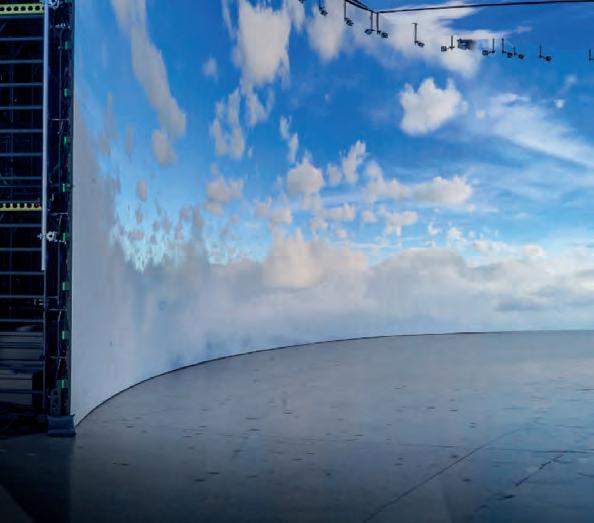
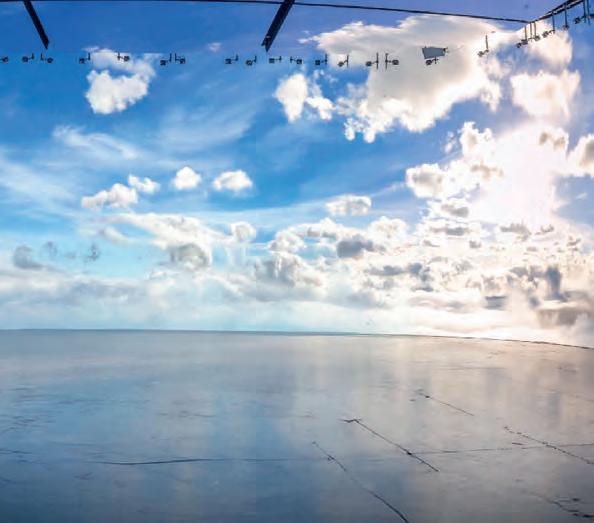
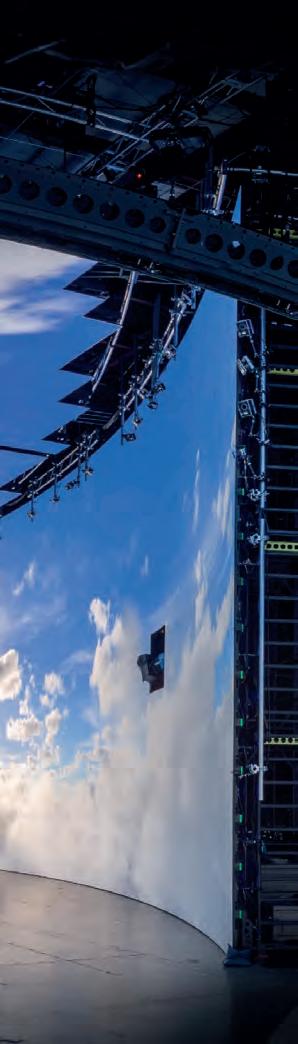
From features and shows to commercials and music videos; if you can dream it, we can bring it to life.
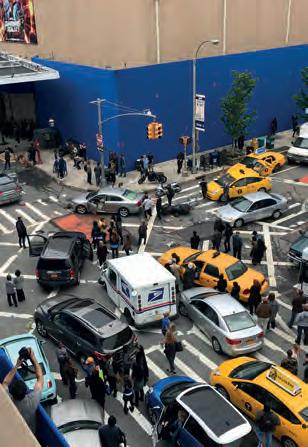
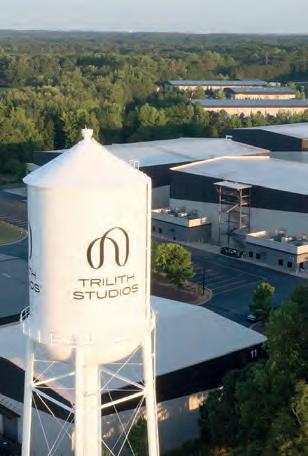
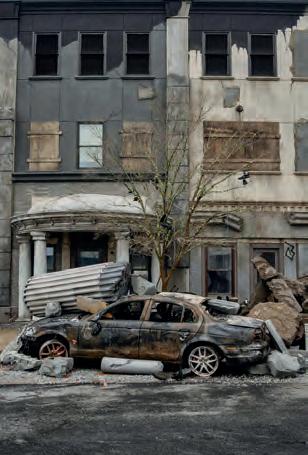
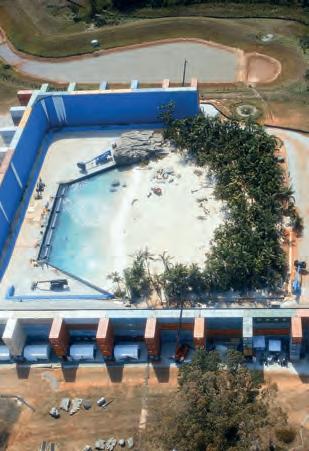

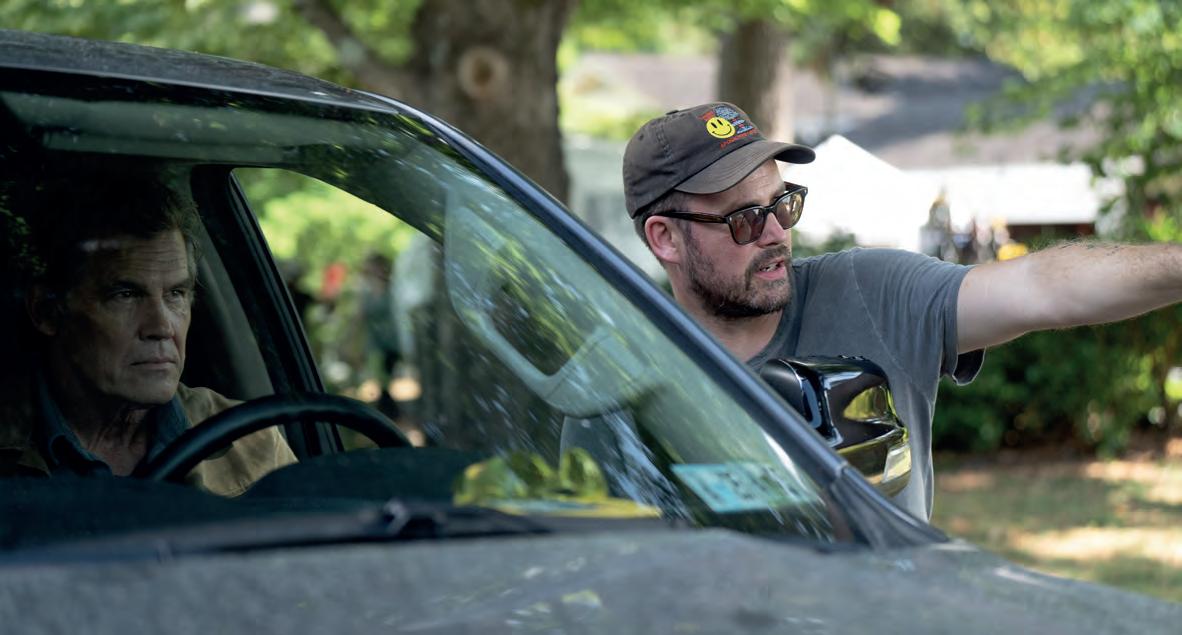
move between them seamlessly and achieve real scale.”
Because the Murdaugh story is based on a well-documented real case, authenticity mattered. “Everybody’s familiar with what it looks like,” says location manager Andrea Keener. “It was important to find the right topography, the right locations, so that nobody says, ‘That’s not really it.’” Stage work at Assembly Studios in Doraville reinforced that realism.
Dan Biersdorf, vice-president of Universal Production Services at Assembly Studios, says the complex was designed as a fexible, creativity-driven environment. “Time and again, the space has demonstrated its ability to transform and scale seamlessly to meet the unique demands of any project,” he says. The campus includes 22 sound stages, extensive ofce and support space and on-lot services ranging from lighting and grip to post-production dailies and catering. It operates, he says, “as an extension of the production crew”.
Recent projects illustrate that breadth. Assembly wrapped its largest production to date with Cape Fear and also hosted Da Vinci, an independent feature from a Georgia-based crew that rebuilt The Last Supper and recreated a monastery on stage. Third Rail Studios operates as a boutique facility within the campus, while on-lot dailies powered by NBCUniversal’s Global Post Workers link directly to a postproduction hub in Los Angeles, accelerating workfows. As part of the Universal family, Assembly can draw on expertise across America and Britain, including the Universal Virtual Production Stage in Los Angeles. Productions can tailor stages and support spaces to their creative and operational needs, whether through traditional builds, hybrid design or emerging virtual-production tools.
That includes partnerships such as a collaboration with Live Nation on Rolling Loud, a comedy starring Matt Rife and Owen Wilson. Instead of recreating a massive festival over weeks, Trilith captured 3D imagery of the real event and deployed it on its virtual-production stage. The studio has also worked with Jimmy Donaldson – better known as MrBeast — as digital-native creators expand beyond YouTube into longer-form entertainment. “Don’t be surprised when these folks wake up and they’re making the next big franchise,” Patterson says.
While Atlanta remains the gravitational centre of production, Georgia’s story in 2026 extends to its regional hubs. The state’s Camera Ready Communities programme, launched in 2010, ensures all 159 counties designate a contact to help productions fnd locations, crew and services and navigate permits.
FRANK PATTERSON
'WHAT WE'VE DONE IS WIDEN THE LENS OF WHO STORYTELLERS ARE'
In Macon, ofcials report growing interest. “Macon continues to shine as a city that ofers unique locations and is eager to work with productions,” says Aaron Buzza of Visit Macon. The city’s architecture and landscape are suited to documentaries, limited series, episodic television and larger-budget flms alike. Repeat calls from returning crews, he says, are the strongest endorsement.
At Trilith Studios in Fayetteville, producers have access to one of North America’s most comprehensive purpose-built campuses. The site combines full-height sound stages, mill and workshop space, production ofces, backlots and dedicated virtual-production facilities, including an LED volume. The adjacent Trilith community provides housing, restaurants and amenities, keeping cast and crew close to set.
Trilith’s chief executive, Frank Patterson, acknowledges that 2025 marked a historic low in occupancy. Yet rather than retrench, the studio broadened its focus. “We are in the business of building long-term, strong relationships with great flmmakers,” he says. “What we’ve done is widen the lens of who those storytellers are.”
Further southeast, Savannah — long the state’s second-busiest hub — is also regaining momentum. Walker Dalton of the Savannah Regional Film Commission describes 2025 as “the end of a very tough dry spell”, with two locally produced independent features followed by the arrival of Road House 2 as a large unit in January. Savannah’s historic district, waterfront and surrounding coastal communities allow it to double for settings from New Orleans to Florida and even the Caribbean. A municipal rebate, stackable with the state’s 30% credit, has been recalibrated to attract independent features with budgets of $1m or more and defned local spend, ofering a capped rebate designed to encourage consistent volume. Commercial work remains steady, aided by the city’s evergreen look.
As 2026 unfolds, Thomas argues that Georgia’s flm and television sector is steadier, leaner and better positioned for the long term. The ambition is not only to attract productions but to deepen the state’s creative base — writers, actors, editors and the technicians who sustain the industry. New platforms and technologies, she suggests, may further enable home-grown projects. After a bruising correction, Georgia is betting that resilience — and range — will prove its strongest incentives.
Josh Brolin and writer/director Zach Cregger on the set of New Line Cinema’s Weapons, a Warner Bros. Pictures release. Photo: Quantrell Colbert
‘I LOVE WORKING HERE’
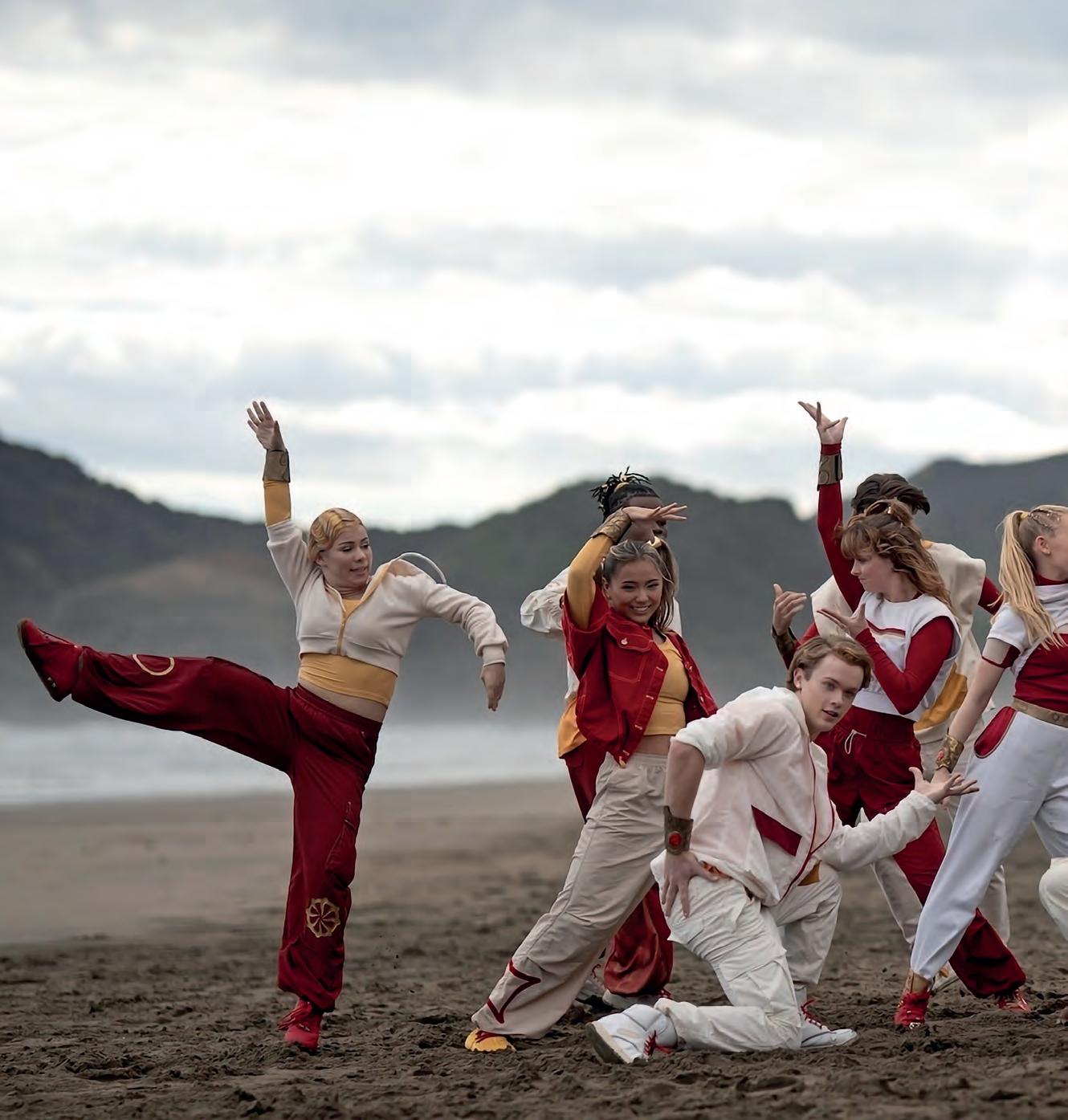
New Zealand is globally recognised for its natural beauty. But this relatively compact country is so much more than that, featuring pristine forests, breathtaking coastlines, deep-rooted cultural sensitivities and urban environments that all work in many genres of production. Gary Smith reports
NEW ZEALAND has quietly become an important production hub in the context of the global industry. A number of international projects that flmed in New Zealand were released last year, including Avatar: Fire and Ash, Heart Eyes, A Minecraft Movie, M3GAN 2, Predator: Badlands, Wolf Man, Zombies 4: Dawn of the Vampires and Spartacus: House of Ashur. Shoots completed in 2025 include fve major international productions — four feature flms and one series. “It is estimated there were 275 international shoot days employing 1,700 New Zealand crew members with a reported spend of around US$250m for the fve projects,” says Jacqui Wood, inbound productions executive at the New Zealand Film Commission (NZFC). “That said, the fgures are slightly skewed by the fact that some productions shot the previous year, and those shoot days are not included." After more than a decade living in New Zealand, collaborating closely with the country’s screen sector, and
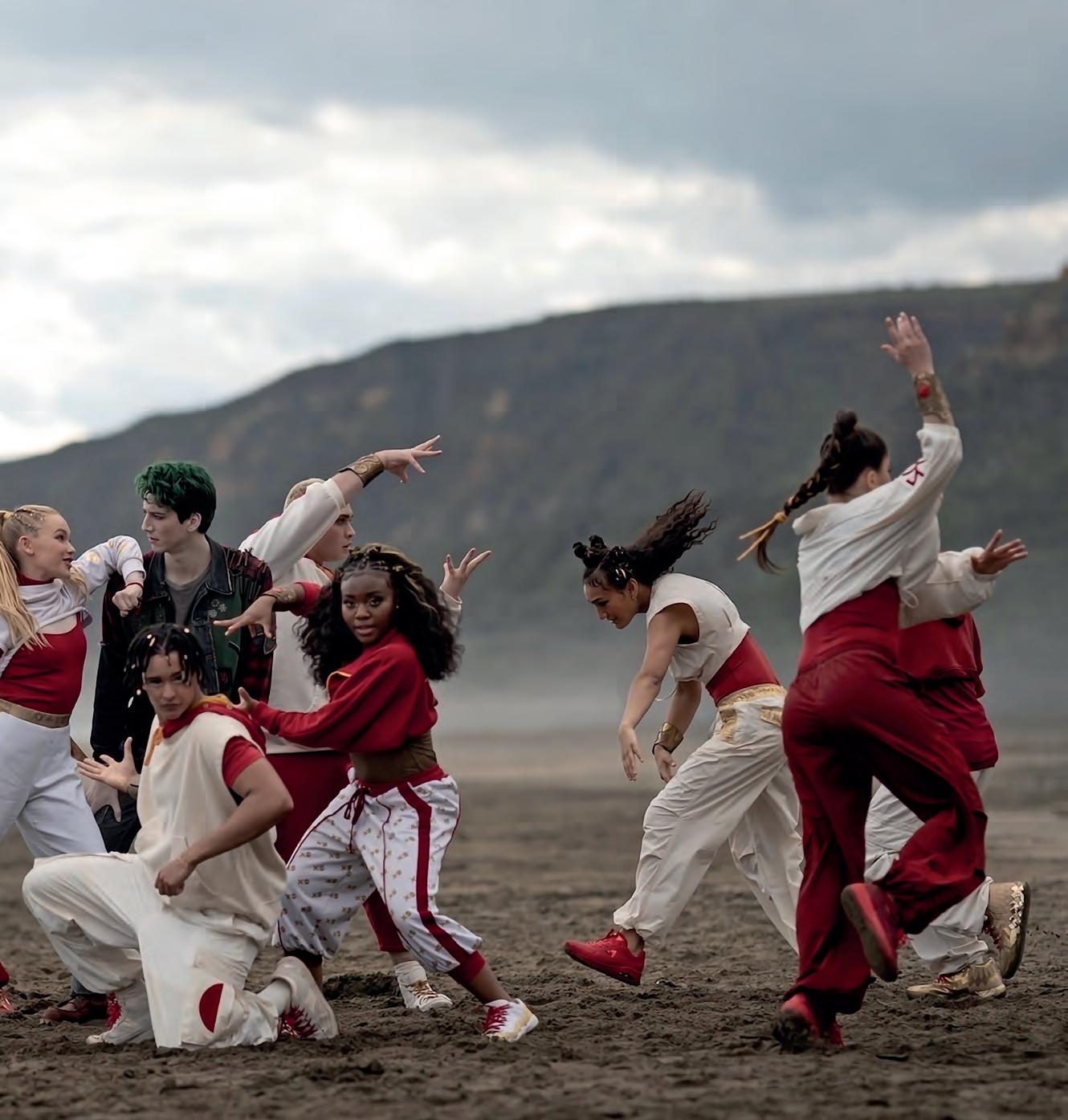
building a life in Wellington Harbour (Maori name Te Whanganuia-Tara), legendary flmmaker James Cameron is now ofcially a New Zealand citizen. Cameron has long embraced the country — not just as a place to live, but as a creative home. His Avatar productions, including The Way of Water and the recent Avatar: Fire & Ash (released December 2025), have brought together Kiwi talent, cutting-edge innovation, and global attention to New Zealand’s screen industry. “I love working here. I love the people I get to work with here,” Cameron says. His second Avatar flm — Avatar: The Way of Water — was largely made in New Zealand, with flming taking place in both Auckland and Wellington. Avatar 4 currently has a confrmed release date of December, 2029. Filming for the movie’s frst act has already been completed, a decision driven by the flm’s eight-year time jump. Cameron says that the opening portion of Avatar 4 was shot early on, to ensure continuity with the child actors before they aged out of their roles. Other signifcant productions flmed in New Zealand over the last 10-12 months include the Netfix series East of Eden, which clocked up
JAMES
CAMERON
‘I LOVE WORKING HERE. I LOVE THE PEOPLE I GET TO WORK WITH HERE’
50 shoot days in Auckland and Otago, with 500 local crew. The Paramount feature Heart of the Beast also shot for 50 days with 230 New Zealand crew, based at Auckland Film Studios, and on location in Auckland and Otago. The Warner Bros. feature Evil Dead Burn shot for 60 days with 140 New Zealand crew. New Zealand also hosted smaller features from Japan and Australia plus BBC series The Ridge and Great Railway Journeys
“A biopic shoot from Malaysia called Terbang, about rally driving legend Karamjit Singh (Flying Sikh), the frst Asian to win an international rally world title, shot here,” Wood says. “They worked with New Zealand rally driver and PWRC world champion Hayden
Zombies 4: Dawn of the Vampires dance sequence on Bethells Beach.
Photo: Disney
Paddon’s team and were flming in Otago, in the southern half of the South Island. More generally, there’s a constant stream of real ity and travel shows flming in the country — a segment of The Amazing Race was flmed here in 2025.” Otago and its endless skies are a source of inspiration to flmmak ers worldwide. From golden plains and dramatic peaks to historic townships full of charm, the region delivers scale, versatility and unforgettable detail. That versatility is why the region hosts everything from high‑octane action to grounded drama and imag inative fantasy. The Power of the Dog, Mission: Impossible – Fallout, and Netfix's upcoming East of Eden are just a few of the global sto ries brought to life here.
Tenzing, for Apple TV, shot for 25 days in Canterbury — in the central eastern South Island — with 240 New Zealand crew mem bers. The film, about the world’s most famous Sherpa who summited Everest with Edmond Hillary, shot in the Aoraki/Mount Cook alpine area, an efective match for the Himalayas. “By way of a historical note, in 1999 Kiwi director Martin Campbell (Casino Royale, The Mask of Zorro ) shot action drama Vertical Limit starring Chris O’Donnell at Aoraki/Mount Cook National Park with a different side of the moun tain doubling the look of world’s second highest, and most feared mountain, K2,” Wood says.
BEN ROSENBLATT
‘WE ARE THRILLED TO HAVE MADE PREDATOR: BADLANDS IN NEW ZEALAND; IT COULD NOT HAVE BEEN MADE ANYWHERE ELSE’
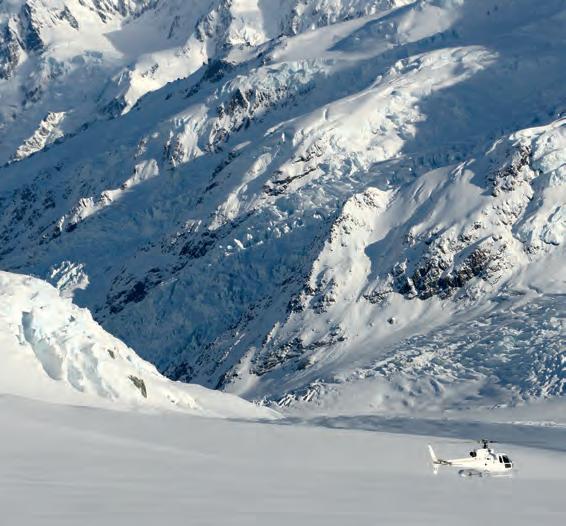
“We have some very exciting projects in pre pro duction or filming for 2026 includ ing a second Minecraft flm from Warner Bros., along side The Lord of the Rings: Hunt for Gollum directed by Andy Serkis, which will be flming in Wellington lat er this year,” she adds. “The NZFC contributed to the pre scout fees and co ordinated the itinerary, plus fees of the scouts and ground transport for the director/producer rec ce on Zombies 4, and they are back again this year about to start flming Zombies 5. “To be able to go from black sand beaches on the west coast to white sand beaches on the east coast where all of the locations had their own atmosphere and specifc beauty was perfect for Zombies 4,” the flm's executive producer Mark Ordesky says.
“It’s really an incredibly diverse country from woods to cityscapes to beaches, and many of the locations are genuinely magical, add ing an extra layer to Zombies 4,” costume designer Bob Buck says. Zombies 4 producer, Honor Byrne, adds: "The locations helped bring two opposing character cultures to life through the envi ronments that Auckland could ofer in close proximity to each other. On the North Island, some 37 kilometres from Auckland, Bethells Beach’s signature black sand emphasised the darker side of the Nightwalkers, while the white sand of Maraetai Beach com plemented the light of the Daywalker world. Additionally, the forests, city buildings and the expansive ocean vistas provided enough space to stage the large scale dance sequences. Overall, New Zealand’s locations contributed signifcantly to the flm.”
At the premiere of Predator: Badlands in Auckland, the impor tance of making the flm in New Zealand was highlighted by its
producer, Ben Rosenblatt. “We are thrilled to have made it in New Zealand; it could not have been made anywhere else,” Rosenblatt says. “The new instalment in the franchise was flmed entire ly in New Zealand, with our incredible local crew, vendors and cast, including the Predator, played by [Auckland born] Dimi trius Schuster Koloamatangi.” The flm shot in locations on the North Island, including Rotorua and Mangaotaki — together ofer ing a mix of forests, volcanic slopes, valleys and geothermal land — making it possible to create an alien world without the need to constantly relocate or to rely too much on green screen. New Zealand’s sensitivity to local cultures, and a way of work ing that honours their stories and the people behind them, is refected in its approach to production. With the series Chief of War — which is rooted in Hawaiian history and Indigenous sto rytelling — it was a crucial decision where to base the shoot. At an advance screen ing in Tāmaki Makaurau, co creator Thomas Pa'a Sib bett shared why New Zealand was the only place this story could have been told outside of Hawai’i: “If we couldn’t do it at home, then the only place we could do it was Aotearoa [the Māori language name for New Zealand]. From the moment production began, the crew, creatives and cul tural advisors in New Zealand approached the story with care, respect and deep under standing. They treated the subject matter, the language, the customs and the costumes with the same reverence they would have for their own cul ture — and that’s the main reason why it worked.” In a signifcant international development, New Zealand and Brazil signed an ofcial co‑production agreement in March this year, strengthen ing screen industry's ties and creating new opportunities for flmmakers in both coun tries. The agreement was signed in Brasília by New Zea land’s Minister of Foreign Affairs, Rt Hon Winston Peters, and Brazil’s Minister of Foreign Afairs, H E Mauro Vieira. Once operational, the agreement will give makers of co produced audiovisual projects access to funding and incentives normally only available to domestic producers in each country. Chris Payne, New Zealand Film Commission deputy CEO and head of co production and incentives, said on the announcement: “This is New Zealand’s frst co production agreement with a Latin American partner and a signifcant opportunity for our screen sec tor. It gives New Zealand flmmakers a clear pathway to work with Brazil, combine funding and talent, and reach new audiences both within Brazil and across wider Latin America. The agreement directly supports the government’s Amplify strategy [a policy to focus on creativity and culture in New Zealand and to respond to the cultural sectors' unique challenges] by growing creative exports, attracting investment and creating long term opportuni ties for the industry.” Since 1988, New Zealand’s 18 existing co‑production agreements have generated a total production spend of approximately $588m (NZ$1bn), with just over half of that being New Zealand expenditure.
The Tasman Glacier, in the Aoraki/Mount Cook alpine area, a perfect double for parts of the Himalayas
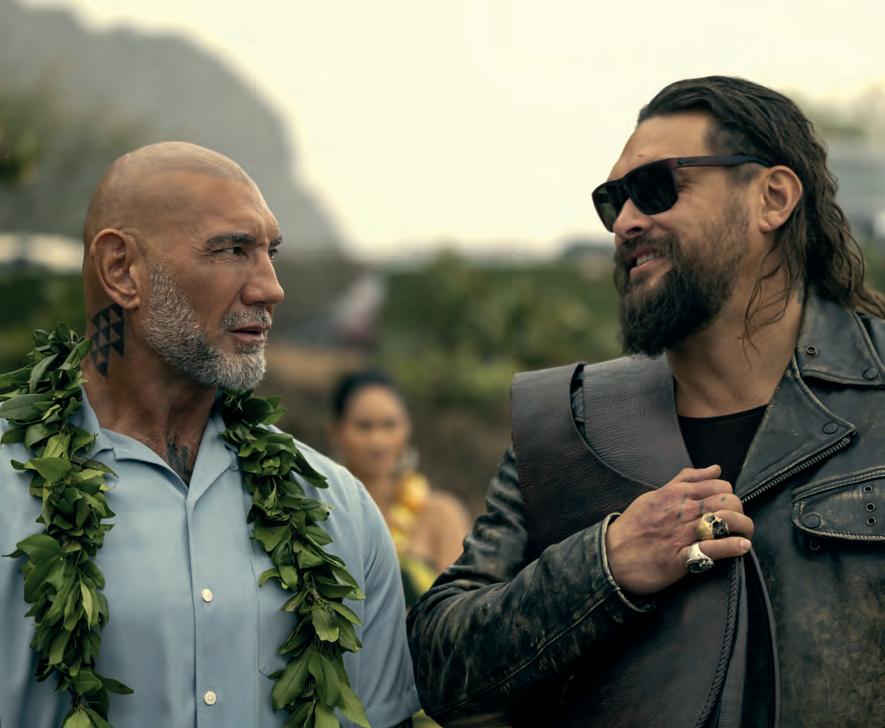
local impact BIGaction,
The Wrecking Crew is one of the biggest international productions to have flmed in Auckland in recent years. Produced by Amazon MGM Studios, the action movie showcases Auckland as a versatile flming destination, with the city and surrounding areas doubling for Hawai’i. Julian Newby reports
THE WRECKING Crew stars
Dave Bautista and Jason Momoa as tough-guy — previously estranged — half-brothers James and Jonny, who are trying to work out who killed their father Walter (Brian Keaulana) in a hit-and-run incident. James trains Marines and is generally a decent citizen, while Jonny, an Oklahoma-based cop, is rather boozy and irresponsible — a classic younger brother. Filmed over two months across the region, The Wrecking Crew is directed by Ángel Manuel Soto (Blue Beetle). Momoa and Bautista play alongside leading New Zealand actor Temuera Morrison. Soto and crew flmed Auckland — also known as Tāmaki Makaurau — for Hawai’i, and brought welcome attention and economic benefts, to the area. More than 1,400 local cast and crew were employed, supporting skills development and sustained employment across the industry. The production also generated benefts for
hospitality, accommodation, retail, construction and tourism businesses across the region. Soto shot some scenes in Piha, on the western coast of the Auckland Region, and used popular resort the Piha Campground as a base. Fiona Anderson who runs the campground explains how a flm can bring economic benefts to locations — particularly in her case, after the pandemic and foods had badly afected business:
You may think that shooting New Zealand for Hawai’i might present considerable problems for a flm crew, but executive producer Rob Cowan says a lot of what they had to do came easier than expected. “I remember one of the producers saying, ‘You know there's not a single palm tree in Auckland' — but in fact it turned out that there are a lot more places there with the palm trees that there are in parts of Hawai’i.” Finding extras was not a problem either, as elements of the ethnicity of the two countries are similar. But as there are a number of car chases in the movie, there was the not small concern that in Hawai’i they drive on the right; while in New Zealand they drive on the left.
“There were quite a lot of scenes with cars being fipped over and in those it’s possible to see the detail — so we brought about 25 cars in with the steering on the other side.” They also had to change signage so that it was sitting on the correct side of the road. “That did require a lot of prep, but we actually do a lot of American commercials here, so we are used to it,” supervising location manager Clayton Tikao says.
And in the likelihood that parked cars in the street might come into shot, the crew took the precaution of blacking out the dashboards and fxing dummy steering wheels onto the opposite side.
“Generally we didn’t really have to do a lot of alterations to make it ft with the Hawai'i landscape,” Tikao says.
“Initially, the attraction of New Zealand to international productions was the beauty, the landscapes — you know Lord of the Rings, magical coastlines, caves. What’s changing, and in this flm in particular, is that people are now coming here for the urban environment. Because one of the great things about a new city — well a city that’s just 250 years old or less — is that the architecture in certain suburbs has been dictated by individuals, so there are a whole load of houses that look like they’re in San Francisco — and there are other houses that look like they could be in Hawai’i or Orange County.”
Clayton Tikao
‘Generally we didn’t really have to do a lot of alterations to MAKE IT FIT WITH THE HAWAI'I LANDSCAPE’
“The arrival of The Wrecking Crew in Piha was like a gift from the gods,” Anderson says. “To receive payment from the production for use of the campground as a base took so much fnancial pressure of me, I can’t even begin to explain. The bills are paid, the tax is paid, the rent is paid, and I can employ staf.”
Key scenes took place in the home of a wealthy local family. “We shot there for two weeks — we had the place for 25 days and I had to cover their entire foor with a fake foor — because the foor was of this red timber and if we’d damaged that, it would have cost us more than the whole location budget,” Tikao says. “I had some pretty serious meetings with them because we shot a considerable amount of our stunt element there — with guns and blood and everything. And we got away without a single bit of damage. And that’s down to the professionalism of the crew and the stunt team.”
Dave Bautista and Jason Momoa star in The Wrecking Crew
Photo: Amazon MGM Studios


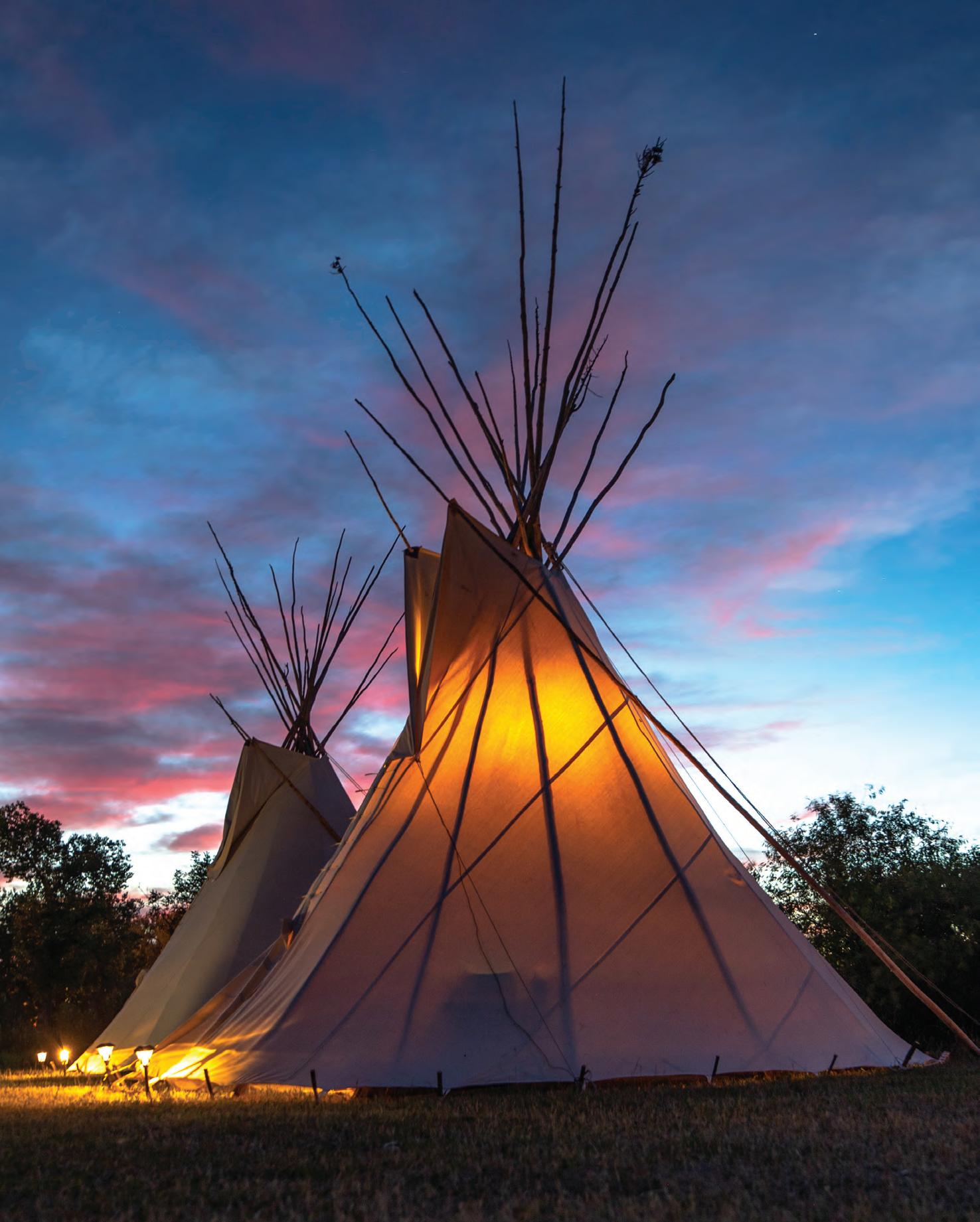

LOCATION IN PICTURES
Location International has teamed up with flm commissions, location managers and photographers to bring images of stunning locations around the world. Some are welltrodden by flm crews, others are still to be made famous on the big and small screen
VINEYARDS, DOURO RIVER, PORTUGAL
The Douro Valley, a UNESCO World Heritage site, is a sundrenched tapestry of terraced vineyards and winding river bends. Known as the oldest demarcated wine region in the world, it specialises in port wine production. The region is also known for an extraordinary number of paleolithic rock engravings.
The movie Damsel (2024) flmed here, and also TV series Amazing Train Journeys, Portugal (2018).
PHOTO COURTESY LORI BALTON @WIDEWORLDLOCATIONS
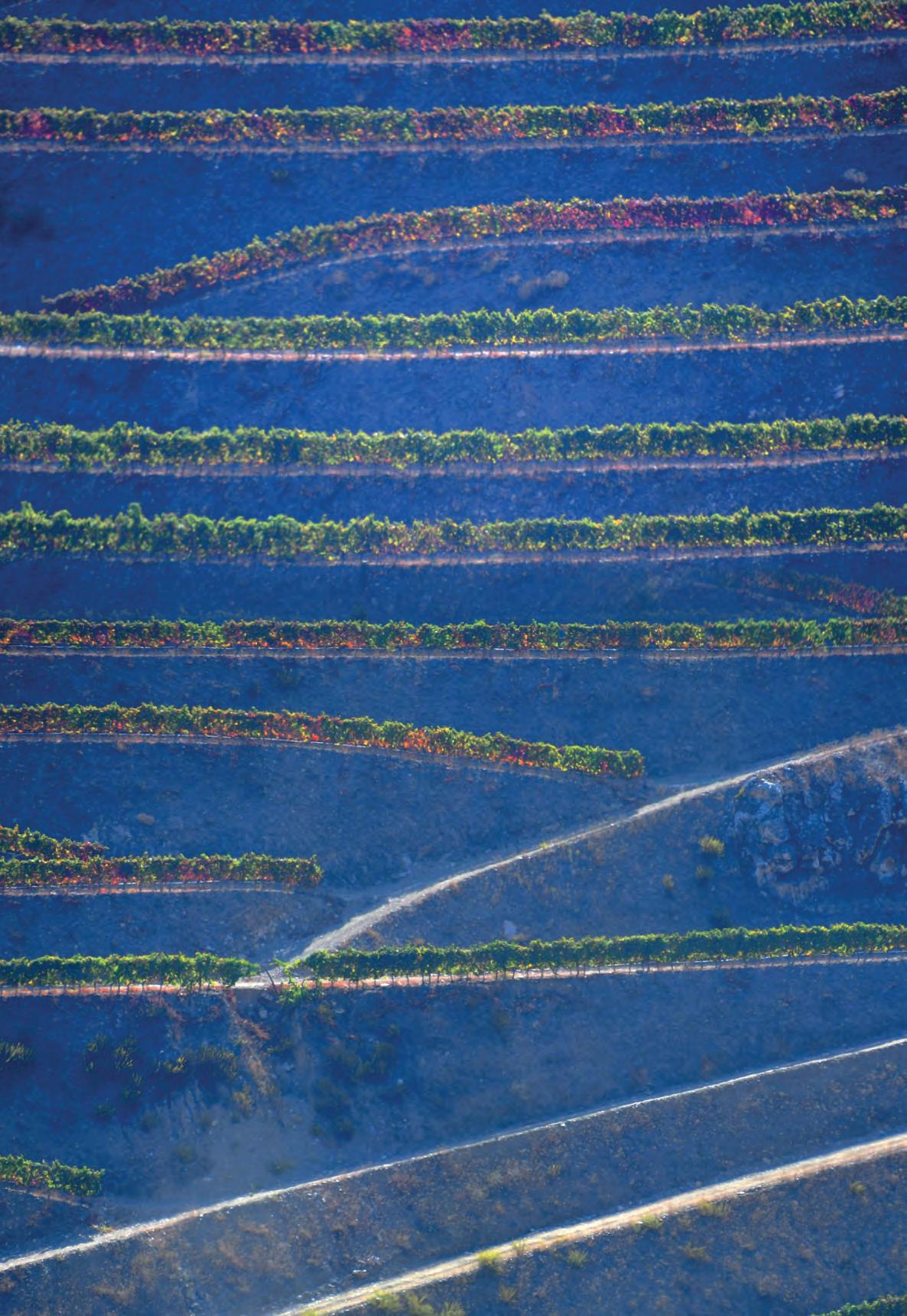
FATEHPUR SIKRI FORT, UTTAR PRADESH, INDIA
Fatehpur Sikri Fort is found in the state of Uttar Pradesh in northern India, home to iconic landmarks including the Taj Mahal in Agra and the holy city of Varanasi. The 16th-century red sandstone Mughal fortress city is a very popular location, with a wealth of buildings displaying Indo-Islamic, Hindu and Christian architectural styles.
Bollywood movies flmed here include Pardes (1997) and The Fall (2006). Factual history series Schatze der Welt - Erbe der Menschheit (2002) also shot here.
PHOTO COURTESY EVAN PELLER - LMGI
1000 ISLANDS, KINGSTON, ONTARIO
Kingston sits where the St. Lawrence River, Rideau Canal and Lake Ontario meet, making it one of the province’s most historic waterfront regions. The city and surrounding area ofer a mix of heritage architecture, natural shoreline, small communities and access to the wider 1000 Islands — an area known for its islands, parks, scenic waterways and long-standing cultural sites.
This area has recently hosted projects for NBCUniversal, Crave, Netfix and Amazon, including The Borderline (2026).
ONTARIO.
PHOTO COURTESY ALLAN YUNG, AND DESTINATION
Spanning the East River between the boroughs of Brooklyn and Manhattan, Brooklyn Bridge is one of the most iconic and architecturally signifcant NYC locations.
Among the numerous and diverse flms to have shot here are: The French Connection (1971), Saturday Night Fever (1977), Sophie's Choice (1982), The Amazing Spider-Man 2 (2004), I Am Legend (2007) and The Dark Knight Rises (2012).
PHOTO COURTESY JOHN HUTCHINSON LMGI HUTCHINSONLOCATIONS.COM
BROOKLYN BRIDGE, NEW YORK, USA
PADDLE STEAMERS, ECHUCA WHARF, VICTORIA, AUSTRALIA
This working historic wharf, featuring 19th-century buildings and the world’s largest operating paddle-steamer feet, gives Echuca genuine period character. The Murray River, with red-gum trees on the riverbanks and a sunny climate, ofers a rich natural backdrop spanning rustic colonial to contemporary Australian locations.
Echuca starred in the classic Australian mini-series All the Rivers Run (1983,) and more recently featured in reality series Hunted Australia (2022- ).
PHOTO COURTESY TOURISM WESTERN AUSTRALIA
VILLA CIPPRESSI, VARENNA, ITALY
Villa Cipressi, on the banks of Lake Como, is a majestic complex of buildings and gardens built between the 15th and 19th centuries. The villa is renowned for its spectacular terraced botanical garden that slopes down to Lake Como and has a private dock. Careful restorative work has upgraded the amenities while maintaining architectural harmony.
Numerous productions have shot here, and Lake Como was featured in TV series Succession (2018-23)
PHOTO COURTESY GIUSEPPE NARDI - LMGI
HIGHWAY 40, KANANASKIS COUNTRY, ALBERTA, CANADA
Often called K-Country by locals, Kananaskis Country is located on the eastern slopes of the Canadian Rockies. This stunning image of Highway 40 is in the Bow Valley Provincial Park near Barrier Lake in mid-winter. The nearest city is Calgary, with the Rocky Mountains about 40 minutes away. The region features numerous peaks, valleys, forests, rivers, creeks and mountain lakes.
This stretch of highway is popular for car commercials, as well as notable flms, including: Superman (1978), Brokeback Mountain (2005) and The Revenant (2015).
PHOTO COURTESY MICHAEL JOHANSEN, LMGI - WWW.FILMALBERTA.CA
MALHAM COVE, NORTH YORKSHIRE, ENGLAND
The dramatic limestone landscape of this part of the Yorkshire Dales National Park has been sculpted over millions of years and has left behind the spectacular 70-metre limestone clif of Malham Cove. It is dramatic and epic,- although it wasn’t an option for the latest Wuthering Heights (2026) movie as the location scout was asked to fnd locations that hadn't been used in previous productions.
Films that have used this location include Monty Python and the The Holy Grail (1975), Wuthering Heights (1992) and Harry Potter and the Deathly Hallows: Part 1 (2010).
PHOTO COURTESY AURELIA THOMAS - LMGI
WHITE BAY BEACH, GUANA ISLAND, BRITISH VIRGIN ISLANDS
One of the fnest beaches in the BVI, White Bay Beach is a half mile of white powder sand. The island is privately owned and features a number of unique hotel suites and houses. This stunning location has had limited recent exposure to the world through flm and photography and is a hidden gem.
The flm Virgin Island (1958), starring Sidney Poitier and John Cassavetes, was shot here.
PHOTO COURTESY ANGUS LEDGERWOOD, LMGI
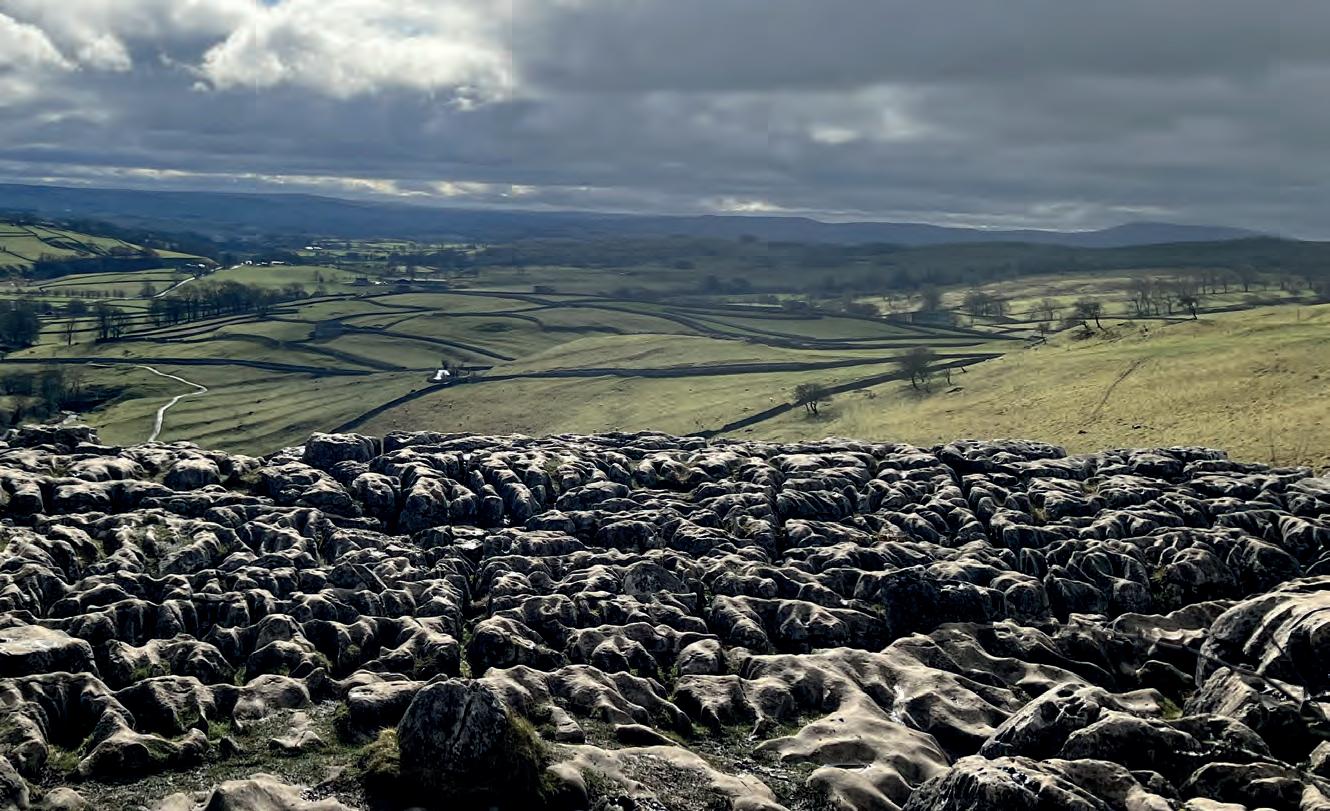
BRYGGEVEGEN 2609, LILLEHAMMER, NORWAY
The beautiful hills and landscape surrounding Lake Mjøsa provide breathtaking locations, and the area was seen around the world as the backdrop to the 1994 Winter Olympics. Seen here frozen, when it is popular for walks and snowmobile travel, the area has a completely diferent aesthetic in summer.
Productions using this location include: TV series Lilyhammer (2012-14); and movies Three Wishes for Cinderella (1973) and The Last King (2016).
- LMGI
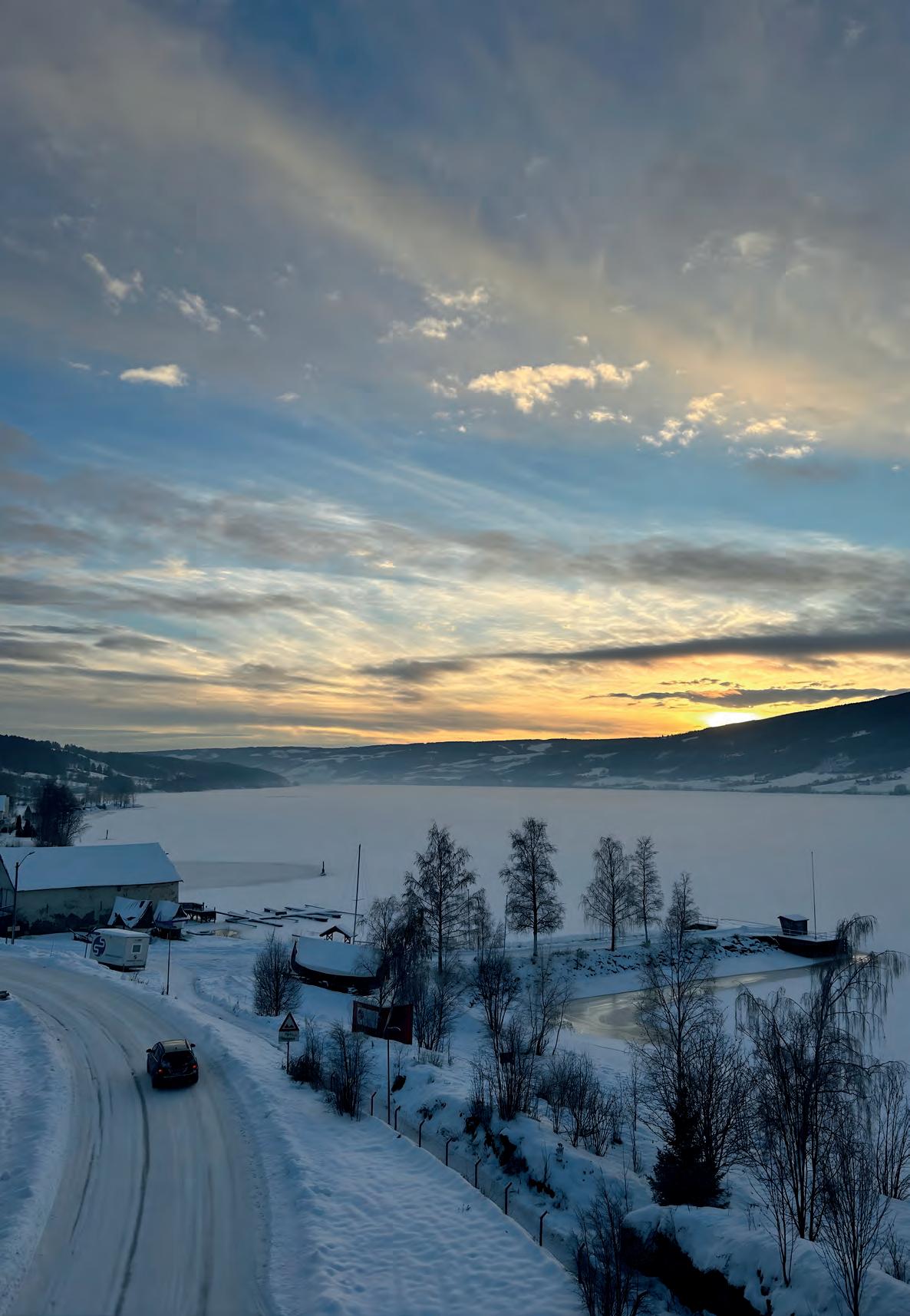
PHOTO COURTESY CHRISTIAN OUGHTON
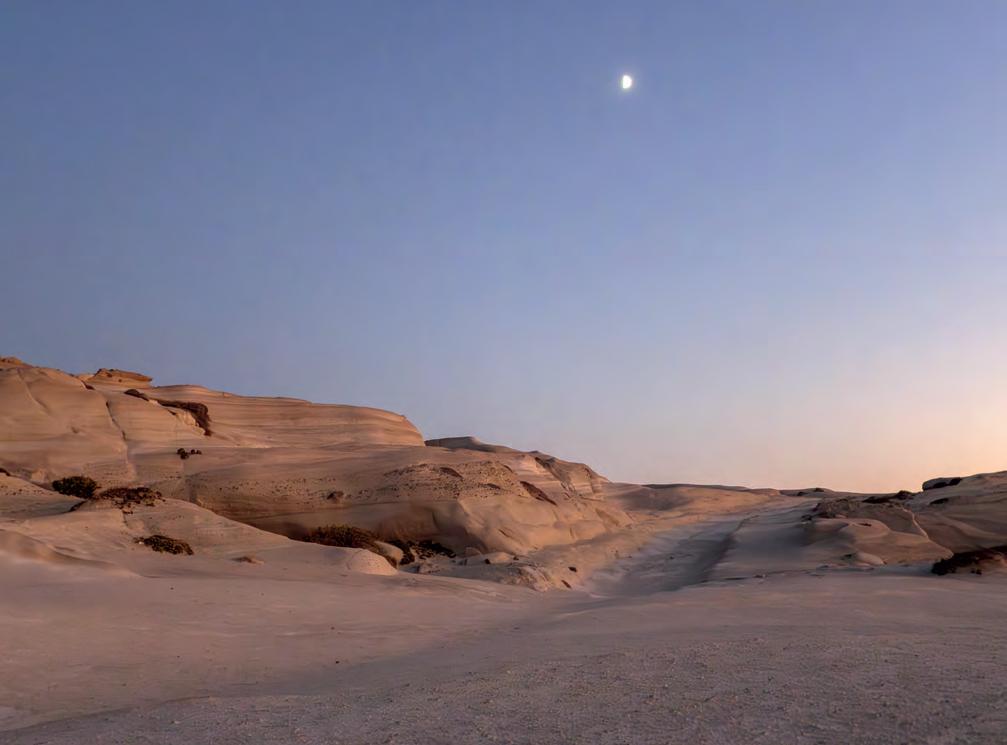
SARAKINIKO BEACH, MILOS ISLAND, GREECE
Milos, with its striking landscapes, crystal-clear waters and unique geological formations, including moon-like clifs and hidden beaches, ofers a flmmaker’s paradise which has served as the backdrop for various flms and photo shoots.
Productions that have recently shot here include: feature flm Bugonia (2025), as well as fashion campaigns for Dior and Louis Vuitton. PHOTO COURTESY BRANDON DRUKER
ESSAOUIRA, MOROCCO
Essaouira is a windy Atlantic port city in western Morocco. UNESCO listed, this whitewashed medina is known for its artistic, laid-back vibe and is also famous for its 18th-century seafront ramparts. The city is a gateway to southern Morocco and its pleasant climate and diverse architectural infuences.
Productions to have shot here include: movies Alexander (2004), Kingdom of Heaven (2005) and John Wick: Chapter 3 – Parabellum (2019); and TV series Game of Thrones (20112019). PHOTO COURTESY MARK INDIG, LMGI
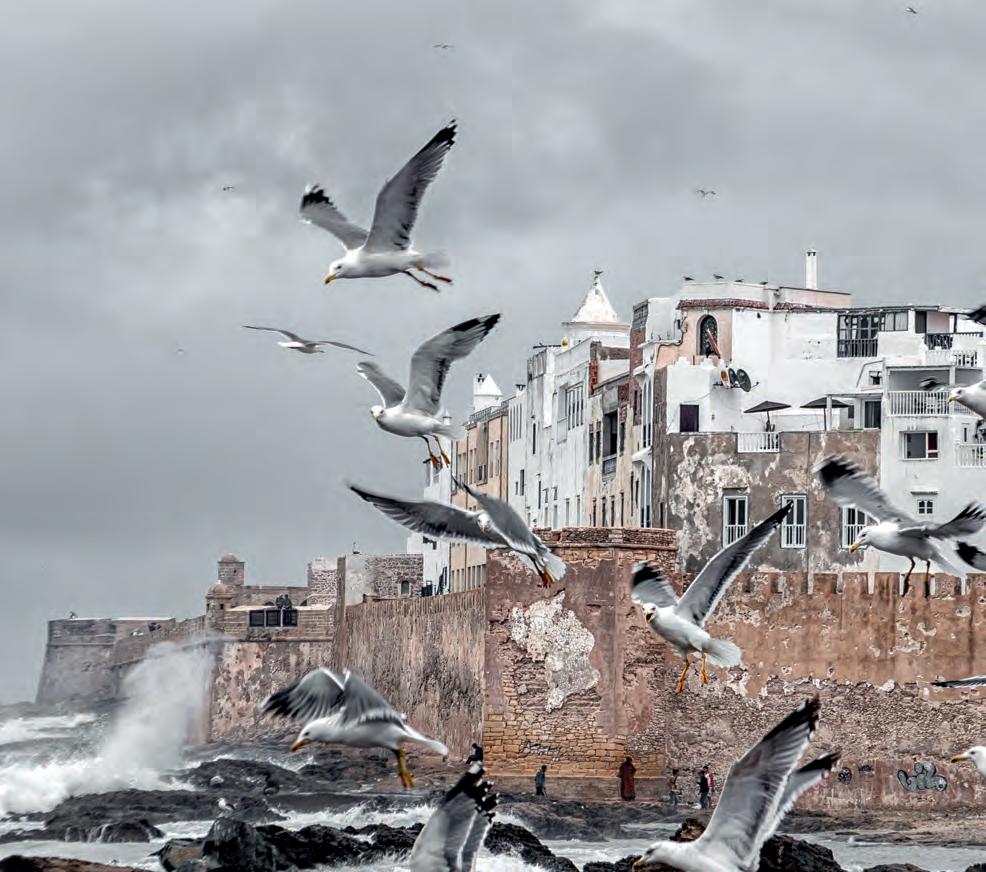
SANTA MONICA PIER, SANTA MONICA
Located at the end of Route 66, the Santa Monica Pier is one of the most recognisable flming locations in the world with the iconic ferris wheel, historic carousel building, sweeping bike path and ocean views with direct access to the beach. The pier allows productions to capture both elevated ocean views and expansive shoreline scenes.
Movies to use the pier and its surrounding beach include: Forrest Gump (1994), Iron Man (2008), 2012 (2009) and Hannah Montana: The Movie (2009). Among the countless TV productions shot here are Baywatch (1989-2001) and NCIS: Los Angeles (2009-2023).
PHOTO CREDIT: SANTA MONICA TRAVEL & TOURISM
GRANITE FALLS, SAY NUTH KHAW YUM PARK, BRITISH COLUMBIA, CANADA
Located 20 nautical miles from the nearest marina and accessible only by boat at the end of a breathtaking 18-kilometre (11-mile) ford, this extraordinary site ofers complete seclusion. The glacial landscape is known as the Serpent’s Land.
This region of British Columbia was also home to Chief Dan George, leader of the Tsleil-Waututh Nation, who starred alongside Dustin Hofman in Little Big Man (1970).
PHOTO COURTESY TONYA HARTZ, LMGI
Ocean
Hong
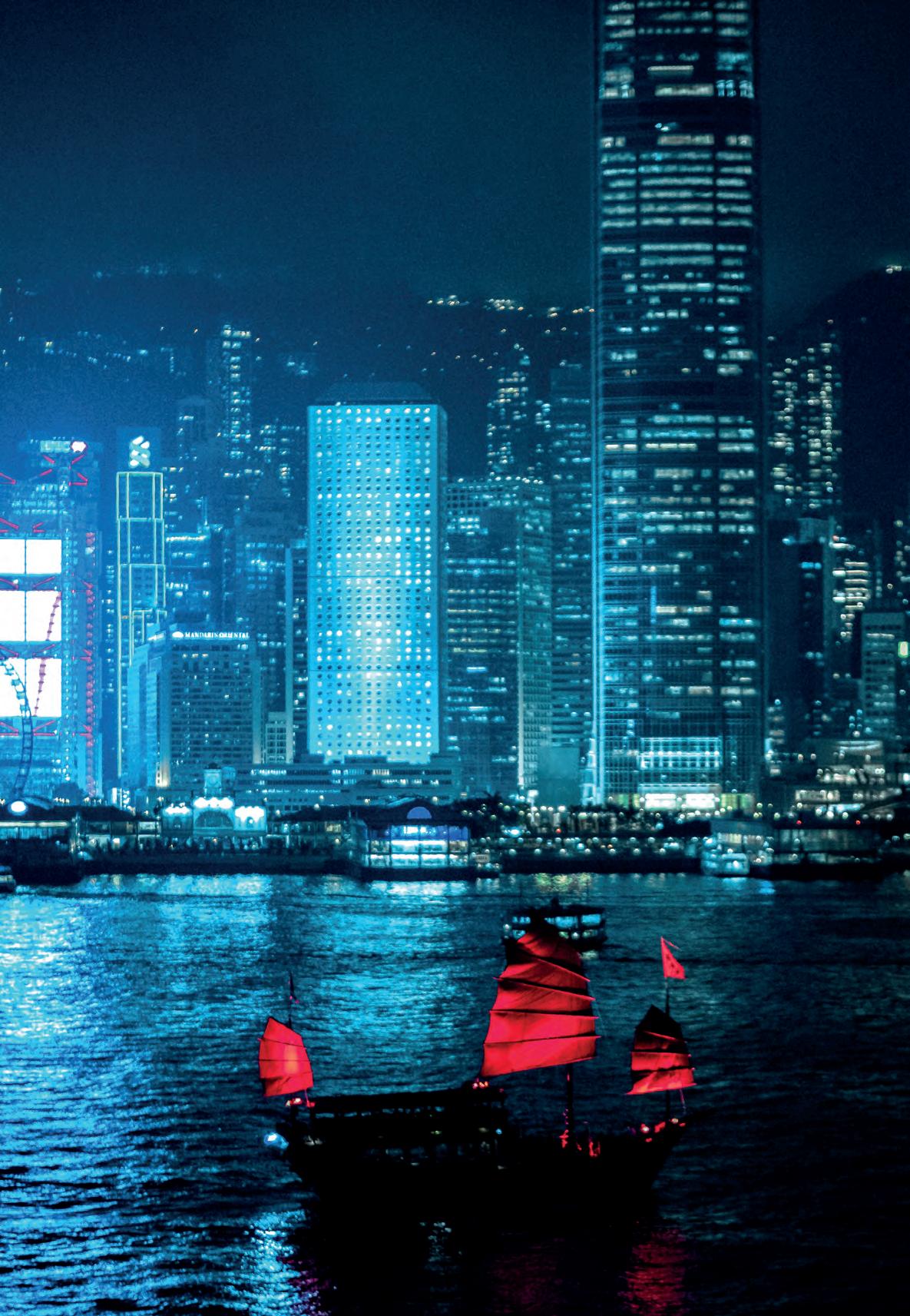
OCEAN TERMINAL DECK, HARBOUR CITY, HONG KONG
Terminal Deck stands surrounded by Hong Kong’s dramatic blend of dense modern skyscrapers and preserved historical structures. This cinematic city contains many diverse possible locations refecting Chinese culture as well as unique Hong Kong vistas.
Kong was the setting of the big showdown in Godzilla vs Kong (2021). Other notable productions shot here include: The Dark Knight (2008), Ghost in the Shell (2017) and Transformers: Age of Extinction (2014).
PHOTO COURTESY LEANN EMMERT, LMGI
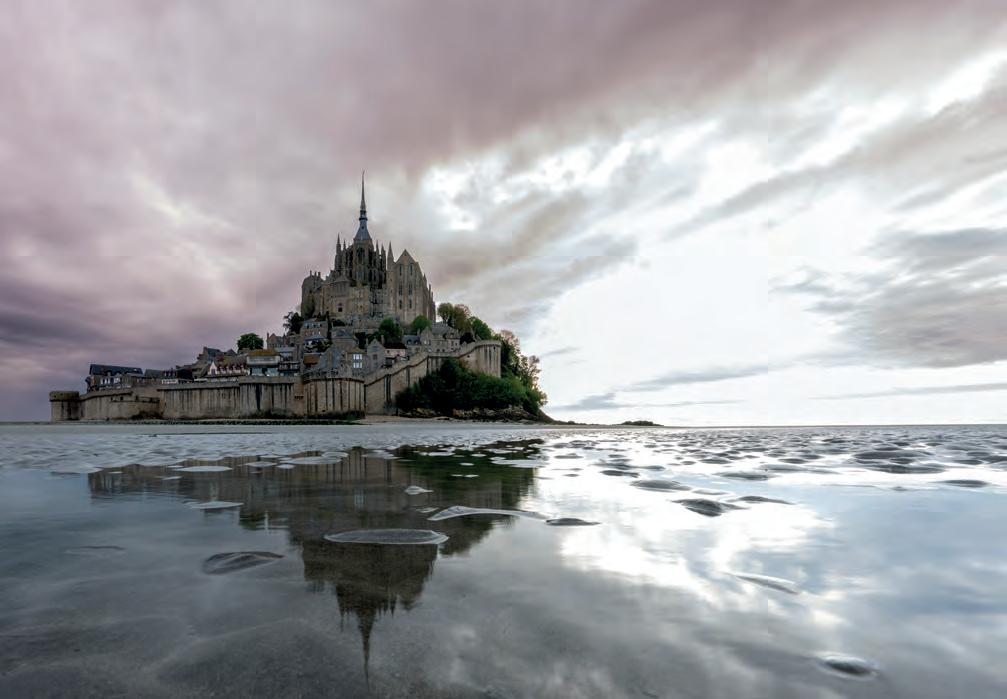
MONT-SAINT-MICHEL, NORMANDY, FRANCE
Mont-Sant-Michel is a medieval, gravity-defying abbey perched on a tidal island. Known as La Merveille, the island features dramatic tides and winding, historic streets and from a distance a dreamy look that can make it appear as a foating city in the sky.
Many productions have shot here, including TV series The Walking Dead: Daryl Dixon (2023-2026), and the island is said to have served as an inspiration for Tangled (2010) and The Lord Of The Rings: The Return of The King (2003).
PHOTO COURTESY AARON HURVITZ, LMGI
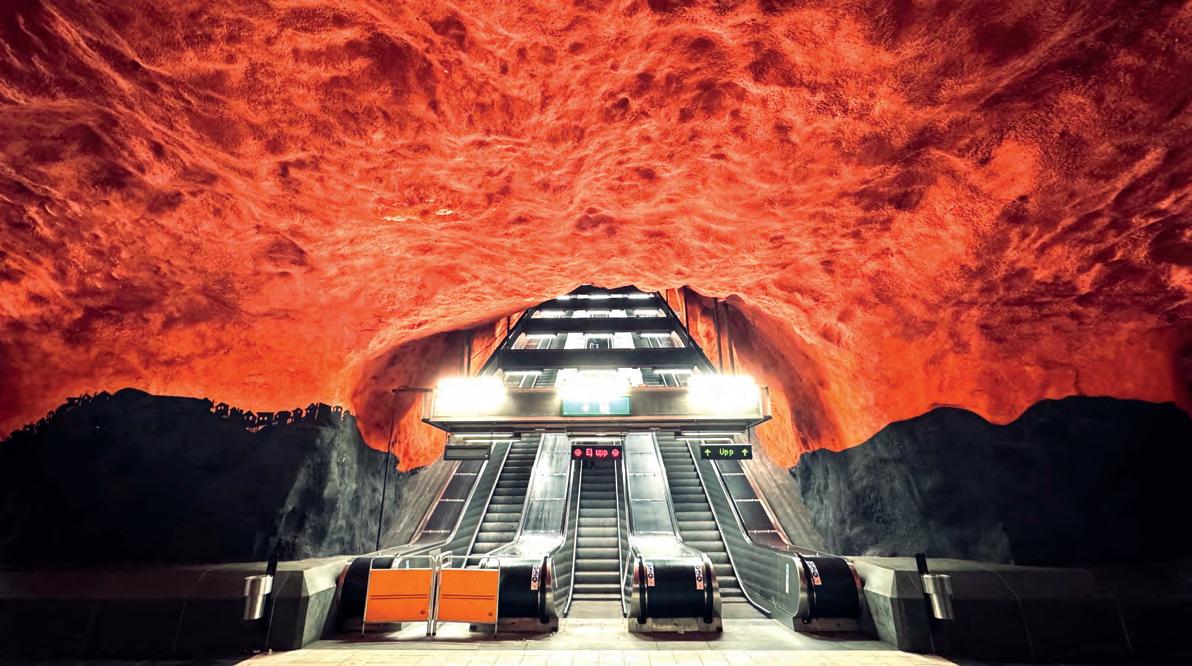
SOLNA CENTRUM STATION, STOCKHOLM, SWEDEN
Solna Centrum Station, on the metro system in Stockholm, opened in 1975. The extraordinary art refects the social issues of the time, including environmental threats to the ozone layer. All the Stockholm metro stations have diferent, cinematic designs.
Several flms and TV series have used these lcoations, mostly targeted at the Swedish/Nordic/German audience. Productions include: Beck (1997-), Adult Behavior( 1999) and Trouble (2024).
PHOTO CREDIT: MARKUS BENSCH, LMGI
CANOLA FIELDS, QU’APPELLE VALLEY, SASKATCHEWAN, CANADA
Nothing is more quintessentially Saskatchewan than the seasonal rape-seed Canola Fields, which can reach more than 75 miles wide. This plains region of the Qu'Appelle Valley is easily accessible from Saskatchewan's capital city, Regina — which is also home to the John Hopkins Regina Soundstage, one of the largest and most comprehensive production facilities in Western Canada.
Productions that have flmed in this area include: Summer at Charlotte's (2023) and Die Alone (2024).
PHOTO COURTESY TOURISM SASKATCHEWAN
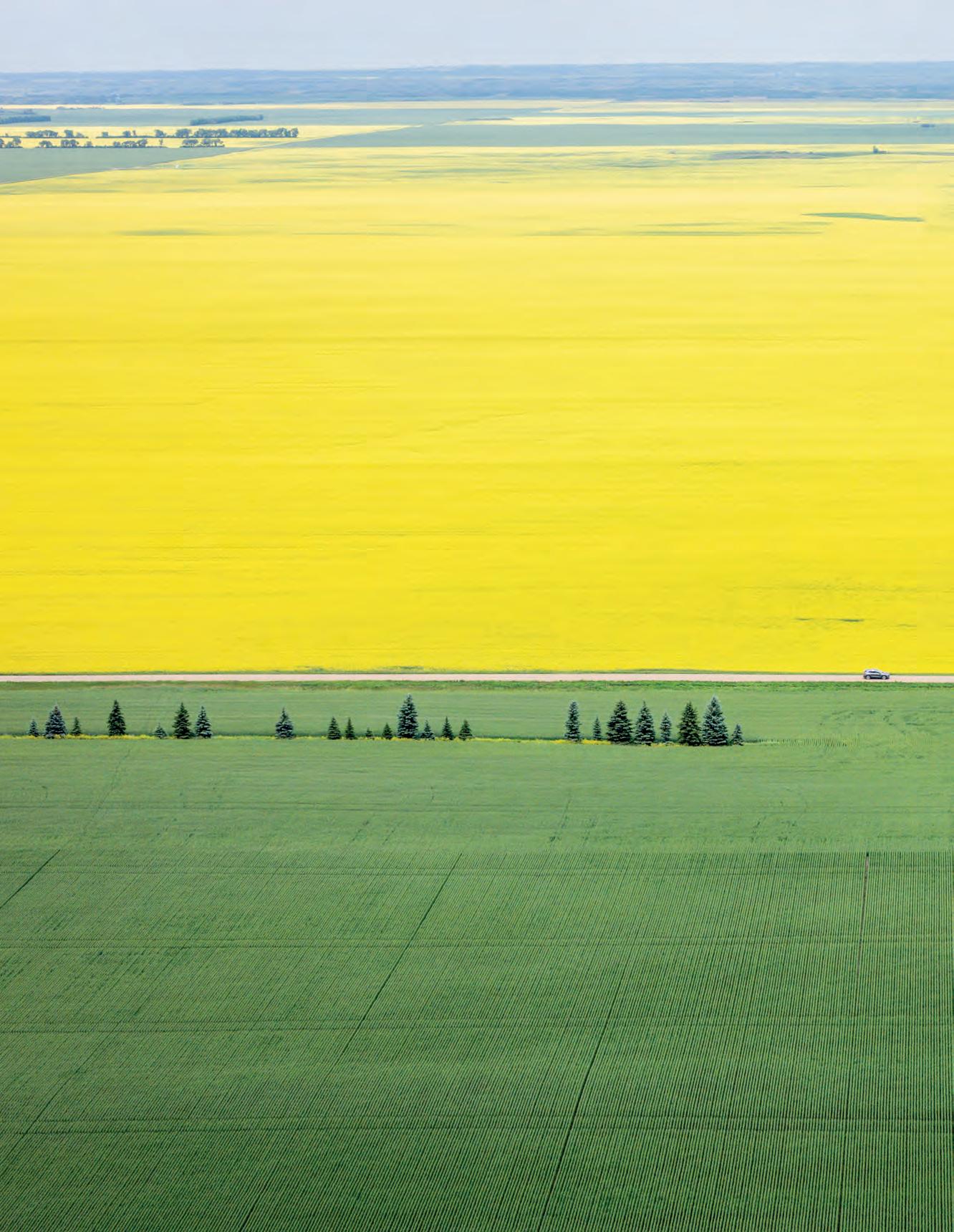
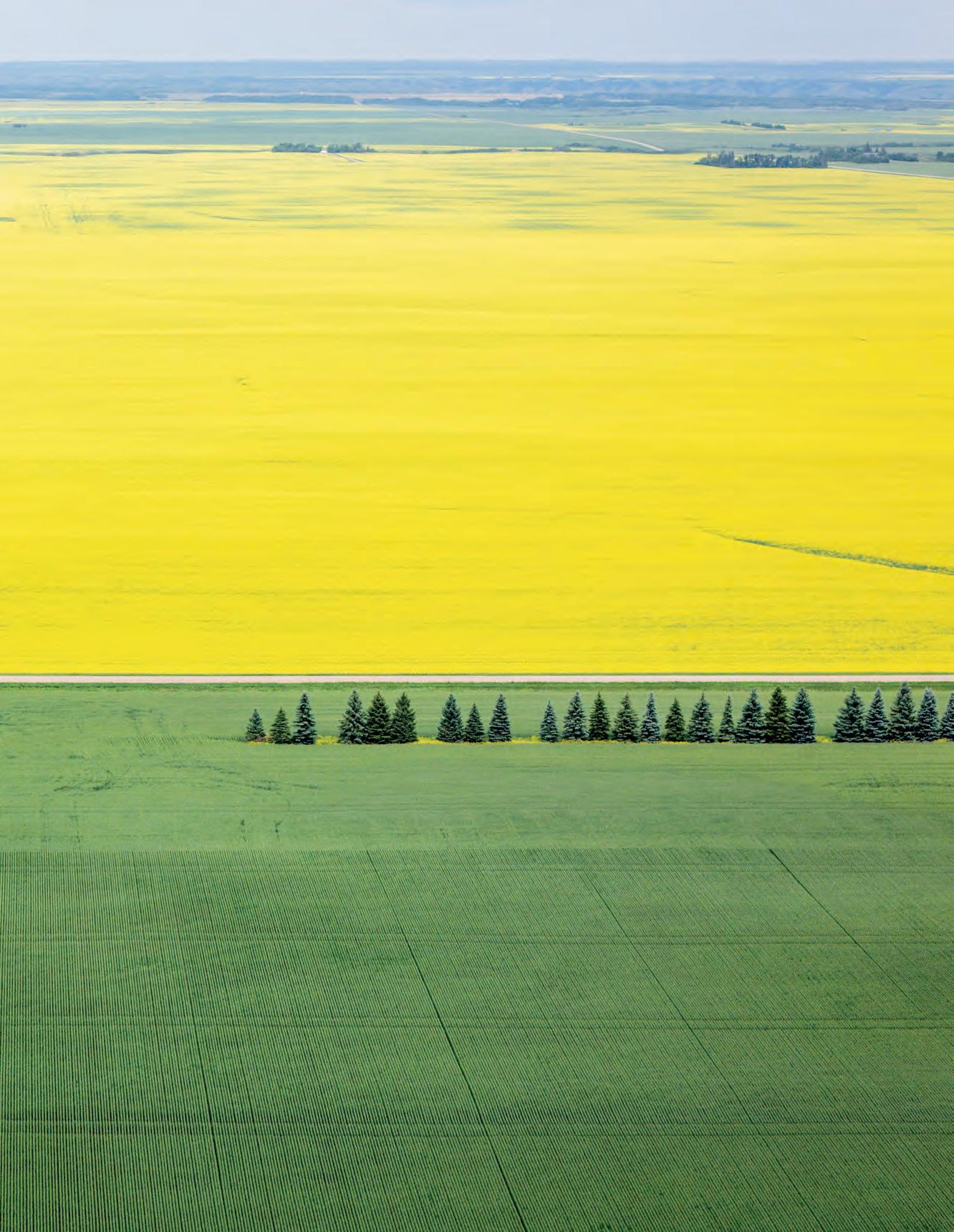
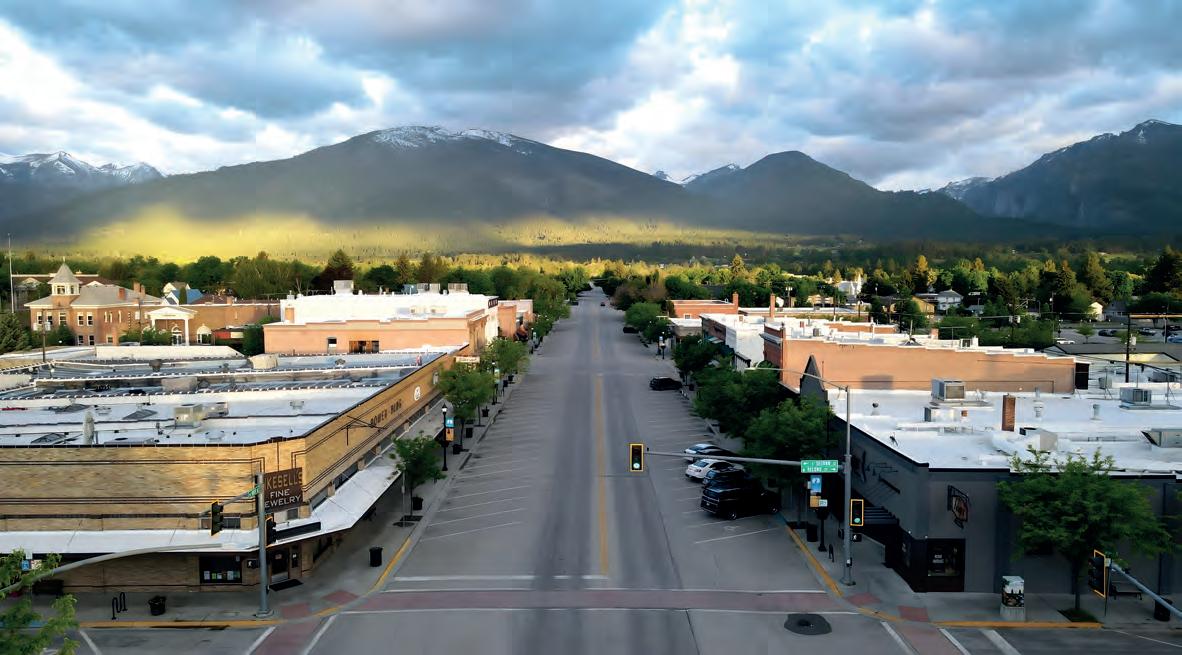
MAIN STREET, HAMILTON, MONTANA
This photo was taken at dawn at the intersection of 2nd St and W Main St in Hamilton. The town is nestled along the mountain range that separates Montana and Idaho, an amazing backdrop to a quintessential Main Street USA look.
Multiple seasons of TV series Yellowstone (2018 -2024) were shot throughout the area. PHOTO COURTESY TYLER HOHMANN, LMGI
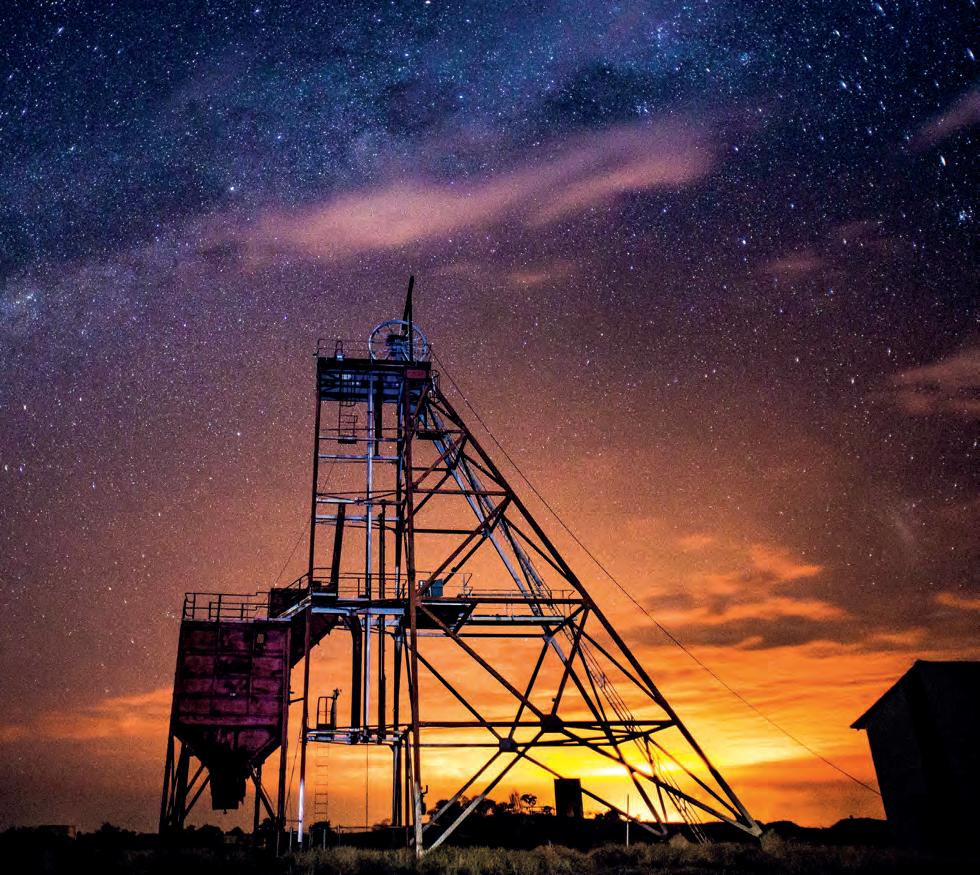
THE OLD TCB GOLD MINE, TENNANT CREEK, NORTHERN TERRITORY, AUSTRALIA
A preserved historic gold mine complete with original structures, machinery and tunnels, The Old TCB Gold Mine ofers authentic industrical heritage set against vast red-desert landscapes.
This area has hosted Australian flm productions including: Last Cab to Darwin (2015) and Kangaroo (2025).
PHOTO COURTESY TOURISM & EVENTS NT/KARL-HEINZ HERZOG
METROPOLITAN EXPRESSWAY, SHIBUYA, TOKYO, JAPAN

From a rooftop perch above Shibuya, Tokyo’s downtown skyline unfolds in electric layers of glass, steel and streaming headlights, with the Metropolitan Expressway cutting through the city’s core. It's a rare vantage point where skyscrapers, elevated freeway and Tokyo Tower converge in a single, cinematic frame.
The location has featured in numerous productions including two seasons of HBO Max series Tokyo Vice (2022-24).
PHOTO COURTESY MASA AIKAWA, LMGI
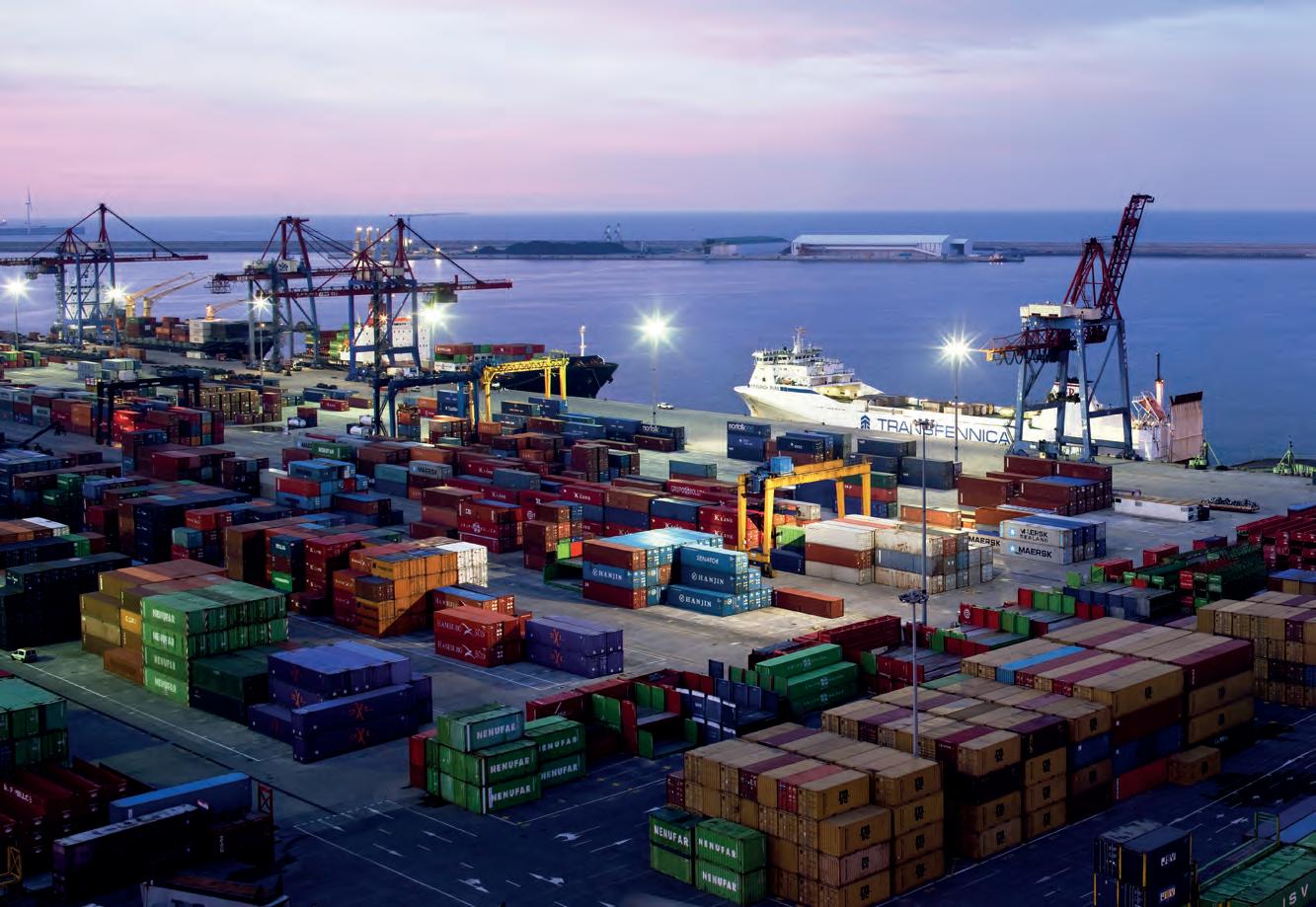
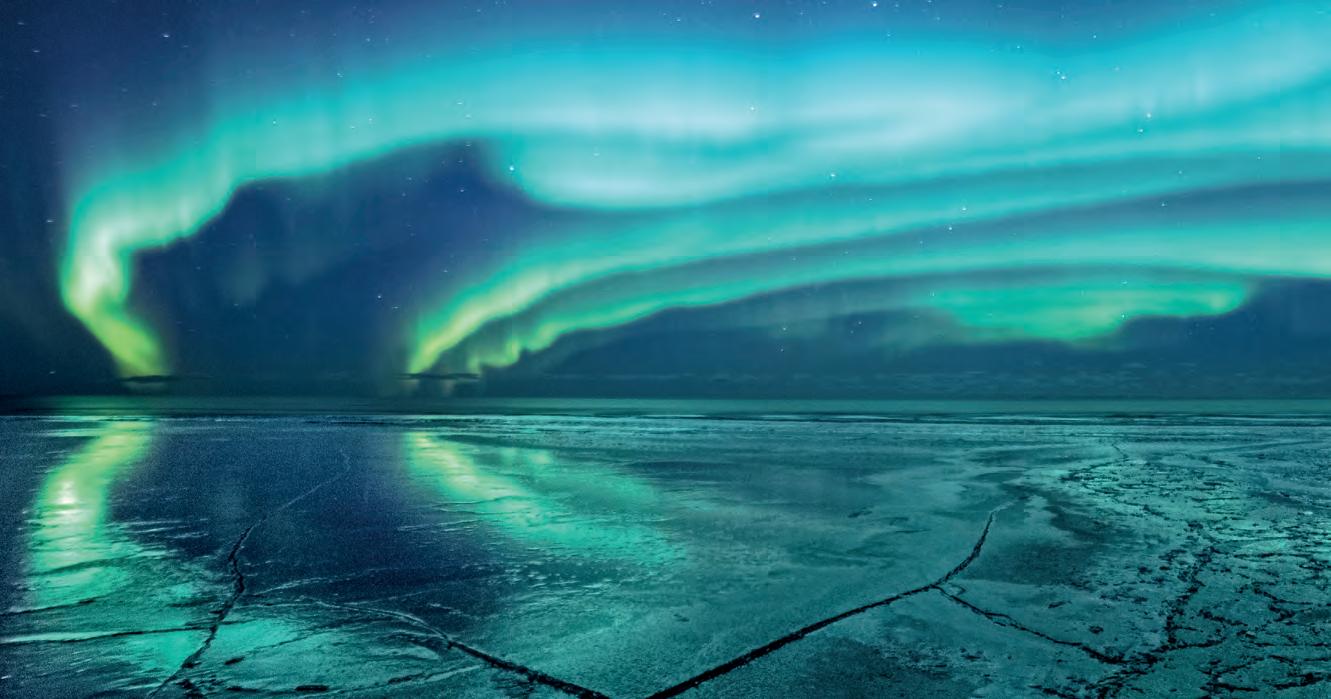
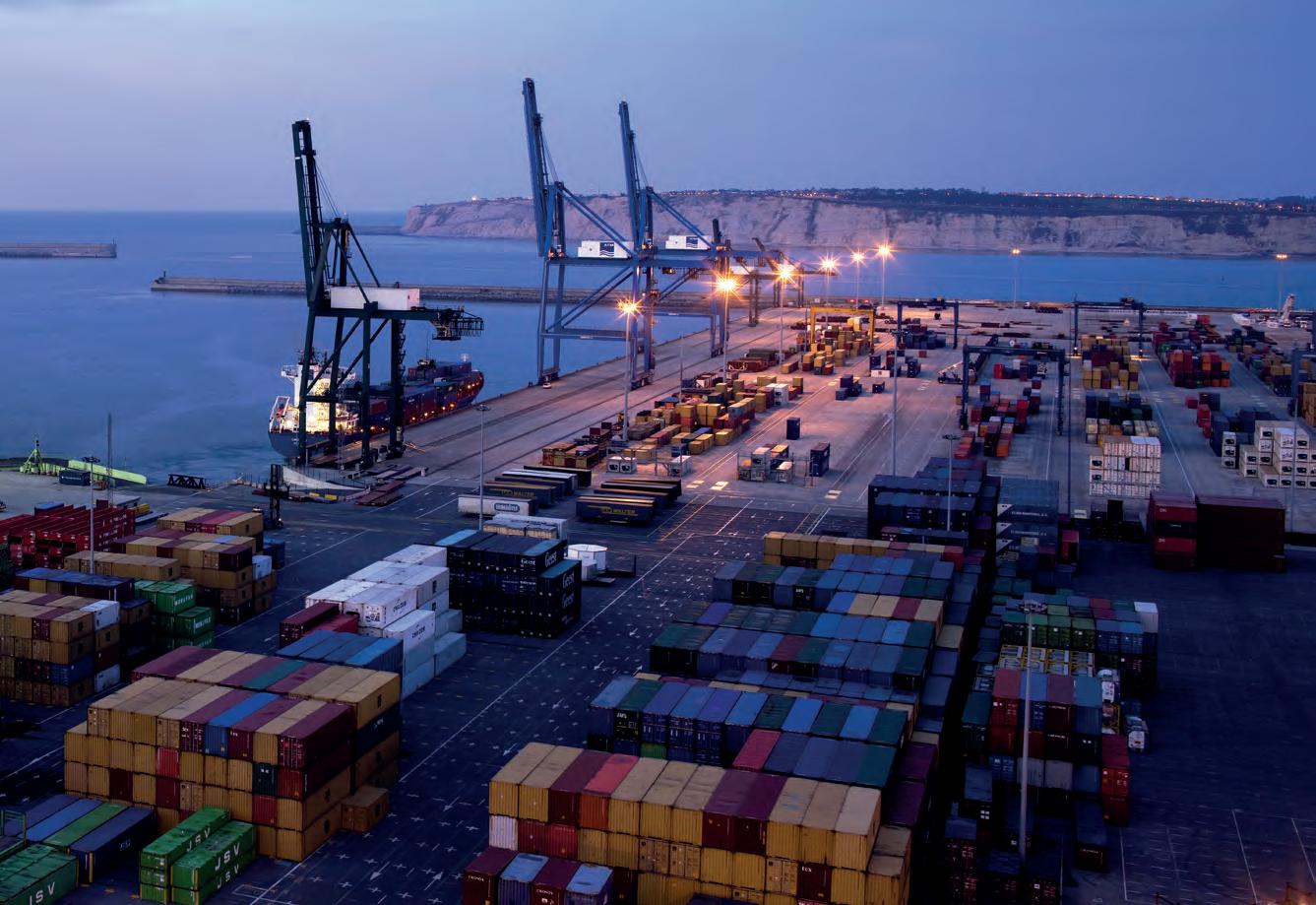
BILBAO PORT, BASQUE REGION, SPAIN
Bilbao has been a harbour city since the 1300s, located on the Bilbao Abra bay in Biscay, the Basque region in northern Spain. In the 1990s, as the city underwent major redevelopment, it was moved closer to the coast, becoming one of the most important transport and logistics centres in the European Atlantic Arc.
Several audiovisual projects have chosen this unique location, including TV series En haute mer (2024) and Kill Jackie (2026).
GREAT SLAVE LAKE, NORTHWEST TERRITORIES, CANADA
Great Slave Lake covers over 10,000 miles, making it the Canada’s second-largest lake. It freezes over during the winter months and is accessible by ice roads, making it an ideal stand-in for a remote Arctic or frozen-ocean setting. In summer it transforms into a northern paradise, dotted with sheltered bays, rugged clifs, sandy beaches and foating houseboats. The Northwest Territories is also a destination to experience the Northern Lights, up to 240 nights per year.
Productions that have flmed here include: movie Red Snow (2019), and TV series Alone (2015-2025) and Alaska Daily (2022-2023).
PHOTO COURTESY BILBAO BIZKAIA FILM COMMISSION
PHOTO COURTESY AURORA SOUTH SLAVE AARON TAMBOUR/NWT


PHOTO COURTESY MATT PALMER, LMGI/DGC
















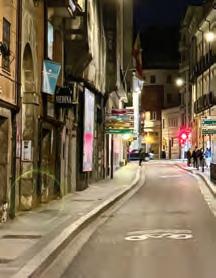

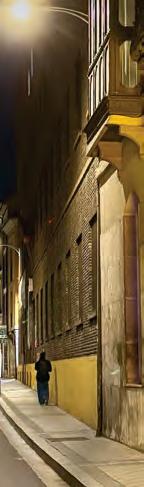




























Unmatched Expertise:
Backed by a legacy of excellence and a global network of top Location Professionals
Vision to Reality:
Helping you shape ideas into impactful, memorable productions

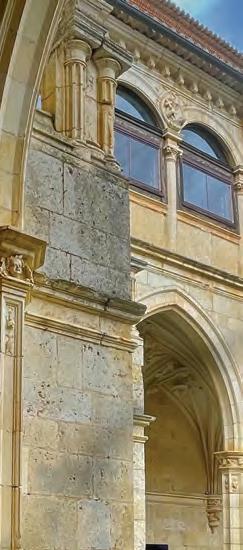


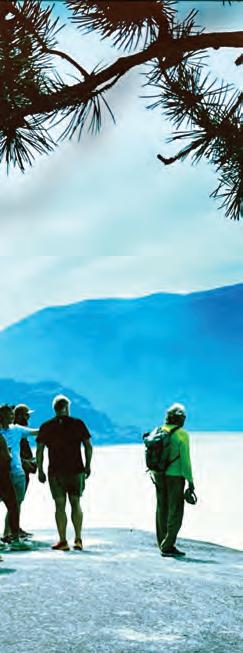

EVERY SCENE STARTS HERE
True Partnership:
More than collaborators—we work alongside you as dedicated partners
Creativity + Precision:
Crafting stories where artistry and accuracy seamlessly align


Heart Racing
ATL Qualifes Always Open No Caps
Low Threshold 20% and 25%
Cash Rebates
Plus generous criteria and consistent, fast payment.