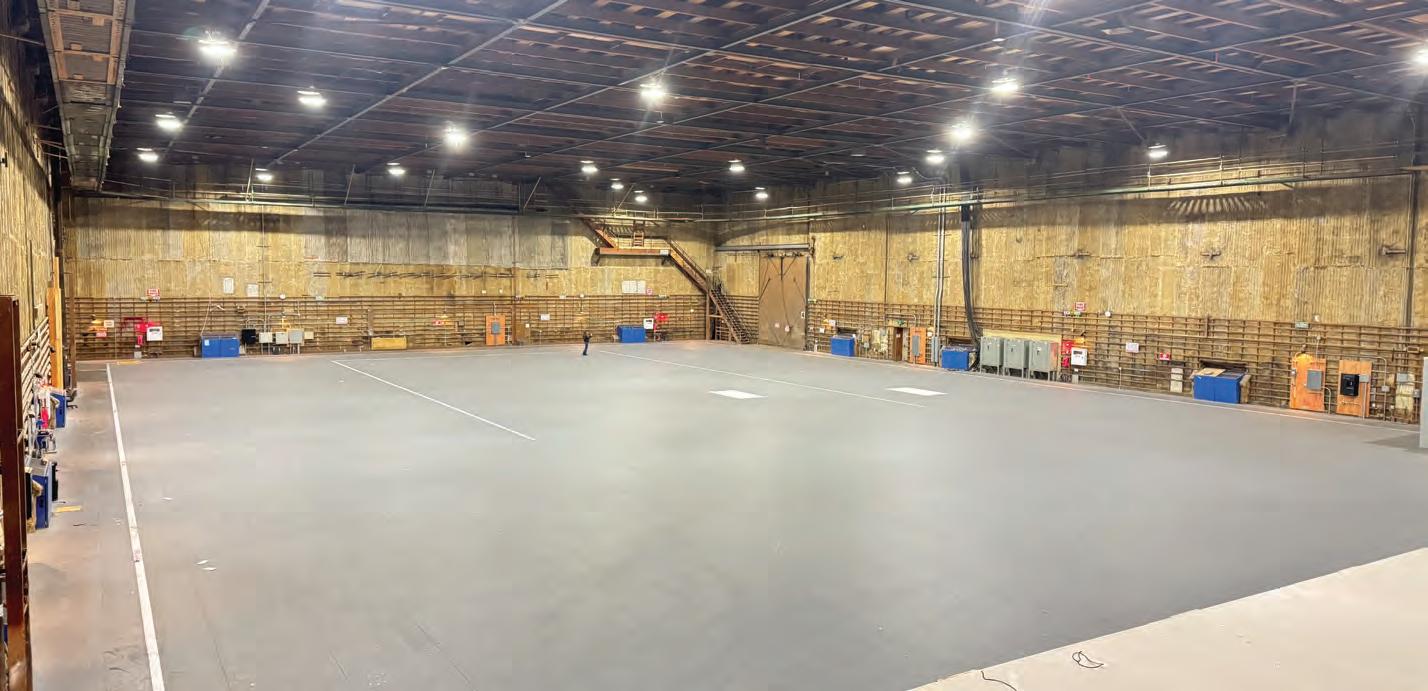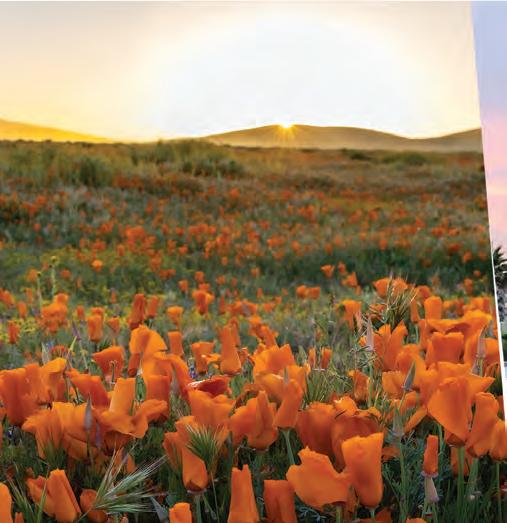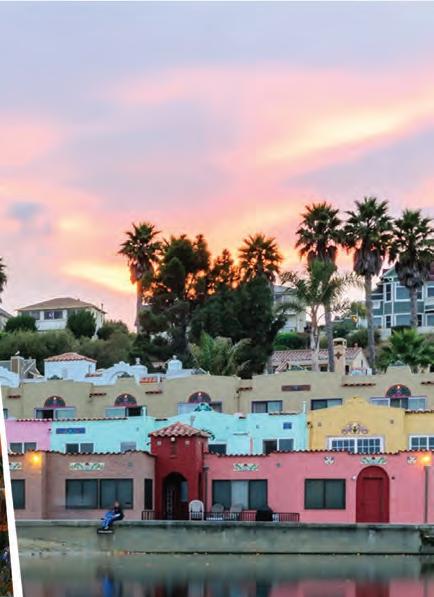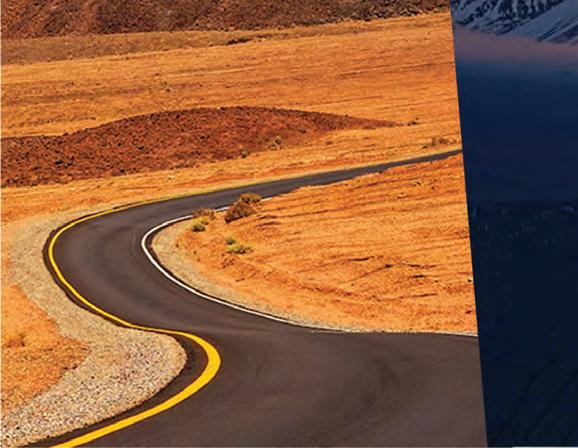
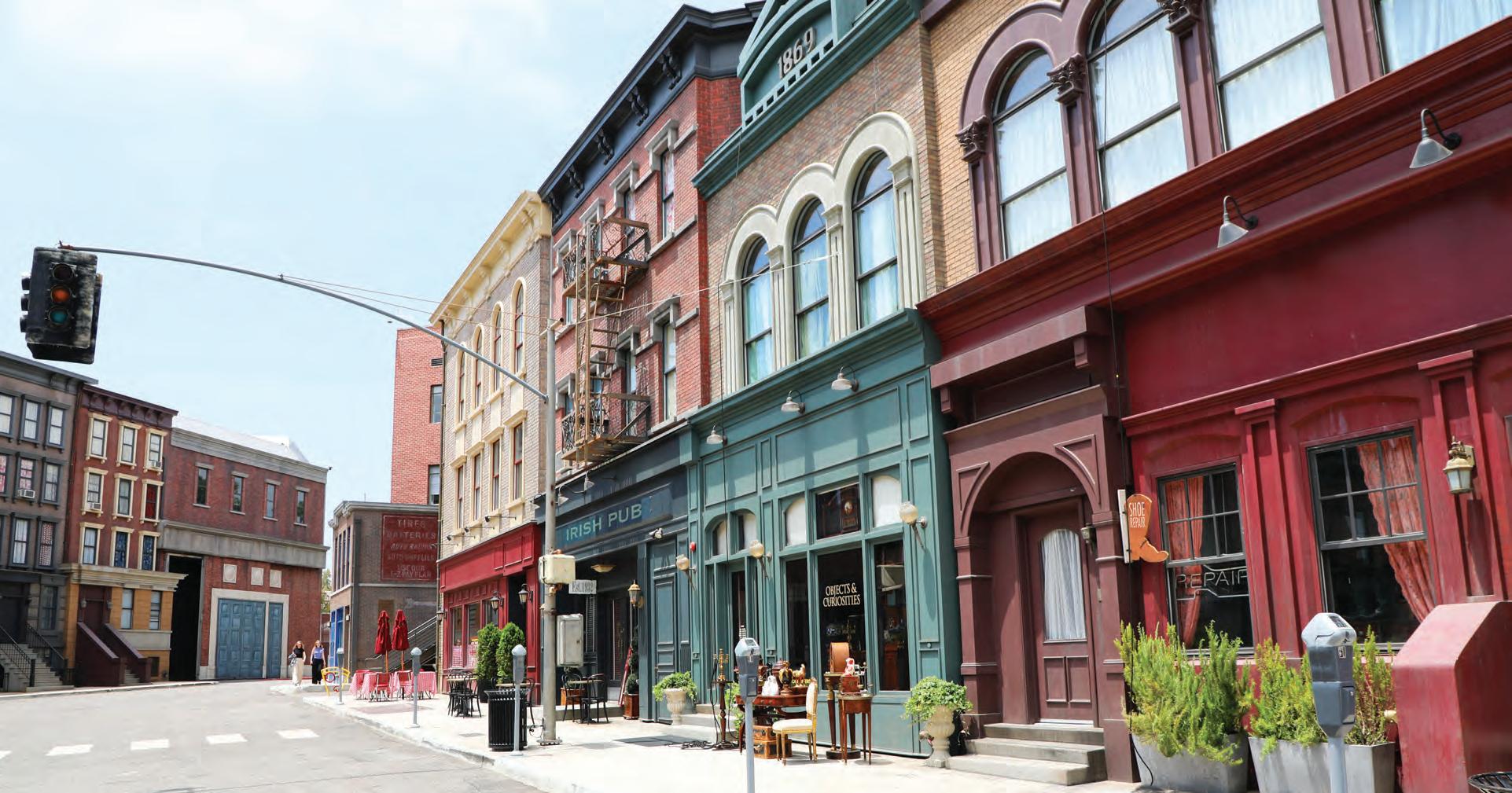
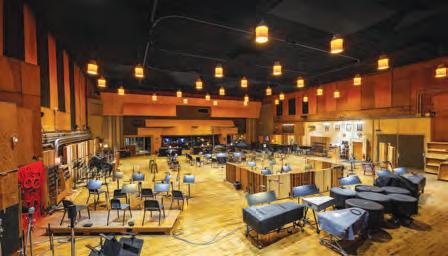
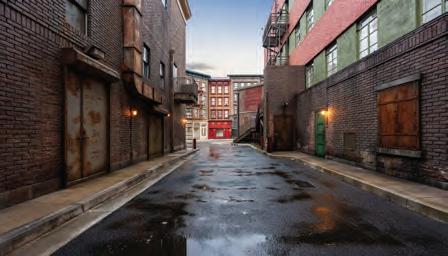
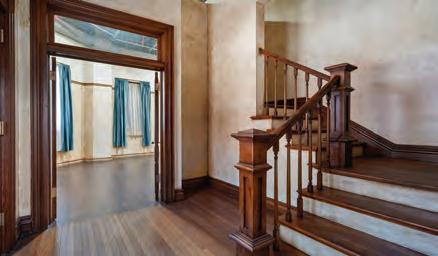

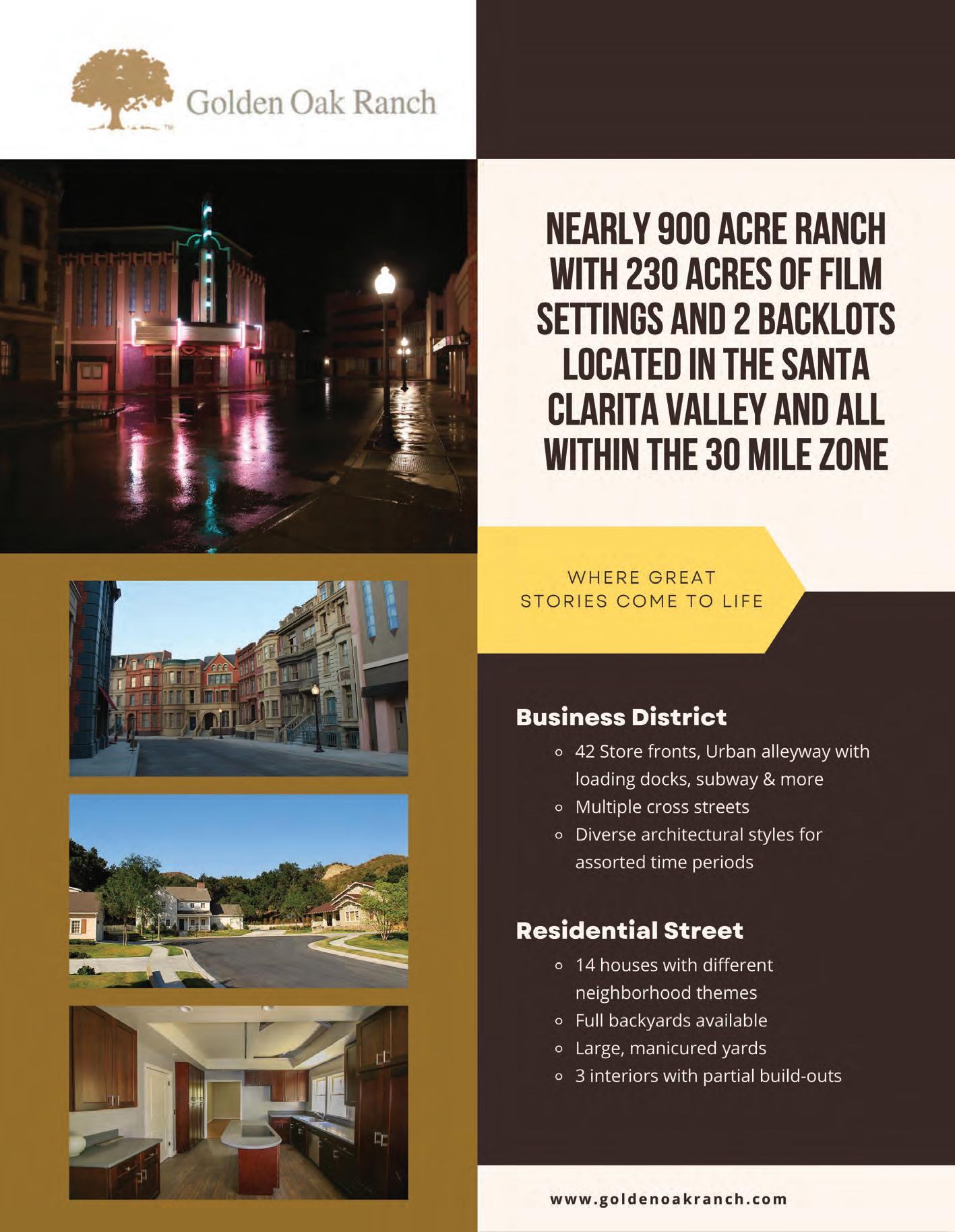
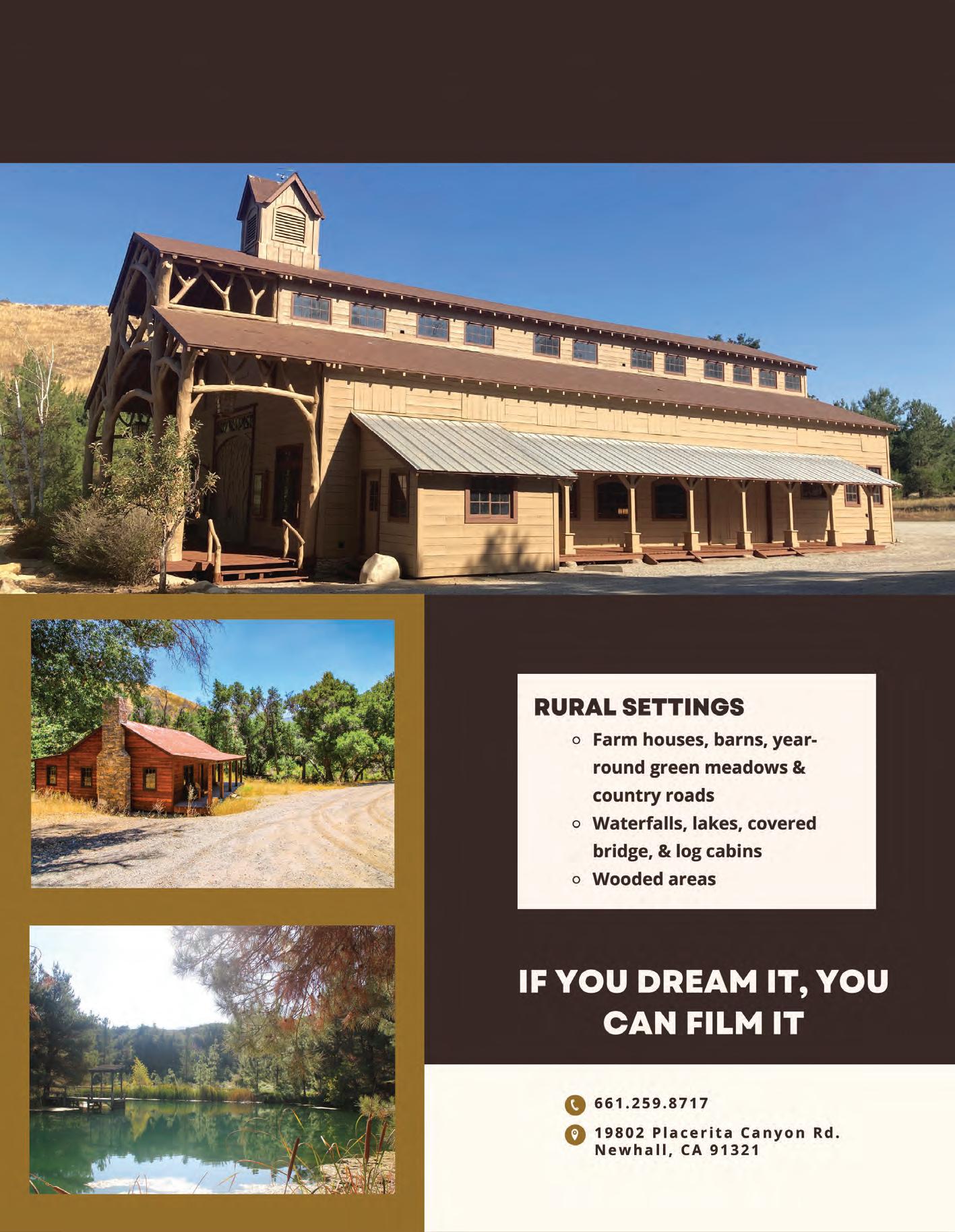
Our versatile backlottransforms into Anytown, USA, with authentic urban texture and cinematic depth. Additional lot locations offer distinct environments — from apartment buildings and tree-lined bungalows to deco-inspired corridors and industrial tech alleys.
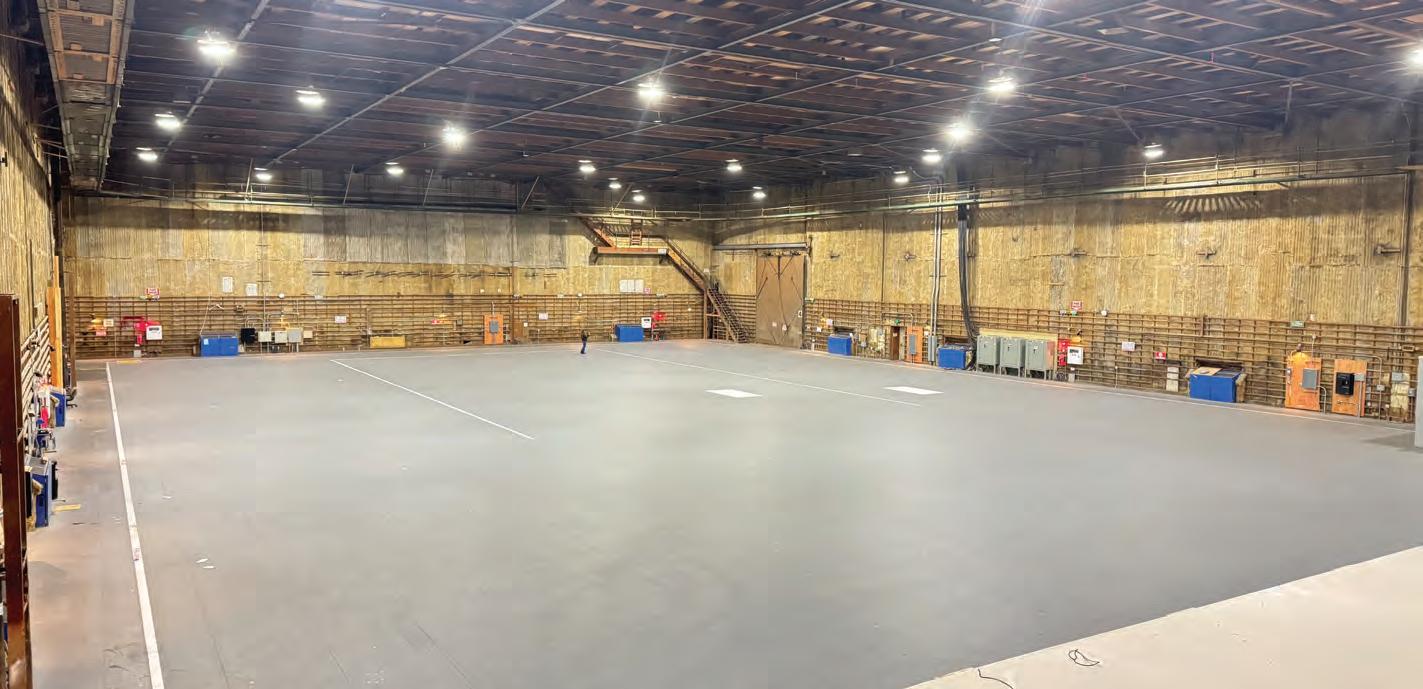
Move seamlessly from exterior to interior with multiple on-lot looksand historic large stages. Shift from street realism to fully controlled environments in minutes — not miles.
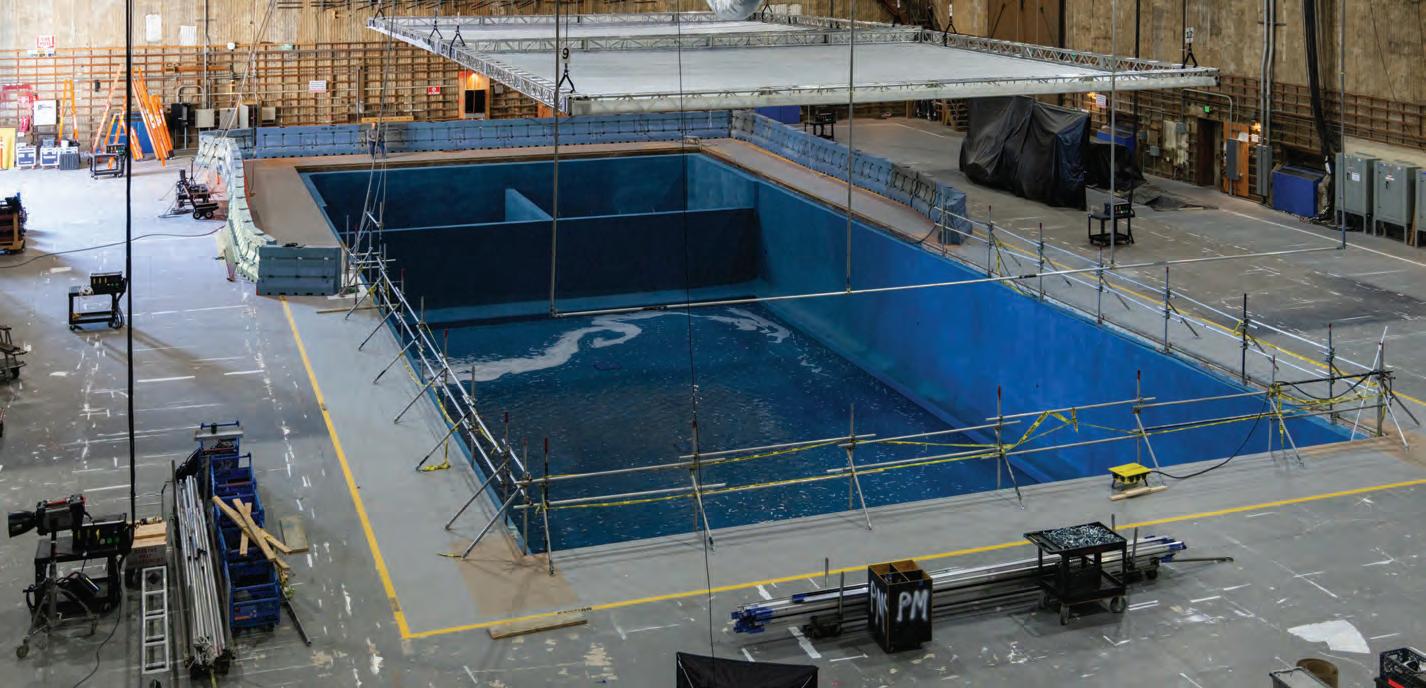
And when the story calls for water, our new multi-size tank complex — featuring three adjacent tanks — delivers scale, flexibility, and production control within a fully integrated studio environment.








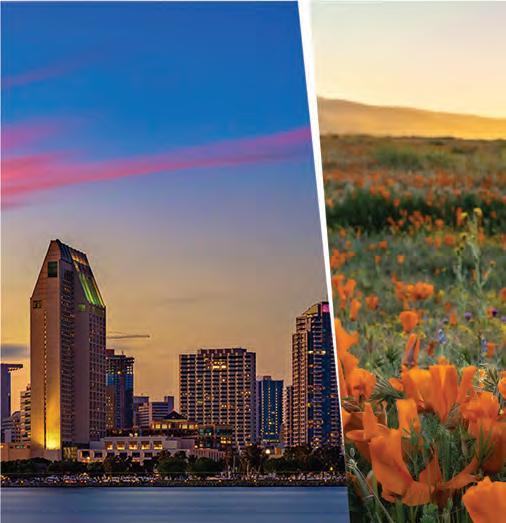
ICONIC LOCATIONS I CONIC LOCATIONS MINUTES MINUTES FROM HOLLYWOOD F ROM HOLLYWOOD FROM
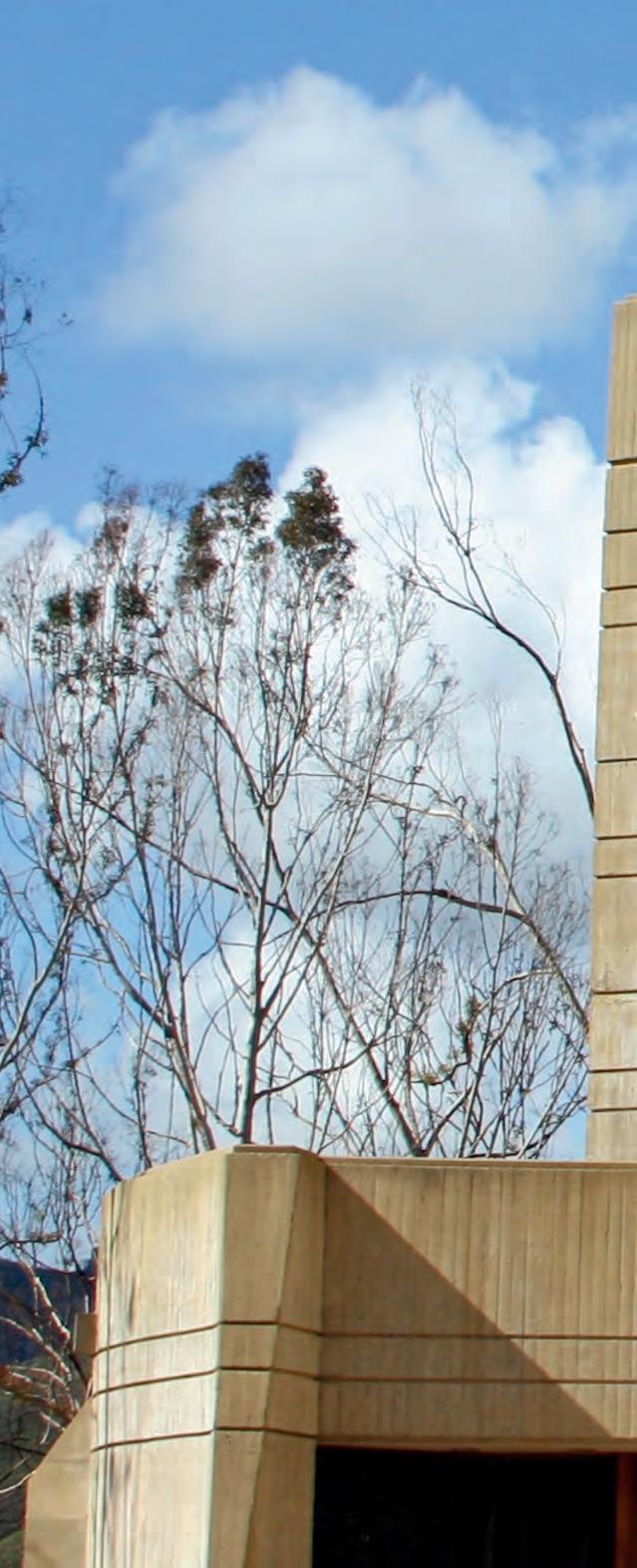
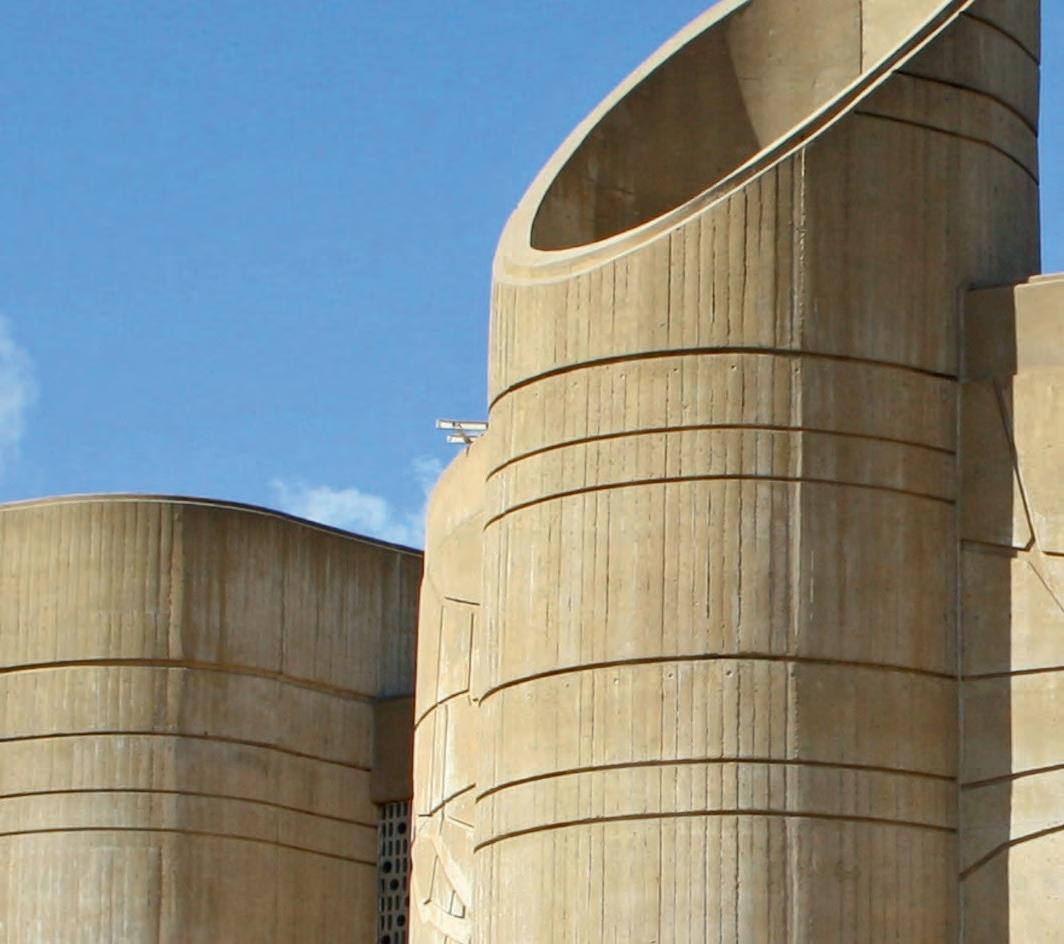
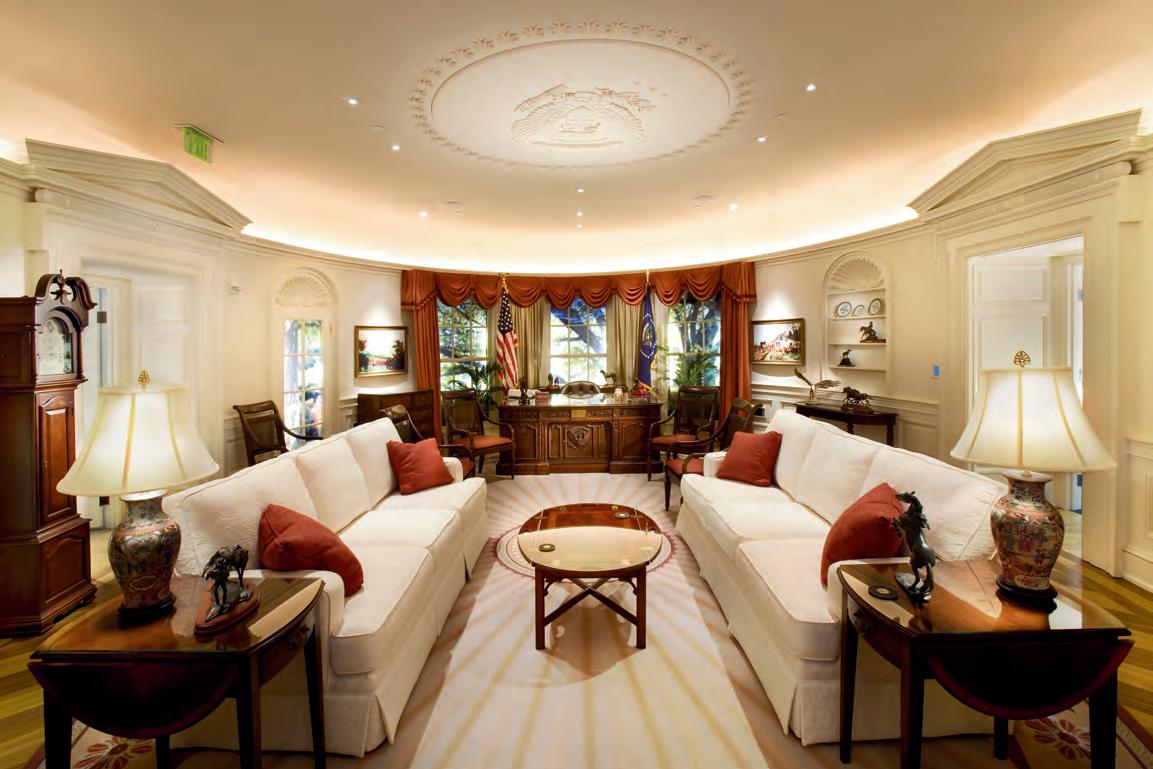
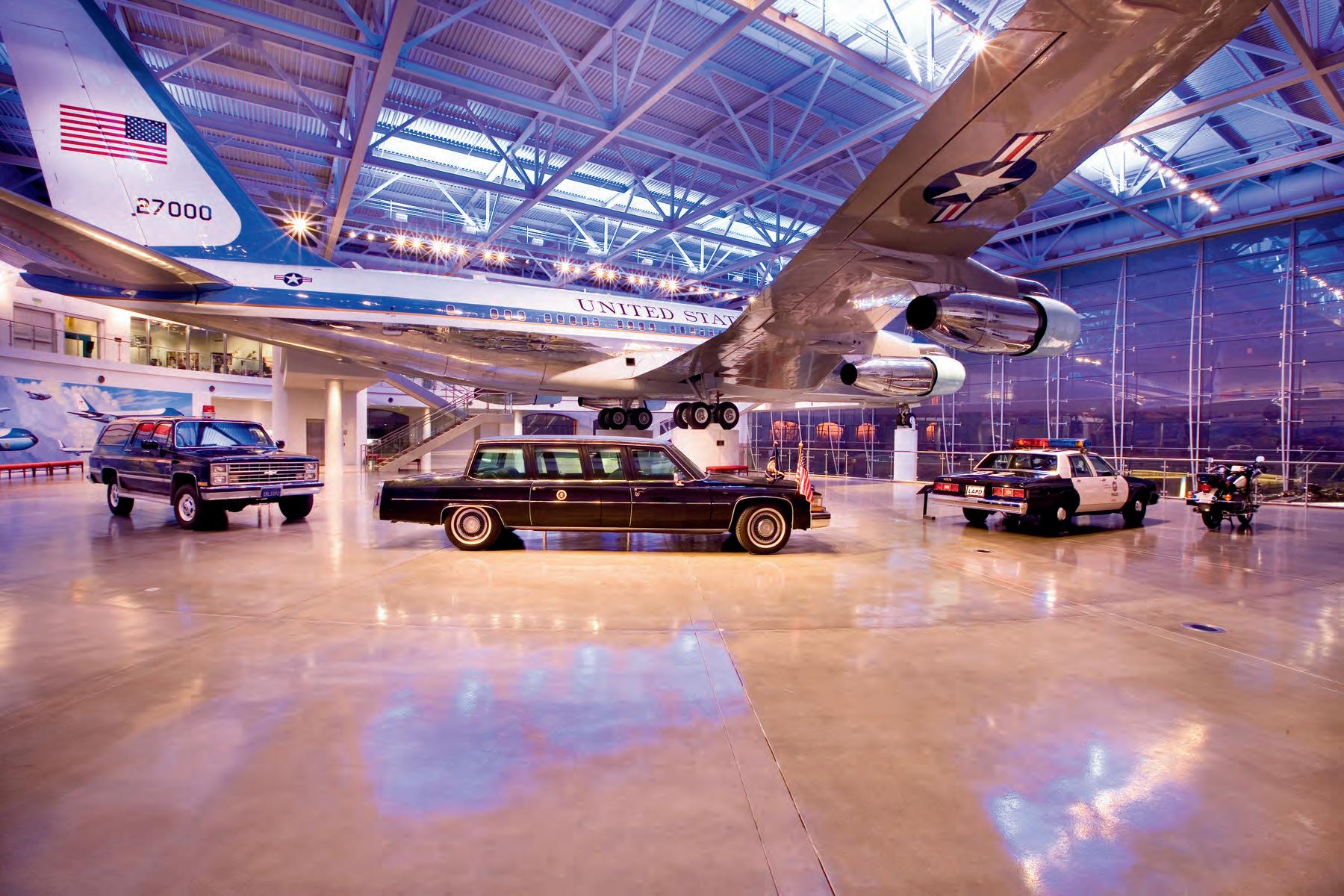
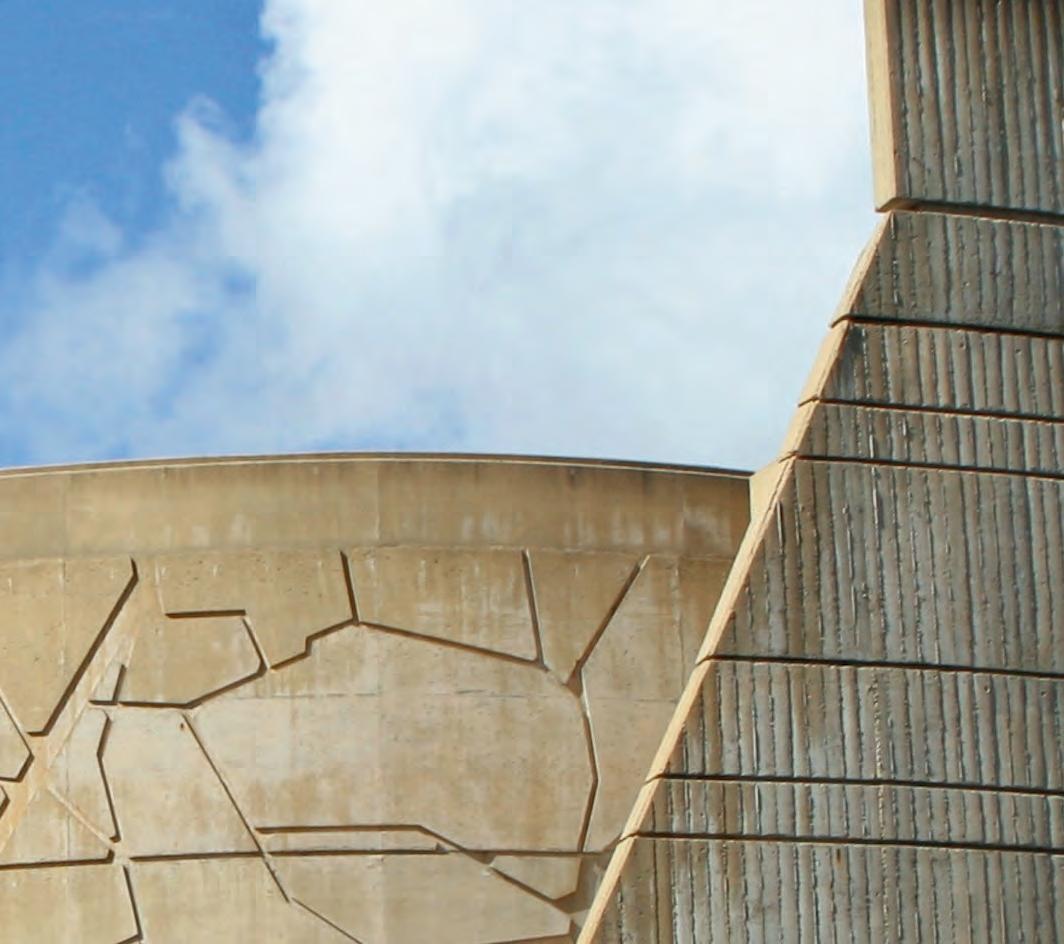
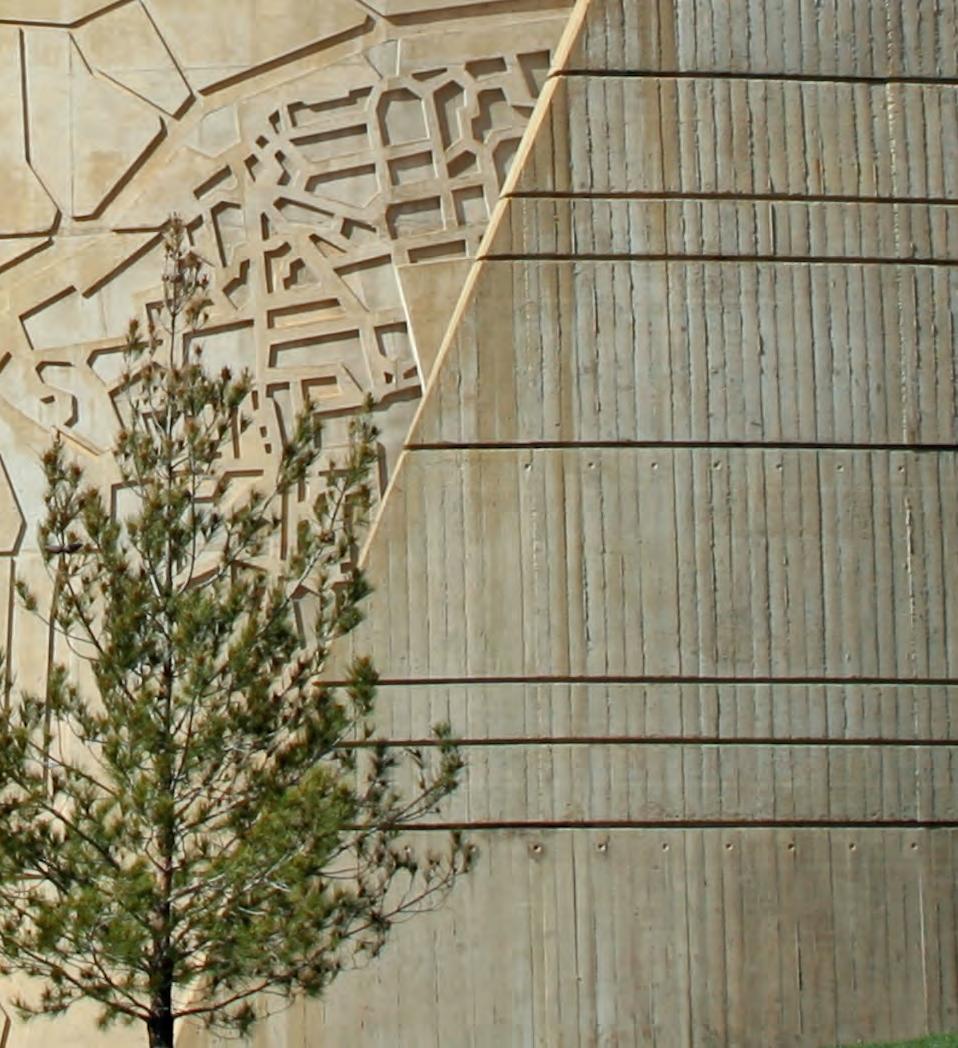
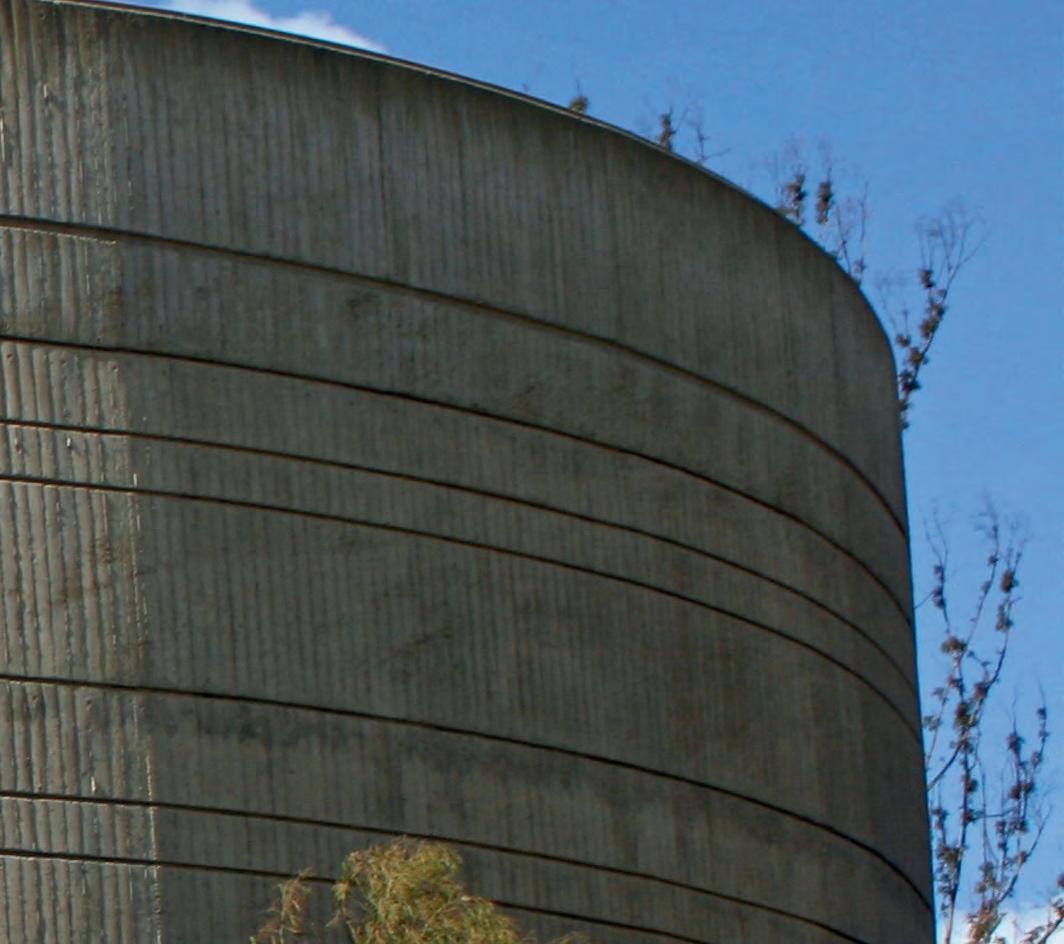
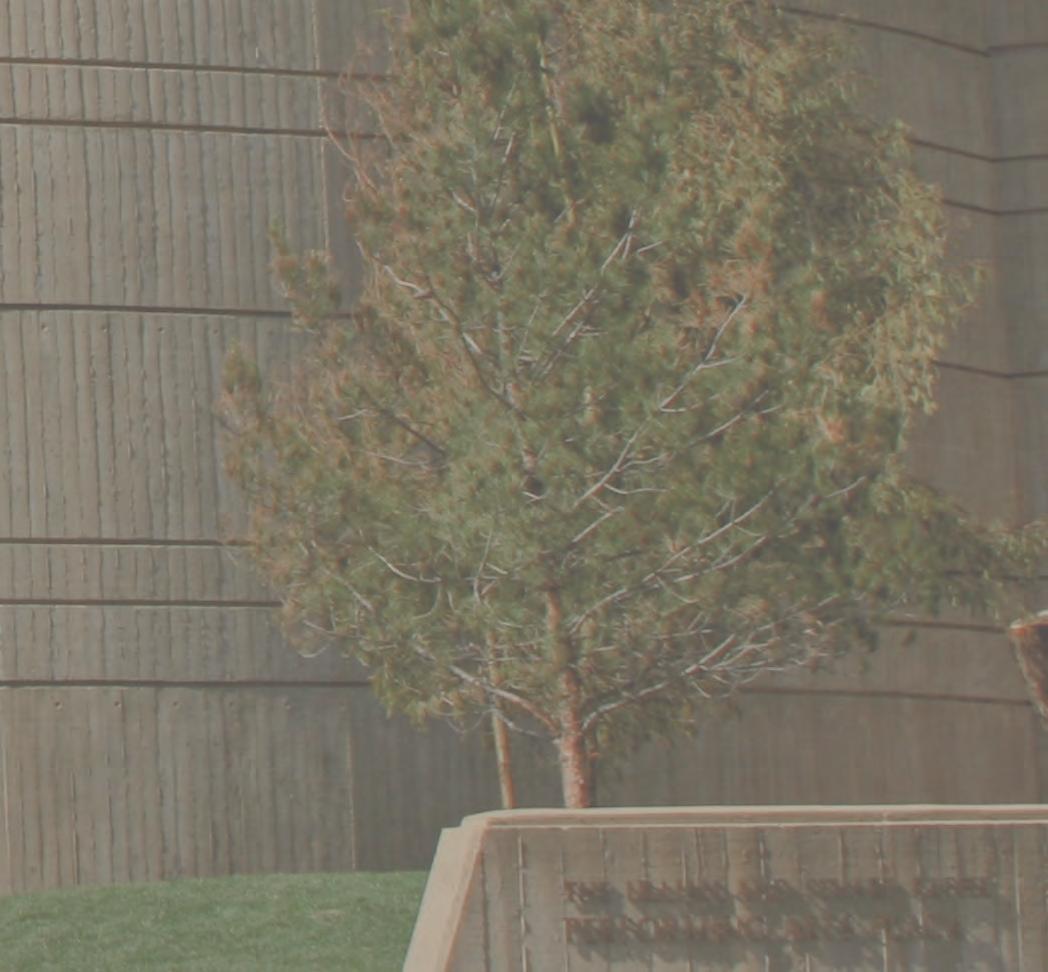
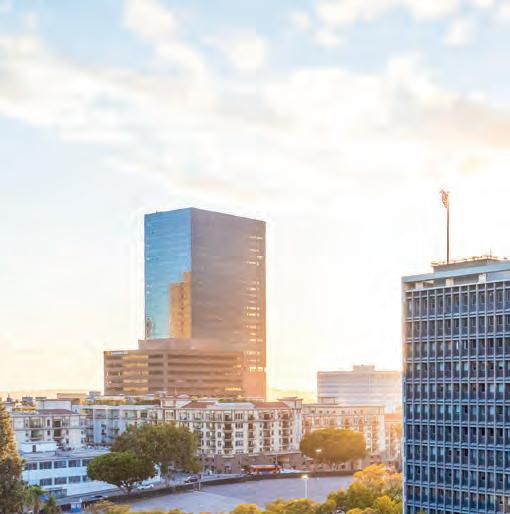
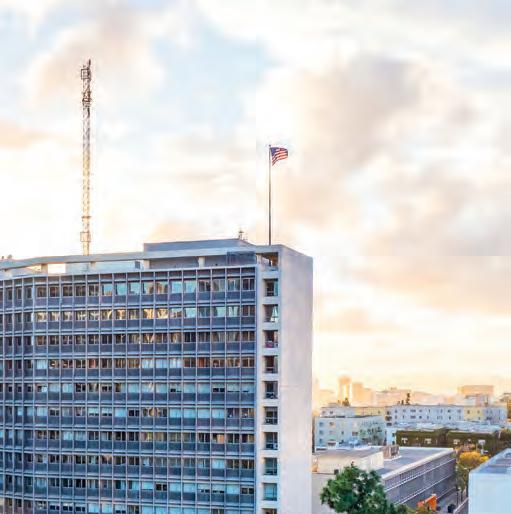
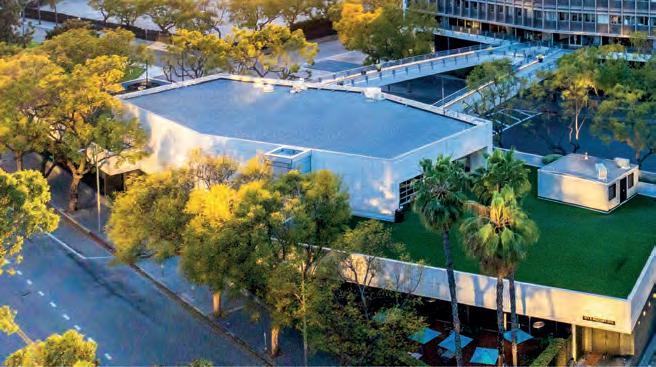
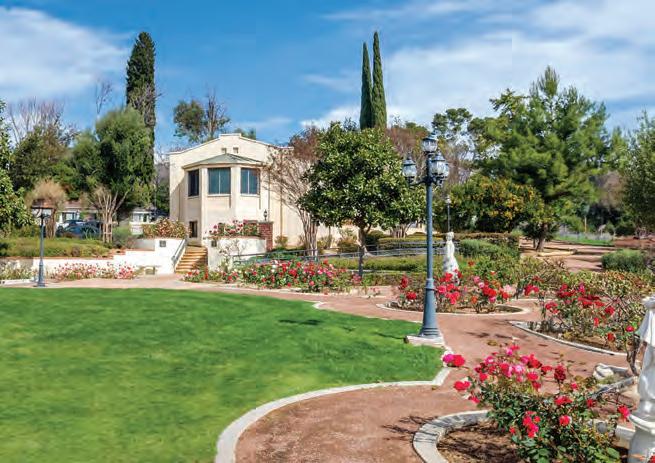
At its core is the Brandeis-Bardin Campus, home to the House of the Book—a striking Brutalist landmark set against sweeping canyon views, offering a truly one-of-a-kind cinematic backdrop. Also now open for filming, the Ronald Reagan Presidential Library featuring a full-scale Oval Office replica and the legendary Air Force One pavilion. With fast permit turnarounds—often issued in a day or less—Simi Valley’s Film Office ensures a streamlined experience from scout to shoot.
FILMSIMIVALLEY.com



SHOWCASING CALIFORNIA’S PRODUCTION INDUSTRY
Published by Boutique Editions Ltd in association with the California Film Commission. Additional copies are available on request from the California Film Commission. Requests may be sent via email: lmca@ lm.ca.gov


EDITOR Julian Newby
MANAGING EDITOR Debbie Lincoln
CONTRIBUTORS Clive Bull, Andy Fry
PUBLISHER Richard Woolley
PRODUCTION MANAGER Roger Hall
ART DIRECTOR Christian Zivojinovic www.zivographie.com

PUBLISHED BY Boutique Editions Ltd 117 Waterloo RoadLondon SE1 8UL - United Kingdom T: +44 20 7902 1942 www.boutiqueeditions.com


Published in association with Boutique Media International Ltd.
ADVERTISING SALES
INTERNATIONAL SALES DIRECTOR Jerry Odlin jodlin@boutiqueeditions.com
SALES DIRECTOR (NORTH AMERICA) Nicki Webber nwebber@boutiqueeditions.com

The paper used by Boutique Editions is a natural, recyclable product made from wood grown in sustainable forests. The manufacturing process conforms to the environmental regulations of the country of origin. Information in this publication is edited from submissions provided by individual lm commissions and organizations. Although all reasonable e orts have been made in compiling this information, Boutique Editions Ltd assumes no responsibility for accuracy. The publisher assumes no liability for unsolicited manuscripts, photographs and artwork.
Copyright ©2026 Boutique Editions Ltd. All rights reserved. Reproduction in whole or in part of any text, photograph or illustration without prior permission of Boutique Editions Ltd is strictly prohibited.


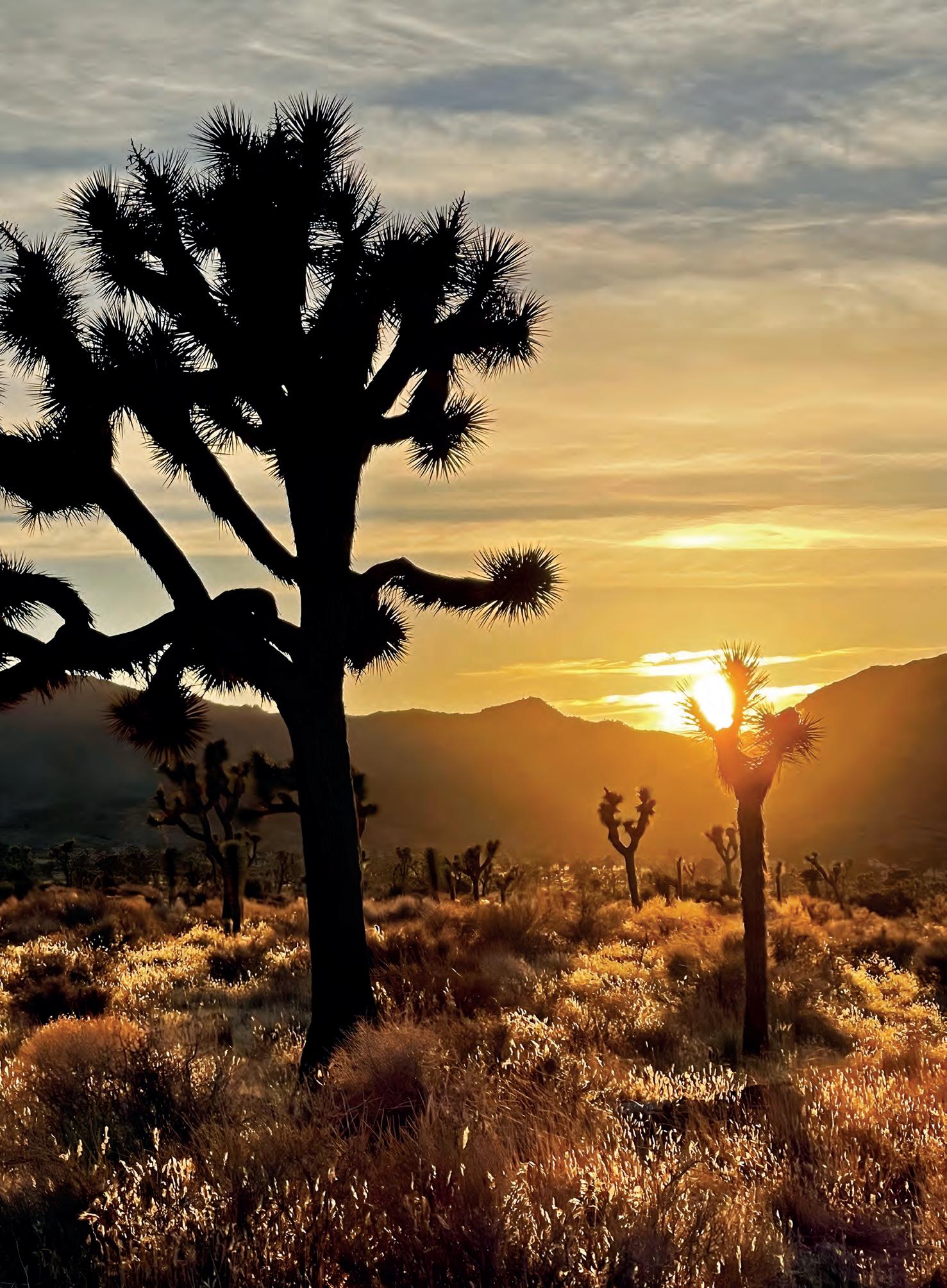





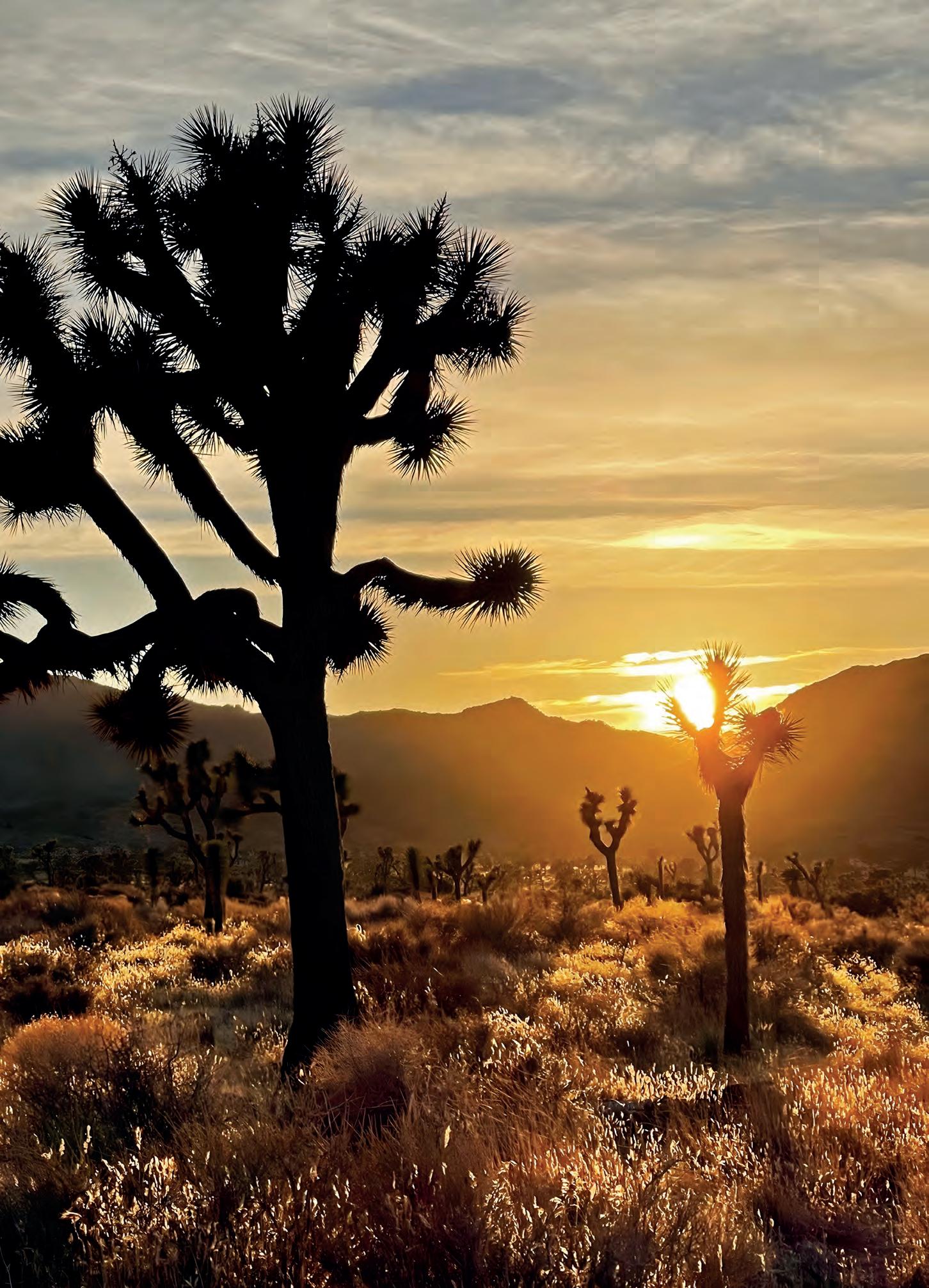
JOSHUA TREE NATIONAL PARK, RYAN CAMPGROUND
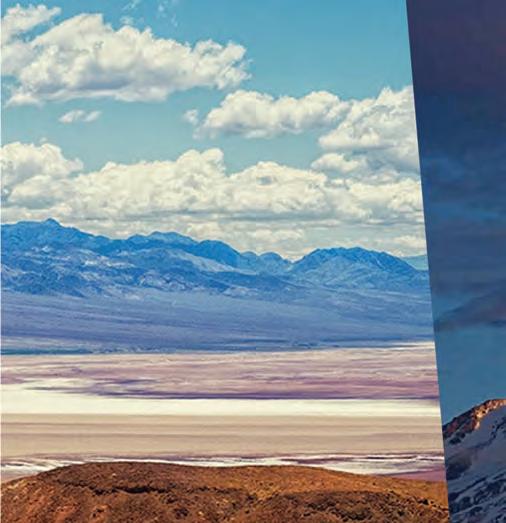
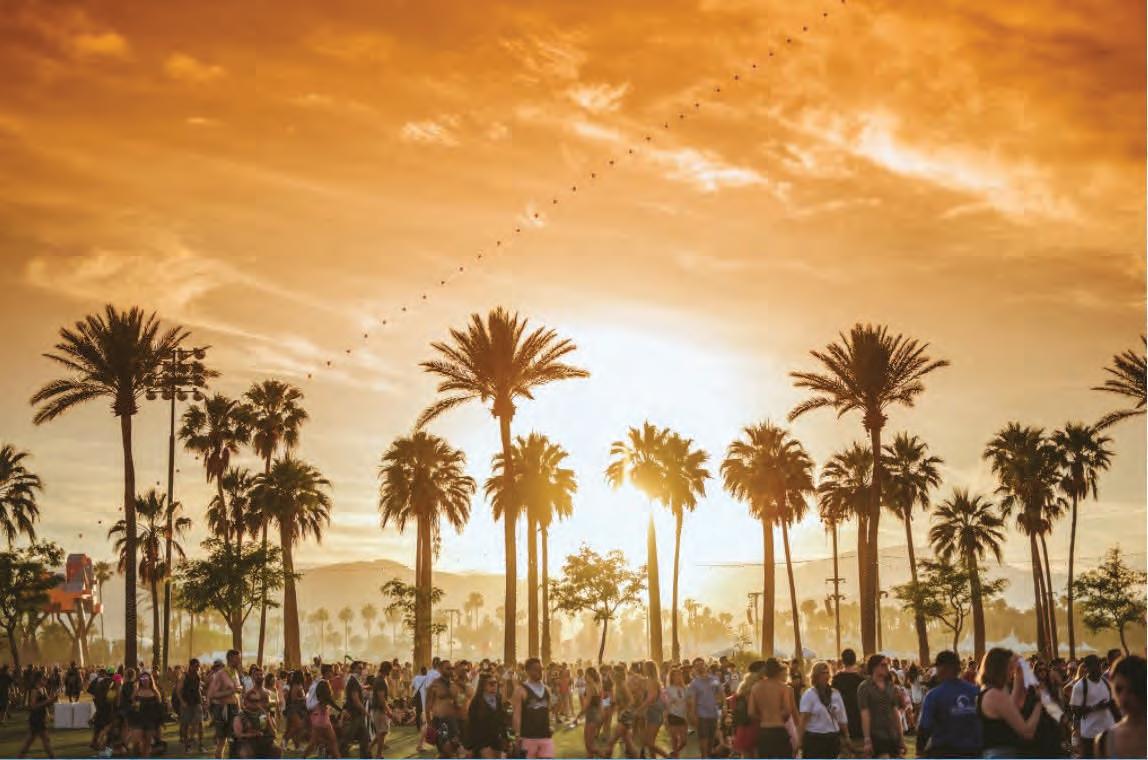
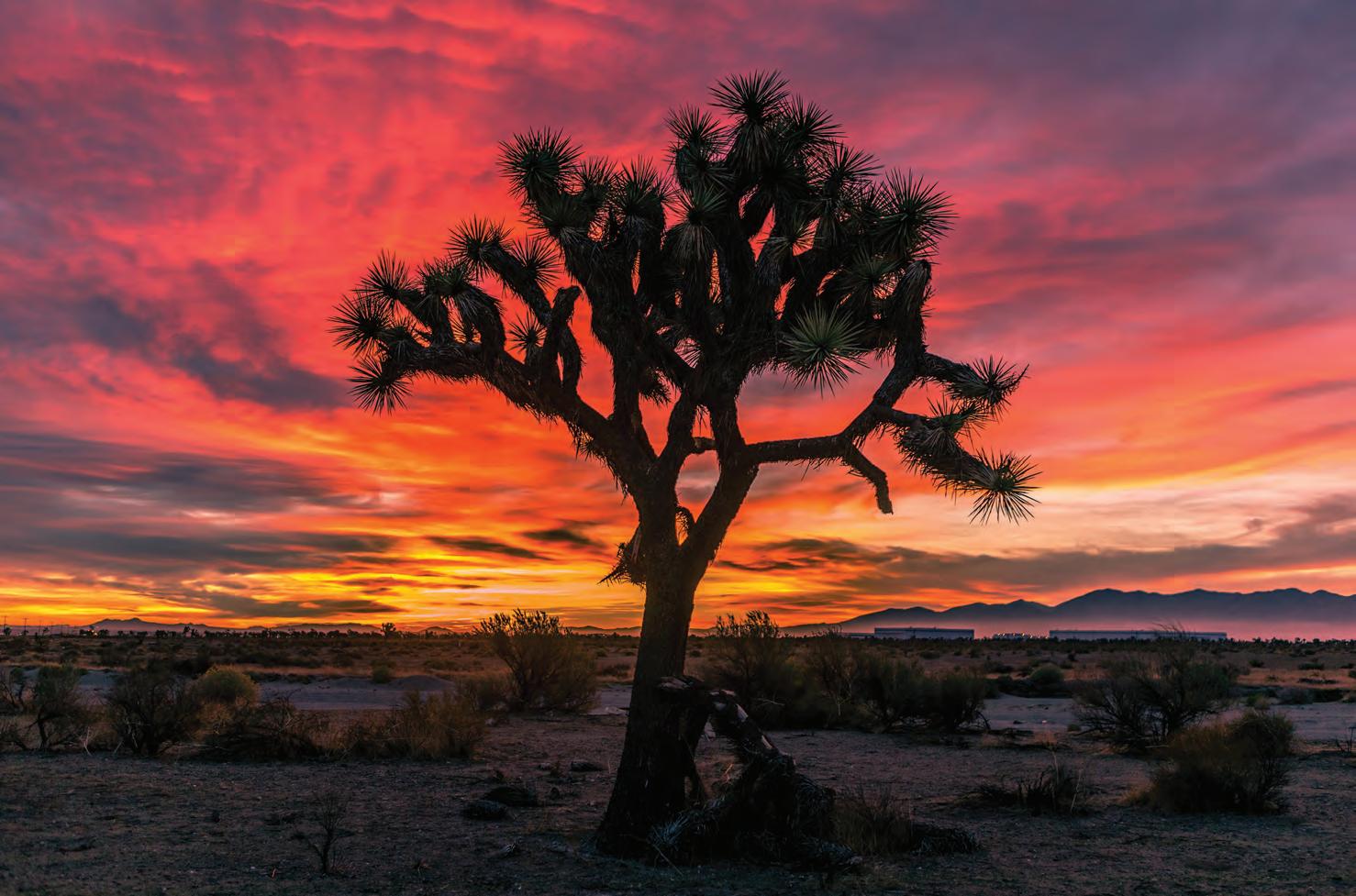
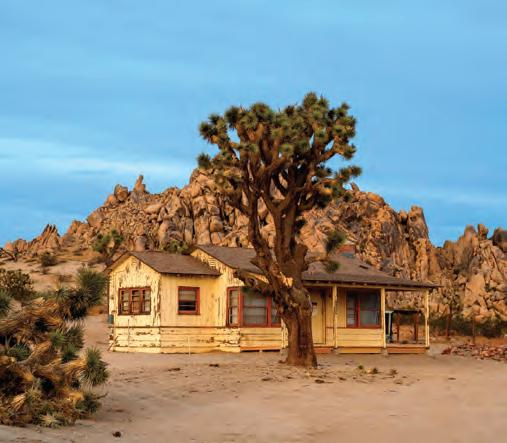
Joshua Tree National Park, which spans Riverside County and San Bernardino County, o ers visually captivating desert landscapes, expansive skies with impressively colorful sunsets. The density of Joshua trees and other desert plants, including yucca trees and cacti, combine with the desert boulders and rugged appearance of the terrain to provide surreal landscapes that are in nitely photogenic. Many lm and TV shoots have taken place in and around Joshua Tree National Park.



12 ONE BATTLE AFTER ANOTHER
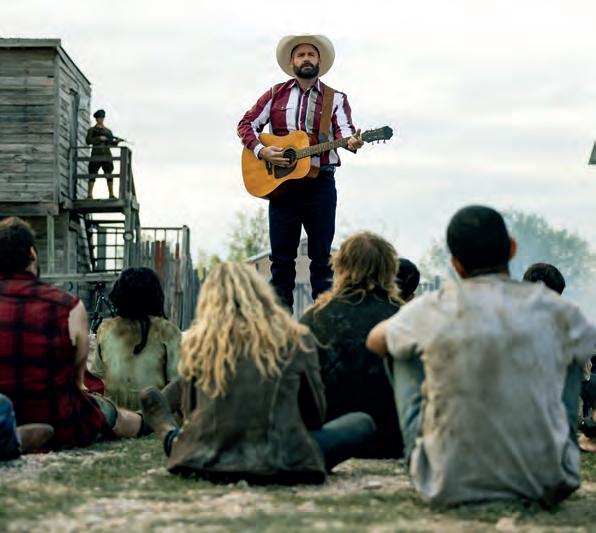
2026 Best Director Oscar winner Paul Thomas Anderson shot across some 25 locations in California for this highoctane blockbuster





20 TAX INCENTIVES In 2025 California unveiled Program 4.0, the fourth iteration of its Tax Incentive Program
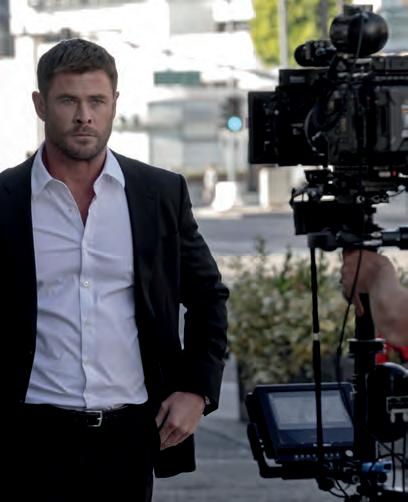
52 CRIME 101 Chris Hemsworth plays a jewel thief in this action movie shot in Los Angeles County

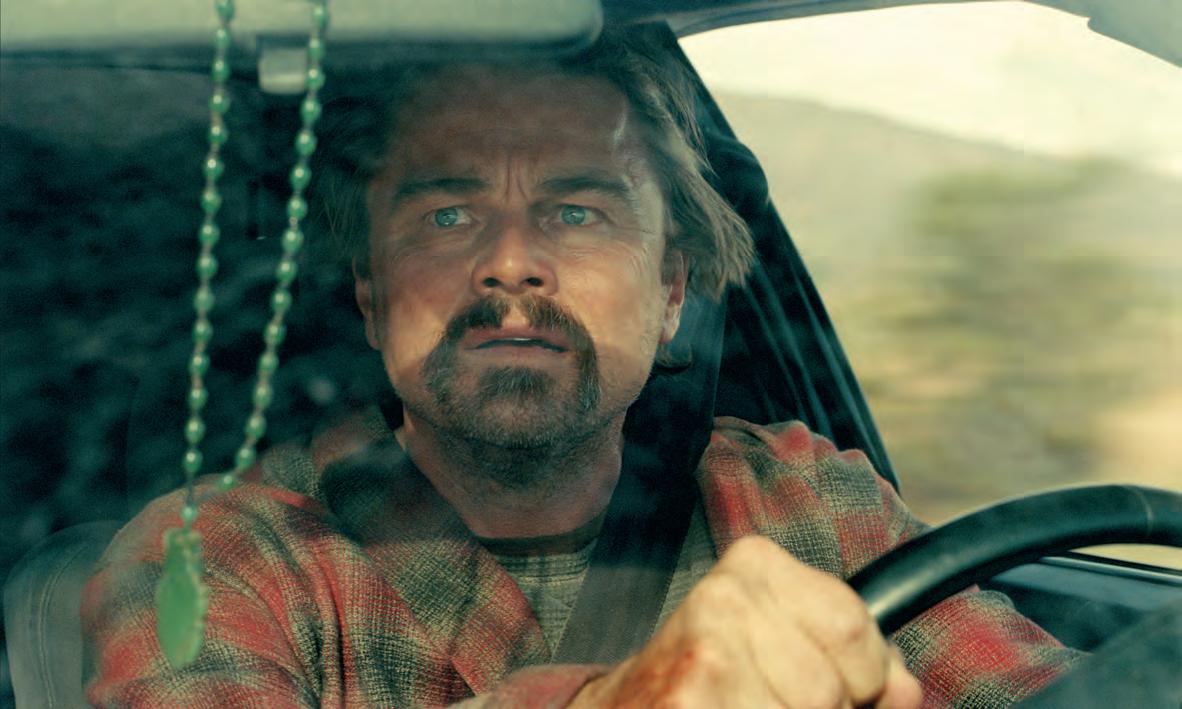
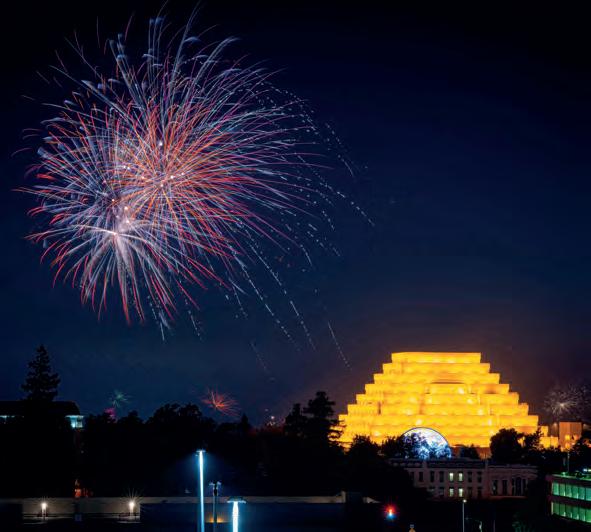
Location California finds optimism across the production industry in the Golden State
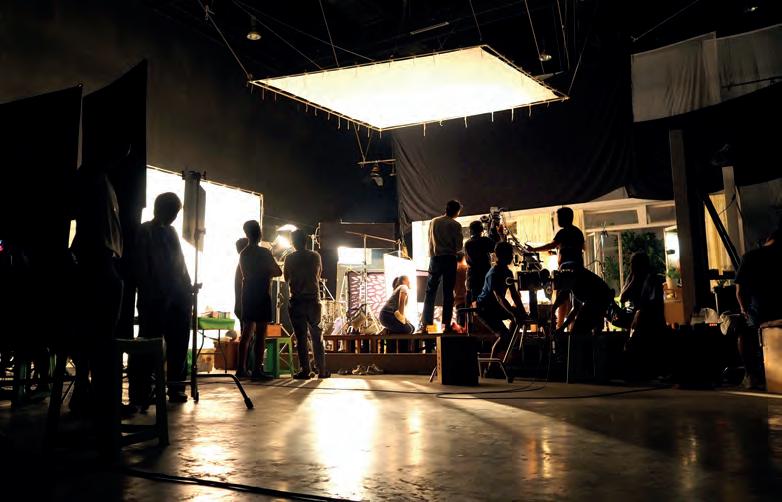
58 STUDIOS
The vast studio ecosystem in California is proving its resilience





76
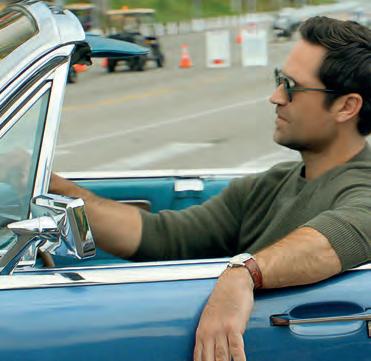
THE LINCOLN LAWYER
The latest series based on crime writer Michael Connelly's novels — like all the others — had to be filmed in Los Angeles
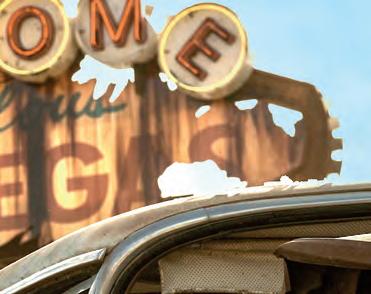
68 RANCHES
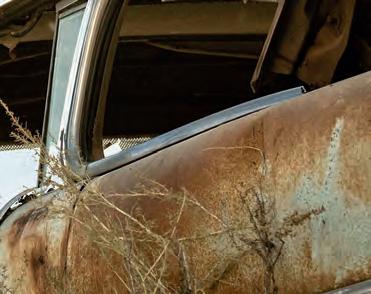
The impressive network of California's movie ranches offers an array of working landscapes and facilities

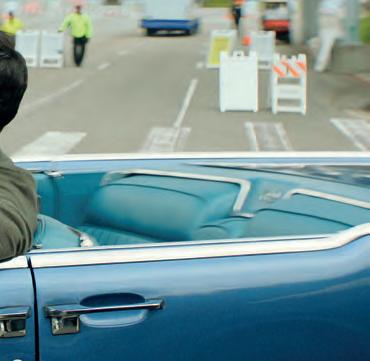

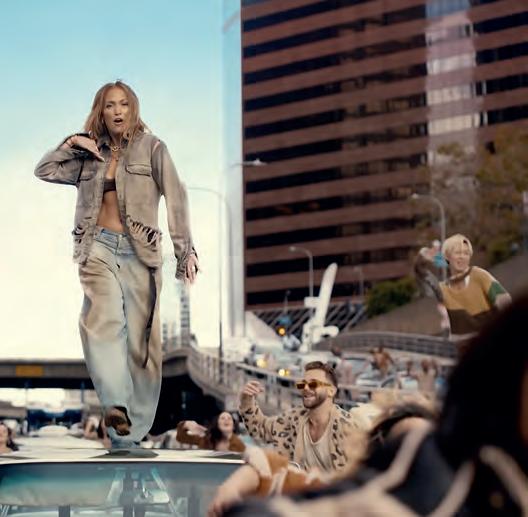
78 COMMERCIALS
California is still a go-to destination for shooting highimpact commercials

84
LOCATION IN PICTURES
A visual tour of a selection of California's stunning locations




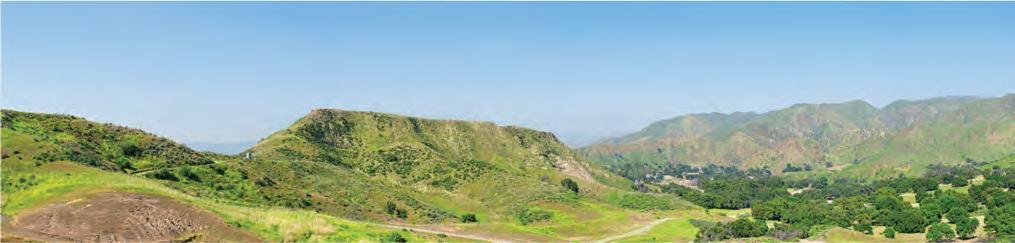

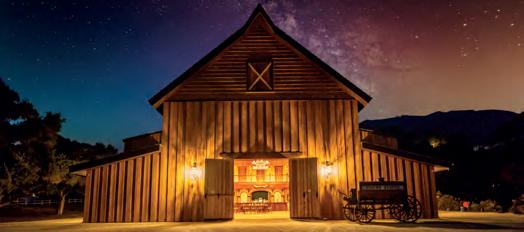


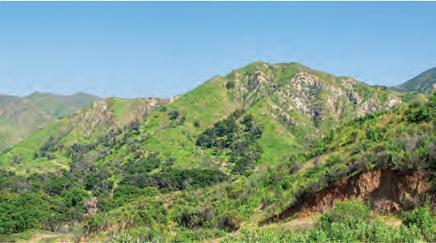
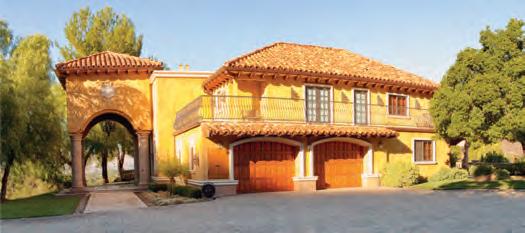
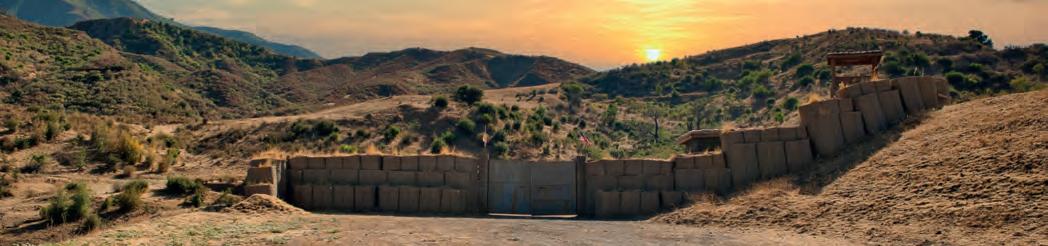
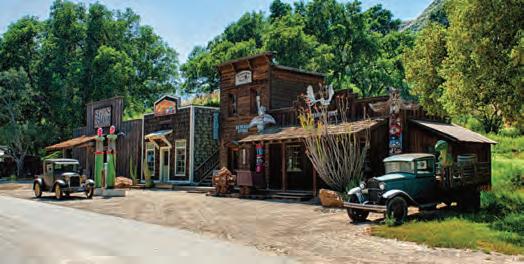

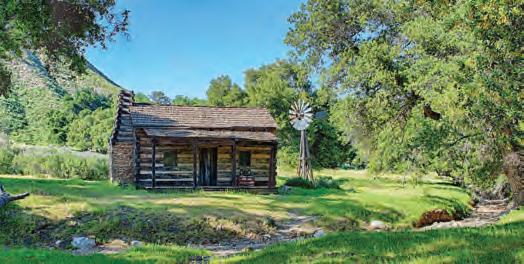
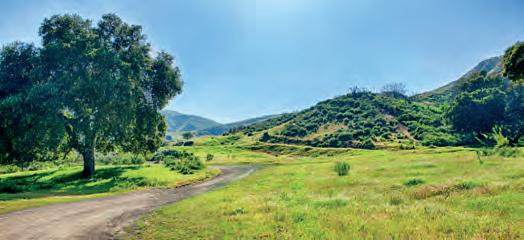
LocatedintheSantaClaritaflmingcommunityofLosAngeles,CA.,RanchoDeluxeisapremiermovieranch locationwithover200acresofpropertynestledinthemountainsofPlaceritaCanyonnearMelodyRanch, SableRanch,andDisney'sGoldenOakstudios.
Withitswidevarietyofnaturalexteriorsandfullyfunctionalinteriorsets,RanchoDeluxeisusedprimarilyas astudioflminglocationforfeatureflms,televisionseries,realityshows,photoshoots,andcommercials,and itislocatedwithinthe30-milestudiozoneofHollywood.
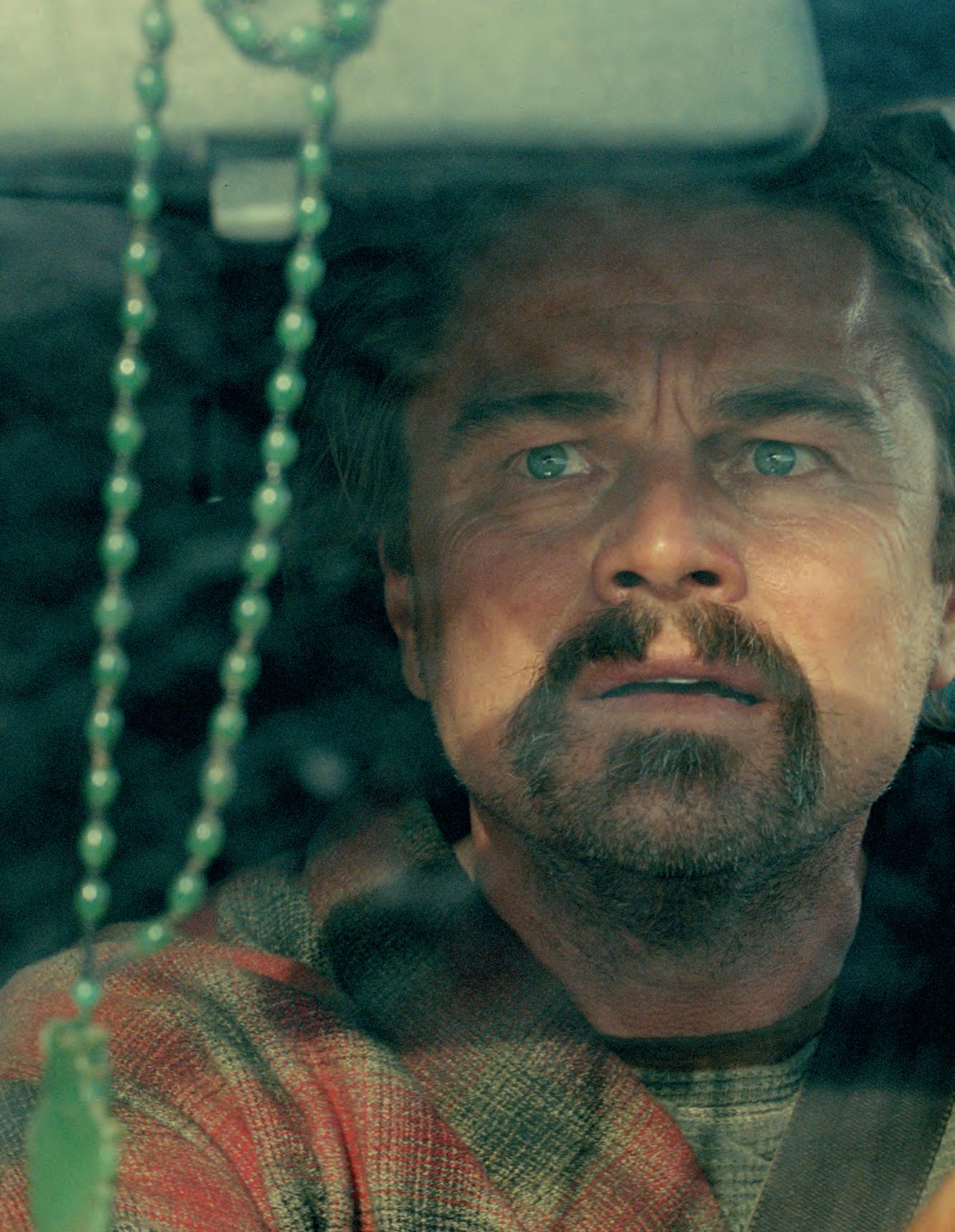
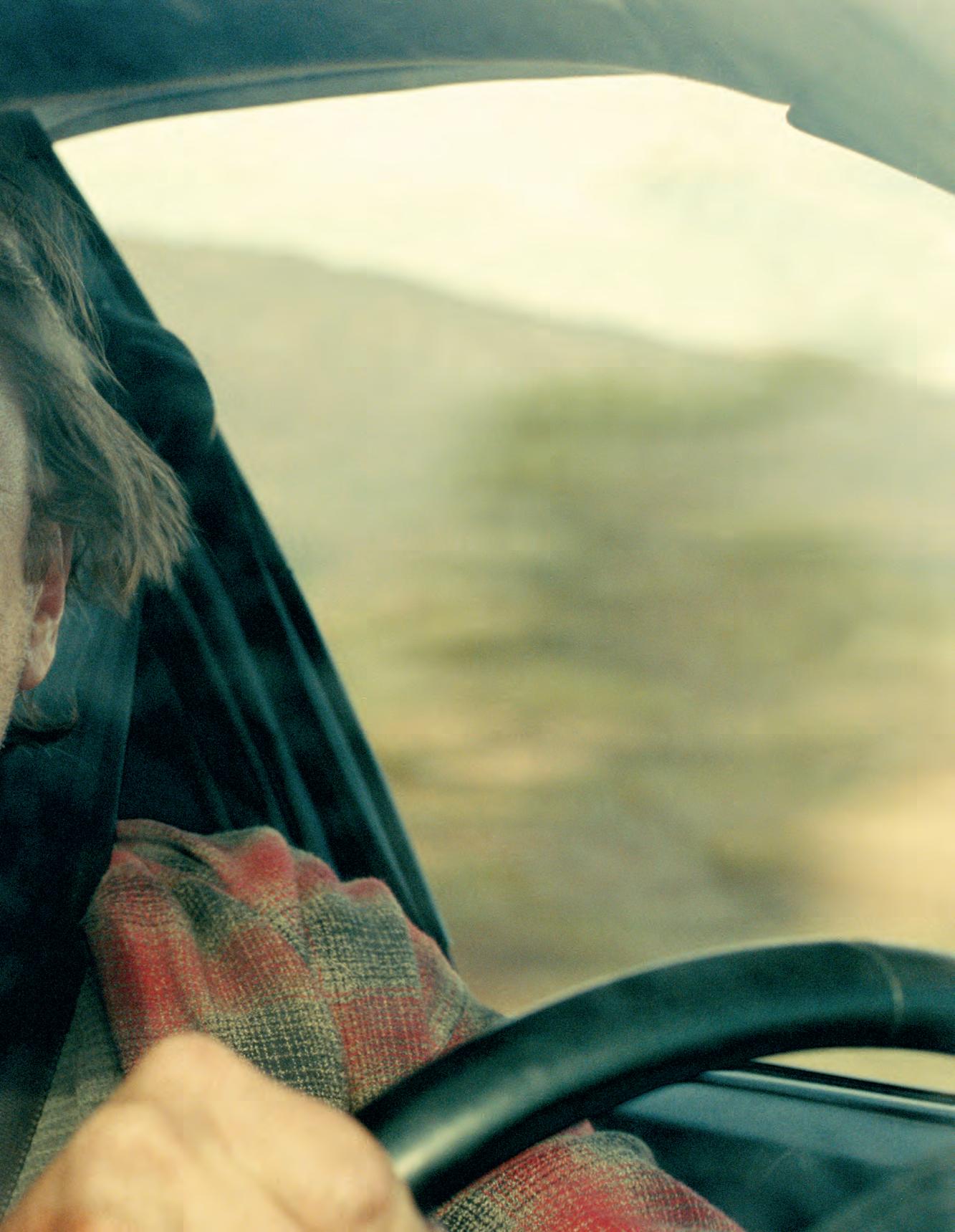

With no expense spared, One Battle After Another visited everywhere it needed to go to in order to tell its fast-moving, action-packed story. It shot in some 25 locations across California and dipped into Texas for some of the scenes. Julian Newby and a number of behind-the-scenes players discuss some of the key scenes in the movie








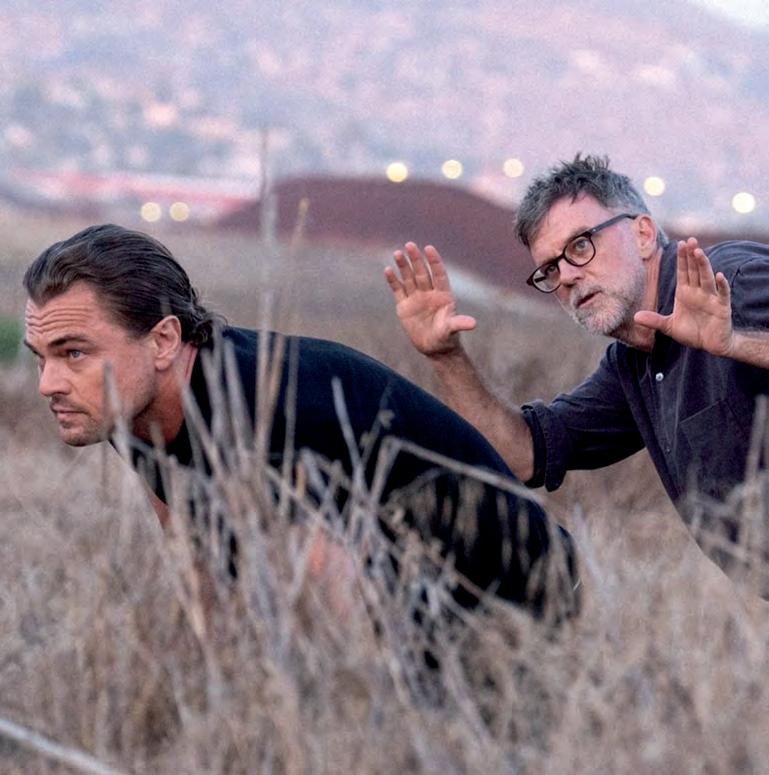
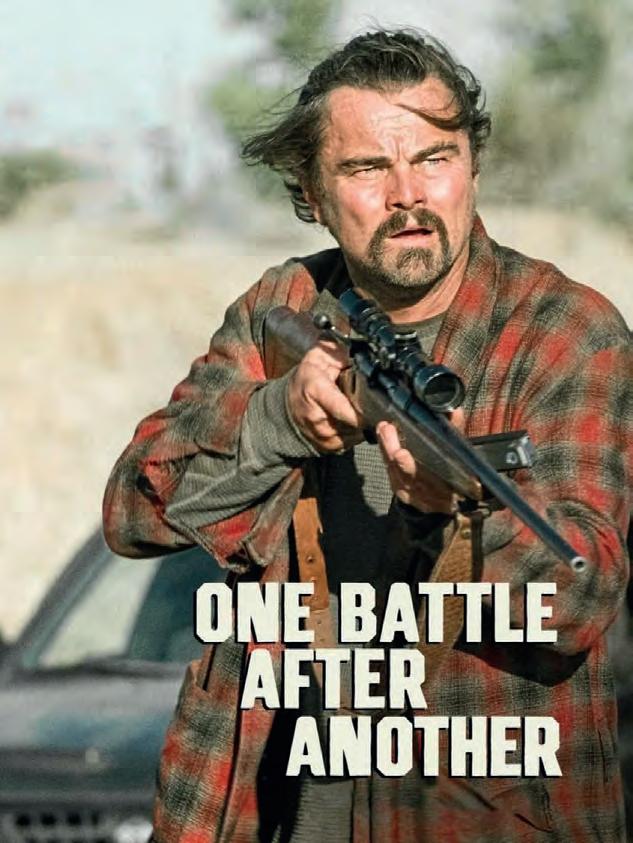
IT WON over the critics; it won over the Academy. It didn't immediately make its money back, but six Oscars should change that. One of the reasons that payback will take some time is that an A-list cast and a massive crew — all of them always on the move, always on location — costs money. But Best Director Oscar winner for 2026, Paul Thomas Anderson, knew it was worth it.
The story of One Battle After Another is inspired by Thomas Pynchon’s Vineland, a novel set in Reagan-era 1980s California that follows a washedup former hippie, Zoyd Wheeler, living in a fctionalized version of Humboldt County — described in the book as “a zone of blessed anarchy”, the last refuge of hippiedom — as he navigates the aftershocks of the 1960s counterculture. The novel centers on his daughter Prairie’s search for her absent mother and through this troubled family story, Pynchon explores how the idealism of the 1960s was ultimately neutralized by state power. In One Battle After Another, Wheeler’s character is represented by Bob Ferguson, played by Leonardo DiCaprio, and Prairie is replaced by Willa, played by Chase Infniti.
“Paul Thomas Anderson knew from the outset that he wanted to come to Humboldt,” Cassandra Hesseltine, flm commissioner for Humboldt-Del Norte County, says. “Since the movie is loosely based on Vineland it was a no brainer. It made sense this is where Bob would live as he raised Willa. They needed a home and community where he could hide out to raise his daughter.”
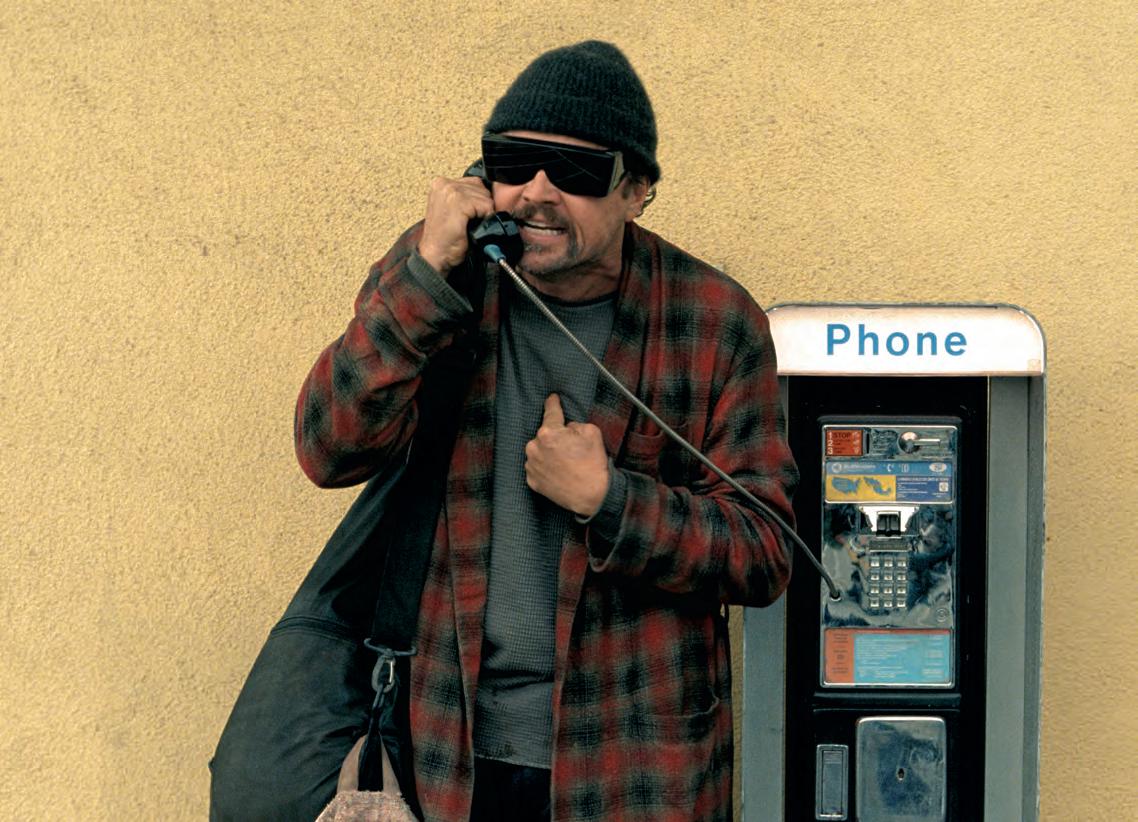
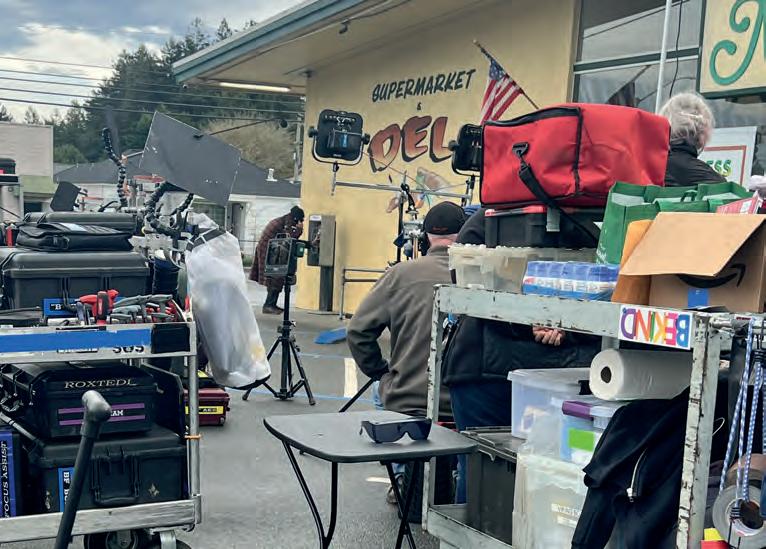
A memorable scene in the flm takes place as Ferguson is desperate to speak to one of his past contacts in the fctional militant group The French 75, after his home is raided and his daughter Willa has gone missing. He fnds a payphone but is frustrated because in his disoriented state he can’t remember the security passwords he needs to continue the conversation. The mundane setting for the scene simply serves to heighten his frustration. It was shot at Murphy’s Market in Cutten, a community within Greater Eureka in Humboldt County. The payphone was added to the storefront specifcally for the flm.
“The production was going to be in the public eye way more than most of the shoots that have flmed in the past decade or two,” Hesseltine says. “Public roads, a grocery store — yes for the iconic payphone scene — and a high school, to name a few.
"A lot of our productions flm in the redwoods and aren't as easy to spot. But this flm meant closing on-ramps, holding a prom and police
chase scenes in the middle of town. In a rural area, we just don't see this as much, so getting everyday individuals to understand why their kid's bus stop was moved, for example, was quite new to us,” she adds. “But everyone did great. And I attribute that to the proper steps we took in getting the buy-in from ofcials as well as then informing the public to the best of our ability.”
His determination to flm in Humboldt illustrates both Anderson’s truth to script and story, as well as his understanding of where locations sit in the storytelling process. But there are also many examples of how many of the featured locations appear unexpectedly in the narrative.
Anderson and supervising location manager Michael Glaser traveled further south to San Diego at one point
Guy Langman
‘They ended up having the opening sequence and a chase near the end SHOT HERE IN SAN DIEGO’
during the flm’s development stage, in search of some of the historic adobe structures in the area that would be right for a sequence in the middle of the flm. “While scouting for that [a scene which was eventually flmed in another part of California] Glaser and Anderson spent time locally and were excited to fnd we had a lot more in terms of diverse locations than they had realized,” San Diego Film and Event Liaison Guy Langman says.
“They ended up having the opening sequence, a sequence in the middle of the flm, and a chase near the end, shot here in San Diego.”
As is with any large-scale shoot, “many last-minute requests and changes came down the pipe”, Langman says.
“The director and producer would spend time exploring the city after flming hours and would have a fresh set of locations they wanted to shoot nearly every day. We saw that as testament to our city’s amazing people, culture and overall vibe as it made them want to highlight San Diego even more in the flm.” He adds: “Watching over 400 extras set up for the big opening sequence, we saw this small out-of-the-way dusty overpass and dirt road get turned into a mini flm studio overnight. Funnily enough this all
One Battle After Another, directed by Paul Thomas Anderson, flmed on the soundstages of LA North Studios with support from the California Film & Television Tax Credit Program. When productions stay in California, crews work, stages thrive, and the future of flmmaking continues where it all began.
happened as one of our city’s biggest annual events, Comic-Con, was taking place.”
California’s capital city Sacramento also played a key role in the movie — not as Sacramento, but as ‘anywhere USA’ and a city where bad things happen. Big car chases and a bank robbery were key action sequences that shot there, and Sacramento-based location scout Tyler Semons says that while it is generally used to rather lower-key productions, the city and its people held-up well.
“Sacramento has never had a
production of this scale shooting in the city — not only were there hundreds of crew members to account for, but the scale of what we wanted to accomplish was massive. Huge car chases in the heart of downtown, blowing up a building on one of the busiest streets in the city, flming with helicopters, simulated gunfre, working in conjunction with public transportation — these things had mostly been done before individually, but never to this degree simultaneously,” Semons says. “We were very fortunate to have the support of the flm ofce [Sacramento
Tyler Semons ‘The whole neighborhood came out to watch. They brought their kids out, THEY CRACKED OPEN DRINKS…’
Film + Media], and coupled with our constant communication with city ofcials, we were able to pull all of it of without any signifcant hiccups.”
The former Sacramento home of Ronald and Nancy Reagan was a key location for the flm, serving as the headquarters for bad-guy organization, the Christmas Adventurers Club.
The Tudor-style home, located in Sacramento’s Fab 40s neighborhood, was chosen for its atmosphere, history and ability to add layers of realism and mystery to the Reagan-era story.
“We were shooting interiors and exteriors of the Reagan mansion,” Semons says. “We had a portion of the street intermittently closed down with a big crane in the middle of the road as a cool classic car pulled into the driveway. The whole neighborhood came out to watch the process, and everyone was super into it. They brought their kids out, they cracked
open drinks — no one was irritated about being inconvenienced, they were just happy to be a part of it in a small way. Whenever you get that sort of energy from the public, it’s a really good feeling.”
Semons has one memory from the flm’s visit to Sacramento that reveals Anderson’s attention to detail and how he relates to the people and places he visits as a flmmaker. “There’s a really great little jazz club in downtown called The Torch Club. It’s one of my favorites and one that I’ve been frequenting for many years, and I have a friendly relationship with the owner and staf,” he says. “We shot a very brief scene inside of it that required a slimmed-down crew. Once everyone got settled, I wasn’t much more than a fy on the wall, and I got to observe the owner have a long, friendly conversation with Paul Thomas Anderson. It was such a trip — the meeting of these two worlds, watching this sweet older woman who I’ve known for a long time, have a casual conversation with one of the greatest directors of all time, just as if he were another customer. It’s a small memory that I’ll cherish forever.”
Individual cities and flm ofces were crucial to the smooth-running of this very complex production. But a flm that’s on-location and on-the-move all of the time, requires a supervising location manager who’s across the
Michael Glaser
‘If you come up over those hills and you've stopped trafc on the other side, SOMEONE’S GOING TO SLAM INTO THE BACK’
whole thing. That’s where Michael Glaser comes in.
There are stories that say that the gestation period for One Battle After Another — for Anderson at least — was 10 years; others say up to 20 years. For Glaser it was three, maybe four, and his frst key contact in the process was production designer Florencia Martin.
“I think it was April or March 2022 when I saw Paul at an event and he was kind of surprised I hadn't heard about this, as Florencia and others were now getting started on how they were going to make this flm,” Glaser tells Location California.
“When they all got back to Los Angeles, I was on another flm at the time, and I got a call and Florencia started sending me all these ideas. There wasn't even a script that we were looking at. It was more of a very vague outline of worlds that we were trying to fnd and build for these characters.
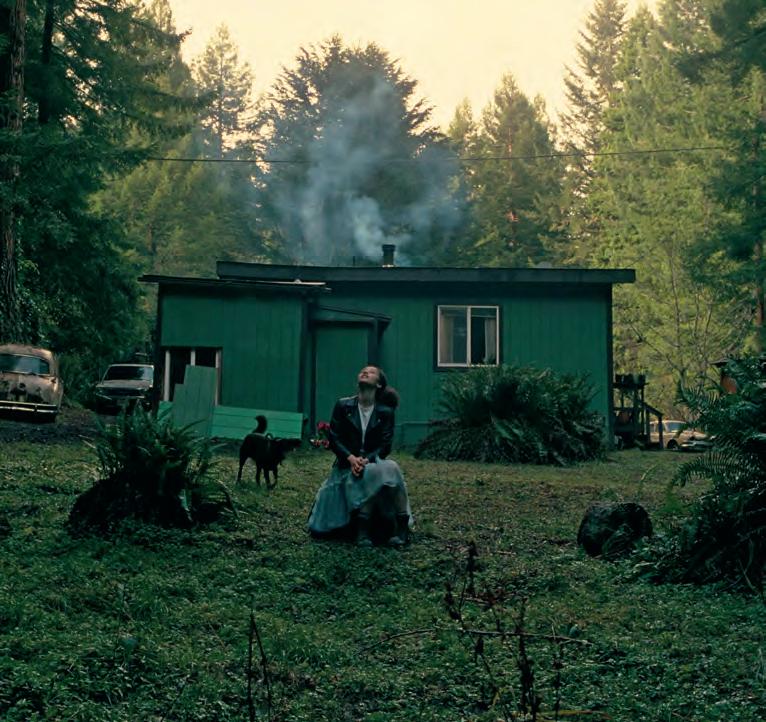
She was giving me short kind of biographies of, you know, who Willa was [Chase Infniti], who Lockjaw was [Sean Penn], where they live, where their layers are… so that's where it started. And it organically picked up steam until we started flming in late January, early February of 2024.”
Location-wise there was a lot of making it up as you go along, as far as Anderson was concerned. One place where this crazy road movie does settle down for a few moments is at the house that serves as Bob’s of-thegrid hideout while he is on the run with Willa. The house that was initially chosen for those scenes is an existing structure — a cabin in Kneeland, situated about 10 miles east of the coastal city of Eureka in Humboldt County. Kneeland plays the fctional town of Baktan Cross, which is a mix of Northern California's redwood forests and border towns like El Paso.
“But we actually used our second choice of house,” Glaser says. “Paul had taken Leo, Chase and Florencia up to kind of walk through the sets and when they walked through the frst set, something wasn't right. So, we ended up picking the second one and we didn't really do a lot in the way of the bones of the house, with the exception of Willa's room. It was hard to tie that room in with the rest of the house, so Florencia had us blow out one of the walls so that there's a clean eye-line between the kitchen table and where she sits on the bed and reads a letter from her mother,” a letter that brings an important twist to the plot.
A scene that nobody will ever forget is the car chase towards the flm’s conclusion, in which Willa is pursued by Tim Smith, a member of the Christmas Adventurers Club, who is attempting to eliminate or capture her following her escape.
That was shot on a desert highway dubbed the River of Hills, located in Southern California's AnzaBorrego Desert, on Highway 78.
Cinematographer Michael Bauman says the scene was “immensely technically complicated”, mainly because it was a “live road” so there was a lot of trafc and they needed to close it for short 10-minute sequences, in order to create both a safe environment for the cast and crew, and the illusion of an empty highway.
“The easiest way to describe this is,
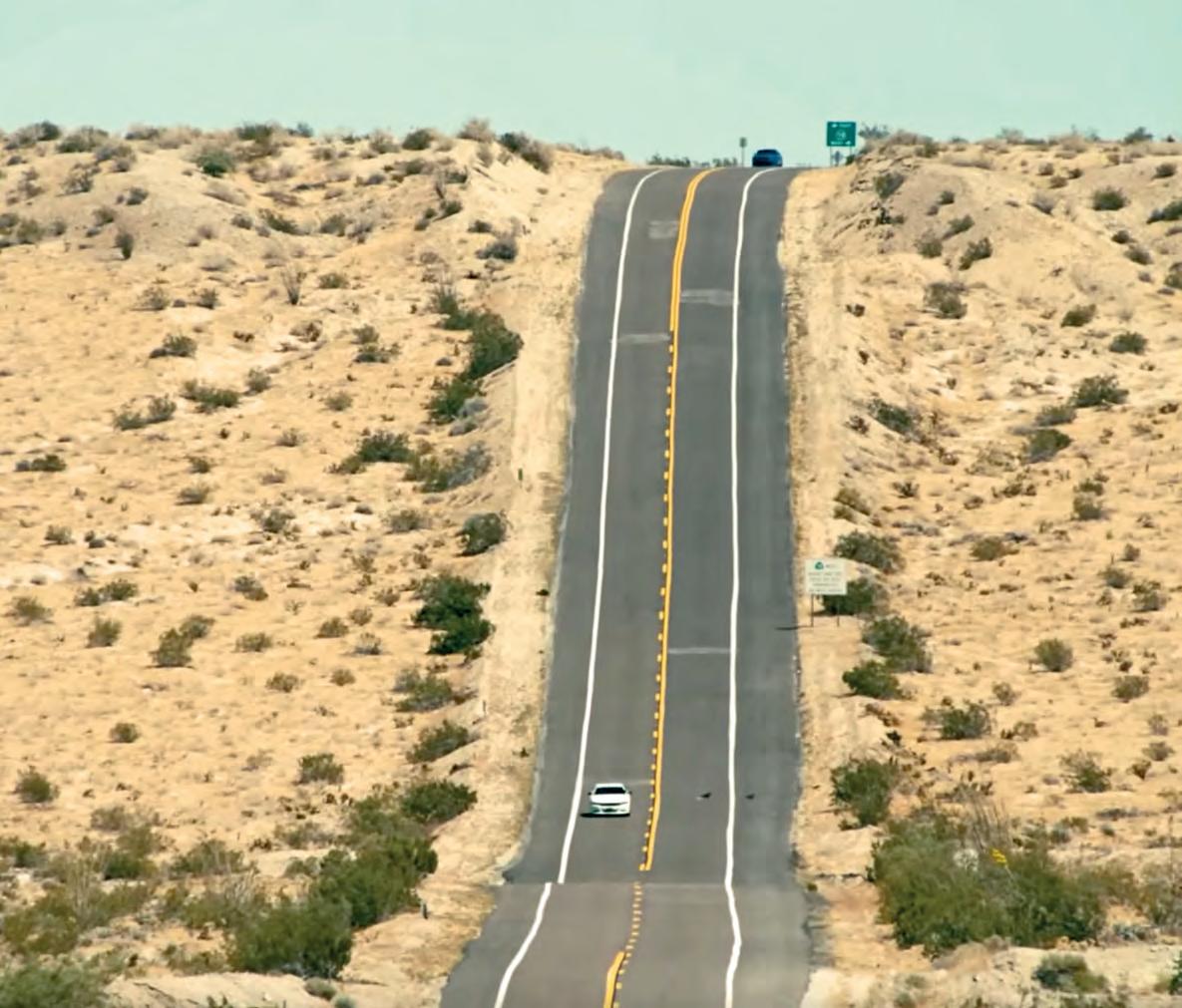
the culmination of that scene is near Borrego Springs at the Texas dip, which is about an hour and 45 minutes away from the River of Hills,” Glaser says.
“So as that chase starts, you're in one place; as the river of hills begins, you're in another place; and where you end up is a third place. That is a main artery for Yuma, Arizona and border trafc to get up to the 10 freeway. So there are many tractor-trailers and many people trying to get to work on time and cutting it very close. So when we're shutting down the road for 10 to 15 minutes or more, there could be a few miles of trafc. Not to mention you can't hold trafc on a road like that in those hills because it's dangerous,” Glaser says.
“If you come up over those hills and you've stopped trafc on the other side, someone's going to slam into the back. So we had to hold; to reset would take many, many minutes, it would seem like an eternity to Paul and the production. We had three truckloads of four people putting out closures, and many highway patrolmen, as we were
right in the middle of a border-patrol checkpoint.
“We'd asked to close it down and the California transit authority, Caltrans, had said it was going to be a 150-mile detour. Basically saying, ‘Yeah, right, we're not closing this road down!’. So I was worried they weren't even going to give us intermittent trafc control and let us control the road. That kept me up at night, among a hundred other things on which we were always exploring and pushing the limits.
“So we had to work around all those things. And also, chasing the light in those scenes, to get the light through the windows the way we wanted it, and to get it to fall on the cars the way we wanted it — yeah, it was kind of a brain-melting operation.”
And there was nowhere else to go to get a similar look — they couldn’t fake this. “No, it was an existing roller coaster that we couldn't reproduce.”
The three- or four-minute scene took some three days to shoot. “And then we had to go up the road and shoot the
1776 camp at a certain time at night. So we were really kind of in a vice of time to make it all happen — and, you know, we're an hour away from our accommodations. And then after that, we moved to El Paso, so there was kind of a big pressure on the team. Not to mention it was 105º, 115º degrees Fahrenheit out there. So it kind of sucked the energy and moisture out of everybody.”
The perfect postscript to the story of the River of Hills car chase is that it turns out it wasn’t originally in the script — the location itself inspired the scene when Anderson and Glaser came upon it by chance. “We were always trying to catch the chaos of the moment, and letting the spontaneity happen,” Bauman says. “That was really critical to the energy of the flm. You just had to kind of go in there a lot of times, and it’s like, ‘Okay, here's the plan and here's the second plan and here's the third plan.’ And you know that between all the plans, something's going to happen.”
The California summer of 2025 brought some good news for the Golden State’s production business: its Film & Television Tax Credit Program was about to get bigger and better. One result of this is that big shows that have been filming elsewhere are now coming back home.
Andy Fry reports
ALIFORNIA remains one of the most significant production hubs in the world, home to iconic Hollywood movie studios, the centre of the global star system and a hugely influential element of the streaming and social-media industries. Yet over the past two decades, the state’s dominance has been tested as productions increasingly chased lower costs and aggressive incentives around the world.
The Golden State has, of course, fought back. Its Film & Television Tax Credit Program was introduced in 2009 and has generated over $27bn in economic activity since then. According to the California Film Commission (CFC), the credit has supported more than 211,000 cast and crew jobs across the state. For every dollar awarded California has seen $24.40 in economic output, $16.14 in GDP and $8.60 in wages.
Despite this efort, however, global competition remains intense. With production work harder to come by and more and more jurisdictions launching eye-catching rebates, the Golden State has had to dig even deeper — enhancing its tax incentive so that even more producers can take advantage.
In July 2025, California unveiled the fourth iteration of its incentive, aka Program 4.0. Active through 2030, the state has increased its base rebate from 20% to 35%. Just as signifcantly, the state has addressed the fact that 70% of projects that applied for the California incentive were rejected because of

insufficient budget — by doubling its annual tax credit allocation from $330m to $750m. This is the largest expansion since the program’s launch in 2009, and one of the most significant such commitments across the US. The expansion was championed by state Governor Gavin Newsom, who says it is about more than money. “California’s film and television industry isn’t just an economic engine, it’s part of who we are. For more than a century, the world’s most iconic stories have been imagined, produced and shared from right here, powered by unmatched talent, creativity and innovation. This latest round of taxcredit awards builds on that legacy while delivering real results across the state: good-paying jobs, stronger local economies and thriving small businesses. It’s a clear signal that California remains the global home of storytelling — yesterday, today and for generations to come.”
The 2025 changes are already reshaping production decisions and stabilizing employment, according to California Film Commission director Colleen Bell. “There’s always a time lag between introducing a new incentive and shows getting into production,” Bell told Location California, “but I’m out in the community and I’m hearing from neighbors and friends — ‘I just booked a job. My wife just booked a project’.”
Location manager Mandi Dillin agrees. After a “rollercoaster” few years, she says: “I know a lot of people who are working, mostly on episodic television. The town is busy with streaming shows and there are still a handful of on-location network shows as well. I’ve also heard of several second-season shows moving to Los Angeles due to tax credits and other things, like people wanting to work at home. Big movies are coming back too. I just finished one, which was a period 1970s movie, almost all on location. I’ve heard rumblings that more big movies are coming.”
The headline data supports this anecdotal observation. “Since we launched 4.0 in July, we’ve taken in 119 film and TV projects, with 25,000 cast and crew hires and 4,000 shooting days,” Bell says. “Those 119 projects are on track to generate over $4.17bn in economic activity here in the state.”


in California” is directly linked to the tax credit. “The resultant work will bring jobs and revenue into the state at a much-needed time and will help the filmmakers make the best film possible.”
MATT NIX
‘BAYWATCH WAS BORN IN LOS ANGELES. I’M SO GLAD WE CAN BRING IT HOME AGAIN’
The expansion of the tax credit has also created headroom for more independent films to choose California over rival jurisdictions. In the latest round of tax-credit awards, 42 independent projects have been beneficiaries, 10 of which have budgets in excess of $10m. FilmLA’s Sokoloski sees the rise in independent movies as something for Los Angeles to celebrate, after a year in which feature-film shooting was 31% down on the five-year average. Among titles coming down the tax incentive pipeline is Epiphany, starring Kristen Wiig and Bill Murray. In the film, Wiig plays Favorite Ives, a fashionista heiress whose fortune disappears overnight, forcing her to find a rich husband to avoid losing everything in just two weeks. Her search leads her to Oz Bell (Murray), an eccentric math savant and billionaire. Producer Ellen Goldsmith-Vein says: “California has been home to my career from the start, and being able to make Epiphany here means I get to work with the best crews in the business while keeping jobs in my community.”
Bell’s assessment is echoed by FilmLA, the official film office for the City and County of Los Angeles. While 2025 was 16% down on 2024, it sees blue skies ahead: “FilmLA has projected that the full effect of the expanded program would take time to materialise,” FilmLA vice-president of communications Philip Sokoloski says. “Although our overall numbers remain low, there are dozens of incentivized projects that have yet to begin filming.”
Major feature films expected to shoot significant portions in California include the latest instalment of Jumanji; Michael Mann’s Heat 2 ; Netflix’s The Fifth Wheel , directed by Eva Longoria; a new project from the Daniels; and Ang Lee’s Gold Mountain, an epic centered on the California Gold Rush. Tom Rothman, chairman and CEO of Motion Picture Group, Sony Pictures Entertainment, made it clear that the decision to bring “a large, old-school, big-screen movie like Jumanji to shoot
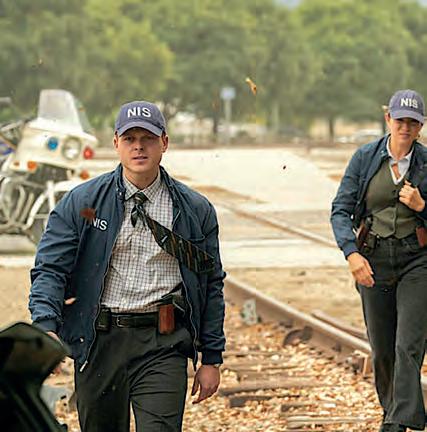
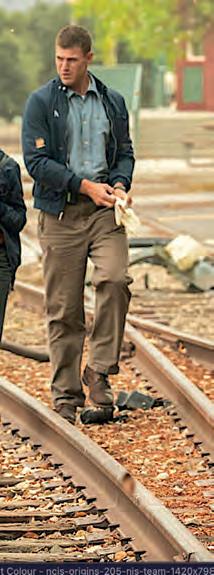
As significant as movies is the slate of TV series basing themselves in California on the back of the tax credit. The latest crop includes Fallout, NCIS: Origins and Paradise — all long-term investments rather than one-off shoots.
Paradise creator/executive producer/showrunner Dan Fogelman says the decision to root the series in California is “thanks in no small part to California’s tax credit”. Now into its second series, he says the ability to shoot series in Los Angeles “provides consistent work for countless craftspeople, allowing us all to remain in town with our families and loved ones.”
While the increased rebate and expanded budget are the most visible dimensions of the tax credit, Bell says there are several other facets that are significant. Easy to overlook, for example, is the incentive’s longevity, she says. “This provides stability and certainty that this program is going to be around for a while. That’s important — decision-makers are making long-term decisions about where they want to invest and shoot.”

There is also a continued commitment to luring TV series away from rival US states. Here the base rebate has risen from 25% to 40% in the first year of the switch — before reverting to the new norm of 35%.
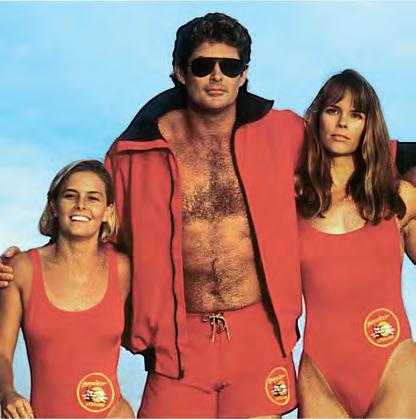
Shows relocating to California include: The Night Agent, Season 4; Mr. & Mrs. Smith, Season 2; and iconic beach-rescue series Baywatch , which is coming back to the California coastline for its 12th year on TV. Collectively, these three projects will employ nearly 1,000 California cast and crew members with $116m attributed to qualified wages — jobs and economic activity that would likely not have come to California without the recent expansion. Tom Segura’s Netflix series Bad Thoughts is also relocating from Texas.
Over and above its economic impact, the return of Baywatch has caused a ripple of excitement across the Californian production business. Off-air for 25 years, the show finished its initial run in Hawaii. Referencing the wildfires that devastated parts of Southern California during 2025, showrunner Matt Nix, says: “I was inspired by the heroism of the first responders who fought to save our community. I wanted to be a part of bringing filming back to California and showing the beauty and possibility of this incredible place. Baywatch was born in Los Angeles. I’m so glad we can bring it home again.”
Another key feature of California’s incentive program is additional support for productions that shoot outside the Los Angeles thirty-mile zone, Bell says, with qualifying projects able to claim an additional 5% uplift.
police services and use of city property — with total savings capped at $1m. Manijeh Fata, executive director of the San Francisco Film Commission, says: “The updated California incentive paired with our recent Scene in San Francisco incentive expansion is making it more attractive and realistic for productions to shoot in San Francisco and keep production in California. Producers we’ve met with are excited that they can stack both incentives, getting up to 40-45% tax credit and up to a $1m cash rebate. Both independent and studio producers are now making decisions to stay in San Francisco because of these incentives.”
Another key hub expecting to benefit is state capital Sacramento, in the north of the state: “We’re incredibly optimistic about the future, especially with the expansion of the tax-credit program,” film commissioner Jennifer West says. “That program is bringing a $50m film to our area this June, which is a major milestone for our region. In addition, the City of Sacramento has invested $250,000 into a local rebate program to attract even more production. We’re putting real dollars behind growing this industry thoughtfully.”
The $50m project in question is the Ang Lee-directed Gold Mountain, a Gold Rush-era story based on the C Pam Zhang novel How Much of These Hills is Gold. Centered on the journey of two orphaned immigrant siblings, it is expected to shoot in Sacramento, El Dorado and Placer Counties.
Colleen Bell says Program 4.0 has several other key elements of note, including expanded eligibility for shorter-form television and non-relocating series, increased support for workforce diversity and the US’s first Safety on Production pilot program. Not to be overlooked either is the introduction of refundable tax credits for the first time since 2009 — a change in accounting practices that makes the incentive more valuable to Californiabased studios.
Reference to infrastructure is important, because incentives don’t just attract productions, they encourage movie ranches to upgrade facilities and studios to launch and grow. A case in point is Cinespace Studios, which has formally entered the Los Angeles market with its Woodland Hills campus.
JENNIFER WEST
‘WE’RE PUTTING REAL DOLLARS BEHIND GROWING THIS INDUSTRY, THOUGHTFULLY’
According to the CFC, the wave of tax-incentive projects announced in October 2025 is set to deliver 511 “out-of-zone” filming days — the highest ever total in a single application round. Alameda, Contra Costa, Imperial, Inyo, Marin, Montecito, San Bernardino, San Diego and Santa Clara are all set to welcome filming — generating local employment opportunities across the Golden State. Another 28 projects were announced in December 2025, 17 of which will shoot across the state. This batch is expected to bring another 286 shoot days to locations including San Francisco, Sonoma, Joshua Tree, Palm Springs, San Luis Obispo and Temecula. No less than five independent projects will shoot entirely out of the Los Angeles zone.
Intriguingly, the larger production hubs across the state have viewed the improved program as an opportunity to enhance their own local incentives. In early 2026, San Francisco Mayor Daniel Lurie signed legislation modernizing the 20-year-old Scene in San Francisco incentive. The updated incentive introduces a tiered rebate: 10% on the first $1m of qualified local spend, 20% above that threshold and a 100% rebate on city fees — including permits,
Cinespace already has stateof-the-art studios in Chicago, Atlanta, Wilmington (North Carolina), Toronto and Germany (Studio Babelsberg), but co-CEO Eoin Egan says California was always on the radar. “California remains the deepest talent pool in the world. The concentration of experienced crews, creative leadership and post-production infrastructure is unmatched. It’s also where the vast majority of productions are greenlit, so it was always in our plans to open Cinespace in the heart of the entertainment industry.”
The decision has been made easier by the Progam 4.0, he says: “With the expanded tax-incentive program and renewed publicprivate alignment, California is highly competitive again. The elements are all there.”
The CFC’s Bell acknowledges there is always room for improvement. But what is undoubtedly the case is that the creative community has been mobilized. Rapper Snoop Dog summed it up when securing incentives for his slated biopic, whose locations will include Long Beach. “Big love to the California Film Commission and Governor Newsom for holdin’ it down with that tax credit. Y’all making it possible for us to tell my story right here where it all began. California raised me, inspired me, and now helpin’ bring this biopic to life in 2026. Much respect — that’s real teamwork, ya dig…”

For more than a century California has functioned as the production capital of the world. California didn’t just incubate the film and television business; it engineered the template for how large-scale production works. And that is why the production industry here has survived some near life-threatening situations, not least in the last three or four years.
Andy Fry finds new opportunities and optimism as he takes a tour of the Golden State

ACROSS California, backlots, movies ranches, post-production houses, equipment vendors, casting agencies, scoring stages, VFX facilities exist not in isolation, but in dynamic clusters. And that concentration remains a defning advantage for the Golden State.
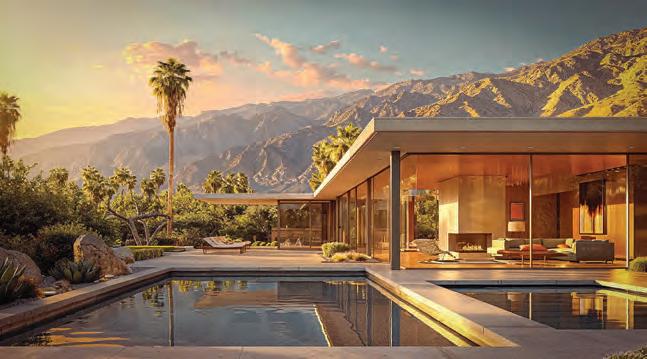
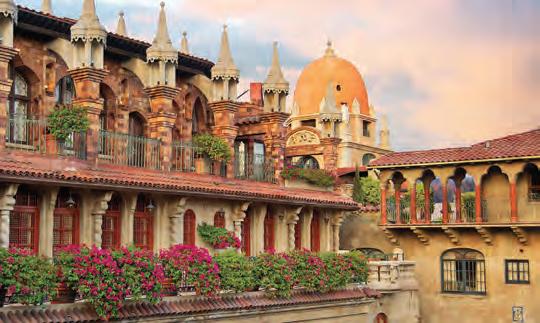
Geography is another pillar of California’s appeal. Within a few hours’ drive, productions can access coastline, desert, farmland, mountains, suburbia, dense urban cores and small-town Americana. Southern California delivers everything from Mediterranean-style enclaves to contemporary skylines, while, for the more ambitious, Northern California ofers rugged clifs, redwood forests and Victorian architecture. The Sierra Nevada provides alpine drama while The Central Valley and Salinas Valley (Steinbeck Country) can double for America’s rural heartland.
“California offers something no other place can replicate at scale,” says Colleen Bell, director of the California Film Commission (CFC). “It’s the combination of world-class crews, state-of-the-art facilities and geographic diversity. You don’t just get a location, you get a support structure that makes ambitious storytelling possible.”
Dan Dark, executive vice-president, worldwide studio operations at Warner Bros. echoes Bell’s point — noting how the state’s numerous studios and locations amplify and reinforce each other. “Warner Bros. Studios Burbank properties are situated in a unique location,” he says. “We are a short drive to the mountains, the desert, the oceans and one of the largest urban centres in the world. It’s one of the few places where you can ski in the morning, make your 12pm call time and surf as the sun sets.”
Notable productions to have been located in the state over the last 12-18 months include Paul Thomas Anderson’s acclaimed movie One Battle After Another and Amazon Prime Video’s
COLLEEN BELL
‘YOU DON’T JUST GET A LOCATION, YOU GET A SUPPORT STRUCTURE THAT MAKES AMBITIOUS STORYTELLING POSSIBLE’
















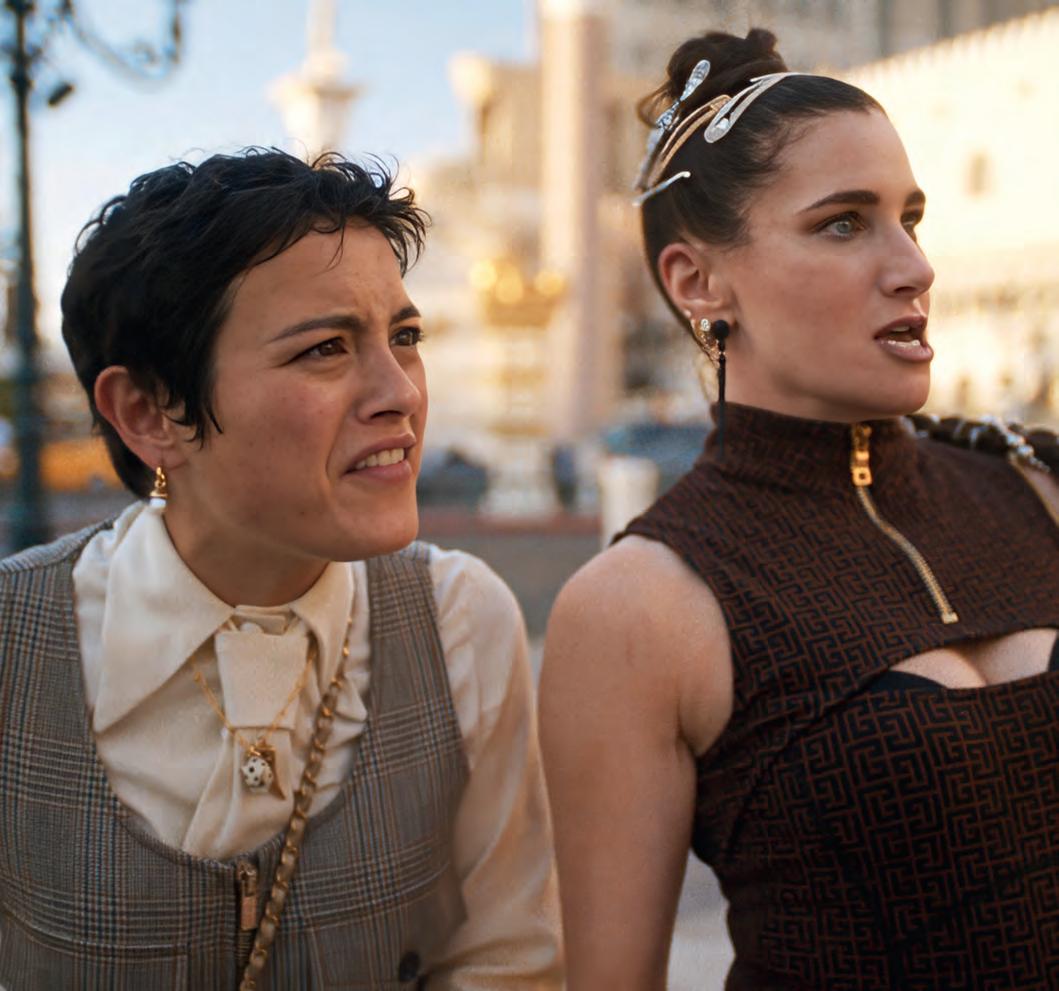
DAN DARK
‘IT’S ONE OF THE FEW PLACES WHERE YOU CAN SKI IN THE MORNING, MAKE YOUR 12PM CALL TIME AND SURF AS THE SUN SETS’
ambitious series Fallout, which relocated to the state for season two and stayed on for season three. Lured back by California’s incentive program, Fallout has fully embraced the state’s 360-degree ofering — with signifcant production activity at LA North Studios, Melody Ranch and desert/wasteland locations around Simi Valley and Lancaster in the Antelope Valley.
Fallout producer/director Jonathan Nolan, who also shot HBO sci-f series Westworld in California, says the state “has always dreamed in cinema. But for far too long we have been letting that dream slip away. We are so grateful to the flm crews, the state legislators, and everyone who took a stand to protect the creative economy of California. We are proud to be shooting here and investing money back into the place that gave so many
of us our start, and that so many of us call home.”
Location managers love the fact California ofers a range of looks in close proximity, Bell says. Productions that might otherwise require multiple relocations can remain centralized, keeping crews intact and schedules disciplined. Second units can capture radically diferent environments. “In California, you can build entire worlds without crossing state lines. That fexibility is a huge asset for flmmakers. It allows them to maximize time and resources, achieving remarkable visual scope.”
This is supported by a deeply interconnected talent ecosystem, Bell adds. When a project sets up in the state, it is stepping into a network of skilled craftspeople and specialized vendors who have worked together for decades. The supply chain — from camera rentals to construction shops to post-production — is accustomed to projects of every scale. “There’s an efciency that comes from experience,” she says. “Our crews have done everything. They know how to move quickly, solve problems and
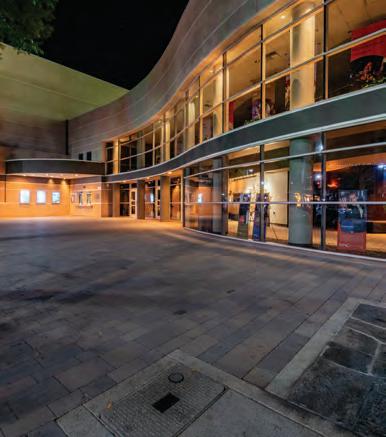

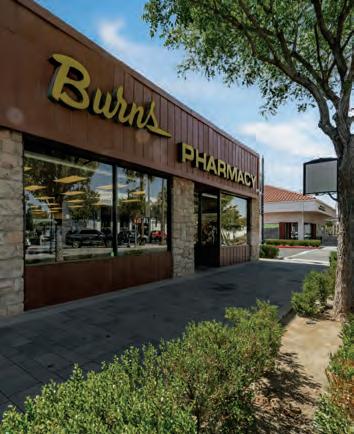


Lancaster delivers what production teams need most: diverse locations, Hollywood proximity, and hassle-free logistics.

Located just an hour north of Los Angeles, Lancaster’s vast golden landscapes and dramatic terrain provide a stunning setting for sci-f adventures, gritty commercials, and dynamic videos.



For a more urban vibe, the BLVD Cultural District features striking architecture, vibrant murals, and pedestrian-friendly streets, offering an ideal backdrop for lifestyle shoots and small-town rom-coms.

We know production inside and out, delivering fast permits and the support crews need to stay on schedule and on budget.

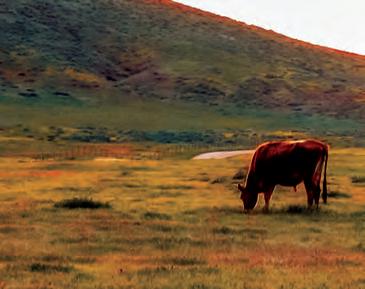
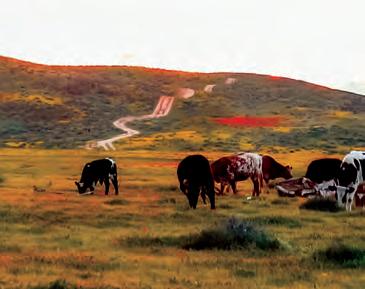

Diverse Backdrops: Nature preserves, downtown streets, aerospace sites, museums, a new soccer stadium, and neighborhoods all in one place
Easy Access: Just 65 miles from Hollywood, with plenty of space for crew and gear and fexible accommodations

Film-Friendly: Experienced local support team dedicated to your project’s success


Proven Location: Trusted by Netfix, NBCUniversal, Disney Entertainment, Big Indie Pictures, Warner Bros., and major music video directors

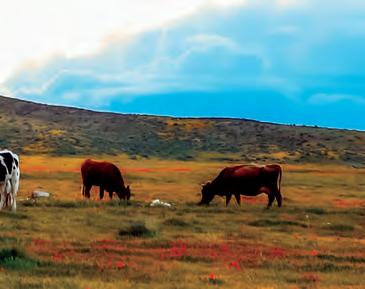

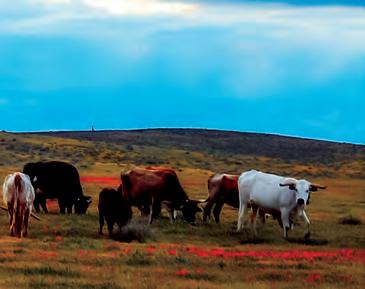



maintain high production value. That institutional knowledge is invaluable.”
Location manager Mandi Dillin reinforces Bell's point. Yes, the locations are superb, she says, “but producers actually save money by coming to California and hiring experienced, professional crew members who are not only excellent at their jobs, but motivated to stay home. Also, all of our location flm ofces and flm commissions (who work collaboratively under the FLICS umbrella organisation) work tirelessly to keep flming in California. I know that when I pick up the phone for help finding something specifc or inexpensive or am trying to problem solve a tricky request, the city, county and state film liaisons will always fnd a way to make it happen.”
ing money on the screen. The pre-scouting and then location selection is a direct contributor to the budget. Making smart decisions that are both budget conscious as well as creative is a must for anyone wanting to keep flming in LA.”
Fox Studio Lot president Gary Ehrlich agrees with this sentiment: “This region brings together the world’s most experienced crews, unmatched creative infrastructure and a century-long heritage of craft. This concentration of talent drives efciency, innovation, consistency and quality — factors that are often underestimated in short-term cost comparisons but are essential to successful production.”
STACEY BRASHEAR
‘WHEN SETH ROGAN AND EVAN GOLDBERG WROTE THE SCRIPTS THEY WROTE ACTUAL LOCATIONS INTO THEM’
As a California-based location manager, Dillin says this creative collaboration is one of the most satisfying parts of her role: “Working in television is fastpaced and if we’re lucky, we have enough time to scout locations before we get scripts and have a cache of ideas at the ready. I cherish that scouting time where the designer and I really get to focus on the world-building before the rush of production begins.”
Dillin also loves “the problem solving, specifcally focusing on how to maximize storytelling through interesting locations while also balancing the schedule and budget. Every studio and producer wants the most bang for their buck in terms of spend-
“California has always inspired me,” says producer and director Dakota Johnson, who brought indie feature A Tree Is Blue to the state — with a cast including Jessica Alba and Charlie XCX.
“To make an independent flm here, with these people and this light, feels like the most natural thing in the world. The crews care about the work, and the heart behind it. That collaboration means everything to a flm like ours.”
The workforce pipeline reinforces this advantage. Film schools, community colleges, apprenticeship programs and union training initiatives continue to feed new talent into the industry, while veteran crew members pass on knowledge. The result is a labor pool that is able to embrace emerging technologies such as virtual production while preserving traditional craft skills. “There’s a culture of innovation here,” Bell says. “This is where
new flmmaking technologies are developed and tested. At the same time, there’s deep respect for the craftsmanship that built this industry. That balance is part of what keeps California at the forefront.”
Director Jake Kasdan, who is flming the latest movie in the Jumanji series in California, agrees: “Making these big popcorn movies requires hundreds of especially skilled people, and the world’s fnest live in California.”
While the entire state has a compelling production story to tell, Southern California remains the focal point of the industry, with Los Angeles its beating heart. Despite the recent downturn that has afected the entire global production industry, the city’s permitting agency FilmLA was still able to report 19,694 shooting days in the city across 2025.
Coming into 2026, a consortium of city stakeholders, with FilmLA as advisor, announced a series of measures designed to address production cost, flm location access and the city’s permit process. Announced by city Mayor Karen Bass, these include closer liaison between the mayor’s ofce and the production industry, streamlined street closures, stripped back personnel costs and new tiered fee structures, with the ultimate goal of
keeping Los Angeles as “the creative capital of the world”. Many of the 2026 reforms started as recommendations from FilmLA. Recently appointed CEO Denise Gutches says her ambition is to make “flming work better for flmmakers and everyone who calls Los Angeles home”. As the proposals move forward, she says FilmLA “will be there to ofer counsel, support and service innovations to streamline the permitting process”.
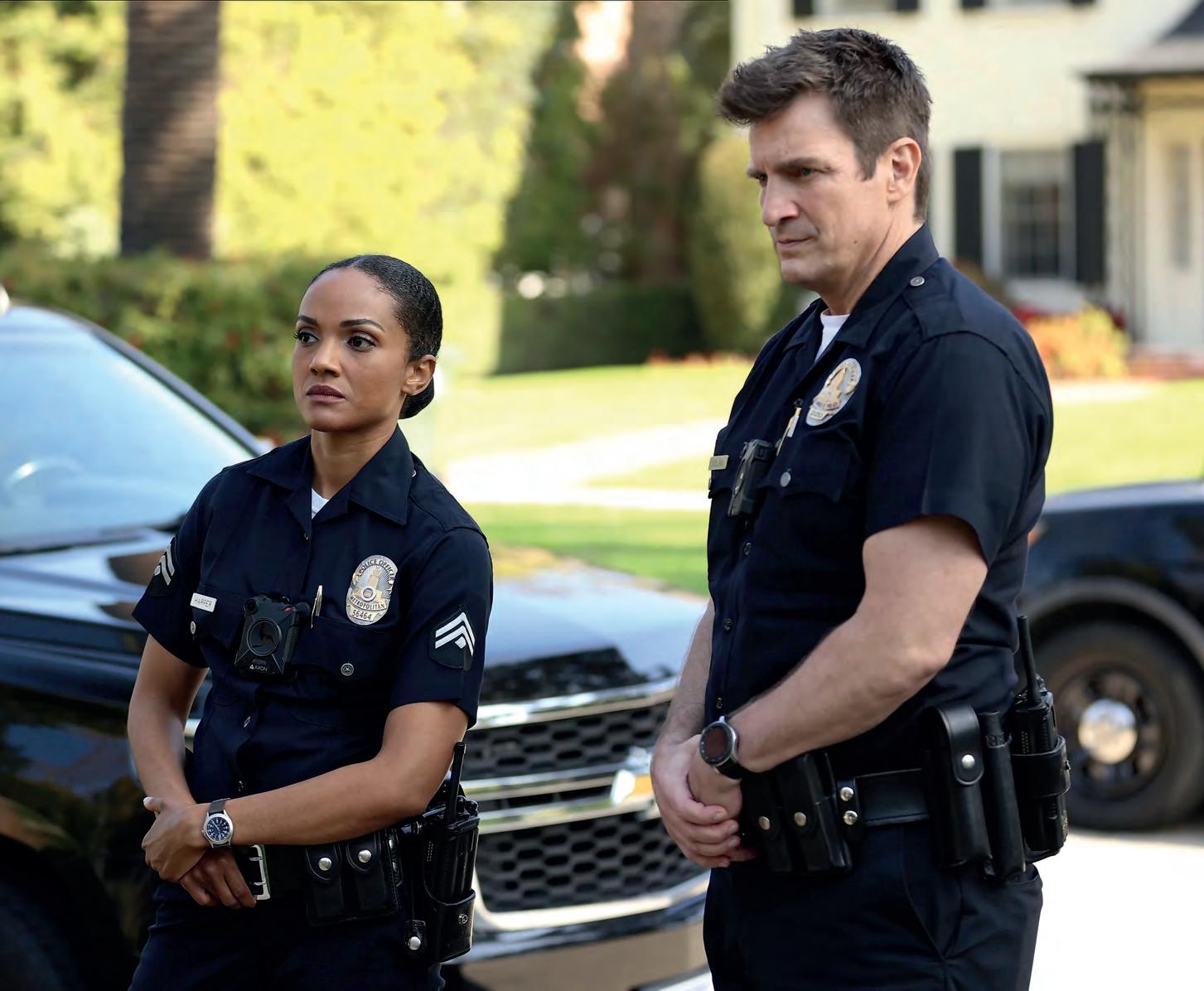
Pretty much every form of content is shot in the city, from TV series, including The Rookie (ABC) and Monster (Netfix), to commercials for brands including Chevrolet and Bank of America. But noticeable in 2025 has been the number of flms and TV series that shot Los Angeles for Los Angeles, leaning into the global audience’s familiarity with the topography and tone of the city of angels. Crime 101 made excellent use of the city’s highways while Freakier Friday showcased iconic spots like The Line Hotel and Bel Air Bay Club — as well as neighborhoods including Echo Park Lake, Silver Lake, Arts District and Koreatown — home to 80s-style karaoke venue Break Room 86, featured in Freakier Friday. The detective series Bosch, and its spin-of series Ballard and The Lincoln Lawyer — all based on novels from prolifc crime writer Michael Connelly — are all shot entirely on location in Los Angeles and refect Connelly’s love for — and encyclopaedic knowledge of — the city, the seeds of which were sewn during his time as a crime reporter for the LA Times.
Freakier Friday star Jamie Lee Curtis has called the flm “a
love letter to LA” and there is a similar sensibility to Apple TV’s new series The Studio, a satirical look at Hollywood starring Seth Rogan. “The Studio is about our industry as a whole,” says supervising location manager Stacey Brashear. “From the executive side of it down to the crew, and the politics of it all. Working on this was fun — a real team efort.”
Ensuring authenticity was a challenge, because so much of the narrative had to play out in real locations used by Hollywood execs: “When Seth (Rogan) and Evan (Goldberg) wrote the scripts they wrote actual locations into them,” Brashear says. “So I was like, this kind of makes my job a bit easier because I don't have to fnd fve hotels. I just have to get this one. But then I realized, I have to get this one…”
An example is The Smoke House restaurant in Burbank, situated right across the street from Warner Bros. Studio. “It’s an iconic power-lunch restaurant,” Brashear says. “And we shot three scenes here.” The Studio also shot on the lot of the Warner Bros. Studio — as well as other iconic spots including the exclusive Chateau Marmont hotel. Among the more logistically challenging sections of the series involved shooting on Sunset Boulevard overnight with a crane arm into trafc. Then there were unexpected surprises that are part of the job description of a location manager: “The Beverly Hills Hilton Hotel was undergoing a mass demolition of their parking structure, which is next door to the ballroom that we needed,” Brashear says.
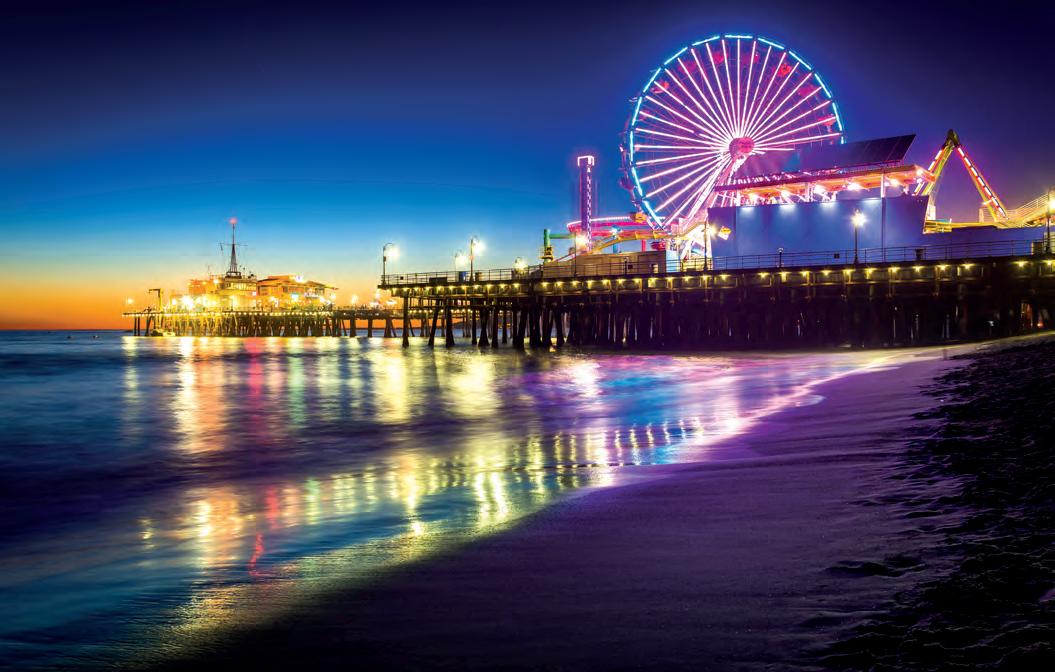
From a production perspective, it’s important to see Los Angeles as a series of connected production hubs — with complementary propositions. A case in point is Santa Monica: a compact yet versatile flming destination just to the south of Hollywood. Across just eight square miles, productions can fnd beaches,
city streets, luxury districts, neighborhoods, parks and iconic architecture within minutes of each other.
The city is, in many ways, camera-ready, says Film Santa Monica COO Evan Edwards, who points to its palm-lined streets, mid-century buildings and historic landmarks. “Santa Monica is special because you can shoot a sunrise on the beach and be on a contemporary city street fve minutes later,” she says. “It’s iconic, instantly recognizable and ofers the fexibility to tell multiple stories in one area.”
The city’s proximity to Los Angeles ensures access to a deep crew base and major studio resources while allowing productions to beneft from streamlined logistics. Notable recent productions include blockbuster movie Barbie, with scenes flmed on the city’s main street and along the pier, reinforcing Santa Monica’s reputation as both a storytelling canvas and an aspirational destination.
“We’re small geographically, but we punch above our weight creatively,” Edwards says. “In Santa Monica, you can stage something intimate and character-driven in the morning, then pivot to a big, glossy coastal set-piece by the afternoon. That range, within minutes, is powerful for producers.”
Beyond locations, Santa Monica provides a supportive production environment. The launch of a dedicated flm ofce in 2025 has meant that permit approval times have dropped from weeks to just 24-48 hours. “We work with the community and our residents to ensure production enhances the city experience rather than disrupts it,” Edwards says, “while still allowing ambitious shoots to take place. Everything from a helicopter over the water to complex street closures can be managed efectively.”
While Edwards’ job is to root for Santa Monica, she also expresses

EVAN EDWARDS
‘WHEN YOU SEE BAYWATCH COMING BACK IT REMINDS EVERYONE WHY CALIFORNIA BECAME SYNONYMOUS WITH THIS INDUSTRY IN THE FIRST PLACE. THAT SUN, THAT ENERGY, THAT LIFESTYLE — IT'S AUTHENTIC HERE'
an overarching desire for California to succeed as a production hub: “We don’t see ourselves as competing with our neighbors,” she says, “we see ourselves as part of the Southern California ecosystem. If a show is shooting in Venice, in Malibu, on a studio lot in Burbank, Santa Monica can complement that. We’re part of a storytelling canvas.”
A case in point is the recent news that Fox’s reboot of Baywatch is returning to California, with Venice Beach and the Fox Studio Lot named as anchor locations “When you see something like Baywatch coming back and filming along the coast, it reminds everyone why Southern California became synonymous with this industry in the frst place. That sun, that energy, that lifestyle — it’s authentic here,” she says.
It’s a point that the CFC’s Bell also makes, stressing that California’s climate is not just about its aspirational onscreen appeal. “Our weather is glorious all year round, which is important when you realize weather delays cost money.”
Santa Monica occupies a very clear niche within California’s pro-
duction business, but there are other Los Angeles satellites that have become 360-degree production hotspots. The city of Santa Clarita, just to the North, provides expansive space, open canvases, and a dense concentration of ranches and sound stages — making it ideal for large-scale production and projects that require controlled outdoor environments.
“Santa Clarita’s value proposition is about efciency, reliability and location variety,” says Tyler Pledger, economic development manager for the city. “We’re close to Los Angeles, within the thirty-mile zone, yet ofer open space and production-ready ranches that are increasingly hard to fnd elsewhere.”
The city boasts more than 50 sound stages and multiple movie ranches, many of which have hosted productions since the silent era. Its combination of large-scale outdoor locations, stage infrastructure and streamlined permitting positions Santa Clarita as a dependable, solutions-oriented hub. Productions know they can execute ambitious shoots with speed, scale and predictability, all within a short drive from LA.
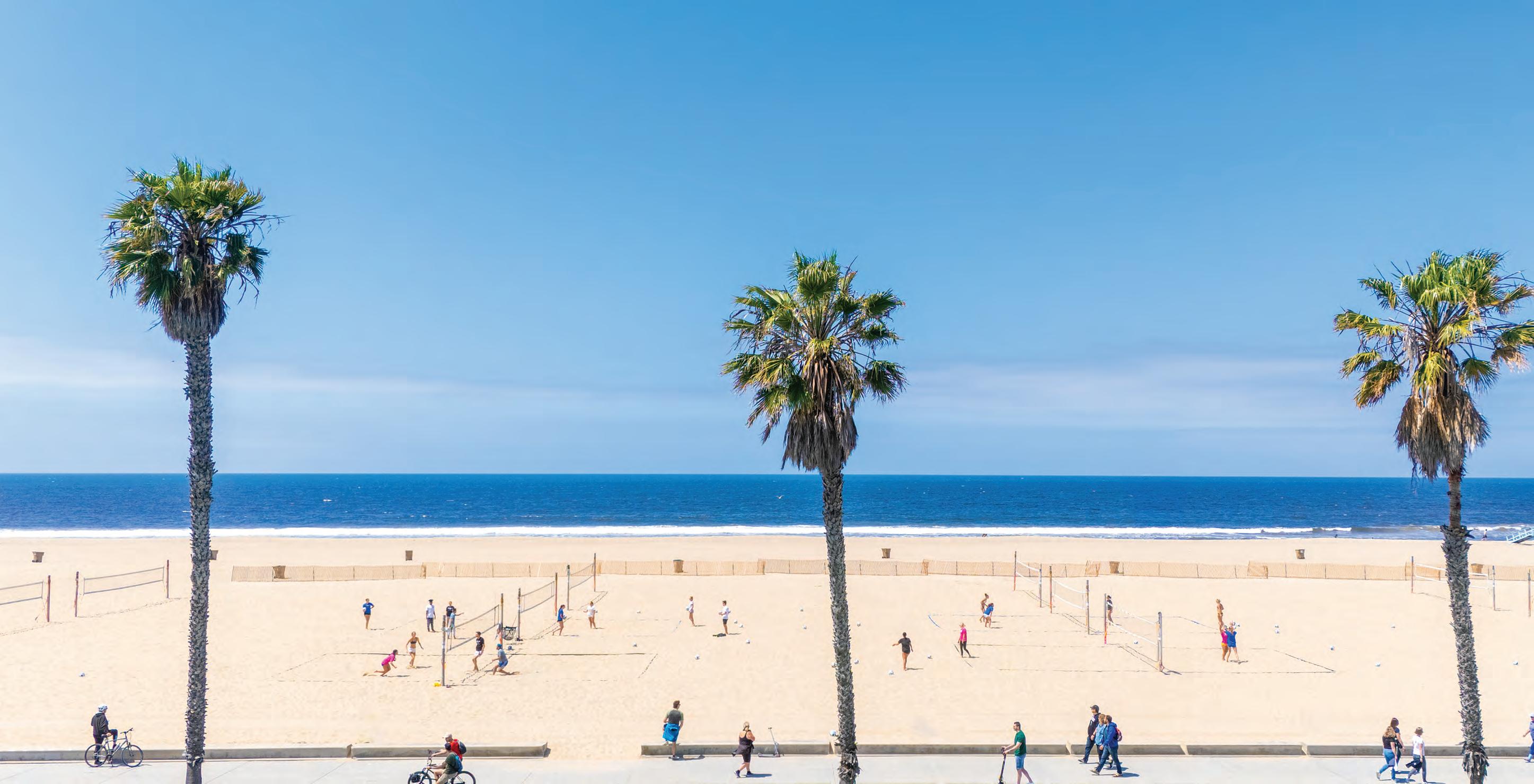
Sun-soaked beaches. Urban chic. Beach city streetscapes and modern architecture all within minutes of one another.




Accelerate your project with white glove permitting support, location insights, crew resources and community coordination so you can focus on creativity, not red tape. info@filmsantamonica.com | +1.310.319.6263 | filmsantamonica.com

“Producers are very focused on efficiency, budget and predictability,” Pledger says. “Budgets are tighter, schedules are compressed and there’s less room for uncertainty. What we hear consistently is that Santa Clarita ofers a dependable and responsive permitting experience with quick turnaround times and locations that deliver production value without added complexity. That reliability and ease of permitting is often a deciding factor.”
In 2025, Santa Clarita processed over 380 permits, supporting 718 flming days and generating an estimated $14.6m in economic impact. Productions included television series including N.C.I.S., S.W.A.T. Exiles and a new HBO series from Larry David have been actively flming here. “We’ve also hosted major productions slated for 2026 release, including Paradise (Season 2), Sugar (Season 2), Beef (Season 2), Monster (Season 4) and The Comeback (Season 3),” Pledger says. “On the feature side, flms including Michael, Outcome, One Battle After Another and American Muscle have also flmed locally. Santa Clarita also continues to be a favored spot for commercials and our residents are quick to point out local neighborhoods in national ad campaigns from T-Mobile, Progressive and State Farm.”
Other key hubs are San Fernando Valley, home to the new Syl-
mar Studios complex; and Simi Valley, where stakeholders include Rancho Simi Recreation and Park District, Allied Studios and Arroyo West Studios. Simi Valley enjoyed a strong year in 2025, with 296 production days generating $5.25m in economic impact. “Simi Valley’s prime location, scenic landscapes and strong industry partnerships make it a top choice for flmmakers,” says the city’s Mayor Dee Dee Cavanaugh.
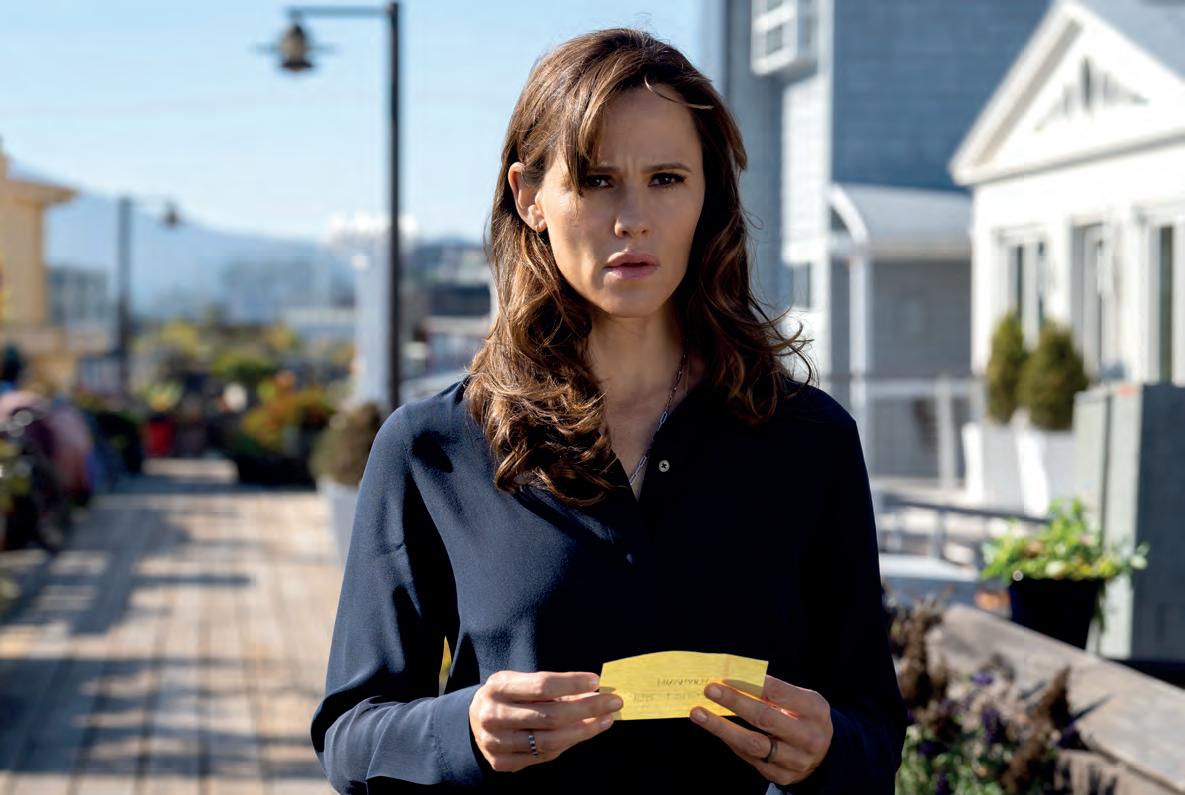
Simi Valley-based productions included 15 TV shows, 37 commercials and 12 feature flms in 2025. Among key credits were Apple TV’s The Last Thing He Told Me, featuring Jennifer Garner; and Netfix’s Monster: The Ed Gein Story, starring Charlie Hunnam. The latter was set in Wisconsin, which underlines Southern California’s capacity to double for other locations. Cavanaugh emphasizes that Simi Valley sees production as key to its development. “Maintaining a flm-friendly environment is a priority and a key pillar of our economic vitality,” she says. “Productions bring real benefts, including supporting local businesses and driving economic growth.”
Riverside County, which stretches inland from the southeast of Los Angeles and includes Palm Springs and Joshua Tree National Park ofers flm services through the Riverside County Film Commission (RCFC), a member of FLICS. With a region of over 7,300 square miles, the RCFC works with all the 28 cities within its borders, ofering everything from permitting to location scouting, with over 150 production days registered in 2025. As well as TV and flm shoots, the county hosted international sing-





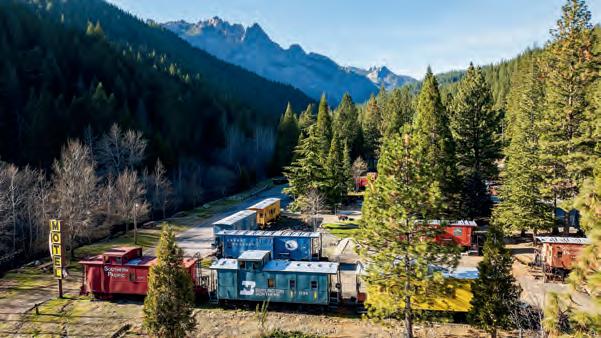
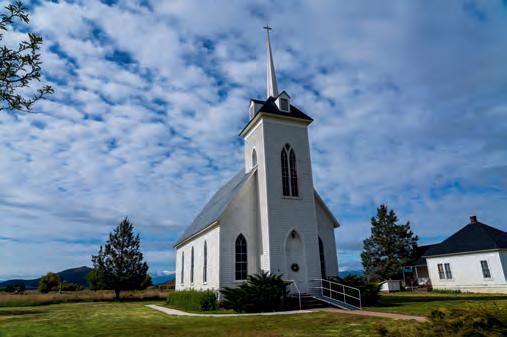
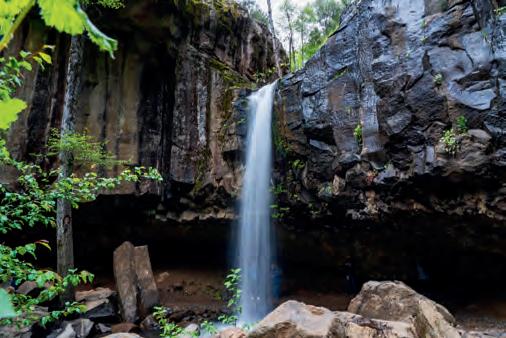
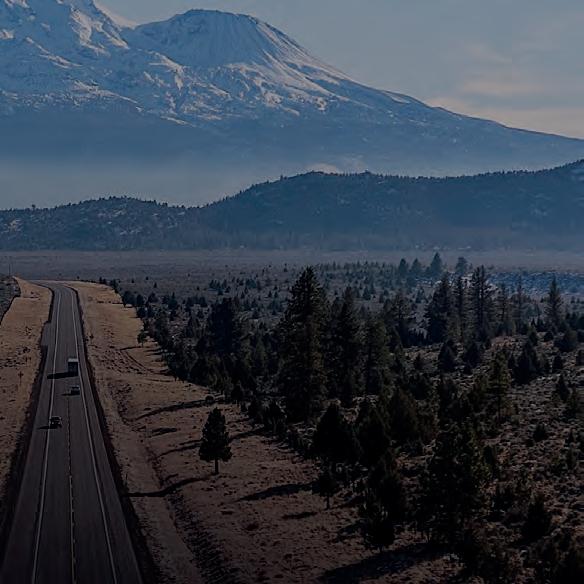
WHERE EPIC STORIES MEET EPIC LANDSCAPES MEET
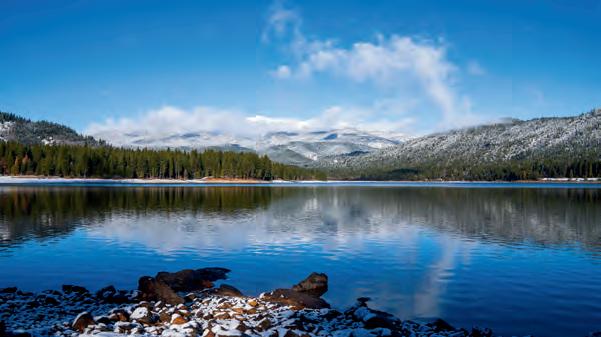

ing star Ed Sheeran for the filming of 'Drive', an official song from F1: The Movie. Locations included the Thermal Club racetrack, that lies between San Jacinto, Santa Rosa mountains and popular filming location Joshua Tree National Park.
Further north in Los Angeles County, the city of Palmdale and the wider Antelope Valley provide filmmakers with a dramatically different canvas while remaining closely connected to the Southern California production ecosystem. Just around an hour from Hollywood, the region offers vast open desert, dry lakebeds, dramatic rock formations and expansive skies that can convincingly double for locations ranging from the Wild West to the Holy Land — or even the outer reaches of space. Aerospace facilities, wide highways and more than 300 days of sunshine each year further add to the city’s appeal, giving productions dependable weather and a striking sense of scale. Palmdale, which has its own film office, has taken steps to ensure production can operate efficiently once crews arrive. The city’s Film Incentive Program reimburses up to $10,000 in crew-hotel costs or up to $2,000 in permit fees for productions operating
with a valid FilmLA permit. With $150,000 allocated annually, 17 crew-ready hotels and dedicated local support from permitting through to wrap, the city has positioned itself as a practical basecamp for productions looking to capture the distinctive landscapes of the Antelope Valley while remaining within easy reach of Los Angeles.
The Los Angeles satellites hint at a more general truth: California’s production strength radiates well beyond the gates of Hollywood and the walls of major studios. Across the entire Golden State, distinct hubs have emerged that leverage local geography, infrastructure and civic collaboration. Location manager Mandi Dillin says: “The benefits to looking beyond the LA thirty-mile zone are massive. Los Angeles still has a lot to offer for all types of projects — movies, TV, period, contemporary — but my heart lies with our out-of-the-zone options. I’m ready for a road movie that takes us from the US/Mexico border all the way to Washington State.”
Getting out of the thirty-mile zone “allows us to explore small towns that don’t generally have filming. It’s a different look
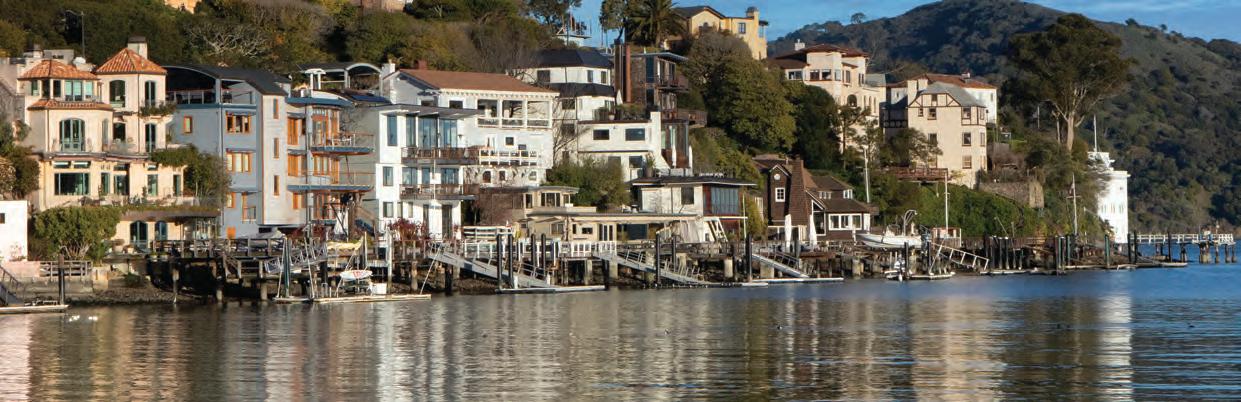
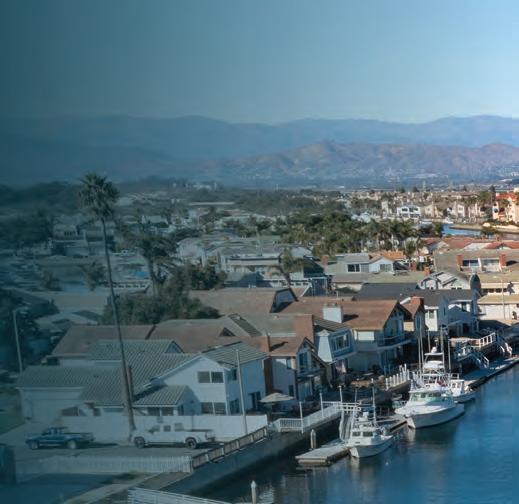
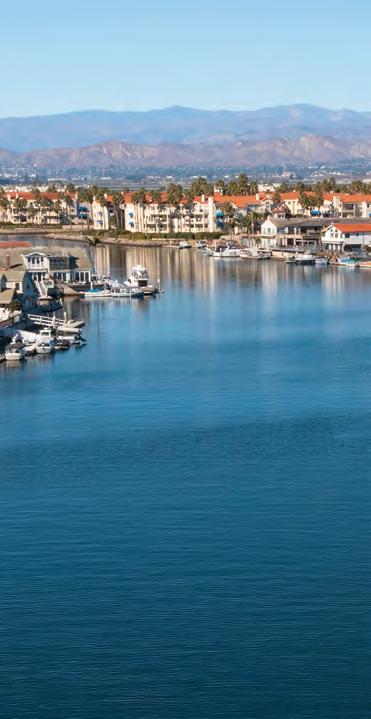
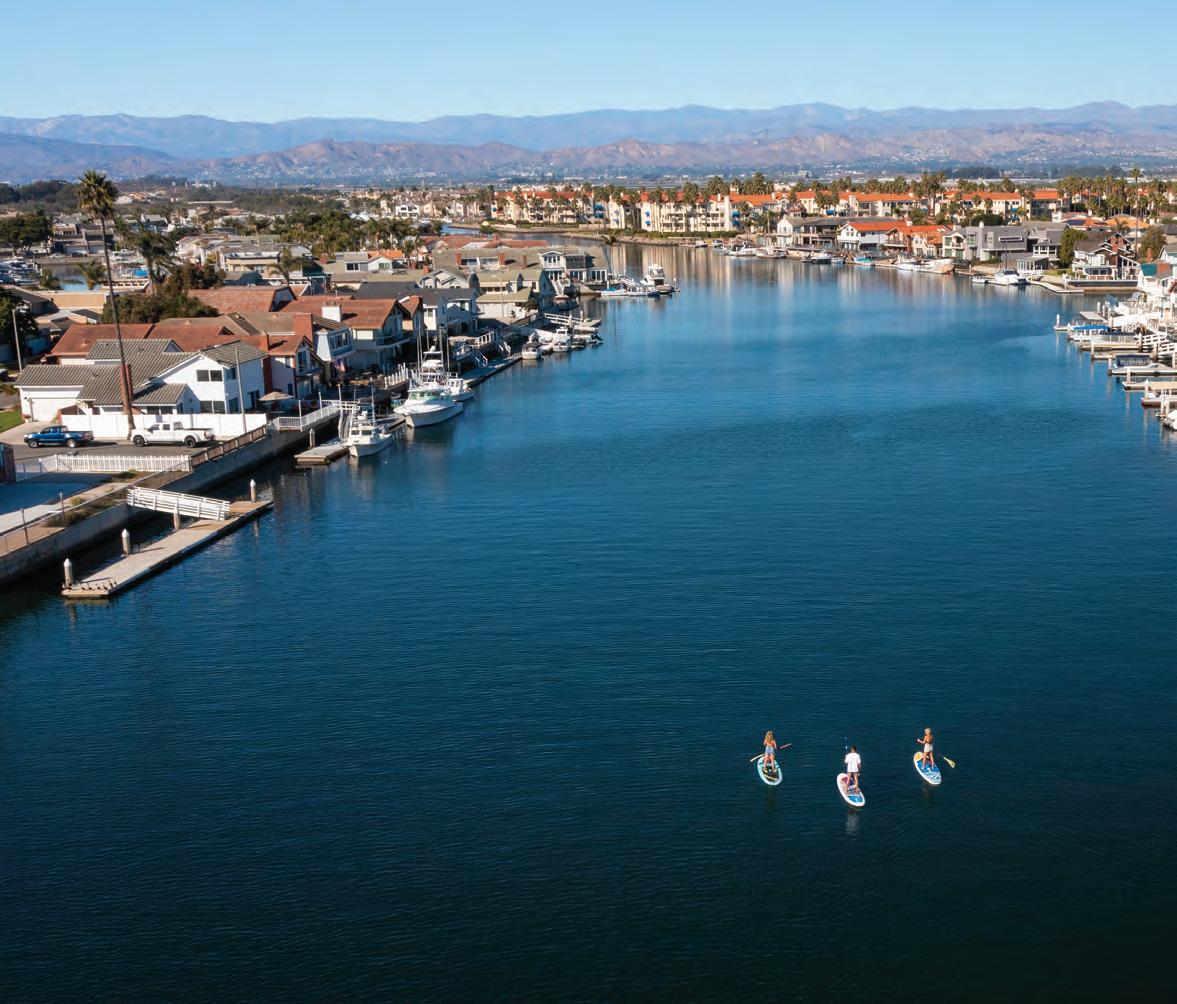


Oxnard has been part of the frame since the early days of Hollywood. And it still delivers what productions need now.
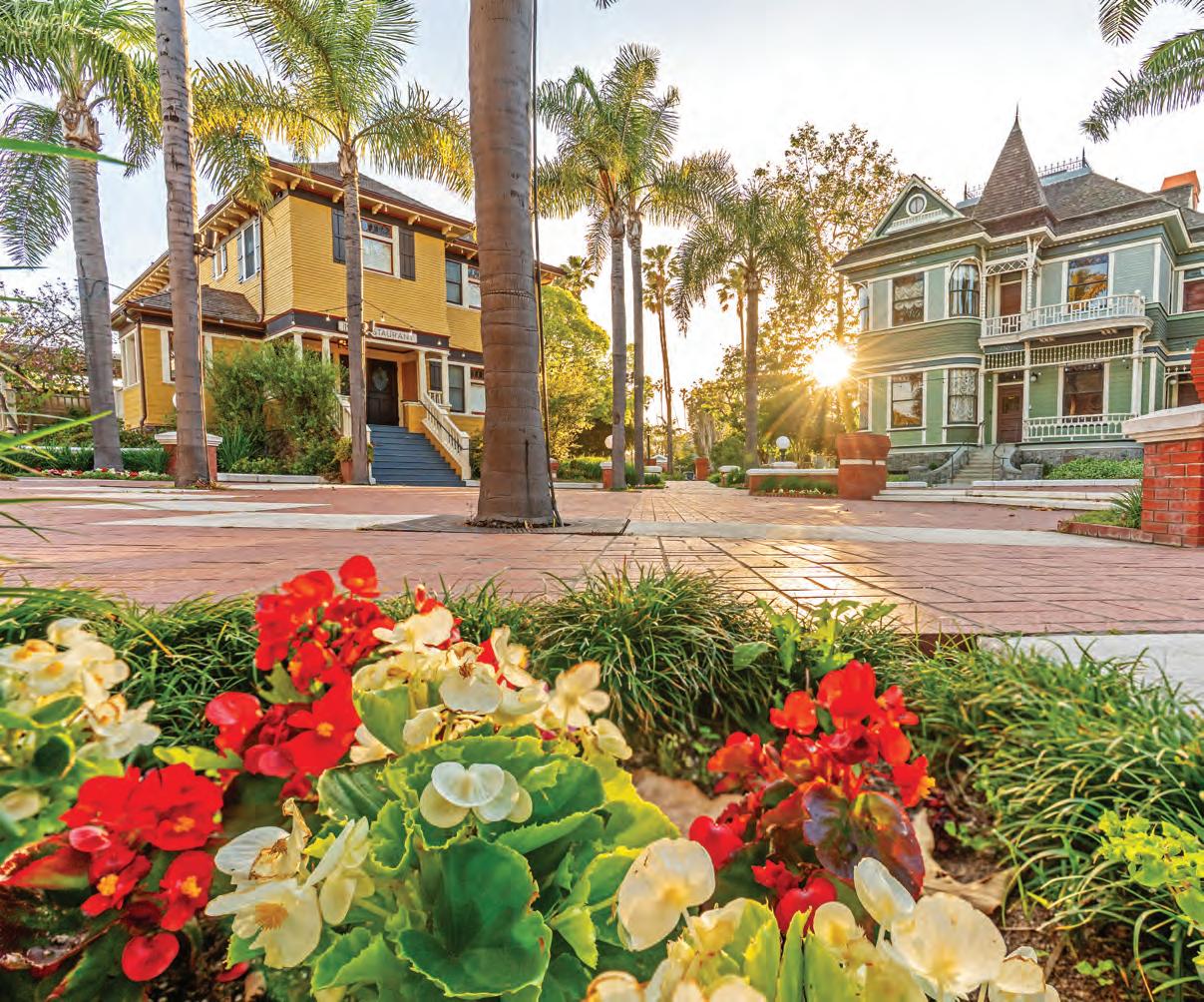
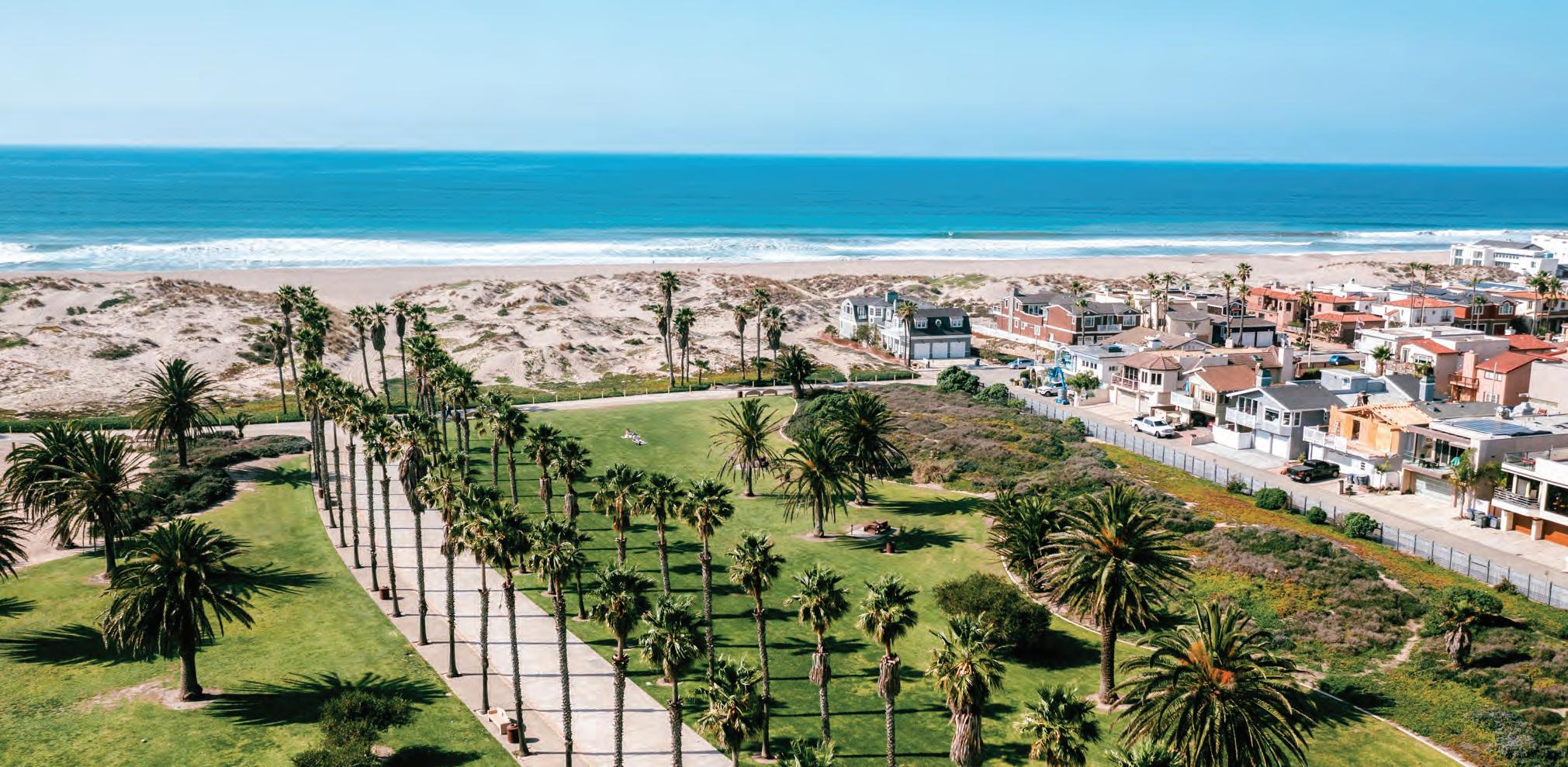
Just 60 miles north of Los Angeles, Oxnard o ers uncrowded beaches, dramatic coastlines, Victorian architecture and diverse landscapes location managers love.
Film-friendly, under-filmed And ready for its next production.



for the shows and we can expose other Californians to the process of movie making. Bringing a production to their town allows people to experience the economic benefits of hosting movie or television show. They see that not only do the actors benefit from filming in California; we all do.”
It’s not just about small towns either. If Southern California represents the industrial engine of the state’s production machine, the northern city of San Francisco offers something more architectural and intimate yet globally recognizable.
Manijeh Fata, executive director of the San Francisco Film Commission, says: “Few cities in the world offer such cinematic variety within a compact footprint,” she says. “Iconic landmarks, historic neighborhoods, modern tech corridors, sweeping coastlines and natural landscapes all exist within minutes of each other. In a single day, a production can move from a Victorian-lined street to a glassy downtown skyline, from rugged cliffs overlooking the Pacific to intimate, character-rich interiors that feel unmistakably San Francisco.”
Crucially, she adds, the city — with its vertiginous streets — rarely needs to rely on doubling for somewhere else. “San Francisco doesn’t just stand in for other places — it plays itself, and it does so with global recognition and authenticity.”
One director that embraced this is Olivia Wilde, who brought her latest movie The Invite to San Francisco. Starring Seth Rogen, Penélope Cruz and Edward Norton, The Invite moved quickly across multiple neighborhoods and civic locations over a few
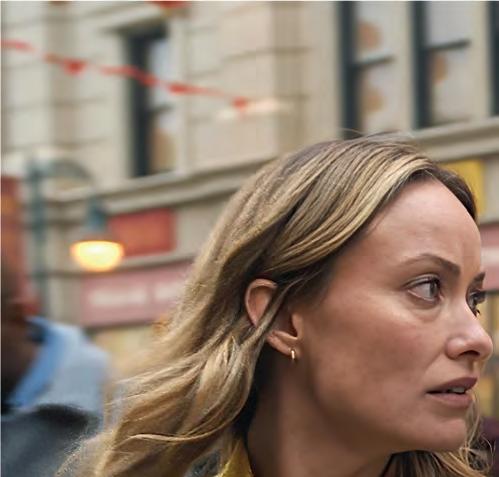

days in May 2025. The production filmed at A.P. Giannini Middle School, where scenes were shot inside the auditorium, notable for its Art Deco detailing. The team also worked on a rapid transit BART train between Glen Park and Balboa Park. In the city’s Mission District, the production took over the Make-Out Room on 22nd Street, while in North Beach, interiors were filmed at Molinari Delicatessen. Additional work included a residential facade in Potrero Hill used for a principal character’s home, as well as studio setups on Treasure Island in the bay.
San Francisco’s visual diversity is aided, Fata says, by a recali-

MANDI DILLIN ‘THE BENEFITS TO LOOKING BEYOND THE LA THIRTY-MILE ZONE ARE MASSIVE’
brated production process, with Film SF acting as partner from scout to wrap. “What truly sets San Francisco apart is the process of filming here,” she says. “We help productions identify locations, secure permits, co-ordinate with city departments and access incentives. That means fewer headaches, faster approvals and a pathway from vision to execution.”
Other titles to shoot in the city include Beth de Araújo’s Josephine — supported by the city’s local incentive — which secured a brace of awards before screening at Berlin. Elena Oxman’s Outerlands secured an Indie Spirit nomination. Meanwhile, Netflix’s A Man on the Inside is returning for season three, reinforcing the city’s interest in hosting ongoing series.
Emmy Award-winning producer/director Morgan Sackett says: “I've been lucky enough to film parts of several TV series in San Francisco throughout my career, including a big portion of A Man on the Inside (Season 1). It's always an amazing place to shoot — with a great crew base. On A Man on the Inside, Film SF was extremely helpful in making the city an easy place to film. I also found it to be a cost-effective and amazing backdrop.”
Overall, the numbers underline the city’s dynamism. In fiscal year 2024-25, Film SF facilitated 241 permitted productions across film, TV, commercials, documentaries and photography — generating $17.5m in direct local economic impact and nearly 500 shoot days. “We’re seeing a broadening of the production mix rather than a shift in a single direction,” Fata says. “Independent features and locally rooted storytelling remain strong. Commercial and branded content are a significant part of overall activity, helping stabilize production volume. We’re not overreliant on one format — and that resilience has mattered during this period of industry recalibration.”
Behind the city’s current momentum sits a policy shift. In 2026, Mayor Daniel Lurie signed legislation modernizing the 20-yearold Scene in San Francisco incentive. The updated incentive (stackable with the state incentive) introduces a tiered rebate: 10% on the first $1m of qualified local spend, 20% above that threshold and a 100% rebate on city fees — including permits, police services and use of city property — with total savings capped at $1m. “San Francisco has always been a city that
celebrates bold artistry and embodies a visual character unlike anywhere else,” Fata says.
San Francisco’s elevator pitch is clear. Iconic locations, a worldclass workforce, visual diversity and a flm ofce that clears the runway for projects to thrive. But beyond the city limits, San Francisco also functions as a strategic Northern California basecamp. Within one to two hours’ drive lie the vineyards of Napa and Sonoma, the tech campuses of Silicon Valley, the redwood forests of Marin, agricultural valleys, Gold Rush towns and the terrain of the Delta. “This geographic density allows productions to capture multiple worlds without drastically relocating crew or equipment,” Fata says. “You reduce travel time, cost and complexity, while dramatically expanding your visual scope.”
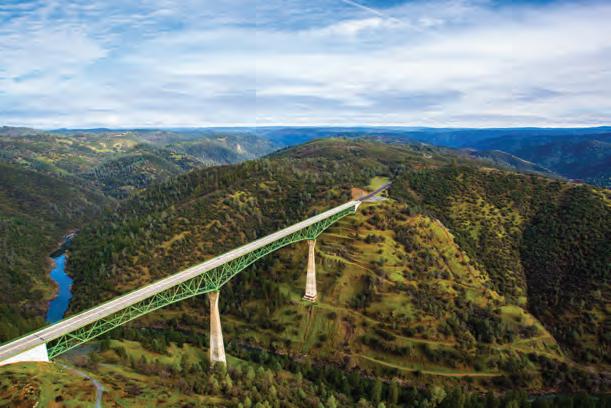
San Francisco is not the only northern city with a compelling case. State capital Sacramento has also been building quiet but tangible momentum, positioning itself as one of Northern California’s most versatile production bases. At the centre of that efort is flm commissioner Jennifer West, who frames the city’s appeal in terms of fexibility, accessibility and collaboration. Sacramento, she argues, offers a depth of visual range that often surprises incoming producers. “Sacramento is a wealth of diverse locations including waterways, parks, bridges, restaurants, farmland, plus a downtown core that truly mimics ‘any city’ USA. Within minutes, you can move from urban streets to riverside levees to historic districts to wide open agricultural land.”
Part of Sacramento’s potential lies in its surrounding landscapes. West singles out the Sacramento River Delta — known locally as River Road along the Sacramento River in south Sacramento County — as “shamefully underutilized”. While car commercials
capitalize on its driving routes, she sees far broader cinematic potential in its “labyrinth of waterways, twisting backroads, old marinas, tin-roof shacks, tiny islands, small towns, farmland, and kingdoms of birds, boats and barns.” The area, she says, is “cinematic, moody and completely transportive — and it’s right in our backyard”.
Like San Francisco, the city is keen to distinguish itself by the quality of its service: “We ofer low-cost permits, straightforward filming requirements and a community that genuinely welcomes production,” West says. “Crews aren’t fghting for space here, they’re supported.” The Sacramento Film + Media Ofce positions itself as a hands-on partner from prep through post, providing location assistance, a local crew and vendor database, hotel recommendations, liaison work with city departments and regional co-ordination. As West puts it: “We like to say: consider us part of your team.”
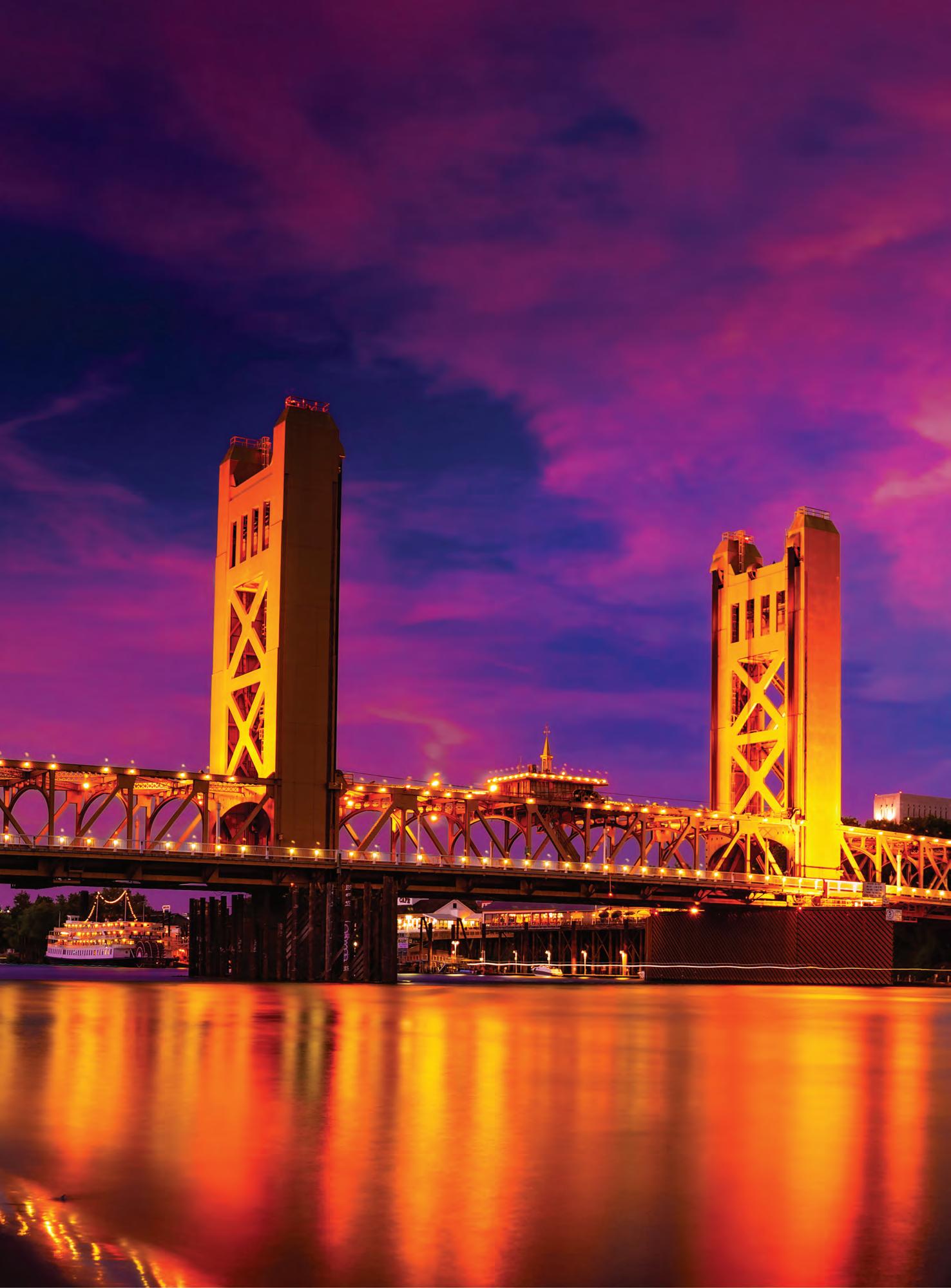
The past year has brought what she describes as steady activity with the occasional bright spot. Independent films and commercials have continued to fow through the region and the attention surrounding One Battle After Another has helped increase inbound interest. For example, the city hosted that movie’s gripping bank heist, and its Tower Bridge — a vertical lift bridge across the Sacramento River — served as a key location for one of the movie’s car chases.
Filmmakers, West says, are beginning to recognize Sacramento as “a viable, versatile flming location, one that can double as the Midwest, the South — or support period flms from the GoldRush era through the 1980s.”
West’s long-term strategy is measured. “I’ve always believed in growing Sacramento’s flm industry organically and sustaina-

JULI JOHNSTON
‘INVITING THE COMMUNITY TO SUBMIT LOCATIONS DIRECTLY TO OUR OFFICE HAS LED TO A SURGE IN DIVERSE, UNIQUE FILMING LOCATIONS’
bly, lifting our local talent as the tide rises, while also preparing for the future of where this industry is headed,” she says. “We’re scrappy in Sacramento and our success on One Battle After Another proves we can get the job done at any budget level.”
Reinforced by the role of FLICS, there is plenty of evidence of collaboration in the north. Sacramento has an ongoing partnership with the flm ofces in San Francisco, Placer County and El Dorado County that presents Northern California as unifed rather than competitive.
Placer County flm liaison Juli Johnston says: “It’s been encouraging to see our partners in Sacramento attract major Hollywood flms and have so much success with those projects. When they succeed, we do as well.”
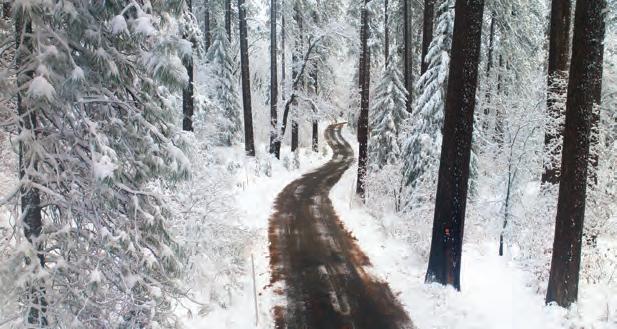
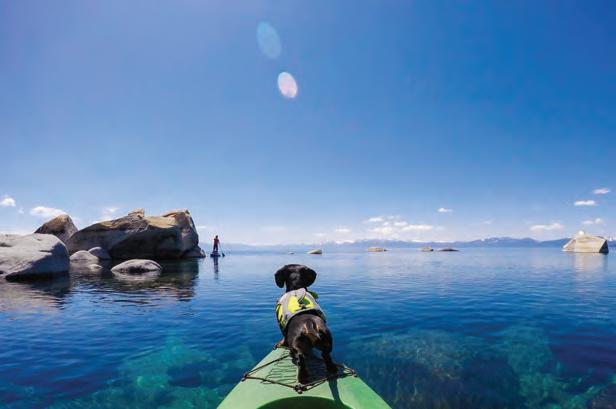
In terms of Placer’s local ofer, Johnston says the county ofers spectacular scenery including mountains, forests, rivers and the iconic Lake Tahoe. It can also boast a strong connection with the evocative Gold-Rush era. “Placer County has always seen steady interest in flming commercials here because of the rugged, ver-
satile locations we ofer,” she says. “Lately, we’re also seeing a rise in independent short flms, and it’s encouraging to watch up-and-coming flmmakers choose Placer County as a place to create and grow.”
Echoing the general mood in the state she is optimistic that the expanded State of California flm incentives “will encourage more flmmakers to keep their projects within California and attract new productions to our region”.
In terms of on-the-ground activities, Johnston says: “By inviting the community to submit locations directly to our ofce, we signifcantly expanded our location library. This has led to a surge in diverse, unique flming locations.”
The Placer flm ofce has also worked hard to respond quickly to producer enquiries and make permitting friendly and approachable way we explain the flm permitting process to up-and-coming flmmakers. In addition, says Johnston: “Our local talent pool is growing and eager to work. With each production that comes through the area, crew members are gaining valuable
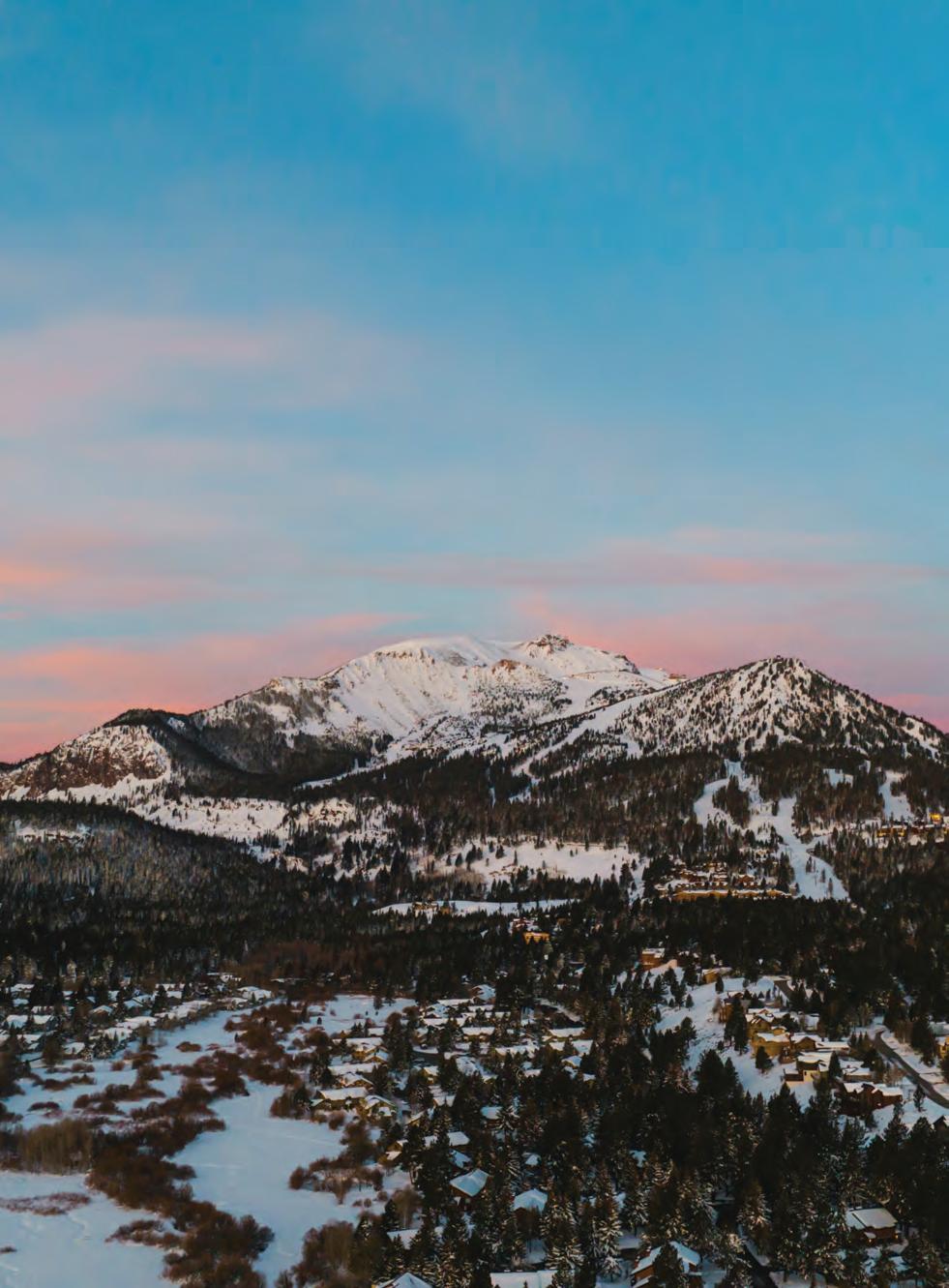
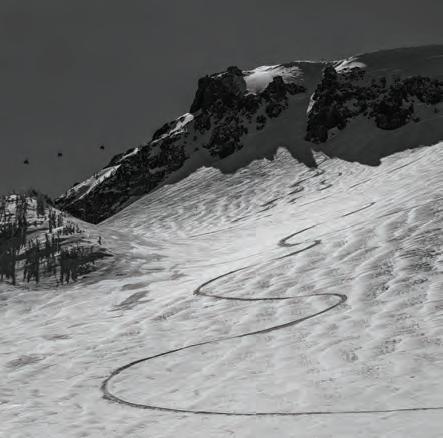
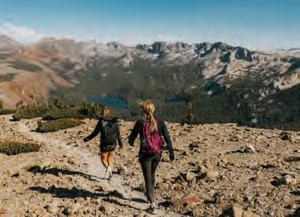
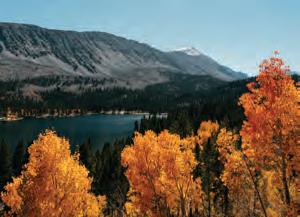
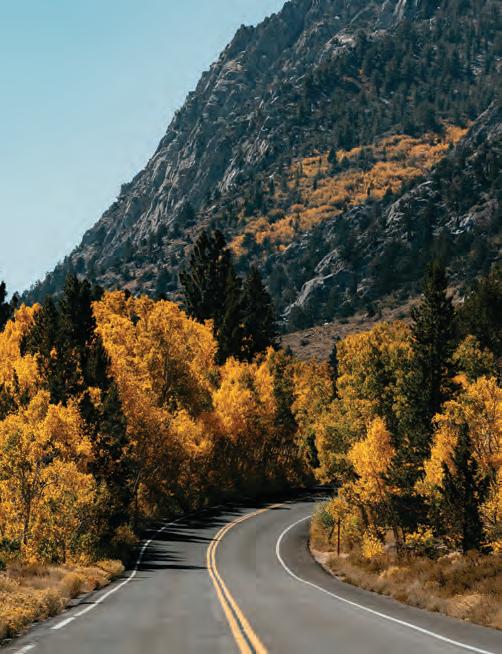
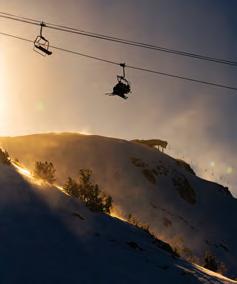
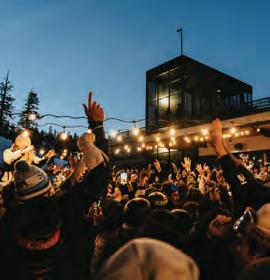
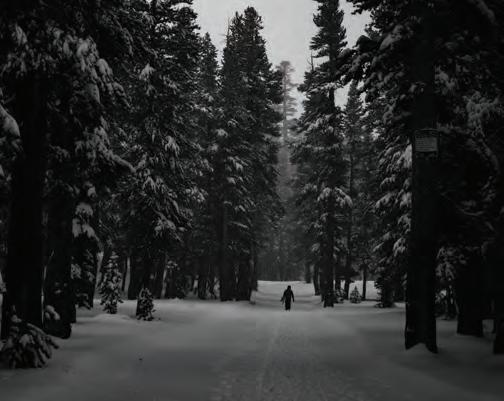
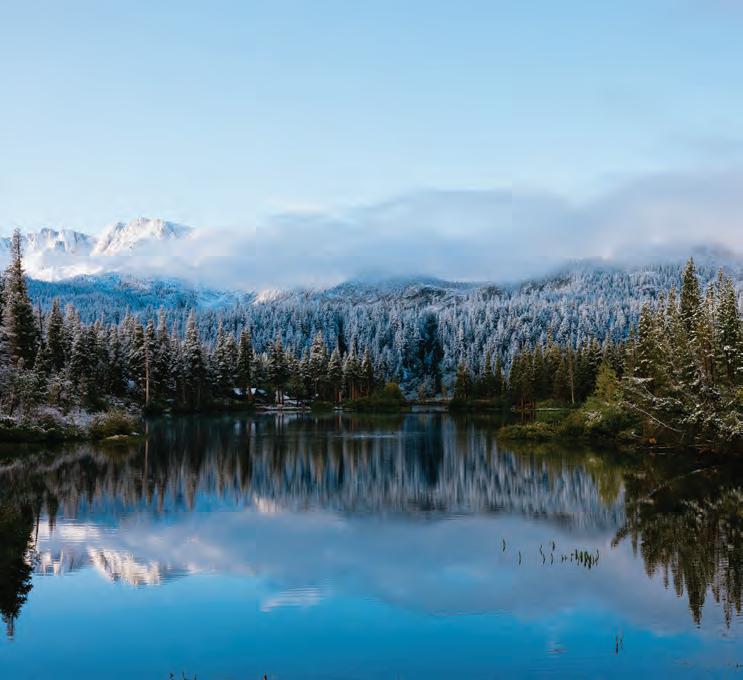
Bring your next production to the cinematic alpine backdrops of Mammoth Lakes—a reliable four-season, production-ready paradise.
Work with experienced location managers and scouts, get hands-on help with permits, EQ, catering and more. Plus, keep your crew close in comfortable, production-friendly lodging just minutes from primary flming zones.
Reach out today to see how Mammoth can be your all-inone flm and production mountain basecamp.
experience, creating a strong and expanding base of talent for flmmakers. We have incentives to help producers reach their goals and stay within budget. Plus, we’re willing to go above and beyond to help location scouts fnd exactly what they’re looking for.”
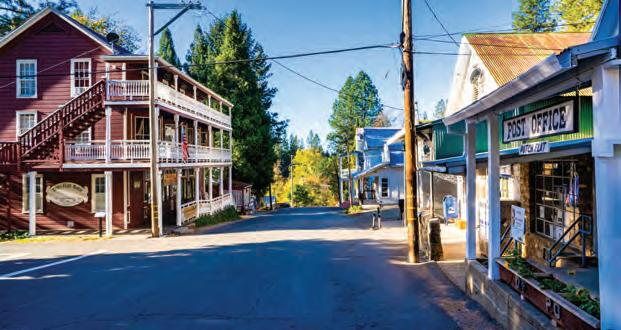
Similarly, the Upstate Film Commission serves as a single point of contact for productions looking to access Northern California’s more rural counties — representing Shasta, Tehama, Yuba and Sutter under one banner. The region offers a distinctly diferent look from the state’s major metropolitan hubs: expansive agricultural land, small-town main streets, riverfront settings and period architecture that includes preserved Victorian homes and revitalized downtown districts. At the centre of the region is Redding, which functions as both a logistical hub and a visually distinctive location in its own right. Framed by mountains and bisected by the Sacramento River, Redding ofers lakes, forested terrain and civic architecture — including the striking Sundial Bridge — within minutes of hotels and
production services.
Conveniently, the Upstate area sits within reach of Sacramento, making it viable for productions that need to base cast and crew in a larger city while shooting in more remote environments. That combination — visual range paired with logistical accessibility — positions the Upstate counties as a fexible extension of California’s ecosystem rather than a standalone outpost.
The region assisted 31 productions in 2025 and generated $2.5m in local economic impact. Like everywhere in the industry, the Upstate Film Commission experienced a tough year in 2025 but still managed to host a fam tour for industry professionals in the spring. And the recent expansion of the California Film & TV Tax Credit should help to bring more work to the area.
Between Los Angeles and San Francisco, California’s central corridor delivers a concentration of locations that rival either end of the state. Santa Barbara combines vineyards, ranches, beaches, sand dunes and Spanish Colonial architecture within a tight coastal footprint, while Kern County ofers a more rug-




COLLEEN BELL
‘WE WANT TO MAINTAIN AN ENVIRONMENT HERE IN CALIFORNIA WHERE CREATIVITY CAN FLOURISH, WHERE PEOPLE FEEL RESPECTED, WHERE PEOPLE WANT TO TELL THEIR STORIES’
ged palette of mountains, high desert, forests and agricultural plains. Landmark sites such as Tejon Ranch, Red Rock Canyon State Park, Trona Pinnacles, Lake Isabella and Edwards Air Force Base regularly double for remote highways and otherworldly terrain, making the county a frequent host for automotive campaigns and large-scale action features. Further up the coast, Monterey and its Pacifc shoreline is one of the most iconic stretches of coastline in North America. The area has featured prominently in HBO’s Big Little Lies, Netflix’s Ratched and the feature All the Old Knives, and continues to attract fashion shoots, reality series and commercials seeking high production value and stunning coastal backdrops. Right down in the south of the state, San Diego continues to sharpen its credentials as a flming hub. Another active player in the central band of the state is San Luis Obispo County (SLO CAL), roughly three hours north of Los Angeles. According to Matt Halvorson, Film Commissioner at Film SLO CAL, the past year has been focused on raising the region’s profle through direct outreach and hosted familiarisation tours. “When producers and location managers see how many looks we can ofer within a small radius, it changes the conversation,” he says. “It moves SLO CAL from being a hidden option to being a real contender.”
Halvorson reports growth across commercials, branded content, indie features and streaming projects — particularly those seeking scale without major metro costs. “What’s driving interest is how much variety we ofer close together,” he says.
Feedback from visiting teams, he adds, consistently centers on logistics and co-operation. “People here tend to lean toward yes. Whether it’s permits, last-minute location needs or complex road closures, local partners understand what it takes to support flming,” Halvorson says
With activity right across the state, Dillin is “optimistic about flming in California because the voices of producers and directors who want to keep working here are getting louder. Jonathan Nolan is the perfect example. I’ve been collaborating with him for over 12 years now and he’s been very vocal about keeping productions here… and he doesn’t make small shows. He’s a living example of how to keep things in California.”
In a volatile world, the CFC’s Bell believes there is another point to note in California’s favor: “Creativity fourishes when people feel free — when they feel valued. Diverse voices and storytelling are important. We want to maintain an environment here in California where that creativity can flourish, where people feel respected, where people want to tell their stories.”

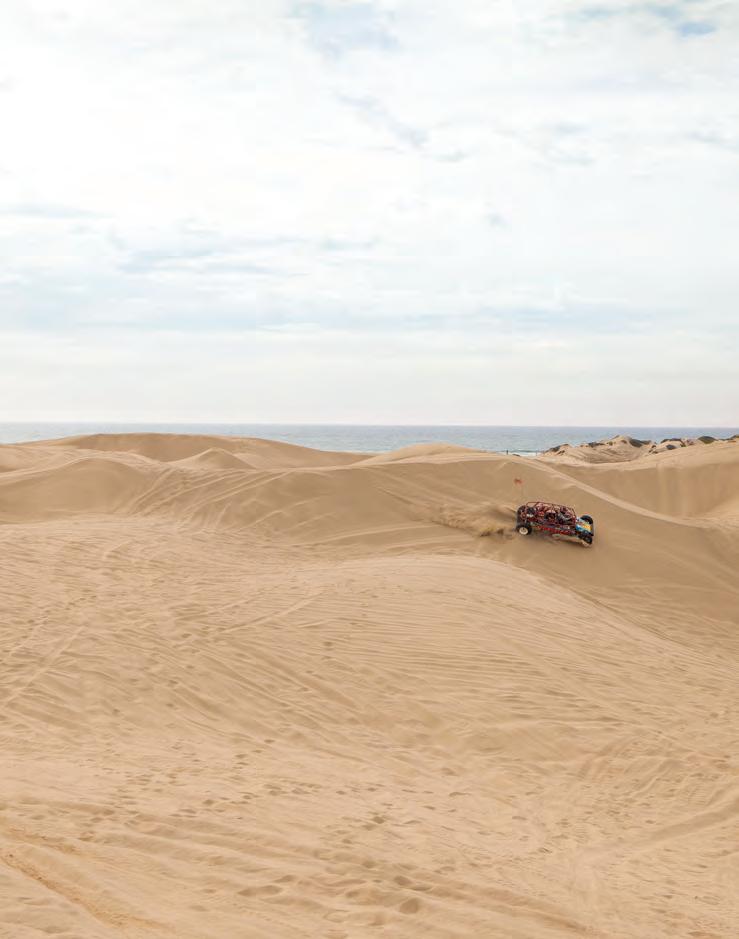
Midway between LA and SF, SLO CAL delivers 315 days of sunshine and extraordinary location diversity, including California’s only drivable beach at the Oceano Dunes, plus the iconic coastal Highway 1, vineyard valleys, historic homes, charming seaside towns and more, all within a short drive. start scouting your perfect location at filmslocal.com
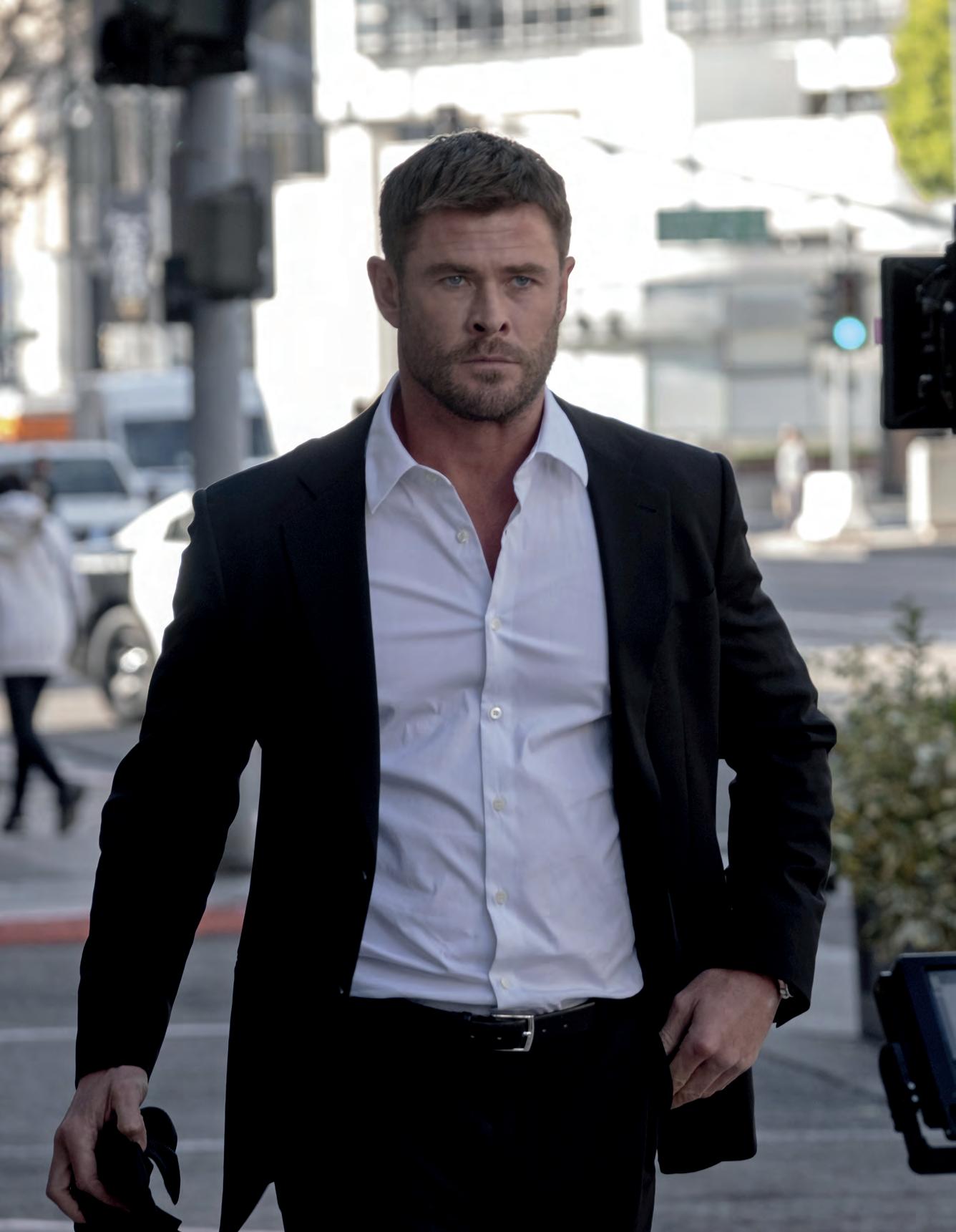
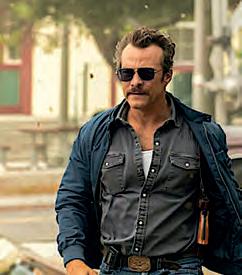
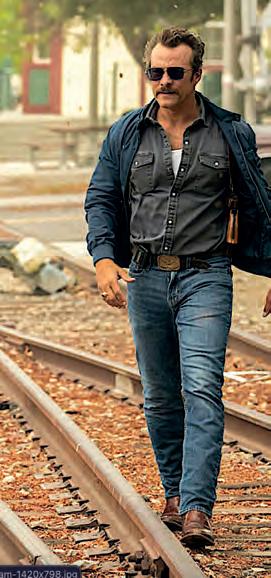
Set in the city of Los Angeles, Crime 101 follows elusive jewel thief Mike Davis, whose string of burglaries along the 101 freeway have mystifed local law enforcement. While planning what could be his biggest ever heist, two people cross his path — one who might turn out to be the perfect accomplice, the other, the detective who could end his criminal career — and his freedom, forever. Julian Newby reports


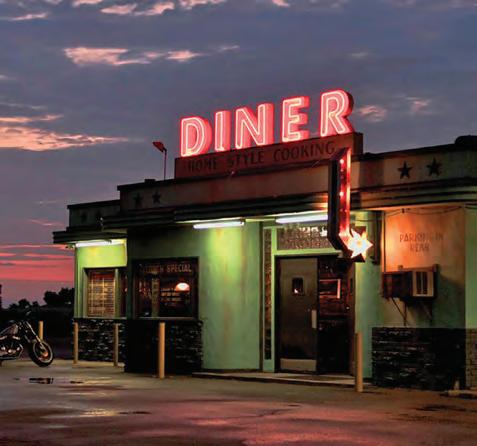
60 MINUTES FROM HOLLYWOOD. WORLDS AWAY ON SCREEN. Palmdale has played the Holy Land, the Wild West and the outer reaches of space. Desert vistas, dramatic rock formations, aerospace backdrops and 300+ days of sunshine make the City one of the most versatile flming locations.
The Palmdale Film Incentive Program reimburses up to $10,000 in crew hotel costs or up to $2,000 in permit fees to productions with a valid FilmLA permit. With $150,000 allocated annually, dedicated flm support from permit to wrap and 17 crew-ready hotels, Palmdale rolls out the red carpet.
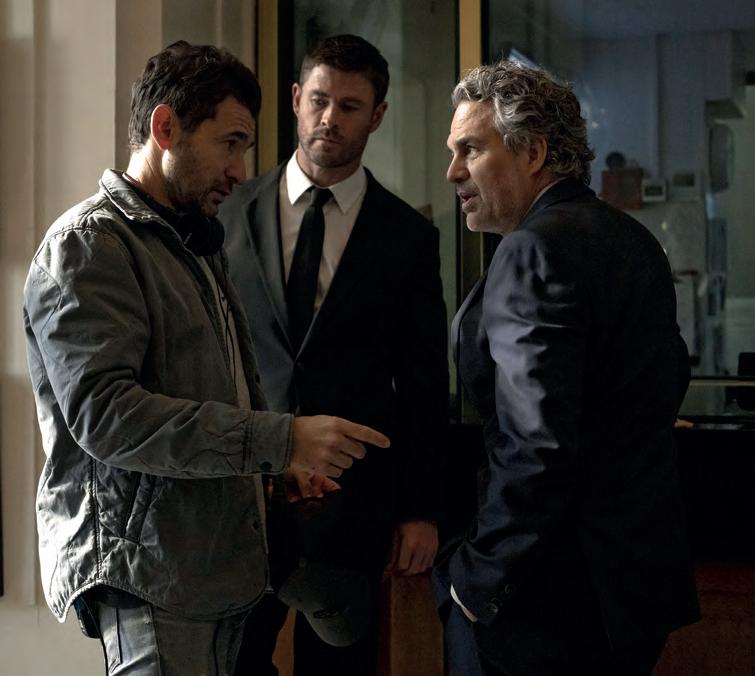
BART Layton’s Crime 101 is much more than a typical crime caper. An adaptation of the Don Winslow crime novella, it centers around jewel thief Mike Davis, played by Chris Hemsworth, who is careful to steal from those who can aford it — or are insured against his crimes. He carries a gun but is not violent against his victims. Then two key fgures enter his orbit: Sharon, a disillusioned insurance broker played by Halle Berry; and LAPD detective Lou Lubesnick, played by Mark Rufalo, who is on to Davis. Layton, the director, says the story “had a lot of potential for a kind of old-school wicked night out at the cinema”.
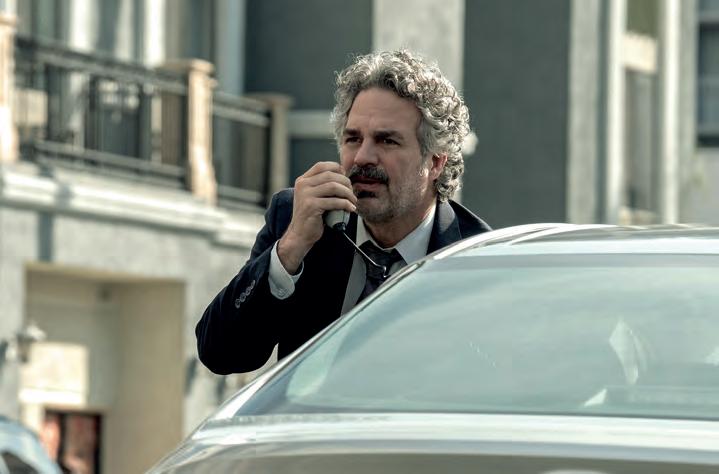
Alongside Winslow’s plot, performances from a star-studded cast and Layton’s storytelling, the city of Los Angeles plays a key role in Crime 101. Layton saw in the city a metaphor for society’s inequalities that so often lead to crime: “You can live in LA and glide between your beautiful home and marble ofce without ever touching the underbelly,” he says. “The rich live literally higher, in the hills or as far west as possible. At the start of the flm, a diamond travels from Downtown LA, from an immigrant family, to Calabasas, a wealthy city in the southwestern region of the San Fernando Valley in Los Angeles County. In the 45 minutes it takes, it quadruples in value — just by virtue of moving closer to wealth.”
Early scouting happened further south — San Diego and Orange County — “because that's the world that Winslow works in”, supervising location manager Robert Foulkes says. But the Los Angeles backdrop was central to Layton’s interpretation of the
Robert Foulkes
‘When I got the email about Crime 101, my reaction, immediately, was ‘OH MY GOD! BART’S GOING TO DO IT’
story. Combine that with production designer Scott Dougan’s desire to showcase parts of the city that people normally don’t see, and you have a real Los Angeles story without the clichés.
The action spans from San Barbara to Downtown LA, with locations in Pacifc Palisades, Venice, Redondo, Hermosa, Beverly Hills and Echo Park serving as part of the backdrop.
Another key to the flm’s fresh look at the city is Layton’s background as a documentary flmmaker which, according to Dougan, means he “has fresh eyes, there’s no expectation of
what things should be, he’s very good at seeing things for what they are”. Layton says his experience making documentaries most certainly informs his fction work: “I’ve spent time as a documentary maker with people who really have done bad things ,” he says. “My process is always kind of to return to the documentary reality, so I'll do a ton of research, I'll try and speak to the real people who do the jobs that these characters do. You know, you can speak to real jewel thieves in prison, and you can talk to them about everything from their back stories to their methodology.”
And that authenticity extends to his use of locations, too. For example, he says it was “non-negotiable” that the flm had to be shot in Los Angeles. And there are pros and cons to that, “the pros being you get the best crew in the world… but it's really expensive”. But telling this Southern California story in Australia or South Africa or Canada
“was never going to happen”.
Both Los Angeles and Layton were big attractions to the movie for supervising location manager Foulkes. He was a fan of Layton’s frst narrative movie American Animals, and also a fan of flming in his hometown of LA.
“It was my wife who turned me on to American Animals,” Foulkes says.
“And when I got the email about Crime 101, my reaction, immediately, was ‘Oh my God! Bart’s going to do it. Bart's fnally going to do another feature. And not only that, it’s all in LA. He's hopefully shot up into the A-list of






directors from this movie, because he deserves it.”
The frst jewel heist takes place in aforementioned Calabasas, “which is genuinely of the 101”, Foulkes says. “That’s kind of a nice treat. Locations don't always get to be where they really take place.”
Initial scouting was carried out by Foulkes, along with Layton and Dougan, and at frst they did look beyond Los Angeles County. “But eventually it became an all-based-inthe-Los Angeles-area movie,” Foulkes says. “Because you can't fake LA, I don't think.”
For example, a sumptuous wedding scene is set in the Beverley Wilshire hotel — a Los Angeles landmark that instantly says ‘expensive’. But despite the fact that movies are the lifeblood of the city, it wasn’t that straightforward a location to flm.
“The hotel didn't need to be the Beverly Wilshire. We just asked ourselves ‘Where would they have this wedding?’,” Foulkes says. “It ended up being a great choice, I think, because again, it showed of LA and the hotel looked great in that sequence.”
But not an easy choice. The Beverly Wilshire is located at the intersection of Wilshire Boulevard and the exclusive Rodeo Drive, with all of its high-end stores. Even the revered Los Angeles flm crews can’t hang around there for too long.
“We had a limited amount of time to do shots from across the street,” Foulkes says. “I parked a car, I was able to park a car illegally in the median when Chris Hemsworth is staking it out and he crosses the street, with
Douglas Dresser
‘WE HAD GREAT SUPPORT from FilmLA, the State of California and the council ofces’
Beverly Hills PD on Rodeo. Then the shots have him walking out of the hotel, and the car pulling up. So it was a limited amount of time on the exteriors. But then once you go through those doors, it is not the Beverly Wilshire.” Because the scene required a shoot-out and a whole foor of the hotel plus the lobby, those scenes were mocked up in London where the post-production was taking place — enabling the Beverly Wilshire to get on with its day-to-day business.
So complicated were many of the sequences shot in and around Los Angeles, that a second location manager, Douglas Dresser, was employed on the shoot — working alongside the movie’s action unit director Darrin Prescott.
“I was brought in late to the process,” Dresser says. “They needed to do complex action sequences and
co-ordinating with local businesses and residents for an action sequence are always a challenge, but worth it. “We had great support from FilmLA, the State of California and the council ofces,” Dresser says. “LA is still a movie town. I spend a lot of time traveling the states and the world making movies. The people in Los Angeles have a lot of experience

co-ordinate freeway driving and an aerial unit. Darrin suggested I come in to assist and so my team and I came in to help put those together.” For example the extraordinary car chase along Lankershim Boulevard that runs through North Hollywood — most defnitely one of the flm’s highlights, which required intense collaboration between crew and city authorities. Dougan, cinematographer Erik Wilson and Dresser spent a few nights driving around “looking for the grit and realness of the city,” Dresser says. “It was a great time to see how the streets are lit, what new takes on the city we could fnd, and how they would ft into the entirety of the movie. We would listen to music, eat fsh tacos and drive around laughing and exploring. Those are the best parts of making a movie like Crime 101 — getting to tell the stories and show parts of city that are often overlooked.”
Challenges faced by Dresser and the action unit included: “Closing large sections of the city — The Arts District, Woodland Hills and North Hollywood; fying and landing a helicopter in Downtown Los Angeles; co-ordinating large police and California Highway Patrol [CHP] movements; and
making movies and did everything they could to help us. It’s nice when we don’t have to reinvent the wheel with the flm ofces. Allowing this to be made in Los Angeles kept people home, kept them working and we made a signifcant fnancial impact to the areas we flmed in.”
While always loving the challenge of a near-impossible action scene — “Flying over the freeways and Dodger Stadium at sunset is always spectacular” — Dresser says he and his team “tried to fnd familiar locations and turn them on their heads, look at them from a diferent angle. I loved the taco stand scene in Echo Park, a non-action scene. If you're from LA, you will appreciate that scene and the location. My team and I went to a local restaurant across the street and had dinner on an outdoor patio watching the other kids play, drinking margaritas and giving commentary. Was a fun night.”
Crime 101 is distributed by Amazon MGM Studios in the US and internationally by Sony Pictures Releasing International. The flm is produced by Raw and Working Title Films, The Story Factory and Wild State.
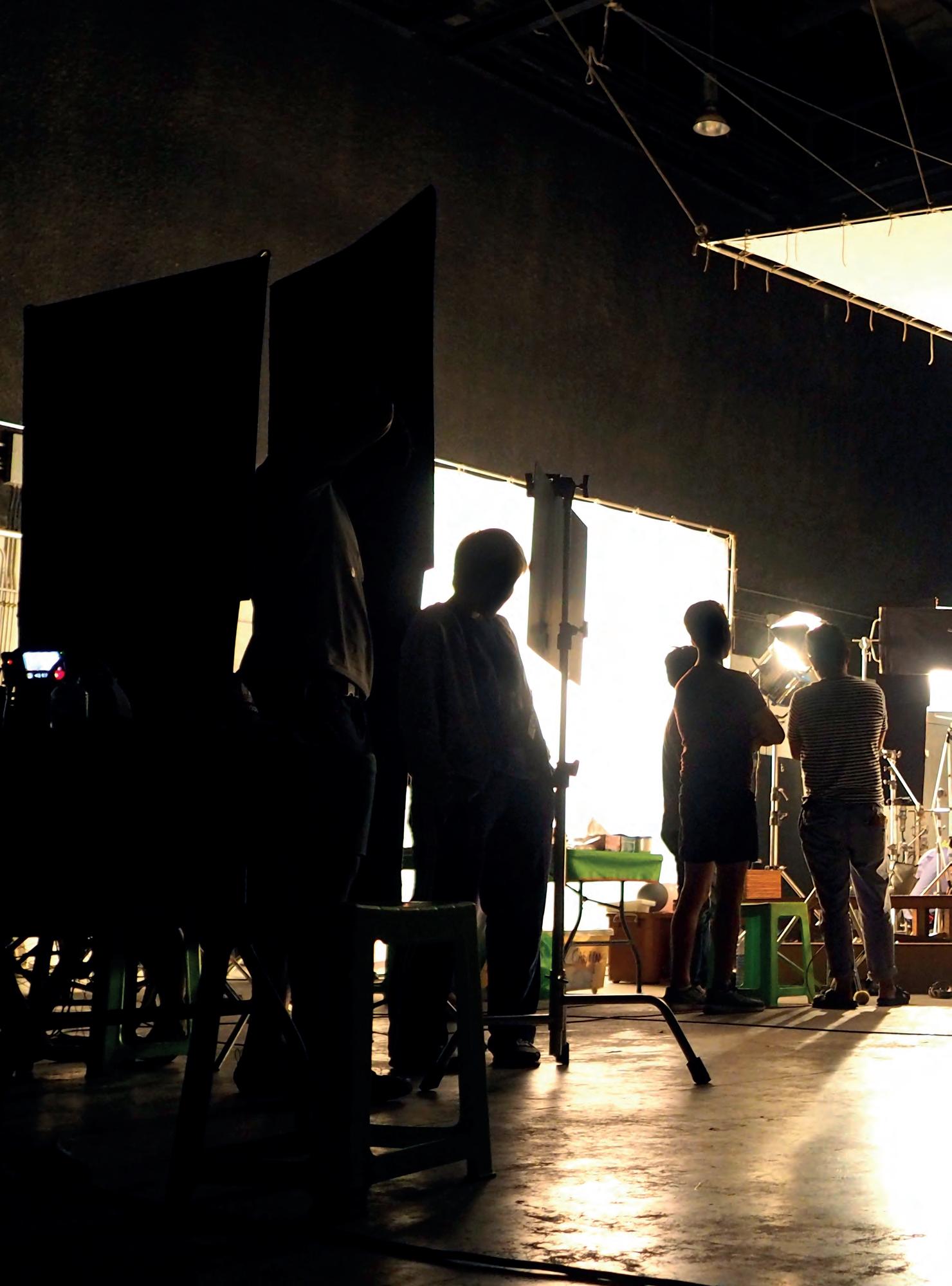
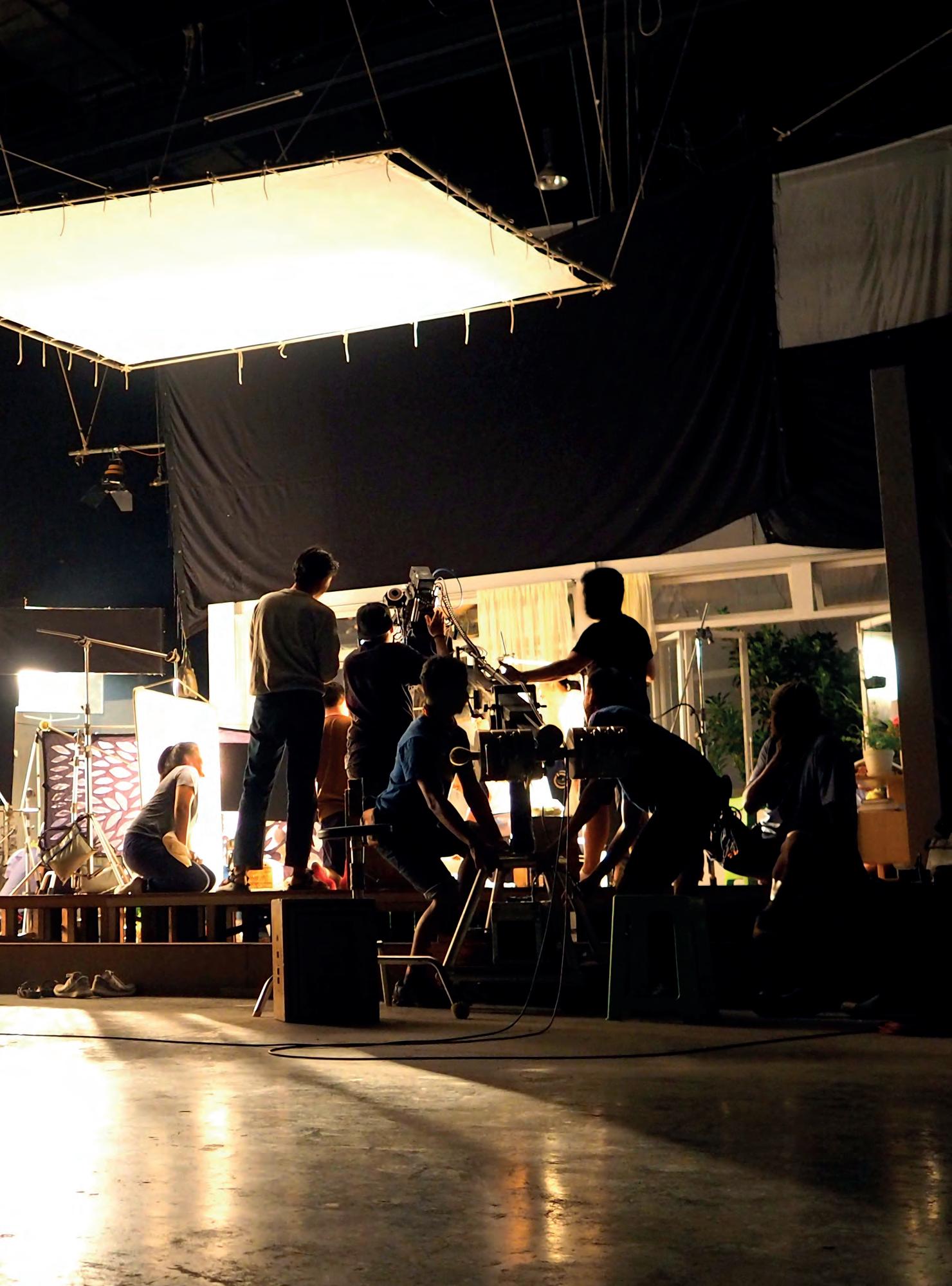
Studios across California have stood firm against financial pressures felt by the production industry worldwide. And as Andy Fry reports, the long history of the sector proves just how resilient the studio business has been over the years








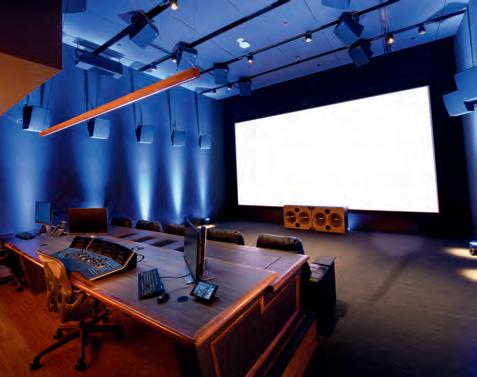



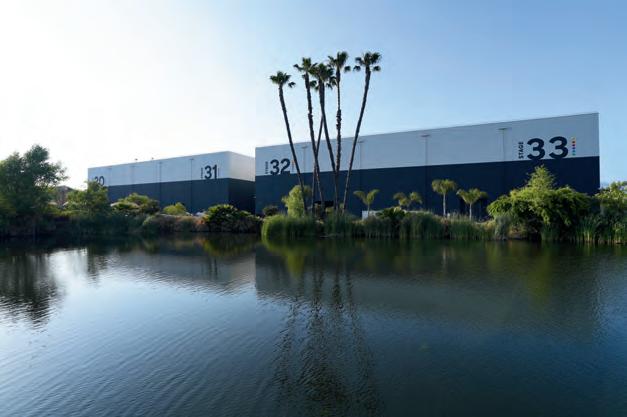
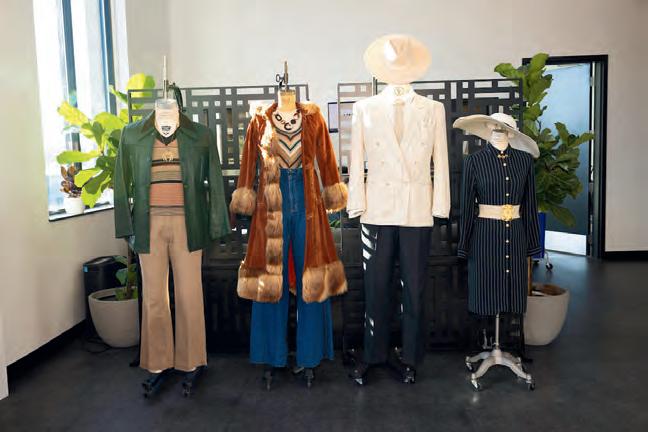
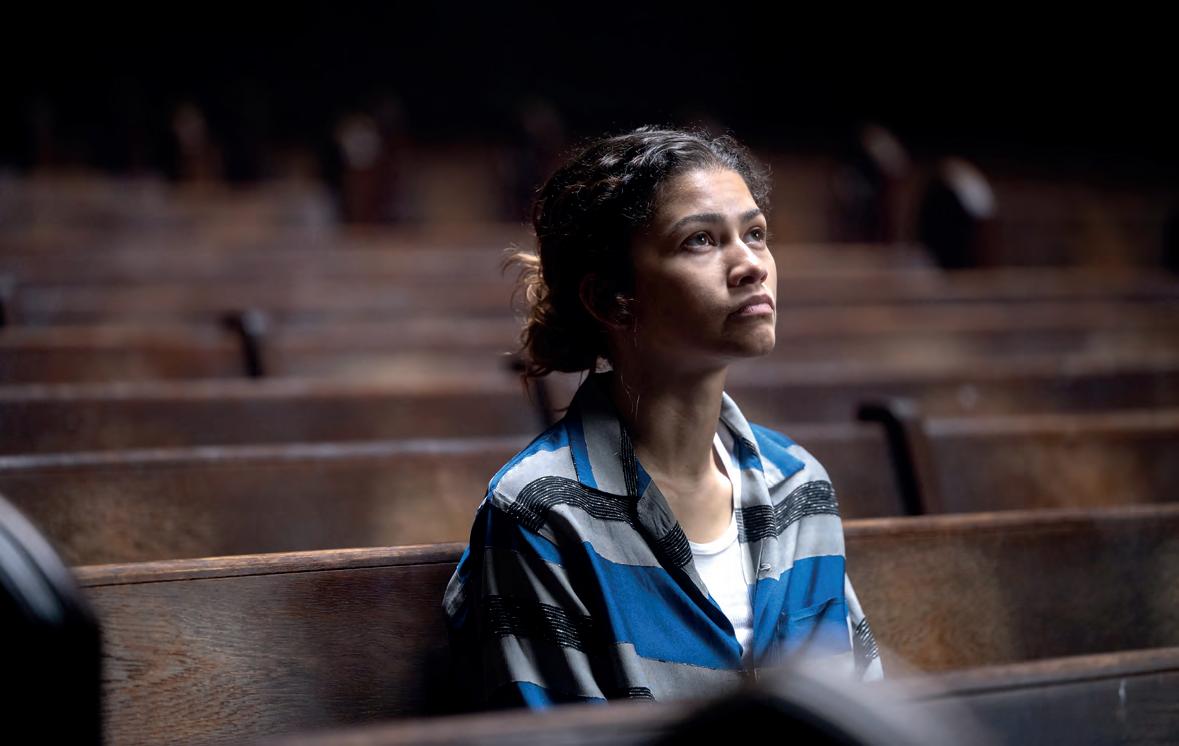
CALIFORNIA's studio sector has had a difcult few years. The seventh edition of FilmLA’s authoritative Sound Stage Production Report shows just how sharp the contraction has been across greater Los Angeles. Drawing on fgures from 17 studios representing roughly 82% of the region’s certifed stage market, the report fnds that sound-stage occupancy — which averaged in the 90th percentile between 2016 and 2022 — fell to 69% in 2023 and slipped further to 63% in 2024. Yet to frame the story of Los Angeles studios purely as one of decline would be misleading — particularly when most major production hubs around the world have sufered falling output. California still commands one of the world’s most sophisticated production ecosystems, with an estimated eight million square feet of stage space, an unmatched concentration of creative talent and a supply chain refned over a century of flmmaking. Policymakers, crucially, have acted. The expansion of the California Film & Television Tax Credit — larger, more fexible and refundable — is already reshaping production decisions. Across the region, studio operators have responded with a characteristically can-do Californian attitude. Having weathered economic shocks before, they are re-calibrating: refning business models, investing in infrastructure, embracing new formats and doubling down on service. From legacy lots to independent operators in the Valley and Santa Clarita, the prevailing mood is not decline but reset. Few studio lots carry the historic and infrastructural weight of Universal. Under the leadership of Jefrey Stone, its president and general manager, the lot continues to lean into scale and versatility as defning strengths. “The Universal Studios Lot ofers 34 state-of-the-art sound stages, full-service production services, industry-leading post-production, and 400 acres of diverse locations,” Stone says. Those 400 acres include a New York Street, suburban neighborhoods, lakes, wooded areas and even a water-
fall — a concentration of controlled flming environments few global rivals can match. Films to have featured the New York street backlot include The Fall Guy, Transformers, The Amazing SpiderMan, Bruce Almighty, Home Alone 2: Lost in New York and The Sting
“Every corner of Universal Studios is a potential flming location,” Stone says. “Productions can move efciently between stage and exterior without losing time. That ability to consolidate activity translates into cost control.”
In an era in which productions scrutinize every line item, the value of integrated infrastructure has sharpened, he says. Universal has continued to invest in new facilities, including a recently opened Stage 5 post-production building that consolidates sound mixing, color for streaming and broadcast, and digital-intermediate services into a single workfow hub. On the production side, its on-lot virtual-production stage supports car process work, interviews and previsualization.
But technology, Stone insists, must remain creator friendly. “We aim to be true partners, providing not just facilities but an inspiring place to work.”
That partnership extends across formats. Scripted series, features, entertainment formats and commercials coexist on the lot. In a market where episodic television has become less predictable, diversifcation strengthens the studio ecosystem. “Creatives are drawn to the lot, no matter their medium,” Stone says. “The environment is designed to support everyone who works here.”
Another cornerstone of the Los Angeles studio landscape is Warner Bros. Studios Burbank, whose history stretches back more than a century and whose facilities remain among the region’s most comprehensive. “Warner Bros. Studios Burbank is steeped in history,” says Dan Dark, executive vice-president of worldwide studio operations. “The iconic studio lot has been home to some of the greats like Casablanca, recent hits like The Studio, fan-favorite Warner Bros. Television series including Friends, The Big
JEFFREY STONE
‘EVERY CORNER OF UNIVERSAL STUDIOS IS A POTENTIAL FILMING LOCATION’
Bang Theory and hundreds more flm and television titles from Warner Bros., HBO and third-party production companies from around the world. We just celebrated 102 years of entertaining the world.”
The studio operates across two campuses: the historic Main Lot and the rebuilt Ranch site north of the main complex. “On the main lot, we have 110 acres with 31 stages, unique backlots, and world class production and postproduction facilities,” Dark says. Unlike many contemporary campuses that specialize primarily in stage space, Warner Bros. continues to operate as a full-service production environment. “We ofer robust grip and lighting equipment rentals, on-lot property and costume shops, exceptional design and construction teams, on-lot special efects specialists and a feet of transportation vehicles,” Dark says. “Our studio is designed to support every type of production working today, no job too big or too small.”
A redevelopment of the Ranch campus adds significant new capacity. “We recently opened the Ranch studio, a half mile north of our main lot,” Dark says. “Featuring 16 brand new sound stages, a large-scale mill space, plus production ofces, café and more, we’re investing in the California flm and television industry’s future.”
Operationally, Dark says the studio’s philosophy centers on supporting creators. “We are creator-led and creator-driven,” he says. “Everything we do and every turnkey solution we ofer is to help creators tell their stories the way they want. Our team operates on a production-frst mindset and works with crews to give them the best-in-class services they need for a successful shoot.”
Like many operators, Warner Bros. has seen shifts in the types of productions using its facilities. “California’s studio market has been evolving for many years and continues to ebb and fow,” Dark says. “We have seen an uptick in large-scale television production over the past fve years while seeing fewer multicam sitcoms.”
At the same time, productions increasingly demand advanced technical infrastructure. “We’ve seen a rise in tech needs looking for robust networking and state-of-the-art postproduction facilities and have built our studio out to accommodate,” he says. “Our clients are looking for a premium production experience and that’s what we ofer.”
Despite intensifying competition, Dark believes California’s advantages remain compelling. “California has some of the most skilled crew members in the world, many of whom call Warner Bros. Studios their home,” he says. “With our deep talent roster, beautiful year-round weather and diversity of practical flming locations, California remains the defnitive home of the flm and television industry.”
The state’s incentives are also helping to retain production locally. “Our revitalized flm-incentive program through the California Film Commission has been instrumental in keeping productions local and we’re proud to say our 16 ranch stages are all CFC certifed through their Stage Incentive Program,” Dark says. Looking ahead, the studio remains focused on the long term. “We continue to invest in California and our industry as we move into our next 100 years,” Dark says. “Warner Bros. Studios is more than just an iconic, storied studio, one that is creating what’s next in all forms of entertainment. We are built for flmmakers by flmmakers and look forward to working with them to create the future.”
Another historic pillar of the ecosystem is the Fox Studio Lot in Century City, where the company is undertaking a substantial long-term reinvestment in facilities, technology and infrastructure. “Our investment is a clear statement of confdence in Los Angeles as the world’s premier production hub,” says Gary Ehrlich, the lot’s president. “We believe in the people here — the crews, artists and craftspeople whose talent, experience and institutional knowledge are unmatched anywhere in the world.”
The lot hosts a wide range of internal and third-party productions, from reality competitions to drama series and feature flms. That diversity shapes how the campus operates. Among key initiatives is the redevelopment of the New York Street backlot. Originally built in the 1960s, the street has been rebuilt with new facades and integrated infrastructure, including built-in rigging, allowing productions to work more efciently while preserving fexibility. As impressive as the facades, Ehrlich says, are the interiors. “They represent an understanding of what will be needed by camera operators, directors, actors and others. They’re designed with the camera in mind, giving flmmakers strong, fexible ‘bones’ that can be redressed and reimagined to represent virtually any urban setting, from any era, anywhere in the world. That allows productions to achieve visual ambition efciently without the constraints of real-world streets.”
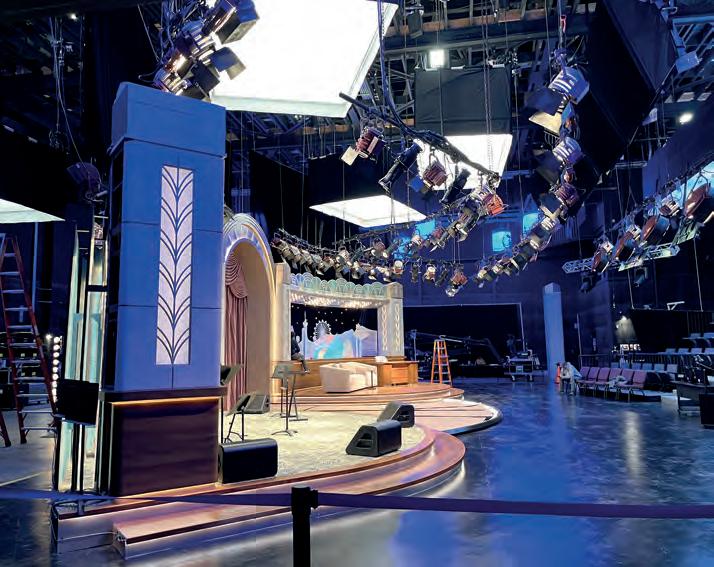
Across the wider lot, Fox is also expanding technical capabilities. The campus now ofers 15 sound stages ranging from 14,000 to more than 28,000 square feet, including one equipped with a 500,000-gallon water tank. Recent upgrades include LED volume stages and improved rigging systems designed to increase productivity. Behind the scenes, investment has also focused on sound and music facilities. Through a combination of advanced digital tools and modifed analog consoles, Fox has developed a scoring environment that allows composers and sound teams to hear individual instruments with exceptional clarity. “These investments refect how we think about modernizing the lot,” Ehrlich says. “The goal isn’t technology for its own sake but deploying tools that elevate the craft and give creatives greater control.”
Balancing heritage with innovation is central to the lot’s evolution. Many iconic buildings and stages are being preserved even as production infrastructure is modernized behind the scenes. “The Fox Studio Lot has always evolved alongside the needs of creators,” Ehrlich says. “Preserving our heritage means honoring what came before while continuing to invest in what storytell-
DAN DARK
‘CALIFORNIA HAS SOME OF THE MOST SKILLED CREW MEMBERS IN THE WORLD’
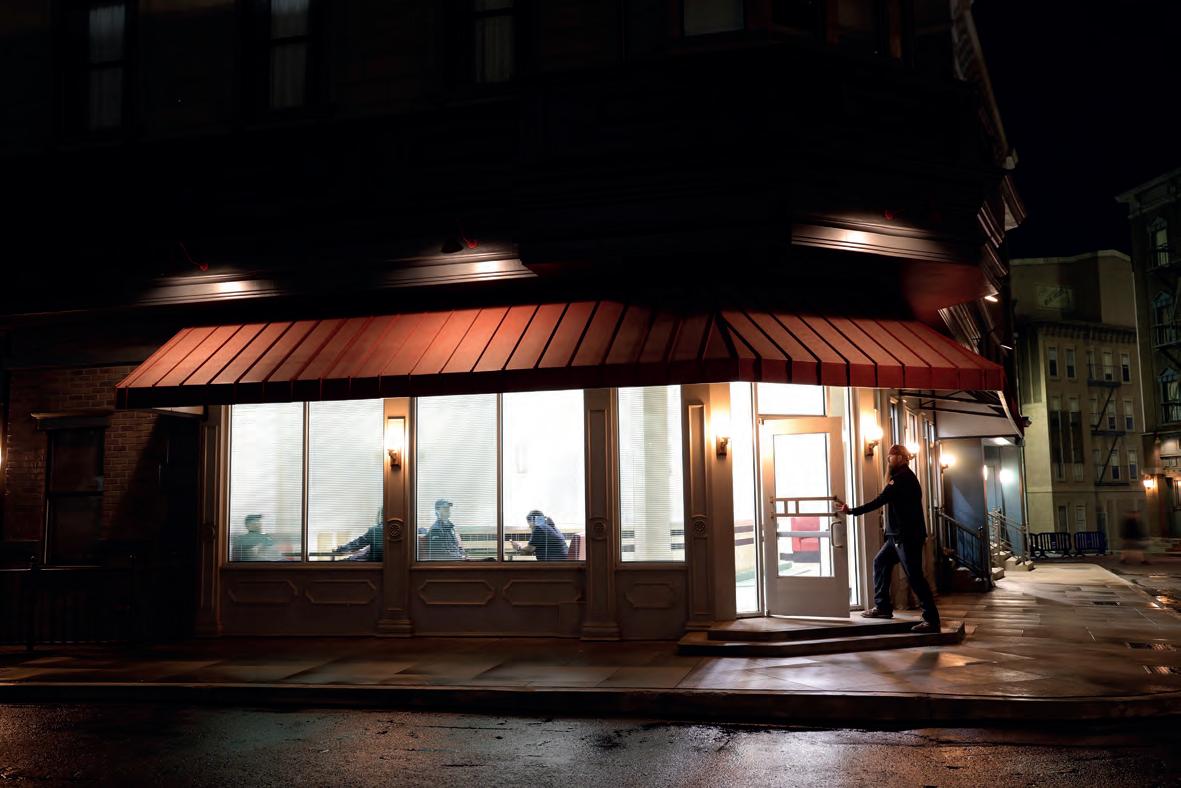
ers need now and in the future.”
From a production standpoint, Fox provides “more than just stages,” he adds. “Productions have access to integrated services, sound, infrastructure and security so teams can focus on storytelling. We prioritize transparency and trust — producers know what they’re paying for and they know our teams are invested in their success.”
The advantages of an integrated campus are considerable. “When everything works together, creativity thrives,” Ehrlich says. “Productions can stay on schedule, protect budgets and focus on storytelling.”
Flexibility, he adds, has become especially important as productions compress schedules and try to maximize limited shoot days. “With fewer shoot days, fully integrated studios eliminate friction and protect time,” he says. “When every hour counts, integration isn’t a luxury — it’s the diference between rushing and delivering.”
Taken together, these improvements form part of a broader longterm vision. Fox has outlined a development strategy representing a $1.5bn investment in the site and the surrounding production economy. That commitment, Ehrlich emphasizes, extends well beyond the studio gates. “Filming in Los Angeles supports an entire ecosystem,” he says. “Transportation, food services, construction, housing, retail — production here touches countless other industries. Investing in the Lot is also an investment in the community and workforce that makes this industry possible.”
Ultimately, he argues, Los Angeles’s enduring strength lies in the ecosystem surrounding its studios. “The region brings together the world’s most experienced crews, unmatched creative infrastructure and a century-long heritage of craft,” Ehrlich says. “Supporting the people and infrastructure that made this indus-
try possible is how Los Angeles remains the creative capital of the world.”
If the major studios represent institutional scale, Los Angeles Center Studios (LACS) embodies an independent campus model built around service and centrality. Its president, Sam Nicassio, describes the 20-acre downtown campus as “a frst-class hotel for creatives”. The analogy is deliberate. “We’re more than a workspace. We’re a high-end resort for creatives — with unmatched facilities and attentive support.”
LACS features six 18,000-square-foot sound stages, three smaller stages and 450,000 square feet of production office space. The campus integrates practical standing sets — including a jail, morgue, courtroom, police precinct and interrogation rooms — alongside open creative areas and event spaces capable of hosting up to 10,000 people. Its newest addition, the Refnery, ofers coworking space, refecting shifting work patterns and the rise of independent producers and short-form creators.
Nicassio summarizes the studio’s philosophy simply: “We say yes.” That responsiveness, he argues, diferentiates LACS in a market where producers value agility as much as infrastructure. “Our team understands the industry’s demands. We provide proactive solutions so productions can focus on creativity.”
Like many operators, LACS has felt the slowdown in greenlights. “There is a noticeable reduction in the number of productions happening locally,” Nicassio says. “Lower budgets and fewer dramas being greenlit have been challenging.”
Yet he sees the expanded California incentive as a stabilizing force. “It’s still early to measure the full impact, but it’s helping,” he says. Looking ahead, LACS aims to remain format-agnostic — equally comfortable hosting micro-budget vertical dramas or tentpole fea-
GARY EHRLICH
‘SUPPORTING THE PEOPLE AND INFRASTRUCTURE THAT MADE THIS INDUSTRY POSSIBLE IS HOW LOS ANGELES REMAINS THE CREATIVE CAPITAL OF THE WORLD’
tures. Stable ownership, Nicassio believes, allows the campus to evolve alongside California’s industrial base. “The crews in Southern California are second to none,” he says. “Producers, writers and actors live here — and want to film here.”
Location remains central to its appeal. Situated between Hollywood and downtown, the campus offers freeway access, 24/7 security and ample parking. “It’s a production oasis in the heart of Los Angeles,” Nicassio says.
Beyond central Los Angeles, Santa Clarita–based LA North Studios operates with a distinctly hands-on ethos. For co-founders Anthony Syracuse and John Prabhu, studio management is as much about relationships as real estate. “We are a cost-efficient solution,” Syracuse says. “Our job is to keep shows in Southern California.”
That pragmatism has shaped their response to volatility. In recent years, LA North has balanced long-running series with high-profile projects, including an HBO production orchestrated by Larry David and featuring former US president Barack Obama. Syracuse and his team even constructed a detailed Oval Office set — now retained as a standing resource. “We realized we had something unique,” he says. “So we left it standing. It’s available for productions now.”
The studio hosted the third season of Euphoria and continues to house major series including Fallout, whose expansive set occupies a 55,000-square-foot stage. “There’s no other place in the US that can house that show the way we do,” Syracuse says.
Crucially, LA North’s stages are not static assets. They are frequently repurposed as construction spaces, enabling ambitious builds even when cameras are elsewhere. That flexibility has helped the company weather fluctuations in demand. Syracuse is
candid about the human dimension of downturns. “When a show doesn’t get picked up, it’s not just about us. It’s crews — 200, 300 people — whose families are affected.” For that reason, he focuses closely on meeting clients’ needs at competitive prices. “When the phone rings, we don’t just quote,” he says. “We try to solve a problem. That builds loyalty.”
On incentives, LA North welcomes the expanded California program and is beginning to see its effects in early 2026. But Syracuse argues more could be done. Support for above-the-line costs, he says, would further enhance competitiveness. At the northeastern edge of the San Fernando Valley, Sylmar Studios is one of the newest additions to the landscape. Led by Patrick Dempsey, an industry veteran whose résumé spans Sony, Fox, DreamWorks and a stint in China with Wanda Group, the six-acre, purpose-built campus is both an infrastructure play and a community investment. Located in a federally designated Opportunity Zone, the project offers real-estate advantages for investors. But Dempsey emphasizes its local impact. “We’re changing the area,” he says. “The effect on surrounding businesses — the bakery, the restaurants, the dry cleaners — is real.”
The studio works closely with nearby schools and colleges and plans to exhibit student artwork on site. For Dempsey, the relationship between studio and neighborhood is symbiotic. Sylmar offers six 16,000-square-foot sound stages with catwalks, 35-foot clear heights, a 600-space parking structure and 35,000 square feet of production-support space. What distinguishes it, he argues, is not that it is new but that it was conceived by people steeped in production. “Most of us have been in production,” he says. “From an operational standpoint, that really helps you understand what productions need.”
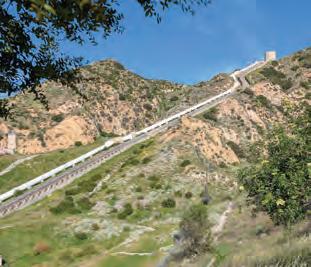




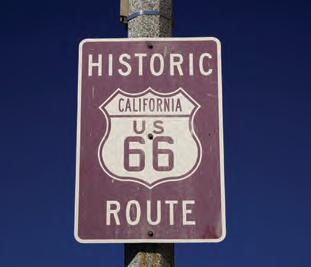
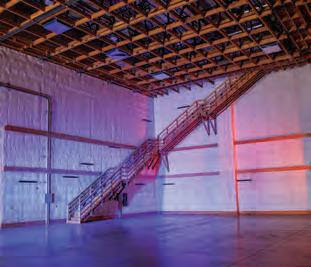

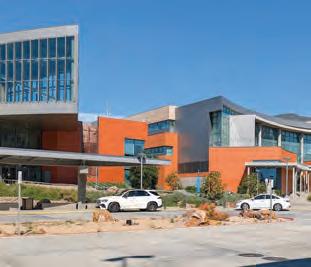
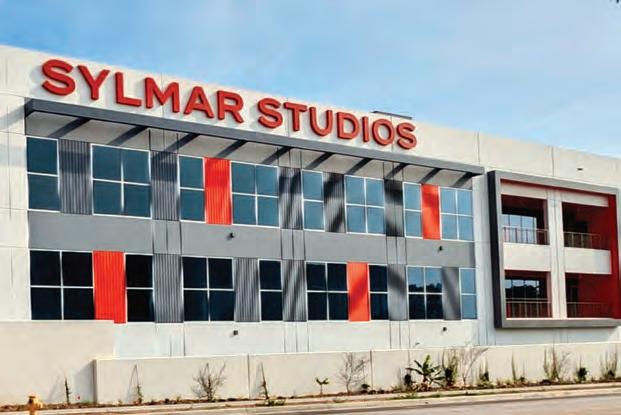


That perspective shapes everything from macro infrastructure to minute technical details such as cable ports and switch placement. “A production facility has a lot of little bells and whistles that are critically important,” he says. “We’ve all worked at these facilities — so we know what works and what doesn’t.”
It is a philosophy that prioritizes crew efficiency over short-term ancillary income. “We do have to operate a business,” he says, “but really understanding what the production needs has long-term benefits.” In a similar vein, the facility positions itself as boutique, with a concierge-style approach. “Our goal is simple,” he says. “Do such a great job that clients come back. You take care of people. You make it easy. And they come back.”
Sylmar did not launch at an ideal moment, and some real-estate investors in California have pivoted away from film and television. But Dempsey believes the expanded incentive, combined with the San Fernando Valley’s latent potential, gives cause for optimism. “It’s an interesting time,” he says. “The infrastructure here — crews, prop houses, equipment — is incredibly dialed in.”
Taken together, California’s studio system looks less like a sector in retreat than one adjusting to transition. Hollywood’s grandees are leveraging scale and integration; LACS emphasizes service and centrality; LA North champions flexibility and cost efficiency; Sylmar bets on boutique precision and community engagement. Adding to that mix in 2026 is Cinespace Studios, which has formally entered the Los Angeles market. “Cinespace in Woodland Hills is our long-planned entry into LA at a moment when the industry is resetting for its next phase,” says co-CEO Eoin Egan. Egan is confident the company’s track record will translate. “Clients know us from Chicago, Atlanta, Wilmington (NC), Toronto and Studio Babelsberg. We now bring our tried-and-true proposition
to LA: premium infrastructure, an understanding of production flows, disciplined operations and long-term partnership.”
The Woodland Hills complex spans 180,000 square feet, comprising six 18,000-square-foot sound stages with 30-foot clear heights, supported by 72,000 square feet of production offices and ancillary space, plus more than 400 parking spaces. Being part of a global platform strengthens the campus further. “Our network delivers consistency; the campus delivers connection,” Egan says. What differentiates the site, he argues, is “its intentional scale.” Designed for premium episodic television and studio features, it can also accommodate independent films, commercials and reshoots. “Producers get to work in an environment designed to help projects run efficiently from day one,” he says.
Egan describes the campus as “premium, boutique” — a phrase he defines operationally. “It means accountability, attention and expertise. We want to be reliable partners to our production clients. Producers have direct access to all of us. Facilities are meticulously maintained. Issues are solved quickly. We operate with a hospitality mindset by anticipating needs.”
Asked how the California studio market is shaping up in 2026, he frames the moment as one of recalibration. “2026 is a year of normalization. The market has moved from peak-volume expansion to more disciplined, strategic production. Projects are more intentional, budgets are scrutinized and clients are prioritizing reliability.”
With legacy studios investing and new entrants arriving, the message from California is clear: the industry is not retreating. It is repositioning for a more disciplined phase — defined by partnership, operational flexibility and long-term commitment to the local ecosystem.
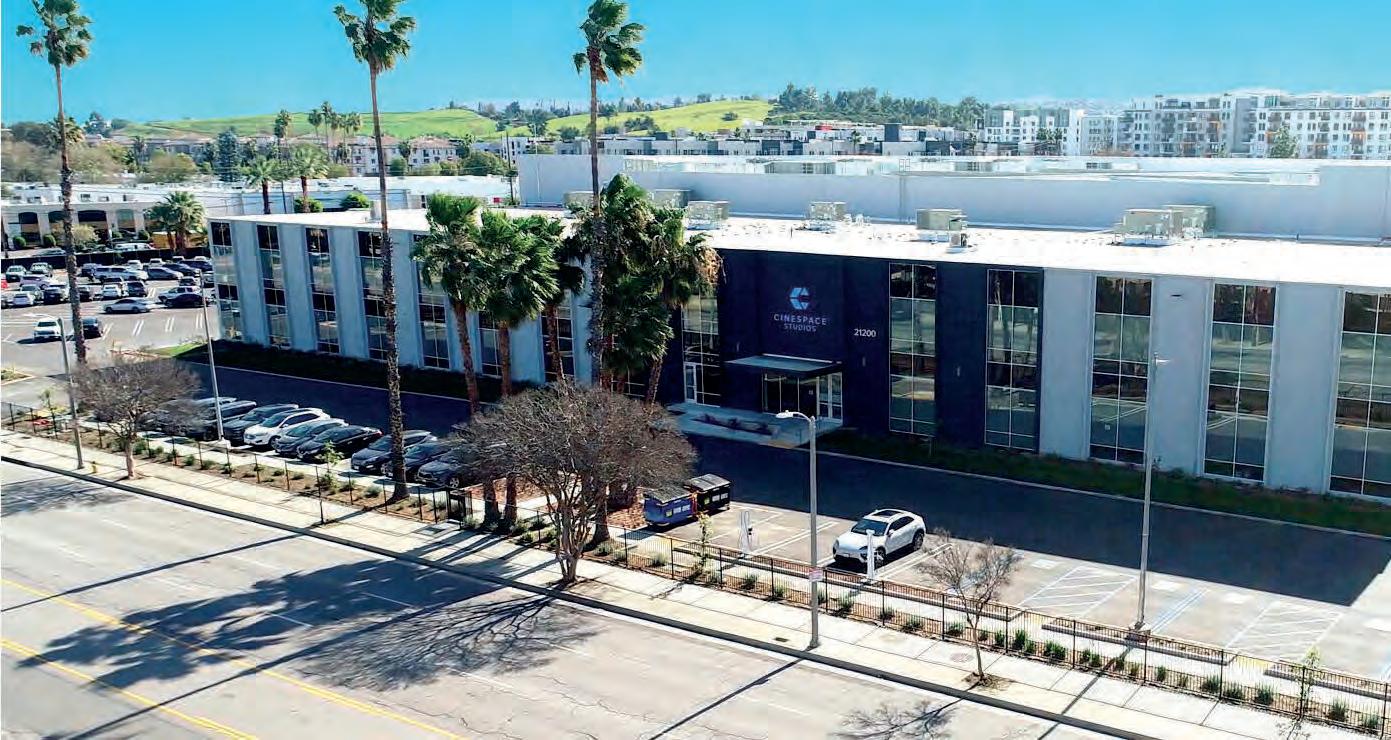






Long before they became backlots for Western gunfights, alien encounters, or Middle-Eastern skirmishes, California’s movie ranches were working landscapes. Then an enterprising group of people saw an alternative use for them — as places where cast and crew could film against many backdrops all in one place, and safely away from the public’s gaze. Andy Fry takes a tour of the movie ranches across the state


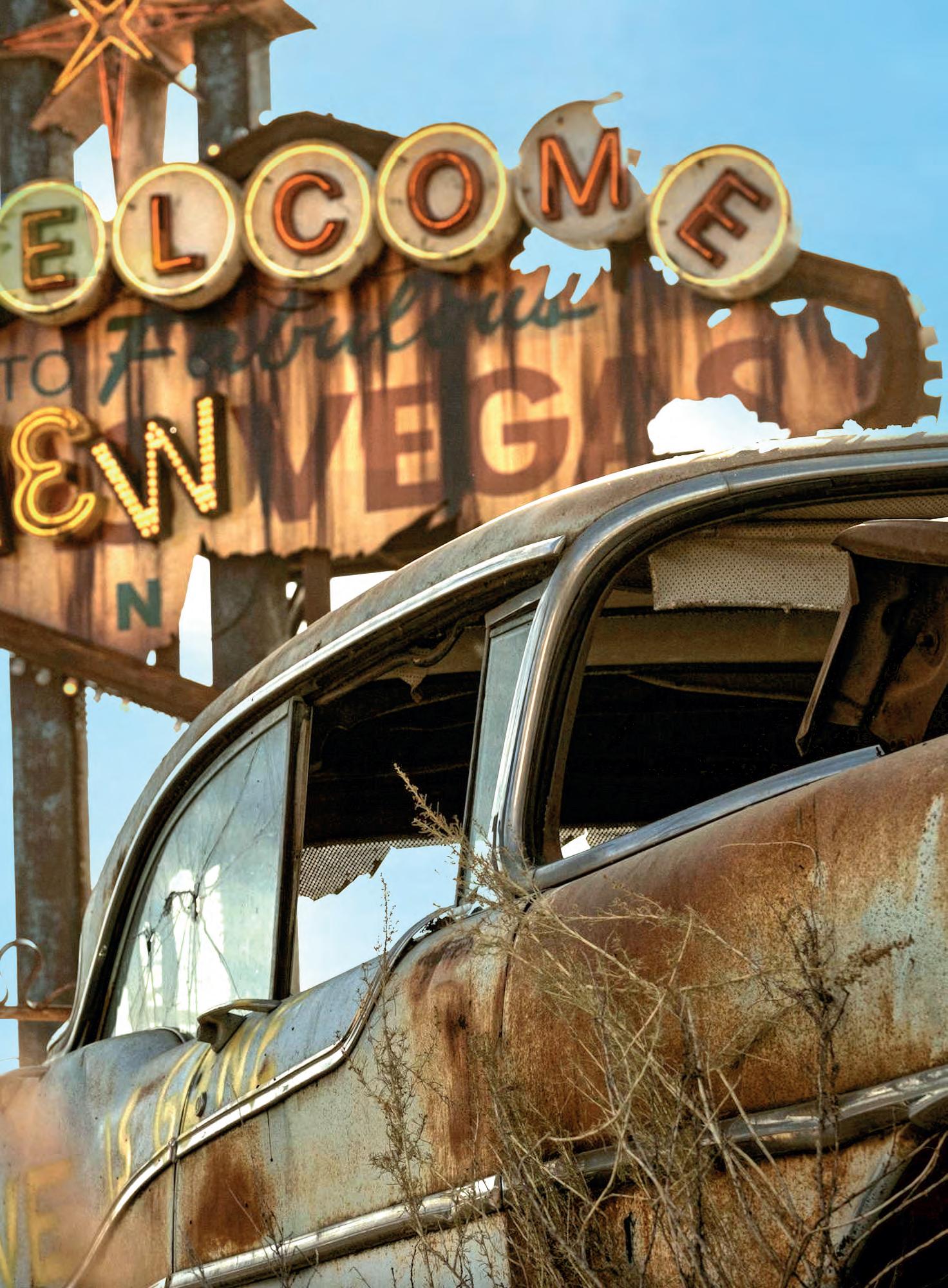
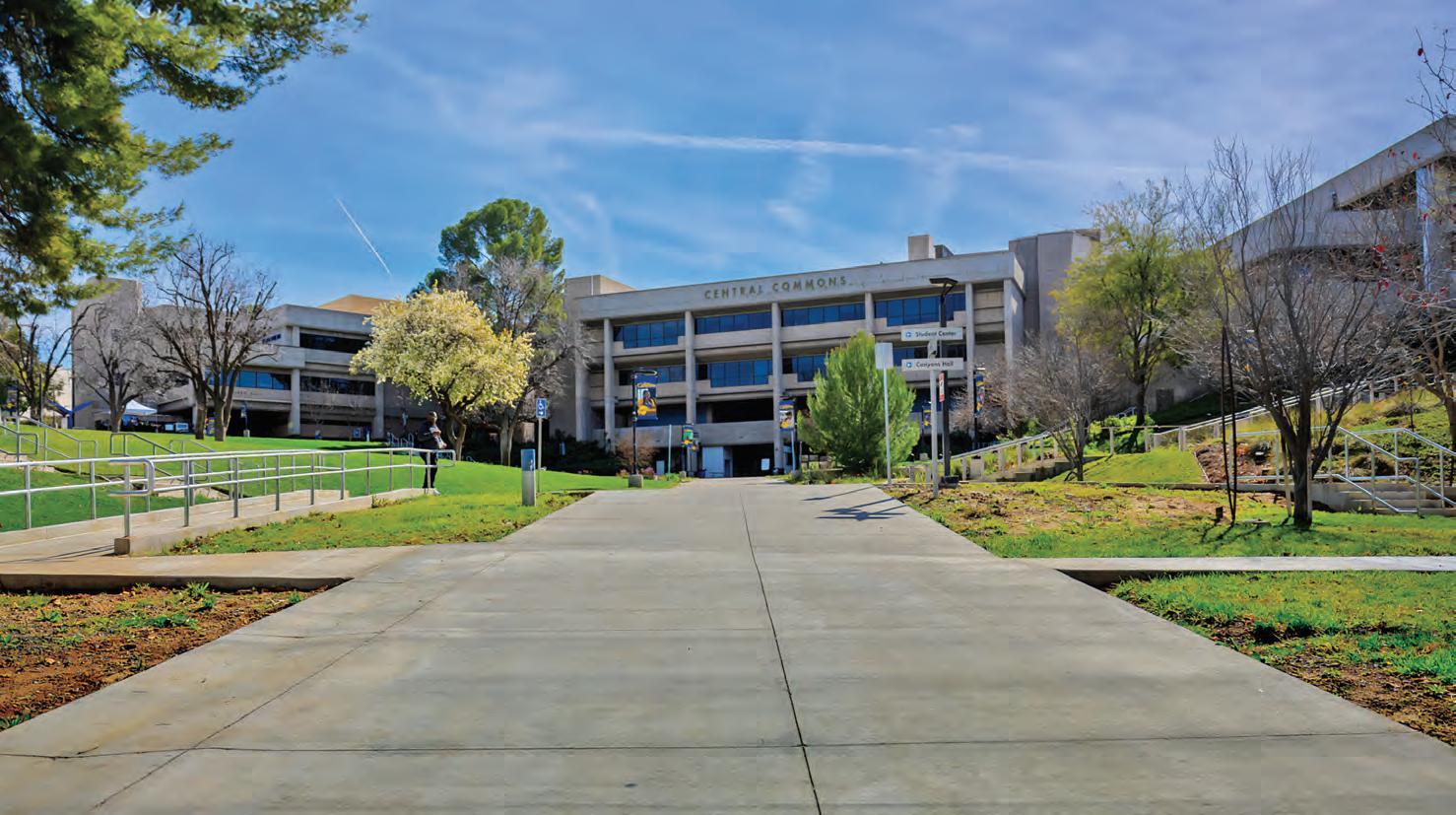
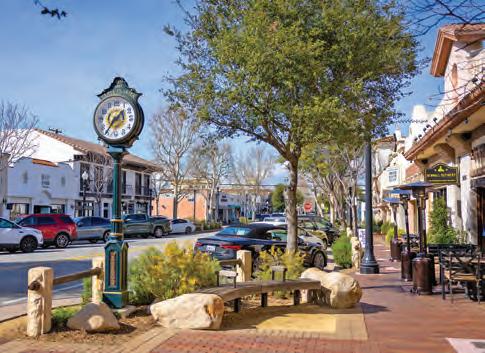
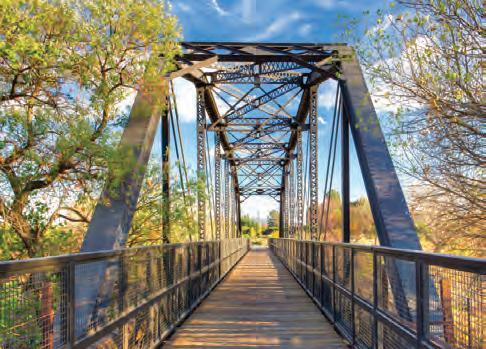

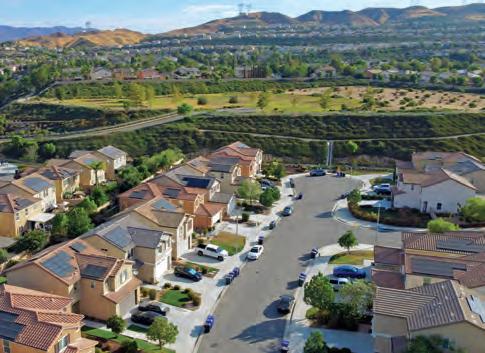

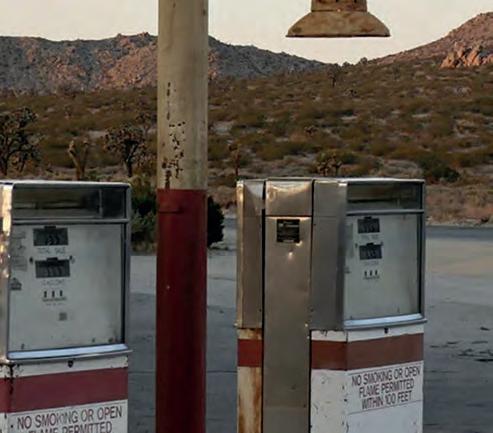
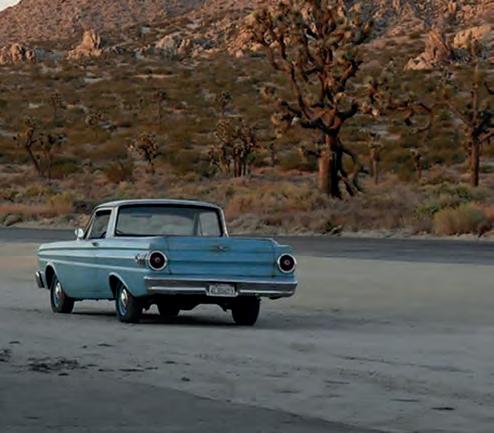
THE TERM ‘rancho’ entered California during the Spanish and Mexican periods of the 18th and 19th centuries, when vast land grants were issued for cattle grazing. After California became part of the US in 1848, many of these lands were broken up or sold off — but the romantic notion of the ranch as a selfcontained world persisted.
This durability proved invaluable to the film industry when it rolled into Southern California in the early 20th century. Hollywood’s early studios needed space: room for horses, wagons, fake towns, open skies and, crucially, distance from curious urban crowds. California ranches offered a perfect solution. Within a short drive of Los Angeles, filmmakers could find chaparral-covered hills, oak-dotted valleys, dry riverbeds, desert flats and mountain foothills — terrain flexible enough to stand in for Texas, Wyoming, Arizona, Mexico, or a mythical West that never quite existed.
continuity, camera angles and the economics of reuse. A single stretch of land might serve as the backdrop for dozens of different towns, battles and homesteads, each with a new name and story. As the studio system matured through the 1930s and 1940s, filming ranches became increasingly professionalized. The Iverson Movie Ranch, for example, became one of the most filmed locations in history, appearing in everything from silent-era Westerns to The Lone Ranger, Bonanza, and later genre films and television. Its distinctive sandstone outcrops became as recognizable to filmmakers as any sound stage.
‘RENTING LAND TO MOTION-PICTURE COMPANIES COULD BE MORE PROFITABLE THAN GRAZING CATTLE’
The earliest filming ranches emerged almost organically. Property owners realized that renting land to motion-picture companies could be more profitable than grazing cattle. On screen, ranches were depicted as places of moral clarity: where good and evil faced off in the open. Off screen, these same ranches were carefully managed illusions, maintained by crews who understood
Meanwhile, Corriganville Ranch in Simi Valley, created by actor and stuntman Ray ‘Crash’ Corrigan in the 1930s, offered a more immersive experience. Unlike other ranches that were largely facades, Corriganville blended natural scenery with constructed Western towns, caves, waterfalls and riding trails. It became a favorite for serials, Westerns and family films, including Zorro, The Adventures of Rin-Tin-Tin and The Three Stooges. In addition to serving as a working set, Corriganville opened to the public — an early example of a ranch doubling as a theme park. Television accelerated demand. Weekly Westerns needed speed and efficiency, and ranches offered both. Shows like Gunsmoke and Rawhide relied on a stable of familiar outdoor locations that could be redressed and relit at will. The ranch was no longer just a place to shoot — it was a narrative engine.
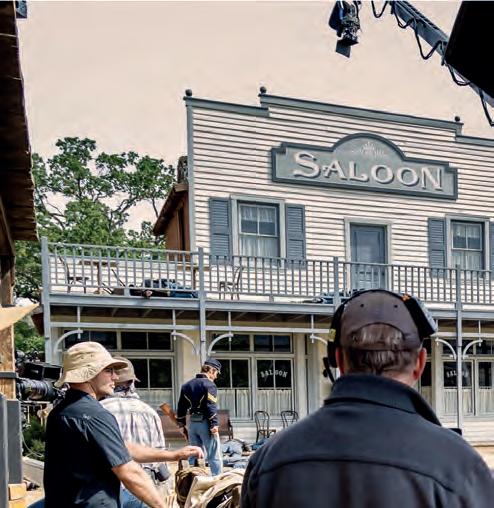
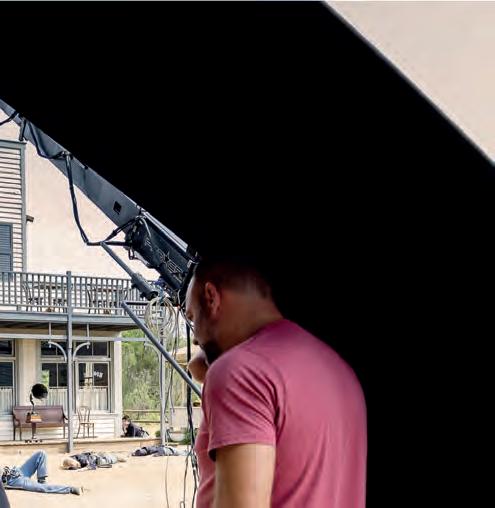
If the early ranches were improvisations, the next phase marked a shift toward deliberate design. In 1959, the Walt Disney Company acquired a sprawling tract of land in the Santa Clarita Valley and transformed it into Golden Oak Ranch, a filming location conceived as an integrated production environment.
Golden Oak was planned from the ground up with the logic of filmmaking in mind. Roads were adapted for equipment trucks, sightlines were considered in relation to camera movement, and natural features — oak groves, meadows and low hills — were preserved or subtly enhanced to maximize versatility on screen.
means they can spend the morning staging a pastoral scene in an open meadow and the afternoon shooting an urban sequence, all without leaving the property.
TYLER PLEDGER
‘THESE RANCHES HAVE DOUBLED AS EVERYWHERE FROM THE MIDDLE EAST, 1920S LOS ANGELES, THE OLD WEST, POST-APOCALYPTIC LANDSCAPES, TO ALIEN WORLDS’
The result was a landscape that could be endlessly reconfigured. A stand of trees might read as frontier woodland in one production and New England countryside in another. Open pastures could be homesteads, battlefields, or anonymous rural US. Disney productions quickly made use of the ranch’s adaptability. Films including Old Yeller and Swiss Family Robinson found in its terrain a ready-made world, while later projects — from Pirates of the Caribbean to television series Zorro — demonstrated how easily the same property could be transformed across genres and eras.
Over time, Golden Oak has expanded beyond natural settings to include purpose-built backlots. Today, the 890-acre site has a business district of flexible storefronts and a suburban neighborhood of full-scale houses, some with working interiors, representative of architecture found across the US. For crews, this
This expansion is a reminder that movie ranches have moved way beyond servicing Westerns. As this genre declined in popularity, ranches embraced alternative forms of storytelling — ranging across science fiction, war films, crime thrillers and prestige dramas. With a little imagination and a lot of graft, ranch roads could become a post-apocalyptic wasteland; a hillside could double as Vietnam; a dusty expanse could be redressed as a cult compound or a forgotten desert outpost.
What makes California’s ranch ecosystem even more remarkable is that many of the major sites are within Los Angeles’ thirty-mile zone, which brings benefits in terms of crew costs, as well as proximity to talent and executives. Santa Clarita alone is home to between 10 and 12 ranches — including Golden Oak.
Tyler Pledger, economic development manager at the City of Santa Clarita, says: “What makes our ranch ecosystem especially strong is its diversity, from rugged backcountry and Western landscapes to highly controlled, production-ready environments that can double for a wide range of locations. In recent years, these ranches have doubled as everywhere from the Middle East, 1920s Los Angeles, the old West, post-apocalyptic landscapes, to alien worlds.”
Pledger says the ranches remain popular with the California production community because “they are all professionally operated with many of them having long histories in the flm industry, which means crews know what they’re getting when they come here”. This combination of seasoned professionalism and landscape diversity “is only matched by the creativity of what the next production may flm. Many productions set up for long-term flming and it’s not uncommon to see everything from extremely complex obstacle course sets for a network TV game show, to incredibly detailed and historically accurate sets for a prestige cable show or feature flms.”
ing Django Unchained, HBO’s Westworld and Amazon Prime’s new post-apocalyptic series Fallout, which relocated production to California for its second season. Precise details about the ranch’s usage are scant, but the series is reported to have built extensive practical sets at the ranch including post-apocalyptic encampments.
STEVE ARKLIN JR
‘IF I DON’T HAVE EVERY LOCATION THAT A PRODUCER IS LOOKING FOR, THEN I’LL CALL SOMEONE WHO CAN HELP OUT’
Santa Clarita has further enhanced its ranch proposition by creating a Movie Ranch Overlay Zone. This, Pledger says, “is one of Santa Clarita’s defining assets, ofering benefts such as reduced permit fees and flming by-right on property”.
Several of Santa Clarita’s ranches are as storied as Golden Oak. Melody Ranch, for example, was established in the early 20th century and later owned by singing cowboy Gene Autry. Today, Melody is a 22-acre site which features a massive Western town with interiors in the saloon, bank, jail, general store, hotel, church, school, livery stable and theater. There is also a farmhouse, ranch house, Victorian home and Spanish/adobe hacienda — all with interiors. The complex is rounded out by studio sound stages, production ofces and prop houses.
The complex has hosted several high-end projects includ -
Fallout returned to California largely as a result of improvements in the state’s tax incentive. Steve Arklin Jr, owner of another Santa Clarita-located ranch, Rancho Deluxe, is optimistic that his own business will also see positive results: “We hope to see an uptick in business as a result of the next incentive program. Ideally it will beneft the entire industry, because there is such a broad workforce here.” Rancho Deluxe is around 350 acres in total and has welcomed a wide range of productions including Westworld, NCIS: Los Angeles, Sons of Anarchy and The Mayans. Key attributes include lakes, waterfalls, desert, forest, barns, cabins and an exquisitely-appointed saloon. With its evocative farmhouse-style exterior and immaculate interior, Arklin says: “The saloon was built with flmmakers in mind and works well for flm, television and commercial productions — as well as photo shoots.” Ranches, Arklin adds, are not just great places for principal photography, but for rehearsals and reshoots that require long-term access to space. For Arklin, a key reason the ranches have survived through so many cycles in the business is the privacy they afford: “The ranches ofer a wide range of locations, but they also provide
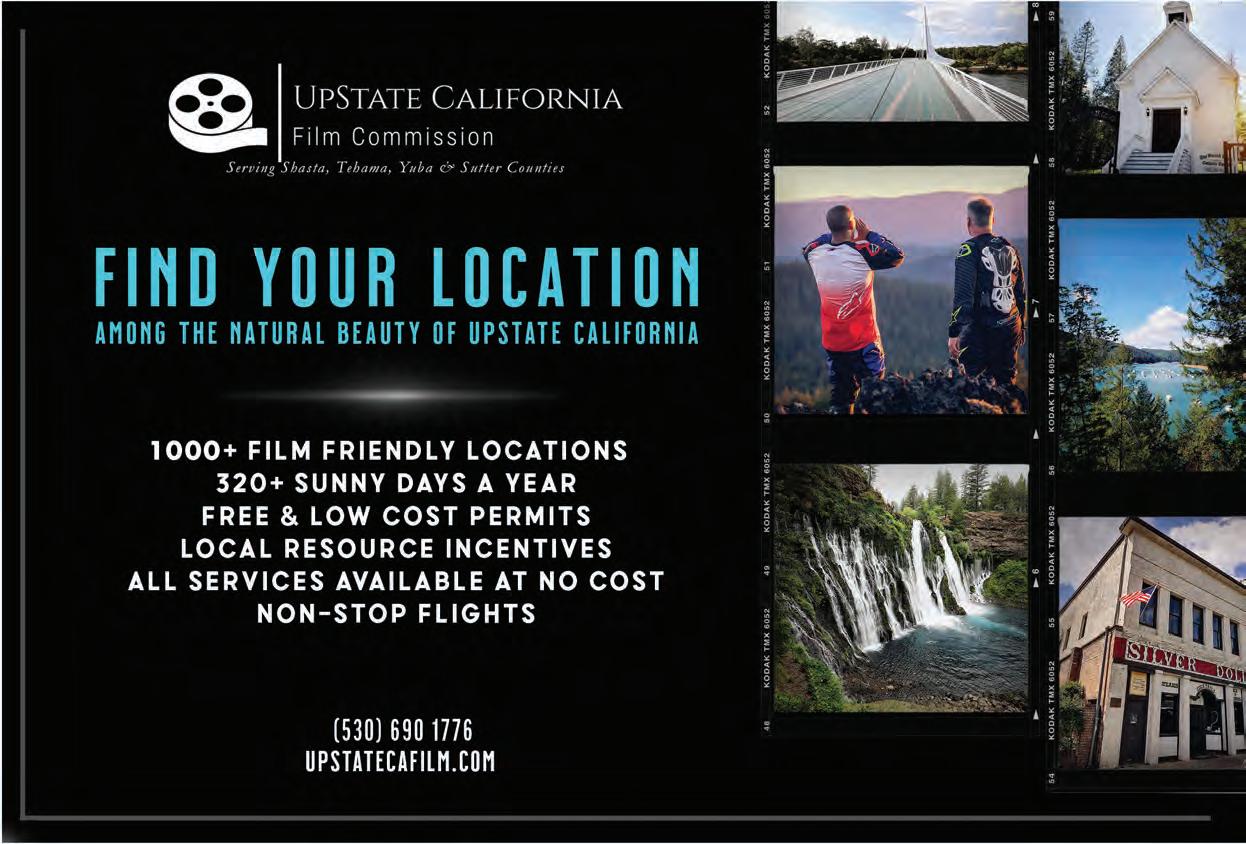
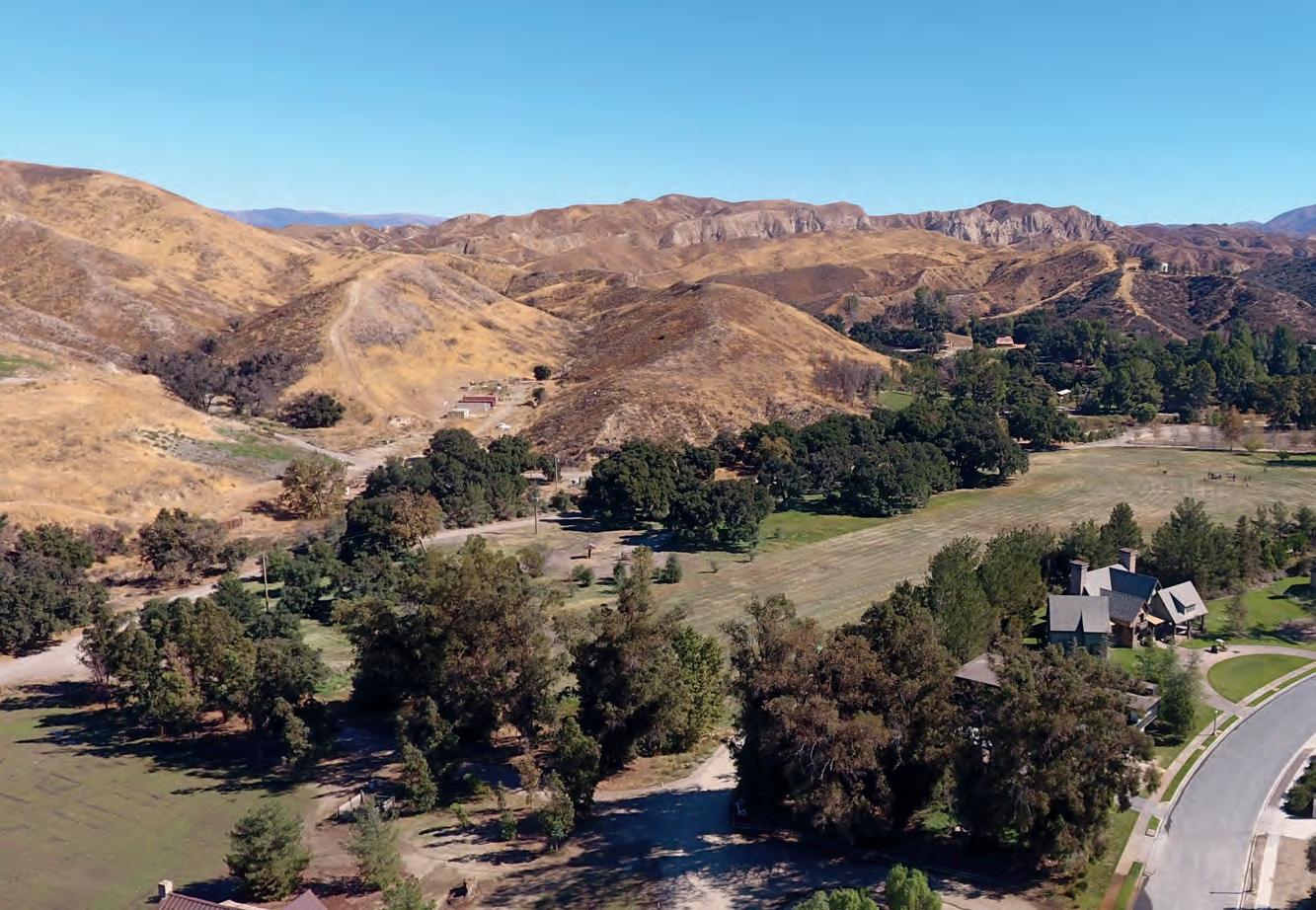
producers with seclusion. Because they take production away from public spaces, they don’t have to worry about public safety or noise restrictions in the same way. Ranches are also a great place to base production if you’re trying to protect A-list talent or keep a product launch secret, a new car model for example.”
Ranches also allow producers really to stretch their imaginative muscles. “We’ve seen some really ambitious builds down the years, from military bases to Mississippi steamboats,” he says. “And with the emergence of green-screen technology, ranches have become useful in providing a backdrop that can be built upon.”
One thing that isn’t necessarily known outside the business, Arklin adds, is that the ranch owners are very collaborative. “We’re always talking to each other about projects and plans. If I don’t have every location that a producer is looking for, then I’ll call someone who can help out. And if I’m thinking about adding something to the site, I’ll consult my neighbors. There’s no point in us all ofering the same thing.”
Adding to the range of options around Santa Clarita is Blue Cloud Ranch. Operating since 2001 and signifcantly expanded in the mid-2010s, it refects a more recent phase in the evolution of ranches — one shaped by globalized storytelling. While traditional ranches favored Western towns, Blue Cloud ofers a Middle-Eastern village, a military encampment complete with vehicles and a mid-century American streetscape. This has made the ranch a useful stand-in for locations far beyond California. In Iron Man and American Sniper, its terrain and sets were reconfigured into Afghanistan and Iraq; in series, including SEAL Team, Barry and Rebel Moon, it has supported everything from combat sequences to character-driven drama to sci-f. In most
such movie ranches, nothing is entirely fxed. Existing sets can be modifed, expanded or stripped back to a blank canvas, allowing productions to impose their own vision onto the landscape. Many ranches operate less as a fnished world than as a toolkit. Another important ranch hub is the Simi Valley, which is home to Big Sky Movie Ranch, Corriganville Park, Allied Studios/76 Movie Ranch and Hummingbird Nest Ranch.
Corriganville Park served as a primary flming location in Quentin Tarantino's 2019 flm Once Upon a Time in Hollywood, which the crew used to recreate the infamous Spahn Ranch – where the Manson Family lived. This work is beautifully captured when Clif Booth (Brad Pitt) drives onto the desolate ranch, encounters the Manson Family and visits a sickly George Spahn (Bruce Dern). Another scene from the flm sees Leonardo DiCaprio and Brad Pitt at Melody Ranch.
Hummingbird Nest Ranch, meanwhile, has hosted scores of productions over the years — everything from Bosch and NCIS to reality series Claim to Fame. Spread across 130 acres, the ranch has various looks including a Spanish Colonial Villa, ranch house and horse barn. Among recent productions to visit is the Jennifer Garner series The Last Thing He Told Me. In the fnal episode of the frst series, Garner’s character Hannah visits a fctional Texas property called the Sanctuary House. In reality, Hummingbird Nest was used for both interiors and exteriors.
Allied Studios/76 Movie Ranch is another interesting part of the Simi Valley production ecosystem, ofering both studio space and ranch capabilities. The Allied Studios part of the business has 78,000 square feet of stages while 76 Ranch, around 10 miles away, is spread over around 1,000 acres of diverse countryside. Between them, these sites have hosted scores of movies, series
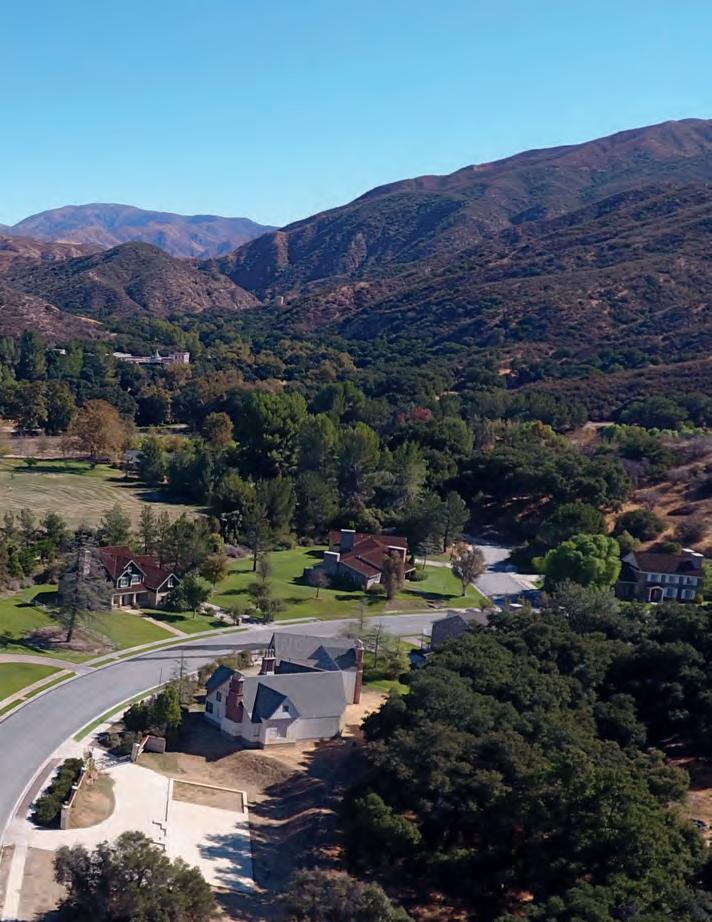
and commercials. Ranches vary considerably in size and Big Sky stands apart for its sheer scale. Spanning more than 7,000 acres, it is one of the largest contiguous flming environments in California. Within its boundaries are meadows, oak-studded hills, mountain ridgelines and fat expanses suitable for largescale staging, all connected by miles of trails and access roads. The efect is one of seamless transition: a production can move from a wooded clearing to an open plain or a constructed Western facade without ever leaving the property. What distinguishes Big Sky, however, is not only its size but its integration into the realities of filmmaking. Under the management of veteran location professional Robert Frank, the ranch operates with an awareness that productions require more than scenery: they need infrastructure, accessibility and adaptability. Base camps, equipment access and site transitions are all built into the landscape itself.
the Prairie and Gunsmoke. When the Little House producers originally scouted locations, they traveled from Arizona to Northern California before fnally discovering Big Sky Ranch in Southern California’s Simi Valley. Not only was it conveniently located, but it had the natural backdrops they were seeking: large trees, sparkling ponds, lush meadows and hillsides, and rocky hideouts. All exterior scenes of the original Little House on the Prairie series, from 1974 through 1983, were flmed at Big Sky Ranch, including the iconic opening credits. Those original sets were destroyed at the end of the show’s life. But Big Sky recently recreated the show’s iconic facades and placed them in their original locations, Today, Little House fans have the chance to tour the ranch and see re-creations of the Ingalls’ farmhouse and barn and much more. That’s a welcome development, given that Netfix’s contemporary reboot of the beloved series is being flmed in Canada. Other production hubs also have ranches as a core part of their proposition. Four Aces Movie Ranch, for example, is located an hour northeast of Los Angeles in the Antelope Valley. Here, it ofers lonely highways, rocky mountain ranges, dry riverbeds, ancient Joshua trees, a 1940s-style diner, a honkytonk bar, a Route 66-style gas station and an atomic-age roadside motel. While the setting has an evocative 'middle-of-nowhere’ feel, it is only minutes away from support services in Palmdale and Lancaster. Also out in this direction is Blayney Ranch, which ofers 160 acres of desert flming.
For producers willing to travel a little further, there is also the vast Tejon Ranch in Kern County. With 270,000 acres of diverse locations and backdrops, the ranch has proved particularly popular for music videos and commercials, which are regular visitors. Taylor Swift, Selena Gomez and Melissa McCarthy have all flmed here, the latter as the star of an NFL Super Bowl commercial for Kia. The ranch also hosted Budweiser’s iconic ‘Clydesdale Horses’ campaign in 2019.
From Melody to Golden Oak to Tejon, there is a durability about the California movie-ranch business that producers welcome. But here is also a degree of dynamism to the sector, with new owners entering the arena, veterans bowing out and unexpected forces driving innovation. On the road out towards Palmdale, one new opportunity is Bloom Ranch, a 250-acre organic farm that can provide rustic, historic backdrops for commercials, flms, TV and photoshoots, featuring orchards and old structures. Projects to have flmed there include the 2022 movie Umma
Another opportunity for some energetic entrepreneur is the news that Santa Clarita’s venerable Sable Ranch is up for sale. Consisting of two adjacent properties, Sable Ranch and Rancho Maria, this site has played host to countless productions; recently Oppenheimer, Curb Your Enthusiasm and Criminal Minds
‘FROM MELODY TO GOLDEN OAK TO TEJON, THERE IS A DURABILITY ABOUT THE CALIFORNIA MOVIE-RANCH BUSINESS THAT PRODUCERS WELCOME’
For anyone nostalgic about the golden era of Hollywood, another key story is the redevelopment of Paramount Ranch in Santa Monica. Following the 2018 wildfire that destroyed the ranch’s Western Town set, the site has been undergoing reconstruction — led by the National Park Service. That work is nearing completion, marking an important milestone for a location that has long been a staple for production.
This 360-degree approach has made Big Sky a mainstay for productions. It has hosted projects as varied as Twin Peaks and Transformers, each drawing on diferent aspects of the same terrain. More recently, the 2025 indie horror flm, Abraham’s Boys, flmed at the ranch. A Dracula-spin of, the production spent 15 days flming around the ranch’s existing structures. Big Sky also reinforces the mythology of ranch moviemaking, having played host to beloved TV series including Little House on
At present, the ranch itself is accessible to the public for general use, with trails and surrounding landscapes open for visitors. However, the rebuilt Western Town — the core asset — had, at press time, not yet fully re-opened for regular access.
From a production and location standpoint, the re-opening of Paramount Ranch is being closely watched. Its return will reintroduce a flexible, studio-managed backlot environment within the Los Angeles zone. More broadly, the ranch’s re-opening underlines California’s attachment to its unique ranch system — connecting back to the origins of the ranch model, while supporting today’s globally-oriented industry.
TV adaptations of the works of crime writer Michael Connelly keep on coming. It all began with Bosch, back in 2014. Then came Bosch Legacy, Ballard and The Lincoln Lawyer. They have all shot LA as well as any movie or TV series has ever done, and the latest — season four of The Lincoln Lawyer — is no exception.
Julian Newby reports
MANY thought these stories would never get made. Any fan of Michael Connelly’s more than 45 crime novels — many of which feature Detective Harry Bosch to a greater or lesser extent — know that they are written like movies; they feel like movies; and in the mind’s eye they look like movies. Yet there were so many false starts, where screen adaptations were concerned.
“Harry Bosch languished for years at Paramount and that was because when scripts were written, they didn’t capture his character — they were just procedurals. And no matter how frustrating it was for me, it was a very smart move on their part not to make these movies based on what I read in the scripts,” Connelly says. “And I had a part in the scripts — I’m not blaming everyone else, I mean, I was hired at least twice to try and rewrite other people’s scripts and get the character of Harry Bosch in there and I had a hard time doing it. I was part of the issue, so I’m not blaming people.”
Henrik Bastin was key to ending this creative stalemate. At the time he was CEO at Fabrik Entertainment, back then the Los Angeles-based scripted house of Germany’s Red Arrow Entertainment group. “Henrik and I met… to talk about doing this and by the end of that breakfast it was clear that, while nobody could know Bosch better than me, he was up there, close to knowing Bosch as well as I do.”
As Season 1 was about to kick off, Connelly told Location magazine: “Now we’ve got here, we have an immense
amount of character and material to draw from, so it becomes a no-brainer: we’ll go for the long form, we’ll go for television or streaming or whatever we call this now and have hours instead of minutes to tell the Harry Bosch stories.” And he was so right. Bosch ran for seven seasons from 2014-2021; the sequel Bosch Legacy ran for three seasons until 2025. Ballard, featuring Connelly’s creation, detective Renée Ballard, who appears in six books — five featuring Bosch — has so far run to one season; and The Lincoln Lawyer, following the adventures of maverick lawyer Mickey Haller, has so far featured in five books and four TV seasons, running from 2022 to 2025. Currently streaming on Netflix, season four of The Lincoln Lawyer — as with every TV manifestation of Connelly’s works — is shot entirely on location in Los Angeles. Since Bosch first went to TV, that has been non-negotiable for Connelly: “When I met Henrik, I said: ‘I know how Hollywood works and I’m going to tell you right now that we can be great friends, but I’m not going to do this on a promise. I’m going to put it in the contract that every shot of this show must be shot in LA, or I won’t make a deal with you’.”
He put it more bluntly to this publication: “LA is Harry Bosch, and Harry Bosch is LA and that’s the way it is. And so you cannot try to re-create that somewhere else — somewhere you might get a tax break or something. Yes, it will be more expensive to shoot in LA, but that’s what we wanted to do.”
As with Bosch and Ballard, The Lincoln Lawyer has filmed all over Los Angeles since its debut — at over 50 locations
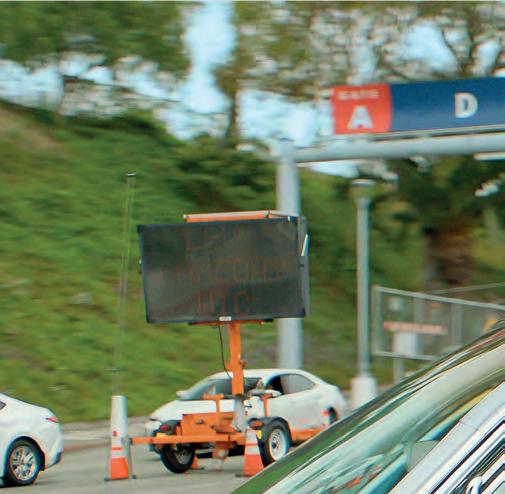
in total — with Season 4 featuring Dodger Stadium, Grand Central Market, the Bradbury Building, Langer’s Delicatessen-Restaurant, Los Angeles City Hall, Redbird restaurant, the Los Angeles Times Building, Chinese restaurant Hop Woo, the Vincent Thomas Bridge and ice cream store Bacio di Latte in Larchmont Village — among other familiar and less-familiar sites. In the Lincoln Lawyer novels and series, Mickey Haller — played by Manuel Garcia-Rulfo — is the eponymous lawyer, who has always worked out of the back of one of his three Lincoln cars. At least when they’re roadworthy; the risky nature of his business sometimes leaves the cars out of action for repair. But the on-the-move nature of his work means that Los Angeles is almost always in shot. “LA is such an atmospheric city — there’s a lot more to it than the stereotype of Hollywood and celebrities,” showrunner Ted Humphrey says. “LA is this mysterious, brooding entity. It’s bright and sunny, but that just serves to accentuate the darkness lurking around every corner. There’s a lot of history here, not all of it nice, that echoes off the
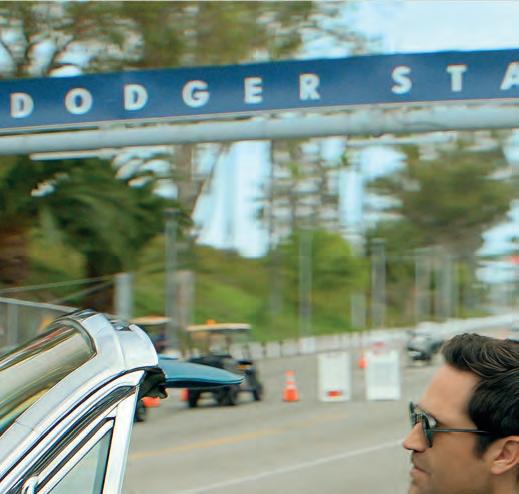
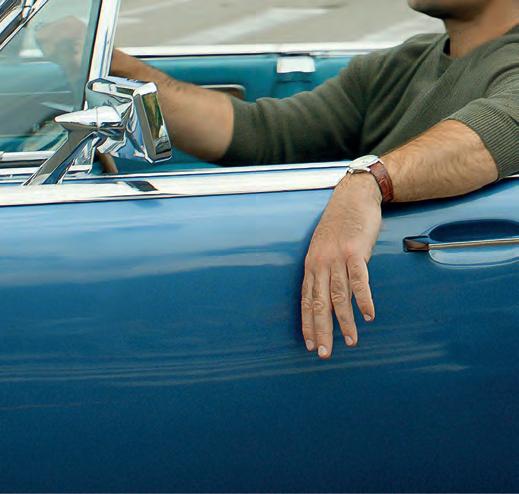
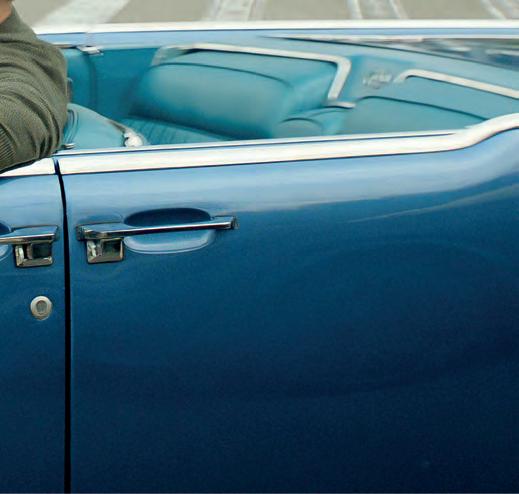
streets Mickey drives. And of course, it’s an endlessly diverse place, a remarkable melting pot even in a nation of melting pots.”
“LA, while iconic, is very recognizable — for better or for worse,” location manager, Richard DiPatri says. “I think the key is to present locations that fit the story and the scripts, but also to stay away from the main tourist attractions. Most of that credit goes to the directors and DPs that ground our scenes in the reality of Los Angeles while still making it recognizable.”
And while Garcia-Rulfo always looks super-cool and unruffled while driving the city’s sometimes mean streets, filming him on-the-move is not always easy for the crew. “Specifically for this show, many of the driving scenes were particularly challenging because of the traffic issues in LA,” DiPatri says.
“Times of day, as well as days of the week, are very restrictive for controlling streets and filming driving scenes.”
But after a total of 15 seasons across the different books, Los Angeles has fallen in love with Bosch, Ballard and Haller, as much as the actors and crews have
fallen in love with the city. The showrunners and location managers are always at pains to use real venues — particularly restaurants — and few of them turn down the opportunity.
Michael Connelly
‘I’m going to put it in the contract that EVERY SHOT OF THIS SHOW MUST BE SHOT IN LA, or I won’t make a deal with you’
In the fourth season, Mickey has dinner with his mentor Legal (Elliott Gould) at Nancy Silverton’s famous Michelinstarred Italian restaurant, Osteria Mozza. The scene was shot inside the actual restaurant, and Silverton even has a cameo in it, bringing them something from the mozzarella bar.

In another scene in the fourth season, Haller’s investigator Cisco (Angus Sampson) shows up at the Warner Center Marriott Woodland Hills luxury hotel to serve a witness subpoena. And things don’t end well for the witness: “The hotel let us do a high fall from the roof and have a stuntman land on the roof of a car in their valet area,” DiPatri says.
“It was a big ordeal and really made that scene something special. A lot of other hotels we looked at didn’t want the image of someone getting thrown out of a window of their hotel.”
Michael Connelly’s insistence at the start of this adventure — that “we’ll go for the long form” — still holds true, as Season 5 of The Lincoln Lawyer has gone into production in 2026. The fifth season will consist of 10 episodes, inspired by the seventh book in Connelly’s The Lincoln Lawyer series. In Season Four, being put on trial for murder had a profound effect on Haller. For Ted Humphrey: “What that change means to Mickey or how that change manifests itself in his life, is obviously something we’re excited to explore going forward.”




WCommercials producers can’t get enough of California’s sun-drenched coastlines, rugged deserts and iconic urban skylines. All of those backdrops, coupled with well-established production infrastructure, have long made it a go-to destination for shooting high-impact commercials. Clive Bull discovers why so many brands love the Golden State

HETHER a brand envisions a cinematic car chase through Downtown Los Angeles, or a lifestyle shoot on the Monterey coast, California remains one of the few places where almost any world can be created without crossing state lines.
In the case of Dolby, the US technology corporation, it was an urban look they were after for the ‘Love More in Dolby’ commercial featuring Jennifer Lopez.
“They wanted it to look like a freeway traffic jam,” says location manager Jason Wisch, who specializes in commercials and music videos. “There's a stretch of road in Downtown LA called the 4th Street off-ramp. And it literally runs to the middle of Downtown Los Angeles. I was able to shut that down on a Saturday for the whole day and basically create a traffic jam — it's a pretty large stretch that looks like a freeway, but it's an off-ramp.”
‘I HIRED SEVEN COPS AND I HAD EIGHT SECURITY GUARDS WITH ME TO PREVENT PEOPLE FROM COMING INTO SHOT’
The ramp — a 130-foot-high concrete flyover off the 110 freeway heading south — offers sweeping views of the Los Angeles skyline. Securing it required a complex permitting process. After agreeing permits with the city, Wisch hired two California Highway Patrol (CHP) officers and two representatives from Caltrans (the California Department of Transportation) to manage the freeway. Barricades were handled by JCL Traffic, a California-based firm specializing in traffic control, safety equipment and signage.
“I hired seven cops and I had eight security guards with me to prevent people from coming into shot, because there are
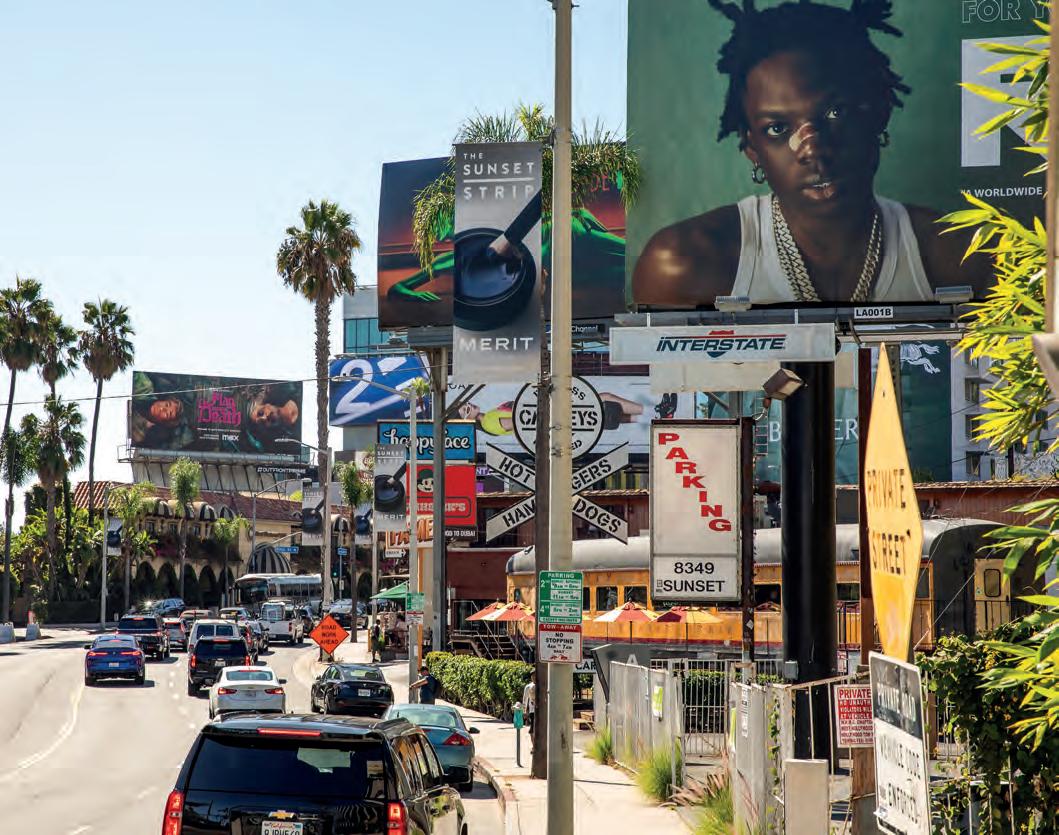
ways of getting onto that street. So to prevent that, I had to hire all these people to make sure nobody got onto our set,” Wisch says.
The presence of Lopez further affected logistical demands. “I actually had her motorhome and trailer about four blocks away at a studio and it would take just three minutes to drive her there because we had the street blocked off too. There's also a street entrance to the 4th street ramp so we were able to shut that down as well,” he adds.
Directed by filmmaker Colin Tilley, the 30-second spot— promoting Dolby Atmos and Lopez’s single Can’t Get Enough — turns a mundane traffic jam into a spectacle, with the singer dancing atop stationary vehicles.
The scene deliberately echoes 2016's La La Land — indeed, it uses the same location.
Commercial shoots move faster than feature films, and Wisch describes the day as intense. “I got there at three o'clock in the morning and I left at almost 10. First one in, last one to leave.”
highways, desert routes and mountain passes allow filmmakers to isolate vehicles against dramatic backdrops.
A Chevrolet commercial — airing during the 2026 Winter Olympics and Super Bowl — features singer Brooke Lee performing a modern take on 'See the USA in Your Chevrolet'. Siskiyou County appears twice. “There's a shot of Mount Shasta on the north end as they're coming down, and then at the very end of the commercial, they're at Lake Siskiyou, which is one of our lakes,” says Jason Young, film commissioner at Siskiyou County Film Commission.
JOF HANWRIGHT
‘TYPICALLY BRANDS DON'T WANT TO SEE COMPETITORS' VEHICLES ON THE STREET’
Part of the early start involved staging vehicles. Alongside production-supplied cars — including the Mercedes-Benz Lopez exits — 70-80 extras drove their own. Drone use required clearance from nearby buildings, including the Bonaventure Hotel. “I happen to have a good working relationship with the Bonaventure. I've shot there probably 10 times and it's an amazing place to film. I just called my person up there and said, ‘Hey, we're going to be there — we won't let the drone go near the hotel to disturb the guests’ and then they were fine.” Catering was based nearby at the YMCA building.
A traffic jam is an unusual brief. More often, California is chosen for the opposite: open roads and scenic emptiness. Coastal
Located in the far north, Siskiyou is large and sparsely populated. “There’s not a lot of traffic with its low population, so the production team can get those wide landscape shots, and it's easy for them to set up and move around. We have a lot of spots where permitting is not necessarily required, as long as we're not encroaching on anything, as long as we're not blocking access,” he adds.
Mount Shasta dominates the landscape. “It’s a 14,000-foot mountain with one of the largest bases in the US, so there’s not necessarily height, but there’s kind of a freestanding volcano in the middle of it, so it's hard to miss. And then Lake Siskiyou is adjacent to Mount Shasta, so it's right off the foothills in the town of Mount Shasta, so super easy to get to, and you have waterside access right there. I mean, you can drive your vehicle right up to the lake, you can walk down to the lake, you can get on the lake.” For brands, avoiding rival vehicles is often a concern. “Typically they don't want to see competitors' vehicles on the street. So if you're doing a Toyota commercial, they don't want competing brands nearby,” says location manager Jof Hanwright.




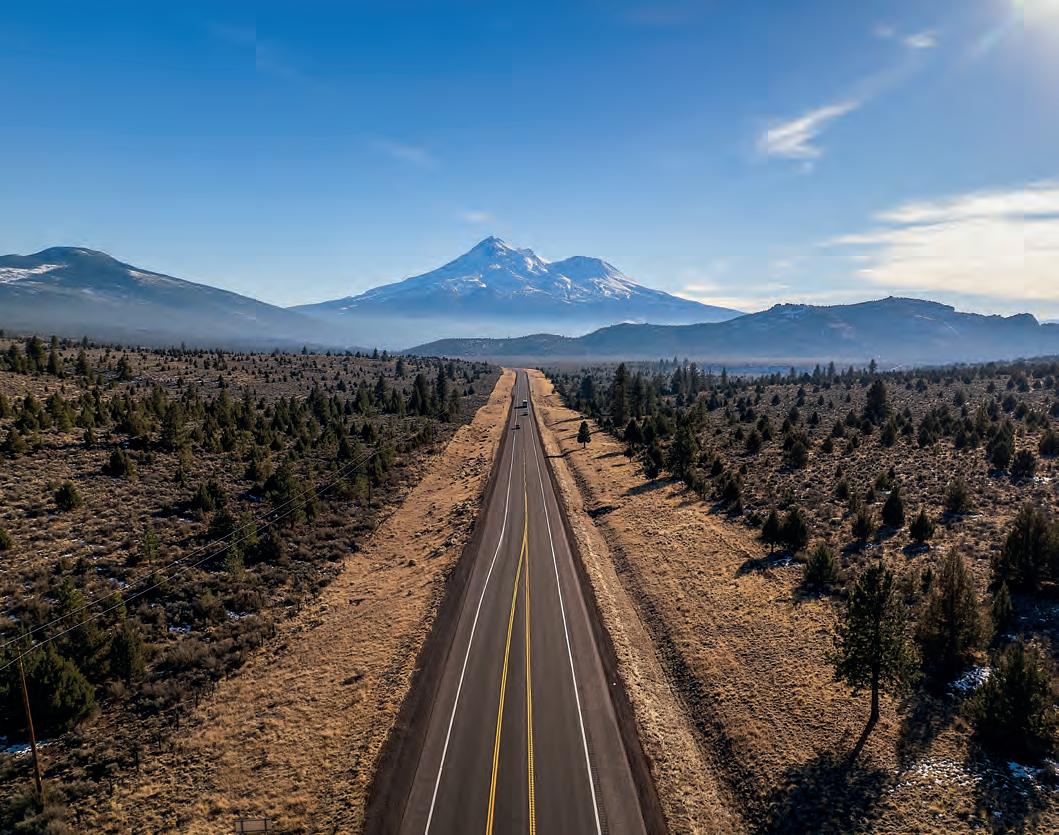
That may be changing. “We have done a fair bit of work with the autonomous car companies and they're not as concerned about that issue. They actually want to see the vehicles operating in a busy environment because that's one of the fears around autonomous cars. So they don't want it to look empty. They want to see their vehicles working in an active urban context.”
Technically, most car commercials rely on two tools: arm cars and drones. “Sometimes we will shoot them in tandem, but it's more advantageous to shoot individual passes with each camera platform,” Hanwright says. “The camera on the drones that we use is independently operated by the pilot. So I can look at where I'm going, and then I have a camera operator who's pointing the camera, and that's really what allows for those super dramatic or proximate shots.” Drones also ofer fexibility: “Very often on that scenic coastal road, it is a two-lane road, and an arm car doesn't have the ability to get 20 yards off into the field and photograph the car on the road,” he says.
Mountain Road, which “looks like it just goes of into infnity”, and Pinto Basin Road, a controllable desert route with pristine views.
Urban shoots require more control. “We do what's called ITC — Intermittent Trafc Control,” Taylor says. “They will hold trafc for a few minutes while they get their shot. Then they release trafc, then they'll hold it again.” In remote areas, such measures are often unnecessary — “you may not see a car for a couple of hours”.
EDDIE ROBINSON
‘MAJOR GLOBAL EVENTS CREATE HEIGHTENED BRAND ACTIVITY AND MEDIA DEMAND’
The Inland Empire — a metropolitan region in Southern California, located east of Los Angeles and Orange County, covering Riverside and San Bernardino counties — ofers scale and variety for commercials and other shoots. “They like to drive out in the desert, they like to drive up in the mountains, and that's where the vast majority of the commercials happen,” says Dan Taylor of Inland Empire Film Services. “They drive on dry lake beds, they'll go on sand dunes, there's just so many diferent looks that they can get in this region.”
Two popular roads in the area illustrate the appeal: Shadow
In San Mateo County, diversity extends beyond cars. “Brands in tech, sciences, higher education and lifestyle industries all leverage the distinctive Silicon Valley setting,” says film commissioner Cam Newton. “The lush parks and open spaces also evoke a distinct sense of adventure for outdoor brands.” Major events boost demand for flming pretty much everywhere in the world, and Newton says the 2026 World Cup and Olympics will be significant in terms of commercial shoots. “With these global events coming to our backyard, we’re thrilled to have more eyes on the Peninsula,” Newton says.
Away from the open road, Eddie Robinson, flm co-ordinator, City of West Hollywood Film Ofce, agrees that key sporting fixtures will have a positive influence. “Major global events create heightened brand activity and media demand,” Robinson says. “West Hollywood’s walkability, recognizable streets and hospitality infrastructure, positions us well to support that momentum.”
“West Hollywood ofers distinction, design and instant identity,”
he adds. “You get world-famous nightlife, mid-century modern architecture, luxury hotels, creative ofce spaces and residential streets that can double as anywhere.”
The 1.9 square miles of West Hollywood regularly host national and international commercials projects. “We deliver high production value in an accessible footprint,” he says.
West Hollywood has welcomed spots for brands including Hellmann’s, J.P. Morgan and Volkswagen Tiguan, along with fashion, beauty, tech and lifestyle brands which are drawn to the visual energy of the city — including Sunset Boulevard and the commercial corridors of Santa Monica Boulevard and Melrose Design District.
without relocating lodging.”
Seasonal variation adds further visual interest: “Winter brings more rain and shorter days, but also dramatic atmospheric conditions that can be visually compelling," she says. "Spring through early fall ofers longer daylight hours and generally more stable conditions. Our coastal climate provides soft diffused natural light that many cinematographers appreciate.”
'WINTER BRINGS MORE RAIN BUT ALSO DRAMATIC ATMOSPHERIC
On the far north coast, Humboldt and Del Norte counties provide a contrasting appeal. “Car commercials and print campaigns gravitate here because the landscapes instantly elevate the product and convey freedom, adventure and scale,” says Cassandra Hesseltine, Humboldt-Del Norte County film commissioner. “We offer winding roads through old-growth redwood forests, dramatic coastal highways, rocky blufs and charming Victorian architecture, often all within a short drive of one another.”
Despite their remoteness, these areas offer easy access to coastal cliffs, beaches, forests, rivers, farmland and historic downtown districts, all located within close proximity to primary accommodation and dining hubs, Hesseltine says. “A production can realistically capture multiple distinctive looks in a single day

Further south, Monterey County — a couple of hours south of San Francisco and around fve hours north of Los Angeles — remains a perennial favorite. The county boasts vast natural landscapes, a stunning coastline, agricultural croplands and the rural vistas of the Salinas Valley. Filmmakers are regularly attracted to the 40,000 acres of vineyards, and more than 1,200 miles of open roads of which more than 90 miles are along the Monterey Bay and Pacifc coast.
“Commercials are continually drawn to Monterey County, and our roads have been chosen as flm sites for nearly every make of vehicle, from Honda, Audi, Cadillac and Toyota commercials, to documentaries on classic cars entered into the Concours d’ Elegance Pebble Beach show,” says Monterey County film commissioner Karen Nordstrand. “We help save producers time and money on short timeframes when they consider locations.”
From dense urban grids to empty desert highways, California’s enduring appeal lies in its range — and in the infrastructure that makes that range usable. For commercial producers, few places ofer so much choice and so little hassle.
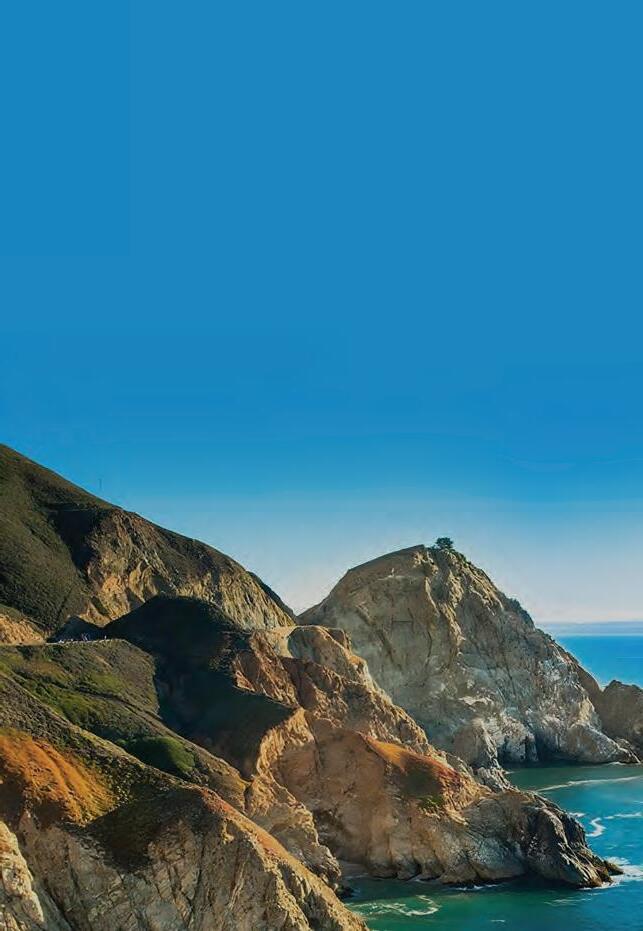
Tat just south of San Francisco there are iconic oceanside clifs, larger-than-life redwoods, a buzzing technology hub, historic mansions and just about every favor on the face of the planet. A perfect production hub to access the best of Northern California scenery—all just minutes from SFO.
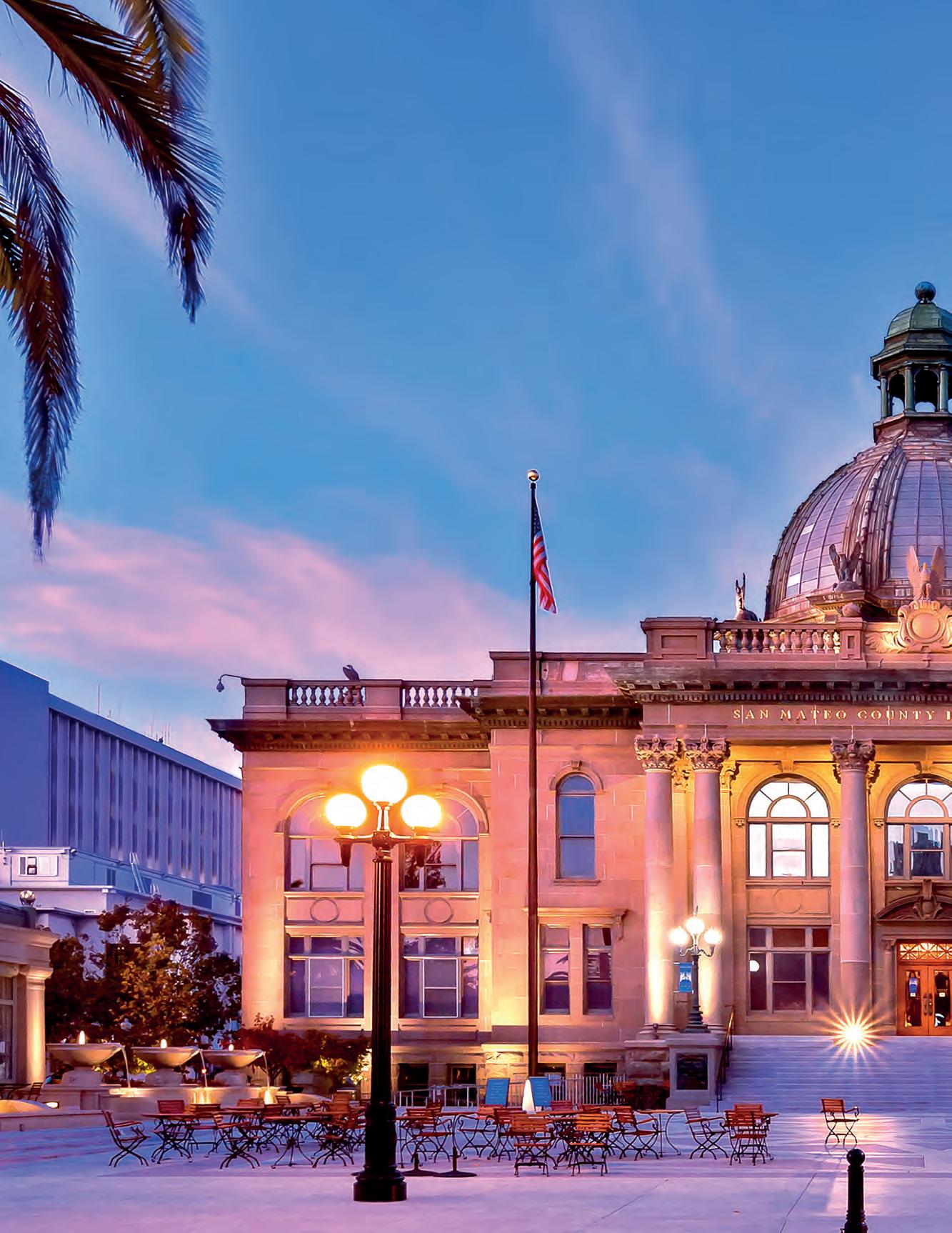
Location California has teamed up with flm commissions, location managers and photographers to bring images of stunning locations. Some are welltrodden by flm crews, others are still to be made famous on the big and small screen.
This building was originally a courthouse, but has since been turned into the museum. The 1910 architecture can take many guises depending on the weather and on how a set is dressed. It has a classical Victorian style that could double for San Francisco, but with the beneft of an intimate downtown and light trafc to co-ordinate.
The museum was an interior and exterior courthouse location for Mrs. Doubtfre (1993). PHOTO COURTESY
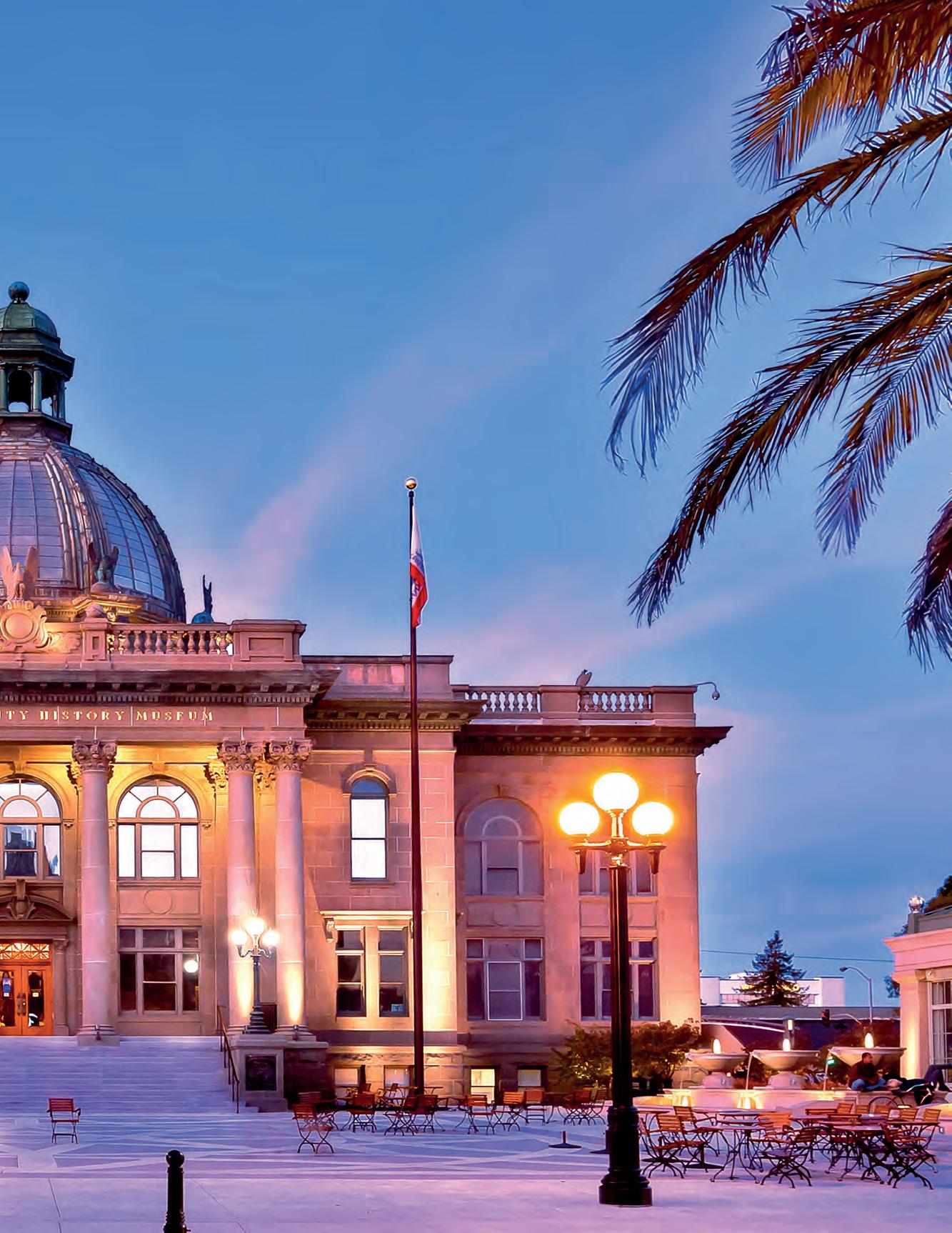
Located in the Sierra Nevada Mountains, the Truckee River fows from Lake Tahoe near Tahoe City, through Truckee and into Nevada, and is famous as a popular site for white-water rafting, river foating and extraordinary fshing.
During the early part of the 20th century, the Truckee area was one of Hollywood’s favorite locations for making movies. More recent productions to shoot in the area include: St Elmo’s Fire (1985), True Lies (1994) and Top Gun: Maverick (2022). Commercials and clothing shoots are also very popular on this site. PHOTO COURTESY JULI JOHNSTON
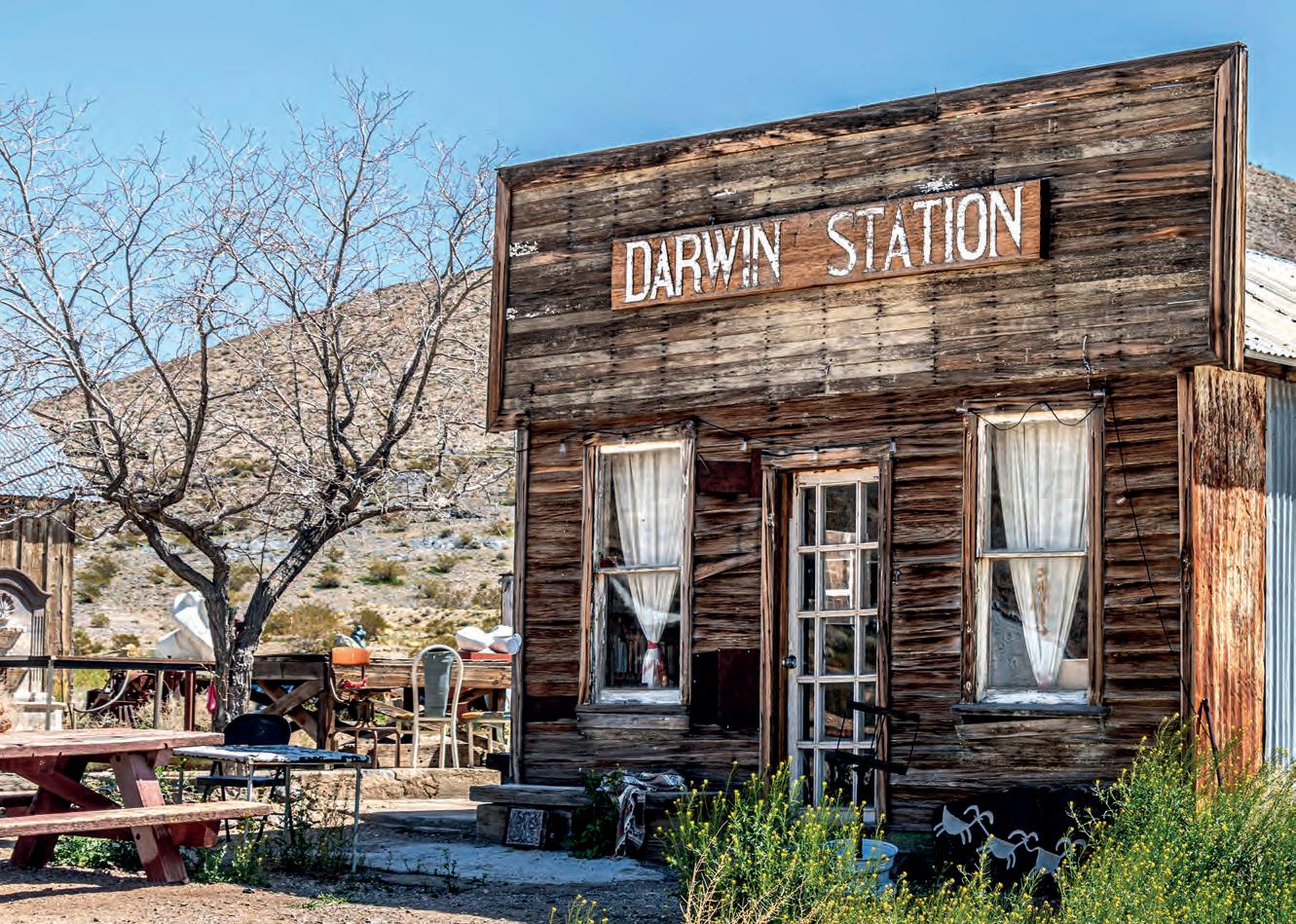
Gold Milling and Mining Company — initially called Dawson Camp — was created by the Dawson brothers. The mine frst opened in 1906, with its busiest period being between 1917 and 1921. The Death Valley Mine remained productive until 1931 and is now a preserved period mining town.
The authenticity of this location, with amenities nearby, has meant that numerous movies, TV shows and commercials have flmed in the area, including Star Wars: Episode IV –A New Hope (1977). PHOTO COURTESY MARK INDIG, LMGI
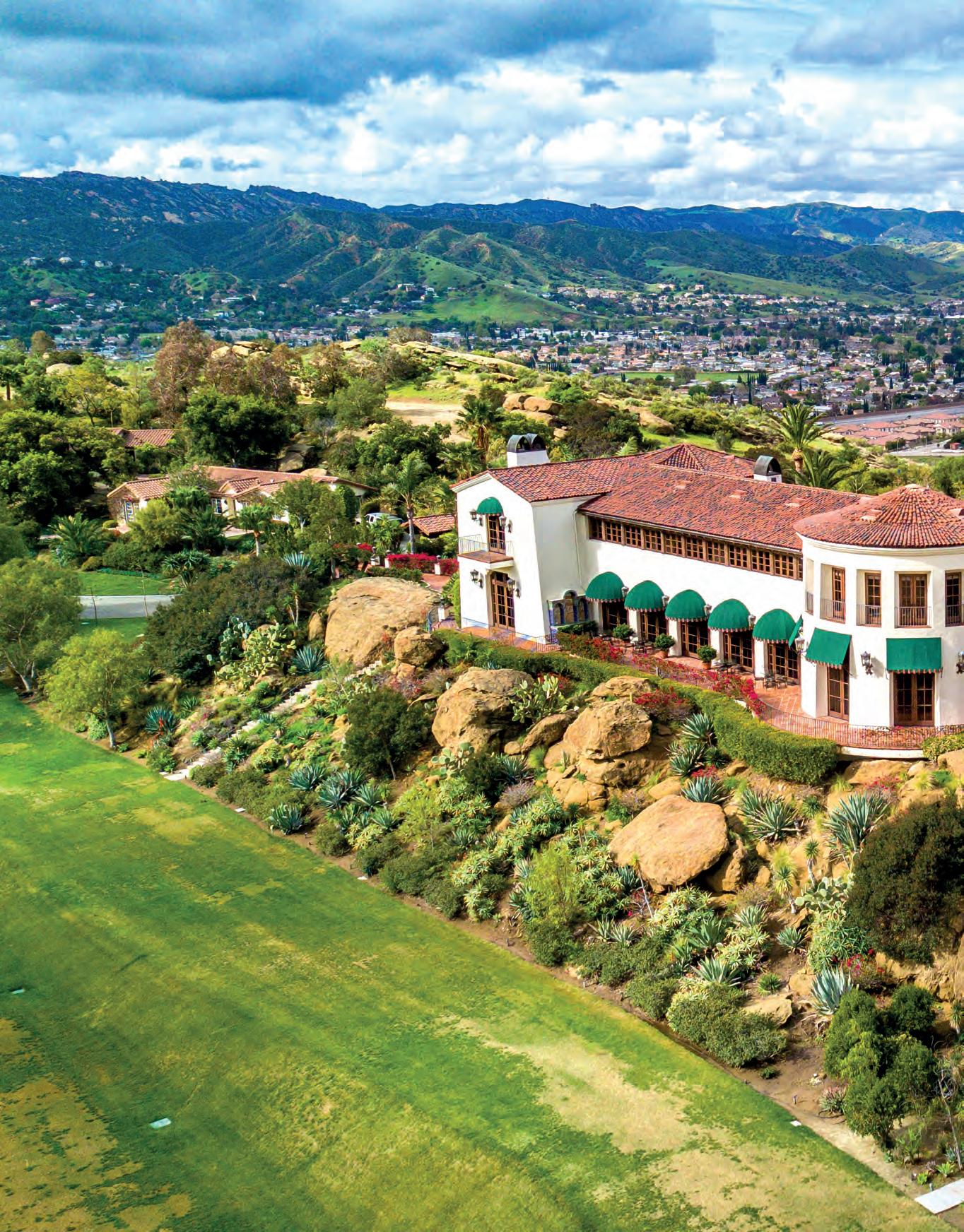
This Spanish-style mansion, called Sitting Bull, is the original 1920s ranch house at the 130-acre Hummingbird Nest. Located in the hills of Simi Valley, the ranch sits within the TMZ, west of Chatsworth and 40 minutes away from studios in Burbank, Santa Clarita and West Los Angeles.
Productions that have shot here include feature flms Babylon (2022) and Being the Ricardos (2021); and TV series Hunters (2020-2023), The Biggest Loser (2004-2020), 9-1-1 (2018-) and S.W.A.T (2017-2025).
PHOTO COURTESY DUSTIN TROY PHOTOGRAPHY
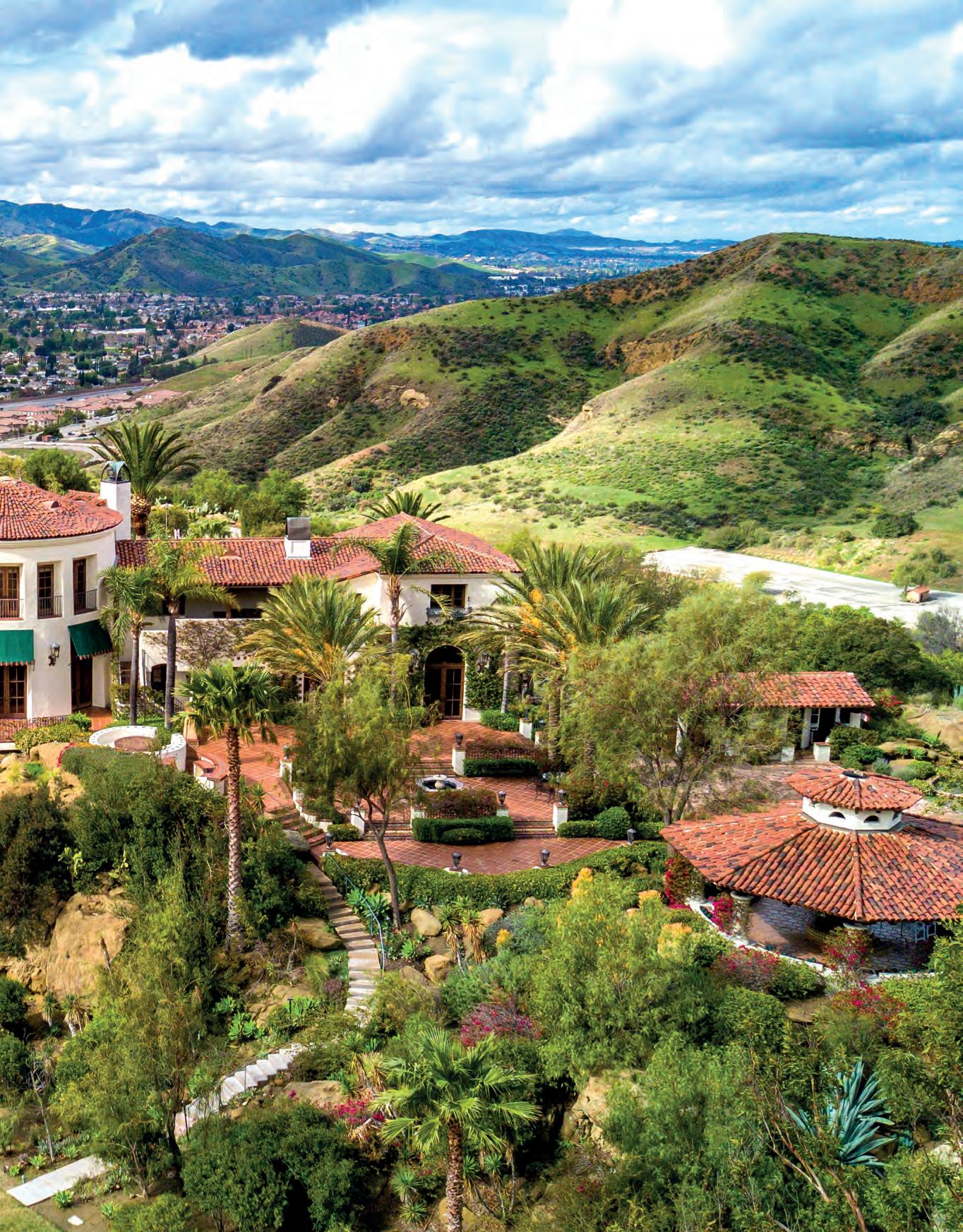
Downtown Santa Monica and the iconic Third Street Promenade ofers flmmakers a rare pedestrian-friendly urban setting just blocks from the Pacifc Ocean. The pedestrian-only Promenade can easily double for everything from upscale shopping districts to lively street scenes. The location also ofers access to Santa Monica Beach and Pier.
Films shot here include: Pee-wee’s Big Adventure (1985), Pretty in Pink (1986), Heat (1995), Twins (1988) and Freaky Friday (2003). PHOTO COURTESY: SANTA MONICA TRAVEL & TOURISM
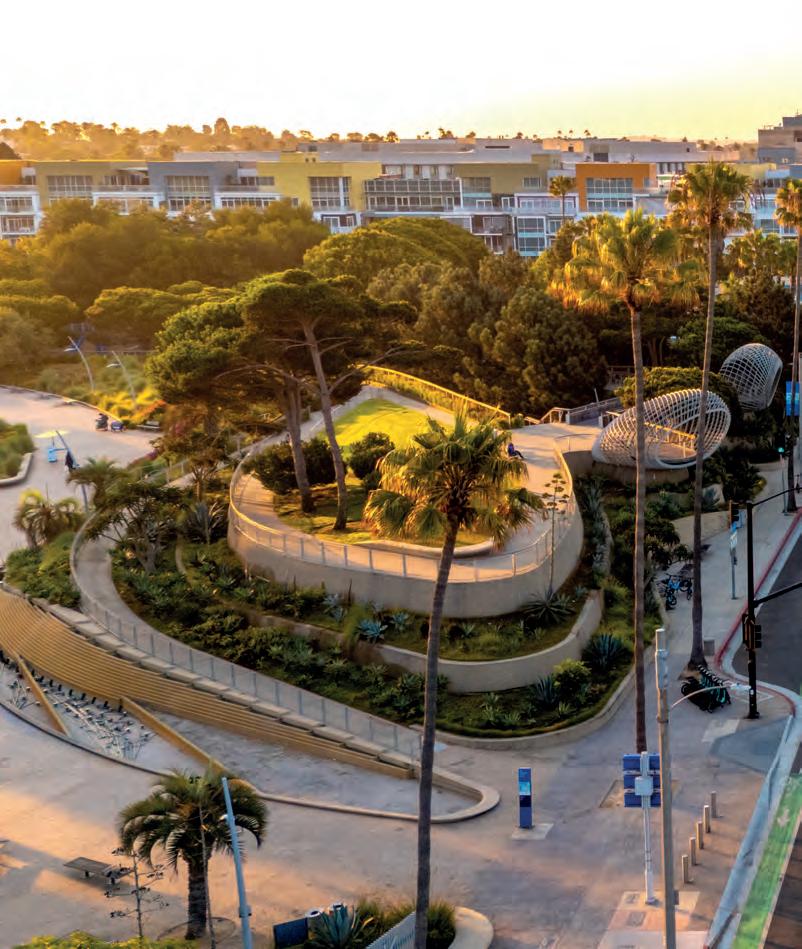
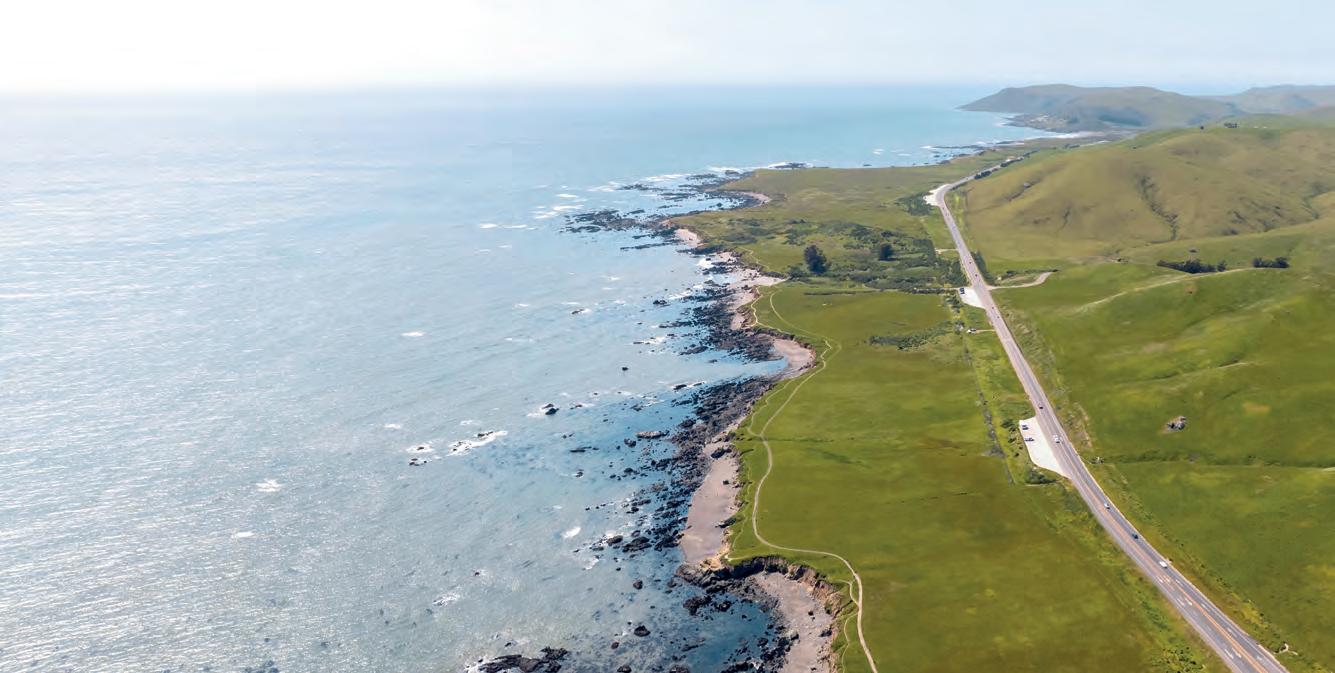
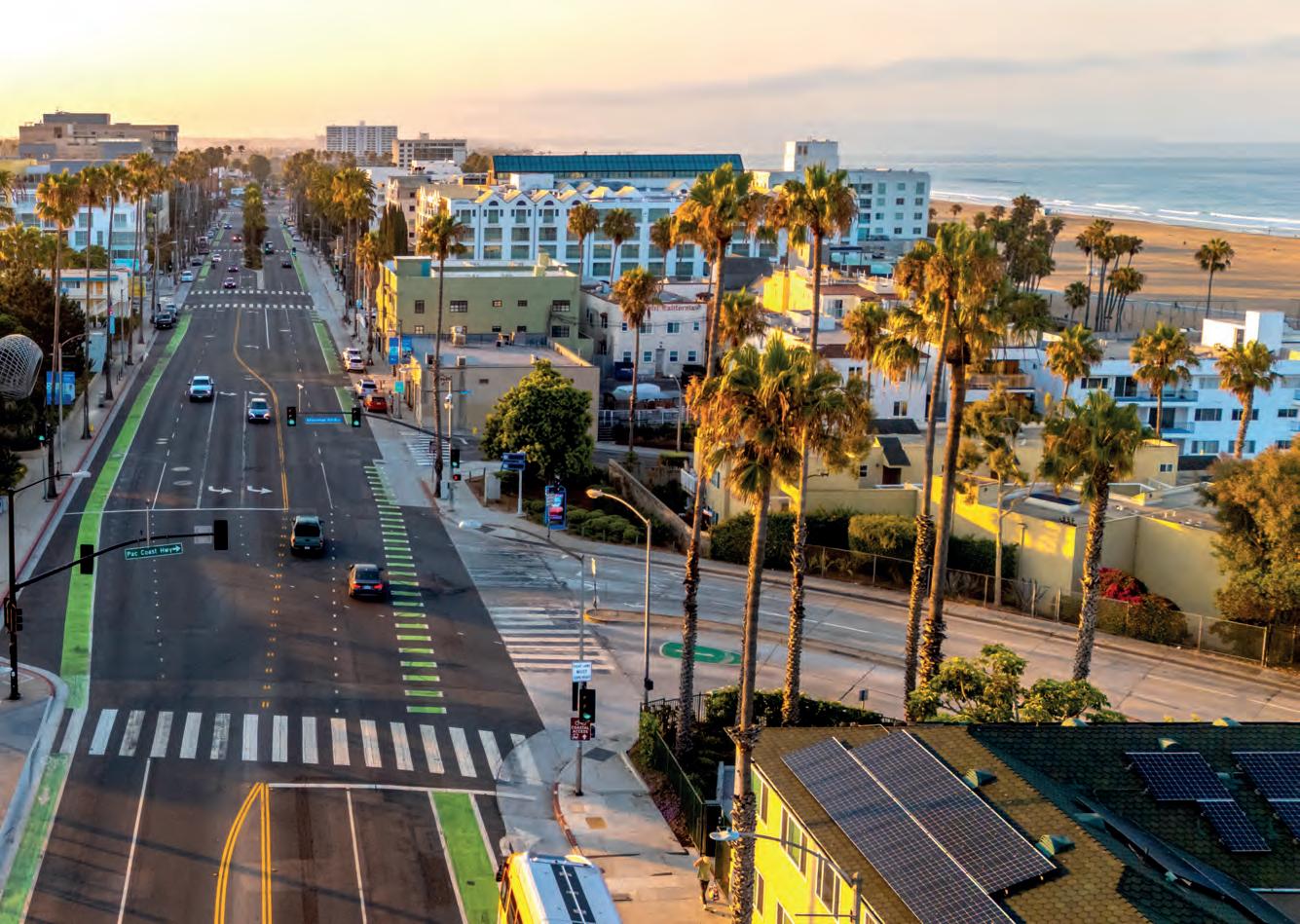
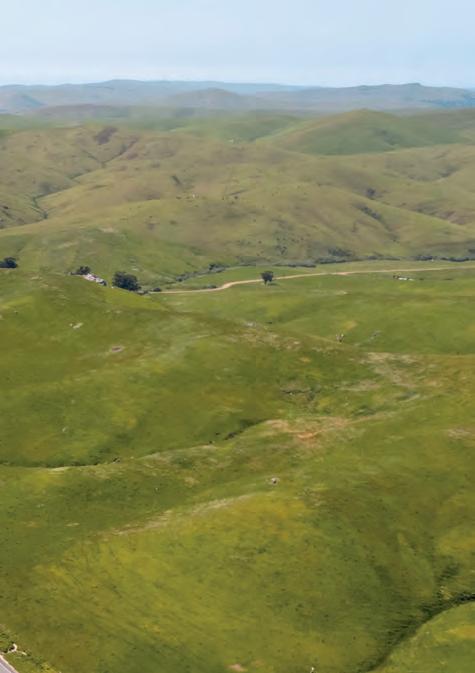
This park sits directly along Highway 1, one of the most cinematic stretches of road in the world. The highway traces the edge of the dramatic blufs with sweeping Pacifc views, dramatic drop-ofs, rolling coastal curves and natural pullouts that are ideal for car commercials, road-trip storytelling and coastal transition shots. Estero Blufs ofers a rare stretch of relatively untouched California coastline that can double for anywhere from Northern California to the Pacifc.
Recent commercials have included for various vehicles, a state-wide tourism commercial for Visit California’s 2025 ‘Up Around the Bend’ campaign and high-end photography
West Hollywood’s Whisky a Go Go, one of the most famous rock ‘n’ roll landmarks in the US, frst opened in 1964, and still delivers authentic Sunset Strip atmosphere today. Despite its well-known location on Sunset Boulevard, the club can double as anywhere USA or an international nightlife destination.
Emmy Award-winning TV series Daisy Jones & The Six (2023), American Idol (2002-) and many other flm and television projects have shot here. PHOTO COURTESY VISITWESTHOLLYWOOD.COM
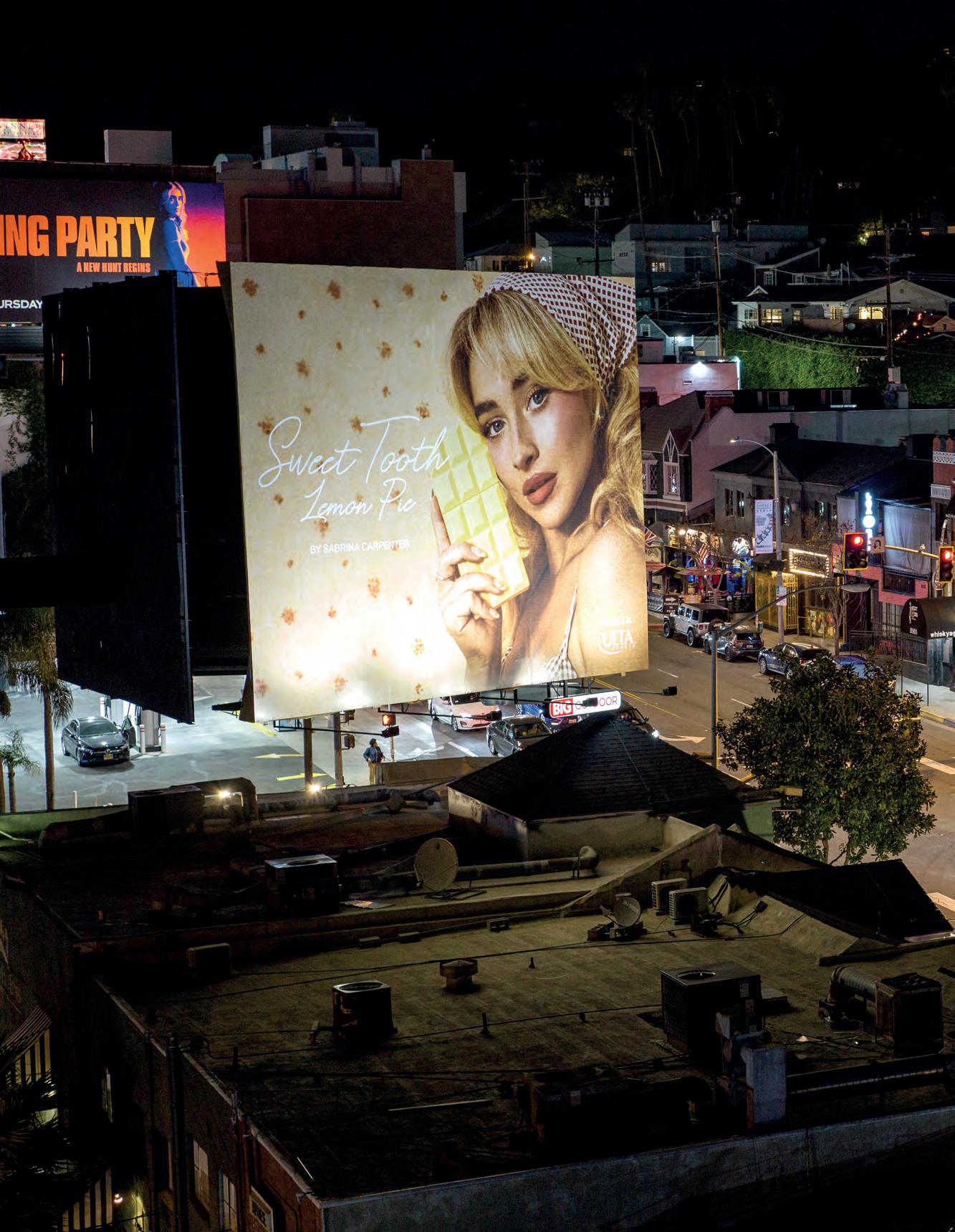
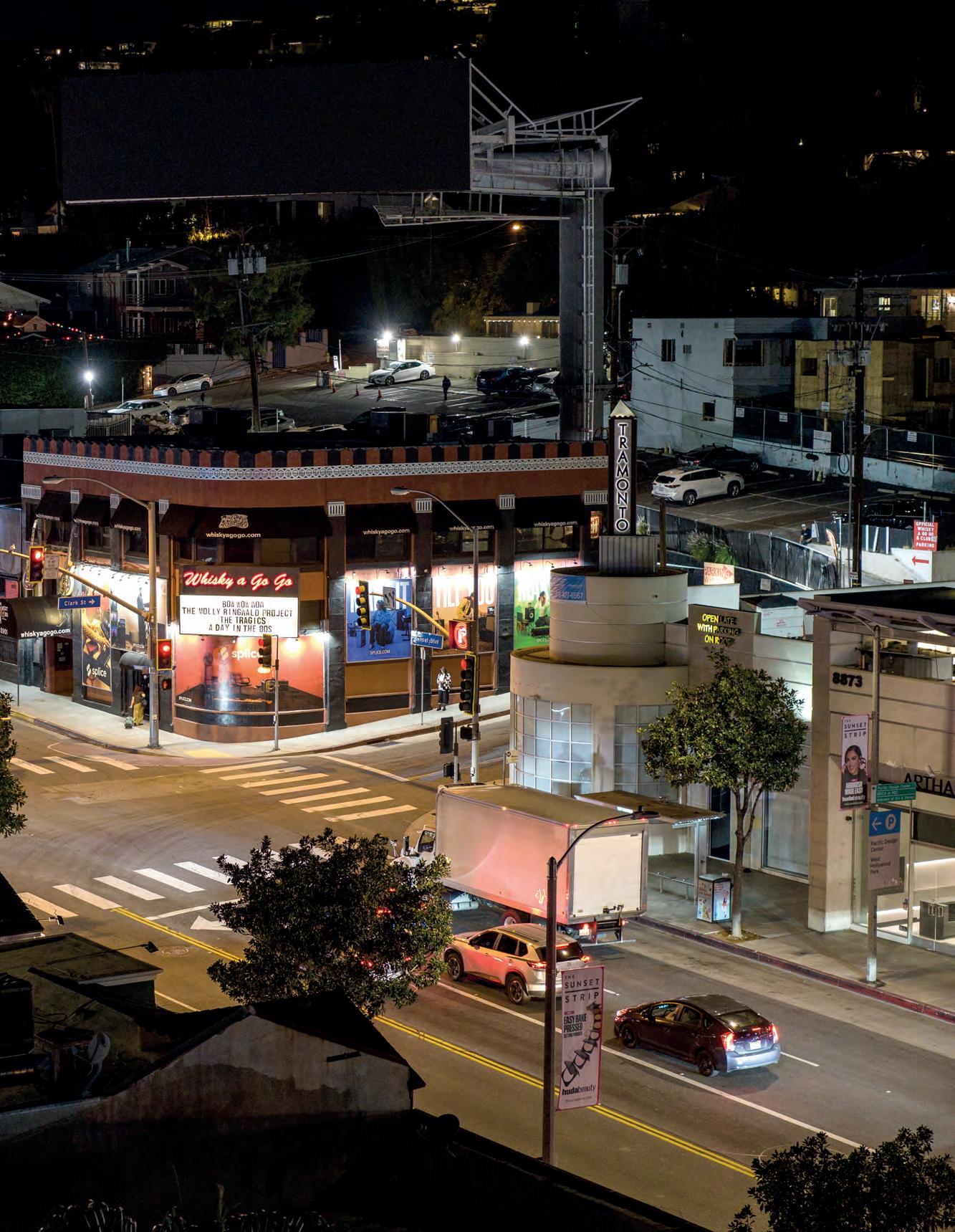
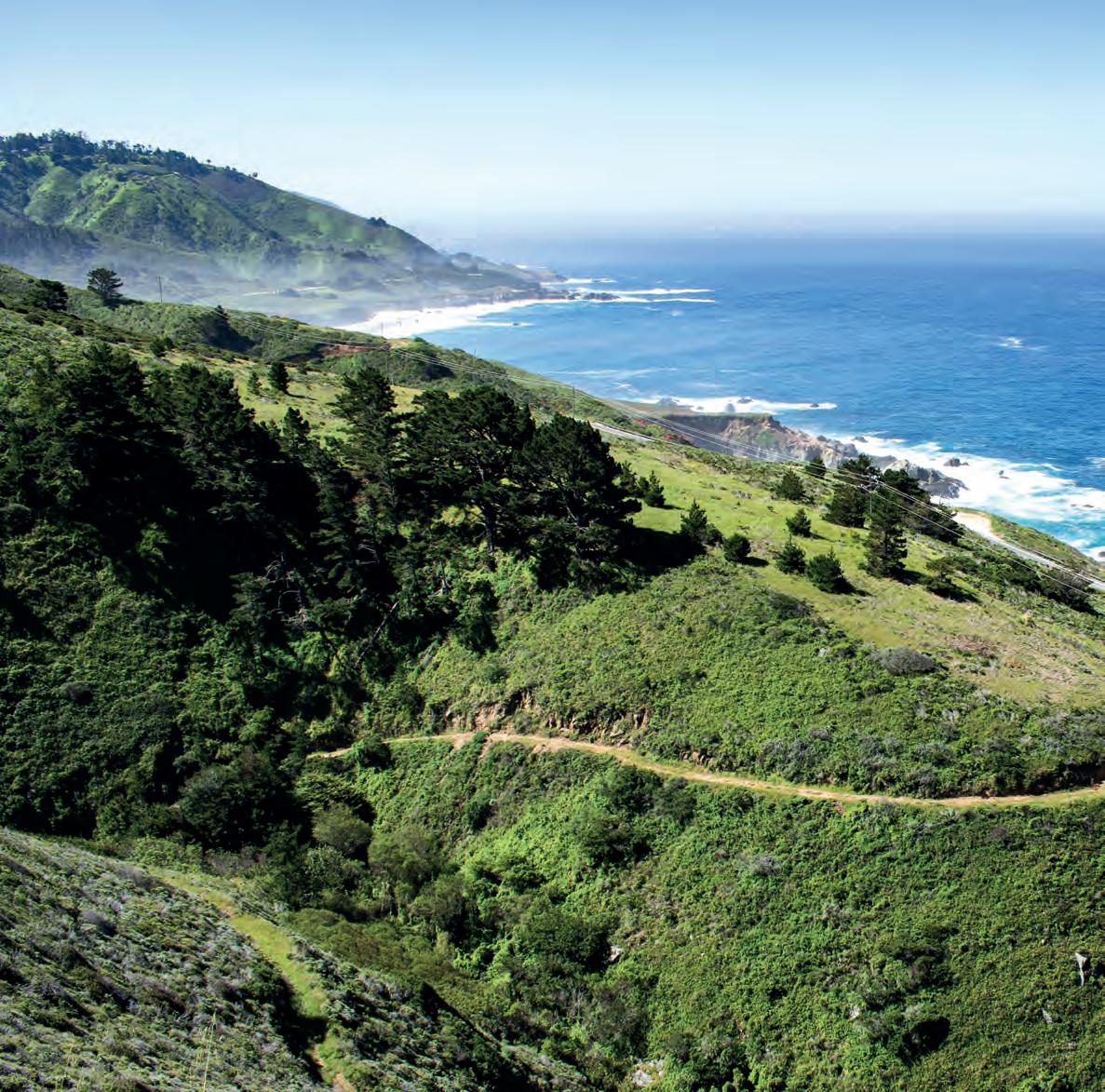
This shot showcases the Doud Ranch in Big Sur, from the high-meadow area, with dramatic vistas overlooking Big Sur’s Highway 1 and the Paci c Ocean. It is one of several privatelyowned ranches in Big Sur and throughout Monterey County that are available for lm productions.
Doud Ranch was recently used for a 2026 Honda CRV commercial. Other productions that have lmed in the area include TV show Cosmos (2014-) and a Brazilian telenovela, plus music videos by Kelsea Ballerini and Miley Cyrus, as well as international fashion shoots. It was also featured in the lm Dog (2022). PHOTO COURTESY, KAREN NORDSTRAND
The Mission Inn Hotel & Spa, built in 1876, o ers a variety of stunning settings inspired by Spain, Italy, Greece, Mexico and classic European architecture. The chapel is located in the interior courtyard and boasts many glass windows and other instalments created by Louis Comfort Ti any.
The venue has served as a lming location for several lm and TV productions, including Idiot’s Delight (1939) and Tell Them Willie Boy Is Here (1969).
CREDIT: LINDA KAI OR LINDA KAI LOCATIONS




The Wilderness Lodge is located at the base of the Castle Crags State Park, between the towns of Castella and Dunsmuir. There are over 30 railroad cars on site set up as a hotel. This includes a railroad-car restaurant with a 1970s/ early 1980s vibe, an RV park with a pond and other outdoor areas for flming.
This is a unique location in California. No productions have utilized this site yet — it’s a hidden gem waiting to be discovered. PHOTO COURTESY JASON YOUNG (FILM SISKIYOU)
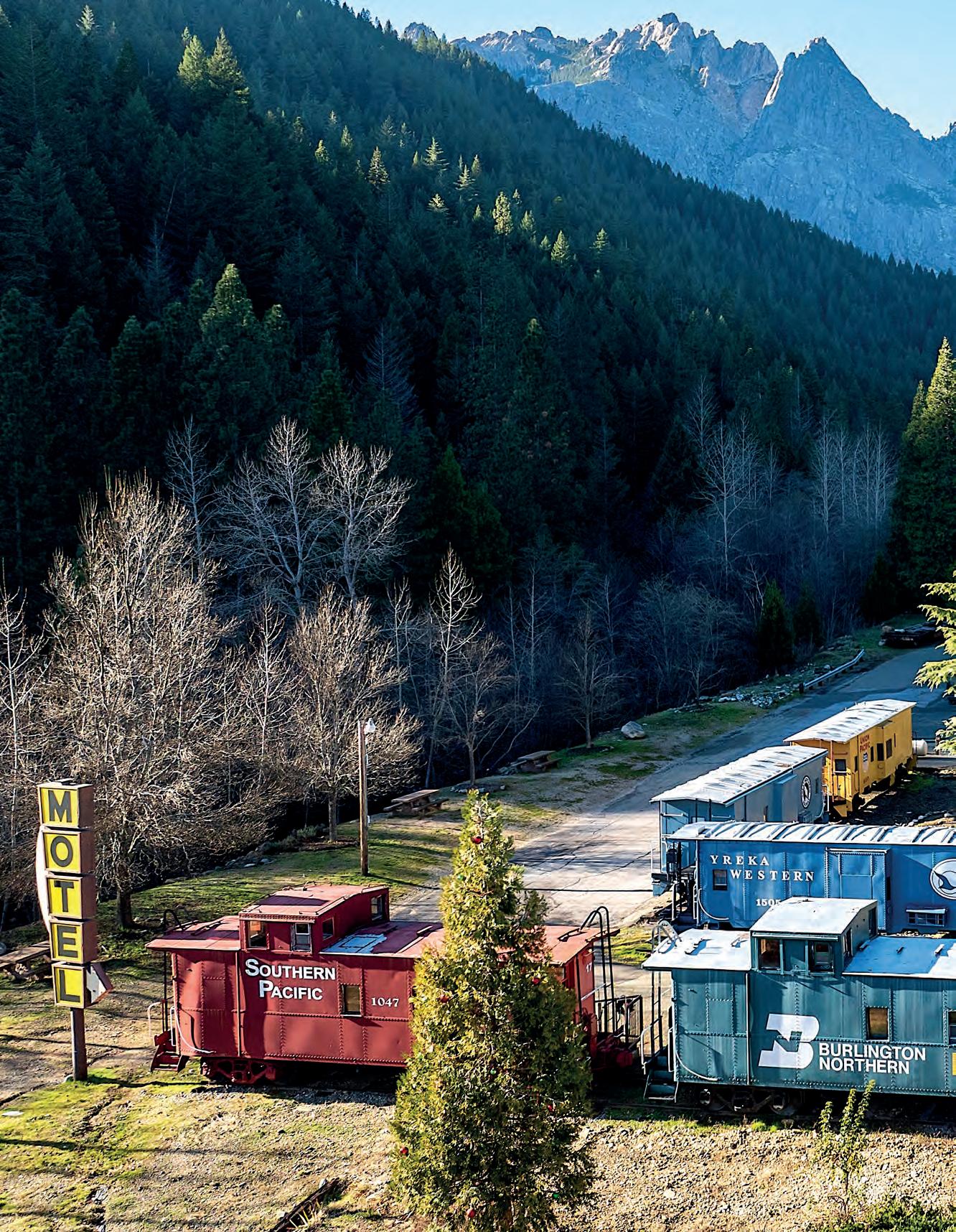
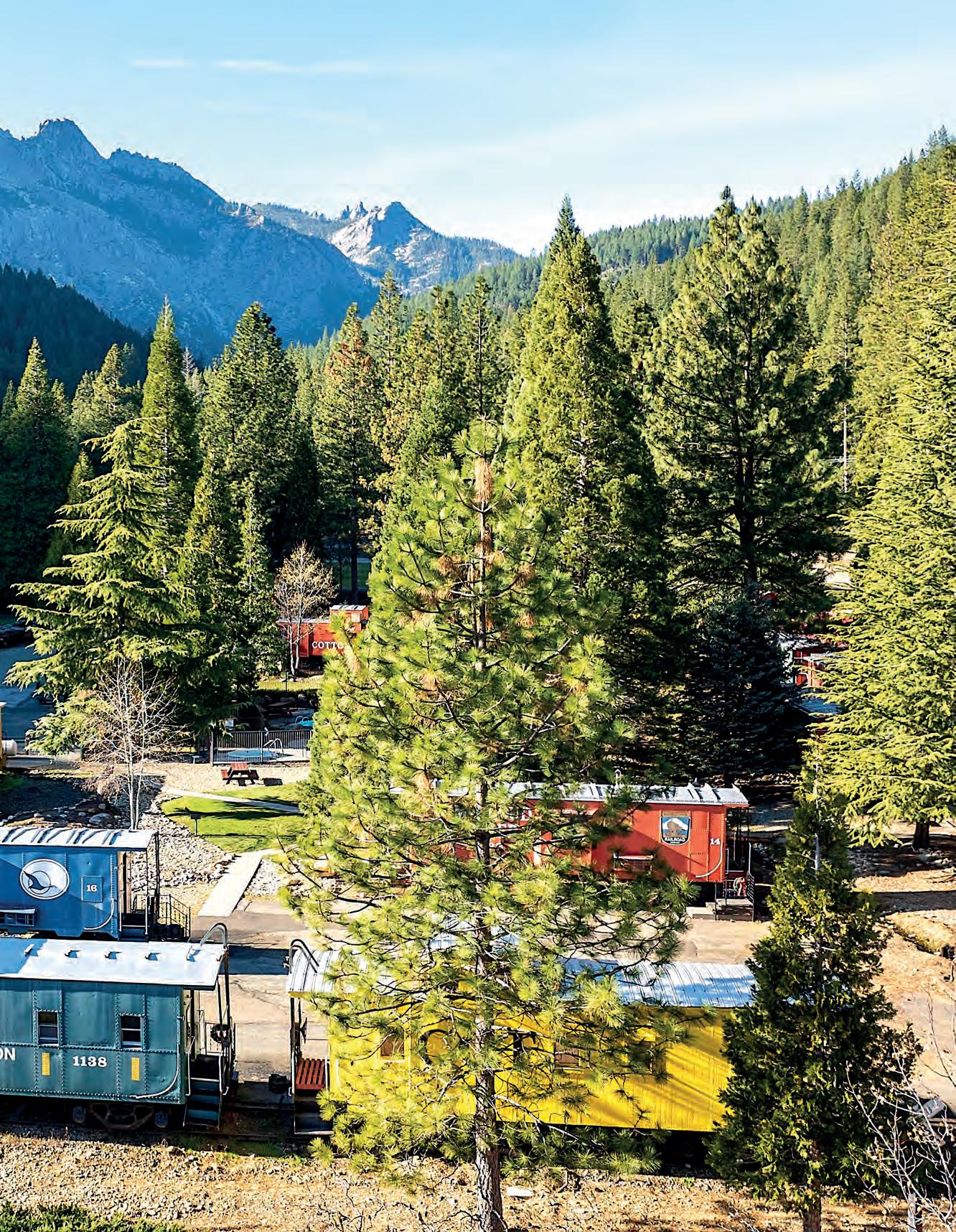
The Redwood Sky Walk in Humboldt County was built fve years ago within the Sequoia Park Zoo in Eureka, the oldest zoo in California. The peak of the Sky Walk is over 100 feet above the ground. Despite feeling that you are deep in the redwood forest, this location is minutes away from Downtown Eureka.
Sequoia Park has played host to many flms including A Wrinkle in Time (2018) and One Battle After Another (2025), and A Red Bull Commercial.
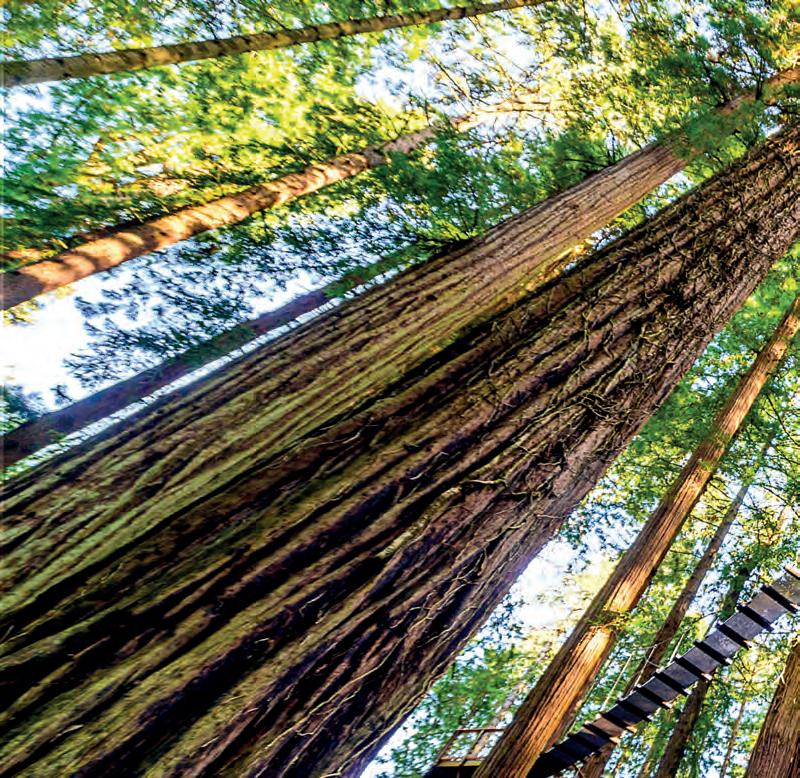
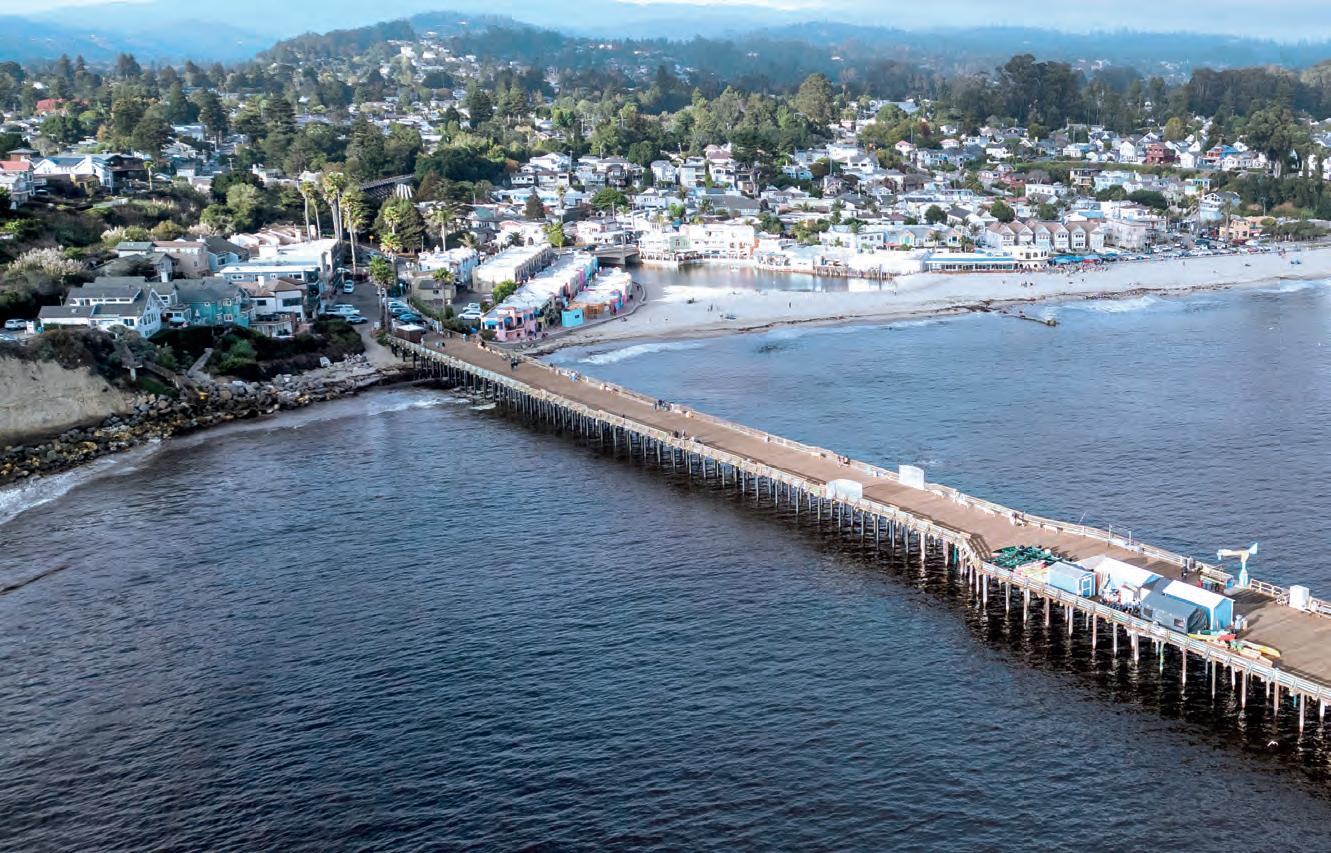
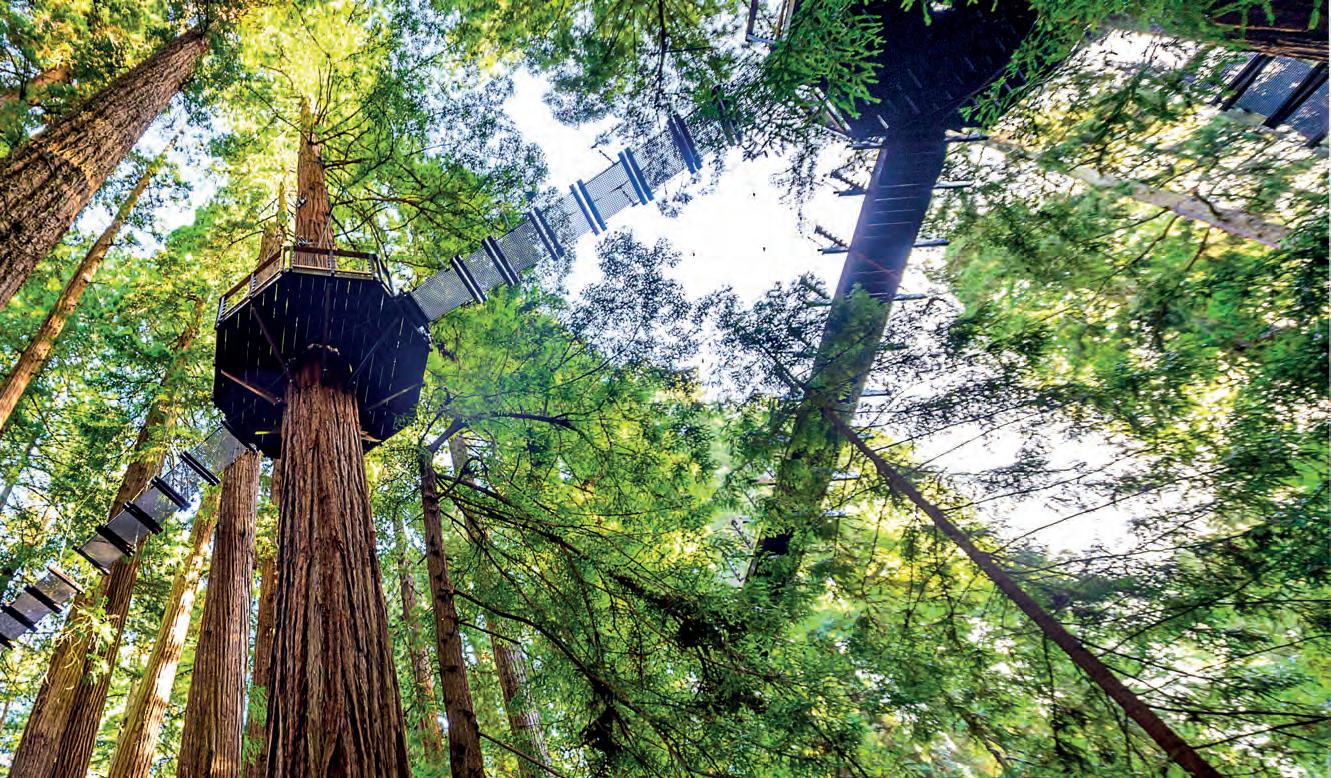
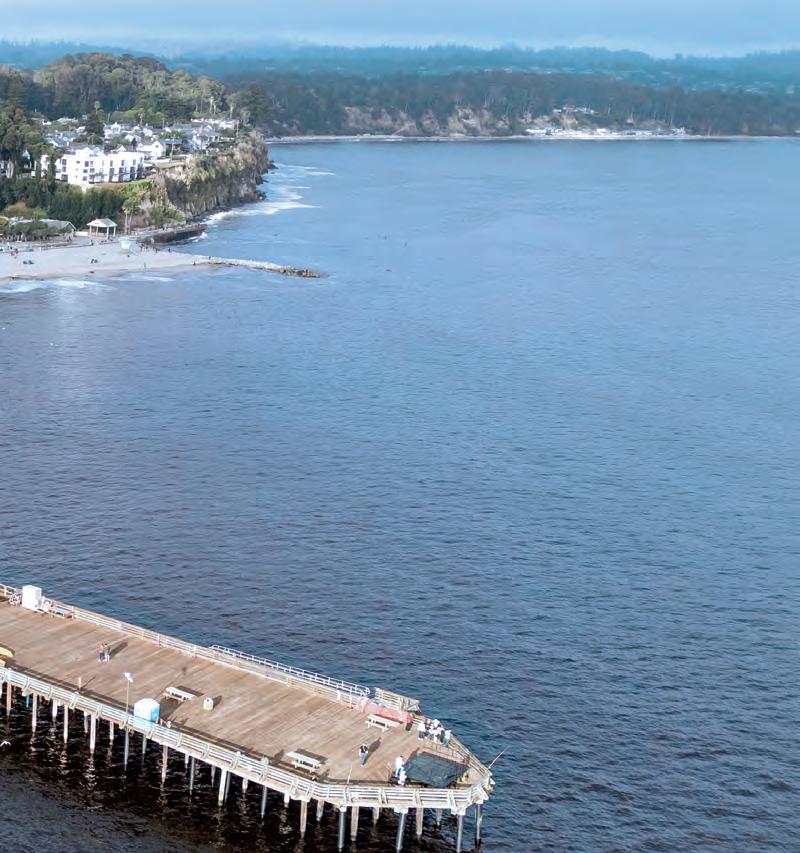
Perched above the Pacifc Ocean in Santa Cruz County, the Capitola Wharf is nestled at the base of a hill that comprises some of the county’s oldest condominiums. Capitola Village’s Venetian cottages provide a colorful background for beach shots and the blissful vibe of the village delivers a Mediterranean feel. Various local locations include creek-side areas, the diminutive Capitola Beach and ocean views.
Some of the many productions that have flmed here include Bumblebee (2018), Bird Box (2018), Us (2019) and numerous commercials.
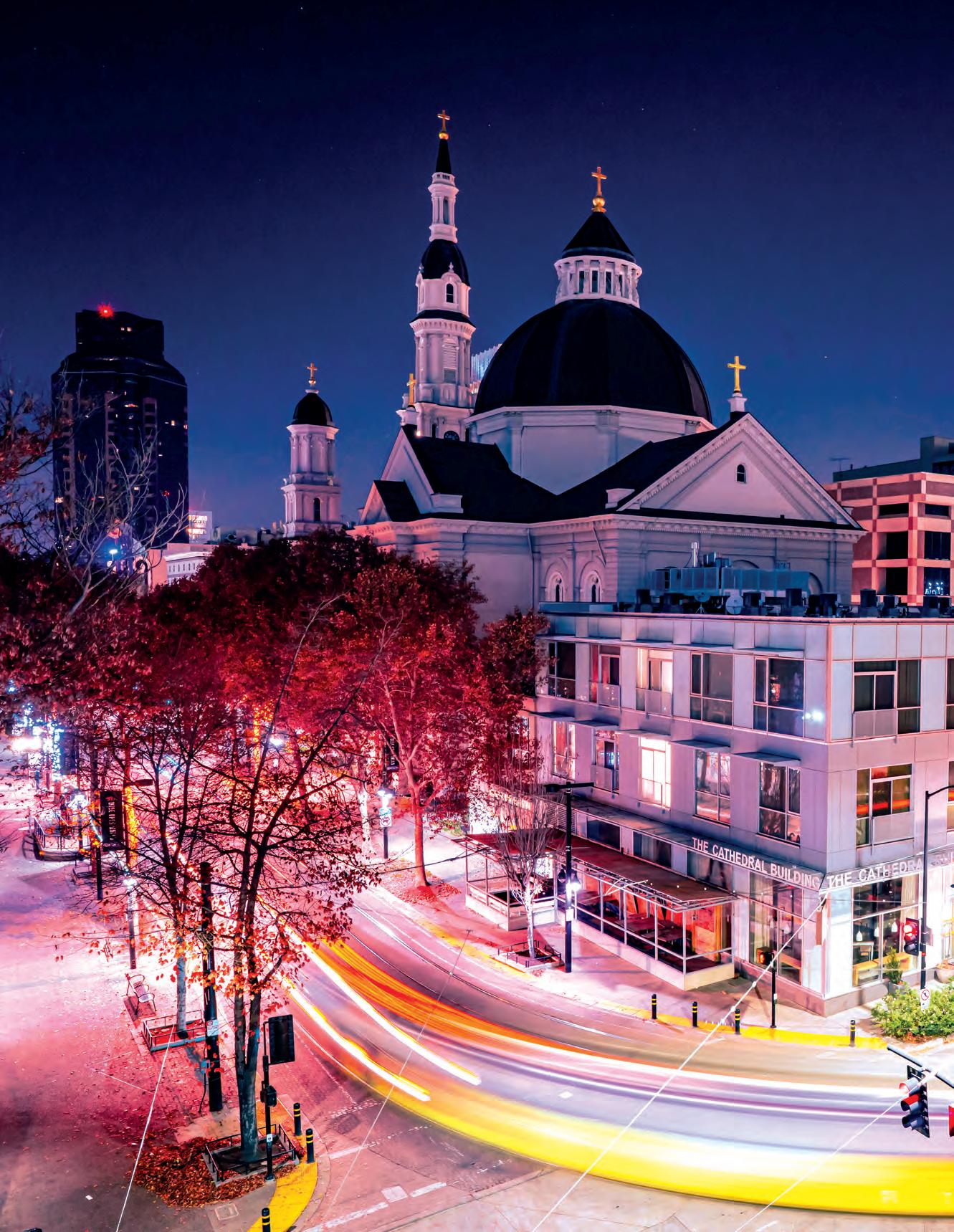
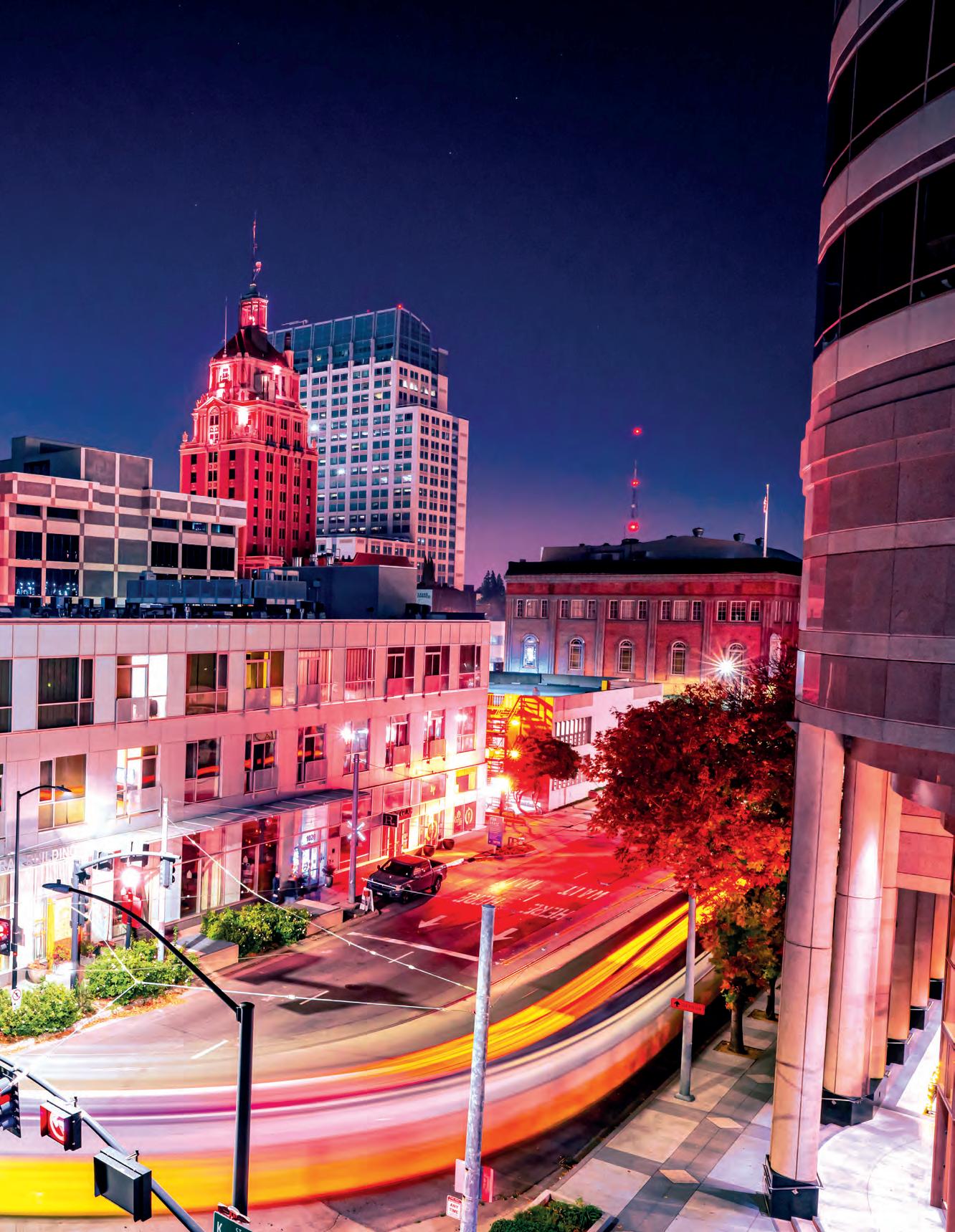
This location is a unique part of Downtown Sacramento that’s particularly vibrant at night, with neon lights and skyscrapers juxtaposed with the traditional architecture of the Cathedral of the Blessed Sacrament. The Sacramento Regional Transit train passes regularly.
California’s capital city has been the location for numerous flms, including One Battle After Another (2025). Many commercials have also shot here, including recent spots for Cole Haan and local Sacramento bank Tri Counties.
Built in 1963, the Astro Hotel preserves authentic mid-century architecture and design. Retro signage, geometric screens and period details create an instant time-period setting without heavy production design. The two-story outdoor motel layout is ideal for camera movement and efcient crew operations. There are also garden areas and a frepit providing intimate and versatile settings.
Films that have shot in the area include: Peggy Sue Got Married (1986), Die Hard 2 (1990), Scream (1996) and Sideways (2004). PHOTO
SONOMA COUNTY TOURISM
Big Bear is a popular four-season mountain-resort destination located in the San Bernardino National Forest in Southern California, about 100 miles northeast of Los Angeles. The San Bernardino Mountains are revered for the lake, ski-resort and alpine environment. Big Bear boasts a huge area of private forested land, as well as the panoramic view.
The TV series American Horror Story (2011-) shot here, and also numerous commercials.
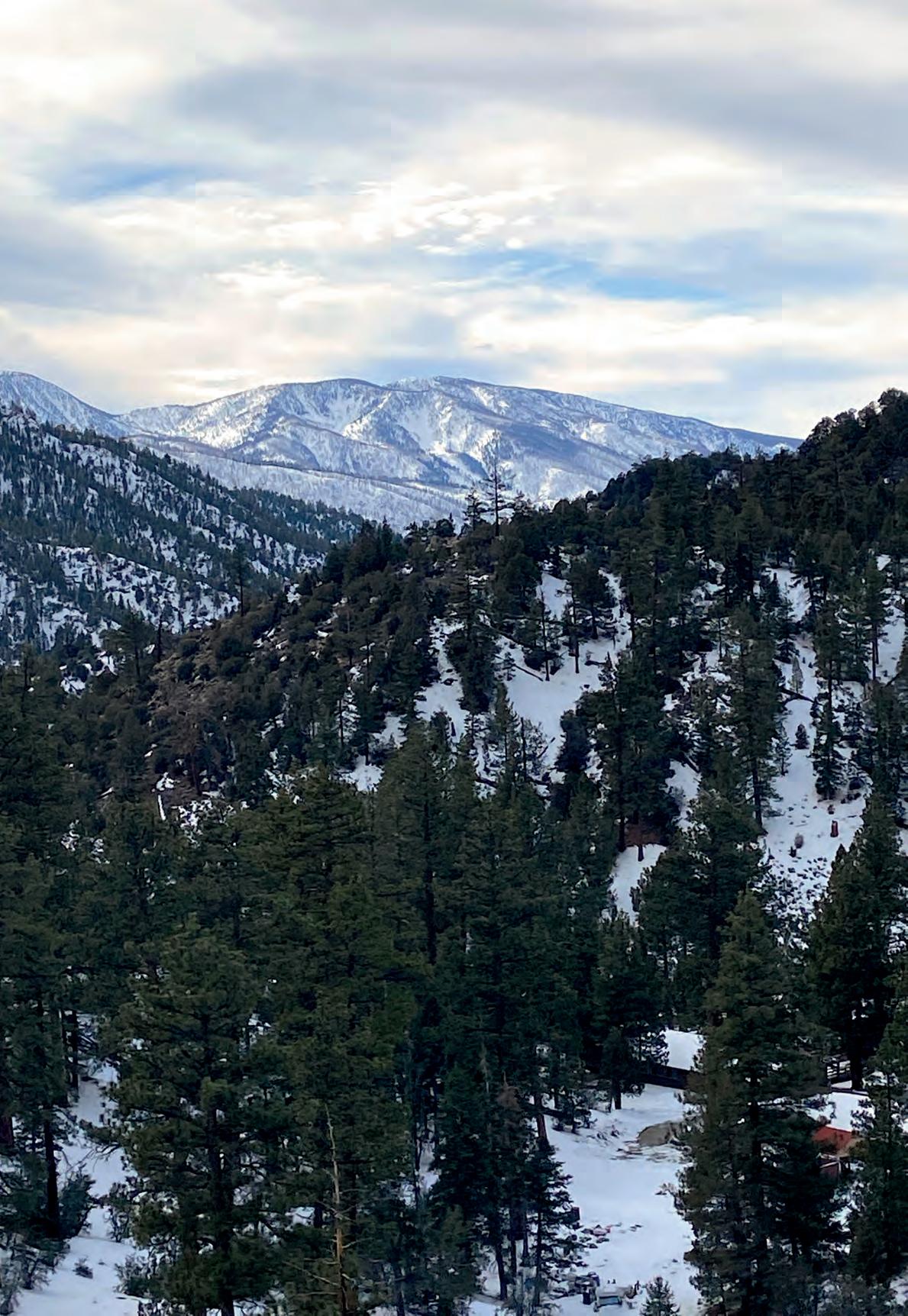
The South Fork American River is a major tributary of the American River in El Dorado County, fowing from the pristine Desolation Wilderness and through the Sierra Nevada foothills. The river provides various locations, including calm to class-fve rapids, golden hills, winding roads and a bridge crossing.
Many productions have shot here including: Indiana Jones and the Temple of Doom (1984), Breakdown (1997), Memoirs of a Geisha (2005) and Lady Bird (2017).
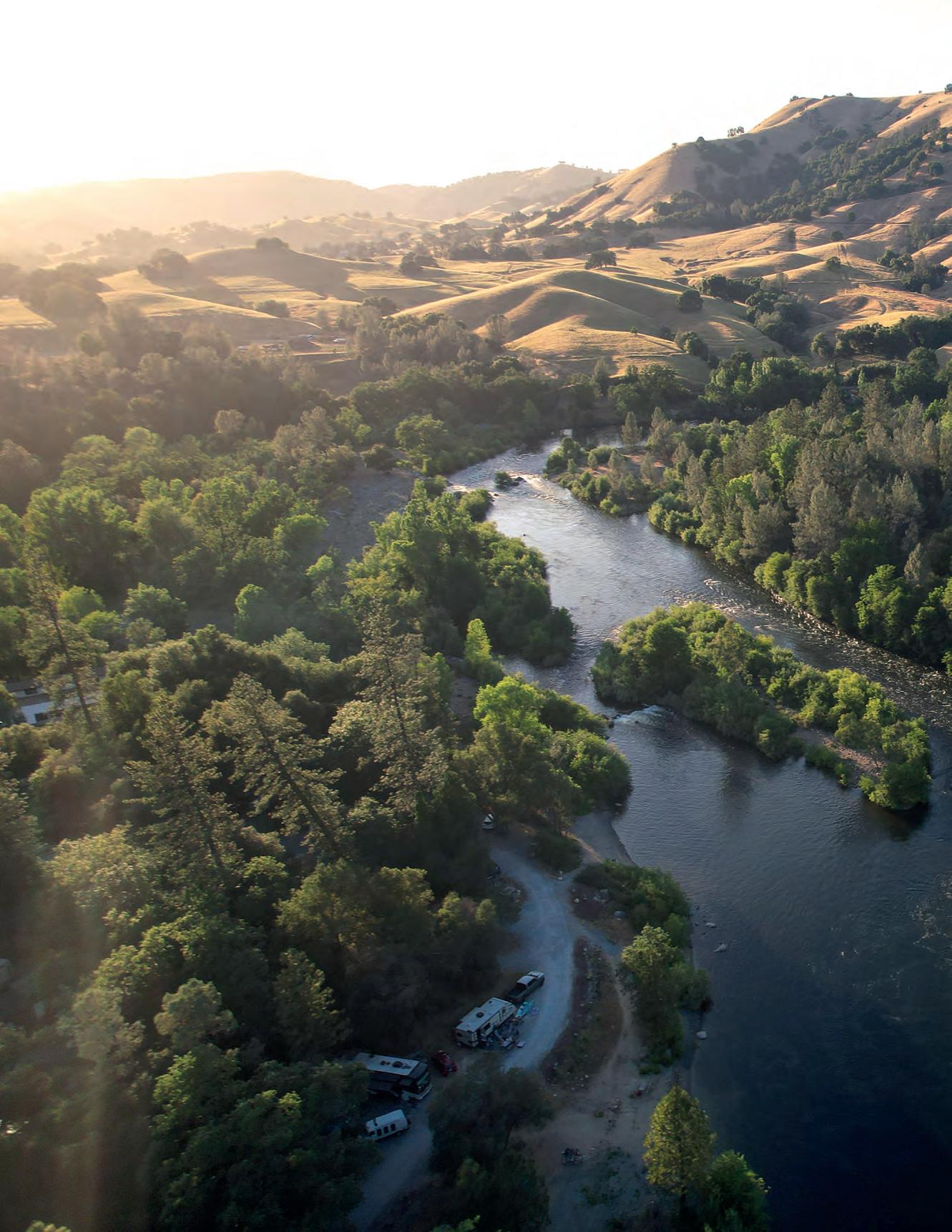
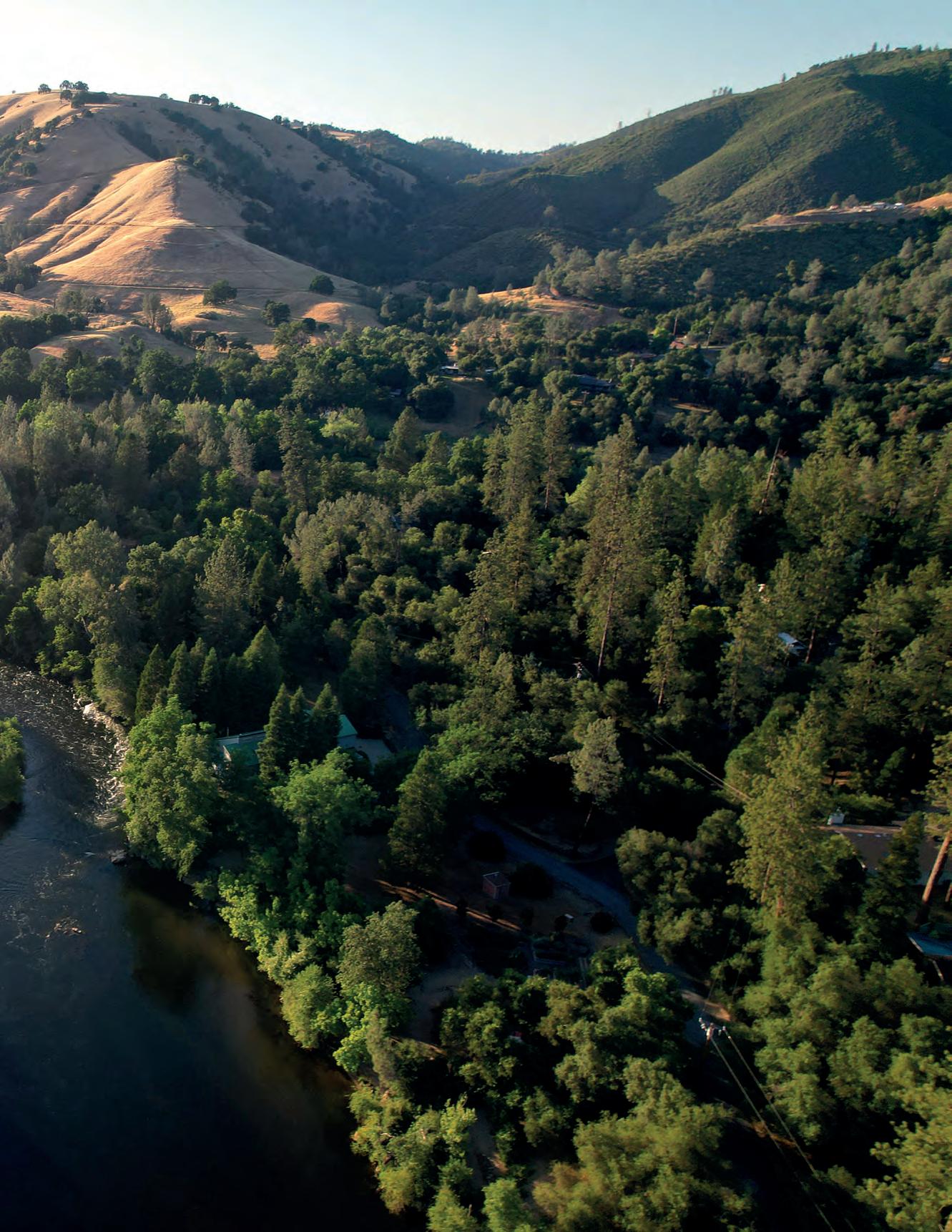
The Money Tree is known as a living symbol of prosperity, peace and positive energy and the climate in southern California is a prime location for it. Here it grows on the beautiful foothill Joughin ranch, which boasts stunning rock outcroppings and spectacular views of the surrounding mountains and valley.
The locality is also the home of the Iverson Movie Ranch, with more than 3,000 productions having used it as a flming location.
GEOFFREY JUCKES
Montezuma Valley Road is also known as the Glass Elevator, a scenic road in Anza-Borrego Desert State Park, San Diego County, starting in Borrego Springs and ascending nearly 4,000 feet over 32 miles. The steep ascent and descent provide expansive views reminiscent of a glass elevator in a skyscraper.
One Battle After Another (2025) was partially flmed in and around here.
LMGI
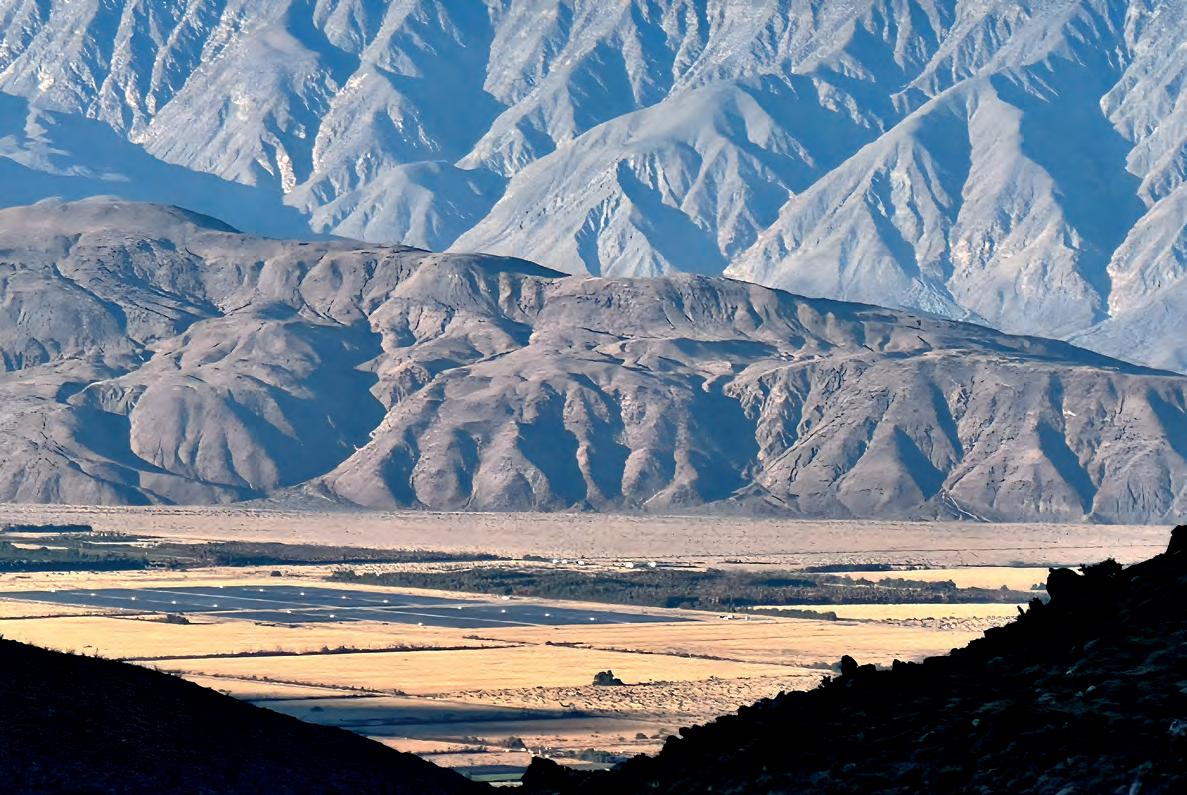
Located at the center of Koreatown, adjacent to Hancock Park, this area is also near the historic Wiltern theater, USC, Downtown Los Angeles and LADC Studios. This street services many recycling businesses, so probably best used at night when they are closed and daytime truck trafc has stopped.
Numerous movies have shot in Downtown Los Angeles, including: The Omega Man (1971), Earthquake (1974), Falling Down (1993), Escape From L.A. (1996) and Independence Day (1996). PHOTO COURTESY JANET HAROLD – LMGI
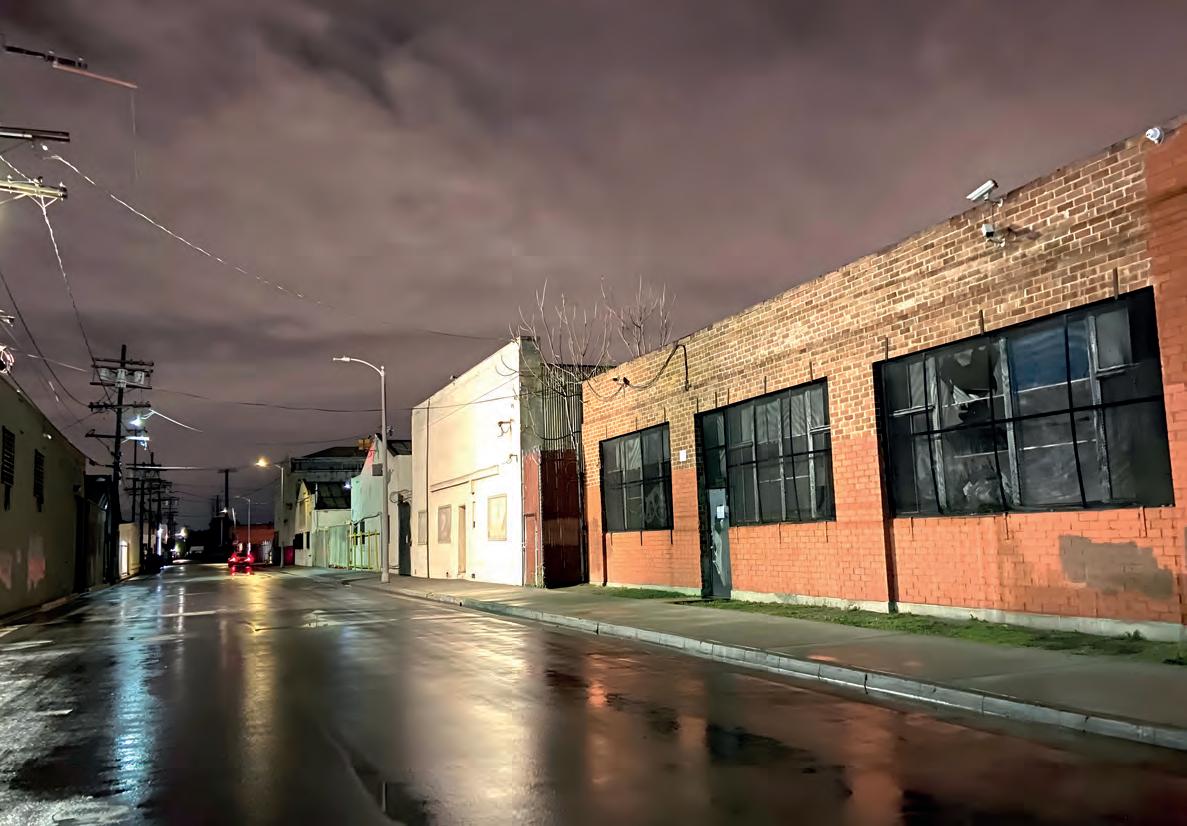


























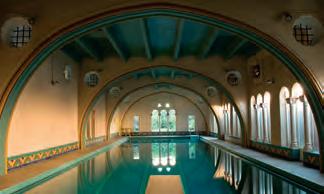
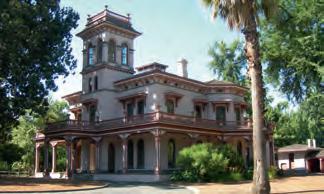
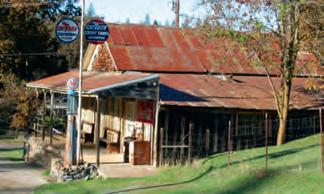

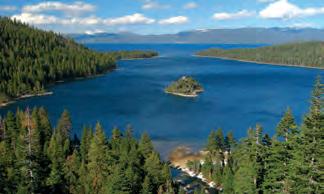
Amador County Film Commission 9600 Summit Place, Jackson, CA 95642
RICH HOFFMAN
Film Commissioner, O ce: (209) 304-3730 phone 1 ho mangallery007@gmail.com www.visitamador.com
Berkeley Film O ce Convention & Visitors Bureau 2030 Addison Street, Suite 102 Berkeley, CA 94704
Chico Chamber of Commerce & Visitor Center
180 E. 4th St., Suite 120 Chico, CA 95927
JEFFREY CHURCH
Film Commissioner
O ce: 510-549-7040 jchurch@visitberkeley.com www. lmberkeley.com

MIKE EGBERT
President & CEO/Film Liaison
O ce: (530) 891-5556 Mike@chicochamber.com www.chicochamber.com
Calaveras Visitors Bureau & Film Commission 753 S. Main Street Angels Camp, CA 95222
Humboldt - Del Norte Film Commission 235 F Street Eureka, CA 95501
MARTIN HUBERTY
Executive Director/Film Commissioner
O ce: (209) 736-0049 Cell: (209 ) 481-5824 martin@gocalaveras.com www. lmcalaveras.org
CASSANDRA HESSELTINE
Film Commissioner
O ce: (707) 443-4488
Cell: (707) 502- 0018 commissioner@hdnfc.org www.hdnfc.org
South Lake Tahoe Region
El Dorado Lake Tahoe Film & Media O ce 542 Main Street Placerville, CA 95667
KATHLEEN DODGE
Executive Director
O ce/Cell: (530) 626-4400 lm@eldoradocounty.org www. lmtahoe.com
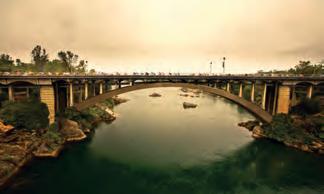
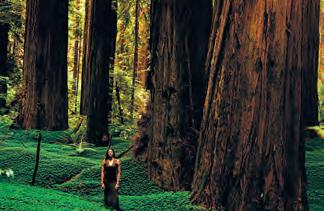
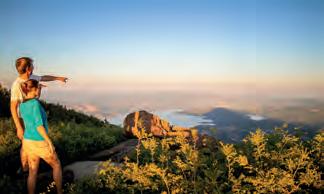
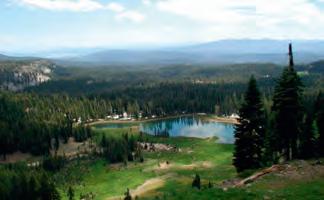
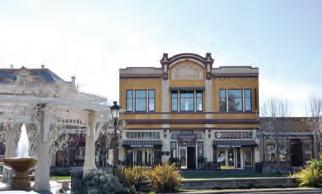
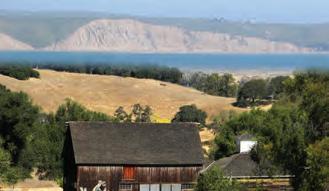
Folsom Tourism Bureau 200 Wool Street Folsom, CA 95630
Humboldt - Del Norte Film O ce 235 F Street Suite 27
Eureka, CA 95501
SALLY HOWARD BUCHANAN Director
O ce: (916) 985-2698, ext. 26
Cell: (916) 337-7881 maryann@visitfolsom.com www.visitfolsom.com
CASSANDRA HESSELTINE Film Commissioner
O ce: (707) 443-4488
Cell: (707) 502- 0018 commissioner@hdnfc.org www.hdnfc.org
County of Lake Administrative O ce 255 N. Forbes St. Lakeport, CA 95453
BEN RICKELMAN
Film Liaison/Deputy CAO
O ce: (707) 263-2580 Benjamin.rickelman@lakecountyca.gov www.lakecounty.com
Lassen County Chamber of Commerce 707 Nebraska St., Suite 5 Susanville, CA 96130
Valley Film O ce 5075 Hopyard Rd, Suite 240 Pleasanton, CA 94588
Marin Film Resource O ce 1 Mitchell Blvd., Suite B San Rafael, CA 94903
MAURICE ANDERSON Director of Planning & Building Services O ce: (530) 251-8269 manderson@co.lassen.ca.us www.lassencounty.org
JUSTIN BOWER
Film Liaison
O ce: (925) 846-3389
justin@visittrivalley.com https://visittrivalley.com/ lmo ce/
GINA MARR-HIEMSTRA
Film Liaison
O ce: (866) 925-2060
Direct: (415) 785-7032
gina@visitmarin.org www. lmmarin.org
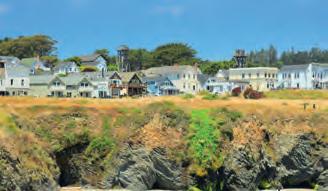
Mendocino County Film Commission
217 S. Main Street P.O. Box 1141
Fort Bragg, CA 95437
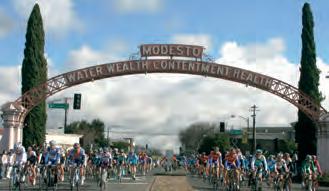

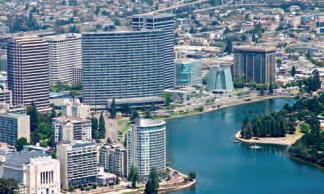
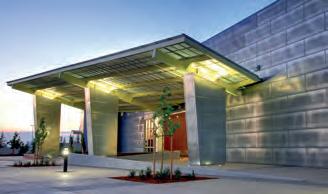
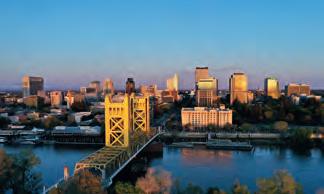
Modesto Convention & Visitors Bureau / Film Commission 1008 1st Street Modesto, CA 95354
Mono County Tourism and Film Commission PO Box 603 1290 Tavern Rd. Mammoth Lakes, CA 93546
Oakland Film O ce
1 Frank H. Ogawa Plaza, 9th Floor Oakland, CA 94612
DEBRA DE GRAW
Interim Film Commissioner
O ce: (707) 961-6302
Cell: (707) 972-1953 lmmendocino@mcn.org www.mendocinocoast.com
TODD AARONSON CEO
O ce: (209) 526-5588
Cell: (209) 573-0503 todd@visitmodesto.com www.visitmodesto.com
LIZ GRANS
Film Commissioner
O ce: (760) 924-1738 Lgrans@mono.ca.gov www. lmmonocounty.com
KAT TORIO
Special Permits Coordinator Economic & Workforce Development Department, Special Activity Division
O ce: (510) 238-4948
KTorio@oaklandca.gov www.oaklandca.gov/resources/ oakland- lm-o ce
North Lake Tahoe Region
Placer-Lake Tahoe Film O ce 145 Fulweiler Ave., Suite 120 Auburn, CA 95603
Sacramento Film + Media 915 “I” Street, 3rd Floor Sacramento, CA 95814
JULI JOHNSON Film Program Liaison
O ce: (530) 215-5305
Cell: (530) 906-3350 lmo cer@placer.ca.gov www. lmplacertahoe.com
JENNIFER WEST
Film Commissioner
O ce: (916) 808-2676
lmo ce@cityofsacramento.org www. lmsac.com
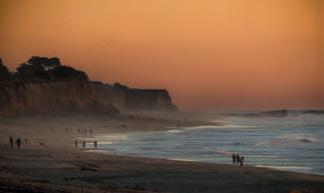
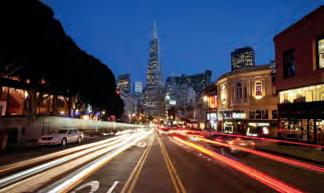
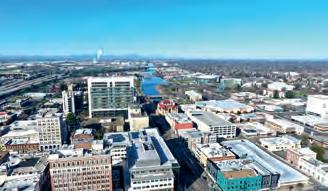
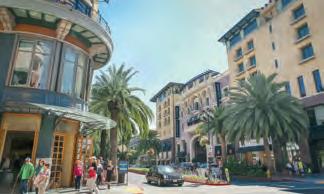
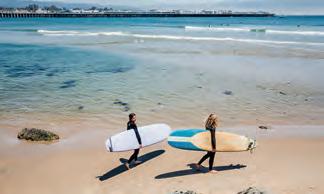
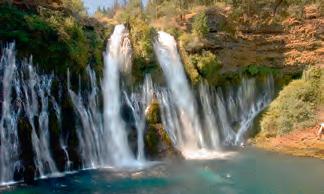
The San Francisco Peninsula Film O ce 111 Anza Blvd. Ste. 410 Burlingame, CA 94010
San Francisco Film Commission
1 Dr. Carlton B. Goodlett Place City Hall, Room 473 San Francisco, CA 94102
Stockton/San Joaquin County
Film Commission
146 West Weber Ave. Stockton, CA 95202
Visit San Jose 408 Almaden Blvd. San Jose, CA 95110
CAMERON NEWTON
Film Commissioner
O ce: (650) 348-7600 cam@thesfp.com www.thesanfranciscopeninsula.com
MANIJEH FATA
Executive Director
O ce: (415) 554-6241
Direct: (415) 554-5142 lm@sfgov.org www. lmsf.org
WES RHEA
CEO/Film Liaison
O ce: (209) 938-1555 lm@visitstockton.org www. lmstockton.com
FRANCES WONG
Director of Communications
O ce: (408) 792-4119 fwong@sanjose.org www.sanjose.org/media/ lm-o ce
Santa Cruz County Film Commission 725 Front Street Ste 200 Santa Cruz, CA 95060
Upstate California Film Commission
Film Shasta PO Box 1468 Anderson, CA 96007
CHRISTINA GLYNN
Director of Communications/ Film Commissioner
O ce: (831) 425-1234, ext. 111 cglynn@santacruz.org www. lminsantacruz.org
SABRINA JURISICH
Film Commissioner
O ce: (530) 690-1776
Sabrina@upstateca lm.com www.upstateca lm.com
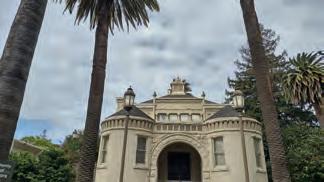
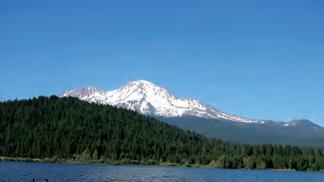
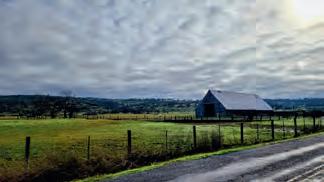
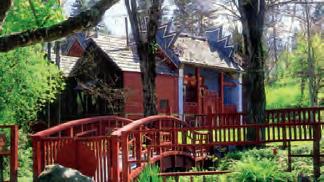
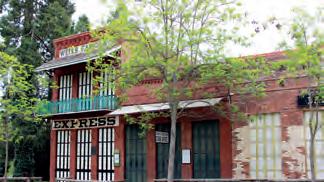

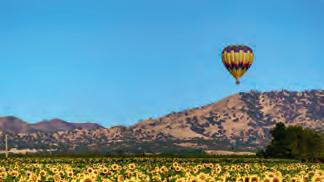
Upstate California Film Commission
Film Yuba-Sutter PO Box 1468 Anderson, CA 96007
Film Siskiyou 412 West Miner Street Yreka CA. 96097
SABRINA JURISICH
Executive Director, Film Yuba-Sutter
O ce: (530) 690-1776
Sabrina@upstateca lm.com www.upstateca lm.com
JASON YOUNG
Film Commissioner
O ce: (530) 859-3890 jason@siskiyoucounty.org www. lmsiskiyou.org
Upstate California Film Commission
Film Tehama PO Box 1468 Anderson, CA 96007
SABRINA JURISCH
Executive Director, Film Tehama O ce: (530) 690-1776 Sabrina@upstateca lm.com
Trinity County Chamber of Commerce P.O. Box 517 Weaverville, CA 96093
Tuolumne County Film Commission 193 S. Washington St. Sonora, CA 95370
Vallejo/Solano County Film O ce 289 Mare Island Way Vallejo, CA 94590
Visit Yolo PO Box 681 Winters, CA 95694
WAYNE AGNER
President, Trinity Chamber O ce: (530) 623-6101 chamber@trinitycounty.com www.visittrinity.com
LISA MAYO
Film Commissioner
O ce: (209) 533-4420 lm@gotuolumne.com www. lmtuolumne.org
ANNETTE TAYLOR
Film Liaison (707) 649 3510 annette.taylor@cityofvallejo.net
TIFFANY DOZIER
Public Relations & Communications
Director/Film Liaison
O ce: (530) 297-1900 ti any@visityolo.com www.visityolo.com
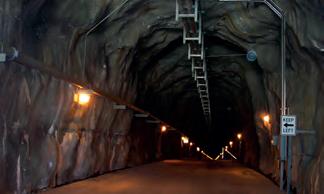
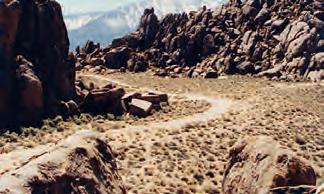
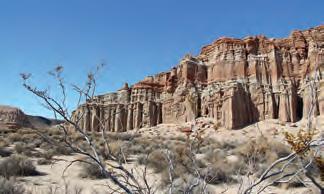
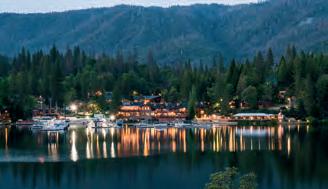
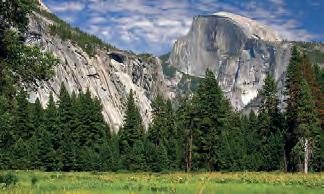

Fresno County Film Commission 2220 Tulare Street, 8th Floor Fresno, CA 93721
JONATHAN AVEDIAN
Film Liaisons
O ce: (559) 600-4271 javedian@fresnocountyca.gov www. lmfresno.com
Inyo County Film Commission 561 W. Crocker Street Big Pine, CA 93513
JESSE STEELE
Film Commissioner
O ce: (760) 938-0144 lm@inyocounty.us https://inyocountyvisitor.com/ lm/
Kern County Film Commission 1115 Truxtun Ave. Bakers eld, CA 93301
KEESHA COLLINS
Film Commissioner
O ce: (661) 868-3154 CollinsKeesha@kerncounty.com kerninfo@kerncounty.com https://www.kerncounty.com/government/departments/countywide-communications-home/ lm-commission
Yosemite/Madera County Film Commission 40343 California 41 Oakhurst, CA 93644
Yosemite Mariposa County Tourism Bureau / Film Commission 5065 State Highway 140, Suite E Mariposa, CA 95338
RHONDA SAILSBURY
CEO/Film Commissioner
O ce: (559) 683-4636 Cell: (559) 658-0150 rhonda@yosemitethisyear.com www.yosemitemadera lm.com
TONY McDANIEL Director of Communications / Film Liaison O ce: (209) 742-4567 Tonym@yosemite.com www.yosemite.com/ lm-commission
Monterey County Film Commission 801 Lighthouse Avenue, Suite 104 Monterey, CA 93940
KAREN NORDSTRAND
Film Commissioner
O ce: (831) 646-0910
Cell: (831) 594-9410 karen@ lmmonterey.org www. lmmonterey.org
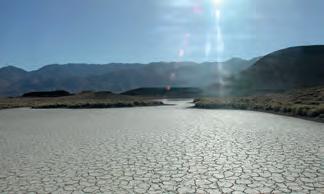
Ridgecrest Regional Film Commission
643 N. China Lake Blvd., Suite C Ridgecrest, CA 93555
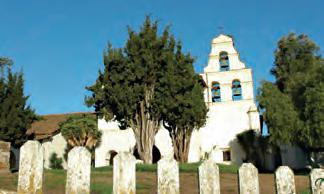
San Benito County Chamber of Commerce 243 Sixth Street, Suite 100 Hollister, CA 95023
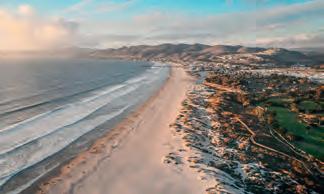
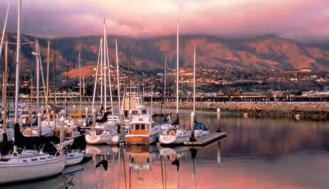
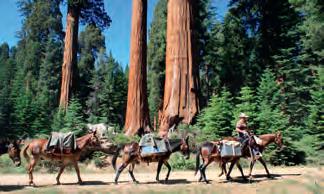
Film SLO CAL
81 Higuera St. #220 San Luis Obispo, CA 93401
KARI CRUTCHER
Film Commissioner
O ce: (760) 375-8202 Cell: (660) 608-9550 permits@ lmRidgecrest.com www. lmridgecrest.com
MICHELLE LEONARD
President/CEO
O ce: (831) 637-5315 CEO@SanBenitoCountyChamber.com www.sanbenitocountychamber.com
MATT HALVORSON
Film Commissionere
O ce: (805) 541-8000 Matt@SLOCAL.com FilmSLOCAL.com
Santa Barbara County Film Commission 500 E. Montecito Street Santa Barbara, CA 93103
Tulare County Film Commission 5961 S. Mooney Blvd. Visalia, CA 93277
MAREN BENEKE
SHANTEL ROWE
Visit Santa Barbara Operations Manager /Film Commissioner O ce: (805) 966-9222 X 101 lm@santabarbaraca.com https://santabarbaraca.com/ lm-commission/
ALIDA VERDUZCO SILVA, APR
Economic Development Manager/ Film Liaison
O ce: ((559) 624 7168 AVerduzco@tularecounty.ca.gov TCFilmCommission@tularecounty.ca.gov www. lmtularecounty.com
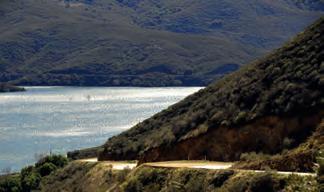
Antelope Valley/North Los Angeles County Film O ce Call for appointment
JOSHUA THOMAS, CITY OF LANCASTER
Film Liaison
O ce (661) 723 5850
Cell: (661) 317 8027
jthomas@cityo ancasterca.gov www. lmlancaster.com
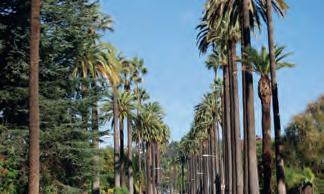
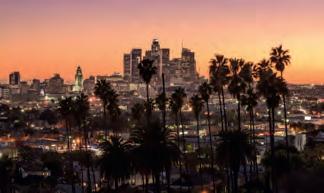
City of Beverly Hills 455 North Rexford Drive, 1st Floor Beverly Hills, CA 90210
DAVID HALVER, CITY OF PALMDALE
Film Liaison (310) 463 1911 dhalver@gmail.com www. lmpalmdale.com
SCOTT LIPKE
Filming & Special Events O ce: (310) 285-2408 cbh lmpermits@beverlyhills.org www.beverlyhills.org
FilmLA
Radford Studio Center, Bungalow 20 4024 Radford Ave. Studio City, CA 91604
DENISE GUTCHES
CEO
O ce: (213) 977-8600 info@ lmla.com www. lmla.com
CULVER CITY / DIAMOND BAR / FULLERTON / GARDENA / GLENDALE / INDUSTRY / LA HABRA HEIGHTS / LANCASTER / LOS ANGELES CITY / LOS ANGELES COUNTY / MONTEREY PARK / NEWPORT BEACH / PALMDALE / SAN DIMAS / SAN FERNANDO / SOUTH GATE / VERNON

Catalina Island Tourism Authority P.O. Box 217 Avalon, CA 90704
JIM LUTTJOHANN
President & CEO/Film Liaison O ce: (310) 510-7643 jim@lovecatalina.com www. lmcatalina.com
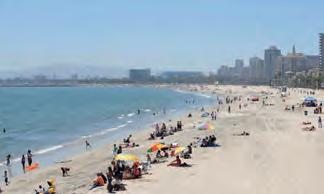
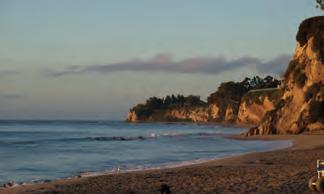
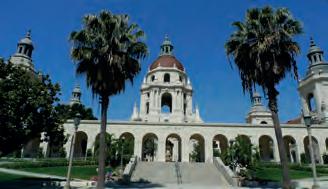

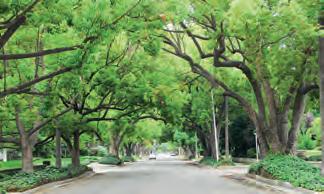

O ce of Special Events & Filming
5001 Airport Plaza Drive Suite 130 Long Beach, CA 90815
City of Malibu 25 W. Rolling Oaks Drive, Suite 201 Thousand Oaks, CA 91361
City of Pasadena Planning Department 175 North Gar eld Avenue, Pasadena, CA 91109
Santa Clarita Film O ce, City of Santa Clarita 23920 Valencia Blvd., Suite 100 Santa Clarita, CA 91355
City of South Pasadena 1414 Mission Street South Pasadena, CA 91030
TASHA DAY - EMILY SCOTT
Manager of Special Events & Filming
O ce: (562) 570-5333/(562) 570-5313 tasha.day@longbeach.gov Emily.Scott@longbeach.gov www. lmlongbeach.com
KIMBERLY NILSSON
Film Commissioner
O ce: (805) 495-7521
Cell: (805) 732-9433 lming@sws-inc.com www.malibucity.org/ lming
ROCHELLE BRANCH
Film Commissioner
Cultural A airs Manager
O ce: (626) 744-3964 lmo ce@cityofpasadena.net www. lmpasadena.com
MATTHEW CURRAN
Film Permit Technician
O ce: (661) 284-1425 lm@santa-clarita.com www. lmsantaclarita.com
HANNAH SINGLETON
Film Liaison
O ce: (626) 403-7263 hsingleton@southpasadenaca.gov www.southpasadenaca.gov/ lming
West Hollywood Film O ce
City of West Hollywood 8300 Santa Monica Blvd. West Hollywood, CA 90069
EDDIE ROBINSON
Film Coordinator
O ce: (323) 848-6489
weho lm@weho.org www.weho.org/ lm
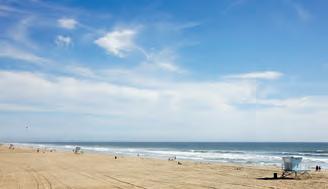
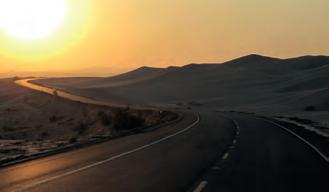

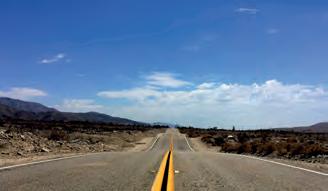
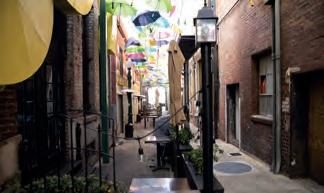
Surf City USAVisit Huntington Beach
155 Fifth Street Suite 111 Huntington Beach, CA 92648
SOPHIA VALDIVIA
Film Commissioner
O ce: (714) 969-3492 x 214
Cell: (714) 335-3840 sophia@surfcityusa.com www. lminHB.com
Imperial County Film Commission
P.O. Box 1467
El Centro, CA 92244
CHARLA TEETERS STEWARD
Film Commissioner
O ce: (760) 337-4155
Cell: (760) 791-1856 cts lmservices@gmail.com www. lmimperialcounty.com
Orange County Film Commission
JANICE ARRINGTON
Film Commissioner
O ce/Cell: (949) 246-9704 jarrington@fullerton.edu
Riverside County Film Commission
Marketing and Community Services
Riverside County O ce of Economic Development 3403 10th Street, Suite 400 Riverside, CA 92501
San Bernardino County Film O ce 290 North D Street, Suite 600 San Bernardino, CA 92415
STEPHANIE STETHEM Film Liaison O ce: (951) 955-2044
Dan Taylor Permits and Location Assistance
Inland Empire Film Services Permits: (909) 460-8100 x 101 info@ lmriversidecounty.com RivCoFilm.org
GEORGE TORUNO
Marketing Associate- TourismO ce: PH: 909-387-4460
George.Toruno@eda.sbcounty.gov EDAFilm@eda.sbcounty.gov info@eda.sbcounty.gov www.selectsbcounty.com

City of San Diego Special Events & Filming Department Civic Center Plaza
1200 Third Avenue, Suite 1326 San Diego, CA 92101
GUY LANGMAN
Filming Program Manager
O ce: (619) 685-1340
Cell: (619) 846-2099
glangman@sandiego.gov www.sandiego.gov/specialevents- lming/ lming
PORT OF SAN DIEGO PERMITS
ERICA NOGUEIRA
Program Manager, Parks & Recreation
O ce: (619) 686-6564
Cell: (619) 496-6755
enogueira@portofsandiego.org https://www.portofsandiego.org/aboutport-san-diego/service-portal
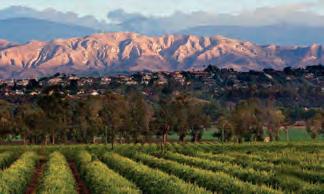
Ventura County Film Commission
Ventura Economic Development Collaborative 4001 Mission Oaks Blvd. Suite A-1 Camarillo, CA 93012
COUNTY PERMITS
GIANG MEYERS
Creative Economy Manager Economic Development and Government A airs Finance and General Government Group County of San Diego Chief Administrative O ce 1600 Paci c Highway, Suite 152 San Diego, CA 92101
O ce: (619) 346-8572 Ginag.Meyers@sdcounty.ca.gov https://www.sandiegocounty.gov/cao/ edga/Film.html
BILL BARTELS
Film Liaison
O ce: (805) 409-9947 bill@edcollaborative.com www.venturacounty lm.com
ROY’S MOTEL AND CAFE, AMBOY, ROUTE 66
U.S. Route 66 was one of the original highways in the United States Numbered Highway System, established on November 11, 1926. Movies that have shot in Amboy include: The Hitcher (1986), Kalifornia (1993) and Beneath the Dark (2010).

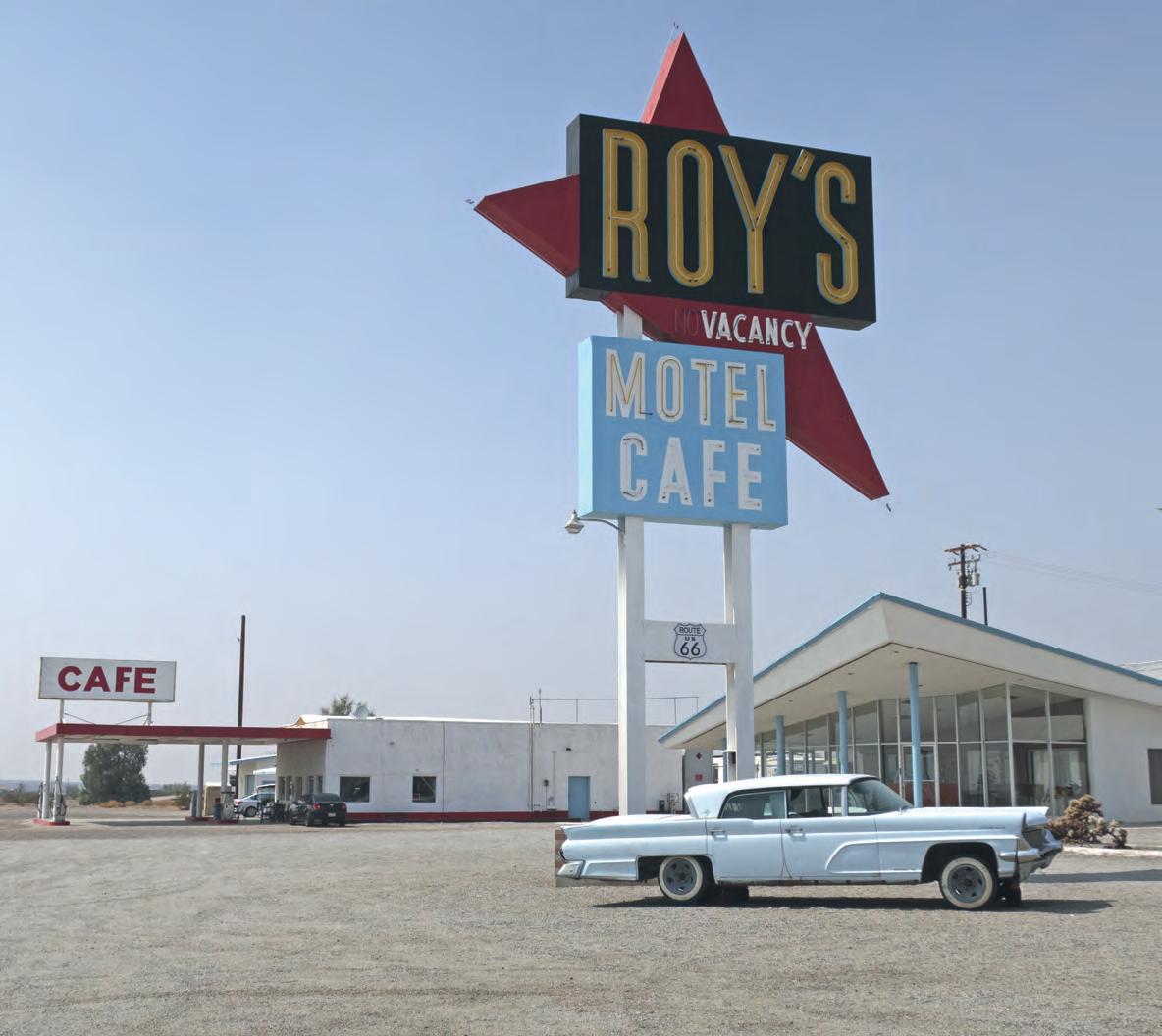

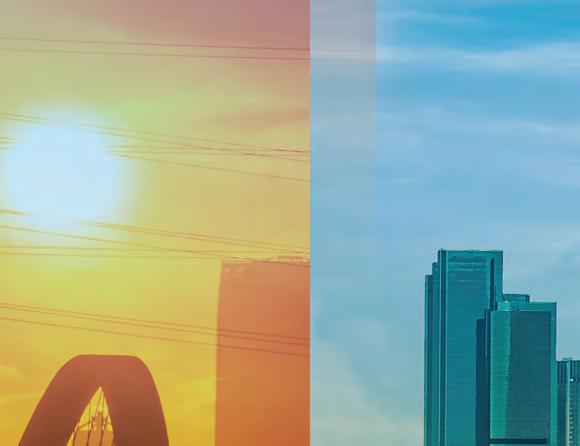
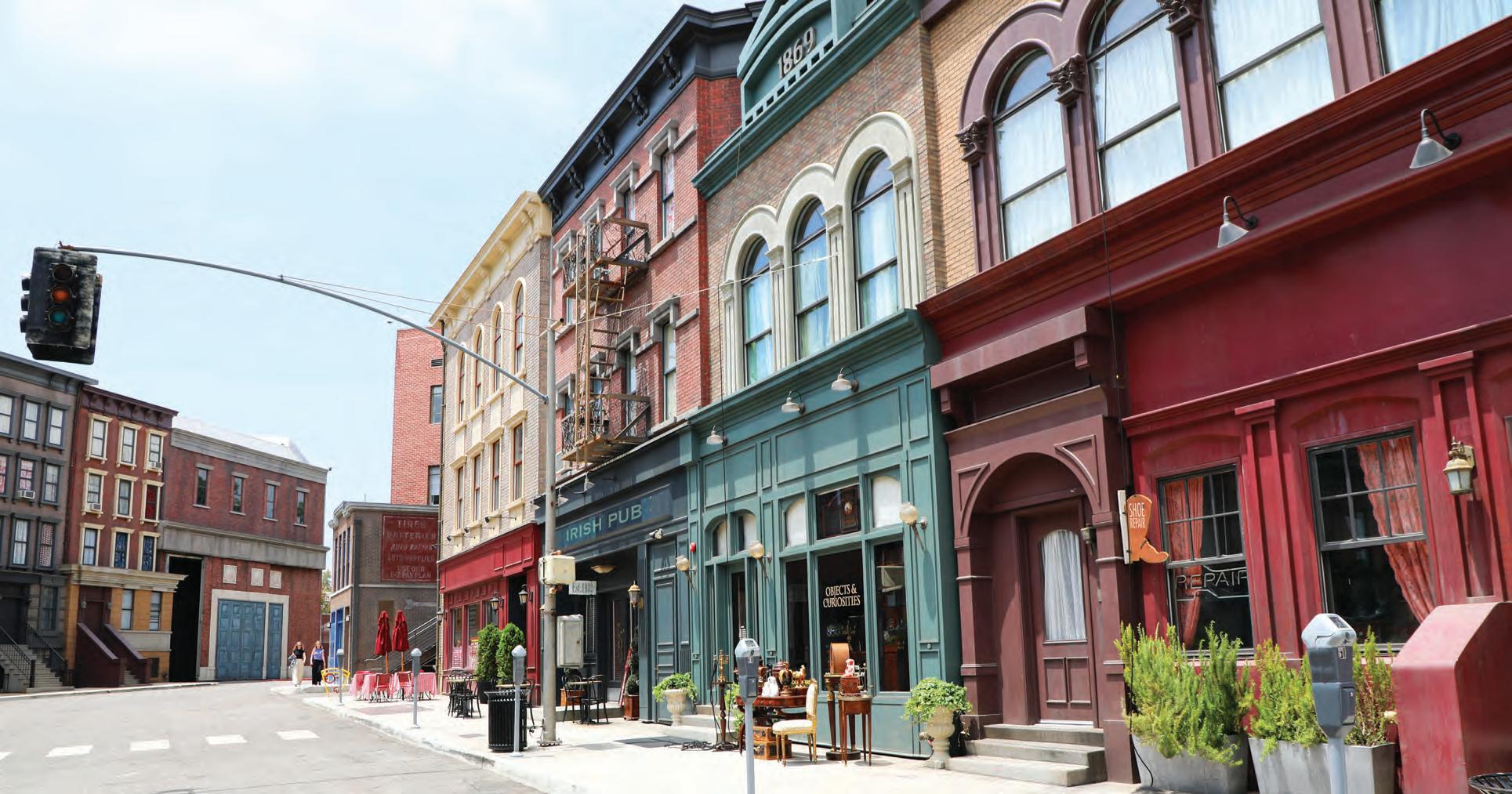


Diverse Locations, Top-Tier Talent & Crews, World-Class Infrastructure, + a 35% State Tax Credit...
All the looks, services, security, & amenities you need - all at one central L.A. location.
Our versatile backlottransforms into Anytown, USA, with authentic urban texture and cinematic depth. Additional lot locations ofer distinct environments — from apartment buildings and tree-lined bungalows to deco-inspired corridors and industrial tech alleys.
Move seamlessly from exterior to interior with multiple on-lot looksand historic large stages. Shift from street realism to fully controlled environments in minutes — not miles.
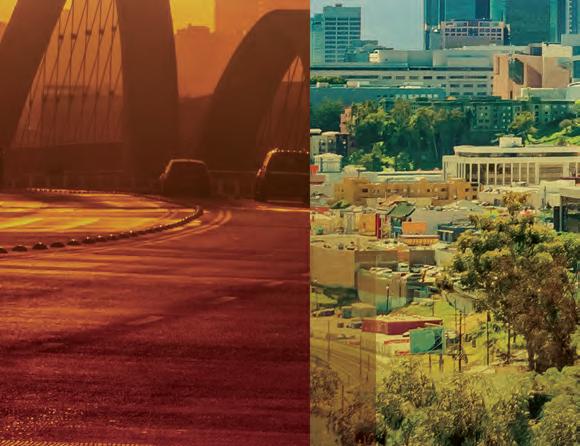
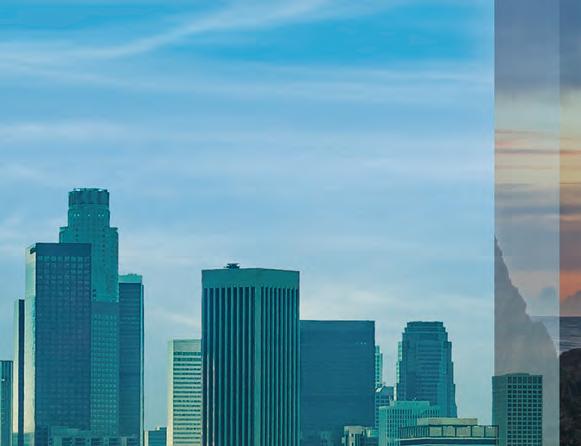
And when the story calls for water, our new multi-size tank complex — featuring three adjacent tanks — delivers scale, fexibility, and production control within a fully integrated studio environment.
Come for the Production. Stay for the People.
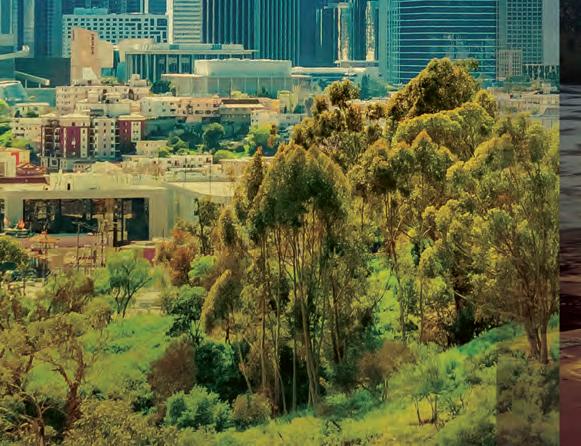
With fexible multi-location flm permits, scalable pricing, fast permit turnaround, and free production planning support, FilmLA makes flming in Los Angeles easier than ever.

Plan your next project in LA and see how we can help. Learn more at FilmLA.com