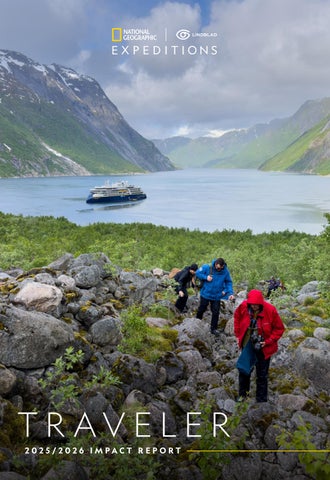
TRAVELER
Dear Traveler,
There are few things that inspire us more than the stories of hope and meaningful impact made possible through your travels with us.
With the publication of this Traveler Impact Report, inspiration lives on every page — and that’s in no small part because of your generosity. It’s been a recordbreaking year in the life of the Lindblad Expeditions–National Geographic Fund. In 2025, we invested $3.03 million in conservation, education, science, and storytelling projects worldwide — more than any other single year in the Fund’s history.
With your contributions, we are making a collective impact on the health of people and ecosystems around the world.
Last year, young people in Galápagos and Baja California Sur picked up cameras to tell their own stories side by side with National Geographic photographers. Across the ocean, the National Geographic Pristine Seas team helped secure three new marine protected areas, safeguarding waters that will sustain life for generations. In the far reaches of the Arctic and Antarctic, National Geographic Explorers aboard our fleet ventured into polar regions to study warming waters and the health of whales, supported by teams aboard the ship, and their unwavering commitment to these remote field sites. These stories and more fill the pages ahead, a testament to the tangible change created when we turn exploration into impact.
Exploring the world with National Geographic–Lindblad Expeditions means becoming part of something bigger than yourself: a shared journey where your travels, your engagement, and your support carry forward the promise of a better, more protected world. You join a community of shared experiences that illuminate the world and spark a sense of wonder, curiosity, and care. Thank you for being part of it all.
We hope you’ll share our pride and excitement about the successes made possible by the Fund in 2025. These stories are powerful examples of how, together, we can inspire a global community to take action and protect the world we so love to explore.
WITH OUR GRATITUDE,


NATALYA LEAHY Chief Executive Officer Lindblad Expeditions

JILL TIEFENTHALER Chief Executive Officer National Geographic Society
It is both a privilege and a joy to experience the world’s wild and culturally rich places, and to find creative ways to support the health of people and the planet, together with our fellow travelers.”
SVEN-OLOF LINDBLAD Founder and Co-Chair of the Board Lindblad Expeditions
Our giving began with the incentive of a future travel credit, but we quickly became interested in the LEX–NG Fund because of its focus on ecology, nature preservation, and the encouragement of teens and teachers to deepen their learning. On our trips, we’ve been able to meet Grosvenor Teacher Fellows and see kids and teens engaging with [activities such as] net tows and water testing. Their enthusiasm engendered ours. We hope our donations continue to support such programs.”
MARY AND BRUCE ALLISON Grosvenor Council Members of the National Geographic Society
2025 BY THE NUMBERS
OUR MISSION
The Lindblad ExpeditionsNational Geographic (LEX–NG) Fund supports projects to understand and protect our world’s ocean, restore critical marine and coastal habitats, and foster environmental stewardship in the regions visited by our fleet, and beyond.
$3.03 M invested in ocean conservation and community projects
36 science, education, and storytelling projects supported
24 voyages hosting Explorer-led Visiting Scientist projects
59 students mentored by National Geographic Explorers and photographers across three National Geographic Photo Camps hosted in Galápagos and Baja
3 new marine protected areas created through the efforts of National Geographic Pristine Seas
35 educators selected for expeditions around the world as Grosvenor Teacher Fellows
Global Impact
Thanks to the generosity of our travelers, the LEX–NG Fund supports critical ocean conservation, wildlife protection, and community education projects around the world. Along coastlines and in the depths, from pole to pole, the scientists, conservationists, and educators who carry out their work aboard our fleet and in communities we explore are driving transformative, lasting change for good.
CAUSTON CHARLES DARWIN FOUNDATION Controlling Avian Vampire Flies
23 KATY CROFF BELL Voyages to the Deep
24 LAUREN ECKERT Alaska Herring Systems
25 ELIANA ELIAS MINGA PERU Amazon Climate Resilience
26 CINDY FERNÁNDEZ-GARCÍA Blue Forest Rhodolith Beds*
27 MICHELLE FOURNET Deep Learning in Shallow Water* 28 MARTHA GARCÍA JUÁREZ Guardianas del Conchalito*
29 HEINKE JÄGER
CHARLES DARWIN FOUNDATION Conserving Scalesia Forest
30 LEHUA KAMALU Moananuiākea: Voyage for Earth
31 INTI KEITH
CHARLES DARWIN FOUNDATION Galápagos Reef Monitoring
32 DAVID MILLA FIGUERAS (Re)Breathing Forests*
33 PATRIZIA STIPCICH B-POSITIVE*
34 ANDY SZABO Ocean Health Program
35 BRIAN TIMMER Indigenous-led Kelp Restoration*
36 MANUEL VIVANCO BERCOVICH Surfgrass Conservation in Baja*
NEW PROJECTS IN 2025
In 2025, with support from our travelers, we embarked on new efforts to engage communities and support critical research and conservation work in the places we explore — including in Galápagos, Baja California, the South Pacific, Southeast Alaska, Japan, and more.
Baja and Galápagos
Photo Camp
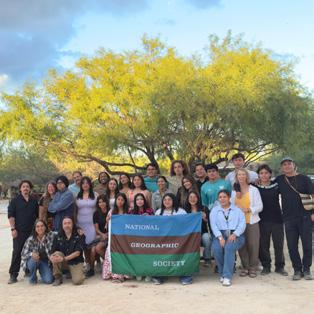
National Geographic Photo Camp provides students with transformative experiences through the art of photography and storytelling. Mentored by National Geographic Explorers and National Geographic–Lindblad Expeditions certified photo instructors, youth explore their environments through photography and writing, learning to tell compelling stories and discovering the power of their own voices as a tool for conservation and leadership in their communities.
In 2025, the LEX–NG Fund supported three Photo Camps — two in Galápagos on the islands of Santa Cruz and San Cristóbal, and one in Baja California Sur — for 59 students. Each Photo Camp culminated in a final showcase of the students’ work, open to local community members, friends, and family.
Traveler contributions to the LEX–NG Fund help National Geographic Explorers engage with youth in the places we visit, inspiring them to connect with the natural world in new and meaningful ways.
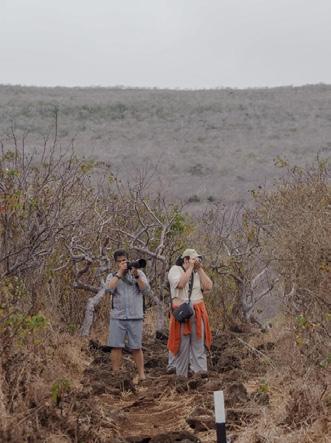
The experience was profoundly moving — far more emotional and personal than I ever anticipated. It pushed me out of my comfort zone and introduced me to a way of seeing and practicing photography that I had never truly considered before. I’ve begun to notice beauty with a new sense of intimacy.
OLIVIA ESTES, Photo Camp Student, Galápagos
Being part of the National Geographic Photo Camp in Galápagos as a Team Leader reaffirmed my conviction: when a young person looks at their territory with purpose, something powerful awakens.”

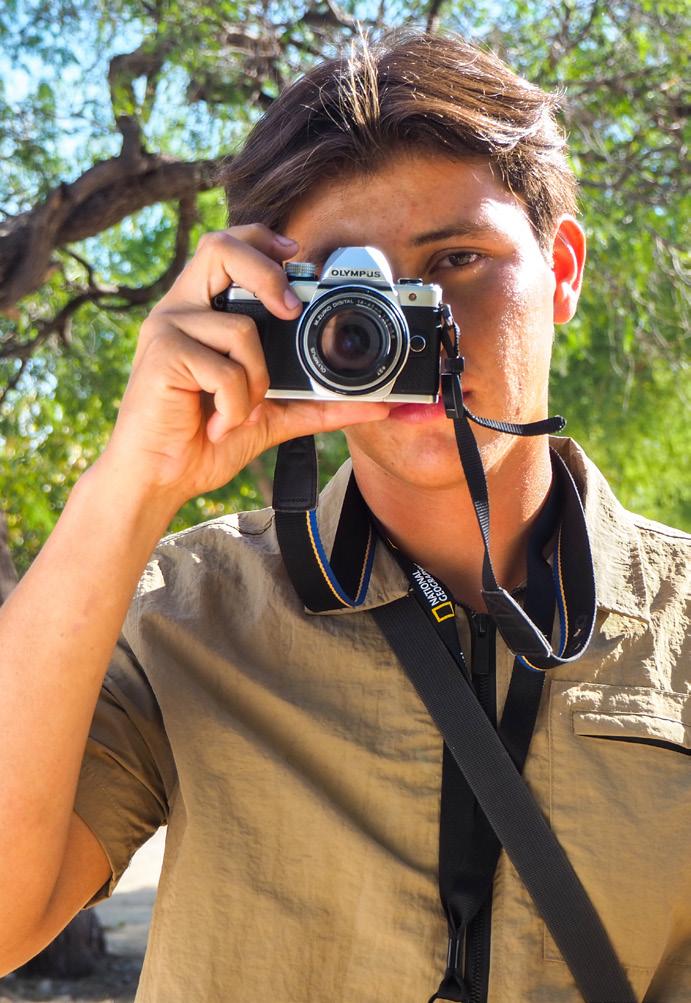
DIEGO BERMEO
National Geographic–Lindblad Expeditions
Certified Photography Instructor
South Pacific, Cook Islands, and New Zealand
Preserving a Heritage of Ocean Navigation
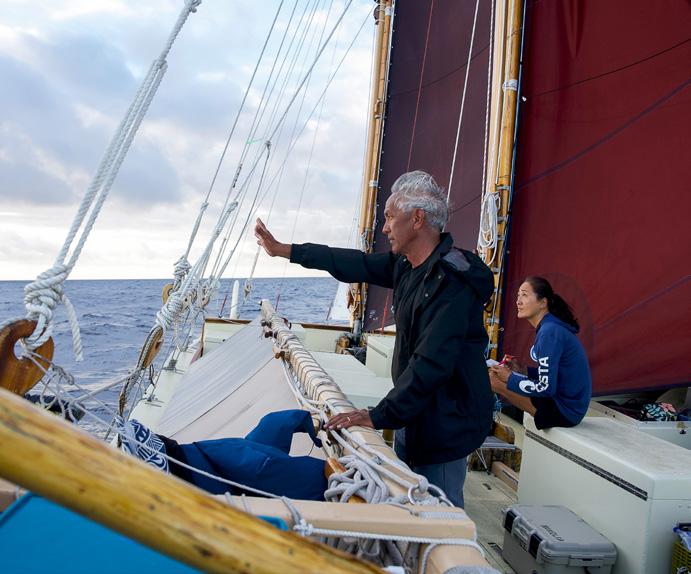
For more than 50 years, the Polynesian Voyaging Society (PVS) has supported the art and science of Polynesian voyaging, training future navigators in the use of traditional wayfinding canoes, facilitating educational exchanges that connect students to their ocean home and cultural heritage, and globally amplifying stories of hope through digital platforms. In 2025, PVS traveled
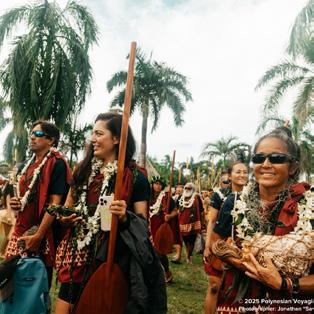
from Hawai`i to Taputapuātea, Ra`iātea, retracing the traditional sea road known as Kealaikahiki across 2,500 nautical miles. From there, they traveled to the Cook Islands and then to New Zealand. In each location they participated in cultural and educational exchanges to elevate Indigenous voices and inspire the next generation of ocean leaders.
Alaska and Japan
Understanding the Intersection of People and Ecosystems
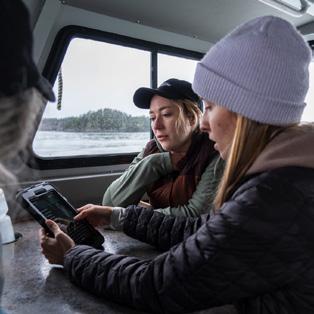
In Alaska, National Geographic Explorer
Lauren Eckert is leading a team of Explorers who are combining innovative drone and tagging technology with community-driven research, school education programs, and multimedia storytelling to understand the changing relationships between gray whales, herring, and local communities. Gray whales in Sitka Sound, Alaska are increasingly foraging on herring eggs, a culturally and economically important resource for local people. The data collected through Lauren’s project can help ensure that whales, herring, and communities thrive together.
On the other side of the Pacific, National Geographic Explorer Lane Atmore is working with organizations and communities in Hokkaido, Japan to collect tissue samples and analyze DNA from herring. Her team also extracted DNA samples of Pacific herring in Sitka Sound. By comparing genome sequences of present-day herring with samples extracted from archaeological sources, her team is tracking how herring have adapted to environmental changes over time.
ILLUMINATING THE SECRETS OF THE DEEP SEA
National Geographic Explorer
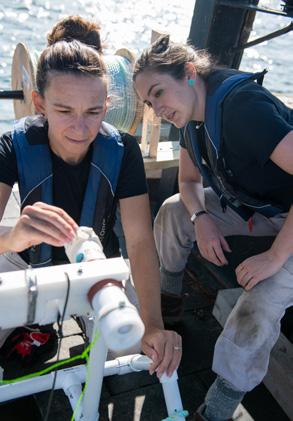
Katy Croff Bell is making exploration of the deep sea — a region that is critical to all life on Earth, yet understudied — more accessible. With the Deep Ocean Research and Imaging System (DORIS), she has developed scalable, affordable technology that will enable scientists, students, and communities worldwide to collect ocean data.
In 2025, Katy conducted deep-water prototype testing of DORIS. Future deployments aboard two National Geographic–Lindblad Expeditions voyages, along with community collaborations, will provide locallydriven observations that will strengthen global understanding of deep-sea systems.
OCEAN CONSERVATION
With support from travelers, scientists aboard the fleet and organizations in the regions we visit are working to restore ocean health and benefit the people whose livelihoods depend on it.
Protecting the Ocean’s
Vital Places
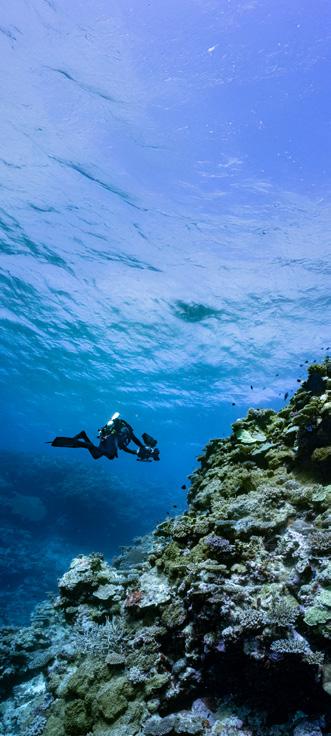
Since 2008, National Geographic Pristine Seas has worked with local communities, organizations, and governments to protect the ocean. Founded and led by National Geographic Explorer in Residence Enric Sala, Pristine Seas has completed 49 research expeditions and has helped create 31 marine protected areas around the globe, with support from the LEX–NG Fund.
In 2025, three countries announced new marine protected areas following Pristine Seas expeditions to their waters to study the health of the ocean and fill critical data gaps. In January, the Republic of the Marshall Islands fully protected 48,000 square kilometers of ocean around Bikar and Bokak, two of the country’s northernmost islands, which host green turtle nesting colonies and deep sea sharks. At the United Nations Ocean Conference in June, leaders from Colombia announced the protection of two remote coral reefs in the Caribbean Sea noted for their diverse marine life, including 40 species of coral. Finally, in October, lawmakers in Dominica approved the creation of the world’s first sperm whale reserve. The new Dominica Sperm Whale Reserve will help protect a species under increased threat from human activity.
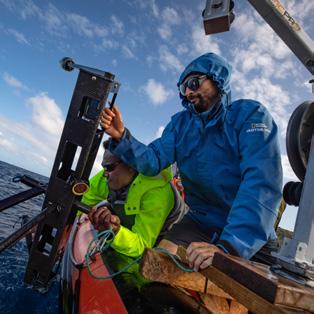
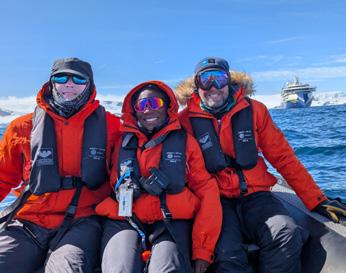
For an early career researcher such as myself, the LEX–NG Fund made a project which would have otherwise been impossible, possible, by providing access to one of the most remote locations on Earth. I thank the travelers who have donated and hope the discoveries made on board will continue to inspire and amaze them long after the voyage is over.”

DANIEL DICK
Visiting Scientist and National Geographic Explorer
Antarctica
TURNING AWE AND WONDER INTO LESSONS FOR CHANGE
The Grosvenor Teacher Fellowship, a professional development opportunity from the National Geographic Society and Lindblad Expeditions, hosts pre-K–12 educators aboard the fleet for a field-based experience they can apply to their teaching practice. After exploring Antarctica, Grosvenor Teacher Fellow Zac Sawhill returned to his classroom in Oak Harbor, Washington with a renewed awe of the natural world. “Antarctica is a perspectivechallenging place,” says Zac. “Each day, I encountered something either too big or too small to imagine.” Inspired by his experience, Zac is developing a classroom project to engage his students in citizen science, handson local wildlife research, and habitat health.
Global
RESEARCH SOLUTIONS INSPIRED BY NATURE
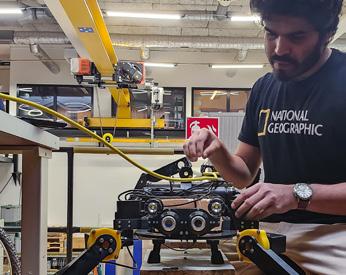
With support from the LEX–NG Fund, National Geographic Explorer Mrudul Chellapurath is developing IGUANABOT, the first underwater robot inspired by the Galápagos marine iguana. IGUANABOT is designed to minimize ecological impact during data collection and access hard-to-reach habitats like seagrass beds and coral reefs — thanks to its ability to both swim and walk. In 2025, IGUANABOT completed its first open-water sea trials off the coast of Sweden, demonstrating its ability to navigate fragile marine ecosystems without causing ecological disturbances.
CLIMATE
Thanks to contributions from travelers like you, the LEX–NG Fund is supporting scientists and educators who are studying our changing climate, assessing its impact on local ecosystems, and helping communities plan, adapt, and thrive.
HOW CLIMATE AFFECTS COASTAL ECOSYSTEMS
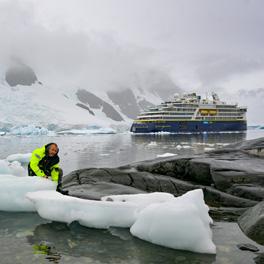
With support from the LEX–NG Fund, Visiting Scientist and National Geographic Explorer Rui Seabra joined our travelers in the Arctic, where he and his team surveyed biodiversity and installed 76 temperature sensors on the rocky shores of Svalbard and Bear Island. Conducting research aboard the National Geographic–Lindblad Expeditions fleet is critical to Rui’s work, which focuses on temperature and biodiversity data in locations around the Atlantic Ocean coastline. To date, his team has joined seven voyages and installed a total of 416 sensors, which are fundamental to understanding how climate change is impacting coastal ecosystems.
ENVISIONING A GLACIER’S FUTURE
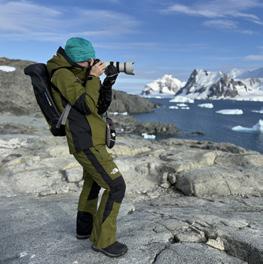
Through her project Ice at the Edge: Walls of Change, Visiting Scientist and National Geographic Explorer Catherine Walker is studying the stability of ice cliffs in Antarctica that control the fate of the Antarctic Ice Sheet. While traveling with the fleet in 2025, she collected data on the shape and structure of six glaciers along the Antarctic Peninsula’s west coast using Lidar, 3D photography and custombuilt camera probes. By voyaging with National Geographic–Lindblad Expeditions, she was able to make essential measurements of height and stability of glaciers that will help scientists project future sea level changes.
Antarctica
Arctic
APPRECIATING THE TINY BUT MIGHTY
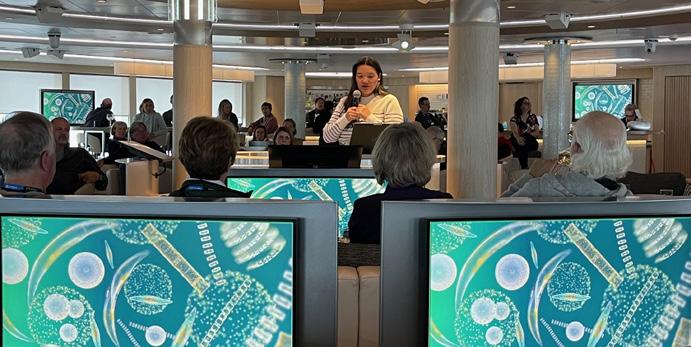
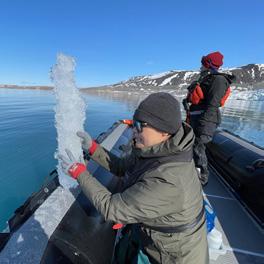
Visiting Scientist and National Geographic Explorer Allison Fong studies the powerhouses of the ocean: marine algae living in the upper ocean and sea ice that use carbon dioxide and sunlight to produce oxygen and food for larger organisms. Aboard National Geographic Resolution in the Arctic, Allison and her team collected sea ice algal specimens to measure oxygen production and consumption rates at locations around Svalbard — providing further insights into algal productivity from these habitats. Traveling aboard the ship allowed her team to revisit sites and collect data over time, which is critical to understanding how these processes change with shifts in climate.
INSTILLING A LOVE OF SCIENCE IN FUTURE CHANGEMAKERS
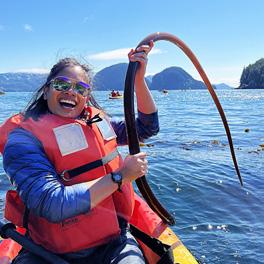
High school science teacher Kirsten Solanga strives to bring cross-curriculum opportunities to her English Language Learners, and through her Grosvenor Teacher Fellowship expedition to Alaska, she was able to explore how art, history, and culture connect to environmental stewardship. “Because of this journey, I am better able to explain how human and natural systems affect one another, especially with regards to community lands,” she said. Upon returning to her classroom, Kirsten launched a project for her students to explore the interconnectedness between butterflies, ecosystems, local communities, and climate change.
Alaska
WILDLIFE & BIODIVERSITY
Scientists and educators supported by the LEX–NG Fund are working around the world to protect threatened species, safeguard biodiverse habitats, and foster coexistence between wildlife and communities.
Antarctica
At the Forefront of Whale Research
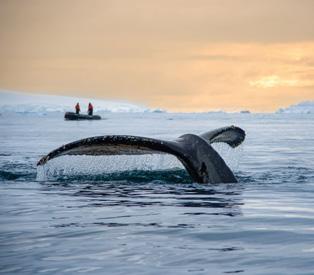
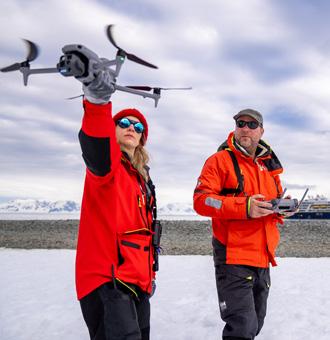
With the support of travelers like you, Visiting Scientist and National Geographic Explorer Holly Fearnbach has been collecting data on the health of whales around the Antarctic Peninsula for more than a decade. In 2025, Holly’s team collected aerial photogrammetry images of endangered Southern Resident killer whales — as well as images of humpback and minke whales and one Antarctic blue whale — to identify, track, and monitor individuals and assess their body condition and health. By capturing annual snapshots of current whale health, her team is able to monitor changes over time, evaluate the impacts of warming waters on wildlife in the region, and help inform data-driven conservation policies.
ADAPTING CONSERVATION STRATEGIES FOR THREATS
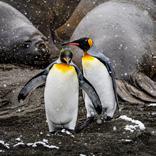
Using innovative monitoring technologies and artificial intelligence, Visiting Scientist and National Geographic Explorer Tom Hart and his team collected data to evaluate how avian flu in the Southern Ocean is causing population and behavioral changes in seals and penguins. Their observations are helping decision-makers in the South Georgia and South Sandwich Islands, the Falkland Islands, and the Commission for the Conservation of Antarctic Marine Living Resources adapt local strategies to boost conservation of these species and protect the Southern Ocean’s unique biodiversity.
Galápagos
Restoring an Island’s Native Biodiversity
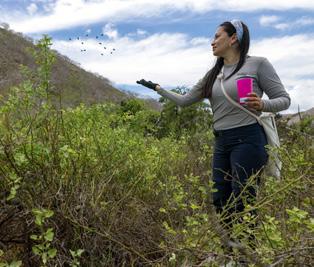
Supported by the LEX–NG Fund, Fundación de Conservación Jocotoco and Island Conservation have partnered with local communities to nearly eliminate invasive predators on Floreana Island. As a result, indigenous wildlife is returning: the Galápagos Petrel is on the rebound, and a Galápagos Rail was recently sighted for the first time in nearly two centuries. As the project’s infrastructure of AI-enabled camera networks, acoustic recorders, detection dogs, eDNA, drone imagery, and other tools has grown, so too has community leadership. Residents, students and farmers are now actively engaged in monitoring, training, and conservation outreach.
Floreana Island is on the verge of being predator-free. You are helping bring back the Floreana Mockingbird, Floreana Racer and Floreana Giant Tortoise, and even helping rediscover species thought lost since Darwin’s time. Together, we are making the impossible possible.”

VILMA CALVOPIÑA Planning Director, Fundación de Conservación Jocotoco
Patagonia
EXPLORING GLOBAL CONNECTIONS
During her voyages in the Chilean Fjords and Argentina’s Staten Island, Grosvenor Teacher Fellow Sabina Sully observed human impacts on natural spaces that reminded her of the environmental challenges facing her hometown of Baltimore, Maryland. Eager to harness these connections in the classroom, Sabina launched the Patterson Park Polar Explorers program to engage her students in climate science, exploration, and equity. This middle school curriculum project helps students compare the environmental pressures faced by African and Adélie penguins and draw parallels between local and global issues.
Galápagos
PROTECTING VULNERABLE SPECIES
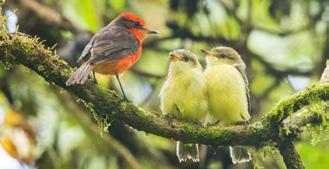
Vulnerable Galápagos land birds are threatened by the avian vampire fly (Philornis downsi), whose larvae feed on the blood of native bird hatchlings. Ongoing support from the LEX–NG Fund is helping Charlotte Causton’s team at the Charles Darwin Foundation field test two eradication techniques utilizing bird-safe insecticide, which has improved breeding success in targeted bird species. On Santa Cruz Island, they observed a record 39 fledglings of the rare Little Vermilion Flycatcher in 2025, up from only 15 the previous year. Charlotte’s team is continuing to test and hone large-scale control methods.
ENVIRONMENTAL STEWARDSHIP
With LEX–NG Fund support, National Geographic Explorers, scientists, and educators are working alongside communities to find solutions to the challenges our planet faces — and take action for a better future.
Galápagos EQUIPPING
EDUCATORS AS ENVIRONMENTAL LEADERS
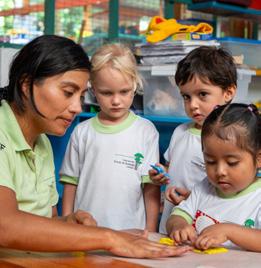
Fundación Scalesia empowers teachers and students in Galápagos to be environmental stewards by connecting classroom lessons to local sustainability challenges. With support from the LEX–NG Fund, Fundación Scalesia delivered training for 450 individual teachers across the islands to help them integrate environmental sustainability into daily lessons, and provided 30 students with scholarships to access highquality, bilingual education at Tomás de Berlanga School.
Storytelling as a Tool for Change
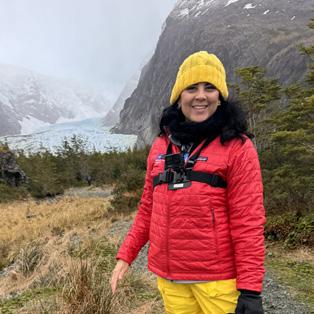
“My journey in Tierra del Fuego, Patagonia began, quite unexpectedly, with a pile of animal droppings,” says Grosvenor Teacher Fellow Maile Chow. The naturalist traveling with her group told her that guanaco scat tells a story about migration, seed dispersal, and ecosystem balance. “That moment became symbolic of what my expedition taught me — that everything in nature tells a story, if we only know how to listen.” Maile returned to her classroom in Honolulu, Hawai`i inspired to create an interdisciplinary unit for 7th and 8th graders that connects the Hawaiian concept of mo`olelo, or story, with the natural world. Maile's project uses literary and writing objectives, cultural understanding, critical thinking, and global awareness to help her Native Hawaiian students examine identity, healing, and history by interweaving their personal, ancestral, and environmental narratives.
Patagonia
Arctic and Southern Ocean UNDERSTANDING
THE PLASTICS CHALLENGE
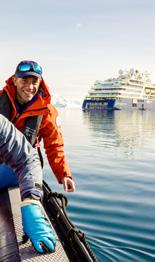
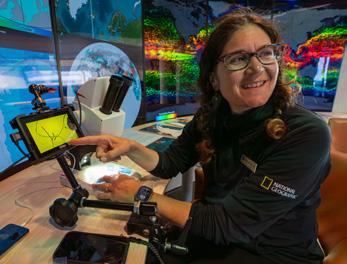
While traveling in the Arctic and Southern Ocean aboard the National Geographic–Lindblad Expeditions fleet, Visiting Scientist and National Geographic Explorer Rachael Zoe Miller collected air and water samples that are helping identify the sources of our global microplastics challenge. Rachael invited guests to join her aboard Zodiacs to collect 67 samples, which will contribute to a growing global data set documenting microfibers and microplastics in our ocean and air. Her work is providing the science needed to support a worldwide call to action to reduce plastic pollution.
VALUING LOCAL ENVIRONMENTAL RESOURCES
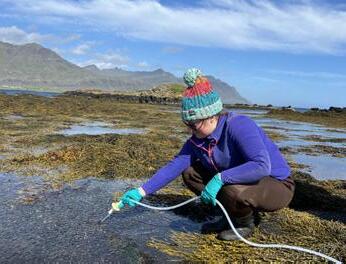
Visiting Scientist and National Geographic Explorer Chloe Nunn is leading a genetic study of seaweed in Iceland, in which she is piloting use of environmental DNA (eDNA) for species identification. Chloe and her team collected more than 148 seaweed samples and 48 water samples, which are now being analyzed. Her team also hosted outreach workshops in Reykjavik, bringing together researchers and community members to exchange knowledge on the environmental and economic importance of seaweed in the Icelandic region.
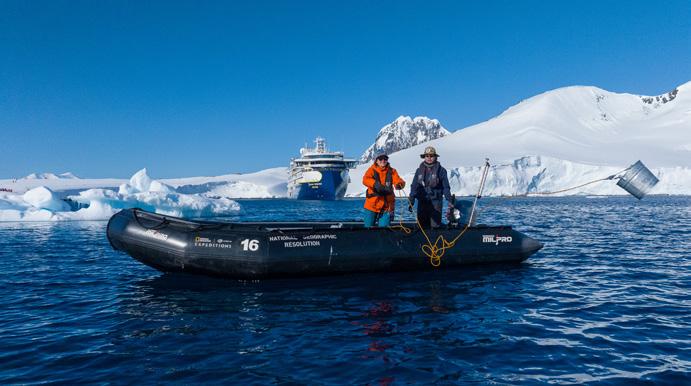
A ‘thank you’ as big as the icebergs off Greenland for creating and maintaining this incredible program! I know we are making a difference — both through science and storytelling!”

RACHAEL
ZOE
MILLER Visiting Scientist and National Geographic Explorer
Iceland
COMING UP IN 2026
Supporting coastal ecosystem research and conservation around the world.
Seven new LEX–NG Fund projects will launch in 2026, specifically focused on protecting, preserving, and better understanding our planet’s blue forest coastal ecosystems, including mangroves, seagrass meadows, and kelp forests. In the Caribbean, National Geographic Explorer Michelle Fournet will use underwater acoustic monitoring and machine learning to track the recovery of mangroves from more frequent and powerful hurricanes, while in British Columbia, National Geographic Explorer Brian Timmer will support an ambitious, Indigenous-led project to restore kelp forests and protect traditional urchin harvesting practices. Additional new projects will take place in Baja California, the Azores, the Mediterranean, and Central America.
DEEP SEA CAM DEPLOYMENTS IN GALÁPAGOS
National Geographic’s Exploration Technology Lab and the LEX–NG Fund will support National Geographic Explorer Ana Belén Yánez-Suárez and her work in Galápagos. Together, we will collaboratively deploy two Lab-created Deep Sea Camera Systems from aboard National Geographic Islander II to study deep-sea shark diversity and habitat distribution.
EMPOWERING THE NEXT GENERATION OF STORYTELLERS
The LEX–NG Fund will support four National Geographic Photo Camps in 2026 — benefiting up to 80 youth in regions visited by the fleet. The LEX–NG Fund and Photo Camp are excited to return to Galápagos and Baja California Sur, while also expanding to Southeast Alaska and the Peruvian Amazon.
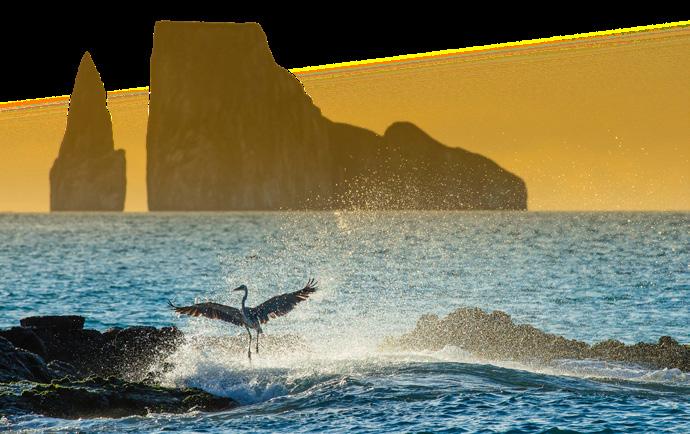
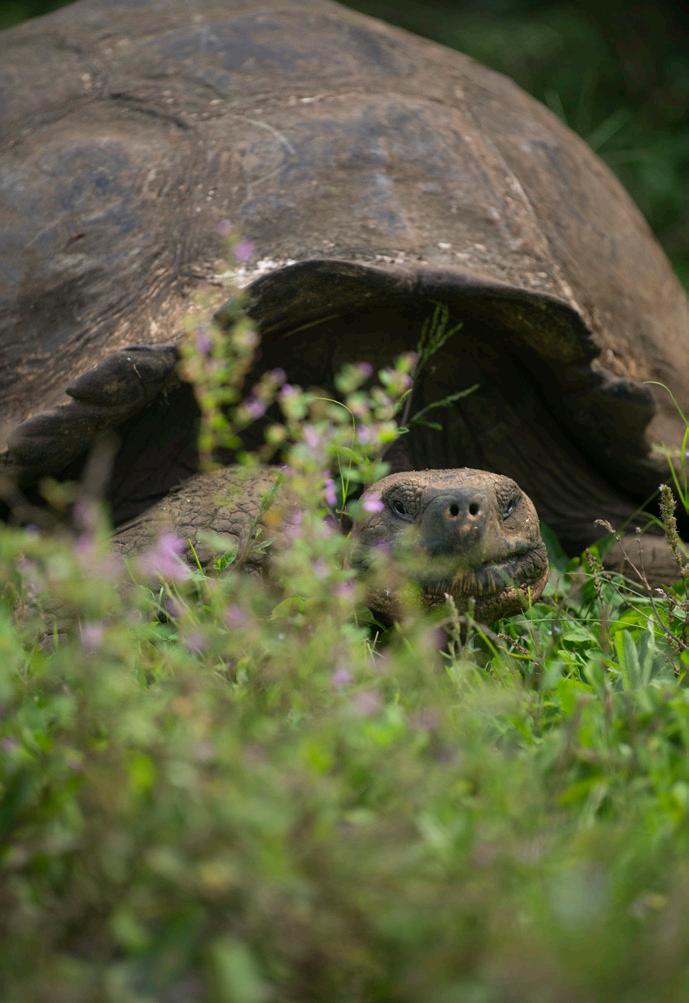
Our trip to Galápagos was my fifth with National Geographic–Lindblad Expeditions. We always choose these expeditions for the superior knowledge of the naturalists and the learning opportunities. The fact that there is a program for donations is a real plus — we always give because we support the work being done in the places we visit. The National Geographic–Lindblad Expeditions collaboration is a shining light.”
JUDITH CUSHING Grosvenor Council Member of the
National Geographic Society
Fund Summary
Since 2008, the LEX–NG Fund has supported critical ocean research, conservation initiatives, and community education programs in regions explored by the National Geographic–Lindblad Expeditions fleet, and beyond. We have invested more than $26 million in 347 grants around the globe. Together with you, our generous travelers, we are making meaningful impacts worldwide.
2008–2025 IMPACT
$26,403,542 invested
347 grants awarded 34,354 LEX–NG Fund gifts
7 continents
81 countries and territories
434 Grosvenor Teacher Fellows
63 voyages with Explorer-led Visiting Scientist projects
31 Marine Protected Areas covering 6.9 million square kilometers of ocean
Thank You
By supporting the LEX–NG Fund, you accelerate the vital work of scientists and communities around the world who are working to learn about, care for, and protect our planet. Thank you for traveling aboard the National Geographic–Lindbad Expeditions fleet and for your partnership in driving meaningful, positive change for our oceans and the people who depend on them.

SUPPORT OUR WORK
To contribute or renew your support of the LEX–NG Fund, scan the QR code above or visit give.ngs.org/LEXimpact.
LEX–NG FUND BOARD MEMBERS
DR. JOHN FRANCIS
Independent Consultant
SVEN-OLOF LINDBLAD
Founder and Co-Chair of the Board
Lindblad Expeditions
DR. IAN MILLER
Chief Science and Innovation Officer
National Geographic Society
ALEX MOEN
Chief Explorer Engagement Officer
National Geographic Society
LORENZO ROSENZWEIG
CEO, Terra Habitus, A.C.
Founding Board Member, Mesoamerican Reef Fund
PHOTOGRAPHY & MAP CREDITS
CONTACT US
For more information about LEX–NG Fund projects worldwide, please contact Amy Berquist (Lindblad Expeditions) and Teresa Leonardo (National Geographic Society) at ocean@ngs.org.
For donation opportunities and inquiries, please contact Kandra Bolden at kbolden@ngs.org, or reach the Donor Services team at givinginfo@ngs.org or 800-373-1717.
Cover: Dave Katz. Page 2: Meryl Schenker; Rebecca Hale/National Geographic. Page 3: Joshua Vela Fonseca; Alex Joseph. Page 4: Andrew Peacock. Page 5: David Vargas. Page 6: Michael S. Nolan; Sean Neilson; Eric Wehrmeister/Lindblad Expeditions; Map by Sam Guilford, NGS Staff. Page 8: Said Estrada, Rancho Cacachilas; Romina Cox. Page 9: Guadalupe Cazares Talamantes; Jhonny Paredes. Page 10: Chris Blake/Polynesian Voyaging Society; Jonathan “Sav” Salvad. Page 11: Alexandra Daley-Clark/Lindblad Expeditions; Susan Poulton. Page 12: Caitlin Bailey/National Geographic Pristine Seas; Ollie Velasco. Page 13: Steve Ewing/Lindblad Expeditions; Photo courtesy Zac Sawhill; Mrudul Chellapurath. Page 14: Ana Catarina Queiroga; Alex Joseph. Page 15: Fenina Buttler; Fenina Buttler; Joanna Thomspon-Anselm. Page 16: Kim Nesbitt; Sarah Culler/Lindblad Expeditions. Page 17: Marlon del Ágila; Augustin Gutierrez; Sebastián Salinas/Fundación de Conservación Jocotoco. Page 18: Rashid Cruz; Sabina Sully. Page 19: Eric Wehrmeister/ Lindblad Expeditions; Teresa Leonardo; Eric Wehrmeister/Lindblad Expeditions; Rachael Zoe Miller. Page 20: Ralph Lee Hopkins. Page 21: David Vargas. Page 22: David Vargas. Page 23: Andrew Peacock. Back Cover: Dennis Ballesteros.