
Missouri Weekly Agricultural Market Prices and Trends

Edited by Dr. Eleazar Gonzalez
This weekly bulletin aims to provide market prices and trends of the main Missouri agricultural products It helps Missouri stakeholders, including farmers, ranchers, and consumers, make informed decisions when marketing and pricing farm products. Agricultural products are categorized into two main groups: animal-origin products and plant-origin products. Prices indicate the average weekly value of each product. The bulletin offers prices for selected crops and livestock products When data is available, this publication reports beef-livestock market prices paid at stockyards in five regions of Missouri (Southwest, Northeast, Central Region, Southeast, and Northwest). Additionally, prices for other livestock, such as sheep, goats, pork, whole milk, and eggs, are also reported when available. All information and discussion in this bulletin are the responsibility of the authors. If you want more information on the previous publication, visit our Agricultural Economics and Marketing program website.


SPECIALTY CROPS MARKETS
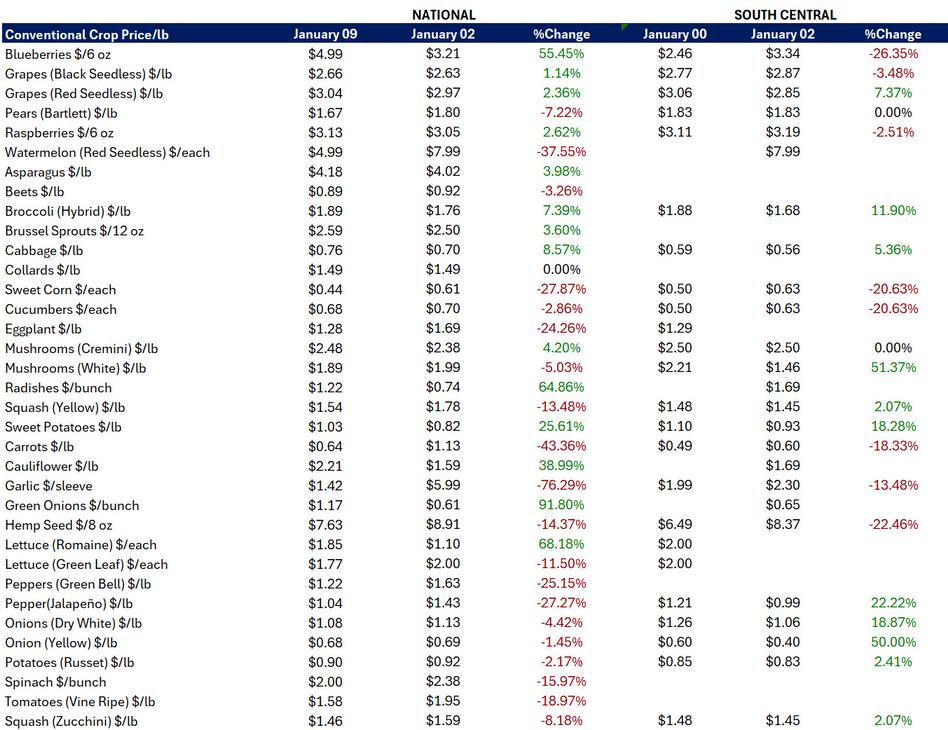
The bulletin displays market prices for selected crops that consumers demand throughout the year. This week’s publication presents price trends for specialty crop markets. Over the years, we have consistently observed changing pricing among different products from both non-organic and organic growing systems. Market price reports are updated weekly; however, some of our source reports may be inconsistent with their weekly product prices report. If a product listed on the tables has no price, it means that our source of information didn't report a price that week. Red numbers imply that prices dropped from the previous week, while green numbers indicate a positive trend change compared with last week's prices.
Table 1. Conventional Specialty Crops Prices
Figure
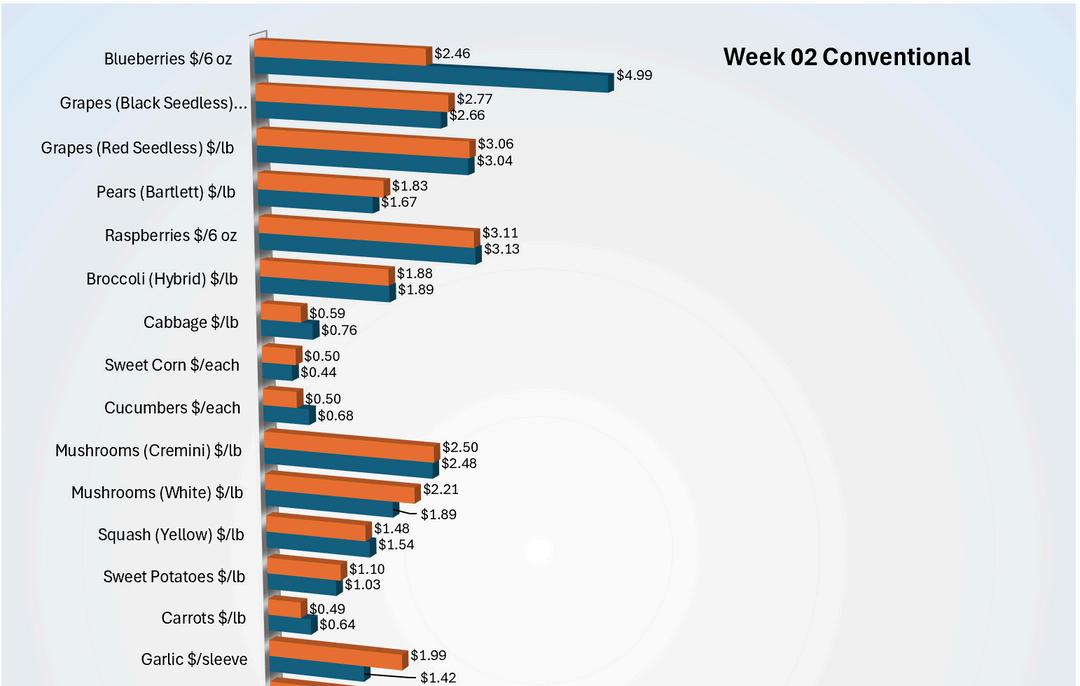
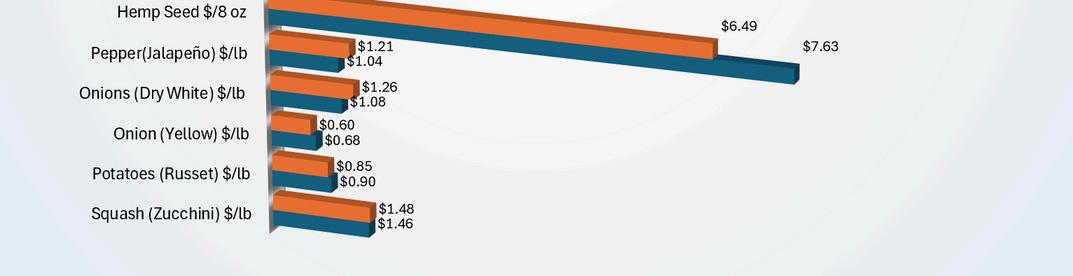
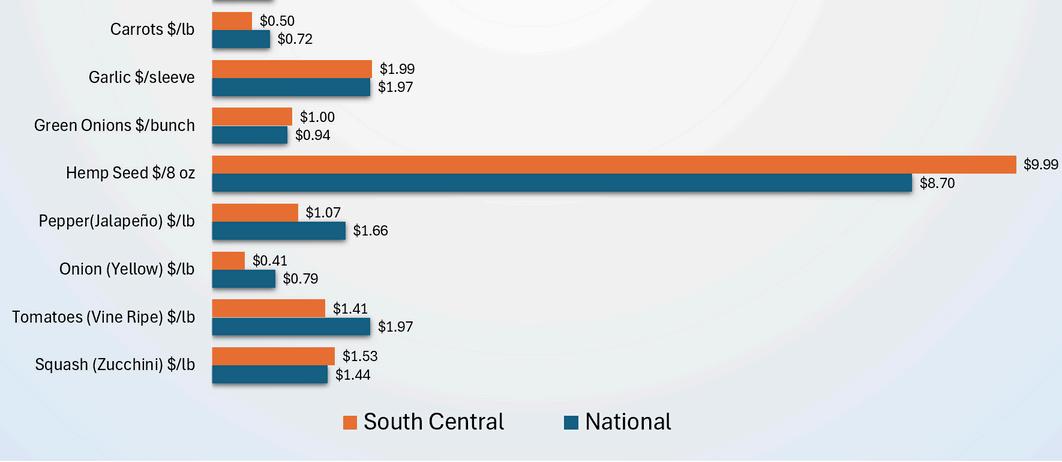
South-Central States:Arkansas, Colorado, Kansas, Louisiana, Missouri, New Mexico, Oklahoma, and Texas
Table 2. Organic Specialty Crops Prices
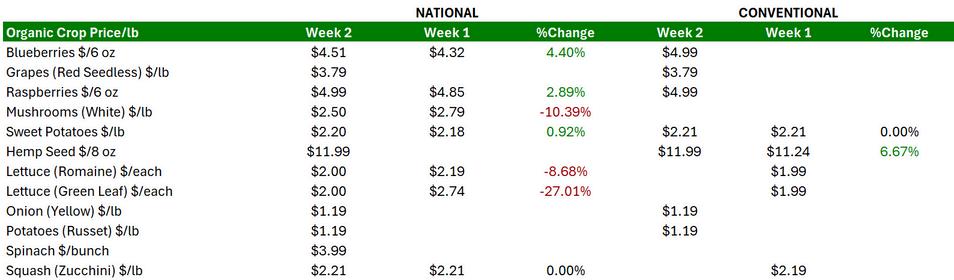
Figure 2. Market prices of organic products in the US and the South-Central region. Comparative sample.
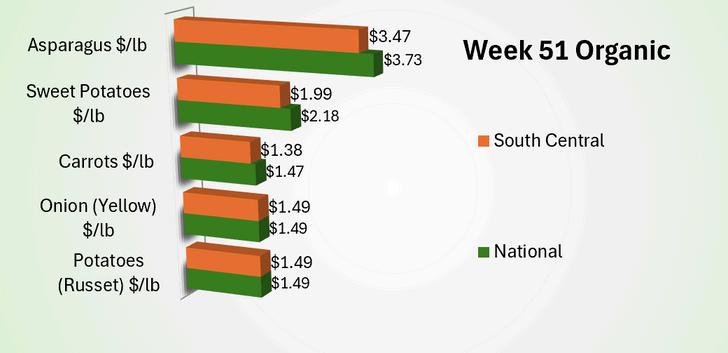
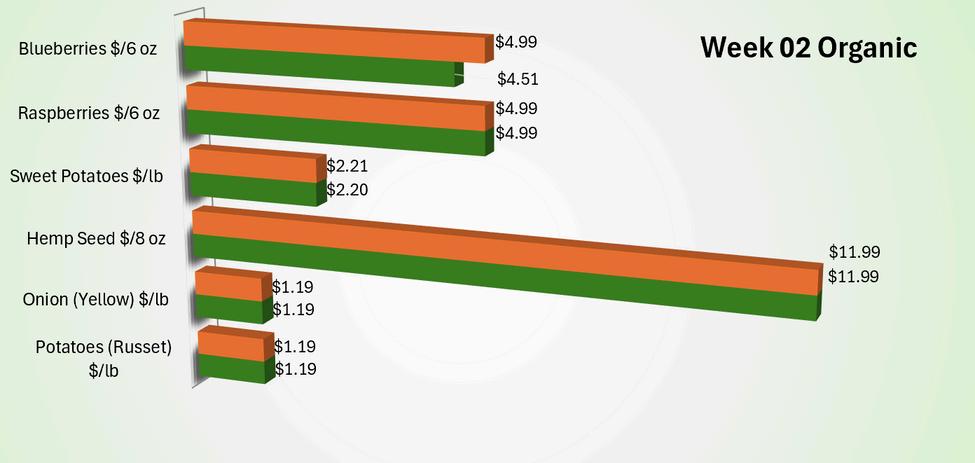
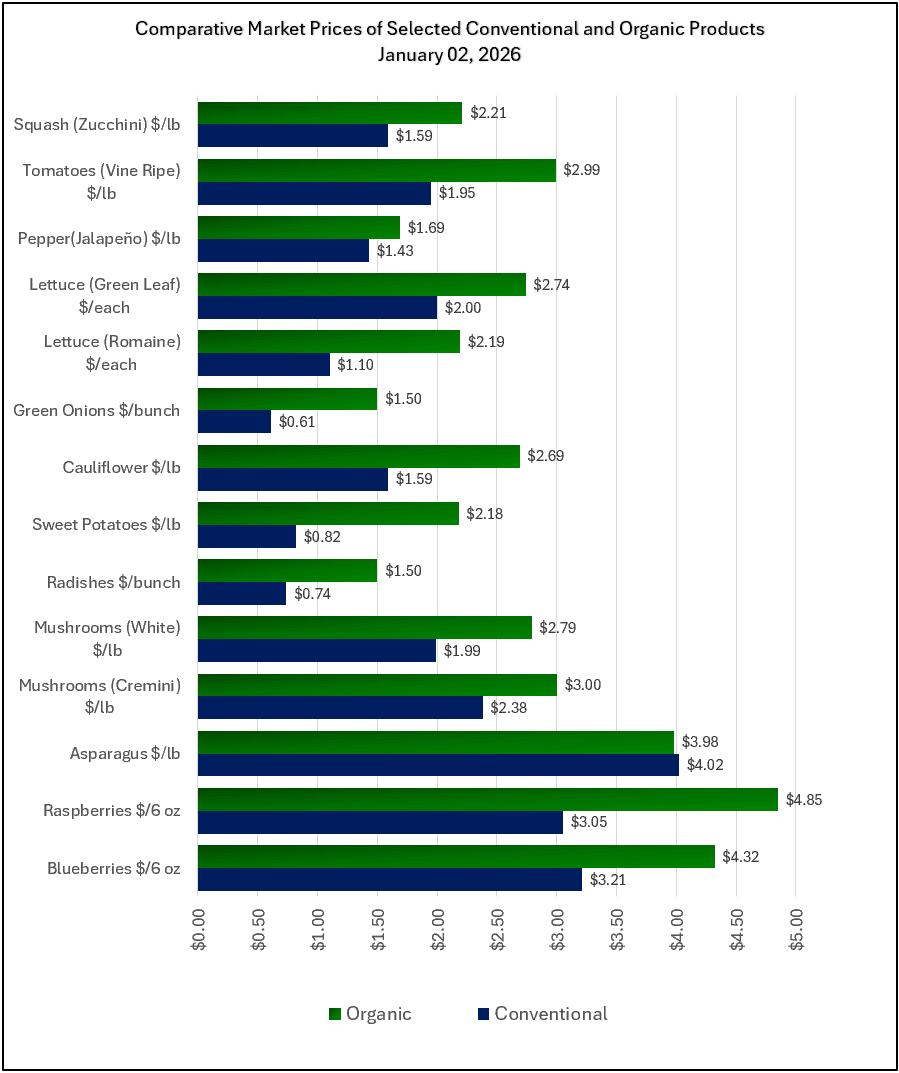
Figure 3. Comparing prices of selected crops from conventional and organic crop markets.

MISSOURI LIVESTOCK MARKETS
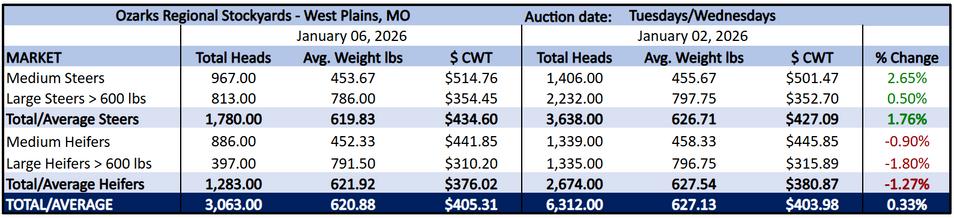
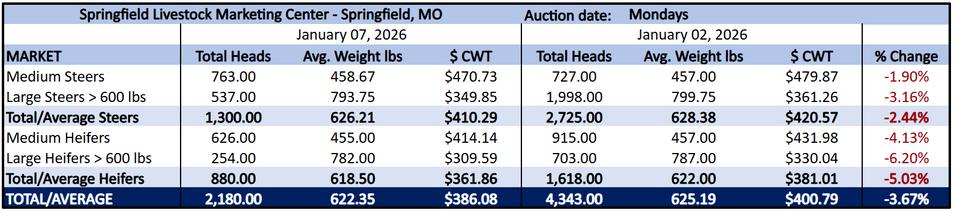
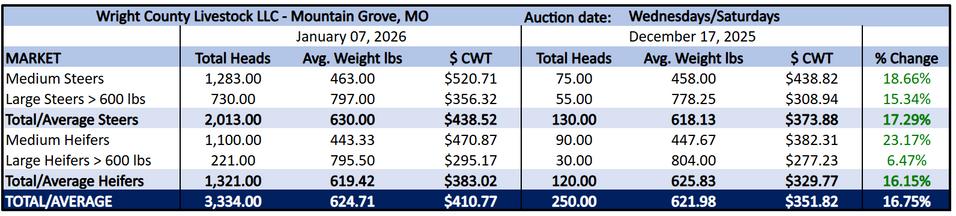
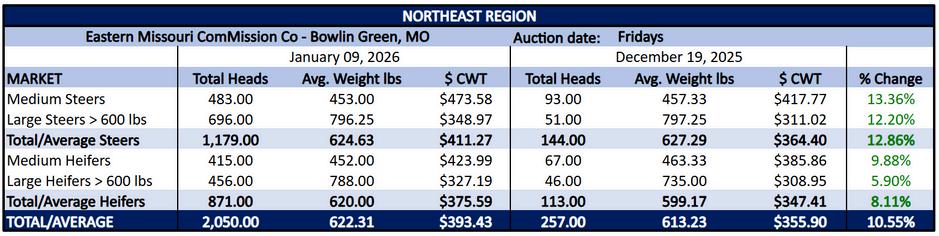
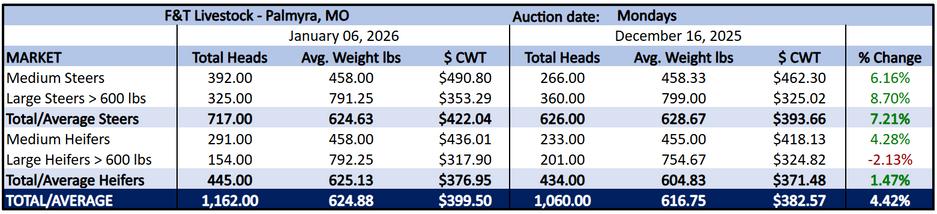
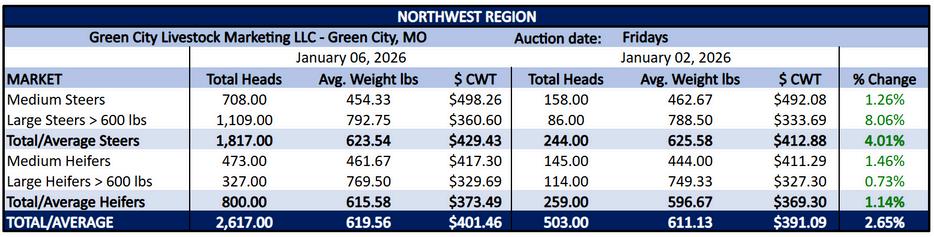
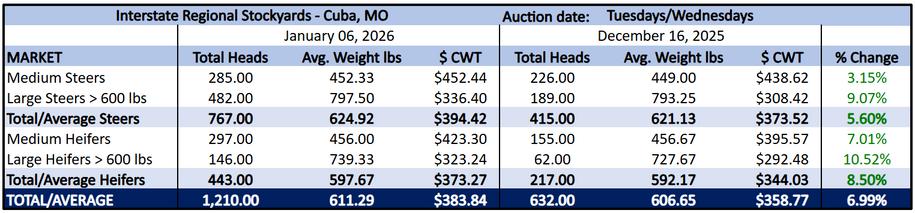
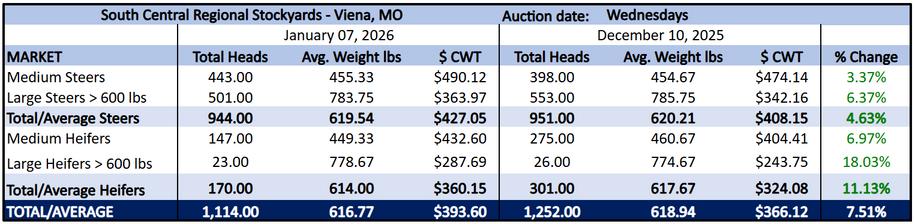
Market prices for livestock in Missouri are reported from the National Beef Wire database and USDA sources Beef prices at live auctions report medium and large weight Classes Steers and heifers with 599 pounds or less are mediumweight classes, and steers and heifers with 600 pounds or more are largeweight classes.
Beef Prices in the Southwest Region
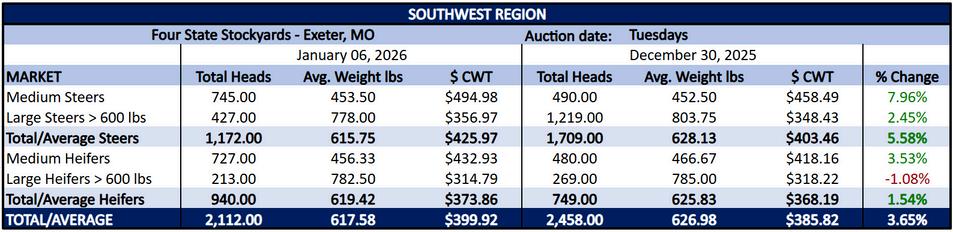
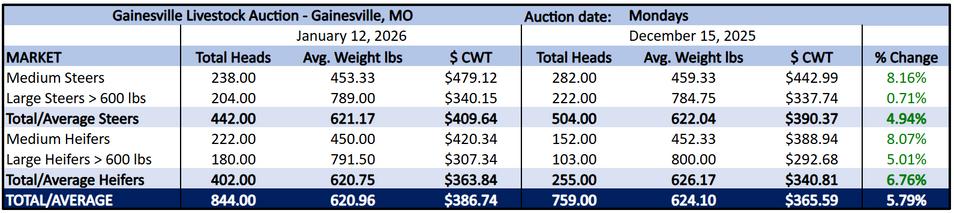
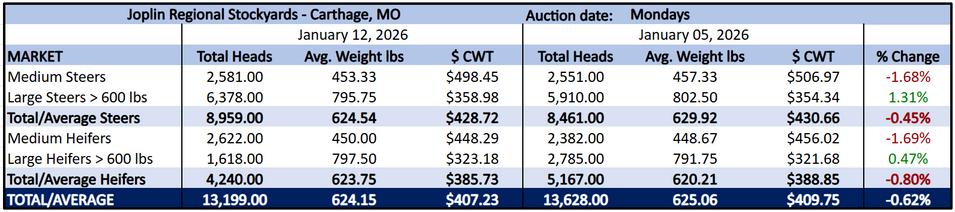
Table 5. Joplin Regional Stockyards
Table 3. Four State Stockyards
Table 4. Gainesville Livestock Auction
Source:
Source:
Source:
Table 6. Mid Missouri Stockyards
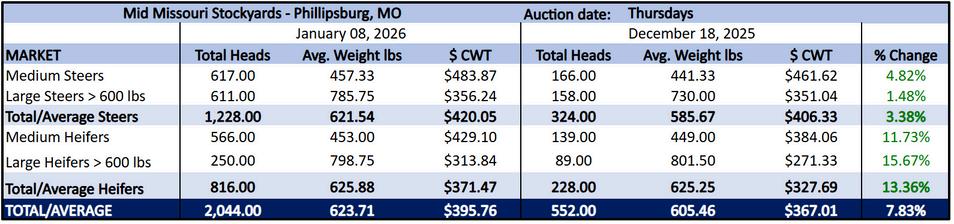
Table 7. Ozarks Livestock Marketing Center
Source:
Table 8. Springfield Livestock Marketing Center Source:
Table 9. Wright County Livestock LLC
Beef Prices in the Northeast Region
Source:
Source:
Source:
Table 13. Boonville Livestock Center
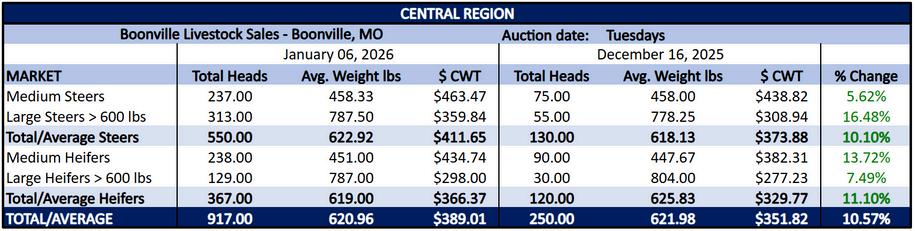
14. Callaway Livestock Center
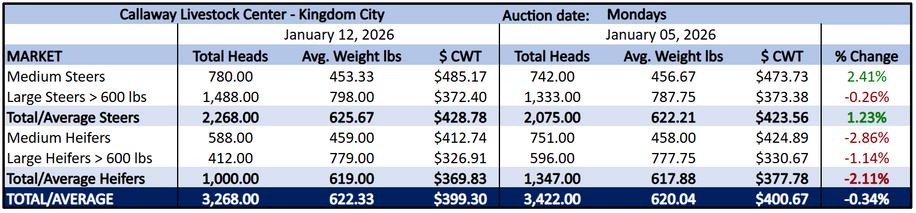
Table 15. Inter State Regional Stockyards
Table
Beef Prices in the Southeast Region
Table 17. Farmington Regional Stockyards
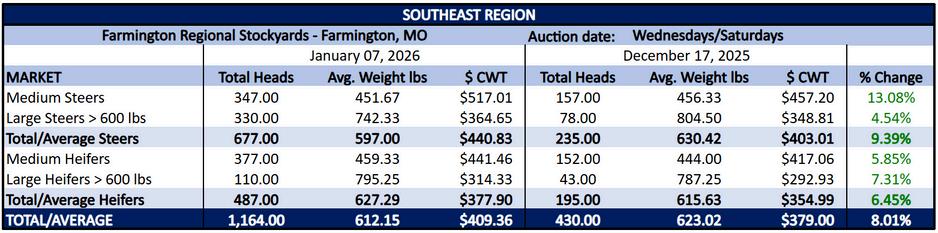
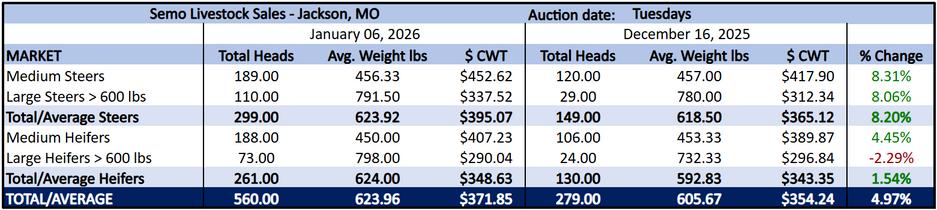
Table 18. SEMO Livestock Sales
Source:
Source:
Source:
Table 19. Small Ruminants Market Prices

Source: Agricultural Economics and Marketing Program with data from USDA- Missouri Weekly Sheep/Goat Auction Summary AMS Livestock Poultry & Grain Market News Missouri Dept of Ag Mrkt News
Table 20. Boxed Livestock Market Prices

Source: Agricultural Economics and Marketing Program with data from USDA- Missouri Weekly Sheep/Goat Auction Summary AMS Livestock Poultry & Grain Market News Missouri Dept of Ag Mrkt News
Farming Events and News
Lincoln University Upcoming events!
Lincoln University offers a diverse range of activities to support stakeholders with their everyday life initiatives. Connect to LU's upcoming events today
LU Cooperative Extension. Agribusiness Entrepreneurship.
Register to attend module 3 in classroom.
Agribusiness Lectures for Small Sustainable Farms: This training certification will provide the tools for small farmers to redesign their farm business model and create an agribusiness plan to operate and guide the farm through its production system and community Participation is at no cost Register here
This week USDA trending news.
USDA Accepting Applications for the 1890 National Scholars Program. to pursue careers in food, agriculture, and natural resource sciences. The application deadline is March 8, 2026 Submit their applications online
New Dietary Guidelines for United States people
Welcome to the Dietary Guidelines for Americans, 2025–2030
Whole Milk is Back: Whole Milk for Healthy Kids Act signed. It is aligned with the Dietary Guidelines for Americans 2025-2030.
USDA’s 102nd Agricultural Outlook Forum
Farming Resources
The National Resource Guide for Producers
The national resource guide for producers team is making an effort to sort informational resources that help farmers respond to the rapidly changing funding and support in the agricultural industry for all sizes and scales of production Note: “The American Farmland Trust will endeavor to update this list once a week; external links are maintained by their respective owners ”
Missouri Agribusiness Revolving Loan Fund
The fund offers financing to Qualifying Missouri Agribusinesses, such as value-added agriculture enterprises, agriculture support businesses, marketers or retailers of agricultural products, and businesses with emerging agricultural technology Check eligibility here
U
SDA-NRCS Programs supporting farmers
This link provides multiple options for accessing resources for your farm. The USDA offers farm loans and conservation management programs to sustain your farming operations
USDA-FSA. Announces September 2025 Lending Rates for Agricultural Producers
USDA Farm Service Agency (FSA) loans to help producers start or expand their farming operations, purchase equipment and storage structures, or meet cash flow needs Find out the new rates here
The Missouri CRCL Project – Conservation Fieldscapes is accepting applications from November 3, 2025, to January 31, 2026 Fieldscape sizes may vary, but must be on an area of approximately 1/8 acre (5,445 square feet) or more. Know more here!
Managing risk in the farm update. This link will connect you with the USDA market-based risk management tools that aim to strengthen the economic stability of agricultural producers and rural communities.






For more information, contact: Dr. Eleazar Gonzalez State Extension Specialist Agricultural Economics and Marketing-Small Sustainable Farms Telephone. 573-681-5541 GonzalezE@lincolnu.edu
Collaborator: Alejandro Tovar Cardona Agricultural Markets and Marketing Assistant
Agricultural Economics and Marketing Lincoln University Cooperative Extension
This bulletin was initially created with funds sponsored by BFRDP and NCR-SARE projects. Then sustained with State Match-Agricultural Natural Resources-Small Farms