Designed by Jamieson Eley. Cover photograph by Liz Isles. Published by Jarrold Publishing
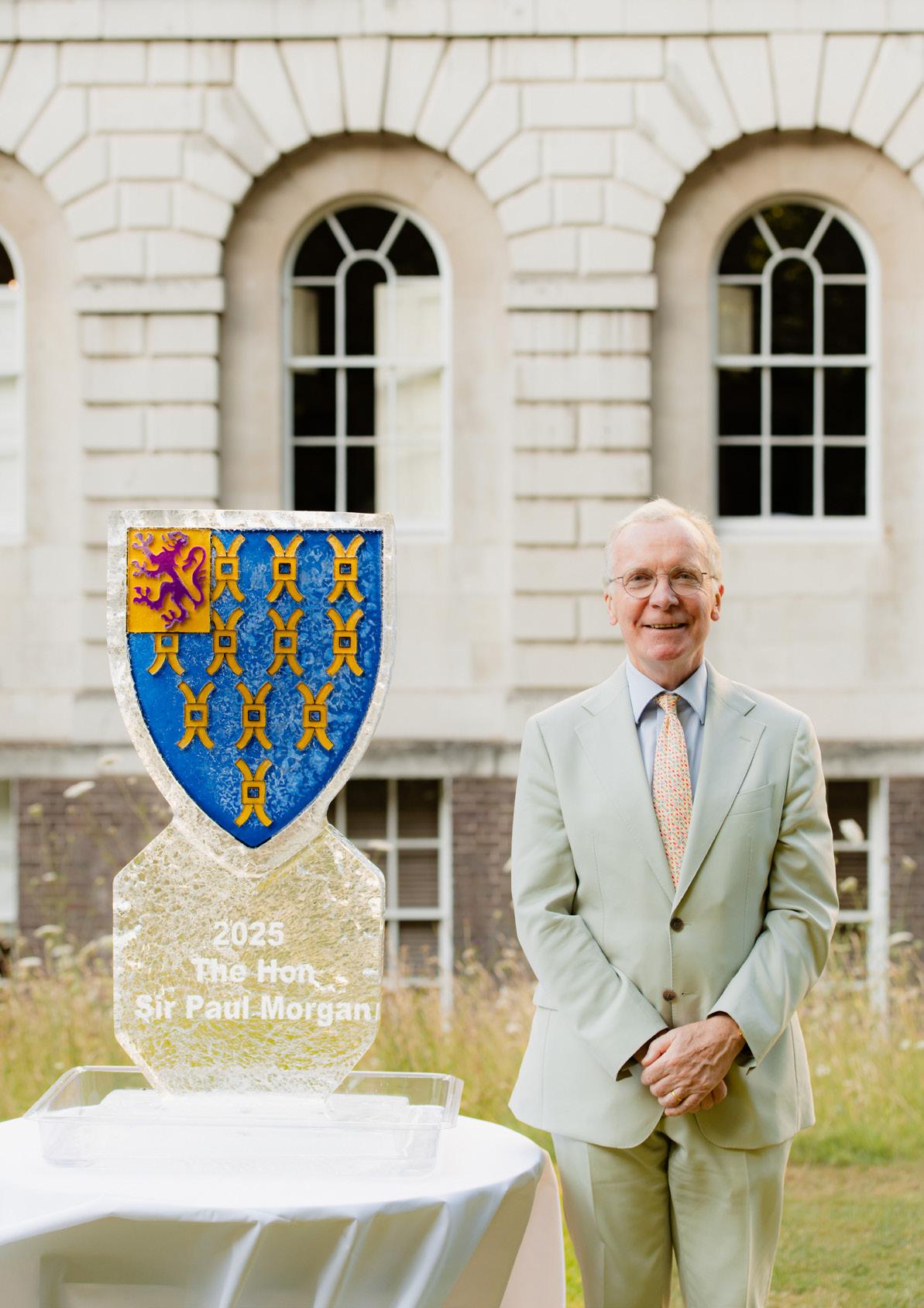

2025 was a year of progress and purpose for Lincoln’s Inn. A year that strengthened our community and reaffirmed our commitment to a Bar where everyone can thrive. It has truly been a great privilege to serve as Treasurer and I was keenly aware of that privilege throughout my year - and at the same time I have enjoyed my year immensely.
There have been many significant events during the year. From vibrant social and educational events to thoughtful debate on the timing of Call to the Bar. On the latter, the Inn has reached its conclusion on the appropriate way forward and this has been communicated to COIC, which will consider the views of all four Inns before reporting back to the Bar Council.
We deepened our focus on equality, diversity and inclusion, engaging with Baroness Harman’s important report on bullying, harassment and sexual harassment at the Bar, and hosting candid conversations to help us drive meaningful change. We are committed to implementing the report recommendations and to ensuring the Inn, and the Bar more widely, is a safe, inclusive place where everyone can thrive (see page 8 for more).
Innovation also shaped the year. Our Library led the way with sessions on AI in legal practice and free trials of AI products, ensuring members are equipped for a rapidly evolving professional landscape. Beyond this, our investment in technology saw us expanding our member online booking system and upgrading audio-visual systems in our historic halls to support hybrid meetings and other events. We also advanced sustainability across the Inn, from energy-efficiency improvements in our estate to the Catering Team’s focus on ethical supply chains and creative, sustainable menus.
Importantly, we strengthened our presence beyond London, hosting panels, workshops and socials on circuit, delivering our first simultaneous livestream across three locations, and introducing a dedicated Circuit Newsletter. I was delighted to attend two Circuit Dinners in Birmingham and Liverpool, a reminder of the value of these connections. These changes demonstrate our commitment to blending tradition with progress and ensuring our reach across our members is as wide as possible.
This year also marked a significant leadership transition. Our former Under Treasurer, Anne Sharp CBE, served the Inn magnificently for some six years and she postponed her retirement for a number of months to help us with the transition in this important role. We were delighted to welcome Emma Hopkins OBE as our new Under Treasurer in September of 2025. She has already made a huge contribution, bringing experience and insight that will serve the Inn well in the years ahead.
None of this would have been possible without the dedication of our volunteers, Benchers and staff. Their commitment to education, outreach and professional development continues to enrich the life of the Inn and the wider Bar and I would like to extend my thanks to all those who have contributed to the vibrant life of the Inn.
As Treasurer — a voluntary, elected role held for just one year — I have been keenly aware of how much the Inn depends on its permanent professional teams. The Heads of Department bring deep expertise, and I found it essential to listen carefully to their advice. Beyond leadership, the quality of our staff is exceptional. Their “can do” attitude and commitment to excellence underpin everything we achieve. One memorable moment for me was spending time in the kitchen before November’s Grand Day; this glimpse behind the scenes showed the skill and dedication that make our events so special. I also want to thank all my fellow Benchers for their consistent support throughout the year.
This Review offers a snapshot of a packed and purposeful year. I hope you will read it, enjoy it, and be inspired by the breadth of work and the commitment of so many who make Lincoln’s Inn what it is.
As we look ahead to 2026 under the leadership of my successor, Elspeth Talbot Rice KC, the Inn remains focused on supporting our members, advancing inclusion, and embracing opportunities for growth – and I look forward to supporting those efforts.
The Hon Sir Paul Morgan
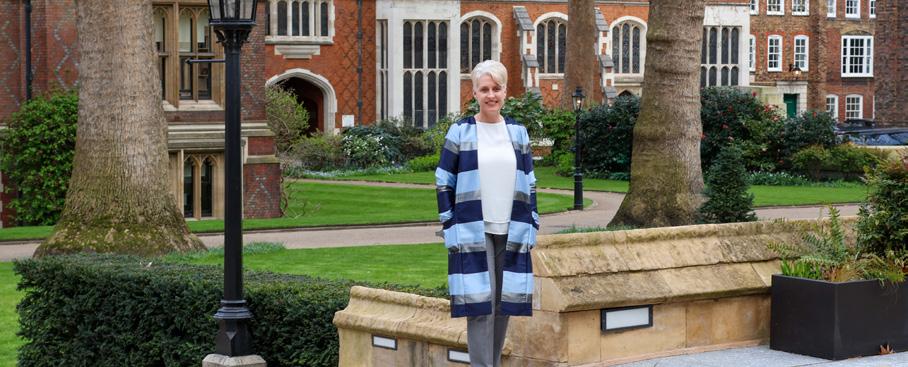
I joined the Inn as Under Treasurer in September 2025 and the first few months have been a whirlwind. Although the role is not a legal one – it is more akin to that of a Chief Executive in commercial terms – my background has helped me appreciate the professional context in which our members work. Having been Called to the Bar (at Middle Temple) in 1995, I practised for seventeen years at the independent Bar and then in the government legal service before moving into diplomacy. Returning to the Inns of Court has felt both familiar and new.
My first few months were spent work shadowing teams across the Inn to get under the skin of what we do. I have clambered up scaffolding with our in-house surveyors to see the project work required to preserve our historic estate. I have spent time in the kitchen to understand what it takes to run such a large banqueting and events business. I have been out planting with our gardeners, attended educational events for our students, and have participated in a wide variety of committees and Council meetings. I have been pleasantly surprised by the wide range of skills and expertise that we have within the professional team and impressed by the sense of pride that staff take in their work. I have also been struck by the desire for innovation and continuous improvement that is evident across the Inn’s activities. This instinct will be crucial in the years ahead as our operating environment continues to be characterised by uncertainty and unpredictability.
Membership organisations must adapt as AI and digital platforms are reshaping how people learn, network and collaborate. To continue to thrive, we need to adapt not only to political and economic change but also to the evolving needs of our members, staff and tenants. One area that I have been focused on is the need for decisions to be grounded in good data and analysis. Recently, for example, the timing of Call debate across the Inn was supported by a robust data package that gave decision makers the key insight they needed. Mainstreaming this analytical approach across our work will be key to ensuring we are a resilient and informed organisation.
Another cross-cutting priority that I am keen to help further embed within the DNA of the Inn is our approach to equality, diversity and inclusion (EDI). Many members and students I have spoken with over the last few months have told me that the visible championing of these issues is important to them. Harnessing our full breadth of talent will be crucial for the Inn of tomorrow, and so continuing to be thoughtful across all our functions on how we do this remains a priority.
One of the joys of my first six months has been getting to meet so many members. Hearing directly from people about what matters to them has been invaluable and these conversations will continue to shape our priorities in the year ahead.
Even now, after six months as Under Treasurer, I still pinch myself when walking into the Inn and reflect on how lucky I am to work in such a beautiful environment. I am looking forward to the opportunities and challenges ahead – including how we ensure the Inn is future proofing itself so that it can continue to be a hub for its members, serving their needs and delivering on its purpose for years to come.
Emma Hopkins OBE

It is hard to believe that yet another year has passed since I wrote last years Editor’s Note, but when I think of what has changed in my life and the world, it is easier to remember! For those of you who do not keep up with judicial appointments and retirements, I retired last April as a Judge of First-tier Tribunal Immigration and Asylum Chamber and have been able to devote more time to the Inn and to other interests.
Like me, this year’s Annual Review, looking back over 2025, has had a complete change. Gone are the individual departmental reports and the Review is now split into themes. Do not be put off. It remains as informative as ever about what has gone on in the Inn over the last year, but we hope you will find that the presentation of this information comes in a more pleasing package, with less repetition where matters crossed departments and inevitably appeared more than once in different places.
Helen Rynne, who does all the major work on the Review in the Treasury office, and without whom there would be no Annual Review, has been the mastermind of this approach and I hope you like it as much as I do. As before the Review is available in hard copy, but you must place an order for one by Tuesday 5 May 2026, as only a limited number are now printed. This saves money, paper and other resources, which are wasted when more are printed than are needed. So do not be shy – if you want a hard copy ASK, and the Inn will print to meet active demand.
Having said that do try the digital copy as you can get much, much, more out of it. Not only do the links take you to some of the many interesting lectures given over the year, some of benefit to students, others of more general interest such as the fascinating lecture given by Dr Nichola Phillips on Lord Erskine, or that given by our own distinguished Librarian on buildings proposed for the Inn but never built – both part of the ongoing Black Books series of lectures, which I highly recommend. There are also links to the pictures I take at many Inn events, and you can not only see them at a size of your choice, but you can also download them if you wish. None of this is possible from the hard copy!
There is as always news from the Chapel and the Inn’s musicians, as well as the regular messages from the Treasurer and our new Under Treasurer, along with articles celebrating awards won in the catering field, as well as noting some long-serving members of staff, who can easily be overlooked. As always, we have included interesting information about the building works in the Inn and changes to some of our gardens.
Let me know if you like or do not like this new layout. It is important to refresh what we do from time to time, but it is also important that those who read the Review like its design. And if you have any contributions or ideas you would like me to consider do speak to me about them.
I give many thanks to all those who have contributed to this year’s Annual Review on your behalf.
Nick Easterman
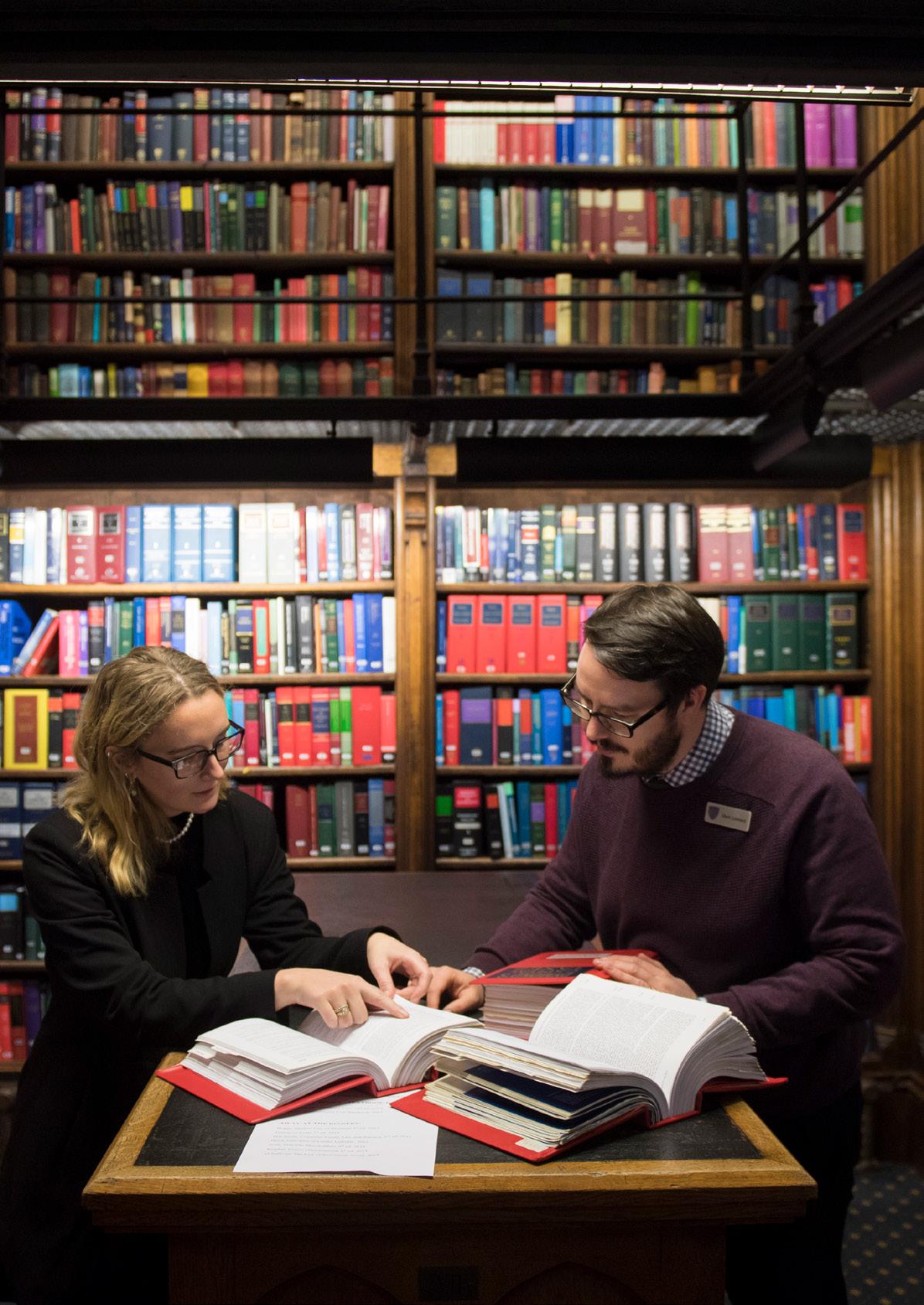
With more than 25,000 members, the Lincoln’s Inn professional community is both extensive and diverse. In 2025, a further 1,400 members joined the Inn. Throughout the year, the Inn continued to support members’ professional development and strengthen the wider profession, helping them stay connected –to the Inn and to each other.
In 2025, Lincoln’s Inn strengthened its commitment to equality, diversity and inclusion through a vibrant programme of events, workshops and policy initiatives. These activities reflect our vision of a Bar where everyone can thrive, regardless of background or identity.
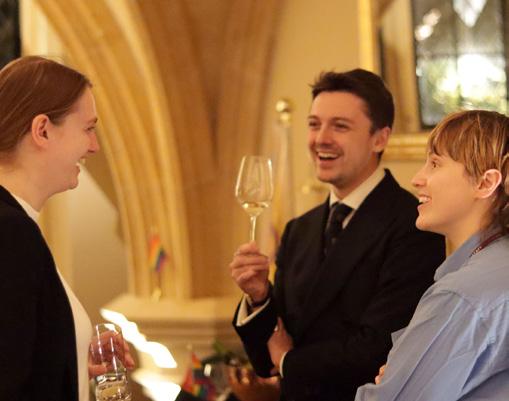
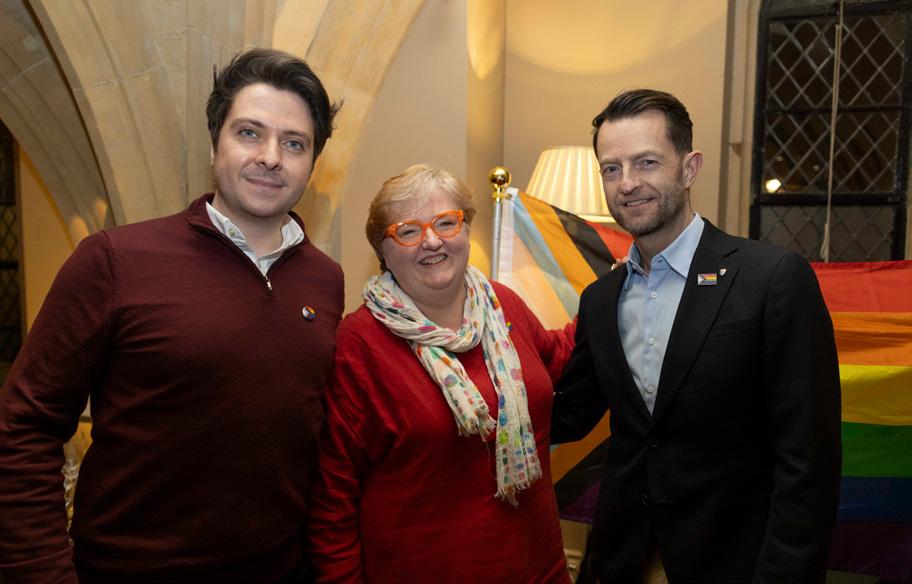
We began the year by creating new opportunities for connection and engagement. In March, the Inn proudly launched its LGBTQ+ Network with an informal social in the MCR hosted by the Inn’s LGBTQ+ Network Leads. The Network provides a welcoming space for LGBTQ+ members and allies to connect, share experiences, and provide support and information. Building on this success, the Network will now be hosting biannual socials in March and October, fostering a stronger sense of community. Members who wish to receive email updates on the LGBTQ+ Network’s activities and events should subscribe via their online account.
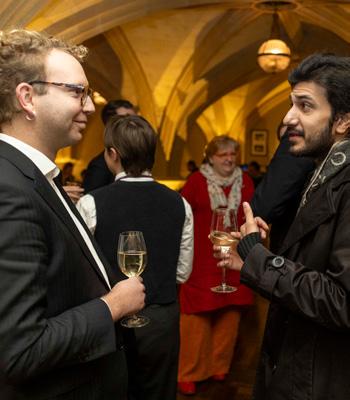
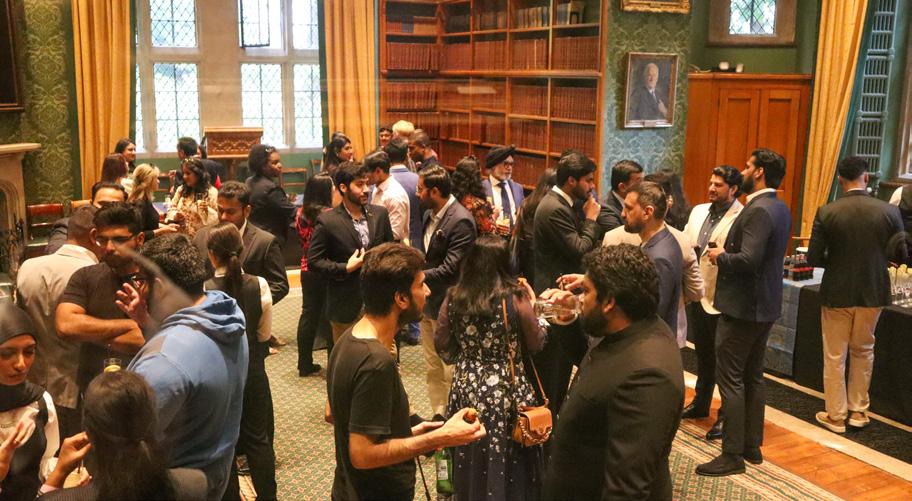
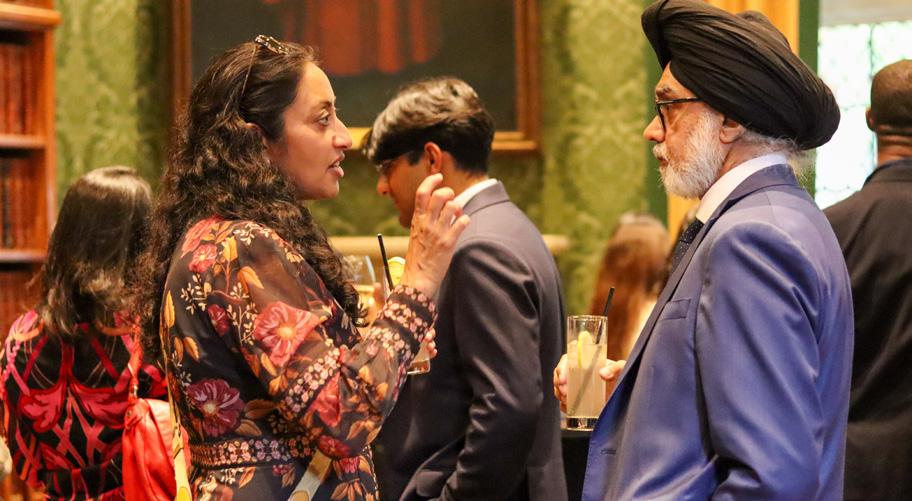
Summer brought another milestone with our first Diversity Social celebrating South Asian Heritage Month. Members from all four Inns and their guests gathered in the Old Court Room for an evening of networking and cultural appreciation. The Rt Hon Lord Justice Singh joined us to share inspiring words.
Feedback from attendees captured the spirit of the event:
“The opportunity to engage with fellow law students and practising lawyers was really amazing.”
“It was the first South Asian Heritage Social and we got the chance to recognise the achievements of our South Asian Community and socialise with each other.”
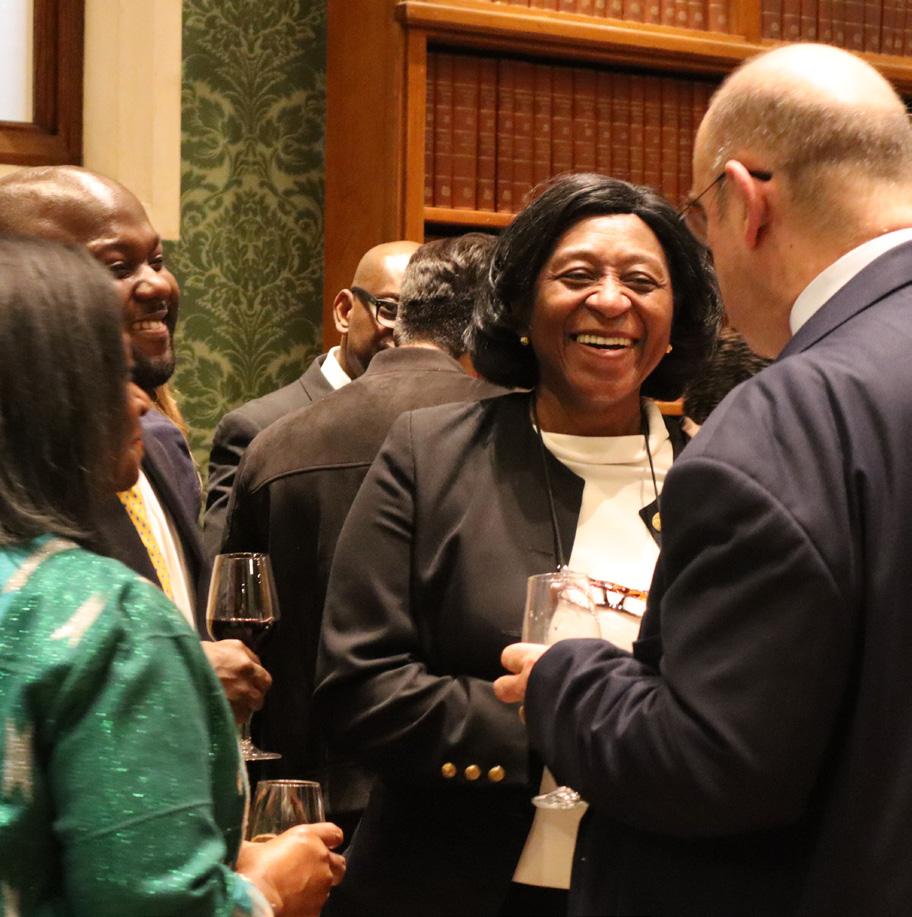
In October, we marked Black History Month with a Diversity Social that built on the success of our 2024 Diversity Dinner. Her Honour Judge Barbara Mensah, the first Circuit Judge of African origin and a Bencher of the Inn, spoke powerfully about representation and inclusion at the Bar.
“We are holding space in institutions which historically have been shaped without us. We need to be ourselves and let those institutions shape themselves around us. We need to help each other in that endeavour.”
Her Honour Judge Barbara Mensah
Our work extended beyond celebrations to practical support and honest conversations. Throughout the year, we hosted workshops tackling some of the challenges faced by underrepresented groups.
Feedback spoke volumes:
“A very uplifting, honest and positive talk which made me feel less alone in navigating being a mum and doing this job.”
The Inns of Court Alliance for Women’s (ICAW) Navigating Parenthood at the Bar event brought together judges and barristers to share candid reflections on balancing family life and a legal career.
We also held evidence-gathering sessions on race and disability, inviting members to share experiences that will inform the Inn’s next Equality, Diversity and Inclusivity Action Plan. During Neurodiversity Celebration Week, our panel discussion A Conversation about Neurodiversity and the Bar explored practical strategies for neurodiverse practitioners, from diary management to marketing.
These events were in addition to our annual Diversity Dinner, which in 2025 celebrated “Empowering Women in the Law” (see page 70 for more on this).
Feedback included:
“Topical and frank discussion with practical tips.”
“The down-to-earth style of the speakers and openness on such a sensitive topic.”
Alongside these initiatives, we introduced new ways to support members in their professional journeys. Responding to feedback for more peer-to-peer mentoring, we launched our first Practising Members’ Mentoring Scheme at the start of the year. 16 members have already benefitted, receiving guidance on building a practice, changing specialisms or returning to the Bar after a career break or parental leave. This scheme reflects our commitment to fostering a culture of support and shared experience across all stages of a legal career. Find out more about being either a mentor or mentee on our website: https://www.lincolnsinn.org.uk/members/support-formembers/practising-members-mentoring-scheme/
We also strengthened our engagement with members beyond London, working closely with the Inn’s Circuit Representatives, who act as a vital link between the Inn and our members based on circuit.
Members can find out more about their Circuit Representatives and how to get in touch on the Inn’s website: https://www.lincolnsinn.org. uk/members/representation/circuit-representation/
In January, we launched the Inn’s first dedicated Circuit Newsletter, now reaching over 700 subscribers with updates on events, opportunities and local initiatives. If you aren’t already subscribed, you can update your mailing preferences in your online account
Throughout the year, we brought members together at six circuit events, including two Circuit Dinners attended by the Treasurer in Birmingham and Liverpool. In a first for the Inn, we also hosted simultaneous Pupillage Advice Evenings across three locations – Bristol, Leeds and London – combining livestreamed talks from London with local networking receptions. These innovations help ensure members on circuit feel connected and supported, wherever they are.
Our commitment to driving systemic change was underscored in September when we welcomed the publication of the Independent review into bullying, harassment and sexual harassment at the Bar, with which we fully engaged and to which we submitted evidence. The report highlighted the urgent need for reform, and we acted swiftly. We are reviewing our current policies, such as our Code of Conduct for members, EDI action plan and statement, and we are looking at practical actions which we can implement to drive meaningful reform. We are also part of a joint Inns’ working group which is reviewing policies and procedures to ensure the Bar - and the Inn - are safe, inclusive spaces for all.
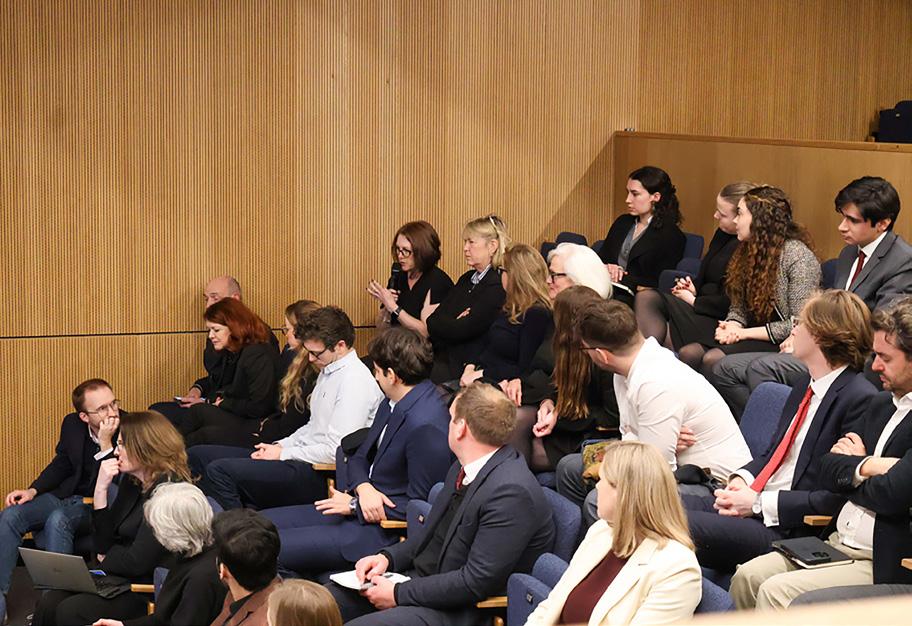
As part of this work, in December we hosted a panel discussion and Q&A in the Ashworth Centre with Baroness Harman KC, chaired by Brie Stevens-Hoare KC (Gatehouse Chambers and Lincoln’s Inn EDI Committee) and with panellists Rachel Krys (Bar Council), Glenn Parsons (Park Square Barristers and Chair of the North Eastern Circuit Diversity Outreach Programme), and Eve Robinson (36 Group and report contributor). The room was also opened up for Q&A discussion with attendees.
We recommend watching ‘Bullying & Harassment at the Bar - In discussion with Baroness Harman KC’ panel discussion if you haven’t already.
Our representatives are:
• Midland Circuit: His Honour Judge Burns and Eleanor Marsh
• Northern Circuit: Lisa Roberts KC and Isabelle Haddad
• North Eastern Circuit: His Honour Judge Nadim and Chloe Hudson
• Wales and Chester Circuit: Christopher Rees KC and Cerys Walters
• Western Circuit: Susan Brown and Sophie Howard
Feedback from attendees summed up the impact:
“A visible sign of engagement by the Inn with its members on circuit… [it was a great] opportunity to meet fellow members of the Inn on circuit.”
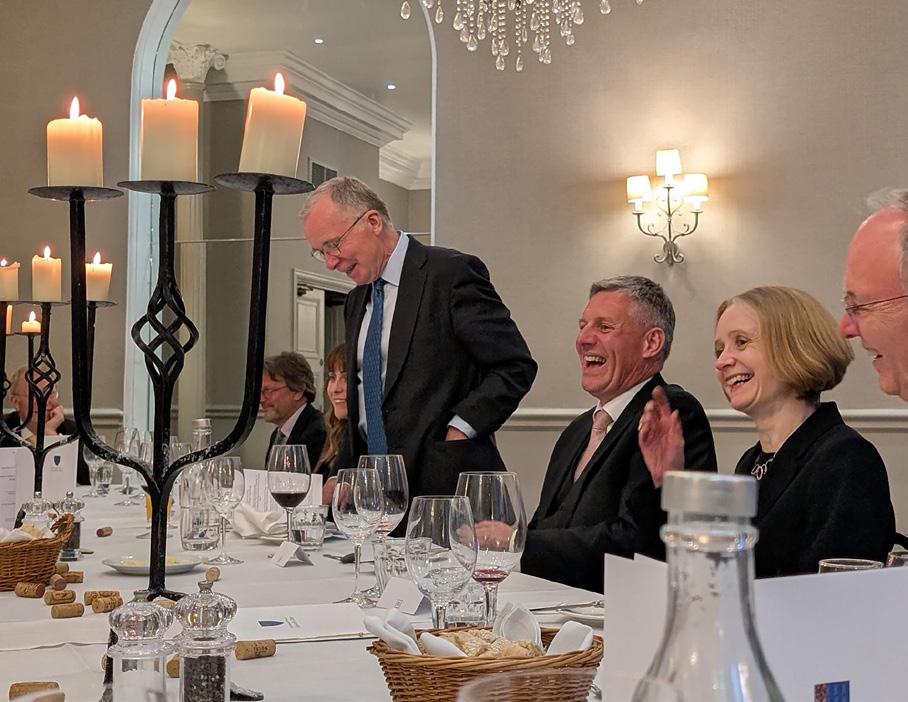
Treasurer’s Circuit Dinner, Birmingham.
Our work in 2025 laid strong foundations for a more inclusive future. In 2026, we will continue to listen, learn and lead on equality, diversity and inclusion, ensuring Lincoln’s Inn remains a welcoming and supportive community for all.
Volunteers are at the heart of everything we do at the Inn. From engaging with students at outreach events to Advocacy Training for pupils and supporting marshalling opportunities, their generosity of time and expertise plays a vital role in shaping the future of the Bar. Without them, we simply could not deliver the education and support to help the next generation of barristers thrive and enable those in practice to grow.
The annual Contributors’ Dinner event gives us the opportunity to thank the members who give their time so generously to support our education, engagement and outreach programmes, and to strengthen the professional community at Lincoln’s Inn.
“My own volunteering for the Inn over the last 16 years has been a huge part of what makes me love being a barrister. I am part of a team of staff and volunteers who work hard to add value to our profession, to widen access to the Bar and to make sure the barristers we train and support are the best they can be. Volunteering makes the often tough role of a barrister so much more than just a job to me. I strongly encourage all barristers to volunteer with your own Inn, you won’t regret it.”
Laura Gould
Thanks to the commitment of our volunteer tutors and trainers, in 2025 we delivered:
• 66 Qualifying Session events, attended by 8,809 participants
• Post-Call training, which included:
• 106 pupils trained
• 113 new practitioners trained
• 16 new tutors trained
• 145 hours of advocacy and ethics training given
• Over 1,700 hours of combined training delivered by 350+ volunteers supporting our education and training programmes
Contributors’ Dinner photos by Nick Easterman - see more here: https://flic.kr/s/ aHBqjCjB7p)
Contributors’ Dinner.
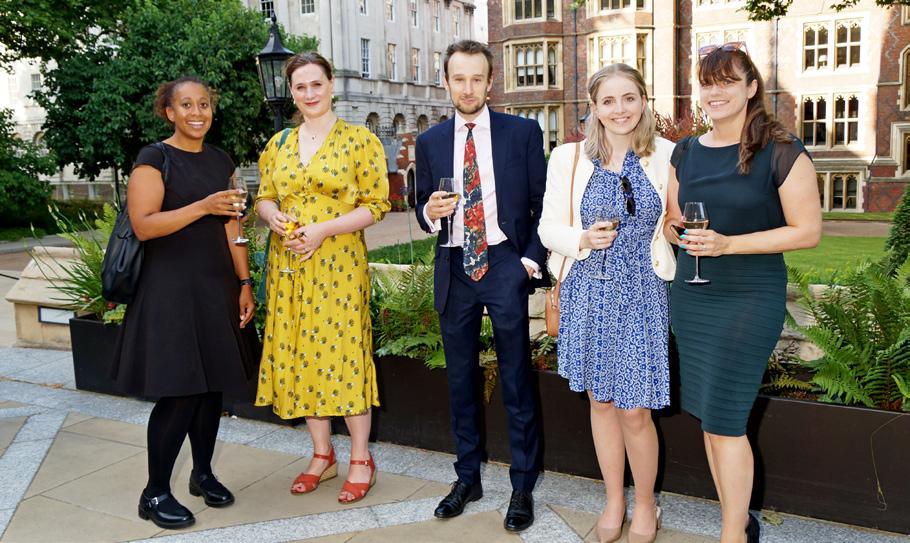
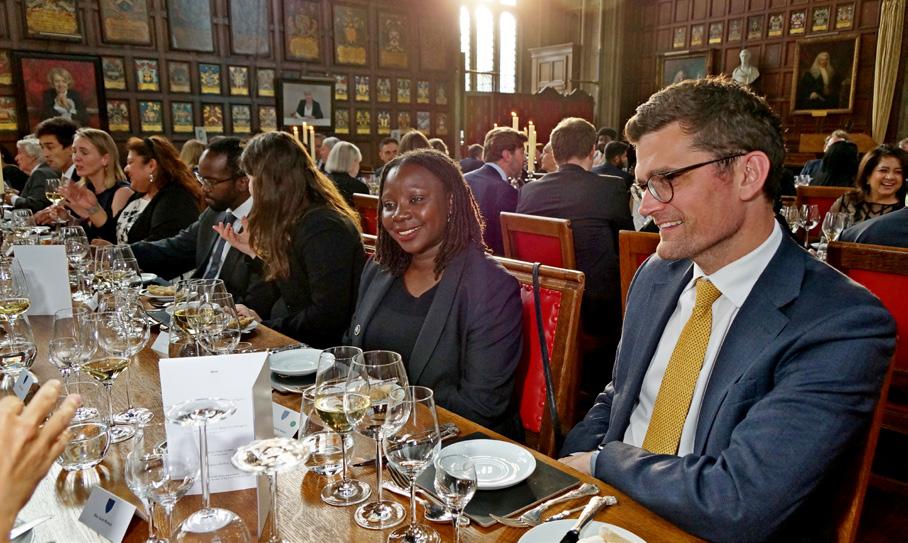
Contributors’ Dinner.
Each year we run over 150 events and numerous schemes to support our members. None of this would be possible without the commitment of our Benchers and members who volunteer. Whether you are a judge, in chambers, an employed barrister or practising outside London, there will be a way you can help. Opportunities include outreach to students considering the Bar, advocacy and ethics teaching, sitting on panels, delivering lectures, mentoring and offering careers advice. Even students can volunteer to be witnesses at pupillage advocacy sessions. Diverse representation on our teaching teams, speaker and interview panels is vital and we are particularly keen to increase involvement from under-represented groups and those on circuit. So even if you cannot get to the Inn often, there are still plenty of ways to contribute https://www.lincolnsinn.org.uk/members/volunteering/
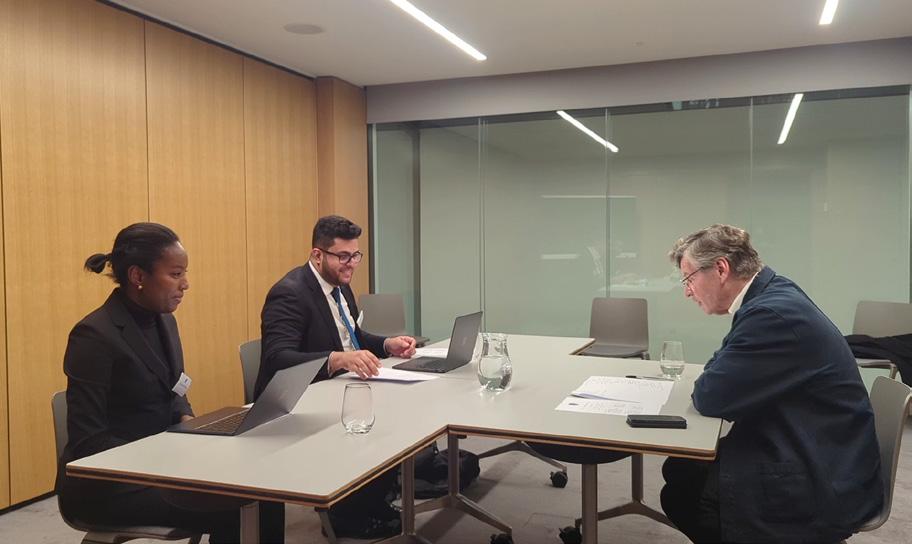
Pupillage Foundation Scheme mock interview session.
Advocacy Training is one way our volunteers support the Inn’s educational work. Each year, hundreds of hours are spent helping pupils and new practitioners develop the skills they need for practice. In this feature, Charlie Taylor, Head of Education at Lincoln’s Inn, reflects on the importance of these courses and the commitment involved in delivering them.

Charlie Taylor.
“Most members will have experienced advocacy training of some sort during their time at the Inn, but where it really comes into its own is at our Pupils and New Practitioners Advocacy Courses.
The Pupils Advocacy Course brings out the very best in our delivery of Advocacy Training. It is a particularly intensive weekend and is the only course which is pass/fail, adding an additional layer of complexity and responsibility for those involved.
Pupils must complete the course during their first six months of pupillage and can only progress to their second six upon successfully passing it, so it forms part of the critical bridge into independent practice. The course ensures that pupils meet a required standard of competence and are ready to handle advocacy responsibilities. The tutors on these courses are therefore providing a vital service in protecting the public. It is a significant responsibility, but it is also very rewarding.
Teaching standards are exceptionally high. The Inn teaches using the Hampel Method at both the Pupils and New Practitioners weekends and has done so for decades. This is a structured method of teaching which focusses on one element of a trainee’s performance at time. Before we allow any tutor to work with pupils, we ensure they attend the Tutor Training weekend in advance, so they can learn the method and how to apply it effectively.
“Participation in teaching and training serves both the profession and the individual practitioner. It contributes materially to the development of others, while simultaneously reinforcing and refining one’s own advocacy skills. The collegiate and supportive educational environment fostered by the Inn plays an important role in sustaining and enhancing professional standards across the Bar.”
His Honour Judge Chawla, Tutor Trainer & Chair of the Post-Call Committee
Internally, we also take a very structured approach to our tutors. All tutors are continuously assessed at each course and graded each year to help maintain our exceptionally high standards. This involves a multi-layered set of assessments at each course. Tutors are assessing pupils to determine whether they pass the course; lead tutors are assessing their fellow tutors; and roving tutors are assessing the lead tutors. All this information is then collated and reviewed annually by the Grading Sub-Committee, which decides the appropriate grade for each tutor. Although this represents a significant amount of work, it ensures an impressively high standard of training and one that other institutions aspire to.
Of course, none of this would be possible without the dedication of our advocacy tutors, and we are incredibly fortunate to have so many willing to give up their time to teach. As you may have seen from the statistics elsewhere in the Review (see page 112 for ‘Our Year in Numbers’), our tutors dedicate hundreds of hours to Advocacy Training alone. There is an expectation that each tutor will teach at least once every two years; otherwise, they are required to attend a refresher course before teaching again. Many tutors, however, do far more than this, which really is a testament to their commitment to the profession.
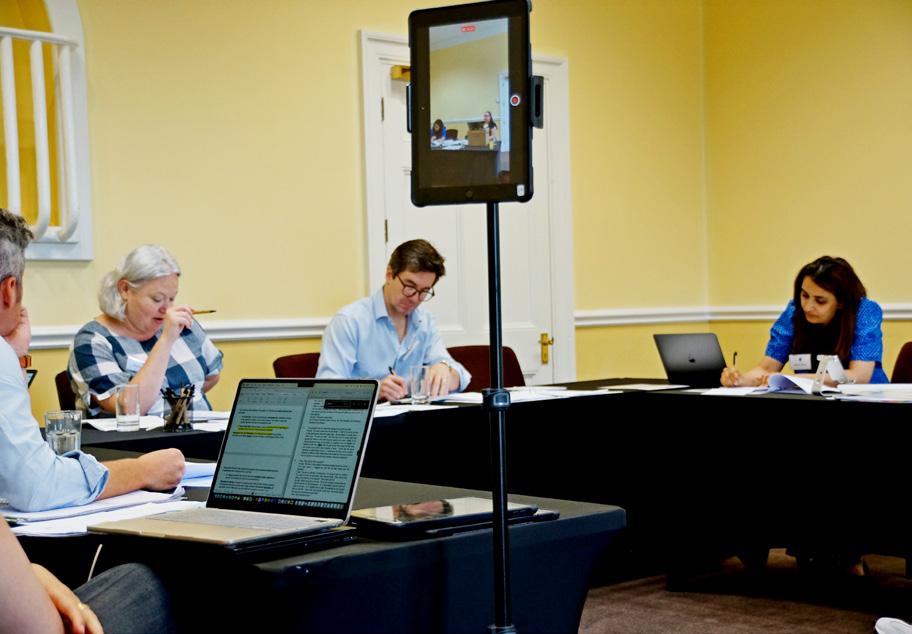
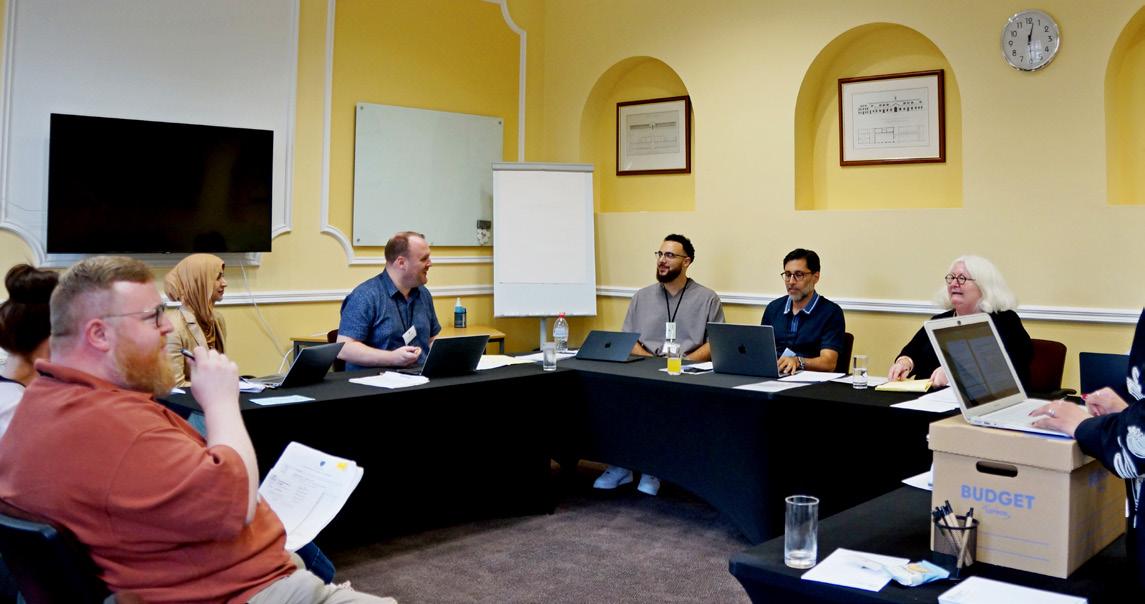
Each year, the Inn’s senior Hampel trainers train new recruits to enable the Inn to continue providing Advocacy Training to pupils and young practitioners (view Nick Easterman’s photos from the training here: https://flic.kr/s/ aHBqjCncXy)
“As of 2025, I reached 15 years of Advocacy Training of pupils (and new practitioners). Whilst it requires giving up weekends and evenings, and can feel a challenge fitting around my practice, it is incredibly rewarding and energising. Even after this time, I find it improves my own advocacy and I always learn something. The other tutors are collegiate and supportive, and many have become good friends.”
Claire Palmer, 5 Essex Chambers, Tutor Trainer
What’s more, many of our tutors also go on to teach at the Keble Advanced Advocacy Course, widely regarded as one of the most demanding and intensive advocacy courses in the UK and internationally. The Inn is very pleased to be able to offer scholarships for several delegates to attend the course and more information on this can be found on our website: https://www.lincolnsinn.org.uk/scholarships-prizes/ barristers/. In addition to Keble, Lincoln’s Inn advocacy tutors often get involved with advocacy training abroad via The Inns of Court College of Advocacy (ICCA) and other organisations. This has included training in Australia, South Africa and Cyprus.
Tutors often speak about the personal satisfaction that comes from seeing pupils progress, but they also highlight the camaraderie that develops during the courses. Teaching is not just about passing on skills; it creates a sense of shared purpose and community among tutors and pupils alike. For many, these weekends are as rewarding socially as they are professionally, and the experience often leaves a lasting impression on the future of the Bar.
“Being an advocacy tutor at the Inn for the last 15 years has been the single most rewarding experience in practice. Being stopped on a train by a member of the Inn who wanted to thank me for teaching them the year before made me realise just how much of a difference every single tutor makes to the next generation of advocates. There is a real sense of community on our courses, and I feel that my own advocacy has improved with the focus that teaching brings. Come and join the fun.”
George Payne, Furnival Chambers, Tutor Trainer
What is perhaps less visible is the amount of work that takes place between teaching weekends. There is a substantial body of material required to run these courses, all of which is kept under constant review by the Post-Call Committee. There have been significant changes to almost all the exercises used in recent years. Most notably perhaps is the criminal exercise on the Pupils Advocacy Course. For many years, this involved a domestic violence case, but following feedback from some pupils that the content could be triggering, particularly for those with no intention of practising criminal law, the Post-Call Committee agreed that a new replacement exercise should be developed, which I am pleased to say is now in use on the course.
We are incredibly grateful to everyone who contributes to our Advocacy Training, and I hope that this goes some way to celebrating the tremendous achievements of those involved. If reading this has sparked your interest in getting involved, we would be delighted to hear from you. Becoming an advocacy tutor is a rewarding way to give back to the profession and develop your own skills amongst a supportive community.”
Email PostCall@lincolnsinn.org.uk to find out more about getting involved as an advocacy tutor, or visit https://www.lincolnsinn.org.uk/members/volunteering/volunteering-at-the-inn/ for more information on other ways to volunteer.
The development of structured Advocacy Training at Lincoln’s Inn owes much to David Dabbs, a member of the Inn since 1984 and a Bencher from 2003. He played a central role in shaping and championing training for pupils and junior practitioners, both within the Inn and across the wider profession. His election as a Bencher at 41 reflected the esteem in which he was held and his commitment to raising standards for the next generation of barristers. Following David’s unexpected death in June 2025, Bencher Michele O’Leary shares her perspective on his impact in this area.
“I remember clearly the day I first met David. It was the summer of 1984 and I was sitting at a desk I had commandeered in 2 King’s Bench Walk. I was eating my lunch and he looked super cool and confident. I immediately assumed that he must be a friend of a member of chambers and that he was probably about ten years’ Call.
I was coming to the end of my pupillage and Dabbsy – as he was always known – was about to begin. He had come to chambers to meet his pupil master. The air of a confident and experienced practitioner was artificial, I discovered, as he was one year junior to me, but he never lost the mien of someone who knew more about the subject than anyone else. His first six months of pupillage was mostly spent doing crime, but he relished any opportunity that came his way to undertake civil work – especially anything in the Bear Garden. In fact, he was a very good criminal jury advocate and this became obvious when he started to teach advocacy for the Inn.
David was always attending events in the Inn and he often dragged me – willingly – with him. He suggested that I should join Lincoln’s Inn and as a result of his prompting I became an ad eundem member. For that decision and encouragement, as well as for many other things, I will always remember him fondly and with gratitude.
David became involved with Advocacy Training in the early 1990s when the light dawned on the Bar that advocacy is a skill that can be taught. I was very happy to get engaged with this and I really enjoyed watching David teach and watching him lead the teaching of pupils’ courses at Highgate House. I witnessed him being both an advertisement for and an excellent advocate in the art of advocacy training. He would entertain the pupils with why the Inn took them into the countryside to a rather charming manor house that sported outdoor walks, entertaining pursuits and a swimming pool and then gave them no time whatsoever to enjoy themselves. He was a gifted teacher as well as being a very persuasive advocate. Advocacy training via the Hampel method played to David’s strengths. He was good at it; he could teach very well and it combined the performance and entertainment elements that were fundamental to him. He learned from the late George Hampel and taught in the UK and internationally as well as at Keble College at the advanced advocacy course held annually.
David’s death was too soon and too sudden. He has left a large hole in the lives of his friends who will remember him with much love and warmth.”
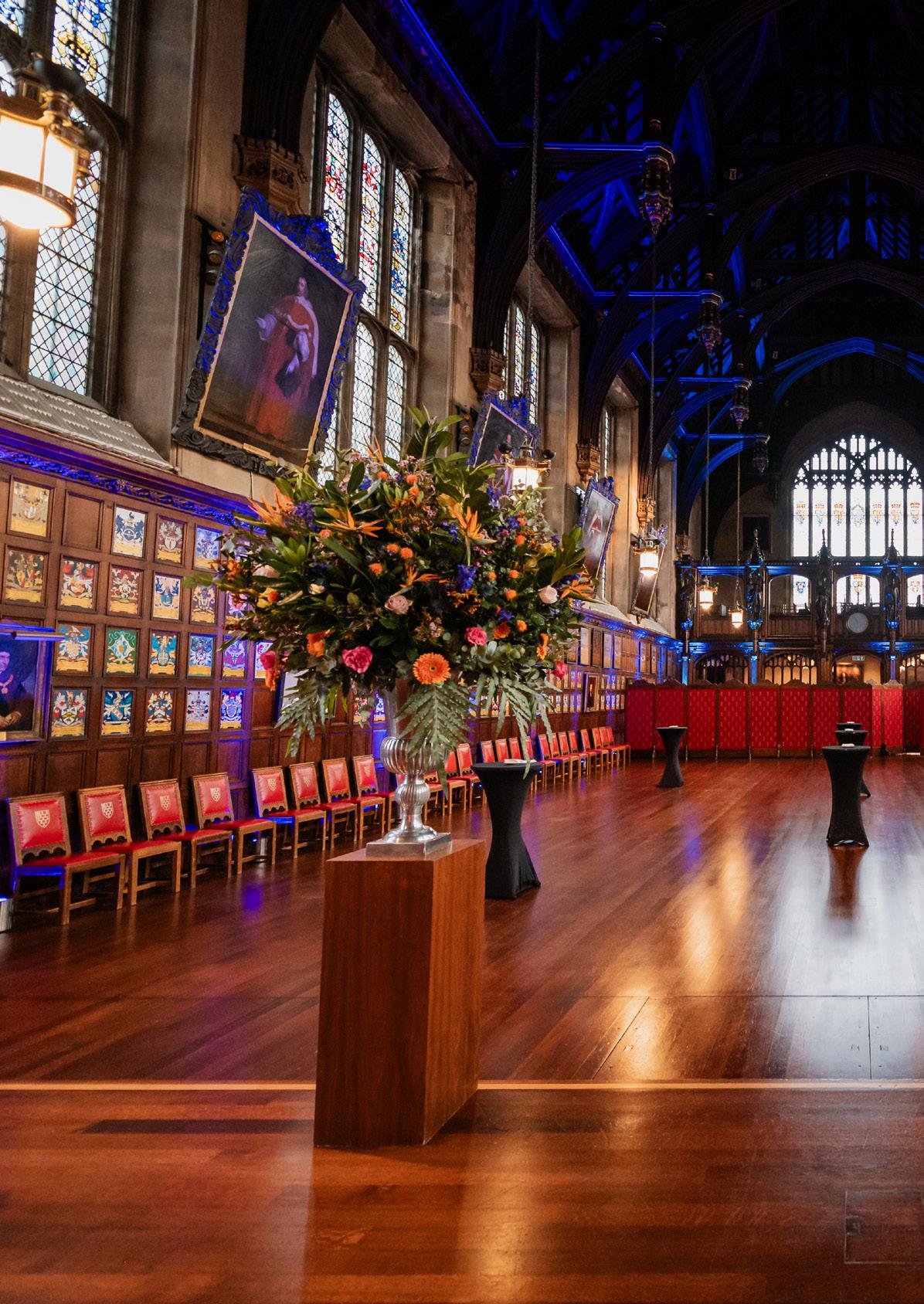
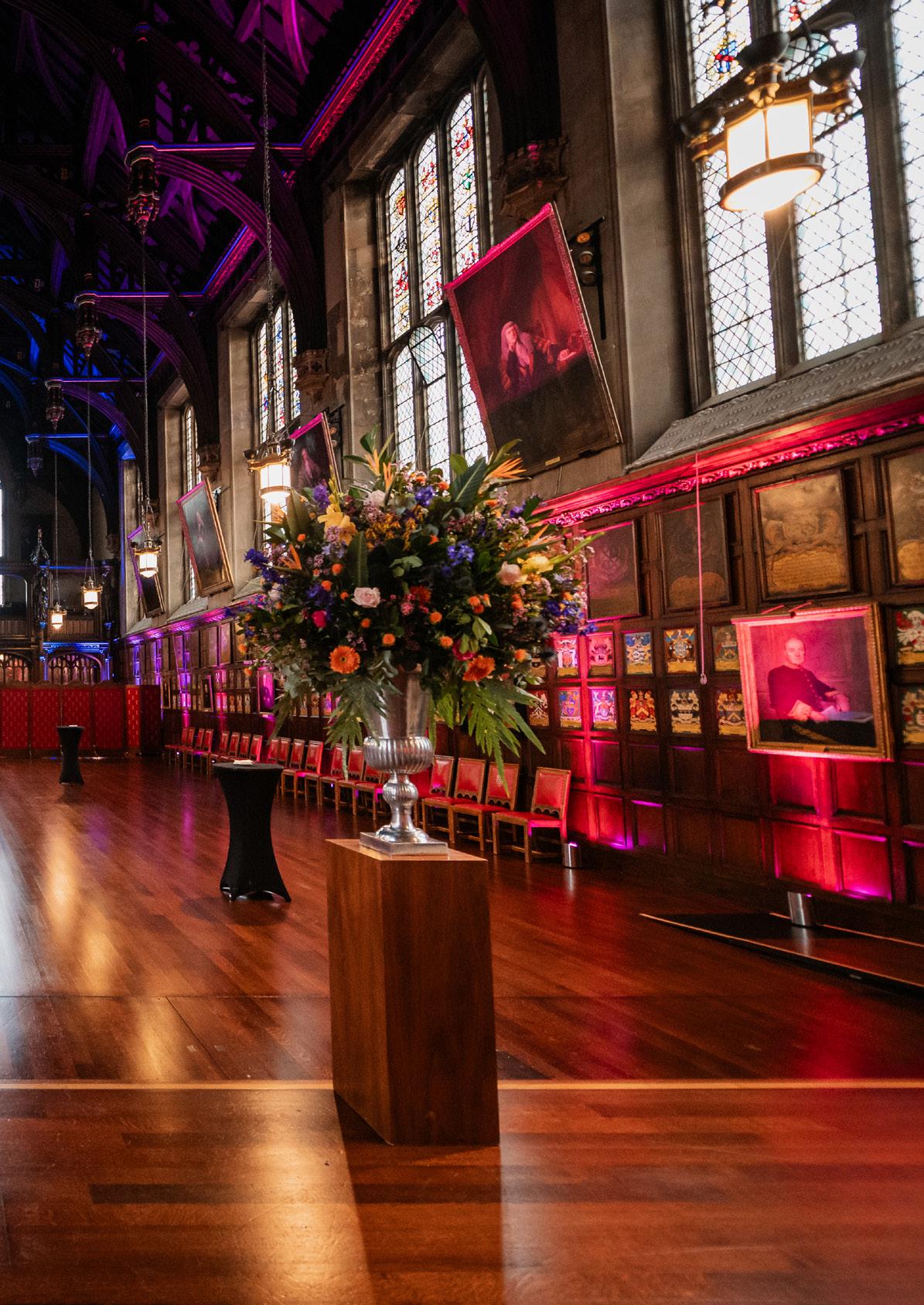
From medieval grandeur to modern facilities, Lincoln’s Inn offers flexible venue hire to meet your needs.
Whether your event is large or small, formal or casual, our award-winning hospitality team will work with you to bring your vision to life.
For more information and to receive your exclusive member discount, please contact our Events Office.
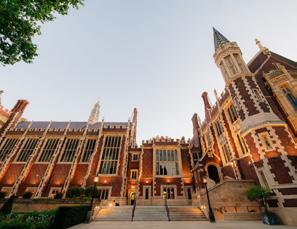


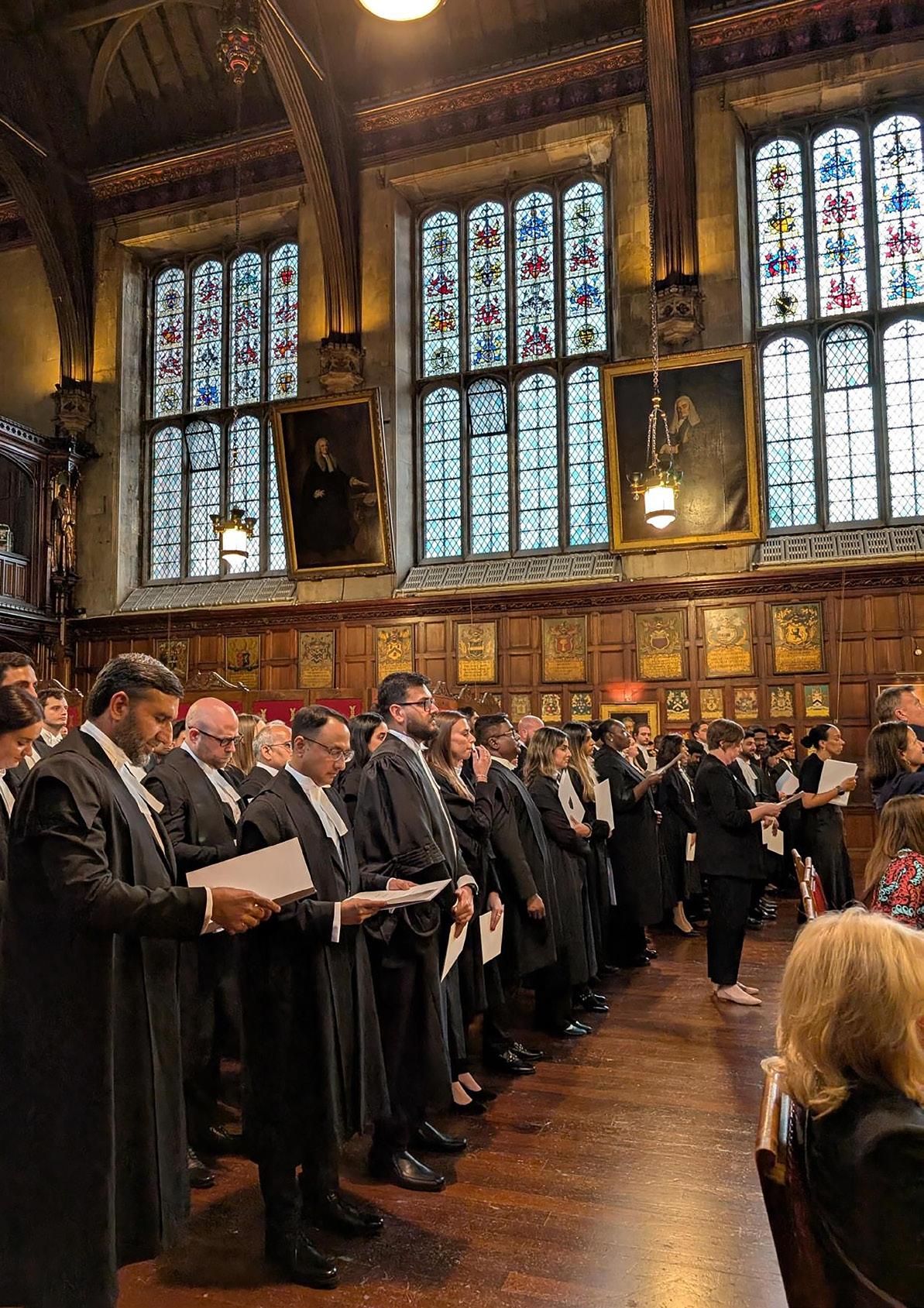
Lincoln’s Inn is always looking for ways to increase its impact in shaping the future of the profession. Through scholarships, outreach and education, we open doors for talented students from all backgrounds, investing in the next generation of barristers by equipping them with skills, confidence and connections. In 2025, the Inn’s initiatives spanned widening access to the Bar, supporting social mobility, and delivering high-quality training and mentoring – all underpinned by our purpose: to support the rule of law, the administration of justice and the effectiveness and standards of the Bar of England & Wales through our services.
Outreach is a cornerstone of this work, providing aspiring barristers with real practical insight into life at the Bar. Our programmes aim to improve diversity and representation at the Bar, by giving talented people from all backgrounds a clear view of what their legal career could look like, helping them understand Bar training and funding options, and offering insight into the realities of practice – and all made possible by the generosity of our volunteers.
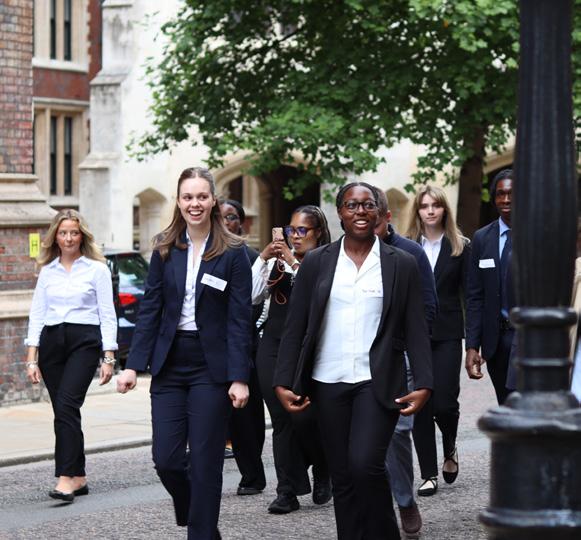
In July, the Inn hosted 15 recipients of the Neuberger Prize and Helen Grindrod Social Mobility Prize at the Outreach Prize Winners’ Summer School. The prizes aim to improve access to the Bar to those from less advantaged backgrounds. The threeday programme allows students to attend a qualifying session dinner, network with students, scholars and practising members and learn some of the essential skills of a barrister. Particular highlights of the programme include a visit to the Old Bailey, Ethics, ‘Speak Up’ and Case Analysis workshops, a tour of the Inn and more.
In 2025 we:
• Welcomed 303 students from 70 universities across the UK at three University Information Afternoons and Dinners.
• Helped 369 attendees understand the journey to the Bar (196 in person and 173 online) at our April and October ‘Innsight’ events.
• Attended six law / pupillage fairs around the country.
• Introduced 75 prospective members to the Inn through guided student tours.
• Engaged 815 attendees in four online events delivered in partnership with the other Inns.
Outreach Summer School.
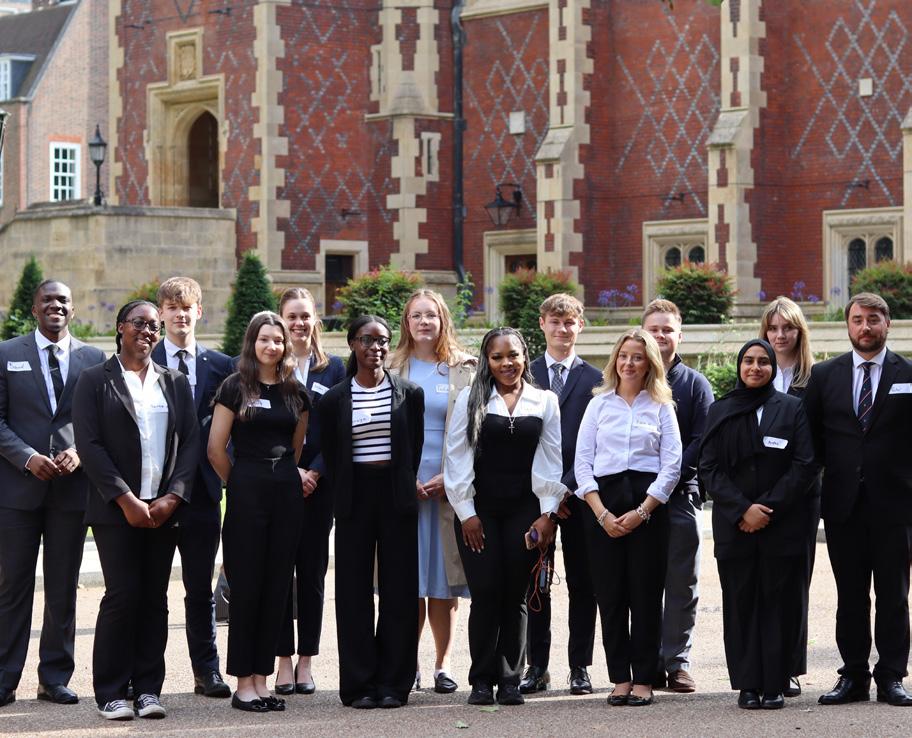
Outreach Summer School.
Lord Neuberger Prize Winners:
• Annabelle Rawlinson, The University of Cumbria
• Aodhan Mountifield, University of Portsmouth
• David Eke, University of Bradford
• Henry Morris, Northumbria University
• Kathryn Vaughan, The Open University
• Katie Hackett, University of Reading
• Lilly Schofield, Leeds Beckett University
• Robin Jowett, University College Dublin, Ireland
The Lord Neuberger Prize is awarded annually to outstanding students from non-Russell Group Universities who demonstrate exceptional academic achievement and potential in the field of law.
“Incredible experience that I will remember forever…Genuinely couldn’t
about
those three days
- I
fault a single thing
felt so at home at Lincoln’s Inn and I’m so appreciative of the time that was put into supporting me in my education and steps to the Bar!”
The Helen Grindrod Social Mobility Prize was launched in 2023 and is designed to support and encourage students from underrepresented backgrounds who have shown a strong commitment to social mobility and community service.
In 2025, we were delighted that, for the first time, we reached our target of 50% or more of the recipients of the Helen Grindrod Prize –launched in 2023 – being of Black or mixed Black heritage.
Of the recipients from 2023 and 2024, 38% have received a scholarship from the Inn, and 19% have been Called to the Bar.
On 18 September 2025, we supported the launch of the ‘Speak for Success’ programme, created in collaboration by the Bar Council, the Inns of Court, teachers, and barristers. The free resources are designed for 7–11-year-olds to build essential oracy skills and confidence while learning about a career at the Bar: www.barcouncil.org.uk/policyrepresentation/policy-issues/education/speak-for-success
Helen Grindrod Social Mobility Prize Winners:
• Aisha Akram, Oxford Brookes University
• Anaya Tansele, University of Kent
• Bernice Woghiren, University of Sheffield
• Emilia Hanusiak, University of Exeter
• Esther Onabanjo, University of Law
• Leoni Coyle, University of Leicester
• Muyiwa Oladokun, UCL
• Peter John Dodd, University of Law
The Pupillage Foundation Scheme 2024/25 had 33 participants who each benefited from one-to-one mentoring, application review sessions and interview preparation sessions. A third of the participants achieved pupillage in this round, compared to the average of 1/10 for all applicants. Find out more about the scheme and volunteering opportunities on our website.
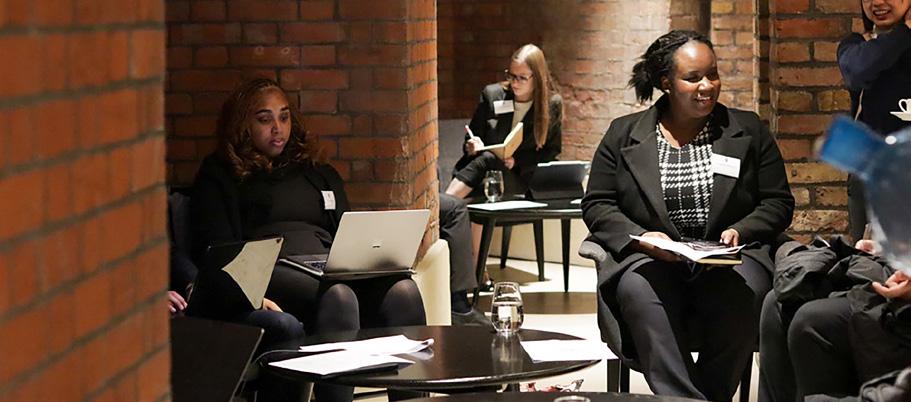
“The PFS scheme was absolutely invaluable. My mentor was excellent, and the practice sessions were really helpful in preparing me for the process. Meeting other peers going through the same process was also helpful, as I had a support system around me and friends to bounce ideas off. [...] I could not have obtained pupillage without it.”
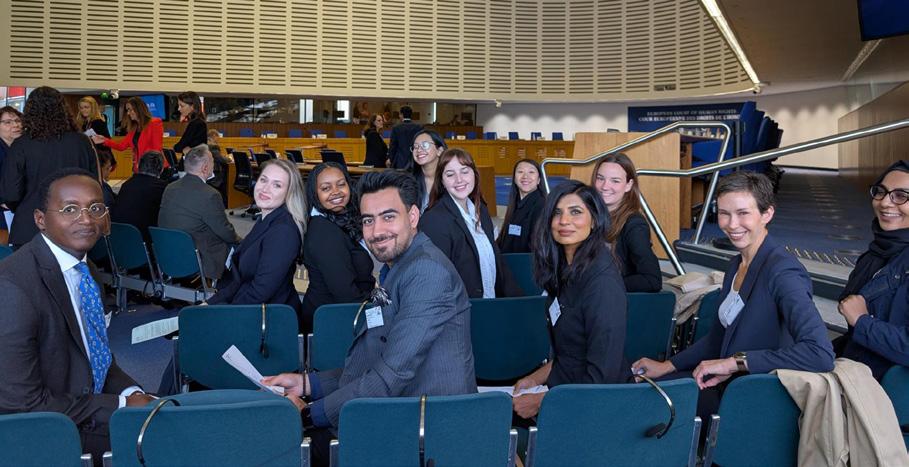
In 2025, the Inn delivered three subsidised visits to European and international courts in Luxembourg, Strasbourg and The Hague, supporting students and early-career barristers with an interest in human rights, European Union and international law.
Across the three visits, participants gained first-hand insight into the work of leading legal institutions, the European Court of Human Rights (Grand Chamber), the Court of Justice of the European Union, the EFTA Court, and the International Criminal Court. Members observed live hearings, engaged directly with judges, référendaires, government legal advisers and practising barristers, and explored how international legal principles are applied in practice.
Alongside court visits, programmes included discussions on multilateralism, post-Brexit legal diplomacy, state cooperation and the protection of fundamental rights. The trips also provided networking opportunities with fellow members of the Inn and legal professionals working across Europe.
These visits continue to play an important role in broadening access to international legal careers, offering participants practical exposure, professional development and a deeper understanding of how international and domestic legal systems intersect.
“Lincoln’s Inn’s trip to Strasbourg brought my career aspirations to life in a material way, through expanding my network (both horizontally and vertically) and allowing me to observe how advocates conduct international human rights cases, which has left me feeling inspired, energised, and steadfast in my devotion to continue working towards building my own unique career at the Human Rights Bar.”
—
Lynnie Ngũgĩ
Highlights from the 2025 visits to Strasbourg, Luxembourg and The Hague, including participant reflections and case observations, are available on the News page of the Inn’s website and details on how to apply are listed at: https://www.lincolnsinn. org.uk/student-members/ european-visits/
Lincoln’s Inn offers over £2 million each year through various scholarships, awards and prizes. Most of this funding is allocated to Bar Course and GDL scholars but we also offer assistance for our pupil members and offer a small number of International Scholarships.
These figures demonstrate the scale of the Inn’s scholarship activity each year. This work is made possible by volunteers who generously give their time to review applications, conduct interviews, make selections and moderate decisions, and we are extremely grateful for their contribution.
We are always keen to hear from members interested in becoming scholarship volunteers. If you would like to know more, please email scholarships@lincolnsinn.org.uk.
Lord Mansfield Scholarships
Kass Caldicott
Emilie Dore-Green
Caitlin Gillett
Genevieve Grehan-Bradley
James Hazell
Joanna Helme
Matthew Holland
Medhansh Kumar
Francis Martin
Charlie Webb
Lord Denning Scholarships
Saul Agar Ward
Arhum Ahmad
Monica Alvarez Battista
Hudhayfah Ashraf
John Aslet
Elena-Catalina Baciu
Lucy Banks
Luc Barrett
Isabelle Bienfait
Henry Butts
Harry Camp
Hannah Cheeseman
Alice Correia Morton
Benjamin Davies
Barnaby Evans
Alexander Fagan
Ire Fagbemi
Sienna-Rose Grey
Kiera Hammond
Eve Handley
Ben Haveron
Noah Hudson
Kelvin Justiva
Rehma Khan
Ananya Kumar-Banerjee
Shukri Lloyd
Christopher Long
Aithne Moran
Ismail Kerem Mumyakmaz
Vijaylakshmi Nath
Daisy Peterson
Lana Philgence
Archie Phillips
Luca Povoas
Eleonora Raus
Edward Russell
Sana Shahzad
Dhillon Shenoy
Holly Sheridan
Angus Simpson
Jack Sims
Juliet Smith
Marko Stankovic
Jessica Steadman
Henry Thornton
Charles Udale
Rahul Weston
Christopher White
Felix Williams
Nikol Zannetidou
David Antonio Zuther
Marchant Scholarship
Somesh Taori
Tancred Scholarship
Summer New
Sir Mota Singh Scholarships
Angus Ann
Bella Cordwell
Kathleen Busfield Scholarship
Samuel Marde Mediabad
Cassel Scholarships
Evie Bradshaw
Connor Byrne
Charlotte Devine
Joshua Hales
Jack Hart
Luisa Hofmann
Helena Murphy
Joshua Nurse
Holly Pearce
Maroof Rafique
Nicholas Sequeiros-Engel
Danielle Shilo
Emily Smith
Droop Scholarships
Libby Baldwin
Ellen Clifton
Amy Cox
Fergus Dunne
Leo Gadaski
Ben Holder
Ellie Holtom
Judy Yi Ting Ma
Benedict Mee
Rebecca Pope
Izzy Saunders
Victoria Scott
Sohail Siddique
Joseph Summers
Kennedy Scholarships
Cerelie Doyle
Aleksander Godhe
Makayla Griffiths
Ramyah Harrichandiran
Sophia Innocent
Kiran Kalsi
Nicolas Rix-Perez
Ruby Sanders-English
Harvinder Singh
Dhruv Singhal
Natasha Staines
Kirandeep Thind
McKenzie-Kohl Tuckett
Mary MacMurray Scholarship
Niamh Browne
Sir Thomas More Scholarships
Lewis Abbey
Kane Abry
Samya Amir
Alexander Bellew
Mia Biggs
Jaspreet Crowson
Owen Henderson
Frankie Hinks
Jodie Hofford
Patrick Liu
Ella Mercurio
Lewis Miller
Sophia O’Neill
Tayyaba Rafiq
Ama Weerakkody
Sarah Will
Lord Bowen Scholarships
Sophie Baptista
Imogen Cheney
Jack Cobb
Elin Isaac
Emily Jenkins
Eleanor Pryce-Boutwood
Nicolas Rackow
Eva Stuart
Mostyn Taylor Crockett
Tijmen van der Maas
Lord Haldane Scholarships
Lucy Barnard
Tallulah Brady
Florence Conway
Julia Davies
Max Hall
Sabina Kyprios
Olivia McQuaid
Milia Purppura
Guy Stagg
Kirsty Stark
Lord Brougham Scholarships
Daniel Cloney
Rebecca Metzer
Fleur Anne Pallister
Catin Sian Phillips
Tommaso Quaglia
Benjamin Reynolds
Grace Romans
Grace Sargent
Verity Sawbridge
Shreya Shetty
Gabriella Wilkinson
EUROPEAN SCHOLARSHIPS
EFTA Court Scholarship
Amelia Parker
Johan Steyn Scholarship
Sana Shahzad
JP Warner Scholarship
Emilie Pore-Green
Nicholas Bratza Scholarship
Prune Recoules.
Peter Duffy Scholarship
Zoe Olawore
PRIZE WINNERS
Buchanan Prize
Adushita Behari
Yee Wen Chia
William Cole
Lily Greenhough
Nathan Lynas
Ellie Molyneux
Charles Procter
Christopher Redman
Molly Richardson
Seraphina Soh
Callum Stevens
Joan Denning Prize
Adushita Behari
Tun Azmi Prize
Yee Wen Chia
Seraphina Soh
Student of the Year
Lily Greenhough
Student Legal Essay Prize 2025
Lily Greenhough –Essay Title: “Unfair Dismissal Law is Still Unfair: What is Missing From the Employment Rights Bill”
Lord Millett Equity Essay Prize 2025
Jaya Rana –Essay Title: “The ‘Undue Harshness’ of Fiduciary Duty in English Law: An Analysis of Judicial Interpretation of the Roles of Equity and Legal Certainty”
Sir Louis Gluckstein Prize
Alysen Miller
Debate Shield
James Forrester and Eve Handley
Inter-Provider Mooting Competition
Owen Henderson and Sarah Stearne (Provider: ICCA)
Inter-Inn Debating Competition
James Forrester, Eve Handley, Vanessa Iheama and Sarah Stearne
Inter-Inn Mooting Competition
Owen Henderson and Sarah Stearne
Crowther Shield
Ellen Clifton, representing The Grinch
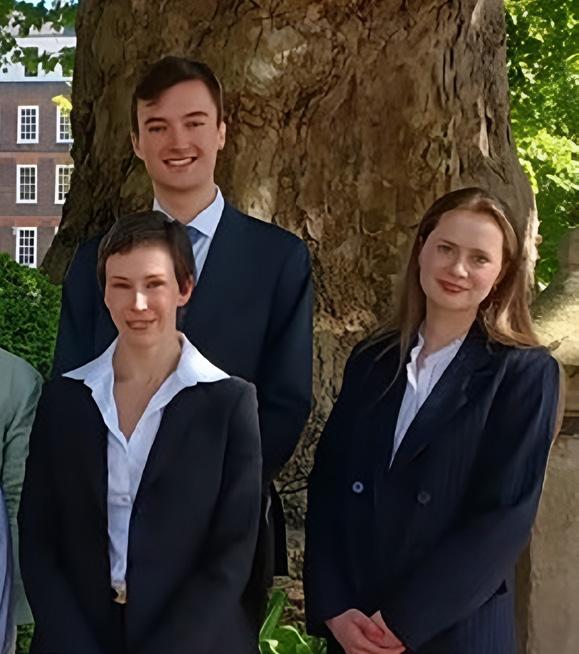
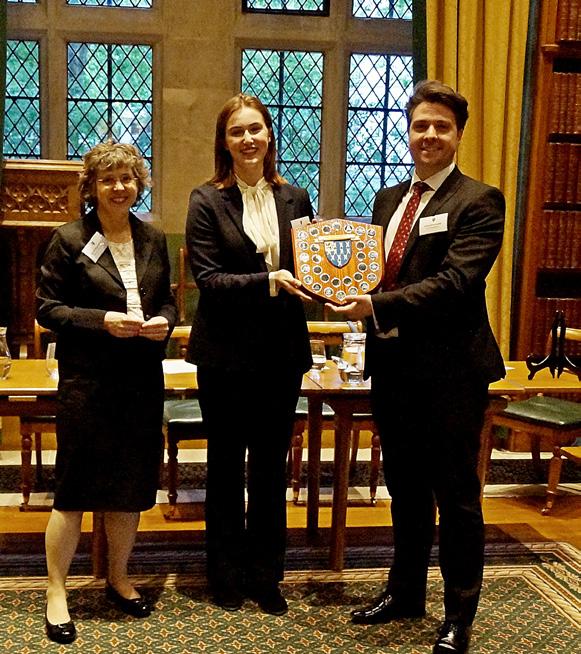
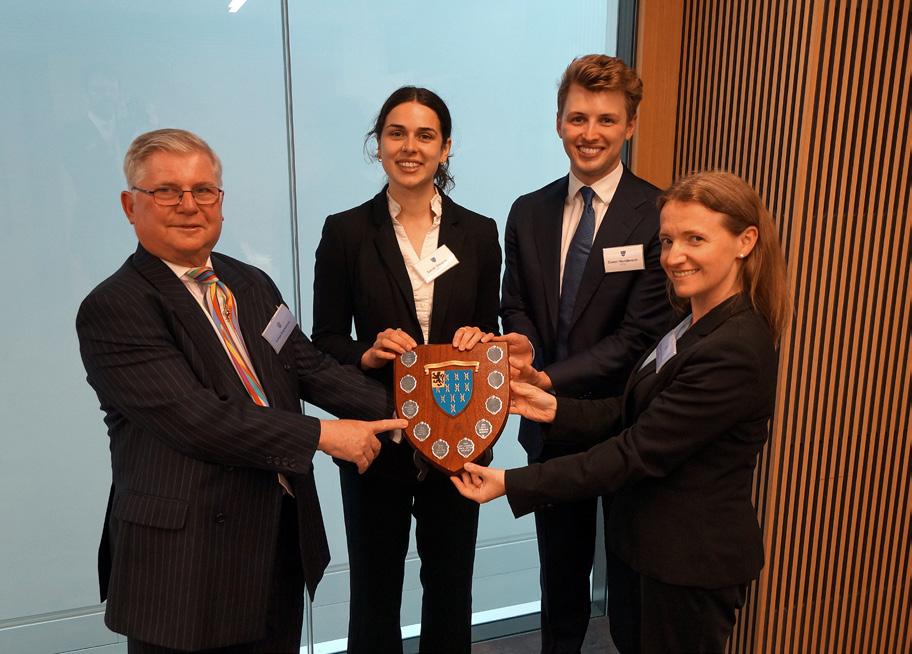
Inter-Provider Mooting Competition 2025 - winners and judges.
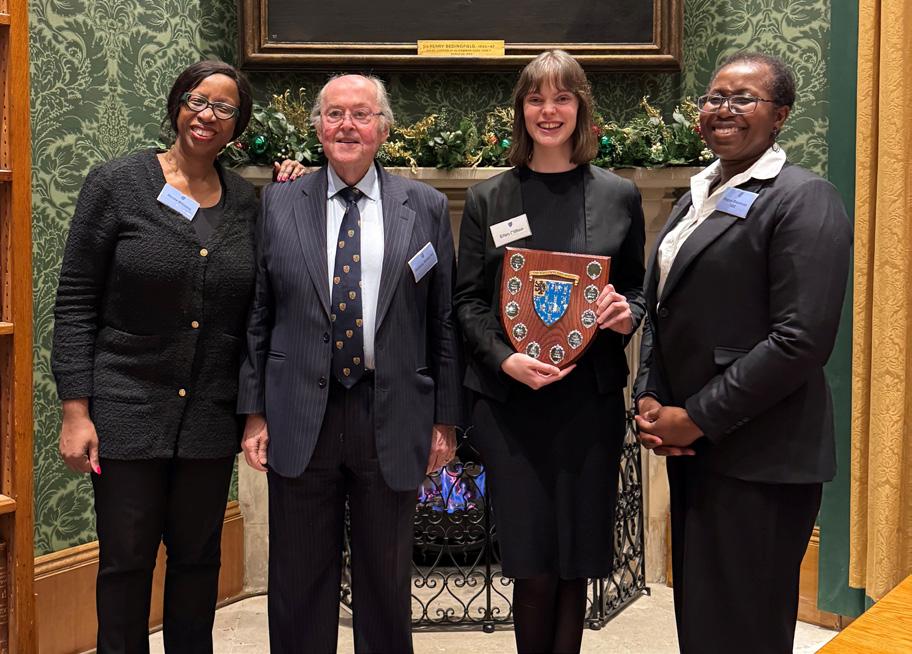
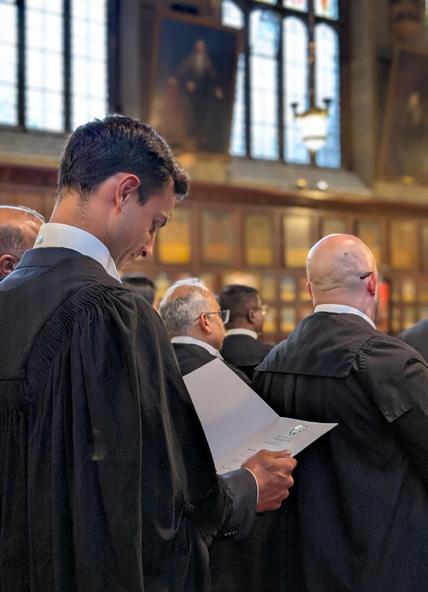
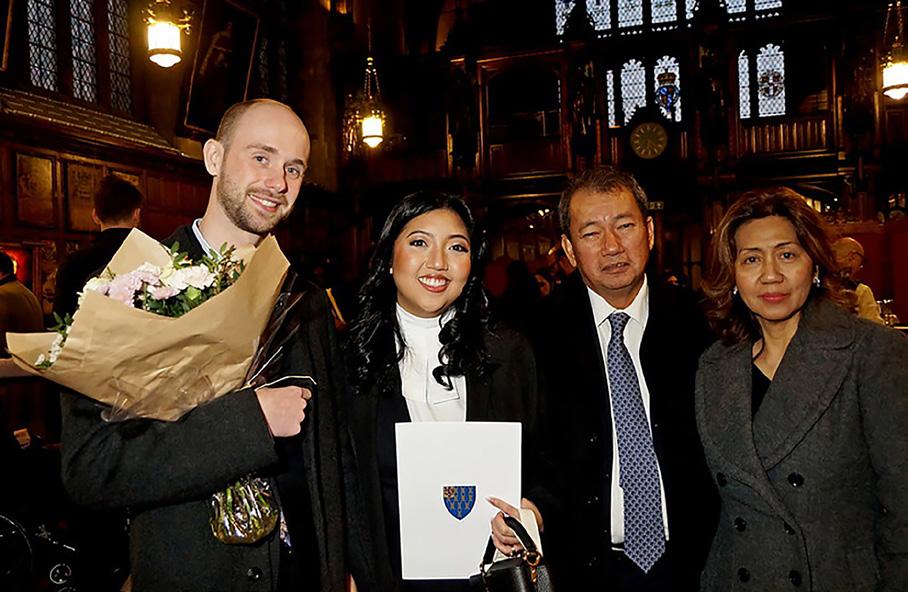
In 2025, Lincoln’s Inn Called 776 students to the Bar across eight ceremonies, marking a significant milestone in each Student member’s professional journey. Call Days brought together students, Benchers, family and friends to celebrate achievement, tradition and the marking of a new chapter.
Alongside our formal ceremonies, we shared behind-the-scenes moments and first-hand reflections across our digital channels, capturing the atmosphere and meaning of Call to our members. You can see some of our social videos here: https://youtube.com/playlist?list=PLuV-s9b6TJEgXdh4X4XCC5MfKmzYSlY5U&si=TcOj0St81wFJhzmZ
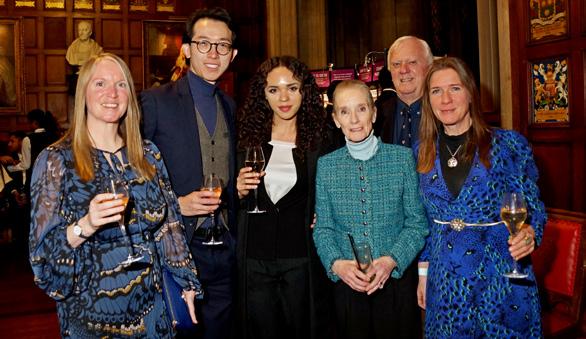
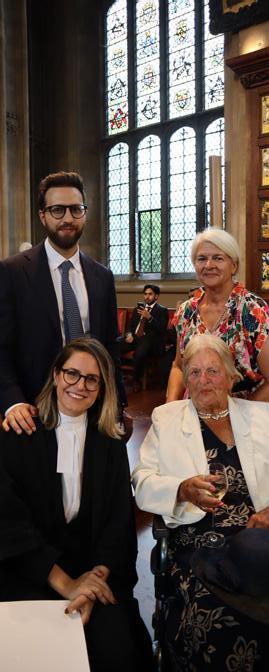
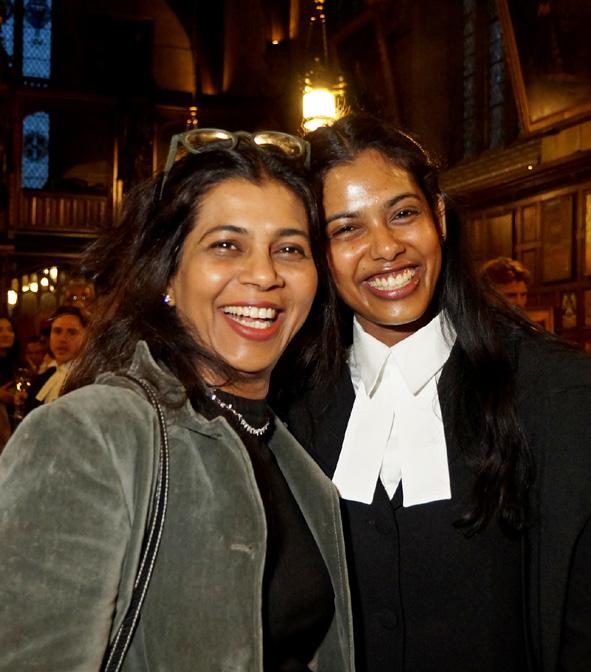
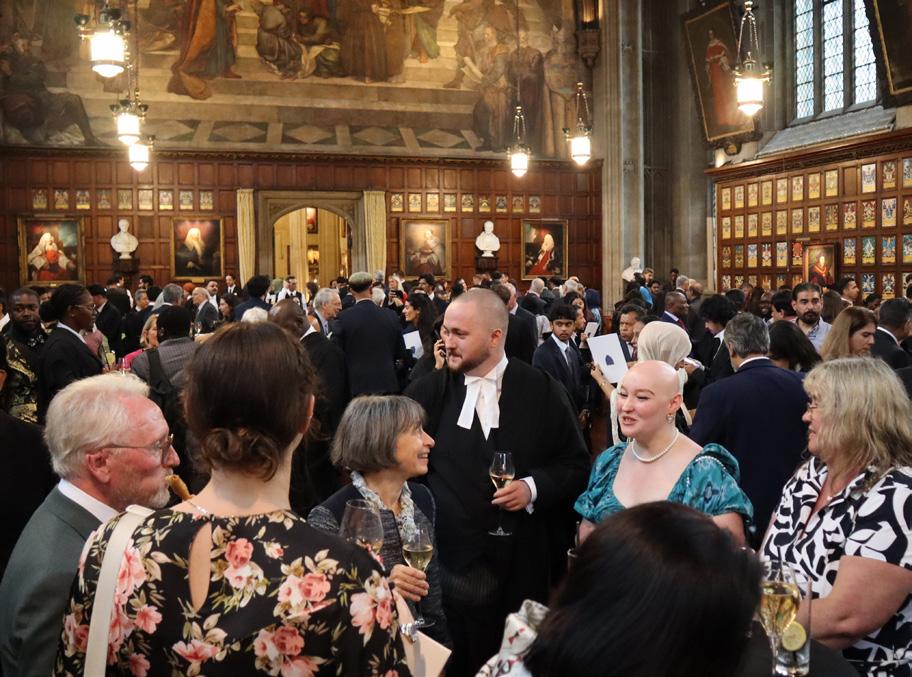
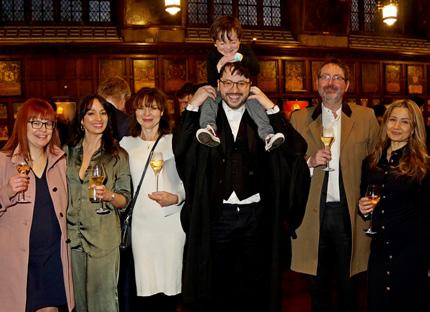
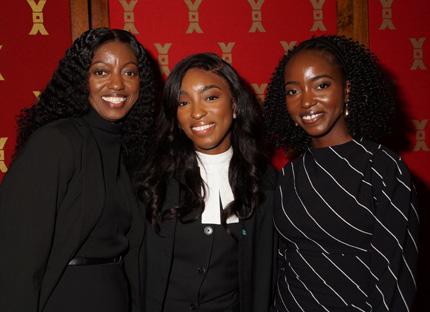
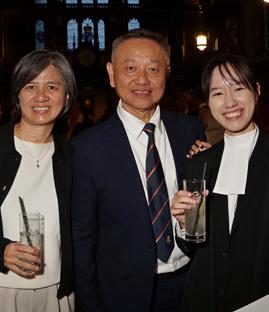
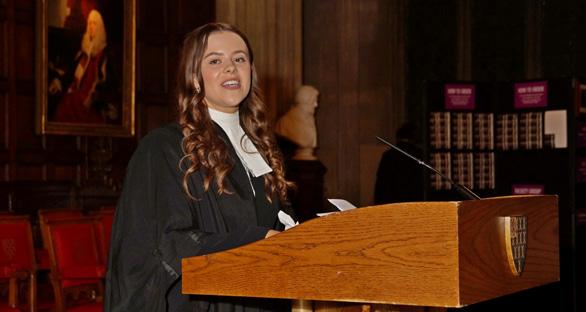
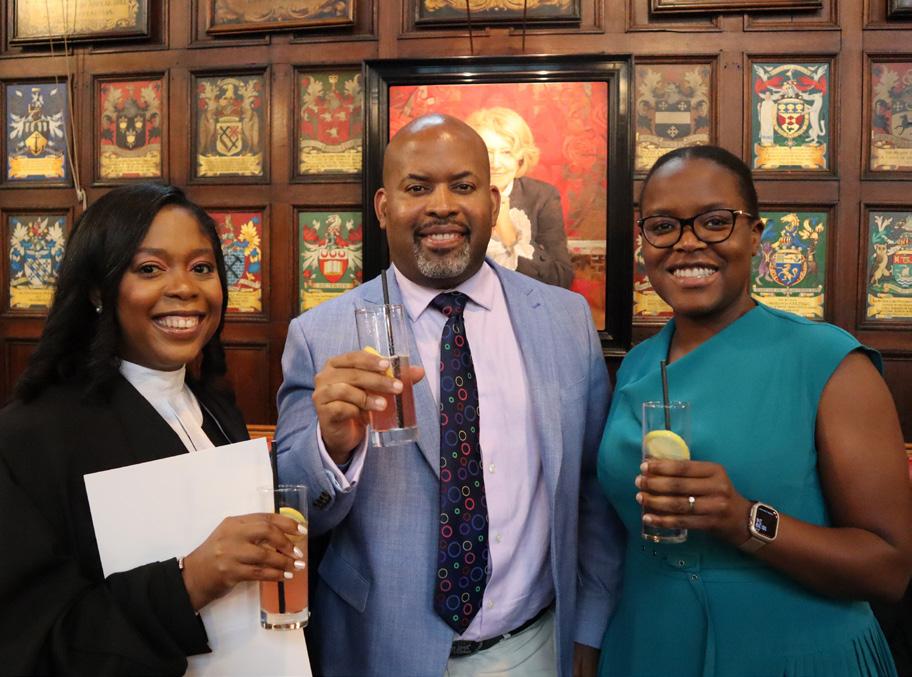
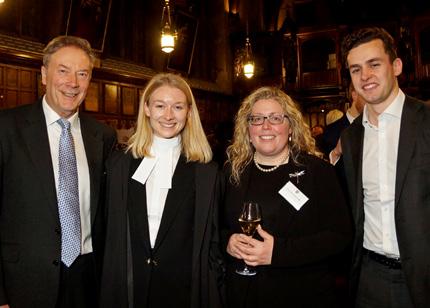
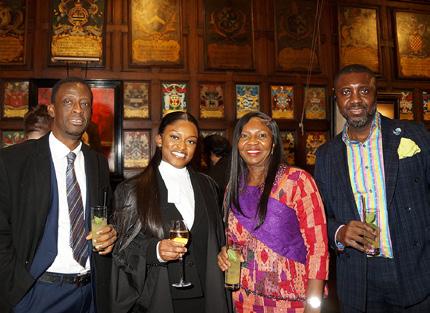
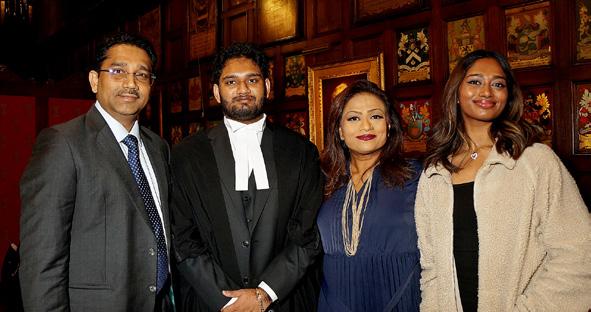
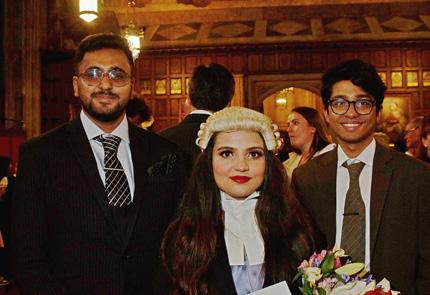
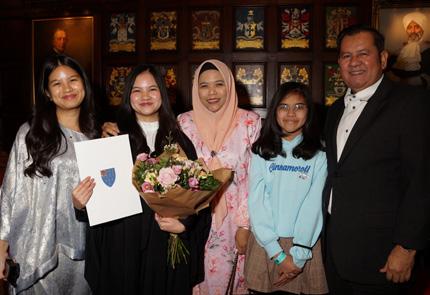
We also reviewed and improved the Call to the Bar pages on our website, providing clear guidance for Student members and their guests. As one of the most visited sections of our site, these updates ensure members feel informed, prepared and excited for this significant moment.
“Although the journey to the Bar can at times feel like an uphill battle; there are hurdles to overcome and rejections to face, but these are not setbacks. They’re defining moments that have and will continue to shape us into the barristers that we now are.”
Phoebe Simpson, Student replying to the toast to the newly Called barristers, July 2025

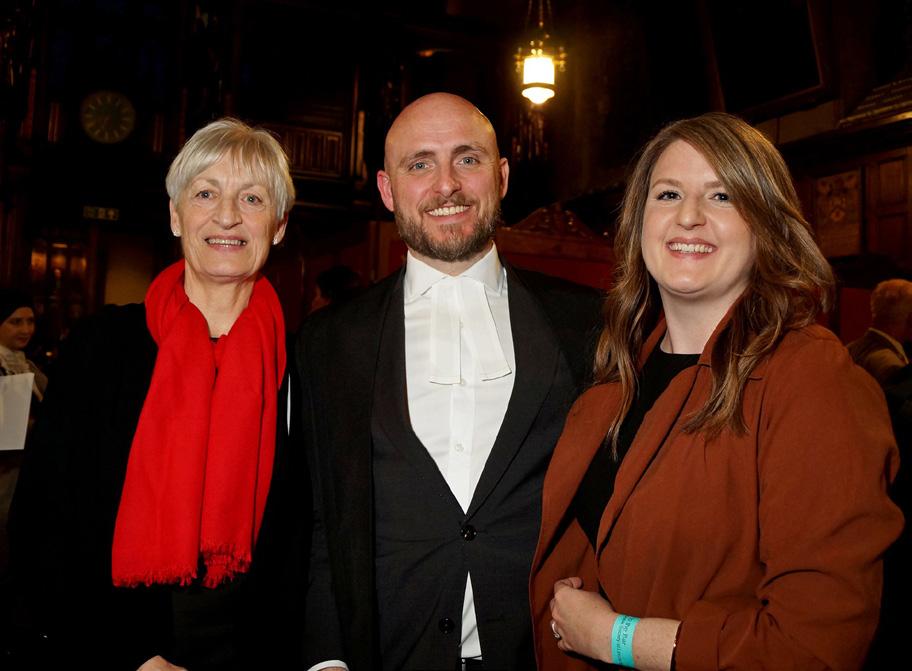
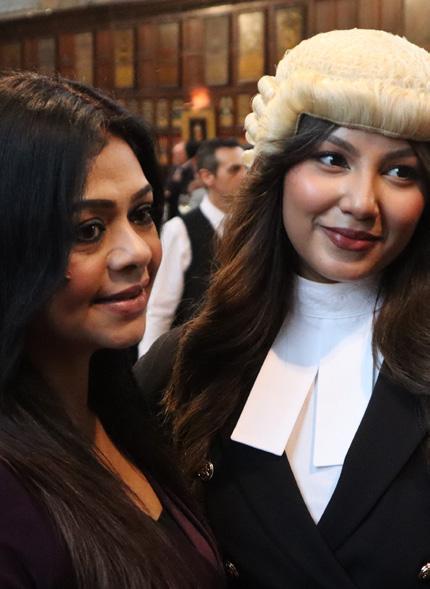
For the names of all those Called to the Bar in 2025, visit the News page of our website and select the ‘Call to the Bar’ tag: https://www.lincolnsinn.org.uk/news/?tags=call-to-the-bar
Call Day photos by Nick Easterman can viewed in his Flickr gallery here: https://www.flickr.com/ photos/64305453@N02/albums/
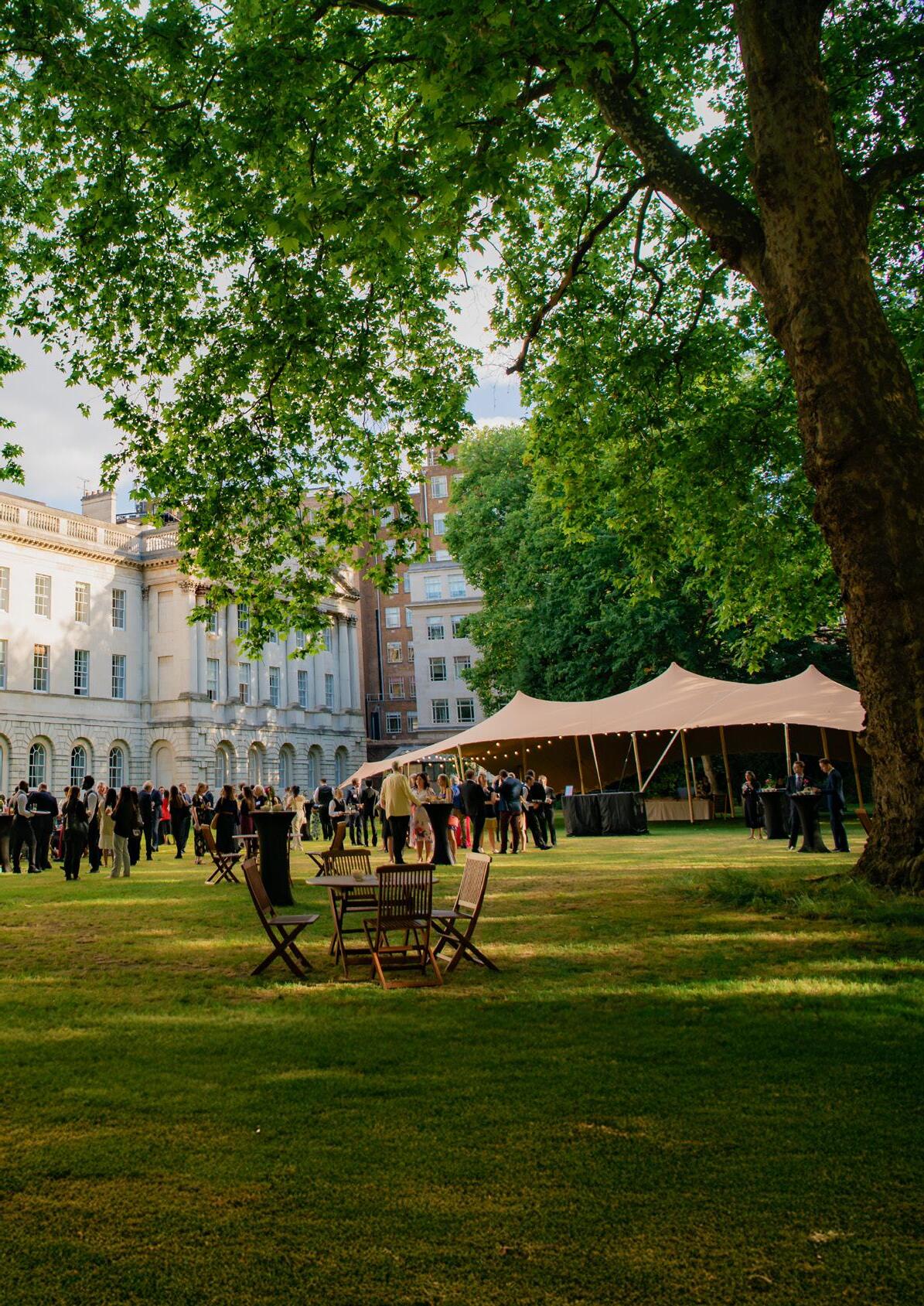
At Lincoln’s Inn, we are committed to making every interaction with the Inn easier, more inclusive and more rewarding. In 2025, we focused on transforming systems, services and spaces to improve members’ experiences with the Inn, both online and in-person.
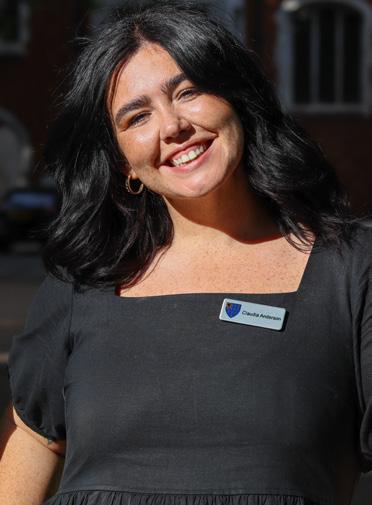
The Membership Team is central to how we support and engage with our members and in April 2025 we welcomed a new Head of Membership, Claudia Anderson.
Claudia brings extensive membership experience from organisations including the Labour Party, the Chartered Management Institute and the Royal College of Occupational Therapists.
She is leading a review of how we engage with members at all levels, to ensure we are meeting our objective of supporting members at each stage of their professional journey. We want to ensure that engagement is meaningful and that our offer remains inclusive, modern and responsive. This will include initiatives from digital improvements and tailored events, to practical programmes, ensuring that members remain connected to the Inn for life.
2025 marked a major step forward in event booking with the Inn as our online booking system, previously available only for student Qualifying Sessions, was expanded to include Bar and Bench Members. The system covers most Inn events, including Ordinary Dining, Black Tie Dinners and Grand Days.
Moving the booking process online was a significant step forward for both the events team and members by eliminating the need for telephone bookings and putting the members in control.
The system went live on 9 September, enabling members to:
• Book and pay for events in real time
• Receive instant confirmations outside office hours
• Manage and update bookings at their convenience
The response has been overwhelmingly positive. Most Michaelmas Term events sold out, and we have seen an increase in attendance from a wider variety of members. Many have also taken the opportunity to update their mailing preferences and subscribed to newsletters, helping us communicate more effectively.
• 2,520 mailing preference updates made by members
• 13,884 event bookings made through the online booking system throughout the year, with October the busiest month by far – the first full month of activity following the system rollout – accounting for 20% of activity
Looking ahead, we will continue refining the system to make the booking experience as streamlined and memberfocused as possible.
What’s going well:
• Event ratings: Average score of 8.7/10
• Atmosphere: Welcoming, relaxed and inclusive
• Organisation: Highly rated for clarity and accessibility
• Networking: Valued opportunities to connect with peers, practitioners and the judiciary
Where you want us to improve:
• More structured networking opportunities
• Greater representation from senior practitioners
• Enhanced Q&A access and clearer timings for hybrid events
We are taking this feedback forward as we develop the Inn’s strategy 2027–2030.
Your feedback matters. In 2025, we introduced QR code surveys for lunch in Hall and event feedback forms for all Member Engagement Team activities to help us ensure our events truly reflect your needs. We are also now requesting student feedback from all Qualifying Sessions, for which we are using a standard set of questions agreed with the other Inns.
“Fabulous speeches, welcoming atmosphere, amazing food.”
“[The event] was an amazing and eye-opening experience for me. All the judges I spoke to showed keen interest in my aspirations as a budding barrister and all the judges gave me a wonderful insight into the Inn’s history, culture and significance.”
“It was incredibly inspiring to hear the speaker’s personal journey of being from a dual heritage background and as dual heritage people are often under-represented at the Bar, it was empowering to hear from the speaker and has given me confidence about my own identity.”
We are delighted to have received fantastic feedback on the organisation and atmosphere of recent member engagement events, and we remain committed to making them relevant and accessible for everyone. Thank you to everyone who shared their views so far. If you receive an email from us requesting feedback, please take a few moments to complete it. Your insights make a real difference to shaping future events.
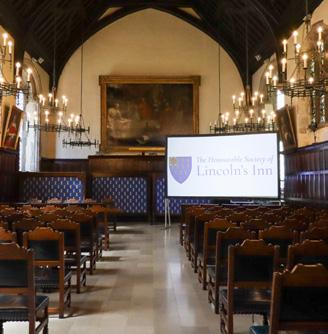
To support a more connected and tech-enabled experience, we invested in key infrastructure upgrades:
• Digitised PA system in Old Hall for improved sound quality and Bluetooth capability
• New digital projector for high-quality presentations in Old and Great Hall
• Old Court Room is now hybrid-ready with flexible meeting setups
We also renewed our Cyber Essentials Plus accreditation, ensuring we have robust protection against online threats. And with a Wi-Fi upgrade planned for 2026, we are ready to deliver even better connectivity for members and guests in the future.
AI continued to be a hot topic in 2025, with legal publishers investing heavily in their legal AI products. The Library Team organised two highly successful, sold-out events to provide members with an overview of AI’s potential and dangers and an opportunity to see current legal AI sources and discuss them with their publishers. The events included panel sessions where barristers discussed how they were employing AI tools to work more efficiently.
The Inn currently has a subscription to Protégé, an AI product from LexisNexis available in the Library, where members can experiment with this new technology. The Library is planning further AI events for 2026.
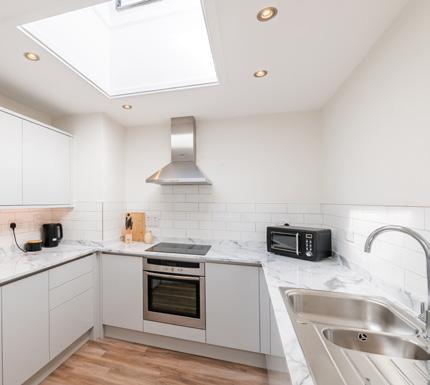
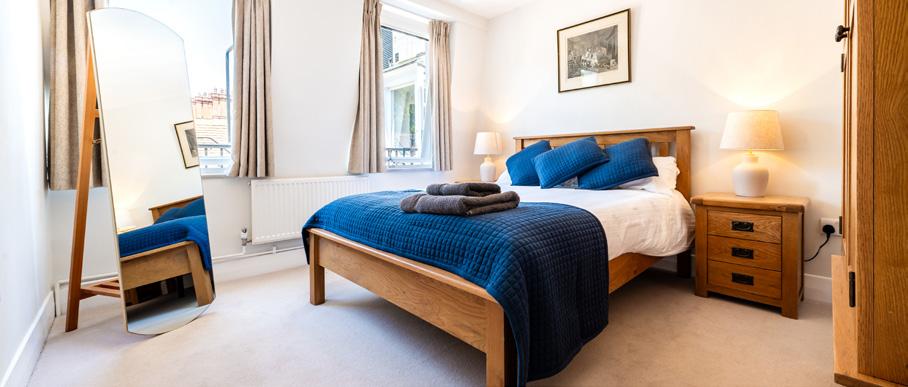
Our self-contained flats are available to Called Lincoln’s Inn members (and members of other Inns closer to the date). They offer a convenient, high-quality option for those staying in London –whether for business, events or leisure.
“THANK YOU again for arranging my stay at Lincoln’s Inn. It was lovely, and the flat was super!”
Bookings for 2026 are already strong, and we remain committed to delivering outstanding service and comfort.
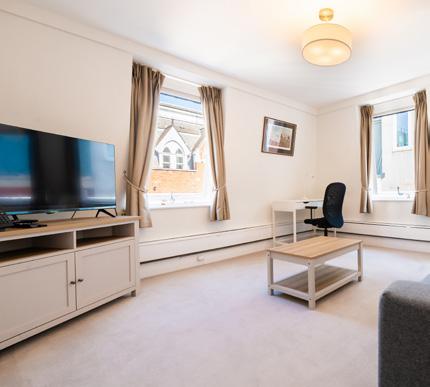
2025 was the first full year of our Members’ Accommodation since it closed for refurbishment in July 2021, and it has proved extremely popular:
• 72% average occupancy over the year, peaking at 96% in December
• Repeat bookers from across the UK and as far away as the US
• Expanded facilities to welcome families, enabling members to book for both personal and business vacations: “My wife, my son and I really enjoyed staying in flat four over the weekend.”
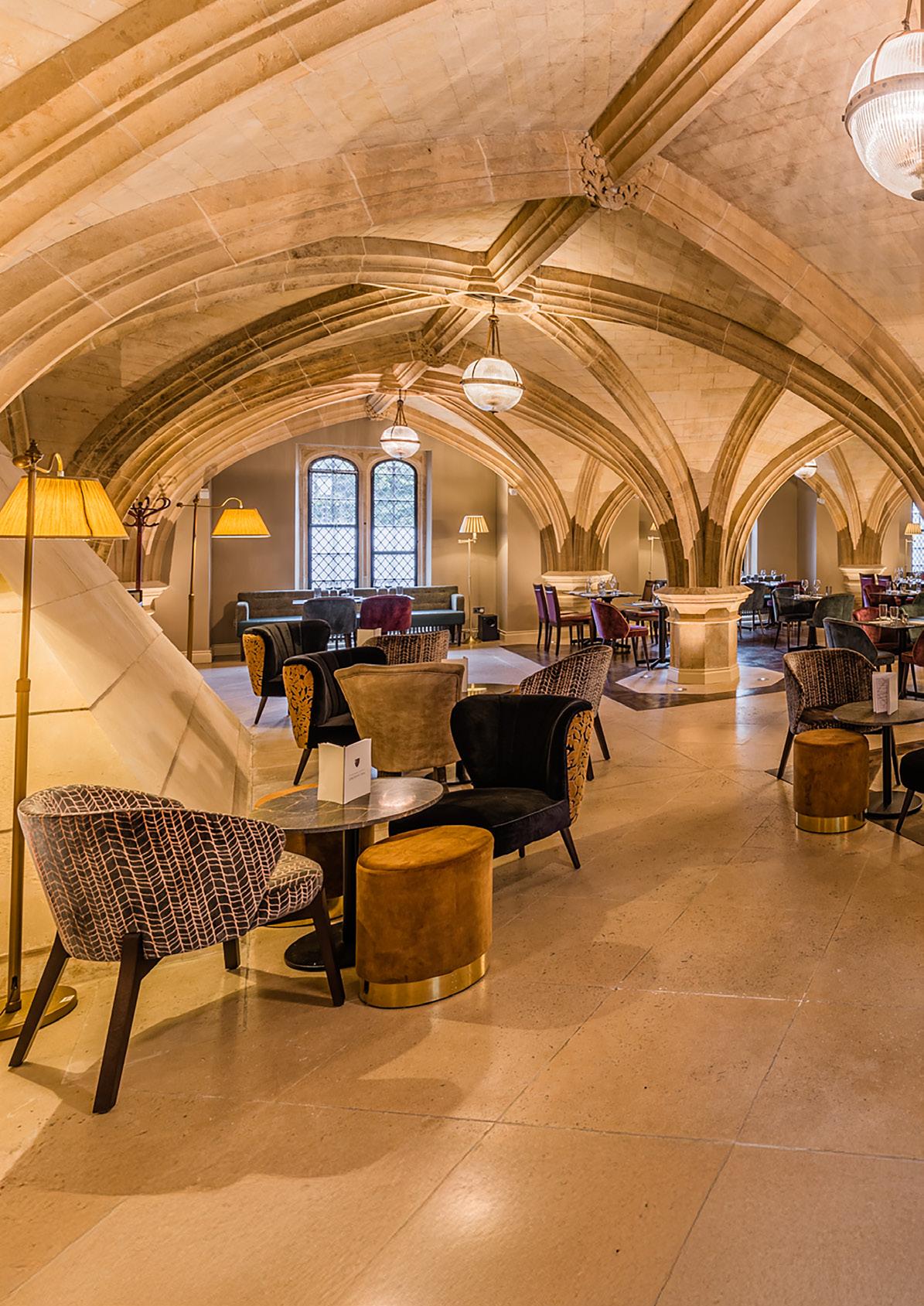
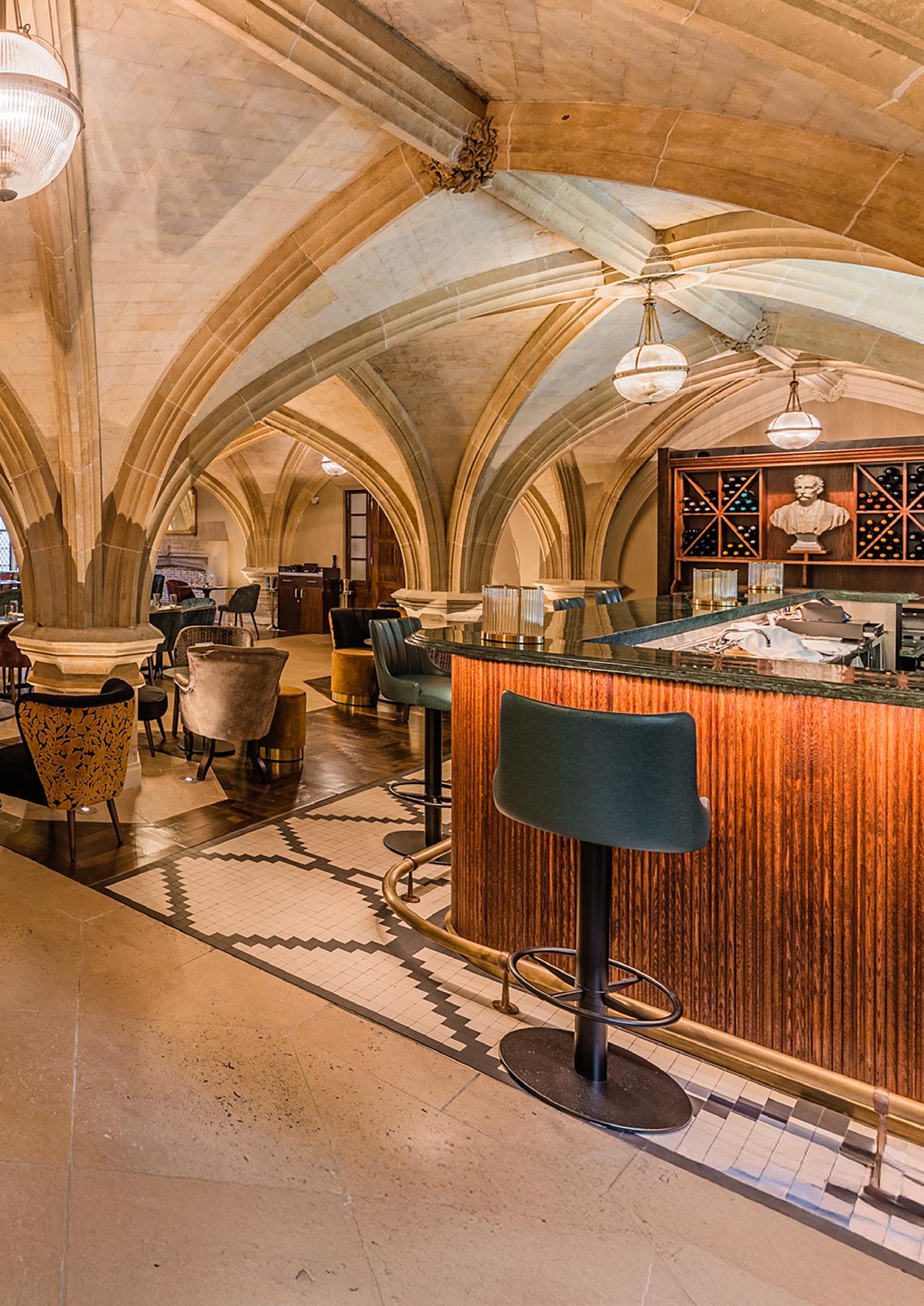
Opening Hours (Monday to Friday):
• Bar Service: 10:30 – 22:30
• Breakfast: 08:00 – 10:30 (Wednesdays only)
• Lunch: 12:15 – 14:15
• Afternoon Tea: 15:00 – 17:00
(Pre-booked only, 2 days' notice required)
• Supper: 18:00 – 20:15 (Last orders)
www.themcr.lincolnsinn.org.uk
From essential repairs and careful refurbishments to garden projects and a full year of Library and Chapel activity, our efforts to preserve and enhance the spaces that define the Inn’s unique character continued throughout the year.
In 2025 the Estates Department advanced two major projects to safeguard the Inn’s historic buildings for the long-term:
At 8 & 9 Stone Buildings scaffolding was erected to enable fabric repairs. We replaced worn slate and lead roofs, repaired masonry and brickwork, draughtproofed windows, redecorated, and refreshed the curtilage (lightwell paving, retaining walls and railings), safeguarding historic fabric.
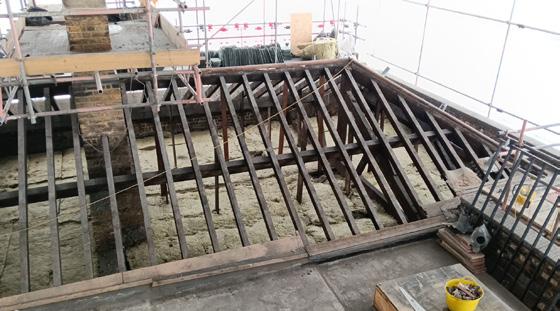
8 & 9 Stone Buildings.
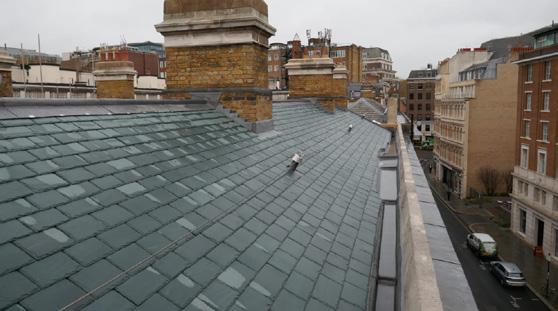
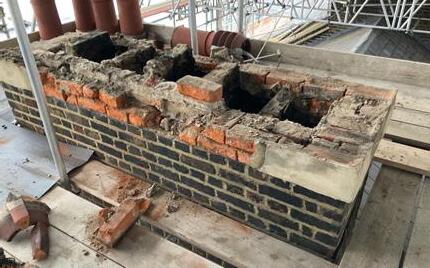
We also began the first phase of planned works at 1-11a New Square, focussing on Nos. 1-6 New Square in 2025. Progress moved in stages, with scaffolding erected in a leapfrog sequence starting at Nos. 1-3. It will progress towards No. 6 during 2026. Repairs are being made to masonry and brickwork, windows (including draught-proofing), iron railings, retaining walls and vault doors. Redecoration is underway and re-laying the paving in the lightwells (at exterior basement level) will ensure rainwater flows away from the building and into drains. Localised roof work includes new slate and lead to the north of No. 1 and asphalt repairs at No. 2, which requires temporary repositioning of air conditioning equipment to access the roof covering. Phase two (Nos. 7–11a) is scheduled for 2026.
Three substantial office/ chambers’ refurbishments were completed during 2025:
• 30 Lincoln’s Inn Fields: Despite challenges and delays caused by additional building control requirements raised late in the process, this major refurbishment was successfully completed. It included a full heating system upgrade which involved replacing gas boilers with modern heat pumps to provide both heating and cooling. This improvement has significantly reduced CO2 emissions, and the building has achieved an excellent EPC rating of A.
• 77 Chancery Lane: Following shell and core works and partial landlord’s fit-out (CAT A) at 77 Chancery Lane –the former 1960s post office building behind 14/15 New Square – works paused while the building was marketed. An Agreement for Lease was signed early in the year, after which a programme began to complete both CAT A and CAT B (tenant’s fit-out) works. The fit-out was managed by the tenant and monitored by the Inn.
• 17/20 Old Buildings (ground and part first floor): This refurbishment included internal repairs, full redecoration, replacement of floor coverings, and rewiring (including IT). Energyefficiency improvements were also made, with new heating installed, windows draft-proofed, and LED lighting added throughout.
All three buildings are now let and occupied.
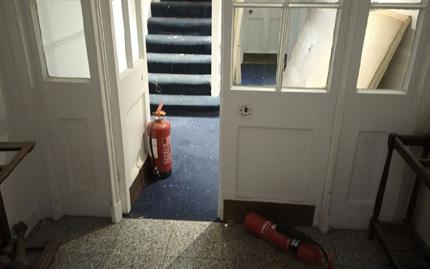
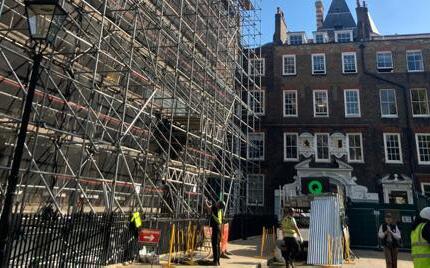
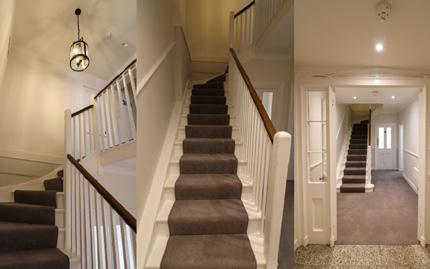
The sale of 33 Chancery Lane was completed in late 2025. In preparation, employees from the Works, Facilities and Cleaning Teams – previously based in the basement of 33 Chancery Lane – relocated to the lower ground floor of 7 New Square, which had been refurbished in 2024 in anticipation of this move. Having them back on the main site is a positive step, making operations smoother and bringing the team closer to their colleagues and customers.
For current availability, visit the Inn’s commercial lettings site launched in November 2025: https://offices.lincolnsinn.org.uk/
Our summer programme tackled minor tasks best undertaken during August when our catering and events operations are closed. In 2025, this included a full refurbishment of the Great Hall floor, repairs to 130 Old Hall chairs, masonry and pavement repointing, and internal redecorations.
Throughout the year, the Facilities Team managed compliance, planned maintenance and reactive requests logging 3,195 helpdesk calls (up 13% on 2024) and completing 7,625 planned jobs
A new Residents’ Newsletter launched in late 2025 and will continue termly throughout 2026.
“I
would like to record my sincere thanks to all members of staff for their continued hard work and dedication throughout the year. Their professionalism, commitment and resilience are essential to the successful delivery of the department’s objectives. The team’s contribution is highly valued and remains fundamental to the effective operation and stewardship of the Inn’s estate.”
Henry Skinner, Director of Estates
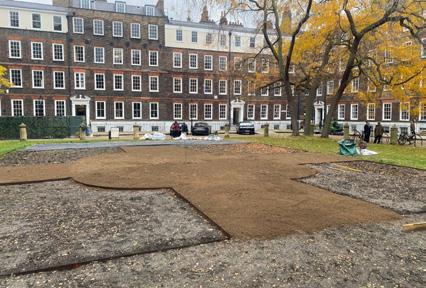
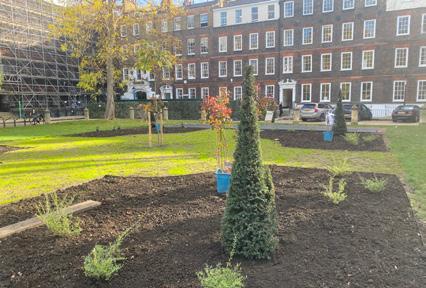
For several years the Garden Committee and our Head Gardener, Miranda Kimberley, have been developing New Square to add greater aesthetic interest. At the southern end of the square, the loss of two mature trees (a Foxglove tree and a Walnut tree) to disease left a large space. This was temporarily filled with wildflowers while the soil recovered and the Committee considered Miranda’s suggestions for a new garden. It was agreed that a more formal design would best suit the late 17th century square. Miranda created a plan comprising of four identically shaped beds, surrounding a Catalpa erubescens ‘Purpurea’ tree. Because the Walnut was known to have suffered with honey fungus, the tree and shrubs which are being planted are known to have some degree of resistance to the disease.
The backbone of the new beds will be the evergreens. Each bed will also feature specimen shrubs, alongside different varieties of Hydrangea paniculata, which have showy, conical flowers. Colour, texture and ground cover will be provided by the frothy Aruncus dioicus, Thalictrum ‘Elin’, Echinops ritro, Salvia turkestanica, Salvia ‘Pink Amistad’, Geranium ‘Rozanne’, Anemone ‘Hadspen Abundance’, Libertia grandiflora and Epimedium pubigerum.
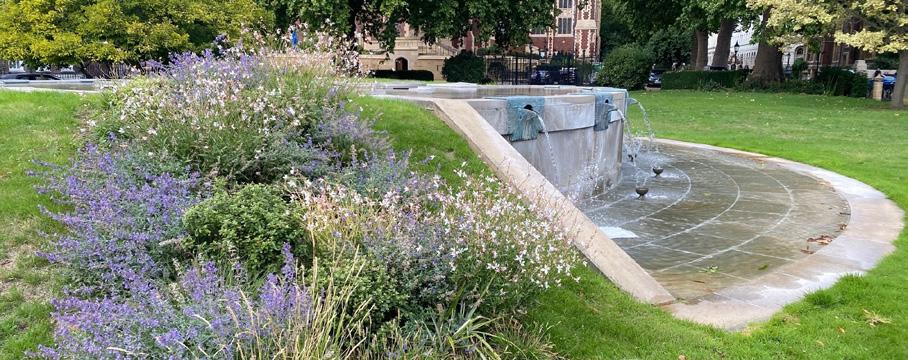
Work on these beds started in September 2025, with the installation of the steel edging. The Garden Team then spread topsoil and sowed grass seed for the path in between the beds, planted the tree and dug in organic matter before planting up the beds.
In the spring, the team planted the fountain sides with some trial plants, to test the soil and see how they would grow. In early 2026 the turf will be stripped off fully, on both sides of the fountain, and the Garden Team will plant across the sides. This should soften the stone of the fountain and integrate it more effectively into the square.
“We hope you enjoy the improvements we are making in New Square and watch their progress as the plants establish over the next few years.”
Miranda Kimberley, Head Gardener
North Lawn wildflower meadow flourishes
2025 was the best year yet for the North Lawn meadow, with wild carrot, ox-eye daisy and cornflower among the blooms creating a haven for pollinators. Using a combination of our new electric strimmer and our two new Austrian scythes, the gardeners cut the meadow in late July, much more quickly than in the previous year. They created habitat piles with the strimmings, to allow insects to migrate, and kept a refuge area for insects over winter next to the greenhouse. This area will not be cut until spring 2026.
Following improvements in 2024, the Benchers’ Border came into its own this year, showcasing vibrant colour and texture. Tall salvias such as Blue Enigma and Salvia uliginosa added height and striking blue tones, contrasting beautifully with the original orange and yellow flowers. Strong red, maroon and orange dahlias brought drama, though some struggled in the dry summer. We are planning to leave the Dahlias in situ, rather than digging them out. This should ensure a stronger plant starting off next year and less damage at the staking stage.
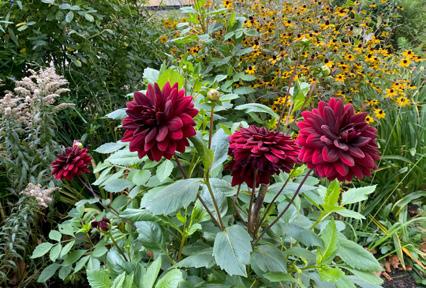
To strengthen displays for 2026, the team plans to replace weaker asters with the reliable Aster Monch, and introduce more Verbena rigida and Narcissus Thalia for spring interest. Grasses like Calamagrostis brachytricha have self-seeded naturally, creating a stunning effect when backlit by autumn sun.
Work continues on the evolving border, a highlight of the gardens given its prominent place in front of the Inn’s iconic Treasury building.
Nature brought its challenges in 2025.
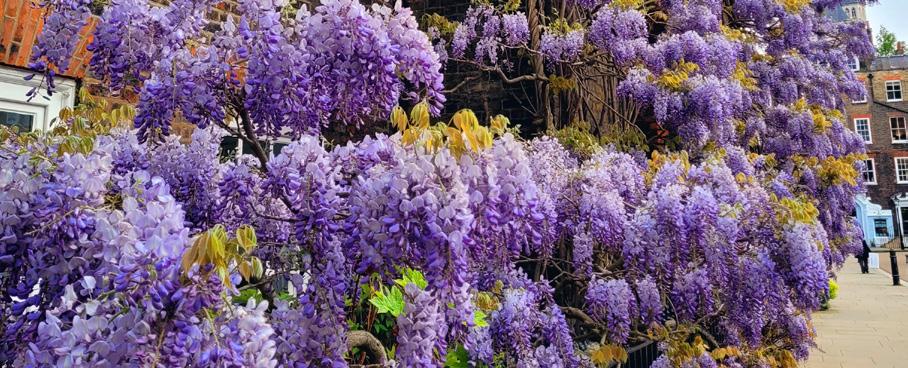
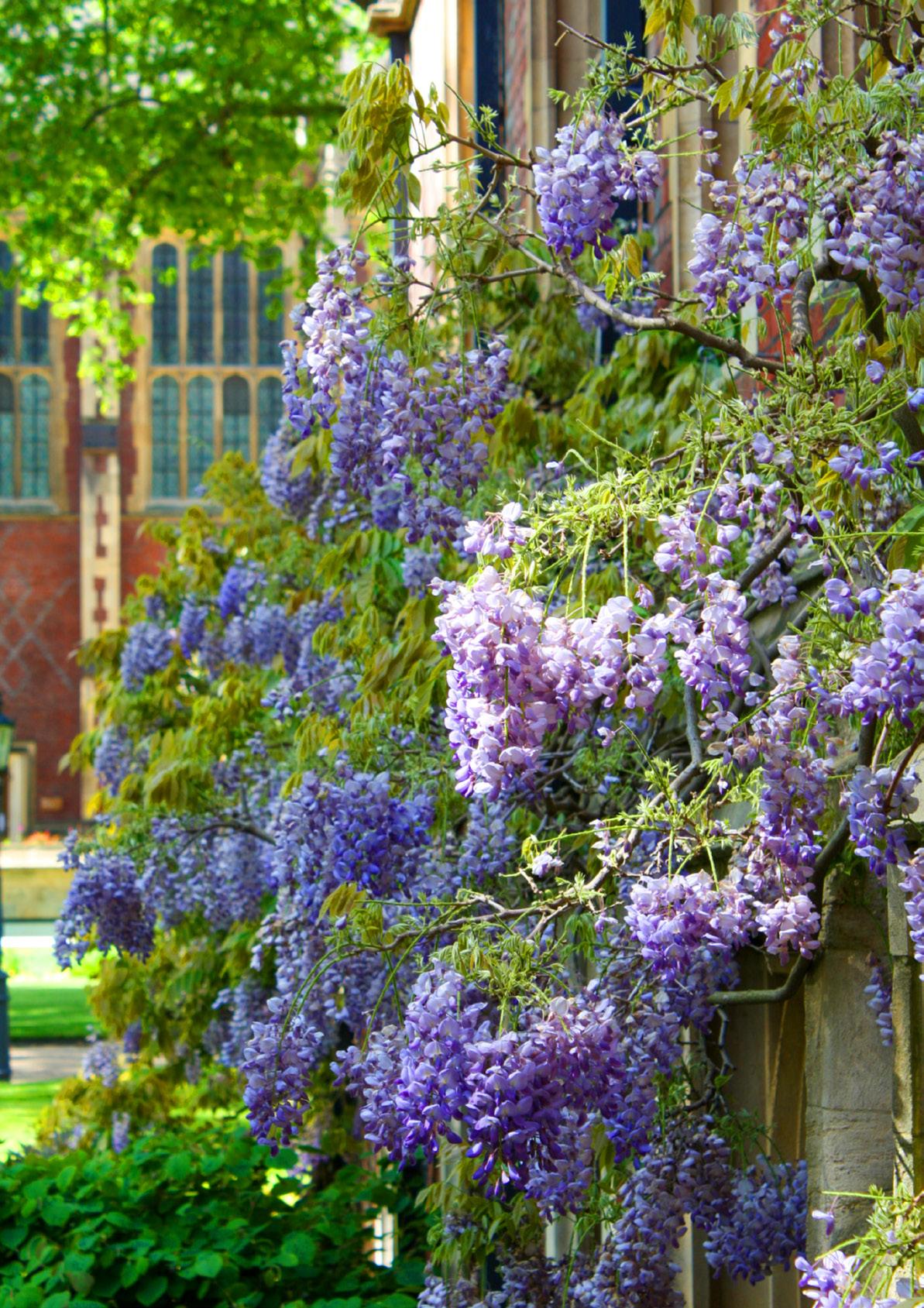
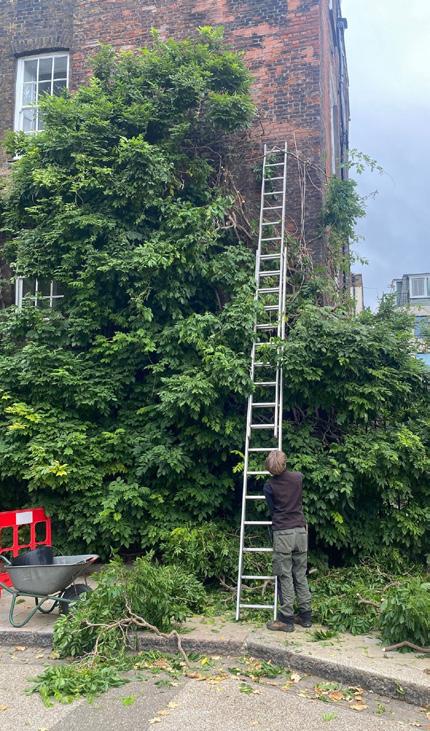
The large Wisteria sinensis at 13 New Square suffered significant storm damage in autumn. The first storm brought down most of the top half of the climber in the Kitchen Garden, requiring specialist intervention with tree surgeons and a cherry picker. Sadly, much of the mature woody growth could not be saved, though vigorous young stems have been tied in to replace it. A second bout of high winds caused further damage at the front of 13 New Square, where the Garden Team worked from high ladders to prune heavy growth and secure flexible stems. This winter, a hard prune is planned to control growth and train new flowering spurs – a necessary step to preserve this historic plant for future generations.
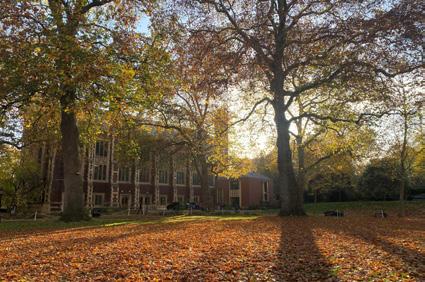
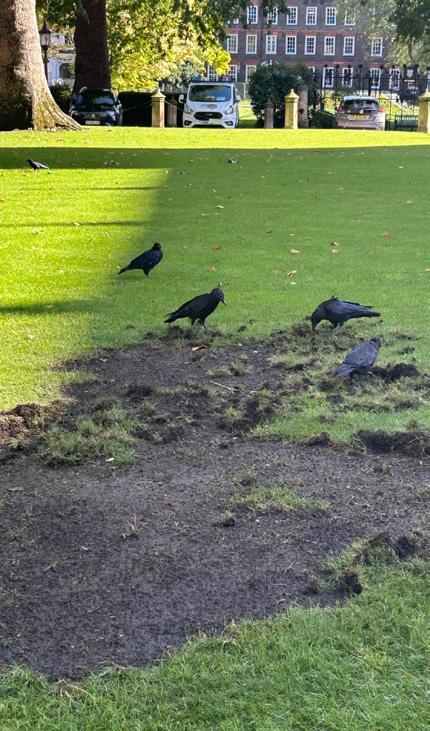
In late summer and autumn, extensive damage was caused to the Benchers’ Lawn by crows feeding on chafer grubs. For more than five years, the Garden Team has applied nematodes – the microscopic worms that control chafer grubs –every autumn. Unfortunately, 2025 was a bumper year and the damage was unprecedented. The team applied the first round of nematodes in mid-September, followed by a second batch in October to try to get populations under control. They then added topsoil and reseeded the lawn after the second application to restore its formal appearance.
Exhibitions:
• Lord Erskine - This exhibition, accompanying the Black Books Society lecture on the same topic, included books, pamphlets, and printed trials to illustrate Erskine’s career, whilst prints and caricatures pillorying his courtroom style and criticising his political leanings provided an insight into how he was viewed by contemporaries. The exhibition included a digital courtroom, created by Dr Nicola Phillips, showing viewers the appearance of the Court of King’s Bench when Erskine appeared as the defence barrister at the trial of John Stockdalte (1789).
• What the Butler Saw - In 1929, Frederick Romain, the Inn’s Butler, died, leaving to the Library a collection of ephemera relating to the Inn. This is a treasure trove of material, supplementing the official records with items such as menus and press articles. It is also thanks to Romain that we have photographs of our first women members. This exhibition gave members an opportunity to get an impression of the richness of this archive. You can read more about the Romain Collection in our Tales from the Archive on our website: https://www.lincolnsinn. org.uk/library-archives/ tales-from-the-archive/ what-the-butler-saw-theromain-collection/
In 2025, the Library & Archives team delivered a wide-ranging programme of events and exhibitions, alongside the core services that support members and researchers. From AI in legal research events (see page 42) to Black Books Society lectures (see page 61) and more.
Over the year, 1,879 people attended Library research training courses (in person and online), the team answered 6,225 enquiries and welcomed 16,657 readers to the Library. They also continued to lead and coordinate historical tours of the Inn (90 of them in 2025), sharing its rich heritage with members and visitors.
By Dunstan Speight, Librarian
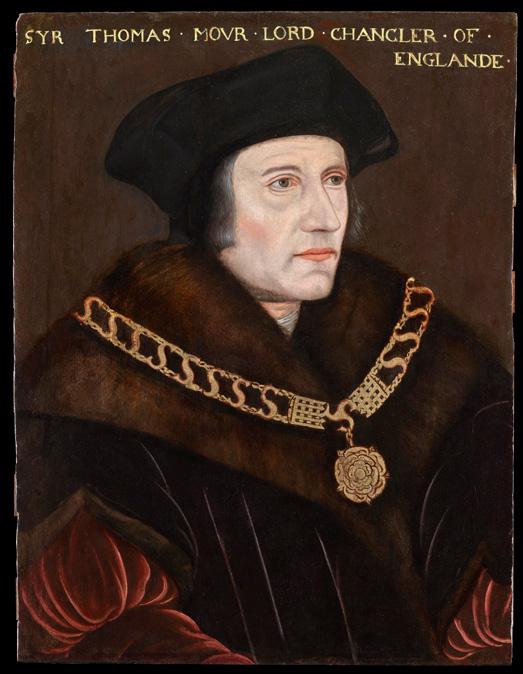
In October 2025 the Inn owns three large portraits of More and a miniature in the Drawing Room. LI45 is an anonymous copy of the famous portrait of More by Hans Holbein the Younger, now in the Frick Collection. It was treated as an 18th century or 19th century copy at the last picture valuation, but two experts on 16th century portraits think it was almost certainly painted during the 16th century – albeit not during More’s lifetime. It is painted in oils on a panel made up of three wooden boards. The third board is unusually thin suggesting that this might be cut down from a larger portrait.
Until a couple of years ago the painting was hanging on the south wall of the crypt of the Old Hall. This was a gloomy spot and probably contributed to it being under-appreciated in surveys of our paintings.
During the summer of 2023 it was discovered that the surface of the painting was ‘tenting’ – meaning areas of the surface were lifting. As is so often the case, this was caused by environmental factors. Normally, at the Inn, we are worried about problems of high humidity. The culprit here seems to have been low humidity and high temperatures when the heating was on in the Old Hall. As the wood panel shrank and expanded with the changes in humidity, it loosened the paint. Portraits on panel frequently suffer from this. Indeed, at some point in its history, splits had opened in the panel and a restorer had created a “cradle” to add further support to the panel in the mid-19th century.
Once we had noticed the damage, we placed the portrait in the capable hands of Melanie Caldwell, who has done much excellent picture conservation work for us in recent years. The photographs demonstrate the extent of the damage. The challenge facing Melanie was to consolidate the original paint and make it adhere to the panel again. During conservation, it became obvious that there had been several attempts to restore the painting in the past. The removal of layers of discoloured varnish, necessary to give access to the original paintwork, revealed considerable areas of over-painting on More’s robe and the background. This later paint has been removed, allowing the detail of More’s robe to appear much crisper and for the figure to stand out more clearly from the background. Previous restoration of the painting had included some overpainting on the face. This had been carried out more competently than the work on background and robe, so this was left.

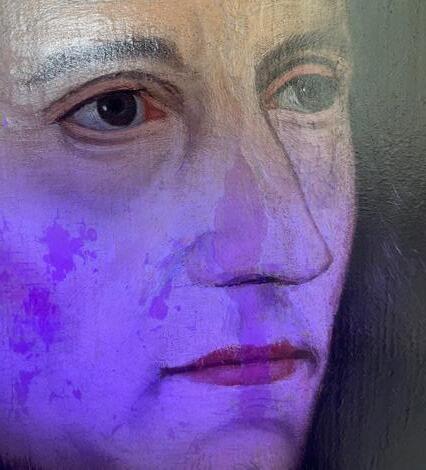

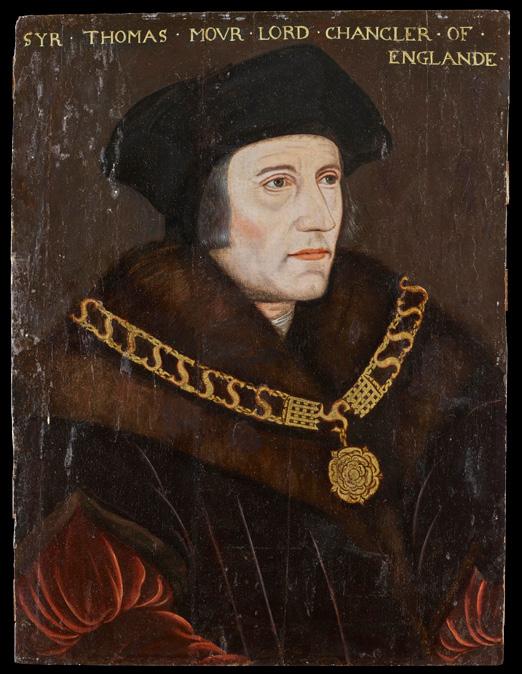
Melanie completed her restoration of the painting in spring 2025. As can be seen from the photographs, the results are striking. Not only has the surface damage been repaired but the image is much clearer, thanks to the removal of the discoloured varnish. After conservation, it was handed over to Ben Pearce for conservation framing. Its new frame creates a micro-climate enclosure for the painting to minimise the effects of variations in humidity and temperature.
The restored portrait now hangs over the fireplace in the Council Room. This should be a much better environment for it than the crypt of the Old Hall and allow it to be seen and appreciated. The painting will be subject to regular monitoring and checks to ensure that we do not see a repeat of previous problems.
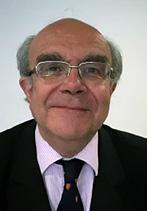
By Mark Ockelton
Amongst the Inn’s silver is a two-handled cup with cover and stand – what Pepys would have called a ‘state cup’ – with London hallmarks for 1668 and sponsor PP. Both cup and stand have inscriptions stating that the ensemble was a gift, presumably from the King or his brother the Lord High Admiral, to Jonas Shish, the master shipwright, on the launching of a warship, the Royal Charles. All three pieces are heavily chased with animals, flowers, and foliage typical of the style of the period. They were a legacy from the Rt Hon Sir Felix Cassel, Bart, QC, Treasurer in 1935, who died in 1953. His father, Sir Ernest Cassel (1852-1921) was a collector of silver and recorded these pieces as acquired from another well-known collector, John A Holms of Paisley. The Inn has over the years allowed these pieces to be shown in loan exhibitions, most recently at Greenwich to mark the Jubilee in 2012.
After a period of developing suspicions, I arranged for this silver to be examined by Kirsten Kennedy, the keeper of metalwork in the Victoria and Albert Museum, and Lucy Morton, a distinguished scholar and dealer in silver. Our unanimous opinion is that all three pieces are confections or forgeries, probably dating from the middle of the nineteenth century, perhaps containing some earlier material. Amongst the difficulties we identified are in the inscription, which contains factual errors and an error in the Royal Coat of Arms, and is in a form of script not easily attributable to the 1660s; the metallic composition of all pieces; the construction of both the lid and the stand; the style of the cup handles; the character of the chasing; and the form and placing of the hallmarks, on the cup in particular.
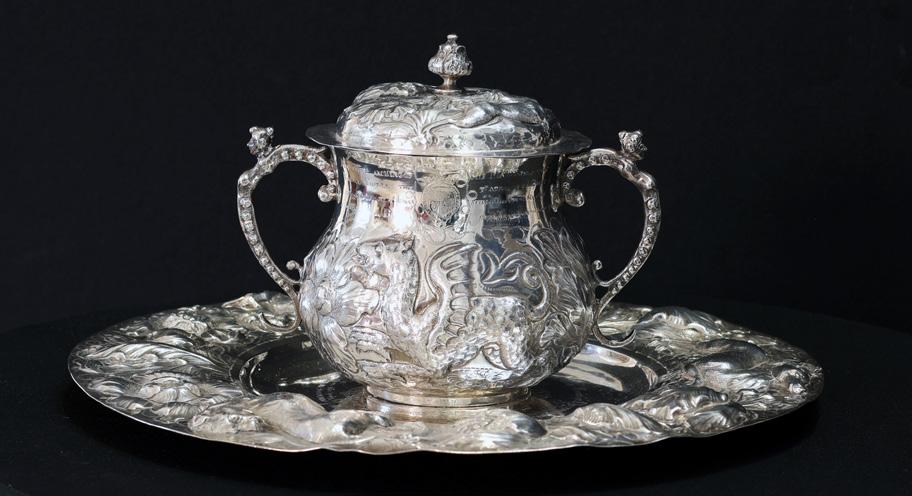
Sir Felix Cassel was a generous benefactor to the Inn in other ways, and there can be little doubt from the terms of his will that he had no suspicion of this ensemble. Sir Ernest Cassel and John Holms owned some of the most important early English secular silver surviving into modern times and it would appear more than likely that they were deceived too. The viability of such a daring forgery, bound to be exhibited by its owner from time to time, raises questions of its own. I hope to describe these pieces in more detail, and look into their history, in an article in a subsequent issue of this Review.
In the meantime, the ‘state cup’ of ‘1668’ remains in the Inn’s collection and will no doubt appear from the vaults from time to time.
It is hard to think of a place more bristling with heraldry than Lincoln’s Inn. Wherever you look there are coats of arms: on panels in the Great Hall, in the stained glass windows in Chapel and the two Halls, as carvings on the buildings and on some of our most splendid pieces of silver. It is also a collection which continues to grow.
Each Treasurer is entitled to have their coat of arms displayed on a panel in Hall, as are Royal Benchers, Judges of the High Court, the Court of Appeal, the Supreme Court, and members of the Privy Council. In recent Annual Reviews, we have explored the stories and symbolism behind these heraldic designs.
In 2025, the only new panel added to Hall was that of our Treasurer, The Hon Sir Paul Morgan. Here, he shares the inspiration and meaning behind its distinctive elements:
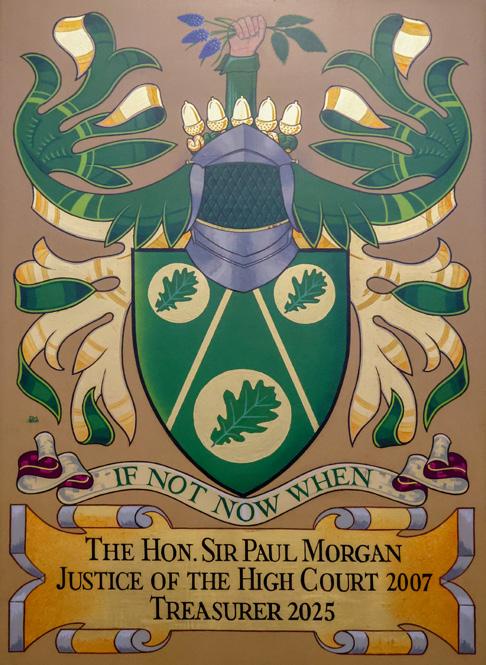
“Before approaching the College of Arms for its assistance in designing an appropriate Coat of Arms, I had given very little thought to what I might include in my Coat of Arms. With the assistance of Bluemantle Pursuivant, I preferred to keep the design simple, neither complicated nor elaborate. I decided that a Coat of Arms could usefully say something about my origins. I was born and brought up in Derry, Northern Ireland and the Irish name for Derry means “Oak Grove”. Indeed, the crest of my school was a drawing of an oak leaf. I have always had a special affection for oak trees and that led to the choice of oak leaves and acorns in my Coat of Arms. There are three oak leaves as that provides a pleasing composition. The three oak leaves are divided by two lines which can be interpreted as suggesting a hill or a mountain. When I am not in London, I am either in the South Downs in Sussex or in the French Alps. I recognise that the gradient of the lines is a bit steep for the South Downs. I had wanted a snowy peak on the “mountain” but Bluemantle Pursuivant did not approve and I did not insist. I also wanted to express the importance to me of my wife and my three sons. As regards my sons, I thought that acorns would be a suitable expression of their future potential. In the end, I settled for five acorns for my three sons, my wife and myself even though the concept of potential really could only apply to three of the five. I liked the idea of the hand rising from the helm and grasping something symbolic. In my case, the hand grasps some grape hyacinths and some elder leaves. I expect many people will know why I chose hyacinths and if they do not, I will leave it as a puzzle for them to solve. The elder leaves are a recognition of the prevalence of elder trees in the South Downs but more particularly refer to my mother’s maiden name, Elder. The choice of the colour green as the dominant colour of the Coat of Arms refers to Ireland and the South Downs and makes the Coat of Arms very distinctive; I was told that green was a less usual colour to choose in this context.
The motto is part of a well-known saying of Hillel, the Elder. He said it about 2,000 years ago and I have always liked it. The complete statement by Hillel emphasises the importance of self-reliance, responsibility to others and the desirability of avoiding delay in taking action. I thought those sentiments were wholly appropriate for a barrister and a judge. I have always admired people who have a “can do” attitude.”
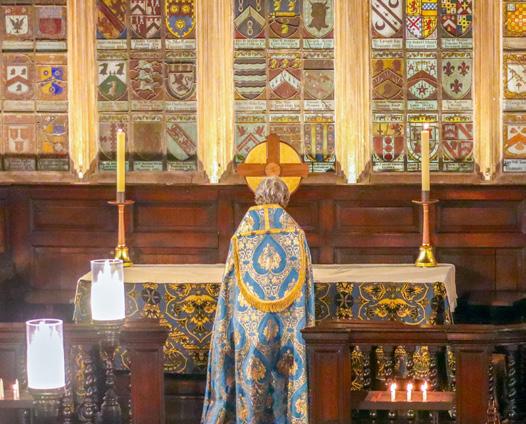
Amid the physical improvements across the estate, the Chapel continued to play an important role in the life of the Inn, hosting moments of joy, remembrance and inspiration throughout 2025, with record numbers attending special services followed by lunch in Hall.
The year saw several Chapel Committee projects come to fruition. First, the Faculty application for permission to display future Treasurers’ heraldic shields in the south-west window was approved by the Diocesan Chancellor and, secondly, a card donation terminal was introduced at the start of Michaelmas Term, enabling donations by card as well as cash. This has already resulted in a significant increase in contributions to monthly charities and the Lincoln’s Inn Heritage Fund.
Safeguarding remained a standing agenda item, with a subcommittee meeting regularly to ensure policies and officer training stay aligned with diocesan guidelines. This is important to ensure we maintain a welcoming, safe and vibrant Chapel environment for worshippers and visitors alike.
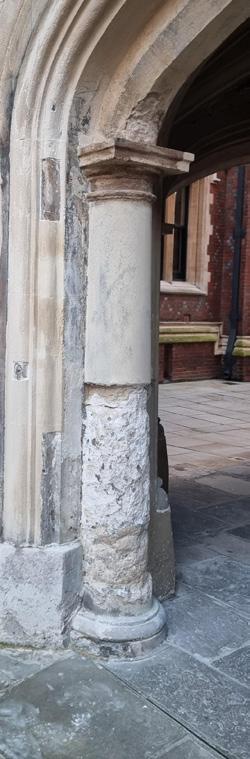
Alongside these developments, the Estates Team undertook conservation and repair works to low-level masonry and stucco around the Chapel’s undercroft, using traditional techniques. This light-touch approach stabilised vulnerable areas and will inform a more comprehensive scheme in the future — ensuring the Chapel remains structurally sound for generations of worshippers and visitors to come.
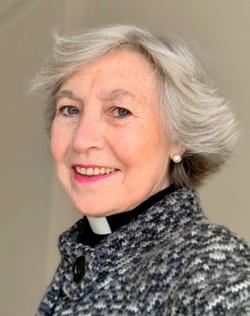
From the Preacher, The Venerable Sheila Watson:
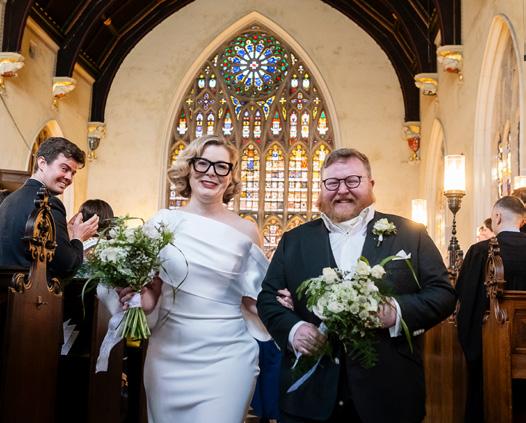
“The year began with light shining amidst the darkness as we dedicated the new cross and candlesticks commissioned for everyday use in Chapel; and it continued full of new life as we celebrated 12 baptisms, a record number, (or rather 13 as we had twins for one). It was lovely to see the new arrivals and in many cases to welcome back siblings previously baptised in Chapel and other family members. They also enlivened coffee before the service in the Crypt of the Old Hall as well as lunch afterwards. Weddings too filled Chapel with a merry sound and rejoicing. In March this included a ‘first’ for me with two of our members marrying each other, Gregory Callus and Laura Gould. Inevitably “in the midst of life we are in death” and memorial services were held in thanksgiving for all that Geoffrey Tattersall KC had contributed and, in the Great Hall, for Alan Steinfeld KC.
Guests enlivened special services and lunches beginning with Georgy Mkrtichian who carved the Trinitarian symbol in the centre of the new wooden cross. Raised in an Armenian family in Tbilisi, Georgia he moved to London after the collapse of the Soviet Union and specialises in wood technology. His works can be seen in the National Gallery, the Imperial War Museum, the Tower of London
and Buckingham Palace. In the Donne lecture, Dr Mary Morrissey unpacked Donne’s motto, a quotation from Petrarch based on the Genesis story, that he inscribed on his books: ‘Per Rachel ho servito & no per Lea’ (‘for Rachel I have served and not for Leah’). This reminds us that patient service, in recognition of our connection one to another, is the first step on the ladder to heaven. The Revd Alexander McGregor, the Church of England’s Chief Legal Officer and recently elected Bencher of the Inn, spoke on the provocative title of ‘The laws and usages of the realm do not include Christianity’. His Warburton lecture and those of our other guests can be read here https://www. lincolnsinn.org.uk/about-us/chapel/ services-events/
Latterly in Michaelmas Term, Bishop Lusa Nsenga-Ngoy, Bishop of Willesden, preached during Black History Month, reminding us that ‘God is in this city, not only in the cathedral or the court, but in every act of integrity that resists the empire of cynicism. For those of us who wear wigs or mitres, Babylon’s whisper is this: be pragmatic, not prophetic; be reasonable, not righteous; be effective, not faithful’. Finally, Sir Robert Buckland KBE KC spoke in Chapel on ‘Judges and Judgement,’ the need for the wisdom of Solomon and the limitations of AI.
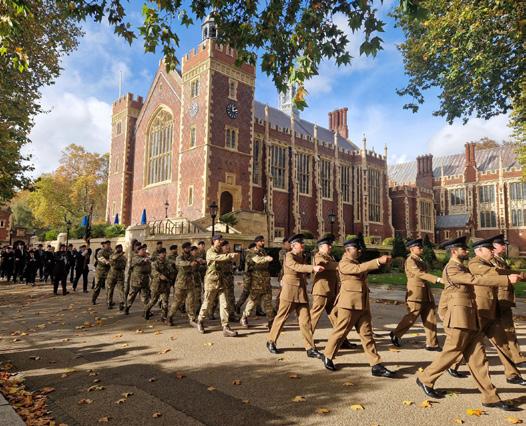
In late October we were all shocked at the tragic death of Stephen Leslie KC in a drowning accident in Mauritius. A memorial service has been arranged for Stephen in early 2026. Our thoughts were with Melissa and Stephen’s children and grandchildren as we came to Remembrance Sunday, where the full Squadron of The Inns of Court and City Yeomanry with the cadets and the band were as usual on parade at the War Memorial for the wreath-laying.
As December arrived, the customary Carol Services once again brought us from darkness to light with our celebration of the Christ child, ‘the light that shines and the darkness comprehendeth it not’.”
“2025 proved to be a busier year than usual in the musical life of the Inn. After a break in 2024, the Chapel Concert took place in May. The resident professional choir sang a programme entitled ‘Night Song’ that reflected the end of the day in secular and sacred works. We were glad to welcome the composer Joanna Marsh to join us, and a full Chapel audience enjoyed organ solos performed by William Whitehead, the Inn’s Associate Organist. I always feel May is the perfect month to perform an early evening concert in Chapel. The light is good enough to show off the beauty of the stained glass but the sun not too bright as to dominate as it does through the West Window later in the year.
The Choir also entertained diners at Grand Day from the minstrels’ gallery in Great Hall in May and November. This tradition started in the first few years of my tenure as Director of Music and each year presents the challenge of trying to find sets of unaccompanied music that reflect the interests of the Treasurer for whom they are performed.
At the invitation of the Treasurer, Blaze Ensemble performed concerts in the Old Hall in April, September and October. Blaze, a group of chamber musicians based in London, presented three contrasting programmes that displayed their flexibility and skill in works from the 18th century to the present day and included a first performance of a new work by Adrian Sutton (see page 87 for images and more). In the relative intimacy and lively acoustics of the Old Hall, the audience feels very close to the players, making this venue particularly special for music-making.
Musical offerings, in addition to the Sunday-by-Sunday work of the Chapel musicians, maintains a continuous stream of quality musicmaking in the Inn over very many years. I was recently made aware of a 1958 Granada Television recording entitled Sir Thomas Beecham at Lincoln’s Inn. A copy appears to be available on YouTube at the time of writing for those who wish to search for the title and seek it out. It is a fascinating piece, not only for the tantalisingly brief shots of the estate but also for the remarkable sight of the entire Royal Philharmonic Orchestra fitting onto the stage of the Great Hall.
Such a concert hasn’t happened in recent years, but it reminds me that together with Chapel and the Old Hall, these three spaces at the Inn provide the possibility for its own musicians and invited guests to perform music of all styles and of the highest quality to its members and the wider community.”
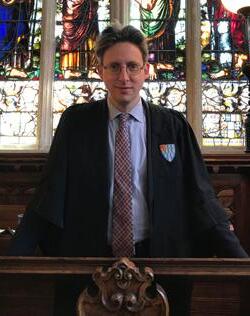
Did you know?
The Chapel is open to the public from Monday to Friday, 09:00 to 17:00, offering a peaceful space for prayer, quiet and reflection. It is also open on Sundays during the legal terms, from 11:00 to 12:30 for services. The Chapel is closed on Saturdays, bank holidays, and throughout August. Receive Chapel updates by signing up to the Chapel Newsletter via your online account.
Choir at Grand Day.
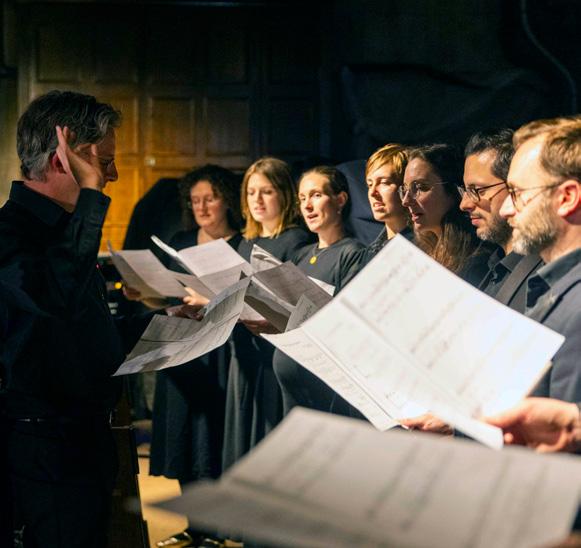
By Dunstan Speight, Librarian
In October 2025 the Inn’s Librarian, Dunstan Speight, gave a lecture to the Black Books Society which took the form of a chronological survey of the various building schemes proposed for the Inn over the centuries – the good, the bad and the ugly.
The full lecture can be watched online (https://www.lincolnsinn.org.uk/news/watch-the-lincolns-inn-whichnever-was-lucky-escapes-and-missed-opportunities/ or see page 83 of the Review) but his edited version which follows considers three startling proposals.
By the later 18th century a number of factors meant that the Inn’s existing buildings had become inadequate for its needs. This was partly due to numbers. Unlike the other Inns, membership of Lincoln’s Inn suddenly began to increase from the 1760s. At the start of the 18th century, the other three Inns had considerably more members and Called more members to the Bar. By the end of the century, this state was reversed, so that in the last decade of the century, Lincoln’s Inn Called 182 barristers, as opposed to 110 for Inner Temple, 91 for Middle Temple and a mere 42 for Gray’s Inn.
It also seems likely that the members wanted an Inn which was more in tune with the architectural fashion of the time, as their specification included the replacement of all the buildings in the oldest part of the Inn, with the exception of the Chapel. Four prominent architects were approached to produce designs: Robert Taylor (ultimately the successful candidate), James Paine and Robert Adam. Matthew Brettingham the Younger, son of a successful architect who was considering on embarking on his own career in architecture also submitted designs. The Inn has some of the designs of all the candidates except for those of Robert Adam, which are in the collection of Sir John Soane’s Museum.
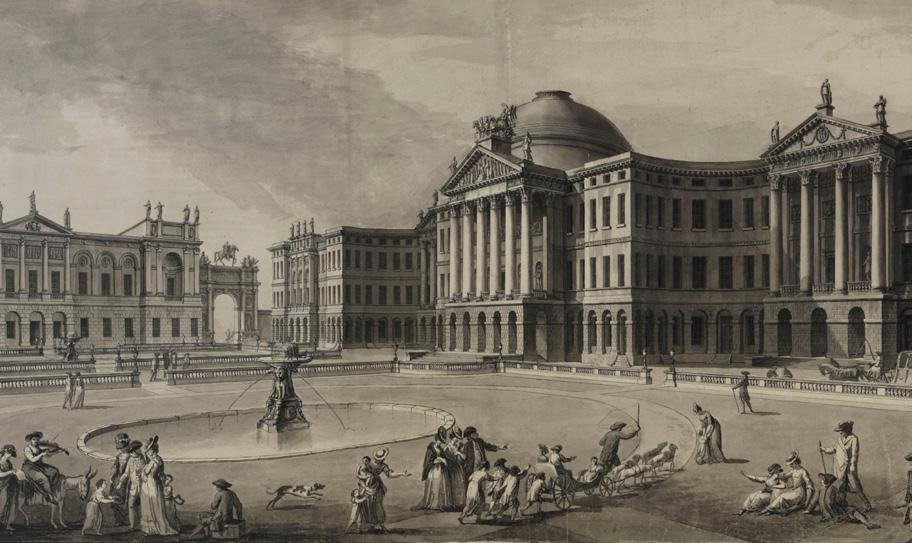
The designs of the four men show varying concern for the greatest practical consideration – cost. Brettingham came up with a design whose only recommendation was that it would have been the cheapest to build. Taylor’s design (only part of which was built) was restrained and economical. Paine sought to relieve the monotony of a very long continuous façade fronting the north garden with projecting wings, and ornamentation such as statues and Diocletian windows, which made his design more expensive.
Robert Adam, however, was in a different league altogether. The designs he submitted were in many ways pure architectural fantasy. They are indebted to his admiration for his friend Giovanni Battista Piranesi, the great engraver of Roman remains, and to his own deep study of classical remains in Italy.
Unlike his fellow architects who produced plans and flat elevations which require a certain amount of architectural knowledge to interpret, Adam produced perspective drawings which give the viewer a good idea of what they would have looked like.
What a joy they are! Quite apart from the building designs they are filled with people going about their business in Georgian London. The view in Image 1 is of Adam’s projected main front facing the gardens. In the foreground, a pampered child is being conveyed in a dog cart and a group of musicians are busking. The child with them who is begging has clearly softened the hearts of the fashionable trio of well-dressed Londoners, as the man is dropping a coin in the outstretched hat. If contemporaries recognised the depiction of everyday life, the proposed buildings were, by contrast, of unparalleled grandeur and very redolent of ancient Rome. The long garden front is a masterly, if unfeasibly expensive, solution to creating a long building façade with lots of interest. The eye is naturally drawn to the centre, with the domed rotunda visible behind a projecting portico, with a carved pediment and statues – the whole surmounted by Victory driving a chariot and being crowned with a laurel wreath. On either side of the central section, great concave curves draw the eye – each has its own projecting portico, with four, rather than six columns. The one nearest to the viewer of the drawing was effectively screening the front of the 1623 Chapel – Adam was complying the Benchers’ demand that this should be kept whilst ensuring that Jone’s Chapel did not interfere with his own design.
Despite not being asked to, Adam also designed a broad layout for the gardens, with a gateway into the fields. The semi-circles and ovals of the walks and gateway (more obvious in Adam’s ground plan) echo those in the façade of the building. The separate building at the north end of the garden is the Six Clerks Office.
This drawing demonstrates how Adam’s fascination with the glories of classical Rome had completely run away with him. I think my favourite element of the whole design is the triumphal arch featuring George III on horseback, through which you can just glimpse a seat of stone steps and a carved urn. From this standpoint you might assume this was leading to a grand terrace or another courtyard. In fact it would have led to the back of the premises in High Holborn.
One of the long-running sagas of the 19th century was the construction of a new set of law courts –eventually realised as George Edmund Street’s Royal Courts of Justice, fronting the Strand. Before the present site was chosen, schemes had considered the creation of more courts round Westminster Hall or building a magnificent new set of courts in Lincoln’s Inn Fields. In 1858, at a point when other proposals were encountering financial problems, the Benchers of Lincoln’s Inn in an apparent fit of altruism, offered to provide a site for new Chancery courts and offices in the Inn. They even offered to contribute £100,000 to the cost of their construction. This would have been money well-spent as it would have been recouped later in rent.
The Inn turned to the great Victorian architect George Gilbert Scott for designs. The building he envisaged (Image 2) was characteristic of his fertile architectural imagination, incorporating motifs from a range of sources, having different window designs in each storey and using bands of colour over the arches to impart an Italianate feeling to the design. The buildings may appear handsome but, had they been built, they would have occupied most of Old Square and Gatehouse Court.
It was not, however, quibbles with the design which prevented this plan from being realised but the fact that it failed to take account of what many saw as a key element of the new law courts project – to unite
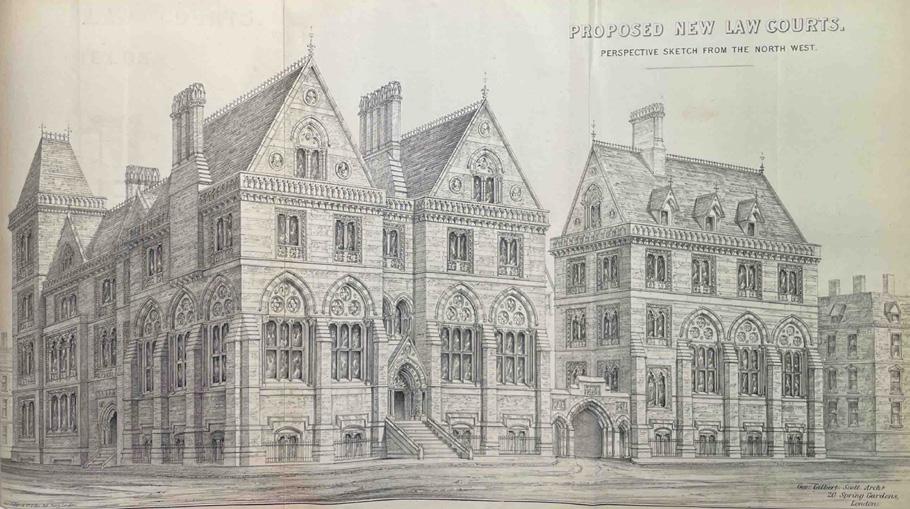
the courts in a single building. In the words of The Law Times “the age of court-squatting in Lincoln’s Inn is past.” It was not, of course, as it was not until the Royal Courts of Justice were opened in 1882 that the Chancery Division moved out.
“There is no reason why a 17-storey tower should not be erected”
The Inn’s surveyor might not have been entirely serious when he wrote this, but throughout the 20th century there were periodic schemes to build flats or chambers at the north end of the garden.
This scheme (Image 3) was the most elegant and restrained of these schemes – designed by Sir John Simpson, who had already designed the Garden House in the Kitchen Garden (1927-28) and overseen the restoration of the Old Hall.
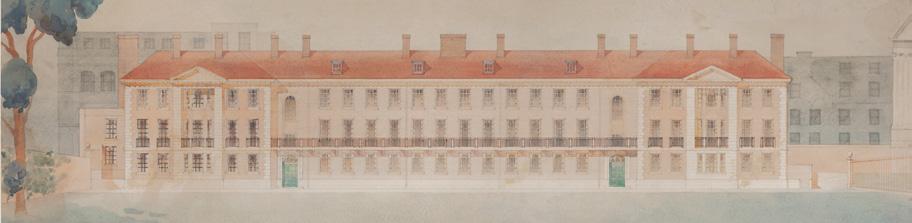
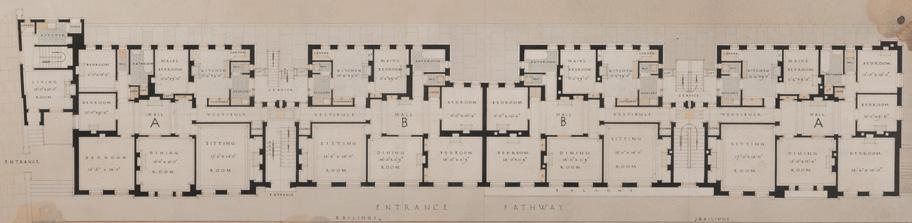
In the two elevations for the Garden front he presented two alternatives. The first is a classical design with three principal storeys in brick with stone quoins on the corners of the pavilions. It is extremely respectful to Stone Buildings. It is shorter for a start. The top of the roof is the same height as the bottom of the entablature of Stone Buildings. The two round-arched windows echo those in the ground floor of Stone Buildings and it follows Stone Buildings, (as begun by Taylor and completed by Hardwick) by having no central emphasis but placing pavilions at the east and west ends of the building.
The internal design of the flats was good. The principal rooms faced the gardens, while the kitchen and maid’s room looked over the service road and at the back of the buildings on High Holborn. The main entrance was on the garden front, with separate service entrances at the rear of the building, complete with lifts.
The second design is similar to the first but in Portland stone, rather than brick. This was suggested by a number of Benchers as being more in keeping with Stone Buildings.
A rather charming building, but had it been built, the Inn would have lost a substantial portion of the north garden, as demonstrated on the plan. The scheme was postponed sine die (the polite way of killing off a project) by Council on 25th July 1929.
The temptation to build on the north garden recurred with a vengeance in the 1960s. The architect Anthony Lloyd produced a design of two blocks, each of four storeys plus a penthouse. In many ways the design was similar to post-War building in the other Inns but its lack of ornament gave it a rather industrial appearance. Crucially, however, it would have consumed even more of the north garden than Simpson’s in the 1920s.
Discussion of this project dragged on through 1963 and 1964 encountering opposition from the London County Council, changing government policy over the development of office property in London and from the Royal Fine Art Commission. On 15th December 1964, the Committee decided that the project should be postponed.
Today it is difficult to imagine the Inn being any different from the charming collage of architectural styles we know. For good or ill, it could all have been so different…

by Peter Dodge
In October 2025, Dunstan Speight, the Inn’s Librarian, delivered a Black Books Society lecture entitled ‘The Lincoln’s Inn Which Never Was’. His title echoed that of an article telling a different but parallel story which appeared in the journal Architectural History in 1988: “The church that never was: Wren’s St Mary, and other projects for Lincoln’s Inn Fields” (by Paul Jeffery).
It may surprise those who know the Fields as a much-loved open space that, had Hawksmoor had his way, they could have become “equal to any Piazza in Christendome” with the “Great Square” being enhanced by the addition of a grand church at its centre.
The building of houses on three sides of the square was complete by 1659. Towards the end of the century, Mr Cavendish Weedon, a member of the Inn and said to have been the first inhabitant of New Square, commissioned proposals for its beautification. In the centre was to be a church for divine music, designed by Sir Christopher Wren. Wren had an existing connection with the Inn; he had been admitted to the Society on 25 April 1676 and in 1685 was involved in arranging repairs to the Chapel.
An extra-illustrated edition of Pennant in Westminster City Archives contains what appear to be two designs produced by Wren for the Fields. One of these is for a chapel raised above an open undercroft, rather in the manner of the Inn chapel. The other is for a single-storey building. A model (now presumed lost) of the raised design for “St Marie’s” “drawne by Sr Christoper Wren…finely cut in Wood” was displayed in the Inn library.
Unlike Weedon’s private scheme, the purpose of the 1711 Act for Building Fifty New Churches in the Cities of London and Westminster and the Suburbs thereof was to provide new parish churches for the rapidly growing population (4,750 souls per church). Hawksmoor, one of the Surveyors to the first Commission set up under the Act, had the task of identifying suitable sites. In the parish of St Giles-in-the Fields, there were to be four new churches. In the event, only one was built: St George’s, Bloomsbury.
In its early years, the Commission rented chambers at 6 Lincoln’s Inn Great Square (ie, the Fields) from Samuel Brewster. From Michaelmas 1712, the Commissioners and Committee had use:
“of the great room they now meet in and all other rooms on the same floor, except the little closet backwards, and also have a room below stairs for their servants, and a vault for coals, for £40 p.a.”
In these rooms were “shelves with… ironwork upon which the models stand”.
On 13 November 1711, the Building Committee resolved to accept Hawksmoor’s recommendation of the Fields although, no doubt mindful of the sensitivities of the site, it stipulated that there should be “no churchyard, intramural burials or ring of bells”.
Those sensitivities manifested themselves in the Benchers’ opposition to the plan (half of the square belonging to the Inn). Early in 1712, they petitioned Parliament:
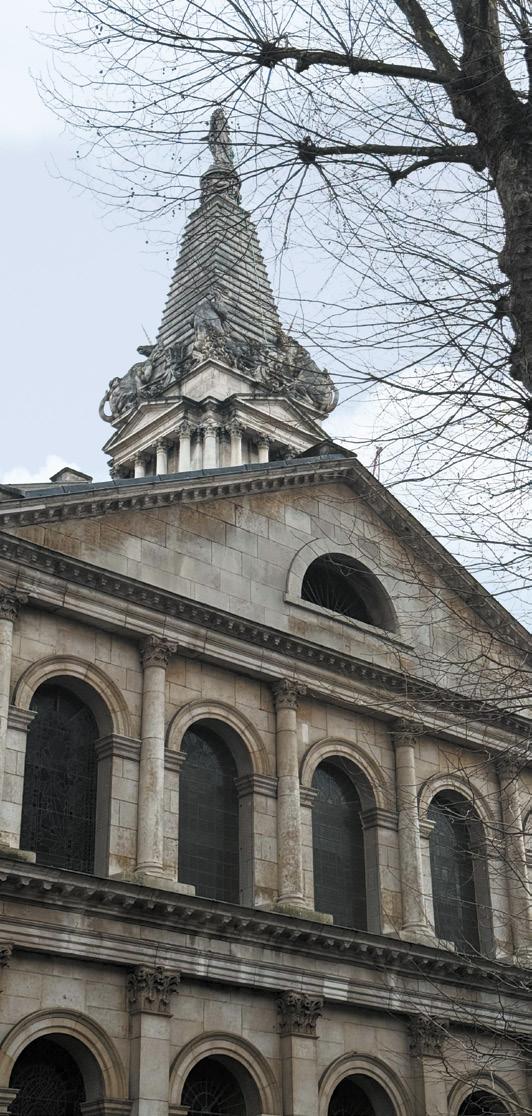
“…one moiety of the great square called Lincoln’s Inn Field, next to Lincoln’s Inn Garden was conveyed to the then Benchers of Lincoln’s Inn to the intent [that] the said fields adjoining to the said garden on the west side might be kept open, to prevent the stopping the air, or hindering the prospect there. And the same hath been ever since kept free and open. That the petitioners are informed a Bill is passing this House for erecting a church there, which may be prejudicial to the interests of the said Society…”
Hawksmoor’s own design for a church in the Fields is now lost, as is a wooden model of a design by Thomas Archer for a round church. What does survive is a design by Colen Campbell, said to date from 1712, which appears in the first volume of his Vitruvius Britannicus. This is for a church resembling St Peter’s in Rome with a large central dome and a lantern rising to over 300 feet. In comparison, the height of St Paul’s is 365 feet (from the ground to the top of the cross) and that of St Peter’s 448 feet.
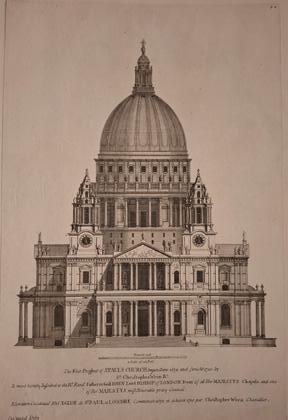

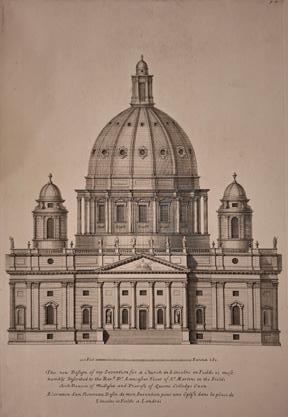
engravings
The grandiosity of the design is not reflected in Campbell’s description:
“the whole is dress’d very plain, as most proper for the sulphurous Air of the City, and, indeed, most conformable to the Simplicity of the Ancients.”
The sheer enormity of the proposed structure cannot be understated. The modern boundary between the Inn and the Fields measures 1,074 feet (this including roads and pavements and thus significantly exceeding the width of the enclosed central area). At its widest point, the width of Campbell’s church would have been 280 feet, that of St Paul’s being only 246 feet. The dimensions are astonishing.
In the event, the Commissioners seem to have been unable to persuade the inhabitants and Benchers and no action was taken to acquire the site.
The enclosure of the central area of the Fields in 1735 did not put a complete stop to plans for the building of a church; what frustrated two such proposals in the early 19th century was the refusal of the Benchers to lift a covenant restricting building.
It would be remiss to conclude without mentioning a place of worship which, between the early 18th century and its demolition in 1909, did exist behind the buildings on the west side of the Fields: the Sardinian Embassy Chapel (later the Church of St Anselm and St Cæcilia). The Catholic church of the same name on Kingsway is the successor to this chapel and possesses some of its furnishings, including the Royal Sardinian coat-of-arms.
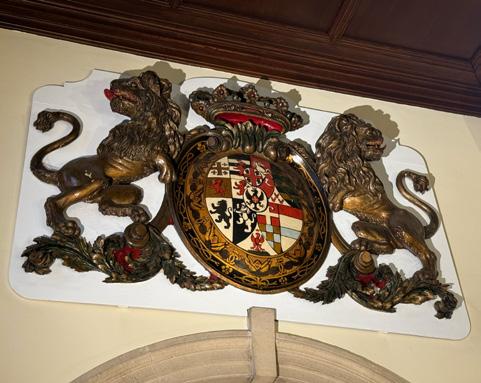
The Royal Sardinian coat-of-arms in the Church of St Anselm and St Cæcilia.
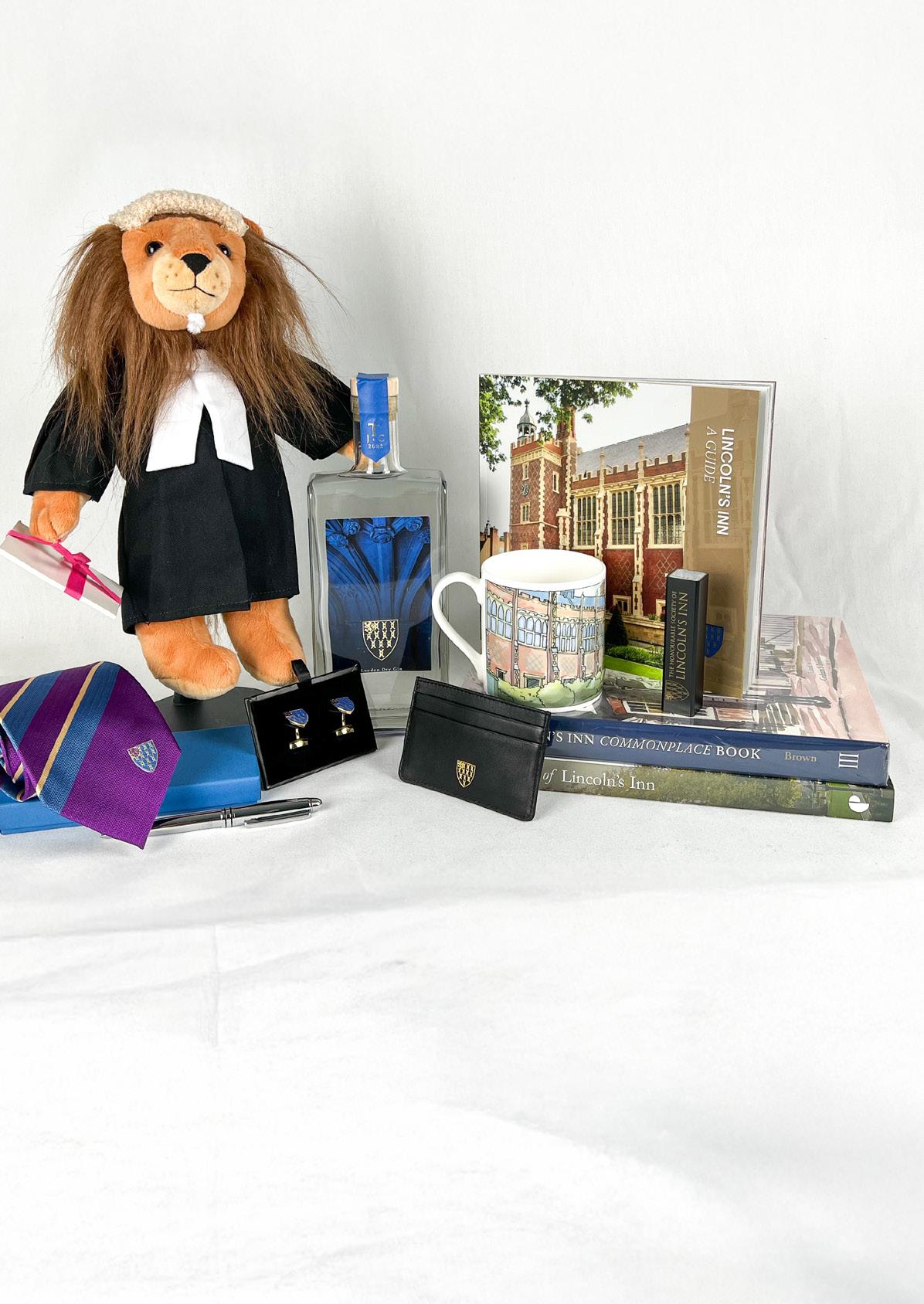
Browse our range, from t-shirts and hoodies to ties and tote bags. Try something new with 1422 Blend coffee beans, paired perfectly with our reusable eco-cup or a china mug featuring Great Hall artwork by Hannah Ball.
Shop Online: www.lincolnsinn.org.uk/shop/ Shop In Person: Visit the MCR, Library, or Reception
All profits support the Inn’s Heritage Fund.
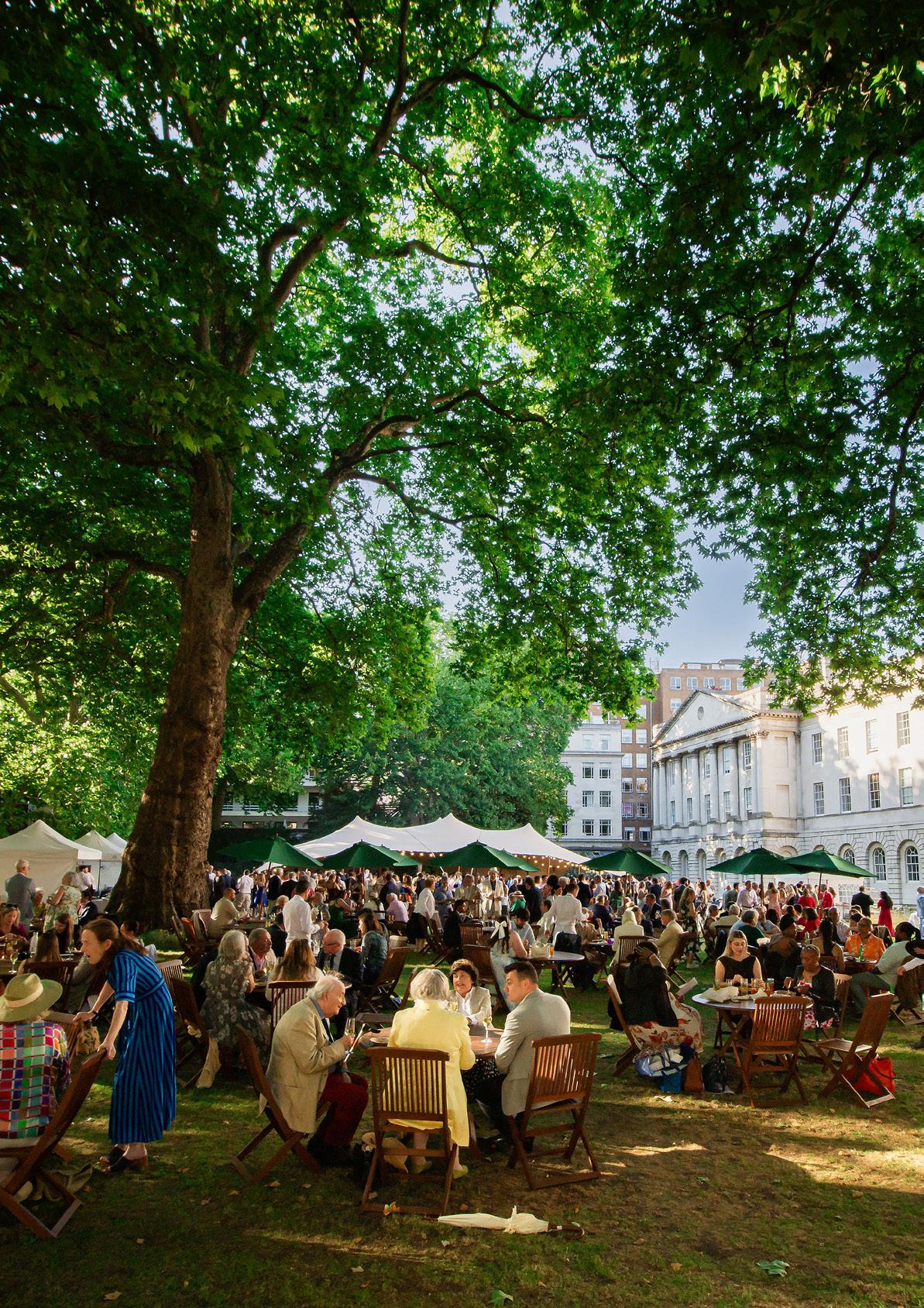
In 2025 the Inn held 1,033 events, comprising 316 commercial events and 717 Inn events (including dining, lectures, Members’ Lunch days and more), in addition to our packed education and training programme.
Empowering Women in the Law – Diversity Dinner
“The event was fantastic – relaxed, entertaining and inspiring with impeccable food, wine and service. Thank you.”
On 10 June 2025, we held the Inn’s 5th annual Diversity Dinner, revisiting the theme of our first dinner in December 2019, ‘Women in Law’. Over 100 members joined us in the Great Hall to celebrate our women members on the theme of Inclusivity and Allyship. We were joined by The Rt Hon the Baroness Scotland of Asthal KC, who spoke about her experiences of being a woman in law. Our annual Diversity Dinners always have a wonderful atmosphere of inclusivity and celebration and we look forward to our next dinner on 5 June 2026 for Pride Month.
Nick Easterman’s photos from this event can be viewed here: https://flic.kr/s/aHBqjChwFZ
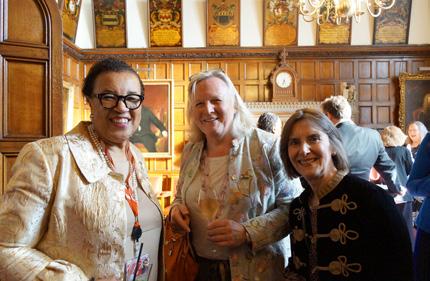
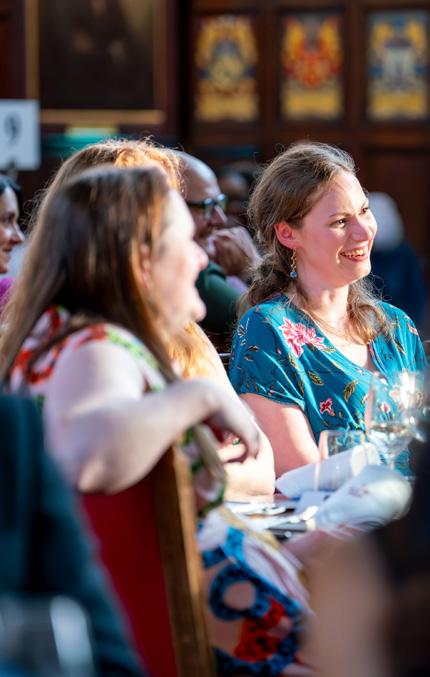

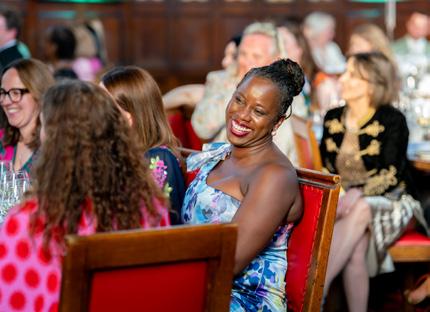
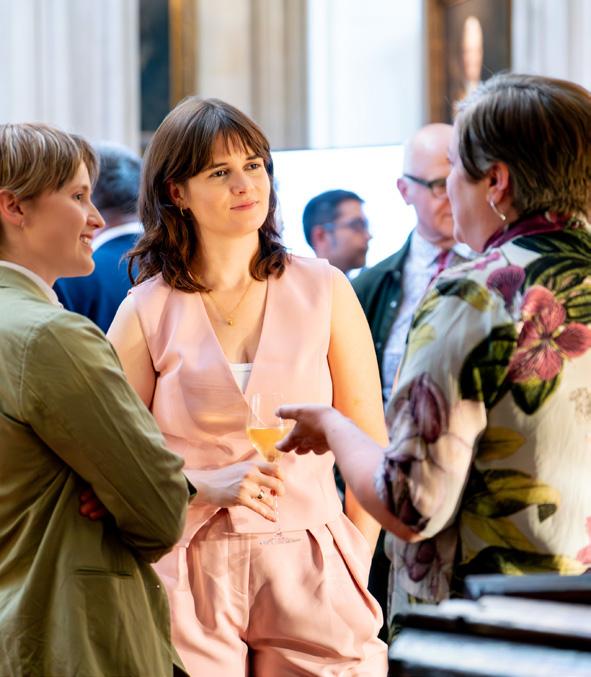
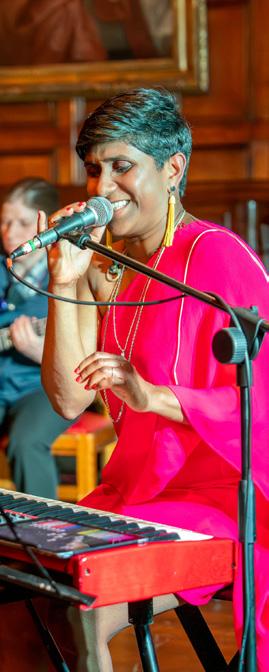
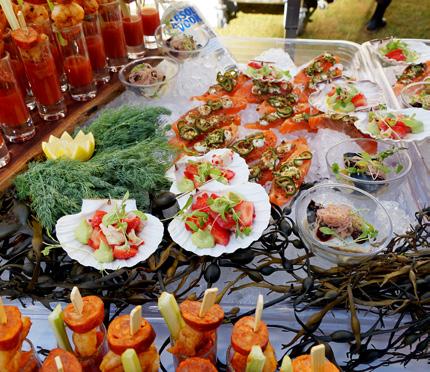
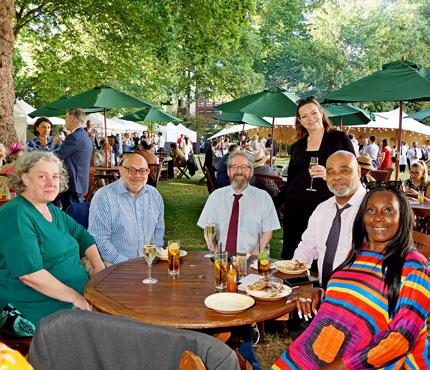
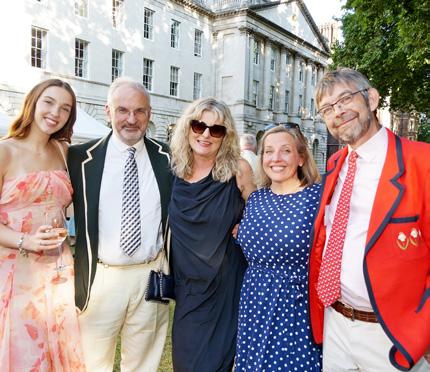
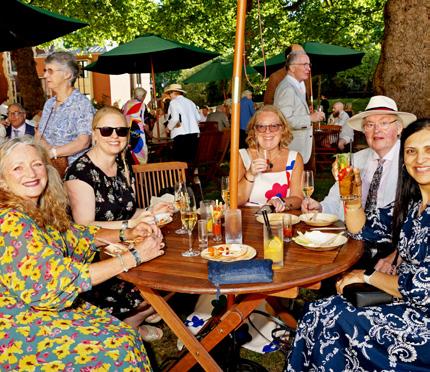
On 2 July, members and their guests gathered on the North Lawn for the Inn’s annual Garden Party, a highlight of the summer calendar. Against the backdrop of our beautiful gardens, the evening offered exceptional hospitality, with vibrant food stalls showcasing the creativity of our Catering Team and live music adding to the atmosphere. Welcoming over 550 attendees, the event was a real celebration.
Nick Easterman’s photos from this event can be viewed here: https://flic.kr/s/aHBqjCkdQe
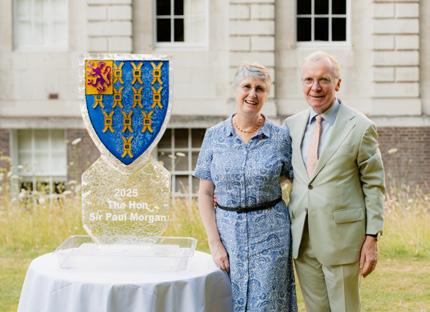
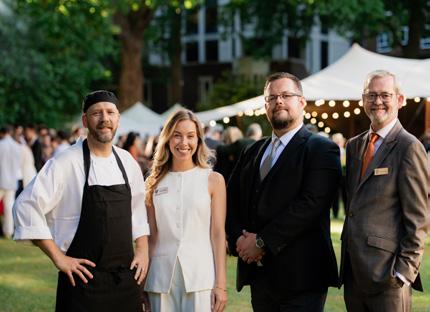
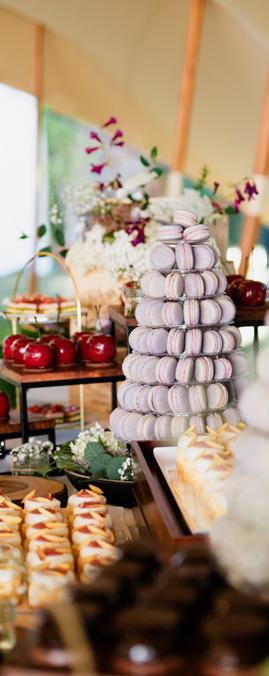
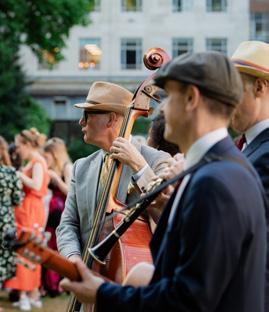
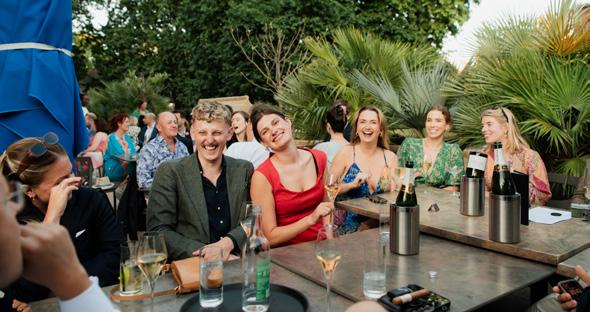
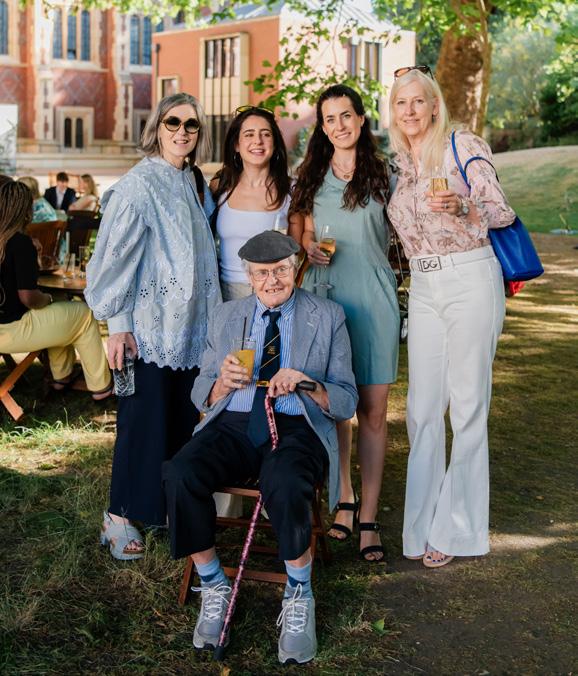
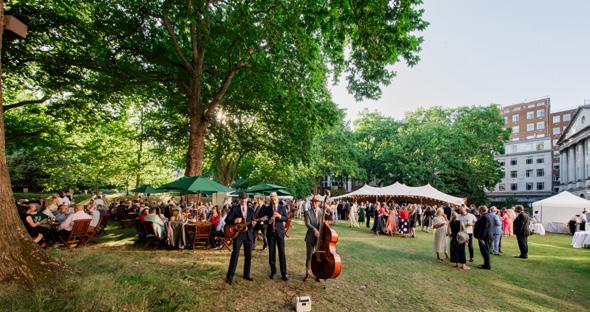
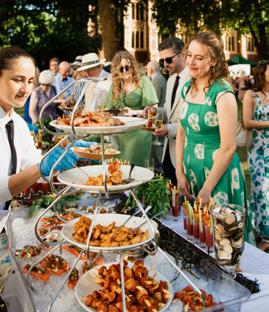
A much-loved, multi-generational event, Family Day brought members, families and friends together for an all-age Chapel service followed by a BBQ lunch and lively activities on 6 July. With a fantastic turnout, the day offered something for everyone and a warm sense of community across generations.
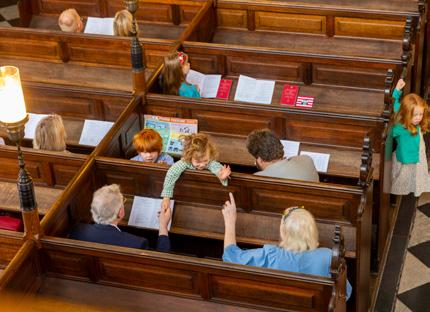
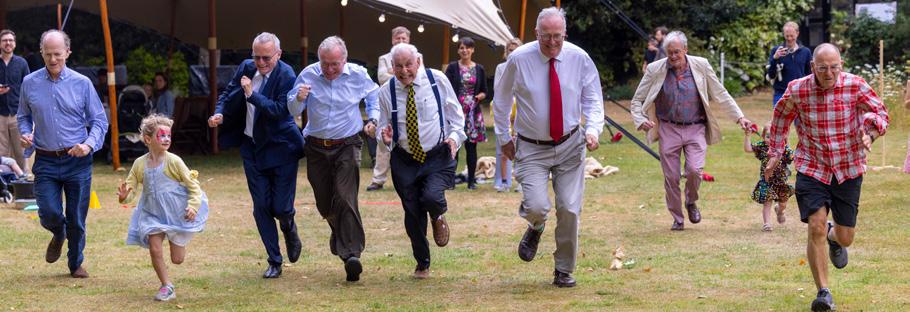
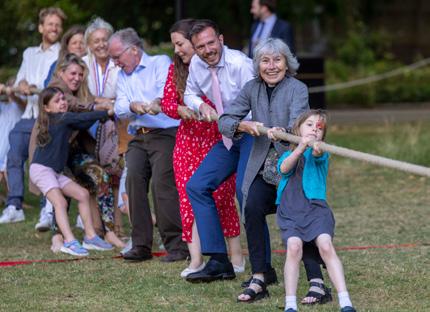

Probably the most anticipated events at the Inn, this year’s Grand Days boasted two full houses, with student tickets selling out within an hour and the remainder selling out within the day. Grand Day celebrates the Treasurer’s time in office with a champagne reception and a formal dinner. This year, the Treasurer and Lady Morgan spent time with the Kitchen Team ahead of the event to witness first-hand the skill and effort that goes into catering for an event of this kind – and to lend a hand with the preparation of the desserts!
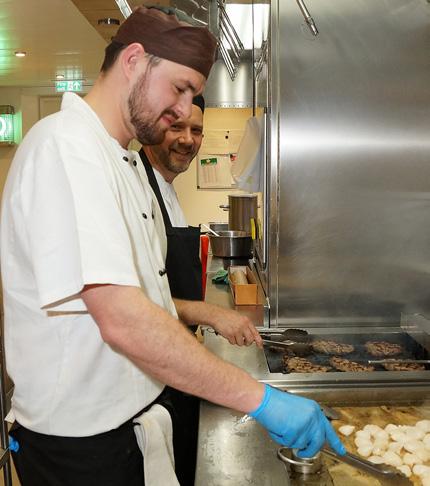
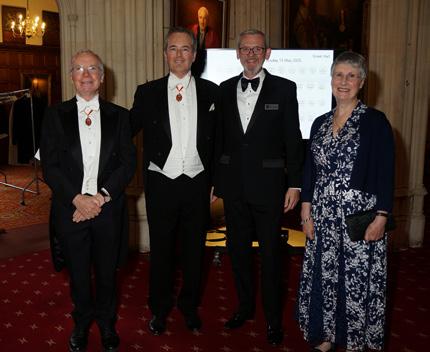
To see more photos of Grand Days, like those above, and other Inn events taken by Nick Easterman, browse his Flickr albums: https://www.flickr.com/photos/64305453@N02/albums/ May Grand Day
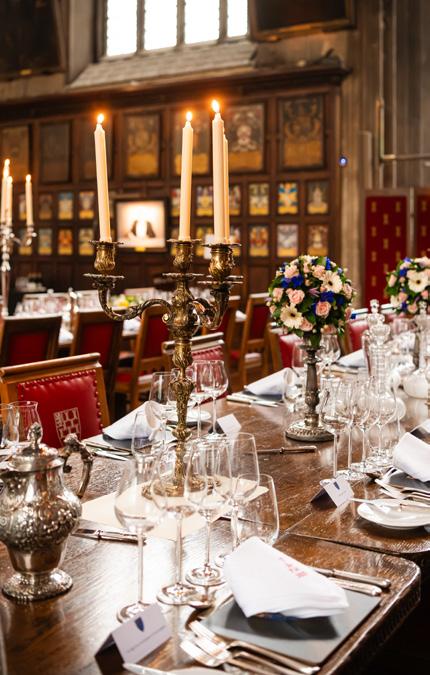
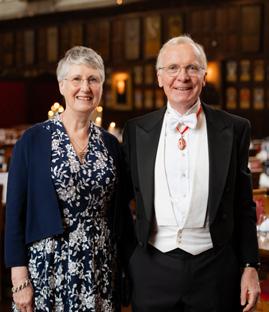
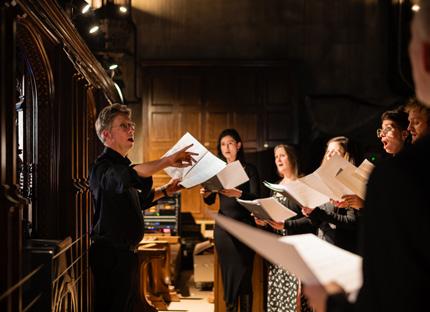
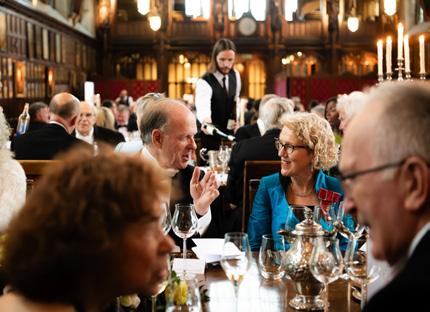
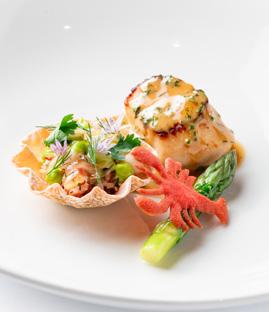
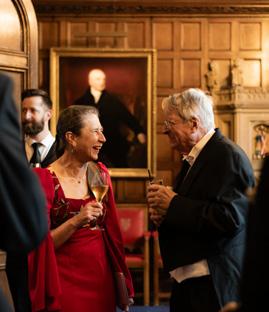
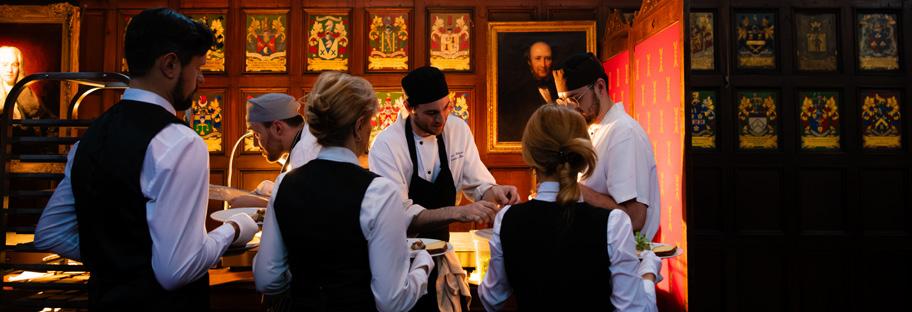
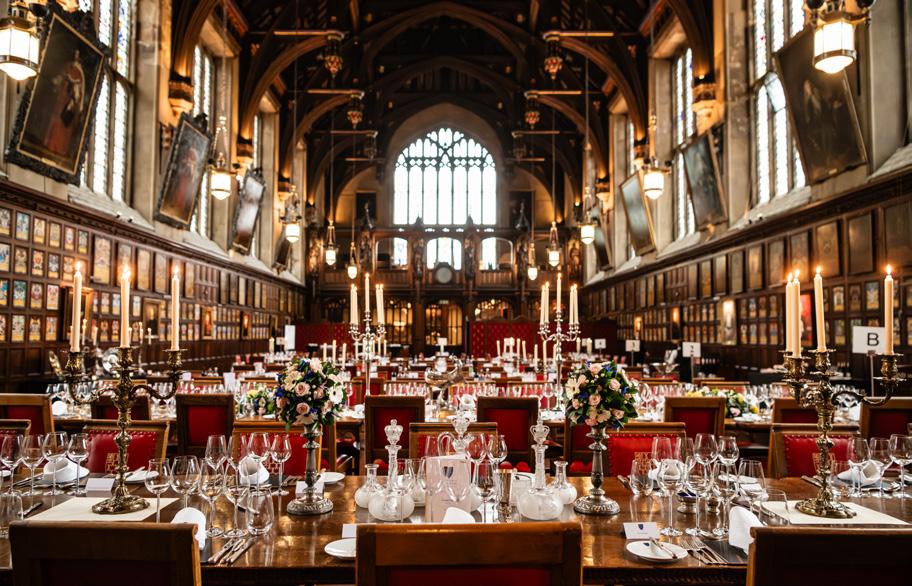
May Grand Day
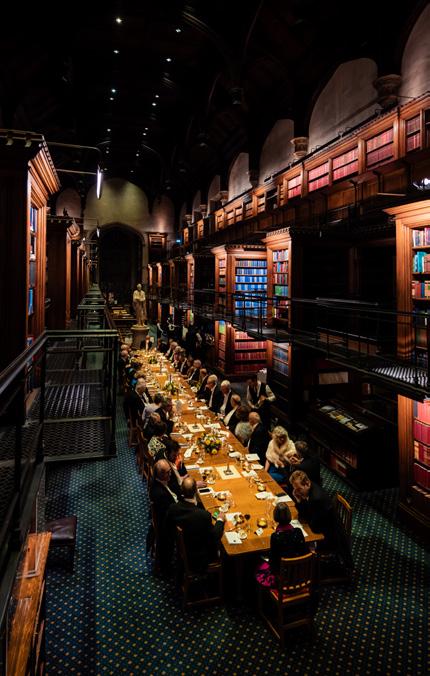
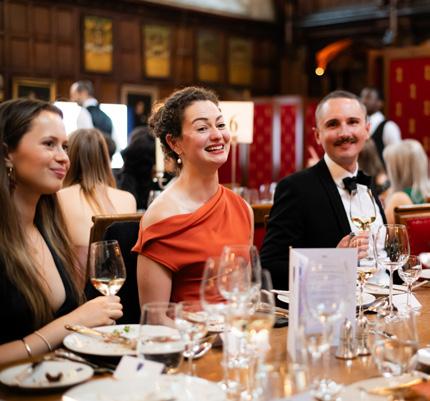
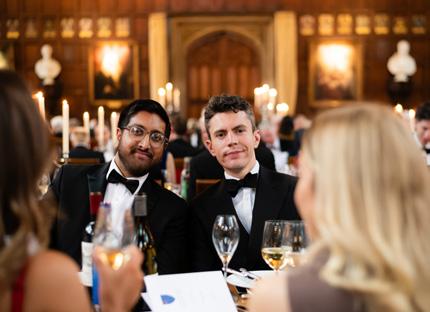
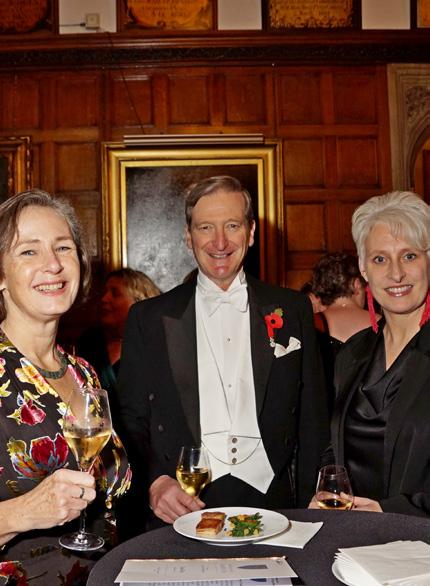
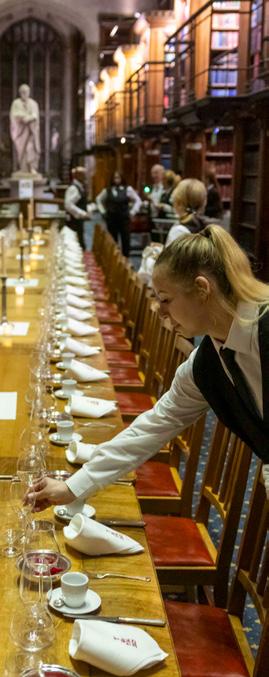
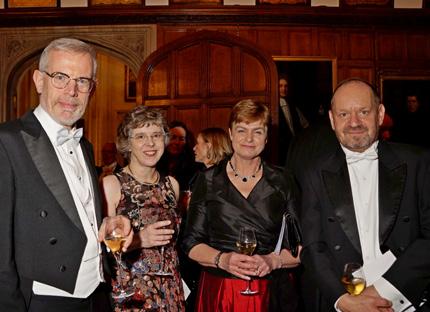
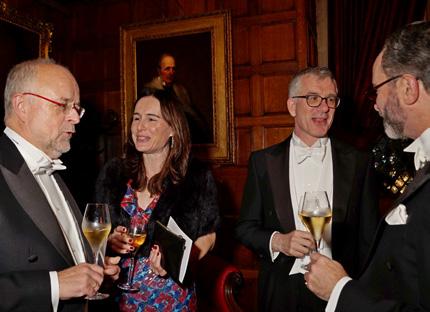
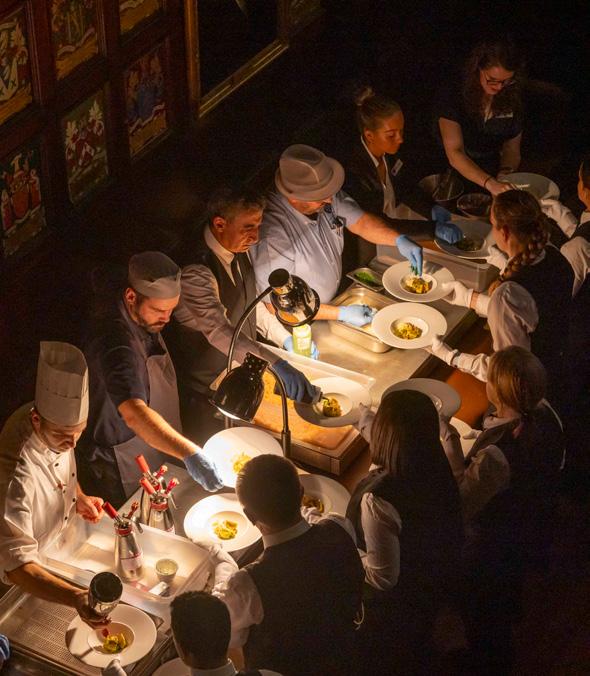
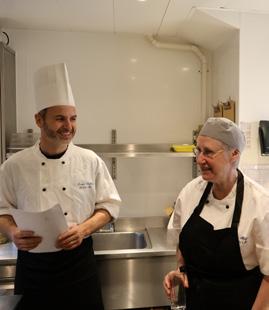
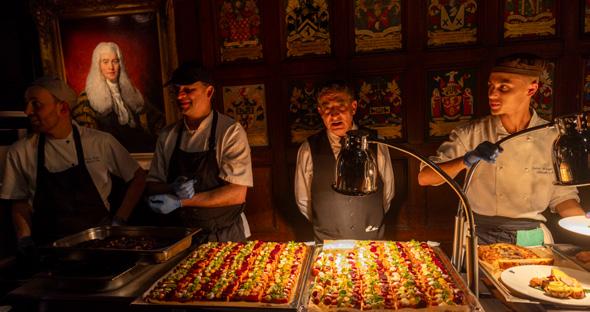
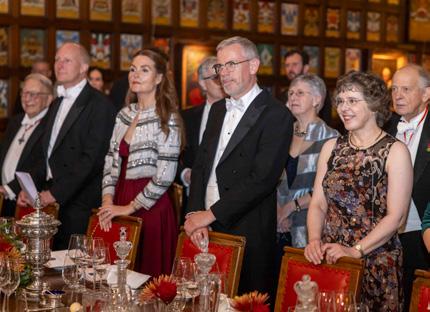
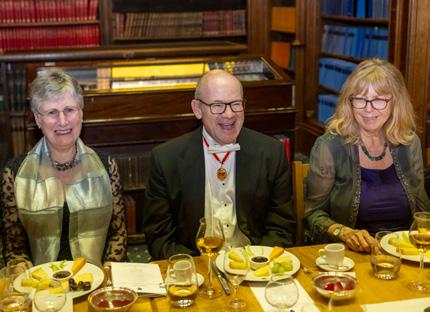
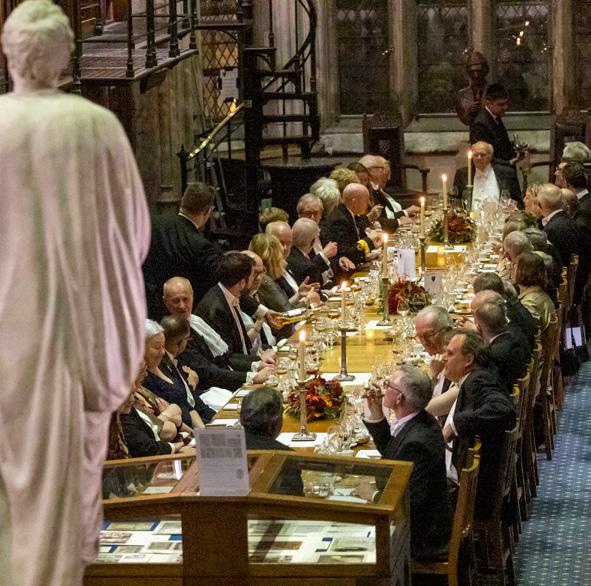
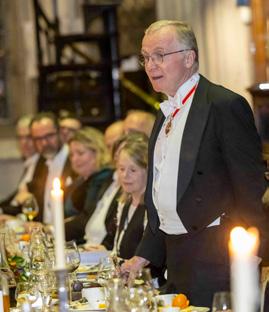
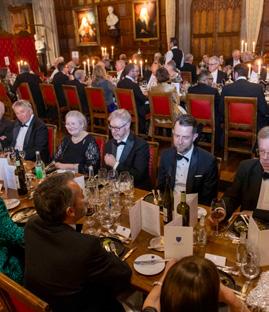
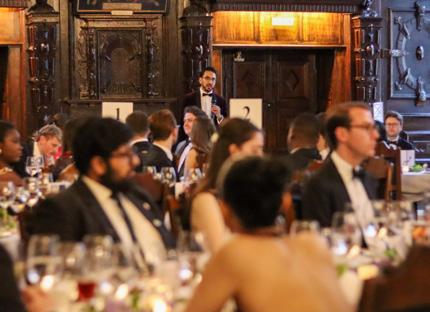
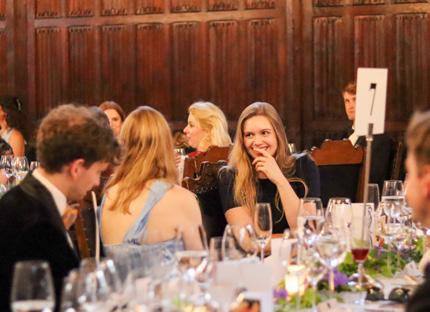
Each year, the Junior Members’ Committee (JMC) hosts a Summer Dinner for junior members of the Bar. This year’s ‘Midnight in Montmartre’ theme transformed the Old Hall into an elegant Parisian evening, with dinner and entertainment in the form of live music from Fleet Street Beats. The evening was not only a memorable social occasion but also an opportunity to network and connect with peers.
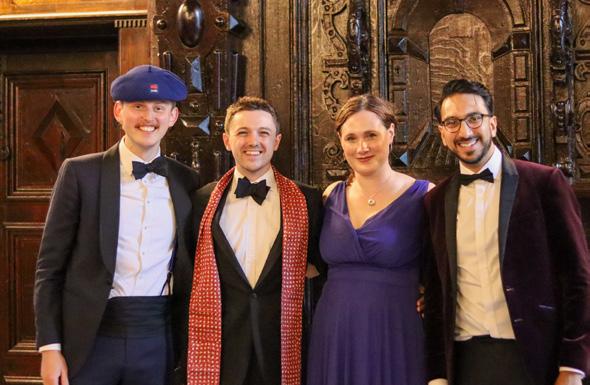
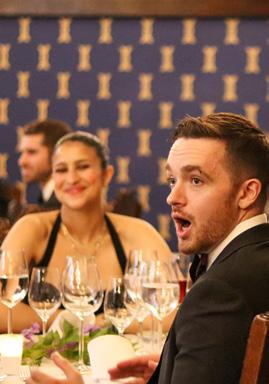
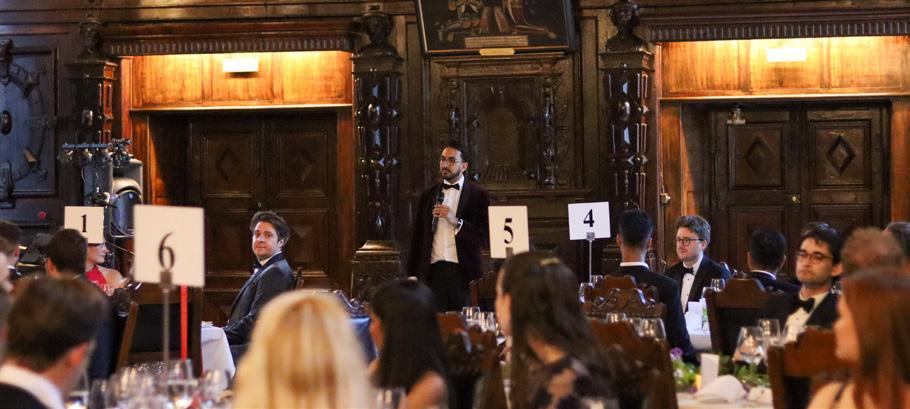
We were delighted to host Judge Kathy-Ann Brown on 16 October to give the annual Sir Thomas More Lecture. The talk was titled ‘Consent and the Rule of International Law: the evolving role of international tribunals in an unstable world’, through which she examined the importance of consent in upholding the rule of law and the delicate balance courts must strike in politically charged international disputes.
Read the full lecture here: https://www.lincolnsinn.org.uk/news/sir-thomas-more-lecture-25/
For more photos, visit Nick Easterman’s Flickr album from the event: https://flic.kr/s/aHBqjCyGxo
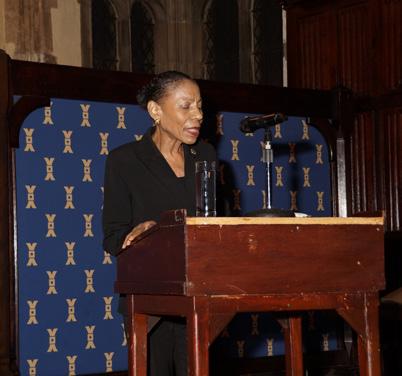
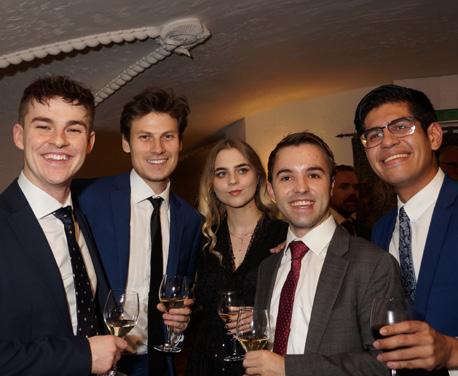
‘The Bar: The Past, the Present, and the Future’ – The Treasurer’s Lecture 2025
On 20 November 2025, The Hon Sir Paul Morgan delivered the Inn’s annual Treasurer’s Lecture, marking 50 years since he was Called to the Bar.
The lecture reflected on the history, traditions, and evolution of the Bar, explored its current operations, and offered recommendations and insights for the future.
The Treasurer’s Lecture is a Qualifying Session offered annually.
Read the lecture here: https://www.lincolnsinn.org.uk/news/the-bar-the-past-the-present-and-the-futureread-the-2025-treasurers-lecture/
Jaissa Ahluwalia – actor, writer, filmmaker, and trade unionist – delivered our annual Sir Mota Singh Lecture on 10 November. He shared his personal journey of growing up with dual heritage in the UK, exploring identity, belonging, and the importance of embracing all parts of who you are.
For more photos, visit Nick Easterman’s Flickr album from the event: https://flic.kr/s/aHBqjCAjgC
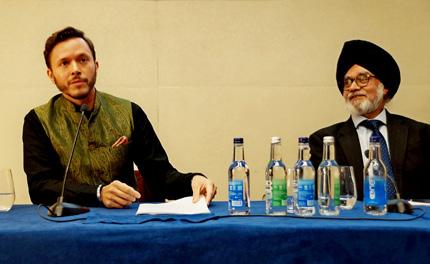
The Black Books Society was founded to promote an appreciation of the history and possessions of Lincoln’s Inn through a series of talks and lectures by members, researchers, and academics. In 2025, they organised three lectures, all of which are available on the Inn’s YouTube channel playlist.
Lord Erskine: The tongue of Cicero and the soul of Hampden
Dr Nicola Phillips of Royal Holloway, University of London gave an excellent overview of the colourful life and career of Thomas Erskine (1750-1823) one of the greatest lawyers of his age.
The “Lincoln’s Inn Which Never Was: Lucky Escapes and Missed Opportunities.”
The Inn’s Librarian, Dunstan Speight, presented a selection of designs for building schemes which, had they been built, would have created an unrecognisable Lincoln’s Inn.
Picture Frames: History, Purpose and Hidden Significance
Occupying something of a no-man’s land between the Fine and Decorative Arts, the history of picture frames is relatively under-studied and underappreciated. In this lecture, the designer and architectural historian Alexander Wyndham Ashworth used examples from the Inn’s collection to explain changing tastes and styles and showed how the choice of frame can perfect or ruin a painting.
One of the key pillars of the Inn’s purpose is to manage, use and enhance our historic estate for the benefit of members, tenants, residents, external customers and the wider public. A central part of fulfilling that purpose is building greater public awareness of the Inn’s work, our heritage, and the vital role we play in the life of the legal profession.
Alongside our extensive education, outreach and communications activity, we proudly offer a number of public events and cultural experiences that allow people to discover the Inn firsthand. Events such as Open House and Open Gardens allow visitors to explore our buildings and gardens, our concerts offer world-class music in a unique setting, and our tours offer a chance to learn about the history of the Bar and gain an insight into the life of an Inn of Court. These activities help foster understanding, accessibility and connection, ensuring the Inn remains relevant and open to the world beyond our gates.
The following pages highlight some of the standout public events and cultural moments from 2025, all of which helped strengthen our public profile and introduce Lincoln’s Inn to new audiences.
Lincoln’s Inn enjoyed a recordbreaking Open House Festival on Saturday 13 September, welcoming an unprecedented 4,000 visitors in just six hours. The Inn was also named one of Time Out’s five must-see venues for this year’s festival — a boost that helped draw visitors from across the UK and as far afield as Brazil, Moldova, Iceland and China.
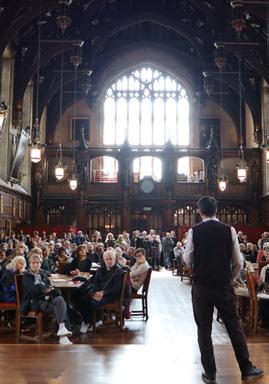
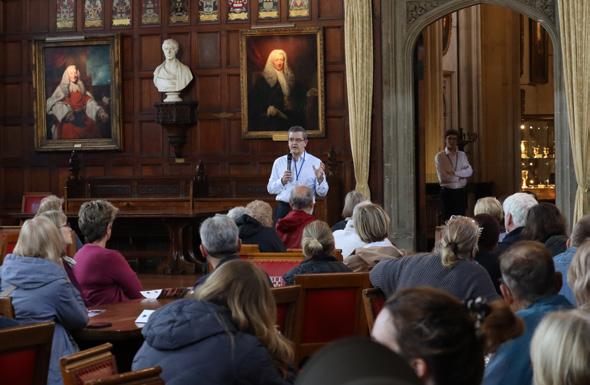
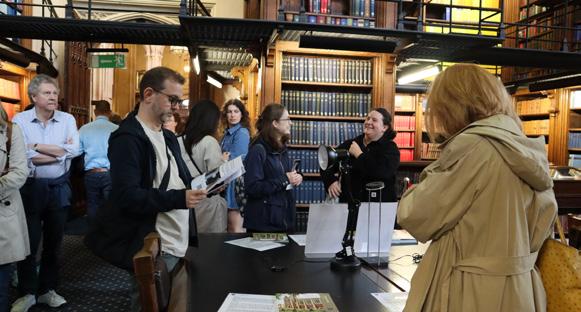
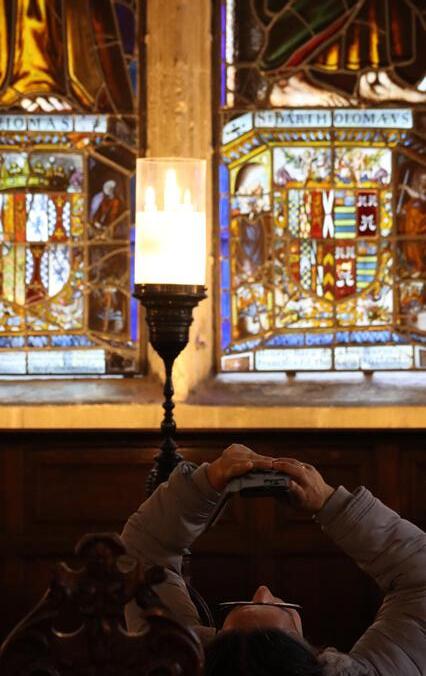
87% of our Open House visitors were stepping inside Lincoln’s Inn for the first time, and feedback suggested it did not disappoint.
“Impressive architecture, a wonderful oasis.”
– Lara from London
“Very interestingwe loved the Librarian’s historical talk!”
– Kathleen from London
“Lovely to see the inside after many years of walking nearby.”
– Frances from Cambridge
“As an Open House opportunity, the Honourable Society of Lincoln’s Inn is a rare chance to see an important postmark of British legal law and history from its roots right up to the modern day.”
– Sadek (Google Review)
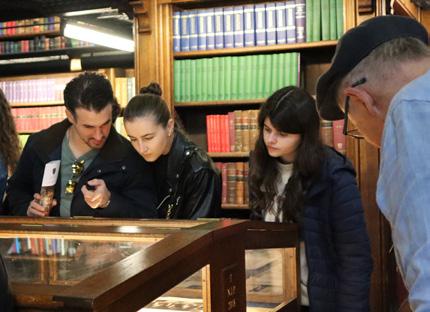
Across the estate, guests explored the Great Hall, Old Hall, Chapel, Ashworth Centre and Library. Our Library Team delivered engaging talks on the history of the Inn to a full Great Hall every hour, while aspiring barristers filled the Ashworth Centre Lecture Theatre for panel discussions on becoming a barrister and life in practice with Inn members Christopher Poole and Sadia Zouq. A digital exhibition showcased films on the Inn’s history, collections and activities, as well as behind the scenes insights into our archives and productions filmed at the Inn.
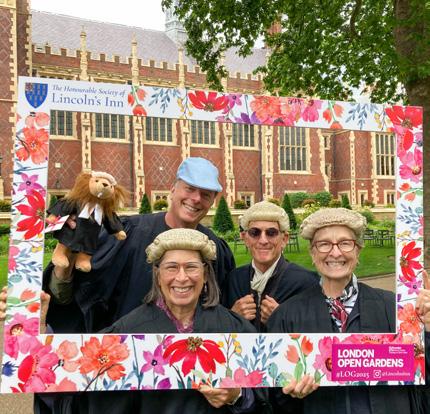
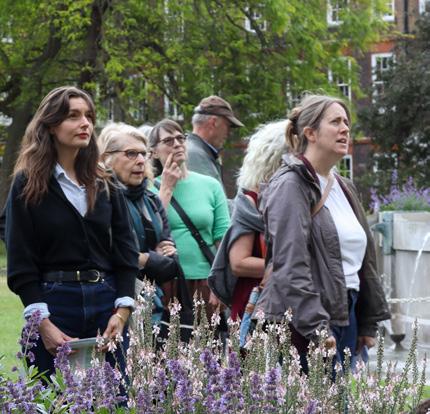
Despite a forecast of storms, our gardens were filled with music, lawn games and community spirit on Saturday 7 June as the Inn took part in Open Gardens 2025. Close to 1,000 visitors joined us – 80% of them firsttime visitors to the Inn. Ticket proceeds supported the London Parks and Gardens Trust, with £285 raised in cash donations alongside online ticket sales through the festival itself.
The great British weather certainly didn’t dampen the day. Guests enjoyed a lively programme of activities, from free guided tours with the Head Gardener, Miranda Kimberley, to a heartwarming performance by the Deansfield Primary School children’s choir.
Across the gardens, visitors sampled the Inn’s homemade bread using herbs from our gardens; tried on wigs and gowns for a playful “dress as a barrister” photo moment where they were introduced to the basics of what a barrister is; followed a children’s trail; enjoyed facepainting; and took part in classic lawn games including giant Connect 4, quoits and croquet. Donations from our popular plant stall raised a further £115 for Alzheimer’s Society, the Inn employees’ chosen charity of the year.
The MCR’s cakes, sausage rolls and refreshments were as popular as ever, while many guests brought picnics and relaxed among the greenery as they made the most of everything on offer.
We look forward to welcoming everyone back for Open Gardens 2026 on Saturday 6 June — save the date and spread the word!
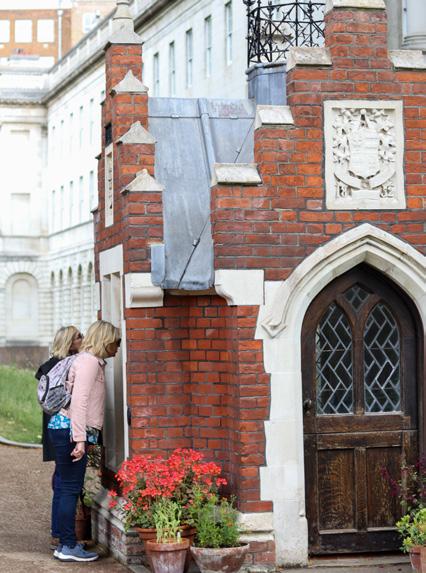
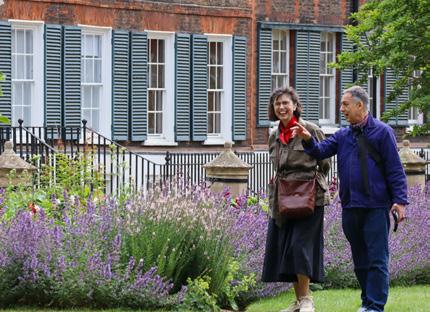
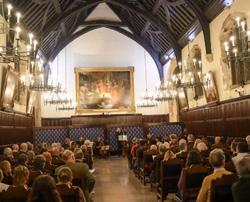
In 2025, we expanded our cultural programme with a new strand of public chamber music concerts. At the invitation of the Treasurer, the talented Blaze Ensemble performed a series of concerts in the atmospheric setting of the Old Hall. The series comprised three performances: a free lunchtime concert in September, which drew members, local workers and firsttime visitors alike, and two ticketed evening concerts in April and October featuring programmes of Debussy, Mozart and Beethoven, and Schubert’s Octet in F Major.
The September concert also included the premiere of Montana Peaks, a new work by celebrated British composer Adrian Sutton, known for War Horse, Coram Boy and The Curious Incident of the Dog in the Night-Time. Adrian sadly passed away from cancer just weeks after the performance, and we are honoured to have shared this final premiere with our audience. A retiring collection was held in support of the hospice that cared for him.
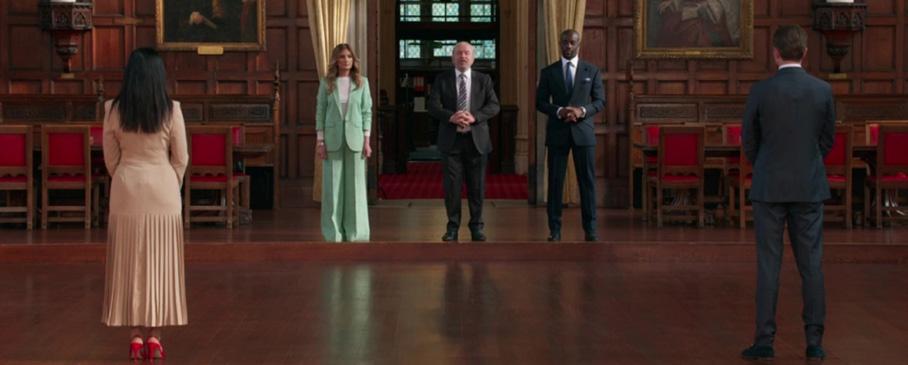
You may have spotted the Inn on screen in several 2025 releases, including:
• The Apprentice: The Final (BBC)
• A Cruel Love: The Ruth Ellis Story (ITV)
• A Thousand Blows (Disney+)
• I, Jack Wright (U&Alibi / Now TV)
• Mobland (Paramount+)
• A Wells Fargo ad campaign featuring Reese Witherspoon, directed by Taika Waititi
In 2025, the Inn continued to be a sought-after filming location for high profile film and television productions. Several new projects were shot on site, while others filmed in previous years reached release, giving viewers around the world a glimpse of the Inn’s distinctive architecture and atmosphere.
Filming may happen behind closed doors, but it plays a significant role in supporting the Inn. The income it generates helps maintain our historic estate and subsidises membership activities, while onscreen appearances boost public recognition and spark increased interest in tours, events and the Inn’s heritage.
We are extremely grateful to our residents and tenants for their patience and cooperation throughout these projects. We know filming can occasionally cause inconvenience, and we work hard to keep disruption minimal and discretion high. Our thanks also go to our staff, whose flexibility and can-do attitude enable us to respond to the fast-moving nature of filming requests.
For a comprehensive list of events, please visit the Events page on our website and use the ‘What’s On’ calendar: https://www.lincolnsinn.org.uk/whats-on/
Here are a few upcoming highlights to be aware of:
Call Days
• Tuesday 24 March
• Thursday 26 March
• Tuesday 21 July
• Thursday 23 July
• Tuesday 6 October
• Thursday 8 October
• Tuesday 24 November
• Thursday 26 November
Grand Days
• Thursday 7 May
• Tuesday 3 November
Garden Party
• Wednesday 1 July
Family Day
• Sunday 5 July
Lecture & Domus Dinners
• Tuesday 2 June
• Thursday 9 July
• Monday 19 October
• Wednesday 11 November (Sir Mota Singh Memorial Lecture)
Debate Dinners
• Tuesday 28 April
• Tuesday 27 October
• Tuesday 1 December (Domus Style)
Sir Thomas More Lecture & Dinner
• Thursday 22 October
Council dates
• Tuesday 10 February
• Tuesday 10 March
• Tuesday 19 May
• Monday 15 June (followed by dinner with new silks)
• Tuesday 14 July
• Tuesday 13 October
• Tuesday 17 November
• Tuesday 8 December
Inn closures
• Thursday 2 April, Inn closes at 15:00 –reopens Monday 13 April (Easter closure)
• Monday 4 May (Bank Holiday)
• Monday 25 May (Bank Holiday)
• Monday 31 August & Tuesday 1 September (extended Bank Holiday closure)
• Monday 21 December, Inn closes at 15:00 – reopens Tuesday 5 January 2027 (Christmas closure)
*Please note that all event dates may be subject to change. Check our website for the most up to date information.
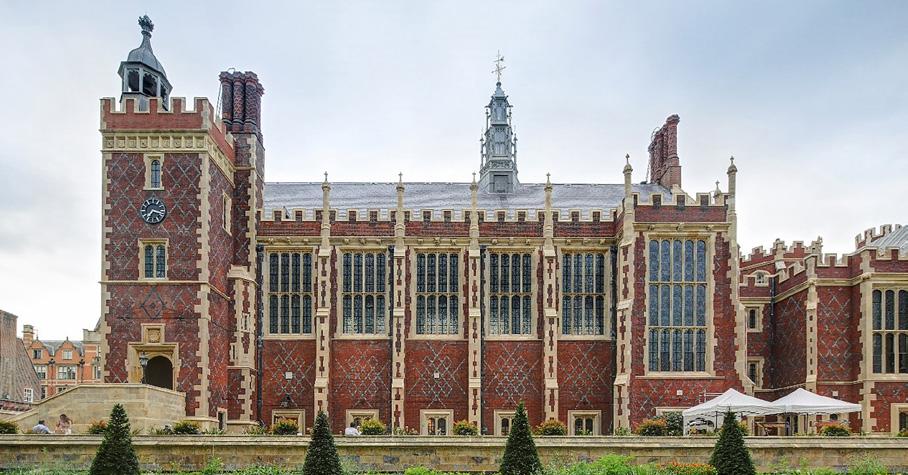
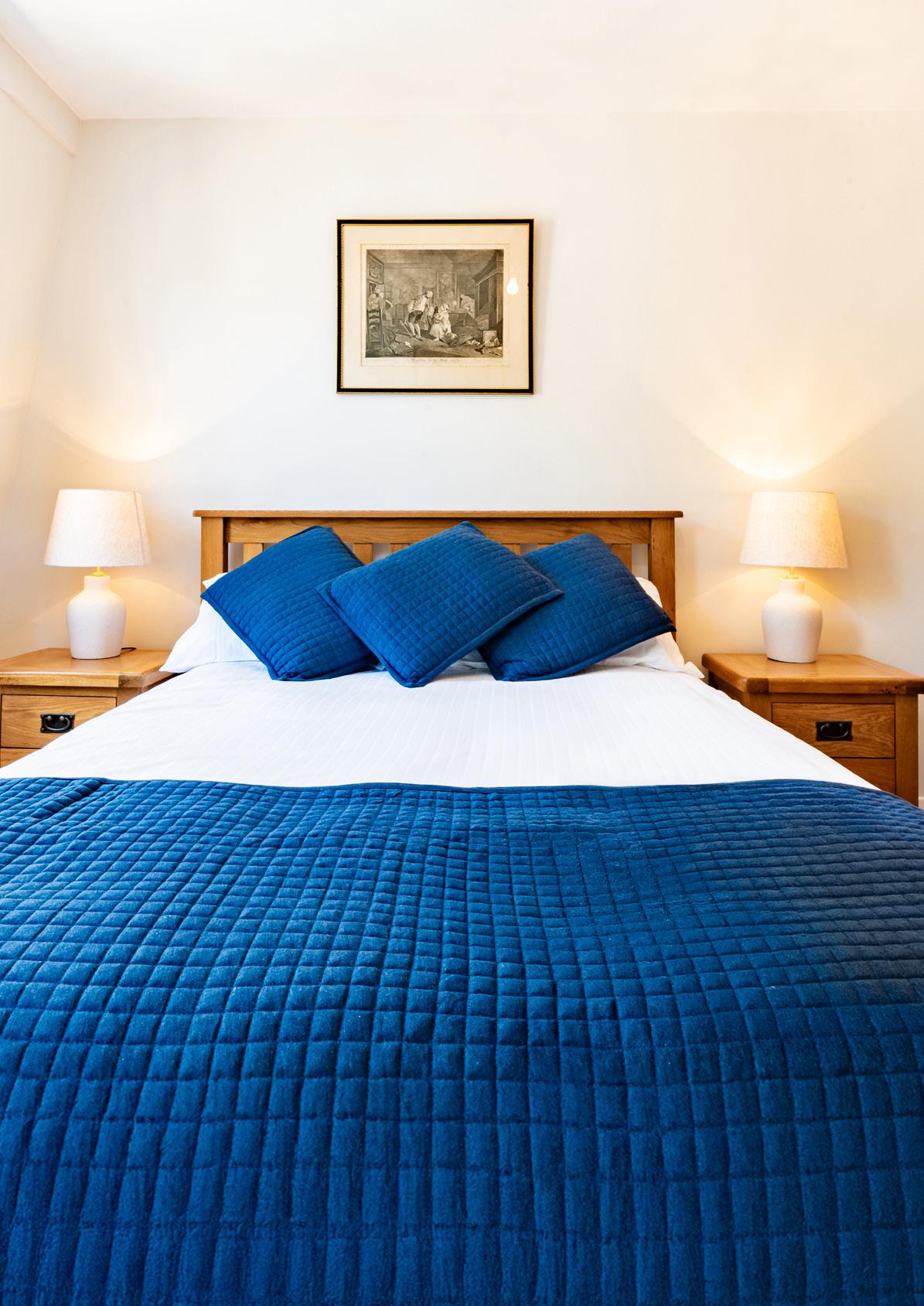
Choose from four beautifully refurbished, self-contained flats in the heart of Lincoln’s Inn, exclusively available to Called members of the Inns of Court.
Modern comfort meets elegance, with easy access to the Inn’s facilities and surrounding area. Bookings are available for up to 28 consecutive days.
Submit a booking enquiry to Member Events: lincolnsinn.org.uk/members/member-services/membersaccommodation/
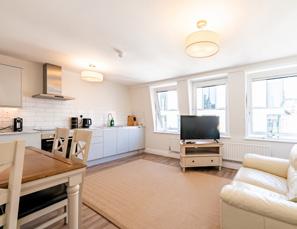
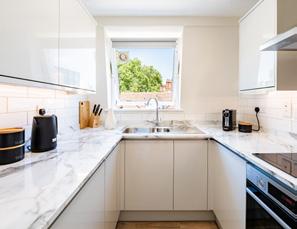
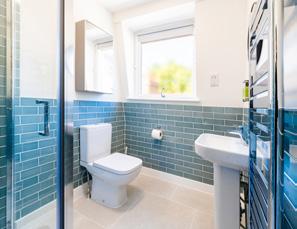
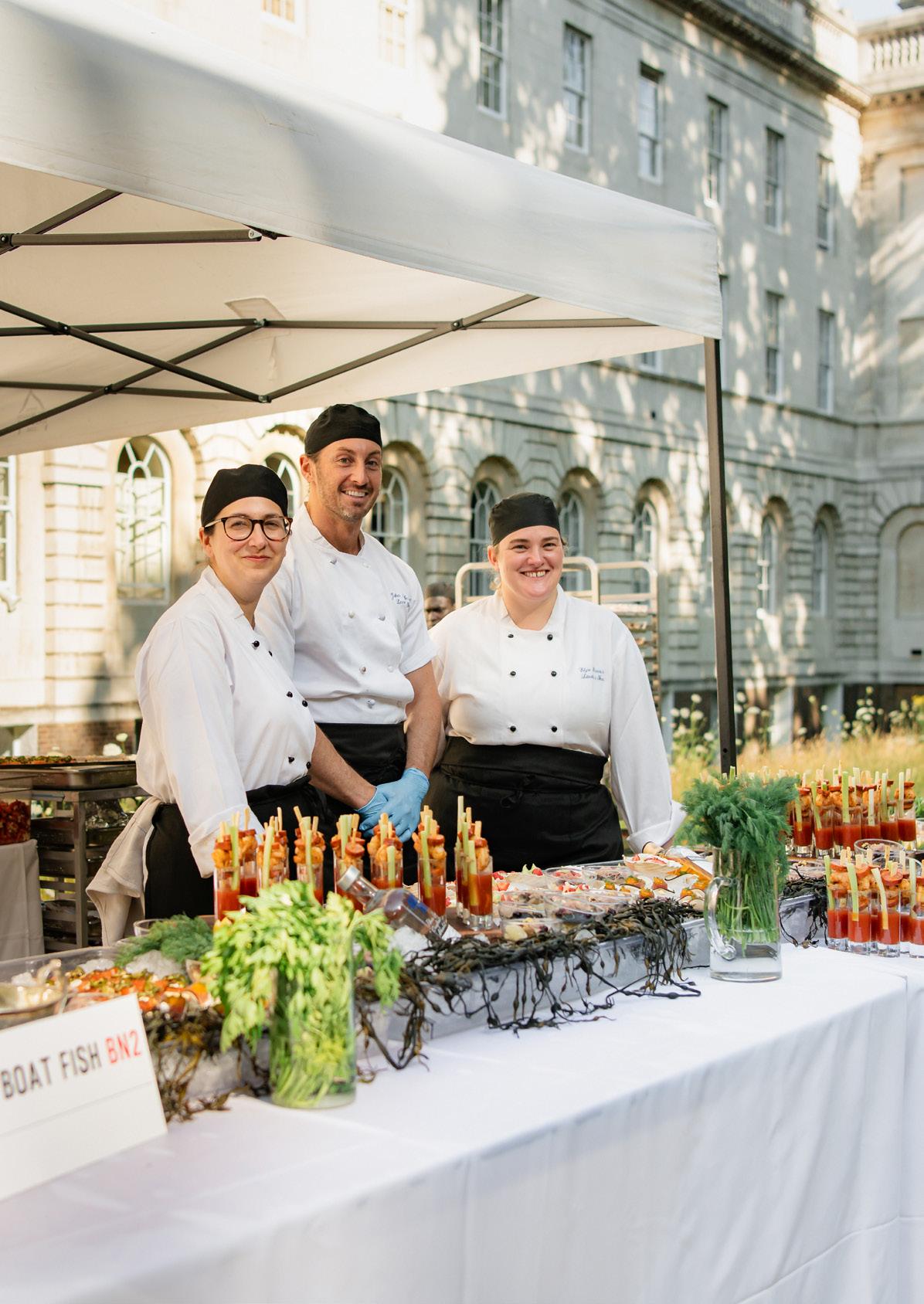
Lincoln’s Inn thrives thanks to the commitment of its members, volunteers and staff. The following achievements illustrate the talent and dedication behind the Inn’s success. Though not exhaustive, these highlights reflect the values that underpin our organisation and continue to drive it forward.

By Anita Arora, Specialist Prosecutor, Special Crime and Counter Terrorism Division, CPS
When I was Called to the Bar by Lincoln’s Inn in October 1994, I could not have foreseen how my professional life would evolve. What began in the structured world of commercial pupillage quickly shifted into the demanding, energising and wonderfully unpredictable arena of criminal advocacy. For over twenty three years I appeared on both sides of the courtroom and represented the Crown Prosecution Service across London and beyond. My practice developed rapidly, and I specialised in rape and serious sexual offences, becoming a Grade 4 external advocate. I prosecuted some of the most complex and sensitive cases in the system which were often defended by silks.
From this vantage point, I believed I understood the CPS well. Looking back, I now recognise that my perspective was limited to what happened in court. I had not yet stepped inside the organisational engine room where thousands of decisions – each carrying significant consequences – are made every day.
In the early summer of 2018, driven by curiosity and a desire to broaden my skills, I removed my selfemployed advocate’s blinkers which were literally wig and gown shaped and stepped away from chambers

for what I assumed would be a brief secondment with CPS London. It was intended to be a three-month diversion. Instead, it altered the course of my career.
I joined CPS London’s headquarters not fully knowing what to expect. I suddenly found myself as an employed barrister responsible for nearly a hundred live Crown Court cases, working alongside colleagues who had instructed me for years. I discovered a large, diverse, dedicated and inspiring workforce navigating an intricate ecosystem of policies, performance measures and internal structures – accompanied by an entirely new language mostly consisting of abbreviations and acronyms.
It was not long before I transitioned from secondee to permanent District Crown Prosecutor (DCP), a role that is, in many ways, one of the most varied and high-impact positions within the organisation. A DCP oversees legal decisionmaking, manages teams of lawyers, engages with judges and external partners, and can hold responsibility for the performance of an entire Crown Court centre.
The shift from self-employed barrister to CPS legal manager was profound. No two days were alike. I could be supporting colleagues through complex legal issues or difficult personal circumstances, responding to judicial enquiries at short notice, managing crises in live trials, or working with the court service to resolve local pressures. As the visible and accessible point of contact for the Resident Judges, I represented the CPS at court user groups and worked collaboratively with stakeholders across the criminal justice system to address delays and improve the experience of victims and witnesses throughout the trial process.
Alongside operational leadership, each DCP leads on a thematic area of work. I chose domestic abuse – a decision that deepened my understanding of trauma, vulnerability and the evolving nature of abusive behaviours.
This work allowed me to strengthen my expertise in emerging offences such as controlling and coercive behaviour and non-fatal strangulation. I worked closely with senior police colleagues to drive up the quality of investigative files and delivered training to frontline officers across London to strengthen their legal knowledge and support more victim-centred practice. As a result of this work, I was invited to open the Metropolitan Police’s Spring Conference on Domestic Abuse.
Building strong relationships with external experts became an essential part of the role. I worked with organisations such as the Institute for Addressing Strangulation and the FGM charity The Vavengers. These partnerships ensured that CPS lawyers and managers gained a deeper understanding not only of the legal elements of these offences but also of the ongoing physical and psychological effects on survivors –insights we heard directly from those with lived experience.
Drawing on my years of working with vulnerable witnesses, I helped shape improvements in how we approach evidence, support victims and recognise trauma-led behaviours. This thematic work gave me a renewed sense of purpose and reinforced the profound impact that prosecutors can have far beyond the courtroom.
Over the last seven years, there have been many unforgettable moments.
One was being invited to speak at the French Embassy to a delegation sent by the French Prime Minister, who were exploring how to improve France’s response to domestic abuse. I spoke about the UK’s legislative framework, the policy behind the newer offences, and the support provided to victims during the criminal justice process. In a subsequent letter of thanks, the lead liaison judge explained how much light had been shed on the subject, including ideas they hoped to implement in France through legislative and regulatory reform by the summer of 2023.
Another memorable experience was taking part in a Sky News segment on the prosecution of domestic abuse in London. If anyone wonders how much effort goes into producing ten minutes of television, the answer is: many hours under hot studio lights, hoping not to misspeak and not to notice your makeup slowly melting.
These moments reminded me how the work of a prosecutor can influence not only cases but public understanding, international policy and the wider conversation around justice.
During my initial secondment, Chief Crown Prosecutor Lionel Idan told me something that changed the way I viewed my career. I confided that I missed being on my feet in court. He gently reminded me that as a self-employed advocate, my impact — though important — was necessarily limited to the cases I personally took on.
At the CPS, he said, I could shape hundreds of cases and touch many lives through leadership, guidance and systemic improvement.
He was right. Remaining at the CPS has been the most far-reaching and meaningful chapter of my career to date.
One of the most valuable lessons I have learned is that if you have a passion for improving how things are done –whether in casework, policy or the support offered to victims – the CPS will encourage and empower you to pursue it. The organisation thrives on the expertise, experience and commitment of those who care deeply about justice.
My years at the Bar built my identity as a lawyer and an advocate. My years at the CPS have allowed me to grow as a leader, and a dedicated public servant.
And for that, I am profoundly grateful.
Anita Arora
Sustainability at the Inn
Sustainability is a cornerstone of our operation. Working closely with the Inn’s Green Team, we have implemented initiatives that make a real difference:
• Partnering with suppliers who share our values on ethical farming and traceability
• Creative reuse of in-house items — from old legal books to wine crates — for distinctive presentation
• Investment in energyefficient kitchen equipment
• Expansion of our edible garden for fresher, on-site produce to enhance our menus
• Growth of our hot composter to reduce waste and create compost for the Inn’s gardens
• Sustainable agricultural values and fair pay for suppliers
Lincoln’s Inn is proud to be the last remaining Inn of Court with an in-house Catering Team, delivering exceptional service while pioneering sustainable, modern dining experiences. Our 60-strong department spans front of house, kitchen, and events.
Our success is built on the dedication of our team. Many have been with the Inn for decades, including Front of House Porter Steve Courtney (affectionately known as Ginger to many), who celebrated 34 years of service in 2025, a testament to our strong team culture and commitment to professional development.
We also invest in emerging talent. From cheese-making and allergen-free menu development to foraging with Hunter Gather Cook, our chefs continually expand their skills. Partnerships with Westminster Kingsway College and the League of Club Chefs support mentoring, apprenticeships and future skills development.
Menus with meaning
Our menus evolve continuously to reflect modern tastes and diverse dietary needs. In 2025, we introduced:
• Fully vegan weddings that set a new benchmark for inclusive dining
• Regionally themed corporate dinners celebrating British culinary heritage
• Interactive tasting menus paired with wines from independent vineyards
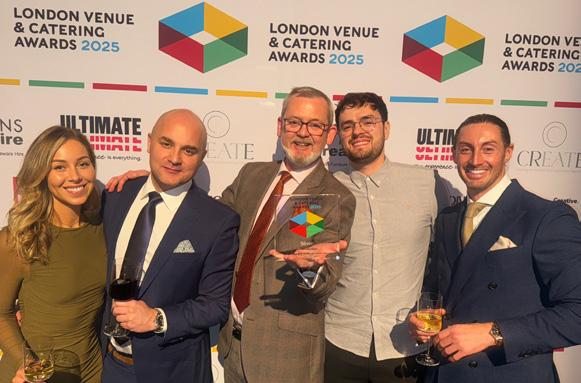
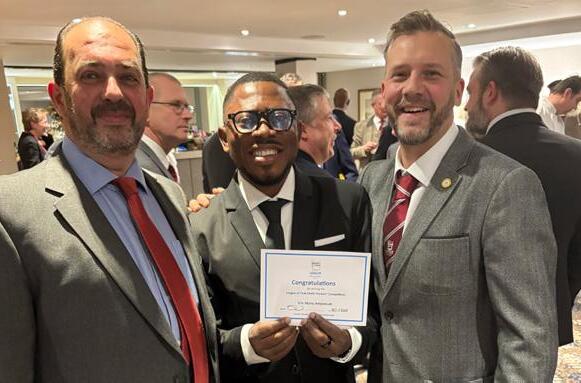
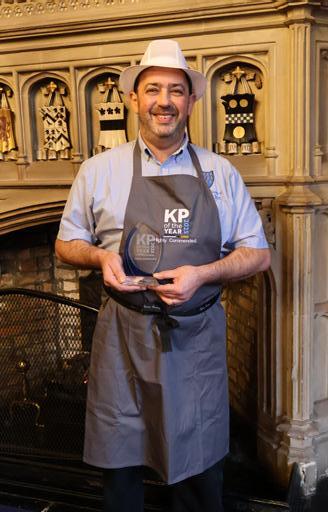
This year brought a series of accolades that celebrate the talent and dedication of our Catering Team and the quality of our venues:
• Silver Award for Best Historic Venue or Livery Hall at the London Venue & Catering Awards, recognising the Inn’s unique blend of heritage and hospitality.
• José Farinha ranked among the UK’s top three Kitchen Porters, earning a Highly Commended award and securing runner-up in the national KP of the Year competition with The Caterer and Winterhalter
• Eric Amponsah achieved joint first place in The League of Club Chefs’ Porters Competition, a testament to his skill and commitment.
• Elora Hunt awarded first place in The League of Club Chefs’ & Town & Country Fine Foods Pastry Challenge Cup 2025.
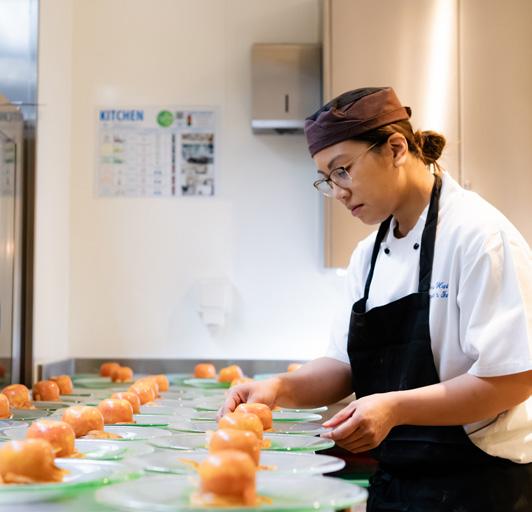
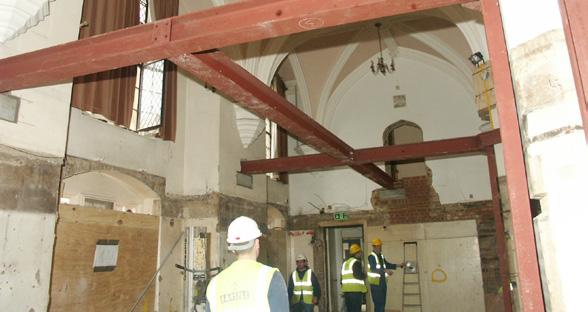
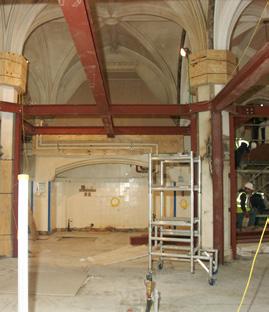
Alongside industry accolades, we also celebrated 20 years of the MCR Restaurant & Bar — and two colleagues whose careers have grown with it, having started with us in the MCR when it first opened: Joaquim (“Joe”) Guerreiro and Alina Hunek.
Joe, now MCR Manager, is a firm favourite with members, synonymous with the MCR’s warmth and exceptional service, qualities he instils in the team he leads. Alina now works as a Coordinator in the Member Events office, maintaining daily contact with members and supporting event coordination, a continuation of the member-first ethos she helped build in the MCR. Their milestones underscore how people and place have grown together to create the quality and experience that define our hospitality.
Over the years, we have expanded the MCR’s offering, adding a programme of themed supper clubs to its well-loved breakfasts, afternoon teas, fine dining lunch menus and evening drinks and dining. In 2025, these included Burns Night, A Taste of Mexico, Flavours of China and more. Visit https://themcr.lincolnsinn.org.uk/ for more.
Fun fact: In 2025, the MCR served nearly 20,000 customers over 218 days!
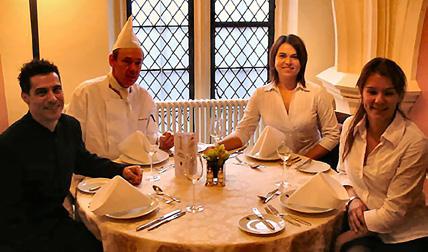
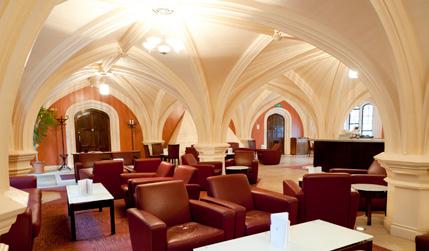
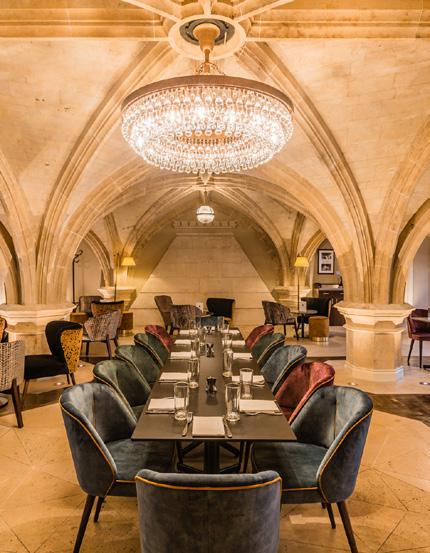
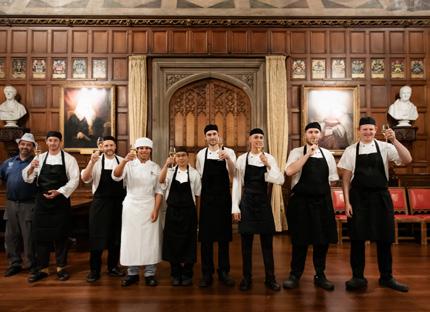
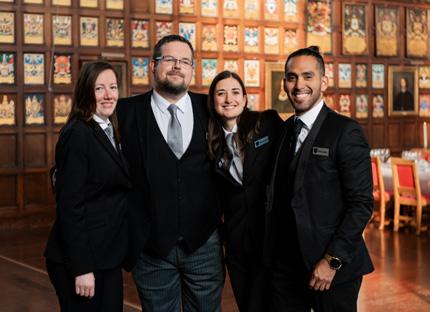
Our annual Gourmet Dinner is the pinnacle of culinary creativity. In 2025, we were keen to celebrate emerging talent, with the theme: ‘Empowering Our Junior Chefs’. For the first time, six rising stars took full creative control, designing and delivering an exquisite menu for 100+ guests in the Great Hall: The menu was led by:
• Callum Douglas Shaw: Elegant canapés by a former Kitchen Porter now Commis Chef, passing his Level 3 Chef de Partie Apprenticeship with distinction
• Charlie Knight: A refined first course from a Chef de Partie from our Members’ Lunch team
• Kieran Raphy: A beautifully balanced fish course from a Demi Chef de Partie working in the MCR
• Lewis Collins: A showstopping main by a Chef de Partie who began at the Inn as a Commis Chef
• Daniel Piggott: A creative twist on the cheese course from a Chef de Partie in our Banqueting Team
• Elora Hunt: A stunning dessert from a Chef de Partie in the Pastry Team
One by one, each chef introduced their dish with pride and passion. This dinner was not just about flavour; it was about nurturing the next generation of culinary leaders.
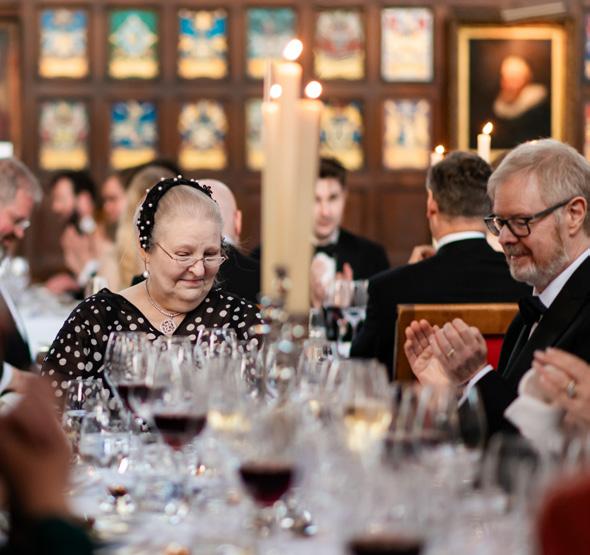
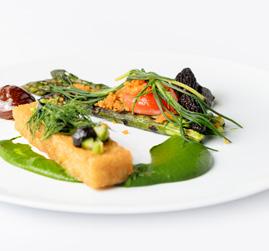
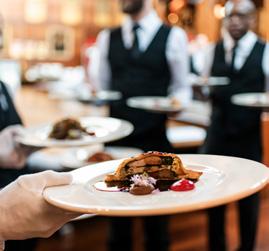
The Bar Representation Committee (BRC) continues to play a central role in ensuring that the voices of members of Hall (those called by the Inn but not elected Benchers) are well represented in the life and governance of the Inn. This year, the Committee comprised 37 members from a wide range of professional backgrounds and experiences, reflecting the diversity and breadth of our membership. Their commitment to championing the interests of members of Hall remains a vital part of how the Inn listens, responds, and evolves.
Throughout the year, members of the BRC have contributed actively to the Inn’s work by serving on a broad range of Bench Committees. In doing so, they have played a key role in shaping the Inn’s responses to Bar Council consultations and informing strategic decisions across areas such as property and financial management, investments, education, admissions, and scholarships. Their insight ensures that the perspectives of Hall Members are firmly embedded in decision-making at every level.
The Committee meets six times a year, providing an important forum to discuss matters raised by members of Hall and to consider issues affecting their engagement with the Inn. These discussions help the Inn better understand the needs of its wider membership and ensure that the views of members of Hall are represented thoughtfully and constructively. The dedication and expertise of the BRC make a significant contribution to the Inn’s ongoing efforts to build an inclusive, supportive, and forward-looking membership community.
We would like to thank all those members who stood for election in the 2025 Bar Representation Committee elections, those who voted and the BRC members who have served and are now stepping down.
The 2025 elected candidates, whose term runs from January 2026 to December 2029, are:
• Members of Hall with no current practising certificate in England and Wales (encompassing but not exclusively for overseas members):
James Vernon
• Members of Hall of over 7 years Call with a current practising certificate in England and Wales at the employed Bar: Mark Rowlands
• Members of Hall of over 7 years Call with a current practising certificate in England and Wales at the selfemployed Bar: Amrit Kaur Dhanoa
Amy Proferes
George Payne
• Members of Hall of 7 years Call and under with a current practising certificate in England and Wales: Adam Kayani
For the full voting report and more information, visit: https://www.lincolnsinn.org.uk/members/ representation/bar-representation/
The full Bar Representation Committee from January 2026 is as follows:

























The Benchers of Lincoln’s Inn are its governing body. They oversee its functions and contribute to the running of the Inn in a number of ways, including attending Council meetings, serving on committees, and representing the Inn at events such as Call Days.
“I applied to become a Bencher in order to contribute to the life and governance of the Inn. It is a privilege and honour to have the opportunity to give back to a supportive and collegiate community that has given me so much, and I hope to be able to pay that forward – in particular through continuing to support the Inn’s education and outreach work.”
Dilpreet Dhanoa, Benched May 2025
Benchers also volunteer their time to support members in their education and training. The Inn depends on the voluntary support and participation of members at all levels to carry out important functions in relation to education and scholarships and to prosper as a professional and supportive community. Many of those who have been appointed as Benchers are already involved in volunteering at the Inn and will continue this work following election.
“I could never have come to the Bar without the generous support I had from Lincoln’s Inn. I’ve tried to repay that since by helping with the Inn’s vital work on education, training and scholarships, and I’m honoured (if not a little amazed) that I shall now be able to continue that as a Bencher myself.”
Benjamin Williams KC, Benched November 2025
Find out more on our website: https://www.lincolnsinn.org.uk/members/representation/becoming-abencher/
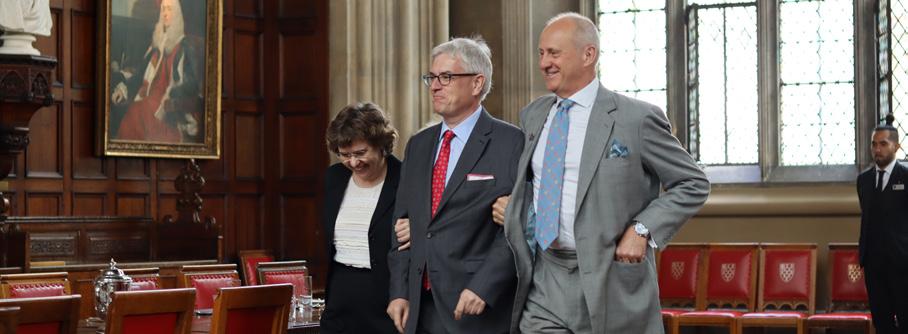


Laureen Husain is a criminal barrister at 187 Chambers, London, specialising in serious cases involving complex points of law. Called to the Bar in 1997, she is a former member of the Lincoln’s Inn Bar Representation Committee (BRC) and is a member of the Social Wellbeing Group. She also serves as the Essex Bar Mess representative on the South Eastern Circuit Committee.
Ben was born in Bristol, and was called to the Bar by Lincoln’s Inn in 1994 after studying history at Oxford. He has been in full time practice since 2000, and his chambers are in the Inn, at 4 New Square. He took silk in 2015 and conducts a wide range of civil work, with recent reported cases ranging from defamation in the Court of Appeal to Supreme Court appeals on pure economic loss and statutory interpretation. Ben is also known for his special interest in costs and litigation funding, and has appeared in many of the prominent cases in the area, most recently the costs aftermath of the ‘Wagatha Christie’ trial. Ben also sits as a Recorder in the Crown Court, is a member of the Bar of the BVI, and has been an editor of Cordery on Legal Services, the White Book, and Blackstone’s Civil Practice. Outside of work he enjoys history, the countryside and restaurants. He tries to compensate for the restaurants by occasionally lifting weights.


Christopher Poole KC
Christopher (Chris) Poole is a family law barrister and Head of Chambers at New Court Chambers, where he has practised since completing his pupillage. His work focuses on public law Children Act proceedings, adoption, and inherent jurisdiction cases, particularly those involving medical evidence and allegations of serious abuse. Chris is an advocacy trainer at the Inn, pupil supervisor, and delivers training to clients and legal professionals. Chris has undertaken several independent reviews for Local Authorities. He was appointed silk in 2026.
Louise Hutton KC
Louise Hutton KC is a leading commercial and commercial chancery silk at Essex Court Chambers, with a practice including banking and finance, fraud, shareholder disputes and insolvency. She is ranked by both Chambers and Partners and Legal 500 in a number of practice areas. She was Called to the Bar in 1998 and appointed silk in 2021.
HHJ Carmel Wall
Carmel Wall was born in Auckland, New Zealand and came to the UK as an undergraduate. She was called to the Bar in 1986 and after completing pupillage, practised at 4 Fountain Court, a Common Law set of chambers in Birmingham.
After a career break, Carmel undertook judicial work, initially as a Tribunal Judge in the Social Entitlement Chamber and War Pensions and Armed Forces Compensation Chamber. In 2015 she was appointed to the Circuit Bench where she sits in the civil and criminal jurisdictions in Birmingham. In 2019 she was authorised pursuant to section 9(1) of the Senior Courts Act 1981 to sit in the King’s Bench Division of the High Court. She retains her interest in tribunals, also sitting as a Restricted Patients Panel Judge in the Mental Health Tribunal. Since 2024 Carmel has been one of the Judicial College Course Directors for civil training.



Andrew Twigger KC grew up in Aylesbury and studied classics at Oxford. He was Called to the Bar in 1994 and practices from Maitland Chambers. He took Silk in 2011 and was appointed a deputy High Court Judge in the Chancery Division in 2023. His practice focusses on high-value commercial litigation and arbitration, particularly in cases concerned with banking and finance, shareholder disputes, civil fraud and insolvency. He has successfully appeared in the Supreme Court in cases dealing with contractual interpretation, constructive trusts and unjust enrichment. He was Chair of the Chancery Bar Association between 2022 and 2024.
Jacqueline Thomas KC is joint Head of Chambers at Spire Barristers. Called to the Bar by Lincoln’s Inn in 2000, she has extensive experience in Public Law children matters, including allegations of sexual abuse and non-accidental injury in all levels of Court, representing all parties. Jacqueline has a particular interest in Court of Protection work and the representation of individuals lacking mental capacity, particularly in cross-jurisdictional matters. She is experienced in the effective representation of parents in care proceedings who lack capacity to litigate, or have a need for treatment under the Mental Health Act 1983.
Tony Singla KC is a barrister at Brick Court Chambers practising in Commercial Law. Tony is recommended as a leading silk in Chambers & Partners and Legal 500 in seven fields: Banking and Finance, Civil Fraud, Commercial Litigation, Competition Law, Group Litigation, Insurance, and Professional Negligence. In particular, Tony is one of the leading practitioners at the Bar in group litigation such as shareholder claims under FSMA and competition class actions.
Tony was Called to the Bar in 2007 by Lincoln’s Inn and took Silk in 2021. Tony is a member of the Denning Society at the Inn, an elected member of the Bar Council, and he also sits on the Estates Committee of Marylebone Cricket Club. He is the co-author of a leading practitioner text and a former Lecturer in Law at Oxford University.

Josephine (Jo) has a broad Commercial Law practice (including Crypto, FRAND and IP, Fraud, Shipping and Private International Law) and her cases often feature technical or scientific issues (before law, she studied physical Natural Sciences and holds an MSci in Chemistry). She is ranked by the legal directories across a range of areas. Having been a pupil supervisor for many years, Jo is committed to the delivery of education to pupils and junior barristers. She is a lead advocacy trainer at the Inn and participates in other education activities. Jo was called to the Bar by Lincoln’s Inn in 2006 and took Silk in 2024. She is a member of Twenty Essex.
The Revd Alexander Scott McGregor is Head of the Legal Office at the National Institutions of the Church of England. He was Called to the Bar by Lincoln’s Inn in 1996, and practised in chambers in London. He is a member of the Denning Society. In 2006 he joined the Legal Office at Church House where he has had responsibility for significant areas of work including major items of legislative business. He was appointed a Recorder in 2022. Ordained deacon in 2006 and priest in 2007, he serves as an Associate Priest at Pusey House, Oxford.

Laura Gould
Laura Gould is a barrister at Old Square Chambers, specialising in employment, disciplinary and sports law. She was Called to the Bar in 2009 and practised for 13 years on the Northern and North Eastern Circuits. In 2024, she was appointed as a Fee-Paid Employment Judge sitting in the North East (Newcastle and Teesside) Region. Laura is a past Chair of the Inn’s Bar Representation Committee and Northern Circuit Inn Representative. She is an advocacy ‘Tutor Trainer’ for the Inn. Laura has been recognised as a leading individual in both employment and sports law by Chambers & Partners and Legal 500. Laura’s expertise was recognised by her nomination for Employment Law Junior of the Year at the Legal 500 Bar Awards 2023. She is one of only five juniors ranked for Sports Law outside of London in Chambers & Partners (2025).

Dilpreet Dhanoa
Dilpreet K. Dhanoa is a barrister at Field Court Tax Chambers, specialising in Revenue Law. Her practice spans all aspects of direct and indirect taxation, as well as related commercial litigation and public law in the UK and internationally. She holds an MSc in Tax Law from the University of Oxford, is a Chartered Tax Adviser, and has been appointed to the Attorney General’s Panel of Junior Counsel to the Crown. Dilpreet is ranked as a Leading Junior in tax (Legal 500 directory), and was nominated as Tax Junior of the Year (2025) for the Legal 500 Bar Awards. Called to the Bar by Lincoln’s Inn in 2009, she is an advocacy tutor at the Inn, and volunteers for the PFS along with serving on the Bar Representation Committee, the Finance and General Purposes Committee, the Investment Committee, and is a member of the Inn’s Denning Society.
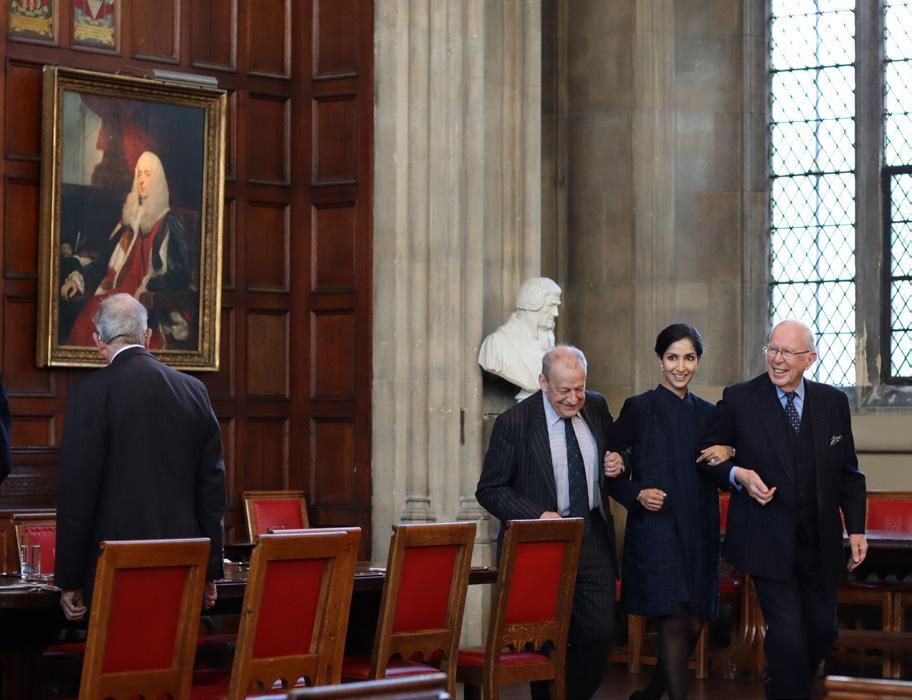

The Hon Justice Andrew Martin
Justice Martin was Called to the Bar at Lincoln’s Inn in February 1983 and after completing pupillage returned to his native Bermuda to practise. After an initial period in general practice, Andrew specialised in complex commercial litigation, insolvency and contentious trust matters and was noted as a pre-eminent practitioner in those areas as a member of the Bermuda Bar. He was a founding partner of the Bermuda firm Mello Jones & Martin (now MJM Limited) and served for many years as managing partner of that firm.
Andrew retired from practice in 2022 and was appointed as puisne judge of the Supreme Court of Bermuda (the trial court) in September 2024 and now deals primarily with the wide range of commercial, insolvency and trust matters that regularly arise from the island’s well established international business sector.
He served as an acting Magistrate, Secretary of the Bermuda Bar Association and was a member of the Bermuda Law Reform Committee. Over the last 25 years, Andrew held various leadership positions in local charitable organisations, primarly focused on fund raising for independent local health service providers, including the Friends of Hospice, the Bermuda Health Alliance and the Bermuda Hospitals Charitable Trust.
Robert MacRae KC
Robert MacRae KC spent 10 years as a barrister in England before returning to Jersey in 2001 where he became a trust litigator with a large Jersey law firm. In 2015, he was appointed Her Majesty’s Attorney General, Queen’s Counsel, and in January 2020 he was appointed by the Queen to the office of Deputy Bailiff of Jersey, presiding over cases in the Royal Court, including children, criminal and trust cases and presides over the States Assembly as its speaker. Robert was sworn in as the Bailiff of Jersey on 24 October 2025.
Anne joined the Honourable Society of Lincoln’s Inn as Under Treasurer in 2019 after a successful and varied career in the Civil Service.
From February 2013 Anne was the Chief Executive at ACAS, leading an organisation of 850 people based across Great Britain through organisational change and technological development. Before that she had spent nearly four years as Chief Executive of the Judicial Office, supporting the senior judiciary on complex governance and strategy issues and the wider judiciary through the development of professional HR, training and communications functions. These roles, along with her earlier posts within the Health and Safety Executive and other Government Departments, gave her a unique perspective from which to take on the position as Under Treasurer.
During her time at the Inn, Anne helped strengthen the Inn’s governance and operational security, bringing innovation and challenge but always recognising the importance of the Inn’s traditions and the needs of our members. She led the agreement of the Inn’s Purpose, Values and Ambition, creating the vision and basis for the development of the first Medium-Term Operating Plan. She was heavily involved in the drafting of the Code of Conduct which sets the basis of how we all work together to deliver that vision. She was instrumental in taking forward the recommendations of the Governance Working Group, culminating in Council’s agreement of the new Articles and Standing Orders in 2024. She was a valued member of the Inn’s Planning and Development Group.
Anne retired earlier this year and was elected an Honorary Bencher at the July meeting of Council.

Professor Hamilton Bryson
A distinguished legal historian, Professor Bryson teaches at the University of Richmond in the United States and writes extensively on English legal history, Virginia legal history, and Virginia procedure and practice. He has published numerous books and book chapters on these subjects, and is the founding editor of the Virginia Circuit Court Opinions. He has also edited and published several collections of early modern English law reports. Professor Bryson is a member of the Virginia State Bar, a fellow of the Royal Historical Society, a member of the Executive Committee of the John Marshall American Inn of Court, and the Virginia Correspondent of the Selden Society. He serves on the Advisory Committee on rules of Court of the Supreme Court of Virginia.
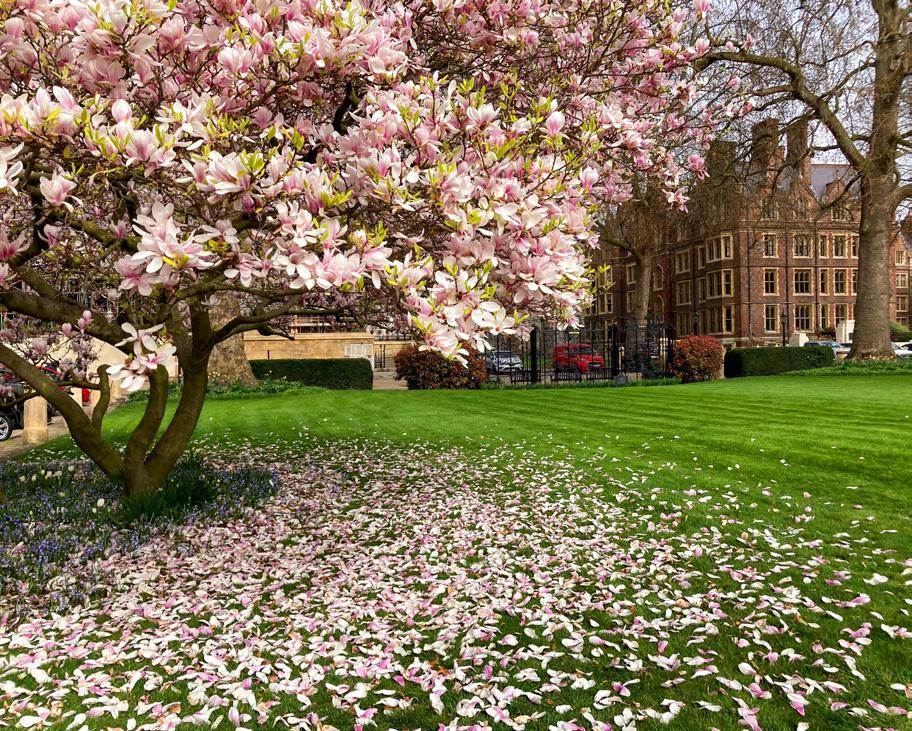
We were saddened to learn of the death of the following Lincoln’s Inn Benchers in 2025. They will be greatly missed.
Geoffrey Tattersall KC
The Rt Hon Lord Cameron of Lochbroom
The Rev Canon William Norman
John Macdonald KC
David Dabbs
Lady Fox CMG KC
Gregory Hill
Her Honour Valerie Pearlman CBE
Sir Andrew Park
His Honour John Diehl KC
Stephen Leslie KC
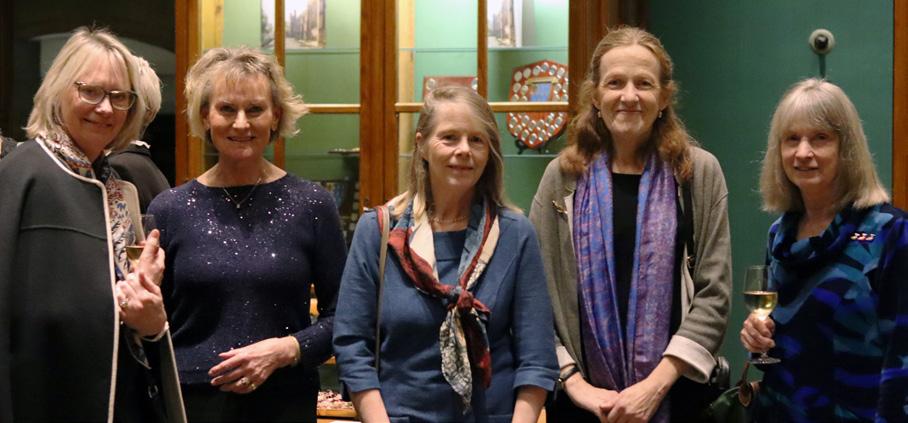
LIBPA serves to foster friendship and co-operation between the life partners of Benchers of Lincoln’s Inn. 2025 was a significant year as we established a firm constitution with the considerable support of the Treasurer, Sir Paul Morgan. This enabled us to make a substantial donation to the Bar Benevolent Fund.
Three events took place in 2025. In May, a fascinating talk was given by a member of the Chattels Committee, Mark Ockelton, on the Inn’s Silver. Mark spoke engagingly and knowledgeably with reference to selected items on display. The talk was followed by drinks and a delicious and convivial lunch in the Old Court Room.
In July a group of LIBPA members and friends met at the Wallace Collection to view the Grayson Perry exhibition. They each listened to Grayson Perry’s narrative on selected exhibition pieces and enjoyed a cream tea in the café.
In October, a talk was given by the author and biographer Margaret Willes on her book A Shakespearean Botanical. She intrigued the audience with references to different herbs and plants referred to in Shakespeare’s works, and shared illustrations from John Gerard’s herbal at the Bodleian Library.
Amid this vibrant programme, October also brought a moment of deep sadness for the LIBPA community with the death of Stephen Leslie KC. Stephen was a valued member of LIBPA, and he leaves behind his wife, Melissa Coutino, also a Bencher and member of our association. His loss was keenly felt by all who knew him.
As we look ahead to 2026, in May there will be an illustrated talk by Miranda Kimberley, the Head Gardener at Lincoln’s Inn, on her work. This will be followed by an optional mini-tour of selected areas of the gardens. Drinks and lunch will be served in the Old Court Room.
An outing will be planned in the summer. Further details will be shared with members later in the year.
In October 2026, LIBPA will convene a panel presentation about the author Judith Kerr, sister of former Bencher, Sir Michael Kerr. The presentation will focus on the lives of the Kerrs including their experiences as refugees and detainees, and subsequent careers as authors and lawyers.
By LIBPA Co-Chairs Sarah Cousins, Kate Hamblen and Sheila Harvey
Appointed Chancellor of the High Court
November The Rt Hon Sir Colin Birss
Appointed to the Court of Appeal
June The Rt Hon Lady Justice Cockerill DBE (also appointed as Deputy Head of Civil Justice)
August The Rt Hon Lord Justice Miles
Appointed a High Court Judge (Chancery Division)
October The Hon Mr Justice Cawson
Appointed a Senior Circuit Judge, Designated Family Judge
March His Honour Judge Stephen Smith
North Eastern
August His Honour Judge Willans
South Eastern
September Her Honour Judge Carter Midland
Appointed a Circuit Judge
January Her Honour Judge Lester-Ashworth
Northern
January His Honour Judge Meegan
Midland
February His Honour Judge Horne
Northern
March His Honour Judge Choudhry
South Eastern
November Her Honour Judge Boothroyd
North Eastern
November Her Honour Judge Samra
North Eastern
November His Honour Judge Thistle
South Eastern
November His Honour Judge Doman
South Eastern
November His Honour Judge Stevenson
South Eastern
November Her Honour Judge Deane
Northern
November His Honour Judge Hodgkinson
Northern
November Her Honour Judge Dawar
Northern
November His Honour Judge Anthony Dunne
North Eastern
December Her Honour Judge Rothwell
South Eastern
Appointed a District Judge
January District Judge Daniel Hayes
February District Judge Roberts
February District Judge Fentem
Appointed a District Judge (Magistrates’ Court)
May District Judge (Magistrates’ Court) Blakebrough
June District Judge (Magistrates’ Court) Walsh
July District Judge (Magistrates’ Court) Gill
September District Judge (Magistrates’ Court) Holden
September District Judge (Magistrates’ Court) Dunne
Appointed a First-tier Tribunal Judge (General Regulatory Chamber)
March Judge Dwyer
Appointed President of the Mental Health Review Tribunal for Wales
October Judge Jane McConnell
Appointed an Insolvency and Companies Court Judge
April Insolvency and Companies Court Judge Agnello KC
Appointed a Resident Judge
May His Honour Judge James Adkin
October 2025 The Rt Hon Lady Justice Macur DBE
Retirement from the Senior Circuit Bench
September 2025 His Honour Judge David Worster
Retirement from the Circuit Bench
January 2025 Her Honour Judge Peters
March 2025 His Honour Judge Forster KC
Retirement from the First-tier Tribunal (Immigration and Asylum Chamber)
April 2025 Judge Easterman
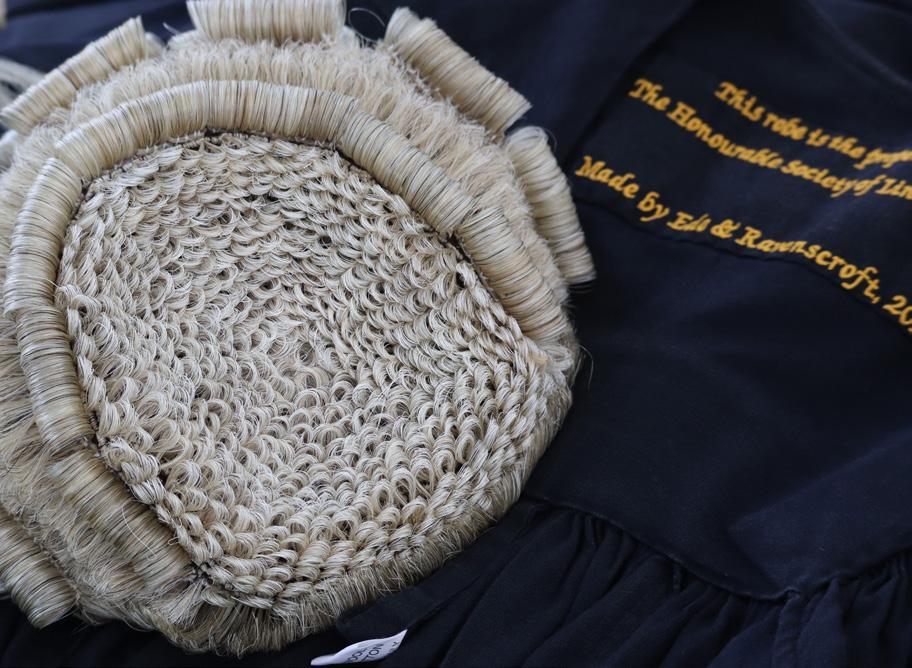
Imran Afzal KC
Rupert Allen KC
Simon Allison KC
Tariq Baloch KC
Gillian Batts KC
James Berry KC
Sasha Blackmore KC
James Bloomer KC
James Brown KC
Alexander Brown KC
Edward Craven KC
Thomas Cross KC
Melanie Cumberland KC
Professor Martin Dixon KC (Hon)
Nathaniel Duckworth KC
Richard English KC
Robert George KC
Edward Harrison KC
Ruth Hughes KC
Paul Jarvis KC
Ciaran Keller KC
Donald Lilly KC
Susanna McGibbon KC (Hon)
Ian McLoughlin KC
Matthew Morrison KC
Katie Phillips KC
Thomas Robinson KC
Thomas Schofield KC
Thomas Walkling KC
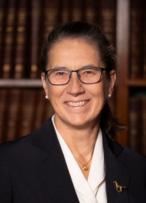
Treasurer
Elspeth Talbot Rice KC
Elspeth Talbot Rice was called to the Bar by Lincoln’s Inn in 1990 and took Silk in 2008. She is Head of Chambers at XXIV Old Buildings, Lincoln’s Inn and specialises in contentious chancery matters, in particular international trust disputes.
Elspeth was born in Newcastle upon Tyne and educated in Sunderland, Helmsley (North Yorkshire), Brighton and Durham. Since becoming a Bencher in 2012, Elspeth has served on a number of committees including chairing the Hospitality, Events and Dining Committee and serving on the Information Technology Board, the Staff Committee and the Finance and General Purposes Committee. She is the current Chair of the Planning and Development Committee.
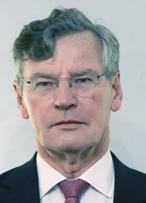
Keeper of the Library
Michael Todd KC
Michael Todd was called to the Bar by Lincoln’s Inn in 1977 and took Silk in 1997. He is a practising barrister at Erskine Chambers, where he was Head of Chambers from 2011 to 2021.
From 2008 to 2010, Michael was Chair of the ChBA and as such was a member of the General Council of the Bar of England & Wales (Bar Council). He was elected as ViceChair (2011) and Chair (2012) of the Bar Council. He was a trustee of the Bar Pro Bono Unit from 2012 to 2021, and an Executive Committee member and Council member of the Commonwealth Lawyers Association during that period.
Elected as a Bencher in 2006, Michael currently serves on the Equality, Diversity and Inclusion Committee and the Library Committee, and is a member of the Planning and Development Group.
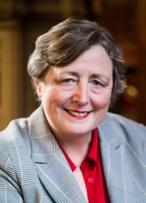
Keeper
Susanna McGibbon KC (Hon)
Susanna McGibbon was called to the Bar by Lincoln’s Inn in 1990 and joined the Government Legal Profession in 1993 after three years in private practice at the Bar. Having worked in most government departments at some point, her experience encompasses the range of government legal work – policy development, primary and secondary legislation, litigation, public inquires, EU law, human rights and national security. Susanna was appointed Treasury Solicitor and Permanent Secretary of the Government Legal Department (GLD) in March 2021.
Elected as a Bencher in 2021, Susanna has previously been a member of the Scholarships Committee and the Social Mobility Sub-Committee. She is the current Chair of the Audit and Risk Committee and also serves on the Advisory (Benchers) Committee, the Chapel Committee and as a member of the Planning and Development Group.

Andrew White was called to the Bar by Lincoln’s Inn in 1980, took Silk in 1997 and was elected a Bencher in 2003. As a practising barrister at Atkin Chambers, he specialises in disputes relating to construction, infrastructure and energy projects, both nationally and internationally. Andrew regularly sits as an arbitrator in many jurisdictions around the world.
Andrew is Chair of the Estates Committee and is an ex officio member of the Finance and General Purpose. He also sits on the Planning and Development Group and is a member of the Gardens Committee.
Our Year in Numbers
1,033 events held including: 316 717 commercial events, Inn events including education, dining and Members’ Lunch days
66 Qualifying Session events
106 Pupils trained
350+ tutors
The MCR served 19,829 customers over 218 operational days and 1734 members over the Christmas period
We served
17,898 meals at Members’ Lunch in Hall over 218 operational days
3520 mince pies served in December
16 new Post-Call tutors trained
145 hours of advocacy/ethics training
113 New Practitioners trained
Over 1,700 hours of total combined training given by our tutors
8,809 QS session attendances
70 advocacy tutors
16,657 Library reader visits
6,225 Library enquiries answered
1,879 people attended a Library research training course (in person or online)
90 historical tours given
7,625 planned maintenance jobs completed
545 scholarship applications received
3,195
Estates’ Helpdesk calls logged (a 13% increase on the previous year and an average of 12 calls per day)
June was the busiest month for Estates’ Helpdesk requests, with 482 requests logged.
Across our social media platforms we shared 1,111 posts, received over 1 million impressions, and gained 12,220 new followers
327 scholarship candidates interviewed 163 scholarships awarded
512,732 emails sent through our marketing system
2,895 member accounts created
8,415 unique member account logins (108,145 total)
4,068 instances of personal details updates by members