Designed by Jamieson Eley.
Photography by Helen Rynne
by Jarrold Publishing

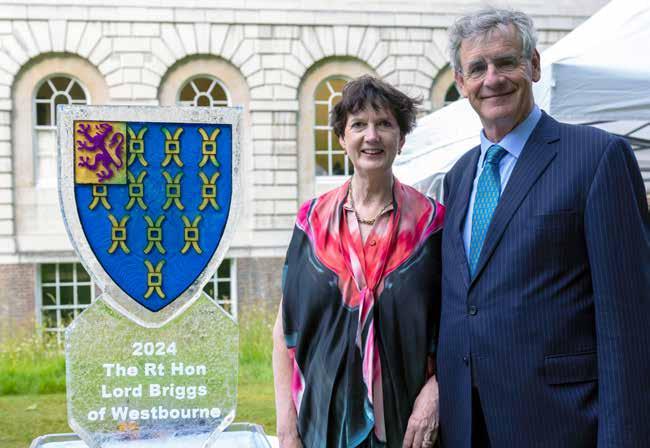
It has been a privilege and a delight to serve as the 517th Treasurer of Lincoln’s Inn. am very conscious that we current members of the Inn stand in a very long and distinguished tradition of lawyers, dedicated to the pursuit of our twin objectives of the Rule of Law and Access to Justice.
Being Treasurer provides the unique opportunity to participate in all aspects of the life of the Inn, both behind the scenes as well as presiding at dinners and representing the Inn externally. I have learnt something about the varied skills that enable the Inn to function across so many areas, from its prizewinning library, kitchens and front of house, to education, the Chapel and the Works Team. You can find out more about how the Inn runs later in these pages.
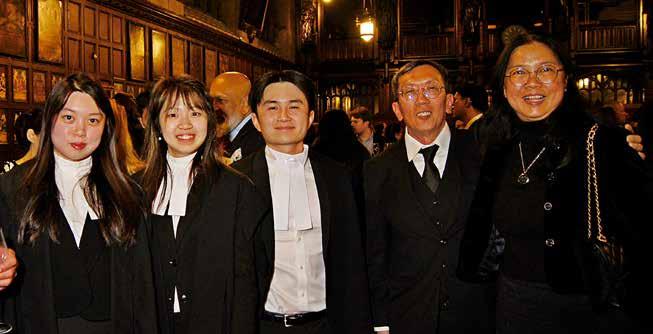
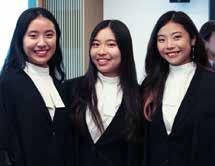
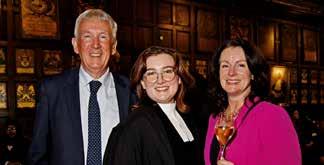
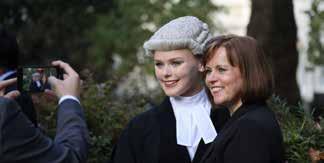
The education of law students and young barristers lies right at the heart of the Inn’s raison d’être. Taking a small part in these activities has been a particular pleasure for me and for Beverly, my wife, who is also an Inn member. It has been wonderful to see the dedicated engagement of both Hall members and Benchers in this work and to renew my connection with it. I hope to continue to take part in future years. It has also been a privilege to Call so many to the Bar this year, and to share in their joy and that of their families, at what is for all of them, as it was for us, a very special moment in their lives.
I have been struck during the year by the dedicated service of so many members to the Inn’s committees and educational work. We owe a great deal to those who regularly turn up and play a part, often at significant personal sacrifice of time, skill and energy. do hope that the coming years also bring some new faces to events such as domus dinners and Call days. Fellow Benchers may underestimate the importance of the contribution which their presence makes to these events. I know from Student members and others how much the engagement of Benchers on these occasions is valued.
This year we have achieved a significant milestone in replacing outdated Standing Orders with new Articles and Standing Orders. Council debated the few contentious points of principle with restrained maturity, and we now have in place updated rules of governance which will be easier to adapt in the future. My thanks go to the dedicated team who undertook this work, and in particular to Geoffrey Vos for leading it.
In my Treasurer’s statement at the beginning of this year, I flagged up two other challenges which expected us to have to face – one was considering the complex issue of when best to Call people to the Bar. This is a matter which has been debated for decades and on which views remain divided and sometimes strongly held. The cross-Inn working group, led by our Under Treasurer, which is currently considering the issue has not yet quite completed its work. In the meantime this Inn has shown commendable restraint in keeping an open, collegiate mind on the issue until a full evidence-based report is available to assist and guide us. Leading the important internal discussion now likely to take place in 2025 will fall to Paul Morgan as my successor, rather than to me. I hope that we will all approach it in the same attitude of respectful listening to others with differing views, as we did in settling our Articles and Standing Orders.
The other challenge which I anticipated was the financial one presented by rising operational costs, in a period when our responsibility for the upkeep of our wonderful buildings requires significant capital expenditure. I described the necessary response as having to involve something of a culture change. In the last year we have worked hard to contain costs and manage expenditure prudently. We are also having considerable success in generating income from our splendid educational and dining facilities, for which our in-house catering and hospitality teams deserve great credit. It is inevitable that this may occasionally reduce the use which members of the Inn can freely make of the same facilities. We will need to continue to make these adjustments as we move forward to tackling major projects such as external maintenance around New Square, with over 500 windows, some damp basements and a large area of roofing.
Looking beyond our walls, Circuits also have an important history and educational role. I have enjoyed meeting Inn members outside London at circuit dinners in Bristol and Leeds and when they visit London. Now the overnight accommodation is available again, it is good to be able to offer a place to stay at the Inn.
This Inn has always had a strong outward-looking and welcoming culture. The focus on equality, diversity and inclusion has strengthened in recent years and I enormously enjoyed this year’s Diversity Dinner, with Lord Boateng as an inspirational speaker, live music and dancing. Our panel session in July celebrating South Asian judges reminded us all of the proud tradition of eminent practitioners from that part of the world. And as 2024 drew to a close it was a pleasure to welcome as an Honorary Bencher Judge Síofra O’Leary, former President of the European Court of Human Rights. We can learn so much of value by listening to a wide range of voices.
I have learnt and enjoyed so much over the last year as Treasurer and look forward to continuing to be part of this dedicated legal family for many years to come. I hand over to Paul Morgan with full confidence that the Inn will go from strength to strength under his wise leadership.
The Rt Hon Lord Briggs of Westbourne
2024 was my sixth year as Under Treasurer: looking back, it is striking how each year presents new challenges and opportunities, within an established cycle of Council and committee meetings, educational and scholarship events, Call days and functions, all of which are at the heart of the Inn’s purpose.
The role of the very diverse professional team working with Council and committees is to make sure that the Inn operates efficiently, effectively and to the standards of excellence which we require, while evolving in response to the expectations, technological advances and economic challenges of the world in which we operate. Much has been achieved in 2024.
Although perhaps somewhat of a specialist subject for most members, Council’s agreement of new instruments of governance marked a significant step forward. Previous Standing Orders were cumbersome to amend and included large sections which were entirely outdated. Replacement Articles and Standing Orders avoided change where none was needed, while removing obsolete provisions. And they will be easier to update.
Less rarefied and even more important were the 63 Qualifying Sessions we ran, which saw a total attendance of 8,569 across our student membership. The last decade has seen a substantial increase in Student members, with proportionate increases in educational and scholarship activity. In these areas, while the full time team manages the planning and running of the work, the heavy lifting comes from members, who give of their time freely to sift and interview scholarship applications, tutor, advise and engage with students, pupils and new practitioners. The Inn would be nothing without this level of commitment, often over weekends and evenings during a busy working life.
Much of the Inn’s income derives from its properties, which also require a significant proportion of expenditure. Achievements during the year include completion of the first phase of work to refurbish 77 Chancery Lane; completion of significant external and internal work on pupils’ accommodation; completion of new facilities for the Gardens Team; and resolution of long-standing problems with Ashworth Centre lifts. Members of the in-house Works Team have continued to provide an excellent and responsive service on collegiate buildings, residential accommodation and chambers. As well as overseeing a complex programme of planned maintenance, they are quick to step in when problems arise and are effective in resolving them.
To run the Inn we need reliable information, secure IT systems, and robust processes for managing data security and cyber risks. Significant strides have been made in these areas, including upgrading of outdated hardware; a new telephone system; improved member records; and Cyber Essentials Plus accreditation following external assessment. We end the year with greater confidence in the robustness of data and systems, while recognising that this is an area that requires continual attention.
The overall financial position of the Inn remains sound, despite high capital expenditure, inflation and utility costs. This is testament to close working between the finance team, budget holders and committees to plan carefully, reduce costs and increase income. These areas will continue to require attention in future years.
The Inn is, of course, much more than a business – it is a community of members and employees. We are proud of our warm and high-quality hospitality and of the opportunities we provide to learn and enjoy each other’s company. 2024 saw wonderful Inauguration events, Grand Days, garden parties, and dinners. Our community stretches well beyond the physical boundaries of the Inn to practioners on circuits and overseas members. Technology has enabled far greater participation in Inn business from beyond London, our professional Communications Team helps us reach members wherever they are, and circuit dinners provide occasions for personal contact.
The perception of the Inn in the outside world matters. We again opened our doors to visitors for Open Gardens and Open House events, using these opportunities to increase understanding of who we are and what we do. The number of external event clients continued to grow, and most pleasing of all, the very high proportion of repeat bookings showed that we are more than meeting expectations.
As I reflect on the last six years, can only echo the remarks of the Treasurer on the strengthened focus on equality, diversity and inclusion, which speaks to the importance we attach to the Inn as a welcoming community. I found Lord Boateng an inspirational speaker at our Diversity Dinner and took much also from the analytical and thoughtful presentation by Honorary Bencher Dr Síofra O’Leary, former president of the European Court of Human Rights.
In this my final year as Under Treasurer, I reflect on the immense gratitude which the Inn owes to its Treasurers, who take up their unpaid role for only a year but make an enormous contribution to the Inn’s culture, community and future development. It has been an absolute pleasure to work alongside Michael Briggs in 2024.
Anne Sharp CBE

I hope you will find this year’s edition of the Annual Review as packed full of interest as I have, and will try not to repeat what has already been said by the Treasurer about the past year at Lincoln’s Inn.
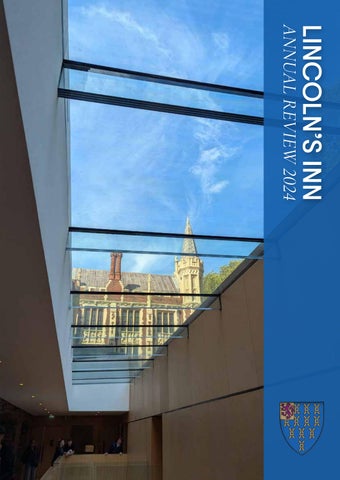
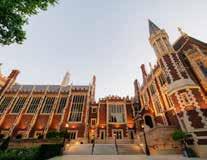
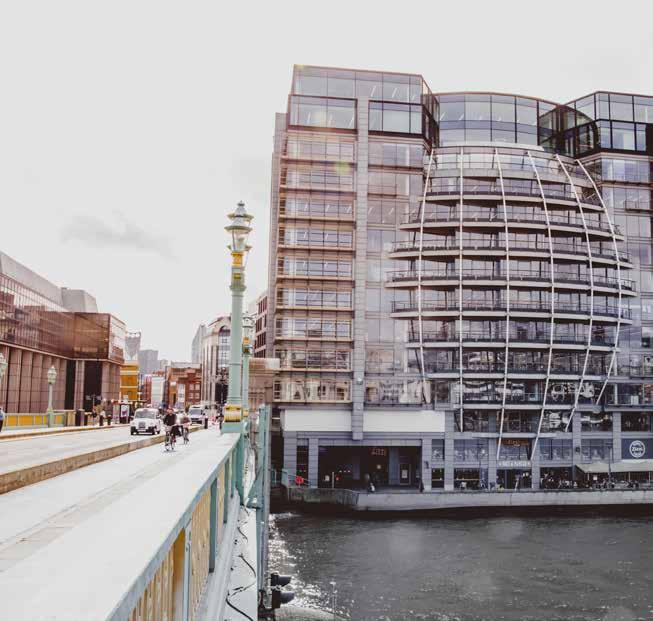
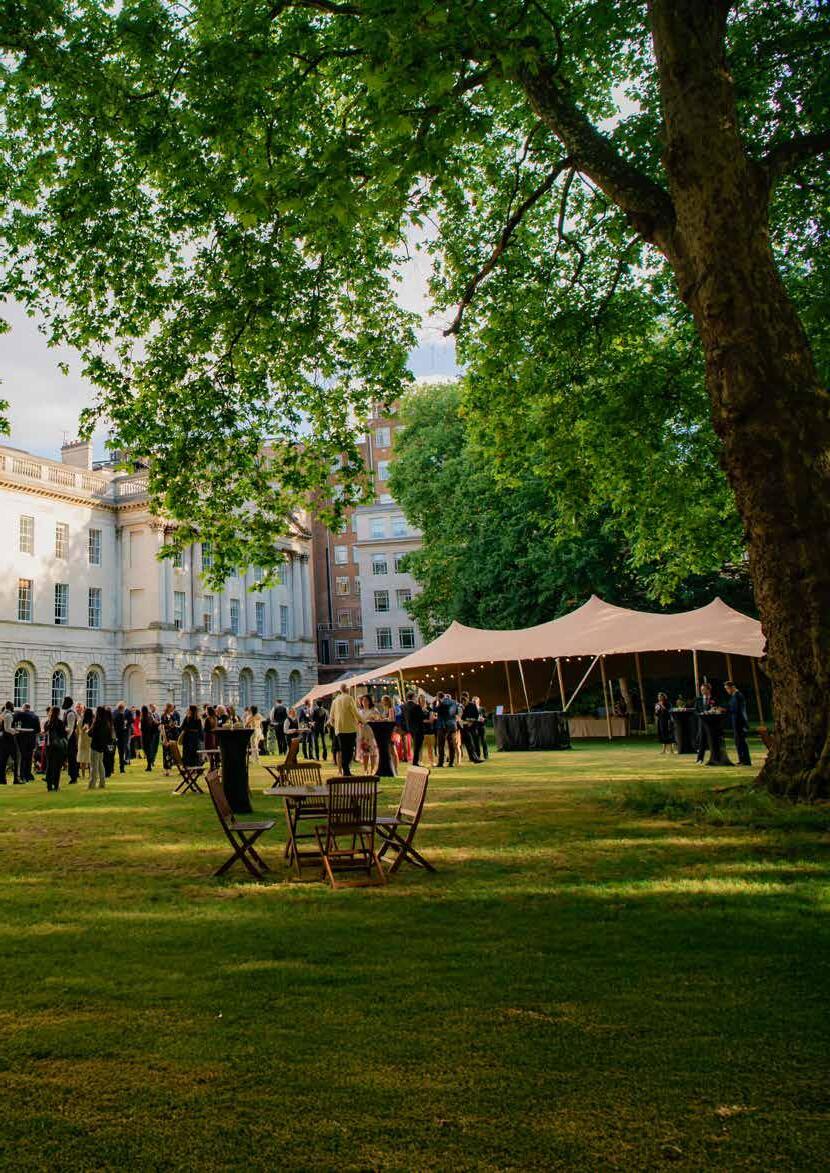
For those of you with reasonable memories you may think our cover this year has been done before, but in fact the cover from 2015 was the artist’s impression of what the view from the Ashworth Centre would look like, courtesy of Rick Mather Architects, and our cover this year is a picture taken by Helen Rynne during the Open House Festival. The projected vision is remarkably close to the finished result.
As always the Review hopes to be informative; we try to tell you what has been happening as well as occasionally telling you about what is going to happen. For what has happened at a glance just look at Page 5. I want to draw your attention particularly to the figure of 63 Qualifying Sessions held. Without Qualifying Sessions - what used to be “dinners” - our students cannot be called to the Bar. One of the consequences of moving from dinners to genuine educational events is the increased need for volunteers to support their delivery. Volunteers are required by the Inn, in particular for pre-Call sessions.

114 pupils and 126 new practitioners received training from those already volunteering. We have not recorded the number of those already committing themselves to this essential and time-consuming training, but the same people cannot be expected to carry this burden indefinitely. New faces are needed - members of the Inn who themselves have had the advantage of such training are needed; members who are prepared to commit themselves and their time for the benefit of those who are following in their footsteps are needed.
How to volunteer can be read in Faye Appleton’s Membership and Education Report on page 20. If you are on circuit and want to find out more about such activities speak to your Circuit Representatives, see page 32. I have banged the drum for volunteers over many years, and I say what I have said many times before, please do not wait to be asked, take the initiative and get in touch with the Inn. Those in the office are not mind readers and, until you offer, you will not be on their radar.
Other interesting articles include being a lawyer at Ofcom (see page 36), 100 years of the Pugin Table (see page 52), Lord Grimthorpe, who has left a considerable architectural legacy by which to be remembered (see page 76), Lincoln’s Inn Fields - a place of execution (see page 84), along with reports from all the major areas of the Inn’s increasingly diverse activities, and all the major committees who run the Inn’s day-to-day business.
My thanks once again to Helen Rynne, Communications Manager in the Treasury office, without whom this Review would not have happened and to Jamie Eley at our printers, Jarrold Publishing, for doing such a splendid job on the layout. Do not forget, if you want a hard copy of the Annual Review you just have to order one via the Inn’s website before 28 April 2025: www.lincolnsinn.org.uk/about-us/annual-review/
Nick Easterman,
Editor
Our Year in Numbers
818 Students Called to the Bar 114 pupils and 126 new practitioners trained 63 Qualifying Sessions attended by 8569 students 161 Scholarships awarded
We held
208 students attended residential weekends
1,090m2 of wildflower meadow cut by scythe and strimmer
10,515 bulbs planted in Autumn
2,775 Estates Helpdesk calls logged and responded to
915 attendees on guided tours
16,079 reader visits to the Library 6,716 enquiries answered by Library staff
6 memorial services
8 baptisms 2 weddings in Chapel
2.4k hours of video watch time on our YouTube channel
18.4k website users
42,628 cups of coffee served
37k engagements on social media
59 news stories published
87,187 canapés served
183 Members’ Accommodation bookings made for 2024 since reopening in September
703 events held (excluding Members' Lunch) with a total of 51,682 attendees
16,200 covers in Hall for Members’ Lunch
Appointed a High Court Judge
January 2024 The Hon Mr Justice Cusworth (Family Division)
September 2024 The Hon Ms Justice Harris (Family Division)
Appointed a Senior Circuit Judge
March 2024 Her Honour Judge Cope (Western)
Appointed a Circuit Judge
October 2024 Her Honour Judge Dewinder Birk (Midland)
November 2024 His Honour Judge Conley (South Eastern)
November 2024 His Honour Judge Gurdial Singh (North Eastern)
November 2024 His Honour Judge Roscoe (South Eastern)
December 2024 His Honour Judge Andrew Johnson (South Eastern)
Retirement from the Circuit Bench
Retirement from Upper Tribunal
January 2024 Vice President Mark Ockelton
Appointed a First-Tier Tribunal Judge
April 2024 Judge Blackwell
June 2024 Judge Farmer
June 2024 Judge Papé
September 2024 Judge Iqbal
November 2024 Judge Terry
Appointed a Regional Employment Judge of the Employment Tribunals (England and Wales)
September 2024 Regional Employment Judge Jones
Mr Adam Al-Attar KC
Mr Joseph Barrett KC
Mr Justin Bates KC
Mr Richard Blakeley KC
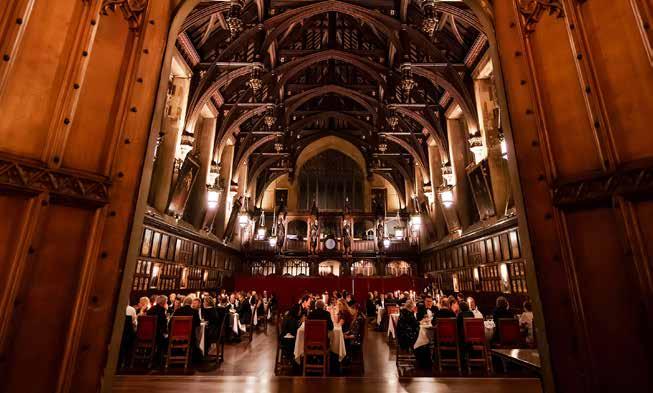
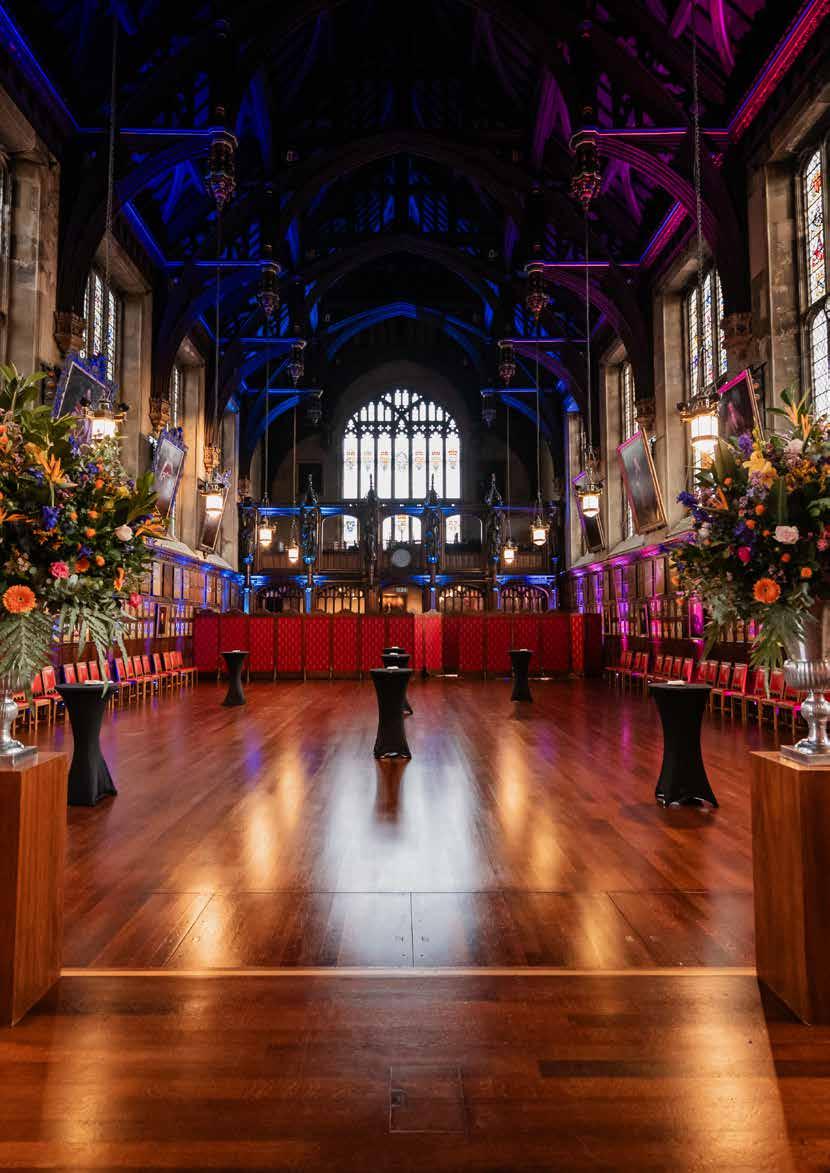
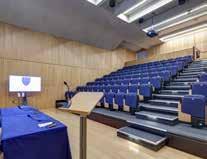
From medieval grandeur to modern facilities, Lincoln’s Inn offers flexible venue hire to meet your needs.
Whether your event is large or small, formal or casual, our award-winning hospitality team will work with you to bring your vision to life.
For more information and to receive your exclusive member discount, please contact our Events Office.


April 2024 His Honour Judge Michael Kay KC
September 2024 His Honour Judge Kinch KC
October 2024 His Honour Judge Christopher Prince
November 2024 His Honour Judge James Hassall
Appointed a District Judge
January 2024 District Judge Lal
September 2024 District Judge Richards
October 2024 District Judge Gardner
November 2024 District Judge Jeffers
November 2024 District Judge Cockayne
Appointed a Designated Civil Judge
January 2024 His Honour Judge Murch
Appointed a Designated Family Judge
May 2024 His Honour Judge Nicholas Cole
Appointed an Upper Tribunal Judge
July 2024 Upper Tribunal Judge Neville
July 2024 Upper Tribunal Judge O'Brien
Mr Josef Cannon KC
Miss Sadiya Choudhury KC
Miss Josephine Davies KC
Mr James Duffy KC
Miss Anna Edwards-Stuart KC
Mr Michael Firth KC
Mr Frederick Hobson KC
Ms Jennifer Jones KC
Mr Edward Lamb KC
Miss Anna Laney KC
Mr Daniel Northall KC
Mr Richard O'Brien KC
Miss Beth O'Reilly KC
Mr Bradley Pomfret KC
Miss Amy Rogers KC
Mr Nicholas Sloboda KC
Mr Mark Westmoreland Smith KC
Miss Ruth Stockley KC
Mr Christopher Stone KC
Miss Maryam Syed KC
Ms Charlotte Ventham KC
Dr Ewan West KC
Mr Michael Wheater KC
Mr Philip Woolfe KC
New Benchers of Lincoln’s Inn
Ordinary Benchers
His Honour Judge Fayyaz Afzal CBE
Mark Harries KC
The Hon Ms Justice Harris
Jennifer Jones KC
Zane Malik KC
Christopher Rees KC
Emma Southern
Allison Summers KC
The Hon Mr Justice Thompsell
Nicola Williams
Honorary Bencher
Dr Síofra O’Leary
Deaths of Benchers
18 February 2024 Adrian Hamilton KC
26 August 2024 Alan Steinfeld KC

HHJ Fayyaz Afzal CBE is the Designated Family Judge for South Yorkshire, a Nominated Judge of the Court of Protection and a Diversity and Community Relations Judge.
Fayyaz is from Rochdale and the first in his family to go to university having read law at Staffordshire University and studied for the Bar Vocational Course at Manchester Metropolitan University. He was Called to the Bar in 1999 and was only one of a handful of barristers with a visual impairment.
Fayyaz undertook pupillage at New Walk Chambers (Leicester) and had a common law practice before moving to No 5 Chambers where he dealt with family cases. He sat as a Legal Assessor/Legally Qualified Chair for professional/medical regulators.
Fayyaz became a Deputy District Judge (2010), Recorder (2015), District Judge (2017) and Circuit Judge (2020).
Fayyaz is an Honorary Doctor of Staffordshire University, a senior advocacy tutor and a tutor for the Judicial College. He has a keen interest in diversity and inclusion with this being recognised with the awards of the OBE (2008), CBE (2021) and being included in the Power 100 list of influential disabled people in the UK.
Fayyaz is keen to ensure that talented candidates can succeed in legal careers regardless of background, particularly disability.

Mark Harries KC
Mark Harries KC grew up in Newport, South Wales before reading law at Queen Mary College, London. He was Called to the Bar in 1995 and took silk in 2019. Originally cutting his teeth in criminal defence work at 6 Gray’s Inn Square and 2-4 Tudor Street (latterly Carmelite), Mark’s practice broadened into regulatory work following an opportunity to represent Lincoln’s Inn at a student disciplinary hearing. Professional discipline overtook crime and he joined Serjeants’ Inn Chambers in 2020.
Mark now specialises in professional discipline law across a variety of sectors with a particular focus on the medical, healthcare and legal professions, inquests, private client and corporate crime and all aspects of homicide. He is a tutor trainer for the Inn’s Advocacy programmes and a stalwart contributor to the Pupillage Foundation Scheme. He is an Advisory Panel member for Inside Justice, a charity highlighting miscarriages of justice, and a mentor for the Social Mobility Foundation. He was Advocate’s Pro Bono Silk of the Year in 2022 and shortlisted for Professional Discipline Silk of the Year in 2024.
Mark is married to Kelly, has one daughter, three dogs and enjoys Chelsea FC and watches.

The Hon Ms Justice Harris grew up in Coventry and was in the first generation of her family to attend university, obtaining a first class degree in jurisprudence from Christ Church, Oxford, then a Masters (by research) from the University of British Columbia.
She was Called to the Bar in 1998 and after completing pupillage at what is now 4 New Square, took up a position as a lecturer at Durham University. She was appointed Professor of Family Law and Policy at the University of Birmingham in 2011, where she remains as an Honorary Professor. She has also held visiting academic appointments in Canada, Australia and Sweden. Sonia was appointed a Deputy District Judge in 2010, a District Judge in 2014, a Circuit Judge in 2018, and a Deputy High Court Judge and Designated Family Judge of Stokeon-Trent and Staffordshire in January 2019. In April 2024, she was appointed Senior Circuit Judge and Designated Family Judge of Wolverhampton, Telford and the Black Country.
Sonia took up appointment as a High Court Judge in the Family Division in September 2024.

Jennifer Jones KC
Jennifer Jones KC read Law and French Law at Christ Church, Oxford and at the Université Panthéon-Assas in Paris. She was awarded a Lord Denning Scholarship by Lincoln’s Inn and was then Called to the Bar in 2003, taking silk in 2024.
She is a member of Atkin Chambers and specialises in construction, engineering, energy and professional negligence disputes, at home and abroad.
Jennifer was appointed a Recorder in 2018 and mainly sits in crime in the Midlands. She has, for many years, taught advocacy for Lincoln’s Inn and is a tutor trainer, and she also serves on the Post-Call Committee.
Outside of work, Jennifer likes to fit in as much theatre-going and travelling as she can, although the family pets tend to disapprove of too much time being spent on the latter.

Zane Malik KC
Zane Malik KC was Called to the Bar by Lincoln’s Inn in 2007, took silk in 2021 and was elected a Bencher in 2024.
He specialises in public law and human rights, with an emphasis on immigration, asylum, nationality, EU and regulatory law. Before taking silk, he spent nine years on the Attorney General’s Panel of Counsel to the Crown advising and representing the government along with his private practice. He acts regularly at the highest levels, both for and against the government. He has conducted over 250 substantive appeal hearings at Supreme Court and Court of Appeal level. The Upper Tribunal’s Judicial Reporting Committee has reported over 75 of his cases to be cited as precedents in other cases. His reported cases at the High Court are over 80. He contributes regularly to legal journals and other practitioners’ sources, and often speaks at legal conferences and professional development events.
He is authorised to sit as a Judge of the High Court. He is a Deputy Judge of the Upper Tribunal and a Judge of the First-tier Tribunal. He is a Recorder of the Crown Court. He is the Bar Council’s Representative in the Attorney General’s Panel Selection Board.

Christopher Rees KC
Christopher Rees KC was Called to the Bar by Lincoln’s Inn in November 1996 and took silk in 2023. He has been the Head of Chambers at Apex Chambers in Cardiff for 13 years. He is also a member of Farrar’s Building Chambers in the Temple. His practice focuses on criminal, inquest and regulatory law. Prior to taking silk he was a specialist prosecutor on a number of CPS panels and a member of the Counsel-General for Wales’ panel. He is regularly instructed to prosecute and defend in high profile and heavyweight criminal cases on the Wales Circuit and beyond.
Christopher is currently a member of the Management Committee of the Wales Circuit and is the Senior Representative of Lincoln’s Inn for the Wales Circuit. He is a member of the Criminal Bar Remuneration Committee and was previously a member of the General Council of the Bar of England and Wales.
Christopher has a particular interest in Bar education. He is an advocacy tutor on behalf of the Inn and the Wales Circuit. He is a vulnerable witness advocacy trainer and also trains others to deliver training in this field.
Christopher is an enthusiastic tennis player, occasional cricketer, a season ticket holder at Cardiff City and supporter of the Welsh rugby team.

Emma Southern attended a comprehensive school before reading Law at the University of Bristol. She was Called to the Bar in 2006 and received a scholarship from Lincoln’s Inn to undertake the Bar Vocational Course.
Emma practises from 3PB on the Western Circuit, specialising in family law with a focus on children's matters, both public and private. She sits as a Recorder in Family and Court of Protection and also as a fee paid Judge of the First-tier Tribunal in HESC, SEND. Emma is passionate about increasing opportunities for members on circuit to access and engage with the Inn, being the first appointed Junior Circuit Representative for the West.
Between 2018 and becoming a Bencher, Emma was an active elected member of the Bar Representation Committee. Emma serves on Chapel Committee and is an enthusiastic member of the Social and Wellbeing Group. She remains committed to supporting wider access to the profession for those from non-traditional backgrounds, to the publicly funded Bar and to the retention of barristers with caring responsibilities.

Allison Summers KC studied History at St Andrews University. She still retains a keen interest in English legal history and is a member of the Selden Society.
Having undertaken a common law pupillage, she went on to specialise in criminal law. She took silk in 2020 and has a national defence-based practice specialising in cases involving homicide, other serious violence and sexual offences. She has a particular interest in cases involving somnambulism.
Allison is Head of Drystone Chambers, a leading London-based criminal set of chambers. Having previously been Head of the Pupillage and Recruitment Committee, she continues to have a particular interest in the education and training of those coming into the profession.

The Hon Mr Justice Thompsell is the son of working-class parents and was the first in his family to attend university. Nicholas read Law at King's College London, where he also gained an Associateship of King’s College (AKC) alongside his LLP. He then studied for his solicitor final examination at the College of Law, Chester.
Nicholas became a solicitor in 1985, carrying out his training and early career at Slaughter and May. He joined Fieldfisher (then Field Fisher Waterhouse) in 1992 and became a partner shortly thereafter. He progressed to the role of his firm’s Senior Partner in 2009 and continued in this role until 2012. He was appointed as a Deputy High Court Judge in 2019.
Nicholas has enjoyed a wide-ranging corporate and commercial practice, spanning areas such as mergers and acquisitions, private finance initiatives/public–private partnerships, corporate reorganisations, and rail franchising. He has been particularly involved in the financial services sector. His most significant transaction as lead partner involved the conversion of Kent Reliance Building Society into OneSavings Bank. Since 2012, he has specialised into financial services regulation, covering all aspects.
Nicholas took up appointment as a High Court Judge in the Chancery Division in October 2024.

Nicola Williams
Nicola Williams is a Crown Court Recorder, author, and Non-Executive Director/Board member.
After a successful career at the Bar (including as a legal commentator on the OJ Simpson verdict) she served as an Ombudsman both in the UK and internationally, including as a Commissioner at the Independent Police Complaints Commission and as the Complaints Commissioner of the Cayman Islands. She was the first Service Complaints Ombudsman for the UK Armed Forces, one of the most senior women and the most senior Black person in UK Defence.
Nicola also holds a number of Board and Trustee positions. She is Chair of the Disciplinary Committee and a Regulatory Board Member of the Institute and Faculty of Actuaries, and a Trustee of Bridge Support, a mental health and drugs charity. She is also an active volunteer for Speakers for Schools, and in April 2024 won the ‘Mary-Lou Carrington Award for a significant contribution to education', presented by The Educators' Trust, the charitable arm of the Worshipful Company of Educators.
She is the author of the legal thriller, Without Prejudice; screen rights have been optioned. Her second thriller, Until Proven Innocent, was published by Penguin on 16 March 2023.
Dr Síofra O’Leary
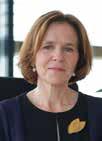
Dr Síofra O'Leary is an Irish jurist who served as the Judge elected in respect of Ireland at the European Court of Human Rights between 2015 and 2024. In 2022 she was elected to serve as the 17th President of the Court.
Prior to joining the European Court of Human Rights, Dr O’Leary worked for almost two decades at the Court of Justice of the European Union in judicial and administrative capacities.
In parallel to her work at both European courts, Dr O’Leary has engaged in extensive academic work as a Visiting Professor at the College of Europe in Bruges, on the Editorial and Advisory Boards of the Common Market Law Review and as a Vice-President of the Irish Centre for European Law. She is also an Honorary Bencher of the Honorable Society of King’s Inns, Dublin.
A graduate of University College Dublin (BCL) and a postgraduate of the European University Institute (PhD), Dr O’Leary was previously the Assistant Director for the Centre of European Legal Studies at the University of Cambridge, a Fellow of Emmanuel College and a Visiting Fellow at the Faculty of Law, University College Dublin.
In 2024, the University of Edinburgh conferred on her the title of Honorary Doctor of Laws.
Lord Mansfield Scholarships
Emily Baker
Maeve Carroll
Armand Conde-Sequeira-Rosen
Jake Emerson
Savannagh Leonard
James Mackin
Lucy McCaughan
Fabia Shaw
Ryan Zwetschnikow
Lord Denning Scholarships
Taha Ahmad
Jelani Allman
Patrick Aloysius Atkinson
Chereen Ball
Solal Bauer
Gerard Birch
Nathaniel Bor
Harry Botterill
Georgia Bowen
Bertie Broomfield
Estella Browne
Cory Crutchley
Oliver Dales
Pavandip Singh Dhillon
Amelia East
James Forrester
Mia Forton
James Fraser
Margaret Gallagher
Virginia Gentile-Costella
Alice Greenbury
Lily Greenhough

Shannon Griffiths
Ross Guinea-McIntyre
Rishit Harsh
George Hill
Rhiannon James
Darren Leow
Peter Lernyei
William Lewis
Esmaa Mansour
James Marshall
Miles McCollum
William Moppett
Darian Murray-Griffiths
Jaizzail Ofori
Olufunmilayo Olawore
Jack Olsburgh
Benjamin Owen
Sam Pearce
Saad Muhammad Rai
Giorgio Rand
Molly Richardson
Harry Rogers
Joseph Rosindale
Sophia Russell
Akirha Skeete-Simpson
Callum Stevens
William Stewart
Petra Stojnic
Eu Dian Tai
Gabriel Tan
Oliver Tonkinson
Chandani Trivedi
Kiara Van Hout
Sachin Varma
Jessica Wallis
Jake Widjaya
Marchant Scholarship
Tania Khan
Tancred Scholarship
Julius Balchin
Cassel Scholarships
Jardine Barrington-Cook
Levon Curtis
Isobelle Firth
Eva Georgieva
Vanessa Iheama
Aimee Imana
Jack Medforth
Ellie Molyneux
Verner Paavola
Charlotte Paxford
Bo Shi
Thomas Spencer
Droop Scholarships
Callum Caldwell
Joseph Carr
Matthew Field
Lauren Harris
Tara Helene
Florence Kelly-Goodayle
Florence Lazenby
Nathan Lynas
Millie O'Connell
Akshat Pranesh
Jaya Rana
Zoeya Rizvi
William Shelley
Alfie Vine
Kennedy Scholarships
Zachariah Brettell
Nabiha Chaudhary
Anouschka Fenley
William Fitzalan Howard
Shazzan Hakim
Tatiana Hewitt
Emily Jowitt
Nayah Kelly
Imogen Marchant
Maryam Naaz
Ethan Naish
Syed Maisam Ali Naqvi
Ranvir Raj
Emily Tubbs
Mary MacMurray Scholarship
Jessica Lockwood
Sir Thomas More Scholarships
Jacob Bartholomew-Smith
Louis Helsby
Lindsey High
Wilfred Hinton
Mohamed Major
Amber Mason
Benjamin Mulready-Carroll
Maximilian Mutkin
Saad Nasarullah
Nadia Roberts
Charlotte Smith
Sarah Stearne
Nicholas Stone
Louis Tavare
Jack Taylor
Frankie Wright
Lord Bowen Scholarships
Dandy Doherty
Fergus Dunne
James Hazell
Maciej Kostusiak
Madeleine McCourt
Alice Morton
Rebecca Pope
Edward Russell
Geert Sluijs
Henry Thornton
Lord Haldane Scholarships
Charlotte Devine
Emilie Dore-Green
Barnaby Evans
Genevieve Grehan-Braley
Eve Handley
Kelvin Justiva
Luca Povoas
Nicolas Rix-Perez
Henry Townsend
Christopher White
Lord Brougham
Scholarships
John Aslet
Joey Carr
Sebastian Ching
Ellen Clifton
Cerelie Doyle
Sayf Eddine Essadik
Fred Hawkings
Archie Phillips
Max Rosen
Holly Sheridan
Karina Vasiliades
European Scholarships
Johan Steyn Scholarship
Dilara Altun
EFTA Court Scholarship
Aloysius Atkinson
JP Warner Scholarship
Andreas Giannakopoulos
Nicholas Bratza Scholarship
Mehreen Kazmi
Peter Duffy Scholarship
Jessica Wallis
Paul Heim
Education Award
Adama Jalloh
Lincoln’s Inn Law Journal Prize
Mostafa Taimur Raihan
What are the challenges of using artificial intelligence in litigation and dispute resolution and how do they relate to the general debate on artificial intelligence in law?
Lord Mıllett Equity Essay Prize
Oliver Clement
‘Just get a contract?’—The nature of the courts’ inquiry in proprietary estoppel cases, and its remedial consequences.
Crowther Shield Public Speaking Competition
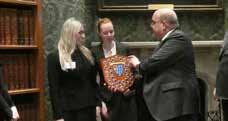
Vanessa Jessop (with her plea of mitigation of Delilah who was accused of assault occasioning actual bodily harm upon Samson by cutting his hair)
Debating Shield
Niamh Kenny and Katie Stephens (representing the 1st Opposition Team against the motion ‘This House Would abolish the House of Lords’).
Inter-Provider Mooting Competition
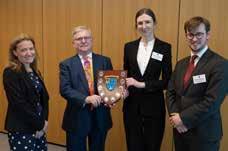
Winners
Gwen Edmunds and William Moppett (competing on behalf of The Inns of Court College of Advocacy)
Runners-up
Samuel Lane and Joshua Turner (competing on behalf of City, University of London)
Sir Louis Gluckstein Advocacy Prize
The Sir Louis Gluckstein Prize is awarded to the best junior advocate at the Inn. It is open to current Bar Course students and those up to one year Call. Competitors are asked to prepare two exercises, a mixture of criminal, civil and family, and are allocated randomly. The competition consists of an initial round from which the judges select up to eight participants to compete in the final.
First place
Matthew Jahanfar
Second place
Adnan Khaliq
Third place
Victoria Bradshaw
Neuberger Prize
Janine Anderson–Rootham, University of Sunderland
Jenna Hutton, Northeastern University
Kaitlyn Long, Northumbria University
Mariia Maksymenko, University of Lincoln
Lauren Knights, University of Northampton
Francesca Sparrowhawk, University of Kent
Anna Newton, Royal Holloway, University of London
Rachael Ong, University of Essex
Helen Grindrod Prize
Barez Siad, University of Northampton
Hina Anwar, University of Reading
Mensure Yazici - City, University of London
Laura Wright - University of Lincoln
Kirandeep Thind - University of York
Marcus English - University College London
Kiran Kalsi - University College London
Christopher Watkins - University of Northampton
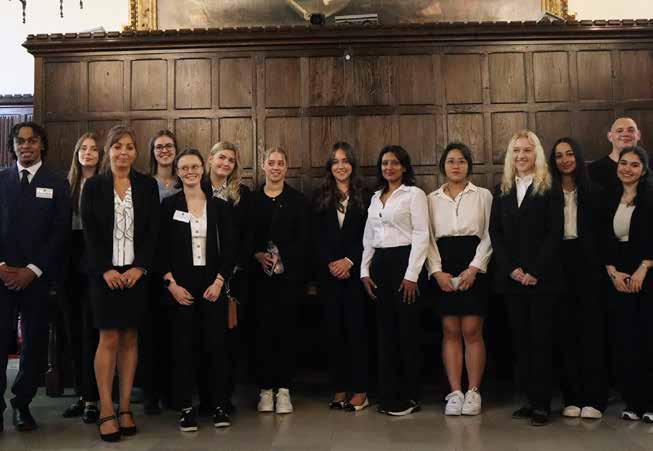
The winners of these prizes were invited to attend a three-day summer school at Lincoln’s Inn designed to further their professional development.


By Faye Appleton, Director of Membership and Education
We had another busy year of education and membership events and activities. Some of the highlights included the residential courses for students, pupils, and new practitioners, the lecture programme, our outreach and scholarships work, and our diversity and inclusion events.
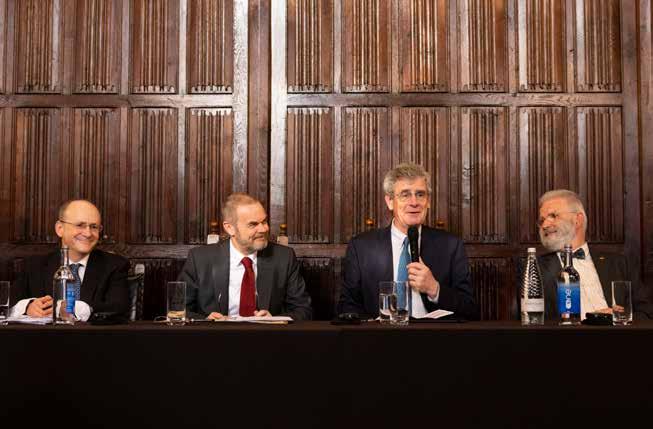
Our lecture programme included the Sir Thomas More Lecture, the Mota Singh Memorial Lecture, and the Treasurer’s Lecture. The Sir Thomas More Lecture was given by The Right Honourable Dame Siobhan Keegan, Lady Chief Justice of Northern Ireland, on human rights protections. The Sir Mota Singh Memorial Lecture was given by Barbara Mills KC, then Vice-Chair of the Bar, on race at the Bar. The Treasurer spoke on the subject of access to justice. Recordings or transcripts for many of our lectures can be found on the News section of our website.
We also held the launch event for “Building Bridges in European and Human Rights Law”, a collection of essays in honour and memory of Paul Heim CMG, a Bencher of the Inn and founder of the Inn’s European Group. The event included a panel discussion with Francis Delaporte, President of the Administrative Court of Luxembourg, Arnfinn Bårdsen, Section President at the European Court of Human Rights, and Paul Berman, Legal Director at the Foreign, Commonwealth, and Development Office.
We had 208 students at our weekend courses in Leeds, Coventry, and Windsor. We had 114 pupils undertake the compulsory pupils’ advocacy course. We trained 126 New Practitioners at our advocacy and ethics courses. We also provided the Advocacy and the Vulnerable Course, pupil supervisor training, and ethics training for pupils.
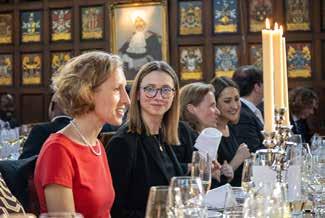
We have continued to expand and develop our member engagement programme. We aim to provide a mixture of professional development, career support, diversity and inclusion activities, and social and networking opportunities. Highlights in the 2024 programme included a talk on imposter syndrome, a workshop on applications for panel and judicial appointments, an LGBTQ+ members’ social, a panel discussion on returning to work with caring responsibilities, and the Diversity Dinner celebrating Black History Month.
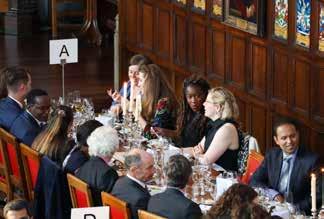
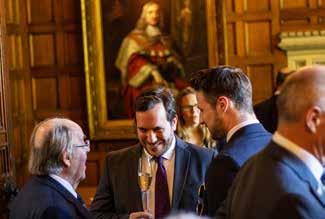
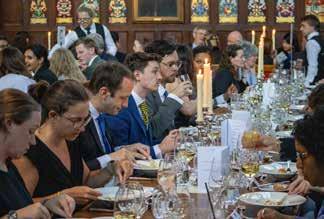
We were also delighted to host events with the Black Barristers’ Network, the Society of Caribbean Lawyers, Aspire to the Bar, and the Social Mobility Business Partnership.
Our work on circuit is also increasing. We held at least one event on each circuit, including very well-attended Treasurer’s Circuit Dinners in Leeds and Bristol, an EDI Forum in Leeds on recruitment, retention and promotion within under-represented groups, a talk by the Hon Mrs Justice Tipples in Birmingham, and social events in Cardiff, Exeter, Manchester, and Newcastle. We appointed new Circuit Representatives at the start of year and they have all approached their roles with enthusiasm and have more events planned for 2025. We would like to take this opportunity to thank the previous Circuit Representatives, who took on extended terms of office, and came up with some innovative events during their pandemic-impacted terms. Read more about our circuit activity on page 34
We had 376 applicants for our Bar Course scholarships and 71 applicants for our GDL scholarships. Our interviewers conducted over 300 interviews in London, Birmingham, and Manchester.
Interest in our outreach prizes, the Neuberger Prize for students at non-Russell Group universities and the Helen Grindrod Social Mobility Prize, continues to grow. The prize winners take part in a summer school programme at the Inn, are given a mentor, and have a mini-pupillage arranged for them. Our other outreach activity included hosting more than 250 students at our information afternoons and dinners, taking part in law and pupillage fairs, and providing sessions for sixth form students in partnership with IntoUniversity.
You can read more about all aspects of our work in the Committee activity section of this Review (page 96) and in the reports on equality, diversity, and inclusion at the Inn (page 26) and the Bar Representation Committee (page 38).
We could not do any of this without the support of our members. Everyone in the Department is very grateful to all the members who contributed to our programmes this year. Our student numbers and scholarship applicants remain high. This means we have a continued high demand on our volunteers, as well as on the Department. However, we are making progress on increasing the number of members who volunteer with us. In 2024 we invited 446 volunteers to our annual Contributors’ Dinner, which is the highest number since I’ve been at the Inn. Thank you to all our volunteers for their giving up so much of their time to the Inn and to supporting their fellow members and the future generation of barristers. We are always looking for new volunteers, and given the increased demand this is more important than ever.

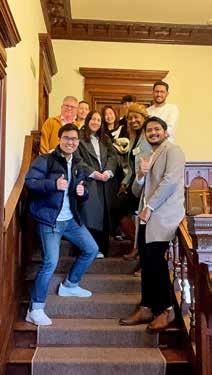
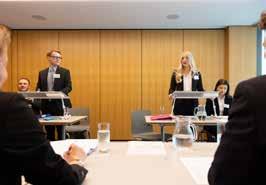

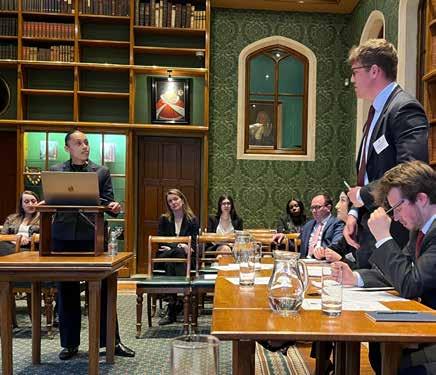
All of our practitioners and judges are welcome to volunteer, and we are particularly keen to increase involvement from employed barristers, barristers practising outside of London, and those from underrepresented groups. It is important that we have representation of as wide a range of practitioners as possible on our teaching teams, speaker panels, and interview panels.
We arrange over 150 events each year, as well as a variety of schemes that support members of the Inn, and we could not run any of these without the contribution of many Bencher and barrister members of the Inn. This includes attending our outreach events and talking to students considering the Bar as a career, providing advocacy and ethics teaching to students, pupils, and junior barristers, sitting on panels or giving lectures, and providing mentoring or careers advice. All the activities are rewarding and can be a lot of fun. Many of them also give you the opportunity to meet your peers practising in other areas, both geographically and legally. These are just some examples of how you can help:
• Teaching advocacy
• Facilitating ethics, case analysis or vulnerable witness handling sessions
• Mentoring
• Offering marshalling placements
• Providing pupillage application advice
• Giving careers talks
• Interviewing scholarship candidates
• Writing new exercises, ethics scenarios, and moot problems
• Judging mooting and debating clubs
We also provide an increasing amount of activity on circuit, including scholarship interviewing in Birmingham and Manchester and student advocacy and ethics sessions across the country. So, even if you are not able to get to the Inn very often there are still ways you can help.
There is more information on the volunteering page in the members section of our website about the events and activities you can assist with and a primary contact in the Department for each. You are also very welcome to contact me if you are interested in helping or want any more information.
Faye Appleton, Director of Membership & Education
Faye.Appleton@lincolnsinn.org.uk www.lincolnsinn.org.uk/members/volunteering
In July 2024, Lincoln’s Inn published the sixth edition of the Student Law Journal, continuing to showcase the exceptional talent and intellectual rigour of our Student members.
Launched in 2018, the Inn’s annual Student Law Journal invites students to submit essays on any area of legal interest. All entries are reviewed by a panel of Benchers and barristers, who select the essays to be included in the journal. Once selected, the journal is published online, with hard copies stored in the Inn’s Library. This year’s edition features 17 articles covering a diverse range of legal topics, introduced by a foreword from the journal’s editor, Edward Cousins.
This edition is particularly significant as it marks the inaugural inclusion of The Lord Millett Equity Essay Prize, an award made possible by the generous legacy of the late Lord Millett, who served as Treasurer of the Inn in 2004. The prize was established in agreement with Lord Millett’s family to honour his lifelong commitment to the study and practice of equity.
You can read the Student Law Journal on the Clubs and Competitions page of the Inn’s website, where you will also find details on how to participate in the Inn’s five annual competitions for Student members, as well as the Mooting and Debating Clubs.
Volume VI essay authors
1. Mostafa Taimur Raihan (Winner of the Lincoln’s Inn Law Journal Prize)
2. Oliver Clement (Winner of the Lord Millett Equity Essay Prize) 3. Alexandra Breckenridge
Natalia Catechis
5. Haashim Duffaydar 6. Xenia Kalatha
11. Emma Lindsey
12. Emilia Lyons
13. Harry Maunder
14. Ashley McClain
15. Alysen Miller
16. Katie Stephens
17. Siew Hui Yap
7. Digna Kandrataviciute 8. Adnan Khaliq 9. Thomas Lam 10. Samuel Lane
“The Inn has been a huge source of support to me […] becoming a barrister has been years in the making so yesterday was a very special day” (Katie Stephens, pupil barrister at St Phillips Chambers, Called to the Bar on 10 October 2024)
Congratulations to the 818 students Called to the Bar at Lincoln’s Inn in 2024:
183 on 26 March
215 on 25 July
183 on 10 October
237 on 28 November
For more details, visit the News page on the Inn’s website and select the ‘Call to the Bar’ tag: https://www.lincolnsinn.org.uk/news/?tags=call-to-the-bar
For more Call to the Bar photos, view Nick Easterman's online photo albums at: https://www.flickr.com/photos/64305453@N02/albums
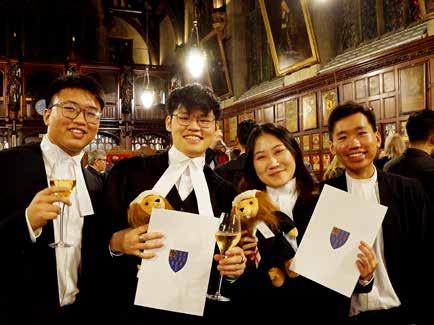


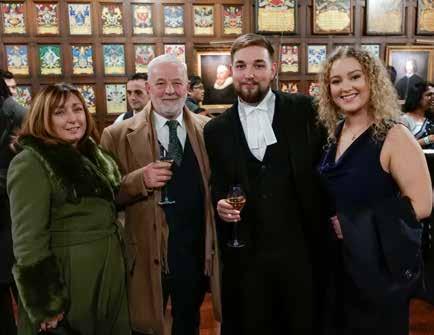

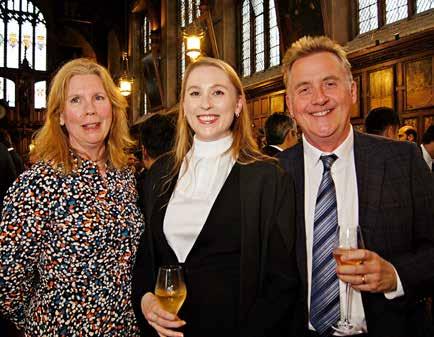








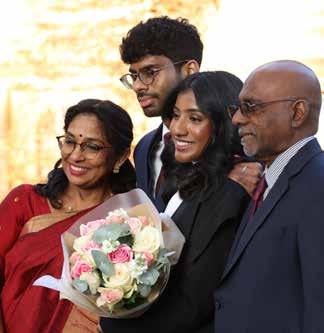
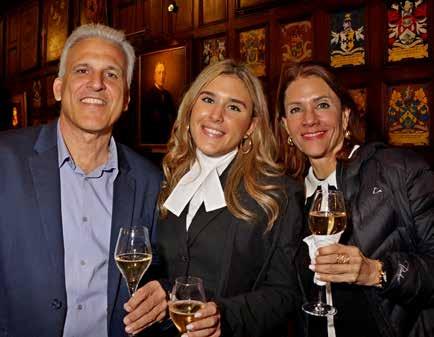

2024 has been another exciting year for equality, diversity and inclusion at the Inn. From holding our first EDI forum on circuit, to the introduction of a digital accessibility toolbar on our website, we have had a year of real progress and learning.
The EDI Committee, chaired by Chief Chancery Master Shuman, updated the EDI Action Plan for 2024 to 2026. The action plan contains timescales and measures of success to ensure we can accurately monitor progress and hold ourselves to account. You can read this on our recently updated EDI webpage, which has now more centralised information about our upcoming EDI-focused events and news.
Our Communications Team implemented an on-demand accessibility solution for our website this year. A huge number of people worldwide encounter barriers when trying to read and understand content online. This can be due to disabilities, learning difficulties, visual impairments, having English as a second language or a variety of other factors. The toolbar, launched on our website in November 2024, provides a range of on-demand accessibility features that allow users to customise their online experience, creating a more inclusive platform. Within its first two months, the toolbar was used by 75 individuals.
We have also developed a reasonable adjustments procedure and guidance. Reasonable adjustments are changes to our services and facilities to help disabled people and those with temporary or long-term conditions to engage fully with the Inn. The new procedure sets out the range of reasonable adjustments available to members and guests using the Inn’s facilities and services and explains how to request them.
In last year’s Annual Review, we highlighted the need for EDI training, not only for our advocacy tutors and scholarship interviewers who already receive this, but for all of the Inn’s volunteers. After trialling a training platform and consulting with the EDI Committee during 2024, an e-learning training platform has been selected and we will be undertaking further work to roll out training in 2025.
In 2024 the Inn once again delivered a broad and varied programme of EDI activities. This included our first EDI forum on circuit, kindly hosted at Park Square Barristers, Leeds, in February. The panel focused on underrepresented groups, discussing recruitment, retention and promotion at the Bar, and was well in-person as well as live streamed.
In the run up to International Women’s Day (8 March) the Inns of Court Alliance for Women (ICAW) held an event at Lincoln’s Inn to discuss the gender pay gap within the profession, that recently published data shows is widening rather than narrowing. Barbara Mills KC chaired a fantastic panel who focused on constructive and practical solutions on how they have taken steps to tackle gender income gaps.
In April we worked with the Black Barrister's Network (BBN) on their Springboard Project by hosting twentyfive Year 5 students from Haberdashers Hatcham Primary School to the Inn. They took part in mock trials and workshops, had lunch with the Treasurer in the Great Hall, and a tour with our Outreach Coordinator.
To celebrate South Asian Heritage Month, the EDI Committee and the Lincoln’s Inn Library Team organised a panel session chaired by Chief Master Shuman honouring the careers of several distinguished judges of South Asian heritage. This included Lincoln’s Inn member Justice Leila Seth, who became the first woman Chief Justice of a state High Court in India, and the Honourable Mustafa Kamal, who had a distinguished career as a lawyer and judge and is known for his promotion of ADR in Bangladesh.
In July we held a work insight and skills day in partnership with the charity Social Mobility Business Partnership (SMBP), who work with students from low-income backgrounds to support career aspirations in the legal and financial sectors. Feedback from students was overwhelmingly positive, with some good suggestions for other things we could do in the future.
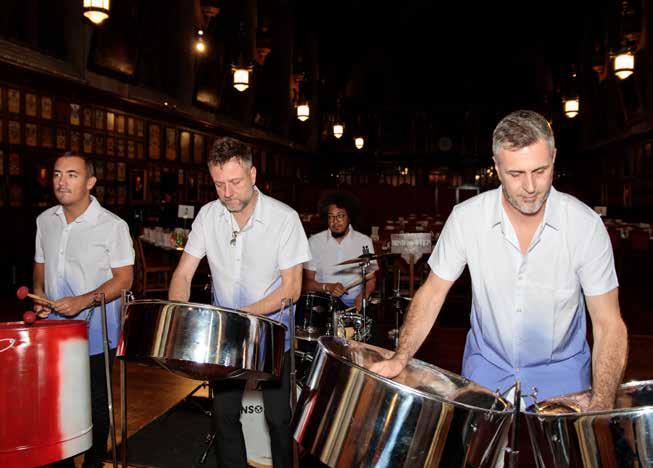
In October we held our Black History Month Diversity Dinner which included dishes celebrating cuisine from the Caribbean and Africa, musical entertainment provided by the North-London based Pan Nation Steel Orchestra, and a speech by The Rt Hon Lord Boateng, who was the UK’s first Black Cabinet Minister.
We also held our first drop-in social event for our LGBTQ+ members and allies in the MCR. The event was particularly aimed at enabling new and current Student members and Junior members to meet other members and allies from the LGBTQ+ community. It was a real success, and we are planning to do more of these events in 2025.
In November, Dr Síofra O’Leary delivered the EDI Keynote speech, where she discussed issues such as domestic and gender-based violence and gender issues in legal life that she had experienced as the first woman to be made President of the European Court of Human Rights in 2022. We also held the Sir Mota Singh Memorial Lecture in November, where our speaker Barbara Mills KC discussed ‘A snapshot of Race at the Bar – what will it take to achieve equality’.
Thank you to everyone who continues to support the EDI work that is being done at the Inn, from the Inn’s employees to Committee members and volunteers. There is always more work to be done, and the Inn recognises that it has an important role in shaping the future composition of the Bar by educating and supporting its members. This gives us both a special responsibility and an exciting opportunity to advance diversity and inclusion within the profession.




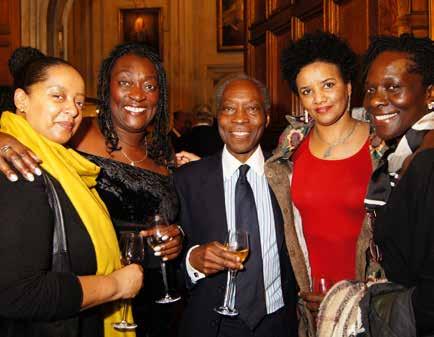
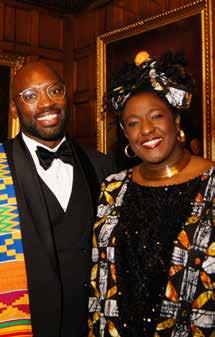
The elected Circuit Representatives of Lincoln's Inn aim to raise the Inn’s profile on circuit and help barristers based outside of London to make the most of their membership. They serve as a vital link between the Inn and its members on circuit, providing feedback and suggesting initiatives to strengthen engagement with the wider membership.

Senior Circuit Representative: His Honour Judge Burns

His Honour Judge Burns is a Designated Civil Judge for Staffordshire & Shropshire and authorised to act as a judge of the High Court.
Senior Circuit Representative: Lisa Roberts KC

Lisa Roberts KC is a self-employed barrister at Lincoln House Chambers in Manchester. She was leader of the Northern Circuit 2020-2022, and is a Bencher of the Inn. Lisa sits on the Advisory (Benchers) Committee and Equality, Diversity and Inclusion Committee.

Representative:
Eleanor Marsh is a selfemployed family barrister at 3PB (3 Paper Buildings) in Birmingham and represents Hall on the Post-Call Education Committee and the Social Mobility sub-committee.
Representative: Isabelle Haddad

Isabelle Haddad is a selfemployed barrister at 9 St John Street Chambers in Manchester. She represents Hall on the Pre-Call Education Committee.
Senior Circuit Representative: Her Honour Judge Henley

Her Honour Judge Henley is a Circuit Judge deployed to sit in Newcastle Upon Tyne in the Family Court and also authorised to sit as a Deputy High Court Judge in the Family Division.
Circuit Representative: Christopher Rees KC
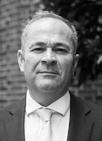
Christopher Rees KC is a self-employed barrister. He is Head of Chambers and a founder member of Apex Chambers in Cardiff, and a Bencher of Lincoln’s Inn.
Circuit Representative: Susan Brown
Susan Brown is a selfemployed barrister and Head of Tennyson Chambers in Southampton.
Circuit Representative: Mark McKone KC selfemployed criminal barrister at Park Square Barristers in Leeds. He represents Hall on the Scholarships Committee.

Mark McKone KC is a self-employed criminal barrister at Park Square Barristers in Leeds. He is the Representative for the North Eastern Circuit and represents Hall on the Scholarships Committee.
Circuit Representative: Cerys Walters 9 Park Place Chambers in Cardiff. Cerys represents Hall on the Equality, Diversity and Inclusion Committee.

Cerys Walters is a selfemployed barrister at 9 Park Place Chambers in Cardiff. Cerys is the Representative for the Wales & Chester Circuit and represents Hall on the Equality, Diversity and Inclusion Committee.

Sophie Howard is a selfemployed barrister at St John’s Chambers in Bristol. She is the Representative for the Western Circuit and represents Hall on the Chapel Committee.
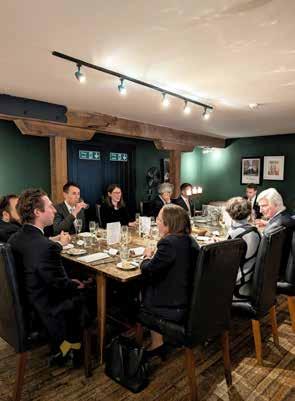
On Friday 12 April 2024, we hosted the Treasurer’s Circuit Dinner at the Queen’s Hotel in Leeds for our practising members on the North Eastern Circuit. The event saw a record turnout, with 41 members in attendance, joined by the Treasurer, The Rt Hon Lord Briggs of Westbourne, Under Treasurer Anne Sharpe CBE, and Head of Membership Claire Coveney.
On Friday 14 June 2024, the Treasurer’s Circuit Dinner was held at the Hotel du Vin in Bristol for our practising members of the Western Circuit. A contingent of members based in Cardiff also attended with the Senior Circuit Representative for the Wales & Chester Circuit, Christopher Rees KC. The Treasurer, his wife Lady Briggs, and Anna McCole, Member Engagement Manager, were in attendance representing the Inn.
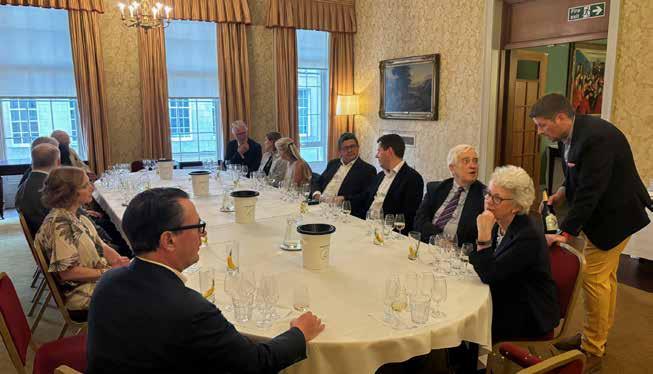
Throughout the year, Circuit Representatives also organised a range of events on their circuits, including wine tasting on the North Eastern Circuit, social events on the Northern, Western, and Wales & Chester Circuits, and a talk by The Hon Mrs Justice Tipples on the Midland Circuit.
Read the Bar Representation Committee report on page 38 for more details about the Inn’s engagement with members on circuit throughout 2024.
Feedback
The Inn is always open to feedback from members on circuit. If you have ideas or suggestions for circuit events or initiatives, please contact your Circuit Representatives or the Inn’s Member Engagement Team via members@lincolnsinn.org.uk.



By Samuel Buyoya
The Office of Communications (Ofcom) is a statutory corporation created by the Office of Communications Act 2002. It is a regulatory body and its functions cover a range of sectors including television, radio, spectrum, telecoms, network security and postal sectors Ofcom also has concurrent powers alongside the Competition and Markets Authority (CMA) to enforce competition law and consumer protection law. More recently Ofcom was appointed as the regulator under the Online Safety Act 2023.
In addition to Ofcom’s specific statutory duties, as a public authority it is also subject to general public law.
The close-knit legal team is led by our General Counsel, Martin Ballantyne and currently consists of approximately 80 lawyers. Ofcom lawyers come from a variety of backgrounds and bring a diverse range of experience and expertise from various practice areas. That experience ranges from private practice to industry in-house legal teams and public bodies. The team also includes other employed barristers.
Ofcom lawyers are usually involved in matters for their entire lifecycle from initial advice (eg early-stage policy development or decisions to open investigations) through to the project stage and litigation, should a matter get contentious. Sometimes this is as part of a team of lawyers working on big project or independently with a senior member of the legal team acting as a peer reviewer.
The legal team works across Ofcom’s remit. As a consequence, the life of a lawyer at Ofcom is varied and invariably high profile. Our work is often the subject of political and public interest and debate. New and significant points of law also arise often.
I joined Ofcom in November 2021 from the Competition Appeal Tribunal. Since then, some of the matters that I have worked on include:
• Sepura/Motorola – an investigation under the Competition Act 1998 into whether competitors in the provision of equipment and related services in the electronic communications sector in the UK infringed competition law through the sharing of commercially sensitive information.
• Radiocentre v Ofcom – a judicial review challenge brought by Radiocentre (an industry body for commercial radio in the UK) against Ofcom in relation to the launch of an online dance music offering by the BBC called Radio 1 Dance ([2023] EWHC 1977 (Admin)).
• The Cloud Market Study – the first market study undertaken by Ofcom using its concurrent powers under the Enterprise Act 2002. This year-long study examined the cloud services market in the UK and the position of Amazon, Microsoft and Google. It led to a market investigation reference to the CMA
• The Vodafone/Three merger – Ofcom’s input into the CMA’s investigation into the proposed joint venture between Vodafone and Three to combine their UK telecoms businesses.
• Openreach Quality of Service investigation – an investigation into Openreach’s quality-of-service performance in leased lines access and wholesale local access in 2022/23.
• The Telecoms Access Review – Ofcom’s review of the regulations that will apply to the UK fixed telecoms markets from April 2026 until March 2031.
As a Principal Legal Advisor, I lead the provision of legal advice to colleagues on a range of matters on most of the projects work on. This usually involves advising colleagues across Ofcom. The day-to-day work ranges from attending meetings with senior colleagues to more routine project meetings on long running projects. It often involves engaging with external stakeholders, whether that is other public bodies (eg the CMA, government departments etc) or a stakeholder’s external legal advisers.
My clients at Ofcom cover the range of Ofcom’s business groups – for my work this has included economists, technologists, the Networks and Communications group, our Enforcement Team, spectrum engineers and colleagues in our Broadcasting and Media group. On a practical level those clients are often in the same building, on the same floor or a virtual call away. This means you have more day-to-day contact.
For example, on the Cloud Market Study, I was the lead day-to-day lawyer and worked with a Senior Legal Advisor (Senior Associate) and Legal Advisor (Associate) overseeing their work on the study. I reported to one of our Legal Directors as well as our General Counsel. On other projects am sometimes the only lawyer.
Where litigation arises, Ofcom works with self-employed barristers who are instructed to assist with the case. On the Radiocentre case that was with Tristan Jones (now KC) and Hollie Higgins of Blackstone Chambers.
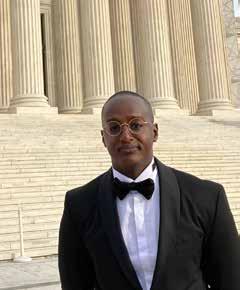
Secondment opportunities also arise. I write this article from Washington DC where I am currently an International Fellow at the US Federal Trade Commission (FTC) as a Pegasus Scholar 1 As part of the FTC’s International Fellow Program joined the Bureau of Competition on a six-month secondment. This opportunity was only possible with the strong support of Ofcom’s General Counsel and my line manager, one of the Legal Directors. Other legal colleagues have undertaken secondments to government departments.
Overall, working as a lawyer at Ofcom is incredibly stimulating and has given me a deeper and broader level of experience under the broad umbrella of public law.
1 A report that I will prepare for the Pegasus Scholarship Trust on my time in the US will be published on the Trust’s webpage when return.

By Laura Gould, BRC Chair (August 2022 to August 2024)
As I stated in last year’s report, one of my main objectives as Chair was to enable greater representation of our members on circuit. I believe that updating the BRC rule last year to ensure that the junior Circuit Representatives sit on the Committee has made a huge difference to the way the Inn engages with our members who reside outside London, and to the way our members engage with the Inn. This change has guaranteed that Hall members on circuit have a voice on the Committee, ensuring that all issues discussed consider the needs of those who live outside of London.
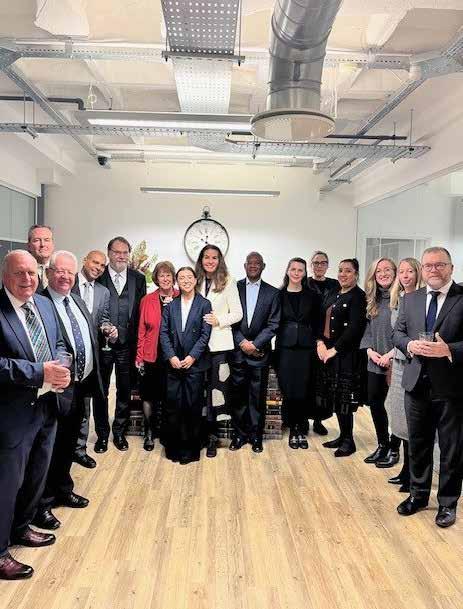
In the past 12 months we have held almost 10 events on circuit, including our first Equality, Diversity and Inclusion (EDI) forum titled ‘Underrepresented groups - Recruitment, retention and promotion’. This event, hosted by Hall member Glenn Parsons at Park Square Barristers in Leeds, was a great success. I extend my thanks to Glenn, his colleagues, and the Inn’s EDI committee and support staff for their fantastic work in making it happen.
We have also held two Treasurer’s dinners on circuit, one in Leeds and the other in Bristol. One of these dinners was so popular we had to upgrade the venue to accommodate the numbers, a problem we have never had before, and very much down to the great work our new Circuit Representatives are doing in spreading the word and building collegiality amongst our members. Last year we held our AGM on Circuit for the first time, kindly hosted by Kings Chambers in Manchester, which was a great opportunity for our members on the Northern Circuit to attend in person.
Our new Circuit Representatives, who began their term in January, have been working hard to engage our members on circuit with all manner of events and activities, including wine tastings, Bake Off challenges, and quizzes. If you are based in the UK and live or practice outside the South East of England, I highly recommend you check out upcoming events on circuit via the Circuit Event tag on the What’s On page of the Inn’s website. Alternatively, if you have ideas for events or activities, please contact your representative directly; their emails can also be found on the Circuit Representation page of the website.
There have been some fantastic wins for events that the Committee supported this year. This includes the Gourmet Dinner, which sold out in 24 hours following the decision made by the BRC to trial a change of date from the Michaelmas term to Trinity. In January, the Social Mobility Sub-Committee organised an in-person event on Imposter Syndrome which sold out, and they are now looking into doing a similar event online to reach even more of our members. The Junior Members’ Sub-Committee continues to do an excellent job in keeping our young members engaged with the Inn. This included our ‘Havana Nights’ themed Junior Members’ Summer Dinner which was opened to Student members this year and had a great turnout.
This year has seen the roll out of online accounts for members, meaning that all Hall members and Benchers are now able to access their own records and update their details. This includes information relating to your professional status, as well as opting into the Inn’s various mailing lists. If you haven’t already logged in, I would suggest you do so you can stay up to date with upcoming activities, vote at the BRC annual elections, and in 2025, we aim to enable members to book onto Inn events via their online account. Details on how to login and activate your account can be found on the Login page on the website.
The last two years as Chair have been an honour, and the final act to my BRC journey following eight years in total on the Committee. I want to thank all my fellow Committee members, and the Inn’s employees, especially Faye and Claire, for the support you have shown me during this time.
Lastly, I am happy to report that George Payne was elected Chair to follow me and started his term in August 2024. George is a well-known, energetic and impressive figure at the Inn, having sat on BRC since 2017 and been a regular contributor to our Outreach and Education programmes for many years. He will no doubt make a huge contribution to the Inn as Chair, and I cannot wait to see what he accomplishes during his term.
Members (January 2025): Emma Southern, Benjamin Hamer, The Venerable Sheila Watson, Julie Whitby, Alice Hawker. In January 2025, the group welcomed Mark Watson, Holly Quirk and Umar Ali as new members.
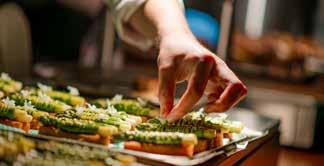
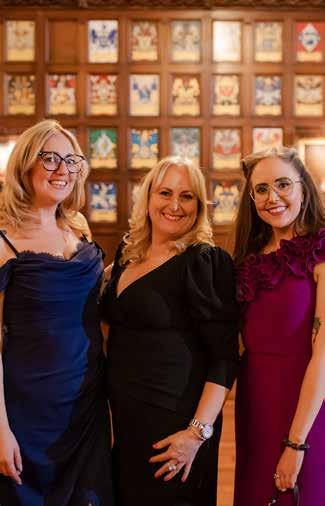
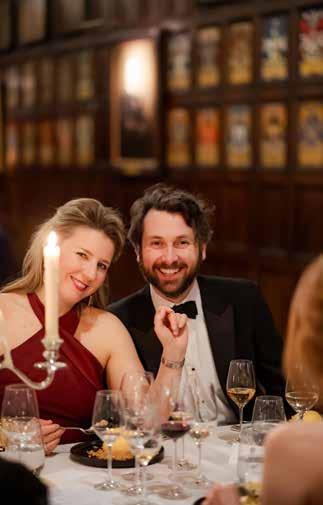
In 2024, the Gourmet Dinner was held for the first time in April, instead of in the Michaelmas term, and sold out. 120 members and guests enjoyed a delicious array of food, allowing the Inn’s chefs to showcase their culinary skills. The next Gourmet Dinner will be held on Friday 9 May 2025.
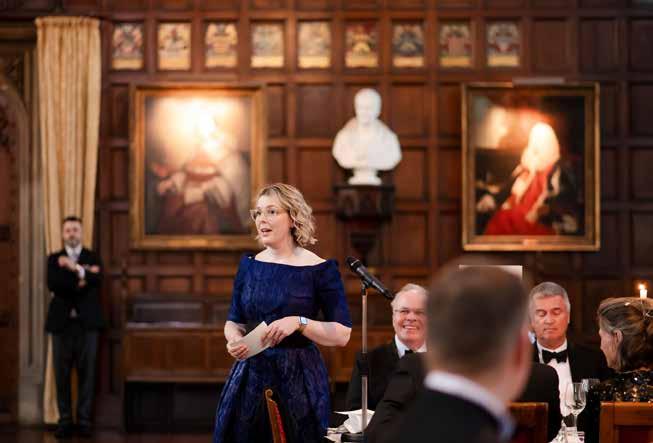
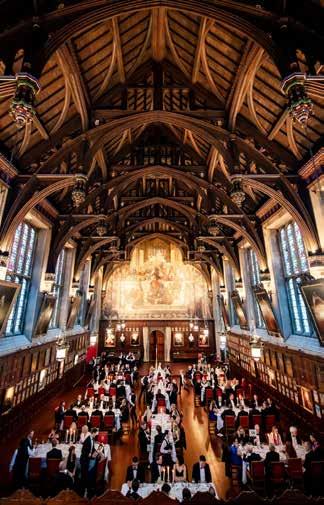

In October 2024, the group held a joint event with the Social Mobility Sub-Committee on Returning to Work with Caring Responsibilities. The talk included experts in the field and also personal experiences from members. A recording of the event can be found on our YouTube channel
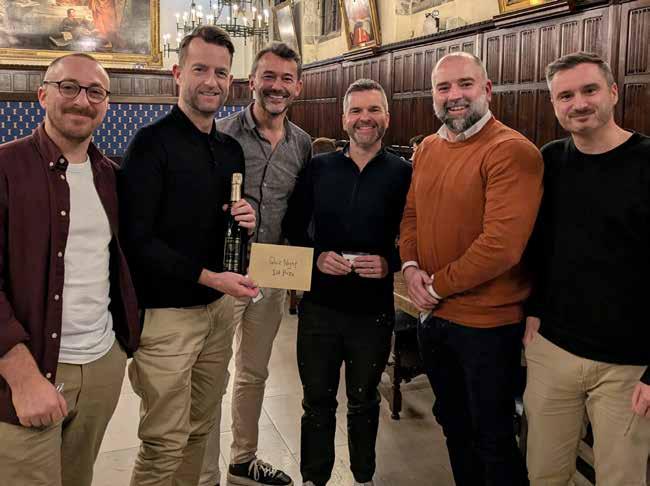
The group held the annual Members' Quiz Night in November 2024, which was very well attended with over 60 members and guests in attendance.
Members (January 2025): Adam Kayani (Co-Chair), Imogen Sadler (Co-Chair), Craig Fahey, Leo Graves, Olivia Waddell, Rifat Rahman. In January 2025, the sub-committee welcomed Hannah Gilliland as a new member.
In December 2024, the group’s long-standing co-chairs, Ben Hamer and Hazel Jackson stepped down after chairing the sub-committee since its inception in 2018. The Inn would like to thank them for their enthusiasm and dedication to providing activities, support and opportunities for connection for the Inn’s junior members.
In March 2024, the group held their annual Financial Management for Pupil Barristers event, which aims to inform current and future pupil barristers on how to manage their finances as self-employed earners.
The group also hosted a panel event in April 2024 titled ‘Second Six and Beyond,’ aimed at informing pupil barristers about their options after completing their second six months of pupillage. You can view a recording on the Inn’s YouTube channel.

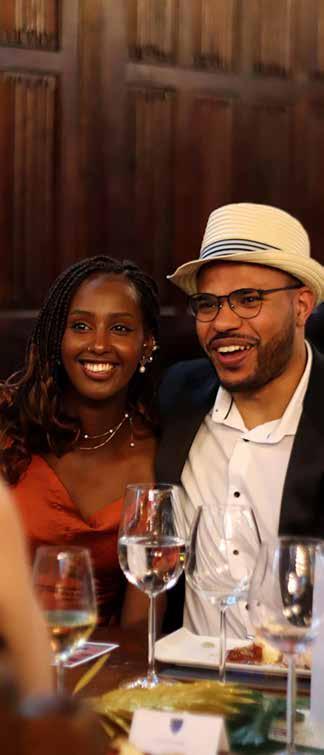
Members (January 2025): Chris Loweth (Co-Chair), His Honour Judge Fayyaz Afzal (Co-Chair), Susanna McGibbon KC (Hon), Edmund Burge, Brynmor Adams, Tariq Mahmood, Eleanor Marsh, Jack Meek, and Rifat Rahman. In January 2025, the Sub-Committee welcomed Mark Watson as a new member.
In January 2024, the Sub-Committee hosted a talk on Imposter Syndrome by Georgina Wolfe, a junior barrister at 5 Essex Chambers. The talk offered useful insight and practical tips to those in attendance in-person and online on how to overcome imposter syndrome.
In October 2024, the Sub-Committee held another Applications Workshop online, after a successful in-person event in July 2023. It was a skills focused workshop for competence-based applications, such as judicial appointments. Hosting the event online allowed volunteer mentors and attendees to attend from across the country.
Get to know your BRC members for the year ahead:

Adam Kayani
Self-employed family barrister at Harcourt Chambers. Coopted member of the BRC from November 2023 to December 2025. He represents Hall on the Estates and the Staff Committee. He is also Co-Chair of the Junior Members’ Committee.

Amar Saeed Sheikh Barrister based in Pakistan, specialising in civil, corporate, and commercial law. BRC member since 2022 (elected 2022-2025).

Anthony James
Self-employed criminal and regulatory barrister at Mountford Chambers. Co-opted member of the BRC from November 2023 to December 2025. He represents Hall on the Gardens Committee, the Hospitality, Events and Dining Committee and the Junior Members' Sub-Committee.
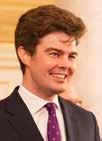
Benjamin Hamer
Media and communications barrister at 5RB. BRC member since 2018 (elected 2021-2024) and co-opted in November 2024 until December 2026. Ben represents Hall on the Advisory (Benchers) Committee and Estates Committee. He is also a member of the Social & Wellbeing Group.

Amy Proferes
Tenant at Serle Court since 2014 and practises across various areas within both traditional and commercial Chancery. Co-opted BRC member from November 2024 until December 2026. Amy represents Hall on the Advisory (Benchers) Committee.

His Honour Judge
Andrew Holmes
Appointed as a Circuit Judge in 2019. After five years in the Crown Court, he now sits in the County Court at Central London. Co-opted BRC member from November 2024 until December 2026. Andrew represents Hall on the Library Committee.

Cerys Walters
Self-employed civil and financial remedies barrister at 9 Park Place Chambers. Co-opted BRC member from November 2023 to December 2025. Cerys represents Hall on the Equality, Diversity and Inclusion Committee. She is also the Inn’s Circuit Representative for the Wales & Chester Circuit.

Chris Loweth
Commercial, Rights & Business Affairs Director at BBC News.
BRC member since 2021 (elected 2021-2024, re-elected 20252028). Chris is Co-Chair of the Social Mobility Sub-Committee. He also represents Hall on the Staff Committee and Equality, Diversity, and Inclusion Committee.

Cleon Catsambis
Self-employed commercial barrister at 3 Verulam Buildings. BRC member since 2025 (elected 2025-2028). Cleon represents Hall on the Post-Call Education Committee.
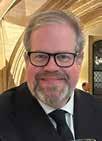

Dilpreet Dhanoa
Self-employed tax barrister at Field Court Tax Chambers. BRC member since 2022 (elected 2022-2025). Dilpreet represents Hall on the Finance and General Purposes Committee and the Investment Committee.

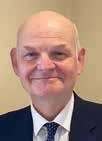
Edmund Burge KC
Self-employed barrister at Five St Andrew’s Hill. BRC member since 2022 (elected 20222025). Edmund is a member of the Social Mobility SubCommittee.

Eleanor Marsh
Self-employed family barrister at 3PB (3 Paper Buildings). Ex-officio BRC member since 2024 and the Inn’s Circuit Representative of the Midland Circuit. Eleanor represents Hall on the Post-Call Education Committee and the Social Mobility Sub-Committee.

Fiona Whiteside
Self-employed commercial barrister specialising in commercial disputes at Twenty Essex.
Co-opted BRC member from November 2024 until December 2026. Fiona represents Hall on the Advisory (Benchers) Committee, and the Equality, Diversity and Inclusion (EDI) Committee
George Payne
Self-employed criminal barrister practising in London and the South East from Furnival Chambers. BRC member since 2017 (last elected 2022-2025) and elected as Chair in 2024. George represents Hall on the Finance and General Purposes Committee, the Planning and Development Group (PADG) and the Post-Call Education Committee.
Georgina Blower
Self-employed barrister specialising in criminal justice and public inquiries at The 36 Group. BRC member since 2017 (elected 20192022, re-elected 2023-2026). Georgina represents Hall on the Scholarships Committee.

Hannah Gilliland
Self-employed barrister specialising in media and communications law at 5RB. Elected member of the BRC since 2025 (elected 2024 –2028). Hannah represents Hall on the Chapel Committee, the Regulatory Panel, and the Junior Members' Sub-Committee

Holly Quirk
Employed barrister based in Manchester, practising in regulatory, education and inquest work at Browne Jacobson LLP. BRC member since 2024 (elected 2024-2027). Holly represents Hall on the Pre-Call Education, the Chattels Committee, the Social and Wellbeing Group and the Junior Member’s SubCommittee.

Imogen Sadler
Self-employed barrister at 4-5 Gray’s Inn Square practising in public and election law. BRC member since 2022 (elected 2022-2025). Imogen represents Hall on the Pre-Call Education Committee and the Hospitality, Events and Dining Committee. She is also CoChair of the Junior Members’ Sub-Committee.

Isabelle Haddad
Self-employed barrister specialising in criminal law at 9 St John Street Chambers. BRC member since 2023 (elected 2023- 2026). Isabelle represents Hall on the Pre-Call Education Committee. She is also the Representative for the Northern Circuit.

Jack Meek
Employed barrister at the Government Legal Department.
BRC member since 2023 (elected 2023-2026). Bar Council Social Mobility Advocate since 2021, Jack also sits on the Inn’s Social Mobility Sub-Committee. Jack represents Hall on the Scholarships Committee.

James Manning
Self-employed criminal barrister at Nexus Chambers. BRC member since 2017 (elected 2019-2022, re-elected 2023-2026). James represents Hall on the Advisory (Benchers) Committee, the Post-Call Education Committee and the Library Committee.

Karen Kabweru-Namulemu
Self-employed barrister at 1 GC Family Law, Karen is a specialist in family law, with over 18 years’ experience in this area. Coopted BRC member from November 2024 until December 2026. Karen represents Hall on the Equality, Diversity, and Inclusion (EDI) Committee.
Lara Kuehl
Self-employed commercial chancery barrister at Serle Court. BRC member since 2024 (elected 2024 – 2027). Lara represents Hall on the Post-Call Education Committee.

Leo Graves
Pupil barrister at 3DJB, with a focus on all areas of family law. Co-opted member of BRC from November 2024 until December 2026. Leo represents Hall on the Gardens Committee, the Chapel Committee and the Junior Members' SubCommittee.

Mark McKone KC
Self-employed criminal barrister at Park Square Barristers. He has been an ex officio BRC member since 2024 and is the Inn’s Circuit Representative for the North Eastern Circuit. Mark represents Hall on the Scholarships Committee.

Mark Watson
Self-employed barrister at Mountford Chambers. Elected member of the BRC since 2025 (elected 2025 – 2028). Mark represents Hall on the PreCall Education Committee, the Social & Wellbeing Group, and the Social Mobility subcommittee

Martin Nelson
Employed barrister with the Government Legal Department. Co-opted BRC member from November 2024 until December 2026. Martin represents Hall on the Pre-Call Education Committee.

Muhammad Talha Chaudhary
Employed barrister based in Pakistan, specialising in civil, commercial, and corporate law at Gas & Oil Pakistan Ltd. Elected member of the BRC since 2025 (elected 2025 –2028).

Rafey Altaf
Advocate in the High Courts of Pakistan specialising in public, human rights, industrial relation, labour and employment law. BRC elected member between 2020-2023 and co-opted member from November 2024 to December 2026. Rafey represents Hall on the Chattels Committee.
Samar Abbas Kazmi
Self-employed barrister at Atkin Chambers specialising in commercial, construction and technology disputes. Elected member of the BRC since 2024 (elected 2024-2027).

Tomas McGarvey
Self-employed barrister at 2 Bedford Row Chambers. BRC member since 2024 (elected 2024-2027). Tomas represents Hall on the Investment Committee.

Umar Ali
Self-employed criminal barrister at Holborn Chambers. BRC member since 2023 (elected 2023-2026). Umar is a member of the Social and Wellbeing Group.

Sophie Howard
Self-employed barrister at St John’s Chambers. She has been an ex officio BRC member since 2024 and is the Inn’s Circuit Representative for the Western Circuit. Sophie represents Hall on the Chapel Committee.

Dr Tariq Mahmood
Sole Practitioner in commercial litigation, arbitration and mediation based in London. BRC member since 2021 (elected 2021-2024, re-elected 20252028). Tariq is a member of the Social Mobility Sub-Committee.

Yasser Latif Hamdani Yasser is a self-employed advocate practising constitutional law and human rights law in Pakistan. Elected member of the BRC since 2024 (elected 2024 – 2027). He represents Hall on the Library Committee.

Zahrah Sehr Vayani
Assistant Attorney General of Pakistan and founder of Zahrah S. Vayani & Associates. Zahrah is also an Attorney at Law, New York and serves as the CEO of the Women Lawyers’ Association. BRC member since 2023 (elected 2023-2026). Zahrah represents Hall on the Estates Committee.
Timothy Folaranmi
Employed barrister at Mishcon De Reya LLP. BRC member since 2024 (elected 20242027). Timothy represents Hall on the Pre-Call Committee and the Gardens Committee.
By Dunstan Speight, Librarian
2024 was overshadowed for the Library and Archives Team by the death of our long-serving and much-loved Deputy Librarian, Catherine McArdle, on 28 January. Catherine had battled a rare form of cancer for seven and a half years with enormous courage and stoicism. Catherine worked in the Library for 33 years and was something of a legend throughout the Inn and the law library world for her knowledge, enthusiasm and enormous network of friends and colleagues. Many colleagues and members of the Inn attended her Requiem Mass at St Mary’s church Willesden and the Chapel was packed to capacity for her Memorial Service on 1 May.
Despite this sad loss, the work of the Library continued. The number of readers continued its recent year-on-year increase with a total of 16,079 visits. The enquiry team answered a total of 6,716 enquiries during the year.

In addition to the core tasks of research, cataloguing, acquisitions and training, the Library and Archives Team plays an important role in widening access to and appreciation of the Inn’s print and manuscript treasures. This is chiefly achieved through digitisation, exhibitions and talks.
The Library and Archives Team were awarded the Wallace Breem Award at the annual conference of the British & Irish Association of Law Librarians (BIALL) in June 2024 in recognition of our Rare Books and Manuscripts Online website: archives.lincolnsinn.org.uk. The Wallace Breem Memorial Award is presented every two years and is sponsored by The Inner Temple and BIALL. The Award was inaugurated in 1990 in memory of Wallace Breem, former Librarian of The Inner Temple Library and a founder member of BIALL. Dunstan Speight, Carolyn Rampling and Matthew Bland were at the awards ceremony to collect the award from Julie Christmas, President of BIALL.
Celebrate in style under a stretch tent in the beautiful gardens of Lincoln’s Inn. Where open-air charm meets historic elegance – the perfect setting for your summer reception.
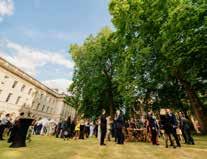
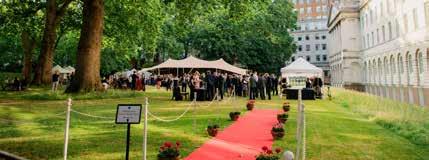
Facebook Lincolnsinnevents
Instagram @lincolnsinnevents
eventvenues.lincolnsinn.org.uk/ summer-garden-party/ events@lincolnsinn.org.uk 020 7405 5969
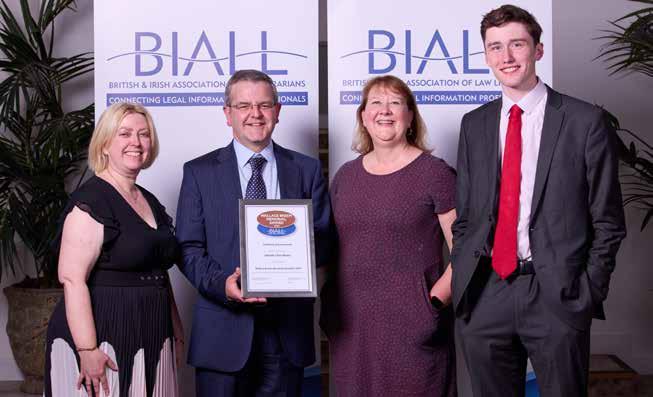
The Library hosted three exhibitions in the course of 2024. The year was the 150th anniversary of the final decision in the Tichborne Case, one of the most sensational cases of the 19th century, in which an Australian butcher fraudulently claimed to be Sir Roger Tichborne, heir to the Tichborne estate who had disappeared on a sea voyage years earlier. The fraudulent claimant could hardly have been more different from the real heir, both physically and in terms of educational accomplishments, but a succession of actions dragged out the case between 1866 and 1874. The Library includes a considerable collection of items relating to this case – press reports, cartoons and memorabilia collected by the artist Walter Sickert. We were also able to display cabinet photographs of the parties involved in the saga and a copy of the short-lived Tichborne Gazette, a paper produced by the claimant’s supporters.

We also presented a short exhibition to accompany the talk at Lady Briggs' Christmas reception, ‘A Bestiary of Lincoln’s Inn’, which included illustrations of animals (real and mythical) from the margins of mediaeval manuscripts, early printed books and other sources.
We also put together a digital exhibition for Black History Month which was shown at the reception for the Diversity Dinner on 30 October.
Following last year’s exhibition for South Asian Heritage Month, the Library team worked with the Membership Team and the EDI Committee to organise a panel session on 22 July when a number of distinguished English judges - Lord Justice Singh, Mrs Justice Cheema-Grubb and Mr Justice Choudhury discussed the careers of South Asian judges who sat on the Judicial Committee of the Privy Council, Justice Leila Seth and the Hon Mustafa Kemal. The panel was chaired by Chief Master Shuman - you can watch it on page 27 of this Review or on our YouTube channel. The event was extremely well-attended and the audience included the novelist Vikram Seth, son of Justice Leila Seth.
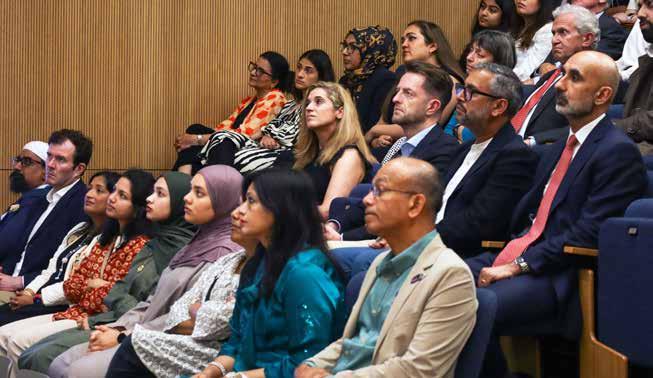
Library staff and other trained Inn employees continue to lead tours for groups of visitors. In addition to members of the public, we have given tours and shown treasures from the Rare Books and Archives collections to the Inns of Court Scholars and Pegasus Scholars who visit every year from the United States, the Chinese Ambassador and members of the Bergen Bar Association.
The Library Team has carried out many training courses this year. Members of the team have presented courses open to all the Inn’s students both in person and online. The online courses have been particularly well attended and a total of 1,376 members attended a Library training course, either in person or online during 2024.
Federico Botana completed his catalogue of the manuscripts which Matthew Hale left to the Inn. This catalogue is currently being edited and will form the basis for the records in the online catalogue of the Inn’s manuscripts.
We are currently planning to replace the air conditioning equipment in the Library and Archives strong rooms. The new equipment should be smaller and more efficient than the current units. A key part of the project is to make the rooms more airtight. This should make it easier to achieve consistent environmental conditions and also reduce the energy consumption.
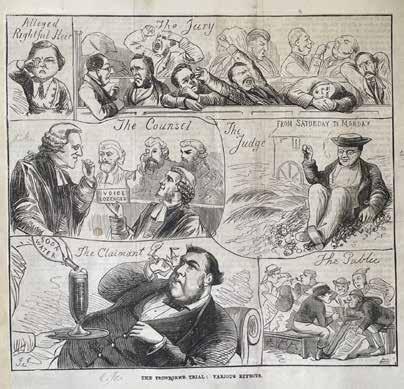
By Matthew Bland, Research Librarian
31 January 2024 marked the centenary of the acceptance by the Inn of one of the most significant donations in its history – that of the octagonal Gothic Revival table in the Library, originally designed by the architect AWG Pugin (1812–1852) for display in the Medieval Court of the Great Exhibition in 1851.
Pugin was a talented and dynamic young architect who swiftly became the leading figure in the Gothic Revival movement of the nineteenth century, pushing for a return to medieval aesthetics and principles in English architecture. He is perhaps most famous for his design of the interiors of the Palace of Westminster, which he designed at the age of 23 in 1835. In 1844, he formed a fruitful working partnership with JG Crace (1809–1889), an established and well-respected decorator turned furniture maker. It was from this working relationship that our table was born.
Pugin had experimented with the popular octagonal shape of table several times in his early career, most notably in a design commissioned for the Prince’s Chamber in his own Palace of Westminster (1837). By the time of the Great Exhibition, he and Crace had several years’ experience of producing them. An advertisement placed by Crace in The Builder of 26 July 1851 offers “Octagonal Library and Occasional Tables … designed after Ancient Authorities, and executed under the immediate supervision of A. W. Pugin, Architect.”
The 1851 table, however, was a unique creature. Unlike the other “library and occasional tables” produced by Crace, it is not made of oak, but of walnut; and its ornate marquetry top makes it far more similar to the kinds of table one might find in a country house reception room. It seems likely that this was the sort of market Pugin was trying to impress at the Crystal Palace.
The marquetry of the table is richly decorated and symmetrical, set into a veneer of eight sections, made up of bone, boxwood, holly and sycamore, with two green (now turquoise) stains applied, with an additional stain of olive. The outer floral border is punctuated by small bone circles, with eight floral flourishes pointing to the central eight-cusped medallion. This incredibly complex design proved a substantial challenge even for Pugin, who wrote to Crace in 1850 that “this sort of inlay furniture takes as long as a church”, and that he was “not at home in these woods”. His watercolour design for a section of the border is on display at the Victoria and Albert Museum.
The walnut base of the table is composed of complex ogee (‘S’-shaped) arches, with elaborate carved lions forming the feet of the structure – a very similar design to the base of Pugin’s table for the House of Lords. Attached to each end of the base are two plaques – one commemorating the architect, and the other commemorating the donor, Mrs Emily Hope Fellows, who donated the table to the Inn in memory of her late husband, Henry Fellows (d. 1910), a barrister of the Inn.
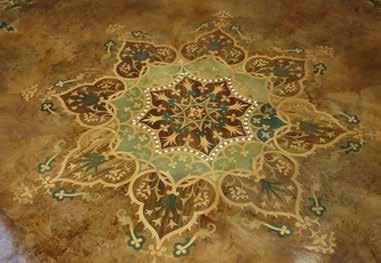

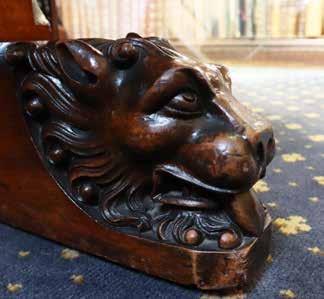
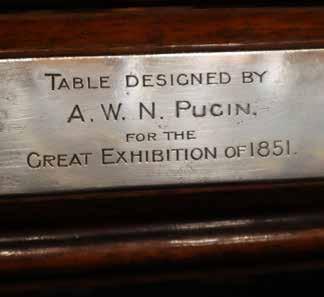
Contemporary interest in the table appears to have been mixed. It was somewhat undersold by the Official Catalogue of the Great Exhibition, which devotes just a single line to its description. The Illustrated London News was more effusive, praising the way in which the table “fully proved the applicability of mediaeval designs and decorations to every want of the present age”. It is now widely recognised as being one of the most impressive items of Gothic Revival furniture in existence.
The table has been restored twice with the assistance of the Heritage Fund, and now proudly stands in its place in the Bencher’s Bay of the Library.
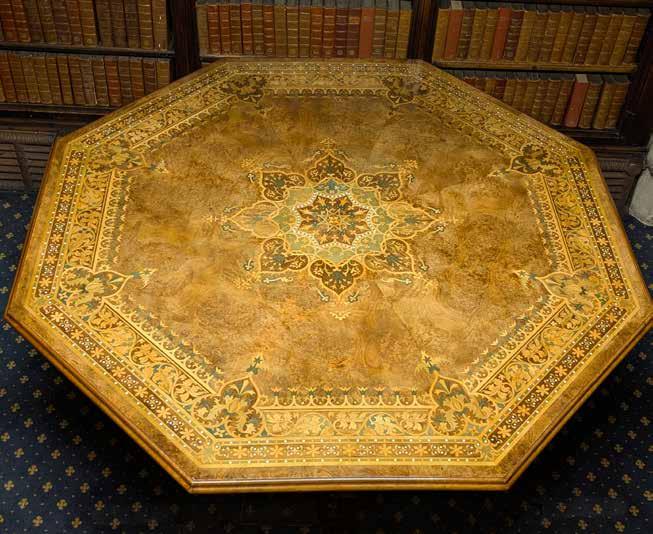
By Steve Matthews, Head of Catering
The Catering Department has once again delivered a diverse array of events with an unwavering commitment to exceptional service, outstanding food quality and creating memorable experiences on every occasion. This report celebrates a year of growth, creativity, and success. We are proud to have achieved record attendance at traditional favourites such as Ordinary Dining, Grand Days, and Sunday Lunches, alongside milestone events such as the Diversity Dinner which, this year, celebrated Black History Month.
The Gourmet Dinner offered our chefs the particular opportunity to showcase their culinary skill and artistry. This is organised by the Inn’s Bar Rep Social and Wellbeing Sub-Committee, promising a unique and refined dining experience for those who attend. The event also provided an invaluable experience for three Westminster Kingsway College students, who assisted in delivering a high-end, fast-paced, four-course meal. This year’s menu was crafted with the finest British ingredients, featuring dishes such as Wagyu 'Beef Tomato', Crispy Confit Agria, Sussex Asparagus, and Lincoln's Inn Wild Garlic Sauce. This highlight on the plate cleverly mimicked a tomato but contained a surprise filling of Wagyu beef. The dessert followed a similar theme, resembling a real lemon – Lemon Parfait with Lemon & Mint Confit and Hazelnut Biscuit Crumb – that delighted and surprised guests. Both were works of art!


The ever-popular Garden Party once again proved a sell-out success, attracting a record 550 guests who were delighted by the exceptional service and impressive array of dishes on offer. The Catering Team focuses on showcasing seasonality, sustainability and local produce at the event. This year, highlights included Bloody Mary Potted Prawns & Crayfish, Pickled Cucumber & Watercress at the much-loved fish stall and, at the Jamaican & African stall, members enjoyed Ghanaian Goat Stew and Jamaican Jerk Chicken.
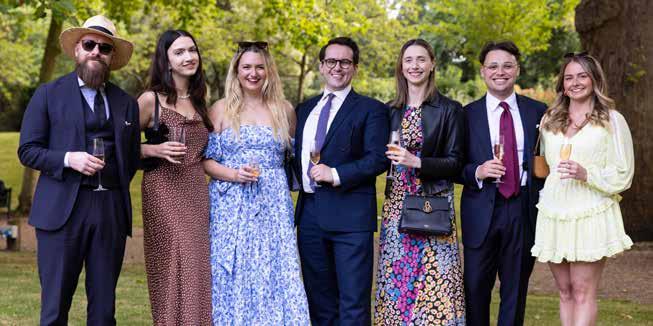

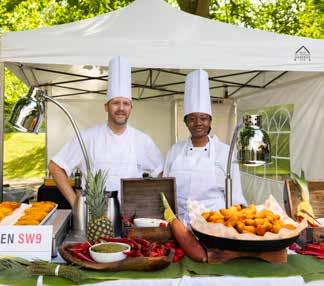


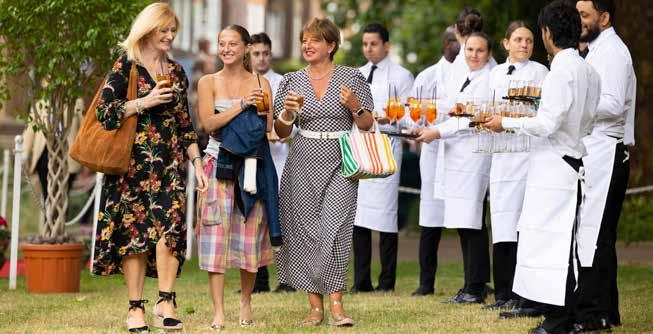

We continue to develop our MCR Supper Clubs, which always sell-out and are a tremendous success. In 2024, these included Burns Night (complete with bagpipes and an Address to the Haggis), a Middle Eastern-themed menu, ‘Meet the Producers’ supper and wine tasting with Greyfriars Vineyard, and an event of shared Peruvian-style platters. The relaxed atmosphere created by the team in the MCR combines with creative cuisine and excellent service in an intimate setting to welcome new and familiar faces.
The daily Members’ Lunch in Hall had an impressive 16,200 covers in 2024 and remains one of our most popular offerings, promoting collegiality. This year, menus were enhanced with a stronger emphasis on locally sourced, seasonal ingredients, ensuring members enjoyed fresh, diverse, and healthy meals.
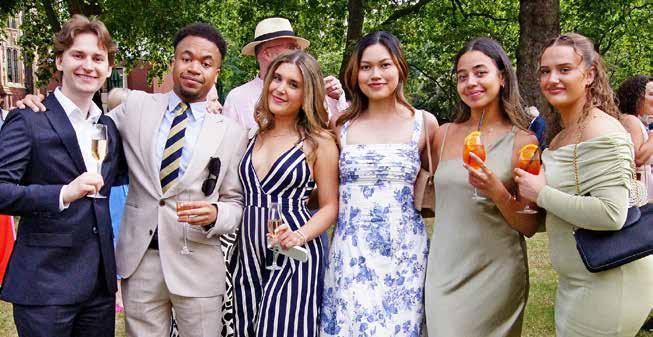

We remain committed to sustainability and continuously reducing our environmental footprint. The Green Team continues to come up with stretching ideas as to how we can change the way we work. This year:
• We strengthened relationships with local suppliers to secure fresh, traceable produce and ethically sourced meats, whilst supporting small holdings.
• We expanded our edible garden to provide more fresh, on-site produce, further enhancing our menus.
• We introduced nylon candles in place of traditional wax candles, which reduced waste, saved costs, and simplified maintenance.
At the heart of our success lies our team’s dedication to providing outstanding service and high-quality food. We have built a strong foundation of expertise and service excellence, which is underpinned by ongoing training and development to ensure that our staff have the tools to exceed the expectations of our members.
We also continue to offer opportunities to those new to the catering world. Alongside our continuing support for apprentices in the kitchens, for the first time in 2024 we were able to offer front of house work experience for a college student as part of her NVQ Level 3 catering qualification.
For the team, this year’s training initiatives included cheese-making, developing allergen-free menus, and foraging with Hunter Gather Cook. These efforts enhance the knowledge of our team, increasing creativity and innovation and, at the same, time, help to bolster our reputation as a provider of outstanding service.
The Catering Department’s efforts did not go unnoticed in the wider industry. In 2024, the department received a bronze award for ‘Most Versatile Venue’ at the Conference and Events Awards 2024 and bronze too for ‘Best Historic Venue’ at the London Venue & Catering Awards.
These accolades are a testament to the commitment and professionalism of our team. The judges specifically highlighted the team’s long-standing service, creativity, and the ability to maintain consistently high standards while also embracing innovation.
As we enter a new year, our focus remains on delivering the highest levels of service and food quality - the cornerstones of our success. We will continue to invest in team training, ensuring that our people remain at the forefront of industry trends and innovations, and to explore further opportunities to reduce our environmental impact. Building on the achievements of 2024, we look forward to creating even more exceptional experiences for our members in the year ahead.

Browse our range, from t-shirts and hoodies to ties and tote bags. Try something new with 1422 Blend coffee beans, paired perfectly with our reusable eco-cup or a china mug featuring Great Hall artwork by Hannah Ball.
Shop Online: www.lincolnsinn.org.uk/shop
Shop In Person: Visit the MCR, Library, or Reception
All profits support the Inn’s Heritage Fund.


Grand Day is one of the most anticipated events on the Inn calendar. Celebrating the Treasurer’s term in office, it offers the Treasurer a chance to host distinguished guests and showcase the Inn’s hospitality and grandeur. This year, the Treasurer and his wife went beyond the usual hosting duties, joining the Kitchen Team to help prepare the dessert for November’s event: Orange Marmalade Madeleine Sponge, Caramel Set Cream, Pear Delice, and Buckwheat Tuille.
In 2024, Grand Day was held twice, in May and November, with guests from across the worlds of education, entertainment, law, and the clergy. Among the attendees were the Executive Chairman of Glyndebourne, Gus Christie; the Bishop of London, The Rt Revd and Rt Hon Dame Sarah Mullally DBE; Chief Executive of JUSTICE, Fiona Rutherford; Associate Professor of Newnham College, University of Cambridge, Dr Sinéad Agnew; Artistic Director and Executive Officer of Music in the Ville, Emma Dogliani.
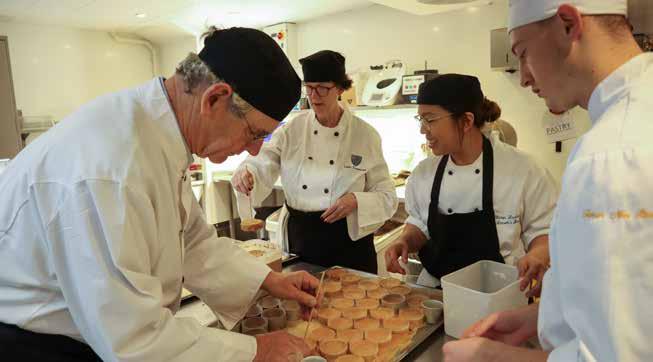
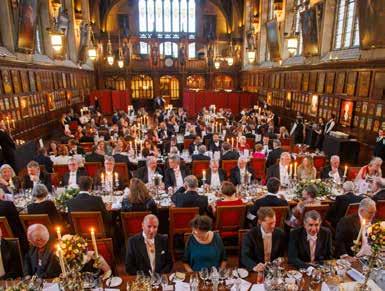
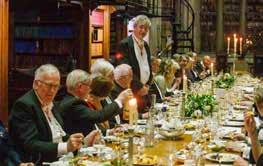

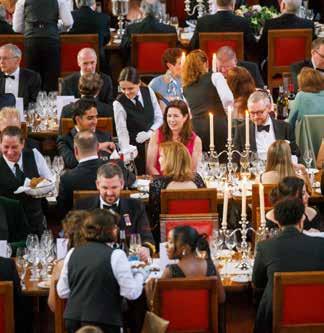
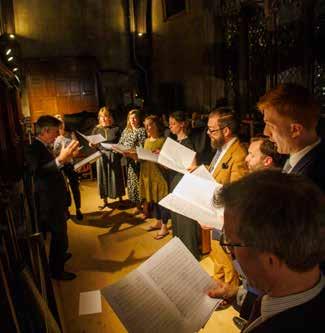
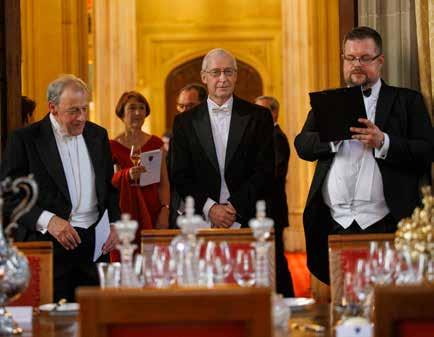
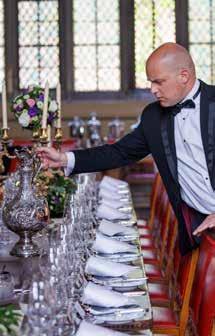

Grand Day, 9 May 2024
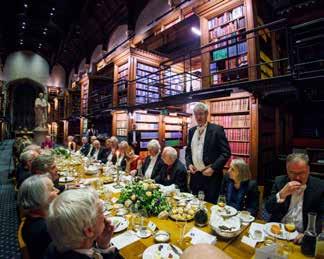
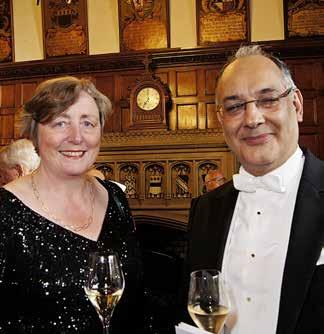


Grand Day, 7 November 2024






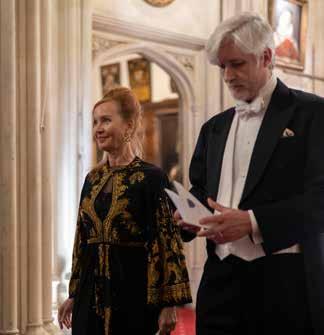


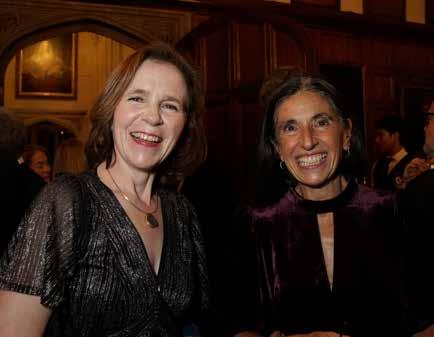
To see more photos from both events, view Nick Easterman’s Flickr albums: May: https://flic.kr/s/ aHBqjBpNtA November Grand Day 2024: https://flic.kr/s/aHBqjBR5Vj

By Miranda Kimberley, Head Gardener
This year, we were fortunate to have our existing gardeners’ buildings, tucked behind the North Border, extended. Following final approvals from Camden Council and the Inn's committees in 2023, construction began on 22 January 2024 and was completed on 19 July 2024. Designed by Stamos Yeoh architects and erected by main contractor John Cirmaci Builders Limited, the new structures feature a Dungeness-inspired aesthetic with black-clad wooden exteriors, high-tech Velux windows, black ironmongery, slate roofs, and yellow brick foundations, which reflected the materials of the existing buildings.
The two new buildings provide much-needed facilities for the Gardens Team. A new office for the Head Gardener which, although small, provides a quiet, confidential space with high ceilings and a gorgeous view out to the North Lawn through the glass door. Compact furniture and clever storage have made it possible to create a space for the Deputy Head Gardener in this space as well.
A new garage space, constructed with sturdy oak beams and steel, eliminates the need for a supporting verandah, improving accessibility around the doors. All our equipment can now be stored under cover, protecting it from frost and rust. The Amazone tractor can drive straight into the new garage, allowing the old garage to be reconfigured for smaller pieces of machinery, now stored safely without the risk of damage from being stacked up against each other.
Lastly, there is an oasis of calm at the far end of the gardeners’ compound, where a new potting shed has been added beyond the greenhouse. It’s a lovely space for pricking out seedlings and potting plants, as well as a place to overwinter bulbs and tubers such as Dahlias and Cannas, which have been lifted from the Benchers’ Border. It has a fantastic view out across the new patio outside, to the North Lawn. Planning conditions asked that the new building was screened off by planting, so we have installed bay screens in planters, against the new railings.
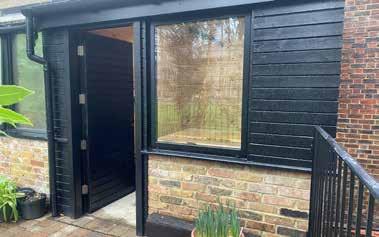
We are very grateful to the Garden, Estates and Finance Committees for supporting this project, and to the Estates Team, particularly Philip Ives, Head of Projects at Lincoln’s Inn, for helping guide it to completion. As Philip noted, “The successful completion of these new facilities will greatly benefit the Gardens Team, reduce operation costs, make use of unused space and enhance the beautiful grounds they maintain.”

The Garden Committee remained focused on enhancing New Square this year, aiming to integrate the fountain into the green space more successfully and to come up with a solution for creating interest at the southern end, which has lost two trees to disease. The presence of honey fungus, where the Walnut was felled, does affect what can be planted in this area, so it has needed careful consideration.
Despite grinding out the trunk and major scaffold roots of the Walnut in May 2023, new patches of honey fungus were seen last autumn. We decided to excavate the remaining woody root system in the ground to extricate the host for the fungus. This work was carried out by Down to Earth tree surgeons in May 2024, and a large amount of woody material was removed. No toadstools were seen this autumn so we are hopeful the fungus has been weakened or died out due to the lack of host. The area was rotovated in September with the initial idea to simply turf over. However, following discussions within the Garden Committee, plans are now underway to plant this area with honey fungus-resistant shrubs and perennials, so the bare area remains unworked, but is currently hosting wildflower seedlings from the previous scheme.
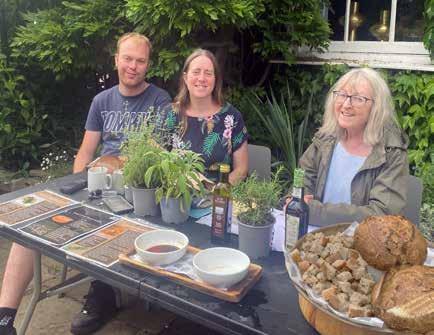


On Saturday 8 June 2024, the Inn took part in the 25th anniversary of London Open Gardens Weekend, welcoming over 1,000 visitors. For the first time we created a garden trail, aimed at children, helping them learn about the plants and trees in the garden by deciphering a puzzle. The link between the herb garden and our chefs’ fabulous sourdough and focaccia bread was showcased in the Kitchen Garden. The falconers returned to fly across New Square and Deansfield Primary School’s chamber choir performed a selection of songs.
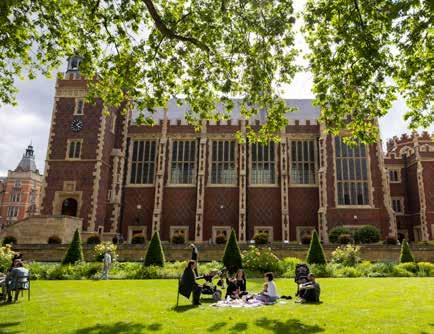
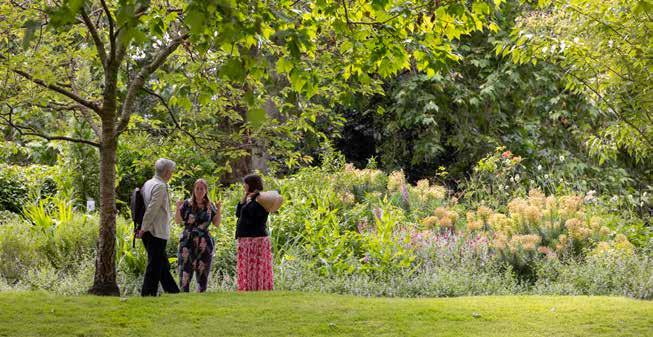
A year-long review of the Benchers’ Border by the Head Gardener and a sub-committee of the Garden Committee concluded in June. It identified the need for greater winter structure, more winter and spring bulbs, a decrease in the hefty clumps of linear foliage, particularly provided by the daylilies, and an introduction of colours such as blue, purple and pink to enhance the existing colour scheme of red, orange and yellow. Planting was carried out in the autumn, introducing new Hellebores, a variety of different bulbs including Muscari armeniacum, Crocus ‘Remembrance’ and Camassia cusickii, and several new perennials such as Helenium ‘Moorheim Beauty’, Salvia uliginosa, Aster ‘Pink Cloud’ and Eurybia x herveyi. As has been done over the last few years, we will continue to grow annuals from seed to bolster the display. This includes hardy annuals Beth’s poppy, which flower in spring, and half-hardy annuals Tagetes, Rudbeckia and Cosmos, which flower in the summer into autumn. Late summer colour will be provided by Dahlias and Cannas. We used the dark leaved Canna ‘General Eisenhower’ this year to great effect and will aim to plant out larger groups next year, to provide more impact.
In August, the Gardens Team received training in how to use traditional wooden scythes to cut the meadow bank in the North Gardens. They spent a warm day cutting with Austrian scythes, under the tutelage of Mary Ellis of Southeast Scything. The angle of cutting, and the persistent need to sharpen the blade regularly, makes it hard work and a difficult technique to master. However, the traditional blade cuts underneath the long grass effectively, meaning it falls as one, rather than being cut up into many pieces as a strimmer would do. We plan to purchase several scythes for hand cutting and will alternate between using these and machinery to speed up the process.

By Henry Skinner, Director of Estates
The work of the Estates Department is both seen and unseen, and is immensely important to the survival of the Inn. There are three primary teams within the department, Property Management, Facilities Management, and Projects. Together they provide a comprehensive range of services critical to overall management of the estate.
Buildings must be kept in good repair and condition, both externally and internally, and as property becomes vacant it is often refurbished before being relet, the degree of refurbishment being subject to condition. The maintenance of building fabric is guided by a planned preventative maintenance schedule which considers the condition of all of the Inn’s buildings and prioritises work based upon need. The schedule looks forward 10 years and is updated annually by the Projects Team. Projects which are approved by the Estates Committee are then scheduled and competitively tendered before being subjected to further Committee approval prior to formal contractor appointment.
Projects, particularly those which involve repairs to external fabric, are conspicuous to onlookers as scaffolding will be erected to provide access for the works. Interior projects are less noticeable but the inevitable skip outside and coming and going of people in hivis vests and hard hats is usually a give-away.
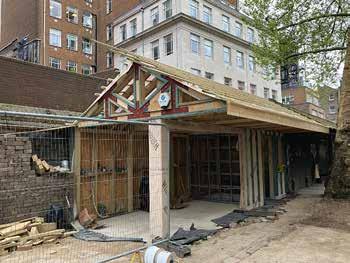
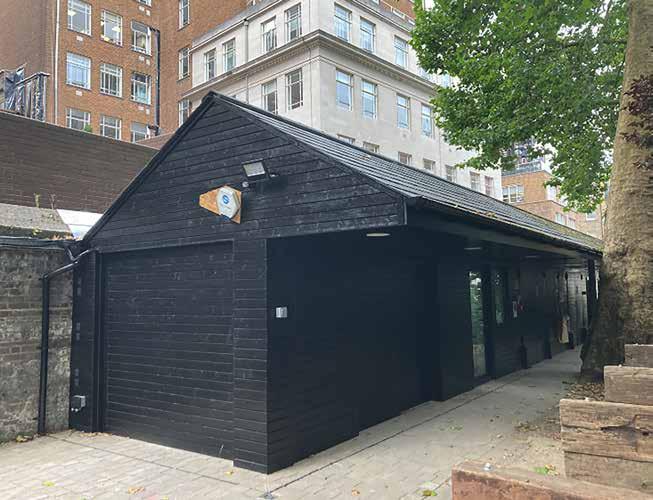
Notable projects completed during 2024 were the external repairs and redecorations at 76 Chancery Lane, which included replacement of roof coverings and improvements to roof access systems which are essential to long term maintenance; construction of new extensions to the east and west ends of the existing gardeners’ buildings (situated in the north east corner of the North Lawn); repairs to below ground drainage around New Square; lift modernisation works to the Great Hall vestibule lift and Great Hall kitchen lift; and replacement of galvanised steel water supply pipework serving flats and overnight accommodation at the top of 77 Chancery Lane, which necessitated more comprehensive refurbishment of kitchens and bathrooms (the flats are now let and the overnight accommodation is available for booking).

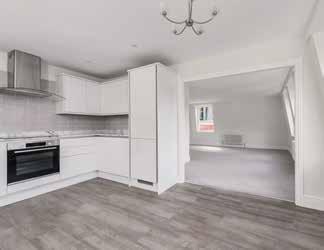

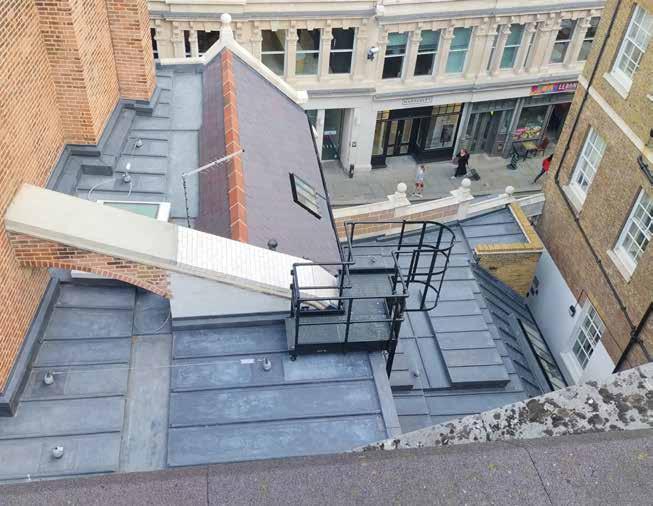
Alongside planned projects the team also carries out defect diagnosis, building inspections, and monitoring. One unplanned project completed in 2024 was the repair of a brick band course between the first and second floors at 9 New Square. During a routine survey it was noticed that brickwork appeared to be loose at high level. Scaffolding was erected to provide a crash deck and allow for close inspection which lead to replacement of defective sections of the brick band course and lead cover flashing.

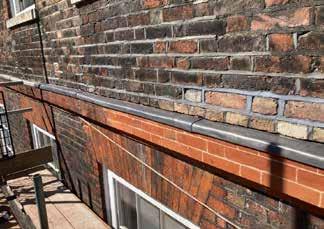

Facilities Management deals with maintenance of hard services which includes non-project building maintenance, fire safety, electrical installations and lighting, HVAC maintenance, gas and plumbing, lift maintenance, pest control and the Inn’s clocks. Some of this maintenance is carried out by specialist contractors but the bulk of this work is carried out by our in-house labour force, also colloquially referred to as the Works Department. They carry out planned and reactive maintenance. They are the front line when there is a critical problem requiring urgent attention and are often called on by tenants and other internal departments in times of need. Their knowledge of the Inn’s buildings means that they are usually best placed to solve any facilities related issues, and being based at the Inn means response times for critical call outs are kept to minutes during normal working hours.
One major achievement for the team during 2024 was the completed review of updated Legionella Risk Assessments and verification of temperature monitoring nodes (electronic equipment installed on hot and cold water services to report water temperature to a cloud-hosted web portal). Monitoring is now carried out remotely, removing the need for temperatures to be manually recorded and requests for access to premises for this purpose.
The Estates Helpdesk is run as part of the department’s facilities services. The Helpdesk is the first port of call for tenants or other departments when there are building related issues and the team are well equipped to deal with most issues. 2,775 calls were logged and attended to during 2024.
The primary objective of the Property Management team is to ensure that vacant premises are minimised such that it limits the impact on rental income, which is essential to supporting life at the Inn. By its nature, this work is less visible than the work of Projects or Facilities but is no less important. The team deal day to day with rent reviews, lease renewals, new lettings, licences for alterations, duct license, wayleave agreements and service charge recovery.
During 2024 there have been seven new residential lettings. Three of these are flats at the top of 77 Chancery Lane which we had been unable to let due to impacts arising from refurbishment of the commercial premises below. Multiple new commercial and bar lettings were agreed throughout the year and we are generally seeing an upward trend in enquires for new space which bodes well for the future.
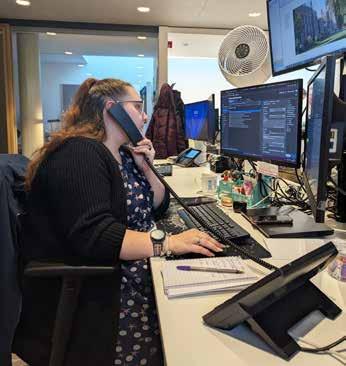

2025 is set to be a very busy year for the Department. We started refurbishment of 30 Lincoln’s Inn Fields in late 2024 and the project will run through to mid-2025. Part of the project includes replacement of the old gas boilers with air source heat pumps which reduce CO2 emissions by approximately 45%. Nos 8 and 9 Stone Buildings will be scaffolded from around Easter for the remainder of the year as we carry out essential fabric maintenance including replacement of the existing roof coverings which have reached the end of their serviceable life. Major cyclical external works are planned in New Square with Nos 1-6 the target for 2025. Vital mechanical equipment controlling temperature and humidity of the Library strong rooms is due to be replaced following the granting of planning consent in late 2024. The strong rooms keep safe the Inn’s most valuable books and manuscripts which includes the Inn’s oldest manuscript (dated to about 1200) and the Inn’s first Black Book from 1422.
Planned and reactive work led by the Facilities Team is ceaseless. In 2024 we migrated logging and management of reactive works into a computer-aided facilities management system and during 2025 will be working on moving our planned services to the same system, centralising our processes.
And of course, the work of Property Management continues unabated.

020 7693 5139
The MCR Restaurant and Bar, The Honourable Society of Lincoln’s Inn, London WC2A 3TL
Opening Hours (Monday to Friday):
• Bar Service: 10:30 – 22:30
• Breakfast: 08:00 – 10:30 (Wednesdays only)
• Lunch: 12:15 – 14:15
• Afternoon Tea: 15:00 – 17:00 (Pre-booked only, 2 days' notice required)
• Supper: 18:00 – 20:15 (Last orders)
www.themcr.lincolnsinn.org.uk


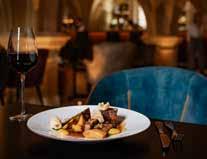
By Mark Ockelton, Convenor of the Black Books Society
The Black Books Society arranged and hosted three successful lectures in 2024.
On Thursday 8 February we welcomed back Heidi Kinderman, formerly a Research Librarian in the Library. Heidi gave an excellent talk entitled “A marquess, a manuscript, and the Wars of the Roses: The ‘Neville Statutes’”. The lecture focussed on one of the Library’s finest manuscripts, Hale MS 194, a magnificent late 15th century volume of statutes, richly decorated and gilded. Heidi placed the volume in the context of the production of similar collections of statutes and other highly decorated manuscripts and described the tumultuous life of its first owner, John Neville, Marquess of Montagu. The lecture was followed by a reception and a chance to see the manuscript.
On 22 April, Richard Wallington, Bencher and expert on the Inn’s architecture, discussed the life of Edmund Beckett Denison, Lord Grimthorpe. Even by the standards of the 19th century, Grimthorpe’s sphere of activities was impressively wide and Richard gave us an excellent overview of Grimthorpe’s work in the fields of law, architecture, horology and theology. The lecture also looked in detail at Grimthorpe’s work at Lincoln’s Inn which included an extension to the Chapel, rebuilding in Old Square and Old Buildings and the mechanism for the clock in the Great Hall. The lecture was notable in many respects, not least for Richard’s lucid explanation of the finer points of the Beckett Denison double triple-legged gravity escapement.
Grimthorpe was in many respects an unattractive and controversial character and Richard had the challenge of tackling his subject to an audience which included a number of his descendants. Richard’s article on Lord Grimthorpe appears on page 76 of the Review.
Our third and final lecture for 2024 - “A Scotsman caught young”: the influences which shaped Lord Mansfield - was held in conjunction with the other Inns of Court and the Selden Society. This was the fifth lecture in a series established during the COVID pandemic. Since the first lecture online, these have been hosted by the Inns of Court in turn, with the lectures presented by a leading member of each Inn. We were delighted when Lord Neuberger accepted our invitation to represent the Inn and, as the Treasurer remarked in his introduction, it was very appropriate that a legal colossus of the 18th century should be celebrated by a legal colossus of today. Lord Neuberger discussed the blend of family background, education and legal practice which shaped Mansfield and the political, cultural and philosophical developments of 18th century which produced a jurist who had a profound influence on many areas of English law.
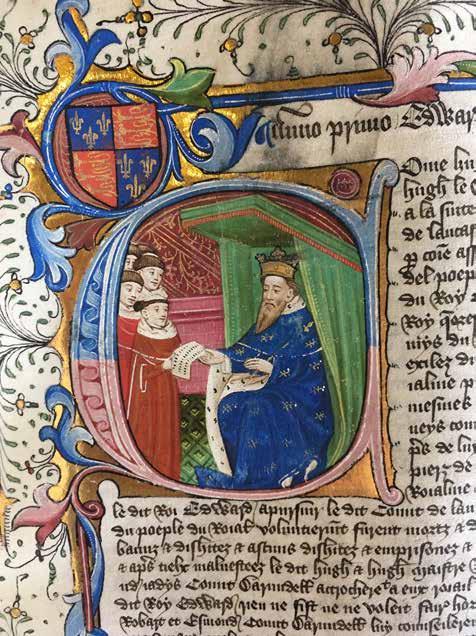
For our first lecture of 2025 Dr Nicola Phillips, Lecturer in History at Royal Holloway, University of London and Fellow of the Royal Historical Society, will discuss the glittering career of another of the Inn’s most distinguished members – Thomas Erskine. The lecture will be followed by a black tie dinner in Hall and will coincide with an exhibition on Erskine in the Library.
To stay informed about Black Books Society events, members can log in to their online account and subscribe to the ‘Inn Events’ mailing list. Non-members may email Librarian@lincolnsinn.org.uk to be added to the mailing list for public Black Books Society events.

By Richard Wallington
Edmund Beckett Denison (1816–1905) became 1st Baron Grimthorpe only in 1886, but I will refer to him throughout as Grimthorpe. He came from a Yorkshire banking family, was called to the Bar by Lincoln’s Inn in 1841, and from 1845 practised exclusively at the Parliamentary Bar. He took silk and became a Bencher of Lincoln’s Inn in 1854.
Work in Parliament took only five months of the year and was very well paid. This left plenty of time and money for Grimthorpe’s other interests and areas of expertise, all self taught. These included clocks, locks, bells, buildings, scientific and theological subjects, on all of which he published books. He was a strong low church Anglican, and if there is a unifying theme to his interests it is perhaps his religious faith.
Grimthorpe’s interest in architecture seems to have begun with his being an active member of the committee rebuilding the church of St George, Doncaster in the 1850s. George Gilbert Scott was the architect. Scott was already well-established with one of the largest architectural practices of the period.
Grimthorpe gave lectures on church building which were then published (1st edition 1855). He had read a lot and had a good practical grasp of building construction and the interaction of client, architect and builder. What he lacked was artistic sense, and what he was best at was acting as patron where a professional architect was employed, as is shown by his work in Lincoln’s Inn. He was notorious for being something of a nightmare to work for, as he was rude and overbearing in his manners, and had strong opinions on building and architecture. Scott in his Recollections acknowledged that Grimthorpe had a useful contribution to make, but also regretted Grimthorpe’s unpleasant way of doing things.
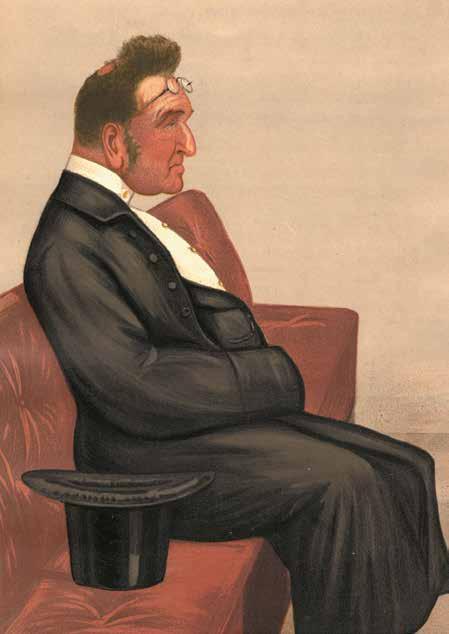

Grimthorpe became the Inn’s Master of the Walks for 1872, and then moved in stages up the cursus to be Treasurer for 1876. By this time he had become dominant in the Inn in building matters. The projects he was involved in were: the Library eastern extension 1871-72 designed by Scott’s office, continuing the existing Hardwick design, then the block of chambers 8-10 Old Square 1872-75 designed by Scott’s office in a Tudor style to match the Great Hall, then nos 11 and 12 Old Square designed by Scott and continued after his death in 1878 by Scott’s younger son JO Scott 1876-79; then 13 Old Square also JO Scott 1879-81, and finally nos 14 and 15 Old Square, done by Grimthorpe and Kaberry the clerk of works 1883-87, carrying on with the JO Scott design in simplified form. There was also the extension westward of the Chapel and the addition of the entrance staircases and vestry done in 1881-83, which was a Grimthorpe project assisted by an architect called Stephen Salter.
From 1858 George Gilbert Scott was instructed to prepare designs for two projects for new buildings in Lincoln’s Inn, neither of which was carried out. It may be a coincidence that Scott had already been employed by Grimthorpe’s family, but it is also possible that Grimthorpe recommended him. There remained pressure for new building in the Inn: new Law Courts being constructed nearby, the Inn’s Library running out of space, and the 16th and 17th century buildings of Old Buildings and Old Square being dilapidated and not in accordance with modern requirements.

All these works were overseen by a committee of which Grimthorpe was the most active member, and there were orders at critical moments for contracts and specifications to be referred to him. Use was made of his form of building contract designed to prevent the Inn having to pay the builders for extras which had not been agreed by the committee, and he managed to hold the architects to agreeing a fixed fee for their work at the outset instead of their more usual practice of charging a percentage of the cost of the works.
The extensions to the Library and Chapel continued the existing designs, but were very Grimthorpian in that he had strong views on what should be the relative proportions of height to length in such buildings, and regarded both the Library and the Chapel as too short for their height before he got to work on them. 8-15 Old Square were from, or adapted from, the designs produced by Scott’s architectural practice, but were Grimthorpian in their robust construction, and his disregard for conservation of old buildings. His attitude was that if they were dilapidated they should be knocked down and something new put up. Fig 2 shows the ground plan of Old Square and surroundings in 1845, with the parts which were later demolished coloured red, and the ground plan after 1887 with the new works coloured green.
Some idea of what was demolished in Old Square can be seen in Fig 3. The first set of replacement buildings (nos 8-10) can be seen in Fig 4 – note the window tracery, which was not repeated in the later blocks, presumably to save money – and the excavated basement area, not repeated in 13-15 Old Square. Fig 5 shows 13 Old Square, the last JO Scott building, without the basement area and window tracery, with Grimthorpe’s no 14 to the right.
The original plan was to continue from the Gatehouse to what is now 16 Old Buildings demolishing everything and building anew, and numbering the buildings from 1 to 7 from the Gatehouse. However, the scheme never got beyond 15 Old Square. Grimthorpe wanted to replace the Gatehouse with his design (shown in Fig 6), but sentiment in favour of the existing gateway was too strong for him. Also, the Benchers were reluctant to go in for more expenditure on buildings because chambers were proving difficult to let and there was something of a slump in business. This left Old Square numbered clockwise from 8 to 15, and Old Buildings numbered 16 to 24 in the opposite direction, as they still are.
Grimthorpe is perhaps best known for his controversial restoration of St Albans Cathedral, which often overshadows the merits of his work in the Inn. His methods may have been unpleasant, but he got things done, and on balance, Lincoln’s Inn benefited from his efforts.

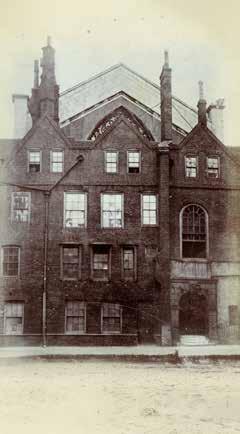

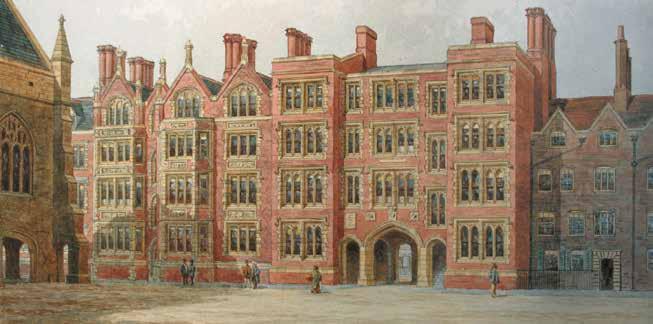

By The Venerable Sheila Watson, Preacher
After the eventful year of the 400th Anniversary, 2024 might be expected to be quiet by comparison. In fact, young and old have ensured that Chapel, like the rest of the Inn, has been full of life.
Baptisms have been a theme – it has been lovely to welcome new arrivals to members’ families and to hear young voices discovering the acoustic of our high ceiling or wanting to join in with the choir. A new tradition has emerged of families taking a table at Sunday lunch after a baptism so that in joining the Christian community, there is an opportunity to break bread together as well as to pray together. I am, as always, grateful to everyone in the catering, front of house and events teams, who make this and all our Sunday lunches possible.
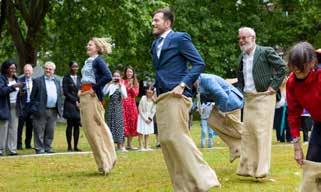
The energy of younger families is most evident, of course, at the Family Day when all ages are in Chapel for a shorter, slightly less formal service than our usual one. We had lots of volunteers for lighting the candles for Chapel’s 401st birthday. Another fascinating demonstration of the organ’s versatility from Nicholas Shaw, our Director of Music, and William Whitehead on the organ followed before the Family Day picnic with a barbeque, face painting and lots of activities and races for the energetic. These latter happened despite the weather, as the clouds and rain dispersed just in time to allow the sack race, egg and spoon and lots more, thanks to Steve Matthews and his team’s ingenuity.

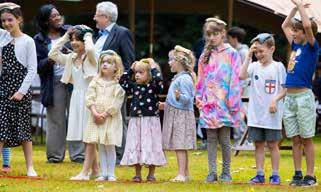


Our guest speakers led us across the centuries with Professor David Colclough of Queen Mary, University of London, taking us back not to 2023 and the King’s Coronation but to 3 April 1625, when John Donne was appointed to preach the first sermon before Charles I as king. Professor Colclough remarked: “The day before, Donne wrote with an audible air of panic to his patron, Sir Robert Ker, that ‘This morning I have received a signification from my Lord Chamberlaine, that his Majesty hath commanded to morrows sermon at S. James’. So he had a little over twenty- four hours to compose both his sermon and himself – it’s not surprising that he asked Ker if he could ready himself in the latter’s chamber at the palace, declined an invitation to eat, and declared that he would be leaving as soon as the service was over.” The full text of Professor Colclough’s sermon is available on the Inn’s website, along with other recent sermons and lectures: www.lincolnsinn.org.uk/ about-us/chapel/services-events/
We gave rather more notice for the Treasurer’s invitation to Lord Hodge, Deputy President of the Supreme Court and a former Lord High Commissioner of the General Assembly of the Church of Scotland as well as a former Procurator to the General Assembly. Lord Hodge joined us in November for Wigs and Mitres Part 2, following Bishop Rose, our Honorary Bencher, earlier in the autumn. He gave a memorable address encompassing the developed law of the Roman Empire and Stoic Philosophy, at the time of Christ’s birth, alongside the biblical parable of the Good Samaritan pointing to the valued added aspects of Christianity for society. You can find the full text of Lord Hodge’s sermon on the Inn’s website
Memorial Services were held for The Rt Hon Lord Walker of Gestingthorpe, a former Treasurer; Adrian Hamilton KC and Frances Barlow from among the Benchers; Catherine McArdle, Deputy Librarian, Julia Brodie, a long-term resident of the Inn, and Amanda Ruth Jones (Collier), the wife of one our members. We also interred the ashes of Adrian Hamilton KC in the Columbarium in Chapel. (The Columbarium, installed in October 2021, is one of a small number in churches in Central London, which provide a fitting resting place in perpetuity.)
In November, the solemnity of Remembrance Service was enhanced, as usual, by the full Squadron of The Inns of Court and City Yeomanry with the cadets and the band parading at the War Memorial at the North End of New Square for the Remembrance and wreath-laying.
As the year drew to a close, the customary December carol services brought us from darkness to light with our celebration of the Christ child, “the light that shines and the darkness comprehendeth it not”.
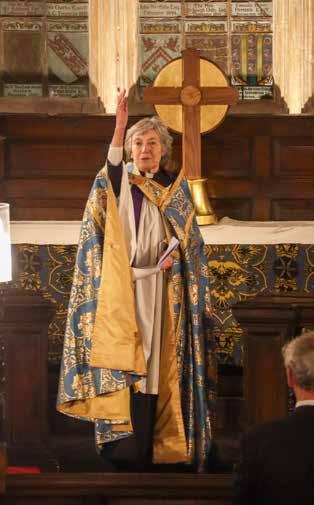

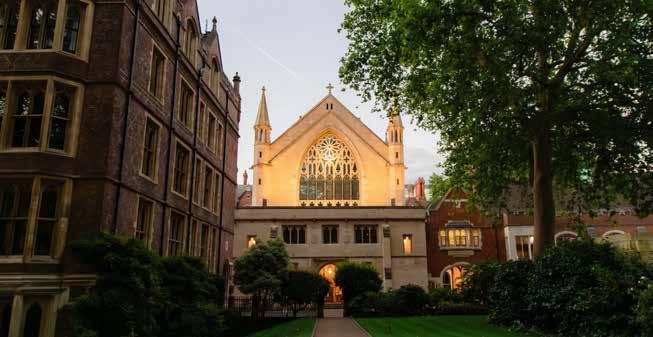
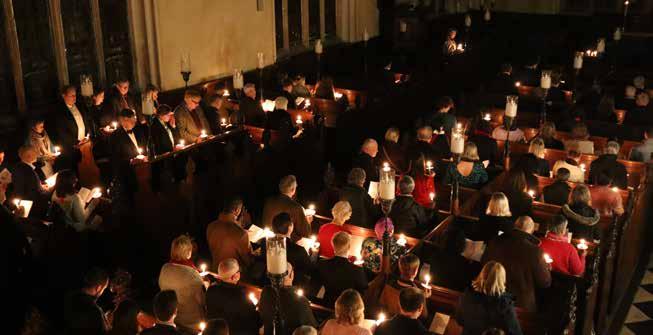
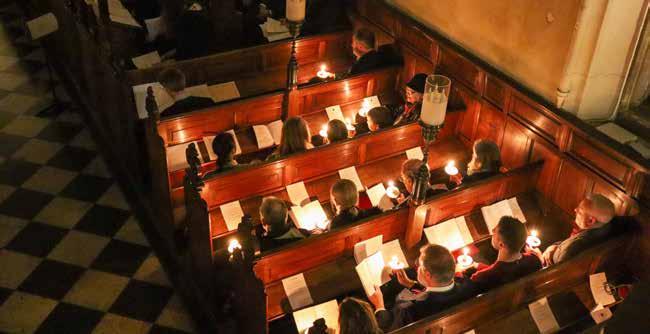

By Megan Dunmall, Archivist
The Second World War began on 1 September 1939, with 2024 marking the 85th anniversary of its onset. The threat of war had been felt for some time, including at the Inn where the prelude to the outbreak had been marked by the planning of necessary precautions.
Such preparations were not unusual for the time and had been instigated by the British Government with the passing of the Air Raid Precautions (or ‘ARP’) Act in December 1937. This required local authorities to put in place protective measures in case of air attack.
On 31 January 1939 an Air Raid Precautions Committee was created at the Inn. The establishment of the Committee was the culmination of air raid precautions work that had been underway for some time. In a report given at a meeting of the ARP Committee held on 22 February 1939, the Under Treasurer, Norman York Marriott, highlighted his communication over the last two years with the ARP Organiser of the Borough of Holborn. Holborn was divided into 41 districts, and it had been agreed from the start that Lincoln’s Inn would be “treated as a separate unit within the Borough Organisation.” As a result, the Under Treasurer was appointed District Leader and Chief Air Raid Warden for Lincoln’s Inn.
In the Inn’s Archive are copies of various government publications from this period, including the Air Raid Precautions Handbook No 8 – The duties of Air Raid Wardens. This edition was produced in 1938, and it describes the importance of the role of the air warden in assuming command of first aid parties, fire patrols or decontamination squads, as well as other tasks including enforcing the nighttime blackout rules and reporting bomb damage. These responsibilities soon became a reality for the Under Treasurer and his team after the outbreak of war a year later.
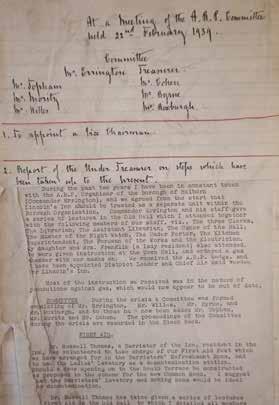
On the 27 March 1939 the Under Treasurer sent a memorandum to residents and tenants which reported his appointment as District Leader and Chief Air Raid Warden for the Inn. Several staff trained as wardens to assist him including the Librarian, Assistant Librarian, the clerks in the Treasury Office, Foreman of the Works, Master Carpenter, Electrician, Under Porter, Kitchen Superintendent and the Usher of the Hall. Residents of the Inn also trained as wardens. Their assistance was to be much appreciated in the air raids to come.
One of the first priorities was establishing shelters. The Committee identified the basement cellars of 13-15 Old Square, under the Old Hall, the basement and cellar of the Great Hall and the cellars under the Drill Hall (Stone Buildings) as potential shelters.
An offer was received from the London Fire Brigade to establish an Auxiliary Fire Station within the Inn, with a crew of seven men. The offer was gratefully accepted, and it would prove vital to the Inn’s safeguarding in the airs raids to come. In September 1939, after war was announced the Inn ran practice air raid warnings to trial the shelters. The Under Treasurer had already received a supply of gas masks earlier in the year and had distributed these to residents and staff.
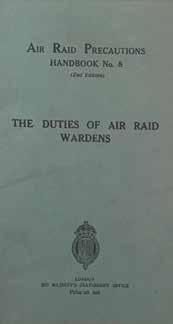
The Inn was fortunate to benefit from a large team of volunteers and a report from the Under Treasurer to Council dated 17 March 1941 highlighted improvements made since the Fire Prevention (Business Premises) Order 1941. This included a voluntary rota, “in which Benchers, Barristers, Solicitors, their Clerks, tenants, members of the Hall, Library, Kitchen, Works, Garden and Porters Staffs take their turn…In the event of a night raid I should be able to count upon the assistance of about forty men.”

Air raids caused extensive damage to the site of the Inn during the course of the war. One such occasion was the night of the 16/17 April 1941 when the hard work of the Auxiliary Fire Service team and the Inn’s own fire watchers and wardens, prevented the loss of historic buildings. The Acting Night Master described, in his report to Council, how he feared they could lose key historic parts of the Inn. He recalls how 21 incendiaries fell in the Inn - on 19 Old Buildings, 9 Old Square and 6 and 11 Stone Buildings. He felt that his priority should be to go to Old Buildings with the Acting Chief Porter and one of the AFS as “the AFS had previously warned me that if… [Old Buildings] properly caught alight it would probably be impossible to save it or the Old Hall.” Meanwhile the AFS and Fire Watchers were attending to 9 Old Square and the Home Guard to 6 and 11 Stone Buildings, all desperately fighting to prevent further damage.
Such actions did not go unrecognised, and the Finance Committee on considering the report given by the Acting Night Master of that night ordered that payment awards be made to staff whose conduct had been commended, as well as an inscribed piece of silver for the Acting Night Master himself.
This wasn’t the only mark of gratitude conferred. At a Council meeting held on 22 April 1941 it was recorded that the Under Treasurer had recounted that “during the past abnormal six months he had taken from the cellars for his own use 5 doz Whisky, 1 ½ doz Gin and 6 doz sherry.” He requested that he may be allowed to pay for these at the price at which the Inn purchased them. He noted that “these wines and spirits were used almost entirely for the benefit of the Fire Fighters and those tenants who took refuge in the basement of Hall during the bombing of London at a time of great stress.” The recommendation of the Wine Committee, that the Under Treasurer should make no payment, was approved. No doubt the Inn believed it a valuable contribution, having provided, as it did, some much needed fortification for those sheltering, or working to protect the Inn, during such fraught times.
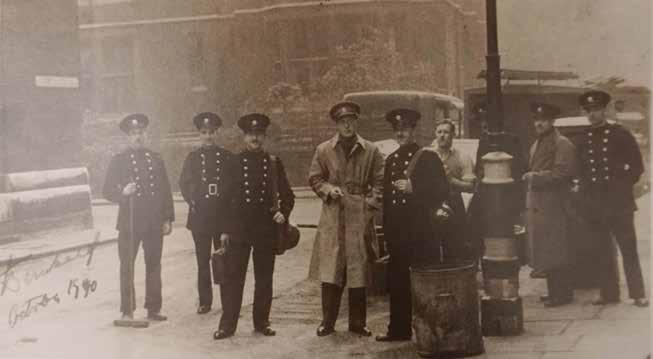

By Peter Dodge
At the centre of Lincoln’s Inn Fields is a structure often erroneously referred to as the bandstand (it is a rain shelter). In 1897, the London County Council fixed a brass plaque to its base:
“On this spot was beheaded Ld Wm Russell, a lover of constitutional liberty, 21 July AD 1683.”
When excluding rough sleepers from the Fields in the 1990s, Camden Council removed the plaque for safe keeping, after which it disappeared. A smaller replacement corrects an inaccuracy in the original, a contemporaneous account describing the scaffold for Lord Russell’s execution as having been erected not in the centre of the Fields but:
“on that side … next the Arch going into Duke Street in the middle between the said Arch and the corner turning into Queen Street.”
This places the site on the western side of the Fields, close to Lindsey House (now part of Garden Court Chambers but then occupied by Charles Paulet, 6th Marquess of Winchester). Queen Street is the modern Remnant Street.
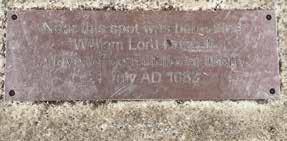
The third son of the 5th Earl of Bedford, Russell was a leading member of the Country Party (“whiggamors”), a faction opposed to the “Cabal” of ministers favoured by Charles II. A partisan pamphleteer of 1708 explains the background to his trial:
“his Abhorrence to Popery inciting him with other worthy Gentlemen to promote the Bill of Exclusion against the late King James, then Duke of York, as dreading the ill Consequences which might attend this Realm under the Government of a Popish Successor, (this) occasion’d him great Enemies, insomuch that the Romanists looking upon him as a great Obstacle to their Interest, they trumpt up a Presbyterian Plot, known by the name of the Rye-House Conspiracy, for which his Lordship was apprehended and committed to the Press-Yard in Newgate; and on Friday the 13th of July, 1683, being brought to the Sessions-House in the Old-Baily, he was there set to the Bar.”
The Fields (at that time still open) had previously been used for the execution of Anthony Babington and his fellow conspirators in 1586 (perhaps because they were close to the venue of the conspiracy) and two of the “London Martyrs” of 1588. James, Duke of York wanted Russell to be executed in front of his own home, Southampton House, north of Bloomsbury Square. However, Charles chose the Fields “for certain considerations and in respect that [Russell] is the eldest son of a peer”, Use of the Fields may have facilitated crowd control and would have served to distinguish Russell from three fellow convicted traitors, all commoners, who were executed at Tyburn.
The presiding judge at Russell’s trial was Sir Francis Pemberton, Chief Justice of the Common Pleas. Evenhanded in his conduct of the trial, he was dismissed from the judiciary less than three months later. Among those assisting him was Sir Job Charlton, Called to the Bar by Lincoln’s Inn in 1640 and a judge of the Court of Common Pleas.
Whilst Russell was not permitted counsel (except to argue a point of law), Pemberton did, unusually, allow Russell’s wife, Rachel (née Wriothesley), to assist him by taking notes.
The jury deliberated for just over an hour before finding Russell guilty of high treason. The next day, the recorder of London pronounced sentence: to be hanged, drawn and quartered. Charles subsequently commuted this to simple beheading, ordering that, after execution, Russell’s body should be handed over to Lady Russell for private burial with the result that his head would not be publicly displayed.
Whilst in Newgate, Russell composed a scaffold speech, the manuscript being delivered to the printer John Darby on the eve of his execution. Dr Gilbert Burnet, later Bishop of Salisbury, stayed with him and, at Lady Russell’s request, kept a journal of all he said and did in his last days.
Russell was allowed to travel to the Fields in his own coach, accompanied by Burnet and Dr John Tillotson, Preacher of Lincoln’s Inn and Dean (later Archbishop) of Canterbury. The coach was heavily guarded by trained bands marching on both sides and behind. As Russell sang psalms, some of the crowd that filled the street wept, while others insulted. The execution party passed within view of Southampton House and entered the Fields from Queen Street. Russell, recalling past escapades in an area with a chequered reputation, remarked to Burnet, “This has been for me a place of sinning, and God now makes it a place of my judgment”.
A large crowd had assembled. Ten companies of the King’s guards were drawn up around the black-draped scaffold and a troop of horse divided into four squadrons positioned about the area. Having walked around the scaffold four or five times, Russell handed his speech to the sheriff and disavowed any knowledge of a plot:

“In the words of a Dying Man, I profess know of no Plot, either against the King’s life or the Government.”

Russell gave Tillotson his ring and Burnet his watch. After some moments of private prayer, he removed his wig, cravat and coat, put on his cap and placed his head on the block:
“The Executioner missing at his first stroke, though with that he took away Life, at two more severed the Head from the Body: The Executioner held up the Head to the People, as is usual, in Cases of Treason, &c. Which being done Mr. Sheriff, ordered his Lordships Friends or Servants to take the Body, and dispose of it as they pleased, being given them by His Majesties Favour and Bounty.”
The body and head were taken to the Marquess of Winchester’s house where they were sewn together. Garden Court Chambers notes that some of the more imaginative members of its criminal team have declared that the blood stain can still be discerned on the main reception oak floor.
Within an hour, Russell’s speech was on sale, printed as The Speech of the Late Lord Russel To the Sheriffs: Together with the Paper delivr’d by him to them, at the Place of Execution. Also available were broadside ballads, cheaply printed single sheets containing song lyrics, tunes and woodcut illustrations. “The Lord RUSSELS Farewel” was printed for P. Brooksby at the Golden Ball in West Smithfield and bore a lurid illustration of the beheading with the lyrics being set to the tune of “Tender hearts of London City”:
“Ruffel dy’d then unlamented, By all men but who consented to this Damn’d inhumane Plot : To Diftroy the Nations joy, the King and Monarchy fhould rot.”
It is beyond the scope of this article to consider whether Russell was guilty as charged or is properly to be regarded as “a lover of constitutional liberty”. As to the former, there is little doubt that he had at least discussed the raising of an insurrection and Pemberton’s conduct of his trial was not conspicuously unfair. As to the latter, the perceived injustice of Russell’s execution was to become an established tenet of Whig political thought, romanticised by depictions such as George Hayter’s 1825 painting of the trial (now in the Ferens Art Gallery, Hull). Either way, this dramatic episode seems worthy of a commemorative plaque.
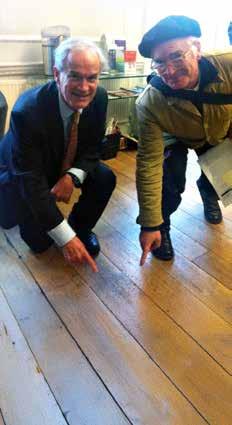
On Saturday 14 September 2024, the Inn participated in Open City’s Open House Festival for the third consecutive year. Condensing the programme of events into one day allowed us to deliver our most effective event yet, with over 2,300 visitors passing through our gates. The implementation of a set route through the space proved very popular, helping visitors explore the Inn in a structured way and make the most of their time. Visitors were treated to a talk in the Great Hall about the Inn’s history and our work, explored our Library, saw the restored stained glass in Chapel, marvelled at the Old Hall, and listened to informative panel talks on the realities of being a barrister in the Ashworth Centre – rounded off with refreshments in the MCR.
Attendees travelled from as far as Brazil, Germany, France, Malaysia, India, the USA and Pakistan. 86% of visitors had never been to the Inn before – an impressive figure that attests to the Inn’s commitment to preserving and sharing the Inn’s cultural heritage with members, tenants and the wider public.
Thank you to our team of members and employees who volunteered on the day, enabling us to open up the Inn and share its rich history with so many.
“A truly awe-inspiring experience. History engulfed us at every turn. Thank you!”
“I’m feeling both insightful and motivated after today’s open house at Lincoln’s Inn. It was a fantastic opportunity to delve into the history and offerings of the Inn, and I had the privilege of listening to a short lecture by two barristers, Anita Arora and Jack Meek. Their experiences and achievements have served as a powerful reminder of the dedication required to become a barrister.”
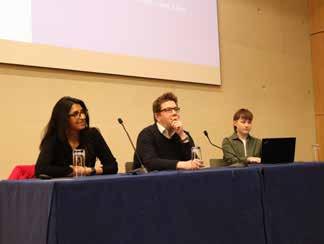
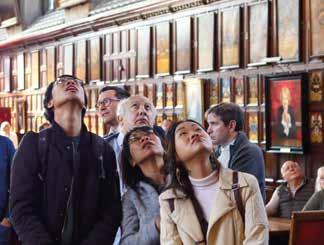
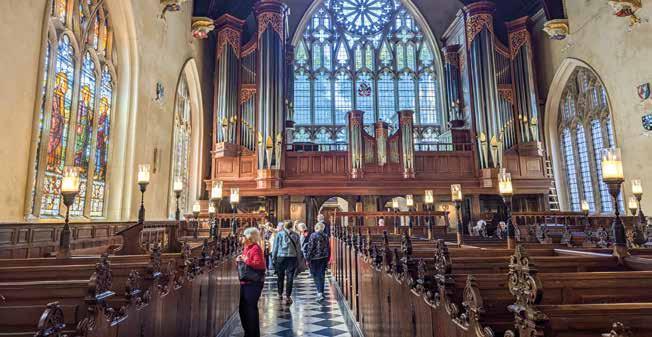
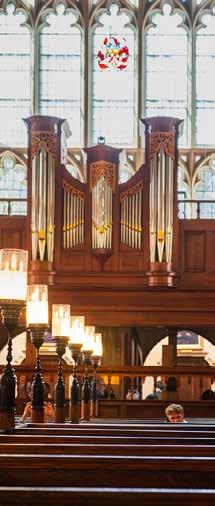


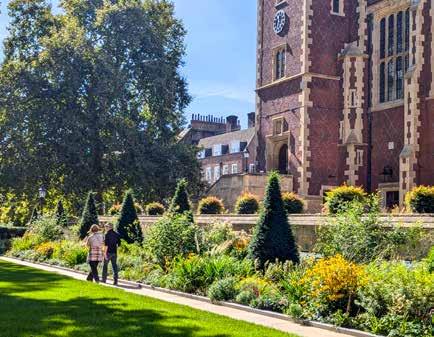

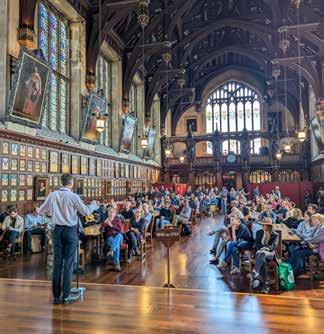
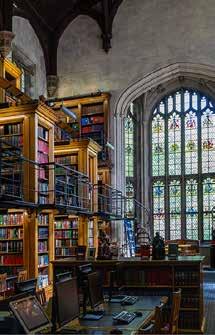
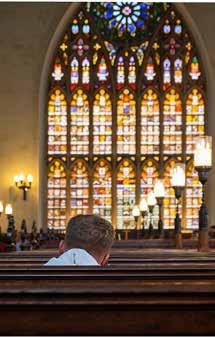
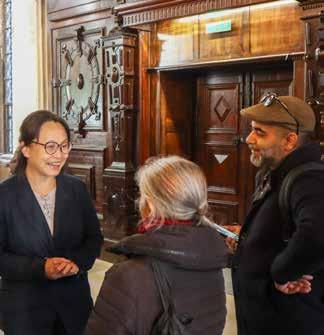
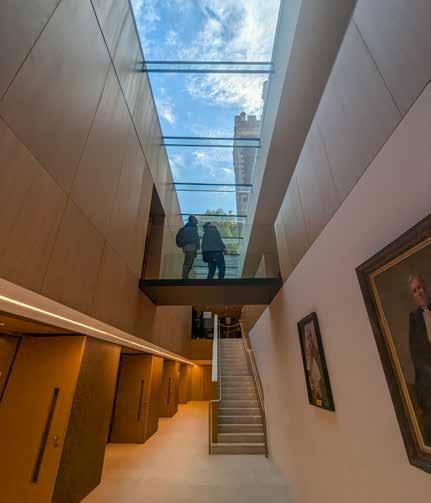
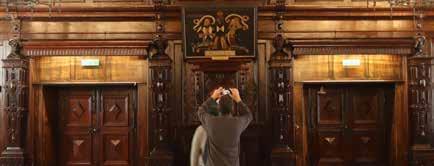
By Dunstan Speight, Librarian
“Dead, white males” is a verdict sometimes passed on the Inn’s collection of portraits. While factually correct, this comment is usually made in a tone of voice which makes it clear that the collection is of little interest or merit. Quite apart from the fact that many of the paintings portray lawyers who made major contributions to some fundamental aspects of the English law and legal system we probably take for granted, this dismissive attitude also ignores the women artists who are represented in the collection. A list of these works appears at the end of this article, but three of the most interesting artists are Mary Beale, Elizabeth Walker and Kathleen Kennet.
Mary Beale was one of the first two English women artists to have a successful professional career and she was wellrespected in her own lifetime. She is often bracketed with her contemporary artists Joan Carlile and Anne Killigrew. While Carlile and Killigrew were very proficient artists and captured flesh tones and, more especially, the textures and colours of fabrics with great skill, their figures often seem static and, in many cases, somewhat doll-like. Mary Beale, by contrast, was much more adept at creating believable, three dimensional humans. Stylistically, she is much closer to her male contemporary (and friend) Sir Peter Lely. Indeed it is occasionally difficult to guess whether a painting is by Lely or Beale.
As Mary’s artistic reputation grew, her sitters included members of the aristocracy and the archetypal Mary Beale portrait is of a society lady, swathed in gorgeous silks, often in contrasting shades of gold, blue and white, with a pastoral landscape for background – very much in the manner of Lely’s Windsor Beauties series of portraits.
The Inn is very fortunate to own a portrait by Mary Beale – not of a lady of fashion but of Dr John Tillotson, Preacher of the Inn (1663-91) and later Archbishop of Canterbury. His portrait hangs in the Drawing Room and dates from about 1691-2, within months of his consecration as Archbishop. He wears a rochet (long white robe, with gathered sleeves) and chimere (sleeveless gown of black satin). He is portrayed seated on an extraordinarily elaborate chair, which (the Archbishop’s mitre aside) looks rather like a gilded shell from an 18th century opera set. Tillotson was a close friend of Mary and Charles Beale and this is one of a number of portraits (at least seven) which Mary Beale made of Tillotson in the period 1663-91. The Beales also commissioned a portrait of Tillotson from Peter Lely for their own collection.
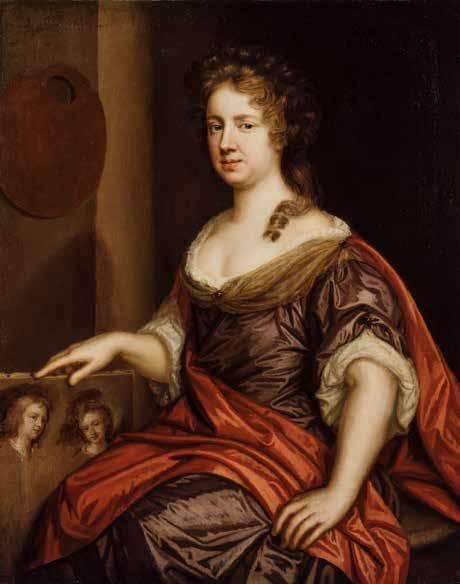
Other examples of Mary Beale’s work can be found in the collections of many art galleries and other institutions throughout the country. The largest single collection is in the Moyse’s Hall museum in Bury St Edmunds, fittingly near her birthplace. Many of these are on permanent display and include some of her finest portraits of her aristocratic sitters but also self-portraits and some very touching portraits of her sons. The excellent Art UK website illustrates 151 portraits by Beale and explains where they can be seen.
Mary Beale never entirely vanished from the annals of English art history but the Inn’s other women artists are much less known. Probably, the next artist due for a reappraisal is Anna Airey (1882-1964), whose painting of the Great Hall being repaired after bomb damage hangs in the Upper Vestibule and was discussed in last year’s Annual Review (page 85).
Elizabeth Walker (1800-1876)

Elizabeth Walker (née Reynolds) was best known as a painter of miniatures, exhibited at the Royal Academy and the Society of British Artists and was appointed miniature painter to William IV. She was the daughter of an engraver and was taught to paint and engrave in mezzotint. She married an engraver (William Walker) and assisted him in his work, in addition to her solo commissions. Walker also painted full-scale portraits and had many distinguished sitters, including five prime ministers. The Inn has rather cornered the market in Walker’s portraits of Sir Fitzroy Kelly, as we have both a miniature of Kelly (which hangs in Drawing Room) and a full size portrait in the Old Hall. Of the two, the miniature is more successful than the portrait, although the latter would benefit from some restoration work.
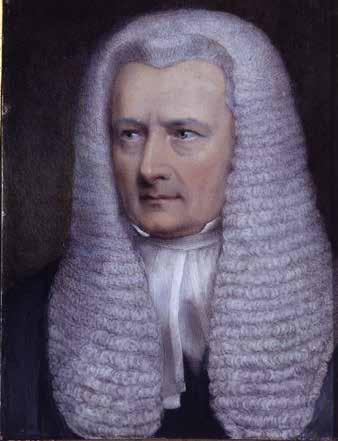
Sir Fitzroy Kelly had a very successful career at the Bar (indeed at one point, his earnings were said to be exceeded only by those of Sir Roundell Palmer), in Parliament and ended his career as the last Chief Baron of the Exchequer, whereupon (in 1880) the Court was reconstituted as a division of the High Court. Earlier in his career, in a rare foray into criminal work, Kelly had defended John Tawell “the Quaker murderer” who was accused of murdering his mistress Sarah Hart with Prussic acid (Hydrogen cyanide). In an age addicted to criminal cases, the trial of Tawell was always destined to excite public interest as Tawell was the first person to have been arrested as a result of a description circulated by telecommunications – in this case a telegraph. Kelly had the difficult task of achieving Tawell’s acquittal and relied on the presence of a large barrel of apples in the house to mount the defence that Hart had ingested the cyanide as a result of eating too many apples whole. (Apple pips naturally contain minute quantities of cyanide). It was a desperate and unsuccessful defence but landed Kelly with the moniker ‘Apple Pips Kelly’ for the rest of his days.
Kathleen Kennet (1878-1947)
To the left of the Drawing Room fireplace is a small bronze sculpture of the head of Arthur Kirby, a Bencher of the Inn. The sculptor was Kathleen Scott (or Kathleen Kennet, as she became after her second marriage). Orphaned at an early age, she trained at the Slade School of Fine Art before moving to Paris to concentrate on sculpture, where she attended the Académie Colarossi. In Paris she met Auguste Rodin who became a friend and whose influence was apparent in her early sculptures. Friendship with major artistic, literary and political figures was to be a lasting feature of her life and once she moved to London in 1906, her circle included George Bernard Shaw, Max Beerbohm and Henry James. In that same year she met the man who would become her first husband, Robert Falcon Scott – Scott of the Antarctic. They married in 1908, four years before Scott’s untimely death. Kathleen Scott’s grief and devotion found expression in two life-size statues of her husband, the bronze statue in Waterloo Place and a marble version of this in Christchurch, New Zealand.
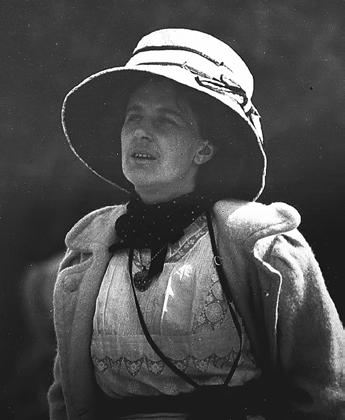
Scott
Scott became widely admired for her sculpture but for much of the First World War worked in various capacities to help the war effort. Her skills as a sculptor were put to good use in creating models of the faces of those who had been mutilated in the war to assist plastic surgery, a profession then in its infancy. After the war, she concentrated on sculpture and portrayed many distinguished contemporaries, including four Prime Ministers. Her work was included in many exhibitions, including the Royal Academy. She died in 1947 of tuberculosis at a time when her reputation began to be eclipsed by non-representational sculptors like Moore and Hepworth, a process possibly accelerated by her stated dislike of such work. Other sculptures by Scott can be seen in London, such as the memorial to Adam Lindsay Gordon in Westminster Abbey, a bust of Lord Reith in Broadcasting House and, very nearby, a bust of Lord Northcliffe on the external facade of St Dunstan in the West.
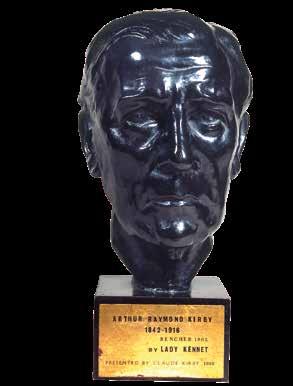
Other women artists and sculptors in the collection are:
Moussa Ayoub (early C20th – dates unknown) –posthumous portrait of Sir George Jessel (Upper Vestibule) Isabel Berkeley (late C19th – early C20th – dates unknown) – copy of a portrait of Sir John Fortescue (Upper Vestibule)
Alice Beavan (contemporary) – portrait of Sir John Goldring (Ashworth Centre)
Josefina de Vasconcellos (1904-2005) – bronze bust of Lord Denning (Treasurer’s Study)
Charlotte Halliday (contemporary) – View of Lincoln’s Inn (Treasury Offices)
Angela Latham (b. 1896, active c. 1907-1965) - portrait of Lord Warrington of Clyffe (Old Court Room)
June Mendoza (1924-2024) – portrait of Lady Thatcher (Upper Vestibule)
Julia Pannett (1911-2005) – watercolours of Sir Denys
Burton Buckley (Upper Vestibule), Charles Ritchie, Baron Russell of Killowen (Library) and Lord Denning (Library)
Jean Roth (contemporary) – bronze bust of Lord Denning (Upper Vestibule)
LIBLA (Lincoln’s Inn Benchers Ladies Association) was established in 1998 “to foster friendship and co-operation between the [partners] of Benchers of the Inn…”. Today, as LIBPA (Lincoln’s Inn Benchers’ Partners Association), it maintains a healthy and active membership. Members organise talks and tours followed by lunches or teas, providing opportunities to meet at the Inn or explore other places of interest.
2024 was a successful year, with three enjoyable and well-attended events. Each of these was oversubscribed, suggesting a renewed enthusiasm for in-person gatherings and the fading of habits formed during the COVID-19 pandemic. Members seemed to want to meet in physical spaces again and participate in face-toface activities.
The first event in LIBPA’s annual programme took place in May and featured a fascinating talk by the Inn’s Librarian, Dunstan Speight, on a selection of paintings at the Inn. 40 members, including some partners and friends, attended the illustrated presentation, which highlighted the importance of restoration and the ongoing care of artworks. One of the works selected was a recently acquired painting depicting the interior of the Inn. Following the talk, members toured several paintings in the Great Hall and Benchers’ Rooms before enjoying drinks and a delicious lunch in the Old Court Room. Members commented on how much they enjoyed the opportunity to connect with old friends and make new ones.
LIBPA’s summer outing in July brought 20 members and friends to The Garden Museum next to Lambeth Palace. The Director of the museum, Christopher Woodward, and one of the curators provided a private tour, showcasing recent acquisitions and offering insights into the museum’s work. LIBPA members then enjoyed a beautifully presented two-course lunch, with time afterward to explore the special exhibition at their leisure.
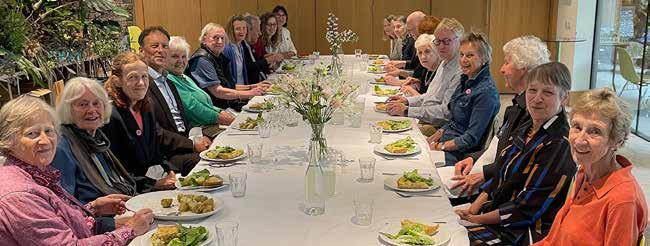
The last of 2024’s three events took place in October, when 30 people attended a fascinating and highly engaging talk by the biographer Anne Sebba. She talked about her research of different women of influence. She delved deeply into the lives of some of her subjects, including Laura Ashley, Ethel Rosenberg and Wallis Simpson. The talk led to some interesting questions and discussions and was followed by a delicious cream tea in the MCR Restaurant and Bar.
These events provide valuable opportunities for the Benchers’ partners to get to know one another and feel a sense of belonging to the Inn. When one of their members or partners sadly dies, LIBPA committee members inform the membership and express their condolences to the family. In 2024, LIBPA announced the sad deaths of Elizabeth Ainger, Adrian Hamilton KC, Juliet Corkery, Julia Brodie and Ann Millett.
Looking ahead to 2025, the programme promises more inspiring events. In May, Mark Ockelton will give a talk about the silver at the Inn, followed by the annual lunch in the Old Court Room. Later in October, Margaret Willes will give a presentation based on her book, A Shakespearean Botanical. This will be followed by tea in the MCR Restaurant and Bar.
LIBPA welcomes new members who are partners of Inn Benchers. If you would like to join, please get in touch with Sarah Cousins, Kate Hamblen or Sheila Harvey via the Inn’s Committee Officer.
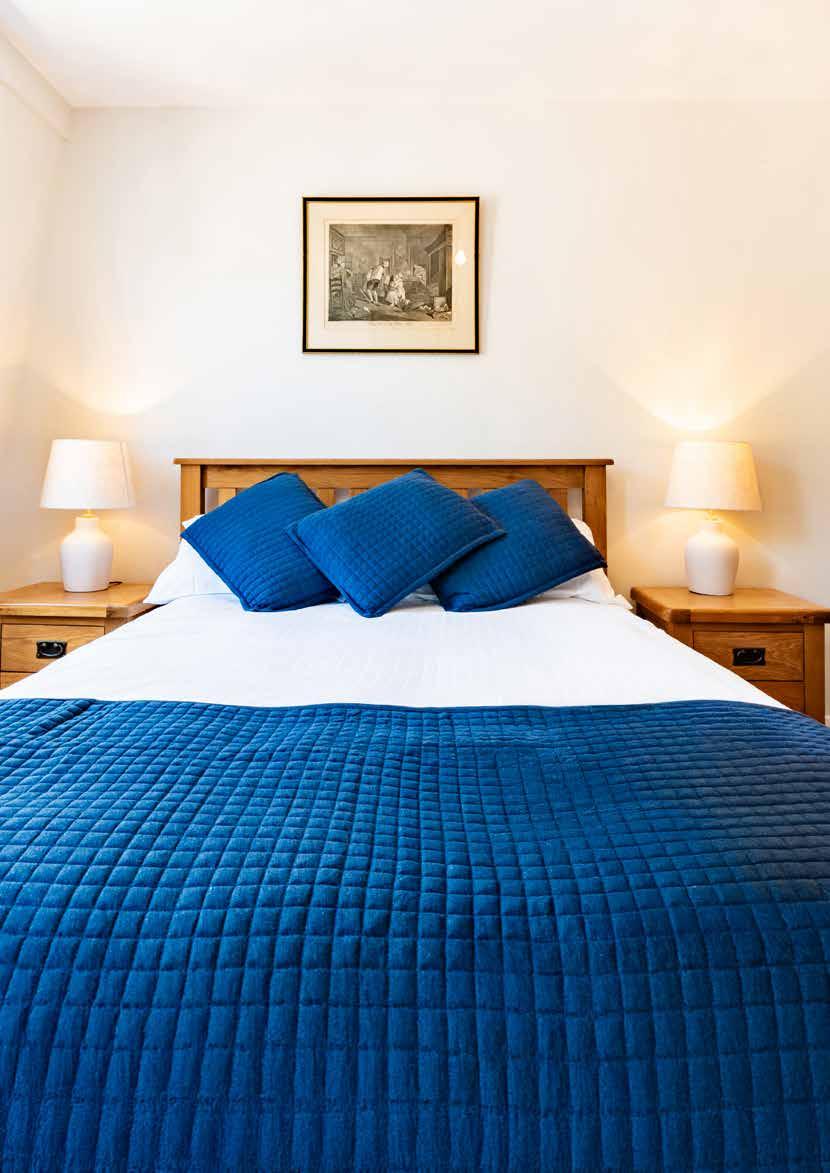
Choose from four beautifully refurbished, self-contained flats in the heart of Lincoln’s Inn, exclusively available to Called members of the Inns of Court.
Modern comfort meets elegance, with easy access to the Inn’s facilities and surrounding area. Bookings are available for up to 28 consecutive days.
Submit a booking enquiry to Member Events: lincolnsinn.org.uk/members/member-services/membersaccommodation/


The Hon Mr Justice Cusworth
The colours and design came from my father, GR Neville Cusworth, when he had the arms granted in 1988. Before his retirement he was a legal publisher – the Chief Executive of Butterworths Lexis Nexis and Master of the Worshipful Company of Stationers and Newspaper Makers. He is still alive, now aged 86, hence my arms have the bar of the eldest son.
The porcupines were taken from the arms of the Grylls family, which has that beast as the crest above their arms. My mother is a Grylls, and my father wanted to make that connection when creating the arms. The motto, “Lege et Literis”, meaning by law and letters, was a nod to his profession but also derived from the motto for St Paul’s School in West London, which both my father and I attended – “Fide et Literis”, meaning “by faith and letters”.
Little is known about how there came to be a porcupine on the Grylls grant (which dates from 1577), but there was more recently a dispute between Bear Grylls’ branch of the family (his great grandfather) and the College of Arms about whether they were entitled to use the arms or porcupine at all, with the eventual compromise being that whilst the beast could appear on different arms, it had to do so with its foot on a ball! It is thought that, because the porcupine as a creature is renowned for its ability to defend itself (by shooting its quills) and has no predators, it was seen as a very suitable emblem for an ambitious and successful family to choose – a symbol of invincibility.

The fact that the porcupine is reading a book on the Cusworth arms is again a nod to my father’s publishing career, but might well equally apply to the law, as of course does the motto.
Applying for a grant of arms for display in the Great Hall was not something I had bothered about until 25 years after I had first become eligible. It was then politely pointed out that Treasurers are expected to have their arms displayed in one of the Chapel windows and wouldn’t it be nice if I applied. I yielded. This led me to the arcane world of the College of Arms. This rather forbidding building with its peculiar entrance and ghostly interior, where the noisiest sound is from the ticking clocks, is a place full of learning where, despite the clocks, time seems to stand still.
Each applicant for a grant is confronted with what to choose and how best the choice can be depicted in heraldic form. Each has the advice of a member of the College. In my case it was someone called Windsor Herald who, it turned out, is half French Canadian. And very charming and helpful he was. Not having the slightest idea what to choose I opted for a simple theme, that of symbolising those to whom I owe my birth and upbringing. This is because most of them came from or lived large parts of their lives in different parts of the world. On the maternal side it is the fjords and mountains of the far north of Norway, and the islands and gently undulating countryside of Denmark a very long way away to the south. On the paternal side, where empire and enterprise played their roles, it is the red and white rose counties of

Northern England, the wide expanses of Argentina and the fertile Cape and dusty interior Karoo of South Africa that find heraldic expression. Commerce, politics and medicine are all depicted in one form or another.
The arms are therefore intended to be an object of fun, a teasing rebus for the viewer and a tribute to his forebears by the grantee. The motto is the only personal touch: it is a reminder of time spent as an exchange schoolboy in the Wirtschaftswunder that was post-war Germany. Its simple message, like the example of those symbolised on the heraldic grant, has served as a salutary reminder that nobody owes you a living – “Ohne Fleiß kein Preis”, meaning “without effort, no reward”.
My decision to have a coat of arms came rather late. Initially, it seemed a little self-important. As grew older, the idea of my own coat of arms on a panel in the Great Hall began to seem attractive. And when I was told that they could also be on a window in Chapel, the prospect became irresistible.
It turned out to be a good decision, as my wife and I had many exchanges with Dunstan Speight, the Inn’s polymathic Librarian, and Baz Manning, the Inn’s heraldic expert and artist, in which I learned much about heraldry (albeit that I am sure that it only scratched the surface) – a fascinating subject, not only for itself but also for the shaft of light which it throws on the history of this country.
Since I was 25 (as a slight latecomer), I have been a supporter of Lincoln’s Inn, as a student, a member of Hall, a Bencher and Treasurer, and have been committed to the justice system, as a pupil, a barrister, a silk, a judge at various levels, and now an arbitrator and mediator. So, it seemed appropriate to have as my main motifs the traditional scales of justice and the Inn’s mill rinds. A desire for simplicity suggested that nothing else should be included, but having two colours struck me as an attractive feature.
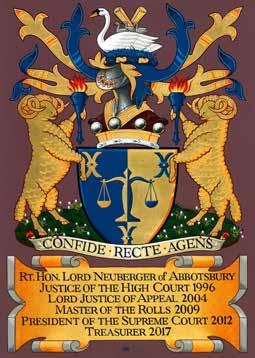
The two supporters are Dorset longhorn sheep, which are a reference to the fact that we have had a house in Abbotsbury since 1984. Our garden there has fritillaria, delicate wild flowers of which I am particularly fond, and hence they are on the shield. The village also has an ancient swannery: hence the swan and three cygnets, which also represent my wife and three children (there was no room for the nine grandchildren). The scrolls at the top may be taken to be legal documents, but they are meant to be a reference to my (honorary) Fellowship of the Royal Society, which is something of a source of pride to someone who many years got a rather mediocre chemistry degree. The helm is in a style proposed by Baz Manning and it is based on a design by Augustus Pugin.
I found it hard to identify a motto which was original, clever, appropriate and pithy. A good friend mentioned his old school’s motto, which immediately struck a chord.

Please refer to page 79 for the Chapel report.
The Chattels Committee meets to consider the maintenance, positioning and safe-keeping, and occasionally the sale or purchase, of pictures, silver and other chattels, and to review any restoration requirements.
The Inn purchased the original watercolour of the ‘Spy’ cartoon of Sir Frank Lockwood and two caricatures of Sir Edward Clarke and Lord Alverstone by Harry Furniss from the Law Show at Chris Beetles Gallery at the end of 2023. These are hanging in the Library extension.
Conservation
2024 saw the return to the Inn of the portraits of Lord Hardwicke (after Allan Ramsay) and Sir John Franklin (studio of Kneller) following conservation work by Melanie Caldwell. Their return marks the completion of the programme to restore the paintings damaged in the Bench Rooms during the Great Hall project in 2021. Both are hanging in the Council Room.
The anonymous 16th century portrait of Sir Thomas More, which used to hang in the crypt of the Old Hall and which had been damaged by the central heating is still undergoing conservation treatment and will be returned to the Inn in early 2025.
Heraldic panels
Baz Manning, the Inn’s heraldic artist, has completed four panels for the Great Hall this year. They record the arms of Lord Neuberger, Lord Richards, Sir William Blackburne and Sir Nicholas Cusworth.
Silver Muster
The Silver Muster was held on 18 February. After the muster was completed, Mark Ockelton discussed a number of pieces of silver from the Inn’s collection. It was pleasing to note that a number of pieces of flatware which were missing in 2023 were available to count in 2024.
In January 2024 construction began on the gardeners’ buildings extension project. A new garage space, office and potting shed were built by John Cirmaci builders and completed on 19 July 2024. The Committee kept under review the impact on planting around the sites of this work and the planned works on 30 Lincoln’s Inn Fields.
Discussions continued throughout 2024 at Garden Committee on future plans for New Square. In May 2024, the remaining rootstock of the Walnut and Paulownia were excavated and removed. This was intended to prevent the wood from being further host to honey fungus, toadstools of which had been discovered in the autumn of 2023. It currently leaves a bare area in the Southern end of the square. The Head Gardener has been asked to work up an inexpensive proposal to re-imagine the layout of the Southern end and also around the fountain, aiming to soften the stone surround.
A sub-committee analysed the Benchers’ Border over a year, and reached conclusions in June 2024, suggesting a number of improvements to the border. It identified the need for greater winter structure, more winter and spring bulbs, a decrease in clumps of linear foliage, and an introduction of additional colours such as blue, purple and pink to create greater effect than the existing colour scheme of red, orange and yellow. The Head Gardener suggested numerous plant choices which could meet this brief and with her team followed through with planting in the autumn.
We have once again seen an increase in our commercial and Inn events across the year. As set out in the earlier pages of the Review, the innovation and productivity of the Catering Team has been tested across our traditional Inn events but also through creative menus at events such as the Diversity Dinner marking Black History month or the Peruvian Night in the MCR.
In the light of continuing increasing costs, the Committee spent time considering further, appropriate changes to Inn events across the year. In particular, this has helped with freeing up key dates which can be sold commercially but without impacting on our essential education services and the traditions that are so important to our members. The Committee approved increased marketing for the MCR and offered continuing support to the strategy of securing large, high-value bookings over smaller events. We are seeing real benefits from this approach and will continue the strategy for the coming year.
Please refer to page 49 for the Library and Archives report.
PADG focuses on medium- and long-term issues, often bringing together matters which might cross the responsibilities of more than one other Inn Committee. It is chaired by the Treasurer and the outcomes of each meeting are reported to Council.
PADG met eight times in 2024. Items for discussion included the review of the Inn’s Standing Orders, including the establishment of a Nominations Committee, the application of the Joint Inns Education and Qualification Rules to student memberships, clarifying the criteria for Honorary Bencher candidates and the selection of supporters for new Benchers.
The Post-Call Education Committee is responsible for advocacy and ethics training for pupils, new practitioners, and established professionals. Their work includes training practitioners, assessing advocacy tutors, and providing international advocacy training.
In 2024, the Inn updated its Pupils’ Advocacy Course to align with new requirements issued by the Bar Standards Board in December 2023. Improvements were made to strengthen training on skeleton arguments and oral submissions. The pupil assessment form was also revised to include a more detailed breakdown of assessment criteria.
A new criminal exercise was introduced in the Pupils’ Advocacy Course following feedback that the previous exercise’s content was potentially distressing for some pupils, especially those not intending to practise in criminal law.
Additionally, demand for new practitioner training increased in 2024 due to the expiration of the BSB’s temporary waiver. This waiver, which allowed flexibility in completing the compulsory advocacy and ethics training came to an end, leading to a rise in practitioners requiring the training. To accommodate this, the Inn organised an additional course to take place in December.
The Inn also continued delivery of essential training programs, including pupil supervisor training, pupil ethics workshops, and specialised vulnerable witness training.
Unfortunately, 2024 saw the retirement of a few senior committed advocacy tutors and there is work to be done to develop existing tutors and recruit new tutors in 2025.
The Pre-Call Education Committee is responsible for overseeing outreach, admission, education, training, and the Call to the Bar process for students. This includes organising insight events for prospective students, maintaining relationships with universities, delivering Qualifying Sessions, and providing additional activities for current students.
Throughout 2024 the Inn continued to provide Qualifying Sessions and student activities for Bar Course students, offering over 60 events to students across the country. With Bar Course student numbers remaining high, the Inn is making significant efforts to recruit and retain tutors to teach these sessions.
In terms of outreach, the Inn continues to run its usual events and prizes aimed at encouraging and informing school and university students about life at the Bar, including the Neuberger Prize and Helen Grindrod Social Mobility Prize. In 2024, the Inn hosted a Social Mobility Business Partnership event, which welcomed 60 college students to the Inn. The students participated in an advocacy workshop and had a tour of the Inn. Additionally, as part of the Black Barristers’ Network Springboard initiative, the Inn hosted 20 nine- to eleven-year-olds to take part in mock trials and a tour of the Inn. They also had lunch in Hall with the Treasurer.
The Scholarships Committee is responsible for overseeing the process of interviewing and awarding the Inn’s GDL and Bar Course scholarships, Pupillage Grants, and Bar Course prizes. This includes setting the approach to scholar selection, recommending the annual scholarships budget to the Finance & General Purposes Committee and monitoring the progress and achievements of the Inn’s scholars.
A consultant was engaged to carry out a review of the scholar selection processes in 2023 and during 2024 the Committee has been implementing changes based on the consultant’s recommendations. These updates included revising the scholarship criteria, application form, and scoring and moderation processes.
A working group has also been established to review the Inn’s means testing policies for GDL and Bar Course scholarships, as well as pupillage grants. This review will continue through 2025.
In November 2024, the application deadline for the 2025 Bar Course Scholarships closed with the Inn receiving a record 436 applications, 60 more than the previous year. These applications have been reviewed, and candidates have been shortlisted for interviews scheduled to take place in London, Manchester and Birmingham in early February.
The Staff Committee plays a crucial role in addressing matters concerning the recruitment, pay, management, and discipline of the Inn's staff, including staff pensioners. Additionally, the Committee is responsible for recommending the annual staff salaries budget to the Finance & General Purposes Committee.
2024 has been another busy year. New legislation was introduced on 1 October, affecting how businesses (including the Inn) must pass on tips and gratuities received to staff. This legislation also encompasses contributions made at Christmas by our members, Benchers and tenants. As the Committee considered this, it soon became clear that compliance costs would exceed any gratuities received. The Committee decided to endorse a cost-neutral strategy, which included implementing a 'no gratuities' policy and replacing Christmas bonus contributions with a £250 voucher for each employee, aimed at ensuring that staff were no worse off. Additionally, staff would select a charity for the occasional unsolicited cash gratuities, with the Inn matching donations up to £5,000.
Maintaining the Inn’s budget is crucial, particularly since staffing costs represent a significant expense for any organisation. The Committee has successfully balanced affordability, recruitment and retention while achieving notable savings in certain areas by utilising the Inn’s electronic capabilities and reorganising certain tasks.
As the year concluded, we said farewell to some long-standing members of the Committee while welcoming new ones. We express our heartfelt gratitude to them and all Committee Members for their invaluable guidance, unwavering consistency, and dedication throughout this past year.
In addition to the aforementioned activity, the following committees met throughout the year.
Advisory (Benchers) Committee (ABC) selects candidates to be considered by Council for election as Ordinary Benchers. It is also responsible for considering proposals and recommendations for Honorary Benchers.
Audit and Risk Committee oversees the governance, risk and management controls within the Inn. This includes oversight of the year end audit process, internal controls and processes, and risk management.
Finance and General Purposes Committee (F&GP) oversees the Inn’s financial affairs of the Inn and other matters which do not fall within the remit of another committee. This includes annual budgets, medium and longer term cashflow forecasts and the financial implications of significant proposals.
Investment Committee is responsible for the management of the assets of the Inn’s Investment Fund and Capital Repayment Fund and provides investment advice to the Trustees of the Inn’s charities.
Technology Programme Board (TPB) monitors, reviews and approves existing and prospective technology infrastructure to meet the developing business needs of the Inn. It reports to the Finance & General Purposes Committee.


Treasurer – The Hon Sir Paul Morgan
Sir Paul Morgan was called to the Bar by Lincoln’s Inn in 1975 and took Silk in 1992. He specialised in property law. He was appointed a High Court Judge in 2007 and was assigned to the Chancery Division. He retired as a judge in September 2021 and now practises as an arbitrator and mediator from Wilberforce Chambers. He was a member of the KC Appointments Panel in 2023 and 2024.
Paul was elected as a Bencher in 2001 and is the current Chair of the Planning and Development group. He has also served as Chair of the Inn’s Estates Committee and Audit and Risk Committee, and as a member of the Finance and General Purposes Committee, the Pre-Call Committee and the Equality, Diversity and Inclusion Committee.

Keeper of the Library – Elspeth Talbot Rice KC
Elspeth Talbot Rice was called to the Bar by Lincoln’s Inn in 1990 and took Silk in 2008. She is Head of Chambers at XXIV Old Buildings, Lincoln’s Inn and specialises in contentious chancery matters, in particular international trust disputes.
Elspeth was born in Newcastle upon Tyne and educated in Sunderland, Helmsley (North Yorkshire), Brighton and Durham. Since becoming a Bencher in 2012, Elspeth has served on a number of committees including chairing the Hospitality, Events and Dining Committee and serving on the Information Technology Board and the Staff and Finance Committees. She currently serves on the Finance and General Services Committee and the Library Committee, and is a member of the Planning and Development Group.
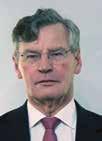
Keeper of the Black Book and Dean of the Chapel – Michael Todd KC
Michael Todd was called to the Bar by Lincoln’s Inn in 1977 and took Silk in 1997. He is a practising barrister at Erskine Chambers, where he was Head of Chambers from 2011 to 2021.
From 2008 to 2010, Michael was Chair of the ChBA and as such was a member of the General Council of the Bar of England & Wales (Bar Council). He was elected as ViceChair (2011) and Chair (2012) of the Bar Council. He was a trustee of the Bar Pro Bono Unit from 2012 to 2021, and an Executive Committee member and Council member of the Commonwealth Lawyers Association during that period.
Elected as a Bencher in 2006, Michael initially served on the Admissions, Call & Pupillage Committee and then as Chair of the Advisory (Benchers) Committee. He currently serves on the Equality, Diversity and Inclusion Committee and the Chapel Committee, and is a member of the Planning and Development Group. He regularly teaches advocacy and ethics to pre-Call students of the Inn.

Keeper of the Walks - Susanna McGibbon KC (Hon)
Susanna McGibbon was called to the Bar by Lincoln’s Inn in 1990 and joined the Government Legal Profession in 1993 after three years in private practice at the Bar. Having worked in most government departments at some point, her experience encompasses the range of government legal work – policy development, primary and secondary legislation, litigation, public inquires, EU law, human rights and national security. Susanna was appointed Treasury Solicitor and Permanent Secretary of the Government Legal Department (GLD) in March 2021. As such, she leads it in its provision of advisory, commercial, employment and litigation services to most central government departments.
Elected as a Bencher in 2021, Susanna has previously been a member of the Scholarships Committee and the Social Mobility Sub-Committee. She is the current Chair of the Audit and Risk Committee and also serves on the Advisory (Benchers) Committee, the Garden Committee and as a member of the Planning and Development Group. Susanna frequently speaks at Inn events and participates in various events for students, focusing particularly on opportunities at the Employed Bar.
Please note that all dates may be subject to change and 2026 dates are still provisional.
EASTER DINING TERM
29 April – 29 May 2025
TRINITY DINING TERM
3 June – 31 July 2025
MICHAELMAS DINING TERM
1 October – 19 December 2025
HILARY DINING TERM
12 January – 1 April 2026
April 2025
28 Inn Reopens
May 2025
1 Amity Dinner at Gray’s Inn
7 NPP Case Analysis
9 Gourmet Dinner
13 NPP Advocacy
15 Grand Day
19 NPP Advocacy
20 Ordinary Dining
28 NPP Ethics
June 2025
3 Trinity Term Begins
7 Open Gardens
10 Diversity Dinner
11 NPP Case Analysis
20 Black Tie Guest Night
26 Contributors to Education Dinner
July 2025
2 Garden Party
4 Circuit Judges Dinner
6 Family Day
9