Beyond “Wimp Feminine”: Women Artists and the Fight for Recognition
by Clanci Jo Conover
In contemporary discourse surrounding 20th-century women artists, there has been significant discussion of the trials and challenges that underscore the unequal playing field against which their careers unfolded. Commonplace overshadowing by male counterparts in galleries, auctions, and museums has been decried countless times by authors, critics, and groups like the Women’s Caucus for Art and later the Guerrilla Girls. This public reckoning has led to greater opportunity for women artists in the 21st century; female artists accounted for 45% of representation among dealers in 2025, continuing a slow but steadfast trend towards gender parity.1 Even if there is still work to be done in the struggle for equity, this level of representation shows increasingly favorable conditions when compared to the 1979 survey published by Women in the Arts that found women composed only 12.3% of representation on average among the top 18 galleries surveyed.2
Women had to work harder for recognition and respect amidst the sea of male artists, gallerists, curators, and critics—operating within a boy’s club—and they were widely creative with their solutions. Thinking outside of the box is practically a requirement for any professional artist, but it is even more pertinent when applied to marginalized artists. Constantly having to champion not just the inclusion or value of their own work, but the work of their peers as well, inherently placed these women into positions of advocacy and activism. 20th-century women artists serve as foundational examples for disenfranchised artists working today who are continuing the fight for racial and gender equity within the arts and beyond. These women, at least initially, did not set out to effect large scale societal change or dedicate their lives to gender equality, but nevertheless became involved by persistently advocating for their recognition as capable, professional artists.
Graduating from the Gilded Age to The Jazz Age
American art schools began admitting women in the mid-1800s, as it was permissible for a woman to be artistic in a social, learned manner, but they were not meant to be professional artists. Many classes were gender-specific, and the conventional wisdom was that women could not participate in any live figure drawing classes, even if this was a suitable practice for male artists. For the majority of the 19th century, women who wanted to become professional artists had limited options in formal academic training.
Women were expected to pursue “acceptable” subjects like portraits, landscapes, and still lifes rather than historical or figure painting. The National Academy of Design was the first to offer a live nude drawing class for women in 1871. Artist Helena de Kay Gilder, a student at the Academy, is credited with producing a nude figure study that year; when she cofounded the Art Students League in 1875, the progressive institution “let women draw from life from day one, and required that both men and women be represented on its board.”3 Since the genesis of institutions like the Art Students League, women artists have revisited and reframed the nude figure countless times.
As tastes modernized, abandoning 1800s sensibilities in favor of the burgeoning 20th century, innovation was everywhere. Art nouveau had taken off and art deco was coming into its own, World War I marked a new age of technological innovation in combat, women would finally obtain the right to vote,4 the Jazz Age was roaring into full swing, and by the 1930s the Works Progress Administration (1935-1943) would be employing both male and female artists. Opportunities for women artists were still minimal, but institutions like the WPA, Art Students League, National Association for Women Artists (NAWA), and other professional groups were holding space for them.
The WPA, a government program founded to provide employment during the Great Depression, was instrumental for the professional pathways it opened to women artists, even if temporary. The initiative trained and employed sculptor Louise Nevelson as an art teacher in 1937 at a Lower East Side school, which was reportedly her first and only steady job.5 She executed a number of nude figure studies during this time, simple line drawings that indicate an ease or comfort with a previously taboo subject. Across the country, Helen Lundeberg was covering California’s schools, parks, and municipal buildings with murals for the WPA in her signature post-surrealist style.6 The WPA even provided the opportunity for Mercedes Matter to assist renowned French artist Fernand Léger with a French Lines Pier mural project, a foundational experience that empowered the young artist by equipping her with the tools and working knowledge needed to be confident in a world built around aesthetic and attitude.7
Midcentury Momentum (or Lack Thereof)
In retrospect, the 1930s was a bubble. Women had been able to vote for over a decade, the WPA provided employment for women artists alongside male artists, Hilla von Rebay cofounded the Guggenheim (then-called the Museum of Nonobjective Painting), and things appeared to be moving towards gender equity. With the greater economic uncertainty accompanying the depression and the looming threat of fascism, the fervor surrounding women’s rights in the early 20th century dissipated. The 1940s subsequently became a confusing time for women: they had been empowered to support the war effort, handle jobs they previously had little access to, and were then compelled to surrender their newfound agency and return to domestic tasks once the war ended. Women’s organizations to this point had been methodical and impactful, but after World War II they were fragmented— they essentially believed that they attained some level of equality, but it was only superficial.
Charlotte Steifer Rubinstein summarizes the moment in American Women Artists: “After the giant leap forward taken by women artists in the 1930s, one might reasonably have expected them to come into their own in the 1940s and 1950s, as American art moved toward world leadership. But just the opposite proved to be the case. The forties, fifties, and sixties turned out to be a period of increased discrimination. The leading galleries carried few works by women, and very few women had solo shows at major museums in this period. When the famous exhibition “The New American Painting” went abroad to tour the capitals of Europe in 1959, only one woman out of seventeen artists–Grace Hartigan–was included. The Federal Arts
Project [WPA], with its antidiscriminatory rules, was gone. Male artists, beginning to smell high stakes in the offing as American collections and museums began to come of age, formed an unofficial boy’s club in which the work of their female colleagues was not taken seriously.”8
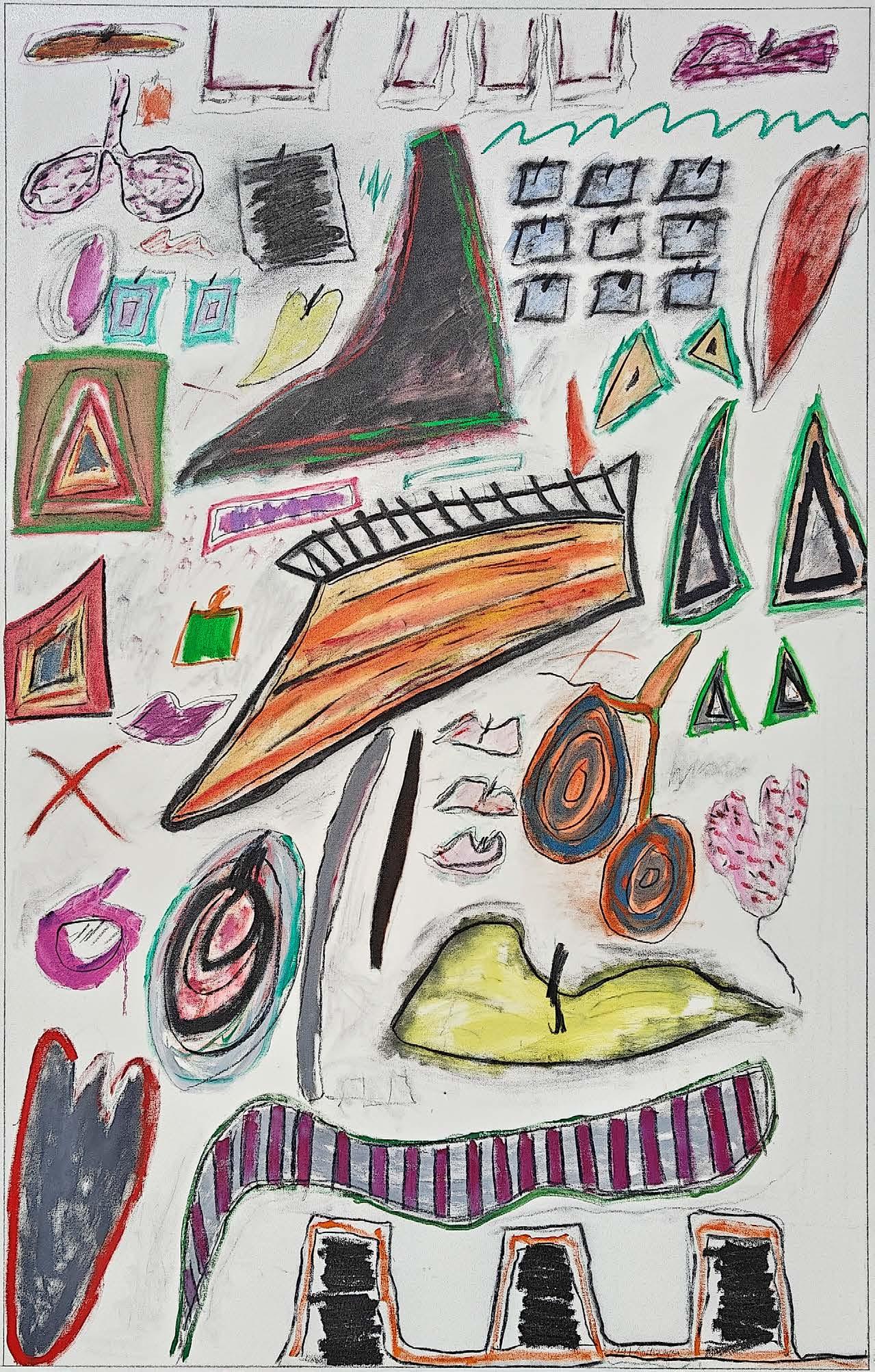
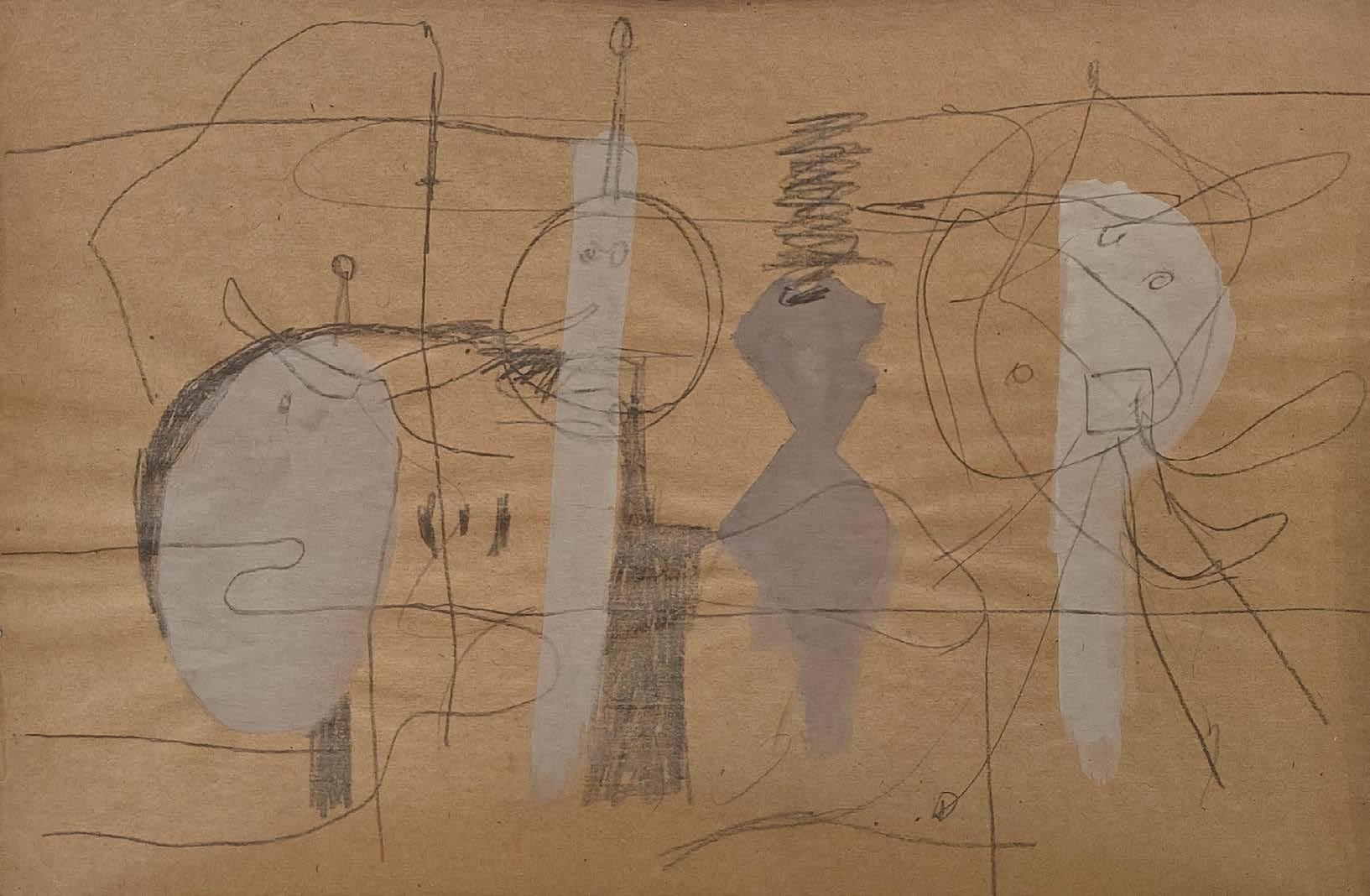
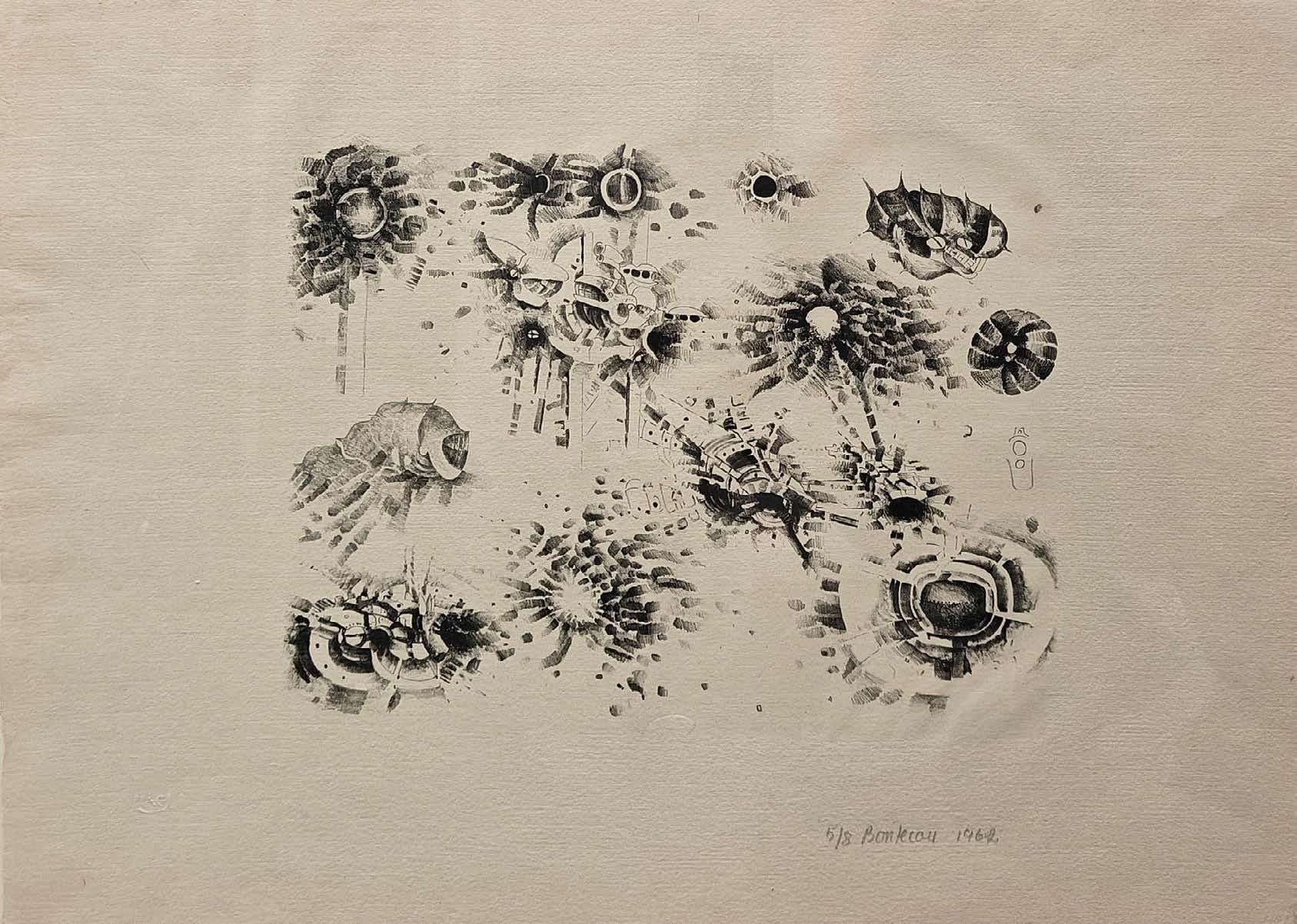
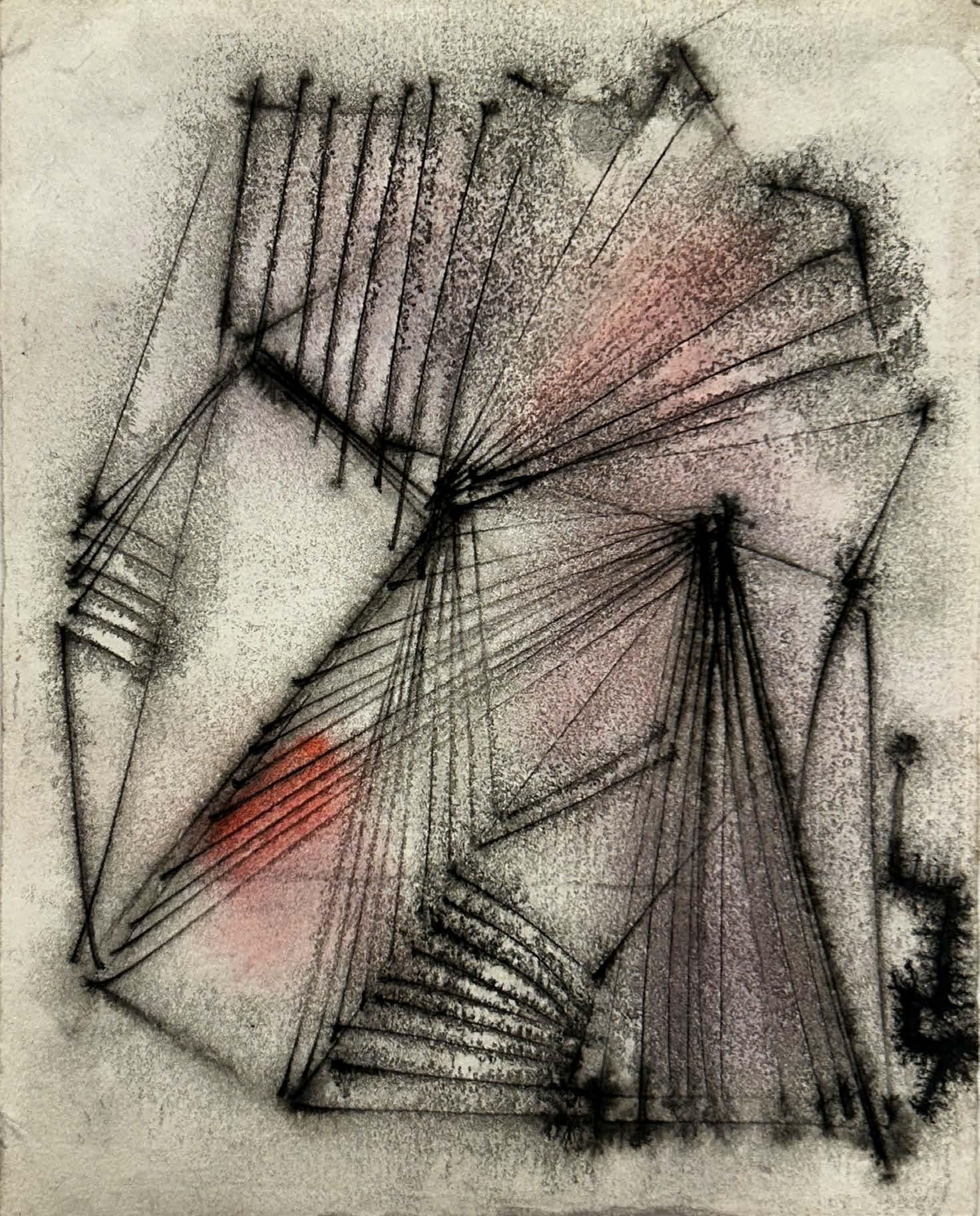
Dorothy Dehner (p. 39), who suppressed her own talent for many years to appease her aggressive sculptor-husband David Smith, classified the pervasive masculine tenor of the art world: “There had never been a great American art before: in fact art had always been regarded as sissified in this country. By god, these men were not going to be sissies.”9 Lee Bontecou (p. 32), known for her dark wall sculptures that incorporate metal, canvas, and other heavy materials that do not read traditionally feminine, contrasts this “sissified” classification: “When I started, they wanted my things [to be] completely wimp feminine, and the gallery wanted to push that and I just wanted to throw up.”10 The language used by these artists—“sissy” and “wimp feminine”— provide insight into the gendered realities of the midcentury art world. Abstract Expressionist painter Mercedes Matter (p. 9) likewise underscored these realities, recalling that when the infamous Club was formed: “...I was the one female original member in a very male-dominated situation.”11
Theory and Criticism in the Midcentury
Amidst this hyper masculine art world, women artists diligently pressed on, refining concepts around education and art theory, getting involved in political activism, and establishing artist-run spaces. Perle Fine was one of the younger artists championed by von Rebay and the Guggenheim, recognizing her commitment to geometric abstraction. Fine had trained under the famed Hans Hofmann, but would regularly forgo his critique in favor of solitude, where she could work through ideas herself. She claimed that “Hofmann kept relating abstraction to the figure and nature, and I knew it was so much more.”12 There is little tangible connection between the forms in Fine’s untitled, double-sided mixed media work (p. 31) and the physical world, even if mentors like Hofmann would have preferred a correlation. Hofmann’s prestige brought artists from across the country to study abstraction under his tutelage—in 1942, Virginia native Nell Blaine traveled to New York to train with him, prompting the young artist to explore an abstract phase that eventually gave way to more representational, lyrical compositions in the 1950s. She joined the American Abstract Artists group in 1944, where Fine was also a member, creating the painting Red and Black (p. 12) soon after. Red and Black’s compelling forms are rooted in pure abstraction, showing a natural understanding of nonobjectivity that was only exemplified in Blaine’s early work.
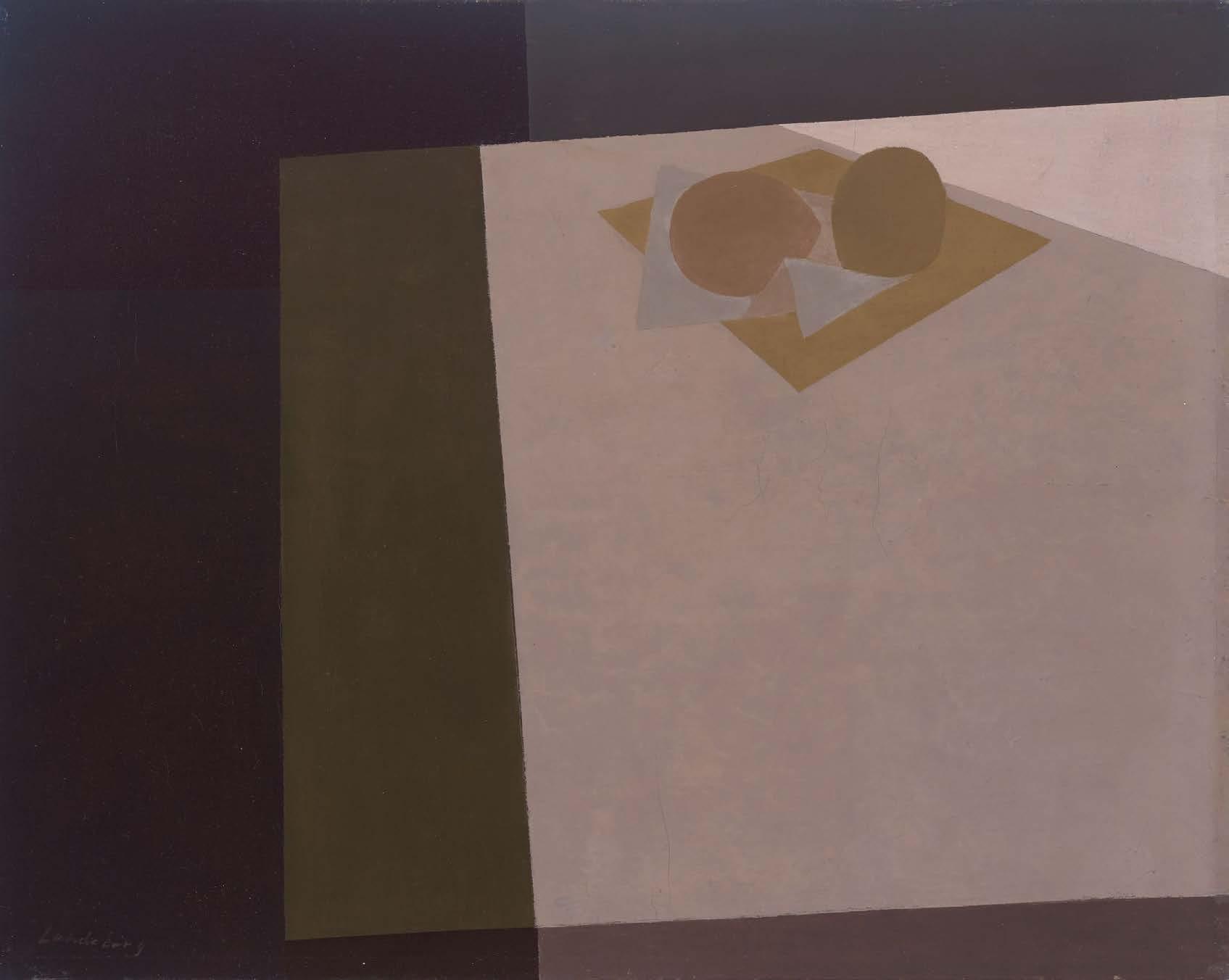
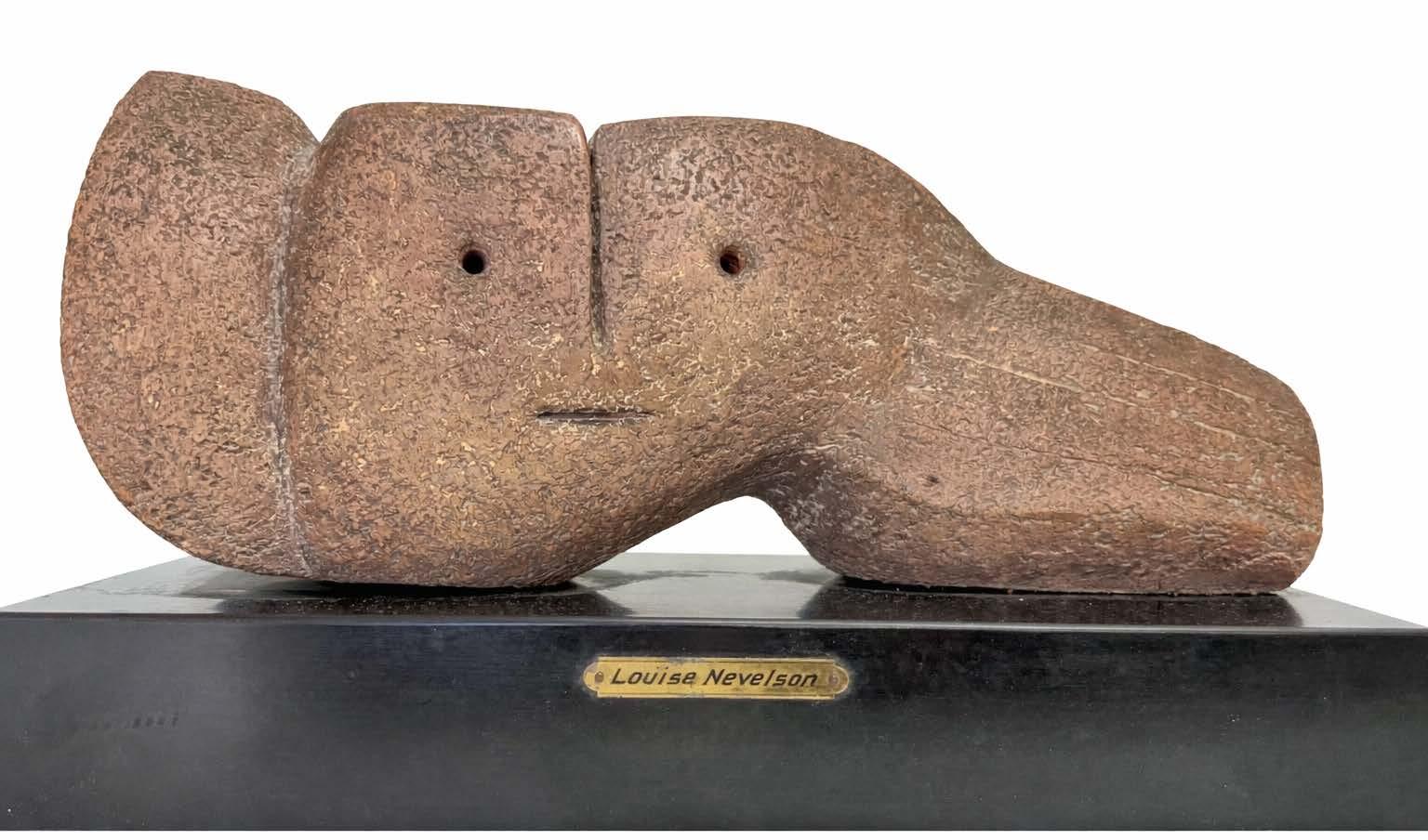
California post-surrealism, one of few American avant-garde movements of the 1930s, was co-founded by Helen Lundeberg, who was also known for her work in hard-edge abstraction. Still Life (p. 25) is representative of this hard-edged style, deconstructing forms into geometric planes delineated by color to preserve only the most essential elements. Nevelson’s tattistone carvings of the 1940s (see p. 26) were also regarded for their reduced forms, drawing on Mesoamerican sculptural traditions. Her overarching artistic philosophy centered the transfiguration of materials and the interplay of shadows, requiring a level of experimentation with each new material and form.
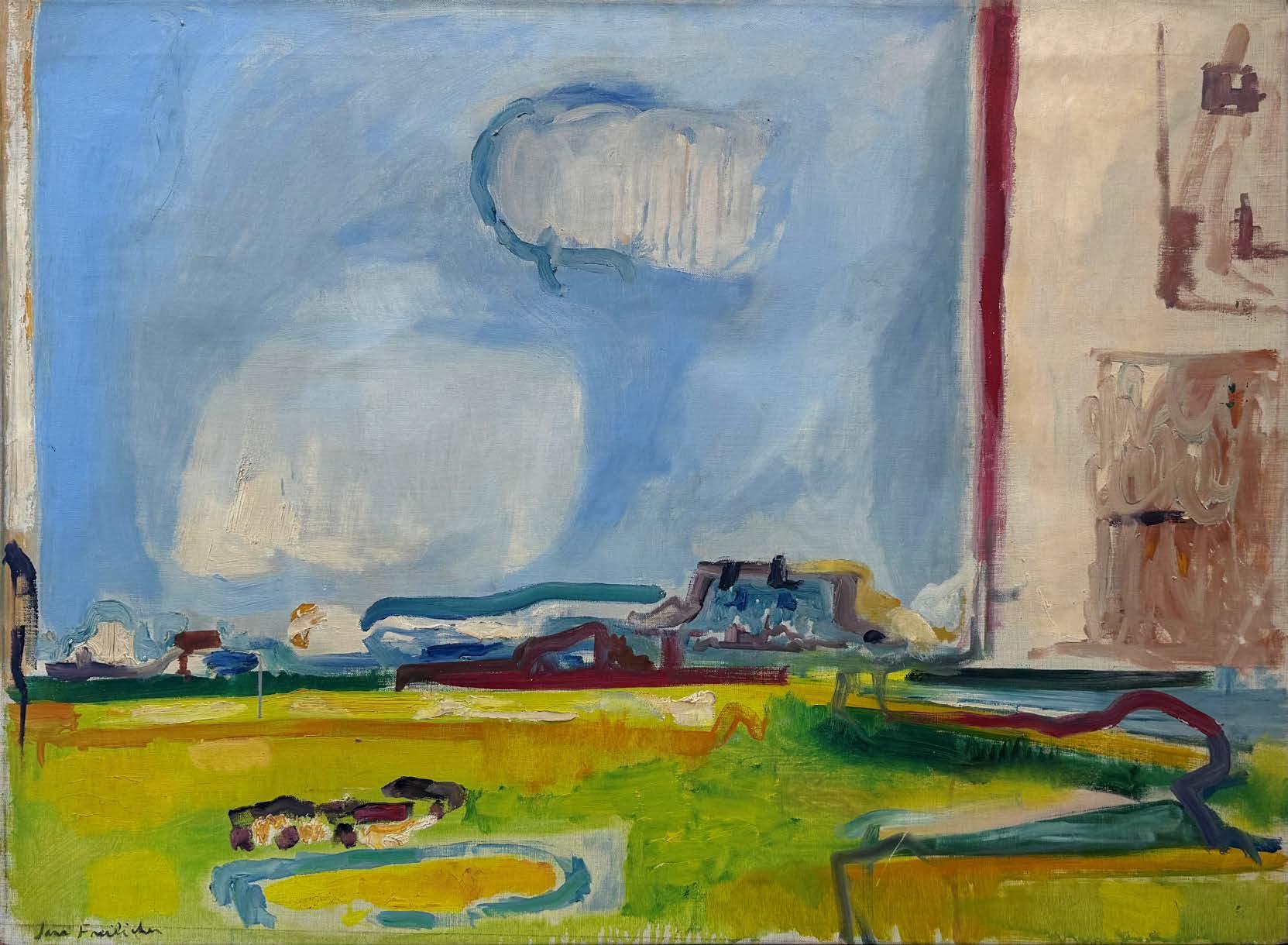
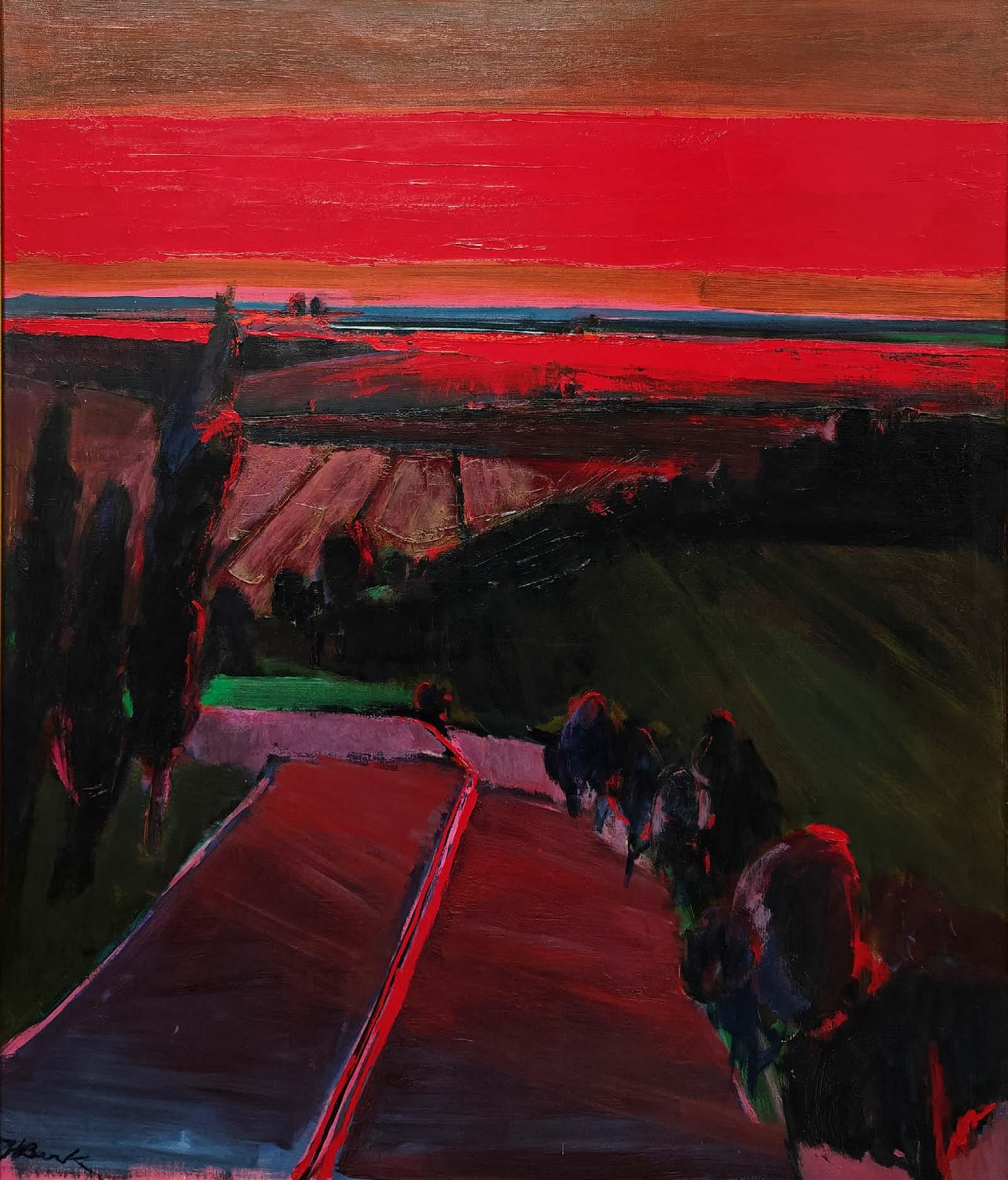
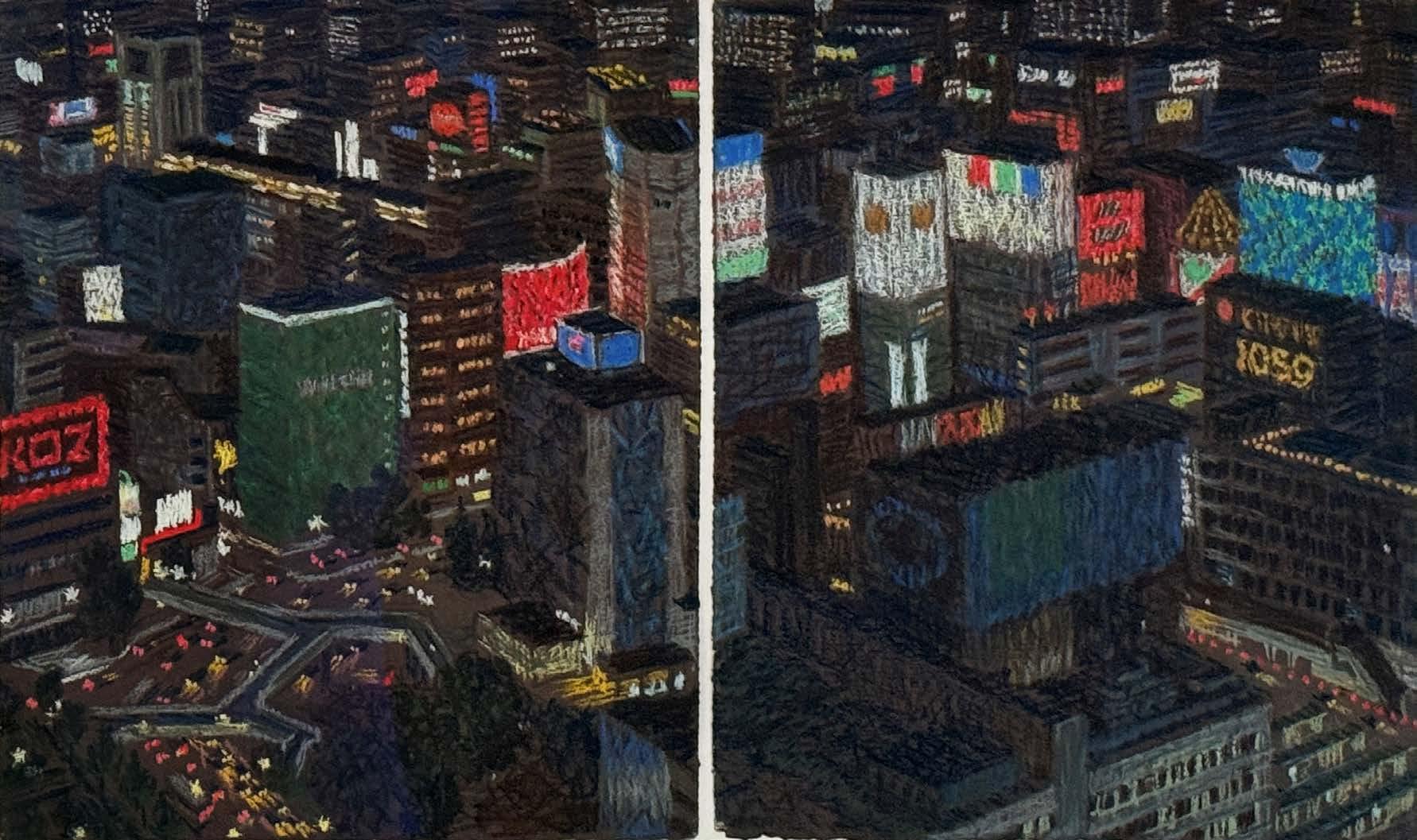
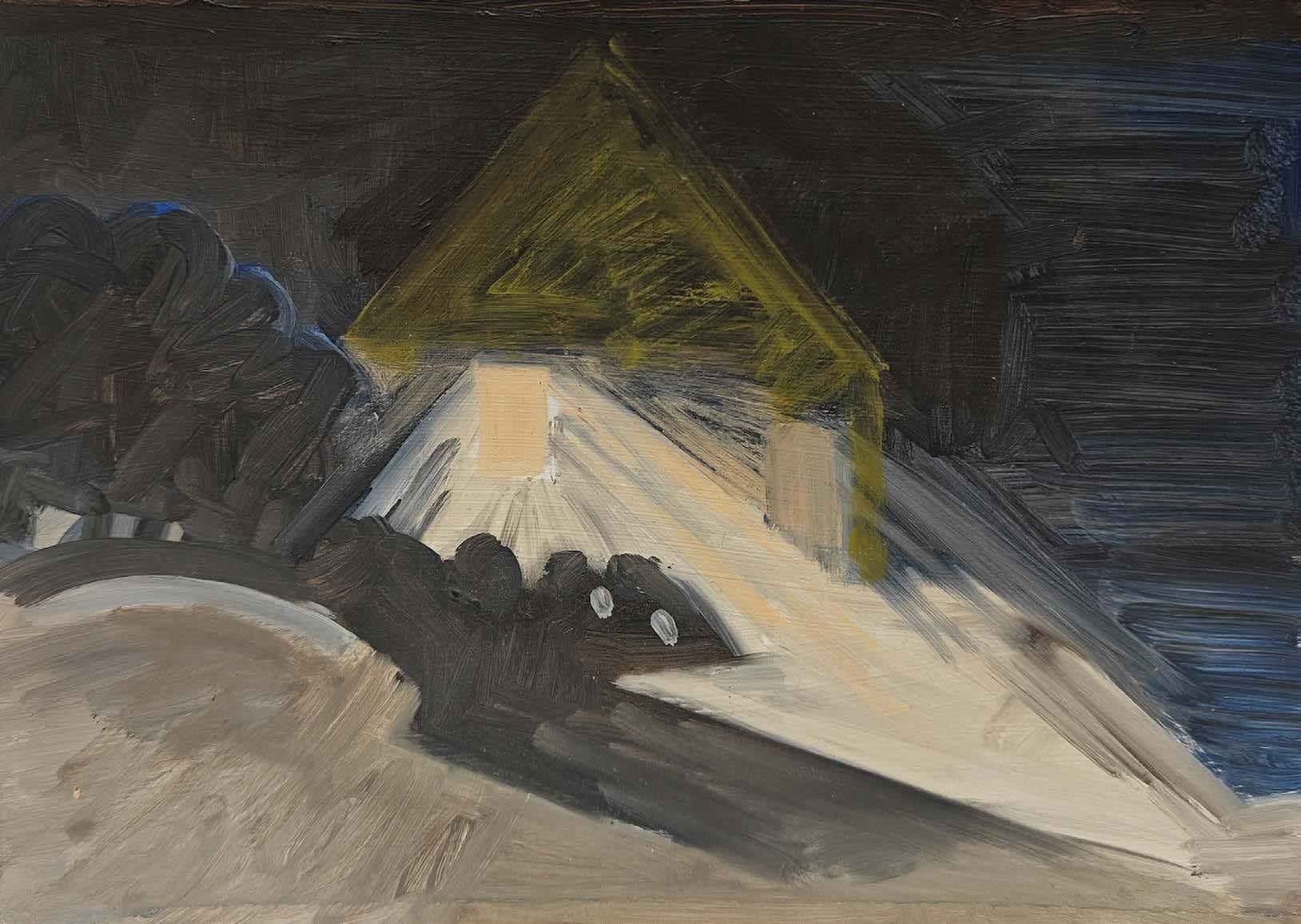
In stark contrast, Jane Freilicher found everlasting inspiration in representative painting, nearly abandoning a career in art when she was a student because she was so unenthused with abstraction. Thankfully, she found her footing by rejecting the dominant Abstract Expressionist tradition, postulating that “to strain after innovation, to worry about being on ‘the cutting edge’ (a phrase I hate), reflects concern for a place in history or for one’s career rather than for the authenticity of one’s painting.” Town on a Plane (Orange Western Landscape) (p. 11) dilutes the figural elements, stripping the image down to its most important features. Henrietta Berk (p. 20), Virginia Berresford (p. 21), Lois Dodd (p. 24), and Yvonne Jacquette (p. 22-23) likewise depicted representational landscapes—each are highly stylized, emphasizing proportion, form, or hue in a fantastical manner while remaining recognizable.
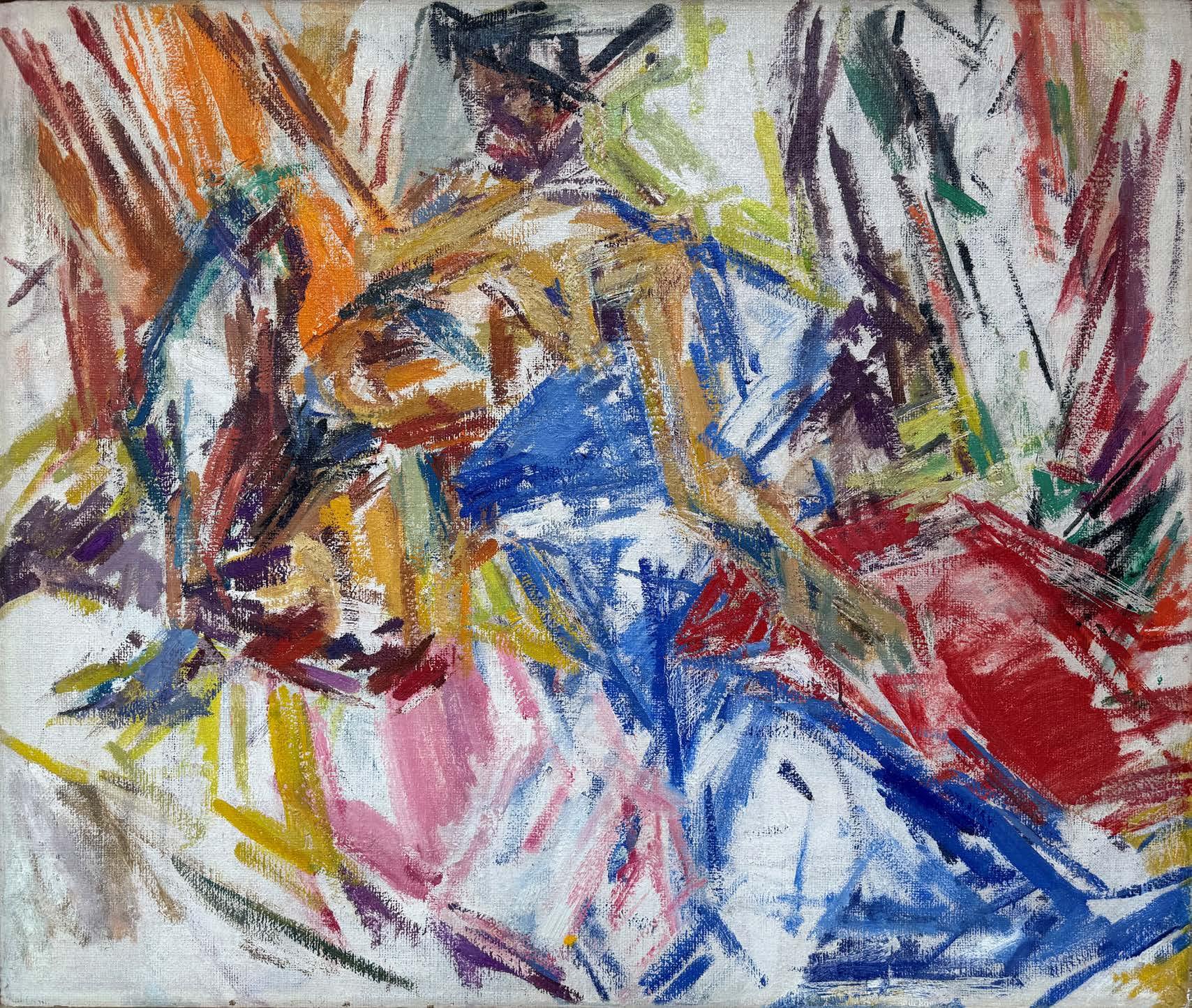
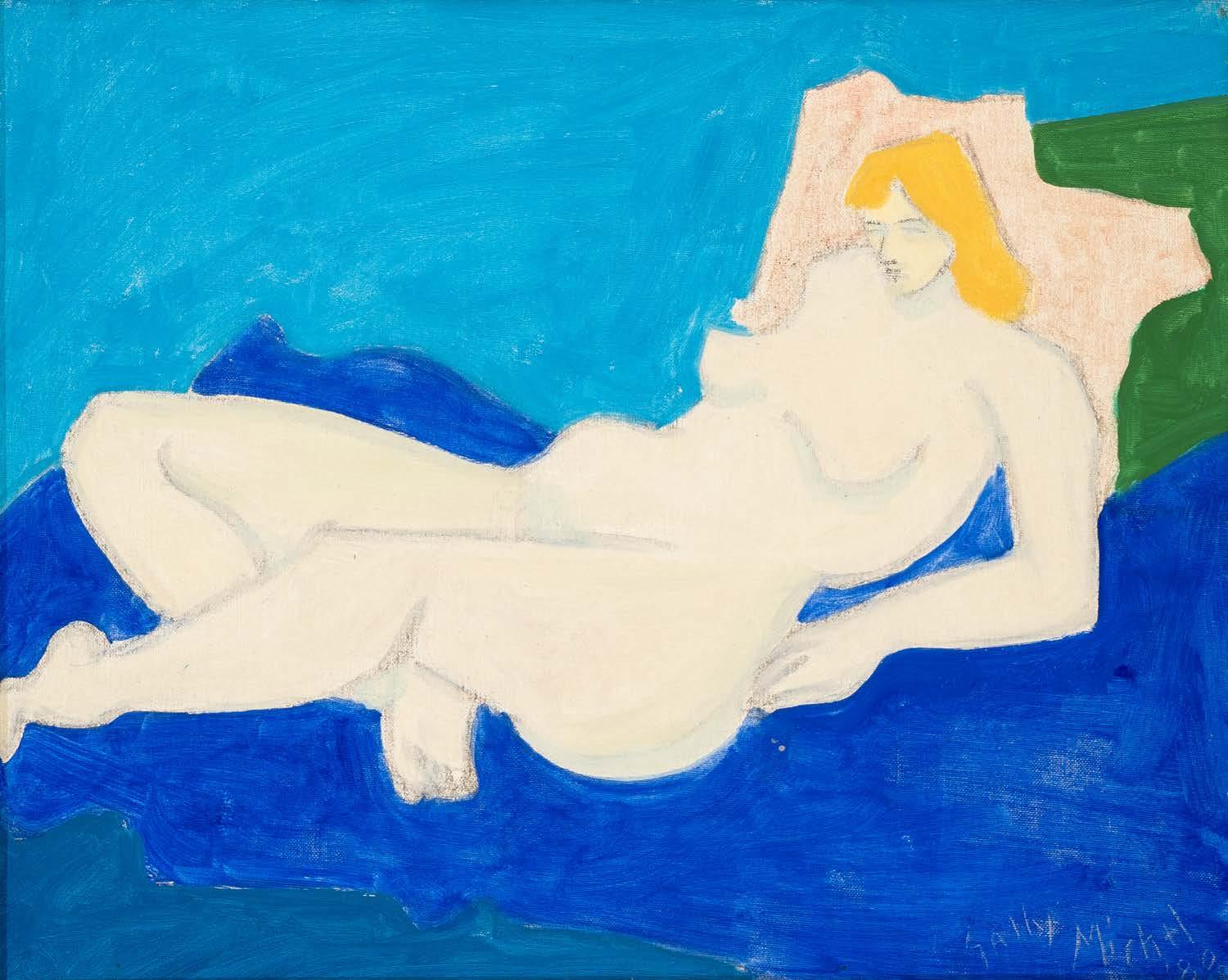
Mercedes Matter wrote extensively on art, and advocated for rigorous studio-based art education, publishing the 1963 critique “What’s Wrong with U.S. Art Schools?” Soon after, she founded the New York Studio School in order to serve the young artist and guide them in their practice, something she claims in her essay was becoming a questionable tenet of art schools. Her work Reclining Nude (p. 9) created in the mid-1950s provides a touchpoint for the progress American women had made in figure studies—from being prohibited to work with live models in academics, to an uninhibited, hyper abstracted version of the traditional reclining nude. Sally Michel’s 1980 Woman Recumbent (p. 19) further presents a relaxed, familiar approach to the form that reflects the evolved relationship between female artist and figure.
Reemerging: The 1970s and Beyond
Faced with the Vietnam war, mounting environmental crises, and attacks on civil rights leaders, more people began questioning the validity of the status quo. Women were increasingly realizing that since the suffrage movement, they had gained very little in the way of rights or influence within American society. Art textbooks barely mentioned women artists or omitted them entirely, creating an incomplete narrative around the history of art. In 1970, ten major galleries showed the work of 190 men and only 18 women, a 1972 survey reported only 18% of galleries offered art by women, and both the Museum of Modern Art and the Los Angeles County Museum had sponsored practically no solo shows by women between 1960-1970.13
In response to this abysmal representation, feminist initiatives exploded: Judy Chicago and Miriam Schapiro started the Feminist Art Program at CalArts in 1971 (the first program of its kind), arts publications centering women like the Feminist Art Journal and Women Artist News went into circulation, and the Women’s Caucus for Art was formed in 1972 to promote equal opportunities for women artists in museum exhibitions, as college faculty, in museum staff, and elsewhere.
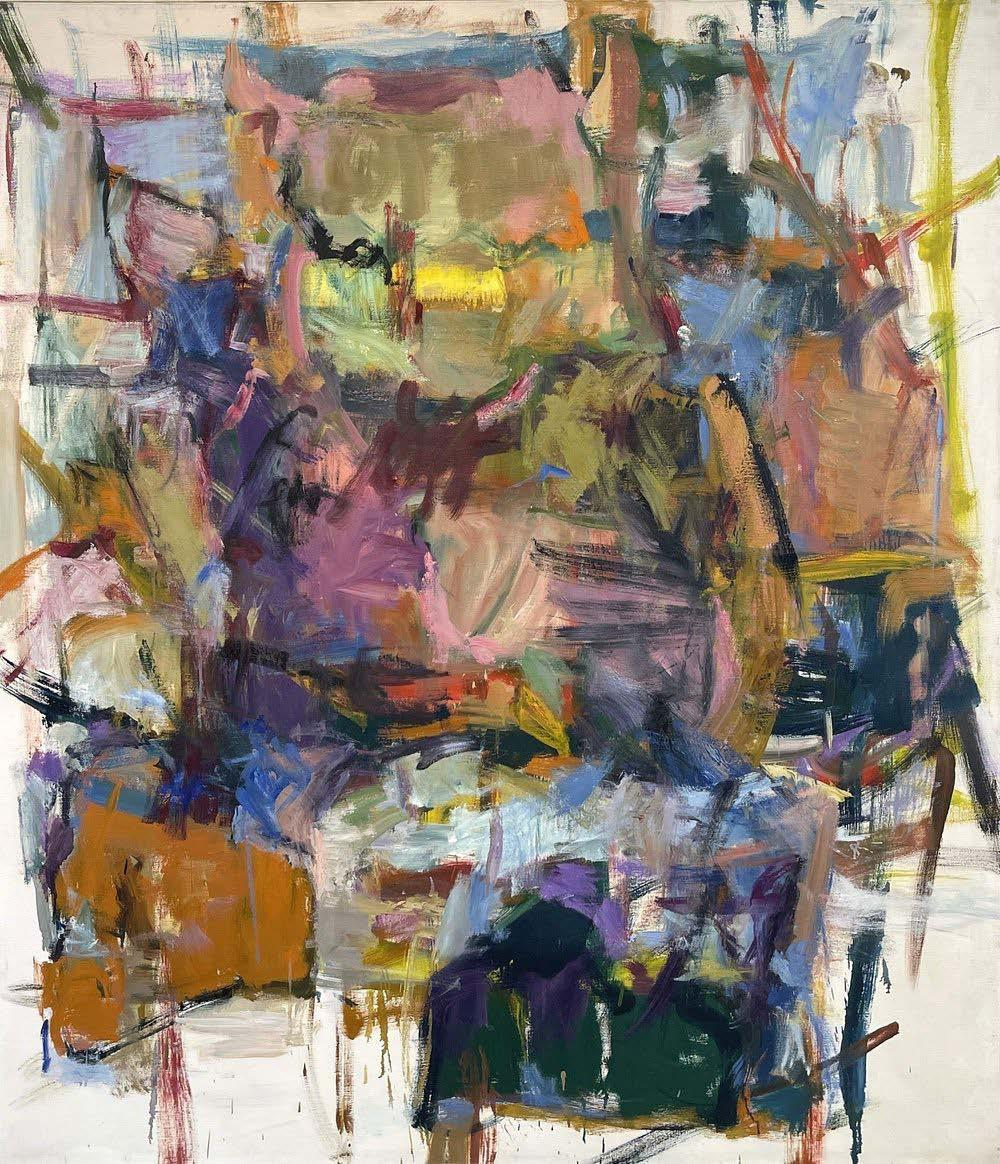
Diana Kurz (p. 10), who often painted with Mercedes Matter, was an early member of the Women’s Caucus for Art, exhibiting in all-female shows, participating in feminist discussions and critiques, and marching in protest against unequal representation in galleries
and museums.14 Later on in the 1990s, Kurz was active with the Women’s Action Coalition, which was founded in 1992 by a group of artists in response to the Clarence Thomas-Anita Hill hearings. The artist recalls that “it was a heady time; the energy and protests and actions reminded me of the feeling of early 1970’s feminism. I was part of the Diversity Committee of WAC, working to foster diversity of race, ethnicity, sexual orientation, socioeconomic background, etc. Some of the issues we were involved with included rape trials, exclusion of women artists from major art galleries, and the Republican and Democratic conventions.”15
In 1973, the daring Lynda Benglis released the video work Female Sensibility, which features close-up footage of the artist kissing and caressing another woman with overlaid audio snippets appropriated from AM radio. The piece did not receive a great deal of critical attention at the time, but it pushed the envelope and incited questions around the female gaze and body. Dr. Susan Richmond confronted the video in her 2008 review: “Female Sensibility interrogates the subject position of the woman artist. Woven into the formal and conceptual structure of the video are particular questions: How does an artist project herself into her work? How does she define her practice in relation to feminist politics, on the one hand, and popular culture, on the other? When does self-representation overstep the boundary between sexual valorization and prurient commodification? How, in turn, should a female viewer respond to erotic visual material produced by a woman?”16
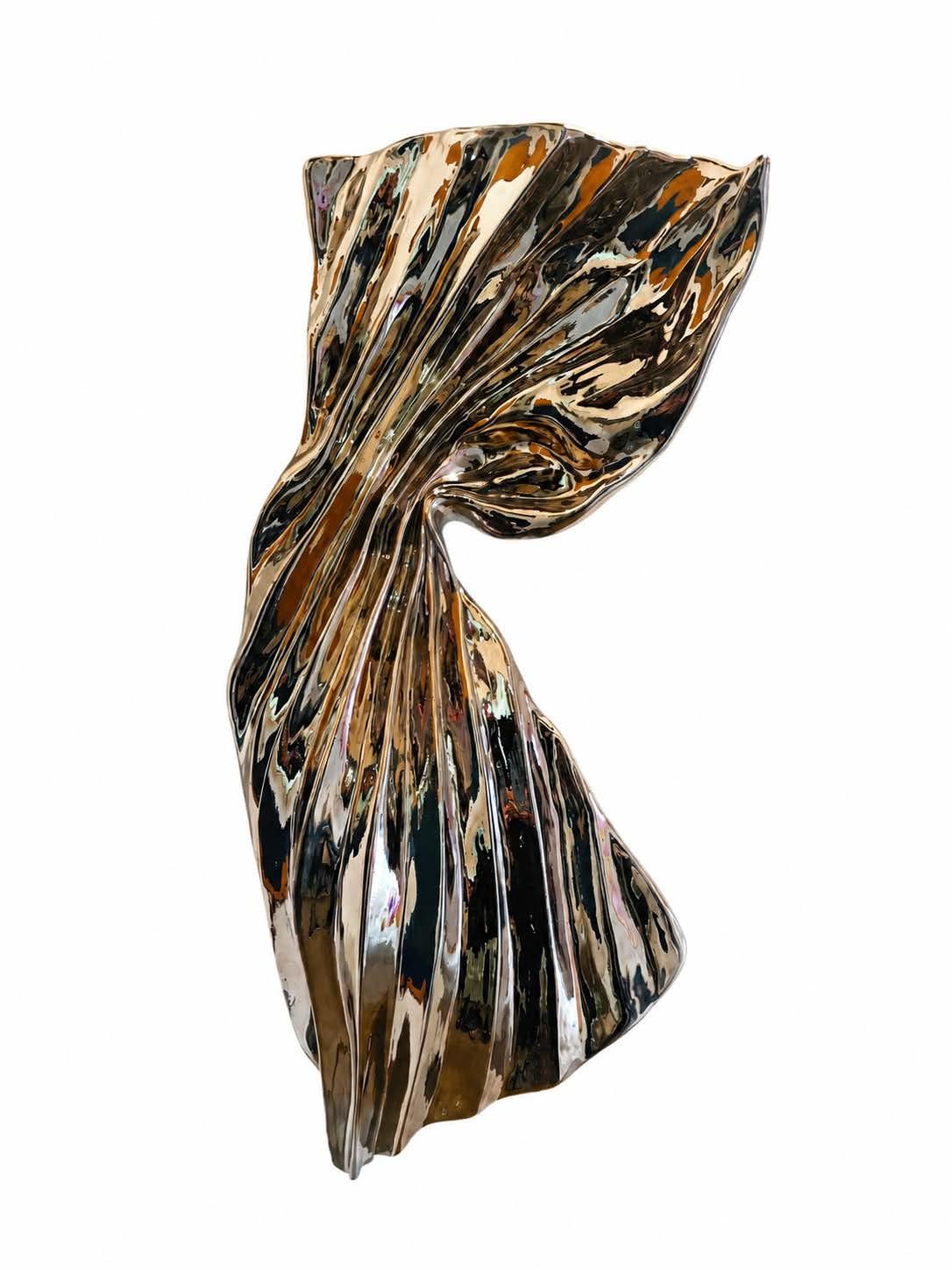
These questions surface in response to a considerable portion of the work classified as feminist in the 1970s and 1980s. Who can forget Benglis’ iconic Artforum cover from 1974, where she poses nude with a double-dildo? This iteration of the art world would be completely unrecognizable to artists of the Gilded Age. The shock-and-awe factor of Female Sensibility and the Artforum cover may be less apparent in Benglis’ sculpture, but it nonetheless subverts standard expectations through the use of unconventional media and display. In the 1970s, Benglis started creating her Knot sculptures, which morphed fabric, metal, paint, and wire into forms that could be viewed as vulvar, transmuting biased critiques into a reinterpretation of the feminine figure. Torso (p. 16) presents a traditional sculptural form carved for centuries by male artists in a material more closely related to Western conceptions of femininity: the ceramic. Torso also maintains the traditional “structure” of this sculptural female form by pinching in at what could be considered the figure’s waist, but here Benglis removes any recognizable feminine features.
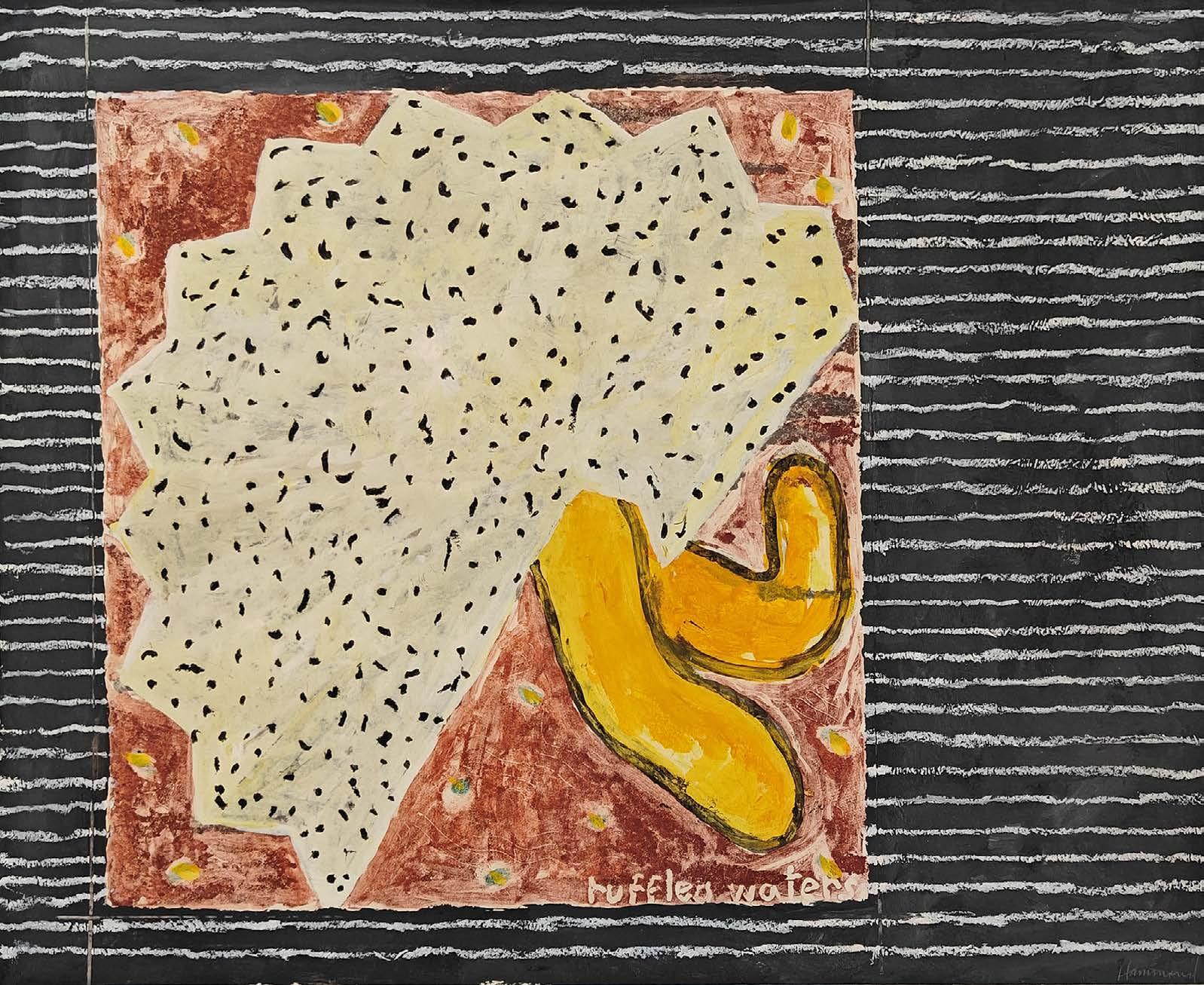
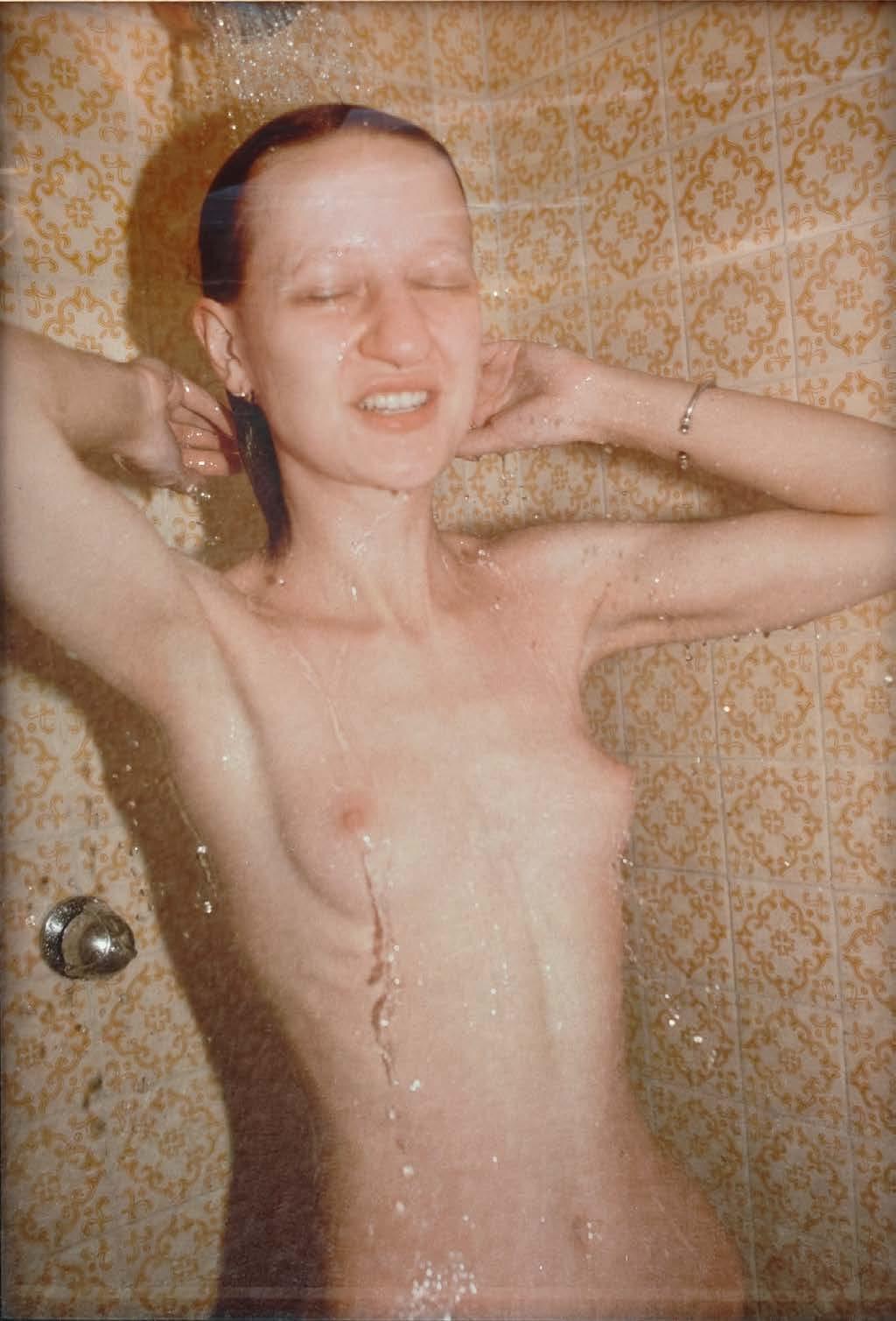
A leading voice in the feminist movement, multimedia artist Harmony Hammond (p. 33) was a founding member of New York’s A.I.R. Gallery in 1972, the first women’s cooperative gallery. She wrote extensively on feminist and lesbian art, enhancing scholarship in the field through essays and curation. Similarly, Nan Goldin deployed her skills in photography and curation to illuminate both sexual liberation and the enormity of the HIV/AIDS crisis. Her series The Ballad of Sexual Dependency served as a pseudo-family photo album, where she documented life with her chosen family, a popular concept in queer spaces. At a time when death was an everpresent companion to the LGBT community, memorializing these joyful moments was an act of resistance in the face of a society that continually attempted to ignore the issue. Suzanne in the Shower, Palenque, Mexico (p. 36) captures one of these moments, the subject blissfully present in the here-and-now, regardless of what larger, systemic challenges may be lurking nearby.
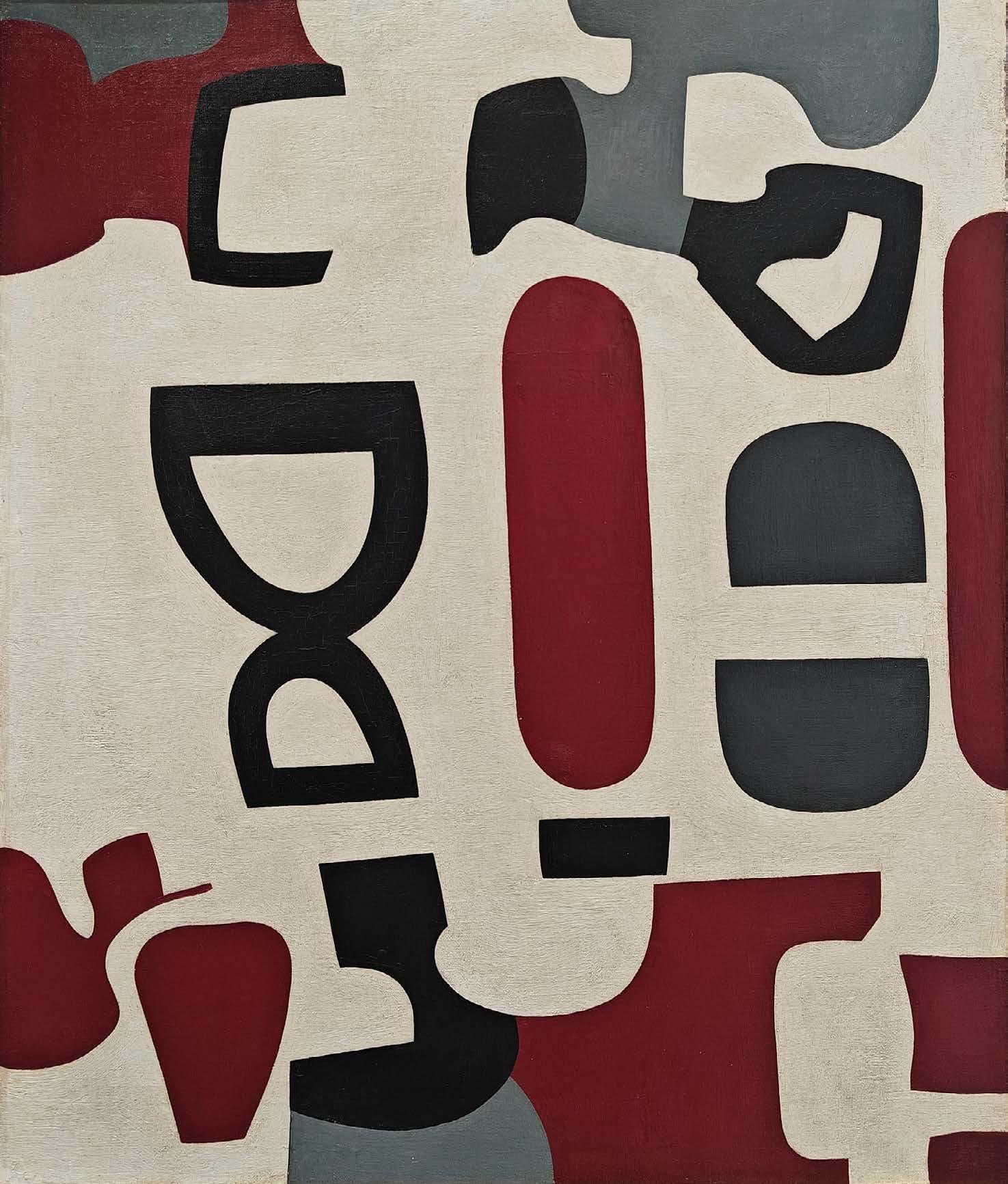
Other women took more subtle approaches in the post-1970 art world, furthering the fight for equal opportunities by embracing a strong work ethic. A pioneering woman in graphic design, Elaine Lustig Cohen was in the unusual position of running a design firm after her husband passed in the 1950s. While she was passionate about graphic design, she turned towards painting in the late 1960s and became the first woman to earn a solo exhibition at Mary Boone Gallery in 1979.17 Untitled (p. 13) of the same year represents her developed geometric style, created when her career in painting was gaining substantial traction. She defined her dual practice as designer and painter: “My life as an artist has been shaped by two passions: for graphic design created in the public sphere on the one hand, and by the exploration of a related private vision in painting, on the other.”18
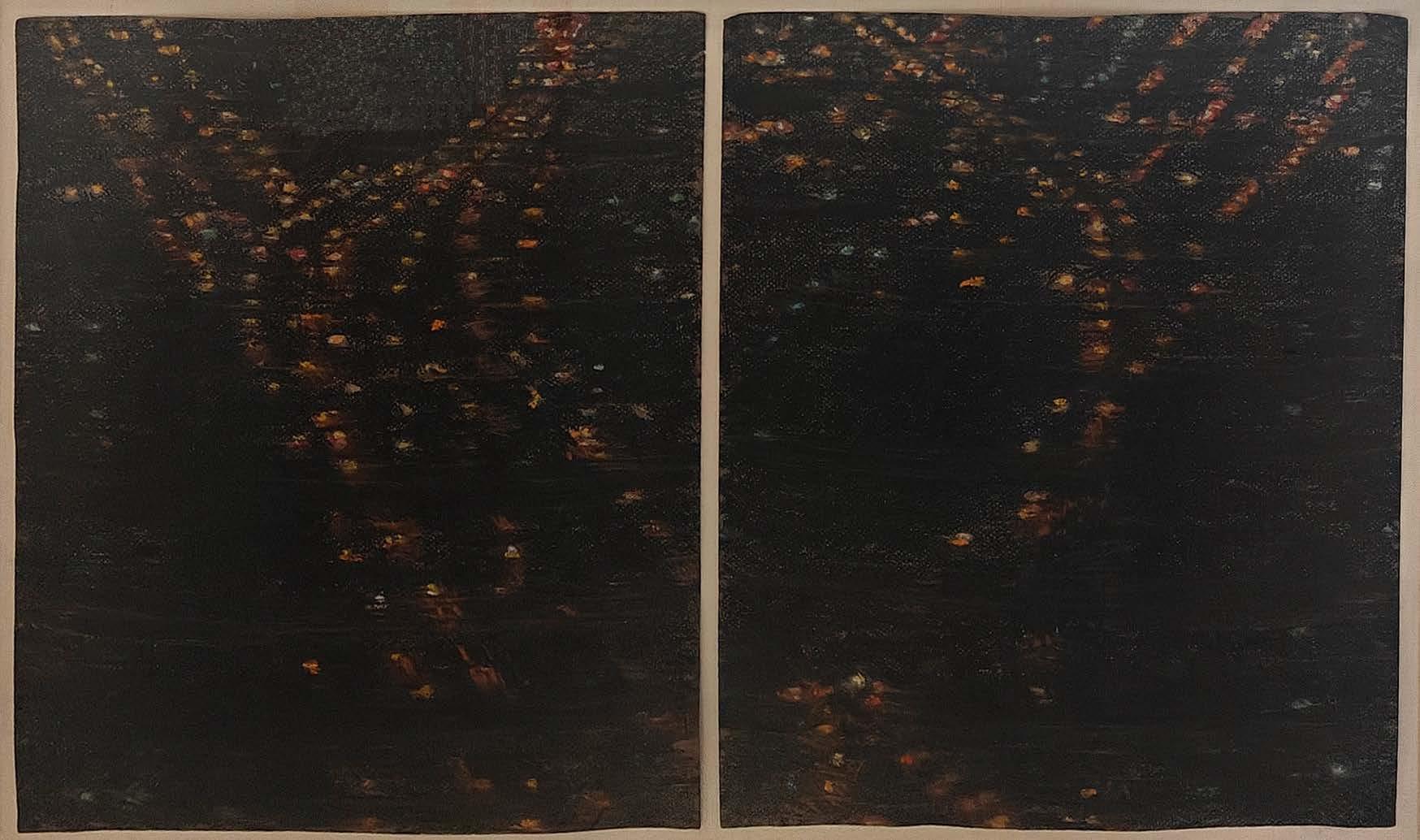
Alumna of the André Emmerich gallery Sherron Francis also found her footing in the ‘70s when she was awarded solo exhibitions with Emmerich in 1973 and 1974. Three Young American Painters, a 1974 exhibition presented by the Museum of Fine Arts, Houston, included Francis alongside Dan Christensen and Peter Bradley, solidifying her place as a leading Color Field painter. Francis investigated a range of tones within her work, including darker fields like that of her 1977 Untitled piece (p. 17) — similar to Bontecou, she had no reservations in exploring the stygian realm.
Conclusion
The artists featured in Making Space exemplify that the history of women in American art is not simply a story of exclusion, but one of persistence, reinvention, and collective advocacy. These women navigated an art world that routinely minimized their achievements and questioned their legitimacy as professionals. They became advocates not just for themselves, but for a broader structural shift in the foundation of the arts, revealing how artistic practice itself can become an act of resistance.
These artists did not form a singular movement nor share one unified ideology. Lee Bontecou rejected aesthetics she classified as “wimp feminine” in her work, while Diana Kurz marched in feminist protests. Jane Freilicher disregarded the pressure to chase avant-garde trends, whereas Lynda Benglis deliberately mobilized provocation and spectacle to confront entrenched sexism. Despite their differences in style, politics, and temperament, they were connected by a common reality: each encountered barriers that their male contemporaries rarely had to consider. The necessity of overcoming those barriers fostered resilience, independence, and a heightened awareness of inequity that extended beyond their own experiences.
The increased visibility of women artists in museums, galleries, and the market—not to mention in critical scholarship—emerged from decades of persistence by artists who demanded to be seen. Some accomplished this through activism and organizing, while others furthered the cause subtly, proving that they were not just capable but excellent. Contemporary conversations surrounding representation, diversity, and institutional accountability are indebted to forerunners like the women featured in this show for exposing the limitations
of the art world long before such critiques became part of mainstream discourse. While inequities undoubtedly remain, the careers of these artists illustrate how creative output and advocacy became deeply intertwined in the 20th century.
Clare McAndrew, The Art Basel and UBS Global Art Market Report 2026 (Zurich: Arts Economics, 2026), p. 80. “WIA 1979 Survey of Selected New York Galleries.” New York: Women in the Arts Foundation, 1979.
Sarah Cascone, “The School That Became a Refuge for Artists From Georgia O’Keeffe to Tony Smith,” Artnet News, August 12, 2025.
The 19th amendment technically granted the right to vote to all women except for Indigenous women, who did not get voting rights until 1924. However, people of color (especially in the south) largely were precluded from voting until the Voting Rights Act was passed in 1965 due to racially discriminatory voter suppression tactics like literacy tests, poll taxes, and intimidation.
Robin Clark, “Louise Nevelson,” Shalvi/Hyman Encyclopedia of Jewish Women, Jewish Women’s Archive, March 20, 2009, https://jwa.org/encyclopedia/article/nevelson-louise
See: livingnewdeal.org/artists/helen-lundeberg/ for a listing of WPA murals produced by Lundeberg in California.
Ellen G. Landau, “‘A Kinetic Pleasure’: Jackson Pollock’s Mural as Critical Intertext,” Getty Research Journal 9, no. S1 (2017): 134.
Charlotte Streifer Rubinstein, AmericanWomen Artists: From Early Indian Times to the Present (New York: Avon; Boston: G.K. Hall, 1982), p. 268.
Ibid.
Mara Tapp, “Lee Bontecou Doesn’t Care What You Think,” interview, Chicago Reader, March 4, 2004.
PBS, “Mercedes Matter,” Hans Hofmann: Hofmann’s Legacy, Public Broadcasting Service, accessed May 21, 2026, https://www.pbs.org/hanshofmann/mercedes_matter_003.html
Rubinstein, American Women Artists, p. 300.
Ibid., p. 375.
Veteran Feminists of America, “Diana Kurz,” Pioneer Histories Project, Veteran Feminists of America, accessed May 21, 2026, https://www.veteranfeministsofamerica.org/legacy/Diana%20Kurz.htm Ibid.
Susan Richmond, “The Ins and Outs of Female Sensibility: A 1973 Video by Lynda Benglis,” Camera Obscura: Feminism, Culture, and Media Studies 23, no. 3 (2008): 82.
Elaine Lustig Cohen, “Biography,” Elaine Lustig Cohen, accessed May 21, 2026, https://www.elainelustigcohen. com/biography
Meg Miller, “Elaine Lustig Cohen,” interview, Eye on Design (AIGA), accessed May 21, 2026, https://eyeondesign. aiga.org/elaine-lustig-cohen/
DOROTHY DEHNER
Untitled (Black and Red), c. 1960
Ink and wash on paper
5 3/4 x 4 1/2 inches
Asher, Elise (1912-2004).......................................................
Benglis, Lynda (b. 1941)
Berk, Henrietta (1919-1990).................................................
Berresford, Virginia (1902-1995)..........................................
Blaine, Nell (1922-1996).......................................................
Bontecou, Lee (1931-2022)....................................................
Dehner, Dorothy (1901-1994)...............................................
Dodd, Lois (b. 1927)............................................................
Fine, Perle (1905-1988)........................................................
Francis, Sherron (b. 1940)...................................................
Freilicher, Jane (1924-2014)..................................................
Gechtoff, Sonia (1926-2018)................................................
Gedney, Joann (1925-2013)..................................................
Goldin, Nan (b. 1953).........................................................
Hammond, Harmony (b. 1944)............................................
Jacquette, Yvonne (1934-2023).............................................
Kohlmeyer, Ida (1912-1997).................................................
Kurz, Diana (b. 1936)..........................................................
Larson, Mernet (b. 1940)....................................................
Lundeberg, Helen (1908-1999)............................................
Lustig Cohen, Elaine (1927-2016).......................................
Mark, Libbie (1905-1972)....................................................
Matter, Mercedes (1913-2001)...............................................
Michel Avery, Sally (1902-2003)...........................................
Nevelson, Louise (1899-1988)..............................................
Plimack Mangold, Sylvia (b. 1938)......................................
Rothschild, Judith (1921-1993).............................................
Wilcox, Lucia (1902-1974)...................................................
Yokoi, Teruko (1924-2020)...................................................