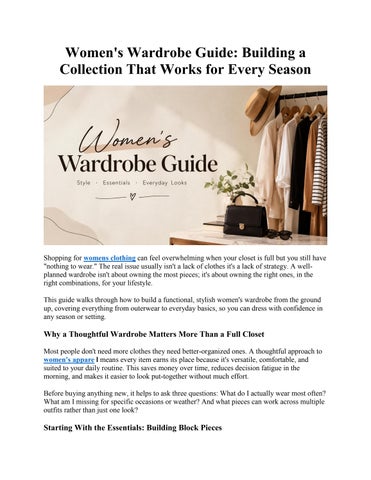
Women's Wardrobe Guide: Building a Collection That Works for Every Season
Shopping for womens clothing can feel overwhelming when your closet is full but you still have "nothing to wear." The real issue usually isn't a lack of clothes it's a lack of strategy. A wellplanned wardrobe isn't about owning the most pieces; it's about owning the right ones, in the right combinations, for your lifestyle. This guide walks through how to build a functional, stylish women's wardrobe from the ground up, covering everything from outerwear to everyday basics, so you can dress with confidence in any season or setting.
Why a Thoughtful Wardrobe Matters More Than a Full Closet Most people don't need more clothes they need better-organized ones. A thoughtful approach to women's appare l means every item earns its place because it's versatile, comfortable, and suited to your daily routine. This saves money over time, reduces decision fatigue in the morning, and makes it easier to look put-together without much effort. Before buying anything new, it helps to ask three questions: What do I actually wear most often? What am I missing for specific occasions or weather? And what pieces can work across multiple outfits rather than just one look?
Starting With the Essentials: Building Block Pieces
Every strong wardrobe begins with foundational items that pair easily with almost anything else you own. Tops and Layering Pieces Solid-color T-shirts, button-down shirts, and simple knit tops form the base layer of most outfits. Choosing a mix of fitted and relaxed silhouettes gives you flexibility depending on the occasion a fitted top works well under a blazer for work, while a relaxed tee suits a casual weekend look. Bottoms That Do Double Duty A well-fitting pair of jeans, tailored trousers, and at least one skirt in a neutral shade cover most situations, from errands to dinner plans. Fit matters more than trend here bottoms that sit comfortably at the waist and skim rather than cling tend to have the longest wardrobe life. Dresses for Effortless Styling A versatile dress can replace the need to coordinate separate pieces entirely. A wrap dress or a simple shift in a neutral tone works for both office settings and evening events, especially when styled with different shoes and accessories.
Outerwear: The Piece That Defines Your Look Outerwear often gets the least attention, but it's usually the first thing people notice and the last thing you take off indoors, which makes it worth investing in thoughtfully. Choosing the Right Womens Jackets Womens jackets are one of the most practical wardrobe investments because they transition across seasons and settings. A structured blazer instantly elevates jeans and a T-shirt into a smart-casual outfit, while a denim or utility jacket adds texture to simpler looks. For cooler weather, a quilted or lightweight puffer jacket offers warmth without bulk, making it easy to layer over sweaters or hoodies. When choosing a jacket, consider the fit through the shoulders first, since this area is the hardest to alter. A jacket that fits well at the shoulders and can be tailored elsewhere will always look more polished than one bought purely for trend. Women Coats for Cold-Weather Versatility While jackets suit transitional weather, women coats are essential once temperatures drop further. A classic wool coat in a neutral shade like camel, black, or navy works over almost any outfit and tends to stay stylish for years rather than seasons. For added versatility, a trench coat is a strong choice for damp or windy climates, offering a polished silhouette that works for both casual and professional settings.
When shopping for a coat, pay attention to the sleeve length and shoulder fit, since coats are worn over other layers and need enough room to move comfortably without looking oversized. Womens Blazers for Instant Polish Few pieces do as much styling work as a good blazer. Womens blazers bridge the gap between casual and formal, making them ideal for the office, meetings, or dressing up a simple outfit for dinner. A single-breasted blazer in a neutral color is the most versatile option, pairing easily with trousers, jeans, or a dress underneath. For a modern approach, blazers no longer need to be reserved for formal settings worn open over a casual T-shirt and sneakers, they add structure to an otherwise relaxed outfit.
Building Outfits Around Color and Fabric A cohesive wardrobe doesn't mean everything has to match perfectly, but sticking to a core color palette makes mixing and matching far easier. Neutrals like black, white, navy, beige, and grey form a strong foundation, while one or two accent colors can be introduced through tops, accessories, or outerwear to keep outfits from feeling flat. Fabric choice also affects both comfort and longevity. Natural fibers like cotton, wool, and linen tend to breathe better and age well, while blended fabrics can offer more stretch and wrinkle resistance for everyday wear. Choosing fabrics based on your climate and daily activities rather than appearance alone leads to a wardrobe that actually gets worn.
Dressing for Different Occasions Workwear For office settings, tailored trousers or a pencil skirt paired with a blouse and blazer create a professional look that doesn't feel stiff. Adding a structured coat or jacket for the commute keeps the outfit practical without sacrificing style. Casual and Weekend Wear Jeans, relaxed knits, and a denim or utility jacket work well for errands, casual outings, or travel days. Comfortable footwear paired with simple layering pieces keeps casual outfits functional without looking underdressed. Evening and Special Occasions A well-tailored dress, paired with a tailored coat or blazer for the walk in and out, works for most evening events. Choosing one statement piece whether it's the dress, a coat, or an accessory keeps the overall look intentional rather than overdone.
Seasonal Wardrobe Transitions
Rather than replacing your closet each season, focus on layering. In spring and autumn, a lightweight jacket or blazer over a simple top handles fluctuating temperatures. In winter, coats and heavier knits take center stage, while summer calls for breathable fabrics and minimal layering. Keeping a few transitional pieces, like a mid-weight jacket, means you're not caught off guard by unpredictable weather.
Practical Tips for a Wardrobe That Lasts
Invest in higher quality for pieces worn most often, such as coats, jackets, and everyday trousers, since these see the most wear over time. Prioritize fit over trend, especially for structured pieces like blazers and coats, which are harder to alter than simple tops. Stick to a core color palette to make outfit planning faster and reduce impulse purchases that don't pair with anything else. Rotate seasonal pieces rather than storing your entire wardrobe at once, so you can reassess what still fits your lifestyle. Care for outerwear properly, since jackets and coats are long-term investments that benefit from proper storage and cleaning.
Final Thoughts A well-built wardrobe isn't about following every trend it's about understanding what works for your body, your lifestyle, and your climate, then investing in pieces that support that. Strong basics, versatile outerwear like jackets, coats, and blazers, and a cohesive color palette make it far easier to get dressed each day without stress. Once the foundation is in place, building out your personal style becomes a matter of small additions rather than constant overhauls.
Frequently Asked Questions How many jackets should a woman have in her wardrobe? Most people benefit from having two to three jackets that cover different needs one structured option like a blazer, one casual piece like denim or utility style, and one warmer layer for cooler weather. What's the difference between a coat and a jacket? Coats are generally longer and designed for colder weather, offering more insulation and coverage, while jackets are lighter and better suited for transitional seasons or layering over other pieces. Are blazers only appropriate for formal or office settings? No, blazers have become a versatile styling piece. Worn open over casual outfits like jeans and a T-shirt, they add structure without looking overly formal.
What colors work best for a versatile women's wardrobe? Neutral tones like black, white, navy, grey, and beige tend to be the most versatile, since they pair easily with most other colors and simplify outfit planning. How do I choose the right coat for cold weather? Look for a coat with a fit that allows room for layering underneath, a length that suits your height, and a fabric like wool that offers both warmth and durability.