GULLIVER’S TRAVELS
Travels into several remote nations of the world by Lemuel Gulliver, first a surgeon, and then a captain of several ships, now universally known as Gulliver’s Travels, first appeared in London on the 28th of October 1726. This year marks the 300th anniversary of what was to become the most influential and widely published book ever written by an Irish author.
Jonathan Swift’s Gulliver’s Travels became an instant best-seller. Within weeks, at a speed impressive even in our interconnected world, the Travels spawned the first examples of the many thousands of abridgements, sequels, adaptations and translations that has continued to this day. Since 1726 Gulliver’s image has graced the pages of books comics, tv series, films, cartoons, plays and musicals, as well as book-markers, postcards, playing-cards, and other ephemera.
For much of the past three hundred years the Travels has been inappropriately presented as a children’s adventure story, which it is decidedly NOT . Rather it is an prescient, savage masterpiece of ironic satire on human pride and intellectual solipsism. A Tale of a Tub (1704), Swift’s first masterpiece, was ‘Written for the Universal Improvement of Mankind’. Gulliver’s Travels, his second, aimed ‘to vex the world rather than divert it’. By exploding the insidious myth of the distinction between a human and animal species, it forms a warning to future generations.
Gulliver’s Travels, in bestriding the world of literary culture, has had a profound influence ever since. George Orwell, for whom the Travels ‘meant more than any other book ever written’, concluded it was one of the six books he’d retain for the benefit of all humanity. W.B.Yeats famously noted, ‘Swift haunts me. He is always around the corner.’
The Lilliput Press was itself founded in County Westmeath in 1984 in honour of Jonathan Swift. Our commemorative edition celebrates this foundation stone of Anglo-Irish literature and the tricentenary of the first publication of Gulliver’s Travels in 1726, bringing it home to Dublin, its place of origin. Swift was troubled by the numerous changes and errors that had crept into the first London edition, declaring ‘I do hardly know my own work.’ Lilliput reproduces the George Faulkner printing originally published in Dublin in 1735, supported by an impressive list of subscribers, complete with Swift’s own corrections and amendments. Our 2026 edition is introduced by general editor Brendan Twomey with a further essay by Declan Kiberd.
This special commemorative edition, limited to 300 copies and printed in a royal-octavo format, will be cloth-bound and slip-cased. A signed, numbered print by the artist P.J. Lynch is offered to subscribers. Subscribers names will be listed.
Dr Brendan Twomey is a retired banker who has published extensively on Dublin’s governance of the period. His Phd, completed in 2018, was entitled ‘Persomal financial management in early eighteenth-century Ireland: practices, participants and outcomes’. His research interests are currently focused on the financial and legal affairs of Jonathan Swift.
Declan Kiberd is Professor of Irish Literature at University of Notre Dame, Dublin Gateway. He served as Keough Professor of Irish Studies at Notre Dame Indiana from 2010 to 2020 and for over thirty years as Professor of Anglo/Irish literature at UCD . He is a member of the Royal Irish Academy and a fellow of the American Committee of the Arts and Sciences.
CONTENTS
Letter from the Publisher
Introduction by Brendan Twomey Essay by Declan Kiberd
Advertisement
A Letter from Capt. Gulliver to his Cousin Sympson
The Publisher to the Reader
Part I / A Voyage to Lilliput
Part II / A Voyage to Brobdingnag
Part III / A Voyage to Laputa, Balnibarbi, Luggnagg, Glubbdubdrib and Japan
Part IV / A Voyage to the Country of Houyhnhnms
Lindalino: An unpublished episode
List of Illustrations
Glossary
300 Years of Reading Swift
Subscribers
Colophon

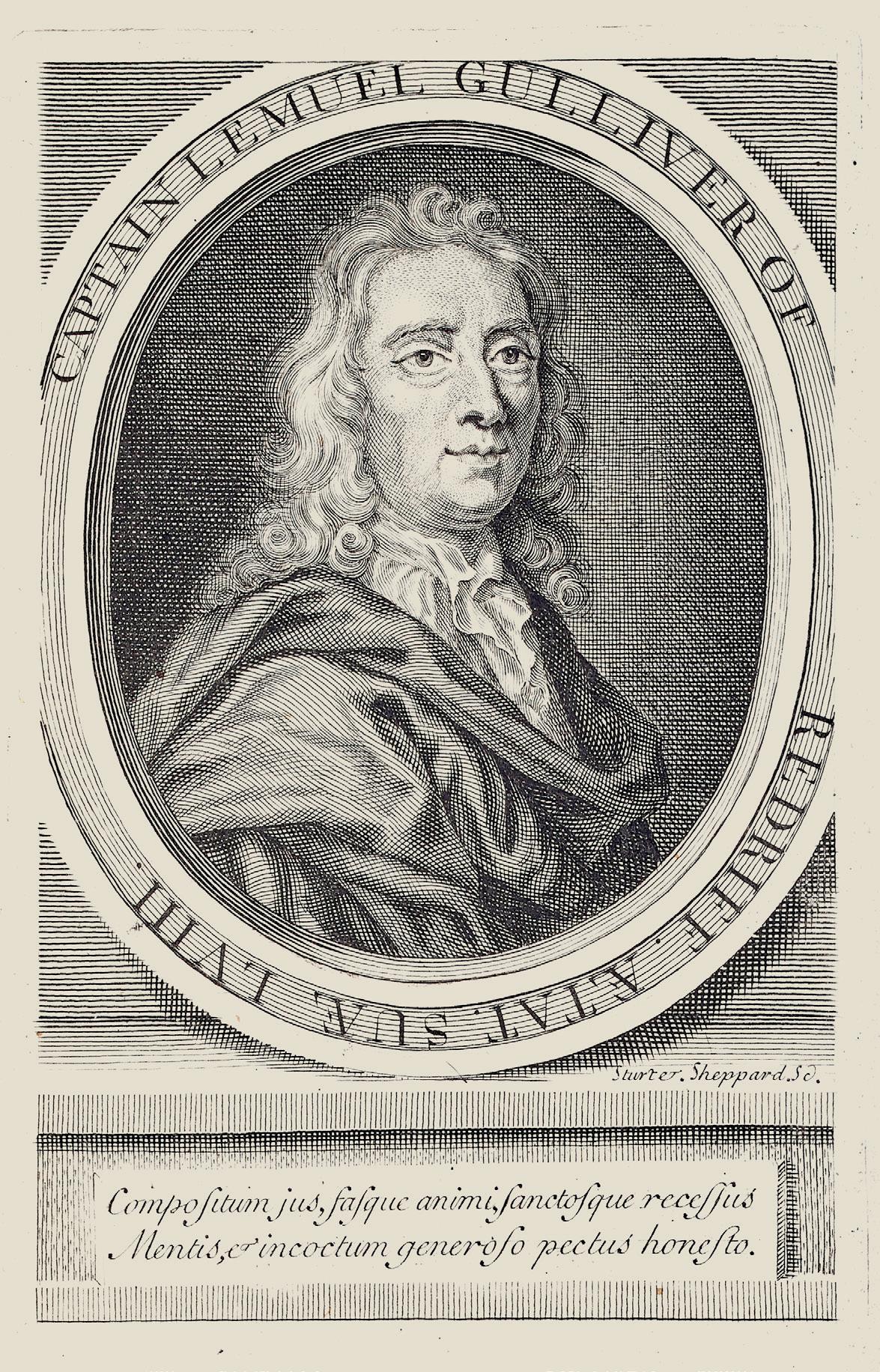
Captain Lemuel Gulliver, Redriff Aetat Suae LVIII, Travels into several Remote Nations of the World, in Four Parts, By Lemuel Gulliver, first a Surgeon and then a Captain of several Ships, Benj. Motte, London, 1726.
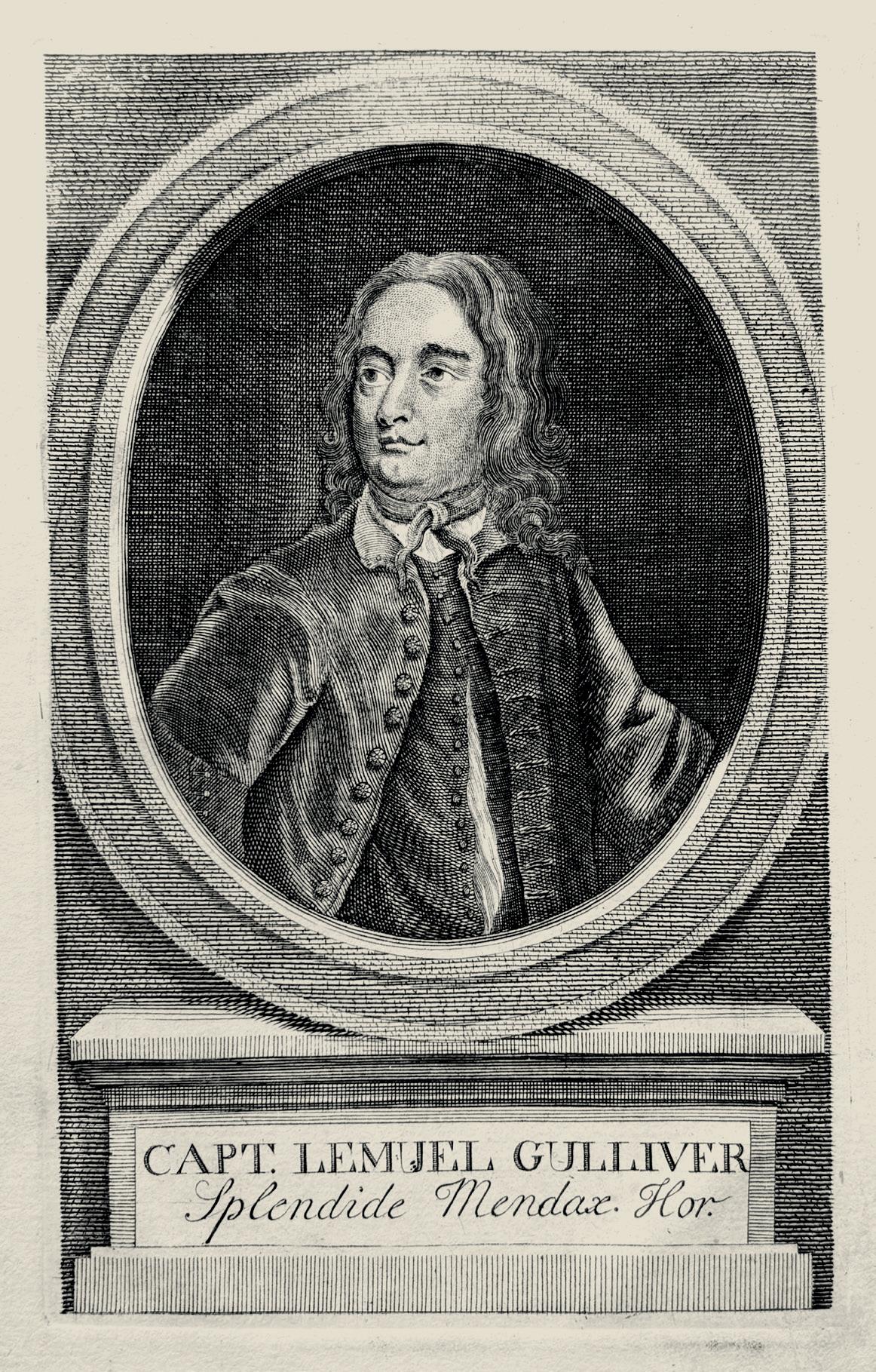
Capt. Lemuel Gulliver, Splendide Mendax [Beautifully Lying] – The Works of J.S, D.D., D.S.P.D. in Four Volumes, Volume IIII of the Author’s Works containing Travels into several Remote Nations of the World, in Four Parts, By Lemuel Gulliver, first a Surgeon and then a Captain of several Ships, George Faulkner, Dublin, 1735.
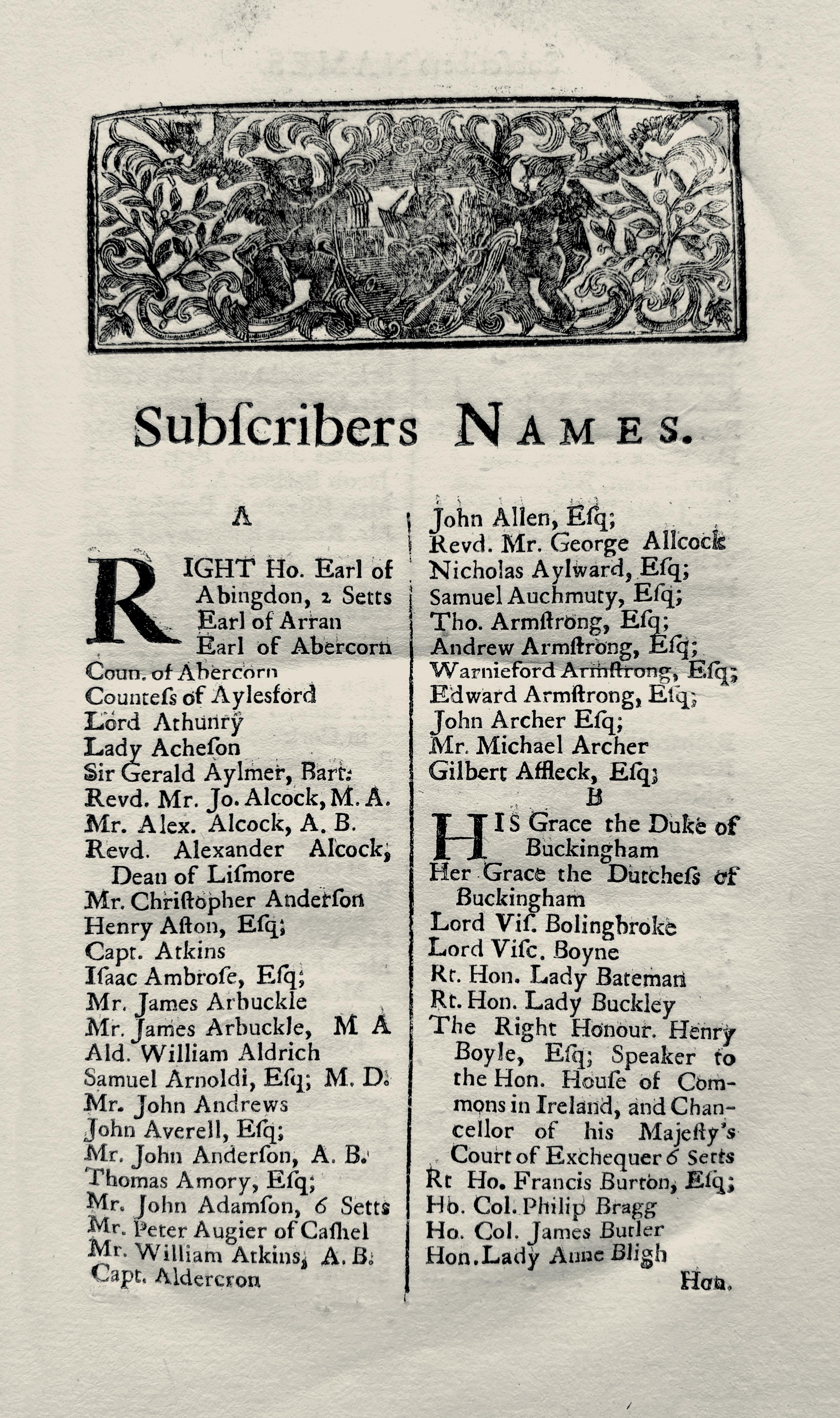
Subscribers List – The Works of J.S, D.D., D.S.P.D. in Four Volumes, Volume I, The Author’s Miscellanies in Prose, George Faulkner, Dublin, 1735.
I wish to order n copy / copies of Gulliver ’ s Travels by Jonathan Swift n Subscribers Edition: €300
Postage to be added at cost
Name: nnn
Address: nnn nnn
Credit card number:nn
Expiry date: n n Security code: n n n
Enclosed cheque n The Lilliput Press 62–63 Sitric Road, Arbour Hill, Dublin 7, D07 AE27 www.lilliputpress.ie
Scan the QR code to order online:
www.lilliputpress.ie/products/gulliver300
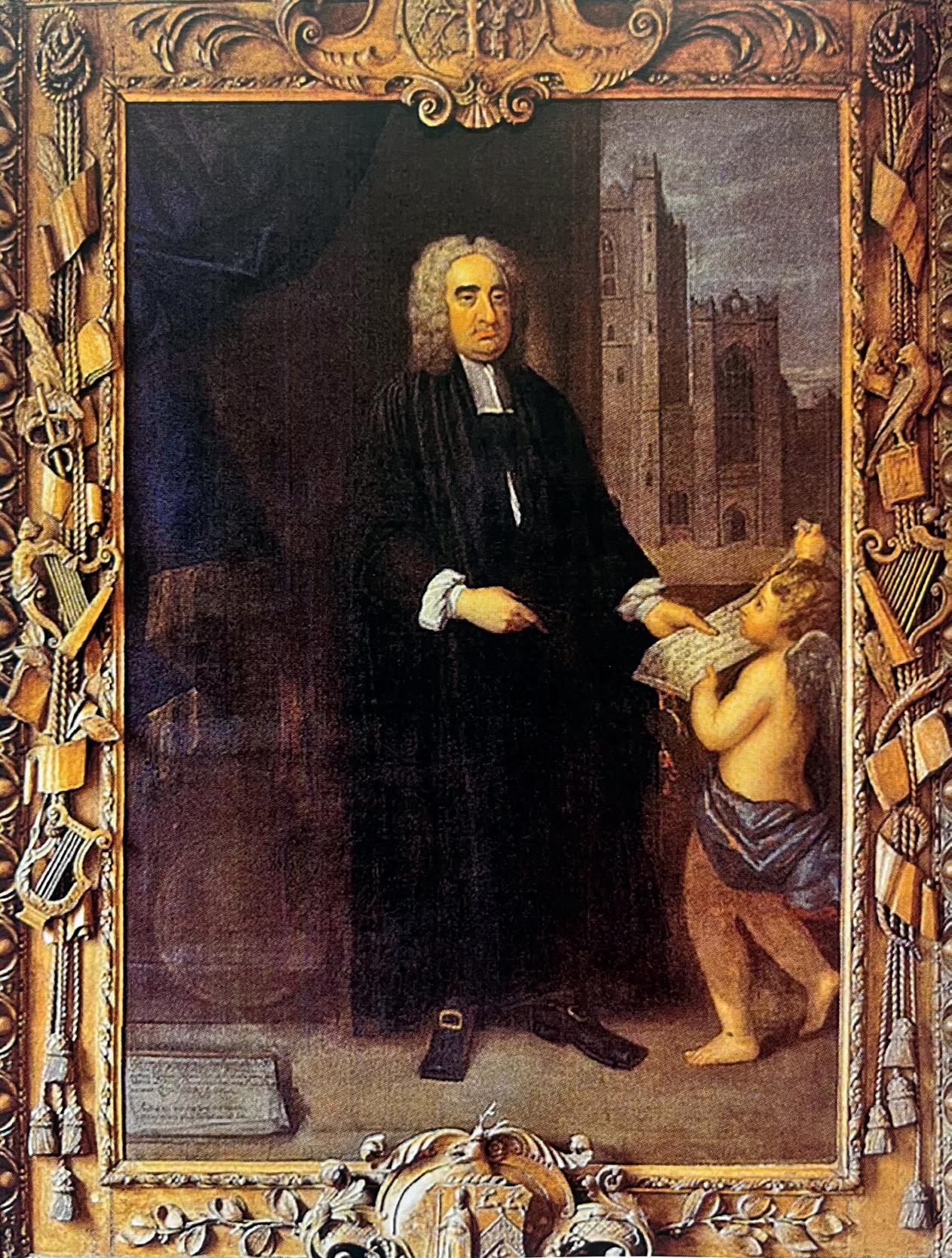
Francis Bindon (c.1690–1765), portrait of Dr Jonathan Swift (1667–1745), Dean of St Patrick’s Dublin, 1735; frame by John Houghton. St Patrick’s Deanery, Dublin.