This Month in HISTORY
Teacher’s Edition
Naphtali Hoff, PsyD Project Consultant
Fraydel Sharf Content Director
Deena Hoff Project Coordinator
WRITER TEAM
Yisrael Kaminetsky Copywriter
Tamara Shane,
Mrs. Leah Cohen Curriculum Advisor
LAYOUT & DESIGN
Akiva Leitner Project Manager
Mirko Zunic Layout Director
No part of this publication may be reproduced, stored in a retrieval system, stored in a database and/or published in any form or by any means, electronic, mechanical, photocopying, recording or otherwise, without the prior written permission of the publisher. To obtain permission to use portions of material from this publication, please contact Lighthouse Curriculum.


Dear Educators and Students,
Welcome to the "This Month in History" series, an innovative educational resource from Lighthouse Curriculum. This engaging book has been thoughtfully designed to supplement your social studies and history lessons while also enhancing your students' reading and comprehension skills.
One of the key features of this series is its alignment with students' grade-specific reading levels. The book offers a captivating topic to explore each week, covering significant events and fascinating moments in history that occurred within the same month. By connecting these historical events to the present, we hope to foster a deeper understanding and relevance for students, making their learning experience more enjoyable and meaningful.
To further support students' development, each passage is accompanied by comprehension questions, exercises, interactive activities and new vocabulary words. These components have been carefully curated to encourage critical thinking, reflection, and knowledge retention.
We are proud to say that the "This Month in History" series has been met with overwhelmingly positive feedback from both educators and students alike. As you embark on this exciting journey through time, we look forward to witnessing the positive impact it has on your students. Our team is confident that this book will not only broaden their knowledge in social studies and history but also enhance their reading and reading comprehension skills.
Thank you for choosing Lighthouse Curriculum as your educational partner, and we wish you a captivating adventure through the pages of history. Let the journey begin!
Warm regards, The Lighthouse Curriculum Team
CHAPTER 6
CHAPTER 8
1842: California Gold Rush begins, attracting fortune seekers from around the world
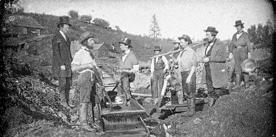
1848: Gold discovered at Sutter’s Mill, leading to a massive influx of Forty-Niners
1849: Representatives draft a state constitution in Monterey
Sep 9, 1850: California approves the state constitution and becomes the 31st state
1861-1865: California supports the Union during the American Civil War
1879: Southern Pacific Railroad completed, connecting California to the rest of the U.S.
Early 20th century: California experiences population growth and urbanization
1930s: The Great Depression affects California, causing economic hardships
1941-1945: California plays a vital role in World War II
1950s-1960s: California becomes a center for technology and entertainment
Late 20th century: California excels in technology, entertainment, and conservation
Present: California remains a diverse and influential state in the U.S.
Explain the significance of the California Gold Rush in attracting settlers.
Discuss the process of drafting and approving the state constitution.
Highlight the impact of California’s admission into the Union on its diverse population.
Touch upon the conflicts between settlers and Native American tribes during this period.
Emphasize the role of California during the American Civil War.
Encourage discussion and questions to ensure student engagement.
On September 9, 1850, an important chapter in California’s history unfolded as it officially became the 31st state of the United States of America. This milestone marked the culmination of events, such as the California Gold Rush and the drafting of a state constitution.
Understanding the significance of this date helps us grasp the rich tapestry of California’s past, its diverse population, and its contributions to the nation.
On September 9, 1850, California officially became the 31st state of the United States of America. But how did this happen? Let’s travel back in time!
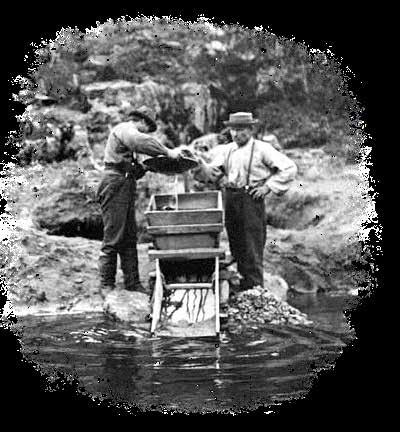
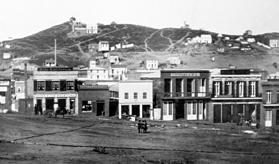
In the early 1840s, gold was discovered in California, attracting people from all over the world in search of fortune. This event, known as the California Gold Rush, led to a population boom and the rapid growth of towns and cities.
As more settlers arrived, the need for local government became apparent. In 1849, representatives from different regions of California met in Monterey to draft a state constitution. The document was then put to a popular vote, and on September 9, 1850, it was approved by the people.
California’s admission into the Union was significant for many reasons. It brought diverse cultures and perspectives together, fostering a unique and dynamic society. The state also played a crucial role in the American Civil War, as it provided vital support to the Union.
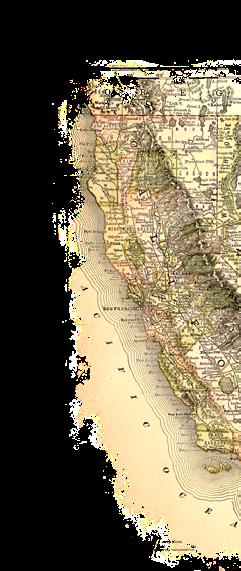
Before this, Native American tribes had been living in California for thousands of years. Sadly, as settlers arrived, conflicts arose, leading to the displacement and mistreatment of Native Americans. Understanding and respecting their history and culture is an essential part of California’s story.
• “Gold nuggets” (small pebbles or rocks spray-painted gold)
• “Mining pans” (disposable aluminum pie pans or shallow containers)
• Water source (sink or bucket)
• Sand or gravel
• Maps or diagrams of gold mining areas
• Costumes or props (optional)
Q1: What was the purpose of drafting a state constitution?
A1: The state constitution established a framework for local government and laws.
Q2: How did California’s admission into the Union impact its population?
A2: It brought together diverse cultures and perspectives, shaping the state’s unique society.
Q3: What conflicts arose between settlers and Native American tribes?
Create an immersive environment by decorating the classroom with images or posters related to the Gold Rush era.
Optionally, provide students with costumes or props to wear during the activity to enhance the experience.
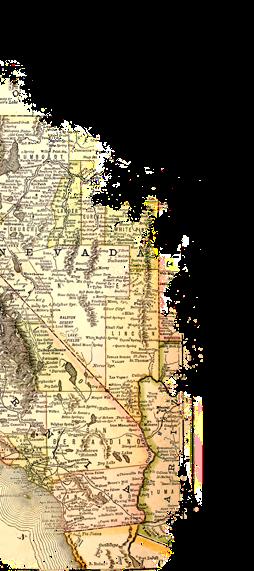
Set up different “mining sites” around the classroom, each containing sand or gravel mixed with “gold nuggets.”
Divide students into small groups and provide them with “mining pans.”
Instruct students to simulate gold mining by scooping sand and water into their pans and swirling them to separate the gold nuggets.
Encourage students to work collaboratively, sharing strategies and techniques for finding the most gold.
A3: As settlers arrived, conflicts arose, leading to the displacement and mistreatment of Native Americans.
Q4: How did California contribute to the American Civil War?
A4: California provided crucial support to the Union during the war, aiding the Union’s cause.
On September 9, 1850, California became the 31st state of the United States. The Gold Rush, the drafting of a state constitution, and the state’s involvement in the Civil War were all significant events that shaped California’s history.
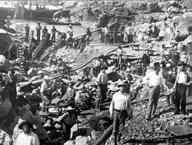
Imagine waking up to this news,
“Road Worker Discovers Gold Flakes On The Streets Of The City. Come One, Come All! Get Your Gold And Get Rich!” Would you believe such news? What do you think would happen in your city as a result?
Well, something just like this really happened in California back in 1848!

California wasn’t always part of the United States of America. It was part of Mexico, a country located south of the USA. After a war between the two countries in 1848, Mexico signed an agreement to give the land of California over to the United States. When two countries decide on a plan together, they write an agreement.
Mexico did not know that only a few days before they signed the agreement, gold was found at John Sutter’s sawmill in
• Nickname: The Golden State
• Statehood: 1850; 31st state
• Population (as of September 2022): 39,185,605
• Capital: Sacramento
• Biggest City: Los Angeles
• Abbreviation: CA
• State bird: California valley quail
• State flower: California poppy
January 24, 1848
GOLD FOUND AT SUTTER’S MILL IN COLOMA, CA
August 19, 1848
FIRST NEWSPAPER, NEW YORK HERALD, ON THE EAST COAST REPORTED THE DISCOVERY OF GOLD.
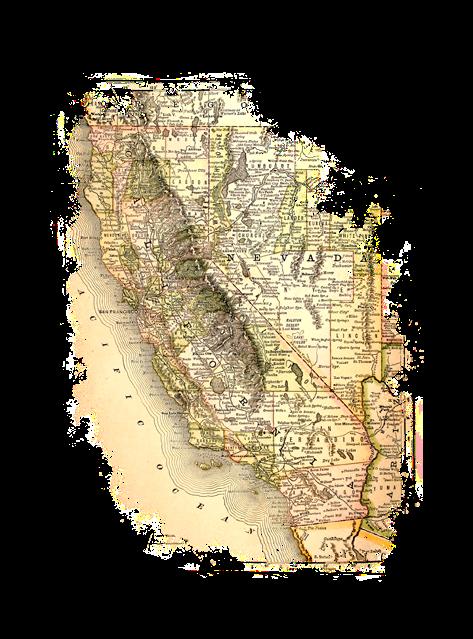
END OF MEXICAN AMERICAN WAR AND AGREEMENT TO GIVE THE LAND OF CALIFORNIA OVER TO THE UNITED STATES.
February 2, 1848 1849.
WORD OF THE GOLD RUSH HAD SPREAD AROUND THE WORLD. AN OVERWHELMING NUMBER OF GOLDSEEKERS AND MERCHANTS - ABOUT 90,000 - TRAVELED TO CALIFORNIA HOPING TO STRIKE IT RICH.
September 9, 1850
CALIFORNIA BECAME A STATE
▸ The California poppy is a beautiful golden poppy that covered the hills of California when the state was first settled. Delicate flowers bloom early each Spring. It was made the state flower of California on March 2, 1903.
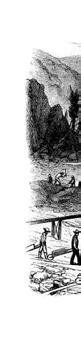
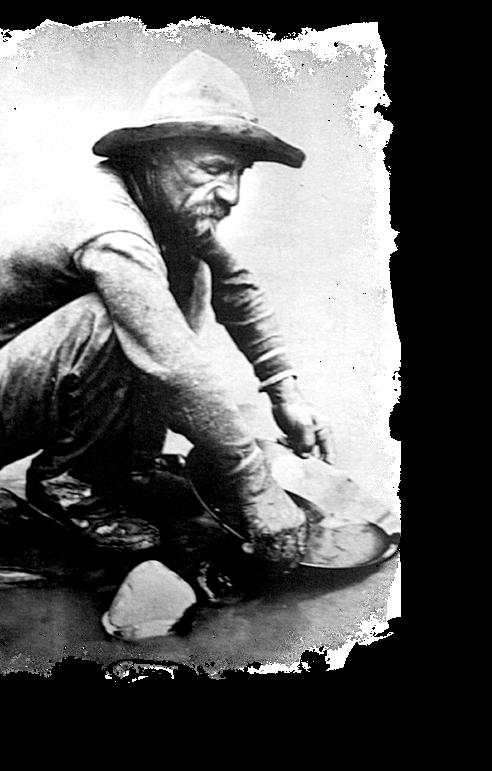
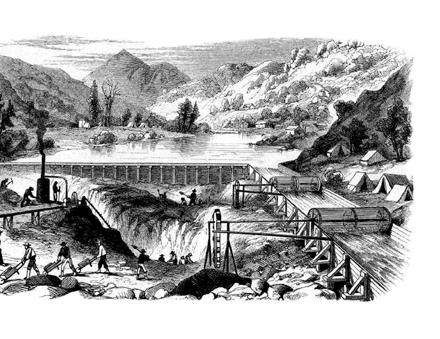
California. A sawmill is a factory where trees are cut and shaped into different sizes of wood. Suddenly, 60,000 people rushed to California to find gold. The thought of becoming rich from picking up gold nuggets from the ground was exciting! This time was called the Gold Rush.
It wasn’t easy for the Native Americans who lived in California to be taken over by the gold miners. The gold miners came with contagious diseases which caused many Native Americans to die. Mining towns were rough, and the gold miners weren’t prepared for the hard work. Many miners didn’t have showers or clean clothes for weeks. They also did not have good food to eat. In the end, the gold was harder to find than people had thought it would be.
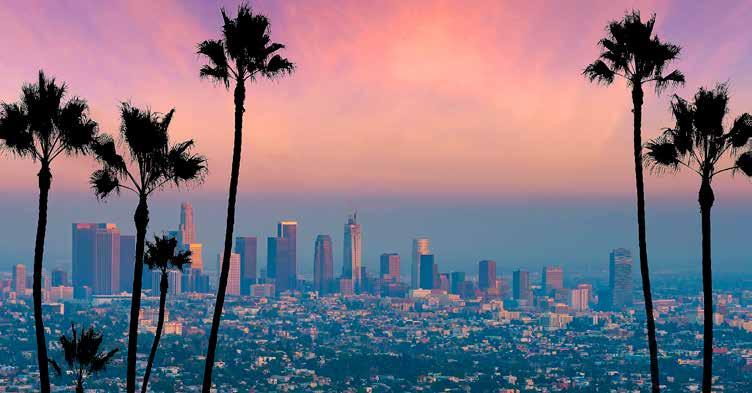
California became a state on September 9, 1850. It was the 31st state to join the United States. Nowadays, it has the largest population of all the 50 states. Population means the number of people living there. In the year 2022, there were over 39 million people living in California. California is the third to the largest state in land size. Alaska and Texas are larger than California. Just like the other 50 states, California has a nickname. It is called the Golden State because of its amazing beauty and because of the famous Gold Rush that once took place there.
1. Which country did California belong to before it became part of the USA?
a. The Golden State
b. Alaska
c. Mexico
d. Texas
2. Why did 60,000 people rush to California?
a. They were excited to live in a place that just joined the 50 states of America.
b. They came to search for gold and get rich.
c. They wanted to live in a beautiful land.
d. They didn’t want to stay in Mexico.
3. What is California’s nickname?
a. The Golden Gate
b. The Gold Rush
c. The Golden State
d. Gold State
4. On what date did California become one of the 50 states of the USA?
September 9, 1850
5. How do you think Mexico felt after hearing about the Gold Rush?
They were probably upset about having just signed the agreement to give California to the USA.
Alaska, California, and Texas are the 3 largest states in land size. Look at the chart and answer the questions below.
3. Below is a picture of the Golden Gate Bridge. In which state do you think it’s located? How did you know?
1. Put the states in order from largest to smallest population.
California
Texas
Alaska
2. Draw a line to match the state to its flower.


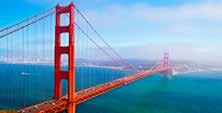
The Golden Gate Bridge is located in California. I know because California is called the Golden State.
4. Why do you think less people live in Alaska than in the other states?
Possible answer: Because people don’t like to live in cold weather and Alaska is very cold in the winter.
September 16, 1862: Confederate General Robert E. Lee and his army begin to cross the Potomac River into Maryland, hoping to invade the North and win a decisive victory.
Union General George B. McClellan and his army begin to pursue Lee’s army, attempting to stop their invasion.
September 17, 1862: Early morning: Fighting begins in a cornfield near the Dunker Church as Union troops attack Confederate positions. Both sides suffer heavy losses.
Mid-morning: Union General Joseph Hooker’s troops cross Antietam Creek and attack Confederate positions on the other side. The fighting is fierce, and both sides suffer heavy losses.
Noon: Confederate General Stonewall Jackson’s troops arrive on the field and launch a surprise attack on Union troops near the Dunker Church. The Union troops are forced to retreat, but the Confederates suffer heavy losses.
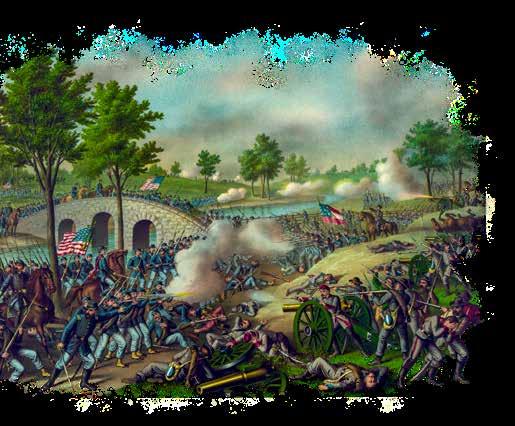
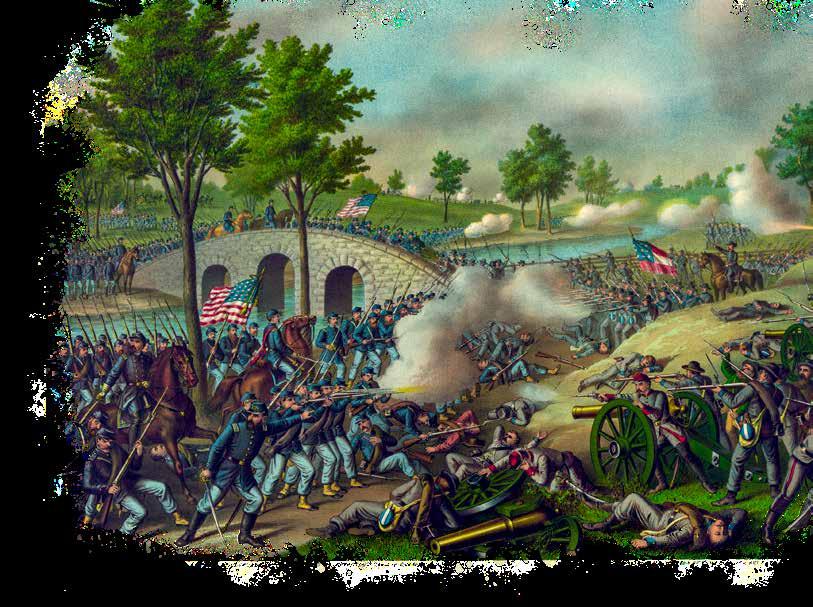
Afternoon: Union General Ambrose Burnside’s troops cross a stone bridge over Antietam Creek and attack Confederate positions on the other side. The fighting is intense, and both sides suffer heavy losses.
Late afternoon: Union reinforcements arrive and launch a final assault on Confederate positions, but they are unable to break through. The fighting ends as darkness falls.
September 18, 1862: Both armies remain on the battlefield, but neither side attacks. The Confederate army is low on supplies and ammunition, and Lee decides to begin a retreat back to Virginia under cover of darkness.
September 19, 1862: Union troops discover that Lee’s army has retreated, and McClellan decides not to pursue them. The Battle of Antietam is over.
Start by introducing the American Civil War and the key figures involved in the Battle of Antietam, such as Robert E. Lee and George B. McClellan.
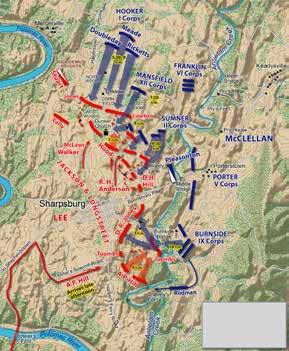
Use maps and pictures to help students visualize the battle and the location of key events.
Discuss the impact of the Battle of Antietam on the Civil War, including the Emancipation Proclamation and the strategic importance of the battle.
The Battle of Antietam was one of the most important battles in American history. It took place on September 17, 1862, during the American Civil War. It was fought near Sharpsburg, Maryland, and it was one of the bloodiest battles in American history. In this lesson, we will learn more about this important event and its significance in American history.

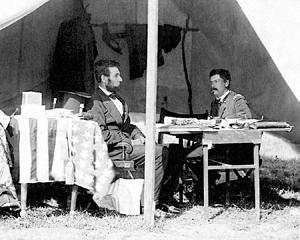
The Battle of Antietam was fought during the American Civil War between the Union and Confederate armies. The Confederate army, led by General Robert E. Lee, was trying to invade Maryland and capture the city of Washington, D.C. The Union army, led by General George B. McClellan, was trying to stop them.
The battle started early in the morning on September 17, 1862. The two sides clashed in a cornfield and then fought for control of a bridge over Antietam Creek. The fighting was fierce, and both sides suffered heavy losses. By the end of the day, more than 23,000 soldiers were killed, wounded, or missing.
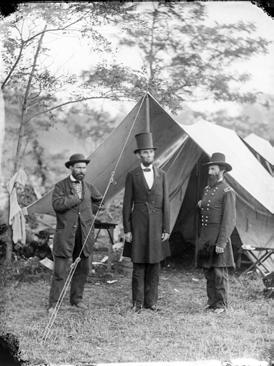
Despite the heavy losses, the battle was a strategic victory for the Union. Lee’s army was forced to retreat back into Virginia, and the Union army was able to stop the Confederate invasion of Maryland. The battle also had an important impact on the Civil War. President Abraham Lincoln used the victory at Antietam to issue the Emancipation Proclamation, declaring that all slaves in Confederate states would be freed.
• Two different colored flags or bandanas to represent the Union and Confederate armies
• A large field or outdoor space to serve as the battlefield
• Optional: Obstacles or barriers such as cones or chairs to create a more challenging battlefield
A game idea for children to learn about the Battle of Antietam is to play a modified version of “Capture the Flag” called “Capture the Battlefield.” Here’s how to play:
Divide the children into two teams. One team will represent the Union army, and the other team will represent the Confederate army.
Designate a specific area of the field as the “base” for each team.
Place the colored flag or bandana representing each army in their respective bases.
Explain the rules of the game:
Each team must try to capture the other team’s flag while also protecting their own flag. The team that successfully captures the other team’s flag and brings it back to their own base wins.
Allow the children to strategize and plan their attack and defense before the game begins.
Start the game and allow the children to play for a predetermined amount of time or until one team captures the other team’s flag.
After the game, discuss the tactics and strategies used by each team and compare them to those used by the Union and Confederate armies during the Battle of Antietam.
Q1: Who led the Confederate army during the Battle of Antietam?
A1: General Robert E. Lee led the Confederate army.
Q2: Who led the Union army during the Battle of Antietam?
A2: General George B. McClellan led the Union army.
Q3: What was the significance of the Battle of Antietam?
A3: The Battle of Antietam was a strategic victory for the Union and led to the Emancipation Proclamation, freeing slaves in Confederate states.
Q4: How many soldiers were killed, wounded, or missing during the Battle of Antietam?
A4: More than 23,000 soldiers were killed, wounded, or missing during the Battle of Antietam.
Q5: Where did the Battle of Antietam take place?
A5: The Battle of Antietam took place near Sharpsburg, Maryland, along Antietam Creek.
The Battle of Antietam was one of the bloodiest battles in American history, with more than 23,000 soldiers killed, wounded, or missing. Despite the heavy losses, the Union army was able to stop the Confederate invasion of Maryland and claim a strategic victory. The battle also had an important impact on the Civil War, as President Abraham Lincoln used the victory at Antietam to issue the Emancipation Proclamation, declaring that all slaves in Confederate states would be freed.
Did you know?
• The Civil War was the first time people were drafted into the army, meaning that they had to join the army.
• The Confederacy was not recognized as a separate nation by any country.
▸ The Confederate and the U.S. flags
Do you like when people tell you what to do? Most people do not like being forced to do things. For many years in the United States, black people were forced to work as slaves. It took a long, bloody war to finally end slavery in the U.S.
There was a time in the United States when black people were forced to work without pay. They were slaves who belonged to white landowners called masters. Slavery was very important for the farms in the South. The South included all the states from Maryland and south of it. Without slavery, farm owners would have to pay workers and make much less money. Slaves in the U.S. were treated very badly and had no rights or freedoms. A slave’s master was allowed to beat him like he might beat his animal. In the northern states, there were fewer large farms and slaves were not as needed or used.
In 1860, Abraham Lincoln became the president of the United States. He tried to stop the spread of slavery to new states that wanted to join the country. Some states in the South were really upset about it. They said
that Lincoln was trying to completely end slavery. Eleven states seceded , meaning separated, from the Union and started their own country called the Confederate States of America. The Union was the states in the North. In April 1861, the Confederate army attacked a Union army base in South Carolina, starting the Civil War.
The first major battle fought on Union land was on September 17, 1862, in Maryland. It was called the Battle of Antietam. The Confederate army attacked Maryland, hoping to win the war quickly. The fighting was very heavy, and more than 23,000 people were killed or hurt. In fact, it was the worst day in American history for people being hurt or killed. However, the Union army was able to stop the Confederate army from winning any Union land. This major victory showed the Union that they could win the war.
secededseparated Emancipation Proclamation - a law freeing all slaves in the U.S. surrenderedgave up fighting a war illegal - against the law
A few months after the Battle of Antietam, President Lincoln signed the Emancipation Proclamation. This was a law freeing all slaves in the U.S. The Civil War continued for two and a half years after the Battle of Antietam. More than one million people died or were hurt during the Civil War. The Union army had better supplies, and they took over the Confederate capital of Richmond, Virginia, in April 1865. Confederate General Robert E. Lee surrendered to Union General Ulysses S. Grant. When a side gives up fighting, it surrenders and loses the war.
The war was finally over, and slavery became illegal, or against the law, throughout the United States.
1. How many people died or were hurt during the Civil War?
a. More than one million
b. Half a million
c. Five thousand
d. Ten thousand
2. Who became president of the United States in 1860?
a. Thomas Jefferson
b. George Washington
c. Ulysses S. Grant
d. Abraham Lincoln
3. Who was the general of the Confederate Army?
a. General Ulysses S. Grant
b. Robert E. Lee
c. Abraham Lincoln
d. Andrew Hamilton
4. In which area in the U.S. was there slavery?
5. What did Abraham Lincoln want to do regarding slavery?
6. Why was the battle of Antietam so important?
The southern states, which had more large farms. He tried to stop slavery in the new states that wanted to join the country. It was the first big battle on Union land.
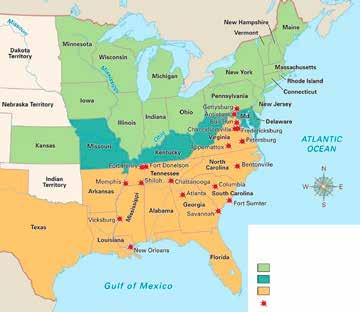
This is a map of some of the major battles of the Civil War. Write true or false next to the following statements.
ENCYCLOPEDIA BRITANNICA
1. The Battle of Antietam was the farthest north of all major Civil War battles.
2. There were no major battles in Alabama.
3. The battle in New Orleans was the farthest south of all major Civil War battles.
4. Chattanooga was part of the Union.
5. Virginia had the most major battles during the Civil War.
1989: National Honey Board declares September National Honey Month.
1995: The first National Honey Month recipe contest is held.
1998: The Honey Locator tool is introduced, helping people find local honey producers and honey-related events.
2001: The Honey Queen program is launched with the American Beekeeping Federation.
2002: National Honey Month is recognized by the USDA.
2003: The Honey BEEcause campaign is introduced, raising awareness about the important role of honeybees in pollinating plants and producing honey.
2006: The “Honeybees: Home Is Where the Hive Is” exhibit is created.
2010: National Honey Month celebrates its 22nd year.
2014: The Honey Saves Hives campaign raises awareness about the challenges facing honeybees, including habitat loss and disease.
2019: National Honey Month celebrates its 30th anniversary.
2021: National Honey Month continues to be celebrated across the United States, with people visiting honey farms, participating in honey-themed events, and sampling different types of honey.
Introduce the concept of National Honey Month and ask students what they know about honeybees and honey. Discuss the history of National Honey Month and how it got started. Talk about the role honeybees play in pollinating plants and making honey. Explain some of the health benefits of honey and how it can be used in cooking.
Discuss some of the ways people celebrate National Honey Month, such as visiting honey farms or participating in honey-themed events. Conclude the lesson by asking students what they learned and what they might like to do to celebrate National Honey Month.
Did you know that September is National Honey Month in the United States? This special month is dedicated to celebrating honeybees and the delicious honey they make. In this history lesson, we will learn how National Honey Month got started and why honey is so important.
National Honey Month was first celebrated in 1989, thanks to a proclamation by the National Honey Board. The National Honey Board is a federal research and promotion board that works to promote the honey industry in the United States. September was chosen for National Honey Month because it is usually the time of year when honeybees are busiest collecting nectar and making honey.
Honeybees are important pollinators, which means they help plants make fruit and seeds. In fact, honeybees are responsible for pollinating about onethird of the food we eat, including many fruits and vegetables. Honeybees also make honey, which has been used by people for thousands of years. Honey is a natural sweetener that can be used in place of sugar, and it has many health benefits, including being rich in antioxidants and antibacterial properties.

During National Honey Month, people all across the United States celebrate honey and honeybees in many different ways. Some people visit local honey farms to learn about beekeeping and taste different types of honey. Others participate in honey-themed events, such as honey tastings, cooking contests, and craft fairs.
online)
• Honey
• Soap colorant (optional)
• Essential oil (optional)
• Soap mold
Making honey soap
Cut the soap base into small chunks and place them in a microwave-safe bowl.
Heat the soap base in the microwave for 30 seconds, then stir it with a spoon.
Continue to heat the soap base in 10-15 second intervals, stirring in between, until it is completely melted.
Add 1-2 tablespoons of honey to the melted soap base, and stir until it is well mixed.
If desired, add a few drops of soap colorant and essential oil to the mixture, and stir until evenly distributed. Pour the soap mixture into a soap mold, and let it cool and harden for several hours.
Once the soap has hardened, remove it from the mold and use it for washing hands or body.
: When was National Honey Month first celebrated?
A1: National Honey Month was first celebrated in 1989.
: Why was September chosen for National Honey Month?
A2: September was chosen because it is usually the time of year when honeybees are busiest collecting nectar and making honey.
: What are some of the health benefits of honey?
A3: Honey is rich in antioxidants and has antibacterial properties.
: What role do honeybees play in pollinating plants?
A4: Honeybees help plants make fruit and seeds by pollinating them.
Q5: How do people celebrate National Honey Month?
A5: People celebrate National Honey Month by visiting honey farms, participating in honeythemed events, and sampling different types of honey.
National Honey Month is a fun and tasty way to learn about the importance of honeybees and the delicious honey they make. Whether you visit a local honey farm or try some honey in your cooking, there are many ways to celebrate this special month and learn more about these amazing insects.
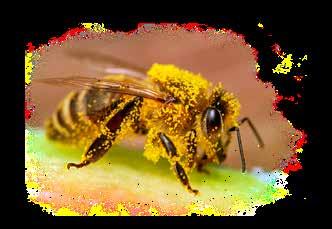

Bzzzz….. “Bee!”
When someone yells “Bee,” do you run to the other side of the room? Many people are afraid of being stung by a bee. Ouch! For most people, being stung by a bee hurts a little but is not dangerous. What are bees good for? Let’s find out why bees are important to the world.

Did you know?
There are more than 20,000 types of bees, but only eight produce honey.
Honeybees have two stomachs, one for eating and one to store nectar for producing honey.


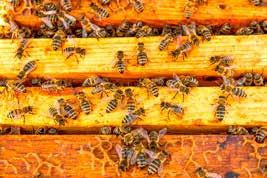
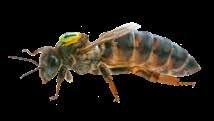
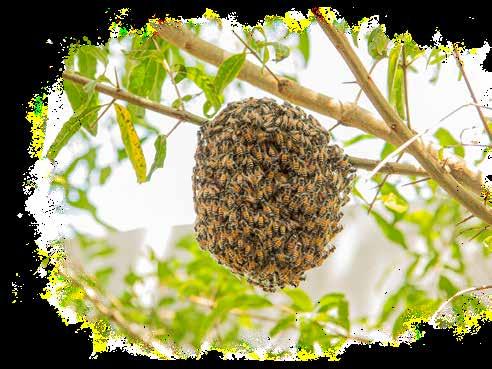
Bees live in hives with about 60,000 of their bee friends. The group of bees in the hive is called a colony. Each colony is ruled by the queen bee, which is bigger than the other bees. Besides the queen, worker bees also live in the hive. Worker bees spend a lot of time outside of the hive hard at work.
Every day, the worker bees leave their hives to look for food, called nectar, in flowers. The bees go from flower to flower eating nectar. They also collect nectar for the queen to eat. Besides eating nectar, honeybees make honey from it. Bees use a special chemical in their stomachs to turn the nectar into honey. The bees store the honey in the hive. Honey is sweet and delicious and also has many health benefits. Honey can soothe a sore throat and even help stomach aches.
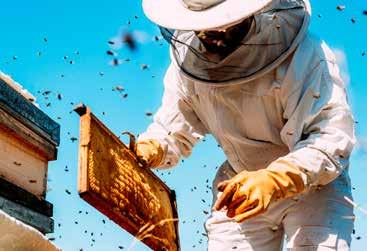
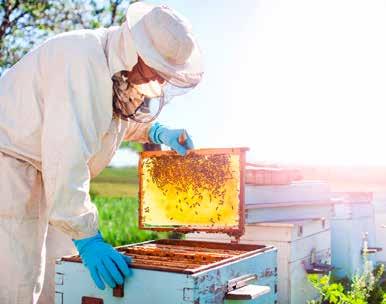

pollen
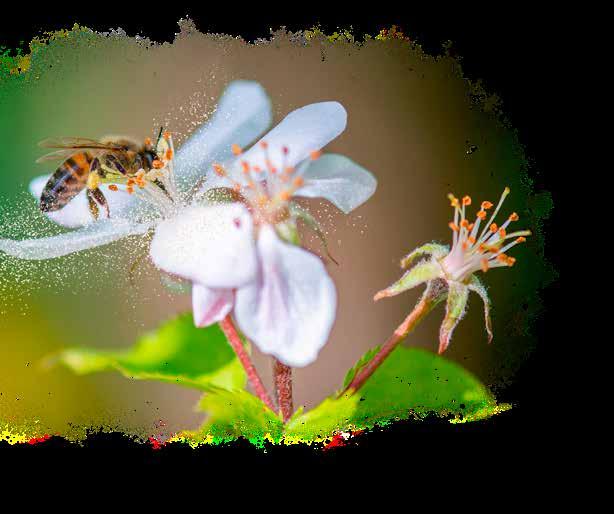
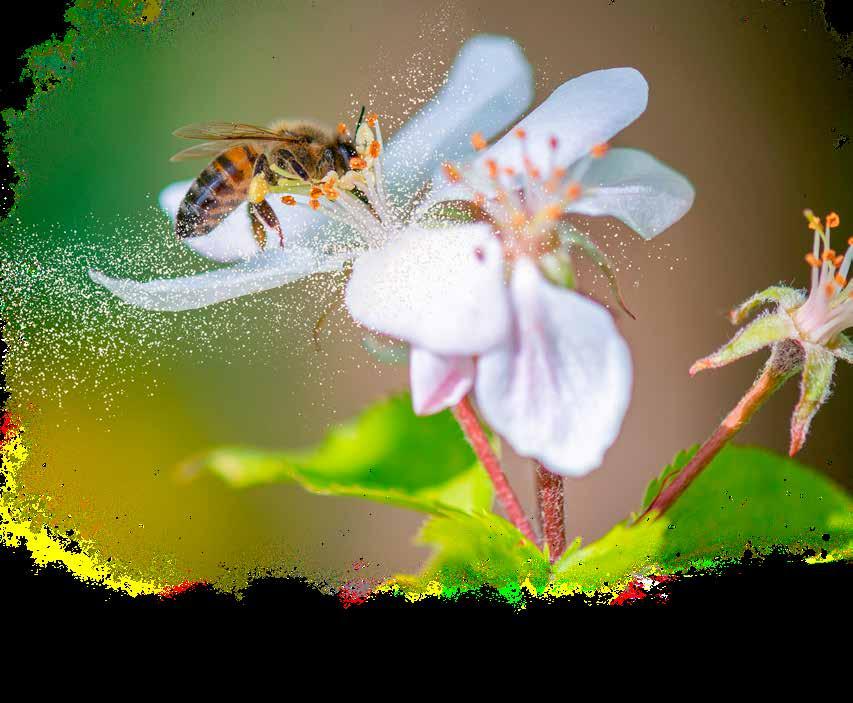
When a bee lands on a flower to collect nectar, pollen grains stick to its body. Pollen is small pieces in flowers that help certain foods grow. As the bee flies from flower to flower, it spreads these pollen grains to many other plants. Many fruits and vegetables also need pollen from bees to grow, such as apples, strawberries, almonds, and broccoli.

Beekeepers are people who own many beehives where bees make honey. In 2020, beekeepers in the U.S. made more than 180 million pounds of honey. That’s more than most other countries. Most of the honey in the U.S. is made in North Dakota, Montana, and South Dakota.
In the United States, September is National Honey Month. Most bees stop making honey in September, which is why it is a good time to honor them and the delicious honey they produce , or make. National Honey Month began in 1989 to teach people about the importance of honeybees and how they help us grow food.
1. Which of the following is a health benefit of honey?
a. Soothing a sore throat
b. Healing a broken arm
c. Curing a headache
d. Curing a virus
2. Which U.S. state does not produce a lot of honey?
a. North Dakota
b. Montana
c. South Dakota
d. Michigan
3. What is the group of bees in a hive called?
a. A school
b. A litter
c. A colony
d. A hive
4. Name three fruits and vegetables that would not grow without bees.
Apples, strawberries, almonds, and broccoli
5. What do bees do with the nectar they collect?
Other bees eat it, and they make honey with it.
6. Why was September chosen as National Honey Month?
Most bees stop making honey in September.
The following five countries make a lot of honey. This chart shows how much honey these countries made in 2020. Look at the following chart and answer the questions.
1. Which country makes more honey, Turkey or the United States?
2. Which country made the most honey in the world in 2020?
3. Circle the country that made the least honey. • Argentina • Ukraine • United States • Turkey
4. How many pounds of honey did Turkey make in 2020?
5. Why do you think China makes more honey than other countries?
Possible answer: They have more bees.
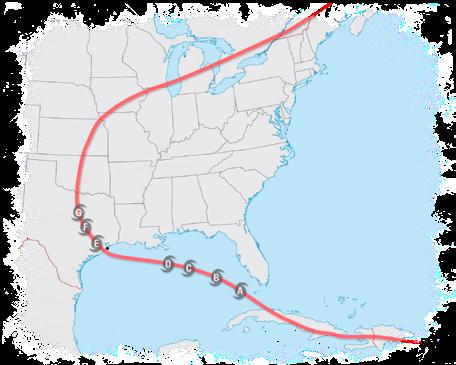
August 27-31, 1900: A tropical storm develops near Cuba and moves into the Gulf of Mexico.
September 4, 1900: The storm becomes a hurricane and begins to move toward the Texas coast.
September 7, 1900: The hurricane hits the coast of Texas, causing strong winds and heavy rains.
September 8, 1900: The hurricane hits Galveston with wind speeds up to 145 mph and a storm surge of over 15 feet.
September 9, 1900: The storm passes over Texas and continues to move inland, causing flooding and damage throughout the region.
September 10, 1900: The full extent of the damage in Galveston is realized as rescue and recovery efforts begin. At least 8,000 people are dead, and thousands more are injured or homeless.
September 12, 1900: The first relief train arrives in Galveston, bringing supplies and aid workers.
September 15, 1900: A quarantine is established in Galveston to prevent the spread of disease, as bodies are still being recovered from the wreckage.
September 22, 1900: The last of the bodies are buried in a mass grave in Galveston.
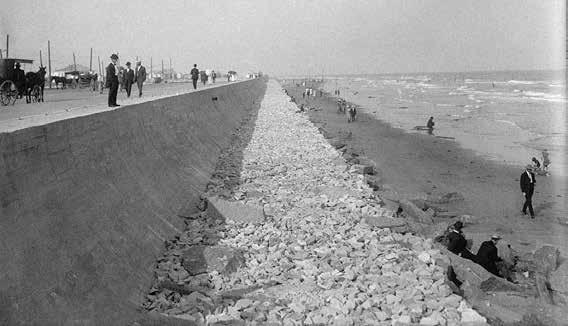
October 1900: Rebuilding efforts begin in Galveston, including the construction of a 17-foot seawall to protect the city from future storms.
December 1900: The Texas legislature creates a new Galveston city government, responsible for overseeing the rebuilding of the city. 1901-1910: Galveston is rebuilt with new infrastructure designed to better withstand hurricanes, including raising the city several feet and building stronger buildings and homes.
Start by asking students what they know about hurricanes and how they form.
Explain that in 1900, people didn’t have the same technology or warning systems that we have today, and many people didn’t evacuate because they didn’t realize the danger.
Discuss the impact of the hurricane on Galveston, including the number of deaths and the damage to the city. Talk about how Galveston was rebuilt after the hurricane and the changes that were made to better prepare for future storms.
Have students think about how they can prepare for natural disasters in their own communities.
In 1900, a powerful hurricane struck the city of Galveston, Texas, causing one of the deadliest natural disasters in U.S. history. Students will learn about the significant impact this event had on the city, leading to changes in how people prepared for and responded to hurricanes.

Consider showing pictures or videos of hurricanes to help students understand the power of these storms.
On September 8, 1900, a category 4 hurricane hit Galveston, Texas, with wind speeds of up to 145 mph and a storm surge of over 15 feet. At the time, Galveston was a bustling city and one of the largest ports in the country. However, the city was built on a flat, low-lying island, making it vulnerable to flooding and storm surges.
As the hurricane approached, many Galveston residents ignored the warnings and failed to evacuate. The city’s seawall was incomplete and offered little protection against the storm surge, which flooded the city and destroyed many buildings. The hurricane caused at least 8,000 deaths, making it one of the deadliest natural disasters in U.S. history.
After the hurricane, Galveston was rebuilt with new infrastructure designed to better withstand hurricanes. A 17-foot seawall was constructed to protect the city from storm surges, and the city was raised by several feet to reduce the risk of flooding. Today, Galveston is better prepared for hurricanes, and residents are encouraged to evacuate when a storm is approaching.
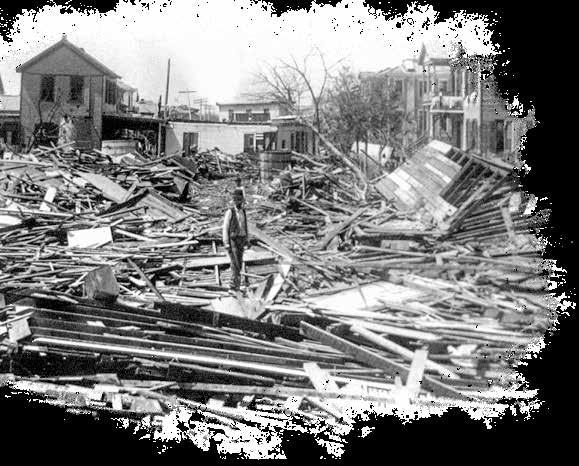
Shoebox, Paper
• Cardboard, Paint or crayons
• Glue, Scissors
• Craft items
Creating a diorama of Galveston before and after the hurricane can be a creative way for students to understand the extent of the damage and the efforts that were made to rebuild the city.
For the “before” section of the diorama, students can create a miniature version of Galveston as it appeared before the hurricane. This could include buildings, streets, and other landmarks present in the city at the time. Students can use pictures or online resources to help them create an accurate representation of the city.
For the “after” section of the diorama, students can recreate the city after the hurricane hit. They can use different materials to show the damage caused by the storm, such as collapsed buildings, flooding, and debris. Students can also include elements that show the efforts made to rebuild the city, such as construction crews and emergency responders.
: What was the category of the hurricane that hit Galveston?
A1: The hurricane that hit Galveston was a Category 4.
: How stong were the wind speeds during the hurricane?
A2: The wind speeds during the hurricane reached up to 145 mph.
: How many deaths did the hurricane cause?
A3: The hurricane caused at least 8,000 deaths.
: What changes were made to Galveston after the hurricane?
A4: After the hurricane, a 17-foot seawall was built and the city was raised to reduce flooding.
Q5: Why is it important to prepare for natural disasters?
A5: Preparing for natural disasters is important to reduce injuries, deaths, and property damage.
Additionally, you can lead a discussion about the challenges that were faced in rebuilding Galveston after the hurricane, such as the need for resources, planning, and coordination.
The Galveston Hurricane of 1900 was a devastating natural disaster that claimed at least 8,000 lives and caused significant damage to the city. The hurricane led to changes in how Galveston was rebuilt, including the construction of a 17-foot seawall and raising the city several feet to reduce the risk of flooding. Today, Galveston is better prepared for hurricanes, and people are encouraged to evacuate when a storm is approaching.
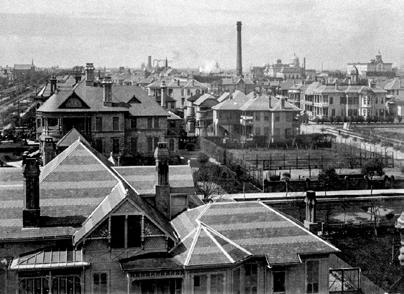
• Galveston was the first city in Texas to have gas lights, the first to have electric lights, and the first to have a telephone!
• Before the devastation of the 1900 storm, Galveston was the second richest city in the United States,
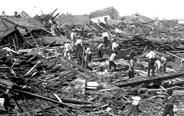
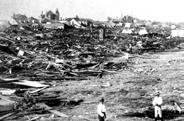
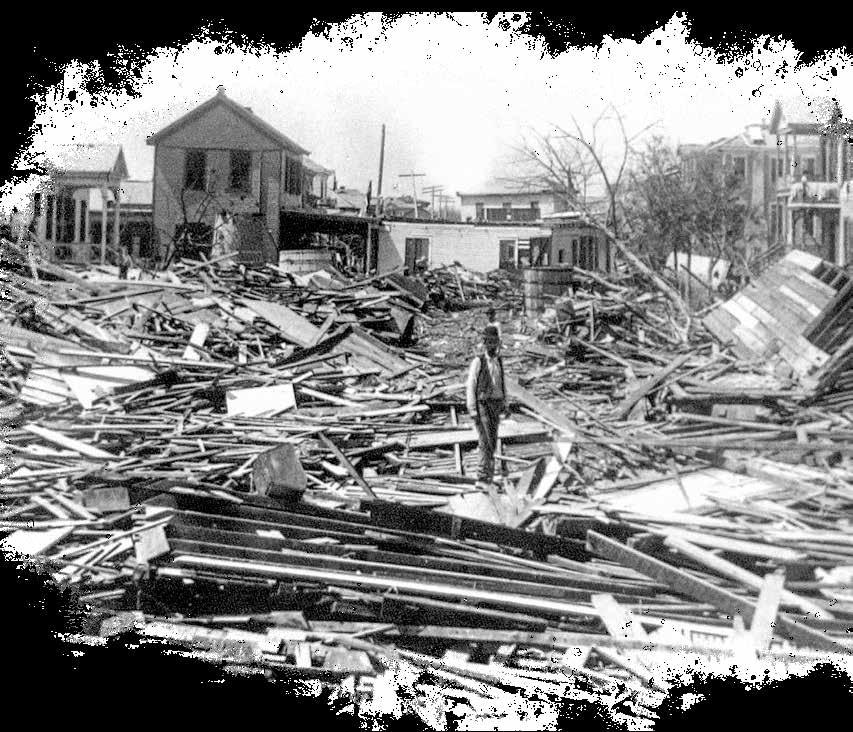
▸ Volunteers could not believe that the entire city was destroyed by the hurricane


Do you like splashing in puddles on rainy days or staying dry at home?
Besides having fun in the rain, rain is very important for drinking and growing food. However, too much rain can be dangerous. Let’s read about a dangerous storm called a hurricane that hit Galveston.
Hurricanes are storms with very fast winds and heavy rain that can cause a lot of damage.
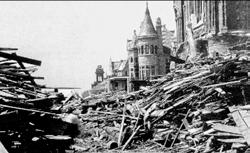
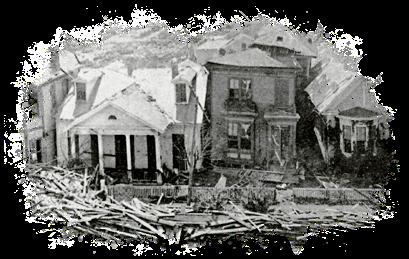
Galveston is a city on an island in Texas. In the late 1800s, Galveston was one of the richest cities in the United States. Many people started businesses there and made a lot of money. About 37,000 people lived in Galveston, and it became the center of business for the state of Texas.
On the morning of September 8, 1900, a hurricane hit the city, with winds blowing over 130 miles per hour. The ocean’s waves became very tall and flooded the entire city, destroying many buildings. Some of the waves were 17 feet tall! The hurricane and waves lasted for 12 hours. By the end of the day, 8,000 people had been killed, and the entire city was destroyed. This hurricane became known as the Great Galveston Hurricane.
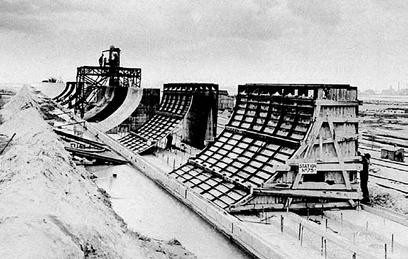
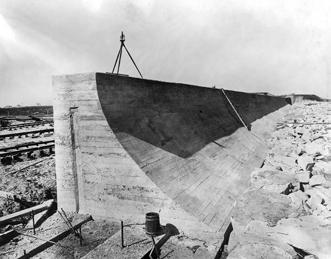
When people tried to help the island, they had a hard time getting there. All the bridges, roads, and train tracks to Galveston were destroyed in the hurricane. The city was ruined and needed a lot of help. Many people were hurt, and 10,000 people were homeless. Someone who does not have a house to live in is homeless. It took a few days until people reached Galveston to help and bring food. Many people died because there was no quicker way for help to reach the island.
The volunteers who came to help built big tents on the city’s beach for the thousands of homeless people. Volunteers help others in need without getting paid. People from all over the U.S. sent money to help rebuild the city. The government gave many people money to buy supplies to build three-room houses. It took many years to rebuild the city.
hurricane - a very strong storm that can cause a lot of damage
homelesssomeone who does not have a house to live in
volunteerspeople who help others in need without getting paid
seawall - a wall that surrounds a city or island to protect it from floods
When the city was rebuilt, they also made it safer. They built a strong, tall seawall. A seawall is a wall that surrounds a city or island to protect it from floods. People did not want to move to Galveston after the hurricane, and it took a long time for the city to recover.
1. When did the Galveston hurricane happen?
a. September 8, 1901
b. September 9, 1900
c. September 9, 1901
d. September 8, 1900
2. Why do you think people did not want to move to Galveston?
a. They were afraid another hurricane would hit.
b. They did not like how the city looked after it was rebuilt.
c. The city did not rebuild any roads leading to it.
d. The city did not allow new people to move in.
3. What did the government give people in Galveston after the hurricane hit?
a. New houses for free
b. Money to buy supplies to build homes
c. Buses for people to leave Galveston
d. Money for food
4. How long did the hurricane and floods last in Galveston?
12 hours
5. How did people help Galveston after the hurricane?
6. How did Galveston become a safer city after it was rebuilt?
People built big tents on the city’s beach for the homeless and sent money to help rebuild the city. They built a seawall to protect the city from future floods.
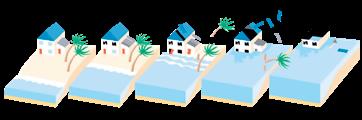
In 1971, scientists created this scale to measure how strong hurricanes are based on how fast the wind blows during the storm. A category 1 hurricane is the weakest, and category 5 is the strongest. Look at the chart and answer the questions.
1. What level of hurricane forces people to leave the area?
SOURCE: SAFFIR SIMPSON SCALE
a. Category 1 b. Category 2
c. Category 3 d. Category 4
2. How tall are the waves of a category 1 hurricane?
a. 4-5 feet b. 7-9 feet
c. 10-14 feet d. 25 feet or more
3. How fast are the winds of a category 3 hurricane?
a. 90-110 miles per hour
b. 111-130 miles per hour
c. 131-155 miles per hour
d. 156-180 miles per hour CATEGORIES OF
1845: The Naval School, which would later become the Naval Academy, is founded in Annapolis, Maryland, by Secretary of the Navy George Bancroft.
1845-1846: The first class of midshipmen, consisting of 50 students, is admitted and begins their studies.
1850: The Naval School is officially renamed the United States Naval Academy.
1861-1865: During the Civil War, the Naval Academy plays a critical role in training officers and providing technical expertise in naval operations for the Union. Graduates of the academy serve with distinction in many important battles.
1865: The academy graduates its first class of midshipmen since the outbreak of the Civil War.
1867: The academy establishes its first post-graduate course, a two-year program in naval architecture.
1901: The first Marine Corps officer is commissioned from the Naval Academy.
1917-1918: During World War I, the academy trains thousands of officers for the Navy and Marine Corps.
1941-1945: During World War II, the academy trains thousands of officers for the Navy and Marine Corps and plays a critical role in the war effort.
1961: President John F. Kennedy delivers his famous “Ich bin ein Berliner” speech at the academy.
1976: The academy begins admitting women.
2013: The academy admits its first midshipman with a prosthetic leg.
The United States Naval Academy was founded in 1845 in Annapolis, Maryland, to train officers for the Navy and Marine Corps.
The curriculum includes courses in math, science, navigation, and language, as well as practical training in seamanship and gunnery.
During the Civil War, the academy played a crucial role in the Union’s victory by training officers and providing technical expertise in naval operations.
Many distinguished graduates, including presidents, senators, and astronauts, have come from the academy.
Students will learn that the United States Naval Academy was founded in 1845 in Annapolis, Maryland, to provide a formal education and training for officers of the Navy and Marine Corps. The idea of a Naval Academy was proposed by Secretary of the Navy George Bancroft, who believed that a school devoted to the study of naval science and tactics was necessary for the country’s national defense.

Today, the academy continues to provide world-class education and training to future naval officers, preparing them to serve their country and protect its interests around the globe.
The first class of midshipmen, consisting of 50 students, entered the academy on October 10, 1845. The curriculum included courses in mathematics, science, navigation, and language. In addition to academic studies, midshipmen also received practical training in seamanship, gunnery, and other aspects of naval warfare.
During the Civil War, the Naval Academy played a crucial role in the Union’s victory by training officers and providing technical expertise in naval operations. After the war, the academy continued to expand its curriculum and facilities, including the construction of a new academic building and a dormitory for midshipmen.
Over the years, the Naval Academy has produced many distinguished graduates, including several presidents, senators, and astronauts. Today, the academy continues to provide world-class education and training to future naval officers, preparing them to serve their country and protect its interests around the globe.
• Pictures of different types of ships
• Paper supplies, Paint
• Markers, Scissors
• Glue, Pencil, Ruler
Discuss different types of ships used by the Navy, such as battleships, aircraft carriers, and submarines.
Have the students create a blueprint or sketch of the ship they want to build. They can use a ruler to measure and mark the dimensions of the ship.
Provide the students with materials like cardboard, paper, and glue to build their ships. They can also use materials like toothpicks or wooden skewers to add masts and rigging.
Construction: Encourage the students to work in pairs or small groups to build their ships. They can start by cutting out pieces of cardboard or paper according to their blueprint and then gluing them together to create the hull and structure of the ship.
: Where is the Naval Academy located?
A1: The Naval Academy is located in Annapolis, Maryland.
: What was the curriculum like for midshipmen in the early days of the academy?
A2: The curriculum included courses in mathematics, science, navigation, and language, as well as practical training in seamanship and gunnery.
: What was the academy’s role during the Civil War?
A3: During the Civil War, the academy trained officers and provided technical expertise in naval operations.
Q4: Who are some famous graduates of the Naval Academy?
A4: Several presidents, senators, and astronauts are among the academy’s famous graduates.
Q5: What is the academy’s mission today?
A5: The academy’s mission today is to provide education and training for future naval officers, preparing them to serve their country and protect its interests around the globe.
Painting and Decoration: Once the ships are constructed, the students can paint them to give them a realistic appearance. They can also add decals or stickers to represent the ship’s name, number, or insignia.
The Naval Academy has a rich history and has played a critical role in the defense of our nation. Its graduates have gone on to serve in every conflict since its founding and continue to serve with distinction today.
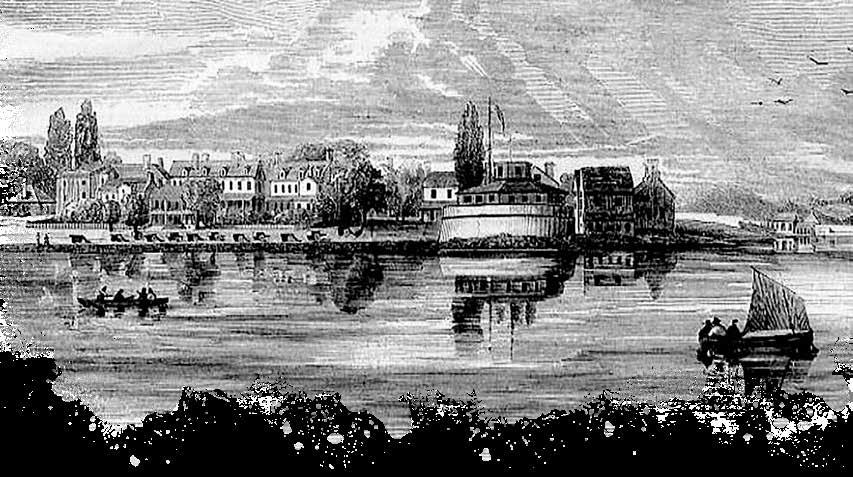
There are many ways that enemies can try to hurt a country. They can attack on land with soldiers or in the sky with special planes. They can also try to attack from the sea. That’s where the navy comes in! The navy is the part of the army that fights on ships and protects a country from enemies trying to reach its shore. If you want to join the U.S. Navy, you have to go to a special school called the Naval Academy. Let’s learn more about the Naval Academy!
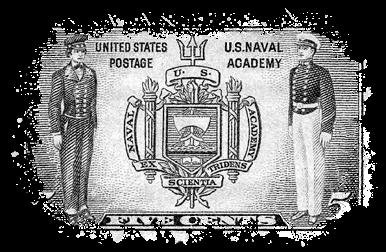
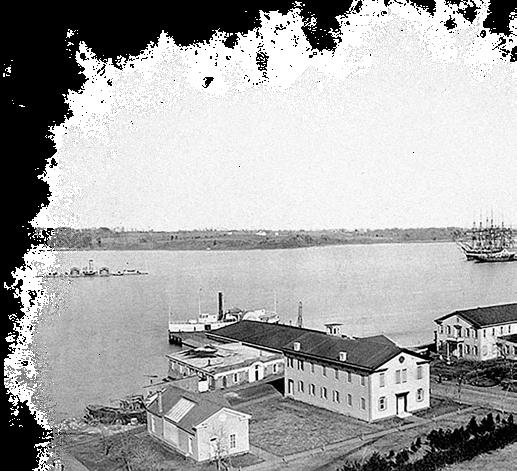

The United States Navy was founded on October 13, 1775, during the American Revolution. Founded is when an organization is created. The American people were fighting for their freedom from the British and needed a navy to fight against the Royal Navy of Great Britain.
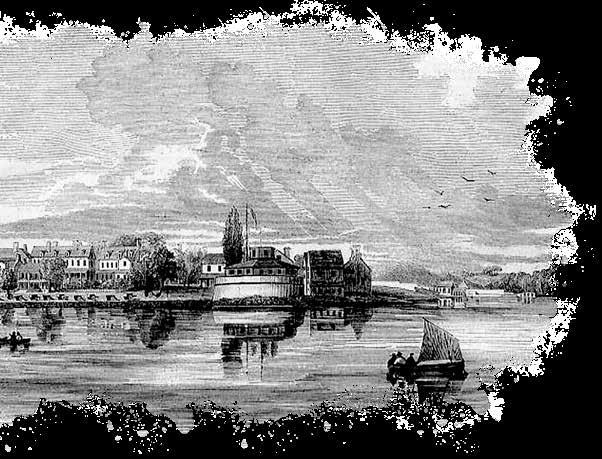
On October 10, 1845, the United States Naval Academy opened in Annapolis, Maryland. The Naval Academy is a school that trains people to be officers in the U.S. Navy or Marine Corps. The Marine Corps is a special part of the army that fights both on sea and on land. The Naval Academy started with a class of 50 midshipmen. Midshipmen are students at the Naval Academy.
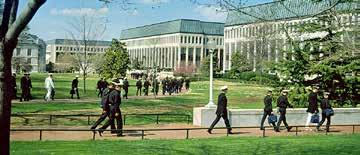
Over the years, the Naval Academy grew. The place where the academy is located, called “The Yard,” went from a small ten acres to a large 340 acres of land. They also changed the old wooden buildings to new, granite buildings. The number of students grew to 4,000 midshipmen. About 1,000 midshipmen graduate each year and go on to work in the U.S. Navy or U.S. Marine
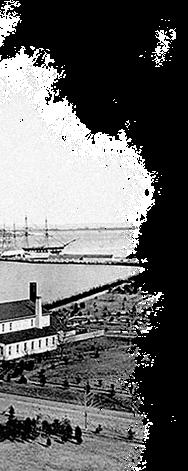
Midshipmen study at the academy for four years. They learn about engineering, science, math, social science, and how to fight on ships. They also learn how to lead teams in a war and follow orders from the people above them. Midshipmen also play sports to keep fit and healthy.
Each summer, midshipmen spend two months at sea. This gives them
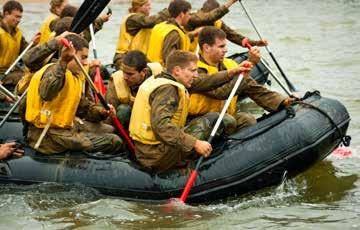
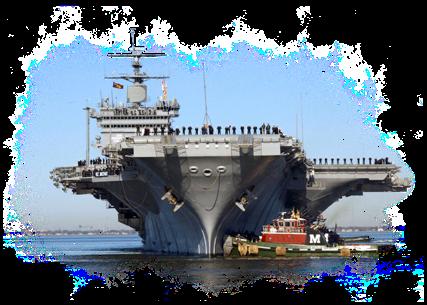
a chance to practice the skills they have learned on an actual ship. They learn how to guide boats in rough sea conditions, and they get used to spending time in small spaces on small boats. Midshipmen learn how to use weapons and steer navy ships. They also learn to steer submarines. A submarine is a warship that travels completely underwater.
founded - when an organization is created midshipmenstudents at the Naval Academy submarine - a warship that is driven completely underwater fleet - a group of ships owned by a country
The U.S. Navy used to have a fleet of sailboats and steam ships. In the early 1900s they started using submarines to find enemy ships underwater. A fleet is a group of ships owned by one country. The Navy also has big ships called aircraft carriers, where planes take off and land. The Naval Academy teaches the midshipmen how to use these ships.
After four years of studying, midshipmen are ready to be a part of the U.S. Navy. It is one of the strongest navies in the world, with over 340,000 members.
Did you know?
• The first year midshipmen are also known as “plebes.”
• Midshipmen wear uniforms similar to the ones worn by U.S. Navy officers.
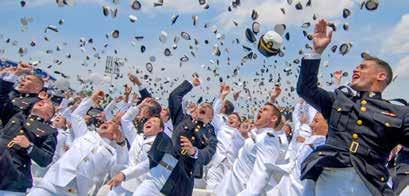
▸ Midshipmen graduating the Naval Academy in 2011
1.
Students at the Naval Academy are called:
a. Officers in training
b. Naval fighters
c. Midshipmen
d. Lieutenants
2. After midshipmen graduate, they join:
a. The U.S. Navy
b. The U.S. Air Force
c. The U.S. Marine Corps
d. The U.S. Navy or the U.S. Marine Corps
3. How many students graduate from the Naval Academy each year?
a. 50
b. 1,000
c. 250
d. 4000
4. When did the Naval Academy open?
October 10, 1845
5. Why do the midshipmen spend two months at sea during the summer?
To practice what they learn
6. Why do you think the midshipmen have to learn subjects like math and science at the Naval Academy?
Possible answer: It is important for figuring out distances, guiding ships in the water, and using other technology needed in fighting.
The United States has five military academies to train future military leaders. Each academy specializes in a different area. Study the chart and answer the questions below.
1. Which two academies are based in the same state? Which state?
Military and Marine
Merchant—in New York
2. Which academy has the most students?
3. What do all five U.S. military academies have in common?
4. Which academy would you go to if you wanted to learn to fight from a fighter plane?
They are all four-year-long programs. Coast Guard Academy Military
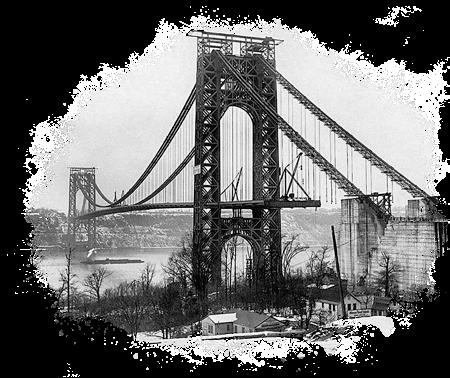
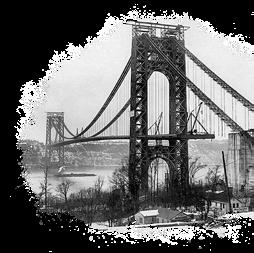
1927: Construction of the George Washington Bridge begins.
1929: The main towers of the bridge are completed.
1930: The first section of the roadway is completed.
October 25, 1931: The George Washington Bridge opens to traffic.
November 1931: The bridge is painted “GW Green” to match the surrounding parkland.
1941-1945: Throughout World War II, the bridge is heavily guarded to prevent potential attacks from enemy forces. The bridge is also used to transport military personnel and supplies.
1962: A lower level is added to the bridge to accommodate more traffic.
2015: The original suspender ropes of the bridge are replaced with new, stronger ropes as part of a major rehabilitation project.
March 2020: The bridge’s upper level is closed to traffic due to the COVID-19 pandemic.
June 2020: The upper level of the bridge is reopened to traffic.
2021: The George Washington Bridge celebrates its 90th
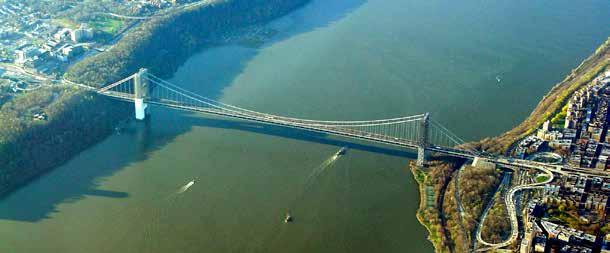
The George Washington Bridge connects the state of New York to New Jersey.
It was designed by Othmar Ammann and completed in 1931.
The bridge is 4,760 feet long and was the longest suspension bridge in the world when it opened. The purpose of the bridge was to ease traffic congestion.
The bridge has undergone many changes over the years, including the addition of a lower level in 1962.
The George Washington Bridge is an essential transportation link between New York City and New Jersey.
Students will learn that the George Washington Bridge is one of the most famous landmarks in New York City. It connects the state of New York to New Jersey and is one of the busiest bridges in the world. The iconic bridge has a fascinating history.
The George Washington Bridge was first proposed in the early 1900s as a way to connect New York and New Jersey and ease traffic congestion. Construction began in 1927, and it took four years to complete. The bridge was designed by Othmar Ammann, a Swiss-American engineer, who wanted to create a structure that was not only functional but also beautiful.
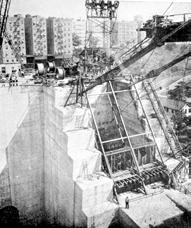
When the bridge opened in 1931, it was the longest suspension bridge in the world, measuring 4,760 feet long. The construction of the bridge was a remarkable achievement, as it required the use of innovative engineering, such as powerful cranes and suspension cables.
The George Washington Bridge has played an essential role in the history of New York City. It has served as a vital transportation link between New York and New Jersey, facilitating the movement of goods and people. During World War II, the bridge was heavily guarded to prevent potential attacks from enemy forces.
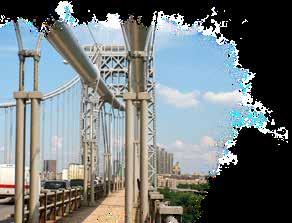
Over the years, the bridge has undergone many changes, including the addition of a lower level in 1962 and the replacement of the original suspender ropes in 2015. Today, the bridge continues to be an essential part of the transportation infrastructure of the United States, connecting New York City to New Jersey and serving as a symbol of American engineering and innovation.
• List of questions, Pencils
• A timer, A small toy car or game piece
Using tape, create a “bridge” on the floor across the classroom or on the board with any number of “stops” along the way.
Divide the class into two teams.
One player from each team stands up.
Ask a question.
The first player to answer correctly moves their team’s piece ahead one stop on the bridge.
The next player from each team gets up.
Repeat with new players from each team until all students have had a chance to play.
The team that gets across the bridge first wins!
Sample questions:
• How many lanes does the George Washington Bridge have?
• In what year was the George Washington Bridge completed?
• What is the name of the river that the George Washington Bridge spans?
• Who owns the George Washington Bridge?
• Who was the first president of the United States?
Q1: When was the George Washington Bridge built?
A1: The construction of the bridge began in 1927 and was completed in 1931.
Q2: Who designed the bridge?
A2: The bridge was designed by Othmar Ammann, a SwissAmerican engineer.
Q3: What is the length of the bridge?
A3: The bridge is 4,760 feet long.
Q4: What was the purpose of the bridge?
A4: The bridge was built to connect the state of New York to New Jersey and ease traffic congestion.
Q5: What changes have been made to the bridge over the years?
A5: Changes to the bridge include the addition of a lower level in 1962 and the replacement of the original suspender ropes in 2015.
• How long did it take to build the George Washington Bridge?
• How many vehicles cross the George Washington Bridge on an average day?
The George Washington Bridge is an iconic symbol of New York City and a testament to American engineering. It has a rich history that spans over 90 years, and it continues to be an essential transportation link between New York and New Jersey.
• The George Washington Bridge is home to the world’s largest freeflying U.S. flag.
• The cost of the total project to build the GWB was $59 million.
• There are a total of 760 light fixtures mounted on the two towers of the GWB.
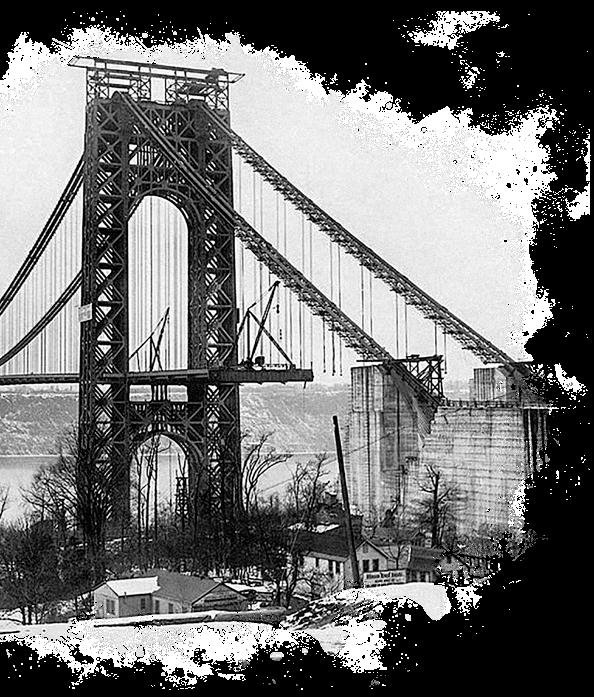
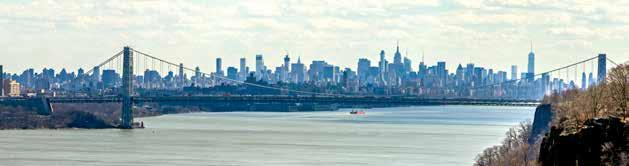
Hundreds of thousands of people drive between New York City and New Jersey each day, thanks to the George Washington Bridge! Let’s take a look back at its history.
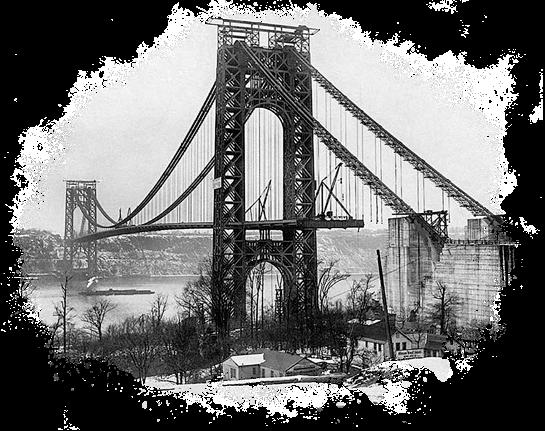
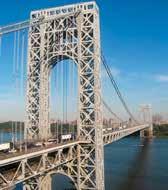
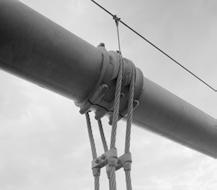
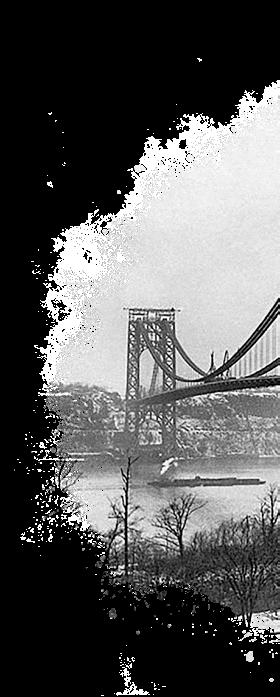
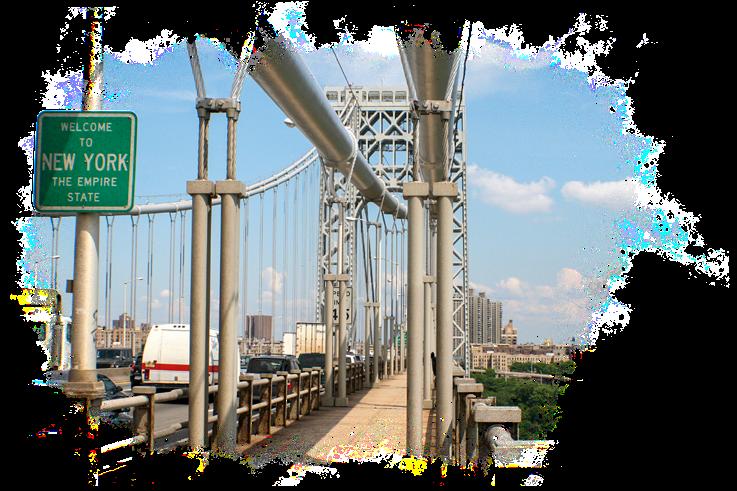
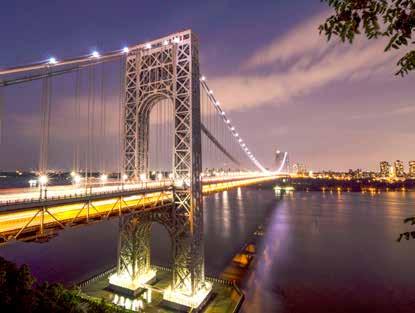
Construction of the George Washington Bridge (GWB) began in 1927. The bridge connects New York City to New Jersey across the Hudson River and is 4,760 feet long! It’s a special type of bridge called a suspension bridge. This means it has lots of strong cables holding up the road between two tall towers. If you took all the cables from the GWB and laid them end to end, they would stretch 107,000 miles! The bridge looks cool at night because its cables and towers light up. When it was built, the GWB was the longest suspension bridge in the world.
Building a suspension bridge is a challenging project because the cables and towers have to be very strong to hold up the road. Also, since the GWB was the longest suspension bridge in the world when it was built, it required a lot of planning and hard work to complete. Building it was a big accomplishment for the engineers and workers involved.
suspension bridge - a bridge where the road is suspended, or held up, by strong cables between two or more towers
vehiclessomething used for transportation, like cars, trucks, buses, and motorcycles
pedestrianspeople who walk along a road where vehicles go
cyclists - people who ride bicycles
On October 24, 1931, future President Franklin D. Roosevelt opened the new bridge and named it to honor the first president of the United States of America. The bridge was only open for people on October 24, and many excited people walked across it with their families.
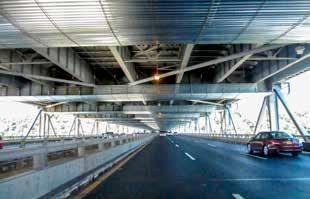
The bridge opened for cars on October 25, 1931. In its first year, more than 5.5 million vehicles crossed the bridge between New York and New Jersey. A vehicle is something used for transportation, like cars, trucks, buses, and motorcycles. The bridge had six lanes, three for each direction. The bridge became very busy, so two lanes were added in 1946. In 1958, construction on another level began. In 1962, the new six-lane lower level opened, nearly doubling the size of the bridge. There are also sidewalks for pedestrians and cyclists. Pedestrians are people who walk along a road where vehicles go. Cyclists are people who ride bicycles.
The GWB carries more than 100 million vehicles to and from New York City each year. That’s over 300,000 vehicles daily! There is a 15 dollar toll for crossing the bridge. Toll money helps pay to keep the bridge in good condition.
Since 1931, larger suspension bridges have been built in the U.S. and other countries. However, the GWB carries more people than any other bridge in the world.
1.
How many lanes did the GWB have by 1946?
a. 6
b. 8
c. 14
d. 12
2. How many cars travel daily over the GWB?
a. 250,000
b. 30,000
c. 5.5 million
d. 300,000
3.
Which of the following is true? The GWB is still .
a. The longest suspension bridge in the U.S.
b. The longest suspension bridge in the world
c. The most traveled suspension bridge in the world
d. The tallest suspension bridge in the U.S.
4. When did the GWB open for cars?
October 25, 1931
5. Why do you think the GWB was only open for pedestrians on the first day it opened?
Possible answer: To give people a chance to check out the entire amazing bridge that had just been built.
6. Why do you think the bridge was named after President George Washington?
To honor to an important president in U.S. history.
Take a look at some long suspension bridges around the world. Then answer the questions below.
Fill in the blanks with the correct answer:
1.The Bridge is the most recently opened bridge.
Verrazano Narrows
2. The Bridge has the most lanes for traffic.
3. Both the and are located in the USA.
Golden Gate Verrazano Narrows
4. Which bridge is probably the most narrow? How did you know?
The Humber Bridge, Verrazano Humber because it only has two lanes.
5. The Bridge is longer than the Golden Gate Bridge, but shorter than the Bridge.
1941: President Franklin D. Roosevelt and Prime Minister Winston Churchill issue the Atlantic Charter.
1942: Representatives from 26 Allied nations meet in Washington, D.C., and sign the Declaration of the United Nations, pledging to support the Atlantic Charter and fight against the Axis powers.
April-June 1945: Representatives from 50 countries gather in San Francisco to draft the United Nations Charter.
June 26, 1945: The United Nations Charter is signed in San Francisco.
October 24, 1945: The United Nations officially comes into existence after the UN Charter is ratified by the majority of its signatories.
1946: The UN General Assembly holds its first session in London.
1948: The Universal Declaration of Human Rights is adopted by the UN General Assembly in Paris.
1950: The UN Security Council authorizes a multinational force to help South Korea repel an invasion by North Korea.
1960s: The UN plays a role in resolving conflicts in Congo, Cyprus, and the Middle East.
1971: The UN General Assembly admits China as a member, replacing Taiwan.
1979: The UN General Assembly adopts the Convention on the Elimination of All Forms of Discrimination Against Women.
The United Nations was founded in 1945 after World War II.
The UN is made up of 193 member countries.
The General Assembly is a body within the UN that meets once a year to discuss important issues.
The Security Council is responsible for maintaining international peace and security.
The UN has played an important role in promoting human rights, fighting poverty, and providing humanitarian aid.
The UN Charter is like a constitution for the organization and was signed in 1945.
Students will learn that the United Nations (UN) is an international organization founded in 1945 after World War II. It is made up of 193 countries from around the world, and its main goal is to promote peace, cooperation, and development.

The idea for the United Nations was first suggested by U.S. President Franklin D. Roosevelt during World War II. The name “United Nations” was actually coined by Winston Churchill, the prime minister of the United Kingdom. The idea was to create an organization that would help prevent future wars and promote peace and cooperation among nations.
Representatives from 50 countries gathered in San Francisco in April 1945 to draft the UN Charter, which is like a constitution for the organization. The Charter was signed on June 26, 1945, and the United Nations officially came into existence on October 24, 1945, when the Charter was ratified by the majority of its signatories.
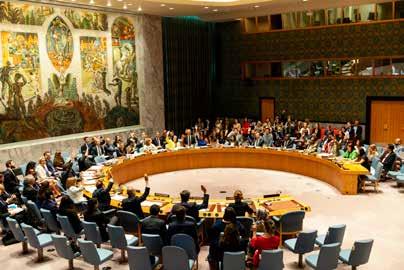
One of the most important bodies within the United Nations is the General Assembly, made up of representatives from all 193 member states. The General Assembly meets once a year to discuss important issues and make decisions on behalf of the UN. The Security Council is another important body, responsible for maintaining international peace and security. It has 15 members, including five permanent members (China, France, Russia, the United Kingdom, and the United States) who have veto power over any decisions made by the Council.
Over the years, the United Nations has played an important role in promoting human rights, fighting poverty, providing humanitarian aid, and promoting sustainable development. It has also been involved in many peacekeeping missions around the world.
1. No Poverty
2. Zero Hunger
3. Good Health and Well-being
4. Quality Education
5. Gender Equality
6. Clean Water and Sanitation
7. Affordable and Clean Energy
8. Decent Work and Economic Growth
9. Industry, Innovation, and Infrastructure
10. Reduced Inequalities
11. Sustainable Cities and Communities
12. Responsible Consumption and Production
13. Climate Action
14. Life Below Water
15. Life On Land
16. Peace, Justice, and Strong Institutions
17. Partnerships for the Goals
Divide the class into two teams. Choose one student from the first team to come up to the front of the class.
Show the student an index card with one of the Sustainable Development Goals written on it. The student must try to describe the goal to their team without using any of the words on the card. The first team to guess the correct goal wins a point. Repeat steps 2-5 with a student from the second team, and continue until all 17 goals have been used. The team with the most points at the end of the game wins.
: What is the United Nations?
A1: The United Nations is an international organization made up of 193 countries that work together to promote peace, cooperation, and development.
: When was the United Nations founded?
A2: The United Nations was founded in 1945, after World War II.
Q3: Who suggested the idea for the United Nations?
A3: The idea was suggested by U.S. President Franklin D. Roosevelt.
Q4: What is the General Assembly?
A4: The General Assembly is a body within the United Nations made up of representatives from all 193 member states.
Q5: What is the Security Council?
A5: The Security Council is a body within the United Nations responsible for maintaining international peace and security.
The United Nations is an important organization that works to promote peace, cooperation, and development around the world. By working together, member countries can help solve global problems and make the world a better place.
Did you know?
• The UN flag was designed by a teenager from Ohio. The design was chosen from more than 1,500 designs from around the world.
• The official languages of the UN are Arabic, Chinese, English, French, Russian, and Spanish.
• During the General Assembly, security is very tight. Nearly all of the world’s leaders are in the same building at the same time. Hundreds of police officers surround the U.N. headquarters, and police boats patrol the nearby East River.
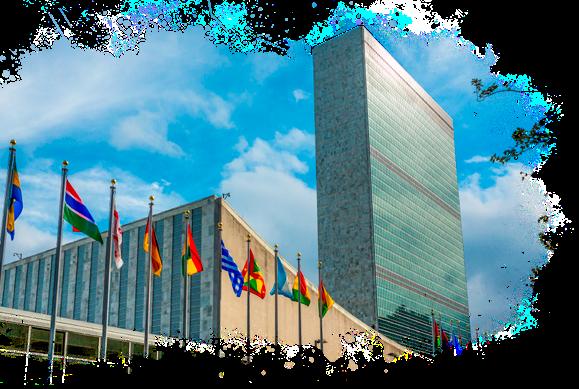
Have you ever had a disagreement with a friend and needed help finding a solution? Well, countries sometimes have disagreements too, and they need help to find a solution without fighting. That’s why in 1945, the United Nations was created. It’s like a team of countries, working together to solve problems and build peace all around the world!

After World War II (19391945), the leaders of five major countries met to plan the United Nations (UN). These countries were the United States, England, the USSR, France, and China. They created the UN to keep the peace between countries. They wrote a document that describes the purpose of the UN, called a charter . They decided that the UN would officially start on October 24, 1945, almost two months after the end of World War II.
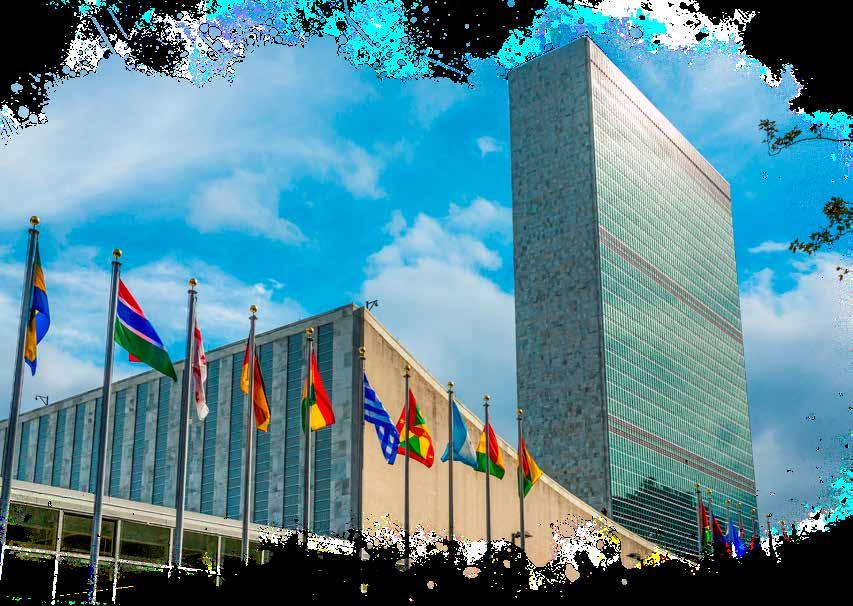
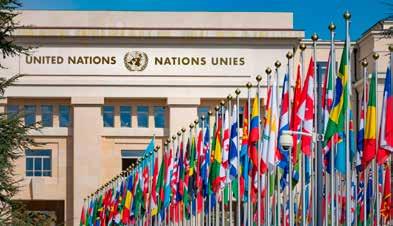
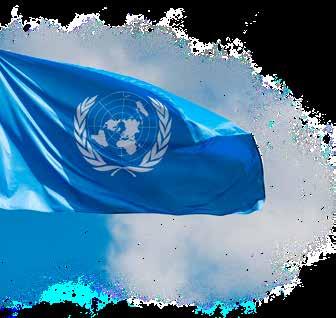
Fifty-one countries were excited to join the UN right away. They each sent a representative to the first meeting of the General Assembly in London. The General Assembly is made up of the representatives of every country. The representatives are called ambassadors. Over time, more countries joined the UN. As of 2023, 193 countries are part of the UN. The General Assembly meets each year for nine days in New York City. In 1949, the UN built its main offices in New York City.
The UN has different parts called councils. The Security Council helps
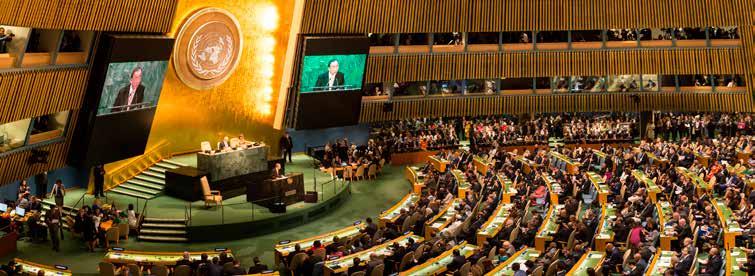
find solutions to arguments between countries. The five countries that started the UN are always members of the Security Council. The General Assembly chooses ten other countries to join the Security Council for two years.
The Security Council votes on their decisions, called resolutions. A resolution becomes a law that all countries of the UN must follow. The original five countries wanted to keep themselves safe from decisions that could hurt them. Therefore, they have the power to veto, or throw out, a resolution.
charter - a document that describes the purpose of an organization ambassadorrepresentative to the UN resolutionsdecisions veto - throw out
The UN is involved in many other important activities, too. In 1946, the UN started UNICEF. UNICEF stands for United Nations International Children’s Emergency Fund. UNICEF is an organization that helps support children in poor parts of the world. They bring doctors and teachers to places that have no hospitals or schools.
Another important part of the UN is the World Food Program, also called the WFP. The WFP gives food to almost 100 million people throughout the world.
The UN runs many programs to help people all over the world. It is hard to imagine a world without the UN.
1.
What is the main goal of the United Nations?
a. To keep the peace between countries
b. To provide food to poor countries
c. To send soldiers to protect dangerous places
d. To choose new members for the Security Council
2. How many countries are members of the UN as of 2023?
a. 57
b. 163
c. 193
d. 211
3.
Which part of the UN helps support children in poor parts of the world?
a. World Food Program
b. General Assembly
c. Security Council
d. UNICEF
4. How do the Security Council’s resolutions affect countries?
Possible answer: they send peacekeeping troops to a country at war.
5.
Name two countries that are always members of the Security Council.
Any of these: The United States, England, Rusia, France, and China
6. Do you think the world would look different without the UN?
If yes, how?
Possible answer: There might be more wars.
WHO WORKS AT THE UNITED NATIONS?
Here are some jobs people have working for the United Nations.
• Ambassadors: These are representatives from the countries that are part of the UN. They come to the UN to talk about important issues and make decisions for their countries. Ambassadors are sometimes called diplomats.
• Peacekeepers: These are soldiers and police officers who help keep peace in different
Based on the above information, match the following jobs to the people who do them.
parts of the world. They go to places where there is fighting and try to stop it so people can live safely.
• Humanitarians: These are people who help others in need, such as those affected by natural disasters, like hurricanes and earthquakes. They give food, places to live, and medical care to people who need it.
1. Protect the people caught in the middle of a Civil War in Bosnia
2. Provide places to live for people whose homes were destroyed in a flood
3. Help find medicines for diseases
4. Ask the General Assembly to help their country
5. Send equipment to UN peacekeepers
• Scientists and experts: These are people who have special knowledge about medicine or technology. They help the UN make decisions on these issues.
• Secretariat staff: The Secretariat staff are the people who help run the United Nations organization every day. They work in the UN headquarters in New York City.
A. Humanitarians
B. Scientists and experts
C. Ambassadors
D. Secretariat staff
E. Peacekeepers
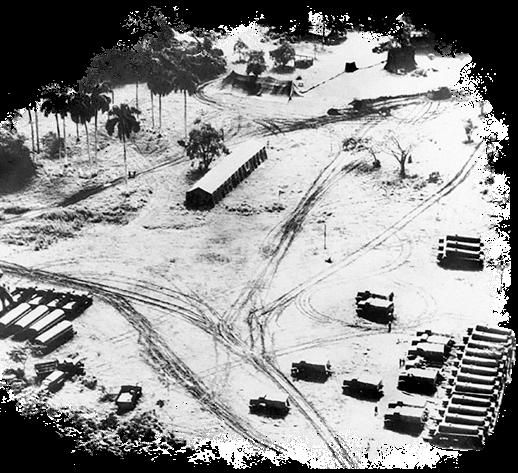
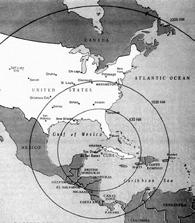
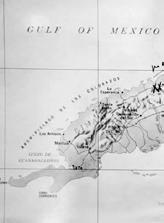
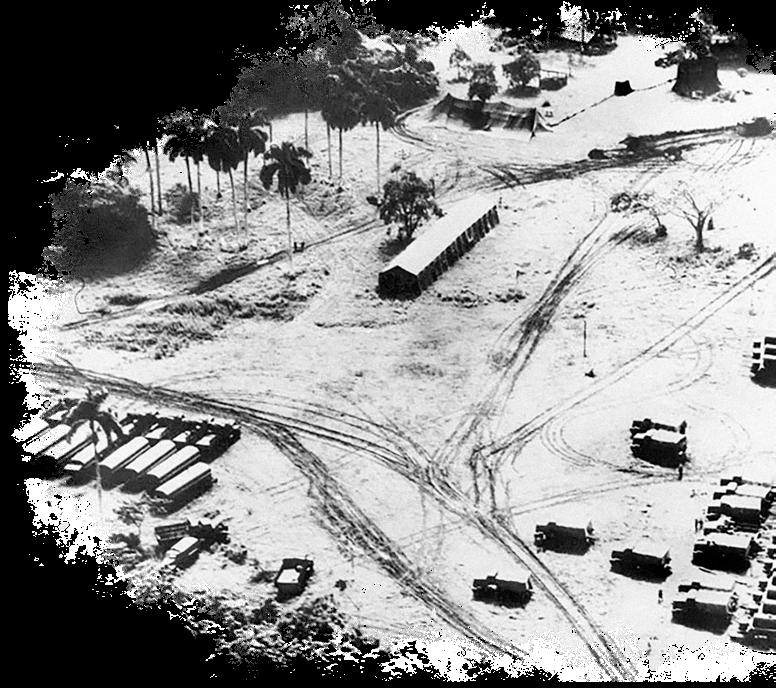
October 14, 1962: A U.S. spy plane takes photos of Soviet missile sites in Cuba.
October 16, 1962: President Kennedy is briefed on the photos and the presence of Soviet missiles in Cuba.
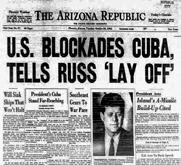
October 22, 1962: President Kennedy addresses the nation and announces a naval quarantine (blockade) around Cuba.
October 24, 1962: Soviet ships carrying missiles bound for Cuba approach the U.S. blockade line, and tensions escalate.
October 26, 1962: Soviet ships stop short of the U.S. blockade line, and Soviet leaders send a message to President Kennedy offering to remove the missiles in exchange for a U.S. pledge not to invade Cuba and to remove U.S. missiles from Turkey.
October 27, 1962: A U.S. spy plane is shot down over Cuba, and a U.S. naval vessel is almost fired upon by a Soviet submarine. The situation is extremely tense, and many fear a nuclear war.
October 28, 1962: The Soviet Union agrees to remove the missiles from Cuba, and the U.S. agrees to pledge publicly not to invade Cuba and privately to remove U.S. missiles from Turkey.
November 20, 1962: The U.S. announces that the Soviet Union has begun dismantling its missile sites in Cuba, and the crisis is officially declared over.
Explain the Cold War between the United States and the Soviet Union.
Describe the events leading up to the Cuban Missile Crisis.
Discuss President Kennedy’s response to the Soviet Union’s actions.
Explain the naval blockade of Cuba and the tense standoff between the two superpowers.
Discuss the resolution of the crisis and its impact on the Cold War. Highlight the importance of communication and diplomacy in resolving conflicts.
Students will learn that the Cuban Missile Crisis was a defining moment in the Cold War, a political and military standoff between the United States and the Soviet Union lasting from 1947 to 1991. During this time, both superpowers engaged in a global power struggle that resulted in a tense arms race and numerous proxy wars. The Cuban Missile Crisis, which took place in October 1962, brought the world to the brink of nuclear war and demonstrated the importance of diplomacy and communication in resolving international conflicts.

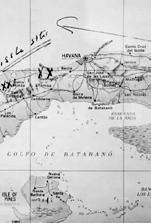
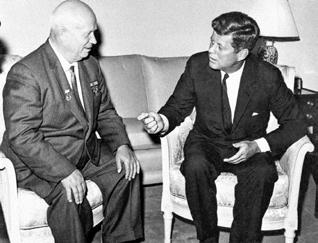
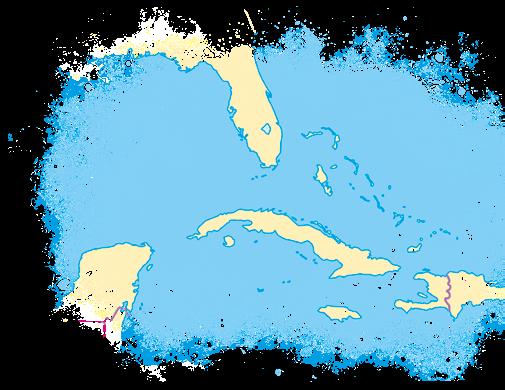
The Cuban Missile Crisis occurred in October 1962, during the Cold War between the United States and the Soviet Union. Soviet leader Nikita Khrushchev had secretly placed missiles in Cuba, just 90 miles from the U.S., as a response to American missiles in Turkey and Italy. When U.S. President John F. Kennedy learned of the missiles, he demanded their removal, but Khrushchev refused. The U.S. responded by establishing a naval blockade around Cuba, and tensions between the two superpowers escalated.
For several days, both sides remained committed to their positions, and the threat of nuclear war loomed large. American military forces were put on high alert, and bomb shelters were constructed in major American cities. However, behind the scenes, diplomatic efforts were underway to find a peaceful resolution. Robert Kennedy, the U.S. attorney general, secretly met with Soviet Ambassador Anatoly Dobrynin and offered to remove American missiles from Turkey in exchange for the removal of Soviet missiles from Cuba. After several days of intense negotiations, the Soviet Union agreed to remove the missiles, and the crisis was averted.
• Whiteboard, Expo marker
Classroom rules: Have the students work together to create a set of classroom rules that everyone agrees to follow. This exercise will teach the students the importance of listening to others’ ideas and working collaboratively to reach a consensus.
Negotiating classroom and recess rules can be an effective way to empower students to take ownership of their learning environment and foster a sense of community and respect among their peers.
When negotiating classroom rules, students can work collaboratively to identify what behaviors are important for creating a safe and respectful learning environment. The teacher can guide the discussion and help students identify key themes and ideas that emerge from the conversation. Once the group has identified a set of potential rules, they can engage in a negotiation process to determine which rules will be included in the final list. Students can use active listening skills, provide reasons for their positions, and work to find common ground as they negotiate the final set of rules. By engaging in this process, students develop important skills in communication, problem-solving, and empathy and also feel invested in the classroom culture and expectations.
Q1: Why did the Soviet Union place missiles in Cuba?
A1: The Soviet Union placed missiles in Cuba as a response to American missiles in Turkey and Italy.
Q2: Who played a key role in resolving the Cuban Missile Crisis?
A2: Robert Kennedy played a key role in resolving the Cuban Missile Crisis.
Q3: What was President Kennedy’s response to the discovery of the missiles?
A3: President Kennedy demanded the missiles’ removal.
Q4: What did the U.S. do in response to the Soviet Union’s refusal to remove the missiles?
A4: The U.S. established a naval blockade around Cuba.
Q5: What was the outcome of the crisis?
A5: The Soviet Union agreed to remove the missiles, and the crisis was averted.
The Cuban Missile Crisis reminds us of the importance of diplomacy and communication in resolving conflicts. It also highlights the dangers of nuclear weapons and the need for disarmament. As tensions between nations continue to rise and new threats emerge, the lessons of the Cuban Missile Crisis remain relevant today. By prioritizing diplomacy and working to reduce tensions, we can prevent similar crises from occurring and work towards a safer, more peaceful world.
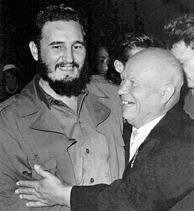
Fidel Castro became the leader of Cuba in 1959. With leader of the USSR Nikita Khrushchev.
Did you know?
• Some people say that 200 million people would have died if a nuclear war would have broken out.
• In Russia, they call the event the Caribbean Crisis because Cuba is an island in the Caribbean Sea.
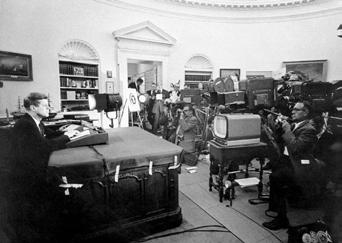
▸ President Kennedy speaking to newspaper reporters during the crisis

When two countries have a problem, their leaders have to make a big decision. They can either fight each other in a war, or they can talk and try to work things out peacefully. Fighting a war can be dangerous, and many people can get hurt or even die. But countries don’t have to fight! By talking and trying to find a solution, the world can be a safer and happier place for everyone.
States and the Soviet Union were the strongest countries in the world. Each country tried to get more allies than the other. Countries that help each other are allies. The Soviet Union, also called the USSR, controlled half of Europe. The other half of Europe was allies with the U.S. The USSR and the U.S. were enemies, and each wanted to be stronger.
In 1959, Fidel Castro became the leader of Cuba, and Cuba became allies with the USSR. Cuba is a small country very close to the U.S. The United States stopped doing business with Cuba and even tried attacking them for becoming allies with the USSR. The U.S.
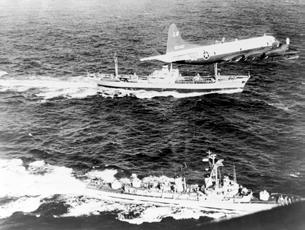
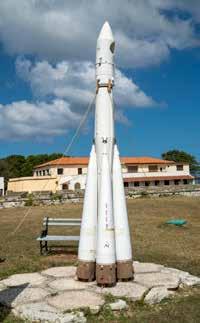
also put nuclear missiles in Italy and Turkey to warn the USSR not to attack the U.S. and its allies. Nuclear missiles are very strong and much more dangerous than other weapons. Italy and Turkey were both close to the USSR, and the missiles could reach the USSR very quickly. The Soviet Union was angry over these missiles the United States had placed in Italy and Turkey.
In 1962, the Soviet Union put nuclear missiles in Cuba. The missiles could reach the United States in a few minutes. The USSR wanted to have nuclear weapons near the U.S. to deter, or stop, the U.S. from attacking them with their weapons in Europe.
On October 14, 1962, a U.S. spy plane found the missiles in Cuba. President John F. Kennedy had to decide whether he should fight Cuba and destroy the missiles or not. He demanded that the USSR remove the missiles from Cuba. Nikita Khrushchev, the leader of the USSR, refused.
The people of the U.S. were very afraid that a nuclear war would break out. Schools taught the students how to hide safely in a war, and bomb shelters were built in many public places. Bomb shelters are rooms strong enough to protect people from bombs. Many families stocked up on supplies, such as canned foods and bottled water.
After more than two weeks, the leaders of the two countries finally reached an agreement. The Soviet Union agreed to remove the missiles from Cuba if the U.S. removed its missiles from Europe. This event, called the Cuban Missile Crisis, ended on October 29. A crisis is a very bad or scary event.
nuclear missiles - very dangerous weapons deter - stop bomb shelters - rooms strong enough to protect people from bombs crisis - a very bad or scary event
When the two countries realized how close they were to a nuclear war, they created the Moscow–Washington hotline. This was a special telephone between the U.S. and the USSR so their leaders could talk to solve such a crisis. They also each got rid of a lot of nuclear weapons to make the world safer.
1.
How did the U.S. find out about the missiles in Cuba?
a. Cuban spy
b. U.S. spy plane
c. Tourists called the police
d. Russian spy
2. When did a U.S. spy plane find missiles in Cuba?
a. October 14, 1962
b. May 14, 1962
c. October 24, 1963
d. October 14, 1992
3. How did the Cuban missile crisis end?
a. The United States fought with Cuba.
b. Both countries agreed to remove their missiles.
c. The Soviet Union began a war with the U.S.
d. Both countries agreed to destroy their nuclear weapons.
4. Why did the U.S. put nuclear weapons in Italy and Turkey?
To warn the USSR not to attack the USA’s allies in Europe
5. Who was the U.S. president during the Cuban Missile Crisis?
John F. Kennedy
The countries colored green were allies with the U.S. They agreed to help each other if the USSR would attack one of them. The USSR and its allies are colored orange. The white countries were neutral, meaning they didn’t want to fight with anyone.
1. Which of the following countries was an ally of the USSR?
a. Belgium b. The United States
c. Poland d. France
2. Which of the following countries was neutral?
a. Spain b. Greece
c. Norway d. Portugal
3. Which of the following countries was an ally of the U.S.?
a. Albania b. Sweden
c. Hungary d. United Kingdom
4. Sweden was .
a. Neutral
b. Allies with the U.S.
c. Allies with the USSR
5. Why do you think a country would want to remain neutral?
Possible answers: They don’t want people to die at war. They don’t want to spend money on war.
1984: President Ronald Reagan announces plans for a U.S. space station called Freedom.
1988: The Soviet Union proposes a joint space station with the U.S.
1993: The U.S. and Russia sign an agreement to build the International Space Station.
1998: The first ISS module, Zarya, is launched into orbit by Russia.
2000: The first crew of three astronauts, including American astronaut William Shepherd, live aboard the ISS.
2001: The first scientific experiments are conducted on the ISS.
2006: Columbus, the first module built by the European Space Agency, is added to the ISS.
2008: Kibo, the first module built by the Japanese Space Agency, is added to the ISS.
2011: The last space shuttle mission to the ISS takes place.
2013: The Mobile Servicing System, the first module built by the Canadian Space Agency, is added to the ISS.
2015: NASA astronaut Scott Kelly sets a record for the longest single spaceflight by an American astronaut, spending 340 days aboard the ISS.
2018: The Russian module Nauka is added to the ISS, providing additional living and working space.
2020: NASA astronauts successfully install a new docking adapter on the ISS, making it possible for future commercial spacecraft to dock with the station.
Explain the purpose and importance of the ISS, including how it is used for scientific research and as a platform for future space missions.
Discuss the collaboration between five space agencies from around the world and how this partnership has made the ISS possible.
Show pictures or models of the ISS to help students visualize its size and complexity.
Students will learn that the International Space Station is a large satellite that has been continually inhabited by astronauts since 1998. It is a collaboration between five space agencies from around the world and is used for scientific experiments and repairs.
Highlight some of the scientific experiments that have been conducted on the ISS, such as studying the effects of microgravity on the human body or growing plants in space.

Talk about the daily life of astronauts on the ISS, including how they eat, sleep, and exercise in zero gravity.
Emphasize the engineering challenges that were overcome in building and maintaining the ISS, such as launching multiple pieces into orbit and designing systems to provide power and life support.
The International Space Station (ISS) is a large, habitable satellite that orbits Earth at a height of about 227 miles. It was first launched in 1998 and has been continually inhabited by astronauts ever since. The ISS is a collaboration between five space agencies from around the world: NASA (USA), Roscosmos (Russia), JAXA (Japan), ESA (Europe), and CSA (Canada).
The idea of a space station had existed since the 1950s, but it wasn’t until the late 1980s that the United States and Russia agreed to work together on the project. They were soon joined by other countries, and construction on the ISS began in 1998.
The ISS is made up of many different parts that were launched into space separately and then assembled in orbit. The station is huge, weighing almost one million pounds! It has living quarters, laboratories for scientific experiments, and even a gym.
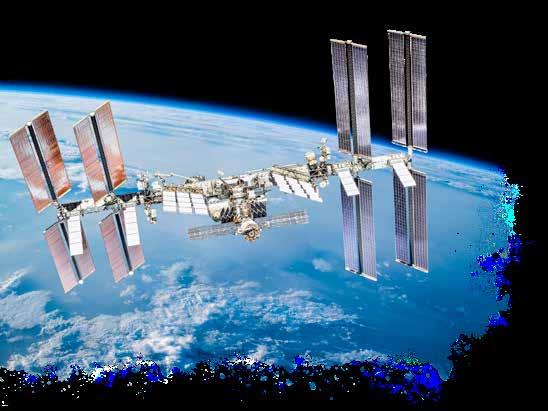
the world have lived on the ISS. They have conducted experiments on everything from plant growth to how the human body reacts to being in space. They have also carried out important repairs and upgrades to the station, making it possible for it to continue functioning for many years to come.
• Balance board
• List of exercise ideas
Set up a course where students have to weave in and out of the chairs or jump over them. Be sure to space the chairs or desks with enough room to allow students to move around them without bumping into them.
Use a balance board: A balance board is a device that simulates the experience of walking on an unstable surface. You can use a balance board to help students practice their balance and coordination skills, which are important for astronauts in microgravity. Have students take turns standing on the balance board and trying to maintain their balance for as long as possible.
Q1: What is the International Space Station?
A1: The International Space Station is a large, habitable satellite that orbits Earth.
Q2: When was the ISS first launched?
A2: The ISS was first launched in 1998.
Q3: How many space agencies collaborated to create the ISS?
A3: Five space agencies collaborated to create the ISS.
Q4: What are some of the things astronauts do on the ISS?
A4: Astronauts conduct scientific experiments and carry out repairs on the ISS.
Q5: Why is the ISS important?
A5: The ISS has taught us a lot about living and working in space, paving the way for future missions to other planets and beyond.
Do slow motion exercises: In microgravity, movements are slower and more deliberate than on Earth. You can simulate this by having students perform exercises in slow motion. For example, have them try to walk in slow motion or do slow motion jumping jacks.
The ISS is an incredible achievement of human engineering and cooperation. It has taught us a lot about living and working in space, and it has paved the way for future missions to other planets and beyond.
Can you imagine living up in space? A few times a year, a group of six or seven astronauts make the journey to space to spend a few months living on the International Space Station and doing science experiments there. What exactly is the International Space Station?
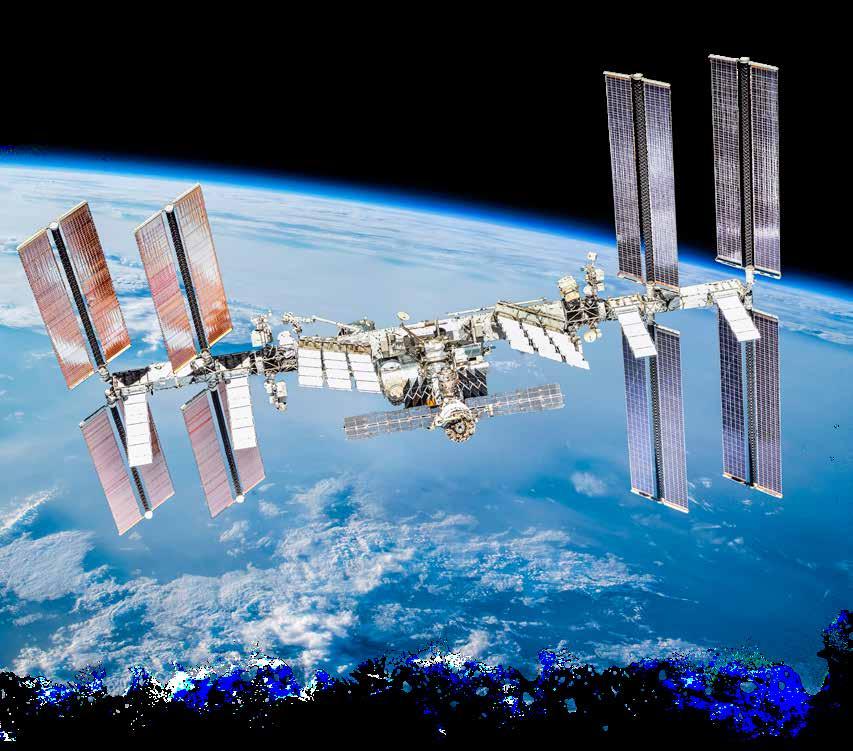

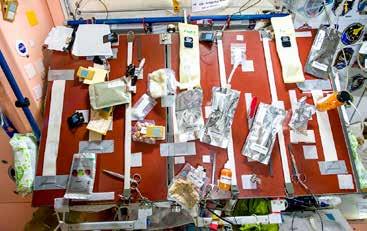
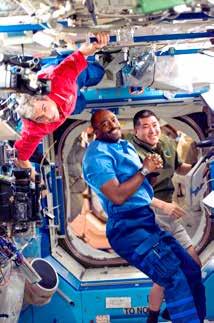
• The ISS is the largest object ever flown in space!
• There have been 257 spacewalks at the ISS since 1998.
• There have been 244 people who have made the space journey and spent time on the ISS.
The International Space Station (ISS) is a station that floats in space. The ISS doesn’t look like a regular station on earth. It has room for astronauts to live and research space. It orbits Earth at 17,500 mph. To orbit means to travel around a planet in space. It stays 220 miles above Earth and is the largest orbiting satellite. A satellite is a machine that orbits different planets and collects information about them.
The ISS was manufactured on Earth by the USA, Russia, Japan, Canada, and some European countries. Manufacture means to build something using machines. Each country built parts of the station, which were delivered to space by U.S. and Russian spaceships. The pieces were connected in space, and on November 2, 2000, the first astronauts moved in. The first people to live on the International Space Station were an American
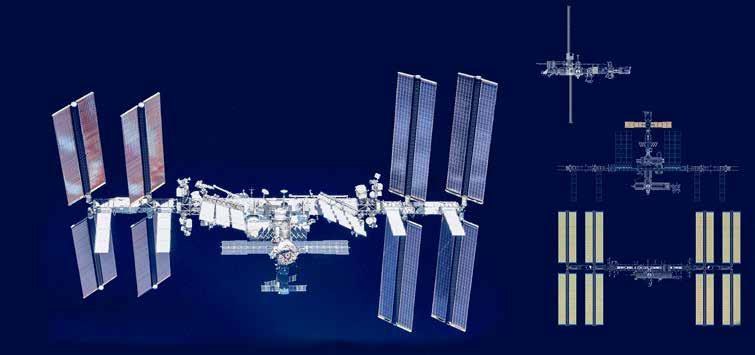
Since 2000, there have always been people living on the station. Crews of up to six members live on the ISS for six months at a time to research what happens to people who live in space for a long time. The astronauts also go on spacewalks. When astronauts leave the station to float in space, they are space walking. Astronauts spacewalk to do experiments and fix parts of the ISS. The astronauts are attached to the ISS by ropes during the entire spacewalk to keep them from floating away.
- to move around a planet in space in a curved path
- a manmade object that orbits different planets and collects information about them
- to build something using machines
the force that pulls things downwards to the ground
Life on the ISS is very different from life in a house on Earth. There is very little gravity in space. Gravity is the force that pulls things downwards to the ground. With less gravity in space, everything floats around. The astronauts must tie their sleeping bags to the wall so they don’t float around the station while they sleep! Astronauts drink from tubes or bags and eat food from pouches so their meals don’t float around. Even getting clean is difficult, and astronauts can only use towels and wipes instead of showers. Astronauts also do a lot of exercise in space.
The ISS costs the U.S. government about $3 billion each year and was supposed to close in 2024. In December 2022, President Biden said that the ISS would stay open until 2030 to help us understand space even more.
1. Spaceships from which two countries delivered ISS parts to space?
a. USA and Canada
b. Russia and Japan
c. USA and Russia
d. USA and Japan
2. Which of the following is NOT true?
a. The ISS is a satellite
b. The ISS has gravity inside
c. The ISS is a science research station
d. The ISS is a spacecraft
3. What is a spacewalk?
a. A satellite collecting information
b. A satellite orbiting
c. An astronaut floating outside the space station
d. An astronaut exercising in space
4. When did the first astronauts move into the ISS?
November 2, 2000
5. Why do you think scientists want to research what happens to people who live in space for a long time?
Every time an astronaut goes on a spacewalk, they wear a special spacesuit. Look at the parts of the spacesuit and answer the questions below.
Fill in the blanks:
1. Astronauts wear to keep warm.
2. The is to make sure astronauts don’t overheat during a spacewalk.
3. help us tell astronauts apart from each other.
Possible answers: So they can send people to live in space for a long time. To discover new things about space and the planets. gloves Stripes PLSS cooling garment
4. The is worn as a backpack.
1883: Canadian Sir Sanford Fleming proposes a global system of time zones based on the idea of dividing the Earth into 24 equal longitudinal zones.
November 18, 1883: The American Railroad Association adopts a proposal for dividing the United States into four time zones.
October 11, 1884: The International Meridian Conference, held in Washington, D.C., establishes the prime meridian (0 degrees longitude) and divides the world into 24 time zones.
1905: Canada introduces the idea of Daylight Saving Time (DST) as a way to save energy during the summer months.
1916: Germany and Austria-Hungary become the first countries to adopt DST to save energy during World War I.
1918: The United States adopts DST for the first time as a wartime measure, but it is later repealed after the war.
1942-1945: The United States and many other countries adopt DST during World War II to conserve energy and increase productivity.
1966: The Uniform Time Act is passed in the United States, standardizing the use of DST across the country.
1995: The European Union adopts a standard system of time zones.
Today, time zones are used globally to help people coordinate activities and travel across different regions.
Explain to the students that before time zones were established, people used the sun’s position in the sky to tell time.
Use a world map to introduce the idea of dividing the world into 24 time zones and explain how it works.
Describe the meeting that took place in Washington, D.C., in 1884 and how representatives from different countries decided on a system of time zones.
Discuss how time zones have impacted the way we communicate and interact with people in different parts of the world.
Students will learn that time zones are used all over the world to help people coordinate activities and travel. They are especially important for international travel, where people often cross multiple time zones. Knowing the time in each time zone helps you plan your trip and adjust to the new location.

Before time zones were established, people used to tell time based on the position of the sun in the sky. This worked well when people lived in small communities, but as transportation and communication improved, it became more difficult to coordinate activities and travel across long distances. In the mid-19th century, railroads became a popular mode of transportation, and train schedules had to take into account the differences in local times between cities. For example, if it was noon in New York City, it might be 11:30 a.m. in Philadelphia, 11:00 a.m. in Pittsburgh, and 10:30 a.m. in Chicago. This made it difficult to create train schedules that worked for everyone.
To solve this problem, people started to propose the idea of dividing the world into time zones. The idea was to create a system where the time in each zone would be the same, regardless of where you were in that zone. In 1884, representatives from 25 countries gathered in Washington, D.C., to decide on a system of time zones. They divided the world into 24 time zones, each one representing a one-hour difference from the one next to it. The prime meridian, the line of longitude passing through Greenwich, England, was chosen as the reference point for the time zones. The time in each time zone is determined by its distance from the prime meridian.
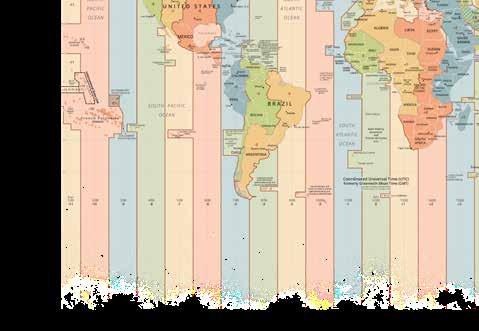
Time zone map of the world
List of questions to ask students for finding time zones on their maps:
Sample questions:
• What is the time zone of the city you live in?
• What is the time difference between New York City and Los Angeles?
• What is the time difference between Sydney, Australia, and London, England?
• What is the time difference between Beijing, China, and Tokyo, Japan?
• What is the time difference between Honolulu, Hawaii, and Anchorage, Alaska?
When you move to the right, you gain time (fast time). In other words, for every time zone that you move towards the right, you add one hour. But when you head toward the left, you lose an hour (slow time).
As the Earth rotates on its axis, the sun shines on only one part of the Earth at a time. While the sun shines where you live, it’s nighttime somewhere else. When you’re eating your breakfast cereal, children in Paris are finishing the school day, and children in Moscow are eating dinner. Children in Bangkok, Thailand, are going to bed, and children in Sydney, Australia are getting up for the next day of school.
Choose some locations and have students find them on the map to help them understand how time zones work.
Q1: How did people tell time before time zones?
A1: People used to tell time based on the sun’s position in the sky.
Q2: Why did people start proposing the idea of dividing the world into time zones?
A2: People proposed the idea of time zones to make it easier to coordinate activities and travel across long distances.
Q3: When did representatives from 25 countries gather in Washington, D.C., to decide on a system of time zones?
A3: Representatives of 25 countries gathered in 1884.
Q4: How many time zones did they divide the world into?
A4: They divided the world into 24 time zones.
Q5: Why are time zones important for international travel?
A5: Time zones help people plan their trips and adjust to the new location.
In the mid-19th century, people proposed dividing the world into time zones to make it easier to coordinate activities and travel across long distances. In 1884, representatives from 25 countries gathered in Washington, D.C., to decide on a system of time zones. Today, time zones are used all over the world to help people coordinate activities and travel.
Imagine you make up with your friend to call them at 2 p.m. Five minutes before 2 pm, you get ready to call, but your mother says that you need to wait another three hours. In New York, it’s 2 p.m., but in California where your friend lives, it is only 11 o’clock in the morning.
Until the 1800s, people would look at the sun to tell time. When the sun came up in the morning, they knew it was time to wake up. When the sun was high in the sky, they knew it was afternoon. But since the earth is round, what is afternoon in one place is still morning somewhere else. This means that while it’s bright and daytime in one place, it’s dark and nighttime in another place on the other side of the Earth.
Each town had a large town clock that was set based on the position of the sun. People in the town would look at the clock to know the time, and they would set their own clocks to the same time. This helped everyone in one town be on the same schedule.
▸ Original four time zones in the USA in 1913
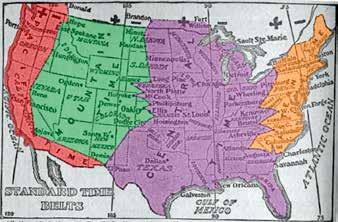
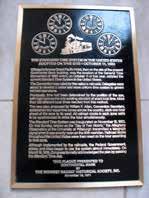
▸ A sign in honor of the USA starting to use the time zone system
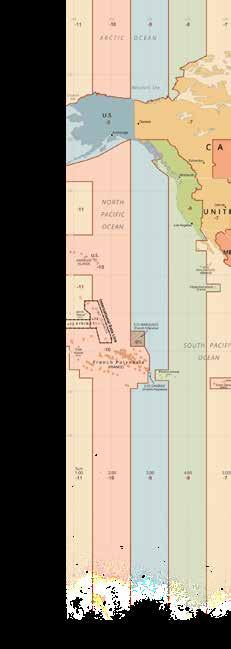
Did you know?
• China is a big country but chose to stay as one time zone. Therefore, in some places in China, the sun only rises at 10 am.

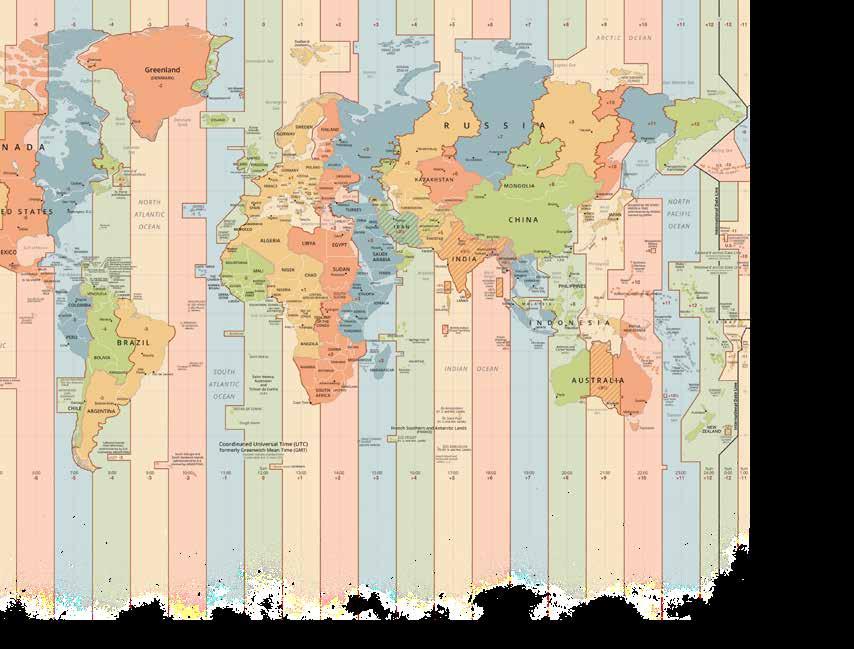
• Russia is split up into 11 time zones!
In the late 1800s, trains that traveled long distances were invented. When the railway companies tried to tell people what times the train would come, they realized that people would not know which town’s clock to use, and most people would probably miss their trains.
In 1878, Sir Sandford Fleming had the idea of creating a system of time zones. Instead of each town having its own time, he split the
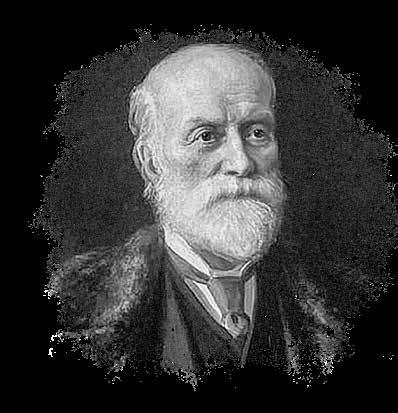
world into 24 parts. Each part had its own time that was an hour earlier than the time zone next to it.
time zones - parts of the world that have the same time multiple- a few implement - to put something into use official - made fully accepted
Greenwich, England, was chosen to be the center of time for the whole world. Each time zone to the west of Greenwich is one hour earlier. Each time zone to the east of Greenwich is one hour later. California is three time zones west of New York. That’s why when it is 2 pm in New York, it is 11 am in California. Most countries are in a one time zone, but some large countries, like the USA and Russia, are split into multiple, meaning a few, time zones.
On November 18, 1883, American railroads implemented Sir Sandford Fleming’s time zones. Implement means to put something into use. They used four time zones in the United States — Pacific, Mountain, Central, and Eastern.
In 1918, a law called The Standard Time Act made time zones official in the United States. Official means made fully accepted.
In 2023, the USA and its territories use nine time zones—Eastern, Central, Mountain, Pacific, Hawaii-Aleutian, Alaska, Samoa, Wake Island, and Guam.
1.
How much time does each time zone represent?
a. 24 hours
b. 8 hours
c. 4 hours
d. 1 hour
2. How many time zones are in the USA today?
a. 4
b. 9
c. 12
d. 24
3.
Finish the sentence: Every time zone to the west of Greenwich is
a. One hour earlier
c. The same
b. One hour later
d. One day earlier
4. When did railroads implement the time zone system?
November 18, 1883
5. How did Sir Fleming’s idea affect railroad companies?
They could set times for trains without worrying that different towns would have different times and people would likely miss their trains.
This map shows the time zones of the United States. Use this information to answer the following questions.
1. In which time zone is New York City found?
a. Eastern
b. Central
c. Mountain
d. Pacific
2. Which of the following cities is located in the Central time zone?
a. Phoenix
b. Memphis
c. Los Angeles
d. Boston
3. If it is 10 am in Atlanta, what time is it in Denver?
a. 4 pm b. 12 pm
c. 8 am d. 10 am
4. If it is 4 pm in Portland, what time is it in Detroit?
a. 4 pm b. 5 pm
c. 6 pm d. 7 pm
1942 - February: The War Production Board introduces the first rationing program for rubber and gasoline. April: The Office of Price Administration (OPA) introduces the first food rationing program, covering sugar, coffee, canned goods, and meat. May: Ration books are distributed to every person in the United States. June: Rationing of processed foods, such as cheese, canned milk, and fats, is introduced. August: The War Food Administration is established to manage food production and distribution during wartime.
1943 - January: Rationing of shoes and tires is introduced. March: The OPA introduces a points system for rationing, in which each person is given a certain number of points per week to use on different food items. October: Rationing of canned fruits and vegetables is introduced.
1944 - February: Meat rationing is tightened, with each person’s weekly allotment reduced by one-third. May: Rationing of processed foods is relaxed. June: Rationing of butter is introduced. November: Rationing of cheese and canned milk is ended.
1945 - April: Rationing of sugar is ended. August: Japan surrenders, effectively ending World War II. September: Rationing of meat is ended. November: Rationing of canned fruits and vegetables is ended.
1946: May: Rationing of sugar is briefly reintroduced due to shortages. July: Rationing of meat is briefly reintroduced due to a strike by meatpacking workers. December: Rationing of meat and other food items is permanently ended.
1947: The last of the rationing programs is officially ended, more than two years after the end of World War II.
Food rationing was a program created by the government during World War II to make sure everyone had enough food to eat.
People were only allowed to buy a certain amount of certain foods each week, using coupons to buy those foods.
Rationing helped prevent hoarding and price gouging, conserved resources, and kept the war effort going strong.
Rationing continued throughout the war but started to wind down in the late 1940s.
During World War II, the government created a program called food rationing to help ensure everyone had enough food to eat. This lesson will teach you what food rationing was, why it was important, how it worked, and how it ended.
By 1947, most rationing had ended, and people were once again able to buy as much food as they wanted.
During World War II, many countries experienced shortages of food and other supplies. To help ensure that everyone had enough to eat, the United States government created a program called food rationing. Rationing meant that people were only allowed to buy a certain amount of certain foods each week. This was designed to make sure that everyone got a fair share of the limited supply of food.
Many different types of foods were rationed during the war. Some of the most commonly rationed foods included meat, sugar, coffee, and butter. Each person was given a book of ration coupons to use to buy their allotted amount of each food item. If they used up all their coupons before the end of the week, they would have to wait until the next week to buy more.
Rationing was important for several reasons. First, it helped ensure that everyone had enough to eat. It also helped prevent hoarding and price gouging. Finally, it helped conserve resources and keep the war effort going strong.
Food rationing continued throughout the war but started to wind down in the late 1940s. By 1947, most rationing had ended. People were once again able to buy as much food as they wanted, without having to use coupons or worry about shortages.
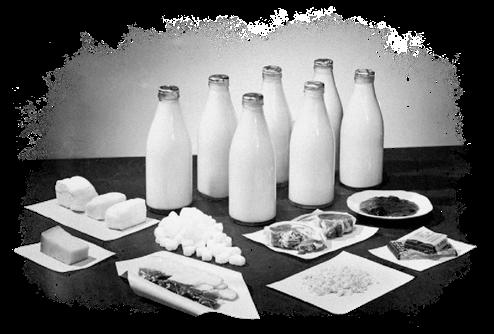
• Several small bags or containers
• A variety of food items (such as crackers, raisins, candy, etc.)
• Ration coupons (print or draw out paper coupons with different point values)
Divide the class into small groups (3-4 students per group).
Explain to the students that they will be participating in a rationing challenge, similar to the food rationing program during World War II.
Give each group a bag or container of food items and a set of ration coupons. Explain that each food item has a different point value and that they must use their ration coupons to “buy” the items they want to eat.
Set a time limit (such as 10-15 minutes) for the challenge.
Encourage students to work together to strategize and make the most of their ration coupons. After the time limit is up, have each group count up their remaining ration coupons and compare their results.
Discuss with the class how the rationing challenge relates to the food rationing program during World War II, and ask students to share their thoughts and experiences. This game is a fun and interactive way to teach students about the challenges of food rationing and encourage teamwork and critical thinking skills. It also allows students to experience firsthand how difficult it can be to make do with limited resources.
Q1: Why was the food rationing program introduced?
A1: The food rationing program was introduced to ensure everyone had enough to eat during World War II.
Q2: What did families receive in their ration books?
A2: Families received coupons for specific amounts of food items.
Q3: How did people buy food under the program?
A3: People had to use points to buy food.
Q4: What did the program require people to do?
A4: The program required people to plan their meals carefully and be creative with their cooking.
Q5: Did the program end when the war ended?
A5: No, the program lasted until 1947.
Food rationing was a program created by the government during World War II to make sure everyone had enough food to eat. People were only allowed to buy a certain amount of certain foods each week, using coupons to buy those foods. Rationing helped prevent hoarding and price gouging, conserved resources, and kept the war effort going strong. Rationing ended in the late 1940s.
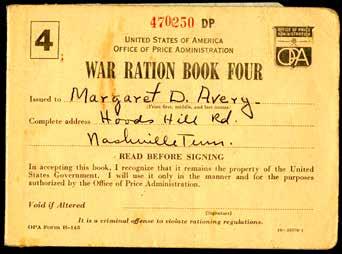
▸ Each family in the U.S. got ration books like this one
▸ Sugar was the first item to be rationed
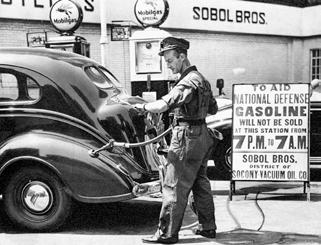
was saved by limited selling

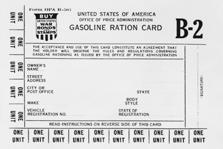
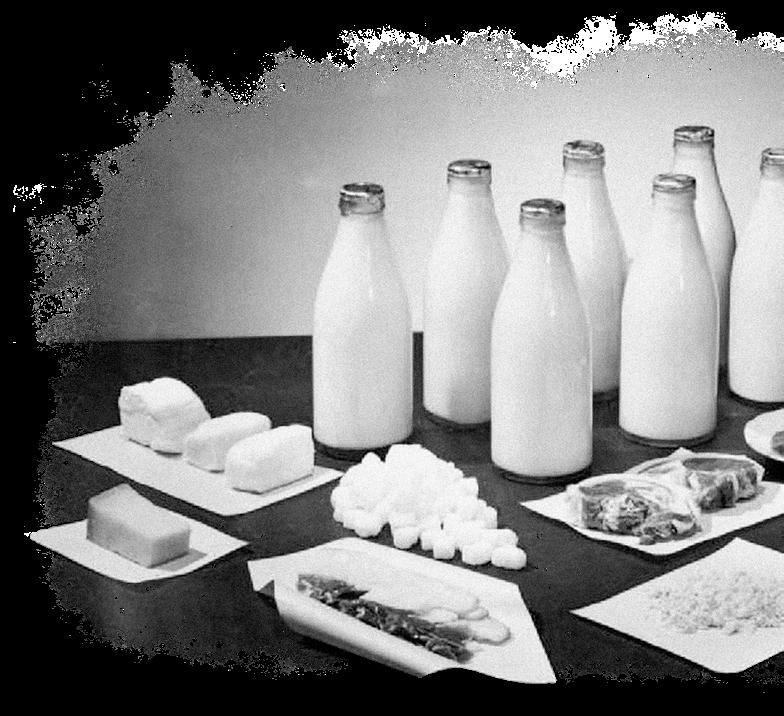
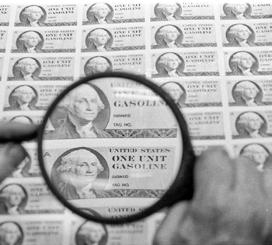

you know?
• Many Americans grew their own fruits and vegetables in their gardens to add food to their rations.
• Some people used roasted barley to make fake coffee.
How much food do you think a person needs each day? If a person works at a desk, they need less food than someone who runs in a race. The more active a person is, the more food they need. That’s why soldiers fighting in a war need more food than people at home.
In 1941, the United States joined World War II (1939-1945) and sent millions of soldiers to fight. These soldiers needed a lot of food and equipment. To transport the food and equipment, the U.S. needed boats. As a result, many boat companies that shipped food allowed the army to use their boats for the war. Even companies that did not lend their boats to the army stopped shipping food because they didn’t want to get sunk by German submarines. The Germans patrolled, or guarded, the ocean and sank the ships of countries they considered enemies.
With no ships available, the U.S. could not bring in foods that grow in other countries. These foods became scarce, or less available, in the United States. Even foods that grow in the U.S. became scarce because a lot of it was taken for the army.
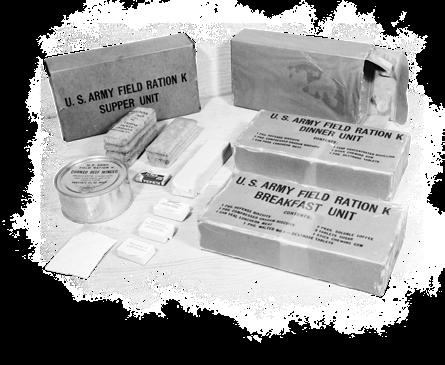
When there is not enough food, the prices start going up. The government realized that only rich people would be able to buy enough food. In 1942, the government started the Food Rationing Program. This program made laws rationing certain foods. To ration means to limit the food. Each family was given a ration book of stamps. Each food had a different type of stamp that said how much each person was allowed to buy. Some foods that were rationed were meat, cheese, and sugar. People were especially upset when coffee started being rationed on November 29, 1942.
patrolledguarded scarce - less available ration - limit challengingdifficult
Restaurants and ice cream stores also had fewer ingredients to make food. Some ice cream stores only sold one ice cream per customer, and some sold the second one for $100. That is worth about $1800 in 2023!
Other items were also rationed, like gasoline, bicycles, and shoes. These items use materials needed to make bullets and other war supplies.
After the war, food started becoming available, and the rationing system slowly ended. Coffee was the first food to come off the rationing list, and by 1946, rationing had ended. Although rationing was challenging, meaning difficult, it helped the U.S. win World War II.
1.
Why was food scarce in 1942?
a. People were fighting instead of making food.
b. There was no shipping, and the soldiers needed a lot of the food.
c. The government closed the farms.
d. Diseases destroyed many crops.
2. Which program was in charge of rationing foods?
a. The Military Supply Rationing Program
b. The Clothing Rationing Program
c. The Food Rationing Program
d. The Fuel Rationing Program
3. When did food rationing end in the United States?
a. 1941 b. 1942
c. 1945 d. 1946
4. Why couldn’t boats ship food items during World War II?
Possible answers: Companies stopped shipping because they were worried that German submarines would sink their boats. The boats were needed to transport soldiers and equipment.
5. Why do you think people were especially upset when coffee was rationed?
Possible answer: Many people consider coffee a necessity.
6. Name two items that were also rationed during World War II, besides food.
Gasoline, bicycles, and shoes
This is a list of some foods and other items that were rationed in the U.S. during World War II. People found creative ways to make do with less, although some substitute items worked better than others.
ITEM RATION AMOUNT
Sugar 1 pound per person per week
Meat 3/4 pound per person per week
Butter 1/4 pound per person per week
Gasoline Only an amount you can prove was needed for work and travel
Tires Only with proof of a real need
Shoes Only with proof of a real need
Coffee One pound every five weeks per person
Eggs One a week per person
Lumber Only with proof of a real need
Bicycles Only with proof of a real need
1. Which of the following do you think people did NOT use in place of sugar?
a. Honey b. Acorns
c. Corn syrup d. Molasses
2. Which of the following do you think was considered a need for a bicycle?
a. Doing exercise
b. Getting to work
c. Going to the park
d. Delivering newspapers
3. Which of the following do you think was considered a need for lumber?
a. Building a new porch
b. Fixing a leaky roof
c. Making wooden spoons
d. Building fences for farms
1794: The first U.S. labor union, called the Federal Society of Journeymen Cordwainers, is formed by Philadelphia shoemakers.
1827: The Mechanics Union of Trade Associations is formed in Philadelphia.
1866: The National Labor Union (NLU) is formed for labor reforms.
1877: The Great Railroad Strike occurs across multiple states.
1886: The American Federation of Labor (AFL) is formed.
1892: The Homestead Strike takes place at Carnegie Steel Company.
1905: The Industrial Workers of the World (IWW) is formed in Chicago.
1911: The Triangle Shirtwaist Factory fire in New York City kills 146 garment workers.
1932: The Ford Hunger March takes place in Detroit.
1934: The Minneapolis Teamsters Strike takes place.
1935: The National Labor Relations Act is passed, establishing workers’ right to organize.
1935: The Congress of Industrial Organizations is formed for mass production workers.
1946: The United Mine Workers Strike takes place.
1947: The Taft-Hartley Act is passed with new restrictions on labor unions.
Labor unions are groups of workers who join together to improve their wages and working conditions.
The first labor unions in the United States were formed in the early 1800s.
Some of the most important early unions were the Knights of Labor and the American Federation of Labor (AFL).
Labor unions gained more power and influence in the 1930s with the passage of laws like the National Labor Relations Act.
Labor unions have played an important role in shaping American economy and society.
In this history lesson, we will learn about labor unions, groups of workers who join together to improve their wages and working conditions. We will explore the history of labor unions in the United States and discover how they have impacted the lives of workers.

Labor unions have a long and important history in the United States. In the late 19th and early 20th centuries, workers faced difficult and dangerous conditions in factories, mines, and other workplaces. Wages were often low, hours were long, and safety standards were poor. In response to these challenges, workers began to form unions to advocate for better pay, shorter hours, and safer working conditions.
The first labor unions in the United States were formed in the early 1800s, but they did not become widespread until the late 1800s. Some of the most important early unions were the Knights of Labor and the American Federation of Labor (AFL). These unions organized strikes and other forms of collective action to push for better working conditions. Over time, labor unions gained more power and influence. In the 1930s, the passage of laws like the National Labor Relations Act gave workers more legal protections and made it easier for them to join unions. During this period, many workers joined the Congress of Industrial Organizations (CIO), a federation of unions that organized workers in industries like steel, automobile manufacturing, and mining.
• Cards with negotiation topics
Suggested list of topics:
• Wages: higher pay or better benefits
• Working hours: shorter hours or more flexible scheduling
• Safety conditions: safer working conditions or better safety equipment
• Training and education: more training opportunities or access to education
• Job security: protection against layoffs or better severance packages
• Health care: better health care coverage or more affordable premiums
• Retirement benefits: better retirement benefits or more investment options
• Family leave: more time off for family or medical reasons
Divide the class into groups, with each group representing a different industry or occupation (e.g., teachers, miners, factory workers, etc.).
Each group should choose a spokesperson who will negotiate on behalf of the group.
Present a list of demands or issues that need to be resolved (e.g., wages, working hours, safety conditions, etc.) and the spokesperson for each group should negotiate with the management to reach a compromise or agreement.
The negotiations can be timed, and a buzzer or bell can be used to signal the end of the negotiation period.
After the negotiations, each group should report back to the class on their progress and the compromises they reached.
Q1: What are labor unions?
A1: Labor unions are groups of workers who join together to improve their wages and working conditions.
Q2: When were the first labor unions formed in the United States?
A2: The first labor unions were formed in the early 1800s.
Q3: What laws gave workers more legal protections and made it easier for them to join unions?
A3: The National Labor Relations Act, passed in the 1930s, gave workers more legal protections and made it easier for them to join unions.
Q4: How have labor unions impacted American economy and society?
A4: Labor unions have helpd by pushing for higher wages and better working conditions. They have also been a key part of social movements for civil rights and other progressive causes.
Q5: Why were labor unions formed in the United States?
A5: Labor unions were formed to advocate for better pay, shorter hours, and safer working conditions for workers.
Labor unions have played an important role in shaping American economy and society. They have helped create a middle class by pushing for higher wages and better working conditions. They have also been a key part of social movements for civil rights and other progressive causes.
Before the 1800s, everything was made by hand. Making clothing or shoes was difficult and took a very long time. In the 1800s, many machines were invented to easily produce all types of products. However, they also made life difficult for the workers who ran them.
In the 1800s, factories full of new machines opened. Many different items were produced in the factories. They were huge rooms filled with people working at machines the entire day.
The machines were very big and dangerous to use. The owners would hire anyone to do the dangerous work, even children. They did not care about their workers and paid them very little. This forced the workers to work long hours to make enough money for their families. These huge factories were sometimes called sweatshops because people were forced to work so hard, it made them sweat. The factory owners made a lot of money from hiring many people
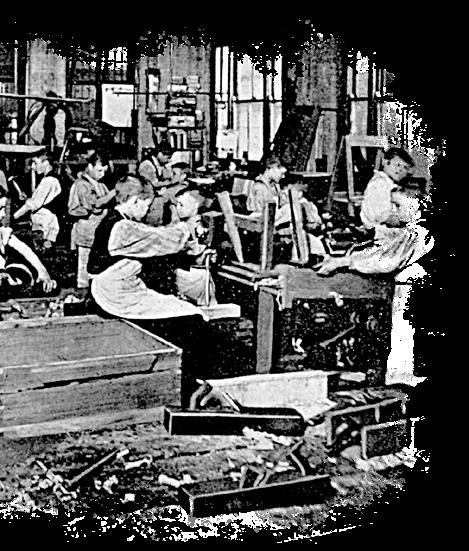

to work for such long hours. If the workers complained, they were fired, and other people took their places. Some sweatshops locked the workers in the factory the entire day to stop them from taking breaks.
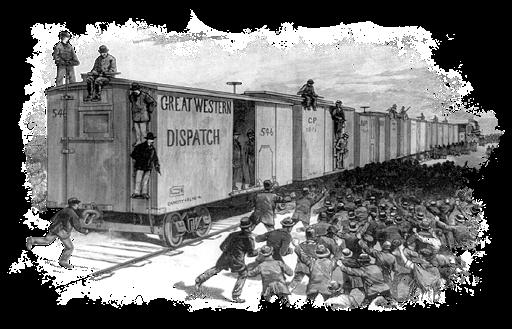
• In 1794, shoemakers in Philadelphia, Pennsylvania, started the Federal Society of Journeymen Cordwainers, which some people call the first labor union.
• The Boston Police went on strike for a few days in 1919.
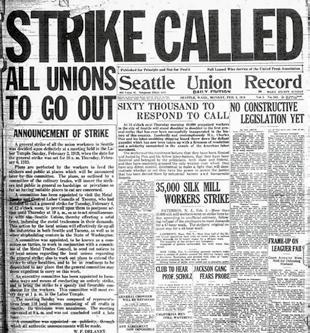
On November 15, 1881, a group of workers met in Pittsburgh, Pennsylvania, and began a labor union called the American Federation of Labor, or AFL for short. A labor union is a group of people who represent a lot of workers who all want the same things. The AFL demanded shorter working hours, safer conditions, and
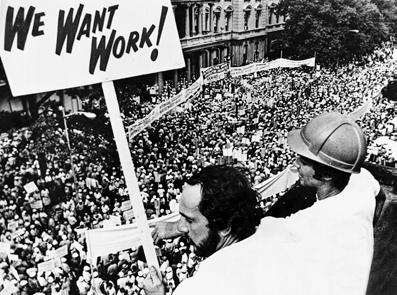
A
sweatshop - factory where workers sweat from being forced to work so hard labor union - a group of people who represent a lot of workers who all want the same things wages - pay strike - when a lot of workers stop working at the same time
by
better wages for all the members of the group. The pay a worker gets are his wages.
The AFL arranged strikes to force the factory owners to listen to the workers’ demands. A strike is when a lot of workers stop working at the same time. The AFL represented millions of workers who all joined the strike. When all of their workers stopped working, the owners lost a lot of money. They had no choice but to pay their workers better. Over time, more unions were started, forcing even more companies to pay their workers higher wages.
In 1955, the AFL joined another union called the Congress of Industrial Organizations (CIO). Together, they became the AFLCIO, the biggest and most powerful union in the U.S. In 1979, they had 20 million members. As of 2023, there are 12 million members of the AFC-CIO. Many members left the union when Congress passed laws to protect workers in the 1980s.
Most jobs offer extra benefits besides payment, such as allowing workers to take a certain amount of time off or helping pay for doctors. These benefits are the result of the work of unions like the AFL.
▸ AFL-CIO Headquarters, Washington, D.C and it’s symbol
1.
What is the name of the union formed by the AFL and CIO in 1955?
a. AFL-CIO
b. AFL-COO
c. AFL-CI
d. AFLO
2. Which of the following is a benefit that jobs offer?
a. Safe working conditions
b. Days off
c. Free lunch
d. Babysitting
3. Who did the factory owners hire to work in the 1800s?
a. Skilled workers
b. Children
c. Adults
d. Anyone
4. Why were the factories called sweatshops?
Because the workers sweat a lot from being forced to work so hard.
5. Do you think machines made life easier or harder for people in the 1800s?
Easier: It was easier to make things. Harder: People needed to run the machines, which were difficult and dangerous to use.
6. What were some of the AFL’s demands?
Better wages, shorter working hours, and safer conditions for its members.
The following chart shows when some unions in the USA started and the types of workers they represent.
Fill in the blanks based on the above chart.
1. The UMWA started representing in 1890.
2. The started in 1979 and has members.
3. Three million teachers are represented by the
4. The most recent union to open was the , in 1979.
5. There are members of the IAFF.
6. Why do you think the UMWA has the least number of members?
There are not many coal miners
1913: Rosa Parks is born on February 4 in Tuskegee, Alabama.
1943: Rosa Parks becomes involved in the Montgomery chapter of the National Association for the Advancement of Colored People (NAACP).
1955: On December 1, Rosa Parks refuses to give up her seat on a Montgomery bus to a white person, sparking the Montgomery bus boycott.
1956: The Supreme Court rules that segregation on public buses is unconstitutional, and the boycott ends on December 20.
1960: Rosa Parks moves to Detroit, Michigan, to escape death threats and harassment in Montgomery.
1964: President Lyndon B. Johnson signs the Civil Rights Act, prohibiting discrimination based on race, color, religion, sex, or national origin.
1987: Rosa Parks cofounds the Rosa and Raymond Parks Institute for Self-Development, providing educational opportunities for young people.
1999: Rosa Parks is awarded the Congressional Gold Medal, the highest civilian honor awarded by the United States Congress.
2005: Rosa Parks dies on October 24 at the age of 92 in Detroit, Michigan.
Rosa Parks was an African American woman who lived during the time of segregation in the United States.
On December 1, 1955, she refused to give up her bus seat to a white person, sparking the Montgomery bus boycott.
The boycott lasted for over a year, ultimately leading to the desegregation of public transportation in Montgomery.
Rosa Parks’ bravery and determination inspired a new era of the civil rights movement.
Rosa Parks received numerous awards and honors throughout her life, including the Presidential Medal of Freedom.
Students will learn that Rosa Parks was an African American woman who played an important role in the civil rights movement. She became famous for refusing to give up her seat on a bus to a white person in Montgomery, Alabama, in 1955. Her brave actions helped inspire a movement that fought for equal rights for all people, regardless of their race.
Rosa Parks’ legacy continues to inspire people around the world to fight for justice and equality.
Rosa Parks was born on February 4, 1913, in Tuskegee, Alabama. She grew up during a time when segregation was the law of the land, meaning that black people and white people were kept separate in almost every aspect of life. Black people had to use separate facilities, schools, and even drink from separate water fountains.
In 1955, Rosa Parks was on her way home from work on a bus when the driver asked her to give up her seat to a white person. Rosa refused and was arrested. Her brave actions inspired a boycott of the Montgomery bus system, led by a young minister named Martin Luther King Jr. The boycott lasted for over a year, eventually leading to a Supreme Court ruling that segregation on public buses was unconstitutional.
Rosa Parks became known as the “mother of the civil rights movement” and continued to fight for equal rights for the rest of her life. She worked with organizations such as the NAACP and spoke out against injustice wherever she saw it.
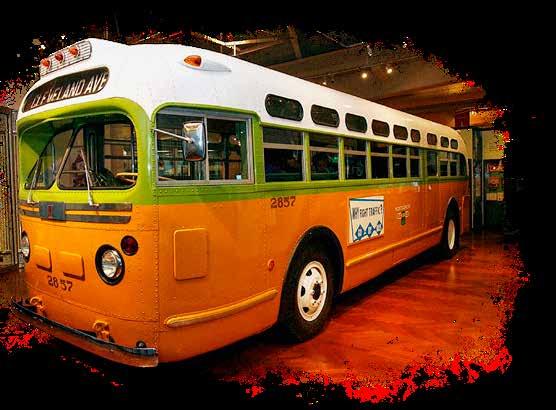
• Fabric or paper squares in various colors and patterns (at least one per student)
• Large piece of fabric (such as a tablecloth or sheet) to use as the backing for the quilt
• Scissors
• Fabric markers or fabric paint
• Glue or needle and thread
The Freedom Quilt is a craft activity allowing students to create a meaningful artwork inspired by the symbols and messages of the civil rights movement. It is based on the tradition of quilting used by the Underground Railroad to send coded messages to escaping slaves.
To make a Freedom Quilt, provide students with squares of fabric, scissors, and markers or fabric paint. Encourage them to think about the symbols and messages of the civil rights movement and create designs that represent freedom, justice, and equality. Some symbols that can be used include the American flag, the peace sign, and the raised fist.
Q1: Who was Rosa Parks?
A1: Rosa Parks was an African American woman who refused to give up her bus seat to a white person, inspiring a civil rights movement.
Q2: What is segregation?
A2: Segregation is the separation of black and white people in almost every aspect of life.
Q3: What was the Montgomery bus boycott?
A3: The Montgomery bus boycott was a protest movement in which African Americans stopped riding buses in Montgomery, Alabama, to protest against segregation on public transportation.
Q4: Why was Rosa Parks arrested?
A4: Rosa Parks was arrested for refusing to give up her bus seat to a white person.
Q5: How can we follow Rosa Parks’ example?
A5: We can follow Parks’ example by standing up for what is right, fighting for justice and equality, and treating everyone with respect and kindness.
Once students have created their designs, they can cut out the fabric squares and arrange them in a pattern on a larger piece of fabric, such as a tablecloth or sheet. They can then sew or glue the squares onto the larger piece of fabric to create the quilt.
Rosa Parks’ actions had a profound impact on the civil rights movement in the United States. Her bravery and determination to stand up against segregation and racism inspired a generation to fight for justice and equality. Rosa Parks’ legacy continues to inspire people around the world to stand up for what is right and work toward a more just and equal society.
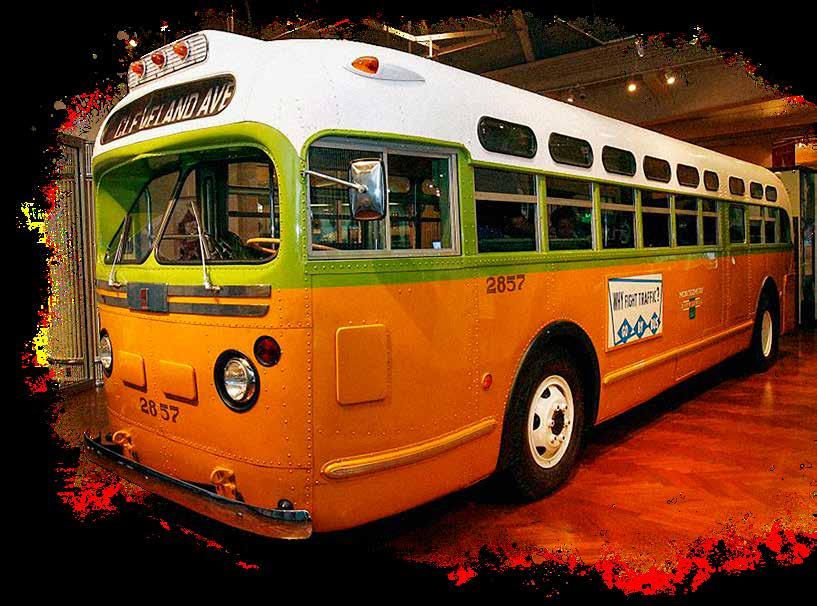
Bus Boycott led to similar boycotts in other cities, such as Baton Rouge, Louisiana, and Tallahassee, Florida.
• Rosa Parks was a hardworking student at school. However, she had to stop studying when she was 16 to look after her very ill grandmother and then her mother. After she married, she went back to school and achieved her high school diploma.
It can be tough to do the right thing when everyone else is doing something wrong. But Rosa Parks showed us that even one person can make a big difference. She realized that some laws were unfair and decided to stop them
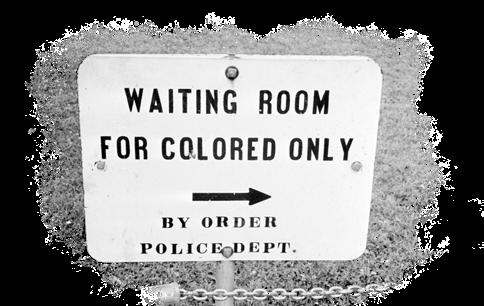
▸ Black people were not allowed to use many of the same public places as white people

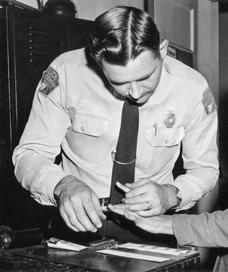
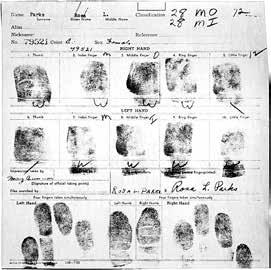
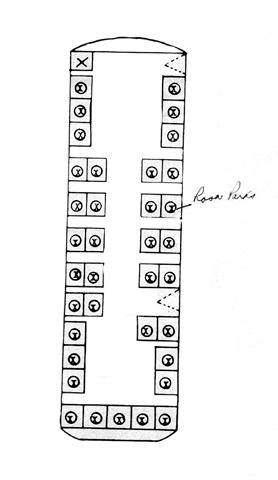

For many years, some states in the United States had laws that treated black people worse than other people. Black people were not allowed to use many of the same public places as white people. Every store had two restrooms, one with a sign that read “Whites Only.” The other was only for black people. Using the wrong restroom was illegal. When a person breaks the law, they are doing something illegal. Black people had to sit in the back of city buses. There were many other laws that treated black people like they were worth less than other people.
On December 1, 1955, a black seamstress named Rosa Parks boarded a bus in Montgomery, Alabama. A woman who sews clothing is a seamstress. Parks sat down in the proper part of the bus. The bus filled up, and there were not enough seats for all the white passengers. Passengers are the people who are traveling by bus, car, plane, or train. The bus driver instructed Parks and three other black passengers to stand up for a white person. The other passengers stood up, but Parks
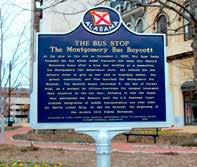
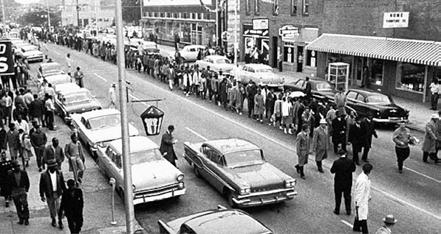
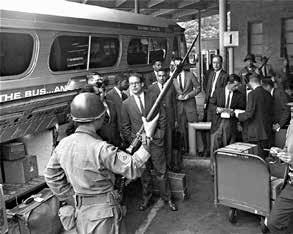
refused to give up her seat. The bus driver warned Parks that he was going to call the police, to which she responded, “You may do that.”
Rosa Parks was arrested, and her trial was set for December 5. The black community of Montgomery, Alabama, arranged a bus boycott for the day of Parks’ trial. A boycott is when a group of people stop using a specific store or service. This would cost the city a lot of money and hopefully convince them to stop the unfair laws. On December 5, all black people in Montgomery either walked or took taxis, but none of them took buses. The court said that Parks was guilty and made her pay $14, which is worth about $150 in 2023.
The people of Montgomery decided to continue the boycott. Thousands of people helped the boycott by giving each other rides. Some white people also gave rides to black boycotters. The city of Montgomery lost a lot of money each day the boycott continued.
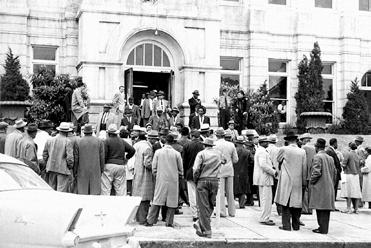
The boycott lasted for 381 days, until June 1956. Shortly after, the Supreme Court said that separate seating on buses cannot continue to be the law.
In 1996, the president of the U.S. gave Parks an award for fighting unfair laws. She was also honored by Congress in 1999. Parks was 92 when she died in 2005.
1.
What was Rosa Parks’ response to the bus driver when he threatened to call the police?
a. “I’m sorry, I’ll give up my seat.”
b. “I’ll stand up.”
c. “I’ll move to the back of the bus.”
d. “You may do that.”
2. When did the bus boycott start?
a. December 1, 1955
b. December 5, 1955
c. December 1, 1956
d. December 5, 1954
3. How long did the boycott last?
a. 1 day
b. 5 days
c. 381 days
d. 143 days
4.
What did the bus driver ask Rosa Parks and other black passengers to do?
To give up their seats to white people.
5. Why do you think the people decided to start the boycott?
Possible answer: Because Rosa Parks lost the court case
6. What was the point of the bus boycott?
To make the city lose money so they would stop the unfair laws
LEGAL OR ILLEGAL?
For a long time, there were laws that were unfair to black people. Below are a few of the laws and the years they started and ended. Once a law was ended, it became illegal to use the law to treat black people unfairly.
Based on the above chart, write if the following situations were legal or illegal.
Separate public schools 1877 1954
Separate public places, such as libraries and transportation 1877 1964
A test that people had to pass in order to vote 1890 1965
Laws about where Black Americans could live 1917 1967
1. In 1888, the principal of Alabama Public School did not accept Tim because he was black.
2. In 1901, a landlord in Georgia refused to rent an apartment to a black family.
3. In 1930, a bus company in Alabama said that black passengers have to sit in the back of the bus.
4. In 1950, a park in Arkansas had separate areas for white and black visitors.
5. In 1970, a voting booth in Louisiana said that black people have to take a reading test before voting.
1880: The British and French governments sign an agreement to build a Channel Tunnel, but the project is abandoned due to political and financial issues.
1957: The Channel Tunnel Study Group is formed to examine the feasibility of a tunnel under the English Channel.
1964: The British and French governments agree to conduct a joint study of a Channel Tunnel.
1973: The Channel Tunnel Act is passed by the British Parliament, allowing for the construction of a tunnel.
1974: The French government approves the construction of a tunnel under the English Channel.
1985: British Prime Minister Margaret Thatcher and French President François Mitterrand officially launch the construction of the Chunnel Tunnel.
1988: Tunnel boring machines begin excavating the tunnels from both the French and British sides.
1990: The two tunnel sections meet in the middle, creating a breakthrough.
1994: The Chunnel Tunnel is officially opened by Queen Elizabeth II and French President François Mitterrand.
1995: Regular passenger and freight services begin running through the Chunnel Tunnel.
2007: Eurostar, the highspeed passenger train service, moves its London terminal to St. Pancras International.
Present day: The Chunnel Tunnel is still in use, and approximately 21 million passengers and 1.5 million trucks travel through it each year.
Explain what the Chunnel Tunnel is and where it is located.
Discuss the history of the Chunnel Tunnel and how it was built.
Talk about the technology used to build the Chunnel Tunnel.
Discuss the benefits of the Chunnel Tunnel, including faster travel and easier transportation of goods.
Discuss the official opening of the Chunnel Tunnel and its significance.
Students will learn that the Chunnel Tunnel is an engineering marvel running under the English Channel and connecting two countries, France and England. It took many years to build and has made travel and transportation between the two countries much easier.
The idea of the Chunnel Tunnel, also known as the Channel Tunnel, was first proposed in the early 19th century. However, it was not until the 20th century that serious plans were made to build it. After many years of planning, construction began on the Chunnel Tunnel in 1988. It was a massive project that involved digging two tunnels, one for trains going from France to England and the other for trains going from England to France. The tunnels run under the English Channel, which is about 23 miles wide.
The Chunnel Tunnel was officially opened in 1994 by Queen Elizabeth II and French President Francois Mitterrand. It was a historic moment, as it was the first time that England and France were physically connected in this way. The Chunnel Tunnel is still in use today, and it has made travel and transportation between France and England much easier.
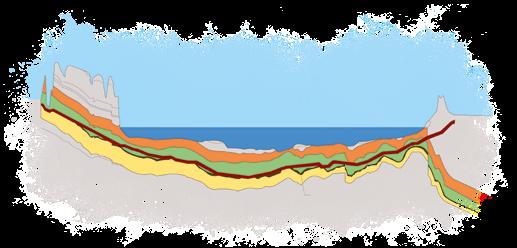
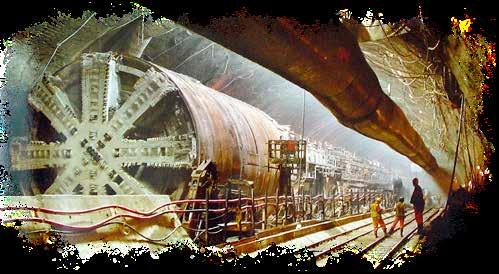
The Chunnel Tunnel is an amazing engineering feat. It was built using state-of-the-art technology, including tunnel boring machines and reinforced concrete. The tunnels are lined with steel and have an elaborate ventilation system to ensure passengers are safe and comfortable.
One of the main benefits of the Chunnel Tunnel is that it has made travel between France and England much faster and more convenient. Before the Chunnel Tunnel was built, people had to take a ferry or fly to travel between the two countries. The Chunnel Tunnel has also made transportation of goods between the two countries much easier, as trucks and trains can now travel through it.
• Cardboard boxes, Paper tubes
• Paint, Markers
• Scissors, Glue
Divide the class into groups of 4-5 students. Give each group a cardboard box and some paper tubes.
Instruct the students to cut off the flaps of the cardboard box and decorate the outside of the box to look like a train.
Instruct the students to cut the paper tubes to different lengths to create the tunnels.
Instruct the students to glue the tunnels to the inside of the cardboard box.
Once the glue is dry, instruct the students to decorate the inside of the box with paint and markers.
Optional: The students can also create mini flags of France and England to place at the entrance of their tunnels. Once the craft is complete, allow each group to present their mini Chunnel Tunnel to the class.
Q1: What is the Chunnel Tunnel?
A1: The Chunnel Tunnel is a tunnel that runs under the English Channel, connecting France and England.
Q2: When was construction on the Chunnel Tunnel started?
A2: Construction on the Chunnel Tunnel started in 1988.
Q3: Who officially opened the Chunnel Tunnel?
A3: The Chunnel Tunnel was officially opened by Queen Elizabeth II and French President Francois Mitterrand.
Q4: What is the main benefit of the Chunnel Tunnel?
A4: The Chunnel Tunnel’s main benefit is that it has made travel and transportation between France and England much easier.
Q5: What is the significance of the Chunnel Tunnel?
A5: The Chunnel Tunnel’s significance is that it was the first physical connection between France and England.
The Chunnel Tunnel is a tunnel that runs under the English Channel, connecting France and England. It was built using state-of-the-art technology and was officially opened in 1994 by Queen Elizabeth II and French President Francois Mitterrand. The Chunnel Tunnel has made travel and transportation between France and England much easier.
Trains were invented in 1804 and became a popular way to travel long distances. Many travelers enjoyed watching the passing towns and fields. In 1986, long after trains were invented, the Chunnel was built. The Chunnel is a special tunnel for trains to travel under the sea between England and France.
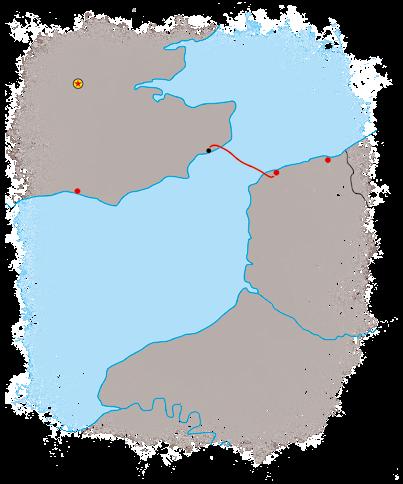
The countries of England and France are separated by a long channel of water. A channel is a water passageway between two pieces of land. The water is called the English Channel and is a little more than 21 miles wide. For many years, the only way to travel from one country to the other was by boat, which took a long time. Traveling by airplane is faster than by boat but can cost a lot of money.
In 1802, Albert Mathieu had the idea of building a tunnel between England and France. This would be a better mode, or way, of travel between the two countries. It would make it more

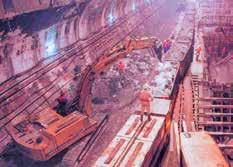
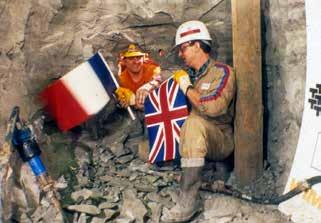
• The Chunnel is the third-longest train tunnel in the world.
• The Chunnel is the longest underwater tunnel in the world. Did you know?
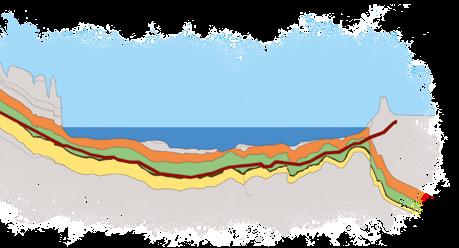
convenient for them to do business with each other. Something that is easy to do is convenient. In the late 1800s, an English company tried to build the tunnel but gave up after the tunnel kept collapsing.
In the 1980s, the British and French governments hired a company to see if they could build the tunnel. They said that it was possible to build the tunnel with newer technology than what was available in the 1800s. In 1986, England and France signed the Treaty of Canterbury, allowing a tunnel between the countries.
channel - water passageway between two pieces of land mode - way convenient - easy maintenance workers - people who make sure things are in good condition
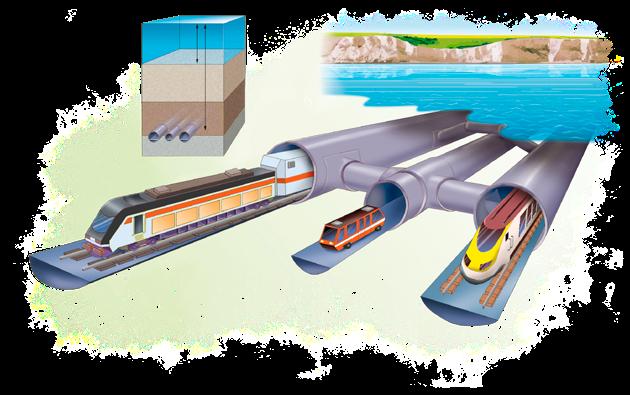
It took six years, from 1988 until 1994, to build the tunnel, which cost about nine million euros. The euro is the money used by many countries in Europe. About 13,000 workers dug 150 feet below sea level to build three tunnels connecting the two countries. Each country began the tunnel from their side, and on December 1, 1990, the tunnels met. Graham Fagg from England and Phillippe Cozette from France were the first to meet in the middle of the tunnel.
It took another four years for the tunnel to be ready for use. In May 1994, the tunnel opened. The tunnel through the channel is called the Chunnel. The Chunnel consists of three tunnels. Two tunnels are for trains, and the third is for people to use in an emergency. The third tunnel is also used by maintenance workers. Maintenance workers are people who make sure things are in good condition. The trains are very large and are able to carry cars and trucks! The tunnels are 31 miles long and take a little longer than half an hour to cross. A ticket for the Chunnel train costs about $200.
Each year, almost ten million people cross the Chunnel. About four million tons of goods also cross the Chunnel each year. That’s the same weight as 20,000 elephants!
1. When did the two sides of the Chunnel meet?
a. January 1, 1980
b. December 1, 1990
c. May 6, 1990
d. December 10, 1990
2. Why did an English company try to build the tunnel in the late 1800s but gave up?
a. It was too expensive to build.
b. They did not have enough tools.
c. The tunnel kept collapsing.
d. They ran out of workers.
3. Who had the idea of building a tunnel between England and France in 1802?
a. Albert Mathieu
b. Phillippe Cozette
c. Graham Fagg
d. John Smith
4. What is the name of the body of water separating England and France?
The English Channel
5. Why do you think the tunnel is called The Chunnel?
6. Why did the tunnel keep collapsing in the 1800s and not when they built it in 1988?
Combination of the words Channel and tunnel. The tunnel was built through the English Channel. They didn’t have the proper technology yet.
Building tunnels for cars and trains takes a special machine created just for tunnels. A tunnel boring machine (TBM) is a huge machine that drills through rock and soil to create a tunnel. This is a picture of a TBM.
Are the following statements true or false? If the statement is false, explain why.

1. Some tunnel-boring machines have restrooms in the tunnel shield.
False, they are in the trailing gear.
2. The conveyor belt gets longer as the machine continues digging.
3. The tunnel walls are made of steel.
False, the walls are made of concrete.
4. TBMs are used to make tunnels for trains and cars.
1917: The Bolshevik Revolution establishes the Soviet Union as a communist state.
1922: The Union of Soviet Socialist Republics (USSR) is formed.
1953: Joseph Stalin, longtime leader of the Soviet Union, dies, and Nikita Khrushchev takes over.
1964: Leonid Brezhnev becomes the leader of the Soviet Union.
1985: Mikhail Gorbachev is appointed as the General Secretary of the Communist Party of the Soviet Union.
1986: Gorbachev introduces glasnost, a policy of greater openness and transparency, and perestroika, a policy of economic and political restructuring.
1989: The fall of the Berlin Wall marks the beginning of the end of the Cold War.
1990: The first free elections are held in the Soviet Union, and many republics begin pushing for independence.
August 1991: A group of hardline communists attempt to overthrow Gorbachev in a coup, but fail.
December 1991: The leaders of the Soviet republics sign the Belavezha Accords, dissolving the Soviet Union and establishing the Commonwealth of Independent States.
1992: Russia becomes the largest of the newly independent states, and Boris Yeltsin becomes its first president.
Explain what the Soviet Union was and when it was founded.
Describe the Soviet Union’s role in world events during the Cold War. Discuss the economic and social issues the Soviet Union faced in the 1980s. Explain Gorbachev’s reforms and why they were significant.
Describe the factors leading to the Soviet Union’s collapse. Explain the events leading to the dissolution of the Soviet Union and what happened to its former republics.
The Soviet Union was once a powerful country spanning Europe and Asia. However, it collapsed in 1991, and the world changed forever. In this lesson, we will explore the history of the Soviet Union’s collapse and learn about the events leading to its downfall.
The Soviet Union was founded in 1922 following the Russian Revolution. It was a socialist state where the government controlled all aspects of life, including the economy, media, and education. The Soviet Union was a dominant world power for several decades, and it played a significant role in shaping world events during the Cold War.
However, by the 1980s, the Soviet economy was in trouble, and the government was struggling to maintain control over the diverse regions of the country. The Soviet leadership tried to address these issues by implementing reforms, but they were slow and ineffective. In 1985, Mikhail Gorbachev became the leader of the Soviet Union. He introduced a series of reforms, including glasnost (openness) and perestroika (restructuring). These policies were aimed at making the Soviet Union more democratic and efficient. However, they also opened up the country to criticism and dissent, which had been suppressed for decades.
The Soviet Union’s collapse was triggered by a combination of factors. The economy was in shambles, and the government was losing control of the country’s many ethnic groups. Additionally, the Soviet Union’s military spending had drained its resources, leaving little for social welfare programs. In 1991, a group of hardline communist leaders attempted to overthrow Gorbachev and restore the old Soviet system. However, their coup failed, and Boris Yeltsin, the president of the Russian Federation, emerged as the country’s new leader. Yeltsin oversaw the dissolution of the Soviet Union, and on December 26, 1991, the Soviet Union was officially dissolved. Its former republics became independent states, and the world was changed forever.
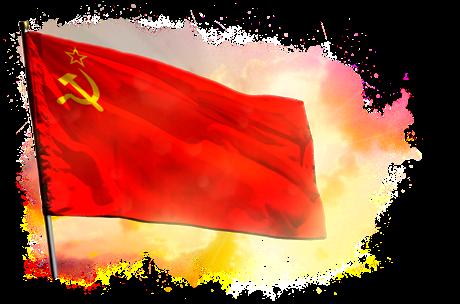
• Paper, Markers, Scissors, Glue, Tape
• Photos or other visuals related to the chosen topic
• Printed or written research materials
• Poster board or other display materials (optional)
• Display table or other surface to set up the exhibit
Create Exhibits:
Divide the class into groups. Each group can work on a different exhibit.
Suggestions:
Economic collapse: Economic factors that contributed to the collapse of the Soviet Union. Students can include charts, graphs, and other visuals to demonstrate the decline of the Soviet economy.
Political reforms: Highlight the political changes that occurred in the Soviet Union in the years leading up to its collapse. Illustrate the rise of Gorbachev and the implementation of policies like glasnost and perestroika.
Role of key figures: Focus on the role of key figures like Mikhail Gorbachev and Boris Yeltsin in the collapse of the Soviet Union.
Nationalism and independence movements: Explore the nationalist and independence movements that emerged in various parts of the Soviet Union in the late 1980s and early 1990s.
Impact on Eastern Europe: Examine the impact of the collapse of the Soviet Union on Eastern Europe, including the fall of the Berlin Wall and the reunification of Germany.
International relations: Focus on the impact of the collapse of the Soviet Union on international relations. Students can explore the changes in the global balance of power resulting from the collapse of the Soviet Union.
: Why did the Soviet Union collapse?
A1: The Soviet Union collapsed because it faced many problems, including a bad economy and different groups of people not getting along.
: Who was Mikhail Gorbachev, and what did he do?
A2: Mikhail Gorbachev was the leader of the Soviet Union. He tried to make it better by making some changes to how the country was run.
Q3: What happened when some leaders tried to take over the Soviet Union in 1991?
A3: The leaders who tried to take over the Soviet Union in 1991 were not successful.
Q4: What happened after the Soviet Union broke apart?
A4: After it broke apart, the different parts of the Soviet Union became their own countries, and there were many changes.
The collapse of the Soviet Union marked the end of the Cold War and the beginning of a new era of international relations. It also led to significant political and economic changes in the former Soviet republics, many of which struggled to adapt to their new circumstances. The legacy of the Soviet Union continues to be felt today, both in the former Soviet republics and in the wider world.
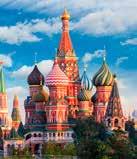
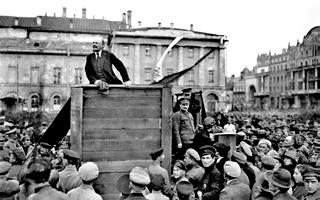
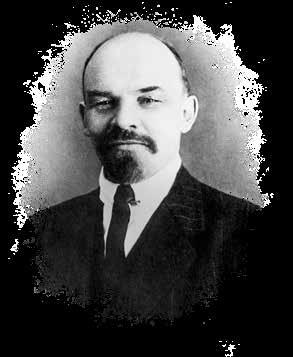
Did you know?
• The USSR was the largest country in the world, at over 13 million square miles.
• In 1957, the USSR became the first country to send a satellite, Sputnik 1, to space.
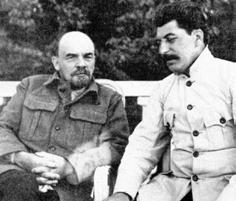
For hundreds of years, Russia was ruled by kings. The kings, called czars, did not care about their subjects very much. Someone ruled by a king is a subject. The czars gave power to a few rich people, and everyone else was poor and unhappy. In the early 1900s, the people of Russia decided that it was time for a change.
In 1917, Vladimir Lenin led the people of Russia in a revolution against the czars. A revolution is when the people of a country fight against their government. The Russian Revolution lasted until 1922 when Lenin’s army put down all the enemies of the Revolution.
Vladimir Lenin became the new leader of Russia and renamed it the USSR. USSR stands for Union of Soviet Socialist Republics. Lenin ran the country with a communist government. Communism is a type of government where the government owns everything. The government gives everyone a job and provides them with food and everything they need to live. Lenin said that communism would make everyone’s life easier and happier. Lenin led the country for two years until he died in 1924.
After Lenin died, Joseph Stalin became the ruler of the USSR. Stalin wanted to make the Soviet Union into a rich country with plenty of food. He ordered millions of people to work in factories and on large farms owned by the government. Anyone who didn’t cooperate with Stalin’s plan was killed or sent to prison. This caused millions of people to die. Stalin also arrested millions of people for disagreeing with communism. These people were either killed or sent to labor camps.
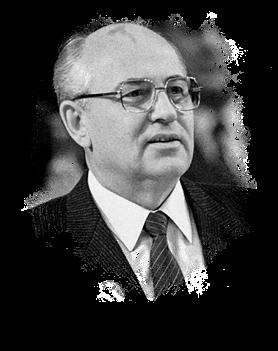
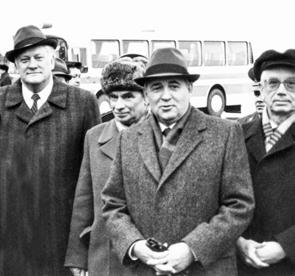
subject - someone ruled by a king revolution - when the people of a country fight their government communism - type of government where the government owns everything superpower - a country with a lot of power
After World War II, the USSR took over many countries and became one of the two superpowers in the world. When a country has a lot of power, it is a superpower. The other superpower was the United States. The two superpowers hated each other and were always ready for a war to break out between them.
Communism did not make the people happy or rich. In the 1980s, people began to march in the street to show that they were unhappy with the government. Many people went to prison for joining these marches.
In 1985, Mikhail Gorbachev became the leader of the Soviet Union. Gorbachev gave people the freedom of speech. This was the first time people could march against the government without punishment. Most people in the USSR were happy with their new freedom. However, many werewere still very poor and were unhappy with Gorbachev.
Some people in the government did not want communism in Russia to end. They were unhappy that Gorbachev was giving people freedom. In August 1990, eight members of the government tried to appoint a new leader. They wanted a strict ruler who would not give people any freedom. They failed because the army also wanted more freedom, and the eight were arrested.
When some of the countries ruled by the USSR saw that the army would not fight for a communist government, they declared independence. On December 25, 1991, Gorbachev officially broke up the USSR. The rest of the countries of the USSR became independent, and the Russian people voted for a leader for the first time ever.
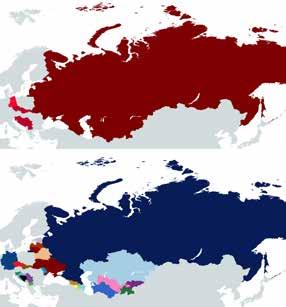
1. What does USSR stand for?
a. United States of Soviet Republics
b. Union of Soviet Socialist Republics
c. United Soviet States of Russia
d. Union of Socialist Soviet Republics
2. Who became the leader of the USSR in 1924?
a. Vladimir Lenin
b. Joseph Stalin
c. Mikhail Gorbachev
d. Alexander Kerensky
3. What were the two superpowers in the world after World War II?
a. USSR and China
b. USSR and Germany
c. USSR and the United States
d. USSR and Great Britain
Communism:
4. Who led the Russian Revolution in 1917?
Vladimir Lenin
5. What type of government was established in Russia after the Russian Revolution?
Communist government
6. Why do you think Gorbachev gave people freedom of speech?
Possible answer: To keep them happy with his government, to be more fair
What is the difference between communism and capitalism?
The government owns all property and materials. The government does all the business and gives everyone a job. The government also supports everyone. The goal of communism is that everyone should have the same amount instead of some people being richer than others.
Capitalism:
Property and materials are owned by private people. People open businesses and factories to earn money. The businesses that people open give other people jobs to support themselves. The business owner usually makes a lot more money than his workers, but if the business fails, only he loses money because he must still pay his workers.
Are the following sentences true about communism or capitalism? Check the proper box.
1. The government owns the factory and decides how to use the profits.
2. Private people develop a new product and sell it to earn money.
3. Everyone has the same amount of money given to them by the government.
4. People can start their own businesses but might lose their money if the business fails.
5. Private companies decide how much to pay their workers.
August 19, 1867: Orville Wright is born.
April 16, 1869: Wilbur Wright is born.
1878: The Wright brothers witness a public demonstration of a Penaud helicopter toy, sparking their interest in flight.
1892: The Wright brothers open a bicycle repair shop in Dayton, Ohio.
1899: The Wright brothers begin to study the subject of flight and experiment with different designs for flying machines.
1900: The Wright brothers build their first successful glider and test it at Kitty Hawk, North Carolina.
1901: The Wright brothers continue to experiment with gliders and make improvements to their design.
1902: The Wright brothers build a new glider more stable and easier to control than their previous gliders.
December 17, 1903: The Wright brothers make their first successful powered flight at Kitty Hawk, North Carolina.
1904: The Wright brothers continue to improve their airplane design and make longer and higher flights.
1905: The Wright brothers make their first public flights in Europe.
1906: The Wright brothers are granted a patent for their flying machine.
1908: Orville Wright is injured in a plane crash, and his passenger, Lt. Thomas Selfridge, is killed. This is the first aviation fatality.
1909: The Wright brothers sell their patent to the U.S. government.
February 8, 1910: Orville opens the first civilian flight training school in Montgomery, Alabama, marking the birth of commercial aviation.
May 30, 1912: Wilbur Wright dies of typhoid fever.
January 30, 1948: Orville Wright dies.
Introduce: Begin by introducing the Wright brothers to your students. Tell them about their early lives and their interest in flight.
Discuss: Once your students have a basic understanding of the Wright brothers, start a discussion about their invention of the powered airplane. Ask your students to think about what problems the Wright brothers had to solve in order to build a successful flying machine.
Explore: Have your students explore different aspects of the Wright brothers’ work. For example, they could research the Wright brothers’ wind tunnel experiments, their glider designs, or their engine design.
Students will learn that the Wright brothers, Wilbur and Orville, were two of the most famous inventors in history. They are credited with inventing the first successful powered airplane, which they flew at Kitty Hawk, North Carolina, on December 17, 1903. This invention revolutionized transportation and communication, and it continues to have a major impact on our world today.
Explain: Explain to your students the principles of flight the Wright brothers had to understand to build a successful airplane. This could include topics such as lift, thrust, drag, and weight.
Highlight: Highlight the importance of the Wright brothers’ invention. Explain to your students how the powered airplane revolutionized transportation and communication.
The Wright brothers were born in Dayton, Ohio, in the late 1860s. They were both fascinated by flight from a young age, and they spent many years studying the subject and experimenting with different designs for flying machines.
In 1901, the Wright brothers built their first successful glider. They tested it at Kitty Hawk, North Carolina, which they chose because of its steady winds and soft sand dunes. The glider was a success, and it gave the Wright brothers the confidence to start working on a powered airplane.
In 1903, the Wright brothers built their first powered airplane, the Wright Flyer. It was a biplane with two wings and a single propeller. The Wrights designed and built their own engine for the airplane, as they could not find a suitable one on the market.
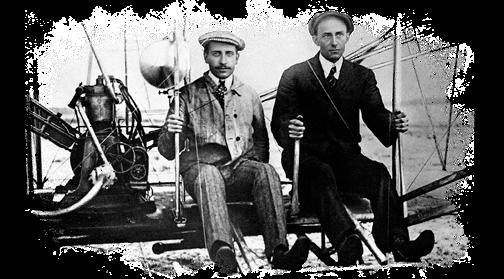
On December 17, 1903, the Wright brothers made their first successful powered flight. Orville was the pilot, and he flew the Wright Flyer for 12 seconds, covering a distance of 120 feet. The Wright brothers made four flights that day, with the longest flight lasting 59 seconds and covering a distance of 852 feet.
The Wright brothers’ invention of the powered airplane was a major breakthrough in human history. It revolutionized transportation and communication, and it continues to have a major impact on our world today. Airplanes are now used for everything from passenger travel to cargo transport to military operations.
• Paper (different colors and weights)
• Scissors
• Tape
• Open space (such as a hallway or gym)
1. Have each student make a paper airplane.
2. Divide the class into two teams.
3. Have each team line up at one end of the open space.
4. On your signal, the first student from each team will throw their paper airplane.
5. The team whose paper airplane travels the furthest wins the round.
6. Play multiple rounds to determine the overall winner.
You can make the game more challenging by having the students throw their paper airplanes through hoops or over obstacles. You can also have the students design and build their own paper airplanes. This will allow them to experiment with different designs and see which ones fly best.
Q1: Where did the Wright brothers make their first successful powered flight?
A1: The Wright brothers made their first successful powered flight in Kitty Hawk, North Carolina.
Q2: What was the name of the Wright brothers’ first powered airplane?
A2: The Wright brothers’ first powered airplane was the Wright Flyer.
Q3: How long did the Wright brothers’ longest flight on December 17, 1903 last?
A3: The Wright brothers’ longest flight on Dec 17, 1903, lasted 59 seconds.
Q4: How far did the Wright brothers travel on their longest flight on December 17, 1903?
A4: The Wright brothers’ longest flight on December 17, 1903, traveled 852 feet.
Q5: What were some of the Wright brothers’ other inventions?
A5: In addition to the powered airplane, the Wright brothers also invented the wind tunnel, the threeaxis control system, the propeller, and the skid landing gear.
The Wright brothers were two of the most important inventors in history. Their invention of the powered airplane revolutionized transportation and communication, and it continues to have a major impact on our world today. The Wright brothers’ story is an inspiration to us all, showing us that anything is possible with hard work and perseverance.
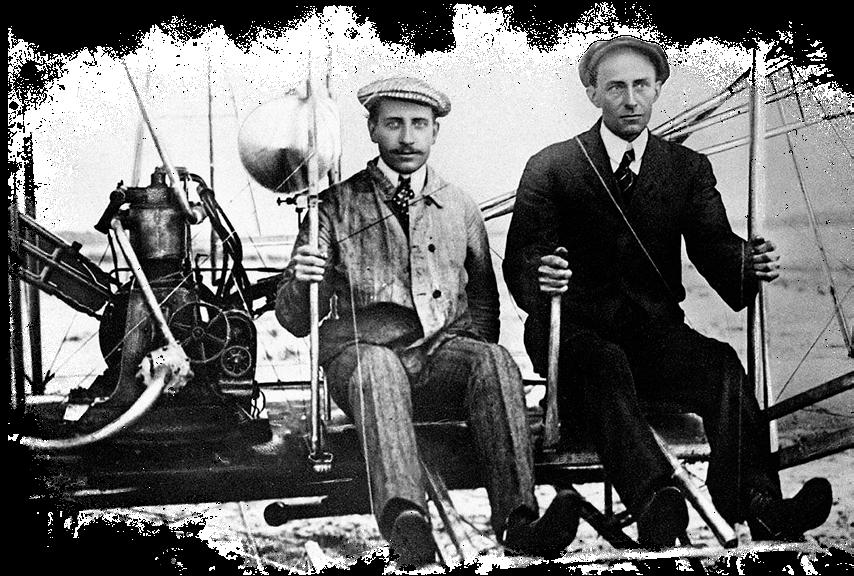
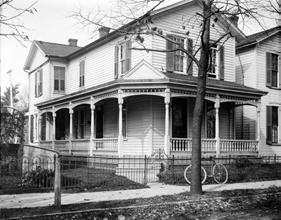
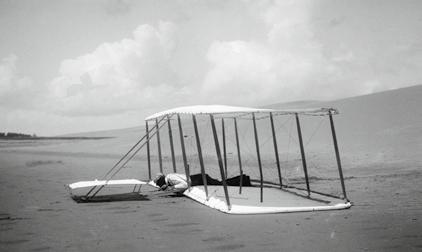
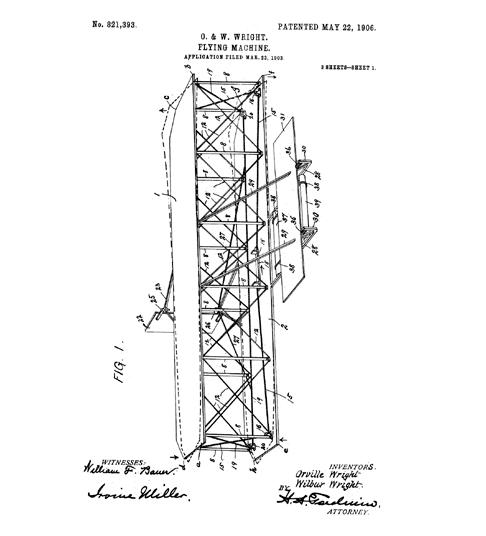
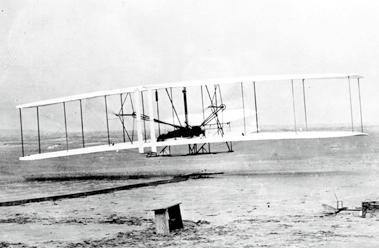
Did you know?
About a week before the Wright brothers invented the airplane the newspapers said that it would take another 100 years before someone invented the

People have dreamed of taking flight for hundreds of years, but it wouldn’t be until December 17, 1903, that it would happen on a small field in Kitty Hawk, North Carolina.
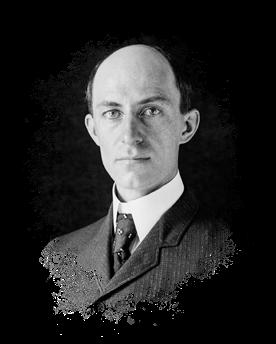
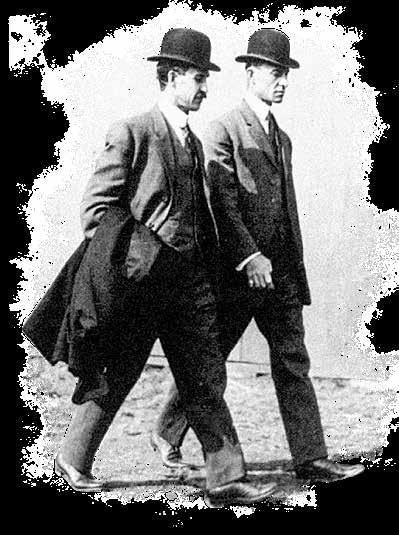
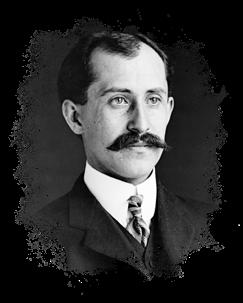
Wilbur and Orville Wright were born in Ohio in 1867 and 1871. As children they enjoyed building toys for themselves. When their father gave them a toy helicopter, they played with it until it broke. Then they built a new one to replace it. This sparked, or began, their interest in flying, and they began reading a lot about experiments people had done to try to create a flying machine.
In 1892, Wilbur and Orville opened a bicycle shop in Dayton, Ohio. They also started a successful bicycle company. They used the profits to research and experiment with flying. They spent hours studying how other people tried to create a flying machine. They designed and built gliders to experiment with. A glider is an airplane without an engine that only flies once it is already in the air.
In 1900, the brothers were ready to test their gliders. They needed a quiet area with strong winds for flying and soft ground for landing. Wilbur studied the National Weather Service records of Kitty Hawk, North Carolina, and chose to test the gliders there. The brothers built a
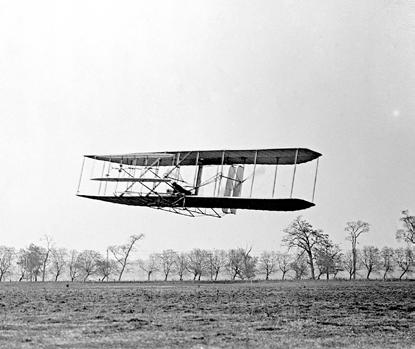
tower and flew the gliders from the tower. The brothers spent many months in Kitty Hawk testing and improving their gliders. They needed a glider that could fly smoothly and have a person control it.
In 1903, they invented the first glider that was fully controlled by the pilot. Pilots on earlier gliders were not able to switch directions and had to fly straight. Once their glider worked well, they started working on building an engine to power the glider. They built an engine to power propellers that kept the glider in the air. Propellers are machines that look like fans with blades that spin very quickly.
On December 17, 1903, they succeeded, and Orville Wright flew the first airplane. He flew their airplane, the Wright Flyer, for 12 seconds over 120 feet. The same day Wilbur flew for 59 seconds covering more than 800 feet. Their plane reached an altitude of 852 feet over the ground. The height of an airplane in the air is its altitude. Over the next few years, the Wright brothers improved the airplane to fly longer and quicker. In 1905, they flew 24 miles in 39 minutes.
After the Wright brothers’ airplane, many companies built airplanes that flew long distances. In 1939, the first passenger airplane flew across the Atlantic Ocean. After World War II (19391945), airplanes became the popular way of traveling. Airplanes in 2023 can carry up to 800 passengers for 10,000 miles before refueling. When an airplane runs out of gas it must be refueled. They can travel 600 miles per hour at 40,000 feet high. Over four billion people fly on passenger airplanes each year to travel all over the world.
1. When did Orville Wright fly the first airplane?
a. December 17, 1903
b. December 27, 1903
c. April 17, 1913
d. December 17, 1921
2. How long did Orville Wright’s first flight last?
a. 12 minutes
b. 12 seconds
c. 2 minutes
d. 1 hour
3. How far did Wilbur Wright fly on December 17, 1903?
a. Over 600 feet
b. Over 80 feet
c. Over 800 feet
d. Over 500 feet
4. How did the Wright brothers become interested in the topic of flying?
5. Why do you think it was important to read about other people’s experiments before building their own gliders?
To learn from their successes and failures - what worked and what didn’t work.
6. Why do you think Wilbur Wright studied the National Weather Service records of Kitty Hawk, North Carolina?
To see if the weather would be good for flying gliders.
STUDY THE PLANE PARTS AND ANSWER THE QUESTIONS
4. What do you think a stabilizer means? A toy helicopter Cockpit Turbo engine
1. What is the front of the plane where the pilot sits called?
2. What are the two big fans on the side of the plane called?
3. What is the Fuselage for?
Holds things together
A control to keep the plane steady
1837: The Public Lands Survey System is established by the federal government to survey and sell public lands in the western United States.
1841: Congressman
John T. Stuart of Illinois proposes a bill in Congress, allowing settlers to claim 160 acres of public land.
1860: The House of Representatives passes a Homestead Act, but the bill fails to pass the Senate.
May 20, 1862: President Abraham Lincoln signs the Homestead Act into law.
January 1, 1863: The Emancipation Proclamation is issued, declaring that all slaves in Confederate territory are free. This leads to increased demand for land in the west by freed slaves and other African Americans.
1866: The Southern Homestead Act is passed, allowing for the settlement of public lands in several southern states.
1870: The Timber Culture Act is passed, allowing settlers to claim an additional 160 acres of land if they agreed to plant trees on a quarter of the land.
1882: The Chinese Exclusion Act is passed, restricting immigration from China and affecting Chinese settlement in the western United States.
1909: The Enlarged Homestead Act is passed, allowing settlers to claim up to 320 acres of land in certain areas.
1976: The Homestead Act is officially repealed, although it had not been in effect for many years.
Explain the reasons why the Homestead Act was passed.
Describe the requirements for claiming land under the Homestead Act.
Discuss the impact that the Homestead Act had on the settlement of the western United States. Discuss the idea of individual land ownership and why it was important to the United States. Use maps and visuals to show the areas of the country affected by the Homestead Act.
Discuss the legacy of the Homestead Act and its impact on American history.
Students will learn that the Homestead Act was a law passed by the United States government in 1862, giving people the opportunity to own land in the western part of the country. This law had a big impact on the growth and development of the United States.

President Abraham Lincoln signed the Homestead Act into law on May 20, 1862, during the Civil War. The law aimed to encourage westward expansion and settlement, which would not only increase the country’s population but also help create new markets for American goods.
Under the Homestead Act, any person over 21 who was a citizen or had declared their intention to become a citizen could claim up to 160 acres of land in the western United States. The land was typically located in areas that had not yet been settled, such as parts of Kansas, Nebraska, and the Dakotas. To claim the land, the person had to live on it, improve it, and farm it for at least five years. After the five years were up, the person could then purchase the land for a small fee.
The Homestead Act had a significant impact on the growth and development of the United States. It helped settle the western part of the country and made it easier for people to own land. In the first year alone, over 400,000 claims were made for land under the Homestead Act. Over the next several decades, millions of acres of land were settled as a result of the law.
However, the Homestead Act was not without its flaws. The law did not take into account the fact that many Native American tribes already occupied the land in the west. As a result, the Homestead Act led to conflicts between settlers and Native Americans, which often turned violent. Additionally, the law did not do enough to ensure that the land was being used for productive purposes, leading to many instances of fraud and speculation.
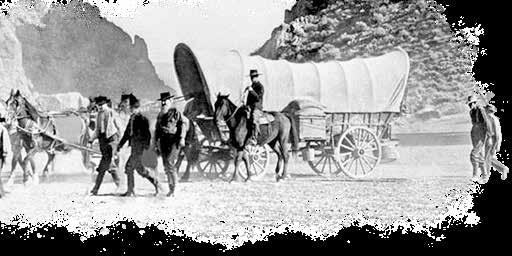
• 1 cup yellow cornmeal
• 1 cup all-purpose flour
• 1/4 cup white sugar
• 1 tablespoon baking powder
• 1/2 teaspoon salt
• 1 cup milk
• 1/4 cup vegetable oil
• 2 eggs, 2 mixing bowls
• Greased 9-inch baking dish or cast-iron skillet
• Oven
Recipe for Cornbread: A Pioneer Staple
Preheat oven to 400°F (200°C).
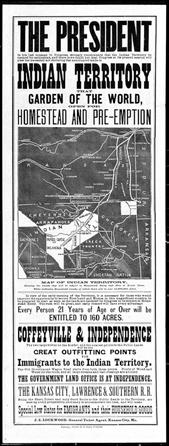
In a large mixing bowl, combine the cornmeal, flour, sugar, baking powder, and salt. Mix well to ensure that the dry ingredients are evenly distributed.
In a separate mixing bowl, beat the eggs and then add the milk and vegetable oil. Mix well. Pour the wet ingredients into the dry ingredients, and mix until just combined. Do not overmix.
Pour the batter into a greased 9-inch baking dish or cast-iron skillet. Bake the cornbread in the preheated oven for 20-25 minutes, or until a toothpick inserted into the center comes out clean. Let the cornbread cool for a few minutes before serving. Enjoy!
Q1: Who was eligible to claim land under the Homestead Act?
A1: Any person over 21 who was a citizen or had declared their intention to become a citizen was eligible to claim land.
Q2: What were the requirements for claiming land under the Homestead Act?
A2: To claim land, a person had to live on the land, improve it, and farm it for at least five years.
Q3: Why was the Homestead Act passed?
A3: The Homestead Act was passed to encourage westward expansion and settlement and support the idea of individual land ownership.
Q4: What was the impact of the Homestead Act on the United States?
A4: The Homestead Act helped settle the western part of the country and made it easier for people to own land. It also helped promote the idea of individual land ownership.
Q5: Is the Homestead Act still in effect today?
A5: The Homestead Act was repealed in 1976, but its legacy lives on in American history.
This recipe produces a classic, slightly sweet cornbread that early Homestead Act settlers might have made. However, variations of cornbread exist across different regions and cultures, and settlers might have added their own ingredients such as chopped onions, cheese, or jalapeños to the batter for added flavor.
The Homestead Act was a law passed in 1862, allowing people to claim up to 160 acres of land in the western United States. The law encouraged westward expansion, supported individual land ownership, and had a big impact on the growth and development of the United States.
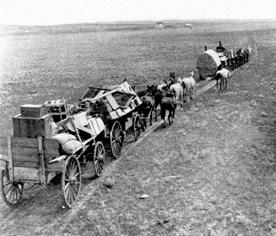
Getting a free place to live sounds too good to be true, but for many years, the United States government gave free land to more than one million people! People were very excited when they heard they could get free land. However, it wasn’t as easy as it sounded
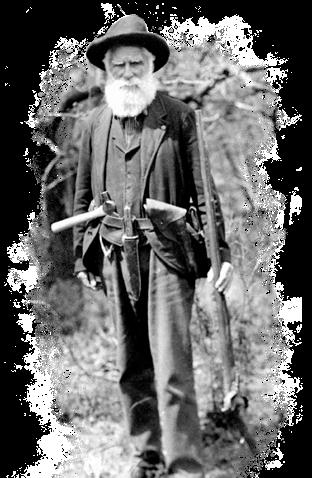
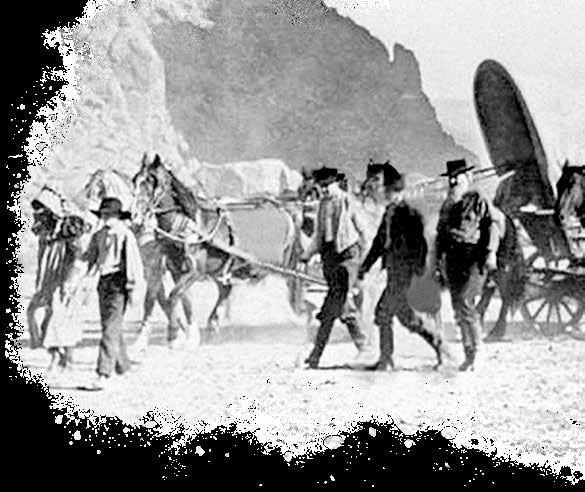
The 1800s was a time of growth for the United States. The cities in the eastern part of the United States were overpopulated. Overpopulated means overcrowded. Finding a job was challenging in the crowded cities. Even though more states were joining the country, many people did not want to move to these

▸ A sign announcing the Homestead Act
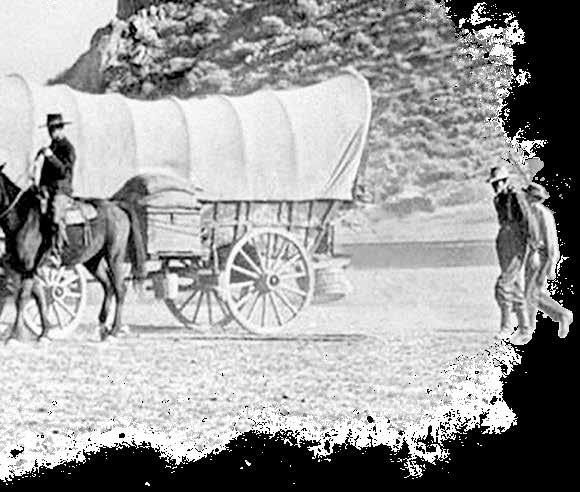
• Over 1.6 million people claimed land under the Homestead Act.
• In 1869, the first train across the USA was built, making it easier for people to travel to their homestead land.
▸
a
new states in the west. The western part of the country did not have cities, roads, farms, or anything that people needed to live. This made it difficult to move there.
In 1862, Abraham Lincoln signed the Homestead Act. An act is a law. The Homestead Act said that all U.S. citizens who were
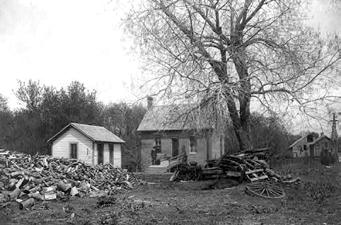
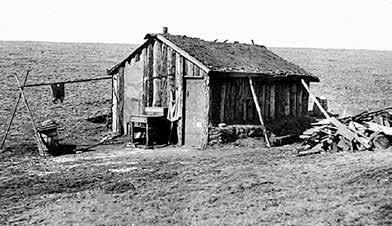
overpopulatedovercrowded
act - law
homesteadingdeveloping land into farms for food and everything else they need pioneers - the first people to travel to a new place
21 or older could get 160 acres of land in the west. That is the same size as 100 city streets. The land was free on the condition that each person had to live on the land for five years. When someone develops land into farms for food and everything else they need, they are homesteading. After five years, the government would give them the land for free. It cost just ten dollars to sign up for the right to claim land.
The Homestead Act began on January 1, 1862. A lot of people signed up to take advantage of this offer. People were happy to get free land and packed their belongings into wagons and started traveling westward. The homesteaders were also called pioneers for being the first people to travel to a new place. Most of the travelers were not ready for the hard trip. The journey passed through hot deserts, freezing mountains, and rainy and windy plains. Many travelers got sick, and a lot of people gave up and returned to their cities. Many travelers were unable to find food during the trip and died of hunger.
Once the pioneers crossed the Mississippi River, they chose a piece of land and began homesteading it. It took a lot of work to live on their new land. Pioneers had to build houses and barns, dig wells, and build fences around their land. They also had to plant food and raise animals in a new environment. Many people did not stay for the full five years, and others came in their place.
Many towns and cities in the western U.S. were founded by the pioneers. The Homestead Act lasted until 1976 for most of the U.S. By then, over one million homesteaders had received land and helped develop the United States.
1.
How did the Homestead Act help settle the west?
a. By giving free land to citizens
b. By providing jobs
c. By building cities
d. By creating a new form of transportation
2. Why did some homesteaders return to their cities?
a. Their vacation was over.
b. They gave up during the difficult trip.
c. They missed their families.
d. They wanted better food.
3.
How much land could people claim under the Homestead Act, and how much did they have to pay?
a. 80 acres and $5 b. 120 acres and $10
c. 160 acres and $10 d. 200 acres and $20
4. What two names were given to people who claimed land under the Homestead Act?
Homesteaders or pioneers
5. List three things the pioneers had to do once they arrived on their new land.
Possible answers: Build houses and barns, dig wells, build fences, plant food, and raise animals
When the pioneers reached their land in the western part of the U.S., they had many choices of how to build their new homes. This chart shows some types of homes they built. Look at the chart and answer the questions below.
TYPE OF HOME DESCRIPTION
Log cabin
Sod house
Dugout
Stone house
A small house made of logs, which were easy to find and cut down. A log cabin was good at keeping the cold out but could easily burn down in a fire.
A house made of blocks of dirt and grass, which were easy to find on the homesteaded land. A sod house gave good protection against the wind but was often damp.
A house dug into the side of a hill or into the ground. A dugout stayed warm in the winter and cool in the summer but was often damp.
A strong house made of stones, which were difficult to find and had to be cut and fit together. A stone house was expensive and took time to build.
house
A house made of mud bricks that were dried in the sun. An adobe house was good at protecting against cold in the winter and heat in the summer.
MATERIALS USED
Trees (wood)
Dirt, grass, and sometimes wood
Dirt, and sometimes wood
Stone and mortar
Mud and straw
1. Which of these houses was the strongest?
a. Adobe house b. Sod house
c. Dugout d. Stone house
2. Which material was used to build a log cabin?
a. Wood b. Dirt
c. Stones d. Mud
3. What was one disadvantage of building a sod house?
a. It was expensive.
b. It was damp.
c. It could easily burn down.
d. It was affected by the wind.
4. What was one advantage of building a sod house?
a. It was damp.
b. It was cold in the winter.
c. It was made of materials that were easy to find.
d. It was strong.
1741: Russian explorer Vitus Bering arrives in Alaska.
1784: The first permanent Russian settlement is established in Kodiak.
1799: The RussianAmerican Company is established, bringing Russian settlers to Alaska.
1867: The United States purchases Alaska from Russia for $7.2 million.
1878: Gold is discovered in the Yukon, sparking a gold rush in Alaska and the surrounding region.
1896-1899: The Klondike Gold Rush brings thousands of prospectors to Alaska and the Yukon.
1912: Alaska becomes a territory of the United States.
1942-1943: The Aleutian Islands are occupied by Japanese forces during World War II.
1959: Alaska becomes the 49th state of the United States.
1964: The Good Friday earthquake, the strongest earthquake ever recorded in North America with a magnitude of 9.2, strikes Alaska, causing widespread damage and loss of life.
1968: The discovery of oil at Prudhoe Bay leads to the construction of the TransAlaska Pipeline.
1980: The eruption of Mount St. Helens in neighboring Washington State sends a massive ash cloud over Alaska, disrupting air travel and causing environmental damage.
1989: The Exxon Valdez oil spill causes environmental damage in Prince William Sound.
2010: Alaska experiences a major earthquake with a magnitude of 7.2.
2020: The COVID-19 pandemic affects Alaska, leading to travel restrictions and economic impacts.
Discuss the indigenous peoples of Alaska and their way of life.
Explore the role of European explorers and the fur trade in Alaska’s history.
Discuss the controversies surrounding the purchase of Alaska by the United States.
Cover the Klondike Gold Rush and its impact on Alaska. Discuss the role of Alaska in World War II.
Students will learn that Alaska is a state located in the northwest corner of the United States. It is the largest state in the country and is known for its beautiful landscapes, unique wildlife, and diverse native cultures. Alaska’s history spans thousands of years and includes the stories of indigenous peoples, explorers, and settlers.
Highlight the diversity of cultures and languages in Alaska today.

The history of Alaska begins with the indigenous peoples who have lived in the region for thousands of years. These people, including the Tlingit, Haida, and Inupiat, have a rich cultural heritage and have been deeply connected to the land and its resources. They hunted, fished, and gathered food from the land and sea, and their traditions and customs continue to be an important part of Alaskan culture.
In 1741, Russian explorer Vitus Bering arrived in Alaska, marking the beginning of European exploration in the region. The Russians established a fur trade and established settlements, leading to conflict with the indigenous peoples. In 1867, the United States purchased Alaska from Russia for $7.2 million, which was seen as a controversial decision at the time.
During the late 19th and early 20th centuries, gold rushes brought thousands of people to Alaska. The most famous of these was the Klondike Gold Rush of 1896, which saw a massive influx of prospectors seeking their fortunes. Alaska became a territory in 1912 and was granted statehood in 1959.
Alaska also played an important role in U.S. history as a strategic location during World War II. The Aleutian Islands, stretching southwest from Alaska towards Russia, were occupied by Japanese forces in 1942. The United States launched a successful campaign to retake the islands, which helped turn the tide of the war in the Pacific. Today, Alaska is known for its natural beauty, wildlife, and outdoor recreational opportunities. It is also home to many different cultures and languages, including Yupik, Inupiaq, Tlingit, and Haida.
• Sand or dirt for the “mining” area
• Gold-painted rocks or nuggets for “gold”
• Mining kits, which could include sifters, tweezers, small shovels, and other tools for “mining”
• Small scales or balances for weighing gold
• Chart paper or whiteboard for recording findings
• Newspaper or writing supplies for follow-up activity (optional)
Create a mock “gold rush” experience for students. This activity will allow students to learn about the Klondike Gold Rush, a significant event in Alaska’s history.
Here are the steps for the activity:
Introduce the Klondike Gold Rush and split the class into small groups.
Give each group a designated “claim” and a mining kit containing sand and gold-painted rocks.
Instruct students to sift through the sand and find the “gold.”
After a set amount of time, have students weigh their gold and record their findings on a class chart.
Discuss the challenges and successes of the “gold miners,” including the harsh living conditions, the high costs of supplies, and the difficulties of finding actual gold.
As a follow-up activity, have students create a “newspaper” or other written piece discussing the gold rush from the perspective of a miner or member of an indigenous community impacted by the rush.
: Who was the first European explorer to arrive in Alaska?
A1: Vitus Bering, a Russian, was the first explorer to arrive in Alaska.
: How and when did Alaska become a part of the United States?
A2: Alaska became part of the United States after the U.S. purchased it from Russia in 1867.
: What was the Klondike Gold Rush?
A3: The Klondike Gold Rush was a period of intense gold prospecting in Alaska and the Yukon from 1896 to 1899.
Q4: What was the role of Alaska in World War II?
A4: Alaska was a strategic location during World War II, and the Aleutian Islands were occupied by Japanese forces in 1942.
Q5: What is Alaska known for today?
A5: Today, Alaska is known for its natural beauty, wildlife, and outdoor recreational opportunities, as well as its diverse cultures and languages.
Alaska became a U.S. territory in 1912 and a state in 1959. Throughout its history, Alaska has experienced a gold rush, occupation by Japanese forces during World War II, discovery of oil, environmental disasters, and the COVID-19 pandemic. The state’s history is shaped by its unique geography and the culture and experiences of its indigenous peoples.
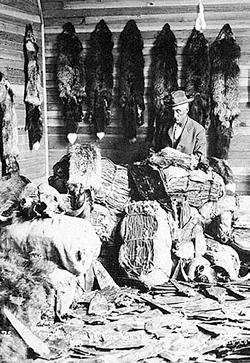
• 17 of the 20 highest mountains in North America are in Alaska.
• There are more than 3 million lakes and over 6,000 rivers in Alaska.
▸ The state of Alaska is closer to Russia and Canada than it is to the rest of the United States.
▸ Fur trappers are people who hunt animals to sell their fur.
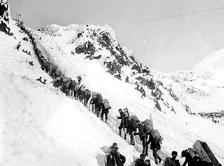
▸ Thousands of people came to search for gold
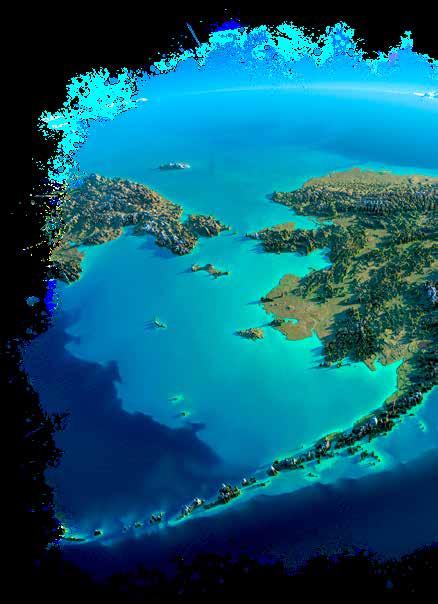
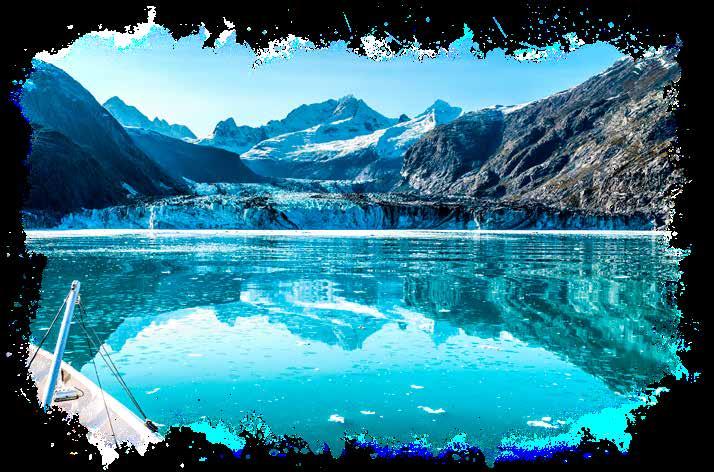

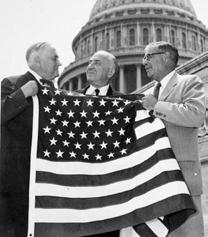
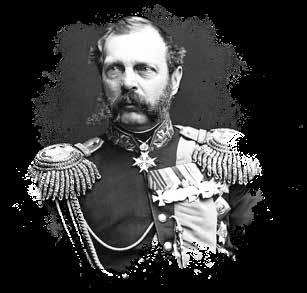
Alaska is the largest state in the United States. It is more than double the size of the state of Texas. While Texas is home to almost 30 million people, less than one million people live in Alaska. Most people do not want to live in Alaska because of its cold weather.
Alaska is connected to Canada and is only 50 miles from Russia. In the late 1700s, Russian fur trappers began moving to Alaska, which was owned by Russia. Fur trappers are people who hunt animals to sell their fur. Alaska has many animals with valuable furs, such as beavers and lynx.
In 1867, the ruler of Russia, Czar Alexander, decided to sell Alaska. When U.S. Secretary of State William Seward heard that Alaska was up for sale, he decided to buy it for the USA. He said that Alaska would help the U.S. do business with Asian countries, making it a profitable deal. Profitable business deals are those that make money. The Russians agreed to sell the entire Alaska for 7.2 million dollars. Russian soldiers lowered the Russian flag from the governor’s house and watched as the American flag was raised.
fur trapperspeople who hunt animals to sell their fur profitablebusiness deals that make money prospectors - people who search for gold industrybusiness
The Russian citizens moved back to Russia, and for many years, just a few hundred people lived in Alaska. When gold was discovered in Alaska’s rivers and mountains, a gold rush started. That is when thousands of people come to search for gold. People who search for gold are called prospectors. Many people found gold, but most made money by selling food and other products to the prospectors. The prospectors built many towns and cities, which finally brought people to live in Alaska.
On January 3, 1959, Congress passed the Alaska Statehood Act, making Alaska the 49th state. President Eisenhower signed the law with six pens. Presidents sometimes use a few pens to sign important laws and give the pens out as souvenirs. After signing the Alaska Statehood Act, the president used another few pens to sign a law adding a 49th star to the American flag.
When oil was found in Alaska in 1968, William Seward was proven correct that Alaska would be valuable for the U.S. The oil industry , or business, supports most people living in Alaska. Despite its cold weather, Alaska’s gold and oil have made it a very valuable part of the United States.
1. Who sold Alaska to the U.S.?
a. Vitus Bering
b. William Seward
c. Czar Alexander
d. George Washington
2.
How is Alaska valuable to the USA?
a. It allows for a shorter travel route to Asia.
b. There is a lot of oil in Alaska.
c. It was cheap.
d. There are many mountains and rivers in Alaska.
3. How much did the USA pay for Alaska?
a. 2.7 million dollars
b. 7.2 billion dollars
c. 7.2 million dollars
d. 5.7 thousand dollars
4. What two countries are near Alaska?
Russia and Canada
5. Why do you think Czar Alexander may have wanted to sell Alaska?
Possible answers: He thought it didn’t have valuable resources, like oil. He wanted money to build more palaces.
This is a map of Alaska and its resources, such as rivers and mountain ranges. The map also includes the oceans and seas that surround the state.
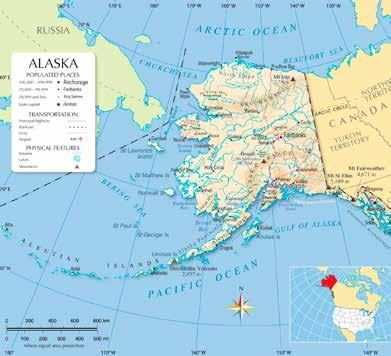
1. Circle the two oceans near Alaska.
• Arctic • Atlantic
• Indian
• Pacific
2. Circle the tallest mountain in Alaska.
• Denali (Mt. McKinley)
• Mt. Isto • Mt. Fairweather
3. Circle the cities with airports.
• Anchorage • Galena
• Juneau • Sitka
4. Do more people live in Anchorage or Fairbanks?
Anchorage
5. Name two mountain ranges in Alaska.
Possible answers: Brooks Range, Alaska Range, Aleutian Range
1901: Theodore Roosevelt becomes president after President McKinley is assassinated.
1902: Roosevelt supports the construction of the Panama Canal, a major engineering project that would connect the Atlantic and Pacific oceans and facilitate trade and transportation.
1903: Roosevelt mediates a labor dispute between the coal miners and mine owners, leading to better working conditions for the miners.
1906: Roosevelt signs the Pure Food and Drug Act and the Meat Inspection Act, which regulate the safety and purity of food and drugs in the United States.
1908: Roosevelt decides not to run for re-election, and William Howard Taft becomes the next president of the United States.
1923: President Harding dies suddenly, and Calvin Coolidge becomes president.
1924: Coolidge is elected president in his own right.
1925: Coolidge signs the Revenue Act of 1924, reducing taxes on income and inheritance.
1927: The Great Mississippi Flood causes widespread devastation across the South, and Coolidge sends federal aid to the affected areas to help with relief efforts.
1928: Coolidge decides not to run for re-election, and Herbert Hoover becomes the next president of the United States.
Explain the difference between a vice president and president.
Highlight key events in each president’s tenure.
Emphasize the lasting impact of each president’s policies.
Encourage students to ask questions and engage in discussions.
Connect the lessons to present-day issues, such as conservation and disaster response efforts.
Use resources to bring the lessons to life, such as images of the Panama Canal and the Great Mississippi Flood of 1927.
Students will learn about two men who served as vice presidents and later took over as presidents of the United States. They are Theodore Roosevelt and Calvin Coolidge. Both these presidents faced some challenging times during their presidencies, but they also accomplished great things that helped shape America into what it is today.
Theodore Roosevelt was the vice president under President William McKinley. However, in 1901, President McKinley was assassinated, and at just 42 years of age, Theodore Roosevelt became the youngest president in U.S. history. During his presidency, Theodore Roosevelt worked hard to conserve America’s natural resources and protect the environment. He also supported the construction of the Panama Canal, which connected the Atlantic and Pacific oceans and made trade much easier. Theodore Roosevelt was also a great advocate for workers’ rights and believed in fair labor practices. He even helped mediate a labor dispute between the coal miners and mine owners, which led to better working conditions for the miners.
Calvin Coolidge was the vice president under President Warren G. Harding. In 1923, President Harding died suddenly, and Calvin Coolidge took over as president. During his presidency, Coolidge focused on lowering taxes and reducing government spending. He believed that if the government spent less, the people could keep more of their money and use it to invest and create more jobs. This policy led to a period of economic growth and prosperity known as the “Roaring Twenties.” However, Calvin Coolidge also faced some difficult times, including the Great Mississippi Flood of 1927, which caused widespread devastation across the South. Coolidge responded by sending federal aid to the affected areas and also worked to improve the country’s disaster response efforts.
Overall, both Theodore Roosevelt and Calvin Coolidge were important presidents who accomplished much during their time in office. Theodore Roosevelt’s work to conserve America’s natural resources and protect the environment has had a lasting impact on the country, while Calvin Coolidge’s economic policies helped create a period of prosperity in the 1920s.
• Journal paper
Ask students the following questions and have them record their answers. Afterward, ask volunteers to read their answers and have a class discussion about each topic.
• What do you think about Theodore Roosevelt’s conservation policies? Do you agree with his ideas about preserving America’s natural resources? Why or why not?
• How do you think Calvin Coolidge’s approach to governance influenced American society? Do you think his policies were effective in achieving their goals? Why or why not?
• What do you think about Theodore Roosevelt’s foreign policy? Do you think his “Big Stick” approach to foreign affairs was effective in promoting America’s interests? Why or why not?
• How do you think Calvin Coolidge’s economic policies affected American society? Do you think his focus on reducing government spending was the right approach during the 1920s? Why or why not?
Q1: Who was Theodore Roosevelt?
A1: Theodore Roosevelt was the 26th president of the United States.
Q2: How did Theodore Roosevelt become president?
A2: Theodore Roosevelt became president after President McKinley was assassinated in 1901.
Q3: What was one of Theodore Roosevelt’s important accomplishments as president?
A3: One of Theodore Roosevelt’s important accomplishments was his work to conserve America’s natural resources and protect the environment.
Q4: Who was Calvin Coolidge?
A4: Calvin Coolidge was the 30th president of the United States.
Q5: How did Calvin Coolidge become president?
A5: Calvin Coolidge became president after President Harding’s sudden death in 1923.
• What do you think Theodore Roosevelt’s legacy is? How has he influenced American society and politics? What lessons can we learn from his life and presidency?
• What do you think about Calvin Coolidge’s approach to civil rights? Do you think he did enough to promote equality and justice for all Americans? Why or why not?
Theodore Roosevelt and Calvin Coolidge were two U.S. presidents who served as vice president before taking over as president. Theodore Roosevelt worked to conserve America’s natural resources and protect the environment, while Calvin Coolidge focused on lowering taxes and reducing government spending. Both presidents faced challenging times during their tenure, but they also accomplished important things that helped shape America into what it is today.
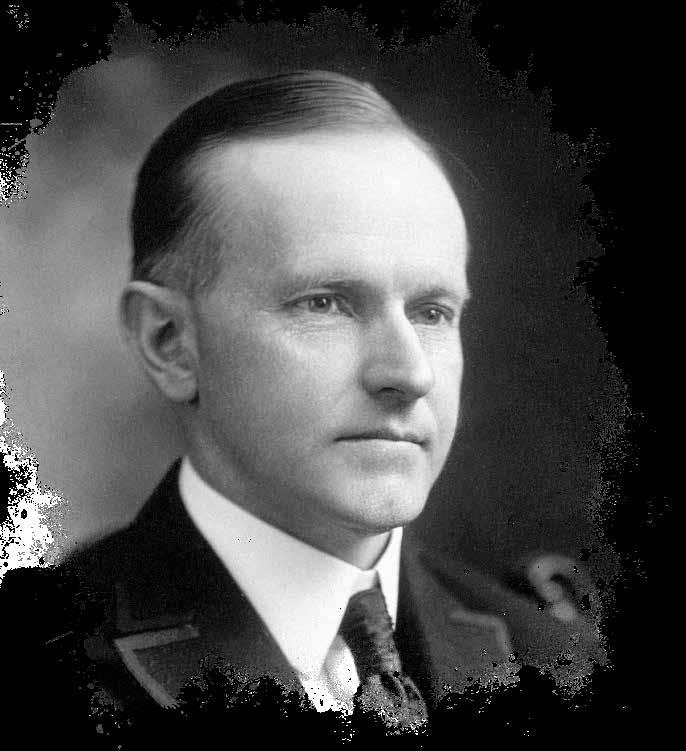
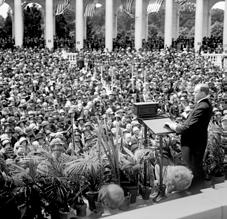
Did you know?
• Calvin Coolidge was called the “Silent President.”
• Calvin Coolidge was the first president to have a telephone in the White House.
Calvin Coolidge and Theodore Roosevelt were U.S. presidents who led the United States in the early 1900s. Roosevelt served two terms as the 26th president from 1901 to 1909, while Coolidge served one and a half terms as the 30th president from 1923 to 1929. They were both vice presidents who took over when a president died

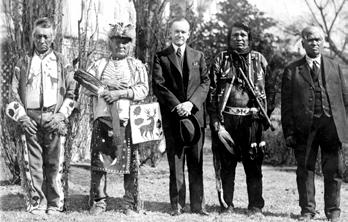

you know?
Roosevelt started National
should make laws to help people. He passed laws to stop people and companies from having a monopoly on products. A monopoly is when a company
Theodore Roosevelt won the Nobel Peace Prize in 1906.
• Theodore Roosevelt was the first president to visit another country (Panama) while president.
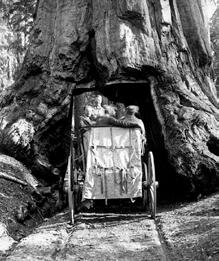
is the only one selling a certain product. When a company has a monopoly on a product, they can charge a lot of money for it. By stopping monopolies, Roosevelt wanted to lower prices for American consumers, or shoppers. He also wanted to protect workers from unfair bosses. He was not afraid to do what he thought was best for the country.
Calvin Coolidge was President Warren G. Harding’s vice president. He became president in 1923 when Harding had a heart attack and died. Coolidge was Harding’s successor. Someone who takes over a person’s job is their successor. Coolidge was president for six years. He believed that the government’s job is to protect the freedom of Americans. Coolidge felt that the government should not get involved in how people do business. He believed that when the government doesn’t control business, people can come up with better business ideas and inventions.
The two presidents also had very different ways of managing foreign affairs . Foreign affairs deal with the relationship between different countries and how they handle matters between them. Roosevelt was very tough with other countries. He even passed a law that the U.S. would be the police for the countries near it. When Coolidge was president, he ended this law. Coolidge felt that the U.S. should focus on becoming strong, wealthy, and free for Americans.
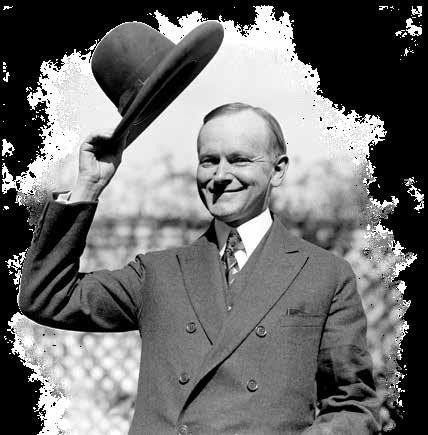
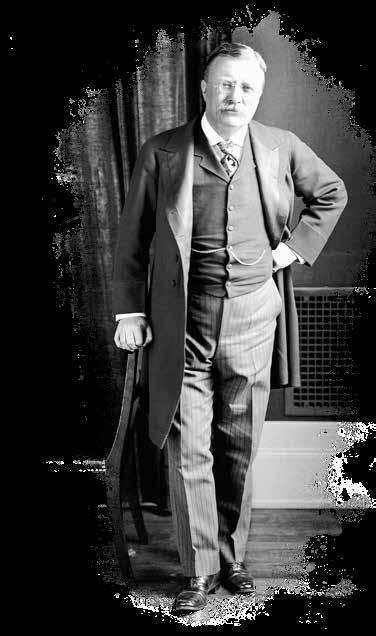
Each of these presidents died in January. President Roosevelt died on January 6, 1919, at the age of 60. Coolidge was also 60 when he died on January 5, 1933. While their lives seem similar, their values were very different, and people argue about which president did a better job.
1.
How old were Roosevelt and Coolidge when they died?
a. Both were 60
b. Both were 70
c. Roosevelt was 60, and Coolidge was 70
d. Roosevelt was 70, and Coolidge was 60
2. How did Roosevelt deal with foreign affairs?
a. He made the U.S. the police for the countries near it.
b. He focused on the U.S. becoming strong, wealthy, and free for Americans.
c. He stayed away from the affairs of other countries.
d. He let nearby countries do what they wanted.
3.
How many years was Calvin Coolidge’s presidency?
a. 4 years
b. 6 years
c. 8 years
d. 10 years
4. What did Theodore Roosevelt believe was the government’s job?
To make laws to help people
5. What did Calvin Coolidge believe was the government’s job?
Protect the freedom of Americans
6. Do you think it’s better for the government to get involved in how people do business or not? Explain why you feel this way.
Possible answers: I think it’s better to be involved because businesses need laws to control their prices and policies. I think it’s better for the government to stay out of how its people do business because that’s part of being a free country. It also allows people to develop new ideas and inventions.
Fill the Venn diagram with the facts about each president. Write letters A-F in the correct space in the diagram below. If a fact is true about both presidents, write the letter in the middle space, where the circles overlap.
A. Believed that government should make laws to help people
B. 26th president of the United States from 1901 to 1909
C. Died in January
D. Ended U.S. policy to act like police over nearby countries
E. Was vice president when a president died
F. Focused on making U.S. strong, wealthy, and free
1809: Samuel Morse is born.
1825: Morse graduates from Yale College.
1832: Morse’s wife dies. Morse decides to invent something to improve communication.
1837: Morse invents the telegraph and develops Morse code, a system of dots and dashes representing letters and numbers.
1838: Morse demonstrates his telegraph to members of Congress, but they are not impressed and do not fund the project.
1843: Morse receives a grant to build a telegraph line from Washington, D.C., to Baltimore.
1844: The first telegraph line is completed and the first message is sent.
1845: Morse forms the Magnetic Telegraph Company, which builds telegraph lines throughout the United States.
1851: The first transcontinental telegraph line is completed, connecting the east and west coasts of the United States.
1858: The first transatlantic telegraph cable is completed, allowing messages to be sent between Europe and North America.
1861-1865: The telegraph plays a key role in the Civil War, allowing generals to communicate with each other across long distances. Telegraph operators also send news reports from the front lines to newspapers across the country.
1876: Alexander Graham Bell invents the telephone, which eventually replaces the telegraph as the primary form of communication.
1901: The first wireless telegraph message is sent across the Atlantic.
Explain what the telegraph is and how it worked.
Discuss the impact of the telegraph on communication and society.
Highlight the role of the telegraph in the expansion of the United States.
Compare and contrast the telegraph to modern communication technologies.
Encourage students to think about how communication technology has evolved over time.
Discuss the importance of Morse code and how it was used in the telegraph.
Students will learn that the telegraph was invented in the early 19th century and was a way for people to send messages over long distances. Before the telegraph, the only way to send a message was by sending a letter, which could take weeks or even months to arrive. The telegraph allowed people to send messages quickly and efficiently.
The telegraph worked by using electricity to send messages along wires. The sender would use a key to tap out a message in Morse code, which is a system of dots and dashes representing letters and numbers. The message would then travel along the wire to the receiver, who would decode the Morse code and read the message.
The telegraph was a major breakthrough in communication technology and had a huge impact on many aspects of life. It made it easier for people to communicate across long distances, which helped businesses grow and brought families closer together. It also played a key role in the expansion of the United States, as it allowed people in different parts of the country to communicate quickly and easily.
The telegraph was eventually replaced by newer technologies like the telephone, but its impact on history can still be felt today.
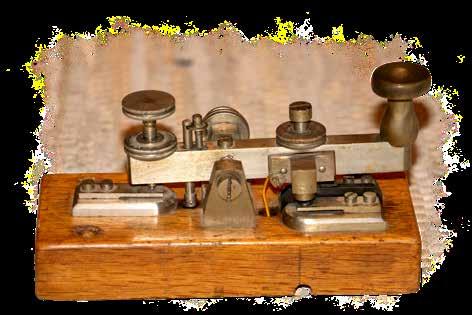
• Morse code chart
• Paper
• Pen
Have students write their names or messages in Morse code using dots and dashes. They can exchange messages with a partner to decode using a Morse code chart.

To make it more challenging, have them write longer messages or work in teams.
Then, extend the activity by practicing sending Morse code messages using a flashlight or tapping on a desk.
This activity reinforces the importance of clear communication and demonstrates how Morse code was used to communicate over long distances.
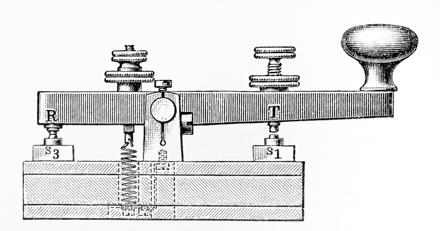
Q1: What is the telegraph?
A1: The telegraph is a device that allowed people to send messages over long distances quickly and efficiently.
Q2: How did the telegraph work?
A2: The telegraph worked by using electricity to send messages along wires in Morse code.
Q3: What is Morse code?
A3: Morse code is a system of dots and dashes representing letters and numbers.
Q4: What was the impact of the telegraph on communication and society?
A4: The telegraph made it easier for people to communicate across long distances, which helped businesses grow and brought families closer together.
Q5: What technology eventually replaced the telegraph as the primary form of communication?
A5: The telephone eventually replaced the telegraph as the primary form of communication.
The telegraph was a device that allowed people to send messages over long distances quickly and efficiently. It worked by using electricity to send messages along wires in Morse code. The telegraph had a major impact on communication and society and played a key role in the expansion of the United States.
• The first word sent by telegraph was “what.”
• Once the cable lines were in place, it took only three minutes for a message to be sent from London to New York!
• By 1852, there were over 23,000 miles of telegraph wires in the United States of America.
• Railroad companies installed telegraph lines as a way of communicating with their trains about where they were and if there were going to be any delays.
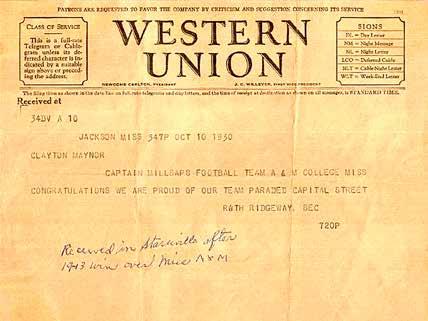
▸ Western Union employees would listen to the beeps and write the message down. The messages were delivered looking like this.

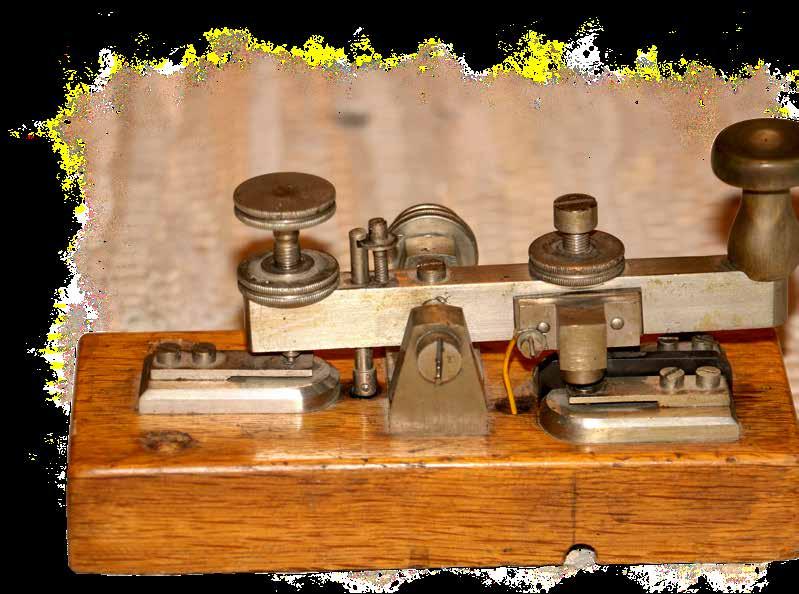
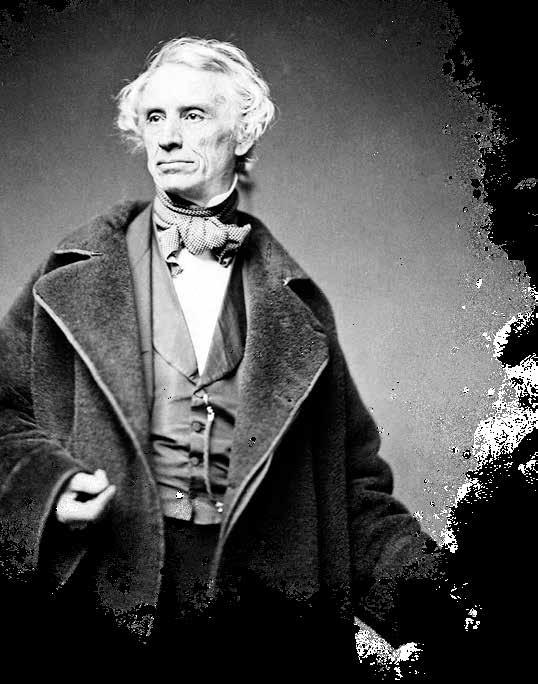

Did you ever make up a secret code with a friend? You would be able to talk to each other without anyone else understanding. Imagine making up a code and then telling it to everyone instead of keeping it a secret. Seems like there would be no point in that, but that’s exactly what Samuel Morse did.
In 1832, Samuel Morse was sailing home from Europe when he heard about the electromagnet. This was a new discovery that helped people create a lot of new machines. Samuel Morse also had an idea for this new discovery. His idea was the telegraph.
Morse spent a few years creating the telegraph. The telegraph was a machine that sent beeps through wires to other telegraph machines. The beeps were a code he made up and called Morse code. The telegraph was able to send the beeps very far. This allowed people to communicate a lot quicker than by mailing a letter. On January 6, 1838, Morse had a working telegraph machine.
Putting up enough wires for the telegraph to work long distances cost too much money for Morse. In 1843, Morse convinced Congress to build the first telegraph line in the United
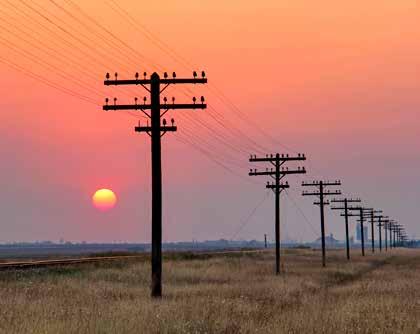
States. They built a line from Washington, D.C., to Baltimore. In May 1844, Morse sent the first official telegram over the line. Messages sent using a telegraph are called telegrams.
Many telegram companies opened in big cities. To send a telegram, one would write the message on a piece of paper and give it to the worker in the telegram company. The worker would translate the message into Morse code and send the beeps to a telegram office in the recipient’s city. A recipient is a person who receives something. A worker in the recipient’s city would translate the message back into words. Finally, a delivery boy would bring the message to its recipient.
Over the next few years, private companies built telegraph lines connecting many cities. In 1851, Western Union opened. It became the biggest telegraph company. In 1861, Western Union finished building the first line across the entire U.S. Five years later, a line across the Atlantic Ocean began operation, meaning work. By 1900, telegraph systems were in place in almost the entire world.
telegraph - a machine that sends beeps through wires to other telegraph machines
telegrammessage sent using a telegraph machine recipient - a person who receives something operation - work
Telegraph companies would charge for each word. The only free word was “stop.” People used this free word in place of a period because there were no periods in Morse code. The telegraph was used most in the 1920s and 1930s. During World War II, seeing Western Union employees made Americans nervous. The telegrams often informed families families of a soldier’s death.
During World War II, European Jews sent telegrams to American Jews begging for help.
Samuel Morse died wealthy and famous in New York City on April 2, 1872, at age 80. As long-distance phone calls became cheaper, people used the telegraph less. It is still possible to send someone a telegram today using a different telegraph company.
1.
What did Western Union become famous for?
a. Building a telegraph line in Canada
b. Delivering the first telegram ever
c. Being the biggest telegraph company
d. Inventing the telegraph
2. What was the first telegraph line built in the United States used for?
a. Sending messages between Washington, D.C., and New York City
b. Connecting private companies in different cities
c. Transmitting information across the Atlantic Ocean
d. Sending messages between Washington, D.C., and Baltimore
3.
What did the free word “stop” represent in a telegram?
a. The end of a telegram
b. A period
c. The letter “T”
d. A space
4. Which company built the first telegraph line across the entire United States?
Western Union
5.
What do you think was one disadvantage of using a telegraph?
6.
Why do you think the first telegraph line across the United States was an important event?
Use the Morse Code Key below to figure out the question and create the answer
Morse Code Key
1. Here is a question written in Morse Code. Write the question out in regular letters.
Possible answer: The message wasn’t private. The workers on both ends would read the message. Who created Morse Code? It meant being able to communicate across the entire country very quickly.
2. Write the answer to the above question using Morse Code.
1848: The Smithsonian Institution begins collecting weather data from around the country.
1870: The National Weather Service (NWS) is established by President Ulysses S. Grant.
1890: The NWS begins issuing frost warnings to farmers.
1927: The NWS issues its first tornado warning.
1934: The NWS begins issuing fire weather forecasts.
1940: The NWS issues its first severe thunderstorm warning.
1949: The NWS begins using radar for weather detection.
1950: The NWS issues its first hurricane warning.
1960: The NWS launches the first weather satellite, TIROS-1.
1970: The NWS begins using Doppler radar for weather detection.
1983: The NWS issues its first flash flood warning.
1995: The NWS launches the first dual-polarization radar, which improves accuracy in detecting severe weather.
2000: The NWS implements the Advanced Weather Interactive Processing System (AWIPS) to improve weather forecasting capabilities.
2017: The NWS launches GOES-16, a new weather satellite with improved capabilities for severe weather detection and forecasting.
2020: The NWS issues a record number of severe weather warnings, including the most tornado warnings ever issued in a single day.
Define the National Weather Service.
Discuss the history of the NWS.
Explain the role of the NWS in weather forecasting.
Explain the types of weather forecasts issued by the NWS.
Discuss the importance of the NWS in society.
Students will learn that there is a special agency devoted to predicting and tracking weather patterns. It’s called the National Weather Service, and it plays a crucial role in keeping us safe and informed about the weather.

The National Weather Service (NWS) is a government agency that provides weather forecasts, warnings, and other important weather-related information to the public. The NWS was created in 1870, but its roots go back even further. In 1848, the Smithsonian Institution began collecting weather data from around the country. This data was used to create a national weather map, which was published for the first time in 1870. This map was the precursor to the weather forecasts and warnings we see today.
The NWS has come a long way since then. Today, the agency uses state-of-theart technology to collect and analyze weather data from all over the world. This includes satellites, radar, and weather balloons. The NWS uses this data to create forecasts that are accurate up to seven days in advance.
The NWS also provides important weather-related information in the event of severe weather. This includes tornado warnings, hurricane warnings, and flood warnings. When a severe weather event is expected, the NWS will issue a warning to the public. This warning will tell people what to expect and what actions they should take to stay safe.
The NWS has been instrumental in helping people prepare for severe weather. Thanks to the agency’s warnings, people can evacuate or take shelter before a storm hits. This has saved countless lives over the years.
• Chairs or desks
• Cardboard boxes or other materials to create barriers and obstacles
• A recording or a script to introduce the weather conditions
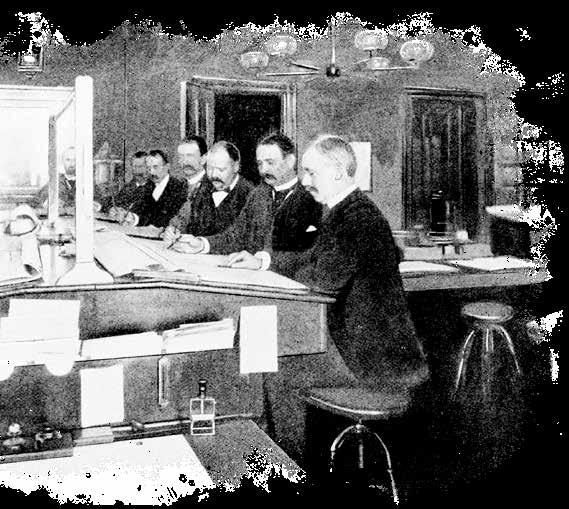
Choose a severe weather event to simulate.
Set the scene by creating a safe and enclosed area for the simulation.
Assign roles to students, such as meteorologists, emergency responders, or people seeking shelter.
Introduce the weather conditions and provide students with information about the severity of the event, the expected path or duration, and any safety precautions they should take.
Conduct the simulation and allow students to take action based on their assigned roles.
Debrief and discuss the actions taken by each group, the effectiveness of the communication and decision-making process, and any lessons learned.
By conducting an extreme weather simulation, students can learn about severe weather events and the role of the National Weather Service in providing early warning and guidance to keep people safe. This activity can also help students develop critical thinking, decision-making, and communication skills.
Q1: What is the National Weather Service?
A1: A government agency that provides weather forecasts, warnings, and other important weather-related information to the public.
Q2: When was the National Weather Service created?
A2: In 1870.
Q3: How does the National Weather Service collect weather data?
A3: By using satellites, radar, and weather balloons.
Q4: What kind of information does the National Weather Service provide in the event of severe weather?
A4: The National Weather Service provides tornado warnings, hurricane warnings, flood warnings, and other important information in the event of severe weather.
Q5: Why is the National Weather Service important?
A5: The National Weather Service is important because it helps people stay safe during severe weather events.
The National Weather Service is a government agency that provides weather forecasts, warnings, and other important weather-related information to the public. It was created in 1870, and today it uses state-of-the-art technology to collect and analyze weather data from all over the world. The NWS plays a crucial role in helping people stay safe during severe weather events.
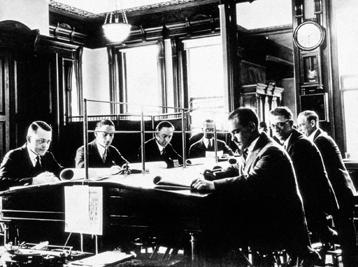
• The highest temperature ever recorded on Earth was 134 degrees Fahrenheit in California in 1913.
• The fastest wind gust ever recorded was 231 miles per hour in New Hampshire in 1934.
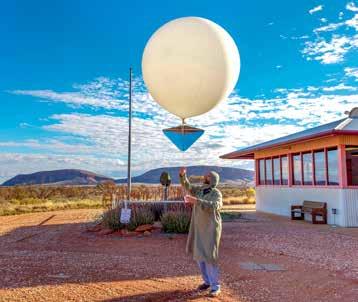
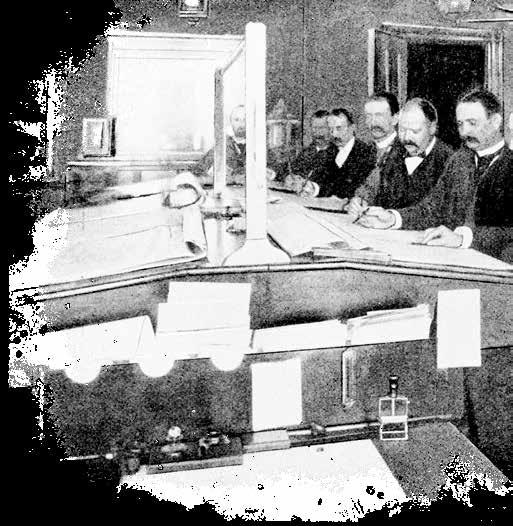
For many years, the only way to know the weather was to walk outside. People had no warning if a storm was about to start or how many inches of snow to expect. There was also very little time to prepare before bad weather.
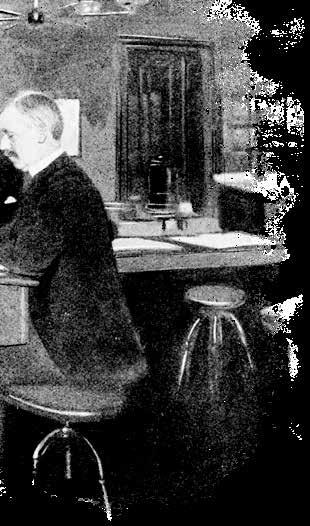
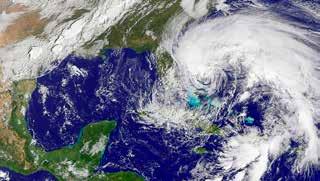
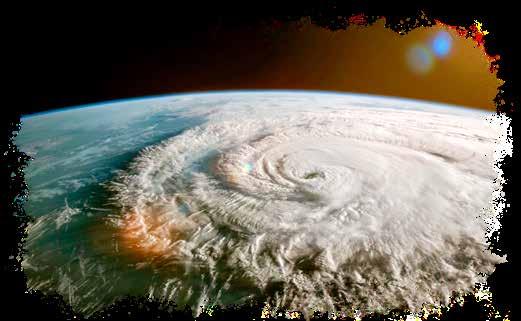
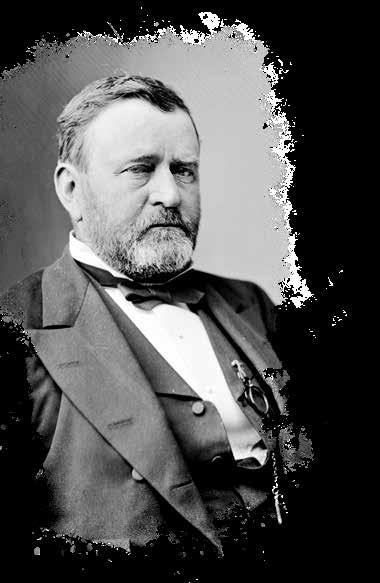
On February 9, 1870, President Ulysses S. Grant signed a law creating the National Weather Service. The National Weather Service is usually called the NWS. The NWS opened many offices all over the United States to record the weather. To record means to keep track of something by writing it down. Every day, the office workers measured the temperature and other weather conditions in their city. Each office would send a telegraph with the weather information to the main NWS office in Washington, D.C. The main office still has records of every day’s weather in the entire U.S.
When dangerous weather conditions would hit a city, the office of that city would send a telegraph to Washington. The main office would quickly inform, or tell, all the cities about the danger. Each office would warn the people in their area.
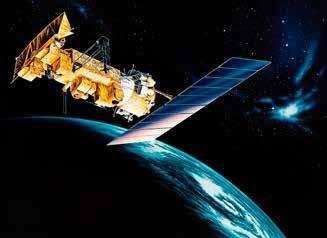
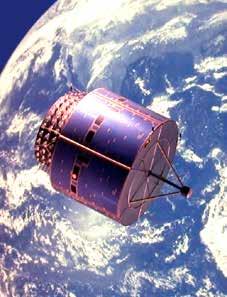
record - keep track of something by writing it down inform - tell predict - saying what will happen in advance accurate - exact
In the 1900s, the NWS began sending machines miles into the air on helium balloons. The machines sent information about the weather to computers. The computers used that information to predict the weather. Predict is to say what will happen before it actually happens. The newspapers started printing weather predictions to help people plan their day.
In 2023, many tools are used to predict what the weather will be. One tool the NWS uses is radar to measure how strong the wind is blowing. It also uses satellites in space to take pictures of hurricanes, tornadoes, and other dangerous weather. Each invention helps the NWS understand the weather better. It also helps it to accurately predict the weather. The more accurate, or exact, the prediction is, the more helpful it is.
1.
Why didn’t the NWS predict the weather in 1870?
a. The technology was not invented yet.
b. They didn’t know how to measure the temperature.
c. They didn’t think it was necessary.
d. There was no way to print the weather yet.
2.
Why do you think it is important to record the weather?
a. To predict weather patterns
b. To plan bus routes
c. To help emergency vehicles
d. To help clean the air
3.
How do you think the NWS records the weather in 2023?
a. Workers telegraph the weather to the main office.
b. Computers do it automatically.
c. Satellites in space take videos of the weather.
d. They had enough records so they stopped.
4.
When was the National Weather Service created?
February 9, 1870
5.
Who signed the law creating the National Weather Service?
President Ulysses S. Grant
This picture shows the different ways that the National Weather Service keeps track of the weather. There are stations on Earth and satellites in space to give the NWS as much information as possible. Look at the picture and answer the questions.
In space: Weather satellites - The U.S. has 11 satellites that take pictures of weather conditions from space. In air: Weather balloons - These carry machines into the air to measure temperature, wind pressure, and humidity. On land:
1. Observation stations - These stations measure temperature, humidity, wind speed, and wind pressure on the land.
2. Lightning detection systems - These systems find lightning strikes, which helps to predict thunderstorms.
3. Soil moisture sensors - These help farmers by measuring how much water is in the soil.
Circle the answer that belongs in the blank.
1. The soil moisture sensors help .
• Ships • Farmers • Airplanes • Animals
2. The NWS has machines to find lightning.
• Underwater • On land
• In the air
• In space
3. The NWS measures wind speed .
• Underwater • On land
• In the air
• In space
4. The NWS sends machines into the air by .
• Balloon
• Helicopter
• Airplane
• Spaceship
5. How many weather satellites does the U.S. use?
April 12, 1981: The first flight of the Columbia shuttle takes place. It is the first orbital flight of NASA’s space shuttle program.
1983: Columbia’s seventh mission includes the first AfricanAmerican astronaut.
April 12-19, 1985: Columbia’s 10th mission includes the first crew of seven astronauts.
December 2-6, 1988: Columbia’s 16th mission is the first U.S. shuttle mission for scientific research.
April 24-29, 1990: Columbia’s 23rd mission launches the Hubble Space Telescope.
July 23-August 8, 1999: Columbia’s 27th and final mission before the disaster includes the first spacewalk by a female astronaut.
February 1, 2003: The Columbia shuttle breaks apart during re-entry, killing all seven astronauts on board.
February 2-4, 2003: NASA launches an investigation into the disaster, including a search for debris from the shuttle.
August 26, 2003: The Columbia Accident Investigation Board releases its final report on the disaster, concluding that a piece of foam insulation damaged the wing of the shuttle during launch, causing the disaster.
July 26, 2005: The first space shuttle flight after the disaster takes place with new safety measures.
July 21, 2011: The final space shuttle flight takes place, ending the space shuttle program.
Explain what the Columbia shuttle was and its purpose.
Talk about the shuttle’s first flight and its missions.
Discuss the Hubble Space Telescope mission.
Explain what happened on February 1, 2003.
Discuss the cause of the disaster and its impact on the space shuttle program.
Highlight the importance of safety in space exploration.
Students will learn that the Columbia shuttle was a spacecraft that carried astronauts to space. It was part of NASA’s space shuttle program and made its first flight in 1981. Unfortunately, on February 1, 2003, the Columbia shuttle broke apart during re-entry, killing all seven astronauts on board.
One of the most memorable missions of the Columbia shuttle was in 1990, when it launched the Hubble Space Telescope, which has since provided scientists with amazing images and data about our universe.
However, on February 1, 2003, the Columbia shuttle broke apart during reentry, just 16 minutes before it was scheduled to land. All seven astronauts on board were killed, and the tragedy was felt around the world.
The cause of the disaster was later determined to be a piece of foam insulation that had broken off from the shuttle’s external fuel tank during launch and damaged the wing of the spacecraft. This damage caused the shuttle to break apart during re-entry.
The loss of the Columbia shuttle was a sad moment in the history of space exploration, but it also led to important changes in the space shuttle program. NASA implemented new safety measures to prevent similar accidents from happening in the future.
• Colorful construction paper, Scissors, String or fishing line
• A ruler, A hole punch, A large embroidery hoop
Cut out circular shapes from the construction paper to represent the sun and each planet in our solar system. You can use different colors of paper to represent each planet, and use the ruler to make sure that the sizes of the planets are in proportion to each other.
Use the hole punch to create a hole at the top of each planet.
Cut long pieces of string or fishing line and tie them to each planet. Make sure to leave enough string to hang each planet at a different height.
Tie the other end of each string to the embroidery hoop, using different lengths to create a three-dimensional effect.
Once all the planets are attached to the hoop, hang the solar system mobile from the ceiling.
Use this craft as an opportunity to discuss the location and characteristics of each planet, as well as how the Columbia shuttle was used to study and explore space.
Q1: What was the Columbia shuttle?
A1: Columbia was a spacecraft that carried astronauts to space as part of NASA’s space shuttle program.
Q2: When did the first flight of the Columbia shuttle take place?
A2: Columbia’s first flight was on April 12, 1981.
Q3: What was the Hubble Space Telescope mission?
A3: In 1990, the Columbia shuttle launched the Hubble Space Telescope, which has provided scientists with amazing images and data about our universe.
Q4: What happened on February 1, 2003?
A4: On February 1, 2003, the Columbia shuttle broke apart during re-entry, killing all seven astronauts on board.
Q5: What changes were made to the space shuttle program after the disaster?
A5: After the disaster, NASA implemented new safety measures to prevent similar accidents from happening in the future.
The Columbia shuttle was an important part of NASA’s space shuttle program, but its tragic end reminds us of the risks involved in space exploration. Today, NASA continues to explore space and make new discoveries, always with safety in mind.
Staying safe is important, and there are things we can do to help prevent accidents. These things are called safety precautions. Some safety precautions are easy, like wearing a helmet when you ride your bike. Others are more complicated, like checking a space shuttle before it goes to space. Checking a space shuttle is called making an inspection. During an inspection, people look through the entire shuttle to make sure it works well.
NASA is the U.S. government agency that explores space. In 1981, NASA built a new space shuttle they named Columbia. Columbia went on 27 successful space missions before its last mission in 2003.
In January 2003, Columbia began a mission to do scientific experiments in space. There were seven astronauts on board for the 16-day trip. Columbia’s commander was Rick Husband, and its
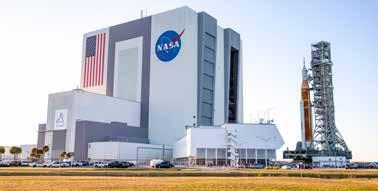
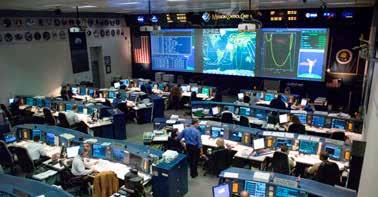
you know?
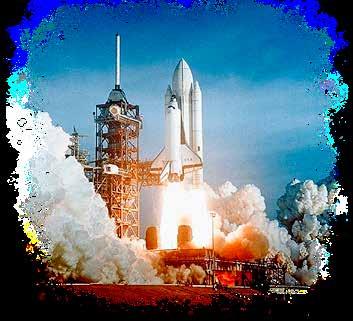
pilot was William McCool. The commander is the person in charge of the space shuttle.
• Worms that were used in an experiment and were stored in a container aboard the Columbia somehow survived the disaster.
▸ Columbia astronauts Thomas K. Mattingly and pilot Henry Hartsfield salute President Ronald Reagan, upon landing in 1982.
Every mission to space needs a lot of people on the ground to help it. Flying to space can be very dangerous, and the astronauts are always in contact with mission control . Mission control tells them when they are safely in space and instructs them on the safest ways to do their experiments.
When Columbia took off, a piece of foam fell off the shuttle and flew into one of the wings. Mission control saw what happened and decided there was no reason to be concerned about any damage to Columbia. They did not warn the astronauts on board and took no safety precautions at all.
safety precautions - ways to make sure a person is being safe inspection - when people check something to make sure it works commander - the person in charge mission control - people on the ground who help the space missions
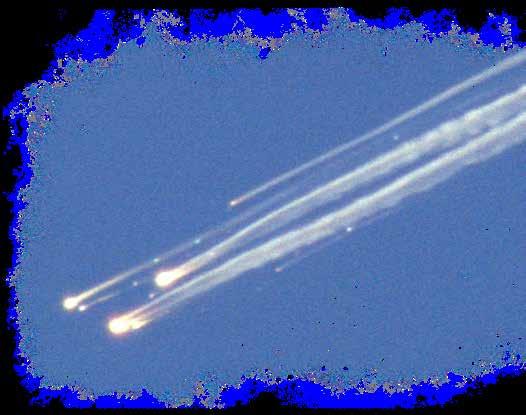
Columbia was supposed to land in Texas on February 1, 2003. Space shuttles travel at speeds of 12,000 miles an hour when they return to Earth. Columbia was almost 50 miles above the Earth when damage to the wing allowed hot gases around Earth into the shuttle. The shuttle broke into a few pieces of fire shooting through the sky. Newspaper reporters who came to welcome the astronauts home videoed the entire disaster. Broken pieces from Columbia spread over 2,000 miles in two states, and all the astronauts were killed.
NASA started a big investigation to figure out what happened. They discovered that mission control didn’t take the risk of damage to the spaceship seriously, so they didn’t do anything to protect the crew. Because of this, NASA took a break from doing space missions. Instead, they worked to make their shuttles safer. They also made new rules to help keep astronauts safe in the future. The disaster became known as the Space Shuttle Columbia disaster. It is a reminder of the dangers of space travel and how important it is to use safety precautions.
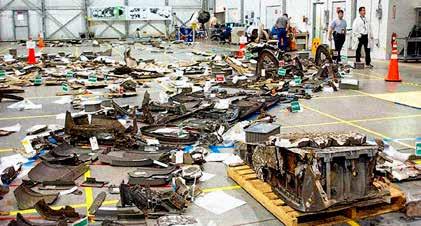
1. What did NASA do after the disaster to improve the safety of its astronauts?
a. Nothing
b. Improved their space shuttles
c. Stopped exploring space
d. Started sending robots to space instead of people
2. How many successful missions did Columbia go on before its last mission in 2003?
a. 17 missions
b. 27 missions
c. 37 missions
d. 47 missions
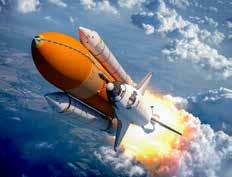
This space shuttle just took off to space. Notice the big brown tank. It holds more than 500,000 gallons of fuel to power the rockets. The two long rockets on each side carry the orbiter to space. The orbiter is the part that looks like an airplane. That’s where the astronauts live and do experiments.
A lot of work happens before a space shuttle takes off to space. This timeline shows what happens to prepare for the blastoff.
3. How far did broken pieces from Columbia spread after the disaster?
a. Over 500 miles in one state
b. Over 1,000 miles in two states
c. Over 2,000 miles in two states
d. Over 3,000 miles in three states
4. What happened during the takeoff of Space Shuttle Columbia in January 2003?
A piece of foam fell off the shuttle and flew into one of the wings.
5. What caused the Columbia shuttle to break apart while returning to Earth?
Damage to the wing allowed heat into the shuttle.
6. What do you think mission control learned from the disaster?
To take small safety concerns very seriously
20 hours before blastoff: Preparation
• The crew reviews mission plans.
• Loading equipment and supplies into the orbiter
• Putting on the big side rockets and big gas tank
• Safety check
9 hours before blastoff: Fuel up
• Fill the tanks with fuel to bring the orbiter to space.
3 hours before blastoff: Final Countdown
• Final safety inspection by the crew
• Checking the weather
• Starting the engines and checking the systems
• Getting permission from mission control to take off Takeoff
• Starting the engines
• Takeoff
• Going up into space
• The big side rockets and the big gas tank fall to the ground.
Rearrange the following steps in their proper order.
1. Takeoff
2. Safety check
3. Fill the tanks with fuel.
4. The crew reviews mission plans.
5. Mission control gives permission for the space shuttle to take off.
Answer:
4, 2, 3, 5, 1
1927: A scientist named Wallace Carothers begins experimenting with materials to make stronger tires.
1930: Carothers discovers nylon, a material that is strong, flexible, and easy to make.
1935: A company called DuPont gets a patent for nylon and starts making it in small amounts.
1937: DuPont tells people about nylon, saying it can be used for many things.
1938: DuPont begins making nylon products.
1939: Nylon stockings become popular as a cheaper, more durable alternative to silk stockings.
1940: Nylon is used for military equipment during World War II.
1950s: Nylon becomes popular for clothing, carpeting, and upholstery.
1960s-1970s: People start to worry about the environment and how synthetic materials like nylon might be harmful.
1990s-2000s: Scientists create new types of nylon that are more sustainable.
Today: Nylon is still used in many products, and people are working to make it even better for the environment.
Show the students pictures of nylon products, such as stockings, toothbrushes, and fishing line.
Ask the students to think about why nylon became so popular during World War II.
Discuss the benefits and drawbacks of using synthetic materials like nylon instead of natural materials like silk and cotton.
Have the students brainstorm other products that could be made from nylon.
Encourage the students to think about ways to reduce their use of plastic materials like nylon.
Explain the concept of sustainability and how it relates to the use of synthetic materials.
Did you know that the clothes you’re wearing might have been made from a material called nylon? Nylon is a type of plastic that was invented a long time ago, and it has many uses, including making clothing, toothbrushes, and even guitar strings! Let’s learn more about the history of nylon.

Nylon was first invented in the 1930s by a group of scientists who were working for a company called DuPont. At the time, silk was the most popular material used for making stockings, but it was expensive and in short supply. The scientists wanted to create a cheaper and more durable material that could be used as a substitute for silk.
After a lot of experimentation, they finally came up with a material that was strong, flexible, and easy to produce. They called it nylon, and it soon became very popular. Nylon stockings were first introduced in the United States in 1939, and they quickly became a sensation. Women loved them because they were comfortable, affordable, and long-lasting.
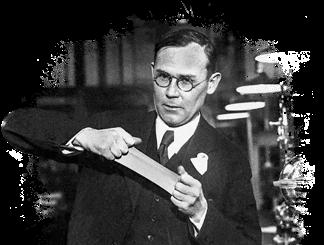
During World War II, nylon became even more important. The material was used to make parachutes, ropes, and other military equipment. Nylon stockings were also in high demand among soldiers and civilians alike. In fact, the U.S. government even asked DuPont to stop producing nylon stockings for civilians so the material could be used for the war effort.
After the war, nylon continued to be used in many different ways. It was used to make clothing, upholstery, and even car
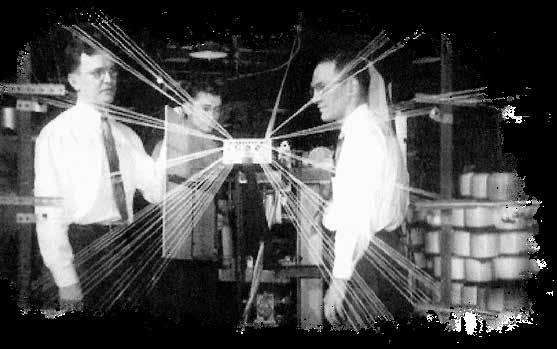
parts. Nylon toothbrushes were introduced in the 1950s, and they quickly became popular because they were more durable than traditional toothbrushes.
• Nylon thread in various colors, Scissors
• Tape, Key ring
Cut three pieces of nylon thread in different colors, each about one yard long.
Tie the three strands together in a knot at one end, leaving about an inch of thread above the knot.
Tape the knotted end to a tabletop or clipboard to hold it in place while you work.
Separate the strands so that each color is on a different side.
Take the strand on the far right and cross it over the middle strand so that it becomes the new middle strand.
Take the strand on the far left and cross it over the new middle strand so that it becomes the new middle strand.
Repeat steps 5 and 6, alternating sides, until the bracelet is the desired length.
Tie a knot at the end, leaving about an inch of thread above the knot. Tie the two ends together to make a bracelet, or add a key ring to the end.
Q1: Who invented nylon?
A1: Nylon was invented by a group of scientists who worked for DuPont.
Q2: Why was nylon invented?
A2: Nylon was invented because scientists wanted to create a cheaper and more durable material that could be used as a substitute for silk.
Q3: What was the first product made from nylon?
A3: Nylon stockings were the first product made from nylon.
Q4: Why was nylon important during World War II?
A4: Nylon was used to make parachutes, ropes, and other military equipment. Nylon stockings were also in high demand among soldiers and civilians.
Q5: What other products can be made from nylon?
A5: Nylon can be used to make clothing, carpeting, fishing line, and many other products.
Today, nylon is still widely used in many different industries. It’s used to make clothing, carpeting, fishing line, and many other products. Nylon is a versatile material that is strong, lightweight, and resistant to wear and tear.

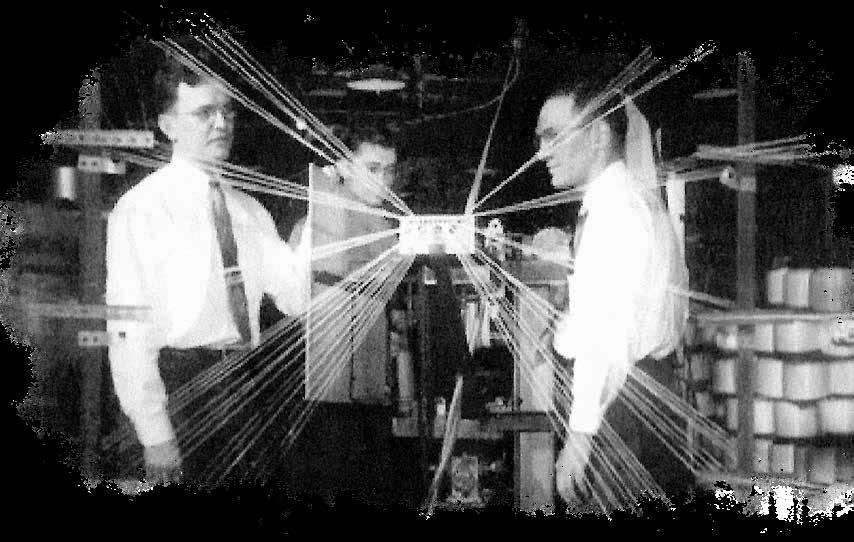
For many years, people used things from nature to make everything they needed. They used wool from sheep to make clothing and wood from trees to build homes. The only way to get these materials was to wait for more wool to grow on the sheep or more trees to grow. This meant they didn’t always have enough, and sometimes it was hard to get what they needed. It could also be expensive.

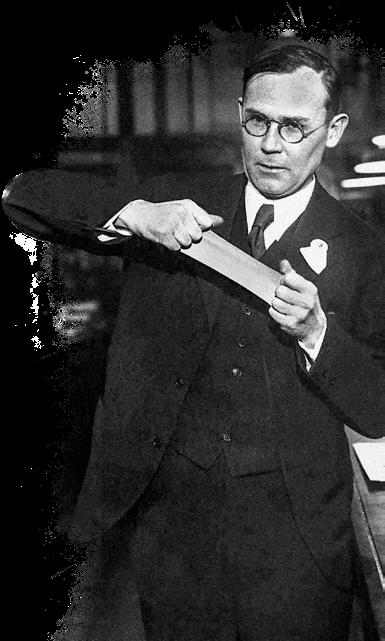
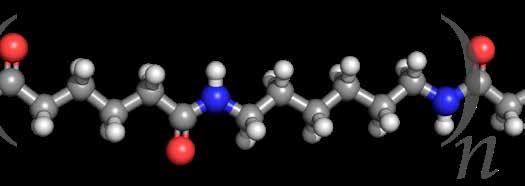

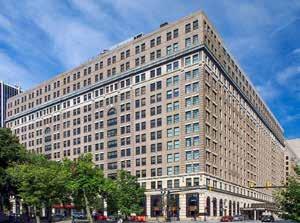

new chemicals. The company hired Wallace Carothers to try to invent synthetic material. Synthetic means the product is made from materials not found in nature. In 1935, Carothers and his team of scientists created the first synthetic material. The DuPont company called their material nylon. They received a patent for nylon on February 16, 1937. A patent is a license from the government giving the owner and no one else the right to sell the product.
Many other synthetic materials were invented by scientists at DuPont, including spandex, kevlar, and Teflon.
Kevlar is used in guitar strings as well as army helmets.


Nylon is made from coal, air, water, and petroleum. The fibers, or threads, are very strong and elastic. Something that is stretchy is elastic. Nylon can be made into long strands, similar to silk used for clothing. Nylon costs less than silk and can last a lot longer. It can also be made into a hard material strong enough for big machines.

DuPont introduced nylon to the public at the 1939 World Fair. People from all over the world came to the 1939 World Fair to see the inventions that would change the future. Everyone was really surprised when they saw nylon stockings at the DuPont booth. No one could believe that the soft material that felt like silk was actually synthetic. That year, DuPont sold 64 million pairs of nylon stockings.

Companies began using nylon to make many products. Nylon was soon one of the most popular materials in the world. It is used for many products because it is strong and lasts a long time. Since nylon was invented, it has been used to make almost every type of product. Most of our clothing contains nylon, and the cars and buses we ride in are made with nylon parts. synthetic - made from a material not found in nature
1. Who invented nylon?
a. Microsoft
b. Wallace Carothers
c. The government
d. John Doe
2. What is a patent?
a. A government document
b. A material used for production
c. a license giving only the owner the right to sell the product
d. An agreement between companies
3. Which is NOT true about nylon?
a. It is similar to silk threads.
b. It is cheap to produce.
c. It lasts a long time.
d. It is very weak.
4. How are silk and nylon similar and different?
They both feel soft, but nylon is cheaper and lasts longer than silk.
5. Why do you think DuPont chose the World Fair to show people nylon for the first time?
A lot of people were there, so they had a chance to make their product well known.
6. Name two products made from nylon.
Clothing and car parts
Imagine you are cleaning out your house. You find a big, old box filled with things you forgot you ever had. You decide to sort the items into three bags, one bag for nylon items, one for metal, and one for wood. NYLON
Toy blocks
Tent
Fishing net
Door locks
Toothpicks
Hot water urn
BBQ skewers
Wire hangers
Rope
Backpack
Screws
Guitar
Backpack Tent Rope
Fishing net
Screws
Hot water urn
Wire hangers
Door locks
Toy blocks
Toothpicks
BBQ skewers
Guitar
September 1992: Osama bin Laden calls for attacks on Americans.
February 26, 1993: At 12:18 pm, a bomb explodes in a parking garage below the World Trade Center, killing six people and injuring more than 1,000 others.
March 4, 1993: A letter is found in a van parked near the World Trade Center, claiming responsibility for the bombing.
March 12, 1993: Mastermind Ramzi Yousef flees to Pakistan.
March 17, 1993: Eyewitnesses help create a sketch of a suspect in the bombing, leading to the identification of several suspects.
June 24, 1993: The FBI arrests suspect Mohammed Salameh.
August 12, 1993: Yousef is identified as the man who rented the truck.
August 23, 1993: Yousef’s associate, Abdul Hakim Murad, is arrested.
September 1, 1993: Yousef is arrested in Pakistan and extradited to the U.S.
November 12, 1993: A grand jury indicts Yousef and three others.
December 11, 1993: Four more suspects are indicted in connection with the bombing.
January 6, 1994: Yousef is arraigned in court and pleads not guilty to charges related to the bombing.
February 24, 1994: A jury finds Yousef and his codefendants guilty.
May 24, 1994: Yousef is sentenced to life in prison without parole.
November 12, 1994: The remaining suspects are sentenced to life in prison without parole.
Begin by explaining what the World Trade Center was and why it was an important building in New York City.
Use age-appropriate language and visuals to explain what happened during the bombing and how it affected people.
Discuss the role of the FBI in investigating the bombing and bringing the terrorists to justice.
Students will learn that in 1993, a bomb exploded at the World Trade Center in New York City. It was a tragic event affecting many people.
Emphasize that terrorism is a serious issue and that everyone has a role to play in preventing it.
On February 26, 1993, a bomb went off in the parking garage of the World Trade Center. The explosion killed six people and injured over a thousand others. It also caused significant damage to the building. The bomb was planted by a group of terrorists who wanted to send a message to the United States.
The terrorists who carried out the attack were members of a group called Al-Qaeda. They were angry at the United States for its support of Israel and involvement in the Persian Gulf War. They believed that by attacking the World Trade Center, they could cause significant damage to the U.S. economy and send a message to the American people.
The investigation into the bombing was led by the FBI. It was able to identify the terrorists involved and bring them to justice. Several of the terrorists were captured and put on trial. They were found guilty of their crimes and sentenced to life in prison.
The bombing of the World Trade Center in 1993 was a tragic event that had a significant impact on the United States. It showed that terrorism was a real threat to the country and that the government needed to take steps to prevent future attacks. Despite this terrorist attack, when the September 11th attack occurred 18 years later the government was caught by surprise.
• Blank bingo board 3x3
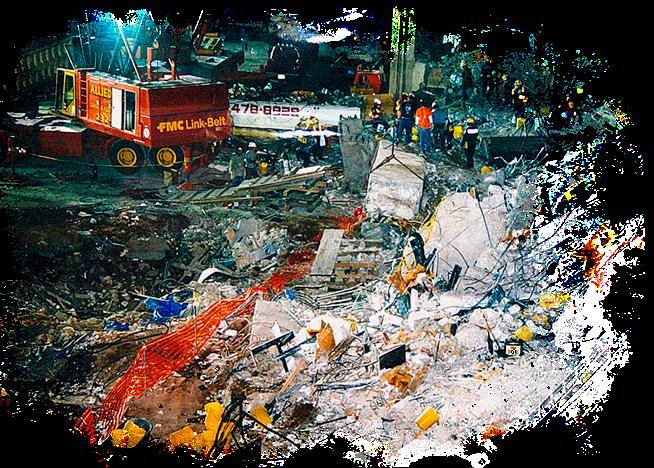
Begin by discussing the events of the 1993 WTC bombing and the impact it had on the people involved. Emphasize how people coped with the tragedy in different ways, such as seeking support from loved ones, participating in memorial events, or engaging in self-care activities.
Explain to the students the importance of self-care in coping with difficult situations and managing stress and emotions.
Have the students fill in their bingo boards with specific activities or strategies they can use to take care of themselves during times of stress or sadness. These could include things like going for a walk, talking to a trusted friend or family member, taking deep breaths, listening to music, or engaging in a creative activity.
Write on the board at least 20 different self-care ideas.
Randomly choose one self-care idea and have students cross it out if it appears on their bingo board. Play until a few students have called Bingo.
As a follow-up, you may also consider incorporating mindfulness or relaxation exercises into future classroom activities to further support the students’ self-care and coping skills.
: What happened during the 1993
A1: A bomb exploded in the parking garage of the World Trade Center, killing six people and injuring over a thousand others.
: Who carried out the bombing?
A2: The bombing was carried out by a group of terrorists called Al-
: Why did the terrorists attack the World Trade Center?
A3: The terrorists were angry at the United States for its support of Israel and for its involvement in the Persian Gulf War.
: What happened to the terrorists who carried out the attack?
A4: The terrorists were found guilty and sentenced to life in prison.
Q5: What was the impact of the bombing on the United States?
A5: The bombing showed that terrorism was a real threat to the country and that the government needed to take steps to prevent future attacks.
The 1993 bombing of the World Trade Center was a tragic event that affected many people. It showed the world that terrorism is a serious threat that can cause significant damage and harm to innocent people. However, it also showed the strength and resilience of the American people and the government’s determination to bring justice to those who commit acts of terrorism.
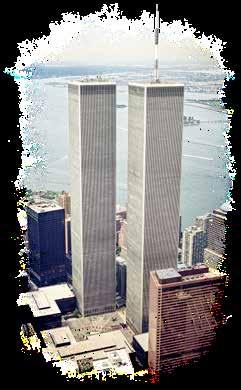
▸ It cost 250 million dollars to repair the tower.
▸ The North Tower was 1,368 feet tall, six feet taller than the South Tower. ▸ The powerful explosion was meant to destroy both towers.
• The World Trade Center was made up of more than 200,000 tons of steel and took nearly ten years to build.
• The new World Trade Center includes One World Trade Center, which is 1,776 feet tall. That is the year the United States became a country.
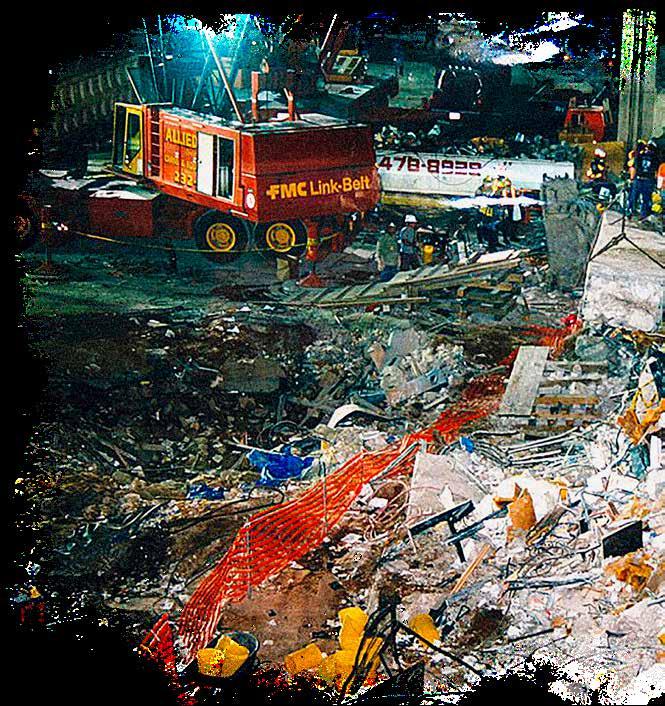
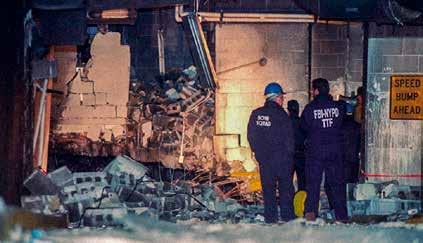
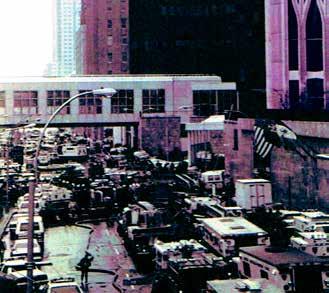
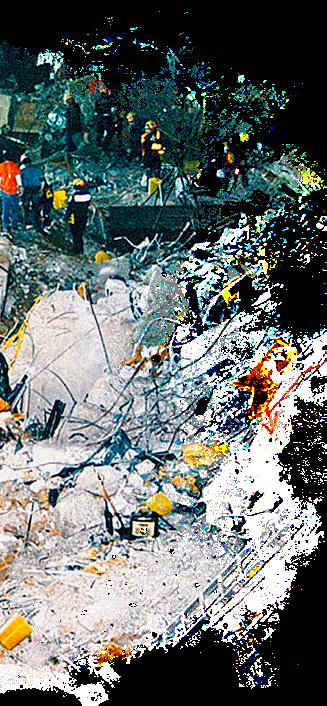
Have you ever heard of the World Trade Center in New York City? It’s a group of super tall buildings built in 1973, with two massive towers called the North Tower and the South Tower. These towers were so huge that they were actually the tallest buildings in the entire world! With almost 50,000 people working in the towers every day, the World Trade Center was the center of commerce, or business, in the United States.
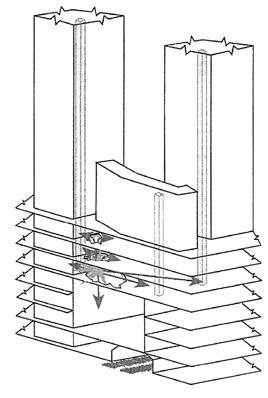
When most people think of the World Trade Center they think of the attack on September 11th, 2001. But 9/11 was not the first time the WTC was attacked. Back in 1993 two terrorists carried out an attack on the these famous buildings.
On February 26, 1993, Ramzi Yousef parked a van in the underground parking lot of the North Tower of the World Trade Center. At 12:17 pm, a bomb in the van exploded, tearing a 100-foot hole through four floors. The explosion killed six people and injured over 1,000 more. Ramzi Yousef used a powerful bomb that weighed over 1,000 pounds. He wanted the North Tower to fall into the South Tower, destroying both of them. His plan did not work, and there was only damage to the North Tower that cost 250 million dollars to repair over a few months.
After the bombing, the FBI gathered evidence to find the terrorists responsible for the attack. Items or facts that prove who is responsible for a crime are called evidence. They found pieces of the van and realized it was rented from DIB Leasing in Jersey City, New Jersey. DIB Leasing told
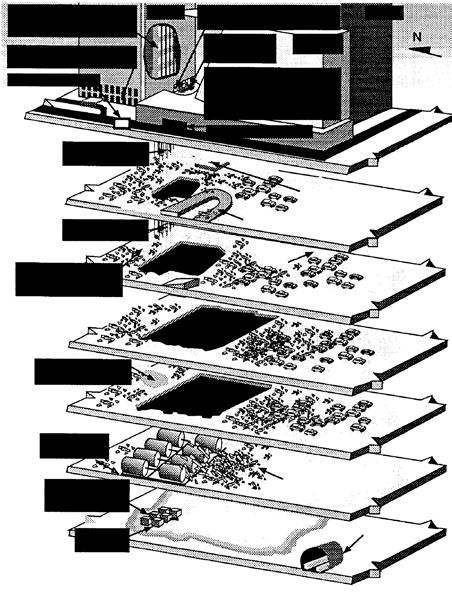
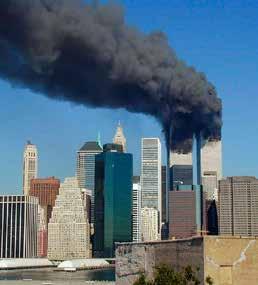
the FBI that Mohammed Salameh rented the van. A few days after renting the van, Salameh called the police and told them that someone stole the van. Salameh didn’t know that the FBI had evidence connecting him to the bombing. He asked DIB Leasing to return the money for the van he had rented. When Salameh went to DIB Leasing to collect the money, the FBI arrested him. Salameh confessed to the crime. When a criminal tells the police that he did something against the law, he confesses. Salameh’s arrest led the FBI to other terrorists who helped build the bomb.
In 1995, Pakistani secret police arrested Ramzi Yousef in Islamabad, Pakistan. They sent him to the United States, where he went on trial. In 1997, he was sentenced to life in prison. When a court decides to punish someone, they sentence the person to the punishment. He was also found guilty of many other terror attacks. Salameh and other terrorists who helped Yousef were sentenced to 240 years in prison.
The 1993 bombing was the first attack terrorists carried out in America. It was a warning that terrorists would try to attack America again. On September 11, 2001, terrorists attacked the Twin Towers and completely destroyed them.
1.
What was Ramzi Yousef’s goal when he bombed the Twin Towers?
a. To cause only the North Tower to collapse
b. To destroy the parking garages
c. To cause both towers to fall into each other
d. To cause panic
2. How did the FBI find Mohammed Salameh?
a. He turned himself in to the FBI.
b. They found his fingerprints on the van he rented.
c. Airport security found him trying to leave the U.S.
d. They found pieces of the van he rented.
3. What happened to Ramzi Yousef after he was arrested in Islamabad, Pakistan?
a. He was released.
b. He was sentenced to death.
c. He was sent to the United States for trial.
d. He was placed under house arrest.
4. Why do you think Yousef chose to bomb the World Trade Center at 12:17 pm?
Possible answer: He knew many people would be there in the afternoon and wanted to kill them.
5. How might the FBI have known that the van was from DIB Leasing in New Jersey?
Possible answers: They tracked it down using the license plate number.
6. On what date did terrorists bomb the Twin Towers?
February 26, 1993
When there is an emergency, it is important to get help as fast as possible. The people we call for help are called first responders. Police officers, firefighters, and paramedics are the most common first responders. Fill in the chart with the missing information and answer the questions below.
Which first responder should you call in the following emergencies?
Police officer guns, handcuffs, patrol car stopping crimes and arresting criminals
fire extinguishers, axes, hoses, fighting fires, rescuing people from fires and other emergencies, and treating injuries
oxygen tanks, stretchers, treating injuries and bringing people to the hospital
1. A person is having a serious allergic reaction.
2. Smoke is pouring out of a building.
3. A person is breaking into a house.
4. A person is injured in a car crash.
1922: Arthur Powell Davis, director of the Bureau of Reclamation, proposes the idea of building a dam on the Colorado River to provide water and electricity to the western United States.
1930: Congress passes the Boulder Canyon Project Act, authorizing the construction of the Hoover Dam.
1931: Construction begins on the Hoover Dam.
1935: The Hoover Dam is completed and dedicated by President Franklin D. Roosevelt.
1941-1945: During World War II, the Hoover Dam generates much-needed electricity for the war effort.
1961: The Hoover Dam is designated a National Historic Landmark.
2000: The Hoover Dam Bypass Bridge, a modern engineering marvel, is completed near the dam.
2023: Nearly 90 years after its completion, the Hoover Dam continues to provide water and electricity to millions of people in the western United States.
Use pictures and diagrams to help explain the construction process and the final product of the Hoover Dam.
Discuss the impact the Hoover Dam had on the Great Depression by providing jobs for thousands of people.
Emphasize the importance of the dam in providing water and electricity to millions of people in the western United States.
Discuss the pros and cons of the Hoover Dam, including its impact on the environment and native communities.
Students will learn that the Hoover Dam is a massive structure built during the Great Depression in the 1930s. It is one of the most impressive engineering feats in the world and continues to provide water and electricity to millions of people today.

Highlight the Hoover Dam’s tourist attractions, including the visitor center and guided tours.
The Hoover Dam was built on the Colorado River between Arizona and Nevada in the United States. The idea for the dam came from Arthur Powell Davis, director of the Bureau of Reclamation. He thought the Colorado River could be harnessed to provide water and electricity to people in the western United States.
Construction of the Hoover Dam began in 1931 during the Great Depression. The project was funded by the U.S. government, and it provided jobs for thousands of people who were out of work. The dam was built using massive amounts of concrete and steel, and workers had to use dangerous equipment to carve out the canyon where the dam would be built.
The Hoover Dam was completed in 1935, and it was a massive success. It created Lake Mead, one of the largest man-made lakes in the world, and it provides water for cities like Los Angeles, Las Vegas, and Phoenix. The dam also generates electricity for millions of people, making it an important source of power for the western United States.
Over the years, the Hoover Dam has become a popular tourist attraction. People from all over the world come to see the massive structure and learn about its history.
• Popsicle sticks
• Glue
• Cardboard
• Scissors
• Paint (optional)
• Small plastic containers (optional)
Begin by cutting out a rectangular piece of cardboard to serve as the base of your model.
Using popsicle sticks and glue, construct a miniature version of the Hoover Dam on top of the cardboard base. Be sure to reference pictures or diagrams of the dam to make your model as accurate as possible.
If you want to add a touch of color to your model, paint the popsicle sticks in the appropriate shades of gray.
You can also use small plastic containers to create a miniature Lake Mead next to the dam, if desired. Once the glue has dried, your miniature Hoover Dam model is complete!
Q1: When was the Hoover Dam built?
A1: Construction on the Hoover Dam began in 1931 and was completed in 1935.
Q2: What was the purpose of the Hoover Dam?
A2: The purpose of the Hoover Dam was to provide water and electricity to people in the western United States.
Q3: What did the Hoover Dam create?
A3: Hoover Dam created Lake Mead, one of the largest manmade lakes in the world.
Q4: How does the Hoover Dam generate electricity?
A4: Hoover Dam generates electricity by using the force of the water to turn turbines.
Q5: Why is the Hoover Dam an important part of American history?
A5: Hoover Dam is an important part of American history because it provided jobs during the Great Depression and continues to provide water and electricity to millions of people today.
The Hoover Dam is an important part of American history, and continues to provide water and electricity to millions of people today. It is a testament to the power of human ingenuity and the ability to overcome great challenges.
Water is super important for us to live. Without water, there would be no food to eat, water to drink, or wood to build houses. But too much water can be dangerous. Floods can hurt people and ruin homes. Many floods start from rivers that overflow. To prevent this, people started building dams.

The Colorado River is a powerful river that is 1,450 miles long and flows through seven states. The river is very strong and would often flood cities and farms in Arizona, Nevada, and other states. In 1928, Congress approved the construction of the Hoover Dam. A dam is a wall built across a river or other body of water to stop the water and control its flow. The Hoover Dam was built between Arizona and Nevada.
Construction of the Hoover Dam began on March 4, 1931, and took five years. Building the dam was very difficult. The workers could not work in the river, so they dug huge tunnels. The river flowed through the tunnels, allowing the workers to build the dam on the dry riverbed. The floor of a river is its riverbed. The workers made more than 200 concrete blocks and
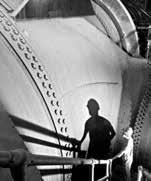
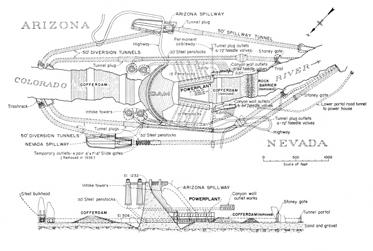
• At 770 feet, the Oroville Dam in California is the only dam taller than the Hoover Dam.
• Lake Mead provides water to over 20 million people.
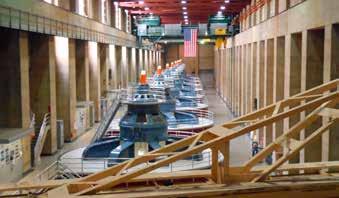
then stacked them to build a large, round wall. The blocks were huge! They were each about the size of a garage that fits one car.
The bad weather made the work especially dangerous. The summers were very hot, and the winters were very cold. More than 100 people died while working on the dam. About 21,000 people worked on the dam, which cost 165 million dollars.
dam - a wall across a body of water to stop the water and control its flows
riverbed - the floor of a river reservoir - where water is stored before it goes to people’s houses and farms
turbine - a machine that creates electricity from water
The Hoover Dam is 726 feet tall. Its base is 660 feet thick, which is more than the length of two city streets. At the top, it is 45 feet thick, nearly as wide as a four-lane highway. The dam holds back the river’s water and creates a reservoir called Lake Mead. A reservoir is where water is stored before it goes to people’s houses and farms. Lake Mead is the largest reservoir in the United States.
The dam also has machines called turbines that create electricity from water. The electricity that is made from water is called hydroelectricity. The dam provides electricity to Arizona, Nevada, and other states. When the dam was built, it made the most hydroelectricity in the U.S.
On September 30, 1935, President Franklin D. Roosevelt (19331945) opened the Hoover Dam. It was named to honor President Herbert Hoover, who was president most of the time it was being built. Each year, millions of people visit the dam and see how it protects the cities near the great Colorado River.
1. How long is the Colorado River?
a. 1,450 miles b. 1,650 miles
c. 1,850 miles d. 2,000 miles
2. How many states does the Colorado River flow through?
a. 4 states b. 5 states
c. 6 states d. 7 states
3. Which of the following is NOT true about the Hoover Dam?
a. It is located on the Mississippi River.
b. The construction took five years.
c. It creates electricity.
d. It is named after President Herbert Hoover.
4.
Why was the Hoover Dam built?
To stop the Colorado River from flooding cities and farms.
5. Why was building the Hoover Dam difficult?
Possible answers: The workers could not work in the river and had to dig huge tunnels. There were bad weather conditions.
6. How did the Hoover Dam get its name?
It was named in honor of President Hoover, who was president while it was being built.
There are more than 90,000 dams in the United States. This chart shows just a few of them. Look at the chart and answer the questions below.
Fill in the blanks based on the chart above.
Hoover Dam 1935 726 ft
Grand Coulee Dam 1942 550 ft
Glen Canyon Dam 1963 710 ft
Colorado River, Nevada/ Arizona
Columbia River, Washington State
Colorado River, Arizona
One of the largest concrete structures in the world
Provides water for 670,000 acres of farms
Called a “bridge between two worlds” for connecting deserts to farmland
Oroville Dam 1968 770 ft
Feather River California
Tallest dam in the United States, stops heavy rains from flooding downstream cities
Oroville Dam
1. The tallest dam in the U.S. is the , and it is feet taller than the Glen Canyon Dam.
2. The was built seven years after the .
Grand Coulee Dam Glen Canyon Dam
Oroville Dam
4. The protects cities downstream from floods.
Hoover Dam
3. At 726 feet, the Hoover Dam is just 16 feet taller than the .
5. The is one of the largest concrete structures in the world. It is on the border of and .
Arizona Nevada Hoover Dam 60
May 1945: World War II ends in Europe.
August 1945: Emperor Hirohito announces Japan’s surrender, ending World War II.
March 1946: Churchill delivers his Iron Curtain Speech in Fulton, Missouri, sparking worldwide controversy.
June 1947: The Marshall Plan is enacted, providing billions of dollars in aid to Western European countries.
February 1948: Communist coup in Czechoslovakia
June 1948: The Soviet Union blocks land access to Westerncontrolled sectors of Berlin, leading to the Berlin Airlift.
April 1949: The North Atlantic Treaty is signed, creating NATO.
May 1949: The Federal Republic of Germany (West Germany) is established.
October 1949: The German Democratic Republic (East Germany) is established.
Start the lesson by introducing Winston Churchill and his role as a leader during World War II.
Discuss the political and social climate of the world in 1946, including the aftermath of World War II and the growing tension between the West and the Soviet Union.
Use maps and visuals to help students understand the division between Western and Eastern Europe during this time.
Read excerpts from the Iron Curtain Speech and discuss its main points and themes.
Encourage students to think critically about the speech and its impact on history.
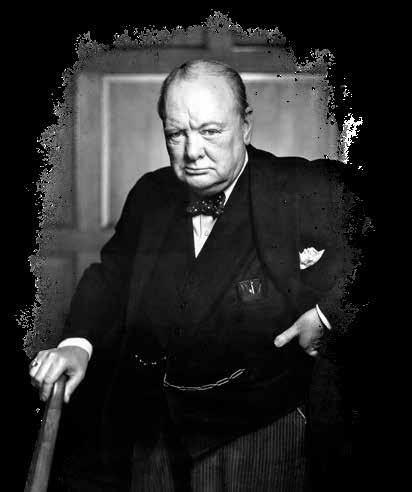
Students will learn that Winston Churchill was a famous British politician and leader during World War II. In 1946, he delivered a speech that would become known as the Iron Curtain Speech. In this speech, he warned the world about the dangers of communism and the growing influence of the Soviet Union in Europe.
Connect the Iron Curtain Speech to other historical events, such as the formation of NATO and the broader Cold War.
The Iron Curtain Speech was delivered by Winston Churchill on March 5, 1946, at Westminster College in Fulton, Missouri, United States. Churchill was invited to speak by President Harry S. Truman, and his speech was broadcast to the world by radio. The speech was titled “The Sinews of Peace” but became known as the Iron Curtain Speech due to Churchill’s use of the term “iron curtain” to describe the division between Western Europe and the communist countries of Eastern Europe.
Churchill’s speech was a warning to the world about the growing influence of the Soviet Union and the dangers of communism. He called for a strong alliance between the United States, Great Britain, and other Western democracies to oppose the Soviet Union. He warned that the Soviet Union was seeking to expand its influence in Europe and
around the world and that it posed a serious threat to freedom and democracy.
The speech was widely reported in the press and was seen as a turning point in the Cold War between the West and the Soviet Union. It helped shape public opinion and set the stage for the formation of the North Atlantic Treaty Organization (NATO) in 1949. NATO was a military alliance between the United States, Great Britain, and other Western democracies, created to defend against the Soviet Union and its allies.
• Index cards with facts and myths about Churchill written on them
• Timer
• Scorecard or whiteboard to keep track of points
Some fact ideas:
• Churchill was born in November 1874.
• He served as the prime minister of the United Kingdom twice, from 1940-1945 and again from 1951-1955.
• Churchill was an accomplished writer and won the Nobel Prize in Literature in 1953.
• He is known for his inspiring speeches during World War II, including the famous “We shall fight on the beaches” speech.
Divide the class into two teams.
Have one team start by drawing an index card and reading the statement out loud to the other team. The other team has to guess whether the statement is fact or fiction.
To make the game more challenging, you can also ask follow-up questions about the statements (e.g., “If this is a fact, what is the source of the information?”, “If this is a myth, what is the real story behind it?”, etc.)
The team has 30 seconds to make their guess. If they guess correctly, they earn one point.
The team with the most points at the end of the game wins.
Q1: When was the speech delivered?
A1: The speech was delivered on March 5, 1946.
Q2: Where was the speech delivered?
A2: The speech was delivered in Westminster College in Fulton, Missouri, United States.
Q3: What was the main theme of the speech?
A3: The speech’s main theme was the dangers of communism and the growing influence of the Soviet Union in Europe.
Q4: What impact did the speech have on history?
A4: The speech helped shape public opinion and set the stage for the formation of NATO.
Q5: Why is the Iron Curtain Speech still relevant today?
A5: The speech’s themes of freedom, democracy, and the need for strong alliances remain important in global politics.
Winston Churchill’s Iron Curtain Speech was an important event in history. It warned the world about the dangers of communism and helped shape the course of the Cold War. Its impact can still be felt today, as the alliance between the United States and its Western allies remains a cornerstone of global security.
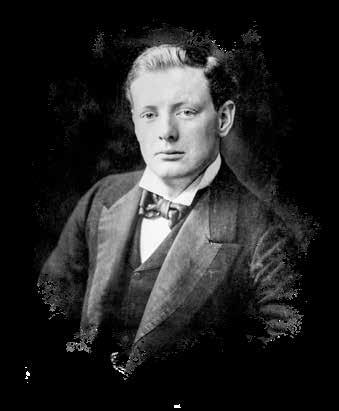
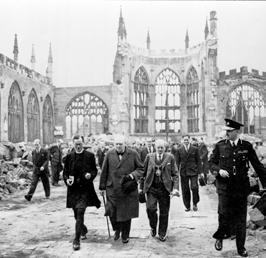
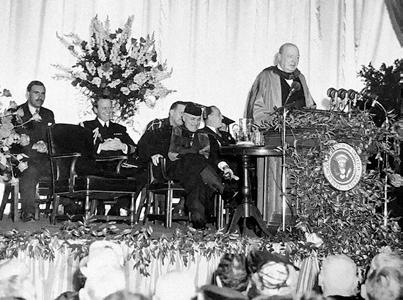
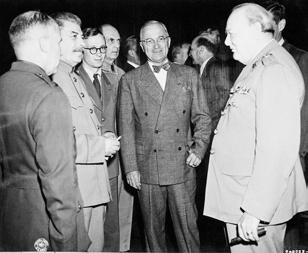
• Winston Churchill worked very hard to overcome a stutter. Did you know?
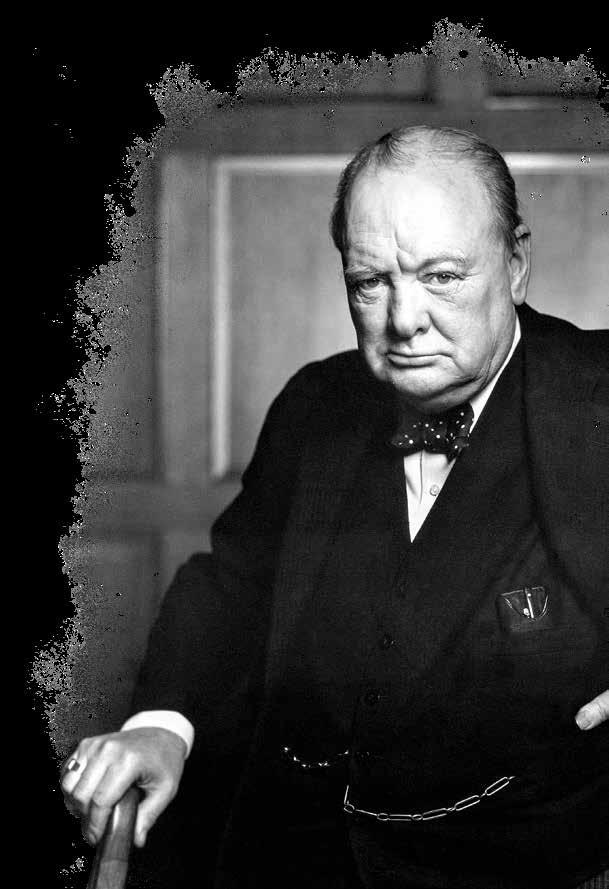
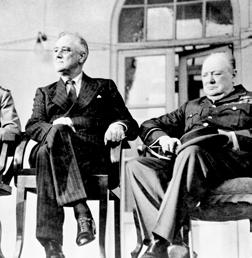
Winston Churchill was born in England in 1874. Churchill was a powerful speaker and was elected to the English government in 1900. In 1940, Churchill became the prime minister , or leader, of England. He led England during World War II (1939-1945) and helped the Allies win the war.
Churchill’s term as prime minister ended in 1945, but he continued to participate in the government. Churchill was very nervous about how strong the USSR became after World War II. The USSR was a communist country ruled by Joseph Stalin. The USSR won 15 countries during World War II and ruled almost eight million miles. Churchill believed that the USSR wanted to spread communism worldwide and end democracy. In a democracy, the people of the country vote for their government leaders. The United States and England are both democracies.
Winston Churchill was one of the great world leaders in the 1900s. He served in England’s government for 55 years and is considered to be one of the best speakers in history! He gave speeches that are still read by many people years later.
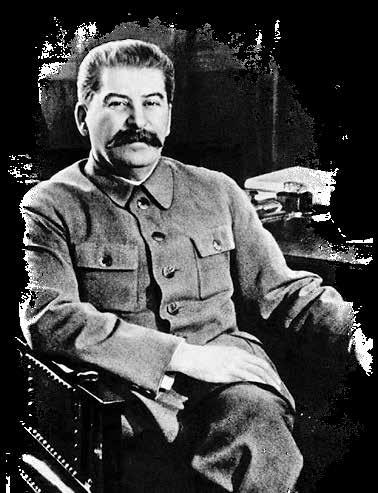
Because he was nervous about the USSR, Churchill gave a lot of speeches talking about the importance of the friendship between the U.S. and England. He said that the two countries must stop the spread of communism. In 1946, Churchill visited the U.S. for three months. One of Churchill’s most famous speeches was given on March 5, 1946, in Fulton, Missouri.
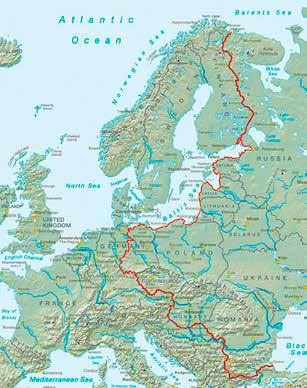
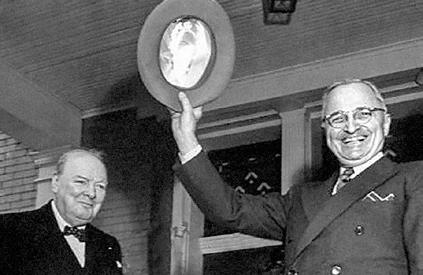
Churchill spoke about the Iron Curtain dividing Europe. The Iron Curtain was an imaginary wall dividing Europe after World War II. On one side were countries that were friends with the United States, and on the other side were countries that were friends with the USSR. Churchill said that the USSR wanted other countries to join it and separate themselves from the free world. He also called on the United States and its allies to make sure the USSR did not become even stronger. This speech is considered the beginning of the Cold War.
The Cold War was a war between the U.S. and the USSR. It was called cold because the two sides never fought each other directly. Instead, they helped with wars in other countries, such as Korea and Vietnam. The U.S. helped the democratic people of these countries, and the USSR helped the communist people. When the democratic side won, the U.S. gained an ally, but when the communists won, the USSR did. The Cold War lasted until 1989.
prime ministerleader of a country democracygovernment created by the people’s vote iron curtain - an imaginary wall dividing Europe after World War II rebels - people who fight against their government
Churchill’s warnings about the USSR became true in the years that followed. The USSR helped rebels fight wars and set up communist governments in Vietnam, Korea, and other countries. Rebels are people who fight against their government. Joseph Stalin also passed laws that made people in the USSR feel like they were living behind an actual iron curtain. USSR citizens were not allowed to read any books written by American writers. They were also not allowed to leave the country, even for a small trip.
In 1951, Churchill became Prime Minister of England again. He served until 1955, when he retired because of his poor health. He died in 1965 at the age of 90.
1.
Who was the ruler of the USSR in 1945?
a. Franklin Roosevelt
b. Winston Churchill
c. Joseph Stalin
d. Abraham Lincoln
2. How did the USSR help create communist governments in other countries?
a. They paid citizens to vote for communist leaders.
b. Countries followed their example when they saw how rich the USSR was.
c. They helped rebels fight to create communist governments in their countries.
d. They invaded countries that were not communist.
3.
What did the USSR want to do according to Churchill?
a. Spread communism
b. Help businesses in the U.S.
c. Join the UN
d. Take over England
4. Why do you think Stalin didn’t allow people in the USSR to read any books written by American writers?
Possible answer: He didn’t want them to realize that there might be better ways to live than under Communism.
5. How many years did Churchill serve as prime minister of England altogether?
Answer:
Answer:
USSR side of Iron Curtain: Joseph Stalin, Communism West side of Iron Curtain: Democracy, Winston Churchill, Allies of the USA
The red line in the map shows the Iron Curtain separating the two sides of Europe. The blue countries in the above map were democracies, and most were also friends of the United States. The orange countries were all ruled by the USSR.
Look at the words in the word box and write them on the side where they belong.
Word box: Communism, Democracy, Joseph Stalin, Winston Churchill, Allies of the USA
February 21, 1964: Scott Kelly is born in Orange, New Jersey.
1982: Kelly graduates from Mountain High School in West Orange, New Jersey.
1987: Kelly graduates from the State University of New York Maritime College with a bachelor’s degree in marine engineering and a commission as an ensign in the United States Navy.
1996: Kelly is selected as an astronaut by NASA and begins training.
1999: Kelly serves as a mission specialist on STS-103, a space shuttle mission to service the Hubble Space Telescope.
2007: Kelly serves as the pilot on STS-118, a space shuttle mission to the International Space Station.
2010: Kelly is selected to command the space shuttle mission STS134, but the mission is ultimately canceled due to the retirement of the space shuttle program.
2010-2011: Kelly serves as a flight engineer on Expedition 25 and commander of Expedition 26 on the International Space Station, completing a record-breaking 340-day mission in space.
2015-2016: Kelly serves as a flight engineer on Expedition 43 and commander of Expedition 44 on the International Space Station, completing a total of 520 days in space over the course of his career.
2018: Kelly announces his retirement from NASA and the astronaut corps.
Define key terms such as “astronaut,” “International Space Station,” and “Gulf War” to ensure students understand the context of Scott Kelly’s life and achievements.
Explain the selection process for becoming an astronaut, and discuss the training that astronauts undergo before traveling to space.
Encourage students to think about the challenges and rewards of space exploration and to consider the impact of long-term spaceflight on the human body.
Discuss the importance of perseverance and dedication in achieving one’s goals, using Scott Kelly as an example.
Students will learn that Scott Kelly is an American astronaut who spent a total of 520 days in space, including a record-breaking 340-day mission aboard the International Space Station (ISS). In this lesson, we’ll explore Scott Kelly’s life and achievements, including his space missions and contributions to space exploration.
Scott Kelly was born on February 21, 1964, in Orange, New Jersey. His interest in aviation and space began at a young age, and he pursued his dream of becoming an astronaut by joining the United States Navy. Kelly served as a pilot and flew combat missions during the Gulf War, earning numerous military honors for his service.
In 1996, Kelly was selected by NASA as an astronaut candidate, and he began training for spaceflight. He flew his first mission in 1999 as the pilot of Space Shuttle Discovery and later served as the commander of the Space Shuttle Endeavour in 2007.
Kelly’s most famous mission, however, was his record-breaking 340-day stay aboard the International Space Station from 2015-2016. During this mission, Kelly conducted a number of experiments on himself and his twin brother Mark, who remained on Earth, to study the effects of long-term spaceflight on the human body.
In addition to his spaceflight accomplishments, Kelly has also written a memoir, “Endurance: A Year in Space, A Lifetime of Discovery,” which details his experiences as an astronaut and the lessons he learned during his missions.
• List of experiment or task ideas, use these or your own:
• Studying the behavior of fluids, flames, or other physical phenomena in space
• Collecting data on the Earth’s atmosphere, weather patterns, or geological features
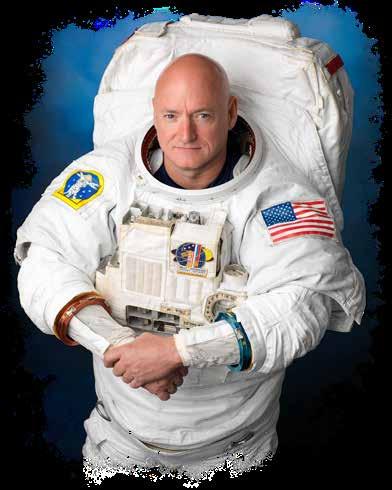
• Repairing or maintaining equipment on the International Space Station or other spacecraft
• Testing new technologies or materials in space, such as advanced propulsion systems or 3D printing
Divide students into small groups and assign each group a space mission to plan, based on Scott Kelly’s experiences as an astronaut.
Provide students with a list of potential experiments or tasks that astronauts may perform during a space mission, such as conducting research, performing maintenance, or repairing equipment.
Have each group choose a mission and work together to plan out the details of the mission, including the objectives, timeline, and equipment needed. Encourage students to think creatively and consider the challenges that astronauts may face in space, such as zero gravity, limited resources, and communication delays.
Q1: Who is Scott Kelly?
A1: Scott Kelly is an American astronaut who spent a total of 520 days in space, including a record-breaking 340-day mission aboard the International Space Station (ISS).
Q2: What did Scott Kelly do during his missions in space?
A2: Kelly conducted a variety of experiments to study the effects of long-term spaceflight on the human body, as well as performing maintenance and repairs on the ISS.
Q3: Why did Scott Kelly write a memoir?
A3: Scott Kelly wrote a memoir to share his experiences as an astronaut and inspire others to pursue their dreams.
Q4: What is the International Space Station?
A4: The ISS is a habitable artificial satellite that orbits the Earth, used for scientific research and experimentation.
Q5: What lessons can we learn from Scott Kelly’s life and achievements?
A5: We can learn the importance of perseverance, dedication, and teamwork in achieving our goals, as well as the value of scientific exploration and discovery.
Have students present their ideas to the class and discuss the similarities and differences between the missions. As a follow-up, discuss how the missions planned by the students compare to the missions Scott Kelly conducted during his time as an astronaut.
Scott Kelly is a true hero of space exploration, having dedicated his life to exploring the unknown and expanding our understanding of the universe. His contributions to the field of spaceflight will be remembered for generations to come.
Imagine your mother asking you to carry a bag of groceries inside. You try to pick it up, but it feels like it weighs a ton! You have a hard time carrying it just a few steps. This is similar to what Scott Kelly felt after living in space for almost a year. When he returned to Earth, even the lightest objects felt heavy to him.
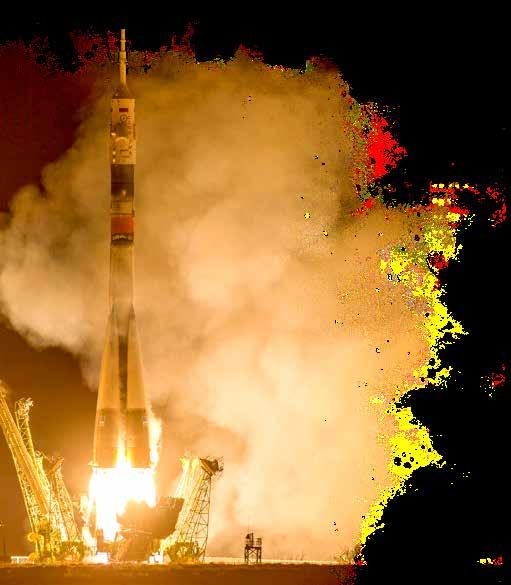
Scott Kelly was born on February 21, 1964, in Orange, New Jersey. He joined the U.S. Navy in 1982 and became a test pilot. Kelly tested inventions for U.S. Navy airplanes before other pilots began using them.
In 1995, Kelly applied to NASA to become an astronaut. A person trying to get a job is an applicant. All NASA applicants go through many tests to see if they will work well in the tough conditions of outer space. Astronauts need to be able to live and work without gravity. When you throw a ball in the air, it comes back down because of gravity. In space, instead of falling, things float in the air because there is no gravity bringing them down. Of the thousands of people who applied in 1995, NASA accepted only 44 applicants. Scott and his twin brother Mark were both accepted.

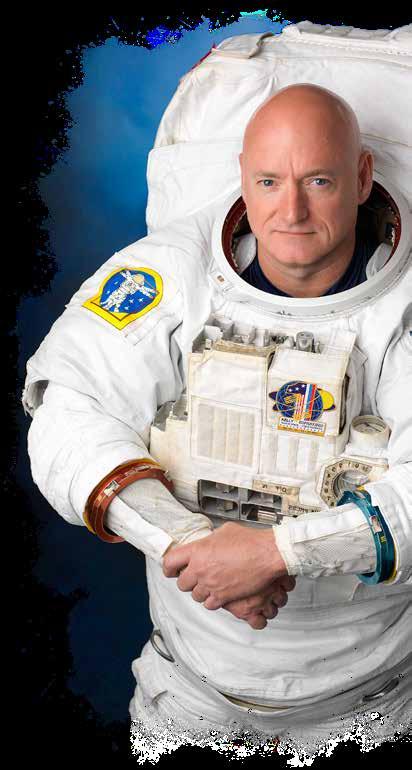
• NASA says its research is helping it prepare to send humans to Mars.
• Scott Kelly was an inch-and-a-half taller when he returned to Earth. He lost the extra height in two days.
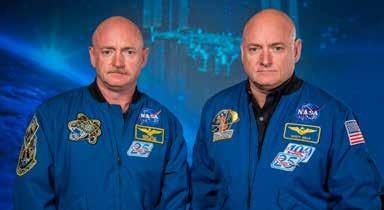
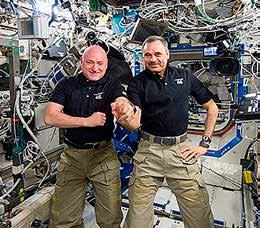
Kelly made his first trip to space in 1999 on Space Shuttle Discovery. Kelly was also part of missions to the International Space Station (ISS). These missions gave him experience and prepared him to live on the ISS for almost a year.
On March 27, 2015, Kelly launched into space with Russian astronaut Mikhail Kornienko on a 340-day mission. They were going to do experiments to help us better understand how being in space for a long time affects a person. Kelly had to take many eye, memory, and blood tests in space. He had to do each test many times to see if the results changed based on how long he was in space. He also performed spacewalks to add new equipment to the ISS.
test pilot - a pilot who tests inventions before other pilots begin using them
applicant - a person trying to get a job
success - doing every part of a plan
capsulesspaceships that return to Earth by parachute
When astronauts return to Earth, a pencil can be very heavy for them. After spending so much time in space, it takes a few days for astronauts to get used to gravity again. In space, everything floats, and their bodies are not used to carrying any weight. Astronauts also often have headaches and muscle pain on their first days back on Earth.
On March 1, 2016, Kelly and Kornienko returned to Earth. They were helped out of the small capsule and greeted by their families. Spaceships that return to Earth by a parachute are called capsules. The two astronauts had done all the experiments that were planned, making the mission a success. They became the only astronauts to have been in space for so long before returning to Earth.
1. What was Kelly’s job in the U.S. Navy?
a. Astronaut
b. Test pilot
c. Engineer
d. Teacher
2. What happened when Kelly returned to Earth?
a. He was able to carry heavy objects easily.
b. He was used to carrying weight.
c. He had headaches and muscle pain.
d. He was able to float in the air.
3. What kind of tests did Kelly NOT take while he was in space?
a. Math tests
b. Blood tests
c. Memory tests
d. Eye tests
4. Why do you think NASA is very careful about who it accepts to be an astronaut?
Possible answers: Many people do not work well in dangerous situations, such as going to space. Astronauts have to be very responsible.
5. Why do you think NASA chose Scott Kelly for this mission to the ISS?
Possible answer: He had a lot of experience with planes.
6. Why is it hard for astronauts to lift some objects after returning to Earth?
In space, everything floats, and their bodies are not used to carrying any weight.
It is very hard to do most activities without gravity. Drinks don’t stay in regular cups, and sleeping while floating is not very comfortable. It’s also very hard to keep your belongings organized and work without gravity. Match the following activities with an item that can make it easier to do in space.
Sleeping
Showering
Eating
Staying organized
A. Squeeze tubes and Ziploc bags
B. Wipes and dry shampoo
C. Sleeping bags that are strapped to the wall or floor
D. Velcro, magnets, and rope
E. Cups with straws
March 4, 1933: Franklin D. Roosevelt is inaugurated as the 32nd president of the United States.
March 6, 1933: Roosevelt declares a national bank holiday to prevent further bank failures during the Great Depression.
March 12, 1933: The first fireside chat is broadcast, in which Roosevelt addresses the banking crisis and outlines his plan to stabilize the banking system.
May 7, 1933: Roosevelt delivers his second fireside chat, in which he discusses the progress of the New Deal and the importance of industrial recovery.
September 30, 1934: Roosevelt delivers his eighth fireside chat, in which he addresses the controversial issue of taxing the wealthy to fund social programs.
December 7, 1941: Japan attacks Pearl Harbor, and Roosevelt delivers a fireside chat declaring war on Japan the next day.
October 12, 1944: Roosevelt delivers his final fireside chat, in which he discusses the progress of the war effort and the need for continued support from the American people.
April 12, 1945: Roosevelt dies suddenly of a stroke, and Vice President Harry S. Truman becomes president of the United States.
Explain what the fireside chats were and why they were important.
Discuss the historical context of the fireside chats, including the Great Depression and World War II.
Describe President Roosevelt’s approach to communicating with the American people during the fireside chats.
Explore the impact of the fireside chats on American society and culture.
Provide examples of how the fireside chats helped people during difficult times.
Fireside chats were a special way for the president of the United States to talk directly to the American people during difficult times. In this history lesson, we will learn more about how the fireside chats came to be and why they were important.
During the 1930s and 1940s, the world was going through many changes. The Great Depression was causing many Americans to lose their jobs and homes, and the world was on the brink of war. People were worried and afraid about what the future would hold. To help calm people’s fears and give them hope, President Franklin D. Roosevelt began giving regular radio broadcasts called fireside chats.
During these fireside chats, President Roosevelt would speak directly to the American people from the White House. He would talk about the important issues of the day, like the economy, the war, and new government programs to help people. He would use simple language and examples that everyone could understand. He wanted people to feel like he was talking to them personally, like they were sitting around a cozy fire listening to a friend.
People loved the fireside chats because they felt like they were getting honest information from their president. They
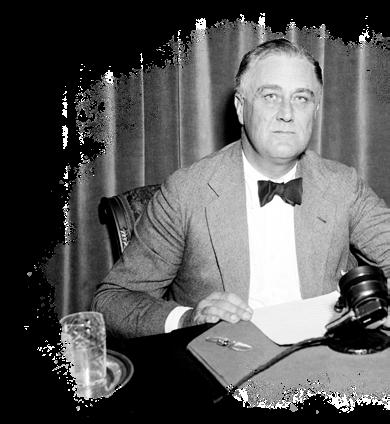
also helped people feel more connected to each other during difficult times. Families would gather around the radio to listen together, and people would discuss the chats with their friends and neighbors. The fireside chats became an important part of American history and helped bring the country together during some of its toughest moments.
• Pen, Paper
Have students use their creative writing skills on either of the following topics:
Creative Writing Assignments: Ask students to imagine that they are living during Roosevelt’s presidency and write their own fireside chat scripts addressing different issues of the time. Write a Letter to the President: Have students write a letter to President Roosevelt expressing their thoughts and concerns about the issues addressed in the fireside chats. They could ask questions, share personal experiences, or offer their support for the president’s policies.
Some chats in short:

First fireside chat (March 12, 1933): This broadcast addressed the banking crisis and explained the government’s efforts to restore confidence in the banking system.
Third fireside chat (April 28, 1935): This broadcast discussed the Social Security Act, which established a system of old-age benefits and unemployment insurance.
Fourteenth fireside chat (December 29, 1940): This chat addressed the United States’ entry into World War II and outlined the country’s war aims and preparations.
Eighteenth fireside chat (September 23, 1944): This chat discussed the progress of the war effort and the need for continued support from the American people, as well as the establishment of the United Nations.
Q1: What were fireside chats?
A1: Fireside chats were radio broadcasts by President Roosevelt during the 1930s and 1940s.
Q2: Why were fireside chats important?
A2: Fireside chats were important because they gave honest information and hope during difficult times.
Q3: What was the historical context of fireside chats?
A3: The fireside chats took place during the Great Depression and World War II.
Q4: How did President Roosevelt communicate during fireside chats?
A4: The president communicated using simple language and examples.
Q5: How many fireside chats did Roosevelt give?
A5: Roosevelt gave 31 fireside chats.
The fireside chats were an important part of American history. They helped bring people together during difficult times and gave them hope for the future. President Roosevelt’s approach to communicating with the American people was unique and effective, and the fireside chats continue to be remembered and studied today.
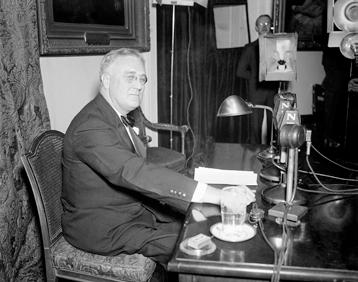
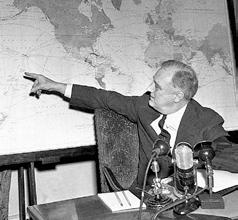
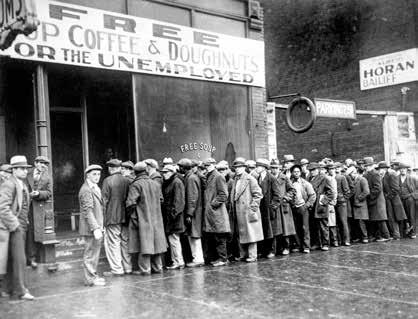
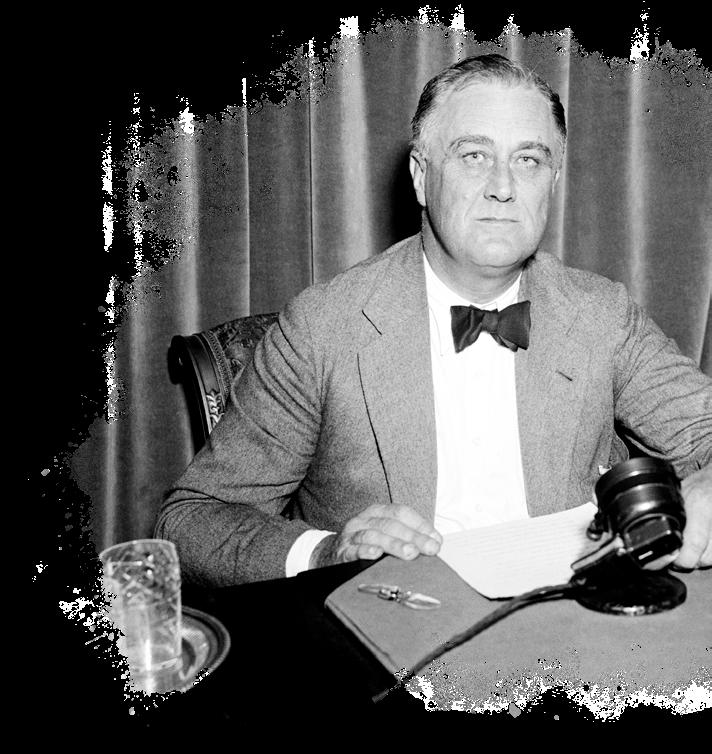
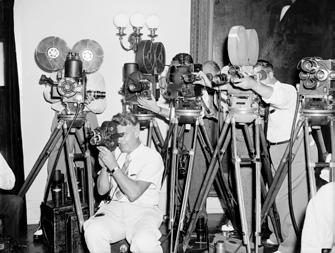


Did you know that presidents have different ways of speaking to the American people? Some like to stay in their office and don’t talk to the public very much, while others prefer to talk directly to the people.
Franklin Delano Roosevelt was one of the presidents who loved to talk to the people, and he was the first to do so on a regular basis.
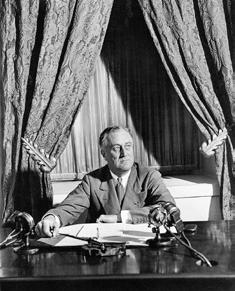
• Gerald Ford was the first president to deliver a weekly radio address, known as The President’s Radio Address.
Franklin D. Roosevelt (FDR) became the 32nd president of the United States on March 4, 1933. Eight days later, he gave his first fireside chat as president. Fireside chats were speeches that Roosevelt gave to the public on the radio. His fireside chats did not sound like speeches. He used very simple words that every American could understand. He called them fireside chats to show that he wanted them to be like enjoyable conversations between friends sitting beside a cozy fireplace.
Roosevelt became president during the Great Depression. A depression is when a country is poor for a long time. The Great
• William Henry Harrison was the ninth president of the United States. He gave the longest speech of any president but served the shortest amount of time.
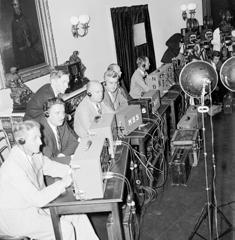
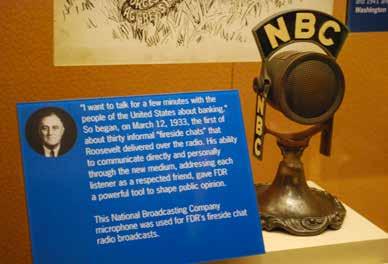
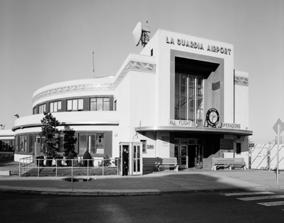
Depression lasted from 1929 to 1939. During this time, many people lost their jobs, and most people were very poor. Roosevelt gave his first fireside chat on March 12, 1933, to say that he would help the country through trying, or hard, times. He started a program called the New Deal to help poor people who needed jobs. Under the New Deal, many people were hired for large building projects, such as the Hoover Dam. FDR used government money to repair much of the country’s infrastructure. Trains, roads, and other things the country needs to run are called its infrastructure.
During World War II (1939-1945), FDR used the chats to tell the country how the fight against Nazi Germany was going. He also told Americans about laws he was passing to make sure the army had everything it needed to win the war. These laws limited the amount of food and other products each person was allowed to buy to make sure the army had food and equipment.
address - talk to depression - when a country is poor for a long time trying - hard infrastructurethings the country needs to run
The American people loved the fireside chats, and Roosevelt became a very popular president. People felt that the president understood and really wanted to help them. Roosevelt gave 31 fireside chats during his 12 years as president. Millions of people mailed letters to him at the White House. He was the only president to win four elections and was president for 12 years. He died in 1945, at the beginning of his fourth term as president.
1.
What were the fireside chats?
a. Speeches given by Roosevelt in person
b. Speeches given by Roosevelt on the radio
c. Written speeches by Roosevelt
d. Speeches given by Roosevelt’s vice president
2. What was happening in the country when Roosevelt became president?
a. The country was very rich.
b. The country was experiencing the Great Depression.
c. The country was at peace.
d. The country was experiencing earthquakes.
3. What did FDR’s New Deal programs do?
a. Helped poor people until they found a job
b. Gave money to wealthy people for big projects
c. Broke down the country’s roads and buildings
d. Stopped the government from fixing things
4. Why do you think Roosevelt started giving fireside chats?
Possible answers: To calm people down in tough times. So people would like him and feel he was their friend.
5. When did Roosevelt give his first fireside chat as president?
March 12, 1933 Four times
6. How many times was Roosevelt elected as president?
This chart shows different types of presidential addresses or speeches. Look at the chart and answer the questions below.
TYPE OF ADDRESS WHERE IT TAKES PLACE PURPOSE WHEN IT TAKES PLACE
State of the Union address House of Representatives
Inaugural address U.S. Capitol
Executive address White House Briefing Room, East Room, or other location
Press conference White House Briefing Room
The president talks about the country’s situation and his plans for the coming year. January or February each year
This is the first speech given by a new president. He talks about his plans for the country. January 20th, every 4 years
The president talks about important topics and makes announcements. Any time during the president’s term
The president answers questions and talks about important topics with reporters. Any time during the president’s term
Are the following statements true or false?
1. The press conference takes place in the White House East Room.
2. The president gives the State of the Union address in the White House.
3. The purpose of the press conference is for the president to answer questions from reporters.
4. The president gives an inaugural address when he becomes president.
5. The president answers questions from journalists during an executive address.
1832: Hot Springs Reservation is created in Arkansas, becoming the first federally protected area.
1864: President Abraham Lincoln signs the Yosemite Grant, protecting Yosemite Valley and Mariposa Grove.
1872: President Ulysses S. Grant signs the bill creating Yellowstone National Park, the world’s first national park.
1890: President Benjamin Harrison signs the bill creating Sequoia National Park in California.
1916: The National Park Service is created to manage and protect national parks.
1919: Grand Canyon National Park is established in Arizona.
1926: Great Smoky Mountains National Park is established on the border of Tennessee and North Carolina.
1933: President Franklin D. Roosevelt establishes the Civilian Conservation Corps (CCC) to provide jobs and improve national parks.
1964: President Lyndon B. Johnson signs the Wilderness Act, protecting areas within national parks from development and other forms of human disturbance.
1970: President Richard Nixon signs the Clean Air Act, helping to protect the air quality in national parks and other natural areas.
1980: President Jimmy Carter signs the Alaska National Interest Lands Conservation Act, adding over 100 million acres of land to the National Park System.
Explain the concept of national parks and their significance in protecting natural areas for future generations.
Introduce key figures who played a role in advocating for the establishment of national parks, such as George Catlin and John Muir.
Highlight the historical events leading to the creation of national parks, including the establishment of Yellowstone as the first national park in 1872.
Discuss the growth of the National Park System and the establishment of new parks over time.
Explain the role of the National Park Service in managing and protecting national parks, including the challenges they face in doing so.
Students will learn that the history of national parks began in the 1800s when people started to worry about the destruction of America’s natural beauty. One of the first advocates for preserving nature was George Catlin, an artist who painted portraits of Native Americans and the American wilderness. He proposed setting aside a large area of land for the enjoyment and study of nature. However, it wasn’t until the late 1800s that the idea of national parks gained widespread support.

In 1872, President Ulysses S. Grant signed a bill creating the world’s first national park, Yellowstone. This park was established to protect the area’s geysers, hot springs, and other natural wonders. Over the next few decades, other parks were established, such as Yosemite, Sequoia, and Glacier.
The National Park Service was created in 1916 to manage and protect the growing number of parks. Today, there are over 400 national parks in the United States, covering more than 84 million acres.
National parks are important because they provide a home for wildlife, protect the environment, and offer people a chance to explore and appreciate the natural world. Visitors can hike, camp, fish, and explore the parks’ unique landscapes and wildlife.
• Paper, Scissors, Glue, Markers
• Twigs, Miniature people and animals
Create a park out of paper and miniatures.
Start by sketching a rough plan of the park on paper, including key features such as trails, rivers, lakes, and landmarks.

Using a piece of sturdy cardstock or poster board, cut out the outline of the park according to your plan. Use a ruler or straight edge to make clean, straight lines.
Create depth and dimension by adding layers to the base. Cut out additional pieces of cardstock to represent different terrain features such as hills, valleys, and mountains. Glue these layers onto the base, starting with the bottom layer and working your way up.
Use smaller pieces of paper or other materials such as twigs, leaves, or sand to add details such as vegetation, rocks, or buildings. You can also add labels or signs to identify different park areas.
Add people and animals.
: When was the world’s first national park created?
A1: Yellowstone National Park was created in 1872.
: Why were national parks established?
A2: National parks were created to protect America’s natural beauty and provide a place for people to explore and appreciate the natural world.
: What is the National Park Service?
A3: The National Park Service is a government agency responsible for managing and protecting national parks.
Q4: What are some activities visitors can do in national parks?
A4: Visitors can hike, camp, fish, and explore the parks’ unique landscapes and wildlife.
Q5: How many national parks are there in the United States?
A5: There are over 400 national parks in the United States.
National parks are an important part of America’s natural heritage. From the early efforts of George Catlin to the creation of the National Park Service, these parks have been established to protect and preserve America’s natural beauty for future generations to enjoy.
The first time people saw the new parts of the United States, they were amazed at its beauty. But when more people moved in and began cutting forests for wood and room to live, much of the country’s beauty was ruined. Let’s find out how the National Park Service (NPS) solved this problem.
During the 1800s, many people in the United States began moving to new states that had just become part of the country. As people moved, they built new cities wherever they liked. Conservationists realized that people were ruining the natural beauty of many areas of the country. They also noticed that animals were losing their natural habitats to the new cities. The place an animal is supposed to live to stay healthy is its natural habitat. A conservationist is someone who works to protect land and animals.
In 1872, President Ulysses S. Grant created the first national park in the U.S., Yellowstone National Park. National parks are areas of land that are protected. That means that people are not


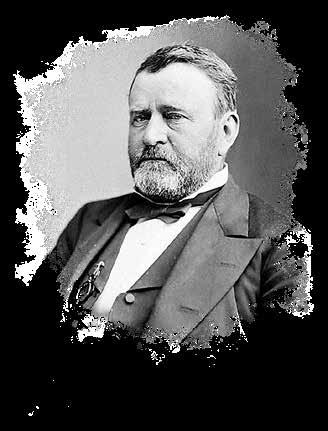
allowed to live there. They are for animals and plants to live without being ruined. Conservationists wanted to protect these areas so people would be able to enjoy them. People can visit the parks and must follow the rules that protect the park and keep the animals safe.
you know?
•
After Yellowstone, more national parks were created, including Yosemite in 1890 and Mount Rainier in 1899. By 1916, there were many parks but not enough money to actually protect them. Without money, the parks could not repair trails or hire rangers to keep people safe from animals. People also began ruining the parks by hunting and chopping down trees.
On April 5, 1916, conservationists asked Congress to establish the National Park Service (NPS). They wanted the NPS to be in charge of protecting and running the parks. They said it was not enough to create parks that were then left unprotected. The NPS would have two jobs. It would protect the park and keep animals safe from people. The NPS would also create ways for people to enjoy the beautiful parks.
In August 1916, President Woodrow Wilson created the NPS and put it in charge of national parks. The NPS began charging people a small fee to use
the parks. Congress also gives the NPS money, allowing it to pay people to keep the parks running.
In 1935, Congress gave the NPS the job of taking care of historical sites and buildings. Anything that is important in history is historical. A historical site can be a famous place, such as a battlefield or fort that was used by the American army. A historical building is also called a landmark . The White House is an example of a landmark that is protected by the NPS. Historical sites and buildings may not be changed without special permission from the NPS.
As of 2023, the National Park System protects over 84 million acres of land. That’s almost three times the size of Pennsylvania. More than 20,000 people work in the parks, and over 300 million enjoy their beauty each year.
conservationist - someone who works to protect land and animals natural habitat - the place an animal is supposed to live to stay healthy historicalsomething that is important in history landmarkhistorical building
1.
Who created the National Park Service?
a. President Ulysses S. Grant
b. President Woodrow Wilson
c. Congress
d. The National Park Agency
2. What did Congress give the National Park Service the job of preserving in 1935?
a. The White House
b. National parks
c. Historical sites and buildings
d. Animals and plants
3. Why was the NPS started?
a. To take care of nature in the U.S.
b. To build parks for people to have fun and learn about nature
c. To protect important historical buildings in the U.S.
d. To help people visit and spend money in places with interesting things to see and do
4. What are the two jobs of the National Park Service?
1. To protect the park and animals
2. To create ways for people to enjoy the parks
5. How do you think building cities can ruin the natural beauty of the United States?
Possible answers: Building cities can lead to chopping too many trees for wood and ruining grassy areas and beautiful landscapes.
6. What rules would you make to protect a lake?
Possible answers: no motorboats, no fishing, no throwing in garbage
This chart shows some of the jobs that people do in national parks.
Fix broken things, keep the park clean.
JOB TITLE
Park rangers
JOB DESCRIPTION
Make sure visitors are safe and following the rules, take care of trails and animals
Park historians Keep buildings and sites safe, teach people about their history
Park managers Make sure the park land is well taken care of and hire park workers
Park guides Give tours, talk to groups
Park workers Fix broken things, keep the park clean
JOBS
Stop a wild animal from hurting a visitor
Protect the park’s 200-year-old building
Give you a job in the park
Tell visitors stories about the park
Collect garbage left on a trail
ANSWER PEOPLE WHO DO THEM
A. Park historians
B. Park rangers
C. Park guides
D. Park workers
E. Park managers
April 18, 1906: A 7.9 magnitude earthquake strikes San Francisco, causing widespread destruction. Fires break out and continue to spread.
April 19-20, 1906: Fires continue to burn, leaving thousands homeless. Relief supplies begin to arrive.
April 21-22, 1906: The U.S. Army is deployed to help, and a quarantine is placed on the city to prevent disease.
April 23-24, 1906: The fires begin to subside, and the death toll rises.
May-June, 1906: The city slowly rebuilds as relief efforts continue.
1907: Construction begins on a new sewer system to improve sanitation and prevent disease.
1908: The first phase of reconstruction of the city’s cable car system is completed.
1910: San Francisco’s population reaches preearthquake levels, with over 400,000 residents.
1915: The Panama-Pacific International Exposition is held in San Francisco, showcasing the city’s recovery and growth.
1923: The city’s Palace of Fine Arts, built for the 1915 exposition, is converted into a museum.
1933: The city experiences another major earthquake, but the damage is limited due to improvements in building codes and infrastructure.
1989: The Loma Prieta earthquake strikes the San Francisco Bay Area, causing significant damage to the city’s infrastructure and buildings, but the city is better prepared to respond due to the lessons learned from the 1906 earthquake.
Explore the different ways people can prepare for earthquakes and other natural disasters.
Discuss the impact natural disasters can have on communities and how people can come together to rebuild.
Discuss the role of emergency responders and how they help during disasters.
Consider the ways modern technology and infrastructure have helped mitigate the impact of earthquakes and other natural disasters.
Students will learn that a powerful earthquake struck San Francisco, California, in 1906. It was one of the most devastating natural disasters in American history, changing the city and its people forever.

On the morning of April 18, 1906, San Francisco was hit by a massive earthquake. The shaking was intense, lasting for almost a minute and measuring 7.9 on the Richter scale. The earthquake caused widespread destruction throughout the city, with buildings collapsing, fires breaking out, and streets and bridges buckling and breaking apart.
The disaster was made worse by the fact that the city’s water supply was damaged, making it difficult to put out the fires that broke out in the earthquake’s aftermath. The fires raged for several days, destroying even more buildings and homes.
The earthquake and its aftermath had a profound impact on San Francisco and its people. Many residents were left homeless and had to live in temporary shelters or makeshift camps. The city’s economy was also badly affected, with many businesses destroyed and many people losing their jobs.
Despite the devastation, the people of San Francisco came together to rebuild their city. Within a few years, much of the city had been rebuilt, and San Francisco emerged as a stronger and more resilient city.
• Small plastic or paper cups, Soil or sand
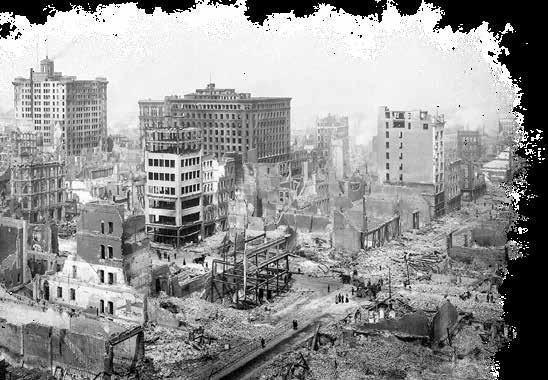
• Ruler or measuring tape, Plastic or wooden dowels
• Small objects like paperclips, coins, or beads, Timer
Fill the cups with soil or sand, leaving a bit of space at the top.
Push a dowel into the center of each cup, leaving about half of it sticking out.
Place the small objects on top of the soil or sand in each cup.
Hold the dowels and gently shake the cups from side to side for about 30 seconds. This will simulate an earthquake.
Stop shaking and use the ruler or measuring tape to determine how far the small objects have moved from their original positions.
Repeat the experiment with different amounts of soil or sand in the cups or by changing the frequency and intensity of the shaking.
After the experiment, discuss with the students how the shaking affected the small objects in the cups. Ask them to think about how this might relate to what happens during a real earthquake. You can also ask the following questions to encourage further discussion:
• How do earthquakes occur? What causes them?
• How can earthquakes affect buildings and infrastructure?
• What can people do to prepare for earthquakes and reduce their impact?
• What lessons did people learn from the 1906 San Francisco earthquake that helped them prepare for future earthquakes?
• What are some things that you can do to stay safe during an earthquake?
Q1: What was the magnitude of the earthquake?
A1: The earthquake measured 7.9 on the Richter scale.
Q2: Why was it difficult to control the fires that broke out in the earthquake’s aftermath?
A2: Damage to the city’s water supply made it difficult to put out the fires.
Q3: How did the earthquake affect the city’s economy?
A3: The earthquake destroyed many businesses and homes, causing many people to lose their jobs.
Q4: How did the people of San Francisco respond to the disaster?
A4: The people of San Francisco came together to rebuild their city, and within a few years, much of the city had been rebuilt.
Q5: What is the legacy of the San Francisco earthquake?
A5: The San Francisco earthquake is remembered as one of the most significant events in American history, serving as a reminder of the power of nature and the importance of being prepared for disasters.
Today, the San Francisco earthquake is remembered as one of the most significant events in American history. It helped shape the city and its people and serves as a reminder of the power of nature and the importance of being prepared for disasters.
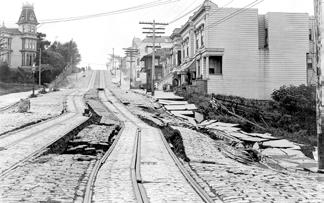
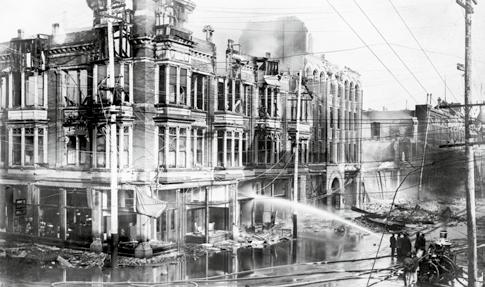
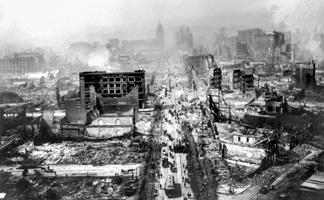
• The 1906 earthquake was the first time pictures were taken of a natural disaster.
• Although most of the damage was in San Francisco, the quake was felt as far away as Oregon and Los Angeles.
Have you ever heard of natural disasters? Natural disasters are events in nature that can be dangerous and cause a lot of damage, like earthquakes, floods, and hurricanes. We can’t stop them, but we can follow special rules called building codes to build safe buildings and lessen the damage they cause.
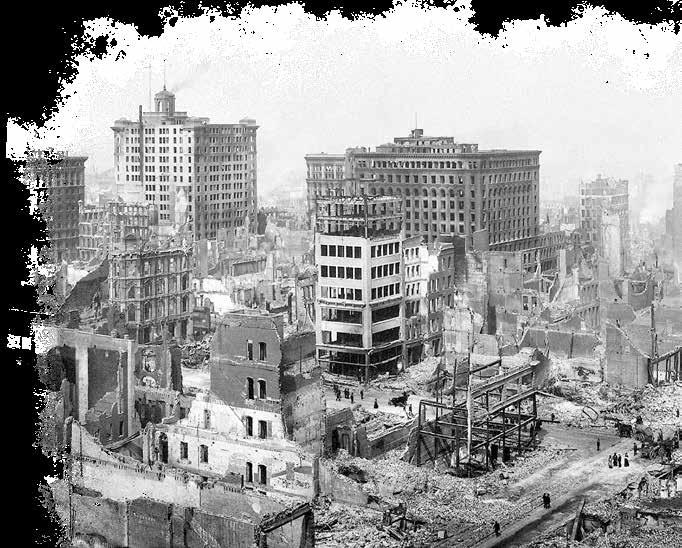
On April 18, 1906, at 5:12 a.m., an earthquake hit the city of San Francisco, California. The ground shook for 42 seconds and broke many gas and water lines throughout the city. Lines are pipes that bring water and gas to all the buildings in the city. Many buildings collapsed, and a lot of people were killed before having a chance to get out of bed. This was the deadliest earthquake in the United States, killing at least 700 people.
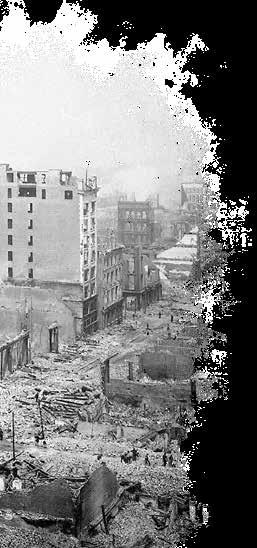
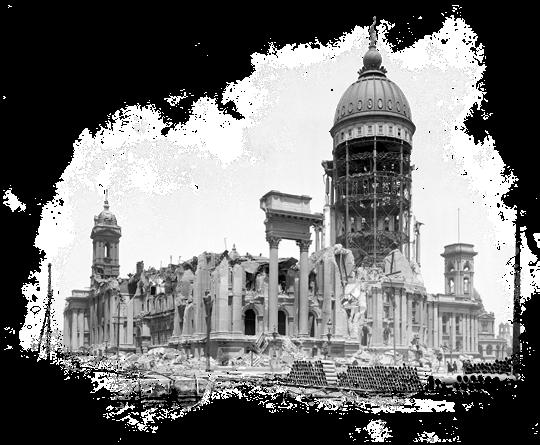
When the ground stopped trembling, everyone panicked. The streets were covered in rock and dust from fallen buildings. Many people were injured and needed help. Fires broke out from the damaged gas lines, but there was no water to put them out. There were too many fires for the fire department to handle, so the fires spread throughout the city. Every half hour another full square
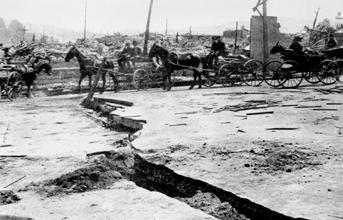
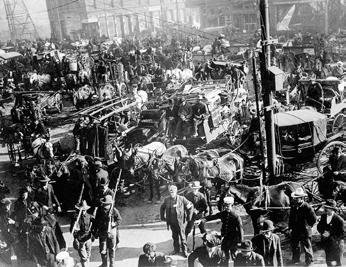
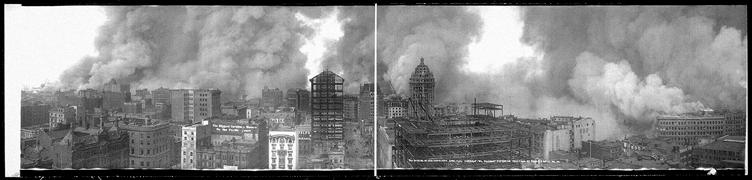
natural disasters - natural events that can be dangerous and cause a lot of damage building codes - special rules for how to build buildings in ways that are safe in case of natural disasters lines - pipes earthquake drilla practice of what to do in case there is an earthquake
block was destroyed. It took 72 hours to put the flames out. By that time, 28,000 buildings fell or burned, and 225,000 people lost their homes. That was more than half the city’s residents.
The governor of California ordered that the city be rebuilt right away. He did not want to pass a building code for earthquakes. He thought it would make people afraid to live in San Francisco. By 1915, the entire city was rebuilt. In 1933, another large earthquake hit California, and the government finally passed building codes.
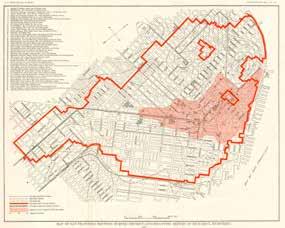
Since earthquakes can sometimes be dangerous, schools in California have earthquake drills. That’s when they practice what to do in case an earthquake hits. Even though it is important to be ready, most earthquakes are not dangerous. There are more than 500,000 earthquakes each year in the world, and most cannot be felt by people.
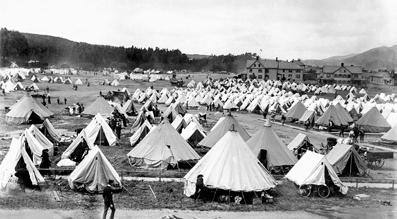
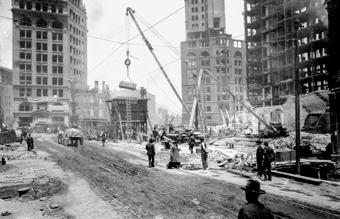
1. Why are building codes important in areas that are often hit by earthquakes?
a. To make people afraid to live in the area
b. To help builders save money
c. To make sure that buildings are safe during an earthquake
d. To make the buildings look nicer
2. How many years did it take to rebuild the city of San Francisco?
a. 7 b. 5
c. 9 d. 11
3. On which date did the San Francisco earthquake occur?
a. April 18, 1906 b. April 13, 1905
c. April 17, 1906 d. May 27, 1904
4. Name two types of natural disasters.
5. Why didn’t the California governor pass a building code?
He thought it would make people afraid to live in San Francisco.
6. Why do you think some schools have earthquake drills and others do not?
The areas that are more likely to be hit by earthquakes have drills.
Earth has four layers: the inner core, outer core, mantle, and crust. We live on the crust, which is made up of a few different pieces called plates. Earthquakes happen when the Earth’s plates move. Earthquakes can start 500 miles deep in the earth, travel up to the plates, and move them. The more the plates move, the bigger the earthquake
Look at the chart and fill in the blanks below.
LAYER THICKNESS IN MILES
Crust varies 32 - 2190
(°F)
Mantle 1,770 1,832 - 6,692
Outer Core 1,410 6,692 - 9,932
Inner Core 760 9,932 - 10,832
Inner
CHARACTERISTICS
This is where we live. It’s a thin layer made up of rocks and minerals. The crust is made up of many plates that can move.
This layer is made up of hot, flowy rock that can move the plates in Earth’s crust.
This layer is made up of liquid metal. It acts like a magnet and keeps harmful materials from the sun away from people.
This is the hottest and heaviest layer of Earth.
1. The hottest layer of Earth is its . It is also the layer.
2. Earth’s crust is made up of pieces called .
3. The acts like a magnet and keeps harmful materials from the away from Earth.
4. The thickest layer of the earth is the .
Possible answers: earthquakes, floods, and hurricanes inner core heaviest plates outer core sun mantle crust
5. The is the coolest of all Earth’s layers.
1890: The federal government decides to establish a centralized immigration processing center in New York City.
1892: Ellis Island opens its doors to the first group of immigrants who arrived on the steamship SS Arizona.
1892-1954: Ellis Island becomes the busiest immigrant inspection station in the United States, with over 12 million immigrants passing through in search of a better life in America.
1907: The Immigration Act is passed, requiring immigrants to pass a literacy test to enter the United States.
1917: The Immigration Act of 1917 is passed, imposing a tax on all immigrants entering the country.
1921: The Emergency Quota Act is passed, limiting the number of immigrants who can enter the United States.
1924: The JohnsonReed Act is passed, establishing quotas for immigrants based on their country of origin.
1954: Ellis Island closes its doors as an immigration processing center.
1965: The Immigration and Nationality Act is passed, abolishing the national origins quota system and establishing a new immigration policy based on reuniting families and attracting skilled workers.
1990: Ellis Island is reopened as a museum, showcasing the history of immigration in America.
Introduce the concept of immigration and its importance to American history.
Provide background information on Ellis Island, including its location, purpose, and historical significance.
Use primary sources, such as photographs and first-hand accounts of immigrants, to bring the history of Ellis Island to life.
Make connections between the history of Ellis Island and contemporary issues related to immigration and cultural identity.
Students will learn that Ellis Island, a small island located in the New York Harbor, was once the busiest immigrant inspection station in the United States. From 1892 to 1954, over 12 million immigrants passed through in search of a better life in America. The island played an essential role in shaping the cultural identity of America, and its history is a testament to the courage and determination of people from all over the world.

In 1890, the federal government decided to establish a centralized immigration processing center in New York City to manage the influx of immigrants. In 1892, Ellis Island opened its doors to the first group of immigrants who had arrived on the steamship SS Arizona. The island soon became the busiest immigrant inspection station in the country, with over 5,000 people passing through it every day.
Immigrants from all over the world came to Ellis Island seeking a new life in America. Most of them came from Europe, but some also came from Asia, Africa, and the Middle East. The process of screening the immigrants was rigorous and time-consuming. First, they had to pass a medical examination to check for any diseases or disabilities. Next, they had to answer a series of questions to determine if they were fit to enter the country. Finally, they had to prove that they had enough money to support themselves and their families.
After the immigrants completed the inspection process, they were free to leave the island and start their new lives in America. Many settled in New York City and became a part of the melting pot of cultures that shaped America’s identity.
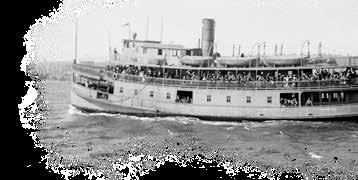
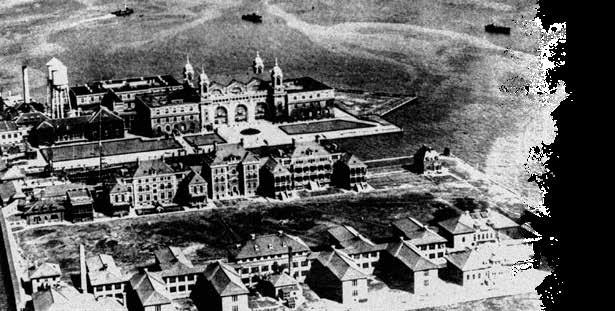
• Square material, such as construction paper, felt, or other
Create an “Immigrant Story Quilt”
You can:
Provide students with a piece of construction paper, fabric, or felt in the shape of a square.
Ask students to draw or write a story that represents a family’s journey to America. Encourage them to think about what the family’s journey would have been like, what struggles they might have faced, and what hopes they had for a new life.
Once they have completed their drawings or stories, have them attach it to their square.
Once all the squares are completed, sew them together to form a quilt. Alternatively, you can use glue to attach the squares to a large piece of fabric or a bulletin board to create a display.
Quilt ideas
Map Quilt: Draw maps to show the journey families took to come to America. Mark the countries and cities on the route they took to reach America.

Flag Quilt: Use the flags of the countries families came from.
Identity Quilt: Draw or attach pictures of things that make them feel proud to be American.
Dream Quilt: Design a family’s dreams and hopes for a new life in America.
: Why was Ellis Island important?
A1: Ellis Island was important because it was the busiest immigrant inspection station in the United States and played an essential role in shaping the cultural identity of America.
Q2: When was Ellis Island opened?
A2: It was opened in 1892.
Q3: Who came to Ellis Island?
A3: Immigrants from all over the world came to Ellis Island seeking a new life in America.
Q4: How were the immigrants processed at Ellis Island?
A4: The immigrants were processed through a rigorous and time-consuming screening process that included a medical examination, a series of questions, and proof of financial support.
Q5: What happened to Ellis Island after it closed?
A5: After it closed, Ellis Island was abandoned for several years until it was reopened as a museum in 1990.
Ellis Island closed in 1954 and was abandoned for several years until it was reopened as a museum in 1990. Today, visitors can tour the island and learn about the history of immigration in America.
▸ Ship coming to harbor on Ellis Island
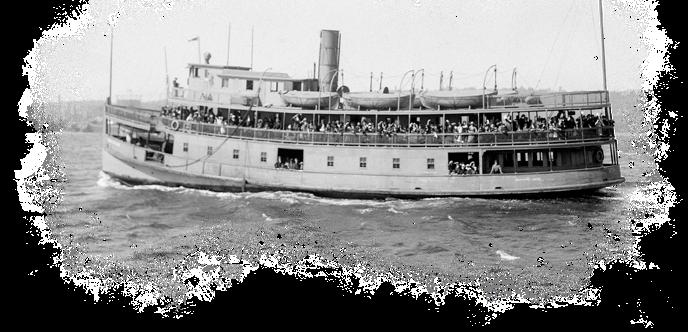
▸ Immigrants waiting to be seen by a doctor
▸ Ellis Island’s nickname was “The Island of Tears.” People would cry if they failed any examinations while on Ellis Island and couldn’t enter the United States.
• 350 babies were born on Ellis Island.
• Mayor Fiorello LaGuardia worked at Ellis Island before he became the mayor of NY.
• Before Ellis Island got its name, it was called Gull Island, Oyster Island, or Gibbet Island at different times in history.
• The first three immigrants who came to Ellis Island were Annie Moore, a teenager from Ireland, with her two younger brothers


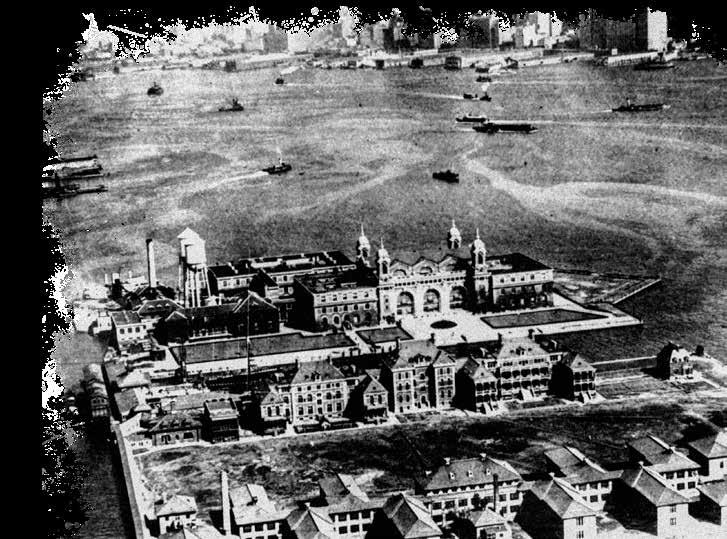
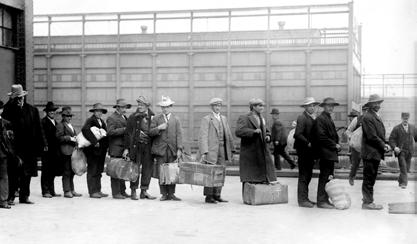
Do you know someone who moved to the United States a very long time ago? How did they get there? What was it like when they first arrived?
In the late 1800s and early 1900s, millions of people left Europe and immigrated to the United States. Immigrated is another way of saying moved to a new country. They hoped for a better life in the United States, a life with more safety, freedom, and better jobs.
At that time, people traveled by ship. Planes did not exist yet. It took many weeks to get from Europe to America. The ships were often crowded and unclean, and many passengers became seasick.
Ellis Island is located in the New York Harbor . A harbor is where ships can safely dock when they reach land. Ellis Island opened in 1892 and closed in 1954. This was the place where many immigrants had to go before they were allowed to enter the United States. Immigrants are people who come to live in a new country. April 17, 1907, was the busiest day ever at Ellis Island. On that day, 11,747 people came to Ellis Island so they could enter the United States and start a new life.
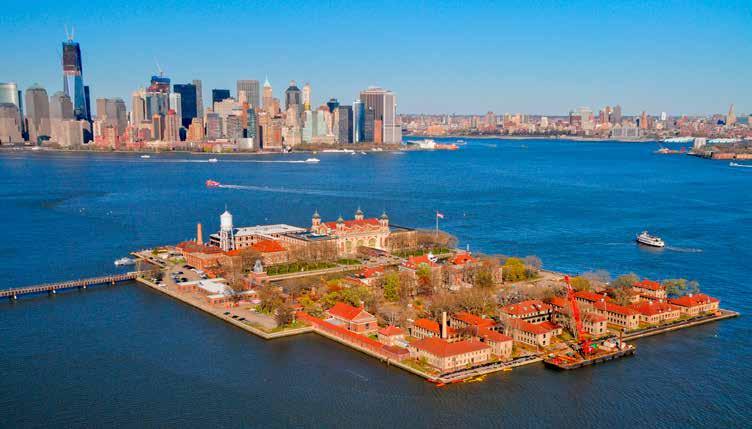
Ellis Island inspectors checked to see if the immigrants had all the right paperwork to enter the U.S. They asked many questions to be sure the information on the papers was accurate, or true. Doctors checked to see if the immigrants were in good health. This process usually took between three to five hours.
immigratedmoved into a new country
harbor - a place where ships can safely dock when they reach land immigrantspeople who move into a new country required - need to do
Some immigrants were not required, or did not need, to go through Ellis Island. These were people who paid for expensive ship tickets. Their paperwork was checked while they were still on the ship, and they entered the United States through a different harbor.
Believe it or not, 12 million immigrants passed through Ellis Island while immigrating to the United States!
Ellis Island closed in 1954 because immigration slowed down. Today, there is a museum on Ellis Island called the Ellis Island National Museum of Immigration. Visitors can learn about immigrants who came to the United States and passed through Ellis Island.
1. Who had to go to Ellis Island?
a. All immigrants coming to the United States
b. Immigrants traveling on the cheaper tickets
c. Immigrants traveling with expensive tickets
d. Half of the immigrants coming to the United States
2. How many people passed through Ellis Island when immigrating to the United States?
a. 2,000,000
b. 12,000
c. 12,000,000
d. 20,000
3. How did immigrants travel to their new country in the late 1800s?
a. By ship
b. By car
c. By airplane
d. By train
4. How do you think immigrants felt when they arrived at Ellis Island?
Possible answers: Excited, exhausted, seasick, nervous, upset about the inspections
5. Why do you think it was important to check if the immigrants were healthy when they came to the United States?
Here is a special kind of chart, called a bar graph. This bar graph shows the number of immigrants who arrived in the USA during certain years. Look at the graph and circle the correct answer to each question.
1. In 1900, there were (more/less) immigrants than in 1980.
2. In 1920, there were (more / less) immigrants than in 1940.
3. In 2000, there were (more / less) immigrants than in 1980.
4. In which year were there more immigrants than in 2016?
They didn’t want immigrants bringing different sicknesses into America and getting Americans sick. 1960. 9.7 million. 2020
5. Which year had the least immigrants coming to the United States? How many immigrants were there?
April 3, 1860: The Pony Express service begins its operations with riders carrying mail from St. Joseph, Missouri, to Sacramento, California.
April 13, 1860: The first mail arrives in San Francisco, California, after a journey of ten days and 24 hours from St. Joseph, Missouri.
July 1, 1860: The Pony Express reduces its delivery time to seven days and 17 hours for a complete one-way trip.
November 7, 1860: The Pony Express delivers the news of Abraham Lincoln’s election as president of the United States, making it the first national news to be delivered by the service.
April 14, 1861: The Pony Express makes its final run eastward from Sacramento, California, just a few days before the outbreak of the American Civil War.
October 24, 1861: The telegraph line connecting the east and west coasts is completed, rendering the Pony Express service obsolete.
July 1, 1866: The Pony Express resumes its service for a few months to transport news of the completion of the transcontinental railroad.
1893: The National Pony Express Association is founded to commemorate the Pony Express and its riders.
April 3, 1960: The 100th anniversary of the Pony Express service is celebrated with a commemorative stamp issued by the United States Postal Service.
The Pony Express was a mail delivery service that operated in the mid-1800s.
Riders on horses carried mail in a relay from Missouri to California.
The Pony Express was faster than any other mail service at the time and could deliver mail from coast to coast in just ten days.
The Pony Express was not a profitable business and went bankrupt after just 19 months.
The Pony Express paved the way for the telegraph and other forms of communication that we use today.
Students will learn that the Pony Express was a fast way to send mail across the United States in the mid-1800s. Riders on horses carried mail in a relay from Missouri to California. The Pony Express only lasted for a short time but was an important part of American history.
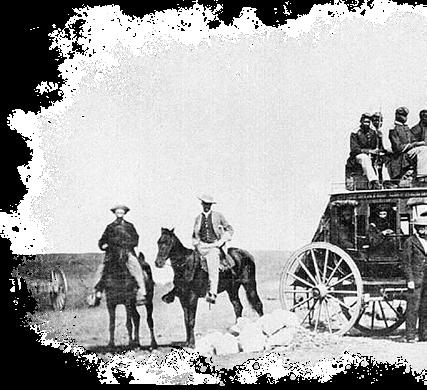
The Pony Express was a mail delivery service that operated in the mid-1800s. At that time, there were no telephones or airplanes to quickly transport mail from one place to another, so the Pony Express was a fast way to send mail across the United States. The Pony Express began in April 1860 and lasted for only 19 months, but it played an important role in American history.
The Pony Express route went from Missouri to California, a distance of more than 1,800 miles. Riders on horses carried mail in a relay from one Pony Express station to another. At each station, a new rider would take the mail and ride on to the next station. The riders had to be tough and brave because they had to ride through dangerous territory, including Native American lands, to deliver the mail. The horses were specially bred for their speed and stamina and could run up to ten miles per hour.
The Pony Express was a fast way to send mail, but it was also very expensive. It cost $5 to send a letter, which was a lot of money in those days. However,
people were willing to pay the high price because they wanted their mail to arrive quickly. The Pony Express was faster than any other mail service at the time, and it could deliver mail from coast to coast in just ten days.
• Brown paper lunch bags
• Scissors, White paper, Glue
• Markers or colored pencils, String or twine
Q1: What was the Pony Express?
A1: The Pony Express was a mail delivery service that operated in the mid-1800s.
Q2: How did the Pony Express deliver mail?
A2: Pony Express horse riders carried mail in a relay from one Pony Express station to another.
Give each student a brown paper lunch bag and have them cut off the top flap.
Have the students cut a strip of white paper and glue it to the front of the bag to create a carrying handle for the mailbag.
Using markers or colored pencils, have the students decorate the front of the bag with the Pony Express logo or other designs.
To complete the mailbag, have the students tie a piece of string or twine to the two top corners of the bag to create a shoulder strap.
: How fast was the Pony Express?
A3: The Pony Express could deliver mail from coast to coast in
: Why did people use the Pony
A4: People used the Pony Express because it was the fastest way to send mail across the country.
: How long did the Pony Express
A5: The Pony Express lasted only Q & A
Despite its speed and popularity, the Pony Express was not a profitable business. It cost a lot of money to operate, and the company went bankrupt after just 19 months. However, the Pony Express had a lasting impact on American history. It showed that fast communication across the country was possible and paved the way for the telegraph and other forms of communication that we use today.
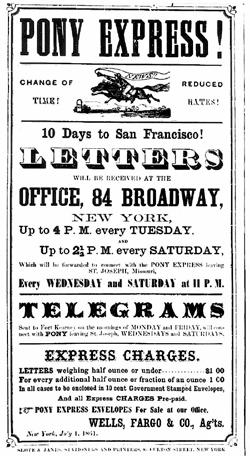

Once upon a time, a rider on a horse set out from the state of Missouri with a bag of mail. He rode for miles and then passed the bag to another rider. This rider rode more and then passed the bag to another rider. This happened over and over again until the mail finally reached the state of California in just nine days and 23 hours. The mail had traveled 2,000 miles!
▸ Stagecoaches like these also brought mail to California, but it could take a month to get there.
• Many pony riders were teenagers willing to face the dangers of the ride for the excitement and the money they could earn.
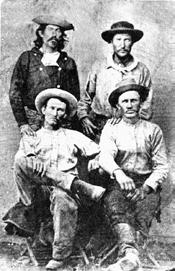
The Pony Express was a special mail delivery service that began on April 3, 1860. It was mainly used to deliver newspapers and mail between Missouri and California.
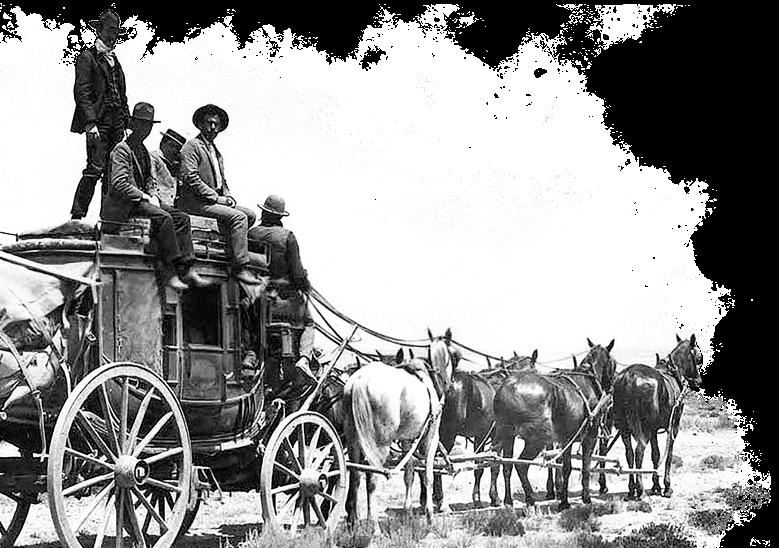
At the time, California, on the west coast of the U.S., was cut off from the rest of the United States. The only way to send mail or news from one coast to another was by ship, which would take at least a month, or by stagecoach, which could take from three weeks to many months.
A stagecoach is a type of vehicle pulled by a team of horses. It was often used to carry passengers and mail over long distances.
The Pony Express was much faster, with an average delivery time of ten days, making it a valuable service for the people in the western part of the country. Something that is very useful and important is valuable.
The service had 184 stations along the 1,900 mile route between Missouri and California. The stations along the Pony Express’s route were used as rest stops for the riders and horses and as places to change the horse and rider team. The rider would carry the mail from one station to the next, passing it on to a new rider who would continue the journey. The stations were usually located around 75-100 miles apart. At the stations, riders were able to restock with food, water and other supplies. In case of bad weather, the riders and horses would wait at the station.
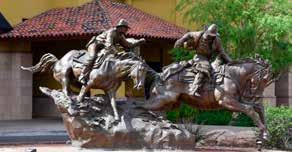
Riders earned $100 a month, which was a lot of money at the time. They worked hard and risked their lives, riding through inclement, or bad weather and dangerous situations.
Initially, meaning at the beginning, the delivery price was $5 for every half ounce of mail. Later, prices were lowered to $1, but it was still too high for everyday mail. Instead, the service was mainly used to deliver newspaper reports, most of which were printed on tissue-thin paper to keep costs and weight down.
The Pony Express was forced to close on October 24,1861, after the opening of the telegraph, which could send messages much faster and at a lower price.
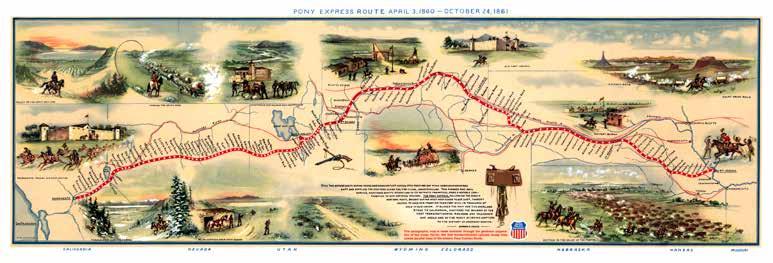
1. What was the main purpose of the Pony Express?
a. To deliver newspapers
b. To deliver mail
c. To transport passengers
d. Both a and b
2. How long did it take for mail to be delivered from one coast to another before the Pony Express?
a. Ten days
b. A month
c. Three weeks to many months
d. 24 hours
3. How much did riders earn for working for the Pony Express?
a. $10 a month b. $50 a month
c. $100 a month d. $200 a month
4. How was the Pony Express different from other mail delivery methods?
It was much faster than other mail delivery methods such as sending mail by ship or stagecoach.
5. What kind of dangerous situations do you think Pony Express riders encountered along the way?
Possible answers: They may have encountered rough roads, robbers, wild animals, and bad weather.
This graph shows the amount of mail sent through the United States Postal Service during various years after the Pony Express was no longer in service. The numbers on the left refer to millions of pieces of mail.
Look at the graph and answer the questions below.
Americans Send and Receive Less Mail
1. How much mail was sent in 1980?
a. 20 million pieces
b. 40 million pieces
c. 60 million pieces
d. 100 million pieces
2. How much did a first-class letter stamp cost in 1940?
a. 1 cent b. 2 cents
c. 3 cents d. 4 cents
3. How does the price of a stamp in 2019 compare to its price in 1930?
a. It is 25 cents more
b. It is 53 cents more
c. It is 25 cents less
d. It is 53 cents less
4. In what year were approximately 100 million pieces of mail sent?
a. 1980 b. 1990
c. 2000 d. 2010
April 1803: The United States acquires the Louisiana Territory from France.
May 1804: Meriwether
Lewis and William Clark lead the Corps of Discovery on an expedition to explore the newly acquired territory.
1804-1805: The Corps of Discovery travels up the Missouri River and encounters various Native American tribes, including the Mandan, Hidatsa, and Shoshone.
August 1805: The Corps of Discovery reaches the Rocky Mountains and crosses the Continental Divide.
January 1806: The Corps of Discovery reaches the Pacific Ocean and spends the winter at Fort Clatsop.
March 1806: The expedition begins its return journey eastward.
September 1806: The expedition arrives back in St. Louis, Missouri, completing its two-year journey.
1814-1815: Lewis and Clark jointly publish a detailed report of their expedition, titled “The Journals of Lewis and Clark.”
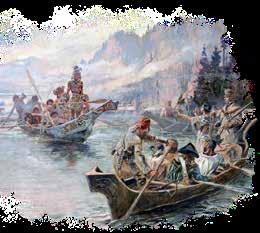
Lewis and Clark were explorers who led an expedition to explore the newly acquired Louisiana Territory in the early 1800s.
They traveled up the Missouri River, encountering many Native American tribes, including the Mandan, Hidatsa, and Shoshone.
They discovered new plant and animal species, including the grizzly bear and pronghorn antelope.
After two years, they reached the Pacific Ocean, where they set up camp and prepared to return home.
Their expedition helped map and explore the western part of the United States.
Students wil learn that Lewis and Clark were explorers who led a journey to explore the newly acquired Louisiana Territory for President Thomas Jefferson in the early 1800s. They traveled through dangerous terrain, met many Native American tribes, and discovered new plant and animal species. Their expedition helped map the western part of the United States.
In the early 1800s, President Thomas Jefferson wanted to explore the newly acquired Louisiana Territory, so he asked his secretary, Meriwether Lewis, to lead an expedition. Lewis asked his friend, William Clark, to join him, and they set off on their journey in May 1804. The expedition was made up of 33 people, including soldiers, interpreters, and hunters.
They traveled up the Missouri River, encountering many Native American tribes, including the Mandan, Hidatsa, and Shoshone. They traded with them for supplies and information about the land ahead. One of their most important encounters was with Sacagawea, a Shoshone woman who acted as their guide and interpreter. In 2000, the U.S. Mint issued the Sacagawea dollar coin in her honor, depicting Sacagawea and her son, Jean Baptiste Charbonneau.
As they continued westward, they encountered dangerous terrain, including the Rocky Mountains. They were forced to cross a mountain pass in the dead of winter, which was treacherous and nearly cost them their lives. They also discovered new plant and animal species, including the grizzly bear and pronghorn antelope.
After two years, the expedition reached the Pacific Ocean, where they set up camp and prepared to return home. They had accomplished their mission, mapping and exploring the western part of the United States. They returned to St. Louis in 1806, and Lewis and Clark became national heroes.
• Pen, Paper
Some skit ideas:
Challenge for the Corps of Discovery: A skit could focus on their journey over the Rocky Mountains and their discovery of the headwaters of the Missouri River.
Winter at Fort Clatsop: The Corps of Discovery spent the winter of 1805-1806 at Fort Clatsop on the Oregon coast. A skit could focus on the challenges they faced during the winter, such as the wet and cold weather, and how they passed the time with activities like hunting and making maps.
Meeting new wildlife: The expedition encountered many new species of plants and animals during their journey. A skit could focus on a specific encounter, such as when Lewis and Clark first saw a grizzly bear or encountered a herd of buffalo.
Journey on the Missouri River: The Missouri River was a major part of the expedition, and a skit could focus on the challenges of navigating the river, such as navigating rapids and avoiding hazards like snags (sunken trees).
Choose an event or encounter: Have the students choose a specific event or encounter during the journey to focus on in their skit. This could be anything from meeting with Native American tribes to crossing a river or encountering new wildlife.
Develop a script: Have the students work together to write a script for their skit. Encourage them to include dialogue, actions, and details about the setting and characters involved.
Practice and perform: Have the groups practice their skits and work on their acting skills. Encourage them to bring their characters to life, incorporating movement and gestures to make their skit more engaging.
Q1: Who were Lewis and Clark?
A1: Lewis and Clark were explorers who led an expedition to explore the western part of the United States in the early 1800s.
Q2: Why did President Thomas Jefferson want to explore the Louisiana Territory?
A2: President Thomas Jefferson wanted to map the newly acquired Louisiana Territory.
Q3: What dangerous terrain did Lewis and Clark encounter?
A3: Lewis and Clark encountered the Rocky Mountains, which they had to cross in the dead of winter.
Q4: What did Lewis and Clark discover on their expedition?
A4: Lewis and Clark discovered new plant and animal species, including the grizzly bear and pronghorn antelope.
Q5: What did Lewis and Clark accomplish on their expedition?
A5: Lewis and Clark helped map and explore the western part of the United States.
Lewis and Clark were two explorers who embarked on a challenging expedition to explore the newly acquired Louisiana Territory for President Thomas Jefferson in the early 1800s. This journey took them through perilous terrain, introduced them to various Native American tribes, and led to the discovery of new plant and animal species. Ultimately, their expedition played a crucial role in mapping and exploring the western part of the United States.
Did you know?
• The Lewis and Clark expedition traveled through what is now Missouri, Kansas, Nebraska, Iowa, South Dakota, North Dakota, Montana, Idaho, Oregon, and Washington.
• The expedition met more than 50 Native American tribes during their journey.
▸ Painting of the expedition leaving in three small boats
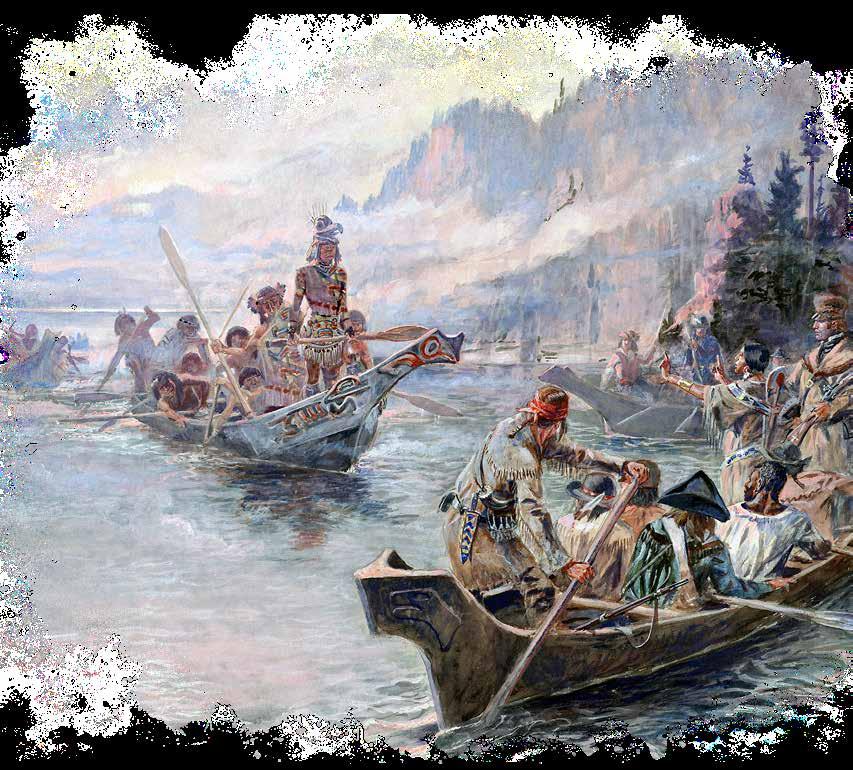

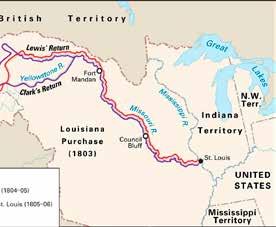
the Lewis and Clark expedition. The
shows the trip to the West. The purple line shows the return trip. Notice that the two split up for part of the return journey. They did this to explore more land.
In 1803, the United States bought land from France, which doubled its size. No one from the U.S. had ever traveled farther west than St. Louis, Missouri, so no one knew anything about the land. President Thomas Jefferson decided to send people to explore the new land, its people, and its natural resources. Natural resources are materials in nature that people use, such as wood and stone. He also told them to find the quickest way to the Pacific Ocean.
Jefferson chose two people from the army who also had experience with navigation. Someone with experience in navigation knows how to figure out directions without a map. He knew they would meet natives who had lived on the land for thousands of years and did not want new people on their land. He put Captain Meriwether Lewis and
Exploring a new land is exciting and scary at the same time. The land might be beautiful and good for growing food, or it might have dangerous animals and bad soil. Lewis and Clark went on a trip to see what the new western part of the United States was like.
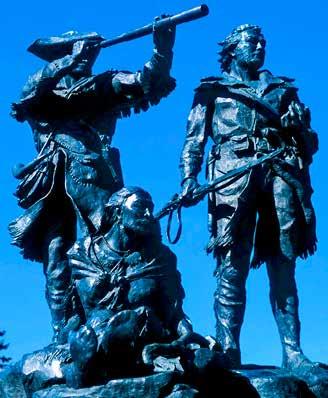
A detail of a page from William
Second Lieutenant William Clark in charge of the trip. They chose a team of 40 men to help them with traveling and fighting the natives. They spent six months preparing for the difficult journey across unknown lands. During those six months, they bought supplies and learned about the area. Lewis and Clark had no idea what they would find or how long they would be gone.
On May 14, 1804, the expedition set off from St. Louis, Missouri, in three small boats. A trip to explore is called an expedition. The journey was very difficult, and they met many unfriendly natives. They also met many helpful natives who taught them how to hunt and use the land’s resources. The expedition would have failed without the natives’ help.
Lewis and Clark drew maps of the land they traveled and showed the quickest way to the Pacific Ocean. They also documented, or wrote down, the plants and animals which they had never seen before, such as grizzly bears and mountain goats. The trip was 8,000 miles and was the first step in the country’s expansion west.
Meriwether Lewis died in 1809 at the age of 35, and William Clark died in 1838 at the age of 68. Several U.S. coins were designed with the picture of Lewis and Clark on them to honor their work for the United States. natural resources - materials in nature that humans use navigationfiguring out directions without a map expedition - a mission to explore documentedwrote down
The expedition reached the Pacific Ocean on November 21, 1805. They stayed there for the winter and began the return trip on March 23, 1806. On September 23, 1806, the expedition returned to St. Louis.
1. Who sent Lewis and Clark on their expedition?
a. President Abraham Lincoln
b. The U.S. Army
c. President Thomas Jefferson
d. President George Washington
2. When did the expedition set off from St. Louis, Missouri?
a. May 14, 1804
b. May 4, 1804
c. April 4, 1803
d. May 14, 1805
3. How did the United States double in size?
a. They bought land from India.
b. They won a war with Spain.
c. They won a war with France.
d. They bought land from France.
4. Why did President Jefferson send an expedition to the new part of the United States?
To learn about the land and find the quickest way to the Pacific Ocean. Possible answers: They would know how to fight in case they met unfriendly native tribes. They are used to surviving in difficult conditions.
5. Why do you think Jefferson appointed people from the army for the expedition?
6. How long did the entire expedition take?
Around two years
One of the most important tools Lewis and Clark had was their compass. A compass is a tool that shows which way you are going. A compass’s needle always points toward the North Pole. Once you know which way is north, you can figure out the other directions to find the way you need to travel.
When explorers draw maps of new areas, they also draw a compass rose to show which direction on the map is north. A compass rose is a drawing on a map that shows the four main directions (north, south, east, and west). On some maps, the compass rose also shows four in-between directions (northeast (NE), northwest (NW), southeast (SE), and southwest (SW). Without a compass rose, no one would know which way on the map to travel to reach their destination.
Write the missing directions from the map’s compass rose and answer the questions to navigate the world map.
1. In which direction would you travel to get from Africa to North America?
2. Which ocean is east of South America?
3. In which direction would you travel to get from Asia to Australia?
4. Which continent is north of Africa?
Early 19th century: The traditional method of pressing clothes on a flat surface, such as a table or bench, is the norm.
1830s: Flat irons heated on a stove become popular for ironing clothes.
1858: Ellen Eglin, an African American woman, patents a device that can press clothes using a combination of heated metal plates and steam. However, her invention does not become widely used.
1892: Sarah Boone, an African American woman, designs the first ironing board. Her design includes a wooden board with collapsible legs that can be adjusted to different heights. It also has a curved shape to make ironing sleeves easier.
Early 20th century: Ironing boards are still not widely used, and the traditional method of pressing clothes on a flat surface is still common.
1920s: Metal ironing boards which are lighter and more durable than their wooden counterparts are introduced.
1950s: Ironing boards with adjustable heights and built-in iron rests become popular.
1970s: Teflon-coated ironing board covers are introduced, making it easier to iron delicate fabrics without damaging them.
21st century: Ironing boards continue to evolve with new features, such as retractable iron rests, built-in electrical outlets, and foldable designs for easy storage.
The ironing board was invented in the 19th century to replace the traditional method of pressing clothes on a flat surface.
The first ironing board was designed by an African American woman named Sarah Boone in 1892.
In the early 1900s, ironing boards were made of wood and covered with a layer of fabric.
Metal ironing boards that were lighter and more durable were introduced in the 1920s.
The ironing board played an important role in history, particularly in the 19th and 20th centuries when women were expected to maintain a certain standard of appearance.
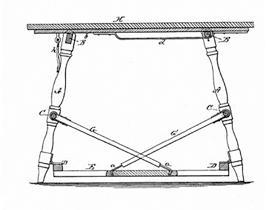
Students will learn that the ironing board is an essential household item used to press clothes. It was invented in the 19th century to replace the traditional method of pressing clothes on a flat surface. Before the ironing board, people used to lay clothes on a flat surface, such as a table or a bench, to iron them. This method was not very efficient and could damage the fabric or leave marks on it.
The first ironing board was designed by an African American woman named Sarah Boone in 1892. It was a wooden board with collapsible legs that could be adjusted to different heights. Boone’s design allowed for easy storage and portability. However, it was not until the early 20th century that the ironing board became a popular household item.
In the early 1900s, ironing boards were made of wood and covered with a layer of fabric. They were heavy and not very practical. In the 1920s, metal ironing boards that were lighter and more durable were introduced. In the 1950s, ironing boards with adjustable heights and built-in iron rests became popular.
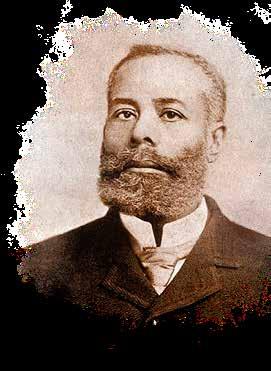
The ironing board has played an important role in history, particularly in the 19th and 20th centuries when women were expected to maintain a certain standard of appearance. Ironing clothes was considered a crucial part of household duties, and the invention of the ironing board made this task easier and more efficient.
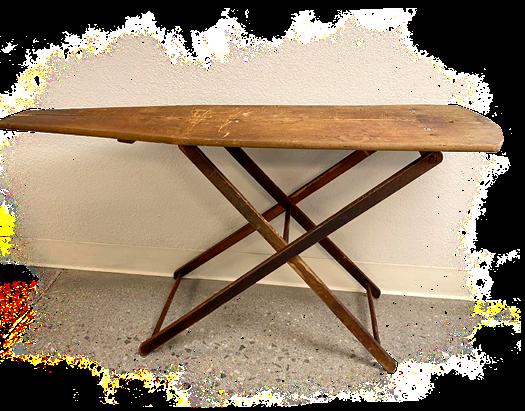
• Large pieces of cardboard or foam board
• Fabric (old pillowcases or shirts work well)
• Scissors
• Glue
• Markers or paint
• Iron (for teacher use only)
Divide the class into small groups. Provide each group with a large piece of cardboard or foam board and some fabric.
Instruct the groups to create their own mini ironing board using the materials provided.
Encourage creativity in the design and decoration of the mini ironing boards. The groups can use markers or paint to decorate the cardboard or foam board and cut the fabric to size for the ironing surface.
Once the mini ironing boards are complete, have the students take turns watching the teacher use the real iron to iron out creases in the fabric on their mini ironing boards.
As a class, discuss the differences between the mini ironing boards and the original ironing board invented by Sarah Boone. Talk about the materials used, the design, and the purpose of the ironing board.
Display the mini ironing boards around the classroom as a fun decoration.
Q1: What was the traditional method of pressing clothes before the ironing board was invented?
A1: The traditional method of pressing clothes was on a flat surface, such as a table or bench.
Q2: When were metal ironing boards introduced?
A2: Metal ironing boards were introduced in the 1920s.
Q3: Why was the invention of the ironing board important in history?
A3: Ironing boards made ironing clothes easier and more efficient, which was particularly important when women were expected to maintain a certain standard of appearance.
Q4: What were ironing boards made of in the early 1900s?
A4: Ironing boards in the early 1900s were made of wood and covered with a layer of fabric.
Q5: What were some of the improvements made to ironing boards in the 1950s?
Some of the improvements made to ironing boards in the 1950s were adjustable heights and built-in iron rests.
The ironing board was invented in the 19th century to replace the traditional method of pressing clothes on a flat surface. The first ironing board was designed by Sarah Boone in 1892, and since then, ironing boards have evolved to become lighter, more durable, and more practical. The invention of the ironing board was important in history, as it made the task of ironing clothes easier and more efficient, particularly when women were expected to maintain a certain standard of appearance. Most clothing used to be made of cotton or linen which wrinkled easily. Many synthetic fabrics today don’t require ironing.
Did you know that even small ideas can be very valuable? Some inventions are huge machines, like engines, and some are as simple as a folding ironing board. But when all these ideas come together, we get our amazing world with all its technology.
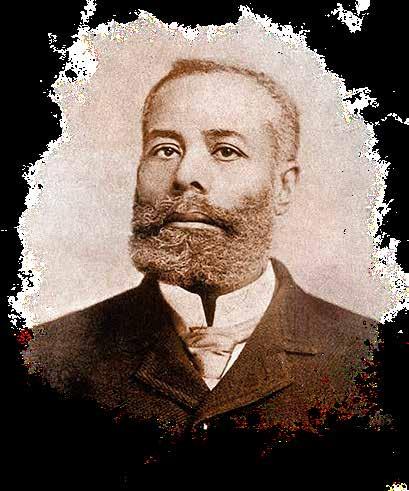
His parents had escaped from slavery in Kentucky to Canada. They eventually moved back to the USA, and McCoy grew up in the state of Michigan. In the 1870s, he began working as an inventor. He became famous for his many important inventions.
One of McCoy’s most famous inventions was important for engines. Engines need oil to run smoothly. His invention helped all machines, but it especially helped trains. Before his invention, trains would often stop for workers to oil the engine, wasting a lot of time. McCoy invented a machine

• Ruth Benerito created 55 inventions.
• McCoy also invented the lawn sprinkler.
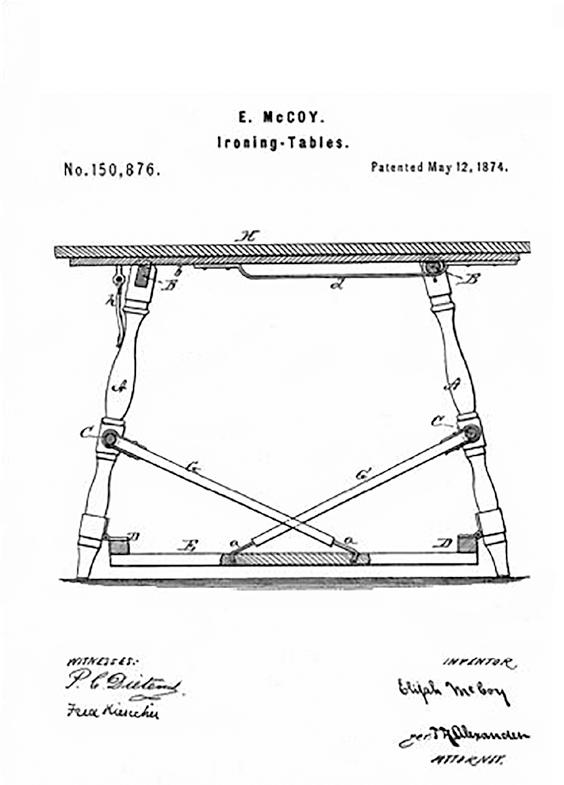
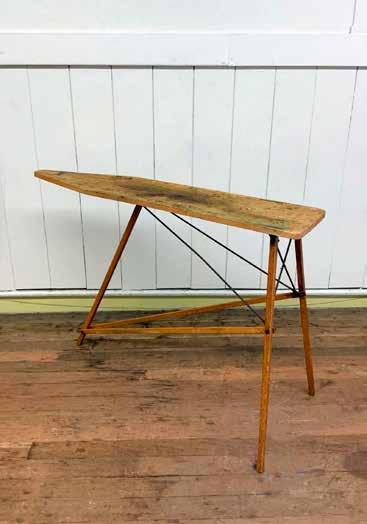
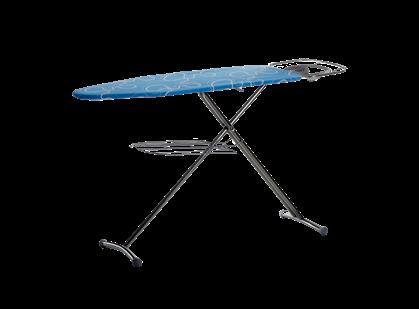
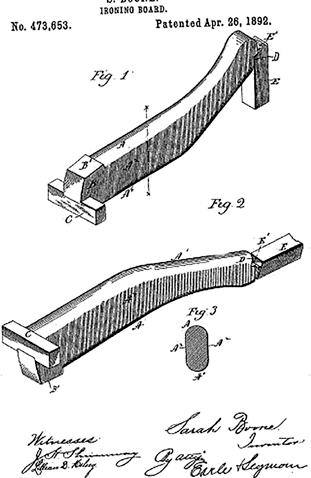
that attached to an engine and oiled it. By 1899, almost all trains were using his invention, which was called an automatic lubricator.
Another one of McCoy’s inventions was used in almost every home for 100 years. One day, Elijah’s wife told him how hard it was to iron clothing so that it came out smooth. An iron is a small device that uses heat to take wrinkles out of clothing. Elijah thought of an invention to solve her problem. He invented a small table that could fold and was easy to store and patented it on May 12, 1874. Many people bought his ironing board, which made ironing clothes a lot easier.
automatic lubricator - a machine that attaches to an engine and oils it iron - a small device that uses heat to take wrinkles out of clothing improved - made better convenient - easy
People liked McCoy’s folding ironing board, but soon another inventor, Sarah Boone, improved it. Improving something means making it better. She shaped the table to make it easier to iron sleeves and other hard-toreach parts of clothing.
In the 1950s, Ruth Benerito invented a fabric that did not wrinkle. She mixed a chemical called resin with cotton to make the fabric smooth. This new fabric became very popular in clothing and linens. Over time, scientists improved wrinkle-free fabrics, making life more convenient, or easy, for people.
McCoy and Benrito also created many other inventions that continue to help us today, whether they are big machines or small everyday items.
1. When did Elijah McCoy patent his folding ironing board?
a. May 12, 1874
b. May 12, 1974
c. May 21, 1874
d. April 23, 1824
2. What did Elijah McCoy invent besides a folding ironing table?
a. Wrinkle-free fabric
b. The iron
c. Train engines
d. The automatic lubricator
3. Which of the following is true about Ruth Benerito’s invention of wrinkle-free fabrics?
a. No one noticed it.
b. People did not like it because it felt like plastic.
c. People liked not having to iron anymore.
d. It did not work.
4. What did Elijah J. McCoy invent that was used in almost every house for 100 years?
5. How did Sarah Boone improve Elijah J. McCoy’s invention?
Elijah J. McCoy invented a folding ironing board that was easy to store. She shaped the ironing board in a way that made it easier to iron hard-toreach parts of clothing.
6. How do you think life became easier after Ruth Benerito’s invention?
Many things in your house use heat. When we use these items carefully, they are safe. These tips show some ways to be safe at home.
• Make sure children cannot reach hot items.
• For warm water, turn the cold water on before the hot water.
• Never leave appliances, such as space heaters or irons, unattended when they are plugged in.
• Unplug appliances that are not in use.
• Don’t let pot handles stick out where someone might bump into them.
• Use oven mitts or pot holders when handling hot pots and pans.
• Never use an oven or stove without permission.
Write True or False next to each statement.
1. It is best to turn on the hot and cold water at the same time.
2. It’s okay to leave the iron plugged in and on while you go get another shirt from the closet.
Possible answers: People didn’t have to work hard to iron all of their clothes. They had more time for other chores. False False
3. It's important to make sure no one can bump into pot handles.
4. You should keep the hot water urn as far back on the countertop as possible.
1789: The first presidential parade is held in New York City to celebrate the inauguration of George Washington.
1801: Thomas Jefferson becomes the first president to be inaugurated in Washington, D.C., instead of New York City, and a small parade is held.
1865: A parade is held in Washington, D.C., to celebrate the end of the Civil War and the reuniting of the country.
1885: The first inaugural parade to include military units takes place for President Grover Cleveland’s inauguration.
1909: President William Howard Taft becomes the first president to review the parade from a stand in front of the White House.
1921: President Warren G. Harding’s inauguration is the first to include an organized band.
1949: President Harry Truman’s inauguration parade includes a variety of military equipment and vehicles.
1969: President Richard Nixon’s inauguration parade includes a replica of the moon landing module.
1997: President Bill Clinton’s second inauguration parade includes a float featuring a replica of the Oval Office.
2001: President George W. Bush’s inauguration parade is delayed due to security concerns after the September 11 terrorist attacks.
2009: President Barack Obama’s inaugural parade includes over 10,000 participants.
2017: President Donald Trump’s inauguration parade features military vehicles and motorcycles as well as several marching bands.
Discuss the history of presidential and military parades and their significance.
Show examples of past presidential and military parades.
Talk about the different reasons for holding military parades.
Discuss the different groups and organizations that participate in presidential and military parades.
Encourage students to share their own experiences with parades or celebrations.
Discuss the importance of celebrating and honoring important events in American history.
Presidential and military parades are American traditions going back many years. These parades are held to celebrate the inauguration of a new president or honor a special occasion. In this lesson, you will learn about the history of presidential parades and what they and other military parades represent.

Presidential parades have been a part of American history for over 200 years. The first presidential parade was held in 1789 to celebrate the inauguration of George Washington. Since then, every president has had some sort of parade to celebrate their inauguration or mark a special occasion.
One of the most famous military parades was held in 1865 to celebrate the end of the Civil War and the reuniting of the country. Thousands of American soldiers marched through the streets of Washington D.C. with spectators marveling at the glorious sight.
Another famous presidential parade was held in 1961 to celebrate the inauguration of President John F. Kennedy. This parade was the first to be televised nationwide and was watched by millions of Americans.
Presidential and military parades are held for many different reasons. They can be held to celebrate a new president taking office, mark a special occasion like a national holiday, or honor a particular group or individual. For example, in 1991, a parade was held in New York City to honor the men and women who served in the Gulf War.
Presidential and military parades often feature marching bands, floats, and other displays representing different aspects of American history and culture.
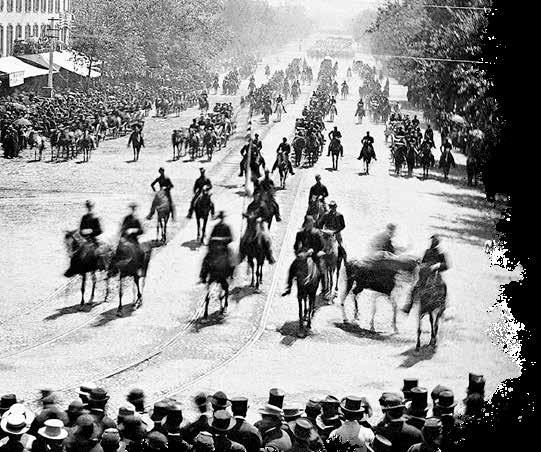
groups connected to the event being celebrated.
• Construction paper, Markers, Glue, Scissors
Creating a parade poster is a great activity for students to show their creativity and imagination. The poster should be eye-catching and include all the important information about the parade. Here are some elements that could be included in a parade poster:
Title: The poster should have a catchy title reflecting the theme of the parade, such as “Celebrating Our Nation’s Heritage” or “Honoring Our Local Heroes.”
Date, time, and location: The poster should clearly display the date, time, and location of the parade so people can plan accordingly.
Images: The poster should include colorful and engaging images of floats, marching bands, and other features of the parade. These images should be arranged in an attractive way that draws the viewer’s attention.
Information: The poster should include information about the purpose of the parade, such as celebrating a new president, marking a special occasion, or honoring a particular group or individual.
Q1: When was the first presidential parade held?
A1: The first presidential parade was held in 1789 to celebrate the inauguration of George Washington.
Q2: What was the purpose of the 1865 parade?
A2: The 1865 parade celebrated the end of the Civil War and the reuniting of the country.
Q3: Who was the first president to walk a mile with the parade to the White House?
A3: In 1977, President Jimmy Carter walked one mile to the White House with the parade.
Q4: What are some reasons for holding presidential and military parades?
A4: Presidential parades are held to celebrate a new president taking office, mark a special occasion, or honor a particular group or individual.
Q5: What are some common features of presidential and military parades?
A5: Some common features of parades are marching bands, floats, military units, and local organizations.
Presidential and military parades are a special part of American history and tradition. They bring people together to celebrate important events and honor past achievements. As you learn more about American history, you will see how these parades have helped shape our country.
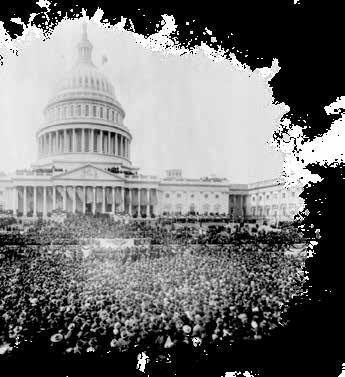
Did you know?
The Rose Parade has been held in California every year since 1890, featuring fancy floats decorated entirely with fresh flowers and plants.
The world’s largest yearly parade is in Brazil and lasts for five days.
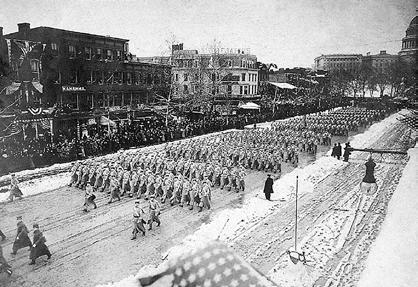
The band marches by, filling the streets with the sound of drums, trumpets, and other instruments. Excited people stand along the sidewalks watching the parade go by. Children sit on their parents’ shoulders, clapping to the music and laughing as they watch clowns and jugglers march. It’s a parade, and everyone joins to celebrate!
the United States in 1789, there was a large parade to celebrate. This was the first large parade in the U.S. The army, bands, and groups of people marched in the parade down Pennsylvania Avenue. Pennsylvania Avenue is the area between the White House and the Capitol Building in Washington, D.C. It is an important street in the U.S. Many people call it America’s Main Street. It was one of the first streets in Washington, D.C., and is still a very important street.
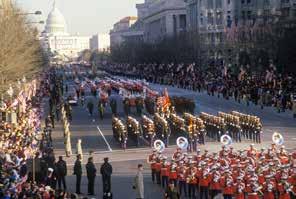
Most presidents after Washington also had parades to celebrate winning the election. In 1829, President Andrew Jackson invited the public to visit him in the White House after his parade. When too many people visited the White House, the president was forced to escape through a window!
Since George Washington, almost every president has had a parade down Pennsylvania Avenue. In the 1800s, animals were used to pull floats instead of cars. A float is a stage that travels with a parade. Marching bands play music, and many visitors come to watch the new president begin their term.
At first, the president would watch the parade with his family from outside the White House. In 1977, President Jimmy Carter walked one mile to the White House with the parade. The next presidents followed this example, and the tradition was started. Something people do that is passed down through the years is a tradition.
On May 23, 1865, the U.S. Army celebrated the end of the Civil War by parading down Pennsylvania Avenue. There are many other parades to celebrate occasions, or events, like Independence Day on July 4, which celebrates the day the U.S. became country.
Occasionsevents
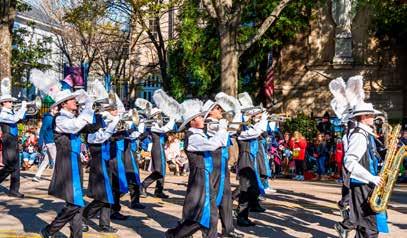
1. Which president had to escape through a window because too many people visited him?
a. President Andrew Jackson
b. President Abraham Lincoln
c. President George Washington
d. President Ulysses S. Grant
2. What is a float in a parade?
a. A musical performance
b. A stage that travels with the parade
c. A large, decorated balloon
d. A group of people marching together
3.
Which of the following is probably NOT a safety rule at a parade?
a. Do not push or shove others to get a better view.
b. Bring and use fireworks along the parade route.
c. Do not climb on structures to get a better view.
d. Do not throw hard candies into crowds of people.
4. When was the first large parade held in the United States?
When George Washington became president
5. When did the U.S. Army parade down Pennsylvania Avenue?
At the end of the Civil War on May 23, 1865.
6. What is another name for Pennsylvania Avenue in Washington, D.C.?
The National Mall in Washington, D.C., is a park with many landmarks. The presidential inaugural parade starts at the Capitol building and goes through some of the National Mall on its way to the White House.
Look at this map of the National Mall and answer the questions.
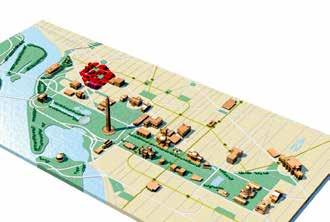
Are the following statements true or false?
1. The Washington Monument is south of the White House.
2. The inaugural parade passes the Supreme Court.
3. The inaugural parade does not pass the Lincoln Memorial.
4. The president walks east on Pennsylvania Avenue to give a speech to Congress in the Capitol building.
5. The Supreme Court justices walk east to hear the president speak in the Capitol building.
1945: The Allied powers defeat Nazi Germany and begin war crime trials.
1950: Adolf Eichmann escapes from Europe to Argentina, where he lives under an assumed identity.
1960: Israeli agents capture Eichmann in Argentina and bring him to Israel to stand trial.
April 11, 1961: The trial begins in Jerusalem.
May 21, 1961: Eichmann takes the witness stand and begins to give testimony about his role in the Holocaust.
May 23, 1961: One of Eichmann’s former subordinates, Rudolf Hoess, gives testimony about the operations of the Auschwitz concentration camp.
June 6, 1961: Eichmann’s wife, Vera Eichmann, testifies on his behalf.
December 1961: Eichmann’s defense team delivers its closing arguments.
December 15, 1961: The verdict is announced: Eichmann is found guilty on all counts and sentenced to death.
December 22, 1961: Eichmann makes a statement to the court in which he expresses regret for his actions.
May 29, 1962: The Supreme Court rejects Eichmann’s appeal.
May 31 - June 1, 1962: Adolf Eichmann is executed by hanging.
The Eichmann trial was the first time a Nazi war criminal had been put on trial since the end of World War II, and it represented a turning point in the fight for justice.
The trial was a model of fairness and due process, emphasizing the importance of rule of law and justice even in the face of horrific crimes.
The trial had a significant impact on public consciousness, raising awareness of the horrors of the Holocaust and the need to hold those responsible accountable.
The legacy of the trial lives on today as a reminder of the dangers of authoritarianism and the importance of protecting human rights.
Students will learn that the Eichmann trial was a turning point in the history of justice, as it brought to light the atrocities committed during the Holocaust and sought to hold accountable one of the key architects of the genocide. Adolf Eichmann was a high-ranking official in the Nazi regime, responsible for organizing the deportation of Jews to concentration camps across Europe. He managed to evade justice for many years but was eventually captured by Israeli agents in 1960 and brought to trial in Jerusalem.
The Eichmann trial serves as a testament to the resilience and courage of those who survived the Holocaust and the need to ensure their stories are never forgotten.
The trial was a historic event, not only because it represented the first time a Nazi war criminal had been put on trial since the end of World War II, but also because of the impact it had on public consciousness. The trial was covered extensively by the media, and many survivors of the Holocaust came forward to give testimony about their experiences. This helped raise awareness of the horrors of the Holocaust and the need to hold those responsible accountable.
The trial lasted for several months, during which Eichmann was charged with crimes against humanity, war crimes, and crimes against the Jewish people. He was found guilty on all counts and sentenced to death by hanging. The trial was significant not only for its verdict but also for the way in which it was conducted. The trial was a model of fairness and due process, with Eichmann given the opportunity to defend himself and present his case. This was an
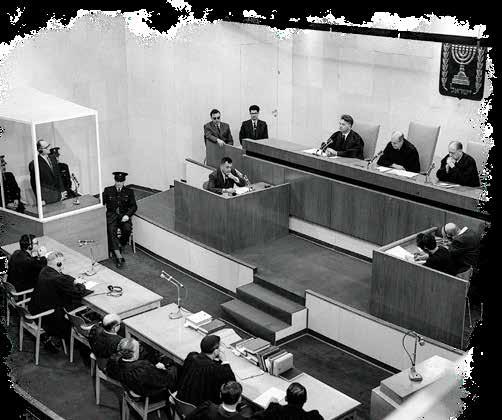
important lesson in the importance of the rule of law and the need for justice to be served even in the face of horrific crimes.
• Hats to identify different people in a courtroom
Talk to the class about bullying and the harmful effects it has on everyone.
Create a scenario where one student bullies another.
Bring it to court and have the judge and jury reach a verdict.
Judge: A person in charge of making sure the trial is fair and following the law
Victim: A person who was hurt by a crime and is seeking justice in court
Defense attorney: A lawyer who helps the person accused of a crime
Defendant: The person who is accused of a crime and is being helped by the defense attorney
Prosecutor: A lawyer who tries to prove that the defendant committed the crime
Jury: A group of people who listen to the evidence and decide if the defendant is guilty or not guilty
Witness: A person who has information about the case and can help the jury understand what happened
Q1: Who was Adolf Eichmann?
A1: Adolf Eichmann was a highranking official in the Nazi regime responsible for organizing the deportation of Jews to concentration camps across Europe.
Q2: Why was the Eichmann trial significant?
A2: The Eichmann trial was significant because it raised awareness of the atrocities committed during the Holocaust.
Q3: What were the charges against Eichmann?
A3: Eichmann was charged with crimes against humanity.
Q4: What was the outcome of the Eichmann trial?
A4: Eichmann was found guilty on all charges and sentenced to death by hanging.
Q5: What lessons can we learn from the Eichmann trial?
A5: The trial served as a reminder of the dangers of authoritarianism, the importance of protecting human rights, and the need for justice to be served even in the face of horrific crimes.
The legacy of the Eichmann trial lives on today, as it serves as a reminder of the dangers of authoritarianism and the importance of protecting human rights. It also stands as a testament to the resilience and courage of those who survived the Holocaust and the need to ensure their stories are never forgotten.
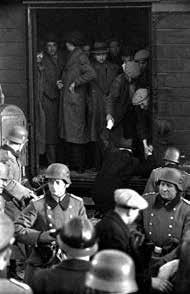
Jews in France being deported to concentration camps
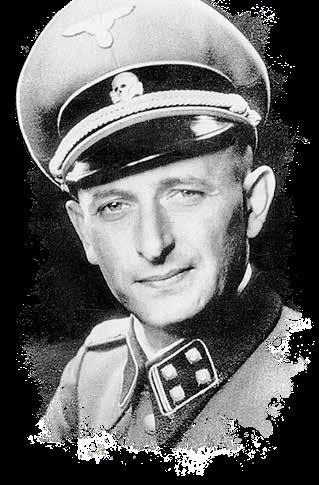
The Holocaust was one of the worst events in history. The leader of Germany, Adolf Hitler, had a horrific plan called the Final Solution to kill all Jews in Europe. He sent them to places called concentration camps, where they were forced to work, and many were killed.
Did you know?
• Eichmann’s youngest son, who was five years old when his father was killed, said that Israel was right for killing him.
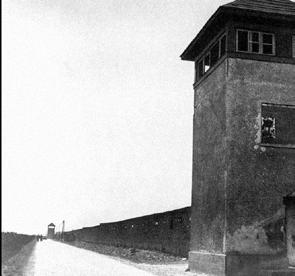
▸ Guard towers like these surrounded all concentration camps to stop prisoners from escaping.
Eichmann listening to his sentence
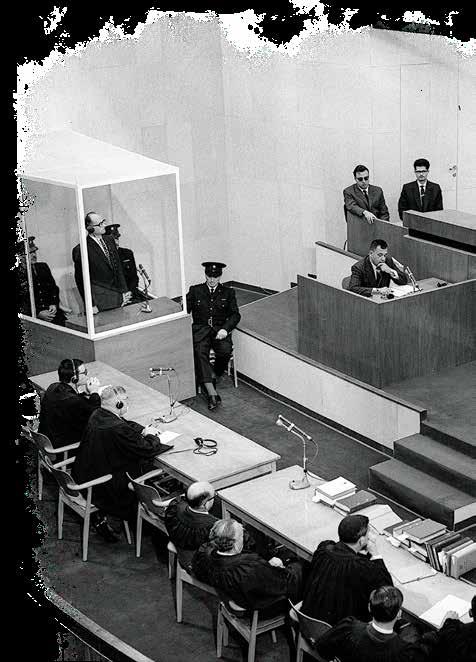
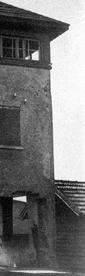
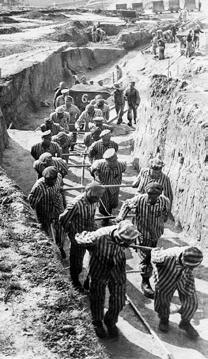
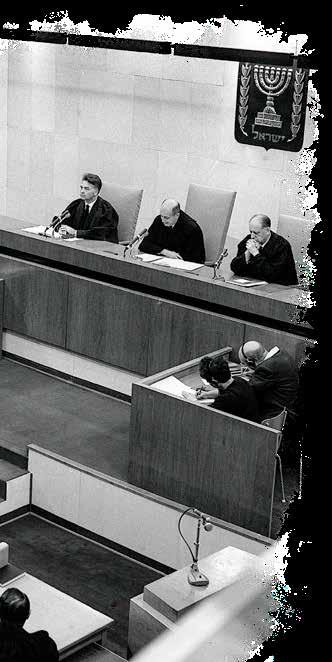
One of the main people to carry out the Final Solution was Adolf Eichmann. Eichmann’s job was to send all Jews to the concentration camps. In every country that Germany took over during World War II, Eichmann’s men made lists of the Jews. Then they forced the Jews to live in small neighborhoods surrounded by walls called ghettos and finally deported them to concentration camps. When someone is forced to leave a country, they are deported. Eichmann did a very thorough job, and of the six million Jews killed during the Holocaust, most were killed in concentration camps.
In the late 1950s, the Mossad received a few tips that Eichmann was living in Buenos Aires, the capital of Argentina. The Mossad is the Israeli secret police. In April 1960, Mossad agents followed tips until they found Eichmann. He was living near Buenos Aires under the name Ricardo Klement and working for a car company.
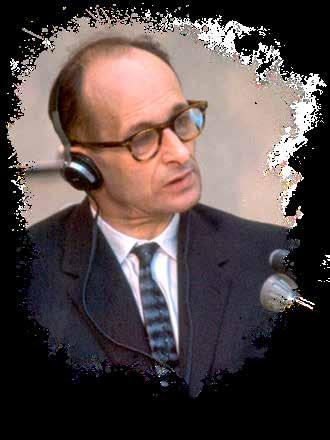
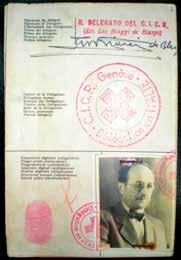
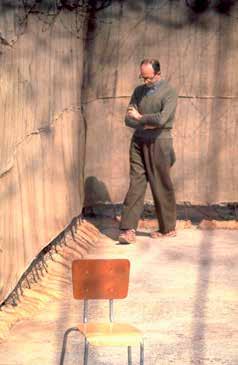
The Mossad agents followed Ricardo for a few days to learn his schedule. They decided to catch him on his way home from work. On May 11, 1960, a team of Mossad agents met Eichmann as he left the bus on his way home from work. They kept him in a rented house for nine days. On May 20, they dressed him as an airline worker and smuggled him to Israel to be put on trial. Sneaking something or someone into or out of a country is smuggling. The news was a big shock to the world because Eichmann was a very important Nazi. Many people were happy that he was found, but people who sided with Nazis were upset that Israel kidnapped him from Argentina.
final SolutionHitler’s plan to kill all Jews in Europe deport - force a person to leave a country smuggled - snuck something or someone into or out of a country charged - accused
Eichmann’s trial began in Jerusalem on April 11, 1961, and lasted for four months. Eichmann sat in a bulletproof glass box during the entire trial. He was charged with crimes against humanity for his role in killing millions of Jews. Charging someone with a crime means accusing them of it.. Eichmann said he was following orders and was not responsible for the death of millions of Jews.
A total of 112 survivors told the court about their experiences during the Holocaust. Their stories and hundreds of documents proved that Eichmann knew about the plan to kill all Jews and was a major part of carrying out the plan. One document showed that Eichmann said he was happy that he killed millions of Jews. On December 15, 1961, the court sentenced him to death by hanging. He was hanged on July 1, 1962, 17 years after World War II ended.
1.
When was Eichmann hanged?
a. July 1, 1962
b. July 1, 1961
c. May 1, 1962
d. May 31, 1961
2. What did Eichmann’s lawyers argue in the trial?
a. That he was Ricardo Klement and not Eichmann
b. That he was not a Nazi during the Holocaust
c. That he was following orders and was not responsible
d. That he was very sorry for what he did during the Holocaust
3. What sentence did the court give Eichmann?
a. Life imprisonment
b. Community service
c. Death by firing squad
d. Death by hanging
4. What was Adolf Eichmann’s job in the Final Solution?
To send all Jews to the concentration camps
5. Write two things Eichmann’s men did in the cities controlled by Germany.
Made lists of the Jews, forced them into ghettos, and sent them to concentration camps
6.
Why do you think Eichmann chose Argentina as his hiding place?
Possible answer: It was very far from Germany, so no one would recognize him.
After WWII, Adolf Eichmann spent his life hiding. Many countries were looking for him, including Israel, Germany, and Austria. Put the events below in the correct order based on the article you just read. The first one is done for you.
A. Eichmann is found guilty
B. Eichmann is hanged
C. Eichmann escapes Germany
D. Eichmann becomes Ricardo Klement
E. The Mossad brings Eichmann to Israel
F. The Mossad discovers Eichmann in Buenos Aires
C. Eichmann escapes Germany
D. Eichmann becomes Ricardo Klement
F. The Mossad discovers Eichmann in Buenos Aires
E. The Mossad brings Eichmann to Israel
A. Eichmann is found guilty
B. Eichmann is hanged
June 12, 1929: Anne Frank is born in Frankfurt, Germany.
January 30, 1933: Adolf Hitler is appointed Chancellor of Germany.
1934: Anne’s family moves to Amsterdam in the Netherlands.
May 10, 1940: Germany invades the Netherlands.
July 6, 1942: The Franks go into hiding in a secret annex in the back of Otto Frank’s business warehouse.
July 13, 1942: The Franks’ family friend, Miep Gies, begins to help them by providing food and supplies.
November 16, 1942: Fritz Pfeffer joins the families in hiding, bringing the total number of people in the annex to eight.
March 28, 1944: Anne’s diary entries become more introspective, and she begins to write about her hopes for the future.
August 4, 1944: The families in hiding are discovered by the Gestapo and taken into custody.
September 3, 1944: The families are transported to the Westerbork transit camp in the Netherlands.
September 5, 1944: The families are transported to AuschwitzBirkenau concentration camp in Poland.
October 30, 1944: Anne and Margot Frank are transported to Bergen-Belsen concentration camp in Germany.
February 1945: Anne and Margot both contract typhus and become seriously ill.
March 1945: Anne Frank dies of typhus in Bergen-Belsen, just weeks before the camp is liberated by British forces.
April 15, 1945: British forces liberate Bergen-Belsen.
May 1945: Otto Frank is liberated from Auschwitz and returns to Amsterdam.
June 1945: Miep Gies gives Otto Anne’s diary, which she had saved after the families were discovered.
1947: Otto Frank publishes Anne’s diary under the title “Het Achterhuis” (The Secret Annex).
1952: The English translation of the diary “Anne Frank: The Diary of a Young Girl” is published and becomes an instant bestseller.
Today: Anne Frank’s diary has been translated into over 70 languages and has sold more than 30 million copies worldwide. It is considered one of the most important and powerful works of Holocaust literature.
Discuss the history of World War II and the Nazi regime’s persecution of Jewish people. Explain the concept of hiding and the secret annex where Anne and her family lived.
Highlight the importance of Anne’s diary as a historical document and source of inspiration.
Encourage students to think about the emotions Anne must have felt during her time in hiding.
Discuss the legacy of Anne Frank and the impact her story has had on the world.
Emphasize the importance of remembering the lessons of history so that we can work towards creating a better future.
Students will learn that Anne Frank was a young Jewish girl who lived in Amsterdam during World War II. She is famous for the diary she wrote, in which she recorded her thoughts and experiences during the war. Anne’s diary has become an important historical document and has been read by millions of people worldwide.

Anne Frank was born to a Jewish family in Frankfurt, Germany, in 1929. When the Nazis came to power in Germany in 1933, they began to discriminate against and persecute Jewish people. In 1934, Anne’s family moved to Amsterdam in the Netherlands, hoping to escape the Nazi regime. However, when the Germans invaded the Netherlands in 1940, the Frank family went into hiding in a secret annex in the back of a warehouse.
For two years, Anne and her family, along with four other people, lived in the secret annex, relying on the help of friends to bring them food and supplies. During this time, Anne wrote in her diary almost every day, recording her thoughts and feelings about her life in hiding. She wrote about the fear she felt of being discovered, the boredom and frustration of being cooped up in a small space, and her dreams for the future.
Sadly, in August 1944, the Frank family and the others in the annex were discovered by the Nazis and sent to concentration camps. Anne died of typhus in Bergen-Belsen concentration camp in early 1945, just a few weeks before the camp was liberated by Allied forces.
After the war, Anne’s father, Otto Frank, returned to Amsterdam, where he was given Anne’s diary. He published it in 1947, and it has since become one of the world’s most famous and widely read books. Anne’s diary has given people
a glimpse into the life of a young girl during one of the darkest periods in human history and has become an important symbol of hope and resilience.
• Blank notebooks
• Writing instruments (pen, pencils, colored pencils, markers, etc.)
Provide each student with a blank notebook and writing instruments.
Explain to the students that they will be creating their own diary entries as if they were living in hiding during the Holocaust, similar to Anne Frank’s diary.
Ask the students to imagine what their life would be like if they had to go into hiding with their family and friends. Encourage them to think about what they would miss from their daily lives, what they would fear, and what they would hope for.
Have the students begin writing their diary entries, emphasizing the importance of being honest and reflective.
Invite a few students to share their entries with the entire class, and facilitate a discussion on the experience of writing as if they were living in hiding during the Holocaust.
Q1: Who was Anne Frank?
A1: Anne Frank was a young Jewish girl who lived in Amsterdam during World War II and wrote a diary about her experiences while hiding from the Nazis.
Q2: Why did Anne and her family go into hiding?
A2: They went into hiding to avoid being captured by the Nazis and sent to concentration camps.
Q3: How did Anne record her experiences while hiding?
A3: Anne wrote in a diary almost every day, recording her thoughts and feelings about her life in hiding.
Q4: What happened to Anne and her family after they were discovered by the Nazis?
A4: Anne and her family were sent to concentration camps, and Anne died of typhus in the Bergen-Belsen concentration camp in early 1945.
Q5: Why is Anne’s diary an important historical document?
A5: Anne’s diary is an important historical document because it gives people a glimpse into the life of a young girl during one of the darkest periods in human history and has become an important symbol of hope and resilience.
Anne Frank’s story is a powerful reminder of the importance of tolerance, compassion, and respect for all people. Her diary has inspired generations of people around the world and has helped raise awareness about the atrocities committed during the Holocaust. As we reflect on Anne’s life and legacy, let us remember her message of hope and courage, and let us work together to build a better future for all.
Six million Jews were killed in the Holocaust (1939-1945). Most of them had no way of recording their experiences, and their stories are lost. However, a few people did keep diaries that show what life was like for the Jews during the Holocaust. The most famous is the diary of Anne Frank.

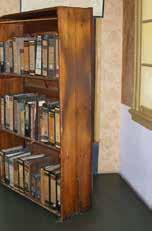
▸ Anne’s diary
• Anne’s diary includes many drawings and sketches. Did you know?
• Anne’s birthday, June 12, is now celebrated as International Anne Frank Day.
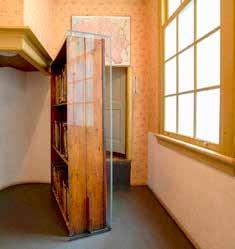
▸ The entrance to the secret annex was hidden behind a bookcase.
Anne Frank was a Jewish girl born in Germany on June 12, 1929. She was the second daughter of Otto and Edith Frank. Her older sister was Margot. They lived in Frankfurt, Germany, for the first four years of Anne’s life.
In 1933, Adolf Hitler and the Nazi Party came to power in Germany and began enacting laws against Jews. They passed laws taking jobs away from Jews and keeping them out of public places. Otto Frank decided to move his family to Amsterdam, the capital of the Netherlands, hoping for safety. Anne was four years old at the time.
Otto Frank started a successful business in Amsterdam, and Anne and Margot began attending, or going to, school. Anne was a bright child who enjoyed writing and storytelling. She had a lot of friends in school and was happy in Amsterdam.
In May 1940, when Anne was 11 years old, the Nazis took over the Netherlands. They passed laws against Jews, and life became very difficult for them. In 1942, the Nazis began sending Jews to concentration camps. Being sent to a concentration camp meant almost certainly dying. Otto Frank realized that his family needed to hide.
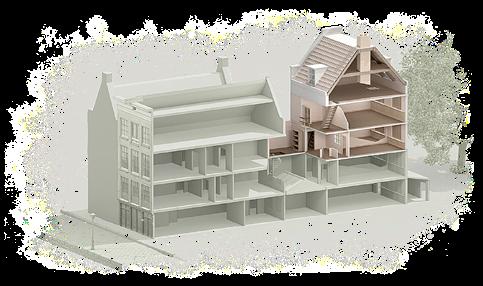
Otto converted the top two floors of his business into a secret annex for the family to live in hiding. An annex is a room added to a building. They told their neighbors they were moving to Switzerland. Another family, the Van Pels, and a dentist named Fritz Pfeffer also hid in the secret annex. Eight people lived in the small room with the windows closed during the day. They also had to be quiet to make sure no one heard them.
enacting - passing attendinggoing to annex - a room that is added to a building employeesworkers
Anne was 13 when she went into hiding in July 1942. She brought with her a diary that she had received for her birthday. She spent a lot of time writing about life in the secret annex. She wrote about the arguments they got into, the things they did to pass the time quietly, and how she missed her former life. She also wrote about the people who helped them by bringing them food, books, and news. These were non-Jewish employees, or workers, of Otto Frank who risked their lives to help them. Miep Gies, a Dutch woman, was one of the helpers of the people hiding in the secret annex.
The Franks lived in the secret annex for two years until the Nazis discovered their hiding place in August 1944. All eight people hiding were sent to concentration camps. It is still unclear how the Nazis found them.
Otto Frank was the only member of the family to survive. After the war, he returned to Amsterdam and learned that both his daughters had died. But Anne’s diary had survived! Miep Gies had hidden the diary in a drawer of her desk. Now she gave the precious diary to Anne’s father. Otto edited the diary and published it in 1947. The book became a bestseller and is considered a very important book about the Holocaust. Millions of people have read Anne’s diary, which has been printed in more than 70 languages.
1. How old was Anne when her family moved to the secret annex?
a. 11 b. 13
c. 9 d. 4
2. Where was Anne Frank born?
a. Amsterdam b. France
c. Germany d. Italy
3. Why do you think the annex windows were closed during the day?
a. To keep the room dark
b. To make sure no one heard any noise they made
c. It was very cold outside
d. The windows were broken
4. Why do you think the Franks told their neighbors they were moving to Switzerland?
So the neighbors wouldn’t tell the Nazis about them.
5. Why do you think Otto’s workers helped him?
Possible answers: They disagreed with the Nazis; he treated them nicely before the war
6. Why is Anne’s diary such an important book about the Holocaust?
There are very few diaries showing what life was like for the Jews during the Holocaust.
Many people keep diaries. Some people write in their diary every day, and some only write a few times a year. There are also different types of diaries. The following are three types of diaries:
• ReflectionWriting your thoughts and feelings about something that happened to you
• GoalsSetting goals for the future and how you can achieve them
• GratitudeWriting about the things you are thankful for
What type of diary would include the following sentences?
1. “I got into an argument with my friend today. I was angry and upset, but after thinking about it, I realized that we were both a little wrong.”
Reflection Goals
2. “I will study for the math test for 30 minutes every day. Tomorrow, I will make flashcards to help me remember the multiplication table.”
3. “I went for pizza with my family today. I’m thankful for my family. They’re always there for me when I need them, and they make me laugh even when I’m feeling down.”
Gratitude
4. Now it’s your turn! Choose one type of diary and write three sentences in it.
June 12, 1924: George Herbert Walker Bush is born in Milton, Massachusetts.
1942: Bush enlists in the U.S. Navy during World War II and becomes a pilot.
1944: Bush is shot down over the Pacific and rescued by a U.S. submarine.
1948: Bush graduates from Yale University and moves to Texas to work in the oil industry.
1966-1970: Bush serves as a U.S. Representative from Texas.
1971-1973: Bush serves as U.S. Ambassador to the United Nations.
1973-1974: Bush serves as Chairman of the Republican National Committee.
1976: Bush runs for president but loses the Republican nomination to Ronald Reagan.
1981-1989: Bush serves as vice president under Ronald Reagan.
1988: Bush runs for president and defeats Democratic nominee Michael Dukakis to become the 41st president of the United States.
1990-1991: Bush leads the United States in the Gulf War, a conflict between Iraq and a coalition of countries led by the United States.
1992: Bush runs for re-election but loses to Democratic nominee Bill Clinton.
2001: Bush’s son, George W. Bush, is inaugurated as the 43rd president of the United States.
2018: George H.W. Bush passes away on November 30 at the age of 94.
George H.W. Bush was the 41st president of the United States from 1989 to 1993.
He was a World War II veteran and flew 58 combat missions.
Bush worked in the oil industry and held various political positions, including vice president under Ronald Reagan.
He led the United States in the Gulf War, a conflict between Iraq and a coalition of countries led by the United States.
Bush is remembered for his strong leadership during the Gulf War and efforts to promote international cooperation and peace.
Students will learn that George H.W. Bush was the 41st president of the United States, serving from 1989 to 1993. He was a World War II veteran, worked in the oil industry, and held various political positions, including vice president under Ronald Reagan. He is remembered for his leadership during the Gulf War.
George Herbert Walker Bush was born in Milton, Massachusetts, in 1924. He grew up in a wealthy family and attended Phillips Academy in Andover, Massachusetts. After graduating, he enlisted in the U.S. Navy and became a pilot during World War II. He flew 58 combat missions and was awarded the Distinguished Flying Cross.
After the war, Bush attended Yale University and graduated in 1948. He then moved to Texas and worked in the oil industry. He also became involved in politics and served as a U.S. Representative, U.S. Ambassador to the United Nations, Chairman of the Republican National Committee, and Director of the Central Intelligence Agency.
In 1980, Bush ran for president but lost the Republican nomination to Ronald Reagan. However, Reagan chose Bush as his vice president, and they served together from 1981 to 1989. In 1988, Bush ran for president again and won, becoming the 41st president of the United States. He served one term, from 1989 to 1993.
During his presidency, Bush faced many challenges, including the fall of the Berlin Wall and the collapse of the Soviet Union. He also led the United States in the Gulf War, a conflict between Iraq and a coalition of countries led by the United States. Bush is remembered for his strong leadership during the Gulf War and efforts to promote international cooperation and peace.
After leaving office, Bush remained active in public life and was involved in many charitable organizations. He passed away on November 30, 2018, at the age of 94.
• Paper • Pen
• Crayons or coloring material ACTIVITY
Presidential Time Capsule: Ask the students to imagine they are living during George H.W. Bush’s presidency and want to create a time capsule that will be opened in the future.
Have the students brainstorm a list of items they would like to include in the time capsule representing important moments and events during Bush’s presidency.
The students can create drawings or collect objects that represent their chosen items and then place them in a box or container that will serve as the time capsule.
Finally, have the students present their time capsules to the class, explaining the significance of each item and why they chose to include it in their time capsule. This activity can help the students think critically about the significance of historical events.
Q1: Who was George H.W. Bush?
A1: George H.W. Bush was the 41st president of the United States from 1989 to 1993.
Q2: What did Bush do before becoming president?
A2: Before becoming president, Bush was a World War II veteran, worked in the oil industry, and held various political positions, including vice president under Ronald Reagan.
Q3: What was the Gulf War?
A3: The Gulf War was a conflict between Iraq and a coalition of countries led by the United States.
Q4: What is Bush remembered for?
A4: Bush is remembered for his strong leadership during the Gulf War and efforts to promote international cooperation and peace.
Q5: How many combat missions did Bush fly during World War II?
A5: Bush flew 58 combat missions during WWII.
George H.W. Bush was a World War II veteran, worked in the oil industry, and held various political positions, including vice president under Ronald Reagan. He is remembered for his leadership during the Gulf War. He served one term as the 41st president of the United States from 1989 to 1993.
you know?
• Bush flew 58 combat missions as a navy pilot.
• John Adams (elected 1796) and his son John Q. Adams (elected 1824).
▸ George H. W. while serving as a navy pilot
▸ Speaking at the UN
George H. W. Bush was born on June 12, 1924, in Massachusetts. His father, Prescott Bush, was a banker and senator from Connecticut. He taught his son to do the best he could to help the country.
After graduating from high school, George H. W. Bush joined the navy as an aviator and fought in Japan during World War II (1939-1945). Aviators are navy pilots. He was one of the youngest pilots in the U.S. Navy. In 1944, Bush’s airplane was shot down over the Pacific Ocean. Two crew members on board died, but Bush managed to escape the plane before it crashed. He parachuted to the water, where a nearby U.S. submarine rescued him.
Did you know that a father and son both became president of the United States? George H.W. Bush was the 41st president, and his son, George W. Bush, was the 43rd president. To help tell them apart, we sometimes call the father “Bush 41” and the son “Bush 43.” Let’s learn more about the life of “Bush 41.”
After the war, Bush became interested in politics. In 1966, he was elected to Congress, where he served until 1971. In 1971, President Richard Nixon appointed Bush as ambassador to the United Nations. An ambassador is a representative from one country to another or to the UN. This was his first time working in foreign affairs, which helped him when he became vice president and president. He served in that role, or job, until 1973.
In 1976, President Gerald Ford appointed Bush as director of the Central Intelligence Agency, known as the CIA. The CIA is the
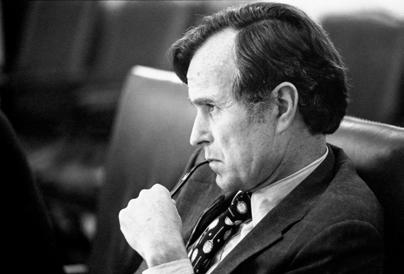
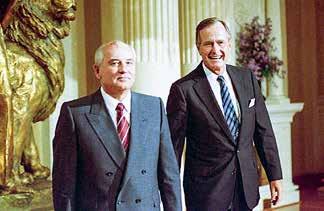
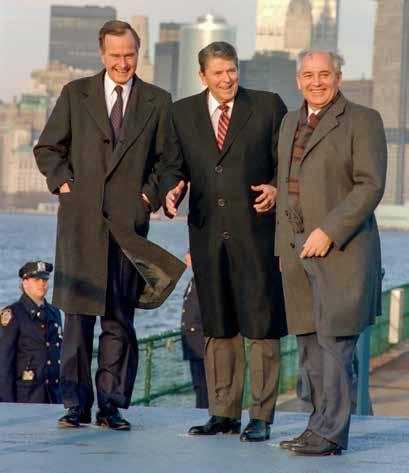
main spy organization of the U.S. Bush led the CIA for one year and was the only CIA director to later serve as president.
In 1981, Bush became President Ronald Reagan’s vice president. He was an expert in foreign affairs, and Reagan trusted him with important missions to other countries. A person who knows all about something is an expert. He served with Reagan for two terms until 1989.
In 1989, Bush became the 41st president of the U.S. The Cold War ended that year when he met with USSR leader, Mikhail Gorbachev, and announced peace between the two countries.
While Bush’s work with other countries was very successful, many people were unhappy with his leadership. Many people were unemployed and could not support themselves. Someone who doesn’t have a job is unemployed. In 1992, Bush ran for a second term as president but lost to Bill Clinton. Some people disagreed with Bush’s policies, but everyone respected his honesty and dedication to working for the United States. George H. W. Bush died on November 30, 2018, at the age of 94. His son George W. Bush became the 43rd president in 2001.
1. When was George H.W. Bush born?
a. June 12, 1924
b. June 12, 1921
c. June 21, 1924
d. May 3, 1924
2. Who was the president when George H.W. Bush was vice president?
a. President Richard Nixon
b. President Gerald Ford
c. President Ronald Reagan
d. President Bill Clinton
3. Who became president after George H.W. Bush?
a. Richard Nixon
b. Gerald Ford
c. Ronald Reagan
d. Bill Clinton
4. List three ways George H.W. Bush served the U.S.
Possible answers: Navy pilot; served in Congress; UN ambassador; CIA director; Vice president; President
5. What job gave Bush his first experience in foreign affairs?
Serving as ambassador to the U.N.
6. Why do you think Bush didn’t win a second term as president?
Americans were upset that so many people were unemployed.
THREE-WAY MATCHING: PRESIDENT BUSH’S ROLES
Match the job Bush had with the years he served in the role and what he did in that role. Match all three columns. For example, the answer might be 1Aa. HINT: Match one column at a time.
April 19, 1775: The battles of Lexington and Concord take place.
April 20, 1775: British troops occupy Boston.
May 10, 1775: The Second Continental Congress convenes in Philadelphia.
June 14, 1775: The Continental Army is established, with George Washington as commander-in-chief.
June 16, 1775: American forces fortify Breed’s Hill and Bunker Hill, overlooking Boston.
June 17, 1775: The British attack the American fortifications on Breed’s Hill and Bunker Hill in what becomes known as the Battle of Bunker Hill.
June 18, 1775: The British withdraw from Charlestown, and the battle ends.
July 3, 1775: George Washington takes command of the Continental Army in Cambridge, Massachusetts.
July 6, 1775: The Declaration of Causes and Necessity of Taking Up Arms is issued by the Second Continental Congress.
August 23, 1775: King George III declares the colonies to be in a state of rebellion.
October 13, 1775: British forces evacuate Boston, ending the Siege of Boston.
Explain why the American colonists wanted to drive the British out of Boston.
Describe the fortifications the Americans built on Bunker Hill and Breed’s Hill.
Explain how the British army launched a surprise attack on the American fortifications.
Describe the American resistance to the British attack.
Explain why the Americans were forced to retreat.
Discuss the significance of the Battle of Bunker Hill in the American Revolution.
Students will learn that the Battle of Bunker Hill was a significant event in the American Revolution. It was fought between American colonists and the British army on June 17, 1775, near Boston, Massachusetts. The battle was a pivotal event in the war for independence, and it helped shape the future of the United States.

The Battle of Bunker Hill took place during the early stages of the American Revolution. The British army had occupied Boston, and the American colonists wanted to drive them out. The Americans decided to build fortifications on Bunker Hill and Breed’s Hill, which overlooked the city. They hoped to use these positions to launch an attack on the British army.
On June 17, 1775, the British launched a surprise attack on the American fortifications. The Americans were able to hold off the initial assault, but they eventually ran out of ammunition and were forced to retreat. Although the British won the battle, they suffered heavy casualties. The American colonists proved that they could stand up to the British army, and they gained confidence in their ability to fight for their freedom.
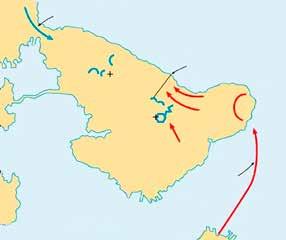
The Battle of Bunker Hill was a turning point in the American Revolution. It showed that the American colonists could fight and win against the powerful British army. The battle also inspired other colonists to join the fight for independence and helped solidify the idea of a united American people.
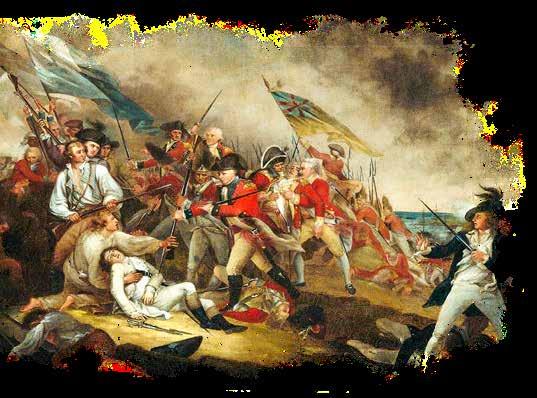
• Paper, Pencils or pens, Props (optional)
Divide the class into two groups: American colonists and British soldiers.
Assign roles to each student in the two groups. The American colonists can include historical figures such as George Washington or Samuel Adams, while the British soldiers can include generals such as William Howe or Thomas Gage.
Give each student a piece of paper and ask them to write down three important facts about their assigned historical figure. This will help them get into character during the role play.
Provide any necessary props.
Instruct the groups to reenact the Battle of Bunker Hill. The American colonists will be defending their fortifications, while the British soldiers will be trying to take control of the hill.
Allow the students to improvise and use their creativity during the role play. Encourage them to use the information they wrote down about their historical figures to direct their actions and dialogue.
After the role play is finished, lead a discussion about the events of the Battle of Bunker Hill. Ask the students to compare what they did during the role play to what actually happened during the battle.
Q1: Where was the Battle of Bunker Hill fought?
A1: The Battle of Bunker Hill was fought near Boston, Massachusetts.
Q2: Who fought in the Battle of Bunker Hill?
A2: The American colonists and the British army fought in the Battle of Bunker Hill.
Q3: Why did the Americans build fortifications on Bunker Hill and Breed’s Hill?
A3: The Americans hoped to use these positions to launch an attack on the British army.
Q4: Who won the Battle of Bunker Hill?
A4: The British army won the Battle of Bunker Hill, but they suffered heavy casualties.
Q5: Why was the Battle of Bunker Hill significant in the American Revolution?
A5: The Battle of Bunker Hill showed that the American colonists could fight and win against the powerful British army. It also inspired other colonists to join the fight for independence and helped solidify the idea of a united American people.
The Battle of Bunker Hill was a crucial event in the American Revolution. It proved that the American colonists could fight and win against the British army, and it inspired them to continue their fight for independence. The battle helped shape the future of the United States, and it is still remembered and celebrated today.
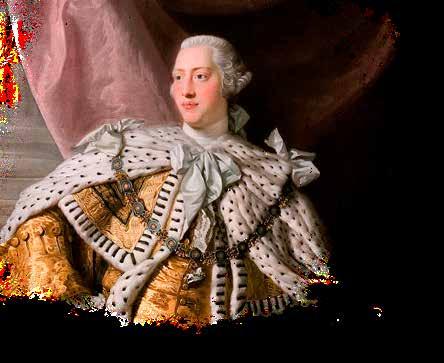

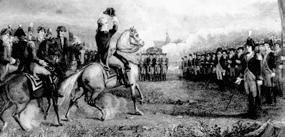
“We did it!” Winning a game with your team is super exciting! If your team loses, it might not feel so great. But sometimes losing is still a win. If your team loses by one point instead of the usual ten points— that’s a win. It means you did better than before and can work even harder next time. During the Battle of Bunker Hill, the army that lost the battle also won.

In the 1600s settlers from Great Britain, another name for England, moved to North America. They lived in 13 colonies that belonged to England. Colonies are land that a country owns in a different part of the world. The British government sent soldiers to make sure that the people did not try to start their own country.
For many years the colonists did not pay taxes to England. Tax is money the government charges people to run the

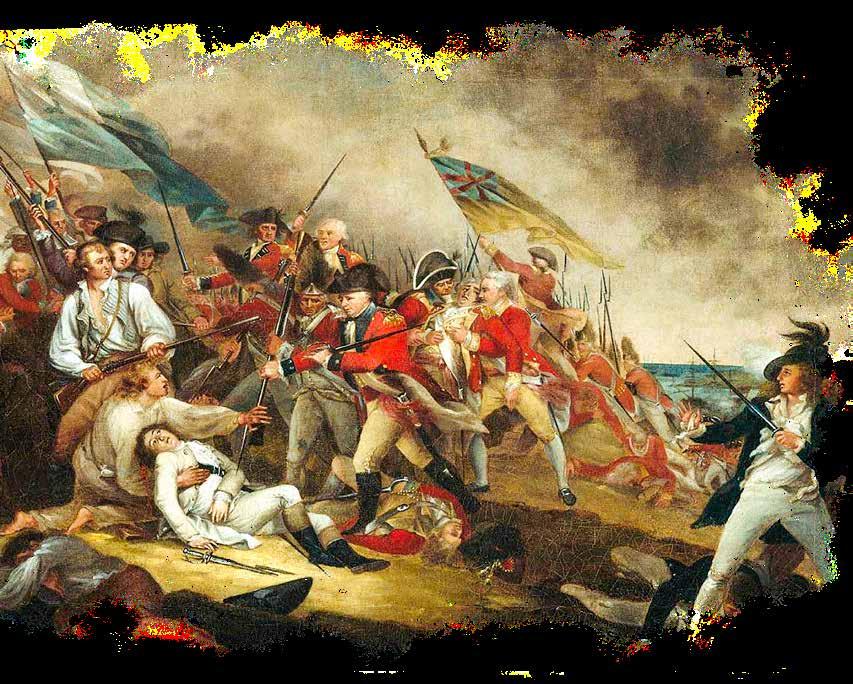
country. In the 1760s, King George III of England began taxing the 13 colonies. The colonists said they wouldn’t pay taxes to a government that was so far away. The king got angry and added even more taxes, and in 1775, the colonists began to rebel. When people fight against their government they rebel. They formed the Continental Army and started planning to force the British army out of the colonies.
One of the leaders of the Continental Army was William Prescott. Prescott gathered men near the city of Boston which was controlled by the British. On June 16, 1775, they prepared to attack from the hills across the river from the
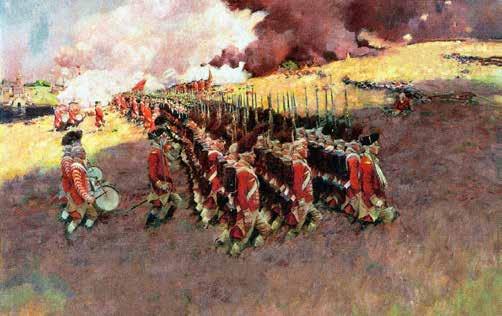
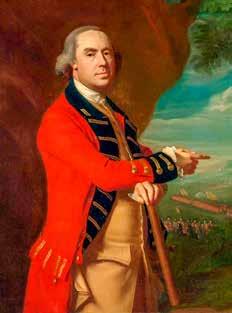
city. One of these hills was Bunker Hill. These hills were higher than the city of Boston, making it a good place to attack the city.
The next day, British General Thomas Gage saw the Continental Army on the hills and attacked them. He expected to win and quickly stop the rebellion. The Continental Army surprised the British by fighting very well. The Continental Army killed the first two groups of soldiers that attacked them. Hundreds of British soldiers died trying to attack the hills.
When the British attacked again, the Americans ran out of bullets and retreated. When an army runs away, they retreat. The British won the battle, but more than 1,000 soldiers were killed or hurt. The British army realized that the Continental Army knew how to fight. The colonists also saw that they might be able to win independence from England. This helped them fight well throughout the Revolutionary War until they finally won in 1783.
King George heard how well the colonists fought, and he was very angry. He signed a document called the Proclamation of Rebellion, saying that all the colonists were traitors. He also said it was against the law to help them in any way. The document also said that England would stop the colonies’ rebellion no matter what. The war lasted another seven years before King George gave up and recognized the United States as its own country.
1. When did the Battle of Bunker Hill start?
a. June 16, 1775
b. June 17, 1775
c. June 16, 1776
d. June 17, 1776
2. When did the colonists win their independence?
a. 1775
b. 1776
c. 1781
d. 1783
3. Who was the British king during the Revolutionary War?
a. King James I
b. King Henry VIII
c. King George III
d. King Edward I
4. Why did the colonists rebel against the British government?
They did not want to pay taxes to a government that was far away. It was higher than the city.
5. Why did William Prescott choose Bunker Hill to attack Boston?
6. How do you think losing the Battle of Bunker Hill was also a win for the Continental Army?
It showed them that they could win against the British and helped them fight hard during the war.
When King George III passed too many tax laws, the colonies rebelled. The following are some of the taxes he passed making the colonies angry. Look at the chart and answer the questions.
TAX ACT DESCRIPTION
Sugar Act Tax on sugar, wine, and other foods
Stamp Act Tax on printed items, such as newspapers and postcards
Quartering Act
Required colonists to provide food and a room in their house for British soldiers
Townshend Acts Taxes on items brought from other countries, such as glass and paper
Tea Act Tax on tea
1. Which law forced colonists to serve dinner to British soldiers?
a. Sugar Act b. Stamp Act
c. Quartering Act d. Tea Act
2. Which item had two taxes?
a. Glass of tea b. Pot of meat
c. Bowl of soup d. Barrel of wine
3. Which tax act charged tax on paper?
a. Sugar Act b. Stamp Act
c. Townshend Acts d. Tea Act
4. Which tax did King George III pass first?
a. Sugar Act
b. Stamp Act
c. Quartering Act
d. Townshend Acts
1734: Daniel Boone is born in Berks County, Pennsylvania.
1750: Daniel Boone begins his apprenticeship as a blacksmith.
1755: Boone moves to North Carolina and begins working as a wagoner and hunter.
1756: Boone fights in the French & Indian War as a member of the North Carolina militia.
1767: Boone moves his family to Kentucky and begins exploring the area.
1775: Boone blazes the Wilderness Road, opening up Kentucky for settlement.
1776: Boone begins to settle Boonesborough, the first permanent settlement in Kentucky.
1778: Boone is captured by Shawnee natives and escapes after two months of captivity.
1783: Boone moves his family to Missouri.
1799: Boone returns to Kentucky and is elected to the Kentucky legislature.
1820: Boone passes away in Missouri at the age of 85.
Explain that Boone grew up on the frontier and learned valuable skills like hunting and trapping, which would later come in handy on his explorations.
Discuss how Boone led a group of settlers to Kentucky and became one of the first people of European descent to live there. Emphasize the significance of the Cumberland Gap and Boone’s role in opening up the frontier for American settlement.
Students will learn and understand the importance of determination, bravery, and spirit of adventure in shaping American history.
Talk about the dangers Boone faced on his adventures, such as being captured by Native Americans and fighting in battles with tribes.
Daniel Boone was an American explorer and frontiersman who lived from 1734 to 1820. He is best known for his role in opening up the frontier for American settlement beyond the Appalachian Mountains.
Boone was born in Pennsylvania and grew up on the frontier. He learned to hunt and trap animals at a young age and became an expert marksman. He was also a skilled woodsman and could navigate the wilderness with ease.
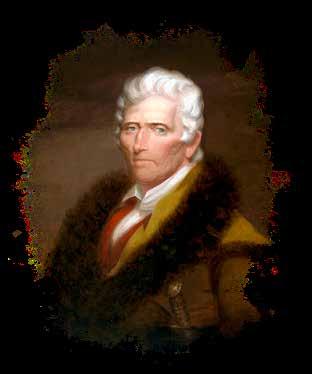
In 1775, Boone led a group of settlers to Kentucky, a region that was then part of Virginia. He established a settlement there and became one of the first people of European descent to live in the area. Boone is credited with discovering the Cumberland Gap, a passage through the Appalachian Mountains that made it easier for settlers to move west.
Boone’s adventures in the frontier were not without danger. He was captured by Native Americans and held captive for several months before being released. He was also involved in battles with Native American tribes who resisted the encroachment of foreign settlers on their land.
Despite these challenges, Boone continued to explore the frontier and opened up new territories for settlement. He became a legendary figure in American history and is remembered as one of the greatest pioneers of the American West.
• Blank map of the United States
• Colored pencils
• Ruler
Explain the task: Explain to the students that they will be creating a map of Boone’s travels and settlements, with the goal of showing where Boone went and what he accomplished. Emphasize the importance of accuracy and attention to detail.
Model the process: Demonstrate the process of making a map by creating your own example on the board. Explain the steps involved, such as drawing the Appalachian Mountains, labeling the Cumberland Gap, and marking Boone’s settlements.
Encourage creativity: Encourage students to be creative with their maps, using different colors and symbols to highlight important landmarks and events.
Review and discuss: Once the students have completed their maps, have them share their work with the class and discuss their findings. This is a great opportunity for students to learn from each other and see different perspectives of Boone’s life and legacy.
Q1: Who was Daniel Boone?
A1: Daniel Boone was an American frontiersman and explorer who helped blaze the Wilderness Road through the Cumberland Gap and settle Kentucky.
Q2: Where did Daniel Boone live?
A2: Daniel Boone lived in various places throughout his life, including Pennsylvania, North Carolina, and Kentucky.
Q3: What did Daniel Boone do?
A3: Daniel Booone was a frontiersman, explorer, and surveyor who helped blaze the Wilderness Road, a route through the Cumberland Gap to Kentucky.
Q4: What did Daniel Boone accomplish?
A4: Daniel Boone blazed the Wilderness Road, which opened up the west to settlers. He also helped establish the state of Kentucky and was a decorated soldier and politician.
Q5: What battles did Daniel Boone fight in?
A5: Daniel Boone fought in the Battle of Point Pleasant in 1774, and in various other battles during the Revolutionary War and the War of 1812.
Daniel Boone was a brave and determined man who helped shape the early history of the United States. He lived a life of adventure and discovery, and his legacy continues to inspire people today.
Do you like exploring new places? Exploring means going somewhere to see and learn about the area. You might explore a new park or playground to see if you would have fun there. Some people explore countries to see if they want to move there from where they live. Daniel Boone was an American explorer who found Kentucky.

• Boone was captured by the Native Americans in 1778. They took him to Detroit to make him a member of their tribe. He soon escaped and went back to Boonesborough.
• Some of the names of the Native American tribes in Kentucky were Yuchi, Cherokee, and Chickasaw.
• The name Kentucky comes from the Native Americans’ word “kenta,” which means “field.”
• The language that the Native Americans in Kentucky spoke was called “Muskogean.”
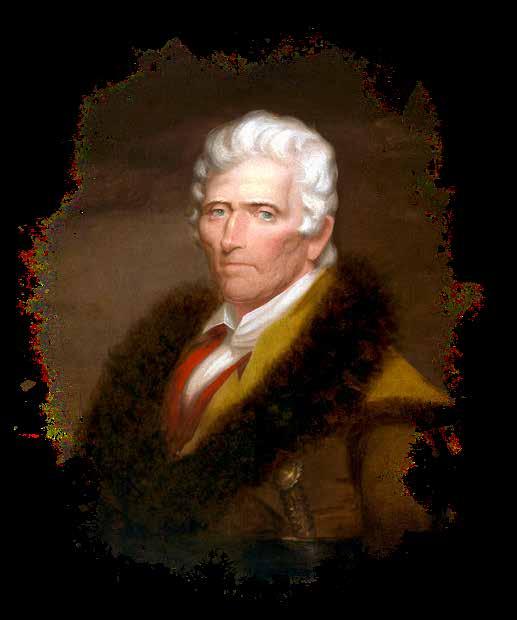
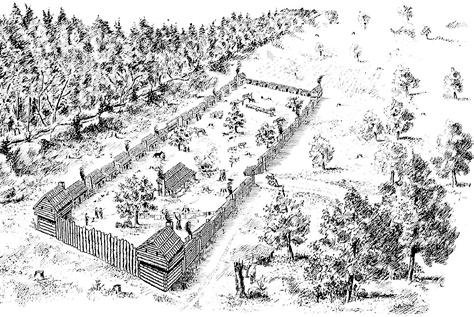
Daniel Boone was born in Pennsylvania in 1734. He was a very curious child and often went exploring. He became friends with local Native Americans. The Native Americans taught him how to live in the woods. They showed him how to trap animals for food and clothing. As Boone grew up, he learned more and more about living on his own while exploring areas where few people lived.
In 1767, Daniel Boone heard about an area where very few people lived. Boone wanted to explore and hunt in this new area. He began traveling over the Appalachian Mountains to
the area we now call the state of Kentucky. On June 7, 1769, Boone finally reached Kentucky. He stayed there for two years, exploring Kentucky and nearby areas.
Boone loved Kentucky and decided to start a town there. It took a long time to cut down trees to build a road to his new town. Finally, in 1775, Boone started his town, called Boonesborough. The Native Americans lived in America for a long time before the United States became a country. The Native Americans did not like the people of Boonesborough. They attacked the town many times. To attack means to start a fight. The town of Boonesborough closed in 1877.
exploring - going somewhere to see and learn about the area
attack - start a fight
After the United States became a country in 1776, Boone moved to Virginia. There, he worked for the government. He moved to Missouri when he was 64 and died there in 1820. He was 85 years old. He is remembered as someone who helped America grow into the big country that it is. Many exciting stories have been told about Daniel Boone, but most of them did not actually happen.
1.
Which new area did Daniel Boone explore?
a. Pennsylvania
b. Kentucky
c. Kansas
d. Virginia
2. Which state did Daniel Boone NOT live in?
a. Mississippi
b. Kentucky
c. Missouri
d. Virginia
3. How old was Boone when he died?
a. 64
b. 86
c. 85 d. 91
4. What is Boone remembered for?
Someone who helped America grow into a bigger country.
5. Why do you think the Native Americans attacked the new city in Kentucky?
Possible answer: The Native Americans didn’t like that people were coming and living in their land.
Below is a map of Kentucky. Using the map, answer the questions below.
1. Which state is to the south of Kentucky?
a. Illinois
b. Ohio
c. West Virginia
d. Tennessee
2. What is the capital city of Kentucky?
a. Frankfort
b. Lexington
c. Louisville
d. Paducah
3. Where in Kentucky are mountains located?
a. North
b. South
c. East
d. West
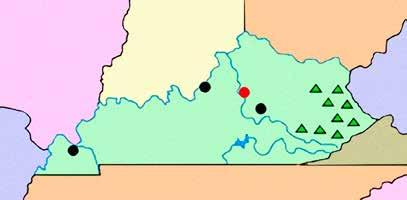
4. Which two rivers are found in Kentucky?
a. Cumberland River and Kentucky River
b. Mississippi River and Colorado River
c. Kentucky River and Columbia River
d. Cumberland River and Connecticut River
5. What is the name of the cave that is found in Kentucky?
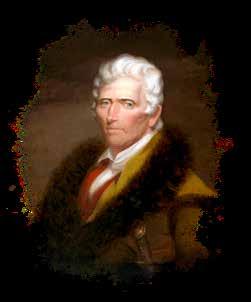
1769 JUNE 7
Boone reached Kentucky and began exploring the area.
1775 OCTOBER 13
The U.S. Navy was founded during the American Revolution.
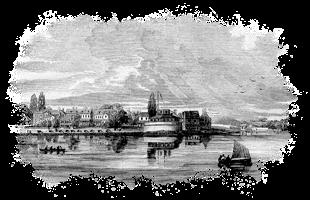
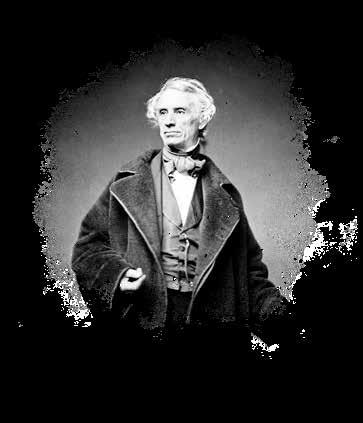
1838 JANUARY 6
Morse had a working telegraph machine.
1860 APRIL 3
The Pony Express, a special mail delivery service began.
1760. 1800.
1775 JUNE 16
The Continental Army prepared to attack from the Bunker Hill.
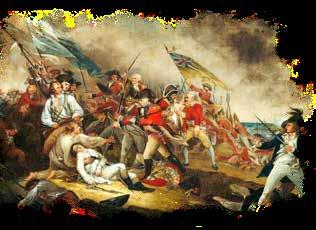
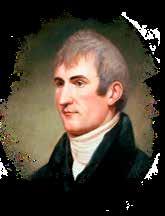
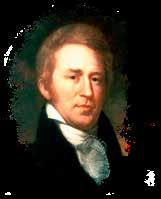
1804 MAY 14
The Lewis and Clark expedition set off from St. Louis, Missouri.
1850 SEPTEMBER 9
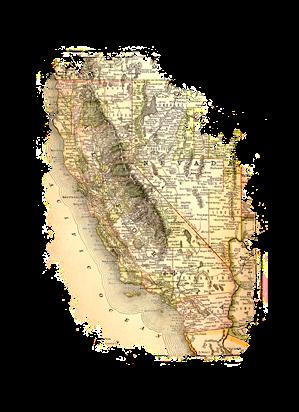
California became a state.
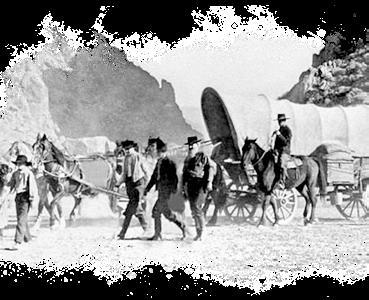
1870 FEBRUARY 9
President Ulysses S. Grant signed a law creating the National
1862 JANUARY 1
Abraham Lincoln signed the Homestead Act.
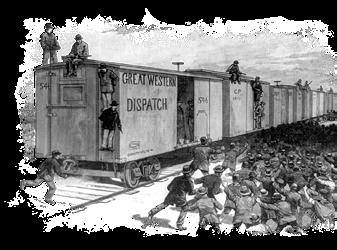
1881 NOVEMBER 15
A group of workers met in Pittsburgh, Pennsylvania, and began a labor union.
1865 MAY 23
The U.S. Army celebrated the end of the Civil War by parading down Pennsylvania Avenue.
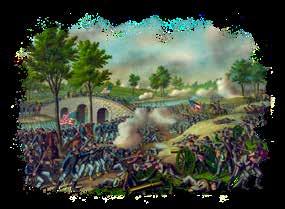
1862 SEPTEMBER 17
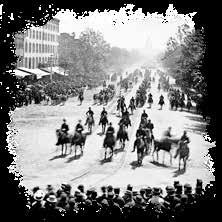
1874 MAY 12
McCoy invented a small table that could fold and was easy to store.
The first major battle was fought on Union land.
1890.
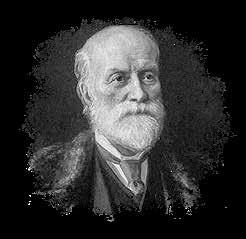
1883 NOVEMBER 18
American railroads implemented Sir Sandford Fleming’s time zones.
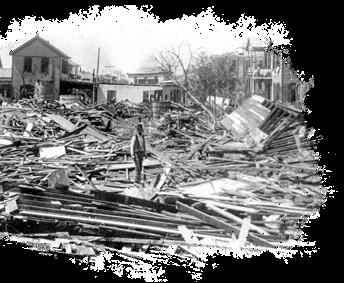
1900 SEPTEMBER 8
A hurrican hit Galveston with winds blowing over 130 miles per hour.
1900.
1907 APRIL 17
The busiest day ever at Ellis Island. 11,747 people came to Ellis Island.
1916 APRIL 5
Conservationists asked Congress to establish the National Park Service (NPS).
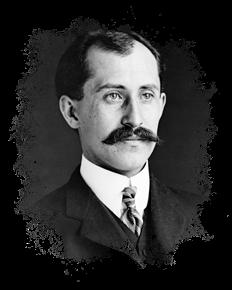
1903 DECEMBER 17
Orville Wright flew the first airplane.
1906 APRIL 18
A deadly earthquake hit the city of San Francisco, California.
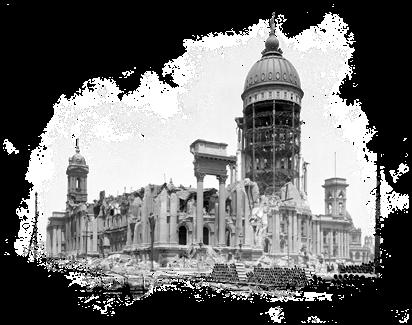
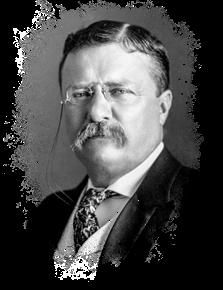
1919 JANUARY 6
President Roosevelt died

1924 JUNE 12
George H. W. Bush, the 41st president was born.
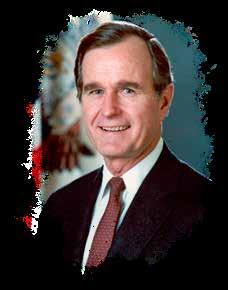
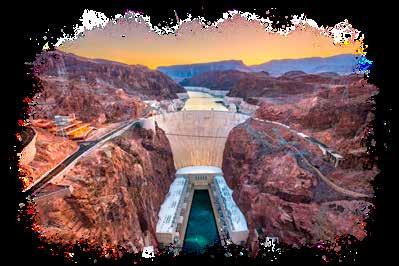
1931 MARCH 4
Construction of the Hoover Dam began.
1929 JUNE 12
Anne Frank, the girl who wrote a holocaust diary, was born.
1933 MARCH 12
Roosevelt gave his first fireside chat.
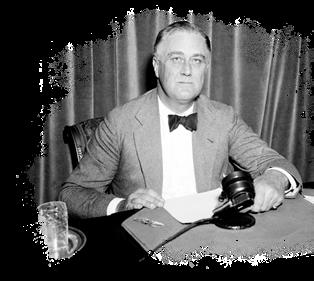
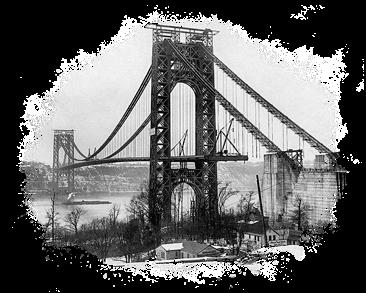
1931 OCTOBER 25
The George Washington bridge opened for cars.
1933 JANUARY 5
President Coolidge died.
and his team of scientists created the first synthetic material.
1942
NOVEMBER 29
The government started the Food Rationing Program.
1946 MARCH 5
One of Churchill’s most famous speeches was given in Fulton, Missouri.
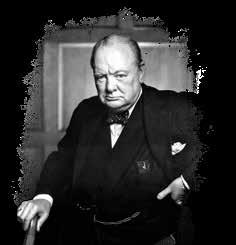
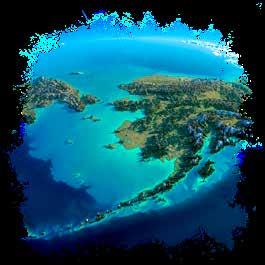
1959
JANUARY 3
Congress passed the Alaska Statehood Act.
1960
MAY 11
Mossad agents took Eichmann as he left the bus on his way home from work. 1940.
1945
OCTOBER 24
The United Nations officially started.
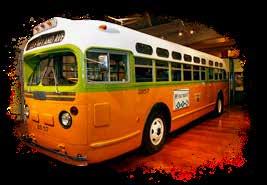
1955
DECEMBER 1
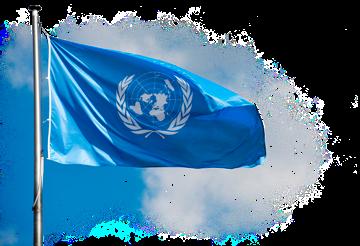
Rosa Parks, a black woman, was arrested for not giving up her seat on a bus to a white person.

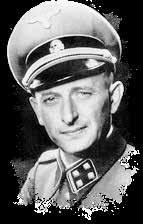
1962
OCTOBER 14
A U.S. spy plane found missiles in Cuba.
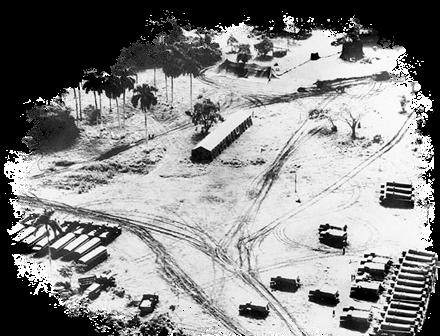


SEPTEMBER 1
In the U.S. September is National Honey Month.
1991 DECEMBER 25
Gorbachev officially broke up the USSR.
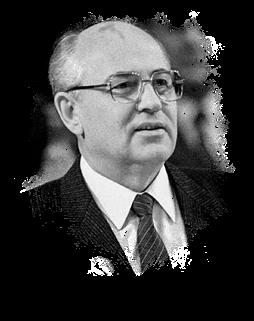
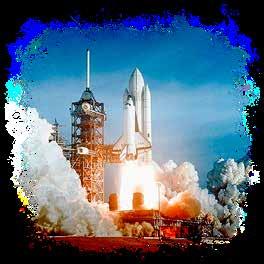
2003
FEBRUARY 1
The Columbia shuttle broke into a few pieces of fire shooting through the sky.
2015
MARCH 27
Kelly launched into space with Russian astronaut Kornienko on a 340-day mission.
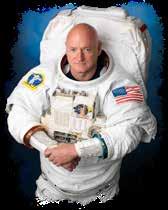
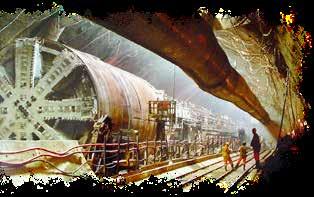
1990 DECEMBER 1
The Chunnel Tunnel met between England and France.
1993 FEBRUARY 26
Ramzi Yousef exploded a bomb in the parking lot of the North Tower of the World Trade Center.
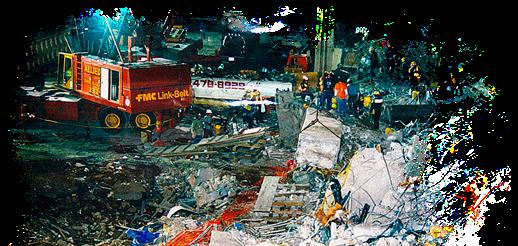
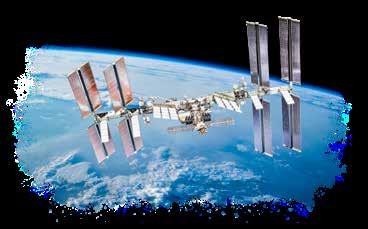
2000 NOVEMBER 2
The fist astronauts moved in to the International Space Station.
accurate exact
address talk to
altitude The height of something in the air
altitude The height of something in the air
ambassador representative to the UN annex a room that is added to a building applicant a person trying to get a job attack start a fight attending going to automatic lubricator a machine that attaches to an engine and oils it aviator navy pilot
beekeepers people who own many beehives where bees make honey
bomb shelters rooms strong enough to protect people from bombs boycott when a group of people stops using a specific store or service building codes special rules for how to build buildings in ways that are safe in case of natural disasters capsules spaceships that return to Earth by parachute challenging difficult
channel water passageway between two pieces of land charged accused charter a document that describes the purpose of an organization colonies land a country owns in a different part of the world
commander the person in charge
commerce business
communism type of government where the government owns everything confessed told the police that he did something against the law
conservationist someone who works to protect land and animals
consumers shoppers convenient easy convenient easy crisis a very bad or scary event
cyclists people who ride bicycles dam a wall across a body of water to stop the water and control its flows
democracy government created by the people’s vote deport force a person to leave a country depression when a country is poor for a long time deter stop documented wrote down earthquake drill a practice of what to do in case there is an earthquake
elastic stretchy emancipation proclamation a law freeing all slaves in the U.S.
employees workers enacting passing evidence items or facts that prove who is responsible for a crime expedition a mission to explore expert a person who knows all about something exploring going somewhere to see and learn about the area fibers threads
final solution Hitler’s plan to kill all Jews in Europe fleet a group of ships owned by a country float a stage that travels with a parade foreign affairs the way a country treats other countries founded when an organization is created glider an airplane without an engine that only flies once it is already in the air
glider an airplane without an engine that only flies once it is already in the air
gravity the force that pulls things downwards to the ground
harbor a place where ships can safely dock when they reach land
historical something that is important in history
homeless someone who does not have a house to live in hurricane a very strong storm that can cause a lot of damage
illegal against the law illegal against the law
immigrants people who move into a new country immigrated moved into a new country improved made better inclement bad inform tell infrastructure things the country needs to run initially at the beginning inspection when people check something to make sure it works
iron a small device that uses heat to take wrinkles out of clothing
iron curtain an imaginary wall dividing Europe after World War II
labor union a group of people who represent a lot of workers who all want the same things
landmark historical building lines pipes
maintenance workers people who make sure things are in good condition
manufacture to build something using machines midshipmen students at the Naval Academy mission control people on the ground who help the space missions mode way
monopoly when only one company sells a certain product natural disasters natural events that can be dangerous and cause a lot of damage natural habitat the place an animal is supposed to live to stay healthy natural resources materials in nature that humans use
navigation figuring out directions without a map nectar food for bees that is in flowers nuclear missiles very dangerous weapons occasions events operation work orbit to move around a planet in space in a curved path
parade a large group of people marching together passengers people who are traveling by bus, car, plane, or train
patent license from the government giving the owner and no one else the right to sell the product patrolled guarded
pedestrians people who walk along a road where vehicles go
pollen small pieces in flowers that help certain foods grow
population the number of people living in a certain area predict saying what will happen in advance prime minister leader of a country produce make ration limit rebel when people fight against their government rebels people who fight against their government recipient a person who receives something record keep track of something by writing it down refueled filled with gas refueled filled with gas required need to do reservoir where water is stored before it goes to people's houses and farms resolutions decisions retreat run away revolution when the people of a country fight their government riverbed the floor of a river role job
safety precautions ways to make sure a person is being safe
satellite a manmade object that orbits different planets and collects information about them
sawmill a factory where trees are cut and shaped into different sizes of wood
scarce less available
seamstress a woman who sews clothing
seawall a wall that surrounds a city or island to protect it from floods
seceded separated
sentence deciding to punish someone smuggled snuck something or someone into or out of a country
sparked began sparked began stagecoach a type of vehicle pulled by a team of horses strike when a lot of workers stop working at the same time
subject someone ruled by a king
submarine a warship that is driven completely underwater success doing every part of a plan
successor someone who takes over a person’s job
superpower a country with a lot of power surrendered gave up fighting a war suspension bridge a bridge where the road is suspended, or held up, by strong cables between two or more towers
sweatshop factory where workers sweat from being forced to work so hard
synthetic made from a material not found in nature tax money the government charges people to run the country
telegram message sent using a telegraph machine
telegraph a machine that sends beeps through wires to other telegraph machines
test pilot a pilot who tests inventions before other pilots begin using them
tradition something people do that is passed down through the years
trying hard
turbine a machine that creates electricity from water unemployed someone who doesn’t have a job
valuable very useful and important
vehicles something used for transportation, like cars, trucks, buses, and motorcycles
veto throw out
volunteers people who help others in need without getting paid wages pay