

Spelling
This book belongs to


Spelling
Written and Edited by: Deena Hoff, Yehudis Leitner, Fraydel Sharf, Miriam Shulamis Eisemann, C. Katz, Adina Rosenzweig, Chevy Werzberger, Rochel Harnik
Project Consultant: Naphtali Hoff, PsyD
Layout: Branko Pejovic
Front cover: Mirko Zunic
Welcome to the Lighthouse Spelling and Vocabulary Workbook!
Dear Educators,

We are excited to introduce the Lighthouse Spelling and Vocabulary Workbook, specifically designed to enhance your teaching by focusing on essential high-frequency words and recognizing key spelling patterns. This workbook offers an interactive and engaging approach that effectively trains students’ minds to identify patterns, build vocabulary, and improve overall reading comprehension.
Each lesson is structured with clear explanations and accessible instructions, followed by interactive exercises that reinforce spelling accuracy and vocabulary understanding. Our program incorporates language-building activities designed to be both enjoyable and educational, enabling students to master spelling confidently and naturally. Our goal is to equip you with practical tools and engaging methods to transform spelling practice into a meaningful and enjoyable experience for your students. With this workbook, you’ll see students not only improve their spelling skills but also enhance their vocabulary and overall literacy.
Thank you for choosing the Lighthouse Curriculum. We look forward to supporting you and your students on this exciting journey toward language excellence!
Sincerely,

Lighthouse Spelling Level F ISBN 978-1-955773-80-5
Lighthouse Curriculum
718.285.7100 • info@lighthousecurriculum.com For more information visit www.lighthousecurriculum.com

©Copyright 2025 Lighthouse Curriculum Inc. All rights reserved.





Word Sort
› Write the words in alphabetical order.
Word List with Simple Sentences
1. family My family enjoys sharing stories around the kitchen table.
2. cancel The principal had to cancel our trip because of the hurricane.
3. planet The Pacific is the largest ocean on planet Earth.
4. gravity Gravity is the force that pulls objects toward the ground.
5. camera I used my camera to capture beautiful pictures of the sunset.
6. fraction A fraction of the class stayed late to assist the teacher.
7. battery We replaced the clock’s battery when it stopped ticking.
8. manner Mom asked the cashier for change in a polite manner.
9. language Learning a second language is good for the brain.
10. animal The lion is the strongest animal in the jungle.
11. pattern The artist painted a striped pattern on the walls.
12. branch The president leads the executive branch of the government.
13. plastic Plastic bottles can be recycled to help reduce waste.
14. answer Matt figured out the correct answer to the math question.
15. demand The teacher will demand an explanation for our lateness.
16. blast Workers had to blast through solid rock to build the tunnel.
17. transport Trucks transport fresh food to the store every morning.
18. manage We learned to manage our time when studying for tests.
19. banner There was a banner in the hallway announcing a science fair.
20. drastic I made drastic changes to the recipe to make it healthier.
› Read the spelling words and sentences. The words in this list have the short “a” sound and are spelled with the letter “a.”

Spelling Patterns
Spelling Word Activities
Fill in the Blanks
Use each spelling word only once on this page.
› Write the spelling word that best completes each sentence.
1. The _____________ in the cordless phone needs to be charged.
2. Only the main _____________ of the bank is open past 6:00 p.m.
3. Since there is no _____________ in outer space, astronauts float around.
4. I wasn’t ready for the _____________ change in weather and got soaked in the rain.
5. A large _____________ was displayed to welcome the guests.
6. Freight ships _____________ goods across the ocean.
7. The secretary called to _____________ my dentist appointment.
8. The store owner couldn’t _____________ to fix the freezer, so all the ice melted.
9. A loud _____________ was heard when the rocket was launched into the sky.
10. The workers wanted to _____________ better working conditions.
Categories

› Write the spelling word that best labels each group of words.
1. father, sibling, uncle
2. Mars, Earth, Neptune
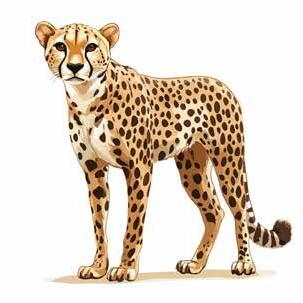
3. kangaroo, cheetah, giraffe
4. bottle, wrapper, container
5. lens, flash, shutter
Word Riddle
› Solve the riddle. I’m the solution to a problem. You try to get me right on a test. If you’re stuck, you can always guess.
What word am I? ________________
6. polite, respectful, rude
7. English, Spanish, French
8. lines, stripes, dots
9. half, quarter, third
Spelling Word Story
› Complete the story using each spelling word once.

Beyond Our World: An Interview with an Astronaut Beyond Our World: An Interview with an Astronaut
Hi, Astronaut Allen! Thanks for joining us. Can you tell us what space exploration is all about?
Astronaut Allen: Sure! Space exploration means sending spacecraft beyond our ____________ to learn about the universe. We study stars, planets, and moons to understand how they work. We even study how a tiny ____________, like the water bear, can survive in space. Wow! What’s one of the most important tools in space exploration?
Astronaut Allen: Definitely the ____________. We use it to capture amazing images of planets and stars. These photos often show a ____________ on the surface of a planet or moon.
Scientists study these patterns to learn more. We take many pictures, but only a ____________ of them end up being studied.
Is it true that space missions take a lot of planning?
Astronaut Allen: Yes. Since space exploration is a huge ____________ of science, each mission requires a lot of knowledge and planning. What happens if something goes wrong?
Astronaut Allen: We have to ____________ the situation carefully. Sometimes, our team will decide to ____________ a mission if a problem is too great.
Are there times when you have to act fast?
Astronaut Allen: Absolutely! We sometimes have to ____________ off quickly to take advantage of the right conditions. Timing is important. I’ve read that working in space is challenging. Can you tell me why?
Astronaut Allen: Space has no ____________, so astronauts float around. We have to pay attention to one another and to other floating objects. There is a real need and ____________ for teamwork in space. The team members must all speak the same ____________. We work so closely together that we feel like a ____________. We always try to speak to each other in a respectful ____________.
What are some of the things you ____________ with you to space?
Astronaut Allen: We bring special batteries for power because a regular ____________ won’t work well in space. We bring food in sealed ____________ packages. We also bring along equipment to help in our research. What happens when you return to Earth?
Astronaut Allen: Returning to Earth can be a shock. The ____________ change from floating in space to feeling gravity again is tough. But it’s all worth it when we see the welcome ____________ held by our families. Nice! Thank you for sharing all about space exploration.
Astronaut Allen: Sure. It was my pleasure to ____________ all of your questions.
Word Sort
Word List with Simple Sentences
1. weather The weather was stormy, so we had to stay indoors.
2. steady Dad held the ladder steady while I climbed up.
3. member Each member of our family has a special talent.
4. energy A nutritious breakfast gives you energy for the day.
5. health Daily walking is good for your health
6. treasure We found a treasure box filled with cards in the attic.
7. special Seth received a special award for helping others.
8. shelter The hikers found shelter in a cave during the rain.
9. measure I used a ruler to measure the size of the photo frame.
10. friend A close friend visited me when I felt unwell.
11. effort It takes effort to stay focused during a long test.
12. mention The boss forgot to mention the time of the meeting.
13. length The length of the rope is twenty feet.
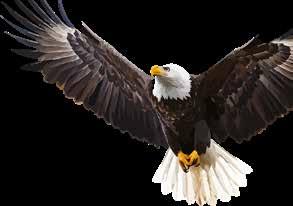
14. several We saw several eagles flying above the mountains.
15. memory Jen shared a memory from her first day at camp.
16. method We used a new method to solve the math problem.
17. pepper Mom roasted one red pepper and two purple onions.
18. bench Slats of wood are missing from the park bench.
19. center The pond is located in the center of the village.
20. vegetable Every dinner should include at least one vegetable.

› Read the spelling words and sentences. Short “e” (eh) can be spelled in different ways.
Spelling Patterns
“e” - Example: effort
“ea” - Example: steady
“ie” - Example: friend

Spelling Word Activities
Word Sets
Use each spelling word only once on this page.
› Write the spelling word that goes together with each set of words.
1. garlic, paprika, salt, _____________
2. chair, seat, stool, _____________
3. temperature, climate, forecast, _____________
4. team, group, organization, _____________
5. middle, core, heart, _____________
6. plan, way, system, _____________
7. width, height, depth, _____________
8. cave, protection, safe room, _____________
9. jewels, chest, coins, _____________
Fill in the Blanks
› Write the spelling word that best completes each sentence.
1. The toddler was full of ____________ and jumped wildly on the trampoline.
2. Please don’t ____________ the surprise party when you talk to our grandmother.
3. There are still ____________ pieces of broken glass on the floor.
4. The ____________ garden thrived because we watered it every day.
5. Climbing the mountain took a lot of strength and ____________.
6. Mom uses a cup to ____________ the flour before adding it to the cake batter.
7. Proper sleep and daily exercise are important for one’s ____________.
8. My best ____________ from sixth grade is the day I won the spelling competition.
9. With ____________ hands, the painter painted the moldings on the ceiling.
10. I worked with my ____________ on our science fair display.
Word Riddle
› Solve the riddle.
I’m not ordinary; I stand apart.
I’m one of a kind, right from the start. What am I? ____________
Spelling Word Story
› Complete the story using each spelling word once.
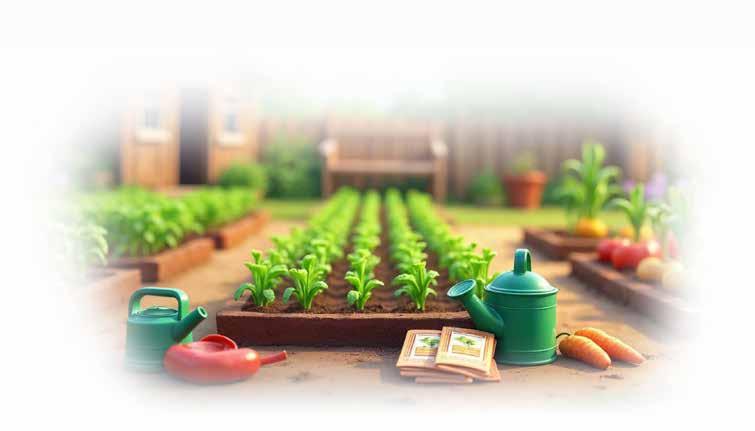
Growing a Backyard Garden Growing a Backyard Garden
Would you like to see what a fresh cucumber, tomato, or tastes like?
If so, it’s time to roll up your sleeves, grab a small shovel, and imagine yourself digging in the dirt—because today, we’re exploring how to grow a garden right in your backyard! As you plant each tiny seed and watch it grow day by day, your garden will turn into a hidden full of surprises and delicious rewards. It’s exciting to see how something so small can grow into something so
Before you get your hands dirty, there are a few things you’ll need to prepare. First, find a sunny spot in your backyard where your vegetables can get plenty of light. The plays a big role in gardening—too much rain can wash away seeds, while too little can dry them out. Some plants, like young seedlings or delicate vegetables, need a to protect them from harsh weather, such as a greenhouse or a small indoor space with consistent temperatures. For this garden, though, we’ll focus on vegetables that can grow well outside without extra protection.
Once you’ve picked the perfect spot, it’s time to prepare the soil. Use hands when digging and loosening the dirt to create a good place for your seeds to grow. You’ll want to the and width of your garden area so you know how many rows you can plant. You can choose a to plant your seeds. Some gardeners like to place seeds in small holes, while others prefer to plant them in shallow trenches. Next, decide what vegetables you want to plant. Cucumbers, carrots, and peppers are always popular choices for a backyard garden. It’s a good idea to consult with a family _____________ before deciding which vegetables to plant. Ask for their opinion on what they would like to grow. Growing _____________ kinds can make your garden more fun and give everyone something to look forward to when harvest time comes.
Gardening is not easy; it takes hard work and _____________. Your vegetables need care every day to grow strong and healthy. Water them regularly, but don’t overdo it—too much water can harm the plants.
Gardening isn’t just good for your plants—it’s good for your _____________, too!
Spending time outside, breathing fresh air, and moving around gives you more _____________. Sometimes, you might even want to invite a _____________ to join you. Working together can turn gardening into a fun activity and create a _____________ you’ll both enjoy.
After planting your garden, take time to enjoy it. Find a spot near your garden, maybe a _____________ or a chair in the _____________ of your backyard. This can be your favorite place to relax and check on your plants. Another important thing to _____________ is that gardening takes patience. Seeds don’t grow overnight, but with each day you’ll see small changes. In the end, you’ll feel proud of what you’ve accomplished!
Word Sort
words
Word List with Simple Sentences
› Read the spelling words and sentences.
1. children
words

The children surprised their parents by cleaning up.
2. different She selected a different prize than everyone else.
3. city The city streets were full of rushing people.
4. village The village is a peaceful place to live.
5. history The tour guide explained the building’s history
6. picture The family picture brings back good memories.
7. middle
The bus stopped in the middle of a busy street.
8. since My grades improved since I studied more.
9. million
There are more than a million stars in the universe.
10. silver Some things are more precious than gold and silver.
11. income They give a percentage of their income to charity.
12. distance The distance from our home to school is two miles.
13. driven We should always be driven to do what is right.
14. insect The frightened girl ran from a flying insect
15. brick My knapsack was as heavy as a building brick.
16. image His image was reflected in the water.
17. system We follow a system to clean up the toys.
18. symbol On the map, a tree is a symbol for a park.
19. clinic The doctor at the clinic bandaged my wound.
20. digit One digit in the phone number is incorrect.

Spelling Patterns
Short “i” (ih) can be spelled in different ways.
“i” - Example: since “y” - Example: symbol
Spelling Word Activities
Definitions
Use each spelling word only once on this page.
› Write the spelling word that best matches each definition.
1. Trying very hard to reach a goal ____________
2. A large town with many people, buildings, and businesses ____________
3. A small community, usually in the countryside ____________
4. A picture of how something looks or seems ____________
5. A place where people go to get medical care ____________
6. A set way of doing something ____________
7. Money that a person earns ____________
8. Something that represents an idea, feeling, or thing ____________
9. A strong block used to build walls and buildings ____________
Fill in the Blanks
› Write the spelling word that best completes each sentence.
1. Each student had a ____________ opinion about where to go for the trip.
2. Our class studied the ____________ of the Civil War.
3. The ____________ crawled up the side of the bench.
4. We polished the ____________ items in the cabinet.
5. I have been practicing guitar ____________ last summer.
6. The ____________ to the left of the decimal is the ones place.
7. The city’s population is close to one ____________ people.
8. The ____________ lined up quietly before entering the building.
9. We took a ____________ of the beautiful waterfalls.
10. The principal stood in the ____________ of the stage.
Word Riddle
› Solve the riddle.
I stretch from here to there, across the sky, or land, or air. I tell how far you have to go. What is this space I help you know? _____________
Spelling Word Story
› Complete the story using each spelling word once.
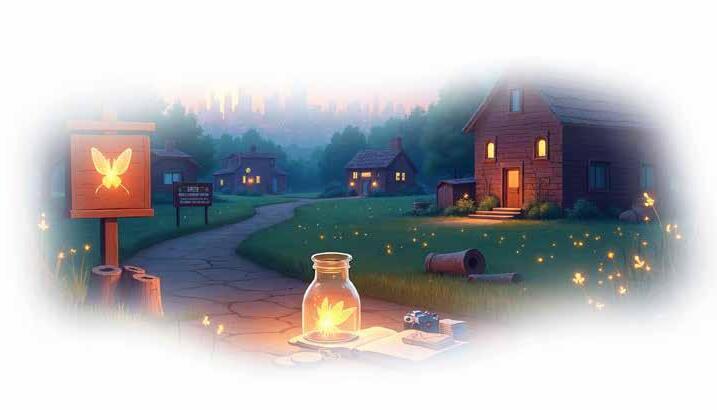
The Firefly Finders The Firefly Finders
One hot summer morning in a small village outside of the bustling , a group of curious had gathered in the of the school playground, staring at something strange inside a glass jar.
“It’s glowing!” William whispered in awe. Inside was a small beetle with a faint green light coming from its body.
Tim, the most hardworking and student in the school, said, “That might be a kind of called a firefly. They use light to communicate.”
Excited, they took a and printed the to bring to Mr. Smith, their science teacher. “This is definitely a type of firefly,” Mr. Smith confirmed. “But what’s amazing is that some scientists thought it had disappeared from this area years ago.”
“How long ago?” William asked.
“Hard to say exactly. Of course, it was not a years ago, but we definitely haven’t seen this type the 1970s.
The students wanted to learn more. Mr. Smith asked the teacher if he could use some of his class time to teach about fireflies. The history teacher agreed.
They learned that fireflies are more common near water and fields with rotting wood. With this new information, Mr. Smith and his class set out to explore the old mill at the edge of the village, where logs were once stored. On the way, they passed the health and the post office.
They walked the short and reached the old mill. They jumped over the crumbling wall and raced to the door. Once inside, they found plenty of moist logs and swarms of fireflies! The boys happily talked about what they had found.
The next day, the village announced that their discovery would help protect nature by saving the fireflies’ home. The project was entered in the Budding Scientists contest, and the boys won a medal! Along with the shiny medal, the village gave a cash prize to the students’ school.
The extra would help the school build a small science lab where students could do many types of experiments.
After winning the silver medal and helping their village, Tim and William kept studying the fireflies. One day, Tim saw a mistake in their numbers. Someone had added an extra , making it look like there were more fireflies than there really were. They fixed it fast and made sure their data was right.
Because of their careful work, the village created a to save the fireflies’ home. Soon, families started visiting the old mill at night to see the fireflies glow and learn about Tim and William’s discovery. The fireflies became a special — a sign that showed how much the cared about nature and the environment.
Word List with Simple Sentences
Word Sort
Ends with a consonant
Ends with a vowel
› Read the spelling words and sentences.
1. problem It was a big problem when the car wouldn’t start.
2. common It is common to see squirrels in autumn.
3. pocket He found a dollar bill in the pocket of his pants.
4. doctor The doctor gave me medicine for my infection.
5. contest The winner of the contest will receive a trophy.
6. oxygen We need oxygen to breathe.
7. promise I can’t promise I’ll take you to the zoo, but I’ll try.

8. product This shampoo is a new product that just came out.
9. knowledge Reading books helps you increase your knowledge
10. model Mark built a model of a rocket for his science project.
11. volume Lower the music’s volume when the baby is asleep.
12. profit We made some profit from our lemonade stand.
13. hospital Jim recovered in the hospital after his surgery.
14. honor A person must honor his parents.
15. novel I am in the middle of reading a novel about outer space.
16. possible Is it possible to clean your room before dinner?
17. forest Animals like deer and foxes live in the forest.
18. olive My mom made olive pizza for dinner last night.
19. bother Please don’t bother your brother when he is reading.
20. bottle I filled up my water bottle before going on a hike.
Spelling Patterns
Short “o” (ah) is spelled with the letter “o.” - Example: olive
Spelling Word Activities
Analogies
Use each spelling word only once on this page.
› Write the spelling word that best completes each analogy.
1. Artwork is to painting as story is to ____________.
2. Light is to brightness as sound is to ____________.
3. Car is to gas as person is to ____________.
4. Learning is to school as healing is to ____________.
5. Student is to teacher as patient is to ____________.
6. Contest is to prize as job is to ____________.
7. Insult is to embarrass as respect is to ____________.
8. Support is to help as annoy is to ____________.
9. Jacket is to hood as pants is to ____________.
10. Vegetable is to carrot as fruit is to ____________.
Sayings or Advice
› Write the spelling word that best completes each saying or piece of advice.

1. Before you buy a ____________, make sure it is something you really need.
2. Anything is ____________ if you believe in yourself and work hard.
3. Win or lose the ____________; what counts is doing your best.
4. Don’t litter! Recycle your ____________ and help the planet.
5. ______________ is power, so never stop learning new things.
6. Don’t ignore a ____________. Face it, and try your best to fix it.
7. Respect the ____________. It is a home to many plants and animals.
8. It is ____________ to make mistakes. Learning from them is what matters.
9. Only make a ____________ if you are sure you can keep it.
Word Riddle
› Solve the riddle. I’m not the real thing, but I look just like it. I might be a car, a plane, or a rocket. I am a sample for you to see, how the final product will be. What am I?
Spelling Word Story
› Complete the story using each spelling word once.
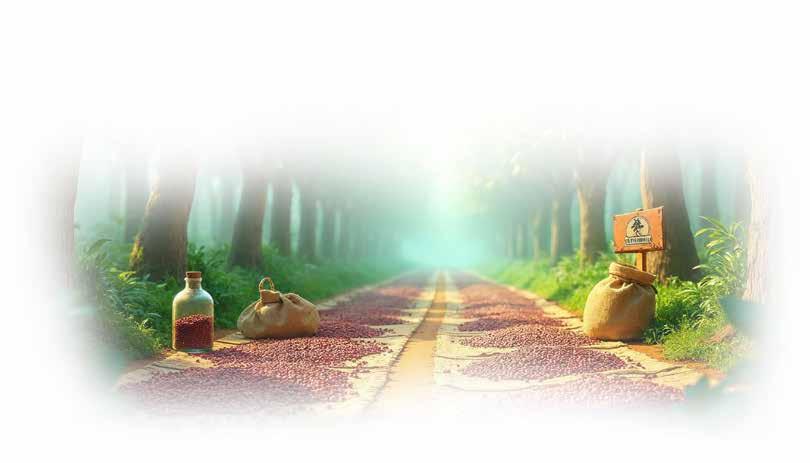
The Journey of Chocolate: From Bean to Bar The Journey of Chocolate: From Bean to Bar
Chocolate is one of the most treats enjoyed around the world. But do you know how it gets to you?
The journey begins on a cacao farm inside a _____________, where cacao trees grow. These trees need clean air with plenty of to grow. Farmers make a to care for the cacao trees as they grow, and when the pods are ripe, they carefully harvest the beans. After harvesting, the beans are dried and placed into a or sack. This makes it to transport them to the factory for the next step of the process.
At the chocolate factory, experts use their to produce the best . Machines run constantly, and the noise can get quite loud as workers carefully mix and weigh ingredients. If there is a _____________, like too much water or the wrong temperature, the chocolate might not taste good. Therefore, scientists in the factory watch every step carefully.

Sometimes, there is a to develop a new chocolate bar recipe. Chocolate makers will use a , which is like a plan or example they follow, to help them test new recipes. The factory that produces the tastiest chocolate will their workers by giving them a special award. If the new recipe sells well, the factory can earn a good . Once the chocolate is ready, it is poured into molds to form bars. After cooling, each bar is wrapped carefully to keep it fresh. Then, the bars are packed into boxes and sent to stores around the world for people to buy. When you finally get one, you might tuck it into your to enjoy later!
Sometimes, chocolate makers add a little oil to the recipe to give the chocolate a rich, smooth taste. Olive oil is a healthy fat that people like to use in cooking.

Speaking of health, sometimes a in a will tell people that eating chocolate in small amounts can be good for the body. Dark chocolate contains antioxidants. Antioxidants are natural helpers that protect the body by fighting free radicals. Free radicals are tiny particles that can and damage cells and make a person sick.
The next time you eat chocolate while reading a , think about its long journey from the forest to your hands. It’s fascinating to know how much work went into making it. That makes enjoying each bite even more special!
Word Sort
“ou” words
Word List with Simple Sentences
› Read the spelling words and sentences.
1. country We traveled to another country during school break.
2. trouble I got into trouble for forgetting to do my homework.
3. cover Make sure to cover your nose when you sneeze.
4. brother I helped my brother build a treehouse in the yard.
words
words
words
5. young Young children need help when learning to read.
6. money I saved my money to purchase a new bike.
7. public The park is open to the public from 8 a.m. to 8 p.m.
8. company My dad works for a big company that sells watches.
9. sunny On a sunny day, I make sure to wear a hat.
10. lunch Remember to pack lunch for the class trip tomorrow.
11. pumpkin I like to eat pumpkin seeds as a healthy snack.
12. under The treasure was buried deep under the sand.
13. uncle When my uncle visits, he usually brings presents.
14. submit Don’t forget to submit your assignment on Friday.
15. rusty The old bike was rusty and hard to pedal.
16. flood The heavy rain caused a flood in our basement.
17. blood He scraped his knee and got blood on his pants.
18. budge We pushed hard, but the door wouldn’t budge.
19. customer The cashier smiled at every customer in line.
20. structure We built a tall structure with the blocks.
Spelling Patterns
Short “u” (uh) can be spelled in different ways.
“ou” - Example: young
“o” - Example: cover
“u” - Example: uncle
“oo” - Example: flood
Spelling Word Activities
Word Sets
Use each spelling word only once on this page.
› Write the spelling word that goes together with each set of words.
1. rainy, windy, ____________
2. breakfast, dinner, ____________
3. state, city, ____________
4. cousin, aunt, ____________
5. carrot, squash, ____________
6. next to, over, ____________
7. mother, sister, ____________
8. business, organization, ____________
9. old, middle aged, ____________
10. client, shopper, ____________
Fill in the Blanks
› Write the spelling word that best completes each sentence.

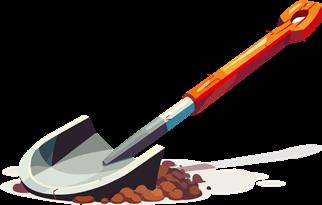
1. In the dusty garage, I found an old and ____________ metal shovel.
2. He scraped his knee, and a little ____________ came out.
3. We knew we were in ____________ when the big balloon popped in class.
4. I climbed to the top of the tallest ____________ at the playground.
5. Once you commit to going on the trip, ____________ your payment.
6. He used his ____________ to buy a funny teddy bear.
7. After the ____________, the park was covered in mud.
8. I scrubbed, but the stain on my shirt wouldn’t ____________.
9. I wonder what we will discover when we lift the ____________ of the old box.
Word Riddle
› Solve the riddle.
I’m a place that everyone can share, Open to all, you’ll find me everywhere. From parks to museums, I’m meant for you, What am I? ____________
Spelling Word Story
› Complete the story using each spelling word once.
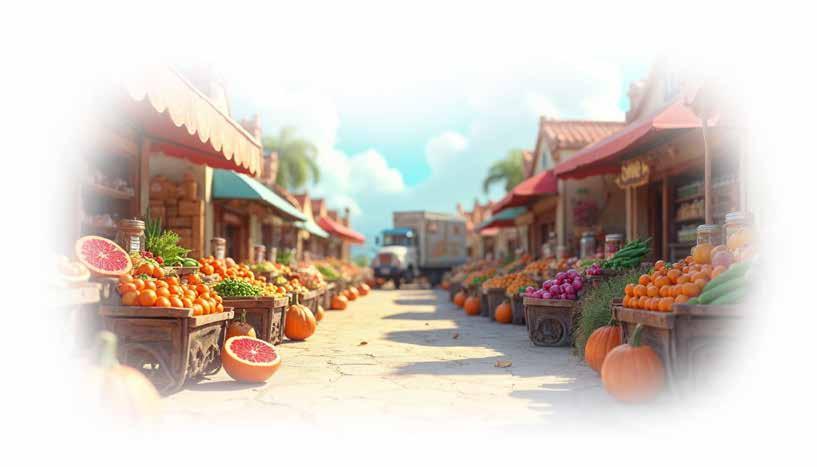
How Markets Work How Markets Work
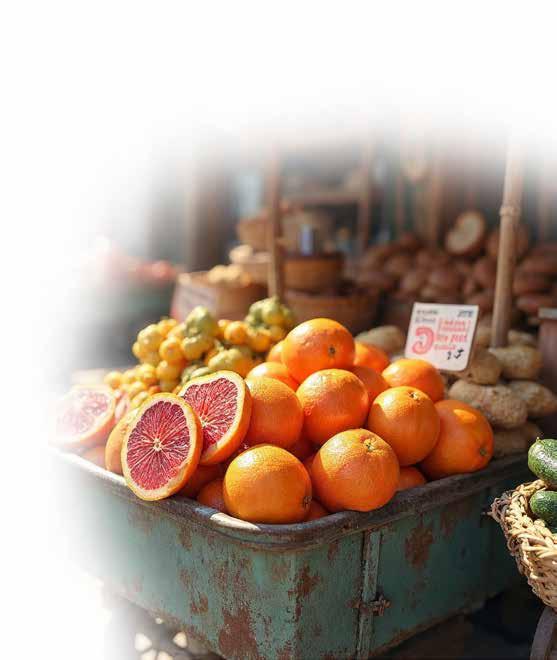
“Fresh fruits here! Best prices today!” These are some of the announcements you might hear at a market. A market is a _____________ place where people buy and sell food, clothes, and other goods, often outdoors. Markets are important in many parts of the world because they bring farmers, sellers, and customers together. For example, in a Middle Eastern _____________, people enjoy visiting the market to buy fresh fruits, vegetables, and breads. On _____________ days, the market is full of customers shopping, eating, and talking with the sellers. These markets have many small stalls and carts selling different products. Each stall offers one type of product, like fresh fruits, vegetables, spices, nuts, bread, or poultry. Sometimes, stalls with the same product are grouped together. The stall’s _____________ is often old, and the metal carts may be _____________, but they still work well to hold and show the products. Sometimes, the carts are so heavy that they barely _____________ when they are pushed.
Many fruits and vegetables at the market come straight from local farmers. You’ll see common produce like tomatoes, cucumbers, and onions. But sometimes, there are special items, too, like pumpkins in the fall. A _____________ is great for soups or pies. Another interesting fruit is the blood orange. It’s called that because the inside is a deep red color, almost like _____________. Farmers often work with a delivery _____________ to help bring their produce to the market quickly.
The people selling goods at the market are called vendors. Many of these vendors are family members who run a stall together. A _____________ boy might work with his _____________ or _____________ to manage the stall. They handle _____________, greet each _____________, and make sure to _____________ the food to protect it from the sun or dust.
_____________ breaks are a common time when workers rest and eat before the busy afternoon. Many vendors bring their own lunch or buy from other stalls.
Sometimes, markets face _____________. For instance, a _____________ can cause serious damage to the market. Water may get _____________ the stalls and spoil some products. After a flood, vendors usually have to _____________ a report to get money or supplies to fix the damage.
Markets are more than just places to buy goods. They are full of life, family, and fresh flavors. If you ever visit one, listen closely and enjoy the colors, smells, and friendly voices all around you!
family camera animal plastic manage weather energy memory method center
Review Word Activities
Short “a” Words
› Write the word that best completes each analogy.
1. Wood is to chair as _____________ is to bottle.

2. Teach is to teacher as _____________ is to boss.
3. Students is to school as _____________ is to home.
4. Book is to library as _____________ is to zoo.
5. Paintbrush is to artist as _____________ is to photographer.
Short “e” Words
› Write the word that best completes each sentence.
1. My best summer _____________ was visiting my cousins.
2. Mom placed the flowers in the _____________ of the table.
3. We canceled our picnic because of the rainy _____________.
4. We are trying a new _____________ to keep our clothes organized.
5. After eating lunch, I had more _____________ to continue playing.
children city picture income middle
Short “i” Words
› Write the spelling word that has the same meaning as the underlined word(s).
1. The kids played tag on the playground until the bell rang.
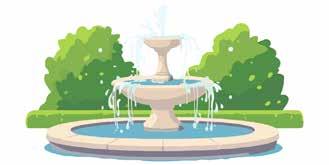
2. There was a large water fountain in the center of the garden.
3. Our town has a lot of parks and museums.
4. Ben found a photo of a panda in his his book about animals.
5. Tim used the money he earned to buy a new bike.
Review Word Activities
Short “o” Words
› Write the spelling word that best answers each question.
1. Where is the place people go when they need surgery?
2. What container might you use to hold water or juice?
3. What do you call something that needs to be solved in math?
4. Who do you visit when you feel sick or need a check-up? _____________
5. What is something made or sold, like a toy, book, or snack?

Short “u” Words
› Write the spelling word that best matches each definition.
1. A boy who has the same parents as you
2. What people use to buy things
3. Someone who pays for goods or services at a store or business
4. A land where people live under the same government and laws
5. A business that sells goods or services and provides jobs
Review Word Activities
› Write the spelling word that best answers each riddle.
1. You may have fever. Do you feel sick? Come to me - I’ll help you quick.
2. I’m soft or furry, I can bark or moo. You can find me living in a zoo.
3. I take pictures with just one click. I help you remember memories quick!
4. Sometimes I’m sunny, sometimes I’m gray, I can change quickly from day to day.
5. I come in coins or bills you fold, I’m what you need when things are sold.
6. I hold your drink when you’re on the go, Twist my cap and watch it flow.
› Unscramble the letters to write a spelling word. Then, write a sentence using the word.
1. eygrne
2. elddim
3. temhod
4. ciyt
5. mpanyco
Review Word Activities
Use each spelling word only once on these two pages.
› Write the spelling words that best complete the letter.
Dear Alex,
I wanted to tell you about the community project I helped with last week. Our town’s organized a fundraiser to support the local . Many and adults came to help at the event, which was so much fun!
We sold a new made from recycled bottles. The from the sale went to the hospital. did not just come from our city; they came from all over the ______________! It was a big ______________ that the hospital did not have enough money and they helped solve it.
One great I have, is when we all worked as a family to set up the booths and decorate the area. I hope you can join us next time! Your friend,
Greg
› Draw a line to the spelling word that rhymes with each word.
mentor brother
happily family
baggage center
other picture
fixture manage
“a”
Word Sort
“a_e” words “ai” words “ay” words
Word List with Simple Sentences
› Read the spelling words and sentences.
1. escape The mouse tried to escape from the trap.
2. complain I didn’t complain when I had to clean up my mess.
3. maybe Maybe we can go to the park after the storm passes.
4. explain Please explain how the experiment works.
5. neighbor A neighbor sent a cake to welcome us to the block.
6. weight The books added more weight to the backpack.
7. favorite Mystery books are my favorite type of book to read.
8. later He plans to call his friend later tonight.
9. parade The band led the parade through the town.
10. patience It takes patience to complete a 1,000-piece puzzle.
11. survey Our class took a survey about what books we like best.
12. station The train will arrive at the station in five minutes.
13. payment Mom sent in payment along with the application.
14. contain This bottle can contain exactly one liter of water.
15. engage The fun game helped engage the whole class.
“ei” words
words
word
16. crayon I used a dark gray crayon to outline the mountains.
17. mistake Making a mistake is okay as long as you learn from it.
18. waist The costume didn’t fit; it was too tight at the waist.
19. basic Flour, water, and salt are basic ingredients for bread.
20. angle In geometry, we learned how to measure an angle.
Spelling Patterns
Long “a” (ay) can be spelled in different ways.
“a-consonant-e” - Example: mistake
“ai” - Example: waist
“ay” - Example: maybe
“ei” - Example: weight
“a” - Example: basic
“ey” - Example: survey
Spelling Word Activities
Definitions
Use each spelling word only once on this page.
› Write the spelling word that best matches each definition.
1. A person who lives next to you
2. Money you give to buy something or pay for a service
3. The part of your body between your ribs and hips
4. Get involved or take part in something
5. Say you are unhappy or not satisfied with something
6. A measurement of how heavy something is
7. Tell how something works or why it happened
8. The space between two lines that meet at a point
9. A small stick of colored wax used for drawing or coloring
10. Staying calm when you have to wait or deal with something hard
Swap It
› Write the spelling word that has the same meaning as the underlined word(s).
1. I made an error on my math test.
2. We waited at the bus stop for the right bus to arrive.
3. We took a poll to vote for our favorite lunch.
4. He gave me simple directions on how to bake the chocolate cake.
5. We can finish the puzzle afterwards, after we complete our homework.
6. This box is big enough to hold all the toys.
7. Perhaps we can go to the zoo tomorrow.
8. The parrot tried to get out through the open cage door.
9. My best activity during recess is playing marbles.
Word Riddle
› Solve the riddle.
I march down the street with music and cheer, Floats, balloons, and people appear. Crowds line the road to watch me. What am I? ________________


Spelling Word Story
› Complete the story using each spelling word once.

How Crayons Are Made How Crayons Are Made
Have you ever wondered how a simple crayon is made? It might look like just a colorful stick, but making crayons is actually a process that uses science, math, and teamwork. The process starts with wax, which is the main ingredient in every . The wax is heated until it melts into a liquid. Workers measure the of the wax because too much or too little can cause problems. Then, they add powdered colors called pigments. Mixing the right amounts is very important—one small can make the crayon break easily or not color well. Some workers wear aprons around their to protect their clothes from getting splashed by hot wax. After mixing, the liquid wax and color are poured into crayon-shaped molds. These molds are made using math to make sure the crayons come out smooth and the right size. The molds have a small to help the crayons come out easily when the wax cools and hardens. During this time, tiny air bubbles have to from the wax so the
crayons will be strong and smooth. Once poured, the crayons need time to cool slowly. This takes a lot of because rushing can cause cracks. When ready, the crayons are packed into boxes that are designed to just the right number of crayons. The boxes are then moved to the shipping , where they wait for trucks to take them to stores. When the crayons are lined up on trucks, it looks like a bright and colorful of marching bands and balloons. The factory sells crayons to stores. When stores buy crayons, they send so the factory can keep making more.
A living near the factory might about the noise from the machines. The factory workers try to with the community and why the factory is important.
Sometimes, the factory asks customers about their colors through a a new color will be added , based on the results.
It takes a mix of science, math, and creativity to make crayons that help children color their world!

“e”
Word Sort
“e” words
Word List with Simple Sentences
1. people Many people came together to help after the storm.
2. secret He told me a secret and warned me not to share it.
3. police The police helped the lost girl locate her mother.
4. seal Steve used tape to seal the package tightly.
5. teacher Our teacher gave us a fun project all about animals.
6. equal We divided the cake into eight equal pieces.
7. degree Water will boil at a high degree of heat.
8. series I have to read one more book to finish the series.
9. zero The temperature dropped to zero during the night.
10. legal In our town, it is legal to ride a bike on the sidewalk.
11. meter One meter is equal to about three feet.
12. neon We displayed a neon-colored sign to attract people.
“i” word
“ei” words
“ea” words
“ee” word
“ie” words
“e_e” words
13. receiver I hung up the receiver after my phone call.
14. concrete Mark fell on the concrete sidewalk and got a bruise.
15. belief Lee’s belief in himself led him to succeed on the test.
16. zebra The zebra shared an enclosure with the giraffe.
17. receipt I saved the receipt to return the shoes.
18. niece I babysit my niece every Tuesday afternoon.
19. delete Be careful not to delete your picture by accident.
20. evening I take walks in the evening when it’s cooler outside.
› Read the spelling words and sentences. Long “e” (ee) can be spelled in different ways.
Spelling Patterns
“e” - Example: secret
“i” - Example: police
“ei” - Example: receiver
“ea” - Example: teacher
“ee” - Example: degree
“ie” - Example: belief
“e-consonant-e” - Example: delete
Spelling Word Activities
Clues
› Write the spelling word that best fits each clue.
1. I mean the same size in number or amount.
2. I am your brother’s or sister’s daughter.
Use each spelling word only once on this page.
3. I measure temperature. _____________
4. I am a hard, gray material used to build buildings and sidewalks.
5. I am a group of things that come one after another. _____________
6. I prove that you paid for something and usually come from a store.
7. I am something you think is true even if you can’t prove it.
8. You press a button to make something disappear.
9. I am something you are not supposed to tell anyone.
10. I am a unit used to measure length.
Fill in the Blanks
› Write the spelling word that best completes each sentence.
1. The party decorations were full of bright _____________ colors.
2. She carefully applied glue to _____________ the envelope.
3. I picked up the phone and held the _____________ to my ear.
4. We sat on the porch in the _____________ and watched the sunset.
5. Many _____________ were on the train, so there were no seats available.
6. Our math _____________ taught us how to solve fractions.
7. We need to find a _____________ spot to park, or we may get a ticket.
8. The _____________ arrived quickly after someone called 911.
9. A _____________ ran across the road in front of our safari jeep.
Word Riddle
› Solve the riddle. I’m a number that means there’s none, Not even one, not even some. I sit before one. What am I? _____________
Spelling Word Story
› Complete the story using each spelling word once.

How Dollar Bills Are Made How Dollar Bills Are Made
Most use money every day, but many don’t know how it’s made. In Washington, D.C., there’s a special place called the Bureau of Engraving and Printing. That’s where millions of dollar bills are printed each year.
One of the workers there is Pete. He’s a printing engineer who checks the machines and makes sure every bill is made correctly. Pete works the shift. He begins by walking across the large floors to inspect the giant printing machines. These machines press designs onto special paper made of cotton and linen. It’s stronger than regular paper. Each bill includes tiny red and blue threads and a security strip to stop people from making fake money.
Making a bill takes several steps. First, metal plates press the design onto the paper. Then, layers of ink are added. A computer checks each of printed paper to catch mistakes. If there is a problem, Pete picks up the telephone to call for help. The printing has to be done to a very exact so that every bill looks the same. One time, Pete noticed a mistake where the number ten looked like a . He reported it right away. “Even small errors matter,” he said. “People need to trust and have that their money is real.”
After the printing is done, the paper is cut into bills. A digital machine counts the bills and checks them again. If just one bill on a sheet has a mistake, workers the whole sheet. Each dollar must be the same size and color to be to the others. If not, it gets shredded and thrown away. When everything looks good, Pete seals the stacks of bills. He attaches a label with his name on it and gets a that shows how many bills he handled that day. Then, the bills are sent out in a of shipments, one following another, to banks across the country.
Pete’s is a sixth-grade . Sometimes, Pete visits her classroom and explains how money is made. The students are surprised to learn that dollar bills use ink that only shows up under special lights. Once, a student asked, “Could a help sniff out fake money?” Pete laughed and said, “That would be cool, but I think we’ll stick with machines and the police.”
officers play an important role. If someone tries to use fake bills or bills that are not , they investigate. Making fake money is against the law.
Pete loves his job. “Every time I a package of bills,” he says, “I feel proud. I helped make something important that people use every day.”
Word Sort
words
Word List with Simple Sentences
1. lion
The lion roared as it walked across the grassland.
2. giant A giant balloon floated above the crowd.
3. idea He had no idea how difficult the hike would be.

4. surprise It was a surprise when my grandpa came to visit.
5. silent The classroom was completely silent during the test.
6. pilot The pilot flew the plane through the clouds.
7. tiger The tiger paced back and forth in its enclosure.
8. final I studied well for the final test and got a good grade.
9. cycle The water cycle brings rain to plants and trees.
10. desire He showed a desire to improve his reading skills.
11. spider A spider spun a web in the corner of the window.
12. island The island was surrounded by clear blue water.
13. diagram The teacher drew a diagram of the human heart.
14. apply You should apply sunscreen before going out in the sun.
15. twilight Fireflies glowed at twilight, the time just before dark.
16. survive Animals in the wild hunt for food to survive.
17. crisis The broken water pipe caused a major crisis.
18. horizon The sun slowly disappeared below the horizon
19. vitamin Mom gives me a daily vitamin to keep me healthy.
20. rhyme We wrote a poem that used a rhyme in every line.

› Read the spelling words and sentences. Long “i” (iye) can be spelled in different ways.
Spelling Patterns
“i” - Example: final “y” - Example: cycle “i-consonant-e” - Example: surprise “igh” - Example: twilight
Spelling Word Activities
Definitions
Use each spelling word only once on this page.
› Write the spelling word that best matches each definition.
1. A small animal with eight legs that spins webs
2. To rub or place something onto your skin or another surface
3. A strong feeling of wanting something
4. Something unexpected that happens suddenly
5. A pattern of events that repeat over and over again
6. A thought or plan about what to do
7. The line in the distance where the sky seems to meet the land or sea
8. To stay alive through a dangerous or hard situation
9. A very serious or difficult time
10. A simple drawing or chart that shows how something works
Analogies
› Write the spelling word that best completes each analogy.
1. Captain is to ship as _____________ is to plane.
2. Star is to sky as _____________ is to ocean.
3. Beat is to song as _____________ is to poem
4. Tiny is to ant as _____________ is to elephant.
5. Loud is to noisy as _____________ is to quiet.
6. Dog is to bark as _____________ is to roar
7. Puppy is to playful as _____________ is to fierce.
8. Beginning is to first as _____________ is to last.
9. Dawn is to morning as _____________ is to evening.
Word Riddle

› Solve the riddle. I’m small but strong, I help you grow. In fruits and veggies, I’m found, you know. What am I? _____________
Spelling Word Story
› Complete the story using each spelling word once.
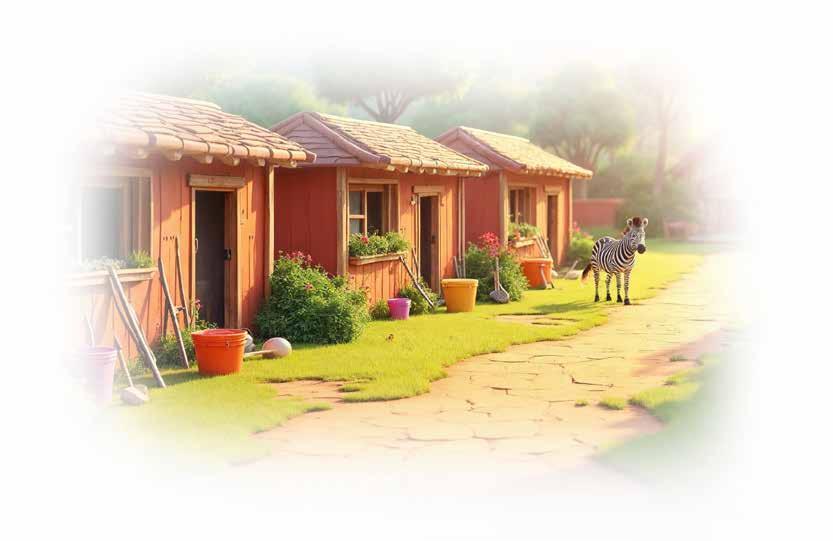
Behind the Scenes at the Zoo Behind the Scenes at the Zoo
Zoos are places where people can see wild animals up close – often animals they would never see in nature. Caring for these animals takes careful planning and teamwork. Zookeepers follow a daily ____________ of feeding, cleaning, and checking each animal’s health. They use large charts and a ____________ to track where each animal is located and what care it needs. Zookeepers have a strong ____________ to keep every animal safe and healthy. Feeding is one of the most important tasks. Each animal receives food that is measured to meet its needs. Zookeepers might give a ____________ to a ____________ or prepare a leafy mix for a giraffe. If an animal needs a special cream or ointment, zookeepers carefully ____________ it as part of a treatment plan.
If an emergency or ____________ occurs—like an animal escaping, or a storm hitting the zoo—the staff has emergency plans in place and may even contact the police. Every step must be followed to keep the animals and visitors safe. Animals at the zoo come from many parts of the world, including deserts, mountains, and even a distant ____________. Each animal has a habitat that fits its needs, meaning the zoo gives them a home like where they live in nature.
A zebra, for example, may enjoy walking across grassy fields, while a tiger likes shady spots to rest. A ____________ may spin a web in a corner of its enclosure.
A ____________, known as the ‘king of the jungle,’ often spends much of the day resting in the shade.
Some animals are naturally ____________, while others, like monkeys or parrots, are very noisy. Sometimes, visitors get a ____________ when a parrot repeats a funny ____________ with words that sound alike. Many animals become active in the ____________, when the sun starts to set below the ____________. Owls, bats, and other night animals start to explore during this cooler time of day. Some zoos offer rides in a flight simulator, where you can feel like a ____________ flying over wildlife habitats. This gives visitors an ____________ of what it’s like to explore the wild.
A teacher may bring a class to the zoo to learn about habitats or how animals ____________. In the ____________ part of the visit, students might write about what they learned. Just knowing that a ____________ tortoise lives over 100 years can be really interesting!

Word List with Simple Sentences
Word Sort
“o” words
“o_e” words
“oa” words
words
words
word
› Read the spelling words and sentences.
1. open The door swung open when the wind blew.
2. moment She paused for a moment before answering.
3. motor The car’s motor sputtered and then stopped working.

4. total The total cost of the grocery order was sixty dollars.
5. remote
The cabin was in a remote area, far from the city.
6. shoulder My shoulder felt sore after moving the heavy boxes.
7. though He still did his homework, though he was very tired.
8. notice I didn’t notice the rainbow until you pointed it out.
9. poem We had to write a poem about nature in writing class.
10. social She has good social skills and makes friends easily.
11. cocoa I sipped a cup of cocoa on the cold, wintry day.
12. motel We stayed at a small motel during our road trip.
13. pillow My pillow is soft and fluffy, perfect for sleeping.
14. coast We walked along the coast and collected seashells.
15. throat I drink warm tea to soothe my sore throat.
16. roller The painter used a roller when painting the walls.
17. owner
The bakery owner gave us free samples of cookies.
18. suppose I suppose we can wait to finish the project.
19. bowl Mom served me a big bowl of soup when I was sick.
20. global Climate change is a global issue that affects everyone.
Spelling Patterns
Long “o” (oh) can be spelled in different ways.
“o” - Example: roller
“o-consonant-e” - Example: remote
“oa” - Example: coast
“ou” - Example: shoulder
“ow” - Example: bowl
“oe” - Example: poem
One of the words on the list has two long “o” sounds, and each is spelled differently. Which word it is? ____________ *
Spelling Word Activities
Word Sets
Use each spelling word only once on this page.
› Write the spelling word that goes together with each set of words.
1. sheet, blanket, _____________
2. plate, spoon, _____________
3. tongue, tonsils, _____________
4. flour, sugar, _____________
5. shore, waterfront, _____________
Saying or Advice
6. hotel, guesthouse, _____________
7. boss, manager, _____________
8. leg, arm, _____________
9. song, rhyme, _____________
10. assume, imagine, _____________
› Write the spelling word that completes each saying or piece of advice.
1. Life is like a _____________ coaster, full of ups and downs.
2. Enjoy every _____________ because time passes quickly.
3. _____________ the good in others, and it will brighten your day.
4. Keep an _____________ mind to learn new things every day.
5. Being _____________ helps build friendships.
6. _____________ things may get hard, never give up on your dreams.
7. Give your _____________ effort, and success will follow.
8. Just like a _____________ needs fuel, your body needs rest to keep going.
9. Even if a place seems _____________, you can still get there if you keep going ahead.
Word Riddle
› Solve the riddle. I’m not local, I’m not small, I’m something that includes us all. From every continent and sea, What could I be?_____________
Spelling Word Story
› Complete the story using each spelling word once.

The Ups and Downs of Roller Coasters The Ups and Downs of Roller Coasters
A roller coaster ride may only last a few minutes, but there’s a lot going on behind the scenes to make it safe, fast, and fun. Engineers study each detail and are quick to ____________ anything that might be unsafe. Some ____________ coasters are built near the ____________, offering amazing views of the ocean. Others are found in ____________ locations, far from busy cities. No matter where they are, the goal is always the same: thrills and safety.
Before the ride opens, operators check every roller, bolt, and safety bar. The ____________ is responsible for making sure everything meets strict safety rules. Even small parts like the seats and brakes are inspected. If something doesn’t work, the ride stays closed—no matter the ____________ number of visitors waiting.
The ____________ the gates of the ride swing ____________, excited riders rush forward and quickly buckle their seatbelts. The adventure begins! Most coasters start with a slow climb. A strong motor pulls the cars up a steep hill. Once at the top, the ____________ isn’t needed anymore—gravity takes over. The cars race down the track, spinning through loops and twists. ____________ the ride feels wild, every motion is carefully planned.
Amusement parks are more than just roller coaster rides. They’re places where families can be ____________, spending time together and making memories.
Some people who drive long distances stay in a nearby ____________ and spend a few days enjoying the fun. After a long day of rides, guests might rest their heads on a ____________, sip hot ____________, and talk about their favorite ride.

Even thrill-seekers need rest. After all the screaming and laughing, riders may feel a dry ____________ or a sore ____________ from holding on tight. They can relax with a snack or enjoy a ____________ of soup at the food area. “I ____________ that loop was my favorite part,” someone might say, still smiling. Roller coasters are part of a ____________ trend. From Asia to Europe to America, countries compete to build the tallest or fastest ride. Some roller coaster fans even write a ____________ to describe their favorite ride.
No matter where they twist and turn, roller coasters provide a safe thrill and endless fun for everyone.
“u”
Word Sort
“u” words
Word List with Simple Sentences
› Read the spelling words and sentences.
1. student The student studied hard for the math exam.
2. include Please include me in your game; I’d love to play.
3. reduce A helmet helps reduce the chance of getting hurt.
4. continue I will continue to read my new novel after dinner.
5. rescue Firefighters came to rescue the cat stuck in the tree.
6. Tuesday The field trip is planned for next Tuesday
7. argue The boys argue about whose turn it is.
8. future In the future, I want to become a teacher.
9. humid It was a humid day outside, so I drank a lot of water.
10. neutral He stayed neutral during the argument.
“u_e” words
“ue” words
“eu” word
“ew” words
11. beautiful The sunset painted a beautiful picture across the sky.
12. accuse It’s not fair to accuse someone without proof.
13. fuel The car needs more fuel before we start a long trip.
14. usual It was colder than usual this morning.
15. view From the hilltop, we had a great view of the town.
16. few Only a few students volunteered to help clean up.
17. nephew I taught my young nephew how to ride a bike.
18. museum The museum had an exhibit about ancient Egypt.
19. universe The universe is full of stars, planets, and galaxies.
20. human Every human has the ability to learn and grow.
Spelling Patterns

Long “u” (you/oo) can be spelled in different ways.
“u” - Example: usual “u-consonant-e” - Example: accuse “ue” - Example: rescue
“eu” - Example: neutral “ew” - Example: few
Spelling Word Activities
Questions
Use each spelling word only once on this page.
› Write the spelling word that best answers each question.
1. What word describes something that happens most of the time?
2. What word describes air that is hot and full of moisture?
3. Where can you go to learn about history, science, or art?
4. What do you see from a specific place?
5. What word means not taking a side in an argument?
6. What word describes everything in space, including stars and planets?
7. What gives cars and rockets power to move?
8. What word means pretty?
9. What do you call the son of your brother or sister?
Antonyms
› Write the spelling word that is an antonym to the bolded word.
1. They used to _____________ all the time, but now they usually agree.
2. She wanted to _____________ the story, but the bell made her stop.
3. We should _____________ everyone in the game so nobody feels excluded.
4. I want to _____________ the sugar in the drink, not increase it.

5. The robot was fast and exact, but the _____________ was kind and creative.
6. The firefighter came to _____________ the puppy that someone had abandoned
7. The _____________ listened carefully while the teacher explained the lesson.
8. We learn from the past to make better choices in the _____________.
9. A _____________ students did their homework, but many said they will do it tomorrow.
10. Before you _____________ someone, be ready to defend your reason.
Word Riddle
› Solve the riddle. I come after Monday, Before Wednesday I stay. I’m the second workday, What day am I?
Spelling Word Story
› Complete the story using each spelling word once.

The Amazing World of Rainforests The Amazing World of Rainforests
Rainforests are thick, green forests found near the equator where it rains almost every day. They are warm, wet places filled with tall trees, colorful plants, and countless different animals. Rainforests are some of the most ____________ and important places on Earth. Each one is like a small ____________ filled with life. A single rainforest can ____________ a large variety of plant and animal species, many of which are not found anywhere else. The weather in rainforests is often hot and very ____________, which means the air feels wet and sticky. This happens because rain falls almost every day, keeping the forest moist and helping plants and animals thrive.
The ____________ in a rainforest is amazing. From the forest floor to the tops of the tallest trees, plants and animals are everywhere. Some trees are taller than buildings! It’s not
un____________ to hear strange animal sounds echoing through the forest. Rainforests are important because they help clean the air by taking in carbon dioxide and giving off oxygen, which people and animals need to breathe. ____________ beings have both helped and harmed these forests. Some companies cut down trees to use them for ____________ or to build homes. There are people who ____________ that cutting down trees and clearing land destroys the home of animals and plants, which can hurt the rainforest. They say it’s important to ____________ the number of trees that are being cut down. Others try to stay ____________, not taking sides. There are also teams that work to ____________ and save endangered animals in the rainforest.
Scientists have studied the rainforest for many years. Even now, they ____________ to study it because there is still much to learn about how to keep it safe. They track weather changes, animal movement, and tree growth. Scientists have found that only a ____________ untouched rainforests are left. Their work helps protect the rainforest’s ____________ because they want to make sure it will be full of life for many years to come.
When people visit a rainforest, they often say it’s unlike anything they’ve seen before. Some ____________ others of not doing enough to protect these forests. Others simply admire their beauty and do what they can to help. Many students learn about rainforests in school. A class might go on a field trip to a rainforest exhibit at a ____________ to see models and displays. These trips are often planned for the middle of the week, like ____________, when the museum is less crowded.
Whether someone is a ____________ in school, a scientist, or a ____________ or family member of one of the rainforest workers, it’s easy to see how amazing nature is and how much beauty can be found in the rainforest.
maybe explain neighbor mistake basic people teacher equal delete evening idea pilot final diagram vitamin
Review Word Activities
Long “a”
› Write the spelling word that rhymes with the underlined word.
1. I made a _____________ and didn’t bake the cake long enough.
2. Can you _____________ to me where rain comes from?
3. _____________ the lost marble rolled under the baby carriage.
4. We followed a _____________ recipe to make classic pasta.
5. My _____________ did me a favor and helped me out.
Long “e”
› Write the spelling word that best completes each analogy.
1. Add is to include as _____________ is to remove.
2. Morning is to day as _____________ is to night.
3. Chef is to kitchen as _____________ is to school.
4. Birds are to sing as _____________ are to talk.
5. Large is to big as _____________ is to same.
Long “i”
› Write the spelling word that best matches each definition.

1. The last or ending part of something _____________
2. A natural substance found in food that keeps you healthy _____________
3. A person who flies an airplane or helicopter _____________
4. A thought or plan that comes to your mind _____________
5. A simple drawing or picture that shows how something works _____________
Review Word Activities
Long “o”
› Write the spelling word that best completes each sentence.
1. _____________ she was so tired, she stayed up to finish her project.
2. The _____________ number of apples in the basket was fifteen.
3. We couldn’t find the _____________ of the lost puppy.
4. The _____________ was short but had a very powerful message.
5. I paused for a _____________ before answering the tricky question.
moment total though poem owner student include beautiful future few
Long “u”
› Write the spelling word that best answers each question.
1. What word describes something that looks very nice?
2. What word means not many, but more than one? _____________
3. What word means to make part of something? _____________
4. Who goes to school to learn new things? _____________
5. What do we call the time that is yet to come? _____________
Review Word Activities
› Write the spelling word that best answers each riddle.
1. I fly a plane up in the air. I take people here and there.
2. I’m a drawing with labels, neat and clear, to help your science ideas appear.
3. I help your body stay strong and bright. You find me in food, and I’m just right.
4. I’m something you write with feelings and care, sometimes, I rhyme, and sometimes, I share.
5. I’m not certain, but it could be true. You say me often when unsure what to do.
6. I walk next door and ring your bell. I live close, as you can tell.
7. The sun goes down, the sky turns red, it’s almost time to go to bed.

› Unscramble the letters to write a spelling word. Then, write a sentence using the word.
1. etdlee
2. haecter
3. luqea
4. tdnestu
5. fuetur
Review Word Activities
Use each spelling word only once on these two pages.
› Choose the spelling words that best complete the letter.
Dear John,
Today was such a fun day at school! A group of ______________ visited to talk about starting a school garden. At that , I had a great —we could grow vegetables and donate some to people in need!
The visitors helped the steps, starting with the ______________ things we’ll need, like soil, seeds, and water. The ______________ of the local plant shop even said he would give us free supplies!
The ______________ cost to get started won’t be much. ______________ it will take work, I think it’s going to be a great project for everyone.

› Draw a line to the spelling word that is the opposite of each word below.
From, Mark 1. ugly mistake
2. exclude few 3. beginning beautiful 4. correct include 5. many final
Word List with Simple Sentences
Word Sort
-ed words
-ing words
› Read the spelling words and sentences.

1. planned We planned to go hiking, but it started to rain.
2. skipped He skipped lunch because he was too busy working.
3. stopped The car stopped when a deer ran across the road.
4. crying The baby started crying when she dropped her toy.
5. replied She replied to her sister’s invitation for dinner.
6. traveled We traveled across the country to visit our relatives.
7. covered The ground was covered with a thick blanket of snow.
8. covering The baker is covering the cake with frosting.
9. dancing All the guests were dancing at the wedding.
10. saved He saved his money so that he could buy a new bicycle.
11. saving We are saving the ice cream for a hotter day.
12. panicked The travelers panicked when smoke filled the airport.
13. admitting I was nervous about admitting that I broke the vase.
14. directing The guard is directing the children cross the street.
15. printed I printed my report and gave it to my teacher.
16. printing Printing the invitations took longer than expected.
17. inhaled He inhaled deeply before blowing up the ball.
18. completing My group felt great after completing our project.
19. guessing She kept guessing the answers to the riddles.
20. carried He carried the heavy box up the stairs.
Spelling Patterns
The suffix -ed means the action happened in the past. The suffix -ing means the action is happening now or continues over time.
Words ending with vowel+consonant - Examples: skip skipped, stop stopping
Words with silent e - Examples: save saved, save saving
Words ending with y - Examples: cry cried, cry crying
Spelling Word Activities
Analogies
Use each spelling word only once on this page.
› Write the spelling word that best completes each analogy.
1. School is to learning as bank is to _____________.
2. Oven is to baking as printer is to _____________.
3. Question is to answering as riddle is to _____________.
4. Happy is to smiling as sad is to _____________.
5. Starting is to beginning as finishing is to _____________.
6. Hands are to clapping as feet are to _____________.
7. Paint is to painting as cover is to _____________.
8. Mistake is to apologizing as guilty is to _____________.
9. Cook is to cooking as director is to _____________.
Definitions

› Write the spelling word that best matches each definition.
1. Moved something from one place to another _____________
2. Suddenly felt or showed great fear _____________
3. Left something out on purpose _____________
4. Went from one place to another _____________
5. Breathed in air into your lungs _____________
6. Made decisions about something in advance _____________
7. Put something over or on top of something else _____________
8. Produced words, pictures, or designs using a printer _____________
9. Kept something from being lost _____________
10. Brought something to an end _____________
Word Riddle
› Solve the riddle. I come after a question, a message, or a call, I may be short or not at all. What am I? ________________

Spelling Word Story
› Complete the story using each spelling word once.

Flying for the First Time Flying for the First Time
Last summer, my family _____________ a trip to Spain. It was the first time I had ever traveled internationally, so I was both excited and nervous. We _____________ our airline tickets the night before instead of _____________ them in the airport. I made a list to make sure we had not _____________ anything important, like our passports.
When we got to the airport, we _____________ at the check-in counter. A friendly worker helped us put a tag on our suitcases and place them on the conveyor belt. Each bag had a label which was _____________ with plastic, with information on the bags destination. I even saw some people _____________ their luggage in plastic wrap to protect it. That was smart!
Next came the security line. I had heard stories about how serious it was, and honestly, I _____________ a little. I _____________ and exhaled slowly to stay calm. The workers were _____________ people where to go. I didn’t notice the signs that said to remove all water bottles, so I had to throw my water bottle away before I was allowed to pass through security. I didn’t mind _____________ my mistake - it helped me learn for next time.
While waiting at the gate, I saw all kinds of people. Some were _____________ while they were saying goodbye to family. Others were _____________ with excitement about their upcoming trip. I was trying to focus on _____________ a crossword puzzle that required me to do a lot of _____________ to figure out the final answers.
When it was time to board, we found our seats and got settled. I had _____________ a snack from home to eat on the plane, and was glad I did! I did not realize how hungry I would be before the flight even took off! My little sister was _____________ her energy for when we landed—she wanted to run as soon as we got there!
After a long flight, the plane landed in Madrid, Spain. We had _____________ through the night and were tired by now, but we still had to find our bags. Mine came out right away, but one of my sister’s bags was missing. My mom asked for help, and the airport staff kindly _____________ that they would locate the bag as quickly as they could. They ended up finding it in another area. They _____________ it over to us, and we were finally able to leave the airport to begin touring Spain.
The whole airport experience taught me a lot. Even though I was nervous at times, planning ahead and staying calm helped everything go smoothly. It was a great way to start our big adventure!

Word List with Simple Sentences
Word Sort
words
words
words
word
words
and “dge” word
1. gentle The nurse spoke in a gentle voice to calm the child.
2. general He had a general idea of how the machine worked.
3. danger Hikers are warned about the danger near the cliff.
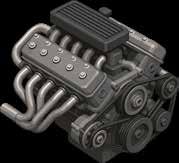
4. engine The car’s engine made a loud noise when it started.
5. garbage There was garbage overflowing from the dumpster.
6. bridge The old wooden bridge is no longer safe for cars.
7. judge The judge listened before making a decision.
8. magic I was amazed by the magic show.
9. giraffe The giraffe stretched its neck to reach the leaves.
10. ginger She added fresh ginger to her tea for more flavor.
11. region The rainforest is a region full of plants and animals.
12. fudge My mother made creamy fudge for dessert.
13. graduate Ben’s class will graduate from school in the spring.
14. adjust Fred will adjust the seat belt so it’s comfortable.
15. legend There was a legend told about lost treasure.
16. jelly Beth spread strawberry jelly on her toast for lunch.
17. budget I created a monthly budget to track my spending.
18. joke His joke made everyone burst into laughter.
19. strategy The team planned a strategy to help them win.
20. education This school provides a good education for all its students.
Spelling Patterns
› Read the spelling words and sentences. The “j” sound can be spelled in different ways.
- Example: gentle “dge” - Example: fudge - Example: joke
- Example: adjust “du” - Example: graduate
Spelling Word Activities
Fill in the Blanks
Use each spelling word only once on this page.
› Write the spelling word that best completes each sentence.
1. I baked cookies and filled them with strawberry _____________.
2. Everyone understood the _____________ rules of the game.
3. He made the money disappear during the _____________ show.
4. Stopping at a red light is one way to avoid _____________.
5. The tall _____________ walked slowly across the grassy field.
6. He checked the car’s _____________ before starting the long trip.
7. The _____________ tea helped soothe her sore throat.
8. Tommy bought chocolate _____________ from the candy shop.
9. A good _____________ helps people learn new skills.
Swap It
› Write the spelling word that is a synonym to the underlined word.
1. We picked up the trash from the sidewalk.
2. The soft breeze cooled us on the hot summer day.
3. He told a funny story at dinner, and we all laughed!
4. It’s important not to criticize someone before you know the full story. _____________
5. Polar bears are one of the most famous animals in the North Pole area _____________
6. Jen will change her schedule so she can be on time for the wedding.
7. I was finally able to complete the level in my piano lessons and move on.
8. Many people believed the story about the lost city in the jungle.
9. We made a spending plan so we wouldn’t spend too much money. _____________
10. Our team huddled together to form a plan to win the game. _____________
Word
Riddle
› Solve the riddle. I connect places near and far, You travel on me by foot, bike, or car. What am I? ________________
Spelling Word Story
› Complete the story using each spelling word once.

Studying Animals in Africa Studying Animals in Africa
Africa is the second largest continent on Earth. It is known for its vast deserts and dense rainforests. Africa is home to some incredible animals, including: lions, elephants, giraffes, zebras, cheetahs, hippos, rhinos, leopards, hyenas, gorillas, and chimpanzees. Scientists, adventurers, and travelers come to Africa to study its wildlife. Scientists and photographers will set out to explore a specific _____________ in Africa. They plan to spend a few weeks learning as much as they can while taking precautions to remain safe. They come to understand animals such as the tall _____________s and the enormous elephants. They must be patient and extremely _____________. If an animal senses _____________, it will run away or try to attack them.
Each day, the scientists travel in a vehicle with a powerful _____________. This special vehicle helps them cross rough land and travel over bumpy _____________. The environment is beautiful but also unpredictable. The team must always be ready to _____________ their plans if the weather changes or if they end up wanting more time with watch the animals.
The team follows a clear _____________ to observe the animals safely and respectfully. They carefully _____________ and document the health and behavior of animals.
Many scientists who explore have a set _____________ for their expenses.
Traveling and equipment can be expensive, especially if they stay in Africa for several weeks to collect all the information they need. Sometimes, they pack unusual snacks, like _____________ candies, sweet chocolate _____________, or jars of _____________ to spread on crackers.
These treats keep their energy up during long days. They are careful not leave any _____________ around that might be harmful to animals.
The scientists share moments of fun by telling a _____________ to lift everyone’s spirits after long hours in the field. They may pass the time by sharing stories of past adventures or local _____________s, such as the story of a giant giraffe that once saved a village.
Almost anyone can visit Africa and observe its wildlife. Some people like to join a tour of the beautiful African region after they _____________ from school. It’s a great way to gain an incredible _____________ about some of the world’s most majestic and powerful animals and feel the _____________ and wonder of the wild.
In _____________, the scientists’ research helps people around the world learn more about African animals and their habitats.
Word Sort
“ch” words
“ck” words
“k” word
“qu” words as “k”
“qu” words as “kw”
Patterns “k” or “kw” Sound
Word List with Simple Sentences
› Read the spelling words and sentences.
1. queen The queen wears a sparkling crown.
2. chaos When the shelf fell, chaos broke out in the room.
3. ticket The train conductor checked my ticket.
4. acquire You can acquire new skills by practicing every day.
5. quality This stand has the best quality fruit in the market.
6. quick I gave a quick nod to the driver before crossing.
7. question He raised his hand to answer the question
8. chorus We sang the chorus of our favorite song.
9. backpack My backpack is loaded with books and supplies.
10. knuckle He gently knocked on the door with his knuckle
11. mosquito On the camping trip, a mosquito buzzed by my ear.
12. conquer The army was able to conquer the enemy’s territory.
13. antique The vase from her grandmother was an antique
14. character The main character in the story was my age.
15. squirrel The squirrel dashed up the tree to hide its acorns.
16. quarter A quarter of the cookies in the jar were eaten.
17. unique His artwork is unique because of the colors he uses.
18. check Dave stopped to check his test before handing it in.
19. kingdom The kingdom was ruled by a wise and powerful king.
20. quiz I studied hard for the math quiz.
Spelling
The “k” sound can be spelled in different ways.
“ch” - Example: character
“ck” - Example: ticket
“k” - Example: kingdom
“qu” - Example: conquer
Sometimes “qu” will sound like “kw” - Example: queen
Spelling Word Activities
Clues
› Write the spelling word that best fits each clue.
Use each spelling word only once on this page.
1. I am a paper that you need to board a train or plane.
2. I am what you ask if you are unsure.
3. I am the name of a joint in your finger.
4. I am a small insect that bites.
5. I am a small, furry animal with a bushy tail.
6. I am slung over your shoulder.
7. I am a short test to show your teachers what you know.
8. I am the leader of a kingdom.
9. I am loud, messy, and out of control.
10. I am the part of a song that is repeated.
Questions
› Write the spelling word that best completes each question.
1. What skills do you need to _____________ to do your best on tests?
2. Did you _____________ if the door is locked?
3. How _____________ can you be ready?
4. Can you give me a _____________ of the plums you bought?
5. What would you do as the ruler of a _____________?
6. How long did it take for Great Britain to _____________ Australia?
7. How can you improve the _____________ of your essay?
8. Who is your favorite _____________ in the book we just read?
9. Every person is born with _____________ special talents.
Word Riddle
› Solve the riddle.
I am old but valued and not tossed away. I’m found in shops or on display. What am I? ________________

Spelling Word Story
› Complete the story using each spelling word once.

A Royal Day to Remember A Royal Day to Remember
Jack loved learning about castles, kings, and queens. When his class took a field trip to a real palace, he was thrilled to get a chance to _____________ one out. He put his entry _____________ into his pocket, and put on his _____________ with his lunch, snacks, and a drink.
The palace was part of a _____________ that was hundreds of years old. As soon as Jack saw it, he was amazed! It had tall towers, marble floors, and _____________ furniture in every room.
Their tour guide had a fun way of teaching. At each stop, he asked a _____________ and gave the group a little _____________ to see how much they remembered. Jack was _____________ to answer because he had been listening carefully throughout the tour. Inside the ballroom, they saw the throne of a famous _____________ who once ruled the kingdom. “She was a great _____________ in the story of this land,” the guide explained. “She helped _____________ many lands and ruled them with kindness. The country was happy to have her as queen for a _____________ of a century!”
While they walked, a _____________ buzzed by Jack’s ear. He waved it away, only to bump his _____________ on a stone wall. “Ouch,” he whispered, but he didn’t let it ruin his day.
Outside, the class sat under a tree to rest. A _____________ ran past them, carrying something in its mouth. “That squirrel looks like it’s on a mission,” Jack joked. Just then, the palace staff set up a surprise: a children’s choir sang a song about the kingdom. Jack’s class joined in for the _____________. Everyone was having wonderful time when someone accidently dropped his lunch box with a loud bang! Sandwiches and snacks flew in all directions, there was _____________! A few birds flew down, trying to grab everyone’s food. People laughed and jumped away, and one bird even landed on a backpack! After things calmed down, the guide said it was time for everyone to share one _____________, or special thing they had learned. Jack said, “I learned that you don’t just _____________ knowledge by reading. Rather, you get it by going places, asking questions, and paying attention.”
When the class boarded the bus, Jack looked back at the palace. He had learned a lot in one day. He took _____________ notes, writing carefully so he would remember all the important facts. He couldn’t wait to share what he learned with his family.
Word Sort
V-s-V words
Word List with Simple Sentences
› Read the spelling words and sentences.
1. cousin My cousin and I took pictures with our grandparents.
2. president The president gave a speech to his government.
3. cheese We baked pizza with lots of melted cheese on top.
4. because The flight was delayed because of strong winds.
5. music Soft music played in the background while I painted.
6. please We cleaned up the house to please our parents.
7. noise The loud noise from outside disrupted the class.
8. reason There had to be a good reason for canceling the test.
9. easy The instructions for the project were easy to follow.
10. result The result of the experiment surprised the scientists.
11. wisdom My parents’ wisdom helps me make good choices.
12. advise I advise you to prepare a healthy lunch for your trip.
13. poison Some plants have poison that is harmful to animals.
14. present I will present the gift to my teacher at the assembly.
15. visit Jen planned to visit her friend in the hospital.
16. season The night air got cooler as the season changed.
17. lose The icy sidewalk made me lose my balance.
18. raise I helped my brother raise the big box onto the table.
19. busy Her long list of chores kept her busy all afternoon.
20. deserve They deserve a medal for all their hard work.
V-s-y words
V-s-C word
Spelling Patterns
Sometimes the “z” sound is spelled with the letter “s.” Vowel-s-Vowel (V-s-V) - This often happens when the “s” is between two vowels. Example: reason There is one word in this spelling list that is not between two vowels. Can you find it?
Spelling Word Activities
Word Sets
Use each spelling word only once on this page.
› Write the spelling word that goes together with each set of words.
1. think, explain, _____________
2. loud, bang, _____________
3. grandfather, uncle, _____________
4. toxic, unhealthy, _____________
5. mayor, governor, _____________
6. smart, learn, _____________
7. find, keep, _____________
8. meet, gather, _____________
9. reward, earn, _____________
Rhyming
› Write the spelling word that rhymes with the underlined word.

1. Sara felt dizzy after working hard and being _____________.
2. Today was so breezy, which made flying the kite very _____________.
3. I will freeze all of the extra _____________.
4. The store will _____________ the prices in a few days.
5. Go to someone wise, and hear what they will _____________.
6. Fred and Sam went to see what their teacher would _____________.
7. The temperature is the reason I need different clothing each _____________.
8. Please pause the music _____________ the baby just fell asleep.
9. Can you _____________ pass me the car keys?
10. For the best _____________, get advice from an adult.
Word Riddle
› Solve the riddle.
I am made of notes, both high and low. I help your happy feelings grow. What am I? ________________
Spelling Word Story
› Complete the story using each spelling word once.

All About Orchestras All About Orchestras
An orchestra is a large group of musicians who come together to play many different instruments, such as violins, flutes, trumpets, and drums. When these instruments join together, they create _____________ that can be soft and peaceful or loud and powerful. Music helps _____________ people’s moods by lifting them up, but some songs can act like _____________ if they remind people of sad times.
Musicians read notes from sheet music that tell them what sounds to play and when. The conductor helps them follow these notes and stay in time. The conductor leads the orchestra by using his hands and a special stick called a baton to keep all the musicians playing together perfectly. It shouldn’t just sound like a lot of loud _____________, but something that can _____________ the ears.
It’s not always _____________ to be in an orchestra. Each musician has to practice regularly. Especially before performances, learning their part keeps them very _____________. They
must know exactly when to play and when to be quiet. If one person is off, the final _____________ won’t sound as pleasant. When everyone works hard, they can _____________ a beautiful performance for the audience. Some people might _____________ you to join an orchestra if you love music. As you learn to play an instrument and work with others, you gain _____________ and understanding about how important practice and focus are. You should never _____________ focus while playing. A single mistake can stand out in a big way. That’s why practice is important.
The _____________ people enjoy orchestras is _____________ music can bring many feelings, from calm to excitement and everything in between. Good musicians _____________ respect for all the hard work they put in.
Even the _____________ has an orchestra called the United States Marine Band. This orchestra plays at different occasions in the White House. Depending on the _____________, if the weather is nice, local orchestras often play music outdoors for the public. It can be fun to _____________ one with your _____________ or a friend. Bring along a lunch or some _____________ and crackers to enjoy while you listen.
If you could join an orchestra, which instrument would you choose to play?
Word Sort
Word List with Simple Sentences
› Read the spelling words and sentences.

1. cloud A dark cloud drifted in the sky before the storm.
2. proudly The artist proudly displayed her painting on the wall.
3. sound The sound of the crashing waves was soothing.
4. loud The music was so loud that it shook the windows.
5. ground He planted the seeds carefully in the soft ground.
6. found We found a hidden trail on the hike.
7. around They walked around the lake enjoying the scenery.
8. brown The monkey had soft, brown fur and big eyes.
9. shout He began to shout with joy when he won the game.
10. mountain There was snow on the top of the mountain all year.
11. south Many birds migrate south in the winter to stay warm.
12. round Grandma baked perfectly round cookies for us.
13. bounce Hi liked to bounce the ball around the yard.
14. scout The scout explored the forest to find a safe path.
15. amount We poured a small amount of sugar into the tea.
16. thousand I could see a thousand stars in the clear night sky.
17. crowd It was difficult to find my friend in the large crowd.
18. surround Tall fences surround the yard of the school building.
19. tower The stone tower in the city was built many years ago.
20. allow The teacher will allow extra time to finish the exam.

Spelling Patterns
The “ow” sound delete can be spelled in different ways.
“ou” - Example: cloud “ow” - Example: crowd
Spelling Word Activities
Match the Definition
Use each spelling word only once on this page.
› Draw a line to match each definition to a spelling word.
1. A person sent to gather information south
2. To be all around something or someone shout
3. In a way that shows pride scout
4. One of the four main directions amount
5. The total of something found
6. To give permission surround
7. To speak or call very loudly allow
8. Discovered something after searching crowd
9. A gathering of a large group of people proudly
Fill in the Blanks
› Write the spelling word that best completes each sentence.
1. The _____________ looked like a big, fluffy sheep floating in the sky.
2. The local zoo had a family of _____________ bears.
3. My family walked _____________ the lake to find the perfect fishing spot.
4. We hiked up the _____________ to see the amazing view from the top.
5. The ball will _____________ higher if you throw it harder.
6. We sat in a _____________ circle to play the game together.
7. Some of the bridges we saw were over a _____________ years old.
8. The _____________ thunder rumbled all night.
9. I opened the window in the morning to hear the _____________ of birds singing.
10. After the rain, the _____________ was soft and muddy.
Word Riddle
› Solve the riddle. Stone or steel, I rise so high. A silent guard reaching toward the sky. What am I? ________________
Spelling Word Story
› Complete the story using each spelling word once.

Exploring the Eiffel Tower Exploring the Eiffel Tower
The Eiffel Tower stands tall in the heart of Paris, France. It is one of the most famous towers in the world and attracts over a _____________ visitors every hour of every day! The _____________ is made of iron and has a brownish color that looks beautiful against the blue sky and white clouds.
The Eiffel Tower was built for the 1889 World’s Fair held in Paris, France. This event celebrated the 100th anniversary of the French Revolution, and France wanted to show off its modern engineering and creativity to the world. When Gustave Eiffel’s company built the design of the Eiffel Tower, many people _____________ it strange at first, but over time, it became one of the most beloved landmarks in the world. The tower is very tall, even taller than many _____________s nearby. At the bottom, you can see curved, _____________ arches holding up the tower. The tower over a thousand feet tall and seems to touch the _____________s above. People from all around the world come to see the Eiffel Tower, forming a large _____________ that gathers to admire it and take pictures.
Starting at dusk, the tower’s 20,000 light bulbs flash for five minutes at the beginning of each hour. Children _____________ with excitement as they watch the tower glowing with lights. The _____________ of their _____________ cheers fills the air.
Elevators and stairs _____________ visitors to easily reach the top of the Eiffel Tower. From the top, you can see a large _____________ of the city and even the _____________ side of Paris. On a clear day, the view is breathtaking, and the city below feels very small compared to the great height of the tower.

Gardens and wide open spaces _____________ the Eiffel Tower, and children love to play there. They _____________ their balls on the _____________ or run _____________ playing games with family and friends.
Groups of students organize trips to the tower. During the visit, each _____________ or member of the group learns about the tower’s history and architecture.
One interesting fact is that the Eiffel Tower was originally painted a reddish-_____________ color. Over time, it has been repainted many times to protect it from rust. The current color is called “Eiffel Tower Brown,” a shade specially created just for it.
Whether you visit in the daytime or at night when the tower sparkles with lights, it will always be an amazing sight that stands _____________ over the city.
planned traveled covered dancing printing general danger bridge judge magic queen question conquer character kingdom
Review Word Activities
› Write the spelling word that best completes each sentence.
1. The publisher began _____________ the new book.
2. I _____________ to meet my friend after school.
3. The music was so good that we couldn’t stop _____________.
4. The playground was _____________ in snow after the big storm.
5. He _____________ to three different countries this year.
Suffixes -ed or -ing “j” Sound
› Write the spelling word that best fits each clue.
1. This helps you cross over water or roads.
2. You should avoid this because it can cause harm.
3. Not something special or specific
4. The person in court who listens to both sides in a court case _____________
5. When impossible things seem real
“k” or “kw” Sound
› Write the spelling word that best answers each question.
1. What is a person in a story called?
2. What do you ask when you are unsure? _____________
3. What is the area ruled by a king or queen?
4. Who rules the kingdom? _____________
5. What do countries want to do in war?
“z” Sound
› Write the spelling words in alphabetical order.
1. ____________ 2. ____________ 3. ____________ 4. ____________ 5. ____________


please easy reason noise present sound brown found allow amount
“ow”
Sound
› Write the spelling word that goes with each set of words.
1. black, blue, _____________
2. total, count, _____________
3. keep, lost, _____________
4. silence, noise, _____________
5. permit, permission, _____________

Review Word Activities
› Write the spelling words to complete the announcement.
Announcement to the ______________ public of the town of Maplewood:
A new ______________ is being constructed on Elm Street. Please follow all posted signs in the area to avoid any potential ______________ or harm.
During construction, there may be more loud ______________ than usual in the neighborhood.
If, for any ______________, you are disturbed by the ______________s or other related issues, don’t hesitate to call with any ______________s.
Thank you for your patience as we work to improve our community.
› Find the mistake in each advertisement. Write the correct spelling word on the line below.

Come to the school library, where you can borrow an unlimited amownt of books.

Print shop open every day for all of your color prinnting needs.
Event planner available to help get your next event pland without stress!
Looking to buy a broun couch to match my wood furniture!

Fownd! Friendly dog near Oak Street on July 28. Call xxx if this is your dog.
Magician available for a MAJIK SHOW at your camp.

Need a new umbrella? We’ve got you kuvered!
It’s eezy to sign up for our monthly window washing service!
Review Word Activities
Use each spelling word only once on these two pages.
› Complete the crossword by filling in the spelling word that fits each clue.
ACROSS
3. Opposite of forbid
4. A person or animal in a book
5. Works in the courtroom
1. To show others
2. Moving your feet to the music
› Write the spelling words that best complete the letter. May it please Your Majesty, _____________ Victoria,
I hope this letter finds you well. I have _____________ across many lands to bring you news of our brave soldiers who aim to _____________ the neighboring lands for the _____________. _____________ rest assured that your leadership inspires great courage in all of us. May your reign be long and peaceful!
Your Majesty’s most humble and obedient subject, Captain Edwin
Word Sort
Word List with Simple Sentences
› Read the spelling words and sentences.

1. active The toddler is active and runs around the yard.
2. imaginative We had to write an imaginative story in writing class.
3. expensive The bike is too expensive to buy with my allowance.
4. positive Even when things go wrong, Jack has a positive attitude.
5. negative The cold weather had a negative effect on our plants.
6. massive The elephant looks massive next to the small mouse.
7. detective A detective looked at the clues to solve the mystery.
8. attractive The garden was full of attractive and colorful flowers.
9. relative My favorite relative is my aunt; she is so kind.
10. narrative We read a narrative about a boy who was lost.
11. competitive Lisa is very competitive and loves to win games.
12. explosive The experiment caused an explosive reaction.
13. creative He is a creative artist who paints interesting pictures.
14. imperative It is imperative that you wear a helmet when riding.
15. supportive A supportive friend listens when you are upset.
16. captive The army rescued the people who had been taken captive.
17. alternative Walking is a good alternative to taking the bus.
18. decisive Emma was decisive and chose what snack to buy.
19. affective Music has an affective impact on how people feel.
20. inclusive Being inclusive means letting others join.
Spelling Patterns
The suffix -ive sounds like “iv” with a short “i” (ih) sound. It changes a verb (action word) to an adjective (descriptive word).
Example: create (verb) creative (adjective)
Spelling Word Activities
Definitions
Use each spelling word only once on this page.
› Write the spelling word that best matches each definition.
1. A family member like a cousin, aunt, or grandparent _____________
2. Helping and caring towards others _____________
3. Causing feelings or emotions _____________
4. A story _____________
5. Kept in a cage or in prison, not free _____________
6. Good at thinking of new and unusual ideas _____________
7. Very important or needed right away _____________
8. A person who finds clues to solve mysteries or crimes _____________
9. Using imagination to come up with interesting ideas _____________
Saying or Advice

› Write the spelling word that best completes each saying or piece of advice.
1. Fireworks can be _____________ , be careful when handling them.
2. If one plan doesn’t work, find an _____________.
3. Even a _____________ problem can be solved step by step.
4. Don’t let _____________ thoughts bring you down.
5. An _____________ person treats others with kindness.
6. It’s okay to be _____________, but always play fair.
7. Be _____________ - make a choice and give it your best.
8. Stay _____________ to keep your body strong and healthy.
9. Be _____________ - invite others to join and play.
10. Keep a _____________ attitude even when things get tough.
Word Riddle
› Solve the riddle.

When there’s a mystery, I get the call, I look for clues, both big and small. I use my brain, and solving puzzles is my game. Who am I? ________________
Spelling Word Story
› Complete the story using each spelling word once.

The Power of Volcanoes The Power of Volcanoes
Volcanoes are openings on the Earth’s surface where hot, melted rock called magma comes up from deep inside the Earth. This magma is very hot and sometimes builds up pressure underground. When the pressure gets too high, the magma bursts out through the volcano, causing an eruption.
When a volcano erupts, it is ____________ and often causes changes in the land nearby. Some volcanoes are ____________ and over time, after many eruptions, form large mountains. When lava cools, it turns into rock. Over time, this rock breaks down into soil, which is full of nutrients that help plants grow. This soil is a good _____________ to worn-out soil and makes the area very ____________ to plants and animals. The rich soil helps farmers grow crops.
People who live near volcanoes must stay ____________ and alert, watching for signs of danger. A scientist may act like a ____________ by looking for clues that an eruption might
happen soon. One important clue is earthquakes. These happen because magma moving underground can cause the rocks to crack or shift. Scientists also watch gases that come out of the volcano. Sometimes, different teams of scientists work in a _____________ way, trying to be the first to discover new signs or improve predictions. When scientists see these signs, they send warnings to keep people safe and help them avoid the ____________ effects of eruptions. It is ____________ to listen to what the scientists say. When a volcano is near eruption, it’s important for people to stay positive and work together. A ____________ attitude helps everyone stay calm and follow safety rules. In an emergency, people also need to make ____________ choices to stay safe. Following safety rules without delay can save lives. Buying safety equipment and preparing for emergencies can be ____________, but it’s worth the cost if it helps protect lives.
Volcanoes don’t take people ____________, but their eruptions can block roads or trap people in an area. That’s why it’s important to have an ____________ emergency plan that helps everyone—no matter their age, background, or ability. Volcanoes are powerful and exciting, and they make people think in _____________ ways. Writers come up with adventure stories about volcanoes, and artists draw ____________ pictures that show their power. These stories help people understand how volcanoes work and how they change the Earth. Eruptions can cause fear or stress. Some scientists study the ____________ impact of volcanoes, how these events affect people’s emotions. During hard times, families and ____________s come together and are ____________ of one another.
Every volcano has its own ____________—a story of how it formed, changed the land, and affected people nearby.
Word Sort
“spr” at the beginning
Consonant Blend “spr”
Word List with Simple Sentences
› Read the spelling words and sentences.
1. spruce
2. spread
3. sprout
“spr” in the middle

We need to spruce up the room with fresh flowers.
We spread a blanket on the grass for our picnic.
After the rain, plants began to sprout in the garden.
4. spray She used a bottle to spray water on the dusty leaves.
5. sprint I had to sprint to catch the bus before it drove away.
6. sprinkle A baker uses a shaker to sprinkle sugar on cookies.
7. sprain He couldn’t go hiking because of an ankle sprain
8. springtime The grass is green and the air is fresh in the springtime
9. hairspray She used hairspray to keep her curls in place.
10. sprig
11. spree
12. sprang
The chef added a sprig of mint to decorate the plate.
We went on a shopping spree to buy many books.
The frog sprang into the water with one giant leap.
13. misprint The misprint changed the meaning of the sentence.
14. sprinkler The sprinkler watered the grass.
15. offspring The bear teaches his offspring how to hunt for food.
16. sprayer He used a paint sprayer to paint the fence quickly.
17. spry
My grandpa is still spry and goes hiking often.
18. sprawled He sprawled on the couch after a long day at school.
19. springboard The idea became a springboard for the invention.
20. spreadsheet
We used a spreadsheet to keep track of expenses.
Spelling Patterns
The consonant blend “spr” is made when the letters s, p, and r blend together to make a single sound.
Spelling Word Activities
Analogies
Use each spelling word only once on this page.
› Write the spelling word that best completes each analogy.
1. Air is to fan as water is to _____________.
2. Rest is to nap as shop is to _____________.
3. Juice is to pour as butter is to _____________.
4. Walk is to dash as run is to _____________.
5. Tree is to branch as plant is to _____________.
6. Chair is to slumped as couch is to _____________.
7. Notes is to notebook as data is to _____________.
8. Young runner is to fast as old person is to _____________.
9. Egg is to hatch as seed is to _____________.
Fill in the Blanks
› Write the spelling word that best completes each sentence.
1. During the _____________, birds are busy building nests.

2. I decided to _____________ glitter on my project to make it sparkle and shine.
3. You can _____________ your ankle if you are not careful when climbing.
4. The science fair project was a _____________ to his future career.
5. A mother duck led her _____________ to the pond.
6. The hairdresser made sure to have lots of _____________ in stock.
7. Dad used a hose to _____________ water on the dry grass.
8. A _____________ on the invitation made some people come on the wrong day.
9. The rabbit _____________ into his burrow when he heard a loud noise.
10. The teacher asked us to _____________ up the classroom before the guests arrive.
Word Riddle
› Solve the riddle.
I spread a mist with a press or a twist. From garden hoses or bottles I exist. I wash and water at your command. You hold me in your hand. What am I? ____________
Spelling Word Story
› Complete the story using each spelling word once.
The Mountain Challenge The Mountain Challenge
Mount Everest is the tallest mountain in the world, rising over 29,000 feet high. In the ____________, many climbers head up the mountain. Even older people who are ____________, quick, and full of energy, try to reach its snowy peak. They face cold weather, strong winds, and steep cliffs. Most climbers choose to climb in the spring because the weather is milder than in the winter.
Before the climb, the team of climbers goes on a shopping ____________ to get all the gear they need, from ropes to boots to warm clothes. They also ____________ up old equipment. They fix and clean tents and oxygen tanks to make sure everything is ready. Supplies are carefully ____________ out and counted. A ______________ is used to keep track of food, oxygen tanks, and medical supplies. The team cannot afford any mistake or ____________ in the list because missing supplies could be dangerous during the climb.
As the climbers begin their journey, they sometimes see a tiny green ____________ of a plant
starting to ____________ near the lower camps. These camps are at lower heights where it’s warmer and plants can grow. Near the upper camps, closer to the summit, it is too cold for plants. Sometimes, climbers need to ____________, or run quickly, to avoid something dangerous. But they have to be careful not to slip and ____________ an ankle. If a team member finds a friend ____________ on the rocky ground with a cut, he will stay calm and use a water ____________ to clean the wound. Then, he would ____________ it with disinfectant to prevent infection. At the end of each day, the climbers feel proud of how they ____________ into action together to meet every challenge. The Sherpas are expert guides who help climbers. Sometimes, they bring their ____________ to teach them important mountain skills. After a long day, everyone takes a break to rest and enjoy some fun, sharing stories and laughter. A climber may point to his frozen hair sticking up in all directions and joke that it looks like he used ____________. Climbers comment on how different the cold, rocky mountain is compared to the green lawn back home, which is easily watered by a ____________.

Climbing Mount Everest is full of challenges. Each challenge acts like a ______________, helping climbers become even stronger and wiser. Whether it’s a quick ____________ of snow or a sudden icy wind, every moment of the climbing experience tests their strength and teamwork.
Word Sort
“scr” at the beginning “scr” in the middle
Consonant Blend “scr”
Word List with Simple Sentences
› Read the spelling words and sentences.
1. scrap He found a scrap of paper that was left on the desk.
2. scratch Be careful not to scratch
3. scream She let out a scream when she saw the spider.
4. screen A bug flew into the window
5. scrub Please scrub the mud off your shoes before entering.
6. scramble He had to scramble up the hill to catch the ball.
7. screwdriver I used a screwdriver to tighten the loose shelf.
8. scrape She used a knife to scrape the dough off the counter.
9. scribble I told my baby brother not to scribble on my paper.
10. description The teacher gave a brief description of the story.
11. script The letter was written in script, with flowing letters.
12. scroll The ancient scroll was hidden inside a secret box.
13. scrapbook I made a scrapbook with pictures from our vacation.
14. inscription The book’s inscription showed who it belonged to.
15. scribe
A long time ago, a scribe wrote books by hand.
16. scrubber The cleaner used a scrubber to shine the tiles.
17. screech We heard a loud screech as the train came to a stop.
18. subscribe I will subscribe to the kids’ science magazine.
19. scraping I heard someone scraping ice off their windshield.
20. scrawny The scrawny kitten looked very hungry and tired.
Spelling Patterns
The consonant blend “scr” is made when the letters s, c, and r blend together to make a single sound.
Spelling Word Activities
Word Sets
Use each spelling word only once on this page.
› Write the spelling word that goes together with each set of words.
1. hammer, wrench, _____________
2. writer, author, _____________
3. brush, sponge, _____________
4. draw, doodle, _____________
5. parchment, inkwell, _____________
Questions
6. summary, explanation, _____________
7. yell, shout, _____________
8. wash, wipe, _____________
9. skinny, bony, _____________
› Write the spelling word that best answers each question.
1. What word means to remove something that is stuck on a surface? _____________
2. What book is used to collect photos, drawings, and memories? _____________
3. What is it called when you sign up to get a magazine? _____________
4. What do you do if your arm feels itchy? _____________
5. What is another way to say cursive handwriting?_____________
6. What is a small leftover piece of something like fabric or paper? _____________
7. What word describes the sound or action of rubbing something hard? _____________
8. What word means to move quickly? _____________
9. What is something that is carved, written, or engraved on a surface? _____________
10. What do you call the mesh that covers a window or door to keep bugs out? _____________
Word Riddle
› Solve the riddle. I can be made by an owl in the night, or a person who is filled with fright. What am I?
Spelling Word Story
› Complete the story using each spelling word once.
Recycle and Renew Recycle and Renew
Recycling is the process of collecting and reusing materials like paper, metal, plastic, and glass that would otherwise be thrown away. Instead of tossing these items in the trash, we can give them new life. Even a small ____________ of paper can be turned into something useful. These items are sorted, cleaned, and processed to become new products, which helps reduce waste.
Before materials can be reused, they must be clean. For example, metal cans and plastic containers need to be rinsed to remove food or dirt. Workers often use a ____________ to ____________ off stuck-on grime, while machines help by ____________ off labels or cleaning surfaces with a power wash.
Some objects are harder to recycle because they contain different materials. For example, a ____________ from an old door might have both metal and plastic parts. Workers use tools like a _____________ to take these apart, preparing each piece for recycling.

Paper recycling is especially interesting. It includes all kinds of paper— old notebooks with ____________ marks and books with a front cover ____________ written in elegant ____________. An old ____________, written long ago by a town ____________ for an important meeting, can also be recycled. Even a ____________ with colorful pages and pictures might end up in the recycling bin. These papers are shredded and mixed with water to make pulp. Then, machines remove ink and glue using special filters and chemicals.
Once clean, the pulp is pressed and dried to make fresh, new paper.
Recycling centers are busy places full of noise and action. Machines often have to ____________ to sort items quickly before they move down the line. You might hear a ____________ when machines stop suddenly. Bins crash as they are emptied, and metal parts ____________ and ____________ against each other. Sometimes, the noise can sound like a ____________, but don’t be alarmed; it’s just the machines working hard.
People sometimes ____________ to local recycling programs to learn more and help out. These programs give a clear ____________ of what can and can’t be recycled, like which plastics are accepted and how to clean containers before tossing them. Following these instructions helps everyone recycle the right way and keeps the process running smoothly.
A ____________ piece of plastic might not look like much, but it can still be recycled and made useful again.
Word List with Simple Sentences
Word Sort
“dis-” followed by a vowel
“dis-” followed by a consonant
› Read the spelling words and sentences.
1. disagree We often disagree about what game to play.
2. disconnect If you disconnect the hose, the water will stop flowing.
3. dishonest If you are dishonest, people may stop trusting you.
4. dispute They boys got into a dispute over who won the game.
5. disappear The sun began to disappear behind the clouds.
6. disobey If you disobey the rules, there will be consequences.
7. disloyal Sharing your friend’s secret is disloyal
8. disappoint I won’t disappoint my friend and miss her party.
9. disapprove The librarian will disapprove if we speak loudly.
10. distrust After he lied to me, I began to distrust him.
11. disembark They waited in line to disembark from the plane.
12. displace A big storm can displace families from their homes.
13. disability His disability doesn’t stop him from trying his best.
14. disorder My drawer was in such disorder that I couldn’t find a pen.
15. disassemble I had to disassemble the puzzle to pack it away.
16. disinfect We use wipes to disinfect our desks after class.
17. dislike I dislike when people interrupt me while I’m talking.
18. disbelief He looked at his perfect test score in total disbelief.
19. disrupt Loud noise can disrupt the quiet during an exam.
20. disable A loose wire can disable the whole machine.

Spelling Patterns
The prefix dis- means not or the opposite of the word it is attached to. Example: dislike means not like. Note: Some words, like dispute and disorder, come from old Latin words which have a negative meaning.
Spelling Word Activities
Definitions
Use each spelling word only once on this page.
› Write the spelling word that best matches each definition.
1. To think something is wrong or not a good idea _____________
2. A lack of organization or a mess _____________
3. To make something stop working _____________
4. Not telling the truth, or doing things that are not fair or not right _____________
5. To believe that someone is dishonest _____________
6. To stop something from continuing to happen as expected _____________
7. To let someone down or not meet their hope or expectations _____________
8. A feeling that something is hard to believe _____________
9. To remove something from being connected _____________
10. To take something apart into smaller pieces _____________
Rhyming
› Write the spelling word that rhymes with the underlined word.
1. The storm may _____________ animals from their natural space
2. Those who are _____________ to the royal family will be banished from the kingdom.
3. There was a _____________ about who plays the flute best.
4. I _____________ riding my bike uphill in the heat.
5. My brother and I _____________ if a lemon grows on a tree
6. It is a big responsibility to take care of children who have a _____________.
7. If you _____________ the rules of the game, you may not get to play
8. We will _____________ the bus, at the stop that is close to the park.
9. We used a wipe to _____________ our hands and protect us from germs.
Word Riddle
› Solve the riddle. You saw it once, now it’s gone, It was there, now not so clear —It vanished fast, it’s not here! ________________
Spelling Word Story
› Complete the story using each spelling word once.

Fighting Germs Fighting Germs
Germs are tiny living things that can cause illness. Some are bacteria, and others are viruses. We can’t see them with our eyes, but they’re everywhere—on doorknobs, phones, and even our hands. When people don’t wash their hands or sneeze without covering their mouths, they ____________ the safety of those around them. That’s why good hygiene matters.
In hospitals, workers ____________ surfaces regularly to kill germs and make them ____________. When germs cause and spread infections in hospitals, staff may have to ____________ or move patients to different rooms.
Some bacteria can attack the body and ____________ parts of it. This means a person might not be able to move, hear, or see the way they used to. Scientists and doctors work hard to create medicines and vaccines that fight these illnesses and help prevent people from developing a ____________.
Back in the early 1900s, immigrants arriving at Ellis Island would ____________ from their ships and go through health checks before entering the country. Officials wanted to make sure that no one brought dangerous diseases into the population.
Germs can cause problems in schools. Students are taught not to ____________ the rule of washing hands before eating or after using the bathroom. However, some students are ____________ to the school and couldn’t care less about following the rules. They react with ____________ when caught ignoring the handwashing rules. Other students might be unhappy or ____________ being near friends who don’t wash their hands. The hygiene issue can cause a ____________ or separation between students.
A contagious virus caused by germs, can cause ____________ in school routine. When too many students are absent due to illness, classes may be combined and trips may be cancelled, which can ____________ many children who were excited about these plans. Sometimes, staff have to ______________ or take apart classroom items like desks and chairs to clean them very well before students can return. Unfortunately, some ads for health products are ____________. They promise quick cures that don’t really work. Experts often ____________ of these products, warning people not to be fooled by them. While people may ____________ or argue about which products are best, it’s important to look for real facts and trusted advice.
Fighting germs takes effort from everyone. Sometimes, people ____________ or argue about which rules are most important to stop sickness. This can cause some to ____________ or not believe advice from doctors and teachers. Even when there is doubt, it’s important to listen and work together. When we do, we help keep everyone safe from germs.
Word Sort
“over-” words
Prefixes over- and under-
Word List with Simple Sentences
› Read the spelling words and sentences.
1. overheat If the engine begins to overheat, it may stop working.
2. overflow The river began to overflow after the heavy rain.
3. overdo Don’t overdo the decorations; a few balloons is fine.
4. overcast When the sky was overcast, we knew it might rain.
5. underline Please underline the main idea in each paragraph.
6. underpaid Many workers feel underpaid for the work they do.
7. overreact You overreact if you cry over a tiny scratch.
8. overestimate I often overestimate how much work I can do in an hour.
9. overload If you overload your backpack, it might rip.
10. overtime My dad stayed overtime at work to finish a project.
11. overuse The overuse of plastic is bad for the environment.
12. undersell Don’t undersell your skills - your drawings are great!
13. undercook If you undercook chicken, it might not be safe to eat.
“under-” words
14. overwork You can get stressed if you overwork without breaks.
15. oversleep Set a loud alarm clock so you don’t oversleep.
16. undercut A store tried to undercut prices to make more sales.
17. underground We found an underground cave filled with gems.
18. underestimate Don’t underestimate her - she’s quiet but smart.
19. underage Jake cannot drive yet because he is still underage.
20. undergo Tom had to undergo surgery to repair his broken leg.

Spelling Patterns
The prefix over- means “too much.” Example: overdo do too much
The prefix under- means “too little” or “below.” Examples: underpaid paid too little underground below the ground
Spelling Word Activities
Swap it
Use each spelling word only once on this page.
› Write the spelling word that has the same meaning as the underlined word(s).
1. Don’t think you have more time, because you may be late.
2. He tried to downplay his role in the project, even though he did most of the work. _____________
3. My dad was tired because he worked extra hours at the office. _____________
4. He had to go through a medical exam before becoming a pilot.
5. Don’t make too much food for the dinner because I don’t want leftovers.
6. Try not to guess too little how many people will come to the event.
7. Because the worker was paid too little, he decided to switch jobs.
8. He can’t vote because he is still too young.
9. The cook is known to not fully cook his food, yet people still hire him.
10. The store decided to sell items at below cost prices to attract customers. _____________
Antonyms
› Write the spelling word that is an antonym to the bolded word(s).
1. It is easy to _____________ in a tough moment, but it is better to stay calm.
2. If you _____________, you’ll miss the bus, so make sure to wake up on time.
3. The day started out _____________, but by noon, it turned sunny.
4. If the engine starts to _____________, you need to cool it down right away.
5. Don’t _____________ sweet snacks; rather, try to limit sugar to stay healthy.
6. You should _____________ important words and erase mistakes in your work.
7. The sink might _____________ if left on, but it can also empty out if there’s a leak.
8. You shouldn’t _____________ yourself; rather, make sure to rest.
9. Don’t _____________ your backpack; rather, keep it light enough to carry.
Word Riddle
› Solve the riddle. I’m hidden from the light of day, Where roots grow deep and creatures stay. Where am I? ________________
Spelling Word Story
› Complete the story using each spelling word once.
Trail Tips Trail Tips
Hiking in the mountains can be a great adventure, but it’s important to stay safe. One way to stay safe is to avoid packing too much. If you ____________ your backpack, it might rip. Always pack only what you really need. Be mindful not to buy gear from stores that ____________ their competitor’s prices! If the items are low quality, they may not last long. Cheap equipment can cause problems on the trail.
After a big rainstorm, rivers might ____________, which can make it hard or dangerous to cross. When the sky is ____________ and gray, it may feel cooler, but it could also mean that rain is coming. Don’t hike on muddy or slippery paths during this kind of weather because it’s easy to fall.
Another important tip is: don’t ____________ on the day you plan to hike. If you sleep too long, you might miss the best time to start, when the weather is cooler and the trail is safer. Before you start hiking, it helps to ____________ the main trails on your map. This keeps you organized and helps you know where to go. It is better to ______________ your time on the trail and think it will take more time than it really does. That way, you won’t run out
of time or get caught in the dark. When you’re hiking, take breaks often. If you ____________ it and push too hard without resting, you could get hurt or be too tired to finish the trail.
Along the way, it’s easy to ____________ to small problems, like a lost hat or a minor scrape, but try to stay calm. Sometimes, you may find an ______________ cave filled with interesting rocks, but only explore caves if you are prepared and have permission. It is also important not to ____________ your food during a camping trip because eating undercooked chicken or meat can lead to illness, and you don’t want that to happen on a hike!
If you want to tackle a long hike, be sure you are trained and ready. Some people work ____________, spending extra hours to train for big hikes, to make sure they are ready. Some trails are more difficult than they look, so don’t _______________ the challenge by thinking it will be easy.
Try not to ____________ natural resources like water or wood while hiking. Taking only what you need helps protect nature and keeps the trail nice for others. Be sure to bring plenty of water and remember to drink often so your body doesn’t ____________.
Some hikers feel that trail crews are ____________ because they work very hard building and caring for the trail paths, but don’t get enough money for their important job. That’s why it’s important to show respect for the trail and leave it clean. If someone is ____________, they should have extra help and adult supervision on the trail. Be careful of bug bites, like ticks, and other dangers. Someone who gets injured might need to ____________ treatment to heal properly. Don’t ____________ your hiking skills. Be confident in what you can do. But also make sure not to ____________ so you don’t get tired or hurt. When you respect nature and prepare well, hiking can be both safe and fun.
active expensive creative relative supportive spruce misprint sprinkle sprint spreadsheet scrap scream screen scrub script
Review Word Activities
Suffix -ive
› Write the spelling word that has the same meaning as the underlined word.
1. My cousin is my favorite family member. _____________
2. He is original and always draws interesting pictures.
3. She is very energetic and loves to play outside. _____________
4. My teacher is very helpful when I don’t understand something. _____________
5. My boss gave me a gift that was costly
Consonant Blend “spr”
› Write the spelling word that best matches each definition.
1. To drop small pieces or drops of something over an area _____________
2. A chart with rows and columns to organize information _____________
3. A mistake made while printing something _____________
4. To make an area neat, clean, and tidy _____________
5. To run as fast as you can for a short distance _____________
Consonant Blend “scr”
› Write the spelling word that best completes each sentence.

1. We put up a _____________ to keep the bugs out of the house.
2. The actor read his lines from the _____________ during rehearsals.
3. I had to _____________ the pot to get the burnt food off.
4. We threw away all the _____________ paper after art class.
5. She let out a loud _____________ when she saw the spider.
Review Word Activities
Prefix dis-
› Write the spelling word that best answers each question.
1. What happens when something goes out of sight? _____________
2. What word means not following a rule or command? _____________
3. What word means to have a different opinion than someone else?
4. What happens when noise or behavior interrupts what is happening?

disagree disappear dishonest disobey disrupt overheat overflow underpaid underline overuse
5. What do you call someone who does not tell the truth? _____________
Prefixes over- and under-
› Write the spelling word that rhymes with the underlined word.
1. She felt _____________ even though she made her boss proud.
2. Don’t _____________ your energy, or you might lose your strength.
3. Please _____________ the most important words on the sign.
4. If you _____________, your heart may beat very fast.
5. The river will _____________ when the snow melts.
Review Word Activities
› Write the spelling word that best answers each riddle.
1. When words come out all wrong in ink, I’m the error—what do you think?_____________
2. I’m like rain, but much more fun,
Put me on cupcakes when the baking is done. _____________
3. You see me one minute, and the next, I’m gone. Try to find me, but I’ve moved on. _____________
4. I tell lies and twist what’s true, I’m not someone to trust—are you? _____________
5. If you don’t follow rules or say “no way”I’m a word that explains your way. _____________
6. I’m on your window, thin and tight. I keep out bugs but let in light. _____________
› Write the spelling words to complete the sentences about the experiment.
Title: The Soda and Mentos Reaction
Objective: To observe what happens when Mentos are added to a bottle of soda
Materials: 1 bottle of soda and 5–6 Mentos
Steps:
1. Open the soda and place it on a flat surface.
2. Quickly drop all the Mentos into the bottle.
3. Step back and observe!
What happens? The soda will _____________ as foam shoots out of the bottle. The blast of bubbles will _____________ the normal flow of the experiment, making a huge mess. This happens when the Mentos mixes with the carbon dioxide in the soda, causing it to rapidly release gas.
Discussion:
• What would happen if you put the soda on a flame? Would it _____________ and react faster?
• Scientists sometimes _____________ about what causes bigger reactions: temperature or number of Mentos.
• Imagine a soda factory cleaner who is _____________ and has to clean this mess up every day!
Review Word Activities
Use each spelling word only once on these two pages.
› Write the spelling word that answers each clue. Then, find the words in the word search.
1. You do this when you are running at full speed
2. A written play that actors may use to practice their lines
3. When you are full of ideas, you are being
4. A loud cry when you are scared or excited
5. To clean something really well with effort
6. Always moving and full of energy _____________
› Write the spelling words to complete the letter.
Dear Uncle Ben,
This week, we’re getting ready for our school talent show! I’m working on a skit with my best friend. He’s been so and fun to practice with. Our teacher, who’s a of someone famous (can you believe it?), helped us pick out props. Some of them looked really fancy and ! We’re using bright paper and ribbon to up the stage. I even found a shiny of extra fabric to use in my costume. During rehearsal, we had to the funny parts in the script to help us remember where to pause for laughs. Our teacher also made a to keep track of everyone’s parts. I can’t wait to tell you how it goes! I’ll try not to my voice during practice so that I won’t become hoarse before the play. Your nephew, Eddie

Word Sort
“-al” words
“el” Sound Endings
Word List with Simple Sentences
› Read the spelling words and sentences.
1. struggle
2. tunnel
“-el” words
“-le” words
Climbing the steep hill was a struggle.

The train traveled through a tunnel in the mountain.
3. natural My garden is full of natural beauty.
4. medal The winner of the race received a large, gold medal.
5. grumble He began to grumble when he had to clean up.
6. whistle Our teacher blew his whistle to end recess.
7. example We did an example to practice the math skills.
8. puzzle I spent the afternoon doing a thousand-piece puzzle
9. label Each jar of jam had a label with the flavor printed on it.
10. marble The marble floors were slippery when wet.
11. castle The castle stood on a hill overlooking a valley below.
12. sample The bakery gave us a free sample of their new cake.
13. nickel
The coin collector had a rare nickel in his collection.
14. carnival We enjoyed the exciting games at the carnival.
15. candle He lit a candle when the storm darkened the room.
16. battle The brave soldiers prepared for battle at dawn.
17. simple The applesauce recipe was simple and easy to follow.
18. bundle I placed a bundle of wood in the fireplace.
19. miracle It was a miracle that the firefighters came so quickly.
20. title
The book’s title caught my interest.
Spelling Patterns
“-el” sound at the end of a word can be spelled in different ways:
“-al” - Example: medal
“-el” - Example: label
“-le” - Example: candle
Spelling Word Activities
Analogies
Use each spelling word only once on this page.
› Write the spelling word that best completes each analogy.
1. Chef is to spoon as train conductor is to _____________.
2. One is to penny as five is to _____________.
3. Captain is to ship as king is to _____________.
4. Brick is to building as piece is to _____________.
5. Electricity is to lamp as fire is to _____________.
6. Open is to bridge as closed is to _____________.
7. Forest is to tree as war is to _____________.
8. Fabric is to silk as stone is to _____________.
9. Light is to heavy as easy is to _____________.
Definitions
› Write the spelling word that best matches each definition.
1. A collection of things tied together _____________
2. Something that exists in nature and is not man-made _____________
3. Easy to understand or do _____________
4. A celebration that often includes games and food _____________
5. A small piece, that show what the rest is like _____________
6. A piece of paper attached to an object with information on it _____________
7. To complain quietly or a low, rumbling sound _____________
8. Something that shows or explains an idea _____________
9. A small, flat piece of metal given as an award _____________
10. The name of a book _____________
Word Riddle
› Solve the riddle.
I happen when the impossible comes true, I am a wonder that surprises you. What am I? _______________

Spelling Word Story
› Complete the story using each spelling word once.

Castles of the Middle Ages Castles of the Middle Ages
Long ago, many castles were built in Europe to protect people and land during times of battle. You can still visit a castle that is still standing today. They serve as an ____________ of how royalty lived hundreds of years ago. These castles were often made of thick stone walls with towers and sometimes secret tunnels. A ____________ allowed the king’s soldiers to move safely and quietly from one part of the ____________ to another in case of an attack.
Castles often had a name or a ____________. They were usually named after their location or the person who owned them. Inside the castle, rooms would often have a ____________ or sign to show what the room was used for.
The castles were carefully designed and decorated. Many featured beautiful ____________ stone floors. The large oak doors had smooth copper doorknobs, shiny as a freshly minted
Many castles were built in places with ____________ security, like on hills or near rivers, to make it harder for enemies to reach them. These places helped protect the castles and also enabled them to have fresh water.
There wasn’t much technology back then, so life inside the castle was ____________ compared to today. People used a ____________ for light because there was no electricity. Soldiers sometimes used a ____________ made from wood to alert others in the castle.
During long sieges, the people inside had to ____________ to stay strong and safe. Some would ____________ or complain about the cold or hunger. They kept a ____________ of supplies, with food and tools, ready to help them through those hard times.
Life in a castle wasn’t always peaceful, especially during times of war. Bravery in ____________ was greatly admired. Knights who showed courage and skill were often given a ____________ to honor their achievements. It felt like a ____________ when the castle’s walls held strong, and everyone inside stayed safe.
Castles aren’t used for battles or kings anymore, but you can still find them in fun places. At a ____________, there might be a bounce house shaped like a castle. You can also find pictures of castles in a jigsaw ____________, which you can hang on your wall, once you have put it together.
You can visit a museum to learn more and see a small ____________ of fabric from royal uniforms. This small piece helps us imagine what life in a castle was like long ago.
Suffixes -ly and -ty
Word List with Simple Sentences
Word Sort
words
words
› Read the spelling words and sentences.
1. carefully She held the glass carefully so it wouldn’t fall.
2. happily He happily shared his snack with his friend.
3. quietly The students sat quietly during the presentation.
4. honesty Students show honesty on tests by not cheating.
5. gently A nurse gently placed a bandage on the boy’s arm.
6. safety We wore life jackets on the boat ride, for our safety
7. bravely A firefighter bravely entered the burning house.
8. certainty He spoke with certainty when he answered the question.
9. quickly Bradley was able to come up with a solution quickly
10. sincerely He sincerely apologized for his mistakes.
11. angrily He angrily slammed the door after the argument.
12. beautifully The classroom was beautifully decorated with art.
13. liberty We did not have the liberty to stay out late.
14. ability He has the ability to solve complex puzzles.
15. activity Painting is a relaxing activity for many people.
16. reality In reality, sharks are not as dangerous as you think.
17. novelty The novelty of the game kept us playing for hours.
18. humility He showed humility after winning the spelling bee.
19. royalty The museum had a crown once worn by royalty.
20. difficulty I had difficulty concentrating on the math test.
Spelling Patterns
The suffix -ly is added to an adjective to make an adverb. It tells how something is done. Example: careful carefully
The suffix -ty is added to an adjective to make a noun. It shows a quality or condition. Example: certain certainty
Spelling Word Activities
Sayings or Advice
Use each spelling word only once on this page.
› Write the spelling word that best completes each sentence.
1. _____________ is important, even when it is hard to tell the truth.
2. Say “I’m sorry” _____________, and mean every word.
3. Face your fears _____________, even if your hands are shaking.
4. Think before you speak, even if you want to reply _____________.
5. Every _____________ or challenge you face is a chance to grow stronger.
6. Always read directions _____________ before you start working.
7. Your _____________ matters more than being first or the winner.

8. Try to do things _____________ and with a smile; it makes a big difference.
9. Sometimes, the best way to be heard is to speak _____________.
10. Don’t make choices _____________; calm down first.
Swap It
› Write the spelling word that has the same meaning as the underlined word(s).
1. The hall was set up in a pretty way for the upcoming event.
2. I softly rocked the baby back to sleep. _____________
3. The students enjoyed the freedom to choose their own seats.
4. It’s important to know the truth of what happened before deciding what to do next. _____________
5. He told us with sureness that the heater would be repaired today. _____________
6. The excitement of the new toy kept the children busy all afternoon.
7. This exercise will help you practice your grammar skills.
8. Even though Greg knew the answer, he answered with modesty and didn’t brag. _____________
9. My friend has the skill to write excellent poems.
Word Riddle
› Solve the riddle.
I live in palaces and wear jewels so bright. I rule with power day and night. Who am I? _______________
Spelling Word Story
› Complete the story using each spelling word once.
The Life and Leadership of George Washington The Life and Leadership of George Washington
George Washington was born in 1732 and grew up to become one of the most important leaders in American history. Known as the “Father of His Country,” Washington had many qualities that made him a great leader. He showed truthfulness and ____________ and had the skill and ____________ to lead during hard times.
George Washington was born in Westmoreland County, Virginia, in the British American colonies. As a young boy, he enjoyed hobbies like horseback riding, farming, and playing games to relax and have fun.
During the American Revolution, Washington ____________ led the Continental Army against the powerful British empire. Even though the army faced many difficulties, Washington was sure about his decisions and acted with ____________ and strength. He knew the ____________ of war was tough and that soldiers had to move ____________ and carefully to stay safe. Washington often planned his moves ____________, without making noise,
thinking about the ____________ of his troops.
Washington was not only a strong leader but also a kind man. He treated people ____________ and spoke ____________ to encourage his soldiers and friends. Sometimes, when people disagreed with him, they spoke ____________, but Washington stayed calm and focused on his mission.
After the war, Washington could have acted like ____________ and taken on the title of king, but he insisted on being called Mr. President instead. He believed in ____________—the freedom of all people. He worked hard to build a new nation where everyone could live ____________. As the first president, Washington’s leadership was full of ____________, bringing new ideas to develop the new country.
Part of George Washington’s daily ____________ included meeting with advisors, making important decisions, and setting up the new government. He worked ____________, paying close attention to detail. He faced many challenges, but his ____________ and honest nature made him a respected leader. Washington’s life teaches us that a good leader is brave and can face ____________ without giving up.

Although there were no cameras in George Washington’s time, artists ____________ painted his portrait so future generations could know what he looked like.
Suffixes -ant and -ent
Word List with Simple Sentences
Word Sort
words
words
› Read the spelling words and sentences.
1. brilliant He came up with a brilliant solution to the problem.
2. urgent Dr. Steve got an urgent message and rushed to help.
3. confident The speaker felt confident speaking on stage.
4. tolerant Some plants are tolerant of extreme heat.
5. convenient Having a grocery store nearby is so convenient.
6. innocent In court, the man was found innocent and set free.
7. excellent The students showed excellent behavior on the trip.
8. distant The mountain looked distant in the morning fog.
9. pleasant We had a pleasant walk in the sunny park.
10. instrument The violin is my favorite musical instrument
11. apparent It was apparent from their smiles that they had fun.
12. persistent I was persistent and kept trying until I fixed the bike.
13. patient Mom is patient with my sister as she ties her shoes.
14. observant The observant child spotted the hidden bird’s nest.
15. reluctant Tom was reluctant, but then agreed to taste the food.
16. abundant The river had abundant water after the rain.
17. frequent The bus made frequent stops throughout the city.
18. consistent We had a consistent routine for cleaning the house.
19. instant He felt instant pain when he touched the hot pot.
20. absent Nate was absent from school because he felt sick.

Spelling Patterns
The suffix -ant and -ent are added to the end of words to form adjectives or nouns. - Example: abundant - Example: absent
Spelling Word Activities
Definitions
Use each spelling word only once on this page.
› Draw a line to the spelling word that matches each definition.
1. Something that happens right away urgent
2. Always happening the same way absent
3. Something that is far away instant
4. Something that needs immediate attention frequent
5. Something that happens often observant
6. Something that is clear or easy to see or understand consistent
7. Not at school when you are supposed to be apparent
8. Very clever and smart confident
9. Feeling sure of yourself distant
10. Someone who sees or notices details brilliant
Fill in the Blanks
› Write the spelling word that best completes each sentence.
1. It is very _____________ that the bus stop is right outside my front door.
2. The fresh cookies made a _____________ smell in the kitchen.
3. Although her neighbors were very noisy, Sara was _____________ of them.
4. The garden had an _____________ supply of fresh vegetables this year.
5. I was _____________ to drive during the thunderstorm.
6. The doctor was _____________ while examining the fussy child.
7. He did an _____________ job on his report and got a high score.
8. A thermometer is a helpful _____________ used to measure temperature.
9. He was _____________ in practicing the piano until he could play the song perfectly.
Word Riddle
› Solve the riddle. I have not done anything wrong. Pure and clear, I stand strong. What am I called? _______________
Spelling Word Story
› Complete the story using each spelling word once.
The Story of the Gold Rush The Story of the Gold Rush
In the 1800s, news of gold found in California spread like fire. People from all over the country heard the ____________ call to quickly travel west and seek their fortune. The idea of finding gold sounded like an incredible opportunity, and many were sure and ____________ they would become rich.
For some, the journey, traveling cross country to the ____________ state of California wasn’t comfortable or ____________. Wagons broke down, food spoiled, and people got sick. But the dream of finding gold was too strong. The gold seekers who were the most ____________, refused to give up. They remained ____________ and calm through hardship. Mining camps were settlements where people lived and worked while searching for gold. They were extremely crowded. People worked from morning until night, hoping for a quick or ____________ discovery. Life in the camps wasn’t easy. Miners had to be ____________ of one another in tight spaces. There were ____________ disagreements, especially when gold
was found. The camps later helped shape many towns in California and the American West.
Finding gold took hard work and careful attention. The best miners were ____________, always watching for shiny flakes in the dirt. They used tools like pans and pickaxes. Each of these was an important ____________ or tool in their search. It soon became ____________ or clear that not everyone would become rich. Gold was not as ____________ as people hoped.
Still, there were ____________ moments. Some miners did find gold and earned enough to buy land or start a business. Others discovered that the real value was in being ____________ and working hard every day.
Many families brought their children with them to California, hoping for a better life. These young people were often ____________ and unaware of how hard and dangerous the journey would be. Some children were ____________ to leave their friends and homes behind, but they learned to adapt. Stores and services were built, and life slowly became more ____________ for families living there.
Teachers and shopkeepers were often ____________ from these new towns at first. The mining camps and towns were built very quickly and focused mostly on finding gold. But over time, people opened schools and shops, and the towns began to grow.
Though not everyone found treasure, the Gold Rush was a ____________ time in history. New towns were built, and many people came hoping for a better life. It was an exciting and important time that helped America grow.
Word Sort
Sort words in alphabetical order
Word List with Definitions
Word Meaning #1
bow Bend forward
desert
A dry, sandy place

A tied ribbon
Leave someone or something behind lead A type of metal
duck A kind of bird
object A thing
close Shut something
record Save sound or video
wind Moving air
tear A drop from your eye
tire A car part
spring A season
Guide or be in front of
Lower your head quickly
Disagree
Near
The best score or result
Turn or twist
Rip
Become tired
Jump produce Fruits and vegetables
Make or create project A big assignment or task
contract An agreement
rebel
A person who fights against rules
Throw or shine outward
Shrink or get smaller
Fight back refuse
Garbage or trash
Say no permit
Written permission
address Where someone lives
Allow something
Speak to a group of people subject A school topic
Make someone go through something wave A movement of water or energy
Move your hand back and forth
Spelling Patterns
A homograph is a word that is spelled the same as another word but has a different meaning. Sometimes, homographs are pronounced differently, and sometimes, they’re pronounced the same. This change in pronunciation often depends on how the word is used in a sentence. Often, the noun form has the stress on the first syllable, while the verb form has the stress on the second syllable.
Spelling Word Activities
Fill in the Blanks
Use each spelling word only once on this page.
› Write the spelling word that fits into both blanks and completes each sentence.
1. A _________ rolled down Steve’s cheek when he saw the _________ in his shirt.
2. Please don’t ________ to clean up, and be sure to throw the ________ in the trash can.
3. The food store that is _________ to our home will _________ its door at 7:30 p.m.
4. He had to _________ when his friend threw some crumbs over his head to a _________.
5. The girl wearing a shiny _________ took a _________ after her solo.
6. Please _________ up the string of the kite before the strong _________ blows it away.
7. The mailman will _________ our class about writing a clear _________ on an envelope.
8. Changing a flat _________ is sure to _________ out my dad.
9. The farm will _________ apples to sell in the _________ section.
Analogies
› Write the spelling word that best completes each analogy.
1. Snow is to winter as flowers are to ________________.
2. Remember is to forget as agree is to ________________.
3. Head is to nod as hand is to ________________.
4. Large is to grand as topic is to ________________.
5. Win is to lose as expand is to ________________.
6. Story is to publish as song is to ________________.
7. Teacher is to teach as leader is to ________________.
8. Build is to engineer as fight is to ________________.
9. Brave is to courageous as task is to ________________.
10. Direction is to map as permission is to ________________.
Word Riddle
› Solve the riddle.

I’m a place so dry you’d rather not stay. As a verb I mean to leave and walk away. (If you add the letter “s,” you’ll serve me on a tray.) What am I? _______________
Spelling Word Story
› Complete the story using each spelling word once.

Exploring the Ocean Exploring the Ocean
The ocean covers most of our planet, yet much of it remains a mystery. Scientists and explorers go on missions to uncover the secrets. They are curious about what lies far beneath each rolling ___________. Each mission focuses on a particular ___________—the animals, the plants, or even the rocks of the deep sea.
Before beginning a mission, researchers must secure a ___________ from authorities. This official permission allows them to dive, collect samples, or study protected areas. Many explorers also sign a ___________ with a research center, which explains their responsibilities and the goals of the exploration ___________.
Some explorers enter the ocean as scuba divers, wearing special suits to handle cold water and high pressure. Others rely on submarines or remote-operated vehicles to reach places no human could survive.
On the research ship, the head explorer will ___________ the team, explaining the day’s plan and what they hope to discover. Once everyone understands their roles, the team begins exploring the ocean floor, where many strange features await. A ___________ of warm water,
called a hydrothermal vent, pushes out minerals and creates homes for creatures that live nowhere else on Earth. Scientists create and ___________ detailed maps of these areas. They mark every ___________ they find, such as unusual rocks, colorful coral, or even shipwrecks. Some coral even twists into shapes that look like a ___________, as if the ocean tied it with ribbon. They also study how ___________ creates waves and moves water at the surface, which can change currents and affect how some sea creatures travel.
In some deep-sea areas, the seafloor can look almost like a ___________, with stretches of sand, rocks, and very few living creatures.
The head explorer has to be able to ___________ his team through challenging conditions. They may need to ___________ under hanging ropes or equipment while working on the ship. Long hours can ___________ them, but they stay focused on their mission. The ocean is unpredictable: a sudden current can ___________ a net, ripping holes in it. Scientists also study floating ___________, like plastic and other trash, to understand how garbage affects sea creatures. Every discovery is exciting. Researchers may ___________ new species, measure temperature changes, or document the effects of pollution. Some animals ___________ against the explorers, hiding in crevices ___________ to the ocean floor to avoid being disturbed.
The ocean is vast and full of wonders. Exploring it helps us appreciate the beauty of the natural world.

Word List with Simple Sentences
Word Sort
one-syllable words
two-syllable words
› Read the spelling words and sentences.
1. its The bird built its nest on a tree in our backyard.
2. it’s It’s raining outside, so we have indoor recess today.
3. whose Do you know whose notebook is on the desk?
4. who’s Who’s the leader of the science project today?
5. principle Being kind is an important principle in our home.
6. principal The principal of the school spoke at the assembly.
7. allowed The teacher allowed us to do our work in groups.
8. aloud Steve read his poem aloud in front of the whole class.
9. brake He used the brake to stop his bike.
10. break Let’s take a break before we continue to study.
11. peace
The two friends made peace after the argument.
12. piece I ate a small piece of cake after dinner.
13. cent A penny is worth one cent
14. scent The sweet scent of flowers filled the spring air.
15. flower I picked a yellow flower from the blooming garden.
16. flour We need more flour for the cookie recipe.
17. hear I could hear the thunder rumbling in the distance.
18. here Please stand here while we wait in line to check out.
19. weak After a long hike, my legs felt very weak.
20. week All week, we were busy preparing for our school play.
three-syllable words
Spelling Patterns
Homophones are words that have the same pronunciation but different spellings and meanings. Example: 1-syllable word - flour - ingredient used in baking 2-syllable word - flower - plant
Spelling Word Activities
Complete the Sentence
Use each spelling word only once on this page.
› Circle the spelling word that best completes each sentence.
1. (Its/It’s) time to clean up and get ready to go.
2. Do you know (whose/who’s) backpack was left on the floor?
3. Always telling the truth is a good (principle/principal).
4. He read the book (allowed/aloud) to his young nephew.
5. My dad pressed the (brake/break) to stop the car quickly and avoid an accident.
6. The countries signed a treaty to keep the (peace/piece).
7. The (cent/scent) of freshly baked cookies made me feel very hungry.
8. Everyone picked a (flower/flour) from the garden to give to their mom.
9. Did you (hear/here) someone knocking on door?
10. This (weak/week), we are learning about the Civil War in history class.
Matching
› Circle the spelling word that best fits the definition.
1. Shows that something belongs its it’s
2. A short way of saying who is whose who’s
3. The person in charge of a school principle principal
4. You are given permission to do something allowed aloud
5. Stop for a short time or split something brake break
6. A part or portion of peace piece
7. A white powder used when baking flower flour
8. In this place or this spot hear here
9. Not strong or having little energy weak week
Word Riddle
› Solve the riddle. I’m tiny and round, and I’ll roll if I fall. I’m worth just a bit, the least of them all. What am I? _______________
Spelling Word Story
› Complete the story using each spelling word once.
____________ curious about flowers and plants? One of the best places to explore them is a botanical garden. A botanical garden is a special place where plants from all over the world are grown and carefully cared for. ____________ many paths lead visitors past tall trees, bright flowers, and even rare plants that you might never see anywhere else. People visit these gardens to learn about nature, enjoy the scenery, or just relax.
As you walk along the paths, notice the ____________ of the plants. Some smell sweet, while others are sharp or earthy. You might see a bee land on a colorful ____________ or hear birds singing ____________ from the branches above. If you ride your bike on the paths, use your ____________ and watch out for people taking strolls through the beautiful gardens.
Caring for a botanical garden is a big job. Gardeners make sure the plants stay healthy. Some plants are ____________ to grow freely, while weeds are carefully removed.
The most important ____________ in gardening is to give each plant the right mix of sunlight,
water, and soil. The head gardener is like the ____________ of a school— responsible for making sure everything runs smoothly and that every plant gets the care it needs.
Visitors of all ages come to enjoy the garden. You might ____________ children laughing and asking questions as they explore. It’s wonderful to be ____________, surrounded by greenery and fresh air. On some days, the garden holds workshops to teach visitors about cooking with plants. You might even learn that wheat comes from a type of grass and is ground into ____________ for bread and pastries!
A long walk through the garden can be tiring. If you need to take a ____________ or rest, find a bench to sit and enjoy a snack or a small ____________ of fruit while you take in the view. After hours outside, your legs might feel ____________, but sitting in the shade and breathing fresh air will help. Sometimes, people come for the ____________ and quiet, sitting under a tree ____________ wide branches give cool shade. Before they leave, little children like to drop a single ____________ into the donation box to help take care of the plants and animals. Many families come every ____________ to enjoy the beauty and keep learning about nature. ____________ a place where quiet paths, bright flowers, and busy wildlife all come together.
tunnel example label nickel carnival carefully quietly honesty safety reality brilliant innocent excellent instant patient
Review Word Activities
“el” Sound Endings
› Write the spelling word that best completes each sentence.
1. Tom drew an _____________ of a volcano in his notebook.
2. Our voices echoed in the _____________.
3. The old coin was a rare _____________ from 1945.
4. The _____________ had bright lights and fun rides.
5. Read the _____________ to see if there are any nuts in the food.
Suffixes -ly and -ty
› Write the spelling word that best matches each definition.
1. Doing something with close attention and caution _____________
2. The way things actually exist _____________
3. Doing something in a way that makes little or no noise _____________
4. Being protected from harm and danger _____________
5. Being truthful and fair _____________
Suffixes -ant and -ent
› Write the spelling word that has the same meaning as the underlined word.
1. He was very tolerant of his little brother’s mistakes.
2. The intelligent student solved the tricky math problem.
3. He was always willing to help others with pure intentions.
4. The chef prepared a superb meal to impress the guests.
5. I made a quick decision to take the earlier train.
Review Word Activities
Homographs
› Write the spelling word that best completes each analogy.
1. Finger is to ring as hair is to _____________.
2. Thoughts are to journal as music is to _____________.
3. Distant is to far as near is to _____________.
4. End is to begin as follow is to _____________.
5. Living creature is to animal as thing is to _____________.

bow lead object close record whose principal break hear week
Homophones
› Write the spelling word that is a homophone to the underlined word.
1. I can _____________ the birds singing right here on my porch.
2. Be sure to brake slowly so you don’t _____________ the bike’s chain.
3. Do you know _____________ book this is and who’s going to return it?
4. After feeling weak all _____________, he finally went to the doctor.
5. Our _____________ explained the important principle behind the rules.
Review Word Activities
› Write the spelling word that best answers each riddle.
1. I am the one who leads the school, Guiding students is my rule. ______________
2. I have seven days, that’s true, Each one different, fresh and new. ______________
3. I am five, shiny and round, In your pocket, I am often found. ______________
4. I’m seen on stage when the applause is loud, I’m what you do to thank the cheering crowd. ______________
5. I am attached to things to tell you more, About what’s inside or what it’s for. ______________

› Unscramble the letters to write a spelling word. Then, write a sentence using the word.
1. aefsty _____________
2. netnlu _____________
3. rrcdeo _____________
4. llacefruy _____________
5. jbceot _____________
6. illabnrit _____________
Review Word Activities
Use each spelling word only once on these two pages.
› Write the spelling words that best complete the letter.
Dear Customer Service,
I am writing to return a toaster I recently purchased, ____________ quality I was excited about but, unfortunately, did not meet my expectations. From the ____________ I plugged it in, it didn’t function properly. In ____________, I was hoping for a quick and easy way to make toast, but the toaster did not work. For ____________, I tried to toast bread twice, but both times, it stayed cold. I live ____________ to your store and would like to exchange or return the toaster. I hope you ____________ my concern and can help me with the return process. I understand that sometimes things ____________ or don’t work as expected, and I truly appreciate your understanding.
Thank you for your ____________ and fairness with your customers. I look forward to your ____________ customer service and help in resolving this issue.
Sincerely,
Edward

› Complete the crossword by filling in the spelling word that fits each clue.
ACROSS
4. Antonym of guilty
5. In a quiet way
1. An event with rides, booths, and races
2. Someone who waits calmly
3. Antonym of follow
Suffixes -ance and -ence
Word List with Simple Sentences
Word Sort
-ance words
-ence words
› Read the spelling words and sentences.

1. importance Gabe learned the importance of telling the truth.
2. balance We keep a good balance between work and play.
3. elegance The queen walked with elegance and grace.
4. difference There is a clear difference between the two answers.
5. absence His long absence from school worried the teacher.
6. sentence I have to write a sentence with each spelling word.
7. guidance I finished my work with the teacher’s guidance
8. resistance The material showed strong resistance to heat.
9. assistance The police offered assistance to the lost child.
10. independence He showed independence by doing the work alone.
11. performance His performance in the play was quite impressive.
12. excellence He earned an award for his excellence
13. presence His calm presence helped the class stay focused.
14. residence Our new residence is two blocks away from the park.
15. silence The room filled with silence after the loud crash.
16. entrance She made a dramatic entrance into the classroom.
17. assurance After he fell, he gave his assurance that all was fine.
18. maintenance Good maintenance keeps the machine working.
19. attendance His school attendance has improved this semester.
20. acceptance Mark waited for his acceptance letter to camp.
Spelling Patterns
-ance and -ence mean “the state of,” “the act of,” or “the quality of” something. Example: silence the state of being silent guidance the act of guiding excellence the quality of being excellent
Spelling Word Activities
Definitions
Use each spelling word only once on this page.
› Write the spelling word that best matches each definition.
1. Help or support given to someone
2. A group of words that tells a complete idea
3. A place where someone lives
4. Being at a place when you are supposed to be there
5. Pushing back or saying no to something
6. Something that matters a lot or is very needed
7. Advice or help to make good choices
8. When things are equal, steady, or fair
9. When a person or thing is in a place and can be seen, heard, or felt
10. An act of staging or presenting a play, concert, or other form of entertainment
Antonyms
› Write the spelling word that is an antonym to the bolded word.
1. During lessons, the classroom is filled with _____________. At recess, it’s full of noise
2. We used the front _____________ to go in and the back exit to leave.
3. With regular _____________, the bike worked well. When neglected, it got rusty.
4. The _____________ between the twins is small. Their similarity can confuse you.
5. Sam got poor marks in Grade 5, but showed _____________ on his Grade 6 marks.
6. Her _____________ was noticed. When she was present, everyone was happy.
7. The queen walked with _____________, while her maid stumbled with clumsiness
8. I completed the test with _____________, while my friend was full of doubt.
9. His _____________ letter came today. We were happy there was no rejection.
Word Riddle
› Solve the riddle. When you choose your path and make your own way. When no one tells you what to say. You have gained _______________.
Spelling Word Story
› Complete the story using each spelling word once.
Lessons from an Ant Colony Lessons from an Ant Colony
Inside an ant colony, a tiny world buzzes with nonstop action and teamwork. At the ____________ to an ant tunnel, worker ants come and go as they carry out their jobs. Worker ants are very strong and can carry things much heavier than themselves. Some ants specialize in defending the colony and show great ____________ to intruders trying to get in. Other ants focus on the cleaning and _____________ of the tunnels, keeping the pathways clear and safe. Ant tunnels spread out underground in complex patterns. These tunnels lead to areas where ants store food or care for baby ants.
The whole colony depends on every ant doing its job well—just like in a team, where every member’s _____________ really counts. The workers provide ____________ or help to the queen, who lives deep inside the colony’s ____________ or home, where she lays eggs.
Communication is very important. Where humans would write a short ____________ on a piece of paper, ants send signals that contains a message. The signals tell other ants where to
find food. The signals also give ____________ or advice to avoid danger. When ants work well together, they show excellent ____________, sharing jobs so no one has too much or too little to do.
Ants take their jobs very seriously. They make sure to have perfect ____________ and never miss a day of work. Each ant shows ____________ of its role—whether it’s gathering food, caring for the young, or defending the colony. They don’t try to switch jobs or complain. Instead, they understand that every job matters. Some ants show _______________, working alone when needed and completing their tasks without needing reminders.
At times, the colony is very quiet, and a deep ____________ falls after a busy day. The ____________ of so many ants creates a safe home where the colony can grow and survive. Scientists admire the ants’ teamwork and the ____________ or beauty in how the ants work together. Even the smallest ____________ in the number of ants can cause problems. When a few workers are missing, their ____________ is noticed because the work slows down.
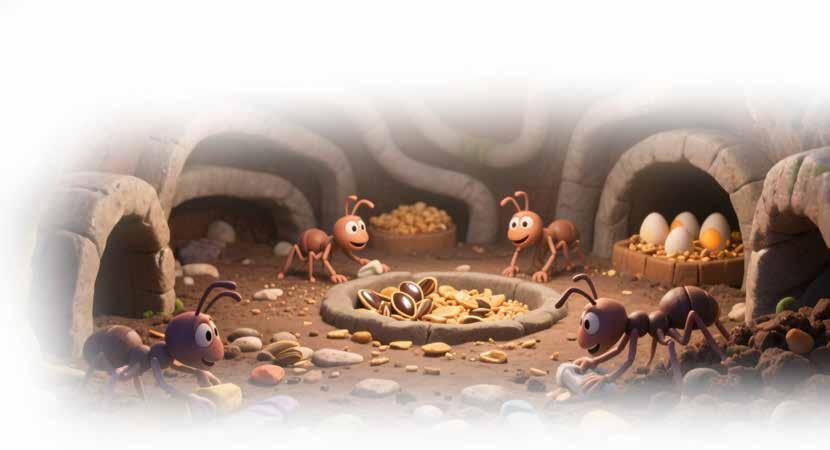
Ant colonies show the ____________ of cooperation. The ants’ ____________ or confidence in their jobs helps the colony reach ____________ every day. We can learn a lot from their teamwork and focus.
Word List with Simple Sentences
Word Sort
“tion” words
“sion” words
› Read the spelling words and sentences.
1. action The police took quick action to catch the burglar.
2. caption The caption under the picture explained the image.
3. section Each section of the test had ten questions.
4. direction She told me which direction to go to reach the park.
5. version I read the abridged version of the biography.
6. decision The decision to cancel the quiz made us all happy.
7. division I am in the oldest division of day camp.
8. reflection We saw the reflection of the trees in the pond.
9. musician The musician played a beautiful song on the piano.
10. electrician An electrician came to fix the lights in our house.
11. magician The magician amazed the crowd with a trick.
12. operation He had an operation to fix his broken arm.
13. expansion The school expansion added five new classrooms.
14. permission We have to bring a permission slip to join the trip.
15. collision There was a small collision between two bikes.
16. occasion A wedding is a happy occasion for families.
17. tension There was tension in the courtroom before the trial.
18. suggestion His suggestion to play outside was a great idea!
19. celebration We had a celebration for my sister’s graduation.
20. collection Ben has a collection of over a hundred rare stamps.
“cian” words
Spelling Patterns
The “shin” sound can be spelled different ways.
“tion” - Example: station “sion” - Example: collision “cian” - Example: magician
Spelling Word Activities
Analogies
Use each spelling word only once on this page.
› Write the spelling word that best completes each analogy.
1. Painting is to artist as music is to _____________.
2. Recipe is to chef as trick is to _____________.
3. Clock is to time as compass is to _____________.
4. Happiness is to joy as stress is to _____________.
5. Pipe is to plumber as wire is to _____________.
6. Book is to title as picture is to _____________.
7. Pie is to slice as whole is to _____________.
8. School is to lesson as hospital is to _____________.
9. Smaller is to reduction as bigger is to _____________.
Fill in the Blanks
› Write the spelling word that best completes each sentence.
1. The company has a special _____________ in charge of customer service.
2. We made a big _____________ when the twins turned one year old.
3. I asked my sister for _____________ to read her new novel.
4. We were stuck in traffic because of the car _____________.
5. His coin _____________ included many valuable coins.
6. I was lost in the zoo until someone pointed out the _____________ to the exit.
7. I only wear my fancy dress for a special _____________.
8. The firefighter’s quick _____________ saved the family from the burning house.
9. The new _____________ of the history book had better graphics.
10. It was a hard _____________, but I stayed home to study instead of going out.
Word Riddle
› Solve the riddle. I copy everything you do, But I’m not really part of you. You’ll see me in glass or on a lake, But try to touch me — I’m just fake. What am I?_______________

Spelling Word Story
› Complete the story using each spelling word once.
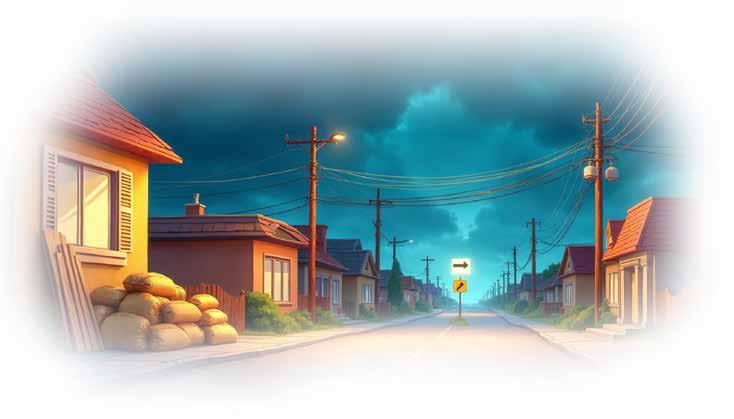
How Towns Prepare for Storms How Towns Prepare for Storms
When a major storm is on the way, towns must move into ____________ to protect their communities. At the local emergency station, officials from every department—fire, police, medical, and utilities—gather to plan their response. Each ____________ has its own job to do, and they work together to keep people safe.
One of the first steps is reviewing the latest ____________ of the weather forecast. Knowing the storm’s ____________—which way it’s heading—helps leaders decide which areas need to be warned. Once that’s clear, they make important ____________s like closing schools, canceling events, and opening shelters for people who need to evacuate or leave their home. During planning meetings, emergency managers often ask team members for ideas. A firefighter might make a ____________ to change evacuation routes because of traffic problems during a past storm. Ideas like this help make the emergency response plan better. In each ____________ or area of town, different teams help with preparation. Workers hand
out sandbags, board up windows, and set up signs to guide people to safety. An ____________ may be sent to check generators at the hospital, while medical teams prepare for injuries, such as victims from a car ____________. They may even prepare operating rooms, since some injuries may require an emergency ____________.
Inside shelters, volunteers welcome families and offer support. Sometimes, a local ____________ plays calming music to reduce the ____________ and help people feel more at ease. Activities for kids are also important. Some shelters may have a small ____________ of toys. Sometimes, a ____________ or local performer will visit a shelter to cheer people up.
After the storm passes, towns begin cleanup and repair. Town leaders request ____________ from state or federal officials to get help and funding. Some communities hold a ____________ once power is restored and roads are cleared. The end of the storm is a happy ____________.
Local newspapers often take pictures during the storm and the clean-up. Each picture usually has a short ____________ explaining what’s happening in the scene. Some photos even show the ____________ of buildings and trees in puddles left by the flood.
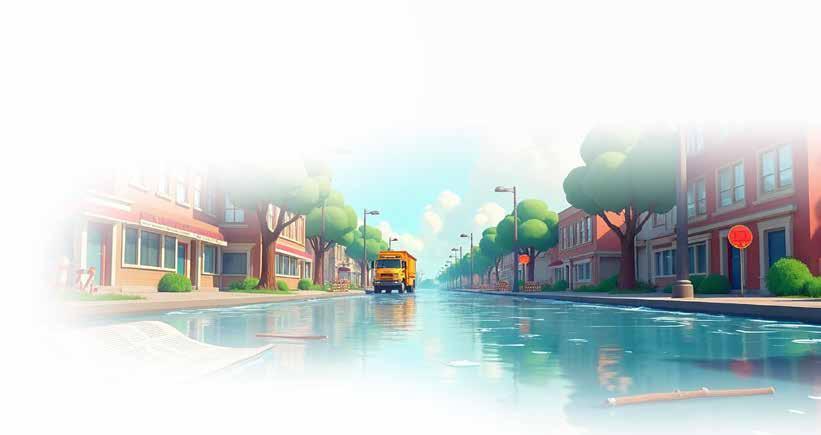
Communities are always working on the ____________ of their emergency programs. By making these bigger and better, they can help more people stay safe during storms.
Word List with Simple Sentences
Word Sort
“-able” words
“-ible” words
› Read the spelling words and sentences.

1. adorable The puppy was small and absolutely adorable.
2. terrible There was a terrible storm last night.
3. visible The moon was clearly visible in the night sky.
4. comfortable I sat reading for hours on the comfortable couch.
5. available There were no seats available at the front of the bus.
6. responsible She is very responsible with her schoolwork.
7. valuable My dad has a rare and valuable coin.
8. edible Those berries look strange, but they are edible
9. incredible The fireworks were incredible to watch.
10. dependable You can count on him because he is dependable
11. eligible He is eligible to vote because he is 18 years old.
12. legible Please make sure your handwriting is legible
13. flexible My schedule is flexible, so we can meet any time.
14. invisible The germs on your hands are invisible.
15. capable She is quite capable and can watch the active twins.
16. miserable He felt miserable when he was sick with the flu.
17. portable The portable speaker can fit in my pocket.
18. reasonable That’s a reasonable price for the book.
19. washable The paint is washable, so don’t worry if you get dirty.
20. noticeable The neon sign was very noticeable.

Spelling Patterns
The endings “-ible” and “-able” both mean “able to.” Examples: edible able to be eaten portable able to be moved
Spelling Word Activities
Word Sets
Use each spelling word only once on this page.
› Write the spelling word that goes together with each set of words.
1. cozy, relaxing, _____________
2. qualified, suitable, _____________
3. depressed, unhappy, _____________
4. obvious, clear, _____________
5. amazing, unbelievable, _____________
6. priceless, meaningful, _____________
7. readable, neat _____________
8. lovable, cute, _____________
9. reliable, trustworthy, _____________
Questions
› Write the spelling word that best answers each question.
1. What word describes something that is ready to be used?
2. What word describes someone who has the skills or power to do something? _____________
3. What word describes a decision or idea that is fair and makes sense?
4. What word describes something that can be seen? _____________
5. What word means that something can be cleaned?
6. What word means awful? _____________
7. What word describes something that is safe or suitable to eat?
8. What word means to carry or move from place to place?
9. What word means to be able to bend or adapt to change?
10. What word means not able to be seen?
Word Riddle
› Solve the riddle. I take care of my tasks, I’m reliable and true. When things go wrong, I own up, that’s what I do. What am I?________________
Spelling Word Story
› Complete the story using each spelling word once.

Why We Need Sleep Why We Need Sleep
Ever wonder what happens while you sleep? You’re not just resting. Your body is repairing itself, your brain is sorting memories, and your energy is being recharged for tomorrow. Without enough sleep, it’s hard to think clearly, react quickly, or feel your best. Good sleep keeps you alert, focused, and ____________ of handling whatever the day brings.
A lack of sleep can lead to awful or ____________ results. People may become forgetful, clumsy, or feel ____________. Their reactions slow down, and they are less ____________— meaning they can’t be trusted to act quickly or correctly. People who are sleep deprived are likely to make mistakes. During sleep, the body does amazing and ____________ work—it heals tissues, strengthens the immune system, and stores ____________ and important information in the brain.
Sleep also shapes your mood. Without rest, people may become grumpy and less ____________. This is especially true for children, who need more sleep than adults. Well-rested children are more ____________ and careful. They are also better able to concentrate and do well in school.
A quiet, cool, and dark room makes it easier to fall asleep. A _____________ pillow or blanket can help. To block out noise, some people use white noise machines. These machines are readily ____________ and ____________, so they can take them anywhere they sleep.
Some people even wear sleep masks to keep out light, they are ____________ which makes it easier to keep them fresh.
Sleep changes how you look. After a good night’s rest, the skin looks healthier and the eyes are brighter. The difference is often ____________ or obvious. On the other hand, a tired person may have dark circles or a dull face. These changes may be small, but they are clearly ____________.
Young children enjoy bedtime routines that help them relax. Reading a book, listening to calm music, or cuddling a cute and ____________ stuffed animal can help the body get ready for rest. A warm drink or light snack can be part of the routine, but only foods that are ____________ and easy on the stomach should be chosen. Some older children relax by writing in a journal before bed. It doesn’t matter if their writing is ____________ or not. What counts is that it helps them calm their minds and get ready for sleep.
Sleep is not just for children. Adults need rest, too. Now that they are ____________ to make their own choices, adults should make sensible decisions. They may need to be ____________ with the time they go to sleep for special events, but they should still make sure to get some rest. The effects of sleep are not ____________. It’s easy to see who has had enough sleep and who would benefit from more sleep.
Word Sort
“ie” words
“i” Before “e” Except After “c”
Word List with Simple Sentences
› Read the spelling words and sentences.
1. fierce The fierce storm knocked out the power system.
2. relief She felt relief after completing her math test.
3. their The workers finished their tasks before leaving.
4. field The farmer planted corn in the field.
5. either You can choose either cake or cookies for dessert.
6. chief The chief problem with the plan was the high cost.
7. thief The thief slipped away before anyone noticed him.
8. receive You should receive your report card this week.
“ei” after “c” words
“ei” words
9. ceiling There was a spider’s web hanging from the ceiling
10. caffeine Caffeine can be found in coffee and tea.
11. freight Many freight trucks deliver supplies to stores.
12. weird It felt weird to see snow on the streets in the spring.
13. neither I tried both pens, but neither of them worked.
14. seize The police will seize illegal items at the checkpoint.
15. protein Eggs are a great source of protein for breakfast.
16. leisure In her leisure time, she likes to read and draw.
17. foreign We learned a foreign language in school.
18. believe He didn’t believe the story until he had proof.
19. deceive It is wrong to deceive others by telling lies.
20. height His height helped him reach the top shelf easily.
Spelling Patterns
There is a common rule that says that “i” comes before “e” - Example: field When the letters come after the letter “c,” the order changes to “e” before “i” - Example: deceive There are some exceptions to the common rules. Examples: seize, height
Spelling Word Activities
Swap it
Use each spelling word only once on this page.
› Write the spelling word that has the same meaning as the bolded word(s).
1. Did you get my message yesterday?
2. She tried to grab the balloon before it floated away. _____________
3. I trust that my friend will keep my secret.
4. The book had a very strange ending.
5. The people’s coats were hanging on the rack by the door.
6. The lion is a strong and scary animal that everyone respects. _____________
7. It’s wrong to trick someone to get your way.
8. It was a comfort to know the storm has passed.
9. The horses were running freely through the meadow.
Rhyming
› Write the spelling word(s) that rhyme with the given words.
1. brief, leaf, _____________, _____________
2. peeling, feeling, _____________
3. light, night, _____________
4. weight, late, _____________
5. breather, seizure _____________, _____________, _____________
6. routine, machine, _____________, _____________
Word Riddle
› Solve the riddle. New food, new words, a different plan — What word means it’s from another land? ________________

Spelling Word Story
› Complete the story using each spelling word once.

The Making of Coffee The Making of Coffee
Coffee is a drink people around the world enjoy. It is made from beans that grow inside cherries on coffee plants. The ___________ job of farmers is to care for the plants so they produce good beans. These plants usually grow in a tropical ___________, where the temperature, rainfall, and soil quality all affect how well they grow. The ___________ of the field above sea level is important because beans grown higher up often have a stronger and better flavor. In some places, the weather can be ___________ — with strong winds, heavy rain, or intense sun — so farmers must protect their crops to keep the plants healthy. When the beans are ready, farmers pick them carefully. Sometimes, a ___________ might try to ___________ or grab their crops, so farmers must protect their field. The beans are washed
and sorted. Then, they are dried. Farmers often spread the beans out on large raised beds. These are platforms lifted off the ground that help air flow around the beans so they dry evenly. Sometimes, the beans are dried inside buildings with a solid ___________ that protects from rain and dust.
After drying, the beans are packed into bags and loaded onto ___________ trucks for delivery to exporters. Exporters ___________ the beans and carefully check their quality. They make sure no one tries to ___________ or cheat buyers by mixing in lower-quality beans. Then, they ship the beans to roasters for roasting.
Roasting gives coffee its smell and flavor. During roasting, the beans release ___________, which gives coffee its energy boost. Many people ___________ coffee gives them ___________ from feeling tired during the day. Some people think it’s ___________ that the beans start off green and turn brown during roasting, but this is a normal change caused by heat. After roasting, the beans are cooled and stored until they are ready to be ground and brewed. When it comes to drinking coffee, some people prefer it with milk, while others like it black. Some take it without sugar, while others add sweetness. Everyone has ___________ own way of enjoying it. You can choose ___________ way, depending on what you like best. ___________ choice is wrong—it all depends on your taste. Coffee can also be enjoyed during ___________ time, such as while relaxing or reading a book. Many people think coffee is only for energy, but it also contains small amounts of ___________ and other nutrients. Coffee can be made using different ___________ methods. Many of the ways coffee can be prepared have been developed in other countries. Coffee takes a long trip before it reaches you. From picking to roasting, each step is important. Now you know what goes into your cup!
Word Sort
“augh” as short “a”
Irregular -ough and -augh
Word List with Simple Sentences
› Read the spelling words and sentences.
1. laugh
We couldn’t help but laugh at the silly joke.
2. cough It’s important to cover your mouth when you cough
3. rough His hands felt rough after working in the garden.
“augh” as “aw”
4. tough
5. enough
6. haughty
7. through
“ough” as “aw”
“ough” as short “u”
“ough” as “oo”
“ough” as long “o”
“ough” as “ow”
The test was tough, but I studied hard and did well.
We didn’t have enough chairs for everyone.
The haughty boy bragged too much.
As we walked through the forest, we saw a deer.
8. thought I thought I lost my pen, but I found it under my desk.
9. bought He bought a bike with the money he had earned.
10. brought Sam brought his favorite toy to school.
11. caught I got caught in traffic on my way home.
12. taught My grandma taught me how to bake cookies.
13. fought
The two cats fought over the dish of milk.
14. sought He sought help when his homework was too hard.
15. daughter My daughter will be thirteen in June.
16. naughty The naughty puppy chewed up my homework.
17. drought
18. thorough
19. laughter
During the drought, the grass turned brown and dry.
The janitor did a thorough job cleaning our room.
The room filled with laughter when he told a joke.
20. dough The baker kneaded the dough and then let it rise.
Spelling Patterns
The letters “augh” and “ough” can make different sounds.
short “a” (“ah”) - Example: laugh “aw” sound - Examples: haughty, cough short “u” (“uh”) - Example: enough “oo” sound - Example: through long “o” (“oh”) - Example: thorough ”ow” sound - Example: drought
In some words, the “gh” creates an “f” sound. Can you find them?
Spelling Word Activities
Fill in the Blanks
Use each spelling word only once on this page.
› Write the spelling word that best completes each sentence.
1. We got _____________ in the heavy rain on our way to school.
2. The detective did a _____________ investigation into the case.
3. We are missing some ingredients for the cookie _____________.
4. The teacher _____________ us how to solve difficult math equations.
5. Becky had a cold and began to _____________ during class.
6. The room was filled with _____________ after the clown’s performance.
7. Tom _____________ a fruit platter to his grandfather.
8. We started to _____________ when the baby did something funny.
9. His _____________ attitude made him unpopular.
10. I _____________ it would be a good idea to leave before the rain.
Antonyms
› Write the spelling word that is an antonym to the bolded word(s).
1. We had _____________ water for the trip, but the food was lacking.
2. I _____________ a painting at the market and later sold it for double the price.
3. They _____________ for some time, but in the end, they apologized and made peace.
4. Their _____________ is artistic, while their son is musical.
5. The hiker slipped on the _____________ trail but soon found a smooth path.
6. The _____________ child made a mess, while the well-behaved one cleaned up.
7. After the long _____________, the flood revived all the plants.
8. They walked _____________ the forest and then went around the river.
9. Ben _____________ help from his teacher, while his friend avoided all assistance.
Word Riddle
› Solve the riddle. I’m strong, I’m hard, and I never back down. You’ll find me in fighters and kids who don’t frown. I am _______________.
Spelling Word Story
› Complete the story using each spelling word once.

When Water Runs Low When Water Runs Low
Rainfall is essential for plants, animals, and people. When there is ____________ rain, rivers flow, crops grow strong, and the land stays healthy and green. But during a ____________, which means a long time without rain, the soil becomes dry and ____________, making it very hard for plants to survive. Even the most ____________ plants start to wilt and die, and animals that depend on water must move to find water elsewhere.
Droughts can cause serious problems for farmers. One simple example is when a wheat farm gets ____________ in a drought—there isn’t enough wheat to harvest. This means bakeries don’t have enough flour to make ____________ for bread, cakes, and pastries.
Farmers have ____________ about the issue and ____________ new ways to protect their crops and use water more wisely. Some farmers have ____________ advanced tools to their fields, like drip irrigation systems that deliver water slowly and directly to plant roots. This helps save water and keeps crops alive even in dry times.
People also face challenges during droughts. Water shortages can make daily life harder, and some people may become careless or even ____________ by wasting water when they shouldn’t. In some places, people have ____________ and argued over limited water supplies. This is no small matter to ____________ about. That’s why communities have ____________ people to save water by fixing leaks and using less when washing dishes or brushing teeth. Parents may have to remind their ____________ to take short showers.
In areas that are used to droughts, some families have ____________ water tanks to collect rainwater during wet seasons.
Droughts can also affect health. Dry, dusty air makes people ____________ and get sick, especially young children.
Sometimes, people become ____________ and think there will always be enough water, but droughts show that’s not true. When rain finally comes, the thirsty land drinks it quickly, and plants begin to grow again. But the effects of a drought don’t disappear right away. The ground needs a ____________ soaking to recover fully, and sometimes, it takes weeks or months before everything is back to normal.
The sound of water rushing ____________ rivers and the sight of green fields can bring ____________ and hope after a dry season.
importance difference absence guidance independence action caption decision permission tension adorable visible comfortable available responsible
Review Word Activities
Suffixes -ance and -ence
› Write the spelling word that best completes each sentence.
1. His _____________ was noticed, as the group did not perform as well.
2. We needed the teacher’s _____________ to finish the assignment.
3. My little brother learned to tie his shoes and felt proud of his ________________.
4. Can you show the _____________ in the results of the two experiments?
5. The teacher explained the ______________ of reviewing every day.
“shin” Sound Words
› Write the spelling word that best matches each definition.
1. A choice you make _____________

2. Stress, worry, or being pulled tight _____________
3. Allowing someone to do something _____________
4. Something that someone does _____________
5. Words that explain a picture _____________
Suffixes -ible and -able
› Write the spelling word that best completes each analogy.

1. Silly is to funny as cute is to _______________.
2. Occupied is to busy as free is to _______________.
3. Child is to carefree as adult is to _______________.
4. Heard is to audible as seen is to _______________.
5. Tense is to nervous as relaxed is to _______________.

fierce relief believe their receive haughty through thought enough tough
Review Word Activities
“i” Before “e” Except After “c”
› Write the spelling word that rhymes with the bold word.
1. Make sure you _____________ your prize before you leave the carnival.
2. The tiger’s _____________ roar seemed to pierce the quiet jungle.
3. _____________ pants got dirty while putting on the spare tire.
4. If you _____________ in yourself, you can achieve anything.
5. She felt great _____________ when her belief that the test would be easy turned out to be true.

Irregular -ough and -augh
› Write the spelling word that best answers each question.
1. What word describes the action of going from one side of a tunnel to the other side? _____________
2. What word do you use to describe something or someone that is strong, and can handle hard situations? _____________
3. What word means as much as needed or sufficient? _____________
4. What word means someone who acts in a proud and rude way?
5. What word is the past tense of think? _____________
Review Word Activities
› Find the misspelled spelling word and rewrite it with the correct spelling.
1. The baby panda was absolutely adorible at the zoo.
2. I made a diffrence by helping clean the park.
3. He was responcible and did his chores before going out.
4. We got our parents’ permision to join the class trip.
5. Without a capshun, we couldn’t tell what the picture was about.

› Write the spelling words that best complete the letter.
Dear Mark,
I just wanted to say how proud I am of you this semester. I truly _____________ you are becoming more confident every day. Even when you missed class for a few days, your short _____________ didn’t stop you from keeping up. You came back ready to learn and asked for _____________ when you weren’t sure what to do.
Making the _____________ to stay focused and take _____________ was smart. You handled some _____________ moments, like the big test, and are learning what ______________ means. Always remember the _____________ of trying your best — it helps you grow.
Keep going — you’ve got this!
– Your teacher, Mr. Cole

Review Word Activities
› Write the spelling word that best completes each sentence. Then, find the words in the word search.
1. You must open your hands to _____________ a gift.
2. The boy acted _____________, turning his nose up at everyone.
Use each spelling word only once on these two pages.

What word am I?
4. I’m ready and free, not busy or full. You can use me; I’m helpful. What word am I?
5. I mean plenty, not too much or too small. Just the right amount, not lacking at all. What word am I?
6. I can come after stress or pain, and I make you feel calm again. What word am I?
Dictionary
Aabsence (AB-sens) noun the state of not being present
His absence was noticed in class.
absent (AB-sent) adjective not present in a place
He was absent from school yesterday.
abundant (uh-BUN-dunt) adjective present in large amounts
The garden had an abundant crop of apples.
acceptance (ak-SEP-tuns) noun the act of agreeing or receiving something
His acceptance of the prize made him smile.
accuse (uh-KYOOZ) verb to say someone did something wrong
No one should accuse him of lying.
acquire (uh-KWYR) verb to get or gain something
He will acquire new skills this year.
action (AK-shun) noun something done
The hero’s action saved the day.
active (AK-tiv) adjective always moving or busy

admitting (ad-MIT-ing) verb saying the truth or allowing entry
He is admitting he made a mistake.
adorable (uh-DOR-uh-bul) adjective very cute or lovable
The puppy is adorable.
advise (ad-VYZ) verb to give helpful ideas or guidance
The teacher will advise the students.
affective (uh-FEK-tiv) adjective related to emotions or feelings
Music can trigger affective responses.
allow (uh-LOW) verb to give permission
They will allow us to play outside.
allowed (uh-LOWD) verb past tense of allow; given permission

The active puppy ran around the yard.
activity (ak-TIV-i-tee) noun something people do for fun or work
Reading is my favorite activity.
address (AD-res) /(uh-DRES) noun/verb the place where someone lives; to speak to or to focus on
Write your address on the envelope. She will address the class.
adjust (uh-JUHST) verb to change something to fit better
Please adjust your chair.

She was allowed to join the game.
aloud (uh-LOWD) adverb spoken out loud
Please read the story aloud.
alternative (awl-TER-nuh-tiv) noun another option or choice
Juice is an alternative to soda.
amount (uh-MOWNT) noun how much of something there is I used the right amount of sugar.
angle (ANG-gul) noun the space where two lines meet
We measured the angle with a protractor.
angrily (ANG-gri-lee) adverb in a mad or upset way
He spoke angrily after the fight.
animal (AN-i-mul) noun a living creature that is not a plant
The lion is a wild animal.


answer (AN-ser) noun/verb a reply to a question
Please write your answer clearly.
antique (an-TEEK) noun an old and valuable object
The vase was a rare antique.

apparent (uh-PAIR-unt) adjective easy to see or understand It was apparent that she was tired.
apply (uh-PLY) verb to use something or to request Apply the paint evenly on the wall.
argue (AR-gyoo) verb to disagree with words The brothers argue often.
around (uh-ROWND) preposition on all sides or nearby He walked around the park.
assistance (uh-SIS-tuns) noun help or support

She needed assistance with her homework.
assurance (uh-SHUR-ens) noun a promise or guarantee He gave his assurance that he would help.
attendance (uh-TEN-duns) noun being present at a place
The teacher checked attendance.
attractive (uh-TRAK-tiv) adjective pleasing to look at
The garden is very attractive.
available (uh-VAY-luh-bul) adjective ready to be used
No seats are available on the bus.
Bbackpack (BAK-pak) noun a bag carried on the back
He put his books in his backpack.
balance (BAL-ens) noun staying steady without falling He kept his balance on the bike.
banner (BAN-er) noun a long strip of cloth with writing The banner hung over the door.
basic (BAY-sik) adjective simple or most important
Reading is a basic skill.
battery (BAT-er-ee) noun a device that stores and gives power
The flashlight works with one battery.
battle (BAT-ul) noun a fight between groups
The soldiers won the battle.
beautiful (BYOO-ti-ful) adjective very pretty or pleasing
The sunset looked beautiful.
beautifully (BYOO-ti-ful-lee) adverb in a very pretty or pleasing way She sang beautifully.
because (bi-KUZ) conjunction for the reason that I stayed inside because it rained.
belief (bi-LEEF) noun something accepted as true
His belief gave him strength.
believe (bi-LEEV) verb to accept as true I believe your story.
bench (bench) noun a long seat
They sat on the park bench.
Dictionary
blast (blast) noun a strong burst of air or sound
A blast of wind shook the tree.
blood (blud) noun red liquid in the body
Blood flows through veins.
bother (BOTH-er) verb to annoy or give trouble
Don’t bother the sleeping baby.
bottle (BOT-ul) noun a container for liquids
The baby drank from the bottle.
bought (bawt) verb past tense of buy
I bought apples at the store.
bounce (bowns) verb to spring back after hitting something
The ball can bounce high.
bow (boh) / (bow) noun/verb a looped knot; to bend forward
She tied a bow in her hair.
bowl (bohl) noun a round dish used for food
He ate cereal from a bowl.
brake (brayk) noun a device to slow or stop a vehicle
Step on the brake to stop the car.
branch (branch) noun part of a tree that grows from the trunk
The bird sat on the branch.
bravely (BRAYV-lee) adverb in a brave way
He bravely faced the challenge.
break (brayk) noun a short rest
We needed a break from studying.
brick (brik) noun a hard block used for building
The wall was made of brick.
bridge (brij) noun a structure that connects two sides
Cars crossed the bridge.
brilliant (BRIL-yunt) adjective very smart or very bright
The idea was brilliant.

brother (BRUH-ther) noun a boy with the same parents as you
My brother is older than me.
brought (brawt) verb past tense of bring
She brought her books to school.
brown (brown) adjective a color
The bear has brown fur.
budge (buj) verb to move a little
The heavy rock wouldn’t budge.
budget (BUJ-it) noun a plan for spending money
The school made a budget.
bundle (BUN-dul) noun a collection of things tied together
He carried a bundle of sticks.
busy (BIZ-ee) adjective having much to do

She is busy with her homework.

Ccaffeine (KAF-een) noun a chemical in coffee, tea, or soda that gives energy Soda often has caffeine.
camera (KAM-er-uh) noun a tool for taking pictures He used a camera on the trip.
cancel (KAN-sul) verb to call something off They will cancel the meeting.
candle (KAN-dul) noun wax stick that gives light The candle melted.

capable (KAY-puh-bul) adjective able to do something She is capable of solving the puzzle.
caption (KAP-shun) noun words under a picture that explain it
Read the caption under the photo.
captive (KAP-tiv) noun someone kept as a prisoner
The captive was freed.
carefully (KARE-ful-lee) adverb in a way that avoids mistakes He carried the vase carefully.
carnival (CAR-ni-vul) noun a fair with rides, games, and shows We went to the carnival.

Dictionary
ceiling (SEE-ling) noun the top inside surface of a room
The lamp hangs from the ceiling.
celebration (SEL-uh-BRAY-shun) noun a happy event to honor something
A cake was ready for the celebration.
cent (sent) noun one-hundredth of a dollar
The candy costs one cent.
center (SEN-ter) noun the middle point of something

Draw a dot in the center of the circle.
certainty (SUR-tun-tee) noun being sure about something I can say with certainty that the story is true.
chaos (KAY-os) noun complete disorder and confusion
The storm caused chaos in the town.
character (KAR-ak-ter) noun a person in a story or play
The character was brave.
check (chek) verb to look at something closely
Check your answer twice.
cheese (cheez) noun food made from milk I ate cheese on bread.
chief (cheef) noun a leader
carried (KARE-eed) verb past tense of carry She carried the box upstairs.
castle (KAS-ul) noun a large stone building, often for kings or queens
The castle stood on a hill.
caught (kawt) verb past tense of catch I caught the ball.
The fire chief helped everyone.
children (CHIL-dren) noun more than one child
The children played in the park.
chorus (KOR-us) noun part of a song repeated after each verse
Everyone sang the chorus.
© Lighthouse Curriculum. Copying strictly prohibited.
Dictionary
city (SIT-ee) noun a large town
New York is a big city.

clinic (KLIN-ik) noun a place where people get medical help She went to the clinic for a checkup.
close (klohz) / (klohs) verb/adjective to shut; near Please close the door. The store is close to school.
cloud (klowd) noun white or gray mass in the sky
A cloud covered the sun.
coast (kohst) noun land near the ocean

We walked along the coast.
cocoa (KOH-koh) noun a powder made from chocolate beans
Chocolate cake needs cocoa for flavor.
collection (kuh-LEK-shun) noun a group of things gathered He has a stamp collection.
collision (kuh-LIZH-un) noun a crash between two or more things
The cars had a collision.
comfortable (KUM-fur-tuh-bul) adjective providing ease or relaxation
The chair is very comfortable.
common (KOM-un) adjective happening often or shared by many Apples are a common fruit.
company (KUM-puh-nee) noun a business or group of people together
He works at a big company.
competitive (kum-PET-i-tiv) adjective trying to do better than others
The game was very competitive.
complain (kum-PLAIN) verb to say you are unhappy about something
Don’t complain about the food.
completing (kum-PLEET-ing) verb finishing something
She is completing her homework.
computer (kum-PYOO-ter) noun a machine that stores and uses information
The secretary typed on the computer.
concrete (KON-kreet) noun a hard building material
The sidewalk is made of concrete.
confident (KON-fi-dent) adjective sure of yourself or certain about something
She is confident she will win.
conquer (KON-ker) verb to take control or win against something
The army will conquer the land.
consistent (kun-SIS-tent) adjective acting the same way over time
His work is always consistent.
contain (kun-TAYN) verb to hold inside
The bottle can contain water.
contest (KON-test) noun a game or competition
Our class held a reading contest.
continue (kun-TIN-yoo) verb to keep going
Please continue reading the story.
contract (KON-trakt) / (kun-TRAKT) noun/verb a written agreement; to shrink or pull together
The contract had many rules to follow. Muscles contract when they move.
convenient (kun-VEEN-yent) adjective easy to use or helpful
The store is in a convenient place.

cough (kawf) verb to force air out of the throat with a sound I felt I had to cough in class.
country (KUN-tree) noun a land with its own people and rules Canada is a country.
cousin (KUZ-in) noun the child of your aunt or uncle
My cousin lives nearby.
cover (KUH-ver) verb to put something over Cover the pot with a lid.

covered (KUH-verd) adjective hidden
The table was covered with cloth.
covering (KUH-ver-ing) noun something placed over or on top
The covering kept the food warm.
crayon (KRAY-on) noun a colored stick used for drawing She drew a picture with a crayon.
creative (kree-AY-tiv) adjective able to make new and original things
He is creative in art class.
crisis (KRY-sis) noun a time of serious trouble
The flood caused a crisis in town.
crowd (krowd) noun a large group of people
A crowd filled the stadium.
crying (KRY-ing) verb making tears come out from the eyes
The baby is crying.
customer (KUS-to-mer) noun a person who buys goods or services
The customer paid at the counter.
cycle (SY-kul) noun a set of events that repeat in order
The moon goes through a cycle.
Ddancing (DAN-sing) verb moving to music
They are dancing on stage.
danger (DAYN-jer) noun the chance of harm
The fire was a danger to all.
daughter (DAW-ter) noun a girl in a family
Their daughter is eight years old.
deceive (di-SEEV) verb to make someone believe something untrue
He tried to deceive his friend.
decision (di-SIZH-un) noun a choice made after thinking It was a hard decision to make.
decisive (di-SY-siv) adjective able to make choices quickly and clearly
His decisive plan solved the problem.
degree (di-GREE) noun a unit for measuring temperature or angle
It is 80 degrees outside.
delete (di-LEET) verb to erase or remove
Please delete the double picture.
demand (di-MAND) verb to ask strongly for something
The teacher will demand quiet.

dependable (di-PEN-duh-bul) adjective able to be trusted or reliable
He is a dependable friend.
description (di-SKRIP-shun) noun words that tell what something is like
Write a description of your pet.
Dictionary
desert (DEZ-urt)/ (di-ZURT) noun/verb
dry land with little water; to leave someone or something
Camels live in the desert. He will not desert his friend.
deserve (di-ZURV) verb to be worthy of something They deserve a rest after working.
desire (di-ZYR) noun a strong wish for something His desire was to travel.
detective (de-TEK-tiv) noun a person who solves crimes
The detective followed the clues.
diagram (DY-uh-gram) noun a drawing, plan, or chart that makes things easier to understand
disable (di-SAY-bul) verb to turn off or make unable to work
Please disable the alarm.
disagree (dis-uh-GREE) verb to have a different opinion I disagree with that idea.

The book had a diagram of the heart.
difference (DIF-er-ens) noun the way things are not the same
The difference between them is clear.
different (DIF-er-ent) adjective not the same
The two answers are different.
difficulty (DIF-i-kul-tee) noun something hard to do
He had difficulty solving the puzzle.
digit (DIJ-it) noun any single number 0–9
The digit 5 is in the number 25.
directing (di-REK-ting) verb guiding or leading
She is directing the play.
direction (di-REK-shun) noun the way someone or something goes
He pointed in the right direction.
disability (DIS-uh-BIL-i-tee) noun a condition that limits what someone can do
The ramp helps people with a disability.
disappear (dis-uh-PEER) verb to go out of sight
The rabbit will disappear into its hole.
disappoint (dis-uh-POINT) verb to make someone feel let down I don’t want to disappoint you.
disapprove (dis-uh-PROOV) verb to think something is wrong I disapprove of wasting food.
disassemble (dis-uh-SEM-bul) verb to take apart
They will disassemble the machine.
disbelief (dis-buh-LEEF) noun the feeling of not believing something She shook her head in disbelief.
disconnect (dis-kuh-NEKT) verb to separate or detach
Disconnect the cord from the outlet.
disembark (dis-em-BARK) verb to get off a ship, plane, or bus
The passengers will disembark at the dock.
dishonest (dis-ON-est) adjective not telling the truth
It is dishonest to lie.
disinfect (dis-in-FEKT) verb to clean to kill germs
Please disinfect the table.
dislike (dis-LYK) verb to not like I dislike carrots.

disloyal (dis-LOY-ul) adjective not faithful
The disloyal friend left him.
disobey (dis-oh-BAY) verb to not follow rules
Don’t disobey your teacher.
disorder (dis-OR-der) noun a problem or sickness
The doctor treated a sleep disorder.
displace (dis-PLAYS) verb to move something from its place
They tried to displace the rock.
dispute (dis-PYOOt) noun an argument or fight
They had a dispute over the land.

disrupt (dis-RUPT) verb to interrupt an activity or event
Don’t disrupt the class.
distance (DIS-tuns) noun how far it is from one place to another
The distance to town is five miles.
distant (DIS-tunt) adjective far away
The mountain looks distant.
distrust (dis-TRUST) verb to not trust
She began to distrust the stranger.
division (di-VIZH-un) noun the act of splitting into parts
The division of candy was fair.

doctor (DOK-ter) noun a person trained to help sick people
The doctor gave me medicine.
dough (doh) noun a soft mix used to make bread
She kneaded the dough.
drastic (DRAS-tik) adjective extreme or severe
They made a drastic change to the rules.
driven (DRIV-en) adjective very determined
She is a driven student.
drought (drowt) noun a long time with little or no rain
The crops died during the drought.
duck (duhk) noun/verb
a bird that swims and quacks; to lower the head quickly
The duck waddled into the pond. Duck so that the ball won’t hit you.
Eeasy (EE-zee) adjective not hard
The test was easy.
edible (ED-i-bul) adjective safe to eat
The berries are edible.
education (ED-yoo-KAY-shun) noun the process of learning
Education is important for everyone.
effort (EF-ert) noun hard work
She put effort into the project.
either (EE-ther) / (EYE-ther) adjective one or the other
You may take either pencil.
electrician (ee-lek-TRISH-un) noun a person who works with electrical systems
The electrician fixed the wires.
elegance (EL-i-guns) noun grace and beauty
The queen walked with elegance.

Dictionary
eligible (EL-i-ji-bul) adjective able to take part
He is eligible to vote.
energy (EN-er-jee) noun power or strength to do work
Running uses a lot of energy.
engage (en-GAYJ) verb to take part or get involved
We will engage in a new project.
engine (EN-jin) noun the machine that powers a vehicle
Turn the key to start the car engine.
enough (i-NUF) adjective as much as needed
We have enough food for all.
entrance (EN-truns) noun the way into a place
Use the front entrance.
equal (EE-kwul) adjective the same in amount or value
Both sides are equal in length.
escape (es-KAYP) verb to get away from something
The mouse will escape the trap.
evening (EEV-ning) noun the time after the afternoon
We walked in the evening.
example (ig-ZAM-pul) noun a sample, to make things clearer
The teacher gave an example.
excellence (EK-suh-luns) noun the state of being very good
Excellence takes practice and effort.
excellent (EK-suh-lunt) adjective very good
She gave an excellent answer.
expansion (ek-SPAN-shun) noun the act of becoming larger
The company planned an expansion.
expensive (ek-SPEN-siv) adjective costing a lot of money
Diamonds are expensive gems.
explain (eks-PLAYN) verb to make something clear
Please explain the rules.
explosive (eks-PLOH-siv) noun something that can blow up
The explosive was dangerous.

Ffamily (FAM-i-lee) noun parents and children together
My family ate dinner.
favorite (FAY-vrit) adjective liked the most
Blue is my favorite color.
few (fyoo) adjective a small number
A few students stayed after class.
field (feeld) noun an area of open land
The cows are in the field.
fierce (feers) adjective very strong and wild
The lion gave a fierce roar.
final (FY-nul) adjective last
This is the final chapter.
flexible (FLEKS-i-bul) adjective able to bend without breaking
The straw is flexible and bends.
flood (flud) noun water covering land
The flood ruined the houses.

flour (FLOW-er) noun ground wheat used for baking

We used flour to bake bread.
flower (FLOW-er) noun the colorful part of a plant
The flower bloomed in spring.
foreign (FOR-in) adjective from another country
She speaks a foreign language.
forest (FOR-est) noun a large area of trees
Animals live in the forest.
fought (fawt) verb past tense of fight
The soldiers fought bravely.
(fownd) verb past tense of find

He found a coin on the ground.
(FRACK-shun) noun a part of a whole in math
One-half is a fraction.
(frayt) noun goods carried by trains, ships, or trucks
The train carried freight.
(FREE-kwent) adjective happening often
We take frequent walks.
(frend) noun someone you like and trust She is my best friend.
(fuhj) noun soft, sweet candy
He made chocolate fudge.
(fyool) noun material used to make energy or power
Cars use fuel to run.
(FYOO-cher) noun the time that has not yet come
We wonder about the future.
Ggeneral (JEN-er-ul) adjective usual or common
He gave a general answer.
gentle (JEN-tul) adjective soft and kind
The puppy is gentle.
gently (JEN-tlee) adverb in a soft or kind way
She gently held the baby.
giant (JY-unt) adjective very big
A giant spider scared me.

ginger (JIN-jer) noun a spice from a root, used in food
Ginger tea is healthy.
giraffe (ji-RAF) noun a tall animal with a long neck
The giraffe ate leaves from the tree.
global (GLOH-bul) adjective worldwide; relating to the whole world
Climate change is a global issue.
graduate (GRAD-joo-it) verb to finish school I will graduate next year.
gravity (GRAV-i-tee) noun the force that pulls things toward Earth
Gravity keeps us on the ground.
ground (grownd) noun the solid surface of the earth
The ball hit the ground.
grumble (GRUM-bul) verb to complain in a low voice
He will grumble about chores.
guessing (GES-ing) verb saying an answer without being sure
He kept guessing until he was right.
guidance (GY-duns) noun help or advice
The teacher gave guidance.

Dictionary
Hhairspray (HAIR-spray) noun liquid that keeps hair in place
Use only a little bit of hairspray.
happily (HAP-i-lee) adverb in a glad way
He happily shared his toys.
haughty (HAW-tee) adjective acting as if better than others
The haughty boy bragged a lot.
health (HELTH) noun the condition of your body
Exercise is good for your health.
hear (heer) verb to notice sound with your ears
I can hear music.
height (HYT) noun how tall something is
The tree grew to a great height.
here (heer) adverb in this place
Come sit here.
history (HIS-tuh-ree) noun events from the past
We study history in school.
human (HYOO-mun) noun a person

Every human needs food and water.
humid (HYOO-mid) adjective wet or damp in the air
It feels humid outside.
humility (hyoo-MIL-i-tee) noun not thinking you are better than others
Her humility made her respected.
Iidea (y-DEE-uh) noun a thought or plan
He had an idea for a project.
image (IM-ij) noun a picture or likeness
He drew an image of a tree.
imaginative (i-MAJ-i-na-tiv) adjective full of new and creative ideas
The child is very imaginative.

honesty (ON-es-tee) noun the quality of telling the truth
Honesty is important in friendship.
honor (ON-er) noun respect or special recognition
He received honor for his bravery.
horizon (hoh-RY-zun) noun where the sky seems to meet the land or sea
The sun set on the horizon.
hospital (HOS-pi-tul) noun a place where sick people are cared for
She went to the hospital.
imperative (im-PER-uh-tiv) adjective very important or urgent
It is imperative to study for the test.
importance (im-POR-tuns) noun the state of mattering a lot
Parents teach us the importance of respect.
include (in-KLOOD) verb to have as part of something
The set will include pencils.
inclusive (in-KLOO-siv) adjective open to everyone
The game is inclusive of all students.
income (IN-kum) noun money someone earns
His income pays for the house.
incredible (in-KRED-i-bul) adjective amazing or hard to believe
The show was incredible.


independence (in-di-PEN-duns) noun freedom from control by others
Independence helps kids grow more confident.
inhaled (in-HAYLD) verb breathed in
She inhaled the fresh air.

innocent (IN-o-sunt) adjective not guilty; not having done wrong
The man was innocent of the crime.
inscription (in-SKRIP-shun) noun words carved or written on something
The stone had an inscription.
insect (IN-sekt) noun a small animal with six legs
A fly is an insect.
instant (IN-stunt) noun a very short time
He answered in an instant.
instrument (IN-stru-ment) noun a tool or device, especially for making music
The violin is a string instrument.
invisible (in-VIZ-i-bul) adjective not able to be seen
The stars were invisible in daylight.
island (EYE-lund) noun land with water all around it
Hawaii is an island.
its (its) pronoun shows something belongs to it
The dog wagged its tail.

it’s (its) contraction short for “it is”
It’s cold outside.

Jjelly (JEL-ee) noun sweet food made from fruit
She spread jelly on her toast.
joke (johk) noun something said to make people laugh
He told a funny joke.
judge (juj) noun a person who decides cases in court
The judge spoke to the lawyer.
Kkingdom (KING-dum) noun a land ruled by a king or queen
The kingdom was rich and strong.
knowledge (NOL-ij) noun what someone knows or learns
Reading gives you knowledge.
knuckle (NUK-ul) noun the joint of a finger
He scraped his knuckle.
Llabel (LAY-bul) noun a tag with information
Read the label on the bottle.
language (LANG-gwij) noun words people use to talk English is a language.
later (LAY-ter) adverb after a time
We will play later.
laugh (laf) verb to make happy sounds
The kids laugh at the joke.
laughter (LAF-ter) noun the sound of laughing
The room was full of laughter.
Dictionary
lead (leed)/ (led) verb/noun to guide or be in front; a heavy metal
The teacher will lead the line. The pipe was made of lead.
legal (LEE-gul) adjective allowed by law
Voting is a legal right.
legend (LEJ-und) noun a story from the past that may not be true
The book tells an old legend.
legible (LEJ-i-bul) adjective easy to read
His handwriting is legible.
leisure (LEE-zher) noun free time for rest or fun
She reads in her leisure time.
length (length) noun how long something is
The length of the rope is 10 feet.
liberty (LIB-er-tee) noun freedom
The soldiers fought for liberty.
lion (LY-un) noun a large wild cat
The lion roared loudly.
lose (looz) verb to not win or to misplace something Don’t lose your homework.
loud (lowd) adjective a lot of noise
The music was loud.
lunch (lunch) noun the meal in the middle of the day
We ate lunch together.
Mmagic (MAJ-ik) noun tricks or powers that seem special
We saw a magic show.
magician (ma-JISH-un) noun a person who does tricks with magic
The magician amazed the crowd.
maintenance (MAYN-ten-ans) keeping something in good condition
The car needs maintenance.
manage (MAN-ij) verb to control or run something
He will manage the project.
manner (MAN-er) noun a way of acting or behaving
She has a kind manner.

marble (MAR-bul) noun a smooth stone or a small glass ball
The floor was made of marble.
massive (MAS-iv) adjective very large
The castle was massive.
maybe (MAY-bee) adverb possibly
Maybe it will rain today.
measure (MEZH-ur) verb to find the size or amount
Measure the desk with a ruler.
medal (MED-ul) noun a piece of metal given as a prize He won a gold medal.
member (MEM-ber) noun one person in a group
She is a member of the team.
memory (MEM-uh-ree) noun something remembered
My best memory is of summer camp.


mention (MEN-shun) verb to talk about something
Did he mention the test?
(MEE-ter) noun a unit of length
The stick is one meter long.
method (METH-ud) noun a way of doing something
The new method solved the problem.
middle (MID-ul) noun the center part
He sat in the middle seat.
million (MIL-yun) noun the number 1,000,000
The city has one million people.
miracle (MIR-uh-kul) noun something wonderful that cannot be explained
The baby’s recovery was a miracle.
miserable (MIZ-er-uh-bul) adjective very unhappy
He felt miserable in the rain.
misprint (MIS-print) noun a mistake in printing
The book had a misprint.
mistake (mi-STAYK) noun something done wrong
She made a mistake on the test.
model (MOD-ul) noun a small copy of something
He built a model of the bridge.
moment (MOH-ment) noun a short period of time
Wait a moment, please.
money (MUN-ee) noun coins or paper used to buy things
He saved his money.
mosquito (mus-KEE-toh) noun a small insect that bites
The mosquito bit me.
motel (mo-TEL) noun a small hotel for travelers
They stayed at a motel.
motor (MOH-ter) noun a machine that makes something move
The motor stopped working.
mountain (MOWN-tin) noun very high land
We climbed the mountain.
museum (myoo-ZEE-um) noun a place where objects are shown
We visited the art museum.
music (MYOO-zik) noun the main tune of a song
She likes music.
musician (myoo-ZISH-un) noun a person who plays or makes music
The musician played the guitar.
N
narrative (NAR-uh-tiv) noun a story or account of events
The novel is told in a narrative style.
natural (NACH-ur-ul) adjective found in nature, not made by people
The forest is a natural place.
naughty (NAW-tee) adjective behaving badly
The naughty child didn’t listen.
negative (NEG-uh-tiv) adjective showing “no” or bad
The test showed a negative result.
neighbor (NAY-bur) noun a person who lives near you
Our neighbor brought us cookies.
© Lighthouse Curriculum. Copying strictly prohibited.
neither (NEE-ther) / (NY-ther) pronoun not one or the other
Neither answer was correct.
neon (NEE-on) noun a bright gas used in glowing signs
The neon sign lit up the street.
nephew (NEF-yoo) noun the son of your brother or sister
My nephew is five years old.
neutral (NOO-trul) adjective not taking sides
The judge was fair and neutral.
nickel (NIK-ul) noun a U.S. coin worth five cents
A nickel is worth five cents.
niece (nees) noun the daughter of your brother or sister
Her niece is very funny.
noise (noiz) noun a loud or unpleasant sound
The noise kept me awake.
notice (NOH-tis) verb to see or pay attention
Did you notice the rainbow?
noticeable (NOH-tis-uh-bul) adjective easy to see
The stain was very noticeable.
novel (NOV-ul) noun a long story written as a book
She read a novel for school.
novelty (NOV-ul-tee) noun something new or unusual
The toy was a novelty item.
Oobject (OB-jekt) / (ub-JEKT) noun/verb a thing you can see or touch; to disagree
The object is round. He will object to the rule.
observant (ub-ZUR-vunt) adjective quick to notice things
The observant student found the mistake.
occasion (uh-KAY-zhun) noun a special event or time
Graduation is an important occasion.
offspring (AWF-spring) noun the children of a person or animal
The bird fed its offspring.
olive (OL-iv) noun a small green or black fruit
She ate an olive.
open (OH-pen) verb not closed
Please open the door.
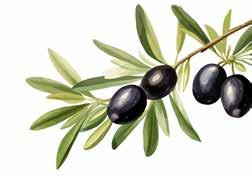
operation (op-er-AY-shun) noun medical surgery or an organized process
The doctor performed an operation.
overcast (OH-ver-kast) adjective cloudy and gray
The sky was overcast.
overdo (oh-ver-DOO) verb to do too much
Don’t overdo your workout.
overestimate (oh-ver-ES-ti-mayt) verb to guess too high

You overestimate how strong you are.
overflow (oh-ver-FLOH) verb to spill over the edge
The tub may overflow with water.
overheat (oh-ver-HEET) verb to become too hot
The car will overheat in traffic.
overload (oh-ver-LOHD) verb to put too much weight or work on Don’t overload the backpack.
overreact (oh-ver-ree-AKT) verb to respond too strongly She will overreact to the joke.
overtime (OH-ver-tym) noun extra time for work or play He worked overtime at his job.
overuse (oh-ver-YOOZ) verb to use too much Don’t overuse the markers.
overwork (oh-ver-WURK) verb to work too much
He will overwork if he’s not careful.
owner (OH-ner) noun a person who has something The dog’s owner is kind.
oxygen (OK-si-jen) noun the gas people need to breathe We breathe oxygen.

Ppanicked (PAN-ikt) verb became very afraid suddenly She panicked during the test.
parade (puh-RAYD) noun a line of people or cars for celebration The parade was on Main Street.
patience (PAY-shuns) noun the ability to stay calm while waiting Waiting in line takes patience.
patient (PAY-shunt) adjective calm while waiting She is patient with children.
pattern (PAT-urn) noun a design that repeats The birds flew in a V pattern.
payment (PAY-ment) noun money given for something He made a payment for the bike.
peace (pees) noun quiet and no fighting
The groups made peace.
people (PEE-pul) noun men, women, and children
Many people came to the park.
pepper (PEP-er) noun a plant or spice used in cooking She cut a green pepper.
performance (per-FOR-muns) noun a show or how well something is done The class put on a great performance.
permission (per-MISH-un) noun the act of allowing something He asked for permission to leave.
permit (PER-mit) / (per-MIT) noun/verb official permission; to allow He got a building permit. They will permit us to enter.
persistent (per-SIS-tunt) adjective not giving up
The persistent runner finished the race.
picture (PIK-chur) noun a drawing or photo I drew a picture of a tree.
piece (pees) noun a part of something She ate a piece of cake.
pillow (PIL-oh) noun a soft thing for resting your head The pillow is on the bed.
pilot (PY-lut) noun a person who flies a plane
The pilot landed safely.
Dictionary
planet (PLAN-it) noun a large round object in space
Earth is a planet.
planned (pland) verb decided or prepared ahead of time
We planned a trip.
plastic (PLAS-tik) noun a light material used to make many things
The bottle is made of plastic.
pleasant (PLEZ-unt) adjective nice or enjoyable
We had a pleasant walk.
please (pleez) verb to make someone happy; used politely Please open the door.
pocket (POK-it) noun a small pouch in clothes
He put the coin in his pocket.
poem (POH-em) noun a piece of writing with rhythm or feeling
She read a poem in class.
poison (POY-zun) noun something that can harm or kill if eaten or touched
Some mushrooms have poison.
police (puh-LEES) noun people who keep order and safety
The police helped the lost child.
portable (POR-tuh-bul) adjective easy to carry
This is a portable cooler.
positive (POZ-i-tiv) adjective showing “yes” or good
She has a positive attitude.
possible (POS-i-bul) adjective able to happen
It is possible to win the game.
presence (PREZ-uns) noun being in a place

His presence calmed the group.
present (PREZ-unt) / (pri-ZENT) noun/ adjective/verb gift or being here; to give or show
He got a present. She is present in class. I will present my work.
president (PREZ-i-dent) noun the leader of a country or group
The president gave a speech.
principal (PRIN-si-pul) noun the head of a school
The principal spoke at assembly.
principle (PRIN-si-pul) noun a basic rule or idea
Honesty is an important principle.
printed (PRIN-tid) verb made using a printer or press
The paper was printed yesterday.
printing (PRIN-ting) verb the act of making words or pictures on paper

The shop is printing books today.
problem (PROB-lum) noun something hard to fix
The water leak was a problem.
produce (PROH-doos) / (PROH-dyoos) noun/ verb fruits and vegetables; to make We bought fresh produce. Factories produce goods.
product (PROD-ukt) noun something that is made or grown
Bread is a product made from wheat.
profit (PROF-it) noun money made after expenses are paid
The store made a profit.

project (PROJ-ekt) noun a task or assignment
Our project is about animals.
project (pro-JEKT) verb to throw forward or show
The machine will project the image.

promise (PROM-is) noun a pledge to do something
She made a promise to help.
protein (PROH-teen) noun a nutrient that helps build the body
Meat and beans have protein.
proudly (PROWD-lee) adverb in a way that shows pride He proudly showed his award.
public (PUB-lik) noun all the people
The park is open to the public.
pumpkin (PUMP-kin) noun a large orange vegetable
The pumpkin is big and round.
puzzle (PUZ-ul) noun a game or problem to solve He worked on a hard puzzle.
Qquality (KWOL-i-tee) noun how good or bad something is The shoes are of high quality.

quick (kwik) adjective fast
The rabbit is quick.
quickly (KWIK-lee) adverb done fast
She ran home quickly.
quietly (KWY-et-lee) adverb in a quiet way
He read quietly.
quiz (kwiz) noun a short test
We had a spelling quiz.

Rquarter (KWOR-ter) noun one-fourth; a U.S. coin worth 25 cents
A quarter of the pizza is gone.
queen (kween) noun a woman ruler of a country
The queen wore a crown.
question (KWES-chun) noun something asked to get an answer I asked a question in class.

raise (rayz) verb to lift up or increase
Please raise your hand.
reality (ree-AL-i-tee) noun the state of things being real
In reality, the test was easy.
reason (REE-zun) noun why something happens
The reason he left was clear.
reasonable (REE-zun-uh-bul) adjective fair or sensible
That is a reasonable price.
rebel (REB-ul) / (ri-BEL) noun/verb a person who resists authority/to resist
The rebel refused to obey. They rebel against rules.
receipt (ri-SEET) noun paper that shows you paid
Keep the receipt for the book you bought.
receive (ri-SEEV) verb to get something I will receive a gift.

Dictionary

receiver (ri-SEE-ver) noun the part of a phone you listen to She picked up the receiver.
record (REK-ord) / (ri-KORD) noun/verb information kept in writing; to save sounds or actions
The doctor kept a record. We will record the song.
reflection (ri-FLEK-shun) noun an image seen in a mirror or water I saw my reflection in the glass.
refuse (ri-FYOOZ) / (REF-yoos) verb/noun to say no; trash or waste
I refuse to go. The bin is full of refuse.
region (REE-jun) noun a large area of land
This region has many farms.
relative (REL-uh-tiv) noun a family member
My uncle is my relative.

relief (ri-LEEF) noun a feeling of comfort after worry It was a relief to finish the test.
reluctant (ri-LUK-tunt) adjective not wanting to do something He was reluctant to try.
remote (ri-MOHT) adjective far away
The island is in a remote place.
replied (ri-PLYD) verb answered
She replied to the letter.
rescue (RES-kyoo) verb to save from danger
The firefighter will rescue the dog.
residence (REZ-i-duns) noun a place where someone lives
His residence is on Main Street.
resistance (ri-ZIS-tuns) noun the act of fighting against
The protest showed resistance.
responsible (ri-SPON-suh-bul) adjective trusted to do what is right
He is responsible for the project.
result (ri-ZULT) noun what happens because of something
The test result was good.
rhyme (rym) noun/verb words that end with the same sound “Cat” and “hat” rhyme.
roller (ROH-ler) noun a tool with a round part that turns
She used a roller to paint.
rough (ruf) adjective not smooth
The rock felt rough.
round (rownd) adjective shaped like a circle
The ball is round.
royalty (ROY-al-tee) noun kings, queens, and their family
It’s an honor to meet with royalty.
rusty (RUS-tee) adjective covered with rust
The bike chain was rusty.
Ssafety (SAYF-tee) noun being safe from harm
Wear a helmet for safety.
sample (SAM-pul) noun a small part to show what something is like
Try a sample of the cake.
saved (sayvd) verb kept safe or rescued
The firemen saved the kittens.
saving (SAY-ving) verb keeping safe
He is saving money.
scent (sent) noun a smell
The flower has a sweet scent.
scout (skowt) noun someone who looks for things
The scout searched the woods.
scramble (SKRAM-bul) verb to move quickly or mix up They scramble up the hill.
scrap (skrap) noun a small leftover piece
He used a scrap of paper.
scrapbook (SKRAP-book) noun a book for keeping pictures and notes
She made a scrapbook of her trip.
scrape (skrayp) verb to rub hard and damage a surface
Don’t scrape your knee on the ground.
scraping (SKRAY-ping) verb rubbing hard against something She is scraping the pan.
scratch (skrach) verb to cut or mark with a sharp thing
The cat will scratch the couch.
scrawny (SKRAW-nee) adjective very thin
The scrawny dog was hungry.
scream (skreem) noun a loud cry
I heard a scream in the dark.
screech (skreech) noun a high, sharp sound
The car made a screech.
screen (skreen) noun the mesh that covers a window
The window screen was open.
screwdriver (SKROO-dry-ver) a tool for turning screws
He fixed it with a screwdriver.
scribble (SKRIB-ul) verb/noun to write or draw in a messy way
The child will scribble on the page.
scribe (skryb) noun a person who makes written copies of documents
The scribe wrote the text by hand.
script (skript) noun written words for a play or show
The actor read the script.
scroll (skrohl) noun a rolled-up piece of writing
The king read the scroll.
scrub (skrub) verb to clean by rubbing hard
Please scrub the dirty pan.
scrubber (SKRUB-er) noun a tool for cleaning
Use a scrubber for the floor.
seal (seel) verb to close tightly
Please seal the envelope.

season (SEE-zun) noun one of the four parts of the year Summer is my favorite season.
secret (SEE-kret) noun something kept hidden
The cave had a secret door.
section (SEK-shun) noun a part of something larger
Read the first section of the book.
Dictionary
seize (seez) verb to take hold of quickly

The police will seize the stolen goods.
sentence (SEN-tuns) noun a group of words that are a complete thought Write a complete sentence.
series (SEER-eez) noun things that happen one after another
The story is part of a series of books.
several (SEV-rul) adjective more than two but not many
Several students raised their hands.
shelter (SHEL-ter) noun a safe place to stay
The dog was taken to a shelter.
shoulder (SHOHL-der) noun the part of the body between the neck and arm
He carried the bag on his shoulder.
shout (showt) verb to speak loudly
Don’t shout in the hallway.
silence (SY-luns) noun complete quiet
The room was filled with silence.
silent (SY-lent) adjective completely quiet
Please be silent during the test.
silver (SIL-ver) noun a shiny gray metal
sincerely (sin-SEER-lee) adverb honestly and truly
She sincerely thanked her teacher.
skipped (skript) verb moved with little jumps He skipped down the path.
social (SOH-shul) adjective related to people being together She has excellent social skills.
sought (sawt) verb past tense of seek; looked for He sought help from his teacher.
sound (sownd) noun something you hear I heard a loud sound.
south (sowth) noun/adjective a direction opposite of north Florida is in the south.

special (SPESH-ul) adjective different and important Today is a special day.
spider (SPY-der) noun a small animal with eight legs The spider spun a web.
sprain (sprayn) noun an injury to a joint He had a sprain in his ankle.
The spoon is made of silver.
simple (SIM-pul) adjective easy to understand or not complicated
The math problem was simple.
since (sins) conjunction from a past time until now
I’ve lived here since 2020.
sprang (sprang) verb past tense of spring; jumped up The cat sprang onto the table.
sprawled (sprawld) verb lay with arms and legs spread out He sprawled on the couch.
spray (spray) verb to spread liquid in drops
Spray the window with cleaner.

sprayer (SPRAY-er) noun a tool for spreading liquid in drops
The sprayer watered the flowers.
spread (spred) verb to open wide or cover an area
Spread the butter on the bread.
spreadsheet (SPRED-sheet) noun a table used for organizing numbers and data
A spreadsheet shows rows and columns.
spree (spree) noun a burst of activity They went on a shopping spree.
sprig (sprig) noun a small branch of a plant
A sprig of mint was on the plate.
spring (spring) noun/verb the season after winter/ to jump up Flowers bloom in the spring. The cat will spring onto the chair.
springboard (SPRING-bord) noun something used to jump higher He leapt from the springboard.
springtime (SPRING-tym) noun the season of spring Springtime brings many flowers.
sprinkle (SPRIN-kul) verb to scatter in small drops or pieces Sprinkle sugar on the cake.

sprinkler (SPRIN-kler) noun a device that sprays water The sprinkler watered the lawn.
sprint (sprint) verb to run very fast for a short time He will sprint to the finish line.
sprout (sprow-t) verb to grow
Seeds sprout in spring.
spruce (sproos) noun make something look cleaner He will spruce up his room.
spry (spry) adjective full of energy and quick moving The spry old man walked fast.
squirrel (SKWUR-ul) noun a small animal with a bushy tail
The squirrel climbed the tree.
station (STAY-shun) noun a place where a service happens The train left the station.
steady (STED-ee) adjective firm and not shaky Hold the ladder steady.
stopped (stopt) verb past tense of stop
The bus stopped at the corner.
strategy (STRAT-uh-jee) noun a plan to reach a goal
The team made a new strategy.
structure (STRUK-chur) noun something that is built A bridge is a large structure.
struggle (STRUG-ul) verb to try very hard
He will struggle with the heavy box.
student (STOO-dent) noun a person who studies at school
Each student has a desk.
subject (SUB-jekt) noun a topic to study or talk about Math is my favorite subject.
submit (sub-MIT) verb to hand in something
Please submit your paper.

Dictionary
subscribe (sub-SKRIBE) verb to sign up for something They subscribe to a magazine.
suggestion (sug-JES-chun) noun an idea offered for others to think about He made a suggestion to the group.
sunny (SUN-ee) adjective full of sunshine
It is a sunny day.
supportive (su-POR-tiv) adjective giving help or encouragement She is supportive of her friends.

suppose (su-POHZ) verb to guess or believe something is true I suppose it will rain.
surprise (sur-PRYZ) noun/ something unexpected
The gift was a surprise.
surround (su-ROWND) verb to be all around something Trees surround the house.
survey (SUR-vay) noun a set of questions to learn about people They took a survey in class.
survive (ser-VYV) verb to stay alive
The plants survive in dry soil.
symbol (SIM-bul) noun a sign that stands for something
A stop sign is a traffic symbol.
system (SIS-tum) noun a group of parts that work together
The solar system has eight planets.
Ttaught (tawt) verb past tense of teach
She taught us math.
teacher (TEE-cher) noun a person who teaches
The teacher gave us homework.
tear (tair) noun/verb a drop from the eye; to rip apart
A tear rolled down her cheek. Don’t tear the paper.
tension (TEN-shun) noun a feeling of worry or stress
There was tension before the test.
terrible (TER-uh-bul) adjective very bad
The storm was terrible.
their (thair) pronoun belonging to them Their dog is brown.
thief (theef) noun a person who steals
The thief ran away.
thorough (THUR-oh) adjective complete and careful
The teacher gave a thorough review.
though (thoh) conjunction even if or however
She smiled though she was tired.
thought (thawt) noun an idea formed in the mind
He shared his thought.

thousand (THOW-zund) noun the number 1,000
The room held a thousand people.


throat (throht) noun the part inside the neck
His throat was sore.
through (throo) preposition going in one side and out the other
We walked through the tunnel.
ticket (TIK-it) noun a piece of paper that shows you paid for something.
I bought a ticket for the ride.
tiger (TY-ger) noun a large wild cat with stripes

The tiger ran fast.
tire (TY-er) noun/verb a rubber covering around a wheel; to become tired
The car has a flat tire. The walk will tire you out.
title (TY-tul) noun the name of a book, story, or job
The title of the book is funny.
tolerant (TOL-er-unt) adjective willing to accept others’ ideas or ways
She is tolerant of noise.
total (TOH-tul) noun the whole amount
The total is ten dollars.

tough (tuhf) adjective strong or hard to do
The test was tough.
tower (TOW-er) noun a tall building or structure
The tower was very high.
treasure (TREZH-er) noun valuable things like gold or jewels
A good friend is a true treasure.
trouble (TRUB-ul) noun a problem or difficulty
He is in trouble for being late.
Tuesday (TYOOZ-day) noun the day after Monday Tuesday will be a sunny day.
tunnel (TUN-ul) noun a passage under the ground Cars drove through the tunnel.
twilight (TWY-lyt) noun the time just after sunset
We played outside at twilight.
Uuncle (UN-kul) noun the brother of your mother or father
My uncle came to visit.
transport (TRANS-port) verb to move from one place to another
Trucks transport goods.
traveled (TRAV-eld) verb past tense of travel
They traveled across the country.
under (UN-der) preposition below something
The ball is under the bed.
underage (UN-der-ayj) adjective too young by law
He is underage to vote.
undercook (UN-der-kook) verb to cook not long enough
Don’t undercook the chicken.
undercut (UN-der-kut) verb to cut beneath or lower in price
The shop will undercut its rival’s prices.
underestimate (UN-der-ES-ti-mayt) verb to think something is smaller or easier than it is Don’t underestimate the hard work.
undergo (UN-der-goh) verb to experience something
He will undergo surgery.
Dictionary
underground (UN-der-grownd) noun beneath the surface of the earth
The train runs underground.
underline (UN-der-lyn) verb to draw a line under words
Please underline the title.
underpaid (UN-der-payd) adjective not paid enough money
Many workers feel underpaid.
undersell (UN-der-sel) verb to sell at a lower price
The store will undersell its competition.
undertake (UN-der-tayk) verb to begin or agree to do something
She will undertake a new project.
unique (yoo-NEEK) adjective one of a kind
Each snowflake is unique.
universe (YOO-ni-vers) noun everything that exists, including stars and planets
The universe is very large.
urgent (UR-junt) adjective very important and needing quick action
It is urgent that we leave now.
usual (YOO-zhoo-ul) adjective normal or common
She arrived at her usual time.
Vvaluable (VAL-yoo-uh-bul) adjective worth a lot of money or importance
The necklace is very valuable.
vegetable (VEJ-tuh-bul) noun a plant used as food
Carrots are a vegetable.
version (VUR-zhun) noun a form of something that is changed slightly I read the new version of the book.
view (vyoo) noun what you can see
The view through the window was beautiful.
village (VIL-ij) noun a small group of houses
The village is near the river.
visible (VIZ-uh-bul) adjective able to be seen
The stars are visible tonight.
visit (VIZ-it) verb to go see someone or someplace
We will visit our grandparents.

vitamin (VY-tuh-min) noun something in food that helps health
Oranges have vitamin C.
volume (VOL-yoom) noun how loud a sound is
Turn down the volume.
Wwaist (wayst) noun the middle part of the body
The belt goes around your waist.
washable (WASH-uh-bul) adjective able to be washed
The toy is washable.
wave (wayv) noun/verb a movement of water; to move your hand
A big wave hit the shore. Please wave to your friend.
weak (week) adjective not strong
He felt weak after being sick.


weather (WETH-er) noun the condition outside The weather is rainy today.
week (week) noun seven days in a row
There are seven days in a week.
weight (wayt) noun how heavy something is The box has a heavy weight.
weird (weerd) adjective strange or unusual That story was weird.
whistle (WIS-ul) noun/verb a high sound made with lips or an object He blew a whistle.
who’s (hooz) contraction short for “who is” Who’s at the door?
whose (hooz) pronoun showing who something belongs to Whose book is this?
wind (wind) /(wynd) noun/verb moving air; to twist or turn The wind was strong. Please wind the clock.
wisdom (WIZ-dum) noun the ability to use knowledge well The old man shared his wisdom.
Y, Z
young (yuhng) adjective not old
The puppy is still young.
zebra (ZEE-bruh) noun an African animal with black-and-white stripes The zebra ran across the field.
zero (ZEER-oh) noun the number 0
The answer was zero.
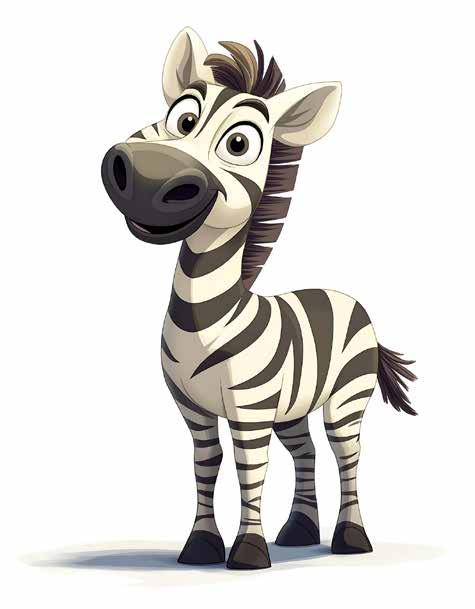




www.lighthousecurriculum.com