Basic Edition
This book belongs to
Level C
Lighthouse
Math
Basic Edition
PROGRAM DIRECTORS
Mrs. Zehava Kraitenberg M.S.
Curriculum Advisor, Elementary School Principal
Jane Chamberlain
Master of Education, Curriculum and Instruction
Credits
Jane Chamberlain
Middle School Math Instructor
M.Ed. in Curriculum and Instruction
Kelly Christensen 6th-7th Grade Math Teacher
M. Ed in Administration and Leadership (K-12)
Esther Aboud Curriculum Consultant
M.Ed. in Special Education
Keely Franklin Curriculum Developer
Cierra Henderson Curriculum Developer
Yehudis Leitner
Curriculum Coordinator
Review Team
Chaya Breindy Kenigsberg
Curriculum and School Leadership Specialist Master in Education
Esther Aboud
Curriculum Consultant
M.Ed. in Special Education
Lauren Noorparvar Middle School Math Educator
Math Curriculum Coach K - 12 Master in Education
Fraydel Sharf Content Director and Editor
Miriam Shulamis Eisemann Content Editor
Yehuda Gartenhaus M.A.
Elementary School Principal
Mechel Weizer
Curriculum Advisor
Elementary School Principal
Zehava Kraitenberg M.S. Curriculum Advisor
Elementary School Principal
Curriculum Writers Lighthouse Math Level C - Basic Edition • ISBN 978-1-955773-02-7
©Copyright 2026 Lighthouse Curriculum Inc. All rights reserved.
Contact Lighthouse Curriculum: Call 718.285.7100 or email info@lighthousecurriculum.com For more information visit www.lighthousecurriculum.com
Layout and Design
Akiva Leitner
Project Manager
Mirko Zunic
Layout Director
Freepik Illustrations
Content developed in collaboration with The Reimagined Classroom
No part of this publication may be reproduced, stored in a retrieval system, stored in a database and/or published in any form or by any means, electronic, mechanical, photocopying, recording or otherwise, without the prior written permission of the publisher. To obtain permission to use portions of material from this publication, please contact Lighthouse Curriculum.
Welcome to the Lighthouse Math Curriculum!
Here’s what you’ll find in every chapter:
Introduction and overview of skills at the beginning of each chapter
Clearly coded lessons: blue for the lesson page, red for the exercise page
Let’s learn! helps introduce the concept
Try it together! provides guided practice as a class
7 + 6
Practice provides plenty of problems to practice the skill
Challenge problems for enrichment and practice
Review for every chapter
Teacher notes give tips and ideas to guide teachers during the lesson
Assessment provided for every chapter
A better way to teach
Dear Educator,
Welcome to the Lighthouse Math Curriculum!
What makes our curriculum so unique? Lighthouse Math uses a scaffolded approach to learning and mastering math skills. When provided with a solid foundation, students can retain more information and prepare for the next level of skills.
Instead of separate workbooks and textbooks, students have everything they need built into one place: a softcover book containing 11 chapters, with each lesson containing review, new skills, and practice. All lessons include step-by-step instructions for clarity, giving all teachers - new as well as seasoned - the tools for success.
The books are custom illustrated, providing a vibrant learning experience. They are formatted in a way that each grade level can be completed successfully by the culmination of the school year. Lighthouse Math gives teachers the tools they need to teach and gives students everything they need to learn.
We at Lighthouse CurriculumTM are committed to providing support and guidance to our educators. We look forward to hearing from you and are available to answer any questions you may have.
Sincerely, Lighthouse Curriculum Team
LET’S LEARN
When we add, we put two parts together to make a whole. The answer that we get is called the sum.
Kayla has 6 toys.

How many toys does she have in all?
To find how many toys she has in all, we add and Kayla has 14 toys in all. 6 8 Her sister gives her 8 more.
Teacher Notes Write the problem 6 + 5 on the board and read it aloud together. Show students different ways they could solve. Counting on: Start at 6 and count 5 numbers (7, 8, 9, 10, 11). Doubles: we know that 5 + 5 is 10, so 6 + 5 is 11. Making ten: If we start with 6, we need 4 more to make 10- when we take away 4 from 5, we are left with 1, we now have 10 + 1 which is 11. Continue practicing with other problems through 18, encouraging students to use and explain a strategy.
3-7
7-3 Review Facts 6 and 7
7-4 Multiplying by Eight
7-6
7-7 Review
7-8 Multiplying by 100 and 1,000
8-5 Dividing by Three.
8-6 Dividing by Four
8-7 Dividing by Five
8-8 Division Notation: Write it
8-9 Chapter
8-10 Cumulative Review
Chapter 11 Comparing Fractions
11-1 Equivalent Fractions
11-2 Equivalent Fractions on the Number Line
11-3 Making Equivalent Fractions
11-4 Comparing Fractions with the Same Denominator
11-5 Compare Fractions with the Same Numerator
11-6 Chapter Review
11-7 Cumulative Review
Chapter 12 Geometry, Measurement, and Data
12-9 Bar Graphs
12-10 Pictographs
CHAPTER 1
In Chapter 1 we will learn about
Addition and Subtraction
Ibus. Eculpar ciminve ndisquia cus millorum est, alibea dunt asinver untiatius il idunt auditia spitios autaturionet fugit lanistruptae vollabo ratectum experatur si dem net et arum iunto ero blaut aut estiorum
• Ium que conectas magnate moluptas eos sim vollore stionsenis nossi
• Ta simi, officimendae volupta temquiat es moloreprae nonsequ a
• Cea cusda aut et modicidebit licaboremos ulparchic totasperchil incid et voloreptatur accum que ad es veligni
• Hilibusam faccae dolorup tatquuntus dolorum, sequibeatem eum et volut erio beatae venimus ate ne et eat.
LET’S LEARN
When we add, we put two parts together to make a whole. The answer that we get is called the sum.
Kayla has 6 toys.
How many toys does she have in all?
To find how many toys she has in all, we add and Kayla has 14 toys in all. 6 8 Her sister gives her 8 more.
Teacher Notes
Write the problem 6 + 5 on the board and read it aloud together. Show students different ways they could solve. Counting on: Start at 6 and count 5 numbers (7, 8, 9, 10, 11). Doubles: we know that 5 + 5 is 10, so 6 + 5 is 11. Making ten: If we start with 6, we need 4 more to make 10- when we take away 4 from 5, we are left with 1, we now have 10 + 1 which is 11.
Continue practicing with other problems through 18, encouraging students to use and explain a strategy.
Read the problem. Find the answer.
35. Ben rode his bike 3 miles to get to school. He then rode 5 miles to his friend’s house. How many miles did Ben ride all together?
36. Mickey put away 12 books before lunch and 6 books after lunch. How many books did Mickey put away all together?
Complete the number sentence.
CHALLENGE
LET’S LEARN
We can add in any order. We can switch the order of the numbers to make adding easier.
David has 2 stickers in his book and got 9 more.
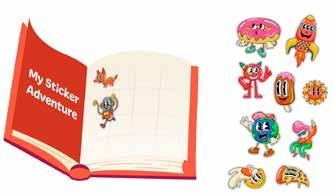
William has 9 stickers in his book and got 2 more.
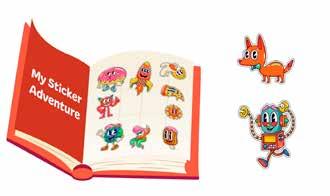
David and William both have 11 stickers.
Add in any order.
Teacher Notes
Write 3 + 9 on the board. As a class, count up 4, 5, 6, 7, 8, 9, 10, 11, 12. Now tell students to add in the other order. Start with 9 and add 3. Count up 10, 11, 12. Tell students that we get the same answer when we add in a different order. Discuss which order was easier/faster and why.
Find each sum. Add in any order.
Solve each problem.
39. Helen picked 5 flowers from the front yard and then 6 from the backyard. How many flowers did she pick?
40. Tim found 12 marbles under the bed and 6 marbles under the table. How many marbles did he find?
Add the numbers that make ten. Then find the total sum.
1 + 2 + 3 + 4 + 5 + 6 + 7 + 8 + 9 = CHALLENGE
LET’S LEARN
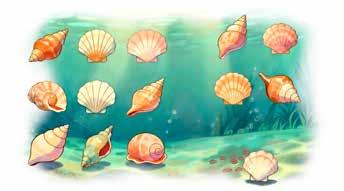
When you add 3 or more numbers you can choose which numbers to add first. You can pick the order of the numbers which makes adding easiest.
Teacher Notes
Write 4 + 4 + 6 on the board. Tell students that we can choose which two numbers to add first. Ask students why some people might find it easiest to add the 4 and 4 first. Ask students why some people would find it easiest to add the 4 and 6 first. Continue with other examples of 3 addend problems. For each problem ask students which numbers were easiest for them to add first and why.
Find each sum by grouping any two addends.
Find each sum by grouping any two addends.
Solve each problem.
Mike buys 2 apples, 4 bananas and 8 oranges. How much fruit does he buy?
Donald baked 6 brownies, 6 cookies, and 6 cupcakes. How many did he bake in all?
Solve. Explain why you grouped the addends to solve.
13 + 11 + 9 = CHALLENGE
25.
26.
LET’S LEARN
When we subtract, we take one number away from another to find how many are left or how far apart the numbers are. The answer is called the difference.
Victor grew a carrot that is 15 inches long.
Abe grew a carrot that is 8 inches long.
How much longer is Victor’s carrot?
To find the difference, we subtract from
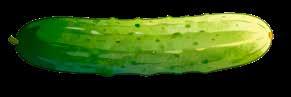
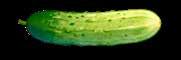
Victor’s cucumber is inches longer.
TRY IT TOGETHER
Teacher Notes
Write 14 - 5 on the board. Draw 14 circles and cross off 5. Help students count to find 9 as the difference. Tell students to check their work by adding the two parts, 5 and 9, together. The sum should be 14. Repeat for the problem 12 - 6.
Find the difference. Complete each number sentence. Solve each problem.
35. Eli found 12 leaves. 4 blew away. How many does he have left?
CHALLENGE
36. Jamie has 6 stickers. Paul has 11 stickers. How many more stickers does Paul have than Jamie?
Ben and Josh each have nine cookies. Ben ate three cookies and Josh ate five. Who has more cookies left? How many more does he have than his friend?
LET’S LEARN
Adding or subtracting zero does not change a number.
One section has 9 toys.
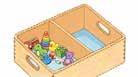
One section has 9 toys.
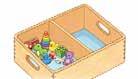
The other section has no toys.
No toys are moved to the other section.
Altogether there are 9 toys.
There are still 9 toys in the first section.
the sum or difference.
Teacher Notes
Write 12 + 0 on the board. Ask students what the sum is and how they know. Students should explain that the sum is 12 because adding zero does not change the number. Next write 12 - 0 on the board. Have students tell you that subtracting zero also does not change a number. Write 183,952 + 0 on the board. Explain to students that these problems are easy to solve because adding or subtracting zero does not change a number.
Read the problem. Find the answer. Add or Subtract.
43. Anna sees 14 fish swim by in the aquarium. Then, no more fish swim by. How many fish does Anna see?
44. Eddie collected 17 rocks on Tuesday. On Wednesday, he did not collect any rocks. How many rocks does Eddie have?
Fill in the missing number. 24 − = 0 CHALLENGE
LET’S LEARN
Addition and subtractions are opposites.
Add. Check by subtracting.
Subtract. Check by adding.
Teacher Notes
Write 14 - 6 = 8 on the board. Explain that addition and subtraction are opposite operations. Explain that we can use addition to check subtraction. Write 8 + 6 = 14. Continue to explain that we can use subtraction to check addition. Demonstrate by writing 5 + 7 = 12 and then writing 12 - 7 = 5. Review which numbers are parts and which are wholes by pointing to each number and asking students to call out “part” or “whole.”
Add. Check by subtracting.
Subtract. Check by adding.
Read the problem. Find the answer. Check your work.
17. Sam has a pack of 14 pens. He loses 8 of them. How many pens does he have left?
CHALLENGE
18. Benny has $5. He gets paid another $7. How much money does he have now?
A fact family is a group of 2 addition sentences and 2 subtraction sentences that all have the same 3 numbers.
Write fact family for the numbers 4, 5, and 9.
We can add numbers in any order. When adding 3 or more numbers, we can choose which numbers to add first.
Adding or subtracting zero does not change a number.
Addition and subtraction are opposites. We can check subtraction by adding.
or Subtract.
Read the problem. Find the answer. Check your work.
25. Ann counts 11 red grapes and 6 green grapes. How many grapes does Ann count altogether?
26. Dennis collects 8 rocks from the front yard and 3 rocks from the backyard. How many rocks does he collect?
27. Judy makes 4 chocolate cupcakes, 6 vanilla cupcakes and 2 strawberry cupcakes. How many cupcakes does she make in all?
28. Max has 7 toys. Sam has 13 toys. How many more toys does Sam have than Max?
Subtract.
CHAPTER
In Chapter 2 we will learn about
Numbers and Place Value
Ibus. Eculpar ciminve ndisquia cus millorum est, alibea dunt asinver untiatius il idunt auditia spitios autaturionet fugit lanistruptae vollabo ratectum experatur si dem net et arum iunto ero blaut aut estiorum
• Ium que conectas magnate moluptas eos sim vollore stionsenis nossi
• Ta simi, officimendae volupta temquiat es moloreprae nonsequ a
• Cea cusda aut et modicidebit licaboremos ulparchic totasperchil incid et voloreptatur accum que ad es veligni
• Hilibusam faccae dolorup tatquuntus dolorum, sequibeatem eum et volut erio beatae venimus ate ne et eat.
LET’S LEARN
These are base-ten blocks. We can use them to show numbers. Count the rods by ten and unit blocks by one. 30 + 2 = This is one
TRY IT TOGETHER
Write each number.
3 tens and 2 ones
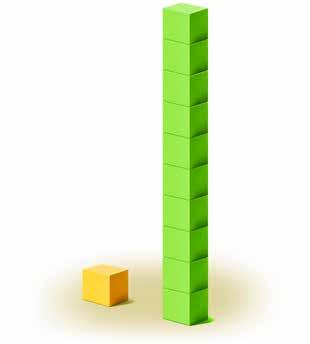

Teacher Notes
Distribute base-ten blocks. Have students line up 10 unit blocks next to a tens rod and discuss. Show how to make 32 with rods. Pull out 3 rods and count, “10, 20, 30.” Add two unit blocks and say “31, 32.” Tell students to take out 5 tens and 6 ones. Have students count by tens and then ones to determine the number it shows. Continue to practice with other numbers.
each number.
4. 3 tens 8 ones
7. 2 tens 0 ones
10. 4 tens 6 ones
13. 6 tens 2 ones
16. 9 tens 5 ones
CHALLENGE
6 tens 8 ones
5 tens 4 ones 17. 0 tens 5 ones
eleven
thirteen
twenty
19. eighty 22. forty-one 25. ninety-six 28. eighteen 5. 7 tens 8 ones 8. 1 ten 9 ones
fifty-three
6. 3 tens 2 ones 9. 8 tens 8 ones 12. 7 tens 1 one
0 tens 9 ones
7 tens 2 ones
thirty-four
seventy-two
five
sixty-five Write the number.
tens 23 ones
tens 80 ones
LET’S LEARN
We can use a hundreds flat to show bigger numbers. It is equal to 100 ones or 10 tens. Write each number.
Teacher Notes
1 hundred, 2 tens, 4 ones
Introduce the hundreds flat. Hold up 10 rods and count by tens to show that it is equal to 100. Tell students that if we’d count 100 unit blocks we’d also get 100. Give students 1 hundreds flat, 2 tens, and 4 ones. Count the hundreds flat “100”, the tens rods “110, 120”, and the unit blocks “121, 122, 123, 124”. Next pass out 4 hundreds flats, 5 tens rods, and 2 unit blocks and have students determine the number it shows. Continue to practice with other numbers.
1.
3.
2.
4.
Write each number.
1. 2. Hundreds Tens Ones Hundreds Tens Ones
Write each number.
3. 3 hundreds, 0 tens, 8 ones
5. 8 hundreds, 2 tens, 7 ones
7. 3 hundreds, 0 tens, 6 ones
9. 7 hundreds, 4 tens, 0 ones
11. four hundred five
13. seven hundred eleven
15. three hundred forty-two
17. nine hundred sixty
19. six hundred twenty-seven
CHALLENGE
Write the number.
4. 7 hundreds, 2 tens, 3 ones
6. 2 hundreds, 8 tens, 4 ones
8. 9 hundreds, 7 tens, 1 ones
10. 4 hundreds, 0 tens, 9 ones
12. two hundred
14. one hundred nine
16. eight hundred eighty-eight
18. five hundred thirteen
20. three hundred ninety-one
5 hundreds, 15 tens, 13 ones
5 hundreds, 27 tens, 45 ones
LET’S LEARN
Ten hundreds make one thousand. When we write numbers in the thousands, we use a comma (,) to separate the thousands place.
Write each number in the place value chart.
five thousand, three hundred twenty-seven
one thousand, nine hundred fifty-seven
four thousand, forty-four 6 thousands, 2 hundreds, 3 tens, 1 one Six thousand, two hundred thirty-one
Teacher Notes
Begin by telling students that 10 hundreds equals 1 thousand. Ask students how many tens and ones make 1 thousand. Draw an empty place value chart on the board. As a class fill in the ones, tens, and hundreds column. Show students that after the hundreds comes thousands but first we need to write a comma. Using a colored marker, write digits in the chart and practice reading the numbers. Make sure to practice numbers with the digit 0 in the middle.
4. eight thousand 5. four thousand
6. nine thousand, four hundred twenty-two
7. three thousand, six hundred forty-seven
8. one thousand, one hundred eleven
9. six thousand, three hundred five
10. eight thousand, ninety
11. five thousand, nine hundred
12. two thousand, thirty-four
13. seven thousand, two 4,004 5,502
Write each number in words. CHALLENGE
LET’S LEARN
Digits are the numbers 0–9. A place value chart gives every digit its own spot in a number.
The place of the digit in the number tells us its value, or how much it’s worth.
The digit 2 is in the thousands place. Its value is 2,000 . The digit 3 is in the tens place. Its value is 30 . 2,036
2 , 0 3 6
Answer the questions about the number.
1,824
1. Which digit is in the thousands place?
2. Which digit is in the hundreds place?
3. Which digit is in the tens place?
4. Which digit is in the ones place?
Teacher Notes
1 1,000
What is its value?
What is its value?
What is its value?
What is its value?
Draw a place value chart on the board with the number 2,036. Use a different color to write the 3. Show students that 3 is in the tens section of the chart. When 3 is in tens place, its worth or value is 30. If the 3 would be in a different place, it would have a different value. Using the colored marker and an eraser switch the the 3 and the 0. Show students that now the 3 is in the hundreds place so its value is 300. Discuss with students which is bigger and how they know.
Which digit is in the tens place?
Which digit is in the thousands place?
Which digit is in the hundreds place?
Which digit is in the ones place?
Which digit is in the thousands place?
Which digit is in the hundred place?
Which digit is in the tens place?
Which digit is in the ones place?
Which digit is in the thousands place?
Which digit is in the ones place?
What is the value of the digit 9?
What is the value of the digit 9?
What is the value of the digit 4?
What is the value of the digit 9?
What is the value of the digit 4?
What is the value of the digit 4?
What is the value of the digit 6?
What is the value of the digit 6?
What is the value of the digit 5?
What is the value of the digit 6?
LET’S LEARN
Numbers are counted in order. Every number is one more than the last.
What number comes after 698? 699
TRY IT TOGETHER
Fill-in the missing numbers.
15,
What number comes after 699? 700 What number comes after 700? 701 16 17 18 19
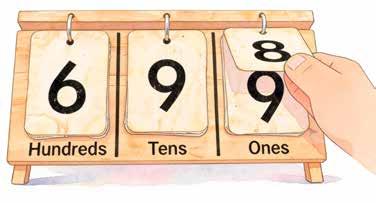
After counting the digit 9 in any place, that place changes to 0 and the place to the left goes up by 1.
20
Teacher Notes
Start by counting together out loud as class from 60. When you get to 69, 70, 71, and 72 pause and ask students what number comes next before counting the next number. Repeat the activity with following numbers. Start at 97 and pause after 99, 100, 101 and 102. Start at 250 and pause after 259, 260, 261, and 262. Start at 380 and pause after 399, 400, 401 and 402. Make sure that students understand when we move up a digit in the tens or hundreds place.
Write the number that comes after.
Write the number that comes before.
CHALLENGE
Ordinal numbers tell you the position of things in a list. Write the ordinal number that comes after.
LET’S LEARN
When we skip count we don’t say every number.
Skip counting by twos:
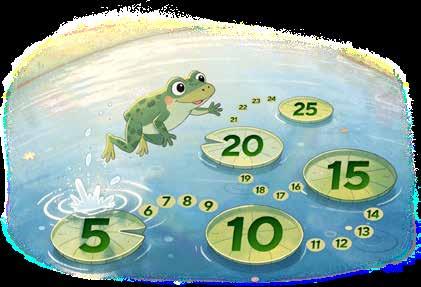
Skip counting by fives: Skip counting by tens: Skip counting by hundreds: 5, 10, 15, 20, , 435, 440, , 2, 4, 6, 8, 10, , 22, 24, 26, , 10, 20, 30, 40, , 64, 74, 84, 94, , 100, 200, , 115, 215, 315, ,
TRY IT TOGETHER
Skip count by two. Write the next numbers.
Skip count by five. Write the next numbers.
Skip count by ten. Write the next numbers.
Skip count by hundred. Write the next numbers.
1. 2, 4, , , , 4. 5, 10, , , , 7. 10, 20, , , 10. 100, 200, , , 2. 14, 16, , , 5. 35, 40, , , 8. 120, 130, , , 11. 550, 650, , , 3. 42, 44, , , 6. 80, 85, , , 9. 400, 410, , , 12. 25, 125, , ,
Teacher Notes
As you skip count, whisper the numbers that are not said. For example, whisper 1, then count 2 out loud… As you get to skip counting bigger numbers point out how the place values change. For example, when you skip count by 10 the tens place goes up by one. If students are having trouble, tell them to keep adding the amount they are skip counting by to each number.
Skip count by two. Write the next numbers.
Skip count by five. Write the next numbers.
Skip count by ten. Write the next numbers.
Skip count by one hundred. Write the next numbers.
1. 78, , , , 4. 130, 132, 134, , 7. 65, , , , 10. 625, 630, 635, , 13. 80, , , , 16. 36, 46, 56, , 19. 325, , , 2. 56, , , , 5. 526, 528, , , 8. 45, , , , 11. 865, 870, , , 14. 140, , , , 17. 59, , , , 20. 256, , , 3. 90, , , , 6. 840, 842, , , 9. 20, , , , 12. 440, 445, , , 15. 360, , , , 18. 347, 357, , , 21. 499, , ,
Skip count by two.
CHALLENGE
7, 9, 11, , , 91, 93, , , , 545, 547, , , ,
LET’S LEARN

Teacher Notes
Review the signs for showing more (greater) than (>) and less than (<). Explain that when we compare numbers we start with the biggest place value. In 573 and 578, this is the hundreds. The digits are same so we move on to the tens. The digits are the same so we move to the ones. Next, ask students to compare 178 and 95. Have students notice that there is no digit in the hundreds place in 95 while 178 has a 1 in the hundreds place. So, 178 is larger.
Write > for more than. Write < for less than.
1. 56 54 3. 115 219 6. 789 987 9. 805 850 12. 113 119 15. 56, 51, 65
Start comparing the largest place value. Then, move to the smaller place values.
Write the numbers in order from smallest (least) to biggest (greatest).
857, 858, 856
902, 702
CHALLENGE
Which day had the most visitors? Which day had the least visitors? 51 56 65 >
Use the table to answer the questions.
Central
LET’S LEARN
Numbers that end in 0 are easier to do math with. When we skip count by ten, we get numbers that end in 0. We can round to find the nearest ten.
Round 53 to the nearest ten.
What two tens is 53 between?
50 and 60
Which ten is it closer to? 50
53 rounds to 50 . Circle the tens.
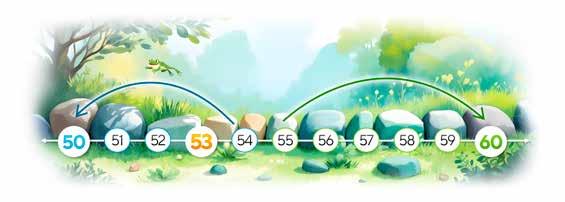
If the ones digit is 5, the number is halfway between two tens, and we round up to the higher ten.
Teacher Notes
Skip count by tens out loud as class. Explain that these numbers are called tens. Discuss why they are easier to work with when we do math. Rounding to the nearest ten means to find the tens number which is closest. Guide students in finding the number on the number line, finding the two tens it is between, and the ten it is closer to.
Use the number lines on the previous page to round to nearest ten.
1. Round 38 to the nearest ten.
a. Find 38 on the number line.
b. Which two tens is it between? and
c. Which ten is it closer to?
Round each number to the nearest ten.
88
62
13
2. Round 74 to the nearest ten.
a. Find 74 on the number line.
b. What two tens is it between? and
c. Which ten is it closer to?
If the ones digit is 0,1, 2, 3, or 4 we round down. The tens digit stays the same. The ones become 0.
Example: 43 → 40
If the ones digit is 5, 6, 7, 8, or 9 we round up. The tens digit goes up by 1. The ones become 0.
Example: 45 → 50
Isaac was asked to list all of the numbers that round to 50. He lists the numbers 45, 46, 47, 48, 49. Do you agree with Isaac’s list? Explain why you agree or disagree. CHALLENGE
LET’S LEARN
Numbers that end in 0 are easier to do math with. When we skip count by hundreds, we get numbers that end in two zeros. We can round to find the nearest hundred.
Round 654 to the nearest hundred.
654 is between 600 and 700 It is closer to 700 . 654 rounds to 700 .
If the tens digit is 5, round up to the higher number.
Teacher Notes
Skip count by hundreds as a class. Explain that rounding to the nearest hundred means to find the hundred which is closest. Tell students that number lines do not always have a tick mark for every number. Help students imagine where exactly the number would be placed. Guide students in approximating the number on the number line, finding the two hundreds it is between, and the hundred it is closer to.
1. Round 220 to the nearest hundred.
a. Find 220 on the number line.
b. What two hundreds is it between? and
c. Which hundred is it closer to?
Round each number to the nearest hundred.
Use the number line to round to nearest hundred. 3. 788
800
Round the number to the nearest hundred.
2. Round 387 to the nearest hundred.
a. Find 387 on the number line.
b. What two hundreds is it between? and
c. Which hundred is it closer to?
If the tens digit is 0,1, 2, 3, or 4 we round down. The hundreds digit stays the same. The tens and ones become 0.
Example: 342 → 300
If the tens digit is 5, 6, 7, 8, or 9 we round up. The hundreds digit goes up by 1. The tens and ones become 0.
Example: 678 → 700
1,300
Digits are the numbers 0-9. The place of a digit in a number gives it a worth or value.
When we count in order, each number is one more than the last.
496, 497, 498, 499, 500, 501, 502
To see if a number is bigger or smaller, start by comparing the digit in the highest place value.
To round a number, find the two tens or hundreds it is between. Then, find the hundred or ten it is closer to.
518 is between 500 and 600
TRY IT TOGETHER
Teacher Notes
Review each of the concepts taught in the chapter. Pay attention to areas where students are still having difficulty and reinforce those areas.
Write the number.
1. 3 tens and 4 ones
3. 8 hundreds, 9 tens, 6 ones
seventy-eight
sixty-two thousand
Write
47
489
Round
6 tens
4 hundreds, 5 ones
eight hundred eleven
five thousand, four hundred thirteen
Subtract.
3 CHAPTER
In Chapter 3 we will learn about
Adding Multi-Digit Numbers
Ibus. Eculpar ciminve ndisquia cus millorum est, alibea dunt asinver untiatius il idunt auditia spitios autaturionet fugit lanistruptae vollabo ratectum experatur si dem net et arum iunto ero blaut aut estiorum
• Ium que conectas magnate moluptas eos sim vollore stionsenis nossi
• Ta simi, officimendae volupta temquiat es moloreprae nonsequ a
• Cea cusda aut et modicidebit licaboremos ulparchic totasperchil incid et voloreptatur accum que ad es veligni
• Hilibusam faccae dolorup tatquuntus dolorum, sequibeatem eum et volut erio beatae venimus ate ne et eat.
3 - 1 | Adding Two-Digit Numbers (No
LET’S LEARN
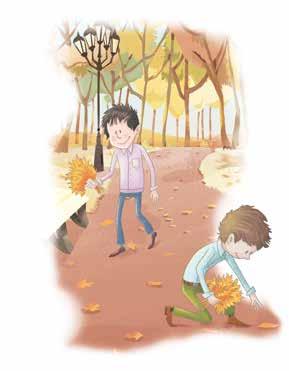
Tom collected 34 leaves and Max collected 53 leaves. How many leaves did they collect in all?
Add 34 + 53.
Line up the place values. First, add the ones. Then, add the
They collected leaves. 87
Line up the place values and add.
Teacher Notes
Write the problem 24 + 12 on the board. Tell the students to write each number in the place value chart. Point out that the ones digits are in the ones column and the tens digits are in the tens column. Add the ones column first. Say the digits aloud and write the sum. Repeat this step with the tens column. Read the final answer as a class. Continue to practice with other two-digit addition problems.
Rewrite the problem and add.
29. Mike picked 31 carrots and 45 tomatoes out of his garden. How many vegetables did he pick altogether?
30. John read 12 books in the summer and 33 books in the fall. How many books did he read in all? Solve.
Write an addition problem that would have this number as a sum. CHALLENGE
3 - 2 | Regrouping Ones, Tens, and Hundreds
LET’S LEARN
Each place can only go up to 9. If we have 10 or more, we need to regroup. To regroup 10 ones as 1 ten, we make a trade. We take away 10 ones and add 1 ten.
3 tens and 16 ones Now, we have 4 tens and 6 ones.
Regroup 10 ones for 1 ten. 3
We can also regroup 10 tens as 1 hundred. We take away 10 tens and add 1 hundred.
Draw a line to match the pictures that show the same number.
Teacher Notes
Distribute base-ten blocks. Tell the students to put together one hundred block, 12 ten rods, and 5 one cubes. They should make trades and regroup, then read the new amount of ones, tens, and hundreds. Ask them what is the number?. Practice regrouping with different amounts of each type of base-ten blocks.
Draw a picture. Regroup 10 ones for 1 ten.
1. 4 tens, 18 ones = tens, ones
2. 7 tens, 13 ones = tens, ones
3. 8 tens, 19 ones = tens, ones
4. 1 hundreds, 7 tens, 13 ones = hundreds, tens, ones
Draw a picture. Regroup 10 tens for 1 hundred. 5 8 3 3
5. 2 hundreds, 13 tens = hundreds, tens
6. 7 hundreds, 15 tens = hundreds, tens
7. 5 hundreds, 19 tens = hundreds, tens
Regroup to the smallest amount of hundreds, tens, and ones.
5 hundreds, 22 tens, 36 ones = hundreds, tens, ones CHALLENGE
3 - 3 | Adding Two-Digit Numbers (Regrouping)
LET’S LEARN
Mark added 57 and 24 with base-ten blocks. After he regroups, how many of each block does he have?
Add 57 and 24. Line up the place
Teacher Notes
Write the problem 64 + 27 on the board vertically. Show students how to carefully line up the ones and tens digits. Start by having students add 4 ones plus 7 ones. Explain that since there are 11 ones, they need to regroup 10 ones into 1 ten. Show students to write a 1 above the numbers in the tens column and a 1 in the answer in the ones column since there is one left after regrouping 10. Finish by adding up the tens column. Repeat with more examples.
Read the problem. Find the answer.
29. The bakery has 36 chocolate cupcakes and 48 vanilla cupcakes. How many cupcakes do they have all together?
30. Ben has 38 blue blocks and 24 red blocks. How many blocks does he have all together?
Fill in the missing digits.
CHALLENGE
LET’S LEARN
James adds 78 and 49 with base-ten blocks. After he regroups, how many of each block does he have?
Add 78 and 49.
Line up the place values. Add the ones. Regroup. Add the tens. Regroup.
Teacher Notes
Write the problem 77 + 58 on the board in a place value chart. Tell students that sometimes we need to regroup more than once when we add. Add the ones and have students help you regroup 10 ones into 1 ten. Then point out that when they add they will have 13 tens. Tell students to regroup 10 tens into 1 hundred and write a 1 in the hundreds column so that there are 3 tens in that column of the answer. Repeat with more example problems as needed.
29. There are 76 stones in the first section of the patio and 68 stones in the rest. How many stones are there in the patio all together?
30. Mrs. Richards cuts 96 strips of yellow construction paper and 75 strips of black construction paper. How many strips of paper does she cut all together?
CHALLENGE
Write an addition problem that requires two regroupings and would have this number as a sum.
LET’S LEARN
The school library has 245 chapter books and 318 picture books. How many do they have altogether? Add.
Add 245 and 318.
Line up the place values.
Add the ones. Regroup if needed.
Add the tens. Regroup if needed.
Add the hundreds.
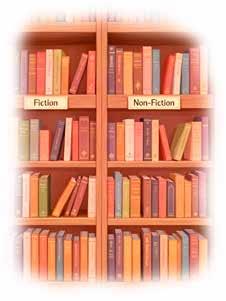
TRY IT TOGETHER
Teacher Notes
Tell students that today they will practice regrouping when adding larger numbers. Write the problem 446 + 137 on the board in a place value chart. Walk students through the steps in adding starting with the ones, regrouping 10 ones for 1 ten. Then have students help you add the tens and hundreds. Point out that they do not need to regroup in the tens place because the sum of the tens is less than 10. Practice more examples that require regrouping either ones or tens.
Rewrite the problem and add.
26. One puzzle has 528 pieces. Another puzzle has 180 pieces. How many pieces are there in both puzzles? Read the problem. Find the answer.
25. One package has 405 blueberries in it. Another has 388. How many blueberries are there in all?
LET’S LEARN
Ann has 185 coins and Ruth has 346 coins. How many do they have altogether?
Add 185 and 346.
Line up the place values. Add the ones. Regroup. Add the tens. Regroup. Add the hundreds.
They have coins. 531
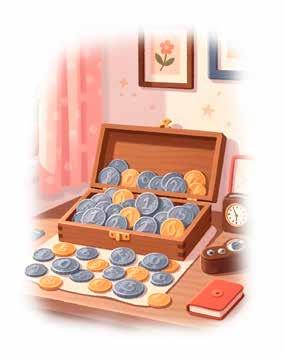
Teacher Notes
Tell students that today they will practice adding 3-digit numbers that require regrouping twice. Write the problem 367 + 158 on the board in a place value chart. Walk students through the steps in adding starting with the ones, regrouping 10 ones for 1 ten. Then have students help you add, regrouping the tens, and then add the hundreds. Practice more examples that require regrouping both the ones and the tens.
Rewrite the problem and add.
Read the problem. Find the answer.
25. There are 345 grapes on one vine and 297 on another. How many grapes are there altogether?
26. One classroom has 368 books. Another classroom has 342 books. How many books are there in both classrooms?
Write an addition problem that requires two regroupings and would have this number as a sum.
LET’S LEARN
The Anderson family drives 105 miles to Philadelphia. Then they drive 415 miles to Niagara Falls. Finally they drive 392 miles back home. How many total miles do they drive?
Add 105, 415, and 392.
Add the ones. Regroup if needed.
Add the tens. Regroup if needed.
Add the hundreds. 105 415 + 392 912
912
They drive miles.
TRY IT TOGETHER
Add.
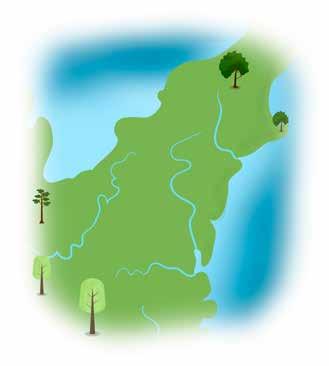
Teacher Notes
Write the problem 269 + 182 + 231 on the board vertically. Have students help you add the ones, then the tens, then the hundreds, regrouping both the ones and tens. Tell students to be sure to carry the one and write it above the next place value column when regrouping. Practice more example problems as needed.
New York
Philadelphia
Niagara Falls
Read the problem. Find the answer.
15. There are 336 books on the first shelf, 285 on the second shelf and 142 books on the third shelf. How many books are there altogether?
16. One classroom has 283 pencils. Another classroom has 194 pencils. A third classroom has 246 pencils. How many pencils are there in all three classrooms?
LET’S LEARN
Mrs. Ross bakes 42 chocolate chip cookies and 36 sugar cookies. About how many cookies does she have all together?
You don’t need an exact answer.
Mrs. Ross has about cookies.
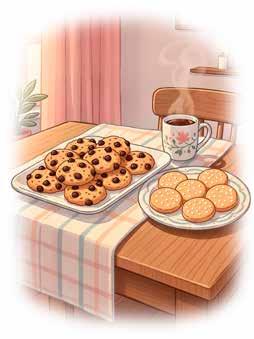
Round to the nearest 10 and add.
Round to the nearest 10 and add.
Teacher Notes
Write 54 + 27 on the board. Tell students that in this lesson they will round numbers to the nearest ten or hundred to estimate the sum. Have students help you round 54 and 27 to the nearest ten and add 50+ 30 = 80. Then write 387 + 123 on the board. Have students help you round to the nearest hundred and add 400 + 100 = 500. Repeat the process with more examples as needed.
Round to the nearest 10 and add.
Round to the nearest 100 and add.
Round to the nearest 10 or 100 to solve.
21. There are 53 blocks in the basket. Emma puts 27 more blocks in. About how many blocks are in the basket now?
22. Mrs. Richards has 336 pencils in her cabinet. She puts 292 more pencils in. About how many pencils are in the cabinet now?
Round to the nearest 100 and add. Round to the nearest 10 and add. Then add to find the actual answer. CHALLENGE
To add numbers, line up the place value and add from right to left. Regroup if needed.
In add three numbers, line up the place value and add from right to left. Regroup if needed.
To estimate the sum, round both numbers and add.
Add. Regroup if needed.
Round to the nearest 10 or 100 to solve. Round and add.
27. David read 53 pages on one day. He read 87 pages the next day. How many pages did he read altogether?
28. There are 68 green trucks and 94 blue trucks. How many trucks are there altogether?
29. Ducks flew 125 miles on Monday and they flew another 216 miles on Tuesday. About how many miles did they fly on both days?
30. Jim picked 267 apples. Alan picked 106 apples. About how many apples did they pick in all?
Add. Check by subtracting.
Subtract. Check by adding.
CHAPTER
In Chapter 4 we will learn about
Subtracting Multi-Digit Numbers
Ibus. Eculpar ciminve ndisquia cus millorum est, alibea dunt asinver untiatius il idunt auditia spitios autaturionet fugit lanistruptae vollabo ratectum experatur si dem net et arum iunto ero blaut aut estiorum
• Ium que conectas magnate moluptas eos sim vollore stionsenis nossi
• Ta simi, officimendae volupta temquiat es moloreprae nonsequ a
• Cea cusda aut et modicidebit licaboremos ulparchic totasperchil incid et voloreptatur accum que ad es veligni
• Hilibusam faccae dolorup tatquuntus dolorum, sequibeatem eum et volut erio beatae venimus ate ne et eat.
LET’S LEARN
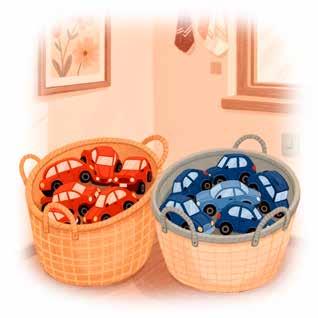
Leo has 28 red toy cars and 16 blue toy cars. How many more red cars does he have than blue cars?
Subtract 28 − 16.
Line up the place values with the bigger number on top.
Subtract the ones.
Subtract the tens.
He has more blue cars. 12
Teacher Notes
Write the problem 28 - 16 on the board. Tell the students to use the places value chart to line up the ones digits on top of each other and the tens digits on top of each other. Point out that the ones digits are in the ones column and the tens digits are in the tens column. Subtract the ones column first. Say the digits aloud and write the difference. Repeat this step with the tens column. Read the final answer as a class. Practice with other two-digit subtraction problems.
Subtract.
Rewrite the problem and subtract.
29. Emma has a box of 68 googly eyes. She drops 22 of the eyes on the floor. How many are left in the box?
30. A tree branch has 74 leaves on it. The wind blows 31 leaves off of the branch. How many leaves are left on the branch?
Write a subtraction problem that would have this number as the difference.
LET’S LEARN
If we do not have enough ones to subtract, we can get more ones by regrouping. To regroup 1 ten as 10 ones, we make a trade. We take away 1 ten and add 10 ones.
3 tens and 5 ones
Now, we have 2 tens and 15 ones
1 ten for 10 ones.
We can also regroup 1 hundred as 10 ones. We take away 1 hundred and add 10 tens.
Use the picture to regroup 1 ten as 10 ones.
Use the picture to regroup 1 hundred as 10 tens.
Teacher Notes
Write the number 35 on the board in a place value chart. Make the number with base-ten blocks (3 tens and 5 ones). Tell students that sometimes when you subtract you don’t have enough ones and you need to regroup a ten into 10 ones. Trade a ten for 10 ones. Count how many of each block you have now. Cross out the 3 and 5 in the place value chart and write 2 in the tens column and 15 in the ones column. Practice with a few more numbers.
Regroup 1 ten for 10 ones.
1. 9 tens 5 ones = tens ones
3. 7 tens 0 ones = tens ones
5. 5 tens 4 ones = tens ones
7. 6 tens 3 ones = tens ones
Regroup 1 hundred for 10 tens.
21. 8 hundreds 2 tens = hundreds tens
23. 4 hundreds 7 tens = hundreds tens
2. 4 tens 4 ones = tens ones 4. 2 tens 3 ones = tens ones
6. 3 tens 1 one = tens ones
8. 1 tens 9 ones = tens ones
How can regroup 1 ten for 10 ones? CHALLENGE
22. 2 hundreds 2 tens = tens ones
24. 9 hundreds 0 tens = hundreds tens
5 hundreds, 0 tens, 4 ones
LET’S LEARN
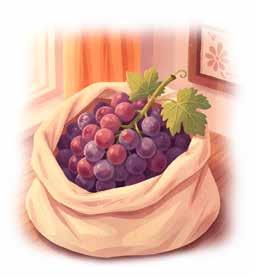
There are 32 grapes in Andrew’s bag. He gives 14 grapes to a friend. How many grapes does he have left?
Subtract 32 − 14.
Line up the place values. Subtract the ones. There are not enough ones. Regroup 1 ten for 10 ones.
Subtract the tens.
He has grapes left. 18
TRY IT TOGETHER
Subtract.
Teacher Notes
Write the problem 32 − 14 on the board. Remind students that we start subtracting the ones. Ask students to subtract 2 − 4. Discuss why you cannot subtract. Ask students how they could regroup to get enough ones. Show students how “borrow” a ten and regroup for 10 ones. Cross out the 3 and write 2 because we take away 1 ten. Cross out 2 and write 12 because we get 10 new ones. Show how to subtract the ones and then the tens. Repeat with other examples.
Subtract.
Rewrite the problem and subtract.
Read the problem. Find the answer.
27. There are 52 pieces of construction paper in a package. The class uses 27 pieces. How many pieces are left in the package?
CHALLENGE
28. Robert has 54 rocks in his collection. He polishes 17 rocks. How many rocks are not polished?
The class starts with 92 carrot sticks. They eat 27 for morning snack and 19 for afternoon snack. How many carrot sticks are left?
LET’S LEARN
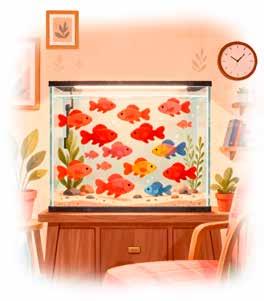
There are 275 fish in the aquarium. 118 of the fish are red. How many fish are not red?
Subtract 275 − 118.
Line up the place values. Subtract the ones. Regroup to subtract the tens.
Subtract the hundreds.
176
fish are not red.
TRY IT TOGETHER
Subtract.
Teacher Notes
Write the problem 368 − 192 on the board vertically. Point out that there are enough ones, but not enough tens to subtract. Tell students that they can regroup 1 hundred for 10 tens. Cross out the 3 and write a 2 because we take away 1 hundred. Cross out the 6 and write 16 above it because we get 10 new tens. Have students help you subtract the ones, then tens and then hundreds. Repeat more examples as needed.
Subtract.
Rewrite the problem and subtract.
Read the problem. Find the answer.
27. There are 428 students in the school. 31 are absent today. How many students are at school today?
28. There are 283 blocks in the box. 155 are red. The rest are blue. How many blue blocks are in the box?
CHALLENGE
LET’S LEARN
There are 323 books in the classroom library. 137 of them are borrowed. How many books are left? books are left.
Subtract 137 − 323.
Line up the place values.
Regroup to subtract the ones.
Regroup to subtract the tens.
Subtract the hundreds.
Teacher Notes
Write the problem 323 − 137 on the board vertically. Start with the ones. Ask students if there are enough ones to subtract. Regroup 1 ten for 10 ones. Now we have 3 hundreds, 1 ten, and 13 ones. Have students subtract the ones. Move to the tens. Ask students if there are enough tens to subtract. Since there is only 1 ten, we need to regroup again. Regroup 1 hundred for 10 tens. Subtract the tens and then the hundreds. Repeat with more examples as needed.
Subtract.
Rewrite the problem and subtract.
Read the problem. Find the answer.
27. There are 825 apples on the truck. 348 are green. The rest are red. How many red apples are there?
28. There are 523 sheets of paper in the box. Mrs. Carter takes 248 out. How many sheets of paper are left in the box?
Subtract.
CHALLENGE
LET’S LEARN
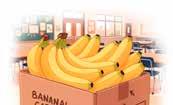
There are 300 bananas in the school cafeteria. At lunchtime 176 students eat a banana. How many bananas are left?
Subtract 300 − 176.
Line up the place values. Regroup to subtract the ones.
There are not enough tens to regroup. Regroup 1 hundred as 10 tens. Then, regroup 1 ten as 10 ones.
Subtract the tens.
Subtract the hundreds.
186
bananas are left.
Subtract.
Teacher Notes
Write 300 − 176 on the board. Explain to students that since there are not enough ones to subtract, they need to regroup 1 ten for 10 ones. However, there are no tens. We need to first regroup 1 hundred for 10 tens. Now we can regroup 1 ten for 10 ones. After regrouping we have 2 hundreds, 9 tens, and 10 ones. Subtract the ones, tens, and hundreds. Repeat with other example problems.
Subtract.
Rewrite the problem and subtract.
Read the problem. Find the answer.
27. There are 504 students in the school. 327 students ride the bus home. How many students do not ride the bus home?
28. Mr. Davis has 300 children’s books. He donates 138 children’s books to the school library. How many children’s books does he have left?
LET’S LEARN
Use rounding to make an estimate.
86 rounded to the nearest ten is 48 rounded to the nearest ten is so
TRY IT TOGETHER
Round to the nearest ten. Fill in the blanks to estimate the differences.
Teacher Notes
Explain that an estimate is a good guess. It is used when an exact number isn’t needed. Tell students the following example: a printer has 512 papers and prints 158 sheets. Is it likely that we’d need to know exactly how many papers are left? When might we need an exact answer? When might we need an estimate? Tell students to estimate the difference we can round each number and subtract. Remind students that “About how many ___? “ shows that you should estimate.
Estimate. Round to the nearest 10 and subtract.
Estimate. Round to the nearest 100 and subtract.
Round to the nearest 10 or 100 to solve.
21. There are 53 blocks in the basket. Paul spills 17 blocks on the floor. About how many blocks are in the basket now?
CHALLENGE
22. Mrs. Jones has 536 pencils in her cabinet. She passes out 292 pencils to her students. About how many pencils are left in the cabinet?
Round to the nearest 100 and subtract. Round to the nearest 10 and subtract. Then subtract to find the actual answer. Which estimate is closer the actual answer?
Subtract from right to left. Regroup if needed.
Sometimes, there are not enough tens to regroup. First regroup the hundreds. Then, regroup the tens.
To estimate the difference, round both numbers and subtract.
Subtract.
Subtract.
Estimate. Round to the nearest 10 and subtract.
Estimate. Round to the nearest 100 and subtract.
34. There are 600 toy cars in the collection. 387 of them are read. How many of the cars are not red? Read the problem. Find the answer.
33. There are 89 pages in a book. Sara read 53. How many pages does she have left to read?
Which digit is in the ones place?
Which digit is in the hundreds place?
Which digit is in the thousands place?
Which digit is in the hundreds place?
Which digit is in the ones?
Which digit is in the tens place?
Which digit is in the hundreds place?
Which digit is in the hundreds place?
Which digit is in the thousands place?
Which digit is in the tens place?
CHAPTER
In Chapter 5 we will learn about
Money
Ibus. Eculpar ciminve ndisquia cus millorum est, alibea dunt asinver untiatius il idunt auditia spitios autaturionet fugit lanistruptae vollabo ratectum experatur si dem net et arum iunto ero blaut aut estiorum
• Ium que conectas magnate moluptas eos sim vollore stionsenis nossi
• Ta simi, officimendae volupta temquiat es moloreprae nonsequ a
• Cea cusda aut et modicidebit licaboremos ulparchic totasperchil incid et voloreptatur accum que ad es veligni
• Hilibusam faccae dolorup tatquuntus dolorum, sequibeatem eum et volut erio beatae venimus ate ne et eat.
LET’S LEARN
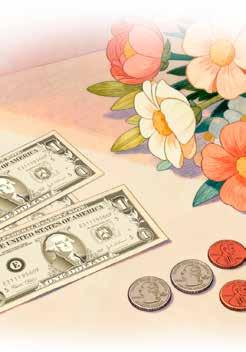
We count money with dollars and cents. Each dollar is worth 100 cents.


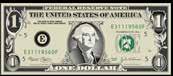

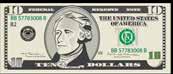
Name the coin and how much money it’s worth.

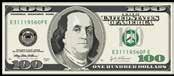

Teacher Notes
Distribute coins and bills to students. Call out and review the names of coins and bills together. Have students discuss the similarities and differences they notice amongst all of the coins and bills. Then, call out ten cents and have students hold up the corresponding coin. Call out one dollar and have students hold up the corresponding bill. Repeat by calling out the names of all the coins and different amounts of money.
Write the name of each coin.

the name of each coin


Write the name and value of the coin or bill described in the riddle. I am worth more than a
16. The largest size coin. 17. The coin that is worth the least. 18. The smallest size coin
LET’S LEARN
We can use the cent sign, ¢ to show the number of cents. We can use the dollar sign, $ to show the number of dollars and cents. Write each amount. Use a dollar sign and a decimal point.

Teacher Notes
Distribute coins and bills to students. Remind students that when counting the value of dimes and pennies, they skip count by tens for dimes and then count on by ones for pennies. Tell students to make $1.27 using bills, dimes and pennies. Have students show a partner to check their work. Repeat for the values $1.83 and $1.52.
Write each amount. Use a dollar sign and a decimal point. $2.35
CHALLENGE
Write the amount. Use a dollar sign and a decimal point. Jake has 3 dollar bills, 4 pennies and 15 dimes. How much money does he have?
LET’S LEARN
To count a pile of money, sort the coins and bills into piles of same type. Start counting the group worth the most money. Skip count to add the amounts quickly.
Count: 10, 20 dollars 21, 22, 23 dollars 23 dollars and 25, 50 cents 23 dollars and 60, 70, 80, 90 cents 23 dollars and 91, 92, 93 cents We say 23 dollars and 93 cents. We write $23.93.
Teacher Notes
Distribute 1 dollar bill, 2 dimes, 1 penny and 2 quarters to each student. Tell students to group similar bills and coins together. Then, tell students to put the coins in order from greatest to least value. Ask students to share what order they put their bills coins in (1 dollar bill, 2 quarters, 2 dimes and 1 penny). Next direct students to count on. Remind students to skip count by 25’s for quarters, 10’s for dimes and 1’s for pennies. Ask students to share the total amount ($1.71).
Write each amount. Use a dollar sign and a decimal point.
Write the amount. Use a dollar sign and a decimal point.
Tim has 1 dollar bill, 1 quarter, 3 dimes and 4 pennies. How much money does he have?
LET’S LEARN
We can add money by lining up the dollars and cents.
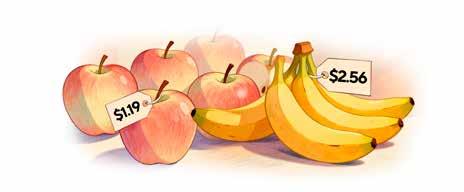
David buys apples for $1.19 and bananas for $2.56. How much does the fruit cost in all? Add $2.56 and $1.19. Add.
Line up the decimal points.
Add the cents. Regroup if needed.
Add the dollars. Regroup if needed.
Move the decimal point down.
Add the dollar sign.
Teacher Notes
Write $3.84 + $2.13 on the board. Show students how to write the problem by lining up the dollars, cents and decimal points. Tell students to start by adding the cents first and work from right to left. Write it on the board(4 +3 = 7, 8 + 1 = 9). Then, tell students to write the decimal point. Finally, tell students to add the dollars. Write it on the board (3 + 2 = 5). Tell students to include the dollar sign for their answer ($5.79)
Read the problem. Find the answer.
Jacob buys a bagel for $2.25 and a drink for $1.99. How much does he spend in all?
23. Ben bought two toys. One toy was $1.52. The other toy was $4.27. How much did Ben spend in all?
22.
LET’S LEARN
We can subtract money by lining up the dollars and cents.
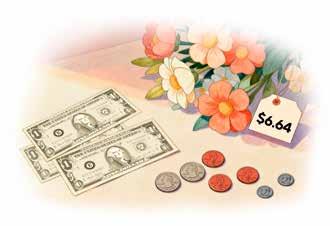
Eli has $8.73. He pays $6.64 for flowers. The extra money he gets back is called change. How much change does he get back?
Subtract $6.64 from $8.73.
Line up the decimal points.
Add the cents. Regroup if needed.
Add the dollars. Regroup if needed.
Move the decimal point down.
Add the dollar sign.
Teacher Notes
Write $3.72 − $2.21 on the board. Show students how to write the problem by lining up the dollars, cents and decimal points. Tell students to start by subtracting the cents first and work from right to left. Write it on the board (2 − 1 = 1, 7 − 2 = 5). Then, tell students to write the decimal point. Finally, tell students to subtract the dollars. Write it on the board (3 − 2 = 1). Tell students to include the dollar sign for their answer ($1.51)
Subtract.
Rewrite and subtract.
Read the problem. Find the answer.
Marc had
He spent $2.89. How much money does he have left?
Subtract. CHALLENGE
A teddy bear cost $9.97 in one store and $6.18 in another store. How more is the teddy bear in the first store?
$7.00
22.
$5.78.
Add or subtract.
Rewrite and subtract.
$4.31 + $2.36 =
+ $1.01 =
+
$1.55 − $1.32 =
17. Jeff buys a box of pencils for $2.75 and a box of erasers for $2.39. How much money does he spend in all?
− $10.51 =
− $5.17 =
19. Mark has $15.00. He wants to buy a toy that costs $11.85. How much money will he have left if he buys the toy?
18. Amy has $10.00 and buys fruit for $6.85. How much money does she have left?
20. Rose spends $6.25 on a ticket to the aquarium and buys a snack for $3.75. How much money does Rose spend in all?
Solve.
Subtract.
Skip count by two. Write the next numbers.
Skip count by five. Write the next numbers.
Skip count by ten. Write the next numbers.
25. 2, 4,
28. 5, 10, , , 31. 10, 20, , ,
CHAPTER
In
Chapter 6 we will learn about
Introduction to Multiplication
Ibus. Eculpar ciminve ndisquia cus millorum est, alibea dunt asinver untiatius il idunt auditia spitios autaturionet fugit lanistruptae vollabo ratectum experatur si dem net et arum iunto ero blaut aut estiorum
• Ium que conectas magnate moluptas eos sim vollore stionsenis nossi
• Ta simi, officimendae volupta temquiat es moloreprae nonsequ a
• Cea cusda aut et modicidebit licaboremos ulparchic totasperchil incid et voloreptatur accum que ad es veligni
• Hilibusam faccae dolorup tatquuntus dolorum, sequibeatem eum et volut erio beatae venimus ate ne et eat.
LET’S LEARN

Fill in the correct number.

Teacher Notes
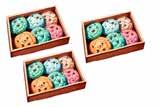
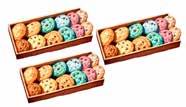
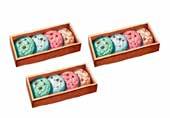
Explain that equal groups must have the same number in each group. Give each student six counters and have them make two equal groups on their desks.
Write a repeated addition sentence. Find the total.

fingers


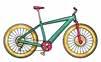
Draw a picture. Write a repeated addition sentence. Find the total.


If you have 7 , how much money do you have? CHALLENGE
5. 4 fish bowls with 3 fish 3.
7. 5 boxes with 2 donuts
6. 3 bags with 9 marbles 4.
8. 4 cartons with 6 eggs

LET’S LEARN
Equal Groups
4 types of chocolate with 5 of each type


4 Rows
4 × 5 = 20
Multiplication Sentence Array factor
5 Columns
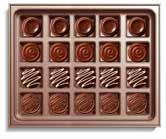
Four times five equals twenty. There are 20 chocolates. factor product
Fill in the correct numbers.


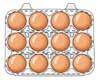
Teacher Notes

An array can help organize objects so we can quickly figure out how many there are. Ask students if they notice any equal groups on the array. Tell students that when we have equal groups, we multiply the number of rows by the number of columns to find the total. To show multiplication, we write the times sign (x). The numbers that are multiplied are called factors, and the answer is called the product
Shade in boxes to make an array. Count to find the total.
Draw an array. Solve.
5. Jay is baking cookies. His cookie sheet has 5 rows of cookies with 4 cookies in each row. How many cookies are on the cookie sheet?
6. Tim is planting a garden. He plants 3 rows of bell peppers and puts 6 pepper plants in each row. How many plants does he plant?
7. A chocolate bar has 8 squares in each row. There are 4 rows. How many squares are there? cookies peppers squares
There are 24 desks in the classroom. Make 3 different arrays to show how the desks could be arranged.
CHALLENGE
LET’S LEARN
There are 4 pairs of shoes.


Write the number of eyes in the picture.

Draw a picture or an array to solve.
Teacher Notes
Explain that when multiplying by twos, we can “skip count.” Write 2 × 5 on the board. This can be read as two times five, but it can also mean two, five times. Count up by two, five times: 2, 4, 6, 8, 10. Another way to think of multiplying by two is to introduce “doubles.” 2 × 5 is the same as double 5 or 5 + 5.
Multiply by 2. Multiply.
Read the problem. Find the answer.
31. A bicycle has 2 wheels. How many wheels do 8 bicycles have?
To multiply a number by 2, you can double it. Double 6 is 12.
Is a number multiplied by 2 an even or odd number? How do you know? CHALLENGE
32. Emily earns $2 for each chore she does. If she does 5 chores, how much money does she earn?
LET’S LEARN

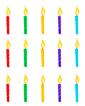
TRY IT TOGETHER
Write the number of fingers in the picture.

Draw a picture or an array to solve.
Teacher Notes
Write 1 × 5 on the board. Have students solve. Then, write 2 × 5 and continue with all the numbers through 10. Ask students if they notice a pattern. Tell students that they can skip count by fives when solving five facts. Practice skip counting as a class.
Multiply by 5.
Multiply. 1. 10 × 5 = 3. 5 × 6 =
5 × 5 =
To multiply a number by 5, you can skip count by fives that number of times. 5 × 8 5, 10, 15, 20, 25, 30, 35, 40
Read the problem. Find the answer.
31. A bookcase has 5 shelves. Each shelf has 10 books. How many books are in the bookcase?
books
32. There are 5 rows of chairs in a classroom, and each row has 8 chairs. How many chairs are there altogether?
chairs
When multiplying by 5, the product always ends in which two digits? CHALLENGE
LET’S LEARN
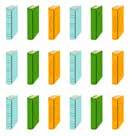
Each set has 3 books. There are 6 sets.

Write the number of wheels in the picture.

Draw a picture or an array to solve.
Teacher Notes
Review equal groups, arrays, and skip counting. To get students excited, have them brainstorm skip counting by threes as you write the numbers on the board: 3, 6, 9, 12, 15, 18, 21, 24... You can even guide them by saying “3 × 1,” “3 × 2,” etc. Also, review the words “factor” and “product.” Factors are numbers we can multiply together. A product is the answer to a multiplication problem.
Multiply by 3.
Multiply.
Read the problem. Find the answer.
35. A baker puts 3 chocolate chips on top of every cookie. If he decorates 9 cookies, how many chocolate chips does he use? chocolate chips
36. Each student needs 3 pencils for a test. If there are 7 students, how many pencils are needed in total? pencils
I am an odd number. My factors are 3 and 5. What number am I? CHALLENGE
LET’S LEARN
Review the times tables.
TRY IT TOGETHER
Write the number of carrots in the picture.

Draw a picture or an array to solve.

Teacher Notes
Hand out flashcards or small pieces of paper. Have students write all the two, three, and five facts on one side of each card and the answers on the other side. Give students time to practice the facts independently or with a partner.
Multiply. 1. 3 × 5 =
9 × 2 =
5 × 5 =
Read the problem. Find the answer.
35. There are 9 ducks at the park. If each duck has 2 legs, how many duck legs are there in total?
legs
If 3 × 7 is 21, what is 6 × 7? CHALLENGE
36. There are 6 flowers. Each flower has 5 petals. How many petals are there in all? petals
LET’S LEARN
There are 6 bags. Each bag has 4 apples.


Write the number of legs in the picture.

Draw a picture or an array to solve.
Teacher Notes
Write all the two and four facts on the board. Ask students what pattern they see. Call out numbers and have students practice doubling each one twice.
Multiply by 4.
Multiply. 1. 4 × 10 = 3. 4 × 1 =
Read the problem. Find the answer.
31. Mannie packs cookies into 3 boxes. He puts 4 cookies in each box. How many cookies does he pack?
cookies
To multiply a number by 4, you can double it and then double it again. Double 6 is 12. Double 12 is 24. 4 × 6 = 24
CHALLENGE
32. Emma buys 7 muffins. She pays $4 for each muffin. How much does she pay in total? $
Solve the riddle. The product is 16. Both factors are identical. What is the equation?
LET’S LEARN
There are 7 fishbowls. Each bowl has 1 fish.


There are 7 fishbowls. Each bowl has no fish.
TRY IT TOGETHER
Write the number of cake slices in the picture.

Draw a picture or an array to solve.

Teacher Notes
Choose five students and give each student one pencil. Say, “We have 5 groups with one pencil each. There are five pencils.” Write 5 × 1 = 5 on the board. Then, give a sixth student a pencil. Write 6 × 1 = 6 on the board. Ask students what they notice when you multiply by one. Then, take away all the pencils. Ask, “How many pencils do we have now?” Write 6 × 0 = 0 on the board. Ask students if it makes a difference how many groups there are when you multiply by zero. Why?
Multiply by 0 or 1. Multiply.
Read the problem. Find the answer.
31. There are 10 students. Each student is holding 0 balloons. How many balloons are there altogether?
A number multiplied by 1 is that number: 4 × 1 is 4. Any number multiplied by 0 is 0: 4 × 0 = 0
CHALLENGE

32. Sarah plants 1 flower in each of her 9 small pots. How many flowers does she plant in total?
Which would you rather have $1,000 × 0 or $36.00 × 1? Why?
LET’S LEARN

TRY IT TOGETHER


Draw a picture or an array to solve.
Teacher Notes
Begin by counting by tens to 120. Ask students what patterns they notice about the numbers when we count by tens. Students may notice that as we count by tens, the tens place goes up by one digit, and the ones place stays a zero. Pass out base-10 rods. Say: “When we have one group of 10, we have 10. When we have two groups of
how
Multiply by 10.
1. 3 × 10 = 3. 10 × 8 =
10 × 10 =
Multiply.
To multiply a number by 10, add a zero to the end. 5 × 10 is 50.
Read the problem. Find the answer.
31. Each bag of cheese costs $10. If a customer buys 4 bags, how much money does he spend? $
32. A baker puts 10 cookies on each tray. If he fills 7 trays, how many cookies did he bake? cookies
What is 45 × 10?
CHALLENGE
LET’S LEARN
Review the times tables.
TRY IT TOGETHER
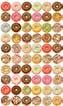
Write the number of donuts in the picture.
Draw a picture or an array to solve.

Teacher Notes
Hand out flashcards or small pieces of paper. Have students write all the 0, 1, 4, and 10 facts on one side of each card and the answers on the other side. Give students time to practice the facts independently or with a partner.
Multiply. 1. 4 × 9 =
2 × 5 =
10 × 8 =
Read the problem. Find the answer.
35. Each jump rope is 10 feet long. If you lay 6 jump ropes end-to-end, what is the total length? feet
36. A plum has 1 pit. There are 7 plums. How many pits are there? pits
Which is more: 4 × 6 or 3 × 8?
CHALLENGE
Review the times tables.
Times Table 1 × 1 = 1 × 2 = 1 × 3 = 1 × 4 = 1 × 5 = 1 × 6 = 1 × 7 = 1 × 8 = 1 × 9 = 1 × 10 = 4 Times Table 4 × 1 = 4 × 2 = 4 × 3 = 4 × 4 = 4 × 5 = 4 × 6 = 4 × 7 = 4 × 8 = 4 × 9 = 4 × 10 =
Times Table 10 × 1 = 10 × 2 = 10 × 3 = 10 × 4 = 10 × 5 = 10 × 6 = 10 × 7 = 10 × 8 = 10 × 9 = 10 × 10 = LET’S REVIEW
Times Table 2 × 1 = 2 × 2 = 2 × 3 = 2 × 4 = 2 × 5 =
× 6 =
×
=
=
=
=
3 Times Table 3 × 1 = 3 × 2 = 3 × 3 = 3 × 4 = 3 × 5 = 3 × 6 = 3 × 7 = 3 × 8 = 3 × 9 = 3 × 10 =
Times Table 5 × 1 = 5 × 2 = 5 × 3 = 5 × 4 = 5 × 5 = 5 × 6 = 5 × 7 = 5 × 8 = 5 × 9 = 5 × 10 =
TRY IT TOGETHER
Teacher Notes
Once students have filled out the times tables charts, ask them to describe any patterns they see. Tell students to circle the facts that they don’t know by heart yet. Have students practice those facts with a partner.
Read the problem. Find the answer.
37. There are 6 tables in the classroom. Each table has 4 legs. How many legs are there altogether?
legs
Fill in the blanks. CHALLENGE
38. You have 6 nickels in your piggy bank. Each nickel is worth 5 cents. How many cents do you have? cents 4 × = 16 4 × = 24 4 × = 12
LET’S LEARN
Add. Subtract.
Multiply.
Write the number.
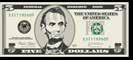
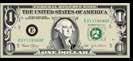
Write the amount of money.


19. twenty-seven
21. eighty-five thousand 23. 24.
20. nine hundred fourteen
22. two thousand, five hundred twenty $ . $
CHAPTER 7
In Chapter 7 we will learn about
Multiplication Continued
Ibus. Eculpar ciminve ndisquia cus millorum est, alibea dunt asinver untiatius il idunt auditia spitios autaturionet fugit lanistruptae vollabo ratectum experatur si dem net et arum iunto ero blaut aut estiorum
• Ium que conectas magnate moluptas eos sim vollore stionsenis nossi
• Ta simi, officimendae volupta temquiat es moloreprae nonsequ a
• Cea cusda aut et modicidebit licaboremos ulparchic totasperchil incid et voloreptatur accum que ad es veligni
• Hilibusam faccae dolorup tatquuntus dolorum, sequibeatem eum et volut erio beatae venimus ate ne et eat.
LET’S LEARN
There are 5 bowls. Each bowl has 6 eggs.

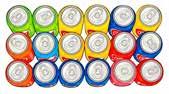
Write the number of cans in the picture.
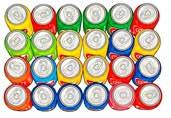
Draw a picture or an array to solve.
Teacher Notes
Encourage students to use a fact they know to help solve the six facts. For example, to solve 6 × 5, they could count by 5s. Ask students if they can think of any other tricks for figuring out the six facts, such as doubling the threes. Encourage students to start memorizing the six facts with larger numbers.
Multiply by 6.
6 × 6 =
2 × 6 =
Multiply. 1. 6 × 7 =
Read the problem. Find the answer.
35. A student reads 6 pages of his book every day. How many pages will he have read after 8 days? pages
36. A baker fits 6 cupcakes into a box. If she fills 7 boxes, how many cupcakes did she bake? cupcakes
What is the missing factor? × 6 = 54 CHALLENGE
LET’S LEARN



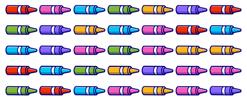
Write the number of crayons in the picture.
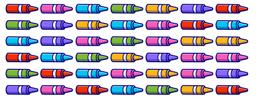
Draw a picture or an array to solve.
Teacher Notes
Write all the seven facts on the board. As a class, brainstorm a list of hints that could help students remember the products of the seven facts. For example, to multiply a number by 7, you can multiply that number by 2 and multiply it by 5 and add the products together.
Multiply by 7.
Multiply.
Read the problem. Find the answer.
35. A week has 7 days. How many days are there in 3 weeks? days
36. Each bag of candy contains 7 pieces. If you buy 6 bags, how many candies do you have? candies
What is the missing factor? × 7 = 49 CHALLENGE
LET’S LEARN
Review the times tables.
TRY IT TOGETHER
Write the number of stars in the picture.

Draw a picture or an array to solve.

Teacher Notes
Hand out flashcards or small pieces of paper. Have students write all the six and seven facts on one side of each card and the answers on the other side. Give students time to practice the facts independently or with a partner.
Multiply. 1. 5 × 5 =
Read the problem. Find the answer.
39. There are 6 tables, and 8 guests are seated at each table. How many guests are there?
guests
40. A florist puts 7 tulips in every vase. If she fills 4 vases, how many tulips does she use in total? tulips
Which is more: 3 × 6 or 2 × 7? CHALLENGE
LET’S LEARN
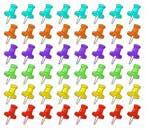
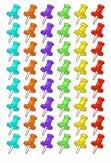
There are 6 groups of 8 pushpins.
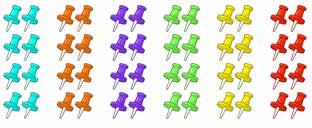
Write the number of octopus legs in the picture.

Draw a picture or an array to solve.

Teacher Notes
Write all the four and eight facts on the board. Ask students what pattern they see. As a class, brainstorm a list of hints that could help students remember the products of the eight facts.
Multiply by 8. Multiply. 1. 8 × 5 = 5. 8 × 8 =
8 × 4 =
Read the problem. Find the answer.
29. A spider has 8 legs. How many legs do 3 spiders have in total? legs
30. Each bag of oranges has 8 oranges. If there are 5 bags, how many oranges are there? oranges
Look at the products. Are they even or odd? What pattern do you see in the ones place?
CHALLENGE
8 × 7 = 56
8 × 8 = 64
8 × 9 = 72
8 × 0 = 0 8 × 1 = 8 8 × 2 = 16 8 × 3 = 24 8 × 4 = 32 8 × 5 = 40 8 × 6 = 48
LET’S LEARN
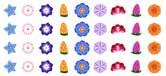
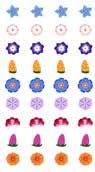
There are 4 bunches of 9 flowers.

TRY IT TOGETHER
Write the number of cookies in the picture.

Draw a picture or an array to solve.

Teacher Notes
Write all the nine facts on the board. Ask students to look at the tens and ones in the product and describe what pattern they see. Tell students that there is a fun trick for solving the nine facts with your hands. Show students how to do it and have them practice a few problems.
Multiply by 9.
1. 9 × 1 = 3. 9 × 2 = 5. 4 × 9 =
10 × 9 =
Multiply.
Use your hands. Put down the finger that matches the number you are multiplying by. The number of fingers to the left is the tens. The number of fingers to the right is the ones. 9 × 4 = 36
Read the problem. Find the answer.
29. A box of crayons contains 9 different colors. If a store sells 10 boxes, how many crayons did they sell?
crayons
30. A teacher is handing out stickers. Each student gets 6 stickers. If there are 9 students, how many stickers does the teacher hand out? stickers
What is 9 × 11?
CHALLENGE
LET’S LEARN
Review the times tables. Draw a picture or an array to solve.
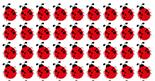
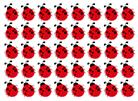
Write the number of ladybugs in the picture.
Teacher Notes
Hand out flashcards or small pieces of paper. Have students write all the eight and nine facts on one side of each card and the answers on the other side. Give students time to practice the facts independently or with a partner.
Multiply. 1. 5 × 9 = 5. 6 × 4 =
8 × 3 =
Read the problem. Find the answer.
41. A classroom has 8 rows of desks. Each row has 4 desks. How many desks are in the classroom?
desks
42. A pack of pens has 9 pens. If a teacher buys 8 packs for her class, how many pens does she have? pens
Which is more: 5 × 9 or 7 × 6? CHALLENGE
LET’S LEARN
Review the times tables.
1
4
4 × 1 = 4 × 2 = 4 × 3 = 4 × 4 = 4 × 5 = 4 × 6 = 4 × 7 = 4 × 8 = 4 × 9 = 4 × 10 =
2
3
6
9
Teacher Notes
Once students have filled out the times tables charts, ask them to describe any patterns they see. Tell students to circle the facts that they don’t know by heart yet. Have students practice those facts with a partner.
Multiply. 1. 5 × 10 = 5. 5 × 5 = 9. 8 × 8 =
Read the problem. Find the answer.
35. A tricycle has 3 wheels. How many wheels do 4 tricycles have?
36. A ticket to the zoo costs $6. How much does it cost to buy 5 tickets?
Multiply to find the cost.
CHALLENGE


LET’S LEARN


Teacher Notes
Practice skip counting by tens, hundreds, and thousands. Write 300 on the board. Ask students to describe what happens when you add 100 to 300. Keep adding one hundreds and writing the sums on the board. Ask students if they notice a pattern. Repeat with thousands, starting at 5,000.
Multiply by 100.
1. 5 × 100 =
3 × 100 =
Multiply by 1,000.
Multiply.
Read the problem. Find the answer.
29. A box contains 100 paper clips. If there are 4 boxes, how many paper clips are there? paper clips
What is 8 × 100,000? CHALLENGE
To multiply a number by 100, add two zeros to the end. To multiply a number by 1,000, add three zeros to the end.
30. An airplane flies 1,000 miles in 1 hour. How many miles will it fly in 3 hours? miles


Teacher Notes
Write 30 on the board. Ask students what number multiplied by 10 equals 30. Say, “3 x 10 is equal to 30.” Tell students that to solve 5 × 30, we can solve 5 × 3 and then multiply by 10. The product is 150. Follow the same process for 300 and 3,000.
Multiply.
1. 7 × 60 = 7 × 600 = 7 × 6,000 =
Multiply.
3. 4 × 40 = 4 × 400 = 4 × 4,000 = 2. 8 × 30 = 8 × 300 = 8 × 3,000 = 4. 9 × 40 = 9 × 400 = 9 × 4,000 = 5. 5 × 20 = 5 × 200 = 5 × 2,000 =
First, multiply the numbers (without zeros). Then, add the zeros to the end of the answer. 4 × 50 4 × 5 = 20 Add the zero from 50. 4 × 50 = 200
Read the problem. Find the answer.
24. Each school bus is 40 feet long. How long are 6 school buses? feet 25. A company makes 3,000 dollars a month. How much do they make after 7 months? $
What is 5 × 800,000? CHALLENGE
Products
LET’S LEARN
Use rounding to make an estimate.
34 rounded to the nearest ten is 30 30 × 6 = 180 so 34 × 6 is about 180
Round to the nearest ten. Fill in the blanks to estimate the products.
38 is between and . It is closer to × 4 = 38 × 4 is about
21 is between and . It is closer to × 7 = 21 × 7 is about
Round to the nearest hundred. Fill in the blanks to estimate the products.
660 is between and It is closer to . × 3 = 660 × 3 is about
Teacher Notes
520 is between and It is closer to . × 5 = 520 × 5 is about
Explain that an estimate is a good guess. It is used when an exact number isn’t needed. Ask, “Would it be possible to count the exact number of items in the grocery store within one hour?” Explain that you could count the number of items in one section and multiply by the number of sections. Explain that the words “About how many?” are often used when estimating.
Estimate. First, round the top number to the nearest 10 or 100. Then, multiply.
Read the problem. Find the answer.
16. There are 8 rows of chairs in an auditorium, with 62 chairs in each row. About how many chairs are there altogether?
About chairs
About how much is 58 × 62? CHALLENGE
17. Each crate of apples weighs 47 pounds. About how much do 5 crates weigh?
About pounds
1,000
Teacher Notes
Write 4 × 300 on the board. Ask students if they can solve this in their heads. Discuss how this can help with estimation. Explain that when we estimate, we want to find an answer quickly. Ask students to come up with scenario where it would be helpful to have a quick estimate.
Estimate. First, round the top number to the nearest 10 or 100. Then, multiply.
Read the problem. Find the answer.
31. Alan saves $19 per week. About how much money will he have saved after 3 weeks?
About $
32. A bus ticket costs $92. If 7 people each buy a ticket, about how much do they spend in total?
About $
Is 300 or 600 a better estimate for the product of 145 × 3? Why?
LET’S LEARN
Answer the questions about each number.
Which digit is in the tens place?
Which digit is in the thousands place?
What is the value of the digit 8?
What is the value of the digit 5?
CHAPTER

In Chapter 8 we will learn about
Introduction to Division
Ibus. Eculpar ciminve ndisquia cus millorum est, alibea dunt asinver untiatius il idunt auditia spitios autaturionet fugit lanistruptae vollabo ratectum experatur si dem net et arum iunto ero blaut aut estiorum
• Ium que conectas magnate moluptas eos sim vollore stionsenis nossi
• Ta simi, officimendae volupta temquiat es moloreprae nonsequ a
• Cea cusda aut et modicidebit licaboremos ulparchic totasperchil incid et voloreptatur accum que ad es veligni
• Hilibusam faccae dolorup tatquuntus dolorum, sequibeatem eum et volut erio beatae venimus ate ne et eat.
LET’S LEARN
12 cupcakes can be split in different ways. Notice how the number of cupcakes in each box changes when using different numbers of boxes.
12 cupcakes in 2 boxes

12 cupcakes in 4 boxes



TRY IT TOGETHER
Use the picture to answer the question.

20 beads on 5 bracelets
How many on each bracelet?


8 slices for 4 people
How many slices per person?
Teacher Notes
12 cupcakes in 3 boxes


12 cupcakes in 6 boxes


36 beads with 6 on each bracelet. How many bracelets?


8 roses in 2 vases How many in each vase?
Tell students that today we will be dividing objects into equal groups. Ask students to come up with a list of real-life examples where equal groups are needed.
Circle equal groups. Write how many groups.
1. Each shirt needs 5 buttons.

How many shirts?
2. Each letter needs 2 stamps.
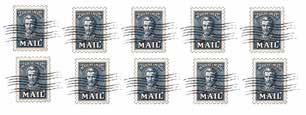
How many letters?
Circle equal groups. Write how many in each group.
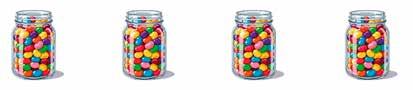
3. Taffies divided into 4 bags.

How many in each bag?
Draw a picture to answer the question.
5. There are 54 paintbrushes. Each painter needs 6.
4. Blocks shared between 3 children.

How many for each child?
6. 5 sticker sheets have the same number of stickers. There are 40 stickers in all.
How many painters?
If you have $56, how many balls can you buy? CHALLENGE
How many stickers on each sheet? $7.00

LET’S LEARN
Division helps us figure out how many are in each group or how many groups can be made.
How many candies can each child get?

TRY IT TOGETHER
Fill in the correct numbers.
How many on each plate?

There are 24 candies.
There are 4 children.
Twenty-four divided by four equals six.
Each child can get 6 candies.
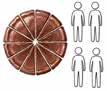
Teacher Notes

Explain that when we put objects into equal groups, we can divide to find the number of groups or how many are in each group. To show division, we write ÷. The amount you start with is called the dividend, the number you divide by is the divisor, and the answer is the quotient
1.
3. Every pair has 2. How many pairs?
2. How many slices per person?
4. Cars have 4 wheels. How many cars?
There are 32 plants. Use the array to answer the questions.
1. How many groups of 8?
32 ÷ 8 =
2. How many groups of 2?
32 ÷ 2 =
3. How many groups of 4?
32 ÷ 4 =
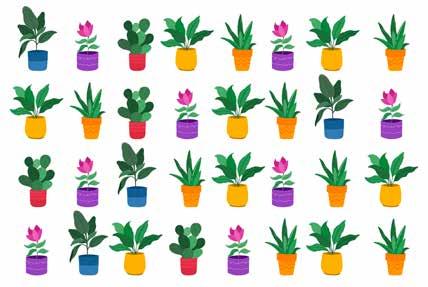
Draw a picture or an array to solve.
Read the problem. Draw a picture or an array to solve. 4. 24 ÷ 8 = 5. 9 ÷ 3 =
20 ÷ 5 =
7. Mark wants to buy cookies. Each cookie costs $3. He has $15. How many cookies can he buy? cookies
If David had 12 pieces of candy, what are all the possible ways he could separate them into equal groups?
CHALLENGE
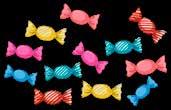
groups of groups of groups of groups of groups of groups of
LET’S LEARN
Division is the opposite of multiplication.
Use a multiplication fact to solve division.
Use a division fact to solve multiplication.
Use a multiplication fact to check division.
Use a division fact to check multiplication.
TRY IT TOGETHER
Fill in the missing number.
Teacher Notes
Write 3 + 4 = 7 on the board. Ask students how they could check this answer with subtraction. Tell students that just like addition and subtraction are opposites, so are multiplication and division. Subtraction undoes addition, and division undoes multiplication. Multiplication combines equal groups; division breaks them apart. Practice writing related multiplication and division facts (ex: 8 ÷ 2 = 4 and 4 × 2 = 8). Make sure students place numbers in the correct places.
Fill in the missing number.
Circle the equation that can be used to check the answer.
CHALLENGE
If you know that 12 ÷ 4 = 3, what other multiplication and division problems do you know the answer to?

LET’S LEARN
How many children can get a pair of shoes?

There are 18 shoes. Each child wears 2 shoes.
9 children can get shoes. 18 ÷ 2 = 9
There are two teams. Write the number of boys on each team.
Draw a picture or an array to solve.
How many boys?
How many teams? How many on each team?
How many boys?
How many teams? How many on each team? 4
Teacher Notes
Explain that dividing by two means finding half. Call out even numbers and have students tell you what half of that is. Make the connection between multiplying by two (doubling) and dividing by two (halving).
Read the problem. Find the answer. Fill in the missing number.
33. A teacher has 14 books. She wants to stack them in two piles. How many books will be in each pile? books
34. Sarah has 10 dollars. She wants to buy sodas that cost $2 each. How many sodas can she buy? sodas
What is 100 ÷ 2? How do you know? CHALLENGE
LET’S LEARN
The same amount of pencils are in each case. How many are in each?
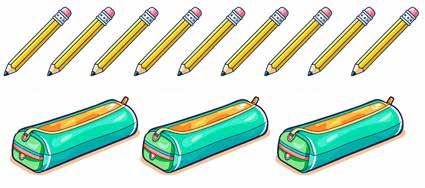
TRY IT TOGETHER
There are 9 pencils. There are 3 pencil cases.
3 pencils can be put into each case. 9 ÷ 3 = 3
Each flashlight needs three batteries. Write the number of flashlights.
How many batteries? How many in each flashlight? How many flashlights?
Draw a picture or an array to solve.
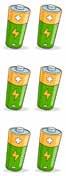
How many batteries? How many in each flashlight? How many flashlights?
Teacher Notes
Allow students to draw a picture or use a multiplication fact to divide by three. Discuss which method is faster and easier.
Fill in the missing number.
Read the problem. Find the answer.
33. Sam has 21 toy cars. He wants to give the same number of cars to his three cousins. How many cars does each cousin get?
If 12 × 3 = 36, what is 36 ÷ 3? CHALLENGE
34. Sarah has 12 flowers. She wants to arrange them in vases, with 3 flowers in each vase. How many vases will she need? vases
LET’S LEARN
How many horses can get horseshoes on their feet?
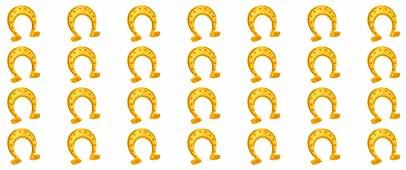
There are 28 horseshoes. Each horse needs 4 horseshoes.
7 horses can get horseshoes. 28 ÷ 4 = 7
There are 4 painters. Each painter has the same number of paintbrushes.
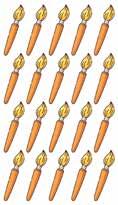
How many paintbrushes?
How many painters?
How many brushes does each painter get?
Draw a picture or an array to solve.
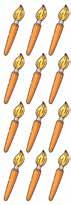
How many paintbrushes?
How many painters?
How many brushes does each painter get?
Teacher Notes
Allow students to draw a picture or use a multiplication fact to divide by four. Discuss which method is faster and easier.
Fill in the missing number.
Read the problem. Find the answer.
29. A group of 16 campers want to make four equal teams for a relay race. How many campers will be on each team? campers
30. There are 36 people waiting to ride a small amusement park ride. Each car on the ride holds 4 people. How many cars will be filled? cars
CHALLENGE
I have 40 coins. I divide them into 4 piles. Then, I give away 5 coins from each pile. How many coins do I have left in each pile?
LET’S LEARN
The same amount of cookies are in each box. How many cookies go in each box?



There are 10 cookies. There are 5 boxes.
2 cookies can be put into each box. 10 ÷ 5 = 2
Five pennies are equal to one nickel. Based on the number of pennies, write the number of nickels.
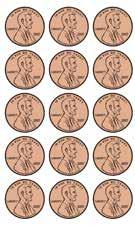
How many pennies?
How many pennies in a nickel?
How many nickels? 15 ÷ 5 =
Draw a picture or an array to solve.
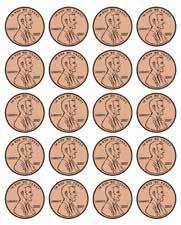
How many pennies?
How many pennies in a nickel?
How many nickels? 20 ÷ 5 =
Teacher Notes
Allow students to draw a picture or use a multiplication fact to divide by five. Discuss which method is faster and easier.
Fill in the missing number. 1. × 5 = 25
Divide.
Read the problem. Find the answer.
33. A baker made 25 cookies. He wants to give them to 5 friends, with each person getting the same number. How many cookies does each friend receive?
34. David has 35 toy cars. He wants to pack them into bags, with 5 cars in each bag. How many bags does he need? bags
A number is divided by 5, and then 3 is subtracted from the result. The final answer is 5. What was the original number? CHALLENGE
LET’S LEARN
Fifteen divided by five equals three.
There is another way to write a division problem. Write the division sentence another way.

Teacher Notes
Show students the two ways to write division. Point out that the numbers don’t change. We also read them the same way. Review the terms dividend (the number you start with), divisor (the number you divide by), and quotient (the answer). Have students identify each of them in both notations.
Use the array to find…
…the number of groups.
Each bag has 5 bananas. How many bags?
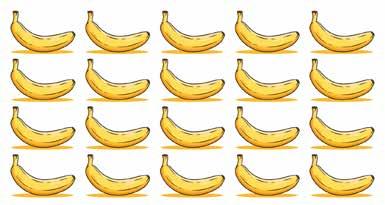
…the number in each group.
There are 4 bags. How many bananas in each?
TRY IT TOGETHER
Teacher Notes
If students are still having a hard time with division, make sure to keep reviewing multiplication facts. Students should be getting faster at multiplying and dividing as time passes.
Solve.
Fill in the missing numbers.
Read the problem. Find the answer. Solve.
36. You have 15 toy cars. You want to put them into 3 boxes so each box has the same amount. How many cars go in each box?
37. You have 30 stickers. You want to stick 5 stickers on each page of your notebook. How many pages will you fill? pages
Add.
Subtract.
Multiply.
Divide.
Round to the nearest hundred. Estimate the sum or difference.
CHAPTER
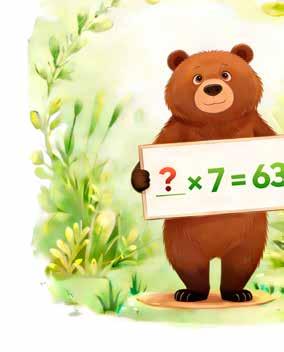
In Chapter 9 we will learn about
Division Continued
Ibus. Eculpar ciminve ndisquia cus millorum est, alibea dunt asinver untiatius il idunt auditia spitios autaturionet fugit lanistruptae vollabo ratectum experatur si dem net et arum iunto ero blaut aut estiorum
• Ium que conectas magnate moluptas eos sim vollore stionsenis nossi
• Ta simi, officimendae volupta temquiat es moloreprae nonsequ a
• Cea cusda aut et modicidebit licaboremos ulparchic totasperchil incid et voloreptatur accum que ad es veligni
• Hilibusam faccae dolorup tatquuntus dolorum, sequibeatem eum et volut erio beatae venimus ate ne et eat.
LET’S LEARN
Sodas come in packs of 6. How many packs are there?
There are 18 sodas. Each pack has 6 sodas.
There are 3 packs. 18 ÷ 6 = 3
The toys are shared equally between 6 children. Write the number of toys each child gets.
How many toys?
How many children?
How many does each child get?
24 ÷ 6 =
Draw a picture or an array to solve.
How many toys?
How many children?
How many does each child get?
30 ÷ 6 =
Teacher Notes
Allow students to draw a picture or use a multiplication fact to divide by 6. Discuss which method is faster and easier.
48 ÷ 6 = 4. 36 ÷ 6 =
Fill in the missing number.
× 6 = 48
Divide.
Read the problem. Find the answer.
36. A class of 30 students needs to form 6 equal groups for a project. How many students will be in each group?
students
37. A store clerk has 54 bottles of juice. She wants to put them into packs of 6. How many six-packs can she make? packs
Solve the riddle. When I am divided by 6, the result is the same as when 5 is added to the number 2. What number am I? CHALLENGE
LET’S LEARN
How many beads can go on each bracelet?
There are 56 beads. There are 7 strings.
Each bracelet can have 8 beads. 56 ÷ 7 = 8
There are 7 days in a week. If the money is used in one week, how many dollars are used each day?
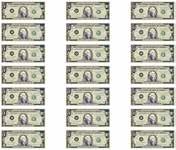
How many dollars? How many days?
How many per day?
21 ÷ 7 =
Draw a picture or an array to solve.
How many dollars? How many days?
How many per day?
14 ÷ 7 =
Teacher Notes
Allow students to draw a picture or use a multiplication fact to divide by seven. Discuss which method is faster and easier.
1. 2.
3. 56 ÷ 7 = 4. 42 ÷ 7 = 5. 49 ÷ 7 = 6. 70 ÷ 7 =
Fill in the missing number.
Divide.
Read the problem. Find the answer.
36. There are 42 balloons to be shared equally among 7 children at a party. How many balloons does each child get? balloons
37. There are 56 people waiting to ride a small train. Each car on the train holds 7 people. How many cars will be filled?
Each bag can hold 7 marbles. If you have 25 marbles, how many bags will you need? Will they all be full? CHALLENGE
Each pizza pie has eight slices. How many pizza pies are there?

There are 24 slices. Each pizza pie has 8 slices.
There are 3 pies. 24 ÷ 8 = 3
There are 8 tables. Write the number of markers on each table.
How many markers?
How many tables?
How many on each table?
40 ÷ 8 =
Draw a picture or an array to solve.
How many markers?
How many tables?
How many on each table?
32 ÷ 8 =
Teacher Notes
Allow students to draw a picture or use a multiplication fact to divide by eight. Discuss which method is faster and easier.
1. 2.
Fill in the missing number.
Read the problem. Find the answer.
36. There are 40 cookies to share equally among 8 children. How many cookies does each child get? cookies
37. A store has 64 water bottles. They want to put them into boxes that hold 8 bottles each. How many boxes can they fill? boxes
If 32 divided by 8 is 4, what is 32 divided by 16? CHALLENGE
LET’S LEARN
How many oranges can be put into each bag?
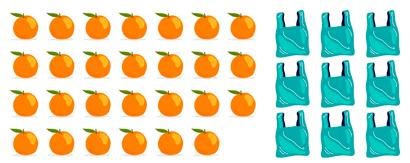
There are 27 oranges. There are 9 bags.
27 ÷ 9 = 3
Each bag has 3 oranges.
Each box holds 9 muffins. Write the number of boxes needed.

How many muffins?
How many in each box? How many boxes?
36 ÷ 9 =
How many muffins?
How many in each box?
How many boxes?
18 ÷ 9 =
Draw a picture or an array to solve. 3. 36 ÷ 9 = 4. 54 ÷ 9 = 5. 45 ÷ 9 = 6. 9 ÷ 9 =
Teacher Notes
Allow students to draw a picture or use a multiplication fact to divide by nine. Ask students if they could use the hand multiplication trick for multiplying by nine to divide by nine. Discuss which method is faster and easier.
Fill in the missing number.
Read the problem. Find the answer.
31. A store has 36 toy cars to put on display. If they want to put them on 9 shelves, how many toy cars will be on each shelf? cars
32. A garden has 63 rose bushes arranged in rows and columns. If there are 9 rose bushes in each row, how many columns are there? columns
A number can be divided by 9 if the digits add up to 9. If the answer has more than one digit, add the digits again. Circle the numbers that can be divided by 9. CHALLENGE
LET’S LEARN
How many on each plate?
Any number divided by itself equals 1.

0 divided by any number equals 0. Any number divided by 1 equals itself. You cannot divide by 0.

There are 4 slices.
There are 4 plates. Each plate has 1 slice.

There are 4 slices. There is 1 plate. Each plate has 4 slices.
There are 4 slices. There are 0 plates 4 ÷ 4 = 1 4 × 1 = 4 0 ÷ 4 = 0 4 × 0 = 0 4 ÷ 1 = 4 1 × 4 = 4 4 ÷ 0 = ? 0 × ? = 4
There are 0 slices. There are 4 plates. Each plate has 0 slices.

TRY IT TOGETHER
Write the number of roses in each vase.

Teacher Notes

How many roses?
How many vases?
How many in each vase?
2 ÷ 1 =
How many roses?
How many vases?
How many in each vase?
2 ÷ 2 =
Explain each of the rules for dividing by 0 and 1. Use the illustration and the related multiplication facts to explain why each one makes sense.
Fill in the missing number.
Read the problem. Find the answer.
36. There is a group of 5 friends who have a bag of 5 muffins. How many muffins does each friend get if they share them equally?
37. Water bottles cost $2. How many water bottles can a person buy with $0?
bottles
Use a multiplication fact to explain why you cannot divide by 0.
CHALLENGE
muffin
water
Missing Numbers
LET’S LEARN
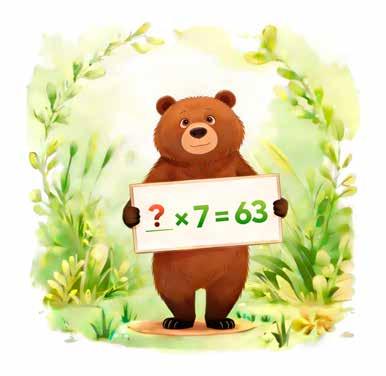
TRY IT TOGETHER
When a number is multiplied by itself, there are just two facts.
Teacher Notes
Explain that just like there are fact families for addition and subtraction, there are fact families for multiplication and division. You can use a different equation in a fact family to help you find missing numbers. Write 35, 7, 5 on the board. As a class, write two multiplication facts and two division facts with the numbers. Continue brainstorming more fact families.
Fill in the missing number.
A division problem is ? ÷ 4 = ?. The final answer is a number that is less than 5. What are the possible answers for the missing numbers? CHALLENGE
Division can find the amount of groups.
How many pairs?
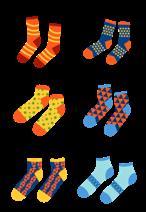
Solve.
TRY IT TOGETHER
Division can find the amount in each group.
How many in each sack?
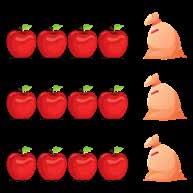
Division is the opposite of multiplication.
Teacher Notes
If students are still having a hard time with division, be sure to continue reviewing multiplication facts. Students should be getting faster at multiplying and dividing as time passes.
Fill in the missing number.
Read the problem. Then solve.
32. A group of five friends pays $20 for a pizza. They want to split the cost evenly. How much does each person have to pay?
CHALLENGE
33. Emily has $18. She wants to buy toy cars that cost $3 each. How many toy cars can she buy? cars
I have a number. If you divide it by 7, the answer is a whole number. If you divide the same number by 2, you also get a whole number. My number is between 20 and 30. What is my number?
Add. Subtract. Multiply. Add or subtract the money. Divide.
CHAPTER
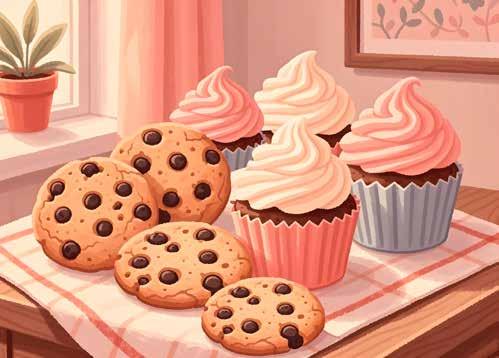
In Chapter 10 we will learn about
Fractions
Ibus. Eculpar ciminve ndisquia cus millorum est, alibea dunt asinver untiatius il idunt auditia spitios autaturionet fugit lanistruptae vollabo ratectum experatur si dem net et arum iunto ero blaut aut estiorum
• Ium que conectas magnate moluptas eos sim vollore stionsenis nossi
• Ta simi, officimendae volupta temquiat es moloreprae nonsequ a
• Cea cusda aut et modicidebit licaboremos ulparchic totasperchil incid et voloreptatur accum que ad es veligni
• Hilibusam faccae dolorup tatquuntus dolorum, sequibeatem eum et volut erio beatae venimus ate ne et eat.
LET’S LEARN
When we break something whole into two equal parts, each part is called a half. When we break the half into two equal parts, each part is a quarter, or fourth, of the whole.




Teacher Notes
Have students hold up a piece of paper. Show students how to fold their paper in half (horizontally), crease it, and open it back up. Ask students how many equal parts they see (2). Tell students each part is half of the paper. Show students how to fold their paper in half again (vertically), crease it, and open it back up. Ask students how many equal parts they see (4). Tell students these parts are called quarters. Show students how to write
and quarters as a
Circle the correct answer.
1. Which shows a whole?


3. Which describes the frisbee?

5. Which describes the book? 2. Which shows a half? 4. Which describes the bear? 6. Which describes the apple?


CHALLENGE
Write whole, half, or quarter. Draw a picture to show your answer.
Victor shares his pizza with his 2 friends. He brings a slice home to his mom. How did he split his pizza?
LET’S LEARN
Fractions are numbers less than one. To find a fraction, divide a whole into equal parts. The bottom number of the fraction tells us how many equal parts there are.
The garden is divided into 4 equal parts.
TRY IT TOGETHER
red parts equal parts 1 4 of the garden is red. We say one quarter Fraction that is red: 1 4
Write the amount of equal parts. Write the fraction for each part.
Each part is equal parts
Each part is equal parts
equal parts
Each part is equal parts
Each part is equal parts Each part is
Each part is equal parts
Teacher Notes
Tell students that a fraction is a part of a whole. That means we only have part of an object like an apple or a pizza. The fraction tells us exactly how many equal parts we have. As a class, come up with a list of wholes and draw them on the board. Divide each whole into equal parts. Color one part of each whole and write a fraction for that part. Tell students that the denominator shows the number of equal parts.
What part is colored red? Circle the correct fraction.
CHALLENGE
Divide each square into 4 equal parts. Each way must be different.
LET’S LEARN
The bottom number, or denominator, of the fraction tells us how many equal parts there are in the whole. The top number, or numerator of the fraction tells us how many parts we are talking about.
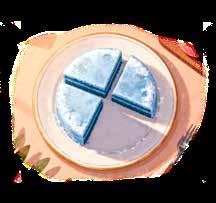
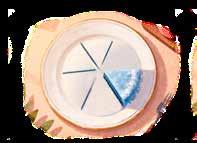
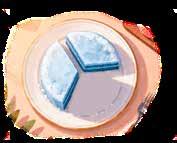
Teacher Notes
Draw a circle on the board with two parts out of 4 parts shaded. Tell students that the top number is called the numerator. This shows how many parts are shaded (2). Tell students that the bottom number is called the denominator. This shows how many equal parts the whole is broken into (4). Tell students this fraction can also be said as “two-fourths.” Draw a circle with 2 out of 3 parts shaded. Ask students to write the fraction on their paper.
part is blue? Write the fraction.
Write each as a fraction.
1. five-twelfths
one-sixth
What part is red? Write the fraction.
Color the parts.
CHALLENGE
Write the fraction.
Hank cut a pizza into 8 slices. He ate 2 slices. What fraction did he eat?
LET’S LEARN
Fractions can be used to show parts of a set.
There are 4 apples. 2 of them are green.
numerator green apples
denominator amount in the set 2 4
2 4 of the apples are green.
Color the parts of the set.
1. Color 3 4 of the windows.
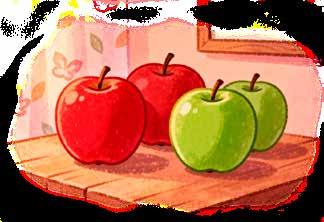
2. Color 2 3 of the flowers.
3. Color 3 5 of the pencils.
4. Color 1 2 of the stars.
5. Color 1 4 of the cars.
6. Color 7 8 of the bricks.
7. Color 2 5 of the shoes.
8. Color 2 6 of the keys.
9. Color 1 3 of the fish.
Teacher Notes
Tell everyone in the class to stand up. Explain that they are one whole, or a set. Count how many students there are in the set. Tell 3 students to sit down. Explain that the 3 students sitting down is the part. Tell students the fraction the students sitting represents. Repeat with different amounts of students sitting down.
Color the parts of the set.
1. Color 1 2 of the apples.
2. Color 2 3 of the triangles. 3. Color 3 6 of the balloons.
Write a fraction to answer each question.
4. What part of all bugs are ladybugs?
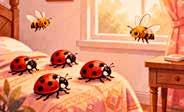
6. What part of the balloons are red?

8. What part of the flowers are purple?
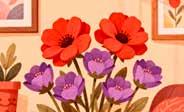
5. What part of the apples are green?
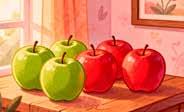
7. What part of the animals are lions?
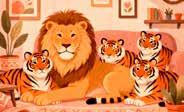
9. What part of the desserts are cupcakes?

Write the fraction.
Two of the cars are green. Four of the cars are red. One car is blue. What fraction of the cars are red? CHALLENGE
LET’S LEARN
To draw a fraction, the whole must be divided into equal parts. That means that all the parts must be exactly the same size.
Look at the denominator to find the number of equal parts.
Look at the numerator to find the number of parts to shade.
TRY IT TOGETHER
Circle if the picture shows the fraction.
1. Does the picture show 3 4 ? 2. Does the picture show 1 2 ?
Teacher Notes
Draw a circle that is evenly split to make two halves. Draw another circle that is split into two unequal parts. Explain to students that in order to divide a whole into a fraction, it has to be equal parts, the same size and shape. Direct students to draw a circle split into 4 equal parts.
Divide the whole into equal parts. Color the fraction.
1. Divide the whole into 8 equal parts. Color in 4 8 .
2. Divide the whole into 4 equal parts. Color in 2 4 .
3. Divide the whole into 2 equal parts. Color in 1 2
4. Divide the whole into 5 equal parts. Color in 2 5
5. Divide the whole into 3 equal parts. Color in 2 3 .
6. Divide the whole into 4 equal parts. Color in 1 4 .
7. Divide the pizza into 4 equal slices. Color in 4 4
8. Divide the cake into 8 equal slices. Color 2 8
Divide the whole. Shade the picture to show 5 8 . CHALLENGE
LET’S LEARN
Fractions can be shown on a number line.
To show a fraction with a denominator of 4 on the number line, divide the space between 0 and 1 into 4 equal sections.
TRY IT TOGETHER
Write the fractions on the number line.
Teacher Notes
Draw a number line from 0 to 1 on the board. Tell students that the space between 0 and 1 is one whole. We can divide the space into equal parts. Draw a tick mark halfway between 0 and 1. Ask students how many parts there between 0 and 1. Point to the space between 0 and the tick mark. Discuss that that space is 1 2 of the whole. Write 1 2 under the tick mark.
Repeat with a number line showing thirds and add 2 6 and 2 3
1. Mark fifths on the number line.
3. Mark halves on the number line.
2. Mark thirds on the number line.
4. Mark sixths on the number line.
Write the fractions on the number line.
1. Mark sixths on the number line.
Mark fourths on the number line.
3. Mark thirds on the number line.
Write the fraction on the number line.
5. Write 5 6 on the number line.
7. Write 3 4 on the number line.
9. Write 4 5 on the number line. 6. Write 1 3 on the number line.
Mark eighths on the number line. Divide the number line and circle the fraction. CHALLENGE
8. Write 1 6 on the number line. 10. Write 3 8 on the number line.
We can show a fraction in different ways.
Fractions can show parts of a whole: Fractions can show parts of a set:
TRY IT TOGETHER
Which part is blue? Write the fraction.
Which part is blue? Write the fraction.
1.
Color the parts of the whole.
1. Color 4 10 red.
Color 6 10 blue.
5. Color 2 3 blue. 2. Color 1 8 red. Color 7 8 blue. 6. Color 7 8 blue. 3. Color 3 6 red. Color 3 6 blue. 7. Color 3 5 blue. 4. Color 1 4 red. Color 1 4 blue. 8. Color 1 2 blue.
Color the parts of the set.
9. Color 1 2 of the umbrellas.
10. Color 2 3 of the cupcakes.
11. Color 3 5 of the ice creams.
3
13. Color 1 4 of the trees.
14. Color 7 8 of the hats.
12. Color 1
of the ducks.
15. Mark 3 4 on the number line. 16. Mark 2 6 on the number line.
Round to the nearest hundred to estimate.
CHAPTER 11
In Chapter 11 we will learn about
Comparing Fractions
Ibus. Eculpar ciminve ndisquia cus millorum est, alibea dunt asinver untiatius il idunt auditia spitios autaturionet fugit lanistruptae vollabo ratectum experatur si dem net et arum iunto ero blaut aut estiorum
• Ium que conectas magnate moluptas eos sim vollore stionsenis nossi
• Ta simi, officimendae volupta temquiat es moloreprae nonsequ a
• Cea cusda aut et modicidebit licaboremos ulparchic totasperchil incid et voloreptatur accum que ad es veligni
• Hilibusam faccae dolorup tatquuntus dolorum, sequibeatem eum et volut erio beatae venimus ate ne et eat.
LET’S LEARN
Equivalent fractions are different fractions that are the same size. Are the fractions equivalent?
Teacher Notes
Draw two rectangles of the same size vertically. Explain that each one is a whole. Draw vertical lines to divide the first one into two equal parts and explain that each part of the fraction bar is 1 2 . Draw lines to divide the second whole into 4 equal parts and explain that each part is 1 4 . Shade it 1 2 on the first bar and 2 4 of the second bar. Explain to students that the shaded parts represent the same amount of the whole in both bars, so 1 2 and 2 4 are equivalent.
Are the fractions equivalent?
CHALLENGE
Write an equivalent fraction. Shade the fraction bars to find an equivalent fraction. Write the fraction.
11 - 2 | Equivalent Fractions on the Number Line
LET’S LEARN
Equivalent fractions are found in the same spot on a number line.
the fractions equivalent?
Teacher Notes
Have students draw a line on paper. Direct and show students how to split the line in two equal parts and mark the middle as 1 2 . Then direct and show students to split the same line into 4 equal parts. Have students label the 4 lines as 1 4 , 2 4 , 3 4 and 1. Show students that 1 2 and 2 4 land on the same spot. Explain that these are equivalent fractions.
Are the fractions equivalent?
Draw a dot to show each fraction on the number line to figure out if the fractions are equivalent.
Use the number lines to figure out if the fractions are equivalent. equivalent nonequivalent
11 - 3 | Making Equivalent Fractions
LET’S LEARN
We can draw a picture to find equivalent fractions. Write the equivalent fractions.
Divide the shapes into the number of parts shown in the denominator. Look at the numerator. Color the parts.
Make the fractions equivalent. Color the parts that show the same amount. Write the numerator.
TRY IT TOGETHER
Teacher Notes
Draw two rectangles that are the same size on the board. Divide one rectangle into 2 equal parts. Shade in 1 part. Then, divide the other rectangle into 4 equal parts. Tell students there needs to be 2 parts shaded in order to have the same amount of each whole. Draw a third rectangle split into 6 equal parts. Ask students how many parts need to be shaded in this rectangle in order to be equivalent to 1 2 and 2 4 ( 3 6 ).
Write the equivalent fractions.
Draw a picture to find the missing numerator.
Write the equivalent fraction.
11 - 4 | Comparing Fractions with the Same Denominator
LET’S LEARN
When two fractions have the same denominator, the parts are the same size. We can look at the numerator to compare the fractions.
A bigger numerator means more parts and a bigger fraction. A smaller numerator means less parts and a smaller fraction.
TRY IT TOGETHER
Write < or > to compare the fractions.
Teacher Notes
Draw two rectangles on the board. Divide both rectangles into 8 equal shares. Tell students that both shapes are divided into 8 equal parts, so when we compare, we only need to look at the numerator. Shade in 3 pieces on one rectangle and 5 pieces on the other rectangle. Explain that 5 is greater than 3, so 5 8 is greater than 3 8
Write < or > to compare the fractions.
CHALLENGE
Write < or > to compare the fractions.
LET’S LEARN
When the numerators of two fractions are the same, there are the same number of parts. We can look at the denominator to compare the fractions.
A smaller denominator means bigger parts and a bigger fraction. A bigger denominator means smaller parts and a smaller fraction.
Write < or > to compare the fractions.
Teacher Notes
Draw two rectangles on the board. Divide the first rectangle into four equal parts. Shade 1 part. Divide the second rectangle into two equal parts. Shade 1 part. Tell students that both fractions show the same amount of parts shaded. Explain that the 1 4 piece is bigger, which means it is greater.
Write < or > to compare the fractions.
CHALLENGE
Write < or > to compare the fractions.
REVIEW
Equivalent fractions are the same size and found on the same spot on the number line.
When comparing fractions, if the denominator is the same, the fraction with the bigger numerator is greater.
When comparing fractions, if the numerator is the same, the fraction with the smaller denominator is greater.
Add. Subtract.
Multiply.
Divide.
What part is colored red? Circle the correct fractions.
CHAPTER
In Chapter 12 we will learn about
Geometry, Measurement, and Data
Ibus. Eculpar ciminve ndisquia cus millorum est, alibea dunt asinver untiatius il idunt auditia spitios autaturionet fugit lanistruptae vollabo ratectum experatur si dem net et arum iunto ero blaut aut estiorum
• Ium que conectas magnate moluptas eos sim vollore stionsenis nossi
• Ta simi, officimendae volupta temquiat es moloreprae nonsequ a
• Cea cusda aut et modicidebit licaboremos ulparchic totasperchil incid et voloreptatur accum que ad es veligni
• Hilibusam faccae dolorup tatquuntus dolorum, sequibeatem eum et volut erio beatae venimus ate ne et eat.
LET’S LEARN
When we tell the time, we tell the hours and minutes. The short hand tells the hour. The long hand tells the minutes.
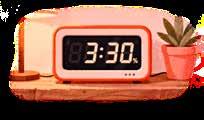
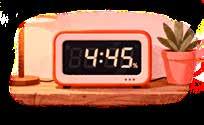
Teacher Notes
Show students the time 4:45 on an analog clock. Tell students that the short hand tells the hour and the long hand tells the minutes. Tell students that to tell the hour, they will say the number that the hour hand is pointing to or has passed. This clock shows the hour is 4. Then to tell the minutes, each number on the clock represents 5 minutes. Help students count by 5s to determine the time is four forty-five. Practice reading times at the quarter hour (3:00, 3:15, 3:30, 3:45).
Write the time as you would see it on a digital clock.
Write the time as you would say it.
16. Kelly’s school starts at eight fifteen in the morning. Write the time as you would see it on a digital clock.
Solve. 1:15
Draw the hands on the clock to show the time. CHALLENGE
17. Max sees 7:45 on his digital clock. What should Max say when asked, “What time is it?”
LET’S LEARN
The short hand (hour hand) points between two numbers to tell us the hour. We read the hour by looking at the number that it last passed.
The long hand (minute hand) points at a tick mark to tell us the minute. We count by fives to get to the closest number, then count by ones to get the exact tick mark.
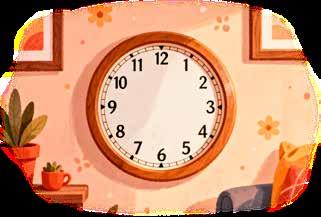
The time is 3:52. We say three fifty-two
the time as you would see it on a digital clock.
Teacher Notes
Set the time to 5:48 on a large analog clock. Explain that the short hand is the hour hand and the long hand is the minute hand. Show students that the hour hand is past the 5, but has not reached 6 yet, so the hour shown is 5. Then show how to count the numbers by 5s starting with 0 at 12 and stopping when they come to the last number before the minute handin this case 45. Then count on by 1s for each of the small tick marks. Repeat as needed.
Write the time as you would see it on a digital clock.
Write the time as you would say it.
Read the problem. Answer the question.
16. Henry is meeting his friends at the zoo at ten twenty. Write the time as you would see it on a digital clock.
17. Rachel sees 6:32 on her digital clock. What should Rachel say when asked, “What time is it?”
Sam says the time on this clock is 1:03. Explain his mistake and write the actual time.
CHALLENGE
The time is :
LET’S LEARN
To find how much time has passed, count the minutes and the hours.
David went to his friend’s house at 1:30. He came home at 6:00.
Kane was at his friend’s house for 4 hours and 30 minutes. 1:30 2:30 30 mins 4 hours 6:00
Teacher Notes
Show a time to 5 minutes on an analog clock. Move the minute hand to show a 2nd time and ask students how much time passed. Help students to count by 5 minutes figure out the elapsed time. Show students that they can make larger than 5 minute hops (15 or 30 minutes) and add to find the elapsed time on an open number line. Practice several examples of finding the elapsed time using both methods.
Write how much time passed.
5. Start Time: 1:35 End Time: 2:00
6. Start Time: 8:40 End Time: 9:15
7. Start Time: 6:20 End Time: 7:15
8. Start Time: 4:10 End Time: 4:50
9. Start Time: 5:05 End Time: 5:55
Read the problem. Answer the question.
11. George leaves his house to walk to school at 7:20. He arrives at school at 7:45. How long does he walk?
10. Start Time: 3:25 End Time: 4:05
Read the problem. Answer the question. CHALLENGE
12. Lisa starts practicing her violin at 4:25. She finishes at 4:55. How long does she practice?
David walks for 50 minutes. He gets home at 6:10. What time did he start walking?
LET’S LEARN
This is 1 foot or 12 inches. This is 1 inch. This is a half inch ( 1 2 inch) This is a quarter inch ( 1 4 inch)
Measure each item.


Teacher Notes
Show the students a ruler and point out how each inch is broken into 8 equal pieces. Explain that they can use these marks to determine whether a measurement is closer to a whole, half or a quarter inch measurement. Measure several items together as a class making sure that the students understand how to use the smaller tick marks to determine which measurement the object is closest to.
Measure each item.

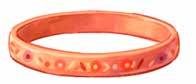


CHALLENGE
Mike says the toothbrush is about 5 inches long. Give a more precise measurement for the toothbrush.

LET’S LEARN
Quadrilaterals are shapes with 4 sides. There are different types of quadrilaterals.
TRY IT TOGETHER
Write the name of each quadrilateral.
Teacher Notes
Read the information about quadrilaterals to the students. Ask questions to help them realize that some quadrilaterals can fall into multiple categories such as: “Is this shape (a square) a rectangle?” (yes) and “Is this shape (a square) a rhombus?” (yes) Call out the names of each quadrilateral and have students draw several examples of each type. Then allow students time to share their shape drawings with classmate and have the classmate name the shapes.
Parallelogram
Rectangle
Rhombus
Write the name of each quadrilateral.
Draw each type of quadrilateral.
Solve the Riddle. I am both a rectangle and a rhombus. Who am I? CHALLENGE
square
parallelogram
rectangle
rectangle
12. trapezoid
13. rhombus
LET’S LEARN
Perimeter is the measurement all around the outside of a shape.
To find the perimeter, add all of the side lengths.
If the corn field is a square, and each side of the fence is 6 feet long, how long is the whole fence?
TRY IT TOGETHER
Find the perimeter of each shape.
Teacher Notes
Draw a triangle on the board and label the side lengths 3 in, 4 in, and 5 in. Ask students to help you find the distance around the entire shape. Tell students that this is called the perimeter and we find perimeter by adding all of the side lengths together. Write 3 + 4 + 5 = on the board and have students add to find the perimeter equals 12 inches. Practice more examples with other familiar shapes as needed.
Find the perimeter of each shape.
one more row of shapes
Draw a picture. Answer the question.
13. The fence around the dog pen makes a rectangle. The shorter sides are 8 feet each and the longer sides are 12 feet each. What is the perimeter of the dog pen?
14. Kelly has a square of paper that is 8 inches long on each side. What is the perimeter of the piece of paper?
The perimeter of this rectangle is 24 inches. What is the length of the short sides? CHALLENGE
in
LET’S LEARN
Area is the measurement of space (square units) inside an object.
To find the area of a rectangle:
Count the square units
TRY IT TOGETHER
Find the area of each rectangle.
Teacher Notes
Draw a rectangle on the board. Explain to students that the area of a rectangle is the amount of space inside the rectangle and we find it by tiling the rectangle with square units. Partition the rectangle that you drew into 2 rows of 4 squares. Ask students how many square units are inside this rectangle. There are 8, so the area is 8 square units. Point out that they can count each square or they can use multiplication to find the area. Show more examples as needed.
Find the area of each rectangle.
= square units
= square units
= square units
= square units Area = square units
Draw a picture. Answer the question.
= square units
= square units
= square units
10. There are 3 rows of 8 square foot tiles in the kitchen. What is the area of the kitchen floor?
= square units
Find the area.
11. There are 6 rows of 5 square foot tiles in a kitchen. What is the area of the kitchen?
LET’S LEARN
We can collect data (information) in a tally chart.
Use tally marks to show the number of each bug.
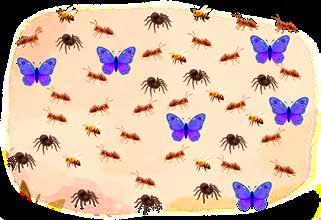


Show everyone’s favorite fruit in a tally chart. Cross out each fruit as you add a tally mark to the chart.
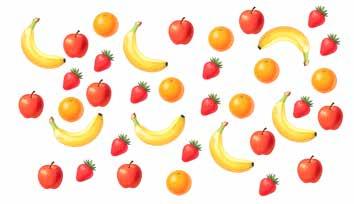
Teacher Notes


Gather a few of each school supply - glue sticks, scissors, crayons, and markers. Make a tally chart and show students how to draw tallies by writing 4 vertical lines and then a diagonal line across for the 5th object. Fill in the tally chart together with the number of each items that you have. Write the total after you draw tally marks for each item. Explain to students that this is one way to collect and display data.
Complete the tally chart to show how many of each animal.
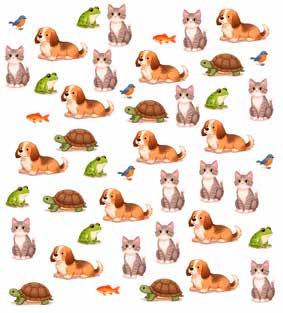


2. There are 18 shirts in a drawer. Tally the number of each color shirt. Write the total.
Colors of T-shirts in a drawer: green, green, black, black, black, black, green, blue, green, white, white, black, white, blue, green, white, black, blue.
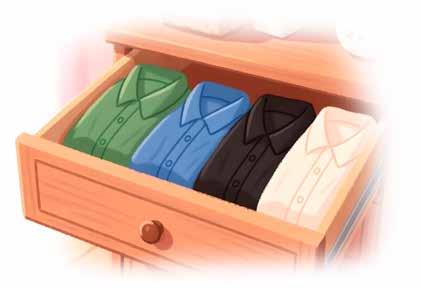
CHALLENGE
Look at the animal tally chart above and answer the question. How many more cats are there than birds?
Animal Tallies
Colors of shirts in the drawer
Color Tallies Total
Green
Black Blue White
LET’S LEARN
We can also use a bar graph to see data. To make a bar graph color the boxes up to the correct number.
Use the tallies in the table to color in the bar graph. Ways Students Get to School Way
Teacher Notes
Write the following types of pets on the board - dog, cat, fish, bird, rabbit. Ask students how many of them have each type of pet and write tally marks next to each pet to show how many students have that pet. Then draw a bar graph on the board and show students how to color in the bars to show the data that you collected. Ask questions about the graph you made such as “Which pet do the most students have?” and “Which pet do the least students have?”
2. What does Zack spend most of his time on?
3. What does Zack spend the least of his time on? homework
1.
Use the tallies in the table to color in the bar graph. Then answer the questions.
Students in Mr. Roth’s Class Blocks from School
Who lives the farthest from school?
Use the tallies in the table to color in the bar graph. Then answer the questions.
Amusement Park Wait Times
Who lives the closest to school? 6. Which ride has the longest wait time? 4. Which two students live the same distance from school? 8. How much longer of a wait does the ferris wheel have than go carts?
Which ride has the shortest wait time?
Look at the graph of deserts above and answer the question. How many more cookies and ice creams are there than pies and cupcakes?
LET’S LEARN
We can also use a pictograph to show data. The key shows how much one picture represents.

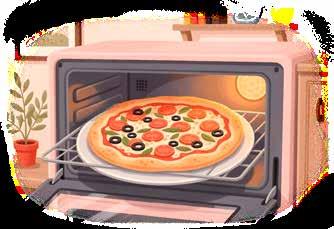

Use the pictograph to answer each question.

Teacher Notes
Draw a pictograph on the board that shows the number of milk cartons drank each school day. Make a key that shows that 1 picture of a milk carton represents 10 milk cartons. List the days of the week down the side left side and then draw several pictures of symbols of milk cartons next to each day. Ask students questions like “How many milk cartons did students drink on Wednesday?” and “How many more milk cartons did they drink on Friday than on Monday?”
Use the pictograph to answer each question.
1
2
3


1. How many strawberries were picked day 1?
2. How many total strawberries were picked all 4 days?
3. How many more strawberries were picked day 1 than day 4?

Trees Planted by the Parks Department Strawberries Picked

4 = 10 strawberries = 3 trees
4. How many strawberries were picked on days 2 and 3 combined?
Use the pictograph to answer each question.
5. How many trees were planted on each day? Mon. Tues Wed Thurs Fri
6. How many total trees were planted?
7. How many more trees were planted on Thursday than on Friday?
8. How many fewer trees were planted on Monday than on Tuesday?
Use the graph of trees planted above to answer the question.
CHALLENGE
If each tree represented 4 trees instead of 3, how many more trees would have been planted on Tuesday than on Monday?
LET’S LEARN
We can show a group of measurements on a dot plot. Each measurement is one dot on the graph. We place a dot on top of the number that shows its measure.
Height of Sunflowers in the Garden

Mark measured 4 bugs in his backyard. He put a dot on the line for each measurement. Now he found a caterpillar and ladybug. Add their measurements to the dot plot.

Teacher Notes
Draw a numberline on the board labeled with the numbers 0, 1, 2, 3, 4, 5, and 6. Ask students how many siblings they have and for each answer, put a dot on the plot above that number. After you have filled out the dot plot for number of siblings as a class, ask the students questions about the data. Ask questions such as “What is the most popular number of siblings?” “What is the least/most amount of siblings anyone in our class has?”
Farmer John grew different types of fruits and vegetables. He measured the biggest one of each type. Some of the fruits and vegetables are already marked on the dot plot. Measure the rest of the fruits and vegetables and mark their measurements with a dot.
2. How many pieces of fruit and vegetables measured 6 inches?
4. How many fruits and vegetables measured 2 inches, 6 inches and 15 inches?
Use the dot plot to answer the question. Number of Pets at home
3. How many more pieces of fruit and vegetables measured 6 inches then 2 inches?
5. How many fruits and vegetables were measured?
Use the dot plot to answer the question.
How many students have more than 2 pets?
CHALLENGE
How many total students are there?
How many students have pets?
When we tell the time, we tell the hours and minutes. The short hand tells the hour. The long hand tells the minutes.
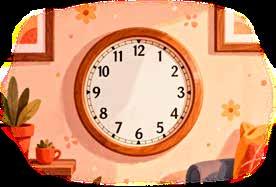
Tally Chart
Quadrilaterals are shapes with 4 sides.
To find the perimeter, add all of the side lengths.
To find the area of a rectangle, count the square units or multiply length × width.
We can show data on a chart or graph.
Graph Dot plot Pictograph
Scooters Favorite Fruit =3 students Apples: Grapes: Oranges:
Write the time as you would see it on a digital clock.
Bikes
Pencil Marker
Write how much time passed.
1. Start Time: 3:35 End Time: 4:00
Find the perimeter.
Find the area of each rectangle.
2. Start Time: 8:40 End Time: 9:25 3. Start Time: 5:20 End Time: 6:15
Complete the tally chart to show how many of each shape.
www.lighthousecurriculum.com