Literacy Level D

School
Grade This book belongs to
Teacher
School
Grade This book belongs to
Teacher
Authors
A. Isaacs
Aaron Ingel
Ben Green
E. Aboud
E. Marks
G. Schiff
Ishita Ghotia
Kenn Nesbitt
Kim Miller
N. Bennet
R. Rentiel
R. Samson
Sam Adler
T. Beck
T. Ellis
Tehila Bruck
Tessa Barber
Yael Mermelstein
"Backward Bob" copyright © 2024 Kenn Nesbitt. "Speak When This Way Talk Do" copyright © 2024 Kenn Nesbitt. "Mr. Negative" and "When's My Birthday?" copyright © 2012 Kenn Nesbitt. "My Flat Cat", "A Talkative Man from Seattle", "My Teacher Said to Write a Sonnet Now", "Thrill Ride".
All Rights Reserved. Reprinted by permission of the author.
Yehudis Leitner
Esther Aboud
Jane Chamberlain
Mary Biagianti
Sarah Thorman
Akiva Leitner Project Manager
Fraydel Sharf
M. Jakubowicz
Sara Sampson
Miriam Eisenmann
Mirko Zunic Layout and design
Isaac Flores Comic
Freepik, Wikipedia Illustrations
Lighthouse Literacy Level D ISBN 978-1-955773-67-6
Lighthouse Curriculum
718.285.7100 • info@lighthousecurriculum.com For more information visit www.lighthousecurriculum.com
©Copyright 2025 Lighthouse Curriculum Inc. All rights reserved.
No part of this publication may be reproduced, stored in a retrieval system, stored in a database and/or published in any form or by any means, electronic, mechanical, photocopying, recording or otherwise, without the prior written permission of the publisher. To obtain permission to use portions of material from this publication, please contact Lighthouse Curriculum.
Dear Educators,
We are thrilled to introduce the Lighthouse Level D Literacy Program—a dynamic and comprehensive resource that empowers your students to excel in literacy. This book is thoughtfully designed to meet all educational standards while fostering critical reading and writing skills in a way that engages and inspires learners.
The book integrates key skills, such as summarizing, using details from the text to support answers, and working with texts structured in different ways. Each lesson builds upon the previous one, offering a seamless progression that ensures mastery of essential literacy skills. Your students will not only develop a deeper understanding of the texts but also gain confidence in applying these skills across various subjects.
What makes this book truly remarkable is its ability to captivate students. With thoughtfully crafted activities and relatable content, it transforms literacy lessons into meaningful and enjoyable learning experiences.
We’re confident that the Lighthouse Literacy Program will be a valuable addition to your classroom, supporting both you and your students in achieving academic excellence.
LWarm regards, ighthouse Curriculum Team
Lesson Introduction
Each lesson begins by introducing what you’ll be learning and why it’s important.
Vocabulary
Learn new words and their meanings! You’ll use clues from the text to figure them out. Later you’ll see these words in the story.
2.

Welcome to the
This book is packed with activities and tools to help you grow as a reader and writer. Here’s a quick look at what you’ll find in each section:


Practice
This is where you’ll try out the new skill for the first time. It’s your chance put what you’ve learned into action.

Story
Dive into an engaging story. Explore different types of texts like nonfiction, informational, realistic fiction, historical fiction and more. It’s a chance to enjoy reading while seeing the skills you’re learning come to life.
Show your mastery of the new skill on this page.
You’ll review the story as you sharpen your skills.
Write a paragraph about the story. It’s an opportunity to show off your writing as you review a new skill.
Time to get creative! You’ll complete fun activities or projects to show off your learning in a new way.

Wrap up each lesson by answering questions that show how much you’ve learned. There are two parts, vocabulary and comprehension. It’s a great way to track your progress.

Summaries
LESSON 1 Main Idea The Escape 2
LESSON 2 Details The Secret Service: Protectors of America 18
LESSON 3
LESSON 4
LESSON 5 Settings, Characters, and Events The Bell of Courage 66
LESSON 6
LESSON 7 Rhythm in Poetry Rhythm and Rhyme 96
LESSON 8 Parts of a Drama Marconi Makes History




Standards:
Lesson- 4.RI.2
Comprehension Skill
Review- 4.RI.2
Unit 1: Main Idea
Lesson 1: Summaries
Author: Tessa Barber Genre: Informational
Write a summary of a nonfiction or fiction text.
Identify the main idea of a text.
1. Learn how to find the main idea.
2. Practice finding the main idea.
3. Complete the vocabulary worksheet.
During Reading
1. Think about the meaning of specific words or phrases.
2. Think about the main idea of each paragraph and section.
After Reading
1. Complete the comprehension activity to find the main idea.
2. Learn how to write a paragraph.
3. Complete the project.
4. Check your progress by taking the assessment.
We are excited to start learning literacy together! Let’s start with the main idea. The main idea is the most important idea in a story, book, or picture.
The main idea is like a label on a box. It tells you in a few words what the passage is mostly about.

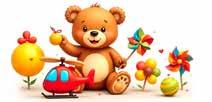
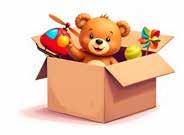
There are many ways to find the main idea. Not every way will work for every story.
Use the title.
Look at the beginning and end sentences.
About the moon’s phases
1. 2. 3. It changes shape. About the moon Says that the moon changes
Choose a word that tells who or what it is about.
Tell the most important thing the passage wants you to know about it.
The moon looks different on different nights. Sometimes, it’s a big, round circle. Other times, it’s just a small sliver. These changes are called the moon’s phases.
Main Idea: The moon changes shape.
Read each passage. Then, answer the questions.
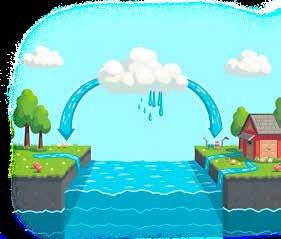
Water is always moving! It rises into the sky from oceans, lakes, and rivers. It then forms clouds. When the clouds get heavy, the water falls back to Earth as rain, snow, or hail. This is called the water cycle because it happens over and over.
1. Underline the beginning and ending sentences of this passage.
2. What is the main idea of this passage?
a. Water rises into the sky from oceans, lakes, and rivers.
b. Water moves between Earth and the sky in a cycle.
c. When clouds get heavy, water falls back to Earth.
Veggies are packed with vitamins, minerals, and fiber. They help us grow strong, stay healthy, and have lots of energy. Eating a lot of colorful vegetables can make our meals more delicious and nutritious. Let’s make veggies a part of every meal!
3. Who or what is this passage about?
4. What does the passage want you to know about it?
5. Write the main idea using your answers from questions three and four.
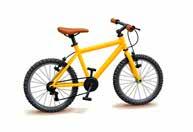
In a small town, there lived a boy named Max. He loved to ride his bike. One day, after a strange storm, Max’s bike started to glow. To his surprise, he could fly and see the world from the sky!
6. Write a title for this story.
7. What is the main idea of this story?
Match the bolded words with their definitions. Highlight context clues.
The daring mountain climber climbed straight up a steep cliff.
The prisoner was put in a small cell, with no visitors allowed.
The warm air came through the vents, making the room cozy.
The drain was covered by a metal grate to keep garbage from falling in.
The campers built a raft out of wood to float across the river.
The heavy rain pounded on the roof during the storm.
The waves rolled gently on the sandy shore by the ocean.
When the lion escaped from the zoo, the whole city was on alert.
openings that let air, gas, or smoke in or out
a flat, floating, boat-like object usually made of logs or boards tied together
a small room in a jail where a person is locked up
a metal frame with bars across it, used to cover an opening
brave and willing to take risks the land near a sea, lake, or river hit against something again and again a state of being ready and careful daring [DAIR-ing]; cell [SEL]; vents [VENTS]; grate [GRAYT]; raft [RAFT]; pounded [POWN-did]; shore [SHOR]; alert [uh-LURT].
Author: Tessa Barber Genre: Informational
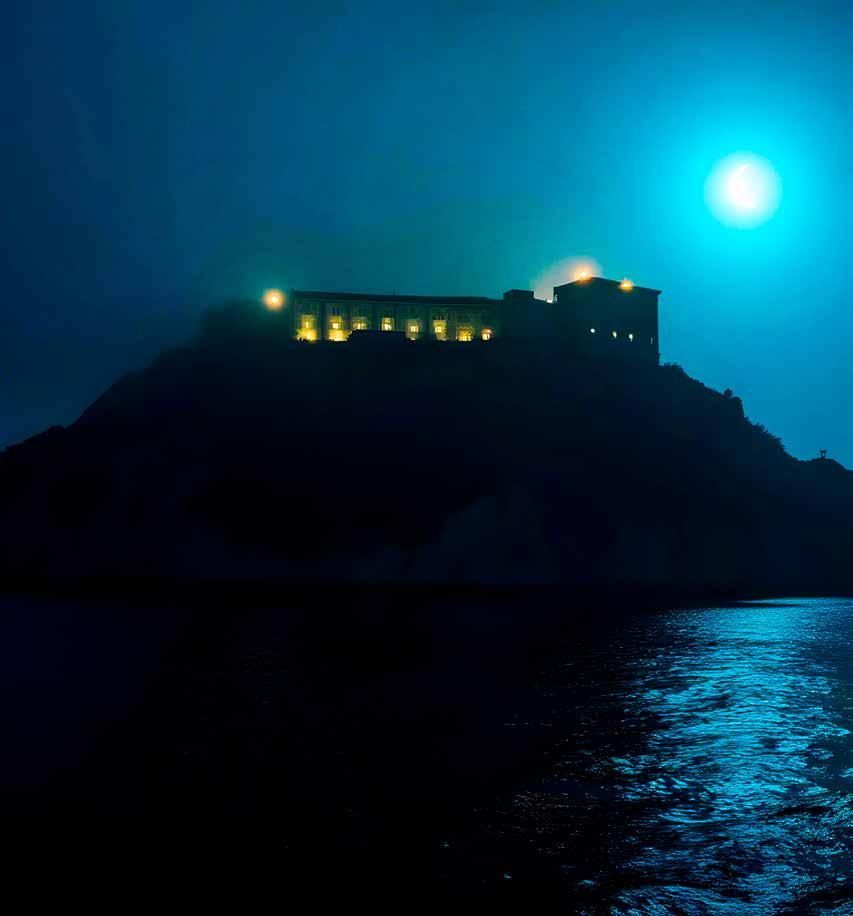
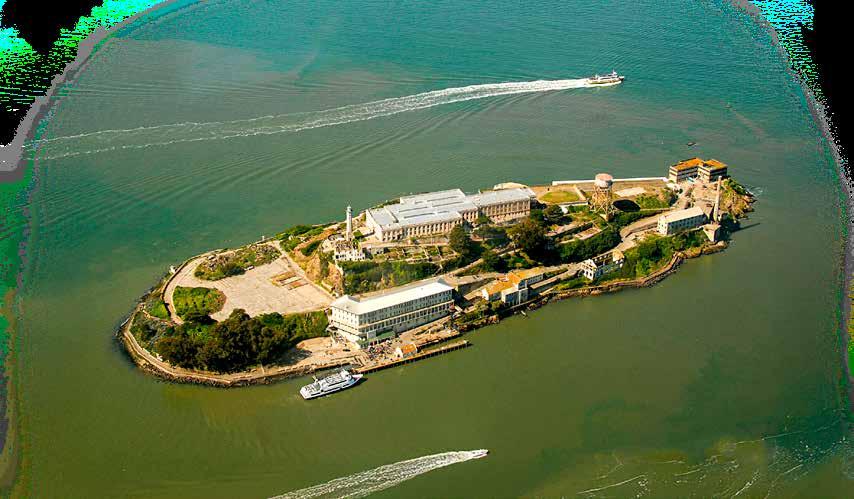
It was a prison like no other. Alcatraz sat on a rocky island. It was surrounded by freezing water. Guards watched the prisoners’ every move. It was impossible to escape. But one dark night, three prisoners disappeared. How did they dig their way out without being caught? Did they survive their daring escape? Keep reading to find out!
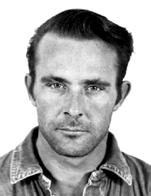
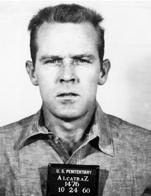
Three prisoners. A prison surrounded by water. A daring escape.
It sounds like an adventure story. But it really happened.
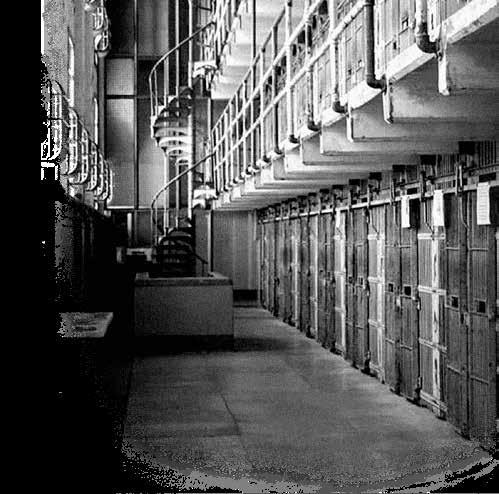
Alcatraz was a famous prison on a rocky island. It was in the middle of San Francisco Bay. All around the prison was freezing water. It was impossible to escape. The most dangerous criminals were sent to Alcatraz. Guards watched them day and night.
Escape? Impossible!
Except that it wasn’t.
Three prisoners decided that they wanted to leave. They set to work to plan their escape.
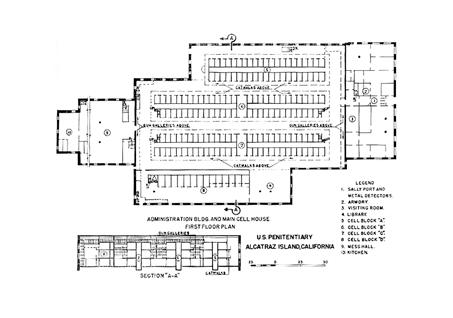
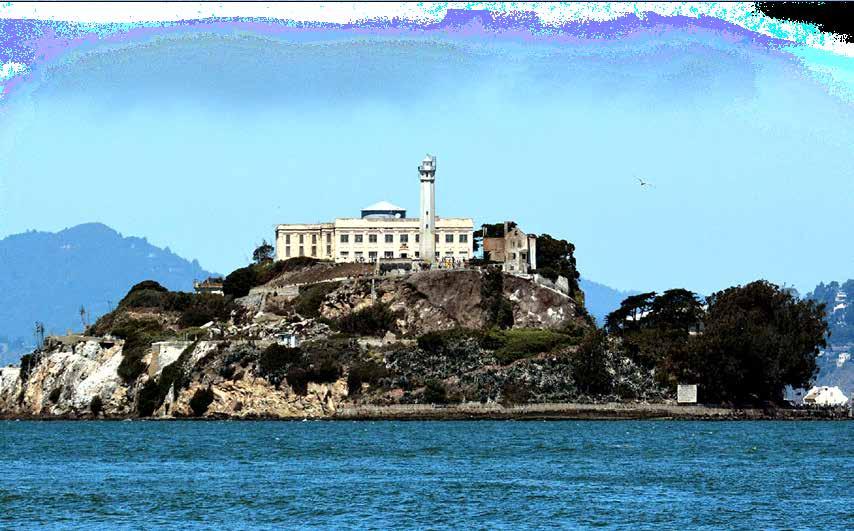

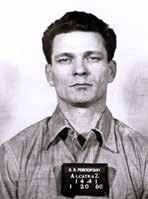
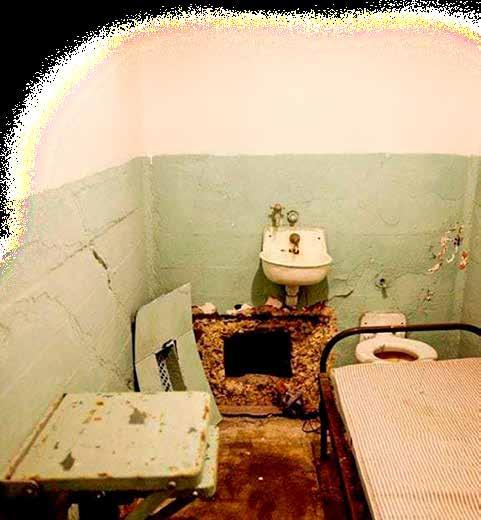
Frank Morris was a very smart man. He was also a prisoner. Since the age of thirteen, he had been in and out of prisons. He’d even managed to escape from one! As soon as he arrived at Alcatraz, he started looking for a way to leave. He noticed that the walls of the cells had vents They were covered by metal grates. Behind those grates was an empty hallway.
One night, he lay in his bed and looked at the vents.
“Look,” he whispered to brothers John and Clarence Anglin. “Do you see those vents?”
“Yes,” John whispered back.
“Behind this is a secret tunnel,” Frank said. “It’s our way out!”
“Are you serious?” Clarence said. “You think we can get through?”
“We have to try,” Frank said. “Anything is better than staying here.”
The three men got to work. They gathered spoons and small tools. At night, they dug holes into the thick wall. They covered the holes with cardboard. They didn’t want the guards to see them.
It was slow, hard work. Their hands hurt from so much digging. At times, they wanted to give up.
“This is taking forever!” John said.
“Freedom isn’t easy,” Frank said. “We have to earn it.”
Finally, one night, they broke through the vents. They entered the secret tunnel. But they weren’t done. Now, they had to figure out how to leave the island.
The water around the prison was freezing. It was impossible to swim in it.
The men thought and thought. How could they escape safely?
Frank pulled out an old raincoat.
“Let’s build a boat,” he said.
“A boat?” John laughed. “Out of raincoats?”
“We’ll stitch them together to make a raft,” Frank said. “We’ll blow it up with air. We’ll also make paddles from wood.”
And so, they got to work. It seemed that they had everything they needed. But they still weren’t done.
Every night, the guards checked on the prisoners. They had to make sure the guards wouldn’t realize that they weren’t in their beds. So the three men gathered paper, soap, and real hair from the prison barbershop. They made fake heads. They placed them on their pillows and covered their “bodies” with blankets. The guards would never realize they were missing — until it was too late.
Now they were really ready. It was time to put their plan into action.
It was dark and quiet. The three men waited. Their hearts pounded with excitement.
“This is it,” Frank said. “There’s no turning back now.”
“Let’s go before the guards hear us,” John said.
They squeezed through the tunnel they had dug. The walls scraped their shoulders, but they didn’t stop. Frank led the way into the secret tunnel.
Quietly, they climbed up. Nobody heard them. Finally, they reached the roof.
“Ready?” Frank whispered.
John nodded. “Let’s do this.”
They slid down the drain pipes. When their feet hit the ground, they didn’t stop. They ran, quickly and quietly, toward the shore.
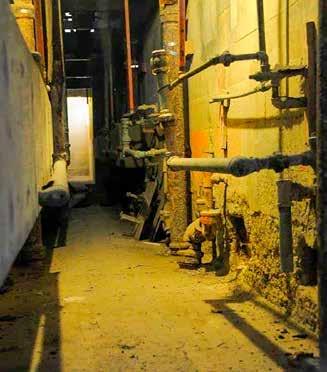
They grabbed the wooden paddles and began to row their boat. The waves were high and strong. They had left the island! But they had miles of cold, dangerous water to cross before they reached safety.
“It’s freezing!” Clarence cried. “We’ll never make it.”
Frank looked at him. “We have to try. Keep rowing!”
And so, they kept going.
The next morning, a guard went to wake up Frank Morris.
"Time to get up, Morris!" Frank didn’t move. The guard stepped inside the cell and shook the bed. He looked closer.
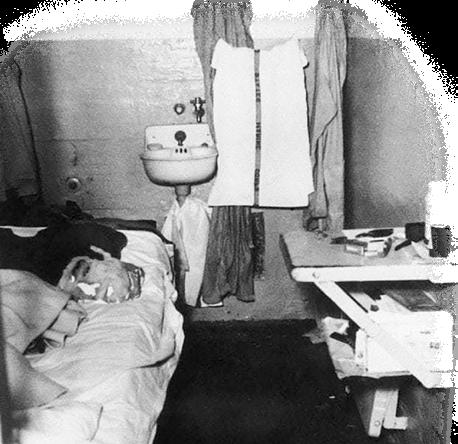
“I don’t believe it!” he cried. “It’s a fake head! Morris is gone!”
Alarms rang out. The guards were on alert! They rushed to check the other cells. They found fake heads in John and Clarence’s cells. The three prisoners were missing!

"They’ve escaped!" a guard shouted. “Lock down the prison! Search everywhere!”
Soon, everyone had heard the news. Three prisoners had escaped Alcatraz. But where were they now? The police and FBI searched everywhere.
Helicopters flew over San Francisco Bay. They were looking for the men in the freezing
sea. Boats went up and down the water, searching for clues. Divers went deep into the icy water, hoping to find a sign of Frank, Clarence, and John.
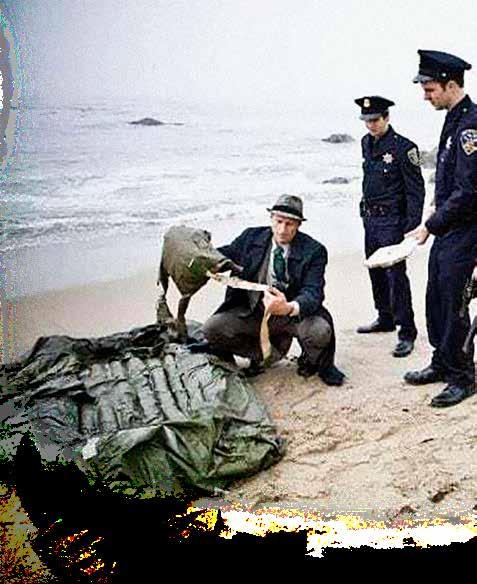
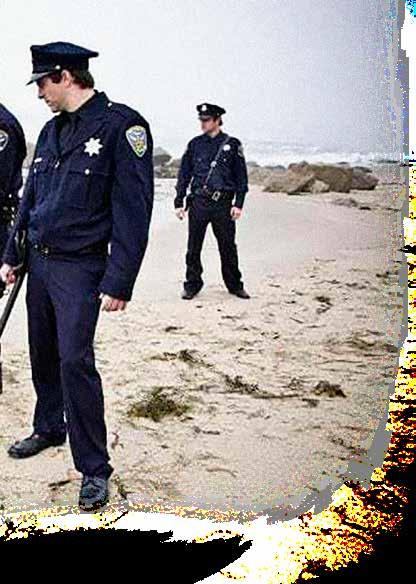
Men walked along the shore. They looked for footprints, clothing, or belongings. The Coast Guard checked every nearby beach. Maybe the men had managed to reach land? Soon, everyone in San Francisco was looking for the prisoners.
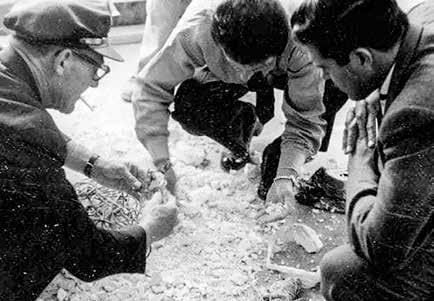
Some small clues were found: a boat made of raincoats, a paddle, and some life vests. The boat was ripped into pieces. There was no sign of Frank, John, or Clarence.
Yet, the police kept looking. They spoke to other prisoners. One of the prisoners had helped to plan the escape. He told the police that Frank had planned to steal a car when he reached land. But there were no reports of any stolen cars.
They watched train stations, bus stops, and airports. They were ready to catch the men. But there was no sign of them.
Did Frank, John, and Clarence make it to freedom? We’ll never know. But the three men will always be known for one of the most daring escapes in history.
Read the paragraph and find the main idea.
Alcatraz was a famous prison on a rocky island. It was in the middle of San Francisco Bay. All around the prison was freezing water. It was impossible to escape. The most dangerous criminals were sent to Alcatraz. Guards watched them day and night.
1. What is the main idea of this paragraph?
a. Alcatraz was on a rocky island.
b. It was impossible to escape from Alcatraz.
c. Guards watched the prisoners day and night.
d. The prisoners escaped from Alcatraz.
Refer back to each section in the text. Find the main idea.
2. What is the main idea of the section titled “The First Stage” (p. 9)?
a. Frank, John, and Clarence escaped from their rooms.
b. Frank, John, and Clarence used spoons and small tools to dig holes.
c. Frank wanted to escape from Alcatraz.
d. Frank, John, and Clarence had no way to escape the island.
3. What is the main idea of the section titled “The Search Begins” (p. 10)?
a. Frank put a fake head in his bed.
b. The Coast Guard found a boat made of raincoats, a paddle, and life vests.
c. The police, FBI, and Coast Guard tried to find the prisoners, but they didn’t.
d. Frank, John, and Clarence were able to escape from Alcatraz.
Answer the question to find the main idea of the story.
4. What is the main idea of this story?
a. It was impossible to escape from Alcatraz.
b. Frank, John, and Clarence broke through the vents to reach a secret hallway.
c. Frank led the two brothers through a secret tunnel and then into a boat.
d. A group of three prisoners escaped from Alcatraz.
A paragraph is a group of sentences on the same topic that are written in an organized way.
You can write a paragraph in five steps.
Step 1: Make a plan.
→ Gather and organize your information.
Step 2: Topic Sentence
→ Write a sentence that introduces the topic and says the main idea.
Step 3: Body Sentences
→ Write three sentences that each tell the reader something about the main idea.
Step 4: Concluding Sentence
→ Write a sentence with a lesson, an opinion, or a summary of what you said.
Step 5: Write a paragraph
→ Put together the sentences from the first four steps. Read through and make edits.
Write the letter that shows each step.
Step 1: Step 2: Step 3: Step 4: Step 5:
a. Ice cream is a perfect way to cool down on a hot summer day.
b. Ice cream is a frozen treat with many options.
c. Ice cream comes in many yummy flavors, such as chocolate, strawberry, and vanilla. Some ice cream comes with extra things, like sprinkles, cookies, and even candy. You can eat ice cream in cones, bowls, or even sandwiches.
d. ice cream options
flavors mix-ins ways to eat
e. Ice cream is a frozen treat with many choices. It comes in many yummy flavors, such as chocolate, strawberry, and vanilla. Some ice cream comes with extra things, like sprinkles, cookies, and even candy! You can eat ice cream in cones, bowls, or even sandwiches. Ice cream is a perfect way to cool down on a hot summer day.
PRACTICE VOCABULARY STORY REVIEW ACTIVITY ASSESSMENT
Create your own theory!
The mystery of Frank, John, and Clarence’s escape still has many unanswered questions. Did they make it to safety?
Come up with your own idea! Write a paragraph or draw a picture that shows what you think happened to them.
Circle the correct answer.
1. Which word means a small room in which a prisoner is locked up?
a. Daring
b. Vents
c. Grates
d. Cell
2. Which of the following is an example of something that was pounded?
a. A cat that was patted gently
b. A nail hammered into a wall
c. A whispered secret
d. A sleeping child
3. The in the ceiling allowed air to come in and out.
a. vents
b. grates
c. cells
d. daring
4. Which word means a flat platform used for traveling on water?
a. Daring
b. Vents
c. Grates
d. Raft
5. The ship finally reached the after weeks at sea.
a. shore
b. vents
c. grates
d. pounded
6. Which of the following is an example of something daring?
a. Crossing a street
b. Walking a tightrope between two skyscrapers
c. Brushing your teeth
d. Sleeping in late
7. Which word means metal structures with bars or openings?
a. Daring
b. Vents
c. Grates
d. Cell
8. Which of these is an example of being alert?
a. Falling asleep
b. Doodling
c. Listening carefully
d. Jumping
Circle the correct answer.
1. How did the prisoners escape from their cells? (detail)
a. They broke the windows.
b. They climbed through the vents.
c. They bribed the guards.
d. They dug a tunnel under the prison.
2. How did the guards realize that the prisoners had escaped? (cause and effect)
a. They heard a loud noise.
b. They saw the prisoners leaving the island.
c. They found fake heads in the prisoners' beds.
d. The prisoners sent a message to the guards.
3. How do you think the prisoners felt as they planned their escape? (inferencing)
a. They were calm and relaxed.
b. They were excited and nervous.
c. They were angry and upset.
d. They were sad and hopeless.
4. What is the main idea of this passage? (main idea)
a. The importance of teamwork and perseverance
b. The dangers of life in prison
c. The story of a daring escape from Alcatraz
d. The history of the Alcatraz prison
5. What was the last step in the prisoners' escape plan? (sequencing)
a. Stealing a car
b. Digging tunnels in their cells
c. Making fake heads
d. Building a raft
6. What does the word "stitch" mean in the sentence, “We’ll stitch them together to make a raft”? (context clues)
a. Sew
b. Glue
c. Tie
d. Paint
7. How was Frank’s plan different from other escape attempts from Alcatraz? (compare-contrast)
a. Others were caught, but Frank was not.
b. Frank was caught, but others were not.
c. Others were successful in escaping the island, but Frank was not.
d. No one had ever tried to escape from Alcatraz before.
8. Which of the following is a fact from the story? (fact vs. opinion)
a. The prisoners used spoons and small tools to dig.
b. The prisoners were brave and smart.
c. The guards at Alcatraz should have watched the prisoners better.
d. The escape was an exciting adventure.
A fact is something that is true and can be checked. An opinion can be argued; it can't be checked to see if it is true.
Unit 1: Summaries
Lesson 2: Details
Author: Tessa Barber Genre: Informational
Standards: Lesson- 4.RI.2
Comprehension Skill Review- 3.RL.3
Write a summary of a nonfiction or fiction text.
Lesson Focus
Identify main idea and details, and explain how the main idea is supported by key details.
1. Learn about main idea, details, and key details.
2. Practice finding main ideas and key details.
3. Complete the vocabulary worksheet.
1. Think about the meaning of specific words or phrases.
2. Think about which are key details that support the main idea.
1. Complete the comprehension activity to find details that support the main idea.
2. Review "Transition Words." Complete the activity.
3. Complete the project.
4. Check your progress by taking the assessment.
Now that we've learned all about the main idea, let’s learn how to find the details that support it!
Sometimes, a story or picture gives us a lot of information. Some of it may be extra, but some of it helps us understand the main idea better. These are called key details
Main idea:
The main thing a story, book, or picture is telling you 1.
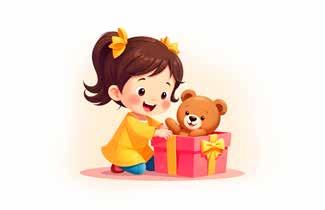
Main Idea:
The girl got a present.
2.
Details: Other information
The girl looks happy.
Key details: Details that help you find or explain the main idea. 3.
The girl is sitting on the floor.
The girl is wearing a bow.
The bear came in a box.
The box is wrapped with a bow.
How many more details can you find?
Doesn’t have to do with getting a present
The girl looks happy.
The girl is sitting on the floor.
…because she got a present
The girl is wearing a bow. Doesn’t have to do with getting a present
The bear came in a box.
The box is wrapped with a bow.
…because it is a present
…because it is a present
Use the picture to answer the questions.
1. What is the main idea?
2. Write three key details (clues) that helped you figure out the main idea.

3. Write two details from the picture that do not support the main idea.
Read the passage. Then, use the gray boxes on the right to follow the directions.
Imagine how easy it would be to hide if people could see through you! Glass frogs are really cool; they have see-through skin. If you look underneath one, you can see its body parts. See-through skin helps glass frogs survive. When a glass frog sits on a green leaf, the color blends with its body. Then, bigger, frog-eating animals have a hard time spotting it.
1. Circle the box with the main idea.
2. Draw an arrow from each key detail to the main idea.
3. Make an “x” next to each detail that is not a key detail.
Frog-eating animals have a hard time spotting glass frogs.
See-through skin helps glass frogs survive.
Glass frogs blend in with their surroundings.
Glass frogs are really cool.
Glass frogs have see-through skin.
You can see body parts in a glass frog.
LESSON PRACTICE VOCABULARY STORY REVIEW ACTIVITY ASSESSMENT
Match the bolded words with their definitions. Highlight context clues.
The travel agent helped us plan our vacation to the island.
The school's science fair was a big event with lots of exciting projects.
The gardener prepares the soil before planting new flowers.
Nobody knew where the mysterious sound was coming from.
The man wore a disguise so no one would recognize him.
Fish use oxygen in the water to breathe.
The police arrested the person who stole the bicycle.
The detectives worked hard to catch the criminals.
gets ready for something a gas that people and animals need to breathe
people who carried out a crime taken in by the police a person who does business or an action for another
something that happens, especially something important something that changes the way a person looks to hide who he is strange, unknown, or hard to understand
agent [AY-jehnt]; event [ih-VENT]; prepares [prih-PAIRZ]; mysterious [mih-STEER-ee-uhs]; disguise [dihs-GYZ]; oxygen [OK-sih-jen]; arrested [uh-RES-tid]; criminals [KRIM-ih-nuhlz]

Author: Tessa Barber Genre: Informational
Have you ever wondered how the United States keeps running? Who keeps the president safe? How does our money stay safe? Read on to learn about the incredible work of the Secret Service, who do their job in well — secret! You’ll find a world full of excitement, and plain hard work.
July 13, 2024, was a hot summer day. A huge crowd waited for Donald Trump to walk onto the stage. He had once been the president, and he wanted to be the president again. People waved colorful signs and clapped their hands. The music was loud and cheerful.
Finally, Mr. Trump appeared on stage. He smiled and waved. The crowd cheered. They snapped pictures and shouted his name. Suddenly… Bang!
People shouted in fear. Some of them tried to run away. Someone was shooting at Mr. Trump!
Some men rushed into action. They ran in front of Mr. Trump. They grabbed him and pushed him down. They saved his life!
Who were these men?
They work for the Secret Service. One of their jobs is to protect our president. They have other important jobs, too. They protect leaders from other countries. Did you know that they’re also in charge of keeping our money safe? Let’s find out about these very important jobs!
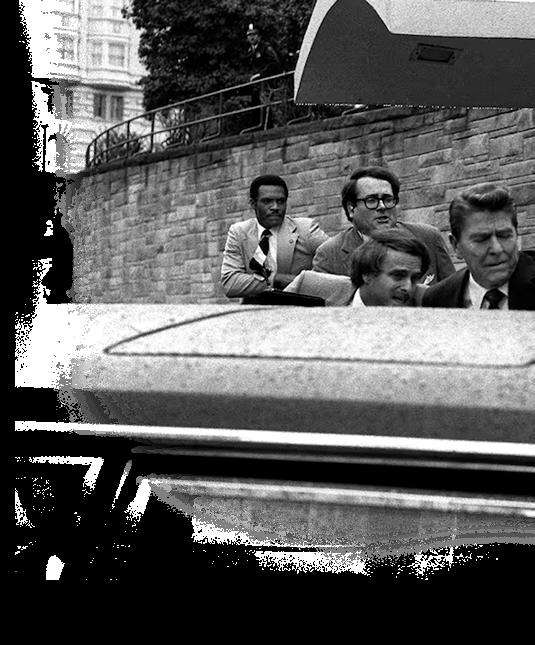
Reagan into a car. He told the driver to rush to the hospital.
His quick thinking saved President Reagan’s life!
The president of the United States is one of the most powerful leaders in the world. The president needs protection every single day, everywhere he goes. That’s where the Secret Service comes in!
The Secret Service works hard, and they’re good at what they do. Thanks to their careful planning and quick thinking, America’s presidents have stayed safe over the years.
One of the most famous times a president was saved was in 1981. President Ronald Reagan was leaving a hotel in Washington, D.C. He smiled and waved at people. Suddenly, a man began to shoot at him.
Jerry Parr, a Secret Service agent, had just seconds to act.
Without wasting a moment, he pushed
When it comes to protecting the president, Secret Service agents never take a break.

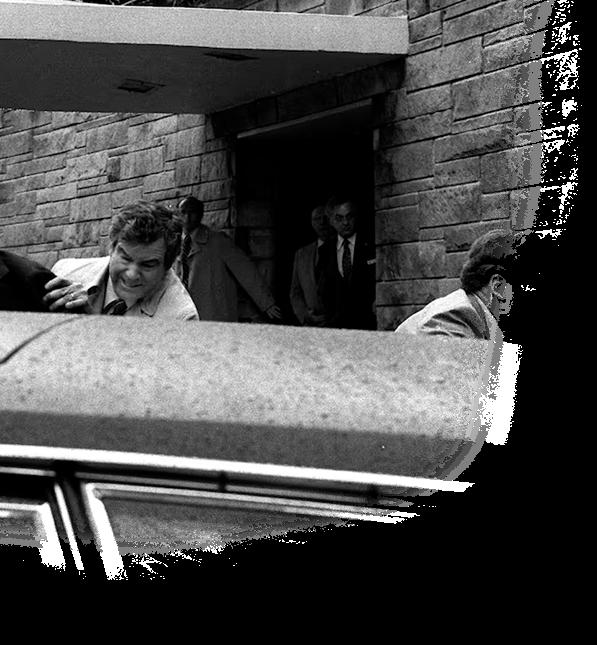
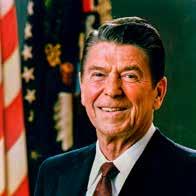
wikipedia.org
President
Ronald Reagan
Whether the president is at the White House, giving a speech, or traveling to another country, these agents are always close by. Every event is planned carefully to make sure the president is safe. Every detail of the president’s schedule is checked and rechecked. Before the president goes somewhere, the Secret Service prepares for the visit. They check the place to make sure it’s safe. They look around the area and talk to the police in that city. Before the president arrives, agents
make sure there is no danger. They even have a medical team ready, just in case.
When the president is at an event, agents stand near him. They wear dark sunglasses. This isn’t just to look cool. Sunglasses help them to see better. They also make it hard for others to see what the agent is looking at. If someone starts to make trouble, he won’t realize that a Secret Service agent is looking at him.
Secret Service agents must always pay attention to everything going on around them. They watch out for anything unusual. This might be a mysterious bag or a person who is acting strangely. Usually, Secret Service agents wear a dark suit. Sometimes, they get to wear a disguise! They probably won’t wear funny glasses and a fake mustache. They may wear regular clothing, like pants and a shirt. This makes them look like they’re part of the crowd. If someone wants to make trouble, the Secret Service agent might be right there to see it!
Another thing that Secret Service agents wear is tiny earpieces in their ears. These earpieces make it possible for them to be in touch with other agents at all times. This way, they work together and can know exactly what is happening at each moment.
Did you know that the president and his family members have special code names?
Secret Service agents use these names when talking on their radios. This way, no one will know who they are talking about. President John F. Kennedy’s code name was “Lancer.” President Barack Obama’s code name was “Renegade.”
When it’s time for the president to leave, a Secret Service agent will drive him in the “Beast.” This is what the president’s car is called — because it isn’t just any car! It’s
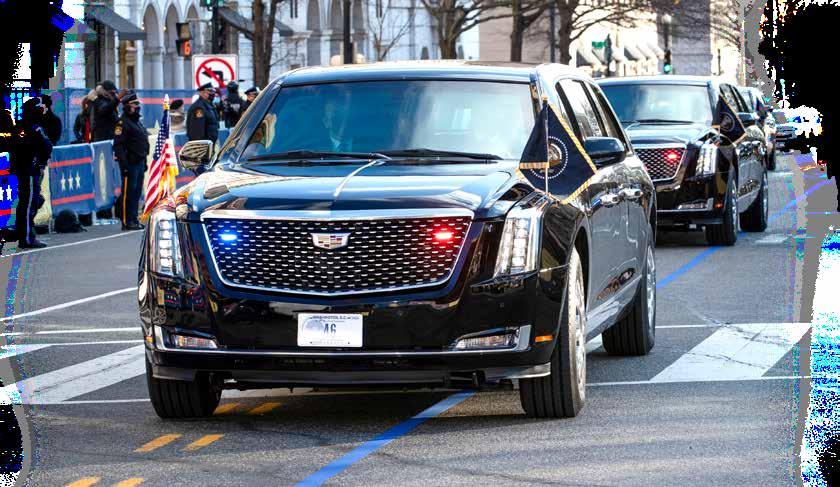
a bulletproof, bomb-proof, super strong limousine! The Beast has thick steel doors. It also has its own supply of oxygen. If there’s a gas attack, the president will be able to breathe safely inside. There are even bottles of the president’s blood type inside! If the president is hurt, Secret Service agents are ready to save his life!
Secret Service agents don’t just protect the president. They also protect important leaders from other countries when they visit the United States.
Imagine that a king, queen, or prime minister from another country is coming to the United States. The Secret Service steps in to keep them safe. What would happen if a leader from another country got hurt in the United States? It could cause big problems between these countries!
Sometimes, many world leaders meet in the United States for a big event. At these events, there are many Secret Service agents working hard. They make sure that the leaders can talk about important things without facing any danger.
Every year, the United Nations holds a special meeting in New York City. Over 150


world leaders come to discuss world peace, the environment, and other important topics. With so many important people in one place, the Secret Service must make sure that they’re safe!
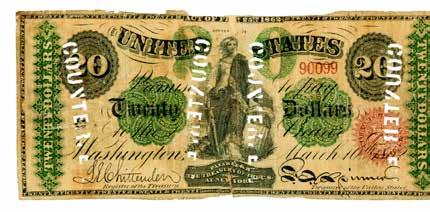
The Secret Service started in 1865. At that time, its job wasn’t to protect the president or other leaders. Its job was to stop people from making fake money!
Counterfeiting has been a problem for many years. This is when criminals make fake money and try to use it as real money. In 1865, counterfeiting was a huge problem in the United States. People didn’t know if the money they had was real or fake.
In 1899, there was a counterfeiter named Emanuel Ninger. He made money by painting fake bills. One day, he wanted to spend a fake fifty-dollar bill at a store. The bill got a little wet, and the ink ran. A worker at the store noticed this and called the Secret Service. They searched Ninger’s home. There, they found art supplies and unfinished fake bills. Ninger was arrested. The Secret Service showed people that crime doesn’t pay!
Today, the Secret Service still works to catch criminals who try to print fake bills. They use special tools to track down counterfeiters. This keeps America’s money safe.
Some crimes happen on the computer. Criminals may find out a bank’s information. They may find out a person’s information. The Secret Service works to keep this money safe, too. They use special computers to track down these criminals. They work with banks and businesses to make sure money stays safe. If someone tries to break into someone else’s
computer, the Secret Service will step in and stop him.
Thanks to the Secret Service, people know they can trust their banks and businesses.
The Secret Service: More Than Just Bodyguards
It isn’t easy to become a Secret Service agent. Agents must attend school for a number of years. There is also special training. Yet, the job is very rewarding. Because of the Secret Service, our country is safer. We may not notice these men, but they are always there. They are watching, looking around, and protecting. Although much of their job is secret, it’s no secret that our country would be a different place without the Secret Service!
Read each statement. Circle the main idea of the passage.
The Secret Service has many important jobs.
Secret Service agents use planning and quick thinking.
The Secret Service protects the president.
Circle the set of key details that supports the main idea of the passage. Write the letter of the main idea that matches each set.
1.
a. The Secret Service protects the president.
b. The Secret Service protects leaders from other countries.
c. The Secret Service protects America’s money.
2.
a. Secret Service agents work in the White House.
b. Secret Service agents go with the president wherever he goes.
c. The Secret Service saved President Ronald Reagan’s life.
a. Before an event, Secret Service agents prepare every detail.
b. To save the president, Secret Service agents need to think fast.
c. Jerry Parr thought fast and saved President Ronald Reagan’s life.
Choose a key detail from the story and explain how it supports the main idea.
Key detail: The Secret Service protects leaders from other countries. How it supports the main idea: The Secret Service protects leaders visiting from different countries, (detail) showing one of the many important jobs they have (main idea).
3. 4.
Key detail:
How it supports the main idea:
Transition words are used to help connect ideas and make the writing easier to understand.
Transition Words
Words that help put ideas in order or connect sentences
First, Next, Then, Afterward
Words that add more details
Not only that, Also, In addition, Another, Plus, For example, In fact
Words to use for a conclusion
In summary, In conclusion, All in all, Overall, Finally
Write a paragraph about the Secret Service using transition words.
1. Plan. Write three things about the Secret Service.
2. Topic sentence. Write the three things in short.
3. Body Sentences. Write one sentence telling more about each of the three things. Add transition words
4. Concluding Sentence. Write an opinion or lesson about the Secret Service.
5. Paragraph. Write a paragraph. The Secret Service
Create your own plan!
The Secret Service has important jobs, such as protecting the president and keeping money safe.
Imagine you're a Secret Service agent getting ready for a big event. What would you do to keep everyone safe—even leaders from other countries? Write a short paragraph or draw a picture to show your plan. Be creative and show the steps you would take!
Circle the correct answer.
1. The real estate helped the family buy a house.
a. arrested
b. prepares
c. agent
d. criminals
2. Which is an example of an event?
a. A library
b. A carnival
c. A pencil
d. A shoe
3. The student for the test by studying.
a. prepares
b. criminals
c. oxygen
d. event
4. Which word means strange?
a. Disguise
b. Oxygen
c. Mysterious
d. Arrested
5. The spy used a to look like someone else.
a. disguise
b. prepares
c. criminals
d. agent
6. Which needs oxygen?
a. A human
b. A rock
c. A table
d. A building
7. Which is an example of being arrested?
a. Being taken to a police station
b. Going to school
c. Playing in the park
d. Eating dinner
8. Which word means people who have committed a crime?
a. Mysterious
b. Oxygen
c. Criminals
d. Disguise
Circle the correct answer.
1. In what year did the Secret Service begin its operations? (detail)
a. 1776
b. 1865
c. 1900
d. 2001
2. What happened when Emanuel Ninger's fake bill got wet? (cause and effect)
a. He was praised for his artwork.
b. The ink ran, and he was caught.
c. The bill became more expensive.
d. He was given more money.
3. How do you think the Secret Service work with the police in neighborhoods? (inferencing)
a. They avoid working with local police.
b. They work nicely together.
c. They compete with local police.
d. They replace local police.
4. What is the main idea of the entire passage? (main idea)
a. The Secret Service has many important jobs.
b. The Secret Service only protects the president.
c. The Secret Service is a secret organization.
d. Secret Service agents are always in disguise.
5. What did Jerry Parr do right after shots were fired at President Reagan? (sequencing)
a. He ran away.
b. He pushed Reagan into a car.
c. He called the police.
d. He shot back.
6. In the phrase "track down counterfeiters," what does "track down" mean? (context clues)
a. To lose
b. To find
c. To ignore
d. To create
7. How is a Secret Service agent wearing a uniform different from an agent in disguise? (compare-contrast)
a. Agents in uniform are less visible.
b. Disguised agents blend in with the crowd.
c. Agents in uniform don't use earpieces.
d. Disguised agents drive the "Beast."
8. Which of the following is an opinion about the passage? (fact vs. opinion)
a. The Secret Service started in 1865.
b. Secret Service agents wear earpieces.
c. The Secret Service is very important.
d. President Reagan was shot in 1981.
Standards:
Lesson- 4.RI.2
Comprehension Skill Review- 4.RI.2
Unit 1: Summaries
Lesson 3: Summarizing Informational Texts
Author: T. Beck Genre: Informational
Unit Goal
Write a summary of a nonfiction or fiction text.
Lesson Focus
Write a summary of a nonfiction text.
Before Reading
1. Learn how to write a summary.
2. Practice identifying parts of topic sentences and finding key details.
3. Complete the vocabulary worksheet.
During Reading
1. Think about the meaning of specific words or phrases.
2. Think about the main idea and key details.
After Reading
1. Complete the comprehension activity to write a summary.
2. Review "Key Details." Complete the activity.
3. Complete the project.
4. Check your progress by taking the assessment.
Now that we have learned about main ideas and details, we’re ready to write a summary! A summary is a shorter way of telling the main points of a text. It tells the most important parts using your own words.
A summary has two parts:
Topic Sentence:
Include the type of text and/or the title. Write the main idea or topic of the passage.
The passage “Grow!” teaches about the things plants need to survive.
Body Sentences:
Choose the three most important key details. Write them in sentences in your own words. Add transition words like “first,” “also,” or “additionally.”
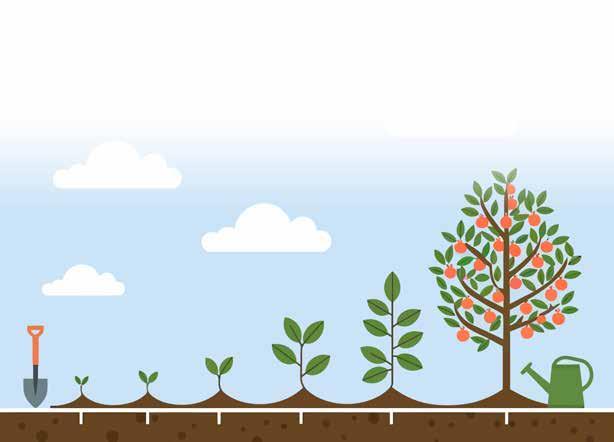
First, a seed needs to be planted in soil. Then, it needs to be watered. Last, the plant needs sunlight in order to grow.
The following are topic sentences for summary paragraphs. Circle the type of text and underline the main idea or topic.
type of text main idea
1. In the chapter “The Solar System,” the author writes about the planets and stars in space.
2. The recipe “Chocolate Mousse” teaches how to make mousse from avocados.
3. The passage explains how a light bulb works.
4. This story is about a girl who moves to a new city.
5. In the article “Best Friends,” the author writes about the qualities that make a good friend.

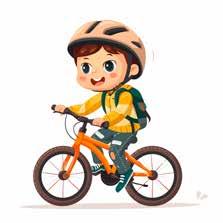
Circle the three most important key details that you would include in a summary of an article that explains how to ride a bike.
→ Riding a bike is good exercise.
→ Sit on the seat and hold the handlebars.
→ Bikes come in different sizes.
→ Put your feet on the pedals.
→ Push your feet forward on the pedals to make the bike move.
Match the bolded words with their definitions. Highlight context clues.
The group of families sailed across the ocean to start a new colony in a faraway land.
The farmers worked hard to grow crops of corn and beans.
The settlers arrived in the new land, ready to build their homes.
The Native American tribe worked together to build their homes.
The children loved paddling the canoes across the lake.
I made sure I had all the supplies I needed for school, like pencils and notebooks.
Cacti are amazing plants because they can survive in the desert with very little water.
The artist carved a beautiful bird out of wood.
people who move to a new place to live
a new place that is ruled by the home country
stay alive, even when things are difficult items that are needed for something cut a shape or design from a hard material
small, narrow boats that people paddle to move across water
plants that are grown for food group of people or families with the same customs, beliefs, and language colony [KOL-uh-nee]; crops [KROPS]; settlers [SET-lerz]; tribe [TRYB]; canoes [kuh-NOOS]; supplies [suh-PLIZE]; survive [sur-VIVE]; carved [KARVD].

Author: T. Beck Genre: Informational
Imagine moving to a brand new place where no one has ever lived before. There are no stores and no roads—just trees, rivers, and wild animals. Over 400 years ago, a group of brave people left their homes in England to start a new life in America. But then, something strange happened. As you read, see if you can solve the mystery of the Lost Colony!
Many years ago, when people moved, they said goodbye to family and friends for good. Travel was hard and dangerous. Not always did people reach their new home safely.
Over 400 years ago, a group of brave men, women, and children left their homes in England. They boarded ships, full of hope and excitement. They wanted to start a new life in a place called the New World. Today, that place is America.
These people started a colony. They are known as the “Lost Colony” because no one knows what happened to them.
In order to reach the New World, ships had to cross the Atlantic Ocean. It was a long, hard trip. The waves were tall. Storms tossed the ships around like toy boats. Some days, the sun was very strong. Other days, there was a thick fog that made it hard to see.
There were 115 people in the group. A man named John White was their leader. He had visited the New World before. He had seen forests, rivers, and rich soil in this new place. There, they could grow crops.


The people hoped that the New World would bring them a new, better life. They were cheerful, even when the trip was hard. They sang songs, told stories, and dreamed about their new life.
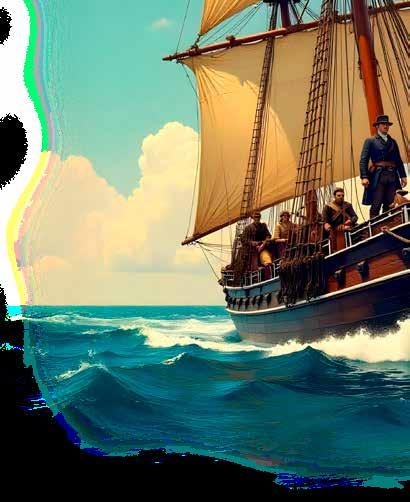
They spent many weeks at sea. One day, a sailor shouted, "Land ho!" He could see land! Everyone rushed to the deck. They could see Roanoke Island. (Today, this island is off the coast of North Carolina.) The island was covered with tall trees. Birds flew overhead. The air smelled fresh and salty.
The settlers took their first steps on shore.
Finally, they had reached their new home! They were both happy and nervous. Right away, they got to work. They cut down trees and built small houses from logs. To keep out the rain, they made roofs from straw and leaves. Even young children helped with the work.
The settlers had brought seeds from England. They used these seeds to plant gardens. They planted corn, beans, and squash. They found lakes with fish. They also found woods where they could hunt deer and rabbits.
One day, a baby girl was born. Her parents named her Virginia. She was John White’s granddaughter. Virginia was the first English baby born in the New World! Everyone was happy. They gathered around a big fire. They sang songs and told stories late into the night.

Native American tribes lived near the settlers. Some of the tribes were friendly. They taught the settlers how to plant corn. They taught them how to find plants they could eat and how to build canoes from tree trunks. Their children played together. They learned each other's languages and games.
But not all the tribes were happy. They were worried that the settlers would take over their land. Sometimes there were fights. The settlers tried to be careful and respect the Native Americans.
Life in the New World was hard. The weather was hot and wet. Mosquitoes bit them, and there were strange animals in the forests. Some of their crops didn't grow as well as they had hoped. They began to run out of food and other supplies.
The leaders held a meeting.
"We need more supplies from England," one man said. "We can't make it through the winter without them."
John White agreed. "I will return to England and bring back everything we need," he said. "I'll come back as quickly as I can."
The settlers were sad to see him go. But there was no choice. Without food and supplies, they would die.
"Hurry back," they told him.
John said goodbye to the settlers. Then he set sail for England. He planned to be back in a few months. But when he reached England, the country was getting ready for war with Spain. His ship would be used for the war, too.

John was worried. He needed his ship to travel back to the New World. He turned to the queen’s officers.
"Please," John begged. "My people need me. My family is waiting!"
But they didn’t listen. They needed his ship for the war. The war ended up lasting for years. John was stuck in England. He was worried about the settlers and his family.
Three long years later, John White set sail. Finally, he was on his way back to Roanoke Island. He was very worried about what he’d find. Had the settlers managed to survive? Had they found other ways to get food?

When his ship finally reached land, he hurried off. He looked around for smoke from fires. He tried to find a sign of life.
But no one was there.
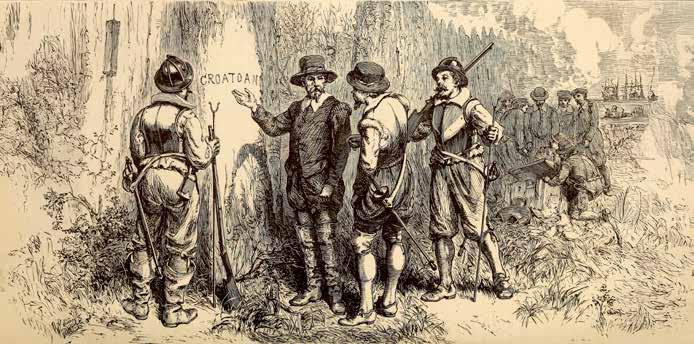
The only clue he could find was the word "CROATOAN." It was carved into a post. He could also see the letters "CRO" carved into a tree. A friendly tribe lived on Croatoan Island. John felt
hopeful. Maybe the settlers had gone there. They must have left this message for him.
John wanted to sail to Croatoan Island right away. His sailors looked up at the sky. There were dark clouds. A storm was on the way.
"We must leave now!" the captain said. "If we don't, we'll be trapped by the storm."
"Just give me a little more time!” John said. “My family might be on Croatoan Island!"
But the sailors didn’t listen. The ship sailed back to England. John White was on that ship. He never found out what happened to his loved ones.
Did the settlers join the Croatoan tribe? Did they move somewhere else? Or did something else happen to them?
Over the years, people have found bits of tools and other clay things. This shows that the settlers may have gone to live with the Native Americans. But no one knows for sure. Until today, the mystery of the lost colony has never been solved.
Circle the details from the passage that you would include in a summary.
→ The word CROATOAN was carved on a post.
→ The weather was hot and wet in the New World.
→ John White went back to England to get new supplies.
→ Virginia White was the first English baby to be born in the New World.
→ Settlers from England came to Roanoke to start a new colony.
→ The settlers might have gone to live with the Native Americans.
→ The people of Roanoke disappeared.
Use the chart to write the main idea and three key details.
Write a summary. Remember to include the type of text and the main idea in the topic sentence. Turn each key detail into a body sentence.
LESSON PRACTICE VOCABULARY STORY REVIEW ACTIVITY ASSESSMENT
Key details are details that support the main idea. They are usually reasons that explain why the main idea is true.
Write a paragraph with key details that say what you think happened to the settlers.
1. Plan. Write what you think and give three reasons explaining why.
What do you think happened to the settlers?
Why do you think that?
2. Topic Sentence. Write what you think happened to the settlers. I think the settlers
3. Body Sentences. Write three key details to support your main idea.
1: This makes sense because
2: In addition,
3: Finally,
4. Concluding Sentence. Write an opinion or lesson.
5. Paragraph. Write a paragraph.
Write a diary entry.
Imagine you are a settler on Roanoke Island. Write a diary entry describing your day. Be creative! You can describe life on the ship, at the colony, or after the Lost Colony disappeared.
Circle the correct answer.
1. Which word means a new place that is ruled by the home country?
a. Tribe
b. Colony
c. Crops
d. Canoes
2. The farmer planted his in the spring.
a. canoes
b. crops
c. carved
d. survived
3. Which word means people who move to a new place to live?
a. Settlers
b. Crops
c. Colony
d. Tribes
4. Which word means groups of people who share the same customs?
a. Tribes
b. Colony
c. Crops
d. Canoes
5. They used to travel across lakes and rivers.
a. crops
b. canoes
c. settlers
d. colony
6. Which are examples of supplies?
a. Food and tools
b. Houses and farms
c. Rivers and lakes
d. Trees and rocks
7. Which is an example of something that needs to survive?
a. A rock
b. A plant
c. A cloud
d. Sand
8. The artist a beautiful bird from wood.
a. survived
b. carved
c. crops
d. colony
Circle the correct answer.
1. What word did John White find carved into a post? (detail)
a. ROANOKE
b. ENGLAND
c. CROATOAN
d. AMERICA
2. Why didn’t John White return to Roanoke Island right away? (cause and effect)
a. His ship was needed for a war.
b. He got sick and couldn't travel.
c. He ran out of money for the trip.
d. The weather was too dangerous.
3. According to the passage, what type of leader was John White? (inferencing)
a. A mean leader
b. A leader people respected
c. A leader who didn’t help much
d. A leader who was always scared
4. What is the main idea of the entire passage? (main idea)
a. The dangers of sea travel
b. The importance of friendship
c. The story of the Lost Colony of Roanoke
d. How hard it was to start a new life
5. Which event happened first? (sequencing)
a. John White returned to England.
b. The settlers arrived at Roanoke Island.
c. Virginia was born.
d. The settlers planted crops.

6. What does "begged" mean in “‘Please,’ John begged”? (context clues)
a. Held out his hand
b. Spoke in a bossy way
c. Asked urgently
d. Told what to do
7. How did the settlers’ feelings change as time went on? (compare-contrast)
a. Their feelings stayed the same.
b. They were excited on the journey but sad when John White had to leave to get food.
c. They were worried about starting a new life but happy when they got to the New World.
d. They were sad when they left England and angry when they got to the New World.
8. Which of these is a fact? (fact vs. opinion)
a. The New World was a wonderful place.
b. The settlers were brave.
c. John White was the leader of the colony.
d. The settlers were right to leave England.
Standards:
Lesson- 4.RL.2
Comprehension Skill
Review- 4.RL.2
Unit 1: Summaries
Lesson 4: Summarizing a Story
Author: Tessa Barber Genre: Realistic Fiction
Unit Goal
Write a summary of a nonfiction or fiction text.
Lesson Focus
Write a summary of a fiction text.
1. Learn how to use the SWBST strategy for writing summaries.
2. Practice identifying the parts of a good summary.
3. Complete the vocabulary worksheet.
During Reading
1. Think about the meaning of specific words or phrases.
2. Focus on story elements: characters, setting, plot, problem.
After Reading
1. Complete the comprehension activity to write a summary.
2. Review “Main Idea.” Complete the activity.
3. Complete the project.
4. Check your progress by taking the assessment.
In the last lesson, we learned how to summarize an informational text. Today, we will learn how to summarize a story. Stories have characters, problems, and events.
The SWBST Strategy is helpful for writing a summary of a story. The five letters stand for the five sentences in the paragraph.
Remember: A summary is short, it does not include opinions, and it only gives information from the text.
Somebody:
Who is the story about?
The story is about a little boy who goes to the doctor.
W
Wanted:
What did they want?
He wanted to avoid getting a shot.
B
But:
What is the problem?
The doctor says he is due for one.
S
So:
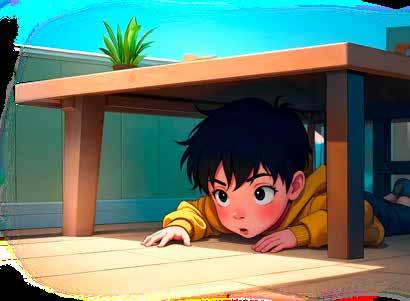
How does the main character try to solve the problem? He hides under the table.
Then:
The doctor pulls him out and gives him the shot. T
How does the story end?
One day, a hungry fox saw a bunch of juicy grapes hanging from a tree. They looked delicious, and the fox really wanted to eat them. His mouth watered.
The grapes hung from a high branch, and the fox had to jump to reach it. The first time he jumped, he missed. He tried again and again, but he couldn't reach the grapes.
Finally, he gave up. "I don't want those grapes anyway," he said. "They probably taste sour!" And he walked away, pretending that he didn't care at all.
Read each summary. Then, answer the questions.
Poorly-Written Summary
There was a fox that saw grapes hanging super high. They looked amazing, probably sweet. The fox was like, “I gotta have those!” He jumps, misses, and tries again. The fox was kind of clumsy. He probably should've gotten a ladder. He gives up and says they're sour. He was silly, the grapes probably weren't even sour.
1. Explain why this summary is badly written. Find at least three mistakes.
Well-Written Summary
The story is about a fox that sees some grapes. The fox wants to get the grapes and eat them. But, the grapes are too high for him to reach. So, he tries again and again to jump and reach them. Then, he gives up.
2. Highlight each part of the summary using the colors below:
a. Somebody—green
b. Wanted—pink
c. But—yellow
d. So—blue
e. Then—purple
LESSON PRACTICE VOCABULARY STORY REVIEW ACTIVITY ASSESSMENT
Match the bolded words with their definitions. Highlight context clues.
She became frantic when she realized she had lost her new bracelet.
The chef prepared a delicious soup for everyone at the restaurant.
We should think about the present and not worry about tomorrow.
The puppy was sensitive to loud noises and would hide under the table.
During the meeting, Brandon made sure to include everyone’s opinion.
He sprinted to catch the bus before it left.
The students admired their teacher for always being kind and helpful.
He took a gulp of water after running the race.
looked at with respect or liked a lot
professional cook make someone or something part of a group ran very fast for a short distance frantic [FRAN-tik]; chef [SHEF]; present [preh-ZENT]; sensitive [SEN-sih-tiv]; include [in-klood]; sprinted [sprin-tid]; admired [ad-MY-erd]; gulp [GULP] 1. 2. 3. 4. 5.
easily affected by things like light, touch, taste, or emotions
very upset and worried big swallow the here and now, at this moment
Author: Tessa Barber Genre: Realistic Fiction

School is finally over, and Henry, Mo, and Sol are ready to celebrate. What starts out as a fun idea turns into a fast race to throw the best party ever! There’s music, games, and colorful snacks, but something seems to go wrong. Why is the food causing so much trouble? And will they be able to save the party before it’s too late?

“We’re done! Done!”
Henry sprinted out of the school building and down the block. His knapsack thumped against his back. Mo and Sol were right behind him. They kept running and running. Finally, they reached Sol’s house. Laughing, they ran up the porch steps.
“I can’t believe school is really over,” Mo said. He dropped onto a chair and threw his knapsack to the ground.
“I can,” Sol said. “I thought it would never end.”
Henry looked at Sol. Fourth grade had been a pretty good year. Mr. Lewis had been a great teacher. Their class had done fun experiments and gone on a few trips. But other parts of fourth grade hadn’t gone so well for Sol. Things like homework, tests, and reports. At least they were getting a break now.
“You know what?” Henry said. He scratched his forehead. He always did this when he was thinking.
“What?” Mo asked.
“I think we should celebrate!” Henry said. He pumped a fist into the air.
“Yes!” Sol said.
Mo bit his lip. “Um… what do you mean?”
Henry looked at his friends. “I think we should do something with our whole class. We’ll have music, games, and…”
“Food!” Sol shouted. Sol’s father was a chef. Sol liked to prepare food together with him.
Henry nodded. “Yes, food!”
Mo looked from Henry to Sol. “Okay, how are we going to do that?”
“Party!” Henry and Sol cried.
They gave each other high fives. Mo looked confused.
“A party?” he replied. “Where and when? And who will be invited?”
“We’ll have it at my house,” Henry said. “We’ll invite everyone from our class. It’ll be so much fun!”
“Yes!” Sol said.
“But when?” Mo asked. “I mean, parties take a lot of time to plan.”

“It’s not a big deal,” Henry said. “I think we should make it in two hours from now.”
“Yes!” Sol said, just as Mo shouted, “Two hours?!”
He looked at Henry like he had just said that they should have a party on the moon. Henry grinned and nodded.
“There’s no time like the present!” he said. “Doesn’t Mr. Lewis always say that? Let’s call everyone and let them know. We’ll meet back at my house to get ready.”
Mo couldn’t believe it. A party in two hours? It sounded crazy. How would they get everything ready in time?
Surprisingly, Henry’s father didn’t mind having the party at their house.
“No problem, boys,” he said. “You can have your party out on the deck. You can put out chips, popcorn, and fruit punch. Just make sure to clean up afterward, all right?”
And so Henry, Mo, and Sol got to work in Henry’s kitchen. Henry’s little brother, John, stayed right beside them. He reminded Henry of a shadow.
“Go away, John,” Henry said. “This is my party.”
Henry’s father came into the kitchen just in time to hear that.
“Henry, please make sure to include John,” he said.
“I can help!” John said.


Henry shook his head. “We don’t need help.” He noticed his father looking at him. “But thanks anyway,” he added.
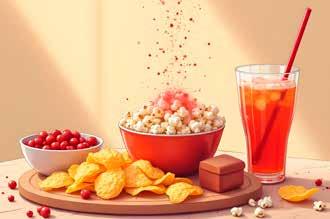
The boys got to work. They poured chips and popcorn into big bowls. They put out a pitcher of fruit punch and cups. Sol put out some cupcakes he had baked with his father the day before.
“Yum!” John said. “Can I have one?”
“No!” Henry said. “It’s for our party.”
“So I’ll just take some popcorn.”
“No!” Henry said. “If you eat now, we won’t have enough food.”
John frowned. “But I’m hungry!”
“So go eat something else,” Henry said. He turned away from his little brother and looked at the food. Sol was looking at the food, too.
“I think we need to add something,” Sol said. “When my father plans a party, everything looks so much nicer.”
“But we don’t have anything else to put out,” Henry said.
“I don’t mean food,” Sol said. “Let me show you…” He took a container of colorful sprinkles
and shook it over the food. “See?”
Mo blinked. “It’s very… um… colorful.”
“Thanks,” Sol said. He looked at the clock. Their friends would be there soon. “Is there anything else we can add?”
Henry took a jar from the spice rack. It was filled with red powder. “This will add some more color.”
“Great!” Sol said. “Sprinkle it on everything! The color will put everyone into a party mood!”
Henry sprinkled the red powder over the chips. He moved on to the popcorn, and then the punch. John followed behind him.
Mo raised an eyebrow. “You’re putting something in the punch?”
“Why not?” Sol said. “Fancy restaurants put weird stuff in drinks all the time.”
He admired the food. It was very colorful and looked delicious. John looked at the table, too.
“Let me taste something!” he said. “I’ll tell you if it’s good.”
“No!” Henry said. “We don’t need you to taste it.”
Just then, the doorbell rang. The first guests had arrived.
“Come in!” Henry said. “The party is out in the back.”
A few minutes later, the doorbell rang again. More boys had arrived. Henry showed them
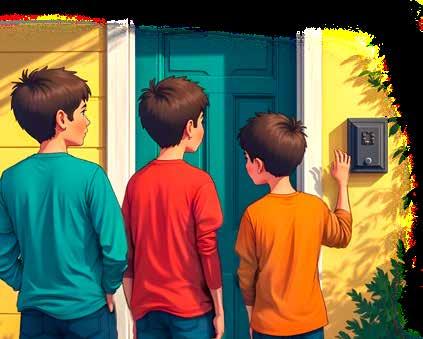
to the deck. The boys stood around, looking at the colorful food. John pushed his way through and started to pile food on a plate.
“No!” Henry said, pulling his hand away. “The guests get first.”
Henry watched as his friend Leo took a handful of popcorn. He stuffed it in his mouth and chewed. Suddenly, his face turned red. His eyes watered.
“My mouth is on fire!” he cried.
Everyone stared at Leo as he coughed and coughed.

“That’s strange,” Henry said. “I didn’t put out spicy chips. These taste like cheese.”
“He must have a sensitive mouth,” said Mickey, another friend. He took some chips and put them in his mouth. Suddenly, he grabbed his throat.
“Hot!” he shouted. “Hot! Hot!”
He looked around for a drink. Mo quickly poured fruit punch into a cup and handed it to him. Mickey took a gulp. His mouth opened wide.
“Help! Water! Need water!” He ran into the house.
Sol looked at Mo. Mo looked at Henry. Henry looked at the party with wide eyes.
One boy was holding a cupcake and fanning his mouth. Another boy was running around in circles and crying. Some boys couldn’t
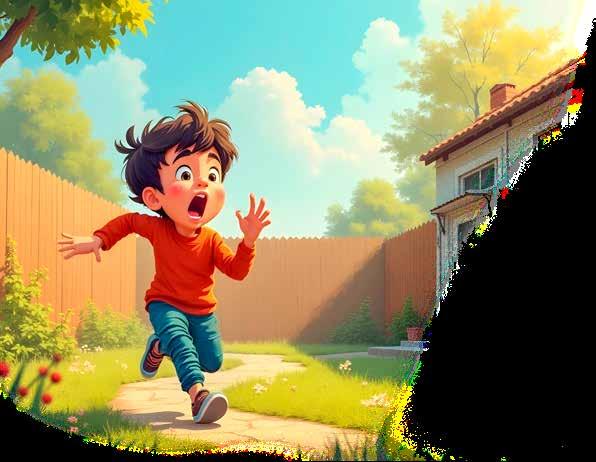
stop coughing. Other boys kept sneezing and sneezing.
Mo’s mouth hung open in a huge circle. He ran over to Henry and Sol, looking frantic.
“We need to fix this!” he cried. “What should we do?”
Only one person kept reaching for more food: John.
Henry watched as his little brother ate some chips, then took a cupcake. After that he poured himself a cup of fruit punch. He grinned when he noticed Henry looking at him.
“Not bad,” John said. “Not bad at all.”
Mo ran into the kitchen. He found the spice that Henry had used. He read the label as Henry and Sol came into the kitchen.
“Super-hot chili powder,” he said.
Henry’s hand flew over his mouth. “Oops! I don’t believe it.” Now he looked like he was going to burst into tears.
Sol moaned. “There goes our party…”
Mo looked at the boys fighting over the sink, trying to get water. He looked at the boys coughing and sneezing on the deck. “What
have we done? And what are we going to do? This party’s on fire!”
Sol looked at Henry. “Henry, do you have ice cream?”
Henry stared at him. “What?”
“Ice cream is sweet and cool! It’s the opposite of spicy!”
“Yes!” Henry said. He ran to the freezer and grabbed a tub. He started scooping ice cream into bowls. Sol and Mo grabbed them and handed them out to their friends. After a few minutes, the coughing and sneezing stopped. The ice cream had cooled off the boys’ mouths.
“This stuff is good!” Mickey said.
“Best ice cream ever,” Leo agreed.
The party continued. The boys played games, laughed, and had a good time. Only the food lay on the table, uneaten. Well, almost uneaten. John kept coming back to the table to help himself to more of it.
When all the boys had left, it was time to clean up. They were just finishing when Henry’s father walked in.
“How was the party, boys?” he asked.
Henry, Mo, and Sol looked at each other.

PRACTICE VOCABULARY STORY REVIEW ACTIVITY ASSESSMENT
Using the SWBST strategy, summarize “Party on Fire.” Use the chart to create your outline.
Somebody: Who is the story about?
Wanted: What did he/ they want?
But: What is the problem?
So: How does the main character try to solve the problem?
Then: How does the story end?
Write a summary. Use transition words to help it flow.
PRACTICE VOCABULARY STORY REVIEW ACTIVITY ASSESSMENT
The main idea is the most important idea in a story, book, or picture. It tells you in a few words what the passage is mostly about.
Write the main idea of “Party on Fire.” Write a paragraph explaining how you know.
1. Plan. Answer the questions.
Which word in the story best tells you what the story is about?
What is the most important thing the story wants you to know about the party?
What does the title “Party on Fire” tell you about the story?
What is the main idea?
2. Topic Sentence. Write the main idea.
The main idea of Party on Fire is
3. Body Sentences. Use the answers above to write three ways you can figure out the main idea.
1: I know this because the word is used throughout the story.
2: In addition, the most important part of the party is
3: Lastly, the title hints that .
4. Concluding Sentence. Write a lesson or opinion about the story.
5. Paragraph. Write a paragraph.
Create an invitation!
Design a party invitation that you would send to your friends. Make sure to include the party details, like the time and location. Include a fun message that would get your friends excited about the party!
Circle the correct answer.
1. Which word means the here and now, at this moment?
a. Admired
b. Present
c. Chef
d. Gulp
2. Someone who is very bothered by noise or light is .
a. include
b. present
c. sensitive
d. frantic
3. Which of the following is an example of a chef?
a. Someone cooking a meal for a group
b. Someone running a race
c. Someone fixing a car engine
d. Someone working as a teacher
4. The boy to the bus so he wouldn’t miss it.
a. admired
b. include
c. gulp
d. sprinted
5. Which word means to make someone or something part of a group?
a. Present
b. Sprinted
c. Include
d. Chef
6. Which of the following is an example of a gulp?
a. Walking slowly
b. Laughing loudly
c. Talking without stopping
d. Taking a big swallow of water quickly
7. He was for his kindness to others.
a. admired
b. frantic
c. present
d. sensitive
8. Which of the following best describes someone who is frantic?
a. A person calmly sipping tea
b. A person rushing around, worried
c. A person quietly cleaning his desk
d. A person solving a puzzle
1. What did Sol put on the food to make it look better? (detail)
a. Cheese
b. Chocolate syrup
c. Powdered sugar
d. Sprinkles
2. Why did the boys start coughing and sneezing at the party? (cause and effect)
a. The food and punch were spicy.
b. They ate too much food.
c. The weather was too hot.
d. They drank too much punch.
3. How do you think Henry feels when the party doesn’t go as planned? (inferencing)
a. He is happy because the party is fun.
b. He doesn’t care about the party.
c. He is worried because everything is going wrong.
d. He is upset because his friends left early.
4. What is the main idea of the story? (main idea)
a. Three friends try to make a fancy dinner for their class.
b. Three friends plan a party, but the food turns out too spicy.
c. A group of boys doesn’t want to have a party, but their teacher tells them to.
d. A group of boys makes a meal for their parents, but they spill everything.
5. What happens first in the story? (sequencing)
a. The boys fix the party food with ice cream.
b. Henry decides to throw a party to celebrate the end of school.
c. The boys start coughing and sneezing from the food.
d. John helps clean up the mess at the end of the party. Circle the correct answer.

6. In the story, one boy was “fanning his mouth.” What does “fanning” mean in this context? (context clues)
a. Eating quickly
b. Using a fan
c. Moving fast
d. Waving to cool off
7. How are Henry and John’s reactions to the party different? (compare-contrast)
a. Henry wants to fix the food, while John happily eats more of it.
b. Henry refuses to let John help, while John tries to clean up the mess.
c. Henry is nervous about the food, and John agrees.
d. Henry feels embarrassed, while John loves having people around.
8. Which of the following is a fact from the story? (fact vs. opinion)
a. Henry has the best house.
b. Sol’s dad is a great chef.
c. The boys solve the problem by giving everyone ice cream.
d. They should have invited their teacher to the party.
Standards:
Lesson- 4.RL.3
Comprehension Skill
Review- RL.4.2
Unit 2: Prose, Poetry, and Drama
Lesson 5: Settings, Characters, and Events
Author:
Ishita Ghotia Genre: Historical Fiction
Unit Goal
Compare and contrast literary elements within or across texts.
Lesson Focus
Identify settings, characters, and plot using details from the text.
1. Learn about settings, characters, and events using details from the text.
2. Practice describing the setting, characters, and events.
3. Complete the vocabulary worksheet.
1. Think about the meaning of specific words or phrases.
2. Think about where the setting is, who the characters are, and what the events are.
1. Complete the comprehension activity to identify the setting, characters, and events. Use details from the text.
2. Review “Summarizing Stories.” Complete the activity.
3. Complete the project.
4. Check your progress by taking the assessment.
Today, we'll learn about the parts of a story that make it exciting—settings, characters, and events. Let's get started!
Setting: Where and when a story takes place 1.
Setting: Wild West in 1800s
Picture
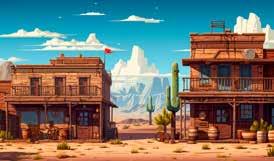
The sun is hot, and the ground is dry. The air smells like dust and horses. Wooden buildings line the busy main street.
Characters: The people or personalities in a story 2.
Picture
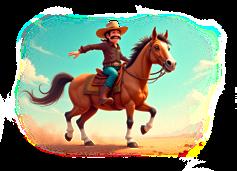
Character: A cowboy named Jeb
Jeb looked tough, but he was kind and loyal. He wore a dusty cowboy hat, a brown shirt, and strong leather boots. He climbed onto his horse and rode off to help a friend!
Words
Words
Events: The things that happen in the story 3.
Problem: The bank
The most exciting part of the story!
Climax: Jeb confronts Resolution: The robber is robbed. the robber. is arrested.
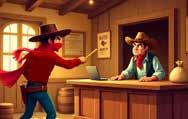
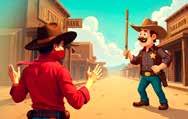
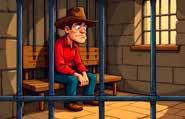
Read the following passage. Then, answer the questions.
The morning sun warmed the quiet park. Lily sat on a bench near a fountain, quietly reading her book. She often noticed small things others missed. Suddenly, she saw a black wallet on the sidewalk. She picked it up and wondered, “What if someone really needs it?”
Lily quickly took the wallet to the park office. She handed it to the person working there. As Lily left, a worried woman ran up. “Have you seen a wallet? It fell out of my pocket!”
Lily smiled. “I just turned it in!”
“Oh, thank you!” said the woman.
Lily sat back down, feeling happy that she had helped someone.

Read each quote. Write if it describes the setting, main character, problem, climax, or resolution. Then, draw a picture.
"Lily sat back down, feeling happy that she had helped someone."
"As Lily left, a worried woman ran up. “Have you seen a wallet? It fell out of my pocket!”"
“She often noticed small things others missed.”
"Suddenly, she saw a black wallet on the sidewalk."
“The morning sun warmed the quiet park.”
LESSON PRACTICE VOCABULARY STORY REVIEW ACTIVITY ASSESSMENT
Match the bolded words with their definitions. Highlight context clues.
The boat stopped at the wooden dock by the lake.
It takes courage to try something new, even if you might fail.
The children spoke in hushed voices as they walked through the school hallway.
The American flag is a symbol of our country.
You need a lot of strength to carry a big pile of heavy books.
The feather drifted slowly down from the sky.
We walked carefully on the bumpy cobblestones lining the old street.
The horses ran out of the stables to play in the sunny field.
being brave even when afraid small, round stones used to cover streets or paths
power moved slowly through the air or water a platform built along the water for boats to park
buildings where horses are kept a picture or object that stands for something else quiet or spoken in a soft voice
dock [DAHK]; courage [KUR-ij]; hushed [HUSHT]; symbol [SIM-buhl]; strength [STRENGKTH]; drifted [DRIF-tid]; cobblestones [KAH-buhl-stohnz]; stables [STAY-buhlz]
Author: Ishita Ghotia Genre: Historical Fiction
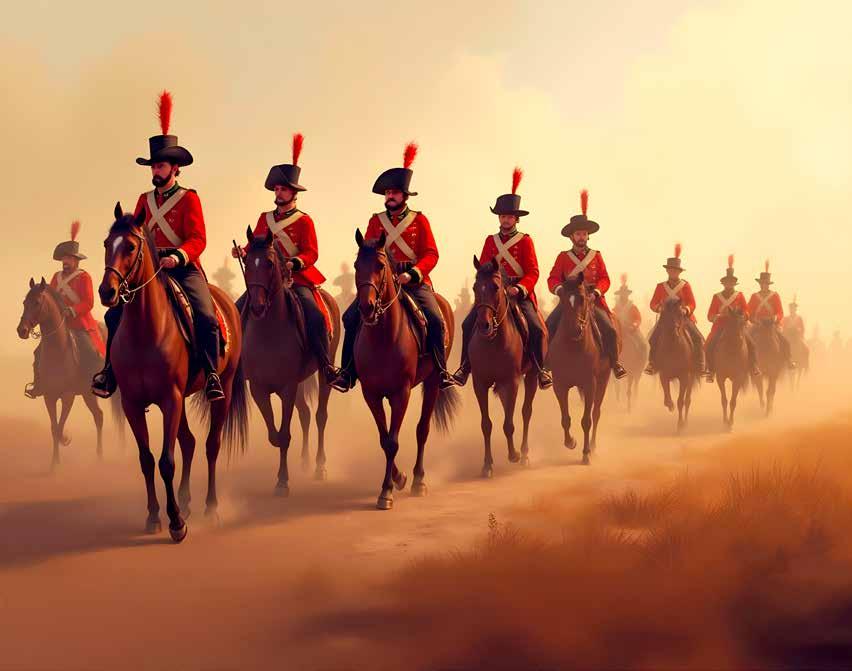
In the year 1775, shortly before the Revolutionary War started, America was not yet its own country. The British ruled America, and their soldiers, known as Redcoats, marched through towns, making rules the Americans didn’t like. Many Americans, called Patriots, wanted freedom and secretly fought against the British. Follow the story of Nate Turner, a fictional character, who at just nine years old, is asked to do something brave and dangerous to help the Patriots. Will he manage to deliver a hidden message before sunrise? Or will the Redcoats— and danger—stand in his way?
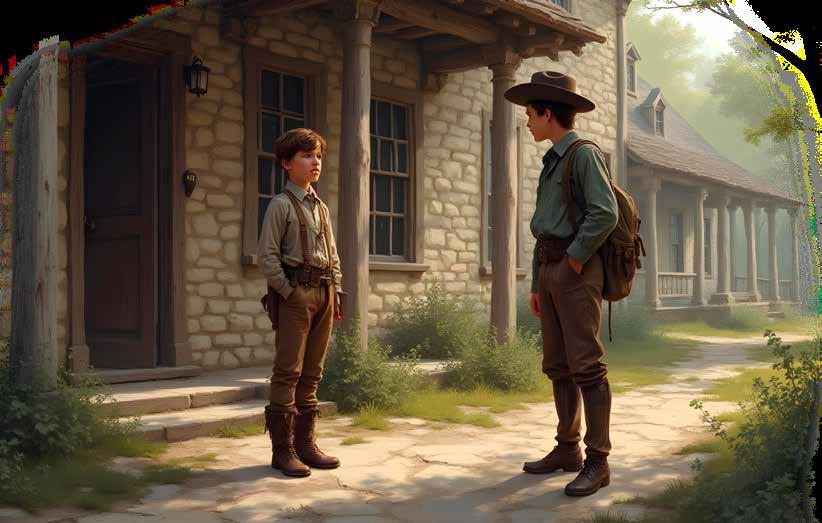
Nate Turner sat by the kitchen window and yawned. The summer sun was setting over the Philadelphia sky. It glowed like a big, warm fire as it painted the sky pink and orange. This was Nate’s favorite time of the day.
Across the street, he could see laundry lines stretched between windows. They fluttered like flags in the breeze. The smell of fresh bread drifted from the bakery two doors away, mixing with the smell of coal, smoke, and hay.
"Nate! Come peel these potatoes!"
Grandmother called from the kitchen. Her voice was sharp but kind. Nate sighed and slid off his stool. The wooden floor was cool under his bare feet, and the air smelled like flour and onions. He grabbed a lumpy potato and started peeling it with a small knife. Curly peels fell into a pile on the table, landing softly on a cloth.
Outside, Nate could hear the clip-clop
of horses as they walked over bumpy cobblestones. He wondered if soldiers were riding them, and he shivered.
As he worked, he remembered the whispers he had heard that morning at the market. As usual, the market had been crowded, full of voices and smells. There were apples piled high, clucking chickens, and barrels of salted fish.
"The British are getting closer," a man had said, his voice hushed.
"Our men will need food and weapons," another man had said.
Each word had made Nate’s stomach twist. It felt like someone was squeezing a wet rag inside him.
Bang!
The kitchen door flew open. Cups rattled on the shelf. Nate jumped, and his potato rolled across the floor. Sam ran in, his face red and
his shirt soaked with sweat.
"Grandmother! Nate! I’ve got big news!" he shouted.
Nate stared at his big brother. Grandmother wiped her floury hands on her apron.
"Samuel Turner, what trouble are you in now?" she asked.
Sam’s eyes sparkled. "No trouble! Just big news! The Patriots hid guns and food by the dock. But the British soldiers are going to search there tomorrow morning!"
"Oh no!” Nate cried. “That’s terrible!”
Most people in their city were Patriots. They didn’t want the British to rule over them.
Sam bent down so he was eye to eye with Nate. He smelled like hay from the stables.
"I’ve been helping the Patriots for months,” he said. “I need you, Nate. Only you can save the Patriots. No one would think that a little boy like you is up to something."
“Yes,” Sam said. “I didn’t want to tell you. It’s safer that way. But I delivered messages and even spied on some Redcoats.”
Nate thought of the British soldiers in their fancy red uniforms. He wanted to run away whenever he saw a Redcoat. How did Sam find the courage to spy on them?
Sam pulled a crumpled paper from his pocket and handed it to Nate.
"You have to take this to the State House tonight," he said quietly.
"Me?" Nate’s hands shook. "But I’m just a kid! What if soldiers catch me and lock me up?"
Important men would meet to discuss grownup things at the State House. Children didn’t go there, and certainly not at night. Nate didn’t want to hear anymore. He was just a nine-year-old boy. He wasn’t strong and brave like Sam. He could never help the Patriots, like Sam was doing.
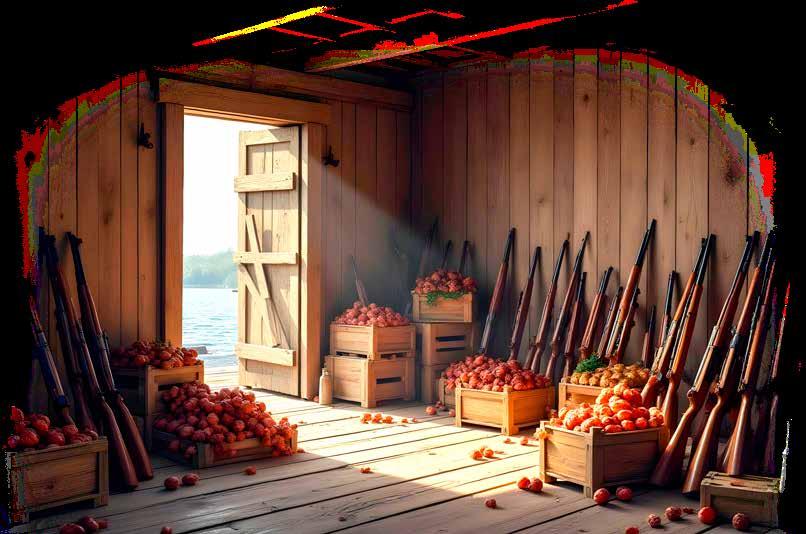
"You are strong, Nate,” she said, as if she knew what he was thinking. "Courage is about doing what’s right, even when you’re afraid."
Nate swallowed hard. The paper felt heavy in his hands.
"Where… where do I take it?" he asked. His voice came out in a whisper.
Sam leaned close. His words tickled Nate’s ear. "There’s a loose stone by the Liberty Bell, right near the State House. Slip this paper behind it. But you have to go tonight—before the sun comes up!"
Nate nodded slowly. His stomach flipped like a fish out of water. "Okay, I’ll try," he said. He looked at Grandmother. "Will you help me get ready?"
“Of course,” Grandmother said. "Let’s find your darkest shirt and a cap. It’ll be hard for anyone to see you, let alone those nasty Redcoats."
Did you know?
Nate could hardly eat his dinner that night. He moved the food around and around his plate.
“Eat, Nate,” Grandmother said. “You need strength.”
But Nate couldn’t stop thinking about his dangerous job that night. Could he really find the courage to carry it out?
When night came, it fell over Philadelphia like a big, dark blanket. Shadows stretched over the street. Nate put on his blue shirt with the little rip near the sleeve. Grandmother put a dark cap over his head.
"Be brave," Nate told himself. But his knees shook, and his heart pounded like the drums the Redcoats banged as they marched.
During the Revolutionary War (1775–1783), the Liberty Bell was taken out of Philadelphia and hidden in the countryside so that the British couldn’t melt it down to be used for weapons!
sounded strange.
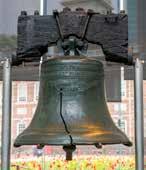
wikipedia.org
Nate looked into Grandmother’s wrinkled face. Was she also afraid?
He took a deep breath and stepped outside. Every shadow made him jump. Was that a cat moving? Or a soldier’s boot? Twice, he heard the sound of boots marching. He squeezed behind big rain barrels, holding his breath.
Grandmother looked him in the eye. “You are a brave boy, Nate,” she said. Her voice
At last, he saw the Liberty Bell. Even in the dark, it stood tall and proud. It was a symbol in the oven.

of freedom. Nearby, the stones of the State House glowed in the moonlight. Nate crawled along the cold bricks. His fingers felt around, searching for the loose stone. Hard brick scraped his hands, and dust made his nose itch.
"There!" he whispered. He felt a stone wiggle like a loose tooth. He pulled it out and stuffed the paper in the hole. His heart beat fast as he
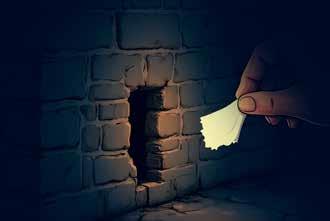
pushed the stone back —
"STOP RIGHT THERE! What are you doing?" a loud voice boomed.
Nate froze. A big soldier stood over him. His red coat was bright in the moonlight. The soldier’s face looked mean. Nate wanted to run, but the soldier was blocking him. Nate’s heart beat so fast, he could hardly breathe. He’d never been so scared in his life.
Think fast! Nate spotted a tiny mouse running along the wall.
"I-I feed the mice!" he said. "They sing to the bell at night!"
The soldier’s bushy eyebrows jumped up. "Singing mice? That’s the silliest thing I’ve ever heard!"
Nate nodded. "Yes! At midnight, they sing! Can’t you hear it?"
The soldier snorted. "Go home, silly boy. You shouldn’t be out at night." He waved him away.
Nate ran as quickly as he could. He burst into his house, straight into Grandmother’s arms.
"You did it!" Sam said. “How did it go?”
Nate told him about the soldier and the mouse. Grandmother laughed so hard, tears sparkled in her eyes.
"That’s the smartest mouse tale ever!" she said. “What a brave boy you are!”
“I wasn’t brave,” Nate said. “I was very scared.”
“And yet you still did what you had to,” Grandmother said. “That shows true courage.”
“Someone will pick up the message later tonight,” Sam said. “Because of you, the Patriots will be saved.”
Nate felt warm and safe as Grandmother led him to bed. He was only a child, after all. It was time to go to sleep.
Answer the questions to describe the setting.
1. Where does the story take place?
2. During what time period does the story take place?
3. At what time of day does the story take place?
4. What does the setting in the beginning of the story look like?
5. What does it smell like?
6. What does it sound like?
Fill in the blanks to describe the main character.
The main character is Nate, a year-old boy. When he delivers the message, he wears
In the beginning he doesn’t feel . I know this because when Sam gave him the mission, Nate said,
But in the end, he shows real courage. I know this because Nate
Choose one event. Then, answer the questions.
Option 1: Nate hides the message behind the Liberty Bell.
Describe what happens: Is it the problem, climax, or resolution?
How do you know?
Option 2: Nate is given the job of delivering a message.
A summary tells about a story in a short way. The SWBST Strategy includes the characters, problem, and events in order.
Write a summary of “The Bell of Courage.”
1. Plan. Fill out the chart.
Somebody: Wanted:
But:
So:
Then:
2. Write an outline. Turn each line into a sentence.
But he So Then, 1: 2: 3: 4: 5:
The story is about
He wanted to
3. Paragraph. Write a paragraph.
PRACTICE VOCABULARY STORY REVIEW ACTIVITY ASSESSMENT
1. Create a code: Make up a symbol or number to match each letter in the alphabet (or just the letters you need).
2. Write a secret message: Use your code to write a short message (5-7 words).

Circle the correct answer.
1. The lion used its to push the heavy rock out of the way.
a. courage
b. dock
c. hushed
d. strength
2. She walked slowly across the uneven in her old shoes.
a. stables
b. cobblestones
c. courage
d. symbols
3. Which of the following best shows the meaning of “hushed”?
a. whispering in a museum
b. singing happily at a party
c. shouting on the playground
d. laughing loudly at a funny joke
4. Which of the following is NOT an example of courage?
a. A girl stands up to a bully on the playground.
b. A firefighter runs into a burning building to save someone.
c. A boy doesn’t try something new because he’s scared.
d. A boy apologizes to a friend after an argument.
5. Which of the following would most likely be found in a stable?
a. A fishing boat
b. A kitchen sink
c. A horse
d. A school desk
6. A is where boats are tied up or unloaded.
a. strength
b. dock
c. symbol
d. stable
7. What is a symbol?
a. Something that stands for an idea
b. A word that rhymes
c. A type of flower
d. A sound made by a bell
8. The balloon slowly to the sky until it disappeared.
a. cobblestones
b. drifted
c. gripped
d. symbol
Circle the correct answer.
1. What did Sam ask Nate to do with the message? (detail)
a. Burn it so no one could find it
b. Take it to the Liberty Bell and hide it
c. Deliver it to the British soldiers
d. Give it to Grandmother to keep safe
2. What happened when the soldier shouted at Nate near the Liberty Bell? (cause and effect)
a. Nate ran home immediately without finishing the mission.
b. Nate panicked and cried.
c. Nate tricked the soldier and finished carrying out the mission.
d. The soldier took the message from Nate.
3. At first, how did Nate feel about carrying out the mission? (inferencing)
a. Brave and confident
b. Tired and annoyed
c. Nervous and unsure
d. Proud and excited
4. What is the main idea of the story? (main idea)
a. A boy learns how to bake with his grandmother.
b. Sam teaches Nate how to ride a horse.
c. British soldiers take over Philadelphia.
d. A young boy helps the Patriots by carrying out a dangerous mission.
5. What happened right after Sam gave Nate the message? (sequencing)
a. Grandmother helped Nate get ready for the mission.
b. Nate went to eat dinner.
c. Nate ran to the dock.
d. Nate delivered the message.
6. What does the word “fluttered” mean in the sentence: “They fluttered like flags in the breeze”? (context clues)
a. Hung still and heavy
b. Moved around quickly in the wind
c. Fell to the ground
d. Shone brightly in the sun
7. How is Sam different from Nate? (compare-contrast)
a. Sam is braver than Nate at the beginning.
b. Nate has helped the Patriots longer than Sam.
c. Sam is younger than Nate.
d. Nate is the one who hides the weapons.
8. Which of the following is a fact from the story? (fact vs. opinion)
a. Nate was the bravest boy in the city.
b. The Liberty Bell was located near the State House.
c. Grandmother made the best bread in the world.
d. The soldier looked mean.
Standards:
Lesson- 4.RL.5
Comprehension Skill Review- 4.RL.2
Unit 2: Prose, Poetry, and Drama
Lesson 6: Introduction to Poems
Author: Kenn Nesbitt Genre: Poetry
Unit Goal
Describe the elements of prose, poetry, and drama.
Lesson Focus
Identify stanzas, lines, and rhyme schemes in poems.
INTRODUCE THE LESSON
Before Reading
1. Learn about stanzas, lines, and rhyme schemes.
2. Practice counting the number of stanzas and lines and identifying the rhyme scheme.
3. Complete the vocabulary worksheet.
During Reading
1. As you read, think about the meaning of specific words or phrases.
2. Think about the structure of each poem. Notice rhyming words.
3. Complete the comprehension questions to identify the number of stanzas and lines and the rhyme scheme of each poem.
After Reading
1. Review “Summaries.” Complete the activity.
2. Complete the project.
3. Check your progress by taking the assessment.
Let’s learn about poems! A poem is a short piece of writing that uses creative words to share ideas, feelings, or tell a story. Poems might rhyme, but not always!
Poems are made of lines. A group of lines in a poem is called a stanza.
By Christina Rossetti
Who has seen the wind?
Neither I nor you.
But when the leaves hang trembling, The wind is passing through.
Who has seen the wind?
Neither you nor I.
But when the trees bow down their heads, The wind is passing by.

How many lines are in this poem? How many stanzas?
Some poems have a rhyme scheme. A rhyme scheme is a pattern of rhyming words at the end of each line. We use ABC letters to show this pattern. The first set of lines that rhyme are marked with A, the next set is marked with B, and so on.
The snowflakes are falling by ones and by twos; There’s snow on my jacket, and snow on my shoes; There’s snow on the bushes, and snow on the trees — It’s snowing on everything now, if you please.
First set of rhyming lines
Second set of rhyming lines A B
Rhyme Scheme: AABB
LESSON PRACTICE VOCABULARY STORY REVIEW ACTIVITY ASSESSMENT
Read the poem. Then, answer the questions.
Carrot and the Rabbit
By: Leroy F. Jackson
A carrot in a garden And a rabbit in the wood. Said the rabbit, “Beg your pardon, I would eat you if I could; Though you’ve started in to harden, You may still be very good.”
1. How many lines are in this poem?
2. How many stanzas are in this poem?
3. List the words that rhyme in the poem. Mark those words in the poem.
4. What is the rhyme scheme in this poem?
A . AABBCC
B. ABABAB
C . AAABBB
D. ABCABC
5. Explain how you knew the answer to question 4.
LESSON PRACTICE VOCABULARY STORY REVIEW ACTIVITY ASSESSMENT
Match the bolded words with their definitions. Highlight context clues.
The lost puppy wanders around the park, searching for its owner.
After raking the leaves, we jumped into the big heap
The students converse about their favorite books during reading time.
The little girl was fond of her teddy bear and took it wherever she went.
His negative words took all the fun out of the game.
This is positively the last time I do this, and I won’t change my mind.
It's absurd to think that a cat could fly!
The riddle was so perplexing that I couldn't figure it out.
pile definitely confusing and hard to understand silly or not making sense move from place to place without a clear plan or direction like someone or something a lot gloomy, not positive talk with another person
wanders [WAHN-derz]; heap [HEEP]; converse [kun-VURS]; fond [FOND]; negative [NEG-uh-tiv]; positively [PAH-zuh-tiv-lee]; absurd [ub-SURD]; perplexing [per-PLEK-sing]
By: Kenn Nesbitt
Backward Bob from Backwardtown is backward, flipped, and upside down. He wears his hat upon his feet and wanders backward down the street. His dog meows. His kitten barks.
His baby goldfish chases sharks. His ears are blue. His nose is green. He drives a purple submarine. He eats his lunch when he’s asleep and washes in a garbage heap. And when he laughs he wears a frown. He’s Backward Bob from Backwardtown.
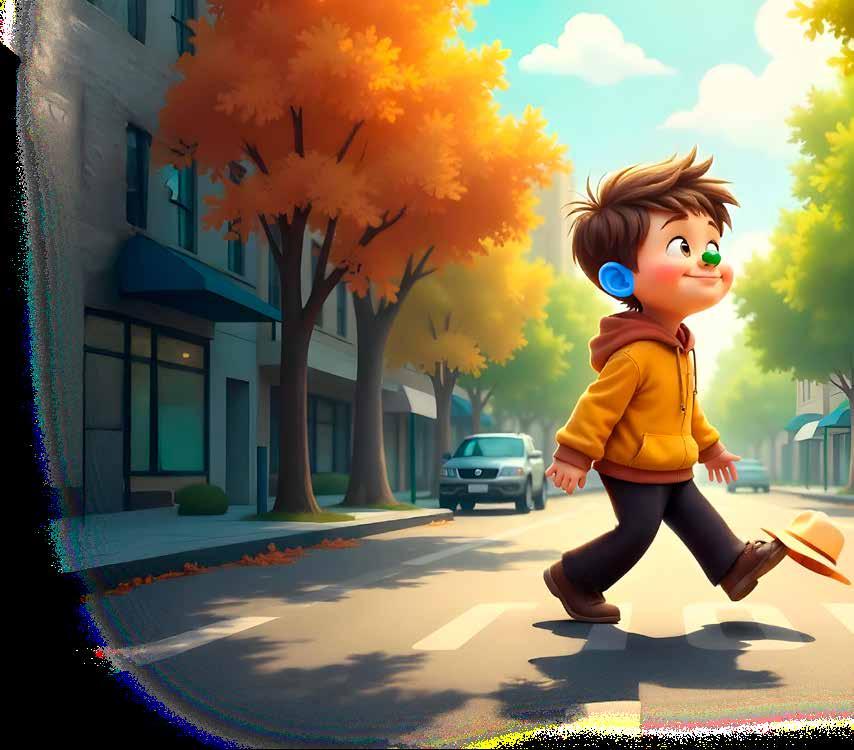
Answer the questions.
1. How many stanzas does this poem have?
2. How many lines does this poem have?
3. Label each line with a letter to show the rhyme scheme. Which answer shows the rhyme scheme?
By: Kenn Nesbitt
Speak when this way talk do I so, if converse do we, you’ll talk to need to this way try to talk with have a me.
It strange may somewhat first at sound but for it try a bit. It’s this way fun I’ve talk to found. I’ve done my life all it.
It’s understand to hard know I but and you’ll try it see.
Answer the questions.
1. How many stanzas does this poem have?
2. How many lines does this poem have?
3. Label each line with a letter to show the rhyme scheme. Which answer shows the rhyme scheme?
a. ABCB
b. ABBC
c. ABCC
d. ABAB
4. What do you notice about the first stanza
By: Kenn Nesbitt
I’m known as Mr. Negative
My favorite word is “No.” No matter what you say to me I’ll say it isn’t so.
I’ll gladly burst your bubble as I rain on your parade, and when life gives you lemons, I’ll say, “Don’t make lemonade!”
Now, please don’t try to cheer me up with happiness and hope. You might be bright and bouncy but my answer’s always, “Nope.”
I’m also fond of “never,” “absolutely not,” “no way,” “thumbs down,” “uh-uh,” “forget it,” “not by any means,” and, “nay.”
I’m positively negative!
I’m glad I told you though. So, don’t come looking for a “Yes.”
I know you know I “No.”
Answer the questions.
1. How many stanzas does this poem have?
2. How many lines does this poem have?
3. Label each line with a letter to show the rhyme scheme. Which answer shows the rhyme scheme?
By: Kenn Nesbitt

I never can remember if my birthday’s in September or in January, August, or July. Or it could be in December, or October, or November. I’ve forgotten when it is. I don’t know why.
And it may be on the seventh, or the third, or the eleventh, though I know that sounds a little bit absurd Plus it might be a Sunday, or a Thursday, or a Monday, on the seventeenth, or thirtieth, or third.
Now, while some might find this vexing, or confusing, or perplexing, I make lemons into lemonade this way: Since I never can remember if my birthday’s in September, I just celebrate my birthday every day.
Answer the questions.
1. How many stanzas does this poem have?
2. How many lines does this poem have?
3. Label each line with a letter to show the rhyme scheme. What is different about this poem’s rhyme scheme?
To summarize a poem, determine the main idea and three supporting details.
Summarize one of the poems from this lesson.
1. Plan. Determine the main idea and key details. Choose a poem:
2. Topic Sentence. Include the text type (and/or the title) and the main idea.
3. Body Sentences. Turn each key detail into a sentence.
4. Paragraph. Write a paragraph.
Draw a picture.
Read the descriptions of Backward Bob and Backwardtown. Draw a picture showing how the town and Bob might look.
Circle the correct answer.
1. Which word means moves from place to place without a clear direction?
a. Heap
b. Wanders
c. Positively
d. Fond
2. A of laundry was waiting to be folded.
a. wanders
b. heap
c. conversed
d. negative
3. Which word means talk with someone?
a. Converse
b. Wanders
c. Negative
d. Absurd
4. My grandmother is of baking cookies for her grandchildren.
a. wanders
b. heap
c. negative
d. fond
5. Which is an example of a negative statement?
a. The sun is shining.
b. I don't like broccoli.
c. We should play outside.
d. That's a good idea.
6. Which word means definitely?
a. Positively
b. Negatively
c. Fond
d. Perplexing
7. Which is an example of something absurd?
a. A dog speaking English
b. A bird flying in the sky
c. A cat sleeping in a bed
d. A boy brushing his teeth
8. The math problem was very .
a. wanders
b. heap
c. perplexing
d. positively
1. How is Bob different from most people? (compare-contrast)
a. He wears his hat correctly.
b. He walks forward.
c. He does things backward.
d. He eats normal food.
2. What color is Bob's nose? (detail)
a. Blue
b. Green
c. Purple
d. Yellow
3. How might this way of talking sound at first, according to the speaker? (sequencing)
a. Easy
b. Strange
c. Fun
d. Hard
4. What is the main idea of "Speak When This Way Talk Do I"? (main idea)
a. The speaker talks in a normal way.
b. The speaker talks in a fun way.
c. The speaker is very tired.
d. The speaker is easy to understand. Circle the correct answer.

5. How do you think the speaker feels about being negative? (inferencing)
a. He is unhappy about it.
b. He is proud of it.
c. He wants to change.
d. He is confused.
6. Which of the following is an opinion? (fact vs. opinion)
a. The speaker is known as Mr. Negative.
b. The speaker's favorite word is "no.”
c. The speaker should be more positive.
d. The speaker says "absolutely not."
7. What is the effect of the speaker not remembering his birthday? (cause and effect)
a. He feels sad.
b. He celebrates every day.
c. He doesn’t get presents.
d. He feels confused.
8. What does the word "vexing" mean in “Now, while some might find this vexing, or confusing, or perplexing”? (context clues)
a. Pleasing
b. Annoying
c. Exciting
d. Relaxing
Standards:
Lesson- 4.RL.5
Comprehension Skill Review- 4.RL.5
Unit 2: Prose, Poetry, and Drama
Lesson 7: Rhythm in Poetry
Author: Kenn Nesbitt Genre: Poetry
Unit Goal
Describe the elements of prose, poetry, and drama.
Lesson Focus
Describe the rhythm of a poem.
INTRODUCE THE LESSON
Before Reading
1. Learn how rhythm is created in a poem.
2. Practice counting syllables and describing the rhythm of a poem.
3. Complete the vocabulary worksheet.
During Reading
1. As you read, think about the meaning of specific words or phrases.
2. Read the poems with a tune. Think about how the rhythm is different in each poem.
3. Complete the comprehension questions to describe the rhythm of each poem.
After Reading
1. Review “Prose vs. Poetry.” Complete the activity.
2. Complete the project.
3. Check your progress by taking the assessment.
LESSON PRACTICE VOCABULARY STORY REVIEW ACTIVITY ASSESSMENT
In our last lesson, we learned about poems and rhyme schemes.
Today, we’re learning about rhythm—the beat of a poem. It’s what gives the poem a special flow when you read it out loud.
Poets use meter to help make the rhythm. Meter is the pattern of syllables in each line. A syllable is a small part of a word that has one vowel sound.
D o g two syllables M
one syllable
three syllables
four syllables
Poems can follow strict meter and rhyming rules, or they can follow no rules at all. A free verse poem doesn’t follow any rules for meter or rhyme.
By: Gelett Burgess
I never saw a purple cow, I never hope to see one, But I can tell you, anyhow, I’d rather see than be one!
Rhyme Scheme: ABAB
Meter Rule: 8-syllable line, then 7-syllable line
Fog
By: Carl Sandburg
The fog comes on little cat feet. It sits looking over harbor and city on silent haunches* and then moves on.
*the back legs of an animal
LESSON PRACTICE VOCABULARY STORY REVIEW ACTIVITY ASSESSMENT
Count the number of syllables in each word.
1. Grandpa 2. Jar 3. Banana
4. Animal 5. Mouse 6. Under
Read each line out loud. Then, write the number of syllables on each line.
1. My cat wears a funny hat,
2. She loves to chase a ball.
3. She jumps around the house all day,
4. Then sleeps beside the wall.
A limerick is a poem that has very specific rhyme and meter rules. Read the rules for writing a limerick. Then, circle the poem that is a limerick.
Number of lines: 5
Rhyme scheme: AABBA
Syllable rules: Lines 1, 2, and 5 have 7 to 10 syllables. Lines 3 and 4 have 5 to 7 syllables.
O it’s hippity hop to bed! I’d rather sit up instead. But when father says “must,” There’s nothing but just Go hippity hop to bed.
Hickory dickory dock. The mouse ran up the clock. The clock struck one, The mouse ran down, Hickory dickory dock.
3. 4. 5. 6. 7. 8. LESSON PRACTICE VOCABULARY STORY REVIEW ACTIVITY ASSESSMENT
Match the bolded words with their definitions. Highlight context clues.
The dog dug a hole and buried his toy beneath the old oak tree.
He didn’t feel the slightest breeze on the hot summer day.
Striding across the room, the teacher reached the desk and took away the note.
The cat squeezed through the slim gap in the fence.
I smiled at the little girl’s prattle as she happily talked about her day.
He aims to finish reading his book by the end of the week.
The child reached out to grasp her mother's hand as they crossed the busy street.
The hikers stopped to rest after climbing the steep, rocky mountain path.
walking with long steps plans or tries to do something smallest childish talk thin or small underneath or below hold at a sharp slant
beneath [beh-NEETH]; slightest [SLYTE-ist]; striding [STRY-ding]; slim [slim]; prattle [PRAT-uhl]; aims [aymz]; grasp [grasp]; steep [steep].
Read the following poem out loud. Do you notice that it almost has a tune? The poet uses short lines and an interesting rhyme scheme to create a special rhythm in this poem.
By: Kenn Nesbitt
I have a cat. My cat is flat. He sleeps beneath the bathroom mat.
He slides around upon the ground without the slightest striding sound.
He only eats the flattest meats and thin and wispy kitty treats.
Answer the questions.
1. Does this poem have a rhyme scheme? If so, what is it?
He once was fat but now my cat is totally, completely flat.
He got so slim, so flat and trim, the day my Great Dane* sat on him. *a type of dog
2. Write the number of syllables next to each line. How many syllables are on most lines?
3. Does the poet always follow his rhyme scheme and syllable rules? Explain.
The following poem is a limerick. When you have finished reading it, turn back to page 99 (practice page) and read the limerick there. Can you figure out the “tune” of the limerick?
By: Kenn Nesbitt
A talkative man from Seattle
Would spend his days speaking to cattle. When asked what he said One old cow shook her head And replied, “Why, it’s nothing but prattle!”
Number of lines: 5
Rhyme scheme: AABBA
Syllable rules: lines 1, 2, and 5 have seven to ten syllables lines 3 and 4 have five to seven syllables
Did you know? The last line of a limerick is usually funny.
Write the number of syllables in each line of the limerick. Then, rewrite it in the correct order.
But it was the night
So he sent it back up by noon
And then it turned bright
There once was a man with a spoon Who used it to scoop out the moon
The following poem is a sonnet. Sonnets follow specific rhythm rules. The first line of the poem says the main idea. The last two lines, called a couplet, give an ending to the poem.
By: Kenn Nesbitt
My teacher said to write a sonnet now. She told me, “It should be a work of art.” I’d like to but I’m really not sure how. I wish someone would show me where to start.
I heard the rhymes should be ABAB, which means I can’t rhyme every single word. The second and the fourth lines rhyme, you see. And you should rhyme the first line with the third.
The first three stanzas all have four lines each. The final couplet? That has only two. A sonnet’s not an easy thing to teach.
I guess that’s what this poem aims to do.
It seems that starting was the hardest part. I hope the teacher likes my work of art.
Use the poem to list the rules of a sonnet.
Stanza and line rules: Rhyme scheme: Syllable rules:
The following poem is a free verse poem. Although it doesn’t follow specific rules, the poem still creates a specific rhythm. As you read, notice the parts that read faster and parts that read slower. Why do you think the author wrote it this way?
By: Kenn Nesbitt
Up. Up. Click, click. Wind blows sharp in my ears. My heart jumps. Skips. It’s up. It’s up higher.
It’s up, up the highest. Hands grasp at the clouds.
Then a forever pause. Still. Waiting. Finally. Whoosh! Steep drop down, down, down.

es this poem have a rhyme scheme? If so, what is it?
2. Write the number of syllables next to each line.
3. Which parts of the poem did you read slower? Which parts did you read faster? Why do you think the poem has some parts that are fast or slow?
4. What do you notice about the shape of the poem? Why do you think the poem is written in this shape?
PRACTICE VOCABULARY STORY REVIEW ACTIVITY ASSESSMENT
Poems have rhythm and a special structure to show ideas in a creative or emotional way. Regular writing, called prose, is written in normal sentences and paragraphs, like a story or article.
Write a paragraph explaining the difference between poetry and prose.
1. Plan. Write at least three differences between poetry and prose.
2. Topic sentence. Write that poetry and prose are different.
3. Body Sentences. Each sentence should tell one difference.
4. Concluding Sentence. Write an opinion or lesson about poems.
5. Paragraph. Write a paragraph.
Recite a poem.
Choose one of the poems from this lesson to memorize. Once you know it by heart, recite it in front of your classmates.

Circle the correct answer.
1. Which word means childish talk?
a. Slim
b. Steep
c. Prattle
d. Grasp
2. Which of the following is NOT a slim object?
a. A pencil
b. A tree trunk
c. A needle
d. A strand of hair
3. The tall man was across the field with long, confident steps.
a. striding
b. slim
c. beneath
d. aims
4. Which word means to plan or try to do something?
a. Beneath
b. Aim
c. Steep
d. Slightest
5. Which of the following is the steepest?
a. A driveway
b. A staircase
c. A cliff
d. A flat road
6. He tried to the heavy book, but it kept slipping from his hands.
a. prattle
b. steep
c. grasp
d. aims
7. Which word means underneath or below?
a. Beneath
b. Steep
c. Slightest
d. Slim
8. She didn’t make the sound as she tiptoed across the room.
a. striding
b. aims
c. grasp
d. slightest
Circle the correct answer.
1. Why is the cat flat? (cause and effect)
a. He was born flat.
b. He sleeps under the mat.
c. A dog sat on him.
d. He only eats flat food.
2. What does the word "trim" mean in “he got so slim, so flat and trim”? (context clues)
a. fat
b. round
c. thin
d. messy
3. What is this poem mostly about? (main idea)
a. A man who likes to learn new languages
b. A man who has silly conversations with cows
c. A cow that is very smart
d. A cow that has good ideas
4. Which of these is a fact from the poem? (fact vs. opinion)
a. The man is annoying.
b. The man is from Seattle.
c. The cow is smarter than the man.
d. Talking to animals is silly.

5. How many lines are in the final couplet of a sonnet? (detail)
a. four
b. three
c. two
d. one
6. How is a sonnet different from other types of poems? (compare-contrast)
a. Sonnets are shorter.
b. Sonnets don't have to rhyme.
c. Sonnets have a specific structure and rhyme scheme.
d. Sonnets are easier to write.
7. What happens first in the poem? (sequencing)
a. The ride drops down.
b. The ride goes up.
c. The speaker's heart jumps.
d. The wind blows.
8. Why do you think the poet used the word "finally" before "Whoosh!"? (inferencing)
a. The speaker was waiting for the ride to start.
b. The speaker was waiting for the ride to end.
c. The speaker was waiting for the exciting drop.
d. The speaker was feeling impatient.
Standards:
Lesson- 4.RL.5
Comprehension Skill Review- 4.RL.5
Unit 2: Prose, Poetry, and Drama
Lesson 8: Parts of a Drama
Author: Sam Adler Genre: Drama
Unit Goal
Describe the elements of prose, poetry, and drama.
Lesson Focus
Describe the structural elements of a drama.
Before Reading
1. Learn about parts of a drama.
2. Practice identifying parts of a drama.
3. Complete the vocabulary worksheet.
During Reading
1. As you read, think about the meaning of specific words or phrases.
2. Use the parts of the script to read the play.
After Reading
1. Complete the comprehension activity to describe the drama using structural elements.
2. Review “Drama vs. Prose.” Complete the activity.
3. Complete the project.
4. Check your progress by taking the assessment.
LESSON PRACTICE VOCABULARY STORY REVIEW ACTIVITY ASSESSMENT
Today, we’ll be learning all about dramas. A drama is another word for a play. There are different parts that make up a drama.
Script: What the actor or reader reads
Setting:
When and where a scene takes place
Stage Directions:
Instructions telling the actors what to do
Scene: A section of the script that has its own set of characters and setting
Cast of Characters: A list of people/characters who will act in the scene
Dialogue:
What the characters say

Scene 1
Setting: In the kitchen
Characters BEN DAD
(Ben rushes around the kitchen, grabbing books and stuffing them into his bag.)
DAD: (handing him a banana) Got everything?
BEN: (slings backpack on, distracted) Yep! I'm ready!
(He runs out the door, banana still on the counter.)
LESSON PRACTICE VOCABULARY STORY REVIEW ACTIVITY ASSESSMENT

Use the script to answer the questions.
Setting: School playground.
Characters BEN DAD
(Ben sits on a bench at school, looking around while kids open their lunchboxes.)
BEN: (whispers to himself) Uh-oh... I forgot my lunch.
DAD: (calling from behind the gate, holding a lunchbox) Someone left this behind!
BEN: (leaping up) Dad! You're a lifesaver!
1. What scene is it?

2. Where does the scene take place?
3. Who are the characters?
4. What is Ben doing while the other kids open their lunchboxes?
5. What is Dad holding?
6. Why did Ben leap up?
7. Who says “Someone left this behind”?
Match the bolded words with their definitions. Highlight context clues.
The glass was so clean it looked almost invisible, like it wasn’t even there.
The transmitter sent the signal all the way to the other side of the country.
We heard sounds coming from the receiver after the signal had been sent.
He failed to open the locked door because he didn’t have the right key.
We took a transatlantic flight from America to Europe.
Babies make many attempts before they finally learn to walk.
I was finally able to convince my mom to let me walk to school alone.
Ben achieved a perfect score on his test after studying every night.
a tool that gets signals or messages did not succeed; didn’t work something you cannot see reached a goal a tool that sends signals or messages going across the Atlantic Ocean make someone believe or agree trying to do something
invisible [in-VIH-zuh-bul]; transmitter [tranz-MIH-ter]; receiver [rih-SEE-ver]; failed [FAYLD]; transatlantic [tranz-at-LAN-tik]; attempts [uh-TEMTS]; convince [cuhn-VINS]; achieved [uh-CHEEVD]
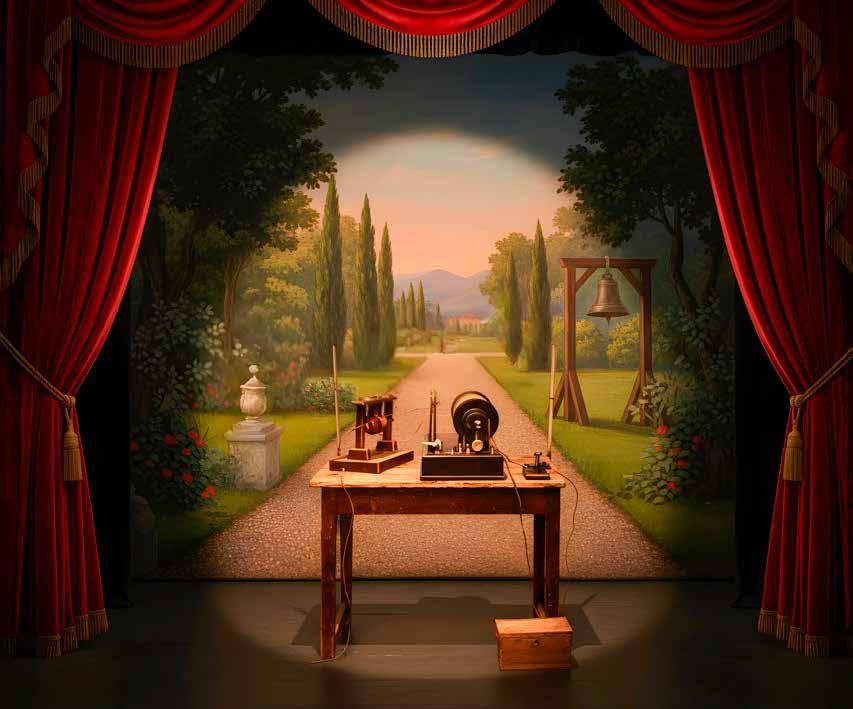
Author: Sam Adler Genre: Drama
Abell rang from across the garden. There were no wires, no one nearby — just a strange clicking sound and a young man smiling like he’d just discovered something big. In 1895, people didn’t understand what he was trying to do. Some laughed. Some told him to stop. But he kept going, even when things didn’t work. What was he building? And why didn’t he give up?
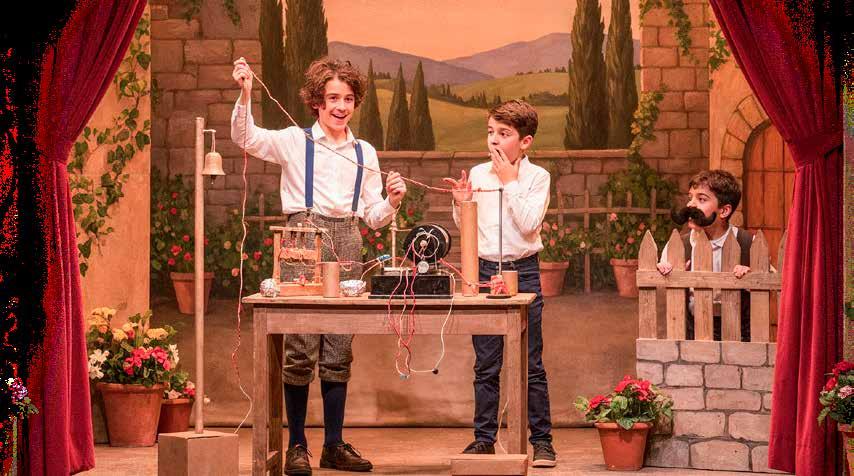
Setting: Italy, 1895
• GUGLIELMO MARCONI – A hardworking young inventor
• ENRICO – Marconi’s assistant
• SIGNOR BERNARDI – Marconi’s neighbor
• NARRATOR
(A garden is filled with wires, boxes, and a bell. Marconi connects two metal rods and flips a switch. BZZZZ! A bell rings in the background. Enrico jumps.)
NARRATOR: Long before the invention of the phone, one young man had a wild idea. He wondered: What if you could send a message through the air without any wires?
MARCONI (moving his hands in excitement): Enrico! I did it! I sent a signal all the way across the garden!
ENRICO: You rang a bell across the garden. Big deal.
MARCONI: You don’t get it! I did it without any wires!
NARRATOR: Marconi was using a new idea called radio waves. These invisible waves could carry sounds or clicks from one place to another.
ENRICO: You’re telling me that you shouted at a bell and it rang. Are you sure the bell wasn’t just afraid of you?
MARCONI: Very funny. I need a bigger place to work. And tall hills. The signal needs to travel farther. I want it to go all the way to England!
SIGNOR BERNARDI (poking his head over the fence): Are you blowing up more things, Signor Marconi?
MARCONI: I’m just building the future, Signor Bernardi.
SIGNOR BERNARDI: Well, keep the future quiet after 9 p.m.!
(Marconi holds up a wire and looks at it, smiling proudly. The stage gets dark.)
Setting: A Rainy Hilltop in England, 1897
• GUGLIELMO MARCONI – A hardworking young inventor
• ENRICO – Marconi’s assistant
• MR. STONE – A grumpy Englishman
• BOY – Marconi’s assistant in England
• NARRATOR
(The wind blows. There is a light drizzle. Marconi and Enrico set up an antenna on a hill. Mr. Stone watches from under an umbrella.)
NARRATOR: Marconi moved to England to show his invention to more people. He thought they would be excited. But not everyone believed he could do it…
MR. STONE (to Marconi): You mean to tell me that you're going to send Morse code through thin air?
NARRATOR: Morse code is a way of sending letters using short and long sounds. People used it before the phone was invented. Some people still use it today.
MARCONI (nodding): Yes! And I'm going to do that without wires. With my invention, we won’t need telegraph poles any longer.
What is a transmitter?
A transmitter is a machine that sends messages through the air without wires. It turns sounds or signals into waves that can travel long distances.
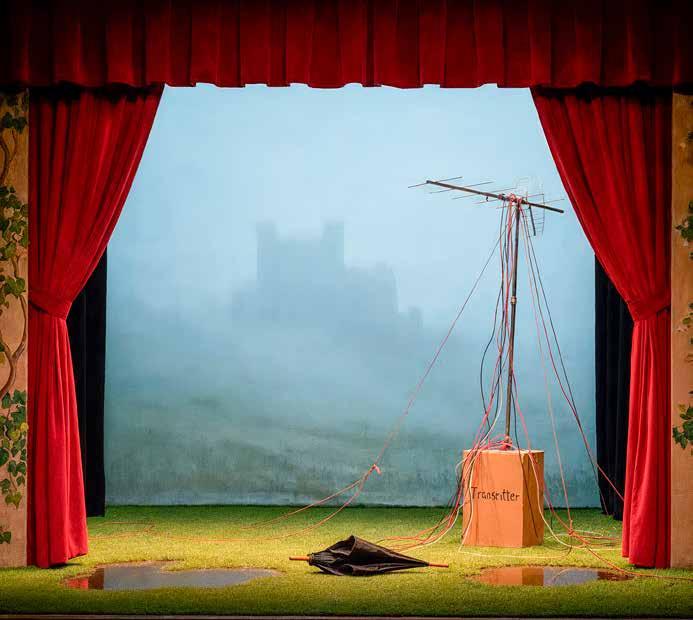
ENRICO (to himself): And we won’t need any lightning, either....
MARCONI: Here is the transmitter. The receiver is a mile away, in that building across the field. Now watch!
MR. STONE (shaking his umbrella): Hmph! If I miss my lunch because of this…
MARCONI (flipping a switch): Three… two… one…
(Click-click-click! Nothing happens. In the background, the wind howls. Marconi looks around nervously.)
ENRICO: Maybe the machine caught a cold.
MR. STONE (waving his umbrella): Brilliant. A wet box that does nothing. Hmph!
(Suddenly, a boy runs in, waving a paper.)
BOY: It worked! It worked! The signal came through! The message says... uh... “M.” Just the letter “M.”
ENRICO: Only “M”?
MARCONI (grinning): We’re starting small. “M” is for “Marconi.”
MR. STONE (grumbling): “M” is for “Maybe he's not crazy after all.” Hmph!
What is a receiver?
A receiver is a machine that catches the message that was sent through the air. It listens for the signal and turns it back into sounds or clicks.
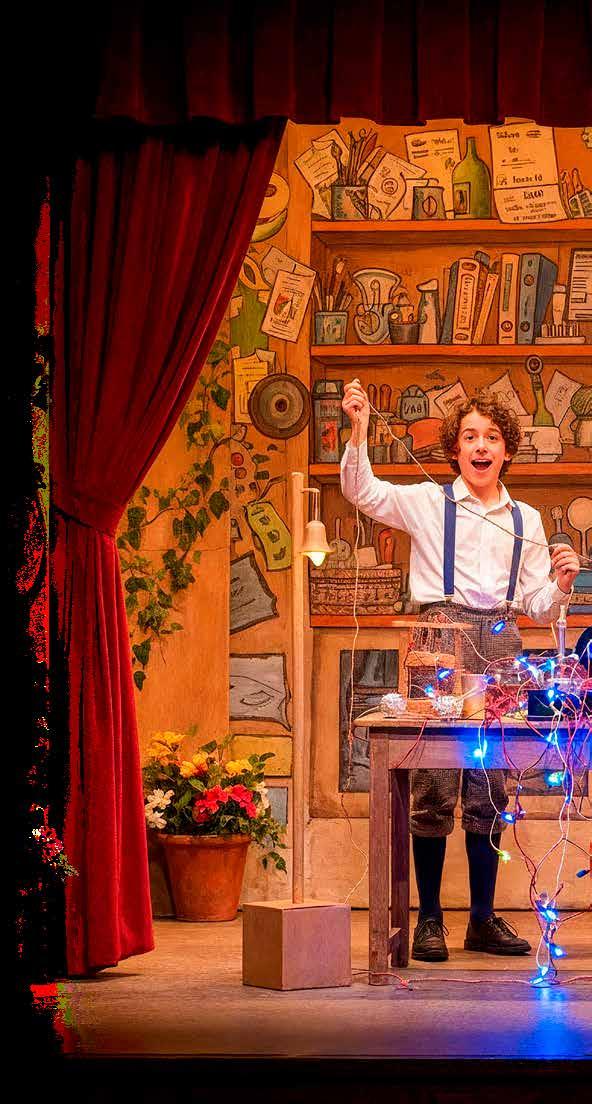
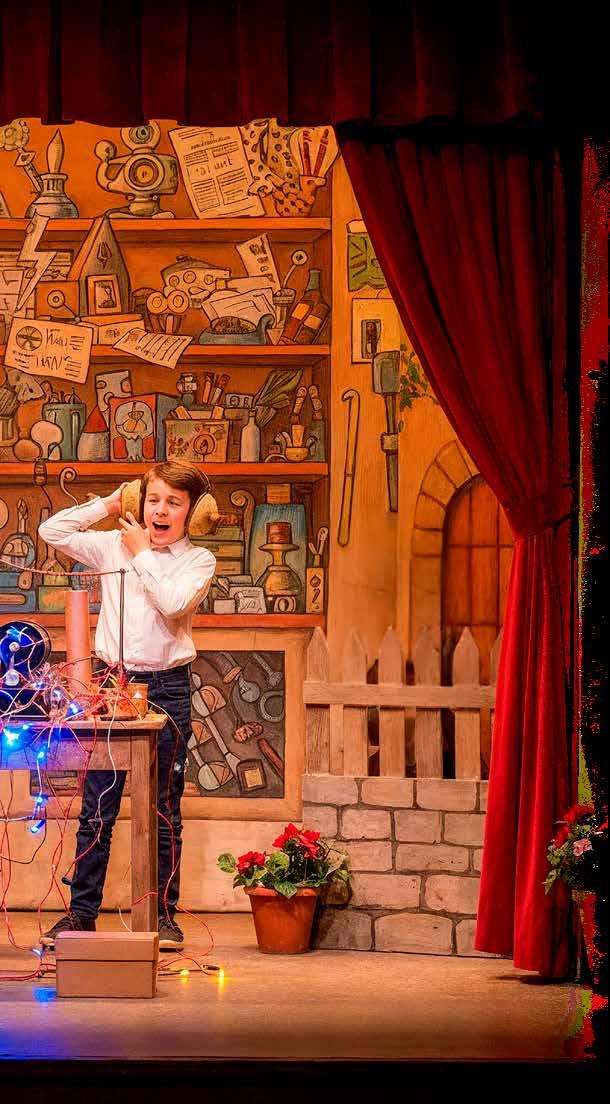
Setting: Marconi’s London Workshop, 1899
• GUGLIELMO MARCONI – A hardworking young inventor
• ENRICO – Marconi’s assistant
• NARRATOR
(The room is filled with strange buzzing. Marconi holds a long wire. Enrico is wearing earmuffs.)
NARRATOR: Marconi kept working on his invention. He sent his signal across gardens, then across fields. But he had a new goal in mind: to cross the ocean with his signal!
MARCONI: Enrico, I want to send a message across the Atlantic Ocean. It will travel all the way from England to America.
ENRICO: What? That’s not possible! You’re talking about over seven thousand kilometers! That’s more than three thousand miles! That’s not called sending a message. That’s sending a miracle!
MARCONI: I can do it! I know I can! If we build a taller antenna—
(A loud BZZZ fills the room.)
ENRICO (looking around fearfully): What was that?!
MARCONI: That, my friend, was science making history!
Setting: Signal Hill, Newfoundland; December 1901
• GUGLIELMO MARCONI – A hardworking young inventor
• ENRICO – Marconi’s assistant
• NARRATOR
(Snow falls. Marconi and Enrico stand in a freezing shack, bundled in coats and scarves. A wire runs from a kite outside the shack. They wear headphones and listen carefully.)
NARRATOR: Marconi failed many times, and people kept telling him that he was out of his
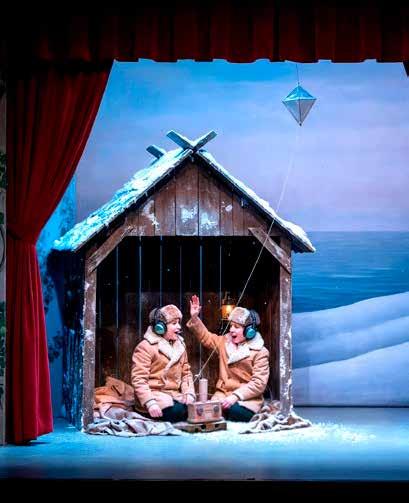
mind. But Marconi didn’t let that stop him. He set up a workshop on the coast of Canada and kept trying. Would he be able to send a signal across the ocean?
ENRICO (shivering): Are you sure radio waves don’t freeze?
MARCONI: They travel through air, not ice.
ENRICO: My frostbitten toes would tell you otherwise.
NARRATOR: Marconi used a giant kite to hold the antenna up high. On the other side of the ocean, people in England kept sending the letter “S” using Morse code.
(Marconi and Enrico listen carefully. They hear static and buzzing. Then…)
MARCONI (holding up a hand): Wait! I hear something! dit-dit-dit. dit-dit-dit. That’s the letter S in Morse code!
ENRICO (sneezing): “S”? Are you sure it wasn’t just me sneezing?
MARCONI: It’s from the station in England! We did it! We sent a message across the ocean!
ENRICO: Really? It wasn’t just a snowflake falling?
MARCONI: Today, my friend, we’ve done something great for science!
(They laugh and dance as snow falls around them.)
NARRATOR: On December 12, 1901, Guglielmo Marconi finally did it. The first transatlantic signal traveled across the Atlantic Ocean! It was only one letter, but he was sure that more messages would follow. His attempts had paid off, and history was made!
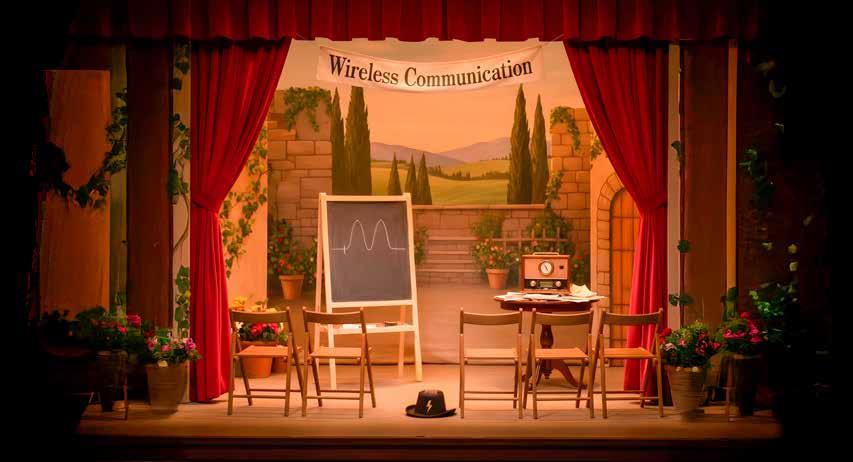
Setting: A Big Room, 1902
• GUGLIELMO MARCONI – A hardworking young inventor
• ENRICO – Marconi’s assistant
• SIGNOR BERNARDI – Marconi’s neighbor
• NARRATOR
(A crowd gathers in a big room. Marconi stands on the stage, Enrico at his side. Mr. Stone sits in the back, arms folded. Signor Bernardi wears a hat shaped like an antenna.)
NARRATOR: Marconi wanted to show the world what he could do. He knew that his wireless machine could be used on ships and in emergencies. But he had to work hard to convince people.
MARCONI (holding up a small radio): Welcome all guests. This is a radio. It can send messages without wires, over mountains, seas, and even through storms.
SIGNOR BERNARDI: Can it make tea?
MARCONI: Not yet. But it can save lives. Imagine a ship lost at sea—
MR. STONE: Or a boy sending funny messages to his brother.
SIGNOR BERNARDI: And I suppose you think that one day we’ll have music and news flying through the air, too?
ENRICO: You never know…
MR. STONE: I’ll believe it when my cat starts sending me messages.
MARCONI: Thank you all for coming here today.
(He takes a bow as everyone claps.)
NARRATOR: At first, everyone laughed at Marconi. But soon enough, his invention was used everywhere. In the end, Marconi had the last laugh. He had achieved his goal!
Use drama vocabulary to answer the questions.
1. How do you know that Enrico is Marconi’s assistant?
2. How do you know that Scene 2 takes place on a rainy hilltop in England?
3. How do you know that Marconi is successful in receiving a message from across the ocean?
4. How do you know that in Scene 5, Marconi gives a speech?
Draw a picture from one scene in the play. Write how the descriptions from the drama help you imagine the scene.
I am drawing Scene
5. What descriptions from the script describe the setting? How do you imagine it?
6. What are the characters doing? How do you imagine they look?

PRACTICE VOCABULARY STORY REVIEW ACTIVITY ASSESSMENT
A drama is a story that is written in a way that people can read it and act it out as a play.
Write a paragraph explaining the differences between drama and prose (regular writing).
1. Plan. Write at least three ways drama and prose are similar and different.
2. Topic Sentence. Write that drama and prose are different.
3. Body Sentences. Each sentence should tell one similarity or difference.
4. Concluding Sentence. Write an opinion or lesson about drama.
5. Paragraph. Write a paragraph.
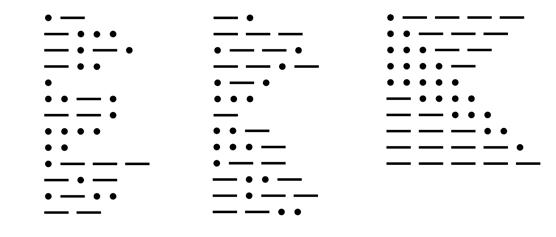
Write a message in Morse code.
1. Think of a short message you’d like to send to a friend or family member.
2. Write out the message in Morse code. Use the image above to help you.
3. Try tapping out the message using short and long taps on your desk or table.
4. Bonus: Work with a partner to decode each other’s messages.
Circle the correct answer.
1. After four years of hard work, he his goal of building a treehouse.
a. achieved
b. attempts
c. convince
d. failed
2. Which is an example of something you might need to make a few attempts to learn?
a. Sleeping
b. Being a mother
c. Riding a bike
d. Breathing
3. Which word means something that sends a signal through radio waves or a wire?
a. Receiver
b. Transatlantic
c. Transmitter
d. Invisible
4. The students were able to the teacher to give them extra recess on the warm, sunny day.
a. achieved
b. failed
c. convince
d. transmitter
5. Which word means a tool that gets signals or messages?
a. Transmitter
b. Transatlantic
c. Convince
d. Receiver
6. If a rocket launch failed, what most likely happened?
a. It flew into space.
b. It crashed.
c. It landed on the moon.
d. It brought back a new discovery.
7. Which word means cannot be seen?
a. Transmitter
b. Receiver
c. Transatlantic
d. Invisible
8. Many ships made a long trip to bring goods from Europe to America.
a. transatlantic
b. attempts
c. achieved
d. convince
Circle the correct answer.
1. In Scene 1, what was Marconi excited about? (detail)
a. He stayed quiet after 9 p.m.
b. He used wires to send a signal.
c. He became invisible.
d. He rang a bell across the garden.
2. With Marconi’s invention, what would no longer be needed? (cause and effect)
a. Morse code
b. Umbrellas
c. Telegraph poles
d. Telephones
3. In the beginning, what do you think Enrico thinks of Marconi? (inferencing)
a. Enrico thinks Marconi is going to be a huge success.
b. Enrico thinks Marconi likes bells too much.
c. Enrico thinks Marconi’s invention is not a big deal and that he won’t be able to send the signal far.
d. Enrico thinks Marconi is the greatest inventor who ever lived.
4. What is the main idea of Scene 3? (main idea)
a. Marconi sent the signal across gardens and fields.
b. Marconi wants to send his signal across the Atlantic Ocean and thinks he can do it.
c. Marconi needs to build a taller antenna.
d. A buzzing sound fills the room.
5. Which of these was the last thing Marconi accomplished? (sequencing)
a. He rang a bell.
b. He sent a signal across the garden.
c. He sent a signal across a field.
d. He sent a signal across the Atlantic Ocean.
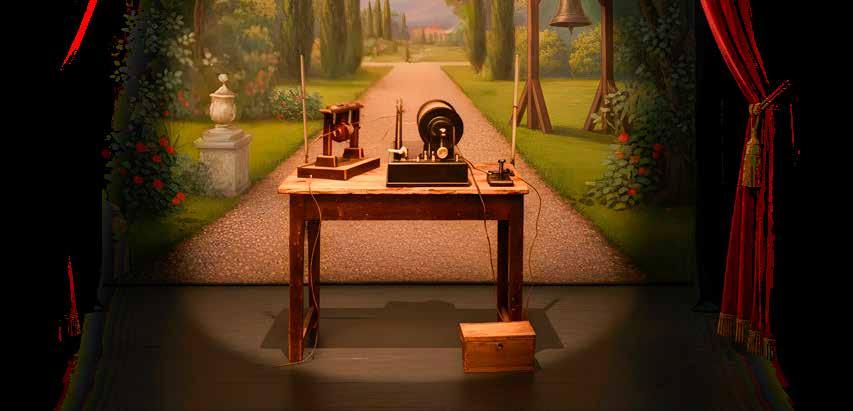
6. In Scene 4, the narrator states, "His attempts had paid off, and history was made!" What does "paid off" mean in this sentence? (context clues)
a. Someone received money.
b. His efforts were successful.
c. He made a payment.
d. He went to sleep.
7. Compare and contrast Marconi’s accomplishments in Scene 1 and Scene 4. (compare-contrast)
a. In Scene 1, Marconi sent the signal a short distance, and in Scene 4, a long distance.
b. In Scene 1, Marconi sent the signal a long distance, and in Scene 4, a short distance.
c. In Scene 1, Marconi sent the letter S, and in Scene 4, he sent the letter M.
d. In Scene 1, everyone believed in Marconi, and in Scene 4, no one believed in him.
8. Which of the following statements is an opinion? (fact vs. opinion)
a. On December 12, 1901, the first transatlantic signal traveled across the Atlantic Ocean.
b. Dit-dit-dit is the letter S in Morse code.
c. Marconi did something great for science.
d. Marconi’s invention could transmit a signal without wires.
Standards:
Lesson- 4.RI.5
Comprehension Skill
Review- 4.RI.2
Unit 3: Informational Texts
Lesson 9: Chronology Text Structure
Author: Aaron Ingel Genre: Informational
Unit Goal
Describe the structure of an informational text.
Lesson Focus
Describe the structure of an informational text with chronology structure.
Before Reading
1. Learn about chronology text structure.
2. Practice identifying key words, using a graphic organizer, and writing with the chronology text structure.
3. Complete the vocabulary worksheet.
During Reading
1. As you read, think about the meaning of specific words or phrases.
2. Think about how the text is structured.
After Reading
1. Complete the comprehension activity to organize the information using the chronology structure.
2. Review “Summaries.” Complete the activity.
3. Complete the project.
4. Check your progress by taking the assessment.
In this unit, we will be exploring informational text structures.
Informational texts are writings that teach the reader about a topic. There are different ways authors structure, or organize, the information in an informational text.
Let’s start with the chronology text structure. Events are told in the order they happened. This helps us understand what already happened or what will happen first, next and last.
To find the chronology text structure, look out for:
Dates and times:
The Civil War began in 1861 with an attack on Fort Sumter. After the attack, there were several major battles. The war ended in 1865.
Words that show an order:
A butterfly starts out as an egg. Next, the egg hatches into a tiny caterpillar. Then, the caterpillar grows, and eventually forms a chrysalis. Finally, the chrysalis opens, and a butterfly comes out. 2.

Step-by-step directions:
First, preheat the oven to 350 degrees. Next, mix the flour, sugar, and butter together. Finally, bake the cookies for 10 minutes until golden brown. 3.
2 1 3
Read the passage. Write three words that let you know it was written in the chronology text structure.
When I first arrived in the new city, I was nervous. Then, I met a friendly neighbor who showed me around. This helped me feel more comfortable. I started walking to the local stores and made new friends. Finally, I felt at home.

Read the passage. Use the graphic organizer to show the order of steps.
First, wet your toothbrush with water. Next, put toothpaste on the bristles. Then, gently brush your teeth in circles for two minutes. Finally, rinse your mouth with water and spit.
Tell about your day using the chronological text structure.
STORY REVIEW ACTIVITY ASSESSMENT
Match the bolded words with their definitions. Highlight context clues.
Dan received a letter from his pen pal in France.
Huge icebergs float in the cold ocean waters.
The backpack has separate compartments to hold books, snacks, and pencils.
The little monkey clung tightly to its mother's back as she swung through the trees.
The long path through the desert seemed endless
A flat tire on a busy road can make anyone feel distress.
The fire in the building was a terrible disaster.
The storm split the boat in half, turning it into a wreck.
separate sections of a container or space
great pain or worry what is left of something that has been broken got or was given something something that causes a lot of damage or suffering never ending large pieces of ice floating in the ocean held on tightly to something
received [ri-SEEVED]; icebergs [ICE-burgz]; compartments [kum-PART-ment]; clung [KLUNG]; endless [END-less]; distress [dis-TRESS]; disaster [di-ZAS-ter]; wreck [REK]

Author: Aaron Ingel Genre: Informational
Nine-year-old Frank Goldsmith stood on the deck of the Titanic, staring out at the blue ocean. The ship was enormous—bigger than anything he had ever seen! With fancy rooms sparkling with lights, it was like a floating palace. As the Titanic sailed smoothly across the Atlantic Ocean, Frank felt like the luckiest boy in the world. But late one night, a strange noise woke him up. The ship shook. People were scared. What had happened? Was the "unsinkable" Titanic really in danger? And would Frank make it to safety?
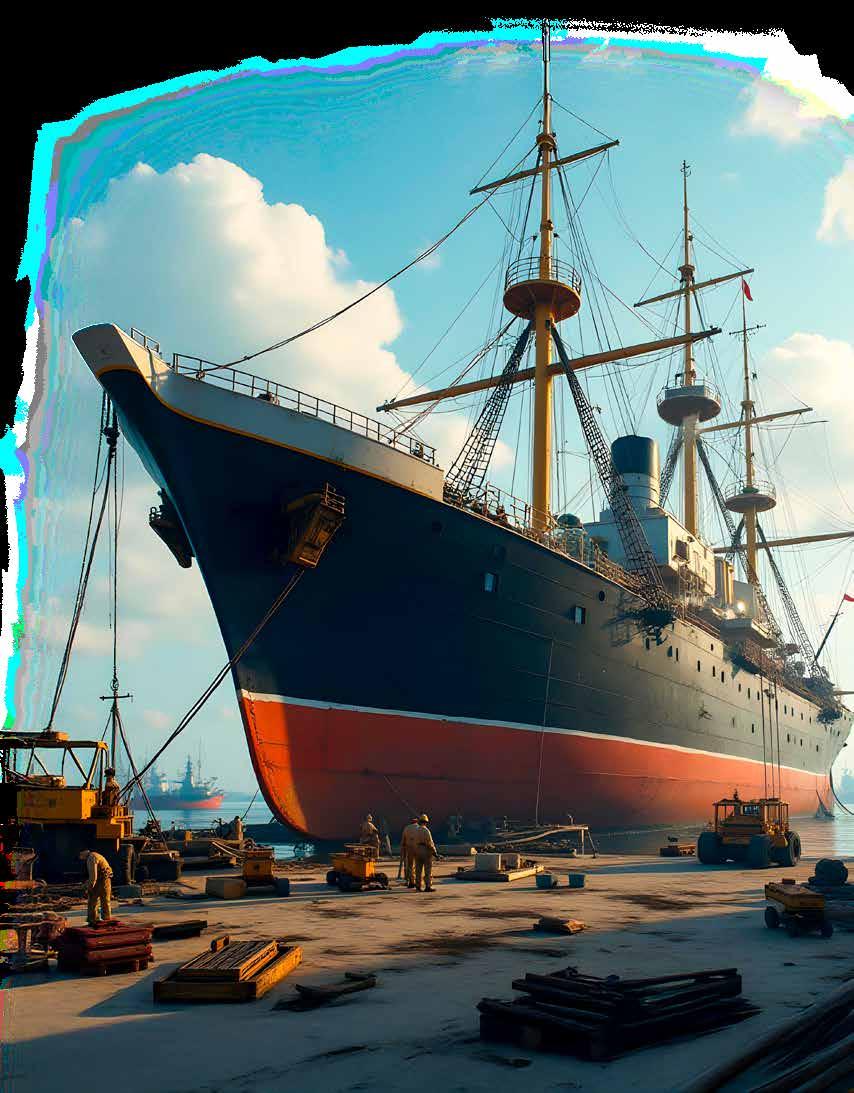

It was all anyone could talk about. The largest ship ever had been built. It was taller than a six-story building and longer than three football fields! More than 2,200 people could fit inside. The ship offered many things that most ships didn't. It had dining rooms, a restaurant, and a barbershop. It had a gym and swimming pool.
This ship was the Titanic. It was called the “unsinkable ship.” People dreamed of sailing on it across the Atlantic Ocean.
In many homes in Europe, families packed their bags. Some of them were wealthy. They would be traveling in first class. They would be served good meals and stay in beautiful rooms. Some passengers were traveling in second class. Other passengers were traveling in third class. They wanted to start a new life in America.
Nine-year-old Frank Goldsmith couldn’t wait. His family was traveling on the Titanic. They were moving from England to Michigan. There, Frank’s father planned to work in a factory. Traveling on the Titanic was going to be a great adventure!
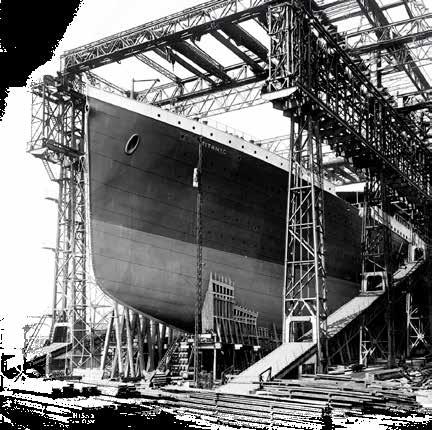
On the morning of April 10, 1912, the Titanic was ready to set sail. It would leave from Southampton, England. Crowds gathered to say goodbye. They waved and cheered as passengers boarded. People couldn’t believe how big the ship was. In real life, it looked even bigger than it had been described!
At noon, a loud whistle blew. The Titanic started to move. The ship sailed away, puffing smoke. Passengers waved from the deck to the cheering crowds. Today, they were making history!
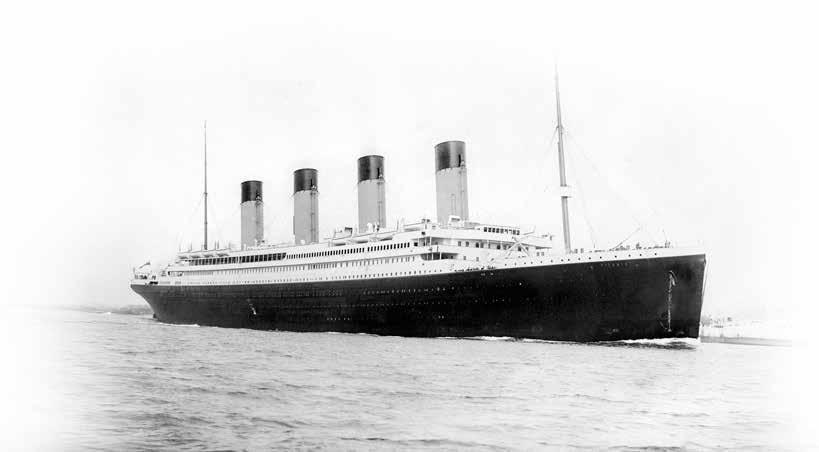
Sailing on the Titanic was like being in a floating palace. The first-class passengers relaxed in grand rooms with sparkling lights. They sipped tea from fine china. The dining room served fancy meals with more courses than most people could count.
The second-class passengers enjoyed comfortable cabins and delicious food. Meanwhile, the third-class passengers enjoyed nice and clean rooms. Usually, people traveling in third class didn’t get such nice rooms. Everyone enjoyed walking on the open deck. They breathed in the salty ocean air and watched the endless blue waves.
Frank loved exploring the Titanic. During the day, he played games with other children on the open deck. They laughed and ran, feeling the fresh ocean breeze on their faces.
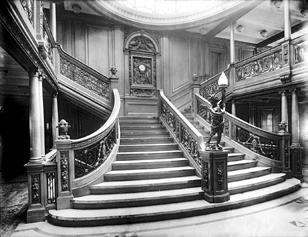
At night, his family joined other third-class passengers. They sang, told stories, and played games.
14, 1912: Trouble Ahead
On April 14, the air grew colder. The ocean was dark and still. That evening, the Titanic received a few warnings from other ships about icebergs in the area.
Sailors climbed high above the deck to see if they could see any icebergs. The ship sailed on at full speed. Captain Edward Smith wasn’t worried. After all, the Titanic was supposed to be unsinkable.
At 11:40 p.m., there was a loud scraping sound. The ship shook. The Titanic had hit an iceberg!
Frank sat up in bed. “What was that?” he asked.
His father pulled on his coat. “Stay here. I’ll see what’s going on.”
Below deck, freezing seawater poured into the Titanic’s lower compartments. The ship was in trouble. The Titanic could stay afloat if four compartments flooded, but the iceberg had damaged five.
The Titanic was sinking.
April 15, 12:30 a.m.: “Women and Children First!”
By midnight, the front of the ship was sinking lower into the ocean. Sailors knocked on cabin doors.
“Put on life jackets and head to the lifeboats!” they told the passengers.
Some people laughed. They thought it was a safety drill. Other people grabbed coats and blankets and hurried to the deck.
Frank shivered in the cold night air. He held his mother’s hand tightly.
“Stay close to me,” his father said.
On deck, sailors shouted, “Women and children first!” Lifeboats were lowered into the icy water. Frank clung to his mother as they were lifted into a lifeboat.
As the lifeboat dropped into the water, Frank looked up at the huge ship. Its lights glowed brightly against the dark sky, but water was rising fast inside it.
April 15, 2:20 a.m.:
As the hours passed, the Titanic leaned further and further into the water. The back of the ship rose high into the air. Passengers clung to railings, trying to stay on board. The ship’s band continued to play music, their song echoing across the cold, silent ocean.
At 2:20 a.m., the Titanic broke into two pieces and disappeared under the waves. Frank shivered from cold and fear. Around him, voices
called out in the darkness. Some people cried; others were quiet. The water was freezing. That made it impossible for many to survive.
April 15, 4:00 a.m.:
The Titanic sent out a call of distress. Another ship was only about ten miles away. But it didn’t answer. No one was listening to the ship’s radio. Hours later, the sound of another ship’s whistle broke the silence. The Carpathia had heard the Titanic’s call. It arrived to rescue the passengers.
Frank’s lifeboat was one of the first to be rescued. Sailors wrapped him in a warm blanket and handed him a cup of tea.
“Did you see my father?” Frank asked, his voice shaking.
The sailor’s face was both kind and serious. “We’re still searching,” he said gently.
The Carpathia picked up lifeboat after lifeboat, bringing the survivors onboard. Out of the more than two thousand people on the Titanic, only 706 were saved.
Three days later, the Carpathia arrived in New York. Crowds gathered at the docks, hoping for news of their loved ones. Reporters shouted questions. Survivors shared their stories of that terrible night. People around the world were shocked. How could the “unsinkable” Titanic sink so quickly?
After the disaster, laws changed. Ships had to carry enough lifeboats for everyone on board. Someone had to be in charge of the ship’s radios 24 hours a day. The Titanic’s story changed safety rules on ships.
For years, the Titanic’s wreck lay hidden deep in the ocean. In 1985, explorers finally found it. Using submarines, they saw the ship’s broken pieces and items that had been left behind. There were dishes, suitcases, and even shoes. Today, museums display some of these objects.
Years later, Frank Goldsmith wrote that he would never forget the kindness of the Carpathia’s sailors or his father’s bravery. The Titanic’s lesson will never be forgotten as well. People must do their best in every situation. They should not rely only on themselves or technology to save the day.
PRACTICE VOCABULARY STORY REVIEW ACTIVITY ASSESSMENT
Fill in the missing information in the timeline.
People talk about and prepare to board the Titanic.
The Titanic hits an iceberg.
Evening: 11:40 p.m:
The Titanic sinks. 12:30 a.m.: 2:20 a.m.: 4:00 a.m.:
Answer the question.
How do you know that this passage was written with the chronology text structure?
To summarize a text means to retell it in a shorter way. Focus on the main idea and the most important details.
Write a summary of the passage “The Unsinkable Ship.”
1. Plan. Determine the main idea and key details.
Idea:
Key Detail: Key Detail: Key Detail:
2. Topic Sentence. Include the text type (and/or the title) and the main idea.
Topic Sentence:
3. Body Sentences. Turn each key detail into a sentence.
4. Paragraph. Write a paragraph.
PRACTICE VOCABULARY STORY REVIEW ACTIVITY ASSESSMENT
You are traveling on the Titanic!
Imagine that you are a passenger on the Titanic before it sank. Write a postcard to your friends and family. Describe what the trip is like.

Circle the correct answer.
1. I a present for my birthday.
a. clung
b. received
c. survived
d. distressed
2. Which word means large pieces of ice floating in the ocean?
a. Compartments
b. Icebergs
c. Clung
d. Survive
3. Which of these usually has compartments?
a. A river
b. A suitcase
c. The sky
d. A cloud
4. The cat to the tree branch during the storm.
a. clung
b. survived
c. distressed
d. disaster
5. Which of these wouldn’t be described as endless?
a. Three pages of a book
b. A long road
c. Waiting at a doctor’s office
d. The ticking of a clock
6. Which word means great pain or worry?
a. Icebergs
b. Compartments
c. Clung
d. Distress
7. Which word means something that causes a lot of damage or suffering?
a. Icebergs
b. Compartments
c. Clung
d. Disaster
8. The car crash left the vehicle a .
a. iceberg
b. compartment
c. wreck
d. distress
Circle the correct answer.
1. What was Frank Goldsmith's father's plan in Michigan? (detail)
a. To open a restaurant
b. To work in a factory
c. To become a sailor
d. To build ships
2. Why didn’t the Carpathia hear the Titanic's distress call immediately? (cause and effect)
a. The Carpathia's radio was broken.
b. No one was listening to the radio.
c. The Titanic's radio was not working.
d. The Carpathia was too far away.
3. Why do you think the band continued to play music as the ship was sinking? (inferencing)
a. They were trying to warn other ships.
b. They were trying to keep people calm.
c. They were enjoying the music.
d. They didn’t know the ship was sinking.
4. What is the main idea of the passage? (main idea)
a. The story of Frank Goldsmith's journey
b. The history of the Titanic and its sinking
c. The beauty of the Titanic
d. The rescue after the Titanic sank
5. Which event happened first in the story? (sequencing)
a. The Titanic hit an iceberg.
b. The Titanic set sail.
c. The Carpathia arrived.
d. The Titanic sank.
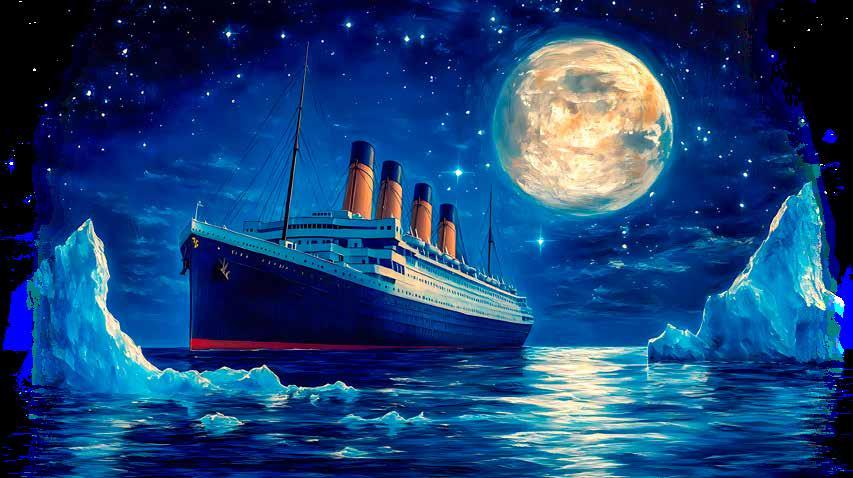
6. What does the word "fine" mean in "They sipped tea from fine china"? (context clues)
a. fancy
b. chipped
c. big
d. hot
7. How did Frank feel at the beginning of the trip, and how did he feel at the end? (compare-contrast)
a. He was happy at both times.
b. He was scared at both times.
c. He was excited at the beginning and scared at the end.
d. He was sad at the beginning and happy at the end.
8. Which statement is a fact? (fact vs. opinion)
a. Traveling on the Titanic was an adventure.
b. The Titanic was taller than a six-story building.
c. The food on the Titanic was delicious.
d. The Titanic was the best ship ever built.
Standards: Lesson- 4.RI.5
Comprehension Skill Review- 4.RI.5
Unit 3: Informational Texts
Lesson 10: Comparison Text Structure
Author: E. Aboud Genre: Informational
Unit Goal
Describe the structure of an informational text.
Lesson Focus
Describe the structure of an informational text with the comparison structure.
1. Learn about the comparison text structure.
2. Practice identifying key words using a graphic organizer and writing with the comparison text structure.
3. Complete the vocabulary worksheet.
During Reading
1. As you read, think about the meaning of specific words or phrases.
2. Think about how the text is structured.
1. Complete the comprehension activity to organize the information using the comparison structure.
2. Review "Limericks." Complete the activity.
3. Complete the project.
4. Check your progress by taking the assessment.
Let’s take a look at the comparison text structure. This is when an author tells how two or more things are the same and how they are different. In other words, they compare and contrast the two things.
To find the comparison text structure, look out for words that show:
1.
Similarities:
In the book, both Mark and Tom liked racing. They were part of the same teams and were similar in speed. Mark won five times, and Tom won eight times.
2.
Differences:
Apples and oranges are fruits that taste very different. Oranges have a thick peel, while apples have a thin skin. Apples are crunchy. In contrast, oranges are juicy.
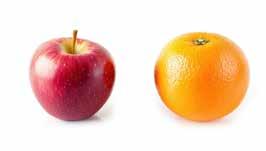
3.
Comparisons:
If you compare summer and winter, you will find that summer is hotter. The winter has shorter days. It is also colder and has less sunlight. Of the two, I think summer is the most fun!


Read the passage. Write three words that let you know it was written in the comparison text structure.
Lions and tigers are both big cats. Lions live in groups, while tigers live alone. Unlike lions, tigers hunt by themselves.
Read the passage. Organize the information in the Venn diagram.
Cars and bikes are both great ways to get places. Cars are faster than bikes and can go long distances on highways. Bikes are slower and better for short trips. Unlike cars, bikes are also good for the environment because they don't use gas.
Compare and contrast the sun and the moon.
LESSON PRACTICE VOCABULARY STORY REVIEW ACTIVITY ASSESSMENT
Match the bolded words with their definitions. Highlight context clues.
Jake was so eager to play that he jumped up and down with a smile.
She worked very hard to solve the puzzle and find the answer.
The pen was flexible and could be bent in all directions.
His fun personality makes the people around him laugh.
We only had a limited amount of glitter because the teacher had a small bag.
There are owls living near my house, but it is rare to see them because they only come out at night.
The stamp collectors showed each other all the interesting stamps they had in their books.
The school rules remain the same each year.
find or figure out an answer
the feelings, thoughts, and behaviors that make a person different from others easily bent without breaking unusual; doesn’t happen often stay the same; doesn’t change
very excited, wanting very much to do something
not much of; not endless people who collect or gather objects because they are beautiful, valuable, or interesting eager [EE-ger]; solve [SOLV]; flexible [FLEK-suh-bul]; personality [per-suh-NA-luh-tee]; limited [LIM-uh-tid]; rare [RAIR]; collectors [kuh-LEK-terz]; remain [rih-MAYN]
Author: E. Aboud Genre: Informational
Have you ever seen your friends get super excited over a new toy or game? One day, no one has it, and the next day, it’s everywhere! Kids are talking about it, stores are selling out, and everyone wants one. But then, just as fast as it started, the excitement disappears. It was just a fad. How do fads start? Why do some fads last for a long time and others fizzle out quickly? Read about two popular fads and see if you can figure it out!
The lines are out the door — and the store just opened! People push and shove, eager to get inside. What’s going on? Why is everyone rushing?
There’s a new toy on the shelves. Everyone is running to buy it. They all want it now, but in a few months, no one will look at it. That’s because it’s a fad.
A fad is something that people get very excited about, but only for a short time. A fad can be a toy, something to wear, or even a silly saying.
Sometimes, fads are silly and fun. People might collect colorful rubber bands or wear colorful socks. Other times, a fad might be a new game or a new food.
But here's the funny thing about fads: They don't usually stick around for long. What's
super cool one minute might be old news the next. All fads come to an end one day, making room for the next fad!
Two fads that were super popular were the Rubik's Cube and Beanie Babies. They were so popular that they were called a craze. Read on to find out how each of these fads started and ended!
The Cube Craze
Do you like to play with Rubik’s Cubes? Well, this cube didn’t start out as a toy. Erno Rubik was a teacher who lived in Hungary in 1974. He wanted to learn more about shapes. Using little wooden blocks, he figured out how to attach little blocks to form a big cube. Each block in the big cube could be moved.
Then, Rubik had an idea. He colored the outside of each block and started twisting. Something amazing happened!
Rubik kept on twisting, but the colors got scrambled! The more he twisted, the more scrambled they got. He couldn’t get the colors back to their correct places. It took him over a month to figure out how to solve his puzzle.
Rubik realized he had created a difficult and fun puzzle. He called it the Magic Cube. It wasn’t long before people all over Hungary were playing with the Magic Cube. It became very popular. A big toy company started selling these cubes all over the world. The Magic Cube got a new name — Rubik’s Cube.
Do you have any stuffed animals? Maybe one of your animals is a Ty Beanie Baby. These are stuffed toys. There are lots of different
Beanie Babies, but most of them are shaped like animals. They are soft and very floppy.
Unlike the Rubik’s Cube, Beanie Babies were created by a man who wanted to sell toys.
Ty Warner was an American businessman. In 1993, he created a new type of stuffed animal. Warner didn’t put so much stuffing in his animals. He filled them with little plastic balls called “beans”. The result was a stuffed animal that was flexible and fun to play with.
Now he needed to sell them! Warner gave his toy a catchy name — Beanie Babies. He took his Beanie Babies to a toy fair to introduce them to the world. It wasn’t long before people all over were collecting Ty Beanie Babies.


Sometimes, it’s obvious why a fad starts. Other times, it remains a mystery.
It’s easy to understand why the Rubik’s Cube became so popular. It’s fun to twist and play with. It’s also challenging to solve.
People of all ages liked playing with Rubik's Cubes. A small child can have fun twisting the pieces and watching the colors move. Adults can spend hours trying to figure out how to put the cube back together.
Very quickly, people got caught up in the cube craze. All over the world, people were buying Rubik’s Cubes. Everyone wanted a chance to solve the puzzle.
Some people wrote books explaining how to solve the Rubik’s Cube. There were even contests to see who could solve it the fastest. In 1982, the first Rubik’s World Championship was held. By then, more than a million cubes had been sold!
In contrast, Beanie Babies became popular because Warner was a smart businessman. He asked himself, How can I get people to buy
my toys? What if I make it the type of toy people want to collect? Then, people will want to buy lots of Beanie Babies.
Warner did certain things to get people to buy Beanie Babies. First, he gave each Beanie Baby a name and personality. Each Beanie Baby came with a birthday and a special poem printed on the tag. This made them very lovable. Isn’t it more fun to play with Patti the Platypus or Spot the Dog?





Warner also sold only a limited amount of each Beanie Baby. If you didn’t buy one quickly, it would sell out. Once a Beanie Baby was sold out, it became rare. People like collecting rare things, so more people became interested in Beanie Babies.
Soon, Beanie Babies became a major fad. Both kids and adults were buying them. People waited in lines for hours so they could buy one! Collectors would get together and trade their collections. Rare Beanie Babies were sold for hundreds or even thousands of dollars!
Once, a truck full of Beanie Babies spilled all over the highway. People ran out to grab some, even though it was dangerous!
A fad doesn’t last forever. Eventually, people begin to get bored of it. Instead, new toys and hobbies become popular.
This is what happened to both Rubik’s Cubes and Beanie Babies. They were each fads that people rushed to buy, but they lasted only a few years.

Even when the Rubik’s Cube fad was over, people continued to buy them. About ten years later, in the early 2000s, people became interested in the cube again. More and more cubes were sold. Soon, another Rubik’s World Championship was held. A new group was created, called the World Cube Association.
Today, Rubik’s Cubes may not be a fad, but they remain one of the most popular toys in the world. Kids and adults try to come up with new ways to solve it. There are even cubes in different shapes and sizes.

In contrast to the Rubik’s Cube, Beanie Babies are not so popular today. People are interested in other toys. Once the fad was over,
Have you ever heard of speedcubing? This is when people try to solve Rubik’s Cubes as fast as they can. In 2023, Max Park solved a Rubik’s Cube in just 3.13 seconds!

the price of the stuffed animals went down.
Today, most Beanie Babies are not worth much. However, some collectors look back at the Beanie Baby craze with fond memories. They still spend thousands of dollars on rare Beanie Babies that are in good condition! Which fad is popular where you live?


LESSON PRACTICE VOCABULARY STORY REVIEW ACTIVITY ASSESSMENT
Complete the Venn diagram to compare and contrast the two fads you read about.
[different/contrast]
[different/contrast]
[same/ compare]
Answer the question.
How do you know that this passage was written with the comparison text structure?
PRACTICE VOCABULARY STORY REVIEW ACTIVITY ASSESSMENT
A limerick is a five-line poem with a funny ending. The first, second, and fifth lines each have seven to ten syllables. The third and fourth lines have five to seven syllables. The rhyme scheme is AABBA.
There was an old man of Peru Who dreamt he was eating his shoe He woke in the night With a terrible fright, And found it was perfectly true.
Write a limerick about a fad.
1. Plan. Think of a starting line and some ideas of rhyming words.
Lines you can use to start:
There once was a fad
There once was a man from
There was a banana named
I once bought a
Rhyming words:
2. Write. Remember to count the number of syllables in each line. As you write, your ideas may change.
PRACTICE VOCABULARY STORY REVIEW ACTIVITY ASSESSMENT
Try to start your own fad!
1. What thing do you want to make popular? It could be an interesting food combination, a game or activity, an item you carry with you, or almost anything!
2. In the box below, draw a picture or write a description of your fad.
3. Describe how you will start your fad. How will you get it to catch on and become popular?
Circle the correct answer.
1. The art went looking for valuable paintings.
a. personality
b. limited
c. collectors
d. eager
2. Which word means to stay the same, without change?
a. Rare
b. Remain
c. Solve
d. Limited
3. It was a warm, sunny day, and the children were to go outside for recess.
a. flexible
b. rare
c. limited
d. eager
4. Which word means the feelings, thoughts, and behaviors that make a person different from others?
a. Collectors
b. Personality
c. Eager
d. Rare
5. Which word means to find an answer?
a. Solve
b. Eager
c. Remain
d. Flexible
6. Which is an example of something flexible?
a. A desk
b. A coffee mug
c. A rope
d. A pencil
7. We were lucky to see the total solar eclipse because it is a very event.
a. flexible
b. rare
c. remain
d. eager
8. Which is an example of something that is limited?
a. Air
b. The heat from the sun
c. The water that comes out of the water fountain
d. The number of apples in the store today
1. What did Ty Warner put inside Beanie Babies? (detail)
a. Lots of stuffing
b. Water
c. Little plastic balls called “beans”
d. Little wooden blocks
2. Why did Erno Rubik invent the Rubik’s Cube? (cause and effect)
a. He wanted to start a fad.
b. He wanted to learn more about shapes.
c. His son thought it would be a fun toy.
d. He was bored.
3. Why might Warner have used the word “beanie” when he named his toy “Beanie Babies”? (inferencing)
a. He liked to eat beans.
b. He filled them with something that felt like little beans.
c. He thought the name was funny.
d. He did not think people would buy a toy with that name.
4. What is this story mainly about? (main idea)
a. A comparison of two popular toy fads
b. The reasons why Ty Warner invented Beanie Babies
c. How the Rubik’s Cube was invented
d. How challenging it is to solve a Rubik’s Cube
5. What is the first thing Warner did to get people to buy Beanie Babies? (sequencing)
d. He sold them for thousands of dollars. Circle the correct answer.
a. He gave each one a name and a personality.
b. He only sold a limited amount.
c. He spilled a truck full of them on the highway.

6. The story says “The more he twisted, the more scrambled they got. He couldn’t get the colors back to their correct places.” What does the word "scrambled" mean here? (context clues)
a. A way to eat eggs
b. Hurried to get somewhere
c. Mixed up
d. Faded
7. How are the Rubik’s Cube and Beanie Babies alike? (compare-contrast)
a. They were both popular toys that became fads.
b. They were both invented by accident.
c. They were both made by smart businessmen.
d. They were both invented in Hungary.
8. Which of the following is an opinion? (fact vs. opinion)
a. The first Rubik’s World Championship was held in 1982.
b. Beanie Babies are the cutest stuffed animals ever made.
c. Erno Rubik invented the Rubik’s Cube.
d. Ty Warner invented Beanie Babies.
Standards:
Lesson- 4.RI.5
Comprehension Skill
Review- 4.RL.5
Unit 3: Informational Texts
Lesson 11: Cause and Effect
Author: Tessa Barber Genre: Informational
Unit Goal
Describe the structure of an informational text.
Lesson Focus
Describe the structure of an informational text with cause/effect structure.
1. Learn about the cause and effect text structure.
2. Practice identifying key words, using a graphic organizer, and writing with the cause and effect text structure.
3. Complete the vocabulary worksheet.
During Reading
1. As you read, think about the meaning of specific words or phrases.
2. Think about how the text is structured.
1. Complete the comprehension activity to organize the information using the cause and effect structure.
2. Review "Dramas." Complete the activity.
3. Complete the project.
4. Check your progress by taking the assessment.
PRACTICE VOCABULARY STORY REVIEW ACTIVITY ASSESSMENT
In this lesson, we will learn about the cause and effect text structure. This tells about something that happened (cause) and what happened as a result (effect).
Understanding cause and effect helps us see how things are connected in a text. Let’s take a closer look!
To find the cause and effect text structure, look out for:
An event with an impact: Heavy rain fell over the city for days. This caused the river to overflow. The effect of the flooding was damaged homes and businesses.
2.
An explanation of why something happens:
If you overcook meat, it will become tough and dry. This happens due to the heat, which causes the meat to shrink, letting the liquid out.

A change:
The invention of the printing press changed the way information was spread. As a result, people read more and shared more ideas. 3.
2 1 3
Read the passage. Write three words that let you know it was written in the cause and effect text structure.
Earth's rotation causes the seasons to change. As a result, different parts of Earth get more or less sunlight at different times. The effect of more or less sunlight is different temperatures and seasons in each place.
Read the passage. Use the graphic organizer to identify the cause and effect in the passage.
In 1886, a big earthquake hit Charleston, South Carolina. Many buildings fell down because they were not strong enough. As a result, people built stronger buildings, and new rules were made to keep them safer.
Cause:
Effect/s:
Using the cause and effect text structure, write about the causes and effects of telling a lie.
Match the bolded words with their definitions. Highlight context clues.
Many businesses in town sell clothes, food, and toys.
A little mouse, frightened by the big cat, ran back into its hole.
He lit the lantern to see in the dark tent.
He was completely full after eating a big meal.
The earthquake destroyed most of the city and was a big tragedy
After the fire, only ashes were left of the burned wood.
They packed all their possessions into boxes before moving to a new home.
The dog was brought to a shelter because it didn’t have a home.
a very sad and painful event
totally or fully scared or afraid a place that gives protection things that belong to someone a lamp that holds a candle or other light
soft, gray powder left after something burns companies that sell goods or services
businesses [BIZ-nis-iz]; frightened [FRY-tuhnd]; lantern [LAN-turn]; completely [kum-PLEET-lee]; tragedy [TRAJ-uh-dee]; ashes [ASH-iz]; possessions [puh-ZESH-unz]; shelter [SHELL-ter]
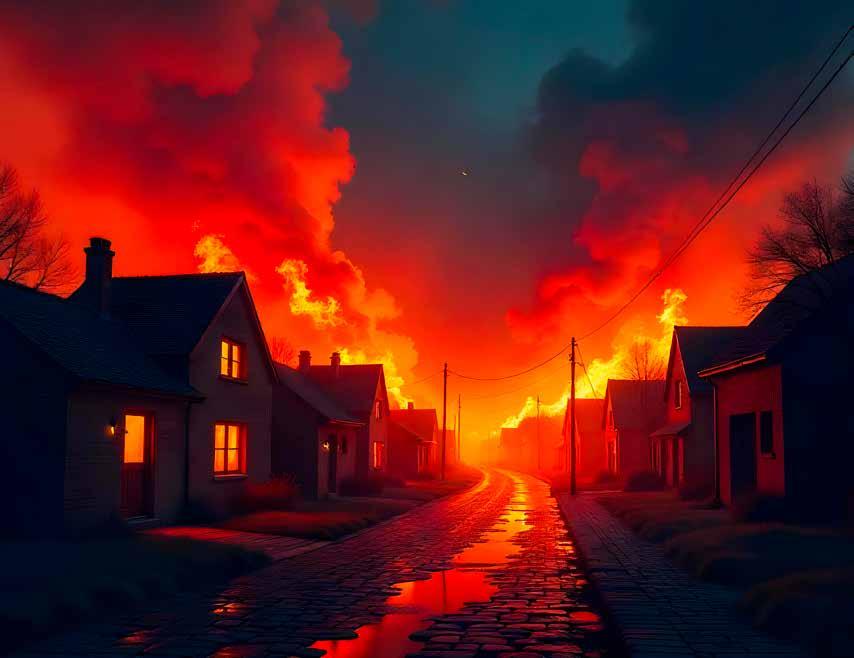
Author: Tessa Barber Genre: Informational
The night sky glowed red as flames roared through the streets of Chicago. Smoke filled the air, making it hard to breathe. People ran in every direction, grabbing whatever they could carry—blankets, photos, even small pets. “Fire! Fire!” they shouted, hoping their loved ones had escaped. Horses galloped through the crowded streets, pulling wagons piled high with belongings. Buildings crumbled, sending sparks flying into the night. The fire was moving fast—too fast. How had it started? Could anything stop it before the entire city was destroyed?
Red flames lit up the dark sky. Thick smoke filled the air, making it hard to breathe. People shouted as they ran. In their arms were blankets, photos, and whatever else they could save. Horses pulling heavy wagons raced through the crowded streets. People called out the names of loved ones. Had everyone escaped? Had anyone been left behind?
It was October 8, 1871, and Chicago was on fire. This was a big tragedy. Most of the city was destroyed. Yet, the people of Chicago worked together to rebuild it. They made it stronger and safer than before.
In 1871, Chicago was a good place to live. The city was growing quickly. Over 300,000 people lived there. People moved there from all over the world. There were factories, railroads, and new businesses. There were many jobs.
But Chicago had a problem. Almost everything in the city was made from wood. Houses, shops, sidewalks, and even some streets were built with wood. In those days, there was no electricity. People lit their homes
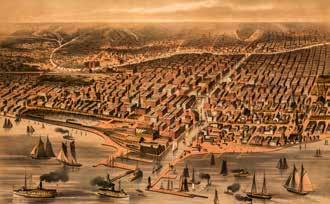
with candles or gas lamps. They cooked on open flames. Weeks had passed without any rain, and the wooden buildings were dry. The city was like a pile of matches, waiting for a spark to light them.
Fires were common in Chicago. There were about two fires every day. The fire department was small and didn’t have enough supplies. People were worried. What would happen if a big fire ever started?
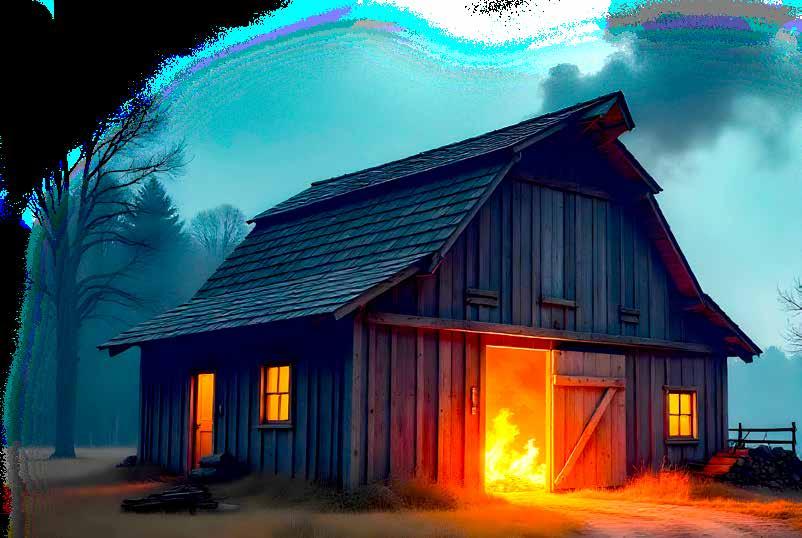
barn was completely on fire. The wind carried the flames to nearby houses and shops. The fire jumped from building to building. It grew bigger and hotter. By the time firefighters arrived, the flames were out of control.
wikipedia.org
It was the evening of October 8, 1871. The wind was blowing hard. Mr. and Mrs. O’Leary went to the barn behind their house. They were taking care of their cows. The barn was made of wood. Somehow, a fire started in the barn. Some people think that one of the cows knocked over a lantern. No one knows for sure what happened.
The flames spread quickly. They licked at the wooden walls and piles of hay. Strong winds made the fire grow bigger and bigger. Soon, the Starting point of fire and area of city that was destroyed
As the fire grew, people shouted, “Fire! Fire! Run!”
Families grabbed whatever they could carry and ran for safety. People pushed wagons filled with clothes and furniture. Others carried only small bags. Some people had no time to save anything at all.
The wind made the fire worse. Sparks flew through the air, starting new fires blocks away. The fire spread faster than anyone could run. Wooden buildings burned like paper.
The streets were filled with wagons, carriages, horses, and people. There was smoke everywhere. Fire burned everywhere. By midnight, the fire had reached downtown Chicago. Shops, hotels, and factories burned to the ground. More sparks flew through the air. They landed on rooftops and started new fires. The streets were full of
people running. The sounds of horses neighing and buildings falling down filled the air. The courthouse was made of stone. People thought it was safe, but the heat melted the bell on the courthouse. Soon after, the entire building collapsed.
There seemed to be no way to stop the flames. The night sky glowed orange from the flames. It was so bright, you could read a book in the middle of the night.
The fire burned for two days. Finally, on the morning of October 10, the winds slowed down, and rain began to fall. The flames were gone, but most of the city was destroyed. Over 17,000 buildings were gone. More than 100,000 people lost their homes. Many businesses were ruined. People had nowhere to go. Families camped out near the river, in parks, or in fields. Others left
the city to stay with friends or family.
One survivor later wrote about the scene: “The streets were filled with frightened, homeless people. The city was covered in ashes. It was hard to imagine how anyone could rebuild after such a terrible loss.”
For many families, life after the fire was very hard. They had lost so much. They had no houses and no possessions. Many people had to live in tents or crowded shelters. Businesses had to start over with little money and supplies.
Schools reopened as soon as possible. It was important for children to go back to school.
This gave them something to do during this difficult time. Other groups worked together to help families in need. People found ways
to help each other, even when it seemed impossible. The fire had destroyed so much, but the people of Chicago didn’t give up. They worked together to rebuild their city. They helped each other. They shared food and supplies. They wanted to make Chicago a better place to live.
Workers cleared the streets. Builders put up new houses, shops, and schools. New laws were passed to make buildings safer. Houses had to be made with safer materials, like brick, stone, and steel. These materials didn’t catch fire as easily. This would give people more time to escape if there was a fire. It would also give firefighters more time to put out fires. The laws also said that buildings couldn’t be so close to each other. Streets became wider. This way, there was more space between buildings. If one building had a fire, it wouldn’t spread so quickly to another building.
The fire department also grew bigger. More people became firefighters. If there was an emergency, there would be more firefighters to fight the fire. Firefighters received better training. They practiced how to work together as a team. They learned how to rescue people trapped in burning buildings. If there was an emergency, they could help faster while staying safe.
The fire department also got better equipment. There were hoses that could spray water farther. New fire engines were able to put out fires faster. They could also pump water from one part of the city and bring it to another part of the city. This water could be used to put out a fire.
Before the fire, Mary Harris had a dressmaking business. It was destroyed. Later, she said, “The fire destroyed everything we owned, but it could not destroy our hope. We knew we would rebuild.”
Within a few years, Chicago was back on its feet. New buildings rose from the ashes of the old city. Factories reopened, and businesses did well. More people came to live and work in Chicago.
People across the country watched the city of Chicago rebuild. They saw that even after a terrible disaster, it’s possible to become stronger. Today, Chicago is one of the most important cities in the United States. Its tall skyscrapers and strong buildings are a reminder of how the city rose from the ashes.
PRACTICE VOCABULARY STORY REVIEW ACTIVITY ASSESSMENT
Fill in the graphic organizer to show how The Great Chicago Fire changed Chicago.
Cause: Effect:
Describe The Great Chicago Fire:
Answer the question.
How do you know that this passage was written with the cause and effect text structure?
A drama is another word for a play. It is written as a script that includes scenes, settings, a cast of characters, stage directions, and dialogue.
Write a short play about The Great Chicago Fire.
1. Plan. Write the three main points of what will happen in the play.
2. Write the script.
Cast of characters:
Setting:
Write a newspaper article.
Look at these real newspaper articles from the Great Chicago Fire. Imagine you were a reporter during those times. Write an article describing what you saw.
Circle the correct answer.
1. Which word means companies that sell goods or services?
a. Ashes
b. Businesses
c. Shelters
d. Frightened
2. Which word means scared or afraid?
a. Completely
b. Shelters
c. Frightened
d. Ashes
3. The campers used a to light their way through the woods.
a. ashes
b. frightened
c. entire
d. lantern
4. Which of the following actions is NOT completely finished?
a. A puzzle with all the pieces in place
b. A book with the first chapter read
c. A meal that has been fully eaten
d. A race where the runner has crossed the finish line
5. Which of the following describes a tragedy?
a. A small party with friends
b. A big storm that destroyed homes
c. A trip to the zoo
d. A sunny day at the park
6. All that was left to do after the barbecue was clean up the .
a. businesses
b. ashes
c. entire
d. possessions
7. The family lost all their in the flood.
a. possessions
b. businesses
c. ashes
d. shelters
8. Which word means a place that gives protection?
a. Shelter
b. Completely
c. Frightened
d. Businesses
Circle the correct answer.
1. What material was the courthouse made of? (detail)
a. Wood
b. Brick
c. Stone
d. Steel
2. What was the main cause of the fire spreading so quickly? (cause and effect)
a. The strong wind
b. The houses being far apart
c. The use of candles and gas lamps
d. The large number of people who lived in the city
3. Why do you think the fire department got better equipment after the fire? (inferencing)
a. To make their job easier
b. To impress other cities
c. To prevent another big fire from spreading
d. To make the firefighters happy
4. What is the main idea of the passage? (main idea)
a. The Great Chicago Fire was a terrible disaster that destroyed much of the city, but the people rebuilt it to be stronger and safer.
b. The O'Learys were responsible for starting the fire in their barn.
c. Chicago had a small fire department in 1871.
d. Many people lost their homes and belongings in the fire.
5. Which of these events happened during the fire? (sequencing)
a. New laws were passed to make buildings safer.
b. The fire department got better equipment.
c. The streets were filled with people, horses, and wagons.
d. Schools reopened.
6. What does the phrase "back on its feet" mean in the sentence "Within a few years, Chicago was back on its feet"? (context clues)
a. Recovered and doing well
b. Walking around
c. Still struggling
d. Jumping up and down
7. How were the buildings in Chicago before the fire different from the buildings constructed after the fire? (compare-contrast)
a. The buildings before the fire were made of brick, while the buildings after were made of wood.
b. The buildings before the fire were taller, while the buildings after were shorter.
c. The buildings before the fire were closer together, while the buildings after were spaced farther apart.
d. The buildings before the fire were safer, while the buildings after could catch on fire more easily.
8. Which sentence is an opinion? (fact vs. opinion)
a. The fire destroyed over 17,000 buildings.
b. The fire was a terrible tragedy.
c. The fire burned for two days.
d. The fire spread quickly because of the strong wind.
Unit 3: Informational Texts Lesson 12: Problem/Solution Text Structure
Author: R. Rentiel Genre: Informational
Standards: Lesson- 4.RI.5
Comprehension Skill Review- 4.RI.5
Unit Goal
Describe the structure of an informational text.
Lesson Focus
Describe the structure of an informational text with problem/solution structure.
Before Reading
1. Learn about the problem/solution text structure.
2. Practice identifying key words, using a graphic organizer, and writing with the problem/solution text structure.
3. Complete the vocabulary worksheet.
During Reading
1. As you read, think about the meaning of specific words or phrases.
2. Think about the structure of the text.
After Reading
1. Complete the comprehension activity to organize the information using the problem/solution structure.
2. Review "Comparison Text Structure." Complete the activity.
3. Complete the project.
4. Check your progress by taking the assessment.
Today, we’re looking at another way to organize information by problems and solutions. The problem/solution text structure explains a problem or problems (something that needs to be fixed or solved). Then, it describes its solution (how to fix the problem).
To find the problem/solution text structure, look out for:
1.
A problem:
Homelessness is a big problem in many cities. To solve this issue, cities should make more shelters and cheaper houses available.
2.
A solution:
If the printer is not printing, it might be out of ink. The solution is to check the ink levels and replace empty cartridges (containers that hold ink). If the problem continues, try restarting the printer.

3.
Convincing reasons to do something: Tired of clutter? Our new storage solutions are the answer! No more messy rooms or lost items. Our stylish boxes will free up your space.
Read the passage. Write three words that let you know it was written in the problem/solution text structure.
Many students have a hard time with reading. This can make problems for them in school. One solution is to add more books in schools. School libraries should also have fun reading programs to help students enjoy reading.
Read the passage. Organize the information in the diagram.
Burnt cookies are a common baking problem. To prevent this, you can use a lower oven temperature or set a timer. You can also check on the cookies and turn the baking sheet around.
Write about a problem with food and how you think it should be fixed. For example, you could write about wasting food, hunger, or food being too expensive.
Match the bolded words with their definitions. Highlight context clues.
The kangaroo carried its baby in a pouch on its stomach.
The man used a large wrench to loosen the bolt.
The doctor told the patient to drink a lot of fluids
The pressure in the tire made it get bigger and bigger until it almost popped.
The traffic lights changed color, giving signals to the cars to stop or go.
The teacher gave tasks to the students, including reading, writing, and solving math problems.
The instructions for building the bookshelf were simple and easy to follow.
I really appreciate all the help you've given me with this project.
force that is put on something
to be thankful for something or to recognize how good something is jobs a sign or action that is used to give a message or instruction
a tool used to hold and turn objects a bag or sack, often used to hold or carry something
easy to understand or do; not complicated liquids pouch [powch]; wrench [rench]; fluids [FLOO-idz]; pressure [PRESH-er]; signals [SIG-nuhlz]; tasks [taskz]; simple [SIM-puhl]; appreciate [uh-PREE-shee-ate]

Author: R. Rentiel Genre: Informational
Have you ever dropped something and watched it fall to the ground? That’s gravity at work—a force that pulls everything toward Earth’s center. Gravity is what keeps your feet on the floor, your cereal in the bowl, and your backpack from floating away! But in outer space, gravity is much weaker. That’s why astronauts and their tools seem to float around. It looks fun… but is it really? What happens when even lunch won’t stay put? And how do astronauts stay strong when their bodies barely have to work?

Jack reached out his hand. He wanted to pick up a piece of paper. It floated away.
“Can you get that, Sam?” Jack called.
Sam was holding a water pouch. He was trying not to bump into the wall. He turned around and went spinning in the opposite direction. His water pouch floated away.
“I’ll get it!” he said.
He floated across the room. He tried to grab the paper. Instead, he knocked a wrench off the wall. Now the wrench, paper, and water pouch floated around the room.
Jack was floating, too. He grabbed onto the wall.
“Quick,” he said. “Try to catch something before your lunch floats away!”
Sounds strange?
Not really. That’s because Jack and Sam are astronauts. They’re spending a few months on the International Space Station. This is a spacecraft that travels around Earth.
On Earth, gravity keeps our feet on the
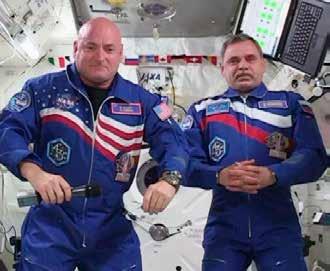
wikipedia.org
ground. It helps us move around. In space, there is almost no gravity. That’s why things — and people — float around. It might seem like fun, but it causes a lot of problems for astronauts.
On Earth, gravity makes our muscles and bones work well. Standing, walking, and even
sitting help keep our bodies strong. When muscles and bones don’t have to work, they get weaker. In space, astronauts don’t use their muscles and bones too much. This makes their bodies weak. When they return to Earth, it’s hard for them to stand and walk.
In 2015, Scott Kelly spent almost a year in space. When he came back to Earth, his legs were weak and wobbly.
“I had to relearn how to walk,” he said.
To keep their bodies strong, astronauts exercise every day. They use treadmills with straps to hold them down so they don’t float away. They also use machines that let them push and pull. It’s almost like lifting weights on Earth. These exercises keep their muscles and bones strong. Exercise is so important that astronauts spend two hours exercising every day.
On Earth, gravity pulls blood and other fluids in our bodies toward our feet. When there is no gravity, these fluids float upward. They travel to the upper part of the body and
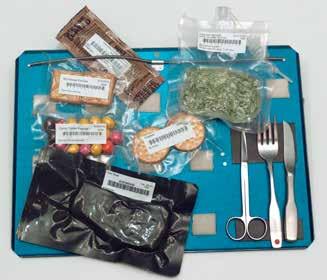

the head. This causes astronauts’ faces to look puffy. They may get headaches or feel pressure in their heads.
“In space, my face looked like a balloon,” an astronaut said.
To stop this from happening, astronauts wear special belts or suits. These squeeze the lower part of their body and push fluids back to their legs. This helps lessen the pressure in their heads. Back on Earth, doctors watch the astronauts carefully. If someone gets a headache or feels dizzy, the doctors might change their exercises. They might tell them to drink more fluids. That helps the astronauts feel better.
The inner ear is an important part of the body. It tells the brain which way is up and which way is down. When there is no gravity, the inner ear sends confusing signals. This can make astronauts feel dizzy or sick.

“I felt so dizzy that I couldn’t even write a

report,” one astronaut said. It was his first day in space. “The words looked like they were swimming off the page!”
When astronauts travel to space, they spend the first few days doing small tasks. This helps their bodies get used to no gravity. Some astronauts take medicine, like people on Earth who get motion sickness. That way, astronauts can do their jobs.
It’s hard to be far from home. Astronauts may be away from home for months. They also have to live in a very small space. This might make them feel lonely and worried.
To help astronauts feel better, they follow schedules. Their days include work, exercise, and fun activities like reading. They also speak to family members back on Earth. Many

astronauts like to look out the window at Earth. This helps them feel calm and happy.
“It’s the most peaceful and beautiful view anyone could ask for,” said an astronaut.
Even simple things, like eating and sleeping, are hard to do in space. Without gravity, food
and drinks float away. Sleeping feels strange when there is no way to lie down.
Astronauts eat food that is packaged in a special way. This stops crumbs and spills. Drinks come in pouches with straws. When it’s time to go to sleep, astronauts zip themselves into sleeping bags. These are attached to the walls or ceilings. This keeps them from floating around while they rest.
After months in space, it’s hard to return to Earth. Many astronauts feel wobbly when they take their first steps on the ground. Back on Earth, astronauts work with trainers and doctors. They do special exercises to rebuild their strength. With time, their bodies recover. Now, they can return to normal life. And they can appreciate gravity like they never did before.
Use the graphic organizer to list some of the problems and solutions of weightlessness in outer space.
Problems
Solutions
Answer the question.
How do you know that this passage was written with the problem solution text structure?
The comparison text structure compares one thing to a different thing. It tells how they are similar and how they are different.
Using the comparison structure, write a paragraph comparing life with gravity to life without gravity.
1. Plan. Use the Venn diagram to compare and contrast life with and without gravity.
2. Topic Sentence. Write the things you are comparing and say that they are different.
3. Body Sentences. Use compare and contrast words to say how they are the same and different.
4. Concluding Sentence. Write an opinion you have about gravity.
5. Paragraph. Write a paragraph.
PRACTICE VOCABULARY STORY REVIEW ACTIVITY ASSESSMENT
Draw a picture of the things astronauts need to help them in space. Think about what would help them stay safe, breathe, eat, and move around. You can draw real things or make up your own creative ideas!
Circle the correct answer.
1. How can you show that you appreciate someone?
a. Say thank you
b. Ignore them
c. Ask them for help
d. Talk about them
2. Which word means a bag or sack, often used to hold or carry something?
a. Signals
b. Wrench
c. Pouch
d. Tasks
3. A to-do list helps me organize my daily .
a. signals
b. wrenches
c. fluids
d. tasks
4. Which of the following is not a fluid?
a. Water
b. Soda
c. Blood
d. Wood
5. Which word means a tool used to turn or hold objects?
a. Pouch
b. Wrench
c. Pressure
d. Signals
6. Which word means a force put on something else?
a. Pressure
b. Simple
c. Signals
d. Tasks
7. The instructions for this game are very .
a. fluids
b. pouch
c. simple
d. pressure
8. Traffic lights give to drivers that tell them when to go.
a. signals
b. pouch
c. fluids
d. pressure
Circle the correct answer.
1. Which of the following is NOT a problem astronauts face in space? (detail)
a. Weak muscles and bones
b. Difficulty sleeping
c. Too much gravity
d. Space sickness
2. What is the cause of space sickness? (cause and effect)
a. No gravity, which affects the inner ear
b. Bad food
c. Extreme temperatures in outer space
d. The stress of being so far from home
3. Based on the passage, which statement about gravity is most likely true? (inferencing)
a. Humans can survive a long time without gravity.
b. Humans cannot survive without gravity.
c. Gravity does not affect health.
d. Humans need gravity to walk but not for anything else.
4. What is the main topic of this passage? (main idea)
a. The challenges of living on the moon
b. The dangers of space travel
c. The effects of weightlessness on the human body
d. The history of space exploration
5. How is this passage structured? (sequencing)
a. It tells a story of an astronaut who went to space.
b. It compares living with gravity to living without gravity.
c. It lists the problems of living without gravity and the solutions.
d. It explains why there is no gravity in outer space.

6. In the sentence "It might seem like fun, but it causes a lot of problems for astronauts," what does the word "causes" mean? (context clues)
a. Prevents
b. Creates
c. Solves
d. Improves
7. How does the experience of eating in space compare to eating on Earth? (compare-contrast)
a. Eating is easier in space.
b. Eating needs special equipment in space.
c. There is no difference.
d. Astronauts cannot eat in space.
8. Which of the following statements is an opinion? (fact vs. opinion)
a. Astronauts exercise two hours every day in space.
b. Space travel is an exciting adventure.
c. Gravity pulls blood and other fluids toward the feet.
d. Astronauts may have headaches in space.
Standards:
Lesson- 4.RL.6
Comprehension Skill Review- 4.RI.5
Unit 4: Point of View
Lesson 13: Point of View
Author: A. Isaacs Genre: Fiction
Analyze point of view and perspective of the narrator and/or the author.
Compare and contrast first and third person point of views.
1. Learn about point of view.
2. Practice identifying each point of view.
3. Complete the vocabulary worksheet.
1. As you read, think about the meaning of specific words or phrases.
2. Each section is written from a different point of view. Think about how this changes the way events are told.
1. Complete the comprehension activity to identify and describe each point of view in the story.
2. Review "Cause and Effect Text Structure." Complete the activity.
3. Complete the project.
4. Check your progress by taking the assessment.
Today, we're going to talk about point of view. Point of view is the way a story is told. Stories can sound very different, depending on who's telling them! A story can be told in first person or in third person.
First Person:
The voice telling the story is a character in the story.
The voice telling the story is not a character in the story. 1. 2.
Third Person:
This is Ben, and he is 10 years old. Today, Ben’s teacher asked him to help out during recess. Ben was so excited! Hi! My name is Ben, and I am 10 years old. Today, my teacher asked me to help him during recess. I was so excited!
Ben is telling the story. He uses words like I, my, me, we, or us
An unknown voice is telling the story. It uses words like she, her, he, him, they, or them
Read each sentence. Circle the point of view it is written in.
1. The dog wagged its tail, barking with joy at the sight of its owner.
2. I raced down the street, my heart pounding with excitement.
3. He gasped as the roller coaster raced down the steep track.
4. My knees shook as I looked over the edge of the cliff.
5. The old tree creaked in the wind, its branches reaching to the sky.
6. We laughed until our sides hurt, tears running down our faces.
7. I couldn't believe my eyes when I saw the giant panda eating bamboo.
8. They stood together under the umbrella, trying to stay dry.
First Person Third Person
First Person Third Person
First Person Third Person
First Person Third Person
First Person Third Person
First Person Third Person
First Person Third Person
First Person Third Person

dart [dart]; flee [flee]; dodging [DAHJ-ing]; fearfully [FEER-fuhl-lee]; leap [leep]; silence [SY-lens]; pride [pride]; rustle [RUH-suhl] 1. 2. 3. 4. 5. 6. 7. 8. LESSON PRACTICE
STORY REVIEW ACTIVITY ASSESSMENT
Match the bolded words with their definitions. Highlight context clues.
I saw a mouse dart across the kitchen so quickly that I almost missed it.
They were forced to flee their country to escape the war.
He kept dodging the ball, moving to the side to stay safe.
She stepped back fearfully when the dog barked loudly.
He took a huge leap over the puddle to keep his shoes dry.
There was silence in the room when the teacher walked in.
She smiled with pride after finishing her project all by herself.
There was a rustle in the bushes, and then a squirrel ran out. run away from danger move suddenly and quickly the feeling of being proud of yourself or someone else moving suddenly to get away from something soft crackling sound a high or far jump in a scared or worried way complete quiet
Author: A. Isaacs Genre: Fiction
Did your heart ever race, and you weren’t sure what would happen next? In this story, something big is happening—but we don’t know exactly what. All we know is that someone—or something—is on the run. There are loud noises, giant shadows, and a mystery waiting to unfold. Who is telling the story? What’s really going on? You won’t want to stop reading this story until the very end!
When I wake up, the first thing I notice is the ground shaking beneath me.
A giant shadow moves across the sky. Bright light spills through as the shadow changes shape. I stand up quickly. Something is wrong. I need to get moving.
But where am I? There’s a strange smell. Everything around me is huge. Walls rise up like mountains. The ground is smooth and cold beneath my feet.
Boom!
The ground shakes. My eyes dart all around. I know, even without being told, that I need to hide.
"Where is it?!" a deep voice shouts. I freeze. I can’t move. I can’t breathe. Who is that?


I try to run, but my legs feel like jelly. My body is tight with fear. All around me are tall, strange objects. I feel like I'm lost in a maze. A gust of wind slaps my back. Above me, the shape moves. It’s big and dark. Finally! I see something wide and flat. I bend down very low and crawl under it. I don’t dare to move.
"Where did it go?!" a voice shouts.
The ground shakes. The walls tremble. I stand very still. I won’t leave until I know it's safe.
And so I wait.
One second.
Two seconds.
Three seconds.
Light floods my hiding place. A shadow rises over me.
"There it is!"

My heart pounds. The world tilts as the giant shape moves. I see a huge hand zooming toward me.
I look around in all directions, then break into a run.
I run faster than I’ve ever run before. My legs barely touch the ground as I flee from the shadow.
A giant wall appears in front of me. I turn sharply, barely missing it. I must get away. Something slams into the ground behind me.
pride
And then a shadow falls over me.
I shake with fear.
Boom!
I turn left, then right, dodging the shadows that try to grab me.
The space ahead is wide and open. If I can just reach the other side, I might be free.
The world turns dark. Fearfully, I look up.
A giant hand is right on top of me.
I take a huge leap. The ground disappears. I’m flying, flying, flying…
Then…
Crash!
A loud cry fills the air. The world shakes. And then—silence I stand very still. I don’t move. I barely breathe. Am I safe?
I take a step forward, and then another one.
No. Not again. Another shout.
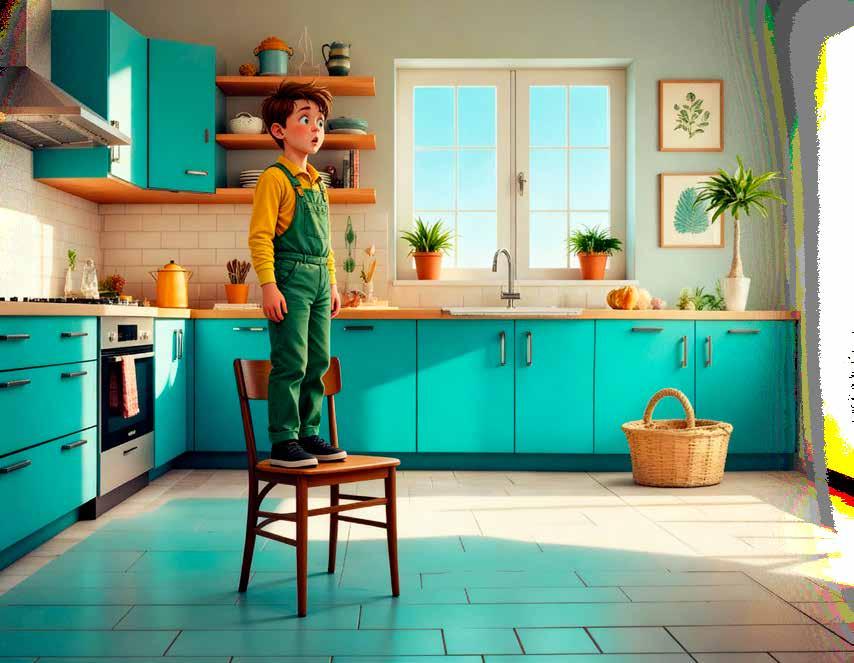
Across the kitchen, Eddie stood on top of a chair. His arms were spread wide like he was about to take off.
"I SAW IT!" he shouted.
"I know, Eddie," Marcus muttered. "I can see it, too."
"It’s still alive!” Eddie cried.
Marcus shook his head. “It’s just a bug. It’s not going to hurt you.”
"It’s a huge bug," Eddie said. “Maybe it’s dangerous.”
Marcus leaned over the counter. The bug
had spent the past ten minutes zooming all over the kitchen. It was fast. Somehow, it managed to escape every single time he tried to trap it.
"I’m going to get it!" Marcus said, waving his hand.
Eddie looked on fearfully. "Be careful."
Marcus raised his hand. The bug ran under a box. Eddie covered his eyes.
Marcus swung his hand.
Whack!
Eddie peeked through his fingers. "Did you get it?"
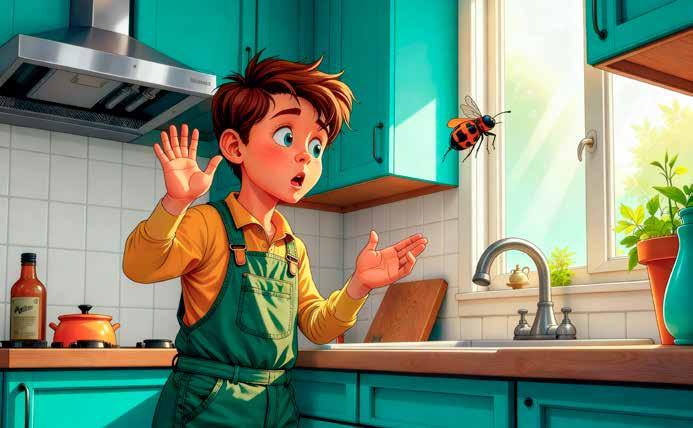
Marcus lifted his hand. The bug was gone.
Marcus blinked. "Where—"
"Marcus, it’s on you!" Eddie shouted.
Marcus froze.
For a second, neither of them moved. Then—
Eddie leaped off the chair.
Marcus jumped back, shaking his arms wildly. "Where?! Where is it?!"
Eddie ran around in circles. "It’s on your shirt!”
“Eew!” Marcus cried. “Get it off!”
"Stop moving! I can’t help you if you’re moving!”
Marcus shook out his shirt as he danced around.
"Did you get it?!" Eddie asked.
Marcus looked down. He didn’t see any bugs.
Eddie stared at him. Marcus stared back.
Then they both heard it.
A soft rustle. A quiet scritch-scratch.
And then—
Eddie’s eyes grew very big. He pointed a wobbly finger at Marcus’s foot.
Marcus looked down. The bug was sitting on his sneaker.
For a second, no one moved. Then—
The shouting started again.
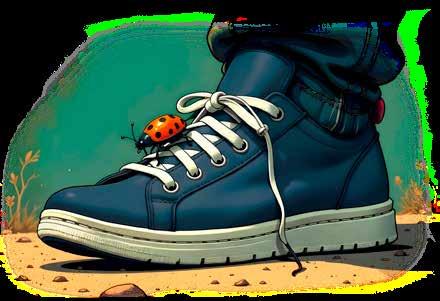
Reread this excerpt from “The Great Escape.” Circle the words that tell you this section of the story is written in the first person point of view.
Itry to run, but my legs feel like jelly. My body is tight with fear. All around me are tall, strange objects. I feel like I'm lost in a maze. A gust of wind slaps my back. Above me, the shape moves. It’s big and dark.
Reread this excerpt from “The Great Escape.” Circle the words that tell you this section of the story is written in the third person point of view.
Across the kitchen, Eddie stood on top of a chair. His arms were spread wide like he was about to take off.
"I SAW IT!" he shouted.
"I know, Eddie," Marcus muttered. "I can see it, too."
"It’s still alive!” Eddie cried.
Marcus shook his head. “It’s just a bug. It’s not going to hurt you.”
Answer the questions.
1. Who is telling the story in the first part?
2. How did reading the second part help you understand part 1 better?
3. Which part did you enjoy reading the most? Why do you think you liked it best?
The cause and effect text structure tells about something that happened (cause) and what happened as a result (effect). It uses words like changed, result, because, and so.
Write a cause and effect paragraph explaining what happened because there was a bug in the kitchen.
1. Plan. Write the cause and at least three effects.
2. Topic Sentence. Write the cause.
3. Body Sentences. Tell the effects.
4. Concluding Sentence. Write a lesson or opinion.
5. Paragraph. Write a paragraph.
Pretend you’re the bug in “The Great Escape.” Everything is big and scary!
Draw a picture of what the bug sees. You can include:
→ Giant people
→ Hiding spots
→ Big objects in the kitchen
Bonus Challenge: Add speech or thought bubbles to show what the bug is thinking!
Circle the correct answer.
1. I watched the cat over the arm of the couch.
a. leap
b. rustle
c. flee
d. dart
2. Which is an example of something that would make someone feel pride?
a. Slipping on a banana
b. Being mean to another person
c. Winning an award
d. Eating ice cream
3. Which word means a small, crackling sound?
a. Silence
b. Dodging
c. Rustle
d. Flee
4. Our teacher asked for so that everyone could concentrate during the test.
a. pride
b. dodging
c. silence
d. leap
5. Which word means moving suddenly to avoid something?
a. Leaping
b. Rustle
c. Silence
d. Dodging
6. When would someone need to flee?
a. If they are in the path of a wildfire
b. If they are hungry
c. If they are tired
d. If they are in a swimming pool
7. Which word means to move suddenly and quickly?
a. Fearfully
b. Rustle
c. Pride
d. Dart
8. He looked around in the dark room.
a. dodging
b. fearfully
c. silence
d. pride
Circle the correct answer.
1. In the first person section of the story, what is the first thing the narrator notices when waking up? (detail)
a. A hand
b. The ground shaking
c. A shadow
d. A bug
2. What causes the narrator in the first section to run faster than he’s ever run before? (cause and effect)
a. A bug
b. He is trying to win a race.
c. Thunder
d. A scary shadow is after him.
3. What do you think the “giant hand” and “giant shadow” in the first part of the story most likely belong to? (inferencing)
a. A large animal
b. A monster
c. A human
d. A machine
4. What is the main idea of the third person part of the story? (main idea)
a. Eddie and Marcus are trying to catch a huge bug.
b. Marcus is a bug that is very scared.
c. Bugs can be dangerous.
d. You should not use a box to try to catch a bug.

5. In the third person section of the story, where did Marcus and Eddie see the bug after it was under the box? (sequencing)
a. On Marcus’s shirt
b. Zooming around the kitchen
c. In the sink
d. On Eddie’s sneaker
6. What does “wobbly” mean in the sentence, “Eddie’s eyes grew very big. He pointed a wobbly finger at Marcus’s foot.”? (context clues)
a. Long
b. Short
c. Shaky
d. Skinny
7. How does the “threat” facing the bug compare to the “threat” facing Marcus? (compare-contrast)
a. Both threats are from another bug.
b. The bug faces a life-threatening giant, while Marcus faces a bothersome bug.
c. Both threats are not real.
d. The bug faces a smaller threat than Marcus.
8. Which thing that Eddie says about the bug is an opinion? (fact vs. opinion)
a. “It’s still alive!”
b. “Maybe it’s dangerous.”
c. “Marcus, it’s on you!”
d. “It’s on your shirt.”
Unit 4: Point of View
Lesson 14: Firsthand and Secondhand Accounts
Author: Tessa Barber Genre: Non-fiction
Standards: Lesson- 4.RI.6
Comprehension Skill Review- 4.RI.5
Unit Goal
Analyze point of view and perspective of the narrator and/or the author.
Lesson Focus
Compare firsthand and secondhand accounts of the same event.
1. Learn about firsthand and secondhand accounts.
2. Practice identifying the type of account and describing its focus.
3. Complete the vocabulary worksheet.
1. As you read, think about the meaning of specific words or phrases.
2. Think about the differences between each passage.
1. Complete the comprehension activity to compare and contrast a firsthand and secondhand account.
2. Review "Problem/Solution Text Structure." Complete the activity.
3. Complete the project.
4. Check your progress by taking the assessment.
PRACTICE VOCABULARY STORY REVIEW ACTIVITY ASSESSMENT
Now that we know all about point of view, let’s take the next step and learn about firsthand and secondhand accounts!
Firsthand Account:
The person who tells the account was actually there.
This account is told by someone who saw the fire. It is written in first person.
We still don’t know what caused the fire. "We're thankful no one was hurt," said Fire Chief Davis. "The firefighters did an excellent job of bringing the fire under control."
An account is a report or story about something that really happened. There are two types of accounts, firsthand accounts and secondhand accounts. quickly arrived and were able to put out the blaze.
Dear Diary,
On my way home from school, I saw smoke coming from the bakery. I quickly called 911, but it took so long for them to come! Flames were shooting out the windows! Finally, fire trucks came racing down the street. It was scary! I hope everyone is okay.
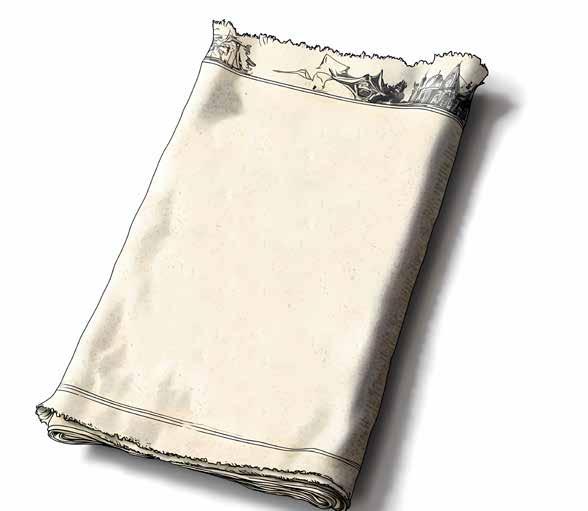
The person who tells the account was not actually there. 1. 2.
Secondhand Account:
This account is told by someone who heard about the fire from other people. It is written in third person.
Read both passages. Then, choose which passage the statement best applies to.
Passage 1
By: M. Smith
Two brothers named Orville and Wilbur Wright changed the world. They invented the airplane! The Wright brothers studied birds, kites, and gliders. They learned how things moved through the air. Finally, they created a machine with an engine that could fly. They called it the Flyer. Thanks to the Wright brothers, we now have airplanes that can take us anywhere in the world. We can visit family far away, explore new countries, and move things quickly across long distances. The invention of the airplane made the world a smaller place!
APassage 2
By: Orville Wright (with changes)
fter running the motor for a few minutes, I let go of the wire. The machine moved forward into the wind. Wilbur ran beside it, holding the wing, and stayed with it until it lifted off the track. One of the men took a picture just as the machine rose about two feet in the air. The flight was shaky and only lasted twelve seconds. But it was the first time in history that a machine with a person on board lifted into the air on its own, flew forward, and landed at the same height it started from.
1. This passage is a firsthand account.
2. This passage is a secondhand account.
3. This passage tells how the airplane changed the world.
4. This passage tells what it was like when the airplane flew for the first time.
Passage 1
Passage 1
Passage 1
Passage 1
Passage 2
Passage 2
Passage 2
Passage 2
LESSON PRACTICE VOCABULARY STORY REVIEW ACTIVITY ASSESSMENT
Match the bolded words with their definitions. Highlight context clues.
The conductor of the band raised his stick, and the music began.
conductor [kun-DUK-ter]; routes [roots]; arrangements [uh-RAYNJ-ments]; expect [ek-SPEKT]; defend [dih-FEND]; recently [REE-sent-lee]; mission [MISH-un]; succeed [suk-SEED] 1. 2. 3. 4. 5. 6. 7. 8.
believe that something will happen
This bus has different routes to pick up students from different areas.
My mother made the arrangements for a family party.
I expect to get a good grade on my spelling test if I study hard.
The cat tried to defend itself from the barking dog.
I didn’t always know how to ride a bike, but I learned recently.
The astronauts went on a mission to explore space.
If you work hard you will succeed in reaching your goal.
do well or reach a goal
not long ago
protect someone or something someone who leads a group plans or preparations for something an important job or goal paths or ways to get from one place to another

Harriet Tubman was born a slave, but she never stopped hoping for freedom. When she finally escaped, she didn’t just stay safe—she went back to help other slaves. The Underground Railroad was a secret way for slaves to escape, but it was very dangerous. People were searching for Harriet, and the slaves she helped had to hide and travel at night. Harriet was brave, smart, and never gave up. How did she lead so many people to freedom?
Author: Tessa Barber Genre: Non-fiction

Harriet Tubman was born as a slave. She worked on a type of farm called a plantation. Even when she was a young child, she had to work. She took care of things in the house.
When she was older, she had to work in the fields. It was hard, painful work. The days were very long. The people she worked for were cruel and treated her badly.
For twenty years, Harriet was a slave. She dreamed of being free. She dreamed of a life where she didn’t have to do what other people wanted.
One dark night, Harriet escaped from the plantation. It was dangerous for slaves to run away. If they were caught, they could be whipped. They might get even worse punishments.

Harriet was scared, but she could no longer live as a slave. She looked up at the sky. She saw the North Star. In the North, there were no slaves. There, she could be free. Harriet followed the star and kept walking north.
She hid in forests and walked through rivers. After a long and dangerous journey, she reached Pennsylvania. Finally, she was free!
Harriet thought of the slaves she had left behind. She wanted to help them. She decided to return to the South. She would help other slaves escape. This was very dangerous, but Harriet was brave.
Harriet became a conductor on the Underground Railroad. This wasn’t a real railroad with trains. It was a way for slaves to escape without their masters following them. There were houses along the way where people could hide. They could eat and rest there, too. These houses were called “safe houses.”
Harriet led escaped slaves through
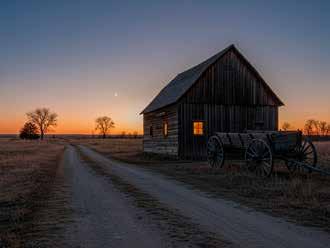
dangerous routes. They traveled at night so people wouldn’t see them. They walked many miles through forests and swamps. It would be dangerous if they were heard. They could not make a noise.
These people trusted Harriet to keep them safe. She used songs as secret signals. These songs had codes that told slaves if it was safe to keep moving or if they should hide.

Every time Harriet returned to the South, she risked her life. Slave owners were very angry that she was helping their slaves escape. They promised large rewards to anyone who caught her.
But Harriet was clever and fearless. She had many different tricks to stay safe. Sometimes, she dressed like an old woman. She wore a bonnet, shawl, and sometimes held a cane. No one thought this “old lady” was the leader of a secret escape route. Other times, she dressed up in men’s clothing. She wore a big hat to cover her face. No one could tell who she really was.
Part of Harriet’s job was keeping the escaped slaves safe. Once, an escaped slave
was scared. He wanted to turn back.
“It’s too dangerous,” Harriet said. The group kept going, and they made it to freedom.
Harriet didn’t work alone. The Underground Railroad had many helpers. Kind people gave food, clothing, and places to hide along the way. Over the years, Harriet made thirteen trips on the Underground Railroad. She helped more than seventy people escape from slavery.
Someone once asked Harriet, “Aren’t you afraid of being caught?”
“I never ran my train off the track,” Harriet said. “And I never lost a passenger.”
Harriet Tubman helped many people lead better lives. She often said, “Every great dream begins with a dreamer.”
The following letters* were written by Thomas Garrett. He worked with Harriet Tubman and was known as a "stationmaster" on the Underground Railroad.

Wilmington, December 29, 1854
Dear Friend J. Miller McKim,
Last night, we made arrangements for Harriet Tubman to continue her journey with seven people. They have gone to Allen Agnew’s, where they will be led across the countryside toward the city.
Harriet and one of the people had worn their shoes off their feet from walking. I gave them two dollars to help them buy new shoes. I also arranged for a carriage to take them part of the way. I will pay for it, though I do not yet know the total cost.
Right now, I have two more people who have traveled over one hundred miles from the lowest county in Maryland. I will try to have one of our trusted men take them tomorrow morning to the Anti-Slavery Office. They can be sent forward safely.
Your Friend, Thomas Garrett
*Adapted and simplified from The Underground Railroad by William Still, 1872
Wilmington, April 1, 1857
Dear Friend,
I was so glad to hear that Harriet Tubman is still healthy and ready for action. But right now, it is more dangerous than before because eight slaves escaped. There is a lot of excitement over that.
I was very sorry to hear about the poor man who risked so much for his freedom. When you last told me about him, I had hoped he would eventually get better.
Your Friend, Thomas Garrett

Wilmington, March 27, 1857
Dear Friend,
I have been very worried about Harriet Tubman. The last I heard, she was in New York, traveling to Canada with some friends last fall. Have you seen or heard any news about her?
It would be sad if such a hero were lost from the Underground Railroad. I recently received a letter from Ireland asking about her. I would like to be able to send back news.
If you get this letter in time and know anything about Harriet, please write back as soon as possible. I will get your message by the next morning.
Wilmington, May 11, 1856
Dear Friends,
As for the four people I wrote to you about earlier, they arrived safely. Harriet Tubman followed yesterday in a carriage. I expect five more to arrive from the same area on the next trip. Also, Captain Lambdin would like books from Southern leaders that have strong arguments against slavery. He wants to defend himself, as he doesn’t think his lawyer will help him. If possible, could you send him something useful? His friends fear he will be sent to prison. Now they will not allow anyone except his lawyer to see him.
As always, your friend, Thomas Garrett



Wilmington, December 1, 1860
Dear Friend,
I am writing to let you know that Harriet Tubman is once again in these parts. She arrived last evening from one of her trips of kindness. This time, she brought two men with her as far as New Castle.
I paid a man to bring them to Chester County. One of the men has a wife and children who are still thirty miles behind. I gave Harriet ten dollars to hire a man with a carriage to bring them safely to Chester County.
I will be worried until I know they are safe. The trip is even more dangerous now because there are wicked people watching the roads. They are hoping to catch escaping slaves. It is especially risky when using a carriage, as it is harder to hide.
However, Harriet has always seemed protected on her mission of kindness. I hope that she will succeed again.
Your
Friend, Thomas Garrett


P.S. I hope everyone will arrive safely in Chester County tomorrow.
LESSON PRACTICE VOCABULARY STORY REVIEW ACTIVITY ASSESSMENT
Match each description to the correct account.
Firsthand account
Secondhand account
Written by someone who was there
Written by someone who wasn’t there
Written in third person
Written in first person
Focuses on the big picture
Focuses on the day-to-day details
Talks about Harriet Tubman’s life
Talks about specific things
Harriet Tubman did
Tells just part of the story
Tells the whole story
Harriet Tubman and the Underground Railroad
Thomas Garrett’s Letters
Harriet Tubman and the Underground Railroad
Thomas Garrett’s Letters
Harriet Tubman and the Underground Railroad
Thomas Garrett’s Letters
Harriet Tubman and the Underground Railroad
Thomas Garrett’s Letters
Harriet Tubman and the Underground Railroad
Thomas Garrett’s Letters
Harriet Tubman and the Underground Railroad
Thomas Garrett’s Letters
The problem-solution text structure tells about a problem and its solutions.
Using the problem/solution structure, write a paragraph explaining Harriet Tubman’s problem and what she did to solve it.
1. Plan. Use the graphic organizer to sort the problems and solutions.
1: 2: 3:
2. Topic Sentence. Write who had a problem and what it was.
3. Complete the outline. Use your answers from step one to finish the body sentences. 1: 2: 3:
4. Concluding Sentence. Write a lesson we can learn from Harriet Tubman.
5. Paragraph. Write a paragraph.
Create a map!
Imagine where different safe houses may have been along the route to the North. Create a map showing forests, rivers, and other dangers. Add in different safe houses along the way.

Circle the correct answer.
1. Which is not an example of a conductor?
a. A leader of a group
b. A chef
c. The driver of a train
d. A band leader
2. There are many different to get to school.
a. routes
b. defend
c. recently
d. succeed
3. Which word means plans or preparations for something?
a. Defend
b. Expect
c. Arrangements
d. Recently
4. I my friend to come to my graduation.
a. expect
b. succeed
c. arrangements
d. routes
5. Which is an example of defending something?
a. Sharing toys
b. Helping a friend
c. Standing up to a bully
d. Doing homework
6. Which word means not long ago?
a. Mission
b. Recently
c. Succeed
d. Expect
7. Which word means an important job or goal?
a. Mission
b. Succeed
c. Expect
d. Defend
8. If you study hard, you will in school.
a. arrangements
b. mission
c. routes
d. succeed
Circle the correct answer.
1. What did Harriet Tubman use to guide her escape to freedom? (detail)
a. A map
b. The sun
c. The North Star
d. The moon
2. What was the effect of Harriet Tubman's work for the Underground Railroad? (cause and effect)
a. It made plantation owners richer.
b. It helped over seventy slaves escape to freedom.
c. It started a war between the North and South.
d. It caused more slaves to be captured.
3. Why do you think Thomas Garrett wrote letters to J. Miller McKim? (inferencing)
a. To complain about his problems
b. To ask for money
c. To discuss the Underground Railroad and Harriet Tubman's activities
d. To gossip about other people
4. What is the overall message of the story? (main idea)
a. It is important to be brave and help others.
b. Slaves should have stayed on the plantations.
c. It is dangerous to travel at night.
d. The North Star is a beautiful sight.
5. What did Harriet Tubman do after reaching freedom? (sequencing)
a. She stayed in Pennsylvania.
b. She returned to the South to help others.
c. She moved to Canada.
d. She started a new life.

6. What does the word "cruel" mean in the sentence "The people she worked for were cruel and treated her badly"? (context clues)
a. Kind
b. Mean
c. Hardworking
d. Happy
7. How was the Underground Railroad similar to a real railroad? (compare-contrast)
a. It had trains and tracks.
b. It helped people get to new places.
c. It was paid for with a ticket.
d. It was underground.
8. Which of the following is a fact? (fact vs. opinion)
a. Harriet Tubman was a brave woman.
b. Harriet Tubman helped slaves escape.
c. Harriet Tubman was the best conductor of the Underground Railroad.
d. Harriet Tubman was a hero.
Standards: Lesson- 4.RI.8
Comprehension Skill Review- 4.RI.2
Unit 4: Point of View
Lesson 15: Persuasive Writing
Author: R. Samson Genre: Persuasive
Analyze point of view and perspective of the narrator and/or the author.
Explain how reasons and evidence support points in the text.
1. Learn about the parts of persuasive writing.
2. Practice identifying arguments, reasons, and evidence.
3. Complete the vocabulary worksheet.
1. As you read, think about the meaning of specific words or phrases.
2. Think about the reasons and evidence the author brings to support his argument.
1. Complete the comprehension activity to find supporting reasons and evidence.
2. Review “Summaries.” Complete the activity.
3. Complete the project.
4. Check your progress by taking the assessment.
Sometimes, authors share their opinions when they write. They try to get others to agree with them. They give reasons and use facts to convince the reader to agree with their opinion. This kind of writing is called persuasive writing.
A persuasive text has three parts: the argument, the reasons, and the evidence
Argument: The main opinion the author wants the reader to agree with 1.

Reasons: Explanations that tell why the argument is true or important 2.
Evidence: Facts or examples used to support the reasons 3.
Studies show that recess helps kids
to have better memories and attention.
Read each argument. Match it to the reasons and evidence that can support it.
Reasons and evidence Argument
Playing an instrument helps with focus and memory.
Spending time outside can help you stay calm. Doing jobs at home helps teach responsibility.
Fresh air and sunlight are good for your mood, and playing outside helps you stay healthy and strong. Plus, being in nature helps you feel relaxed and less stressed.
Learning songs and rhythms is a fun way to show your feelings. Research shows that children who learn music get better at remembering things, paying attention, and focusing.
When you help at home, you make life easier for everyone in your family. It also helps you learn how to use your time, work hard, and feel proud of yourself.
Read the following passage. Then, answer the question.
Gardening is more than just growing plants—it’s fun and good for you!
Taking care of a garden teaches you to be patient and responsible, which helps you stay focused on goals. It also keeps you active and makes you feel proud when your plants grow. Plus, you can be creative by planting colorful flowers or tasty vegetables. So grab a shovel and start gardening!
What are three reasons or evidence the author gives to convince the reader to try gardening?
Match the bolded words with their definitions. Highlight context clues.
You can do more than one activity after school, such as playing the piano or reading.
He read his story to the class with confidence, he wasn't even nervous.
The students had to perform the song in front of the whole school.
I try very hard to write neatly to improve my handwriting.
There was so much noise, it was hard to focus on the teacher’s instructions and follow the steps correctly.
Josh built a robot out of old boxes; he is very creative!
The little girl jumped up and down to express her excitement.
believing in yourself make better difficulties something that you do for fun or learning using your imagination to make something new or in a new way show or tell someone how you feel pay close attention do or act activity [ac-tiv-i-tee]; confidence [kohn-fah-dens]; perform [per-form]; improve [im-pruv]; focus [fo-kus]; creative [kree-ay-tiv]; express [ex-press]; challenges [chal-en-jes]
There were so many challenges during our trip, like the rain and strong wind.
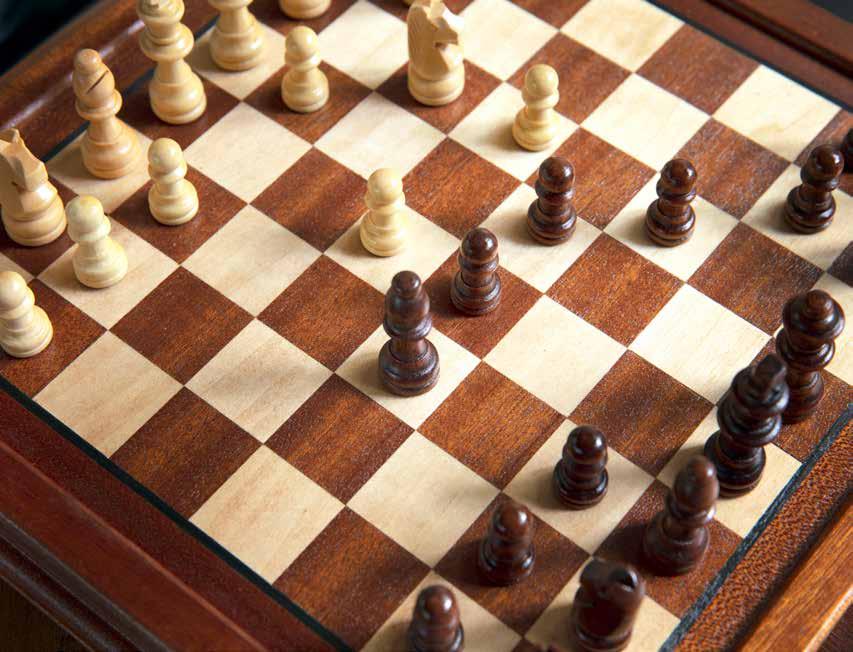
Author: R. Samson Genre: Persuasive
Everyone needs something they enjoy—something fun to do outside of school. That’s where hobbies come in! A hobby can be anything you like doing again and again, just because it makes you happy. But did you know a hobby can do more than just pass the time? Why are hobbies so important? And how can something fun help you in other parts of your life?

Did you know that having a hobby can make your life happier, healthier, and more exciting? A hobby is a fun activity that you do outside of school or work. It could be learning an instrument or doing a craft. It could also be something completely different! Whichever activity you’re interested in, there are lots of great reasons to have a hobby.
Hobbies help you relax. When you play a game or do an activity, you stop worrying about your problems. When you're painting, gardening, or just doing something you enjoy, you start to feel calmer and happier.
When you have a hobby that you love, your brain sends out lots of happy feelings. This helps feelings of sadness or worry go away. You

will smile, laugh, and feel good! It’s a great way to forget any troubles and enjoy life.
Hobbies that keep your body moving are great for your health. Hobbies like biking, dancing, swimming, or hiking keep your
body healthy and strong. They’re lots of fun, too! When you’re moving, your heart starts pumping! Then, your brain starts to send more of those happy feelings to all parts of your body.
Not only will your body grow stronger, but your mind will grow stronger, too! Learning a new hobby can give you lots of confidence You’ll feel proud about what you've done with your new hobby. This can help you feel less shy in class and other places. Maybe you’ll speak a bit louder or answer more questions. You might perform your new hobby in front of other people.
Some hobbies exercise your body. But did you know that all hobbies exercise your brain?
You may like doing puzzles, playing chess or ball, painting, or reading. All these activities will improve your memory, problem-solving skills, and ability to focus
Many hobbies can make you more creative. Think of drawing, cooking, writing, or playing an instrument. You can learn to express yourself in new ways. Even gardening can make you more creative. You have to decide what seeds to plant and learn how to take care of them.
Hobbies help you learn something new. Whether you’re playing an instrument, knitting, or woodworking, you're always getting better. You can set new challenges for yourself and have fun trying something new. There are always new things to learn!

Did you ever have a hard day at school? Maybe you felt that nothing went right. When you have a hobby, you have something fun to come home to. This can make your day so much better.
Having a hobby is also a great way to meet people. If you start a hobby that you find interesting, you might meet lots of people who feel the same way. If you join a volunteer group, you will learn how to be part of a team. You will learn how to help others and make new friends along the way.
So, whether you’re playing the piano, baking cookies, or going swimming, you are making your life better in so many ways! Which hobby is the right one for you?
My name is Avi, and I started playing guitar two years ago. My older brothers play instruments, and I wanted to learn how to play one, too. When I told my father that I wanted to play the guitar, he asked my cousin to teach me.
Playing the guitar might look easy, but it was really hard to learn! My fingers hurt from pressing on the strings. I also had to learn how to use a pick. This is a small tool that’s used to pluck the strings. Now that I’ve gotten better at playing the guitar, I don’t always use it.
Even though the beginning was hard, I kept practicing and playing. Now, playing guitar is one of my favorite things to do. It helps me relax, and I really enjoy it! I even play the guitar at parties in school and in camp. I used to get stage fright when I played the guitar in public.
It was really scary to see so many people watching me! But once I start to play, I don't notice the crowd. I just think about my music and enjoy every second.
I’m so happy that I chose to play the guitar as a hobby. I’ve learned to be more patient, and it’s made me so much more confident. It’s also a great way to relax after a long day. Playing the guitar might not be for everyone, but everyone can find a hobby that works for them!
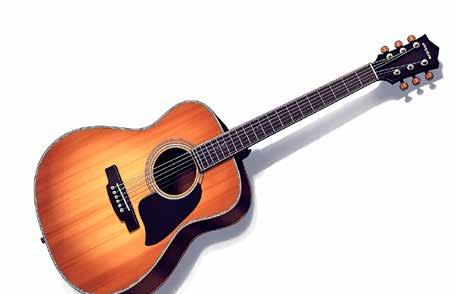
Let’s talk with 10-year-old Goldy, who started a new hobby a few months ago.
Hi, Goldy! Can you tell us about your hobby?
Sure! About four months ago, I was feeling bored on a Sunday. Actually, I’m usually bored on Sundays! I decided that I wanted to try something new. My mother heard about a crochet (pronounced kroh-shay) group and asked if I wanted to join. I thought, “Why not?”
How do you crochet?
Crocheting is a way to make things out of yarn. You use a special hooked needle to create loops and patterns. Some people think that only old ladies crochet, but that’s not true! It’s a really great activity.
Sounds like you got hooked (excuse the joke)! What do you like most about crocheting?
It’s so relaxing! It helps me feel calm.
How do you feel when you finish a project?
I’m super proud! It’s amazing to see something I made with my own hands.
Was it hard to learn how to crochet?
Yes! I was very frustrated when I first started. I kept messing up, but I told myself, “If I keep trying, I’ll get it.” And I did!
What advice would you give someone who wants to learn how to crochet?
It’s tricky at first, but don’t give up! Keep practicing, and soon, it will feel easy.
What have you made so far?
I made a pillow, and now I’m working on a blanket.

Do you ever come up with your own designs?
Yes! I love trying new things and making my own patterns.
What do you do with the things you make?
So far, I’ve kept what I made, but maybe one day, I’ll give things away as gifts!
Do you think crocheting has helped you in other ways?
Yes! Learning something new gave me so much confidence. It also taught me that if I’m patient, I can figure anything out.
Why do you think having a hobby like crocheting is a good idea?
It’s fun, relaxing, and it helps you learn new skills!
What would you tell a friend who doesn’t have a hobby yet?
Try something new! It might feel hard at first, but it’s so much fun once you get the hang of it.
Answer the questions.
1. What is the argument of the passages?
2. Write at least four reasons the author gives for why everyone should have a hobby.
For each question, find evidence the author uses to support his reasons.
3. On page 236 the author says that hobbies can make you feel calmer and happier. What are two examples of hobbies given that show this?
4. On page 236 the author says that hobbies help feelings of sadness or worry go away. What fact about your brain does the author write to show this?
5. On page 236 the author says that hobbies that keep you moving are good for your health. What are four examples of hobbies given that show this?
6. On page 237 the author says that hobbies exercise your brain. What facts does the author write to show this?
To summarize a text, focus on the main idea and key details.
Write a summary of the passage “Why Everyone Needs a Hobby (Especially You!).”
1. Plan. Determine the main idea and key details.
Key Detail:
Detail:
Detail:
2. Topic Sentence. Include the text type (and/or the title) and the main idea.
3. Body Sentences. Turn each key detail into a sentence.
4. Paragraph. Write a paragraph.
Make a poster or sign convincing people that learning a new hobby is the best way to spend their free time. Pick one of your own hobbies and show why someone else should try it. Use both words and pictures to showcase your hobby. Make it fun and persuasive!
Circle the correct answer.
1. He practiced the piano so he could for the audience.
a. perform
b. challenges
c. creative
d. express
2. Which word means using your imagination to come up with new ideas?
a. Perform
b. Confidence
c. Express
d. Creative
3. The we faced on the hike included climbing over large rocks and walking steep paths.
a. improve
b. creative
c. challenges
d. focus
4. Which of the following is an example of showing confidence?
a. Mumbling or not speaking loudly
b. Being the first to do something
c. Waiting for others to say it's okay
d. Saying, “I can’t do this.”
5. Which word means to show or tell how you feel?
a. Confidence
b. Focus
c. Express
d. Activity
6. The doctor said that doing puzzles is one that can improve memory.
a. express
b. focus
c. activity
d. challenges
7. Which word means to get better?
a. Perform
b. Focus
c. Express
d. Improve
8. Which of these is an example of someone showing good focus?
a. Daydreaming during a lesson
b. Talking on the phone while doing homework
c. Looking at the words while listening to a story
d. Looking out the window during a test
Circle the correct answer.
1. What is one of the benefits of having a hobby that is mentioned in the text? (detail)
a. More work
b. Adds stress
c. Provides distractions
d. Improves memory
2. What is the effect of biking, dancing, swimming, or hiking? (cause and effect)
a. Your body gets weaker.
b. Your body stays healthy and strong.
c. You become sad.
d. You stop moving.
3. What is the main idea of the article? (main idea)
a. Everyone should have a hobby.
b. Having a hobby is not for everyone.
c. Learning an instrument is a good hobby.
d. Hobbies help you learn in school.
4. Which benefit is mentioned first in the text? (sequencing)
a. Hobbies keep your body moving.
b. Hobbies help you relax.
c. Hobbies give you confidence.
d. Having a hobby is a great way to meet new people.
5. Why do you think having a hobby helps you meet new people? (inferencing)
a. Hobbies have to be done with other people.
b. Hobbies give people something they can enjoy together.
c. Hobbies take time.
d. Hobbies can help you stay outside.

6. What does the word "proud" mean in “You’ll feel proud about what you've done with your new hobby”? (context clues)
a. Funny
b. Sad
c. Important
d. Pleased
7. How is doing a puzzle like playing a sport? (compare-contrast)
a. They both make you sweat.
b. They both use a ball.
c. They both help with problem solving.
d. They improve your eyesight.
8. Which is a fact? (fact vs. opinion)
a. Having a hobby will make your life happier, healthier, and more exciting.
b. The best hobby is to paint.
c. Hobbies are fun.
d. Woodworking and baking are hobbies.
Standards: Lesson- 4.RI.6
Comprehension Skill Review- 4.RL.5
Unit 4: Point of View
Lesson 16: Author's Purpose
Author:
Tessa Barber Genre: Fiction
Analyze the point of view and perspective of the narrator and/or the author.
Find the author’s purpose.
1. Learn about the author’s purpose (PIE).
2. Practice finding the author's purpose.
3. Complete the vocabulary worksheet.
1. As you read, think about the meaning of specific words or phrases.
2. Think about what the author chose to write about and why.
1. Complete the comprehension activity to find the author’s purposes.
2. Review “Free Verse Poems.” Complete the activity.
3. Complete the project.
4. Check your progress by taking the assessment.
Have you ever read something and thought, “Why did the author write this?”
Maybe it was a silly story that made you laugh or a text that taught you something new. Authors always have a reason for writing. This reason is called the author’s purpose.
There are three common reasons an author writes. You can remember them with the word PIE. Let’s find out what each letter stands for!
Persuade: A text written to convince the reader of something
1. Advertisements Speeches Letters Essays Inform: A text written to teach something



2. Textbooks News Nonfiction books How to Entertain: A text written for the reader to enjoy 3. Fiction books Poems Jokes Comics




Circle the purpose of each of the following.
1. Once upon a time, there was a brave knight who rescued a town from a dragon.
Persuade Inform Entertain
2. We should have longer recess because kids need time to run and play to help them learn better.
Persuade Inform Entertain
3. Cats are mammals often kept as pets. They are known for their soft fur and playful nature.
Persuade Inform Entertain
4. The sun is a star that gives Earth light and heat. Without the sun, life as we know it wouldn't exist.
Persuade Inform Entertain
5. In Candytown, candy grew on trees and rivers flowed with chocolate.
Persuade Inform Entertain
6. It's important to be kind to everyone because it makes the world a better place for all of us.
Persuade Inform Entertain
7. Abraham Lincoln was the 16th president of the United States. He helped end slavery and led the country during the Civil War.
Persuade Inform Entertain
Match the bolded words with their definitions. Highlight context clues.
The students were distracted by the loud noises and didn’t pay attention.
The bird was soaring through the clouds.
He took one step forward to reach the door.
My grandmother gave me a precious ring that I always keep safe.
I got a glimpse of the deer before it ran away.
Wearing a winter coat in the summer is ridiculous; it’s way too hot!
The large flock of sheep stayed together on the hill.
There was a lot of applause from the crowd after the great show.
flying high in an easy, swift way very special or important clapping distracted [dis-trac-tid]; soaring [sor-ing]; forward [for-werd]; precious [pre-shuhs]; glimpse [glimps]; ridiculous [ruh-di-kyuh-lus]; flock [flok]; applause [uh-plawz] 1. 2. 3. 4. 5. 6. 7. 8. LESSON PRACTICE VOCABULARY STORY REVIEW ACTIVITY ASSESSMENT
quick look not able to concentrate very silly or not making sense toward the front a group of birds or animals of one kind that stays together

Author: Tessa Barber Genre: Fiction
Pete has one job: deliver a bottle of life-saving medicine to the next city. But Pete is no ordinary messenger—he’s a pigeon with a big heart and a habit of getting distracted. Sticky cement, shiny objects, loud parades… Will Pete stay focused long enough to finish his mission? Read on to find out what goes wrong, what goes right, and how one very messy bird becomes an unexpected hero.

When Dr. Daniels rushed out of the hospital, Pete knew that something was up.
Dr. Daniels scanned the courtyard in front of the hospital. His eyes fell on Pete. Pete stood very tall.
“Come here,” Dr. Daniels said. “It’s an emergency.”
Pete’s heart raced. He leaped forward. Dr. Daniels bent down and tied a tiny bottle to his right leg.
“In this bottle is some very important medicine,” Dr. Daniels said. “There is a very sick patient in the next city. He needs this medicine now. You must deliver it to the hospital there. Understood?”
Pete’s head bobbed up and down. Yes, he understood!
“Well, get going!” Dr. Daniels said.
Pete let out a chirp. This was an important mission. Could he carry it out quickly enough?
All around him, carrier pigeons stood at attention. Pete knew what they were thinking. You’re too slow! (That was sometimes true).
You never go the right way! (That had happened once or twice.)
You always get distracted! (That was for sure true.)
But Dr. Daniels had chosen him. He believed that Pete could do the job.
Pete lifted his leg. The bottle felt heavy. He would need a lot of strength for this trip. He took a deep breath. He looked up at the bright sky. He stepped forward and started to run. He flapped his wings and flew high, soaring toward the clouds. He was like a cheetah on the run! He was strong as a rocket! He was sharp like an arrow!
"You can do it," he told himself. Down below, the houses and buildings looked like toys. "The only way to go is forward."
Then he saw it: a shiny coin sitting on the sidewalk below. Back in his nest, Pete had a whole collection of sparkling things. He couldn’t stop looking at the coin.
“I’ll just stop for a second,” he said. “I need a break anyway.”
He swooped down to the ground. Splat! He landed on wet cement.
"Oh, no," Pete groaned. He flapped his wings. The cement stuck to his feathers like sticky peanut butter. He pulled and pulled. His legs didn’t move. He started to dance in place.
All that moving around paid off. He kept dancing until he was free from the cement. He flew back up toward the sky, leaving behind two little footprints on the sidewalk.
“The only way to go is forward,” he told himself.
He flew as quickly as he could to the hospital. If he kept up this speed, he’d be there in no time.

He flew over a green park. Down below, people were walking dogs. Children were playing ball. Families were flying kites. There
was so much to see. He wanted to stop and take a break, but the bottle tied to his leg reminded him of his mission. He would not stop. He had a life to save.
He was almost over the park when he saw it: a piece of glittery tinfoil stuck in a tree.
"Treasure!" he said. “A shiny treasure!” Without thinking, he swooped down. He just had to get that beautiful silver tinfoil.
Suddenly, he was pulled backward. His feet were tangled in a kite string!
"Whoa!" Pete chirped. He flapped his wings and tried to fly up, but the string pulled him down again.
Boing!
He went up and down, up and down. He looked like a feathery yo-yo.
“Oh no!” he cried. “Why did I ever try to stop?”
He could see a boy pulling hard on the string. The kite, along with Pete, came crashing down to the ground. The boy’s mouth opened when he saw Pete.
"I don’t believe it!” the boy said. “This kite
came with a free pigeon!"
Pete flapped his wings. He pulled this way and that way. The string got tighter and tighter.
Snap!
The string broke. He was free! He had to get going. He tried to move his feet, but something was wrong. He walked to the right, but his legs went to the left. Then he tried to walk left, but his legs went to the right. He was so dizzy!
“I don’t have time for this!” he told himself. “I must get moving!”
He flapped his wings and flew higher and higher. Up ahead were the gates to the city. His head spun like a merry-go-round. He wanted to stop and rest. But he couldn’t.
“The only way to go is forward,” Pete told himself.
He flew straight ahead.
Thud!
“Ouch!” he chirped. He’d flown straight into a pole! His wings stopped flapping. He slid down, down, down… into a cotton candy machine. The machine spun around and around. Pete spun along with it.
"Ugh!” Pete chirped. "It's so sticky!”
When the machine finally stopped, Pete flapped his wings and hopped out. He had to keep moving.
He caught a glimpse of himself in a mirror. He was covered in fluffy pink cotton candy. He looked like a flying marshmallow!
There was no time to clean himself off. He had to get to the hospital.
Pete took off again. Surely, he would reach the hospital soon. He was almost there. Suddenly, he heard loud music. He looked
down and saw a parade. There were trumpets and cymbals.
Pete couldn’t stop looking. Those cymbals were so shiny!

Pete flew down. He landed right in the middle of the parade. The band stopped marching. People bumped into each other.
Crash!
The cymbals fell to the ground.
"Look!" someone shouted.
Pete blinked. Where was everyone looking?
The crowd pointed at him. Pete could see himself in the trumpet. He looked ridiculous He was covered in cement and cotton candy. A piece of the kite string was still wrapped around him.
How embarrassing! But Pete didn’t have time to clean himself off. He was on a mission. He had to keep moving.
“The only way to go is forward,” he told himself.
He hopped to the side, ready to take off
again. Just then, a flock of seagulls blocked his path.
“Oh no!” Pete thought. “Not seagulls!”
Seagulls were the meanest of all birds. But Pete didn’t have time to be scared. He marched forward. The seagulls took one look at him and flew away. The coast was clear.
Pete flapped his sticky wings and flew off. Finally, he was at the hospital. A doctor was standing outside the front door. Pete flew in front of him and held out his right leg. The precious bottle of medicine was still tied to it.
The doctor looked at Pete. Pete looked away. He knew he wasn’t looking his best. Behind him, he could hear the parade coming closer. Pete wished he could fly far, far away.
There was a moment of silence. The doctor stepped forward.
"What a hero!” he said. “This brave pigeon faced terrible dangers to bring us this medicine!"
The crowd cheered. Confetti flew.
Pete suddenly felt very tired. He closed his eyes and listened to the applause. Soon, it would be time to go home. He would clean himself off and maybe carry out another important mission.
"The only way to go is forward,” he told himself.
Determine the purpose of Pete the Pigeon. Explain.
1. What is the purpose of Pete the Pigeon?
2. How do you know? Give three reasons or examples from the story. Persuade Inform Entertain
Imagine the story would be written for a different purpose. Explain how it would be different.
3. What could be a different purpose an author would write a text?
4. Imagine you were writing Pete the Pigeon for this purpose. What would you do differently?
Pete the Pigeon wants to write a book about his adventures. Describe the purpose of each part of the book with persuade, inform, or entertain.
5. Pete explains the job of a carrier pigeon:
6. Pete makes a list of the top five funny things that happened to him that day:
7. Pete tries to convince the reader that he is the best pigeon for this job:
Free verse poems are poems that do not follow rhyming or meter rules.
A free verse poem about the power of one word: One little word. Joined by another little word. And another little word. Forms a message. That can tell the world something meaningful.
Write a free verse poem that tells the message: “The only way to go is forward.”
1. Plan. Write words, phrases, or ideas that you think of when you hear “The only way to go is forward.”
Steps staircase moving
2. Write. Write short or long lines in the poem to describe the quote “The only way to go is forward.”
Create a distraction clock.
In the story, Pete gets distracted as he does his job. Decorate the clock with your daily schedule. When do you get distracted? What do you get distracted by?
Circle the correct answer.
1. Which word means a quick look?
a. Precious
b. Glimpse
c. Applause
d. Ridiculous
2. The eagle was high above the park.
a. glimpse
b. soaring
c. flock
d. applause
3. Which word means having your attention or thoughts drawn away?
a. Distracted
b. Forward
c. Glimpse
d. Ridiculous
4. The crown was decorated with many jewels like diamonds and rubies.
a. applause
b. flock
c. precious
d. distracted
5. Which is an example of a flock?
a. A pile of paper clips together
b. A group of sheep together
c. Many leaves on a tree together
d. Two benches at a park together
6. Which is an example of something ridiculous?
a. A dog driving a car
b. A person shopping at a store
c. Chairs around a table
d. Using a pencil at school
7. Which word means moving toward the front?
a. Glimpse
b. Applause
c. Forward
d. Ridiculous
8. After the wonderful speech, there was a lot of from the audience.
a. ridiculous
b. precious
c. flock
d. applause
Circle the correct answer.
1. What did Dr. Daniels need Pete to bring to someone who needed it? (detail)
a. Medicine
b. Food
c. A message
d. Coins
2. Why did Pete end up in cement? (cause and effect)
a. He followed a cement truck.
b. He didn’t read a road sign.
c. He was trying to get cotton candy.
d. He was trying to get the shiny coin.
3. Why do you think that Pete continued on through all of his challenges? (inferencing)
a. He knew how important it was to deliver the medicine.
b. He wanted to find many shiny things along the way.
c. He was bored and had nothing else to do.
d. He needed the medicine for himself.
4. What is the lesson of the story? (main idea)
a. Just give up if things get too difficult.
b. Keep moving forward to accomplish your goal.
c. Always be afraid to try something new.
d. Cotton candy is a fun food to eat.
5. Did Pete see the seagulls before or after he got to the hospital? (sequencing)
a. He saw them after he got to the hospital.
b. He never saw any seagulls in this story.
c. He saw them before he got to the hospital.
d. He never got to the hospital.
6. What does “swooped” mean in “He swooped down to the ground.”? (context clues)
a. Fell
b. Moved
c. Crashed
d. Jumped
7. How is Dr. Daniels' reaction to Pete different from the other carrier pigeons' thoughts about Pete? (compare-contrast)
a. Dr. Daniels doubted Pete, while the other pigeons believed in him.
b. Dr. Daniels believed in Pete, while the other pigeons had doubts.
c. Dr. Daniels thought Pete was slow, while the other pigeons thought he was fast.
d. Dr. Daniels was worried about Pete, while the other pigeons were excited for him.
8. Which of these is an opinion from the passage? (fact vs. opinion)
a. Dr. Daniels tied a bottle to Pete's leg.
b. Pete flew high, soaring toward the clouds.
c. Seagulls were the meanest of all birds.
d. The crowd cheered for Pete.
Standards: Lesson- 4.RL.2
Comprehension Skill Review- 4.RI.5
Unit 5: Theme
Lesson 17: What is Theme?
Author: T. Ellis Genre: Historical Fiction
Find the theme from details in a text.
Understand the concept of theme.
1. Learn about finding the theme of a text.
2. Practice finding the theme.
3. Complete the vocabulary worksheet.
1. As you read, think about the meaning of specific words or phrases.
2. Think about what the main characters learn and what the theme of the text is.
1. Complete the comprehension activity to find the theme.
2. Review “Chronological Text Structure.” Complete the activity.
3. Complete the project.
4. Check your progress by taking the assessment.
A theme is a big idea or lesson that the author hints at throughout a story. It’s something you can learn from the story and use in your own life. It is not what happens in the story, like the main idea. Stories can have more than one theme, and different stories can share the same theme!
In this unit, we'll learn how to spot themes and understand what the author is trying to teach us.
Themes are…
→ the author’s opinion
→ a lesson or moral
→ something to learn from in real life
→ hinted at throughout the story
→ repeated in many stories
Themes are not…
x the reader’s opinion
x what happens in the story
x only for one time or one person
x usually written straight out in the story
Things aren’t always the way they seem.
Be careful what you wish for.
Hard work pays off.
Honesty is the best policy.
Face your fears.
To have a good friend, you must be a good friend.
Raya learned to share.
A boy gets lost.
In 1776, freedom was important.
I don’t think Jonah should have been afraid.
Time travel
Read the story “The Boy Who Cried Wolf.” Then, choose the correct theme.
Ayoung shepherd boy was watching his sheep. He was very bored. To make things exciting, he cried, "Wolf! Wolf!" The villagers rushed to help, only to find the boy laughing. He played the trick again, and again, the villagers came running. One day, a real wolf appeared. "Wolf!" the boy shouted, but nobody came. They thought he was joking. The wolf ate many sheep, and the boy had no one to blame but himself.
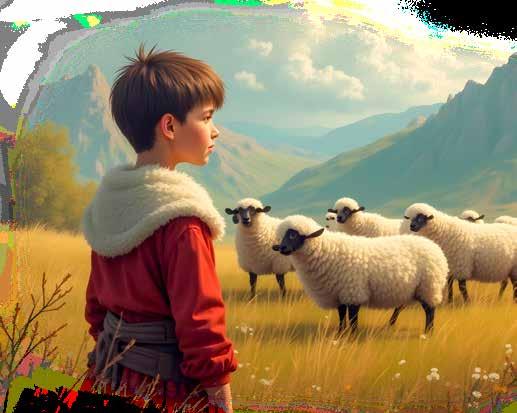
1. What is the theme of the story?
1. False alarms
2. A boy lies and then doesn’t get help when he needs it.
3. Liars are not believed even when they tell the truth.
4. I think the boy was mean to the villagers.
2. Themes are meant to be applied to real life. How can you apply the theme of “The Boy Who Cried Wolf” to your life?
Match the bolded words with their definitions. Highlight context clues.
Did you notice the tiny ladybug crawling on the leaf?
If you take advantage of the sunny weather, you can play outside all afternoon.
The workers decided to go on a strike because they wanted fairer pay.
You have an option to choose between drawing or painting for your art project.
Many people gathered to protest the new rule because they thought it was unfair.
Although his friends kept begging him, he refused to share his last cookie.
She looked at the magic trick in disbelief because she couldn't figure out how it was done.
By working hard every day, the student achieved her goal of getting an A in math.
use the opportunity
show you don’t agree with something, usually in public a feeling that something is not true or real successfully reached a goal or completed something a choice or possibility
see or pay attention to something when people stop working to stand up for something said no to something; would not do or accept something notice [NO-tiss]; advantage [ad-VAN-tij]; strike [STRIKE]; option [OP-shun]; protest [pro-TEST]; refused [ree-FUZD]; disbelief [diss-buh-LEEF]; achieved [uh-CHEEVD]
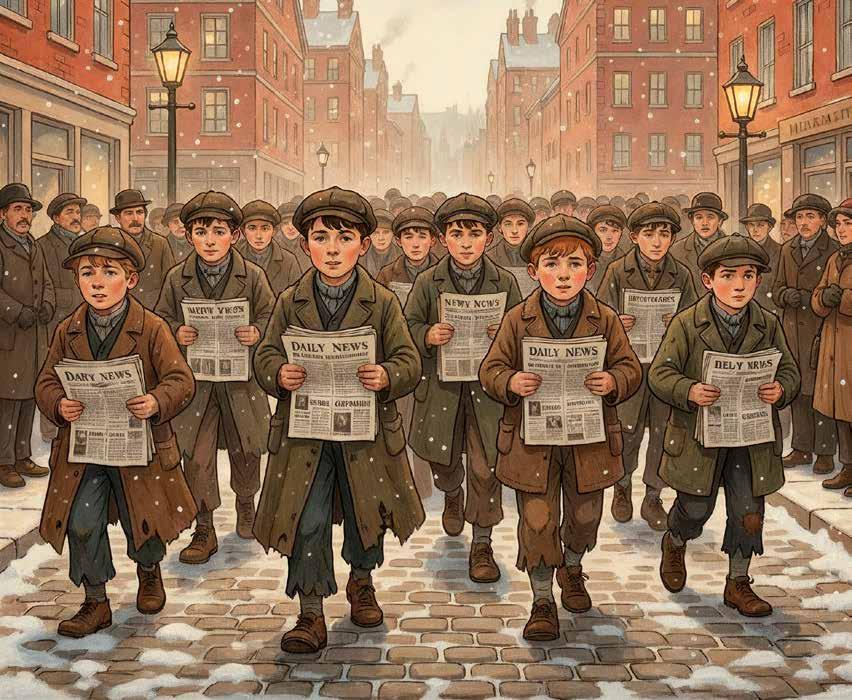
Author: T. Ellis Genre: Historical Fiction
Back in 1899, kids in New York City sold newspapers just to earn a few cents a day—barely enough to eat. They were poor, young, and often alone. But then, newspaper companies, like those owned by Joseph Pulitzer, raised their prices and made life even harder. In this historical fiction story, you’ll meet Kid Blink, a fictional character based on the real kids who stood up and demanded fair treatment. Can a group of children really make a difference? Will anyone listen?
Kid Blink rubbed his freezing fingers together. It was early in the morning, but there he was, standing at his corner, holding a stack of newspapers. Tall brick buildings stood around him, forming long, dark shadows. Nobody seemed to notice him.
Horse-drawn carriages rattled past, sending mud onto the sidewalks. He watched as steam puffed from the horses’ noses, their metal shoes clicking against the ground. Crowds hurried along, wrapped in heavy coats, scarves, and hats.
Kid Blink straightened his torn cap and called loudly to passing strangers, “Extra! Extra! Get your papers here! Big news today!”
His stomach growled loudly, reminding him that he hadn’t eaten yet. He sighed, trying to ignore his hunger as he looked down at his pile of papers. Selling these papers was the only way he could buy some food.
Sixty
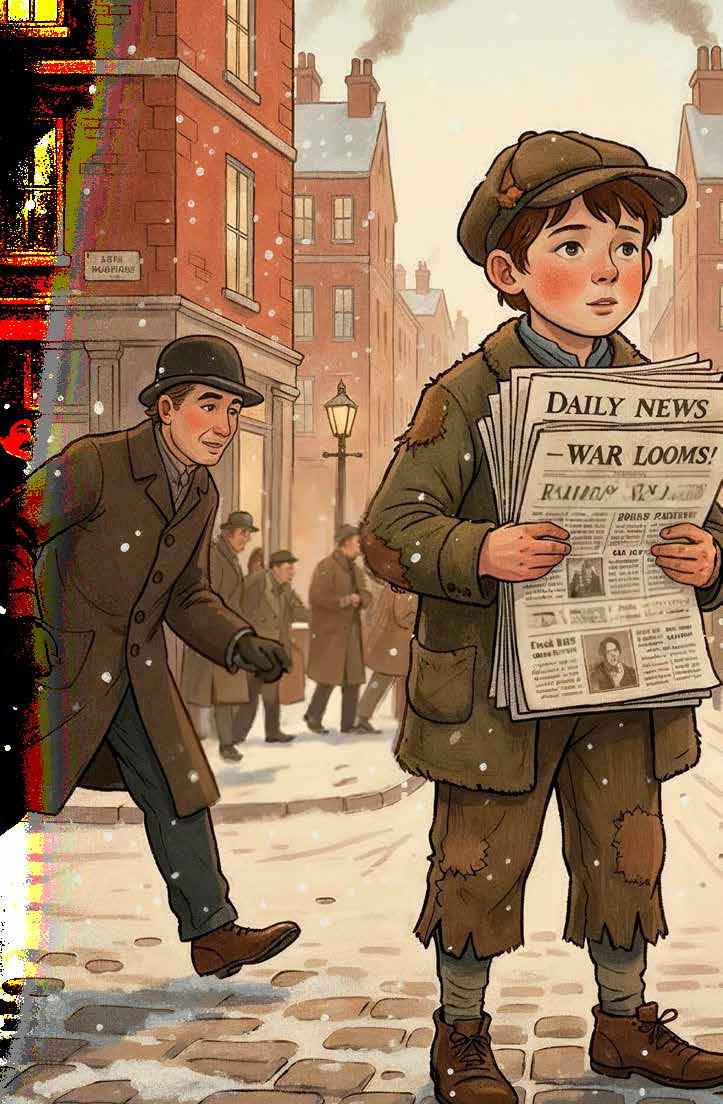
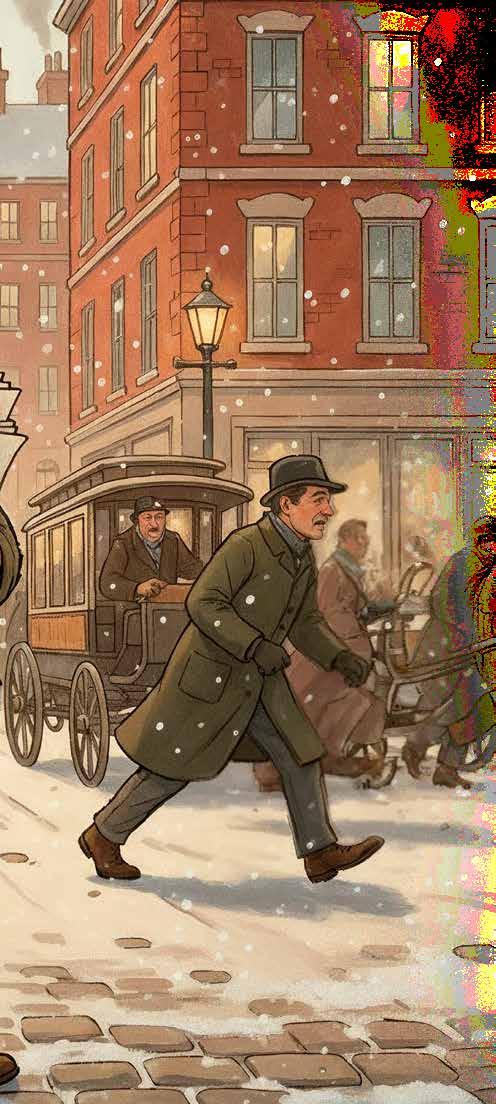
Each morning, Kid Blink and his friends bought newspapers from wealthy newspaper owners, paying fifty cents for a hundred papers. Kid Blink pulled his patched jacket more tightly around him as he tried to figure out how many newspapers he had to sell to buy a hot meal.
Suddenly, Racetrack Higgins ran up, almost slipping on a sheet of ice. “Kid, they raised the prices again! Sixty cents now for the same paper!”
Kid Blink’s heart sank.
Sixty cents meant even less money for food. It wasn’t fair. Why did he have to suffer just because the rich owners wanted even more money?
He stared at the big office buildings nearby. Inside, the newspaper owners were sitting in warm offices, counting their money.
Kid Blink was angry. “Is there anything to do?” he asked.
“I tried talking to the bosses yesterday,” Racetrack Higgins said, looking down. “They wouldn't listen to me.”
Kid Blink crossed his arms. “Well, we can barely make enough money now, we have to do something! We might be kids, but I ain’t gonna let them take advantage of me.”
Higgins held up his hands. “Well, I tried, and look where it got me. Going to the offices doesn’t do anything.”
Kid Blink thought for a minute. “Obviously, the rich folk won’t listen to kids like us. They’ll just laugh in our faces.”
“Hmm…what if we got fifty kids to come to their offices?”
Higgins laughed. “Fifty kids? We could get 500 kids–easy. But, why try and talk it out? I don’t think that will help. We ain’t gonna work
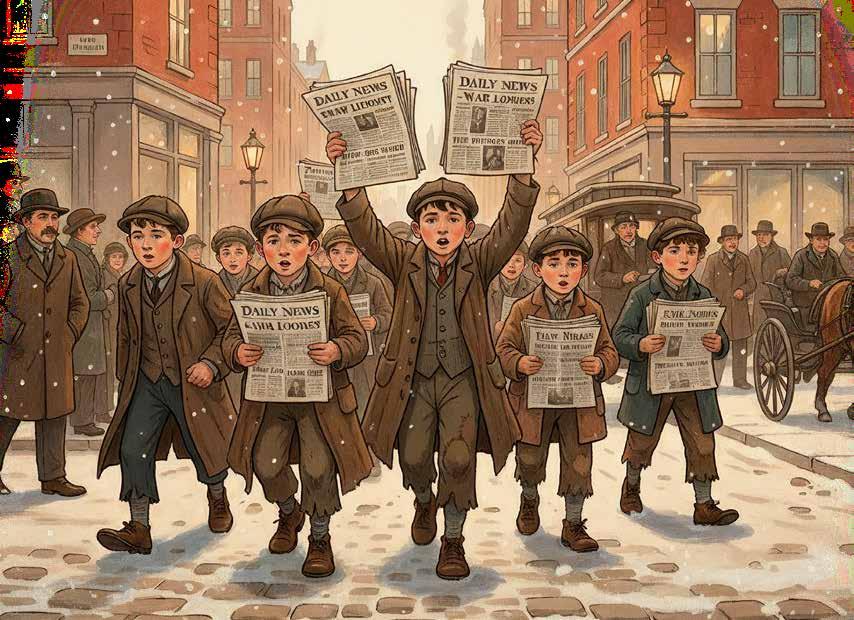
unless they change the prices!”
“Yes, yes!” Kid Blink laughed. “Then, they’ll have no choice but to listen.”
Kid Blink and Racetrack Higgins sent out word to all the newsboys. They told them that if they wanted to see change, they should gather by the post office at five o’clock.
The time had come. Kid Blink climbed onto an old wooden crate. He watched as newsboys streamed over from across the city. Many of them were younger and smaller than him. Their faces were dirty and tired.
Kid Blink looked around. There must’ve been at least a thousand kids. He felt better seeing everyone coming together.
They could do this.
“We have to do something,” Kid Blink told the group. “They won’t listen to us. But, if we all join together, they’ll have no choice. I say we call a strike!”
The newsboys looked excited. More kids crowded closer, excited to hear the plan. Kid Blink raised his voice.
“Yes, a strike,” he said. “They can't ignore all of us at once.”
“We're going on strike!” the boys shouted. “No more selling papers until they treat us fair! We deserve better!”
Cheers echoed through the crowded streets. The next morning, the newsboys marched
through neighborhoods, their voices growing stronger. “Strike! Strike! We won’t sell!” Whispers spread from corner to corner, and the city began to notice. Passersby stopped to watch.
It was hard not to sell papers. Kid Blink was hungry. He almost wanted to give up and sell papers again so he could buy some food. But looking around at his friends’ faces, he knew giving up wasn't an option.
Soon, reporters started noticing the newsboys’ protest. They asked Kid Blink questions, scribbling quickly in their notebooks.
“We only want fair treatment,” Kid Blink said. “If we don’t fight now, they’ll keep cheating us forever. But there's strength in numbers.”
One night, the boys crowded together beneath a bridge, trying to escape the biting wind. The moon cast strange shadows, and they jumped at every noise. Suddenly, they heard heavy footsteps. Then, out of the shadows came a group of tall, angry-looking men.
“The strike ends now,” one of the men said.
Kid Blink’s heart raced. His knees shook, but he refused to let them see he was afraid.
“We ain’t afraid,” he shouted. “We stand as one!”
Kid Blink ran away from the men. The other newsboys were right behind him. They raced through alleys, climbing fences and running through streets. The men chased them, but the newsboys knew the city’s twists and turns better. Together, they escaped safely.
Early the next morning, Kid Blink went out to the main street. He couldn't believe what he saw. Thousands of people had gathered—
shoeshine boys, factory workers, and other children. They were there to support the newsboys.
Kid Blink climbed onto a lamppost.
“They think we’re weak because we’re just kids,” he shouted. “But look around—we've shown them they’re wrong!”
The crowd cheered.
Days turned into weeks. Support for the newsboys grew stronger, forcing newspaper owners to realize that the strike was working. Finally, after what seemed like endless weeks of struggle, a reporter ran over to Kid Blink.
“The newspaper owners won't lower prices,” he said, “but they've agreed to buy back your unsold newspapers!”
Kid Blink stared in disbelief. This was something they had achieved together.
The boys cheered loudly. That night, sitting around a small fire, they laughed and dreamed of a better future. Kid Blink felt a warmth in his heart, stronger than any fire. Together, they knew, they could do anything.
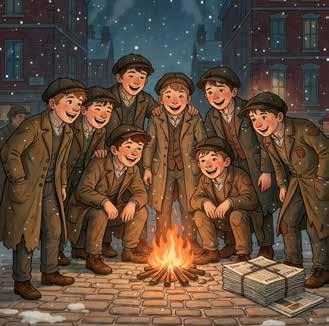
Read each sentence carefully. Then, draw a line to match it with what it describes best.
Newsboys should go on strike. Together, we can make a difference.
I think the newspaper owners are mean.
The newspaper owners agree to buy back extra papers.
A theme from the story
A reader’s opinion
A key detail
Only for one time or person
Stand up for yourself.
The prices of the newspapers went up.
A group of newsboys go on strike.
I think Kid Blink was right for going on strike.
A theme from the story
A reader’s opinion
A key detail
The main idea
A theme is a big idea that is hinted to throughout a story. Choose one of the themes from above. Then, find three places in the story that hint to this theme. Hint: Sometimes the hint to the theme is the opposite of the lesson! Theme:
A theme can be applied to real life. How can you apply this theme to your life?
LESSON PRACTICE VOCABULARY STORY REVIEW ACTIVITY ASSESSMENT
In the chronology text structure, events are told in the order they happened. This helps us understand what happened or will happen first, next, and last.
Write a paragraph that retells The Newsboy Strike in chronological order. Remember to use words that show chronology, like “first,” “next,” and “last.”
1. Plan. Write about three events in the story in the order they happened.
2. Topic Sentence. Write what the story is about. 1 2 3
3. Body Sentences. Write a sentence about each event. Use words that show the order. 1: 2: 3:
4. Concluding Sentence. Write an opinion or lesson.
5. Paragraph. Write a paragraph.
When people go on strike, they often march holding signs that state their demands. Imagine you were a newsboy on strike in 1899. Design some signs you might carry to protest the way the newspaper owners treat the newsboys.
Circle the correct answer.
1. Which of these is something you would not easily notice?
a. A bright red balloon
b. An ant on the sidewalk
c. A fire truck with a loud siren
d. Your friend waving at you
2. You should always take of a good opportunity to learn something new.
a. option
b. protest
c. advantage
d. disbelief
3. The teachers wanted fewer students in their classes, so they went on .
a. options
b. advantage
c. strike
d. achieved
4. Which word means a choice or possibility?
a. Strike
b. Protest
c. Option
d. Refused
5. People gathered outside the city hall to the closing of the park.
a. advantage
b. option
c. protest
d. disbelief
6. Which word means “said no to something”?
a. Option
b. Strike
c. Refused
d. Protest
7. Which of these might make you feel disbelief?
a. Seeing the sun rise every morning
b. Learning 2+2=4
c. Watching a person float in the air
d. Finding your shoe where you left it
8. Which word means successfully reached a goal or completed something?
a. Advantage
b. Notice
c. Achieved
d. Protest
Circle the correct answer.
8. In the beginning of the story, how much did the newsboys pay for one hundred newspapers? (detail)
a. 60 cents
b. 30 cents
c. 50 cents
d. 50 dollars
2. What would happen if the newspaper owners raised the price of the papers? (cause and effect)
a. The newsboys would sell more papers.
b. The newsboys would sell fewer papers.
c. The newsboys would make more money.
d. The newsboys would make less money.
3. What do you think "strength in numbers" meant to the newsboys' success? (inferencing)
a. It means they were stronger when they were by themselves.
b. It means that the more people who joined, the more power they had.
c. It means that only the strongest newsboys could participate.
d. It means that only a few newsboys were needed for the strike to work.
4. What is the overall main idea of the passage? (main idea)
a. The importance of selling newspapers
b. The story of a brave newsboy who leads a successful strike for fair treatment
c. How difficult it is to live in a big city
d. The kindness of the newspaper owners to the newsboys
5. What happened immediately after Racetrack Higgins told Kid Blink that the prices were raised? (sequencing)
a. Kid Blink suggested talking to the bosses.
b. Kid Blink's heart sank.
c. Racetrack Higgins tried talking to the bosses.
d. Kid Blink bought more newspapers.
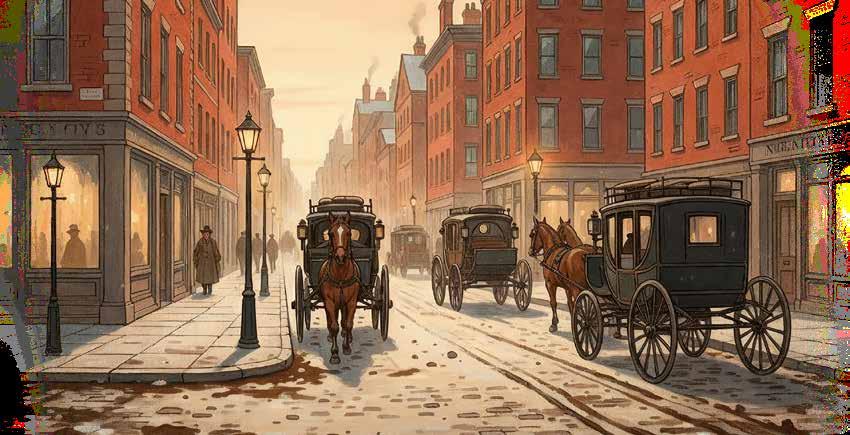
6. In the sentence, "Cheers echoed through the crowded streets," what does "echoed" most likely mean?
a. The cheers were very quiet.
b. The cheers were in a valley.
c. The cheers were going on and on.
d. The cheers were only whispers.
7. How are the working conditions different for the newsboys at the beginning of the story and the end? (compare-contrast)
a. In the beginning, they pay 50 cents for the papers, and at the end, they pay 70 cents.
b. In the beginning, the newspaper owners didn’t want to buy back the papers they didn’t sell, but in the end, they did.
c. In the beginning, they work in the morning, and in the end, they work at night.
d. The working conditions are the same at the beginning and the end.
8. Which of the following is a fact about the story? (fact vs. opinion)
a. Kid Blink was the bravest newsboy.
b. Newspaper owners are always greedy.
c. Kid Blink paid fifty cents for a hundred papers at the beginning of the story.
d. The newsboys deserved better treatment.
Standards:
Lesson- 4.RL.2
Comprehension Skill
Review- 4.RL.3
Unit 5: Theme
Lesson 18: Finding Theme
Author: G. Schiff Genre: Realistic Fiction
Find the theme from details in a text.
Find the theme of a text.
1. Learn how to find the theme of a text.
2. Practice identifying the theme.
3. Complete the vocabulary worksheet.
1. As you read, think about the meaning of specific words or phrases.
2. Think about the theme as you read the story.
1. Complete the comprehension activity to find the theme.
2. Review “Events.” Complete the activity.
3. Complete the project.
4. Check your progress by taking the assessment.
Now that we know what a theme is, let’s learn how to find it in a story. One helpful way is to pay attention to what lesson the characters learn.
Read the whole story.
Answer two questions.
What problem does the main character face?
Sam is worried about messing up in his school play.
Rewrite the lesson as a theme sentence.
What lesson does he learn?
Sam learns that encouragement from his friends helps him not to be scared.
Sam learns that encouragement from his friends helps him not to be scared.
Theme Sentence:
Lesson: Theme Sentence: Theme Sentence: Support from friends is very important. A good friend helps you when you need it. or or Friends can help you face your fears.
PRACTICE VOCABULARY STORY REVIEW ACTIVITY ASSESSMENT
Read the story. Then, answer the questions to find the theme.
was once a farmer who owned a big, healthy goose. Every day when he visited the nest, the goose had laid a beautiful, glittering, golden egg. The farmer took the eggs to the market and soon began to grow rich. But it was not long before he became impatient with the goose because she gave him only a single golden egg each day. He wasn’t getting rich fast enough.
One day, after he had finished counting his money, he had an idea. He could get all the golden eggs at once by killing the goose and cutting it open! But when he did that, he didn’t find a single golden egg, and he no longer had his precious goose.
1. What problem did the farmer face?
2. What lesson did the farmer learn?
3. What does the author want you to learn? Rewrite the lesson as a theme sentence.
Match the bolded words with their definitions. Highlight context clues.
He hesitated before answering the question because he thought he might be wrong.
The play dragged on and on, but then, in an instant, it was over.
The blinding sunlight was shining through the window right into my eyes.
The noise from the fireworks was so deafening, I had to cover my ears.
She got drenched standing at the bus stop in the rain.
He had a lot of sympathy for the man he saw sleeping on the park bench.
His grandmother was feeble after being sick in bed for two weeks.
a very short period of time; right away soaked or very wet lacking strength; weak an opening to go in very loud waited or held back so bright that it makes sight difficult or impossible feeling bad or sad for someone who is having a problem hesitated [HE-zuh-tay-tid]; instant [IN-stint]; blinding [BLINE-ding]; deafening [DEH-fuh-ning]; drenched [DRENCHT]; sympathy [SIM-puh-thee]; feeble [FEE-buhl]; entrance [EN-truns]
We walked through the entrance of the zoo and saw the animals right away.
Author: G. Schiff Genre: Realistic Fiction
When Jackie moved into the neighborhood, LG thought his life would be perfect. Jackie was fun, popular, and an amazing ballplayer—exactly the kind of friend LG always wanted. But sometimes, choosing new friends means leaving old ones behind. What happens when a friendship is tested? And what will LG do when everything suddenly changes?
The day Jackie moved to my block was probably the best day of my life.
Or at least, that’s what I thought at the time.
Jackie was smart. He was tall. And he was the best ball player I’d ever met.
“Hey, LG!” My head snapped up. Someone was calling me. It was Jackie, of course. He’d come up with my nickname, Little Guy, or LG for short. When Jackie and I were together, people thought he was my big brother.
“Up for a game?” he asked. I got into position and threw the ball. We both watched as it soared through the blue sky.
Thump!
The ball hit his mitt. Jackie never missed a catch.
“Yes!” I cried.
I started to run down the block, when a shadow fell across the sidewalk. I looked up to see Ron, sitting in his wheelchair. He covered his eyes to block the sun as he made his way around the roots in front of my house.
“Hey, Ron!” I waved, then peeked at Jackie. He was throwing the ball up and down, up and down.
Once, Ron and I had been friends. Good friends.
“Coming?” Jackie asked. He looked impatiently

at me. “LG! You’re just staring into space!” I was? Oh.
I hesitated, but only for a minute. Jackie walked away, and I jogged behind him, leaving Ron behind.
When we reached the corner, I turned around.
Ron was sitting in front of his house. Maybe it was the sun in my eyes, but it looked to me like tears were rolling down his cheeks. My own eyes stung, and I turned away. It was probably the sun, I told myself.
And in any case, Jackie was waiting.
“Run, run, RUN!”
I could feel the blood pumping in my arms, pounding in my legs, as I ran, ran, ran to — “HOME RUN!” My friends cheered.
Sweat poured down my face.
“LG, that was great!” Jackie slapped me on the back.
“Yeah, LG!” Sam said. “Awesome stuff!”
I tried to catch my breath. I had done it! And for the very first time!
“LG! You’re the next Jackie!”
“A mini Jackie!”
Everyone laughed. I felt like I’d grown three feet in an instant.
I lifted happy eyes to the park entrance. And my balloon of joy popped with a hiss. Because he was there. Ron. He was wheeling himself away from the park, shoulders bent.
“Ron!” I cried. He didn’t turn around.
My heart stopped.
Poor Ron! He must’ve been watching us the whole time. I glanced at Jackie. His face was red, and he looked excited. My friends stood around him in a circle, beads of sweat rolling down their faces.
I looked back at Ron, who was getting farther and farther away. I knew I should go to him, spend time with him…
“Let’s go, LG!” Jackie’s voice was very loud. “LG’s the man!” He pounded my back. I grinned, even while my stomach twisted.
“What next?” Alex asked, and my heart lifted. Maybe we could do something that included Ron. I thought quickly. Before I could say anything, Jackie spoke up.

“Let’s go to the treehouse!”
At those words, my heart dropped back down with a thud. Another activity that Ron couldn’t join…
And besides, the weather didn’t look that great. I looked at the sky. It was turning gray.
I coughed. “It looks like rain…”
“Let’s go for it,” Jackie said, as if he hadn’t heard me. “It’s not supposed to rain today.”
I followed Jackie, my feet dragging on the ground. The other boys cracked jokes, but I was quiet. I wondered what Ron was doing right then.
We climbed up the tree as the sky grew darker and darker.
That was our first mistake.
There we were, hanging out in the oversized crate we’d stuck between two branches, when suddenly there was a flash of blinding light.
“Hey!” Alex shouted. “What was that?!”
Lightning streaked across the sky. That was followed by the crash of thunder. It sounded like a thousand drums being banged at the same time.
“Whoa!” Mark said. “Let’s get out of here!”
His words were swallowed up by another deafening boom. As though a faucet had been opened, rain started falling in sheets. In seconds, we were drenched and freezing. We looked fearfully at each other, then at Jackie. He always had all the answers.
But for once, he looked like he didn’t know what to do.
Crack!
I squeezed my eyes shut. What was that?
“Let’s go!” Jackie shouted. “The tree’s not safe!”
“We have to get down!” Alex cried.
My eyes flew open. Rain pounded the roof of the crate. The wood beneath us was slick, and the branches below were wet and shiny. My friends scrambled to the edge, trying to climb down—but everything was too slippery to hold onto.
And that was our second mistake.
Trying to climb down a rain-soaked tree in a panic?
Not smart.
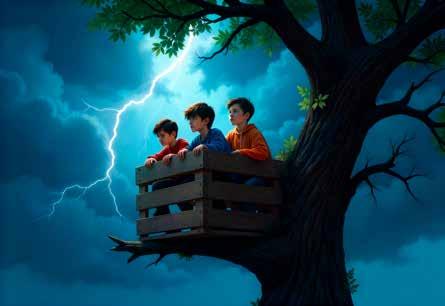
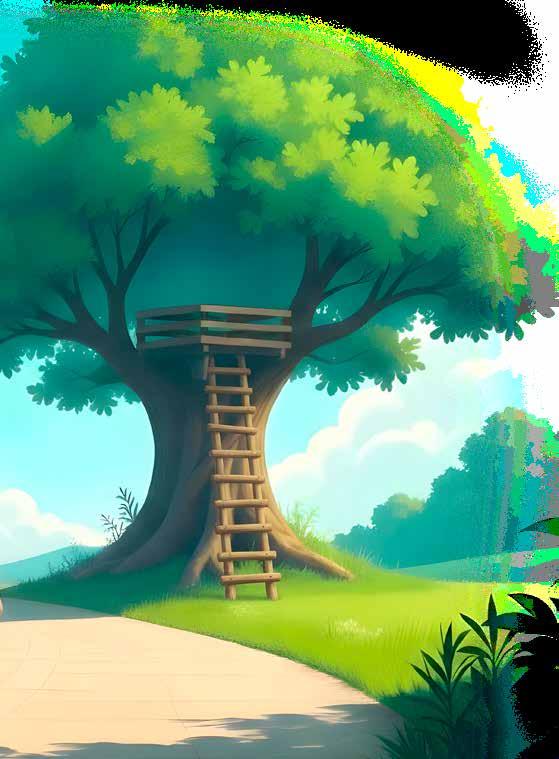
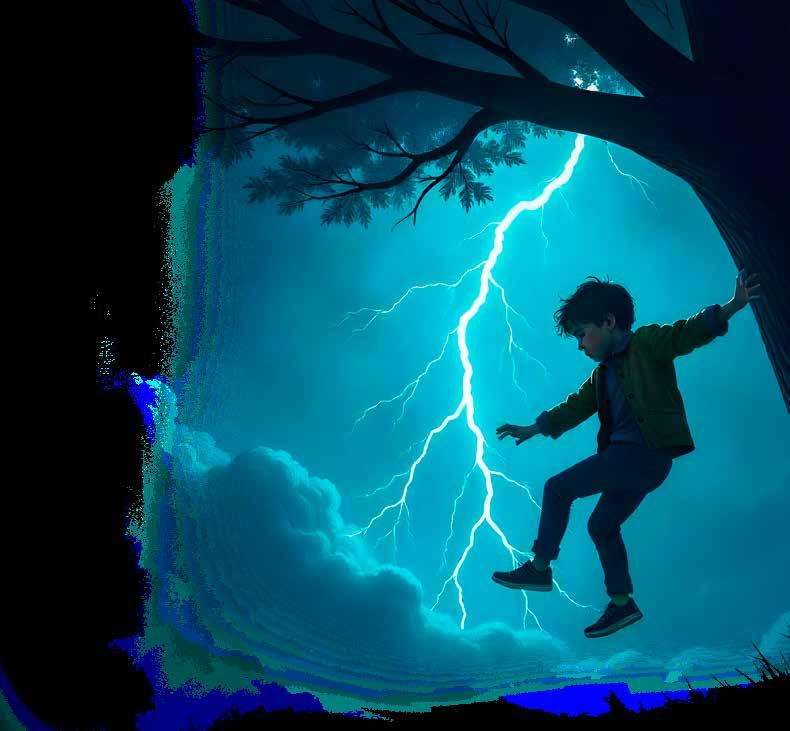
even know.
All I remember after that is tumbling down, down, down. Branches scratched me as I fell, and then I hit the wet ground. Muddy grass covered my clothes. My entire body hurt.
When the screams finally died down, there was a heavy silence. The rain had slowed. My friends climbed down the tree quietly, as if afraid to say anything. I didn’t look at them.
The only thing I could think about was the shooting pain coming from my knee.
“Call my mother,” I managed to whisper.
And then I fainted.
“Six months,” the doctor said cheerfully. “And then we’ll do another X-ray, to see how it’s healing.”
“Six months!” I looked at the doctor. “How am I going to survive six months with crutches?”
“Oh, you’ll be in a wheelchair for the first few months,” the doctor said. He looked at me with sympathy. “It’s a serious break.”
Wheelchair! Me? How?
“It won’t be so bad,” my mother whispered. “At least you know you’ll get your cast off eventually. Kids like Ron know they won’t ever be able to walk.”
I thought of my friend. He’d been hit by a car when he was three years old, and his doctors didn’t think he’d ever be able to walk.
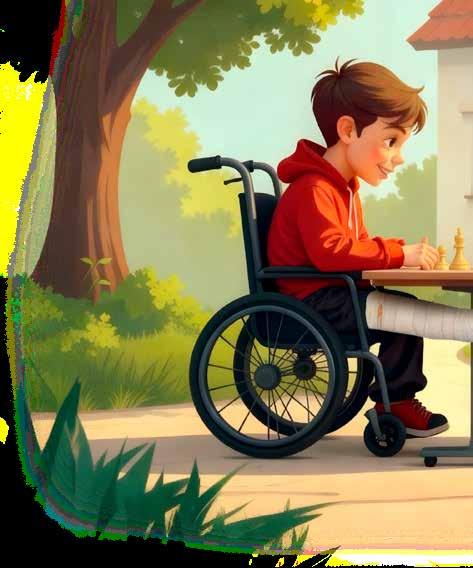
I thought of sitting on the side while my friends ran, played ball, climbed trees. Would they even still be my friends?
Later that day, I was sitting outside, feeling like an old, feeble man. I couldn’t do anything, I couldn’t go anywhere.
And then Ron came down the sidewalk. The wheels of his wheelchair shone in the sun.
“Hi!” I said, excited to see someone. My other friends hadn’t come by to see me.
Soon, I told myself. They’ll come to visit soon.
“Do you want to play a game?” I asked.
Ron looked at me, then looked away. “Um… it’s okay. I just wanted to see how you were. I heard you got hurt.”
“Yeah.”
There was silence. From a distance, I could see Jackie coming down the sidewalk. My heart jumped. He was coming to visit me!
But a few minutes later, he disappeared into Alex’s house. I let out the breath I was holding with a whoosh, and then turned back to Ron.
“Let’s play chess,” I said.
Ron looked down at the ground, as if unsure what to do, then looked back at me.
“Okay,” he said.
I pulled out the game my father had left for me on a small table. Ron slowly wheeled himself closer to me. Without a word, he set up the pieces. From the corner of my eye, I could see Jackie and Alex leave Alex’s house, holding their balls.
So my friends were off to the park — without me.
“You’re first,” Ron said.
And the game began. I pushed thoughts of my friends out of my mind as the pieces moved around the board.
“Checkmate!” Ron said.
“You win, Ron!” I said.
Slowly, like sunshine after rain, a smile lit up my friend’s face. I breathed deeply. Ron may have won the game, but we were going to be friends again. I just knew it. And that feeling was better than hitting a home run.
at the same time. And not yet. But I could sit up in bed and swing my legs over the side of the bed! I could walk down the stairs to get breakfast!
And soon, I would be able to play ball again.
On Monday, the first day without my cast, Jackie slapped me on the back as I walked out of the classroom during recess.
“Ready for a game, LG?” he asked me.
I looked at him. He’d hardly spoken to me since my fall from the tree. During those months, Ron and I had spent more and more time together. We’d joked and laughed and just enjoyed spending time with each other.
Didn’t Jackie realize that it would take me time to heal completely, even if my cast was off?
But could I say no to Jackie? Maybe I could just throw the ball, even if I couldn’t run.
I opened my mouth… and my eyes fell on Ron. He was talking to a different boy. He wasn’t looking at me. It would be so easy for me to follow Jackie, like I’d always done.
“I think I’ll pass,” I said, pulling myself up to my full height.
Jackie followed my eyes to Ron.
I was free! Free to run and hop and skip and jump! Well, I couldn’t do all those things
“You’re going to play card games with him?” he asked, raising his eyebrows. “Aren’t you bored of that already?”
“No,” I said. “It’s not boring to play with Ron. He’s my friend.”
Jackie stared at me for a long moment, then left the room. I felt a little dizzy. Had I really just stood up to Jackie?
I heard a squeak. I turned to see Ron making his way toward me. There was a big smile on his face, and I knew he’d overheard me. I grinned back at him.
Then I sat down to play with my friend.
Answer the questions to find the theme.
1. What problem does LG face in the story?
a. He doesn’t know how to play ball.
b. He wants to build a better treehouse.
c. He has to choose between being friends with Jackie or with Ron.
d. He wants to win a chess game.
2. What important lesson does LG learn?
a. LG learns that you shouldn’t make fun of people’s casts.
b. LG learns that Jackie isn’t the best kind of friend.
c. LG learns that he can win the game if he and his friends work as a team.
d. LG learns that chess is a great way to make friends.
3. Which best describes a theme from the story?
a. True friends are always there for each other.
b. Hard work pays off.
c. Friends forgive you when you make mistakes.
d. Be true to who you are.
4. Which best describes a second theme from the story?
a. Distance cannot separate true friends.
b. Never give up.
c. Treat others how you would like to be treated.
d. Cheaters will eventually get caught.
Events are things that happen in a story. Three important events are: the problem (what is worrying or bothering the main character), climax (the most exciting or important part of the story), and resolution (how the problem gets solved or how the story ends).
Write a paragraph that describes the plot of “Little Guy.”
1. Plan. Fill in the events in the story.
2. Topic Sentence. Write what the story is about.
3. Body Sentences. Write the problem, climax, and resolution of the story.
4. Concluding Sentence. Write a lesson from the story.
5. Paragraph. Write a paragraph.
Write a news report.
Pretend you are reporting the collapse of the treehouse. What would you say?
Circle the correct answer.
1. Which word means a very short period of time?
a. Hesitated
b. Instant
c. Deafening
d. Sympathy
2. We waited in line at the to the amusement park.
a. instant
b. drenched
c. entrance
d. feeble
3. The sound of the low-flying jet was .
a. blinding
b. deafening
c. drenched
d. instant
4. Which word means held back from doing or saying something because one is unsure?
a. Hesitated
b. Drenched
c. Blinding
d. Feeble
5. Which of the following would NOT describe someone who is feeble?
a. He is very strong.
b. He is very weak.
c. He is very old.
d. He is very sick.
6. After the heavy rainstorm, my clothes were completely .
a. feeble
b. instant
c. drenched
d. hesitated
7. Which word means feeling bad or sad for someone else who is having a problem?
a. Sympathy
b. Hesitated
c. Blinding
d. Feeble
8. Which of the following is an example of something blinding?
a. A clap of thunder
b. A flashlight shining in your eyes
c. A dark room
d. Loud music
Circle the correct answer.
1. What does LG stand for? (detail)
a. Liquid Gold
b. Larry Gray
c. Little Guy
d. Little Giraffe
2. Why did LG’s heart drop when Jackie suggested they go to the treehouse? (cause and effect)
a. LG was afraid of the treehouse.
b. LG had fallen out of the treehouse.
c. His father told him never to go to the treehouse, and he didn’t want to get in trouble.
d. LG felt bad that Ron couldn’t join them.
3. What do you think LG was feeling when he stopped for a moment before going with Jackie? (inferencing)
a. Excitement to play ball
b. Confusion about where to go
c. Guilt about leaving Ron alone
d. Anger at Jackie for being impatient
4. Which is the correct order of events in the treehouse? (sequencing)
a. It started to rain, the boys climbed down, lightning struck, thunder crashed, LG fell
b. LG fell, it started to rain, the boys climbed down, thunder crashed, lightning struck
c. Lightning struck, thunder crashed, it started to rain, the boys climbed down, LG fell
d. Thunder crashed, it started to rain, lightning struck, the boys climbed down, LG fell
5. Which best summarizes the main idea of the story? (main idea)
a. LG learns who is his real friend after he has an accident and can’t play ball for a long time.
b. Jackie is an amazing ball player.
c. Ron can’t play with the other boys because he’s in a wheelchair.
d. It is dangerous to play in a treehouse during a storm.
6. What does the word "soared" mean in the sentences, "I got into position and threw the ball. We both watched as it soared through the blue sky"? (context clues)
a. To fall
b. To move slowly
c. To fly high in the air
d. To roll on the ground
7. What different things does LG enjoy doing with Jackie and Ron? (comparecontrast)
a. He plays ball with Ron and chess with Jackie.
b. He plays chess with Ron and cards with Jackie.
c. He plays ball with Jackie and plays cards and chess with Ron.
d. He hangs out in the treehouse with Ron and plays ball with Jackie.
8. Which of the following is a fact from the story? (fact vs. opinion)
a. Jackie was the best ball player.
b. It wasn't boring to play with Ron.
c. The narrator broke his leg.
d. Playing chess with Ron was better than hitting a home run.
Unit 5: Theme
Lesson 19: Theme of Poem
Three Poems Genre: Poetry
Standards:
Lesson- 4.RL.2
Comprehension Skill
Review- 4.RL.5
Find the theme from details in a text.
Find the theme of a poem.
1. Learn how to find the theme of a poem.
2. Practice finding the theme of a poem.
3. Complete the vocabulary worksheet.
1. As you read, think about the meaning of specific words or phrases.
2. Think about a topic word that describes the poem.
3. Complete the comprehension questions to find the theme.
1. Review “Rhyming and Meter Rules.” Complete the activity.
2. Complete the project.
3. Check your progress by taking the assessment.
PRACTICE VOCABULARY STORY REVIEW ACTIVITY ASSESSMENT
We’ve already learned what a theme is and how to spot it in a story. Now let’s learn to find the theme in a poem!
1.
Read the whole poem. It may be helpful to read it more than once.

2.
Choose a topic word. Choose one word that tells what the poem is about.
3.
Write a theme sentence. This is the message that the speaker wants to teach about the topic.
Topic: Growing up
Growing up is a normal part of life. Things don’t always stay the same. Appreciate being a kid while you can. or or
Read the poem. Answer the questions to find the theme.
I talk in class. I talk at lunch. I talk while eating – as I munch.
I talk while tying both my shoes. I talk to share important news.
I talk through reading, talk through tests. I talk too loud and miss the rest.
I talk while friends are telling jokes. I talk through stories from quiet folks.
I talk when people raise their hands. I even talk through music bands.
But when I stop and breathe a bit, The words slow down, the quiet hits.
I look around. No one replies. They're talking now... to other guys.
1. Which topic word best describes what the poem is about?
a. Talking
b. Breathing
c. Music bands
d. Freedom
2. What does the author think about the topic?
a. If you talk through music bands, you’ll talk through stories.
b. If you breathe while you talk, no one will reply.
c. If you talk too much, people won’t listen to you.
d. You’ll have freedom if you talk all day.
3. What is the theme of the poem?
a. You don’t need to hide your feelings.
b. Sometimes life isn’t fair.
c. Think before you act.
d. To be heard, sometimes you need to speak less.
Match the bolded words with their definitions. Highlight context clues.
The cool river water was flowing gently over the smooth stones.
not known or seen before the top layer or outer layer of something free from worries or responsibilities different from what you are used to moving smoothly dark, cloudy, or unclear traveling in or through an area to learn about it go beneath the water flowing [FLOH-ing]; unknown [un-NOHN]; murkiness [MUR-kee-ness]; unfamiliar [un-fuh-MIL-yer]; surface [SUR-fiss]; carefree [KAIR-free]; submerge [sub-MURJ]; exploring [ek-SPLOR-ing].
We found an unknown animal print in the mud, no one knew what kind of creature made it.
The murkiness of the pond made it hard to see the fish swimming.
When we moved to a new town, the streets and buildings looked unfamiliar to me.
The frog jumped up to the surface of the water to take a breath.
During summer vacation, the children felt carefree as they played all day without a single worry.
The turtle slowly began to submerge into the lake until it disappeared.
The children spent the afternoon exploring the woods behind their house, looking for hidden treasures.

Three Poems Genre: Poetry
You're about to follow a mysterious playground chase, dive bravely into deep waters, and journey through the ups and downs of growing up. As you read these poems, think about the main ideas, or themes, hiding inside each one. What special messages will you discover? Let’s jump in!
By: E. Marks
It started back when Jake stood tall and walked along the playground wall.
Then Noah followed, just for fun, and told his friends, “Come on! Let’s run!”
Then Jacob joined and called to Jay, who grabbed his snack and ran that way.
Then Eli followed—he was loud. And soon they had a little crowd.
One boy shouted, “Where are we going?” Another said, “Just keep it flowing
Around the swings, across the grass, right through a first-grade reading class.
Answer the questions.
“Is this a race?” asked Zack mid-run. “No, it’s a chase!” “No, just for fun!”
They tripped, they slipped, they sometimes fell— “What’s going on? Can anyone tell?”
Then someone stopped and scratched his head: “Wait… who are we following?” he said.
They turned to look—but Jake was gone. And still, they’d kept on going on.
The boys stood blinking, nowhere to go. They’d followed friends– but why? Don't know!
1. Which topic word best describes what the poem is about?
a. Chase
b. Confusion
c. Following
d. Playground
2. What is the theme of the poem?

a. Our differences make us special.
b. We can accomplish more by working together.
c. Don’t follow others blindly.
d. A playground is a place for running.
By: Kim Miller
I do not like the water, as I look into the ocean. I am scared of the crabs, the sharks, and the unknown.
I do not like the water, as I look into the pool. I am scared to swim, and get water up my nose.
I do not like the water, as I look into the lake.
I do not like the mysterious deep, the fish, and the murkiness

I do not like the water, and I fear I never will. I fear the unfamiliar. Will I let fear win?

I cannot let fear stop me. I am brave and strong. As I hold my breath, I prepare to jump into the water.
Deep breath and submerge, I come back up to the surface. I float freely to the top, as I soak up the sun.
I am free from my fear. Why did I wait so long? I dive in again. I love the water.
Answer the questions.
1. Which topic word best describes what the poem is about?
a. Family
b. Swimming
c. Bravery
d. Differences
2. What is the theme of the poem?
By: N. Bennett
I used to be an astronaut, Flying high and feeling free. Exploring planets in my backyard, And landing ships in trees.
"Grow up," my brother said.
By four, I was a firefighter, Saving toys from burning flames. Wearing boots that were too big, Playing all my carefree games.
"Grow up," my cousin said.
At six, I built the tallest tower, Blocks stacked up so, so high. I dreamed of bridges, trains, and cars, And how they raced across the sky.
"Grow up," my best friend said.
At seven, my hat stayed in my drawer. At eight, my spaceship sat alone. By nine, I stopped playing pretend, And felt more grown-up on my own.
"You're growing up," my father said.
I miss my helmet, hat, and stars, But now I have new things to do. I read, I learn, I work so hard, Because growing up is something new.
It’s not easy growing up, But everyone has to change. Each year brings something different, And life feels big, and sometimes strange.
Answer the questions.
1. Which topic word(s) best describes what the poem is about?
2. What is the theme of the poem?
LESSON PRACTICE VOCABULARY STORY REVIEW ACTIVITY ASSESSMENT
Some poems use meter (the number of syllables on each line) and/or rhyming rules (rhyme scheme). Some poems have no rules at all.
Write a paragraph describing the meter and rhyming rules of one of the poems from this lesson.
1. Plan. Answer the questions.
Choose a poem:
Count the syllables. How many syllables are on each line?
Does the poem follow a rule for meter? If so, what is it?
Does the poem follow a rhyme scheme? If so, what is it?
2. Topic Sentence. Write the name of the poem with a short description.
3. Body sentences. Write if there are meter and rhyming rules. Explain or give examples.
4. Concluding Sentence. Write if you liked the poem and why or why not.
5. Paragraph. Write a paragraph.
PRACTICE VOCABULARY STORY REVIEW ACTIVITY ASSESSMENT
In the Brave Below, the speaker overcomes his fear of the water. Think of something that used to scare you (or still does).
Draw a 4-box comic strip showing how you feel before, during, and after facing it. Then write one sentence about what helped you feel brave.
What I was scared of
What I thought would happen
Circle the correct answer.
1. Which word means moving smoothly?
a. Unknown
b. Flowing
c. Submerge
d. Surface
2. The mysterious package had an sender.
a. flowing
b. carefree
c. unknown
d. submerge
3. Which of these would likely have murkiness?
a. Clean drinking water
b. A muddy puddle
c. A clear sky
d. Glass
4. When I visited the big city, everything looked to me.
a. flowing
b. surface
c. unfamiliar
d. carefree
5. Which of the following is an example of something that is a surface?
a. The top of a table
b. The filling of a donut
c. The clothing in a closet
d. A picture hanging on a wall
6. The puppy played in the park, chasing butterflies without a worry.
a. flowing
b. carefree
c. exploring
d. submerge
7. Which of these would you submerge?
a. A train
b. A toy boat in a bathtub
c. A bird flying in the sky
d. A picture on the wall
8. Which word means traveling in or through an area to learn about it?
a. Carefree
b. Submerge
c. Exploring
d. Flowing
Circle the correct answer.
1. Who was the first person to walk along the playground wall? (detail)
a. Noah
b. Jacob
c. Jake
d. Eli
2. Why do you think the boys kept following even after Jake was gone? (inferencing)
a. They were afraid to stop.
b. They were playing a game of follow the leader.
c. They were just used to following their friends.
d. They thought Jake would come back.
3. In the line "And soon they had a little crowd," what does the word crowd most likely mean? (context clues)
a. A loud noise
b. A group of people
c. A type of game
d. A fast run
4. What is the final effect of the speaker facing their fear and getting into the water? (cause and effect)
a. They still don’t like the water.
b. They become free from their fear and love the water.
c. They decide to try a different activity.
d. They become even more scared.
5. What is the main idea of the poem? (main idea)
a. The speaker is afraid of all water.
b. The speaker learns to overcome a fear of water.
c. The speaker enjoys swimming in the ocean, pool, and lake.
d. The speaker thinks everyone should be brave.
6. Which of these events happened last in the poem? (sequencing)
a. The speaker was scared of the unknown.
b. The speaker prepared to jump into the water.
c. The speaker floated freely.
d. The speaker dived in again.
7. How are the things the speaker did as a kid different from what they do now? (compare-contrast)
a. As a kid, they used their imagination. Now, they have responsibilities.
b. As a kid, they played alone. Now, they play with friends.
c. As a kid, they stayed inside. Now, they go outside more.
d. As a kid, they were quiet. Now, they make more noise.
8. Which of these is a fact from the poem? (fact vs. opinion)
a. The speaker stopped playing pretend by age nine.
b. It is sad to miss old toys.
c. Life feels strange when you grow up.
d. Reading is better than playing games.
Standards:
Lesson- 4.RL.9
Comprehension Skill Review- 4.RL.3
Unit 5: Theme
Lesson 20: Comparing Themes
Two Folktales from Around the World
Describe the theme of text and explain it with details from the text.
Compare the themes of stories from different cultures.
1. Learn how to recognize similarities and differences between themes.
2. Practice comparing and contrasting themes.
3. Complete the vocabulary worksheet.
1. As you read, think about the meaning of specific words or phrases.
2. Think about the main problem in each story and how the characters react.
1. Complete the comprehension activity to compare and contrast the themes.
2. Review “Characters.” Complete the activity.
3. Complete the project.
4. Check your progress by taking the assessment.
You have learned all about themes; what they are and how to find them. Let's take it one step further! Today, we will learn how to recognize the similarities and differences between themes in two different stories.
1.
Find: The theme of both stories
2.
Explain: Why you chose this theme
Theme of Story 1: You can’t buy friendship.
Theme of Story 2: True friends help each other.
I chose this theme because…
…in Story 1, a girl tries to make friends by giving away her prizes, but she is left with no friends.
3.
Compare and Contrast: The themes
Reminder! Ask: What problem does the main character face? What lesson do they learn?
…in Story 2, bear goes to visit rabbit when he is sick. Then, rabbit helps bear when he loses his honey.
Both stories teach what makes a good friend
The first story teaches what you shouldn’t do. The second story teaches what you should do.
The first story uses real-life characters The second story uses animal characters.
Read the two stories. Then, answer the questions.
The Tortoise and the Hare
In a grassy field, a fast hare made fun of a slow tortoise and said he could beat him in a race. They began racing, and the hare ran far ahead. He was so sure he would win that he stopped to take a nap. While he slept, the tortoise kept moving steady. In the end, the tortoise crossed the finish line first and won the race.
1. What is the theme of The Tortoise and the Hare?
a. Slow and steady wins the race.
b. There is good in everyone.
c. Growing up is a journey.
OThe Crow and the Pitcher
ne hot day, a thirsty crow found a pitcher with just a little water at the bottom. The crow couldn’t reach the water, so he dropped small pebbles into the pitcher. Slowly, the water rose to the top, and the crow was able to take a drink.
2. What is the theme of The Crow and the Pitcher?
a. Give everyone another chance.
b. Things aren't as they seem.
c. Creativity solves problems.
3. What do both stories teach about how to solve problems?
a. You should always give up when things get hard.
b. It’s important to keep trying.
c. You need to be the fastest to win.
d. Strength is the most important thing.
4. How are the lessons the characters learn different in each story?
a. One teaches that being strong is best; the other teaches that being smart is best.
b. One teaches to always win the race; the other teaches to never lose food.
c. One teaches to be fast; the other teaches to be slow.
d. One teaches to keep trying; the other teaches to use smart ideas to solve problems.
Match the bolded words with their definitions. Highlight context clues.
The chair was so sturdy that it didn’t even shake when I stood on it.
I looked at my reflection in the mirror and smiled at it.
We had a feast to celebrate my birthday, and everyone brought their favorite food to share.
The horse trotted across the field.
He had a grand idea to build the tallest treehouse in his backyard!
I jumped when the dog growled loudly.
It was fortunate that the rain stopped just in time for our picnic.
After playing outside all afternoon, the children had a big appetite for dinner.
a big, special meal, often with lots of food
the feeling of being hungry or wanting to eat
the image or picture you see in a mirror or on water
lucky or having good things happen strong and built to last, not easily broken
walked in a quick, steady way
made a low, rumbling sound, usually to show anger or warning large and impressive in size, appearance, or importance sturdy [STUR-dee]; reflection [re-FLEK-shun]; feast [feest]; trotted [TROH-tid]; grand [GRAND]; growled [GROWLD]; fortunate [FOR-chuh-nit]; appetite [AP-uh-tite]

Today, you'll read two fascinating stories filled with surprises. First, you'll meet Taro, a tired stonecutter who suddenly discovers he can become anything he wants. What will happen when Taro’s wish comes true? Then, you'll follow Max, a little dog who finds the juiciest bone ever, until he notices something strange in the water beneath him—something he can't resist. What happens next might surprise you!
The Stonecutter’s Wish is a folktale from Japan. Folktales are stories that people have told for hundreds of years. Every place in the world has its own special stories. These stories teach different lessons and are told in different ways.
Many years ago, in a small village that lay between two mountains, lived a stonecutter named Taro. Every day, Taro chipped away at big rocks under the hot sun. It was hard, tiring work. As the hours passed, Taro would dream of a different life where he didn’t have to work so hard.
One morning, Taro was cutting a stone. His back hurt as he swung his axe. There were still many hours left in the day, and he was already tired.
He looked up and saw a big, beautiful house. He watched a man wearing silken robes step outside. The man was surrounded by servants. Some of them offered him food and drinks. Another servant was fanning his face with a long, colorful fan.
Taro wiped the sweat from his forehead and sighed.
“If only I were rich like him,” Taro said.
“Then I wouldn’t have to work so hard.”
Suddenly, he felt a breeze. Before he could blink, Taro found himself standing in front of a grand house. He looked down and couldn’t believe his eyes. He was wearing fine robes, like a king! He had servants, delicious food, and gold coins in his pockets. He was so happy, he laughed out loud.


One day, Taro was eating a feast in his garden. Colorful flowers gave off a delicious scent. But Taro couldn’t enjoy himself. The sun was beating down on his head, and beads of sweat rolled down his face.
Taro frowned as a servant mopped his forehead. “The sun is more powerful than I am,” he said. “I wish I could be the sun.”
Once again, he felt a breeze. Suddenly, Taro was glowing high above the Earth. He was the sun! He shone brightly, drying rivers and warming fields. Children played under his rays.

said. “I wish I could be a mountain.”
“Now I am the most powerful!” he said. Suddenly, a dark cloud passed by. It blocked his rays and cast a shadow over the land.
“That cloud is even stronger than me!” Taro said. “If only I could be a cloud.”
He felt a breeze, and before he could blink, he was a huge, gray cloud. He floated through the sky, pouring rain over forests and cities. He caused rivers to flood and people to shiver from cold.
“Now I am more powerful than ever!” he said.
But as he moved across the sky, he bumped into a mountain. No matter how much rain he poured, the mountain stood tall and unmoving.
“That mountain is stronger than I am!” Taro
Again, he felt a breeze, and the next moment, he was a mountain! He stood tall and proud, strong and sturdy. Fierce storms came and went, but he didn’t move.
Then one day, Taro felt a strange pain in his side.
Tap… tap… chip… chip…
A man stood beneath him, swinging an axe. It was a stonecutter.
Bit by bit, the man carved stone from the mountain. Taro groaned.
“That stonecutter is stronger than me!” he said. “I wish I could be a stonecutter.”
A cold breeze blew, and then Taro opened his eyes. He was back in his simple clothes, holding his axe. The sun warmed his back, and a piece of stone lay before him. He swung the axe and smiled as happiness filled him. There was no one more fortunate than he.
Adapted from Aesop’s Fables
The Dog and the Shadow is a fable by Aesop, a famous storyteller from ancient Greece. Fables are a type of folktale. In these stories, the characters are usually animals.
Max was a little dog with a big appetite and a sharp nose. He wasn’t the strongest dog in town, or the tallest, but he could sniff out a snack from blocks away. Every day, Max wandered through the village, sniffing for crumbs, scraps, and maybe—if he was really lucky—a bone.
One sunny afternoon, Max got lucky.
Behind the butcher shop, sitting in a pile of scraps, was a big, juicy bone. It still had bits of meat on it, and the smell made Max’s mouth water. He looked around to make sure no one else was looking and then grabbed it.
He gripped the bone tightly in his jaws and went running.
“This is the best bone I’ve ever found!” he thought.
He trotted proudly through the village with his prize, looking for a quiet corner. He needed to keep away from other dogs, to make sure no one would try to grab it from him. He headed toward the little wooden bridge that crossed the stream, hoping to relax under the big oak tree on the other side.
The old bridge creaked as Max crossed it, and the wooden boards moved beneath his paws. He held the bone between his teeth, dreaming about how delicious it would taste.

Then he made the mistake of looking down.
Below the bridge, the stream flowed gently. The water was clear and smooth like glass. And in that water, Max saw something strange.
There was another dog.
This dog was standing in the stream and— believe it or not—he had a bone, too.
Not just any bone. It looked even bigger than Max’s!
Max growled. “Where did that dog get such a huge bone?” he wondered. “If I could just grab that bone, I’d have two bones! I’d be the luckiest dog ever!”
What Max didn’t realize was that the “other dog” wasn’t a dog at all. He was looking at his own reflection in the water.
Without thinking, Max barked—and at that moment, his mouth opened just enough for the bone to slip from his jaws.
SPLASH!
The bone fell into the stream and disappeared with a soft plunk.
Max jumped in after it. He splashed and paddled and searched, but the water had
carried the bone away. It was gone.
Wet and cold, Max climbed back onto the bank and shook off his fur. He looked down at the water again, but now all he saw was a sad little dog staring back at him.
Max walked slowly to the tree where he’d planned to enjoy his treat, dripping water along the way. His stomach growled, and he laid his head on his paws, thinking about his lost bone.

Find the theme of each story. Explain why you chose that theme.
The Stonecutter’s Wish The Dog and the Shadow
Theme: .
I chose this theme because Taro’s problem is that .
Taro learns that
Theme: .
I chose this theme because Max’s problem is that . Max learns that
Choose the best answer.
1. What is something both stories teach?
a. It’s important to be strong.
b. A reflection is not the truth.
c. Always wish for more.
d. Don’t be jealous
2. How are the lessons different in each story?
a. One teaches that a stonecutter is best; the other teaches that a bone is best.
b. One teaches us to work hard; the other teaches to never look at your reflection.
c. One teaches not to wish to be someone else; the other teaches not to wish for something someone else has.
d. One teaches to always try to be better; the other teaches to always find more food.
Write True or False next to each sentence.
1. One story is a cycle which could continue forever, while the other story has a definite ending.
2. One story is from Japan, and one story is from Greece.
3. Both stories probably happened in real life.
4. In one story, a person learns a lesson, and in the other story, an animal learns a lesson.
Characters are the personalities in a story. Details in the story describe how they look, think, and act.
Write a paragraph that describes a character from the story.
1. Plan. Choose your character. Describe how they look, think, and act.
2. Topic Sentence. Write the name of the story and the character you chose.
3. Body Sentences. Describe your character.
4. Concluding Sentence. Write an opinion or lesson.
5. Paragraph. Write a paragraph.
Create simple stick puppets of Max (or another dog) and his reflection. Perform the scene where Max sees the "other dog" and loses his bone. You can even add sound effects!
Circle the correct answer.
1. Which is an example of being fortunate?
a. Missing the bus
b. Losing your keys
c. Winning a prize
d. Taking a walk
2. Which word means walked in a quick, even way?
a. Trotted
b. Reflection
c. Appetite
d. Fortunate
3. The delicious smell from the kitchen made my even stronger.
a. reflection
b. appetite
c. scent
d. feast
4. Which word means made a low, rumbling sound?
a. Fortunate
b. Appetite
c. Growled
d. Trotted
5. Which word means a large meal, often for a special occasion?
a. Reflection
b. Appetite
c. Sturdy
d. Feast
6. The hotel looked so with its tall windows and golden doors.
a. trotted
b. sturdy
c. reflection
d. grand
7. It's a box that can hold heavy books.
a. sturdy
b. fortunate
c. feast
d. trotted
8. Which is an example of a reflection?
a. Reading a book
b. Swinging on a swing
c. Seeing your face in a mirror
d. Listening to music
Circle the correct answer.
1. What is the main idea of The Stonecutter’s Wish? (main idea)
a. Taro becomes a mountain and learns that hard work is important.
b. Taro sees that no matter what he wants, he still has to work hard.
c. Taro learns that getting stuff doesn’t make you really happy.
d. Taro wants to be powerful, but in the end, he likes being a stonecutter best.
2. What happens first to Taro? (sequencing)
a. Taro wishes to be a stonecutter.
b. Taro wishes he had money and an easy life.
c. Taro learns he is happiest as a stonecutter.
d. Taro turns into the sun.
3. Why does Taro wish to be something else in the story? (detail)
a. He is tired of working hard.
b. He wants to be like the mountain.
c. He feels lonely and wants people around him.
d. He thinks the sun is stronger than him.
4. How are Taro’s feelings about his life different at the beginning and the end of the story? (compare-contrast)
a. At the beginning, Taro enjoys being a stonecutter, at the end, he doesn’t.
b. At the beginning, Taro is happy with his work, at the end, he is tired of it.
c. At the beginning, Taro wants to be powerful, at the end, he wants to be a king.
d. At the beginning, Taro wants to be rich, at the end, he is happy with his simple life.

5. What do you think Max thinks when he loses the bone? (inferencing)
a. He feels sad and wishes he hadn’t been greedy.
b. He is happy to lose the bone.
c. He is upset but forgets about it quickly.
d. He doesn’t care about the bone.
6. What causes Max to lose the bone? (cause and effect)
a. He drops the bone while running.
b. He eats too much
c. He barks at the reflection of the other dog.
d. The bone breaks when he tries to hide it.
7. What does the word “gripped” most likely mean when Max “gripped the bone tightly”? (context clues)
a. Dropped
b. Looked at
c. Threw
d. Held
8. Which of the following is an opinion from The Dog and the Shadow? (fact vs. opinion)
a. Max should not have been jealous.
b. Max is a dog.
c. The reflection in the water belonged to Max.
d. The bone fell in the stream.
Standards:
Lesson- 4.RI.7
Comprehension Skill Review- 4.RI.5
Unit 6: Integration of Ideas
Lesson 21: Charts, Diagrams, and Graphs
Author: Y. Samson Genre: Informational
Unit Goal
Integrate ideas from different sources, such as text and images.
Lesson Focus
Interpret charts, graphs, diagrams, and timelines and explain how they help understand the text.
1. Learn about charts, diagrams, and graphs.
2. Practice finding information from charts, diagrams, and graphs.
3. Complete the vocabulary worksheet.
During Reading
1. As you read, think about the information in the charts, diagrams, and graphs.
2. Think about how the graphics help you process or see information.
After Reading
1. Complete the comprehension activity to find information from charts, diagrams, and graphs.
2. Review “Problem Solution Text Structure.” Complete the activity.
3. Complete the project.
4. Check your progress by taking the assessment.
Sometimes, it’s easier to understand something when we can see it. Authors might use visuals (VIH-zhuh-wuhlz)—pictures or drawings that show information—to help explain what they mean.
Visuals can come in many forms:
Labeled Diagram: Shows a picture and names each part
Chart or Graph: Shows numbers and data in a way that it can be seen quickly
Table: Organizes information so it is easy to compare
Map: Shows where places are located
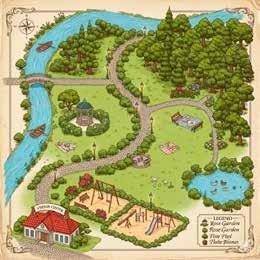
Use the diagram to answer the questions.
1. Name three parts that are attached to the frame:
2. Which two parts does the chain connect?
3. What do you think the job of the chain is?
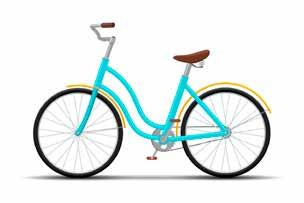
Read the passage. Use the map to help you answer the questions.
Samlives in the city of Rockville. On the last day of school, Sam planned to go to the museum right after school was over. But then, his dad said that he wanted to have a picnic in the park to celebrate the last day of school.
Sam had an idea. He would go to the market and pick up some food. Then, he would go to the museum. Afterwards, he would bring the food and meet his family in the park. His dad thought that was a great plan!
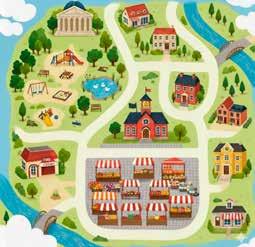
4. Look at the map. Why do you think Sam offered to pick up food from the market straight from school?
5. Is Sam’s school close to the museum?
6. Why was it a good plan for Sam to go straight from the museum to the park?
LESSON PRACTICE VOCABULARY STORY REVIEW ACTIVITY ASSESSMENT
Match the bolded words with their definitions. Highlight context clues.
I decided to take a risk and start a business even though I didn’t know if I would succeed.
The brave firefighter climbed the ladder to rescue the people from the fire.
The teachers seemed worried and concerned about the missing books.
The boy was shivering after falling in the cold lake.
We walked single file down a narrow path.
The stalactites hanging in the cave were very long and thin.
He felt weary after walking all day in the hot sun, so he had to sit down.
The friends chatted and talked on the porch while sipping lemonade.
worried about something very tired
shaking from cold or fear pointy rock shapes hanging from the roof of a cave
save someone or something from danger not wide a chance you will lose something important to you or get hurt
talked in a friendly way
risk [RISK]; rescue [RES-kyoo]; concerned [kun-SERND]; shivering [SHI-ver-ing]; narrow [NAR-oh]; stalactites [sta-LAK-tites]; weary [WEER-y]; chatted [CHAT-id].

Author: Y. Samson Genre: Informational
On a June afternoon in 2018, a youth soccer team in northern Thailand entered a cave after practice. It was meant to be a short visit before dark, but heavy rain began to pour in, flooding the twisting tunnels. The water rose quickly, cutting off their escape and trapping them deep underground. Would anyone find them before it was too late? Would rescuers find a way to reach them?
On June 23, 2018, a group of twelve boys in Thailand were playing soccer. They were on the same team. One day, after practice, they decided to explore a cave. It was near their village in northern Thailand.
Their coach, Ekk, agreed to go with them.
“We can only go for an hour,” he said. “We need to leave before it gets dark.”
The boys grabbed flashlights and rode their bikes to the cave. They laughed and chatted as they stepped inside. The cave was cool and damp. Stalactites hung like sharp teeth from the ceiling. Water dripped from the walls.
“This place is amazing,” said Adul, one of the boys.
They walked deeper into the cave. The tunnels twisted and turned. It was dark, but their flashlights lit the way.
Suddenly, it began to rain. Heavy rain poured outside. Water started rushing into the cave.
“Let’s head back!” Coach Ekk shouted.
The boys turned around, but the water was rising quickly. It spilled into the tunnels, flooding their path.
“Go higher!” Coach Ekk yelled. “We need to find dry ground!”
The boys climbed deeper into the cave. The tunnels grew narrow. The air became colder. Their shoes splashed through freezing water.
Finally, they found a small, dry surface. It wasn't big, but it was safe for now. They stayed close together, shivering and scared.
“Will the water go down soon?” a boy whispered.
“I don't know,” Coach Ekk said. He tried to sound calm, but he was very worried.
The rain kept pouring. The hours turned into a day. Then another day passed. The water didn't go down. It rose higher and higher. The soccer team was trapped.
Their flashlights stopped working so well. Their stomachs growled with hunger. They had no food. The cave was silent except for the sound of dripping water.
“Will anyone find us?” Adul asked.
“They will come,” Coach Ekk said. “We have to stay strong.”
The boys took turns drinking small drops of water that were on the cave walls. As time passed, they grew more and more weary. They tried to sleep, but it was so cold and dark. Time

1km
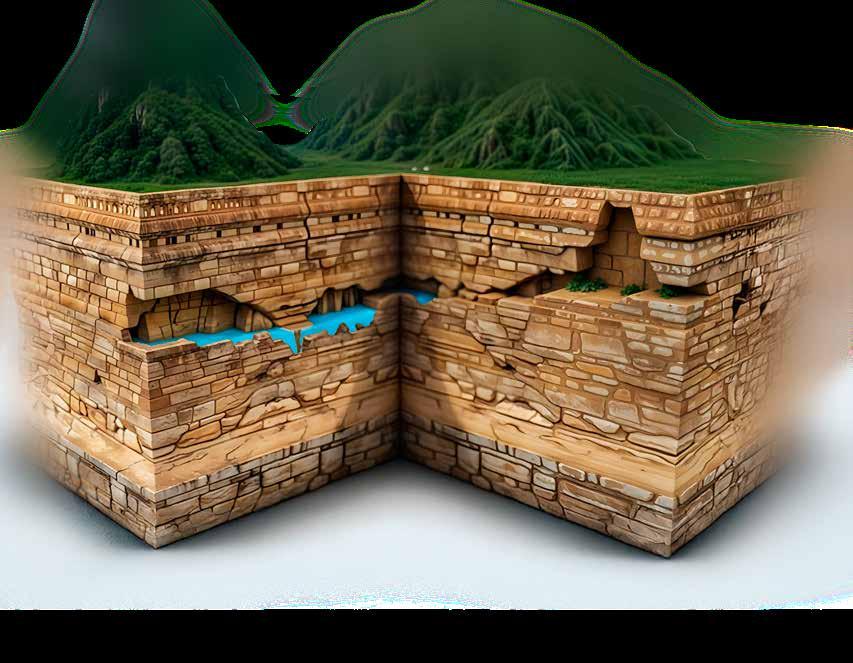
seemed to stand still.
Back in the village, their families were very concerned. As the hours passed, they grew more and more worried.
“Where are they?” a mother cried.
People went looking for them. They found the boys’ bikes near the cave. They realized that the boys were trapped inside.
News spread quickly. Rescue teams from all over Thailand arrived. More than ten thousand people came to help. There were divers, soldiers, doctors, and cave experts. They came from all over the world.
It was dangerous to go inside the cave. The water was muddy and cold. The tunnels were narrow and twisted. The divers worked slowly, using ropes to guide them.
Big pumps were used to remove water from the cave. Over a billion liters of water were
pumped out. This helped lower the water levels inside.
Nine long days passed. On July 2, two British divers finally found the boys sitting in the cave.
“Hello!” one diver called out.
The boys froze. They couldn't believe it. They had been found! They started to shout.
“They're here!” Adul cried.
“Rescuers! They found us!” another boy shouted. His voice echoed in the dark cave.
Some of the boys started to cry. Tears ran down their muddy faces. Others grinned and waved their arms. For the first time in days, they felt hope.
“Are we going home?” a boy asked.
“Yes,” the diver said with a smile. “But it will take time.”
The divers handed them food, water, and
70OF
Approximate
The boys were taught how to scuba dive. They were stuck on the top of this ledge for over two weeks.
blankets. The boys ate with excitement. Their hands shook.
“When can we leave?” Adul asked.
“Soon,” the diver said. “We have a plan, but you'll need to be brave.”
The boys looked at each other. They were scared, but they trusted the rescuers.
Outside the cave, the news spread: The boys were alive! But getting them out would be difficult. The tunnels were flooded. The boys didn't know how to swim. The path out was over two miles long.
“We'll teach them to dive,” one rescuer said. "I know we're taking a risk, but it's the only way."
The plan was daring. Each boy would wear a diving mask and hold onto a rescuer. They would be guided through the dark, icy water.
Rescuers pumped out as much water as they could. They worked day and night. They
used more than a hundred pumps to lower the water levels.
On July 8, the rescue began.
The first boy was strapped into diving equipment. His rescuer held his hand.
“You're safe,” the diver said. “Stay calm.”
The tunnel was terrifying. The water was pitch-black. Sharp rocks stuck out from the walls. The path was filled with twists
The hardest part. Each boy had to crawl by himself up a narrow bend to a rock. Then they had to go back down into the water.
15 inches THE NARROWEST PART
The boys were given foil blankets to keep warm.
Divers brought food, medicine, and oxygen.
Exit point
One mile away from the choke point
and turns, dipping low into choke points where they had to squeeze through. In some areas, the tunnel was only two feet wide. The rescuer had to guide the boy carefully, keeping him close so he wouldn't get stuck. The boy held onto his rescuer, his heart pounding.
“We’re almost there,” the rescuer whispered. After hours of swimming, they reached the outside of the cave. The boy gasped for air as
the rescuers cheered. He was safe!
One by one, the boys were brought out. Each trip was slow and dangerous. The rescuers were tired, but they kept working. They refused to give up. It took three days for everyone to be rescued.
On July 10, the last boy and Coach Ekk were brought out. The crowd cheered. Families hugged their sons. The rescuers smiled. They had done the impossible!
Answer the questions based on the charts and diagrams on pages 332-335.
1. What does J F M A M J J A S O N D stand for?
a. Nothing. They are random letters.
b. The first letter of each boys name
c. The months of the year
2. During which month did the boys get trapped? About how much rain fell then?
3. How many kilometers (km) were the boys' bikes from where they were found?
4. When the boys entered the cave, did they walk upward or downward?
5. Who held the boys’ oxygen tanks?
6. Why do you think the boys had to wear a full face mask?
7. What was the tether for?
8. Why do you think the boys had to go through the choke point alone?
9. Did the boys swim upward, downward, or both? Explain.
LESSON PRACTICE VOCABULARY STORY REVIEW ACTIVITY ASSESSMENT
In the problem solution text structure, a problem and its solution(s) are described.
Write a paragraph that retells “Trapped” in the problem solution text structure.
1. Plan. Write the problem and solutions.
2. Topic Sentence. Write the problem from the story.
3. Body Sentences. Write three sentences that explain the solution.
4. Concluding Sentence. Write an opinion or lesson.
5. Paragraph. Write a paragraph.
Make a map.
Draw and label a diagram or map of your house. Label each room and show a path from your bedroom to the front door.
Optional: Make a map from your house to school.
Circle the correct answer.
1. Which word means talked in an easy or friendly way?
a. Concerned
b. Chatted
c. Shivering
d. Rescue
2. The tourists admired all of the hanging in the cave.
a. narrow
b. weary
c. rescue
d. stalactites
3. Which of these is an example of a rescue?
a. Letting a bird fly away
b. Saving someone from drowning
c. Taking a picture of someone
d. Playing a game
4. Which word means a chance you will lose something important to you or get hurt?
a. Weary
b. Risk
c. Shivering
d. Narrow
5. The travelers could finally get some sleep.
a. rescue
b. stalactites
c. weary
d. risk
6. Which of the following is an example of something that is narrow?
a. A needle
b. A car
c. A balloon filled with air
d. A gallon jug of water
7. The children were because they were out in the cold so long.
a. narrow
b. risk
c. shivering
d. chatted
8. Which word means worried about a situation or fact?
a. Risk
b. Concerned
c. Shivering
d. Narrow
Circle the correct answer.
1. How many boys were in the group? (detail)
a. 8
b. 20
c. 12
d. 10
2. What happened when it started to rain hard outside? (cause and effect)
a. Water rushed into the cave.
b. It became very loud.
c. The cave dried up.
d. The boys went to sleep.
3. How do you think the boys felt when the flashlights stopped working? (inferencing)
a. Happy
b. Excited
c. Afraid
d. Cold
4. What is the main idea of the passage? (main idea)
a. A group of boys won a game.
b. Rescue divers came from all over the world.
c. A group of boys were trapped in a cave and were rescued.
d. A group of boys got lost.
5. Which of these events happened last in the cave? (sequencing)
a. The boys found a flat surface.
b. The boys swam out with diving equipment.
c. The rescuers brought food.
d. Coach Ekk said “We need to leave before dark.”

6. Look at the diagram of the divers and the boy on page 10. What does the word “tether” mean? (context clues)
a. A rope to attach things together
b. A special breathing tool for under the water
c. A type of shoe
d. A way to swim
7. How were the tunnels different after the rain came? (compare-contrast)
a. They were wider and easier to walk through.
b. They were darker and filled with rising water.
c. They felt colder.
d. They became brighter and less slippery.
8. Which sentence is an opinion? (fact vs. opinion)
a. The rescue took three days.
b. The last boy was rescued on July 10.
c. The caves were amazing.
d. The boys' bikes were found outside the cave.
Standards:
Lesson- 4.RI.3
Comprehension Skill
Review- 4.RI.7
Unit 6: Integration of Ideas
Lesson 22: Explaining Events
Author: Tessa Barber Genre: Informational
Integrate ideas from different sources, such as text and images.
Explain events, ideas, or procedures in a text, including what happened and why.
1. Learn about explaining events in a text.
2. Practice explaining events in a text.
3. Complete the vocabulary worksheet.
1. As you read, think about the meaning of specific words and phrases.
2. Think about events, ideas, or procedures in the text and why they happened.
1. Complete the comprehension activity to explain the event from the text.
2. Review “Charts, Graphs, and Diagrams.” Complete the activity.
3. Complete the project.
4. Check your progress by taking the assessment.
When you read nonfiction texts, you’re often learning about events that happened in the real world. These might come from a history book, a science article, or a how-to text.
In this lesson, you’ll learn how to explain what happened in the text and why each part matters.
As you read, ask yourself:
→ What are all the parts or steps of what happened or will happen?
→ Why is each part important?
These questions will help you understand the text and explain the events clearly.
Steps
1. Put toothpaste on your toothbrush.
Why is this step important?
This lets the toothpaste get in your mouth.
2. Using your toothbrush, brush small circles on your teeth for two minutes. This gets your teeth clean.
3. Rinse your mouth with water and spit.
This gets the toothpaste out of your mouth.
Think! What would happen if this step were missing?
LESSON PRACTICE VOCABULARY STORY REVIEW ACTIVITY ASSESSMENT
Read the passage.
ave you ever wondered where rain comes from? It’s part of the water cycle— water’s big trip! The sun warms water in puddles and lakes, and the water turns into invisible steam and floats up. High up, the steam gets cold and turns into tiny drops. These drops make clouds. When clouds get full, water falls as rain or snow. This water flows back to lakes and oceans, ready to start its trip again.
Number the steps so they are in order. Then, answer the questions.
Step # Step
The steam rises up and forms clouds.
Why is this step important in the water cycle?
Would it make sense if this step came first? Why or why not?
When clouds get full, water falls as rain or snow.
The sun warms water in puddles and lakes, turning it into steam.
The water flows back to lakes and oceans.
Would it make sense if this step were skipped? Why or why not?
Would it make sense if this step were skipped? Why or why not?
Why is this step important?
Match the bolded words with their definitions. Highlight context clues.
His efforts and hard work really paid off when he won the race.
The accident caused the man to be paralyzed, so he used a wheelchair.
We studied hard for the tests, and the results showed that we all passed.
Doctors are working hard to find a cure so sick people can get better.
Some volunteers helped the workers clean up after the storm.
At the candy store, they gave us small samples to taste before choosing.
I know I will recognize my old friend as soon as I see her.
He found the answer in the book, proving he was right.
something that happens because of something else
a small part of something to show what it is like
using evidence to show that it is correct or true know something because you have heard or seen it before the hard work you put into doing something
not able to move a part of the body
people who offer to help without getting paid something that makes a sickness go away efforts [EF-ferts]; paralyzed [PAR-uh-lyzed]; results [re-ZULTS]; cure [KYOR]; volunteers [vol-un-TEERZ]; samples [SAM-pulz]; recognize [REC-og-nize]; proving [PROOV-ing]
Author: Tessa Barber Genre: Informational
About a hundred years ago, a terrible illness was suddenly making healthy children very sick. In just one day, kids could go from playing happily outside to being unable to move their arms or legs. Families were scared, and scientists rushed to solve this scary puzzle. What was this sickness, and how did people stop it from spreading? What amazing discovery helped save millions of lives?
Danny stared out the window. He could see a blue sky and white, fluffy clouds. He tried to move his legs, but they felt like he’d run a hundred races. His arms were heavy. He tried to sit up, but he fell back onto his pillow.
“Mama,” he whispered. “I don’t feel well.” His mother bent over him and pressed a cool hand to his forehead.
“You’re burning up, sweetie,” she said. She bit her lip and looked away.
Papa stood in the doorway. His arms were folded.
“It’s just a cold,” Papa said. “Kids get sick all the time.”
Mama didn’t say anything. Yesterday, Danny had been perfectly fine. He’d played stickball with his friends and climbed a tree. Today, he could barely move his legs.
By evening, Dr. Riley arrived. He frowned as he examined Danny. Finally, he looked up.
“It could be polio,” he said.
Mama covered her mouth. Papa’s face turned white.
“No!” he whispered.
Polio. Suddenly, the room felt very cold. Everyone knew what polio meant. Some kids got better, while others never walked again. Or worse…
Danny looked out the window. A cloud moved across the sun. The whole world looked darker.
Mama’s eyes filled with tears. “Doctor, please, tell me there’s something we can do.”
“We’ll get him to the hospital,” Dr. Riley said. “The sooner, the better.”
Papa lifted Danny into his arms, holding him
like he was a newborn baby. Mama grabbed Danny’s hand. She squeezed it tightly.
“Don’t worry,” she told him. “You’ll be fine.”
Danny tried to smile bravely, but he was terrified.
As Papa carried him to the car, neighbors peeked from their windows. Bored children watched with wide eyes. It had been a long, hot summer, but hardly anyone had left their houses. The pool and playgrounds had been empty. Parents were scared that their children would get sick. They stayed inside, away from the dangerous germs.
Danny took one last look at the sun before the car door closed. When would he see it again?
About a hundred years ago, a scary disease was making many people around the world very sick. It spread easily, especially in the summer, and no one knew how to stop it.
Were you ever sick with a virus? Polio is a type of virus. It spreads from person to person, usually through water or food. Polio made
young children very sick. They came down with sore throats, headaches, and fevers.
Some children got better, but others didn’t. As the disease spread throughout the body, it attacked the nerves that make it possible to move. Many children became paralyzed and couldn’t move their arms or legs. Sometimes, polio paralyzed the muscles that make it possible to breathe. A machine called an “iron lung” was used to help people who couldn’t breathe because of polio. Many children spent the rest of their lives on crutches or in wheelchairs.
In the 1900s, everyone was terrified of polio. One day a child might feel perfectly fine, and the next day, they’d be very sick. Parents stopped sending their children to school. They kept them home all summer, too. In 1952, over three thousand children died of polio in the United States. All over the world, people were getting sick with polio. Every year, more than half a million people died or were paralyzed because of polio.
A cure was needed for this deadly disease, and fast. But would one ever be found?
Dr. Jonas Salk was a scientist and doctor who had a dream: to get rid of polio. Dr. Salk worked hard in his lab, doing all kinds of tests to try to create a vaccine. Vaccines work by putting a weak form of a virus into the body. The body then learns how to fight the virus.
Most scientists believed that vaccines needed a live virus so the body could learn to protect itself. But Dr. Salk thought differently. He believed that a killed virus (one that couldn't cause disease) could still teach the body how to fight the virus.
Dr. Salk and his team spent years growing virus samples in the lab. They used cells from a monkey to make the virus grow, and then killed it with a chemical. This stopped the virus from spreading in the body, while making it possible for the body to recognize it.
Before Dr. Salk could introduce his vaccine to the world, he needed to make sure it was
safe. He tried it out on animals to see how they would react to it. Then he tried it on himself, his wife, and his three sons. None of them got sick, proving that the vaccine was safe!
In 1954, over a million children from Canada, Finland, and the United States offered to be volunteers. They would test out Dr. Salk’s vaccine. Some of them got the real vaccine, while others got a fake shot. They were called the “Polio Pioneers.”
On April 12, 1955, after carefully studying the results, scientists announced that the vaccine was safe! It could help fight polio and keep children safe.
Dr. Salk wanted children from all backgrounds to get his vaccine. On that day, he got permission to give it out to whoever wanted it. He made no money from his vaccine, but it was more important to him to save lives.
As children started to get the vaccine, polio cases dropped quickly. In two years, there were five thousand cases of polio. Six years later, only 161 people had polio.
The vaccine worked so well that a few years later, another scientist, Dr. Albert Sabin, made an even simpler polio vaccine. Instead of a shot with a needle, his vaccine was a drop on a sugar cube. Imagine eating a tiny, sweet cube and knowing it could protect you from a serious sickness! This made it easier for kids all over the world to get vaccinated.
In 1988, leaders from many countries made a promise: they would work together to stop polio forever. Many groups came together to help in this fight. Countries worked hand in hand, sharing medicine and knowledge. The World Health Organization (WHO) helped
$39.00 Giving Vaccines
$24.00 Teaching People
$19.00 Making Vaccines
$14.00 Finding the Virus
$3.00 Paying Scientists
$1.00 Learning More
lead the way, making sure that vaccines were available everywhere.
Events where the vaccine was offered took place around the world, to reach as many people as possible. In 1995, China and India gave vaccines to millions of children. Nineteen countries in Europe had special days where kids could line up to get their polio shots. In 2004, twenty-three African countries also had vaccine days. By 1994, polio was completely gone from North and South America. By 2000, it was gone from other areas, too!
In 2003, polio was found in only six countries. By 2006, that number dropped to four. People around the world kept working hard, and soon, polio cases dropped by more than 99 percent in just twenty years!
Today, polio is almost gone. Dr. Salk died in 1995, but he would be proud to see how his efforts paid off. When his vaccine was first created, he said it was like the sun. Just like you can’t own the sun, you can’t own the vaccine. It was for everyone! And the people who are alive and well because of him would surely agree.
Read the statements below. Rewrite them in the correct order in the first column of the chart. Then, in the second column, explain why each step was important in helping stop polio.
Children got the vaccine, and it worked.
Dr. Salk tested the vaccine on people and animals.
happened?
The WHO helped organize events to help give the vaccine to children around the world.
Dr. Salk worked hard trying to create a vaccine in his lab.
Why is this step important in helping to stop polio?
Many children became sick with polio. It made people die or become paralyzed. It was a big problem that needed to be solved.
Graphs, and Diagrams
PRACTICE VOCABULARY STORY REVIEW ACTIVITY ASSESSMENT
Charts, graphs, and diagrams give us more information about a topic.
Write a paragraph explaining how money donated to end polio was spent.
1. Plan. Write three pieces of information you can find on this chart.
$39.00 Giving Vaccines
$24.00 Teaching People
$19.00 Making Vaccines
$14.00 Finding the Virus
$3.00 Paying Scientists
$1.00 Learning More
2. Topic Sentence. Write what the chart shows.
3. Body Sentences. Turn each piece of information from step 1 into a sentence.
4. Concluding Sentence. Write a lesson or opinion about donations to help end polio.
5. Paragraph. Write a paragraph.
Pretend you're an inventor.
Come up with an invention that would help the world in some way. Tell what problem it will solve and how it works. Draw a picture of your invention.
Circle the correct answer.
1. Which word means something that happens because of something else?
a. Volunteers
b. Cure
c. Results
d. Proving
2. I took some of paint home to help me make a decision.
a. efforts
b. recognize
c. samples
d. paralyzed
3. We our old friend even after many years.
a. results
b. volunteers
c. samples
d. recognize
4. Which of the following is an example of volunteers?
a. People giving their time to help clean up a zoo
b. People getting paid to work in a store
c. Students doing their homework
d. People getting paid to paint a house
5. Which word means something that makes a person better or ends a sickness?
a. Cure
b. Recognize
c. Efforts
d. Samples
6. What is a way of proving something is right?
a. Making your best guess
b. Choosing the one you like
c. Finding proof in the text
d. Shouting your opinion over and over
7. The of the firefighters helped save many people.
a. recognize
b. proving
c. paralyzed
d. efforts
8. What word means unable to move a part of the body?
a. Volunteers
b. Paralyzed
c. Results
d. Proving
1. Polio is a type of : (detail)
a. Virus
b. Bacteria
c. Medication
d. Place
2. What happened to many children as the polio disease spread through their bodies? (cause and effect)
a. They got a rash on their skin.
b. They lost their ability to see.
c. They became paralyzed and couldn’t move.
d. They could not sleep.
3. Why did Dr. Salk want to find a cure for polio? (inferencing)
a. He had nothing better to do.
b. He wanted to stop people from getting sick with it.
c. He wanted to travel the world.
d. He wanted to find a new place to live.
4. What is the main idea of this passage? (main idea)
a. Dr. Salk’s vaccine did not help anyone.
b. There were many polio cases after the vaccine.
c. Dr. Salk’s vaccine helped lower polio cases all over the world.
d. Polio case numbers did not change after the vaccine.
5. Was the vaccine given in the United States or China first? (sequencing)
a. Both started at the same time.
b. It was given in China first.
c. It was given in the United States first.
d. The vaccine was given in neither of those countries. Circle the correct answer.

6. What does the word “pioneers” mean in the sentence “They were called ‘Polio Pioneers’”? (context clues)
a. They were some of the last people to get the vaccine.
b. They moved to a new place to try the vaccine.
c. They did not want to volunteer to take the vaccine.
d. They were some of the first people to get the vaccine.
7. How was Dr. Salk's idea about vaccines different from what most other scientists believed? (compare-contrast)
a. Dr. Salk believed vaccines needed a live virus, while others thought a killed virus would work.
b. Dr. Salk believed vaccines could only be tested on animals, while others tested them on people.
c. Dr. Salk believed a killed virus could work in vaccines, while most others thought a live virus was needed.
d. Dr. Salk didn't believe in vaccines at all, but other scientists did.
8. Which of the following is an opinion about Dr. Salk? (fact vs. opinion)
a. Dr. Salk worked on a vaccine for polio.
b. Dr. Salk developed the vaccine too quickly.
c. Dr. Salk wanted people of all backgrounds to have the vaccine.
d. Dr. Salk died in 1995.
Unit 6: Integration of Ideas
Lesson 23: Integrating Information
Author: Tessa Barber Genre: Nonfiction
Standards: Lesson- 4.RI.9
Comprehension Skill Review- 4.RL.6
Integrate ideas from different sources, such as text and images.
Answering questions that require integrating information from two sources
1. Learn about integrating information from two sources.
2. Practice finding information from two sources.
3. Complete the vocabulary worksheet.
1. As you read, think about the specific words and phrases.
2. Think about the similarities and differences between the two sources.
1. Complete the comprehension activity to answer questions from both sources.
2. Review “Point of View.” Complete the comprehension activity.
3. Complete the activity.
4. Check your progress by taking the assessment.
Sources are texts about a topic. You can read more than one source about the same topic. When answering questions, you will either need to use one or both sources.
1.
Read the question. Ask yourself: What am I trying to find?
Why was the light bulb invented?
2.
Find the answer. Look in one or both sources for details that match the question.
Hmm… this answer is in both passages.
3.
Write the answer. Be sure to include where you found it.
The lightbulb was invented because…
I know this because Passage 1 says… and Passage 2 says…
Read these two sources about pets. Then, circle the source you would use to answer each question.

S ource 1: Many people enjoy having a pet. Dogs and cats are the most common, but some people have pets like ferrets or parakeets. All pets need care. This includes feeding them, giving them water, and making sure they get exercise. Pets often feel like part of the family, and taking care of them becomes part of daily life.
Source 2: Most people take their dogs for walks, but some other pets need walks too—like cats, rabbits, or even snakes! Pet owners may use a special harness or carrier to keep these animals safe. Walking a pet can give it exercise, fresh air, and time outside. You never know what kind of pet you might see at the end of a leash.
1. Question: What are some pets that people have?
Where to find the answer:
Source 1 Source 2 Both
2. Question: Why would a person use a harness to walk their pet?
Where to find the answer:
Source 1 Source 2 Both
3. Question: What type of care does a pet need?
Where to find the answer:
Source 1 Source 2 Both
Match the bolded words with their definitions. Highlight context clues.
She read the entire book from the first page to the very last.
The car ran out of fuel, so it could not move until we filled the tank.
The old tent might collapse if the strong wind keeps blowing.
Reading and writing are basic skills everyone needs to know for life.
The victim of the car accident was taken to the hospital for help.
His disability made it hard for him to walk, so he used a wheelchair.
The layout of the park was well planned, with benches next to the slide and swings.
The terrorists tried to attack the city to scare everyone and force the leaders to change the rules.
someone who is hurt in an accident or tricked by someone else a material that burns to create energy to provide power
simple or most important whole, all of something a condition that makes it hard for someone to do certain things
people who try to threaten or cause harm or fear for political or other reasons fall down or cave in the way something is arranged entire [en-TY-er]; fuel [fe-OOL]; collapse [cuh-LAPS]; basic [BAY-sik]; victim [VIK-tim]; disability [DIS-a-bil-itee]; layout [LAY-owt]; terrorists [TER-or-ists]
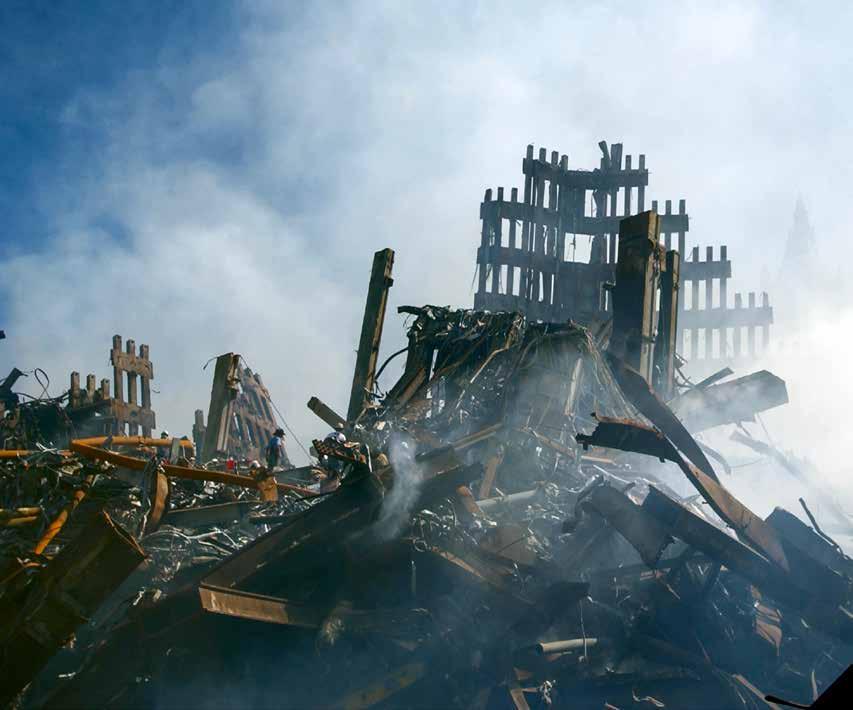
n the morning of September 11, 2001, a sudden, thunderous crash shook the World Trade Center in New York City. A plane had hit the building! It was a terrorist attack! Smoke filled the air, the building swayed, and fear spread through the crowded offices. Would they find a way out? Could the people escape before the tower came down? The first passage tells the story of Roselle, a guide dog who led her owner and many others to safety that day. In the second passage, you will learn all about service dogs. How else do service dogs help?
Author: Tessa Barber Genre: Nonfiction
It was a busy morning in the North Tower of the World Trade Center in New York City. Outside, the sky was blue. Down below, people hurried past on the sidewalk. From the seventy-eighth floor, they looked like toys.
Inside the building, phones rang. People chatted. Roselle sat beside Michael Hingson. Michael was an office manager in the World Trade Center.
Suddenly, there was a bang. The building shook. It sounded like something was exploding!
“What was that?” someone shouted.
Michael’s fingers froze over his keyboard. He felt something strange. The building was leaning to one side!

The building began to shake. People screamed and cried. Papers flew all over the room. Michael felt the entire building moving beneath him. What was going on?
It was September 11, 2001. The Twin Towers were under attack! Terrorists had just flown a plane into the North Tower. It had hit the building twenty floors above where Michael and Roselle were sitting.
Seventeen minutes later, another plane would hit the South Tower.
Michael didn’t know any of this yet. But he did know that they had to leave the building right away. He bent down and touched Roselle’s head. Roselle didn’t move. This meant that they still had time. If they stayed calm, they would manage to leave the building safely.
Michael and Roselle knew the layout of the
building well. They had studied how to escape in an emergency. Now, Roselle got up. She had an important job to do. She had to keep Michael safe.
Michael was blind. Roselle was his guide dog. She served as his eyes in a world that he couldn’t see.
Michael could smell smoke. He could hear the crackling of fire. Worst of all, he could hear people shouting in fear. Roselle stayed right by his side. She was going to get him out of there.
Roselle pulled at her harness. She led Michael toward the stairs. There were people everywhere. Roselle didn’t rush. She walked calmly. They had nearly 1,500 steps to go down, and they had to take them carefully. Roselle guided Michael down one step at a time.
The air grew hotter. Smoke filled the

building and entered their lungs. People coughed. Michael sniffed the air.
“I can smell jet fuel,” he said.
The people near him started to sniff the air, too.
“You’re right!” said his friend David. “We must have been hit by an airplane.”
The walls shook again. Michael held onto the railing.
“We’re going to make it,” he whispered to Roselle. She wagged her tail. She understood what he was saying.
They continued to walk. They passed floor after floor. The air was thick with heat and dust. A firefighter pushed past them, carrying someone in his arms.
“Burn victim coming through!” he shouted. “Move to the side.”
People were scared. They began to push. They wanted to leave the building as fast as possible. A man tripped.
“Ouch!” he cried. “I can’t go on!”
The people near him put their arms around him, forming a circle. Roselle pushed her way in and gently licked the man’s hand. The man calmed down.
Michael put out his arm. He held onto Roselle. Together, they continued going down the stairs.
There were more explosions. The building shook again. The stairs leaned to one side, but Roselle kept walking. She didn’t let Michael trip or fall. Finally, they reached the twentieth floor. People coughed and coughed. There was so much smoke that it was hard to breathe.
“We’re going to die!” David cried.
“David, stop it!” Michael said. “If Roselle and I can go down these steps, so can you!”
David looked at his friend and his trusty dog.
“You walk in front of us,” Michael said. David continued walking down the steps. A firefighter came up the stairs. He noticed Michael and stopped beside him.
“Stay here,” he said. “I’m going to find someone who can help you.”
But Michael shook his head.
“I don’t need help,” he said. “I have Roselle. We’ll keep going.”
Michael and Roselle continued walking down the stairs. It was very hot. People were crying and shouting.
Roselle stayed calm. So did Michael. They could hear bricks falling and metal twisting, but they kept on going.
“Good job,” Michael told his dog. “You’re doing great! Everything is going to be okay.”
At last, they reached the ground floor. It was covered in dust and broken glass. Roselle pulled Michael forward. She walked around the garbage on the floor. Michael followed behind her. Roselle kept going and going. They reached the exit doors just as a police officer began to shout.
“Get out of here! It’s coming down!”
Roselle started to run, and Michael followed. They ran for their lives as the ground beneath them shook. Michael heard a terrible sound, like a train falling into a river. The North Tower was about to collapse!
The clouds of dust grew thicker. It was like a blizzard of dust. Roselle kept running and running. Finally, she stopped. She had led Michael to a subway station.
They headed inside. For a moment, there was silence. Then they heard the terrible sound again. The second tower was coming down.
Michael couldn’t believe it. “There’s no longer a World Trade Center,” he whispered. He reached for Roselle and wrapped his arms
around her. “You saved my life.”
Roselle wagged her tail and licked his face. She had just been doing her job.
Days later, the world was still in shock and pain. There were many stories about brave firefighters and policemen who had tried to save people. Roselle’s story also became famous.
“Dogs don’t think about ‘what if,’” Michael said. “They just react to what is happening at the moment. Nothing was attacking us directly, so she just kept calm. When we’re calm, we make the right decisions… This is a lesson for us all.”
Q: I see lots of pet dogs around, but what’s a service dog?
A: A service dog is a dog that is trained to help a person with a disability. This could be someone who can’t see, hear, or move easily. Service dogs help their owners live on their own. These dogs will go wherever their owner goes. They might take them to stores, parks, and schools. They might travel with them on an airplane. These dogs aren’t playing. They’re hard at work!
Q: Are all service dogs the same?
A: No, not all service dogs have the same job.
Guide dogs help people who are blind or have trouble seeing. These amazing dogs can lead their owners around objects in their way. They stop at curbs and help them cross the street.
Hearing dogs help people who are deaf or hard of hearing. They tell their owners when there are important sounds. This can be doorbells, alarm clocks, fire alarms, or someone calling their name.
Medical alert dogs work for people who have serious medical problems. They might help people who have a problem with their blood sugar. They might smell foods for people with serious allergies. Some service dogs can even smell if a person has COVID-19!
Q: How do service dogs train for their jobs?
A: Service dogs start training when they’re puppies. They learn basic commands like “sit,” “stay,” and “come.” Service dogs can learn up to 100 different commands!
After a year, service dogs learn special skills
for their future jobs. They practice their tasks over and over until they can do them perfectly. It takes two years to fully train a service dog. When they finish training, they graduate.
Q: What should I do when I see a service dog?
A: Service dogs are different from regular dogs because they’re always working. There are special rules people should follow when they see a service dog:
Do not pet the dog. It may be working, and it needs to pay attention to its job.
Do not call or talk to the dog. You might distract it from helping its owner.
Do not offer food. Service dogs have special diets and can’t eat treats from strangers.
Service dogs make a huge difference in the lives of their owners. The next time you see a service dog, remember that it’s a hero on four paws!
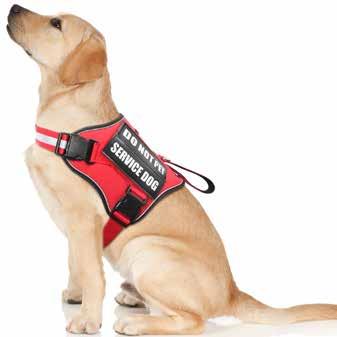
Circle where you'd find the answer to each question. Write the answer.
Question
1. What is the main difference between a regular pet and a service dog?
2. Why did Michael Hingson need a guide dog like Roselle?
Source Answer
Roselle to the Rescue Service Dogs
Both
Roselle to the Rescue Service Dogs
Both
3. What types of disabilities do the different types of service dogs help with?
4. How did Roselle save Michael's life during the emergency at the World Trade Center?
Roselle to the Rescue Service Dogs
Both
Roselle to the Rescue Service Dogs
Both
5. How do service dogs help people with disabilities live on their own? Use the information from the chart and details from both texts to explain.
LESSON PRACTICE VOCABULARY STORY REVIEW ACTIVITY ASSESSMENT
First-person point of view is when the story is told by a character, using words like I, me, and my. Third-person point of view is when the story is told by someone who is not a character, using words like he, she, or they.
Write a paragraph telling the story of Roselle to the Rescue in first person.
1. Plan. Write what happens in the beginning, middle, and end. Whose point of view will you write? Roselle Michael
2. Topic Sentence. Introduce the character in first person.
3. Body Sentences. Tell the story using words like “I,” “me,” or “my.”
4. Concluding Sentence. Write a lesson or opinion that the character has.
5. Paragraph. Write a paragraph.
Draw a Poster.
Make a thank you poster for a service dog. Decide if you are thanking a guide dog, a hearing dog, or a medical alert dog. Look back in the text about service dogs to remind you of each one’s job. Thank them for all the help they give.
Circle the correct answer.
1. Which word means how things are arranged?
a. Layout
b. Entire
c. Terrorists
d. Fuel
2. The had to tell the police his side of the story.
a. disability
b. fuel
c. victim
d. basic
3. Which of these is a basic need for humans?
a. A game
b. A chair
c. Water
d. A car
4. Her did not stop her from joining in all the activities.
a. basic
b. entire
c. disability
d. fuel
5. Which word means people who try to cause harm or fear?
a. Layout
b. Terrorists
c. Entire
d. Disability
6. Which word means a material that burns to create energy to give power?
a. Fuel
b. Disability
c. Harness
d. Victim
7. My little brother ate the cookie, not leaving even one crumb!
a. basic
b. layout
c. disability
d. entire
8. Which of the following is an example of something that would likely collapse?
a. A tower of blocks
b. A jar of pickles
c. A pen
d. A pillow
Circle the correct answer.
1. What was Michael Hingson’s job at the World Trade Center? (detail)
a. Doctor
b. Office manager
c. Lawyer
d. Professor
2. How did Michael know he needed to get out of the building? (cause and effect)
a. Someone made an announcement.
b. It was completely quiet.
c. He heard and felt an explosion.
d. The office filled with water.
3. Why did Roselle lead Michael to a subway station? (inference)
a. She wanted to find food.
b. She thought it was a safe place away from the explosion.
c. It was her favorite place to go.
d. She thought they should go back to where the explosion happened.
4. What was Roselle’s role in helping Michael on September 11, 2001? (main idea)
a. Roselle helped Michael tell others about the explosion.
b. Roselle made sure Michael had all his belongings.
c. Roselle guided Michael to the elevator to leave the building.
d. Roselle guided Michael down the stairs and away from the building.
5. Which of the following is a fact? (fact vs. opinion)
a. Service dogs may know up to 100 commands.
b. Guide dogs are the most helpful type of service dog.
c. Service dogs like being in libraries the best.
d. Hearing dogs are the cutest service dogs.
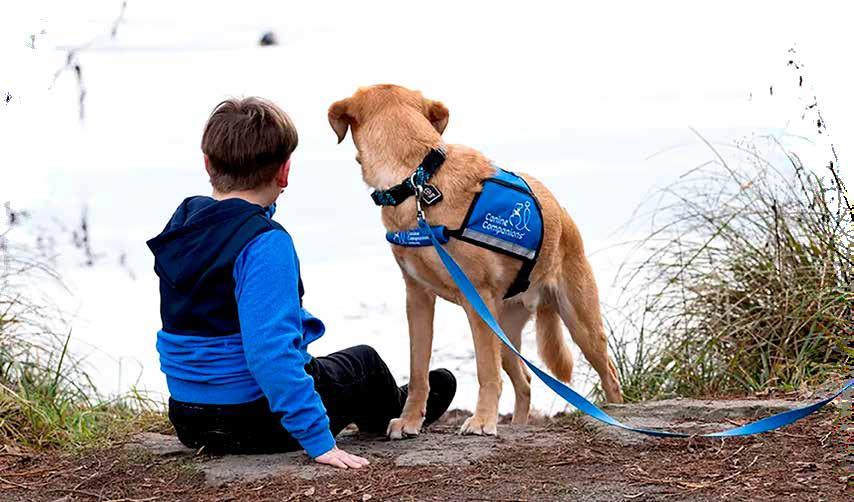
6. What is the first step in training service dogs? (sequencing)
a. They learn special skills for their future jobs.
b. They practice tasks over and over.
c. They learn basic commands like "sit," "stay," and "come."
d. They graduate.
7. What does the word "commands" most likely mean in the sentence "They learn basic commands like 'sit,' 'stay,' and 'come.'"? (context clues)
a. Questions
b. Instructions
c. Games
d. Stories
8. How are guide dogs and hearing dogs similar? (compare-contrast)
a. Both help people with medical problems.
b. Both lead their owners around objects.
c. Both alert their owners to important sounds.
d. Both are types of service dogs that help people with disabilities.
Standards: Lesson- 4.RI.1
Comprehension Skill Review- 4.RI.3
Unit 6: Integration of Ideas
Lesson 24: Making Inferences
Author: Tehila Bruck Genre: Nonfiction
Integrate ideas from different sources, such as text and images.
Use clues from the text to make inferences.
1. Learn how to use information you already know to make inferences about the text.
2. Practice making inferences about the text.
3. Complete the vocabulary worksheet.
1. As you read, think about the meaning of specific words or phrases.
2. Think about what the text doesn’t say.
1. Complete the comprehension activity to make predictions.
2. Review "Explaining Events" Complete the activity.
3. Complete the project.
4. Check your progress by taking the assessment.
When you read, you can figure out things that the text doesn’t say directly. This is called making an inference.
An inference happens when you combine clues from the text with what you already know. You may even make inferences without realizing!
At the station, long metal tubes sit next to a high platform. There is a loud horn and the rumble of big wheels on the tracks. People hurry with their suitcases to get on board before the doors close with a hiss.
Clues in the Text
What you Already Know
Trains come to stations.
Train stations have high platforms.
Trains have big wheels and doors.
People might bring suitcases on trains.
Trains have loud horns and hissing sounds.
This is talking about a train!
Your Inference
The text is talking about a train.
Notice that the text doesn’t use the word train.
Use the picture to complete the table.
Clues in the Picture What you Already Know Inference
The kids are wearing backpacks.
School buses are yellow. It is a school bus.
Read the passage. Make inferences to answer the questions.
Eli pedaled hard. He zoomed down the hill. Whoosh! Wind rushed past his helmet and his face. That was fun! When he reached the bottom, he turned around to do it again.
1. What is Eli doing? (Use a word not in the text.)
2. What are two words from the text that hint to this?
3. Why do you think he wore a helmet?
LESSON PRACTICE VOCABULARY STORY REVIEW ACTIVITY ASSESSMENT
Match the bolded words with their definitions. Highlight context clues.
The main requirements for a healthy plant are sunlight, water, and good soil.
I can’t afford that toy because it costs more than the money I have.
The scientist used a special instrument to measure the temperature of the liquid in the lab.
The party balloon floated all the way to the ceiling because it was filled with helium.
The baker put several cookies on the cooling rack so there were enough for all of us.
The snail was protected by its hard shell.
My brother is a genius at math; he can solve very hard problems in his head!
His biggest obstacles to finishing the project were being sick and missing school.
someone who is very smart or talented things that get in the way or make it hard to do something
kept safe from harm or danger a very light gas that makes things like balloons float things that are needed or must be done
more than two but not too many have enough money to pay for something tool or device used for a special purpose requirements [rih-KWY-er-munts]; afford [uh-FORD]; instrument [IN-struh-ment]; helium [HEE-lee-um]; several [SEV-ruh-l]; protected [pruh-TEK-tid]; genius [JEE-nyus]; obstacles [OB-stuh-kuhls]
Author: Tehila Bruck Genre: Nonfiction
Larry Walters had a dream that seemed impossible. He wanted to soar high into the sky, even though he wasn’t a pilot, didn’t have a license, and couldn’t afford flying lessons. But one day, he came up with a wild plan that just might work. What could he use to lift himself off the ground? And what would happen if his plan worked a little too well?
Did you ever look up at the sky and see a balloon floating away? Did you ever wish you could float away like a balloon? A man named Larry Walters had a dream. He wanted to float up, up, and away into the sky. One day, he actually did it!
You probably think that Larry Walters was a scientist, or maybe a pilot. But he wasn’t! He was a regular man who lived in California and worked as a truck driver. He drove along routes, delivered goods, and lived a quiet life.
But Larry had a dream. Ever since he was a kid, he wanted to fly. He dreamed of soaring through the sky like the planes he saw above his house.
When Larry was younger, he had tried to join the United States Air Force. He wanted to be a pilot or at least work with planes. But he had very poor eyesight and needed thick glasses to see clearly. Because of this, the Air
Force wouldn’t let him fly their planes. One of the requirements to join the Air Force is perfect eyesight. Larry was very disappointed, but he wasn’t ready to give up yet.
He decided to learn how to fly his own plane. Even if he couldn’t pilot flights for passengers, at least he could fly by himself. But flying lessons are very expensive, and he didn’t have much money. Even if he could some lessons, his bad eyesight meant he would never be able to get a pilot’s license.
At this point, most people would give up. But Larry didn’t want to give up his dream. He was sure he would find a way to soar up to the sky.
One day, Larry had a wild idea. If he couldn’t fly a plane, maybe he could fly something else.
But what?
He looked around his yard and noticed a big, sturdy lawn chair. It was light enough to pick up, but strong enough to hold his weight. He sat in the chair and started to think. He remembered that he had once seen some

weather balloons tied up outside a store. Weather balloons contain an instrument that gives information about the weather.
He knew that when weather balloons were filled with helium, they could carry a lot of weight.
What if I tied a bunch of balloons to my lawn chair? Larry thought. Would I be able to float up to the sky? Most people would laugh at such an idea and then forget about it. But Larry wasn’t like most people. Right away, he started to plan.
First, Larry made a list. He already had a lawn chair. Now he needed lots of weather balloons and a helium tank to fill them. He also needed ropes to tie everything together. He wanted a parachute (just in case!). He would take snacks and drinks along on his trip. How would Larry come back down when he wanted to end his journey? He would use a pellet gun to shoot the balloons one by one. Slowly, his chair would drift back down to solid ground.
Larry worked on his plan for months. He bought forty-five weather balloons and several tanks of helium. He made sure everything was ready for liftoff.
On July 2, 1982, Larry packed sandwiches, a radio, a camera, and a pellet gun. He strapped on his parachute. His plan was to float up about 30 feet, wave to the neighborhood down below, and slowly drift back down.
Finally, Larry was ready. He sat down in his lawn chair. It was attached by rope to a car, so it wouldn’t fly away before he was ready. His friends tied the weather balloons to the chair and filled them with helium. He named his flying machine Inspiration I.
His friends cut the rope. Then, something unexpected happened. Larry shot up into the air! Not 30 feet. Not 100 feet. He flew up over 15,000 feet (about three miles high)! He was even higher than some small planes.
Larry couldn’t believe it. The houses below looked like tiny toys. Birds flew past him. In the distance, he could see the ocean and mountains. It was beautiful, and also a little scary.
He used his radio to talk to the people he’d left behind.
“I’m okay,” he said. “Just a little higher than expected.”
He floated peacefully for a while. Then, he started drifting toward Los Angeles International Airport (LAX). Soon, some pilots flying huge airplanes saw something very strange outside their windows. They quickly reported this to air traffic control. These workers are in charge of making sure that aircraft are safe.
“This is TWA 231. We’re flying at 16,000 feet. There’s a man in a chair with balloons about five miles away from us!”
Larry knew he couldn’t stay up in the sky forever. It was cold. He was getting nervous. It was time to come down. He carefully picked up the pellet gun and aimed at the balloons. POP!
He shot a few balloons, and his chair started to sink.
He started to calm down. Everything was going to be fine. Soon, he’d be back home. Then something happened to ruin his plans. His fingers were stiff from the cold. He reached for the gun, holding it with one hand while steadying the chair with the other. The wind picked up. He dropped his gun! How would he manage to pop the balloons now? Would he ever get back to solid ground?

Larry looked around him. His chair was still sinking. Slowly, the balloons were bringing him back down. He floated lower and lower. He was going to make it!
He saw the beach below him and hoped the sand would make a soft landing. It hadn’t been
the relaxing trip he imagined, but he was going to return safely. But then he crashed straight into some power lines and got tangled up! That could have been very dangerous. Sparks flew, but Larry wasn’t hurt. He climbed down and reached the ground safely. He had landed in Long Beach, California. He was very far from where he had started.
The Story Continues
Larry’s adventure didn’t end there. Soon, the police arrived.
“You’re under arrest,” an officer said. “Me?” Larry said. “What did I do?”
“You flew through airport airspace without permission,” the officer explained. “That’s against the law.”
Larry was taken to the police station. News cameras followed him. Overnight, he became famous. Everyone wanted to interview the man who had flown in a lawn chair.
A reporter asked him, “Why did you do it?”
Larry smiled and said, “A man can’t just sit around.”
In the end, Larry was fined $1,500 for flying through protected airspace without permission. It was a small price to pay. As his story spread, people across the country were inspired by his courage. Some people thought he was crazy. Others thought he was a genius.
Larry may have been the first person to fly with balloons, but he wasn’t the last. Since his famous flight, many others have tried to copy him. Now, people use better safety gear and get permission from air traffic control.
Despite all obstacles, Larry turned his dream into reality, and this is something that will always be remembered.
Make inferences to answer the questions.
1. Why do you think Larry bought forty-five weather balloons and several tanks of helium?
2. Why do you think Larry brought a camera with him when he went on his journey?
3. Why do you think it was cold when Larry was in the sky?
4. Why do you think Larry dropped his gun?
5. Why do you think it is against the law to fly through airport airspace without permission?
Events are things that happen. Think about what might happen if a part of a story was skipped or in a different order. Each part of the event is important.
Write a paragraph explaining the story of Larry Walters' lawn chair flight.
1. Plan. Describe three parts of his story in order. Explain why each part is important.
What happened?
Why was this an important part of Larry’s flight story?
2. Topic Sentence. Write what the story is about.
The story is about
3. Body Sentences. Write about the story in the order it happened, explaining why each part is important. 1: 2: 3:
4. Concluding Sentence. Write an opinion or lesson about the story.
5. Paragraph. Write a paragraph.
Create a diorama.
Use a shoebox to show the scene where Larry flies in his lawn chair. Use 3D objects to decorate. Get creative!
Circle the correct answer.
1. Which of these is a good example of a requirement for a science project?
a. A pencil
b. A bike
c. A new puppy
d. A clown nose
2. I want to buy a new book, but I can't it right now.
a. protected
b. afford
c. several
d. requirements
3. Which word means a tool or device used for a special purpose?
a. Genius
b. Helium
c. Instrument
d. Obstacles
4. We filled the balloons with to decorate the room for the party.
a. protected
b. genius
c. several
d. helium
5. Which of these is a good way to describe several apples?
a. Just one apple
b. One hundred apples
c. A few apples
d. A whole orchard of apples
6. Which word means kept safe from harm or danger?
a. Protected
b. Genius
c. Helium
d. Requirements
7. The smart student was a at chess and won every game.
a. requirements
b. afford
c. genius
d. protected
8. Which word means things that get in the way or make it hard to do something?
a. Obstacles
b. Several
c. Genius
d. Afford
Circle the correct answer.
1. What was Larry Walters’ job before he flew in the lawn chair? (detail)
a. A pilot
b. An air force officer
c. A truck driver
d. A scientist
2. What caused Larry to drop his pellet gun? (cause and effect)
a. He was so excited that he let it go.
b. The balloons popped, and the chair moved suddenly.
c. His fingers were stiff from the cold, and the wind picked up.
d. He was getting too close to the airport.
3. Which do you think describes Larry the best? (inferencing)
a. Someone who gives up easily
b. A talented inventor
c. Someone who works hard to reach his goals
d. Someone who is scared of heights
4. What is the main idea of the entire passage? (main idea)
a. A man got into trouble with the police for flying a lawn chair.
b. A man named Larry Walters wanted to be a pilot but couldn’t.
c. A man named Larry Walters made his dream of flying come true by tying balloons to a lawn chair.
d. Flying with balloons is very dangerous and against the law.
5. Which event happened first? (sequencing)
a. Larry was fined $1,500.
b. Larry learned that he couldn’t join the Air Force.
c. Larry took off in his lawn chair.
d. Larry crashed into the power lines.
6. In the sentence “He looked around his yard and noticed a big, sturdy lawn chair,” what does the word sturdy mean? (context clues)
a. Broken
b. Old
c. Strong
d. Light
7. How was Larry's flight different from what he had originally planned? (compare-contrast)
a. He flew to a different country instead of staying close to home.
b. He flew much higher than he had expected.
c. He wanted to go on a long trip but only went a short distance.
d. He didn't want to use balloons, but he had to.
8. Which of the following is a fact from the passage? (fact vs. opinion)
a. Larry Walters' flight was a foolish idea.
b. The most important part of the flight was the landing.
c. Larry Walters used 45 weather balloons for his flight.
d. Larry Walters was a genius for figuring out how to fly.
Standards:
Lesson- 4.RL.4
Comprehension Skill
Review- 4.RL.2
Unit 7: Interpreting Meaning
Lesson 25: Literal vs. Nonliteral Language
Author: Yael Mermelstein Genre: Realistic Fiction
Interpret meaning in texts by recognizing figurative language, making predictions, and analyzing how illustrations support understanding.
Identify uses of nonliteral language and explain what they mean in context.
1. Learn about nonliteral language and literal meanings.
2. Practice identifying nonliteral language and explaining what it means.
3. Complete the vocabulary worksheet.
1. As you read, think about the meaning of specific words or phrases.
2. Notice how nonliteral language is used in the text.
1. Complete the comprehension activity to define nonliteral phrases used in the text.
2. Review “Theme.” Complete the activity.
3. Complete the project.
4. Check your progress by taking the assessment.
Have you ever heard someone say something that sounds funny?
Sometimes, words mean exactly what they say—that’s literal language. Other times, words mean something different —that’s nonliteral language. It has a special or creative meaning.
Let’s check out some examples to see the difference!


Does the sentence have a nonliteral meaning? If yes, write ‘n’ for nonliteral. If not, write ‘l’ for literal.
a. She has a mountain of homework.
b. He runs like the wind.
c. I’m hungry.
d. The test was a piece of cake.
e. The water is hot.
f. He has a heart of gold.
For each nonliteral sentence, draw a picture of the literal meaning. Then, choose the correct meaning.
1. He’s as strong as an ox. He is an ox. He is very strong.
2. The book was a real page-turner.
The book is interesting. The pages flip by themselves.
3. He has butterflies in his stomach. He is nervous. He swallowed butterflies.
4. I’m so hungry, I could eat a horse! I will probably eat a horse. I’m very hungry.
5. The sun smiled down at the world.
The sun was happy. It was a sunny day.
in very bad condition money given back after returning something a lump of paper or something soft pulled or removed something, especially with a sudden movement looked closely or carefully signaled unable to walk or move properly mend or fix wad [wahd]; rundown [RUN-down]; plucked [pluhkt]; refunds [REE-fundz]; motioned [MOH-shund]; lame [laym]; peered [peerd]; repair [ri-PAIR] 1. 2. 3. 4. 5. 6. 7. 8. LESSON PRACTICE VOCABULARY STORY REVIEW ACTIVITY ASSESSMENT
Match the bolded words with their definitions. Highlight context clues.
He crumpled the letter into a wad and threw it into the garbage.
The old, rundown house had broken windows and peeling paint.
She plucked the flower from the bush and held it in her hand.
The store gave refunds to everyone who returned the broken toys.
He motioned for me to follow him with a wave of his hand.
The horse was lame and couldn’t walk without limping.
He peered through the keyhole to see what was happening in the other room.
The mechanic was able to repair the broken car engine.

Author: Yael Mermelstein Genre: Realistic Fiction
Ely was the only bike fixer in town. Everyone knew he was a tough businessman. But when a boy showed up with a broken bike and no money to pay, things started to get interesting. Would Ely turn him away? And how did a small, rusty bike bring the whole town together? Read on to find out!
The sun looked like maple syrup melting over the top of the barn on the corner of Honeysuckle Street and Maythorn Avenue. Ely hammered at a tire rim on a ten-year-old Schwinn bike. There.
“Good as new,” Ely said. He twirled a reed between his teeth with his tongue. He was nearly as good at reed twirling as he was at bike fixing. “That’ll be thirty dollars.”
Ty tucked his hands deep into his pants pockets. One of the straps on his overalls slipped off his shoulder.
“That’s an awful lot of cash for a rim you
Ty sighed and rubbed his palm against his forehead.
“It’s just ‘cuz you’re the only bike fixer in town,” he said. “Old Red takes a week before he even gets to his garage, so we’ve got to use you.”
Ely shrugged. “Business is business.”
Ty rubbed his brown boots against the ground, causing a cloud of dust to fly up.
“What about the bell?”
“Not worth fixing,” Ely said. “And a new one’s gonna cost you a pretty penny.”
Ty kicked his bike’s kickstand and put his leg over the seat. He pulled a rumpled wad of
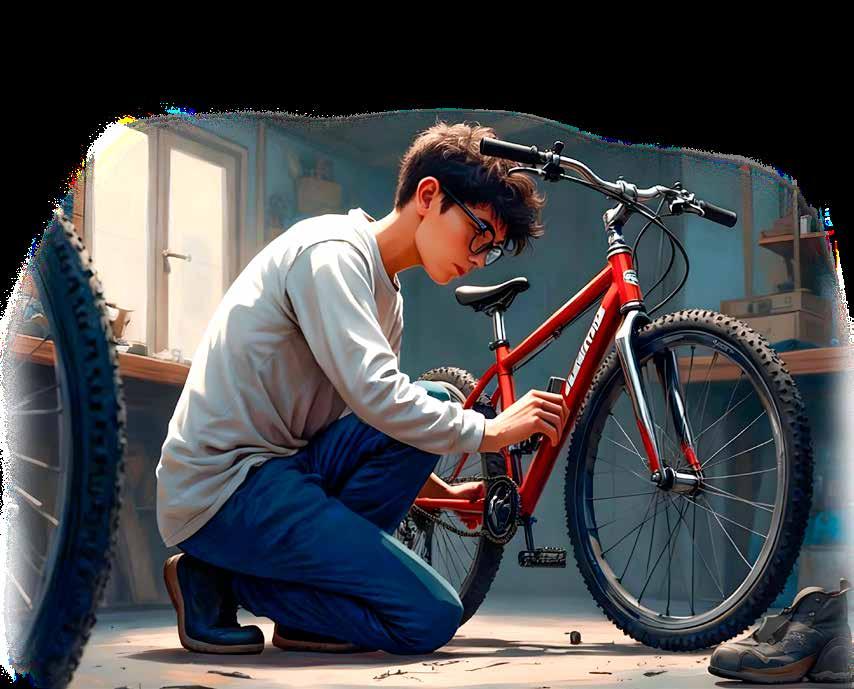
“Last I checked, all you cared about was the bills. Who cares what’s holding them together?”
Ely shrugged. Too bad that Ty was upset. This was a business, not a charity. He had his eye on a brand-new bike. He wasn’t going to be able to buy it with a handful of air.
rusty as a penny that had been sitting at the bottom of a swimming pool.
Ty left as the sun slid behind the yellow hills of Audibon, the only town Ely had ever known. He tugged on the string above his head, filling the barn with a dim light. He’d promised Greg Awful that his bike chain would be fixed by tomorrow. Greg was a nice kid, even with his last name. And Ely stuck to his word the way mud stuck to the soles of his sneakers. Problem was, he was missing a link for the chain. He searched through his toolbox and heard a noise. A customer? He looked up at the barn door. It was Jimmy B, the poorest kid in town. Rumor was his family had to mix weeds into their burgers for dinner on Sunday nights. Definitely not a customer.
“What do you want, Jimmy B?”
Jimmy moved aside. Behind him was a rundown bike. It looked like it had been plucked off the top of the junk pile behind the dollar store. The handlebars were bent in the oddest shape. The seat was missing. The chain was as
“Do you think you could fix this for me?” Jimmy asked.
Ely looked at the bike. He’d need to build this bike from the bottom up. He squeezed the tires, checking for holes. He looked at Jimmy’s old sweater, which had a hole in the pocket. This was a business, not a charity.
“I’m not sure I can take on a job this big,” Ely said. “And—well, it’ll cost you.”
“Right. Of course,” Jimmy said. “Sorry to bother you.” He left the barn, the bike rolling sadly behind him.
Ely turned back to the bike chain he was trying to fix. He couldn’t concentrate. He heard a knock. It was Ty.
“What?” Ely said. “You know there are no refunds.”
Ty shook his head. “Nah, I’m not here for that. I just—well—”
Ty motioned to the door of the barn, where the Ormon twins stood. The moon was bright and full behind them.
“We bumped into Jimmy Barker a few minutes back and, well…”
Ty reached into his pocket and pulled out another wad of bills.
“I, uh, want to help Jimmy B. So, here’s ten bucks. Don’t tell him it’s from me.”
Ty turned and left. The Ormon twins walked in. The old bike Jimmy had brought in earlier sat between them like a lame cow.
“Jimmy dropped this at the side of the road,” Alex Ormon said. He scratched a mosquito bite on his neck. “Seems he hasn’t had a working bike in months.”
Phil, the taller twin, held up a shiny chain. “I’ve been holding onto this, waiting for the right moment. I guess this feels about right.”
He dangled the chain between them. Ely reached out and took it. It was smooth between his fingers.
“A beauty,” Ely said. He was amazed that Phil
would part with it, just like that.
“Hey, crew!” a loud voice said. It was Ezra Arnica. He was so big and tall, he nearly filled the door of the barn. He smelled like cut wheat, and his boots were crusted with mud.
“Ezra!” the twins said.
“I heard Jimmy B needs a bike. Thought I could help.”
Ezra was all thumbs, everyone knew that. No way could he help with the repair.
“I happen to have a pair of shifters.” Ezra held out a black bag. “Not in the best shape but… Greg Awful helped me cut them off my own bike. For Jimmy B’s sake, I can manage without my old bike for a while.”
Ely’s mouth fell open, big enough for a fat fly to make its way in.
Ty, the twins, and Ezra were looking at him.
“Well?” they said. “How much is it gonna cost now?”
Ely blinked. Something bloomed in his chest, like a flower that had been waiting for spring to come.
“I—let me—have my hand at it for a bit.”
The boys nodded and left Ely alone with the old bike and some extra parts. He got to work. He checked the tires. The front tire needed only a small patch, but the back tire needed to be replaced. He screwed and unscrewed, pounded and polished. His brother called him in for dinner.
“Be there soon,” he said.
Three hours later, there was a shiny tenspeed bike sitting in the barn. Ely wiped the grease from his hands. He dropped his monkey wrench into his toolbox. He got on the bike and rode it straight over to Jimmy B’s house. He parked the bike and raced up the creaky steps. The cold night air slapped his cheeks, turning them as red as apples.
Jimmy peered through the screen door.
“Wh-what do you want?”
Still catching his breath, Ely pointed at the bike.
“For you!” he said.
“B-but I can’t pay—”
Ely shook his head. “Nah, it’s on me. On them, really. Let’s just say some of the other guys taught me how to do a real repair.”
Ely touched his heart. His cold fingers spread warmth through his jacket. A slow smile spread across Jimmy B’s face. Ely felt like his heart had been turned with a wrench.
Best. Repair. Ever.
PRACTICE VOCABULARY STORY REVIEW ACTIVITY ASSESSMENT
Underline the words in the sentences that have a nonliteral meaning.
1. “The sun looked like maple syrup melting over the top of the barn.”
2. “The sun slid behind the yellow hills of Audibon.”
3. “And Ely stuck to his word the way mud stuck to the soles of his sneakers.”
4. “The chain was as rusty as a penny that had been sitting at the bottom of a swimming pool.”
5. “The cold night air slapped his cheeks, turning them as red as apples.”
Circle the correct nonliteral meaning of each sentence. Put an x over the literal meaning.
1. “Ezra was all thumbs.”
Ezra had a lot of thumbs. He wanted a new bike.
2. “He had his eye on a brand-new bike.”
Ezra wasn’t good at handiwork. His eyeballs were sitting on the bike.
3. “And a new one’s gonna cost you a pretty penny.”
The cost of a new one is one penny.
4. “I—let me—have my hand at it for a bit.”
Let me try.
A new one will be expensive.
5. “He left the barn, the bike rolling sadly behind him.”
The bike was sad.
Let me put my hands on it. He was sad.
Stories have an idea or message. This is called a theme.
Write a paragraph explaining the theme of A Real Repair.
1. Plan. Answer the questions to figure out the theme.
What is the problem?
What does the main character learn?
Write the lesson as a theme statement:
2. Topic Sentence. Write what the story is about.
3. Body Sentences. Turn each of the answers from step 1 into a sentence.
1: In the beginning,
2: In the end,
3: The theme of A Real Repair is that
4. Concluding Sentence. Write whether or not you agree with the theme.
5. Paragraph. Write a paragraph.
Make a skit.
1. Rewrite the story as a play.
2. Assign parts and act them out!
Circle the correct answer.
1. Which word means to look worn out and in bad condition?
a. Plucked
b. Rundown
c. Motioned
d. Wad
2. Which word means signaled?
a. Repair
b. Peered
c. motioned
d. Refunds
3. He at the empty chair, wondering where his friend had gone.
a. plucked
b. peered
c. lame
d. repair
4. He crumpled the money into a tight and stuffed it in his pocket.
a. wad
b. refunds
c. lame
d. rundown
5. Which of the following is an example of something being plucked?
a. A flower ripped off a stem
b. A rock rolling down a hill
c. A bird flying through the air
d. A leaf falling from a tree
6. Which of the following is NOT a situation that might require repair?
a. A broken window
b. A new car
c. A torn piece of clothing
d. A leaking pipe
7. The customer demanded a for the broken product.
a. refund
b. wad
c. lame
d. peered
8. Which word means unable to walk or move properly?
a. Lame
b. Rundown
c. Repair
d. Peered
1. What did Ely fix for Ty? (detail)
a. His tire rim
b. His bell
c. His kickstand
d. His chain
2. What caused Ely to change his mind about fixing Jimmy's bike? (cause and effect)
a. He felt sorry for Jimmy.
b. He was pressured by the other boys.
c. He realized Jimmy needed the money.
d. He saw how nice the other boys were to Jimmy.
3. What is the main idea of the story? (main idea)
a. Ely learns how important it is to help others after seeing his friends' kindness.
b. Ely has a hard time making money as a bike repairman in a small town.
c. Jimmy is a poor boy who desperately needs a bike.
d. Ely fixes Ty’s bike.
4. What happened right after Ty paid Ely for the tire rim? (sequencing)
a. Ely tried to fix Jimmy's bike.
b. Ty complained about the price.
c. Ely searched for a missing chain link.
d. Jimmy brought his bike to the barn.
5. What do you think Jimmy’s reaction was to the fixed bike? (inferencing)
a. At first, Jimmy didn’t trust Ely’s kindness.
b. Jimmy felt so thankful for Ely’s kindness.
c. Jimmy didn’t care.
d. Jimmy was disappointed with the quality of the bike repair. Circle the correct answer.

6. What does the sentence "Rumor was his family had to mix weeds into their burgers for dinner on Sunday nights" mean? (context clues)
a. Jimmy's family enjoys eating unusual food.
b. Jimmy's family is very poor and has a hard time paying for food.
c. Jimmy's family has a unique recipe for burgers.
d. Jimmy's family likes to grow their own vegetables.
7. How is Ely's reaction to Jimmy’s request different from how the community responds? (compare-contrast)
a. Ely doesn’t want to help, but the community does.
b. Ely wants to help, but the community doesn’t.
c. Ely thinks he can’t do it, but the community thinks he can.
d. Ely thinks he can do it, but the community thinks he can’t.
8. Which of the following is an opinion stated in the story? (fact vs. opinion)
a. Ely is the best bike fixer in town.
b. Jimmy's bike had a bent handlebar.
c. Ely's brother called him in for dinner.
d. Ezra offered to help Jimmy by giving him his shifters.
Standards: Lesson- 4.RL.4
Comprehension Skill Review- 4.RL.3
Unit 7: Interpreting Meaning
Lesson 26: Idioms
Author: Yael Mermelstein Genre: Realistic Fiction
Interpret meaning in texts by recognizing figurative language, making predictions, and analyzing how illustrations support understanding.
Define idioms in the context of the text.
1. Learn some common idioms.
2. Practice defining and using idioms.
3. Complete the vocabulary worksheet.
1. As you read, think about the meaning of specific words or phrases.
2. Notice nonliteral language and how idioms are used.
1. Complete the comprehension activity to explain idioms in the text.
2. Review “Settings.” Complete the activity.
3. Complete the project.
4. Check your progress by taking the assessment.
Today, we will learn about idioms. Idioms are expressions people often use, but they don’t mean exactly what they say; they have a nonliteral meaning.
Here are some examples of idioms and their meanings:
Idiom
A walk in the park

Right under one’s nose

Hold the fort
The coast is clear
Read between the lines

Something that is easy to do
In a place easy to see or find
Take care of something for someone who is away
It is safe
Understand a hidden meaning
Give the cold shoulder Act unfriendly
Try on for size


Try or test something to see if it works or fits before deciding
Fill in the blanks. Choose idioms from the choice bank below.
1. I’m not sure about this chair, but I’ll before I decide to buy it.
2. I tried to say I was sorry, but he just continued to and walked away.
3. You have to to understand what he really means.
4. The answer was the whole time, and I didn't even think of it.
5. Cooking for my family is compared to cooking for a big party.
6. We waited behind the bushes until to surprise our friend.
7. Can you at the store while I run to pick up more supplies? try it on for size hold the fort a walk in the park give me the cold shoulder read between the lines right under my nose the coast was clear
Match the bolded words with their definitions. Highlight context clues.
The zookeeper released the bird and it flew out of the cage.
The two islands were linked by a long bridge. not wild; gentle let go or set free the line where the sky and the earth or sea seem to meet needed help or support from someone or something talking or writing about something a strong building made to protect people connected or joined together small area of land released [ri-LEEST]; depended [di-PEN-did]; referring [ri-FUR-ing]; horizon [huh-RY-zun]; fort [fort]; tame [taym]; patch [pach]; linked [linkt]
The baby bird depended on its mother to bring it food every day.
When the teacher said, "Please look at the board," she was referring to the whiteboard in the classroom.
The sun began to rise over the horizon, turning the sky pink.
The children built a big fort out of blankets and pillows in the living room.
The friendly squirrel was so tame that it would eat nuts right from my hand.
We planted a small patch of sunflowers in our garden this spring.
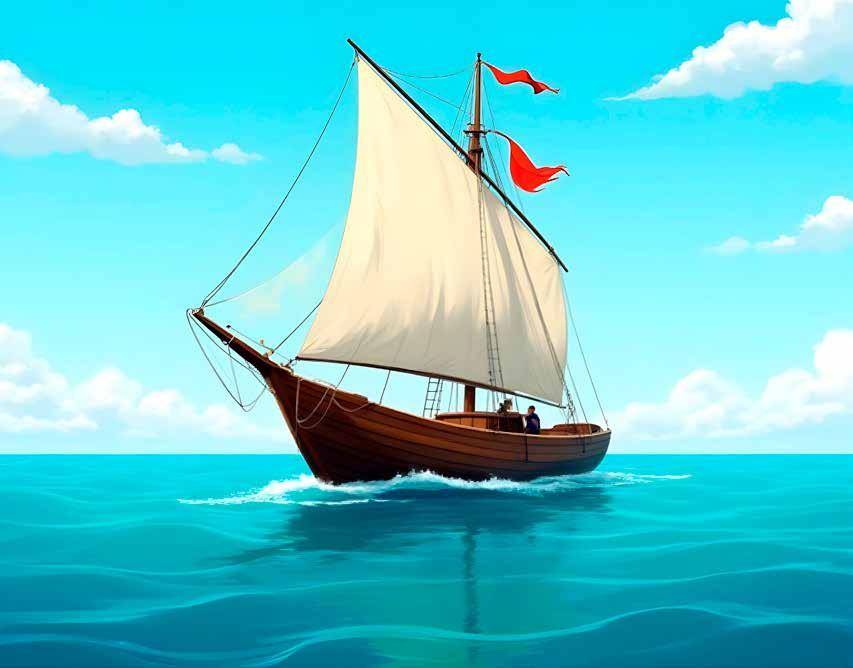
Author: Yael Mermelstein Genre: Realistic Fiction
Donny is spending the day sailing to a faraway island with his grumpy Uncle Isaac. Uncle Isaac has an old treasure map, and he needs to find the treasure to keep his job. But the island may have dangers, and the clues are not easy to understand. Will Donny figure out the clues in time? Will they find the treasure before it’s too late?
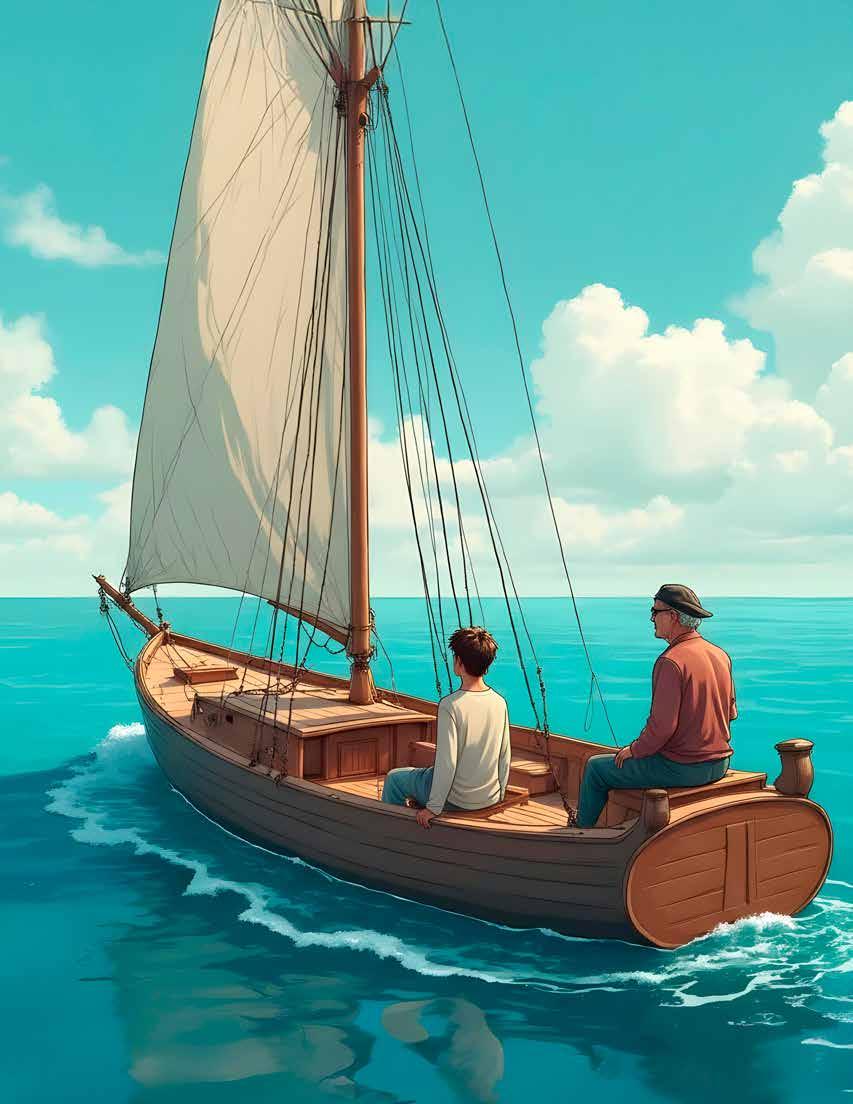

Donny peered through Uncle Isaac’s binoculars. He couldn’t make out anything other than sea, sea, and more sea.
“Ahoy!” he shouted as his uncle released the boat from the dock. “Are you going to blow the horn?”
Uncle Isaac glared at him. “This isn’t a cruise ship, Donny. It’s called a sloop.”
Donny loved the sound of the word. Sloop, sloop, sloop. And he loved the sea. It almost made up for being forced to spend the day with grumpy Uncle Isaac while his parents were away.
“We’re off to find some treasure, we’re off to find some treasure,” Donny sang.
His uncle held the lever to steer the boat. “Sailing isn’t a walk in the park, you know.”
Donny frowned. “I’m not dumb, Uncle Isaac. I know that sailing on water has nothing to do with walking through a park.”
Uncle Isaac shook his head. “That’s not what I meant.”
Soon enough, the sloop was sailing, and Uncle Isaac’s shoulders relaxed. Donny pulled out the tuna and egg sandwich his brother had made him before they set out.
Meanwhile, Uncle Isaac unfolded the ancient treasure map his boss had given him. Donny knew his uncle’s job at the museum depended on him finding a treasure on Slippery Slope Island today. Uncle Isaac ran his finger over the map.
“Something’s fishy,” he said.
Donny swallowed another bite and held up his tuna sandwich. “Sorry. I can throw it overboard if you want.”
Uncle Isaac frowned again. “I wasn’t referring to your sandwich. It’s an expression that means something is suspicious.”
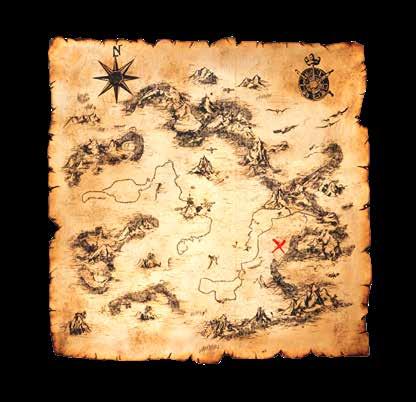
Ever since he was a baby, Donny had loved the sea. He’d started collecting shells before he moved from a crib to a bed. But Uncle Isaac was so grumpy, it almost wasn’t worth sailing the seas with him.
“I need you to watch out for big rocks, other boats, anything that tells us we need to move aside,” his uncle said.
Donny had his binoculars and jumpy feet to keep him alert. He watched the horizon, his heart filling like a sail in the wind when Slippery Slope Island came into view. The boat gave a jolt!
“Hey!” Uncle Isaac called out. “How could you not see that rock? It was right under your nose!”
Donny pulled out his camera and looked at himself on the screen. The only thing under his nose was a pair of lips. There was no rock there, not even a pebble. Uncle Isaac approached him from behind.

“Are you seriously searching under your nose? Donny! It’s an expression that means it was easy to see. You need to stop taking things literally. It’s slowing us down. Pay attention to the sailing instead, okay? My job is at risk!”
Donny frowned. He hadn’t done anything wrong. It wasn’t his fault Uncle Isaac spoke so strangely. He told himself he wouldn’t grow up to be a grouch like his uncle.
When the boat finally bumped onto the shore, Donny’s heart gave a bump too. They were here!
“I’m running to search for buried treasure!” Donny cried.
Uncle Isaac shook his head. “No, it could be dangerous on the island. Let me check things out first. You stay here and hold the fort. I’ll come back for you as long as the coast is clear.”
Donny thought about his uncle’s words.
There was no fort in sight, and this coast was obviously clear. He stared at the nearly empty lunchbox in front of him and had an idea. Maybe his uncle had meant “fork,” not “fort.”
An hour later, Uncle Isaac returned, his neck red from the sun.
“What are you doing?” Uncle Isaac asked him.
Donny left his hand where it was, inside his lunchbox. “Holding down the fork, as you said.”
Uncle Isaac slapped his palm against his forehead.
“Fort! I said fort!”
“Do you see a fort?” Donny asked.
Uncle Isaac took Donny’s lunchbox and snapped it shut. “I know you mean well. But you need to start thinking about what I mean. Not all words are meant exactly the way they’re said. Sometimes, you need to read between the lines. There could be pirates here,
or quicksand. If you make silly mistakes, it could be dangerous!”
Donny pinched his top lip between his thumb and forefinger. He didn’t want to see pirates or quicksand. He would pay closer attention to his uncle’s words.
“Now, here’s your metal detector. According to the map, the treasure is somewhere underground within a mile of this spot. You go left, I go right, and we’ll meet back here in an hour. Got it?”
Donny nodded.
“Is there anything unclear about that?” Uncle Isaac asked.
Donny shrugged.
“Hey, don’t go giving me the cold shoulder,” Uncle Isaac said.
That made no sense. It was boiling hot, and his shoulder was warm. And he certainly hadn’t given his uncle his shoulder as a present! But Donny kept quiet. He didn’t want
to sound dumb. Besides, there was treasure to be found!
Donny went left, holding his metal detector as he pushed through ankle-high grass. The island had seemed so tame from the sloop. Now, he wondered if there were rattlesnakes waiting to bite through his sock. But he wouldn’t disappoint Uncle Isaac. He would be back at the meeting point exactly on time, hopefully with the treasure.
But an hour later, Donny was back in the right place at the right time, and his hands were empty. He grew even more disappointed when he saw Uncle Isaac approaching, holding only his metal detector.
“I searched every patch of earth that lives under the sun,” Uncle Isaac said, his voice sounding like he’d swallowed stones. Donny made sure not to think about patches of earth living in tiny huts in sunny places. He was sure that Uncle Isaac didn’t mean that.
That night, Donny huddled in his sleeping bag on the deck of the sloop. The sail flapped, and the waves crashed. By the white light of the moon, Donny read a boring book his uncle had brought aboard. His mind wandered, thinking of how he could please Uncle Isaac. What had he told him to do?
Learn to read between the lines.
He looked at the book again. All he saw between the lines of text was blank, white space. How could anyone read that? He took out his flashlight and shone it on the space between the lines, and there it was—a message in purple letters.
X marks the spot of the treasure.
Donny snorted. He had read between the lines, but seriously? X marks the spot? Who wouldn’t think of that one?
But the next morning, he shared his findings with Uncle Isaac, who gave a halfsmile. Donny wondered if it hurt his uncle’s face to use muscles he never exercised.
“I suppose taking things literally isn’t all bad,” Uncle Isaac said.
They started out again on the island, each in their own direction. Donny tiptoed so he wouldn’t wake up dangerous creatures. He looked for a giant red X like the ones in all the pirate stories he’d read. But he couldn’t find one.
He heard scratching behind him.
It was a rattlesnake! He felt its teeth brush the hem of his pants.
“AAAAAHHHHHH!”
“AAAAAHHHHHH!” Uncle Isaac shouted as they bumped heads and went toppling to the ground.
Uncle Isaac rubbed his head. “Your head is hard,” he said.
“I thought you were a rattlesnake,” Donny said.
Uncle Isaac hissed. He stood up and began

doing a funny dance.
“It’s a rattlesnake dance,” his uncle said.
Donny laughed. “What are you doing here?”

Uncle Isaac shrugged. “I couldn’t find anything. You were smart to read between the lines. I figured you might have some good ideas.”
Donny felt warm inside. He had good ideas! But what if he couldn’t find the treasure?
His uncle’s shoulders slumped. “If I don’t find the treasure, I’m out of a job. And honestly, running a museum is the only thing I’m good at.”
Hmm. No wonder his uncle was so grumpy. Donny really wanted to help. Maybe, it was time to stretch his brain a bit, like taffy. Maybe they weren’t supposed to find a red X like in all the pirate stories. He looked up at the clouds, at the blue sky peeping through the branches of the—
Trees! Two giant palm trees with their branches tangled like their arms were linked

in the shape of a giant X. Donny ran over to the trees. His metal detector rang loud and true.
* * *
Uncle Isaac loaded the treasure chest onto the sloop. He gave Donny a pat on the back.
“I’m sorry if I came down hard on you. You’re a good kid.”
“You’re a good uncle.”
Uncle Isaac grinned. “Thanks. And you saved my job with the way your brain works.”
Donny grinned. “Not entirely. It was only when I thought like you that I figured things out.”
“You tried my brain on for size?” Uncle Isaac asked.
Donny looked at his uncle. How could you try on a brain like it was a sweater? He tapped the side of his head. “Something like that. I

Read each sentence from the story. Circle the meaning of the idiom.
1. “Sailing isn’t a walk in the park, you know.”
a. Sailing isn’t easy.
b. Sailing is not like walking in the park.
2. “How could you not see that rock? It was right under your nose!”
a. There was a rock on top of Donny’s mouth.
b. There was a rock that was really easy to see.
3. “You stay here and hold the fort.”
a. Put your hands on the fort so it doesn’t fly away.
b. Take care of things while I am gone.
4. “I’ll come back for you as long as the coast is clear.”
a. I’ll come back when I know that it is safe.
b. I’ll come back when there is nothing out on the beach.
Answer the questions.
5. What does Uncle Isaac mean when he says “something’s fishy”? What did Donny think he meant?
6. Why is Donny confused when Uncle Isaac says that he searched “every patch of earth that lives under the sun”? What do you think Uncle Isaac meant?
7. When Uncle Isaac told Donny to “read between the lines,” what did he really mean? What did Donny do? Did he use Uncle Isaac’s meaning?
The setting is the time and place a story takes place.
Write a paragraph explaining the setting of Slippery Slope Island.
1. Plan. Underline details from the story that describe the setting.
Slippery Slope Island
"Donny went left, holding his metal detector as he pushed through anklehigh grass. The island had seemed so tame from the sloop.”
"He looked up at the clouds, at the blue sky peeping through the branches of the—Trees! Two giant palm trees had their branches tangled like their arms were linked—in the shape of a giant X."
2. Topic Sentence. Write the name of the story and where it takes place.
3. Body Sentences. Describe the setting with details from the text.
4. Concluding Sentence. Write an opinion or lesson.
5. Paragraph. Write a paragraph.
Create an idiom poster.
1. Pick one idiom.
2. Write the idiom in the center of your poster. You can either use the space below or use a separate piece of colored paper.
3. Add pictures and/or drawings that show both the literal and figurative meanings of the idiom. Get creative!
Circle the correct answer.
1. Which of these is NOT an example of something being released?
a. Holding a child’s hand
b. Letting go of a kite string
c. Putting fish back into a pond
d. Letting a bird fly out of its cage
2. If you depended on your friend, what would you be doing?
a. Giving them advice
b. Helping them out
c. Asking them for help
d. Playing a game with them
3. When Mom said, "Remember the rules," she was to the things we can and can't do.
a. released
b. tame
c. referring
d. linked
4. We watched the ship sail far away until it disappeared over the .
a. fort
b. horizon
c. patch
d. tame
5. The soldiers guarded the king's carefully.
a. depended
b. fort
c. patch
d. horizon
6. The zookeeper worked hard to make sure the wild animal was enough to be around people.
a. referring
b. depended
c. fort
d. tame
7. Which word means a small area of land?
a. Fort
b. Horizon
c. Patch
d. Linked
8. Which word means two things connected or joined?
a. Referring
b. Horizon
c. Linked
d. Depended
Circle the correct answer.
1. What did Donny pull out of his bag to eat when the sloop was sailing? (detail)
a. A peanut butter and jelly sandwich
b. A tuna and egg sandwich
c. An apple
d. A bag of chips
2. Why did Uncle Isaac want to find the treasure? (cause and effect)
a. He wanted to buy a new boat.
b. His boss told him he had to find one for the museum.
c. He needed money to fix his sloop.
d. He promised Donny they would find treasure.
3. What is the main idea of this story? (main idea)
a. Donny and Uncle Isaac go on a sailing trip to find a treasure.
b. Donny learns the importance of understanding figurative language.
c. Uncle Isaac is a grumpy person who doesn't like sailing.
d. Treasure hunting can be dangerous and difficult.
4. In the sentence "Donny peered through Uncle Isaac’s binoculars," what does peered most likely mean? (context clues)
a. Glanced quickly
b. Looked closely
c. Shouted loudly
d. Spoke loudly
5. Why do you think Uncle Isaac's shoulders relaxed once the sloop was sailing? (inferencing)
a. He wanted to take a nap.
b. He felt less worried once the boat was moving smoothly.
c. He was tired from all the shouting.
d. He realized that Donny was going to be helpful.

6. What was the last thing Donny did before his metal detector rang loud and true, indicating the treasure? (sequencing)
a. He looked up at the clouds.
b. He heard scratching behind him.
c. He saw two giant palm trees with tangled branches.
d. He tiptoed so he wouldn't wake up dangerous creatures.
7. How is Donny’s way of looking for the treasure different from Uncle Isaac’s after Donny found the message? (compare-contrast)
a. Donny looks for a real “X,” while Uncle Isaac looks for other clues.
b. Donny stops looking sooner, while Uncle Isaac keeps trying.
c. Donny uses the map, while Uncle Isaac uses the metal detector.
d. Donny follows his feelings, while Uncle Isaac uses careful thinking.
8. Which of the following is an opinion from the passage? (fact vs. opinion)
a. Donny pulled out a tuna and egg sandwich.
b. Uncle Isaac ran his finger over the map.
c. Donny is smart to read between the lines.
d. Donny found a message in purple letters.
Standards:
Lesson- 4.RL.1
Comprehension Skill Review- 4.RL.4
Unit 7: Interpreting Meaning
Lesson 27: Making Predictions
Author: Yael Mermelstein Genre: Mystery
Interpret meaning in texts by recognizing figurative language, making predictions, and analyzing how illustrations support understanding.
Use clues from the text and illustrations to make predictions.
THE LESSON
1. Learn how to use clues from the text and illustrations to make predictions.
2. Practice using clues to predict what will happen next.
3. Complete the vocabulary worksheet.
1. As you read, think about the meaning of specific words or phrases.
2. Think about what might happen next and the clues that help you make predictions.
1. Complete the comprehension activity to record the predictions you made while reading.
2. Review “Literal and Nonliteral Language.” Complete the activity.
3. Complete the project.
4. Check your progress by taking the assessment.
Today’s lesson is all about predictions. A prediction is your best guess about what will happen next in a story. Great predictions aren’t random; they're based on events or details you’ve already read. Let's find out how to make smart predictions.
Pause: As you read, think about what might be a good place to stop.
Explain: Tell why your prediction is a good one. Use details from the story and what you already know. 1.
Ask: What will happen next?
What you already know
PRACTICE VOCABULARY STORY REVIEW ACTIVITY ASSESSMENT
Predict what will happen next. Draw a picture of your prediction. Explain why you made this prediction.
I made this prediction because
Predict what will happen next. Explain why you made this prediction.
Joshsat on the dock and looked into the water. Suddenly, he saw a shiny fish swimming below. It had a smooth body and looked big. Josh remembered his dad telling him about salmon. “This must be a salmon!” he thought. He also remembered how his dad said that grilled salmon tastes really good. Excited, Josh ran up the hill to the shed where his dad kept the fishing gear.
Prediction:
I made this prediction because
LESSON PRACTICE VOCABULARY STORY REVIEW ACTIVITY ASSESSMENT
Match the bolded words with their definitions. Highlight context clues.
I liked the cherry pie, but my brother preferred the apple pie.
Her cookies won first prize in the baking competition
The gardener hoped that the fertilizer he used would help him grow more vegetables.
I kept squinting because it was very sunny, and the light hurt my eyes.
When I saw the bright paint my sister had chosen for her room, I gasped.
As the man was arrested, he yelled, “I didn’t do it! I’m innocent!”
After the ball game, my shirt was damp with sweat.
My sister glared at me when I took the last cookie from the box we were sharing.
looking at something with eyes partly closed to try to see better or block a strong light not guilty; didn’t commit a crime or do anything wrong
stared in an angry or unfriendly way liked one thing better than another an event or contest in which people try to win something
slightly wet or soggy
drew in a breath sharply, usually out of surprise or shock
something added to the soil to help plants grow preferred [pree-FERD]; competition [com-puh-TIH-shuhn]; fertilizer [FER-tuh-ligh-zer]; squinting [SKWIN-ting]; gasped [GASPT]; innocent [IN-nuh-sent]; damp [DAMP]; glared [GLAIRD]

Author: Yael Mermelstein Genre: Mystery
Jonah was excited to take care of Everett, the class plant—until something terrible happened. One morning, Everett was gone! Everyone thought Jonah was to blame, but he knew it wasn’t his fault. Where did Everett go? Who took the plant? Can you figure it out before Jonah does? Start reading to solve the mystery!
Jonah’s elbows rested on the classroom windowsill. He stared at the plant his classmates had nicknamed “Everett.” The tips of Everett’s leaves were yellow. Too little sunlight, probably. He picked up the plant and turned it around. Its leaves shook. It looked like the plant was dancing.
“Hey, careful with Everett, Jonah!” his friend Ari called to him from across the room. He was sharing his snack with his little brother, Joshie. Joshie was an adorable kindergarten kid who loved to visit his big brother during recess.
Jonah frowned. Nobody had told Ari to be careful with Everett when it was his turn to take care of the plant. Of course, everyone thought Jonah would mess up. His classmates called him “Jonah Clown.” They thought he liked his nickname, but Jonah would have preferred to be called Everett, which meant “strong.”
Do you think Jonah will do a good job taking care of the plant? Or will he “mess up” like everyone thinks?
It was his turn to water Everett. He wouldn’t forget. He grabbed the bright blue watering can and carefully poured it over Everett. He watched the water disappear into Everett’s soil. He stuck his thumb in to make sure it was just the right amount. He added a bit of fertilizer from the oversized white bag on the windowsill. Then he patted the plant’s leaves and whispered “Good night.”
He looked down at the plant. Every class had been given a plant. All the plants would be entered into the Green Thumb Competition at the end of the month. Their class hoped Everett would live up to her name.
After recess, Jonah watched the clock on the wall as the minutes ticked down until the end of the day. He couldn’t sit still. He squeezed his blue ball of slime in his fist until it oozed out between the cracks in his fingers. Finally, the bell rang. He shot up and ran to the front of the classroom.
Well, he tried whispering. It came out more like a shout. But he didn’t think Everett minded.

* * *
The next morning, Jonah marched into the classroom. His shirt was untucked, and his shoes were covered in mud from the puddles he’d stepped in along the way. Ari stood opposite him, hands on his hips. Tony and Morris stood on either side of Ari, squinting at Jonah.
“It’s only eight-thirty in the morning,” Jonah said. “I didn’t do anything wrong yet.”
Ari pointed in the direction of the windowsill. Jonah gasped. Everett was gone!
“You were the last one to take care of her,” Tony said.
Jonah’s eyes grew very wide. “I—I didn’t—I watered Everett. Honest! That’s all!”
Ari sighed. “Not funny, Jonah Clown. We’re going to be the only class that has no shot at winning the Green Thumb Competition. We don’t even have a plant!”
Jonah came closer to the windowsill. He could see a trail of soil, but it stopped at the
edge of the classroom by the coat hooks.
“It makes no sense!” Jonah cried. “Maybe Everett was kidnapped!”
“Who would kidnap a plant?” Morris said.
“Yeah,” Max added.
Jonah sniffed the air. He imagined that a hound dog would do the same. Hounds were detectives, and that was what he needed to be right now. He had to prove that he was innocent
What do you think happened to Everett? Will Jonah be proven innocent?
The dirt path ended right by the coat hooks, Jonah noted. Maybe someone had stuffed Everett into his backpack.
Jonah ran his hands over each of the knapsacks hanging on the hooks. He noticed something odd. Max’s knapsack was dripping. Dripping!
“I’ve got it!” Jonah shouted. He raced over to Max’s backpack.
“Hey!” Max cried. “Don’t touch my stuff!”
Why do you think Max’s backpack is dripping? What do you think will happen next?
But Jonah was already reaching his hand into the backpack. He felt something cool and damp.
He pulled it out. It was a water bottle, with a picture of a green turtle on the side. The straw was leaking, and Max’s backpack was wet.
Max frowned. “I didn’t take Everett, Jonah.
But thanks anyway. At least I can dry out my backpack.”
Jonah was glad he’d helped save Max’s notebooks. But he still hadn’t found Everett. He headed toward the classroom door. “If someone stole Everett, he definitely didn’t leave her in the classroom,” he said. “Is anyone coming with me?”
Ari nodded. “I’ll come. I’m not losing the Green Thumb Competition.”
Ari and Jonah walked slowly down the hallway, eyes glued to the floor. Here and there, they found some dirt. They tried to follow the trail. Then, the dirt disappeared. Next, Jonah noticed small, dirty puddles on the floor.
“I’ve got it!” Jonah cried. “Everett was dragged along the floor, right here. Look!”
Ari bent over, examining the wet trail on the floor.
Just then, Fernando, the janitor, passed by. His bucket spilled over onto the floor.
“I’ve been doing this for six years,” Fernando grumbled. “When will I learn to stop overfilling my bucket?”
Jonah noticed the tracks that the wheels on Fernando’s bucket made on the floor. It looked just like the marks they’d been examining. He sighed. Maybe they would never solve this mystery. Jonah would be blamed for this all the way through eighth grade!
“We can’t give up,” Ari said.
They went down the stairs and searched the hallway on the first floor. They bent down low, looking for clues. When they reached the library, Ari let out a cry.
“Look! It’s a green leaf.”
Jonah bent over to examine the green leaf. It did look like Everett’s leaves. They walked into the library. Mrs. Gunner, the librarian, was putting books onto the shelves.
“Mrs. Gunner,” Jonah said. “Have you seen a plant that looks like THIS?” He held up the leaf.
Mrs. Gunner’s eyebrows bunched together. “Shhh! Jonah, this is a library, not a lunchroom!”
“Sorry,” Ari whispered. “But did you see it?”
Mrs. Gunner tapped a finger against her

lips. “No, I didn’t see a plant. But one of the younger kids came in holding a leaf. He was looking for a book on plants for show and tell.”
Jonah felt his shoulders fall. All of their clues were as empty as air.
Suddenly, he had an idea. In the yard outside, there was a small garden. Nobody would notice if one plant went missing. They wouldn’t have Everett, but they would have another plant to enter into the competition. He shared his idea with Ari.
“We can’t steal a plant just because you lost Everett!” Ari blurted as they burst into the yard.
Jonah glared at him. “I didn’t lose Everett!”
Jonah crossed the field where the sixth graders were playing ball. He reached the garden and looked over the plants, hoping to find one that looked like Everett. His heart slammed against his ribs when he saw, in the middle of the garden—Everett!
“That’s her!” Jonah said. “The tips of her leaves were yellow on one side. I even see the fertilizer I gave her!”
“But—how did she get here?” Ari asked.
How do you think Everett got into the garden? What do you think will happen next?
“I don’t care,” Jonah said as he lifted Everett and wrapped his arms tightly around her.
“Hey!” came a small voice. Ari and Jonah turned around. It was Ari’s little brother. He was glaring at them. “Leave that plant alone!”
“Joshie?” Ari said. “What are you doing? This is our plant!”
Joshie shook his head. “Yesterday, I left my hat in your class. I ran back inside and saw Everett. I felt so bad for her, sitting all alone. I took a couple of leaves from your plant and went to the library. Mrs. Gunner was leaving, but she showed me a book with pictures of plants just like Everett. But those plants were outside in the sunshine, with friends. Everett needs friends, too! I brought her out here, and look how happy she is now. You can’t take her back in.”
Jonah looked at Ari. Ari put a hand on Joshie’s shoulder, but his eyes were still locked with Jonah’s.
“Yeah,” he said, “you’re right. I think everyone’s happier with friends.”
Jonah couldn’t wait to prove to the rest of the class that he was innocent. He held Everett carefully as Ari walked at his side. He felt like he’d already won the Green Thumb Competition.
Fill in the predictions that you made as you read the story. Then, write why you made your prediction. Check the box if your prediction was correct.
1. Page 430: Did you think Jonah would do a good job taking care of the plant?
I predicted because
2. Page 431: What did you think happened to Everett? Would Jonah be proven innocent?
I predicted because
3. Page 431: Why did you think Max’s backpack was dripping? What did you think would happen next?
I predicted because
4. Page 433: How did you think Everett got into the garden? What did you think would happen next?
I predicted because
Write a paragraph explaining the nonliteral words in this sentence.
Literal language is when words mean exactly what they say. Nonliteral language is when words mean something different. They have a special or creative meaning. His heart slammed against his ribs when he saw, in the middle of the garden—Everett!
1. Plan. Draw a picture of the literal meaning. Then, circle the correct meaning.
His heart moved outward and hit his ribs inside his body. He was very shocked.
2. Topic Sentence. Write the nonliteral words from the text.
3. Body Sentences. Write the literal meaning of the phrase. Explain why that meaning doesn't make sense here. Then, write what the phrase really means (the nonliteral meaning).
4. Concluding Sentence. Write why you think the author used nonliteral language.
5. Paragraph. Write a paragraph.
Predict:
What will happen next? What will happen at the Green Thumb Competition? Will Jonah’s classmates treat him any differently now?
On the lines below, write Chapter 2 for Everett Forever. Base your chapter on clues from the original story.
Circle the correct answer.
1. The farmer used on the fields to help the crops grow.
a. competition
b. squinting
c. fertilizer
d. damp
2. Which word means slightly wet or soggy?
a. Damp
b. Innocent
c. Squinting
d. Fertilizer
3. I at my classmate after he said something rude to my friend.
a. preferred
b. gasped
c. squinting
d. glared
4. My grandmother was so she could see the small print in her book.
a. preferred
b. squinting
c. glared
d. innocent
5. Which word means liked one thing better than another?
a. Preferred
b. Gasped
c. Glared
d. Damp
6. Which is an example of a competition?
a. Group work
b. Music class
c. A spelling bee
d. Homework
7. My mother when she saw the huge hole in my shirt.
a. innocent
b. gasped
c. preferred
d. competition
8. Which is an example of someone who is innocent?
a. A boy who hit his brother
b. A girl who spilled some milk
c. A thief who stole money
d. A lady who baked a cake
Circle the correct answer.
1. What nickname did Jonah’s classmates give him? (detail)
a. Jon
b. Jonah Clown
c. Everett
d. Mess-up
2. What is the main idea of this story? (main idea)
a. A kindergarten student named Joshie likes to spend time in his older brother’s classroom.
b. A class plant disappears.
c. The Green Thumb Competition has strict rules.
d. A plant named Everett is very strong.
3. Why do you think everyone blamed Jonah when the plant went missing? (inferencing)
a. He had dirt on his shirt.
b. Someone saw him take the plant out of the classroom.
c. They knew Jonah loved the plant.
d. They were expecting him to mess up, and the plant went missing on his day to take care of it.
4. Where is the first place they looked for the missing plant? (sequencing)
a. In the library
b. In the garden
c. In Max’s backpack
d. In the hallway
5. What caused Jonah to think that Everett was in Max’s backpack? (cause and effect)
a. Max’s backpack was wet.
b. Max had stolen things before.
c. Someone told Jonah that Max took Everett.
d. There were leaves sticking out of Max’s backpack.

6. The story says, “The tips of Everett’s leaves were yellow.” What does tips mean in this context? (context clues)
a. Leans or falls over
b. The pointed ends of something
c. Expert pieces of advice
d. Money given to someone for a service
7. How were Ari’s feelings about Jonah different in the beginning and end of the story? (compare-contrast)
a. In the beginning, Ari trusted Jonah with Everett, but at the end, he did not.
b. In the beginning, Ari considered Jonah a friend, but at the end, he thought of him as an enemy.
c. In the beginning, Ari didn’t trust Jonah and thought he took Everett, but at the end, they were friends.
d. In the beginning, Ari thought Jonah was funny, but at the end, he didn’t think he was funny anymore.
8. Which is an opinion about Joshie from the story? (fact vs. opinion)
a. Joshie is adorable.
b. Joshie is in kindergarten.
c. Joshie visits his big brother during recess.
d. Joshie took Everett outside.
Standards:
Lesson- 4.RL.7
Comprehension Skill Review- 4.RL.3
Unit 7: Interpreting Meaning
Lesson 28: Illustrations
Author: Ben Green Genre: Realistic Fiction
Interpret meaning in texts by recognizing figurative language, making predictions, and analyzing how illustrations support understanding.
Find connections between visual representations of a text and the text.
1. Learn how pictures, illustrations or dramas could represent or enhance the text.
2. Practice identifying where illustrations reflect the text and where they don’t.
3. Complete the vocabulary worksheet.
1. As you read, think about the meaning of specific words or phrases.
2. Think about how the visual version is similar to and different from the text.
1. Complete the comprehension activity to make connections between the visual version and the text.
2. Review “Predictions.” Complete the activity.
3. Complete the project.
4. Check your progress by taking the assessment.
There are many ways to share a story. A story can be written in text, acted out in a play, told aloud or recorded, or shown in pictures.
Below, you’ll see the same story shown in three different ways. Read the text. Then, see how the drama and picture version tell the same story. Which details are from the text?
How did the story change?
Mark looks older than Josh.
Mark and Josh are dressed in olden-day clothing.
Mark knew he had finished his math homework, but it was missing. He searched under his bed and in the kitchen. He saw his little brother, Josh, playing with a paper airplane. He stared in disbelief. It was his math sheet!
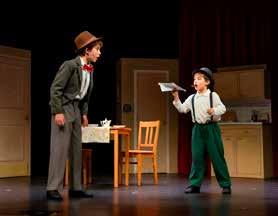
Josh is in the kitchen.
Mark stares in disbelief.
Mark searches under his bed.
room is messy.
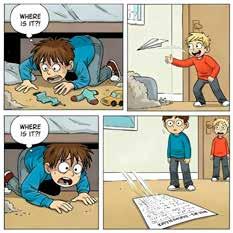
Josh is laughing.
Mark stares in disbelief.
Read the text. Then, use the pictures to choose “From the text” or “Not from the text.”
It was a rainy Sunday. Leo and Max were building the best pillow fort their living room had ever seen. They gathered all the fluffy pillows from the couch, every blanket they could find, and a few wobbly chairs from the kitchen.
Their first attempt was a bit of a disaster. The pillow walls kept slipping, and the blanket roof flopped to the floor. They didn't give up, though. Leo held a big chair in place while Max carefully tucked the corners of a blanket into the cushions.
Finally, they crawled into their new cozy home. They took turns telling their silliest jokes, laughing so hard that their sides ached. It was a fun day.
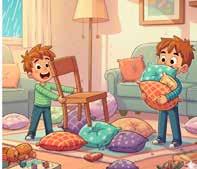
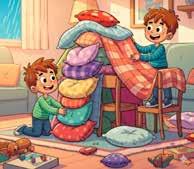
Picture 1
1. Leo was wearing a green shirt.
2. It was a rainy day.
Picture 2
1. Max was standing on a chair.
2. The boys had to hold the fort together so it wouldn’t fall.
Picture 3
1. The boys were laughing.
2. The boys were reading a joke book.
From the text
From the text
From the text
From the text
Not from the text
Not from the text
From the text
From the text
Not from the text
Not from the text
Not from the text
Not from the text
Match the bolded words with their definitions. Highlight context clues.
The class was excited for the upcoming field trip to the zoo next week.
a long space between rows of seats, shelves, or desks moving your head up and down to show you agree or understand something happening soon changed into something very different, usually in a big or important way take a quick look at something the only one of its kind; special or different from everything else on all sides of something or someone regular beat or pattern of sounds and movements upcoming [UP-coming]; unique [yoo-NEEK]; transformed [trans-FORMD]; surrounded [suh-ROUND-id]; aisle [ILE]; nod [NOD]; rhythm [RITH-um]; glanced [glanst]
Each person's fingerprint is unique, which means no two people in the world have the same one.
The caterpillar transformed into a beautiful butterfly with colorful wings.
The treasure chest was surrounded by tall, green palm trees on all sides.
The teacher asked us to line up in the aisle so no one would block the desks.
When the teacher asked if we understood, we all gave a quick nod with our heads to show that we did.
The rhythm of the song made everyone tap their feet and clap their hands to the beat.
She glanced at the clock on the wall and saw that she was almost late for the bus.
Author: Ben Green Genre: Realistic Fiction
At Camp Willow Lake, kids are busy preparing for the big talent show. Some are juggling, some are riding unicycles, and others are cracking jokes. But Noah doesn’t fit in with the noisy crowd, he only feels at home at the old piano in the dining hall. When the big talent show arrives, will Noah keep his music in the shadows, or will something happen that pushes him into the spotlight?
Everywhere Noah turned, campers and counselors were buzzing about the upcoming talent show. Wherever he looked, kids were practicing. Some boys were juggling little balls. Others were riding unicycles.
Noah didn’t know how to do any of those things. At Camp Willow Lake, he was like a sock that had lost its match. The other kids were loud and always running off to activities. He preferred to shrink into the shadows and watch quietly.
He wasn’t like Logan, who was good at everything noisy. Logan won at dodgeball, he made announcements during cleanup. He told jokes that made the other boys roar. When Noah once mentioned that he liked to play piano, Logan lifted an eyebrow and said, “That’s unique .” Everyone laughed, like it was the funniest word in the world.
At least Noah still had his music, even here in camp. Instead of joining his bunk at sports, Noah would slip away to the old piano in the dining room. It had a sticky F-sharp key, but Noah knew how to make it sing. He looked forward all day to the time he spent with the piano.
One afternoon, Mr. Carver, the camp director, found him in the dining room. “You should be with your bunk,” Mr. Carver said, but he was smiling. “That song is lovely, did you learn it from someone?”
“No,” Noah said. “I made it up.”
Mr. Carver’s smile grew wider. “I see. Would you play it at the talent show?”
Noah stared at his shoes. His lace had come loose again. “I don’t know.”
“Think about it,” Mr. Carver said. “You’ve got something special there.”
Noah did think about it. He thought about it during supper. He thought about it while brushing his teeth. He thought about it in his bunkhouse, while the bed above him squeaked. What if he messed up? What if no one clapped? What if Logan raised that eyebrow again?
That night, he watched Logan practice for the talent show. He played lively music as he told joke after joke. All the boys laughed.
The next morning he found Mr. Carver lining up cereal boxes in the lunchroom. “About the show,” Noah said in a small voice. “I don’t think I can do it.”
“That’s a shame,” Mr. Carver said kindly. “Maybe next time.” He patted Noah’s shoulder and went back to the cereal. Noah walked away with his head down.
That night, the dining room was transformed. Paper chains hung from the ceiling. Folding chairs stood in rows. A little stage was in the front, with the old piano off to the side. Campers piled in, full of whispers and excitement. Logan came in, his sunglasses on his head, surrounded by other boys.
Noah sat in the back row. He clapped for a boy who sang a song. He clapped for twins who did cartwheels. He even clapped for a card trick that had gone wrong. Clapping was safe. Clapping made him feel like he was part of the crowd, without anyone looking at him.
Then, familiar music started to play. Logan’s music. It was his turn to come on stage. Suddenly, there was a crash behind
the curtain. The music turned off.
“Uh-oh,” someone said loudly. Logan appeared in the aisle . His sunglasses were crooked, his face had lost its shine.
He looked around the room like he had lost something. His eyes landed on Noah. “Noah!” he called. “My music isn’t working. Will you play for me? Please.”
“For you?” Noah said. His voice sounded far away to his own ears.
Before he could think of a reason to say no, Mr. Carver spoke into the microphone. “Logan, you’re up. Ready?”
Logan swallowed. “We’re ready. Noah’s coming on with me.”
No, I’m not, Noah wanted to say.
But he found himself standing up. His legs carried him to the piano. His heart thumped so hard he could feel it in his fingers. He sat on the bench. He placed his hands on the keys and felt the familiar coolness. Logan gave him a worried nod . Noah closed his eyes for a second and then started to play.
The song started softly, like water over stones. Logan told his first joke, and the crowd laughed. Noah added a bounce to the rhythm . Logan told another joke that fell flat, but the music lifted at just the right moment. The audience cheered.
Noah forgot to be scared. The tune moved where it wanted. His fingers danced over the keys. Logan ran out of jokes and stepped to the side. He tipped an invisible hat, as if passing the stage to the music. The spotlight slid toward the piano. Noah didn’t look up.
His hands kept moving.
He ended on a gentle note that hung in the air. For a moment, no one moved. Then the room burst into claps and cheers that bounced off the walls. It was the loudest sound of the night, and for once, it didn’t make Noah want to hide.
He walked off the stage, then slipped outside for a breath of cool air. The stars were out. Someone had left a half-empty cup on the bench. Noah put it in a trash can because Mr. Carver always said, “Leave a place better than you found it.”
Logan found him there. He kicked at a pebble and missed. “Hey,” he said. “You were amazing. You saved my act.”
“You could have done it without me,” Noah said, though he wasn’t sure that was true.
“Not like that,” Logan said. “Your music made it feel real.”
“Thanks,” Noah said. The word felt warm in his mouth.
Logan glanced toward the dining room. “Do you think you could show me how to play? I don’t even know the names of the keys.”
Noah studied him. Logan still looked like the same loud boy. A boy who liked to win. But his voice sounded different.
“Sure,” Noah said. “We can go slow.”
“Slow is fine,” Logan said. He grinned. “Playing piano is so… unique.”
The word hung there in the dark night. Noah felt his shoulders relax. In the background, the crowd’s cheers rose.
But the noise no longer bothered him.
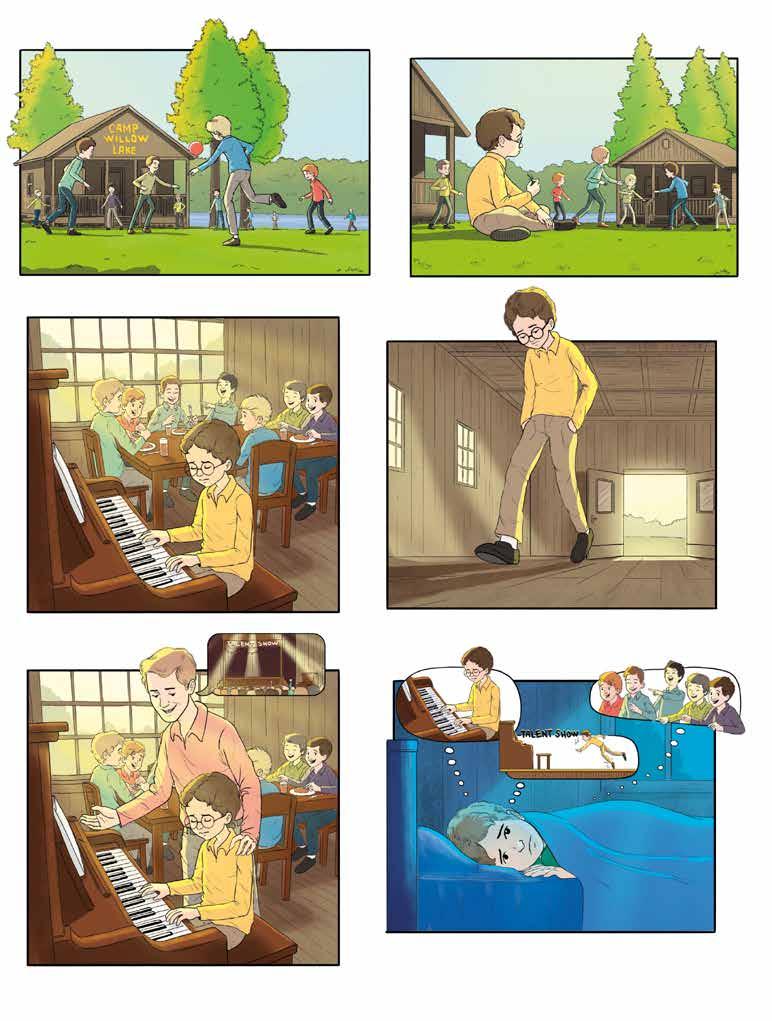
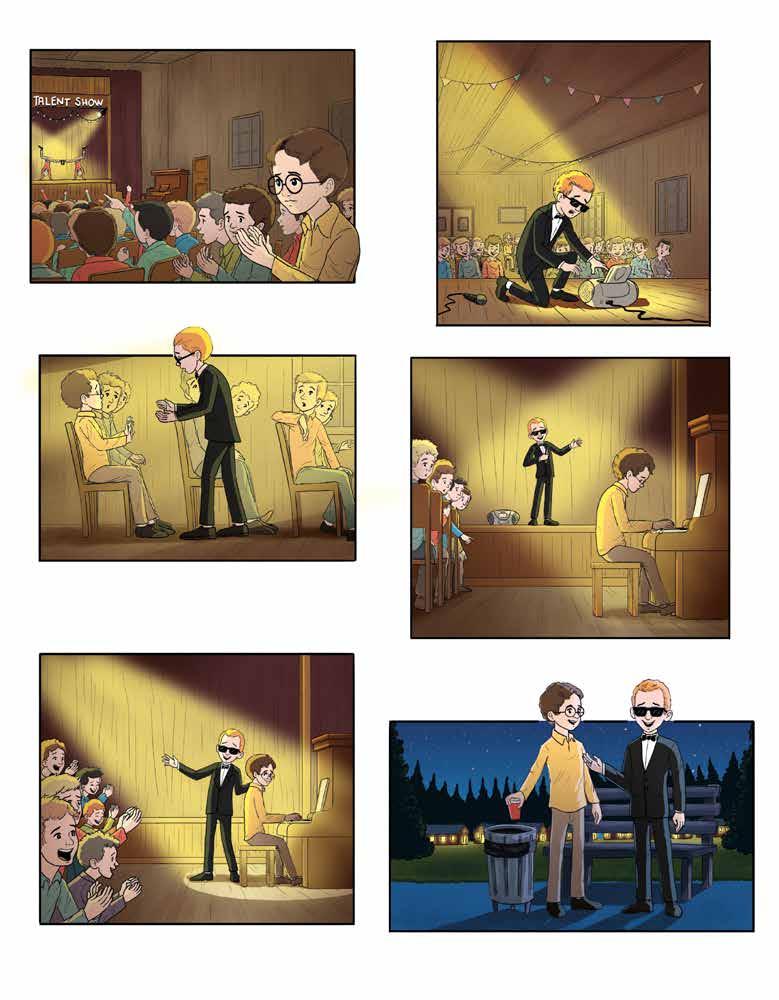
Underline the details in the text that are shown in each picture. Then, write one detail in the picture that is not in the text.
1. The other kids were loud and always running off to activities. He preferred to shrink into the shadows and watch quietly.
Detail not from the text: Noah is holding grass.
2. One afternoon, Mr. Carver, the camp director, found him in the dining room.“You should be with your bunk,” Mr. Carver said, but he was smiling. “That song is lovely. Did you learn it from someone?”
Detail not from the text:
3. Noah sat in the back row. He clapped for a boy who sang a song. He clapped for twins who did cartwheels. He even clapped for a card trick that had gone wrong. Clapping was safe. Clapping made him feel like he was part of the crowd, without anyone looking at him.
Detail not from the text:
4. He walked off the stage, then slipped outside for a breath of cool air. The stars were out. Someone had left a half-empty cup on the bench. Noah put it in a trash can because Mr. Carver always said, “Leave a place better than you found it.”
Logan found him there. He kicked at a pebble and missed. “Hey,” he said. “You were amazing. You saved my act.”
Detail not from the text:
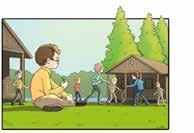
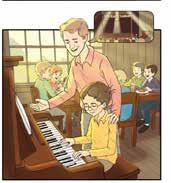
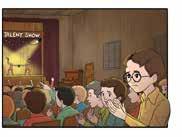
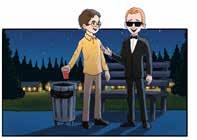
A prediction is a guess about something that will happen next.
Write a paragraph predicting what will happen next in “Keys in the Spotlight.”
1. Plan. Describe what you think will happen next and why.
2. Topic Sentence. Write your prediction. I predict
3. Body Sentences. Explain why you made that prediction. What else might happen?
4. Concluding Sentence. Write an opinion or lesson. What do you think will happen?
5. Paragraph. Write a paragraph.
Create an act for a talent show.
Create a short act. You can write a funny joke, a few lines of a song or poem, or draw a picture of your act on stage. When you finish, share it with a partner as if you are performing in the show.
Circle the correct answer.
1. Which of these is an example of something that is upcoming?
a. A test you had last week
b. A class party tomorrow
c. A book you are reading
d. A game you played
2. The artist made a painting that no one had ever seen before.
a. unique
b. glanced
c. surrounded
d. aisle
3. The old building was into a new book store.
a. transformed
b. glanced
c. nod
d. aisle
4. The castle was by a big gate.
a. upcoming
b. glanced
c. surrounded
d. rhythm
5. Which word means a long, narrow space between rows?
a. Aisle
b. Rhythm
c. Surrounded
d. Transformed
6. Which word means to move your head up and down to show you agree or understand?
a. Rhythm
b. Upcoming
c. Nod
d. Glanced
7. The drummer kept a steady as he played the song.
a. unique
b. rhythm
c. transformed
d. glanced
8. Which of these is an example of someone who glances at something?
a. A scientist studying a plant
b. A student reading a book
c. A person looking at a sign while driving by
d. A painter looking at his finished work
Circle the correct answer.
1. What does Noah like to do instead of joining his bunk at sports? (detail)
a. He likes to ride unicycles.
b. He likes to go swimming in the lake.
c. He likes to play the piano in the dining room.
d. He likes to practice juggling little balls.
2. Why does Logan ask Noah to show him how to play the piano? (cause and effect)
a. Because he wants to play a trick on Noah
b. Because he wants to save his act at the next talent show
c. Because he is surprised by how amazing Noah's music was
d. Because he wants to get a better grade in music class
3. Why do you think Logan's voice sounds "different" when he talks to Noah at the end? (inferencing)
a. He is still upset that his act was almost ruined.
b. He realized that Noah was a nice person and was embarrassed that he was mean to him.
c. He is still making fun of Noah.
d. He is worried that the camp director will be angry with him.
4. What is the main idea of the story? (main idea)
a. A camp director helps campers with their problems.
b. A boy learns to play the piano.
c. A boy overcomes his shyness to share his talent.
d. Two boys learn to tell jokes.
5. Which event happens last in the story? (sequencing)
a. Noah and Logan talk under the stars.
b. Noah walks onto the stage and plays the piano.
c. Noah sits in the back row of the talent show.
d. The audience gives Noah a standing ovation.
6. In the sentence "He told jokes that made the other boys roar,” what does the word roar mean? (context clues)
a. Yell loudly
b. Scream with fear
c. Laugh loudly
d. Cry out with pain
7. How are the campers' reactions to Noah at the end of the story different from their reactions at the beginning? (compare-contrast)
a. At first, they laughed at him, and at the end, they cheered for him.
b. At first, they notice him, and at the end, they didn't notice him.
c. At first, they wanted to be his friend, and at the end, they laughed at him.
d. At first, they liked him, and at the end, they ignored him.
8. Which of these is a fact from the story? (fact vs. opinion)
a. The piano was a beautiful instrument.
b. Noah’s talent was special.
c. Logan’s act was the best.
d. Logan’s music didn’t work.

www.lighthousecurriculum.com