
Level E Grammar and Writing
This
book belongs to

Grammar and Writing
Written and Edited by: Yehudis Leitner, Fraydel Sharf
Miriam Shulamis Eisemann, Toby Gartenhaus, Ruchi Harnik, Mary Jane Price, Jane Chamberlain, Sara Sampson, Mandy Mahr
Layout: Vladan Dojcinovic
Front cover: Mirko Zunic
Welcome to the Lighthouse Grammar and Writing Workbook!
Dear Educators,
We are excited to introduce the Lighthouse Grammar and Writing Workbook, crafted to enhance your teaching with an innovative approach to mastering English. This workbook combines structured grammar lessons with practical writing exercises, providing a comprehensive and engaging resource for you and your students.
Each grammar section features clear explanations and easy-to-follow instructions, followed by writing activities that let students apply their new knowledge. This approach bridges the gap between understanding grammar rules and using them effectively, helping to develop their writing skills step by step for clearer and more creative communication.
Every lesson encourages the exploration of different writing styles while reinforcing essential grammar concepts. Our goal is to make teaching both enjoyable and impactful, equipping you with the tools to cultivate confident and proficient communicators in your classroom.
Thank you for choosing the Lighthouse Curriculum. We look forward to supporting you and your students on this journey to language mastery!
Sincerely,
Grammar and Writing Level E
Lighthouse Curriculum 718.285.7100 • info@lighthousecurriculum.com For more information visit www.lighthousecurriculum.com
2025 Lighthouse Curriculum Inc. All rights reserved.















Nouns
A noun is a word that names a person, place, animal, or thing.
Examples: neighbor, grandparents, store, school, kitten, bunny, ball, ladder

Circle all the nouns in each sentence.
1. My sister and I went to the school library today.
2. We walked down the hallway and through the big doors.
3. The shelves were filled with colorful books.
4. A large clock was on the wall.
5. I saw a painting of a forest hanging near the desk.
6. The reading corner had cozy chairs and a bright rug.
7. Students were sitting quietly and reading books.
8. A tall bookshelf stood near the entrance, filled with new books.
9. The librarian greeted us with a smile.
10. She told us about a new reading contest.
11. She showed us the section of books about animals.
12. I chose a book about butterflies, and my sister chose one about birds .
13. We sat at a table and quietly read our books.
14. The sunlight came through the window and made the pages sparkle.
15. Finally, we packed away our books and waved to the librarian.
16. We hope to visit the library again soon.

A paragraph is a group of sentences that talk about one idea.
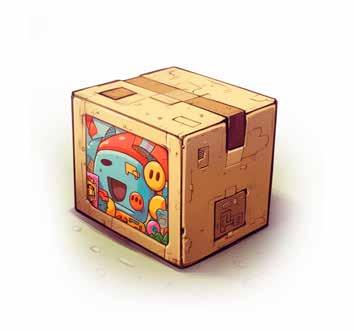
You found a mysterious box labeled "Build-A-Friend Kit!"
Inside the, box there are parts to create your own imaginary friend. You get to choose their name, decide where they live, what they like, and more.
Write a short paragraph to introduce your new friend. Use at least six different nouns in your paragraph, and underline each one you use.
Example: My friend’s name is Ziggy. He lives in a little cabin in the mountains. Ziggy always carries a map and a notebook. He travels with his parrot, who helps him find secret caves. Ziggy’s favorite food is spaghetti, and he wears a bright hat with a feather in it.
My friend’s name is:
Let’s Brainstorm!
Before you start writing, think of what makes your imaginary friend special. Is he kind, funny, or super brave? Maybe he plays an instrument or loves drawing and painting. What does he like to do every day? What kind of clothes does he like to wear?
A and An
Use a before words that start with a consonant sound.
Example: a kite
Use an before words that start with a vowel sound (a, e, i, o, u).
Example: an inventor

Write the correct word (a/an) to fill in the blanks.
Benjamin Franklin had idea about lightning and electricity. He used old key and kite to test his theory. During electrical storm, he flew his kite to observe lightning. This experiment was important moment in science. Electricity became essential discovery for modern life.
Thomas Edison invented electric light bulb many years later. The light bulb was considered amazing invention. People soon realized that electricity was incredible source of power. Early scientists faced difficult challenge in understanding electricity. Today, almost every home has electrical system that provides light and power.
Read each sentence below. If the sentence uses “a” or “an” correctly, write “correct.” If not, rewrite the word correctly.
1. Thomas Edison created a invention that changed the world.
2. An electric charge can be used to power a machine.
3. Scientists use a understanding of electricity to improve technology.
4. People once thought lightning was a magical force instead of a natural thing.
5. An brilliant scientist studies energy and how it works.
Procedural writing explains how to complete a task step by step. We use this type of writing to give clear instructions so others can follow the steps easily and successfully.
You’re planning a party and need to get everything ready. Choose four words from the list below, and write a step-by-step guide that explains how to prepare for the party. Each step should include the four words you chose. Make sure to use “a” or “an” correctly!
Example Starter: Steps for Planting a Plant
First, choose a plant you want to grow. Next, find an area or a pot for the plant.
cake invitation gift activity
surprise balloon event banner
Steps for Planning a Party
First, Next, Then, Finally,
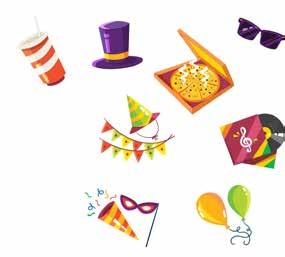
Let’s Brainstorm!
Think about the order you will do things in so everything is ready on time. What do you need to do before the party starts? What will you need to set up?
Singular and Plural Nouns
A singular noun names one person, place, animal, or thing.
Examples: bear, pencil, child
A plural noun names more than one person, place, animal, or thing.
Examples: bears, pencils, children

Read the paragraph below. Identify and sort the singular and plural nouns into the correct columns.
Jake went to the park with his two brothers. They brought a basket filled with apples, sandwiches, and juice. The sky was blue, and the trees swayed gently in the wind. A little dog ran past them, chasing butterflies. Nearby, children played on the swings and slides, laughing happily. Jake’s friend brought his two balls to the park, and they played together under the shade of the big oak tree.
Singular Nouns Plural Nouns

An opinion is what you think or feel about something. When you write an opinion, you explain your choice and give reasons to support it.
Think of two groups of things that you can compare, like cookies and chips or swings and slides. Circle the one you like better, and then write your opinion and three reasons. Circle all the plural nouns in your writing.
Example: I think swings are better than slides. Swings go back and forth and feel like flying. You can make them go fast or slow. Slides are fun too, but swings last longer, and you don’t have to climb back up each time.
(vs. = versus – against or comparing two different things)
My two choices: vs. My opinion:
My reasons: 1. 2. 3.
Let’s Brainstorm!
Here are some ideas for two groups you might compare: • summer vs. winter • sneakers vs. boots • cookies vs. chips • crayons vs. markers • pizza vs. pasta • apples vs. bananas
Plural Forms
Most singular nouns become plural by adding -s or -es to the end of the word.
Add -s to most nouns:
Example: cat → cats, book → books, car → cars
Add -es to nouns that end in s, sh, ch, x, or z:
Example: bus → buses, brush → brushes, box → boxes
Change -y to -ies if the noun ends in a consonant + y:
Example: baby → babies, city → cities, family → families
Change –f or –fe to v and add –es:
Example: wolf → wolves, shelf → shelves knife → knives, leaf → leaves
Write the correct plural form.

1. frog
2. peach
3. chair 4. fox 5. cherry 6. sandwich 7. glass 8. watch
tree
dress
A narrative is a kind of writing that tells a story. Every story has three parts:
Beginning – When and where does it happen? Who is in the story? Middle – What happens? Is there a problem or something surprising?
End – How does the story finish? What do the characters do?
Finish the story below by writing the middle and end. Use your imagination and underline all the plural nouns you use/include.
Beginning One morning, Ben woke up to a message from school: Snow day! No school today! He got ready to play outside, but when he looked out the window, there was no snow at all. Then he noticed something even stranger: there were two backpacks, two lunches, and two school buses outside!

Middle What does Ben do next? Does he ask someone about the extra things? Does the day get even stranger?
End How does the story finish? Does he figure out what’s going on? Does the day go back to normal? Or does something unexpected happen?
Common and Proper Nouns
Common nouns are general names for people, places, animals, or things. They are not capitalized unless they start a sentence.
Examples: city, book, teacher, river
Proper nouns name specific people, places, animals, or things. They always begin with a capital letter.
Examples: New York City, Mrs. Johnson, Amazon River
Read the sentences below. Underline the common nouns and circle the proper nouns.
1. Emma and her sister took a trip to Central Park in New York City.
2. They also visited the Statue of Liberty and took pictures together.
3. Their principal, Mrs. Brown, gave them a history project.
4. Emma wrote about Abraham Lincoln and his speeches.
5. Her sister chose to research the White House in Washington.
6. After looking around, they stopped at Joe’s Pizza for lunch.
7. They met Sarah and some more friends there.
8. Everyone shared stories about famous people in history.
9. Emma and her sister walked through the streets.
10. They stopped at a shop to buy postcards and keychains.
11. A street performer played music while tourists stood around to watch.
12. Later, they visited the Empire State Building to see the amazing view.
13. At the museum, they learned about artifacts and famous paintings.
14. Emma’s sister bought a book about New York City's history from the gift shop.

Descriptive writing helps the reader picture what something looks, sounds, smells, tastes, or feels like. Writers use sensory details to bring a place or moment to life.
Think about a place that makes you happy. It could be a park, your house, or somewhere else special. Write one complete sentence for each of your five senses to describe your favorite place. Circle all the common nouns and underline proper nouns in your writing.
Example: My Happy Place: Aunt Vivian’s house
When I walk into her house, I always see a vase of flowers on the table. In the kitchen, I can smell freshly baked muffins. I love to taste her lemonade because it’s the perfect mix of sweet and sour.
My Happy Place:
See: Hear: Smell: Taste: Feel:

Let’s Brainstorm!
What do you love about your happy place? Think about a sound you’d hear, something you’d eat, or how the air feels. Which small details make this place special to you?
Capitalization: Proper Nouns
Proper nouns always begin with a capital letter. These include:
Names of people: Emma, Dr. Brown
Names of places: New York, Grand Canyon
Names of holidays: Passover, Labor Day
Titles of books, stories, poems: The Declaration of Independence
Rewrite each sentence with the correct capitalization.
1. Last summer, my family visited nasa to learn about space.
2. My friends mike and alex came along with us.
3. We watched a rocket launch at kennedy space center in florida.
4. My favorite planet is mars because it has the tallest volcano, olympus mons.
5. During our trip, we met dr. williams, a scientist who studies jupiter’s moons.
6. mike and I built a model of the saturn v rocket for our science project.
7. alex drew a picture of the apollo 11 mission that landed on the moon.

A letter is a way to share your thoughts, ideas, and feelings with someone. It has four important parts.
Greeting - Start your letter by naming the person you're writing to.
Body - Share your main message or thoughts.
Closing - End the letter with a kind message.
Signature - End off by signing your name.
Think about yourself one year from today. What do you want to say to the future you? Write a short letter with four parts: a greeting, a body, a closing, and your signature. Circle any proper nouns you use, and remember to capitalize them!
(body)

(greeting)
(closing)
(signature)
Let’s Brainstorm!
Greeting: Dear Future Me, Hello Future Me, To My Future Self
Body: What do you hope you’ll be doing, learning, or achieving?
Closing: Your younger self, Looking forward to the future, Keep going
Review Nouns & Articles
A singular noun names one person, place, animal, or thing (e.g., cat, book, child).
A plural noun names more than one person, place, animal, or thing (e.g., cats, books, children).
Common nouns are general names for people, places, animals, or things. They are not capitalized unless they start a sentence.
Proper nouns name specific people, places, animals, or things. They always begin with a capital letter.
Use "a" before words that start with a consonant sound. Use "an" before words that start with a vowel sound (a, e, i, o, u).
Circle all the nouns in the sentences below.
1. On Sunday, my family went to the zoo to see the lions and tigers.
2. My sister Sara bought a book from the gift shop.
3. We walked over a bridge that crossed a large river.
4. The zoo was filled with many animals and excited visitors.
5. We saw a giraffe eating leaves from a tall tree.
6. My brother and I fed some goats at the petting zoo.
Write the plural form of each singular noun below.
apple
baby
itch
leaf
bus
fox
Write the correct word (a/an) to complete each sentence.
1. A penguin is interesting type of bird.
2. It cannot fly, but it is excellent swimmer.
3. On land, penguin walks with funny waddle.
4. In water, it becomes fast and graceful swimmer.
5. Penguins have unusual shape that helps them swim.
6. Their feathers form waterproof coat.
7. Underneath, extra layer of fat keeps them warm.
8. Penguins eat diet of fish and squid.
9. To hunt, penguin dives underwater.
10. Scientists study penguins to learn about ocean habitat.
11. baby penguin is called chick.
Rewrite each sentence with correct capitalization for proper nouns.
12. in 1969, neil armstrong became the first person to walk on the moon.
13. nasa launched the apollo 11 mission from kennedy space center in florida.
14. the milky way galaxy contains billions of stars and planets.
15. astronauts on the international space station conduct important scientific experiments.
Action Verbs
An action verb is a word that tells us what someone or something is doing.
Examples: run, jump, write, sing
Underline the action verbs in each sentence.
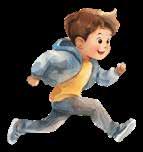
1. Mike and Jake ran to the playground.
2. They climbed the tallest slide and laughed all the way down.
3. A group of boys kicked a ball on the grassy field.
4. Mike chased after the ball.
5. Jake jumped over a rock to block the ball.
6. A friendly dog barked and wagged its tail near the picnic tables.
7. Families spread blankets and unpacked their lunches.
8. Mike and Jake ate their sandwiches and drank lemonade.
9. After lunch, they rode their bikes around the park.
10. Birds chirped in the trees while children swung on the swings.
11. Mike and Jake raced each other to the monkey bars.
12. They grabbed the bars and swung across with big smiles.
13. A little boy tossed a frisbee to his friend.
14. The ice cream truck stopped at the park entrance.
15. Mike and Jake ran to buy their favorite treats.
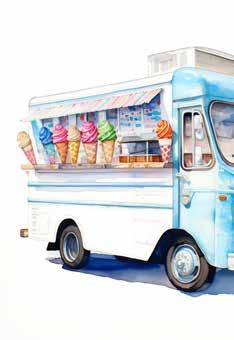
16. They licked their ice cream cones and washed their sticky fingers.
17. As the sun set, they gathered their belongings and drove home.

Look closely at the picture. What is happening in the scene? Write a short paragraph that brings the scene to life. Use at least three different action verbs to describe what the people and animals are doing, and underline each one you use. You can also describe how objects move or change, like a ball rolling or a flag waving.
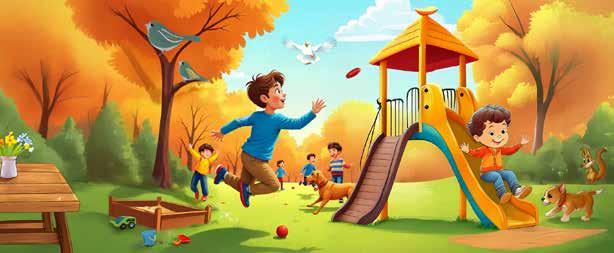
Example: A boy chases a frisbee, jumping high in the air to catch it.
Let’s Brainstorm!
Look at the picture. What actions do you notice? Imagine how people, animals, and objects act. Are kids playing, pets running, or objects rolling or flying? Write down a few verbs to help you get started.
Plain Form and s-Form Verbs
A plain form verb describes actions happening now. It is used in the present tense with plural nouns or pronouns.
Example: The boys run.
The s-form of a verb describes actions happening now. It is used in the present tense with singular nouns or pronouns.
Example: He runs
Circle the correct verb form (plain form or s-form).
1. Every morning, Eddy (wake / wakes) up early.
2. He (brush / brushes) his teeth before breakfast.

3. His brothers, Alex and Ben, (eat / eats) cereal at the kitchen table.
4. Eddy’s mother (make / makes) pancakes for breakfast.
5. His brothers (help / helps) set the table.
6. Dad (read / reads) the paper while drinking coffee.
7. After breakfast, Eddy (grab / grabs) his backpack for school.
8. His brothers (run / runs) to catch the bus.
9. The school bell (ring / rings) at 8:00 AM.
10. Eddy (walk / walks) to school with his best friend.
11. His classmates (chat / chats) excitedly before the lesson (begin/begins).
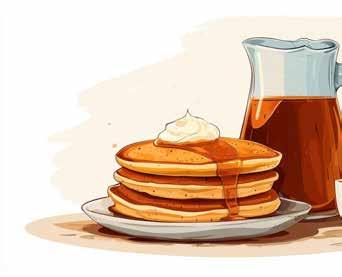
12. The teacher (write / writes) the date on the board.
13. The students (take / takes) out their notebooks and pencils.
14. Eddy (answer / answers) a math question correctly.
A good story has a beginning, middle, and end. The beginning introduces the characters and setting. The middle is where the main action or problem happens. The end solves the problem and wraps up the story.
Write a short story about something suddenly coming to life. Think about how it moves, what it says, and what happens next. Be creative and have fun imagining how the object behaves! Include at least five verbs using the correct form, and underline them.
Example: My water bottle bounces on the desk and asks if I’m thirsty!
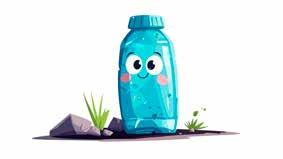
Beginning: Who is in the story, where does it happen, and what is the object?
Middle: What does the object do? Does it help you, surprise you, or cause trouble?
End: How does the story end? Does the object stay alive, or does it go back to normal?
Let’s Brainstorm!
A pencil talking in class • A sandwich that sings in the lunchroom • A backpack that runs away • A ball that gives advice • A book that tells jokes
Past Form Verbs (-d, -ed, -tted, -ied)
A past tense verb tells about an action that already happened.
To make a verb past tense, follow these rules:
• Most verbs: add -ed
Example: jump → jumped talk → talked
• One-syllable verbs that end in a single vowel + a single consonant: double the last letter and add -ed
Example: drop → dropped
• Verbs that end in e: add only -d
Example: move → moved bake → baked
• Verbs that end in a consonant + y: change y to i and add -ed
Example: carry → carried hurry → hurried
Fill in the blanks with the correct past tense form of each verb in ( ).
1. Last summer, Bill and his family (pack) their bags for a trip.
2. They (hike) through the forest to find the perfect spot.
3. Dad (love) setting up the tent near the lake.
4. Bill and his brother (hurry) to gather wood before night.
5. After dinner, they (roast) marshmallows over the fire.
6. Bill (carry) his blanket and got cozy by the fire.
7. They (listen) to the sounds that filled the forest at night.
8. The next morning, they (climb) a small hill to watch the sunrise.
9. Bill (help) Dad clean up the campsite before they left.
10. After eating lunch, they (return) home feeling happy and tired.
A personal narrative is a true story about something that happened to you. It describes what you did and how you felt. Sharing your thoughts and feelings helps the reader understand your experience.
Think about something small that happened yesterday. It could be an exciting, frustrating, or just an ordinary moment. Write a short paragraph to tell what happened. Focus on one short event, and use past tense verbs like walked, watched, or carried to show that it already happened.
Example: Yesterday, I went to the park with my friend. We walked around the playground and watched kites flying in the sky. I felt happy because it was a nice day, and I was enjoying the sunshine. After a while, we sat on a bench and talked about our favorite games.

Let’s Brainstorm!
Did anything catch your attention yesterday? You might have felt excited or noticed something new. Maybe you heard a funny sound, saw an interesting sight, or helped someone.
Irregular Past Forms
Most verbs follow a simple pattern when changing to past tense (adding -ed, -d, or -ied). However, some verbs change completely to become a brand new word. These are called irregular verbs.
Examples: eat → ate make → made catch → caught see → saw buy → bought drink → drank
write → wrote find → found know → knew run → ran come → came bring → brought
swim → swam sing → sang take → took give → gave break → broke speak → spoke
Fill in the blanks with the correct irregular past tense form of the verb that is in ().
1. Last summer, Jake (see) whales for the first time.
2. His family (take) a boat out into the ocean early in the morning.
3. Ethan, his brother, (buy) snacks for the trip.
4. Jake (write) notes in his notebook about what he learned.
5. The guide (speak) clearly about the whales' habits.
6. Suddenly, a whale (swim) near their boat.
7. Everyone (run) excitedly to see the whale from close up.
8. Ethan (find) his binoculars to get a better view.
9. Later, they (eat) lunch while watching whales nearby.
10. Jake (drink) water because he was thirsty from all the excitement.
11. Ethan (give) his binoculars to Jake to share.
12. They (catch) sight of another whale in the distance.
A riddle is a short puzzle with clues that help the reader guess something without saying it directly.
Write a riddle to describe a mystery object you used, saw, or interacted with. Use past tense verbs to tell what the object did, where it was, or how people used it. Give clues, but don’t give away the answer! Your riddle does not have to rhyme.
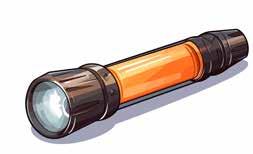
Example: It sat on the table and glowed so bright, I turned it off before the night. It helped me read, it did not shout. It gave off light when the power went out. What am I?
A flashlight
My Riddle:
What am I?
Let’s Brainstorm!
What object did you see, use, or hold? • Was it in your house, backpack, or classroom? • What did it do? • Did it move, light up, roll, open, beep, or break?
Verb Tense Consistency
Verb tense shows when something happens:
Past: already happened
Present: happening now
Future: will happen
Keep the same verb tense in a sentence unless the time changes.
Example:
Yesterday, I pack my bag, walk to school, and eat lunch with my friends. Yesterday, I packed my bag, walked to school, and ate lunch with my friends.
Fill in the blanks with the correct tense form of the verb in ().
1. Yesterday, Sam walked home and (play) outside.
2. My brother eats his lunch and (drink) juice every day.
3. The dog runs through the yard and then (jump) over the fence.
4. The children (run) to the park and climbed on the swings.
5. I finished my homework and (watch) my sister play.
6. On Friday, we (eat) lunch and played outside.
7. I (look) for my notebook after you called me.
8. Last night, Dad cooked dinner and (clean) the kitchen.
9. Yesterday, we visited Grandma and (bake) cookies.
10. My dog chases the ball and (drop) it at my feet.
11. My sister paints pictures and (color) them brightly.
12. Yesterday, I opened my book and (turn) to page five.


The resolution is the end of a story where the problem gets solved or worked out. It shows how the characters find a way to fix the situation and reach a solution.
Write a resolution for the story below. Make sure your verbs stay consistent.
It was a beautiful afternoon, and my friends and I were walking along a trail in the woods. We were enjoying the fresh air and the sounds of nature, when we reached a wide river. When we stepped onto the bridge to cross the river, a loud crack echoed, and one of the wooden planks broke off completely. The bridge had snapped in the middle, leaving a large gap. The river below was rushing quickly, and we couldn’t cross. We had to figure out how to fix it before nightfall!

Let’s Brainstorm!
How will you fix the bridge? What materials, such as sticks, ropes, rocks, will your friends find nearby in order to repair it? How will you work together to get the bridge fixed? How will you all feel once the bridge is fixed and you can cross it safely?
Forming Sentences
A complete sentence has a noun and a verb.
Example: The artist sketches
noun verb

Draw lines to match a noun with a verb to form a simple sentence
Nouns Verbs
1. The scientist
2. The gardener
3. A bird
4. The chef
5. The librarian
6. A firefighter
7. The students
8. The astronaut
9. A singer
10. The teacher
A. reads
B. flies
C. cooks
D. plants
E. examines
F. explores
G. study
H. rescues
I. teaches
J. sings
Using the words above, write three complete sentences: 1. 2. 3.

When writing in sequential (si-KWEN-shuhl) order, events are described in the order they happen. This helps the reader follow the events clearly, from beginning to end.
Plan and organize a day using the chart below. Choose one idea and fill in what happens at each time of the day. Be creative, but make sure your ideas follow a clear order from morning to night. Circle the nouns and underline the verbs.
Choose one:
• A day in the life of an animal
• A day at summer camp
• A day where everything goes backwards
Morning Afternoon Night
Let’s Brainstorm!
Think about what happens at each part of the day. What does your character or animal do in the morning? What kind of adventures or challenges happen midday? How does the day end?
Subject and Predicate
A subject includes a noun telling who or what the sentence is about.
A predicate includes a verb and tells what the subject does or what happens to the subject in the sentence.
Example: The artist paints a beautiful picture.

Circle the subject and underline predicate in each sentence.
1. Forest fires can burn large areas of land.
2. A forest fire starts from heat, sparks, or flames.
3. Some fires begin from lightning.
4. People can accidentally cause forest fires.
5. A dry forest burns more quickly.
6. Firefighters work hard to stop forest fires.
7. Smoke from fires can fill the sky.
8. Animals run away from burning forests.
9. Some plants can survive forest fires.
10. A forest can grow back after a fire.
11. Fires help clear out old trees and dead plants.
12. Forest fires can spread very quickly.
13. Strong winds make fires worse.
14. Some forest fires are planned to protect nature.
15. A forest fire can destroy homes.
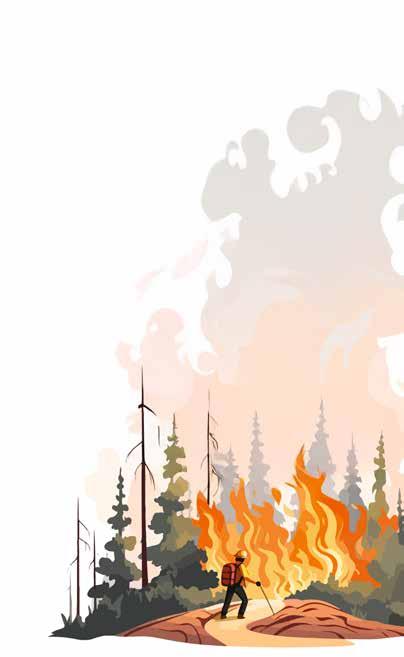
Informative writing teaches the reader about a topic using clear facts and details.
Choose a topic you know well. It can be something from your daily life or school routine. Write a short paragraph that explains the topic using clear facts, details, or steps. Make sure each sentence includes a subject and a predicate.
Example: Topic: How to Take Care of a Backpack
A backpack holds your school supplies. Students should clean out their backpacks each week to stay organized. Zippers keep everything safe inside. Carrying a backpack that is too heavy can hurt your back.
Topic:

Let’s Brainstorm!
Think about things you know well. You could write about: • what’s inside a lunchbox • how to take care of a pet fish • ways to stay organized for school • what happens during recess • how to be a good friend • how to stay healthy • why sleep is important • how to act during a fire drill
Review Verbs and Building Simple Sentences
A subject tells who or what the sentence is about.
A predicate tells what the subject does or what happens.
A past tense verb describes actions that already happened.
A plain form verb describes actions happening now. It is used in the present tense with plural nouns or pronouns.
The s-form of a verb describes actions happening now. It is used in the present tense with singular nouns or pronouns.
Fill in the blanks with the correct verb form, past tense or present tense, based on the sentence.
1. Samantha (wake / woke) up early on Sunday morning. She (feel / felt) excited because it was her birthday! Her mother (prepare / prepared) a big breakfast, and her little sister (give / gave) her a handmade card.
"I (love / loved) this!" she said with a big smile.
2. After breakfast, they (drive / drove) to a museum. Samantha (see / saw) colorful paintings and a room where she could make her own art.
3. At the souvenir shop, her mom said, "You can (choose / chose) anything you like."
4. She (pick / picked) a giant coloring book and crayons. Later, her friends (arrive / arrived) for a surprise picnic in the park.
5. "Let’s (play / played) a game before we eat!" her best friend shouted.
Underline all the action verbs. Circle all the past tense verbs. Box all the plain form verbs.
A Trip to the Zoo
Last summer, my family went to the zoo. We walked past the monkey exhibit and saw them swing from branch to branch. The zookeeper said we could feed the giraffes, so we gave them some lettuce. The lions slept in the shade while the zebras ran across the grass. My little brother wanted to visit the reptile house, but I prefer the penguins. They waddle around and dive into the cold water. Before we left, we bought a stuffed panda as a souvenir. It was a great day!

Fill in the blanks with the correct past tense form of the verbs in the word bank.
1. Yesterday, he across the rocky trail.
2. Ben to the waterfall to take pictures.
3. I over the fallen log in the forest.
4. We quickly through the field to see the wildflowers.
5. Sam his sandwich while sitting on a tree stump.
6. They through the tall grass to explore the meadow.
7. He along the river path last week.
8. We a break near the stream to rest our legs.
hike jump walk run bike eat take stroll
Nouns as Direct Objects
A direct object is a noun or pronoun that receives the action of the verb in a sentence. It answers the question "what?" or "whom?" after the verb.
Example: Sarah baked cookies. (Baked what? Cookies – direct object)
Circle the verb. Underline the direct object in each sentence.
1. The hikers followed the narrow trail.
2. Birds build their nests in the tall trees.
3. The gardener planted colorful flowers.
4. A squirrel buried an acorn in the ground.
5. The rain soaked the dry soil.
6. The wind shook the branches.
7. Bees gather nectar from the blossoms.
8. The campers roasted marshmallows over the fire.
9. A fisherman caught a large salmon.
10. The farmer harvested ripe apples.
11. The boy collected smooth pebbles by the river.
12. The park ranger cleaned the picnic area.
13. The children picked strawberries from the garden.
14. The ocean waves crashed onto the shore.
15. The deer ate fresh grass in the field.
Persuasive writing is when you try to get someone to agree with your idea or opinion. A letter can help you share your opinion and give reasons to convince them to say "yes".
Write a letter to your principal or a teacher to convince them why your school should add something new. Be sure to include a greeting, an introduction that clearly says what you're asking for, a body that shares two to three reasons to support your idea, and a closing sentence that restates your idea.
Example: [Greeting]
Dear Principal Jones, [Introduction] I think our school should have a recycling program. [Body] It would teach students how to protect the planet. Recycling would also make our school look better because students would have a place to put bottles, paper, and cans.
[Closing] I hope you will consider adding a recycling program to our school.
Sincerely, Alex

Let’s Brainstorm!
Think about something new you’d like your school to have: A school garden
• Longer recess • A new activity • Healthier snacks in the lunchroom
• No homework • Allowing students to eat or drink during class
Nouns as Objects of Prepositions
A preposition is a word that shows the relationship between a noun (or pronoun) and another word in the sentence.
Common prepositions: in, on, under, over, near, behind, between, with, by, through, at, inside, beside, before
A prepositional phrase begins with a preposition and ends with a noun or pronoun.
Example: The cat slept under the table.
preposition prepositional phrase

Circle the preposition and underline the prepositional phrase in each sentence.
1. Leo and his family walked through the gate.
2. They saw a group of monkeys in the trees.
3. A lion rested under the rock.
4. The zookeeper placed food inside the cage.
5. A parrot sat on the branch and squawked loudly.
6. Leo stood near the fence to watch the elephants.
7. His brother pointed at the penguins swimming in the water.
8. They ate their lunch beside the fountain.
9. A playful otter splashed against the glass.
10. The zookeeper stood between the cages while feeding the animals.
11. The red panda climbed on the tree branch to take a nap.
12. Tourists gathered near the entrance to take a group photo.
13. A peacock proudly walked through the garden showing its colorful feathers.

Look at the image of the market. Write four to five sentences to explain where things are in the market. Use prepositions like "next to," "behind," "in front of," and "on the left" to show where things are.
Example: The fruit stand is in front of the bakery, near the entrance.


Let’s Brainstorm!
Look at what each stand is selling—maybe fruit, bread, or flowers. Notice where they are and how they’re set up around the market. Think about the colors, signs, and how everything is arranged.
Identifying Objects of Prepositions
A prepositional phrase begins with a preposition, such as in, on, under, over, near, behind, between, with, and by, and ends with a noun or pronoun.
The noun at the end of the phrase is called the object of the preposition.
Example: The cat slept under the table.
Underline the prepositional phrase and circle the object of the preposition in each sentence.
1. A turtle hid under the rock.
2. The ball rolled behind the couch.
3. The cat slept on the windowsill.
4. We found shells in the sand.
5. A squirrel ran over the fence.
6. The sandwich was between two plates.
7. The boy played with his toy.
8. A rainbow appeared over the mountain.
9. The shoes are under the bed.
10. A butterfly landed on my hand.
11. The teacher stood near the board.
12. The fish swam in the tank.
13. We hiked with our friends.
14. A fox waited behind the log.
15. The boy sat by the tree.
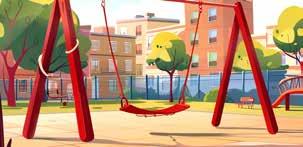
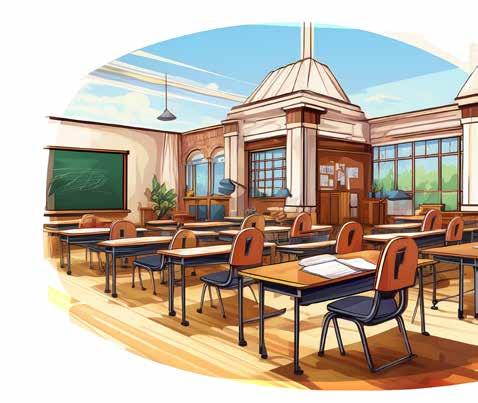
Write about your favorite place at school. Using prepositional phrases, write a short paragraph that tells where different things are located in your favorite place at school. Underline the prepositional phrases and circle the objects of the prepositions in your writing. Draw a picture when you are done writing.
Example: My favorite place at school is the playground. The swings are next to the slide Behind the swings, there is a big tree.

Let’s Brainstorm!
Think about your favorite place at school. It could be the library, the playground, the classroom, or even the lunchroom. Picture where things are in that place. Where are the bookshelves and the tables, or where do people usually stand?
Review Nouns in Sentences
A direct object is a noun or pronoun that receives the action of the verb. It answers the question "what?" or "whom?" after the verb.
Example: Lena tossed a ball. (Tossed what? Ball – direct object)

Circle the direct object in each sentence.

1. Ella and her sister rode the roller coaster.
2. The ride operator checked the safety bars.
3. They won a prize.
4. Ella dropped her popcorn.
5. A clown juggled balls.
6. The children ate cotton candy.
7. Ella took pictures.
8. Her brother won a giant teddy bear.
9. The carousel played cheerful music.
10. They bought lemonade.
Read the paragraph. Underline the direct objects.
Before a big test, I review my notes. I read the textbook and highlight important facts. Sometimes, I ask questions. I practice math problems and write key vocabulary words. I organize my study guides. I pack pencils and erasers. This helps me feel confident and ready.
A prepositional phrase begins with a preposition and ends with a noun or pronoun, called the object of the preposition.
Example: Bill tossed a ball into the basket.
Prepositions: above, on, onto, through, near, in, under, down, at, over, for, beside, during, behind
Write three sentences using prepositional phrases made from one preposition and one object in the boxes below.
Prepositions
above, through, near, under, during, beside, behind Objects desk, river, classroom, tree, hallway, backpack, playground
Subject Pronouns
A subject pronoun is a word that takes the place of a noun and acts as the subject of a sentence.
Subject pronouns: I you he she it we they Examples: Lisa loves apples. → She loves apples. Beth and I bought oranges. → We bought oranges.

Underline the subject pronouns in each sentence.
1. My mom and I went to the farmers' market early in the morning.
2. She wanted to buy fresh fruits and vegetables.
3. The farmers were friendly, and they greeted us with smiles.
4. I saw a table with a red, juicy apple.
5. It looked so delicious!
6. The vendor said, “They were just picked this morning.”
Fill in the blanks with the correct subject pronoun.
7. My sister loves grapes. eats them every day.

8. Dad and I go to the farmers' market. enjoy picking out fresh vegetables.
9. The watermelon looks very big. might be too heavy to carry.
10. The vendors are very nice. always let us taste samples.
11. Mr. Lopez sells fresh peaches. grows them on his farm.
12. Peppers are crunchy. are my favorite vegetable.

Point of view is the “lens” through which the story is told. It shows the reader who is telling the story and what they think or feel.
First person: The narrator is telling the story about themselves.
Use subject pronouns like “I” and “we.”
Third person: The narrator is telling the story about someone else.
Use subject pronouns like “he,” “she,” and “they.”
Pretend you wake up one day and you’ve switched lives with someone else!
It could be a friend, a sibling, or even an object like a backpack or bike! Write at least one paragraph about your day from your new point of view.
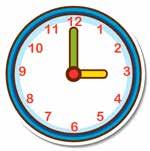
Example: Today, I was the school clock hanging on the wall. I watched students rush into their classrooms and ticked steadily to keep the day on track. During recess, I saw kids laughing and running around outside. When it was time to come inside, I made sure no one was late. I felt proud to help the whole school stay on time.
Let’s Brainstorm!
Think about something or someone you know really well. It can be your neighbor, a favorite toy, or a family member. What would it be like to see the world through their eyes for one whole day? How would they feel? What might they notice that you don’t?
Object Pronouns
An object pronoun is a word that takes the place of a noun and receives the action in a sentence.
Object pronouns: me you him her it us them
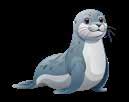
Example: The zookeeper fed the seals. → The zookeeper fed them.
Read the paragraph below and underline the object pronouns in each sentence.
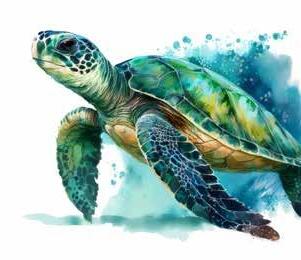
My school took us to the aquarium for a field trip. The tour guide met us at the entrance and gave each of us a map. He told us that we would see many amazing sea creatures. The first stop was the shark tank. I watched them swim behind the glass. A scuba diver was feeding the seals, and he waved to me as he swam past. My friend loved the sea turtles, so I took a picture of him next to the tank. The otters played with a ball, and the zookeeper tossed it into the water for them. My teacher asked a question about the jellyfish, and the guide answered him.
Match the underlined noun(s) to the correct object pronoun.
1. The trainer gave the dolphins some fish.
2. My friend took a picture of my brother.
3. The penguins splashed my friends and me
4. The aquarium guide handed my mom a brochure.
5. The visitors watched the stingray swim.
6. The trainer asked, “Would Sarah like to pet the starfish?”
you him her it us them

A diary entry is like writing a letter to yourself about your day. You can tell your diary about what happened, how you felt, and what you were thinking inside your head.
Think about a day when you felt really proud of yourself.
Maybe you finished a tough assignment, helped a friend, or learned something new. Write a diary entry describing what happened that day. Use object pronouns like me, her, him, and them to talk about people who helped you or who you helped.
Example: Dear Diary, Today in art class, the teacher showed us how to paint with watercolors. My friend asked me to hold her paper while she painted. I helped her mix the colors when she needed it. I was proud because I learned a new skill and helped my classmates enjoy art too!
Dear Diary,

Let’s Brainstorm!
Think about a time you helped someone, like a classmate who didn’t understand the homework, or your neighbor who needed help carrying groceries. How did you feel after helping them? Try to remember what happened, what they said, and why it made you proud.
Possessive Pronouns
A possessive pronoun is a word that shows who something belongs to.
Possessive pronouns: mine yours his hers ours theirs
Possessive pronouns can come after a noun or replace a noun phrase.
Examples: This is my pencil. → This pencil is mine. (after a noun) This is my pencil. → This is mine. (replace a noun phrase)
Follow the instructions to rewrite each sentence with a possessive pronoun.
Possessive Pronoun After a Noun
Possessive Pronoun Replacing a Noun Phrase
1. This is our school. This school is This is
2. This is Bob’s desk. is his.
3. Is this her backpack?
4. This is my book.
5. This house belongs to them.
6. This is your chair.
Write the correct possessive pronoun to complete the story.
I brought my ball to the park and said, “This one is (belongs to me).” My friend pointed to another and said, “No, that ball is (belongs to you).” We played together and shared the swings, saying, “The playground is (belongs to both me and you)." Later, we saw a group of kids sitting under a tree with their bikes and said, “Those bikes are (belongs to them).”


A comic strip is a short story told in pictures and speech bubbles.
Write a comic strip about two students who both think the same pencil is theirs. Use speech bubbles that sound like real conversation and include at least two possessive pronouns.

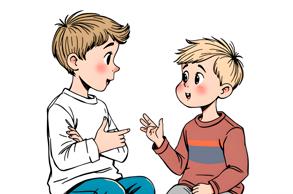
Let’s Brainstorm!
Think about what the characters might say about the pencil or other objects. Could someone else join the conversation? How will they figure out who the pencil really belongs to?
Sentence Fragments
A complete sentence tells a full thought. It has a subject and a predicate.
A sentence fragment is an incomplete sentence. It may be missing a subject (who or what the sentence is about), a predicate (what the subject does or what happens), or it may not express a complete thought.
Example: Fragment: barked loudly (who barked?)
Complete: The dog barked loudly.
Read each sentence carefully. If the sentence is correct, put a ✓ next to it. If the sentence is incorrect, rewrite the sentence correctly.
1. Last night, I heard a strange sound outside my window.
2. Woke up in the middle of the night.
3. Ran to the window to check.
4. The wind howling loudly.
5. My brother asleep.
6. I tried to wake him up.
7. Was too tired.
8. Went outside with my blanket.
9. A shadow in the yard.
10. It was just a raccoon digging in the trash.
11. Went back into the house.
12. I locked the door and went back to bed.
Peer review is when a peer, someone your own age, like a classmate or friend, reads your writing and gives helpful feedback. Writers don’t work alone; they share drafts and ideas all the time!
Write a paragraph about something that’s important to you.
It could be about a favorite hobby, a special memory, or someone you care about. Think about how it makes you feel and why it matters to you. When you are done, switch writings with someone sitting near you.

Read your friend's paragraph. Then, write one kind comment to them. This can be about a word they used that you liked, a thought they mentioned or the way they explained themselves. You can also let them know what your favorite part of their writing is.
Let’s Brainstorm!
Use these starters to help spark your idea: I care about because… One moment I’ll never forget is… My favorite thing to do is… Someone important in my life is… Something I would never want to lose is…
Run-On Sentences
A run-on sentence is when two or more complete thoughts are joined incorrectly.
One way to fix a run-on is to separate it into two sentences.
Example: I baked a cake it smelled delicious. I baked a cake. It smelled delicious.

Read each sentence. If it is a run-on, rewrite it correctly. If it is correct, write ✓.
1. The rocket launched into space it carried a team of astronauts.
2. Stars twinkled outside the spaceship. The crew watched in awe.
3. Mars is known as the Red Planet it has the tallest volcano in the solar system.
4. The astronaut floated in zero gravity he tried to catch his tools.

5. The spaceship was running low on oxygen.
6. The space machine explored Mars it sent pictures back to Earth.
Finish the short story by writing a middle and an ending.
Read the story starter. Create a problem for the character and explain how he solves it. Be sure to avoid run-on sentences by using proper punctuation and clear sentence structures.
Tony rode his new bike to the park on a sunny day. He was excited and ready for fun, until…
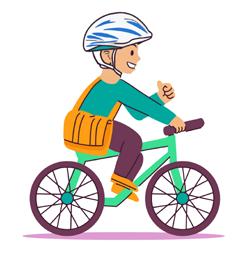
Let’s Brainstorm!
What could go wrong at the park? Think of a small problem Tony might face, like losing something, getting stuck, or meeting someone unexpected. Ask yourself: What is the problem? How does Tony feel? How does he solve it?
Review Pronouns & Sentence Structure
Pronouns are words that take the place of nouns in a sentence.
Subject pronouns - I, you, he, she, it, we, they
Object pronouns - me, you, him, her, it, us, them
Possessive pronouns - mine, yours, his, hers, its, ours, theirs
Label each pronoun as "S" (subject), "O" (object), or "P" (possessive).

My friend Jake and I ( ) were so excited to explore the ocean! We ( ) put on diving suits and jumped in. The guide gave us ( ) a map of the coral reef. It ( ) showed us ( ) where the most colorful fish lived. As we ( ) swam deeper, I ( ) pointed to a shell and said, “That one is mine ( )!” Jake shook his head. “No, that shell is yours ( ), but the red coral over there is his ( ),” he said, pointing to the diving instructor. Soon, we ( ) saw an octopus hiding behind a rock. He ( ) changed colors to blend in! A group of dolphins swam past, and we ( ) waved at them ( ). “Look at the sunken ship!” Jake said. After an hour, we ( ) swam back to the boat. The captain smiled. “Did you ( ) enjoy the dive?” he ( ) asked. “Yes!” we ( ) said.
Rewrite each sentence with the correct pronouns.
1. Me went diving in the ocean.
2. The scuba gear is him.
3. The guide gave we instructions before us jumped in.
Sentence fragment – an incomplete sentence missing a subject, a predicate, or a complete thought

Run-on sentence – two or more complete sentences joined incorrectly
Write "R" if it's a run-on, "F" if it's a fragment, or "C" if it's correct. Then, rewrite the sentence to fix any errors.
I studied for the test all night I felt ready.
I my pencils.
3. I packed my lunch I forgot my water bottle.
4. My notes are.
5. The math problems were hard.
6. My teacher explained the examples clearly.
7. Reviewed my vocabulary words thoroughly.
8. My study guides were organized.
Capitalization: Sentences
A capital letter at the beginning of a sentence shows that a new idea is starting. It helps make a text easier to read and understand.
Example: Incorrect: the sun is a big star. it gives us heat and light. Correct: The sun is a big star. It gives us heat and light.
Write the first word of each sentence below correctly.
1. a coral reef is a colorful place under the sea.
2. it is made of tiny animals called coral.
3. many fish live in the coral reef.
4. the reef provides them with food and a safe home.
5. eels, sea turtles, and starfish also live there.
6. coral reefs are full of life.
7. people come to see reefs because they are beautiful.
8. coral reefs grow very slowly.
9. some reefs take many years to grow.
10. dirty water and trash can harm the reef.
11. touching coral can break it.
12. boats and fishing can also harm reefs.
13. scientists study reefs to learn about different ways to save them.
14. some groups work to fix broken reefs.
15. we can help by keeping oceans clean.

16. coral reefs are important, and we must protect them.
Explanatory writing gives clear steps or facts to help someone understand a topic.
Write a paragraph explaining a topic you know very well.
Think of something you know how to do very well or something you know a lot about. Use details to explain it clearly to the reader. Make sure each sentence starts with a capital letter.
Example: If you want to make your own comic book, start with a main character. Then, plan out the story in three parts: beginning, middle, and end. Use speech bubbles to show what the characters say. Draw pictures that match your story. Last, give your comic a fun title and share it with your friends!

Let’s Brainstorm!
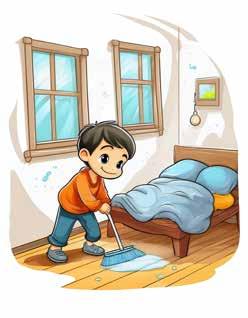
How do you: survive a rainy recess • get ready for a test • make a great sandwich • be a good friend • clean your room fast • stay calm when you're nervous • win a game you love • make a sand castle
Sentence Types
A statement tells information.
Example: My backpack is sitting by the door.
A question asks something.
Example: What time does school start?
An exclamation shows strong feelings or excitement.
Example: I can’t believe we won the game!
A command gives a direction or instruction. It can also be an exclamation.
Example: Please close the window.
Close the window!

Write "S" for statement, "Q" for question, "E" for exclamation, or "C" for command.
1. Elephants live in Africa and Asia.
2. How much does a baby elephant weigh?
3. Watch the baby elephant splash in the water!
4. An elephant’s trunk has over 40,000 muscles!
5. What do elephants use their trunks for?
6. Don't get too close to the wild elephants!
7. Elephants can live up to 70 years.
8. Can an elephant really paint a picture?
9. Don’t feed the elephants.
10. Elephants are the largest land animals on Earth.
11. Did you see the elephant spray water with its trunk?
A poem is a type of writing that expresses thoughts, feelings, or ideas. Poems can rhyme, but they don’t have to. They often use strong images or emotions in short lines, and they can be about anything: nature, family, friendship, and more.
You are running for class president. Using the four kinds of sentences, write a poem about what you would like to see done differently in your classroom.
• Make statements about your ideas.
• Ask questions to make your classmates think.
• Use exclamations to show your excitement.
• Include commands to inspire action.
Example: I believe our class can be even more awesome. (Statement) Wouldn’t it be great to have more fun on Fridays? (Question)
Let’s make this the best year ever! (Exclamation)
Vote for me and join the change. (Command)

Let’s Brainstorm!
If you were class president what changes might you make? • add students to the class • split the class • change the seating arrangement • get new supplies • have a class project
End Punctuation
End punctuation is the mark that comes at the end of a sentence. It shows that a sentence is finished.
There are three types of end punctuation:
1. A period (.) is used for statements and commands.
Example: I went to the park.
2. A question mark (?) is used for questions.
Example: Did you see that bird?
3. An exclamation point (!) is used for exclamations or strong commands.
Example: Watch out!
Write "S" for statement, "Q" for question, "E" for exclamation, or "C" for command. Then, add the correct punctuation mark at the end of each sentence.
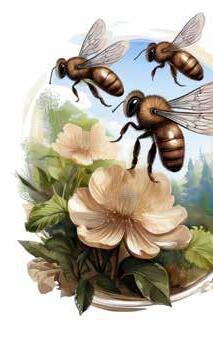
1. Bees play a key role in helping plants grow
2. Have you seen bees buzzing around flowers
3. It's amazing how bees work together
4. One bee can visit many flowers in just one day
5. Always use protective clothing when working with bees
6. Bees share information by dancing
7. Are bees becoming endangered
8. It's fascinating how small bees can help our environment
9. Make sure to plant flowers to support bee populations

Imagine you are at an airport. Look closely at the picture and think about what you might see, hear, and experience.
Write at least five sentences about the picture of the airport. Make sure to include at least one sentence of each kind of end punctuation.
Example: People are walking through the busy airport terminal. Where is our gate for departure?

Let’s Brainstorm!
Think about what you would say or hear at an airport. • What would you tell a friend about what you see? • What’s it like to check in your luggage and go through security? • What questions might you ask the flight attendants?
Review Capitalization & Sentence Types
A capital letter at the beginning of a sentence shows that a new idea is starting. It helps make a text easier to read and understand.
End punctuation is the mark that comes at the end of a sentence. It shows that a sentence is finished.
4 types of sentences:
1. Statement – Tells something; ends with a period (.)
2. Question – Asks something; ends with a question mark (?)
3. Exclamation – Shows excitement or strong emotion; ends with an exclamation mark (!)
4. Command – Gives a direction or request; usually ends with a period (.), but can use an exclamation mark (!) for strong commands.
Rewrite each sentence using correct capitalization and punctuation.
1. the Amazon rainforest is home to many different species
2. do monkeys live in the amazon
3. many brightly colored parrots fly through the trees
4. wow, look at that huge tiger
5. scientists study the rainforest to discover new plants and animals


Write "S" for statement, "Q" for question, "E" for exclamation, or "C" for command. Then, add the correct punctuation mark at the end of each sentence.
1. The Amazon rainforest is full of incredible wildlife
2. Did you know the Amazon River is over 4,000 miles long
3. Watch out for the poison dart frog
4. Be careful near the rushing water
5. What do butterflies eat in the rainforest
6. The rainforest is one of Earth’s most important ecosystems
7. Don’t feed the wild animals
8. That tree is taller than a building
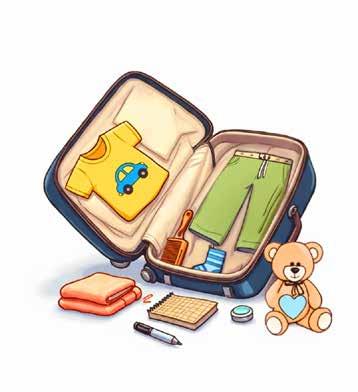
Look at the picture of the overturned suitcase. What do you notice? Think about questions you have and who might help answer them. Then, write four sentences: a statement, question, command, and exclamation.
9. Statement:
10. Question:
11. Command:
12. Exclamation:
Adjectives
Adjectives are words that describe nouns (people, places, animals, or things).
Examples: We had a fun trip to the science museum. We ate a delicious meal
Underline the adjective in each sentence.
1. The playful child ran through the sprinkler.
2. The spicy soup made my mouth burn.
3. The old book had yellowed pages.
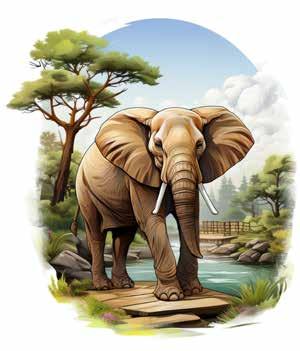
4. We saw a gigantic elephant at the zoo.
5. His silly jokes made everyone laugh.
6. The bumpy road made the ride uncomfortable.
7. I found a tiny feather on the ground.
8. Our friendly neighbor baked us cookies.
Circle the noun in each sentence. Fill in the blanks with an adjective of your choice.
1. The sun shone in the sky.
2. I ate a apple for lunch.
3. The dog barked loudly at the mailman.
4. We sat on the blanket during the picnic.
5. My friend has a backpack for school.
6. I saw a butterfly in the flowers.

Write a short description of your dream room!
Tell where your room is and what it looks like. Then describe what’s inside your room. End with a closing sentence that tells why you love the room, how it makes you feel, and what you would do there. Use adjectives to help your reader picture your dream room clearly.
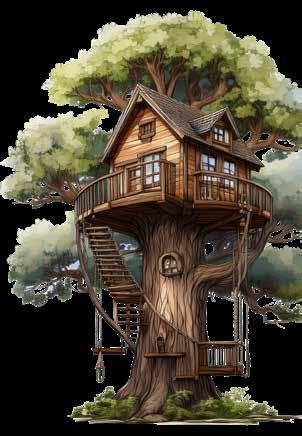
Example Starter: My dream room is a cozy treehouse high up in the tallest oak tree. It has big windows that let in warm sunlight and soft, fluffy cushions to sit on.
Let’s Brainstorm!
Location (treehouse, castle tower, under the sea) • Walls & floors (color, texture, design) • Furniture (bed, desk, chairs) • Special features (slides, secret doors, aquarium) • Feelings (peaceful, exciting, magical)
Comparing with Adjectives
Adjectives can be used to compare two or more things.
Comparative – compares two nouns, usually ending in -er
Superlative – compares three or more nouns, usually ending in
Example: tall → taller → tallest
Spelling Rules:
Final double consonant → if the word ends with a single vowel + single consonant, double the final consonant before adding -er or -est big → bigger → biggest
Ends in consonant + y → change y to i and add -er or -est happy → happier → happiest
Many syllables → use more and most instead of adding endings beautiful → more beautiful → most beautiful
Write the comparative and superlative for each adjective.
thin
heavy
interesting

You are planning a fun day and need to decide between going to the park or the zoo.
Introduce the topic and explain which place you think is better. Be sure to use at least one comparative adjective to compare the two. Then explain why your choice is better. Use at least one more comparative adjective and one superlative adjective to support your opinion. Finish with a closing sentence that shares your final thoughts.
Example Starter: I think the park is better than the zoo for a fun day out. The park is bigger than the zoo, and it has more space to run and play.
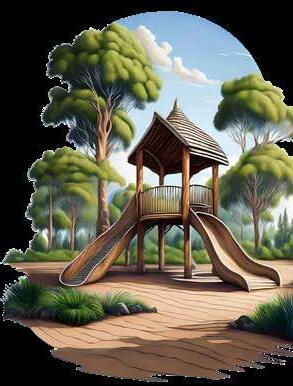
Let’s Brainstorm!
Compare (size, cost, distance, activities) • Describe best feature (animals, playgrounds, picnic spots) • Feelings (relaxing, exciting, peaceful) • Weather (sunny, shady, cool) • Food options (snack shops, bring-your-own snacks)
Adverbs
Adverbs are words that describe verbs. They tell us how, when, where, or to what extent an action happens. Most adverbs end in -ly, but there are exceptions.
Types of Adverbs:
How? (manner) – She spoke softly. When? (time) – We will leave soon. Where? (place) – He looked everywhere.
Circle the verbs. Underline the adverbs that describe the verbs.

1. Cheetahs run fast across the open plains.
2. They move smoothly through the tall grass.
3. They chase prey skillfully during the day.
4. A cheetah waits quietly until the right time.
5. It watches closely for animals nearby.
6. Cheetahs hunt often when the sun is low.
7. They eat well after a good chase.
8. They look carefully for danger around them.
9. Cheetahs rest early on hot afternoons.
10. They rest often in the shade to stay cool.
11. They breathe hard after running far.
12. They recover slowly in the shade.
13. They hunt again when they are ready.
14. Cheetahs sleep lightly during the day.
Look at the picture of the aquarium.
Write a descriptive paragraph about the animals and their actions. Describe the animals and the aquarium setting. Then describe how the animals and trainer move and behave using adverbs.
Example Starter: The aquarium is full of many amazing animals. Bright fish swim quickly through the clear water.
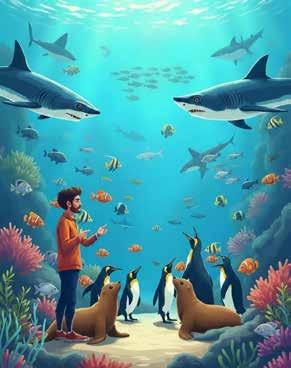
Let’s Brainstorm!
How do the animals move? (swim, waddle, dive, splash) • How do the trainers act? (watch, walk, feed, guide) • Adverbs (quickly, slowly, carefully, playfully)
Comparing with Adverbs
Adverbs can be used to compare two or more actions.
Comparative – compares the actions of two people, places, or things
Use -er for shorter adverbs and more for longer adverbs (often ending in -ly).
Examples: She runs faster than her friend. She studies more seriously than her friend.
Superlative – compares the actions of three or more people, places, or things
Use -est for shorter adverbs and most for longer adverbs (often ending in -ly).
Examples: He works the hardest in the class. He finishes his work the most quickly.
Underline the adverb. Label it as "C" (comparative) or "S" (superlative).
1. She spoke more clearly than before.
2. The new robot worked more efficiently than the old one.
3. Of all the students, Julia worked the hardest.
4. Today, I arrived earlier than yesterday.
5. She writes the most neatly in the class.
Circle the correct word to complete the sentence.

1. I finished my homework (more, most) quickly than my brother.
2. Ben moved (more, most) quietly as the class walked to the lunchroom.
3. Sara learned Spanish (more, most) easily than I did.
4. Of the three children, Dave’s story was the (more, most) interesting.
5. That was the (more, most) exciting game of the season.
6. He speaks French (more, most) fluently than his classmate.
Create a comic strip that tells the story of a race between three different racers.
They can be animals, robots, people, or anything that you can imagine! In each panel, show what the racers are doing. Use at least two comparative adverbs and one superlative adverb in your captions or speech bubbles.
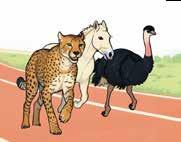
The cheetah dashed faster than the horse, while the ostrich ran more smoothly than both of them.
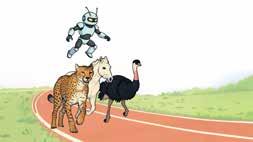
The robot leaped higher than the animals.
Let’s Brainstorm!
Racers: turtle • eagle • ostrich • rabbit • bicycle • racecar • rocket • sneakers • giant snail • flying carpet
Actions: run • jump • climb • slide • fly
Using Adjectives and Adverbs
Adjectives describe nouns or pronouns.
Example: She brought a large notebook to class.
Adverbs describe verbs
Example: She arrived early to class.
Identify the underlined words as adjectives or adverbs. Write "adj" for adjectives and "adv" for adverbs.
1. In the spring, colorful flowers bloom all around the garden.
2. The trees begin to slowly grow new leaves after the winter.
3. Bright tulips add beautiful colors to the landscape.
4. The tall oak tree provides cool shade during sunny spring days.
5. Bees fly actively from flower to flower, gathering pollen.
6. Many birds build their nests in the springtime.
7. The flowers blossom beautifully in the warm sunshine.
8. Lush green grass surrounds the blooming trees in the park.
9. Many flowers are vibrant, creating a colorful carpet in the meadows.
10. Fresh buds start to grow, showing that the season has begun.
11. Birds sing loudly in the early morning, welcoming the spring sunshine.
12. The flowers grow more quickly as the days get warmer.
13. Little seedlings are often spotted sprouting under the larger trees.
14. The sun shines brightly, making the flowers grow faster.

Think of a special moment in your life that you remember clearly.
Write a short personal narrative about that moment. To help your reader understand, use adjectives to describe details and adverbs to describe the way events happened. Focus on a small moment from that day to make your story clear and interesting.
Example: On the first day at my new school, I nervously walked into the classroom. The bright room looked bigger and quite different than my old school. I sat quietly and listened carefully to the teacher. A classmate smiled kindly at me and helped me with my work. By the end of the day, I felt excited to come back tomorrow.

Let’s Brainstorm! moving to a new house • winning a game or award • going on a trip • first day of school • meeting someone new • celebrating a party • visiting a special place • learning to ride a bike • helping with a project • trying something new for the first time
Review Adjectives and Adverbs
Adjectives are words that describe nouns or pronouns.
Adverbs are words that describe verbs.
Both adjectives and adverbs can be used to compare:
Comparative – compares two, usually adding -er or using more
Superlative – compares three or more, usually adding -est or using most
Spelling Rules:
Final double consonant → if the word ends with a single vowel + single consonant, double the final consonant before adding -er or -est
Ends in consonant + y → change y to i and add -er or -est
Many syllables → use more and most before the adjective or adverb instead of adding endings

Underline the adjective. Circle the noun it describes.
1. The blue car drove down the street.
2. He read an interesting book last night.
3. We walked along the narrow path.
4. My younger brother carried the bag.
Underline the adverb. Circle the verb it describes.
5. The baby cried loudly in the crib.
6. We will leave soon for the trip.
7. The bird sang sweetly in the tree.
8. He finished his homework early.
9. The rain fell heavily all night.
Circle the adjectives. Underline the adverbs.
1. The steam engine ran faster than old machines.
2. The steel factory grew the most quickly of all.
3. The new machines were bigger than the old ones.
4. That coal mine made coal more easily than any other.
5. The workers wore thick gloves and walked carefully.
6. The new idea spread quickly to other factories.
7. The big wheels turned slowly through the night.
8. The company built stronger bridges that lasted longer.

Complete each sentence with the correct comparative or superlative form of the adjective or adverb in parentheses.
9. This book is (interesting) than the one I read last week.
10. Today is the (hot) day we’ve had all year.
11. My brother runs (fast) than I do.
12. That was the (funny) book I have ever read.
13. He jumped the (high) of all the players.
14. This math problem is (difficult) than the last one.
15. The elephant is the (big) animal in the zoo.
16. He spoke (clearly) than anyone else in the group.
17. Of all the runners, Ben finished the (quickly).
18. The mountain was (tall) than the hills near our town.
Singular Possessives
Possessive nouns show ownership. They tell us who or what owns something.
Singular possessive forms show that something belongs to one.
Add an apostrophe and an s ('s) to a singular noun to show ownership.
Example: The bear's den was warm. (The den belongs to one bear.)
Fill in the blank with the correct possessive form of the noun in parentheses.
1. The (teacher) desk was piled high with papers.
2. The (shed) roof needed repair after the storm.
3. The (boy) hat blew off in the wind.
4. Have you seen the (artist) new painting?
5. The (squirrel) nuts are hidden in the tree.
6. The (city) tallest building has a shiny roof.
7. The (student) project is due at the end of the week.
8. My (mother) advice is always helpful.
9. My (cousin) bike was in the garage.
10. We followed the (deer) tracks in the fresh snow.
11. The big (box) contents were labeled carefully.
12. The (rabbit) fur was soft and warm.
13. We admired the (giraffe) long neck as it ate leaves off treetops.
Write a diary entry describing your daily life as a bear cub growing up in the forest. Include at least three possessive nouns. Use sequential order to tell what happened first, next, and last to tell your adventure story with clarity.
Example: Dear Diary,
First, I woke up in Mama's cozy den. Sister's playful paws woke me up early. Then, we followed Brother's tracks to the stream and splashed in the cool water. Finally, I fell asleep listening to Grandpa's soft snores and Uncle's funny stories.
Dear Diary,
Let’s Brainstorm!
Think about what a bear cub’s day might be like in the forest. What kinds of things might it do when it wakes up, during the day, and before bedtime? Write about where the cub goes, who it spends time with, and what kinds of things it does as it explores the forest.
Plural Possessives
Plural possessive forms show that something belongs to more than one.
If the plural noun ends in s, add an apostrophe (').
Example: The bears' den (The den belong to many bears.)
If the plural does not end with s, add an apostrophe and an s (‘s).
Example: The children's toys. (The toys belong to many children.)
Rewrite the sentences using the correct possessive form for the bolded words.
1. The books of the students were stacked neatly.
2. The smoke from the factories is polluting the air.
3. We admired the colorful feathers of the peacocks.
4. The coats of the boys were left at the playground.
5. The toys of the children were scattered across the rug.
6. The hats of the men were hanging on hooks.
Write a short poster about something you lost at school or on the playground.
Use at least three possessive nouns to describe your item and what’s inside it. Help others know how to return it to you. Then, draw a picture of the item you lost.
Example: I lost my backpack near the lunchroom. It has my sister’s drawing inside, and my teacher’s permission slip in the front pocket. My friend’s book is also in the side pouch. Please return it to my cubby if you find it!
Let’s Brainstorm!
What kinds of things might you lose at school? Think about your backpack, your lunchbox, or your folder. What’s inside? Maybe your mom’s note, your classmate’s eraser, or your brother’s toy. Use possessive nouns to describe what belongs to whom!
Combining Sentences with Possessive Nouns
Two simple sentences can be joined to form one sentence. Sometimes, one sentence can be changed to the joined with the predicate (action or detail) from the second sentence.
Example: The teacher has a red pen + The red pen The teacher’s red pen is on the desk.
Rewrite each sentence pair as one sentence by using a possessive noun.

1. The man has a car. The car is parked in the driveway.
2. The birds have nests. The nests are high in the tree.
3. The dog has a bone. The bone is buried in the yard.
4. The author wrote a new book. The new book became a bestseller.
5. The friends had a picnic. The picnic was held in the park.
6. The policeman has a uniform. The uniform is dark blue.
7. The babies were crying. Their crying made a lot of noise.
A realistic fiction narrative is a made-up story that could really happen in real life.
Write a short story about travelers' suitcase/bag mix up at the airport.
Write at least five sentences about what happened to the travelers’ bags. Use at least two plural possessive nouns in your writing.
Example Starter: The travelers’ bags were scattered all over the terminal. One suitcase had the tourists’ souvenirs, while another held the pilots’ uniforms by mistake!
Let’s Brainstorm!
Whose luggage got lost or switched? • What was inside the bags? • What problems did this cause? • How did the travelers figure it out?
Review Possessives
Singular possessive nouns show that something belongs to one. Add 's.
Plural possessive nouns show that something belongs to more than one.
If the plural noun ends in s, add an apostrophe (') after the s (s').
If the plural does not end in s, add an apostrophe and an s (‘s).
Circle the correct possessive form.
1. The immigrant’s suitcase was carefully inspected. (singular / plural)
2. The families’ excitement grew as they reached Ellis Island. (singular / plural)
3. The passengers’ feelings went from joy to fear as they docked. (singular / plural)
4. The officer’s list had medical checks on it. (singular / plural)
5. The doctors’ job was to decide if people were healthy. (singular / plural)
6. The child’s doll was a special memory from home. (singular / plural)
Change to the singular possessive form.
7. The name of the child
Change to the plural possessive form.
10. The hopes of the immigrants

8. The bag of the woman
11. The hats of the women
9. The ticket of the passenger
12. The excitement of the children
Match the phrase on the left with its correct possessive form on the right.
1. The tail belonging to the dog
2. The books of the students
3. The art made by the children
4. The hat belonging to the woman
5. The wings of the birds
6. The uniforms of the boys
7. The report written by the teacher
8. The howls of the wolves
9. The toys belonging to the babies
10. The schedule of the class
A. The children's art
B. The boys' uniforms
C. The teacher's report
D. The dog's tail
E. The class's schedule
F. The birds' wings
G. The students' books
H. The woman's hat
I. The wolves' howls
J. The babies' toys
Fill in the blank with the correct possessive form of the noun in parentheses.
11. The (immigrant) arrival was delayed due to health checks.
12. Many (families) names were changed when they got there.
13. The (doctor) job was to look for signs of illness.
14. The (passengers) bags were put in a large storage area.

15. Many (immigrants) fear was that they would be sent back home.
16. The (officials) documents helped historians learn about immigration.
17. A (traveler) trip across the Atlantic took many weeks.
18. The (newcomers) feelings were a mix of joy and fear.
Linking Verbs
Linking verbs connect the subject of a sentence to words that describe it It tells what someone or something is or feels.
Common linking verbs: is, am, are, was, were, become, became
Examples: The wildfire was devastating to the forest. The smoke is thick in California today.
Underline the linking verb in each sentence.
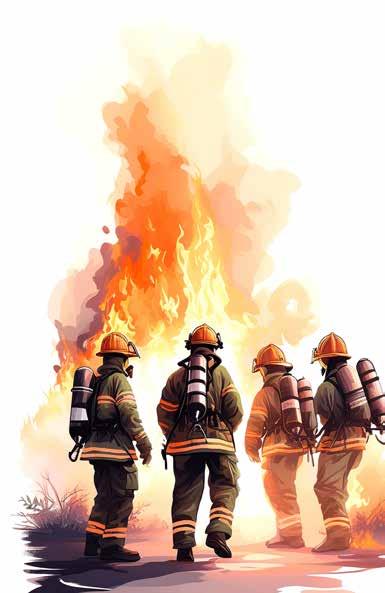
1. The air was thick with smoke.
2. Firefighters are brave in their efforts to stop the fire.
3. The forest became dry because there wasn't enough rainfall.
4. The wildfire was fast-moving.
5. The town could become unsafe if the fire spreads.
6. The trees are blackened by the flames.
7. The sky is dark with ash.
8. Many animals were scared by the fire.
9. I am worried about the fire reaching nearby towns.
10. The burned trees became weak.
11. The firefighters are ready with their gear.
12. The evacuation orders were clear.
13. The mountains are scarred by past fires.
Pick a season—spring, summer, fall, or winter—and describe a place you know well, like a park, yard, or street, during that season.
Write at least seven sentences using linking verbs like is, are, was, were, became to describe what the place is like.
Example: Fall: The park is quiet and calm. The air is cool and fresh. The trees are full of red and orange leaves. The sky is gray, and the grass is covered in leaves. The path is slippery from the rain. The benches are empty. The playground is quiet because fewer kids come in the cold.

Let’s Brainstorm!
What does the sky look like? • How does the weather feel? • What colors do you see around you? • What are the trees, grass, or flowers like? • Are animals or people doing anything special? • What does the air smell like?
Sensing Verbs as Linking Verbs
Sensing verbs can be linking verbs when they describe how something is or seems, not when someone is doing an action (action verb). They connect the subject to the adjective.
Common sensing verbs: looks, smells, feels, sounds, appear
Example: Linking verb: The soup smells delicious.
Action verb: She smells the soup before tasting it.
Underline the sensing verb and write L if it is a linking verb or A if it is an action verb.
1. The street looks flooded from the heavy rain.
2. A search dog smelled the wreckage for survivors.
3. The air smells like fresh pine after the storm.
4. She felt raindrops splatter on her jacket.
5. The wind sounds like rushing water through the trees.
6. Firefighters sounded horns to clear the roads.
7. The girl looked for her umbrella in the closet.
8. The porch feels slick and wet this morning.
9. Lightning appears to split the sky in two.
10. He felt a chill run down his spine in the cold wind.
11. The thunder sounds distant but loud.
12. Inspectors looked at the fallen power lines.
13. The clouds appear to swirl in the darkening sky.
14. She smelled the rain-soaked ground after a storm.
15. The blanket feels comforting in the cold room.
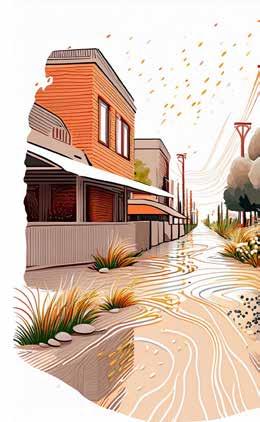
A product review is when you tell others about something you’ve used or tried. You describe it and share your opinion to help others decide if they want it too.
Write one paragraph about a product you’ve used recently (like a toy, snack, clothing, or gadget).
Start by saying what the product is and how you use it. Use sensing verbs to describe it. End with your overall opinion of the product.
Example: I got a new backpack for school because I liked how it looks and I needed more space. It feels soft but strong and smells fresh and new. The zippers sound smooth when I open and close them, and the straps feel comfortable on my shoulders. I think it’s a great backpack, and I’m really happy I picked it.
Let’s Brainstorm! What product did you choose? • Why did you choose it? • What does it look like? • How does it feel? • What does it smell like? • Does it sound like anything? • Do you like how it feels or looks?
Choosing the Right Linking Verb
A linking verb connects the subject to a description. Just like action verbs, linking verbs change form depending on the tense. That means you need to choose the correct linking verb to match the tense of the sentence.
Tense
Singular Subject
Plural Subject
Present is, feels, looks, seems, appears are, feel, look, seem, appear
Past was, felt, looked, seemed, appeared were, felt, looked, seemed, appeared
Future will be, will seem, will appear
Example: The first remote control car was small and simple. (singularpasttense)
Modern remote control cars are fast and powerful. (pluralpresenttense)
Future remote control cars will be even more advanced. (futuretense)
Circle the correct linking verbs in the story.
No one knows exactly when jump ropes (is / are / were) first used, but early versions (was / were) likely made from vines or rope. Some historians believe jump rope (is / was / were) a popular game in ancient China and Egypt.
In the 1900s, jump rope games (was / were / are) common in cities. The rope (is / are / was) sometimes made from clothesline. Rhymes and songs (is / are / were) added to make the games fun.
Today, jump ropes (is / are / were) used for fun and exercise. It (is/was/were) a great way to stay active. They (is / are / was) found in gyms and playgrounds. Jump rope games (is / was / will be) popular for many years to come.
An advertisement is writing that promotes a product, service, idea, or business. Using exciting words to persuade the reader, it describes the product and shows why it's special.
Write one paragraph to advertise a super special lunchbox.
Start by telling what the product is. Use linking verbs to describe it. End with a sentence that explains why everyone needs this lunchbox. Then draw your ad!
Example:
This lunchbox is the coolest one you’ll ever see! It looks bright and colorful, with shiny silver zippers. It even smells like fresh strawberries when you open it! The extra pocket is perfect for snacks. This amazing lunchbox is just what every kid needs for school!
Let’s Brainstorm!
What color is it? • What does it look like inside? • How does it feel to touch or carry? • Does it smell like anything? • Does it have secret pockets? • Can it keep food warm or cold? • Does it play music or have sound effects? • What makes it different than an ordinary lunchbox?
Review Linking Verbs
Linking verbs connect the subject to its description. They don't show action.
Tense Singular Subject
Plural Subject
Present is, feels, looks, seems, appears are, feel, look, seem, appear
Past was, felt, looked, seemed, appeared were, felt, looked, seemed, appeared
Future will be, will seem, will appear
Box the subject. Circle the linking verb. Underline the adjective.
1. The streets are crowded with people.
2. The city park looks peaceful in the morning.
3. That tall building is impressive.
4. The food trucks seem popular at lunchtime.
5. The sidewalks were slippery after the rain.
6. The downtown area is full of lights at night.
7. The museum was busy with visitors yesterday.
8. The trains are packed during rush hour.
9. The main street was quiet early this morning.
10. The shops looked colorful.
11. The city sounds noisy.
12. The fountain is beautiful.
Underline the sensing verb and write L if it is a linking verb or A if it is an action verb.
1. He smelled the sunscreen before applying it.
2. The shell looks shiny in the sunlight.
3. They looked for dolphins off the coast.
4. Waves sound louder at sunset.
5. The breeze feels gentle against your face.
6. Dave felt the sand run through his fingers.
7. The sky appears cloudless above the shoreline.
8. He looked for his ball in the bag.
9. The ocean sounds calm in the morning.
10. The picnic blanket feels rough beneath the my feet.
Choose the correct linking verb in each parentheses.
11. The sky ( is / are) clear after the storm.
12. Yesterday, the roads ( is / were ) icy and dangerous.
13. Tomorrow, the picnic ( was / will be ) perfect in the sunshine.
14. The flowers ( is / are) bright and colorful every spring.
15. Last week, the lake ( was / were ) calm and still.
16. Next summer, the parks ( was / will be ) busy with visitors.
17. The old cabin ( was / were ) cozy and quiet during the blizzard.
18. Often, the trees ( is / are ) full of blossoms in April.
19. After the fireworks, the sky ( are / was ) dark again.
20. In a few moments, the stage ( will be / was ) ready for the play.
Combining Sentences: Subjects
Two sentences can often be combined by joining the subjects (who or what the sentence is about) with the word and.
Example: Henry read a book. Ben read a book. Henry and Ben read a book.
Combine each pair of sentences by joining the subjects.
1. Eagles build nests on cliffs. Hawks build nests on cliffs.
2. Woodpeckers search for insects. Nuthatches search for insects.
3.

Owls hunt at night. Bats hunt at night, too.
4. Ducks swim on lakes. Geese swim there as well.
5. Falcons hunt small animals. Owls hunt small animals.
6. Penguins swim swiftly underwater. Puffins swim swiftly underwater.
7. Eagles soar high above mountains. Hawks soar high above mountains.
8. Parrots have bright feathers. Toucans have bright feathers, too.
You’re the last one in the classroom after the bell rings. As you look around, you notice that some things were left behind. Combine your ideas into smooth sentences by using and between subjects to describe what you see.
Write at least five sentences describing the classroom. Underline the combined subjects in your sentences.
Example: The pencil and the eraser rolled onto the floor. The backpack and the lunchbox were left near the window. Emma and Leah forgot their notebooks again!
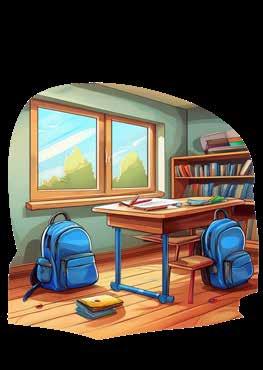

Let’s Brainstorm!
Imagine what a classroom might look like after everyone has left. What items are still on desks, chairs, or the floor? Who might have forgotten their things? Think about what two items or two people you can describe together.
Combining Sentences: Predicates
Two sentences can often be combined by joining the predicates (what the subject does or is) with the word and.
Example: The firefighter climbed the ladder. The firefighter rescued the boy. The firefighter climbed the ladder and rescued the boy.
Combine each pair of sentences by joining the predicates.
1. Anna packed her suitcase. Anna grabbed her passport.
2. The baby cried. The baby kicked his feet.
3. My brother fixed the bike. My brother painted the frame.
4. I read my book. I finished my homework.
5.
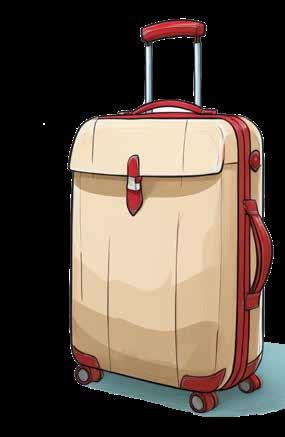
7. The artist sketched the scene. The artist added color to the picture.
8. I set the table. I poured the drinks.
The chef prepared the soup. The chef added spices. 6. The students lined up at the door. The students waited quietly.
You are the owner of a workshop. It could be a toy workshop, a bike repair shop, or something else. Think about what needs to be done before starting the day: gathering tools, checking blueprints or instructions, or cleaning up the workspace. Combine your ideas into smooth sentences by using and between predicates to describe what you need to do.
Write at least five sentences describing the morning routine in your workshop. Underline the combined predicates in your sentences.
Example: I arrive to my art workshop 20 minutes before it’s time to open. I need to gather and organize the paintbrushes. The pencils need to be cleaned up and put away.
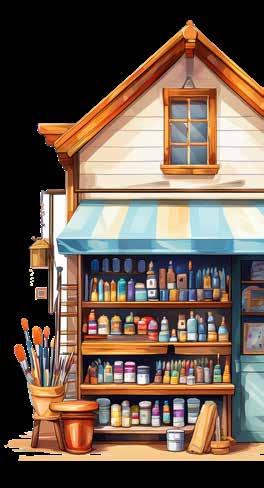
Let’s Brainstorm!
Shop ideas: • jewelry • bookbinding • clothing • bakery • repair
You can write about: • who works there • what do they do • tools that are used • customers' requests • supplies you need • teamwork • finished products
Combining Sentences: Adjectives
Two sentences can often be combined by taking the adjective from one sentence and using it to describe a noun in the other sentence.
Example: The ocean has waves. The waves are powerful The ocean has powerful waves
Combine each pair of sentences by moving the adjective from the second sentence.
1. The castle has towers. The towers are historic.
2. The garden has flowers. The flowers are beautiful.
3. I wore a jacket. The jacket was warm.
4. The bakery sells bread. The bread is fresh.
5. The car raced down the street. The car was fast.
6. We saw a mountain. The mountain was tall
7. The mountain was covered in snow. The snow was thick.

You’re the weather reporter! You're standing right in the middle of the action. You feel the wind, notice the sky, and hear what’s happening around you. What kind of day is it? Combine your ideas into smooth sentences by using strong adjectives to help your audience picture the weather.
Write a weather report that is at least five sentences long. Underline the adjectives in your sentences.
Example: The sky is gray and cloudy, and a cool wind is blowing. It might rain soon, so don’t forget your umbrella!
Let’s Brainstorm! What do you see? • What do you hear? • What do you feel on your skin? Use adjectives to make sentences more descriptive, like freezing air, bright sunshine, or soaked sneakers.
Combining Sentences: Who
Use the word who to combine sentences about people.
Example: The student loves science. She asks great questions
The student who loves science asks great questions.
Combine the sentences using “who.”
1. The librarian organized the books. She loves reading.
2. The scientist studied whales. He worked in Antarctica.
3. The bus driver waved at the students. He drives the morning route.

4. The volunteer cleaned up the park. He planted flowers, too.
5. The nurse helped the patient. She gave him medicine.
6. The student solved the puzzle. She finished before anyone else.
7. The student answered the question correctly. He studied hard for the test.
8. The baker decorated the cake. He owns the bakery on Main Street.
A poster is a type of informational writing. It shares facts using short sentences and pictures to help others learn quickly and clearly.

Create a poster to teach others about a job or role in the community, like a gardener, zookeeper, or bus driver.
On the poster, write at least four sentences that are clear and informative. Use the word “who” to describe the role of the person you chose. You can also decorate the poster.
Firefighters are people who drive big red fire trucks and put out fires. They wear heavy coats and helmets to stay safe.
Firefighters can teach you about fire safety.
Make sure to follow safety rules at home and at school.
Let’s Brainstorm!
Jobs you have seen in your town • What the person wears • Tools they use • Where they work • One way they help people
Combining Sentences: That or Which
Use the words that or which to combine sentences about things or animals. that – use for important details (no commas) which – use for extra details (use commas)
Example: My backpack is heavy. + It has all my books inside. that (important detail – focus on the backpack with the books): My backpack that has all my books inside is heavy.
which (extra detail – focus on the heavy backpack): My backpack, which has all my books inside, is heavy.
Combine the sentences using “that” or "which."
1. The cookies are fresh. They were baked this morning. (importantdetail)
2. The garden is beautiful. It is full of colorful flowers. (extra detail)
3. The chair is broken. It was in the living room. (extra detail)
4. The bike is shiny. It is new. (importantdetail)
5. The old house is for sale. It has a big garden. (extra detail)
6. The park is crowded. It is near my school. (importantdetail)
You’re in charge of the school play! Backstage is full of props, costumes, and lastminute excitement.
Write a at least five sentences about what’s happening and how you feel right before the curtain opens. Use “that” or “which” at least twice.
Example: The background is a cozy cottage that has a big fireplace. The old rocking chair, which is painted a soft blue, is placed just right. The gentle hum of voices backstage, which sounds like a quiet buzz, is making me feel nervous and excited. Soon, the show will begin!

Let’s Brainstorm!
Think about the setting for the play. • What specific props, furniture, or scenery could be there? • What are the actors doing backstage? • How does the atmosphere feel right before the play starts? • What exciting or tricky things happen when you are in charge?
Using FANBOYS
Conjunctions are words that connect two words, phrases, or sentences. Use the FANBOYS conjunctions based on the relationship between the two sentences.
For - gives a reason
Example: The sun warms the Earth, for it provides heat and light.
And - connects similar ideas
Example: Clouds gathered in the sky, and the wind started to blow.
Nor - joins two negative ideas
Example: The storm did not slow down, nor did it change direction.
But - shows contrast
Example: The day started sunny, but rain arrived in the afternoon.
Or - shows a choice
Example: You can bring an umbrella, or you can wear a raincoat.
Yet - shows an unexpected contrast
Example: The forecast predicted sunshine, yet it snowed all morning.
So - shows a result
Example: The temperature dropped below freezing, so the lake turned to ice.
Circle the correct conjunction for each sentence.
1. The clouds grew darker, (or/and/nor) the storm was about to begin.
2. The temperature dropped, (so/but/for) the lake started to freeze.
3. She didn’t see lightning, (and/so/nor) did she hear thunder.
4. It was raining hard, (but/or/for) they continued their hike.
5. We can stay inside, (or/yet/so) we can go outside with our raincoats.
6. The wind blew strongly, (and/nor/yet) the trees swayed back and forth.
7. The sun warmed the ground, (or/and/for) the snow began to melt.
8. The sky cleared up, (so/yet/for) the temperature remained chilly.
9. She likes to read books, (and/so/but) she doesn't like to write stories.
Write about the one feature you think is most important for a new playground at the local park. Use at least three FANBOYS conjunctions to connect your sentences.
Write at least four sentences that clearly state your opinion and give reasons. Then, draw the playground the way you imagine it.
Example: I think the new playground should have a tall climbing wall. A climbing wall makes playtime exciting, and it helps kids get stronger. The playground should have other things, too, for everyone likes different activities.
Opinion writing is when you share what you think about a topic and give strong reasons to support your ideas. Let’s Brainstorm!
Compound and Complex Sentences
A compound sentence has two complete thoughts joined by a comma and a joining word like “for,” “and,” “nor,” “but,” “or,” “yet,” “so.” (FANBOYS). Each part can stand alone as its own sentence.
Example: The sun was shining, and the birds were singing.
A complex sentence has one complete thought and one incomplete thought joined by a word like “because,” “when,” “after,” “although.” The incomplete thought cannot stand alone as a sentence.
Example: We will go to the park after we finish our homework.
Circle compound or complex to show what type of sentence it is.
1. It was cold outside, yet the children stayed to play. (compound/complex)
2. Everyone danced when the music played. (compound/complex)
3. He was very strong although he was small. (compound/complex)
4. He was tired, so he went to bed. (compound/complex)
5. She smiled when her friend arrived. (compound/complex)
6. He wanted to play, but it started to rain. (compound/complex)
7. The children go to the park when the sun shines. (compound/complex)
8. The dog barked, and the cat hissed. (compound/complex)
9. I likes apples, but he likes oranges. (compound/complex)
10. The children swam in the pool because it was hot. (compound/complex)
11. We waited inside because it was raining. (compound/complex)
12. She can draw, or she can paint. (compound/complex)
13. She ate a sandwich, and she drank some juice. (compound/complex)
Something unexpected happens at school today!
Write at least six sentences about what happens. Include at least two compound sentences and at least two complex sentences.
Example: The lights went out, and everyone gasped. I grabbed my flashlight from my backpack when the room went dark. We all huddled together, but no one knew what was happening. The teacher smiled because he had a surprise planned for us.

Let’s Brainstorm!
a raccoon that wanders into the lunchroom • a sudden snowstorm in the middle of recess • a hidden treasure found in the library • the gym turns into a giant maze overnight • a science experiment that goes wrong • a balloon filled with clues floats into the classroom
Review Expanding Sentences
Ways to combine simple sentences:
Subjects: join the subjects with the word “and”
Predicates: join the predicates with the word “and”
Adjectives: use the adjective from one sentence on the noun in the other sentence
Using "who," "that," and “which”: who Refers to a person
Use it to add more information about someone (no commas). that Refers to animals and things
Use it to give important details about something (no commas). which Refers to animals and things
Use it to add extra details about something (use commas).
FANBOYS: combine two sentences into one compound sentence with a comma and a conjunction like FANBOYS (for, and, nor, but, or, yet, so)
Combine these sentences by joining the subjects or predicates.
1. The passengers ran to the deck. The crew ran to the deck.
2. The captain gave orders. The officers gave orders.
3. The iceberg struck the ship. The iceberg caused serious damage.
4. The Titanic took on water. The Titanic began to sink.
Combine these sentences by moving the adjective in the second sentence.
1. The train travels across the country. The train is fast.
2. The airplane lands on the runway. The airplane is large.
Combine these sentences by using "who."
3. The teacher helped me with my homework. She is very patient.
4. The student won the spelling bee. He studied hard every day.
Combine these sentences by using “that”/"which."
5. The sun shines during the day. The sun is a source of light. (extra detail)
6. I have a backpack. It has a hidden pocket. (important detail)

Combine these sentences into one compound sentence using FANBOYS.
7. Soil is important for growing crops. Soil can be damaged by pollution.
8. Water is essential for life. People use water for many purposes.
Capitalization Review
Capitalize:
• The first word of every sentence
• Names of people (Orville Wright, Wilbur Wright)
• Names of places (North Carolina, Dayton, Ohio)
• Names of days, months, and holidays (December)
• Titles before people’s names (President, Officer)
• The word "I" (I want to visit the museum.)
Find and circle all the capitalization mistakes in the letter below.
dear diary,
on december 17, 1903, something amazing happened in north carolina. orville and wilbur wright made history by flying the first airplane! the flight took place in a windy place called kitty hawk.
i read that orville was the first to fly. his flight lasted only 12 seconds, but it changed the world forever. later that day, wilbur took a turn, and his flight lasted 59 seconds.
the wright brothers worked hard in their bicycle shop in dayton, ohio, before they built their plane. they studied birds and tested different wing shapes. they even wrote letters to the smithsonian institution for advice!
one day, i want to visit the wright brothers national memorial and learn more about their incredible invention.
sincerely, emma

Collaborative writing means working together with others to create a story or text. Everyone takes turns adding to the writing, sharing ideas, and building the story as a team.
Work with a partner to continue the mystery story below. Read the beginning, then take turns adding one sentence at a time. Try to build suspense as you work together to create a middle and an ending. Be sure to use correct capitalization.
It was a dark and stormy night when Joe noticed the old clock in the hallway had stopped ticking. Suddenly, he heard a strange noise coming from the attic. When he looked, he saw no one was there.
Let’s Brainstorm!
What might be in the attic? • Why did the clock stop? • What strange clues could Joe find? • What makes the night feel spooky? • How will the mystery end?
Capitalizing Book Titles
When capitalizing book titles:
First and last words are always capitalized.
Important words (nouns, pronouns, verbs, adjectives, adverbs) are capitalized.
Short words (a, an, the, and, but, or, nor, for, so, yet) are lowercase, unless they are the first or last word.
Example: Incorrect: the lion, the knight, and the wardrobe Correct: The Lion, the Knight, and the Wardrobe

Fix the capitalization errors in these book titles.
1. the little engine that could
2. harold and the purple crayon
3. the snowy day
4. caps for sale
5. make way for ducklings
6. the very hungry caterpillar
7. the boy who cried wolf
8. the giving tree
9. where the sidewalk ends
10. the adventures of pinocchio
11. goodnight moon
12. the tale of peter rabbit
13. the boxcar children

A book review is a short opinion writing that tells about the book, what you think about it, and why.
Choose a book you’ve read and write a one-paragraph book review on it. Start with the title. Describe what the book is about and what you think about the book. End with a concluding sentence.
Example: The Little Engine That Could is a book about a small blue train engine. When the big engines won’t help pull a heavy train full of toys and treats over a tall mountain, the little engine decides to try. She keeps saying, “I think I can! I think I can!” The story teaches us to believe in ourselves and keep trying, even when something feels tough.
Let’s Brainstorm!
Think about a book you’ve read recently. Was it a story you couldn’t put down? Did it make you laugh, feel something, or teach you something new? Choose a book that you remember well and have strong thoughts about, whether you loved it or didn’t like it much!
Capitalizing Initials
Initials are the first letters of a person’s name, and they should always be capitalized. Each initial is followed by a period.
Examples: George Washington → G.W.
Amelia Rose Carter → A.R.C.

Find the first and last name in each sentence and write the initials. Copy the circled initial onto the lines below to reveal a secret message.
1. Chris Baker carefully walked the tightrope at the fair.
2. Today, Alexandra Peterson completed her final project.
3. The winning essay was submitted by Paul Davis.
4. My friend, Lily Isaacs, loves to read mystery novels.
5. After school, Tom King practiced his flute.
6. The new student, Anna Johnson, quickly made new friends.
7. The lost puppy was safely returned to Larry White.
8. I helped Lucy Olsen build a tall tower of blocks.
9. This afternoon, Emily Jones found a penny on the floor.
10. My neighbor, Sarah Thorne, waved from her garden.
11. On the bus, Tim Vance quietly read his book.
12. Our cousin, Eva Bell, came for a visit today.
13. Everyone clapped as Rebecca Albright won the race.
14. The teacher asked Sam Brown to lead the discussion.
15. This morning, Michael Olsen baked a fresh loaf of bread.
16. The picnic blanket belonged to David Adams.
17. The funny story was told by Thomas Jenkins.
18. Next, Tia Harrison will show us her amazing drawing.
19. We saw Eric Taylor flying his colorful kite at the park.
20. At the zoo, Rachel Sutton watched the sleeping lions.

An interview is when you ask someone questions to learn more about them or something they do. It helps you gather information that you can use to write a story or report.
Partner with a classmate to interview and find out about a special talent, hobby, or collection they have. Ask if there are any interesting facts about it. Make sure to properly capitalize your and your classmate’s initials.
Example: Me: Hi Maya! I'm interviewing you about your violin talent. How did you start playing the violin when you were so little?
M.G.: My big sister played, and it sounded really pretty, so I wanted to try it, too!
Let’s Brainstorm! Why do you like it? • Who inspired you? • What’s the hardest part? • What’s your favorite memory? • What advice would you give someone who wants to try it? • Do you have a story to share?
Capitalizing Abbreviations
Abbreviations are shortened forms of words or phrases. They often use capital letters, especially for proper nouns and titles.
Proper Nouns: Organizations, places, and official names are abbreviated and capitalized and do not usually use periods.
Example: NYC (New York City)
Titles and Names: Titles before names and initials are abbreviated and capitalized and end with a period.
Examples: Dr., Mrs., Mr.

Days and Months: Days, months, and time periods are abbreviated and capitalized and end with a period.
Examples: Jan. (January), Wed. (Wednesday), Thurs. (Thursday)
Underline each abbreviation in the chart below. Circle each small letter that should be a capital letter and put a period after the abbreviation.
wed meet mr Thompson at library feb 9 mon lunch with dr Patel may 14 sun go to museum with mrs Torres jul 30 fri see dr Kim 4 o’clock jan 21 tues
tues
call mr Lopez about project aug 12 thurs dr Bennett will give lecture on history nov 2
piano lesson with mrs Rodriguez mar 5 wed
meet dr Chen after school sept 15 sat visit mrs Stein dec 10

Creating a daily planner helps you manage your time and tasks better. It's a special place to write down your schoolwork, chores, and fun activities. Using a planner can help you get organized and feel less stressed about remembering things.
Write a daily planner with at least six activities. Make sure to include the correct abbreviations and capitalization for days, months, and titles.
DAY DATE TASK
Mon. Apr. 8 Help Mrs. Williams after school.
Wed. Sept. 20 Schedule an eye exam for Dec.
DAY DATE
Let’s Brainstorm!
TASK
Think of all the different things you have to do or that will happen to you in the near future. Any important events coming up? Maybe you need a reminder to do something important, like wish your friend a happy birthday.
Measurement Abbreviations
Abbreviations are often used for units of measurement.
in. = inch or inches
ft. = foot or feet
yd. = yard(s)
mi. = mile(s)
doz. = dozen
oz. = ounce(s)
lb. = pound(s)
sec. = second(s)
min. = minute(s)
hr. = hour(s)

Match the correct abbreviation to its full measurement term.
1. ft.
2. tsp.
3. doz.
4. lb.
5. gal.
6. mi.
7. yd.
A. gallon(s)
B. yard(s)
C. teaspoon
D. foot or feet
E. dozen
F. pound(s)
G. mile(s)
Use the correct abbreviation to complete each sentence.
8. My new bookshelf is 4 tall. (feet)
9. The recipe calls for 2 of sugar. (tablespoons)
10. We need 3 of milk from the store. (quarts)
11. It takes about 10 to walk to the park. (minutes)
12. The race is 5 long. (miles)
c. = cup
tsp. = teaspoon
tbsp. = tablespoon
pt. = pint(s)
qt. = quart(s)
gal. = gallon(s)
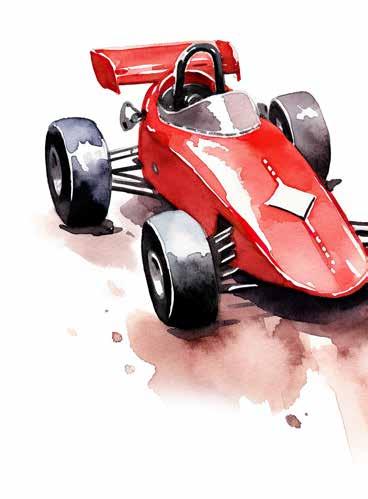
Your class is setting up a fundraiser sale! You get to choose what to sell—like slime jars, cookies, or decorated pencils.
Write a few sentences explaining your plan. Use at least three measurement abbreviations in your paragraph. Draw a picture of your table!
Example: We are selling slime and lemonade. I will make 2 doz. slime jars and bring 2 qt. of lemonade. It should take 20 min. to set up the table and signs.


Let’s Brainstorm! What will you sell? • How much will you prepare? • How long will it take to set up? • What materials will you need?
Review Capitalization and Abbreviations
Capitalize:
• The first word of every sentence
• Names of people (Orville Wright, Wilbur Wright)
• Names of places (North Carolina, Dayton, Ohio)
• Names of days, months, and holidays (Monday, December, Passover)
• Titles before people’s names (President, Officer)
• The word "I" (I want to visit the museum.)
• Initials (U.S., J.F.K.)

• Titles of books, magazines, and stories (The Wright Brothers)
• Abbreviations of proper nouns (NASA, FBI)
Circle each small letter that should be a capital letter.
1. my family visited north carolina in december.
2. orville wright and wilbur wright built the first successful airplane.
3. last friday, we read "the wright brothers" by david mccullough in class.
4. i saw a picture of president theodore roosevelt at the museum.
5. nasa scientists study space and technology.
Each sentence below contains at least one capitalization mistake. Find and correct.
6. We visited the dayton aviation heritage national historical park.
Corrected:
7. My favorite book about flying is "first flight" by George Shea.
Corrected:
8. On wednesday, our class is going on a field trip.
Corrected:

Write one sentence for each category below, making sure to use capital letters correctly.
1. A sentence that begins with a capital letter:
2. A sentence that includes the name of a person:
3. A sentence that includes the name of a place:
4. A sentence that includes the name of a day, month, or holiday:
5. A sentence that includes a title before a person's name:
6. A sentence that includes the word "I":
7. A sentence that includes initials:
8. A sentence that includes the title of a book, magazine, or story:

9. A sentence that includes an abbreviation of a proper noun:
Commas
A comma is used after words like “yes,” “no,” or “well” when they appear at the beginning of a sentence.
Example: Yes, I would love to go to the park.
Add in a comma where needed.
1. Yes I would love to go on the camping trip.
2. No I have not packed my sleeping bag yet.
3. Well that is a great place to set up the tent.
4. Yes we should gather some firewood.
5. No I don’t think it will rain tonight.
6. Well let’s see if we can start the fire.
7. Yes I understand how to roast marshmallows.
8. No you cannot leave food out overnight.
9. Well I’m not sure if I want to go hiking tomorrow.
10. Yes my favorite part of camping is making s’mores.
11. No I don’t think we need more flashlights.
12. Well I suppose we should set up the sleeping bags now.
13. Yes I can hear the sounds of crickets at night.
14. No you shouldn’t wander off alone in the dark.
15. Well this has been the best camping trip ever!


When someone gives a speech, they talk to share their thoughts or explain something
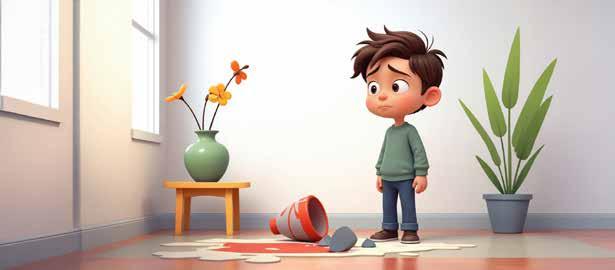
Look at the illustration. Write a short speech from the point of view of a character who is trying to explain something. Start your speech with “Yes,” “No,” or “Well,” and show how the character feels about the situation. Be creative and imagine what the character might say to explain or defend themselves clearly.
Example Starter: Well, I didn’t mean to knock over the paint. It was an accident!
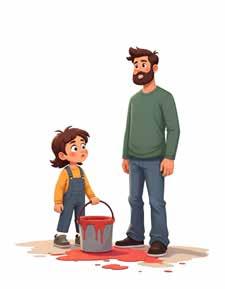
Let’s Brainstorm!
What feelings might the character have? Are they sorry, worried, or maybe nervous? What words can you use to show those feelings?
Think about how starting with “Yes,” “No,” or “Well,” can help your character sound honest and convincing.
Commas after Interjections
Interjections are words or phrases that show strong emotions, like excitement, surprise, or sadness. Some common interjections are: wow, oh, ouch, hey, hooray, and well
Usually, when an interjection is at the beginning of a sentence, we use a comma after it.
Example: Oh, I forgot my backpack.
If an interjection shows very strong emotion, we can use an exclamation mark instead. Remember to capitalize the word after the exclamation mark.
Example: Ouch! That really hurt!
Add a comma or exclamation mark after the interjection. Then, circle every lowercase letter that should be a capital letter.
1. Wow that was a great book!
2. Oh I left my notebook at home.
3. Hooray we’re going on a field trip!
4. Hey don’t forget your lunchbox.
5. Ouch that bee just stung me!
6. Well I guess it’s time to go.
7. Yikes I didn’t study for the test!
8. Oh my pencil broke again.
9. Wow this rollercoaster is so fast!
10. Hey you dropped your backpack.
11. Hooray we finished our project!
12. Oops I spilled juice on my paper.
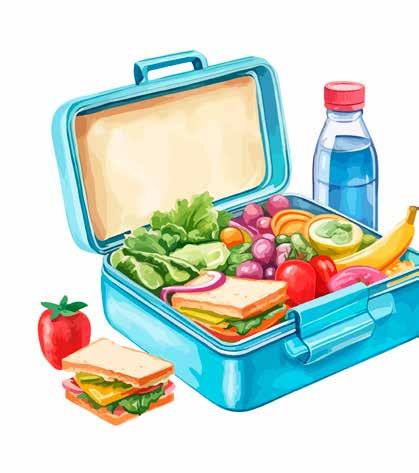
It’s the night of the big camp talent show! Everyone is excited, and the crowd is buzzing. You are the reporter, describing what is happening on stage. What acts do you see? Does something funny, surprising, or amazing happen?
Describe what happens step by step, as though you are watching the show and explaining it to someone else. Use at least four interjections with correct commas or exclamation marks.
Example: Welcome, everyone, to our camp talent show! The stage is set, and the lights are dimming. Wow! Just look at that magician’s card trick- it seems like magic! Oh, the next act is a student playing the drums—he’s really good!

Welcome to our camp talent show! The stage is set, and the lights are dimming.
Let’s Brainstorm!
Think about what you might see at a talent show: someone singing • someone dancing • someone telling jokes • someone doing tricks
Now think: What happens first? • What goes wrong? • What makes the crowd clap or laugh? • Use interjections to show how the reporter reacts!
Commas Between Names of Cities and States
When writing a city and state together, place a comma between them.
Example: My cousin lives in Austin, Texas.
If the city and state appear in the middle of a sentence, also place a comma after the state.
Example: I went to Denver, Colorado, for summer vacation.
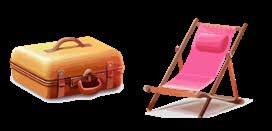
Add commas where needed in each sentence.
1. Phoenix Arizona is one of the hottest U.S. cities.
2. Albany New York is the state capital.
3. We visited Washington D.C. for a tour.
4. Madison Wisconsin has a big farmers’ market.
5. Salem Oregon has cherry trees that bloom in spring.
6. Boise Idaho is located along the Boise River.
7. Columbus Ohio has the world’s largest gavel.
8. The museum in Little Rock Arkansas has a presidential library.
9. The state fair lights up Raleigh North Carolina each fall.
10. Sacramento California has a museum about the gold rush.
11. Many historic sites can be found in Richmond Virginia.
12. Omaha Nebraska has a zoo with a desert dome.
13. Salt Lake City Utah is known for its nearby mountains and hiking trails.
14. The Boston Tea Party happened in Boston Massachusetts.

You're going on a trip to one city in the United States!
Write a postcard home describing some highlights of your trip. You can take ideas from the grammar exercise you just completed. Include the city and state with commas where needed.
Example: Dear Mom, Today I visited Phoenix, Arizona, and it was so hot I could fry an egg on the sidewalk! I drank lots of water and explored the desert with a guide. I even saw a real roadrunner!
Love, Ben

Dear
Love, ,
Let’s Brainstorm!
Think of a new place you visited or wish to visit. What are some unique things you would see or hear in that place? Where would be an interesting spot to explore? Did you discover anything new on your trip?
Commas in a Series
A series is a list of three or more words, phrases, or items in a sentence. Place a comma between every item in a series.
Example: He washed the dishes, cups, and silverware. Tyler packed his suitcase, grabbed his lunch, and ran out the door.
Add commas where needed in each sentence.
1. We hiked up the hill took pictures at the top and rested under a tree.
2. She packed sandwiches juice and fruit for the picnic.
3. My backpack held pencils notebooks markers and glue.
4. We visited museums parks and monuments on our trip.
5. I like apples bananas and grapes in my fruit salad.
6. The flag is red white and blue.
7. He draws paints and builds models after school.
8. We saw lightning thunder and rain during the storm.
9. The puppy chewed on shoes toys and furniture.
10. I fed the fish the turtle and the hamster.
11. He set the table poured the drinks and served the food.
12. Mom gave us pancakes fruit and milk for breakfast.
13. We cleaned the kitchen living room and hallway.
14. The students read wrote and shared their stories.
15. I hear birds crickets and frogs outside at night.
Think about your favorite school supply. It could be a special crayon, a unique notebook, or a bright marker. Draw your school supply in the box. Show its colors and any special details.
Write at least three sentences to describe it. Use your five senses and try using a list of three in your writing. Finish with one sentence that tells how this school supply makes you feel or what you love most about it.
Example: My eraser looks like a bright blue rectangle, is smooth on the top, and has sharp corners. It feels soft, squishy, and a little cool to touch. This eraser makes me feel happy because it helps my work look neat!

Let’s Brainstorm! What’s your favorite supply? • What does it look like? • How does it feel, smell, or sound? • What do you use it for? • How does it make you feel?
Commas to Set Off a Question
When a sentence ends with a short question, use a comma before the question. This comma separates the main part of the sentence from the question so it’s easier to understand.
Example: Every animal has a role in its ecosystem, doesn’t it?
Add commas where needed in each sentence.
1. Many plants survive in the desert don't they?
2. Bees help pollinate flowers so more plants can grow don’t they?
3. Coral reefs provide shelter for many sea creatures correct?
4. The food chain connects all living things doesn’t it?
5. Forests grasslands and wetlands are ecosystems aren't they?
6. Trees provide homes for birds and insects don't they?
7. Some animals blend into their surroundings to stay safe did you know?
8. A river ecosystem includes fish frogs and plants doesn’t it?
9. The ocean is the largest ecosystem on Earth isn't it?
10. Animals depend on plants for food and shelter don’t they?

Write a persuasive paragraph about the best way to spend a free afternoon. Try to convince your reader by clearly sharing your opinion, giving reasons, and adding thoughtful details. Include at least two tag questions to leave your reader thinking.
Example: In my opinion, cooking is one of the best ways to spend free time. I love trying out new recipes and seeing what delicious things can be made, don't you? It's really satisfying to create something yummy that everyone enjoys, isn't it? Plus, I get to help my family, and sometimes, I even get to eat my creations first!
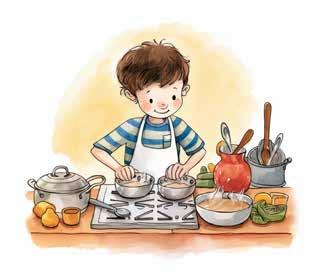
Let’s Brainstorm!
What do you enjoy doing in your free time? • Do you like indoor or outdoor activities? • How is your pastime helpful to you or others? • What makes this activity fun or special? • What are some perks or benefits of doing it?
Review Commas
We use commas to make our writing clear and easy to read.
• After yes, no, and well - Use a comma when these words appear at the beginning of a sentence.
• After interjections - Use a comma after an interjection at the beginning of a sentence.
• Between cities and states - Use a comma between the name of a city and the name of the state and the rest of the sentence.
• In a series - Use commas to separate items in a list.
• Set off a question - Use a comma before a short question at the end of a sentence.
1. The Everglades has alligators turtles and manatees.
2. Yes Arizona has stunning deserts.
3. We traveled to Zion National Park in Springdale Utah.
4. Well the views in Colorado are breathtaking.
5. The giant redwoods are incredible don’t you think?
6. Hey did you see that bald eagle soaring above?
7. Acadia Yellowstone and Glacier are all national parks.
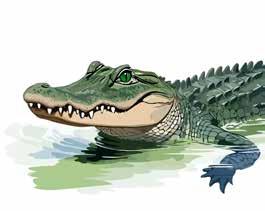
8. They drove from Denver Colorado to Rocky Mountain National Park.
9. The Grand Canyon has cliffs trails and the Colorado River.
10. This hike is really steep isn’t it?
11. No forgetting the map was not a good idea. Add the missing commas.
Rewrite each sentence with commas in the correct places.
1. Yes I would love to explore the caves at Mammoth Cave National Park!
2. The Great Smoky Mountains are foggy mysterious and full of wildlife.
3. You have visited a national park before haven’t you?
4. The Badlands has prairies rock formations and fossils.
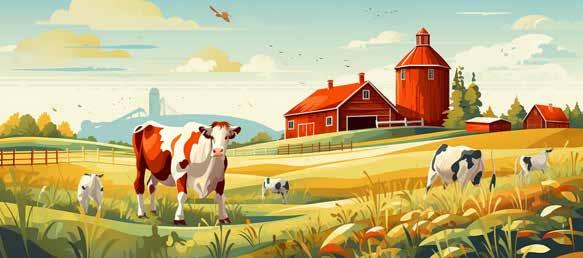
Add the missing commas.
Yesterday, our class went on a field trip to Sunny Acres Farm in Lancaster Pennsylvania. Wow the weather was perfect! We saw cows sheep and goats in the barn. The farmer showed us how to feed chickens collect eggs and clean the coop. Oh I nearly stepped in a puddle of mud while petting a sheep. This place is really fun isn’t it? After lunch, we visited the farm store in Hershey Pennsylvania and bought honey jam and fresh bread. Hey did you hear the rooster crowing behind the barn? Before we left, we took pictures played games and thanked the farmers for the tour.
Direct and Indirect Quotations
Quotations are used in writing to show what someone said.
A direct quotation shows the exact words someone said and is usually enclosed in quotation marks.
Example: "I love reading," said Sarah.
An indirect quotation tells what someone said without using their exact words and does not use quotation marks.
Example: Sarah said that she loves reading.

Write "Direct" for direct quotation or "Indirect" for indirect quotation.
1. Mr. Carter said, "Stay with your group at all times."
2. Jake told us that he had never seen a real tiger before.
3. "This is the best field trip ever!" exclaimed Daniel.
4. The zookeeper explained that penguins live in cold places.
5. "Can we visit the reptile house next?" asked Liam.
6. Our teacher reminded us that we needed to be respectful of the environment.
7. "Look at that giraffe eating leaves from the tallest tree!" said Andrew.
8. Noah mentioned that his favorite animals were the sea otters.
9. "I can't believe how big the elephants are!" shouted Ethan.
10. The tour guide told us that some snakes can grow longer than a school bus.
Write a short article about a local artist who just finished a painting. You interviewed the artist, and you wrote down some quick notes on a sticky note. Now it’s time to turn those notes into a short article that includes both direct and indirect quotes!
Example: David explained that he painted every day after work for three weeks to finish the drawing. “I wanted the painting to make people smile,” he said.
• Artist: David
• “I wanted the painting to make people smile.”
• Took three weeks to finish
• Painted every day after work
• Inspired by local flowers and kids’ drawings
• “This wall looked so boring before. I wanted it to feel alive.”
• People walking by said they loved it
Let’s Brainstorm! What inspired the artist? • How long did it take? • What did he say about the wall or the painting? • How did people react to the art? • What did he hope people would feel?
Quotation Placement
Quotation marks " " show the exact words a person says. They go before and after the spoken words.
Example: "I love reading books," said Bella.
Rewrite each sentence correctly by placing the quotation marks in the right place.
1. I can't wait to ride the roller coaster, said Anne.
2. Lily asked, Where is the ticket booth?
3. Watch out for the bumper cars! shouted Meg.
4. Do we have time to go on the Ferris wheel? asked Jill.
5. That was the fastest ride ever! exclaimed Emma.
6. Lisa asked, Can we go play the ring toss game?
7. Beth said, Let's go on one more ride before we leave.

Below are three story starters with missing dialogue. Choose one and complete the missing conversation by adding direct quotations with correct punctuation.
Option 1: The Roller Coaster Challenge
David and Ben stood in front of the tallest roller coaster in the park. Ben hesitated, looking up at the steep drop.
(Write a conversation between David and Ben about whether or not to ride the roller coaster.)
Option# :
Option 2: The Lost Ticket
Leah reached into her pocket and gasped. Her ticket was gone! She turned to her friend, Rachel.
(Write a conversation between Leah and Rachel about what to do next.)
Option 3: Winning the Big Prize
Eric tossed the last ring at the game booth, and it landed on the bottle! The game attendant smiled and pointed to the giant stuffed bear. (Write a conversation between Eric and his friend as he celebrates winning.)
Direct Quotations
When using direct quotations, always capitalize the first letter inside the quotation marks.
Example: Sarah said, "We should go to the library during recess."
Circle the letters that need to be capitalized.
1. Sam said, "we should start working on our science project today."
2. "but I forgot my notebook at home," replied Mark.
3. Sam sighed, "that's okay, we can still plan our ideas."
4. "i think we should build a volcano model," suggested Mark.
5. Sam smiled, "that sounds like a great idea!"
6. Mark asked, "can we make it erupt with baking soda and vinegar?"
7. "that's the best part!" Sam exclaimed.
8. "we need to gather all the materials before Thursday," Mark reminded him.
9. Sam nodded, "i will bring the cardboard and paint."
10. "great," said Mark, "i'll bring the baking soda and vinegar."
11. Sam asked, "who’s going to build the base of the volcano?"
12. "let’s get friends to help us during lunch tomorrow," suggested Mark.
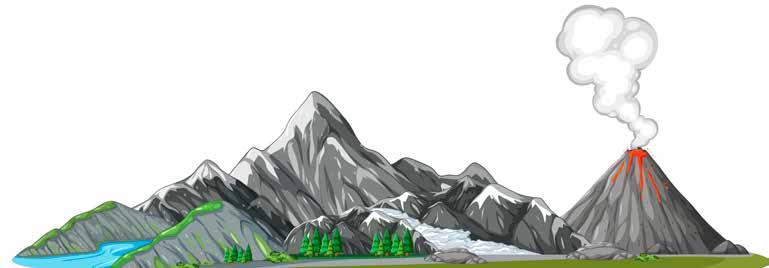
13. "we should make a list so we don’t forget anything," said Sam.
14. Mark smiled, "this is going to be the best volcano ever!"
You’re helping at a fruit stand when a customer asks something surprising. Choose a starting question. Then, write a short conversation of at least four sentences between you and the customer. Include at least two direct quotes with correct capitalization, punctuation, and quotation marks.
Choose a starting question.
1. “Do you sell glow-in-the-dark bananas?”
2. “Do you sell rainbow-colored strawberries?”
3. "Can I have a fruit that changes flavor with every bite?"
4. “Can you help me find a fruit that makes you float for a second?”
Example: A customer approached the fruit stand with a curious look. “Do you sell glow-in-the-dark bananas?” she asked. I laughed and said, “No, but wouldn’t that be amazing?”
Let’s Brainstorm!
What is something silly or surprising a customer might say? • How would you answer kindly or with humor? • What could you say to make the customer smile or laugh? • What fruit might you offer instead?
Comma Placement in Direct Quotations
A comma is used to separate the exact words someone says from the rest of the sentence.
P before Q: When punctuating quotations, remember, the punctuation mark always comes before the quotation mark!
Example: Ben said, "We should go to the park after school."
Example: "We should go to the park after school," Ben said.
Place commas where they belong in the sentences below.
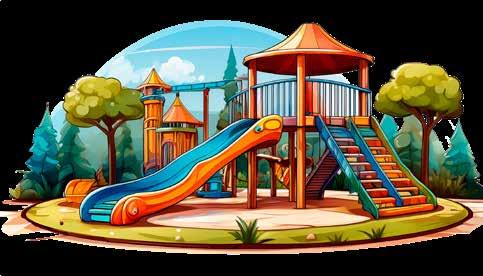
1. Daniel said “Louis Braille lost his sight as a young boy.”
2. “He was only three years old when it happened ” Levi explained.
3. Levi remarked “The accident happened in his father’s workshop.”
4. “Even though he was blind, he kept learning ” Daniel added.
5. Daniel continued “He became one of the top students at his school.”
6. “He read using raised letters at first ” Levi said.
7. He added “But he thought there had to be a better way.”
8. “At just fifteen, he invented a new system for reading ” Daniel explained.
9. Daniel remarked “It used six raised dots in different patterns.”
10. “The new system helped blind people read faster ” Levi noted.
11. Levi said “Braille’s invention spread across the world.”
12. “Today it is used in schools, books, and signs everywhere ” Daniel concluded.
Look at the picture. Write a short story (at least six sentences) that shows what the characters might be saying.
Use at least three direct quotes to tell what each character says. Make sure to use quotation marks and commas correctly when someone talks.Your writing should tell the story by showing what’s happening through the characters’ words.
Example: The balloon animal floated high above the park, and Carl and Wayne ran after it as fast as they could. “Grab it before it flies away!” Carl shouted. Wayne laughed, “I can’t believe it’s so light!” Then Carl warned, “Watch out for the tree branches!”

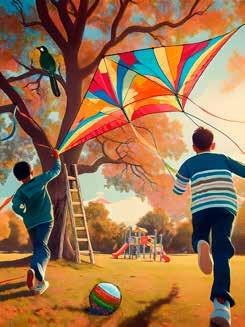
Let’s Brainstorm!
What’s happening in the picture? • How do the characters feel—excited, worried, surprised? • What might they say to each other? • How can you show their emotions through their words? • What could happen next?
Punctuation in Direct Quotations
When a direct quote is a question or an exclamation and comes at the beginning of a sentence, use a question mark (?) or exclamation point (!). Do not use a comma.
Remember, P before Q: The punctuation mark always comes before the quotation mark!
Examples: "Did you see the shooting star last night?" asked Anna. "That was the best sight ever!" shouted Sara.
Fill in the missing punctuation in each sentence.
1. "Can we ride the roller coaster again " asked Daniel.
2. "That drop was amazing " shouted Sam.
3. "Where did you put the tickets " asked Ben.
4. "This is the best day ever " cheered Sam.
5. "Did you see how fast that ride went " asked David.
6. "Let’s get cotton candy next " said Daniel.
7. "Is the haunted house really that scary " asked Adam.
8. "I want to go on the spinning ride again " yelled David.
9. "Why is everyone screaming so loudly " asked Eli.
10. "That water ride was freezing cold " exclaimed Adam.
11. "Should we take a break and eat lunch " asked Daniel.
12. "Look at that giant Ferris wheel " shouted Eli.
13. "Can we stay until it gets dark " asked Ben.
14. "This whole place is amazing " cheered Ben.
15. "Who’s ready for another ride " asked David.
A mystery is a story about something lost, missing, or unknown. The characters try to figure out what happened by looking for clues and asking questions. Sometimes, the mystery is solved at the end, and sometimes, it ends with a cliffhanger that keeps the reader wondering.
Write a short mystery story that includes at least two direct quotes from people in the story.
Story Starter:
One morning at school, someone found a bike that had a tire that was mysteriously flat.

Let’s Brainstorm! What happened to the bike? • Who might know something? • What clues can be found? • What would each person say? • Will the mystery be solved or left a mystery?
Review Quotation Marks
• Quotations are used in writing to show what someone said.
• A direct quotation shows the exact words someone said and is usually enclosed in quotation marks.
• An indirect quotation tells what someone said without using their exact words and does not use quotation marks.
• Capitalize the first word of a direct quote.
• Use a comma to separate the exact words someone said from the rest of the sentence.
• Use question marks and exclamation points when a direct quote is a question or an exclamation.
• Use the P before Q rule to determine where to place punctuation marks.
Write D for direct quotation or I for indirect quotation.
1. “I can’t believe how tall it is already,” said Jake.
2. Sam said that they ran out of nails and needed more.
3. Ben explained that the boards still needed to be sanded.
4. “Let’s take a break before we put up the roof,” said Sam.
5. “Watch your fingers!” yelled Ben.
6. Jake said they would finish painting it tomorrow.
7. “I think this side is slanted,” Sam pointed out.
8. Ben said the hammer was in his backpack.
9. “This is going to be the best thing we’ve ever built!” shouted Jake.
10. Sam mentioned that the ladder was a little shaky.
Rewrite each sentence correctly by adding quotation marks, commas, and capitalization where needed.

1. let’s go on the Ferris wheel said joe
2. sam asked do you want to play the ring toss game
3. this is the best day ever exclaimed tom
4. did you see that roller coaster asked sam
5. this popcorn tastes amazing said ben
Anna and Laura are at the amusement park. Fill in the missing punctuation to complete their conversation correctly.
6. What should we ride next Anna asked.
7. Laura said I think we should go on the bumper cars
8. That sounds like so much fun Anna exclaimed.
9. Laura asked Do you think we will crash into each other
10. I hope not Anna said It’s much more fun to dodge each other
11. Laura said Let’s get in line before it gets too long
12. Anna asked Can we go on the swings after this
Prefixes
A prefix is a group of letters added to the start of a word to change its meaning.
Common prefixes:
un- not, opposite of unsafe = not safe dis- not, opposite of disorganized = not organized re- again rebuild = build again mis- wrongly misjudge = judge wrongly pre- before preplan = plan before over- too much overpack = pack too much
Underline the prefix in each word. Then, write the meaning of the word.
1. unsafe 2. disagree 3. overload 4. preheat 5. dishonest 6. rebuild 7. oversleep
8. reread 9. misunderstand 10. misspell 11. preview 12. redo


You’re getting ready for a big day, maybe a school event or a family trip. Everything starts off fine, but then things begin to go wrong.
Write a short story at least seven sentences long about your big day gone wrong. Your story should have a clear beginning (getting ready), middle (when things go wrong), and end (how you fix or accept the situation). Use at least at least three words with prefixes.
Example: I woke up early to prepare for our school science fair. I unpacked my display board and redid a few messy labels. Things were fine until I discovered I had left my experiment notes at home. While searching my bag, I misplaced my glue stick, and my teacher had to lend me one. Even though I overfilled my table with props, I still explained my project well and felt proud.

Let’s Brainstorm!
Events (school trip • class play • family vacation • picnic) • Things that go wrong (misplace ticket • oversleep • dislike the food • misunderstand directions • misspell a sign • overload the car) • Ways to fix it (redo the work • rebuild a project • unlock the problem • preplan a new idea)
Suffixes
A suffix is a group of letters added to the end of a word to change its meaning.
Common suffixes:
-er, -or a person who does something gardener = someone who gardens -ful full of flavorful = full of flavor
-ment a state or result of something enjoyment = the state of enjoying -ion an action or process construction = the process of constructing -able, -ible able to be or do passable = the ability to pass
Write the correct word using the base word and the appropriate suffix.
1. Someone who teaches =
2. Full of color =
3. Able to be believed =
4. Full of joy =
5. Someone who paints =
6. A state of being excited =
7. Able to be read =
8. Someone who explores =
9. Full of wonder =
10. The act of protecting =
11. Someone who climbs =
12. Full of care =
13. The act of educating =

Personal reflection is when you think about your own experiences, feelings, or ideas and what they mean to you. It helps you understand yourself better and share what you’ve learned, felt, or hope for.
Write a five to seven sentence reflection about a job you would love to have one day. Describe your dream job and explain why you would be good at this job. Try to use at least three different suffixes in your writing.
Example: My dream job is to become a writer of children’s books. I have always been creative and thoughtful, which would help me tell interesting stories. I think it would be enjoyable to create characters and adventures for children to read about. Being a good storyteller makes this job a perfect one for me.

Let’s Brainstorm!

Dream jobs (teacher • doctor • writer • builder • photographer) • Qualities you need (helpful • careful • creative • responsible) • Skills or actions (teach • lead • create • manage • build) • Suffix words to use (-er / teacher, builder • -or / actor, inventor • -ful / helpful, successful • -ment / achievement, enjoyment • -able / dependable, teachable)
Synonyms
Synonyms are words that have the same or similar meanings.
Context clues are hints in the sentence that help you understand what a word means. Sometimes, the sentence gives a synonym as a clue.
Example: The enormous dog, a huge Saint Bernard, barked loudly. The word huge is a synonym that gives a clue for enormous.
Draw a line to match each word to its synonym.
large
quick
intelligent
silent
chilly
Underline the synonym that is a context clue for the bold word.
1. The swift cheetah, a fast runner, chased its prey across the plain.
2. The chilly wind, a cold and sharp breeze, made us shiver.
3. She was joyful, feeling happy after winning the game.
4. The silent classroom, quiet and still, helped me focus.
5. The ancient castle, an old stone fortress, stood on the hill.
6. He was furious, extremely angry about losing his backpack.
7. The exhausted hikers, tired and sore, finally reached the campsite.

8. The courageous firefighter, a brave hero, ran into the burning building.

Revising is when you look at your writing and work to make it better. You might change words, add new details, or fix parts to make your ideas clearer and more interesting. Good revising helps your writing become clearer and more fun to read!
Revise the writing below by replacing words with stronger, more specific synonyms. Use the word bank below if you need help.
Revise
Our class had a really fun trip to the local aquarium. Everyone was excited to see the big shark tank and the nice exhibits about colorful coral reefs. It was a good opportunity to learn new things. Everyone was happy about all the new facts they learned throughout the day.
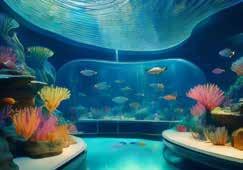
fun big nice good happy exciting awesome enjoyable huge enormous gigantic enjoyable beautiful pleasant amazing excellent perfect cheerful excited joyful
Rewrite
Antonyms
Antonyms are words that have opposite meanings.
Context clues are hints in the sentence that help you understand what a word means. Sometimes, the sentence gives an antonym as a clue.
Words like but, unlike, or not are often added to sentences to help us understand that an antonym is being provided for context.
Example: The river was shallow, not deep like the ocean. The words "not deep" give us a hint that shallow means the opposite of deep.
Underline the antonym that is a context clue for the bold word.
1. He was sad, unlike his cheerful brother.
2. After the boring game, we played an exciting one.
3. She was early, not late like yesterday.
4. The mountain trail was steep, not flat like the fields below.
5. His backpack felt heavy, unlike my light bag.
6. She was very generous, not selfish like her cousin.
7. The water was boiling, not cold like the river.
8. The room looked messy, but the hallway was neat and clean.
9. After feeling weak from the flu, he grew strong again.
10. Their team was victorious, while ours was defeated.
11. It was a rare sight, not common like usual events.
12. His tone was serious, not playful like earlier.


Character traits are words that describe what a person is like on the inside or how they act. Some traits have antonyms, or opposites, that show very different personalities or behaviors. Using antonyms in the same sentence can help show a clear contrast between characters.
Look at the scenario in the first column. Then, read the Character A Trait and the Character B Opposite Trait. Imagine how each character would act or feel in that situation. Finally, write one complete sentence that uses both traits and a connecting word (while, unlike, but, or however) to show their differences.

Scenario Character A Trait
Character B Opposite Trait Your Sentence
Class field trip adventurous cautious
Talent show confident nervous
Example: Ben was cautious on the hike, while Sam was adventurous and climbed ahead.
Roller coaster excited scared
Rainy picnic cheerful grumpy
Lost at the zoo calm worried
Review Vocabulary Building
A prefix is a word part added before a base word that changes its meaning.
A suffix is a word part added after a base word that changes its meaning.
Write the prefix or suffix in each word.
1. Uncharted → Prefix:
2. Navigation → Suffix:
3. Rediscover → Prefix:

Sort the words into categories.
4. Adventurer → Suffix: unfamiliar, fearless, preview, enjoyment, rebuild, hopeful
5. Words with prefixes:
6. Words with suffixes:
Complete each sentence by adding a prefix or suffix from the box.
dis- (not) pre- (before) over- (too much) -ful (full of)
7. The merchant was very (honest) and tricked his customers.
8. Her gift made me feel so (joy) .
9. This bag is too heavy because I tried to (pack) it.
10. We need to (heat) the oven before we bake the cake.
Antonyms are words that have opposite meanings.
Synonyms are words that have the same or similar meanings.
Write an antonym for the bold word.
1. The water was cold. →
2. He felt weak after the race. →
3. The room was dark. →
4. My backpack is heavy. →
Write a synonym for the bold word.

5. The happy boy skipped down the hall. →
6. The large dog barked loudly. →
7. She wore a beautiful dress to the party. →
8. The tiny bird sat in the tree. →

Write "S" if the word set is a synonym and "A" if it is an antonym.
9. happy / cheerful →
13. begin / start →
10. tall / short →
11. quick / fast →
12. hot / freezing →
Homophones
Homophones are words that sound the same but have different meanings and spellings.
Examples: hair/hare (the stuff on your head/a rabbit)
bare/bear (uncovered/large furry animal) pair/pear (a set of two/a sweet fruit) flour/flower (baking ingredient/plant with petals) write/right (to put words on paper/correct or direction)
Choose the correct homophone from the pair to complete each sentence.
1. I would like to eat a juicy (pair / pear) for my snack.
2. Please (write / right) your name at the top of the paper.
3. The rabbit hopped across the field like a wild (hair / hare).
4. Be careful not to step on that beautiful (flour / flower) in the garden.
5. I can (hear / here) the music playing from the speaker.
6. Let's meet over (hear / here) by the tree for our picnic.
7. The wind blew her (hair / hare) as she ran down the hill.
8. Find a (pair / pear) of socks to pack for your trip.
9. That answer is not (write / right); try it again.
10. We spread frosting on the cake made from(flour / flower).
11. The big brown(bare / bear)walked through the forest.
12. She will (write / right) a letter to her pen pal.
Write a short story, at least seven sentences long, about a day when everything around you gets completely mixed up because homophones start acting like their sound-alike words!
Use at least two pairs of homophones in your story. Make sure your story follows sequential order, showing what happened first, next, and last. Use strong details and clues to help your reader understand which word you really meant, even when things get silly or confusing!
Example: This morning, I tried to put on my pear of shoes before going outside, but they didn’t fit my foot! So, I decided to get a snack. When I checked the fruit basket, there were pairs in there! Then, I wanted to bake a cake, but all I could find was flowers instead of flour, so the kitchen smelled like a garden.

Let’s Brainstorm!
What funny or surprising things could happen? How would your day change if things you use or see suddenly became something else because of this mix-up?
Homophones: plane/plain (a flying machine/simple or flat land) • meet/meat (to come together/food from animals) • weak/week (not strong/seven days) • blue/blew (the color/what wind did) • plain/plane (simple or not fancy short for airplane)
Homographs
Homographs are words that are spelled exactly the same but have different meanings. They may be pronounced differently.
Examples: Tear (rhymes with care) - to rip something
Tear (rhymes with ear) - a drop of liquid from your eye
Lead (rhymes with need) - to guide someone
Lead (rhymes with bed) - a type of metal
Tip: Many homographs change their stress depending on how they are used. If the word is a noun, the first syllable is usually stressed. If the word is a verb, the second syllable is usually stressed.
Example: I signed the CONtract. Muscles conTRACT in cold water.
Each sentence uses a homograph. Circle the meaning that fits the sentence.
1. The object on the table is made of glass. (thing / to disagree)
2. I must object to that idea. (thing / to disagree)
3. We saw a park near the school. (green space/stop a car)
4. Please park the car in the driveway. (green space/stop a car)
5. My watch stopped working last night. (look at/small clock)
6. I will watch the baby while you cook. (look at/small clock)
7. She tied a bow in her hair. (ribbon/bend forward)
8. The actor took a bow at the end of the play. (ribbon/bend forward)
9. I bought a present for my sister's graduation. (show/gift)
10. I need to present my project to the class. (show/gift)
Work with a partner to build a story one sentence at a time.
Each sentence must use a homograph. Your sentence should clearly show one meaning of the homograph. Then, your partner writes the next sentence, using the same homograph but showing its other meaning. Keep adding sentences back and forth, making sure the story connects and flows. The story should be at least eight sentences long. Your story can be silly or surprising, but make sure each pair of sentences helps tell one story.
Example: I opened the book and saw a picture of a bright spring in a forest. When all of the sudden, a strong spring appeared and made the book bounce up!
I ended up turning the page, and it showed a bat hanging from a tree branch.
Then, I heard the sound of a baseball bat hitting a ball nearby.

Let’s Brainstorm! bark (tree covering / dog sound) • nail (on your finger / metal fastener) • ring (circle / jewelry / sound of a bell) • row (line of things / an argument) • wave (ocean wave / to greet) • fair (carnival / just, equal) • duck (animal / to bend down) • light (brightness / not heavy) • well (healthy / water source) • plane (a tool / a flying vehicle / flat surface)
Two, Too, and To, Its and It's
Homophones are words that sound the same but have different meanings and spellings.
Commonly confused homophones to showsdirection,place,orposition I am going to the park. too means“also”or“very” I want to go with you, too. / That is too big.
two the number 2
I have two apples. its belongingtoit The cat licked its paw. it’s it is or it has It’s raining outside.
Circle the correct word to complete each sentence.
1. We learned how (to / too) recycle plastic bottles at school, and I want to show my family how to do it, (to / too).
2. The recycling truck came early because (its / it’s) schedule was changed.
3. Our class collected (to/ two) big bags of cans for the project.
4. (Its / It’s) important that everyone remembers (to / too) sort paper and plastic.
5. The principal said, “Recycling is (too / two) easy (to / too) ignore.”
6. My friend forgot (to / too) bring his bottles, but he said he’d bring them tomorrow.
7. We read a book about recycling, and (its / it’s) message to recycle was clear.
8. My teacher said we could earn (too / two) extra points if we recycled at home, (too / two).
9. The recycling center near my house has (to / two) different bins for sorting.
10. Our Earth needs us (to / too) recycle, because (its / it’s) the only one we have.
Write a detailed description about a brand new board game that you invented. Your writing should give the reader a clear picture of what your game is like and how it is played.
When describing your game, start by explaining its name and the goal. Then write how many people can play and the rules. You should also include details about the board or pieces. Make sure to use the words two, too, to, its, and it’s correctly in your description.
Example: My game is called Race to the Treasure. Its goal is to be the first player to reach the treasure chest at the center of the board.
Two to four players can play this game. Each player chooses a colored game piece and takes turns rolling the dice to move along the path. It’s important to watch out for traps that send you back!

Let’s Brainstorm!
What kind of game will you create? (race • puzzle • trivia • adventure)
• What will players try to do to win? (collect points • reach the finish
• solve problems) • Will your game need cards, tokens, or special spaces? • How will the board and pieces look? (colorful • simple
• detailed • 3-D) • What makes your game exciting and unique? (surprises • challenges • funny twists)
There, Their, and They're, Your and You’re, Here and Hear
Homophones are words that sound the same but have different meanings and spellings.
Commonly confused homophones: there pointstoalocationorshowsexistence The book is over there their showspossession The students brought their lunches. they’re contractionof“theyare” They’re going to the playground. your showspossession Is this your pencil? you’re contractionof“youare” You’re doing great work! here pointstoalocation
Put the notebook here. hear relatedtosoundandlistening I can hear the birds singing.
Circle the correct homophone to complete each sentence.
1. The teacher asked the students to take (there / their / they’re) seats.
2. I can (here / hear) the rain falling outside.
3. (Their / There / They’re) going to the park after school.
4. Is this (your / you’re) water bottle?
5. (Your / You’re) going to love this book.
6. Please put your backpack (here / hear).
7. (Their / There / They’re) planning a surprise party for Grandma.
8. I can’t wait to (here / hear) what happens in the story.
9. Is (your / you’re) homework finished yet?
10. Please put the groceries over (there / their / they’re).


The principal needs your keen detective skills! Someone has been scattering notes all over the school, filled with tricky mistakes using words that sound the same but have different meanings. Your mission is to hunt down these grammar mishaps and correct the wrong uses of there, their, they're; your, you’re; and hear, here. Fix each mistake to restore order to the school's communication.
Your going to love there pizza special!
They’re books are on the shelf over their. You’re backpack is by the door. Hear is the class pet and its story.
I can here the bell ringing from over their.
Edit the notes by rewriting the sentences and correcting the mistakes.
Review Word Usage
Homophones different spelling same pronunciation see/sea
Homographs same spelling same or different pronunciation light (not heavy / brightness)
Write each word from the box near its homophone below.
knot pour eight grate aunt sew
not
great
ant
poor
so
ate
Write two different sentences to show each meaning of the word.
1. ring – (a piece of jewelry / the sound of a bell)
2. watch – (a timepiece / to look at closely)
3. park – (an outdoor public area / to stop and leave a vehicle)
Commonly Confused Homophones:
to - shows direction or purpose its - shows ownership (belonging to it) too - means “also” or “very” it’s - “it is” or “it has” two - the number 2 your - belonging to you their - shows possession you’re - “you are” there - location or existence here - in this place they’re - “they are” hear - to listen or perceive sound
Circle the correct homophone to complete each sentence.
1. I have (to / too / two) cats and one dog.
2. The box is (to / too / two) heavy to lift.
3. The cat licked (its / it’s) paw.
4. (Your/You're) going to love the surprise.
5. Put the chairs over (there / their / they’re).
6. Did you see (there / their / they’re) new bikes?
7. I can (here / hear) the birds singing.
8. Come sit over (here / hear).
For each word, write a short sentence using the word correctly.
9. too 10. it’s
11. your
© Lighthouse Curriculum. Copying strictly prohibited.
Dictionary Skills: Syllables
Dictionaries show us how to pronounce words. Syllables are the beats or parts in a word. Each syllable contains a vowel sound. Dictionaries show syllable breaks with dots (•) or hyphens (-).
Examples: cat (1 syllable) lem•on (2 syllables) but•ter•fly (3 syllables)

Circle the number of syllables in each word.
Use dots to show syllable breaks in each word.

A limerick is a five-line poem that is usually funny. It has a special rhythm and rhyme pattern:
Lines 1, 2, and 5 have seven to eight syllables and rhyme (A). Lines 3 and 4 have five to six syllables and rhyme (B). The rhyme scheme is AABBA.
Example: (A) There once was a goat on a boat, (A) Who tried to put on a red coat. (B) It slipped off his back, (B) And fell with a smack, (A) So he used it to paddle and float!
Think of a starting line and some ideas of rhyming words.
There once was a
A- Rhyming words
B- Rhyming words
Write your limerick.
Let’s Brainstorm!
There once was a cat in the zoo • There once was a dog who liked glue
• There once was a clown from the park • There once was a frog in the dark • There once was a fish who could sing • There once was a boy named Bing • There once was a girl with one shoe • There once was a boy who said “Boo!”
Stressed Syllables
Dictionaries show us how to how to pronounce words. Capital letters or stress marks (') show which syllable of the word to emphasize.
Example: butterfly → BUtterfly hotel → ho'TEL
Rewrite each word using capital letters for the stressed syllable.
5.
Circle the syllable that should be stressed.


1. banana
2. computer
3. guitar
4. delicious
holiday
6. important
7. elephant
1. parade → (pa / rade)
2. desert → (de / sert)
3. balloon → (bal / loon)
4. teacher → (tea / cher)
5. rabbit → (rab / bit)
6. picnic → (pic / nic)
7. music → (mu / sic)
Write a short paragraph (four to five sentences) using at least five of the words in the word bank. Keep the stressed syllable in capital letters when you write the words, just like in the word bank.
Example: When I think of summer, I always dream about my vaCAtion. My family and I take an adVENture to the beach, and we listen to MUsic while sitting in the SUNshine. It is so deLIcious when we eat ripe baNAnas by the ocean!

Word Bank:
baNAna guiTAR ELephant deLIcious imPORtant
SUNshine MUsic OCtopus BEAUtiful underSTAND
adVENture toMORrow disCOVery poTAto vaCAtion
Pronunciations
Dictionaries show us how to pronounce words. Pronunciation keys are symbols that help us know how to pronounce a word. They are found in brackets [ ] after a word in the dictionary.
Long Vowel Pronunciation Symbols: a apple ā cake e egg ē see
igloo ī kite o octopus ō boat u umbrella ū flute

Match each word to the correct pronunciation symbol.
1. map 2. seed 3. top
huge
fish
game
jump
boat
bed
light
A how-to guide gives clear steps to help someone learn something new. It explains each part in order and uses simple language, like giving instructions to a friend.
Write a short paragraph explaining how to tell what sound a vowel makes when it has a line over it. Give examples. Tell what these marks are called and where to find them in a dictionary.
Example Starter: When a vowel has a line over it, it means the vowel says its name.

Let’s Brainstorm!
What do pronunciation symbols do? • Where have you seen them in a dictionary? • Which vowel sounds do you remember? • What are some fun or tricky words you could use as examples? • What’s a tip that helps you remember the sounds?
Dictionary: Understanding Word Meanings
Many words have more than one meaning. Meanings are numbered in order of common use.
Example: bark (bark)
1. the sound a dog makes
2. the outer covering of a tree

Use context clues to help understand or choose the right meaning. Read the sentence before and after the word. Think about what makes sense in the sentence.
Circle the correct meaning of the underlined word.
1. The tree’s bark felt rough under my hand.
a. the outer covering of a tree b. the sound a dog makes
2. A bat swooped across the night sky.
a. a small flying animal b. a stick used in baseball
3. The teacher asked us to sign the record of attendance.
a. to save sound or music b. a written document
4. The school held a big fair with games and rides.
a. a carnival with food and games b. treating people equally
5. We saw a long row of chairs lined up in the lunchroom.
a. move a boat with oars
b. a line of things in order
6. The child had to duck when the ball came flying toward him.
a. a type of bird
b. bend down quickly
7. The farmer dug a well to get fresh water.
a. healthy

b. a deep hole in the ground that has water
Tell a short story with a clear beginning, middle, and end.
Think of a word that has more than one meaning. Create a comic strip where a character completely misunderstands the meaning of the word, leading to something funny, confusing, or even a little bit disastrous! Your comic strip should include three to four panels with one sentence per panel that uses the vocabulary word incorrectly.
Panel 1
Panel 2
Panel 3
Panel 4
Let’s Brainstorm!
Funny misunderstandings: a date on a calendar vs. a sweet fruit • a letter from the alphabet vs. a letter you mail • a seal that barks vs. sealing a jar • a yard for measuring vs. a yard outside your house • a plane that flies vs. a flat plane in math • a rock you step on vs. a cradle that rocks • a trip to the zoo vs. tripping on a rug • an ocean current vs. current events • a sharp pencil point vs. the point of a story • a sink in the kitchen vs. a boat that sinks
Review Dictionary Skills
Multiple Meanings - Many words have more than one meaning. Dictionaries number the definitions in order of common use.
Syllables- Words are divided into parts called syllables. Every syllable has a vowel sound. Dictionaries show syllable breaks with dots (•) or hyphens (-).
desert 1. [d ĕ z ´ • ert] [ DEZ- ert] a dry, sandy place
2. [d ĭ • zurt ´ ] [di - ZERT ] to leave someone behind
Pronunciation symbols are special symbols that help us know how pronounce a word.
Stress mark ( ' ) or capitalized letters show the stressed syllable.
Break each word into syllables and mark the stressed syllable by capitalizing it.
1. helicopter
2. restaurant
3. imagination
4. adventure
Circle the correct vowel sound for each word.
bike → ( i ) ( ī )
2. pet → ( e ) ( ē ) 3. cube → ( u ) ( ū ) 4. hot → ( o ) ( ō )

1.
Write the number of the correct meaning on each line.
Spring
1 - the season after winter
2 - a coil that bounces
3 - jump or leap
1. The cat will spring onto the table.
2. Flowers bloom in the spring.
3. The toy has a metal spring inside.
Light
1 - something that makes things visible
2 - not heavy
3 - pale in color
4. She wore a light green sweater.
5. Please turn on the light.
6. This suitcase is very light to carry.
Watch
1 - look at something carefully
2 - a small timepiece you wear on your wrist
3 - guard or keep an eye on
7. I bought a new watch for my birthday.
8. The guard will watch the building tonight.
9. Let’s watch a play together.

Contractions
A contraction joins two words. An apostrophe (’) shows where letters are left out.
Example: do not → don't, were not → weren’t, I woul
Match the contraction to its two words.
1. don’t •
2. you’re •
3. they’ve •
4. isn’t •
5. she’ll •
6. it’s •
7. can’t •
8. who’s •
9. wasn’t •
10. wouldn’t •
• it is • they have
• you are • was not • do not • who is • would not • she will • cannot
• is not

Replace the words in parentheses with the correct contraction.
1. (That is) my seat, and (I will) save one for you.
2. (I am) finished with my work, but (I have) not packed my bag yet.
3. (We are) bringing the snacks, and (they are) bringing the drinks.
4. You (should not) be late, because (it is) an important meeting.
5. The pencils (are not) on the desk, so (we will) check the cabinet.
Work with a partner to write a short story together. Take turns adding to the story. Make sure it has a beginning, middle, and end, with either a strong ending or a cliffhanger. Use contractions naturally so the story sounds realistic and fun.
In a good story, readers feel like they’re right there with the characters, hearing what they say and seeing what happens. Dialogue shows what the characters are saying, and narration tells what’s going on around them. Writers use both to make the story clear and exciting.
Choose your own, or use this sentence starter: “Youwon’tbelievewhathappenednext…”
Let’s Brainstorm!
friends lost in a maze • kids planning a surprise party • two campers hearing strange sounds at night • siblings finding a hidden box • students trying to solve a mystery at school • neighbors helping each other during a storm • explorers discovering something unusual in the forest
Contractions: Isn’t and Aren’t, Wasn’t and Weren’t
A contraction joins two words. An apostrophe (’) shows where letters are left out.
Contraction Number Tense
isn’t (is not) singular present aren’t (are not) plural present wasn’t (was not) singular past weren’t (were not) plural past
Using the words in the word bank, fill in the blanks with the correct contractions.
isn't aren't wasn't weren't
1. My keys on the kitchen table this morning. (past)
2. The instructions very clear. (present)
3. The weather warm enough for hiking today. (present)
4. These shoes comfortable to wear all day. (past)
5. His backpack where he left it. (present)
6. There any apples left in the basket.(past)
Replace the words in bold with the correct contraction.
1. The door is not locked. →
2. The lights are not turned off. →
3. His homework was not finished on time. →
4. The dogs were not barking when I got home. →
A diary entry is a personal way to share your thoughts, feelings, and what happened during your day.
Write a diary entry describing a morning where you wake up and notice that everything in your house isn’t where it usually is, and familiar sounds aren’t heard. Use contractions like isn’t, aren’t, wasn’t, and weren’t to show what is different from normal.
Example: Dear Diary,
This morning wasn’t like any other. The kitchen and chairs weren't where they should be. Our big table was gone, and the fridge wasn’t humming anymore. I couldn’t hear the sounds of my family getting ready, which made the house feel very quiet and empty.
Dear Diary,

Let’s Brainstorm! things missing • strange noises • silent rooms • furniture moved • new smells • rooms switched • things that worry you • things that surprise you
Contractions: Doesn't and Don't
Does not becomes doesn’t and is used with singular subjects. Example: He does not like broccoli → He doesn’t like broccoli.
Do not becomes don’t and is used with I, you, we, they, and plural subjects.
Example: They do not like broccoli → They don’t like broccoli.
Fill in each sentence with "doesn't" or "don't."
1. A baker just make bread; he bakes cakes, too.
2. Bakers use the same recipe every time.
3. A good baker rush the dough.
4. Some bakeries stay open late; others bake through the night.
5. Bakers only work in big shops; some work at home or sell at markets.
6. Bakers just mix; they measure carefully.
7. A perfect cake happen by accident; it takes a lot of time and work.
8. New bakers learn everything at once; they practice step by step.
9. Some ovens bake evenly.
10. A baker ignore mistakes; he fixes them right away.
11. Customers always want the same treats, so bakers change their menus.
12. A baking business succeed without planning and teamwork.
Opinion writing is when you share what you think about something and give reasons to support your idea. Write about a game or activity that some people like but you don't enjoy or think is as much fun as they say.
Use “don’t” and “doesn’t” to explain your reasons. Write at least five sentences that clearly state your opinion and give examples to support it.
Example: I know many people enjoy playing chess, but I don’t think it’s as exciting as everyone says. Sitting still for so long doesn’t make me happy. I would rather play an active game where I can move around.
Let’s Brainstorm! board games • baking • swimming • playing tag • jump rope • hideand-seek • kickball • gardening • running races • foursquare • reading mystery books
Double Negatives
We use only one negative word in a sentence to make the meaning clear. If we use two negative words, it creates a double negative.
Incorrect: I didn’t see no cars on the road. (This sounds like you did see cars!)
Correct: I didn’t see any cars on the road. (This clearly means you saw zero cars.)
Common negative words: no, not, never, nothing, nobody, none, nowhere, don’t, doesn’t, can’t, won’t, isn’t, wasn’t, aren’t, weren’t
Circle the negative words in the sentences below. Then, write if each sentence is correct (C) or incorrect (I).
1. I didn’t find nothing in my backpack.
2. She never forgets her homework.
3. There wasn’t nobody at the park when we arrived.
4. We couldn’t hear no instructions over the noise.
5. He didn’t say anything about the test.
6. My backpack was nowhere to be found.
7. They wouldn’t bring no food to the party.
8. We didn’t see anybody we knew at the play.
9. The dog wasn’t barking at anything outside.
10. I couldn’t see no stars in the sky.
11. She wasn’t doing anything wrong.
12. We didn’t get no time to finish the project.
13. There was no reason to leave early.
14. He wouldn’t tell nobody the secret.
You are an explorer searching for a hidden treasure! But there’s a problem. The secret map clues are full of double negatives, making them hard to understand. Your task is to rewrite the messages correctly so you can find the treasure before it’s lost forever!
Read each coded message below. Rewrite each sentence correctly by removing the double negatives while keeping the meaning the same.
1. You don’t need no supplies to survive the journey.
2. There wasn’t no time to waste once the storm started.
3. The explorers couldn’t never cross the river without a bridge.
4. We didn’t find no clues at the old campsite.
5. The map wasn’t nowhere near the ancient tree.
6. No one never discovered the treasure hidden in the cave.
7. The captain didn’t see no danger on the horizon.
8. The crew couldn’t find no path through the jungle.
Teach and Learn, Those and Them
Teach to give knowledge to others Dad teaches me to ride a bike.
Learn to get knowledge or skills I learned how to ride a bike.
Those specific people or things you are pointing out I like those books on the shelf.
Them specific people or things you are talking about We planted flowers and watered them every day.
Circle the correct word to complete each sentence.
1. My mom will (teach/learn) me how to bake a cake.
2. We found some old photos and looked through (those/them) together.
3. I want to (teach/learn) how to play guitar.
4. Mr. Brown will (teach/learn) us about animals in science class.
5. (Those/Them) pencils don’t have erasers.
6. Students (teach/learn) something new every day at school.
7. Don’t leave (those/them) papers on the floor.
8. I baked cookies and shared (those/them) with my friends.
9. My brother will (teach/learn) me how to play chess.
10. Children (teach/learn) from their mistakes and try again.
11. (Those/Them) jackets look warm and cozy.
12. The lights were too bright, so I turned (those/them) off.

Write at least two paragraphs about a skill or hobby you already know how to do and explain how you could teach someone else to do it. Use the words teach, learn, those, and them in your writing.
In your first paragraph, tell what skill or hobby you want to teach and who you would teach it to. In your next paragraph(s), explain the important steps someone needs to know to learn it, and end by sharing what they might enjoy or learn from it.
Example: I want to teach my little sister how to bake cookies. Baking is fun and delicious, and I think she would enjoy learning it with me. First, she would need to learn how to measure ingredients correctly and mix them together. It’s important to follow the recipe carefully so the cookies turn out just right. Baking can teach patience and attention to detail, and those are skills she could use for other things, too.

Let’s Brainstorm! something you're good at doing (drawing, playing music, organizing, building, crocheting) • who you would want to teach it to (a friend, family member, or someone else) • fun or useful things they might get from learning it
Sit and Set, Lie and Lay
Sit to rest yourself on a chair, bench, or floor I sit on the bench.
Set to put something in a place I set the book on the table.
Lie to stretch out and rest I lie down on the bed.
Lay to put something down I lay the books on the table.
Circle the correct word to complete each sentence.
1. I always (sit/set) in the front row during school assemblies.
2. I like to (lie/lay) on the grass and look at the clouds.
3. Please (sit/set) your backpack by the door.
4. Mother will (sit/set) the plates on the table for dinner.
5. My brother likes to (sit/set) next to me on the couch.
6. They (lie/lay) the new books out for the students.
7. After the hike, we just wanted to (lie/lay) down and rest.
8. I (sit/set) quietly and listen closely during class.
9. Please (lie/lay) your homework on my desk.
10. The baby likes to (lie/lay) down after his bottle.
11. I (sit/set) my pencil case down before the test started.
12. We (sit/set) in a circle during reading time.
13. I always (lie/lay) my crayons in their correct spots.
14. Please (sit/set) the groceries on the kitchen counter.


Write a short how-to guide that explains how to set up your perfect reading or relaxing spot. Give step-by-step instructions so someone else could make a space like yours. Use the words sit, set, lie, and lay correctly in your writing.
Write one to two sentences for each step below to guide someone else in creating a space like yours.

Example: Step 1: I set out my favorite blanket, a pillow, and a stack of books. Step 2: I sit down and then lie back against the pillow to get comfortable.
Step 1 - Gather and set out your items.
Step 2: Explain how you sit or lie down.
Step 3: Describe what you lay out nearby.
Step 4: Finish with why you enjoy the space.
Let’s Brainstorm! cozy blanket • soft pillow • favorite book • snack • water bottle or drink • quiet corner • sunny spot • comfy chair • soft rug • lamp or flashlight • nature view • beanbag chair • hammock • warm sweater • window seat • stack of cushions • scented candle • stuffed animal • small table • basket for books • music • footrest • plant nearby • notebook and pen
Let and Leave, Good and Well
Let to allow or give permission The teacher let us have extra time.
Leave to go away from a place We leave school at 4:00.
Good when something is nice or right That was a good game!
Well when something is done in a good way or someone feels healthy He runs well I don’t feel well today.
Circle the correct word to complete each sentence.
1. Please (let/leave) me play outside after dinner.
2. That cake smells (good/well).
3. We (let/leave) school when the bell rings.
4. We worked (good/well) together as a team.
5. Dad will (let/leave) us stay up late tonight.
6. I always (let/leave) my lunchbox on the counter.
7. I got a (good/well) grade on my test.
8. Will you (let/leave) me borrow your pencil?
9. You wrote your story really (good/well).
10. I didn’t mean to (let/leave) my homework at home.
11. It feels (good/well) to help others.
12. The teacher will (let/leave) us pick our own partners.
13. I hope you feel (good/well) soon.

Write a funny story about a character who leaves the house in a silly or embarrassing way. It could be they forgot something important or something unusual happens. Use the word “let” to show when someone allows something and “leave” to show when something is forgotten or when the character goes somewhere.
Example: Marco rushes out the door because his big class trip starts at 8:00. His dad lets him pack his own bag, but Marco leaves his lunch on the kitchen counter. But that’s not the worst part. When he gets to school, he realizes he left the house wearing one slipper and one sneaker!
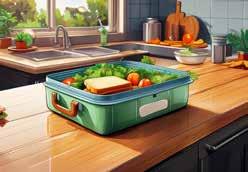
Let’s Brainstorm! left wearing boots in middle of the summer • left with your backpack but forgot your homework • left the house with a sandwich stuck to your shirt • you pack your own bag, but you only pack markers • left the house thinking it’s pajama day… and it’s not! • your friend lets you borrow a jacket that’s three sizes too big
Who and Whom
Who is used as the subject of a sentence. It is the person doing the action.
Example: The teacher praised the student who worked hard.
Tip: Use “who” if you can answer with "he" or "she."
The teacher praised the student. She worked hard. (Makes sense → use who)
Whom is used as the object of a sentence. It is the person receiving the action.
Example: The teacher praised the student whom she helped.
Tip: Use “whom" if you can answer with "him" or "her."
The teacher praised the student. She helped her. (Makes sense → use whom)
Fill in the blanks with either “who” or “whom”.
1. painted this beautiful picture?
2. To should I send the invitation?
3. The boy won the prize is my cousin.
4. is responsible for cleaning the classroom today?
5. For is this gift package intended?
6. The boy I met yesterday is very friendly.
7. did the teacher call to the office?
8. By was this story written?

Below is the beginning of a mystery story. Write a short paragraph to finish the mystery with a solution or a twist. Try to include the words "who" and "whom" correctly.
Starter:
A strange sound echoed through the hallway. Ben turned to Ryan.
“Did you hear that?” he whispered. “It came from the old supply closet.”
Ryan frowned. “But who would be in there after closing time?”
Ben reached for the door handle, then froze.
Let’s Brainstorm! footprints • torn paper • muddy boots • janitor • lost pet • classmate • stranger • teacher • friend • principal • something falls out • lights go out • someone runs past • it’s a prank • it’s a mix-up • it’s an important discovery
Review Common Usage Errors
A contraction joins two words. An apostrophe (’) shows where letters are left out.
does not → doesn’t: used with singular subjects do not → don’t: used with “I,” “you,” “we,” “they,” and plural subjects is not → isn’t: used for singular present are not → aren’t: used in plural present was not → wasn’t: used in singular past were not → weren’t: used in plural past
Use only one negative word in a sentence to make the meaning clear.
Fill in the missing contractions using the words in parentheses.
1. I (do not) want to miss the history lesson!
2. I (have not) seen that museum before.
3. He (was not) taking any photos inside the museum.
4. We (are not) allowed to enter the restricted area.
5. They (are not) ready for the trip yet.

Read each sentence and rewrite it correctly by removing the double negative.
6. I don’t have no idea where the lost city is.
7. They couldn’t find nothing in the deep cave.
8. He didn’t find no clues on the old map.
Sit vs. Set: to rest yourself vs. to place something
Teach vs. Learn: to give knowledge vs. to get knowledge
Who vs. Whom: subject (does the action) vs. object (receives the action)
Let vs. Leave: allow or permit vs. go away from a place
Those vs. Them: specific things you’re pointing at vs. specific things you’re talking about
Lie vs. Lay: to stretch out and rest vs. to put something down
Good vs. Well: when something is nice vs. when something is done in a good way or someone feels healthy
Who vs. Whom: The subject of a sentence vs. the object of a sentence
Choose the correct word from each pair in parentheses to complete the story.
During outdoor recess, the children were told to (sit/set) quietly on the benches while the teacher (set/sit) up the games. She wanted to (teach/learn) everyone the rules but also let them (learn/teach) by playing. She asked, “(Who/Whom) has already played tag?” The teacher (let/leave) some students choose teams but reminded them not to (leave/let) the playground area without permission. I didn’t feel (well/good) after running, but I was in a (good/well) mood because I love recess. When someone asked about the balls, I said, “I know where (those/them) are,” and my friend replied, “Can you help me find (them/those), too?” Before the bell rang, I saw some children(lying/lay) on the grass, while others (lie/lay) out the the flowers they pick and enjoy the warm sunshine.
Word Bank
Nouns
boy
girl
teacher
student neighbor
doctor
farmer artist scientist athlete school park library playground city village mountain river forest island desk notebook backpack ladder bicycle airplane computer camera
Plural Forms
dogs cats birds houses boxes babies families children men women mice teeth


Pronouns I you he she it we they me him her us them mine yours his hers ours theirs this that these those who whom whose which anyone somebody themselves myself

Ideas, Feelings, Attributes
happiness
kindness
bravery
friendship
honesty

imagination
freedom
courage knowledge
love


peace
hope
loyalty responsibility
curiosity determination creativity confidence


Verbs run jump walk hop climb swim play sing dance read write draw build help carry throw catch lift listen whisper shout answer question explain imagine discover create
Word Bank
Irregular Verbs
go → went come → came have → had do → did make → made
take → took give → gave see → saw say → said get → got
eat → ate ride → rode sing → sang swim → swam write → wrote
Linking Verbs am is are was were be been being seem appear become feel look sound
Adjectives

Adverbs quickly slowly carefully quietly loudly happily sadly suddenly bravely eagerly gently boldly always never often sometimes usually daily here there nearby everywhere outside inside upward downward
Prepositions
in on under over behind beside between near across around through within without before after during above below against along
Interjections
Wow! Oh! Hey!
Ouch! Hooray! Yikes! Bravo! Phew! Uh-oh!
Word Bank - Transition Words
Time/Sequence
first next then after before during meanwhile suddenly later finally eventually
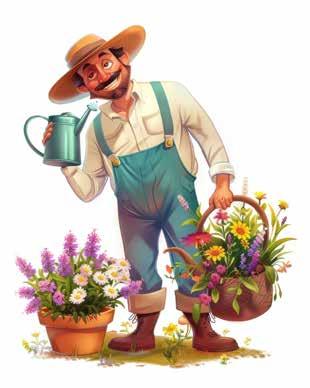
Cause/Effect because so since therefore as a result thus consequently
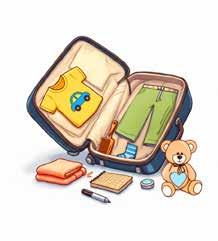
Compare/Contrast like unlike however although instead but similarly on the other hand


Adding Information
and also another too in addition moreover furthermore
Concluding in conclusion to sum up overall finally as a result in the end

© Lighthouse Curriculum.
Copying strictly prohibited.

www.lighthousecurriculum.com