

S E R V I N G U P Y O U R
S E R V I N G U P Y O U R
B R A N D I N S T Y L E .
B R A N D I N S T Y L E .
















S E R V I N G U P Y O U R
S E R V I N G U P Y O U R
B R A N D I N S T Y L E .
B R A N D I N S T Y L E .
There’s something about March that feels like a deep exhale. The light lingers a little longer, the worst of our cold days are usually behind us, and suddenly the idea of home becomes not just where we live, but where we restore, rebuild, and reimagine. That spirit is exactly what shaped this month’s “Home” issue.

We begin with a beautifully grounding piece from Yasmeen Faraj, a holistic therapist who invites us to reconnect with our senses and transform our living spaces into a place of healing. Her approach reminds us that home isn’t only about aesthetics—it’s about how we feel the moment we walk through the door.
From there, we spend some time with Chris Nolan, whose work you’ve likely seen and admired without even realizing it. Chris has been bringing smiles to households across our community—one window, door, siding panel, and roof at a time. His dedication to quality and care is a reminder that the right improvements can completely reshape the way we experience our homes.
We also shine a spotlight on Rita Della Fave, the second-generation owner of RMJ Environomics. Rita offers invaluable insight into when and why you should contact an environmental remediation company, regardless whether you’re safeguarding a home or a business.
And of course, our resident interior designer, Hannah Kern, returns with “The Anatomy of a Renovation,” where she breaks down the steps of a renovation simple enough to make even the most daunting project feel achievable.
All of this feels especially timely for me, as we are preparing to begin renovations in my own home this season. I’ll be working with many of our talented home services advertising partners you’ll find throughout this issue, and I’m genuinely excited to share the journey as it unfolds. There’s something a bit energizing about being equal parts storyteller, promoter and client all at the same time.
Whether you’re planning a full remodel, refreshing a single room, or simply looking for inspiration, I hope this issue helps you see your home with new possibilities. After all, home is not just where you live- it’s where your life is.
Now go find a comfy place in your own home, relax, and enjoy this issue.

PUBLISHER
March 2026 Visit our Instagram
Phillip Barone | phillip.barone@citylifestyle.com
EDITOR
Don Seaman | don.seaman@citylifestyle.com
SOCIAL MEDIA COORDINATOR
Jamie Johnson | jamie@officiallysocial.com
CONTRIBUTING WRITERS
Don Seaman, Yasmeen Faraj, Hannah Kern, Rita Della Fave, Shannon Roberts
CONTRIBUTING PHOTOGRAPHERS
John Agnello, Chris Nolan, Yasmeen Faraj, Hannah Kern, Rita Della Fave, Phillip Barone
CEO Steven Schowengerdt
President Matthew Perry
COO David Stetler
CRO Jamie Pentz
CoS Janeane Thompson
AD DESIGNER Rachel Otto
LAYOUT DESIGNER Kelsi Southard
Hannah Leimkuhler
QUALITY CONTROL















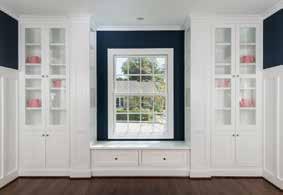


Working With the Senses for a Healing Home
ARTICLE AND PHOTOGRAPHY BY YASMEEN FARAJ
“Home is where I want to be.” — The Lumineers Home. What does it mean to you? More importantly, how does it feel ?

Your home should be an oasis for your senses. Intentional choices create a space to recharge and heal your soul.
Our feelings are shaped by our senses. The dictionary defines a feeling as “a sensation experienced through sense,” and we have five of them: touch, sight, hearing, taste, and smell. If feelings are created through sensory experiences, then our homes play a much larger role in our emotional lives than we often realize.
As a holistic psychotherapist who has spent years working in clients’ homes, I’ve seen firsthand how a space reflects what’s happening emotionally within a household. I’m not talking about clutter or lived-in messiness — I’m talking about the felt sense of a home. The energy you feel when you walk in the door.
Let’s start with touch. Touch signals safety to the nervous system. Think about cold floors, soft rugs, warm sheets. What sensations does your home offer your body? Where do your feet land first thing in
the morning — something that makes you tense, or something that invites ease? These small details matter more than we think.
Next is sight. Visual input affects how we feel — which is why calming images of beaches, forests, and fireplaces are so popular. Look around your home. Does what you see bring comfort, joy, or calm? This might mean adding photos, artwork, or plants — or simply clearing a space you’ve been avoiding. Your home should feel supportive, not stressful.
Sound is another powerful influence. What do you hear in your home? Silence, music, background noise? Sometimes peace comes from playing your favorite record; other times it’s as simple as closing a door to quiet an overstimulating appliance. And yes — dancing alone to an embarrassing playlist absolutely counts as nervous system care.


Taste is deeply connected to emotional well-being. As a therapist trained in integrative mental health, I’m always mindful of how nutrition impacts mood and energy. The foods you bring into your home shape how you feel. Fresh fruits, nourishing meals, and warm tea send a very different message to the body than ultra-processed foods. Choose what supports you.
Finally, smell. Our sense of smell has a direct connection to the brain and memory. Clean air is foundational — open your windows, bring in plants, and consider a quality air purifier. I love diffusing essential oils or burning herbal smudge bundles. Sage, for example, has been shown to significantly reduce airborne bacteria and mold. Artificial fragrances, aerosols, and heavily scented products, on the other hand, can be disruptive to both physical and emotional health.
• Our senses inform our experiences and emotions — be mindful of the inputs.
• Our homes reflect our feelings, and our feelings reflect our homes.
• Where can you gently influence your environment?
So — does your home feel like where you want to be?
If changing everything feels overwhelming, start with one intentional space. A corner, your bed, or a small altar can become a place that embodies how you want to feel.
Home isn’t just a place. It’s a feeling. And when we work with our senses, we can shape our environment into one that supports safety, connection, and ease.
Yasmeen Faraj, LCSW, CIMHP is a holistic therapist and founder of Kinda Crunchy Therapy (a space dedicated to natural, integrative healing).
For nearly a decade, Yasmeen has worked with individuals, couples, and families to help them heal and reconnect.
Here’s where to find her in the wild:
• On Instagram: @kindacrunchytherapy
• Explore her work at KindaCrunchyTherapy.com
• Or give her a call at 973-506-8695



















ARTICLE BY DON SEAMAN | PHOTOGRAPHY BY JOHN AGNELLO AND CHRIS NOLAN
It all began innocently for Chris Nolan. He was running his own small IT consulting business back in the early 2000’s, when a friend of his wife had a thought. She’d been working for Home Depot in their Home Improvement Sales Group and felt that he’d be great for a spot in their group. He was intrigued by the possibility of working for a big, solid company, but had no experience with home improvement whatsoever.
“It’s not about that,” she told him. “You’re personable, people like you, they’ll train you on the product side. I think you’ll do great in it.”
Where he is 25 years later shows that her words were prophetic. The training program that they had in place there at the time was emblematic of the service he still provides to this day. And the rapport he builds with his customers is a testament to who he is. It’s that people matter.
He spent several years doing exterior home improvement sales with Home Depot, learning all he could about roofing, siding, windows, you name it. But as time went on, things changed in the Home Depot process, and he made another big change, heading to New York Life for work in insurance, capitalizing on his fundamental ability to get to know and serve people professionally.
“I sort of transitioned from helping people with their homes to helping people with their lives,” Chris suggests.
Yet after seven years with New York Life, Chris felt something was missing. While what he was doing was rewarding, he missed the creativity of home design.



“Now we have great 3D modeling tools where I can take pictures of someone’s house and show them ‘here's what your house looks like now. Now let’s change the color of the siding, change the color of the windows, change the color of the roof and here's what it could look like.’ Lots of contractors default to 4-inch siding, but look how much nicer five or six inch siding looks with fewer horizontal lines going across your house. There’s no price difference, but the result is dramatic and can be stunning.”


That’s the difference between servicing a job and servicing a customer.
“It’s about the excitement and joy I see on their faces as they’re educated in their options, how much better their homes can look for the same cost, and how thoughtful design can have a monumental impact upon their ultimate satisfaction with their decisions. That’s the part that makes me happiest,” Chris admits. He works with design consultants for some of his more extensive projects, but he also has his own secret weapon - his wife, an artist and art therapist. He literally has his own in-house sounding board.
Now Chris is working with Matute, a company he’d often worked with during his time at Home Depot. He respected Matute’s business practices so much that he chose to trust them with his own reputation.
There’s another reason that leaving his office role was so important to him. He knew that he was at the stage in his life that flexibility in setting his own schedule was something that he craved nearly as much as being creative.
Now, Chris can babysit his grandkids on short notice, do a little Ted Lasso-like soccer coaching, and just generally be there and available for the people who are most important to him.
The enthusiasm that comes from where he is in his life, professionally and personally, jumps out at you. It’s the way he values those small things, the people he helps, and how his path has led him to where he is today.
Chris Nolan knows that those words spoken years ago really did ring true. “You’d be great at this.”
Just as it has been for him.
Chris Nolan can be reached at Matute (50 Galesi Drive, Wayne) at 973-462-8984 or chris@matuteroofing.com.

Do your research. What sort of reputation does this company have? Do they do the work quickly, on budget, and have their customers been satisfied with their work?
Do they take the time to talk with you about what you want, what you could have, and educate you on your options?
Are they taking into account every aspect of your home’s exterior to create a cohesive look?
Do they value your time and your schedule, and are they considerate of your neighbors when doing their work?




















ARTICLE BY DON SEAMAN PHOTOGRAPHY BY RITA DELLA FAVE
Going into the family business often gets a bit…messy. If there’s no chemistry, everyone could become testy, and everything starts to feel dirty and soiled . Suddenly, you start noticing holes everywhere in the business, and things could tank as a result. And that’s not a healthy environment.
But - what if the family business is about cleaning things up?
That example of the world’s worst keyword search should tell you what R.M.J. Environomics is all about: Cleaning up when others can’t is what they do best.
However, this is a family business that has all the chemistry in the world. R.M.J. Environomics is headed by Rita Della Fave, a remarkable woman who learned the remediation business from her father, Mike, who founded the company. Rita, after years of working alongside her father, officially took over the business in 2021 and has been steadily growing it ever since, all while making quite the name for herself.
Mike founded the company 27 years ago, landing on the name RMJ for his three kids: Rita, Michael, and Joseph.
“My father has been in the industry for over 45 years,” Rita explains. “He started with Hoffman La Roche when it was in Nutley. I’ve been part of R.M.J. Environomics my entire life, even as a child, entering receipts or putting together invoices to help my father with simple paperwork. I was known to send faxes for everyone in the office because, for some reason, they all found it very tedious at the time. But like any kid, I simply enjoyed pressing all of the buttons!”
In the years that followed, she learned all that there was to know about the remediation business. Researching property history, what chemicals need to be tested for, and how to remove problems. Everything.
Fast forward to 2020, and Rita is now pressing more than just the buttons. She’s leading the way as owner and president of R.M.J. Environomics. And while she learned all that she could about the remediation business from her father, there’s one experience he didn’t have that she now has mastered: being a woman running a company in a decidedly male-dominated industry.


“I’ve become ‘the environmental lady’ for most people,” Rita says. “I appreciate it. It helps me to stand out.”
Ultimately, the gender issue isn’t that big of a deal for most people who need help with remediation. Clients come to R.M.J. Environomics because they are having an environmental problem, typically one that’s tied to a real estate transaction. The economics of the situation far outweigh any other issue. Most already know that Rita is the best there is at what she does.
“A real estate deal is stressful enough as it is,” Rita notes. “And that’s before you add environmental issues. I am half psychiatrist, half environmental consultant. I think I talk people off the ledge probably more than I talk about what I'm doing on their property.”
“I’m not saying that remediation is inexpensive. But it’s necessary. I give them the reassurance of ‘hey, I know how bad this looks, and I know it's expensive, but it has to be done. In the end, the business deal that they’re looking to make is contingent upon fixing the environmental issue that they have, so we go full speed ahead to help them make that happen. I tell them, ‘let’s get this done for you’, so they can end up with the deal that they ultimately wanted to make in the first place.”
And that’s how you become successful in this business. Or any business, really.
“Just tell people that you’re sorry they have to go through this, take responsibility, take ownership, be direct, and you can sleep at night. If you’re honest and transparent, it doesn’t matter who you are; you’re doing the right thing. You’re helping people solve a problem that they didn’t ask to face.”
It looks like Mike taught his daughter far more than which buttons to press. He taught her how to be a good human, no matter what the environment is.
R.M.J. Environomics is based in Wayne. If you think you have a property issue that might need remediation, you can get in touch with Rita at 973-6330020 or rmjenvironomicsnj@gmail.com.







1. If you are buying or selling a property or land, CALL US!! Period. Even if you don’t consider our suggestions, or you ultimately have no issues on your property, CALL US!! Real Estate is often the largest and most important asset that you own. Protect it.
2. Always scan for oil tanks when purchasing a house, even if the town or current owner has no history of one being there. As the current homeowner/seller, it is always advised to do a tank sweep prior to putting your house on the market. This eliminates surprises later in the closing process, and can result in things like a delayed closing, the buyers walking, etc.
3. Always call us before remodeling ANYTHING (if your home was built prior to 1979); asbestos testing is always a good idea prior to ripping out walls, tiles, pipes, etc. Any of those surfaces could indeed contain asbestos. At the very least, let us come out to give you a free quote for the removal if you are unsure.
4. Commercial building and landowners – ALWAYS call us prior to putting your property on the market. There are certain obligations that fall under some commercial owners. Typically, those obligations are due to what is called an ISRA case. ISRA properties are required to, at a minimum, some soil and groundwater testing. The results of those tests determine if further testing or remediation is required prior to purchasing the property. If you are an individual or business purchasing said property, a Phase I is a good place to start to ensure that you are covered from known and potential environmental concerns on the site. This is a way to ensure that the property is clean from any environmental issues.
5. If you are NOT satisfied with the pace or result of work from your current environmental consultant. We are happy to review past or proposed work. We also often take over projects where the clients feel that their best interest is not being met
6. If you get a letter from the NJDEP, immediately call us. The DEP often sits on issues for years, but when they are ready to move, you need to MOVE. We can curate a plan to get you back into compliance, whether it’s for monitoring well testing, or a large superfund site, we can help.
7. If you are worried about the air quality in your house, or people in the home have been complaining of allergies or breathing issues. We can provide air quality testing - radon, mold, and asbestos air tests. Mold often hides behind walls in typical areas, like basements, attics, and bathrooms. We are able to provide testing and remediation for both.

Knowing a property's environmental history is important for any landowner - or buyer. Finding the hot spots is essential.







ARTICLE AND PHOTOGRAPHY BY
HANNAH KERN

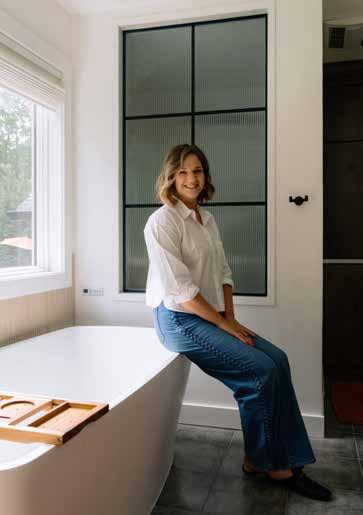
When you first close your eyes and imagine your dream home, you probably see the "big hitters." You see the sweeping oak floors, dramatic marble countertops, and that perfect shade of white paint on the walls (not all white paint is created equal, and I have favorites!)
But then, the renovation begins…
Three weeks in, your contractor asks where exactly you want the electrical outlets positioned. Then comes the question about the profile of your drawer faces. By week six, many homeowners hit a wall known as decision fatigue.
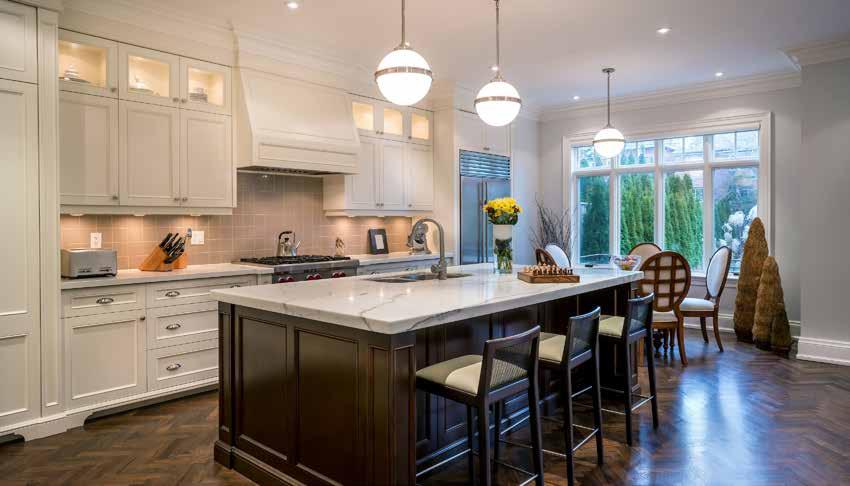
To understand why renovations feel so complex, we have to look closer. Take a standard bathroom vanity area, for example. At first glance, you see a sink and a mirror. In reality, a designer sees a matrix of over 20 distinct decisions:
• The Foundation: Vanity layout, drawer-to-door ratio, and the specific "profile" (the shape and depth) of the cabinet faces.
• The Hardware: Not just the style of the pulls, but the exact size and scale relative to the drawers.
• The Water Station: Sink faucet style, the specific metal finish, and the height and material of the splash guard.
• The Ambiance: Sconce style and mounting position (eye level or above?), high hat lighting size and placement, and even the "temperature" of the bulbs.
• The Finishing Touches: Mirror shape, window trim width, the texture of the bath mat, and the specific placement of artwork above the toilet.
And here's the kicker: that list only covers about one quarter of a single bathroom. We haven't even stepped into the walk-in shower, discussed the privacy wall for the toilet, or planned the custom storage cabinetry.
The difference between a room that looks "nice" and a room that feels "designer" is the cohesion of these
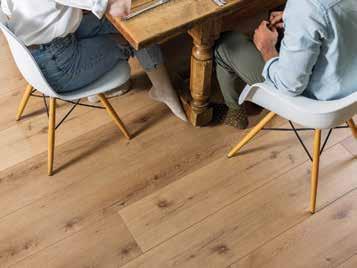
tiny details. When outlets are hidden or intentionally placed, when the hardware finish matches the faucet’s undertones, when the window treatments complement the space, the room sings.
Without a clear vision, these small choices are often made in a vacuum, leading to a finished product that feels cluttered or "off", despite the high-end materials.
If you haven't tackled a renovation recently, or perhaps ever, the sheer volume of choices can paralyze you. That is where a designer like me would come in.
It's my goal is to protect you from decision fatigue and replace it with confidence. I'd handle the minutiae so you can enjoy the transformation. Whether we are tackling a primary suite, a kitchen, or an entire home, I would ensure that every small decision serves the big picture.
You deserve a home that's beautiful, functional, and timeless. I make sure we get every inch of it right.
If you’re feeling the weight of an upcoming renovation, it's time to have a conversation. In my business, one of the things that I offer is to create a customized "Decision Checklist" for your specific room to help you see what lies ahead. This is a great starting point for you to see everything involved in the process and can help you from feeling overwhelmed moving forward.
The decision to renovate is easy. The multitude of decisions that take it from “drab to fab” don’t need to be overwhelming, with an experienced designer to help guide you through to the end.
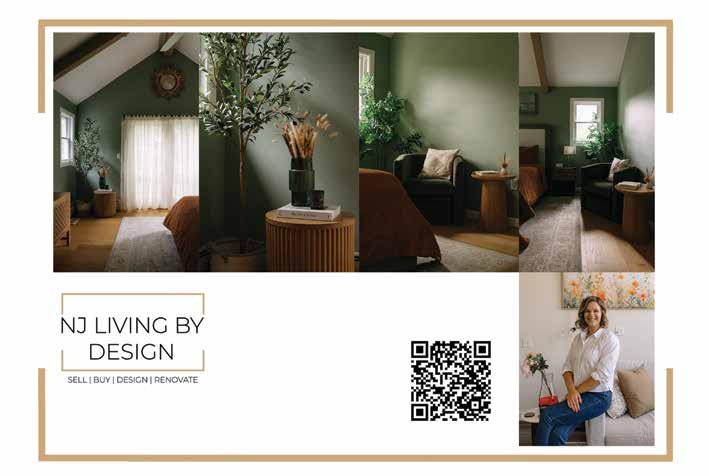
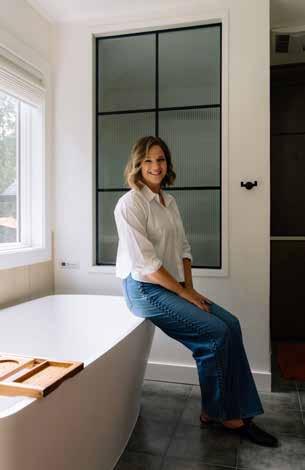
If you are thinking about your next redesign project, contact Hannah Kern at NJ Living By Design at (215)266-1500 or visit @NJ_livingbydesign













Wellness isn’t about restricting — it’s really about giving. Giving to yourself and to your body in a way that allows them both to thrive. The cool part? The things that give to your body naturally give to your mind, your hormones, your earth, your relationships, and so on — it’s all beautifully interconnected in that way.
Work in partnership with your body. Listen to it, support it, give to it, forgive it — and I promise it’ll give back. Repeat after me: I love myself as the most important and committed partner I will ever have
Eat your greens, cook at home, choose local produce and quality meats, don’t be scared of healthy fats — but also support local farmers, move in a way that makes your body and mind feel good, prioritize times of mindfulness and stillness, fuel your body in a way that is sustainable for both you and the planet, practice gratitude and empathy, give yourself grace when you lose routine, don’t try to make changes overnight, ditch the guilt, and always always be kind to yourself.
• 2 6 oz. filets of wild caught salmon
• 1 Tbsp. avocado oil
• 1 Tbsp. coconut aminos
• Zest and juice from one lemon
• 1 Tbsp. stone ground mustard
• 1 4 oz. container coconut yogurt, unsweetened
• 2 Tbsp. fresh dill, minced
• 2 Tbsp. capers, drained and minced
• Salt and freshly ground pepper, to taste
1. Marinate the salmon in the lemon juice, coconut aminos, and stone ground mustard for up to two hours.
2. Drizzle salmon with avocado oil, sprinkle with salt and ground pepper, and broil on high for five to seven minutes, until cooked to desired temperature.
3. Mix coconut cream, lemon zest, dill, capers, and ground pepper together.
4. Top salmon with coconut cream, serve with roasted or sautéed veggies, brown or cauliflower rice, or fresh greens. Enjoy!










ARTICLE BY SHANNON ROBERTS


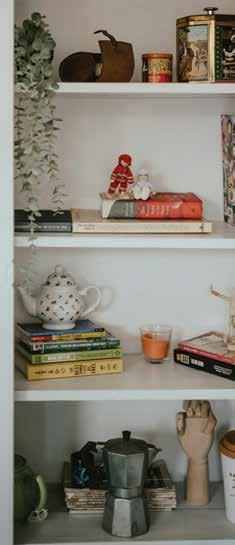

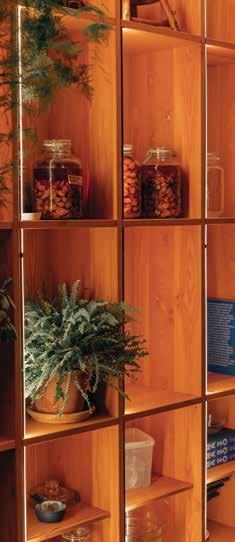
A bookcase is often more than just a storage unit for books; it’s a focal point of a room that can enhance the overall decor and reflect personal style. Styling a bookcase can be a rewarding endeavor, allowing you to showcase your literary collection and curate a space that feels inviting and visually appealing. Here are some tips to help you achieve a beautifully styled bookcase.
Styling a bookcase is a creative process that combines practicality with aesthetics. By using these tips, you can transform an ordinary bookshelf into a stylish, engaging focal point that complements your home’s decor while showcasing your personality and interests.
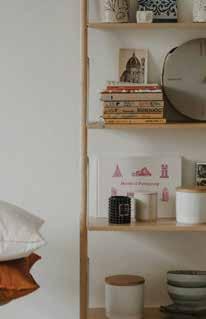
Strategically Place Books on the Bookcase While Incorporating Decorative Elements.
When placing books back on the shelves, think about the arrangement, vertical stacks are more traditional, horizontal stacks more modern, or both for more visual interest. Adding decorative elements such as picture frames, vases, or sculptural objects to break the monotony. Incorporating items with varying heights can create a dynamic arrangement. Use larger items like art pieces or baskets on lower shelves and smaller decorative objects higher up. Aim for a balanced look while avoiding perfect symmetry. This creates an organic flow, drawing the eye naturally across the shelf. Incorporate asymmetrical groupings for added interest, mixing textures, colors, and shapes.

Use Color Wisely and Add Natural Elements.
Color plays a role in styling a bookcase. You can opt for a monochromatic palette for a sophisticated look or introduce pops of color for a more energetic vibe. If your books are of various colors, pick a few colorful decorative pieces that complement or contrast them effectively. Integrating plants or natural elements can breathe life into your bookcase. Small potted plants can add color and texture.
Create Zones and Add Personal Touches.
If your bookcase has multiple shelves, consider creating zones or themes for different sections. Infuse your personality into the bookcase through memorabilia, travel souvenirs, or personal artwork. These pieces add a storytelling dimension and make the space uniquely yours.






An often-unnoticed trend is that pricing differs by season. In off months, sellers are often direct about the price they need, making negotiations easier, but during busy spring and summer months, sellers often list slightly below market value creating competition, making it harder to know where the final price will land. Northern NJ inventory remains tight and pricing continues to trend. For buyers, there is often only one current home available in a given town that fits their needs so competition remains strong, likely having pushed January/February prices higher. Historically, the end of January is when homes begin to consistently rise until the Fall. For sellers, activity remains healthy. Showings/open houses have stayed steady despite winter weather. Sellers-be careful with pricing. Overpricing can attract attention without producing serious offers. Today’s buyers have more access to recent sales and market data than ever, making offers above perceived value less likely. 2026 prices are expected to continue rising, but slower than in recent years. Inventory should gradually improve as more homeowners find reasons to sell, though buyer competition should remain strong.
If you’ve been paying attention to real estate forecasts, you may have noticed something interesting: Northern New Jersey keeps showing up on “hot markets” lists for 2026. Analysts point to our relative affordability compared to NYC, strong job access, and quality schools as drivers. Add in climate resilience concerns pushing buyers away from flood-prone and wildfire regions, and suddenly our towns look even more attractive. What does this mean for you? Competition. Homes that are priced right are still moving quickly.
Here’s where preparation becomes your advantage. Most buyers get pre-approved. My clients go a step further — they shop with a full mortgage approval in hand. That means when you find the right home, your offer comes with the weight of a done deal, not a “maybe.” If you’re thinking about buying this spring, let’s talk about getting you truly ready to compete.