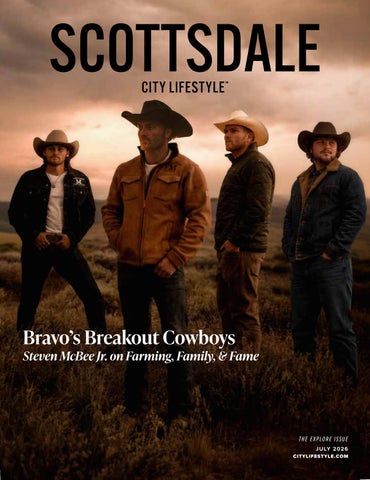
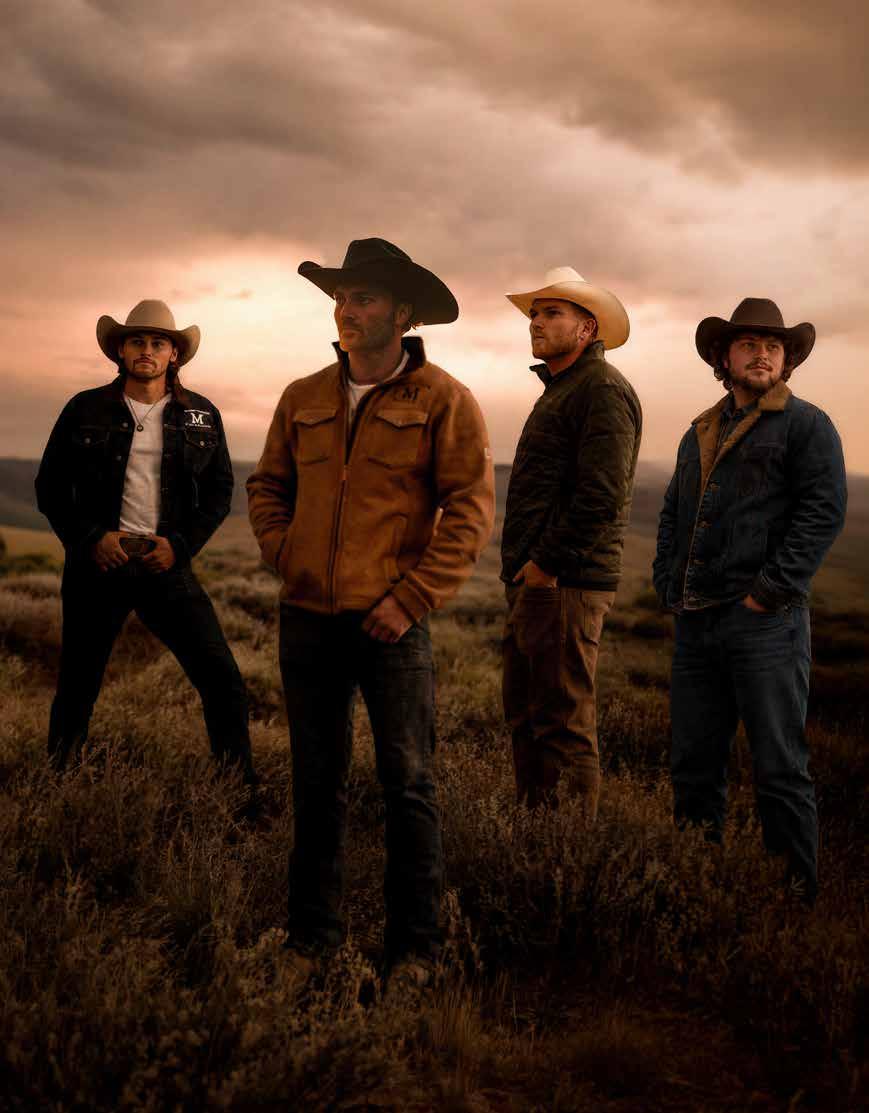
Bravo’s Breakout Cowboys
Ste ven McBee Jr. on Farming, Family, & Fame
THE PRIVILEGE OF PRIVACY
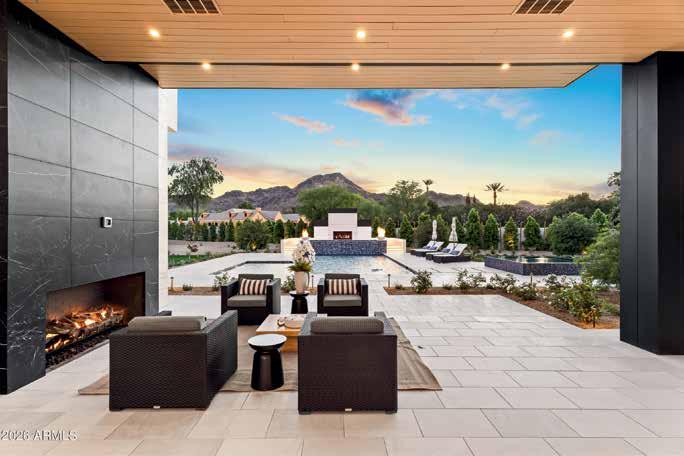
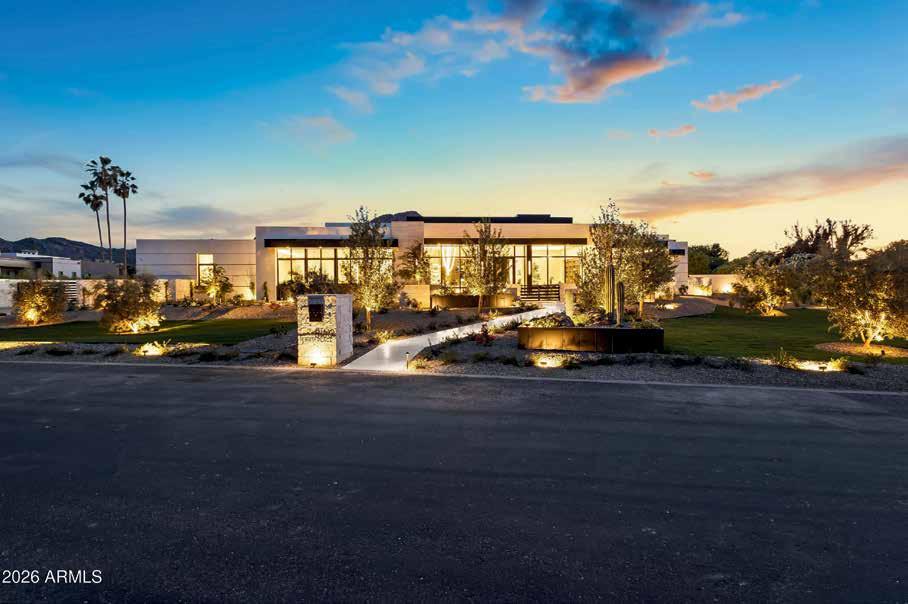
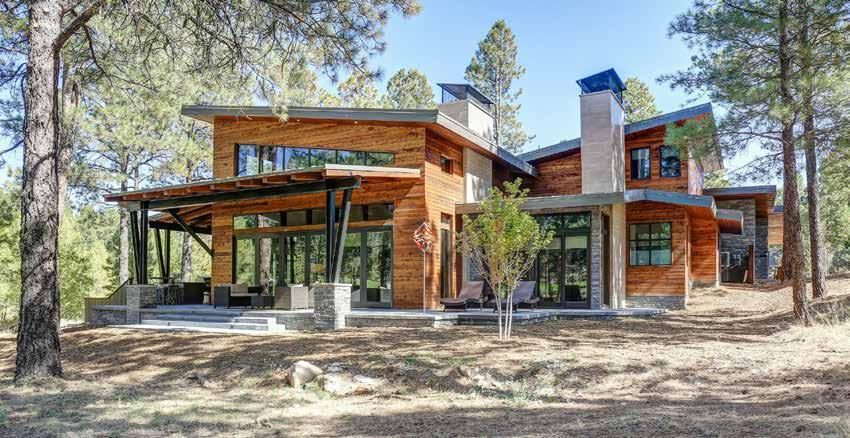
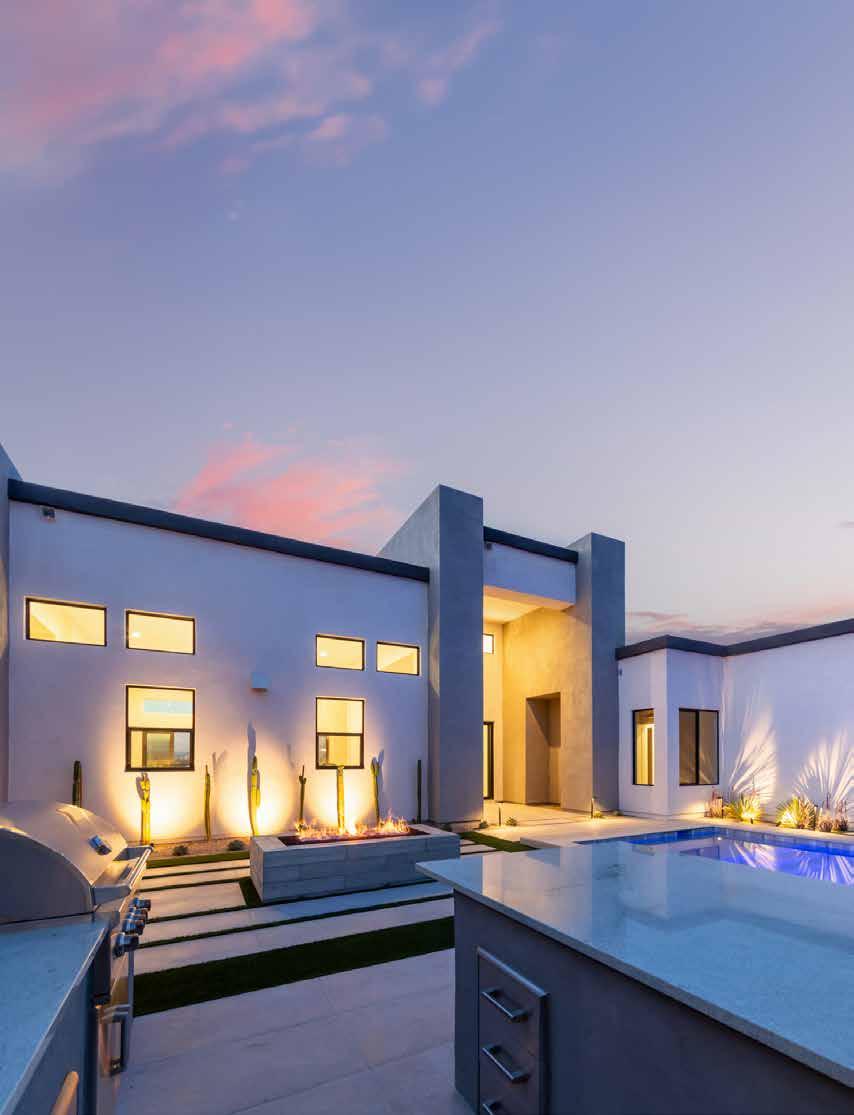
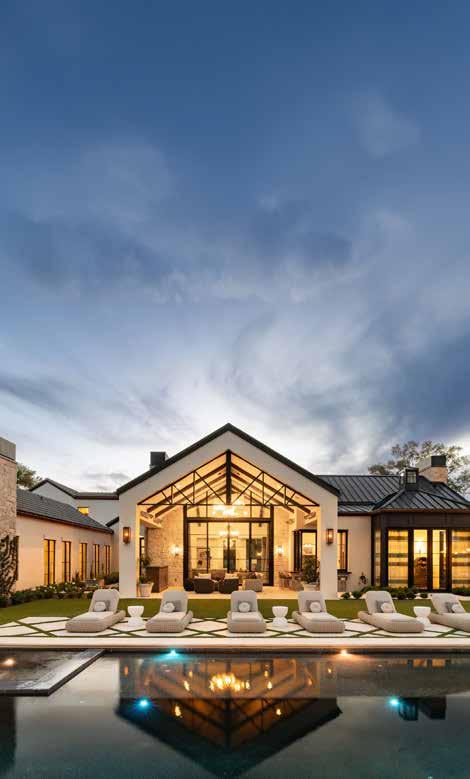
A remarkable expression of contemporary elegance has arrived in the heart of Paradise Valley. Surrounded by mature landscaping and framed by panoramic views of Mummy Mountain, this newly completed estate offers an extraordinary balance of scale, privacy, and refined design.
Outdoors, meticulously landscaped grounds reveal a resort-caliber setting with a heated pool, spa, outdoor kitchen, and expansive entertaining terraces. The result is a home that feels both grand in scale and deeply connected to its surroundings.






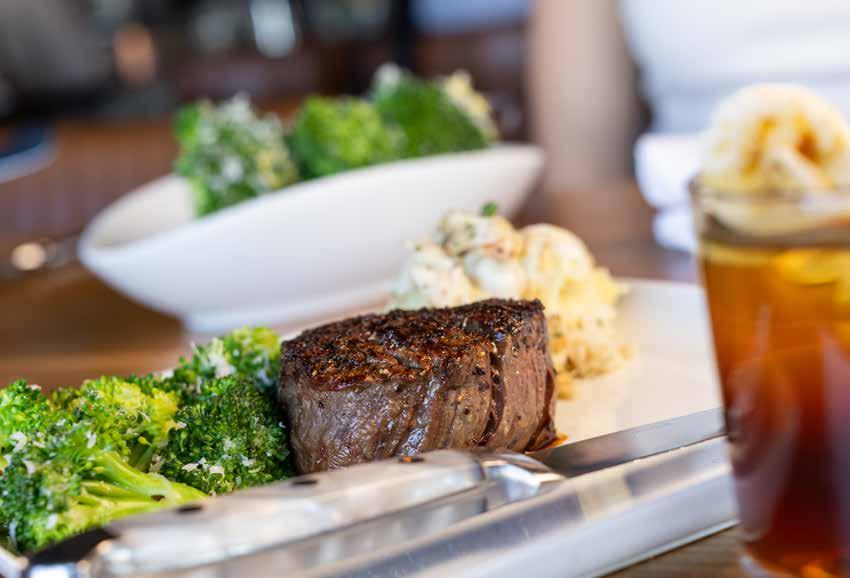
Your table awaits



Kids eat free tuesdays! Light Bites & Cold Cocktails


A gourmet delight The party continues...!



Life Is a Highway
I prefer cowboy boots over red soles.
While we're far from professional riders, my boys have been saddling up since they could walk. Maybe it's the spirit of my late grandfather, a war veteran who should have been a cowboy, living on through them. My Grandpop Bunny named every dog he ever had after a Native American tribe and had a lifelong love affair with the American West.
I guess the American spirit has always run through my family, and I'm grateful it runs thick in my boys, too.

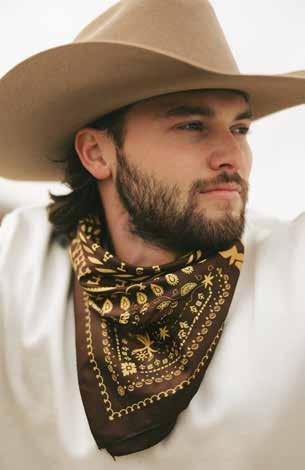
That's probably why I was immediately drawn to Steven McBee Jr. and Bravo's hit series McBee Dynasty: Real American Cowboys.
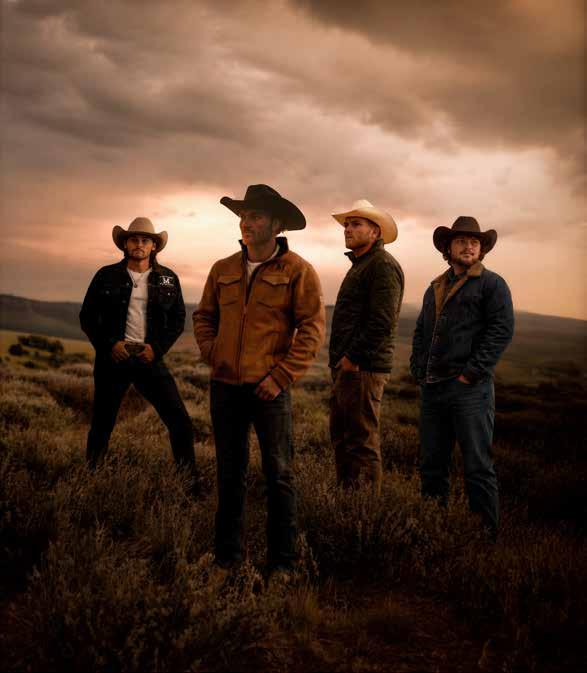
As our annual Explore Issue takes readers across America, we're heading to rural Missouri, where a band of brothers stand on our cover. Steven McBee Jr. and his family are bringing ranch life, farming, and family business to a national audience through Bravo's hit show.
In this issue, Steven Jr. shares what it's like being the oldest of four helping build the McBee family legacy, balancing reality television with real responsibility, and carrying on a way of life that remains deeply woven into the fabric of Middle America.
But of course, no Explore Issue would be complete without a road trip.
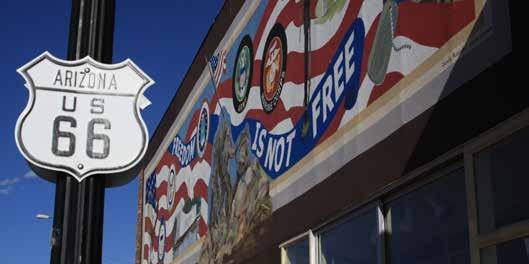
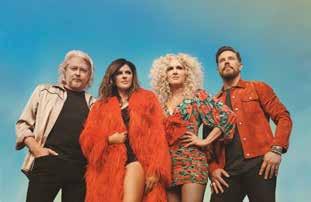
We hit Route 66 as the Mother Road approaches its 100th anniversary, celebrating one of America's most iconic adventures. We also sit down with country music superstar Kimberly Schlapman of Little Big Town and learn about her crazy Arizona connection, while exploring destinations, experiences, and stories that inspire us to pack a bag and hit the road.
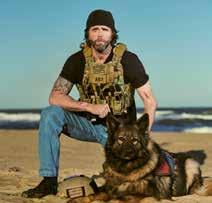
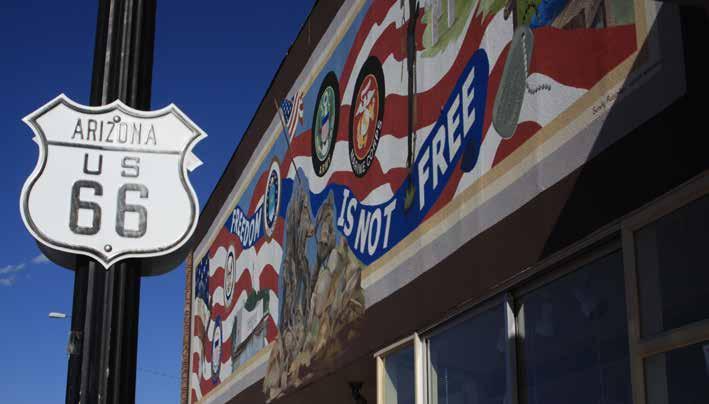
And as America celebrates its 250th birthday, we take a moment to honor retired Navy SEAL Jason Redman, whose extraordinary story of courage, sacrifice, and resilience reminds us that the freedoms we enjoy were never free.
Travel has always been one of my greatest passions, especially when shared with my family. Some of our favorite memories have come from exploring new places, chasing new adventures, and stepping outside our everyday routines. Our family's theme song is: "On the Road Again."
However, the best adventures don't just introduce us to new places. They give us a deeper appreciation for home.
That's what this Explore Issue is all about: adventure, discovery, a little bit of cowboy spirit, and a whole lot of America.
P.S. A special shoutout to 40 Love! This month's City Scene is dedicated to our annual May celebration honoring our incredible SCL partners and supporters. Thank you to the entire 40 Love team for your wonderful hospitality and making the evening unforgettable.
NADINE BUBECK, PUBLISHER
July 2026
PUBLISHER
Nadine Bubeck | nadine.bubeck@citylifestyle.com
EDITORIAL COORDINATOR
Jennifer Blalock
Corporate Team
CEO Steven Schowengerdt
President Matthew Perry
COO David Stetler
CRO Jamie Pentz
CoS Janeane Thompson
AD DESIGNER Rachel Otto
LAYOUT DESIGNER Andi Foster
QUALITY CONTROL SPECIALIST Marina Campbell


Learn how to start your own publication at citylifestyle.com/franchise.





THE TREATMENT PROFESSIONAL ATHLETES FLY TO GERMANY FOR.
For active people living with joint pain or back pain who refuse to accept surgery, medications, or a slower life as the answer.
The Regenokine® Program was developed in Germany and has been quietly trusted by celebrities and professional athletes for years. It is minimally invasive, requires no surgery, no medications, and no downtime.
Only 8 physicians in the United States are certified to offer it.
Dr. Ashu Goyle is one of them.

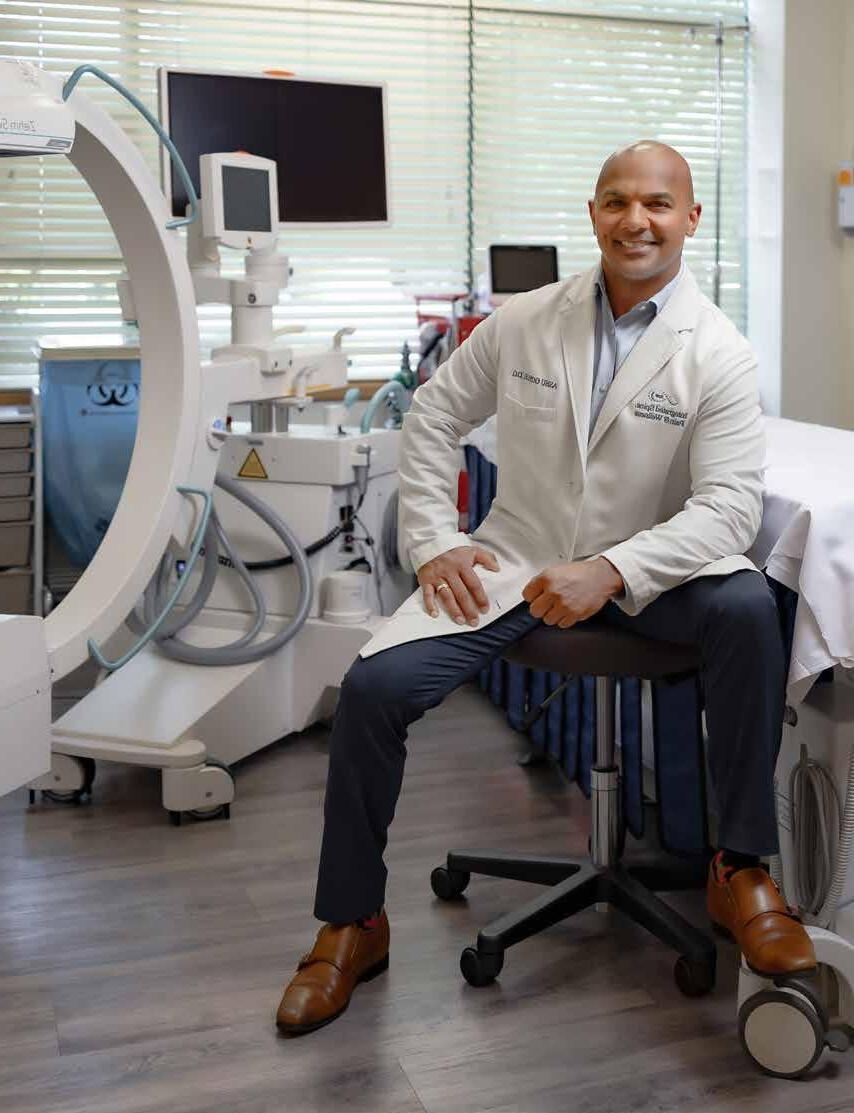

Dr. Ashu Goyle | Integrated Spine, Pain & Wellness



Wishing you an Inspiring New Year
inspiring living
Wishing you an Inspiring New Year inspiring living

city scene
WHERE NEIGHBORS CAN SEE AND BE SEEN

KICKASKANEVENTS


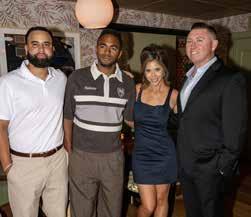


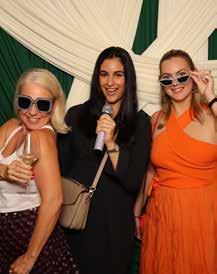
1: Thank you, KickAskanEvents, for the fun photo booth at our PVCL + SCL celebration 2: PVCL and SCL partners, friends, and community filled 40 Love for our annual May celebration 3: Dr. Danielle Masserman (APDO), Hillary Leto, and Katie Wilson (The Garage Boutique)- PVCL/SCL’s celebration, 40 Love 4: Thank you, 40 Love, for helping us celebrate PVCL + SCL and our incredible community 5: Lisa Moore (Neiman Marcus), Kimberly Snyder (Penske Automotive), & Arizona Midday’s Rachel & Destry, 40 Love 6: Legendary auctioneer and philanthropist Letitia Frye with PVCL/SCL’s Nadine Bubeck, 40 Love 7: PVCL/SCL partners Elisabeth Pickle, Dr. Brook Choulet, and Dr. Heather Saran enjoying 40 Love
SCOTTSDALE

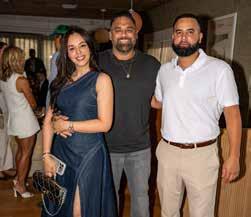
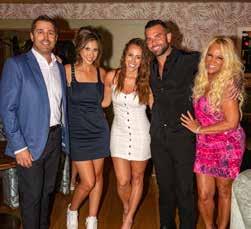
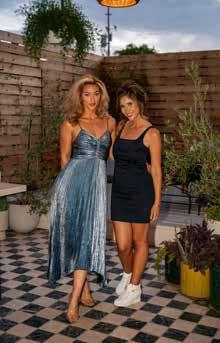
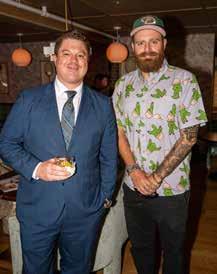
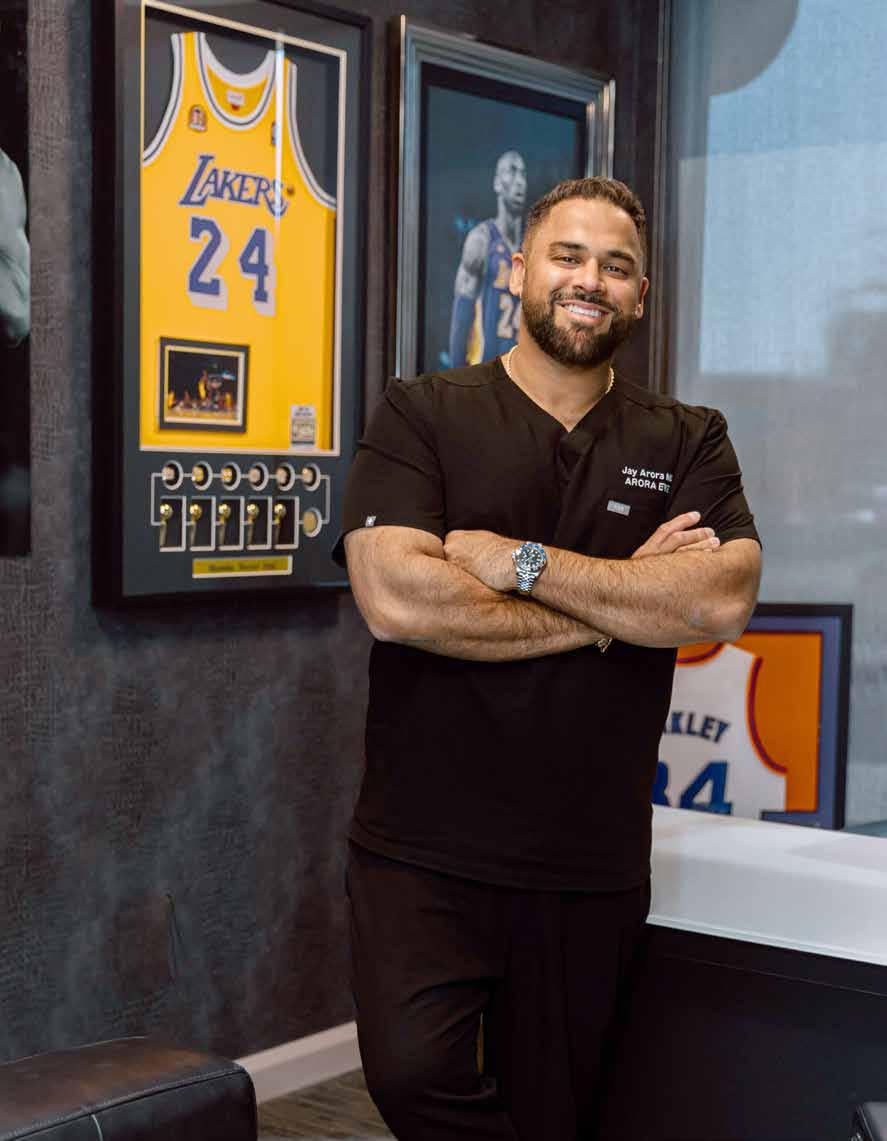
Vanessa Ramirez, Robert Shippy, and friends celebrate PVCL + SCL at 40 Love 9: PVCL/SCL partners, friends, and supporters enjoying a special night together 10: Former MTV personality Lolo Wood and PVCL/SCL’s Nadine Bubeck celebrating at 40 Love 11: PVCL/SCL partner Dr. Jay Arora (with wife Yousra) celebrates an unforgettable evening at 40 Love 12: Kirsten Tinker (Tinker Development) & PVCL/SCL’s Nadine Bubeck, at our annual May celebration, 40 Love 13: Nate and Nadine Bubeck celebrate with Jay Allen, Renée Lynn, and family at 40 Love 14: SCL partner Drew Armenta and Mr. AZ Sports celebrating with the PVCL/SCL community, 40 Love
8:

WELCOME TO RURAL MISSOURI, WHERE FAMILY, FARMING, AND FAME COLLIDE.
THE COWBOYS
BEHIND BRAVO
Steven McBee Jr. laughs when people compare his life to Yellowstone
“We’re the Temu version of Yellowstone.”
It is an easy comparison to make.
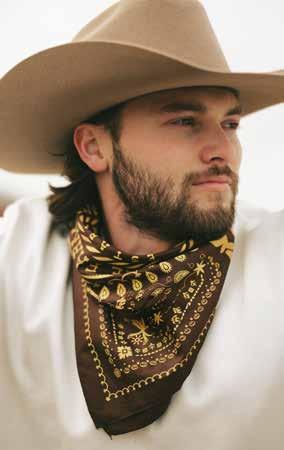
Steven McBee Jr. is the oldest of four brothers whose lives revolve around a family farm and ranch, thousands of acres, cattle, bison, business pressure, relationship drama, and Bravo’s hit series The McBee Dynasty: Real American Cowboys, which returns for Season 3.
For our Explore Issue, we head to rural Missouri to spend time with the family behind one of television’s buzziest shows. At first glance, it feels a lot likeYellowstone. The difference, Steven Jr. says? More brotherly loyalty.
“We don’t have a train station and we’re probably not quite as cool,” he says.
As for Beth Dutton?
“Beth is kind of my brother Cole. A lot of similarities there aside from it’s my brother.”
Then comes the real distinction.
“In our dynasty, we love our brothers.”
That may be why The McBee Dynasty resonates. Beneath the drama is a family that genuinely loves each other, depends on each other, and works together every day.
“The premise of the show is that we have a family-ran farming and ranching operation in North Missouri. It’s one of the largest privately owned operations in the state, and it comes with all sorts of drama that you’d never expect to find out in the middle of nowhere on a farm,” he says.
That drama has clearly connected. The show is now in Season 3.
“I didn’t think there’d be a way to top seasons one and two as far as what happened while we were
“IN OUR DYNASTY, WE LOVE OUR BROTHERS. WE DON’T TRY TO KILL THEM.”
filming,” he says. “And season three takes it up a notch. Between my dad’s situation, new babies, and everything we have going on... it’s all going to air out this season.”
What many viewers may not realize is that The McBee Dynasty did not begin with Bravo discovering a polished television family already waiting for its close-up. It started with Steven Jr. stepping into an entirely different kind of reality show.
“I was on a dating show.”
That show was Joe Millionaire: For Richer or Poorer, where two men dated a group of women who did not know which one was wealthy and which one was not.
During filming, the top six women visited his hometown, which meant they visited the farm and ranch.
“Once the producers saw where we lived, our family, and the dynamic, the idea moved pretty quickly. The reality TV world is pretty tight-knit, and Yellowstone was the biggest thing on TV at the time. People started saying, ‘There’s a family in Missouri living a real-life farm and ranch version of this. I think we have a show on our hands.’”
The first pilot was filmed in October 2022 and sent to multiple networks.
“After that pilot got sent out, we actually had a bidding war! You could tell the appetite for the show was there.”
His brothers were in. The girls in the family were another story.
“The women in my family, including my mom, did not want anything to do with reality TV.”
The funny part is that while the show is called The McBee Dynasty, the family is not actually a dynasty in the way most people assume.
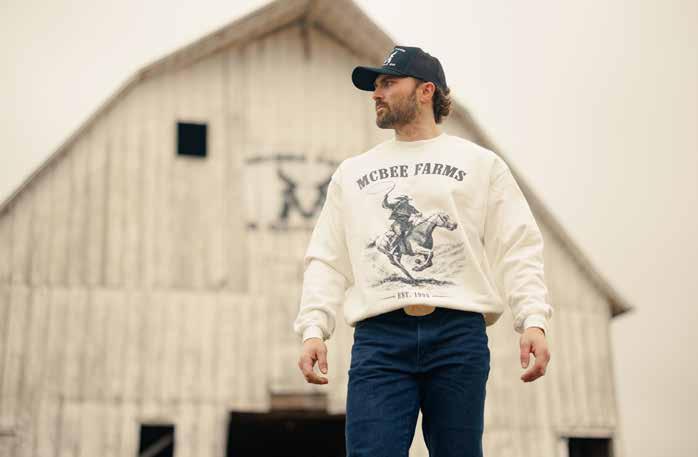
“So here’s what’s crazy. We’re a first generation farming family. My dad bought the very first farm back in 1998.”
That is one of the most interesting parts of the McBee story. The operation may look like something passed down for a century, but the family is still actively building the legacy viewers assume already exists.
“This isn’t third, fourth, or fifth-generation land,” Steven Jr. says. “We’re still building it. We’re still making payments on it. There’s still a mortgage on this land. One of the biggest questions we face is how we keep this ranch around for the next generation of McBees.”
That future has become more personal as his brothers begin families of their own.
“My brothers are having their first babies. I hope to have kids too, soon. And, you know, how do we keep this farm and ranch here for the next generations of McBees?”
For Steven Jr., the family business side was always part of the dream. Farming and ranching became the obsession.
“The business side was always part of the picture. Entrepreneurship runs deep in my family. My grandparents had it, my dad has it, and all four of us boys definitely caught the bug.”
When the family first started getting into farming and ranching, Steven Jr. and his brothers were only six or seven years old.
“We were out on the farm any chance we had the opportunity to. The minute we got out of high school and college, we were on the farm full time and we’ve been there ever since.”
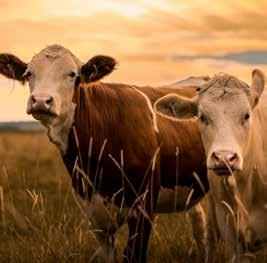
Today, that world includes 2,000 head of cattle, 250 bison, a meat facility, an online beef, pork, and bison business, and an on-farm fulfillment center that ships directly from the farm.
“You want to talk about vertically integrated… we have every single step of it controlled and we even ship it out ourselves now.”
It also includes work that no one-hour episode can fully capture.
“Each episode is only an hour. For every five minutes you see one of us in a tractor, we’ve probably spent 12 or 14 hours in that tractor that day.”
That is the part of the story Steven Jr. wants people to understand. The cameras may bring exposure, but the work is not manufactured for television.
“You wake up every day with a plan, but there’s a saying: you make your plans and God laughs. You’re dealing with live animals, and they don’t care what’s on your schedule. If they jump a fence, your plans change immediately. At that point, your day revolves around what the animals need.”
When asked what keeps him up at night as a business owner, his answer is not fame, ratings, or what viewers will think.
It is rain.
“When you’re in farming and ranching, the thought of a drought can literally keep you up all night. You’re constantly checking the weather forecast. I swear you’re either doing the rain dance or cussing at the weatherman because there’s no rain in sight.”
That’s because rain equals survival.
“You need the grass for the cows and you need the rain for the crops.”
That is why one of the biggest misconceptions about agriculture frustrates him.
CONTINUED >
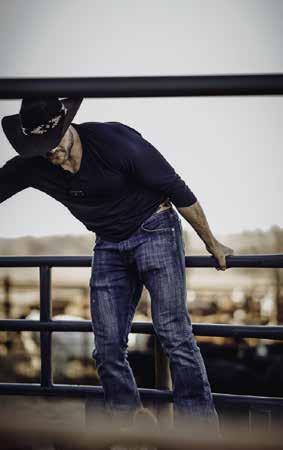

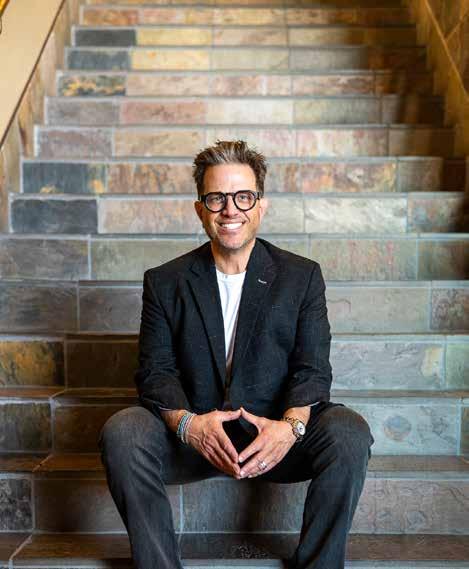
Let’s Build Your Next Chapter Of Life With Our One-Time Close Construction Loan.
Building a custom home is one of life’s biggest investments. Financing it should feel just as intentional.
BMO’s One-Time Construction Mortgage streamlines the process by combining construction and permanent financing into a single loan, creating greater simplicity, flexibility, and peace of mind from groundbreaking to move-in day. Ryan Lehrman helps clients navigate every step with personalized service, clear communication, and the confidence that comes from having the right partner by your side.
Additional Financing Options Include Physician Loans | Jumbo & Super-Jumbo Luxury Financing
One-Time Close Construction Loans for Primary & Secondary Homes
Primary, Second Home & Investment Property Loans Rate & Term + Cash-Out Refinance Options


“What people don’t understand is that there may not be a tougher industry when it comes to turning a profit relative to the hours you put in. It’s seven days a week. You’re essentially on call 24 hours a day. Financially, it can be a tough way to make a living, but it’s also one of the most fulfilling.”
Steven Jr. isn’t a reality star escaping hard work. He’s a rancher doing the work while cameras follow along. As the oldest of four brothers, that responsibility extends far beyond the ranch.
“My nickname is accurately ‘the father figure. I’ve always been mature for my age, and I’ve naturally fallen into that fatherly role with my younger brothers. I find myself giving advice, helping with the business, and helping with relationships. even though I can’t always seem to figure out my own relationships.”
Family is the heart of the show, but Steven Jr. is honest about the fact that family is also the hardest part.
“Managing a family, without a doubt,” he says when asked what is harder, running a business or managing a family. You’re dealing with human emotion, and that’s something you can’t predict,” he says. “In business, two plus two always equals four. When you’re dealing with family, it doesn’t always work that way.”
That loyalty can look funny from the outside.
“We could be on the brink of throwing down physically during the middle of the day and that night be sitting around the dinner table laughing like nothing happened.”
Ask him which brother gets under his skin...
“Cole.”
Ask who makes him laugh the most? Also Cole.
“He’s annoying, but he’s also the funniest one we’ve got.”
Reality television has made that family dynamic public, which comes with both connection and consequences.
“There are positives and negatives. One of the best parts is the support. Every day, I wake up to messages from people telling us how much they enjoy watching and how much our family’s story resonates with them.”
Still, he knows what fame costs.
“The challenge is having your flaws on display for the world to judge. But it also creates an opportunity for self-reflection, helping me learn from my mistakes and grow over time.”
That may be the most revealing thing he says.
“I’d much rather be an imperfect person who’s real and trying to get better every day than someone who’s curating an image for the camera,” he says.
Steven Jr. also wants viewers to see the beauty behind the lifestyle. His favorite moment from filming came during Season 1, when the family traveled to Montana’s Flathead Indian Reservation.
“We rounded up 30 bison on horseback in the middle of the reservation, stayed in teepees, and crossed rivers on horseback. It was eye-opening to learn the history of the reservation, and to hear the stories shared around the campfire.”
More than the places they go, the McBees offer a window into a lifestyle built on family, livestock, weather, food, and grit.
“I love that we’re getting the opportunity to showcase a way of life America was built on.”
And surely, food is a big part of their world.
“I probably eat more steak than just about anyone. I’m a Kansas City strip guy. Medium rare.”
Anything more?
“You’re chewing on a piece of leather.”
Steven Jr. may be a reality star, but he’s also a rancher who checks the weather more than the headlines and starts his mornings with country music.
“Most people expect cowboys and ranchers to be stoic. I’ve always worn my heart on my sleeve.”
When he talks about the future, he doesn’t talk about fame or television.
“I love every acre of this ranch, but it’s the people, the animals, and the family that make it what it is.”
For all the Yellowstone comparisons, that’s the biggest difference.
The McBees aren’t inheriting a dynasty. They’re building one.
Listen to Steven Jr.’s unfiltered interview now streaming everywhere on the Now with Nadine podcast.



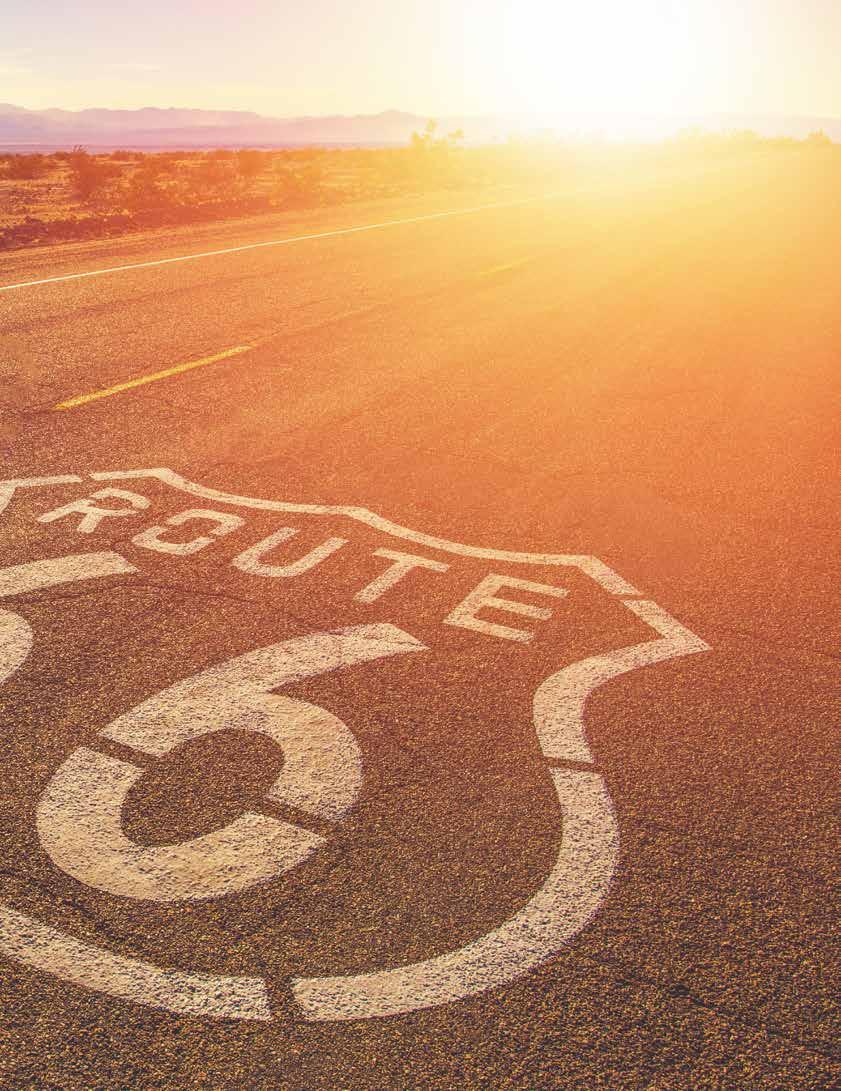
Get Your Kicks on Route 66
Route 66 Turns 100
For our Explore Issue, we’re taking a road trip down memory lane.
This year, Route 66 officially turns 100 years old, fitting as America simultaneously celebrates its 250th anniversary.
While the road itself stretches from Chicago to Santa Monica, some of its most iconic and emotionally resonant miles live right here in Arizona.
The Mother Road winds through old mining towns, weathered trading posts, quirky diners, mountain passes, neon-lit downtowns, ghost towns, roadside motels, and sweeping desert landscapes that feel untouched by time.
And according to Route 66 historian and author Jim Hinckley, that sense of nostalgia, Americana, freedom, and emotional connection has always been at the heart of the highway’s enduring magic.
“Route 66 was the road of dreams,” Hinckley says. “And today it is viewed as the quintessential American road trip.”
For Arizona travel writer and author Roger Naylor, the road’s continued relevance feels especially meaningful in today’s fast-paced world.
“In a world of social media and AI, we crave authentic experiences,” Naylor says. “We want to hold on to something that feels real.”
Long before Route 66 became immortalized in movies, songs, and pop culture, it emerged from America’s growing fascination with exploration, mobility, and the open road.

Hinckley explains that the roots of Route 66 actually trace back to the 1800s, when political leaders began envisioning a connected America built through transportation systems linking communities together.
By the early 20th century, automobiles transformed travel forever. Families began venturing farther from home, roadside businesses exploded, and a national highway system became essential.
Then came 1926 when Route 66 was officially established.
What followed cemented Route 66 as one of the most iconic roads in American culture.
The highway carried Dust Bowl migrants west during the Great Depression. It connected military bases and training camps during World War II. It became the backdrop for postwar family vacations, cross-country adventures, and stories of reinvention.
On I Love Lucy, Route 66 represented opportunity.
In Easy Rider, rebellion.
For travelers around the world, it became symbolic of freedom itself.
One memory still stands out vividly for Hinckley.
While speaking at the European Route 66 Festival in Zlin, Czechia, a man approached him and explained that while growing up behind the Iron Curtain, he secretly listened to the song about “getting your kicks on Route 66” through Radio Free America and watched bootleg copies of Easy Rider
“Then he told me that for his generation Route 66 came to symbolize freedom as the Statue of Liberty had for a previous generation,” Hinckley says.
That symbolism remains deeply woven into Arizona’s stretch of the Mother Road today.
Every state along Route 66 tells a slightly different story.
According to Hinckley, Illinois offers farming towns tied to Abraham Lincoln, while Missouri delivers quaint Ozark communities dating back to the Civil War alongside former mining boom towns that help give the highway what he describes as the feeling of “America’s longest small town.”
That sense of authenticity continues westward toward California, but Hinckley believes Arizona’s stretch of Route 66 stands apart.
“What makes Arizona unique is the combination of devastating scenery, wide-open spaces, and a sense of the Wild West that no other state can match,” Naylor says.
He describes Route 66 as the “main artery” of Arizona itself.
And nowhere is that more evident than the legendary drive through Sitgreaves Pass.
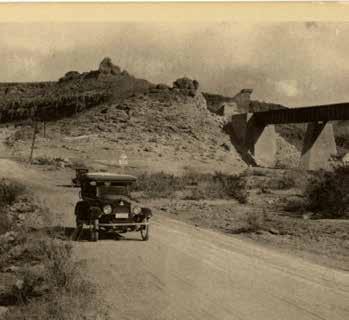
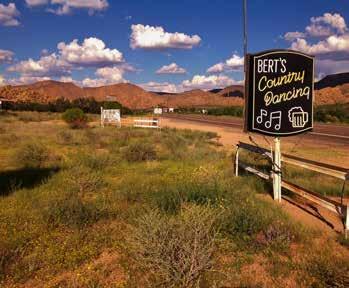
Hinckley says the pre-1952 alignment west of Kingman through Sitgreaves Pass and down into the Colorado River Valley is often considered the most scenic stretch of the entire highway. Built in 1921 to replace the dangerous 26% grades of the old National Old Trails Road, the route features dramatic curves, steep grades, and breathtaking overlooks unlike anywhere else along the Mother Road.
“Driving this road is almost like time travel,” Hinckley says.
Along the way, Arizona delivers a collection of unforgettable roadside moments.
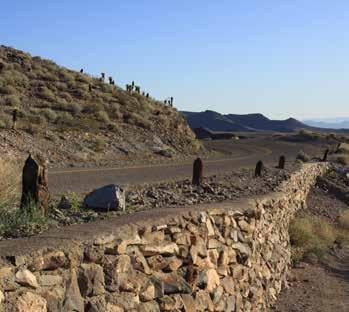
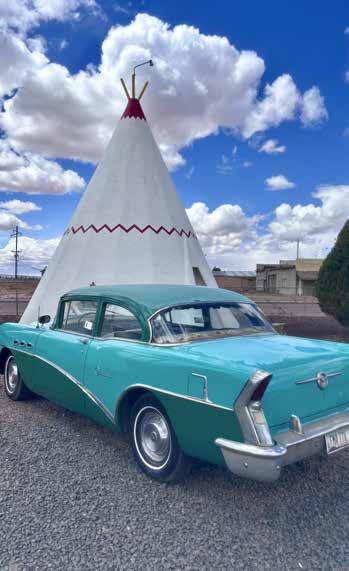
There’s the Wigwam Motel in Holbrook.
The neon glow of Williams after dark.
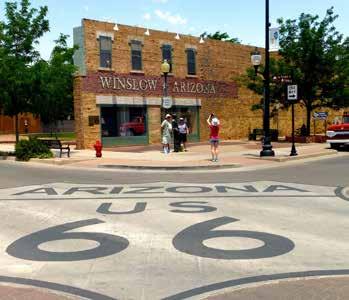
The famous Standin’ on the Corner landmark in Winslow.
The quirky charm of Seligman.
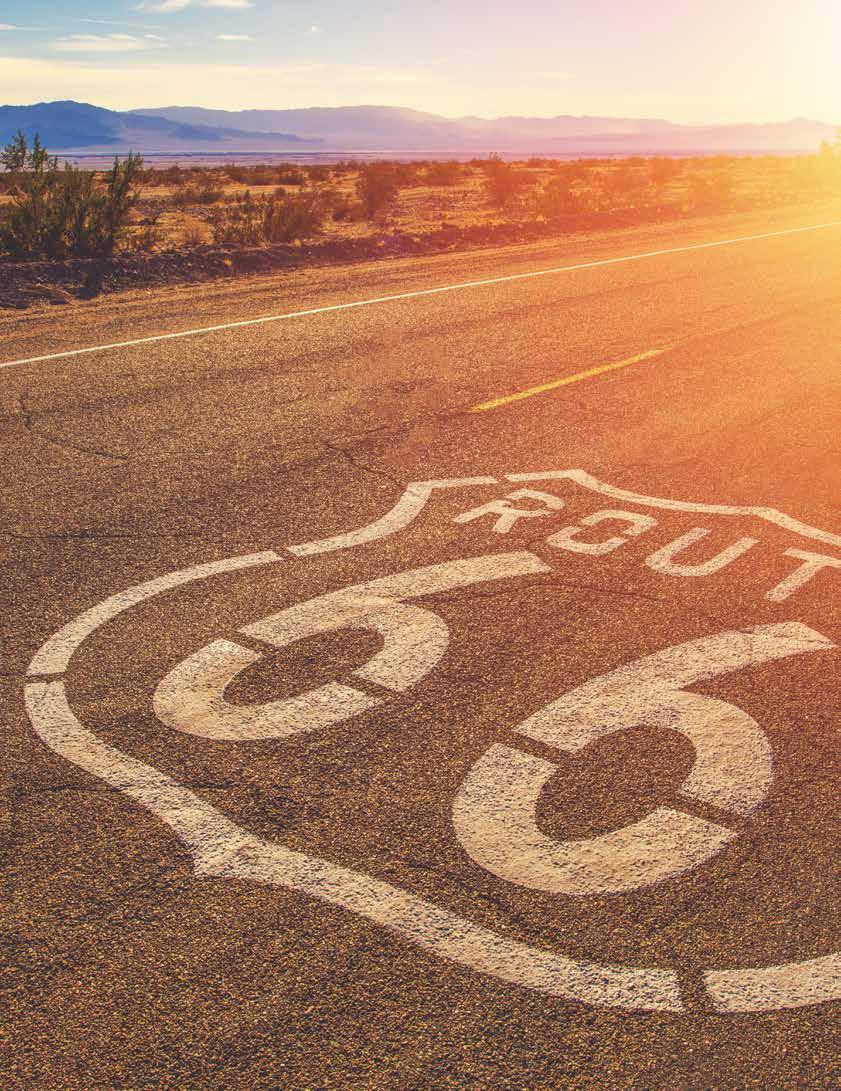
The Route 66 Drive Thru Shield in Kingman.
The burros wandering through Oatman.
And then there are diners, cafés, pie counters, and roadside restaurants that somehow taste even better after hours on the open road.
“You’ll never forget grabbing a burger at Miz Zip’s in Flagstaff or a huge piece of carrot cake at Westside Lilo’s Café,” says Naylor.
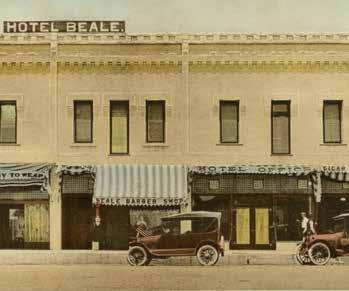
The iconic Hotel Beale/ Credit: Jim Hinckley
This section of the National Old Trails Road served as Route 66 from 1926-1937. Credit: Steve Rider
Pre 1952 Route 66, west slope of the Black Mountains/Credit: Jim Hinckley
Credit: Jim Hinckley
According to Naylor, Route 66 nearly disappeared altogether in 1985 when the highway was officially decertified, signs were removed, maps changed, and America’s most famous road quietly faded from the federal highway system. But Arizona refused to let it die.
Naylor attributes much of the preservation movement to Seligman barber Angel Delgadillo, who helped lead the effort to revive and preserve the Mother Road after its decertification.
“Angel spearheaded the movement to resurrect the Mother Road after it had been decertified in 1985,” Naylor says.
Delgadillo and the Historic Route 66 Association of Arizona successfully convinced the Arizona Department of Transportation to designate portions of the highway as Historic Route 66, creating the blueprint other states would eventually follow.
“It wasn’t saved by the government or billionaires or huge corporations,” Naylor says. “It was saved by individuals.”
Williams/Credit: Jim Hinckley
Credit: Roger Naylor
Credit: Roger Naylor
ROUTE 66 FAVORITES
• Seligman: Roadkill Café and Westside Lilo’s Café sit across from each other and deliver the classic Route 66 experience with comfort food, quirky charm, and authentic roadside nostalgia.
• Sitgreaves Pass & Oatman: The winding drive from Kingman through Sitgreaves Pass to Oatman offers dramatic desert views, sharp curves, roaming burros, and one of Arizona’s most unforgettable stretches of Route 66.
• Pine Country Restaurant, Williams: A longtime Route 66 staple known for its legendary pies, classic Americana atmosphere, and front-row seat along the Mother Road.
• Tin Can Alley on 66, Kingman: This retro-inspired lodging concept blends vintage Route 66 nostalgia with modern comfort in Kingman’s historic district near shops, breweries, museums, and Beale Street Theater.
• Earl’s Route 66 Motor Court: More time capsule than motel, this nostalgic roadside stay captures the spirit of classic American road trips and oldschool Route 66 culture.
• Jack Rabbit Trading Post: Dating back to the 1940s, this iconic family-owned roadside stop remains one of Arizona’s most authentic slices of Route 66 nostalgia filled with vintage charm, souvenirs, and photo ops.
• Ash Fork Route 66 Historic Museum: This understated museum offers small-town charm and quirky exhibits highlighting Arizona’s Route 66 history, roadside culture, and vintage Americana.
• The iconic Hotel Beale: Originally purchased by Thomas Devine, father of actor Andy Devine, the historic hotel hosted guests including Amelia Earhart, Charles Lindbergh, and Buster Keaton. Earlier this year, the landmark sign was relit for the first time in more than 70 years.
jimhinckleysamerica.com rogernaylor.com








A Look at the Nostalgia, Tradition, and Timeless Appeal Behind the Burger
THE GREAT AMERICAN BURGER
PHOTOGRAPHY BY SQUARE ONE CONCEPTS
There are food trends, and then there are foods that become part of American culture. The cheeseburger is one of them.
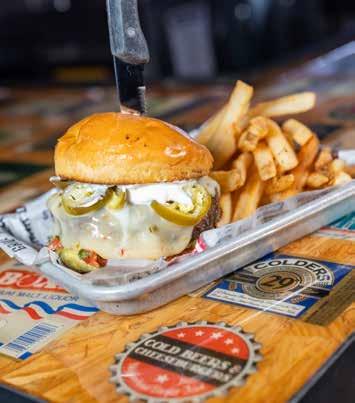
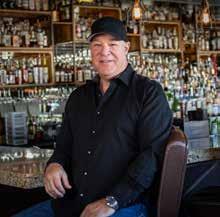
For S. Barrett Rinzler, founder and CEO of Square One Concepts and the visionary behind Cold Beers & Cheeseburgers, the burger’s staying power isn’t just about taste. It’s about tradition.
“This may sound overly patriotic,” he says, “but I think it somewhat harkens back to freedom.”
Rinzler believes the burger’s roots are tied to post-World War II America, when families gathered around backyard grills and embraced the simple joys of homeownership, community, and summer.
“The backyard barbecue was part of that. Owning your own turf and grilling a burger with family and friends is like enjoying the spoils of your freedom.”
That emotional connection is what separates burgers from so many food trends. They evoke memories.
“It brings people back to summers growing up.”
At the same time, burgers continue to evolve. At Cold Beers & Cheeseburgers, unexpected creations like the Bacon PB&J Burger and Mmmac & Cheeseburger have become customer favorites.
“Who would have thought those combinations would become so popular? You never know until you try it.”
Yet Rinzler insists great burgers still come down to the basics.
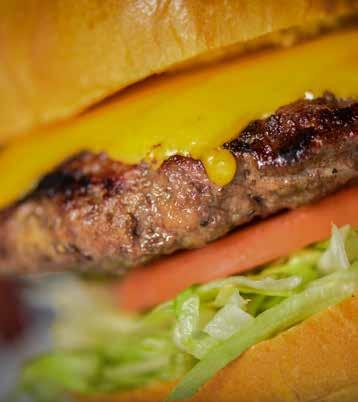
“The bun and toppings are important, but they can’t hide it if you don’t have good meat.”
His ideal burger starts with quality beef and an 80/20 blend for maximum juiciness. His biggest grilling tip? Don’t overcook it.
For Rinzler, however, the burger’s true appeal is generational.
“My grandfather and his brothers were in the grocery business and raised their own cattle. He definitely enjoyed them, as did my father, and, of course, I do as well. The beloved American classic is passed down through our traditions.”
That tradition will be on full display this Fourth of July as Cold Beers & Cheeseburgers hosts the 4th Annual Summer Slider Eating Championship at Scottsdale’s Red, White & Cool celebration at WestWorld. It’s a fitting stage for a food that has become as American as the holiday itself.
“What’s more all-American than hamburgers, hot dogs, baseball and apple pie? Food brings people together.”
coldbeers.com
S. Barrett Rinzler

SUMMER FUN STARTS













RED, WHITE & RESILIENT
JASON REDMAN’S STORY IS ONE OF SERVICE, SACRIFICE, SECOND CHANCES, AND AN ENDURING BELIEF IN THE AMERICAN DREAM.
ARTICLE BY NADINE BUBECK | PHOTOGRAPHY PROVIDED
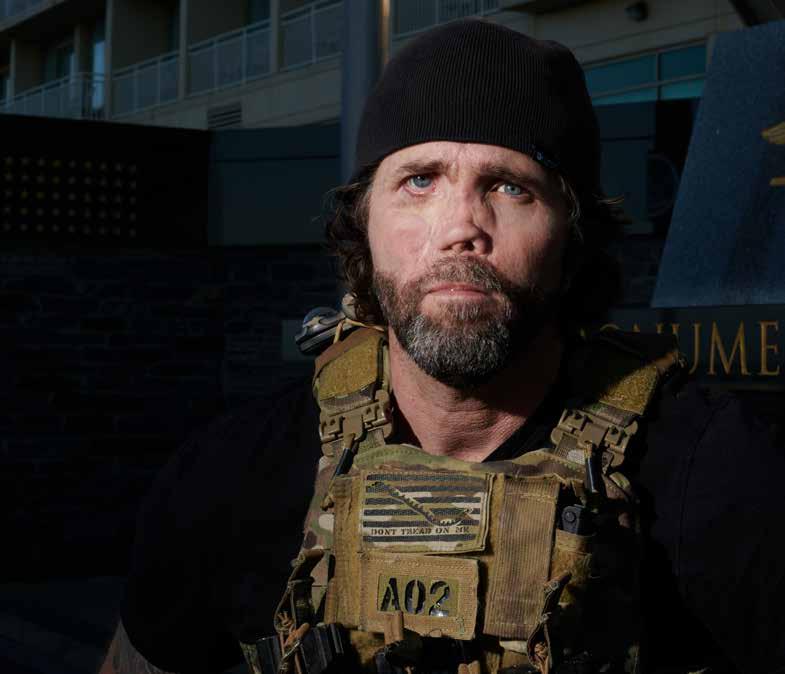
As we celebrate America 250 and watch fireworks fill the sky this Fourth, we are reminded that the freedoms we enjoy were never without sacrifice.
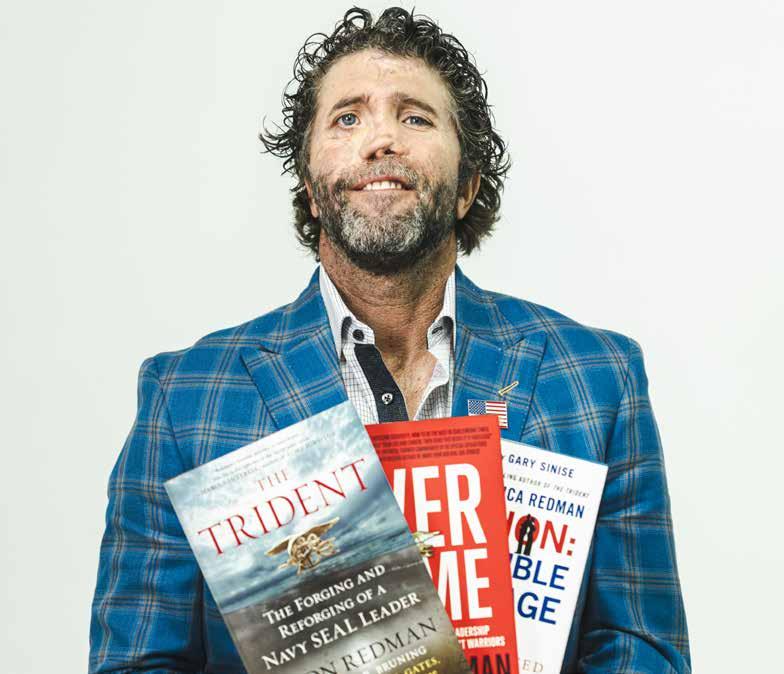
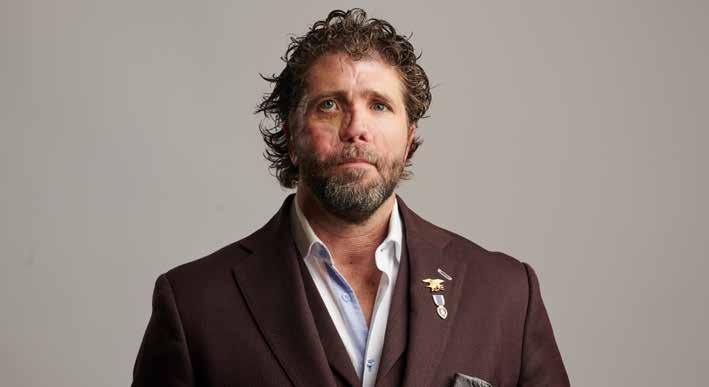
This month, we honor retired Navy SEAL Jason Redman, a severely wounded warrior, bestselling author, leadership expert, and patriot whose story embodies resilience, redemption, and the American spirit.
After overcoming early career leadership failures, earning back the respect of his fellow SEALs, and surviving a combat-related incident that resulted in severe injuries, Jason transformed adversity into purpose.
Today, he shares lessons on leadership, resilience, and what he calls “getting off the X,” the ability to move forward when life knocks you down.
With part of Jason’s team now operating in Arizona and frequent speaking appearances across the Valley, SCL’s Nadine Bubeck sat down with him for an exclusive conversation about service, sacrifice, and what it truly means to live greatly.

FOR ANYONE WHO MIGHT NOT KNOW YOUR FULL STORY, HOW DO YOU INTRODUCE YOURSELF TODAY?
I am a retired warrior, retired Navy SEAL, author, entrepreneur, husband, father, and patriot.
WHAT FIRST LED YOU TO THE NAVY?
I came from a military family. My grandparents both fought in World War II, and my father served in the Army. Service was always part of my life.
As a kid, I was fascinated GI Joe and the military. At first, I thought I wanted to be a pilot, thanks to Top Gun. Then I learned about special operations and the SEAL teams. Around 14 years old, I knew that was it.
BECOMING A NAVY SEAL IS EASIER SAID THAN DONE.
About 80% of candidates don’t make it through training.
When I decided I wanted to be a SEAL, I wasn’t an athlete. I was a small kid and most people probably laughed at me. But I understood that if I wanted to achieve something difficult, I had to start doing difficult things.
I joined the football team and got beat up every day. I wrestled. I started running, swimming, doing pushups, pullups, and preparing myself physically and mentally.
That’s a lesson I still teach today. Figure out where you want to go, understand what it will take to get there, then break it down into action steps and execute.
YOU ACHIEVED THAT DREAM, BUT LATER FACED A VERY DIFFERENT CHALLENGE.
Early success became one of my biggest obstacles.
I excelled as a young SEAL, became a SEAL instructor, earned a commission as an officer, and graduated first in my ROTC unit. But I allowed ego and arrogance to creep into my leadership.
I started leading with a “do as I say, not as I do” mentality, and eventually I made a decision during a mission in Afghanistan that nearly got me kicked out of the SEAL teams. It was one of my darkest moments. I sat alone in my room battling dark thoughts. Thankfully, I sought help. A special operations chaplain and several strong
leaders helped me realize I was about to make a permanent decision over a temporary problem.
Looking back, that failure became one of the most important experiences of my life.
WHY?
Because it prepared me for what came next.
People often think adversity is random, but I don’t believe that. Every hardship, every failure, every lesson we learn shapes us.
The reason my first book is called The Trident: The Forging and Reforging of a Navy SEAL Leader is because I had to be broken down and rebuilt.
IN 2007, YOUR LIFE CHANGED FOREVER.
Due to editorial guidelines, some details of Jason’s combat injuries and battlefield experience have been condensed. What follows reflects the significance of the event without recounting its graphic realities.
On September 13, 2007, during a mission in Iraq, me and my team were caught in a devastating enemy ambush while pursuing a high-value target. Multiple team members were wounded, and I sustained life-threatening injuries requiring years of recovery and reconstruction. My survival was made possible by the courage of my teammates, who risked their own lives to bring me to safety.
I owe my life to those men.
The months that followed tested me in ways few can imagine. Yet through pain, uncertainty, and an arduous recovery, I emerged with a renewed sense of purpose and a powerful message about resilience.
WERE YOU SCARED?
Absolutely.
There’s no courage without fear.
The difference is that courage requires action despite fear.
That’s what we train for.
YOUR HOSPITAL ROOM SIGN BECAME FAMOUS AROUND THE WORLD.
About a week after being wounded, I was lying in Bethesda Naval Hospital.
I couldn’t talk. I was in critical condition, and doctors discussed life-altering surgical options as I faced an uncertain future. My face was permanently disfigured.

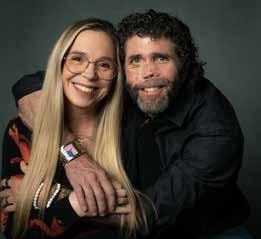
“The wounds I received, I got in a job that I love, doing it for people that I love, defending the freedom of a country that I deeply love.”
At one point, I started feeling sorry for myself.
Then I realized that wasn’t who I wanted to become.
So I asked my wife for a pen and paper and wrote what became known as the “sign on the door.”
Part of it read:
“The wounds I received, I got in a job that I love, doing it for people that I love, defending the freedom of a country that I deeply love.”
I also wrote:
“I will make a full recovery.”
That sign wasn’t written for anyone else. It was written for me... A reminder I still had a choice in how I responded.
WHAT DOES AMERICA MEAN TO YOU TODAY?
I love this country.
I’ve seen the best and worst mankind has to offer around the world. No country is perfect, but America and this experiment of freedom are worth fighting for.
I’ve seen the profound sacrifices made by those who serve, and there was a time when I wasn’t sure what my own path home would look like.
Yet I still believe the American Dream exists.
I’m living proof.
YOU OFTEN TALK ABOUT “GETTING OFF THE X.” WHAT DOES THAT MEAN?
Everybody gets ambushed in life.
Maybe not through combat or catastrophe, but through injury, illness, failure, loss, rejection, depression, and hardship.
Getting off the X means refusing to stay down.
To me, it starts with awareness, preparation, and action.
You can’t control what happens to you, but you can control how you respond.
WHAT DO YOU WANT PEOPLE TO LEAVE WITH TODAY?
Live greatly.
Not many people get a second chance at life after coming that close to death.
If you woke up this morning, it’s already a good day.
Now it’s up to you to make it great.
Stop worrying about failure. Stop worrying about what other people think.
If you have a dream, go after it.
At the end of your life, you don’t want to regret the things you never did.
You want to be able to say, “I did it.”
www.jasonredman.com
The hour long, unfiltered interview is now streaming everywhere on the Now with Nadine podcast.
Tristan's Trees provides living memorial trees to families who have experienced stillbirth or the loss of a child.
Planted in a yard, garden, or meaningful space, each tree serves as a lasting tribute and a place for reflection, remembrance, and connection. With the support of sponsors, donors, and community partners, these trees are gifted to families at no cost.
Tristan's Trees is a registered 501(c)(3) nonprofit organization, and all donations are tax-deductible to the extent permitted by



Why Choose Premier Prep at Swysh Den?
Premier Prep at Swysh Den is a tuition free Arizona online public charter school designed specifically for basketball focused student athletes.
What We Offer:
• Tuition free Arizona online public charter school
• NCAA approved academics for grades 7–12
• Daily basketball training and skill development
• Structured routines that promote focus, discipline, and accountability
• Flexible learning tailored to individual learning styles and goals
• Mentorship from leaders who understand student athletes
• Character, leadership, and personal growth development
• A supportive environment designed for students who do not thrive in traditional school settings
• A clear pathway from middle school through high school graduation
• Scottsdale based program accessible to families throughout the Valley
Families no longer have to choose between academic success and athletic development.
FLEXIBILITY, STRUCTURE, AND SUPPORT
Now Enrolling for Fall 2026
Classes Begin August 11, 2026

BORN & RAISED IN THE
Boondocks
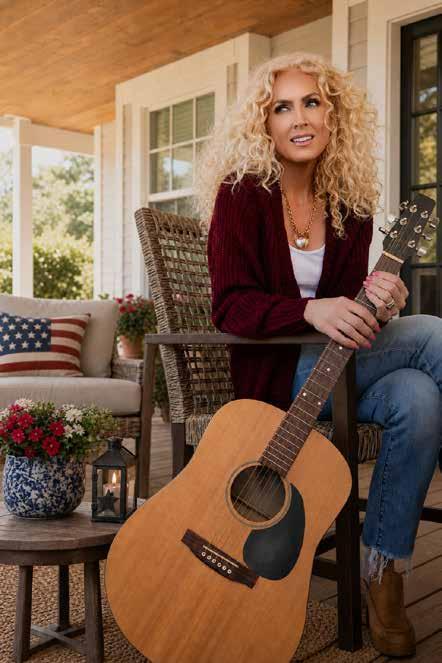
Kimberly Schlapman has Lived Every Verse of a Country Song
For our Explore Issue, we’re heading to the Boondocks.
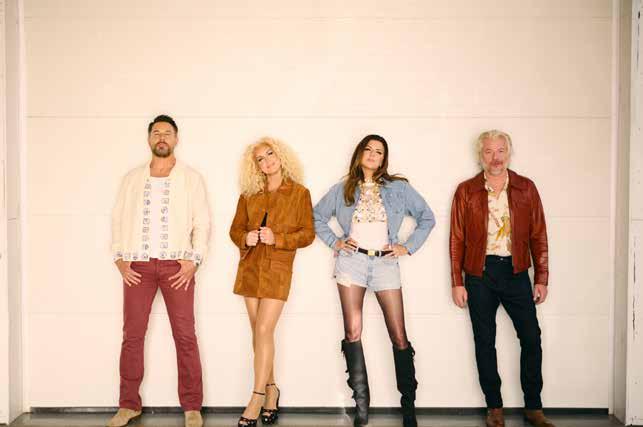
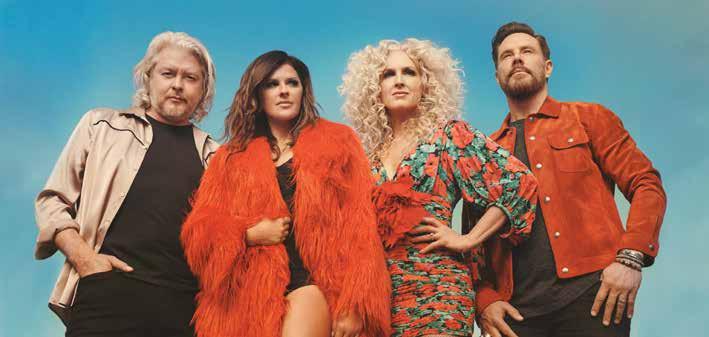
For more than 25 years, Little Big Town has remained one of country music’s most beloved and enduring groups, a remarkable accomplishment in an industry where longevity is rare and harmony, both musically and personally, is even harder to sustain.
In May, Kimberly Schlapman and her fellow members of the eight-time ACM Award-winning group Little Big Town performed their new song, “Hey There Sunshine,” at the Academy of Country Music Awards, continuing a career built on heartfelt storytelling and songs that resonate across generations.
But beyond the stage, Kimberly’s own story is every bit as compelling as the music she helps create.
Ahead of her appearance in Phoenix at the World Parkinson Congress as part of AbbVie’s Changing the Tune on Parkinson’s Disease campaign, Kimberly sat down for a heartfelt conversation about motherhood, resilience, caregiving, life on the road, her rural roots, and the journey behind a remarkable career that has spanned more than two decades.
CONTINUED >
ARTICLE BY NADINE BUBECK | PHOTOGRAPHY PROVIDED
Little Big Town
“We’ve raised kids together on the road. We’ve gone through marriage, divorce, grief, loss, joy, career highs, career lows. We’ve lived life together. It’s truly like a marriage. Actually, it’s probably like four marriages.”
WE HAVE TO START WITH YOUR INCREDIBLE ARIZONA CONNECTION.
“Oh, it’s a doozy,” Kimberly laughs. “This was back in 2007. We were on the road with Martina McBride and had about two and a half weeks left of tour. We had a show in Phoenix, and I was very, very, very pregnant.”
After the show, she climbed into her bunk on the bus.
“I wasn’t feeling well. I laid down and my water broke.”
Less than 24 hours later, Kimberly gave birth at Banner Estrella Hospital in Phoenix.
“So yes… my daughter Daisy was born in Phoenix.”
And because this is apparently the most country music story ever told, four days later they were back on the road.
“She loves telling people she’s from Phoenix. Arizona will always hold a special place in our family because of that.”

Little Big Town
LITTLE BIG TOWN HAS BEEN TOGETHER OVER 25 YEARS. INSANE.
“It really doesn’t happen often,” Kimberly says. “Especially not with people who still genuinely love each other. That’s honestly the miracle.”
When Little Big Town formed, none of them imagined the life ahead.
“We were babies. We were just trying to make music and survive.”
Now they’ve spent more than two decades together.
“We’ve raised kids together on the road. We’ve gone through marriage, divorce, grief, loss, joy, career highs, career lows. We’ve lived life together. It’s truly like a marriage. Actually, it’s probably like four marriages.”
There were years sleeping in vans where success felt very far away.
“We used to drive ourselves everywhere. We loaded our own gear. We sold our own merch. We did all of it.”
And despite eventually becoming one of country music’s most successful groups, those early years still shape them.
“I think struggling together bonded us deeply,” she says.
DO YOU REMEMBER THE MOMENT YOU THOUGHT, ‘OKAY… THIS MIGHT ACTUALLY WORK?’
“I don’t know if there was one specific moment because we got dropped from our first record deal. We thought it was over.”
But instead of quitting, they stayed together.
“That says a lot right there,” she says. “Because honestly, most groups would’ve fallen apart. We just loved making music together too much.”
WHO WERE YOUR IDOLS GROWING UP?
“Oh gosh… The Judds. Dolly Parton. Reba. Alabama. Kenny Rogers.”
YOU’VE ACTUALLY BECOME FRIENDS WITH SOME OF THOSE PEOPLE NOW.
“Absolutely surreal. There are moments where I still have to pinch myself. You’re trying to act normal on the outside while internally you’re completely freaking out.”
CONTINUED >

Clients often say: “I was surprised how doable it felt once I had the right person guiding me. Elisabeth explained things in a way that made sense and took the fear out of it.”


WHAT WAS CHILDHOOD REALLY LIKE GROWING UP IN RURAL GEORGIA?
“Simple, but magical.”
She grew up in a tiny North Georgia town surrounded by farms and family.
“We played outside constantly. My grandparents had chickens, cows, pigs. I grew up snapping green beans in the heat. Life revolved around church, food, storytelling, and music.
SO ‘BOONDOCKS’ IS BASICALLY YOUR AUTOBIOGRAPHY?
“A thousand percent,” she says laughing. “That song is us. Everybody comes from somewhere. Everybody has roots.”
YOU’VE WON GRAMMYS, ACMS, CMAS… DO THOSE MOMENTS EVER BECOME NORMAL?
“Never.”
Kimberly still remembers watching the Grammys as a little girl on a tiny TV as a kid.
“I used to dream about that world. I never understood how people even got there.”
WHAT DOES BACKSTAGE LIFE ACTUALLY LOOK LIKE?
“Before every show, the band and crew still gather in a circle backstage. We all put our hands together. Somebody says a prayer. If our spouses or kids are there, they join too.” And then?
“There’s usually a shot of whiskey involved,” she says laughing.
DO YOU STILL GET NERVOUS BEFORE PERFORMING?
“Sometimes if it’s television. But it’s less fear and more adrenaline.”
HOW DID ADOPTION EVENTUALLY ENTER YOUR STORY?
“My husband looked at me one day and said, ‘Maybe we’re supposed to adopt.’”
Meanwhile, their daughter Daisy had started praying every night for a sibling.
“She asked Santa for a baby sister,” Kimberly says laughing. “And Santa Claus said, ‘Honey, I’m not sure even I can make that happen.’”
Weeks later, Dolly came home.
WHAT KIND OF MOM ARE YOU?
“Oh gosh… probably emotional. I try not to be a helicopter mama. I try to be fun. But I’m definitely a worrier.”
Motherhood, she says, remains the role she treasures most.
“It was always my dream.”
YOUR MOTHER HAS LIVED WITH PARKINSON’S DISEASE FOR MORE THAN 21 YEARS NOW.
“At first we knew almost nothing about Parkinson’s. My mother just had a slight tremor in her hand. Over time, the disease progressed. Parkinson’s affects the entire family.”
Eventually, Kimberly and her husband moved out of Nashville to be closer to her parents.
“We wanted to help care for my mother more.”
Now, her mother requires around-the-clock care.
“There’s grief in watching the roles change. You grieve for the mother you’ve known your whole life. But there’s also tremendous joy in giving back to her what she spent decades giving to us.”
WHAT DID YOUR MOTHER TEACH YOU THAT STILL STAYS WITH YOU TODAY?
“She taught me everything I know about being a mama.”
Even now, despite Parkinson’s, her mother still finds joy in the kitchen.
“If someone stands beside her, she’ll still make biscuits or tea cakes with us. That’s love to her.”
YOUR COOKBOOK IS CALLED OH GUSSIE . WHAT DOES THAT ACTUALLY MEAN?
“Well, it can mean, ‘Oh my stars, this is amazing,’ or it can mean, ‘Oh no, I just burned the biscuits,’” Kimberly laughs. “It all depends on how you say it.”
She explains that “Oh Gussie” was simply part of everyday life growing up in North Georgia.
“I didn’t know it was anything special until I moved to Nashville and people were like, ‘Wait… what did you just say?’”

Kimberly & her mom
YOUR LOVE OF COOKING SEEMS DEEPLY TIED TO FAMILY AND CHILDHOOD.
“My mama and both of my grandmothers were incredible cooks. I grew up sitting on a stool next to the counter just watching them.”
She remembers learning family secrets in the kitchen.
“How to tweak a recipe just enough to make it perfect. How to know when biscuits were ready without even setting a timer. Those are things passed down through generations.”
WHAT’S YOUR FAVORITE RECIPE IN THE COOKBOOK?
“The chicken and dumplings. That’s my mama’s recipe. There’s also a fresh glazed apple cake that means so much to me emotionally.”
Growing up in apple country in North Georgia, Kimberly says her grandmother always kept cakes in the freezer for her grandchildren.
“When I came home from college, she’d let me pick whichever cake I wanted to take back with me,” she says. “And I always picked the apple cake.”
WHAT DO YOU HOPE PEOPLE REMEMBER ABOUT LITTLE BIG TOWN SOMEDAY?
“I hope our music told their story. I hope people made our songs their own and that our music helped them through different seasons of life.”
AND WHAT DO YOU HOPE PEOPLE REMEMBER ABOUT KIMBERLY SCHLAPMAN?
“My daddy always told me, ‘Don’t ever forget where you come from.’ Also, you never know what somebody is going through behind closed doors,” she says. “So give people grace.”
instagram.com/ohgussie
Through the AbbVie campaign, Kimberly is helping raise awareness and empower people living with Parkinson’s and their loved ones to advocate for their care, ask questions, and explore treatment plans that best meet their individual needs: changingthetuneofpd.com
Listen to the full, unfiltered conversation with Kimberly on the Now with Nadine podcast streaming everywhere.
Because Life Moves
Specializing in Rightsizing
Right-sized homes that support how you want to live now; Maintain your luxury, simplify your life.
Relocating
Smooth, well-guided incoming and outgoing moves with local insight and trusted coordination.
Strategic Buying & Selling Smart planning, clear data, market and community knowledge, and disciplined execution with no surprises.
Because the right move deserves thoughtful guidance.










THE SOUNDTRACK OF AMERICA
IN HONOR OF NATIONAL ROCK ‘N’ ROLL DAY, 3 ICONIC ARTISTS REFLECT ON FAME, FRIENDSHIP, FAMILY, AND PURPOSE.
July 7th marks National Rock ’n’ Roll Day, though for most people, rock and roll was never confined to a single day on the calendar. It became part of life itself. It was blasting through car speakers after getting your license. Concert tickets stuffed into junk drawers. Songs attached to breakups, road trips, late nights, baseball games, and memories that somehow still feel tied to certain lyrics decades later.
And in Arizona, few names are woven into that soundtrack quite like Alice Cooper.
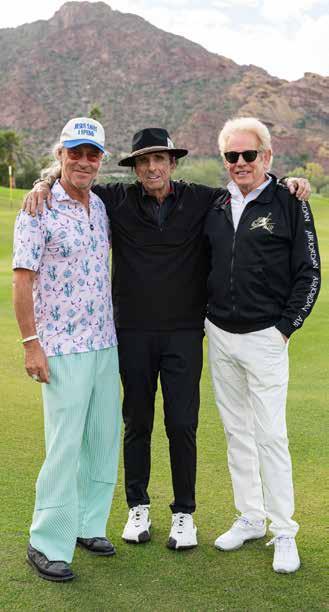
Over the years, Alice’s friendships with fellow musicians like Don Felder and Ed Roland have brought rock-and-roll culture directly into the fabric of the Valley through charity events, golf tournaments, performances, and philanthropy. While neither Don nor Ed live in Arizona full time, both frequently return because of the friendships, community, and connection surrounding Alice and his work with Alice Cooper’s Solid Rock Teen Centers.
“The fact that they showed up in the first place was astounding,” Alice says. “There is a mutual admiration in artistry and you must remember that rock and roll is a tight family.”
That idea of family comes up often when talking with artists who have spent decades in the industry. What becomes interesting over time is not simply the music itself, but the perspective that follows years of fame, reinvention, survival, friendship, and learning what actually lasts.
“You have to learn to be flexible. I was in one of the biggest bands in history, and then one day, I wasn’t,” Don says. “I had to pick myself up and start again. But this time, I was rebuilding under my own name, guided by my own artistry.”
For Don, the songs remain the foundation of everything.
PHOTOGRAPHY BY SCOTTSDALE EVENT PHOTOGRAPHY AND PROVIDED
Ed, Alice & Don
“BACK IN THE 70S, WE WERE JUST LIVING IN THE MOMENT PLAYING MUSIC... NOT
REALLY THINKING ABOUT THE LEGACY
WE WERE BUILDING.” -DON FELDER
“It really comes down to the power of the songs,” he says. “The Eagles’ catalog holds so many hits and chart-topping records because of the strength and timelessness of the songs we were able to create together.”
And over time, those songs began taking on lives of their own.
Ed Roland saw that happen firsthand when “Heavy” became permanently tied to the Arizona Diamondbacks championship era. Suddenly, the song no longer belonged solely to Collective Soul. It became part of Arizona sports history and part of the emotional memory of an entire fanbase.
That’s the thing about music. It leaves the artist and becomes personal to everyone else.
“It wasn’t until much later that I truly understood it,” Don says. “Back in the ’70s, we were just living in the moment, writing and playing music together without really thinking about the legacy we were building.”
Now, he sees generations attached to those songs.
“I’ll look out into the audience and see three, sometimes four generations of families sitting together,” he says. “Parents, kids, even grandparents, all connected by the same songs.”
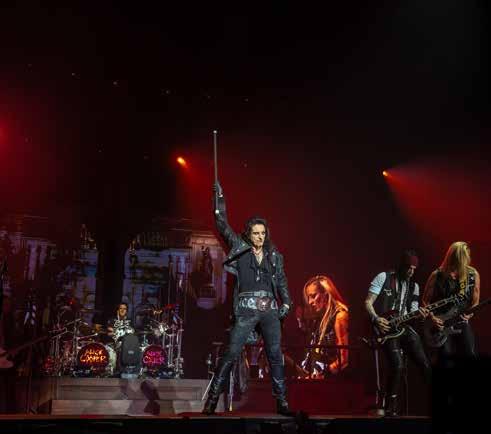
Then there’s Alice Cooper, who may have undergone one of the most fascinating evolutions in rockand-roll history.
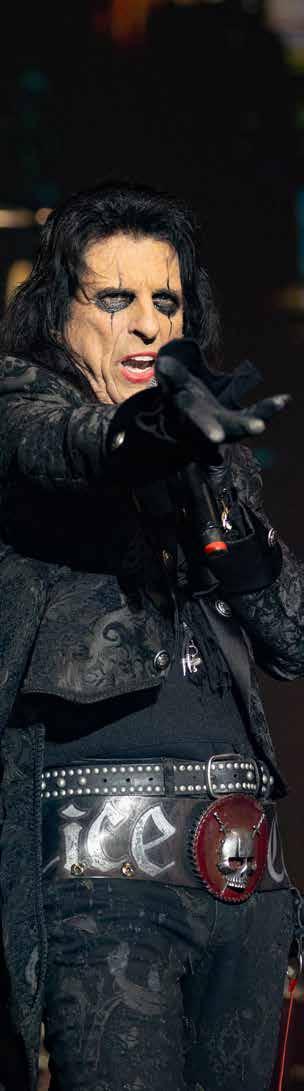
To many, he’ll always be the godfather of shock rock. Dark eyeliner. Snakes. Theatrical chaos. But today, he’s equally known in Arizona as a philanthropist, grandfather, husband of 50+ years, and one of the Valley’s most recognizable community figures.
“When you land in Phoenix after you’ve been on tour, it’s like you’re on vacation,” Alice says. “I went to Cortez High, hung at Christown Mall, and grew up watching Wallace and Ladmo. Our kids went to Hopi Elementary School. The Valley is paradise... and home.”
His connection to music started long before the fame.
“When I was 15, The Beatles came out,” Alice says. “I knew I was artistic, and when I heard The Beatles, I knew I wanted to be a musician.”
Ironically, his band was never expected to succeed.
“We were a band that was never supposed to make it because we weren’t groovy, we weren’t hippies, and we scared people,” Alice says. “Our big break was thanks to Bob Ezrin. Bob heard us play, and everything unfolded from there. We had this dark, controversial image … but we hit records, so it worked!”
Over the decades, Alice’s story became far bigger than the stage persona itself.
“The plan that God had for my life included addiction and every kind of insanity that rock and roll could provide to use it to be able to talk to kids from first hand experience,” he says.
Today, he speaks openly about sobriety, family, and perspective in a way that feels surprisingly grounded for someone who built a career on shock value.
“I’ve been sober for more than 40 years, married to the most astounding woman, have three amazing children, and five incredible grandchildren,” Alice says. “I’m still touring over 200 cities per year, and the word ‘retirement’ is not in my vocabulary.”
When asked the secret to five decades of marriage, his answer is remarkably simple.
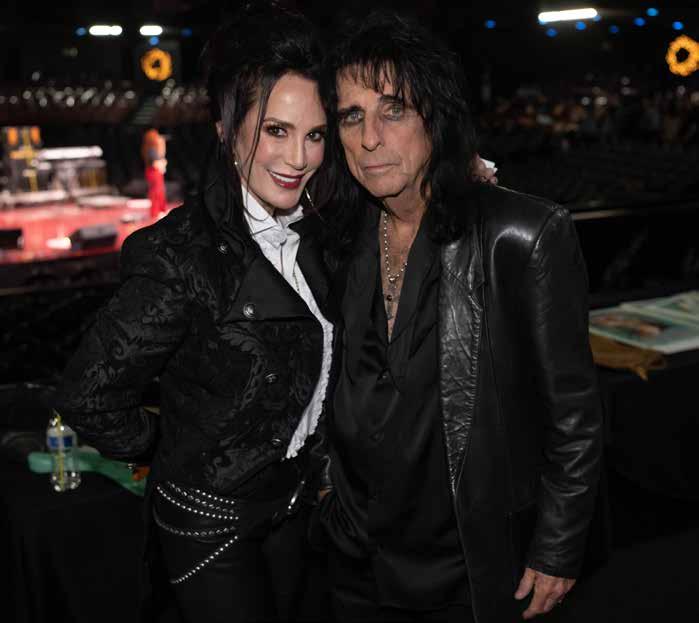
“Sheryl and I have common values and never fight. If I could pick anybody to hang out with, it would be her. Sheryl is elegant, romantic, and ridiculously smart.”
That groundedness eventually evolved into Solid Rock Teen Centers, which Alice and wife Sheryl founded more than 30 years ago after recognizing the need for safe, creative spaces for teenagers.
“SHERYL AND I HAVE COMMON VALUES AND NEVER FIGHT. IF I COULD PICK ANYBODY TO HANG OUT WITH, IT WOULD BE HER. SHERYL IS ELEGANT, ROMANTIC, AND RIDICULOUSLY SMART.”
“Every kid has a talent,” Alice says. “So we opened a place encouraging teens to find themselves.”
Today, the Valley-based centers offer free music lessons, recording studios, dance, photography, film equipment, live sound, art programs, and mentorship opportunities for teens ages 12 to 20. There are no fees, no barriers, and no restrictions based on background or zip code. The goal is simple: give young people a safe environment to create, connect, and discover purpose through the arts.
“I’ve spent 50 years building and cultivating that name and character,” Alice says. “If it can be used to promote charities, especially our own Solid Rock Teen Centers, well that’s a grand slam home run.”
And maybe that’s what National Rock ’n’ Roll Day really represents.
Not fame or records... But longevity, reinvention, friendship, and purpose. The realization that the music eventually becomes bigger than the people who created it.








The Frenchman Who Found the West
How a road trip, rock music, & a cowboy museum changed the course of Mark
life.
PHOTOGRAPHY BY JAMES PATRICK PHOTOGRAPHY
Maggiori’s
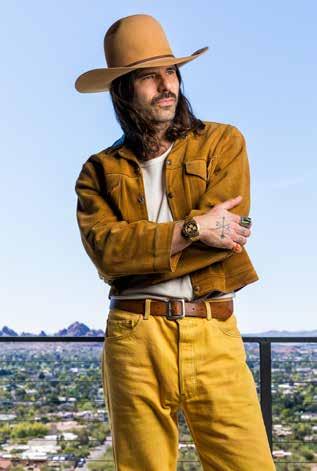
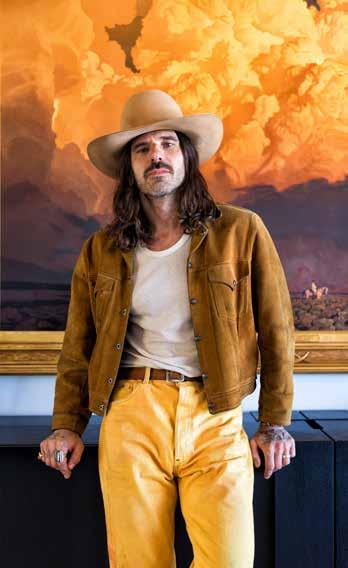
From blasting Led Zeppelin cassettes to painting cowboys in the desert, Mark Maggiori’s journey from France to the American West is as cinematic as his canvases. Raised far from ranch life, he now creates from his Scottsdale studio and has become a standout in contemporary Western art. His work has headlined magazines, topped $500,000 at auction, and won fans worldwide.
In this exclusive conversation, Mark retraces his path from a teenage road trip across America to a music career, a film detour, and the moment it all clicked in a cowboy museum in Oklahoma.
MARK, LET’S REWIND TO THE BEGINNING. AT 15, YOU LEFT FRANCE AND CROSSED THE AMERICAN WEST FOR THE FIRST TIME.
We went to the Grand Canyon… Canyon de Chelly, did the whole thing. Me and my cousin were like, “Yeah, that’s cool. It’s hot.” We were 15. Really, I was just obsessed with Vans, and determined to find the teddy bear shoes I so desperately wanted in the U.S.
DID YOU EVER TRACK THEM DOWN?
No, but I collect Vans. I have one of the biggest collections of high-top Vans, even some from the 60s and 70s.
WHEN YOU GOT BACK TO FRANCE, YOU STARTED A BAND...
Yeah. I loved skateboarding and skating leads to music. On that road trip, my uncle bought us tapes from gas stations. We got Led Zeppelin. Those tapes changed everything.
I started learning guitar because of Led Zeppelin. I greatly admired the singer, Robert Plant. But his voice was untouchable. So I decided I’d be Jimmy Page instead.
Our band was called Pleymo. I was the singer. We got big in France, and signed with Sony/Epic.
WHAT KIND OF MUSIC DID YOU PLAY?
Nu-metal. French Limp Bizkit. Rapped in French. Crazy shows. Huge crowds. We toured everywhere.
WHAT WAS THE BAND’S BREAKOUT MOMENT?
We gave our demo to a guy at a record store. He put it in the listening station. A few days later, he sold out and invited us to play. There was a line around the block. During the show, the crowd was so wild they broke the stage. That’s when I knew we were onto something.
AND YOU WERE ALSO JUGGLING ART SCHOOL...
Yes. I studied graphic design at the Académie Julian in Paris. During the week, I was in school and interning at Disney. On weekends, I was playing concerts with the band. No sleep. Total grind.
I thought I’d go into animation or concept art, maybe work at Disney. I actually did three summers as an intern with them.
WHEN DID YOU START DIRECTING MUSIC VIDEOS?
I started directing our own videos because I had a vision for how the band should look. Then other bands started asking me to direct for them. That led to a full career in music videos and commercials. I met my wife on set. Later, we did a short film together in Chloride, Arizona.
WHEN DID YOU BEGIN TRANSITIONING FROM VIDEO TO PAINTING?
I was visiting her family in Oklahoma and her dad said, “Go check out the Cowboy Museum.” I did and it blew my mind. I didn’t even know Western art existed like that. I stayed for three hours and left thinking, “This is what I want to do.”
WHAT DID YOU PAINT FIRST?
A cowboy, based on an old black-and-white photo. Then I photographed a friend on a horse and painted that.
AND YOU STARTED BLOWING UP ON INSTAGRAM...
My wife made me do it. I was against it. But she said, “Trust me.” And it opened every door.
A gallery in L.A. saw my work on Instagram and invited me to bring in some pieces. I brought three. They wrote me a check for $5,000. That moment changed everything.
I still post on social myself. I write my own captions. It’s all real.
WAS THE WESTERN ART WORLD SKEPTICAL OF YOU AT FIRST?
A bit. I made some mistakes, wrong ropes, wrong hats. But I had mentors. I studied, I listened.
WHAT’S YOUR PAINTING PROCESS LIKE TODAY?
Slower, deeper. I used to make 25 paintings a year. Now I do maybe 7 or 8. But each one means more.
WHAT DRAWS YOU TO COWBOYS?
The solitude. The freedom. They represent independence, connection to the land.
WHAT’S THE MOST YOUR WORK HAS SOLD FOR?
$500,000. I still can’t believe it. But I don’t paint for money. I paint because I have something to say.
AND YOU HAVE A FAN IN KEVIN COSTNER!
Surreal. I showed him one of my works and he loved it. Later, I painted him from a photo and sent it to him. He replied, “Sir, you are a poet with a paintbrush.” That was a moment.
WHAT’S LIFE LIKE DAY TO DAY FOR YOU IN SCOTTSDALE?
Mellow. Wake up, make coffee, see my daughter off to school. Then I paint. I like the quiet.
I love Arizona. It’s clean, calm, and good for our family. And there’s inspiration everywhere.
YOUR WIFE IS AMERICAN ARTIST AND DESIGNER PETECIA LE FAWNHAWK. DO YOU COLLABORATE ON CREATIVE PROJECTS? Sometimes. She has her own art practice, but we inspire each other. We have different styles, and that’s a good thing.
WHAT’S SOMETHING PEOPLE MIGHT NOT KNOW ABOUT YOU?
I’m shy. I think more than I talk.

WHAT DO YOU DO WHEN YOU HIT CREATIVE BLOCKS?
I go outside and remind myself why I paint.
WHAT’S ONE PAINTING THAT MEANS THE MOST TO YOU?
A portrait of my wife.
WHAT DO YOU LISTEN TO WHEN YOU PAINT?
Led Zeppelin, always. Pink Floyd, old-school rock. Silence is powerful, too.
WHAT DO YOU WANT YOUR LEGACY TO BE?
I hope people say I cared. That I painted with truth. That I honored the West and made space for beauty in chaos.
markmaggiori.com

Hi, I’m Shannon, and I’ve been specializing in chocolate chip cookies for over 25 years, baking custom cookies for every occasion.
I’m a proud mom to Maddie and Brandon. After losing my daughter Maddie, baking became a source of purpose and fulfillment... something that continues to inspire everything I create.
Classic batches and custom cookie cakes available, each made from scratch, delicious, beautiful, and crafted with care. Individually wrapped options available, perfect for gifting or events.
Thank you for letting me cater your next dessert! Plenty of options to choose from, all made fresh and from the heart.
















Los Cab, Reimagined
An Arizona gem that’s only gotten better.
ARTICLE BY NADINE BUBECK | PHOTOGRAPHY BY RANCHO DE LOS CABALLEROS RESORT
Many of us have lived in the Valley long enough to really know it. And somehow, many miss this, but it’s our family’s gem.
An hour outside Scottsdale, past where most people turn around, sits Rancho de los Caballeros Resort. Not new. Not trying to be. Just quietly one of the best ranch experiences in the country, tucked into Wickenburg like it’s been keeping a low profile on purpose.
And then they went and spent $100 million on it. Not to change it, but to elevate everything around what’s always made it special.
For more than 75 years, Los Cab has delivered the charm of Spanish Caballeros culture through its equestrian program, its land, and a hospitality that feels genuine. Out there, 18,000 acres of Sonoran Desert stretch in every direction. You don’t have to try to play cowboy. The place does it for you.
Now, the experience meets you at a different level.
You arrive just after noon, the kind of arrival that feels unhurried. A golf cart hums quietly past and stop signs say: WHOA . Somewhere in the distance, you hear the low rhythm of hooves. Your villa door opens and you immediately understand where the investment went.
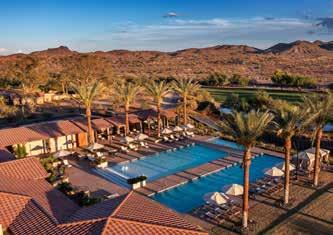
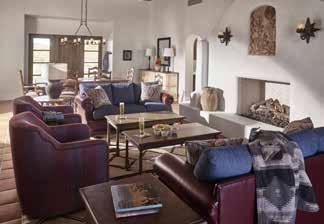
This is not a hotel room. It is a multi-room casita that lives like a home. A wide living space anchors the center, a floor-to-ceiling, hand-plastered fireplace catching the afternoon light. A king bedroom on one side, two queens on the other, each with its own bathroom, each with enough space to retreat. A kitchenette. Doors that slide open to a private patio where a fire-pit waits for nightfall.
And then you notice how it expands. Lock-off rooms that turn the space into a four-bedroom casita when you need it. Families together, kids with room to run, parents with room to breathe. It feels intentional, like someone actually thought about how people travel.
Step outside and the land opens up. The golf course rolls into the desert, and beyond that, nothing but open space. Then it moves.
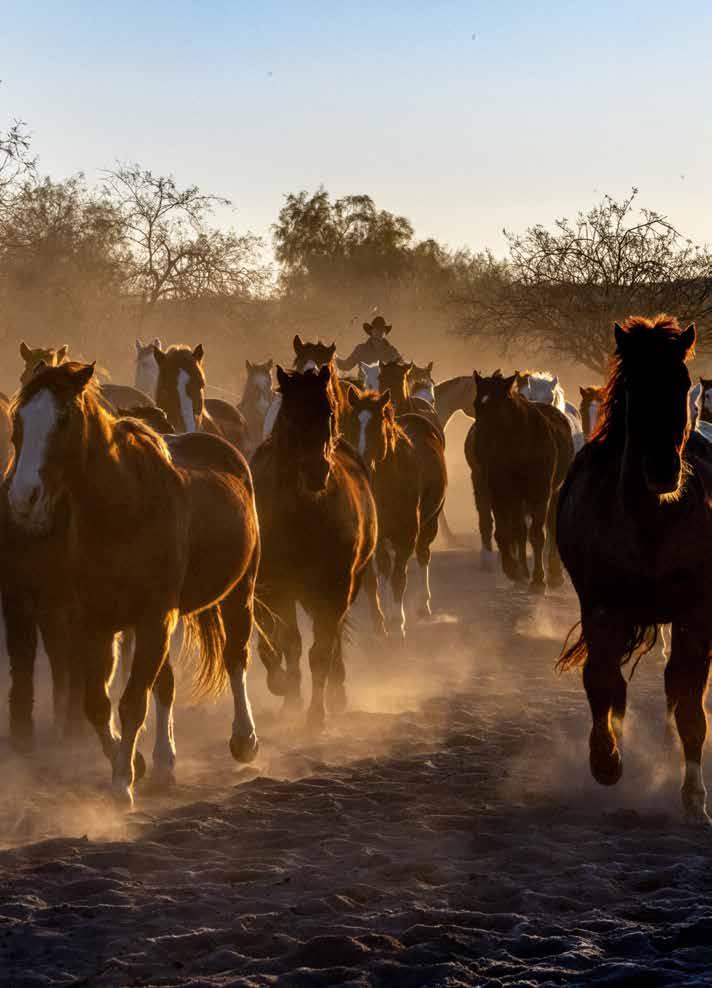
At sunrise, between 7:00 and 7:30, the ranch comes alive in a way that doesn’t feel staged. You hear it first. A distant, steady percussion. Then the wranglers appear, and behind them, more than 120
horses move across the property in a single wave. Dust lifts, light cuts through it; quick, raw, and completely unforgettable.
They do it again in the late afternoon, between 4:00 and 4:30, sending the horses back out to pasture. By then, you are waiting for it.
Breakfast follows at your own pace. By nine, you find yourself at the corral, boots on, hands on the saddle as the wranglers match you with the right horse. Beginners, experienced riders, kids, it doesn’t matter. Within minutes you are on the trail.
The desert opens fast. Saguaro silhouettes, soft sand under hoof, a quiet that settles in. There is no soundtrack, no interruption, just the sound of your horse and the land moving around you.
Lunch at the Club Grill feels exactly right. Open air, views of the Bradshaw Mountains, the golf green just beyond, burgers and crisp salads that hit after a morning outside.
And then you notice what sets Los Cab apart in a way most people don’t expect. There’s a golf course. And it’s a beauty.
Not in a manicured, overly polished way, but in how naturally it sits in the landscape. The Los Caballeros Golf Club winds through the desert rather than over it, with fairways that feel framed by saguaros and rugged terrain instead of reshaped by them. Elevation changes keep it interesting, the
mountains anchor every view, and the quiet makes it feel like you’re playing somewhere much farther from home.
After lunch comes what will be your most empowering obsession: trap and skeet shooting.
You ride out to the range where the desert stretches even wider. A quick lesson, a shotgun in hand, and then the call. Pull. Clay discs shoot into the sky, and suddenly it is all focus and timing. The recoil, the break, the satisfaction of getting it right. If you are lucky, The Colonel is there, part instructor, part personality, and entirely memorable. (You’ll quickly figure out how he got his nickname.)
By the time you head back, the afternoon horse run is starting again, and you stop to watch it like it’s the first time.
The day softens at the saloon. Doors open, music drifts, a pool table, cards, kids moving in and out without anyone thinking twice. You sit down with a drink and look up an hour later.
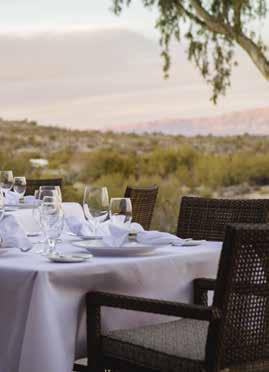
Dinner carries a different tone. The main dining room leans elegant without losing its footing. Seared Hokkaido scallops. Rich mushroom tarts. Plates that feel considered, served against a desert backdrop that glows as the sun drops.
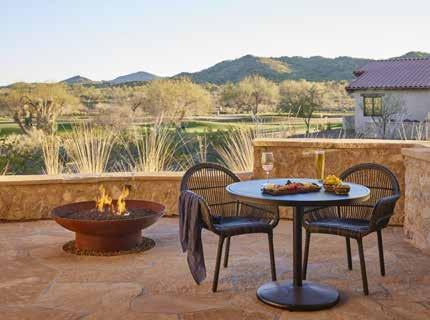
Afterward, no one rushes inside. Fire-pits draw you out, whether it’s the Quarter Horse Terrace or back at your villa, where the fire glows, marshmallows toast, and the sky fills in above you.
The next day, you find your way to the pool.
This is where the renovation fully reveals itself.
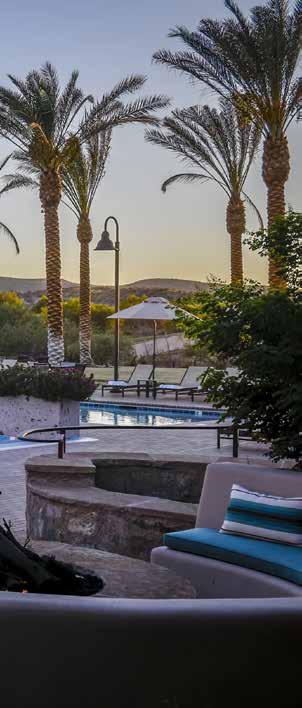
It is not one pool. It is an entire complex set into the desert. A zero-entry pool with fountains where kids take over immediately. A separate lap pool that stays quiet and still. And then the hydrotherapy pool, slightly elevated, infinity-edge, with jets that pull you into the moment while the desert stretches out in front of you.
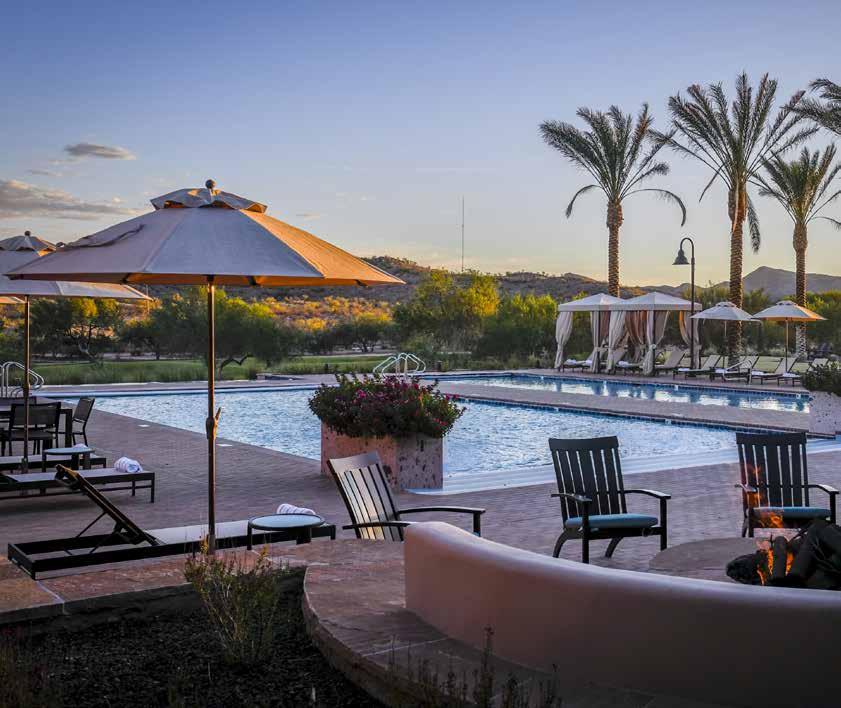
Slip under the water and you hear it. Music, soft and unexpected, just beneath the surface. Cabanas line the edge if you want to settle in. A poolside bar keeps things easy and lawn games galore entertain. What makes it different is what surrounds it. Saguaros and desert trees that were never meant to leave. They were lifted during construction, cared for, then replanted in their exact places. So the space does not feel built. It feels grown. By the third day, something shifts. You stop trying to do everything. Maybe you start again with the horse run because it never looks the same twice. Maybe you take a stretch and flow class where the desert becomes part of
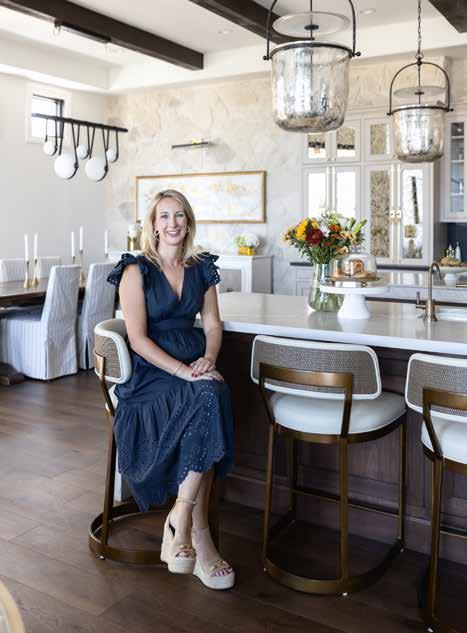

By the team at Crafted Quarters Interior Design
Every home has its own story to tell, just like the people who live there. We take the time to truly understand your lifestyle, preferences, and aspirations so that every design decision is rooted in what matters most to you. Whether you’re embarking on a full renovation, selecting finishes for a new build, or simply refreshing key spaces, our process is curated to highlight your unique style while creating a cohesive, joyful home environment.
Crafted Quarters (480) 382-8459 www.craftedquarters.com
Ready to love where you live? Scan to book your complimentary discovery call.

Spaces Shaped By Your Story
the practice. Maybe it’s a tee time, or the kids disappear into Camp Caballeros, fully in their element while you take a breath.
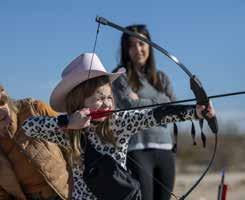
But in the afternoon, you pick up a bow.
Archery feels simple at first. Draw, aim, release. But there is a rhythm to it, a focus that pulls you in. You take a few shots, then a few more. It becomes its own kind of quiet.
Los Cab simply wins. It gives you everything. Riding, shooting, archery, golf, wellness, dining, space. But it never makes you feel like you have to fill every minute.
The renovation brought villas that feel like homes, a pool that feels like it belongs, and gathering spaces that pull people together without trying too hard.
But the reason you come here has not changed.
The horses still run at dawn and dusk. The desert still stretches for miles. The air still smells like dust and creosote. Time still slows.
And in the summer; yes, it’s hot. But it’s also when Los Cab opens up in a way most people don’t realize. Fewer people. More space. Early rides, long afternoons in the pool, and some of the best rates of
the year. Add in an American 250 celebration and meaningful savings for locals, and it becomes one of the smartest times to go.
And still, it’s our family’s gem.
One you almost don’t want to share.
ranchodeloscaballeros.com
Debut Villas
Debut Villas
Archery





















ARTICLE BY KALI KASPRZYK
PHOTOGRAPHY BY JANIE JONES
MAKEUP BY MIKAYLA CRANE
The 10% Target Mindset
Jen Cohen ON THE PRACTICE OF ASKING FOR WHAT YOU WANT
Winnipeg in the winter, and a 17-year-old waits 45 minutes in the cold for Keanu Reeves. Her fingers are numb. She is not there for an autograph. She is there to ask him to appear in her audition tape for MuchMusic, Canada’s MTV. When he finally agrees, she writes her number on a gum wrapper with a borrowed lip liner.
He calls days later.
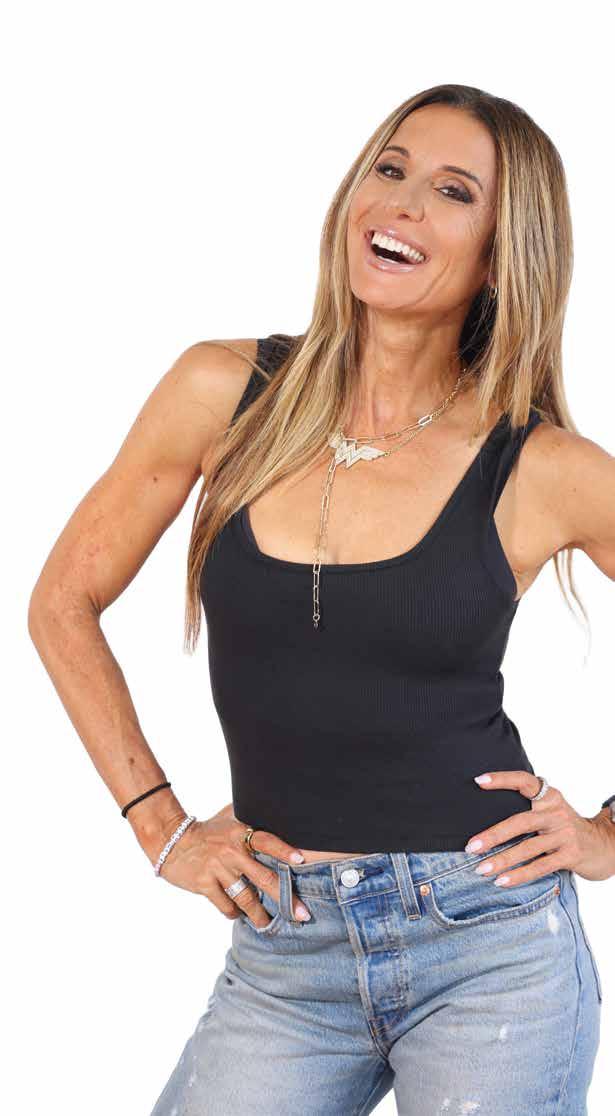
That 17-year-old was Jen Cohen — fitness expert, host of the Habits & Hustle podcast, and best-selling author. She has built a career on the premise her frostbitten afternoon proved. She calls the practice the 10% Target: 10 attempts at whatever you want most in life.
The premise is simple. Most people never make one attempt. Almost nobody makes two. The math works in favor of the person who keeps going.
The top-rated Habits & Hustle podcast has logged hundreds of conversations with high performers and the people who study what the body does to the mind. Her TEDx talk, The Secret to Getting Anything You Want in Life, has traveled widely inside Fortune 500 sales-training rooms. On the Share the Lifestyle podcast, Cohen sits down to share the working rules that are the foundation of her latest book, Bigger, Better, Bolder.
“You have to be the CEO of your own life.”
FEATURING JEN COHEN
Discover the full 10% Target Mindset framework.


1 2
MAKE TEN ATTEMPTS
The door opens, or another door does. The unmade attempt and the refused one leave you in the same place — except one of them teaches you something.
STACK THE DECK
Cohen frames her habits as a wager: How do I stack the deck so I win more than I lose? The workout happens first, and the food decisions follow. The email follow-up gets sent, and the answer arrives. The choices compound in a single direction.
3
DISCIPLINE IS A PRACTICED SKILL, NOT AN INHERITANCE
No one is born with it. The people who look disciplined are running a routine they have rehearsed long enough that it no longer feels like effort. The reps are the skill. Miss them, and the skill fades, the same as any other.
4
SELF-TALK ONLY WORKS WHEN THE BODY BACKS IT UP
Confidence does not arrive by repeating the word. It arrives after the body has done the thing — the workout finished, the cold walk endured, the email sent. The mind takes its cues from what the body proves it can do. Talk follows action, not the other way around.
5
NEVER MISS A MONDAY
The first decision sets the slope of the rest. Skip the Monday workout, and the rest of the week tends to follow. Hold the line on Monday, and the slope tilts the other way.
Quick Hits with Mike & Vanessa
Celebrating 20 Years as the Faces of Diamondbacks
Baseball
PHOTOGRAPHY PROVIDED
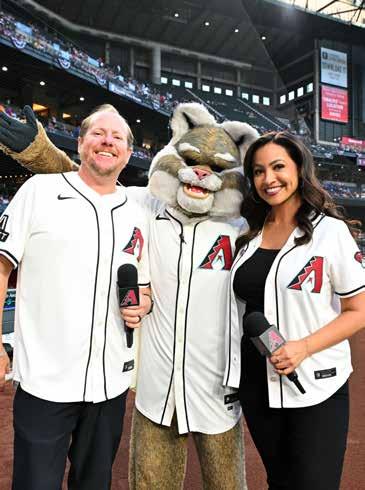
For two decades, Mike Bauer and Vanessa Ramirez have helped define the energy inside Chase Field. In honor of their 20th season with the Arizona Diamondbacks, we caught up with the in-game duo to talk unforgettable moments, behind-the-scenes chaos, family, friendship, and the journey fans may not fully see.
VANESSA, BEFORE THE DIAMONDBACKS, YOU WERE ON REALITY TV…
Vanessa: Yes. I was on Love in the Wild on NBC hosted by Jenny McCarthy. We filmed in the Dominican Republic doing jungle challenges with cameras following us everywhere. It was definitely one of the most random experiences of my life.
MIKE, YOU GREW UP A CUBS FAN. WAS BECOMING A DIAMONDBACKS FAN HARD?
Mike: I had already abandoned my childhood team and was fully rooting for the Diamondbacks every game. Apparently they already had Vanessa in their back pocket though; she got hired first.
DID EITHER OF YOU THINK THIS WOULD TURN INTO 20 YEARS?
Vanessa: Absolutely not. I thought maybe one season.
Mike: Same. I honestly didn’t even know this job existed when I auditioned.
VANESSA, YOU BASICALLY PREDICTED THIS CAREER BEFORE IT HAPPENED.
Vanessa: I was sitting in the upper deck at a game years ago and pointed at the host saying, “I could do that job.” Somehow that became reality.
WHAT’S SOMETHING FANS DON’T REALIZE ABOUT THE JOB?
Mike: It’s chaos. We’re constantly moving. In baseball, you don’t tell time by minutes; you tell time by outs.
MOST CHAOTIC LIVE MOMENT?
Vanessa: Kids running the wrong direction during races. Mike: Microphones dying. Fans walking through live shots. You just adapt.
VANESSA, YOUR DAD WAS A HUGE SUPPORTER OF YOUR CAREER.
Vanessa: My parents were everything to me. My dad came to so many games and proudly told everyone I was “the D-Backs girl.” Losing him to non-smoker’s lung cancer changed me.
YOU TURNED THAT LOSS INTO SOMETHING MEANINGFUL.
Vanessa: I started Breathe to Believe to support cancer organizations because I didn’t want to sit in grief.
WHAT MOMENT DURING THIS 20TH SEASON HIT EMOTIONALLY?
Vanessa: Thinking about what my dad would say seeing this milestone.
MIKE, HOW HAS BECOMING A DAD CHANGED THINGS FOR YOU?
Mike: There are times I legitimately miss my family. My wife and I both work, and during baseball season there are stretches where outside of daycare drop-off, we barely see each other.
FAVORITE PART OF THE JOB AFTER ALL THESE YEARS?
Mike: Watching little kids walk into a Major League stadium for the first time.
Vanessa: The relationships. We’ve watched Arizona families grow up with us.
BIGGEST SURPRISE OF YOUR CAREER?
Vanessa: Getting a National League Championship ring!
Mike: That recognition from the organization meant everything.
ANOTHER 20 YEARS?
Vanessa: As long as they’ll have us.
Mike: We’re not going anywhere.