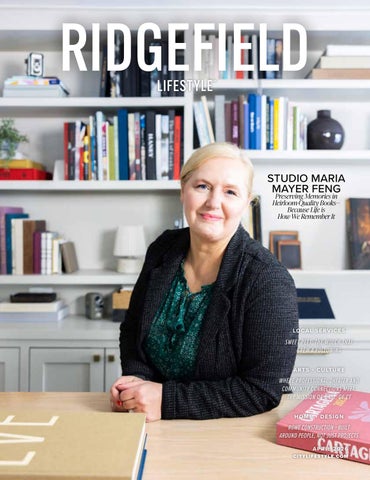
Preserving Memories in Heirloom-Quality Books— Because Life is How We Remember It
LOCAL SERVICES
SWEET PEET: THE MULCH THAT GREW A FOLLOWING
ARTS + CULTURE
WHERE PROFESSIONAL THEATER AND COMMUNITY CONNECTIONS MEET: THE MISSION OF A.C.T. OF CT
HOME + DESIGN
ROWE CONSTRUCTION—BUILT AROUND PEOPLE, NOT JUST PROJECTS APRIL 2026
Let Us Move You
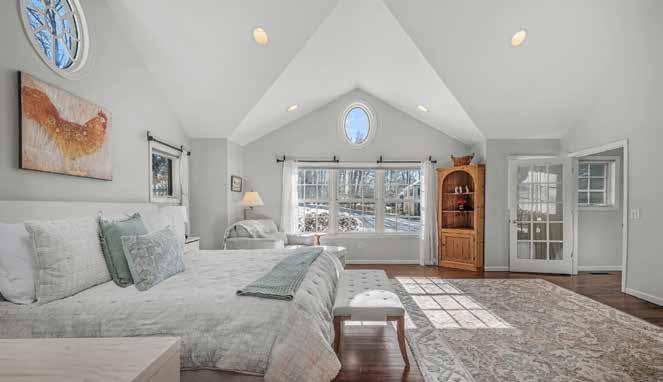
Fabulous Farmhouse Colonial ideally sited on a coveted cul-de-sac near Silver Spring Country Club. Thoughtfully expanded and reimagined over the years by master artisan Neil Hicks. This exceptional residence reflects significant capital investment in structural expansion, high-impact interior renovations, outdoor living enhancements, and comprehensive mechanical upgrades.
The main-level Primary Suite addition serves as a private retreat, complete with vaulted ceiling, custom built-ins, spacious bath, and dedicated office. The resort-inspired backyard is truly exceptional, showcasing a heated gunite pool and spa, expansive stone patios, and rich mahogany decking—creating a private oasis for relaxation and entertaining.
At Karla Murtaugh Homes, we are privileged to represent this extraordinary market and remain steadfast in delivering tailored guidance and exceptional results. Whether you are considering a purchase or preparing to sell, trust our award-winning team to provide a refined, seamless experience in 2026.
Consistently Ranked #1 in Ridgefield
Exceptional Main Floor Primary Suite | 6 Sycamore Lane, Ridgefield
The Investment Issue
Investment. By definition, it’s the act of dedicating time, energy, or resources toward something with the hope of a worthwhile return. But here in Ridgefield, investment feels like something deeper. It’s not just about financial growth—it’s about strengthening the community we’re proud to call home.
In a town like Ridgefield, investment happens every day in quiet, meaningful ways. It’s choosing to shop and dine locally on Main Street. It’s support ing our schools, our arts organizations, and the many nonprofits that make this town so special. It’s volunteering, mentoring, attending town events, and showing up for one another. These are the investments that preserve the character of Ridgefield while shaping its future.
Ridgefield has always been a town that values both tradition and progress. We honor our history while thoughtfully planning for what comes next. That balance requires intention. It requires residents who care enough to participate, business owners willing to take thoughtful risks, and families who choose to plant roots and stay engaged. Every time we contribute—whether through time, talent, or resources—we help ensure that Ridgefield remains vibrant, welcoming, and strong.
Investment is also about stewardship. Many of us are fortunate to call this beautiful town home, surrounded by scenic landscapes, historic charm, and a thriving cultural scene. Preserving that quality of life doesn’t happen by accident. It’s the result of collective investment—in responsible planning, in supporting local initiatives, and in nurturing the relationships that tie neighbors together. What we invest in today determines what the next generation will inherit tomorrow.
Of course, financial investments help us plan wisely and build long-term security. But some of the most meaningful returns come from personal investments—spending time with family, deepening friendships, getting involved, and being present in the moments that matter. Those are the dividends that truly define a life well lived.
This month’s issue highlights the many ways we invest—through the businesses we support, the spaces we create, and the stories we preserve. Each represents a different kind of asset, one that strengthens our sense of place and reflects what we value most.
Every investment is ultimately an expression of hope—hope in our families, in our future, and in Ridgefield itself. As you turn these pages, I hope you feel inspired to invest thoughtfully in the people, places, and passions that make this town such an extraordinary place to live.
Here’s to a month of growth, connection, and meaningful returns.
Happy April,
BRUCE BERNSTEIN, PUBLISHER
April 2026
PUBLISHER
Bruce Bernstein | bruce.bernstein@citylifestyle.com
EDITOR
Katie Parry | katie.parry@citylifestyle.com
PUBLICATION DIRECTOR
Katie Bode | katie.bode@citylifestyle.com
CONTRIBUTING PHOTOGRAPHERS
Annie Fandl Photography, Veronica Green Photography, Abby Cole Photography
Corporate Team
CEO Steven Schowengerdt
President Matthew Perry
COO David Stetler
CRO Jamie Pentz
CoS Janeane Thompson
AD DESIGNER Rachel Chrisman
LAYOUT DESIGNER Amanda Schilling
QUALITY CONTROL SPECIALIST Marina Campbell
Learn how to start your own publication at citylifestyle.com/franchise.
inside the issue
city scene
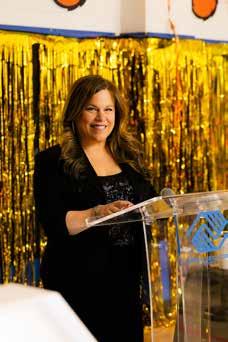
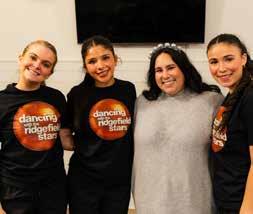
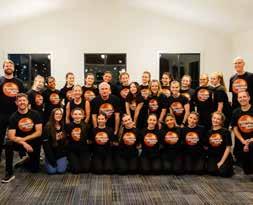
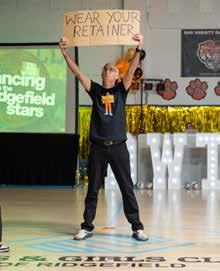
The first-ever Dancing with the Ridgefield Stars was an unforgettable evening of community, talent, and heart. The Ridgefield High School Dance Team raised more than $20,000 at the event, which paired each local “Star” with two dance team members for a judged performance. The team proudly donated 10% of the proceeds to the evening’s host, the Ridgefield Boys & Girls Club, supporting the vital work they do for local youth. 1: Winners Megan Benedict, Ellie Jones, and Boys & Girls Club Director of Operations Tim Cozens 2: Bella Schwartz, Audrey Wark, and A.C.T. of CT Co-Founder and Artistic Director Daniel C. Levine 3: Dancing with the Ridgefield Stars Judge Alex Fischetti 4: Varsity Dance Team Captains Olivia Sonders, Mia Gimigliano, and Bella Schwartz with Coach Arianna Danzig 5: Jennifer Carretta, the evening’s emcee and one of the event’s organizers 6: The 2026 Dancing with the Ridgefield Stars participants 7: Skyler Mendez and Sofia Cluny partnered with Dr. Blaine Langberg (and his viral sign)
Pro Skin Studio
Pro Skin Studio offers a refined, luxurious escape where advanced skincare meets exceptional care. Specializing in elevated treatments—including lymphatic drainage facial massage and sculpting buccal massage—the studio delivers transformative results with a serene, spa-like touch. Each service is thoughtfully tailored, combining expert technique with an experience that is both deeply effective and profoundly relaxing. Clients leave feeling renewed, lifted, and luminous—enveloped in the unmistakable glow of true luxury skincare. 19 Danbury Road. Visit proskinstudio.org to learn more and follow @proskinstudio.ct on Instagram.
Bloomin’ Blinds
With over 100 five-star reviews, Bloomin’ Blinds is Fairfield County’s choice for custom blinds, shades, shutters, and drapery, including motorized options with voice control and scheduled settings. The process is simple: a complimentary in-home consultation, thoughtful recommendations tailored to the space, and expert professional installation from start to finish. Products are sourced from U.S. suppliers, and a visualizer shows how each treatment will look in your space. Visit our new showroom at 58 Ethan Allen Highway or call 203-344-7463 to schedule a consultation.
Pretty by Jasmine
Pretty by Jasmine has opened at DEUX Hair & Makeup Studio. Co-owned by Nicole Van Alstyne and Jasmine Gannalo, DEUX is an appointment-only studio offfering an exclusive, personalized beauty experience in an intimate setting. Jasmine operates Pretty by Jasmine, specializing in event makeup, bridal artistry, and highly sought-after makeup lessons for women and teens. DEUX was created to provide a welcoming, elevated space for modern beauty services. 3 Danbury Road. To request an appointment, please visit prettybyjasmine.com. And follow along on Instagram @prettybyjasmine
ARTICLE BY KATIE PARRY PHOTOGRAPHY BY VERONICA GREEN PHOTOGRAPHY
More than Mulch
The Sweet Peet Story: Soil, Sustainability, and Loyal Locals
The first time Chris Tartaglia dumped a load of Sweet Peet mulch for a customer, she took one look at it—and lost her shoes.
“She was ecstatic,” he says, laughing at the memory. “She kicked her shoes off and danced in the mulch pile. I remember thinking— OK… we might be onto something here.”
More than two decades later, that “something” has grown into a beloved family-run operation serving customers throughout Fairfield County and beyond. Sweet Peet isn’t your typical mulch—and the team behind it isn’t your typical business.
That very first client sensed how different Sweet Peet was from traditional mulch, which is often at best a mystery product—and at worst potentially harmful to your yard. Shredded hardwood mulch can come from diseased trees or pressure-treated wood and may harbor artillery fungus spores.
“You don’t know what you’re getting with hardwood mulch,” says Paul Kenning, who co-owns Sweet Peet with Chris and has been in the landscaping business since the 1980s. “There are places where you can dump shrubs,
stumps—any wood product, really— and they shred it all together. Something might be diseased—you just don’t know. And oftentimes, traditional mulch products are dyed.”
Once added to landscaping beds, traditional hardwood mulch simply sits on top of the soil. Over time, it crusts and mats together, depleting nitrogen in the process. Rainwater runs off rather than soaking in, and heavy storms can wash the wood chips across your yard. Each and every spring, homeowners have to remove the dense, compacted layer before adding fresh mulch.
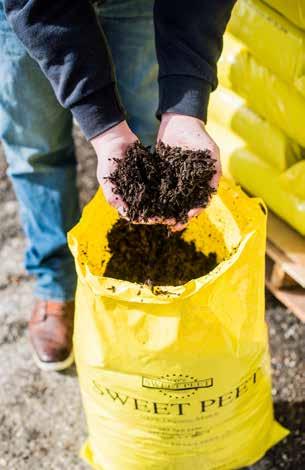
Sweet Peet works in the opposite way. It gradually breaks down under sunlight and temperature, returning organic matter, trace minerals, and nitrogen to the soil—becoming part of your topsoil in the process. With repeated use, garden beds grow deeper, richer, and more fertile over time, encouraging beneficial earthworms.
“The benefit of any mulch is to mimic what happens in the woods,” Paul says. “The leaves fall, settle in place, protect the soil, and then decompose. Sweet Peet does that— and then becomes part of the earth itself.”
“We’re going to look after you. We’ll
come early, stay late, load your bags. If there’s a problem, we’re going to fix it.”
—Paul Kenning
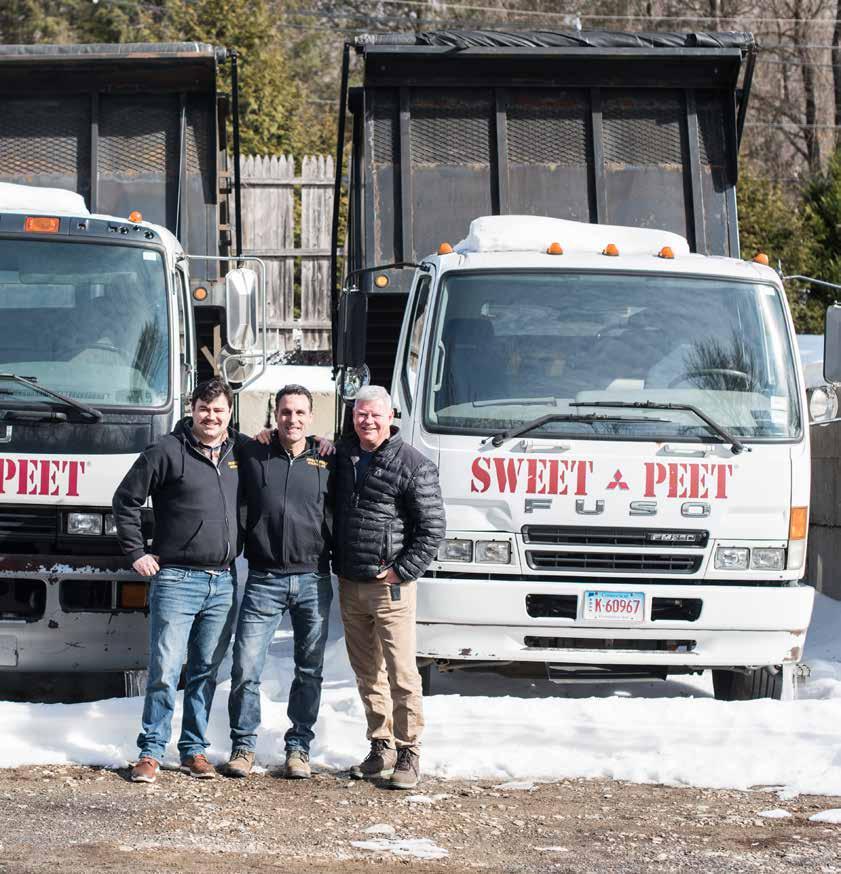
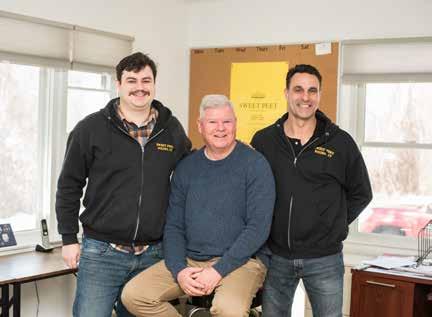
From left: Operations Manager
Eamon Kenning with Co-Owners
Chris Tartaglia and Paul Kenning
Sweet Peet is a patented product developed by Brent Lamour and Shawn Goff, who began by collecting horse manure along with the accompanying hay and ripe de bois (hardwood shavings) from farms in and around Pawling. As they worked with the material, they discovered that a natural heating process could destroy weed seeds before they germinated, transforming the manure and stall sweepings into a stable, nutrient-dense mulch and top-dressing.
“It’s actually odorless,” says Margie, Paul’s wife and Sweet Peet’s financial officer, laughing. “I mean—it has a scent. But it’s pleasant. Earthy and loamy. Nothing like what you’d expect given its origins.”
Sweet Peet holds moisture far better than traditional mulch and is particularly well-suited to Connecticut’s notoriously stubborn, clay-heavy soil—a legacy of glacial history that left behind
compacted, dense layers that feel more akin to cement than dirt. It also helps combat the negative effects of acid rain.
“If you have very tight soil or soil full of clay, you can mix this product in and it will help keep it loose,” Chris tells us.
For gardeners, the results are striking: the greens are more vibrant, flowers have repeat blooms, and plants thrive longer into the season.
“I have a place in front of my house where I plant annuals,” Paul says. “I don’t even need to use a shovel—I can just dig with my hands. The soil is that rich.”
Paul first encountered Sweet Peet while running his landscaping business and began using it on his own projects. Impressed by the results, he became an early champion of the product and eventually opened the Wilton franchise—the only one in the area. When it came time to choose a partner, he knew exactly who to call: Chris Tartaglia.
The partnership was rooted in long-standing family ties. Chris’s father grew up with Margie’s father. Chris’s mother babysat Margie. Margie later babysat Chris.
Chris, whose background is in excavation, agreed to join Paul, and the two opened the Wilton location in 1999.
Margie Kenning handles Sweet Peet’s finances
“Nothing happens without Chris—that’s why I sought him out,” Paul says. “We need equipment to lift the product and move it. He can run and fix anything.”
“We started with Paul and I answering phones after work,” Chris adds. “Customers would leave a message with what they wanted, and we’d make deliveries after work.”
The business grew steadily by word of mouth. Margie came on to manage finances and technology. Her father, Joe, helped run the office and load trucks. Now Paul and Margie’s son, Eamon, continues the tradition as operations manager—handling orders, scheduling deliveries, and keeping everything moving.
“You can’t get more of a family business than this,” Paul says with a smile.
Sweet Peet still operates very much like a classic mom-and-pop shop. While open year-round, early spring is when the yard comes alive. Truckloads of product arrive, forming a towering mound. Chris is there every day at 4:30 a.m., pushing up loads of Sweet Peet to get ready for pickup. Customers line up at the window to talk through their needs with Eamon, while Paul is on hand to help with whatever needs doing.
“People will call and ask what time we’re open until,” Paul says. “And I’ll say, ‘Well, what time can you get here?’”
The mulch is sold by the yard, and customers can either pick it up themselves or have it delivered (with a fee based on distance). It’s also available in 1.5-cubic-foot bags, priced at $10, offering flexibility for those who prefer to tackle yardwork gradually.
“It’s convenience you’re buying in a bag,” Eamon tells us. “A lot of people like to poke away at yardwork, so they’ll come in every weekend to buy a few bags.”
Bagging has also helped Sweet Peet reach a wider audience, a testament to just how beloved the product has become. Customers travel from New Jersey, Massachusetts, Rhode Island, and Maine to stock up. A store on Cape Cod orders 40 bags each season for local sales, and pallets have even been shipped to Martha’s Vineyard.
The team tried using compostable bags—a natural fit for an organic product—but found that they broke down over the winter. For now, traditional packaging ensures the product remains fresh and intact until it’s time for yardwork in the spring.
Some people assume Sweet Peet’s deep brown color is artificial. It isn’t. After a heavy rainfall, a bit of color may leach into the surrounding areas, but that’s simply the tannins in the ripe de bois surfacing and is completely natural.
For many customers, the organic credentials are a major draw, offering a product that supports sustainability without relying on chemicals or artificial ingredients. For others, it’s purely aesthetic.
“Some customers buy it just because they like how it looks,” Chris says. “Others keep coming back year after year because the product is that good.”
The results speak for themselves, but Sweet Peet’s loyal clientele will tell you the people behind the business are just as much a part of the appeal.
“We’re a really friendly place to work with,” Paul says. “We’re going to look after you. We’ll come early, stay late, load your bags. If there’s a problem, we’re going to fix it.”
After all, when your very first customer kicks off her shoes and dances barefoot in a pile of Sweet Peet mulch, you know you’ve got something worth protecting.
New this year: Sweet Peet of Wilton will be open on Sundays! Hours are Monday–Friday 7 a.m.–5 p.m., Saturday 7 a.m.–3 p.m., and Sunday 9 a.m.–12 p.m. Sweet Peet is located at 586 Danbury Road —look for the red pickup truck. Call 203-762-2196 or visit sweetpeetwilton.com for more information. And be sure to follow @SweetPeetofWilton on Instagram for updates and to see Paul’s Pro Tips.
EDITORIAL WEDDING PHOTOGRAPHY
CAPTURING THE AUTHENTICITY OF YOUR WEDDING DAY THROUGH EFFORTLESSLY CURATED IMAGES WITH REFINED AESTHETIC. veronicagreenphotography.com
More than Musicals The Mission Behind A.C.T. of CT
Where Professional Theater and Community Connections Meet
ARTICLE BY KATIE PARRY
When A.C.T. of CT (A Contemporary Theatre of Connecticut) opened its doors in 2018 with a sold-out run of Mamma Mia!, it signaled more than the arrival of a new theater. It marked the beginning of a bold new chapter in Ridgefield’s cultural landscape.
While Ridgefield Playhouse has long drawn diverse audiences for acclaimed one-night concerts and events, and Ridgefield Theater Barn has remained a cherished home for local community performers, A.C.T. of CT filled a distinct and vital role in the arts ecosystem: a professional Actors’ Equity theater dedicated to producing Broadway-caliber musicals with fully realized productions and extended runs.
In doing so, A.C.T. didn’t compete with Ridgefield’s existing institutions. Rather, it completed the picture, adding a dynamic, professional cornerstone to an already vibrant arts community.
“The goal was to continue to elevate the arts in our community by bringing Broadway-caliber talent and productions to town, while also fostering a sense of ownership and pride,” says Daniel C. Levine, Co-Founder and Artistic Director. “We wanted Ridgefield residents to feel proud to call A.C.T. their hometown theater, and to see it as something that truly belongs to them.”
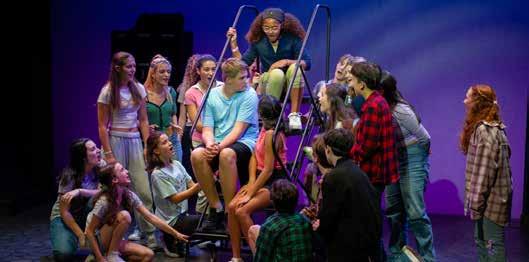
Nearly eight years later, on the heels of an extended run of Disney’s Frozen and ahead of the May 14 premiere of Dear Evan Hansen , that early investment feels resoundingly reciprocal.
A.C.T. of CT continues to reinvest in the Ridgefield community and beyond through robust outreach and inclusive programming designed to ensure that live theater is not merely observed—but truly experienced.
“I never want audiences to feel like they’re just watching a performance from a distance,” Levine says. “The goal is for them to feel fully inside the experience; connected to the story and the artists telling it. That’s why we designed the theater the way we did. Its intimacy isn’t accidental; it creates a kind of immersive experience.”
Immersing itself in the Ridgefield community underpins everything A.C.T. of CT stands for. At the heart of the organization’s mission is the theater’s First ACT! program, a comprehensive initiative grounded in the belief that theater fosters empathy, sparks creative thinking, and creates space for meaningful dialogue.
First ACT! encompasses scholarships, apprenticeships, sensory-friendly performances, and the very important Audience Access program—all designed to remove financial and social barriers for participation, ensuring that both aspiring artists and audiences can experience and engage with live theater in meaningful ways.
“Scholarships to our programs are available to anyone who needs them,” says Erin Craig, Producing Director. “We don’t turn students away for financial reasons.”
Among the programs the theater is most proud of are its Sensory-Friendly performances. For most mainstage productions, A.C.T. of CT offers a modified performance specifically designed for patrons with sensory sensitivities.
Levine explains that before launching the initiative, the team consulted with industry experts and accessibility specialists to ensure the proper accommodations were thoughtfully and responsibly implemented. The production itself remains artistically intact, but key technical elements are carefully modified:
lighting levels are softened, strobe and sudden effects are eliminated, sound levels are moderated, and the overall environment is relaxed so attendees are free to move, vocalize, or step in and out of the auditorium as needed.
Following the performance, the cast welcomes guests for an inclusive meet-and-greet, extending the experience in a warm and supportive way.
Organizations such as SPHERE, Ability Beyond, and Ridgefield Special Olympics regularly attend these performances, alongside many individual families who have made them a cherished part of their theatergoing experience. The response has been so enthusiastic that the theater plans to expand its number of sensory-friendly performances next season, further strengthening its commitment to accessibility and inclusion.
“These performances are entirely free to the community they serve,” Levine says. “Even when funding is tight, we remain committed to offering them. We believe deeply that everyone deserves access to live theater.”
Also central to First ACT! is the Audience Access program. Through this initiative, A.C.T. of CT provides complimentary tickets—and in some cases transportation—to students, individuals, families, and community organizations from traditionally underserved schools and communities who might not otherwise have the opportunity to experience live theater.
“Families who have never set foot in a theater before. Students discovering live performance for the first time. Community groups who might not otherwise see themselves reflected in these seats,” Craig says. “These tickets are intentionally set aside for those who wouldn’t otherwise have the opportunity—because access to the arts shouldn’t be a privilege. It should be a possibility.”
The goal is not simply attendance, but meaningful engagement. Participating groups are invited to post-show conversations and Q&A sessions with theater leadership,
creating space for dialogue and a deeper understanding of the themes explored on stage.
“Sometimes the barrier isn’t just financial,” Levine adds. “It’s the feeling that a space wasn’t designed with you in mind—that you’re stepping into something that doesn’t quite belong to you. We’re intentional about breaking down that perception. Every person who walks through our doors—regardless of ability, background, race, ethnicity, gender, or economic circumstance—should feel not only welcomed, but fully seen. This theater belongs to them.”
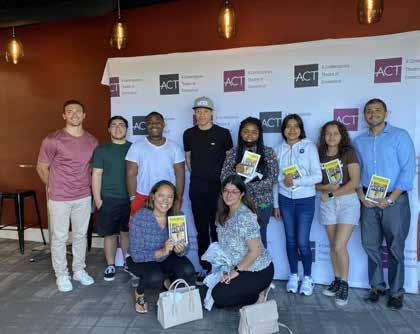
Community collaboration is woven into A.C.T. of CT’s DNA. The theater has partnered with organizations such as Horizons at Norwalk Community College, Ridgefield A Better Chance, and the Dominican Cultural Center, building relationships that extend well beyond the stage.
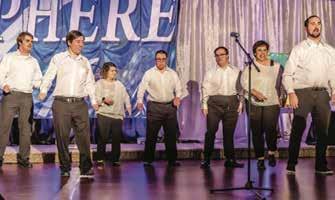
That spirit is especially evident in the work of Levine, who regularly donates his time and expertise as a way of giving back through his craft. For a recent gala benefitting SPHERE— whose mission is to enrich and enhance the lives of adults with disabilities—Levine collaborated directly with members to create an original production. The group rehearsed weekly at A.C.T. for months in preparation for their big night.
Lori Beresford, SPHERE’s President and Board Chair, saw the performance as an important way to reengage members and bring them back into the spotlight after an extended time away during the pandemic.
“Dan brought out something truly remarkable in each performer,” Beresford tells us. “His direction gave our members the confidence to shine, and the result was a performance filled with joy, talent, and heart.”
For Levine, the experience was just as meaningful.
“This was the best!” Levine recalls. “The SPHERE members felt like professional performers. The pride and ownership they took in that show was extraordinary.”
Levine has also used his storytelling to amplify other missions, writing an original theatrical work for Jane Doe No More to help bring greater visibility to the organization’s advocacy and survivor support efforts—reinforcing his belief that theater can be both artful and a force for meaningful community impact.
Educational outreach is equally integral for A.C.T. Last season, two daytime performances of Fiddler on the Roof were reserved for all Ridgefield fifth grade classes. The theater even created study guides for teachers that helped students engage thoughtfully with the weighty subject matter beforehand.
“Theater is an incredible educational tool,” Levine says. “It’s a powerful way to teach students—especially with a show like Fiddler on the Roof. When students are properly prepared, it not only deepens their understanding of the material, but also fosters empathy and meaningful conversations that extend far beyond the classroom.”
This year, similar initiatives accompanied Disney’s Frozen , and the theater is collaborating with community leaders and groups around Dear Evan Hansen
For another production that tackled difficult themes, Nickel Mines, A.C.T. hosted community talkbacks featuring therapists and nonprofit leaders, creating space for audiences to process the powerful content that they had witnessed on stage. Similar conversations are planned for Dear Evan Hansen .
Beyond the mainstage, A.C.T. of CT offers year-round conservatory training, a youth choir, and a Summer Stars Showcase. Each program is designed not simply to teach technique, but to give students the experience of performing.
Led by Choral Director Deborah Penn, the A.C.T. of CT Youth Choir welcomes singers in grades 2–9, and instructs participants in vocal technique, choral music reading skills, and the art of singing in harmony across a range of musical genres. For the first time this spring, the youth choir will perform in multiple community locations throughout Ridgefield.
“This is part of our ongoing effort to find new local partnerships and share the talents of our young performers throughout the community,” Craig tells us.
The Summer Stars Showcase brings students in grades 2–7 together for an immersive two-week rehearsal process culminating in a fully staged musical. Students learn foundational musical theater skills—from vocal technique to choreography and improvisation—while also engaging in workshops and theater games.
For older students (grades 8–12), A.C.T. of CT’s Summer Teen Conservatory offers a multi-week musical theater intensive culminating in a staged production on the mainstage, complete with full lighting, sound, and technical elements.
“We see these programs as investments in the future of theater,” Levine says. “We’re investing in the next generation of artists— future performers, designers, directors, and audience members.”
That investment has already come full circle. Twelve year old Ellie Wanicur, a former Summer Stars Showcase participant, was cast as Young Elsa in A.C.T. of CT’s production of Disney’s Frozen
“Ever since performing in the Summer Stars Showcase in 2021, A.C.T. of CT has become a home for me,” says Ellie. “Every time I walk into the theater for a rehearsal or a show, I feel like myself. Everyone is so nice and understands the theater world. The summer programs are so much fun and I learned so much from being in that program. And now, being able to play Young Elsa—it’s a dream come true!”
Today, A.C.T. of CT collaborates with fellow nonprofits and arts leaders to promote Ridgefield not simply as a town with cultural offerings, but as a cultural destination.
“We’re a nonprofit, too,” Craig notes. “We understand what it takes to sustain this work.”
These community-driven initiatives, along with their Broadway-caliber productions, reflect a fundamental principle of A.C.T. of CT: live theater should be experienced by everyone.
“At its core, this isn’t just about producing shows,” Levine says. “It’s about opening doors. The real investment happens after the curtain falls—when a student leaves inspired, when a family who once felt excluded feels genuinely welcomed, when conversations continue in the lobby and beyond, and when a community begins to see the theater as its own. That’s the impact. Our responsibility is to make sure that opportunity exists for everyone—not just a select few.”
A.C.T. of Connecticut is located at 36 Old Quarry Road. Please visit actofct.org to purchase tickets, learn more about programs, or make a donation. And follow @ACTofCT on social media to see photos and updates from their latest productions.
Ellie Wanicur as Young Elsa in “Disney’s Frozen”
SPHERE members perform an original production created by Levine for their gala
ROWE Construction
BUILT AROUND PEOPLE, NOT JUST PROJECTS
ARTICLE BY KATIE PARRY PHOTOGRAPHY BY ABBY COLE PHOTOGRAPHY
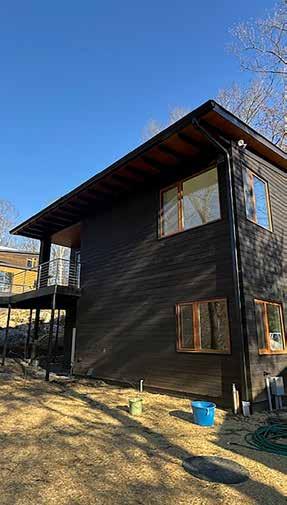
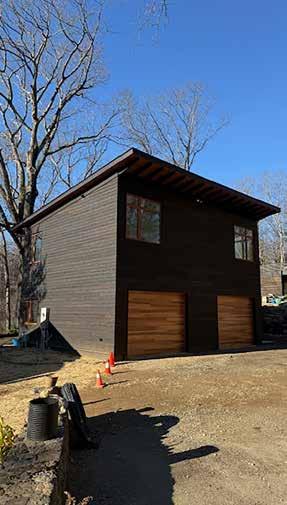
A beautifully renovated space has a quiet confidence. Nothing feels forced or accidental. Everything works.
What’s hidden beneath that simplicity are the hundreds of decisions it took to get there. Permitting, engineering, material selections, scheduling, and budgeting—each piece handled by different professionals who are focused on their specific role. And while that expertise is essential, for homeowners the real challenge isn’t finding talented people to do the work. It’s navigating the process and understanding how all those pieces come together.
“We find that what homeowners are really looking for is a partner,” says Connor Rowe, founder and owner of Rowe Construction. “Someone who can take ownership of the process, guide the decisions, and help steady things.”
Connor grew up in Ridgefield and began his career more than 15 years ago, training under some of Fairfield County’s most respected builders. When he founded Rowe Construction seven years ago, his focus was straightforward: deliver top-tier craftsmanship and stand behind the work.
As the business evolved, one thing became clear—clients needed more than expert execution. They needed leadership. They needed someone who could anticipate challenges before they surfaced and guide every phase of the project with intention and clarity. That realization came through experience.
“Early on, we were focused on craftsmanship and building a name for ourselves,” Connor says. “As a hands-on carpenter, nothing mattered more than knowing our work was the best. We believed that if we did extraordinary work, the referrals would follow. And while that’s true, over time we realized that how we guide clients through the process matters just as much as the finished result. The experience matters.”
That realization broadened the company’s approach, shaping a philosophy that extends well beyond the finished product and informs how every project is managed from the start.
“Expert craftsmanship is our baseline. We’re working in people’s homes—building the rooms where families will gather and make memories. It may sound sentimental, but that responsibility is something we take seriously every single day.”
RENOVATION SHOULD FEEL CLEAR, NOT CONFUSING
Clients don’t just need a contractor once plans are finalized. They need support much earlier—during feasibility conversations, budgeting discussions, and the often overwhelming pre-construction phase.
Too frequently, homeowners are left trying to reconcile design ideas with construction realities on their own. Beautiful drawings don’t always reflect structural limitations, cost implications, or permitting requirements. When those issues surface mid-project, the experience becomes stressful and unpredictable.
Connor saw an opportunity to step into those earlier conversations—not to control them, but to coordinate them.
“We’ve learned what works, and we’ve learned what can create friction,” Connor says. “Bringing construction insight into the conversation earlier helps eliminate a lot of confusion later.”
The industry has seen more firms adopt design-build models—and for good reason. For Rowe Construction, however, integration isn’t about having all the answers under one roof—it’s about improving communication and minimizing disconnects wherever possible.
A PARTNER IN THE PROCESS—NOT JUST THE BUILD
Coming from a construction-first background, Connor and his team bring practical insight into early planning. They provide preliminary cost guidance, identify structural considerations, coordinate engineering and permitting, and help ensure design aligns with both budget and buildability.
But they’re also realistic about the nature of renovation, restoration, and construction.
“No two projects are identical,” Connor says. “Every home is different. Every family has different priorities. Every renovation brings its own set of challenges.”
Construction, he explains, is a complicated dance between design, scheduling, materials, budgets, and real life. Even a relatively simple bathroom renovation involves hundreds of decisions that need to be resolved before work begins.
“If those details aren’t addressed early, they don’t disappear,” Connor says. “They just show up later.”
Clients can engage Rowe Construction at any stage—whether they have full architectural plans, early design concepts, or simply a vision.
“We meet our clients where they are,” Connor says. “From there, we help assemble the right team and outline a clear path forward.”
BUILDING TRUST BEFORE ANYTHING ELSE
Construction is deeply personal. Renovations disrupt routines. Budgets are significant. Homes carry emotional weight.
Connor approaches that responsibility thoughtfully.
By leveraging longstanding relationships with local architects, engineers, specialty trades, and in-house drafting resources, the company works to create alignment before any demo begins. Communication becomes centralized. Expectations are clarified. Roles are defined.
Connor is also honest about the reality of the work.
“We do our best to get it right every time,” he says. “But this is complex work, especially when working on older homes—and we can’t see through walls. When something doesn’t go as planned,
we take a step back, identify the implications, and address it. And we learn from it.”
Connor tells us that on most projects, they build in exploratory work before finalizing their contract. This allows them to identify existing conditions and limitations before they become surprises once construction is underway.
That mindset—steady, accountable, and improvement-focused—has shaped the systems the company continues to improve today.
One example of this collaborative approach is Rowe Construction’s partnership with East Hill Kitchen Design Group in Norwalk. Through this relationship, clients gain access to curated material selections and a seamless connection between design intent and construction execution—helping move projects forward with clarity and confidence.
Trust, Connor believes, isn’t built through perfection. It’s built through communication, follow-through, and consistency.
CONSTRUCTION LED BY COORDINATION
While some design-focused firms have added construction services, Rowe Construction has approached integration from the opposite direction: bringing stronger design coordination into a builder-led business.
“We’re constantly refining how we operate,” Connor says. “Every project teaches us something. Materials evolve. Codes change. Technology shifts. If we’re not keeping pace, we’re not serving our clients the way we should.”
After nearly a decade, Rowe Construction’s mission hasn’t changed—but it has deepened. The processes, partnerships, and hard-won lessons that define the company today were earned one project at a time, and Connor wouldn’t have it any other way.
He doesn’t present the process as perfect. He presents it as intentional.
“This work is about partnership and shared ownership of the outcome,” Connor says. “We’re coordinating the right people, keeping the project on track, and making sure every decision is
made with the homeowner’s best interests in mind. Our job is to show up prepared, work hard to get it right, and take responsibility when we don’t.”
By guiding clients earlier in the renovation process, strengthening coordination, and continuing to refine how projects are managed, Rowe Construction works to remove unnecessary complexity from an inherently complex industry.
The result? Spaces that feel calm, intentional, and beautifully executed, supported by a team committed to thoughtful work, continual improvement, and treating every home with the respect it deserves.
Visit roweconstructionct.com or call 203-470-2903 to learn more. Follow @roweconstructionct on Instagram and Facebook to see recent projects.
ARTICLE BY KATIE PARRY
PHOTOGRAPHY BY ANNIE FANDL PHOTOGRAPHY
Preserving Memories In HeirloomQuality Books—Because Life Is How We Remember It
Studio Maria
Mayer Feng
Since photography was invented, images have existed as physical objects. Daguerreotypes, tintypes, film, paper. They lived on walls, in dusty frames, attics, and antique stores—fragments of history, sometimes the only physical reminder of a life lived.
Digital photography revolutionized how people hold onto their memories. While our days are now extensively documented, most of those images never leave a screen—a shared album, an Instagram story, a Facebook post. We rarely see our memories in the physical world.
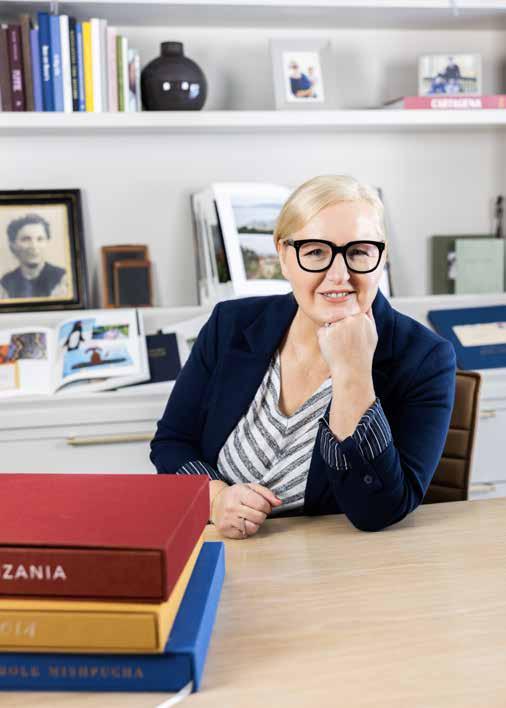
“Photos today live in our phones,” Maria Mayer Feng, founder of Studio Maria Mayer Feng, tells us. “They’re everywhere—and nowhere. We carry thousands of images in our pockets, but they’re not accessible. They’re locked in devices behind passwords and on clouds.”
Maria has built her career around solving this problem: transforming digital ephemera and long-forgotten physical artifacts into exquisite, tangible heirloom books designed as works of art that families can hold, share, and pass down for generations.
Born in Romania to German parents, Maria moved back to Germany with her family during Nicolae Ceaușescu’s regime. There, she later trained as a social worker—but even then, she found herself drawn less to clinical practice and more interested in her patients’ stories.
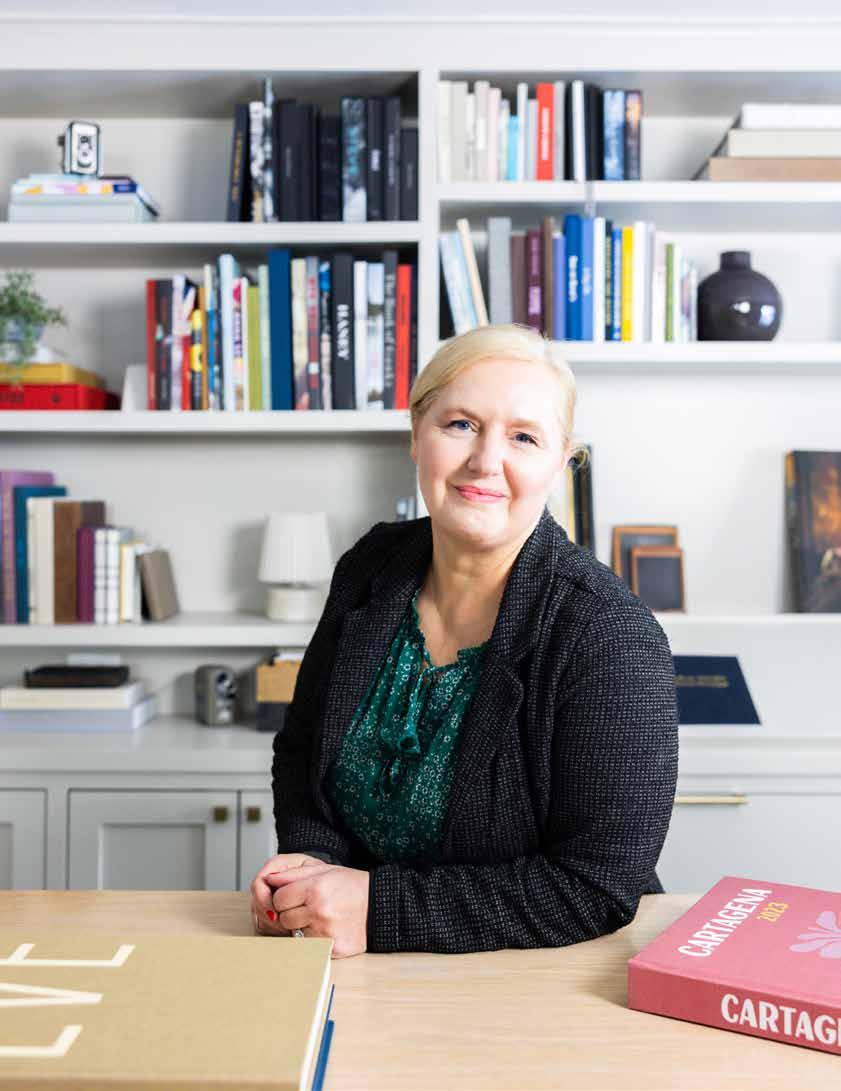
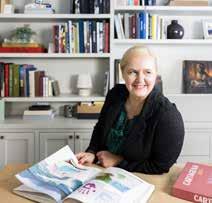
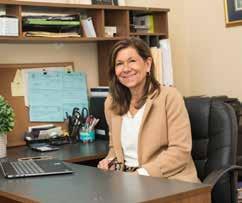
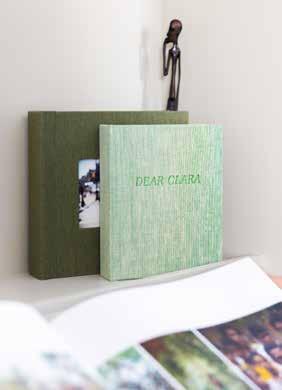
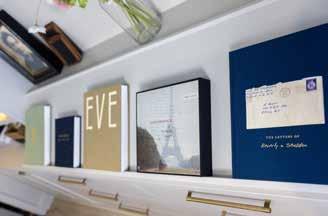
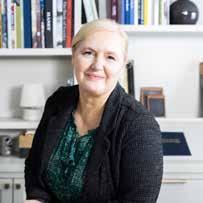
We’re chatting with Maria in her newly renovated studio—it’s bright, cozy, and inviting. A large worktable anchors the room and there’s a fire warming the space. Maria’s studio samples—books of varying sizes, textures, and subjects—are displayed throughout, beckoning visitors to open them and discover the stories within.
In 2001, Maria moved to New York City on a scholarship to study documentary photography at the International Center of Photography. But even then, it was the storytelling—not the images alone—that pulled her in.
“There’s a certain nostalgia in storytelling,” she says. “A desire to hold on to the past and tell the story back. I always say, ‘Your life is how you remember it.’ I thought that was just poetic, but later I realized it’s actually rooted in neuroscience.”
She explains how learning about the experiencing self and the remembering self shaped her thinking. One lives through moments as they happen; the other one stores these moments as memories.
“That made me think: Why don’t we make sure we keep those memories beautifully? ”
This idea became the foundation of Maria’s work. After finishing school, she stayed in New York and crafted her first book, which was handcut and hand-bound. Two decades later, she no longer makes the books herself, but her standards remain exacting.
“Years ago, I was fired by my original bindery for being too picky,” she says, smiling. “They told me I demanded too much perfection. But that pushed me into a higher tier of craftsmanship. Now I work exclusively with a small, dedicated unit at a West Coast bindery. They source paper, print, bind, test unusual fabrics, and execute very complex ideas.”
As the studio has grown, so has her team—a deliberately small circle of four women supporting everything from production to client experience and communications. Katherine Ryan, who joined Maria straight out of college, now designs books. Monica Trica, based in Romania, handles all retouching. Local Ridgefield mom Isabell Kossman helps manage the studio while assisting with production tasks.
Maria also partners with Nour Seikaly, founder of Grey House, who leads the studio’s public relations.
Each heirloom-quality book that the studio produces tells a different story: milestone birthdays, weddings, family vacations, family histories. Maria’s clientele ranges from local families to celebrities, politicians, athletes, and Fortune 500 companies.
“There’s something very personal about handling people’s lives this way,” Maria says. “I truly marvel at the trust these families put in me and what’s most important is that I honor that trust. Often, one person in a family has a box of photos and documents no one else has ever seen. The book becomes a way of sharing that history and of making sure it doesn’t disappear.”
One such project, The Whole Mishpucha, chronicles a Jewish family’s history across three volumes and took more than a decade to complete. The books contain photographs, identity papers, letters, and other materials tracing the family’s immigration to the United States in the years leading up to and throughout the Holocaust.
For another project, Maria created a book of love letters exchanged between a husband and wife throughout their 25 years of marriage. Rather than scanning them flat, she photographed each letter so the folds, torn edges, and patina of time remained intact.
“Memory is shaped by context. We remember the same event differently depending on who we’re remembering it with. Books give people a way to return to those memories together.”
—Maria Mayer Feng
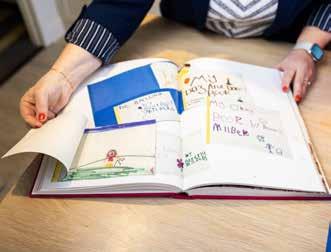
“I love photographing three-dimensional objects instead of scanning them—handwritten notes, fabric, kids’ artwork,” she says. “I want the book to feel tactile, like you could lift something right off the page.”
While these extraordinary projects are deeply meaningful, Maria tells us her favorite books to work on are annual family books.
“The years go by so fast,” she says. “When you have kids, you’re just surviving day to day. Having a book for each year, or every five years, lets you look back and realize how much actually happened. How much you did.”
Maria gets to know the families she works with intimately through annual books, watching children grow and marking life’s milestones. Sometimes she works retrospectively, creating volumes that span from infancy to college graduation in a
single project. Distilling a whole life into books that can sit on a shelf is, she says, endlessly rewarding.
“When I finish a large family book project, I often feel a kind of mourning,” she says. “I’ve lived inside someone else’s world for months or years, poured my heart into it, and then suddenly I have to ship it away.”
But like a parent refusing to choose a favorite child, Maria is quick to add that she also loves creating travel books.
“Travel books sometimes bring me into worlds I’ll never see myself,” she says. “I’ve worked on books about places like Papua New Guinea, where someone walked for days to reach a remote village and lived among people most of us will never meet. Those projects feel almost unreal, like stepping into another century. And then there are luxury trips I could only dream of. In a strange way, when I make those books, it almost feels like I’ve been there myself.”
A defining element of Maria’s work is how she integrates tactile objects into the books. Wedding invitations, vintage postcards, handwritten notes, children’s artwork, and other memorabilia are all carefully considered, each piece treated as a meaningful artifact, part of the larger story.
She creates precise homes for these keepsakes: tiny holders for a child’s art project, pressed flowers delicately taped onto a page, custom spaces designed to cradle a wedding invitation or a vintage postcard. But she’s careful not to let the book become overwrought. Every inclusion is intentional.
For the covers, Maria often works with custom fabrics, primarily linen, collaborating with clients to select the perfect swatch. When possible, she designs the cover to mirror the story inside: snow-white for an Antarctica expedition, supple leather for a company rooted in craft. Unexpected materials that communicate the essence of the story before the book is even opened.
Maria’s devotion to her craft and her clients, the way she distills each story to its essence, is what elevates her work from photo books into family heirlooms.
For many clients, the most difficult part is editing: sifting through tens of thousands of digital photos, boxes of artwork,
and physical memorabilia. Maria and her team shepherd them through the process, sometimes reproducing materials as they are, other times transforming them, rewriting a letter by hand, re-photographing an object so it feels dimensional.
“What people sometimes forget is that this work is deeply emotional,” she says. “I’m not just arranging photos, I’m reading between the lines. I notice when one child fades into the background. I notice imbalance. And quietly, subtly, through design, I correct it.”
From start to finish, a typical book takes about six to eight weeks. More complex projects, especially family histories or books involving memorabilia, take much longer. Projects are billed hourly with books starting at $4,000. Pricing is dependent on the material of the book, the volume of content, and the scope of the project.
“Many of the books we make are gifts,” Maria says. “When clients give them, I often hear back immediately. The responses are overwhelming. That’s when I’m reminded this isn’t really about books at all. It’s about memory—helping people remember their lives with clarity, beauty, and care.”
In an era where our most meaningful moments are endlessly captured yet rarely revisited, Maria’s work offers something quietly radical: a way back. Back to the vacation. Back to the era. Back to remembering. Not alone, but together.
“Memory is shaped by context,” Maria says. “We remember the same event differently depending on who we’re remembering it with. Books give people a way to return to those memories together, sitting at a table, poring over the pages, having conversations that would never happen the same way scrolling on a phone.”
This philosophy, paired with Maria’s uncanny ability to find a story’s thread and weave it into its most resonant form, is her gift. She brings photographs back into people’s lives not as pixels in the cloud, but as something tangible, something to be cherished. Something that, long after we’re gone, may rest in someone else’s attic as a fragment of history. Proof that we were here. That we loved. That our lives mattered. That is Maria’s legacy.
STUDIO MARIA MAYER FENG
Visit mariamayerfeng.com to learn more and follow along @studiomariamayerfeng to see recent projects. For this photoshoot, the studio was styled by Beck Haus (@beckhaus.interiors) and Maria’s makeup was done by Amanda Gabbard Beauty (@amandasgabbard ).